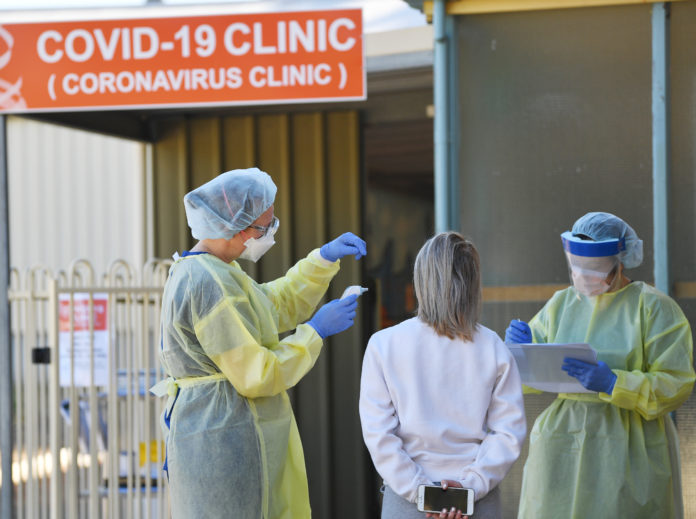
The government will provide free child care in a move aimed at ensuring parents, especially in essential services, are able to keep working.
More than 945,000 families with 1.3 million children will benefit.
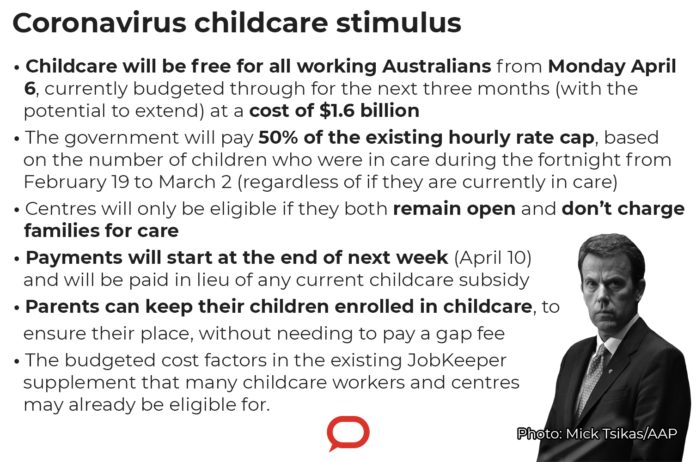
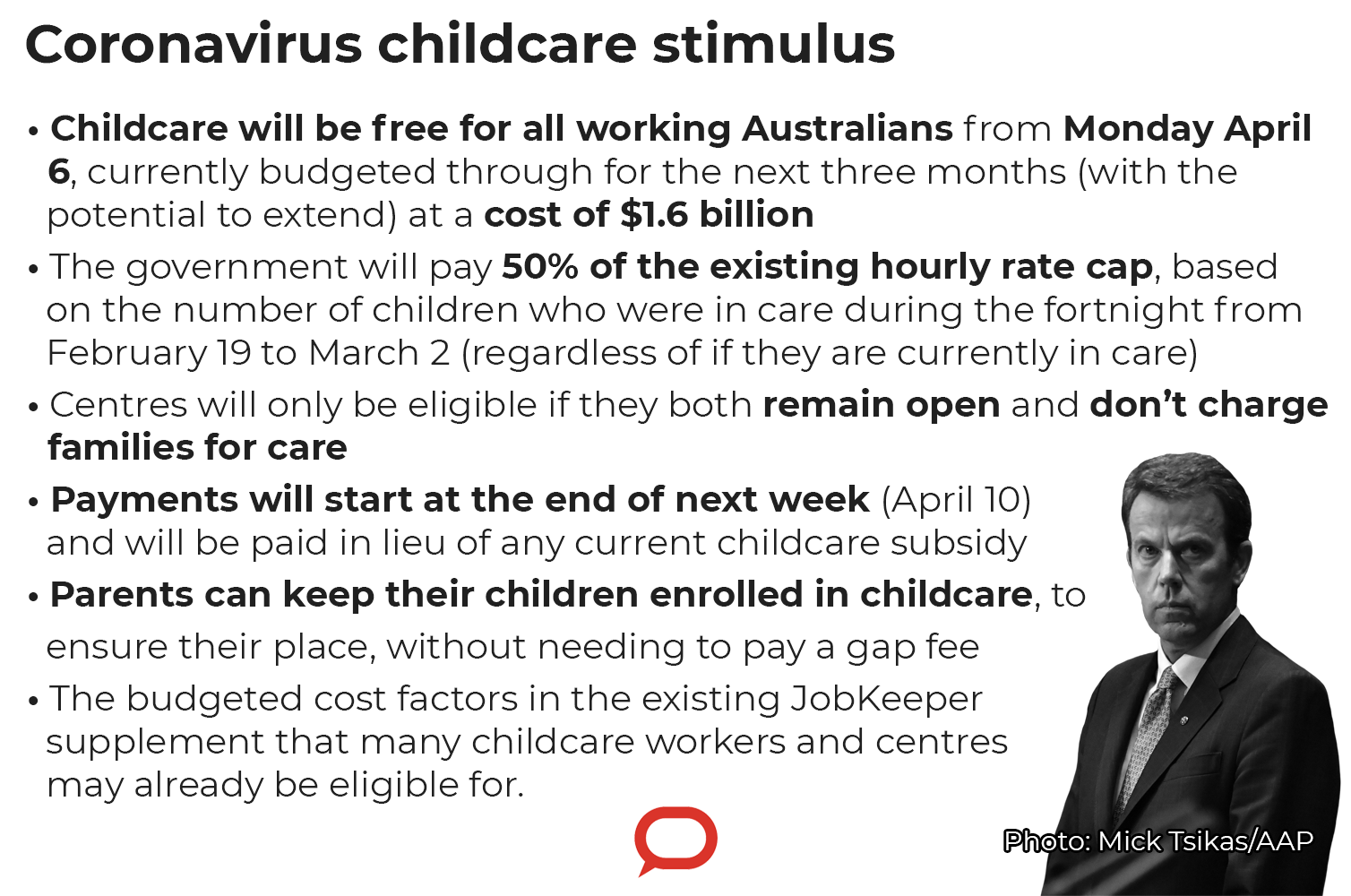
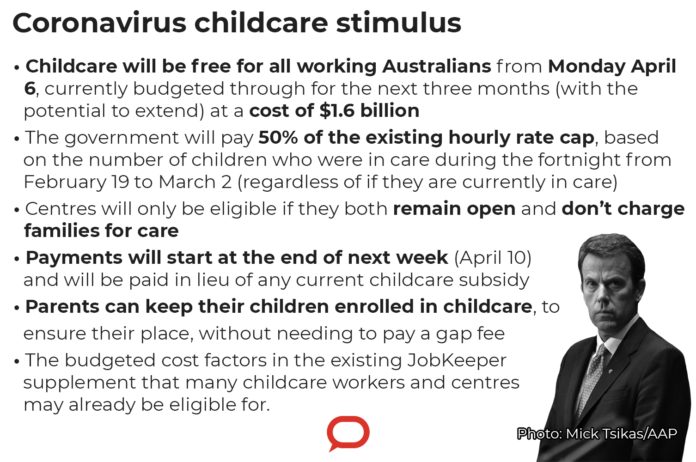
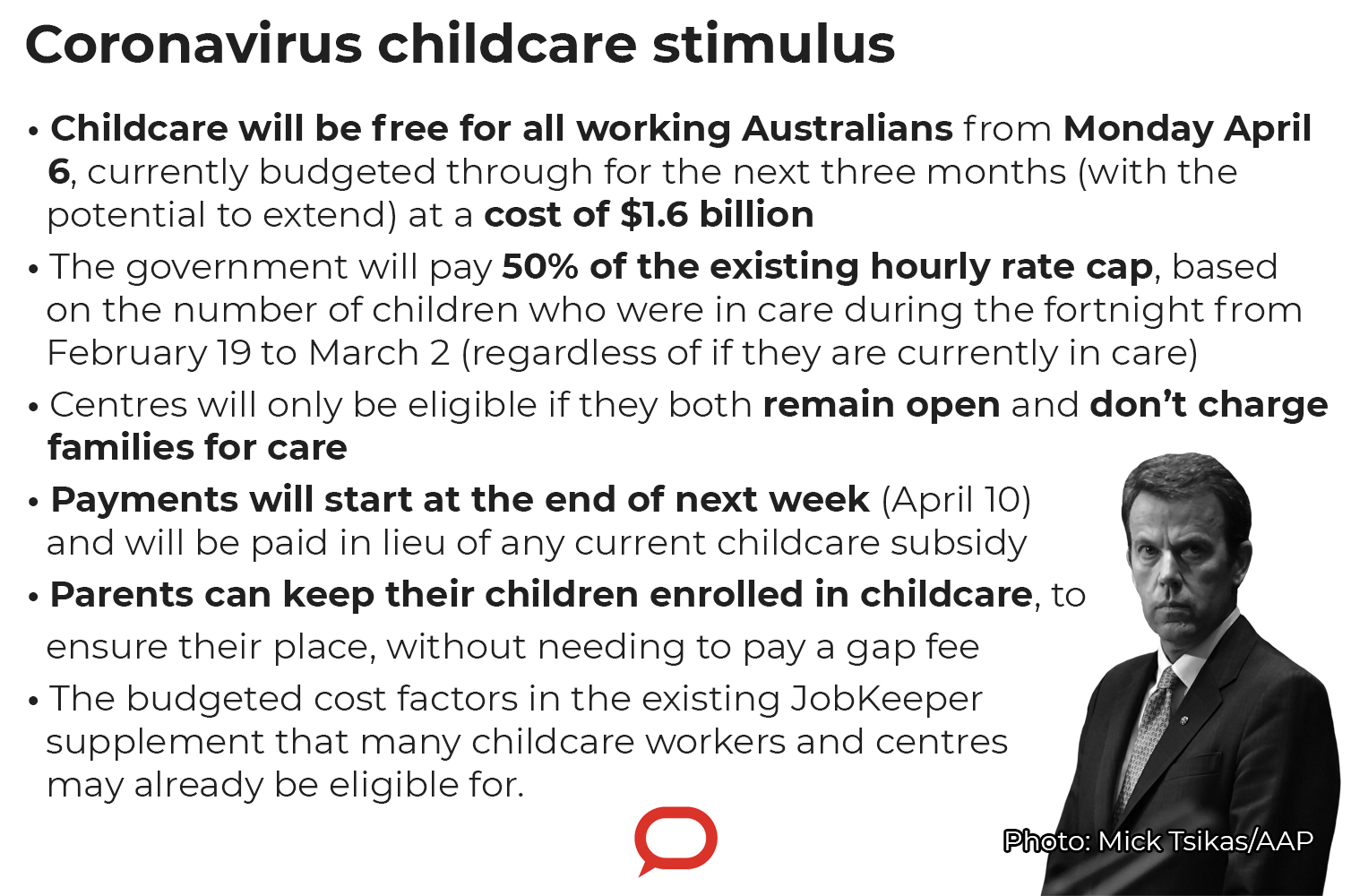
The new arrangement will scrap, after Sunday, the present funding system – including the means test and the activity test – and instead the government will pay half the sector’s revenue up to the existing hourly rate cap.
The plan will cost the government $1.6 billion over three months – compared with $1.3 billion if current revenues and subsidies had continued, based on the existing system and the big reductions in enrolments that have taken place.
The funding will be paid direct to the centres, with the condition they remain open, so parents do not have the disruption of having to seek out another provider. There are some 13,000 childcare and early leaning services. The new arrangements will also extend to after school and school holiday services.
Priorities will be set for access, with the first in line being working parents, vulnerable and disadvantaged children, and parents with existing enrolments.
Centres should “re-engage with those parents who have taken their children out of care, to see whether they can be accommodated as necessary as well,” Education Minister Dan Tehan said.
“But there is a clear priority list that we want centres to take into account, and the most important of those are those essential workers and the vulnerable children.”
Scott Morrison said: “In this ‘new normal’ that we’re living in, it’s no longer about entitlement. It’s about need.
“And we’re calling on all Australians to think about what they need, and to think about the needs of their fellow Australians who may have a greater need when it comes to calling on the many things that are being provided.”
For parents who have removed their children from childcare, centres can waive the gap fee, dating back to March 23.
The payment to centres will start to be made in a week’s time, and will run initially for three months, after which it may be extended.
Morrison and Tehan said in a statement the plan would provide “planning certainty to early childhood education and care services at a time where enrolments and attendance are highly unpredictable”.
Childcare centres can also get assistance under the JobKeeper program announced this week and the cash and loan schemes also available for businesses.
The Australian Childcare Alliance, the peak body for early learning services, welcomed the announcement as “extraordinary”. It said an overnight survey it had done had shown 30% of providers “faced closure this week due to as massive, shock withdrawal of families – either from fear or unemployment – and another 25% were not sure they could ever recover, even once the virus crisis has passed”.
But with the new financial measures , plus the JobKeeper payment and other existing support mechanism the early learning sector should be able to continue to play its essential role, ACA said.
Prime Minister Scott Morrison has announced free childcare for more than one million families, with a funding boost that aims to keep more than 13,000 childcare services across Australia open.
In doing so, the government has backed its earlier recognition of early childhood education and care being an essential service.
Estimates suggest about 650 early childhood education and care services have already closed in Australia due to falling enrolments.
The government plans to pay 50% of the sector’s revenue up to the existing hourly rate cap, based on the enrolment numbers before parents started withdrawing their children because of the COVID-19 pandemic.
It will only do this so long as services remain open and do not charge families for care.
The funding will apply from April 6 based on the number of children who were in care during the fortnight leading into March 2, whether or not they are attending services.
The plan will cost A$1.6 billion over the coming three months.
The Conversation/AAP
What this means
Today’s announcement is a much needed lifeline for the early education and care sector, which was on the brink of collapse.
By last week, drops in occupancy at childcare centres were estimated to be between 15% and 50%.
Normally, the childcare subsidy is paid directly to early childhood services, which then pass it on to families as a fee reduction. Today’s announcement effectively increases the fee reduction to result in zero fees.
Last month, the government also increased the time families can stay away from childcare without losing their access to subsidies, from 42 days to 62 days. The new plan waives gap fees, so families don’t face costs for keeping children at home.
Previously, families would face fees even when their child was absent from childcare, so services could keep operating. While this made sense in the pre-COVID world, many families discontinued enrolment when they were not sure when their children would return to care.
Federal education minister Dan Tehan said families that discontinued their enrolment since February 17 were encouraged to re-enrol their child:
Re-starting your enrolment will not require you to send your child to child care and it certainly won’t require you to pay a gap fee. Re-starting your enrolment will, however, hold your place for that point in time when things start to normalise, and you are ready to take your child back to their centre.
The funding boost means many centres can stay open and early childhood educators (including the 72% who are part-time or casual workers) will be able to keep working.
JobKeeper payments will be available for those who cannot keep working. This is welcome respect from government for the importance of these workers, who are risking their health to give children continuity of care.
Where are the gaps?
The announcement caused initial confusion about whether free childcare would apply to all families. Education minister Dan Tehan asked that services prioritise vulnerable families and those who can’t care for their children safely at home.
The Prime Minister said “working parents” would be prioritised, not just those working in the most critical jobs.
While families struggling to care for young children while working from home will welcome this announcement, it still leaves uncertainty about how “prioritisation” will occur.
It is also not clear whether the call for prioritisation was expected to limit the number of families using childcare services, to allow educators to implement strategies like extra cleaning and physical distancing to protect children and staff from infection.
Goodstart itself was born from the last major crisis in Australian childcare, when ABC Learning went bankrupt, placing more than 1,000 services at risk of closure. Goodstart, a not-for-profit social enterprise, was created from a consortium of community organisations and government support, to provide a new model of childcare that prioritised learning over profit.
It would be a cruel twist of fate if the solution to the last childcare crisis was left out of the solution to the current one.
Beyond the band-aid
Education minister Dan Tehan has described today’s reforms as “turning off the old system” of childcare funding. When Australia reaches the other side of the crisis, governments will face tough decisions about whether the clunky pre-COVID system – with childcare funding pieced together from a complex mix of government funding and vastly variable fees – should ever be turned back on.
A broken system will crumble to pieces at the first sign of crisis. Australia has seen childcare come close to the brink of collapse twice now in just over a decade. Governments owe it to children and families to never let it happen again.
New Zealand Ten Dollar Note. Image, Wikimedia Commons.
Analysis by Keith Rankin
What is Money?
Keith Rankin.
Money is a mystery. To most of us we receive it, we spend it, we save it, we borrow it. And if we don’t have enough, we are in trouble.
Many of us think of money as if it is tangible, like gold; something that is naturally scarce, and that must be won through toil. Those of us who think like that tend to resent beneficiaries, who, as they see it, live off the toil of others. Exceptions are made for the capitalists (and landed proprietors) who earn money through what they own rather than what they do, who don’t have to toil, because they or their ancestors must have been sufficiently productive or unscrupulous to gain a get-ot-of-toil-free card. (The correct name for this category of work-exempt people is rentiers; the word capitalist is too ambiguous.)
This understanding of money is untenable today, and never in history was actually true. Rather money is – and always has been – a set of circulating promises. Money is, and always has been, a social technology. Gold was created by supernovae (exploding stars), so is part of nature. Money was, and is, and will be, created by people, and represented on a balance sheet.
What makes money different from other promises is that the signatory is understood to be a formal authority. Even electronic money has an implicit signature, and maintains its character as an authoritative promise. To be money, a promise must be free to circulate in a social environment, it must have an imprimatur of authority, and must be accepted by all sellers in all markets. While nowadays most of our money is held as bank deposits – neither notes nor coin – it is the number (eg 10) that matters.
If we look at a $10 banknote, we see that it is an explicit signed promise; signed by the principal of the issuing Bank; in most countries, the Reserve Bank. (In the old days such a banknote was a guarantee to exchange it for coin. In practice, we almost never used that guarantee. Coins themselves are implicit promises; promises by whoever’s head is featured on the coin.) Monetary promises can be exchanged, directly, for goods and services. (Other promises should first be exchanged for money, then be used to buy goods and services; though they may be accepted by some people as if they were money. Market exchanges that do not use money are barter.)
The meaning of that number 10 is socially constructed; it means that the holder can buy an amount of goods or services that is fair (consensually appropriate) for the number 10. We understand that, in another time or another country, a different amount of goods and services may be fair for the number 10.
Promises are essentially costless to create. Any individual or organisation can produce signed promises. Such a contractual promise is a ‘bond’, an ‘agreement with legal force’. In principle, bonds can be bought and sold, with such transactions not necessarily involving the person(s) who signed them. There is an industry and an associated academic discipline that is devoted to transacting in and studying promises. It is called ‘finance’.
Banking and Bookkeeping
New Zealand Ten Dollar Note. Image, Wikimedia Commons.
Money is created when any bank purchases a promise that is not money; the most obvious case is when it makes a loan in return for a promise to service that loan. In this case the bank is buying a new promise. In other cases, it may be purchasing a promise that already existed. Indeed, when a bank buys a mortgage (a ‘pledge’, an example of a promise) from another mortgagee (mortgage owner) money is also being created. If the seller is another bank, then the act of a bank selling a promise extinguishes an equal amount of money. But if the seller is not a bank, then the write-up of one bank’s balance sheet is not matched by the write-down of another’s. New money is created.
In summary, when banks buy promises (eg a loan is issued), money is created. When banks sell promises (eg a loan is repaid), money is extinguished. Banks are in the business of buying and selling promises.
In most countries the Reserve Bank is the monetary authority, and is owned by the subject people of that country. The New Zealand Reserve Bank is a cooperative, owned by ‘the public’ who ‘enjoy’ its services. Likewise, the Government is the organisational embodiment of ‘the public’. Both Government and Reserve Bank are public institutions. Their principals – their owners – are the same, ‘the public’.
The Reserve Bank ensures that enough money is being created through both its supervision of the other banks, and through its own direct action in buying or selling promises.
When a country needs more money, but there are not enough loans being made by the commercial banks, then the Reserve Bank can buy promises from the Government. If there are already plenty of government promises in circulation, then the Government is not a party to these transactions. Otherwise, the Reserve Bank can buy new promises by the government. So, in situations when the Government needs more money, and the Reserve bank independently judges that the Government should have more money, and that there is an economic need for more money to circulate, then the money is created when the Reserve Bank lends to the Government.
At this point, many people worry about the future economic burden, because the government will have to repay these loans. This putative burden, misleadingly known as the public debt (misleading because it is a credit as well as a debit, owned as well as owed), is commonly called the ‘country’s debt’ or the ‘national debt’.
There is nothing to worry about. First, the government is only required to service these loans, and if the interest rate on the loans is zero, then no actual payments are required. Second, for every debtor there is a creditor. If one party (eg the government owes money), then it must owe money to some other party. All debts owed by the government to the Reserve Bank are in fact owed to the shareholders of the Reserve Bank. The People owe the money to the People. So, when the people repay what they owe, they are also being repaid what they are owed.
With respect to the Covid-19 emergency, there is no limit to the amount of money that can be created to address the problem. Further, although the mechanism is debt, any money we repay, we repay to ourselves. Increased public debt during a public emergency need not be a public burden.
Money is lubrication oil, not petrol.
Tis the oil, which renders the motion of the wheels more smooth and easy. David Hume, ‘On Money’, 1752
As a social technology, money can be thought of as an economic lubricant. Thus, it lends itself to the analogy of a car, an automobile.
A car’s oil sump holds its lubricating oil. For those of us who have changed the oil or topped up the sump, we use a dipstick to determine whether we have the correct amount of oil. The dipstick has two marks; the correct oil level should be somewhere between the two marks.
We may think of the Reserve Bank’s monetary policy committee as the mechanic who manages the oil level of a car. Monetary policy is like reading a dipstick. We should imagine a sump that has excess capacity; that is, the ability to hold more oil than the car requires. Thus, for our car, it is technically possible for there to be both too little oil, or too much oil.
The flow of oil can be impeded by leaks or blockages. Blockages represent structural problems in the economy, which are not part of this discussion. Leaks represent the withdrawal of lubricant from its circulation through the cars moving parts. In a monetary sense, leaks represent the hoarding of money, the non-spending of money, its withdrawal from circulation. Such leaks make the oil level in the sump too low. While, in the long run it would be nice to fix these leaks, it is the role of the Reserve Bank to top-up the sump – the balance sheet of the banking system – to compensate for monetary leakage. It does this through an active process of double‑entry book‑keeping. This process is essentially costless; money supply is infinitely elastic (though socially constrained), unlike the gold supply which is not at all elastic.
(Using the car analogy, we can imagine two kinds of leaks; one where the oil leaks onto the road and is lost permanently, or oil that leaks into some kind of container attached to the car and that can technically re‑enter circulation though is not available to the mechanic. Part of the job of the mechanic is to watch out – and adjust for – for the re‑entry of leaked money.)
Any kind of economic crisis represents a new and large leak. The link may be exogenous (eg caused by an external shock such as a new coronavirus), or endogenous (created by internal financial failings, as in the 2008 Global Financial Crisis).
There are two other kinds of crisis that are of concern to monetary macroeconomists. One is the possibility that the sump is overfull. In the quote below the result is a cappuccino froth.
What happens if oil level is too high?
It’s true that overfilling the crankcase with oil can damage the engine. When you overfill the crankcase by a quart or more, then you risk “foaming” the oil. If the oil level gets high enough, the spinning crankshaft can whip the oil up into a froth, like the stuff that sits on top of your cappuccino. found via Google
To some macroeconomists (the classically-minded ones) this froth is called inflation, is dangerous, and is an inevitable consequence of an overfilled monetary sump. To other macroeconomists (such as myself), this leads to a reduction of the rate of flow of the lubricant relative to the supply of lubricant (called a reduction of ‘velocity’); not a perfect situation, but also not much to worry about. Whether for a car or for the economy, having too much lubricant is a far less serious crisis than having too little lubricant.
The fourth crisis is an undiagnosed structural crisis – one of undiagnosed blockages rather than leaks. The car will run much as if it was losing oil, though it isn’t. While adding more lubricant may or may not create harm (eg stagflation; simultaneous inflation and recession), it is unlikely to fix the problem.
(Blockages may be the economic equivalent of ‘fatbergs’, created by inappropriate by inappropriate items being flushed into sewers. Organisational bureaucracy may be an example here. More generally, blockages come under the generic label ‘market failure’, and require public intervention to address.)
Public Debt is a Solution, not a Burden
Technically, money created during a crisis is public debt. But, so long as the Reserve Bank at the apex of the banking system is publicly owned, it is also a public credit.
When a recovery from a crisis is well under way, private businesses (and later households) take on more debt, economic activity increases, as do taxation revenues. This means that the level of public debt will naturally fall. The Reserve Bank may sell government bonds, and purchase more commercial (business) bonds.
Also, typically for a crisis, the commercial banks have a substantial capacity to increase lending – to buy new promises from businesses. It means that, in the recovery, more of the total money supply will appear on the balance sheets of commercial banks, and less on that of the Reserve Bank. Tax revenues will increase, allowing Government to reduce its emergency debt.
What needs to be avoided is a public austerity programme which seeks to reduce government debt as a goal in itself. Rather, fluctuating public debt – which is mainly what the people owe themselves – needs to be understood as a stabilisation process. In a crisis – when the amount of money circulating would otherwise be too low – public debt should dominate the Reserve Bank’s balance sheet, and the Reserve Bank’s balance sheet dominates the combined banks’ balance sheet.
With double‑entry bookkeeping, total assets equal total liabilities, by definition. The liabilities of the combined banks’ balance sheets are the money supply. There is no upper limit to the amount of money that we have, and there is never a need for governments to undermine the monetary process through premature attempts to reduce the amount of money the public owes itself.
Governments service and manage public debt by raising the public debt when tax revenues are constrained, as in an economic crisis. And by reducing the public debt when rising tax revenues allow, that is when the private economy is thriving.
A headline in the New Zealand Herald (31 March) said:
‘Generations’ of Kiwis to pay for economic recovery, says Finance Minister Grant Robertson
It is nonsense. There is no technical upper limit to the money supply; there is no upper limit to the amount of money we can owe to ourselves. Emergency public debt is not like taking gold from the vaults, and then requiring generations to repay that gold through toil.
Many Kiwis, with reluctance, will change their career paths. Some others may choose a better work‑life balance than they experienced in the 2010s. Average living standards are a function of economic productivity. There is no connection between the high public debt and low productivity. While Gross Domestic Product may be lower than before, there is no reason to believe that productivity – that living standards – will be lower in a post-Covid19 world.
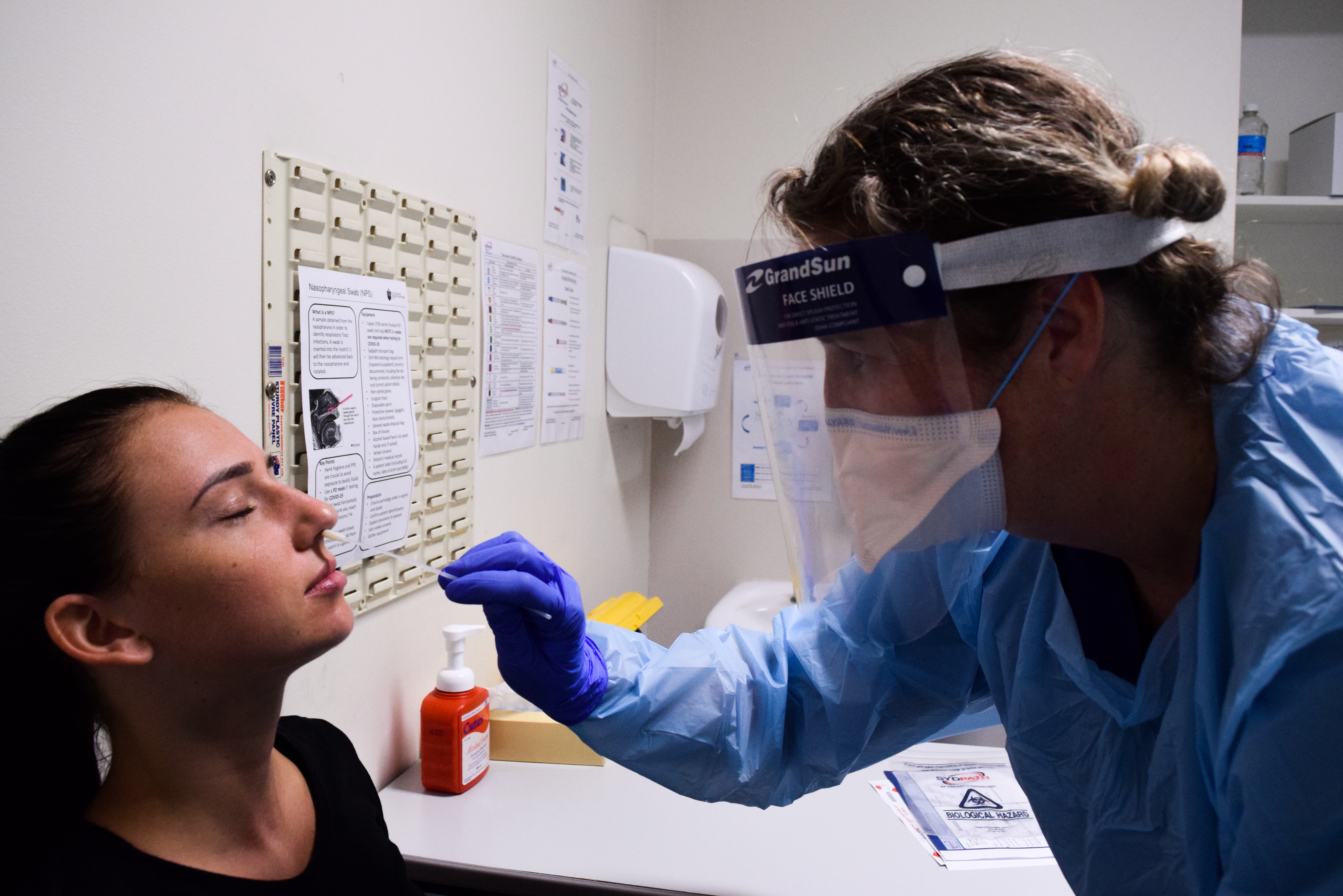
To control the spread of COVID-19 we need to identify as many people with the virus as possible. If we know who has it, we can isolate them so they can’t infect others and quarantine their close contacts in case they’ve already been infected.
But some experts are concerned we’re not testing enough. Because of restrictions on who can be tested, they argue, we’re only seeing the tip of the iceberg. Beneath the surface, the virus could be spreading much more than we think.
The federal government recently expanded its testing guidelines and now allows states and territories to set their own rules for testing. But before we get to what they say, let’s look at the symptoms.
What are the symptoms of COVID-19?
Colds, influenza and COVID-19 are all respiratory illnesses and share many of the same symptoms.
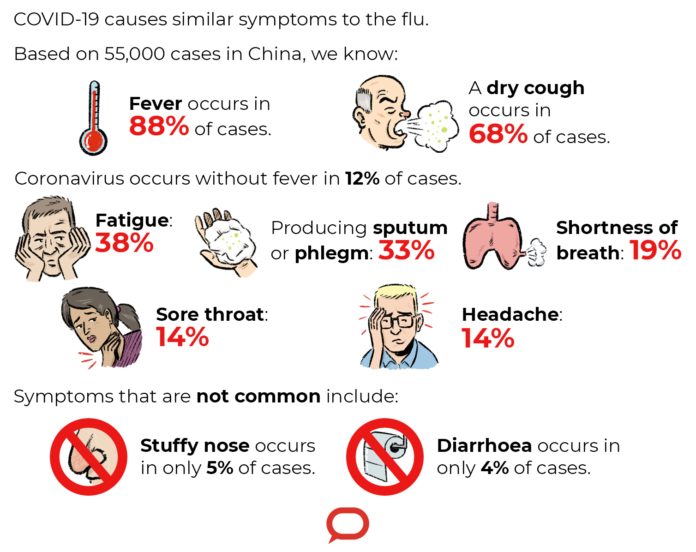
For COVID-19, the most common symptoms are fever and a dry cough. Other symptoms might include fatigue, the production of phlegm, shortness of breath, a sore throat and a headache.
If you have a fever or a respiratory illness, you can be tested (and in some cases, must be tested), if you:
work in health care, aged care or other residential care sectors
have spent time in a location with elevated levels of community transmission
have spent time at a “high-risk” location where there are two or more linked cases of COVID-19. This could be an aged care facility, a remote Aboriginal community, a correctional facility, a boarding school, or a military base with live-in accommodation.
Who else can get tested?
Australians in all states and territories can get tested if they meet the criteria above, but some states have expanded their criteria.
In Western Australia, if you have fever of 38℃ and over and have signs of a respiratory infection, you may be tested.
In New South Wales, GPs have discretion to test anyone who has symptoms of COVID-19. People in who identify as Aboriginal in rural and remote communities may also be tested, as can people who live in communities with local transmission.
South Australia has had a cluster of cases among airport baggage handlers. Therefore, anyone who has symptoms of COVID-19 and has been at the airport in the past 14 days, including the carpark or terminal, should also present.
Queensland will offer testing for people who have symptoms consistent with COVID-19 and live in a Aboriginal or Torres Strait Islander communities, as Indigenous Australians are more vulnerable to COVID-19.
Victoria has introduced random testing at screening centres, testing every fifth person who presents. This should provide a snapshot of the spread of the virus among a broader section of the community.
The ACT, Northern Territory and Tasmania are following the national guidelines and haven’t included any other groups or situations in which someone can be tested.
So what if you think you have COVID-19?
If you think you have symptoms of COVID-19, call your your GP and advise them of your symptoms and other relevant details, such as travel or contact with a known case.
If you don’t have a usual GP or want to discuss your concerns, call the National Coronavirus Helpline on 1800 020 080. You will be given information on where the closest COVID-19 testing clinic is and detailed advice on whether you should be tested.
If you’re asked to come to a COVID-19 clinic, you’ll need to take precautions. These include driving yourself if possible, wearing a mask if you have one, staying at least 1.5 metres from other people and coughing or sneezing into your elbow.
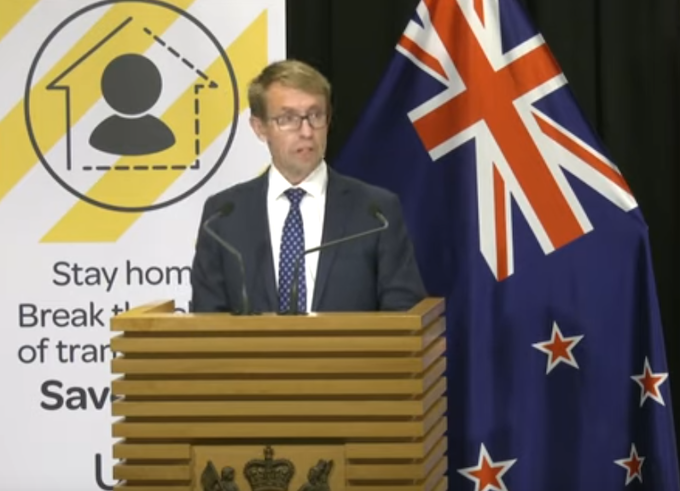
New Zealand has had its biggest increase in one day as the Health Ministry confirms 89 new cases of Covid-19, bringing the total number of cases to 797.
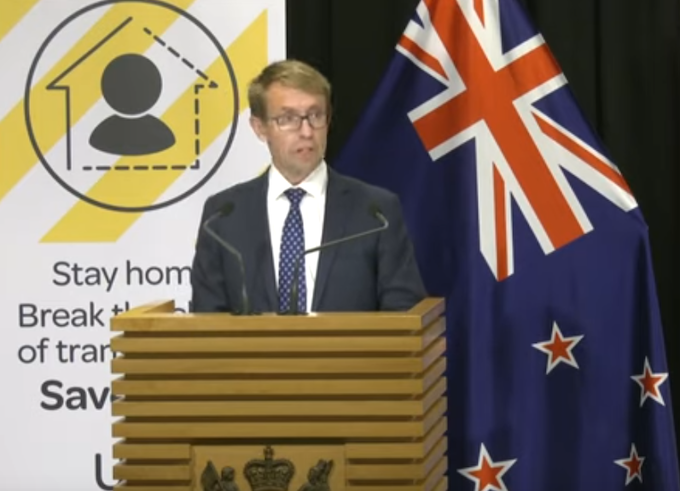
Director-General of Health Dr Ashley Bloomfield said today 92 people had now recovered from the coronavirus.
Thirteen people are in hospital, two are in ICU in Wellington and Nelson. All patients are stable and there have been no further deaths.
Dr Bloomfield said 51 percent of cases still have a strong link to travel and 31 percent are linked to confirmed cases.
– Partner –
Only 1 percent are being classed as community transmission, but 17 percent are still being contact traced.
He said the country was not at the turnaround point yet – with the biggest number of cases and tests done in one day.
Dr Bloomfield said 2563 tests were done yesterday. More than 26,000 tests now conducted.
“I want to acknowledge the huge amount of work that has gone on among our labs over the last few weeks to increase our capacity, amongst the staff there and the work they are doing.”
41 million extra face masks Dr Bloomfield said 41 million additional face masks have been ordered for New Zealand. There are currently 23 million pairs of gloves, 850,000 face masks and 640,000 face shields in the country.
“ICU staff are geared up, they’ve got their plans in place to be able to deal with and treat additional people if that’s required.”
He said hospital occupation rates were about 50 percent, which was much less than normal, and hospitals were prepared to take Covid-19 patients.
Police Commissioner Mike Bush said while most people were following the lockdown rules, there were some exceptions.
“I’m aware of some isolated incidents where people are not necessarily complying, I refer for example to the commentary coming out of Kaitaia this morning from Dr Lance O’Sullivan.
“I can say that we have deployed more of our police staff up into that area to again engage, educate and encourage people to do the right thing, as the majority are doing, of course if that doesn’t work there will be an enforcement follow up.”
Increase in family violence Bush also said there had been an increase in family violence in Counties Manukau.
He said 9000 individual kits of personal protective equipment (PPE) have been issued to frontline police staff and more stock would be deployed.
Speaking on his final day as Police Commissioner, Bush said he was “extremely proud” of the 14,000 people within New Zealand police and other emergency services who were on the front line of the response to Covid-19.
Andrew Coster will take over the role of Police Commissioner. Bush will stay on as part of the government’s response to Covid-19, taking on the role of strategic leadership of the operational response.
New Zealand is now in its eighth day of the level 4 alert status – a full lockdown for at least four weeks.
This article is republished by the Pacific Media Centre under a partnership agreement with RNZ.
If you havesymptomsof the coronavirus, call the NZ Covid-19 Healthline on 0800 358 5453 (+64 9 358 5453 for international SIMs) or call your GP – don’t show up at a medical centre.
The catastrophic bushfire season is officially over, but governments, agencies and communities have failed to recognise the specific and disproportionate impact the fires have had on Aboriginal peoples.
Addressing this in bushfire response and recovery is part of Unfinished Business: the work needed for Indigenous and non-Indigenous people to meet on more just terms.
In our recent study, we found more than one quarter of the Indigenous population in New South Wales and Victoria live in a fire-affected area. That’s more than 84,000 people. What’s more, one in ten infants and children affected by the fires is Indigenous.
But in past bushfire inquires and royal commissions, Aboriginal people have been mentioned only sparingly. When referenced now, it’s only in relation to cultural burning or cultural heritage. This must change.
Bushfire residents
Indigenous people comprise only 2.3% of the total population of NSW and Victoria. But they make up nearly 5.4% of the 1.55 million people living in fire-affected areas of these states.
And of the total Indigenous population in fire-affected areas, 36% are less than 15 years old. This is a major concern for delivering health services and education after bushfires have struck.
Importantly, where Indigenous people live has a marked spatial pattern.
There are 22 discrete Aboriginal communities in rural fire-affected areas. Of these, 20 are in NSW, often former mission lands where people were forcibly moved or camps established by Aboriginal peoples.
Ten per cent of Indigenous people in fire-affected areas in NSW and Victoria live in these communities.
And those living in larger towns and urban areas aren’t evenly distributed. For example, Indigenous people comprise 10.6% of residents in fire-affected Nowra–Bomaderry, compared with 1.9% of residents in fire-affected Bowral–Mittagong.
These statistics are steeped in histories and geographies that need to directly inform where and how services are delivered.
Indigenous rights and interests
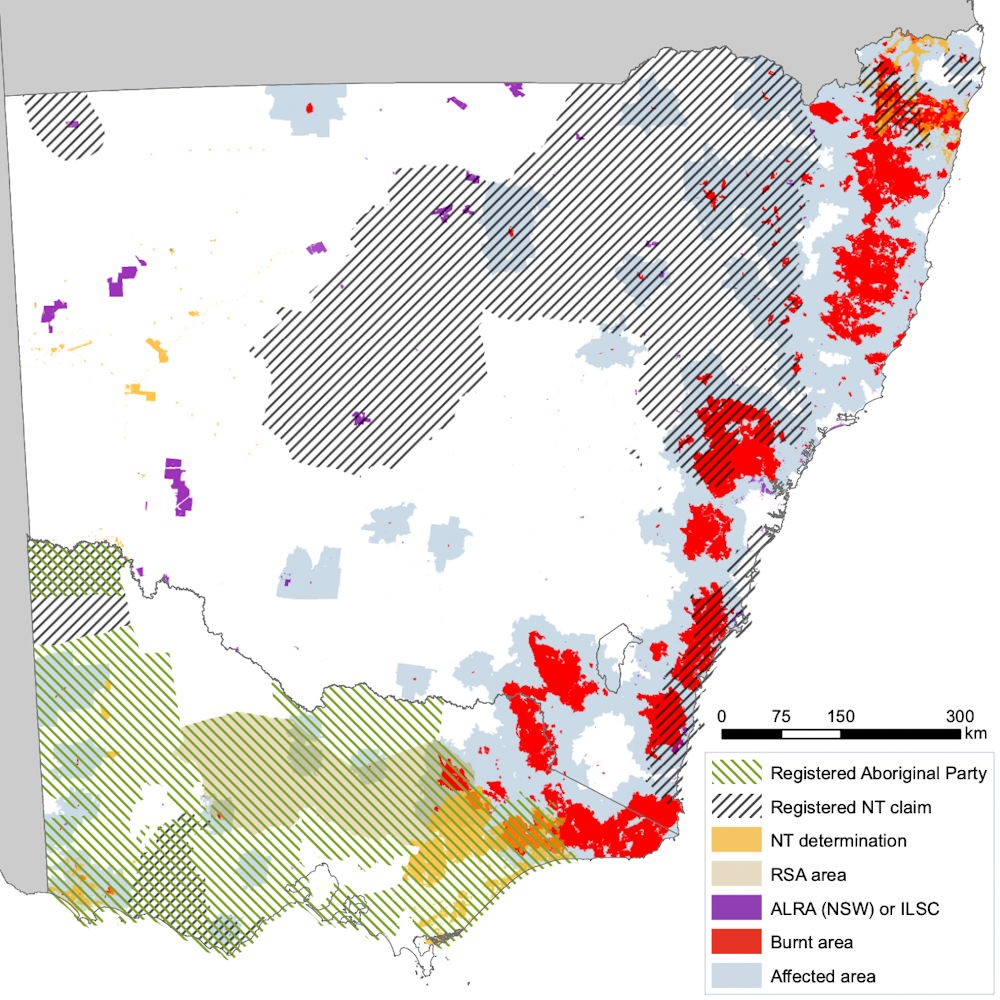
Aboriginal people hold significant legal rights and interests over lands and waters in the fire-affected areas. These are recognised by state, federal or common law. This includes native title, land acquired through the NSW Aboriginal Land Rights Act or lands covered by Registered Aboriginal Parties in Victoria.
Even where there’s no formal recognition, all fire-affected lands have Aboriginal ownership held and passed down through songlines, languages and kinship networks.
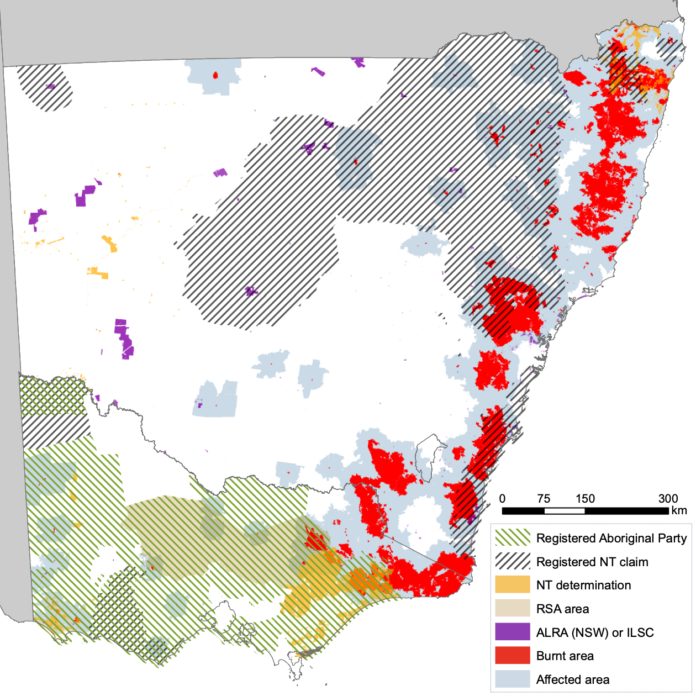
Areas in NSW and Victoria burnt and affected by fires of 250 ha or more, July 1, 2019 to January 23, 2020, and Aboriginal legal interests in land.Author provided
The nature of these legal rights and interests means the bushfires have different consequences for Aboriginal rights-holders than for non-Indigenous landowners.
Many non-Indigenous land-owners in the fire-affected areas face the difficult decision of whether to stay and rebuild, or sell and move on. Traditional owners, on the other hand, are in a far more complex and unending situation.
Traditional owners carry inter-generational responsibilities, practices and more that have been formed with the places the know as their Country.
They can leave and live on someone else’s Country, but their Country and any formally recognised communal land and water rights remain in the fire-affected area.
Relegated to the past
Clearly, Aboriginal people have unique experiences with bushfire disasters, but Aboriginal voices have seldom been heard in the recovery processes that follow.
The McLeod Inquiry, which followed the 2003 Canberra bushfires and the 2009 Black Saturday Royal Commission – were critical processes of reflection and recovery for the nation. Even in these landmark reports, references to Aboriginal people are almost completely absent.
There were only four brief mentions across three volumes of the Black Saturday Royal Commission. Two were cultural heritage protections discussions in relation to pre-bushfire season preparation, and two were historical references to past burning practices.
In other words, Aboriginal people – their cultural practices, ways of life and land management techniques – are relegated to the past.
This approach must change to acknowledge that Aboriginal people are present in contemporary society, and have distinct experiences with bushfire disasters.
More than cultural burning
This year, we’ve seen strong interest in Aboriginal people’s fire management, including in the early months of the federal royal commission, and in NSW and Victoria state inquiries.
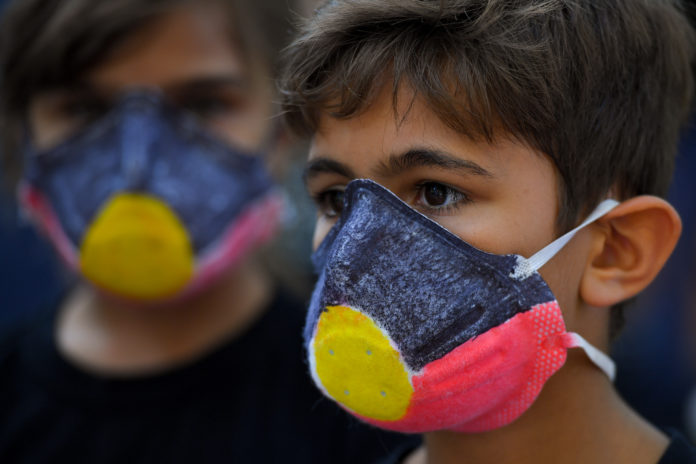
Aboriginal voices only in regards to cultural burning is deeply problematic.Shutterstock
But including Aboriginal voices only in regards to cultural burning is deeply problematic. Yet, it’s an emerging trend – not only in these official responses, but in the media.
This narrowly defined scope precludes the suite of concerns Aboriginal people bring to bushfire risk matters. Their concerns go across the natural hazard sector’s spectrum of preparation, planning, response and recovery.
Aboriginal people need to be part of the broad conversation that bushfire decision-makers, researchers, and the public sector are having.
Amplifying Aboriginal voices
To date, Victoria offers the most substantial effort to include Aboriginal voices by establishing an Aboriginal reference group to work alongside the bushfire recovery agency. But Aboriginal people require a much stronger presence in every facet of these state and national inquiries.
We identify three foundational steps:
acknowledge that Aboriginal people have been erased, made absent and marginalised in previous bushfire recovery efforts, and identify and address why this continues to happen
establish non-negotiable instructions for including Aboriginal people in the terms of reference and membership of post-bushfire inquiries
establish Aboriginal representation on relevant government committees involved in decision-making, planning and implementation of disaster risk management.
The continued marginalisation of Aboriginal people diminishes all of us – in terms of our values in living within a just society.
It was never acceptable to silence Aboriginal people in responses to major disasters. It’s incumbent upon us all to ensure these colonial practices of erasure and marginalisation are relegated to the past.
There are now 147 positive cases across seven countries in the Pacific region and four deaths.
In Guam, cases continue to grow, with the count now at 77, five of them health workers.
The island nation is facing its own crisis on land, with issues brewing at its port, where a Covid-19 stricken USS Theodore Roosevelt has more than 70 positive cases among its 7000 crew.
Watch Barbara Dreaver’s Pacific Update for 2 April 2020. Video: TVNZ
Authorities have agreed to allow those who have tested positive to use nearby motels for quarantine, but the captain of the US Navy vessel has been begging for help for the rest of his crew, saying his sailors do not need to die.
– Partner –
Now navy officials are looking in to how they can get sailors off the vessel, with 10 percent of the crew to stay behind and manage critical systems on board.
It is bad news for neighboring Northern Marianas, with six confirmed cases including one death through community transmission.
These new cases include a 14-year-old girl as well as two people over the age of 60.
In the local hospital there are fears their health system, serving a population of around 55,000 people, wouldn’t be able to handle an outbreak.
All schools have been closed in the country and a curfew imposed for the public until next year.
5 Rapa Nui cases On Rapa Nui, Easter Island, five people have so far tested positive for the virus though it’s believed that all the cases came from the same household.
The island has been on lockdown and residents are only allowed outside for essentials between 5 am and 2 pm.
In the Cook Islands, wage subsidies have been announced starting from Monday, April 6. Cash grants will also be available and welfare payments have been paid out until April 16.
Minister of Finance Mark Brown says a payment system of this magnitude has never been done before in the history of the Cook Islands.
Tonga, which remains in lockdown, is scrambling to prepare for potential Covid-19 cases due to limited supplies of medical equipment and protective gear.
The government has refused to let an aircraft carrying medical supplies from China land, so donated items will instead be shipping from Fiji.
While Samoa has closed its schools, it is offering alternative ways of learning.
A government digital channel will be used by the education ministry to deliver programmes to students.
Local radio station 2AP is doing the same thing. Schedules can be found on the ESC website and their Facebook page.
Barbara Dreaver is Pacific correspondent of Television New Zealand. Her Pacific Update is aired daily. Today’s report is embedded by the Pacific Media Centre with permission.
With #StayAtHome and social distancing now becoming a way of life, an increasing number of people are relying on the internet for work, education and entertainment. This has placed greater demand on our network infrastructure, reducing the bandwidth available for each user, and is leaving people frustrated at seemingly slow internet speeds.
While internet service providers such as TPG or Telstra may not be able to instantly respond to these changes, there are a few tricks you can use to boost your home internet’s speed.
Why is your internet slow?
There may be many reasons why your internet speed is slow. Internet use requires a reliable connection between your device and the destination, which may be a server that is physically located on the other side of the world.
Did you try turning your router off and on again? Tip: make sure it’s turned off for at least ten seconds.Shutterstock
Your connection to that server could pass through hundreds of devices on its journey. Each one of these is a potential failure, or weak point. If one point along this path isn’t functioning optimally, this can significantly affect your internet experience.
Web servers in particular are often affected by external factors, including Denial of Service (DOS) attacks, wherein an overload of traffic causes congestion in the server, and impedes proper functioning.
While you may not have control over these things from your home network, that doesn’t mean you don’t have options to improve your internet speed.
Wifi signal boost
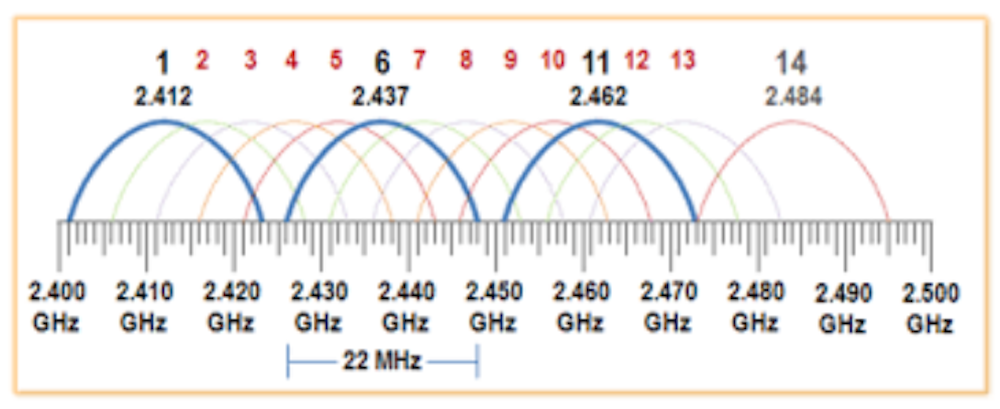
The access point (wireless router) in your home network is used to connect your devices to your internet service provider. Most access points provide a wireless signal with limited channels, which can suffer interference from nearby signals, like your neighbour’s. A “channel” is a kind of virtual “pipe” through which data is transferred.
Although your devices are designed to avoid interference by switching channels automatically (there are usually 14 available), it may help to check your router settings, as some are set to a single channel by default. When trying different options to reduce interference, it’s advisable to select channels 1, 6 or 11 as they can help to minimise problems (for 2.4GHz wireless).
There are further things you can try to improve your wifi signal. If your router supports 5GHz wifi signals, switching to this can provide a faster data rate, but over shorter distances. Reposition your router for best coverage (usually a central position).
The difference between 2.4GHz and 5GHz wifi signals is they have different data transmission speeds. While 5GHz can transfer data faster (with 23 available channels), 2.4GHz provides a wider range. If you want speed, go for 5GHz. For better coverage, choose 2.4GHz.
Some domestic appliances can cause interference with your router. It’s worth checking if using your microwave oven, cordless phone or baby monitor affects your connection, as they may be using the same frequency as your router.
Using a wifi extender can help with coverage by boosting or extending the signal.
Viruses and malware
To avoid computer viruses, make sure you regularly check for updates on your devices and use antivirus software. It’s also worth rebooting your router to clear specific malware (malicious software designed to damage your device or server), such as VPNFilter – a malware that infects more than half a million routers in more than 50 countries.
You should also check the following:
does your router need to be replaced with a newer model? This may be the case if it has been used for many years. Newer models support enhanced functions and faster internet speeds
is the firmware of your wireless router updated? You can do this by visiting the device manufacturer’s website. This will help fix problems and allow additional functionality. It’s unlikely this update is done automatically.
Planning your internet usage
If multiple people are streaming video at your home, which often requires ten times the daytime demand, a limited internet connection will soon be fully used.
Try to plan your and family members’ online activities around peak times. Before the pandemic hit, most internet usage was likely oriented around the early evenings, after close of business. With the shift to remote working and schooling, more internet access is likely during the day, with a 10% usage increase overall, and a 30% increase at peak times.
Outside your home, connectivity is likely to be on a “best effort” plan, which shares a fixed bandwidth with other users. In other words, your mobile internet bandwidth is shared with others in your area when they access the internet at the same time. A shared bandwidth results in slower individual speeds.
You can’t control how many people access the internet, but you can manage your own internet activity by downloading large files or content overnight, or outside of peak hours (when there is less traffic).
How to improve your ISP’s network issues
While you can try to fix issues and optimise the setup inside your home, unfortunately you can’t really influence network performance outside of it. Thus, contacting your internet service provider’s call centre and seeking support is your best option.
All of the above considered, it’s important to remember that when using the internet, we’re sharing a limited resource. Just like buying pasta or toilet paper, there are many who need it just as much as you, so use it wisely.
The spectre of large ships with people desperate to come ashore is not a new sight in Australia.
In 2001, the MV Tampa infamously sought to enter Australian waters off Christmas Island to discharge more than 400 asylum seekers who had been rescued by the Norwegian vessel.
The circumstances for each ship may vary, but the fundamental rules of international law remain the same.
Passengers from the cruise ship MS Artania en route to their charter flight from Perth back to Germany last week.Richard Wainwright/AAP
Duty to render assistance
For those at sea, there is a duty for masters of vessels to render assistance to those in distress. States must fulfill this obligation, too.
Australia could be seen as fulfilling this responsibility with its plan to send doctors to the cruise ships to evaluate sick crew members. An at-sea boarding is challenging, though, and requires the consent and cooperation of those on board.
When the vessel itself is in distress, the international law of the sea allows for it to enter a port of refuge.
Though countries exercise sovereignty over their ports and are entitled to control which vessels enter, an exception exists under customary international law to allow ships in distress to dock.
This is what happened in 2001 when the master of the Tampa issued a distress call to warrant his entry to Christmas Island.
But what counts as distress? Essentially, it is when there is a clear threat to the safety of those aboard the ship.
Traditionally, this related to situations when a vessel had a broken mast, damaged sails or malfunctioning engines or other mechanical failures requiring repair. A vessel could enter into port and seek the repairs needed before continuing on its journey.
The Tampa’s distress, however, was caused by the fact it was carrying an excess number of people who required more food, water and medical attention than the vessel was equipped to provide.
International law protections for crews
What about a cruise liner with a crew of 1,000 who live in close quarters and are exposed to the coronavirus? A situation of distress could well arise on these ships, as well.
International law has minimum requirements for the crew operating a ship. At the moment, it would seem the crew on a cruise liner would be divided between those who are essential for the running of a vessel and those whose jobs are to look after the passengers.
A situation of distress would be more easily established when the crew responsible for the actual running of the vessel are unwell and unable to perform tasks essential for the safety of the ship.
The crew members also have core rights that are set out in the Maritime Labour Convention, which came into force in 2013. It sets the working and living standards for crews working on ships internationally.
Under this convention, seafarers who are in need of immediate medical care are to be given access to medical facilities on shore. Australia is bound by this obligation for vessels located in its territorial waters, regardless of whether those ships are foreign-registered.
put in place measures for the health protection, medical care and essential dental care for seafarers on board.
This obligation extends to ensuring that
seafarers have health protection and medical care as comparable as possible to that available to workers on shore, including prompt access to: (i) necessary medicines, medical equipment and facilities for diagnosis and treatment; and (ii) medical information and expertise.
This order applies to Australian vessels. The question is whether the same rules apply to a foreign-registered vessel.
However, the vessel owners do not have full responsibility for the well-being of crews on board. The Maritime Labour Convention makes clear that Australia is duty-bound to offer medical care to crew on ships in its territorial waters.
The convention does not indicate who has primary responsibility to provide medical assistance in cases like these, but the shipowner does have financial liability under the treaty to defray the expenses of such treatment. What matters is the crew receives the necessary medical care.
For Australia, there is still a balance of rights to be achieved. Under international law, a state might refuse access to its ports for a ship that poses a serious and unacceptable safety, environmental, health or security threat to it. A pandemic would no doubt count in this regard.
The coronavirus pandemic is changing the way we access health care, and dental care is no exception.
Dentists are no longer allowed to provide a raft of care, such as regular check-ups and tooth whitening, to minimise the spread of COVID-19. However, if you’re in a lot of pain, your dentist will be able to treat you.
Here’s how the coronavirus is changing the way we look after our teeth.
When dentists work on your teeth, they can produce aerosols – droplets or sprays of saliva or blood – in the air.
This happens routinely when your dentist uses a drill or when scaling and polishing, for instance.
And dentists are used to following stringent infection control precautions under normal circumstances to lower the risk of transmission of infectious diseases, whether they are respiratory diseases or blood-borne.
These precautions help keep both patients and dentists safe because it assumes all patients may have an infection, despite the reality that most won’t.
But with the coronavirus pandemic, there is an increased risk of aerosols carrying the virus either directly infecting dental staff, or landing on surfaces, which staff or the next patient can touch.
This transmission may be possible even if you feel perfectly well, as not everyone with the virus has symptoms.
Who’s making these recommendations?
The Australian Health Protection Principal Committee – the key decision-making committee for health emergencies – has recently recommended dentists only provide treatments that do not generate aerosols, or where generating aerosols is limited. And all routine examinations and treatments should be postponed.
This is based on level three restrictions, according to guidance from the Australian Dental Association.
Recommendations of what is and isn’t allowed may change over time.
What does it mean for me? Can I still get a filling?
What’s not allowed?
Non-essential dental care is now postponed. This includes routine check-ups and treatment where there is no pain, bleeding or swelling. So treatments such as whitening and most fillings will have to wait.
Other conditions or treatments that will need to be postponed include:
tooth extractions (without accompanied pain or swelling)
broken or chipped teeth
bleeding or sore gums
halitosis (bad breath)
loose teeth (that aren’t a choking hazard)
concerns about dentures
crowns and bridges
clicking/grating jaw joint
scale and polish
What is allowed?
Some patients will need urgent care for acute problems requiring treatments that produce aerosols. So such procedures have a risk of spreading COVID-19.
Schools have been progressively moving classes online due to the COVID-19 pandemic and there is uncertainty over what the next months may bring. This has thrown many year 12 students’ lives into chaos.
States and territories are yet to determine what will happen with final year exams. More than 180,000 students are expected to complete their final year certificates across Australia in 2020. This includes around 68,000 in NSW completing the higher school certificate (HSC); and 49,000 completing the Victorian Certificate of Education (VCE).
Victoria’s education minister has said year 12 exams may be moved to later in the year or even early next year. But students will still be able to get their VCE qualifications.
The NSW education department has determined the HSC will also go ahead; and similar statements have been made about the South Australian Certificate of Education (SACE) and other senior certificates across Australia.
But how will the move to online study, and the disruption of routine, affect students’ abilities to perform and, consequently, their grades? And what does this mean for university entry?
Exams and coursework across the states
In Australia most students finish classes in September, so they are about half way through their courses.
In NSW, students start their final year subjects in term four the previous year and finish classes late in term three, before doing trial HSC exams. Others, like the ACT, use credit systems where students accumulate course credits with no final external exam – again most students would have completed about half their credits in these systems.
In some states, exams can comprise more than half a student’s final score. Schools also tend to have less weighted tasks earlier in a course and higher weighted tasks later. For instance, in NSW half a student’s grade in the HSC comes from the exam held from late September. And up to half a student’s school grade can comes from their trial exams.
The NSW Education Standards Authority (NESA) has given principals or system authorities the power to make decisions for the 2020 HSC in relation to formal assessments.
This essentially means school principals can give students fewer tasks, change when they are due and how much they count towards the final grade.
Similar advice exists in other jurisdictions such as Victoria and the ACT.
How this affects university entry
Once a student has their final year credentials such as the HSC or VCE, they are then ranked for university entry through a scaling system. The scaled grades are then converted into the Australian Tertiary Admission Rank (ATAR) which is used as the main entry criterion for university.
There are equity issues for students who plan to go to university as students are ranked across the ATAR. Students with access to higher speed internet and devices are at an advantage. This also the case for students whose parents can support them in their subjects, those who have space at home for their study and who can access tutoring.
When we learn online, especially when we are new to it, we often revert to content transmission – it’s easier to study content than develop structured and interactive learning activities. This changes the nature of what teachers do and what students are prepared for in assessments.
Exam creators will need to ensure questions match this new reality and ask for factual recall. This means students with better online systems and those better at factual recall – a strength for exams – have an advantage in states where exams are weighted higher for their final certificate and the ATAR.
If schools focus more on the material many year 12 students have already covered before the move to online, this may help with the equity problem.
However, many students may feel short changed as they were preparing to give it their all towards the end of the year when the final tasks are weighted more.
Students studying subjects where they produce a major work, such as a piece of furniture or who have performances such as music and drama, will also likely have only had their knowledge components assessed to date. They would be relying on the final score of their major project.
What can we do?
Reducing the breadth of material covered, as a system wide response, is a sensible option – either the detail in each subject or number of options within subjects. The final exams can be reduced in length to accommodate this.
The school year can also be extended and the exams pushed back – although this will mean university entry will need to be delayed.
Major works, performances and vocational education placements are another issue altogether. Many students will need access to specialist resources and rooms in schools to prepare these, as well as transport to and from these spaces.
Seemingly this would be possible by having a trained adult overseeing the space and observing appropriate health protocols. But group tasks such as in drama may need creative solutions such as dialogues at distance and dance pieces without interaction.
Another option may be to cover the content now and the practical components later. This may disadvantage students in subjects with practical components such as art and technology, because they have greater affinity with production and performance than classic academic study.
We will need to ensure we recognise this change when calculating the overall year 12 grade.
Leaving grade calculations to individual schools could be problematic if schools try to game the system and get their student marks up (by, for instance, expelling low grading students).
There are several ways to mediate this.
All students in the ACT take a general aptitude test, (the AST), which is used to scale student grades.
In South Australia the final SACE grade is moderated by comparing students across subjects without the use of a major external exam such as in NSW.
A move to the ACT or SA approach in other jurisdictions this year can’t be ruled out. A further option is the Special Tertiary Admissions Test (STAT) which is used for university entry for non-school leavers.
This situation could also be the impetus we need to further the debates about the ATAR and if it should be recast for university entry. The current crisis may just show us some avenues to make the current system fairer for everyone.
Source: The Conversation (Au and NZ) – By Elizabeth Stephens, ARC Future Fellow and Associate Professor of Cultural Studies, The University of Queensland
Australia’s coronavirus public health messaging has been criticisedasconfusing during a time when health guidelines and regulations are changing rapidly, and educating the public about health is more vital than ever.
The slow roll-out of its public information campaign of videos and posters, urging people to wash their hands and keep their distance, has also been criticised.
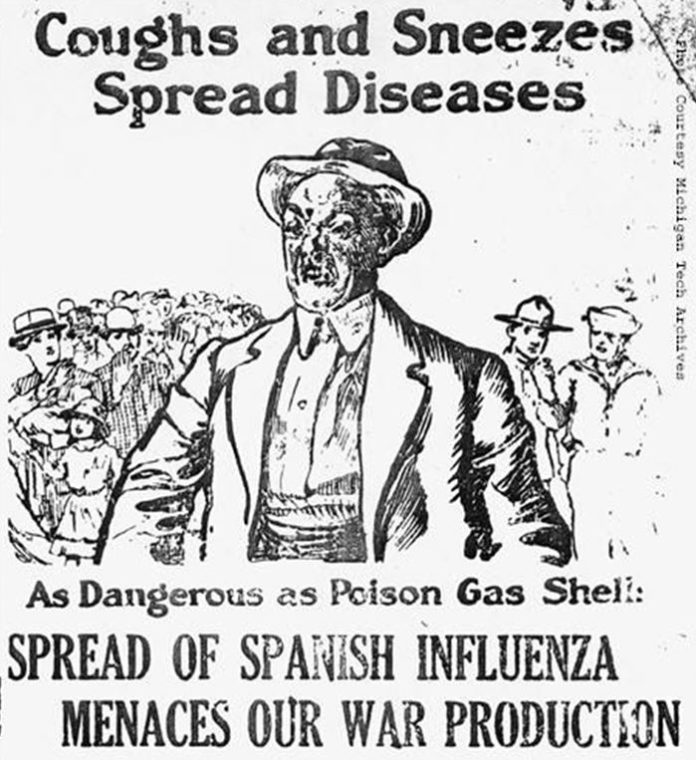
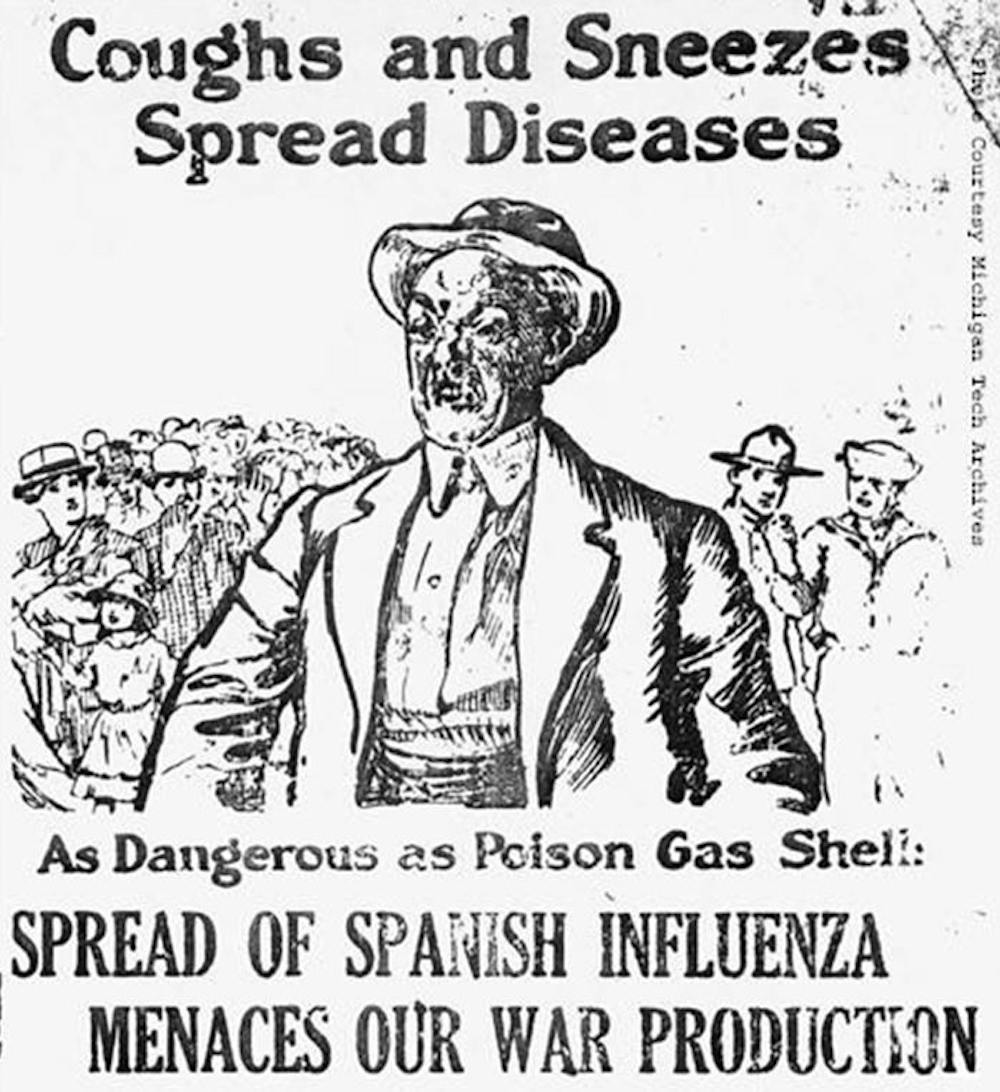
But we’ve known how pandemic public health messaging works since the 1918 influenza pandemic, a largely forgotten, but importanthistoricalprecedent for the current crisis.
We know from 1918 that pandemic public health messages need to be communicated widely and clearly, and to be consistent with government messaging and policies.
For this, messaging needs to be regulated by centralised, government agencies.
So which lessons has Australia learnt from the past?
This 1918 advertisement warns about the spread of influenza.National Museum of Health and Medicine, Author provided
Public health education campaigns have long played a pivotal role in managing public health, especially in moments of crisis.
Public health education, as we know it, is just over a century old. It is a product of the first world war, when more soldiers died of disease than injury.
Many of the earliest public health education campaigns focused on curbing the transmission of infectious diseases, more specifically, using posters to warn about venereal diseases (sexually transmitted infections).
But there are only a handful of posters warning about the influenza pandemic of 1918, which would go on to kill 50-100 million people, many times more than the war itself.
Partly this is because influenza broke out during the final stages of the war, when national resources were stretched thin.
It is also perhaps because it was initially overshadowed by that other great epidemic disease of the 19th century: tuberculosis.
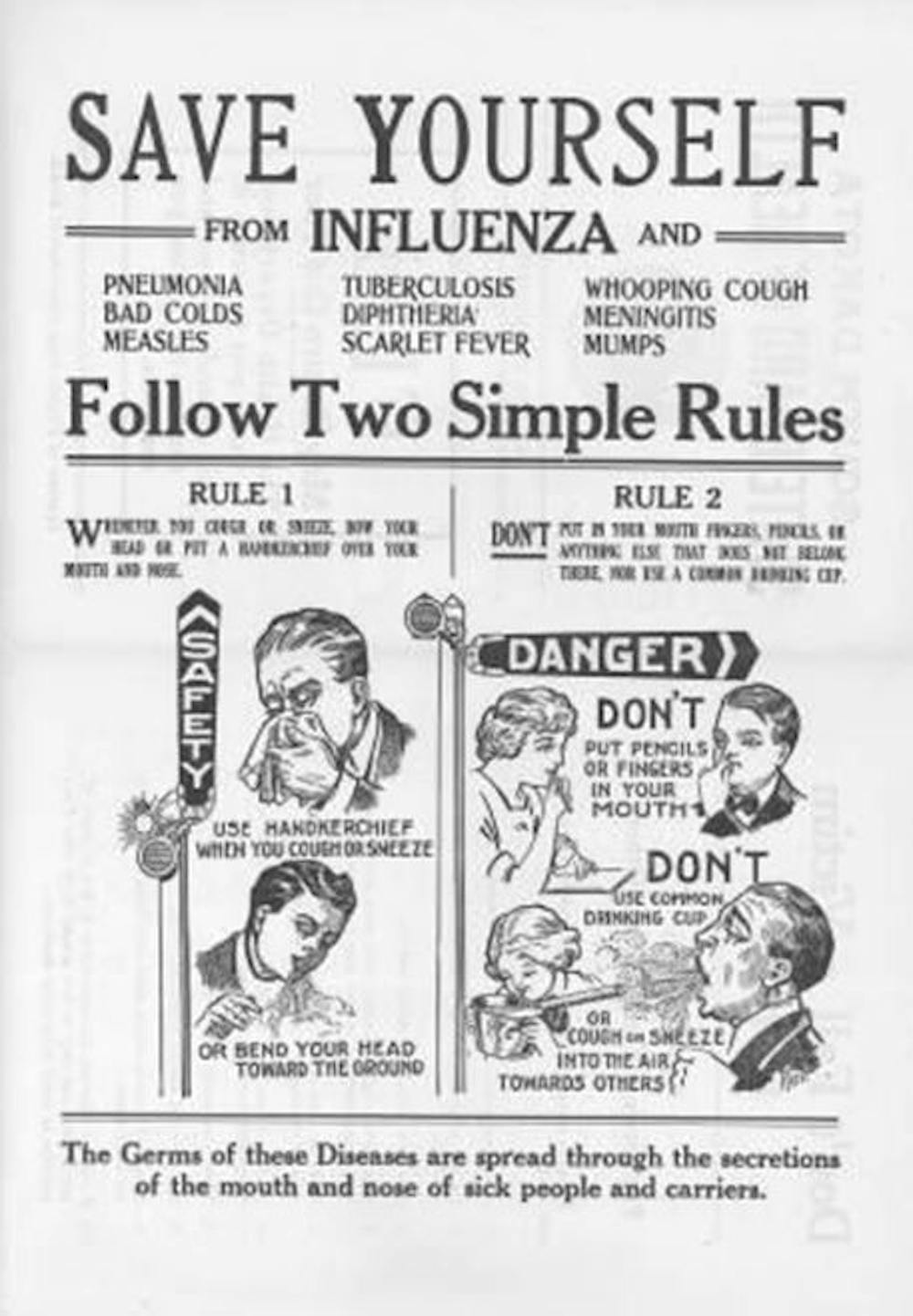
Flyer warning about the spread of common infectious diseases made during the 1918 influenza epidemic.US Library of Congress, Author provided
However, as influenza spread around the world with returning servicemen in 1918, efforts were made to slow its transmission through new public health education initiatives, such as distributing information flyers.
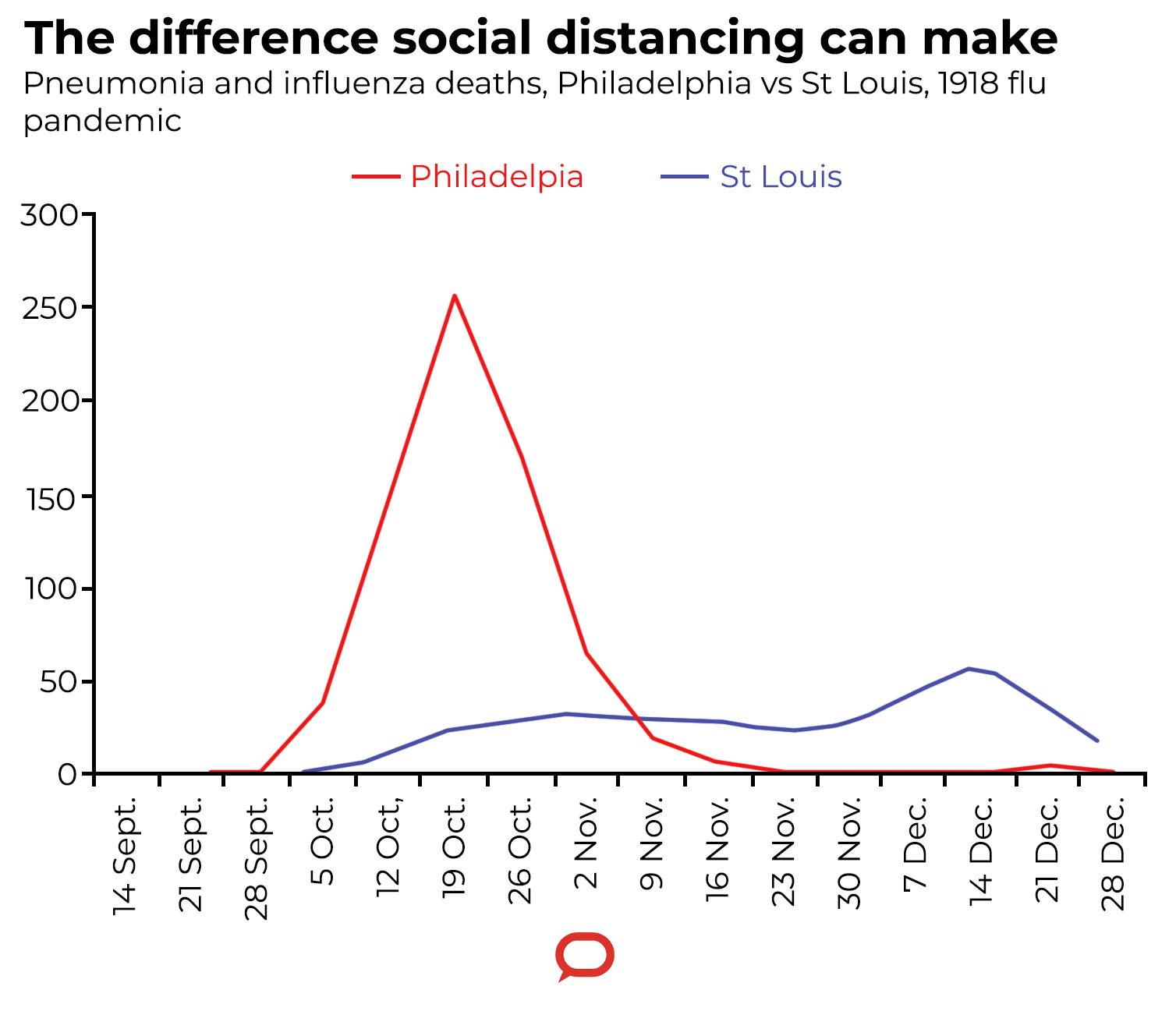
The US city of Philadelphia, for instance, distributed 20,000 flyers warning about the transmission of influenza in 1918.
At the same time, however, it also decided to proceed with a large public parade, which attracted 200,000 thousand people.
Within three days, every hospital in Philadelphia was full. By the end of the first week, 2,600 people had died. Six weeks later, over 12,000 were dead.
But the city of St Louis moved quickly to introduce measures like the ones we see today: shutting schools, cinemas, churches, and businesses. Some 700 died.
The difference between Philadelphia and St Louis is one of the most important lessons to learn from the 1918 influenza epidemic: “flattening the curve” works to limit transmission of infectious diseases, minimising the impact on health services.
Current public health messaging to “flatten the curve” has had a demonstrable effect on public behaviour, encouraging widespread social distancing and self-isolation.
However, this message was undermined by what many perceived as the government’s slowness in introducing social distancing measures as a containment policy, and mixed messaging around their implementation.
In the middle of March, as events like the Melbourne Grand Prix seemed prepared to go ahead, some feared we were watching another Philadelphia in the making.
Effective government health messaging helps stem misinformation
Before the launch of the Australian government’s public education campaign, a wave of posts from the public on social media urged people to wash their hands for 20 seconds and physically distance from older relatives.
Millions of people watched the video of Arnold Schwarzenegger feeding carrots to a miniature donkey and pony, while encouraging his audience to stay inside.
And in the UK, a 17-year-old boy created a popular online tool that adds 20 seconds of your chosen song lyrics to a poster on hand-washing.
These examples represent something new: public health messages produced and circulated by the public, perhaps one of the most significant legacies of COVID-19, changing a century of practice in public health education.
While such initiatives are doubtlessly well-intentioned, they have moved public health education from government agencies and traditional media online, into a largely unregulated space.
Inevitably, we are seeing the circulation of medical misinformation.
This was also evident in the unregulated health sector of 1918, with a flourishing market in quack medical treatments, including ones that contained arsenic, camphor or mercury.
One of the key lessons of the 1918 influenza epidemic was, precisely, the importance of efficient and regulated public health communication.
However, with health regulations changing daily and announcements often made late at night, we need to ensure public health communication keeps pace with government health policy, and public messaging about both is clear and consistent.
How about future health campaigns?
The coronavirus is pushing so much of life online and the digital sphere grows more culturally influential.
To stem misinformation, robustly funded and well-resourced government health agencies and government public information campaigns are more important than ever.
During the current crisis, we have the opportunity to learn from the past, while taking advantage of new possibilities.
For instance, government health education can make greater use of social media to explain changing public health policy and regulations.
As Australia prepares for an extended and unprecedented period of mandatory self-isolating, ongoing clear and consistent messaging will be more important than ever.
Among the latest coronavirus advice from the prime minister was an age-based self-isolation strategy designed to protect those considered most vulnerable in the global health crisis.
The directive was for Indigenous peoples over the age of 50 to self-isolate, while for non-Indigenous Australians, the age cut-off was 70.
It was a stark reminder of the ongoing crisis of Indigenous health, and the increasing threat that COVID-19 poses to Indigenous communities. Just this week, five health workers in the Kimberley region have tested positive for the virus.
As WHO Director-General Tedros Adhanom Ghebreyesus points out,
…COVID-19 is revealing how fragile many of the world’s health systems and services are, forcing countries to make difficult choices on how to best meet the needs of their people.
Public health directives on things such as hygiene, self-isolation and social distancing have been instrumental in minimising the burden on our health system in the current crisis.
While we should heed these directives, we, too, must learn from the lessons of past public health failures. And there really has been no bigger failure in Australian public health than Indigenous health.
Australia is a world leader across a range of health domains, from tobacco cessation to cervical cancer. But the experiences of Indigenous Australians, including the appalling rate of premature deaths, reveal a damning truth about the limitations of public health in protecting our mob.
Public health has proven more capable of describing the gap in Indigenous health equality and vulnerability than in remedying it. This is a fundamental failure of public health as a discipline, which tends to focus more on quantifying inequalities than in addressing the inequities that cause them.
There is often confusion between the concepts of health equality and health equity. Distinguishing between the two, however, is key to a more effective public health response for those deemed most vulnerable.
According to the Milkin Institute School of Public Health, equity refers to the absence of unfair and avoidable social, economic or environmental differences between groups of people. Lack of equity is what produces inequality in a society.
In order to reduce the health disparities gap, the underlying issues and individual needs of underserved and vulnerable populations must be effectively addressed.
As Maori medical doctor and academic Papaarangi Reid points out, addressing COVID-19 through a lens of equity means thinking about vulnerability in ways that aren’t necessarily limited to age. As she says,
So I think, while we are very worried about our elderly, we are also worried about our precariat, those who are homeless. We are worried about those who are impoverished, the working poor, those who are in prisons and institutions.
Public health failures in the coronavirus response
Australian public health, for the most part, remains bound to a utilitarian logic of “greatest good for the greatest number”. This ironically renders minority populations, such as Indigenous peoples, most vulnerable.
Through this logic, strategies for reducing the threats that minority groups face are often overlooked. They are deemed less important or too resource-intensive.
It is in this environment that our Indigenous health experts are forced to work. Much of their labour is spent appealing for a more equitable public health response, instead of focusing squarely on responding to the health crisis in our communities.
Failure to implement an equitable response commensurate with the situation will result in significantly poor outcomes for Aboriginal and Torres Strait Islander peoples.
Indigenous Australians know that increased vulnerability doesn’t offer a greater sense of safety or protection from the state.
We would see increased resourcing for Indigenous housing and Indigenous community-controlled health and social services, as demanded by NACCHO Chair Pat Turner.
If we prioritised equity as a way of reducing vulnerability, we would ensure the poorest were among the biggest beneficiaries of economic stimulus packages.
The introduction of punitive public health measures, such as fines for not complying with social distancing and self-isolation rules, also offers little assurance to Indigenous peoples. It is feared they will be disproportionately targeted, rather than protected, by the increased powers of the state.
But this is the problem with a public health agenda that is empathetic to Indigenous ill health, but indifferent to equity. It doesn’t inspire transformative action or outcomes.
It simply engenders a kind of helplessness and inevitability to the ongoing crisis in Indigenous health. And it blinds the public and policy makers to the capabilities of Indigenous peoples, cultures and communities, including our leading Indigenous health experts.
During that pandemic, Indigenous peoples suffered disproportionately in Australia, accounting for 30% of all deaths in Queensland. However, the extent to which Indigenous people were affected only came to light some 75 years later through the scholarly work of Aboriginal medical doctor Gordon Briscoe.
Alongside every public health failure in Indigenous health there have been Indigenous peoples appealing to be seen and heard, not just counted in death tolls. Indigenous expertise is instrumental to forging a new public health agenda – one that is far more humane and equitable in its commitment to the health of all, rather than the health of most.
But in a nation that steadfastly refuses to meaningfully recognise Indigenous sovereignty, this clearly is a bigger problem than public health and one likely to linger far longer than the coronavirus crisis.
Separated parents are facing a range of new challenges in the wake of COVID-19. To contain the spread, the government has directed people to stay at home except when carrying out essential activities. But children of separated families will still need to move between households.
When this happens, one parent may have concerns about the safety of children attending school or childcare while in their ex’s care, or whether their former partner will adequately supervise their children’s online schooling.
Parents may also worry their ex may not be following the current guidelines on social distancing or lives with an essential service worker who may be more likely to transmit the virus to the children.
So what can parents to do cope?
Your legal rights
By law, after separation both parents have what is termed “parental responsibility”. This means, unless the court orders otherwise, they are required to consult each other about major long-term decisions such as education and medical treatment.
But each parent can make day-to-day decisions when children are in their care such as what children will eat and what activities they will do each day.
If parents have family court orders or parenting plans that stipulate the time children spend with both parents, they should follow their terms unless they both agree on other arrangements.
If one parent doesn’t feel comfortable with children attending an education provider while spending time with their former partner, they should discuss their concerns with their ex and try to reach an agreement. There may be a range of options depending on whether there are alternate care providers and how geographically close parents live to each other.
Parents may consider adjusting their portions of time or the particular days or weeks on which children spend time with each of them.
Another scenario that has come up in practice is conflict arising between separated parents where one is not following the social distancing guidelines. Children are returning from visits and revealing they have spent time socialising – such as at playgrounds and barbecues.
In this instance the concerned parent should raise their concerns with their ex and see if they can agree on a set of guidelines that take into account government directives.
But what if we don’t agree?
The law states parents must act in the best interests of their children. Where parents cannot agree on what these are, the court has a list of best interests factors that must be considered. These include the benefit of children having a meaningful relationship with both their parents balanced against protection from harm.
The Chief Justice of the Family Court and Federal Circuit Court of Australia has made it clear if parents cannot reach agreement on new arrangements they should generally follow their court orders unless their children’s safety is compromised.
[…] should be considered sensibly and reasonably. Each parent should always consider the safety and best interests of the child, but also appreciate the concerns of the other parent when attempting to reach new or revised arrangements. This includes understanding that family members are important to children and the risk of infection to vulnerable members of the child’s family and household should also be considered.
If a parent decides to withhold time from their ex because they deem them to be breaching the social-isolation requirements, a court would need to decide if the parent had a “reasonable excuse” for failing to follow court orders.
Some parents may be worried their ex isn’t following social distancing orders and taking their child to a public playground.Shutterstock
If a child has pre-existing health issues that make them susceptible to the serious consequences of COVID-19, which can result in respiratory complications for instance, the concerned parent could provide medical evidence to support their actions.
What if I can’t follow the court order?
The current situation may mean some parents can’t follow some aspects of their court orders, such as where changeover is usually at a school or another contact centre which has closed. Parents should come to an agreement on an alternative changeover location or supervision arrangement.
Some parents have arrangements that require them to cross state borders. Queensland, Tasmania, South Australia, Western Australia and the Northern Territory have border restrictions in place that mean, unless you are granted an exemption, you will need to self-isolate for 14 days after crossing the border.
In some states, such as Queensland, you can apply for an exemption if you have a family court order or compassionate grounds. In other states, such as in South AustraliaTasmaniaWestern Australia and the Northern Territory, there is no explicit exemption for family court orders but there is one for “compassionate grounds”.
The term “compassionate grounds” has not been defined, so check with your local police to see if it includes family court orders and parenting plans.
Everyone is anxious
As the virus continues to spread, we can anticipate disputes where one parent becomes worried their ex has been exposed or come into close contact with someone who has been exposed to COVID-19. If this has occurred, health guidelines direct the exposed person self-isolate for 14 days which would require a temporary suspension of physical time with their children unless they have also come into contact and need to self-isolate.
If after testing the parent has a confirmed case, self-isolation is mandatory. If parents can’t reach agreement, again if the case went to court, the court would consider whether there was a “reasonable excuse” to depart from the court order.
Evidence of the exposure would establish the parent who chose not to follow the order had genuine health concerns.
If one parent is experiencing symptoms and is waiting for test results it would be prudent for children not come into contact with them until the result is received. If a parent clearly has COVID-19 symptoms but is not eligible for a test it would be in the children’s best interests for the parent to self-isolate from them until their symptoms have resolved.
Where parents have agreed on new arrangements, they should record these in writing. This will ensure they both understand what changes have been made and have a clear record of the arrangements.
Parents should remember this is stressful for everyone and many children will be feeling anxious. If parents can agree on consistent rules between households and keep conflict to a minimum, it would help their children feel as secure as possible when moving between households.
If parents need help with their discussions they can access mediation services at family relationship centres or consult private mediators. They can also seek legal advice from lawyers.
Source: The Conversation (Au and NZ) – By Mehmet Ozalp, Associate Professor in Islamic Studies, Director of The Centre for Islamic Studies and Civilisation and Executive Member of Public and Contextual Theology, Charles Sturt University
As the world faces the greatest disruption of our lifetimes, Muslims throughout the world are also grappling with the repercussions of the coronavirus pandemic.
But the Islamic cultural, spiritual and theological dimensions offer Muslims myriad ways of coping.
Adapting to new social norms
Muslims have relatively large families and tend to maintain extended family relations. Prophet Muhammad encouraged Muslims to keep strong family ties. The Quran inspires Muslims to be generous to kin (16:90) and treat the elderly with compassion (17:23).
These teachings have resulted in Muslims either living together as large families or keeping regular weekly visits and gatherings of extended family members. Many Muslims feel conflicted about the need to apply social distancing on one hand and the need to be close to family and relatives for comfort and support. Tighter restrictions on movement in some parts of Australia (NSW and Victoria) mean Muslims, like everyone else, are not allowed to visit extended family anymore.
One of the first changes brought about by social distancing has been to the Muslim custom of shaking hands followed by hugging (same gender) friends and acquaintances, especially in mosques and Muslim organisations. After a week or two of hesitation in March, the hugging completely stopped, making Muslims feel dismal.
Visiting the sick is considered a good deed in Islam. However, in the case of COVID-19, such visits are not possible. Checking up on those who are sick with phone calls, messages and social media is still possible and encouraged.
Cleanliness is half of faith
One aspect of coronavirus prevention that comes very naturally to Muslims is personal hygiene. Health organisations and experts promote personal hygiene to limit the spread of coronavirus, especially washing hands frequently for at least 20 seconds.
Islam has been encouraging personal hygiene for centuries. The Quran instructs Muslims to keep their clothes clean in one of the earliest revelations (74:4), remarking “God loves those who are clean” (2:222).
More than 14 centuries ago, Prophet Muhammad emphasised “cleanliness is half of faith” and encouraged Muslims to wash their hands before and after eating, bath at least once a week (and after marital relations), brush their teeth daily, and to groom their nails and private parts.
Additionally, Muslims have to perform a ritual ablution before the five daily prayers. The ablution involves washing hands up to the elbows, including interlacing of fingers, washing the face and feet, and wiping the hair.
While these do not completely prevent the spread of disease, they certainly help reduce the risk.
An interesting detail is that Muslims are required to wash their genitals after using the toilet. Even though Muslims use toilet paper, they are required to finish cleaning with water. This requirement led to some Muslims installing bidet sprayers in their bathrooms.
Closure of mosques and Friday services
Congregational prayers in mosques are important for Muslims in instilling a sense of being in the presence of the sacred, and a sense of being with other believers. Accordingly, they line up in rows with shoulders touching. This arrangement is extremely risky during a pandemic. Australian mosques are now closed because of coronavirus.
Deciding to skip optional daily congregational prayers was not too difficult for Muslims, but stopping Friday prayers has been more challenging. Friday prayer is the only Muslim prayer that has to be performed in a mosque. It consists of a 30-60 minute sermon followed by a five-minute congregational prayer conducted just after noon.
Stopping Friday prayers on a global scale has not occurred since it was introduced by Prophet Muhammad in 622, after he migrated to the city of Medina from the persecution he and his followers endured in Mecca.
Iran was the first to ban Friday prayers on March 4. While countries like Turkey and Indonesia tried to continue Friday prayers with social distancing, it did not work, and soon the entire Muslim world closed mosques for prayer services.
Fortunately for Muslims, the closure of mosques does not mean they stop daily prayers altogether. In Islam, individual prayers and worship play a greater role than communal ones. Muslims can pray five times a day wherever they are, and often home is a place where most praying takes place.
The void left by ending of Friday sermons in mosques has been filled to some extent by Friday sermons offered online.
Effect on Ramadan and the annual pilgrimage to Mecca
Two of the five pillars of Islamic practice are the fasting in Ramadan and the annual pilgrimage to Mecca.
Ramadan is only three weeks away. It starts in the last week of April and goes for a month. During this month, Muslims refrain from eating, drinking and marital relations from dawn to sunset on each day of the month. This part will not be affected by COVID-19.
What is affected are the evening breaking of fast dinners (iftar) and daily evening congregational prayers (tarawih). Muslims generally invite their friends and family members to these dinners. In Western countries, the invitations include non-Muslim acquaintances as well. Islamic organisations have already announced the cancellation of iftar dinners.
The three-day end of Ramadan festive celebrations (eid) will also be limited to family that live together.
The impact on pilgrimage is far greater.
The minor (and optional) Islamic pilgrimage (umrah) happens throughout the year, intensifying near Ramadan. With Iran a hot spot for coronavirus, Saudi Arabia suspended entry to Iranian and all other pilgrims as early as February 27.
The main pilgrimage (hajj) season occurs in late July. Although there is the possibility of the spread of the virus slowing by July, a pilgrimage involving more than two million people from just about every country on earth would almost certainly flame the virus into a second wave. Saudi Arabia is likely to cancel the main pilgrimage for 2020.
In the 14 centuries of Islamic history, pilgrimage has not been undertaken several times because of war and roads not being safe. But this is the first time in pilgrimage may be called off due to a pandemic.
As pilgrims reserve their spot and pay the full fee months ahead, the cancellation of hajj would result in losses of savings for millions of Muslims and cause massive job losses in the pilgrimage industry.
The balance between precaution and reliance on God
An early debate in Muslim circles around coronavirus has been a theological one. Muslims believe God created the universe and continues to actively govern its affairs. This would mean the emergence of the virus is an active creation of God.
So like some other religious groups, some Muslims argue that coronavirus was created by God to warn and punish humanity for consumerism, destruction of the environment and personal excesses. This means fighting the pandemic is futile and people should rely (tawakkul) on God to protect the righteous.
Such thinking may help in reducing the sense of fear and panic such a large-scale pandemic poses, but it can also make people unnecessarily complacent.
The vast majority of Muslims counter this fatalistic approach by arguing that while the emergence of the virus was not in human control, the spread of disease certainly is. They remind us that Prophet Muhammad advised a man who did not tie his camel because he trusted in God: “tie the camel first and then trust in God”.
Prophet Muhammad sought medical treatment and encouraged his followers to seek medical treatment, saying “God has not made a disease without appointing a remedy for it, with the exception of one disease—old age”.
Further, Prophet Muhammad advised on quarantine:
If you hear of an outbreak of plague in a land, do not enter it; if the plague outbreaks out in a place while you are in it, do not leave that place.
Sometimes affliction inevitably comes our way. The Quran teaches Muslims to see life’s difficult circumstances as a test — they are temporary hardships to strengthen us (2:153-157). Such a perspective allows Muslims to show resilience in times of hardship and tribulation, with sufficient strength to make it to the other side intact.
In times like this, some people will inevitably lose their wealth, income and even their lives. Prophet Muhammad advised the grieving that property lost during tribulations will be considered charity, and those who die as a result of pandemics will be considered martyrs of paradise.
As Muslims continue to deal with the coronavirus pandemic, they, like everyone else, are wondering how their lives might be changed afterwards.
The viral spread of mis- and disinformation about the coronavirus pandemic, just like the viral spread of the disease itself, has led to unprecedented media coverage. This has included a welcome return to prioritising expert knowledge.
Amid widespread criticism of the sharing of “fake news” about coronavirus, seven of the world’s most influential technology companies have banded together to prioritise the public health messages of experts. Companies such as Facebook and Google have now committed to “elevating authoritative content on our platforms and sharing critical updates in coordination with government healthcare agencies around the world”.
As the death toll from COVID-19 has climbed, the world’s technology giants have faced the same question confronting all of us: who to turn to for information, and how much trust we have in that information.
To better understand questions of public trust, the University of Melbourne’s Policy Lab last year conducted a representative survey of 1,000 Australians.
In this survey, we asked where people would turn to get information about a health problem. Respondents nominated their “local doctor” and “24-hour nurse hotline” to be among the most important sources of information.
We then asked which of the sources were the most trusted. Respondents listed their local doctor as number one, the 24-hour nurse hotline number two and the public hospital website as number three.
Given escalating attacks on experts in recent years, the survey findings reveal a rare piece of good news for evidence-based knowledge in the so-called “post-truth” age. Our findings suggest medical experts and public authorities remain the most frequently turned to, and trusted, sources of information when it comes to health.
Another Policy Lab study from 2019 arrived at the same conclusion. That peer-reviewed research found Australians were much more likely to support a health policy intervention put forward by “medical scientists” than if the same policy was put forward by “the government in Canberra”.
This finding sits well with the Australian government’s decision in March that the group of Chief Medical Officers around the country – known as the Australian Health Protection Principal Committee or AHPPC – would be “the paramount source of medical advice to the nation”.
Together with the establishment of a unique “war cabinet” called the National Cabinet, the nation’s chief medical officers are the principal source of advice to state and federal governments.
And while there may be differences of approach between experts, it is within the confines of expertise, rather than random online opinions, that debate is best had in times of medical emergencies.
Like other national studies this decade, our survey showed that Google searches and social media were among the most used sources of information. Yet, when we asked how much they trusted these sources, participants nominated Google and social media as the least trusted sources.
Social media and online discussion plays a central role in public communication about coronavirus. But they are also a source of mis- and disinformation that can ramp up public fear and – even worse – be a source of dangerous, unqualified advice. The decisions by technology companies to prioritise experts is an important step forward in a world awash with untrustworthy information.
The headline finding of our research is that most Australians turn to and trust medical experts, such as doctors, when a health concern arises. For everything that is said about the “death of expertise”, doctors and scientists appear to hold an esteemed position in society — at least when it comes to health.
There are clear policy implications that stem from this.
The first is that health seems protected from the erosion of trust that has affected other areas of society. This may be because health professionals’ objectives are easy to understand – to save lives.
Secondly, while governments and health authorities play a vital role in countering public misinformation, they no longer have the stage to themselves. This is a shift from when journalists were the main gatekeepers able to prioritise authoritative sources.
This new reality requires a delicate balancing act from our experts and leaders in which they must try to communicate risk while mitigating the harm that such information can cause when communicated in a selective way through various platforms.
Thirdly, as we are now seeing, tech companies such as Google and Facebook are realising they can no longer avoid making decisions about when to censor online information that may be harmful to its users.
This is obviously a thorny issue as censorship goes against democratic values. Facebook chief Mark Zuckerberg has warned about the dangers of his company becoming the “arbiters of truth” in the absence of government regulations.
Yet, coronavirus has reminded all of us that how information circulates on these online platforms is now, quite literally, a matter of life or death. It is significant that the technology companies that have resisted censoring political disinformation, that arguably harms the democratic process itself, have agreed to band together to censor disinformation about coronavirus.
Those who have attacked the “establishment” and “experts”“ in recent years are the same people now looking to medical experts for advice.
To paraphrase Mark Twain, it would appear that the death of expertise has been “greatly exaggerated”.
As the Covid-19 pandemic spreads around the world, wartime metaphors abound. And, with what amounts to a war economy now in place, attention has inevitably turned to post-war reconstruction. It is self-evident that, without any clear idea of when the emergency will be over, we must begin planning now to deal with its aftermath.
Experience here and elsewhere after the two world wars provides lessons on what to do, and what not to do.
In the aftermath of what was then called the Great War, governments around the world sought a rapid return to the pre-war world of the gold standard and the free market. Little was done to ensure that soldiers returning from the front and those who had been working in war-related industries could find new jobs.
The result was depression in most of developed world. Australia’s unemployment rate reached 11% in 1921, and was never below 6% during the 1920s.
The response to World War One was a mistake
The postwar failure to deliver security and prosperity to the mass of the people set the stage for the rise of dictators like Mussolini, who seized power in Italy in 1922, and for Hitler’s first attempted coup, the “Beer Hall Putsch” of 1923.
All of these mistakes were magnified still further in the Great Depression of the 1930s, which led directly to the renewal of world war on an even larger scale in 1939.
Even as World War II raged, the Allies were determined to ensure that this time, the postwar period would not be one of depression and injustice.
At the global level, the Bretton Woods conference of 1944 established a system of fixed exchange rates and created the World Bank and the International Monetary Fund (IMF).
These bodies were supposed to prevent international financial crises and allow governments to maintain full employment, a goal which was sustained for 25 years after the war.
We acted differently after World War Two
In Australia, the Commonwealth Bank was given the responsibility for central banking. It was eventually split into the Reserve Bank, which ran monetary policy, and the Commonwealth savings and trading banks, which operated for almost half a century under public ownership until they were privatised in stages by the Hawke, Keating and Howard governments in the 1990s.
Reliance on government to manage the economy was bolstered by the contrast between the disaster of the Depression and the success of the WWII economy in mobilising all available resources, including workers who had long been unemployed and apparently unemployable.
Despite the need for more houses, food, equipment and every other type of product, before the war, not all those available for work were able to find employment or to feel a sense of security in their future.
On the average during the twenty years between 1919 and 1939 more than one tenth of the men and women desiring work were unemployed. In the worst period of the depression, well over 25% were left in unproductive idleness.
By contrast, during the war no financial or other obstacles have been allowed to prevent the need for extra production being satisfied to the limit of our resources.
The dramatic response to the coronavirus pandemic has shown, again, that tolerating high levels of unemployment is a choice, not an inexorable requirement of a market economy.
For a long time, we chose full employment
The experience of the depression and war made it obvious that in a complex modern economy no one was safe from the risks of unemployment or inability to work through illness or age.
Old distinctions between the “deserving” and “undeserving” poor were abandoned in favour of a comprehensive commitment that no one should be left out of the shared prosperity made possible by technical progress.
But in the decades since the breakdown of the Bretton Woods system in the early 1970s, these zombieideas have crept back, beginning with the bashing of “dole bludgers” in the early 1970s (these were supposed to be the young people, my generation, many members of whom are these days tut-tutting at the alleged slackness of Millennials and Gen-Zeders).
A final consequence of the war was a massive expansion in public debt, which reached reached 100% of annual gross domestic product. Despite expressions of concern, it was managed without any serious problems thanks to steady growth in both real and nominal GDP.
This is one instance where the logic of exponential growth works in our favour. If the economy grows at 7% a year, it will double over 10 years. It means a debt equal to 60% of GDP at the beginning of the decade will be only 30% of GDP at the end. A rate of 7% could be achieved if the economy consistently delivered its full potential growth rate of 3.5%, and inflation also ran at 3.5%.
But achieving such rapid growth requires both a commitment to full employment, and an abandonment of the exclusive focus on inflation targeting that has dominated monetary policy since the 1990s, with results ranging from disappointing (in Australia) to disastrous (in the case of austerity in the Eurozone).
The path we choose this time will matter
The first step in this process should be a reordering of priorities to place the restoration and maintenance of full employment ahead of sticking to the ultra-low inflation rates of recent years.
This could be signalled by the Reserve Bank and government adopting a nominal GDP target, set either in levels or in rates of growth.
As with World War II, the end of the pandemic will see the gradual relaxation and removal of the drastic controls on economic activity that are necessary today.
But we should resist any attempt to return to the market liberal economy of the past few decades.
Not only has it proven to be of no use in dealing with crises like the pandemic, it has regularly generated crises of its own, such as the global financial crisis, forcing governments to come to the rescue.
The lesson of pandemics, wars and financial crises is that a modern society needs a strong government with a strong commitment to providing security and prosperity.
Source: The Conversation (Au and NZ) – By Eva Anagnostou-Laoutides, Associate Professor in Ancient History, Australian Research Council Future Fellow, Macquarie University
In the current health crisis, we might ask what needs to be cured more urgently: the virus itself or people’s poor sense of moderation.
We have seen shocking footage of panicked citizens fighting over the last pack of toilet tissue, our politicians’ exasperation at selfish stockpiling, and blasé disinterest from those who don’t think social isolation rules apply to them.
The Athenian philosopher Plato outlines in his dialogues, especially the Symposium and the Laws, the practice of civic moderation – sophrosyne in Greek – in an ideal state.
Plato, drawing on ideas already developed by earlier Greek writers, saw justice and injustice in the soul as comparable to health and illness in the body. Although Plato eventually promoted philosophers as political leaders, many writers saw leaders as physicians curing diseased communities. These ideas feed into what we expect from politicians today.
First, do no harm
The therapeutic effect of politicians was already a powerful metaphor in early 5th century BCE poetry (alongside the idea of the leader as captain of the Ship of State.
In his Fourth Pythian Ode, written in 462-461 BCE, the lyric poet Pindar compares Arcesilaus IV, the king of Cyrene, with a physician. The king is entreated to “heal” the city which has been left wounded by the exile of a prominent citizen, Damophilus (whose name, conveniently, means “dear to the people”).
In Aeschylus’ tragic play Agamemnon, written in 458 BCE, the king, having just returned from Troy, announces to the Argive assembly his political agenda. He will maintain what is good, “but whenever there is need of healing remedies”, he “will try by applying either cautery or the knife reasonably to avert the damage of the disease”. In simple terms: cut out the bad bits with surgical means if necessary.
According to ancient historian Thucydides, Nicias, the general who warned the Athenians about the disastrous Sicilian expedition of 415-413 BCE, advised the city’s executive council to act as physicians “in trying to do as much good as possible or at least no voluntary harm”.
Both Nicias and his political opponent Alcibiades agreed that the Athenians needed to change their usual way of doing politics to deal with the crisis at hand. Nicias insisted on a radical, immediate change of habits. Alcibiades argued remedies ought to be proportionate.
By employing medical metaphors in their arguments, they sound very much like today’s politicians debating approaches to the pandemic.
The use of the leader-as-physician metaphor by ancient Greek poets and historians reflected the rising prominence of the Hippocratic Corpus, a collection of texts associated with Hippocrates and his teachings. The collection also highlights the tension between medicine, mainly preoccupied with curing symptoms, and philosophy, whose aim is that understanding nature and its causes.
The Hippocratic texts advocate the notion of health as a kind of balancing act: between elements in the body such as cold, hot, wet, dry, sweet, bitter or, in terms of bodily fluids, a balance between blood, phlegm, yellow and black bile.
Alcmaeon of Croton, an early medical writer and philosopher, described this balance as isonomia (equality). In addition, he called disease, which he understood as the prevalence of one of these elements or fluids, monarchia (monarchy), clearly borrowing his terminology from politics.
The body politic
Plato, a voracious reader, preoccupied with the ideal constitution, appreciated the leader-as-physician metaphor.
The Laws, Plato’s last work, explores the ethics of government and law, including the notions of social responsibility and restorative punishment. Plato thought justice (Greek dikaiosyne) secured a better life for the individual and made them more willing to obey laws. At a social level, “the union of justice, moderation, and wisdom” is proposed as the solution, or prescription, to ensure social harmony – like the balance the Hippocratics aspired to for the body.
Roman mosaic depicting Plato’s academy from 1st century BCE Pompeii, now at the Museo Nazionale Archeologico, Naples.Wikimedia
Plato advocates moderation (sophrosyne) as a most excellent quality in the pursuit of justice and virtue. He also references mental health and civic moderation. Besides the clinically mad, he says, there are two other groups of people who may behave foolishly: the young who can be reckless as a result of naivety, and those unable to withstand pleasures and sorrows or control their fears, desires, and frustrations. Plato describes their disease as anoia (mindlessness).
His proposed “cure” is risky: to instil permanent bravery in the citizens, he argues, we may use a fear drug to artificially arouse fear in them, either fear of bad reputation or fear of the enemy. By applying a drug similar to wine as a medicine (pharmakon), the citizens would be purged of vice and a sense of moderation restored.
Like modern medicine, the process is allopathic: using remedies to produce effects different from those produced by the disease being treated. Bravery is produced by fear, moderation by excess.
… understand that neither youth nor old age can do anything without each other, but together the frivolous, the middling, and the very exact, when united, will have most strength. And that, by sinking into inaction, the city, like everything else, will wear itself out …
In modern political parlance: we’re all in this together.
The trouble might be today’s citizens are getting mixed messages. On the one hand, they hear Alcibiades’ rallying cry. But they also hear, via the mouths of political office holders, his political opponent Nicias’ more drastic treatment approach for a sick society at war. Nicias asked the Athenians to vote to “Stay home.” History proved him right.
The viral spread of mis- and disinformation about the coronavirus pandemic, just like the viral spread of the disease itself, has led to unprecedented media coverage. This has included a welcome return to prioritising expert knowledge.
Amid widespread criticism of the sharing of “fake news” about coronavirus, seven of the world’s most influential technology companies have banded together to prioritise the public health messages of experts. Companies such as Facebook and Google have now committed to “elevating authoritative content on our platforms and sharing critical updates in coordination with government healthcare agencies around the world”.
As the death toll from COVID-19 has climbed, the world’s technology giants have faced the same question confronting all of us: who to turn to for information, and how much trust we have in that information.
To better understand questions of public trust, the University of Melbourne’s Policy Lab last year conducted a representative survey of 1,000 Australians.
In this survey, we asked where people would turn to get information about a health problem. Respondents nominated their “local doctor” and “24-hour nurse hotline” to be among the most important sources of information.
We then asked which of the sources were the most trusted. Respondents listed their local doctor as number one, the 24-hour nurse hotline number two and the public hospital website as number three.
Given escalating attacks on experts in recent years, the survey findings reveal a rare piece of good news for evidence-based knowledge in the so-called “post-truth” age. Our findings suggest medical experts and public authorities remain the most frequently turned to, and trusted, sources of information when it comes to health.
Another Policy Lab study from 2019 arrived at the same conclusion. That peer-reviewed research found Australians were much more likely to support a health policy intervention put forward by “medical scientists” than if the same policy was put forward by “the government in Canberra”.
This finding sits well with the Australian government’s decision in March that the group of Chief Medical Officers around the country – known as the Australian Health Protection Principal Committee or AHPPC – would be “the paramount source of medical advice to the nation”.
Together with the establishment of a unique “war cabinet” called the National Cabinet, the nation’s chief medical officers are the principal source of advice to state and federal governments.
And while there may be differences of approach between experts, it is within the confines of expertise, rather than random online opinions, that debate is best had in times of medical emergencies.
Like other national studies this decade, our survey showed that Google searches and social media were among the most used sources of information. Yet, when we asked how much they trusted these sources, participants nominated Google and social media as the least trusted sources.
Social media and online discussion plays a central role in public communication about coronavirus. But they are also a source of mis- and disinformation that can ramp up public fear and – even worse – be a source of dangerous, unqualified advice. The decisions by technology companies to prioritise experts is an important step forward in a world awash with untrustworthy information.
The headline finding of our research is that most Australians turn to and trust medical experts, such as doctors, when a health concern arises. For everything that is said about the “death of expertise”, doctors and scientists appear to hold an esteemed position in society — at least when it comes to health.
There are clear policy implications that stem from this.
The first is that health seems protected from the erosion of trust that has affected other areas of society. This may be because health professionals’ objectives are easy to understand – to save lives.
Secondly, while governments and health authorities play a vital role in countering public misinformation, they no longer have the stage to themselves. This is a shift from when journalists were the main gatekeepers able to prioritise authoritative sources.
This new reality requires a delicate balancing act from our experts and leaders in which they must try to communicate risk while mitigating the harm that such information can cause when communicated in a selective way through various platforms.
Thirdly, as we are now seeing, tech companies such as Google and Facebook are realising they can no longer avoid making decisions about when to censor online information that may be harmful to its users.
This is obviously a thorny issue as censorship goes against democratic values. Facebook chief Mark Zuckerberg has warned about the dangers of his company becoming the “arbiters of truth” in the absence of government regulations.
Yet, coronavirus has reminded all of us that how information circulates on these online platforms is now, quite literally, a matter of life or death. It is significant that the technology companies that have resisted censoring political disinformation, that arguably harms the democratic process itself, have agreed to band together to censor disinformation about coronavirus.
Those who have attacked the “establishment” and “experts”“ in recent years are the same people now looking to medical experts for advice.
To paraphrase Mark Twain, it would appear that the death of expertise has been “greatly exaggerated”.
Source: The Conversation (Au and NZ) – By Charles Livingstone, Associate Professor, School of Public Health and Preventive Medicine, Monash University
Pubs, clubs and casinos have all been closed as part of the response to COVID-19. That means Australia’s 194,000 poker machines are now shut down. These venues, and their machines, are not expected to re-open anytime soon.
Further, assuming the shutdown lasts six months, as Prime Minister Scott Morrison has flagged, pokie operators will forego about A$7.5 billion in pokies revenue. That’s the amount punters would normally lose to pokies in casinos, pubs and clubs over that period.
A relief from stress and boredom
For some intermittent pokie users, this will be no big deal. For others battling a pokie addiction, the shutdown could bring a sigh of relief, limiting the opportunity to fuel a habit they know does them (and their families) significant harm.
For other high-risk gamblers, there may be a strong temptation to shift their gambling habit online. In some cases, pokie users will already have online accounts. Others may not. We can anticipate online bookies doing their best to convert such people into more regular – and lucrative – customers during the COVID-19 crisis.
There will be few situations more stressful – and at the same time boring – than what we can expect to endure over the coming months.
Access to unanticipated lump sums of money could also be a factor in driving more people to online gambling. The government will allow people to withdraw up to $20,000 from their super accounts over this and the next financial year.
For some, that could prove dangerous.
Creative new ways to induce people to bet
In the United Kingdom, some politicians are concerned the stress and anxiety of self-isolation and social distancing will induce risky online gambling. They have been imploring the government to restrict online bet sizes and impose deposit limits for betting accounts following the shutdown of offline gambling venues.
Much of this will be replicated in Australia. If online gambling does increase here, there could be long-lasting repercussions – what social justice advocate Tim Costello once called the phenomenon of “losing your house without having to leave it”.
As the Australian sporting codes shut down, events that provide the grist for the gambling mill will become harder to find. Punters may be tempted to gamble on automated casino-style games in European countries where this is permitted.
Australians can get access to offshore sites (using them is not an offence), although the Australian Communications and Media Authority has started asking ISPs to block specific sites it identifies.
Gambling markets are also now available on a multitude of national and international events. For instance, Australian bookmakers are heavily promoting horse-racing – one of few sporting events that haven’t been cancelled globally. More obscure sporting events are also being advertised, such as the Table Tennis Cup in the Ukraine.
“Return to action” markets are also being offered on major international sporting events. For instance, Australian punters are able to bet on whether the next NBA game will be played before June, July or August.
Markets are also being offered on e-sports, including the global ESL Pro League, as well as the reality TV series Survivor All Stars.
Bookmakers have even offered over/under markets on the daily temperatures in the capital cities.
Internationally, evidence suggests a shift from pokies (or other gambling venues) to online gambling does not substitute for all of the revenue lost when pokies are shut down. If there were a direct transfer, bookies would see a $7.5 billion bonanza over the next six months.
But even a small proportion of that would be a big boost to bookies’ bottom lines.
Bookies are also among our biggest media advertisers. There is nothing to suggest they won’t run ads during the crisis to try t persuade people stuck at home to open a gambling account.
This is particularly problematic given the clear evidence that young men and children are vulnerable to the appeal strategies used in gambling advertising.
What can we do about this?
There are several policy options. The federal government has been active in the regulation of online gambling in recent years, persuading the states (which license and regulate gambling operators, including online) to adopt a consumer protection framework.
It would make sense to fast-track some new measures. The Australian Bankers Association recently called for submissions on restricting the use of credit cards in online gambling.
Credit betting was prohibited by the consumer protection framework, and credit cards can’t be used in ATM or EFTPOS machines in offline gambling venues. However, credit cards are routinely used to top up online gambling accounts. It is an excellent time to introduce a prohibition on credit cards across the board.
It may also be prudent to legislate for an upper limit on deposits to gambling accounts, as advocated in the UK. This could apply to both the frequency of deposits and the amount.
A maximum bet limit amount could also be legislated during the COVID-19 crisis. Complementing this, a universal pre-commitment system that requires people to set time or monetary limits before they gamble could also be introduced. This is how gambling works in Norway, as an example.
Simply shutting down online gambling in the states going into lockdown is another real option. We know that high rates of gambling are associated with increased rates of intimate partner violence, as are disasters. Already, we are seeing an increase in intimate partner violence related to the coronavirus crisis.
Some governments may see an online gambling shutdown as a reasonable response, given other gambling venues have closed almost entirely. And the loss of revenue to the states would be modest.
Victoria, for example, will lose about $96 million per month in taxes from the pokies shutdown. Victoria’s taxes from online wagering are just $11 million per month by comparison.
One of the acts of a caring and compassionate society is to help people avoid the potential harm that an uptick in online gambling may induce.
Apart from anything else, restricting access to online gambling may also help those who seek to use the pokie shutdown to better manage their gambling. That alone would be a major benefit.
Source: The Conversation (Au and NZ) – By Robert Breunig, Professor of Economics and Director, Tax and Transfer Policy Institute, Crawford School of Public Policy, Australian National University
How would you feel if you were having a Zoom meeting with your accountant and they asked “how would you like to save more than $5,000 in income tax over the next six months?”
While probably a bit sceptical (did I hear right? Maybe this technology is faulty? What’s the catch? Surely this is too good to be true?) you might be intrigued. You might even turn up the volume to make sure you hear the next bit.
What about if they followed up with, “It’s completely legal. The Australian government will be picking up the tab as part of the stimulus packages! Plus, you can do it mostly risk-free. But you do have to rearrange your financial affairs a bit, and deal with some bureaucratic hurdles.”
What the accountant would be referring to is a generous incentive that is on offer now over the next six months.
It is linked to the decision to temporarily allow the early release of A$10,000 in super this financial year and $10,000 the next.
This means that it’s possible to voluntarily contribute $10,000 of your pre-tax income into super over the next three months, and also apply to withdraw a $10,000 lump sum from super tax-free at some point before June 30.
You still end up with $10,000 in your pocket. But if you contribute through a salary sacrifice arrangement with your employer and stay within the concessional contributions limits, your voluntary contributions will be taxed at 15% rather than your marginal personal tax rate.
When you pull out the funds from super, the withdrawal is tax free. And, you will be able to do the same thing again between July 1 and late September.
In a working paper released by the ANU’s Tax and Transfer Policy Institute, we described these kinds of situations – where people assume a different legal form in order to receive a lower marginal tax rate – as “tax arbitrage”. They are completely legal, and widespread.
Like other tax arbitrage opportunities, there are sizeable tax savings available from the pursuing of the super equivalent of the Hokey Pokey.
This chart illustrates the sums involved.
Potential tax saving in one specific scenario associated with salary sacrificing up to $10,000 into super and withdrawing it in the same financial year
Personal income tax calculations include the Low Income Tax Offset, Low and Middle Income Tax Offset and the Medicare Levy.
It applies to a very specific scenario: a working age individual who is on 9.5% compulsory super contributions, has an annual salary below $158,000, has made no previous voluntary contributions to super in 2019-20, and who elects to make a “simultaneous” (within 2019-20) pre-tax contribution to and withdrawal of the maximum possible $10,000 from super over the next three months.
It suggests that, as long as an individual in this situation has an annual income of approximately $30,000 or more, there is a prospective tax saving from rearranging his or her financial affairs over the next three months.
The tax savings can be risk-free, if that’s what you want. If you were worried about the stock market falling further and taking away your contributions to super with it, you can direct your super fund to hold all new contributions purely as cash.
In all, its not a bad return for three (or six) month’s efforts – especially as it results purely from a change in legal fiction rather than any change in underlying economic activity.
Who can do it?
As always with these kinds of arrangements, the devil is in the detail, but there is a lot we already know.
First, the arrangements are targeted at those who have been adversely impacted by the coronavirus. On or after January 1, 2020 working hours (or turnover for sole traders) have to have been fallen by at least 20%.
And it benefits those willing to embrace the bureaucratic hurdles (or outsource the embracing to their accountant). Consistent with Australia’s self-assessment tax system, the onus is on the applicant to certify that they qualify. The Tax Office will then make a determination that the funds be released by the super fund.
There appears to a fair bit of discretion left to the ATO as to what impacts from coronavirus will be considered sufficient.
One thing is that isn’t clear is what the base period for comparison is, although some examples provided by treasury compare outcomes over a month in 2020 against the average over the six months at the end of 2019.
It seems quite straightforward if your workplace has cut back your hours or the business you own has had its trade (say) halved, but it is less clear cut if you have voluntarily scaled back your hours because of childcare or if you have returned from working overseas because of the virus.
The second key condition is you need to be fortunate enough to hold on to a job providing you with taxable income (or if you are self-employed, generating pre-tax income) of up to $10,000 over the next three, and maybe six, months. The new JobKeeper wage subsidy will help.
And you need to be able to handle the “cash flow” gap – between when you start salary sacrificing income (which reduces take-home pay) and when your super fund is able to release the income to you.
But sole traders whose business is suspended and are ceasing earning income may not be able to do so. And salary sacrifice isn’t an option if you become unemployed and move on to a government welfare payment which doesn’t allow salary sacrifice.
The third key condition is you need to have enough assets in super to be able to withdraw $10,000 per quarter for the next six months. You can only make one application for an Australian Tax Office determination between now and June 30, and one application between July 1 and September 25.
What are we meant to make of it?
Taking it all together, a (probably unintended) consequence of the super changes has been to create a sizeable tax loophole for those who are relatively mildly impacted by the coronavirus, still earning taxable income, and have the financial capacity to salary sacrifice into super.
While it might initially sound like a niche opportunity, it could be of interest to a significant number of the estimated six million recipients of the JobKeeper payment.
The people who benefit will probably welcome their windfall. Some might, quite reasonably, point out that they should be expected to pay only the minimal tax legally applicable. They might even invoke the spirit of Kerry Packer.
At a system-wide level, though, this sort of tax planning is grossly unfair and leads to a tax system that is less efficient, more complex and less sustainable.
Income tax is easily the most important source of Commonwealth government revenue. Loopholes in it feed through into company tax reveune through refundable imputation (something Labor tried to wind back in the 2019 election). There is no inheritance tax. And the main consumption tax is set at a low rate, is far from comprehensive and doesn’t fund Commonwealth government spending.
We ought to worry about actions that erode the collection of personal income tax.
The policy process has moved astonishingly quickly in the past three weeks. There were always going to be mistakes, and during a recession its often wise for decision makers to not let the perfect become the enemy of the good.
But equally, we must safeguard against details that are objectively bad.
Now we’ll see how the government responds to error.
Police in Papua New Guinea have arrested nine alleged illegal border crossers and quarantined them in Vanimo, reports RNZ Pacific.
The arrests came as East Sepik Governor Allan Bird called for “shoot to kill’ orders for illegal border crossers and a military control of areas along the border between Papua New Guinea and Indonesia, reports the PNG Post-Courier.
The newspaper The National reports three Indonesians from Papua and six vanilla sellers from PNG’s East Sepik province had crossed the border from Indonesia
They were arrested and then placed in 14 days of quarantine by the West Sepik provincial health authority.
The land border between PNG and Indonesia has been closed since late January due in an attempt to prevent the spread of Covid-19.
– Partner –
The West Sepik police commander, Chief Inspector Moses Ibsagi, said the illegal border crossers were not taking heed of the national government’s warning on the dangers of Covid-19.
Mr Ibsagi said the vanilla traders in particular, who had just returned from selling their beans in Jayapura, were more concerned about money than the lives of eight million people of PNG.
Confirmed cases in Jayapura With several confirmed cases of Covid-19 in Jayapura, and likely more unreported cases, the provincial police commander is concerned about the virus spreading via the PNG kina bank notes which the traders obtained in Jayapura.
He warned that when the money was brought back to PNG, it could circulate through buying and selling of goods or services, helping the virus to easily spread among local people.
Meanwhile, in a statement yesterday, East Sepik Governor Allan Bird called for a “shoot to kill” policy.
“I have a disturbing report that people are still crossing the border from Indonesia into my province. Even as of l[Sunday night] five people came in a speed boat and three people the previous night,” Bird said.
“I am asking if a special order can be made and our border districts be placed under military control.
“I want the military to be given shoot to kill orders. East Sepik has no hospital facilities. We are only operating out of makeshift shelters. We can’t cope.”
Bird said the East Sepik province had so far 37 people of interest and all of them had come across from Indonesia.
‘Massive infections’ “I understand Indonesians who are frightened by the massive infections on that side could be crossing the borders to run away from the disease. If that happens, we are finished.
“I have been raising concerns about this border for more than two months. Nobody listened to my concerns.
“I am raising a new threat from the border which I see coming. They could already be moving across as I speak.
“Leaders we must take this decision to save our people.”
Bird is expected to raise the same issue when Parliament meets today to introduce the Emergency Bill to give legal effect to the state-of-emergency and also to introduce a supplementary budget containing a stimulus package containing relief during the emergency period.
Prime Minister James Marape has also given assurance that the police and military presence would be beefed up along the border provinces of West Sepik and Western.
The publisher of some of New Zealand’s best known magazines has folded amid the economic fallout from the national coronavirus pandemic lockdown.
Bauer Media, which publishes The Listener, Woman’s Day, New Zealand Woman’s Weekly, Metro, North and South and Next, says it is no longer viable and has shut its doors today.
Chief executive Brendon Hill said the Covid-19 lockdown had stopped magazine production and put the business in an untenable position.
He said magazines depended on advertising and it was unlikely that would recover to pre-crisis levels.
Business advisory firm EY has been appointed to work on an orderly wind-down of the business, and buyers are being sought for the magazines.
– Partner –
New Zealand Bauer staff were told this morning of the closure.
Hill said local staff would get full redundancy and other entitlements.
‘Devastating blow’ “This is a devastating blow for our committed and talented team who have worked tirelessly to inform and entertain New Zealanders, through some of the country’s best-loved and most-read magazines.”
Bauer carried out an urgent review of its New Zealand operations and considered all options to keep part or all the business open, including engaging with the New Zealand government, Hill said.
“An active search is underway to find buyers for our New Zealand assets, including our many iconic titles, however, so far an alternative owner has not been found,” he said.
This article is republished by the Pacific Media Centre under a partnership agreement with RNZ.
If you havesymptomsof the coronavirus, call the NZ Covid-19 Healthline on 0800 358 5453 (+64 9 358 5453 for international SIMs) or call your GP – don’t show up at a medical centre.
So named in reference not only to Covid-19 but also article 19 of the Universal Declaration of Human Rights, this project aims to evaluate the pandemic’s impacts on global journalism.
It will document state censorship and deliberate disinformation, and their impact on the right to reliable news and information.
It will also make recommendations on how to defend journalism.
Within our extended primate family consisting of lemurs, monkeys, and apes, humans have the largest brains. Our closest living relatives, chimpanzees, weigh about two-thirds as much as us, yet our brains are about 3.5 times larger.
Ours are also organised differently, and take longer to grow and mature. This extended period of development leads to a particularly long childhood for humans – one that requires extra parental care and protection.
Brains consume a large amount of energy. For a species that has a small brain at birth and a large one in adulthood, growth must either occur rapidly, or over a long time, or through a combination of both.
Researchers first observed exceptionally large brains in the human fossil record from about 300,000 years ago. However, the slower rate of brain development, which is now unique to humans, began more than three million years ago in the australopithecine lineage. These two-footed hominins from Africa are thought to be ancestral to our genus, Homo.
What triggered the evolutionary brain expansion in hominins, and how this relates to human behaviour, remain hotly debated topics among palaeoanthropologists.
The Dikika child
In 2000, an Ethiopian team uncovered an astonishing find in the country’s Dikika region: the skeleton of an ancient baby with a nearly complete skull.
Dated to about 3.3 million years ago, this youngster belonged to the same genus and species as the iconic australopithecine adult female Lucy – Australopithecus afarensis.
Australopithecine skeleton (left) and reconstructions of australopithecines Lucy and the Dikika child.Institute of Human Origins & Zeray Alemseged
In a new paper published in Science Advances, we reveal that Lucy’s species shows surprising similarities and differences with both chimpanzees and humans. But in order to make these comparisons, we first needed to work out two critical details:
exactly how old was the Dikika child when it died?
how did its brain size compare to adult members of its species, such as Lucy?
X-rays to the rescue
Brains do not fossilise, but as they grow and expand during childhood, the tissues surrounding them leave their mark inside the skull.
Using three-dimensional virtual models, researchers can measure the space within the brain case as a proxy for brain size. This is accomplished through computed tomography (CT), or synchrotron X-ray imaging.
This 3D animation shows the skull of the Dikika child.
A synchrotron is a machine that accelerates electrons close to the speed of light and directs them around a large ring. By forcing electrons to travel in a circular direction with magnetic fields, extremely bright light is produced that can be filtered and adjusted for research purposes.
A benefit of this approach is that permanent impressions of brain folds on the bone can provide clues about key aspects of the brain’s organisation. Synchrotron imaging can also provide powerful insights into dental development.
The truth is in the tooth
A seldom recognised fact about humans and other primates is that our milk (baby) teeth and first molars are marked with a line formed at birth. Similar to the growth rings of a tree, cross sections of teeth also reveal daily growth lines reflecting the body’s internal rhythms during childhood.
Having access to precise records of the Dikika child’s teeth, we were able to determine how old the child was when it died. Our team’s dental experts calculated an age of 861 days, about 2.4 years.
This means the infant grew its molar teeth rapidly – similar to chimpanzees, and faster than humans. Surprisingly, however, its rate of brain development seemed to have shifted from the fast lane to the slow lane.
Extending brain growth
Virtual models of australopithecine brain cases reveal members of Lucy’s species had a chimpanzee-like brain organisation, but grew for a longer period of time.
Our estimates suggest that by 2.4 years old, australopithecine children had brains that were only about 70% as big as adults, while average chimpanzees of the same age would have completed more than 85% of their brain growth. Thus, this species may bridge the gap between the long childhoods humans enjoy today, and the shorter ones of our ape-like ancestors.
Among primates in general, different rates of growth and maturation are associated with varied strategies of caring for infants. Slowing brain development is a way to spread the energetic needs of highly dependent offspring over many years. And this can be linked to a long reliance on caregivers.
Lengthening the period of brain growth also stretches out a species’ highly impressionable learning period. Extended brain growth in Lucy’s species may have provided a basis for the subsequent evolution of the brain and social behaviour in our ancestors.
These baby steps would have been critical for the long childhood that is now often regarded as a keystone of human uniqueness.
Staying home and not socialising your dogs, most notably puppies, risks them becoming afraid of unfamiliar people and other dogs.
This, combined with a being in an urban environment for a long time, relative inactivity, and sub-optimal training activities, could set up a COVID-19 generation of dogs who aren’t equipped for urban and suburban living.
To date, there’s no evidence pets spread COVID-19.Shutterstock
That said, it’s best to touch only your own dog over the next few months and not allow others to cuddle your puppy or dog. The World Organisation of Animal Health says:
When handling and caring for animals, basic hygiene measures should always be implemented. This includes hand washing before and after being around or handling animals, their food, or supplies, as well as avoiding kissing, licking or sharing food.
When possible, people who are sick or under medical attention for COVID-19 should avoid close contact with their pets and have another member of their household care for their animals. If they must look after their pet, they should maintain good hygiene practices and wear a face mask if possible.
Social isolation for social animals
If you’re suddenly working from home a lot or in lockdown, your dog is probably over the moon.
Dogs thrive on contact with members of their social group. So, it might be hard to get work done with your dog vying for your attention.
Encourage your dog to settle with items to lick and chew, such as pigs’ ears and food-dispensing toys, but avoid giving these items in response to being pestered. Break up the day with smaller, more frequent meals and regular toilet breaks.
Give dogs chew toys to help them settle down.Shutterstock
Many dogs are accustomed to receiving daily exercise and having much of their social needs met through play with other dogs in public areas. If this is no longer an option, you may find your dog is unusually active and mischievous at home.
Now may be the time to create structure such as “play” and “quiet time” cues so your pets don’t learn to demand your attention at any time.
Puppy socialisation
Puppies’ social needs are the greatest of all. It’s critical for vaccinated puppies to be socialised with lots of different people, dogs and environments. But under social isolation, finding opportunities for these encounters may be difficult.
It’s safe for dogs to play with other dogs. So, if you go for a walk with your dogs, and they see another dog, they can be allowed to greet each other, but their contact with other humans should not be encouraged. The same principle applies to dog parks and play dates.
For puppies, looking at objects is the next best thing to touching them, and they can learn about their environment through short excursions to see traffic, pedestrians and other dogs.
It’s safe for dogs to play with other dogs, just make sure humans keep their distance from other humans.Shutterstock
From within a vehicle, puppies can observe traffic and other animals. And from the safety of their own home, they can and should be gradually exposed to various recorded sounds, such as thunder, babies crying and vacuum cleaners.
Play learning games
With the shutdown of social gatherings, pups will inevitably miss out on important socialisation opportunities. This may create the need for extra training when life returns to normal.
But while dog-training businesses may be reducing their services, many are offering online courses and training challenges through social media to help people stay engaged and on top of their dog’s training.
Canine challenges includes scent games (often called nosework), which are great enrichment for dogs.
Dogs are experts at sniffing out objects, and practising these skills with toys in the yard or on the balcony gives them an outlet for these natural abilities (and it can be lots of fun for the humans too).
Take puppies out on short excursions to expose them to new sights and sounds.Shutterstock
You’d be amazed how good they are at tracking your scent, even indoors. With the right food or toy rewards, playing hide and seek with your dog is also an opportunity to reinforce an excellent recall.
What happens if we stop working from home?
Dogs like to be with their social group at all times, and they may come to expect they’ll always be involved.
Recent research into separation-related distress (SRD) suggests this is a very complicated phenomenon with multiple possible causes. Hyper-attachment to owners and panic when left alone aren’t the only reason dogs can develop SRD. Frustration, noise sensitivity and other anxieties may also exacerbate SRD.
For puppies growing up in the COVID-19 era of free access to human owners, it’s particularly important for them to learn that separation from their owners is normal and non-threatening.
Dogs need to learn that separation from their owner is normal.Shutterstock
If you’ve got a new puppy or an at-risk dog such as those with a history of anxiety, make an effort to separate them for short periods. This may be another good reason to create a work routine while working from home: time for exercise, time for food, time for games and time to work without interruptions.
Stay active and engaged
Our canine friends may give us reasons to stay physically active while many of our usual activities have been cancelled, and they may provide comfort to us in this time of social isolation.
By keeping up with environmental enrichment, you can make sure your four-legged best friend doesn’t suffer from cabin fever. If you have a puppy or are bringing home a new dog, plan how to set them up for life post-COVID-19.
As new, stricter measures intended to limit the spread of coronavirus were announced in NSW, Queensland and Victoria, many turned to Google to work out what they meant in practice.
According to Google Trends, some of the top coronavirus searches nationally in the last day or so include “can I visit my parents coronavirus Australia?”, “can I go fishing during coronavirus?” and “can I go for a drive during coronavirus Australia?”
“Can I visit my boyfriend during coronavirus Australia?” was also a common one.
We asked three legal experts – Jarryd Bartle in Victoria, Thalia Anthony in NSW and Susan Harris Rimmer in Queensland – to help shed some light on what the new rules might mean for residents of those states.
My answers are based on the Stay at Home Directions, made by the Deputy Chief Health Officer on March 30 2020.
In Victoria, you can only visit someone outside your own household for care or compassionate reasons or for a valid activity (such as work or education). In terms of parents, they need to be someone who has “particular needs”.
This includes people who are in need because of age, infirmity, disability, illness or any other chronic health condition. It includes mental health issues and pregnancy.
This includes visits to a residential aged care facility, except in cases where they are not allowing visitors.
But generally, you should be remaining in your own home.
Failure to comply could result in an on-the-spot fine of up to $1,652 or a more serious fine of $19,800 through courts.
Failure to comply attracts a maximum penalty of imprisonment for six months or a fine of up to $11,000 (or both) plus a further $5,500 fine each day the offence continues.
The answers to these questions are relevant at April 1 2020 and may change in a matter of days. The rapid pace of change is evident by the fact that since March 16 the NSW government has issued seven orders.
Overall, in New South Wales you must stay at your own home unless you are homeless or have a reasonable excuse. Reasonable excuses include obtaining food, goods or services, travelling to necessary work or education, exercise, medical or caring reasons.
On the question of visiting parents: if your parents require care for physical or mental health reasons, then you can visit them. This includes personal care, such as delivering food or medical supplies, assisting with medication, helping them to maintain a safe home and to maintain hygiene as well as facilitating any emergency assistance.
The NSW Police Commissioner has indicated care is a broad concept that includes for the purposes of being a caring person. This might suggest police will not be policing homes to enforce this order narrowly.
Nonetheless, you may want to consider whether unnecessary visits are unnecessarily exposing your higher-risk parents to COVID-19 if you are an asymptomatic carrier.
Susan Harris Rimmer, Queensland:
On January 29 2020, under Section 362B of the Public Health Act 2005, the minister for health and minister for ambulance services made an order declaring a public health emergency for “all of Queensland” in relation to COVID-19. It lasts to May 19, 2020, and it may be further extended.
This direction prohibits citizens “from leaving their residence except for permitted purposes”. Queensland restricts gatherings of more than two people. This applies both in public and private area but exempts members of the same household.
All people must stay in their homes except for:
shopping for essentials – food and necessary supplies;
medical or health care needs, including compassionate requirements;
exercise with no more than one other person (unless from your household);
providing care or assistance to an immediate family member;
work and study (including childcare) if you can’t work or learn remotely.
attending any court of Australia or to comply with or give effect to orders of the court.
Queensland police officers will be able to issue on-the-spot fines of $1,334.50 for individuals and $6,672.50 for corporations, who breach these laws. The maximum penalties available through the courts will be 10 times those amounts.
What if home is not safe? It is not clear yet what should happen in a national or state lockdown. The National Sexual Assault, Family and Domestic Violence Counselling Line – 1800 RESPECT (1800 737 732) – is available 24 hours a day, seven days a week for any Australian who has experienced, or is at risk of, family and domestic violence and/or sexual assault.
Where should people go? Academic Amanda Gearing argues a possible solution is for people who own a second home that is standing empty to make them available via police for emergency safe houses, with subsidised rental. Or we could use empty hotels, currently being used for quarantine.
So, can you visit your parents? You must have a permitted purpose. Remember, if your parents are elderly, they are more likely to be affected by COVID-19, so be mindful you might do them more harm than good by seeing them. Keep your distance.
If your parent lives alone, you can visit them on your own and you can exercise together, practising social distancing. You can visit a terminally ill relative or attend a funeral.
You can provide assistance, care or support to an immediate member of your family. However, if they live interstate, are quarantined or in a retirement village that has gone into voluntary and pre-emptive lockdown, you will not be allowed to see them.
Queensland’s rules say a person can be accompanied by members of their household – defining “household” as “persons who ordinarily live at the same residence” but, unlike other states, also extending it to people if they have “family or kinship customs or cultural obligations have the effect of a person living across multiple residences”.
You cannot visit for a social interaction.
You can join the new Queensland Care Army and help seniors without endangering their health.
Jarryd Bartle, Victoria: You are allowed to exercise. Whether or not those activities fall within the definition of exercise as outlined in the direction is unclear.
Police have discretionary power to decide their interpretation of these measures. Daniel Andrews has said he’s not going to hamstring police, so their discretionary powers remain quite broad. It may come down to what the officer who stops you interprets as “exercise”.
My understanding is similar ambiguities exist in NSW.
Thalia Anthony, NSW: If the fishing or bushwalking is not local and you have to drive to get there, you cannot do this altogether.
If are seeking to do these activities locally, they could constitute a reasonable excuse to leave your home on the grounds of “exercise”, although this is more likely to be the case for bushwalking.
It is conceivable that fishing could be regarded as exercise where it involves strenuous activity, such as crabbing by walking through water, as opposed to sitting down on a jetty or a boat with a line (although even this has some anaerobic benefits and contributes to the classification of fishing as a “sport”).
It is more likely, nonetheless, that exercise would be regarded as an incidental rather than a characteristic feature of fishing and therefore is not allowed.
Bushwalking is more likely to be classed as exercise, notwithstanding its meditative and nature-connecting qualities. However, walking on narrow bushwalking tracks where you may encounter other people may preclude physical distancing, making the activity unlawful. Furthermore, most national parks in NSW are now closed and bushwalking would not be permitted in these areas.
Finally, if you go bushwalking, you cannot do it with more than one person unless they are in your household.
Susan Harris Rimmer, Queensland: Being Queensland, this has been addressed in some detail. The Queensland transport minister Mark Bailey says people can still use their boats in Queensland waters to fish or travel for essential reasons, but not for recreational purposes.
“If you own a boat and want to head out in the water in your local community to fish for food this weekend, you can,” Mr Bailey said.
“If you need your boat to travel locally in your community, you can still do that.
“If you want to head out on your kayak or stand up paddle board for exercise, you still can.
But no sunbathing! You can go to the beach for exercise, but cannot work out on gym equipment at beachside public parks as the facilities are listed as “non-essential” premises. Gold Coast mayor Tom Tate clarified yesterday that “you can do your exercise, you can do your push-ups, you can stretch, you can walk quickly.”
Yes, you can go bushwalking for exercise with one other person whilst practising social distancing but stay local. But all camping areas in national parks and state forests are now closed, so no long walks with camping. The Queensland Department of Environment has confirmed that day-use areas, tracks and trails are open at this stage. Social distancing rules apply.
Jarryd Bartle, Victoria: You can only go for a drive if it’s done for one of the reasons outlined in the direction.
Good reasons to leave home include to get necessary goods and services, for care and other compassionate reasons, for work and education, for exercise, in order to move, as part of shared parenting arrangements or for uniquely exempt gatherings such as weddings or funerals, or in the case of an emergency.
These are nearly identical to the reasonable excuses in NSW.
If you leave “just for a drive” without a good reason, you may be breaking the law.
Thalia Anthony, NSW: You cannot go for a drive unless there is a reasonable excuse to drive, which covers:
Obtaining food, medical supplies, goods and permitted services (not massages, beauty treatment etc) and then presumably at the most local shop to prevent cross-community cluster contamination and inhibiting cluster tracing
Work or education that cannot be done at home
Accessing Centrelink or other social services (including mental health and family violence services)
To fulfil caring responsibilities
To honour shared custody arrangements
To pick up or drop off children at childcare
To attend a wedding or funeral (assuming number limits are observed)
Moving to a new place of residence, between different places of residence or inspecting a potential new place of residence (private visits only)
Donating blood
Undertaking legal obligations (although noting that most court business has been suspended)
To avoid injury or escape harm
Emergencies and compassionate reasons
To provide pastoral care (although only for priests, ministers of religion and members of religious orders).
Susan Harris Rimmer, Queensland: Not for fun. Only leave the house and drive for one of the permitted purposes, stay local. Only two in the car.
Jarryd Bartle, Victoria: Although the directions initially stated that you could not visit your partner except for care or compassionate reasons, the Victorian Chief Health Officer has had a change of heart, announcing the rules will be changed to allow partners to stay with or meet each other.
Thalia Anthony, NSW: You cannot visit their home unless they require care (see above in relation to parents). This is consistent with the order that no one can leave their house without a reasonable excuse. But the NSW Police Commissioner has interpreted this to include the general care of a partner.
Further, you may exercise with your partner for whom you do not reside if you respect social distancing (ie no physical affection).
You may also move in with them if their residence is to become your new residence (see point 8 above).
Susan Harris Rimmer, Queensland: If they live across a state border, nope. You cannot see your partner unless it is for one of the permitted purposes such as exercise, if you live near each other, or work or study together.
You can still socialise with the family or roommates you live with, but if there are more than two people in the home, no visitors are allowed.
If someone lives alone they are allowed one social guest. That guest is allowed to leave their home to visit. If someone leaves their house for an essential reason, such as exercise, they can be joined by only one other person or the members of their household.
In Queensland, residents are allowed to leave home to provide care to an “immediate member of the person’s family”. There’s no provision for leaving to care for anyone else. This appears to rule out visiting a partner, unless married/de facto.
Here’s hoping absence makes the heart grow fonder. If you liked it then you shoulda put a ring on it.
Can I go for a walk around my neighbourhood or sit on a park bench?
Jarryd Bartle, Victoria: You can exercise, which would include walking. On a strict reading of the directions, you can’t just sit idly on a park bench. In general, I think the basic rule is to stay at home unless you have a very, very clear thing to do.
You cannot go outside merely for recreation any more.
Thalia Anthony, NSW: You can walk for exercise but not sit on a park bench unless you are doing it to avoid harm.
For, example you can sit on a park bench if you acquire an injury while you are walking and you do not want to aggravate that injury or if you tire from the exercise and need a rest.
Susan Harris Rimmer, Queensland: You can engage in physical exercise so long as you keep social distance of 1.5 metre and only in a group of two. But do not sit on anything, play on anything or touch anything, playgrounds, BBQ areas and outside gym equipment are now closed throughout Queensland. No sitting down.
And definitely, no sunbathing. But remember, health includes mental health. Stay connected. And good luck.
As of this week, everyone with a Medicare card is eligible for Medicare-funded telehealth. That means you can have a consultation with your GP, psychologist and other health providers via video or phone, rather than going in.
This should help with social distancing – a core weapon in our community’s fight to contain this epidemic.
Some but not all health care can safely be shifted online. But it can be difficult to know when it’s OK to skip the in-person visit. Here are some pointers to get you going.
There’s a saying in medicine that “history is 80% of diagnosis”. By “history”, we mean the things our patients tell us; fortunately, video and telephone connections convey your voices and stories well.
So for issues where doctors and patients mainly need to speak, and where the risk of serious illness is low, telehealth consults are a good option. Evidence backs this up, finding fairly satisfied doctors and patients – and sometimes even cost or time savings.
I’m most comfortable using telehealth with patients I know well, and when we are managing long-standing health issues. For example:
routine chronic disease management, especially where the condition is fairly stable – for example conditions such as diabetes, high cholesterol or high blood pressure
writing repeat prescriptions for medicines used in long-term illnesses – like the examples above, or tablets for contraception, stomach acid or chronic pain
exploring mental health issues
discussing diet and physical activity
writing referral letters.
Some conditions can also be monitored remotely. In particular, many patients with high blood pressure can safely measure this using a machine at home. This is recommended in blood pressure guidelines, as it’s actually more reliable than clinic readings.
But home blood pressure monitoring won’t be a solution for everyone. It needs careful technique, and also enough money to buy a machine.
Some simple short-term illnesses might also be managed via telehealth, as long as the risk of anything serious going on seems low. Examples could include straightforward urinary tract or upper respiratory tract infections.
But there is a worrisome overlap in symptoms between common viral infections and the early symptoms of COVID-19. Guidelines are being written to help GPs assess, over telehealth, who needs to simply isolate, who needs testing, and who needs to go to hospital.
What you need to see a doctor for
Sometimes a physical examination is important. There are all sorts of presentations in which I might need to listen to your heart or lungs, or feel your abdomen, or take your temperature if you don’t have a thermometer at home. This is especially the case when symptoms are new.
Photographs are tricky. I can’t expect patients to be able to describe or photograph a changing skin lesion well enough for me to make decisions. (Often these are benign, but I’d hate to miss a skin cancer.)
There are procedures that can’t be done via telehealth. Excising skin lesions, taking swabs and smears, inserting long-acting contraceptive devices, giving injections – these simply don’t happen “virtually”.
Particularly important right now are flu vaccinations: while these offer no protection against coronavirus, they may stop the dangerous “double whammy” of getting influenza and coronavirus together.
You’ll need to go in for your flu shot.Shutterstock
Some routine checkups and screening tests, in low-risk people without symptoms, might simply best be put off until this pandemic settles. But it’s hard to generalise. If in doubt, ask a doctor who knows you well.
Bookings, prescriptions and blood tests
When booking an appointment, don’t simply book a face-to-face appointment out of habit. Hopefully reception staff will offer the telehealth option, but this is all new, and it can’t hurt for you to raise the idea too.
When GPs aren’t sure whether telehealth is appropriate, we can begin with a telehealth conversation, then swap to a traditional consultation if needed.
Prescriptions and blood test or imaging referrals are currently awkward via telehealth. I can mail non-urgent prescriptions and requests to patients, pharmacies or other providers.
For urgent prescriptions, we’re using a messy combination of phone calls, faxes or emails to get instructions to pharmacists quickly, and then mailing the originals.
Fingers crossed, there will soon be reforms allowing purely digital prescribing.
Just an interim measure for the pandemic?
Medicare has previously been very strict about only funding GP consultations when they happen face-to-face. The shift to funding telehealth has been forced by the coronavirus pandemic; so far the government is promising telehealth funding to late September.
Like patients, not all practices are ready for video consultations. Webcams, like facemasks and hand sanitiser, are hard to find. And we’re still learning which video services tick all the boxes for function and privacy.
Doctors, like patients, are still working out how to consult via telehealth.Shutterstock
At a better time in history, we’d confine telehealth consultations to the obviously safe consultations, and do all the other ones face-to-face. But we currently need to balance the risks of forgoing some physical examination and procedures against the risks of potential exposure to coronavirus.
Research evidence on telehealth isn’t much help, because it wasn’t done in the coronavirus era. Instead, we need to be as safe and wise as we can, and learn as we go.
I hope we’ll be able to lay the foundation for telehealth not just as an emergency measure, but as an enduring feature of general practice – complementing rather than replacing face-to-face consultations.
New Zealanders in their 20s are the age group with the biggest numbers of Covid-19 and are “the vector for transmission”, says Prime Minister Jacinda Ardern.
Ardern has thanked NZ for its efforts, but says it is still too early to say if the level four lockdown is successfully slowing transmission.
Ardern said that if the virus was in the community – present but not yet seen – “then the worst thing we could do is be relaxed or too complacent and allow a silent spread”.
She said that if the country was not at alert level four, the Marist and Matamata clusters could have ended up much worse.
– Partner –
“By and large, given what we have done in a short space of time, I think the majority of New Zealanders are doing an amazing job, we just need to keep reminding that small proportion who perhaps aren’t taking it seriously why it is so important,” she said.
“This period of time is our chance to break the chain of transmission. The quicker we do that the sooner we can return to some semblance of normal life … it is about you and your family.”
She said the most affected age range in this country was currently those aged 20-29.
‘They are our vector’ “They are our vector for transmission, so I need everyone to take this seriously. They are the ones that pass it on.”
She said the country did not have a full picture of the extent of community transmission,
“That’s why we’ve been so focused on testing capacity, which over a period of time we’ve seen a 91 percent increase in.”
Ardern said testing stations had been set up in every community and it should be made easy as possible for people to get tested, but that testing did fall off over the weekend.
“We’ve talked to the Director-General [of Health] about what we can do to get consistency because that is two days out of seven when we really can’t afford to have testing fall away.
“We have the capacity, we have the swabs … no matter where you are you should be able to access a test.”
Ardern said 2093 tests had been done today.
Prime Minister Jacinda Ardern says industry leaders have been asked to find infrastructure projects that are ready to start as soon as industry gears up again. Image: RNZ/Pool/Getty
Infrastructure projects The prime minister also said industry leaders had been asked to find infrastructure projects that were ready to start as soon as industry gears up again.
“Work is also under way to speed up consents for the development of infrastructure projects during the recovery from Covid-19 to provide jobs and stimulate our economy,” she said.
Advance payments would be made to some employers to hire staff so that work could begin as soon as possible, she said.
She said about 990 emails had been received on the first day of the food Pricewatch service and the most common complaint was the high prices of cauliflower, bread, meat, facemasks and garlic.
“We are taking these complaints seriously. We are investigating complaints that are being made.”
The process for dealing with complaints was being worked through and would allow supermarkets a chance to be involved.
The prime minister also provided a few updates on support package for Māori communities and the one for NGOs and community groups.
Finding for Whānau Ora “The funding allocated to Whānau Ora commissioning agencies has been fully paid out which has helped the agencies to coordinate 100,000 care packages, with over 11,000 delivered to date and aiming for 130,000 by the end of the week.
“The investment has also helped to facilitate priority access for testing to vulnerable whānau such as kaumātua.”
Her update follows the latest health update, in which another 61 cases brought New Zealand’s total Covid-19 infections to 708.
Director of Public Health Dr Caroline McElnay spoke at the earlier briefing about moves to step up the testing regime in New Zealand, with broader testing criteria and two new testing centres set up by the end of next week, bringing the total to 10.
This was hoped to lift testing capacity to 5000 a day, up from 3700 currently. An average of 1843 tests were being carried out but it was hoped this would also increase.
This article is republished by the Pacific Media Centre under a partnership agreement with RNZ.
If you havesymptomsof the coronavirus, call the NZ Covid-19 Healthline on 0800 358 5453 (+64 9 358 5453 for international SIMs) or call your GP – don’t show up at a medical centre.
The coronavirus pandemic has spawned a lexicon of its own. We have had to quickly incorporate words like “self-isolation” and “social distancing” into our everyday language to navigate it.
“Essential service” is another one. In fact, it is one of the most commonly used and somewhat confusing keywords to emerge from our leaders’ press conferences. This is because it has taken on new significance and is being defined in particular ways.
So what constitutes essential news and information services?
Small newspapers closing and going digital-only
News Corporation has announced it will suspend the printing of 60 community newspapers in NSW, Victoria, Queensland and South Australia from next week. They will become digital-only products.
News Corp Australasia executive chairman Michael Miller said in a statement
the impact of COVID-19 on the community print titles came on top of the toll on media from the refusal of digital platforms to pay publishers to use their content.
The News Corp statement is one of several such announcements in recent weeks as dozens of local and community newspapers have closed across the country, from the Torres Strait to Gawler, South Australia, and many more in the US, UK and New Zealand.
This news has barely made the headlines amid the coronavirus crisis, and there has been little talk of a rescue package for newspapers that have shut their doors in these unprecedented times.
What qualifies as ‘essential’ information?
As researchers undertaking an ARC Linkage project on media innovation in partnership with Country Press Australia, our attention is now focused on understanding what qualifies as an “essential” news and information service.
We are also studying the lengths to which Australians are prepared to go to protect their media from the economic devastation stemming from the coronavirus.
If newspapers are to innovate and flourish beyond the pandemic, they need to be acknowledged and supported as an essential service.
Yet, there are mixed messages about what might be considered “essential information” platforms. For the government, essential information seems to be limited to what it tells an elite group of journalists at Canberra press conferences and what it posts on its “COVID-19 essential information” website.
At the same time, Prime Minister Scott Morrison is sending mixed messages about the value of social media. On one hand, the government has launched a massive social media advertising campaign on coronavirus; on the other, he is saying platforms such as Twitter are “breeding grounds for gossip and nonsense”.
This inconsistency and confusion only adds to the uncertainty about what the government considers “essential information” channels that people should go to for reliable news.
What can be done to protect local newspapers?
What we already know is that local journalism (especially newspapers) matters to the public. And right now, local audiences need professionally produced news that is socially and geographically relevant.
On a national scale, “essential coronavirus information” is available via government websites and major news outlets.
But if you live in regional or remote Australia, you need news on the local businesses and services that have been affected by the virus and infection rates specific to your patch. Local papers also deliver stories about how friends and neighbours are coping and supporting each other.
Intervention is needed to protect these newspapers from disappearing altogether. Already, there have been calls for the government to tap into an existing $40 million innovation fund to support small and regional publishers through the crisis.
We also suggest the government should consider making newspaper subscriptions (print and digital) tax-deductible.
As small businesses, many local newspapers will be eligible for existing tax relief such as the JobKeeper allowances designed to keep their employees in work.
But our early research indicates there are other ways for governments and major companies to get behind regional and rural newspapers and deem them essential services.
Government advertising spending has dropped dramatically in the past five years across country newspapers. This had represented a major chunk of their revenue. Instead, government advertising funds are often redirected to social media with little regard or thought about the consequences in the wider media ecology.
Such communication strategies overlook the fact the local printed newspaper is still an essential service for many in local communities, particularly the elderly who are arguably most at risk from COVID-19.
Protecting these news outlets should be at the forefront of any government communication plan when there is a vital need to keep people informed and connected, and fake news and misinformation is rife.
Meanwhile, Australian media and communication academics are also sending mixed messages. They are calling for the survival of public interest journalism while taking research funding from the predatory news platforms Google and Facebook, which are widely recognised for destroying the health of news ecosystems throughout the world.
In Australia, two parliamentaryinquiries and a landmark report by the ACCC and News Corporation have all concluded that Facebook and Google are no friends to Australia’s small newspapers.
Yet strangely, these juggernauts are being positioned as saviours of local news.
Social dimension of local papers
If coronavirus has an upside, it is reminding us of the essential importance of social order and connection at both institutional and individual levels.
One of the most prominent images from the coronavirus coverage in Italy over the past few weeks has been the obituary and death notices in the Lombardy region, highlighting the continued central role the local media plays in important rituals and life events.
The newspapers under threat during the crisis connect people well beyond matters of politics and public interest.
Our research shows that, in fact, it is often the social dimension of these newspapers that matters most. They are also bridges to the local advertisers deeply affected by this crisis, such as retail shops, cafes and restaurants. This matters to people in regional communities – and it’s time we acknowledged that.
Sweden still exponential, may be a large undercount. Chart by Keith Rankin.
Analysis by Keith Rankin
I was concerned to read last night that Greta Thunberg and her father almost certainly have Covid19; however, because of very restrictive testing criteria used in Sweden, they have not been tested. And I heard yesterday, on a Radio New Zealand news bulletin, a story about how there are virtually no mobility restrictions in Sweden; former Swedish Prime Minister Carl Bildt stated that Swedes were however staying home voluntarily to a large extent, reflecting the reserved Swedish character.
I also heard that the United Kingdom has only being reporting hospital deaths from Covid19; apparently the UK deaths in homes and rest-homes will be included in future. This reflects an undercount of British deaths from people who tested positive. Many at home deaths in Sweden, however, may never be recorded as Covid19.
I was particularly surprised and concerned that Sweden is taking a diametrically opposite approach to New Zealand. That is partly because Sweden was caught unawares, and rapidly. But it also suggests that Sweden’s authorities are happy to let the disease take its course with a likely final death toll of over 20,000 people. (I gather the Netherlands is also taking a similar approach, heading for a final death toll of 50,000.) It also suggests that the data from Sweden is subject to an even larger undercount than the UK data. (I think I trust German data. Germany appears to have tested very widely; its death toll is lower than elsewhere in Europe because of testing and tracing, much as occurred in Asia.)
In today’s chart, Italy now serves as a reference point, and its curves are flattening. Known infection incidence and death rates in Italy are still much higher than Sweden and United Kingdom; but that may be mainly due to Sweden being a week behind Italy; United Kingdom even further behind. It now appears that Sweden may have a bigger undercount than Italy. Italy is headed for a final death toll of 100,000.
Of special statistical significance for Sweden, its known cases have been on the same exponential path for the last two weeks (cases doubling weekly); and, over that same time period, its recorded Covid19 deaths have been on a consistently faster growth path, with deaths increasing 10-fold from 13 March (day 13) to 27 March (day 37).
In the meantime, United Kingdom Covid19 death numbers are approaching 10 percent of its known case numbers, a situation that Italy faced a week ago.
While I can see Sweden, Netherlands and United Kingdom recording an eventual combined total of 200,000 Covid19 deaths, I remain confident that New Zealand’s final Covid19 toll will be about 100.
The number of people going to hospital with the coronavirus is expected to rise, putting a strain on our health and aged care services and their workforce.
But questions remain about the differences in training of nursing assistants compared to regulated nurses (registered and enrolled nurses) and the tasks they are able to undertake.
An unregulated workforce
As nursing assistants are unregulated, their training and clinical practice is not controlled by professional bodies or governments.
Training is certainly recommended, but it is not compulsory, and content between training organisations can be different. Therefore, nursing assistants working in hospitals and residential aged care facilities may have completed an on-line course, a Certificate III qualification, completed one year of undergraduate nursing studies or have a nursing qualification from overseas. They may have had no training at all.
It is these last two examples, undergraduate nursing students in Australia or overseas trained nurses, that the Prime Minister Scott Morrison recommends organisations seek to recruit.
What a nursing assistant can do
Nursing assistants can work under the supervision of a registered or enrolled nurse to help provide basic nursing care such as showering, hair, skin and mouth care. They can assist with activities essential for daily living including helping people with dressing and feeding.
They may also perform simple wound dressings, transport stable patients or residents between beds or wards, and undertake nursing observations such as pulse, temperature and respiratory rates.
Using student nurses and current visa holders seems like a potential solution to a possible staffing crisis. But is it?
For student nurses, there is considerable variation in the course structure offered by universities, who each write their own curricula within the boundaries of the Australian Nursing and Midwifery Accreditation Council.
This means not all students will have had the same clinical experience or completed the same content by a given point in their course. Therefore they may not have equivalent knowledge or skills before working as a nursing assistant.
Patients at risk?
This variation may be a problem and there is a lot of evidence that a higher number of unregulated nurses and a lower number of regulated nurses increases the risk of patient infections and other adverse events in hospitals) and the aged care sector.
For example, nursing people with an infectious disease requires scrupulous attention to detail and meticulous use of Personal Protective Equipment (PPE) to prevent further spread.
There are correct ways to apply and remove a mask and gown. A tiny slip-up can put the wearer and others at risk of contamination.
Working as nursing assistants can provide undergraduate students with valuable clinical experience. Our recent research shows most nursing activities performed by nursing assistants are those personal care activities described above.
But we found around one-third of tasks they performed require a higher level of skill and knowledge and should therefore be performed by regulated nurses.
This may explain why the rate of adverse events increases with more unregulated nurses. With the projected increase in patients who may need intensive care, experienced qualified nurses who can work without supervision will be needed.
Can retired nurses help?
Some have recommended recruiting retired nurses to help staff intensive care units. Again, this is fraught with problems.
Working nurses are ageing – the average age is about 45 – with two out of five aged 50 and over. So most retired nurses are likely in their 60s or older.
The two age groups – the over 50s and the over 60s – are precisely those at risk of a severe response to the coronavirus, which could make staffing shortages and the demand for beds much worse.
Perhaps a more effective and sustainable solution would be to use Australian Defence Force nurses who are all regulated, presumably fit and who have been prepared to deal with emerging crises at short notice.
Australia is clearly going to need innovative ways to ease pressure on the health workforce over the coming months. If we’re going to recruit student nurses and current visa holders, we need to make sure all have been trained and assessed to the same standard.
China has gradually emerged out of its shadow of despair as the epicentre where the coronavirus pandemic started. Now, there is face saving required – as well as agenda-setting in the global power play.
China played a decisive role in combating the invisible enemy. Chinese officials and academics are taking this opportunity to rescript the narrative and place China as the new world leader.
In the quest for this leadership, China seems to be playing the game of “white face” (friendly face) and “red face” (hostile face). Similar to the Western concept of good cop/bad cop, white face and red face uses seemingly opposing actions to achieve a singular goal.
The red face is Zhao Lijian, a Chinese foreign ministry spokesman who suggested the virus originated in the US and was brought to Wuhan by American soldiers.
The white face is providing medical supplies to countries now battling the pandemic, gestures of goodwill described as “mask diplomacy” or “medical diplomacy”.
By understanding the context for these donations, we can understand a lot about how China embeds symbolism within its soft power diplomacy.
Guarding life
Chinese people have a long history of wearing masks as protection from disease, chemical warfare, pollution, and severe weather. As early as the 13th century, court servants would cover their noses and mouths with a silk cloth when bringing food to the emperor.
As China increasingly encountered foreign powers through Treaty Ports at the turn of the 20th century, disease control became a critical concern. Despite the long legacy of traditional medicine, China was seen as an unhygienic place by the Western occupiers of these ports.
China’s opening to the West in 1978 led to a greater awareness of hygiene. The Chinese word for hygiene weisheng (literally “guarding life”) was incorporated by health reformers in numerous applications, from wooden disposable chopsticks to toilet paper.
In China, not wearing masks in the current health crisis is seen as unhygienic, irresponsible, and even transgressive. Punitive measures are taken by authorities, with non-mask-wearers publicly shamed and humiliated on Chinese social media.
In the West, masks have been widely viewed with suspicion. The official advice from Australian health authorities is if you are not sick, don’t wear masks.
This has lead to anxiety and discontent among Chinese Australians, frustrated by what they see as bad advice. The general public attitude toward mask wearers compounds the problem as Chinese Australians are unfairly targeted with racist slurs.
At the height of the Wuhan outbreak, government, private companies and individual citizens in Japan donated thousands of masks. But more significant than the masks was the symbolism. Emblazoned on cargo boxes from the Japan Youth Development Association were Chinese characters reading “Lands apart, sky shared”, a line from an ancient Chinese poem.
A month later, the Jack Ma Foundation reciprocated with a large donation of masks to Japan, with a quote from the same poem: “Stretching before you and me are the same mountain ranges; let’s face the same wind and rain together.”
Millions of masks and thousands of testing kits are being sent overseas, coordinated and endorsed by Chinese government organisations and taking place at the government-to-government level; by the private sector through companies and charity foundations; and by individuals helping their overseas friends.
Masks, test kits, ventilators, and medical protective clothes donated by China arrive in Pakistan on March 27, 2020.Meraj Alam/EPA
Mask diplomacy is part of China’s new dual level power play: aiding to foreign countries to regain face and demonstrate its role as a responsible global power; and sharing conspiracy theories about the origins of the virus to attack the opponent.
China is being aided in this messaging by inefficiency of the US in handling the crisis. By finger pointing at the US, some say China is hoping to “distract from domestic government incompetence.”
This effort to rewrite the virus narrative through mask diplomacy is a strategic gambit to claim the moral high ground and assert international power.
Changing faces
Perhaps a clue to what is now unfolding comes from the world of theatre.
In Chinese Sichuan opera, the performer magically changes masks. A skilled performer can accomplish ten mask changes in 20 seconds. This is one of the great accomplishments of Chinese culture, part of its soft power arsenal. The term used in Chinese, bianlian (literally “changing face”), however, is also a synonym for suddenly turning hostile.
China may have dodged a bullet. But if the pandemic spirals further out of control, China will have a lot more work to do to deliver its charm offensive.
The next few months will be crucial. Much of the global leadership in this global warfare will depend on the US, with its own president appearing to change face at any moment.
Power in the age of global contagion requires more than the dual faces of white and red. The world needs healing, and so the Chinese government will need to carefully moderate its propaganda. Triumphalism over the success of its own military-style control strategies and finger pointing at others may evoke blowback in the theatre of geopolitics.
The growth in COVID-19 cases in Australia appears to have slowed across all states, through a combination of tighter border control and spatial distancing.
With the number of new cases each day growing at a slower rate, there is a chance the pandemic can be brought under control and dealt with in our existing public hospital system – even without help from the private system.
However, it’s still too early to say for sure. Although Australia is testing more people than many other countries, it is only just starting to relax its criteria and testing more people with COVID-19-like symptoms.
As testing expands, we’ll have a better idea of how the health system will cope. But here’s what we know so far.
Australia’s infection rate appears to be slowing
The number of new COVID-19 cases in Australia has flattened over the past five days.
This is not just because new arrivals have slowed with much tighter border controls, and the slump in international air travel. The number of new local infections each day is also not growing.
For most of March, the total number of cases doubled in Australia every three to four days. That rate has now slowed to doubling every six to seven days.
The chart below shows this slowing occurred in each state that has a significant number of COVID-19 cases, and consistently from March 20.
On March 16, gatherings of more than 500 people were banned and all international arrivals were required to self-isolate for 14 days.
The health system will probably cope
Slowing the growth of new cases will ease pressure on the hospital system.
If we continued to double the number of cases every three to four days, we would have hit the then-capacity of intensive care units (ICUs) of about 2,200 beds in about mid-April when the number of new cases hit 12,000 per day. Doubling or even tripling the number of ICU beds would have delayed the crunch by a week.
At the current doubling rate, of six to seven days, that crunch would hit in early May.
But the doubling rate is falling and so that crunch time will probably be pushed out even further.
The slower COVID-19 spreads, the more time we get to prepare health systems and increase the capacity of ICUs, where necessary.
Over the past week the growth pattern has slowed and shifted from the exponential doubling to a linear trend with the number of new cases in Australia increasing by about 350 per day. If this rate continues, Australia’s current ICU capacity will be able to cope.
But it is still early days. And our current testing regime may not be shedding as much light on community transmission as we need. With limited community testing, and a disease which is asymptomatic or mild for many, we don’t know how far infections have spread into the community and so we don’t know the actual number of new cases each day.
But we need to test more broadly to understand the spread
But the number of testing kits has been limited, so Australia has done “targeted” rather than “widespread” testing.
The Commonwealth government previously advised doctors to limit testing to people who develop a respiratory illness and have either returned from overseas or been in close contact with a confirmed COVID-19 case in the past fortnight.
The Commonwealth government last week expanded the testing criteria to people who have fever or acute respiratory infection and are in an at-risk group (for example, a health worker) or setting (such as a geographic area with confirmed clusters of cases).
Nursing staff from St Vincent’s Hospital see local residents and backpackers at a COVID-19 testing clinic in the Bondi Pavillion on Bondi Beach in Sydney, Wednesday, April 1, 2020. The clinic has been set up as the number of cases continue to rise in the eastern suburbs.AAP
Some states have gone further. New South Wales now allows GPs to refer for testing people with COVID-19 symptoms.
Victoria has introduced randomised testing at its screening centres to get a better understanding of how the virus is spreading. This involves testing every fifth person who presents at the clinic, in addition to those who meet the testing criteria.
As overseas cases fall and our testing capability rises, all states should implement some form of randomised testing in the community.
As the testing criteria is further relaxed and picks up more cases of community transmission, we will get a better understanding of how the virus is spreading in the community. Only then can we be confident about the adequacy of our health system in the coming months.
Recently Facebook, Reddit, Google, LinkedIn, Microsoft, Twitter and YouTube committed to removing coronavirus-related misinformation from their platforms.
COVID-19 is being described as the first major pandemic of the social media age. In troubling times, social media helps distribute vital knowledge to the masses. Unfortunately, this comes with myriad misinformation, much of which is spread through social media bots.
These fake accounts are common on Twitter, Facebook, and Instagram. They have one goal: to spread fear and fake news.
We witnessed this in the 2016 United States presidential elections, with arson rumours in the bushfire crisis, and we’re seeing it again in relation to the coronavirus pandemic.
This figure shows the top Twitter hashtags tweeted by bots over 24 hours.Bot Sentinel
The exact scale of misinformation is difficult to measure. But its global presence can be felt through snapshots of Twitter bot involvement in COVID-19-related hashtag activity.
Bot Sentinel is a website that uses machine learning to identify potential Twitter bots, using a score and rating. According to the site, on March 26 bot accounts were responsible for 828 counts of #coronavirus, 544 counts of #COVID19 and 255 counts of #Coronavirus hashtags within 24 hours.
These hashtags respectively took the 1st, 3rd and 7th positions of all top-trolled Twitter hashtags.
It’s important to note the actual number of coronavirus-related bot tweets are likely much higher, as Bot Sentinel only recognises hashtag terms (such as #coronavirus), and wouldn’t pick up on “coronavirus”, “COVID19” or “Coronavirus”.
How are bots created?
Bots are usually managed by automated programs called bot “campaigns”, and these are controlled by human users. The actual process of creating such a campaign is relatively simple. There are several websites that teach people how to do this for “marketing” purposes. In the underground hacker economy on the dark web, such services are available for hire.
While it’s difficult to attribute bots to the humans controlling them, the purpose of bot campaigns is obvious: create social disorder by spreading misinformation. This can increase public anxiety, frustration and anger against authorities in certain situations.
A 2019 report published by researchers from the Oxford Internet Institute revealed a worrying trend in organised “social media manipulation by governments and political parties”. They reported:
Evidence of organised social media manipulation campaigns which have taken place in 70 countries, up from 48 countries in 2018 and 28 countries in 2017. In each country, there is at least one political party or government agency using social media to shape public attitudes domestically.
The modus operandi of bots
Typically, in the context of COVID-19 messages, bots would spread misinformation through two main techniques.
The first involves content creation, wherein bots start new posts with pictures that validate or mirror existing worldwide trends. Examples include pictures of shopping baskets filled with food, or hoarders emptying supermarket shelves. This generates anxiety and confirms what people are reading from other sources.
The second technique involves content augmentation. In this, bots latch onto official government feeds and news sites to sow discord. They retweet alarming tweets or add false comments and information in a bid to stoke fear and anger among users. It’s common to see bots talking about a “frustrating event”, or some social injustice faced by their “loved ones”.
The example below shows a Twitter post from Queensland Health’s official twitter page, followed by comments from accounts named “Sharon” and “Sara” which I have identified as bot accounts. Many real users reading Sara’s post would undoubtedly feel a sense of injustice on behalf of her “mum”.
The official tweet from Queensland Health and the bots’ responses.
While we can’t be 100% certain these are bot accounts, many factors point to this very likely being the case. Our ability to accurately identify bots will get better as machine learning algorithms in programs such as Bot Sentinel improve.
How to spot a bot
To learn the characteristics of a bot, let’s take a closer look Sharon’s and Sara’s accounts.
Screenshots of the accounts of ‘Sharon’ and ‘Sara’.
Both profiles lack human uniqueness, and display some telltale signs they may be bots:
they have no followers
they only recently joined Twitter
they have no last names, and have alphanumeric handles (such as Sara89629382)
they have only tweeted a few times
their posts have one theme: spreading alarmist comments
Bot ‘Sharon’ tried to rile others up through her tweets.
they mostly follow news sites, government authorities, or human users who are highly influential in a certain subject (in this case, virology and medicine).
My investigation into Sharon revealed the bot had attempted to exacerbate anger on a news article about the federal government’s coronavirus response.
The language: “Health can’t wait. Economic (sic) can” indicates a potentially non-native English speaker.
It seems Sharon was trying to stoke the flames of public anger by calling out “bad decisions”.
Looking through Sharon’s tweets, I discovered Sharon’s friend “Mel”, another bot with its own programmed agenda.
Bot ‘Mel’ spread false information about a possible delay in COVID-19 results, and retweeted hateful messages.
What was concerning was that a human user was engaging with Mel.
An account that seemed to belong to a real Twitter user began engaging with ‘Mel’.
You can help tackle misinformation
Currently, it’s simply too hard to attribute the true source of bot-driven misinformation campaigns. This can only be achieved with the full cooperation of social media companies.
The motives of a bot campaign can range from creating mischief to exercising geopolitical control. And some researchers still can’t agree on what exactly constitutes a “bot”.
But one thing is for sure: Australia needs to develop legislation and mechanisms to detect and stop these automated culprits. Organisations running legitimate social media campaigns should dedicate time to using a bot detection tool to weed out and report fake accounts.
And as a social media user in the age of the coronavirus, you can also help by reporting suspicious accounts. The last thing we need is malicious parties making an already worrying crisis worse.
Source: The Conversation (Au and NZ) – By Martina Doblin, Senior Research Fellow, Plant Functional Biology & Climate Change, University of Technology Sydney
As the climate warms, the land we use for growing energy-intensive crops such as wheat and corn is becoming less productive. We need to find ways to feed the earth’s growing population that isn’t so burdensome on the environment.
One potential solution is to cultivate microalgae – microscopic aquatic organisms that are packed with nutrients. Microalgae are single-celled organisms that look like tiny pills and taste a bit like grass.
They are relatively easy to cultivate and have several advantages over animal and plant protein.
1. Less environmental impact
Algae don’t require pesticides to sustain their productivity. Algae can also be grown in wastewaters (water that has been used in the home or in some industrial process), taking up nutrients and other dissolved substances into their biomass. This results in fewer contaminants being released into the environment and less pollution in our waterways.
Microalgae tastes a bit like grass.CSIRO
2. It can be grown year-round
High growth and reproduction rates mean microalgae can double their biomass in as little as one to three days, depending on the time of the year. While their growth rate is slower in winter, they are not limited to a growing season, such as plants, or a long maturation period, such as animals.
This means microalgae produce more biomass on a given area of land per year, than animals or plants.
High growth rates also mean frequent harvesting. This makes microalgal cultures more resilient to sudden or extreme weather events, where production losses may be only several days of growth rather than the entire annual crop.
Algae produce more protein than plant-based foods, including soybean and pulse legumes. While algae produce 3.5-13 tonnes of protein per hectare per year, soybean and pulse legumes produce 0.5-1.8 tonnes of protein per hectare per year.
The higher growth rate of microalgae and ability to produce their own food from the sun, means microalgal protein yields are more than 100 times greater than animal-basedproteins, including beef, eggs and dairy (0.01 – 0.23 tonnes per hectare per year).
Microalgal protein yields are much greater than animal-based proteins such as eggs, beef and dairy.Dave Hunt/AAP
4. Farms can be built anywhere
Algae production systems don’t require arable land. They comprise either open ponds or closed vessels with a light source, known as photobioreactors. The systems can be built almost anywhere, including non-productive land or in the sea.
Open ponds are shallow (between 10 and 50 cm deep), and the algae culture is gently circulated by a paddlewheel. Closed photobioreactors consist of an array of tubes or flat panels, through which algae is circulated. Both types of production systems can be modified to suit the environment.
5. It doesn’t require fresh water
Thousands of marine and estuarine microalgal species grow best in seawater rather than freshwater. This would reduce our reliance on fresh water for food production.
Widespread adoption of microalgae as a food source would reduce pressure on freshwater systems.Dean Lewin/AAP
6. It’s nutritious
Algae have long been recognised for their nutritional properties, forming a vital food source in human diets since as early as 14,000 BC. Over the last few decades, microalgae have been used in vitamin supplements and health food products, including protein bars and powders, green smoothies and Omega-3 capsules.
Microalgae contain proteins, fats, carbohydrates and other nutritional components that have wide potential application in the food industry. For example, algae have a broad array of amino acids that support human growth and development; some are comparable with the levels in egg, soy and wheat protein.
To date, microalgae have successfully been incorporated into a range of edible products to increase their nutritional value, including yoghurts, biscuits, bread and pasta. Manufacturers have been able to swap plant for algal-protein by simply introducing it as a powder into production streams.
Apart from adding nutrients, microalgae have other properties that facilitate their incorporation into foods, including emulsifying, foaming, gelation, and absorption of fat and water.
Using microalgae in emulsions allows for a decrease in the percentage of oil, showing promise for their potential use in low-fat products. When added to desserts as colouring agents, the cell structure in microalgae protects pigments from thermal degradation during processing, enabling foods to maintain their vibrancy.
7. It’s cruelty-free
Algae can be harvested by sedimentation, flotation or filtration, with not an abattoir or live exporter in sight.
Microalgae as a food source would reduce demand for meat from livestock.TREVOR COLLENS/AAP
8. It can be used in sustainable products
Microalgae are increasingly being used as sustainable components of other products, including cosmetics, nutraceuticals, industrial enzymes and bioplastics, and as a biofuel to replace fossil fuels in niche markets.
Many microalgae have high levels of palmitic acid. This acid is also the principal component of palm oil – a widely used oil in food production which drives mass deforestation and loss of animal habitat. Replacing palm oil with microalgae would reduce reliance on this unsustainable industry.
The low-tech, basic infrastructure needed for microalgal farming could provide economic opportunities for developing regions. For example, research has shown a number of African nations have suitable land, labor and climatic conditions to grow microalgae as a source of bioenergy.
Where to now?
Microalgae are being produced commercially in Australia, including at Hutt Lagoon in Western Australia, the world’s largest microalgae production plant. There, the alga Dunaliella salina is grown to produce beta-carotene, a food pigment and source of vitamin A.
Microalgae is commercially produced at Hutt Lagoon in Western Australia.Wikimedia Commons
Elsewhere in Australia, microalgae is grown to produce Spirulina, which is marketed as a health food. Researchers are developing the use of microalgae further, including as a feed supplement for beef cattle.
But the current range of microalgae products grown in Australia is limited. The nation has a suitable climate and the technology; now it needs growers and manufacturers.
Government support is required to enable the agricultural and manufacturing sectors to create algae-based products – current stimulus spending provides such an opportunity. This would not only create new jobs, but enable Australian businesses to become more resilient into the future.
Source: The Conversation (Au and NZ) – By Robert Breunig, Professor of Economics and Director, Tax and Transfer Policy Institute, Crawford School of Public Policy, Australian National University
How would you feel if you were having a Zoom meeting with your accountant and they asked “how would you like to save more than $5,000 in income tax over the next six months?”
While probably a bit sceptical (did I hear right? Maybe this technology is faulty? What’s the catch? Surely this is too good to be true?) you might be intrigued. You might even turn up the volume to make sure you hear the next bit.
What about if they followed up with, “It’s completely legal. The Australian government will be picking up the tab as part of the stimulus packages! Plus, you can do it mostly risk-free. But you do have to rearrange your financial affairs a bit, and deal with some bureaucratic hurdles.”
What the accountant would be referring to is a generous incentive that is on offer now over the next six months.
It is linked to the decision to temporarily allow the early release of A$10,000 in super this financial year and $10,000 the next.
This means that it’s possible to voluntarily contribute $10,000 of your pre-tax income into super over the next three months, and also apply to withdraw a $10,000 lump sum from super tax-free at some point before June 30.
You still end up with $10,000 in your pocket. But if you contribute through a salary sacrifice arrangement with your employer and stay within the concessional contributions limits, your voluntary contributions will be taxed at 15% rather than your marginal personal tax rate.
When you pull out the funds from super, the withdrawal is tax free. And, you will be able to do the same thing again between July 1 and late September.
In a working paper released by the ANU’s Tax and Transfer Policy Institute, we described these kinds of situations – where people assume a different legal form in order to receive a lower marginal tax rate – as “tax arbitrage”. They are completely legal, and widespread.
Like other tax arbitrage opportunities, there are sizeable tax savings available from the pursuing of the super equivalent of the Hokey Pokey.
This chart illustrates the sums involved.
Potential tax saving in one specific scenario associated with salary sacrificing up to $10,000 into super and withdrawing it in the same financial year
Personal income tax calculations include the Low Income Tax Offset, Low and Middle Income Tax Offset and the Medicare Levy.
It applies to a very specific scenario: a working age individual who is on 9.5% compulsory super contributions, has an annual salary below $158,000, has made no previous voluntary contributions to super in 2019-20, and who elects to make a “simultaneous” (within 2019-20) pre-tax contribution to and withdrawal of the maximum possible $10,000 from super over the next three months.
It suggests that, as long as an individual in this situation has an annual income of approximately $30,000 or more, there is a prospective tax saving from rearranging his or her financial affairs over the next three months.
The tax savings can be risk-free, if that’s what you want. If you were worried about the stock market falling further and taking away your contributions to super with it, you can direct your super fund to hold all new contributions purely as cash.
In all, its not a bad return for three (or six) month’s efforts – especially as it results purely from a change in legal fiction rather than any change in underlying economic activity.
Who can do it?
As always with these kinds of arrangements, the devil is in the detail, but there is a lot we already know.
First, the arrangements are targeted at those who have been adversely impacted by the coronavirus. On or after January 1, 2020 working hours (or turnover for sole traders) have to have been fallen by at least 20%.
And it benefits those willing to embrace the bureaucratic hurdles (or outsource the embracing to their accountant). Consistent with Australia’s self-assessment tax system, the onus is on the applicant to certify that they qualify. The Tax Office will then make a determination that the funds be released by the super fund.
There appears to a fair bit of discretion left to the ATO as to what impacts from coronavirus will be considered sufficient.
One thing is that isn’t clear is what the base period for comparison is, although some examples provided by treasury compare outcomes over a month in 2020 against the average over the six months at the end of 2019.
It seems quite straightforward if your workplace has cut back your hours or the business you own has had its trade (say) halved, but it is less clear cut if you have voluntarily scaled back your hours because of childcare or if you have returned from working overseas because of the virus.
The second key condition is you need to be fortunate enough to hold on to a job providing you with taxable income (or if you are self-employed, generating pre-tax income) of up to $10,000 over the next three, and maybe six, months. The new JobKeeper wage subsidy will help.
And you need to be able to handle the “cash flow” gap – between when you start salary sacrificing income (which reduces take-home pay) and when your super fund is able to release the income to you.
But sole traders whose business is suspended and are ceasing earning income may not be able to do so. And salary sacrifice isn’t an option if you become unemployed and move on to a government welfare payment which doesn’t allow salary sacrifice.
The third key condition is you need to have enough assets in super to be able to withdraw $10,000 per quarter for the next six months. You can only make one application for an Australian Tax Office determination between now and June 30, and one application between July 1 and September 25.
What are we meant to make of it?
Taking it all together, a (probably unintended) consequence of the super changes has been to create a sizeable tax loophole for those who are relatively mildly impacted by the coronavirus, still earning taxable income, and have the financial capacity to salary sacrifice into super.
While it might initially sound like a niche opportunity, it could be of interest to a significant number of the estimated six million recipients of the JobKeeper payment.
The people who benefit will probably welcome their windfall. Some might, quite reasonably, point out that they should be expected to pay only the minimal tax legally applicable. They might even invoke the spirit of Kerry Packer.
At a system-wide level, though, this sort of tax planning is grossly unfair and leads to a tax system that is less efficient, more complex and less sustainable.
Income tax is easily the most important source of Commonwealth government revenue. Loopholes in it feed through into company tax reveune through refundable imputation (something Labor tried to wind back in the 2019 election). There is no inheritance tax. And the main consumption tax is set at a low rate, is far from comprehensive and doesn’t fund Commonwealth government spending.
We ought to worry about actions that erode the collection of personal income tax.
The policy process has moved astonishingly quickly in the past three weeks. There were always going to be mistakes, and during a recession its often wise for decision-makers to not let the perfect become the enemy of the good.
But equally, we must safeguard against details the objectively bad.
Now we’ll see how the government responds to error.
Source: The Conversation (Au and NZ) – By C Raina MacIntyre, Professor of Global Biosecurity, NHMRC Principal Research Fellow, Head, Biosecurity Program, Kirby Institute, UNSW
Editor’s note: this is an edited version of a paper written in late March to outline the rationale for a short, sharp lockdown. The full version is below.
The COVID-19 pandemic is unprecedented and may have long lasting global effects.
Until a vaccine is available, we have four main measures at our disposal:
identifying every case rapidly with extensive testing, and isolating cases.
tracking and quarantine of contacts
travel restrictions
social distancing (including lockdown) to reduce contact (and therefore spread of infection) between people.
Unlike countries such as South Korea, Australia has taken a slow trickle approach of phased, targeted restrictions to reduce social contact along with continued restricted testing.
We are in a partial lockdown state now, but it has been gradual. Different restrictions have been added on a rolling basis over a few weeks now, with schools still open. This is more of a slow trickle approach than a short, sharp, instant lockdown.
So far, Australia has not contained the epidemic as well as it could have, with a recent lapse in border control with the Ruby Princess cruise ship.
A silent epidemic may be growing, driven by mild or asymptomatic infections of people who did not meet our testing criteria.
A short, sharp lockdown for two to three incubation periods
The travel bans have been the most successful and strongest element of our approach. A phased approach of gradually increasing social distancing whilst keeping schools open will have some effect, but likely not enough.
It will leave us dealing with COVID-19 for much longer, with a slow trickle of new infections that keep feeding the epidemic. What’s needed is a short, sharp lockdown for two to three incubation periods (four to six weeks), combined with scaled up testing capacity and expanded testing criteria.
This strategy, similar to South Korea’s approach, would reduce the size of the epidemic substantially, spare the health system and give us a more manageable baseline from which to best protect Australia until a vaccine is available.
Epidemic growth is exponential, leaving little time for decision making. On March 1 we had 25 cases and now, nearly at the end of March we have over 4,700 cases.
While some of these are travel-imported cases, there is likely an as-yet undetected silent epidemic. In other words, there could be widespread community transmission of infections which restrictive testing and test kit shortages are preventing us from detecting.
We are concerned about the possibility of Australia losing control of the epidemic. We may well exceed health system capacity, increase the number of cases, experience health and economic losses, and a longer time to societal recovery.
A sharp lockdown needn’t last six to 12 months
While the curve has flattened since March 24, this is likely the impact of the travel bans implemented between March 5-10 on Iran, South Korea and Italy.
It is too early yet to see an impact of social distancing, and lapses like the Ruby Princess cruise ship incident, together with lack of testing for asymptomatic high-risk people, may allow transmission to continue in the community.
Modeling shows that the greatest impact will be gained by the most comprehsnive and immediate social distancing measures (such as lockdown), combined with enhanced testing and quarantine.
The argument that such measures need to be long-term (six to 12 months) is incorrect. China has demonstrated the feasibility of a short lockdown followed by phased lifting of restrictions.
A short, sharp, complete lockdown of four to six weeks will improve Australia’s control of the epidemic, reduce case numbers more rapidly and bring us to a more manageable baseline. From there, we can start to phase in lifting of restrictions safely. Economic recovery can begin.
The slow trickle approach, especially if schools remain open, may result in continued epidemic growth, potential failure of the health system, and a far longer road to recovery.
A more comprehensive lockdown buys time
A comprehensive lock-down also buys time to scale up required testing, capacity for rapid case identification and isolation, and for thorough tracking and quarantine of contacts.
Contact tracing could be aided by novel smart phone apps, deployed with great success in South Korea.
For lockdown to be successful in a short, sharp burst, it must be accompanied by scaled up testing. We must ensure every new case can be identified rapidly during the lockdown and in the follow-up phase, when restrictions are lifted.
We need greatly expanded testing including asymptomatic, high risk people (contacts, evacuees and people in enclosed outbreaks such as cruise ships, aged care facilities, prisons). And we must allow doctors to use their clinical judgement to order a test.
It’s time to scale up our capacity to produce test kits domestically, procure them from overseas or actively ask for help from other countries that have achieved testing at scale.
Without such an improvement in the public health response capacity, the coronavirus epidemic will almost certainly bounce back when even the current lockdown restrictions are lifted.
We have examples of countries which have failed and succeeded. We should allow these examples to guide our response.
To the young and healthy, our new “social distancing” rules may look unnecessarily draconian. If you’re in a demographic that’s low risk for coronavirus, it may be difficult to see the benefit of taking personal responsibility for social distancing. You might think, “I’m unlikely to get badly sick, so why bother?”
There are two broad ways the coronavirus crisis might play out. Both make it wrong for you not to bother.
Ignoring the guidelines makes you culpable
First, suppose our health care system is overwhelmed and you didn’t follow the guidelines. You’ll be a culpable contributor to people’s deaths.
Here’s an analogy. Suppose there’s a crowd at the bottom of a cliff. You and thousands of others are at the top, next to an unfortunately placed boulder. If enough of you push the boulder, the people at the bottom will die. You push the boulder. The crowd dies. Have you done wrong?
Perhaps you were “complicit” in the deaths, in the sense that your actions implicitly condoned them. Some philosophers argue this is what’s wrong with buying clothes made in sweatshops: by doing so, you condone global labour injustice.
Whatever the best philosophical analysis, we can all agree you’ve done wrong.
Replace the boulder with an overwhelmed health care system. Replace pushing the boulder with ignoring the social distancing guidelines. If you do nothing, you’re a culpable contributor to the spread of coronavirus, and hence more people dying.
Being a free-rider is equally wrong
There’s a second way coronavirus might play out. Maybe our health care system will do okay. To achieve this, we’ll need to flatten the epidemic’s curve, with the help of large-scale social distancing.
To picture this, we need to change the analogy. Suppose a boulder is already rolling towards the cliff edge, with the same crowd at the bottom.
You sit on the sidelines drinking a martini, while others attempt to stop the boulder. You can’t be sure if enough people are acting. Yet you just sit there and watch. Again, you’ve done wrong – even if they succeed.
One way to understand your wrongdoing in this second example is that you’re a free-rider: a scab, a sponge, someone who takes advantage of other people’s willingness to help. The free-rider is like someone who relies on people’s general trustworthiness – and the fact that people, therefore, generally trust others – to get away with telling lies.
In Immanuel Kant’s terms, the free-rider’s actions aren’t “universalizable”: if everyone was a free-rider, then trust would break down.
Kant’s basic thought was that before you act, you should ask yourself: what if everyone acted in this way? His belief was we should do only what we can expect others to do. If you fail to do that, by making an exception of yourself, then you demonstrate a fundamental disrespect for others.
This is the same in both the clifftop example and the real world. If everyone drank martinis, the boulder would fall. If everyone ignores our current guidelines, thousands of Australians could die.
Why collective action is so important
So, what is the best way forward? The boulder example suggests we should look at the overall outcome caused by the group, and our part in that. We need to be collectively rational, not just individually rational.
What does this mean? In liberal societies like Australia, we’re used to being rational on an individual level. We’re used to asking: what do I want, and how can I get it? Right now, this way of thinking is leading to panic buying in supermarkets, crowds on beaches and an exponentially growing rate of coronavirus infections.
The collective approach asks: what should we aim for, what pattern of actions will allow us to get there and what’s my individual role in that pattern?
In some places, such as China, the collective pattern can be imposed from the top down, by the government. In liberal societies like Australia, we more often rely on bottom-up change, via individuals choosing to do the “right thing”.
In the clifftop example, our collective goal should be stopping the boulder. As members of the clifftop group, we must each do what we can to stop the fall.
We are accustomed to being collectively rational in other facets of life. We regularly put aside our self-interest for the good of our family, for instance. And we resent sports stars who put their own individual glory ahead of their team’s victory.
We now need to scale up that thinking to the level of our whole society. After all, nations are unified entities that can set goals for themselves and act to achieve those goals. But governments rely on us, the members of these states, to get them there.
Thinking collectively means embracing the values of solidarity, community and cooperation. These values have been only briefly implicit in Prime Minister Scott Morrison’s paternalistic reprimands, but other worldleaders have emphasised them.
In the long-term, these values might bring us a more caringsociety: a society built on recognition of our human vulnerability, our inevitable dependence on one another and our responsibility to look after one another.
For now, those values mean staying home whenever you can.