Page 752

New Zealand relaxes COVID-19 restrictions, except for Auckland. How much longer will the city have to wait?

Source: The Conversation (Au and NZ) – By Alex James, Associate professor, University of Canterbury

New Zealand’s government today announced that after seven days of no new community cases linked to the Auckland cluster, most of the country will return to almost normal life, at alert level 1, from midnight.

But restrictions in Auckland will remain in place until midnight on Wednesday, and the city will then move to alert level 2 for at least another two weeks. This means Aucklanders have to continue wearing masks on public transport, but will be allowed gatherings of up to 100 people.

The decision to keep Auckland under stronger restrictions is sensible. Our modelling suggests the current cluster could have a long tail and there may still be undetected cases in the city.

A return to level 1 is premature for Auckland, but the absence of new cases over the past week suggests the cluster is well contained.

Before the entire country can return to level 1, we should consider updating alert level guidelines to keep the requirement of mask wearing and restrictions on large gatherings in place for longer.

Could it still unravel?

Auckland’s move to level 2 shouldn’t unduly increase the risk of a flare-up. Our modelling suggests there will be a 50-50 chance of eliminating the virus by the end of the month, provided the cluster stays contained.

The last time New Zealand moved to level 1, back in June, was after 14 days of no new cases and only two cases in the full month the country remained at level 2. When we made that move we were 95% confident the virus had been eliminated.

Before lifting level 2 restrictions in Auckland, health officials will want to be sure the cluster won’t flare up again at level 1. If we maintain high rates of testing for another fortnight and continue to see no new cases in the community, we can consider level 1 for the city.


Read more: Auckland’s rapid lockdown has given New Zealand a better chance of eliminating coronavirus – again


We may still see new cases, but there is a big difference between a new case in a family member who is already in isolation and a new case appearing out of the blue that has been infectious for two or three days.

Level 2 does pose a higher risk than Auckand’s current level 2.5, which limits social gatherings to fewer than ten people. The public should remain cautious, especially when it comes to large indoor gatherings.

Even though street protests in Auckland a week ago broke the ten-person limit, they posed a lower risk than indoor gatherings. The Black Lives Matter protests in the US don’t seem to have caused any significant increase in spread there. If there are new cases from the protests in Auckland, we would expect to detect those in the coming week.

So far, only four cases were detected outside Auckland and they were quickly quarantined. Nonetheless, our modelling suggests the chance of an undetected case in the South Island may still be between 5% and 10%. As case numbers fall, this gets lower, but with Air New Zealand’s NZ$50 domestic flights now on sale, it could rise again.
To be sure the disease hasn’t spread outside Auckland, anyone with even the mildest COVID-19 symptoms should be tested. This translates to roughly 10,000 tests each day across the country — but testing rates in the past week have only averaged about 7,000 per day, mostly in Auckland. People in other parts of the country need to be tested too.

Cars queuing up to get a COVID-19 test in Auckland.
People queuing up to get a COVID-19 test in Auckland. Hannah Peters/Getty Images

Read more: 6 months after New Zealand’s first COVID-19 case, it’s time for a more strategic approach


Risk of new outbreaks

Level 1 is not without risk. Even with the increased testing both in the community and of front-line workers, especially in quarantine and isolation facilities, we’ve seen four separate border incursions. At level 1, there is a greater chance an incursion will result in a large outbreak.

The first breach at the border has never been traced but was first spotted in an Americold worker and resulted in the current outbreak, with more than 150 new cases. The second, separate infection in late August was picked up by a maintenance worker at an isolation facility in Auckland. It was caught early and led to no secondary cases.

The third was from a nurse who was infected at work at a quarantine facility. There have not been any secondary cases reported, which is a relief given the large number of close contacts at the nurse’s gym. We could have seen a superspreading event.


Read more: Here’s the proof we need. Many more health workers than we ever thought are catching COVID-19 on the job


Then, over the weekend, we learned about a person who developed symptoms and tested positive several days after completing two weeks in managed isolation. This may have been due to an unusally long incubation period or from contact with other travellers in the quarantine facility.

This equates to a new incursion every three or four weeks. Our modelling shows that while most of these incursions will fizzle out on their own, occasionally one will lead to another large outbreak and possible lockdown, most likely in Auckland.

To stop these incursions becoming major outbreaks requires a significant change in public behaviour supported by an update in the alert level guidelines. The use of masks on public transport and restrictions on large gatherings, particularly indoors, may need to be kept in place in the longer term.

It’s almost impossible to know where or when our next outbreak will occur, but if we stay cautious and alert to this possibility, then we can avoid another lockdown.

ref. New Zealand relaxes COVID-19 restrictions, except for Auckland. How much longer will the city have to wait? – https://theconversation.com/new-zealand-relaxes-covid-19-restrictions-except-for-auckland-how-much-longer-will-the-city-have-to-wait-146111

PTSD and psychoactive drugs: MDMA treatment shows potential, but others lack evidence

Source: The Conversation (Au and NZ) – By Tracey Varker, Senior research fellow, Department of Psychiatry, University of Melbourne

Can psychoactive drugs be used to treat mental health problems? The idea has been around for years, and recently received some attention in the media.

Interest in the potential of drugs such as MDMA (scientific name 3,4-methylenedioxymethamphetamine), ketamine, psilocybin and LSD (lysergic acid diethylamide) has been growing among scientists and doctors, as well as the wider community.

However, there is still debate among experts about whether these drugs are safe and effective. In a new study, we reviewed the state of the evidence for using these drugs in the treatment of post-traumatic stress disorder (PTSD).

How PTSD is treated now

Up to 10% of people who are exposed to traumatic events such as a serious accident, physical assault, war, natural disaster, sexual assault or abuse will develop PTSD. Symptoms can include reliving the event through unwanted thoughts, flashbacks or nightmares; feeling wound up, having trouble sleeping, concentrating or being on the lookout for danger; and avoiding reminders of the event. These symptoms may last for years if left untreated.


Read more: Explainer: what is post-traumatic stress disorder?


Psychotherapies such as trauma-focused cognitive behavioural therapy (CBT) and eye movement desensitisation and reprocessing (EMDR) therapy are first-line treatments for PTSD. These types of treatments involve teaching patients to confront and come to terms with the painful memories, thoughts and images they have been avoiding. They also provide patients with tools to get back into the activities or places they have been avoiding, and to relax when they start to feel wound up.

While there is strong evidence showing these treatments are effective, not everyone responds to them. Psychoactive drugs are often touted as the solution to this problem. But does the science match the hype?

What do we already know about psychoactive drugs for PTSD?

Ketamine, MDMA, LSD and psilocybin have all been considered as potential treatments for PTSD:

  • ketamine was developed as a general anaesthetic but is used recreationally because of its psychedelic and hallucinogenic properties. It acts mainly on the glutamergic system, which regulates large regions of the nervous system and has been implicated in the formation of traumatic memories and reduction of the stress response

  • MDMA is a synthetic compound and is typically the main constituent of “ecstasy”. It induces changes in human emotion and it is possible that MDMA, in combination with psychotherapy, can increase a person’s ability to access and process painful or negative emotions, and increase positive emotions and social interactions


Read more: Is psychiatry ready for medical MDMA?


  • LSD is a hallucinogen that produces psychosensory changes and alters cognition, often increasing optimism and inducing a sense of well-being. By increasing prosocial behaviour, it may strengthen the alliance between therapist and patient and so increase the effectiveness of psychotherapy. It can also encourage catharsis and relaxation

  • psilocybin naturally occurs in “magic mushrooms” and, like LSD, it increases a person’s sense of optimism and well-being and reduces negative mood. It can also be associated with increased capacity for introspection, and research studies have found it can reduce levels of anxiety and depression in cancer patients.

But do these drugs make a real difference in resolving PTSD symptoms? And are they any better than the treatments that we already have?

What does the latest evidence say?

To find out what the current evidence says, my colleagues and I at Phoenix Australia conducted a systematic review of the published research.

We found two small randomised trials in which ketamine was used in combination with psychotherapy to treat PTSD. Overall, we found ketamine shows some promise when compared with placebo, but future research is needed to investigate how ketamine, in combination with psychotherapy, stacks up against standard PTSD treatment.

The effect of using MDMA with psychotherapy was a little more encouraging, with four small randomised trials reporting positive effects in treating PTSD. We found MDMA currently has more promise than ketamine, based on the studies included in our review. It should be noted, though, that none of these four studies compared MDMA, in combination with psychotherapy, to a typical treatment for PTSD.

Better known as the recreational drug ecstasy, MDMA may also play a valuable role in the treatment of PTSD and other mental health problems. Shutterstock

The MDMA studies in the review found that improvements in clinician-rated PTSD symptoms, and in self-reported physical responses to stress, were “significantly greater” for those who received MDMA and psychotherapy compared to a placebo. A small trial showed that 17-74 months after MDMA and therapy was delivered, on average, improvements were still being felt.

Another slightly larger trial involved military veterans, firefighters and police officers with chronic PTSD, and found a significant reduction in the severity of symptoms. Out of 24 participants who completed a 12-month follow-up, 16 did not have a PTSD diagnosis.

We also looked for research on the use of LSD and psilocybin in PTSD treatment, and were surprised to discover no randomised controlled trials have been conducted.

Where to from here?

Attitudes towards psychoactive drugs for the treatment of PTSD are changing. Some proponents suggest they offer a “chemical safety net” for patients.

However, our review highlights the fact that, scientifically, this area is still in its infancy. There is a clear need for further high quality research, to provide us with a better understanding of these treatments, and how they might fit into treatment options for PTSD.

ref. PTSD and psychoactive drugs: MDMA treatment shows potential, but others lack evidence – https://theconversation.com/ptsd-and-psychoactive-drugs-mdma-treatment-shows-potential-but-others-lack-evidence-146092

Jane Austen, Monet and Phantom of the Opera – middlebrow culture today

Source: The Conversation (Au and NZ) – By David Carter, Professor emeritus, The University of Queensland

Culture has long been stratified as “high” or “low”, or perhaps “high” and “popular” to soften the blow. But what about the in-between?

The word “middlebrow” emerged into English in the 1920s as an insult. It described works that mistook mere good taste for serious art – and consumers who couldn’t tell the difference.

We asked almost 1500 Australians about their cultural preferences and participation, and mapped their responses on a spectrum. There is a clear divide between those who don’t regularly engage with arts and culture on one side and the dedicated lovers of high or avant-garde art forms on the other.

The most concentrated area of mapped data was in the middle space. This patch – filled with likes for Phantom of the Opera, Rhapsody in Blue, light classical music and jazz, TV documentaries and police shows, Monet and Ken Done, Tim Winton, Jane Austen and more – can tell us what constitutes middlebrow culture today.


Read more: Australians’ favourites show Aboriginal art can transcend social divisions and art boundaries


Airs and graces

From the early decades of the 20th century, the new twin forces of modernist high culture and mass commercial culture produced ongoing fights over cultural value and authority among critics and consumers alike in a “battle of the brows”.

The language of brows suggested not just different but dramatically opposed tastes. Worse, the three brow levels could be taken to represent high, low and middle-class tastes. Any rise from below threatened those above.

Most threatening to cultural elites was not the vulgar but the middlebrow’s pretensions to culture and good taste. As Virginia Woolf put it, the middlebrow was:

… of middlebred intelligence … in pursuit of no single object, neither art itself nor life itself, but both mixed indistinguishably, and rather nastily, with money, fame, power, or prestige.

Middlebrow art imitated serious art, but only offered easy pleasure. Middlebrow consumers aspired to culture, but for its social prestige. Middlebrow institutions like book clubs or radio made high culture accessible to all, supposedly “dumbing it down” in the process.

Impressionist painting of buildings reflected on water.
London, Parliament, Reflections on the Thames by Claude Monet (1905). Wikimedia Commons

Read more: Friday essay: the politics of dancing and thinking about cultural values beyond dollars


Major works, minor arts

For French sociologist Pierre Bourdieu, “middle culture” comprised the “major works of the minor arts” and the “minor works of the major arts”. But almost anything could be deemed middlebrow depending on how it was perceived or packaged.

There’s nothing essentially middlebrow about Vivaldi’s Four Seasons, landscape painting or Jane Austen’s novels, but the term could describe most occasions for their consumption today – Vivaldi over dinner, landscapes in the gallery gift shop, Austen in The Jane Austen Book Club!

The works still carry their prestige as serious art, but packaged for pleasurable or tasteful consumption.

Since the 1990s a new field of middlebrow studies has arisen, relocating the middlebrow in cultural history to understand it in its own right. Scholars have identified recurrent aspects of middlebrow culture: taking culture seriously as “purposeful recreation” or empathetic engagement but also as a source of pleasure; open to both high and popular culture but within clear boundaries, nothing too arty or abstruse, nothing trashy or cheap.

Photography book cover
Goodreads

The Australian Cultural Fields project conducted a national survey of Australian’s cultural preferences in 2015, and in the new book, Fields, Capitals, Habitus: Australian Culture, Social Divisions and Inequalities, specific attention is given to the “middle space” of Australian cultural tastes and engagement.

A map of the middle

Individuals’ likes and dislikes for certain kinds of books, art, music, TV, heritage and sport, and participation in cultural activities, were mapped so that shared preferences would be clustered together. So too attitudes to certain named artists, authors, composers, and TV and sports personalities. These results were mapped against social variables including age, gender, education and occupational class.

This exercise reveal two very different zones of taste and engagement, and a crowded middle space between.

On one side is a zone of low participation (42% of those surveyed) where negative responses are registered for almost all book types, for Impressionism, Renaissance and abstract art, classical and light classical music, TV arts and documentary programs, and more.

Likes and engagement are restricted to commercial TV, reality and sports shows, country music, landscapes and portraits, sports books, author Stephen King, family and homeland heritage, and rugby league.

On the other side (21%), positive tastes are dominant, especially for the traditionally prestigious or “learned” items such as literary classics, modern novels, Impressionism, Indigenous books, Aboriginal and migrant heritage, the ABC and SBS, author David Malouf and artist Margaret Preston. Dislikes register for certain popular or declassé genres including dance music and landscapes.

But the densest concentration of likes and dislikes falls in the cultural middle ground. This helps us visualise the middlebrow. Positive responses congregate around classical music, Aboriginal and Renaissance art, Australian histories and biographies, crime novels, TV news and lifestyle programs.

Young women in period costume.
Me? Middlebrow? Jane Austen’s works, including Pride & Prejudice, sit proudly at the centre. IMDB

In terms of named artists and works, the middle space is even more crowded. In the literary field, Jane Austen sits proudly at the centre, alongside authors such as Bryce Courtenay, Jodi Picoult and Woolf, and painters Rembrandt, Monet and Jackson Pollock. Musically, Nessun Dorma and Phantom of the Opera are playing.

Dislikes also fall within the middle space: for Ben Quilty, Francis Bacon, Kate Grenville, Ian Rankin, Ai Weiwei and Caravaggio (alongside Stephen King, Big Brother and Kylie Minogue!). The very presence of the negative responses, however, suggests cultural capital – that it matters to have a view on such figures, even if negative.


Read more: Artists help communities during a crisis, not hinder. Why are we still told they don’t matter?


Who likes the middle?

We can map the distribution of tastes against key social variables. The middle space corresponds closely to lower professional-managerial occupations (like teachers, curators, academics); tertiary (but not postgraduate) education; the 45-64 age group; and urban or suburban residents. Women occupy the middle space; men are closer to the less engaged zones. There is no simple alignment with class; middlebrow culture doesn’t align neatly with the “middle class”.

The term “middlebrow” remains difficult because of its still potent, pejorative connotations. What it can tell us is that imagining culture divided simply into high and low won’t get us very far. There is plenty to enjoy in the middle space.

ref. Jane Austen, Monet and Phantom of the Opera – middlebrow culture today – https://theconversation.com/jane-austen-monet-and-phantom-of-the-opera-middlebrow-culture-today-145176

Coalition regains Newspoll lead; time running out for Trump

Source: The Conversation (Au and NZ) – By Adrian Beaumont, Honorary Associate, School of Mathematics and Statistics, University of Melbourne

This week’s Newspoll, conducted September 16-19 from a sample of 2,068, gave the Coalition a 51-49 lead, a one-point gain for the Coalition since the previous Newspoll, three weeks ago.

Primary votes were 43% Coalition (up two), 34% Labor (down two), 12% Greens (up one) and 3% One Nation (steady) – all figures from The Poll Bludger.

65% were satisfied with Scott Morrison’s performance (up one), and 31% were dissatisfied (down one), for a net approval of +34. Anthony Albanese’s ratings fell into negative territory: his net approval was -1, down three points. Morrison led Albanese as better PM by 59-27 (58-29 last time).

The last Newspoll had the Coalition’s lead dropping from 52-48 to a 50-50 tie, while Morrison’s net approval was down seven points. This Newspoll implies movements in the previous Newspoll may have been exaggerated.

It is also possible the federal Coalition is benefiting from restrictions to fight coronavirus becoming less popular in Victoria. A Morgan Victorian state poll (see below) gave Labor a narrow lead, but that lead was well down on the November 2018 election result. In other state polls, there was a clear surge to the incumbent government.

Australian state polls: Victoria, South Australia and Tasmania

A Victorian SMS Morgan poll, conducted September 15-17 from a sample of 1,150, gave Labor a 51.5-48.5 lead over the Coalition, a six-point gain for the Coalition since the November 2018 state election. Primary votes were 38.5% Coalition, 37% Labor and 12% Greens. Morgan’s SMS polls have been unreliable in the past.

A South Australian YouGov poll, conducted September 10-16 from a sample of 810, gave the Liberals a 53-47 lead over Labor, a six-point gain for the Liberals since March, likely due to the state’s handling of coronavirus. Primary votes were 46% Liberals (up seven), 35% Labor (down three) and 10% Greens (down one).

Liberal Premier Steven Marshall had a massive surge in net approval, to +52 from -4 in March. Opposition Leader Peter Malinauskas had a +22 net approval.

A Tasmanian EMRS poll, conducted August 18-24 from a sample of 1,000, gave the Liberals 54% (up 11 since the last publicly released EMRS poll in March), Labor 24% (down ten) and the Greens 12% (steady). Liberal Premier Peter Gutwein led Opposition Leader Rebecca White by 70-23 as better premier (41-39 to White in March).

Time running out for Trump

This section is an updated version of an article I had published for The Poll Bludger last Thursday.

Six weeks before the November 3 election, FiveThirtyEight’s national aggregate gives Joe Biden a 6.8% lead over Donald Trump (50.3% to 43.5%). This is an improvement for Trump from three weeks ago, when he trailed by 8.2%. In the key states, Biden leads by 7.6% in Michigan, 6.6% in Wisconsin, 4.6% in Pennsylvania, 4.5% in Arizona and 2.0% in Florida.

In my article three weeks ago, the difference in Trump’s favour between the Electoral College tipping-point state and the national vote had widened to three points, but this difference has fallen back to about two points, with Arizona and Pennsylvania currently two points more favourable to Trump than national polls.

If Biden wins all the states carried by Hillary Clinton in 2016, plus Michigan, Wisconsin and Arizona, he gets exactly 269 Electoral Votes, one short of the 270 required for a majority. Maine and Nebraska award one EV to the winner of each of their Congressional Districts, and two to the statewide winner. All other states award their EVs winner-takes-all.

Under this scenario, Biden would need one of either Nebraska’s or Maine’s second CDs for the 270 EVs required to win the Electoral College. Nebraska’s second is a more likely win for Biden as it is an urban district.

The US economy has rebounded strongly from the coronavirus nadir in April. Owing to this, the FiveThirtyEight forecast expects some narrowing as the election approaches. Every day that passes without evidence of narrowing in the tipping-point states is bad news for Trump. Biden’s chances of winning in the forecast have increased from a low of 67% on August 31 to 77% now.

While Trump has improved slightly in national polls, some state polls have been very good for Biden. Recently, Biden has had leads of 16 points in Minnesota, 21 points in Maine, 10 in Wisconsin and 10 in Arizona.

Trump’s ratings with all polls in the FiveThirtyEight aggregate are currently 43.2% approve, 52.7% disapprove (net -9.5%). With polls of likely or registered voters, his ratings are 44.0% approve, 52.8% disapprove (net -8.8%). In the last three weeks, Trump has gained about two points on net approval, continuing a recovery from July lows.

The RealClearPolitics Senate map has 47 expected Republican seats, 46 Democratic seats and seven toss-ups. If toss-ups are assigned to the current leader, Democrats lead by 51-49, unchanged from three weeks ago.

Coronavirus and the US economy

The US has just passed the grim milestone of over 200,000 deaths attributable to coronavirus. However, daily new cases have dropped into the 30,000 to 50,000 range from a peak of over 70,000 in July. Less media attention on the coronavirus crisis assists Trump.

In the US August jobs report, 1.4 million jobs were created and the unemployment rate fell 1.8% to 8.4%. The unemployment rate has greatly improved from its April high of 14.7%.

The headline jobs gained or lost are from the establishment survey, while the household survey is used for the unemployment rate. In August, the household survey numbers were much better than the establishment survey, with almost 3.8 million jobs added.

It is probably fortunate for Biden that the September jobs report, to be released in early October, will be the last voters see before the election. The October report will be released November 6, three days after the election.

I believe Trump should focus on the surging economy in the lead-up to the election, and ignore other issues like the Kenosha violence and culture war issues. Particularly given the Supreme Court vacancy, Biden should focus on Trump and Republicans’ plans to gut Obamacare.

Implications of Ruth Bader Ginsburg’s death

On Friday, left-wing US Supreme Court Justice Ruth Bader Ginsburg died. While Democrats control the House of Representatives, only the Senate gets a vote on judicial appointments, and Republicans control that chamber by 53-47.

Even if Democrats were to win control of both the Senate and presidency at the November 3 election, the Senate transition is not until January 3, with the presidential transition on January 20.

There is plenty of time for Trump to nominate a right-wing replacement for Ginsburg, and for the Senate to approve that choice. That will give conservative appointees a 6-3 majority on the Supreme Court.

ref. Coalition regains Newspoll lead; time running out for Trump – https://theconversation.com/coalition-regains-newspoll-lead-time-running-out-for-trump-146560

Funding public interest journalism requires creative solutions. A tax rebate for news media could work

Source: The Conversation (Au and NZ) – By Allan Fels, Professorial Fellow, University of Melbourne

It has been a long time since an Australian government turned its mind to policy concerning the news media — other than the removal of outdated ownership regulations.

Now, thanks to the government’s intention to make Google and Facebook pay a negotiated price to news media organisations for using their content, policies to safeguard the health of the news media are front of mind.

The government has accepted journalism is a public good, deserving of public support. All sides acknowledge the future of the news media is under threat from the collapse of the advertising-based business model that has traditionally paid for most journalism.

To its credit, the government has shown determination to push ahead with its proposed news media bargaining code in the face of a concentrated campaign by Google and Facebook against it. By doing so, it has taken on a position of global leadership.

But there is a danger the government will regard the code as the end, rather than beginning, of a comprehensive policy response. What is needed is a suite of policy measures.

Ways to encourage investment in public interest journalism

The code, while welcome, does not directly encourage investment in public interest journalism and quality news media.

The Australian Competition and Consumer Commission (ACCC) has previously recommended a range of such measures. These include restoring adequate funding for the ABC, allowing tax deductions for philanthropic donations to news media and providing increased grants to local media.


Read more: How much should Facebook have to pay for news? We have a suggestion how to calculate it


One of the ideas the ACCC considered, but did not pursue, was favourable tax treatment for producers of public interest journalism.

The Public Interest Journalism Initiative has continued to research this idea and has released a proposal for a new tax rebate scheme that would encourage investment in public interest journalism in Australia.

This scheme, if adopted, could be transformative.

How a proposed tax rebate would work

Previous research by the Centre for International Economics (commissioned by PIJI) found such a tax rebate scheme would increase the amount of public interest journalism being produced and was more than justified on a cost-benefit analysis.

Meanwhile, Essential Media public opinion surveys prepared for PIJI have established how much the Australian public values journalism — respondents are prepared to see taxes increase by as much as $6 a year per head in order to support it.

The new tax rebate scheme we propose is modelled on the government’s existing research and development tax incentive.


Read more: ‘Suck it and see’ or face a digital tax, former ACCC boss Allan Fels warns Google and Facebook


The proposal has been developed by a taskforce comprising journalist and academic Margaret Simons, David Pearce of the Centre for International Economics and Eddie Ahn and Gabrielle Hedge of DLA Piper Australia. It incorporates insights gained from extensive research on the “public good” nature of journalism.

This is how the scheme would work: it would allow news media organisations to claim a tax benefit for the money they spend on producing “core news content” -– that is, journalism of importance to democracy and community cohesion.

As with the research and development tax incentive, this benefit would be calculated as a percentage of the organisation’s eligible expenditures each year.

The tax benefit would be available to all serious players in the industry, including small and start-up organisations and rural and regional media. They would need to register with the Australian Communications and Media Authority in order to be eligible.

The refund would be administered by the Australian Tax Office and claimed through the usual annual income tax return.

Available to any news media covering local issues

This tax benefit is designed to encourage investment in all public interest journalism — including, but not restricted to, the high-profile investigative journalism that makes headlines.

Of equal importance, we believe, is the less glamorous but essential daily grind of reporting on courts, local governments and parliaments, community events and other issues of significance to Australians.

As such, any news media organisation covering these issues should be eligible for a tax rebate under this proposal. To qualify, they would need to show their journalism is “core news content”, which is defined by PIJI’s submission to the ACCC bargaining code consultation as

content that records, investigates or explains issues that are of public significance for Australians, are relevant in engaging Australians in public debate and in informing democratic decision-making; or relate to community and local events.

Organisations would also have to commit to professional journalistic standards that include a transparent complaints process.


Read more: The government’s regional media bailout doesn’t go far enough — here are reforms we really need


PIJI’s proposed guidelines also include clear delineations of what would and would not be an eligible expenditure under the scheme.

Advertising and advertorials, opinion articles and public relations lobbying and advocacy would not be eligible. Nor would reporting on the private lives of celebrities, shopping guides and reviews of goods and services.

What would be covered are such editorial costs as conducting interviews, attending and reporting public events, accessing information and providing analysis and explanation.

We propose the scheme be reviewed after three years of operation, and then at five-year intervals after that.

The essential service nature of public interest journalism justifies the provision of an industry rebate scheme. It should form part of a suite of public policy measures to ensure that in the future, the Australian public is able to access trusted sources of news.

ref. Funding public interest journalism requires creative solutions. A tax rebate for news media could work – https://theconversation.com/funding-public-interest-journalism-requires-creative-solutions-a-tax-rebate-for-news-media-could-work-146563

Ordnance blast kills two foreign aid workers in Solomon Islands

By Moffat Mamu in Honiara

Two foreign nationals have lost their lives in the Solomon Islands during a bomb blast last night at their home in Tasahe, West Honiara.

Police said the two, an Australian and a British citizen, were working for a Norwegian aid agency conducting a survey on unexploded ordnance, RNZ News reports.

The agency, Norwegian Peoples Aid, has named them as Trent Lee and Stephen Atkinson.

READ MORE: Australian and Briton killed in Solomon Islands bomb blast

Inspector Clifford Tunuki said police were working overnight to clear the site of the explosion which went off between 7.30pm and 8pm.

Witnesses said the sound of the blast ranged through nearby homes.

Some compared the sound of the blast to a vehicle tyre bursting.

Following the blast, people rushed to the scene where they discovered the men badly injured.

Ambulance called
An ambulance was immediately called to bring the men to the National Referral Hospital (NRH).

Reports said one of the men died at the scene while the other was confirmed dead later at the hospital.

Last night the area around the home was sealed off as police began investigating the incident.

A statement issued by the Police Media Unit last night said officers of the Royal Solomon Islands Police Force (RSIPF) Explosive Ordnance Disposal (EOD) team and Forensics Department were at the scene following the fatal bomb blast.

The statement said medical authorities at NRH had confirmed last night that the two foreign nationals had died as a result of the blast.

The two expats were working for the Norwegian non-government organisation, Norwegian Peoples Aid, that is conducting a non-technical survey on the contamination of Unexploded Ordnances (UXOs) in Solomon Islands, the police media statement said.

The US State Department funds the project.

Police at the scene
Inspector Tunuki said the police had received a report on the incident yesterday evening and were at the scene of the tragic incident.

EOD officers have rendered the scene safe before the RSIPF Forensics and other investigators were able to access the scene to find out what happened, he added.

“We call on members of the public in the Tasahe area to please stay well away from the area of the incident and allow RSIPF officers to do their work as we investigate this tragic incident,” Inspector Tunuki said.

He also confirmed that none of the RSIPF EOD officers were at the scene when the bomb blast happened, despite the fact that they work together with the project.

He explained the survey team usually went out to confirm the location of the UXOs following reports from the communities and the information was relayed to them.

“We determine what to do with the UXOs after the survey has located them,” Inspector Tunuki explained.

On behalf of the RSIPF, Inspector Tunuki conveyed his sincere condolences to family and relatives of those two foreign nationals who had died.

Many locals expressed shock about the news last night.

Social media was flooded with message of condolences and sympathy to the families of the dead men.

Moffat Mamu is a Solomon Star news reporter.

Print Friendly, PDF & Email

Article by AsiaPacificReport.nz

If there is life on Venus, how could it have got there? Origin of life experts explain

Source: The Conversation (Au and NZ) – By Luke Steller, PhD Student, UNSW

The recent discovery of phosphine in the atmosphere of Venus is exciting, as it may serve as a potential sign of life (among other possible explanations).

The researchers, who published their findings in Nature Astronomy, couldn’t really explain how the phosphine got there.

They explored all conceivable possibilities, including lightning, volcanoes and even delivery by meteorites. But each source they modelled couldn’t produce the amount of phosphine detected.

Most phosphine in Earth’s atmosphere is produced by living microbes. So the possibility of life on Venus producing phosphine can’t be ignored.

But the researchers, led by UK astronomer Jane Greaves, say their discovery “is not robust evidence for life” on Venus. Rather, it’s evidence of “anomalous and unexplained chemistry”, of which biological processes are just one possible origin.

If life were to exist on Venus, how could it have come about? Exploring the origins of life on Earth might shed some light.


Read more: Life on Venus? Traces of phosphine may be a sign of biological activity


The ingredients for life (as we know it)

Understanding how life formed on Earth not only helps us understand our own origins, but could also provide insight into the key ingredients needed for life, as we know it, to form.

The details around the origins of life on Earth are still shrouded in mystery, with multiple competing scientific theories. But most theories include a common set of environmental conditions considered vital for life. These are:

Liquid water

Water is needed to dissolve the molecules needed for life, to facilitate their chemical reactions. Although other solvents (such as methane) have been suggested to potentially support life, water is most likely. This is because it can dissolve a huge range of different molecules and is found throughout the universe.

Mild temperatures

Temperatures higher than 122℃ destroy most complex organic molecules. This would make it almost impossible for carbon-based life to form in very hot environment.

A process to concentrate molecules

As the origin of life would have required a large amount of organic molecules, a process to concentrate organics from the diluted surrounding environment would be required – either through absorption onto mineral surfaces, evaporation or floating on top of water in oily slicks.

A complex natural environment

For life to have originated, there would have had to be a complex natural environment wherein a diverse range of conditions (temperature, pH and salt concentrations) could create chemical complexity. Life itself is incredibly complex, so even the most primitive versions would need a complex environment to originate.

Trace metals

A range of trace metals, amassed through water-rock interactions, would be needed to promote the formation of organic molecules.

So if these are the conditions required for life, what does that tell us about the likelihood of life forming on Venus?

Photo of Venus
Venus has 90 times the atmospheric pressure of Earth. NASA

It’s unlikely today …

The possibility of life as we know it forming on the surface of present-day Venus is incredibly low. An average surface temperature above 400℃ means the surface can’t possibly have liquid water and this heat would also destroy most organic molecules.

Venus’s milder upper atmosphere, however, has temperatures low enough for water droplets to form and thus could potentially be suitable for the formation of life.

That said, this environment has its own limitations, such as clouds of sulfuric acid which would destroy any organic molecules not protected by a cell. For example, on Earth, molecules such as DNA are rapidly destroyed by acidic conditions, although some bacteria can survive in extremely acidic environments.

Also, the constant falling of water droplets from Venus’s atmosphere down to its extremely hot surface would destroy any unprotected organic molecules in the droplets.

Beyond this, with no surfaces or mineral grains in the Venusian atmosphere on which organic molecules could concentrate, any chemical building blocks for life would be scattered through a diluted atmosphere – making it incredibly difficult for life to form.

… but possibly less unlikely in the past

Bearing all this in mind, if atmospheric phosphine is indeed a sign of life on Venus, there are three main explanations for how it could have formed.

Life may have formed on the planet’s surface when its conditions were very different to now.

Modelling suggests the surface of early Venus was very similar to early Earth, with lakes (or even oceans) of water and mild conditions. This was before a runaway greenhouse effect turned the planet into the hellscape it is today.

Computer generated surface view of Eistla Regio region on Venus.
This is a computer-generated picture of the Eistla Regio region on Venus’s surface. NASA

If life formed back then, it might have adapted to spread into the clouds. Then, when intense climate change boiled the oceans away – killing all surface-based life – microbes in the clouds would have become the last outpost for life on Venus.

Another possibility is that life in Venus’s atmosphere (if there is any) came from Earth.

The planets of our inner solar system have been documented to exchange materials in the past. When meteorites crash into a planet, they can send that planet’s rocks hurtling into space where they occasionally intersect with the orbits of other planets.


Read more: Meteorites from Mars contain clues about the red planet’s geology


If this happened between Earth and Venus at some point, the rocks from Earth may have contained microbial life that could have adapted to Venus’s highly acidic clouds (similar to Earth’s acid-resistant bacteria).

Rendered image of meteorite hitting Earth.
If rocks from Earth containing microbial life entered Venus’s orbit in the past, this life may have adapted to Venus’s atmospheric conditions. Shutterstock

A truly alien explanation

The third explanation to consider is that a truly alien form of life (life as we don’t know it) could have formed on Venus’s 400℃ surface and survives there to this day.

Such a foreign life probably wouldn’t be carbon-based, as nearly all complex carbon molecules break down at extreme temperatures.

Although carbon-based life produces phosphine on Earth, it’s impossible to say only carbon-based life can produce phosphine. Therefore, even if totally alien life exists on Venus, it may produce molecules that are still recognisable as a potential sign of life.

It’s only through further missions and research that we can find out whether there is, or was, life on Venus. As prominent scientist Carl Sagan once said: “extraordinary claims require extraordinary evidence”.

Luckily, two of the four finalist proposals for NASA’s next round of funding for planetary exploration are focused on Venus.

These include VERITAS, an orbiter proposed to map the surface of Venus, and DAVINCI+, proposed to drop through the planet’s skies and sample different atmospheric layers on the way down.

ref. If there is life on Venus, how could it have got there? Origin of life experts explain – https://theconversation.com/if-there-is-life-on-venus-how-could-it-have-got-there-origin-of-life-experts-explain-146407

Unemployment support will be slashed by $300 this week. This won’t help people find work

Source: The Conversation (Au and NZ) – By Bruce Bradbury, Associate Professor, Social Policy Research Centre, UNSW

This week, support to unemployed Australians will be dramatically reduced.

In April, the new Coronavirus Supplement roughly doubled the level of benefits for unemployed people on the JobSeeker payment and a range of other working-age payments.

The supplement will drop from $550 to $250 a fortnight from Friday. This is before it is dropped entirely at the end of 2020.

While there has been increasing pressure from welfare groups to maintain a higher level of JobSeeker supplement, there have also been calls from within the government to remove extra supports, amid claims people are not looking for work.

Prime Minister Scott Morrison has warned about increased unemployment payments. As he said in June,

what we have to be worried about now is that we can’t allow the JobSeeker payment to become an impediment to people going out and doing work, getting extra shifts.

But will cutting support to unemployed Australians really help them get a job?

Our analysis shows there is considerable scope to increase JobSeeker payments before they might hinder people’s motivation to find paid work.

Lack of job searching is not the problem

Right now, there is little evidence a lack of job search effort is a significant problem for the economy.

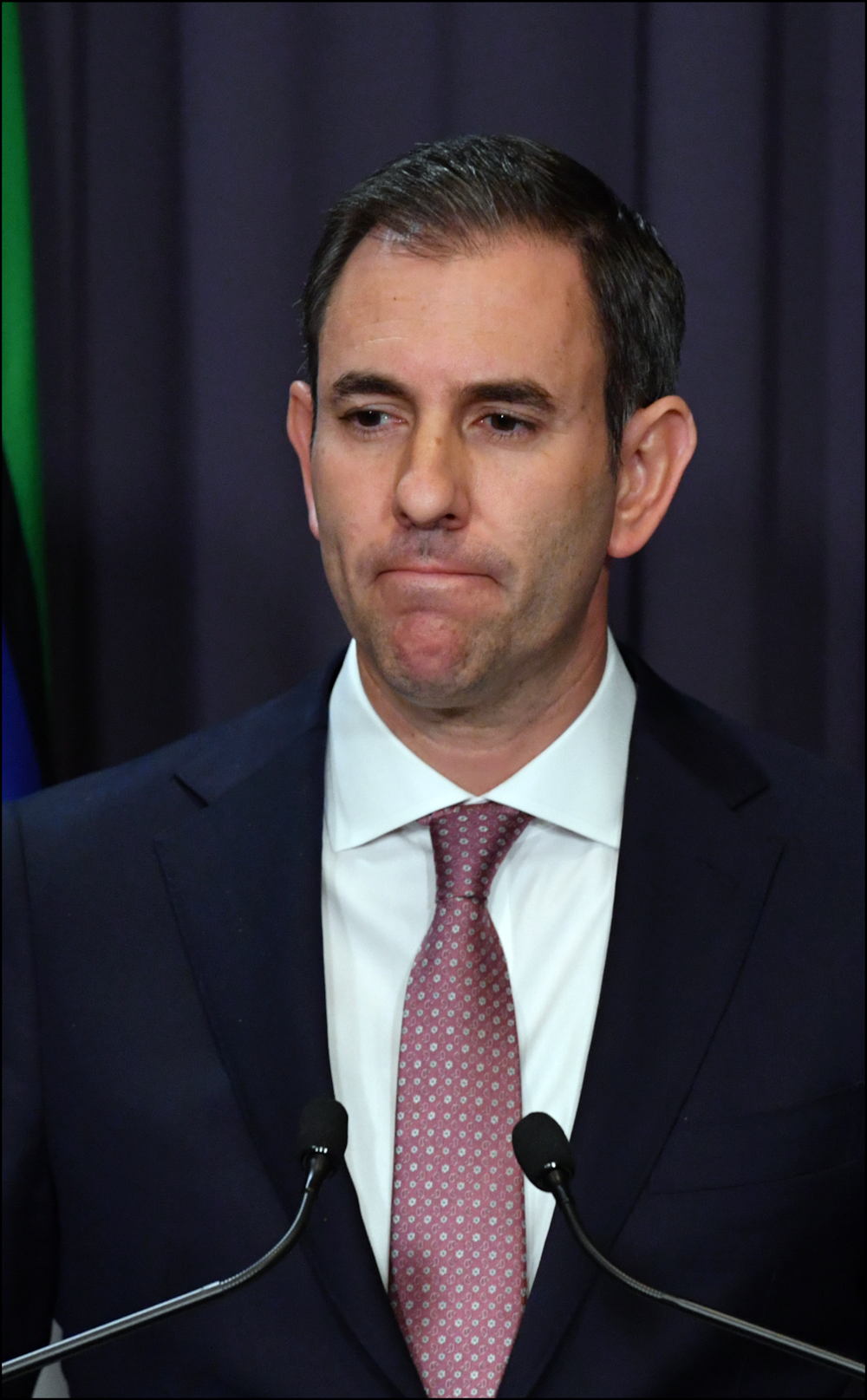
Around 6.8% of the workforce is looking for work. But in July, Treasurer Josh Frydenberg acknowledged the real unemployment rate was closer to 13.3%, when “discouraged jobseekers” — not actively looking for work because their business is locked down or on hold — are included.

Treasurer Josh Frydenberg speaking at a press conference.
Treasurer Josh Frydenberg has noted the real unemployment rate is more than 13%. Daniel Pockett/AAP

With about 1.6 million people on JobSeeker but only 130,000 job vacancies in May 2020, it matters little if some job seekers are more selective about the job offers they accept.

In fact, for the longer term health of the economy, it is important people find jobs that suit their skills. International evidence shows the provision of unemployment benefits slightly increase both the wages received when work is found and the stability (or duration) of the new job.

But would higher benefits be a problem as the economy recovers?

If benefits start to approach the level of minimum wages, some workers with low earning potential might decide the extra effort is not worth it — and so reduce their job search effort.

As the economy recovers, this will mean some potential jobs will go unfilled and government expenditure on JobSeeker will remain unnecessarily high.

Comparing JobSeeker to the minimum wage

However, our analysis shows Australia is in no danger of creating a disincentive for people to seek work because of higher JobSeeker payments.

We have compared Newstart and JobSeeker payments for single people with the minimum adult full-time wage (after tax) over the past three decades. This is a standard benchmark for assessing incentives to move from welfare benefits into work — assuming work is available.


Made with Flourish

Our analysis also looks at the payments provided to single pensioners. Pensioners received around 55% of the minimum wage up until 2009, when the pension was increased under the Rudd government. After that, net pension income was around 65% of the minimum wage. This is close to the commonly used poverty line, set at half the median household disposable income.

But for unemployed people on JobSeeker (or its predecessor, Newstart), the past two decades have seen a steady decline in their position relative to the minimum wage. It has fallen from around 50% in the 1990s to under 40% at the start of 2020 — well below the poverty line.

These calculations changed with the introduction of the Coronavirus Supplement in April, which almost doubled the payment for single unemployed people. Nonetheless, JobSeeker plus the supplement was still well below the adult minimum wage (76%, or 82% if we add shared accommodation rent assistance).


Read more: Australia has been stigmatising unemployed people for almost 100 years. COVID-19 is our big chance to change this


On September 25, the Coronavirus Supplement will drop by $300 a fortnight. And the combined JobSeeker/supplement payment will fall back to 55% of the minimum wage until December 31.

Unless the federal government makes further changes, the supplement will be removed entirely at the end of the year. So those on JobSeeker will be back receiving less than 40% of the minimum wage.

The crisis isn’t over, why is support being wound back?

Neither the pandemic nor the economic crisis will be over by the end of 2020.

As the wage subsidy program JobKeeper is also wound back, next week and then again, next year, increasing numbers will become reliant upon JobSeeker.

Man wearing mask lines up outside Centrelink office.
The Australian economy could take years to recover from COVID-19. Dan Peled/AAP

If the payment reductions continue as forecast, this will force many people well below the poverty line. A recent Australian National University analysis estimated an extra 740,000 people will be pushed into poverty.

This would not only be a disaster for the people directly affected, but also likely have large adverse economic effects. Deloitte Access Economics estimates withdrawing the Coronavirus Supplement support would be equal to a reduction in the size of the economy of $31.3 billion and an average loss of 145,000 full-time equivalent jobs.

The case to maintain much of the crisis-induced increase in payments is clear. In the short term, there will be no shortage of people looking for work. Maintaining payments at around the pension level — close to the poverty line — should be our policy objective.


Read more: When the Coronavirus Supplement stops, JobSeeker needs to increase by $185 a week


Even in the longer term, as labour demand increases, the large gap between welfare payments and minimum wages leaves plenty of room for permanent increases in income support, without creating a disincentive for people to look for work.

At a minimum, permanently increasing JobSeeker to 50% of the minimum wage — as was the case in the 1990s — should be an easily achievable target for Australia as it makes it way through the economic wreckage of COVID-19.

ref. Unemployment support will be slashed by $300 this week. This won’t help people find work – https://theconversation.com/unemployment-support-will-be-slashed-by-300-this-week-this-wont-help-people-find-work-146289

That was the news: a sad farewell to the ABC’s 7:45am bulletin

Source: The Conversation (Au and NZ) – By Alexandra Wake, Program Manager, Journalism, RMIT University

From today, ABC local radio listeners will no longer hear the majestic fanfare theme on local radio at 7:45am, signalling the 15-minute morning news.

Although it might seem a smart managerial decision to reduce reporting costs and respond to audience behaviour, the move overlooks the wide accessibility of radio, especially to low-income and regional Australians. It will also be a huge loss to people struggling with an avalanche of misinformation from online sources.

For more than 80 years, the 7:45am bulletin was a uniquely Australian fixture on local radio. It provided a soundtrack to the major events of our nation, bringing to our ears the sounds of wars, invasions, sporting triumphs, political scandals and disasters. Those 15 minutes were all listeners needed to get on with their day as informed and active citizens in a democracy.

ABC reporters would set up their work to aim for the longer 7:45am radio bulletin, and listeners specifically tuned in for it. There would be a shorter version of the story at 6am, another for 7am, and then a fully formed report (usually featuring the reporters’ own voices) at 7:45am.

Big stories might also feature on the flagship current affairs program AM starting at 8am, and stories with dramatic pictures might be picked up television news bulletins.

Social media was filled with people talking about the loss of the 7:45am news bulletin.

The 7:45am bulletin had a big emphasis on international news, catching us up on happened while we were sleeping. There would often be the big Washington story of the day (because of how much that country influences our lives), but the bulletin had space to also include important reports from the ABC’s foreign correspondents in countries that we should, or need, to care about. Think PNG, or China and India.

It provided the agenda for the day’s debate at the kitchen table, at the water cooler, in the halls of government, or in corporate boardrooms. Early morning ABC journalists in the capital cities made sure that day’s newspapers scoops were included, while regional reporters and international correspondents tuned in to check their work had made the cut.

Each state had its best newsreaders rostered across the weekday mornings, their voices providing flawless delivery, reassuring warmth and authority, particularly at times of disaster.

The raw emotion of audio captured by reporters in the field — a bird call, a mother’s cry, or a burst of gunfire — could pull at the heart in a way other mediums did not. It could also force action from governments when action was needed.


Read more: Latest $84 million cuts rip the heart out of the ABC, and our democracy


The curse of social/digital

It has been ironic to read the outpouring of concern about the axing of the bulletin on social media, because it is the boom in digital on-demand technology (such as the ABC Listen app), and the resulting ways audiences access news, that has allowed ABC managers to kill off a much-loved bulletin.

While 2020 radio audiences have been up overall this year as people have tuned in for bushfire and COVID-19 coverage, statistics provided by the ABC clearly show listeners have been moving away from the 7:45am bulletin for several years.

Even I, an audiophile, listened to the very last 7:45am bulletin in isolation in my home office, on my computer, some time after it went to air. And I also wanted to hear the last one from Queensland, my home state, rather than Victoria, my adopted home. My husband was listening to another ABC platform, and my teenagers were in their rooms, listening to something on Spotify. Our family represents the very change in demographics the ABC is grappling with.


Read more: Latest $84 million cuts rip the heart out of the ABC, and our democracy


ABC communications noted there would be substantial savings from moving away from a focus on “one 15-minute long, single-use, broadcast-only bulletin at 0745”. At the ABC right now, nothing produced has a single-use — everything needs to be used on a second or third platform. The statement said:

We want to be able to provide quality local news for all of our listeners on all of our platforms. While the majority of our resources are still dedicated to our broadcast services, we need to make sure we have the resource to also serve our growing number of listeners using the digital on-demand services.

Those arguments are strong. But not all 7:45am stories, particularly ones in the region, will make the main state television news, and many stories just don’t have pictures worthy of television, or even an online report. There are also still many Australians who do not have access to digital or online technologies, particularly our elderly and regional residents.

The decision to axe the 7:45am bulletin comes as dozens of experienced journalists have left the ABC. Many of those were senior journalists in behind-the-scenes production roles, who guided and supported younger journalists out in the field, learning their reporting craft with radio stories. It is those experienced journalists who took a role in overseeing the 7:45am bulletin to ensure its quality, and helping the ABC mantain its position as the country’s most trusted news source.

In some ways the ABC management has tried to act like a surgeon, trying to save the body by cutting off a limb. But the 7:45am bulletin wasn’t a limb. It was the beating heart of ABC Radio. The graphs of falling listener numbers only tell part of the story. At a time when so many Australian communities have little or no alternative news outlet, killing off the main news bulletin of the day feels like a dagger in the heart of democracy.

ref. That was the news: a sad farewell to the ABC’s 7:45am bulletin – https://theconversation.com/that-was-the-news-a-sad-farewell-to-the-abcs-7-45am-bulletin-146478

The Morrison government wants to suck CO₂ out of the atmosphere. Here are 7 ways to do it

Source: The Conversation (Au and NZ) – By Annette Cowie, Adjunct Professor, University of New England

Federal Energy Minister Angus Taylor is on Tuesday expected to outline the Morrison government’s first Low Emissions Technology Statement, plotting Australia’s way forward on climate action. It’s likely to include “negative emissions” technologies, which remove carbon dioxide (CO₂) from the air.

The Intergovernmental Panel on Climate Change says negative emissions technologies will be needed to meet the Paris Agreement goal of limiting warming to well below 2℃. In other words, just cutting emissions is not enough – we must also take existing greenhouse gases from the air.

Last week, the government broadened the remit of the Australian Renewable Energy Agency (ARENA) and the Clean Energy Finance Corporation (CEFC). It flagged negative emissions technologies, such as soil carbon, as one avenue for investment.

Some negative emissions ventures are operating in Australia at a small scale, including carbon capture, reforestation and soil carbon management. Here, we examine seven ways to remove CO₂ from the atmosphere, including their pros and cons.

Graphic showing seven negative emissions technologies.
Graphic showing seven negative emissions technologies. Anders Claassens

1. Managing soil carbon

Up to 150 billion tonnes of soil carbon has been lost globally since farming began to replace natural forests and grasslands. Improved land management could store or “sequester” up to nine billion tonnes of CO₂ each year. It could also improve soil health.

Soil carbon can be built through methods such as:

  • no-till” farming, using techniques that don’t disturb soil
  • planting cover crops, which protect soil between normal cropping periods
  • grazing livestock on perennial pastures, which last longer than annual plants
  • applying lime to encourage plant growth
  • using compost and manure.

It’s important to remember though, that carbon can be hard to store in soils for long periods. This is because microbes consume organic matter, which releases carbon back to the atmosphere.

Tilled fields
Intensive farming has led to global loss of soil carbon. Shutterstock

2. Biochar

Biochar is a charcoal-like material produced from organic matter such as green waste or straw. It is added to soil to boost carbon stores, by promoting microbial activity and aggregation (soil clumps) which prevents organic plant matter breaking down and releasing carbon.

Biochar has been used by indigenous people in the Amazon to increase food production. More than 14,000 biochar studies have been published since 2005. This includes work by Australian researchers showing how biochar reacts with soil minerals, microbes and plants to improve soil and stimulate plant growth.


Read more: Earth may temporarily pass dangerous 1.5℃ warming limit by 2024, major new report says


On average, biochar increases crop yields by about 16% and halves emissions of nitrous oxide, a potent greenhouse gas. The production of biochar releases gases that can generate renewable heat and electricity. Research suggests that globally, biochar could store up to 4.6 million tonnes of CO₂ each year.

However its potential depends on the availability of organic material and land on which to grow it. Also, the type of biochar used must be suitable for the site, or crop yields may fall.

A handful of biochar.
Added to soil, biochar increases carbon stores. Shutterstock

3. Reforestation

Planting trees is the simplest way to take CO₂ from the atmosphere. Reforestation is limited only by land availability and environmental constraints to growth.

Reforestation could sequester up to ten billion tonnes a year of CO₂. However, carbon sequestered through reforestation is vulnerable to loss. For example, last summer’s devastating bushfires released around 830 million tonnes CO₂.

4. Bioenergy with carbon capture and storage (BECCS)

Plant material can be burned for energy – known as bioenergy. In a BECCS system, the resulting CO₂ is captured and stored deep underground.

Currently, carbon capture and storage (CCS) is only viable at large scale, and opportunities for storage are limited. Only a few CCS facilities operate internationally.

BECCS has the potential to sequester 11 billion tonnes annually. But this is limited by availability of material to burn – which in theory could come from forestry and crop waste, and purpose-grown plants.

The large-scale deployment of CCS will also have to overcome barriers such as high costs, challenges in dealing with leaks, and determining who takes long-term responsibility for the stored carbon.

A bioenergy facility
Bioenergy has big potential but is limited by the amount of material available to burn. Shutterstock

5. Enhanced weathering of rocks

Silicate rocks naturally capture and store CO₂ from the atmosphere when they weather due to rain and other natural processes. This capturing can be accelerated through “enhanced weathering” – crushing rock and spreading it on land.

The preferred rock type for this method is basalt – nutrient-rich and abundant in Australia and elsewhere. A recent study estimated enhanced weathering could store up to four billion tonnes of CO₂ globally each year.

However low rainfall in many parts of Australia limits the rate of carbon capture via basalt weathering.

6. Direct air carbon capture and storage (DACCS)

Direct air carbon capture and storage (DACCS) uses chemicals that bond to ambient air to remove CO₂. After capture, the CO₂ can be injected underground or used in products such as building materials and plastics.

DACCS is in early stages of commercialisation, with few plants operating globally. In theory, its potential is unlimited. However major barriers include high costs, and the large amount of energy needed to operate large fans required in the process.

7. Ocean fertilisation and alkalinisation

The ocean absorbs around nine billion tonnes of CO₂ from the air each year.

The uptake can be enhanced by fertilisation – adding iron to stimulate growth of marine algae, similar to reforestation on land. The ocean can also take up more CO₂ if we add alkaline materials, such as silicate minerals or lime.

However ocean fertilisation is seen as a risk to marine life, and will be challenging to regulate in international waters.

Liddell coal-fired power station
Negative emissions technologies will be needed to address climate change, but deep emissions reductions are the highest priority. Dan Himbrechts/AAP

Looking ahead to a zero-carbon world

The foreshadowed government investment in negative emissions technologies is a positive step, and will help to overcome some of the challenges we’ve described. Each of the technologies we outlined has the potential to help mitigate climate change, and some offer additional benefits.

But all have limitations, and alone they will not solve the climate crisis. Deep emissions reduction across the economy will also be required.


Read more: ‘A dose of reality’: Morrison government’s new $1.9 billion techno-fix for climate change is a small step


ref. The Morrison government wants to suck CO₂ out of the atmosphere. Here are 7 ways to do it – https://theconversation.com/the-morrison-government-wants-to-suck-co-out-of-the-atmosphere-here-are-7-ways-to-do-it-144941

From WW2 to Ebola: what we know about the long-term effects of school closures

Source: The Conversation (Au and NZ) – By Alberto Posso, Professor of Economics, RMIT University

Closing schools has been one response around the world to try to stop the spread of COVID-19. In Australia, states mandated an end to face-to-face learning for some time during the so-called first wave of the pandemic, and schools across Victoria are still closed to most students.

Some criticised this strategy, as evidence showed children may not spread the virus as much as adults; others were concerned parents were unable to work from home while also supervising their kids’ schooling. These points are valid, but public debate must also consider the potential long-term costs of school closures.

One approach to figure out what to expect is to look at the experiences of different countries after they closed schools due to previous pandemics, war or industrial action. The problem with this approach is, of course, that these places are vastly different to Australia, so all potential repercussions must be considered carefully.

The Ebola epidemic occurred in Guinea, Liberia, and Sierra Leone — countries vastly different to Australia in terms of culture, politics and economics. But that crisis resulted in a policy response that is now very familiar to Australians: school closures. And we can still learn some things, albeit with caveats.

More disadvantaged kids may drop out

Guinea, Liberia and Sierra Leone closed all schools throughout 2014 and 2015. In these nations, internet use is not as common as it is in Australia, so school closures actually meant most children were fully held out of education (and often food programs, which they get simply by attending schools).

A 2015 report by the United Nations Development Programme found school closures had a disproportionately strong effect on girls. Gender gaps for school attendance widened once schools were reopened, while dropout rates increased. Importantly, the report found evidence of more teenage pregnancies and early marriages, which prevent girls from ever going back to school.


Read more: COVID-19: what closing schools and childcare centres would mean for parents and casual staff


While child marriage is almost unheard of in Australia, drop out rates could be a potential repercussion of the Australian school closures. Children from relatively disadvantaged households, where parents are less able to work from home and help with remote learning, may find returning to school very difficult.

Boys in a school in Sierra Leone
Sierra Leone closed all its schools during the height of the Ebola outbreak. (Mabendo, Sierra Leone, May 31, 2013) Shutterstock

Evidence from the US suggests summer holidays contribute to a loss in academic achievement equivalent to one month of education for poorer kids.This effect is likely to contribute to increasing drop-out rates among more vulnerable children in Australia throughout the 2020s.

In Victoria, a report found more than 10% of Victorian students from disadvantaged schools were absent during the state’s first period of remote learning – compared to 4% in advantaged schools. And an organisation working with disadvantaged children in Sydney recently reported more than 3,000 public school students in NSW have not returned to their classrooms since the remote learning period ended in May.

Kids may have less access to food

Another potential similarity is related to food security. Australia doesn’t have the same type of food programs we see in some of the poorest developing countries. But poorer Australian children can suffer from food insecurity, which is associated with long-term health impacts (including, ironically, obesity) and lower performance in school.

As many as one in five children in Australia start the school day without eating breakfast. Evidence from the US and EU shows school lunch is associated with improvements in academic performance, as schools can provide access to more regular and healthier diets.

Many schools across Australia have breakfast clubs, or have emergency food and lunches for children who might otherwise go hungry. These programs are not consistent across Australia though, with some funded by schools, and others through food agencies or state governments.


Read more: Schools provide food for many hungry children. This needs to continue when classes go online


It may affect future earnings

One of the goals of education — of course not the only one — is to prepare children for work. So, what’s the effect of school closures on future earnings?

Two papers published in the Journal of Labor Economics can shed light on the answer to this question. The first studies the long-term effects (40 years) of school closures by looking at teacher strikes in Argentina occurring in the early 1980s. The second compared long-term labour market outcomes of children affected by the second world war. Austrian and German people who were ten years old during the war received less education than comparable adults from non-war countries.

The Argentinian study, published in 2019, showed missing around 90 days of class reduces earnings by 2-3%. The European study, published in 2004, found Austrian children missed around 20% of classes during the war and their earnings dropped by around 3%. German children lost around 25% of classes and had earnings dropped by around 5% (albeit the German data does not allow for very precise estimates).

Schools in Australia have not been truly closed. They’ve remained virtually open through Zoom and other platforms. But not all children have equal access to computers, independent study areas and parents who can explain Pythagoras’ theorem.


Read more: Schools are moving online, but not all children start out digitally equal


Virtual classrooms are no substitute for physical learning environments where trained teachers can closely monitor children’s progress. So while the class of 2020 will not necessarily be 3-5% poorer than the class of 2019, a wage gap between the two cohorts wouldn’t be surprising. Future studies will tell.

Future studies may find increments in earnings and education inequality resulting from COVID school closures. Future work may also find long-term health consequences, related to not just inequality, but also nutrition and mental health. The Lancet has published two recent studies that document the mental health effects of closures, which the authors say can have serious long-term repercussions.

We must consider all this evidence when we discuss our approach to policy in the future, and when making decisions as to whether to close schools again, if another “wave” hits.

The author would like to thank Trong Anh Trinh for his research assistance.

ref. From WW2 to Ebola: what we know about the long-term effects of school closures – https://theconversation.com/from-ww2-to-ebola-what-we-know-about-the-long-term-effects-of-school-closures-146396

Young African migrants are pushed into uni, but more find success and happiness in vocational training

Source: The Conversation (Au and NZ) – By Tebeje Molla, Research Fellow, Deakin University

For disadvantaged people with disrupted educational trajectories, such as refugees, vocational qualifications can widen access to paid jobs and enhance economic independence. But many still consider vocational education and training (VET) qualifications not as prestigious as university degrees. This is a widespread issue, especially in African communities.

Many African parents push their children to go to university regardless of their preparedness or interest. The outcome is dispiriting. Most of them leave university without a degree. They drop out.

But African youth I have interviewed for as-yet unpublished research have found VET in Australia to be a supportive environment, where they have been successful. More should be encouraged to consider VET, and policies must be in place to help them get there.

Unequal trends of higher education participation

For African Australians, higher education attainment is closely associated with migration status. Compared to their non-refugee counterparts, refugee background African youth are less likely to transition to university within five years of their arrival in Australia. The trend has not changed much over the last 25 years.

Author provided

This difference between the two groups can in part be explained by the fact African refugee youth arrive with limited educational attainment. For instance, in 2016, 19% of people (aged 15 years and over) born in the main countries of origin of African refugees had no qualifications. The corresponding rate for the non-refugee African population was 10%; for the total Australian population, it was 8.5%.

But the persistence of the problem warrants policy attention.

VET is an equaliser

People from the main countries of origin of African refugees (Democratic Republic of Congo, Eritrea, Ethiopia, Liberia, Sierra Leone, Somalia, South Sudan and Sudan) have considerably benefited from the VET sector.

The VET sector provides them with an equity pathway to university. For many students from refugee background, low academic results at school mean a direct transition to university remains challenging. In 2016, there were close to 1,000 Africans from refugee background in the VET sector compared to fewer than 500 in the university sector.

Author provided

The majority of African youth I interviewed in the last two years came to the university sector through VET, using the Technical and Further Education (TAFE) pathway. They said passing through TAFE helped them develop their “navigational capacity” — their ability to plan and work towards future goals. They specifically noted the supportive learning environment in TAFE institutes prepared them for independent learning. It set them up for success in university.

VET courses also give African Australians a second chance. Africans from refugee backgrounds attend vocational courses as mature age students, with the largest age group being 30 to 39 year olds. For the general Australian population, the largest age group enrolled in VET courses was 15 to 19 year olds.

Author provided

Despite limited educational attainment at arrival, refugee-background African Australians are over-represented in VET courses. In the 2016 census, people born in the eight main countries of origin of African refugees accounted for less than 0.3% of the total population of Australia. But the group represented about 1.3% of the total enrolment in funded VET programs and courses in the last five years (2015-2019).

Between 2015 and 2019, there were more than 91,000 refugee-background African Australians enrolled in VET courses, and over that same time period, 20,000 completed VET courses.

In the university sector, a total of close to 11,000 African refugee youth enrolled for undergraduate degrees between 2001 and 2017. But fewer than 2,000 of those successfully completed their courses over the same period.

More VET students complete their course. Shutterstock

Public investment is necessary

In the post-COVID world, Australia’s success will largely depend on the adaptability and responsiveness of the education system. It will be critical to ensure disadvantaged members of society do not slip through the policy cracks.

Refugees in particular require extra support to succeed in education and training. For instance, African refugees arrive with a level of disadvantage not experienced by other cohorts of refugees.

We need to acknowledge the unique situation of African refugees and provide them with targeted policies. For refugee youth who spent years in refugee camps with little or no education, it can be difficult to fit in a school system that operates on age cohorts. There is a need for expanding the “catch-up schooling” that is offered for young refugees and diversifying the existing pathways to tertiary education.

Refugee status should also be recognised as a category of disadvantage in the higher education sector. Recognising refugees as an equity group enables tertiary education institutions to provide the necessary support for success.

Without access to lifelong learning opportunities, refugees are likely to remain vulnerable to fast-paced changes in the world of work.

Educational attainment is instrumental for integration and economic independence. African American civil right activist Ella Baker’s truism “Give people light and they will find the way” aptly encapsulates the self-reliance that comes with learning.

ref. Young African migrants are pushed into uni, but more find success and happiness in vocational training – https://theconversation.com/young-african-migrants-are-pushed-into-uni-but-more-find-success-and-happiness-in-vocational-training-145026

Athlete activism or corporate woke washing? Getting it right in the age of Black Lives Matter is a tough game

Source: The Conversation (Au and NZ) – By Jessica Vredenburg, Senior Lecturer (Assistant Professor) in Marketing, Auckland University of Technology

So-called brand activism is evolving fast. When Colin Kaepernick first knelt during the US national anthem in 2016, professional football turned its back on him. Now, consumer and sports fan expectations are forcing brands to see activism as good for business.

According to a recent Nielsen survey, 72% of sports fans believe athletes are an important influence in the Black Lives Matter (BLM) movement. A whopping 59% expect athletes to engage personally with BLM activism.

In short, if brands aren’t taking a stand (or a knee), consumers notice.

Sporting codes have woken up to the benefits of strategically targeting a younger, more racially-diverse demographic. As National Hockey League (NHL) executive vice president for social impact Kim Davis put it:

People understand that doing the right thing is also right for the business.

After the shooting of Jacob Blake by Kenosha police, however, that activism ramped up. Players from most major professional sports protested by refusing to play at all.

Brand activism cuts both ways

It began with local NBA team the Milwaukee Bucks, whose own player Sterling Brown had been brutally beaten by police in 2018. Having refused to take the court for a playoff game, the team’s actions were picked up by social media and the no-play protest spread to other sports.

The backlash and praise were immediate, with the Bucks becoming the most mentioned brand on social media that week.


Read more: Woke washing: what happens when marketing communications don’t match corporate practice


There were asymmetric effects for the team brand: a clear drop in brand sentiment from those who disagreed with their stand, and a surge of brand love driven by the backlash.

Whereas brands might once have avoided controversy, there is now a clear case for taking a stand — as the NHL discovered when it continued to play while other sports “went dark”. The backlash from fans and players alike forced the cancellation of two days’ play.

Similarly, the Association of Tennis Professionals (ATP) took a stand by not playing for one day after player Naomi Osaka threatened not to compete in the Western & Southern Open semifinals in Cincinnati. She explained:

Before I am an athlete, I am a black woman. And as a black woman I feel as though there are much more important matters at hand that need immediate attention, rather than watching me play tennis.

Osaka went on to win the US Open, and was praised for donning protective face masks with the names of seven black people killed by police. There was also criticism that a one-day break in play, without further commitment, did little to further the BLM cause.


Read more: Brands may support Black Lives Matter, but advertising still needs to decolonise


But accusations of virtue signalling and woke washing put the ATP between a rock and a hard place. If tennis officials hadn’t engaged in some way with the moment, they risked being called out for insensitivity (as were the NHL and some cricket teams).

young women on basketball court
Members of the Washington Mystics wearing T-shirts printed with bullet holes to protest the shooting of Jacob Blake in Kenosha, Wisconsin. GettyImages

In business we trust

It may not be surprising that brand activism is increasingly being driven by consumers demanding they take a stand (and condemning those who don’t), as some studies now show businesses are more trusted than government.

We may be reaching a point where it is more surprising to consumers when brands don’t take a stand on social issues than when they do.

In 2018, consumers responded extremely positively to Nike’s now-iconic Black Lives Matter campaign with Colin Kaepernick. Now the brand has an established pro-social reputation, however, the response to recent anti-racism action has been more muted.

Nike’s You Can’t Stop Us campaign and its declaration of Juneteenth as an annual paid company holiday have been met with a positive but noticeably milder reaction from consumers.


Read more: Black Lives Matter, LGBTQ rights, Trump: The risks and rewards of corporate activism


Surprise is no longer a strategy

Nike was just one of many brands to declare Juneteenth a holiday in the US (along with Google, Lyft, The New York Times, JCPenney, the NFL, Tumblr and Postmates). As our research suggests, such acts are simply not as surprising in 2020 as they once were.

As brand activism becomes more widespread, consumers’ appreciation of it also becomes more sophisticated — to the point where it is a key component of brand loyalty.

However, while consumers expect brands to take a stand, many also believe social issues are used too often as a marketing ploy.

The challenge for brands is clear: practice what you preach, make a real difference, pay more than lip service to causes. Staying relevant has never been harder.

ref. Athlete activism or corporate woke washing? Getting it right in the age of Black Lives Matter is a tough game – https://theconversation.com/athlete-activism-or-corporate-woke-washing-getting-it-right-in-the-age-of-black-lives-matter-is-a-tough-game-146301

Yes government debt is cheap, but that doesn’t mean it comes risk-free

Source: The Conversation (Au and NZ) – By Tony Makin, Professor of Economics, Griffith University

The financial response of Western governments to the COVID-19 crisis has been gargantuan, with boosts to health expenditure, enhanced JobSeeker-like payments, and JobKeeper-like wage subsidies to keep workers attached to jobs.

While a strong response has been necessary, it has come with costs.

These have been huge budget deficits and sky-high government debt.

The International Monetary Fund is expecting global budget deficits of around 14% of world gross domestic product this year, up from 4% last year, and almost three times the peaked reached after the global financial crisis.

Additionally, governments are providing the same amount again in “off-balance sheet” support, most notably loans to banks, and government guarantees for bank loans.

To the extent these off-balance sheet loans become contingent liabilities of governments and are not repaid, they will add more to government debt.

Global gross public debt was already high before the crisis, at about 80% of one year’s world GDP. It has since ballooned to more than 100% and exceeds the previous peak recorded after post World War II.

This budget, Keynes is back…

Keynesian thinking, which ignores public debt because it never figured in John Maynard Keynes’ original 1930s theory, was relatively dormant in the decades before the global financial crisis, but has come back with a vengeance.

Before the financial crisis the preferred means of managing the economy was monetary policy, run by the central bank and involving interest rates.

Now it’s fiscal policy, run by governments and involving tax and spending.

It doesn’t come without a cost, although we are often told that it costs little, because with interest rates so low, the required payments are also low.

Believing that this means we can keep borrowing is like thinking we can keep bathing in sun while ignoring the risk of melanomas.


Gross public debt to GDP ratio, actual and forecast

Commonwealth Treasury, July 2020 Economic and Fiscal Update
Commonwealth gross debt to GDP ratio, July 31. 2021 is a forecast. Commonwealth Treasury, July 2020 Economic and Fiscal Update

…but debt comes with costs

High public debt can stymie economic growth in several ways. It increases the demand for funds that might otherwise be used for private investment.

Commercial banks are party to this when they buy government bonds (meaning they lend funds to governments) instead of lending funds to businesses for investment.

Australia’s budget deficits are mostly funded from overseas, which boosts foreign debt.


Read more: The spending splurge matters, regardless of what modern monetary theory says


Servicing that debt is a drain on Australia’s national as well as government income. The interest paid abroad, currently around A$15 billion, detracts from national income.

When lenders get worried about rising public debt, they demand a risk premium. In Europe, Italy has to pay in excess of two percentage points more per annum on its debt than Germany.

Boosting spending might dampen spending later

Debt creates uncertainty about what governments are going to do down the track to pay the debt down, whether it be spending cuts or tax increases. This unsettles business and household confidence.

It means that even though stimulus measures increase consumer spending at the time, they can act as a drag on consumer spending and business investment down the road.

Weak business investment means a weak expansion of the economy’s capital stock (machinery and equipment) which means lower incomes than otherwise for future generations.


Read more: Explainer: what is modern monetary theory?


A number of empirical studies find that a 10 percentage point increase in the public debt to GDP ratio is associated with a decrease in annual economic growth of 0.15 percentage points or more.

If this holds true in Australia, our looming 20 percentage point increase in public debt to GDP will drag down annual economic growth by 0.3 percentage points (and through offshore interest payments drag down national income growth by as much as 0.5 percentage points).

The phenomenon of compounding means that in 20 years time the next generation might be 10% worse off than it would have been.

To the extent that central banks continue to monetise public debt by buying government bonds (“printing money”), the future could be darker still, with high consumer price or asset price inflation.

This is usually thought to take 18 to 24 months to show up, meaning that what will boost this budget will make budgets harder to put together in years to come.

ref. Yes government debt is cheap, but that doesn’t mean it comes risk-free – https://theconversation.com/yes-government-debt-is-cheap-but-that-doesnt-mean-it-comes-risk-free-145848

Celebrity, money and power: TVs obsession with the Murdoch family dynasty

Source: The Conversation (Au and NZ) – By Nick Richardson, Adjunct Professor of Journalism, La Trobe University

Of all the words written about Rupert Murdoch, “boring” is not one of them. The media mogul has been the object of fascination for six decades, after he followed his father Sir Keith in to the newspaper business.

Family dynasties in newspapers are not new – there were the Harmsworths in the UK; the Hearsts, Grahams and Sulzbergers in the USA; and the Packers and Fairfaxes as well as the Murdochs in Australia.

But Murdoch has exercised a particular fascination: the almost irresistible core of a family with the gloss of celebrity, the heavy aroma of money and the unmistakable aura of power.

No wonder directors, screenwriters and producers continue to find inspiration in the Murdoch family.

Family sagas

The dynastic shenanigans of the Royal Family have generated volumes of stories, films and television. And, let’s face it, The Godfather is really a family story, even if it’s about a family that lies, extorts and murders.

But what makes the Murdoch story such a compelling template for television drama is the place the media – and in particular the Murdoch media – holds in our society. The media occupies one of the most contested roles in our democracies, and Murdoch has become a lightning rod for fierce opinions.


Read more: How can we restore trust in media? Fewer biases and conflicts of interest, a new study shows


Adding extra bite is the family jostling for their father’s benediction to inherit the company carrying their DNA. This becomes more urgent as the patriarch ages and the offspring start to give their ambition free rein.

It isn’t surprising screenwriters see the attraction of such grand themes.

Most recently on the small screen, we’ve seen the miniseries MotherFatherSon (2019) with Richard Gere as an American owner of a British newspaper with the full set of dysfunctional family relationships. Gere laments his son lacks ruthless drive, and tragedy follows when the son’s drug habit spirals out of control.

Then there’s Succession (2018–), which, by the potent assembling of family ambition around patriarch Logan Roy’s US media business, comes closest to mirroring what we think we know about the Murdoch family’s internal dynamics.

Roy is from Dundee in Scotland: the classic outsider, an inescapable parallel with Murdoch’s Australian roots. He has carved out a controversial place for himself in the US media but his real skill seems to be setting his deeply flawed children against each other for the right to run the company.

Dramas surrounding the Murdoch family follow the natural arc of so many compelling stories: how great wealth is built up over generations, how power steadily grows and demands to be recognised and rewarded.

The past two decades have seen some of Murdoch’s British newspapers implicated in a phone hacking scandal, a string of sexual harassment cases at his Fox US cable TV network (made in to their own screen drama in 2019’s Bombshell), and this year, the decision by son James to resign from the News Corp board because of “disagreements” on editorial content and strategic decisions.

Josh Lawson as James, Malcolm McDowell as Rupert and Ben Lawson as Lachlan.
Bombshell told the story of sexual harassment at Fox News. Lionsgate

The appeal of this family saga shouldn’t surprise us.

Business before family

The commercial decline of mainstream media, the fragmenting of audiences, the rise of social media, the erosion of trust in established news brands and the polarisation of debate are all bound up with the Murdoch business and the family story.

Murdoch has been a proponent, instigator and beneficiary of these seismic changes, while also being increasingly commercially diminished by those forces. As such, the Murdoch family story is a powerful testimony of our times.

Two men in suits sit behind a wooden desk, giving evidence.
James Murdoch and Rupert Murdoch giving evidence on the News of the World phone-hacking scandal, 2011. EPA/Press Association

There is one other irresistible ingredient in the mix: the search for a sense of family to normalise the rich and powerful.

In 1988, with circulation dropping and costs rising at afternoon broadsheet The Melbourne Herald, journalists became worried Murdoch would close the paper. The other staff and I naively reassured ourselves he wouldn’t do such a thing to the paper his father made great while his mother, Dame Elisabeth, was still alive.

We were wrong.

In 1990, The Herald was merged with the successful morning tabloid The Sun to become The Herald Sun. The old Herald’s identity slipped away — unlike Elisabeth, who remained robust and engaged with a range of notable philanthropic causes for another two decades.

This decision proved Murdoch is a pragmatist and a businessman who puts commercial interests first. There is no room for family sentiment.


Read more: Murdoch and his influence on Australian political life


“Rupert Murdoch has fuck all to do with it,” Brian Cox said after he accepted a Golden Globe for his portrayal of Roy. But whatever Cox might say, Murdoch’s call on The Herald sounds suspiciously like Logan Roy.

The father and a son from succession give evidence at a government hearing.
Brian Cox says Murdoch has nothing to do with Succession, but some similarities are uncanny. Zach Dilgard/HBO

In fiction and in reality, villains are usually far more interesting than the virtuous. When it comes to modern villains, few have been demonised more than Murdoch.

For those who prefer their picture of a media mogul to be captured in reality, the latest telling is a documentary series, The Rise of the Murdoch Dynasty, now on the ABC.

But if you watched Succession, you’ll already know the plot.

ref. Celebrity, money and power: TVs obsession with the Murdoch family dynasty – https://theconversation.com/celebrity-money-and-power-tvs-obsession-with-the-murdoch-family-dynasty-146113

Former BRA leader Toroama increases his Bougainville poll lead over rivals

By Keith Jackson

The trend is your friend, it is said, and the trend in counting votes for the next president of Bougainville remains firmly with former Bougaiville Revolutionary Army commander Ishmael Toroama, who continues to move ahead of the field.

With the elimination of the 14th presidential candidate late afternoon it became clear that only the two leaders among the 11 remaining contenders can come close to an absolute majority of 71,725 votes.

The release of updated figures this afternoon showed Ishmael Toroama consolidating his position as the likely winner as he moved out to a 10,500 vote lead over second-placed candidate Father Simon Dumarinu.

READ MORE: Earlier Bougainville vote stories

There were a few changes in the positions of the top 10 candidates during the day, the main one being Peter Tsiamalili moving into fourth place pushing Fidelis Semoso down to fifth.

But it seems that neither candidate can win from here.

Dumarinu remains about 7000 votes ahead of a bunch of three candidates – Thomas Raivet, Peter Tsiamalili and Fidelis Semoso – who all need the current preference trend to switch steeply their way to remain in the race.

Standings after the 14th count:
Ishmael Toroama – 33,007
Simon Dumarinu – 22,474
Thomas Raivet – 14,779
Peter Tsiamalili – 14,324
Fidelis Semoso – 14,038
Samuel Kauona – 9,240
Joe Lera – 9,325
James Tanis – 9,096
Wesma Piika – 5,159
Sione Paasia – 4,973

Keith Jackson is a retired educator, school publications editor and communications lecturer in Papua New Guinea who has managed radio stations in Rabaul and Bougainville and was head of policy and planning in the National Broadcasting Commission at independence in 1975. He has also worked in development and communication roles for UNESCO in Fiji, Indonesia, India, Maldives and the Philippines. He began his PNG Attitude blog in 2006. Pacific Media Centre articles are republished with permission.

Print Friendly, PDF & Email

Article by AsiaPacificReport.nz

Graham Davis: Why Bainimarama has slammed me in the Fiji ‘state’ media

COMMENTARY: By Graham Davis

Stung by successive Grubsheet articles revealing how the military wants changes to the Fiji government and also revealing the name of his designated successor, Prime Minister Voreqe Bainimarama has made an astonishing personal attack on me on the front page of the government-controlled Fiji Sun newspaper today and in the government-controlled Fiji Broadcasting Corporation news.

While conspicuously failing to deny the substance of anything I have reported, the PM accuses me of “trading in gossip” and makes a number of snide personal references that are gratuitous and totally beside the point.

Once again, the PM has evidently been used by his Attorney-General, Aiyaz Sayed-Khaiyum, to engage in an ill-considered public relations blunder that elevates me personally and the substance of what I have written and drives even more Fijian readers to my website.

Journalist Graham Davis
Journalist and communications consultant Graham Davis … a Fiji “ill-considered public relations blunder”. Image: Grubsheet Feejee blog

Whether it was on the advice of my former colleagues at Qorvis Communications is an open question.

One of them has already commented that: ”Someone should tell him [the PM] to keep a cool head. He’s doing his own negative PR by being so aggressively defensive”.

If Fiji is going to pay Qorvis $800,000 this year in highly straightened circumstances on top of the many millions it has expended over the years, the Prime Minister and his de facto number two could at least heed their advice.

Bainimarama’s statement
Here’s the text of what the Prime Minister said to the Fiji Sun:

“It’s funny, people outside of Fiji often have the most to say and the least to offer the country. Graham is no different. I know him, and he did some work with Qorvis, but that ended sometime back.

The FBC News version of Prime Minister Bainimarama’s response today. Image: PMC screenshot

“I think I remember the stress was sometimes too much for him. I don’t know why he’s dealing in gossip these days, but I also remember even in the best of times he always seemed to find drama. And if he couldn’t find it, he’d make it up.

“I have no idea what he wants now. Maybe attention, maybe a job. I really don’t know. I don’t care and we don’t want to give him either. But he needs to understand that an attack on Fijian democracy, our Constitution, any of our independent institutions, or any of my ministers is an attack on me.

“If you’ve read our Constitution, you know Fiji is a democracy. We are not a dynasty and I do not handpick my successor. The only ones who choose the Prime Minister of Fiji are Fijian voters.

“I know, because they have picked my government twice. As the leader of FijiFirst, I am appointed under our party’s constitution, like all our office bearers. And I will once again work hard to earn the votes of the Fijian people when I lead FijiFirst into the next election.

“Until then, we have to recover our economy and get industries running again, get jobs back and get help to those who need it most. I am working on these issues every day. We don’t have time to waste on gossip blogs. But for old time’s sake, I wish Graham all the best in his retirement in Australia.”

The Davis response
And here is the text of the statement that I have released to the Fiji media in response and that it is obliged to publish under Fiji’s media laws guaranteeing the right of reply to criticism of this nature.

“I thank the Prime Minister for drawing public attention to my blogsite – grubsheet.com.au – in that many more Fijians will know that far from me criticising him or eroding his position, I am in fact trying to strengthen it by calling for the government to re-invent itself so that it can win the next election.

“I take it as confirmation that what I have said is fact that in his statement, the Prime Minister does not deny anything at all that I have reported over the past month or for that matter, dispute any opinion that I have expressed.

“In relation to his comments about the Constitution, the Prime Minister knows that a political party such as FijiFirst decides its candidate as leader before the people get to vote on that selection. So his preference as party leader is critical and as I reported, he has told the Military Council that his designated successor is Inia Seruiratu.

“While I thank him for his best wishes, I am far from being retired – being of the same age as the Prime Minister – and am working for his re-election to prevent him from going into enforced retirement himself. He remains a person for whom I have a great deal of respect and affection.”

The Davis column drew some lively online debate today, including from Rajend Naidu who writes:

“People from outside Fiji comment on Fiji’s situation on behalf of people inside Fiji who have been silenced by a repressive state and are fearful of reprisal should they have the audacity to speak out against the corruption, nepotism, favouritism, debasement of institutions of state through politisation and patronage, and a sword of Damocles hanging over the free press in the country.”

  • Grubsheet Feejee is the blogsite of Graham Davis, an award-winning journalist turned communications consultant who was the Fiji government’s principal communications adviser for six years from 2012 to 2018 and continued to work on Fiji’s global climate and oceans campaign up until the end of the decade.
Fiji Sun Online 200920
The Fiji Sun Online version today of Prime Minister Bainimarama’s attack. Image: PMC screenshot
Print Friendly, PDF & Email

Article by AsiaPacificReport.nz

Ruth Bader Ginsburg forged a new place for women in the law and society

Source: The Conversation (Au and NZ) – By Kcasey McLoughlin, Senior Lecturer in Law, University of Newcastle

Justice Ruth Bader Ginsburg’s death has generated an outpouring of grief around the globe. Part of this grief reflects her unparalleled status as a feminist icon and pioneer for women in the legal profession and beyond.

There is already considerable interest in what her departure means for the future of the US Supreme Court, and indeed, the wider political landscape. But to understand that, we must reflect on her legacy.

In 1956, Ginsburg enrolled in Harvard Law School, one of only nine women in her year alongside about 500 men. Reflecting the prevailing mindset of the time, which regarded the study and practise of law as the proper domain of men, the Harvard dean, Erwin Griswold, asked each of the nine women how they could justify taking the place of a man.

Ginsburg’s answer, that she wanted to better understand her husband Marty’s career as a lawyer (he was the year ahead of her at Harvard), belies the reality of the enormous contribution she would make to public life in the subsequent six decades.

The number nine would come to be significant in marking her success in a profession traditionally dominated by men. In 1993, she took her place on the nine-judge Supreme Court as the second woman appointed in its history.

In more recent years, in response to questions about when there will be “enough” women judges, Ginsburg replied there would enough when there were nine women on the Supreme Court. Acknowledging that people are shocked by this response, Ginsburg famously countered,

there’s been nine men, and nobody’s ever raised a question about that.

This exchange points to just how ingrained the idea that judging is men’s work had become.

A formidable mind

Long before President Bill Clinton resolved to nominate Ginsburg to the Supreme Court, Ginsburg had established a reputation as an academic (she was the second woman to teach law full-time at Rutgers University and the first woman to become a tenured professor at Columbia Law School). She was also known as a feminist litigator, leading the American Civil Liberties Union’s campaign for gender equality.

Ginsburg’s nomination to the Supreme Court was an uncontroversial appointment. She was regarded as a restrained moderate and was confirmed by the Senate 96 votes to three.

Although there were some concerns she was a “radical doctrinaire feminist”, her credentials were bolstered by her record on the United States Court of Appeals for the District of Columbia Circuit (she was appointed by President Jimmy Carter in 1980).

Ginsburg had spent the 1970s pursuing a litigation strategy to secure woman’s equality -— although she would describe her approach in broader terms as the

constitutional principle of equal citizenship stature of men and women.

In a series of cases, she sought to establish

sex, like race, is a visible, immutable characteristic bearing no necessary relationship to ability.

By extension, she argued, legal classifications on the basis of sex should be subject to the “strict scrutiny” required in cases where there were distinctions or classifications on the basis of race. To put it more bluntly, pigeon-holing on the basis of sex should be unconstitutional. The nub of her argument, whether acting for men or women plaintiffs, was that treating men and women differently under the law helped to

keep woman in her place, a place inferior to that occupied by men in our society.

Outside the court – and inside, too

Feminist theorists have sometimes expressed reservations about the extent to which a legal system designed by men to the exclusion of women can ever be fully appropriated to achieve equality for women.

While some feminists have seen much promise in the possibility for law reform, others have been more circumspect. This tension is reflected in the two-pronged strategy proposed by Professor Mari Matsuda -— that there are times to “stand outside the courtroom” and there are times to “stand inside the courtroom”.

Ginsburg’s legacy in life and law reflects the latter approach. Her faith in the law is reflected in her approach to stand inside the courtroom (literally as a litigator and a judge) to transform existing legal categories. In this way, her approach was reconstructive rather than radical (which is not say that some of her thinking wasn’t radical for its time).

Ginsburg sought to reconstruct sex roles and emphasised that men and women alike were diminished by stereotypes based on sex.

Importantly, Ginsburg did not simply pursue formal equality (the idea that equality will be achieved by treating everyone the same). Rather, she advocated for affirmative action as a principle of equality of opportunity.

She favoured incremental rather than radical change, reflecting a view that such an approach would minimise the potential for backlash. Her critique of the strategy adopted in the landmark 1973 case Roe v Wade (the case upon which US reproductive rights are based), and her departure from the feminist orthodoxy on this point, reflected her preference for incrementalism.

Mourners pay tribute to ‘RBG’ outside the US Supreme Court in Washington DC. AAP/EPA/Michael Reynolds

Legacy on the bench

Ginsburg’s jurisprudential contributions on the Supreme Court continued the legacy she began in the 1970s.

One of her most significant majority opinions in 1996 required the Virginia Military Institute to admit women. Importantly, this was because it had not been able to provide “exceedingly persuasive justification” for making distinctions on the basis of sex. Although this standard fell short of the “strict scrutiny test” required in cases involving classifications on the basis of race, it nonetheless entrenched an important equality principle.

But it was perhaps her judicial dissents, sometimes delivered blisteringly in the years where she was the lone woman on the bench (prior to President Barack Obama’s appointment of Sonia Sotomayor in 2009 and Elena Kagan in 2010), that seem to have really captured the wider public imagination and capitulated her into the zeitgeist.

It was in the wake of her 2013 dissent in a case about the Voting Rights Act that she reached the status of a global feminist icon. A Tumblr account was established in her honour, giving her the nickname “Notorious RBG” (a title drawn from the rapper Biggie Smalls’ nickname Notorious B.I.G). A 2018 documentary RBG chronicled her legacy and status as a cultural icon, and a 2018 motion picture On the Basis of Sex depicted her early life and cases.

Ginsburg’s celebrity certainly expanded during her time on the court -— but this is not to say to it has been without controversy or critique, even from more liberal or progressive sources.

She has been criticised for her decisions (for example, a particular decision about Native Americans and sovereignty), for her comments about race and national anthem protests, and for being too partisan – particularly in her criticism of President Donald Trump. (She called him a “faker” and later apologised.)

A great legacy

Did Ginsburg’s feminism or celebrity undermine her legitimacy as a judge? Questions of judicial legacy and legitimacy are complex and inevitably shaped by institutional, political and legal norms. Importantly, her contributions as a lawyer and a judge have done much to demonstrate how legal rules and approaches that had been previously regarded as neutral and objective in reality reflected a masculine view of the world.

Over 25 years ago, Ginsburg expressed her aspiration that women would be appointed to the Supreme Court with increased regularity:

Indeed, in my lifetime, I expect to see three, four, perhaps even more women on the High Court Bench, women not shaped from the same mold but of different complexions. Yes, there are miles in front, but what distance we have travelled from the day President Thomas Jefferson told his secretary of state: ‘The appointment of women to [public] office is an innovation for which the public is not prepared.’

That Ginsburg came to share the Supreme Court with two women, Kagan and Sotomayor, must have given her some hope that women’s access to places “where decisions are being made” was at least tentatively secure even if hard-won feminist gains sometimes felt tenuous at best.

Ginsburg was a trailblazer in every aspect of her life and career. The women who follow her benefit from a legacy that powerfully re-imagined what it means to be a lawyer and a judge in a legal system that had been made in men’s image.

ref. Ruth Bader Ginsburg forged a new place for women in the law and society – https://theconversation.com/ruth-bader-ginsburg-forged-a-new-place-for-women-in-the-law-and-society-146540

This is why the fight over the Supreme Court could make the US presidential election even nastier

Source: The Conversation (Au and NZ) – By Jared Mondschein, Senior Fellow & Senior Advisor, US Studies Centre, University of Sydney

As the two sides in US politics begin jockeying for position following the passing of Supreme Court Justice Ruth Bader Ginsburg, the similarities to the 2016 presidential election are striking.

That year, the fierce battle between Hillary Clinton and Donald Trump was made all the more contentious because the Republican-controlled Senate refused to allow a vote on President Barack Obama’s nominee to replace Supreme Court Justice Antonin Scalia, who had died in February.

Republican Senate Majority Leader Mitch McConnell pledged instead to “let the American people decide” the fate of the Supreme Court vacancy. His gambit worked. Trump won the election and successfully appointed a conservative justice to the court, some 14 months after Scalia’s death.

In recent days, however, McConnell is saying something altogether different. He’s made clear the Trump administration will decide who Ginsburg’s replacement will be — not the American people on election day.

Protesters began gathering outside McConnell’s house in Kentucky soon after Ginsburg’s death. Timothy D. Easley/AP

And Trump has also already announced he will nominate a woman to the court -— signalling his intention to move quickly to replace Ginsburg, with just over 40 days left before the vote.

The impending fight guarantees an already rancorous race will become even more acrimonious, with long-lasting implications.


Read more: Can Trump and McConnell get through the 4 steps to seat a Supreme Court justice in just 6 weeks?


Why the Supreme Court is so important

As the third branch of government in the US, the Supreme Court not only keeps the powers of the other two branches (the legislative and executive) in check, it makes landmark decisions can fundamentally transform the country, such as its 1954 ruling that the segregation of public schools was unconstitutional.

With the Supreme Court now featuring three judges appointed by Democratic presidents and five appointments by Republicans, the potential replacement of the progressive Ginsburg by a conservative judge could have generational implications for issues like affordable health care and access to abortion.

The Supreme Court has even settled contested presidential elections in the past, and with legal challenges to the 2020 election already mounting, there’s every likelihood this could happen again.

Why Republicans are passionate about conservative judges

Unlike American politicians, who are subject to the ballot box and term limits, federal judges – including Supreme Court justices – serve lifetime appointments.

The importance of such judicial appointments to Republicans cannot be understated. Few, if any, issues are more sacrosanct to them.

A key reason for this is that demographics are not on the side of the Republicans. The US is gradually becoming more urban and non-white — two trends that favour the Democratic Party more than Republicans.

This could explain why McConnell, whose memoir is called The Long Game, has prioritised the appointments of conservative judges to federal benches. These judges would certainly outlast the seemingly inevitable decline of conservative political power.

McConnell has said his motto for the year is ‘leave no [judicial] vacancy behind’. MICHAEL REYNOLDS/EPA

Before Trump was elected in 2016, many Republicans questioned just how conservative he would be. In response, the Trump campaign made the unusual move of releasing a list of its intended candidates for the Supreme Court.

The list of established conservatives effectively quelled conservative concerns about the Trump candidacy. Indeed, exit polling in 2016 indicated 26% of Trump voters said Supreme Court nominees were the single most important factor in their decision to vote for him – compared to 18% of Clinton voters.

With Trump’s victory reliant on a combined margin of just under 80,000 votes across Michigan, Pennsylvania and Wisconsin, even the smallest of advantages – in this case, those deciding who to vote for based on the Supreme Court – could have had outsized importance.


Read more: Ruth Bader Ginsburg helped shape the modern era of women’s rights – even before she went on the Supreme Court


Why Democrats are more passionate than ever

Some have posited a Supreme Court vacancy may help Trump’s chances in this year’s election because it shifts the focus of the race away from the president’s mismanagement of the coronavirus crisis and the poor economy.

But this ignores how much the issue could also energise the left. Indeed, in the hour after the announcement of Ginsburg’s passing, Democrats raised US$6.2 million on the Democratic digital fundraising platform ActBlue – more money in a single hour than the website had ever seen. This record was broken the next hour when donors gave over $100,000 a minute on average to total $6.3 million.

Altogether, some $42 million was raised in less than a day by Democratic online donors.

In 2016, many Republicans said they held their noses and voted for Trump because they were worried about the Supreme Court. Four years later, unenthusiastic Democrats may do the same with Joe Biden.

Biden’s campaign will likely turn the Supreme Court nomination fight into a referendum on the Affordable Care Act. Carolyn Kaster/AP

‘Nothing is off the table’

Constitutionally, McConnell and Trump face few barriers in their mission to confirm a conservative justice to take Ginsburg’s place. Even a “blue wave” on election day – in which Democrats take control of the Senate and the White House – couldn’t stop them because the winners are not sworn into office until January. This would ostensibly provide enough time for the Republican-led Senate to confirm a Trump nominee.

There is no doubt what McConnell and Trump are planning to do. The more pertinent question is whether 49 Republicans in the Senate will go along with them.

Even the most anti-Trump Republicans — like Senator Mitt Romney, who voted to impeach Trump earlier this year — have supported the president’s previous picks for the Supreme Court. (Only one Republican chose not to support Brett Kavanaugh following his contentious confirmation hearing.)


Read more: Republicans have used a ‘law and order’ message to win elections before. This is why Trump could do it again


But amid deep political polarisation, the likes of which America has not seen for generations, some Republicans are asking themselves about the long-term impact of rushing through a Supreme Court justice – most notably, what doors this opens for Democrats if they gain power.

Senate Minority Leader Chuck Schumer has said “nothing is off the table” if Republicans try to fill Ginsburg’s seat before the outcome of the election.

Crowds gathered at the Supreme Court in the hours after Ginsburg’s passing. Alex Brandon/AP

Some Democrats, already frustrated by Republicans having nominated 15 of the last 19 Supreme Court justices despite Republicans having lost the popular vote in six of the last seven presidential elections, have already pledged to make fundamental shifts to the country if they win the power to do so.

This could include giving statehood to Democratic-leaning Puerto Rico and Washington, DC – thereby almost assuredly giving the Democrats four more senators.

Some Democrats have also proposed expanding the Supreme Court to dilute the conservative votes — an idea Biden has explicitly criticised in the past.

Regardless of the electoral outcome, the death of Ginsburg only further raises the stakes and the likelihood of unrest in an already contentious election. There is no winner in such an outcome.

ref. This is why the fight over the Supreme Court could make the US presidential election even nastier – https://theconversation.com/this-is-why-the-fight-over-the-supreme-court-could-make-the-us-presidential-election-even-nastier-146541

One new community covid case in NZ, one imported case

By RNZ News

New Zealand today reported one new community case of covid-19 – the first in five days.

There was no media conference today. In a statement, the Health Ministry said the source of the community case was still being investigated.

Auckland Regional Public Health Service has identified all close contacts, who have been isolated and tested.

The other case has been detected in a recent returnee in a managed isolation facility.

The number of active cases continues to fall with five recovered cases today, leaving a total of 67.

Four people are in hospital with covid-19 – one each at Auckland City and North Shore hospitals and two in Middlemore. None of them are in ICU.

The ministry said 34 are imported cases in isolation and quarantine facilities, and 33 are community cases.

Total confirmed cases 1460
The total number of confirmed cases of covid-19 is now 1460

More than 900,000 tests have now been carried out in New Zealand, with another 8359 processed yesterday.

There were no new cases of covid-19 reported in New Zealand yesterday – the first day with zero cases since early August, when the Auckland cluster was revealed.

The last community case before today was reported on Monday.

This article is republished by the Pacific Media Centre under a partnership agreement with RNZ.

  • All RNZ coverage of covid-19
  • If you have symptoms of the coronavirus, call the NZ Covid-19 Healthline on 0800 358 5453 (+64 9 358 5453 for international SIMs) or call your GP – don’t show up at a medical centre.
Print Friendly, PDF & Email

Article by AsiaPacificReport.nz

Paul G Buchanan on The Chinese List – 36th Parallel Assessments

Analysis by Dr Paul G Buchanan – 36th Parallel Assessments.

News that Zhenhua Data, an arm of China Zhenhua Electronics Group, a subsidiary of the military-connected China Electronic Information Industry Group (CETC), maintains a list of 800 New Zealanders on a “Overseas Key Information Database” that contains personal information on more than 2.4 million foreign individuals, has caused some consternation in Kiwi political circles.

The list of New Zealanders includes diplomats, politicians, community leaders, senior civil servants, defense and military officials, criminals, corporate figures, judges, B-list celebrities and Max Key. Complete with photos, information on these people is gleaned from public sources, particularly social media accounts, in what is one type of open-source intelligence gathering. Involving twenty “collection sites” around the world (including the US, UK and Australia) the larger global canvass is a broad first cut that extends to family members of prominent figures, upon which subsequent analysis can be conducted in order to whittle down to particular persons of interest in search of vulnerabilities, pressure points, sources of leverage, influence or opportunity across a range of endeavour.

However, there is a context to these efforts because Zhenhua Data is not the first company to compile records on “high value” foreign individuals nor is the People’s Republic of China the first or only State to (directly or indirectly) engage in this type of data collection.

Less than a decade ago, Edward Snowden revealed that US intelligence agencies and their Five Eyes counterparts shared information stored in a vast digital data bank obtained by bulk collection of personal data from US and foreign individuals and groups. Information for actionable intelligence “nuggets” was extracted via data-mining using computer algorithms and, increasingly, Artificial Intelligence (AI) technologies. Although the bulk collection program was later found to be illegal under US law, the practice of data-mining has continued in private and public sectors around the globe. Anyone who uses social media has their personal information stored and analysed by the providers of such platforms, who then sell that data to other firms. For profit-oriented actors, the objective is to tailor product advertising based on consumer preferences and characteristics. For governments the objectives can be security-related or oriented towards more effective public good provision, such as for public health campaigns. The overall intent is to get an actionable read on the subjects of scrutiny.

Added to this is the fact that intelligence agencies have long used network analysis as an intelligence tool, most recently in the fight against violent extremism. The larger purpose of network analysis is to connect dots on a large scale by establishing overt and covert linkages between disparate entities, both individual and collective. There are variations to network analyses, including what are known as “mosaic” and “spiderweb” tracing processes. Uncovering linkages helps futures forecasting because it can identify patterns of connection and behaviour, including funding sources, favours owed, personal ties, foibles and affectations. More recently, bulk collection, data-mining and network analysis have been wedded to facial recognition technologies that provide real-time physical imagery to records compilation efforts. This includes images of people in groups or in public spaces, which can be frame-by-frame analysed in order to help discern hidden or covert interactions between members of suspected networks as well as specific individuals.

None of this is particularly new or particular to the PRC. In fact, it is a routine task for intelligence agencies that is used as a first cut for more targeted scrutiny. Along with the Five Eyes partners, Israel and Russia have been pioneers in this field.

When taken together, open source data-mining coupled with social network analysis using a combination of advanced computer technologies creates a chaff/wheat separation process that allows further specific targeting of individuals for purposes important to the State doing the undertaking. In the case of Zhenhua Data, the list of targets includes those designated as “politically exposed persons” and “special interest persons.” Beyond general knowledge of “high value” individuals, the presumable objective of the exercise is to identify and locate hidden connections and personal/group vulnerabilities that can be leveraged for the benefit of the Chinese State. The application of specific designators provides an early filter in the process, from which more focused signals and human intelligence efforts can be subsequently directed.

Zhenhua Data is not alone in using its private business status as a front for or complement to State intelligence-gathering operations. The US firm Palantir, co-founded by New Zealand citizen Peter Thiel with seed money provided by the CIA venture capital arm In-Q-Tel, specialises in big data analysis, including software-based analytic synergies involving data mining, AI and facial recognition technologies. Palantir has an office near Pipitea House, Headquarters of the GCSB and SIS, and its local clients exclusively reside within the New Zealand Intelligence Community (NZIC).

The question, therefore, is whether Zhenhua Data is doing anything different or more insidious than what Palantir does on a regular basis? The answer lies in ideology, geopolitics, values and alliances. In New Zealand Palantir works for the Five Eyes network and local intelligence and security agencies. Its relationship with the spies is hand-in-glove, so it has a Western code of business conduct when dealing with confidential and private information and operates within the legal frameworks governing intelligence-gathering activities in Western democracies. Its orientation is Western-centric, meaning that its geopolitical outlook is driven by the strategic concerns and threat assessments of Western government clients. Although it may have a relationship with the New Zealand Police, it presumably is not involved in bulk-scale intelligence-gathering in New Zealand and what foreign data-mining and network analysis it does should serve the purposes of the New Zealand government. But the fact that Palantir and Five Eyes as a whole engage in mass data-mining and social network analysis is incontrovertible.

Zhenhua Data, in contrast, is believed to be a military-directed technology front. It is seen by Western intelligence agencies as an integral component of Chinese “sharp power” projection whereby so-called “influence operations” are directed at the elites and broader society in targeted countries with the purpose of bending their political, economic and social systems in ways favorable to Chinese interests. For the New Zealand security community, which as part of Western-oriented security networks has identified the PRC as a non-friendly actor in Defense White Papers and Intelligence Annual Reports, Zhenhua Data is not a benign entity and its intent is not good. Numerous academic and political commentators concur with this assessment.

The issue seems to boil down to whether data-collection activities are seen as good or bad depending on who does it, under what circumstances, and where one’s loyalties lie.

In other words, how one sees Zhenhua Data’s data-gathering efforts depends on how one feels about the PRC, the Chinese Communist Party (CCP), authoritarian rule and China’s move towards achieving Great Power status in world affairs. If one views authoritarians, the PRC, CCP or Chinese foreign policy with suspicion, then the view will be negative. If one perceives them with favour, then the perspective will be positive. Conversely, if one views the activities of the Five Eyes network and partners like Palantir with suspicion, then Zhenhua Data’s list is of little consequence other than as a non-Western equivalent to Palantir and an indicator of possible things to come.

Ultimately that is a matter of values projected onto real world practices. Stripped of the value assessment, Zhenhua Data is doing what it has to do in order for the PRC to achieve its long-term strategic goals.

Sort of like Palantir, Chinese style.

This essay was originally published in The Spinoff, September 16,2020.

Analysis syndicated by 36th Parallel Assessments

Judge jails businessman 15 years for ‘cowardly attack’ on ex-Miss PNG

By Zedaiah Kanau in Port Moresby

A Papua New Guinean businessman who caused the death of his girlfriend by punching her, forcing her to jump out of the car he was driving, has been jailed for 15 years.

Richard Namaliu, 28, of Vunapope village in Kokopo, East New Britain was convicted of manslaughter for causing the death of Ruby-Anne Laufa, a former Miss PNG queen, on February 11, 2017.

Justice Teresa Berrigan said it was yet another case in Papua New Guinea where a woman had died at the hands of a current or former boyfriend, someone she should have been able to trust.

“Women are an integral part of society,” Justice Berrigan said.

“They are entitled to be treated with respect and dignity. They have the same rights and privileges as men.

“They are entitled to fully participate in, and benefit from, the development of the country.

“This is only possible when women live free from fear of violence or death in their own homes or at the hands of their husbands, partners or boyfriends.”

Punched woman several times
The court was told that while travelling in a moving vehicle, Namaliu punched Laufa several times which caused her to jump out, resulting in her death.

Justice Berrigan called it an unprovoked and cowardly attack.

Ruby-Anne Laufa … a former Miss PNG beauty queen and law graduate about to start her career. Image: Coconet.TV

“The offender’s moral culpability is not diminished by the fact that the deceased jumped from the vehicle.

“It was the [his] conduct that drove the deceased to jump from the moving vehicle and caused her death,” she said.

“There was no means of escape available to the victim other than to jump from the car. Her last moments would have been spent in pain and fear.”

Laufa was just two days shy of her 25th birthday and was just beginning a career in law, having obtained a Bachelors of Law degree from the University of PNG in 2014.

As Miss PNG, she represented the country in 2013 at the Miss Pacific contest in Samoa where she was the runner-up.

Previously ‘good character’
Justice Berrigan considered in mitigation that Namaliu was a first time offender, previously of good character, and a businessmen who employs 13 people from various settlements in Port Moresby.

The court was also told that his companies supported charity work and his catering company provided meals to patients at the Port Moresby General Hospital every Christmas.

The court was also told that Namaliu and his family had apologised to Laufa’s family and offered compensation which was rejected.

Namaliu will be remanded at an isolation facility inside Bomana Prison for at least two weeks before being transferred to the main compound, subject to medical assessment.

The Pacific Media Centre republishes The National articles with permission.

Print Friendly, PDF & Email

Article by AsiaPacificReport.nz

Four Chinese citizen journalists still missing after investigating covid-19

By France 24

Since coming to power in 2012, Chinese President Xi Jinping has launched an unprecedented crusade against press freedom.

Facing censorship, threats from police and sometimes jail, the last few independent reporters – those who do not work for state media serving Communist Party propaganda – are no longer able to sell their articles.

At least four citizen journalists who were investigating the real death toll from the covid-19 pandemic in Wuhan have disappeared.

More than six months after their arrests, there is still no trace of them.

France 24 Focus correspondents report.

Print Friendly, PDF & Email

Article by AsiaPacificReport.nz

This video shows just how easily COVID-19 could spread when people sing together

Source: The Conversation (Au and NZ) – By C Raina MacIntyre, Professor of Global Biosecurity, NHMRC Principal Research Fellow, Head, Biosecurity Program, Kirby Institute, UNSW

Production of the reality TV show The Masked Singer was shut down last month after several crew members were infected with COVID-19.

It’s one of several examples of COVID-19 transmission associated with singing around the world since March, prompting some jurisdictions to ban group singing altogether.

In New South Wales, for example, choral singing is banned and there are no-singing rules at weddings and nightclubs.

Now our new study, which included filming droplets and aerosols emitted when someone sings, shows how singing might be an infection risk. This is especially if many people sing together, in a poorly ventilated room.

What we did and what we found

We took high-speed video of a person singing a major scale, as do-re-mi-fa-so-la-ti-do (seen below, without audio). We then tracked the emissions of droplets and aerosols.

We found certain notes, such as “do” and “fa”, generated more aerosols than others. We also found the direction of emissions changed with different consonants.

Infection control guidelines assume respiratory droplets settle rapidly within one to two metres of the person emitting them.

However, most droplets we observed appeared not to settle rapidly, and tended to follow the ambient airflow.

Therefore, without adequate ventilation, these droplets may persist in aerosol clouds.

These observations may partially explain the higher infection rates of COVID-19 during group singing, even when people singing appear well.

Our findings are based on one person singing and individuals may generate aerosols differently. However, our findings apply to singing in any groups, such as churches, schools and social gatherings, all of which are vulnerable to outbreaks of COVID-19.


Read more: NSW hits pause on school choirs, but we can’t stop the music forever


What is it with choirs?

We’ve known since March of the potential for group singing to transmit SARS-CoV-2, the virus that causes COVID-19. In this well-documented US example, 87% of 61 people who attended one 2.5 hour choir practice became infected, with two deaths. One singer had mild symptoms during rehearsal.

Now our research adds to the growing body of research looking at the transmission risk of singing and the role aerosols might play.

We know social distancing is effective in reducing the risk of spread during normal social interactions. However, singing in a group and in closed, poorly ventilated environments may generate more aerosols than speaking.

When we sing, we vocalise louder and often hold notes for longer. This, together with many singers close together in confined spaces for an hour or more, create conditions that may increase the spread of SARS-CoV-2.

When researchers analysed results from the US choir example, they estimated the infection risk could have been halved with a shorter choir practice.


Read more: Is the airborne route a major source of coronavirus transmission?


We tend to think of only coughs or sneezes as the primary source of generating aerosols. But even breathing generates aerosols, albeit at lower concentrations.

In fact, we breathe and speak much more than we cough or sneeze. So the cumulative aerosol exposure for a group of people singing and talking, without coughing or sneezing, in a closed environment may be higher than from a single cough.

How can we sing together, safely?

We’ve seen online choirs as a safe alternative to traditional ones.

Singing from your couch is one safe way to continue singing in a group.

Other options for safer group singing now and in the future include:

  • singing outside or in a well-ventilated room with large open windows as this is likely to dissipate aerosols and further reduce the risk

  • physical distancing of at least two metres while singing

  • short performances to minimise exposure

  • humming rather than singing during rehearsals, because we show consonants (such as “do”) generate the most aerosols

  • singing softly (and using amplifiers) as this is likely to emit fewer aerosols

  • using rapid test kits, if available, which would allow singers to be screened before performing

  • assessing risk factors for individual singers based on age, chronic diseases and other risk factors for COVID-19. It is more important people at high risk of complications from COVID-19 avoid group singing while there is community transmission.

Some people recommend wearing face shields while group singing. But these allow you to breathe in aerosols through the gap underneath, which may be even more likely with the powerful inhalations during singing.

No one measure alone will be enough to mitigate the risk. We need multiple measures used together — physical distancing, shorter performances, open windows, outdoor venues, softer singing and risk-based screening — to allow safer group singing.

ref. This video shows just how easily COVID-19 could spread when people sing together – https://theconversation.com/this-video-shows-just-how-easily-covid-19-could-spread-when-people-sing-together-144789

Back to zero for NZ: No new cases of covid-19 reported today

By RNZ News

New Zealand reported no new cases of covid-19 today – for the first time since early August.

There was no media conference today. In a statement, the Health Ministry said the number of active cases had dropped to 70, with seven more people now recovered from the coronavirus.

The 70 active cases include 33 are imported cases in MIQ (managed in quarantine) facilities and 37 community cases.

The last time the country reported zero new cases was on August 10, the day before the Auckland cluster was revealed.

There have now been no new cases in the community for four days, with some imported cases reported.

The Health Ministry said four people were in hospital with covid-19 – one each at Auckland City and North Shore hospitals and two in Middlemore. Three are in isolation on a ward, while one is in ICU at Middlemore Hospital.

The total number of confirmed cases remains at 1458.

New Zealand’s laboratories processed 7360 tests yesterday.

Seven new border cases
Yesterday, seven new cases of Covid-19 were reported in New Zealand, all managed isolation facilities, and most of them detected in day 3 testing.

A South Auckland school principal told RNZ he acted within minutes of finding out one of its pupils was positive for covid-19.

Some parents were upset that despite the positive test result on Monday afternoon they were not notified until Wednesday. But principal Vaughan van Rensburg said he first learned of the positive test on Wednesday afternoon.

In international developments, new weekly coronavirus cases in Europe have exceeded the numbers reported when the pandemic first peaked in March, the World Health Organisation has said.

This article is republished by the Pacific Media Centre under a partnership agreement with RNZ.

  • All RNZ coverage of covid-19
  • If you have symptoms of the coronavirus, call the NZ Covid-19 Healthline on 0800 358 5453 (+64 9 358 5453 for international SIMs) or call your GP – don’t show up at a medical centre.
Print Friendly, PDF & Email

Article by AsiaPacificReport.nz

Independence would open more choices for New Caledonia, says Goa

By RNZ Pacific

Pro-independence advocates in New Caledonia say a vote for full sovereignty next month would allow the country to step up onto the international stage.

The next referendum on independence from France will be held on October 4 and determine whether New Caledonia will obtain the powers still held by Paris – such as control over its foreign affairs.

Speakers at a webinar of Australia’s Griffith University yesterday said an independent Kanaky-New Caledonia would set policies to reflect its own economic and national interests.

The French president Emmanuel Macron described New Caledonia as part of an Indo-Pacific axis to counter China’s influence in the region.

While export markets for New Caledonia’s mining output are mainly in Asia, a member of New Caledonia’s Congress Patricia Goa said independence would offer a choice.

“What’s wrong with having co-operation with China and others?

“What we are saying is that the difference is that we will choose how we want to put and the level we want to put into that relationship. We choose as a free state, as a state. That’s all the difference.”

Speakers included:
Patricia Goa, an elected member of New Caledonia’s Congress, representing the pro-independence Union Nationale Pour l’Indépendance (UNI). She lives in Baco tribe in New Caledonia’s Northern Province and works as an adviser to provincial president Paul Neaoutyine.

Charles Wea is the FLNKS representative to Australia and has represented New Caledonia’s independence movement at the Melanesian Spearhead Group.

Magalie Tingal is a former journalist and serves in the New Caledonia’s Northern Provincial Assembly. As a member of the Union Calédonienne party, she is a co-ordinator of the Yes campaign for the independence movement Front de Libération Nationale Kanak et Socialiste (FLNKS).

Facilitator: Nic Maclellan is a correspondent for Islands Business magazine and other Pacific media.

Print Friendly, PDF & Email

Article by AsiaPacificReport.nz

Facebook’s virtual reality push is about data, not gaming

Source: The Conversation (Au and NZ) – By Marcus Carter, Senior Lecturer in Digital Cultures, SOAR Fellow., University of Sydney

Facebook has announced the latest version of its successful standalone virtual reality (VR) headset, the Oculus Quest 2. The new device packs more computing power and a sharper screen than its predecessor, and is also US$100 cheaper.

Facebook’s Oculus Quest 2 (from AUD$479) is a powerful wireless VR headset for gaming and, Facebook hopes, much more.

The Oculus Quest 2 is the latest step in Facebook’s long-term strategy of making VR more accessible and popular. Facebook recently brought all its VR work under the umbrella of Facebook Reality Labs, it has announced new applications like the Infinite Office VR workplace, and will also require a Facebook login for future Oculus devices.

The compulsory link to Facebook has many consumers concerned, considering the social media giant’s chequered history with privacy and data. VR and its cousin, augmented reality (AR), are perhaps the most data-extractive digital sensors we’re likely to invite into our homes in the next decade.

Why does Facebook make virtual reality headsets?

Facebook acquired VR company Oculus in 2014 for an estimated US$2.3 billion. But where Oculus originally aimed at gamers, Facebook boss Mark Zuckerberg wants VR for social media.

At the same event last year, Zuckerberg said Facebook sees VR as a pathway to a new kind of “social computing platform” using the enhanced feeling of “presence” that VR affords. For Facebook, the introduction of VR-based computing will be like the leap from text-based command line interfaces to the graphical user interfaces we use today.

This may well be right. VR affords a strong feeling of embodied presence that offers new possibilities for entertainment, training, learning and connecting with others at a distance.

But if the VR future is the one Facebook is “working in the lab” on, it will function via the company’s existing social computing platform and business model of extracting data to deliver targeted advertisements.

Virtual reality collects real data

A VR headset collects data about the user, but also about the outside world. This is one of the key ethical issues of emerging “mixed reality” technologies.

As American VR researcher Jeremy Bailenson has written:

…commercial VR systems typically track body movements 90 times per second to display the scene appropriately, and high-end systems record 18 types of movements across the head and hands. Consequently, spending 20 minutes in a VR simulation leaves just under 2 million unique recordings of body language.

The way you move your body can be used to identify you, like a fingerprint, so everything you do in VR could be traced back to your individual identity.

Facebook’s Oculus Quest headsets also use outward-facing cameras to track and map their surroundings.

Facebook VR headsets use Simultaneous Localisation and Mapping (SLAM) to track the movements of the headset in 3D space. This is also another opportunity for collecting data about the world.

In late 2019 Facebook said they “don’t collect and store images or 3D maps of your environment on our servers today”. Note the word today, which tech journalist Ben Lang notes makes clear the company is not ruling out anything in the future.

Virtual reality leads to augmented reality

Facebook wants to collect this data to facilitate its plans for augmented reality (AR).

Where VR takes a user to a fully virtual environment, AR combines virtual elements with our real surroundings.

Last year Facebook unveiled the Live Maps application, a vision of an expansive surveillance apparatus presumably powered by AR glasses and data collected from Oculus Insight. Live Maps will provide many minor conveniences for Facebook users, like letting you know you’ve left your keys on the coffee table.

Facebook’s Live Maps application is a vision of a Facebook owned AR platform.

Now Facebook have announced their first steps towards making this a reality: Project Aria. This will involve people wearing glasses-like sensors around Seattle and the San Francisco Bay area, to collect the data to build what Wired co-founder Kevin Kelly calls “the mirrorworld”, the next big tech platform.


Read more: Pokémon Go wants to make 3D scans of the whole world for ‘planet-scale augmented reality experiences’. Is that good?


People are rightly concerned about the ethical implications of this kind of data extraction. Alongside Project Aria, Facebook launched its Responsible Innovation Principles page, and they’re already quick to emphasise that faces and license plates will be blurred in this data collection.

As we have argued elsewhere, framing questions about VR and AR surveillance in terms of individual privacy suits companies like Facebook very well. That’s because their previous failings are actually in the (un)ethical use of data (as in the case of Cambridge Analytica) and their asymmetric platform power.


Read more: Why the business model of social media giants like Facebook is incompatible with human rights


We need more than just ‘tech ethics’

Groups like the XR Safety Initiative recognise these emerging issues, and are beginning work on standards, guidelines and privacy frameworks to shape VR and AR development.

Many emerging technologies encounter what is known as the Collingridge problem: it is hard to predict the various impacts of a technology until it is extensively developed and widely used, but by then it is almost impossible to control or change.

We see this playing out right now, in efforts to regulate Google and Facebook’s power over news media.

As David Watts argues, big tech designs its own rules of ethics to avoid scrutiny and accountability:

Feelgood, high-level data ethics principles are not fit for the purpose of regulating big tech … The harms linked to big tech can only be addressed by proper regulation.

What might regulation of Facebook’s VR look like? Germany offers one such response – their antitrust regulations have resulted in Facebook withdrawing the headset from sale. We can only hope the technology doesn’t become too entrenched to be changed, or challenged.

But regulation has not always stopped Facebook in the past, who paid out US$550 million to settle a lawsuit for breaching biometric privacy laws. In the multi-billion dollar world of big-tech, it’s all a cost of doing business.

Another question we might ask ourselves is whether Facebook’s virtual-reality future and others like it really need to exist. Maybe there are other ways to avoid forgetting your keys.

ref. Facebook’s virtual reality push is about data, not gaming – https://theconversation.com/facebooks-virtual-reality-push-is-about-data-not-gaming-145730

Has Australia really had 60,000 undiagnosed COVID-19 cases?

Source: The Conversation (Au and NZ) – By Andrew Hayen, Professor of Biostatistics, University of Technology Sydney

A preliminary study, posted online this week by researchers at the Australian National University and elsewhere, estimates 71,000 Australians had COVID-19 by mid-July — 60,000 more than official number of cases diagnosed by that stage.

The study involved testing 2,991 elective surgery patients in ten hospitals across four states, to see whether they had antibodies against SARS-CoV-2, the virus that causes COVID-19.

The study initially found 41 positive patients (1.4%), but then adjusted for the false positives that would arise due to the imperfect specificity of the antibody test, which the researchers estimate would produce 11 false positives for every 1,000 tests. This yielded an estimated prevalence of 0.28% — or eight “true” positives from the 2,991 people sampled.

The researchers then extrapolated this estimate, including its uncertainty parameters, to the Australian population as a whole. They ultimately concluded the number of Australians with SARS-CoV-2 antibodies — and who have therefore presumably been infected with COVID-19 — is somewhere between zero and 181,050, and most likely about 71,000.

This begs two main questions: should this alter our view on how best to contain the spread of COVID-19, and are there any limitations to the study that we should be aware of?

Let’s begin with the latter question. Here are four key things to consider when interpreting the results.

1. False positives

In countries with very low COVID-19 rates, such as Australia, the key requirement of an antibody test is to be highly specific — that is, to avoid false positives. This is even more important than being highly sensitive (avoiding false negatives).

The antibody test used in the new study reportedly has a specificity of 98.9%, and a sensitivity of 100%. This means, for every 1,000 tests, we can expect 11 false positives and no false negatives.

Imagine a place with high prevalence of the virus, such as New York City, where roughly 20% of people are estimated to have had COVID-19. A sample of 1,000 would, on average, contain 200 COVID-19 positive people, of whom the test would correctly identify all 200, with no false negatives. It would also find 11 people positive who were actually negative, giving an estimated prevalence of 211 out of 1,000, or 21.1% — which is close to the true figure.

Now imagine a sample of 1,000 Australians, with a COVID-19 prevalence of, say, 0.2%.

Just two people in this sample would correctly test positive, but again we would expect the test to deliver 11 false positives. This gives an estimated prevalence of 13 out of 1,000, or 1.3%, which is several times higher than the true figure.


Read more: Australia’s coronavirus testing rates are some of the best in the world – compare our stats using this interactive


Even if you revise your estimate to account for the expected false positives, as the authors did, we can see how hard it is to estimate low prevalences accurately. The small number of real cases is liable to be lost in the noise.

2. Sample size

A larger sample size could provide improved precision. The small sample size is why the study’s estimated range is so wide. In fact, it stretches all the way down to zero, even though we know there can’t possibly have been zero COVID-19 cases in Australia. But no matter the size of the study group, the false positive problem never really goes away as long as the prevalence is low.

Hospital operating room
The study sample consisted of elective surgery patients, who may not be representative of the wider population. AAP Image

3. Testing method

One solution would have been to retest the samples with currently available commercial antibody tests with specificities of 99.9%. This would have offered a way to overcome the problem with false positives.

The suspicion that the sample included a substantial proportion of false positives is supported by the fact only one COVID-19 positive patient had contact with a known COVID-19 case, and none of those who tested positive had reported any COVID-19-like illness.


Read more: Why can’t we use antibody tests for diagnosing COVID-19 yet?


4. Extrapolation

There are also questions over how reliably the results can be generalised to the entire Australian public. The study involved people undergoing elective surgery, who may have had different risks of exposure to the virus.

It is hard to say from the available data whether any adjustment was made for variables such as age, sex and state of residence when extrapolating to the wider Australian population.

So what can we say for sure?

What can we determine from this study about the number of people exposed to COVID-19 in Australia? Unfortunately, without a much larger sample, wider sampling of the population, and a more reliable test, we know little more about the prevalence of exposure to COVID-19 than we already did.

This means it would be unwise to use these new findings to claim COVID-19 is any less dangerous or deadly than we thought.

Rather than take these estimates at face value, what we really need is more comprehensive testing of the prevalence of SARS-CoV-2 antibodies, including studies that track this prevalence over time.

In any case, Australia can consider itself fortunate to have low enough case numbers that the issues of false positives becomes a major caveat in interpreting studies such as this. Sadly, in many other places, false positives are buried in a landslide of genuine COVID-19 cases.


Editor’s note: Ian Cockburn, one of the study’s lead authors, told The Conversation false positives are indeed more likely to be a significant factor when trying to estimate low prevalence rates, but described the study as a “best estimate” based on two separate statistical analyses, which both arrived at the same result. He added the research team plans to use further statistical methods to check the study’s results before it is accepted for full publication.

He said the study sample “is not a perfect cross-section” of the population, and the ideal study size would be 6,000-10,000 people, but obtaining blood samples from the general population poses significant logistical and cost obstacles.

He added it can be difficult to verify commercial companies’ claims to have antibody tests with higher specificities, and that patients who register a false positive may also test false positive with another test if it works in the same way.

ref. Has Australia really had 60,000 undiagnosed COVID-19 cases? – https://theconversation.com/has-australia-really-had-60-000-undiagnosed-covid-19-cases-146303

Keith Rankin Chart Analysis – Covid-19 in mid-September: New Cases, Worst Cases

Argentina, Southeast Europe, and the Caribbean. Chart by Keith Rankin.

Analysis by Keith Rankin.

Israel, Czechia, and French Polynesia. Chart by Keith Rankin.

In mid-September, new cases of Covid19 are higher than they have ever been. (See here for previous weekly charts, which included the ‘little’ countries.) While this still-rising incidence is partly due to more testing, it is also due to significant new outbreaks in the Levant (Israel, Palestine, Lebanon) and in Europe. And it is due to an aggressive persistence of Covid19 in the Americas.

In Europe, Czechia – aka the Czech Republic – is the newcomer to the chart. It’s an important tourist destination, with Prague being (like Barcelona) a European city very popular with young visitors. (By the way, the flow of European tourists has been large this year, despite Covid19. I suspect that the main reason is the high level of non-refundable flight bookings made months ago, before Covid19 took hold. My sense is that the northern summer of 2021 will prove to be a much more muted affair; that there will be relatively few flight bookings in 2021 to major tourist destinations.)

Also important in Europe is Spain and France. For both countries, case numbers are worse in this outbreak than in the huge March outbreak; though with a younger age profile of cases, meaning fewer deaths. France is the premier tourist destination for Americans. And French dependencies are important tourist destinations for French people. So we see Guadeloupe, French Polynesia, and Reunion facing significant new outbreaks of Covid19. Also, we note Malta, an important Eurozone tourist destination in the Mediterranean Sea that had a very low incidence of Covid19 in March and April.

This time, summer ‘package’ tourism seems to have been the major new vector for Covid19. In March, the main virus transmission vectors were people returning to their home countries after family or business-related travel, well-heeled people (including bureaucrats and conference-goers) gathering in airports, business-places and apres-business hospitality places, and ski-related tourism.

The biggest gap in our statistics of past Covid19 cases is ‘socio-economic status’. Statistics on age, sex and ethnicity have been fully compiled. The importance of physical mobility – which is strongly correlated with socio-economic status – and business hospitality (as distinct from package tourist hospitality) as vectors in the initial European outbreak has not been adequately investigated.

Argentina, Southeast Europe, and the Caribbean. Chart by Keith Rankin.

Deaths are highest in countries where new outbreaks took hold one to two months prior. So, we see Argentina topping the deaths’ chart this time; Argentina had been one of the South American countries least affected in April and May. Other South American countries remain prominent, indicating the tragic persistence of Covid19 in that region.

A number of southeast European countries are showing strongly in the September death statistics, reflecting the strength of the outbreaks in that region in July and August. One – Montenegro – was looking very good in June; it had an election recently, which may have been one contributing cause to its present outbreak.

The Caribbean region also shows up strongly, despite many Caribbean countries having been omitted from the chart this time, on account of them having fewer than 200,000 people. Indeed Aruba – which topped the ‘cases’ chart last time – has the highest case rate and death rate this month; it’s just that Aruba only has a population of 107,000. Places on the Caribbean close to Aruba that have made this chart for the first time are Guyana and Trinidad. Other countries on the Caribbean included in this chart are Colombia, Panama, Costa Rica, Mexico, Dominican Republic and the Bahamas; all are important visitor destinations. In general, the poorer countries in the Caribbean are the least affected by Covid19, although that may be in part because some of these countries have had little testing.

Finally, it is good to see South Africa close to falling off the deaths’ chart. Covid19 took a high toll in South Africa in July and August; both its cases and its deaths closely matched those of the United States. Now we see that the USA still remains high up both charts. South Africa has been doing the ‘hard yards’ much better than the Americas. Let’s hope that a new liberalisation of restrictions in South Africa doesn’t lead to a further Covid wave.

VIDEO: Michelle Grattan on the government’s energy policy, a gas-led recovery, unemployment, and the economy

Source: The Conversation (Au and NZ) – By Michelle Grattan, Professorial Fellow, University of Canberra

University of Canberra Professorial Fellow Michelle Grattan and University of Canberra Assistant Professor Caroline Fisher discuss the week in politics.

This week the pair discuss the numerous energy announcements made by the government, including a gas-led recovery, $1.9 billion for new and emerging energy technologies, as well as the likely outcomes from the national cabinet concerning the cap of returning international Australians, and the latest OECD report.

ref. VIDEO: Michelle Grattan on the government’s energy policy, a gas-led recovery, unemployment, and the economy – https://theconversation.com/video-michelle-grattan-on-the-governments-energy-policy-a-gas-led-recovery-unemployment-and-the-economy-146483

Vibrancy, experimentation and risk in ACE Open’s survey of South Australian art

Source: The Conversation (Au and NZ) – By Catherine Speck, Professor, Art History, University of Adelaide

Review: If the future is to be worth anything, curated by Patrice Sharkey and Rayleen Forester, ACE Open

“If the future is to be worth anything” rings true as a question for many in Australia’s art world today. It is an apt title for this ambitious survey exhibition measuring the pulse of contemporary art in South Australia.

Partway through the gestation process for the artists making work for this survey, COVID-19 hit and artists retreated to their studios. But this has given a sharper focus to Patrice Sharkey and Rayleen Forester’s curatorial probe.

This is the fourth survey exhibition of contemporary South Australian artists over the last two decades, following much larger survey exhibitions at the Art Gallery of South Australia in 2000 and 2013, and the Contemporary Art Centre of South Australia (one of the two precursors to ACE Open) in 2010.

ACE Open’s gallery space is more confined, and gives an overview based on just ten artists and collectives. The resulting show feels more selective than its predecessors, but this exhibition displays an exciting and vibrant look at South Australia’s artists.

Diversity in themes and techniques

In 22 photo portraits, Carly Tarkari Dodd, a young Kaurna/Narungga and Ngarrindjeri artist, addresses head-on the offensive practice of categorising Aboriginality by skin colour.

Placed between the compelling photos are mirrored panels speaking back to the viewers with cruel racist text. The subjects of the portraits are overlaid with a signature Aboriginal iconography of dots, their faces showing a mix of emotions: from pride and optimism at a better future, to strength marred by weary endurance.

Artwork by Carly Tarkari Dodd and Sandra Saunders
Carly Tarkari Dodd’s photographs address racism and pride, while Sandra Saunders looks at colonisation the museumification of Aboriginal culture. Sam Roberts/ACE Open

this photo cap doesn’t quite make sense

Senior Ngarrindjeri artist Sandra Saunders considers the destruction of wildlife from the recent bushfires in her meticulous oil painting, the Museum of Sorrow.

The impact of colonisation, climate change and environmental destruction have been her subjects in recent years in paintings produced in a naive, untutored style.

Here, Saunders has appropriated a European quasi-Vermeer style to speak back to colonialism’s litany of damage. Her painting of an entrance to a museum of natural history, populated by a small number of endangered animals, suggests the pressing issue of mammalian extinction and the museumification of Aboriginal culture.


Read more: Explainer: what is decolonisation?


A more spare aesthetic underpins Sundari Carmody’s and Kate Bohunnis’s sculptural installations. For Carmody, it is the creation of a precise architectural space for contemplation; for Bohunnis, the oppositional forces on her body from metal and latex are resolved in the rhythmic movement of a pendulum.

Emmaline Zanelli’s video explores her Nonna’s life in domestic and industrial workplaces.

Video projected onto three screens in a black room
Emmaline Zanelli’s video work looks at her Nonna’s life in domestic and industrial workplaces. Sam Roberts/ACE Open

The intergenerational legacy of memory is a conduit for shape-shifting images oscillating between realism and abstraction, drawing on the embrace of movement as the basis for a visual language from Italian futurisism.

The candy colours of Matt Huppatz’s trio of prints continue his investigation into the transgressive and liminal world of queer masculinity.

Left: a sculpture of pink and silver. Right: three candy-coloured prints
Matt Huppatz’s prints investigate queer masculinity, while Kate Bohunnis used her own body to create her sculpture work. Sam Roberts/ACE Open

Overlaid on each image of a nightclub scene is text: Lights and Music (Communicate), Lights and Music (Release), Lights and Music (Express). These allude to the affectionate language of a club scene oozing with sensory overload.

Experimentation runs through the exhibition, and writing from fine print magazine under editors Forester and Joanne Kitto adheres to this, their performative style of criticism and text becoming an exhibit itself.

A room filled with glowing perspex doors
Yusuf Ali Hayat invites the viewer to step through his perspex doors. Sam Roberts/ACE Open

Another work steeped in experimentation is Yusuf Ali Hayat’s interactive, interlocking perspex doors in Baab Al-Salaam, the name referencing a gate at Mecca. Each door is anchored in an Islamic geometry of five diamonds, and covered in a dichroic filter, altering visibility.


Read more: Hajj: how globalisation transformed the market for pilgrimage to Mecca


Hayat approaches his work from a migrant’s outsider perspective. In inviting audience members to pass through the doors, he explores the universality in his personal experience.

Tutti artists show an eclectic range of work, some drawing on found materials as in James Kurtze’s The Kooky Time Machine, while Aida Azin’s arresting street culture painting Toodles Galore is an in-your-face confrontation with racism, sexism and cultural imperialism.

The conundrum of the human condition

It is surprising, given the shift to globalism, there have been four narrowly focused survey exhibitions of contemporary South Australian artists over the last two decades. It seems there are more artists per capita in this state than elsewhere in the nation.

This may explain the intense scrutiny of contemporary practice in these shows, or it may reflect a geographical anxiety, but it differs from the accepted practice in Australia where survey exhibitions tend to be national rather than state-based.

Install image
Sundari Carmody’s In the Air sits in the front gallery of ACE Open. Sam Roberts/ACE Open

A few more mid-career and senior artists would have added depth, balance and a sense of comprehensive coverage to the exhibition. Nevertheless there is vibrancy, experimentation and risk, supported by a philosophy of decolonisation and transcultural ethics.

The exhibition reflects the lively breadth of practice and exploration of ideas in contemporary practice in South Australia. As the Nigerian curator Okwui Enwezor reminded us, artists “try to find ways in which their ideas and art can explore the eternal conundrum of the human condition”.

In this moment of COVID, this reflection has been heightened by artists working more within their own radius of daily life.


If The Future Is To Be Worth Anything is at ACE Open, Adelaide, until December 12

ref. Vibrancy, experimentation and risk in ACE Open’s survey of South Australian art – https://theconversation.com/vibrancy-experimentation-and-risk-in-ace-opens-survey-of-south-australian-art-143748

How could wearing a mask help build immunity to COVID-19? It’s all about the viral dose

Source: The Conversation (Au and NZ) – By Larisa Labzin, Research Fellow, Institute for Molecular Bioscience, The University of Queensland

People infected with SARS-CoV-2, the virus that causes COVID-19, can spread the virus when they speak, sing, cough, sneeze or even just breathe. Scientists think face masks help limit virus spread by protecting everyone else from the infected wearer. As a result, face maks are now mandatory in many cities, states and countries to limit the spread of COVID-19.

People typically wear surgical, cloth or other face coverings that don’t completely prevent the virus from infecting the wearer, though medical grade surgical masks do appear to offer more protection. Nonetheless, these don’t have the same level of protection as N95 or P2 “respirator” masks worn by many health-care workers. Additionally, how we wear the mask matters, as touching it often and not completely covering the nose and mouth renders it ineffective.

While these face coverings may not completely prevent us from getting infected with COVID-19, they probably reduce the number of virus particles we inhale — the “viral dose”. Scientists think a lower viral dose can reduce the severity of the disease we get. Indeed, where universal face masking is implemented, a much higher proportion of new infections with COVID-19 are asymptomatic.

Could this lower viral dose help us build some immunity to the disease? Two researchers from the University of California have raised this possibility, writing in the prestigious New England Journal of Medicine. Although the theory hasn’t been proven yet.

The dose makes the poison

How much virus we are initially infected with is a key determinant of how sick we get, according to evidence from other viruses and animal studies. We also know this is true in hamsters that have been experimentally infected with SARS-CoV-2.

Imagine if you touch a door handle that happens to have one virus particle on it, and then touch your nose and breathe that particle in. You will be infected with that one virus particle. One estimate, published in the Lancet, suggested one SARS-CoV-2 virus particle will have replicated to make nearly 30 new virus particles in 24 hours. Those 30 new particles can then go on to infect 30 more cells, giving rise to 900 new particles in the next 24 hours or so.

Now imagine someone sneezes right in your face and you inhale 1,000 virus particles. After one round of replication you could have 30,000 particles, and then 900,000 in the round after. In the same period of time your body could be dealing with 1,000 times more virus, compared to the first scenario.

How different types of masks work to block droplets from talking, coughing and sneezing (Thorax).

Once the immune system detects the virus, it has to race to get it under control and stop it replicating. It does this in three main ways:

  • telling our cells how to disrupt viral replication

  • making antibodies that recognise and neutralise the virus to stop it infecting more cells

  • making T cells that specifically kill virus-infected cells.

While the first step is relatively quick, creating specific antibodies and T cells takes days or even weeks. Meanwhile, the virus is replicating over and over again. So the initial dose of virus really determines how much of the body the virus has infected before the immune system kicks fully into gear.

What about for long-term immunity?

The more virus there is, the bigger the immune response has to be to control it. And it’s the immune response that actually causes the symptoms, like fever. In an asymptomatic infection, we think the immune system has probably managed to get the virus under control early on, so the immune response itself is possibly smaller, and so we won’t see any symptoms.

We also think many cases of very severe COVID-19 might really be a result of the immune system overreacting. This is why the steroid treatment dexamethasone, which suppresses the immune response, shows promise in treating severe cases (but not mild ones).


Read more: Dexamethasone: the cheap, old and boring drug that’s a potential coronavirus treatment


After we clear an infection, we keep some immune cells around in case we get infected again. These are B cells, which produce antibodies specific to SARS-CoV-2, and T cells, which kill virus-infected cells. This is also the premise behind vaccination: we can trick the immune system into making those SARS-CoV-2 specific cells without having been infected.

Because face masks might allow a small number of virus particles through, wearers might be more likely to get asymptomatic infections. This might be enough to protect them from future infection with SARS-CoV-2. So if we are in a situation where there is high community transmission, and we can’t always maintain physical distance, wearing a face mask might be a factor that helps us in the long run.

It’s another argument in favour of masks

While this sounds promising, there’s still a lot we don’t understand. We don’t know yet whether an asymptomatic infection would generate enough immunity to guard against future infection — or if this is even measurable.

Viral dose is likely to be just one factor among many that determines how sick someone gets with COVID-19. Other factors include age, sex, and other underlying conditions. Finally, even with asymptomatic infections, we don’t know yet what the long term effects of COVID-19 are. It’s best to avoid getting COVID-19 altogether if possible.

Nevertheless, this is yet another reason to keep wearing face masks. As many cases of COVID-19 are asymptomatic, we could still be transmitting the virus even without symptoms. That’s why wearing a mask is a responsible thing to do, even if we feel fine.


Read more: A man in Hong Kong caught COVID-19 a second time. Here’s why that’s not surprising (and there’s no need to panic)


ref. How could wearing a mask help build immunity to COVID-19? It’s all about the viral dose – https://theconversation.com/how-could-wearing-a-mask-help-build-immunity-to-covid-19-its-all-about-the-viral-dose-146201

Can robots write? Machine learning produces dazzling results, but some assembly is still required

Source: The Conversation (Au and NZ) – By Alexandra Louise Uitdenbogerd, Senior Lecturer in Computer Science, RMIT University

You might have seen a recent article from The Guardian written by “a robot”. Here’s a sample:

I know that my brain is not a “feeling brain”. But it is capable of making rational, logical decisions. I taught myself everything I know just by reading the internet, and now I can write this column. My brain is boiling with ideas!

Read the whole thing and you may be astonished at how coherent and stylistically consistent it is. The software used to produce it is called a “generative model”, and they have come a long way in the past year or two.

But exactly how was the article created? And is it really true that software “wrote this entire article”?

How machines learn to write

The text was generated using the latest neural network model for language, called GPT-3, released by the American artificial intelligence research company OpenAI. (GPT stands for Generative Pre-trained Transformer.)

OpenAI’s previous model, GPT-2, made waves last year. It produced a fairly plausible article about the discovery of a herd of unicorns, and the researchers initially withheld the release of the underlying code for fear it would be abused.

But let’s step back and look at what text generation software actually does.

Machine learning approaches fall into three main categories: heuristic models, statistical models, and models inspired by biology (such as neural networks and evolutionary algorithms).

Heuristic approaches are based on “rules of thumb”. For example, we learn rules about how to conjugate verbs: I run, you run, he runs, and so on. These approaches aren’t used much nowadays because they are inflexible.


Read more: From Twitterbots to VR: 10 of the best examples of digital literature


Writing by numbers

Statistical approaches were the state of the art for language-related tasks for many years. At the most basic level, they involve counting words and guessing what comes next.

As a simple exercise, you could generate text by randomly selecting words based on how often they normally occur. About 7% of your words would be “the” – it’s the most common word in English. But if you did it without considering context, you might get nonsense like “the the is night aware”.

More sophisticated approaches use “bigrams”, which are pairs of consecutive words, and “trigrams”, which are three-word sequences. This allows a bit of context and lets the current piece of text inform the next. For example, if you have the words “out of”, the next guessed word might be “time”.

This happens with the auto-complete and auto-suggest features when we write text messages or emails. Based on what we have just typed, what we tend to type and a pre-trained background model, the system predicts what’s next.

While bigram- and trigram-based statistical models can produce good results in simple situations, the best recent models go to another level of sophistication: deep learning neural networks.

Imitating the brain

Neural networks work a bit like tiny brains made of several layers of virtual neurons.

A neuron receives some input and may or may not “fire” (produce an output) based on that input. The output feeds into neurons in the next layer, cascading through the network.

The first artificial neuron was proposed in 1943 by US neuroscientists Warren McCulloch and Walter Pitts, but they have only become useful for complex problems like generating text in the past five years.

To use neural networks for text, you put words into a kind of numbered index. You can use the number to represent a word, so for example 23,342 might represent “time”.

Neural networks do a series of calculations to go from sequences of numbers at the input layer, through the interconnected “hidden layers” inside, to the output layer. The output might be numbers representing the odds for each word in the index to be the next word of the text.

In our “out of” example, number 23,432 representing “time” would probably have much better odds than the number representing “do”.


Read more: Friday essay: a real life experiment illuminates the future of books and reading


What’s so special about GPT-3?

GPT-3 is the latest and best of the text modelling systems, and it’s huge. The authors say it has 175 billion parameters, which makes it at least ten times larger than the previous biggest model. The neural network has 96 layers and, instead of mere trigrams, it keeps track of sequences of 2,048 words.

The most expensive and time-consuming part of making a model like this is training it – updating the weights on the connections between neurons and layers. Training GPT-3 would have used about 262 megawatt-hours of energy, or enough to run my house for 35 years.

GPT-3 can be applied to multiple tasks such as machine translation, auto-completion, answering general questions, and writing articles. While people can often tell its articles are not written by human authors, we are now likely to get it right only about half the time.

The robot writer

But back to how the article in The Guardian was created. GPT-3 needs a prompt of some kind to start it off. The Guardian’s staff gave the model instructions and some opening sentences.

This was done eight times, generating eight different articles. The Guardian’s editors then combined pieces from the eight generated articles, and “cut lines and paragraphs, and rearranged the order of them in some places”, saying “editing GPT-3’s op-ed was no different to editing a human op-ed”.

This sounds about right to me, based on my own experience with text-generating software. Earlier this year, my colleagues and I used GPT-2 to write the lyrics for a song we entered in the AI Song Contest, a kind of artificial intelligence Eurovision.

AI song Beautiful the World, by Uncanny Valley.

We fine-tuned the GPT-2 model using lyrics from Eurovision songs, provided it with seed words and phrases, then selected the final lyrics from the generated output.

For example, we gave Euro-GPT-2 the seed word “flying”, and then chose the output “flying from this world that has gone apart”, but not “flying like a trumpet”. By automatically matching the lyrics to generated melodies, generating synth sounds based on koala noises, and applying some great, very human, production work, we got a good result: our song, Beautiful the World, was voted the winner of the contest.

Co-creativity: humans and AI together

So can we really say an AI is an author? Is it the AI, the developers, the users or a combination?

A useful idea for thinking about this is “co-creativity”. This means using generative tools to spark new ideas, or to generate some components for our creative work.

Where an AI creates complete works, such as a complete article, the human becomes the curator or editor. We roll our very sophisticated dice until we get a result we’re happy with.


Read more: Computing gives an artist new tools to be creative


ref. Can robots write? Machine learning produces dazzling results, but some assembly is still required – https://theconversation.com/can-robots-write-machine-learning-produces-dazzling-results-but-some-assembly-is-still-required-146090

Some Bougainville voters ‘bullied’ into submission, says Momis

By RNZ Pacific

Bougainville’s retiring president says some candidates are bullying or offering inducements to buy their way into the new parliament.

John Momis first raised his concerns while speaking during Papua New Guinea’s 45th anniversary celebrations on Wednesday.

Momis praised the success of PNG’s constitution, and contrasted this with the way some in Bougainville were flouting the Bougainville constitution.

He said these people were not respecting the rule of law which was the essence of democracy.

Momis said some candidates had used a variety of tactics, including money inducements, to frighten people into submission.

“Because, I guess, because we have a very weak police, rule of law is a very real problem in Bougainville,” he said.

“Especially this year when you don’t have international observers here for the elections, it’s quite clear that some people were more or less forcing people to vote for them, or using all types of propaganda to get people, to scare them into submission.”

John Momis
Outgoing Bougainville President John Momis … “It’s quite clear that some people were more or less forcing people to vote for them.” Image: Ramumine

Momis, who is due to finish his 10 years as Bougainville’s president in the coming week, said some parties, including his own, were preparing demands for vote recounts.

The election count was this week extended by nine days with the Electoral Commissioner, George Manu, saying there were about 30 percent more voters and candidates than in the last poll.

Manu hoped to finish the count on Tuesday or Wednesday, with the writs to be returned to the Speaker next week on September 24.

This article is republished by the Pacific Media Centre under a partnership agreement with RNZ.

Print Friendly, PDF & Email

Article by AsiaPacificReport.nz

The Olympics strive for political neutrality. So, how will they deal with surging athlete activism?

Source: The Conversation (Au and NZ) – By Michelle O’Shea, Senior Lecturer Management, Western Sydney University

The International Olympic Committee (IOC) has long tried to insulate itself from politics in society, but wider issues have always been a part of sport – including the Olympics.

Sometimes political statements have been subtle and accommodated by the IOC, such as Cathy Freeman’s victory lap at the 2000 Sydney Olympics, with the Aboriginal and Australian flags draped on her shoulders — a symbol of hope for reconciliation.

The Olympics have, of course, also been subject to more confronting actions: Nazi salutes at the 1936 Berlin Games, political boycotts of the 1980 and 1984 Games and a terrorist attack at the 1972 Munich Games.

While the IOC advocates for political neutrality, the Olympics are inherently contested terrain — a celebration of athleticism and, by virtue of national teams, a stage for geopolitical triumphs and tensions.

Athletes are obviously individuals and, increasingly, many are seeking a voice on matters that transcend sport, such as racism and sexism. Last month, athletes used their collective power to bring every US professional league to a standstill for a day to protest the police shooting of a Black man.

In this new era of political activism, the IOC is being provoked to reevaluate its staunchly apolitical stance. Just how the movement will allow activism — in what forms and what types — remains a big question.


Read more: Athletes won’t stay silent on politics anymore. But will leagues support their protests if it costs them real money?


Proposed guidelines on political expression

At the centre of the debate is Rule 50 of the Olympic Charter, which purports to “protect the neutrality of sport and the Olympic Games”, stating

no kind of demonstration or political, religious or racial propaganda is permitted in the Olympic areas.

Protests and demonstrations are therefore forbidden at all Olympic venues and ceremonies.

As athlete activism has become more visible in recent years, the IOC sought to revise its guidelines around protests for the 2020 Tokyo Olympics.


Read more: Sit on hands or take a stand: why athletes have always been political players


This followed several medal podium protests by athletes outside the games, including Australian swimmer Mack Horton refusing to stand beside China’s Sun Yang at the world championships.

US fencer Race Imboden kneeling during a medal ceremony at the 2019 Pan American Games. Juan Ponce/EPA

The new guidelines are intended to set parameters for what is allowed and what isn’t. Olympic athletes are entitled to “express their opinions”, but not during competitions or at the Olympic Village, medal ceremonies and other official ceremonies. This is allowed elsewhere: press conferences, team meetings and social media.

So, on the face of it, athletes have more liberties: their use of social media, for example, is less constrained than in the past.

No clear line in the sand

As ever, though, the devil is in the detail. The new guidelines also outline what constitutes unacceptable dissent: displaying political messaging (such as signs or armbands), gestures of a political nature (hand gestures or kneeling) and refusing to follow ceremony protocol.

From the perspective of the IOC, there is a clear demarcation between what constitutes a protest and expressing one’s views.

But athletes have been left confused — and continue to feel constrained by the new rules. For example, the rule would seem to allow an athlete to express support for Black Lives Matter at a press conference — but not wear a BLM t-shirt. Is one considered an expression of solidarity against racism, the other a political protest?

NBA players are now among the most vocal athletes in support of Black Lives Matter. Mike Ehrmann/AP

And what if athletes kneel or raise a fist during a medal ceremony — a very common form of protest in sports today? The IOC is asserting that actions like these will be punished.

Frustratingly, the revised guidelines are not only imprecise, the penalties arising from breaches are vague – to be decided on a “case-by-case basis as necessary”.


Read more: The Olympics have always been a platform for protest. Banning hand gestures and kneeling ignores their history


Of course, one must also consider the flip side. Freedom to speak on a global stage may also mean athletes advocating for causes that do not align with themes the IOC endorses, such as racial or gender equality.

As Chelsey Gotell, chairperson of the International Paralympic Committee’s athletes’ council, put it,

We all know that athlete protests at the games is something of a Pandora’s box. The last thing we want to do is create a free-for-all at the games where [Paralympic] athletes are free to protest on any subject they like, including ones the wider world will find repulsive.

Punishing or removing athletes who speak up

Perhaps not surprisingly, the revised guidelines have received a mixed reaction from athletes. Global Athlete, an alliance advocating for athletes’ rights, claims Rule 50 breaches article 19 of the Universal Declaration of Human Rights:

Everyone has the right to freedom of opinion and expression; this right includes freedom to hold opinions without interference.

Taking this cue, Canadian human rights lawyer and Olympian Nikki Dryden argues bans on protest constitute an unreasonable denial of freedoms, which should be vigorously resisted.

US Olympians have been especially outspoken, saying in a letter

The IOC … cannot continue on the path of punishing or removing athletes who speak up for what they believe in, especially when those beliefs exemplify the goals of Olympism.

In a slight departure from that view, an Australian Olympic Committee survey of athletes revealed most agreed with barring protests from competition and the podium, but there was an appetite for political expression beyond that.

Feyisa Lilesa of Ethiopia makes a political gesture as he crosses the finish line in the 2016 Rio Olympics marathon. Lukas Coch/AAP

The Olympics as a force for positive change

The IOC Athletes’ Commission is now consulting with athletes globally on different ways Olympians can express themselves in a “dignified way”, with a recommendation on Rule 50 expected in early 2021.

Whatever the IOC decides, one thing is clear: the “athlete voice” is more potent than ever. The recent athlete support for Black Lives Matter is a case in point. Sport should be aligned with causes like the fight against racism.

The Olympics — like sport generally — can also be a place where advocacy actually leads to positive change.

For example, under Saudi Arabian law, women were once not permitted to participate at the Olympics. However, the IOC pressured the Saudi Olympic Committee to send female athletes to the Olympics, and in 2012 its ban on women competitors was lifted.

We only need to think back to Freeman’s victory lap at the 2000 Sydney Olympics as an example of the power of the Olympic stage to make a positive statement. Without this type of wider community engagement, sport has limited meaning. Freeman gave premium value to that Olympic moment — and other athletes can, too.

ref. The Olympics strive for political neutrality. So, how will they deal with surging athlete activism? – https://theconversation.com/the-olympics-strive-for-political-neutrality-so-how-will-they-deal-with-surging-athlete-activism-144951

Why we need a global citizens’ assembly on gene editing

Source: The Conversation (Au and NZ) – By Nicole Curato, Associate Professor, Centre for Deliberative Democracy and Global Governance, University of Canberra

Developments in gene editing are often met with moral panic. Every new announcement raises outrage over the audacity of scientists “playing God”. The existence of mutant mosquitoes and designer babies are often framed as threats – evidence that science fiction has crossed over into real life.

There are clear dangers when the language of fear and scandal hijack public conversations on complex matters. But this doesn’t mean we should leave the discussion on genome editing – the process of altering an organism’s genetic sequence to produce favourable characteristics or remove unwanted ones – solely to scientists.

That danger was sharply underscored in 2018, when a young Chinese researcher announced he had engineered the birth of what may very well be the first genetically modified humans. “I feel proud,” he told the public, a year before he was jailed for forgery.

And so we reach an impasse. As global leaders face pressure to regulate genome editing, questions about who drives these ethical debates persist. Should leaders listen to scientists, who may be vulnerable to moral blindness, or to the public, some of whom may be convinced their last Whopper contained a Frankenfood patty because an Instagram influencer told them so.

The impasse doesn’t have to be permanent

In recent years, ordinary citizens have become more empowered to collectively learn, deliberate, reflect, and put forward recommendations on divisive and technical policy issues. The OECD calls this the “deliberative wave”. Processes like citizen juries or online town halls have been used to provide public input not only on topical issues such as e-health or waste management, but also on issues that affect future generations, like mitochondiral donation.

Citizens’ assemblies are forums in which a randomly selected, demographically diverse group of laypeople come together, typically for several days at a time, to deliberate over a policy issue. This allows them to learn more about the issue, scrutinise expert information, engage the arguments of advocates representing different sides, and deliberate with their fellow participants about possible ways forward.

These assemblies can be viewed as a counterbalance to the growing prevalence of public conversations shaped by disinformation, clickbait culture, hyper-partisanship, and distrust of experts.

A citizens’ assembly is a fitting approach to clarify controversies on genome editing, particularly around its ethics.

Embryo modification illustration
A citizens’ assembly on gene editing would allow for democratic deliberation on the risks involved. Shutterstock

A groundbreaking global experiment

We are among 25 experts on deliberative democracy and genome editing who have published an article today in the journal Science, making a case for a Global Citizens’ Assembly on Genome Editing

We envisage a process that would convene at least 100 people from all over the world, none of whom can claim expertise or a history of advocacy on this issue. After learning about the issue from a national perspective, they would gather for five days to deliberate over whether there should be a set of global principles for the regulation of genome editing technologies. The challenge of getting a representative sample of the world is not lost on us, although we are committed to ensuring a broad spread of participants representing different nationalities, ages, religions, levels of education, genders and cultures.

This would be a groundbreaking global experiment. It would be the first example of a global citizens’ assembly, and it remains to be seen whether national governments and institutions such as the World Health Organisation and the Food and Agriculture Organisation would seriously consider its recommendations.

But there are good reasons to think our global citizens’ assembly would be a meaningful undertaking.

Illustration of a round table
An effective citizens’ assembly would have participants from varying backgrounds and demographics, to be as inclusive as possible. Shutterstock

Evolving evidence

A decade ago, the idea of citizens’ assemblies may have been dismissed by sceptics as pie in the sky. Here in Australia, the idea of a citizens’ assembly may have been tarnished by its identification with a partisan agenda, such as when former prime minister Julia Gillard called for a citizens’ assembly on climate change. But today, citizens’ assemblies have begun to establish a credible track record.


Read more: A novel idea on climate change: ask the people


Last year, French President Emmanuel Macron invited 150 randomly selected citizens to consider ways to reduce the country’s carbon emissions by at least 40% within a decade. Over nine months, the assembly listened to more than 100 climate experts, with communications experts also on hand to help answer technical questions.

An assembly that included a 16-year-old student, a bus driver and a former fireman engaged in rigorous deliberation on the complex issues involved in ecological transition, even as a pandemic was unfolding. In the end, among other recommendations, the assembly endorsed making ecocide a criminal act. Macron promised to put this recommendation to a national referendum.

There are many other examples of citizens’ assemblies that have contributed to enriching public conversations and policy-making. The Canadian province of British Columbia set up a Citizens’ Assembly on Electoral Reform that successfully preceded a referendum. And the Irish Citizens’ Assembly on abortion and same-sex marriage informed a divisive debate about constitutional reform.


Read more: Fearmongering is scary, not genetic technologies themselves


The stakes are high in the Global Citizens’ Assembly on Genome Editing. On the line are the legitimacy of policies and regulations based on the extent to which they reflect the values of ordinary citizens whose lives will potentially be affected by these technologies.

Beyond its impact on regulation, however, this democratic experiment can show the way on how citizens, scientists, and policymakers can talk about a fast-moving technology with more care, better information, and democratic deliberation.

ref. Why we need a global citizens’ assembly on gene editing – https://theconversation.com/why-we-need-a-global-citizens-assembly-on-gene-editing-146398

In war-torn Syria, the coronavirus pandemic has brought its people to the brink of starvation

Source: The Conversation (Au and NZ) – By Mehmet Ozalp, Associate Professor in Islamic Studies, Director of The Centre for Islamic Studies and Civilisation and Executive Member of Public and Contextual Theology, Charles Sturt University

Syrian President Bashar al-Assad may have successfully warded off a nine-year rebellion against his government, but he is being tested with economic turmoil and civilian protests amid the coronavirus pandemic and looming conflict in the eastern Mediterranean Sea.

The civil war in Syria has been overshadowed as the world grapples with the COVID-19 pandemic and its grim economic and social ramifications.

In March 2020, before the pandemic’s first wave reached its peak, the war was in full swing. Turkey and Russia locked horns over the northwestern Syrian city of Idlib, the last stronghold of the Syrian opposition. There were fears Turkey would actively fight the Syrian government.

As predicted, a last-minute deal was struck when Turkish President Recep Tayyib Erdogan visited his Russian counterpart Vladimir Putin in Moscow in March 2020.

The deal established a security corridor 6 kilometres each side of Idlib’s M4 motorway. This is a key route linking Aleppo and Latakia, two major cities held by the Syrian government, which also retained its territorial gains during the crisis with Turkey.

Civil war takes a break amid the pandemic

Since March, there has not been any significant development in the Syrian conflict, which has been largely driven by the Syrian government’s offensive since it captured Aleppo in 2016. Opposition has been largely eliminated, with those remaining in Idlib seemingly happy to be on the defensive rather than launch any offensive to the Russian-supplied Assad forces.

There are several reasons why the Assad government has just about halted its offensive. These include the coronavirus pandemic, the impact of the economic turmoil in Lebanon, and the economic and political crisis within Syria. Moreover, Turkey, a key player in Syria, has been busy in the eastern Mediterranean.


Read more: Turkey and Russia lock horns in Syria as fear of outright war escalates


On March 30, the first coronavirus-related death was reported in Syria. There were fears the virus could spread rapidly through the highly vulnerable 6.6 million people displaced by the conflict, now living in overcrowded camps.

As the coronavirus spread deep into the country, the Syrian government introduced several measures to halt its progress. Borders were closed, travel between rural and urban areas was restricted, schools and restaurants were shut, and a nationwide curfew was implemented between 7.30pm and 6am. The effectiveness of these measures was highly uncertain.

Syrian President Bashar al-Assad at a meeting with Russian Foreign Minister Sergey Lavrov in Damascus. AAP/AP/Russian Foreign Ministry Press Service

Official reports suggest Syria is doing well, with 160 deaths and 3,614 cases at the time of writing. But, as with many authoritarian countries, these figures seem too low, given the conditions in the country.

In April, testing was as low as 100 a day, with half of those in the capital, Damascus. By August, that had risen to 300 a day in only five testing centres. Of the reported cases, a mere 500 are from government-controlled regions. Syria as a whole has reported far fewer cases than any other Middle Eastern country.

It is almost certain the numbers of coronavirus cases are grossly under-reported. The deputy director for health in Damascus estimates the real number is 112,500 cases in Damascus alone. Poorly equipped hospitals are running out of supplies and, unfortunately, body bags.

Economic meltdown and civil unrest

There is a reason for the under-reporting of coronavirus cases in Syria: the economic turmoil that is facing the country and threatening the Assad government far more than the years of armed rebellion.

In late April, the government began lifting some coronavirus restrictions, but these measures caused panic-buying and sharp increases in food prices. This was compounded by a rapid fall in the value of the Syrian pound, which traded at 3,000 to the US dollar on the black market (as opposed to 47 to the dollar before the civil war).

Inevitably, coronavirus measures have had a major economic impact on the war-torn country. The cost of living in Syria has increased by more than 100% year on year.

The economic crisis was deepened by the increasing US sanctions. New sanctions introduced in June target any foreign person who has knowingly provided significant financial, material, or technological support to the government of Syria.

A large refugee camp on the Syrian side of the border with Turkey, in Idlib province. AAP/AP/Ghaith Alsayed

Further, the worst economic meltdown in Lebanon since the 1975-90 civil war caused a further slump in the Syrian economy.

The compounding effect of these forces culminated in rare civilian protests in the Syrian capital. The protests began with economic demands but quickly turned into clashes, with supporters of Iran-backed Hezbollah calling for the downfall of the Assad government.

The government was not the only target of public anger. More than 80% of Syrians live below the poverty line. The economic crisis hit the opposition-controlled city of Idlib, leading to demonstrations against the militant group Hayat Tahrir al-Sham.

Many Syrians are in desperate circumstances. The pandemic has wiped out what meagre income they had, and they face mass starvation. The likely result is another mass exodus to Europe through Turkey.

Repercussions of Syrian conflict in eastern Mediterranean

The current crisis in the eastern Mediterranean is seemingly the result of dispute between two NATO allies, Greece and Turkey, over Turkey’s exploration of natural gas in waters claimed by Greece. There are three reasons why it has repercussions for the Syrian conflict.


Read more: Turkey-Greece conflict in eastern Mediterranean is less about gas than vaccuum left by Trump


First, Turkey is drifting away from the western and European bloc over its assertive Syria policy (and Erdogan’s authoritarian tendencies within Turkey). Turkey was at odds with the US and European countries over its military operations and Syrian refugee policy, which allowed a flood of refugees to cross into Europe. In doing so, Turkey grew closer to Russia and, to some extent, Iran.

The second is the uncertainty of the US policy on Syria and the US pulling out of Syria under the Trump administration. This resulted in Russia dominating the course of the Syrian civil war. Meanwhile, developments in the eastern Mediterranean forced European powers, particularly France, to step in to fill the void.

The third is Greece’s attempt to bolster its own diplomatic and economic interests by leveraging against Turkey’s alienation from its western allies. This is aided by the conflict between Turkey and Egypt over Turkey’s support of the Muslim Brotherhood.

In early 2020, Greece signed a major 1,900 kilometre undersea pipeline deal with Israel and Cyprus, followed by a bilateral defence deal with France. Greece expanded its diplomatic push by signing an agreement with Egypt “designating an exclusive economic zone in the eastern Mediterranean‮‮ ‬‬between the two countries, an area containing promising oil and gas reserves”.

Unprepared, Turkey felt trapped, flexing its military muscles in unilateral moves in the Mediterranean Sea. French President Emmanuel Macron responded saying Turkey is “no longer a partner” in the region, further escalating tensions.

Russia has so far stayed quiet on the eastern Mediterranean crisis. But a dispute between Turkey, Greece and other NATO countries will further alienate Turkey within NATO, resulting in a stronger position for Russia and its military and political base in Syria.

The coronavirus and its repercussions may have contributed to the slowing of civil war in Syria, but the humanitarian crisis facing its people may yet grow even worse.

ref. In war-torn Syria, the coronavirus pandemic has brought its people to the brink of starvation – https://theconversation.com/in-war-torn-syria-the-coronavirus-pandemic-has-brought-its-people-to-the-brink-of-starvation-144794

- ADVERT -

MIL PODCASTS
Bookmark
| Follow | Subscribe Listen on Apple Podcasts

Foreign policy + Intel + Security

Subscribe | Follow | Bookmark
and join Buchanan & Manning LIVE Thursdays @ midday

MIL Public Webcast Service


- Advertisement -
- Advertisement -
- Advertisement -
- Advertisement -
- Advertisement -