Source: The Conversation (Au and NZ) – By Steven Hamilton, Visiting Fellow, Tax and Transfer Policy Institute, Crawford School of Public Policy, Australian National University
This is the text of an open letter from 12 leading economists, sent on Sunday:
To the Treasurer, the Hon. Dr Jim Chalmers, MP
Ahead of the 2022 election, both major parties committed to conducting an independent review of the Reserve Bank of Australia (RBA).
This bipartisanship was welcome and befitted the independent nature of the conduct of monetary policy, which conditional on the RBA’s mandate ought to be beyond the scope of day-to-day politics.
Now that the election outcome is known, it falls to the new government – and, principally, to you as Treasurer – to establish the terms of reference and logistics for the review process.
It is critical that a review be conducted but the devil is in the detail – poorly crafted terms of reference have the potential to undermine the efficacy of the review and therefore the future conduct of monetary policy.
The review presents a once-in-a-generation opportunity.
The conduct of monetary policy is critical to the functioning of the Australian economy and through it the welfare of every Australian.
Recent decades have seen the Australian economy buffeted by unprecedented external shocks, which have necessitated rapid adaptation of both monetary and fiscal policy. Meanwhile economies across the world have experienced a long-run secular decline in economic growth and real interest rates.
Now is the time for a wide-ranging, independent review of our monetary policy framework and our monetary authority.
With that in mind, it is our assessment that the review should:
be independent, both of the RBA and government
be headed by an internationally recognised foreign expert
be wide-ranging, encompassing the Reserve Bank Act, the Statement on the Conduct of Monetary Policy, and the RBA as an institution including its responsibilities, its structure and culture, the composition and appointment of its board, and the ways in which it communicates with the public
be concerned both with past performance and how well the RBA is placed to handle future challenges
explicitly consider the interaction between fiscal and monetary policy.
Full independence is crucial if the review is to make the most of this unique opportunity. No institution can be expected to independently or credibly review itself. A foreign perspective would bring valuable external scrutiny to the process and enable a benchmarking of the RBA against its overseas counterparts.
The review should not be seen as a performance appraisal of a particular regime or individual—rather, it speaks to the performance of the fundamental institutions governing the decision-making process.
It is common for reviews of central banks to be led by foreign experts.
Examples include:
the RBNZ review by Lars Svensson in 2001
reviews of the Bank of England by Donald Kohn in 2000, David Stockton in 2012, and David Warsh in 2014
reviews of the Riksbank by Francesco Giavazzi and Frederic Mishkin in 2006, by Charles Goodhart and Jean-Charles Rochet in 2011, by Marvin Goodfriend and Mervyn King in 2016, and by Karnit Flug and Patrick Honohan in 2022
the review of the Bank for International Settlements by Franklin Allen, Charles Bean, and Jose De Gregorio in 2016.
We are energised by the prospect of a review and optimistic for what it may achieve. Australia is counting on it.
Yours Sincerely,
Begoña Dominguez, Professor of Economics, The University of Queensland
Chris Edmond, Professor of Economics, The University of Melbourne
Saul Eslake, Corinna Advisory and Vice-Chancellor’s Fellow, The University of Tasmania
Renée Fry-McKibbin, Professor and Interim Director, Crawford School of Public Policy
Steven Hamilton, Assistant Professor of Economics, The George Washington University
Richard Holden, Professor of Economics, UNSW Business School
Warwick McKibbin, Distinguished Professor, Crawford School of Public Policy
John Quiggin, Professor of Economics, The University of Queensland
Warwick McKibbin is a former member of the Reserve Bank board. Peter Tulip is a former head of research at the Reserve Bank.
Warwick McKibbin is a former member of the Reserve Bank board.
Begoña Dominguez, Chris Edmond, Danielle Wood, John Quiggin, Renee Fry-McKibbin, Richard Holden, Saul Eslake, and Steven Hamilton do not work for, consult, own shares in or receive funding from any company or organisation that would benefit from this article, and have disclosed no relevant affiliations beyond their academic appointment.
You have probably found yourself weeping quietly, or even suddenly sobbing uncontrollably, while watching a movie. Common culprits include Marley and Me, The Color Purple, Schindler’s List and The Lion King.
You may have tried to blubber discretely so your dry-eyed companions didn’t think you were a sook (and no doubt you had a sneaky look sideways to see if they were glassy-eyed too), or you may have boldly sobbed away.
Why do we cry in movies? Is this a sign of emotional weakness (hence hiding it from your friends) or an indicator of strength – evidence of emotional intelligence?
Good movies are carefully crafted to engage us and be deeply absorbing. They transport us into the world of their characters: to see as they see, feel as they feel, and even totally identify with a character in some cases. We know movies are not real, but we are so engrossed that we emotionally react as though they are.
Some are based on true stories, and knowing this makes them even more potent. The emotional power of some movies is especially captivating: they’re not called tearjerkers for nothing.
The love hormone
Neuroscientist Paul Zak has studied the effects of compelling stories, showing watching them can cause the release of oxytocin.
Oxytocin is best known for its role in childbirth and breast feeding, increasing contractions during labour and stimulating the milk ducts. It is also released in response to positive physical contact – hugging, kissing, sexual intimacy and even petting animals – as well as through positive social interactions.
Consequently, it has been called the “love hormone”.
As social animals, our survival depends on social bonding, and oxytocin is critical. It helps us to identify and attach with our essential caregivers and protective social groups.
According to another neuroscientist, Robert Froemke, recent research shows oxytocin has an even broader impact and acts as a “volume dial”, amplifying brain activity related to whatever a person is currently experiencing.
So, although oxytocin may be targeted biologically at ensuring strong social bonds, it also serves to enhance emotional responses.
Crying in the movies is a sign that oxytocin has been triggered by the connections you feel due to vicarious social experience. Your attention is captured and emotions elicited by the movie’s story.
Oxytocin is then associated with heightened feelings of empathy and compassion, further intensifying feelings of social connectedness and you pay even further attention to the social cues of the characters in the movie. Hence the sudden emotional outpour!
Empathy is a sign of strength
Empathy is a key component of emotional intelligence.
Emotional intelligence is the ability to identify and regulate your own emotions and to understand and manage the emotions of others.
According to psychologist Daniel Goleman, empathy is one of five key emotional intelligence characteristics, along with self-awareness, self-regulation, motivation and social skills.
Crying in response to a movie reveals high empathy, social awareness and connection. Shutterstock
High emotional intelligence has been shown to be associated with effective leadership, professional success and academic achievement, as well as better social and intimate relationships. It is linked to with psychological and physical health and well-being, and greater emotional intelligence helps to deal with stress and conflict.
Crying in response to a movie reveals high empathy, social awareness and connection – all aspects of emotional intelligence. As such, it is an indicator of personal strength rather than weakness.
Sobbing openly may be a particular sign of strength, as it shows that a person is unafraid to display their emotional reaction to others.
A reason why crying in movies has been viewed as a sign of emotional weakness is that crying, especially crying in response to the pain of others, is seen as a stereotypically female behaviour.
Add in that oxytocin, and its relationship with empathy and social bonding, is strongly associated with child-bearing, and the crying = female = weak connection is established.
But there is nothing weak about demonstrating your emotional intelligence. Emotional crying is a uniquely human behaviour. Good movies embed us in another world, eliciting powerful emotions and triggering biological processes in our brain.
Suddenly being awash in tears shows a strong empathy response. Blubber away and be proud of your emotional intelligence – and maybe search out tearjerker movies to check out the emotional response of your friends.
Debra Rickwood does not work for, consult, own shares in or receive funding from any company or organisation that would benefit from this article, and has disclosed no relevant affiliations beyond their academic appointment.
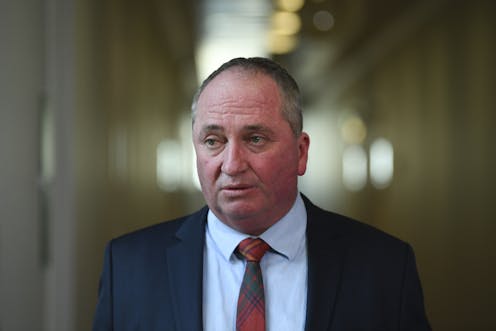
Nationals leader Barnaby Joyce will be challenged when his party meets on Monday.
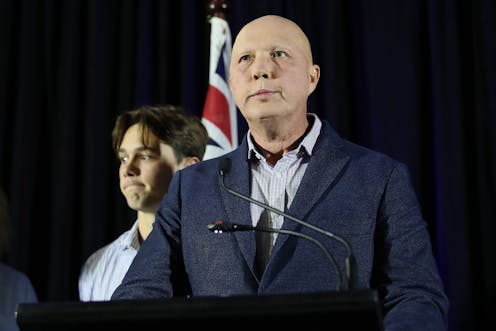
But Peter Dutton, former defence minister and leader of the conservatives in his party, will be elected Liberal leader unopposed. Former environment minister Sussan Ley is set to be deputy.
Joyce’s deputy, former agriculture minister David Littleproud, from Queensland, and backbencher Darren Chester, from Victoria have both announced they will run for the leadership of the Nationals.
The challenge comes despite the Nationals holding all their seats and gaining an extra senator at the election.
Joyce, who returned to the leadership last year, deposing Michael McCormack, is blamed by the Liberals for costing them some votes in the cities.
Teal candidates attacked their Liberal opponents on the ground that whatever their own views on climate change, they voted with Joyce.
Chester, an outspoken moderate in the Nationals, was dropped from the frontbench when Joyce regained the leadership.
In a weekend statement, Littleproud said: “I feel this is the appropriate time to put myself forward for my party room’s consideration as their leader.
“Ultimately, this is a decision on who will lead the Nationals to the 2025 election,”
It has been expected that Joyce may not contest the next election and might step down from the leadership during the term.
Ley, expected to be unopposed, is selling herself as being able to help rebuild support for the Liberals among women, many of whom deserted the party at the election.
“I understand the pressures women face across the nation,” she wrote on Facebook.
“I know the hurdles they overcome every day, managing home, family and career, all the while contributing to community.
“My own life experience as an outback pilot, shearer’s cook and farmer, earning three finance degrees while raising my children has seen me walk a mile in their shoes!”
Ley holds the regional NSW seat of Farrer.
Michelle Grattan does not work for, consult, own shares in or receive funding from any company or organisation that would benefit from this article, and has disclosed no relevant affiliations beyond their academic appointment.
A few weeks ago Peter Dutton would have been contemplating, in the event of the Morrison government’s likely defeat, contesting the Liberal leadership against Josh Frydenberg and probably losing.
Instead, he’s set to walk unopposed into the job at Monday’s Liberal meeting. A shattered parliamentary party has nowhere else to go.
The leadership is a prize Dutton has long coveted. But now it appears a poisoned chalice. The only qualification to that is the inherent uncertainty of politics.
Dutton’s dual task is herculean: reshaping his own image and uniting and rebuilding the party.
Dutton, 51, was the Morrison government’s hard man: pugnacious, uncompromising and unpopular with the public. A Roy Morgan poll in March found him running a very poor third as preferred Coalition leader, on 14%, compared with Josh Frydenberg on 46% and Scott Morrison on 28.5%.
His wife Kirilly the other day argued Dutton is a compassionate person but when faced with making high profile ministerial decisions about individuals in immigration cases, he frequently appeared unswayed by compassion. His provocative statements range widely. On broad issues of national security, he has been in the vanguard of the hawks, convinced an aggressive China is on a quick march.
Malcolm Turnbull, writing in his autobiography, A Bigger Picture, on why, when he lost the leadership numbers, he preferred Scott Morrison over Dutton, said: “Dutton, were he to become prime minister, would run off to the right with a divisive, dog-whistling, anti-immigration agenda, written and directed by Sky News and 2GB”.
But Dutton is complicated. Almost all who know him testify there are two Peter Duttons: the public sword carrier with the mask-like face and the non-public person, who is routinely described as charming, with a sense of humour, and politically more granular than you might think.
Prime Minister Anthony Albanese gave him an interesting character reference last week, when he said “I have a much better relationship with Peter Dutton than I had with Scott Morrison. Peter Dutton has never broken a confidence that I’ve had with him.”
Liberal moderate, senator Andrew Bragg says: “At least you know where you stand with him. He has a lot more organic support because he’s been honourable and transparent in his dealings over time.”
Warren Entsch, describing himself as a “long serving moderate” says Dutton is “not the person I see projected in the media. I’ve worked with him on difficult immigration issues – I found him to be compassionate – he supported what I required.
“All the actions he’s done with me suggest he’ll take the party to the centre”.
Entsch adds pointedly, “One of the things you can guarantee with Dutton [is that] he’s not going to bring religion into it”.
Ahead of Monday, Dutton made a fresh effort to convince people there’s more to him than they see.
He declared he’d had “tough jobs” – as a policeman, and in portfolios like home affairs – and “most people have only seen that side of me”.
“I hope now, in moving from such tough portfolios, the Australian public can see the rest of my character. The side my family, friends and colleagues see,” he said. The script was familiar. He’d made a similar pitch when trying to wrest the prime ministership from Malcolm Turnbull in 2018.
Dutton entered parliament in 2001 and had a couple of ministries in the Howard government, including assistant treasurer.
At the start of the Rudd government he boycotted the apology to the stolen generations, claiming it delivered no tangible benefits. Later he said he regretted his action. “I didn’t appreciate the symbolism of it, and the importance to Indigenous people,” he told a journalist in 2017.
He became health minister in the Abbott government, and after the 2014 budget had carriage of the planned Medicare co-payment, which hadn’t been his idea and eventually was abandoned when there was no hope of getting it through the Senate.
A former official recalls of him, “He wasn’t terrible. He didn’t have an unnuanced view. He wasn’t completely monochrome. He wasn’t all black.” A political colleague of the period says he was a “competent” health minister but “much more suited to border protection than health”.
Late in 2014 he was moved to immigration, where he was known for harsh decisions and uncompromising statements. And a 2015 joke, caught on an open mic, about climate change and the Pacific. “Time doesn’t mean anything when you’re about to have water lapping at your door,” he quipped to then PM Tony Abbott and fellow minister Morrison. It dogs him still.
The ambitious Dutton lobbied for the creation of a super national security portfolio and PM Turnbull eventually accommodated him. In his new home affairs job Dutton continued to give no quarter.
But he wanted more, and quickly. He trailed his coat for a challenge to Turnbull, which came to a head in August 2018. But he was outdone in the manoeuvring and lost to Morrison.
In 2021, issues surrounding two ministers, Christian Porter and Linda Reynolds led to a reshuffle that put Dutton into defence. He was like a pig in the proverbial – a highly activist minister in a portfolio he relished.
He countermanded the chief of the Australian Defence Force Angus Campbell in relation to some recommendations from the Brereton inquiry into alleged Australian war crimes in Afghanistan. The AUKUS agreement put him at the centre of the early plans for the nuclear-powered submarines, and he had ambitions for a wide overhaul of defence capability.
The portfolio also gave Dutton a platform to talk up the threat from China.
Dutton reached out to experts, including to Peter Jennings, then head of the government-supported defence think tank, the Australian Strategic Policy Institute.
“He was different from how people talk about him,” Jennings says. “He was happy to listen, very engaged, self-deprecating, clearly in control of his ego.”
Neil James, of the Australia Defence Association, says as defence minister Dutton was “generally respected by the military and by the defence community more generally, particularly compared to some of his predecessors over the last decade”.
A source who has worked with him in the national security area describes him as pragmatic, “a mainstream right winger, but not a Trumpian version. He thought the radicalism of the Republican party was lunacy.”
His pragmatism came out on marriage equality. Although he opposed same-sex marriage, he saw its legalisation as inevitable and pushed (with then finance minister Mathias Cormann) for a postal vote. When that passed he voted for the 2017 legislation.
In last week’s statement announcing he would stand for leader, Dutton sent up a centrist flag within the party. “We aren’t the Moderate Party. We aren’t the Conservative Party. […] We are the Liberal Party,” he said.
“We believe in families – whatever their composition. Small and micro businesses. For aspirational hard working ‘forgotten people’ across the cities, suburbs, regions and in the bush.”
This, of course, is motherhood. In the months ahead there will be many questions. One of the big ones will be: to what extent should the Liberals give up on the “teal” urban seats, the seats of the Menzian party, lost at this election? Those within the party dismissive of these seats see its future in the outer suburbs and the regions.
The post election Liberal Party might be likened to a ship with gaping holes forward (the progressive wing which has leaked to the teals) and aft (the conservative base, which has eroded to small parties on the right and non-teal independents).
Some Liberals argue Dutton will be well placed to repair the latter. “We can’t chase the teal [seats] till we do something about the base,” says one.
Bragg hopes the Dutton era might be like “Nixon and China” but, more realistically, says “the concern is how it is going to work in Melbourne and Sydney”.
Whatever efforts he makes to broaden his own image, or project a different one, it is difficult to see Dutton as the person to win back teal areas (and that’s apart from independents being inherently hard to dislodge).
Dutton will begin his new job sounding upbeat. But history tells us, and him, the first leader of the opposition after a party loses office is unlikely to be the one who takes it back into power.
Michelle Grattan does not work for, consult, own shares in or receive funding from any company or organisation that would benefit from this article, and has disclosed no relevant affiliations beyond their academic appointment.
A pause for breath Australia and New Zealand should be concerned about China’s increasingly visible presence in the Pacific Islands. A coercive Chinese presence could substantially constrain Australia’s freedom of movement, with both economic and defence implications.
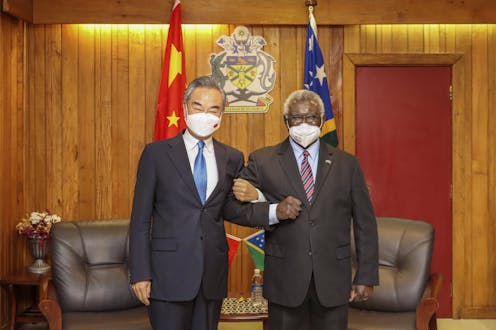
And Pacific states and people have reason to be concerned. The restrictions on journalists during Chinese Foreign Minister Wang Yi’s visit to Solomon Islands demonstrate the potential consequences for transparency of dealing closely with China.
And there are questions about the implications of the Solomon Islands-China security agreement for democracy and accountability.
But before we work ourselves into a frenzy, it is worth pausing for breath.
The leaked drafts are just that: drafts.
They have not yet been signed by any Pacific state.
At least one Pacific leader, Federated States of Micronesia President David Panuelo, has publicly rejected them. Panuelo’s concerns are likely shared by several other Pacific leaders, suggesting they’re also unlikely to sign.
Fiji is joining U.S. President Joe Biden’s Indo-Pacific Economic Framework, the White House said, making it the first Pacific Island country in the plan that is part of a U.S. effort to push back on China’s growing regional influence https://t.co/XByydU09IPpic.twitter.com/7xphYtRdv0
China wields powerful tools of statecraft — particularly economic — but Pacific states are sovereign. They will ultimately decide the extent of China’s role in the region.
And these drafts do not mention Chinese military bases — nor did the China-Solomon Islands agreement.
Rumours in 2018 China was in talks to build a military base in Vanuatu never eventuated.
What if some Pacific states sign these documents? First, these documents contain proposals rather than binding obligations.
If they are signed, it’s not clear they will differ in impact from the many others agreed over the last decade. For example, China announced a “strategic partnership” with eight Pacific states in 2014, which had no substantive consequences for Australia.
So common — and often so ineffectual — are “strategic partnerships” and “memoranda of understanding” that there is a satirical podcast series devoted to them.
Second, the drafts contain proposals that may benefit Pacific states.
For example, a China-Pacific Islands free trade area could open valuable opportunities, especially as China is a significant export destination.
Third, the drafts cover several activities in which China is already engaged. For example, China signed a security agreement with Fiji in 2011, and the two states have had a police cooperation relationship since.
It’s worth remembering Australia and New Zealand provide the bulk of policing assistance. The executive director of the Pacific Island Chiefs of Police is even a Kiwi.
The drafts do contain concerning provisions. Cooperation on data networks and “smart” customs systems may raise cybersecurity issues. This is why Australia funded the Coral Sea Cable connecting Solomon Islands and Papua New Guinea to Australia.
Provisions relating to satellite maritime surveillance may cause friction with existing activities supported by Australia and its partners.
Greater Chinese maritime domain awareness of the region – meaning understanding of anything associated with its oceans and waterways – would also raise strategic challenges for Australia, New Zealand, and the US.
But there is a risk of over-egging the implications based on our own anxieties.
The omission of #PNG from the new Indo-Pacific Economic Framework set up by the US to contest China in the region is a huge mistake & a missed opportunity, especially with China on the prowl in the Pacific Islandshttps://t.co/tRse7G3dvi
— Keith Jackson AM FRSA FAIM (@PNGAttitude) May 27, 2022
China’s interests Much of China’s diplomacy has been opportunistic and not dissimilar to what Australia and other partners are doing.
Although the region is strategically important to Australia, the southern Pacific islands are marginal to China. And apart from Kiribati and Nauru, the northern Pacific islands are closely linked to the US.
China’s interest may primarily be about demonstrating strategic reach, rather than for specific military purposes.
So, amplifying narratives about China’s threatening presence may unintentionally help China achieve its broader aim of influencing Australia.
And framing China’s presence almost exclusively as threatening may limit Australia’s manoeuvrability.
Given the accelerating frequency of natural disasters in the region due to climate change, it is only a matter of time before the Australian and Chinese militaries find themselves delivering humanitarian relief side-by-side. Being on sufficiently cordial terms to engage in even minimal coordination will be important.
If China really has benign intentions, it should welcome this opportunity. The compact, a mechanism created by Pacific states, could help ensure China’s activities are well-coordinated and targeted alongside those of other partners.
Amplifying threat narratives also feeds into Australia’s perceived need to “compete” by playing whack-a-mole with China, rather than by formulating a coherent, overarching regional policy that responds to the priorities of Pacific states.
What will Australia offer next? There is a risk some Pacific states may overestimate their ability to manage China. But for the time being it is understandable why at least some would entertain Chinese overtures.
New Australian Foreign Minister Penny Wong has rushed to Fiji days into the job with sought-after offers of action on climate change and expanded migration opportunities. Pacific leaders might be wondering what Australia will offer next.
Australians will bear yet another blow to our cost of living in July when electricity prices will surge up to 18.3%, which amounts to over A$250 per year in some cases.
This is partly due to geopolitical tensions driving up the cost of generating electricity from coal and gas – costs that are increasingly volatile – leading the Australian Energy Regulator to increase its so-called “default market offers” for electricity retailers in New South Wales, South Australia and Queensland.
If the Albanese government ever needed another reason to turbocharge its efforts on renewable energy and storage, this is it.
Investing in renewables, energy storage, electric vehicles and other clean industries will not only lower power prices, but will also lower emissions, increase our self-sufficiency, create new jobs, and protect us from international price shocks like we’re seeing now.
Fortunately, the Albanese government has a strong mandate for game-changing climate action this decade. The government aims for renewable energy to make up over 80% of Australia’s electricity mix by 2030, but its pledge of $20 billion for new transmission infrastructure means we can aim higher and go faster.
Holding us back, however, is continued investment in the coal industry. Indeed, doubling down on fossil fuels right now would be extraordinarily reckless from a security perspective – as the United Nations climate envoy pointed out this month, “no one owns the wind or the sun”.
So how can Australia transform into a renewable energy powerhouse? Here are three important ways the Albanese government can meet its ambition swiftly and justly.
1. Energy justice with community energy
Communities must be placed at the heart of the energy transition if we’re to see energy justice in Australia.
Energy justice is when all members of society are granted access to clean energy, particularly disadvantaged communities such as those without housing security.
One way to make this happen is with community-owned renewable energy and storage, such as wind energy co-operatives. For example, the Hepburn Wind Co-operative is a 4.1 megawatt wind farm owned by more than 2,000 community shareholders. Another example is community-owned social enterprise electricity retailers such as Enova, which has more than 1,600 community shareholders.
Labor has made a great start. Its Powering Australia plan pledges to install 400 community batteries and develop shared solar banks to give renters, people in apartments, and people who can’t afford upfront installation costs access to solar energy.
The next step should be a rapid roll out of a federal community solar scheme, similar to a program in the United States. The US Community Solar scheme is backed by legislation to create a third-party market for communities. It allows communities to own solar panels or a portion of a solar project, or to buy renewable energy with a subscription.
This means lower socio-economic households can benefit from clean, reliable and cheaper electricity from solar when they’re not able to put panels on their rooftop.
Australia needs a dedicated national policy or government body that builds on the work of other bodies, such as the Coalition for Community Energy, to govern community-based energy and enshrine the principles of energy justice.
2. Rapid uptake of offshore wind
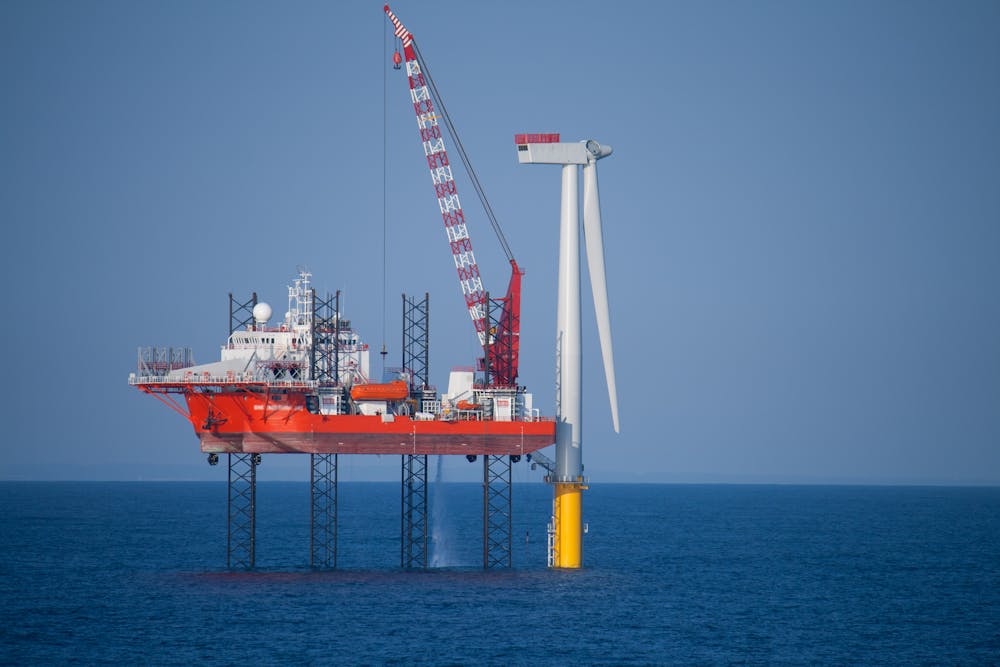
Offshore wind farms represent a key opportunity for Australia’s decarbonisation – the combined capacity of all proposed offshore wind projects would be greater than all Australia’s coal-fired power plants.
But Australia’s offshore wind industry is only in its infancy. And while Labor’s Powering Australia plan targets manufacturing wind turbine components, it lacks policy ambition for offshore wind.
Renewable Energy Zones (a bit like the renewables equivalent of a power station) are currently being rolled out Australia wide. These should encompass offshore wind zones to encourage the rapid uptake of this vast energy source.
For example, in February, the Renewable Energy Zone in the Hunter-Central Coast region had seven offshore wind proposals and attracted over $100 billion in investment. Potential renewable energy projects in this region represent over 100,000 gigawatt hours of energy – the same as the annual output of ten coal-fired power stations.
The federal government should also set an offshore wind target to accelerate uptake. Victoria, for instance, recently announced a target of 2 gigawatts installed by 2032, 4 gigawatts by 2035, and 9 gigawatts by 2040.
The federal government should also set an offshore wind target. Shutterstock
Similarly, the United Kingdom recently increased its offshore wind target to 50 gigawatts by 2030 – the equivalent to powering every household in the nation, according to the UK government.
Despite its potential, Australia only introduced federal legislative framework for offshore wind last year – and it needs work. For example, the legislation doesn’t incorporate marine spatial planning, which is a process of coordinating sectors that rely on the ocean, such as marine conservation, the fishing industry, and the government.
3. Just transitions for coal communities
The Australian Energy Market Operator says the National Electricity Market could be 100% powered by renewables by 2025. Further closures of aging and unreliable coal-fired power stations are inevitable.
The government must not leave carbon-intensive regions behind in the transition to new clean industries. If we do this right, generations of Australians could be working in renewable energy, clean manufacturing, renewable hydrogen, and the extraction of critical minerals.
Creating a national coal commission could help produce a roadmap away from fossil fuels, and seize on the opportunity to create clean jobs. This is being done in Germany, where a government-appointed coal commission consulted unions, coal regions, local communities and more to develop a pathway to transition the coal industry by 2038.
We can also see this in Canada, which is developing legislation with principles of a just transition by establishing a body to provide advice on strategies supporting workers and communities.
Strong climate and energy policy will take hard work – let’s hope this truly marks the end of the climate wars and the start of Australia’s turbocharged energy transition.
Madeline Taylor had received funding from ACOLA and the AIEN. She is a Climate Councillor for the Climate Council.
The long-running case of the “Biloela family” has ended after the new Labor government confirmed they would be allowed to return home to Queensland.
Interim home affairs minister Jim Chalmers said on Friday the Murugappan family (also known as the Nadesalingam family) can finally go home to Biloela on bridging visas. Their final immigration status is still outstanding.
But what are the other main policies we can expect from the newly elected government affecting thousands more asylum seekers and refugees in Australia?
Biloela family’s long struggle to go home
Tamil asylum seekers Priya and Nadesalingam Murugappan (Nades) arrived in Australia seeking asylum by boat. Nades arrived in 2012 and Priya in 2013.
The couple met in the Australian community, married and had two children. The family lived in the town of Biloela, Queensland, where Nades worked in the local abattoir and Priya volunteered in the community.
In March 2018 the family were taken to Melbourne and put into into detention in after the parents’ refugee claims were refused by the government. The youngest daughter, Tharnicaa, never had the opportunity to have her refugee claims assessed.
In August 2019 a last minute injunction saw the family’s attempted removal back to Sri Lanka stopped mid-flight, and they were taken to detention on Christmas Island where they stayed for almost two years.
In June 2021 three-year-old Tharnicaa was medically evacuated to Perth after contracting pneumonia and sepsis.
The family of four have since been living in Perth in community detention. This means they’re able to live in the community but have limited rights. For example, parents Priya and Nades can’t work, and the family haven’t been able to return back to Queensland due to conditions placed on their community release by the former immigration minister.
A high-profile community campaign led to an election commitment from both Kristina Kenneally, then shadow minister for home affairs, and then opposition leader Anthony Albanese to grant visas and allow the family to return to Biloela.
What now for asylum policy more broadly?
Temporary protection visas and fast track assessment
People like the Murugappan family are part of a larger group of around 30,000 people seeking asylum who arrived in Australia by boat between August 2012 and December 2013, known as the “legacy caseload”. People who were found to be refugees (approximately 19,000) were only granted temporary visas, which doesn’t allow them to settle permanently in Australia or sponsor close family members who are overseas.
Labor has also agreed to getting rid of the fast track system that was used to process cases from the legacy caseload, due to concerns around the fairness of this system, particularly for those who have been refused, like the Murugappan family.
However, Labor has no stated policy on what will happen for other people in the same situation as the Murugappans who have remained in Australia for the last 10 years.
Interception, turnbacks and offshore processing
The ALP’s policy is to maintain the previous policy of Operation Sovereign Borders, which includes the interception and turn back of people seeking asylum who come to Australia by boat.
A boat intercepted by Australian Border Force on the day of the election has already been turned back to Sri Lanka on the direction of Acting Prime Minister Richard Marles, after “thorough screening” of each persons’ protection status.
The ALP will also continue the previous government’s policy of offshore processing.
There are still around 1,400 people who were sent to Nauru and Papua New Guinea in 2013 awaiting resolution of their cases. Some are eligible to be resettled in the United States and New Zealand. The ALP’s policy is to continue to seek resettlement in other countries and not allow them to settle in Australia.
Immigration detention
Australian law provides for the mandatory detention of anyone who doesn’t have a visa. Once detained, it isn’t possible to seek review by an independent body or court. People are kept in detention until they are granted a visa or leave the country. Historically both Labor and the Coalition have kept the same policy.
Australia’s immigration detention policy is among the harshest in the world. People can be detained for several years without a resolution of their case. This is especially true for people who cannot be returned to their country for fear of persecution or who cannot be sent anywhere because they’re stateless.
As of February 2022 the average time spent in detention was 689 days. Some people have been in immigration detention for over 10 years.
Labor’s policy platform states it will operate a “humane and risk based immigration detention policy”, and agrees that “detention that is indefinite or otherwise arbitrary is not acceptable and the length and conditions of detention […] will be subject to regular review”.
But without a commitment to legislative change to allow courts to review decisions to detain, the current practice seems unlikely to change.
Expansion of the refugee and humanitarian program
Labor’s policy is to increase Australia’s annual humanitarian intake from 13,750 to 27,000 per year.
It has also pledged to progressively increase the community sponsored refugee program from 1,500 to 5,000 per year. This program enables individuals, families, community networks and businesses to help sponsor refugees to resettle into Australia, allowing for even more refugee places.
While these policies are a welcome increase, refugee organisations in Australia are hopeful there can be more, particularly in view of the United Nations High Commissioner for Refugees’ (UNHCR) announcement this week that the global number of forcibly displaced people has reached the staggering milestone of 100 million people.
The Greens and the teal independents have voiced concerns over Labor’s policy regarding Operation Sovereign Borders, detention and the refugee and humanitarian program. It will be interesting to see whether they can influence any change.
And there’s no doubt any changes Labor makes to refugee policy will be an area the opposition will be keen to exploit.
Mary Anne Kenny has previously received funding from the Australian Research Council and sitting fees from the Department of Home Affairs.
We use internet-connected devices to access our bank accounts, keep our transport systems moving, communicate with our colleagues, listen to music, undertake commercially sensitive tasks – and order pizza. Digital security is integral to our lives, every day.
And as our IT systems become more complex, the potential for vulnerabilities increases. More and more organisations are being breached, leading to financial loss, interrupted supply chains and identity fraud.
The current best practice in secure technology architecture used by major businesses and organisations is a “zero trust” approach. In other words, no person or system is trusted and every interaction is verified through a central entity.
Unfortunately, absolute trust is then placed in the verification system being used. So breaching this system gives an attacker the keys to the kingdom. To address this issue, “decentralisation” is a new paradigm that removes any single point of vulnerability.
Our work investigates and develops the algorithms required to set up an effective decentralised verification system. We hope our efforts will help safeguard digital identities, and bolster the security of the verification processes so many of us rely on.
Never trust, always verify
A zero trust system implements verification at every possible step. Every user is verified, and every action they take is verified, too, before implementation.
Moving towards this approach is considered so important that US President Joe Biden made an executive order last year requiring all US federal government organisations to adopt a zero trust architecture. Many commercial organisations are following suit.
However, in a zero trust environment absolute faith is (counter intuitively) placed in the validation and verification system, which in most cases is an Identity and Access Management (IAM) system. This creates a single trusted entity which, if breached, gives unencumbered access to the entire organisations systems.
An attacker can use one user’s stolen credentials (such as a username and password) to impersonate that user and do anything they’re authorised to do – whether it’s opening doors, authorising certain payments, or copying sensitive data.
However, if an attacker gains access to the entire IAM system, they can do anything the system is capable of. For instance, they may grant themselves authority over the entire payroll.
In January, identity management company Okta was hacked. Okta is a single-sign-on service that allows a company’s employees to have one password for all the company’s systems (as large companies often use multiple systems, with each requiring different login credentials).
Following Okta’s hack, the large companies using its services had their accounts compromised – giving hackers control over their systems. So long as IAM systems are a central point of authority over organisations, they will continue to be an attractive target for attackers.
Decentralising trust
In our latest work, we refined and validated algorithms that can be used to create a decentralised verification system, which would make hacking a lot more difficult. Our industry collaborator, TIDE, has developed a prototype system using the validated algorithms.
Currently, when a user sets up an account on an IAM system, they choose a password which the system should encrypt and store for later use. But even in an encrypted form, stored passwords are attractive targets. And although multi-factor authentication is useful for confirming a user’s identity, it can be circumvented.
If passwords could be verified without having to be stored like this, attackers would no longer have a clear target. This is where decentralisation comes in.
Instead of placing trust in a single central entity, decentralisation places trust in the network as a whole, and this network can exist outside of the IAM system using it. The mathematical structure of the algorithms underpinning the decentralised authority ensure that no single node that can act alone.
Decentralisation (the same concept which underpins the blockchain) refers to a transference of authority within a system, from a central point of control, to several different entities. Shutterstock
Moreover, each node on the network can be operated by an independently operating organisation, such as a bank, telecommunication company or government departments. So stealing a single secret would require hacking several independent nodes.
Even in the event of an IAM system breach, the attacker would only gain access to some user data – not the entire system. And to award themselves authority over the entire organisation, they would need to breach a combination of 14 independently operating nodes. This isn’t impossible, but it’s a lot harder.
But beautiful mathematics and verified algorithms still aren’t enough to make a usable system. There’s more work to be done before we can take decentralised authority from a concept, to a functioning network that will keep our accounts safe.
Joanne Hall collaborated with TIDE foundation on this project. She received funding from the Australian National University (acting in partnership with the Defence Science Technology Group (DTSG)) to report on and present this project. Dr Hall is also recving funding from the Australian Women in Security Network.
Dr. Geetika Verma collaborated with TIDE foundation on this project. She received funding from the Australian National University (acting in partnership with the Defence Science Technology Group (DTSG)) to report on and present this project. In past, Dr. Geetika Verma has worked on a mathematics research project at University of South Australia funded by ARC Discovery Grant .
Matthew P. Skerritt collaborated with TIDE foundation on this project. He received funding from from the Australian National University (acting in partnership with the Defence Science Technology Group (DTSG)) to report on and present this project.
Problems make the world go round. Many of us – maybe the majority of workers, and certainly the majority of well-paid workers – earn our living addressing problems. A problem-free world would represent a major crisis for modern social-capitalism. (Yet standard economic theory continues to present the productive economy as a mechanism for ‘satisfying wants’, as distinct from ‘addressing problems’.) We also note that while much income is earned addressing problems, the problems being addressed are rarely solved. (Examples of problems actually being solved were the elimination of horse manure street pollution at the beginning of last century, eradication of smallpox at the end of last century, and the elimination of SARS in 2003.)
One issue here is the macro-micro problem. In the case of many ‘games’, such as legal disputes, two (or more) parties have problems. Both hire ‘good lawyers’. Eventually, one party wins – meaning its problem is largely solved, though it still has the lawyer’s bill to pay. The other party loses. On balance, this may be a ‘negative-sum game’; the overall problem may be even bigger than before, though the burden of the problem will have been redistributed. We tend to say things like ‘the lawyers were the winners’. Though, from a macro perspective, if the combined efforts of lawyers mainly result in a burden-shifts rather than lasting solutions, then the productivity of the lawyers’ collective labours will have been rather low.
Generalising, we may say that, for much of the time, the social productivity – ie productivity broadly defined – of professional problem solvers (such as lawyers) is rather low. (The productivity of soldiers is an extreme example of the same issue; soldiers – when waging war – destroy rather than produce. Nevertheless, so long as ‘they’ have soldiers, then ‘we’ must have soldiers too; from a micro point of view, soldiers are necessary for each country.)
Commonly, problems are not solved because they are defined too narrowly. When a problem is defined too narrowly, then the problem may in fact be being made worse, even if the problem, as defined, is being solved.
Examples relate to road-safety and to public health. Before looking at these examples, however, we may note that these kinds of problem may be represented through the imagery of concentric circles. The micro perspective is represented by the inner circle(s); the macro by the outer circle(s).
Concentric Circles
Just about any problem can be understood both narrowly and broadly; in many cases there are degrees of ‘broadness’. This can be visualised as ‘concentric circles’, with the narrowest specification of the problem represented by the inner circle, and the broadest measure of the problem represented as the outer circle.
The issue here is that solving the problem at the narrowest level of definition may, to a lesser or greater extent, shift the problem to the next level or levels. An inner circle solution may spill the problem into the next circles out. And, indeed, as the second circle problem is addressed, the actions undertaken may further broaden the problem, rather than closing it. (We should acknowledge that there may also be ‘spillover’ benefits, as well as costs. Narrow vision occurs when the spillover effects are biased towards costs over benefits.)
We should note the role of time. A problem, narrowly perceived and addressed, may be able to yield relatively immediate fixes. However, the broader aspects of the problem may take much longer to show up, let alone to address. (These broader problems are often assigned to the ‘too-hard basket’.)
Interesting examples are where literally ‘saving lives’ is presented as the key ‘solution metric’. In a public health context, it will be easier to save more older lives than younger lives within a ‘political attention-span’ timeframe, because more older people will die ‘this year’ than younger people. But highly focused political actions taken to save older lives may place burdens on younger people. Such burdens cannot be easily assessed within a short period. If younger people’s lives will be shortened as a result, it will always be hard to prove in the future the extent that this life shortening was in any way due to an overly narrow understanding of the initial problem. A problem solved, politically, may be, unknowingly, a problem exacerbated in reality.
In our context here, ‘external’ costs and benefits are new costs and benefits in the outer circles which result from activities undertaken within the inner circle (or circles). Such narrow ‘inner-circle’ focus can be appropriate if we can reasonably expect that external costs will be balanced (or more than balanced) by external benefits. Scientists – including social scientists and others with a ‘scholarly’ bent – are, by the nature of their work, narrowly focussed. (They are ‘dot-makers’ rather than ‘dot-joiners’.) Although these expert contributions are very important, they need to be balanced by intellectuals and realists with broader focus. By and large, in this regard we are not well-served by politicians and mainstream journalists; two of the groups we look-to to communicate broader ‘joined-up’ thinking to the populace. They, in recent times, have been more under the thrall of narrow-sighted experts than since the ‘rogernomic’ and ‘ruthenasia’ times (in New Zealand) in the 1980s and early 1990s.
Car Safety
One way of addressing the ‘existential’ problem of climate change is to subsidise certain types of ‘clean’ motor vehicle. This is the central focus of the New Zealand government’s latest policy to address climate change. (Refer to On The Emissions Reduction Plan Non-Event, Scoop, 17 May 2022.) This policy acknowledges that cars are dangerous in a very broad sense, in that they contribute to emission-caused global warming. But the Minister for Climate Change has a different brief from the Minister of Transport; specific car safety policy is formulated within the narrower brief of the transport ministry.
This is not our first attempt (eg in New Zealand) to subsidise certain types of car. Until a few years ago, the price of car registration was the same for all private cars. Then the New Zealand government introduced a system of registration subsidies, based on car-safety assessments.
The concept of car safety was narrow. A safer car was a car that would be less likely to lead to the death or serious injury of its occupants in the event of a crash. This meant that bigger cars were ‘safer’, because, in the event of a collision with a smaller car, the occupants of the bigger car would on average suffer less harm than the occupants of the smaller car. So safer bigger cars were subsidised.
The flaw in the logic is quite obvious. The second concentric circle (counting out from the inside) relates to non-occupant road-users; ie occupants of other cars, motorcyclists, cyclists, and pedestrians. For these road users, it is clearly more dangerous to be struck by a big car than by a small car. Macro thinking about road safety leads to bigger subsidies to smaller cars, not bigger cars. (Yes, there will always be some big vehicles on the roads, especially trucks, but the fewer big vehicles the better, from the point of view of private-car occupants.) Smaller cars can be as safe as bigger cars, even to their occupants, in a world with few bigger cars.
There are third and fourth circles, further out. It is almost universally accepted that car exhaust emissions have an adverse impact on human health, as well as creating visual pollution in the form of haze. Thus, the issue of air pollution in cities has long been a classic textbook example of the ‘negative externality’ problem. I remember Mexico City in 1976.
The fourth circle is that of ‘climate change’. It is generally accepted that the adverse consequences of climate change are worse for humans – and most other species – than are the beneficial impacts. At the worst end of these possibilities is the extinction – or near-extinction – of humans and most of the other species we know and love. Bad indeed. Though the worst of the harm is not immediate; or at least not immediately immediate.
This last issue is of course much bigger than an issue of road safety. But it does show that the subsidisation of large cars – something done in the recent past to facilitate road safety – is counterproductive both in terms of the narrower issue of road safety and the wider issue of public health. Experts have narrow views of ‘safety’; views which are generally (and appropriately) confined to their focussed areas of expertise. Fortunately, experts are not policymakers.
Policymakers are assigned, by the people in a democracy, the task of problem-addressing using a wider field of vision. When policymakers simply defer to those with narrow expertise, then they are negligent in the performance of their duties. When a problem is at an acute phase, narrow expertise may need to prevail, but not without question. As a problem moves into and through its chronic phases, the policy fields of vision need to broaden.
Street immunity and other health defences
Last week I heard the term street immunity for the first time, in relation to the immunity (or otherwise) to infectious diseases in the domestic dog population (ref to Vet Council warns about kennel cough spreading around NZ, RNZ, 18 May 2022. The narrow way in which humans have addressed and evaluated the Covid19 pandemic has created a loss of ‘street immunity’ in our domestic dogs, and, almost certainly, our domestic humans. (Whether the current ‘monkey pox’ scare is related to this, we do not know, and will never know if the question is not addressed.)
When it comes to a new infectious disease, the inner defensive circle is for governments – local or national – to establish barriers between the new pathogen and its prospective host population; with particular concern by humans, naturally, for humans as prospective victim hosts. This response can most succinctly be described as ‘quarantine’, and it involves international and domestic border closures, ‘lockdowns’, and facemasks. Barriers. Barriers which may include barriers to people – people stranded, people without permissions to travel or work, private-sector innovators – who could help save lives.
The second circle is the human immune system, narrowly defined. Immunity to particular viruses is derived from exposure to those viruses, or to agents (such as vaccines) which mimic them. For some pathogens (such as viruses), immunity is long-lasting; for other pathogens – and human coronaviruses have been long known to be in this category – specific immunity is short-lasting. Pathogen evolution, where viruses etcetera ‘learn’ to evade host immunity, is part of the reason for waning immunity, but not the only reason. An optimal immunity balance may develop, whereby both pathogen and host achieve an infection equilibrium that confers benefits, as well as costs, to both micropredator and human (or animal or plant) host. Barriers, by their very nature, compromise immunity; vaccines may counter compromised immunity.
The third circle is that of cross-immunity – or co-immunity, or street immunity – whereby occasional exposures to less dangerous (and more endemic) pathogens may raise levels of host defence to new and more dangerous pathogens. This is the circle of street immunity, which is a more general – less specific – type of immunity. An important part of this circle is the need to avoid germophobia (also called ‘mysophobia’); germophobia limits individuals’ opportunities to acquire street immunity.
The next circle out is nutrition. Balanced nutrition, including vitamins which by definition must be consumed (because the body cannot synthesise them), is part of this level of self-help health. Different health threats may require different nutrients in order to be able to mount bodies’ best possible defences against those threats. Advice by some dietary experts can be counterproductive if it encourages less balanced diets. Likewise, expert recommendations to avoid vitamin supplements can be counterproductive to disease immunity. Much dietary expertise suffers from the same narrow-vison as other forms of expert advice.
The next ‘disease defence’ circle out is general happiness, including as many people as possible being able to live lives in ways that minimise their risk of incurring mental illness, or of experiencing substance dependence.
A final circle is that of existential population dynamics. It is indeed natural, and under some circumstances, appropriate, that populations sometimes get smaller rather than bigger. For example, unsustainable economic growth can create a situation whereby population decline becomes necessary. Such declines can happen in an orderly and organic way, through preventative rather than positive checks. In history though, the declines of civilisations have generally been disorderly and tragic affairs. In science fiction, it’s usually the elites who seek the lifeboats when the follies of their narrow-thinking ways are eventually exposed. (I cannot but help thinking of the final scene from the Netflix movie Don’t Look Up.)
Policies to address health threats
To address a problem of a single new virus within a narrowly-defined inner circle of understanding, there will almost certainly be impacts on each of the outer circles, for better or worse. Back in the winter of ’20, we thought that we were adding to our health by keeping out all respiratory viruses (ie not just the Covid19 coronavirus). Many thought we were improving general health, as well as protecting ourselves from Covid19. Early in 2021, information was coming out suggesting that knowledge of (and even infection by) familiar viruses could help protect us from the covid virus.
(Note Coronavirus: How the common cold can boot out Covid, BBC, 23 March 2021. And note how a single paragraph in the midst of this recent article refers to, but without emphasis, common specialist knowledge of human “common-cold coronaviruses”. Still, after nearly 29 months of covid, very few narrators – narrative-pushers – seem to be aware that human coronaviruses have always been part of our lives, or that Covid19 is not the first coronavirus pandemic. The problem appears to be that the epidemiologists who most pronounce on Covid19 have very little specialist knowledge of the history of the common cold.)
The problem was that too few of us noticed – or commented publicly – on these findings, including too few epidemiologists. During the pandemic, especially its early stages, we became poor at discriminating between useful narrative-critical information and useless narrative-reinforcing chatter. The mainstream Covid19 narrative, which is presented as our best ‘truth’, suffers from too many omissions; omissions resulting from expert narrow-vision, and uncritical responses by those who we pay to evaluate narratives, rather than from any conspiratorial intent.
Important findings that questioned aspects of narrow narratives were rarely identified, let alone emphasised. Concerns about mental health consequences arising from extended emergency mandates were too readily dismissed as conspiratorial. Particular problems faced by, for example, stranded people were glibly dismissed. Overreach, as in the 1980s, was once again normalised.
The second circle is the still-narrow epidemiological circle, which focuses on vaccines and pathogen-specific natural immunity. As such, this narrow focus of scientific attention sees few problems with the prolonged use of the quarantine (barrier) approach. Here, too much attention to covid leads to too little attention to the more general problems of immunity, and viral side-effects and after-effects. Conditions like ‘long-covid’ are seen as highly specific to Covid19 infection, and not as a new variant of chronic fatigue syndrome. Less narrow vision could have led us to better examine the general problem, and to help all sufferers of chronic fatigue rather than just those who could show a past positive covid test result.
The third circle is where the loss of street immunity takes place, thereby leaving human hosts subject to massive uncertainty about how they will fare in future under previously familiar viruses, while leaving them more exposed to evolving new viruses. The third circle, especially, suffers unestimable external costs from the prolonged use of the quarantine (barrier) approach. The immune system can be more than the sum of its parts, and – like a car – the immune system may benefit from regular and not infrequent tune-ups.
The fourth circle recognises that immunity is enhanced by a healthy and varied diet; and indeed through the taking of such supplements as ascorbic acid (Vitamin C). Having a store of nutrients helps the immune system to ‘do its stuff’; it’s one thing for the system to be educated, it’s another for it to have the capacity to execute its lethal defensive military operation. While Vitamin C will never be the sole means to good health, it is an essential part of the immune system’s armoury which has been over-downplayed by the medical science establishment. We may think of Vitamin C as necessary but not sufficient to good health. Reserves of this vitamin are particularly helpful in mitigating many types of infection.
The fifth circle emphasises general happiness; contentment with life, including fulfilment through experiences such as travel, fulfilling relationships, and being able to contribute under pressure in a field that a person has some passion for. Under these conditions of happiness and public purpose, mental illness may be minimised, and the desire to indulge in unhealthy pastimes (such as substance abuse, reckless gambling, comfort eating, passivity) is unlikely to be present. Happiness itself may create some degree of protection from disease. This means that any autonomy-reducing actions taken (and narratives perpetuated) by narrowly-focussed public problem solvers may have health repercussions, especially in overly constraining the choices of young people. (I note that the most recent edition of the New Zealand Listener has a feature subtitled “How Covid has scarred an entire generation”.) Harm here can take a long time to manifest itself, and, when such harm happens, it may be especially difficult to prove these connections of cause and effect.
It’s not much use protecting some of us from severe health problems if the means of doing so actually make others of us more vulnerable to substantial health problems.
The final circle is population dynamics, whereby certain environmental ‘crises’ may require lower population levels to maintain the overall health of the species. Here plagues and the like ‘cull’ host populations in ways that may be necessary to maintain the health of those populations. These are positive checks. Preventative checks are generally preferred. We know – and have known for many years – the kinds of social security and education that are the means to facilitate orderly reductions in population sizes. General education (with emphasis on abstract skills and civic awareness), apprenticeship (broadly defined), and a universal approach to social security, are indeed the best recipes for much more than demographic sustainability.
While it can never be good public policy to let nasty pathogens ‘rip’ through populations in order to rapidly reduce unsustainable populations, it is as well to remind ourselves that we are subject to the same laws of biology as are other species. In this regard, weakened long-term defences are probably more of a problem than are novel threats. Narrow vision too easily leads to short term ‘solutions’ which, if allowed to persevere, weaken human resilience.
Technocrats and Bureaucrats
Ultimately, good policy is policy that leads to happy people (as defined above) and sustainable outcomes. One form of unsustainability is the cost of carrying well-paid problem solvers (often but not always in the public sector) who – due to systemic narrow-vision – do not, and cannot, actually solve the problems that we expect them to solve. Better – though less orderly – solutions come from the educated masses rather than from the elite; from capable people living good lives, rather than from a blind-citizen reliance on technocrats and bureaucrats.
Nobody really believes that we are safer driving bigger cars. Public safety is multi-dimensional. And there’s more to happiness and sustainability than safety. Experts and managers have important jobs to do. But not to rule, overtly or covertly.
*******
Keith Rankin (keith at rankin dot nz), trained as an economic historian, is a retired lecturer in Economics and Statistics. He lives in Auckland, New Zealand.
The COVID medication Paxlovid has been available in Australia on the Pharmaceuticals Benefits Scheme (PBS) since the start of May, with eligible patients directed to talk to their GP for a prescription.
Paxlovid is an oral treatment for mild COVID, taken as a tablet, which has two active ingredients: nirmatrelvir and ritonavir. Together, they reduce the ability of SARS-CoV-2, the virus that causes COVID, to multiply in your body.
So who should access Paxlovid? And what are the potential benefits and side effects of using this medication for mild COVID?
Evidence for the effectiveness of Paxlovid comes from a study that compared it with a placebo (an inactive treatment) in 2,246 unvaccinated adults who had mild to moderate COVID. They had risk factors for severe disease but didn’t need admission to hospital.
The group that took Paxlovid had a reduced chance of being admitted to hospital, with a rate of eight per 1,000 people. This compares with 63 per 1,000 in the group that didn’t receive Paxlovid: a big reduction.
Paxlovid may also prevent people dying of COVID, though this is less clear, as there were only small numbers of deaths in the study.
The study found taking Paxlovid reduced the chance of needing to be admitted to hospital for severe COVID. Shutterstock
The study didn’t include children, adolescents, pregnant or breastfeeding women, or people who had been vaccinated, so the safety and effectiveness of Paxlovid in these groups is less certain. More research in these groups, and in comparison to other treatments, would be very helpful.
The study was also conducted before the Omicron variant was circulating. There are no data about the effectiveness of Paxlovid against Omicron specifically, but there are no particular reasons to think it would be less effective.
What are the downsides?
The biggest downside with Paxlovid is that it can cause serious side effects if combined with many commonly used drugs for a wide range of other conditions.
In some cases, people taking these drugs should not receive Paxlovid; in other cases, it may be possible to pause or change the dose of the other medication for the five days you’re taking Paxlovid.
It’s important to discuss all your medications – including herbal and non-prescription medications, and any plans to change them – with your doctor and pharmacist before beginning Paxlovid.
Other commonly reported side effects include headache, diarrhoea, vomiting and dysgeusia, or “Paxlovid mouth”, where foods taste metallic, sour or bitter.
There are a few reports surfacing about people experiencing COVID symptoms again after finishing their course of Paxlovid. Researchers and health authorities are continuously monitoring for emerging evidence of harms associated with taking the medicine.
Paxlovid is most helpful for people with mild COVID symptoms who are at high risk of developing severe disease. Because it works by stopping the virus making copies of itself, to be effective, it needs to be started within five days of developing COVID symptoms.
The study that demonstrated the effectiveness of Paxlovid included unvaccinated people with one or more of these risk factors for progression to severe COVID disease:
age 60 years or above (though the Australian cut-off is 65)
diabetes requiring medication
obesity (defined in the study as BMI of 25 kg/m² or above)
heart disease
high blood pressure
chronic lung disease.
Older people with chronic diseases are at greater risk of severe COVID. Shutterstock
There are other people who are at higher risk of severe illness from COVID and may benefit from Paxlovid. This includes some people with reduced kidney function, reduced immune function because of medicines or HIV infection, severe disability, some cancers and blood disorders.
If you’re unvaccinated or partially vaccinated, or fully vaccinated but with a combination of these risk factors, and have mild COVID in the first few days of symptoms, your doctor may recommend Paxlovid.
How do I access Paxlovid?
Paxlovid must be prescribed by a doctor or nurse practitioner.
It is listed on the PBS for adults who have mild to moderate COVID confirmed by a PCR or a positive rapid antigen test result verified by a medical practitioner or nurse practitioner, and who can start treatment within five days of symptom onset. This means the prescription will cost A$42.50 (or $6.80 for health-care card holders).
People who meet the following criteria can get a prescription for PBS-subsidised Paxlovid from their doctor or nurse practitioner if they:
are 65 years of age or older, with two other risk factors for severe disease
are 75 years or older, with one other risk factor for severe disease (as increasing age is a risk factor)
identify as Aboriginal or Torres Strait Islander origin, and are 50 years of age or older with two other risk factors for severe disease
are moderately to severely immunocompromised.
Other medications are available to treat mild COVID in people who are at risk of developing severe disease. Each of the drugs has pros and cons. Your doctor will discuss the best available treatment options with you.
Paxlovid is not a treatment for people who are very unwell with COVID. If you are in hospital with COVID, your clinical team will discuss other treatment options with you.
Mark Morgan receives research funding from government grants. He is affiliated with Bond University. He is the co-chair of the National Clinical Evidence Taskforce Expert Committee for primary and chronic care and chair of the Royal Australian College of General Practitioners Expert Committee for Quality Care.
Amanda Gwee attended the MSD Asia Pacific forum in 2019.
Jason Roberts consults to Gilead, Pfizer, Sandoz, Wolters Kluwer, MSD, Summit Pharma and Cipla. He receives funding from Australian National Health and Medical Research Council for a Centre of Research Excellence and an Investigator Grant as well as receives an Advancing Queensland Clinical Fellowship.
Nicole Allard is an honorary member of the National COVID-19 Clinical Evidence Taskforce.
Tari Turner receives funding from the Australian Government Department of Health to support the work of the National COVID-19 Clinical Evidence Taskforce.
University of Canberra Professorial Fellow Michelle Grattan and Emma Larouche, from the University of Canberra’s Media and Communications team, look at the first week of an Albanese government.
They discuss Prime Minister Albanese’s trip to the Quad meeting, Foreign Minister Penny Wong’s address to Pacific leaders, the tough times ahead as cost of living pressures increase, and the future of the Liberal Party under Peter Dutton, as it faces a massive rebuilding task after losing a swag of seats to “teals”.
Michelle Grattan does not work for, consult, own shares in or receive funding from any company or organisation that would benefit from this article, and has disclosed no relevant affiliations beyond their academic appointment.
Amyotrophic lateral sclerosis (ALS), also known as Lou Gehrig’s disease, is the most common form of motor neuron disease. People with ALS progressively lose the ability to initiate and control muscle movements, including the ability to speak, swallow and breathe.
There is no known cure. But recently, we studied mice and identified a new target in the fight against this devastating disease: the brain’s waste clearance system.
Neurodegenerative diseases – including Parkinson’s disease, Alzheimer’s and multiple sclerosis – share many similarities, even though their clinical symptoms and disease progression may look very different. The incidence of these diseases increase with age. They are progressive and relentless, and result in gradual loss of brain tissue. We also see waste proteins accumulate in the brain.
Our new research looked at how the glymphatic system, which removes waste from the brain, could prevent ALS.
Inside our bodies, long protein chains fold to form functional shapes that allow them to perform specific tasks like creating antibodies to fight off infection, supporting cells or transporting molecules.
Sometimes this process goes awry, resulting in “misfolded” proteins that clump together to form aggregates. Misfolded protein can grow and fragment, creating seeds that spread throughout the brain to form new clusters.
The accumulation of waste proteins begins early in the neurodegenerative disease process – well before the onset of symptoms and brain loss. As researchers, we wanted to see if eliminating or slowing the spread of these waste proteins and their seeds could halt or slow the progression of disease.
Targeting waste removal
The glymphatic system removes waste, including toxic proteins, from the brain.
This brain-wide network of fluid-filled spaces, known as Virchow-Robin spaces, is mostly switched off while we’re awake. But it kicks into gear during sleep to distribute compounds essential to brain function and to get rid of toxic waste.
This may explain why all creatures, great and small (even flies), need sleep to survive. (Interestingly, whales and dolphins alternate their sleep between brain hemispheres, keeping the other hemisphere awake to watch for predators and alerting them to breathe!)
Unlike us, dolphins sleep with one side of their brain at a time. Unsplash/NOAA, CC BY
As we age, sleep quality declines and the risk of neurodegenerative disease, including ALS, increases.
Sleep disturbances are also a common symptom of ALS and research has shown a single night without sleep can result in increased accumulation of toxic waste protein in the brain. As such, we thought glymphatic function might be impaired in ALS.
To investigate this, we looked to mice. The animals were genetically modified to express human TDP-43 – the protein implicated in ALS. By feeding these mice food containing an antibiotic (doxycycline), we were able to turn the TDP-43 protein expression off and they aged normally. But when the mice are switched to normal food, TDP-43 expression is turned on and misfolded proteins begin to accumulate.
Over time, the mice display the classical signs of ALS including progressive muscle impairments and brain atrophy.
Using magnetic resonance imaging (MRI) to see brain structure, we investigated glymphatic function in these mice just three weeks after turning on TDP-43 expression.
As we watched the glymphatic system go to work, we saw the TDP-43 mice had worse glymphatic clearance than the control mice that had not been genetically modified. Importantly, these differences were seen very early in the disease process.
Our study provides the first evidence the glymphatic system might be a potential therapeutic target in the treatment of ALS.
How can we improve glymphatic function?
Not all sleep is equal. Sleep includes both rapid eye movement (REM) and non-REM sleep. This latter stage includes slow wave sleep – when the glymphatic system is most active. Sleep therapies that enhance this phase may prove to be particularly beneficial for preventing diseases like ALS.
Sleep position is also thought to affect glymphatic clearance.
Research conducted in rodents has demonstrated glymphatic clearance is most efficient in the lateral (or side-sleeping) position, compared to either supine (on the back) or prone (front-lying) positions. The reasons for this are not yet fully understood but possibly relates to the effects of gravity, compression and stretching of tissue.
Lifestyle choices may be helpful in improving glymphatic function too. Omega-3, found in marine-based fish, has long been considered to be beneficial to health and reduced risk of neurodegenerative diseases. New research shows these benefits may be partly due to the positive effect of Omega-3 on glymphatic function.
All these studies show small lifestyle changes can improve brain waste clearance to minimise the risk of neurodegenerative disease. Next, research needs to focus on therapies directly targeting the glymphatic system to help those already suffering from these debilitating diseases.
David Wright receives funding from the NHMRC and FightMND. He has previously received funding from the Bethlehem Griffiths Research Foundation to investigate glymphatic function in ALS.
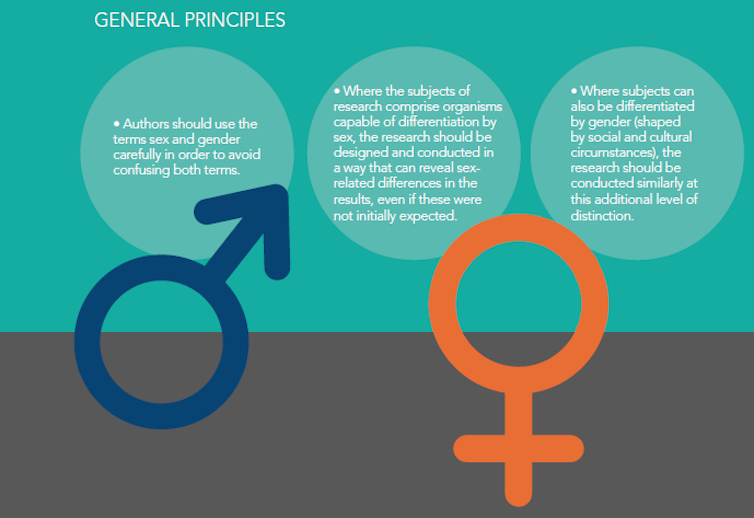
Like in many aspects of life, there remains an undercurrent of sex bias against women in the STEM fields. And this bias has a negative impact on not only women, but men too – and those who don’t fit within a binary category.
Nature journals are now taking a leap for sex and gender equity with new reporting requirements, and it’s a welcome step in the right direction.
I work in the field of bioengineering, and researchers such as myself understand first hand the damage that can be done when sex and gender are not properly accounted for – and reported on – in research.
Nature journals a new policy
Come June, researchers who submit papers to a subset of the Nature Portfolio journals (see details here) will need to describe whether, and how, sex and gender are considered in study design.
If no sex and gender analyses were carried out, authors will need to clarify why. This will apply to work with human participants, as well as other vertebrate animals and cell experimental studies. So in the same way that ethics approval, clinical trials registration, or informed consent must be demonstrated where relevant, so too will consideration of sex and gender.
But what are sex and gender?
“Sex” and “gender” are terms that are often used interchangeably, but they are not the same thing. Sex refers to biological attributes, including genetics and reproductive organs. Gender is shaped by social and cultural influences, and may or may not align with an individual’s biological sex. Both sex and gender can influence our health.
Authors writing for Nature journals will also need to present “data disaggregated by sex and gender” where relevant. This means that rather than the (more often than not) approach of lumping male and female data together, it will need to be separated.
This is a necessary move towards unravelling differences between males and females. Researchers are encouraged to follow the Sex and Gender Equity in Research guidelines when designing research studies.
The Sex and Gender Equity in Research guidelines are a procedure for the reporting of sex and gender information in study design, data analyses and results. SAGER
A lack of sex and gender considerations puts all at risk
Failure to conduct sex and gender-based analysis occurs across a range of disciplines. For example, in the field of engineering, car safety is designed for an average male body. This puts women at higher risk of injuries and death in the event of a crash.
Another example comes with facial recognition technologies, where studies have found error rates for “gender” classification are higher for females than for males (and also higher for darker-skinned people).
But medicine is one of the fields which is arguably most affected by a lack of sex and gender-based reporting.
Consequences can also be dire in medicine, where limited understanding of sex differences in biology and disease can directly impact on health. Our biological sex can make us more likely to suffer from certain diseases. It can make us respond differently to internal factors (such as the drugs we’re taking) or external factors (such as stress). It can even make us feel pain differently.
Large male biases have existed across all phases of medical research. There are many reasons for this. One is that female biology can often complicate things. A woman’s hormones fluctuate monthly and over her lifetime.
Another reason, historically, is protectionism. While it’s almost unbelievable (but true), women of “childbearing potential” were excluded from clinical trials from 1977 until 1993, to protect the “potential unborn” child.
On top of this is simply a lack of awareness, and a historical assumption (although this is finally changing) that what applies to men also applies to women.
Men can be harmed too
Sex-bias in medicine isn’t just putting women’s health at risk; it can also endanger men. For example, osteoporosis is up to four times more common in women. As a result, men are under-screened and under-diagnosed in this area – yet they have a higher chance of complication or death after breaking a bone.
The COVID-19 virus has also been shown to differ between sexes, with males being more likely to require intensive care treatment and having a higher risk of dying. These differences lead to questions around the reason(s) behind this.
What are the underlying sex differences causing this? Is it the immune system? Is it differences in hormones? Much is still unknown.
We must acknowledge the sex and gender gap
A big hurdle in narrowing the gender gap in healthcare is a lack of awareness that such a gap still exists. Sex and gender perspectives in health and biology need to be integrated into all aspects of medicine – from health research to medical education, through to clinical practise. This requires a concerted effort from governments, education systems and industry.
Many initiatives and institutes have been formed around the world to address issues around sex, gender and health, such as Canada’s Institute of Gender and Health. Australia and New Zealand need to align with other countries and implement sex and gender analysis in health and medical research.
And I, for one, echo Nature’s wise words: “Accounting for sex and gender makes for better science.”
Supporters of an Indigenous Voice to Parliament have celebrated the commitment of the new Albanese government to put the issue to a referendum. But is government support enough?
It’s a start, but the road to referendum success is a hard one, as it was always meant to be.
The Constitution was meant to be hard to change
When the Constitution was being written in the 1890s, the initial expectation was that it would be enacted by the British and they would control the enactment of any changes to it, just as they did for Canada.
But the drafters of the Commonwealth Constitution bucked the system by insisting they wanted the power to change the Constitution themselves. They chose the then quite radical method of a referendum, which they borrowed from the Swiss.
While it was radical, because it let the people decide, it was also seen as a conservative mechanism. British constitutional theorist A.V. Dicey described the referendum as “the people’s veto”, because it allowed the “weight of the nation’s common sense” and inertia to block “the fanaticism of reformers”.
The drafters of the Commonwealth Constitution were divided on the issue. Some supported the referendum because it would operate to defeat over-hasty, partisan or ill-considered changes. Others were concerned that change was hard enough already, and voters would have a natural tendency to vote “No” in a referendum because there are always objections and risks that can be raised about any proposal. Fear of the new almost always trumps dissatisfaction with the current system, because people do not want to risk making things worse.
In this sense, the referendum is conservative – not in a party-political sense, but because it favours conserving the status quo.
Another concern, raised by Sir Samuel Griffith, was that constitutions are complex, and a large proportion of voters would not be sufficiently acquainted with the Australian Constitution to vote for its change in an informed way. He favoured using a United States-style of constitutional convention to make changes.
The democrats eventually won and the referendum was chosen. But to satisfy their opponents, they added extra hurdles. To succeed, a referendum has to be approved not only by a majority of voters overall, but also by majorities in a majority of states (currently four out of six states).
The predictions were right. The referendum at the federal level has indeed turned out to be the “people’s veto”. Of 44 referendum questions put to the people, only eight have passed. No successful Commonwealth referendum has been held since 1977. We have not held a Commonwealth referendum at all since 1999.
There are many suggested reasons for this. Some argue that the people have correctly exercised their veto against reforms that were proposed for party-political advantage or to unbalance the federal system by expanding Commonwealth power. If reforms are put because they are in the interests of the politicians, rather than the people, they will fail.
Questions asked in referendums have been poorly formulated and often load too many issues into the one proposed reform. If a voter objects to just one aspect of a proposal, they then vote down the entire reform.
Another argument is that, as Griffith anticipated, the people know little about the Constitution and are not willing to approve changes to it if they are unsure. The mantra “Don’t know – Vote No” was extremely effective during the republic campaign in 1999.
Of course, if you don’t know, you should find out. But the failure to provide proper civics education in schools means most people don’t feel they have an adequate grounding to embark on making that assessment.
Decades of neglect of civics has left us with a population that is insufficiently equipped to fulfil its constitutional role of updating the Constitution.
If people have the slightest uncertainty about what they are saying ‘yes’ to, they will inevitably say ‘no’ – something the republic referendum suffered from in 1999. Rob Griffith/AAP
Vulnerability to scare campaigns
The biggest threat to a successful referendum is the running of a “No” campaign by a major political party, or one or more states, or even a well-funded business or community group.
Scare campaigns are effective even if there is little or no truth behind them. It is enough to plant doubt in the minds of voters to get them to vote “No”. Voters are reluctant to entrench changes in the Constitution if they might have unintended consequences or be interpreted differently in the future, because they know how hard it will be to fix any mistake.
The 1967 referendum was one of the few that were successful. National Gallery of Australia
If a referendum campaign ends up focused on technical issues about the future operation or interpretation of particular amendments, then it is likely lost.
Campaigns tend to be more successful if they focus on principles or outcomes, such as the 1967 referendum concerning Aboriginal people. That referendum had the advantage of not being opposed in the Commonwealth parliament. The consequence was that there was only a “Yes” case distributed to voters, as a “No” case can only be produced by MPs who oppose the referendum bill in parliament.
While recognising these difficulties, perhaps the greatest risk is becoming hostage to the belief the Constitution cannot be changed and referendums will always fail. It will become a self-fulfilling prophecy.
Instead, we need to face constitutional reform as being difficult but achievable and worthwhile. The Constitution should always serve the needs of today’s Australians, rather than the people of the 1890s.
The key elements for success include a widespread will for change, the drive and persistence of proponents, good leadership, sound well-considered proposals and building a broad cross-party consensus. Not every element is necessary, but all are helpful.
As incoming Indigenous Affairs Minister Linda Burney recently noted, there is still a lot of work to be done in building that consensus in relation to Indigenous constitutional recognition, but the work has commenced.
Anne Twomey has previously received funding from the Australian Research Council and sometimes does consultancy work for governments and inter-governmental bodies. She is also a Director of Constitution Education Fund Australia which is concerned with trying to improve civics teaching in schools.
Australia should be concerned about China’s increasingly visible presence in the Pacific Islands. A coercive Chinese presence could substantially constrain Australia’s freedom of movement, with both economic and defence implications.
And Pacific states and people have reason to be concerned. The restrictions on journalists during Chinese Foreign Minister Wang Yi’s visit to Solomon Islands demonstrate the potential consequences for transparency of dealing closely with China.
And there are questions about the implications of the Solomon Islands-China security agreement for democracy and accountability.
But before we work ourselves into a frenzy, it is worth pausing for breath.
The leaked drafts are just that: drafts.
They have not yet been signed by any Pacific state.
At least one Pacific leader, Federated States of Micronesia president David Panuelo, has publicly rejected them. Panuelo’s concerns are likely shared by several other Pacific leaders, suggesting they’re also unlikely to sign.
China wields powerful tools of statecraft – particularly economic – but Pacific states are sovereign. They will ultimately decide the extent of China’s role in the region.
And these drafts do not mention Chinese military bases – nor did the China-Solomon Islands agreement.
Rumours in 2018 China was in talks to build a military base in Vanuatu never eventuated.
What if some Pacific states sign these documents?
First, these documents contain proposals rather than binding obligations.
If they are signed, it’s not clear they will differ in impact from the many others agreed over the last decade. For example, China announced a “strategic partnership” with eight Pacific states in 2014, which had no substantive consequences for Australia.
So common – and often so ineffectual – are “strategic partnerships” and “memoranda of understanding” that there is a satirical podcast series devoted to them.
Second, the drafts contain proposals that may benefit Pacific states.
For example, a China-Pacific Islands free trade area could open valuable opportunities, especially as China is a significant export destination.
Third, the drafts cover several activities in which China is already engaged. For example, China signed a security agreement with Fiji in 2011, and the two states have had a police cooperation relationship since.
It’s worth remembering Australia and New Zealand provide the bulk of policing assistance. The executive director of the Pacific Island Chiefs of Police is even a Kiwi.
The drafts do contain concerning provisions. Cooperation on data networks and “smart” customs systems may raise cybersecurity issues. This is why Australia funded the Coral Sea Cable connecting Solomon Islands and Papua New Guinea to Australia.
Provisions relating to satellite maritime surveillance may cause friction with existing activities supported by Australia and its partners.
Greater Chinese maritime domain awareness of the region – meaning understanding of anything associated with its oceans and waterways – would also raise strategic challenges for Australia, New Zealand, and the US.
But there is a risk of over-egging the implications based on our own anxieties.
China’s interests
Much of China’s diplomacy has been opportunistic and not dissimilar to what Australia and other partners are doing.
Although the region is strategically important to Australia, the southern Pacific islands are marginal to China. And apart from Kiribati and Nauru, the northern Pacific islands are closely linked to the US.
China’s interest may primarily be about demonstrating strategic reach, rather than for specific military purposes.
So, amplifying narratives about China’s threatening presence may unintentionally help China achieve its broader aim of influencing Australia.
And framing China’s presence almost exclusively as threatening may limit Australia’s manoeuvrability.
Given the accelerating frequency of natural disasters in the region due to climate change, it is only a matter of time before the Australian and Chinese militaries find themselves delivering humanitarian relief side-by-side. Being on sufficiently cordial terms to engage in even minimal coordination will be important.
If China really has benign intentions, it should welcome this opportunity. The compact, a mechanism created by Pacific states, could help ensure China’s activities are well-coordinated and targeted alongside those of other partners.
Amplifying threat narratives also feeds into Australia’s perceived need to “compete” by playing whack-a-mole with China, rather than by formulating a coherent, overarching regional policy that responds to the priorities of Pacific states.
There is a risk some Pacific states may overestimate their ability to manage China. But for the time being it is understandable why at least some would entertain Chinese overtures.
New Australian Foreign Minister Penny Wong has rushed to Fiji days into the job with sought-after offers of action on climate change and expanded migration opportunities. Pacific leaders might be wondering what Australia will offer next.
Joanne Wallis receives funding from the Australian Research Council and the Australian Department of Defence.
Maima Koro receives funding from the Australia Department of Defence.
The President of the Federated States of Micronesia says he has serious concerns about the details of two leaked Chinese government documents to be tabled at a meeting next week.
President David Panuelo warns the sovereignty of the Pacific Island countries is at stake, and that the outcome of one of the documents could result in a cold war or even a world war.
Panuelo has written to 18 Pacific leaders — including New Zealand, Australia, and the Secretary-General of the Pacific Islands Forum — specifically about the China-Pacific Island Countries Common Development Vision.
The other document is a five-year plan to implement the outcomes into action.
In his letter he said the Common Development Vision and Monday’s meeting was a “smokescreen” for a larger agenda, and further warned that China was looking to exert more control over Pacific nations’ sovereignty and that this document threatened to bring at the very least a new Cold War era but in the worst-case scenario, a world war.
He has urged leaders in the region to look at it carefully before making any decisions.
In particular, Panuelo noted that the Vision sought to “fundamentally alter what used to be bilateral relations with China into multilateral issues”.
Ensuring ‘Chinese control’ The Vision he added sought to “… ensure Chinese control of ‘traditional and non-traditional security” of our islands, including through law enforcement training, supplying, and joint enforcement efforts, which can be used for the protection of Chinese assets and citizens.
It suggests “cooperation on network and governance” and “cybersecurity” and “equal emphasis on development and security”, and that there shall be “economic development and protection of national security and public interests”.
“The Common Development Vision seeks to ensure Chinese influence in government through ‘collaborative’ policy planning and political exchanges, including diplomatic training, in addition to an increase in Chinese media relationships in the Pacific …,” he said.
“The Common Development Vision seeks Chinese control and ownership of our communications infrastructure, as well as customs and quarantine infrastructure …. for the purpose of biodata collection and mass surveillance of those residing in, entering, and leaving our islands, ostensibly to occur in part through cybersecurity partnership.”
The Vision he said “… seeks Chinese control of our collective fisheries and extractive resource sectors, including free trade agreements, marine spatial planning, deep-sea mining, and extensive public and private sector loan-taking through the Belt and Road Initiative via the Asian Infrastructure Investment Bank.”
Panuelo said the proposed China-Pacific leaders meeting on Monday in Fiji was intended to “shift those of us with diplomatic relations with China very closely into Beijing’s orbit, intrinsically tying the whole of our countries and societies to them.
“The practical impacts, however, of Chinese control over our communications infrastructure, our ocean territory and the resources within them, and our security space, aside from impacts on our sovereignty is that it increases the chances of China getting into conflict with Australia, Japan, the United States, and New Zealand, on the day when Beijing decides to invade Taiwan.
China’s goal – ‘take Taiwan’ “To be clear, that’s China’s goal: to take Taiwan. Peacefully, if possible; through war, if necessary.”
Panuelo said the FSM would attend Monday’s meeting and would reject both documents “on the premise that we believe the proposed agreement needlessly heightens geopolitical tensions, and that the agreement threatens regional stability and security, including both my country’s Great Friendship with China and my country’s Enduring Partnership with the United States.”
He said the Vision and meeting were a “smokescreen for a larger agenda”.
“Despite our ceaseless and accurate howls that Climate Change represents the single-most existential security threat to our islands, the Common Development Vision threatens to bring a new Cold war era at best, and a World War at worst.”
He said the only way to maintain the relationship with Beijing was to focus exclusively on economic and technical cooperation.
Panuelo hoped that by alerting his Pacific colleagues of developments that “… we can collectively take the steps necessary to prevent any intensified conflict, and possible breakout of war, from ever happening in the first place”.
“I believe that Australia needs to take climate change more seriously and urgently. I believe that the United States should have a diplomatic presence in all sovereign Pacific Islands Countries, and step-up its assistance to all islands, to include its own states and territories in the Pacific.”
Not a justification Panuelo summed up: “However, it is my view that the shortcomings of our allies are not a justification for condemning the leaders who succeed us in having to accept a war that we failed to recognise was coming and failed to prevent from occurring.
“We can only reassert the rightful focus on climate change as our region’s most existential threat by taking every single possible action to promote peace and harmony across our Blue Pacific Continent.”
Panuelo said his cabinet has suggested the FSM resist the objectives of the documents and the nation maintain its own bilateral agenda for development and engagement with China.
He also said the documents would open up Pacific countries to having phone calls and emails intercepted and overheard.
China’s Foreign Minister Wang Yi is currently visiting several Pacific countries.
This article is republished under a community partnership agreement with RNZ.
New Zealand Prime Minister Jacinda Ardern has delivered the highly regarded Harvard Commencement address, calling out social media as a threat to modern day democracy.
She was also awarded an honorary doctorate from the university.
The Commencement is steeped in history with Ardern’s predecessors including Winston Churchill, JFK, Angela Merkel — and topically for today’s speech — Facebook founder Mark Zuckerberg.
She invoked the memory of the late Benazir Bhutto, the first woman to head a democratic government in a Muslim country, and to give birth while in office with Ardern being the second.
Seven months after the two women met Bhutto was assassinated, Ardern said.
‘Path carved still relevant’ “The path she carved as a woman feels as relevant today as it was decades ago, and so too is the message she shared here.
“She said part way through her speech in 1989 the following: ‘We must realise that democracy… can be fragile’.
“… while the reasons that gave rise for her words then were vastly different, they still ring true. Democracy can be fragile.”
Ardern told her audience of thousands that because of the speed of social media, disinformation is creating an ever increasing risk.
Watch the address
The Harvard Commencement address. Video: RNZ News
“Social media platforms were born offering the promise of connection and reconnection. We logged on in our billions, forming tribes and subtribes.”
While it started as a place to experience “new ways of thinking and to celebrate our difference” it was now often used for neither of those things, she said.
However, just two days after the massacre in a school in Texas that saw 19 students and two teachers killed, the biggest response she got from the audience was when she referred to changes to firearms law.
Standing ovation over guns stance She received a standing ovation when she said the government had succeeded in banning military style semi-automatics and assault rifles, in the wake of the Christchurch mosque attacks.
Outside Harvard University in Boston on the day that Prime Minister Jacinda Ardern received an honorary doctorate. Image: Kris Snibbe/Harvard Gazette
“On the 15th of March 2019, 51 people were killed in a terrorist attack on two mosques in Christchurch, New Zealand. The entire brutal act was livestreamed on social media. The royal commission that followed found that the terrorist responsible was radicalised online,” she said.
“In the aftermath of New Zealand’s experience, we felt a sense of responsibility. We knew we needed significant gun reform, and so that is what we did.”
She went on to say that if genuine solutions were to be found to the issue of violent extremism online, “it would take government, civil society and the tech companies themselves to change the landscape. The result was the Christchurch Call to Action.
“And while much has changed as a result, important things haven’t.”
Ardern called on social media companies to recognise their power and act on it and acknowledge the role they play in shaping online environments.
“That algorithmic processes make choices and decisions for us — what we see and where we are directed — and that at best this means the user experience is personalised and at worst it means it can be radicalised.
‘Pressing and urgent need’ “It means, that there is a pressing and urgent need for responsible algorithm development and deployment.”
She said the forums were available for the tech companies to work alongside society and governments to find solutions to the issues.
She encouraged her audience to realise that their individual actions were also important.
“In a disinformation age, we need to learn to analyse and critique information. That doesn’t mean teaching ‘mistrust’, but rather as my old history teacher, Mr Fountain extolled: ‘to understand the limitations of a single piece of information, and that there is always a range of perspectives on events and decisions’.”
While the prime minister’s US trip was planned around the Harvard Commencement, there is a trade and tourism focus, but also a chance to check in with some of the tech giants at whom she delivered her message, in particular around the Christchurch Call, during the next few days.
This article is republished under a community partnership agreement with RNZ.
Jacinda Ardern has received an honorary law doctorate from Harvard University. Image: Kris Snibbe/Harvard Gazette
When a new coronavirus emerged from nature in 2019, it changed the world. But COVID-19 won’t be the last disease to jump across from the shrinking wild. Just this weekend, it was announced that Australia, is no longer an onlooker, as Canada, the US and European countries scramble to contain monkeypox, a less dangerous relative of the feared smallpox virus we were able to eradicate at great cost.
As we push nature to the fringes, we make the world less safe for both humans and animals. That’s because environmental destruction forces animals carrying viruses closer to us, or us to them. And when an infectious disease like COVID does jump across, it can easily pose a global health threat given our deeply interconnected world, the ease of travel and our dense and growing cities.
We can no longer ignore that humans are part of the environment, not separate to it. Our health is inextricably linked to the health of animals and the environment. This will not be the last pandemic.
To be better prepared for the next spillover of viruses from animals, we must focus on the connections between human, environmental and animal health. This is known as the One Health approach, endorsed by the World Health Organization and many others.
We believe artificial intelligence can help us better understand this web of connection, and teach us how to keep life in balance.
We have pushed nature back to the fringes in many parts of the world. Shutterstocik
How can AI help us ward off new pandemics?
Fully 60% of all infectious diseases affecting humans are zoonoses, meaning they came from animals. That includes the lethal Ebola virus, which came from primates, swine flu, from pigs, and the novel coronavirus, most likely from bats. It’s also possible for humans to give animals our diseases, with recent research suggesting transmission of COVID-19 from humans to cats as well as deer.
Early warning of new zoonoses is vital, if we are to be able to tackle viral spillover before it becomes a pandemic. Pandemics such as swine flu (influenza H1N1) and COVID-19 have shown us the enormous potential of AI-enabled prediction and disease surveillance. In the case of monkeypox, the virus has already been circulating in African countries, but has now made the leap internationally.
What does this look like? Think of collecting and analysing real-time data on infection rates. In fact, AI was used to first flag the novel coronavirus as it was becoming a pandemic, with work done by AI company Bluedot and HealthMap at Boston Children’s Hospital.
How? By tracking vast flows of data in ways humans simply cannot do. Healthmap, for instance, uses natural language processing and machine learning to analyse data from government reports, social media, news sites, and other online sources to track the global spread of outbreaks.
We can also use AI to mine social media data to understand where and when the next COVID surge will occur. Other researchers are using AI to examine the genomic sequences of viruses infecting animals in order to predict whether they could potentially jump from their animal hosts into humans.
As climate change alters the earth’s systems, it is also changing the ways disease spreads and their distributions. Here, too, AI can be put to use in new surveillance methods.
Climate change is changing where diseases occur. Getty
Better conservation through AI
There are clear links between our destruction of the environment and the emergence of new infectious diseases and zoonotic spillovers. That means protecting and conserving nature also helps our health. By keeping ecosystems healthy and intact, we can prevent future disease outbreaks.
In conservation, too, AI can help. For instance, Wildbook uses computer-vision algorithms to detect individual animals in images, and track them over time. This allows researchers to produce better estimates of population sizes.
Trashing the environment by deforestation or illegal mining can also be spotted by AI, such as through the Trends.Earth project, which monitors satellite imagery and earth observation data for signs of unwelcome change.
Citizen scientists can pitch in as well by helping train machine learning algorithms to get better at identifying endangered plants and animals on platforms like Zooniverse.
AI for the natural world as well as humans
Researchers are beginning to consider the ethics of AI research on animals. If AI is used carelessly, we could actually see worse outcomes for domestic and wild animal species, for example, animal tracking data can be prone to errors if not double-checked by humans on the ground, or even hacked by poachers.
AI is ethically blind. Unless we take steps to embed values into this software, we could end up with a machine which replicates existing biases. For instance, if there are existing inequalities in human access to water resources, these could easily be recreated in AI tools which would maintain this unfairness. That’s why organisations such as the AINowInstitute are focusing on bias and environmental justice in AI.
In 2019, the EU released ethical guidelines for trustworthy AI. The goal was to ensure AI tools are transparent and prioritise human agency and environmental health.
AI tools have real potential to help us tackle the next pandemic by keeping tabs on viruses and helping us keep nature intact. But for this to happen, we will have to widen AI outwards, away from the human-centredness of most AI tools, towards embracing the fullness of the environment we live in and share with other species.
We should do this while embedding our AI tools with principles of transparency, equity and protection of rights for all.
Patty Kostkova receives funding from UKRI
Andreea Molnar, Ann Borda, and Cristina Neesham do not work for, consult, own shares in or receive funding from any company or organisation that would benefit from this article, and have disclosed no relevant affiliations beyond their academic appointment.
Many of us are considering a long-delayed overseas trip. However, despite what our politicians are telling us, the pandemic is not over yet, and there is always the risk you could catch COVID on holiday or just before you depart.
So, here are a few general tips about what you should do to maximise the chance of a safe and enjoyable holiday, and a quick look at the COVID situation in four popular holiday destinations.
First and foremost, make sure you are fully vaccinated – that’s three doses for most people, and four for the over-65s and some vulnerable groups. Two doses are better than nothing, but not good enough against the Omicron variant.
Health insurance
Several insurance companies will cover you against a COVID infection just before you are due to travel, or while you are travelling. Travel insurance is not only advised, it is mandatory in countries such as Fiji and Indonesia.
On the plane
Planes are quite safe since the air gets filtered through HEPA filters. However, you could be very unlucky and have someone sitting close to you who is infectious. So, the best bet is to wear a face mask when not eating and drinking.
Planes are fairly safe environments due to the HEPA filters. Shutterstock
Take alcohol wipes with you and give your tray, seat belt, controller for the entertainment and inside of seat pockets a good wipe down.
When thinking about your destination and the COVID cases there, it’s also important to compare this to the situation in Australia.
Australia’s current cases (seven-day moving average, per million of population) are 1,684 per day, and deaths (seven-day moving average, per ten million of population) are 19.8 per day. Some 84% of the Australian population have completed the initial vaccination schedule.
In terms of how much COVID is around, Fiji is doing quite well. Average daily case numbers are 13.6 per million, tiny compared with the Australian rate. The daily death rate per ten million population is zero.
Current vaccines available are AstraZeneca and Moderna, and 70% of Fijians have completed the initial vaccination schedule. There appear to be few current public health regulations. Face masks are optional, and social distancing requirements aren’t being enforced.
Given the very low case numbers at the moment, I don’t think this is a major issue. But if you are older or at risk because of health problems, I would still wear a face mask indoors.
Health care in Fiji is not up to Australian standards, especially in government-run hospitals. Private hospitals are better, but if you get seriously ill, you’d be better off being medivaced to Australia or New Zealand.
Case numbers in Fiji are quite low. Shutterstock
Bali
Indonesia is also doing quite well with daily cases at 0.98 per million and a death rate of 0.3 per ten million population. However, these data might be under-reported.
Current vaccines available are Zifivax, Covovax, Moderna, Pfizer, Convidecia, Sputnik V, Johnson & Johnson, AstraZeneca, KCONVAC, Covilo, and CoronaVac. Covovax is from India, Sputnik V from Russia, and the remaining ones you may not have heard of are from China. There have been some queries about the effectiveness of some Chinese vaccines.
Some 60% of Indonesians have completed the initial vaccination schedule, however, this is likely to be higher in Bali.
Wearing a face mask indoors (for example, in shops) is mandatory, and some social distancing and mandatory QR code scanning are in force. Face masks are not required while sitting in a restaurant.
Like Fiji, hospitals in Bali are generally not up to Western standards, although private ones are better than public hospitals. If you get seriously ill, getting medivaced to Australia is probably the best way to go.
New Zealand
Across the ditch, the COVID situation is similar to Australia, with 1,399 cases per day per million population, and 23.4 deaths per ten million population.
Vaccines authorised are AstraZeneca, Pfizer, Johnson & Johnson and Novavax. The rate of vaccination is also very similar to Australia with 80% having completed the initial vaccination schedule.
New Zealand is a bit more sensible than Australia, retaining face mask mandates in retail settings and public spaces such as museums.
The New Zealand health-care system is not quite up to Australia’s level, but good enough that you don’t have to worry if you have to be hospitalised. The good news is Australia has a reciprocal arrangement with New Zealand so there are no costs if you are admitted to a public hospital.
The United Kingdom
All public health measures have been removed in the UK.
Reported case numbers are not as dire as Australia and New Zealand, with average daily case numbers at 120 per million population. However, COVID tests are no longer free for most people. While people can buy their own rapid antigen tests, these can’t be logged on the government website. Only those with underlying health conditions can get a free test and must report the results. This means the reported case numbers are likely a big underestimate. This would, in part, explain the UK’s current daily death rate of 12.4 per ten million population.
Interestingly, just about everyone in the UK has antibodies against SARS-CoV-2, the virus that causes COVID. Some 73% of the UK population has completed the initial vaccination schedule, considerably lower than Australia.
In terms of quality, the UK health system is somewhere between Australia and New Zealand. Like New Zealand, Australia has a reciprocal health-care arrangement with free treatment in UK public hospitals.
In a nutshell
While Bali and Fiji don’t have much COVID around, their health systems are not as good if you are unlucky enough to get very sick. You’ll be more likely to catch COVID in the UK or New Zealand, but they have good health services if you do.
As for me, I’m masking up and staying in Australia for the next few months!
Adrian Esterman does not work for, consult, own shares in or receive funding from any company or organisation that would benefit from this article, and has disclosed no relevant affiliations beyond their academic appointment.
Pacific journalists must be allowed to do their jobs, says the head of journalism at the University of the South Pacific, Dr Shailendra Singh.
Pacific journalists have raised concerns about access and secrecy surrounding the tour of the Pacific by China’s Foreign Minister Wang Yi and a high-level delegation.
Dr Singh has called for a defence of media freedom in the Pacific and more support from governments in the region for Pacific journalism.
He told The Pacific Newsroom the state of the media in the Pacific was not just a national issue but a regional concern.
“We have two different systems here. China has a different political system – a totalitarian system, and in the Pacific we have a democratic system,” he said.
“And that is how our media is also configured. Anyone is free to comment about what is happening in other countries.”
Dr Singh is currently attached with the Australian National University (ANU) on a research fellowship.
Sue Ahearn is founding editor and publisher of The Pacific Newsroom.
New Zealand Parliament Buildings, Wellington, New Zealand.
Analysis by Dr Bryce Edwards.
Political Roundup: Major shakeup of electoral rules could be coming
Political scientist, Dr Bryce Edwards.
Get ready for a big debate on how to improve democracy in New Zealand. On Tuesday, Justice Minister Kris Faafoi announced the review panel that will oversee a once-in-a-generation overhaul of electoral rules, including how political parties are funded. The announcement contained details of some significant changes to elections and Parliament to be considered.
The review is welcome news, as there is significant room for improvement in how New Zealand politics works. And the Minister’s reform process looks fairly sensible.
As well as dealing with the crucial issue of money in politics, the new review will consider other highly contentious electoral issues: lowering the voting age, reducing the 5% MMP threshold, abolishing the coat-tailing rule, lengthening the parliamentary term, and increasing the ability to move on and off the Māori electoral roll.
It’s easy to be sceptical about the possibility of real reform – there have been numerous reviews of elections and rules over the years that haven’t resulted in any change. But it looks like Faafoi has listened to criticisms and come up with something more robust.
There are now essentially two stages to Faafoi’s review – step one is currently looking at some targeted changes to electoral finance rules, and these are due to be put in the place this year, in time for next year’s election. This first step may end up just being tinkering. It’s the second step that will be much more sweeping in focus, allowing for the possibility of major reform.
The independent review panel of six has also been announced. The chair is lawyer Deborah Hart, and it includes Māori academic Maria Bargh, electoral law expert Andrew Geddis, law student and disability advocate Alice Mander, former Chief Electoral Officer Robert Peden, and political scientist Lara Greaves.
Faafoi says the panel was picked in consultation with the leaders of other parties in Parliament. Even so, there has been some grumbling about the group not being very politically diverse. National-aligned blogger Liam Hehir argued yesterday that although they “all seem like pretty talented and credentialed people… it seems to be a fairly left-wing group” that “falls pretty squarely within the comfort zone of the Labour Party.” He believes that, although each panel member obviously has their own integrity, it will be hard for some individuals not to be influenced by the Government’s agenda.
Such criticisms will likely only help push panel members to further assert their independence and make sure they properly engage with all sorts of stakeholders in coming up with their recommendations.
It’s this issue of public engagement that the Government has, so far, been very weak on in terms of their electoral reform agenda. For example, for the first stage of reforms Faafoi released a set of proposals for change, and only gave the public a few weeks over the summer break to provide feedback, suggesting they were not actually very interested in consultation.
The Greens have been the biggest critics of the Government’s reform programme, with justice spokesperson Golriz Ghahraman hitting out yesterday, saying there had already been enough reviews and it was time for the Government to just implement previous recommendations.
She suggested the Government was stalling on reform, and advocated Labour simply support her private members bill which sought to implement a large number of changes, including the 2012 recommendations of the Electoral Commission. Ghahraman said: “Those matters should now be acted upon, and this new working group should look at other things… we wouldn’t want it to be used as a delay tactic.”
However, many of the reforms that Ghahraman’s private members bill champions are highly contentious, and all require much more debate and discussion. The Government’s review seems the most sensible way forward for these, rather than just pushing major constitutional changes through the debating chamber as the Greens suggest.
What’s more, although the Government’s review panel will certainly take time – it could be that any new reforms are only passed in time for the 2029 election – there is no doubt the panel will be moving quite fast, and potentially too fast. Major constitutional reform should be done slowly with maximum public debate. According to the detail of the new reforms, the panel’s timeframes are fairly urgent: they will release a potential range of reform options by November this year, their draft recommendations will be put to the public by May next year, and their final report will come out in November next year.
Some might see the reform area as too narrow. And there certainly are areas that the review isn’t allowed to look at – such as the size of the Parliament – which clearly should be on the agenda. But all the other issues under the microscope provide for the possibility of quite radical change.
There will be an obvious temptation for the media and public to focus on the contentious issue of lowering the voting age, but the other areas are also truly huge.
For example, the review will look at the rules around political party advertising, with some big changes expected, including a shakeup of the allocation of broadcasting monies to the parties, a repeal of the ban on election day advertising, and new rules for social media use by politicians. Likewise, big changes could occur in protecting the country from foreign influence, and for how the state deals with politicians who may have broken the political finance rules.
But along with issues like fixing money in politics, the review will grapple with the major issue of whether our system of MMP should continue with the current five per cent threshold, which keeps minor parties from growing and getting into Parliament. The review panel are likely to advocate that it is reduced to something like three per cent, or perhaps even abolish it entirely – something that would make the system more democratic. Such a change would be truly consequential, and it’s a very good example of why the public needs to take this new review very seriously, and engage with it. Let the debate on how to improve democracy begin.
How fast is evolution? In adaptive evolution, natural selection causes genetic changes in traits that favour the survival and reproduction of individual organisms.
However, it is still hard to tell how fast adaptive evolution is currently occurring. We also don’t know whether it has a hand in the fate of populations challenged by environmental change.
To measure the speed of adaptive evolution in the wild, we studied 19 populations of birds and mammals over several decades. We found they were evolving at twice to four times the speed suggested by earlier work. This shows adaptive evolution may play an important role in how the traits and populations of wild animals change over relatively short periods of time.
The tools of the evolutionary biologist: maths and binoculars
How do we measure how fast adaptive evolution is occurring? According to the “fundamental theorem of natural selection”, the amount of genetic difference in “fitness” to survive and reproduce among individuals across a population also corresponds to the population’s rate of adaptive evolution.
The “fundamental theorem” has been known for 90 years, but it has been difficult to apply in practice. Attempts to use the theorem in wild populations have been rare, and are plagued by statistical problems.
We studied adaptive evolution in several species, including the superb fairy-wren, hihi, song sparrow, blue tit, rhesus macaque, yellow baboon, snow vole and spotted hyena. Timothée Bonnet, Geoff Beals, Pirmin Nietlisbach, Ashley Latimer, Lauren Brent, Fernando Campos, Oliver Höner, Author provided
We worked with 27 research institutions to assemble data from 19 wild populations that have been monitored for long periods of time, some since the 1950s. Generations of researchers collected information about the birth, mating, reproduction and death of each individual in these populations.
Together, those data represent around 250,000 animals and 2.6 million hours of field work. The investment may look outrageous, but the data have already been used in thousands of scientific studies and will be used again.
Statistics to the rescue
We then used quantitative genetic models to apply the “fundamental theorem” to each population. Instead of keeping track of changes in every gene, quantitative genetics uses statistics to capture the net effect emerging from changes in thousands of genes.
We also developed a new statistical method that fits the data better than previous models. Our method captures two key properties of how survival and reproduction are unevenly distributed across populations in the wild.
First, most individuals die before breeding, meaning there are a lot of entries in the “zero offspring” column of the lifetime reproduction record.
Second, whereas most breeders have only a few offspring, some have a disproportionately high number, leading to an asymmetric distribution.
The rate of evolution
Among our 19 populations, we found that, on average, genetic change in response to selection was responsible for an 18.5% increase per generation in the ability of individuals to survive and reproduce.
This means offspring are on average 18.5% “better” than their parents. To put it another way, an average population could survive an 18.5% deterioration in the quality of its environment. (This may change if genetic response to selection is not the only force at play; more on that below.)
Given these rates, we found adaptive evolution could explain most recent changes in wild animal traits (such as size or reproductive timing). Other mechanisms are important too, but this is strong evidence evolution should be considered alongside other explanations.
An exciting result for an uncertain future
What does this mean for the future? At a time when natural environments are changing dramatically all over the world, due to climate change and other forces, will evolution help animals adapt?
Unfortunately, that is where things get tricky. Our research estimated only genetic changes due to natural selection, but in the context of climate change there are other forces at play.
First, there are other evolutionary forces (such as mutations, random chance and migration).
Second, the environmental change itself is likely a more important driver of population demographics than genetic change. If the environment keeps deteriorating, theory tells us that adaptive evolution will generally be unable to fully compensate.
Finally, adaptive evolution can itself change the environment experienced by future generations. In particular, when individuals compete with each other for a resource (such as food, territory or mates), any genetic improvement will lead to more competition in the population.
Our work alone is insufficient to draw predictions. However, it shows that evolution cannot be discounted if we want to accurately predict the near future of animal populations.
Despite the practical challenges, we are thrilled to witness Darwinian evolution, a process once thought exceedingly slow, acting observably in our lifetimes.
Timothée Bonnet receives funding from Australian Research Council.
Source: The Conversation (Au and NZ) – By Thea van de Mortel, Professor, Nursing and Deputy Head (Learning & Teaching), School of Nursing and Midwifery, Griffith University
As we head into winter, you may have a sniffly child under two years old at home. Is it just a cold? Or could it be COVID?
You may be tempted to reach into the cupboard for a rapid antigen test to find out. But some manufacturers say their COVID tests aren’t suitable for children under two.
Can you use a test intended for adults or older children? How do you test a wriggling or grumpy small child anyway? We’re infection control and child health researchers. Here are our tips.
Of the 47 different rapid antigen tests authorised for home use in Australia at the time of writing, most (57%) state they are not suitable for children under two. This leaves 20 tests that are.
You can check the list on the Therapeutic Goods Administration (TGA) website to see if the test you have at home is one of them.
Just because a test isn’t approved for a particular age doesn’t necessarily mean it doesn’t work at all. It usually means the test has not been tested, or its use determined, for that age. But try to use a test approved for under twos if you can.
However, rapid antigen tests are generally not as accurate in children as they are in adults. They are:
highly specific – rapid antigen tests for children have high specificity. This means if the test is done correctly, it is unlikely to say your child is positive if it is not
but not as sensitive – rapid antigen tests are less sensitive in children than adults. In other words, they’re not as good at detecting if a child has COVID. But tests are more likely to correctly detect COVID if the child has symptoms.
Of the 20 tests approved for use in under twos, 16 use nasal swabs and four sample saliva.
The accuracy of different sampling methods in children differs by viral variant. While it was once thought nasal swabs were more accurate in children, this may not necessarily be the case with the Omicron variant.
There’s preliminary evidence, which has yet to be independently verified, saliva swabs may be better able to detect Omicron. So we’ll see how the evidence develops.
Tests that use nasal swabs may be more accurate. But that may depend on the viral variant. Shutterstock
Taking a saliva sample may not be as straightforward as you think.
Depending on the test, your child may need to cough (several times, on demand) and spit into a tube. Or after you swab your child’s tongue and mouth, your child will need to keep the spongy tip of the swab in their mouth for a few minutes, without sucking or biting it. So getting an under two-year-old to cooperate is unlikely.
If you do go down this route you can use a tongue depressor to flatten the tongue to take the sample. You can buy these from a pharmacy.
But with a bit of preparation (and an extra pair of hands) you should be able to use a nasal test on a young child. You should be able to do this without causing pain or distress, a common worry for parents considering COVID testing their child.
Understand what the COVID test involves and plan to have the resources you need.
As you take the test components out of the packet, remember to keep them out of reach of your child. The chemicals can be toxic if swallowed, or can cause skin and eye irritation. Parents should also ensure small children don’t swallow test components, such as small bits of plastic.
Holding a favourite toy or blanket may help your child relax. Shutterstock
It’s also helpful to have two adults: one to perform the test and the other to hold and support the child.
Distraction helps take your child’s mind off the test by concentrating on something more pleasurable. Young children can be easily distracted by listening to a favourite song. So have a song ready on your phone.
For toddlers, it can help to have another adult to provide more engaging distraction such as watching a video on a phone or tablet, or switching on a light-up toy.
Holding a favourite toy or blanket may also help your child relax.
How do I actually take the sample?
One adult can use a secure hugging hold to reduce movement during the test while the other adult takes the sample.
The adult holding the child sits the child upright on their lap and holds them close to make them feel secure. They cross one arm across the child’s body and place the other hand on the child’s forehead.
If you’re testing the child by yourself, you can wrap them in a blanket to hold them still while you take the sample.
Staying calm yourself communicates to your child they are safe. Maintain a steady voice and breathe calmly during the test.
Slowly insert the tip of the swab inside the nose for about 1cm or until you meet resistance. Angle it along the base of the inside of the nose horizontally rather than pointing it upwards as you insert it (go low).
There is at least one nasal test that provides a smaller swab for young children so check the TGA site if you wish to use it.
Children’s memories of medical tests can influence how they respond next time. So, as your young child may need another rapid antigen test in the future, finish on a positive note.
Play with your child after the test and provide positive reinforcement. Give your toddler a simple reward, such as a stamp or sticker.
If the test is unsuccessful, give your child a chance to recover before trying again.
However, if you feel anxious about performing the test, or repeating it, seek the support of a health professional. Every test should be the best possible experience for your child to avoid unnecessary distress.
Thea van de Mortel teaches into the Graduate Infection Prevention and Control program at Griffith University.
Karin Plummer does not work for, consult, own shares in or receive funding from any company or organisation that would benefit from this article, and has disclosed no relevant affiliations beyond their academic appointment.
Source: The Conversation (Au and NZ) – By Jonathan Pickering, Assistant Professor, Canberra School of Politics, Economics and Society, University of Canberra
For much of the past three decades, Australia has been viewed internationally as a laggard on climate change – and with good reason.
Australia was the last of the G20 economies that ratified the Kyoto Protocol and the first to dismantle a national carbon pricing scheme, and often sits near the bottom on global rankings of climate action.
In his first encounter with world leaders at the Quad meeting in Japan earlier this week, Australia’s new Prime Minister Anthony Albanese announced that the country was ready to take ambitious action on climate change.
But how well does this claim hold up? Will an Albanese government repair Australia’s tattered international reputation on climate change, and its strained relationships with the United States, the European Union, the United Kingdom and Pacific Island countries over this issue?
The Albanese government has taken crucial steps this week to mend Australia’s international standing on climate change. But Labor’s insistence on maintaining a booming coal export industry will hamper its comeback, and questions remain about whether it will do enough to boost funding for climate action internationally.
Climate looms large in Albanese’s first week
In their first week in office Albanese and Foreign Minister Penny Wong have placed climate change diplomacy firmly on the agenda.
In Albanese’s opening address to Quad partners – India, the United States and Japan – he stressed the importance of tackling climate change for national security, saying it will build “a stronger and more resilient Indo-Pacific region”.
Wong has travelled to Fiji in the government’s first efforts to pick up the pieces of Australia’s fraught relationship with Pacific Island nations, pledging to boost development assistance to the region already hit hard by climate change impacts.
Pressure at home and abroad to lift targets
Arguably the most prominent step towards redeeming Australia’s standing on climate change is boosting its national emissions reduction targets.
The Coalition’s climate target was to reduce emissions 26-28% compared to 2005 levels – the same target it had in 2015. This was widely viewed at home and overseas as an insufficient contribution to the Paris Agreement goal of limiting global warming to well below 2℃.
Labor’s pledge to boost the 2030 target to a 43% reduction is a significant improvement. But it still falls short of the 45% target it took to the 2016 and 2019 elections, and is far less ambitious than those proposed by the Greens and teal independents.
Even if Labor gains a majority in the House of Representatives, it won’t have a majority in the Senate. While this gives crossbenchers an opportunity to exert upward pressure on Australia’s climate performance, incoming Climate Change and Energy Minister Chris Bowen has ruled out lifting the 2030 target.
The crossbenchers will need to pick their battles. In the short term, they may have more success negotiating measures that will help Australia to beat its existing 2030 target, rather than formally set a new one.
As the impacts of climate change intensify and the global race towards renewables accelerates, domestic and international pressure on Australia’s targets will only increase.
Countries are due to announce their next round of contributions to the Paris Agreement’s goals by 2025. In the interim, Labor and the crossbenchers will need to lay the groundwork for a higher target for 2035 or 2040.
Keeping coal alive
Australia’s climate policy record will remain vulnerable on a number of fronts, perhaps most glaringly as one of the world’s top fossil fuel exporters.
At last year’s UN climate summit, Australia refused to join a coalition of countries aiming to phase out coal. While Labor’s energy policy, Powering Australia, seeks to reduce Australia’s reliance on coal, it does not commit to a phase-out.
Albanese has envisaged that coal exports could stretch beyond 2050 and has supported opening new coal mines. This is out of step with the Intergovernmental Panel on Climate Change’s latest report, which finds keeping temperature rise to 2℃ or below will require “cancellation of new coal power projects and accelerated retirement of existing coal plants”.
While coal remains, for now, an important feature of Australia’s trade relations with major economies in Asia, it will increasingly become a liability, especially now that all of Australia’s ten major trading partners have net zero targets.
Beyond coal, there’s much Australia could do to expand or revive partnerships with other industrialised economies on areas of innovation, such as green hydrogen and clean energy supply chains.
Funding international action
Also important is how Australia supports lower-income countries to reduce their emissions and adapt to climate change impacts.
Following drastic cuts to aid under the Abbott government, Australia’s international climate finance has gradually risen again, with Australia pledging A$2 billion from 2020-25. However, this pledge falls well below Australia’s fair share.
The Morrison government decided not to make any further contributions to the UN’s flagship Green Climate Fund, which aims to finance emissions reductions and climate resilience in developing countries.
The fund has attracted around US$20 billion in pledges to date, with France, Germany, Japan and the United Kingdom the largest contributors (Australia pledged A$200 million in 2014).
Labor has promised to boost Australia’s aid budget to reach 0.5% of Gross National Income over time (it currently sits at about 0.2%) and launch a partnership to finance climate-resilient infrastructure in the Pacific. But it did not commit in this campaign to return to the Green Climate Fund.
A new climate diplomacy?
A final key element in resuscitating Australia’s global profile is re-engaging constructively in UN climate talks.
Labor’s plan to reinstate the position of Ambassador for Climate Change is a positive step. The government will also seek to host the annual UN climate conference in 2024 in Australia for the first time.
Hosting such an event in partnership with Pacific neighbours would send a high-profile message to the international community that Australia is back in the game.
Still, there’s a cautionary tale from past UN conferences, where some hosts (such as Poland in 2018) have used the occasion to showcase their ongoing reliance on fossil fuels.
Overall then, a change of government offers hope Australia will be regarded globally as a more enthusiastic partner on climate change. But as long as Australia remains a major exporter of fossil fuels, its claims to become a “renewable energy superpower” will come with a catch.
Jonathan Pickering receives funding from the Swedish Research Council for Sustainable Development (Formas) for a research project on national policies on climate change and sustainable development. He previously worked in a postdoctoral research position funded by the Australian Research Council. He is a Scientific Steering Committee member of the Earth System Governance Project research network.
Revisions to the Australian primary school curriculum for geography mean children will learn much less about the world and its diversity than they do at present. They will learn nothing about some significant concepts such as climate.
The Australian Curriculum, Assessment and Reporting Authority (ACARA) launched the new version of the Australian Curriculum on May 9. ACARA described it as “a more stripped-back and teachable curriculum that identifies the essential content our children should learn”.
Overall, the new curriculum reduces the number of content descriptions by 21%. These are statements that describe what teachers should teach and what students should learn. In primary school geography, however, 50% of the content descriptions in the Knowledge and Understanding strand have been deleted or had content reduced.
The education ministers of the governments of Australia pressured ACARA to further reduce the content in the primary school humanities and social science learning areas. What is this knowledge that they have decided is no longer essential for our children to learn?
The previous curriculum had a sequence of content descriptions that gave students some knowledge of the world beyond Australia. The following have been deleted:
the division of the world into hemispheres, continents and oceans (in year 2)
the main climate types of the world and the similarities and differences between the climates of different places (in year 3)
a brief study of the continents and countries of Africa and South America (in year 4), and Europe and North America (in year 5)
differences in the economic, demographic and social characteristics of countries across the world (in year 6).
the world’s cultural diversity, including that of its indigenous peoples (in year 6).
The only world knowledge retained in the revision is the study of Australia’s neighbouring countries in year 3 and Asia in year 6. As a result, students will learn nothing about four of the continents, or of the environmental, economic, demographic and social differences and similarities between the countries of the world. They will have no sense of the world as a whole, and its diversity.
In an increasingly interconnected world, children need at least to know about the countries we are connected to through history, trade, migration, alliances and government and non-government aid.
Concepts are what we think with, and intellectual development is based on conceptual thinking. The previous curriculum developed children’s understanding of the following key concepts and ways of thinking.
The concept of place, including the definition of a place, and an understanding of the importance of places to people. The study of places is the core of primary school geography.
The concept of location, including why things are located where they are, and the influence of location and accessibility on people’s activities. These were in the curriculum to get students thinking about the effects of location and distance on their lives, and about where things should be located.
The concept of space, including the management of spaces within neighbourhoods and towns. This introduced students to debates about how land should be used and how development conflicts are resolved, and to the idea of town planning.
The concept of climate. The difference between climate and weather still confuses debate over climate change, so an understanding of this difference is vital.
The concept of a settlement, including the differences between places in types of settlement and demographic characteristics. This added another concept to students’ knowledge of places, and introduced them to the small area census data that reveal much about Australian communities.
The revision of the primary school geography curriculum has done three things:
it has severely reduced children’s knowledge of the world
it has reduced the level of conceptual thinking that students will be exposed to
it will leave them less prepared for geography in secondary school, where the curriculum was designed on the assumption that students would know what is in the current one.
If the aim of these deletions has been to make more time for the development of literacy and numeracy skills, it is self-defeating. Children apply and develop these skills and expand their vocabulary through subjects such as geography and history.
Is this the best we can do to help young Australians understand the world? The geography curriculum for England demands much more.
Alaric Maude was the Lead Writer and Writing Coach for the previous Geography curriculum.
Yesterday the Australian Energy Regulator increased the “default market offers” that apply to electricity retailers in New South Wales, South Australia, Queensland by 8% to 18%, depending on type of tariffs and location.
The day before, Victoria’s Essential Services Commission announced the default offer for Victorian consumers will increase by 1% to 5%, depending on tariff type and location.
These increases point to very serious issues within Australia’s electricity market. We may be in the early stages of an energy price shock comparable to the 1973 oil price crisis.
First, let’s summarise why retail electricity prices are rising. In short, the cost of generating power from coal or gas – which accounts about 70% of the electricity Australians consume – is soaring due to international events.
The short-term market price of black coal (used for about 70% of coal-fired generation) is now about five times higher than its long-run (ten year) average. One coal miner, New Hope Coal, says these are “record highs”.
Similarly the short-term price of gas has risen to levels never seen before in Australia – about four times its long-run average.
These price hikes have driven the prices in wholesale electricity markets to extraordinary levels. For example, the average wholesale price in the southern and eastern states in the period since April 10 (when the 2022 federal election was called) and yesterday has increased by 409% compared to the same period last year ($346 per megawatt-hour (MWh) versus $68 per MWh).
These wholesale prices flow through to the “offers” that retailers make to customers.
Wholesale effects on retail prices
If wholesale prices have increased so much, you may be wondering, why are the changes in retail “default” offers so small?
This can be explained by the evidence that, in practice, default offers have not been the “fair priced” offers that policy makers had perhaps intended them to be. Rather they have offers that have been among the most expensive in the market.
In fact, the Victoria Energy Policy Centre has forthcoming research showing that over the past two years any Victorian customer randomly selecting an offer was likely to have paid less than the default offer. Astute customers could have paid 30% less. Few customers are supplied on default offers.
The increases in the default offers are not likely to represent the market. So to know what increases most customers are likely to see, we need to look at the mass of offers that have historically had discounts, sometimes steep discounts relative to the default offers.
Cheap offers are disappearing
Such discounts are disappearing as I write. As surging wholesale prices flow through into retail markets, the cheap offers are being removed from the market. So, most customers will increasingly find their retailers raising prices much more than the increases decided by regulators for the default offers.
In many cases retailers may well raise their prices above the level of the default offers, as they are entitled to do.
Retailers not obliged to sell electricity to customers at the default rates. The default offer only applies to a small group of customers that have never actively chosen their retail offer (these are mostly customers that did not change their retailers from that they were supplied by when the electricity industry was opened to competition more than a decade ago)
The retailers most likely to be affected by surging wholesale prices are the small retailers who do not produce the electricity they sell. Such retailers should really be called “re-sellers”. Most of the electricity they sell has been produced by the generation arms of one of the big retailers. Historically these “re-sellers” have offered the cheapest deals – and driven innovation – in order to lure customers away from the big retailers.
These small retailers drive competition. They force the big retailers – who supply most customers – to lower their prices and improve their services. Losing those small retailers will greatly undermine competition.
Effective competition is enormously valuable. I don’t need to know much about power tools to get a good deal if I can be confident it’s a competitive market. So to in the electricity market.
What should customers do?
First, search for better offers than the default offers. It may be a good move to lock in an offer with decent discounts for a reasonable length of time (a year or more).
Second, reduce wasteful consumption where you can.
Third, take any opportunity to self-supply from rooftop solar (and ideally have batteries to store for later use).
There has never been a better time to generate your own electricity. Shutterstock
What now for Australian regulators?
Developments in Britain indicate what may be in store for Australia.
In Britain, average electricity prices in 2021 were 36% higher than in 2020. In April the UK energy market regulator increased retail prices by a further 54%. Further increases in the range of 30%-50% are likely in July.
In the year to February 2022, about half of all Britain’s electricity retailers exited the market or were put into administration, affecting about one in six customers.
These failures are likely (at least in part) due to retail price caps lagging surging wholesale prices. The UK regulator is now considering setting price caps every three months, instead of every six months.
Unless wholesale prices fall back again soon, expect Australian regulators to also have to reset default offer prices sooner than in a year’s time.
If we see increases of the order of those in Britain, greater financial help for those in need must obviously be a priority.
The only good news in this is that surging generation prices will make investment in new generation much more attractive. As the saying goes, the best cure for high prices is high prices – though this is not a message any customer wants to hear, or any politician wants to say.
Navigating the coming storm to minimise the adverse impact on taxpayers and consumers, but maximise the positive impact for investors in renewable generation and storage, will test the mettle of the states and the new federal government.
Bruce Mountain does not work for, consult, own shares in or receive funding from any company or organisation that would benefit from this article, and has disclosed no relevant affiliations beyond their academic appointment.
In explaining the reasons for Russia’s unexpected military weakness in Ukraine, few have expressed it better than The Economist. The magazine noted “the incurable inadequacy of despotic power” and “the cheating, bribery and peculation” that is “characteristic of the entire administration”.
Peculation means embezzlement. It’s a word rarely used nowadays; these words were in fact published by The Economist in October 1854, when Russia was in the process of losing the Crimean War.
But they might just easily be about Russia today, under Vladimir Putin, and the mess of its invasion of its far smaller neighbour. Rarely have the pernicious effects of authoritarianism and endemic corruption been so vividly on display.
Indeed Ukraine’s National Agency on Corruption Prevention has cheekily thanked Russian officials for making “it much easier to defend democratic Ukraine” by embezzling “what should have gone to the needs of the army”.
How corrupt is Russia?
Of the world’s 20 major economies, Russia rates the worst on corruption.
In 2021, the respected Corruption Perceptions Index compiled by anti-corruption body Transparency International scored Russia 29/100, alongside Liberia, Mali and Angola. This made it the 44th most corrupt nation on the index. (South Sudan was most corrupt, scoring 11/100, and Denmark the least corrupt, on 88/100.)
To be fair, Ukraine’s score isn’t much better, having gone though a similar post-Soviet privatisation process that delivered immense wealth to a few oligarchs. Its 2021 corruption score was 32/100.
But President Volodymyr Zelenskyy has made tackling corruption a central policy, and Ukraine is improving on the index – unlike Russia. Ukraine also has some clear advantages for further improvements.
The US organisation Freedom House gives Ukraine a democracy score of 39.3%, compared with 5.4% for Russia. Transparency International rates Ukraine’s democratic processes as “generally free and fair”. It considers efforts in recent years to tackle corruption as slow and flawed, but nonetheless genuine and substantive.
Putin’s Russia, on the hand, is described by Transparency International as a kleptocracy – a government of thieves. Putin himself is estimated to have accrued a fortune of US$200 billion, making him (unofficially) the world’s second-richest man, after Elon Musk.
Putin’s wealth accumulation methods are relatively straightforward. According to Bill Browder, a fund manager specialising in Russian markets, having Mikhail Khodorkovsky – then Russia’s richest man – sent to prison in 2005 proved particularly fruitful:
After Khodorkovsky’s conviction the other oligarchs went to Putin and asked him what they needed to do to avoid sitting in the same cage as Khodorkovsky. From what followed it appeared that Putin’s answer was “50%” […] for Vladimir Putin personally.
Much of Putin’s fortune is squirrelled away in foreign bank accounts and investments, as revealed by the Pandora Papers. But he also enjoys material comforts such as a palace on the Black Sea reputed to have cost about US$1 billion – paid in part out of a government program meant to improve health care.
Putin’s palace is said to contain a swimming pool, saunas, Turkish baths, reading room, music lounge, hookah bar, cinema, wine cellar, casino, a dozen guest bedrooms and a 260 square metre master bedroom. Wikimedia Commons, CC BY
Stealing from military budgets
Money supposed to be for Russia’s military capability has also been plundered. For example, defence minister Sergei Shoigu lives in an $18 million mansion – not bad for someone supposedly on a government minister’s salary.
A typical rort has been to award contracts to companies owned by cronies, who then provide shoddy products and pocket huge profits. Food and housing in the Russian military is said to worse than being in prison. Russian soldiers sent to invade Ukraine have been given rations years out of date.
This has created a “Potemkin military” – all show and little substance – according to Andrey Kozyrev, Russia’s foreign minister from 1990 to 1996:
The Kremlin spent the last 20 years trying to modernise its military. Much of that budget was stolen and spent on mega-yachts in Cyprus. But as a military advisor you cannot report that to the President. So they reported lies to him instead.
This distrust has been a hallmark of the Russian military’s performance in Ukraine.
Western military organisations emphasise empowering individual units to show initiative when plans go wrong. In marked contrast, the Russian military structure, like the state, is based on command and control, with little faith or trust in troops.
In particular Russia’s conscription-dependent army lacks non-commissioned officers. These senior enlisted personnel train and supervise troops, and often take over leadership of smaller units in wartime.
This helps explain the high number of senior Russian generals killed on the front line in Ukraine – 12 at last count. Typically, generals manage battlefields from a safe distance. But, as a recent report from The Economist has noted:
Morale has been low, logistics poor and casualties high. And that seems to have forced the generals to get their boots muddy.
And also put themselves within range of Ukrainian snipers and missiles.
This war, which the Russians expected would be over in days, has just entered its fourth month. It’s possible the Russian military can learn from its strategic and logistical blunders, and still win the battle for the Donbas area. But, unlike many Russian officers, general corruption and general distrust remain on the battlefield.
Tony Ward does not work for, consult, own shares in or receive funding from any company or organisation that would benefit from this article, and has disclosed no relevant affiliations beyond their academic appointment.
One of the most popular shows on Netflix right now is Heartstopper, which follows UK schoolboys Charlie (Joe Locke) and Nick (Kit Connor) as their friendship grows into something more.
Based on Alice Oseman’s graphic novel series of the same name, Heartstopper has been widely (and accurately) hailed as “a warm hug”.
These experiences can provide a surprisingly enduring internal blueprint: during 2017’s marriage equality postal survey, for example, many LGBTIQ people said that the intense scrutiny and stigma felt like “being back in high school”.
Researchers call this phenomenon minority stress. The cumulative negative effects of these threatening social conditions can ultimately lead to isolation, depression, and anxiety.
As a clinical psychologist working in LGBTIQ mental health, Heartstopper has come up frequently in counselling sessions. The same pain is being described by people approaching middle age and those still in their teens. The show seems to plant a seed that makes them wonder how life might have played out if their high school experience was supportive rather than frightening.
What can those of us who feel pain in the face of this heartwarming depiction of queer joy do to navigate these difficult thoughts and feelings? Psychological research has a few suggestions.
Heartstopper, a show about two British school boys falling in love, has been described as a ‘warm hug’. Netflix
Embrace the duality
Pioneering clinical psychologist Marsha Linehan emphasised the importance of “dialectics”, or the ability to hold the tension between two seemingly opposing things. As humans, we tend to judge our experience as good or bad, black or white. We say things like “I never do anything right”, when the truth is that sometimes we fail and sometimes we succeed.
The experience of watching Heartstopper and feeling both joy for the characters and sadness for yourself is also a dialectic. Don’t fall into the trap of thinking the sadness cancels out the joy: notice and allow everything that you’re feeling.
I’ve spoken to people who’ve tried to cope with the pain thrown up by Heartstopper in counterproductive ways. Trying to avoid their sadness that they don’t have a Nick to their Charlie, they’ve found themselves chasing unavailable partners, pouring an extra glass of wine, or pursuing casual sex and feeling even more alone. While there’s nothing wrong with wine or casual sex, they often mask problems rather than offering solutions.
Heartstopper has some of the best depictions of young queer joy on television. Netflix
Take meaningful action
If it isn’t always helpful to run from our pain, what are we supposed to do with it? There’s useful information in painful feelings. As influential clinical psychologist Steven C Hayes puts it, “we hurt where we care”. The site of our greatest pain is the site of our greatest purpose, and we can use it to guide actions that matter deeply to us.
Examine what you’ve responded to most strongly in Heartstopper. While the chance of a queer high school romance has passed for many of us, we can still make choices that move us towards the life we want today. Research consistently shows that connecting with other LGBTIQ people increases resilience, but there are lots of other things Heartstopper could inspire you to do: prioritise your friendships (like Tao), make new queer connections (like Elle), be honest with those closest to you (like Nick), or try new things (like Charlie).
Be kind to yourself
This stuff hurts. Life can be hard and full of disappointments. We often respond to these difficult points by pushing harder and telling ourselves to “get it together”.
The queer joy depicted in Hearstopper can create complicated feelings of grief in LGBTIQ people. Netflix
Challenge your assumptions
The human mind takes all kinds of cognitive shortcuts: a common one is “the mental filter”, in which we filter out information that doesn’t support our assumptions.
If you find yourself comparing yourself to Charlie and Nick’s picture-perfect romance, try to notice what you’re filtering out. Both characters – particularly Charlie – experience bullying and self-doubt. (Readers of the books know that Charlie has even darker days ahead of him.)
Also notice if there’s anything positive from your own experience that you’re filtering out: a good friend, a supportive teacher, a welcoming sport or hobby group.
Ultimately, Heartstopper is “fantasy fiction”. Don’t use that fantasy as the metric by which you judge your reality.
Liam Casey consults on LGBTIQ mental health in private practice.
A Pacific journalist believes the Kiribati government has been coerced by Beijing to accommodate China’s foreign minister’s visit.
Kiribati authorities have confirmed that Wang Yi would briefly stopover to meet President Taneti Maamau as part of his Pacific-wide tour.
Journalist Rimon Rimon said the government had been “very secretive” and “people are frustrated and angry” after only learning about the trip via a Facebook post.
Rimon said Kiribati was grappling with a covid-19 outbreak and with the borders closed it was a change in practice by the government to oblige Beijing’s request.
“I think there has been some kind of pressure from Beijing. Only last night I had confirmation from a source from Beijing that before they travelled Kiribati was finally on the list,” he said.
“So, I finally understood that there had been some pressures and our government has submitted to those pressures.”
Rimon said a deal with Kiribati had more significance for China, as Beijing had already demonstrated its willingness to develop Kiribati’s northernmost island, Kanton Island, which has strategic military potential.
Kiribati government ‘reluctant’ “And I think China is pursuing that. I think our government is quite reluctant on something military-wise, based on the narrative that the government has been saying throughout the years.
“But I have no doubt this is, this is the number one thing on China’s agenda. How our government will respond to that or accommodate that. I have no idea of that,” he said.
President Taneti Maamau of Kiribati … Kanton Island “the number one thing on China’s agenda,” says journalist. Image: Rick Bajornas/UN
The Kiribati government said the high-level state visit was an important milestone for Kiribati-China relations, as it would strengthen and promote partnership and cooperation between the two countries after the resumption of diplomatic ties in 2019.
Meanwhile, Foreign Minister Wang Yi is due to visit Vanuatu next Wednesday as part of his tour.
The Chinese Embassy in Port Vila has confirmed the arrival date for bilateral talks with the government of Vanuatu.
The embassy said Wang’s visit in Vanuatu had nothing to do with security issues. Instead, it said, he would discuss five memorandums of understanding as well as other business.
The embassy said the discussion points would be on tangible benefits that China could bring to the people of Vanuatu.
As well as Port Vila, Wang is due to visit Fiji, Papua New Guinea, Samoa, Tonga, and Kiribati. He is currently in Solomon Islands.
This article is republished under a community partnership agreement with RNZ.
Students from West Papua desperate to stay in New Zealand after having their scholarships cut are pinning their hopes on finding an employer to sponsor new working visas.
About 40 students from the Indonesian province of Papua have been studying at different tertiary institutions in New Zealand.
In December they received a letter from the provincial government of Papua saying their living allowances, travel and study fees were stopping and they had to return home because their studies had not met expectations.
About 12 have returned home, but the rest fear for their future.
The Papuan provincial government has not responded to requests for comment.
Laurens Ikinia, an Auckland-based West Papua student, is advocating for the group.
He said eight of the students had finished their carpentry course at Palmerston North polytech UCOL last week.
Hopeful for work Those students were hopeful of securing work for a company that would sponsor them to get work visas and provide them with jobs.
Ikinia said there were more job opportunities in New Zealand.
“Every one of us, we have that dream and we came here, apart from studying, hoping to get two or three years’ experience,” he said.
Ikinia said the mental wellbeing of the students who had lost their scholarships was a concern, and they were fighting for their rights in education.
“The students are unstable. After having met students and hearing from them, they are really concerned about visas and living expenses because it really stresses them.”
Some tertiary institutions have been supporting the affected students, including UCOL, which has been assisting 15 students with living costs.
Humanitarian aid requested Ikinia has asked the New Zealand government for humanitarian support.
“If we get experience we can go back home, we contribute to our families and communities.”
One of the students, Roy Towolom, has been in New Zealand since 2016, having attended high school and has now completed his carpentry course at UCOL.
He said it was not an option to go home and wanted to stay in New Zealand.
Immigration New Zealand’s general manager of border and visa operations Nicola Hogg said officials from the Indonesian Embassy in Wellington had met with the students and provided care packages.
An immigration options sheet has been distributed to the affected students.
“There is nothing preventing the students from applying for a new visa if they are lawfully in New Zealand,” she said.
‘No restriction in instructions’ “There is no restriction in immigration instructions requiring foreign government-sponsored students to return home if their scholarship ceases, or if they have completed their scholarship.”
Some of the students have applied for subsequent visas, including work visas, which would be assessed according to the immigration policy instructions.
Hogg said the students would need to meet the requirements of the new visa they applied for, including financial, health and character.
If their visa was declined because they did not meet the instructions, they should leave New Zealand voluntarily. The provincial government of Papua would cover repatriation costs.
Immigration is working with the Ministry of Foreign Affairs and Trade on the issue and both agencies have met with the Indonesian ambassador.
A spokesperson for the Indonesian Embassy told Stuff earlier in May the decision to repatriate some Papuan students overseas was based on academic performance and the time of their scholarships.
Only those who had exceeded the allocated time for the scholarship and those who could not meet the academic requirements were being recalled, they said.
George Heagneyis a Stuff reporter. Republished with permission.
The Media Association of Solomon Islands (MASI) has urged its members to boycott a media conference for a visiting Chinese delegation in protest over “ridiculous” restrictions.
China’s Foreign Minister Wang Yi leads the high-level delegation which arrives in Solomon Islands today.
Wang is expected to sign a host of new agreements, including the security pact that has sparked anger in the United States, Australia and New Zealand.
MASI president Georgina Kekea said it was disappointed that the media were only allowed limited access to the visit.
Kekea said Solomon Islands was a democratic country and when media freedom was dictated on someone else’s terms, it impeded the country’s democratic principles.
“The Chinese delegation’s visit is an important and historical one for our country and our members play an important role in making sure it provides the right information and awareness on the importance of the visit to our people,” she said.
She said only two questions could be asked, one from a local journalist directed to the Solomon Islands foreign affairs minister, and one from Chinese media, directed to their foreign affairs minister.
“How ridiculous is that? If we want to interview our foreign affairs minister, we can just do it without the event,” she said.
‘What’s the purpose?’ “What is the purpose of hosting such an event for the press when they are only allowed one question and directed to their foreign minister only?”
Kekea said even the discriminatory manner in which journalists were selected to cover the event did not bode well with the association.
China’s Foreign Minister Wang Yi … Pacific influencing travel includes Fiji, Kiribati, Papua New Guinea, Samoa, Solomon Islands, Tonga and Vanuatu. Image: MFA/Chinese govt
“MASI thrives on professional journalism and sees no reason for journalists to be discriminated against based on who they represent. Giving credentials to selected journalists is a sign of favouritism,” she said.
“Journalists should be allowed to do their job without fear or favour.”
She said the reason given that the arrangements were done that way because of covid-19 protocols did not stack up.
“We have community transmission, people are crowded in buses, shops, markets, banks and so forth, so this is a very lame excuse,” she said.
Kekea said press freedom is enshrined as a fundamental element in the Solomons’ constitution.
‘MASI defending democracy’ “Same as the prime minister has defended democracy in Parliament after the November riots, MASI is also defending democracy in this space,” Kekea said.
She added that the boycott was not to disrespect the government or its bilateral partners in any way, but to showcase the media’s disagreement in this matter.
Solomons Islands opposition leader Mathew Wale has again raised concerns at the secrecy surrounding links with Beijing.
Wale said only a few top aides know what is in the agreements, and that there’s no justification for the secrecy.
“Solomon Islands is a democratic country, owned by the people and they are entitled to know what is being transacted in their name,” he said.
This article is republished under a community partnership agreement with RNZ.
People’s Alliance party leader Sitiveni Rabuka says the FijiFirst government is not fit to run the country because it cannot efficiently provide two basic necessities — electricity and water.
In a statement issued yesterday, he said the continuing crises of dry taps and regular power cuts was “good reason for voting the FijiFirst government out of office”.
“The inability of the Minister of the Economy Aiyaz Sayed-Khaiyum, and the Prime Minister Voreqe Bainimarama to keep the lights on and the water flowing through the taps is an indictment of their leadership,” Rabuka said.
“In addition to their other failures, they clearly cannot efficiently provide these two basic necessities for living. They are therefore not fit to remain in office.”
The former prime minister also claimed electricity supply disruptions, leaking mains, dirty water and empty taps were part of the daily routine for hundreds of thousands of citizens.
“Disruptions occur in many areas causing turmoil and stress in homes, workplaces and public facilities such as hospitals,” he said.
“On more than one occasion in recent times, all of Viti Levu has lost its electricity — some places have suffered up to four power cuts in one day.
“The CWM Hospital, the country’s largest, has previously been left without water. You can imagine what a nightmare that was for hundreds of patients, visitors and staff.
“There has never been an apology from Mr Bainimarama or Mr Sayed-Khaiyum for not getting their water and power act together.”
Felix Chaudharyis a Fiji Times reporter. Republished with permission.
Papua New Guinea’s Peoples’ National Congress is shaping up as the party to watch as the country’s general election approaches.
Nominations are set to finish later today with campaigning then in earnest through to early July when voting starts.
The Peoples’ National Congress (PNC) is led by Peter O’Neill who lost the prime ministership to James Marape in 2019.
The party, of which Marape was also once a member, had dominated PNG politics for the previous eight years.
RNZ Pacific’s PNG correspondent Scott Waide said the PNC had endorsed more than 90 candidates which has created a force to reckon with.
“Ninety candidates all over the country means that there is a higher possibility of PNC banking on its chances to get the members into parliament,” he said.
“PANGU has also put out a list of candidates. Surprisingly a lot of women in the PANGU group – at least five I think.”
Waide said the party of the late deputy prime minister, Sam Basil, the United Labour Party (ULP) is also shaping up to do well in this poll.
The PNG Parliament is larger than before, with the addition of seven new seats taking it to 118 members.
This article is republished under a community partnership agreement with RNZ.
Anthony Albanese had expected the election might be a week earlier than it was, because last Saturday would bump up against Tuesday’s Quad meeting in Tokyo.
But Scott Morrison wanted maximum time to try to wear down his opponent. Then, when it emerged publicly that Albanese was making arrangements with officials to attend the Quad if he won, Morrison accused him of being presumptuous.
The preparations were prudent and proper, not presumptuous.
The new prime minister’s Quad trip has been an obvious success, with leaders – especially US President Joe Biden – impressed he was there at all, so soon after the election. Albanese’s resetting of Australia’s policy on climate change, which he emphasised inside and outside the meeting, has also gone down well internationally.
The timing of the Quad has been much to Albanese’s advantage. Immediately after becoming PM, he’s had face-to-face talks not just with the US president but also the Japanese and Indian prime ministers, in a diplomatic top-level job lot.
As opposition leader, Albanese was focused on domestic rather than foreign policy. The Quad was an opportunity to get a first-hand feel for issues and positions, as well to indicate the direction his government will take on regional policy.
It’s been a stellar first week for Albanese, but it will only get harder from now, even internationally but especially domestically.
Labor fiercely attacked the Morrison government for its Pacific policy failure, after the China-Solomons security agreement exploded into Australian politics during the campaign.
China’s foreign minister, Wang Yi, is currently on a diplomatic sweep of the Pacific, with China offering some ten countries region-wide security and free trade agreements.
Albanese said Australia is paying a big price for cutting aid. But whatever points it might score against its predecessor, the Labor government has to put in place Australia’s response to this fresh Chinese assertiveness.
After the Quad, Foreign Minister Penny Wong flew to Fiji, addressing the Pacific Islands Forum. Her speech strongly focused on the climate issue. “I understand that – under past governments – Australia has neglected its responsibility to act on climate change,” she said. “This is a different Australian government and a different Australia.”
Before the election, Labor announced a range of extra assistance measures for the small Pacific nations. But some experts believe that, to counter China’s Pacific push (if it can be effectively countered), Australia needs to do better than raise climate ambition, boost aid, improve diplomacy and build on existing labour and visas access.
Michael Shoebridge, director of defence, strategy and national security at the Australian Strategic Policy Institute (ASPI), says Australia should have the same arrangements with the small Pacific states as it has with New Zealand.
This would mean visa-free entry for work and travel, and closer economic arrangements for businesses, far beyond current arrangements. It would be a serious Pacific “step up”.
As in the campaign, when voters were more concerned about the rising cost of living than the national security debate, so over the coming months people’s attention will be primarily on economic issues.
And the picture is grim, as Treasurer Jim Chalmers has underlined this week.
An incoming government has, for a limited period, a sort of immunity from blame. It’s able to say it has “inherited” a bad situation. But this doesn’t last – anyway, the situation itself has to be dealt with, as best the government can.
Chalmers on Wednesday said he would be “blunt” in the economic statement he’ll deliver when parliament sits. He highlighted the negatives facing the Australian economy – rising inflation, increasing interest rates, the squeeze on wages. He pointed in particular to the inflationary spikes in power prices and building costs.
A day later the Australian Energy Regulator delivered its bad news on electricity costs, with increases of between about 4.5% and 18% in the “benchmark” prices. This follows a rise in the wholesale cost, driven by higher coal and gas prices, and also contributed to by outages at large coal generators.
On wages, the government has made it clear it wants the Fair Work Commission to deliver an increase of 5.1% – the inflation rate – in the minimum wage. The decision will come before the end of June.
But much or all of whatever low-paid workers do get (and it may be below 5.1%) will before long be swallowed up by price increases, for example for petrol. Chalmers this week reaffirmed Labor was unlikely to extend the six-month cut in petrol excise the Morrison government made in the March budget.
For many Australians the remainder of this year will be very difficult, and there is not much the government can do about it. The October budget will be a juggling act for Chalmers and Finance Minister Katy Gallagher (they’re already searching for savings), and not as benign as the March one.
One feature of Albanese’s first week was his signal he is apparently determined to try to improve political behaviour.
He publicly rebuked his frontbencher Tanya Plibersek for insulting Peter Dutton, who next week will become opposition leader.
Plibersek described Dutton as looking “a bit like Voldemort”, the villain from Harry Potter, saying: “I think there will be a lot of children who have watched a lot of Harry Potter films who will be very frightened of what they are seeing on TV at night, that’s for sure.”
She later contacted Dutton to apologise. Albanese said her comment had been unacceptable. “I think that in politics, we need to treat each other with respect. And I think that’s important. Tanya recognises that, which is why she apologised.”
Albanese said of the man who’ll become his opposite number: “I have a much better relationship with Peter Dutton than I had with Scott Morrison. Peter Dutton has never broken a confidence that I’ve had with him.”
He went on: “I think it’s very important that the prime minister and the leader of the opposition are able to exchange ideas and information and get co-operation wherever it’s possible.
“I want to lead a government that gets things done for Australia. And I’ll have discussions with Peter Dutton directly if he becomes the leader of the opposition, as I will have discussions with members of the crossbench.”
One message from this election – most notably in the large vote for the “teals” – as well as from extensive other evidence, is Australians are deeply disillusioned with the way politicians conduct themselves.
They are looking for a more civil discourse. Admittedly the adversarial system, the nature of today’s media, and feral social media work against this. And broad statements of good intentions – “I want to lead a gentler parliament,” said Albanese on Thursday – are not enough.
But if Albanese can actually succeed in raising the tone on the political battleground that will be very welcome for many voters.
Michelle Grattan does not work for, consult, own shares in or receive funding from any company or organization that would benefit from this article, and has disclosed no relevant affiliations beyond their academic appointment.
Many of the reported counts of Covid19 cases and deaths now better reflect reporting variations rather than actual health data. These charts indicate the new stories that are increasingly falling under the international media radar.
I show both the ‘bigger countries’ (with populations of more than half a million), and ‘all countries’. The latter are important in that they tend to reflect new waves of contagion in those small countries which receive many travellers relative to their domestic populations. (We in New Zealand note Cook Islands, Samoa and Tonga.)
The obvious new story –generally well-reported – is that of North Korea (see second chart for its full count for the week). Its case numbers (about one in 15 of the country’s entire population) will be exaggerated in one respect, in that many relate to infections incurred well before last week. But in another sense, these numbers may be understated, given that the authorities in North Korea (officially listed as the ‘DPRK’) really have no idea how many people have Covid19.
The important covid story that has gone under the radar is Taiwan, which is now undergoing a New Zealand-style outbreak. (This can also be called a delayed South Korea style outbreak.)
We also note that Australia and New Zealand have been near the top of the covid league table for a few months now, and will probably not be dropping off the table for several more months.
Chart by Keith Rankin.Chart by Keith Rankin.
When ranking the countries by reported covid deaths, again we see many tourist-oriented smaller countries. Iceland is probably an anomaly, with a substantial backcount ‘spike’ of deaths of people with Covid19.
Finland is an interesting case; it is a country that has been slow to report its total deaths, so it has been hard to get a sense of whether Finland has truly suffered many covid deaths recently, or whether the reported deaths are mainly people who would have died regardless of covid.
Taiwan’s covid outbreak is still very recent, so death numbers there will rise in coming weeks.
While some countries close to Ukraine show up on the last of these charts, others – especially Poland, Romania, and Moldova – do not. While Russian excess deaths are usually at least double reported deaths, Polish and Romanian reported covid deaths better reflect the true picture. Their absence suggests that the increased movement of people arising from the Ukraine War has had little impact on Covid mortality so far. (We might note that, even in those historical wars with the highest military casualty rates, deaths from disease have generally been higher than deaths from weapons. While the war in Ukraine may turn out to be unusual in this respect, testing specifically for Covid19 will be well down the priority list in Ukraine.)
We should also note that many countries in Africa and some in Asia have not been the best at reporting covid data, and also do not register most of their non-covid deaths. Demographers struggle with these countries; even more so for countries which are experiencing conflicts or famine.
*******
Keith Rankin (keith at rankin dot nz), trained as an economic historian, is a retired lecturer in Economics and Statistics. He lives in Auckland, New Zealand.
Source: The Conversation (Au and NZ) – By Brendon O’Connor, Associate Professor in American Politics at the United States Studies Centre, University of Sydney
Mass shootings in the United States are all too common and, sadly, unsurprising to much of the world.
But when the victims of such violence are primary school students, the world takes notice.
Coverage of this week’s mass shooting at a Texas elementary school in the coming days will follow a predictable pattern. After all the horrifying details are released of the shooting, we return to a very simple debate: why can’t America stop the scourge of gun violence?
The reason is that gun violence is emblematic of a broken political system that fails to protect its own citizens.
A stain on America’s reputation
Frequent mass shootings are one of the most widely known things about the US internationally, and are a stain on the country’s international reputation.
President Joe Biden came to office promising to restore some measure of faith in American democracy, and to prove the American system was a superior model to that of autocratic great powers such as China and Russia.
But when it comes to curbing gun violence in America, a very different international narrative takes hold. Global audiences often see the failure to take aggressive action against gun violence as a symptom of a dysfunctional system of government incapable of protecting its own citizens, including children.
News agencies of countries such as China often taunt the US for failing to take aggressive action on guns. In 2019, Chinese tabloid Global Times claimed China’s effective gun control was “a lesson for the US”.
These arguments are obviously made for self-interested reasons: namely, to present the Chinese government in a much more favourable light. But given the extent to which the US believes in the superiority of its values, one would think the criticisms should sting. Sadly, this isn’t the case.
A 2021 Pew Research Survey found 53% of Americans want stricter gun laws. This includes 81% of Democrats and Democratic-leaning independents, but only 20% of Republicans and those who lean Republican.
However, support for specific restrictions like “background checks” is a lot higher.
No longer a good model of democracy
No matter how often Biden talks about restoring “America’s soul”, as he did in his inaugural address, America’s international reputation has taken a big hit.
International student numbers in America, a good gauge of America’s ability to attract foreign talent to its universities, declined during the Trump years and wasn’t solely attributable to the pandemic. The country’s broken politics, which included rising anti-immigrant sentiment and gun violence, played its part in making the US a much less attractive environment.
Opinion polls also confirm a declining faith in the health of American democracy. Across 16 advanced economies surveyed by the Pew Research Center, an average of 83% of people said the US is no longer a good model of democracy to follow.
This makes for depressing reading and seemingly makes it incumbent on the Biden administration to take action on gun control.
But this will prove difficult
Biden is rightly appalled by this latest massacre and will advocate the need for gun reform. But without the support of the Congress, little will happen federally.
This is the story of the Obama presidency on gun reform. It’s shameful the Sandy Hook Elementary School shootings in 2012, where 20 children were killed along with six staff members, didn’t lead to comprehensive gun reforms in the way the Port Arthur massacre and the Christchurch mosque shootings did in Australia and New Zealand.
Worse still, some American politicians bragged about their ability to stop gun reform. Republican Senator Ted Cruz ran a campaign ad stating: “After Sandy Hook, Ted Cruz stopped Obama’s push for new gun-control laws”. He’s now tweeting that: “Heidi & I are fervently lifting up in prayer the children and families in the horrific shooting.”
This is America’s broken political system in a nutshell.
Cruz doesn’t represent majority opinion in America, but the Democrat-controlled Congress won’t enact reform because Democrat Senators Joe Manchin and Kyrsten Sinema don’t support getting rid of the “filibuster”. A filibuster is when a member of a legislative body such as the US Senate endlessly talks in order to obstruct the passage of a piece of legislation. Senate rules dictate that 60 US Senators out of the 100 must vote to end a filibuster and force a vote. This holds true when it comes to gun reform legislation, and this isn’t going to happen anytime soon.
What’s more, too many American politicians are disinterested in comparing American public policy with laws in other wealthy nations, or showing any concern about America’s reputation in the wider world.
Change at the state level?
Change to American gun laws is most likely to happen at the state level.
In Texas, the current governor signed into law last year seven pieces of legislation loosening restrictions of gun-rights now and into the future (one new law “exempts” Texas from potential federal restrictions).
If you dive deep into the data, it finds states controlled by Democrats are more likely to enact gun restrictions after mass shootings, and states controlled by Republicans are more likely to loosen gun controls.
Given the Republican party is the dominant party at the state level (with 28 of the 50 state governorships), and Congressional Republicans can easily block legislation at the federal level, this most recent tragedy will sadly lead to more inaction on gun reform.
The authors do not work for, consult, own shares in or receive funding from any company or organisation that would benefit from this article, and have disclosed no relevant affiliations beyond their academic appointment.
Australia’s climate election has been won. Now comes the harder part. It’s now entirely possible we could see a government committed to domestic climate action, speeding up the exit of coal and gas from our grid and electrifying transport –while still exporting vast quantities of fossil fuels for other countries to burn.
In short, we could fall into what we can call the “Norway trap”: clean at home, dirty abroad. Norway has vigorously pursued clean energy and electric transport at home and is progressing well towards its goal of a 55% reduction in emissions by the end of the decade – while doubling down on exporting its oil and gas reserves, thereby undermining its domestic gains.
In Australia, Labor still believes in supporting and expanding our fossil fuel exports, which are by far our largest contribution to heating the planet. Backing fossil fuels no doubt helped the new government keep coal seats such as Hunter in New South Wales.
To change this situation, we need to urgently reduce the influence of the fossil fuel lobby – and include our exported emissions in the government’s net zero plans plans.
Wasn’t this the climate election?
Despite the clear mandate for stronger climate action, both major parties soft-pedalled on exports to woo electorates with substantial coal and gas infrastructure. Seats such as Hunter, and Flynn in Queensland, recorded swings to Labor in a reversal of the 2019 election, when Labor was not seen to be standing up for the interests of coal communities.
This time around, Labor made its support clear, flagging continuation – and even expansion – of our fossil fuel exports. In a speech to the Minerals Council last year, Anthony Albanese said of coal exports, “We will continue to export these commodities.”
That means Australia will go to the next global climate summit trumpeting its increased commitment to slashing emissions while maintaining its dubious role as one of the largest fossil fuel exporters in the world. We could even see ourselves once again aligned with Russia and Saudi Arabia on opposing production cuts.
It’s long been a climate sceptic talking point that Australia’s emissions are just 1.2% of the world’s total – the 15th-highest in the world. But our vast liquefied natural gas (LNG), thermal and metallurgical coal exports are the equivalent of double our domestic emissions. That means exports are by far our biggest contribution to climate change.
Real change starts with taming the lobbyists
Little about this situation will change while Labor and the Coalition keep listening to the fossil fuel industry – and accepting millions of dollars in donations. Over the past decade the fossil fuel industry has given hundreds of millions of dollars to political parties. Woodside, one of Australia’s largest oil and gas producers, has donated more than A$2 million to political parties.
Without change, the revolving door of politicians and staffers who end up working for fossil fuel companies will continue slowing climate policy.
This election offers us a long overdue reset. What we need is to tackle Australia’s total contribution to climate change. That includes our role as one of the world’s top exporters of government-subsidised fossil fuels. We can’t just aim to get Australia to net zero and say job done if we leave the export industry to just keep growing, with more than 100 fossil fuel projects in the pipeline.
Steps the government should take immediately should include clamping down on fossil fuel lobbyists and the revolving door. It would be simple to ban government employees from joining the fossil fuel industry without a long cool-down period, as well as banning ex-ministers or politicians from taking up lucrative posts in the industry when they leave politics. The government should also end all direct and indirect subsidies to the fossil fuel industry.
Our fossil fuel lobby has had too many wins over the last two decades. We cannot afford to have our government beholden to an industry incompatible with a liveable climate. We can expect lobby groups to lay low for a little while. But the role of these lobbyists is to ensure that nothing actually challenges their ability to export vast quantities of fossil fuels.
There are dangers to the revolving door between politics and industry. Shutterstock
We cannot ignore our role in heating the planet
You’ve no doubt heard the argument that if we don’t export fossil fuels, someone else will. This doesn’t stack up.
That’s because the argument ignores the impact leadership in this area would have. If one of the world’s largest fossil fuel exporters began to phase out its exports and bed down a just transition for those affected, it would have a huge impact on fossil fuel finance and signal time really is up for an industry long thought untouchable. Leading on this would show our neighbours in the Pacific that we can change.
This argument is also morally dubious. Just because someone else is doing something unacceptable, that doesn’t give anyone else license to do the same. We cannot let our leaders and fossil fuel companies off the hook just because other fossil fuel exporters exist. If this argument were really true, then Australia should have no qualms about engaging in bribery or corruption to achieve its ends if other countries are likely to do so.
This election result – and especially the climate campaigns of the Greens and teal independents – has given us our first good opportunity in years to make a real dint in our emissions, both local and exported.
Jeremy Moss receives funding from Australian Research Council.
Prime Minister Anthony Albanese began his election night victory speech by declaring: “I commit to the Uluru Statement from the Heart in full.” This commitment, delivered on the eve of the fifth anniversary of the Uluru Statement, is monumentally important to First Nations people and to the nation.
Albanese’s words stand in stark contrast to those of former prime minister Malcolm Turnbull, who initially rejected the Uluru Statement in 2017, and show how far the public debate has come. They mark an important shift away from the Morrison government’s more limited co-design process on a Voice to Parliament.
The Uluru Statement was issued to the Australian people following the First Nations National Constitutional Convention in 2017. The convention followed a series of 13 regional dialogues led by the Referendum Council, at which a representative cross section of the Indigenous community had their say on what constitutional change they wanted.
This was the first time the Indigenous community had direct input into this process. The convention produced a consensus position calling for a First Nations Voice to Parliament enshrined in the Constitution, followed by a Makarrata Commission to supervise agreement-making (treaty) and truth-telling.
These reforms have long been targets of the Indigenous community that aim to empower Indigenous peoples when it comes to government decision-making and to get on with the unfinished business of treaty and truth-telling.
The first stage of the Uluru reforms would see the establishment in the Constitution of a body, or Voice, that would advise parliament on matters relating to Aboriginal and Torres Strait Islander peoples. Constitutional entrenchment is important because it would give the Voice special legitimacy and provide it with stability and certainty. The details of its design would be determined by parliament.
Changing the Australian Constitution requires a referendum. In April, a gathering of the Uluru Dialogue issued the Yarrabah Affirmation, nominating two possible dates for a Voice referendum: May 27 2023 (the 56th anniversary of the 1967 referendum) or January 27 2024.
The Voice and the new parliament – how would it work?
The formal process for constitutional change begins in the federal parliament. The government introduces a referendum Bill setting out its proposed amendments to the Constitution. If the Bill is approved by absolute majorities in both the House of Representatives and the Senate, the proposal can then be put to a referendum. If one house approves the Bill but the other rejects it, a referendum can still proceed if the approving house waits three months and then passes the Bill a second time.
Labor has pledged to build consensus for its Voice proposal across the parliament. It has a strong platform to do this. The Greens have said they want progress on treaty and truth-telling first, but won’t stand in the way of any genuine reform, including a Voice. And most independent MPs, both new and existing, are also supportive.
This would be enough to pass the referendum bill through the parliament. Labor has the numbers in the House of Representatives, and could get the bill through the Senate with the backing of the Greens, the Jacqui Lambie Network and other supportive senators such as independent David Pocock. Beyond this, Labor will want to secure as broad a consensus as possible.
The big unknown is what position the Liberal Party will take. The Morrison government opposed a constitutional Voice, preferring instead to legislate to establish several regional bodies. The party nonetheless remains open to a referendum, and many Liberal MPs support the Uluru Statement. With Peter Dutton all but certain to be the party’s next leader, it remains to be seen whether the party, many of whose MPs do support change, will support the bill or not.
Chances of success
After parliament passes the bill, a referendum must be held within six months. The Constitution requires the proposed amendments be approved by both a national majority of voters and a majority of voters in at least four of the six states.
The referendum record shows how difficult it is to change the Constitution. Since Federation in 1901, just eight of 44 proposals for constitutional amendment have been approved by voters. The last time we voted yes at a constitutional referendum was in 1977. Is there any reason to think that this time it will be different?
In the Voice’s favour is the fact it is popular with voters and that popularity is growing. This month, ABC’s Vote Compass found 73% of Australians agree the Constitution should be amended to establish a Voice to Parliament. That was up from 64% in 2019.
Also significant is the fact the proposal for a Voice to Parliament has emerged from a long period of public deliberation. This has been a feature of previous successful referendums, including the 1967 vote on extending federal law-making power to Aboriginal and Torres Strait Islander peoples.
What isn’t yet clear is whether the Voice proposal will have bipartisan support. So far, no federal referendum has gotten up without it. This fact has led some to conclude that bipartisanship is an essential pillar of referendum success.
But this overstates the importance of bipartisanship. The lessons of past referendums are now a bit stale. What held true some decades ago isn’t necessarily the case today. As the recent federal election showed, major parties hold less sway over voter choices than they once did, and social media has expanded the information and opinions that people can access.
The conventional wisdom also ignores the fact that Australians voted Yes at the same-sex marriage survey in the absence of bipartisanship. And they have done the same in constitutional referendums held by state governments.
After the election, Linda Burney, Wiradjuri woman and the incoming Minister for Indigenous Australians addressed this question. She said Labor hopes to secure bipartisan support but will proceed without it and the government remains committed to holding a referendum in its first term, regardless of the opposition’s position.
The path to a constitutionally enshrined First Nations Voice has become more likely with the election of the Albanese government. In the coming months the government should aim to further grow public awareness and continue forging consensus within the parliament. This would build on an already strong foundation for a successful referendum in this parliamentary term.
Australians are showing they are ready to accept the Uluru Statement’s invitation to walk with First Nations people in a movement for a better future. Now our nation’s leaders are finally catching up.
Paul Kildea has previously received funding from the Australian Research Council.
Eddie Synot is affiliated with Indigenous Law Centre, UNSW that works in partnership with the Uluru Dialogue on progressing the Uluru Statement from the Heart.
Source: The Conversation (Au and NZ) – By Natasha Layton, Senior Research Fellow: Rehabilitation, Ageing and Independent Living Research Centre, Monash University
The WHO estimates one in three of us will need assistive technology, ranging from glasses to mobility scooters, in our lifetimes. This number is set to grow with an ageing population and the rising prevalence of non-communicable diseases such as heart disease and diabetes, which are major causes of disability.
For 2.5 billion people globally and more than two million Australians living with health, disability or age-related conditions, assistive products are vital in daily life. The WHO estimates almost one billion children and adults are denied the assistive technology they need.
The WHO/UNICEF report provides a range of recommendations for policy action that Australia’s new government should consider and learn from.
What is assistive technology?
If you use glasses or screen magnification on your phone, foot orthotics, hiking poles on uneven ground, or a powered mobility scooter to get to the shops, you are using assistive products. Reminder alerts on your mobile phone, smart home and text-to-speech technologies are also in this category.
Then there’s the information, professional recommendations and training needed to fit, troubleshoot, learn to use or maintain your assistive products. Together, these products and services are called “assistive technology”.
The return on investment for assistive technology is around nine times what is spent, because it enables people to work and study, worship and play, control their homes and move around their communities.
How does Australia measure up?
Let’s compare the top recommendations from the Global Report of Assistive Technology with Australian experiences.
1. Improve access to safe, effective and affordable assistive technology
They must navigate more than 100 different funding schemes in a “postcode” or eligibility lottery identified by the recent Aged Care Royal Commission as unfair.
2. Invest in research data, evidence-based policy, and innovation
Australia is building a National Disability Data Asset, for safe and secure sharing and linking of data. This will give governments a better understanding of people with disabilities’ life experiences. For now though, there is no detailed data collection on assistive technology use and unmet need in Australia.
On the innovation front, assistive technology that uses artificial intelligence (AI) or changes how a person receives support offers real potential to help people to live how and where they want to. For example, infrared movement sensors in homes – linking to AI – can learn patterns of typical or out of the ordinary events and alert a nominated family member if required, whilst still allowing a person to live on their own.
But Australia needs an ethics framework for the use of AI, including by people with disability, to protect privacy, safety and effectiveness – and more broadly, human rights.
3. Enlarge, diversify and improve workforce capacity
Australia is facing workforce shortages across health, disability and aged care.
The Global Report on Assistive Technology outlines roles for assistive technology users to be peer supporters, alongside expert health teams.
A skilled and diverse workforce is required, and will include both health professionals at the point of need (via telehealth or in person), and training and employment pathways for the assistive technology peer workforce.
4. Develop and invest in enabling environments
Recent Australian National Construction Code reforms propose minimum accessibility in new housing. This would allow people more choice in where they live, and who they live with.
A power wheelchair and dishwasher drawer makes this kitchen accessible. Author provided
When the NDIS was introduced, government funding for independent assistive technology advice via state-based information and resource centres, called Independent Living Centres (ILCs), was lost. The ILC National Equipment Database remains online, but the few remaining information clearinghouses – including the Centre for Universal Design Australia and the Home Modifications Information Clearinghouse – rely largely on the goodwill of dedicated volunteers to collate information and resources.
In Australia, during the floods, accessible information and disaster preparedness for people who use assistive technology was absent. This meant that, for example, when the lift in the building of a wheelchair user broke, and the building’s intercom was down, there was no way for them to escape or call for help.
This information and support gap, and access to safe evacuations, was often filled by local communities. The knowledge of assistive technology users, their families and providers to create more inclusive preparedness plans will be vital for future disasters.
Time for change
Assistive technology is key to a good life for one in ten Australians.
Labor made a pre-election commitment to a major review of disability services in Australia, and inherits potentially transformative Royal Commission recommendations across both ageing and health care.
The WHO and UNICEF Global Report on Assistive Technology provides a roadmap for the incoming government to involve users and their families in change.
Natasha previously received funding from the World Health Organization for research now published, and referred to in this article. Natasha is affiliated with the Australian Rehabilitation and Assistive Technology Association (ARATA), the national peak body for assistive technology stakeholders, as a Board Member..
Libby Callaway receives funding from the Australian Government’s Department of Social Services. She previously received funding from the World Health Organization for research now published, and referred to in this article. Libby is affiliated with the Australian Rehabilitation and Assistive Technology Association (ARATA), the national peak body for assistive technology stakeholders, as the current Voluntary President of ARATA.
Louise Puli consults to the World Health Organization.
The 1833 Leonid Meteor storm, as seen over Niagara Falls.Edmund Weiß (1888)
As Earth orbits the Sun, it ploughs through dust and debris left behind by comets and asteroids. That debris gives birth to meteor showers – which can be one of nature’s most amazing spectacles.
Most meteor showers are predictable, recurring annually when the Earth traverses a particular trail of debris.
Artist’s impression of the 1833 Leonid meteor storm. Adolf Vollmy (April 1888)
A minor shower called the Tau Herculids could create a meteor storm for observers in the Americas next week. But while some websites promise “the most powerful meteor storm in generations”, astronomers are a little more cautious.
Introducing comet SW3
The story begins with a comet called 73P/Schwassmann-Wachmann 3 (comet SW3 for short). First spotted in 1930, it is responsible for a weak meteor shower called the Tau Herculids, which nowadays appears to radiate from a point about ten degrees from the bright star Arcturus.
Fragments of comet 73P seen by the Hubble Space Telescope in 2006. NASA, ESA, H. Weaver (APL/JHU), M. Mutchler and Z. Levay (STScI)
Is Earth on a collision course?
This year, Earth will cross comet SW3’s orbit at the end of May.
Detailed computer modelling suggests debris has been spreading out along the comet’s orbit like enormous thin tentacles in space.
Has the debris spread far enough to encounter Earth? It depends on how much debris was ejected in 1995 and how rapidly that debris was flung outwards as the comet fell apart. But the pieces of dust and debris are so small we can’t see them until we run into them. So how can we get an insight into what might happen next week?
Could history repeat itself?
Our current understanding of meteor showers began 150 years ago with an event quite similar to SW3’s story.
A comet called comet 3D/Biela was discovered in 1772. It was a short-period comet, like SW3, returning every 6.6 years.
In 1846, the comet began to behave strangely. Observers saw its head had split in two, and some described an “archway of cometary matter” between the pieces.
Sketch of comet 3D/Biela in February 1846, after it split into (at least) two pieces. Edmund Weiß
At the comet’s next return, in 1852, the two fragments had clearly separated and both were fluctuating unpredictably in brightness.
The comet was never seen again.
But in late November of 1872, an unexpected meteor storm graced northern skies, stunning observers with rates of more than 3,000 meteors per hour.
The meteor storm of 1872. Amedee Guillemin
The meteor storm occurred when the Earth crossed 3D/Biela’s orbit: it was where the comet itself should have been two months earlier. A second storm, weaker than the first, occurred in 1885, when the Earth once more encountered the comet’s remains.
3D/Biela had disintegrated into rubble, but the two great meteor storms it produced served as a fitting wake.
A dying comet, falling apart before our eyes, and an associated meteor shower, usually barely imperceptible against the background noise. Are we about to see history repeat itself with comet SW3?
What does this suggest for the Tau Herculids?
The main difference between the events of 1872 and this year’s Tau Herculids comes down to the timing of Earth’s crossing of the cometary orbits. In 1872, Earth crossed Biela’s orbit several months after the comet was due, running through material lagging behind where the comet would have been.
By contrast, the encounter between Earth and SW3’s debris stream next week happens several months before the comet is due to reach the crossing point. So the debris needs to have spread ahead of the comet for a meteor storm to occur.
Could the debris have spread far enough to encounter Earth? Some models suggest we’ll see a strong display from the shower, others suggest the debris will fall just short.
Don’t count your meteors before they’ve flashed!
Whatever happens, observations of next week’s shower will greatly improve our understanding of how comet fragmentation events happen.
Calculations show Earth will cross SW3’s orbit at about 3pm, May 31 (AEST). If the debris reaches far enough forward for Earth to encounter it, then an outburst from the Tau Herculids is likely, but it will only last an hour or two.
From Australia, the show (if there is one) will be over before it’s dark enough to see what’s happening.
For observers across Australia, the Tau Herculids radiant is low in the northern sky around 7pm local time. Museums Victoria/stellarium
Observers in north and south America will, however, have a ringside seat.
They are more likely to see a moderate display of slow-moving meteors than a huge storm. This would be a great result, but might be a little disappointing.
However, there is a chance the shower could put on a truly spectacular display. Astronomers are travelling across the world, just in case.
What about Australian observers?
There’s also a small chance any activity will last longer than expected, or even arrive a bit late. Even if you’re in Australia, it’s worth looking up on the evening of May 31, just in case you can get a glimpse of a fragment from a dying comet!
The 1995 debris stream is just one of many laid down by the comet in past decades.
During the early morning of May 31, around 4am (AEST), Earth will cross debris from the comet’s 1892 passage around the Sun. Later that evening, around 8pm, May 31 (AEST), Earth will cross debris laid down by the comet in 1897.
However, debris from those visits will have spread out over time, and therefore we expect only a few meteors to grace our skies from those streams. But, as always, we might be wrong – the only way to know is to go out and see!
By midnight (local time), the Tau Herculids radiant will have moved to the north-western sky, seen from across Australia. Museums Victoria/Stellarium
The authors do not work for, consult, own shares in or receive funding from any company or organisation that would benefit from this article, and have disclosed no relevant affiliations beyond their academic appointment.