Source: The Conversation (Au and NZ) – By Aaron Robotham, Research Associate Professor & UWA Research Fellow, The University of Western Australia
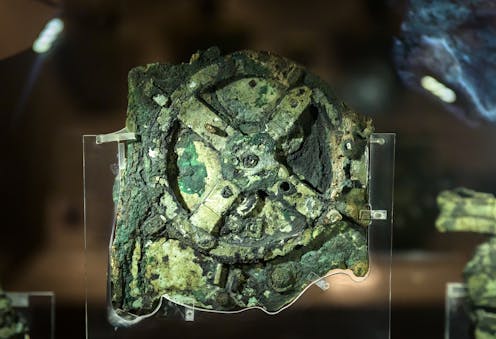
Antikythera mechanism in National Archaeological Museum, Athens, Greece.Viacheslav Lopatin/Shutterstock
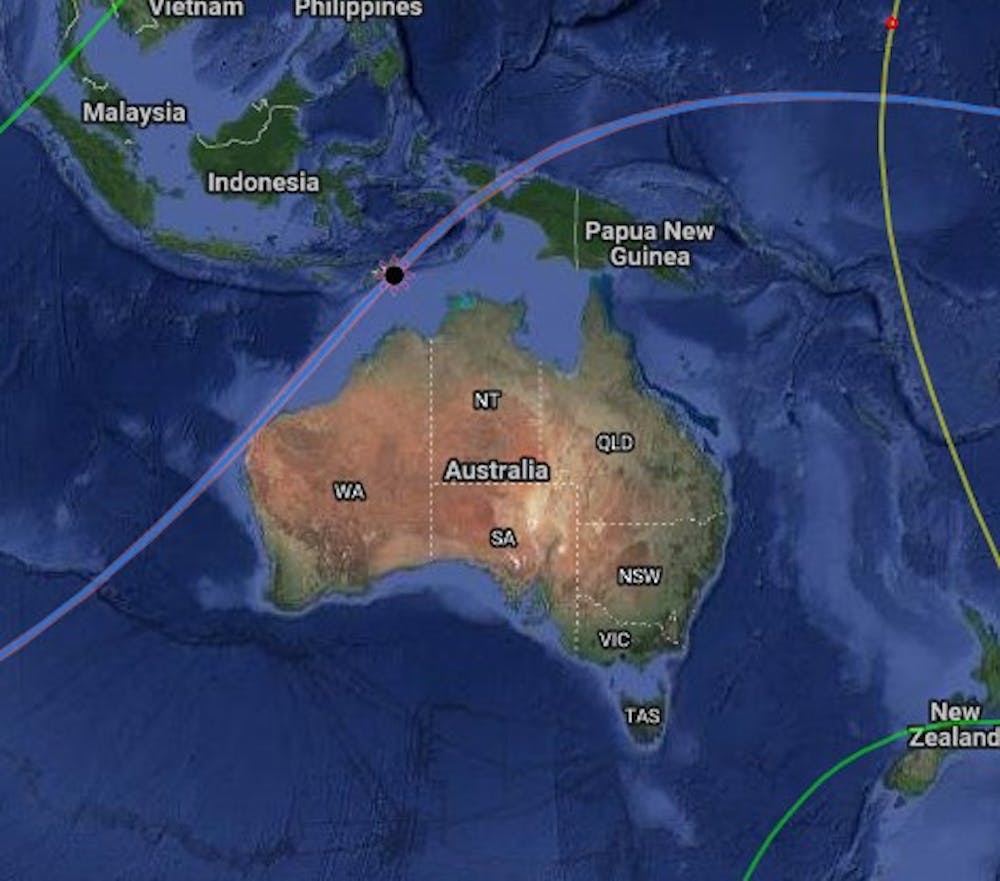
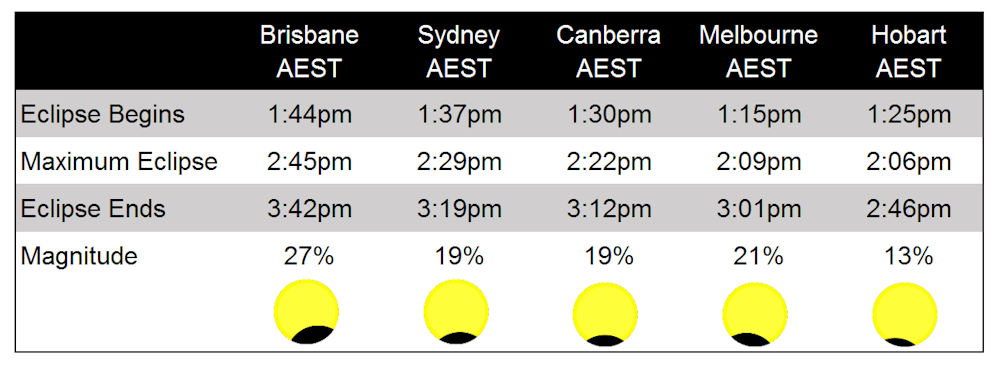
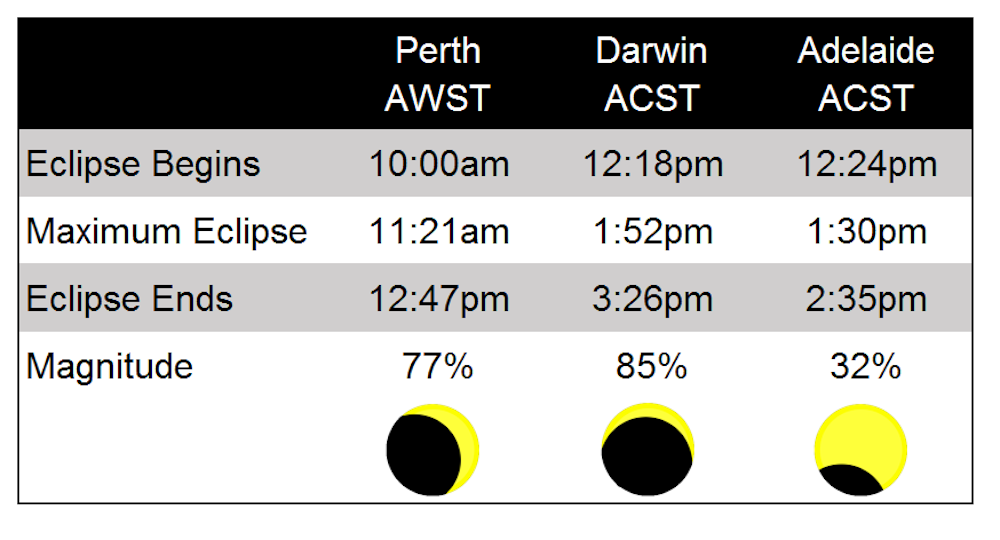
The coastal town of Exmouth in Western Australia is due to experience one of the most spectacular astronomical phenomena on April 20 2023 – a total solar eclipse.
Eclipses have entranced us for millennia. But it turns out calculating exactly when and where we can watch an eclipse in its full glory can be surprisingly hard.
Being so dominant in the sky, the Sun and the Moon were the most captivating celestial bodies for ancient cultures to observe. Naturally, they also tried to anticipate and predict their motions.
While the Sun’s movement is quite simple, the Moon moves across the sky with much more complexity. For one thing, it has phases; it also grows and shrinks in apparent size as it travels on an elliptical orbit around Earth.
On top of this, the Moon appears to rock and wobble quite haphazardly on its journey across the sky, making it extremely challenging to accurately describe its orbit. In fact, explaining the Moon’s motion was the only problem that made Isaac Newton’s head hurt.
Since eclipses are so startling to witness, many ancient peoples both noted their occurrence in writing and art, and discovered the repeating characteristics of such events.
During a lunar eclipse, where Earth blocks sunlight that would otherwise illuminate a full moon, the dimmed Moon takes on a bloody hue. Many cultures attached foreboding to such events (like the partial lunar eclipse seen during the Fall of Constantinople in 1453) and quite reasonably wondered when the next such event might occur.
A lunar eclipse visible in Miami, Florida in 2010. FloridaStock/Shutterstock
Various cultures around the world have independently discovered eclipses seem to occur on an 18-year cycle. It was mentioned in written records by the Babylonians and Assyrians (of ancient Mesopotamia and modern Iraq), and oral tradition suggests the cycle was used for ceremonial purposes by Torres Strait Islanders in what is now Australia.
This 18-year cycle, which can persist as a sequence for over a thousand years, is now known as a Saros cycle. The word “Saros” was referenced in the 10th-century Byzantine Suda encyclopedia, and possibly has a Greek origin (“saro” meaning “sweep”, perhaps relating to how eclipses sweep across the sky).
The Saros cycle represents how long it takes for the Sun-Earth-Moon system to return to almost exactly the same triangular configuration. So, if you see a lunar eclipse, you can expect another one 18 years later, visible from most places on Earth.
If you were an ancient culture that happened to observe a total solar eclipse, you would have been very lucky indeed (they occur roughly every 375 years at a given region on Earth). But would you have seen a similar event 18 years later? Alas, no. While there probably was another total solar eclipse 18 years later, it would have been over a completely different part of the planet.
After 54 years – three Saros cycles – the eclipse region should have returned to roughly the same position on Earth. But only very roughly, as it could be thousands of kilometres away from the previous observation spot.
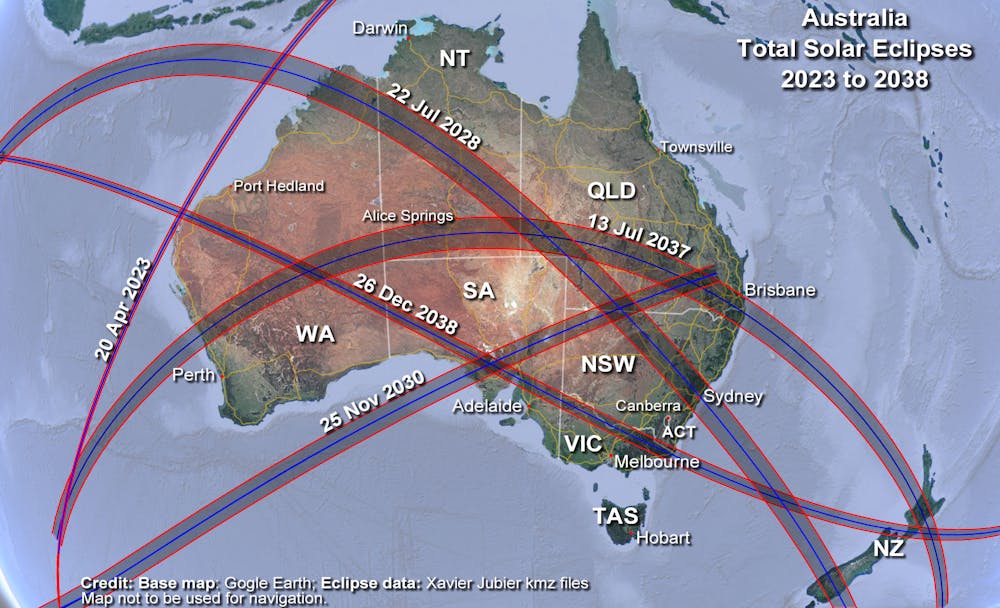
Worldwide, there is a total solar eclipse visible somewhere roughly every 18 months during one of two possible “eclipse seasons” per year. This is much more frequent than an 18-year Saros cycle, and is possible because multiple repeating Saros sequences overlap at once (roughly a dozen), each offset by at least six months. For example, the 2028 total solar eclipse that will be visible in Sydney is part of an entirely different Saros sequence than this year’s eclipse.
After about a thousand years, when one long-term Saros sequence ends, another will begin with slightly different timing.
From antiquity to modern day
So could our ancient ancestors actually predict eclipses? Yes, if we are talking about lunar eclipses, and perhaps even partial solar eclipses.
A famous predictive example is the Eclipse of Thales in 585 BCE, although the fact that a total solar eclipse happened over Greece was almost certainly more luck than science. That is, they wouldn’t have predicted that 18 years later (567 BCE) a total solar eclipse was visible in what is now the United States.
It is likely the famed Greek Antikythera Mechanism, an astoundingly complicated 2,000-year-old mechanical device that was used to predict the night sky, could calculate the 18-year Saros accurately. But significantly, it could not predict total solar eclipses at a precise place on Earth – just their timing.
The Saros period (marked with a red rectangle) is visible on a fragment of the ‘user manual’ of the Antikythera mechanism. Xmoussas/Wikimedia Commons, CC BY-SA
In summary, it is clear ancient people could predict timings for lunar eclipses and partial solar eclipses, but there is no convincing evidence of people predicting the times and locations of total solar eclipses.
Entering the modern era of science, the first true prediction of a total solar eclipse (both in time and location) occurred in 1715. Edmond Halley (of comet fame) correctly predicted, to within four minutes and 20 miles, a total solar eclipse that rather conveniently passed over his own house in London. He did this by making full use of Isaac Newton’s new theories of gravity and orbital mechanics: the Principia.
Today, we don’t rely on calculating the orbits of the whole Solar System to predict eclipses. For example, NASA uses a highly advanced form of an ancient technique – pattern recognition. Using some 38,000 repeating mathematical terms, NASA can predict both solar and lunar eclipses for 1,000 years into the future. Beyond that, the Moon’s wobble and Earth’s changing rotation make eclipse prediction less accurate.
So for those of you lucky enough to witness a total solar eclipse this month, take a moment to think about what this shared experience has meant to humans around the world for thousands of years.
Trying to predict and explain this phenomenon has directly driven advancements in mathematics and orbital mechanics, and with its beauty we have been forced to embrace the limits of our scientific knowledge.
Aaron Robotham receives funding from the Australian Research Council (ARC).
Sabine Bellstedt does not work for, consult, own shares in or receive funding from any company or organisation that would benefit from this article, and has disclosed no relevant affiliations beyond their academic appointment.
In a splash of articles published over the past two weeks, the British Guardian has acknowledged and apologised for its historical links with slavery. The Scott Trust, owners of the newspaper that became a global news website, outlined how the Guardian’s founders were linked to transatlantic slavery and announced a programme of restorative justice.
John Edward Taylor, the journalist who founded the Manchester Guardian in 1821, profited from partnerships with cotton manufacturers and merchants who imported raw cotton produced by enslaved people in Jamaica and in the Sea Islands along the coast of South Carolina and Georgia.
In Australia, our oldest surviving newspaper has its own historical links to the shameful practice of slave labour.
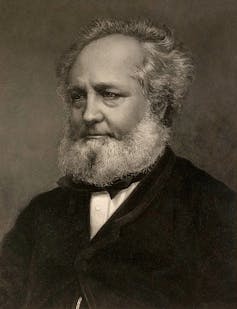
In 1841, John Fairfax (1804-1877) became the first of five generations of Fairfax family owners of the Sydney Morning Herald, which had been founded in 1831 as the Sydney Herald.
John Fairfax c 1861. Wikicommons
The Fairfax family also became major shareholders in Colonial Sugar Refining Company (CSR). CSR was founded in Sydney in 1855 by Edward Knox, but it descended from the Australasian Sugar Company, established in 1842. The precise date on which the Fairfax family became sugar investors is not known, but the family was certainly involved by 1855, when John Fairfax’s daughter, Emily, married the general manager of CSR.
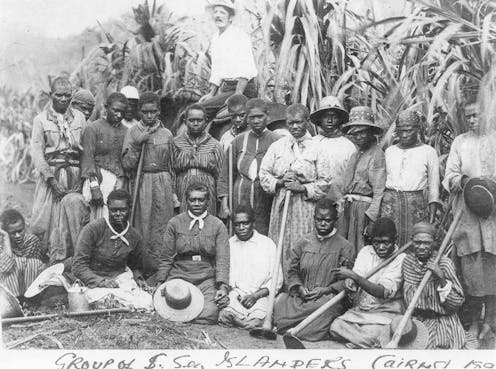
In the 1870s and 1880s, CSR expanded into milling cane in Queensland and Fiji. It profited from the use of what was effectively slave labour through the abduction and importation of tens of thousands of South Sea Islanders, who were disparagingly called “Kanakas” (a Hawaiian word meaning “man”).
According to the Australian Human Rights Commission, between 1863 and 1904, “an estimated 55,000 to 62,500 Islanders were brought to Australia to labour on sugar-cane and cotton farms in Queensland and northern New South Wales”. They were forced to perform backbreaking labour in appalling conditions.
Most came from Vanuatu and Solomon Islands, but they also arrived from more than 70 other Pacific Islands. CSR chartered ships for the express purpose of “recruiting” labourers from these islands. Men, women and children, some as young as nine, were forced, coerced or tricked into coming to Australia. The practice of kidnapping them was known as “blackbirding” (“blackbird” was another word for slave).
Although a system of indentured labour was later established, Pacific Islanders were still exploited, denied basic rights, and paid miserable wages. In 1901, two acts of parliament facilitated their mass deportation as part of establishing the White Australia Policy.
Although the Sydney Morning Herald was normally a strong supporter of the White Australia Policy, the paper wanted it suspended in the case of the cane fields. In August 1901, it argued there was a special need for “black” labour in the sugar fields of Queensland because the task was not suitable for white men.
The sun, so deadly to the white man, is to (the ‘kanaka’) only the source of a genial warmth […] these islanders are (like) the Australian aborigine (sic) […] just sufficiently intelligent for work in the canefield […] cheap, and […] inured to outdoor labour in a tropical climate.
The paper argued that “white men” were still getting “all the work calling for intelligence”. And, if the “kanakas” had to go, then the sugar planter should be given some other form of help such as a duty on sugar. At no stage did the paper declare its owners’ interest in the issue.
Pacific Islanders were brought in to work in the cane fields. Queensland State Archives
Like the mining giant Broken Hill Proprietary (BHP), CSR became a powerful monopoly in Australia. Both were helped along by friends in the press, newspaper owners who were heavily invested in companies they were promoting and demanding government assistance for. (Aside from CSR, the Fairfaxes were also shareholders in BHP, as were other newspaper families, including the Symes and the Baillieus).
Although most Pacific Island labourers had been deported from Australia by 1908, CSR continued to prosper off the back of indentured (mostly Indian) labourers in Fiji, where there were severe working conditions and high mortality rates. By 1910, CSR was one of the three largest companies in Australia.
In 1915, the federal government granted CSR protection via an embargo on imported sugar. In 1923, the Queensland state government signed an agreement with CSR that meant the company effectively had a monopoly on sugar production (which lasted until 1989).
By 1930, CSR was the wealthiest company in Australia and the Fairfaxes were among the country’s wealthiest families. The family’s links with CSR were still active in the 1960s. By then, CSR had branched out into industrial chemicals, building materials and, disastrously, asbestos.
The longstanding connection between CSR and the Fairfaxes was not widely known in the mid 20th century, and nor would it have attracted much interest, then, let alone condemnation on the basis of CSR’s history of forced labour.
On the contrary, in a newspaper industry filled with ruthless proprietors, including liars, thugs and crooks, the Fairfaxes had a reputation for being decent, moral and ethical. They were known for being cultured, civically-minded and philanthropic.
The Fairfaxes controlled the Sydney Morning Herald for 149 years, until 1990 when a misguided takeover action mounted by young Warwick Fairfax ended in financial disaster.
Since 2019, the Sydney Morning Herald (along with The Age and The Australian Financial Review) have been owned by the Nine group, a television company that was founded by the Fairfaxes’ nemesis, Frank Packer, a rival newspaper and magazine owner in Sydney. Packer was not known for his philanthropy, nor for holding enlightened attitudes on racial equality.
Racism was often blatantly expressed in newspaper pages, encouraging oppression, discrimination and inhumane treatment to occur, including in the sugar plantations of Queensland. In 1935, the Sydney Morning Herald conceded that “blackbirding” – a practice it had implicitly supported in the 1890s and early 1900s – was actually a “type of slavery”. Now would be a good time for Australia’s oldest newspaper to follow the lead of the Guardian and investigate and acknowledge how its own growth in the 19th and 20th centuries was connected to that slavery.
Sally Young is the author of Paper Emperors (UNSW Press, 2019) and its sequel, Media Monsters: The Transformation of Australia’s Newspaper Empires (UNSW Press), which will be out in June. Comment was sought from the editor of the Sydney Morning Herald for this article but no reply was provided at the time of writing.
Sally Young has received research funding from the Australian Research Council and the State Library of NSW. Between 2013-15, she wrote a monthly column for The Age (previously owned by Fairfax Media, now owned by Nine).
For every feeling we experience, there is a lot of complex biology going on underneath our skin.
Pain involves our whole body. When faced with possible threats, the feeling of pain develops in a split second and can help us to “detect and protect”. But over time, our nerve cells can become over-sensitised. This means they can react more strongly and easily to something that normally wouldn’t hurt or would hurt less. This is called “sensitisation”.
Sensitisation can affect anyone, but some people may be more prone to it than others due to possible genetic factors, environmental factors or previous experiences. Sensitisation can contribute to chronic pain conditions like fibromyalgia, irritable bowel syndrome, migraine or low back pain.
But it might be possible to retrain our brains to manage or even reduce pain.
Our body senses possible threats via nerve endings called nociceptors. We can think of these like a microphones transmitting the word “danger” through wires (nerves and the spinal cord) up to a speaker (the brain). If you sprain your ankle, a range of tiny chemical reactions start there.
When sensitisation happens in a sore body part, it’s like more microphones join in over a period of weeks or months. Now the messages can be transmitted up the wire more efficiently. The volume of the danger message gets turned way up.
Then, in the spinal cord, chemical reactions and the number of receptors there also adapt to this new demand. The more messages coming up, the more reactions triggered and the louder the messages sent on to the brain.
And sensitisation doesn’t always stop there. The brain can also crank the volume up by making use of more wires in the spinal cord that reach the speaker. This is one of the proposed mechanisms of central sensitisation. As time ticks on, a sensitised nervous system will create more and more feelings of pain, seemingly regardless of the amount of bodily damage at the initial site of pain.
When we are sensitised, we may experience pain that is out of proportion to the actual damage (hyperalgesia), pain that spreads to other areas of the body (referred pain), pain that lasts a long time (chronic or persistent pain), or pain triggered by harmless things like touch, pressure or temperature (allodynia).
Because pain is a biopsychosocial experience (biological and psychological and social), we may also feel other symptoms like fatigue, mood changes, sleep problems or difficulty concentrating.
Community education about pain might teach good habits from an early age. Shutterstock
Around the clock, our bodies and brain are constantly changing and adapting. Neuroplasticity is when the brain changes in response to experiences, good or bad.
Pain science research suggests we may be able to retrain ourselves to improve wellbeing and take advantage of neuroplasticity. There are some promising approaches that target the mechanisms behind sensitisation and aim to reverse them.
One example is graded motor imagery. This technique uses mental and physical exercises like identifying left and right limbs, imagery and mirror box therapy. It has been tested for conditions like complex regional pain syndrome (a condition that causes severe pain and swelling in a limb after an injury or surgery) and in phantom limb pain after amputation. Very gradual exposure to increasing stimuli may be behind these positive effects on a sensitised nervous system. While results are promising, more research is needed to confirm its benefits and better understand how it works. The same possible mechanisms of graded exposure underpin some recently developed apps for sufferers.
Exercise can also retrain the nervous system. Regular physical activity can decrease the sensitivity of our nervous system by changing processes at a cellular level, seemingly re-calibrating danger message transmission. Importantly, exercise doesn’t have to be high intensity or involve going to the gym. Low-impact activities such as walking, swimming, or yoga can be effective in reducing nervous system sensitivity, possibly by providing new evidence of perceived safety.
Researchers are exploring whether learning about the science of pain and changing the way we think about it may foster self-management skills, like pacing activities and graded exposure to things that have been painful in the past. Understanding how pain is felt and why we feel it can help improve function, reduce fear and lower anxiety.
If you have chronic or severe pain that interferes with your daily life, you should consult a health professional like a doctor and/or a pain specialist who can diagnose your condition and prescribe appropriate active treatments.
In Australia, a range of multidisciplinary pain clinics offer physical therapies like exercise, psychological therapies like mindfulness and cognitive behavioural therapy. Experts can also help you make lifestyle changes to improve sleep and diet to manage and reduce pain. A multi-pronged approach makes the most sense given the complexity of the underlying biology.
Source: The Conversation (Au and NZ) – By Alan N Williams, Associate Investigator, ARC Centre of Excellence for Australian Biodiversity and Heritage, UNSW Sydney
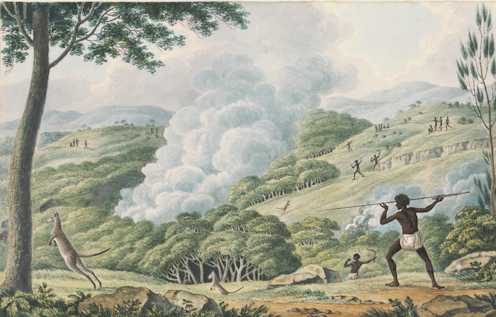
Joseph Lycett, Aborigines using fire to hunt kangaroo (c.1817)National Library of Australia
Indigenous Australians have conducted cultural burning for at least ten millenia and the practice helped reduce bushfire risk in the past, our new research shows.
The study provides more evidence of the very long history of cultural burning in southeast Australia. While the burning was probably not specifically used to manage bushfires, our data suggest it nonetheless reduced fire extremes.
Indigenous cultural burning involves applying frequent, small and low-intensity or “cool” fires to clean out grasses and undergrowth. But the scientific evidence for when in history Indigenous Australians used cultural burning, and what they were seeking to achieve, is unclear.
Our findings suggest Indigenous cultural burning in the past may have helped reduce the intensity of bushfires. These findings are important because evidence suggests cultural burning can assist modern land management as climate change worsens.
The findings are important as bushfires worsen in future. Dan Peled/AAP
When did cultural burning start in Australia?
Some experts suggest cultural burning was adopted in the Pleistocene period, about 50,000 to 10,000 years ago.
Increases in charcoal in sediments have been linked to the arrival of humans, and subsequent vegetation change, on the Atherton Tablelands in northeast Queensland from about 45,000 years ago.
However, similar changes occurred on some Pacific Islands at times when humans were not present. This has cast doubt on whether past fires in Australia were the result of human activity.
Another point of view suggests cultural burning was adopted only in the last few thousand years.
Some current cultural burning programs in Australia were only established or re-established in the second half of the 20th Century. But they mostly take place in arid and tropical environments, and it’s not certain whether they can be readily applied to temperate regions.
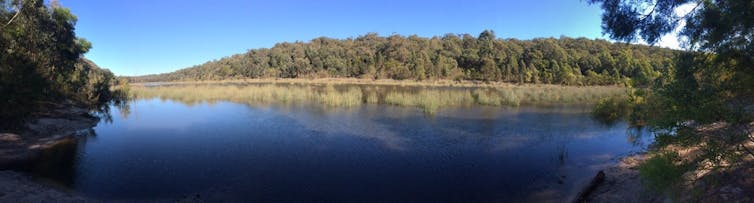
Our research sought to shed light on when cultural burning in southeast Australia began, and what effect it had. We focused on a site in the Illawarra region of New South Wales. In particular, we examined sediments from the bed of Lake Courijdah in the Thirlmere Lakes National Park, which holds a unique record into the past.
Lake Courijdah holds a unique record into the past. Martin Krogh
A spotlight on charcoal
Sediments in Lake Courijdah cover two time periods: one before Aboriginal people are thought to have arrived in Australia, and one after.
The older sediments, from about 135,000 to 105,000 years ago, included a period known as the Last Interglacial. This climatic period was very similar to today’s and would have produced similar environmental conditions. Importantly, humans were not present at this time.
Above this layer were deposits dating to the last 18,000 years, extending from the end of a cool and probably arid period known as the Last Glacial Maximum up to about 500 years ago.
It’s well-documented that in this time period, Indigenous people were living across the Sydney Basin, including the Illawarra region.
From these sediments, we examined the accumulation of charcoal – a common method used to determine the frequency and relative size of bushfires. We also used a new method known as “Fourier Transform Infrared spectroscopy”. It determines bushfire severity based on the chemical composition of the charcoal produced.
Using this new method is important. Recent research by our UNSW lab showed how traditional charcoal techniques may mask evidence of human fire use (in the form of cool fires).
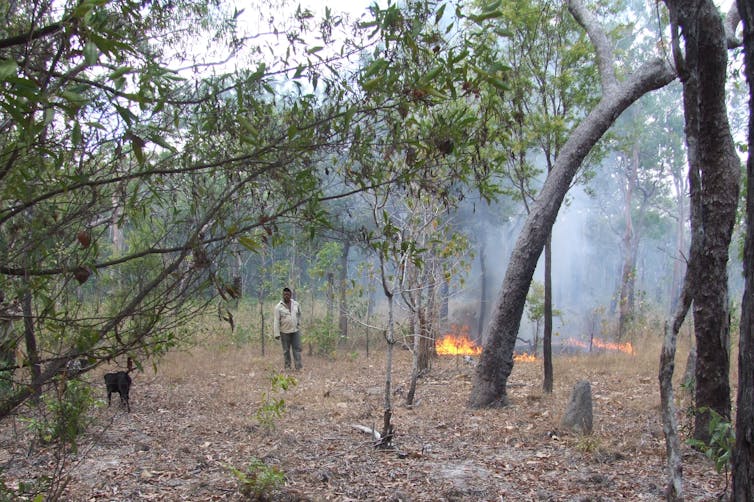
Cultural burning can assist modern land management. Pictured: an Indigenous man conducts cultural burning at Cape York. Alan Williams
Our results
So what did we find? During both periods, climatic change was the main driver of fire activity. This suggests human-caused climate change will continue to influence overall fire conditions in future.
But we found a marked difference between the two time periods when looking at the severity of fire. Despite significant climatic change over the last 18,000 years, fire severity remained lower, when compared to the earlier period without humans.
As such, we conclude that Indigenous cultural burning practices undertaken around Thirlmere Lakes from about 10,000 years ago may have suppressed extreme wildfires.
Cultural burning in the region may have begun earlier than this. However, data from before 10,000 years ago is variable – probably as a result of sea-level change – so we can’t say for sure.
Indigenous people using cultural burning were probably not focused on wildfire suppression. Early explorer records, and even more recent work, suggests burning improved hunting prospects and the diversity of resources. However, cultural burning nonetheless appears to have reduced wildfires in this case.
Looking ahead
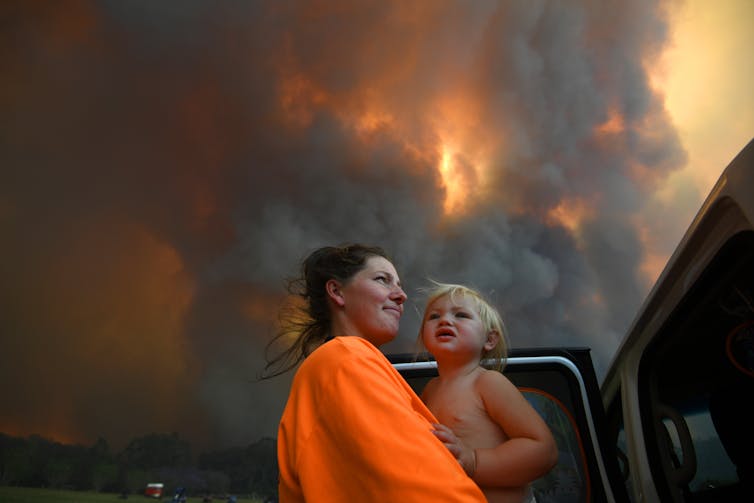
El Niño conditions are predicted to return to Australia this year. Inevitably, thoughts return to the massive Black Summer bushfire season of 2019-2020 and how to prevent such disasters in future.
Our findings suggest when it comes to future fire management in eastern Australia, traditional practices by Indigenous people should be taken into account in policy and decision-making.
Adopting cultural burning as part of our toolkit is likely to minimise wildfires and help keep people safe.
Alan N Williams is an associate director and a Technical Lead, Aboriginal heritage for EMM Consulting Pty Ltd, an international employee owned company specialising in environmental investigation and assessment
Scott Mooney was part of a group that received funding from the NSW Office of Environment and Heritage Thirlmere Lakes Research Program ‘Thirlmere Lakes: the geomorphology, sub-surface characteristics and long-term perspectives on lake-filling and drying’ 2017-2019. His charcoal research has received funding from the Australian Research Council Discovery Program grant ‘Shaping a sunburnt country: fire, climate and the Australian landscape’ 2020-2022.
Mark Constantine IV does not work for, consult, own shares in or receive funding from any company or organisation that would benefit from this article, and has disclosed no relevant affiliations beyond their academic appointment.
This article is part of our series on big ideas for the Universities Accord. The federal government is calling ideas to “reshape and reimagine higher education, and set it up for the next decade and beyond”. A review team is due to finish a draft report in June and a final report in December 2023.
Compulsory tests, essays, regular grades and timed exams are considered a given in university life. But the Universities Accord should change this.
Rigid, traditional assessments need to make way for a more flexible, personalised way of working out what students know and can do. The current system is not only vulnerable to cheating, it also disadvantages those with disability and doesn’t give students the feedback they need.
Students with disability need a different approach
Our research shows university students with a disability are disadvantaged by current assessment formats. It shows adjustments – which are legally required for those with disabilities – don’t always adequately compensate students.
For example, a common adjustment such as extra time for an essay or exam may not be suitable for students with a disability, whose outputs can be affected regardless of time.
Students in our research also reported that accessible spaces and equipment – such as an ergonomic chair – were not reliably available during exams. Even in online exams, text-to-speech software and other assistive technologies are not necessarily compatible with all course materials or assignment file formats.
Research has shown students are hesitant to get an adjustment due to fear of stigmatisation, and experience anxiety or shame over requests for extra assistance to demonstrate their learning.
Extra time on assignments won’t help all students with a disability. Cottonbro Studio/Pexels
AI has radically changed the playing field
At the same time, the rise of generative artificial intelligence tools such as ChatGPT has shown universities need to rethink assessments so as to protect academic integrity.
We know ChatGPT can write material that is good enough to pass exams. So essays and take-home assignments that simply ask students to provide chunks of information will no longer work.
Assessments will need to evaluate more sophisticated capabilities, such as critical thinking, to prevent cheating and demonstrate students’ learning.
caption. Feedback should happen throughout courses, not just with essays and exams.
To have the best impact on learning, feedback should not happen at the same time as students get their marks or final grade.
Instead, it should happen when students need it most: during the semester, so they can use it in subsequent tasks. Comments might be verbal, written or in multimedia formats, and come from lecturers, tutors, peers or even industry.
Survey research also shows about 15% of students are dissatisfied with the feedback they get, and this rises if students have a disability or are an international student.
How to improve assessment
There is a lot that could be done to improve assessment. But here are three significant changes we should focus on immediately:
1. We need to replace regular marks with regular feedback
Rather than final grades for every unit, students should receive regular comments about improving their work.
Then, at the end of their degree, selected assessments or a final project can be used to demonstrate a student’s learning.
Students might also be encouraged to portray their achievements in more contextual and personal ways. They might be able to choose between blog entries or multimedia. Or they might put together a “persuasive portfolio”, which enables students to construct their own evidence of how they are progressing towards course learning outcomes.
This will mean society – including employers – can be more confident that graduates have developed relevant high-level capabilities, rather than immediately forgetting the contents of an exam once it’s over.
This approach is also more inclusive. When individual tasks are considered separately, some formats might advantage particular students. But considering a range of tasks allows students to demonstrate their learning in a way that suits them.
Giving students personal feedback throughout their studies can help keep them engaged. Shutterstock
2. Students should have choice in assessment
Assessment should promote individuality. It should provide choices for students to demonstrate their achievements, to ensure they meet their goals for their future lives.
For example, students studying public health might choose to develop a policy briefing or community education resources on a topic of their choice: both options can demonstrate understanding of a health issue and relevant communication techniques.
Impersonal, cookie-cutter assessments – such as a take-home exam or essay – are vulnerable to cheating. They also won’t teach students how to respond flexibly to evolving work environments.
All assessments need to be designed in ways to minimise additional challenges for students with disabilities or learning differences. Universal assessment design is one approach universities can use here.
This means ensuring instructions, resources, and submissions take multiple formats (for example, text and audiovisual).
If implemented as a matter of routine, assessment for inclusion has the potential to improve the learning experience of many students from diverse backgrounds. Rather than just the ones who know about, and feel comfortable enough, to ask for help.
The authors do not work for, consult, own shares in or receive funding from any company or organisation that would benefit from this article, and have disclosed no relevant affiliations beyond their academic appointment.
Epidemiologist Professor Michael Baker says Aotearoa New Zealand is experiencing its fourth wave of covid-19 infection and warns people to stay vigilant.
He said it was not as intense as the previous waves but it was definite, with a gradual rise in the number of self-reported cases every day, as seen in RNZ’s ongoing database of covid-19 information.
“It’s the first distinct rise, a sustained rise in cases this year.
“We’ve seen that numbers reached a low point in February and have been tracking up since then.”
The average number of daily cases sits at about 2000 at the moment, but Professor Baker said the actual number could be higher with people less inclined to test and report.
He said other indicators including the number of hospitalisations, people in intensive care units, deaths and traces of the virus in wastewater were also pointing to a new wave.
He encouraged people to get the new covid booster, isolate if they were infected, and mask up in poorly ventilated environments.
“It’s really important that everyone who has a position in authority thinks about the health of their workforce and their school population and the social venues that they operate in.”
Professor Baker also said that the Ministry of Education should provide monitors to reduce transmission in early childhood centres.
He also encouraged people to mask up on public transport.
“If you’re on a bus commuting … or train, you are going to be in that indoor environment for many hours every week and the ventilation is poor, so that would be a situation where I think masks should still be worn by everyone.”
Most pandemic rules have been scrapped, but people still have to self-isolate for seven days if they test positive, and masks must be worn in hospitals in some circumstances.
This article is republished under a community partnership agreement with RNZ.
A media network publishing an international research journal has vowed to expand its activities into community media and training initiatives.
The non-profit Asia Pacific Media Network, publisher of the ranked Pacific Journalism Review, says media and community advocates believe there is a need for minority and marginalised groups that feel neglected by the mainstream.
Network chair Dr Heather Devere told the annual general meeting of the publishing group in Mt Roskill yesterday that now that APMN had been consolidated it could turn to some of its wider community goals.
The Asia Pacific Media Network’s AGM yesterday. Image: PMW
Members from Australia, Fiji and Tahiti joined their New Zealand colleagues via Zoom in discussing many plans, including community media mentoring and training for diversity groups.
A proposal for a media conference in Suva, Fiji, next year by Pacific journalism associate professor Shailendra Singh was tabled and adopted in principle.
Dr Devere told the members that the network, established in 2021 to fill the void left by the closure of the Pacific Media Centre and to take on publication of PJR, had made great progress.
The ad hoc group was registered as an incorporated society last year.
“This first year of APMN we have concentrated on establishing a sustainable network that maintains the respected reputation that had been established at the Pacific Media Centre,” Dr Devere said.
“And I am happy to report that thanks to the commitment of a number of people who have the skills and expertise to continue some of this work, APMN is in a good place to look at moving forward into the coming year from a firm base.”
Members of Asia Pacific Media Network at their annual general meeting in the Whānau Hub in Mt Roskill yesterday. Image: David Robie/PMW
Pressing need Community advocate Nik Naidu, an APMN member from the host Whānau Community Centre and Hub, said there was plenty of potential for the new network and there was a pressing need for media skills training to empower marginalised groups.
Retired Sydney journalism professor Chris Nash lamented that journalism schools had become very conservative and were “failing journalism”.
Pacific Journalism Review founder Dr David Robie and network deputy chair said he was encouraged by the developments and believed that APMN was consolidating its innovative role.
Current editor Dr Philip Cass said work on the July 2023 edition of PJR was underway.
“We have received a number of submissions that fall far outside our frame of reference from very distant countries,” he said.
“While this is slightly puzzling, it does indicate how far our name has travelled.”
‘Excited’ by developments This second AGM of the network attracted new supporters, including Filipino media educator, filmmaker and PSTv5 podcaster Rene “Direk” Molina and broadcaster and community social media campaigner Ernestina “Tina” Bonsu Maro.
Some of the publications on AUT’s Tūwhera platform, including Pacific Journalism Review and Pacific Journalism Monographs. Image: PMW
Maro, of Pacific Media Network, who works with Cook Islands and African communities, said she was “excited” by the developments.
“We need more opportunities to tell our own stories,” she said. “The mainstream media isn’t interested in us or our stories.”
Pacific Journalism Review, founded at the University of Papua New Guinea in 1994, has published two independent editions with the APMN, and hopes to celebrate its 30th year in Suva next year.
A presentation was made to AUT scholarly communications librarian Donna Coventry and the Tūwhera digital journals platform in gratitude for the “tremendous” support for PJR since the online edition was launched in 2016.
Broadcaster and community campaigner Ernestina “Tina” Bonsu Maro . . . “We need more opportunities to tell our own stories.” Image: David Robie/PMW
Public opinion will dictate how Japanese seafood is received after the wastewater is disposed of into the Pacific Ocean.
The global seafood market faces turmoil with the release of the Fukushima nuclear wastewater from Japan into the Pacific Ocean, computer modelling predicts.
Japan announced in 2021 it will release more than 1.25 million tonnes of treated Fukushima radioactive wastewater into the sea as part of its plan to decommission the power station when its storage capacity reaches its limit this year.
Seafood is one of the most important food commodities in international trade, far exceeding meat and milk products.
According to the United Nations Comtrade database, global seafood trade has grown from US$7.57 billion in 2009 to US$12.36 billion in 2019, an increase of 63.2 percent.
The Japanese nuclear wastewater discharge raises global worries about the safety of Japanese seafood as public opinion influences consumers’ preference for seafood.
In this empirical study involving American consumers, 30 percent of respondents said they reduced their seafood consumption following the Fukushima nuclear plantaccident and more than half believe Asian seafood poses a risk to consumer health due to the disaster.
Temporary bans Most of Japan’s seafood trading partners, such as China, Russia, India and South Korea, imposed temporary bans on food from several districts around Fukushima in the wake of the accident in 2011.
My research models the potential impact of the Fukushima nuclear wastewater disposal on the global seafood trade using the import and export data for 26 countries which make up more than 92 percent of the world’s trade in marine products.
A community classification theory of complex networks was used to classify seafood trading countries into three communities. Seafood trade is frequent among countries within each individual community and less between the communities.
The first community contains Ecuador, Italy, Morocco, Portugal and Spain. The second contains Denmark, France, Germany, Iceland, New Zealand, Nigeria, Norway, Poland, Sweden, and the United Kingdom.
The third community contains China, India, Indonesia, Japan, South Korea, Malaysia, Taiwan of China, Russia, Thailand, the United States and Vietnam.
Modelling shows China, South Korea, and the US maintain a steady trade of seafood imports and exports between them. Data used for the modelling shows that the rate of change in trade between China and Korea, China and the US and between Korea and the US is very close to zero.
However, China, South Korea and the US are expected to increase their seafood imports from Denmark, France, Norway and other community group two countries while reducing seafood exports to them. This is because these three countries have already reduced their seafood trade with Japan.
The predicted change in Japan’s seafood imports. Source: Ming Wang’s report
The increase in exports from community group three to community group two nations leads to a decrease in imports and exports between countries within community group two. For example, the study notes that Denmark, Norway and France are all experiencing a decrease in seafood exports and imports between each other.
While the rates of change in trade between countries look very close, the size of each country’s import and export market is different, so the actual trade volume can vary greatly.
The model also divided the global seafood market into two segments — the first being the Japanese market and the second comprising 25 other countries. It calculated that Japan’s seafood exports fell by 19 percent in 2021, or US$259 million.
Different impacts Public opinion after the Fukushima wastewater is discharged will have different impacts on the import and export trade of seafood for each country, especially for countries which trade with Japan.
What people think (about the discharge) is closely related to the amount of Japanese seafood imported by each country. The higher the amount of Japanese seafood imported by a particular country, the more negative public opinion is likely to be, according to computer modelling.
Japanese imports of seafood will also be reduced, predicts the computer model. However, the amount of reduction depends on how well the Japanese public accepts local seafood after the discharge of the nuclear wastewater.
The Japanese government has announced it will spend US$260 million to buy local seafood products if domestic sales are affected by the release of Fukushima wastewater.
If the Japanese public is more accepting of seafood caught in waters around the discharge area, seafood imports from other countries to Japan will likely fall. However, if public opinion does not go this way, Japan will have to import more seafood to meet local demand.
Reduced imports If 40 percent of the reduction in Japanese seafood exports is absorbed by its own market, the modelling shows this would result in a US$272 million reduction in Japanese seafood imports from other countries.
The table pictured above from the computer model shows the predicted decrease in the trade volume of seafood exports from 25 countries to Japan. The impact of seafood exported to Japan is also related to the community classification.
Countries in the same community as Japan show a more significant reduction in their seafood exports to Japan while countries not in the same community have less impact. The planned Fukushima nuclear wastewater disposal will mainly affect countries in the same seafood trading community as Japan.
These countries will see more significant reductions in their imports of Japanese seafood and in the exports of their seafood to Japan compared to countries in other communities.
Ming Wang isa doctoral candidate in econometrics, complex networks and multi-modal transportation at the School of Maritime Economics and Management, Dalian Maritime University, China. He declares no conflict of interest.Originally published under Creative Commons by 360infovia Wansolwara.
Several Pasifika were among dozens of New Zealanders to receive the Order of Merit this week.
Recipients comprised leading figures across various industries from social work to entertainment.
TV show producer, writer, and director Lisa Taouma received the insignia of a member of the NZ Order of Merit at a ceremony in Auckland.
Taouma said the award represented the efforts of many people.
“I’m really honoured that people from my community nominated me for this,” Taouma said.
“As Pacific people, we work collectively. This award has my name on it, but it’s an award that should be really for my whole amazing team of Pacific creatives.
“In my aiga of creative people who have put me here really, this is very much theirs’ as mine.”
Garnered controversy The Order of Merit was an honorific established in 1902 by Edward VII, and has garnered controversy as it was awarded to many British officers and statesmen involved with the colonial oppression of the British Empire.
But Taouma said the investure of so many Pasifika and Māori indicated a positive change.
Since the end of the British Empire, the honorific system has seen a revision — shifting from recognition of control to recognition of change.
“I was a bit conflicted in taking the award from the Empire and the King, because many Pacific people were victims of colonisation,” said Taouma.
“But I think that different people being involved in these investures is important because it shows how things are changing.”
Another Pasifika recipient, Ma’a Brian Sagala, said his recognition was the result of generations of duty towards helping one’s community and whanau (family).
“The reason I do what I do is to follow in the footsteps of my dad and mum, it’s something that has been modelled to me by all those who gave gone before me,” said Ma’a who works as a radio presenter and producer for the Pacific Media Network.
Ma’a Brian Sagala . . . “It’s something that has been modelled to me by all those who gave gone before me.” Image: Finau Fonua/RNZ Pacific
‘Hard to put into words’ “It’s actually hard to put it into words, but I’m very humbled by the recognition, and I’m just so very thankful. I love serving the Pasifika community, it’s the greatest honour and privilege.
“This medal shows the impact that Pasifika are having on New Zealand society.”
Many Māori have also been invested, such as George Flavell, kaumatua of Ngati Te Ata. The 77-year-old spent much of his life discovering and protecting traditional Māori sites such as pa fortresses.
His push for the protection of the sites resulted in land being reclaimed as part of the Waitangi Tribunal.
“It’s 30 years of hard work,” said Flavell.
“We worked hard to save our waahi tapu (sacred sites) and pa (traditional fortresses)…all of our land was confiscated, so it was about picking up what we could with the goodwill of the community.”
Flavell said changes in school curriculums to teach Māori history and language showed how far New Zealand society had come.
“Things were taught differently back then because there was no understanding of the past, but then all these claims came out and things began to change, people began to understand.
“We were at the bottom of the list of council policies (preserving sites), but now we’re on top.”
This article is republished under a community partnership agreement with RNZ.
George Flavell . . . “All these claims came out and things began to change, people began to understand.” Image: Finau Fonua/RNZ Pacific
A West Papuan leader has accused Indonesia of imposing a “martial law” on the Melanesian region in response to the kidnapping of a New Zealand pilot by rebels fighting Jakarta’s contested rule.
“It is clear that Indonesia is using the kidnap of New Zealand pilot Philip Mehrtens as a pretext to strengthen their colonial hold on West Papua,” said United Liberation Movement for West Papua (ULMWP) interim president Benny Wenda.
Mehrtens was taken hostage on February 7 in the Papuan Highlands and has featured in video demands for independence.
“[Indonesian security forces] are creating and exploiting violence to further depopulate our villages and create easier access to our resources through corporate developments like the Trans Papua Highway.
“This is all part of a 60-year colonial land grab,” claimed Wenda in a statement.
He said that in Intan Jaya, Puncak Jaya, and Nduga, Indonesian soldiers were “roaming the countryside, conducting arbitrary house searches, beating Papuan civilians, and even murdering women and children”.
Papuan shot dead Wenda said that near Wamena, a Papuan named Stefanus Wilil was shot dead at random while crossing a road.
“Women and young girls have been raped, churches have been burnt by soldiers, and 16 villages in the Intan Jaya Regency have been abandoned by terrified inhabitants.
“My people are living in mortal fear of the next beating, the next murder, the next massacre.
“Everyone is a target: whether it is because they have a beard or Rasta culture, wearing dirty clothes, or carrying an axe or shovel to tend their gardens — every Papuan is under automatic suspicion.
“Hundreds have been forced to flee their homes by roving military bands acting with total impunity.”
Taking refuge Wenda said they were taking refuge in the forests, where they lacked food, water, and “basic medical facilities”.
“But even there they are not safe, with armed police occupying every corner of the Papuan countryside, transforming the land into a hunting ground for Indonesian troops.”
“Indonesia killed us with guns and bombs dropped from helicopters, but also with malnutrition and crop destruction.
“Even as a child I knew that my life was worthless to the colonial forces. The genocide and ethnic cleansing of West Papua is still neglected, as the massacre of 10 Papuans in Wamena in February proves.”
Up to 100,000 displaced According to UN figures, between 60,000 and 100,000 West Papuans have been displaced over the past four years.
Wenda said his movement’s peaceful demands to Indonesia were:
Allow aid agencies to treat victims of forced displacement;
Allow the United Nations High Commissioner for Human Rights into West Papua, as had been demanded by more than 84 countries;
Allow international journalists to report on the situation in West Papua;
Draw back Indonesian troops to allow civilians to return to their lives; and
Release all political prisoners — including 80 activists who had been arrested for handing out leaflets demanding political activist Victor Yeimo be freed, Victor Yeimo himself, and three students detained without charge last year.
Deputy Prime Minister John Rosso has described the late Sir Rabbie Namaliu as a “shining example” of what politicians and leaders of today should aspire to be.
Paying his tribute yesterday at the Vunapope Conference Centre, Kokopo, yesterday, Rosso said: “We should learn from people like Sir Rabbie, in terms of honesty, transparency, integrity, not only leaders but ordinary citizens as well.”
Rosso said Sir Rabbie, PNG’s fourth prime minister, had achieved a lot in his life, something others could only aspire to achieve.
The late Sir Rabbie Namaliu . . . Presold his autobiography but died before he could write it. Image: PNG Post-Courier/PNGPC Archives.
“He was a great statesman and a gentleman both in his private, professional and political life and has left a behind a great legacy.”
Rosso said that the death of Sir Rabbie was an unfortunate loss for the country as PNG has already lost some of its great leaders in Sir Michael Somare, Sir Mekere Morauta and others who had contributed to the nation.
He also acknowledged the late Sir Rabbie in his contributions towards the establishment of the University of Papua New Guinea (UPNG), saying Sir Rabbie had always had a heart for the people.
Sir Rabbie was one of the many leaders that shaped the country’s administration and policy from 1972 through to independence in 1975 until he took public office in 1982.
Rosso said he would remember him as a very humble man, who was respected in East New Britain and Papua New Guinea.
“Sir Rabbie was a humble and honest man, not just a senior statesman but a friend, colleague, father, brother and grandfather,” he said.
Rosso said that on behalf of his family, the Pangu Party and the people of Lae, he passed on his words of sympathy to the late statesman’s family and larger community of East New Britain.
He said Prime Minister James Marape and the government send their deepest condolence and sympathy as well to the immediate family of Sir Rabbie and the people of Raluana, East New Britain Province, saying it was indeed a sad day for PNG.
Diane Wilsonreports for the PNG Post-Courier. Republished with permission.
Keith Rankin, trained as an economic historian, is a retired lecturer in Economics and Statistics. He lives in Auckland, New Zealand.
Essay by Keith Rankin.
Keith Rankin, trained as an economic historian, is a retired lecturer in Economics and Statistics. He lives in Auckland, New Zealand.
I was intrigued to see this Daily Telegraph story – King Charles’ coronation: Australian man Simon Abney-Hastings could be rightful heir to British throne (published NZ Herald, 9 April) – about an Australian resident who could be said to be the rightful king of the United Kingdom and those Commonwealth countries for which that monarch is the constitutional head of state. The ‘mistake’ here happened in the 1470s, in the reign of King Edward IV. That was the same decade as the establishment in England of the Caxton Press.
Some context, for me, is that, on that very day – Easter Sunday, 9 April 2023 – I was watching the episode of Shakespeare’s histories (The Hollow Crown: Henry VI part 2) in which Edward IV became king. Further, the whole sequence of Shakespeare’s histories – from Richard II, through the Henrys, to Richard III – gives a critical insight into the evolution of the first modern nation state (namely Tudor England) and the wider context of that evolution. (Of course, it is also preferable to know a bit about the actual history, and not just Shakespeare’s late Tudor dramatic narrative. Useful counter-narratives – again, historical drama rather than actual history – are the Philippa Gregory televised dramas The White Queen and The White Princess, both recently available on Netflix and TVNZ+.)
Shakespeare’s history plays begin in the 14th century, in the decades after the Black Death in Europe from which the pre-existing feudal power structures could not survive as before (refer James Belich, The World the Plague Made 2022, and see RNZ James Belich: how the Black Death led to the rise of Europe); though the elites of the time could not have understood that. The monarchies of Europe represented a thin veneer of overlordship, in a world where most people had a local lord to serve, but were affected little by their lords’ lords.
France as we know it today was divided into three overlordships, the Kingdom of France, the eastern Duchy of Burgundy, and the western territories whose king was also the King of England. Richard II, the first king in the Shakespearian sequence, was born in Bordeaux (now France). And it was in the times of Richard II that an English public servant, Geoffrey Chaucer, led what might be called the ‘English-language-movement’ which formed one of the central pillars of late-Tudor English/Welsh nationalism. Indeed, Shakespeare’s histories were themselves a coherent nation-building narrative.
(The second main pillar of the emergent English nationalism was a fake Romano/British ‘history’ of England which for the most part omitted the Anglo-Saxons – the actual English – and instead traced the nation’s origins through a series of British kings (including Arthur, Lucius and Leir) back to ‘Brutus of Troy’, and, before that, to ‘Albion’, fourth son of Neptune. Refer Fake History [2021] by Otto English, Historia Regum Britanniae [1136] by Geoffrey of Monmouth, and The Stories of Albion and Brutus from Our Island Story [1905] by Henrietta Marshall. The third pillar was the printing press, established in England for over 100 years before Shakespeare started writing his histories; meaning that the dramatic stories of late-medieval English royalty – more or less true, and, as always, biased by the zeitgeists of their authors – were widely known.)
Usurper Kings of England
A central matter of contention in Tudor England was that of the ‘usurper kings’, of which Shakespeare had four to contend with: Henry IV, Edward IV, Richard III, and Henry Tudor [Henry VII]. The latter was Queen Elizabeth’s Welsh grandfather, and the aging Queen was a capricious presence during the time of the Tudor literary renaissance. Authors and publishers who displeased the Queen on personally sensitive matters were liable to – and sometimes did – have their right hands chopped off. (Refer The Elizabethans 2011, by A.N. Wilson.)
The underlying issue in the history of these kings was the rules of dynastic succession; rules which tended to be refined as situations arose. Definitely a good part of the issue was ‘patriarchy’, meaning the precedence of males over females. In England one rule was established through the Treaty of Winchester in 1153, which meant that succession could and should pass through a female line, even if that female herself would not be accepted as Queen regnant. The result then was the House of Plantagenet as (French-speaking) rulers of England and much of France. The Plantagenet line in England ended in 1485 with the accession of the House of Tudor.
In the Kingdom of France, the succession rule was less clear. In 1337, based on the English rule, King Edward III would also become the King of France. (Under the rule that applied, say, when Queen Victoria became Queen in 1837, Edward’s living mother – Isabella – would have been the Queen regnant of France and well as the Queen consort of England.) However, the French, had pulled a swifty, understandably, and adopted the Salic Law rule that monarchical succession could only take place through a fully male line. The result was that, in France, a new royal house was established in 1328, the House of Valois.
The outcome was that England was at war with France – on and off – for over 200 years. And the episode of 1415 (with its battles of Harfleur and Agincourt), in the reign of Henry V, became for English nationalism and national identity, what Gallipoli became for New Zealand nationalism exactly 500 years later. Henry V is the (slightly flawed) hero of Shakespeare’s narrative; things fall apart on account of the untimely death of this young king in 1422, just months before King Charles of France also died.
(There is a clear link between the 1994 animated movie The Lion King – suggested here – and Shakespeare’s histories; though in these adaptive stories historical chronology doesn’t matter. Simba the ‘Lion King’ is Henry V; and ‘Scar’, Simba’s uncle, is clearly Shakespeare’s Richard III.)
The years from 1337 to 1453 have been dubbed The Hundred Years War, and were all about Edward’s claim to the French throne; these claims did not actually subside until 1550, in Tudor times. The campaign of King Henry V to reclaim (on behalf of his great-grandfather Edward) that throne represented England’s last success in that war. France’s King Charles VI (‘the Mad’), following Agincourt, acquiesced by naming Henry as heir to the French crown, and ‘giving’ his daughter Catherine to Henry as his wife. In the end though, The Hundred Years War was an embarrassing defeat for England (as was Gallipoli for New Zealand), and this humiliation represented the backdrop to Shakespeare’s Henry VI part 1.
The Hundred Years War gave way in England to the War of the Roses. This war was again about dynastic succession. Edward III had five sons. Richard II represented the end of the first of those five male ‘lines’. He was deposed in somewhat murky circumstances by ‘Henry Bolingbroke’ who represented Edward III’s third ‘Lancastrian’ line. (We should also note that this third line had two branches, a ‘legitimate’ line and a later ‘legitimised’ Beaufort line through the mistress of Henry Bolingbroke’s father.)
The second male line of Edward III was the Clarence/’Mortimer’ line, and the fourth line was the ‘York’ line. Based on the English rule, the correct King of England in 1450 was Richard Plantagenet, Duke of York. This Richard was the unambiguous heir to Henry VI through Edward’s fourth line, and was ambiguously the rightful actual king (through a mix of male and female ancestors) on Edward’s second line. The situation was further confused by the eventual birth of Henry VI’s son (another Edward, called ‘Ned’ by Shakespeare) in 1453, a boy widely assumed to have actually been fathered by the Duke of Somerset, a divisive character on the Beaufort line. Henry VI came to an accommodation with Richard of York; Richard, rather than Henry’s son, would become Henry VI’s successor. The accommodation was not accepted by all, resulting in the War of the Roses, and the assassination of Richard of York. These events are graphically depicted early into Shakespeare’s Henry VI part 2.
The outcome was another battle, through which Richard Plantagenet’s oldest son Edward deposed Henry VI. The new king, largely undisputed in the 1460s, became Edward IV. There were rumours that Richard of York was not Edward’s true father; hence (according to the Telegraph story) the possibility that the ‘true’ king of England today is an Australian called Simon. But Edward was a good and well-regarded king; well-regarded, that is, except in the matter of his choice of wife, Elizabeth Woodville. (Hence the story of the White Queen.)
So rumours of Edward’s illegitimacy only surfaced after the marriage, spread by those who had other ideas about who should be Queen consort. A result was some changing allegiances and a resurgence of the Wars of the Roses. Henry VI was briefly restored to the throne in 1470. Following Edward’s re-restoration in 1471 – after the Battle of Tewksbury, where Henry VI’s teenage son Ned was killed – Henry VI was then assassinated much, in the manner that Richard II had been killed 70 years earlier. Shakespeare did not have to resort to fiction to write his dramatic regal potboilers.
We should note here that ‘illegitimacy’ was a substantial complicating factor in the rules of succession, and was an issue that could be manipulated by both monarchs and their foes. (Hence the well-known dramatic claims and counter-claims around the [Tudor] King Henry VIII and his daughters Mary and Elizabeth; claims that embroiled the sisters of Henry VIII as well as his daughters.)
The next usurper was Richard III, who Shakespeare had to present as the epitome of evil in order to make the next usurper look good. This Richard was the younger brother of Edward IV, played in The Hollow Crown dramatically by Benedict Cumberbatch. In the plays Henry VI and Richard III, Richard murdered Henry VI, his own older brother George (of Clarence) – both killed by Richard personally – and, by order, dispatched the two sons of Edward IV. We normally presume that Richard was next in line, and indeed he had already become King Richard III on the basis of Edward IV allegedly being a ‘bastard’. But Richard’s older brother George had two surviving children, a girl Margaret (Margaret Pole in the White Princess) and a boy Edward. This Edward (or Warwick) was thus the rightful king under both the English rule and the Salic Law, as the senior male descendent of Richard of York. Margaret’s many descendants (including Simon of Australia) had claims to be the rightful monarch based on the law of 1153, and this claim holds good regardless of whether Edward IV was legitimate or not.
The final battle of the Wars of the Roses was Bosworth, in 1485, whereby Henry Tudor defeated Richard III in battle, and thereby usurps the crown. Henry’s familial claim goes back to the ‘legitimised’ Lancastrian line (the Beaufort line) from Edward III’s mistress Katherine Swynford; and is contentious, depending on how legitimate the legitimisation of Henry’s ancestress really was. Henry Tudor was also a great-grandson of France’s King Charles ‘the Mad’, the rival of Henry V in 1415. (Henry V’s widow went on to marry Welshman, Owen Tudor.) To improve his prospects of his acceptance as King, Henry Tudor – Henry VII – married the eldest daughter of Edward IV (Elizabeth, the White Princess), though this may not have (as supposed) established legitimate Plantagenet descent, given the Telegraph story that Edward IV himself could not have been fathered by his father.
A footnote here is that, in the 1540s, King Henry VIII once again pursued the claim of the King of England (going back to 1337) to the throne of France. Game of thrones, indeed! Knowing that he was a great-great-grandson of Charles ‘the Mad’ will have bolstered Henry’s claim, at least in his mind. Henry VIII only averted bankrupting the English Crown by having previously looted the monasteries of the Catholic Church; actions that played a major role in initiating the Europe-wide religious ‘culture war’ of the sixteenth and seventeenth century. (And we note that Joe Biden is now in Ireland, commemorating the 1998 ‘Good Friday Agreement’ which can be understood to be the true end of that culture war.)
Monarchy in a Modern Context
In the post-feudal days of absolute monarchies, these dramas of Kings – monarchs with absolute power – had a much bigger impact on their subjects than in preceding medieval times. Nevertheless, monarchy – constitutional monarchy – has something to offer today. Tudor England was arguably the first ‘nation state’ in the modern sense of that nationalist concept. A proper nation state needs to be politically self-contained, and of ‘goldilocks’ size: not too big, not too small; neither an empire nor a principality.
The present view of a pure nation state is of a ‘republic’, with a president rather than a king. (Or ‘chairmen’, in the case of ‘Peoples Republics’.) The problem today is that democratic republics have highly politicised ‘heads of state’; they lack the symbol of the ‘crown’ to preside over a depoliticised public domain.
A form of democracy with a hereditary veneer which sits above the world of politics may actually be a winning formula. The late Queen Elizabeth II was much loved because she was a constant in our lives during times in which too much else seemed to change too much. It doesn’t matter so much who is monarch these days, but we do like our monarchs to be presentable to the point of being regal; we probably do not wish for a King Henry IX any time soon.
Yet we still like the idea of certainty as to who will be next monarch, and we do like there to be a genuine bloodline basis to that rule. Most of us will be grateful that the official rule now – at long last – treats females as equals to males. And matters of legitimacy can be sorted out by DNA testing, although somehow that seems too sordid for Kings and Queens.
One idea may be that monarchies should follow a matrilineal succession rule. Indeed, a matrilineal rule might have been a good idea in the past. Then – to forge political unions and to ensure relatively pure bloodlines – first cousin marriages were far too common.
In a matrilineal system, we will always know that the mother is indeed the mother. Actually, on the matter of legitimacy, we really would not worry, under a matrilineal system. (Jesus was reputedly not the natural-born son of his mother’s husband; not a problem.) If our Queens were more like Catherine the Great than Queen Anne – or like Richard of York’s wife Cecily, or Henry VI’s wife Margaret of Anjou, or Edward III’s mother Isabella of France – then the possibility of a greater diversity of paternal genes would strengthen the royal gene pool.
Regardless of the precise succession rules, I, and I sense many others, favour a democracy with a monarchical veneer than an overtly political republic such as United States or France; or than a quasi-democratic overly political republic such as Russia. (Or than a People’s Republic!)
Back to the Henry V and Shakespeare
Shakespeare would have been familiar with the writings of Niccolò Machiavelli. Machiavelli had a very particular take on the concept of being ‘cruel to be kind’. A ‘Prince’ had to be ‘credible’; and his credibility most likely had to be established by a bout of actual cruelty early in his career, or in the careers of recent ancestors.
Shakespeare applauded Henry V as a ‘good’ Machiavellian prince.
The most famous passage from Shakespeare’s play, from the Siege of Harfleur, follows. (Note that Shakespeare emphasises the symbolism of England’s not very English patron saint: St. George. This symbol – the unfurled banner of St George – is central to the particular and peculiar English/Welsh nationalist agenda of the late-Tudor literary establishment.)
Here is the famous, very martial, passage (imagine Kenneth Branagh in his classic role):
Henry V: Once more unto the breach, dear friends, once more;
Or close the wall up with our English dead.
In peace there’s nothing so becomes a man
As modest stillness and humility:
But when the blast of war blows in our ears,
Then imitate the action of the tiger;
Stiffen the sinews, summon up the blood,
Disguise fair nature with hard-favour’d rage;
Then lend the eye a terrible aspect;
Let pry through the portage of the head
Like the brass cannon; let the brow o’erwhelm it
As fearfully as doth a galled rock
O’erhang and jutty his confounded base,
Swill’d with the wild and wasteful ocean.
Now set the teeth and stretch the nostril wide,
Hold hard the breath and bend up every spirit
To his full height. On, on, you noblest English.
Whose blood is fet from fathers of war-proof!
Fathers that, like so many Alexanders,
Have in these parts from morn till even fought
And sheathed their swords for lack of argument:
Dishonour not your mothers; now attest
That those whom you call’d fathers did beget you.
Be copy now to men of grosser blood,
And teach them how to war. And you, good yeoman,
Whose limbs were made in England, show us here
The mettle of your pasture; let us swear
That you are worth your breeding; which I doubt not;
For there is none of you so mean and base,
That hath not noble lustre in your eyes.
I see you stand like greyhounds in the slips,
Straining upon the start. The game’s afoot:
Follow your spirit, and upon this charge
Cry ‘God for Harry, England, and Saint George!’
And here’s the less-quoted passage soon after (addressing the Governor of Harfleur, relating to the fate of the civilians of Harfleur), following the military success of Henry’s siege (and noting that this passage is used to establish what can charitably be called Machiavellian mercy):
Henry V: How yet resolves the governor of the town?
This is the latest parle we will admit;
Therefore to our best mercy give yourselves;
Or like to men proud of destruction
Defy us to our worst: for, as I am a soldier,
A name that in my thoughts becomes me best,
If I begin the battery once again,
I will not leave the half-achieved Harfleur
Till in her ashes she lie buried.
The gates of mercy shall be all shut up,
And the flesh’d soldier, rough and hard of heart,
In liberty of bloody hand shall range
With conscience wide as hell, mowing like grass
Your fresh-fair virgins and your flowering infants.
What is it then to me, if impious war,
Array’d in flames like to the prince of fiends,
Do, with his smirch’d complexion, all fell feats
Enlink’d to waste and desolation?
What is’t to me, when you yourselves are cause,
If your pure maidens fall into the hand
Of hot and forcing violation?
What rein can hold licentious wickedness
When down the hill he holds his fierce career?
We may as bootless spend our vain command
Upon the enraged soldiers in their spoil
As send precepts to the leviathan
To come ashore. Therefore, you men of Harfleur,
Take pity of your town and of your people,
Whiles yet my soldiers are in my command;
Whiles yet the cool and temperate wind of grace
O’erblows the filthy and contagious clouds
Of heady murder, spoil and villany.
If not, why, in a moment look to see
The blind and bloody soldier with foul hand
Defile the locks of your shrill-shrieking daughters;
Your fathers taken by the silver beards,
And their most reverend heads dash’d to the walls,
Your naked infants spitted upon pikes,
Whiles the mad mothers with their howls confused
Do break the clouds, as did the wives of Jewry
At Herod’s bloody-hunting slaughtermen.
What say you? will you yield, and this avoid,
Or, guilty in defence, be thus destroy’d?
Governor of Harfleur: Our expectation hath this day an end:
The Dauphin, whom of succors we entreated,
Returns us that his powers are yet not ready
To raise so great a siege. Therefore, great king,
We yield our town and lives to thy soft mercy.
Enter our gates; dispose of us and ours;
For we no longer are defensible.
Henry V: Open your gates. Come, uncle Exeter,
Go you and enter Harfleur; there remain,
And fortify it strongly ‘gainst the French:
Use mercy to them all. For us, dear uncle,
The winter coming on and sickness growing
Upon our soldiers, we will retire to Calais.
To-night in Harfleur we will be your guest;
To-morrow for the march are we addrest.
Now, cast Volodymir Zelenskyy (in February 2022) as the Governor of Harfleur; though making precisely the opposite response, in part because the threat he faced seemed less credible. What would Shakespeare make of the present Siege of Ukraine?
Afterword – ‘Credibility’ in Policymaking today
I kid you not, this same Machiavellian ideal of ‘credibility’ is central to the modern practice of central banking, in particular with respect to ‘anti-inflationary’ monetary policy. This idea is, literally, textbook monetary economics. (Believe me, I’ve taught from that textbook!)
In this role, the Governor of the Reserve Bank takes the role of Henry V. And the citizens of New Zealand (or wherever) are the citizens of Harfleur. Surrender takes place when the citizens acquiesce to Henry’s threat, meaning that they – in their heads – truly believe that inflation is beaten. (An analogous analogy is that of St George; bank governor Adrian Orr takes the role of George, and inflation – or strictly, ‘inflationary expectations‘ – is the dragon. The dragon is truly dead when the people believe it to be dead.)
(The irony in the present inflationary episode is that New Zealand and other countries had a decade of very low interest rates, very low inflation, and low inflationary expectations. The monetary-policy hawks were deeply frustrated that easy money was not translating into inflation. When the Covid19 supply-chain issues, the great resignation, and the Ukraine War all happened at once, there were rising prices but no inflationary expectations. Expectations were that when the ‘perfect storm’ was over, prices would once again behave as we had become used to them behaving. A ‘cost-of-living spike’ is not the same thing as inflation. It was the Reserve Banks themselves, by talking up inflation, who stoked the very expectations that they are now trying to slay.)
————-
Keith Rankin (keith at rankin dot nz), trained as an economic historian, is a retired lecturer in Economics and Statistics. He lives in Auckland, New Zealand.
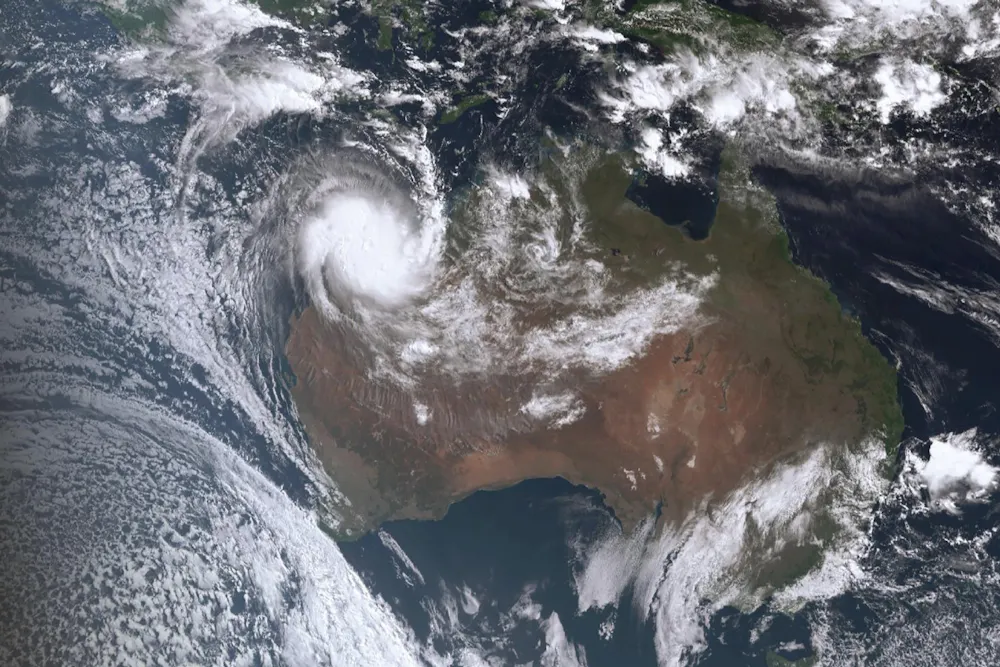
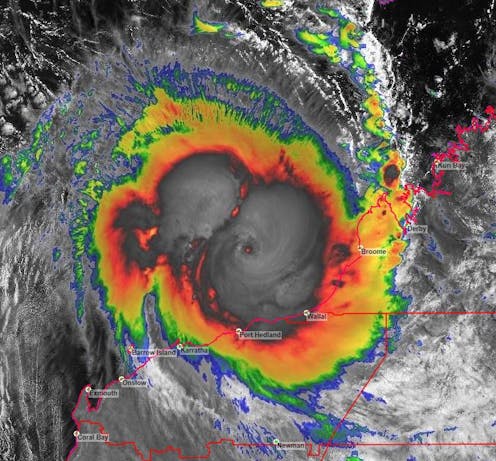
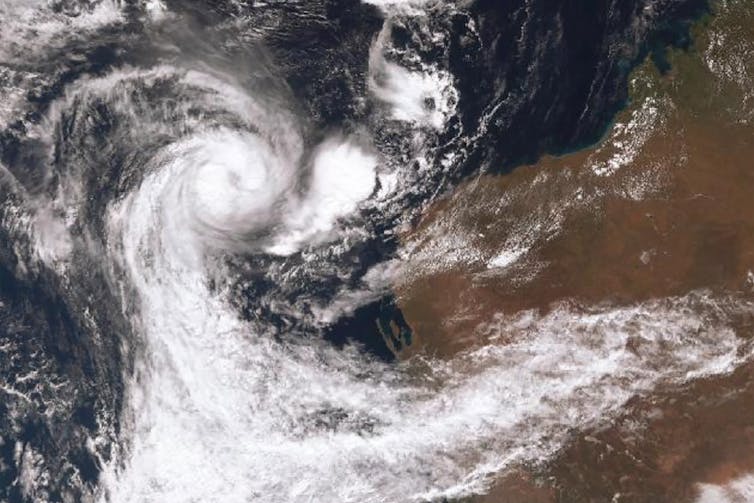
Tropical cyclone Ilsa has been downgraded to a category-three cyclone as it moves southeast through Western Australia. The storm first made landfall as a category-five cyclone, passing near Port Hedland around midnight.
Ilsa smashed into the largely uninhabited Pilbara region (the country’s most cyclone-prone region) at record-breaking speeds. It has delivered Australia’s highest ten-minute sustained wind speed record at landfall: about 218 kilometres per hour. The previous record of 194km per hour came from tropical cyclone George in 2007.
So, does this new speed make Ilsa a particularly menacing disaster? The science of reporting on cyclone wind speeds is highly complex – and it can be easy to misconstrue the figures without some context.
Record-breaking sustained wind speeds
As Ilsa continues to move inland, it looks likely the storm will be further downgraded before it passes into the Northern Territory – and potentially over Alice Springs – later today and tomorrow.
Ilsa made landfall about 100km north of Port Hedland, which hosts the world’s largest export site for iron ore. But a red alert prompted most vessels to be moved farther west in advance, so it only caused minor destruction.
This Bureau of Meteorology satellite image shows Ilsa at 10:30am AEST, on Thursday. BoM
Analysis by James Knight at Aon’s Reinsurance Solutions expects in general it will cause only minor damage due to the remoteness of where it has hit.
Apart from the ten-minute sustained record mentioned above, Ilsa had a one-minute sustained record of 240km per hour, and a three-second sustained record of 295km per hour.
It’s usually the latter, more intense gusts, that cause the most damage in tropical cyclone events. When it comes to making potential damage assessment for insurance purposes, firms will often model damage associated with a three-second sustained wind speed.
But there are several challenges that come with recording and making predictions about cyclone wind speeds.
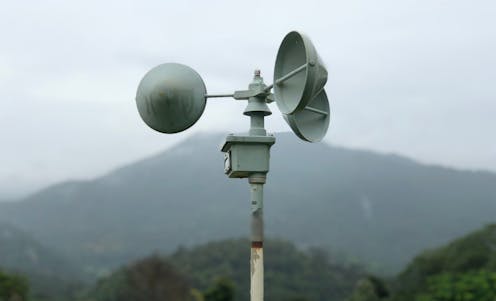
The Bureau of Meteorology maintains a national wind recording database, which uses instruments called anemometers. These measure wind speeds at locations across the country, and are often placed in flat areas, such as near airports.
Their specific placement is very important, because wind can change form as it moves over and through certain types of terrain.
Generally, when we report wind speed we’re referring to atmospheric wind gust, or wind speeds at least ten metres off the ground, which we also call “open terrain” wind speed.
However, wind passing closer to the ground, where the topography varies, will often be higher than winds passing directly above. Wind will speed up, for instance, if it’s squeezed between two hills.
We know from post-cyclone damage surveys that wind speeds can vary significantly from one side of a hill to another. So aspect and slope are very important.
As far as disaster modelling goes, this is no small issue as it can skew recordings. It’s quite possible there would have been wind gusts from Ilsa that exceeded what has been reported so far.
Australia lacks a sufficiently dense network of anemometers set up for long-term testing. If we want to gain insight into the frequency and intensity of extreme cyclone wind speeds over time, we’ll need a national quality-controlled network that has better spatial coverage.
The equipment we have, although it’s designed to withstand extreme conditions, can get knocked around and thrown offline – introducing data gaps in the time series.
Accurate and consistent data points are crucial if we want to record and predict the kinds of extreme winds we might experience during future tropical cyclones. And while the efforts of independent storm chasers and university groups do go some way, taking measurements from different sources can introduce a lot of uncertainty in the overall process.
Cyclone intensity will increase
Since 1975, there have been 48 category-five tropical cyclones to hit Australia – an average of about one per year. Shile Ilsa sets a new record for the strongest sustained wind gust at landfall, category-five tropical cyclones have been occurring with some regularity overall.
It’s worth mentioning Ilsa formed pretty late in the cyclone season. Although the Bureau of Meteorology says cyclones can form any time of the year, its very rare for this to happen outside of April.
Historical trends and climate change projections suggest the number of landfalling cyclones in our region will decrease over time. This has been consistent with real-world data, and puts Australia at odds with other regions of the world, where cyclone frequency is increasing.
However, most climate models also predict a greater proportion of these cyclones will be of a higher strength. The current scientific consensus is we’ll experience these events less often, but when we do, they will be more intense.
Prime Minister Anthony Albanese’s hope for a bipartisan approach on the Voice to parliament referendum has crumbled.
Late last year, the National party declared it would oppose the proposed model, while the Liberal party did the same earlier this month.
Nationals Senator Jacinta Nampijinpa Price said the current Voice model “lacks detail”, “divides us along the lines of race”, and that it’s “a way to push people into feeling guilt for our nation’s history”.
And Opposition Leader Peter Dutton said “it is divisive and won’t deliver the outcomes to people on the ground”.
If these words sound familiar, that’s because in the late 1980s, the Coalition used the same arguments to oppose the creation of another First Nations advisory body, the Aboriginal and Torres Strait Islander Commission (ATSIC).
Indeed, the Coalition has a long-held opposition to an empowered Indigenous advisory body, and Dutton is parroting a well-rehearsed Coalition songbook.
The Coalition’s battle against ATSIC
Over the past 40 years, cooperation between the major parties on Indigenous affairs has been a complicated matter.
Even the ostensibly bipartisan approach to the 1967 referendum – which succeeded in altering the constitution to enable the Commonwealth to make laws for Indigenous people – concealed partisan differences.
Gough Whitlam’s policy of self-determination became self-management under the Coalition in the late 1970s. Bipartisanship deteriorated further in the late 1980s after the Aboriginal affairs minister in the Hawke Labor government, Gerry Hand, announced the need to recognise and legislate Aboriginal self-determination.
Hand’s Aboriginal and Torres Strait Islander Commission (ATSIC) Bill would establish a national commission and regional councils across the country to monitor programs, develop policy and advise the minister. This was styled as a revolution in Aboriginal affairs.
In the 40 hours of parliamentary debates over the bill, clear ideological lines were drawn.
Hand said it was about giving Aboriginal and Torres Strait Islander people access to all levels of government to ensure the right decisions were made about their lives. It was about a new partnership and an attempt to right the wrongs of history.
Opposing it, the Coalition argued it would divide the nation rather than unite it, that it constituted a “black parliament”, that it was a racial law, and that it would not overcome Indigenous disadvantage.
The Liberals and Nationals rejected what they called the “symbolism, separatism and perpetual guilt” of the appeal to history.
But it was Hand’s suggested preamble that worried the Coalition most. It acknowledged the distinct status of Aboriginal and Torres Strait Islander people as prior occupants and original owners of the land. It aimed to provide them with:
full recognition and status within the Australian nation to which history, their prior ownership and occupation of the land, and their rich and diverse culture, fully entitle them to aspire.
The parliamentary debates reveal the Coalition’s visceral rejection of the preamble, which it called a “gross irresponsibility”.
In 1989, then MP John Howard declared the establishment of ATSIC an act of “sheer national idiocy”. Shadow Minister for Aboriginal Affairs Christopher Miles declared his party’s intention to abolish ATSIC if it proceeded as Hand had envisaged.
When the ATSIC bill finally passed, it was stripped of the preamble, and self-determination had been removed from its wording.
What’s happened since ATSIC?
As it turns out, the abolition of ATSIC became a bipartisan affair. In 2004, Prime Minister Howard declared the ATSIC Act would be repealed, after Labor leader Mark Latham announced his decision to do the same if elected to office. Latham suggested a reconstituted body, but Howard declared no intention of replacing it.
While there has been some cooperation on Indigenous policy since, bipartisanship around an advisory body has been a slippery proposition.
Disagreements emerged in 2017 when Labor backed the Referendum Council’s recommendation of a constitutionally enshrined Voice to parliament. Then Liberal leader, Malcolm Turnbull, rejected it.
Bipartisanship cropped up again when Liberal and Labor leaders agreed in 2018 to a restart on the referendum through a parliamentary committee, to find common ground on Indigenous recognition.
Given this history, it’s not surprising two of the main sticking points for the Coalition around the Voice proposal are that it will be permanent, and that it will have a voice to parliament and the executive (the cabinet and government departments).
The last time an Indigenous body advised the executive was when the Keating government sought to legislate native title following the Mabo decision. ATSIC mobilised a large group of Indigenous organisations to present their case to Keating’s Mabo Ministerial Committee.
Then, in a series of intense negotiations with Keating following his draft native title bill in 1993, they salvaged some rights in the face of their near extinguishment.
The resulting Native Title Act was declared by the then Liberal leader, John Hewson, as a “millstone around our country’s prosperity” and a recipe for division.
This week, Howard resurfaced to defend Dutton’s position on the Voice referendum, declaring Dutton had not betrayed the Liberal party.
Howard was speaking a truth – the Coalition’s position on the Voice is entirely consistent with their partisanship in this area of Aboriginal policy since the 1980s.
Everything they now argue to support their “no” vote to the Voice they have long maintained.
Alison Holland receives funding from the Australian Research Council (DP230100714 – Policy for Self-Determination: the Case Study of ATSIC) with Distinguished Professor Larissa Behrendt, Associate Professor Daryl Rigney, Dr Kirsten Thorpe and Lindon Coombes.
Sydney-based startup MilkRun made a big splash with its promise to deliver groceries within ten minutes, raising more than A$85 million from some of the biggest names in Australian venture capital, including Atlassian billionare Mike Cannon-Brookes.
MilkRun’s co-founder and chief executive Dany Milham had already found success with fast-delivering mattress company Koala. Less than a year ago he was confidently predicting MilkRun would be bigger than Coles or Woolworths within ten years.
Today the company is finished, with more than 400 staff made redundant.
It has joined a lengthening list of platform delivery companies that have done their dash in the Australian market. This include three other local startups promising 10-minute deliveries – Send in May 2022, Voly in November 2022, and CoLab which went into voluntary administration last week. British-owned Deliveroo shut down its Australian operations in November 2022, while German-owned Foodora exited in 2018.
In an email to staff, Milham attributed MilkRun’s end to the slowing economy:
Economic and capital market conditions have continued to deteriorate, and while the business has continued to perform well, we feel strongly that this is the right decision in the current environment.
Certainly the effect of things like inflation increasing operating costs (including debt) as well as curbing discretionary spending can’t have helped.
But even in the best of conditions, MilkRun faced an uphill climb.
Could Milkrun ever make money?
Milkrun was, obviously, not profitable. This was not a problem per se. Many startups lose money for years before becoming immensely profitable. For example, Amazon, founded in 1994, didn’t have its first profitable year until 2003.
Some startups require significant scale to be profitable. Others forego profit to grow market share. Presumably the big name-venture capital firms that poured money into MilkRun – Cannon-Brookes’ private investment company Grok Ventures, Airtree Ventures (which invested in Canva), and New York-based Tiger Global Management – saw such potential.
But what was that potential, exactly? How could MilkRun ever scale to become profitable? Was there really a big enough market for super-quick grocery delivery? Or were they swept along by the mania for delivery ventures that came with the pandemic, lockdowns and the surge in online ordering in 2020 and 2021?
A food delivery rider in Sydney, October 2021. Mark Baker/AP
MilkRun commenced during the pandemic – the perfect time for “last mile” deliveries. But by mid-last year, with lockdowns of thing of the past, the numbers didn’t look great.
It was still losing at least $10 on each delivery. Though that was much better than the $40 loss it had initially been making, Milham’s plan to soon become profitable would involve, in June 2022, dropping MilkRun’s 10-minute delivery pledge – undermining its key branding point.
Costs would have gone up anyway
Even without the unexpected economic hit of inflation over the past year, MilkRun faced escalating costs.
To grow market share, it would have to expand out from the high-density, affluent inner-city areas. Operating in more suburban areas, with longer distances and more dispersed customers, would compound “last mile” delivery costs.
Any hint of profitability would also inevitably arouse competition from the major supermarkets, whose thousands of suburban stores and supply chains positioned them to compete in the express delivery market any time they chose.
The cost of MilkRun’s “dark store” distribution network, set up when rents were suppressed by closed borders, were also likely to increase.
Narrow path to profitability
Perhaps MilkRun’s goal was to grow market share until drone delivery became viable or other business lines (such as alcohol delivery) and profit opportunities arose. But, on present unit economics, even in ideal conditions, this was a tall ask in a post-pandemic world.
Arguably the writing has been on the wall for about year, with MilkRun reportedly unable to persuade any investors to sink more money into the company.
Venture capitalists know many of the startups they fund will fail. They will back an idea early on, when a path to profitability is unclear. But they will not keep pumping in more money if a path does not materialise.
It is easy to be a “Monday expert”, decrying decisions from a position of perfect hindsight. But MilkRun always had a challenging business model, something ever more apparent as the world emerged from lockdowns, demand subsided, cost of living pressures increased and business costs rose.
Mark Humphery-Jenner is on the Investment Committee of Sydney Angels. He does not have any direct financial interest with any companies mentioned in this article.
Most communities along the northwest coast of Western Australia appear to have dodged a bullet after Cyclone Ilsa made landfall overnight. While some structures, such as the Pardoo Roadhouse, were damaged, the destruction was less than we feared.
But unfortunately, there will be a next time. Climate change is predicted to bring increasingly severe and frequent weather events and disasters.
As those in recently flooded regions of New South Wales and Queensland know, it takes a long time to rebuild and recover from disasters. And alarmingly, our resilience is being undermined by the housing crisis, underinsurance and inadequate planning.
The problems can conspire to worsen inequality. It means vulnerable populations are hit hardest when disaster strikes.
The cost of housing is driving many people into financial stress. With little if any money to spare, many Australians are likely not to have insurance. This leaves them extra vulnerable should disaster hit.
Renters are among those least likely to have insurance. This means they may struggle to pay for alternative accommodation if their home is affected by a disaster.
Research I’ve co-authored has revealed tragic story after tragic story of people realising too late they were not insured, or their level of insurance was too low to cover the cost of rebuilding their lives after disaster.
A national housing shortage means options can be limited for both renters and homeowners looking for alternative accommodation after their homes are damaged in a disaster.
Increasing housing supply may address some of these issues. However, inadequate planning can lead to housing developments in disaster-prone areas such as floodplains. It can also lead to environmental degradation that can increase exposure of homes and communities to disasters.
For example, coastal ecosystems such as the mangroves of northern Australia can reduce the impact of storms. They slow the speed and size of waves and stabilise soil and sediments and can offer some protection to nearby settlements.
But development for housing or infrastructure near coastal regions can put these ecosystems at risk.
Insurance for such homes and communities may become unaffordable or unattainable as disasters worsen.
Add in the tyranny of distance faced by people living in remote and rural Australia, and we see increasing numbers of people and communities at risk from the social and financial impacts of disasters in the era of climate change.
Failing to address this mix can worsen inequality
If left unaddressed, our current housing crisis coupled with climate change could see more and more people living in the kinds of shanty towns and tent cities seen around the time of the Great Depression.
We risk turning back the clock on gains made in improving urban liveability. This will further stretch the embattled social service sector and the capacity of governments to ensure community resilience.
A key aspect of resilience is lowering the gap between rich and poor, recognising that people and communities recover better if they can work together.
So any action we take needs to be focused on social equity and involve coordination across the three tiers of government.
Planning needs to respond to the relationship between disasters, housing, and insurance.
This includes a systematic and equitable effort to relocate communities out of high-risk areas. It means protecting ecosystems that in turn help to protect communities.
It also means ensuring new housing is safe, affordable, insurable and located in safe places, designed to withstand local risks.
Source: The Conversation (Au and NZ) – By Ian Kemish, Adjunct Professor, School of Historical and Philosophical Inquiry, The University of Queensland
Humberto Portillo
Australians are jetting back out into the world again. The numbers are still below pre-pandemic levels, but almost 1.1 million Australians left the country in December last year – compared to 1.3 million in December 2019. According to information provided by the Department of Foreign Affairs and Trade, passport applications smashed records in 2022, averaging more than 250,000 each month in the second half of the year.
International travel is a safe, positive experience for most people, but unfortunately things do go wrong for some travellers. Trouble, when it comes, can involve anything from lost passports and small-scale theft to serious welfare problems, hospitalisation and arrests.
In these cases, DFAT’s consular service will be expected to do what it can to assist. But where does personal responsibility begin and end when we leave our shores? What should we expect from our government, and what can we do ourselves to minimise the risks?
Travellers behaving badly
As a former head of the consular service in the early 2000s, I know the caseload involving overseas Australians is not limited to major, news-grabbing situations, like the recent kidnapping of an Australia-based academic by a criminal gang in Papua New Guinea, or the impact of the devastating earthquake in Turkey and Syria on Australians and their families.
These were serious situations requiring intensive work from our diplomats, but there is much more to the job than that.
From June 2021-22, an average of four Australians died overseas every day, while an average of two Australians were arrested every day – on matters ranging from immigration breaches to drugs crime, theft and fraud.
In total, nearly 16,000 Australians turned to their local Australian overseas mission that year for help in “crisis cases” – more than triple the number in 2018-19 before the pandemic. COVID-related repatriations arranged by DFAT were counted separately – there were more than 62,000 of these in the past three years.
Carrying an Australian passport means we can rely on a consular service to provide support in these situations. But expectations have grown among travellers in recent decades, partly because of the speed of our communications and the instant public feedback we receive via social media.
While most Australians are self-reliant travellers, there are still many not living up to their side of the bargain. Most importantly, there are still too many not taking out appropriate travel insurance. Others disregard official travel warnings and then turn to the government for help when things go wrong.
Then there are those whose expectations are just inappropriate – asking officials to arrange opera tickets or look after their pets, for example.
More seriously, expectations can be very hard to manage in arrest cases overseas. Some Australians are shocked their citizenship doesn’t come with a “get out of jail free card”. But we are all subject to local laws and authority, no matter what notions we might have about the standards of justice that apply in some countries.
The service will check periodically on the welfare of prisoners overseas, guide them towards local legal representation and monitor their trials. But that’s about it. This applies to foreigners imprisoned in Australia, too.
To be sure, there is occasionally a case that is clearly so arbitrary or unjust, our government calls for the release of the individual. This was the case for Sean Turnell, who was imprisoned in Myanmar for political reasons until being released last year. But unlike Turnell, most Australian prisoners overseas probably have a case to answer.
Three ways to stay safe
1) Be informed about where you are going
Australians have a responsibility to know what’s happening at their planned destinations. The conflicts in Ukraine and elsewhere have impacted many travellers, as have major weather events and natural disasters.
With international flights returning to normality over the last year, DFAT’s COVID repatriation program has largely wound up. Travellers once again need to look to their own resources – or their travel insurance policies – to ensure they get home.
The government’s Smartraveller website is a reliable source of up-to-date information on everything from emerging health risks to cultural and legal issues in specific countries to the local security situation. They have recently launched a fresh advertising campaign in an effort to highlight the importance of avoiding trouble in the first place.
2) Stay in touch with family back home
The consular service deals with hundreds of “whereabouts” inquiries each year. And if disaster strikes when you are travelling somewhere, your family and friends will be worried.
In each of the major consular disaster responses I was involved in, including the September 11 attacks and the 2002 Bali bombings, there were people who caused their loved ones untold grief by not letting them know they were safe.
In my recent book, The Consul, I recount the story of one Australian who worked on an upper floor of the World Trade Center in New York, but took ten days to let his family know he had actually been in London when the attacks took place.
If there’s one thing travellers really should do, it’s to take out travel insurance. Most people think about insurance as a way of covering themselves for flight cancellations or for the theft of personal items. But if you get sick or are injured overseas – or even in the case of a death – insurance is critical. The Australian government cannot just step in and pay for a medical evacuation.
From my time as consular chief, I know that some Australians were forced to sell their homes to cover their medical costs overseas. People also often find themselves under-insured, or are surprised to learn that certain activities, such as adventure sports, are not covered.
Young people are the least likely to take out insurance. Travel industry surveys indicate about 12% of travellers below the age of 30 do not intend to take out insurance, and the number is higher for those heading to destinations in the developed world regarded as “safe”. It really doesn’t work like that though – hospitalisation in the United States without insurance can mean financial disaster.
It doesn’t take much to minimise the risk of difficulties turning into disasters overseas.
Ian Kemish is a former senior Australian diplomat who served as head of the Australian consular service from 2000 to 2004. His book The Consul was published by UQP in 2022.
New Zealand Parliament Buildings, Wellington, New Zealand.
New Zealand Politics Daily is a collation of the most prominent issues being discussed in New Zealand. It is edited by Dr Bryce Edwards of The Democracy Project.
Finding life on other planets might well be the holy grail of astronomy, but the hunt for suitable host planets that can sustain life is a resource-intensive task.
The search for exoplanets (planets outside our Solar System) involves competing for time on Earth’s biggest telescopes – yet the hit rate of this search can be disappointingly low.
In a new study published today in Science, I and my international team of colleagues have combined different search techniques to discover a new giant planet. It could change the way we try to image planets in the future.
Imaging planets is no small feat
To satisfy our curiosity about our place in the universe, astronomers have developed many techniques to search for planets orbiting other stars. Perhaps the simplest of these is called direct imaging. But it’s not easy.
Direct imaging involves attaching a powerful camera to a large telescope and trying to detect light emitted, or reflected, from a planet. Stars are bright, and planets are dim, so it’s akin to searching for fireflies dancing around a spotlight.
It’s no surprise only about 20 planets have been found with this technique to date.
Yet direct imaging is of great value. It helps shed light on a planet’s atmospheric properties, such as its temperature and composition, in a way other detection techniques can’t.
HIP99770b: a new gas giant
Our direct imaging of a new planet, named HIP99770b, reveals a hot, giant and moderately cloudy planet. It orbits its star at a distance that falls somewhere between the orbital distances of Saturn and Uranus around our Sun.
The HIP99770 star is almost 14 times brighter than the Sun. But since its planet has an orbit larger than Saturn’s, the planet receives a similar amount of energy as Jupiter does from the Sun. Author provided
With about 15 times the mass of Jupiter, HIP99770b is a real giant. However, it’s also more than 1,000℃, so it’s not a good prospect for a habitable world.
What the HIP99770 system does offer is an analogy to our own Solar System. It has a cold “debris disk” of ice and rock far out from the star, akin to a scaled-up version of the Kuiper Belt in our Solar System.
The main difference is that the HIP99770 system is dominated by one high-mass planet, rather than several smaller ones.
Images of the HIP99770 system, taken with exoplanet imager SCExAO (Subaru Coronagraphic Extreme Adaptive Optics Project) coupled with data from the CHARIS instrument (Coronagraphic High-Resolution Imager and Spectrograph). Author provided
Searching with the light on
We reached our findings by first detecting hints of a planet via indirect detection methods. We noticed the star was wobbling in space, which hinted at the presence of a planet in the vicinity with a large gravitational pull.
This motivated our direct imaging efforts; we were no longer searching in the dark.
The extra data came from the European Space Agency’s Gaia spacecraft, which has been measuring the positions of nearly one billion stars since 2014. Gaia is sensitive enough to detect tiny variations of a star’s motion through space, such as those caused by planets.
We also supplemented these data with measurements from Gaia’s predecessor, Hipparcos. In total, we had 25 years’ worth of “astrometric” (positional) data to work with.
Previously, researchers have used indirect methods to guide imaging that has discovered companion stars, but not planets.
It’s not their fault: massive stars such as HIP99770 – which is almost twice the mass of our Sun – are reluctant to give up their secrets. Otherwise-successful search techniques can rarely reach the levels of precision required to detect planets around such massive stars.
Our detection, which used both direct imaging and astrometry, demonstrates a more efficient way to search for planets. It’s the first time the direct detection of an exoplanet has been guided through initial indirect detection methods.
Gaia is expected to continue observing until at least 2025, and its archive will remain useful for decades to come.
Mysteries remain
Astrometry of HIP99770 suggests it belongs to the Argus association of stars – a group of stars that moves together through space. This would suggest the system is rather young, about 40 million years old. That would make it roughly one-hundredth of the age of our Solar System.
However, our analysis of the star’s pulsations, as well as models of the planet’s brightness, suggest an older age of between 120 million and 200 million years. If this is the case, HIP99770 might just be an interloper in the Argus group.
Now that it’s known to host a planet, astronomers will aim to further unravel the mysteries of HIP99770 and its immediate environment.
Simon Murphy receives funding from the Australian Research Council. He contributed to this research whilst at the University of Sydney, as well as at the University of Southern Queensland, where he now works as an ARC Future Fellow.
Source: The Conversation (Au and NZ) – By Lyria Bennett Moses, Professor in the Faculty of Law and Justice at UNSW; Director of the UNSW Allens Hub for Technology, Law and Innovation, UNSW Sydney
Michael Dwyer/AP
Australia has joined other countries in announcing a ban on the use of TikTok on government devices, with some states and territories following suit. The rationale was based on security fears and, in particular, the risk the platform will be used for foreign interference operations by China.
TikTok is a video-sharing platform operated by ByteDance, a company headquartered in Beijing, but incorporated in the Cayman Islands. Data is allegedly stored in the US and Singapore.
Like similar sites, TikTok’s privacy policy indicates an expansive approach to the collection and use of personal information. It can collect information from users and third parties (such as advertisers), and it can draw inferences about its users’ interests.
All of this information can then be shared with TikTok’s partners and service providers to, among other things, personalise content and advertising.
The policy also says information will be shared when there is a legal requirement to do so. China’s national intelligence law obliges citizens and organisations to support, assist and cooperate with national intelligence efforts, which could include ByteDance sharing people’s TikTok data.
While TikTok denies it would hand over data in such circumstances, there are reports that data from American users has been accessed by China-based employees. TikTok has also censored content that is politically sensitive in China.
The problem with focusing on only one app
While the Australian government’s response can be explained through this logic, questions remain.
Given the ban only affects government devices, couldn’t the same people be susceptible to foreign interference through their use of TikTok on personal devices?
What about other apps, such as Facebook, that collect significant amounts of user data – are these more secure than TikTok? Even if other digital platforms don’t have connections with China, couldn’t they share or sell data to other entities, such as advertisers, data brokers or business partners? And mightn’t those third parties have connections with China? Or other countries with similar laws?
A final point: foreign interference can take place on a range of digital platforms. Russia has run information campaigns designed to influence US elections using platforms such as YouTube, Tumblr, Google, Instagram, PayPal, Facebook and Twitter.
In other words, the problem of digital security and foreign interference is bigger than just one app or the use of government devices.
Indeed, the Department of Home Affairs notes that foreign interference activities are not only directed towards government, but also academia, industries, the media and other communities (which is actually everyone).
Banning TikTok on government devices does eliminate one risk, but the broader pool of risks remain both in government and beyond.
A discussion paper on the new strategy was released earlier this year, with submissions due this week.
This process will hopefully result in a more holistic strategy on how to manage the cybersecurity and foreign interference concerns that led to the TikTok ban.
Rather than the whack-a-mole tactical response of banning one app at a time, the strategy could provide clarity on how the government will manage issues around weak security on mobile apps (particularly used by people in sensitive sectors), as well as the potential for this to be an entry point for foreign interference.
This could include such things as:
educating people on digital security and foreign interference
streamlined reporting channels for data breaches, foreign interference attempts, cybercrime, bugs and vulnerabilities
developing or recommending the use of appropriate standards on cybersecurity, which could include references to international standards in areas such as information security and data governance
strengthening cooperation between government and platforms and civil society
targeted prohibitions, which may include bans on apps that could share data with countries that might then use it for foreign interference.
This kind of strategic approach, particularly on the education side, would give Australians better tools to arm themselves against foreign interference online, which as Home Affairs emphasises, is the “best defence” available.
A stronger privacy act could help, too
Another relevant policy development is the government’s review of the Privacy Act, which is the primary Australian law on data protection.
Changing the rules about how data is collected and used by platforms could provide less fodder for those running foreign interference operations. This could include banning unfair uses, such as targeted messaging based on a psychological profile. If the platforms don’t facilitate these uses, it becomes more difficult for foreign governments to use these tools for manipulation.
Enhancing funding for the primary data regulator, the Office of the Australian Information Commissioner, could also strengthen enforcement across the board.
Beyond Australia, at the United Nations level, some questions about whether international law can be applied to cyberspace have been resolved, while others remain open. Australia’s position on these issues could also be clarified.
Ultimately, what is needed is a strategy, rather than tactics, and better coordination of relevant policies across government. The TikTok example also highlights a truism that we shouldn’t think in terms of privacy or security, but rather privacy and security.
While there is an occasional need to choose between these two values (for example, when government agencies surveil those suspected of a crime, terrorism or espionage), in the vast majority of situations security is enhanced when the privacy of personal information is protected.
For example, the more personal information a foreign agent can access about citizens working in sensitive areas, the better it can target espionage and influence operations. If social media companies are restricted in how they collect, use and share Australians’ data, we can take significant steps towards protecting everyone from foreign interference and other harms.
We need all the policies and associated agencies (cyber, privacy, education, platform regulation, international relations, national security and more) working together if we are to meet the current challenges. It may make sense to ban TikTok on government devices, but we need to address this problem more than one app at a time.
Lyria Bennett Moses receives funding from the Cyber Security Cooperative Research Centre; the UNSW Allens Hub for Technology, Law and Innovation receives funding from Allens. Within the last year, Lyria has done research for the Department of the Treasury, the Australasian Institute for Judicial Administration, and the NSW Information and Privacy Commission. She serves on the Advisory Board of the Gradient Institute, the Executive Committee of the Australian Chapter of the IEEE’s Society for the Social Implications of Technology, the NSW Information and Privacy Advisory Committee, and Standard Australia’s Committee IT-043 (Artificial Intelligence). She also engages with and presents for a wide variety of bodies, including not for profits and politically-active organisations. The work on this article represents her own views and do not necessarily align with the positions taken on these issues by any of the above.
Source: The Conversation (Au and NZ) – By Hannah Dahlen, Professor of Midwifery, Associate Dean Research and HDR, Midwifery Discipline Leader, Western Sydney University
With the days becoming noticeably shorter, winter is on its way in the Southern Hemisphere.
Most pregnant women are aware of the recommendations around getting vaccinated against influenza (flu) and pertussis (whooping cough). However, COVID is still relatively new, meaning women who have never been pregnant before may be unaware of the current recommendations and research.
Like the flu and whooping cough, COVID can strike at anytime over the course of the year – as shown by the ongoing reports of COVID cases and deaths in Australia.
However, viruses that cause respiratory conditions thrive in cold, dry conditions, and our bodies change how they respond to disease. We will likely stay indoors more in closed spaces that are heated – making the air drier – and not well ventilated.
It all makes for a worrying mix for expectant parents – and some will also be worried about vaccines.
1 in 10 pregnant women are vaccine hesitant
We are following more than 6,000 Australian women in the Birth in the Time of COVID-19 study who were pregnant or gave birth during the first two years of the pandemic. We also sent them follow-up surveys at two months, six months, 12 months and 24 months after giving birth.
This sample included more respondents who could read and write English and were born in Australia than the general population and were generally more socioeconomically advantaged than average. So the real level of hesitancy about COVID vaccines may be higher.
Our latest findings reporting on 2,144 responses to questions on vaccine uptake, published in the journal BMJ Open show around one in ten pregnant women and just over one in 13 postnatal women were hesitant to get a COVID vaccination.
Those who expressed hesitancy during pregnancy were more likely to live in a state other than New South Wales, were younger (aged under 30), did not have a university education and earned less than A$80,000. They were also more likely not to have pregnancy risk factors and were generally less satisfied with life.
Concerns about taking any medication when pregnant are common and understandable.
But getting COVID when pregnant and unvaccinated leads to a higher risk of severe illness which can require hospital admission and, sometimes ventilation for breathing assistance. The baby may have a higher risk of premature birth (before 37 weeks of pregnancy), stillbirth or admission to the hospital newborn unit.
COVID vaccination protects the mother and can provide some protection to babies by transferring antibodies through the placenta (during pregnancy) or through breast milk (during breastfeeding).
New research from the Doherty Institute shows pregnant women mount a strong immune reponse to COVID and vaccination provides an advantage by inducing cells that fight the infection.
What do pregnant women need to know now winter is coming?
If you are trying to become pregnant, you do not need to delay vaccination or avoid becoming pregnant after vaccination.
For pregnant women, there are special considerations that need to be discussed so informed decisions can be made.
Advice from the Department of Health and Aged Care is that if you are pregnant, you should have two COVID vaccine doses (called the primary course). If your immunity is severely compromised, you should receive a third dose of a COVID vaccine.
An mRNA vaccine such as Pfizer is recommended as part of the primary course. If you can’t have Pfizer, you can have Novavax. The original Moderna vaccine is no longer available in Australia.
While research has shown the Pfizer vaccine is safe if you are pregnant and/or breastfeeding, there is less data available on Novavax in pregnancy.
Being pregnant during the pandemic has brought additional worries. Shutterstock
What if you’re already vaccinated?
If you are pregnant and have previously been vaccinated then you can have a booster dose, six months after your last vaccine dose or most recent COVID infection. Recommendations for booster doses if you are pregnant are now the same as for non-pregnant people of the same age. Discuss this with your health provider.
As of earlier this year, pregnancy is no longer considered a risk factor for severe illness for those who have already had their primary COVID vaccinations plus a booster, provided they do not have any special medical risks.
To book a COVID vaccine or booster dose, use the health Service Finder or text “Hey Eva” a callback service for Easy Vaccine Access.
The authors do not work for, consult, own shares in or receive funding from any company or organisation that would benefit from this article, and have disclosed no relevant affiliations beyond their academic appointment.
In Aboriginal and Torres Strait Islander culture, a totem is a spiritual emblem from the natural world, such as a plant or animal. The totem is gifted to an individual by a parent or elder, usually around the time of their birth. Some people have several totems.
The connection is mutually beneficial: the totem is a protector of the person, who in turn shows their respect for the totem by caring for it.
We wanted to find out if totemic species, when gifted to schools by Traditional Custodians, could generate care for threatened species – while also embedding cultural awareness and Indigenous knowledge in the Australian science curriculum.
We ran a pilot program to test the idea and build an evidence base. The program was successful. Care for the totemic species increased and students expressed enthusiasm for this approach. And there were other benefits too.
Connecting kids with nature and culture: A totemic species for Carlton North Primary School.
The matted flax-lily (Dianella amoena) is culturally significant to the Wurundjeri people. The berries and leaves are used for food and tea, weaving and making whistles to deter snakes.
But the species is critically endangered in Victoria and listed as endangered nationally. After land clearing for urban development, it is thought only 1,400 plants remain.
Students in all year levels at Carlton North Primary School in Melbourne worked with Uncle Dave Wandin, a Wurundjeri Elder, to create habitat for the flax-lily and learn about the species.
The program sought to embed both Indigenous and Western knowledge in a balanced and holistic way. Over ten weeks, the biology curriculum addressed sustainability and the environment, incorporating interactive and outdoor activities.
In one activity, students helped to construct a grassland ecosystem habitat with plantings of the flax-lily. Other activities included interactive food web role play, scientific drawing, seed planting, learning about Indigenous land management and the use of native ingredients in modern baking.
The grassland flax-lily has blue, star-shaped flowers from spring through autumn followed by purple berries. Shutterstock
Connecting to nature
We used surveys of students, teachers and parents to understand the outcomes of the program.
After participating in the program, students had a better understanding of the matted flax-lily and its ecology. They also felt more connected with nature and indicated that they had learned about the Traditional Custodians and the importance of the totemic species. One student said:
I really enjoyed science this term (and) I feel much closer to our Indigenous culture than I ever have.
Students told the lead teachers that they wanted to bring the blue-banded bee back and plant native species in their own gardens:
I never knew about the matted flax-Lily and that it was going extinct and now I’m planning to plant some in my backyard!
Teachers also told us they felt better equipped to teach students about traditional ecological knowledge in a culturally appropriate manner. The main educators in the program thought the approach could be extended to other disciplines, including engineering, art and mathematics.
Parents and guardians also felt positive, referencing their child’s high engagement as well as their own interest in learning more about Indigenous culture and totemic species. One parent stated their child started to ask regularly if they could “plant native plants because of how important they are”.
Students went beyond the project team’s expectations and began to take care of the garden themselves, protecting their species during break times at school, showing the garden to their families and teaching them about the different species within it.
Overall, the program improved student engagement with nature and science. This permeated through to parents and guardians.
Weaving into the curriculum
Our research has the potential to improve teaching of Indigenous content across Australia. The program shows how Indigenous science can be embedded into the existing curriculum in a holistic way.
Student engagement with nature and science also increased along with personal feelings of connection and responsibility to the environment.
Additional benefits included the creation of habitat for threatened species. Imagine if every school in Australia contributed in this way to the conservation of biodiversity?
The murnong or yam daisy has white tuberous roots that may be eaten raw or baked. Nicholas Rakotopare, Author provided
There’s also evidence that children playing in biodiverse schoolyards have improved cognitive function and reduced behavioural issues. Finally, greening our schoolyards can provide a critical cooling function.
Key to the program’s success was recognition of the time commitment from teachers and Wurundjeri Elders and recompensing them appropriately. This was crucial for facilitating deep involvement.
The school curriculum is already crowded with many competing demands. Expecting that an additional body of material can be incorporated without appropriate time and resources would have been impractical. Likewise, the time and knowledge of Traditional Owners is in high demand, so adequate provision of resources was an important feature of the program.
Further, embedding the material into an existing subject school-wide meant the program did not impose further demands on the curriculum. Instead, it was an efficient and effective way to deliver the material.
This also generated a sense of the topic being “core” to the curriculum, rather than an optional “add-on”. This alignment of the program with existing curriculum and the fact that the budget – while critical – was modest, mean it is entirely feasible to imagine implementation of similar programs in many other schools.
We hope that the program will be picked up and implemented in other schools across Australia. Ideally, the concept of totemic species will ultimately become integrated into the Australian curriculum.
The authors would like to acknowledge Emily Gregg, Benjamin May, Dave Wandin, Michael Harrison, Marnie Pascoe, Fiona McConachie and Alex Kusmanoff for their contribution to the research that underpins this article. Thanks also to the principal, staff, students and parents of Carlton North Primary School for supporting the project. Visit our website to download the Totemic Species in Schools resources, including the program curriculum, findings factsheet, and evaluation survey.
Zadie was one of 283 students involved in the pilot Totemic Species in Schools program at Carlton North Primary School, which culminated in the planting of a native garden. Sarah Bekessy, Author provided
Natasha Ward research cited in this article was undertaken by the Threatened Species Recovery Hub with funding from the Australian Government’s National Environmental Science Program (Phase 1).
Bradley J. Moggridge is affiliated with the University of Canberra, is a Governor with WWF Australia and a Member of the Wentworth Group of Concerned Scientists
Georgia Garrard receives funding from the Australian Research Council. Research cited in this article was undertaken by the Threatened Species Recovery Hub with funding from the Australian Government’s National Environmental Science Program (Phase 1). She is chair of Birdlife Australia’s Research and Conservation Committee, a member of Zoos Victoria’s Scientific Advisory Committee and a member of the Sustainable Subdivisions Framework advisory group for the Council Alliance for a Sustainable Built Environment.
Sarah Bekessy receives funding from the Australian Research Council, the National Health and Medical Research Council, the Ian Potter Foundation and the European Commission. Research cited in this article was undertaken by the Threatened Species Recovery Hub with funding from the Australian Government’s National Environmental Science Program (Phase 1) and the Victorian Department of Land, Water, Environment and Planning. She is a Lead Councillor of the Biodiversity Council, a Board Member of Bush Heritage Australia, a member of WWF’s Eminent Scientists Group and a member of the Advisory Group for Wood for Good.
Source: The Conversation (Au and NZ) – By Catharine Coleborne, Professor of History, School Humanities, Creative Industries and Social Sciences, University of Newcastle
This article is the first in our series on big ideas for the Universities Accord. The federal government is calling ideas to “reshape and reimagine higher education, and set it up for the next decade and beyond”. A review team is due to finish a draft report in June and a final report in December 2023.
There is a persistent idea that a generalist degree, such as a Bachelor of Arts, is less likely to land you a job when compared to a specific qualification. This is personified by the stereotypical arts student as a directionless young person who has chosen to explore sprawling and eclectic subjects with no clear outcomes.
This was reinforced by the introduction of the Job-ready Graduates package in 2020, which made most arts and humanities subjects more expensive to study from 2021. The cost of a Bachelor of Arts degree rose by 113%. (Incidentally, Universities Australia called for Job-ready Graduates to be scrapped this week, noting, “price signals as a driver of student choice simply do not work”.)
Either way, the idea a generalist degree just leads to overqualified graduates serving coffee Reality Bites-style is not only wrong, it is also a misguided understanding of what we need from graduates today and in the future.
Research shows social science and humanities graduates are getting jobs after their studies.
The 2022 Graduate Outcomes Survey found almost 73% of humanities, culture and social sciences graduates were working in a range of government, non-government and business roles within several months of graduating.
This was an increase of 15% on the previous year, and was noticeably better than the overall average increase of just under 10%.
Why are we so fixated on ‘vocations’?
Since the 19th century, “work” has been understood through types of “occupations” that were undertaken for a significant period of a person’s life, with opportunities for improvement and promotion, and potentially framed as “careers”.
But the idea individuals train to learn a set of skills or knowledge that prepares them for one stable career is outdated.
What US professor Frank Parsons (considered the father of careers counselling) called “choosing a vocation” in 1909 has been supplanted by employers who want people who are good at problem-solving and analytical thinking, have digital skills, and can demonstrate leadership, initiative and resilience.
We also need to reposition our understanding of “employability” by considering the uncertain future university graduates are heading into.
Along with the pandemic and climate change, we face increased global conflict, and important questions about how to support displaced peoples around the world and in our own region. There is also growing anxiety about what artificial intelligence will mean for our lives and workplaces.
Employers are increasingly looking for people with analytical and problem-solving skills. Mikhail Nilov/Pexels
Research shows our society will need the skills, deep knowledge and understanding to reframe what it means to create cohesive multicultural and diverse communities. It will need to support all lives – including the very young and the aged – with meaning and purpose in order to forge humanity’s future.
To do this, we should reimagine the future workforce through values, competencies and skills, not “professions”.
The rapid social change we are undergoing means future graduates will need to be highly flexible. Vocational degree training as we have understood it could leave students stranded and without the critical capability to understand how to adapt to new roles. For example, leaders in the profession of social work have predicted the vocational degree may need to be replaced by agile skills.
This is where the generalist degree comes in
This is why the generalist degree has a big part to play in the emerging higher education landscape for graduates. Humanities, social science, general science, technology and creative industries fields such as design can deliver adaptable, flexible mindsets.
Generalist graduates learn to argue, debate, discuss, engage with ideas, write and present.
These degrees also offer the so-called “soft skills” such as emotional intelligence, communication and teamwork.
A bold idea
What if the upcoming Universities Accord decided that generalist degrees, not vocational qualifications, were the future for university learning in Australia?
This could see more public-private partnerships to increase work experience and practical opportunities during study. This could create experiences in the community, industry and government.
In doing this, we should embrace the possibility of the broad curriculum that is offered by arts, humanities, social science and science degrees, but insist on elevating their transferable skills to set students up for a lifetime of work and learning.
However, a shift towards revaluing – and even elevating – generalist degrees will require a radical unpacking of degree structures, ways of teaching and learning, fee structures and models.
More students in Australia could be encouraged to expand their learning in a wide range of areas, but specialise and choose pathways by their second and third year of studies, with postgraduate credentials to follow.
Recent history tells us human adaptability will help us face future threats.
Young people want to engage in learning that will prepare them for futures we don’t yet see. Valuing the generalist degree – with graduates able to enjoy learning, develop the courage to think, reflect, interpret, evaluate, humanise, respond and create – will give young people confidence and a sense of their own agency.
Such a model could be world-leading.
Catharine Coleborne does not work for, consult, own shares in or receive funding from any company or organization that would benefit from this article, and has disclosed no relevant affiliations beyond their academic appointment.
Source: The Conversation (Au and NZ) – By Roger Wilkins, Professorial Fellow and Deputy Director (Research), HILDA Survey, Melbourne Institute of Applied Economic and Social Research, The University of Melbourne
Shutterstock
It has long been known that incomes in Australia are more evenly distributed than in the United States.
But Australia has been thought to be a less equal society than many European ones, sitting somewhere in the middle between the United States and countries such as France.
We can measure income equality using the so-called Gini coefficient, which gives a score of 0 to a country in which incomes are completely evenly distributed and a score of 1 to a country in which one person has all the income.
The OECD gives the US a score of 0.375, Australia a score of 0.32 and France a score of 0.29.
But we’ve done work using a broader measure of income that incorporates all taxes paid, all company profits and (importantly) in-kind benefits such as health and education. And we’ve found the positions of Australia and France are reversed.
The US has an even less equal distribution of incomes under this measure (0.49 compared to 0.375), France a somewhat less changed distribution (0.33 compared to 0.29), and Australia a more equal distribution (0.28 compared to 0.32), making Australia the most equal country of the three in terms of income broadly defined.
We can show this in another way, comparing the share of broadly defined national income going to the top 10% of income earners.
On this measure, the US is easily the least equal of the three, with high earners getting 39% of national income. In Australia and France they get about 25%.
The US is also the least equal of the three, with Australia and France almost tied, when comparing the share of broadly defined income going to the bottom 50%.
In Australia and France, the bottom 50% get the most, at around 29%. In the US, the least, at 19%
We used a method pioneered by researchers in the US and Europe that combines household survey data, administrative tax data and national accounts data to create what are known as distributional national accounts.
Compared with previous measures of inequality, it fully accounts for the effects of Australia’s system of in-kind government provision of services such as health and education, all company profits (including those not paid out as dividends) and all taxes including income tax, company tax and the goods and services tax.
Although we find Australian incomes are much more evenly distributed than previously thought, they have gotten less equal in the past three decades.
Since 1991, the average incomes of Australia’s top 1% – and the top 0.1% in particular – have grown far faster than the average incomes of the bottom 90%.
We also find a persistent gender gap in incomes, even when we account for income sharing in households, and for government spending on education, health, housing and social programs. Broadly measured, female economic wellbeing remains below that of males.
Our approach, described in full in our paper and guided by previous studies for France and the US, leaves room for refinement.
But it is enough to make clear that standard measures that leave out components of income and don’t account for taxes and benefits don’t tell the full story.
Roger Wilkins receives funding from the Australian Research Council.
Nicolas Herault receives funding from the French Ministry of Higher Education and Research and the French National Research Agency.
Matthew Fischer-Post does not work for, consult, own shares in or receive funding from any company or organization that would benefit from this article, and has disclosed no relevant affiliations beyond their academic appointment.
As it stands in Aotearoa New Zealand, beneficiary fraud (fraud by people on benefits) is largely dealt with under the Crimes Act, while tax evasion is prosecuted under the Tax Administration Act. This, among other factors, means beneficiaries engaging in financial fraud face significantly stiffer penalties than professionals doing the same.
This inconsistency in how fraud is handled in New Zealand underscores the strong case for ensuring financial crimes are treated the same. Sentencing guidelines are a good place to start.
To be fair, sentencing is more of an art than a science. The art is balancing consistency with fairness, alongside all the aims of sentencing: deterrence, denouncing the behaviour, holding offenders accountable, providing for the interests of the victim and, in some cases, protecting the community, assisting in rehabilitation, and providing reparation.
It probably goes without saying that the combination of these objectives creates a system that is multi-faceted and complex. What may be less clear is that the complexity generates the potential for inconsistencies in sentencing decisions. Sentencing guidelines could help.
Creating clarity in a complex system
Sentencing guidelines provide guidance to judges on the length and type of sentence that is appropriate for a particular offence. Typically they provide a sentencing range with some, usually limited, opportunity to depart from this range. Guidelines prescribe sentences based on the seriousness of the current offence, while considering any prior offending.
This approach to sentencing is not unheard of in New Zealand. Guideline judgements exist for a range of serious offences, including aggravated robbery, sexual violation, grievous bodily harm and various categories of manslaughter. These guidelines primarily deal with offending that is likely to result in a sentence of imprisonment.
But this limited approach is problematic because inconsistency is more likely to occur at lower levels of offending. This is also where there is less transparency of sentencing outcomes as there is generally less media, and therefore public, attention on these cases.
There have been efforts to establish sentencing guidelines across the spectrum of offences. Nearly 17 years ago, the Law Commission raised the idea of an independent sentencing council to develop sentencing guidelines in New Zealand.
The council came close to a reality. A bill establishing the council passed in 2007 and subsequently received royal assent the same year. But the legislation was never introduced after the change of government in 2008. It was repealed in 2017.
Minimising inconsistency across all sentencing
Research has identified inconsistencies in sentencing practice in New Zealand for many years. Findings include that the type of offender, the location of the court and/or the individual judge may influence the sentence handed down.
Sentencing guidelines can minimise these inconsistencies in sentences. Guidelines also offer a range of other benefits including:
increased transparency
efficiency gains, as sentencing guidelines generate a single source reference for a judge
improving public trust and engagement in the sentencing process
removing the politicisation of sentencing, whereby judges may feel pressure – or may wish to – move in response to the prevailing political or public mood.
sentence levels, and therefore the prison population, have increased in response to popular demand.
The increased visibility that sentencing guidelines can bring is important for addressing either the presence of, or the potential for, institutional bias.
Independence of the judiciary is essential. And at least some level of discretion is necessary, to ensure that the judiciary can consider all relevant factors when making sentencing decisions. However, where there is complete discretion, there will be disparities.
Some of the clearest illustrations of these disparities can be seen in how we respond to financial fraud.
The disparity in financial fraud
Historically, there have been clear differences in the numbers of investigations and prosecutions, and severity of sentences, for tax evaders and benefit fraudsters. That said, this is changing. A similar number of tax evaders and benefit fraudsters are now prosecuted in New Zealand.
But there are still stark differences in how different types of financial fraud are dealt with.
My research, to be published later this year, found that between 2018 and 2020, most benefit fraud cases were prosecuted under the Crimes Act (83%) with 17% charged under the Social Security Act 1964. This situation reversed for tax cases, where 84% were prosecuted under the Tax Administration Act and 16% were prosecuted under the Crimes Act 1961.
The Crimes Act provides for harsher sentences than the Tax Administration Act. This is despite the tax offences typically comprising higher average values of offending.
Sentencing guidelines cannot address inconsistencies of treatment prior to sentencing, such as the use of different charging legislation, or even choices about who is, or is not, investigated or prosecuted.
However, guidelines can limit discrepancies in the sentence. Moreover, they can provide an opportunity for greater public engagement, as justification is typically required when sentences are outside the specified range.
With this in mind, there is a strong case to revisit introducing sentencing guidelines in New Zealand for financial fraud – and potentially many other offences.
Perhaps the strongest argument for sentencing guidelines is that of fairness. To the extent that sentencing guidelines can minimise the potential for different outcomes for offenders who commit similar offences, they can positively contribute to the justice system.
Lisa Marriott does not work for, consult, own shares in or receive funding from any company or organisation that would benefit from this article, and has disclosed no relevant affiliations beyond their academic appointment.
You may have read this week that Australia’s super tax breaks are excessively generous (“well beyond any plausible purpose”) and that their costs unsustainable.
The claim came from a Grattan Institute report, Super savings. But is it realistic?
The figures quoted – A$45 billion a year or 2% of GDP “and set to exceed the cost of the age pension” – are derived from Treasury’s Tax Expenditures Statement and the government’s 2021 Retirement Income Review.
The benchmark for these estimates involves the income tax rate that is applied to ordinary income. Yet very few countries actually tax retirement savings in anything like that way.
$45 billion per year, but compared to what?
Grattan itself doesn’t suggest employers’ super contributions and super fund earnings should be taxed like ordinary income.
If all its recommendations for scaling back “tax breaks” were accepted, the breaks it claims to be concerned about would still exceed $30 billion a year and still be on track to cost more than the age pension.
A better benchmark would be the arrangement in most member countries of the Organisation for Economic Cooperation and Development in which savings are taxed at standard marginal rates on entering or leaving the system and untaxed while growing in the system, known technically as a TEE or EET regime.
In most cases, tax is applied only on leaving the system, an “EET” regime.
In 2017, the Treasury prepared a parallel calculation of superannuation tax expenditures using a TEE benchmark, meaning contributions taxed at full marginal rates with both earnings and withdrawals untaxed.
It found that instead of the tax break for employer contributions costing $16.9 billion per year and the low rate on fund earnings costing $19.25 billion, the first cost $16.9 billion and the second cost minus $9.45 billion (because Australia taxes fund earnings at 15% instead of zero), cutting the total cost by $30 billion.
Had the Treasury used the EET benchmark, which exempts contributions and earnings and taxes only withdrawals, its measure of total tax expenditure on super would almost certainly have been negative (largely because our super system is not yet mature and we don’t yet have big retirement incomes to tax).
In fact, our present system has a similar impact to the EET system common among OECD countries, even though it is achieved differently.
Making it harder for high earners to save
Without offering a clear benchmark for comparison, it is impossible to properly assess the Grattan Institute’s specific proposals.
Two would probably not shift the current regime too greatly away from the EET benchmark common in the OECD, although neither is essential. One is a more progressive tax on contributions.
The other is extending the 15% tax on fund earnings pre-retirement to presently exempt earnings in retirement (though this should probably be balanced by a reduction in the rate).
But another, a tightening the annual cap on pre-tax contributions from $27,500 to $20,000 and the cap on post-tax contributions from $110,000 to $50,000, has the potential to undermine super’s role in spreading lifetime incomes for middle and high income earners.
The government’s review that, for all but low-income workers, a retirement income of 65-75% of pre-retirement income was needed to provide a reasonable balance between living standards in working life and retirement.
The average mandated contribution rate in the 35 OECD countries with specific pension contributions delivering this level of income maintenance is 18.2%.
For those not eligible for any age pension (likely to be around 40% of retirees in the future), in one form or another, that is probably the level of savings they should be setting aside, though as the government’s review noted many retirees have significant savings from outside superannuation.
That means the Grattan Institute’s proposed $20,000 cap might cut in too soon, at about $100,000 a year, which is hardly a top income amongst those in their fifties, particularly amongst public servants and academics (many of whom are already contributing 15-20%).
The things Grattan missed
By continuing to focus on the taxation of super, Grattan is failing to focus on the desperate need to put in place the final piece of Australia’s retirement income system – to help people convert their accumulated savings into secure incomes that maintain living standards and meet the risks of old age.
The Institute is right to highlight that too much of superannuation savings are being passed on in inheritances rather than used in retirement, with the real risk of exacerbating inequality amongst future generations.
Too many retirees are skimping in retirement and leaving more in inheritances than they want to because of fear about future risks including long lives and health and aged care costs.
Sensible proposals are being developed for a “covenant” requiring funds to offer products in retirees’ best interests, including those that help them manage risks. But they are yet to be implemented.
I suspect that implementation of the covenant will identify major challenges, including market failures that make it hard for funds to offer value-for-money indexed annuities and to identify what is in their members’ best interests given the complexities of the age pension income and assets tests.
It is very likely that the government will need to simplify the means tests and consider ways to encourage the provision of indexed annuities including the option of selling government-created annuities.
Now there’s an agenda Grattan might usefully focus upon.
Andrew Podger does not work for, consult, own shares in or receive funding from any company or organisation that would benefit from this article, and has disclosed no relevant affiliations beyond their academic appointment.
Source: The Conversation (Au and NZ) – By Adrian Beaumont, Election Analyst (Psephologist) at The Conversation; and Honorary Associate, School of Mathematics and Statistics, The University of Melbourne
Dan Himbrechts/AAP
At the March 25 New South Wales state election, Labor won 45 of the 93 lower house seats (up nine since the 2019 election), the Coalition 36 (down 12), the Greens three (steady), independents nine (up six) and the Shooters zero (down three).
These results are pending a recount in Ryde, which the Liberals provisionally won by just 50 votes against Labor (50.05-49.95).
Labor won nine seats more than the Coalition, but owing to the large crossbench, they are two seats below an outright majority (47 seats). But Labor will have no trouble governing with support from the Greens and left-leaning independents.
Labor was unlucky in the close seats, winning all their seats by at least a 51.6-48.4 margin (Penrith was the closest Labor seat), while the Liberals won two seats by narrow margins: Ryde and Holsworthy (a 50.4-49.6 Liberal margin there).
While independents were up six, there were only two new independents, in Wakehurst and Wollondilly, where independents gained from the Liberals. The three Shooters elected in 2019 all successfully recontested as independents, as did former Liberal Gareth Ward in Kiama.
Statewide primary votes were 37.0% Labor (up 3.7% since 2019), 35.4% Coalition (down 6.2%), 9.7% Greens (up 0.1%), 1.8% One Nation (up 0.7%), 1.5% Shooters (down 1.9%) and 14.6% for all Others (up 3.6%). Others includes 8.7% for independents (up 3.9%). The ABC’s estimate of the statewide two party vote is currently 53.9-46.1 to Labor, a 5.9% swing to Labor.
There are many seats where Labor and the Liberal or National candidates did not finish in the top two, and there is currently no Labor vs Coalition two party count in those seats. The electoral commission will eventually give us an official statewide two party count that will include these seats, but for now the ABC’s estimate is what we have.
NSW is the only Australian jurisdiction that uses optional preferential voting, rather than the compulsory preferential voting used federally. ABC election analyst Antony Green says the Liberals won four seats that they would have lost under compulsory preferential – two to Labor and two to independents. So optional preferential probably cost Labor a majority.
Labor gained Camden, East Hills, Monaro, Parramatta, Penrith, Riverstone and South Coast from the Coalition. Most of these gains were the result of double digit swings to Labor, but there were only 2% swings in East Hills and Penrith. On the pre-election pendulum, Labor missed out on two seats they should have taken given the statewide swing: Upper Hunter and Goulburn.
How did the polls go?
The table below compares the polls taken during the final two weeks of the election campaign to the results. Each poll is listed with its fieldwork dates, sample size, primary vote estimates for Labor, the Coalition, the Greens and all Others, and Labor’s two party estimate.
The final row in the table is the actual election results, using the ABC’s two party estimate. Bold numbers in the polls’ estimates are where they came within 1% of the election result.
NSW 2023 polls compared with election results.
Newspoll was the only pollster that gave Labor a lead on primary votes, with the other polls all showing a primary vote tie. While Morgan was closest on two party votes, they understated the major parties’ votes and overstated the Greens. Freshwater was very close on both Labor and the Greens, but overstated the Coalition.
I believe Newspoll was the best pollster, as it was reasonably close on the two party measure and correctly gave Labor a primary vote lead over the Coalition.
Resolve’s final poll had independents at 8%, close to the result of 8.7% for independents. Resolve has been too high for independents prior to the close of nominations, but their final polls have been accurate on the independent vote as they use actual candidate lists.
Resolve has generally been Labor’s best pollster both federally and in state polls since Labor won government in the May 2022 federal election. However, their final NSW and Victorian polls understated Labor, and other polls were better.
Animal Justice a chance to win final upper house seat
The NSW upper house has 42 members with 21 up every four years so members serve eight-year terms. All 21 are elected by statewide proportional representation with optional preferences, so a quota is 1/22 of the vote or 4.5%.
With nearly all votes initially counted, the ABC has Labor on 8.12 quotas, the Coalition 6.63, the Greens 2.00, One Nation 1.27, Legalise Cannabis 0.79, the Liberal Democrats 0.75, the Shooters 0.68, Animal Justice 0.47 and Elizabeth Farrelly 0.28.
Eight Labor, six Coalition, two Greens and one One Nation will be elected, and it is very unlikely that Legalise Cannabis, the Liberal Democrats or Shooters will be passed on preferences. The contest is between the Coalition and Animal Justice for the final seat.
Below the line (BTL) votes are not included in the initial count. The check count includes these votes, but is only at 59% of the initial count’s total votes so far. The major parties do relatively badly on BTL votes and minor parties well. The ABC is including BTL votes already in the check count in its totals.
By extrapolating the likely behaviour of the remaining BTL votes, analyst Kevin Bonham expects the Coalition will have 6.599 quotas and Animal Justice 0.475 when the check count is finished, provided there are no major errors in the initial count, so the Coalition’s seventh candidate would be 0.124 quotas ahead.
If this occurs, the Coalition will probably win the final seat, but Animal Justice has some chance. A Coalition win would hold the left to an 11-10 win on the 21 seats up for election, and a 21-21 overall tie, while an Animal Justice win would give the left a 22-20 overall majority.
The NSW upper house is expected to be finalised next week, when the “button” is pressed to electronically distribute preferences.
UK local elections and other international politics
I wrote for The Poll Bludger on April 6 about the May 4 English local elections, which Labour is expected to win easily. The May 14 Turkish elections and October New Zealand election were also covered.
Adrian Beaumont does not work for, consult, own shares in or receive funding from any company or organization that would benefit from this article, and has disclosed no relevant affiliations beyond their academic appointment.
Keith Rankin, trained as an economic historian, is a retired lecturer in Economics and Statistics. He lives in Auckland, New Zealand.
Analysis by Keith Rankin.
Keith Rankin, trained as an economic historian, is a retired lecturer in Economics and Statistics. He lives in Auckland, New Zealand.
Over Easter I relistened to Jim Mora’s RNZ interview (17 May 2020) of Johan Giesecke, “world leading epidemiologist” and Professor Emeritus at the Karolinska Institute in Stockholm, Sweden. In the period April to June 2020, Sweden gained notoriety for its divergent public health policies with respect to the management of the Covid19 pandemic. People – including me – widely pointed to Swedish authorities then as being more concerned about retaining a pretence of their economic normality rather than caring about people’s lives.
Swedish exceptionalism became a thing, again; this time seemingly for all the wrong reasons. Hitherto ‘progressive’ New Zealanders had regarded Sweden as an exceptional policy exemplar; now it seemed to be an outlier of classical liberalism.
Here are two summary measures of pandemic and post-pandemic mortality; comparing Sweden with Finland, Germany, New Zealand and Japan:
Table 1
Increase in ‘All-Cause’ Mortality
2019-23 cf. 2015-19*
2022/23 cf. 2018/19°
Sweden
2.4%
6.5%
Finland
7.3%
16.8%
Germany
8.1%
15.7%
New Zealand
8.4%
16.2%
Japan
9.9%
18.1%
*
quadrennial increase in total deaths
°
year to Jan 2023 increase cf. baseline year to May 2019
We note that all these countries have rising populations of older people, so some increase in deaths was to be expected in all of them. Sweden had covid vaccination rates comparable with these other four representatives of ‘the rest of the civilised world’, so differences in vaccination uptake cannot explain its mortality difference.
It’s worth relistening to this Giesecke interview, now with the perspective of hindsight. The context is that, in the contest (as it was then framed) of Sweden versus the rest of the civilised world (with the World Health Organisation settling on the counter-Swedish majority view), Sweden has come out a clear winner. The scandal is the failure of ‘the rest of the civilised world’ to acknowledge the statistical reality.
(Note that I use ‘civilised world’ with mock irony. In New Zealand at least, few politicians or high-profile commentators believed that there could be anything New Zealand authorities could learn from the experiences of West Europe, South America, or Africa; instead, the policy elite contemptuously assumed such countries to be ‘basket cases’. See the use of this phrase in 1980s: Days of greed and glamour, NZ Herald, while noting that we are still waiting for a balanced history of the ‘Muldoon Years’ referred to.)
Relating to points not covered in RNZ’s synopsis, Giesecke draws a direct comparison with Finland, which was pursuing a public health policy very close to New Zealand’s. His concern – shared by Finland’s state epidemiologist – was that the authorities’ actions were creating a significantly vulnerable population in Finland.
Giesecke, from that May 2020 perspective, mentions that if a good vaccine would come quite soon then New Zealand’s outcome might be better than Sweden’s. The irony is that, while a good vaccine did indeed come quickly, New Zealand’s authorities were slow to embrace the vaccine as the answer; having already decided that New Zealand had eliminated the virus as per the China policy. Then, after New Zealand’s people were vaccinated, the government doubled down on the lockdowns, not at all trusting the vaccine to work as a substitute for lockdowns. (Indeed, New Zealand only abandoned its border-quarantine policy in 2022 because that policy failed on its own terms. Had the border policy been implemented without error, New Zealand presumably would have followed a set of draconian restrictions through 2022, with a timeline similar to that of China. New Zealand’s border mishaps proved to be a blessing in disguise.)
In mid-2020, Johan Giesecke’s main expectation was that the mortality experience of all countries in the OECD (essentially the rich western plus the rich eastern countries) would all be about the same; and that Sweden’s major benefit would be in its substantially lesser disruption to normal life.
Where Giesecke was wrong was that the OECD ‘WHO countries’ (a label for the ‘civilised world other than Sweden’) ended up with substantially higher increases in deaths than did Sweden; he was wrong in a way that favoured Sweden rather more than he had expected.
The pandemic has nevertheless had an adverse impact on Sweden’s mortality. Sweden did experience the West European surge in deaths from respiratory illnesses late last year. Its people no more live in a bubble than do New Zealand’s. Overall though, Sweden got the win-win outcome: fewer deaths, and less social and economic dislocation. (David prevailed over Goliath.)
A very basic summary of the difference between the Swedish and the Goliath approaches is that Sweden focussed on its people whereas the prevalent strategy focused too much on the virus; the world by-and-large pursued a strategy of covid exceptionalism. (One consequence of covid exceptionalism was that a death clinically ascribed to Covid19 became a more noteworthy death than most other deaths.) Sweden focussed on having people with good levels of immunity, whereas in 2021 much of the rest of the world went down the unhelpful path of obsessing over the various mutant variants of the novel coronavirus.
Giesecke clearly had a better understanding the history of human coronaviruses than most other epidemiologists; these are viruses for which specific immunity is short-lived, from which we top-up immunity naturally through living our daily lives in a normal manner, and for which vaccine-conferred immunity would also be short-lived.
Sweden understood the science better; indeed, the interview tells us that there was a substantial scientific contest of interpretations of the evidence in Sweden, a good sign that actual science was taking place. Not only did a number of Sweden’s scientists prove to be among the better predictors of the future, people such as Johan Giesecke were also much more prepared to offer humility to their own people and to the world if they had got it wrong.
I am still waiting for our authorities – including the scientists – to do a proper retrospective comparison of New Zealand (and other countries, as in my table above) and Sweden. I am still waiting for a little gracious humility from our authorities in Aotearoa New Zealand. Humility is an important characteristic of civilised behaviour.
In the middle of the interview, Jim Mora noted: “Our readers are quite fascinated with Sweden; I think the world is”. When and why did that fascination stop? Or is it just that Goliath’s information mediators stopped being fascinated when the ‘contest’ moved in David’s favour?
————-
Keith Rankin (keith at rankin dot nz), trained as an economic historian, is a retired lecturer in Economics and Statistics. He lives in Auckland, New Zealand.
Enhanced image by Kevin M. Gill (CC-BY) based on images provided courtesy of NASA/JPL-Caltech/SwRI/MSSS.Media, CC BY
The European Space Agency’s JUICE mission (Jupiter Icy Moons Explorer) is launching today at 10:15pm AEST from Europe’s spaceport in French Guiana.
JUICE will be targeting three water-rich worlds – Jupiter’s moons Ganymede, Europa and Callisto – to check out potential habitats and evidence of past alien life, both on and below the surface. There’s an excellent reason why these worlds in particular are the mission target – they might be habitable for life as we know it.
The moons of Jupiter
Although we have just one moon lighting up our night skies, Jupiter has at least 92. Some, including the four Galilean moons (the largest Jovian moons) formed alongside Jupiter nearly 4.5 billion years ago in the early Solar System. Others have been drawn in and captured by this massive planet, adding to the collection over time.
These moons are made of hugely diverse materials, and some are thought to have conditions favourable for life, or could have in the past.
Fewer than ten interplanetary missions have ever flown past Jupiter, with only two NASA missions stopping to orbit the planet and investigate further: the Galileo mission between 1995 and 2003, and the current Juno mission, launched in 2011. These are the only two to have also made dedicated passes of the moons, gathering valuable information for upcoming missions.
NASA’s Juno mission laid the groundwork for both Juice and the upcoming Europa Clipper mission. ESA, CC BY-SA
Life as we know it
The Galilean moons are of particular interest. The second smallest, Io, may not be habitable, but has some of the largest active volcanoes in the Solar System (with eruptions that can be seen from Earth!).
The other three, Ganymede, Europa and Callisto, are all thought to have large bodies of liquid water under their icy surfaces, and maybe even thin atmospheres.
Ganymede’s liquid iron core also gives it a magnetic field, the only known moon in the Solar System to have one. Our own magnetic field protects Earth’s atmosphere from the harsh solar winds, shielding us from solar radiation. These are factors we associate with fostering and protecting life on Earth.
A sketch of the magnetic field lines around Ganymede, which are generated in the moon’s iron core. Hubble Space Telescope measurements of Ganymede’s aurorae, which follow magnetic field lines, suggest that a subsurface saline ocean also influences the behaviour of the moon’s auroras. NASA, ESA, and A. Feild (STScI)
We only know of life on Earth, so when we go looking for where life might exist (or once existed) elsewhere, we’re looking for factors we consider essential to life as we know it.
Watery or icy worlds are the first targets, as we know life on Earth originated in and around water. A rocky surface with warmish temperatures would be even more ideal. Jupiter itself is a complete write-off: the crushing pressures, toxic gases, freezing temperatures and lack of a stable surface would never support life as we know it. But the big, icy moons have good protection deep under the ice, potentially liquid water, and elements like carbon and oxygen.
JUICE will use its suite of science instruments to check out the thicknesses of the moons’ icy crusts, what they’re made of, and look for subsurface liquid water. On Europa in particular, it will look for evidence of organic molecules.
After its launch, the solar-powered JUICE will take nearly eight years to get to Jupiter. The spacecraft will use minimal propulsion, instead using other planets to give it speed and set its course.
These manoeuvres are called “gravity assists”. This essentially means JUICE will fly purposefully toward a planet, just missing it, in order to get pulled in by its gravity and “slingshot” past the other side. It may take time, but it is extremely efficient.
Juice’s first gravity assist in 2024 will go around both Earth and our Moon – the first time this has ever been done. Other gravity assists will take it around Venus in 2025, and Earth (only) in 2026 and 2029, before being kicked out to Jupiter for an arrival in mid-2031.
What happens when JUICE meets Jupiter?
Fun fact: it will be the first spacecraft to orbit a moon other than our own!
Usually a spacecraft will orbit the main planet (in this case Jupiter) and merely flyby the moons as it loops past. JUICE will start like this, flying by Callisto, Europa and Ganymede a total of 35 times during its three-year tour of the moons. It will briefly meet NASA’s Europa Clipper mission around Europa, complimenting this mission nicely.
But in 2034, JUICE will actually switch its orbit from around Jupiter to go around Ganymede. This will give it an exceptional view, and nearly a year to study this fascinating moon, probing its internal, surface and atmospheric systems.
Ariane 5 VA 260 with JUICE ready for launch on the ELA-3 launch pad at Europe’s Spaceport in Kourou, French Guiana on April 12 2023. ESA/S. Corvaja, CC BY-SA
Of particular interest is the magnetic field. Ganymede is one of only three rocky bodies in our Solar System known to have one (Earth and Mercury being the other two). Questions JUICE will be able to investigate are not just the basic question of what is creating Ganymede’s magnetic field, but also what happens to it as Ganymede travels through the larger field produced by Jupiter itself, and how their complex interactions influence auroras on both Jupiter and Ganymede.
JUICE will also get a chance to study Jupiter itself, looking into characteristics of giant gas planets that might be universal. Could Jupiter be the key to understanding other solar systems, and the hundreds of exoplanets we have discovered orbiting other stars?
So, we might be waiting a while for JUICE’s arrival at Jupiter, but it will be well worth the wait. Could any of these moons have once supported alien life, and what might we learn about our own Earth, its early oceans, and the conditions needed to spawn life?
Eleanor K. Sansom receives funding from the International Centre for Radio Astronomy Research and is supported by the Space Science and Technology Centre at Curtin University and the Australian Research Council (DP230100301).
Despite warnings of a global economic downturn, Australia has again defied the odds with its official unemployment rate remaining steady at 3.5% in March.
Behind that number though, plenty happened. The total number of people in jobs grew by 53,000. The increase of 116,600 in employment in the past two months surpasses anything seen since the middle of 2022, when the unemployment rate first hit 3.5%. It seems there is still plenty of strength in labour demand.
The only reason Australia doesn’t have an even lower unemployment rate is that labour-force participation rose by about the same amount as employment – 51,500. In fact, the similar size of increases in employment and labour-force participation in the past two months, together with continued high vacancy rates, suggests employment growth now depends on new entrants to the workforce.
Another month with low unemployment is another month of the benefits that brings. Low unemployment means higher GDP, with more of the nation’s available labour supply being used to produce output.
It also means greater equity. Groups that have the most difficulty getting into work see the biggest boost in employment when unemployment is low.
With these benefits in mind, you might expect that making unemployment as low as possible would be a constant policy objective for government. Yet I don’t believe that has been the case in recent times.
Instead, the focus has been on achieving the target rate of inflation. Since that target was adopted, in the early 1990s, attention to unemployment has progressively declined.
Too much fear of inflation
Certainly, there has been concern when the rate of unemployment has threatened to rise above 5% or 6%, as it did with the Global Financial Crisis of 2007-2008, and with the onset of COVID-19 in 2020.
But apart from those times, we haven’t seriously attended to how low the rate of unemployment should be, or designed policy to seek that objective. By not thinking more seriously about the rate of unemployment, Australia missed the opportunity to push the rate lower in the 2010s.
In economics, it’s standard to regard full employment as the lowest unemployment rate possible without labour demand causing excessive wage growth and inflation.
This number – known as the non-accelerating inflation rate of unemployment, or NAIRU – is a matter of debate. Prior to the pandemic it was generally thought the unemployment rate couldn’t get lower than about 5% without being likely to cause wage inflation.
But during 2021-22, with the stimulus from fiscal policy to deal with COVID-19, the rate of unemployment fell to its current level, 3.5%, without accelerating wage inflation.
We need a new unemployment target
What is needed now, therefore, is a rebalancing of macroeconomic policy objectives. We need a full employment target, expressed as a level or acceptable range of unemployment or labour underutilisation, to accompany the existing inflation target.
A full employment target will force governments to engage with what is the minimum rate of unemployment possible to sustain; and increase accountability for taking action to achieve that goal.
Choosing the target needs to balance the benefits of a lower rate of unemployment for national output and equity, against the potential inflationary consequences of trying to push unemployment too low.
It needs to draw on a wide variety of indicators of labour market outcomes; beyond just the NAIRU, which ignores the output and distributional benefits of low unemployment.
Underemployment counts too
Ideally, the target should also be constructed recognising that the policy problem is broader than unemployment. What should motivate policy is people not being able to work the hours they want or are willing to work.
Unemployment is part of this. But increasingly so is underemployment. By 2022, about 45% of extra hours that could have been worked in the Australian labour market were due to workers being underemployed.
Hence, whatever way the full employment target is expressed, it needs to take account of the variety of types of labour underutilisation.
Finally, along with aggregate full employment target, we also need specific policy action for groups who require extra assistance. Even with the current low rate of unemployment, some groups are still missing out on employment opportunities to an unacceptable level – such as First Nations people, those with a disability, and people living in disadvantaged regions.
Jeff Borland receives funding from the Australian Research Council.
Source: The Conversation (Au and NZ) – By Joanna Mendelssohn, Honorary (Senior Fellow) School of Culture and Communication University of Melbourne. Editor in Chief, Design and Art of Australia Online, The University of Melbourne
State Library NSW
After media outlets breathlessly described the late John Olsen as a “genius”, I found myself humming The Chasers’ Eulogy Song.
This is perhaps a bit unfair, but the hyperbole surrounding Olsen’s death seems to have crowded out any assessment of his real and lasting achievements as an artist. There is a danger here.
Hyperbole invites a reaction, which is not always kind. It is still hard to have a dispassionate discussion on the merits (and otherwise) of Norman Lindsay, an artist often called a genius in his lifetime.
To understand Olsen, and his importance to Australian art, it is important to give some context. He emerged from that generation of Australians whose childhood was coloured by the deprivations of the second world war, and whose adolescent experience was of an expanding, changing Australia.
War meant that he finished school as a boarder at St Josephs Hunters Hill, while his father fought in the Middle East and New Guinea and his mother and sister moved to Yass in rural New South Wales.
His ability to draw meant that he escaped the tedium of a clerical job by becoming a freelance cartoonist while moving between a number of different art schools, including Julian Ashtons, Dattilo Rubio, East Sydney Tech and Desiderius Orban’s studio. As with other young artists of his generation, he was especially influenced by the experimental approach and intellectual rigour of John Passmore.
He found visual stimulation in Carl Plate’s Notanda Gallery in Rowe Street, a rare source of information on modern art at the time. Rowe Street was the creative hub for many artists, writers and serious drinkers who later became known as “The Push”. The informal exposure to new ideas on art, literature, food, wine and great conversation was more effective than a university. He learned about Kandinsky, Klee, the beauty of a wandering line, the poetry of Dylan Thomas and T.S. Eliot.
Olsen’s first media exposure was as the spokesman for art students protesting at the rigid conservatism of the trustees judging the Archibald Prize. There were no complaints about the Wynne Prize, which had exhibited his work.
John Olsen. A road to Clarendon – autumn. Winner of the Wynne Prize 1985. Art Gallery of NSW
The ‘first’ Australian exhibition of Abstract Expressionism
The friendship between Olsen and fellow artists William Rose, Robert Klippel, Eric Smith and their mentor John Passmore, led to the exhibition Direction 1 in December 1956.
An art critic’s over enthusiasm led to it being proclaimed as the first Australian exhibition of Abstract Expressionism, and its artists as pioneers of modern art. As a consequence, Robert Shaw, a private collector, paid for Olsen to travel and study in Europe. This was a transformational gift, coming at a time before Australia Council Grants, when travel was expensive.
He travelled first to Paris, then Spain where he based himself in Majorca and supported himself by working as an apprentice chef. The fluid approach to learning he had acquired in Sydney was enhanced in Spain. He saw, and appreciated the Tachiste artists, but took his own path, remembering always Paul Klee’s dictum that a drawing is “taking a line for a walk”.
John Olsen. Australia, England, Spain, Portugal. 1960. Art Gallery of NSW
That Spanish experience was distilled in the exuberant works he painted after his return to Sydney in 1960. Spanish Encounter paid tribute to the impact of this culture that continued to intrigue him, its energy and its apparent irrationality.
But he also found himself enjoying the “honest vulgarity” he found in the Australian ethos, leading to a series of paintings which incorporated the words you beaut countryin their title. Olsen’s confident paintings of the 1960s easily place him as the most influential Australian artist of that decade.
John Olsen. Summer in the you beaut country. 1962. National Gallery Victoris
Five Bells and landscape
In 1972, Olsen was commissioned to paint a giant mural for the foyer of the concert hall at the Sydney Opera House. Salute to Five Bells takes its name from Kenneth Slessor’s poem of death on the Harbour, but is more about elements of subterranean harbour life.
The heroic scale of the work meant that he worked with a number of assistants to paint the dominant blue ground. When the mural was unveiled in 1973, it received a mixed response. It was too muted in tone to cope with the Opera House lighting, too sparse in content, too decorative.
In the following years, Olsen turned towards painting the Australian landscape and the creatures that inhabited it. In 1974, he visited Lake Eyre as the once dry giant salt lake flooded to fill with abundant life. He made paintings, drawings and prints of the abundance – both intimate views and overviews from flying over. Lake Eyre and its environs was to be a recurring motif in the art of his later years.
While these works were commercially successful, and many were acquired by public galleries, Olsen was no longer seen as being in the avant garde. He was, however, very much a part of the art establishment and his art was widely collected.
John Olsen. Five bells. 1963. Art Gallery NSW
A man of his generation
The aerial perspective of many of his later decorative paintings could seem to have echoes of Aboriginal art. Indeed, when the young Abdul Abdullah first saw Olsen’s paintings in 2009 he at first assumed Olsen was an Aboriginal artist.
It was therefore a surprise to many when in 2017 Olsen mounted a trenchant attack on the Wynne Prize after it was awarded to Betty Kunitiwa Pumani for Antara, a painting of her mother’s country.
Despite some visual similarities to his own approach to landscape he claimed her painting existed in “a cloud cuckoo land”. In the same interview, he attacked Mitch Cairns’ Archibald-winning portrait of his wife, Agatha Gothe-Snape, as “just so bad”.
While it is not unusual for the radical young to become enthusiastic reactionaries in prosperous old age, there was a particular lack of grace in Olsen’s response to artists who were not a part of his social circle or cultural background. He was in this very much a man of his generation, with attitudes and prejudices that reflect the years of his youth.
Looking at Olsen’s paintings of the 1950s and ‘60s is a reminder that there was a time in Australia when brash young men could prove their intellectual credentials by quoting Dylan Thomas while making a glorious multi-coloured paella in paint.
Joanna Mendelssohn has in the past received funding from the Australian Research Council
This week, the High Court of Australia handed down a significant ruling in an immigration case that could affect hundreds of similar visa cases handled by the Department of Home Affairs.
Specifically, the ruling may call into question the legality of decisions the department has made since 2016 when it has rejected appeals for ministerial intervention in specific visa cases.
What was the case about
The High Court decision involved two individuals who sought to have the minister for immigration personally intervene in their cases and grant them permanent visas to remain in Australia.
Their requests were rejected by the Department of Home Affairs on the basis that their cases did not meet the criteria for a referral to the minister.
The first appellant, Martin Davis, is a citizen of the United Kingdom who had lived in Australia for around 16 years on temporary visas. His application for a permanent partner visa was refused by Home Affairs and in a subsequent review by the Administrative Appeals Tribunal.
The second appellant, who was referred to as DCM20 in the case, is a citizen of Fiji who had lived in Australia on a series of temporary visas for almost 20 years. She applied for a permanent visa, which was refused. Her application for review to the Administrative Appeals Tribunal was also unsuccessful.
Both Davis and DCM20 requested the immigration minister exercise their personal power under section 351 of the Migration Act 1958 to override the decisions by the Administrative Appeals Tribunal and grant them permanent visas.
According to this section of the Migration Act, the minister may grant a visa if they think it is “in the public interest”, but they are not required by law to consider every request. This power is exercised by the minister personally.
The minister receives many requests to personally intervene in such visa cases. Last month, for instance, Immigration Minister Andrew Giles intervened when a Perth family had their visas refused on the basis their son did not meet certain health criteria, as he was born with Down syndrome. The minister granted them permanent residency.
Guidelines will now need to be reviewed
In 2016, the minister published guidelines for department officials to use when reviewing such requests for ministerial intervention.
The guidelines say only to refer cases to the minister in cases where there are “unique or exceptional circumstances”. This includes compassionate circumstances.
Davis and DCM20 argued there were unique and exceptional circumstances that warranted intervention in their cases, pointing to their long periods of residence in Australia and the fact Australian relatives were dependent upon their care.
In both cases, a departmental officer decided their circumstances were not unique or exceptional, as required by the guidelines, and refused to refer their cases to the minister.
Howver, the High Court ruled that the decisions made by the department were unlawful because the power to intervene or not intervene in such cases must be exercised by the minister personally.
In these two cases, a departmental officer, in effect, made the decision not to intervene, not the minister.
What are the potential implications of the ruling?
The immigration minister will not only now have to revisit the current guidelines, but also all decisions made using those guidelines since 2016.
A document released under the Freedom of Information Act shows that hundreds of requests for ministerial intervention were made every year under these guidelines for the period from 2017–2020. The minister personally intervened and granted around 1,000 visa cases over that time.
However, the document does not show how many cases were never referred to the minister for consideration. There could potentially be hundreds of
people who were affected.
The minister will also likely have to review other guidelines under the Migration Act, where he has a personal intervention power.
For instance, the minister has personal discretion under section 48B of the Act. This allows asylum seekers who have been refused a protection visa to apply for a subsequent visa if the minister considers it “in the public interest” to do so.
But, as mentioned previously, the current ministerial guidelines require the department to consider whether “exceptional circumstances” exist for a case to be referred to the minister.
Statistics show the minister has only intervened in less than 10% of these requests by asylum seekers in the last 10 years.
Asylum seekers who arrive by boat are also barred from applying for any visa unless the minister personally allows them to. The High Court ruling could affect decisions made by the department not
to refer these cases to the minister, as well.
The minister still has vast powers to deny cases
The court was clear that the minister maintains broad discretion as to how and when to exercise their power to intervene in a case. The minister may consider all of these cases again and come to the same conclusion as the department.
The minister’s power is “non-compellable”, meaning they do not have to consider every case that is referred to them. And if they do consider a case, they have very broad discretion as to how to exercise their power in the public interest.
These have been described as “god-like powers”. Once a minister exercises their powers properly, the courts will rarely intervene.
Decisions made by the minister using these powers involve serious decisions and affect vulnerable people. The decision of the High Court is at least an opportunity for the government to review the ministerial intervention process to have a clearer, fairer and more transparent system.
Mary Anne Kenny has previous received funding from the Australian Research Council and sitting fees from the Department of Home Affairs
Catherine Opie/ Courtesy Regen Projects, Los Angeles and Lehmann Maupin, New York, Hong Kong, London, and Seoul, Author provided
Oliver breastfeeding. Oliver at five dressed in a tutu. Oliver at ten with his pet mouse in his vest pocket, an exquisite re-staging of Leonardo da Vinci’s painting Lady with an Ermine from 1489.
These portraits of Oliver, the son of Catherine Opie, one of the world’s leading photographic artists, are among the highlights of Binding Ties, the first Australian survey exhibition of Opie’s work at the Heide Museum of Modern Art in Melbourne.
All three Oliver portraits use the art historical device of construing the sitter’s identity through allegory. Opie is expert in bringing out photography’s antecedents in the old masters or what we now call legacy media.
Catherine Opie. Oliver in a Tutu (2004) Courtesy Regen Projects, Los Angeles and Lehmann Maupin, New York, Hong Kong, London, and Seoul, Author provided
Drama and emotion
In the large-scale oval portraits of Opie’s friends and artistic peers, painterly references are repeated photographically. Sharp contrast of light and shadow – the chiaroscuro effect made famous by Caravaggio – creates drama and emotional effect.
In the magnificent Thelma and Duro (2017), an older African American couple are royally illuminated in black space, their eyes staring out of the frame in opposite directions as though they were at odds with each other. Thelma’s fingertips press hard on top of Duro’s right hand, his left hand free to assume the mannerist poise of a Renaissance prince.
In the oval portrait of Rocco (2012) we can see the trace of transition scars beneath “Tender Hearted”, the large breastplate tattoo that runs across the sitter’s chest. Rocco’s portrait visually mirrors the Opie self-portrait in which “Pervert” has been cut into her skin, a scarification ritual that brings out the innate capacity of the human epidermis to record change across time.
Catherine Opie. Rocco (2012). pigment print. Courtesy Regen Projects, Los Angeles and Lehmann Maupin, New York, Hong Kong, London, and Seoul, Author provided
Skin is on display in many of the Opie portraits, less as a metonym of race than as a thing that captures our difference from each other and ourselves as we wear and tear and toughen our way through life. Whether acne, stretchmarks and rosacea, or the piercings, tattoos and facial hair in which we electively dress our nakedness, Opie’s camera regards scars as signs of human dignity turned out for shared yet intimate apprehension.
For this reason, it is best to skim the didactic panels that point us towards symbolic meanings and simply look at the people and scenes before us in the way that Opie would have encountered them.
Catherine Opie. Self-Portrait / Cutting (1993) Courtesy Regen Projects, Los Angeles and Lehmann Maupin, New York, Hong Kong, London, and Seoul, Author provided
Dykes, drag and trans portraits
At the centre of the exhibition are the iconic portraits Opie created in the 1990s among her queer community in San Francisco and Los Angeles. Photographed against her signature brightly coloured backgrounds are leather dykes, drag performers and transgender friends, including her long-time collaborator Pig Pen.
Opie and her friends resist normative sexuality, gender stereotypes and the binary of gender categories. They use gesture, posture, dress and adornment to assemble ever-shifting identities for her camera.
While it would be easy to view these works with the casualness of contemporary understandings of queer sexuality and gender fluidity, these portraits were made in the 1990s when AIDS was the primary cause of death for Americans aged 25 to 44.
Like the earlier work of Robert Mapplethorpe and Nan Goldin, Opie’s portraits took a leading role in bestowing agency to the queer community by allowing them to see themselves as they wanted to be seen.
History and iconography
It is commonly thought that the most powerful portraits are made by photographers who know their subjects intimately.
While Opie’s photographs of her friends and family support this theory, how do we explain the portraits of high-school footballers that are among the most powerful in the Heide survey? These sweaty young athletes decked out in grid-iron armour with exposed midriffs and burgeoning six-packs are not obviously Opie’s fellow travellers but they each also testify to the ongoingness of transition.
Catherine Opie. Kaine (2007) Courtesy Regen Projects, Los Angeles and Lehmann Maupin, New York, Hong Kong, London, and Seoul, Author provided
Other iconic inclusions are the three classical self-portraits that command the middle gallery. Saturated in art historical references and Christian iconography, each portrait subverts the traditions it exemplifies.
In Self-Portrait/Pervert (1994), Opie plays with the sumptuary codes of wealth and prestige by facing the camera half-naked, her head covered in a leather BDSM hood. The ornate tattoo across her bleeding chest is stylistically linked to the decorative floral curtain behind her, while her strong arms display 23 surgical needles pinned through her skin like ornamental jewellery.
In Self-Portrait/Cutting (1993), the artist’s back, also bleeding from a childlike drawing etched into her skin, shows a stereotypical family scene in which the stick figures roles of mother and father are taken by two mothers. Rather than celebrating rainbow families, the scarification records the deep grief Opie felt at the demise of her long-term relationship and with it her domestic hopes.
The next year we see her as Bo (1994), her mustachioed male alter-ego. Then, precisely ten years later, her familial longings are realised in the double portrait of Opie breastfeeding her immaculate son in Self-Portrait/Nursing (2004).
A bit of everything
The Heide exhibition has tried to capture Opie’s 40-year oeuvre by including a bit of everything. There are seascapes with surfers from 2003 and more recent large-scale photographs of monuments and sunsets, some of them deliberately blurred.
There are several landscapes of a swamp (look out for the hidden owl) and three stop motion animations that are political responses to global issues of the day.
None of these capture the aura of Opie’s portraits. Her gift is to photograph people. She has a way of lighting her subjects, making them glisten, appear electric or serene but always human. Given this is Opie’s first survey show in Australia, a more in-depth approach focusing on continuity rather than novelty might have been warranted.
Catherine Opie. Untitled #7 (Swamps) 2019. Courtesy Regen Projects, Los Angeles and Lehmann Maupin, New York, Hong Kong, London, and Seoul
The most puzzling and unconvincing inclusion is The Modernist (2017), a grainy black-and-white film made up of 852 still frames that casts the now middle-aged Pig Pen in the unappealing role of an arsonist hell-bent on destroying the modernist architectural icons of LA. An odd exercise in ambivalence about artistic success, the film is at odds with Opie’s unassuming mastery of documentary photography and portraiture.
There is no doubt that Opie is a multifaceted artist. But given how much work was not on display, the spaces dedicated to the film, the surfers and the animations might have been better used to show more photographs from the oval portrait series or more domestic scenes with Opie’s family.
For not much more than the price of an Uber to and from Heide, you can purchase the artist’s monograph from the bookstore and explore the full breadth of the human photographic connections that have made her such a celebrated artist and recorder of life as transition.
Lee Wallace receives funding from the Australian Research Council for a project with Annamarie Jagose on the couple, an investigation of commitment and durability in the era of marriage equality.
Cherine Fahd ne travaille pas, ne conseille pas, ne possède pas de parts, ne reçoit pas de fonds d’une organisation qui pourrait tirer profit de cet article, et n’a déclaré aucune autre affiliation que son organisme de recherche.
Residents along Western Australia’s northwest coast are bracing for Tropical Cyclone Ilsa, which is expected to be one of the most destructive storms to strike the region in more than a decade.
The Bureau of Meteorology says Cyclone Ilsa has intensified and is now classed as a category-four system. It’s forecast to cross the WA coast between Port Hedland and Bidyadanga Thursday night or Friday morning.
Tropical cyclones are huge low-pressure systems that form in tropical waters. They can bring extreme winds, heavy rain and damaging waves, destroying infrastructure and the environment and causing injury and death.
Let’s take a look at how Cyclone Ilsa developed, and what we can expect from cyclones in this region in future.
Why did Cyclone Ilsa intensify?
Tropical Cyclone Ilsa is the first system of category-four or higher to cross Australian shores since Cyclone Trevor crossed the coast of the Gulf of Carpentaria in 2019.
Ilsa formed off the Northern Territory coast before tracking southwest towards Western Australia’s Kimberley region. It developed quickly on Tuesday into a category-two system, which involves wind gusts between 125 km/h and 164 km/h.
The cyclone intensified to a category-four storm on Thursday, which involves winds gusts between 225 km/h and 279 km/h. This was due to two main factors: high sea-surface temperatures and favourable conditions in the upper atmosphere.
Tropical cyclones (TCs) require sea-surface temperatures above 27℃. This provides warm, moist air that generates a massive amount of energy and fuels the cyclone.
Upper atmospheric conditions influence wind speed. Air is drawn in toward the centre of a tropical cyclone. In the Southern Hemisphere, the air spirals upwards in a clockwise direction then moves outwards to the upper troposphere, away from the storm. This air is known as “outflow”.
Cyclone Ilsa’s path led it into a region where the upper level wind was relatively light, which enhanced outflow.
As air moved outwards, more wind or “inflow” was drawn toward the centre of the system from the sea surface, bringing warmth and moisture. This enabled Cyclone Ilsa to rapidly intensify.
Australia’s cyclone capital
Northwest WA is Australia’s most cyclone-prone region. Records since 1970 show about 75% of severe cylones to make landfall in Australia occur in this region.
But why? It comes down to two things: the high sea surface temperatures in this part of the Indian Ocean, and the orientation of the coast.
Tropical cyclones tend to move polewards and, in the Southern Hemisphere, often curve southeast. The coast of northwest WA is oriented northeast/southwest, and so perfectly aligned to intercept these cyclones.
Several intense tropical cyclones have developed in the warm waters off northwest WA in recent years. However, the number to reach land in this region has been lower than average. That’s because mid- to higher-level atmospheric winds that steer tropical cyclones have directed many of them away from the WA coast.
In the Southern Hemisphere, tropical cyclones often curve southeast. BoM
What about climate change?
Climate change is expected to change tropical cyclone patterns. The overall number is expected to decrease, but their intensity will likely increase, bringing stronger wind and heavier rain.
More intense tropical cyclones are expected because higher sea-surface temperatures will make the atmosphere more warm and moist. Cyclones thrive in such conditions.
But the general frequency of tropical cyclones is expected to reduce under climate change in most ocean basins, including the Indian Ocean.
Tropical cyclones usually form when there’s a large difference between temperatures at Earth’s surface and the upper atmosphere. As the climate warms, this temperature difference is likely to narrow.
Research last year showed the annual number of tropical cyclones forming globally decreased by about 13% during the 20th century compared to the 19th.
The activity of tropical cyclones in any one ocean basin over a year is measured by what’s known as the “Accumulated Cyclone Energy” or ACE Index.
The index is calculated by measuring the cyclone’s wind speed every six hours squaring it, then adding these values together.
A study has shown the index values for cyclone activity in the Southern Indian Ocean have decreased significantly since 1990.
I specialise in reconstructing long-term natural records of extreme events. Research by myself and colleagues has shown tropical cyclone activity along the WA coast is at its lowest level since approximately 500 CE – about 1,500 years ago.
Tropical cyclones maintain energy over warm water, and lose energy once they move over land or over cooler oceans.
Cyclone Ilsa is expected to weaken overnight on Friday as it moves east into the Northern Territory.
Climate change will lead to fewer tropical cyclones overall. But those that do occur will be more intense and damaging. So unfortunately, WA can expect regular cyclone impacts even as the climate warms.
Jonathan Nott does not work for, consult, own shares in or receive funding from any company or organisation that would benefit from this article, and has disclosed no relevant affiliations beyond their academic appointment.
The intent of the proposed First Nations Voice to Parliament is to elevate and amplify our input across the nation into laws, policies and programs that will impact on Indigenous Australians.
The question of the design of these representational systems is crucial. Opposition leader Peter Dutton, in his announcement last week that the Liberal Party is against the proposal, branded the current plan a “Canberra Voice”.
But while we disagree this is a reason to oppose the Voice entirely, this stance does highlight the question of how the Voice can be truly representational of the many people who deserve to be heard.
The Kimberley region in Australia’s northwest is a long, long way from Canberra. Indigenous people here want reassurance that our Voice will carry to the national capital, and that our uniqueness as a region will be respected.
local and regional Voices would provide advice to all levels of government to influence policy and programs, and advise the non-government sector and business.
But governments’ effectiveness in delivering solutions on the ground in remote Indigenous communities has been patchy at best.
Aboriginal communities in remote New South Wales were left without food and medical supplies during the pandemic. And in the Kimberley, Aboriginal communities and organisations were excluded from COVID-related planning and decision-making processes.
Rising floodwaters in Darlngunaya, a community near Fitzroy Crossing, WA. Author provided
The impact of the recent floods in the central Kimberley was made even more catastrophic by a lack of coordinated planning across local, state and federal agencies.
Hundreds of people living along the Fitzroy River were left homeless by the disaster, and their trauma was compounded by pre-existing levels of overcrowding in the remote town of Fitzroy Crossing.
Joe Ross discusses the response to the Fitzroy floods with Prime Minister Anthony Albanese and Minister Murray Watt, federal minister for emergency management. Author provided
Politics in the Kimberley
The cultural and political landscape of the Kimberley is rich and complex. More than 93% of the region is now covered by 41 native title determinations. Most of these determinations reflect distinct land areas, language groups and histories – and each has its own legally constituted organisation.
The big question for this region – and other remote areas across Australia – is how a Voice to parliament can capture the diversity of aspirations held by different Indigenous groups in ways that respect Indigenous political organisation, and which are genuinely inclusive and representative.
This question is not a new one. Indigenous people in Australia have a long history of enduring governments’ attempts to incorporate Indigenous input into local and regional development priorities.
As such, the Kimberley now has a decades-long history of calls for a proper form of regional representation. Various models of regional governance have been proposed, and some delivered, since the late 1970s.
But if the Voice referendum results in a yes vote, it will be the first time any such regional governance frameworks will be implemented on a permanent basis.
Stability in this regard would be welcomed by regional leaders. But the very permanence of these models makes it even more crucial that their design reflects local and regional ways of working, and draws on the existingevidence showing what works, and what doesn’t.
Dozens of consultation processes are undertaken every year across the region – with unclear impacts on the levels of government investment in actual services. Author provided
In recent decades, the problem has not been that Indigenous people don’t have the opportunity to “advise” governments. Rather, it is that the mechanics of actually delivering solutions on the ground in remote Indigenous Australia have been far from straightforward.
There are no incentives for multitudinous agencies – across local, state and government jurisdictions – to identify program duplication or to invest thought or resources in minimising the burden their demands for consultation place upon remote communities.
Meanwhile, remote communities, certainly in the Kimberley, are falling through the gaps in terms of service delivery. Many people are suffering ongoing issues with basic needs such as housing, water and electricity.
This is clearly a failure of delivery rather than consultation, given it should be obvious to everyone that communities want safe and functional homes to live in.
How the proposed Voice could draw on regional representation
How the Voice will interact with the existing regional mechanisms is not yet clear. But, as delegates at the Uluru dialogues in 2017 made clear, it should follow a principle of subsidiarity, whereby a central Voice authority should perform only those tasks that cannot be done at a more local level.
What is certain is if the Voice is to prove its worth, it will need to prioritise practical outcomes and reduce bureaucratic duplication across all levels of government that are delivering programs to Indigenous Australians.
A mechanism that allows for clear articulation of aspirations from the ground is only one side of the equation. The other is a coordinated response from all levels of government to those aspirations.
Kathryn Thorburn currently receives funding from the Commonwealth Department of Education’s Emerging Priorities Program.
Stephen Kinnane is a part-time Research Coordinator with the Kimberley Aboriginal Law and Culture Centre which receives funding from the National Indigenous Australians Agency. He is affiliated with the Australian Institute of Aboriginal and Torres Strait Islander Studies (AIATSIS) Foundation, is a Director of Magabala Books, Broome, is a member of the Indigenous Working Party of the Australian Dictionary of Biography (ANU) and is a scholar with the ANU College of Arts and Social Sciences.
Joe Ross does not work for, consult, own shares in or receive funding from any company or organisation that would benefit from this article, and has disclosed no relevant affiliations beyond their academic appointment.
Axing the proposed merger of TVNZ and RNZ saved the New Zealand government a significant amount of money but left it with the problems the merger was supposed to fix. Newsroom co-editor Mark Jennings looks at Labour’s new slimmed down approach to public media.
ANALYSIS:By Mark Jennings
Until weeks ago, the future of Aotearoa New Zealand’s public media organisations was looking so grim the government was prepared to spend $370 million over four years to merge TVNZ and RNZ and future proof the new entity it was calling ANZPM.
Last December, when the merger plan was under intense scrutiny, then Prime Minister, Jacinda Ardern said RNZ “could collapse” if the merger did not go ahead.
Last week, Labour unveiled a very modest plan to strengthen public media. The old, very expensive one, had been thrown on the policy bonfire back in February.
The “burn it” decision had been widely anticipated after new PM Chris Hipkins’ started dumping unpopular policies to focus on cost of living issues.
Broadcasting Minister Willie Jackson stayed on message when he released the new public media plan last week. “We have listened to New Zealanders and now is not the right time to restructure our public media.”
Under the new plan RNZ will get $25 million more a year, NZ On Air will get a one-off boost of $10m for 2023/24 and TVNZ will get nothing.
Jackson claims the extra money will “deliver world class public media for all New Zealanders.” This seems improbable given the earlier dire predictions.
The additional $25 million a year for RNZ represents a 60 percent increase in its funding. It sounds a lot but the broadcaster has been under resourced for the past 15 years.
Coping with pandemic When National came to power in 2008 it froze RNZ funding for 9 years. The state broadcaster did get an increase from the Ardern government but it has had to contend with the additional costs of reporting on and coping with the covid-19 pandemic.
Lately, the demands of covering the Auckland floods and cyclone Gabrielle have stretched it further. Newsroom understands RNZ is currently running a deficit of close to $5 million.
The lack of funding is illustrated by the rundown premises RNZ occupies nationwide, its ageing equipment and out-of-date IT systems. Under constant financial pressure it has struggled to attract and keep top journalists.
Some of its best and brightest have been lured away to TVNZ, Newshub, Newsroom and Stuff.
Jackson’s media release said $12 million of the extra funding was for current services and $12 million for a new digital platform. $1.7 million is to support AM transmission so people can access information during civil emergencies.
Stuff, the NZ Herald and RNZ itself all reported (presumably from the media release) on the funding for the new multimedia digital platform. But there is no new platform. This was either clumsy language or a clumsy attempt at spin from Jackson and his comms people.
RNZ’s chief executive Paul Thompson told Newsroom the money would be used to make improvements to RNZ’s existing web platform and mobile app.
‘Fixing things’ “It is kind of fixing things that should have been fixed a long time ago. Our website and app are serviceable and do a good job but if we are going to be relevant in the future we need to be better than that.”
Thompson says the increase in the amount of baseline funding was calculated to restore RNZ to its former state, more than anything else.
“How much would it take us to stabilise our current operations and get them to where they need to be, so that’s well overdue. It is everything from our premises through to our content management systems, to our rostering — just having enough staff to do the job we do. It’s sufficient but we are going to have to spend every penny very wisely.”
A big part of the government’s reasoning for the merger was that minority audiences are under-served by the media.
Jackson now seems to expect RNZ to do the heavy lifting in this area. His media release quoted him saying the funding would allow RNZ to expand regional coverage and establish a new initiative to prioritise Māori and Pacific coverage.
Asked how he planned to do this, Thompson was circumspect. “It has got to be worked out . . . we are going to have to prioritise, we can’t do it all at once.”
Jackson wants other media to play an (unspecified) role in reaching these audiences. He has restored $42 million of funding to NZ On Air. Under the merger plan this money, which was the amount NZOA spent funding TVNZ programmes (mainly drama, comedy and off-peak minority programmes), was being handed to ANZPM to decide how it should be spent.
Production community upset The local TV production community was upset by this as it far preferred NZ On Air to be the gatekeeper and not TVNZ executives who would likely end up working for the merged organisation.
Jackson has also given NZOA a one-off boost of $10 million for 2023/2024.
“The funding will support the creation of high-quality content that better represents and connects with audiences such as Māori, Pasifika, Asian, disabled people and our rangatahi and tamariki. It is vital that all New Zealanders are seeing and hearing themselves in our public media,” he said in his media release.
One-off funding can be of limited benefit. It usually has to be project-based rather than supporting ongoing programming and the staff that go with it. It is possible Jackson is hoping or expects NZ On Air to use more of its baseline funding to sustain new shows and programmes for minorities.
On the same day as Jackson’s announcement, but with less fanfare, NZOA released its own revised strategy.
The document says, above all, funded content must have a “clear cultural or social purpose.”
Priority will be given to songs and stories that contribute to rautaki (strategy for) Māori, support a range of voices and experiences, including those of people from varying ages, races, ethnicities, abilities, genders, religions, cultures, and sexual orientations.
Unclear about TVNZ It is unclear where Jackson’s plan B leaves TVNZ. Throughout the merger discussions TVNZ executives, while saying they embraced the idea, were critical of the draft legislation, the level of independence the new entity would have and they often emphasised TVNZ’s commercial success.
Jackson has, on a number of occasions, linked TVNZ to the National Party which opposed the merger and was committed to rolling it back if elected in October.
When he became frustrated in an interview with TVNZ’s Jack Tame, before the merger was abandoned, Jackson used the line “your mates in National”.
During question time in Parliament last week, when asked what more he was doing to strengthen public media, Jackson said he was going to “sit down with Simon and the National Party mates over there.”
He was referring to TVNZ CEO, and former National Party minister, Simon Power.
Jackson said he wanted TVNZ to play a more active role in public broadcasting and, “we are going to traverse things with Simon in terms of a way forward.”
Power recently announced his resignation and will leave TVNZ in June. With many of the TVNZ board, including its influential chair Andy Coupe, likely to retire or be replaced in the next month, Jackson will, in reality, be sitting down with a new board and CEO to discuss his public media ambitions for TVNZ.
If he is interested in the job, RNZ’s Thompson must now be in with a real chance.
Thompson unequivocally endorsed the merger idea and was almost the only advocate able to clearly articulate its benefits. A new board, eager to take the company in a direction more sympathetic to its owner’s vision, might find that attractive.
Mark Jenningsis co-editor of Newsroom. Republished with permission.
Source: The Conversation (Au and NZ) – By Emma Beckett, Senior Lecturer (Food Science and Human Nutrition), School of Environmental and Life Sciences, University of Newcastle
Shutterstock
Personal bests, competition wins, new challenges – athletes, and particularly endurance athletes, tend to want to push themselves hard to perform. So it makes sense that there is a big interest in sports supplements, like running gels and protein powders.
We all need macronutrients: carbohydrates, proteins and fats that give us energy and build structures like muscles and other cells in our bodies.
When we are very physically active, like long-distance runners, cyclists or triathletes, our need for both energy and building blocks for muscles and other cells increases because of the extra work our bodies are doing.
So supplements – such as sports gels or protein powders – that contain these macronutrients might make sense. But can they do anything that food can’t?
Sports gels (also known as energy gels) are essentially carbohydrate supplements. They contain simple sugars like maltodextrin, fructose, and glucose. These sugars don’t need much digestion to be absorbed and used as energy. Sugars are the easiest form of energy for our bodies to use.
During long periods of exercise our stored sources of energy get depleted. Our blood sugar drops and we use the glycogen stored in our muscles. So during long bouts of exercise, athletes like long-distance cyclists and runners as well as players in extended length “stop and start” type sports, such as soccer need to replace these stores.
The research into the benefit of carbohydrate supplementation during exercise isn’t new. It dates back as far back as the 1924 Boston Marathon.
The gel forms are a bit more modern, taking off in the 1980s and 1990s. For some people and sports, they have replaced the sweet drinks used previously. Gels have the advantage of being a more concentrated form than a drink, which means less to carry and less to ingest for the same carbohydrate kick.
What about protein powders?
Protein powders are exactly what the name suggests. They are typically casein or whey (proteins found in milk) but can come in plant-based forms too.
Protein won’t give you the quick energy boost that sugars do, even though protein and carbohydrates have the same energy value (meaning gram for gram they have the same amount of calories).
This is because proteins are more complicated for the body to break down and use. But protein is not just important for energy. It provides important building blocks for most of our body’s structures, including our muscles. This is why protein powders are popular with weight lifters and other power-based athletes.
Weightlifters are often keen to supplement their protein intake to build muscle. Shutterstock
But can food do the same thing?
Plenty of foods are rich in carbohydrates and proteins. Honey, dried fruits, bananas and even those half-time orange wedges are all potential carbohydrate sources for athletes.
Consuming carbohydrates in these forms has been shown to have the same benefits as gels during exercise.
For protein, milk, eggs and meats are all great sources.
Food sources also have the added benefit of being complex, which means they have other good things in them in addition to the macros, including vitamins and minerals, and bioactive compounds which promote good health.
Foods that are whole (unprocessed) or minimally processed are the most cost-effective means to obtain a mix of nutrients needed for rest and recovery after exercise, as well as during. They might taste a bit better too.
But, the supplements do have some benefits. They are highly concentrated, meaning you can get a lot in quickly, with less to carry and less chance of feeling overly full.
So they are but are generally considered by athletes as more convenient and are also linked to less gut discomfort (like cramps and diarrhoea).
The processed and packaged nature also means you know exactly what and how much you are getting, which might be important for some athletes to keep track of.
Any downsides of macro supplements?
Macro supplements can be expensive, and they can use a lot of packaging. The huge variety of products on the market also means products could contain lots of other ingredients (for better and for worse). Some sports gels contain stimulants like caffeine or preservatives like salts. Some protein powders contain added sugar.
And like all supplements, they are not without their risks.
Highly concentrated sports gels can cause stomach upsets and excessive protein supplementation can damage other organs, such as the kidneys.
Macro supplements can also make dehydration worse because the body will need to shift water to deal with these concentrated products.
Blocks and chews and bars can be even more concentrated, but have a more complex composition.
Read the ingredients list carefully before adding gels to your kit. Shutterstock
The vast majority of studies on sports gels have used males, and the same benefits may not be seen in females. This is due to sex differences between males and females in how readily carbohydrates are used as energy, with females oxidising more fat and less carbohydrate, compared to males, during endurance exercise.
Ultimately, whether or not supplements or foods are the right choice for you during sports and exercise is going to come down to your preferences, budget, needs and the length and intensity of your exercise or sport.
For casual, short or low intensity sporting pursuits, supplements might be overkill, but for activities of high intensity or long duration, they can have benefits.
Emma Beckett has received funding for research or consulting from Mars Foods, Nutrition Research Australia, NHMRC, ARC, AMP Foundation, Kellogg, and the University of Newcastle. She also works for Nutrition Research Australia. She is a member of committees/working groups related to nutrition or the Australian Academy of Science, the National Health and Medical Research Council and the Nutrition Society of Australia.
Patrice Jones has received funding for research or consulting from the Victorian Government, Nutrition Research Australia, Victoria University, the Australian Academy of Science, NIH Fund, and the University of Newcastle. She is a member of committees related to nutrition/physiology: Nutrition Society of Australia, Australian Physiological Society. She is affiliated with the Institute for Health and Sport, Victoria University and Nutrition Research Australia.
On Thursday 20 April, the Ningaloo region of Western Australia will experience a total solar eclipse. Eclipse chasers from around the world are converging on the town of Exmouth in hopes of experiencing the profound awe of standing in the Moon’s shadow as it quickly races by.
Only a narrow path across Earth, which includes Exmouth and Barrow Island WA, eastern parts of East Timor and also parts of Papua in Indonesia, will experience totality – when the Moon fully blocks the light of the Sun.
Only locations along a narrow path will have the chance to see the total solar eclipse. Xavier M. Jubier
Can we see the eclipse in other parts of Australia?
Across the rest of Australia, we will get a partial solar eclipse. Exactly how much of the Sun is covered by the Moon, as well as the timing of the eclipse, depends on your location. The farther away from the path of totality, the shallower the eclipse will be.
Comparing Australian capital cities, Darwin will experience the deepest partial eclipse – with 85% of the Sun’s diameter hidden by the Moon. For Hobart, located at the other end of the country from Ningaloo, just 13% of the Sun’s diameter will disappear behind the Moon.
During a partial eclipse, there is nothing to notice or clue you in that an eclipse might even be happening. Even when 90% or more of the Sun’s diameter is obscured by the Moon (known as the eclipse magnitude) you might only notice a very slight dimming of daylight. More so, the colours and light around you may look a little strange.
The local circumstances for the eclipse across Australian capital cities are provided in the tables below. To find out what’s happening in your location, you can use timeanddate.com
or an online Google map created by French amateur astronomer Xavier Jubier (note that all times will need to be converted from UTC).
Tanya Hill Tanya Hill
What is a ‘hybrid’ eclipse?
Technically, this solar eclipse is a special type, known as a hybrid eclipse. It begins over the Indian Ocean as an annular eclipse, where the Moon is slightly too small to completely block the Sun and a ring of sunlight shines out from around the dark Moon. This happens when the Moon’s antumbral shadow hits Earth (see diagram).
During an annular eclipse, the Moon’s umbral shadow is not long enough to reach Earth and Earth is immersed in the antumbral shadow instead (diagram not to scale). The Conversation
By the time the Moon’s shadow reaches land, it will become a total eclipse – the Moon now appears large enough to completely block the Sun, and it is the Moon’s umbral shadow that falls on Earth.
It’s incredible that such an eclipse occurs, because it means Earth is situated in the sweet spot between the umbral and antumbral shadows. Parts of Earth are in the umbral shadow, while the curvature of the planet is enough to make other places sit slightly farther away, so that the antumbral shadow falls there.
The Japanese weather satellite Himawari-8, captured the Moon’s shadow racing across Earth during a total solar eclipse on 9 March 2016.
Don’t forget about eye safety!
Most importantly, a solar eclipse requires special precautions to observe it safely. Never look directly at the Sun because it can cause serious and permanent eye damage.
You can observe a solar eclipse safely by protecting your eyes with certified eclipse glasses or view the Sun indirectly by creating a pinhole camera to project a tiny image of the Sun onto a wall, the ground or a piece of paper.
A colander is a ready to use pinhole camera, creating many tiny images of the eclipsed Sun. John Lord/Flickr, CC BY
Just remember this is a projection technique – do not look at the Sun through any pinholes.
Observing the totality
For those fortunate to be in Exmouth, the eclipse will begin at 10:04am, and totality will occur at 11:30am, producing an eerie twilight. For just 58 seconds, eclipse observers will be plunged into the Moon’s shadow for an awe-inspiring experience.
What’s most amazing is totality reveals a part of the Sun we don’t normally see. The Sun’s magnificent corona – its outer atmosphere – extends millions of kilometres into space and can be seen dancing and shimmering.
It’s also possible to see planets and bright stars during totality, if you can tear your gaze away from the shimmering corona. There are currently four planets in our daytime sky and all will be revealed – Saturn and Jupiter sitting above the Sun, with faint Mercury and bright Venus below it.
During totality there’s a chance to see four planets, weather permitting. Museums Victoria/Stellarium
That brief moment of totality, when the Sun is completely covered by the Moon, is the only time to safely watch the eclipse directly. All too quickly, the Moon will move on and it will be time to shield your eyes again.
Australia, get ready for more
Remarkably, this eclipse is the first of five total solar eclipses to occur over the next 15 years in Australia.
What’s more, many of the upcoming eclipses will see totality pass over highly populated areas:
July 22 2028 – totality will cross from the Kimberley, WA, through the Northern Territory, southwest Queensland, New South Wales, and pass directly over Sydney.
Nov 25 2030 – totality will occur across South Australia, northwest NSW and southern QLD.
Jul 13 2037 – totality will cross southern WA, southern NT, western QLD, passing directly over Brisbane and the Gold Coast.
Dec 26 2038 – totality occurs over central WA, SA, and along the NSW/Victoria border.
Five total solar eclipses over Australia will occur during the next 15 years. Base map: Google Earth; Eclipse date: Xavier Jubier kmz files
For some Australians there will be no need to travel the world to experience totality, when you have the chance to see it from your own backyard.
Tanya Hill ne travaille pas, ne conseille pas, ne possède pas de parts, ne reçoit pas de fonds d’une organisation qui pourrait tirer profit de cet article, et n’a déclaré aucune autre affiliation que son organisme de recherche.
In the wake of Cyclone Gabrielle, New Zealand is again talking about “building back better”. But how do we build back better when we don’t necessarily understand what “better” means? Or how to achieve this across a country with significantly different risk profiles?
At its most basic level, build back better is an opportunity to rebuild homes and other buildings in a way that is responsive to future risks and sustainability needs. To achieve this, we need to address knowledge gaps around building within a circular economy. A circular economy is one that swaps the typical cycle of make, use, dispose in favour of re-using and recycling as much as possible.
A sustainable building in the circular economy model will minimise emissions and its impact on climate and natural resources across its entire life cycle. This life cycle includes the manufacturing of materials and construction, passive lifetime emissions, maintenance, as well as end-of-life requirements (deconstruction).
At the University of Waikato, our research is focused on material choices, both for long-term rebuild as well immediate emergency relief. We approach this from a structural engineering perspective and consider light steel, light timber, fiber reinforced polymers and concrete. We work alongside industry to develop know-how around deconstruction for light steel and timber structures.
The research will contribute to best practice guidelines and circular economy adaptation. Here’s why this is important.
Embracing a circular economy
The construction and demolition industry in New Zealand produces around 50% of all waste. According to the United Nations Environment Programme’s 2022 Global Status Report for Buildings and Construction, the sector accounts for more than 34% of energy demand globally and around 37% of energy and process-related carbon dioxide emissions. The report concludes that the building and construction sector are not on track to achieve decarbonisation by 2050 – the international deadline for achieving net zero energy emissions.
The New Zealand government has committed to the circular economy model in its plans to deal with waste.
But building back better isn’t simply about using sustainable materials and construction methods, and incorporating features that enable lower emissions during the “living phase” of a home.
Buildings need end-of-life considerations built into the design and construction, so they can be easily repurposed or deconstructed with minimal energy and then recycled, reused or disposed of in a manner that doesn’t send emissions through the roof.
Presently, we’re building sustainable homes on the premise of being carbon neutral by 2050, but they also need to be built on the premise of being carbon neutral at the end-of-life in 50 years.
We are not even close to achieving that. A report from building research institute BRANZ determined the climate impact of a new-build standalone house exceeds the 1.5℃ climate targets by a factor of 6.7 during its life cycle. This shows the substantial work needed to achieve carbon neutrality of new homes.
Modular buildings and new materials beckon
The solution to this issue may lie in modular homes and the development of new materials.
Quick and easy to make, modular homes provide fast options to house displaced people. They are also valuable for community wellbeing after the trauma of natural disasters. Finally, modular homes offer exciting opportunities for sustainability. They can be easily reconfigured to adapt to changing needs, for example, with the addition or removal of modules.
However, without careful design and know-how, modular homes and the foundations under them will not necessarily provide resilient and sustainable structures into the future.
The most challenging aspect of modular homes is the connection between the structures and their foundations. Therefore, it’s critical for resilient structures that the connections are designed carefully. Throughout the design process, those in charge need to consider the structure’s deconstruction or disassembly at the end of its life.
That said, modular homes are also not the cure all for the entire building industry. The global need for sustainable and resilient buildings is a driver for the development of new construction materials, such as the plasterboard substitutes saveBOARD and Neocrete, a low-emission concrete.
These products offer low-emission building options, which use recycled materials in manufacturing and provide an alternative to high-emission materials. But, due to a lack of strict regulations around adopting new materials and a lack of awareness in the industry, adoption has been slow.
Identifying the missing data
In New Zealand, we have different risk profiles across the regions, depending on the likelihood of earthquakes and natural hazards like flooding, landslides, and wildfires – as well as the intensification of those hazards due to climate change.
The location risk profile dictates the best materials, but to utilise new materials, we need local testing data which are very limited as of yet.
If we’re really committed to building back better, then we need to do the research and incorporate the evidence into the building code, design standards and information for construction practitioners.
This could mean a “passport” for new materials based on local testing. The passport would incorporate details on the potential to recycle and reuse, a disassembly guide and a sustainability record (in essence, an environmental declaration).
The adaptation of the circular economy approach to the “build back better” strategy for buildings will be essential in reducing the risk of future catastrophes, as well as the impacts on climate and natural resources. Setting up a clear guideline for this strategy will be a pivotal early step in helping the industry define and oversee its efforts towards these objectives, which are currently lacking.
Krishanu Roy does not work for, consult, own shares in or receive funding from any company or organisation that would benefit from this article, and has disclosed no relevant affiliations beyond their academic appointment.
New Zealand Parliament Buildings, Wellington, New Zealand.
New Zealand Politics Daily is a collation of the most prominent issues being discussed in New Zealand. It is edited by Dr Bryce Edwards of The Democracy Project.