Page 1205

Bryce Edwards’ Political Roundup: Why the Maori Party failed

]]>

Bryce Edwards’ Political Roundup: Why the Maori Party failed

[caption id="attachment_13635" align="alignright" width="150"] Dr Bryce Edwards.[/caption] So it’s haere ra to the Maori Party. But some are also saying good riddance. Nowhere is the divide over the Maori Party’s exit from Parliament starker than on social media, where there’s been satisfaction as well as sorrow – see my blog post, Top tweets on the demise of the Maori Party Should we mourn or celebrate the ejection of the Maori Party from Parliament at the weekend? Perhaps the answer lies in understanding why the Maori Party has failed. Did the Maori Party become too much a part of the elite? [caption id="attachment_7104" align="aligncenter" width="660"] Maori Crown Settlements.[/caption] Saturday’s result was, in many ways, simply the final nail in the coffin. The party hit its high point back in 2008 when it won five of the seven Maori seats. But since then it has been on a steep decline, going down to four MPs in 2011 (after the departure of Hone Harawira), then to just two MPs in 2014, and now none. So, its demise has been in train for quite a while. Essentially the party’s continued alignment with the centre-right National Party has been a source of controversy for some time and is key in understanding the party’s problems. Increasingly, commentators from across the political spectrum have identified the Maori Party’s long-term decline as being related to its conservative ideological and strategic approach. Regardless of the merits of the Maori Party attempting to position itself as an insider party, rather than automatically associated with the political left, it’s an approach that is out of sync with the vast majority of the Maori electorate. John Moore argues today that essentially the Maori Party transformed itself into a vehicle for collaboration with political forces of the right and Establishment – see his blog post: The Maori Brexit – Why the Maori Party has been wiped from parliament. According to Moore, “The Maori Party has been accused of being aligned with a growing Maori corporate class, as well as with the so called Maori iwi (tribal) elite. In contrast, Maori voters, who tend to lean leftwards economically and traditionally, gave their vote to Labour instead. It seems that many Maori have decided to ditch the Maori party once and for all. Most Maori are poor working people at best, or situated in New Zealand’s growing underclass. The fact that Labour has trumped the Maori Party in all the Maori electorates, suggests that class and material interests – or ‘bread and butter’ issues – have overridden cultural and indigenous concerns within the Maori electorates.” Moore forecast the demise of the party earlier in the year, suggesting that the departure of Willie Jackson and John Tamihere to Labour extinguished any chance of the Maori Party being able to “present a more urban and working class image to the Maori electorate” – see: Game over for kaupapa Maori parties. Likewise, yesterday’s Herald editorial discusses whether Maori need a separate political party, and points out that “while the Maori Party has functioned as a link between the Government and the Iwi Leaders’ Forum, it has steadily lost the confidence of Maori voters”- see: Can the Maori Party survive? Criticism that the Maori Party was, primarily, the political voice of the Iwi Leader’s forum has been around for many years. Way back in 2010 Annette Sykes gave the Bruce Jesson Memorial Lecture on The Politics of the Brown Table, in which she comprehensively examined the strategy that both iwi leaders and the Maori Party had adopted. The idea that the Maori Party has become focused on “the things that don’t matter to Maori” has been pushed by the Labour Party as well as a number of political commentators. For example, recently Willie Jackson wrote: “Te Ururoa Flavell and Marama Fox need to stop wasting time trying to get ASB to boycott Mike Hosking and spend more time on trying to get those banks to invest in our local communities” – this is highlighted by Morgan Godfery in his pre-election blog post, Please don’t tell Don Brash, but the Maori Party could decide the next government. Morgan also points to the Maori Party’s failures on issues of housing and homelessness in Flavell’s own electorate, which the Labour candidate Tamati Coffey was able to expose. Others have pointed (more sympathetically) to Flavell’s distance from the type of world that most Maori voters live in. For example, Graham Cameron blogs from the Waiariki electorate to say, “there is a small community of us in Tauranga Moana for whom that is our world, a world that is boundaried by te reo Maori, tikanga, kawa, whakapapa, raupatu, wananga, kura and kohanga reo. Most Maori in our electorate and round the country are clearly not immersed in that daily, so Te Ururoa must have seemed a bit distant and unrelatable” – see: Election reflections. NB potentially unpopular. The role of the Labour Party in the Maori Party’s defeat There should be no doubt that the Labour Party set out to destroy the Maori Party – not because it would get them more seats (and it didn’t) – but rather to deny National a potential coalition partner. And, it may have worked exactly as planned. After all, not only did Willie Jackson prove to be an important part of Labour’s campaign strategy, but it has to be remembered that he was set to stand in Tamaki Makaurau for the Maori Party. If that had happened then the Maori Party would possibly still be in Parliament. As I pointed out in February, the poaching of Jackson was a deft strategic move by Labour – see: Willie Jackson changes the game. Generally, across all the electorates and across the country there was a big swing to Labour, but especially in Te Tai Tokerau, where Kelvin Davis easily staved off Hone Harawira’s attempt to re-take the seat. Being the deputy leader of Labour obviously helped Davis, but it also gave reassurance to Maori that they weren’t going to continue to be marginalised within the Labour Party which, in essence, is why the Maori Party gained traction in the first place. In the short to medium term this will make it very hard for the Maori Party to come back in the Maori seats over Labour. Having comfortable wins in all the Maori seats, the deputy leader position and a substantial Maori presence in the caucus – including experienced operators like Jackson – will ensure that there is no repeat of the Foreshore and Seabed experience in the foreseeable future. So, did the Maori Labour candidates kill the Maori Party? Tamati Coffey answered that question on Saturday night, saying: “It wasn’t me who killed the Maori Party – it was the voters” – see Mark Jennings’ article, Video key to Tamati Coffey’s win. Can the Maori Party be revived? The Maori Party is promising that it will be back. And attention is now turning to the future of the party, possibly under Marama Fox and the highly-regarded Lance O’Sullivan, who recently committed himself as a candidate for the party in 2020. Other possibilities to take over the co-leadership from Flavell include former broadcaster Shane Taurima and current Mana Party leader Hone Harawira – see Claire Trevett’s Maori Party starts on long road to try rebuilding by 2020 after being booted out of Parliament. This article also reports that Tariana Turia is determined to come out of retirement to “save the party”. But many will question whether that might make things worse, given that she was largely responsible for the elite-oriented strategy that has failed so badly. The fact that she now has a knighthood bestowed on her by the National Government for her services will not impress many working class Maori voters. Similarly, while Lance O’Sullivan would obviously be a popular pick to be co-leader of the party, his conservative views on the health system might reinforce to Maori voters that the party is too close to the establishment. For example, in talking about his political future, O’Sullivan said last week that he wanted to put a five-year freeze on health spending, even if that lead to job losses in the sector, as he said “I think we waste about $2-3 billion a year on inefficiencies” – see Newshub’s New Zealander of the Year Dr Lance O’Sullivan wants ministerial role. Do Maori want separate representation? It would be very surprising if the Maori Party, or a version of it, does not contest the Maori seats at the next election. But such was the scale of the defeat this year, it may take a few election cycles to regain traction. However, there must be a question mark hanging over how much a Maori-only party resonates with the target voter base. At the moment it seems Maori voters have given a very strong message that it doesn’t. Voters appear to be very happy with the fact that every party in Parliament has a strong Maori contingent of representatives. And the Maori Party’s argument that these MPs are somehow less attentive to Maori needs has not been borne out. Others aren’t convinced however, that Maori MPs can deliver if they are in broader parties – see Shannon Haunui-Thompson’s What happens without a Maori voice?  and Kahu Kutia’s What is a government without the Maori or Mana parties? Funnily enough, the Maori Party has, at times, taken a more pan-ethnic approach, despite what it argues about being a dedicated Maori party. It has had non-Maori run as candidates in elections before, and as Damon Salesa describes very well, the party underwent an interesting but not very successful collaboration during this election, fielding candidates from the One Pacific party – see: The Maori Party’s Pacific path. Saturday’s result should also now trigger some introspection from the media and political commentariat, which largely failed to predict Flavell’s defeat in Waiariki. Part of the problem was the Maori TV opinion polls published in the lead up to the election, which had some electorates right but some horribly wrong. The Maori TV/Reid Research poll showed that Flavell had the support of 60 per cent of Waiariki voters, against only 40 per cent for Coffey. Similarly, in Te Tai Hauauru, the Maori Party’s Howie Tamati was projected to win with 52 per cent support, against Labour’s Adrian Rurawhe on only 39 per cent. So there are obviously issues to be resolved with polling the Maori seats. For example, the dependence on landlines is a real problem in the Maori seats because young and poor are much less likely to have landlines. There was one person who got it completely right. John Armstrong wrote: “Will the Maori Party survive? Goodbye Te Ururoa Flavell. The Maori Party currently holds only one of the seven Maori electorates. A resurgent Labour Party is about to reduce that number to zero” – see: Betting on election outcome a fool’s game, but scenarios don’t look good for Bill English. Finally, for a satirical look back at the Maori Party’s time in Parliament, see my blog post, Cartoons about the Maori Party, 2004-17.]]>

Vanuatu rescuers face tough challenges over Ambae volcano evacuation

]]>

AsiaPacificReport.nz

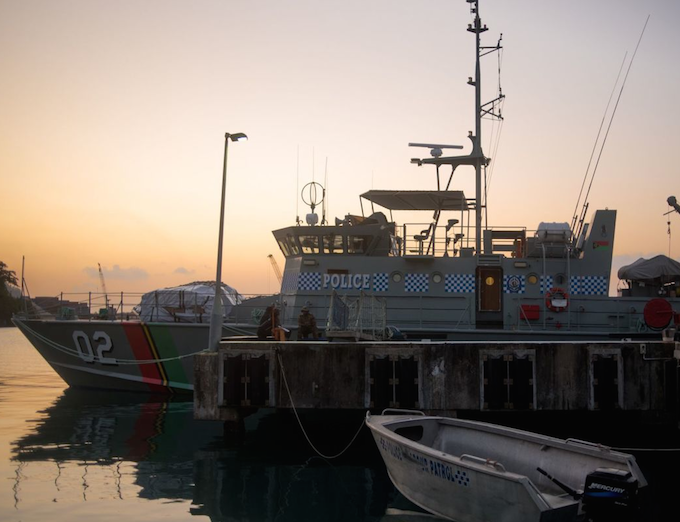
Police and VMF enjoy a brief rest before embarking for Ambae island on the patrol boat RVS Tukoro with supplies and a security contingent. Image: Dan McGarry/Vanuatu Daily Post Dan McGarry

By Anita Roberts in Port Vila

The Penama Provincial Disaster and Climate Change Committee is facing a number of challenges in its efforts to help the volcano eruption evacuees on Ambae.

This includes overcrowding and unsanitary evacuation centers, the possibility of contaminated water and not enough food.

Vanuatu Red Cross is taking water to evacuees on Ambae aboard the RVS Tukoro. Image: Vanuatu Red Cross/Vanuatu Digest/Twitter

The evacuation centers are overcrowded but more evacuees are still arriving.

“There is a need to set up more evacuation centers and provide tents,” a member of the Disaster Working Group at Saratamata on Ambae, Augustine Garae, from Red Cross Vanuatu (RCV) told the Vanuatu Daily Post.

According to the National Disaster Management Office (NDMO), 35 evacuation centers have been set up — 12 in the west and 21 in the east.

Garae stressed concerns about inadequate shelter and overcrowding, causing health problems to thousands who had been forced to flee their homes and were now living together.

-Partners-

“The number of evacuees is expected to rise, making facilities at the evacuation centers as proper toilets and sanitation not enough for everyone to access,” said.

Most evacuated
“There would not be enough space to move around. The majority of villagers have been evacuated.”

NDMO reported that by Tuesday, approximately 6800 people were recorded to be in evacuation with an additional 900 yet to be relocated.

Some people are seeking shelter with families, outside these facilities while a small number have voluntarily moved to Maewo.

Apart from shelter, NDMO has also confirmed ongoing challenges with water and food security on Ambae.

Immediate food needs are being met by provincial authorities and local shops. Water crisis, on the other hand, is already common on west Ambae where volcanic ash fall is regular.

With the situation on Ambae, water is the critical issue as recent dry weather means islands are already facing water shortage, said a Disaster and Natural Hazards Expert attached with RCV, Luke Johnston.

“The people may be displaced for a long period, as these type of eruptions can go on indefinitely. In the 2005 event, people were displaced for three months,” he said.

Water solutions
“RCV is activating an internal international emergency appeal, and is looking at longer term water solutions as well as sending 250 water containers to Ambae.”

The water containers were transported by the patrol boat RVS Tukoro, which left Port Vila last night with shelter equipment and Red Cross Officers who will be conducting hygiene education and awareness in evacuation centers.

The Tukoro will also be delivering donated items from the Port Vila Ambae community, including from Vanuatu Mobile Force personnel.

Further shipments by national authorities are planned for the coming days.

Meanwhile, the Sanma Provincial Disaster and Climate Change Committee have met yesterday to discuss planning in the event of evacuations from Ambae to Sanma.

Anita Roberts is a Vanuatu Daily Post reporter. Daily Post articles are republished in Asia Pacific Report with permission.

Ambae evacuees and their belongings awaiting relocation. Image: Vanuatu Daily Post
]]>

PMC hosting Gadjah Mada academic researcher team visit to AUT

]]>

Pacific Media Centre

Borobudur, a 9th-century Mahayana Buddhist temple near Yogyakarta, one of the world-renowned landmarks by the Indonesian city that hosts the Centre for SouthEast Asian Social Studies (CESASS) at Universitas Gadjah Mada. Image: UGM

Event date and time: 

Monday, October 2, 2017 – 09:00 Friday, October 13, 2017 – 08:00

A TEAM of seven academic researchers from the Universitas Gadjah Mada are visiting the Auckland University of Technology for two weeks on Monday.

They will be hosted by the Pacific Media Centre in the School of Communication Studies for series of seminars, workshops and research collaboration projects.

This visit is part of the Indonesian government’s World Class Professor (WCP) programme and PMC’s Professor David Robie will be visiting Yogyakarta at the end of October.

Along with Dr Robie, other academics taking part are: Professor Thomas Hanitzsch, chair and professor of Communication Studies at the Ludwig-Maximilians-Universitat Munchen, Germany; Professor Judith Schlehe, professor of Social and Cultural Anthropology at University of Freiburg, Germany; Dr Magaly Koch from the Centre for Remote Sensing at Boston University; Professor Hermann M. Fritz from Georgia Institute of Technology; and Dr David Menier, associate professor HDR at Université de Bretagne-Sud, France.

Highlights of the programme at AUT include:
Monday, October 2, 10am WG1028: – Morning tea and welcome from you at the PMC.

Wednesday, October 4, 10-12noon, AUT Library: – Tuwhera, Pacific Journalism Revieew and IKAT research journal and open access publishing workshop.

Thursday, October 5, 10-12noon, WG808: – School of Communication Studies seminars – three presentations by Gadjah Mada University academics on climate change and communication studies research.

Friday, October 6, 4.00-5.30pm, AUT’s Indonesia Centre, WT Level 15: – Welcome eception hosted by the AUT Office of International Relations and Development (OIRD)

Contact for more information: Khairiah Rahman khairiah.rahman@aut.ac.nz

More information

The CESASS researcher profiles

Attachment Size
Comm Studies Seminar_CESASS Oct 5.pdf 173.12 KB
Pacific Media _Invitation CESASS welcome.pdf 237.6 KB

]]>

‘Tautai’ – Putting Sāmoans at the centre of Sāmoan history

]]>

Pacific Media Centre

By Brandon Ulfsby and Hele Ikimotu
A book on the life of Mau leader and successful entrepreneur, Ta’isi O.F. Nelson, is retelling Sāmoan history through the lens of one of its most influential pioneers.

Called Tautai: Sāmoa, World History, and the Life of Ta’isi O. F. Nelson the book was launched in Māngere on 24 August, 2017, attended by dignitaries Tui Atua Tupua Tamasese Ta’isi Efi, former New Zealand Prime Minister Helen Clark and Sir La’auli Michael Jones.

Toeolesulusulu Damon Salesa, associate professor and head of Pacific Studies at the University of Auckland, who was also one of the reviewers of the book, said the published work was a cause for celebration.

“We are what we remember. History is a remembered tightrope that stretches across the abyss of all that we have forgotten,” he said.

“We see the need to step away from histories of Sāmoa that put at the very centre, Palagis and Palagi histories. We need to step away and this is a step in that direction – this opens up the possibility of an even more honest conversation about the Mau.”

Ta’isi was born in Safune, on the island of Savai’i on February 24, 1883, the eldest son of the five children of August Nilspiter Gustav Nelson, a Swedish-born trader, and his wife Sina Masoe, who has links to the Sa Tupua lineage.

He became one of the wealthiest men in Sāmoa and travelled extensively throughout the world whilst championing the right for Sāmoans in government – resulting in a backlash from the New Zealand administration who sentenced him to exile.

Tautai is written by Dr Patricia O’Brien, an Australian Research Council Future Fellow from the Australian National University, who said she had a keen interest in Ta’isi’s story.

Dr O’Brien spent four years on the book, working in the New Zealand archives before travelling to Sāmoa at the invitation of Tui Atua, the oldest grandson of Ta’isi, to take a closer look at his personal letters.

“I was the first historian to have thorough reading and access of those papers and those papers were a real gold mine,” she said.

“That’s when it all started. It’s an extraordinary story that’s just been waiting to be told. And so that’s when the investment really started. I’ve been working on it since then till January this year when I finally finished with it.”

The Tautai author said she hoped the book would inspire other Sāmoans to take a critical look at history and inspire further works of research.

“I want people to think about Sāmoa and Sāmoan history as a very rich, diverse story…a lot of Sāmoans didn’t know this story so I think it’s really important for them to have access to that story and to think about that story.”

For Tui Atua Tupua Tamasese Ta’isi Efi, the book held a more personal meaning.

“There were people who wanted to visit the Mau period and there were people who did not. And there were people like myself who wanted to put to rest the allegations of dishonesty of exploitation of political promotion by my grandfather,” he said.

The book launch was attended by former Prime Minister of New Zealand, Helen Clark, who while in office, issued a formal apology to Sāmoa over their administration and behaviour during the Mau.

Dr O’Brien said Clark’s selection as a reviewer of the book was significant as her apology in 2002 marked the end of the Mau story.

Tui Atua said the writings of Tautai are a significant milestone as it records the tales of a Sāmoan within Sāmoan history.

“Most importantly in the Mau story is you have to draw on our own anecdotes in order to preserve the essence of our being. We cannot draw on somebody else’s history and anecdotes.”

Nelson died in Āpia on February 28, 1944. The political goal he worked towards was fulfilled in 1962 when Sāmoa became an independent state.

Brandon Ulfsby and Hele Ikimotu are final year journalism students at the Auckland University of Technology (AUT) and interns with the New Zealand Institute for Pacific Research (NZIPR). NZIPR is a national institute to promote and support excellence in Pacific research and is a collaboration between the University of Auckland, Otago University and AUT. AUT’s Pacific Media Centre is one of the collaboration partners. This story was produced as part of Ulfsby and Ikimotu’s internship.

NZIPR

‘Tautai’ – Putting Sāmoans at the centre of Sāmoan history

]]>

Bryce Edwards’ Political Roundup: The emotional Maori Party demise

]]>

Bryce Edwards’ Political Roundup: The emotional Maori Party demise

[caption id="attachment_13635" align="alignright" width="150"] Dr Bryce Edwards.[/caption] The shock departure of the Maori Party was the only real upset of the election. Some have likened it to a “Maori Brexit”, with voters rebelling against the party in a way that some commentators and politicians are struggling to explain or comprehend. This column looks at the outpouring of emotion – sorrow, angst, recrimination and regret – that has followed Saturday night’s result. And tomorrow I’ll look at why the party failed. The media laments the loss of the Maori Party Perhaps surprisingly, one of the most emotional items in response to the loss is Patrick Gower’s one-minute interview with the two co-leaders, which Gower has posted on Facebook, with the message: “I have so much respect for what the Maori Party stands for” – see: Haere ra Te Ururoa Flavell MP and Marama Fox – I am really going to miss you. Also on Facebook, TVNZ broadcaster Miriama Kamo, paid tribute to the party, saying the tragedy was bigger than just two politicians being thrown out of office: “The loss of the Maori Party to parliament was hard to witness because it wasn’t just about the potential death of a party or two passionate MPs losing their jobs. It was about what the party represented. The Maori Party was born of a movement, an epic protest, that moved from the streets and into the halls of power. The leadership of Dame Tariana and Ta Pita, and then Te Ururoa and Marama, was the impressive shopfront for Māori aspiration. Those leaders knew that the fight wasn’t for themselves, but for Maori. They carried the legacy of the movement, that created the political waka, on their shoulders.” Even Mike Hosking is stepping up to defend the Maori Party, and admonish Maori voters for giving up on the party, suggesting voters don’t deserve them. He says “You get the representation you deserve” – see: The case to scrap the Maori seats. Hosking questions the wisdom of Maori voters shifting their support to the Labour Party: “what is it they want, in voting for a party that let’s be honest may not even be in government? And that’s the sadness of the Maori Party demise. They got to government on the very simple premise that you get more done in government than you do out of it. How can you argue with that logic? And why would you get punished for it?” On The Spinoff website, editor Duncan Greive gave an impassioned defence of the Maori Party’s achievements: “During their time supporting first John Key and then Bill English’s governments they appeared to have an influence on policy far out of proportion to their relative size. Their list of achievements, of putting kaupapa Maori solutions like Whanau Ora into or alongside core legislation, is long. It’s likely no coincidence that government relations with iwi seem as cordial as they have in years, perhaps as good as they’ve ever been” – see: The sad fate of the Maori party shows the Greens what awaits pragmatists. For a list of the party’s achievements, see Tom O’Connor’s Maori Party’s loss cuts deep. He says: “Between them they brought a greater official and public recognition of the New Zealand Land Wars, brought about a pardon for the prophet Rua Kenana and signed New Zealand up to the United Nations Declaration of the Rights of Indigenous Peoples. They also drove significant progress with the Whanau Ora programme, speeded up Treaty of Waitangi settlements and progressed the repeal of the foreshore and seabed legislation. While these matters may not be important to the general electorate they are very significant to Maori.” For many in the media, the rejection of the party by Maori has therefore been hard to comprehend. O’Connor continues: “No matter what the Maori Party gained in government it was never going to be enough for some voters who clearly had unreasonable expectations of what two members could achieve. That they achieved anything at all as part of a right-wing government is remarkable. That they achieved so much and were thrown out by a majority of their people is hard to fathom”. Emma Espiner despairs that there will no longer be a “kaupapa Maori” voice in government: “Some may be cheering the fact that the Maori Party have been punished for dealing with National and say good riddance to government. But as the decisions are made at a Cabinet table with no strong Maori voice, that could look like a Pyrrhic victory. Be careful what you wish for” – see: The death of the Maori Party. Espiner adds: “You wake up the morning after the election and who are your champions? Where is Metiria Turei, Te Ururoa Flavell, Hone Harawira, and worst of all – Marama Fox?” Anger and bitterness from Marama Fox TVNZ’s Marae programme had an excellent post-election episode – watch the hour-long programme here: Marae – Sunday 24 Sep. The most interesting interview was with Marama Fox, Marama Davidson and Willie Jackson. The fiery discussion starts with Fox saying, “Right now I’m just annoyed. I’m so angry… Congratulations Labour – you got exactly what you wanted.” Fox has voiced her bitterness about the result in other interviews too. On Maori TV, she was angry that voters had shifted to Labour: “What I think the whanau have done is they’ve gone back to the mothership. They’ve gone back like a beaten wife to the abuser who has abused our people over and over again” – see Leo Horgan’s Maori have ‘gone back like a beaten wife to the abuser’ – Marama Fox. She expresses her commiserations to the Ikaroa-Rawhiti electorate for re-electing Labour candidate Meka Whaitiri, and explains why she refuses to concede the election to her opponent: “I don’t concede because conceding means that we let red and blue government rule our people like they’ve done so for a hundred and fifty years.” Similarly, in another interview with Mihingarangi Forbes on The Hui, Fox says voters have chosen to “go back to the age of colonisation, where the paternalistic parties of red and blue tell Māori how to live” – see Dan Satherley’s NZ voted for return to ‘the age of colonisation’ – Marama Fox. She bemoans working harder than any “waste of space” Labour MPs, and concludes “obviously hard work does not get rewarded in this country”. This continued on from an interview last week in which she admonished other Maori MPs for “not standing up for Maori rights and issues” – see Dan Satherley’s Labour’s Maori MPs are ‘whipped’ – Marama Fox. The same article reports that “If she could do away with both the major parties, she would.” The defeat and devastation of Te Ururoa Flavell Te Ururoa Flavell appeared to be genuinely shocked at losing on Saturday. Shane Cowlishaw reported: “Flavell himself was a mixture of disbelief and barely contained anger after conceding defeat. His plan was to put in three more years and step away from politics on a high. But that dream is no more and he ruled out running again. He hinted at potential disquiet within the party, saying there were “things to discuss with the executive” but now was not the time. Ultimately, he took responsibility but dismissed suggestions the party had become too close to National” – see: The Maori Party meltdown. Flavell forecasts that Maori voters will come to regret turning away from his party: “Te Ao Maori is going to wake up and say ‘what the hang happened?’ and I’ll say ‘you spoke, you gave it, that’s how it is’.” He tells Maori voters not to come to him if their choice doesn’t work out: “I hope they don’t wake up tomorrow and start shaking their heads, saying, I feel sorry for you, because I don’t want to hear it… I don’t want to hear people talk about tino rangatiratanga, I don’t want to hear people talk about mana motuhake because we had it in our hands and it’s gone” – see Elton Rikihana Smallman’s Te Ururoa Flavell won’t be part of a Māori Party revival. Talking to RNZ’s Craig McCulloch, the party co-leader said that after his loss, he “had ‘lost a bit of faith’ in his people and did not ever want to return as an MP” – see: Maori Party demise signals end to Flavell’s career. But it’s not only the media and party co-leaders expressing regret about the Maori Party’s demise. According to Claire Trevett, “The downfall of the party’s MPs was regretted by fellow politicians across the spectrum – from Green leader James Shaw to National MP Judith Collins and even the party’s arch nemesis Winston Peters” – see: Maori Party starts on long road to try rebuilding by 2020 after being booted out of Parliament. Finally, it won’t be much solace to Fox and Flavell, but Parliament now looks set to have 28 Maori MPs, and to see who they are in each party, see Tepara Koti’s Who are our Maori Members of Parliament now?]]>

Terror in Indonesia – the threat posed by returning Islamic State fighters

]]>

AsiaPacificReport.nz

By Jewel Topsfield of The Sydney Morning Herald in Jakarta

Heru Kurnia, an Indonesian who joined Islamic State in Syria, is describing watching children kick around the head of someone decapitated by IS militants.

He hadn’t seen the execution but saw a crowd gather at the clock tower in the Syrian city of Raqqa. “People were watching. I went closer, but oh my God, the man was already dead and the body was being treated like that.”

An IS guard left the body there and adults stood by and did nothing while kids treated a human head like a soccer ball. Later Heru’s voice shudders as he spits out: “IS are sadists.”

Former jihadist Heru Kurnia … “IS are sadists” in the video created by the Indonesian government’s BNPT counter-terrorism unit. Image: SMH

Heru is among 18 Indonesians who returned in August after reportedly escaping from a living hell that was a world away from the idealised Islamic society IS recruiters spruik online.

One man, Dwi Djoko Wiwoho, recounts IS militants asking him to be informed of when his daughter began menstruating.

“We were told schools would be free there, but once we were there we were asked to marry her,” he says. Heru and Djoko both appear in a slickly-produced video released this week by the Indonesian government’s counter-terrorism unit, BNPT, titled Stories of IS deportees.

-Partners-

Ghastly anecdotes
The government clearly intends the video, with its melodramatic music score and ghastly anecdotes, to convey an unequivocal message – don’t buy the IS hype.

More than 500 Indonesian IS supporters are still believed to be in Syria. Hundreds more have been deported back to Indonesia, returned voluntarily or killed.

Another 30 Indonesians are believed to have fought with IS-linked militants in a much closer theatre of war – Marawi, on the island of Mindanao in the southern Philippines. None have yet returned.

The threat to Indonesia posed by battle-hardened returned fighters, equipped with new skills and radical ideology, has long exercised authorities.

“The thing that would lead to a marked increase in the threat level would be skilled jihadists suddenly being back, circulating in those networks in Indonesia, imparting their skills in bombmaking and operations,” says Australian National University terrorism expert Greg Fealy.

In the Indonesian video Stories of IS deportees, Dwi Djoko Wiwoho says he was pressured to marry off his daughter upon arrival in Islamic State territory. Image: SMH

“Also the fact these people would have the prestige of having fought in the battlefield, whether the battlefield is Marawi or whether it is in Syria, they would attract quite a following. So that could be the thing that suddenly gives a dramatic step up in the ability of terrorists to launch attacks. That’s what’s really been the missing factor so far.”

Weak terrorism laws hamstring the government – no current legislation outlaws travelling to join IS or declaring support for the extremist group.

Nobody paid
Fairfax Media has been unable to interview the returnees and verify their accounts. BNPT spokesman Hamidin insisted no one had been paid to provide their video testimonial.

But this is not the first group of Indonesians to return from Syria citing disillusionment with IS.

“Indonesians aren’t high-ranking in the fight in Syria. They come back disillusioned a lot of the time after cleaning toilets, doing crappy jobs,” an intelligence source tells Fairfax Media.

But terrorism analyst Nava Nuraniyah says IS sympathisers mostly cheer about IS on encrypted chat groups on the Telegram app. “On the rare occasion when people complain about things in Syria or have doubts, they are immediately silenced,” she says.

Nuraniyah believes the returnees who feature on the government video are genuine “but it doesn’t necessarily represent the majority of Indonesian fighters or deportees”.

“A lot who choose to remain in Syria still believe in it.”

This is consistent with the experience of C-SAVE Indonesia, a network of civil society organisations addressing violent extremism.

Since January, C-SAVE has been assisting Indonesians deported while trying to join IS in Syria to return to their homes. As of late July they had assisted more than 160 people.

Of these about 90 percent wanted to go back to Syria, according to C-SAVE executive director Mira Kusumarini.

“They want to live under a caliphate, where Islamic sharia is implemented completely,” Kusumarini says.

Government seen as ‘the infidel’
She says many refused to sign a document agreeing to abide by Indonesia’s 1945 Constitution and the pluralist state ideology of Pancasila until police threatened to put them in a cell.

“Deportees regarded the government as the infidel, the enemy. When we tried to engage with the children we couldn’t use the usual technique of singing and clapping hands because that was regarded as satanic.”

In January 2016, multiple explosions near the Sarinah shopping mall in Central Jakarta – including one in a Starbucks cafe – killed eight people, including four civilians.

It was the first terrorist attack in Indonesia to be claimed by IS.

A Philippine siege leaves Marawi City in ruins. After three-and-a-half months of battling to retake the city from pro-ISIS militants, the southern city is unrecognisable. Video: Reuters

Since then there have been a number of IS-inspired attacks, mostly low-impact suicide bombings targeting police.

But the day after the Marawi battle began in May, two explosions near a bus station in East Jakarta killed five people and an ominous link was revealed to the conflict in the Philippines.

Porous borders with Philippines
The borders between Indonesia and the Philippines are notoriously porous and militants can easily travel by boat between the two countries without passing through immigration.

One of those arrested over the East Jakarta bus stop bombing had helped arrange travel for Indonesians to the Philippines. Another arrested by police chillingly urged Indonesians over messaging app Telegram to “learn from the conquest of Marawi”.

“One possible impact of Marawi is an increased risk of violence in other countries in the region as local groups are inspired or shamed into action by the Philippine fighters,” Jakarta-based terrorism expert Sidney Jones writes in a recent report.

In July a pressure cooker bomb exploded prematurely in a dormitory in Bandung, West Java.

The man accused of assembling it – a 21-year-old meatball seller called Agus Wiguna – had been “obsessed” with fighting with the IS-affiliated group in Marawi, according to police.

He reportedly planned to detonate bombs in a restaurant, coffee shop and church in Bandung before flying to the Philippines.

Other targets possible
“Once the battle for Marawi is over, it is possible that South-east Asian [IS] leaders might encourage Indonesians to go after other targets, including foreigners or foreign institutions – especially if one of them comes back to lead the operations,” Jones writes.

Prime Minister Malcolm Turnbull also did not mince his words.

“With the bitter memory of the 2002 Bali bombing, I am keenly alert to the risk that the next mass-casualty attack on Australian victims could well be somewhere in South-east Asia, where [IS] propaganda has galvanised existing networks of extremists and attracted new recruits,” he told a security summit in June.

The latest edition of IA’s glossy online magazine Rumiyah also focuses on the Philippines as IS loses its grip on a swath of Iraq and Syria, with a cover story on “The jihad in East Asia”.

Anggara Suprayogi, one of the 30 Indonesians fighting with IS-linked militants in Marawi, had planned to leave for Syria to fight early this year.

But when he made contact with an Indonesian in Raqqa he was urged to fight in the Philippines instead.

On terrorist wanted list
It fell on the former police chief of Jatiuwung, a district of Tangerang City about 50 kilometres from Jakarta, to tell Anggara’s mother her son was on a terrorist wanted list.

“Of course she was in shock,” Agung Budi Laksono tells Fairfax Media. “What mother wouldn’t be? Any mother whose son secretly went to war that was not a war for his country.”

He says Anggara had been an obedient son who loved his family and was active in the local community.

“If Anggara found a wallet, he would look for the owner’s address, return the wallet and refuse any gift,” Agung says. “That in my eyes is a positive, it’s rare.”

Religion had been everything to him: he had even refused to use banks because charging interest is forbidden under Islam because it is thought to be exploitative.

Anggara was not the first Indonesian who wanted to fight for IS in Syria or Marawi that Agung came across in his year working in Tangerang.

“It exists quite a lot,” he says. “One of the reasons is a limited understanding of jihad.”

Effective anti-terrorist units
What Indonesia has on its side is one of the most effective anti-terrorist police units in the world.

Detachment 88, established in the wake of the 2002 Bali bombings, has foiled multiple terror plots ranging from a plan for a female suicide bomber to blow herself up outside the presidential palace to a proposed attack on the Myanmar embassy in Jakarta.

Any attacks that have occurred are followed up almost immediately with a string of arrests.

An intelligence source says despite low technological capacity – there is not one central database of foreign fighters in Indonesia, for example – Detachment 88 is highly skilled at monitoring, infiltrating mosques and intercepting plots.

“Yes, there is growing intolerance and there is inspiration from South-east Asia, but putting aside lone wolf and small attacks most plots are stopped and that is a tick,” the source says. “Australia is probably not doing as well as they are doing.”

The ANU’s Fealy says the sheer number of returnees as IS crumbles in the Middle East, coupled with the conflict in Marawi, has raised the terrorism threat in the region “quite a bit”.

But he says the risk to Indonesia is still “well below” what it was in 2002, when Jemaah Islamiyah was at its height.

“At the time we had people like Azahari Husin and Noordin Top who were master bombmakers teaching dozens of people how to make bombs that kill a lot of people,” Fealy says.

“I think there is the potential to get there very quickly, but I think we are still well below that.”

Jakarta correspondent Jewel Topsfield with reporting by Karuni Rompies and Amilia Rosa. This article has been republished with permission.

]]>

PACER Plus agreement ‘not just trade but development’ – NZ chief negotiator

]]>

Pacific Media Centre

By Brandon Ulfsby and Hele Ikimotu
A recent seminar has provided a closer look at the Pacific Agreement on Closer Economic Relations Plus (PACER Plus) deal signed by 10 Pacific countries this year.

The event was held at the University of Auckland jointly hosted by the Ministry of Foreign Affairs and Trade (MFAT) and the New Zealand Institute for Pacific Research (NZIPR).

Leading the talk was Tessa Te Mata, New Zealand’s chief negotiator in the agreement, who said PACER Plus is not solely about trade in the region but also development.

“New Zealand, Australia we’re part of this region, we are affected by what happens in the region, what we do impacts on the region,” she said.

“We’ve got a unique opportunity to look at an agreement that’s meant to impact the next 10, 20, 30 years – so it’s one thing to trade amongst yourselves, it’s another thing to create a platform that allows you to compete in the markets of the world.”

Key objectives of the deal include creating similar rules and processes which allow for easier trade as well as increasing investment within the region.

“Pacific has the largest tuna fisheries and to be fair they make money from licensing but can more be done here in the region to allow for more money to be earned from the resources we have?” said Te Mata.

“So what we were doing was not just having a trade agreement it needed to be a trade and development agreement which allows for further investment.”

Other objectives include increasing export capacity and more coherency and impact from aid funds within the region.

The deal was signed on June 14, 2017 in Nuku’alofa by New Zealand, Australia, Cook Islands, Kiribati, Nauru, Niue, Samoa, Solomon Islands, Tonga and Tuvalu.

Upon signature a $7.7 million readiness package came into force – a package aimed at assisting countries with preparations for the agreement.

“Making sure their customs process are ready for it, making sure their legislation is up to it. So making sure they don’t embark on implementing this agreement without fully understanding their obligations,” said Te Mata.

The chief negotiator for New Zealand admits there is still concern around the impact and measure of success from the deal but said that’s the challenge over the next 18-24 months.

“The feedback from businesses, from Pacific communities here and a number of stakeholders is that this is where we should focus our efforts. And basically we’ve got an 18-24 month window before this agreement comes into effect and we have to start living up to the obligations,” she said.

New Zealand is set to benefit from the agreement with lower tariffs and easier access to services, labour and investment.

Alongside PACER Plus an arrangement was struck with countries to provide a new platform for enhancing labour mobility.

Te Mata said that parties involved wanted labour mobility at the top of the priority list with other focuses on food and beverages, niche investments, copyright and customs.

There is also a push for improvements to communications and technology, with projects involving submarine internet cables already underway.

“That’s how the Pacific is going to leapfrog the tyranny of isolation and geography they face – being able to connect with the rest of the world.”

Te Mata said the agreement was a step in the right direction and said: “We’re developing, we’re growing but we’ve got far more to do over the next 18-24 months.”

The seminar was attended by a number of Pacific studies students and researchers at the Auckland University Fale Pasifika.

Brandon Ulfsby and Hele Ikimotu are final year journalism students at the Auckland University of Technology (AUT) and interns with the New Zealand Institute for Pacific Research (NZIPR). NZIPR is a national institute to promote and support excellence in Pacific research and is a collaboration between the University of Auckland, Otago University and AUT. AUT’s Pacific Media Centre is one of the collaboration partners. This story was produced as part of Ulfsby and Ikimotu’s internship and is republished by the Pacific Media Centre with permission.

NZIPR

Tessa Te Mata’s presentation

]]>

Vanuatu declares state of emergency over erupting volcano

]]>

AsiaPacificReport.nz

Manaro Voui volcano … new cinder cone and magma lake has formed close to the freshwater lake surrounding it as evacuations continue. Image: Vanuatu Digest

By Bob Makin in Port Vila

The Vanuatu government’s Council of Ministers has declared a state of emergency on Ambae island, allowing public funds to be released for the emergency response to the eruption of Manaro Voui volcano.

The Vanuatu Daily Post reports the government has released Vt200 million (NZ$2.6 million) for the emergency.

A new cinder cone and magma lake has formed the volcano, precipitously close to the freshwater lake surrounding it.

The presence of water means that any eruption could potentially be more explosive.

Evacuations are still proceeding on Ambae, and the Penama provincial government says it has now moved all the people in the south of the island to the north.

The most pressing need now with the significant number of arrivals is food and water, as Penama province’s Assistant Secretary-General Ure has noted today.

-Partners-

Some 36 schools have also been closed on the island.

Checks are also proceeding to ensure no one has been missed in the evacuation.

The director of the National Disaster Management Office is on Ambae today to assess the settlement of the 5000 who have so far been relocated.

The New Zealand government has announced it is sending an RNZAF P-3K2 Orion maritime surveillance aircraft to monitor Manaro Voui and the two other volcanoes, Benbow and Lopevi, currently erupting Vanuatu.

Bob Makin is a contributing editor of Vanuatu Digest.

]]>

Bryce Edwards’ Political Roundup: Get ready for a Labour-NZ First government

Bryce Edwards’ Political Roundup: Get ready for a Labour-NZ First government [caption id="attachment_13635" align="alignright" width="150"] Dr Bryce Edwards.[/caption] Everyone seems to be preparing for a National-NZ First coalition government. Even many on the left are expecting this will be the outcome, including some in the Labour Party. The reality is Winston Peters could go either way – the left and right blocs have emerged from the election with similar voter support, allowing New Zealand First the ability to choose either option.  What’s more, for every argument for why Winston Peters will go with National, there are equally good arguments for him favouring Labour. And the idea that National will get the nod from Peters simply because they have a higher party vote than Labour is largely without merit, and we should challenge the notion that National has some sort of “moral mandate” or “moral majority”. [caption id="attachment_2529" align="alignleft" width="300"] New Zealand First leader Winston Peters.[/caption] The mistaken consensus that National is in the box seat In the media, and throughout the political spectrum, a consensus has emerged that National is most likely to form a government with the help of New Zealand First. This was made most strongly today by left wing political commentator Chris Trotter, who is reported as arguing “Jacinda Ardern knows she lost and shouldn’t keep up the facade of being the Prime Minister in waiting” – see Newshub’s ‘It’s not enough’: Why Chris Trotter believes Jacinda Ardern won’t be the next Prime Minister. Trotter says there’s a 25 per cent chance of Labour stitching together a coalition. In the same interview right wing commentator Trish Sherson argues the chances are “next to zero, at this point”, as there is “no shadow of a doubt” National won the election. Her justification is a common one: “I just don’t think you can go against the will of the people.” For more on Trotter’s view, see his latest column, Bill To Winston – ‘Let’s Do This’. Veteran Herald political columnist John Armstrong is equally strong in his belief that Labour can’t govern: “a Labour-New Zealand First-Greens combo is technically still alive. But only in the way Elvis Presley is still alive. Those on the centre-left clinging to that hope are really clinging to the wreckage of what to be blunt was a hideously disappointing night for that portion of the political spectrum” – see: English keeps National juggernaut rolling. According to Armstrong, New Zealand First has no mandate to shun National: “The almost palpable mood for change has not turned out to be deep enough or widespread enough to place sufficient obligation on Peters to use his likely grip on the balance of power to install a Labour-led Administration.” Peters going with Labour and the Greens is “extremely unlikely” according to the Sunday Star Times’ Adam Dudding, who says such a prospect is limited to “theory” rather than reality. He reports, and seems to agree with, Bill English’s claim to have the “moral authority” to have first go at creating a coalition – see: Bill English: I’m ready to talk to Winston. The same report claims Labour has suffered a “defeat.” Similarly, the Sunday Star Times ran an editorial wishing Bill English well and declaring him victorious. Written by editor Jonathan Milne, the piece says: “Let us be clear: Peters has no choice. The voting public cannot, and will not, tolerate him abusing his kingmaker position by swinging his support behind Ardern, when she is trailing 13 seats behind National” – see: Voters cannot, and will not, tolerate Winston abusing his kingmaker position. The political right is unsurprisingly pushing the line that a National-led coalition is almost inevitable. National Party blogger David Farrar says “National got an extraordinary result of 57 MPs and is highly likely to form the first fourth term Government since 1969” – see: Everyone’s a winner! Massey University’s Grant Duncan also read the outcome as a defeat for Labour and the Greens. He says a fourth-term National-led coalition is on the cards, and Jacinda Ardern’s “chances of forming a government with the centrist NZ First Party and the Greens are much slimmer” – see: New Zealand votes for conservatism and the status quo. Similarly, see Victoria University of Wellington’s Jack Vowles’ Push-pull government could end in chaos. National’s mythical “moral majority”  It is a “fundamental core value of democracy” that the party with the most votes should become the government, according to former prime minister John Key. He told the Herald: “Mathematically Winston Peters can put together a government with Labour and the Greens but the reality is, to do that he would have to go against what he has always done [support the winning party] and he would have to step away from the fundamental core value of democracy which is majority rule” – see Audrey Young’s NZ First leader Winston Peters in no hurry to get coalition negotiations underway. Today’s editorial in the New Zealand Herald pushes a similar argument: “Over 21 years of MMP, a convention has developed that the party with the most votes forms the government. Jacinda Ardern did not quite acknowledge that practice in her speech on Saturday night but it was not a victory speech. It could hardly be one when Labour had finished 10 points behind on the night and Labour and Greens combined were five points behind” – see: Winston Peters should not hold clear winner to ransom. The Herald emphasises that “the result was not even close”, and that “English deserves to savour this victory”. The editorial urges Winston Peters to recognise this, and also points out: “Having lost the Northland seat and seen his party vote decline, Peters ought to be humbled by the result. He should not hold the winner to ransom.” Similarly, yesterday’s Herald on Sunday editorial questioned whether a Labour-led government would have “legitimacy” given that National has more votes, and warns that such a government “would need to be sure all New Zealanders could respect its mandate” – see: Peters needs to note Nationals achievement. However, the line that National should form a government because it got more votes than Labour is straight out of the first-past-the-post era when the largest political party tended to have a majority of seats in Parliament. Under MMP, a party having the largest share of the vote is almost irrelevant. If they can’t put together a coalition with enough seats, then they normally can’t govern. This point is well put today by Massey University’s Richard Shaw, who is reported as explaining that “when it comes to forming a government coalition, all that matters is that a combination of parties can persuade the Governor General they can reach 61 seats” – see Newshub’s ‘No such thing’ as moral majority – politics professor. Shaw points out “The word ‘moral’ doesn’t appear in our constitution”, and there is no “winner” of the recent election: “Nobody’s won the election yet. The people who won the election are the people who form the government.” National has not “won” the election There is a strong narrative at the moment that National has received an extraordinary result. But has it really? The vote for centre right parties has actually declined significantly at this election. At the 2014 election, the aggregate vote for National, Act and the Conservatives was over 52 per cent. This year, the final result for those parties is projected to be little more than 45 per cent. What’s more the National Party has now lost allies – United Future and the Maori Party are gone from Parliament, and Act’s party vote has halved. Basically, National has cannibalised the vote of other rightwing parties. In devouring its coalition partners, National might now look stronger, but in reality fewer voters are actually supporting parties of the right. But it is the illusion that National has won significantly more vote than the political left that particularly needs addressing. Colin James reminds us that you need to add the Labour and Greens vote together when making any comparison: “the win English has been celebrating is qualified. Think of Labour and the Greens as an informal coalition and National’s lead drops from 10.2% to 4.3%” – see: English on top but facing a stronger Labour. James then makes the very important point that the final vote tally result is likely to make the difference between the left and right blocs even smaller: “if the 384,000 specials fall as differently from the election night count as in 2014, when National lost 1.1 percentage points between election night and the final count, that lead could drop to 2%-3%. If things go wrong — as they did for the most recent fourth term governments, after the 1946 and 1969 elections — that slim lead could quickly evaporate.” Graeme Edgeler has made some rough projections of what the final parliamentary seat numbers will be for the parties – assuming that the special votes have the same “biases” as at the last election. Based on this, National is likely to lose two seats, and Labour and the Greens are likely to go up. This would produce a final tally of 56 seats for National, and 54 seats for Labour and the Greens – hardly a big difference – see: Election 2017: the Special Votes. Why Labour might still “win” the election One of the biggest concerns that Winston Peters is likely to have about entering a coalition with Labour is that its majority in Parliament will be lower than with National. At the moment, the preliminary election results suggest such a government would have the barest of a majority – just 61 seats out of 120. However if the special votes change the seat numbers along the lines suggested above, then a Labour-led government would have a much more comfortable majority of 63 seats, which might assuage Peters’ concerns. Some say that there is still bad blood between New Zealand First and National, which might push Winston Peters to “go left”. Radiolive’s Mark Sainsbury says “I don’t agree with all those who rule out a coalition with the left. I think it’s not only possible, but potentially more palatable for Winston – it could be a train wreck, but so could a National deal” – see: Bad blood makes National-NZ First deal unlikely. Sainsbury elaborates on the bad relations between the parties: “Plus there’s another factor – the leaking of his superannuation overpayment. The bureaucrats have been cleared, which means the finger of blame is firmly directed at the National ministers in the loop, and Winston will want vengeance, make no mistake. Plus, there’s bad blood between him and some of Bill English’s top team. Remember this: Bill was there in 1992 when Peters was expelled from the National caucus, the move that lead to NZ First and this whole business. Not only was Bill there, he seconded Jim Bolger’s motion to kick him out.” And Barry Soper’s analysis is also in line with this – see his column, Prime Minister Jacinda Ardern, don’t rule it out. In addition to the “bad blood” argument, Soper says “in this MMP environment anything is possible and in Winston Peters’ book nothing is as it seems and that’s the way it’s always been with him. Forget morality and expectation, that’s a book written by others. Of course he will talk first to Bill English, he’s always said he’d do that to the party with the highest vote count. But talking is far short of walking up the aisle.” According to Jane Clifton, New Zealand First will demand a huge change of direction from National, and one they might simply be unable to oblige: “The big story of this election is bigger than National, and much bigger than ‘whither Winston?’ It’s that there was an undeniable and growing appetite for change.  So while English is right that National has the moral authority to form the next Government, there is a countervailing moral authority that it cannot do so on the basis of ‘business as usual’. New Zealand First, notwithstanding its modest nine-seat heft, has the moral authority either to negotiate some meaningful concessions from National as the price for its indispensable coalition support, or, if unsuccessful, to shop elsewhere” – see: This post-election business is anything but usual. NZ First sources point to Labour A number of New Zealand First insiders appear to be talking to journalists at the moment, and they are all emphasising that Peters is more likely to go with Labour. The most interesting example is MP Richard Prosser who has failed to make it back in on the party list. He makes a similar argument to Clifton, above, saying that Peters is determined to govern in a way that reflects what the party sees as a “mood for change”, which National is unlikely to be able to deliver: “The difficulty is that they’ve had three terms, looking at a fourth, they are now quite deeply entrenched in their ways. How much of a directional shift could you ween out of them?” – see Henry Cooke’s Outgoing NZ First MP Richard Prosser says Winston Peters will go left. Prosser added: “My gut feeling says he will probably go left if he can”. See also more revealing comments in Nicholas Jones’ Outgoing MP criticises Winston Peters: He has always been Machiavellian. Tracy Watkins also reports the views of a New Zealand First insider. She says: “people should not assume a deal with National just because it was the largest party on the night, says a former NZ First MP. There has been a lot of speculation about Peters ruling out any deal with the Greens, but people should not assume that either” – see: Bill and Jacinda on call waiting. NZ First people are also talking to Politik’s Richard Harman: “NZ First sources say that Leader Winston Peters remains convinced National Party politicians leaked details of his superannuation payments and orchestrated a campaign to drive him out of politics which resulted in him losing his seat. As a consequence, POLITIK understands NZ First will not take part in any Government formation negotiations involving Finance Minister and National Campaign Manager, Steven Joyce” – see: English faces uphill battle. Similarly, Branko Marcetic reports today that “One former NZ First MP who served in the unstable coalition [of 1996] told me Peters will probably choose Labour this time around” – see: What will Winston do? The lessons of ’96 tell us he might go with Ardern. According to the source “he’s more likely, with a young, inexperienced leader such as Jacinda, to have greater influence there as opposed to going with his old buddies who shafted him last time around.” The same article gave further reason to suggest the party is more in tune with Labour than National: “Among the party’s rank-and-file, there is a visceral dislike for and mistrust of the party of John Key and Bill English. A number of his party’s policies, such as writing off student loans for graduates who remain in New Zealand a certain number of years, would be non-starters under a National government. There’s also the fact that, as with previous elections, Peters has spent this year savaging the ‘neoliberal experiment’ of 1984, the foremost proponents of which today are National. And at this year’s New Zealand First party conference, he used his speech to rail about how National’s policies had left the poor and middle class behind, and proceeded to personally insult virtually every National MP in Cabinet by name.” Finally, for a lighter view of Winston Peters’ kingmaker role, see my blog post of Cartoons and images about negotiating the new government.]]>

Vanuatu evacuates 8000 villagers on Ambae as volcano erupts

]]>

AsiaPacificReport.nz

Manaro Voui volcano erupting – photo take yesterday. Image: Vanuatu Digest/FB Facebook

By Bob Makin in Port Vila

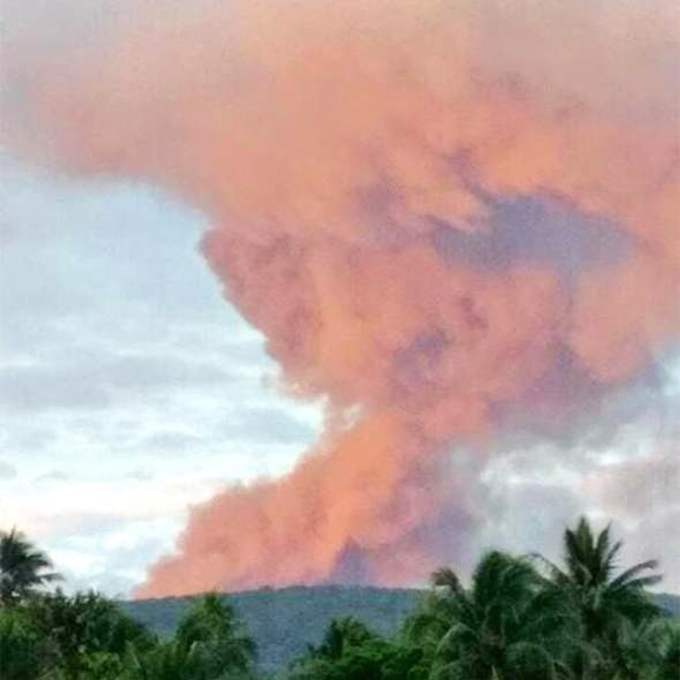
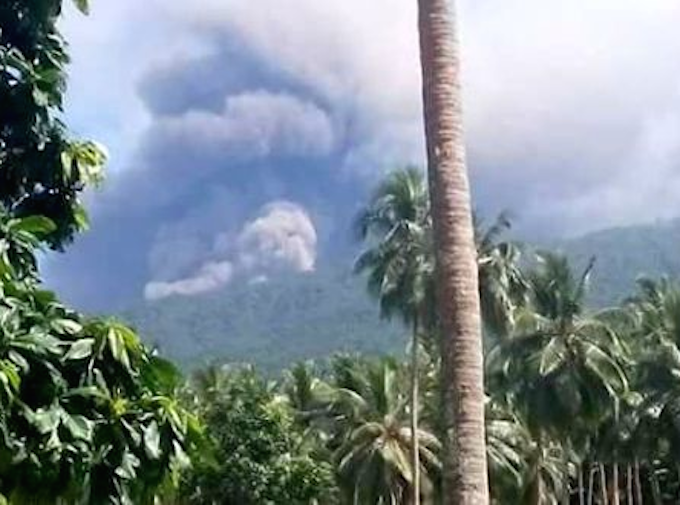
Vanuatu’s Manaro Voui volcano on Ambae is erupting and 8000 people are being evacuated on the island.

The Penama provincial government council and National Disaster Management Office is currently evacuating residents from the north, south and western parts of Ambae island to the east, and to neighbouring islands.

Ambae Island. Image: Vanuatu Islands Travel

Ambae’s total population is about 11,500.

The NDMO has mobilised several ships to assist with the evacuations.

The Vanuatu Meteorological and Geo-Hazards Department (VMGD) has raised the warning level to 4, indicating that a moderate eruption is taking place.

VMGD also warns people on Ambae that dangerous flying rocks and volcanic gas are being experienced within 6.5 km of the volcano’s crater; ash falls have been reported across the island.

-Partners-

The department says other hazards include acid rain and pyroclastic mud flows.

Manaro Voui’s last eruption in 2005 resulted in the evacuation of 5000 people.

Ambae, also known as Aoba, is northwest of Pentecost island.

Bob Makin is editor of Vanuatu Digest.

Map taken from VMGD hazard map showing the dangers posed by Manaro Voui to the people of Ambae. Image: Vanuatu Digest
]]>

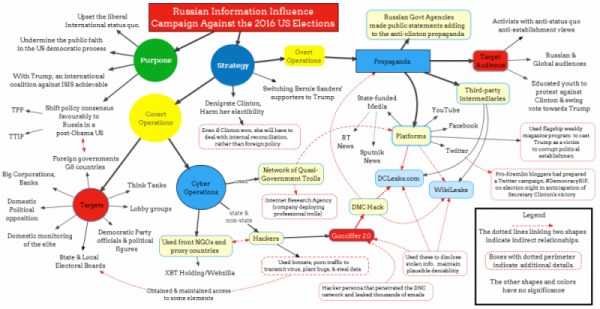
Analytic Brief: Influence Operations, Targeted Interventions and Intelligence Gathering: A Primer.

]]>

36th Parallel Assessments – Headline: Analytic Brief: Influence Operations, Targeted Interventions and Intelligence Gathering: A Primer.

Source: http://logos.nationalinterest.in/2017/01/mind-map-russian-influence-campaign-us-2016-presidential-elections/

Revelations of Chinese influence operations in Australia and New Zealand, and the ongoing sequels to the Russian “interference” in the 2016 US election, have caused outcry and concern amongst policy-makers and public alike. Beyond the xenophobic aspects to fears of the spectre of a “Yellow Peril” emerging in the Antipodes (a fear that we do not share) aand the Cold War overtones to the response in the US to the Russia allegations, the way in which influence operations, targeted interventions and intelligence gathering differ–and how and when they overlap–is a subject worth considering. In this analytic brief 36th Parallel Assessments delinates what these three types of foreign outreach are and how they interact as legitimate and illegitimate tools of the trade. Influence Operations. Influence operations, also known as influence peddling, are normal and legitimate tools of states as well as non-state actors such as private firms, non- and international governmental organizations. They are focused on the old adage “how to win friends and influence people” in pursuit of organizational objectives, be these diplomatic, economic, military or cultural in nature. The purpose is to create a favorable impression of a state, firm or agency in the mind of a target entity, be it the general public or selected subsets of it, particularly key interlocutors (agencies as well as individuals) whose decisions impact on the fortunes of the influencing agent or organization. Influence operations are the stock and trade of private sector lobbying and government outreach programs in foreign states. They include everything from wining and dining of potential business clients, partners or government decison-makers, providing transportation and accomodation to people of influence, staging cultural and artistic events, contributing to political parties and causes, organizing charities, creating education exchanges, donating goods and services, establishing media outlets and generally doing “favors” or good deeds in a target country, region or economic sector. The goal is to create a favorable impression of the influence peddler on the part of targeted entities and people in order to alter the narrative about the influencer in ways that are positive and profitable for it. Influence operations are a well established part of foreign policy. Institutions like the Alliance Francaise, various US agencies and institutions like the Fulbright Commission, AID and Peace Corps, cultural promotion and friendship societies funded wholly or in part by foreign governments such as Confucious Institutes or Jewish Councils, business associations like the NZUS Council and American Chambers of Commerce–all of these organizations are in the business of promoting home country interests via various methods of exchange. The provision of developmental aid is another form of influence operation. A good example is China’s “checkbook diplomacy” in the South Pacific, where it provides no-or low-interest developmental loans to island states or gifts infrastructure projects to recipient countries as gestures of goodwill. The list of entities and countries that engage in influence peddling is not limited to powerful states or large business interests, and the cumulative impact of their operations is significant in shaping local perceptions of the international order. Influence operations are most often overt in nature. However, there are instances when they may be used covertly to good effect. Russian use of social media to influence the tone of US campaign coverage (by among other things, placing political adverts and event invitations on platforms like Twitter and Facebook) is a classic instance of attempting to alter the narrative in order to influence the backdrop and lead-up to the elections. The use of so-called “disinformation campaigns,” in which false news stories are seeded throughout social and mainstream media outlets, is one prominent form of covert influencing (as well as giving birth to the phrase “fake news”). The limits on influence operations are determined by local statutory and regulatory frameworks governing the domestic behavior of foreign agents. Some countries have relatively loose rules governing the activities of foreign influencers while others adopt more restrictive approaches to what can aand cannot be done by foreign agents on domestic soil. This includes what is acceptable when it comes to permissable monetary rewards, exchanges in kind or other forms of inducements provided by influence peddlers to others. In some South Pacific countries, decision-makers expect to be compensated for their time and interest in an influencer’s pitch regardless of the outcome. However, what is seen as koha or tribute in one context is seen as bribery in others, so influence operators must be keenly aware of where local mores draw the line at what is legal or illegal, legitimate or illegitimate when it comes to exchanges of favors. Targeted Intervention. Targeted intervention is a more contentious subject but in reality is just an extension of influence operations. Whereas influence operations focus on “softening up” targeted entities by altering general narratives about the influencer in ways that are more favorable to it, targeted intervention concentrates on securing specific outcomes within a targeted entity. This can be done by placing people in key decision-making positions, planting stories in compliant media or putting money into causes or individuals with the intent of securing a desired outcome in their fields of influence. Targeted interventions are conducted by businesses as well as political actors and state agencies. Targeted interventions can be done overtly or covertly. Placing people in political parties with the intent of having them elected into office is one example of overt targeted intervention, unless the loyalities or political objectives of the person are disgusied or hidden. Donating to election campaigns is another overt form of intervention. Placing people in targeted businesses or public agencies, or engaging in third party financing of negative (or positive) advertising campaigns, are covert forms of intervention in specific fields of endeavour. Targeted intervention becomes contentious when it is done by foreign actors, particularly states but to include businesses, in order to advance their agendas vis a vis a a sovereign entity. This has been a subject fo considerable concern in the South Pacific, where commerical interests in extractive industries have been accused of intervening covertly using both coercive as well as financial means to disrupt opposition to their activities and to secure favorable environmental, health and safety regulations from local government in spite of that opposition. Here again, Russian involvement in the 2016 US elections is illustrative. Russian intelligence is alleged to have hacked into the email servers of the Democratic presidential candidate and Democratic National Committee. Selected emails from these accounts were bundled with fake emails purportedly from the same authors and delivered to the whistle-blowing organization Wikileaks, which promptly published them. These were then picked up by mainstream media outlets in the US and covered extensively in the weeks leading up to the November ballot. The furore over the content of the emails gave ammunition to the Republicans and put the Democratic candidate on the defensive. Although it is unclear to what extent the negative cobverage of the email “scandal” contributed to the Democrat’s defeat, with the margin of victory boiling down to 60,000 votes (out of 130 milliion cast) in two swing states, it is possible that the targted intervention by Russian hackers had a role to play in the outcome. Even more directly, US intelligence has alleged that the Russians also attempted to tamper with elexctronic balloting in several states. These efforts were thwarted by US counter-intelligence measures and led to quiet threats of reprisals, but the larger point is that the attempted manipulation of  ballots by the Russians is a clear example of targeted intervention. To be fair, the US has a long history of targeted interventions in foreign countries, up to an including electoral manipulation and material support for insurrections and coups d’etats. The point here is to stress that many forms of targeted intervention fall far short of these extreme measures and in fact often preclude such extremes from happening. Intelligence gathering. Intelligence gathering is the process of acquiring information on targeted entities without their knowledge or consent. This can occur overtly or covertly and is conducted by private agencies as well as governmental organizations and states. The purposes of intelligence gathering are to determine intent, motivation, patterns of behaviour, organizational charcteristics and capabilities, resource bases and Open source intelligence gathering such as that provided by 36th Parallel Assessments uses public records, secondary sources, personal interviews and scholarly analyses to provide indepth  appraisals of specific situations. Open source intelligence gathering is also conducted by state intelligence agencies, think tanks, research institutes, and a variety of international, governmental and non-governmental organications. For example, economic and political officers in embassies spend most of their time tasked with drawing up assessments of current events in their host countries. Covert intelligence collection is the use of surreptitious means to gather sensitive information about target entities. The targets can be military, diplomatic, economic or social in nature (say, family dynamics within dynastic regimes). Covert intelligence takes three main forms: technical intelligence (TECHINT) gathering (e.g. thermal imagery, acoustic, radar and seismic monitoring; signals intelligence (SIGINT) gathering (e.g. phone wiretaps, computer hacking, fiberoptic cable “bugging,” telemetry intercepts, decryption programs); and human intelligence (HUMINT) gathering (where human agents are sent into the field to gain both startegic and tactical insight into the behaviour of targeted entities as well as provide context to them). HUMINT comes in two forms: official cover, where the intelligence agents is provided official protection (“cover”) via embassy or other governmental affiliation formalized in the issuance of a diplomatic passport (thereby granting some level of immunity from criminal prosecution): and non-official cover (NOC), where the intelligent agent operates outside of the protections of diplomatic representation by posing as something other than a government agent, for example, as an academic, business person, charity worker, etc). Be it overt or covert in nature, intelligence gathering is often conducted in concert with or in support of influence operations and targeted interventions.  This is because intelligence gathering hekps identify the best courses of action in any given context, including points of strength and weakeness in targeted entities. Conclusion. Influence operations, targeted interventions and intelligence gathering are tools of statecraft as well as of business engagement with the socio-political and economic environments in which they are located. 36th Parallel Assessments provides clients with the means to detect, deter, ameliorate or conduct influence operations and targeted interventions as well as provide open source geopolitical and market intelligence services in a range of contexts.]]>

Vanuatu PM Salwai seeks UN probe on West Papua human rights violations

]]>

AsiaPacificReport.nz

UN video sourced from the West Papua Liberation Organisation.

Pacific Media Watch Newsdesk

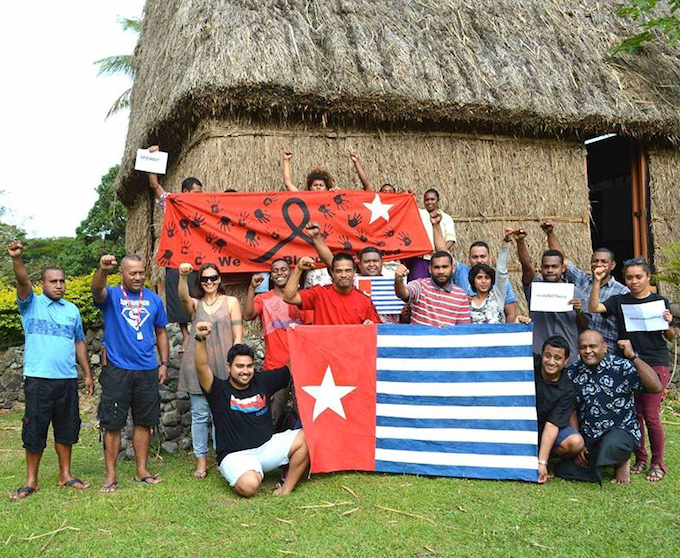
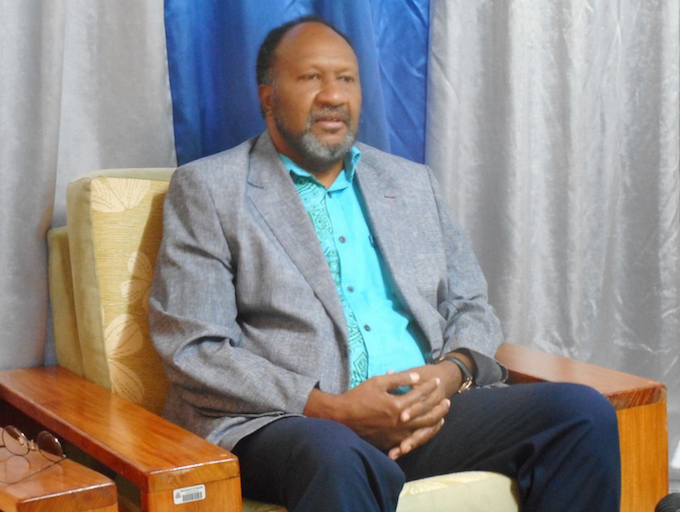
Vanuatu Prime Minister Charlot Salwai Tabimasmas has expressed his country’s concern about the vast flows of refugees and migrants, noting that in 2016 the number of displaced people around the world stood at 65 million during his speech today to the 72nd United Nations General Assembly.

He also appealed to France to honour the will of the people with the 2018 referendum on independence in New Caledonia due next year and appealed to the UN Human Rights Council to investigate violations in West Papua.

UN summary
An exodus to cities and a high rate of urbanisation was a challenge as well. There was a clear link between forced migration and the responsibility to protect. As a small island developing state facing rising sea levels, Vanuatu appealed to the international community to consider a legal framework to address the issue of climate change refugees.

For Vanuatu, the United Nations represented the best hope and catalyst for peace and security, as well as for lifting millions out of poverty, he said. To remain relevant, however, strategic reforms were needed. Being a permanent member of the Security Council was a responsibility and it was incumbent on the organ to move beyond the political interests of its members and to find compromise solutions. Vanuatu supported Council reforms which reflected current geopolitical trends with fairer regional representation, he said.

Vanuatu’s graduation from least developed country status did not eliminate its vulnerability to natural hazards, nor must it upset or hinder its development, he said. The transition mechanism for graduating countries must be strengthened. Conveying his government’s concern about threats to peace and security in the Asia-Pacific region, he urged the Democratic People’s Republic of Korea to halt its missile and nuclear development programme, reaffirmed Vanuatu’s commitment to the denuclearization of the Pacific and welcomed the Treaty on the Prohibition of Nuclear Weapons.

-Partners-

Hurricanes and tropical cyclones around the world were warnings from Mother Nature that climate change was happening faster than efforts to respond to it, he said. Deeper thought and greater efforts were needed. Reducing greenhouse gas emissions would make a difference, he said, urging the United States to review its decision on the Paris Agreement and to implement it. He emphasized his country’s commitment to reverse the decline of the health of the world’s oceans, including through a ban on plastic bags by 2018.

Looking ahead to the 2018 referendum in New Caledonia, he urged the administration there to honour the will of its people. The Human Rights Council should meanwhile address the situation in West Papua, he said, calling for decolonisation to be put back on the United Nations radar.

Full address in French

Transcription by ETAN
16:55:

My government, Mr President, is worried to note that the UN has lost a lot of its capacity and will to implement Resolution 1514 of 14th December 1960 which expressed the need to put an end swiftly and unconditionally to colonialism in all of its forms and manifestations.

Ending colonialism has to reappear on the UN radar and all efforts in this regard have to be free of international political pressure. We all have a collective responsibility to guarantee self-determination to people who are under colonial yoke …

18:10:
Mr President,

For are half a century now, the international community has been witnessing a gamut of torture, murder, exploitations, sexual violence, arbitrary detention inflicted on the nationals of West Papua perpetrated by Indonesia. But the international community turned a deaf ear to their appeals for help.

We urge the Human Rights Council to investigate these cases. We also call on our counterparts throughout the world to support the legal right of West Papua to self-determination and to jointly with Indonesia put an end to all kinds of violence and find common ground with the nationals to facilitate putting together a process which will enable them to freely express their choice.

]]>

Analysis by Keith Rankin – Correcting the Polls

Watch the ‘Undecideds’. Graph by Keith Rankin.

Analysis by Keith Rankin – Correcting the Polls 

In the Scoop report of the most recent (16-19 Sep) Colmar Brunton political poll, we see the numbers adding up to 112.3%. This innumerate reporting – a result of Colmar Brunton’s own reporting method – represents one of the biggest flaws of political polling. It de-emphasises the most important statistic, the ‘undecided’ vote. We sometimes forget that the whole point of election campaigns is for parties to convince undecided voters to vote for them. The final election result comes as undecided voters make up their minds. Good polling will show whether undecideds are indeed making up their minds.

Today’s chart reports the TVNZ Colmar-Brunton polls from July, with undecided (and refused-to-say) voters included. The chart sequences the parties with the National bloc (including New Zealand First) at the bottom, with the Labour bloc above. The most likely pivot point is the Māori Party, placed here between New Zealand First and Labour. Parties unlikely to make the cut are shown at the top.

If all the undecided voters do in fact vote, the critical percentage should be between 48% and 49%. In the most recent poll, the National bloc is showing at 45%, meaning that if 30% of the undecideds support National, Act or New Zealand First, then those parties will be in position to form a government. This should happen if enough of the undecideds are undecided between parties in that bloc. But if the main source of indecision relates to Green versus Labour, then most of the undecided votes will be votes for a new Prime Minister.

The chart shows clearly that most of the support gained by Labour after its leadership change came from the Greens and the undecideds. After that, some support seeped from the National bloc to the Labour bloc. The 13 September poll appears to have been a ‘rogue poll’ (overstating Labour). By definition, 1 poll in 20 will be outside the margin of error.

In mid-September, we saw an increase in the undecided proportion. It’s less clear whether this represents people contemplating a switch in intent from the Labour to National.

My sense is that the final result will be an average of the 6 September and 19 September polls, with undecideds slightly in favour of a change of Prime Minister.

]]>

Willie Jackson: Vision, hope and compassion will beat lies in NZ

]]>

AsiaPacificReport.nz

“Jacinda Ardern has touched people and made them feel like they can believe again.” Image: TDB

OPINION: By Willie Jackson

Never before has Labour come from 23 percent to be neck and neck with National. Jacinda has touched people and made them feel like they can believe again and that is a force that cannot and will not be told by rich right-wing broadcasters to go home and be quiet.

Now is the time to show National that lies, deception and deceit will not be rewarded by the people of this country. Let National learn that vision, hope and compassion will always beat cynicism, corruption and venal self-interest.

Rather than tell us why after 9 years they have failed the homeless, the first home buyers, the mentally ill, the hungry kids, the workers on flat wages, the women on gender biased wages, our waterways choked with cow filth, the children in underfunded and overcrowded classrooms and a health system strangled by debt – rather than tell us why after 9 years they’ve failed each of those segments of our society, National have spent this entire campaign lying about Labour.

I am sick of it! It is disgraceful and desperate behaviour that undermines the trusted positions they hold.

There is no $11.7 billion dollar hole in Labour’s budget. It is a total lie.

Not one New Zealander will pay more in income tax than they are paying now if Labour win! Another complete fabrication by National!

-Partners-

Dangerous falsehood
And as for Deputy Prime Minister Paula Bennett’s claim that the only reason inequality is so high is because of the Christchurch earthquake and not deeply flawed social policy – well, anything that comes out of Paula’s mouth is questionable at the best of times, but trying to blame inequality on a natural disaster is a delusional dangerous falsehood.

And I was rapt that Phil Twyford gave it to her and the National Party this morning on the AM Show and said it how it was, which was National are without doubt, just a bunch of liars.

The thing that gets me though is that National know they are lying, and then they are supported by a right-wing New Zealand media.

Take the latest Colmar Brunton Poll – added together, Labour + Greens + NZ First will be the new government, but is that the story the right-wing media are telling you?

They are saying that Jacinda’s “fairy dust” has failed her, that the momentum has stopped and that anyone wanting real change this election should just go home, head bent with their tail between their legs for daring to hope.

Once in generation victory?
I call that out and denounce it.

This will be a once in a generation victory if you and your friends and whanau vote.

I will never stop fighting for the people – Māori, Pasifika, women and working class; and I call on each and every decent New Zealander to rush to the voting booths now and bring in a new empathy and a new direction.

Vote as if your life depended upon it – because for many of our children, sick, elderly, brown and poor, it really does.

Kia kaha!

Willie Jackson is an independent Māori broadcaster and list candidate for the Labour Party. This column is republished from The Daily Blog with permission.

]]>

Labour MP blames Māori Party for NZ ‘inequality’ as National’s partners

]]>

AsiaPacificReport.nz

Labour MP Aupito William Sio … “we don’t believe in giving wealthy people more money at the expense of creating more poverty”. Image: Aupito William Sio /FB/Kaniva News

By Philip Cass in Auckland

Mangere Labour MP Aupito William Sio has hit out at claims by Tongan Māori Party candidate Manase Lua that Labour has done nothing for Pasifika people.

In comments reported by Kaniva News, Lua said Labour had backed 80 percent of the National Party’s legislation.

Aupito, who is Labour’s spokesperson for Pacific Island Affairs, said the Māori Party had been part of the National government and was responsible for New Zealand’s growing unequal society.

“They are responsible for the growing unequal society we now have,” Aupito said.

“While the wealth of the wealthiest New Zealanders continues to rise, we see more homelessness in our communities.

“People live in cars, garages, or share a bedroom among several people in a boarding house, a caravan, or hotel room.

-Partners-

“New Zealand never used to be this way. The Salvation Army tell us they see more and more people who work full-time coming to them for food parcels.

Māori Party support
““All this has happened under the National government, supported by the Māori Party.”

Aupito said that in opposition Labour had challenged the government on its spending of public funds and advocated strongly for more affordable housing, better fund healthcare, free education and for the lifting of family incomes and workers’ incomes.

“National has refused and only promised tax cuts, which favour the very wealthy.

“Labour has voted against the government’s budget in the last nine years because we don’t believe in giving wealthy people more money at the expense of creating more poverty, more homelessness and making it difficult for families to put their children through tertiary studies.”

Inequality more severe
In an interview with Kaniva News before the last election in 2014, Aupito said that in the previous six years inequality in New Zealand had become severe.

“People come to my office for a variety of reasons and often turn up as a last resort where they just aren’t getting any assistance from the various government departments,” he said.

“A lot of these issues have been determined by the struggles our families are facing.

“There’s also the housing crisis which affects so many of our Pacific families.

“The housing crisis has also been exacerbated due to the government removing itself from providing state houses.”

In the same interview, Aupito defended Labour’s record against criticism from the Pacific community for its stand on gay marriage.

He said at the time that while he respected members of the gay community, he had voted against gay marriage to reflect the views of the majority view of his Pasifika constituency.

]]>

Consulate denies Māori Party claim for royal backing for Tongan candidate

]]>

AsiaPacificReport.nz

Manase Lua in one of the photos he took in ʻAtalanga and posted on Facebook. Image: Manase Lua/FB

By Philip Cass in Auckland

Tonga’s Consul has denied claims by Tongan Māori Party candidate Manase Lua that he was endorsed by King Tupou VI.

Lua made the claims in comments posted underneath photographs of him and his supporters meeting the consul on Monday.

His comments under the photos on Facebook said this was proof he was endorsed by the king and the Tongan consulate to be the only Tongan candidate in New Zealand for Tongans to vote for.

“Here are photos of our meeting with His Excellency Sitaafoti Aho, the Tongan Consulate-General for NZ, on 20 July 2017 confirming me as the number 1 Tongan candidate for the Māori Party. In humble response to the Māori King’s request to the King of Tonga,” Lua wrote on Facebook.

However, Tongan Consul Stafford ‘Aho told Kaniva News today Lua was wrong. He said neither the king nor he had endorsed Lua.

On Sunday, a Māori Party press release said: “He (Maori King Tuheitia Potatau Te Wherowhero VII) made a request for His Majesty King Tupou VI to ask his subjects living in Aotearoa to join and provide a Tongan candidate to stand for the Māori Party. The King of Tonga answered the call.

-Partners-

“Manase Nehemaia Lua is the chosen Tongan candidate blessed by the Royal Houses.”

Similar requests
The press release claimed similar requests had been made to the Head of State in Samoa and the Ariki of Rarotonga.

“All have answered the call, hence why we now have eight candidates from these Pacific nations running,” the media release said.

Six candidates from New Zealand’s Pacific communities will stand in general seats for the Māori Party in the national elections.

They are standing in areas with strong Labour support and in some cases against sitting Labour MPs with Pacific backgrounds, including Jenny Salesa and Aupito Su’a William Sio.

Lua has been contacted for comment.

Media academic Dr Philip Cass is an adviser and contributor to Kaniva News. This article is republished by Asia Pacific Report with permission.

]]>

Pasifika voters want ‘hand-ups, not hand-outs’ in NZ housing crisis

]]>

AsiaPacificReport.nz

By Kendall Hutt in Māngere

Pasifika voters in South Auckland have stressed they would like to see “hand-ups, not hand-outs” following New Zealand’s 2017 general election on Saturday.

At a live Q+A election panel held at the Māngere Arts Centre Community Café, homelessness and Auckland’s housing crisis were the issues front-and-centre for the audience.

Hosted by Affirming Works and presented by Tagata Pasifika’s John Pulu, the election issues important to the community were put to Pacific candidates from across the Auckland region.

On the panel were Leilani Tamu (Green Party candidate for New Lynn), Lemauga Lydia Sosene Labour Party list candidate), Manase Lua (Māori Party candidate for Maungakiekie), and Agnes Loheni (National Party candidate for Māngere).

All issues drew strong responses from the candidates – families package, equal pay, climate change and euthanasia, but the Q+A turned heated over education, homelessness, housing and immigration.

Lua said the issues could not be addressed in isolation and should not be ‘politicised’.

-Partners-

He said the Māori Party was the only party to offer an amnesty for overstayers, which drew cheers and claps from the audience.

Climate refugee visa
According to Immigration Department statistics, Tongans and Samoans were the largest group of overstayers in New Zealand in 2016 and the controversial Dawn Raids of the mid-1970s to the early 1980s still haunt the Pacific Island community.

The Green Party’s inclusion of a humanitarian visa for Pacific and climate change refugees received similar enthusiasm from the audience.

“One vote for the Greens is critical, particularly for our Pasifika people, who we know are the people who are dying because of this injustice.

“The people of Kiribati and Tuvalu did not ask for their islands to basically be sinking,” Tamu said.

Pasifika candidates (from left): Agnes Loheni (National), Manase Lua (Māori), Lemauga Lydia Sosene (Labour), and Leilani Tamu (Green). Image: Kendall Hutt/PMC

Loheni, however, told the audience the National Party’s stance on immigration would remain the same if re-elected.

“It stays where it’s at,” she said.

This drew criticism from Sosene, who said the government’s immigration policy was not sustainable for Pacific communities.

‘Turning a blind eye’
“This government has changed the rules in terms of Pasifika culture, in terms of shutting out the elderly and siblings that were covered under the Clark Labour government,” she said.

Sosene also criticised the government for “turning a blind eye” to homelessness.

“I want to remind you, right here in Māngere, right here in South Auckland, we see the homelessness every single week. The government is turning a blind eye to that issue.”

Loheni responded by stating the solution to Auckland’s housing crisis lay in the government’s work with community groups and NGOs.

“The solutions come from the communities, which is why the government has backed community groups and NGOs to help solve some of these societal issues.

“It’s about housing and it’s about ensuring we’ve got the social services to support them through those complex issues,” she said.

Both Sosene and Tamu were vocal and outspoken in their responses to Loheni’s comments.

Auckland housing ‘unaffordable’
“The government has to offer housing options for our communities. We have people living in cars.

“If you drive a couple of streets in Māngere you will see the house, the garage, a little unit, another little unit, and another little unit. All those families are paying over $300 a week to stay on their property.

“What I can say is Labour’s plan is to address the housing unaffordability, particularly for our young people who are working, who are doing tertiary education, and yet they can’t save up a deposit of $110,000 to buy a property,” Sosene said.

Tamu, however, reflected: “Our people can’t afford to live in South Auckland anymore.

“The median wage in New Zealand is $46,000, for Pasifika it’s $26,000. How are our people supposed to do it? Especially when they’re living in cars and garages? Please.

“There’s only room for a few of us to be successful in National’s world. We can’t afford to live in the city, because National doesn’t want us to live in the city,” Tamu stated.

Loheni hit back, calling Tamu’s view “tragic”.

A ‘Pacific prime minister’?
“All of our kids can be successful. The key to this is education. You keep your kids at school – education is the key to opening up opportunities so that we can all be successful,” she said.

However, where the candidates saw South Auckland in 10 years was the most poignant moment of the Q+A.

All of the candidates said New Zealand would see its first Pacific prime minister in the next 10 years.

Sosene also said the country would also see “one of our Pacific kids” as the leader of the Labour Party.

“We need of our own, it’s time,” she said.

The audience ultimately thanked the candidates for their passion for the Pacific community.

Sosene reflected: “It is really good to see Pasifika, throughout the parties, supporting every candidate.”

‘The Pacific way’
Reflecting on the spirit of the evening, John Pulu concluded: “They argue and then they shake hands. That’s the Pacific way.”

This was echoed by Ika Tameifuna of the One Pacific Māori Party before a closing prayer.

“Tonight, we may disagree, but we are still one family.”

By Kendall Hutt is contributing editor of the Pacific Media Centre’s Pacific Media Watch freedom project.

]]>

West Papua: Five facts about Indonesia’s ‘dark, dirty secret’

]]>

AsiaPacificReport.nz

University of the South Pacific students at an on-campus solidarity rally in Fiji for West Papuans. They display the Morning Star flag, banned by Indonesian authorities. Image: We Bleed Black and Red

ANALYSIS: By Connor Woodman

The Indonesian President, Joko “Jokowi” Widodo, is desperate to keep hidden Indonesia’s dark, dirty secret – its brutal 50-year war in its easternmost provinces. Here are five things you should know about Indonesian rule in West Papua:

1. It is one of the world’s longest-running military occupations
Indonesia seized West Papua, the western half of the island of New Guinea, in 1963, shortly after the Dutch colonists pulled out. Political parties were immediately banned, nascent Papuan nationalism crushed, and tens of thousands of troops, police and special forces flooded in. In 1969 a UN-supervised sham referendum was held, and just over a thousand hand-picked representatives were bribed, cajoled and threatened into voting in favour of Indonesian rule.

A police state has shackled the vast region ever since, battling a low-level tribal insurgency and suppressing independence aspirations with such vigour that raising the Papuan national flag, Morning Star, can land you 15 years in prison.

2. It’s possible that Indonesian rule constitutes a genocide
Although international media and NGOs have been nearly uniformly banned from the territory for decades, most observers estimate that over 100,000 native Papuans have been killed since the 1960s – at least 10 percent of the population. With echoes of Indonesia’s rule in East Timor, which eliminated around one third of the population, a 2004 report from Yale Law School concluded: “[There is] a strong indication that the Indonesian government has committed genocide against the West Papuans.” Several other scholars have reached a similar conclusion.

Reports of barbarous killings regularly emerge, and one study recently described torture as a “mode of governance” in the two provinces of Papua and West Papua. The abuse tends to be intertwined with projects of resource extraction and “transmigration” – the effort (formerly supported by the World Bank) to shuttle hundreds of thousands of landless Indonesian peasants from the rest of Indonesia into West Papua.

During a military campaign in the early 1980s, the Indonesian army ran under the slogan, “Let the rats run into the jungle so that the chickens can breed in the coop”. In practice, this meant wiping out Papuan villages and bringing in ethnic Indonesians to work on economic projects like Freeport’s giant Grasberg gold and copper mine, which has been accused of “ecocide” and dumps over 200,000 tonnes of tailings in the local river system every day. The influx of Indonesians has left the original inhabitants a near-minority in the land, struggling to maintain their culture and often nomadic way of life. An Indonesian minister once in charge of the transmigration programme has stated: “The different ethnic groups will in the long run disappear because of integration, and there will be one kind of man.”

-Partners-

3. West Papuans overwhelmingly want independence
Even the pro-Indonesian US ambassador admitted in the late 1960s that “possibly 85 to 90 percent” of West Papuans “are in sympathy with the Free Papua cause”. Paul Kingsnorth, an investigative reporter who travelled to the region in the early 2000s, described the independence campaign as a “broad-based social movement, which almost everyone in West Papua, if you get them alone, will admit to belonging”.

Nothing speaks to this more than the long campaign of armed resistance and civil disobedience against the Indonesian state. In 2011, documents leaked from the Indonesian army detailed a “longstanding guerrilla network that is relatively well organised and which operates across the whole country”. A recent book describes the non-violent wing of the movement as “savvy and sophisticated”, and notes that “Papuans in 2015 desire freedom as much, if not more, than Papuans who desired freedom in 1963”.

Most West Papuans consider themselves Melanesian, with more in common with darker-skinned Pacific populations than the Indonesians who often treat them as racially inferior. Culturally, linguistically, ethnically – Papuans have little in common with Indonesians. For the overwhelming majority, nothing short of independence will suffice.

4. The Indonesian state is terrified of international exposure
Alongside barring international media from West Papua, Indonesia runs counter-intelligence operations overseas to neutralise the international independence movement, surveilling and harassing campaigners based in Australia and elsewhere. Leaked military documents bemoan the success activists have had in “propagating the issue of severe human rights violations in Papua”, and Indonesia has been working hard to ensure exiled Papuan representatives are barred from regional Pacific organisations. Foreign visitors in the provinces are placed under routine surveillance, and Indonesian concern at the opening of the Free West Papua campaign office in Oxford even prompted the British ambassador in Jakarta to publicly distance himself from independence aspirations.

5. Britain & the West have supported Indonesia’s occupation for decades
Britain’s historic alliance with the Indonesian state dates primarily to General Suharto’s bloody coup in 1965-6. In the midst of the slaughter of at least 500,000 suspected members of the Indonesian Communist Party – which British officials gleefully described as a “ruthless terror” – the Foreign Office argued that “the generals are going to need all the help they can get”, releasing £1m in aid and granting the export of military equipment. The Indonesian Left was duly decimated – never to recover – and the pro-Western Suharto was firmly in control.

Since then, Britain’s support for Indonesian rule in West Papua has been unwavering. Privately recognising the “savage” nature of Indonesian rule, publicly officials have voted to legitimate Indonesian rule at the UN and pledged support for Indonesia’s “territorial integrity”. Until the late 1990s, the UK was one of Indonesia’s primary arms suppliers. Kopassus, the Indonesian special forces, have been trained and armed by the UK, US and Australia, despite a well-documented record of horrific human rights abuse in Papua. Britain funds and trains Detachment 88, the Indonesian counter-terrorism unit accused of massacres in Papua’s central highlands.

While in opposition, David Cameron described the situation in Papua as “terrible”; once in power, he headed to Jakarta with representatives from BAE Systems in tow. By contrast, opposition Labour Party leader Jeremy Corbyn is a long-time supporter of the Papuan struggle – another example of his “direct and open challenge to the British system of government of international alliances”, as Peter Oborne described it. It remains to be seen whether or not he will be able to dislodge the British establishment’s ossified support for the Indonesian state if he comes to power.

Connor Woodman is with the Politics of Papua Project, University of Warwick, UK. This article is republished from the Peter Tatchell Foundation for Human Rights and is republished under a Creative Commons licence.

]]>

Jakarta advocacy group accuses hardline general over attack

]]>

AsiaPacificReport.nz

Indonesian Legal Aid Foundation (YLBHI) advocacy head Muhammad Isnur … names two people suspected of masterminding the attack on the human rights office. Image: Detak

By Dwi Andayani and Noval Dwinuary Antoni in Jakarta

Indonesian Legal Aid Foundation (YLBHI) advocacy head Muhammad Isnur has accused retired Major-General Kivlan Zen and Presidium 313 member Rahmat Himran of being behind the attack on the LBH Jakarta offices.

He bases this on the names Kivlan and Himran which have appeared in social media in relation to the attack.

READ MORE: ‘Fake PKI news behind anti-communist chaos’

“The first is Rahmat Himran, I don’t know who he is but apparently he is with the Presidium 313, in several press releases and hoaxes (false news reports) in the media, his name has been cited as the one responsible, I don’t know if the police have arrested him or not”, said Isnur at the National Human Rights Commission (Komnas HAM) offices on Monday.

Meanwhile, Isnur cites Kivlan Zen because his name was mentioned in an online news website.

In the article, Zen was mentioned as chairing a coordinating meeting on closing down the “Indonesian Communist Party” (PKI) meeting at YLBHI.

-Partners-

“The second name was Kivlan Zen, this was the first name that emerged when the news website Public News reported that he was chairing a coordination meeting on closing down the [alleged] PKI seminar, the police must investigate this,” said Isnur.

Zen has not yet been able to confirm or deny Isnur’s statement and Zen’s attorney Krist Ibnu was unable to comment any further about Isnur’s allegations.

Opposed to PKI
Ibnu, however, confirmed that Zen had indeed been moved to oppose the reemergence of the PKI.

“Now Pak Kivlan has indeed often spoken out opposing the PKI issue hasn’t he, because the PKI’s teachings have been banned. Pak Kivlan has been moved in his heart as a former fighter, so yes it quite legitimate that he opposes it,” said Ibnu when contacted.

“Now with regard to whether or not Pak Kivlan was behind the action last night I don’t really know, but we admit that Pak Kivlan has often spoken out opposing the PKI.

“Only, there have been those that have been candid about it and those that have done it on the sly, it’s not just Pak Kivlan,” he added.

In relation to the siege on the YLBHI offices, Isnur also linked this with President Joko “Jokowi” Widodo statement about “clobbering the PKI”.

According to Isnur, Jokowi’s statement is open to misuse by certain groups as a justification to carry out such attacks.

Background
Presidium 313 refers to the organising body that was behind the so-called 313 rally in Jakarta against former Jakarta governor Basuki “Ahok” Tjahaja Purnama on March 31 calling for him to be jailed for alleged blasphemy.

Retired Army Strategic Reserves Command (Kostrad, Green Berets) commander Major-General Kivlan Zen is as a hardline general best known for his bizarre claims about a PKI resurgence and was a staunch supporter of Gerindra Party chairman Prabowo Subianto during the 2014 presidential election. In December 2016, following the mass protests against Ahok, Zen was arrested and charged with treason for allegedly attempting to overthrow the Widodo government.

Speaking before 1500 TNI soldiers in Riau on May 19, Widodo said that the government would not stay silent in confronting movements that undermine the Constitution and the state ideology of Pancasila and this also applied to groups that followed communism. “Yes, we will clobber them, we will stamp them out, this is already clear. Don’t question this again. Don’t question this again. The legal umbrella is clear, the TAP MPRS,” said Widodo, referring to a 1966 decree banning the Indonesian Communist Party.

Translated by James Balowski for the Indoleft News Service. The original title of the article was “LBH Tuding Kivlan Zen Terlibat dalam Aksi Pengepungan Kantor”.

]]>

Vanuatu’s PM aims at UN over ‘sensitive’ West Papua issue

]]>

AsiaPacificReport.nz

Prime Minister Charlot Salwai … “Vanuatu continues to commit to spearheading the West Papua cause”. Image: Vanuatu Daily Post

By Jonas Cullwick in Port Vila

Vanuatu’s Prime Minister, Charlot Salwai Tabimasmas, says some South Pacific leaders at this month’s Forum in Samoa backed off making a decision about West Papua because it was a “sensitive issue”.

This was in spite of it being a Forum agenda item.

However, Tabimasmas labelled the efforts of Vanuatu “developing” as several countries in the region had recently joined Vanuatu in supporting West Papuan self-determination.

Nauru, Marshall Islands, Palau, Solomon Islands, Tonga and Tuvalu were determined to continue the work towards taking the issue to the UN Human Rights Committee and were taking the issue up in the corridors of the UN General Assembly in New York, Tabimasmas added.

“So far, Vanuatu continues to commit itself to spearheading the West Papua cause, through the government, the civil society, and the churches. And this year we took the matter up to the Africa, Caribbean and Pacific (ACP) group of countries,” Tabimasmas said.

The council of ministers has appointed the former Ambassador to Brussels, Roy Micky Joy, as the special envoy for the issue of West Papua.

-Partners-

“These are some of the things the Vanuatu government has undertaken to show its commitment to the West Papua cause.

“I think the lobby effort has developed because before only Vanuatu and the Solomon Islands were taking up the struggle for West Papua, but now there are six other countries from Polynesia and Micronesia supporting them, advocating for West Papuan self-determination and against violation of human rights.”

Progress beyond region
The Parliamentary Secretary for the Prime Minister’s Office, Johnny Koanapo, echoed Tabimasmas’ comments in a meeting with media, the Vanuatu Daily Post reports.

Koanapo said the issue of West Papua’s self-determination and violations of human rights by Indonesia had progressed beyond the South Pacific islands region.

“The issue has now moved beyond the jurisdiction of the Melanesian Spearhead Group,” he said.

“It has moved to the level of the Forum and has become a regional issue. And if you see how the issue was listed in the South Pacific Islands Forum meeting to deal with out of 14 issues, one of them was West Papua.”

“The issue now has progressed to the international stage and I say this with a lot of confidence — the issue has never taken so much international attention as it is today, simply because the government is serious about it, there is no second opinion on it as to whether the government will take up the issue or not.

“The government has taken on this role because it is a global country and we are global citizens with obligations to defend such things as human rights, which are parts of the rights of a human being,” Koanapo said.

Pacific Island solidarity
The Vanuatu Daily Post also reports the prime ministers of Vanuatu and the Solomon Islands are organising a side event at the UN General Assembly in New York this week to continue to lobby for West Papua, so that when leaders make their political statements at the General Assembly these would reflect the Pacific’s efforts.

West Papua’s plight and struggle for independence from Indonesia was raised at the UN General Assembly in September last year, which the Free West Papua Campaign called an “incredible show of Pacific Island solidarity” and a “landmark moment”.

The 72nd session of the UN General Assembly is currently underway in New York and will conclude next Monday, September 25.

Jonas Cullwick is a reporter with the Vanuatu Daily Post. VDP news items are republished by Asia Pacific Report with permission.

]]>

The Daily Blog: Why we’re giving 13 NZ political parties a ‘fair go’ tonight

]]>

AsiaPacificReport.nz

Kiwi Fair Go Debate #KiwiFairGo – tonight at 8pm.

OPINION: By Martyn Bradbury of The Daily Blog

I love New Zealand’s democracy. It’s representative, it allows for indigenous political representation and it gives everyone the chance to have a say whether they are a citizen or permanent resident.

Kiwi Fair Go Debate

What annoys me is our media coverage of that democracy. I believe that the mainstream media do an appalling job of giving you – the voter – real choice by limiting political parties from appearing in their debates.

Did you know that we have 16 Political Parties competing in this election?

Tonight from 8pm, live streamed at The Daily Blog and on www.kiwidebate.online , I will interview 13 political parties to hear what they think the big issues of our country are and how they intend to solve them.

I will be joined by The Daily Blog panel of unionist Kate Davis and political commentator Curwen Rolinson to review the answers.

-Partners-

We also have a guest Twitter Panel tonight using the hashtag #KiwiFairGo with Twitter commentators The NonPlastic Māori, Jo Bond and LaQuisha St Redfern.

]]>

Dressed to impress – PNG’s second city Lae celebrates Independence Day

]]>

AsiaPacificReport.nz

A flag-lowering ceremony held in the capital of Port Moresby on Saturday concluded Papua New Guinea’s 42nd Independence anniversary celebrations. Video: EMTV News

Pacific Media Centre Newsdesk

A man from Menyamya in Morobe travelled from his district to Lae in his traditional attire at the weekend to celebrate Papua New Guinea’s 42nd Independence Day.

The 48-year-old said he made the costume himself and was proud to present them on Saturday, while others were in the country’s national colours of black, red and gold, reports EMTV’s

PNG Independence Day celebrations in Lae. Image: EMTV News

This year, as in  previous years, was celebrated in the province with a variety of activities.

The national colours, supported by the provincial colors were seen everywhere in the second city of Lae in Morobe, as a demonstration of pride.

A local from Menyamya District in Morobe, Awateng Gembasu was a proud Papua New Guinean during the celebration today at Sir Ignatius Kilage Stadium.

-Partners-

Raising of the flag
Everyone took part in the celebrations on Saturday, with the raising of the flag in the morning and the parade carried out by the schools and the Engineering Battalion of the PNG Defence Force in Lae.

Young and old, came in colourful dresses and attire. The presence of the Police Force prevented disturbances and interruptions.

The safe atmosphere allowed this young man to freely celebrate the occasion.

Despite the rainy weather, everyone still had a reason to smile.

The 42nd Independence was celebrated with the presence of Member for Lae, Morobe Governor and the Governor-General.

In Port Moresby, Prime Minister Peter O’Neill admitted the country was experiencing “ups and downs” in a speech at Independence Hill but added that the “hopes and aspirations of our founding fathers” remained as strong as ever, Loop PNG’s Freddy Mou reports.

The date 16 September 1975 marks Papua New Guinea’s independence from Australian colonial rule.

]]>

PMC’s Professor Robie and Gadjah Mada team in Indonesian academic exchange

]]>

Pacific Media Centre

Professor David Robie, director of the Auckland University of Technology’s Pacific Media Centre, and seven academics from Indonesia’s Universitas Gadjah Mada will be on exchange next month in the first communication and publication research collaboration of its kind in New Zealand.

The seven academics from Yogyakarta, led by Gadjah Mada University’s Centre for Southeast Asian Social Studies (CESASS) director Dr Hermin Indah Wahyuni, arrive in Auckland in October for a two-week visit featuring workshops, seminars and joint research projects.

IKAT ... the research journal produced by CESASS. They will also be collaborating with their newly published research journal IKAT, the PMC’s 23-year-old Pacific Journalism Review and AUT Library’s Tuwhera open access research platform on a major project involving ecological communication and Asia-Pacific maritime disasters.

Dr Robie is one of six academics invited by CESASS as part of the Indonesian government’s World Class Professor (WCP) programme to strengthen international publication and research studies.

The others are: Professor Thomas Hanitzsch, chair and professor of Communication Studies at the Ludwig-Maximilians-Universitat Munchen, Germany; Professor Judith Schlehe, professor of Social and Cultural Anthropology at University of Freiburg, Germany; Dr Magaly Koch from the Centre for Remote Sensing at Boston University; Professor Hermann M. Fritz from Georgia Institute of Technology; and Dr David Menier, associate professor HDR at Université de Bretagne-Sud, France.

Professor Berrin Yanikkaya ... pleased to host Indonesian research guests. Image: BY FBAUT’s Head of the School of Communication Studies, Professor Berrin Yanikkaya, said: “David has for many years run a vibrant and dynamic research centre out of the School of Communication Studies. The Pacific Media Centre has become a focus for research and political commentary and thanks to David’s energy and commitment has attracted many overseas scholars whose research has further enriched the unique perspective that the centre offers on Asia-Pacific affairs.

“One of David’s most notable contributions has been to become the voice of the voiceless, and to carry their stories to the world.  Both the print and the digital publications that the PMC produces are remarkable for their interest and accurate, compassionate reporting. 

PMC 10th anniversary
“This award made by Gadjah Mada University is particularly timely because 2017 is the 10th anniversary of the founding of the PMC, and it honours the achievements of an outstanding scholar and journalist.”

“I’m extremely pleased to host our guests from Indonesia and to join with them in congratulating David on this acknowledgement of his life’s work.”

Dr Hermin Inda Wahyuni ... targeting international journals.Dr Hermin of CESASS said: “We are honored to be given a chance to visit and cooperate with AUT’s Pacific Media Centre, especially through our colleague, Professor David Robie. He is a specialist in environment journalism, a topic that runs parallel with our main theme of Ecological Communication.

“We hope to implement the knowledge we share with the Pacific Media Centre and AUT to create a better academic environment for our staff and to increase our writing competence in international journals.”

The WCP programme, launched this year, was initiated by the Directorate General of Science and Technology Resource and Education, Ministry of Research, Technology and Higher Education of the Republic of Indonesia.

The programme involves inviting professors from various top universities, both from Indonesia and abroad, as visiting professors to be placed in different universities in Indonesia for a maximum of six months.

Dr Robie will visit Gadjah Mada University for two weeks later in October.

CESASS has collaborated with two other universities in Indonesia – the Centre for Coastal Rehabilitation and Disaster Mitigation Studies (CoREM) from Universitas Diponegoro, and the Tsunami and Disaster Mitigation Research Center (TDMRC) from Universitas Syiah Kuala.

The consortium proposed the programme under the theme “Ecological Communication in Maritime Disaster”.

The Universitas Gadjah Mada academics visiting AUT

CESASS ... enhanced academic research, writing and publication programme.
 

]]>

Callamard slams $26 state budget for Philippine human rights body

]]>

AsiaPacificReport.nz

UN Rapporteur Agnes Callamard … Human Rights Commission “cannot deliver on its mandate without an appropriate budget”. Image: Lito Boras/Rappler

By Paterno Esmaquel II in Manila

United Nations Rapporteur Agnes Callamard has slammed the P1000 (NZ$26) budget that the House of Representatives voted to give the Philippine Commission on Human Rights (CHR) for 2018.

Callamard has explained in an email to Rappler that the CHR “is a crucial institution for the Philippines: for human rights protection, the rule of law, accountability”.

“It cannot deliver on its mandate without an appropriate budget, particularly at a time when it is confronted with allegations of massive human rights violations throughout the country, and including, but not only, in the context of the ill-advised, destructive ‘war on drugs,’” Callamard said.

READ MORE: Give CHR zero budget if it cannot be abolished – Alvarez

“The people of the Philippines deserve a strong independent human rights institution able to monitor, investigate, and report on human rights violations, protect victims and their families, and hold the powerful to account for their abuses of international human rights standards,” she said.

“Instead they are getting a ‘war on drugs’ which, by the President’s own account, has failed to curtail addiction rates, while creating a climate of fear and insecurity, feeding impunity, and undermining the constitutional fabric of the country. If the Philippine Congress is looking for public money being wasted, damaging and hurting the Philippine society, this is it,” the UN rapporteur said.

UN Rapporteur Callamard’s tweet.

-Partners-

Earlier, in a tweet, Callamard said of the lawmakers’ move: “Reprehensible and unconscionable”.

Callamard is the UN’s Special Rapporteur on extrajudicial executions, connected with the Office of the United Nations High Commissioner for Human Rights (OHCHR).

She was the UN expert invited by President Rodrigo Duterte to probe the killings in the Philippines, provided that she engages Duterte in a debate – a condition that she has refused.

Callamard made her statement after the House of Representatives voted 119-32 to allocate only P1000 for the CHR in 2018.

In contrast, the House earlier approved a P900-million ($18-million) budget for Oplan Double Barrel, the anti-drug campaign of the Philippine National Police.

The P1000 budget for the CHR is not final, however, as it has to go through the Senate too for another round of deliberations. In any case, it already drew flak from Filipinos who described it as an “act of tyranny”.

The House is dominated by allies of Duterte, who has repeatedly slammed the CHR for questioning the killings in his war on drugs.

More than 14,100 people have been killed in both police operations and vigilante-style killings since Duterte began his drug war in July 2016.

]]>

Journalist faces defamation probe over Indonesia’s treatment of West Papua posting

]]>

AsiaPacificReport.nz

Indonesian journalist and documentary filmmaker Dandhy Dwi Laksono … his message on Facebook about Megawati Sukarnoputri and Aung San Suu Kyi lands him in strife. Image: Tirto

By Mong Palatino of Global Voices

Indonesian police in East Java are investigating a veteran journalist for comparing former President Megawati Sukarnoputri to Myanmar’s Aung San Suu Kyi in a Facebook post.

On September 3, 2017, journalist and documentary filmmaker Dandhy Dwi Laksono wrote on Facebook that Megawati and Suu Kyi were alike in many ways, noting that both were former opposition leaders who now head the ruling parties in their respective countries.

Dandhy added that if Myanmar’s government was being criticised for its treatment of ethnic Rohingya, the Indonesian government should similarly be held liable for suppressing the independence movement on the Indonesian-ruled Melanesian region of West Papua.

Cartoon in support of Dandhy Dwi Laksono, drawn by Iwan Sketsa/ @Sketsagram on Twitter and Instagram. Published with artist’s permission.

He further compared Suu Kyi’s silence on the persecution of the Rohingya to Megawati’s role as party leader of the government, which has recently intensified the crackdown on West Papuan independence and self-determination activists.

Rohingya people born and living in Myanmar are not recognised as citizens by the Myanmar government.

In recent weeks, hundreds of thousands of Rohingya civilians have been displaced from their homes due to clearing operations of the Myanmar military in response to attacks by a pro-Rohingya insurgent group in northwest Myanmar.

-Partners-

Tens of thousands of Rohingya refugees, who are mostly Muslim, are crossing into Bangladesh to escape the fighting.

Human rights abuses
West Papua is a region of Indonesia, comprising the provinces of Papua and West Papua, with a vocal independence movement that has called for the creation of a separate Pacific state since the 1960s. Human rights groups have documented many cases of abuse committed by Indonesian state forces against activists, journalists, and other individuals suspected of supporting the independence movement.

Dandhy posted his comments on Facebook following a big rally was organised by Muslim groups in Indonesia, condemning the Myanmar government for its treatment of Rohingya refugees.

The youth arm of the ruling Indonesian Democratic Party of Struggle (PDI-P) filed a defamation complaint against Dandhy on September 6:

On the whole, (Dandhy’s) opinion was clearly intended to take advantage of the Rohingya incidents in Myanmar in order to insult and spread hatred of Megawati Soekarnoputri as the chairwoman of PDI-P and Joko Widodo as the president who is backed by PDI-P.

He is now under investigation by the police cyber crime unit. If he is prosecuted for and convicted of defamation, Dandhy could face up to four years in prison.

Reacting to the complaint, Dandhy wrote that it is a minor issue compared to the injustices suffered by Papuan activists and Rohingya refugees.

The complaint is the latest case of how the Electronic Information and Transactions (ITE) Law is being used to silence dissent in the country.

35 activists charged
According to Indonesian digital rights group SAFEnet, at least 35 activists have been charged with online defamation since its enactment in 2008. Aside from Dandhy’s case, the group has documented six defamation charges involving activists and journalists in 2017.

Activists were quick to launch a campaign expressing support to Dandhy. They asserted that Dandhy was simply expressing an opinion which should be considered legitimate criticism and not a criminal act.

SAFEnet is encouraging Indonesian netizens to submit reports and testimonies about how the ITE Law is being abused to silence activists like Dandhy and suppress online free speech in general.

Instead of preventing the public from commenting on Megawati, a local investigative portal suggested that Dandhy’s case could in fact trigger greater interest in the former president’s legacy as a leader, including some of the issues that led to her defeat in the polls.

Republished with permission from Global Voices on a Creative Commons licence.

]]>

The CESASS academic team from Indonesia coming to AUT’s PMC

]]>

Pacific Media Centre

A team of seven academics from the Centre for Southeast Social Studies at the Universitas Gadjah Mada is visiting Auckland University of Technology next month.

They will be hosted by the School of Communication Studies and the Pacific Media Centre for a setries of workshops, seminars and professional exchanges. They will be in Auckland from October 1-13.

The Gadjah Mada University academics visiting AUT:

Dr Hermin Indah Wahyuni, director of the Centre for Southeast Asian Social Studies (CESASS), Universitas Gadjah Mada, Indonesia: Dr Wahyuni was born in Jember, East Java, Indonesia. She earned her doctoral degree in Leipzig University, Leipzig, Germany (2006). The title of the dissertation was “The Struggle to Create a Democratic Broadcasting System in Indonesia: Re-regulating Television after Political Transformation 1998”.

Now she dedicates her passion and knowledge to teaching at her Communications Department, Faculty of Politics and Social Science, Gadjah Mada University, where she finished her undergraduate and Master’s degree studies.

Since 2015, Dr Hermin has been the director of the Centre for Southeast Asian Social Studies, Universitas Gadjah Mada. She has research interests in Political Communication, Media Regulation, Media Governance, Press and Law, Journalism, Economy Politic Media and Exploring Southeast Asian studies from the perspective of media and Communication Policy.

She has carried out several research projects in these topics and published in journals. Her best known books in Indonesia are titled Television and State Intervention, which was published in 2000, The Indonesian Broadcasting System (2008), and her latest book published in (2013) was The Policy of New Media in Indonesia.

She recently carried out research in “Digitalisation and Transforming Public Communication” (2013-2016). She is focusing on research about New Media Policy in Southeast Asian countries. Besides her academic interests, Dr Hermin loves orchids and gardens.

Dr Bevaola Kusumasari: She is a lecturer in the Department of Public Policy and Management, Faculty of Social and Political Science, Universitas Gadjah Mada, Yogyakarta, Indonesia.

She graduated from Monash University, Australia. Her expertise is in public policy, disaster management, and social policy.

Currently she serves as assistant dean on academic and research at the faculty.
 

Dr Muhamad Sulhan: He is a lecturer in the Department of Communication, Faculty of Social and Political Science, Universitas Gadjah Mada, Yogyakarta, Indonesia.

He is the author of Dayak Menang, Indonesia yang Malang (Dayak Win, and Indonesian Lost), Media Barudi Indonesia (New Media in Indonesian Country), Film Indonesia Mencari Wajah Baru (Find Out Indonesian’s Cinema), and of numerous chapters on qualitative research, television studies, Corporate Social Responsibility (CSR) studies, and other aspects of communication studies.

He is interested in media studies and sociological aspect of politic. Sulhan finished his PhD’s programmes in the Department of Sociology UGM with the dissertation “Homo Ludens as Political Communication in Television Talk Show” (2014).

Dr Budi Irawanto: He is associate professor (lektor kepala) in the Department of Communication Science, Universitas Gadjah Mada, Indonesia. He completed his research on cultural politics of contemporary Indonesian and Malaysian cinema for his PhD programme in the Department of Southeast Asian Studies at the National University of Singapore.

He wrote two books on Indonesian cinema and contributed articles to the Asian Cinema journal, and edited the volume Asian Documentary Today (2012) and Politics and the Media in the Twenty-First Century Indonesia: A Decade of Democracy (2011). Since 2006, he served as director of Jogja-NETPAC Asian Film Festival. He also served as jury members in many national and international film festivals.

Dr Novi Kurnia: Sheis a lecturer and researcher at the Department of Communication Science at Faculty of Social and Political Sciences, Universitas Gadjah Mada, Yogyakarta, Indonesia. Dr Kurnia is also a researcher at Pemantau Regulasi dan Regulator Media (PR2Media), a research centre on media regulation and regulator, in Yogyakarta, Indonesia.

Dr Kurnia finished her PhD study at Flinders University, South Australia, in 2014. Her thesis is about women film directors and their films in post-New Order Indonesia.

Dr Kurnia is also the founder and the chairperson of IFfest (Indonesian Film Festival) which held in Adelaide in 2006, 2008, and 2009. She is also organiser as well as a judge for several local and international film festivals. Her main interests are gender and media, film studies, political economy of media, media regulation, and digital literacy. Her works have been published in national and international journals and books.

Andi Awaluddin Fitrah, MA: Andi Awaluddin Fitrah is a junior reseacher in the Centre for Southeast Asian Social Studies (CESASS). He is originally from South Sulawesi. He graduated from the Communication Department, Universitas Gadjah Mada.

His research interests are new media policy, digital divide and social aspects of internet. His current research project is “Southeast Asia Digital Policy Landscape: Analysis of Ideas, Structure, and Actors of Digital Policy in Indonesia, Singapore, Philippines, and Myanmar”. In CESASS, he has also served in the publication and workshop division.

Apriline Widani, MA, MPhil: Apriline Widani received her BA Degree in English Literature from Universitas Gadjah Mada with a Cum Laude honours in 2012. She just recently earned her MA degree in Religious and Cross-cultural Studies from Universitas Gadjah Mada and MPhil degree in the Theory and Practice of Human Rights from the University of Oslo.

She wrote two masters theses on the issue of gender equality and Islamic radicalisation in Indonesia. She presented her research entitled “Radicalisation and Women’s Issues Seen in Women’s Participation in Islamic Radical Movements: A Case Study of Java, Indonesia” at the Asia Research Institute (ARI), the National University of Singapore in July 2017.

Her strong interests in human rights fields are refugee and asylum law, development, democracy, poverty reduction, gender equality and religious freedom. She has been actively involved in some volunteer works related to refugees, development and social workers.

]]>

Indonesian police probe funding for group accused of ‘hate hoaxes’

]]>

AsiaPacificReport.nz

Saracen syndicate accused of creating and spreading hoax news and hate speech for money in Indonesia. Image: Jakarta Post

Pacific Media Watch Newsdesk

Indonesia’s National Police continue to dig deeper into the Saracen group, an online syndicate accused of creating and spreading hoax news and hate speech for money, including by investigating their funding over the past three years.

“We are still investigating Saracen. We are looking back about three or four years ago to investigate their funding,” said National Police spokesman Rikwanto reports The Jakarta Post quoting kompas.com.

The police have teamed up with the Financial Transaction Reports and Analysis Center (PPATK) to investigate at least 14 bank accounts allegedly used in the Saracen campaign.

“We are still waiting for the results from the PPATK to see what has being going on with the bank accounts, including whether there were flows of funds,” Rikwanto added.

Police have named at least three suspects in the case, individuals who had allegedly acted as the group’s administrators since July and spread hate speech and hoaxes on social media.

The group is believed to have been involved in spreading hoaxes and hate speech against President Joko “Jokowi” Widodo and former Jakarta governor Basuki “Ahok” Tjahaja Purnama, among others.

-Partners-

National police chief General Tito Karnavian previously promised to solve the case and bring all the culprits before the law.

]]>

Papuan landowners in PNG to receive first LNG project royalties of K15m

]]>

AsiaPacificReport.nz

Boera village in Central province landowners from the PNG LNG Project to receive royalties. Video: EMTV News

By Meriba Tulo in Boera village, Papua New Guinea

After more than three years and 200 shipments, landowners of Boera village in Papua New Guinea’s Central province have became the first beneficiaries from the PNG LNG Project to receive royalties.

This followed the release of royalty benefits for PNG LNG Petroleum Processing Facility Licence 2 (PPFL2) area landowners to the Mineral Resources Development Company (MRDC) from the Department of Petroleum and Energy, Department of Finance, and the Central Bank.

Boera landowners with their royalties certificates. Image: EMTV

Royalty payments for the four villages of Boera, Papa, Porebada and Rearea are in line with the Ministerial Determination number G692, 2015, which will see 83 clans receive a share of K15.6 million (NZ$6.7 million).

According to the Oil and Gas Act 1998, only 40 percent is to be paid as cash disbursement to landowners, with the remaining 60 percent to be set aside in two trusts – the Future Generation Trust Fund (FGTF) and Community Investment Trust Fund (CITF).

Royalty Payment Allocation:
1. Cash Payment to Landowners: K6,250,701.00
2. Community Investment Trust Fund: K4,688,026.00
3. Future Generation Trust Fund: K4,688,026.00

-Partners-

From the K6,250,701.00 cash allocation, this is further broken up according to the following:
1. Rearea Village: K1,746,946.00
2. Papa Village: K1,746,946.00
3. Boera Village: K1,352,027.00
4. Porebada Village: K1,154,755.00
5. Others: K250,028.00

Meriba Tulo is a senior reporter and presenter and currently anchors Resource PNG as well as EMTV’s daily National News. EMTV News items are republished by Asia Pacific Report with permission.

]]>

Murdoch press in Australia linked to deforestation in Indonesia

]]>

AsiaPacificReport.nz

Campaigners from Australian advocacy group Markets for Change hand out parody copies of The Australian newspaper to News Corp staff in Sydney to raise awareness over the deforestation issue. Image: Markets for Change

By Vaidehi Shah

Environmental campaigners have accused The Australian and Courier-Mail newspapers in regional Queensland of being printed on paper linked to illegal deforestation and human rights abuses in Indonesia.

In a campaign launched earlier this month, Tasmania-based advocacy group Markets for Change and Washington DC-headquartered Mighty Earth said that the owners of the two publications, Rupert Murdoch’s News Corp, buys paper from Indonesian paper manufacturer Aspex.

Aspex is a wholly owned subsidiary of Korean-Indonesian agribusiness conglomerate The Korindo Group, which has businesses ranging from palm oil and paper to construction, to real estate, financial services, and building wind towers.

An investigation by Mighty Earth last year revealed that Korindo’s palm oil arm was burning ecologically precious tracts of forest in Indonesia’s Papua province bordering with Papua New Guinea, as well as violating the rights of local indigenous communities by grabbing land without their consent, and destroying their forest livelihoods.

While the company has committed to a moratorium on forest clearing until an independent assessment has identified areas that have a high carbon stock and high conservation value—though it did briefly break this ban in February—it has yet to make progress on implementing more stringent environmental and social impact policies.

Measures that environmentalists are calling for include the institution of a no deforestation policy, restoring forests to compensate for the land they cleared after issuing a moratorium on deforestation, resolving conflicts with communities, and being transparent about its concession boundaries, suppliers, and sustainability practices.

-Partners-

The Australian connection
Deborah Lapidus, campaign director, Mighty Earth, said that the investigation was sparked by a reference to Aspex on the website of Australia-based paper products company Oceanic Multitrading; the firm says it imports Aspex newsprint—that is, the cheap paper used to make newspapers—into Australia.

Through further research, trade data analysis and collaboration with a paper supply chain expert, investigators determined that Aspex newsprint was used to produce The Australian and Courier-Mail in regional Queensland. News Corp has confirmed that it sources some newsprint from the firm.

Lapidus explained that this was not an active decision by News Corp, but rather a “holdover issue” from the media giant’s acquisition of APN News and Media’s regional Queensland publications last December.

APN had an existing trade relationship with Aspex in the regional Queesland market, which News Corp inherited, Lapidus said.

For the rest of its print publications, News Corp sources sustainable newsprint from the Norwegian pulp and paper firm Norse Skog’s Australian business.

News Corp’s head of environment Tony Wilkins told Mighty Earth and Markets for Change in a letter dated July 19 that “the only paper we procure from Aspex is 100 percent recycled fibre content newsprint and this is Forest Stewardship Council certified”.

]]>

Bryce Edwards’ Political Roundup: Volatility defines this election

Ballot Box.

Election 2017: Bryce Edwards’ Political Roundup: Volatility defines this election [caption id="attachment_13635" align="alignright" width="150"] Dr Bryce Edwards.[/caption] Patrick Gower hit the nail on the head last night when he was asked to explain the latest Newshub poll results: volatility. It’s been one of the strongest themes of this election campaign, with its various twists, turns, leadership changes, and poll results of the last two months. You can watch Gower put his case to Labour’s leader on The Project last night – see: ‘Well that was awkward’ – Jacinda Ardern grills Patrick Gower over Newshub-Reid poll results. The word “volatile” is used in many of the reports about last night’s surprising Newshub poll – see Anna Bracewell-Worrall and Patrick Gower’s National could govern alone in latest Newshub poll. In this report, Jacinda Ardern also says there has been “real volatility” in the polls, and hence Labour and the Greens are not panicking over this poor result. But with National on 47 percent, Labour ten points behind on 37, and the Greens below 5 per cent, the poll was certainly seen as a shock result. The political editor of Stuff, Tracy Watkins, says this latest poll “confirms what we all knew – this election is a roller coaster… This election is truly volatile” – see: National surges ahead in new poll. She emphasises this by asking us to “Think back to just two months ago – the political landscape now is unrecognisable from back then.” Watkins also brings up the difference in results between the Newshub poll and TVNZ’s recent Colmar Brunton poll: “Traditionally the two big polls – Newshub and 1News – have been accurate to within a few points of previous election results. But on the latest numbers the two polls are eight points apart, even though they were taken over roughly the same period. That could be a pointer to huge volatility in the electorate.” Is Labour’s tax vulnerability to blame? Most commentators are explaining National’s rise as a reaction to the debate about Labour’s tax and fiscal policies. Tracy Watkins says in a second column on the poll, that it’s proof Labour is vulnerable on tax: “the lack of clarity has left holes big enough for National to drive a very big truck through. It has sown the seeds of uncertainty about a raft of other taxes, including an inheritance tax, and Labour’s plans for a water tax has stirred up a brewing farmers’ revolt. The poll may even be a validation of National’s big $11.7 billion fiscal hole gambit” – see: Voters punish uncertainty, and Jacinda Ardern’s left enough of it for National’s attacks to work. She proposes that Labour needs to fix this problem: “Ardern needs to be clear about what’s on or off the table by releasing the terms of reference, and even the likely make up of the group. And if she really wants to put the issue to bed, she should make a cast iron promise not to implement its recommendations till she seeks a fresh mandate.” Similarly, Vernon Small also wonders if “National’s attacks on the uncertainty of Labour’s plans for a post-election tax working group are taking their toll” – see: Jacinda-effect checked and reversed as National jumps into big lead. It is the NBR’s Rob Hosking who seems most certain that Labour’s tax stances have seen their rising support stall: “The ongoing cuteness around tax from Labour is the big issue over the past 10 days and it seems probable this is causing a few more sceptical glances from undecided voters. Ms Ardern has broken one of the cardinal rules of politics, which is this: don’t insult people’s intelligence. She and finance spokesman Grant Robertson have been too cute by three-quarters on their plans in this area, starting by saying they would leave a capital gains tax, or other types of taxes, to a working group of tax experts. ‘I’m not a tax expert,’ Ms Ardern proclaimed at one point, deferring all questions until after the election” – see: Latest poll derails Labour’s ‘inevitability’ narrative (paywalled). Hosking complains that Labour is playing a game over tax, which voters don’t like: “Yet she and Mr Robertson have, day by day, added to the list of tax changes they will not bring in: no changes to company tax, no changes to personal income taxes or GST, no inheritance tax, and any capital gains tax won’t go on the family home. Nor – after a very confused few hours when it was plain Ms Ardern was not sure of her ground at all in this area – will a land tax affect the family home. In other words, it is becoming pretty clear Labour knows exactly what it wants to do on tax, but isn’t prepared to say so. New Zealanders tend to punish this sort of behaviour on key issues: a government which thinks its citizens are this stupid is not to be trusted.” Other explanations for the change in the polls While also pointing to Labour’s tax problems, Herald political editor Audrey Young identifies some others: “Paula Bennett’s ripping into gangs may have helped. And National’s plan to cut the benefit of young people who refuse take up the offer of work experience may have helped… The other factor is English himself. Boring but dependable, he has had more exposure in the past two weeks than he has had in the past nine months as the guy who had to step into John Key’s shoes as Prime Minister” – see: Bill English gets his wish as Jacinda Ardern ‘stardust’ appears to settle in new poll. Likewise, the Spinoff’s Toby Manhire wonders if maybe “the Ardern halo has lost some shine”, and whether Bill English had impressed in the leaders debates: “Has Bill English’s strength in the debates – under considerable pressure, he has stayed strong, phlegmatic – been underestimated amid Jacindamania?” – see: Dramatic? Yes, it bloody is: National surge into big lead in new Paddy-poll. How reliable are the polls? The difference between the Newshub poll and the Colmar Brunton poll – taken roughly at the same time – is not about volatility of course but about the accuracy and consistency of polls. On social media there has been a barrage of challenges to this poll, with all sorts of questioning of its methodology, and general doubts about its accuracy. For an excellent discussion of poll methodology and accuracy, see Katie Kenny and Andy Fyers’ Political polls explained: The how, the why, and the what does it take. They report that “A look at past elections shows that pollsters have, collectively at least, done a pretty good job at prediction the outcome of the election.” But there are possible problems with polling, and they outline three issues to watch out for: the margin of error, “non-sampling errors” such as the use of landlines, and voter turnout levels. But, they emphasise the importance of aggregating the various polls, and looking at back at previously elections, “With a couple of exceptions, the Poll of Polls had the support for each party right to within 1 to 1.5 percentage points.” For more on these issues, you can listen to Professor Malcolm Wright from Massey University talk today to Guyon Espiner on Morning Report – see: Election 17 political polls: How do we interpret them? It’s worth keeping a watch on all the various “poll of polls”, all of which use different methodologies to combine the available survey data. For example, see the Stuff poll of polls. RNZ also have Colin James’ poll of polls, and for the latest on this, see: Newshub poll puts National out in front. But some statisticians are coming up with even more sophisticated ways to use the data and make forecast results. The most interesting is the Herald’s Election Forecast. This currently projects National to win 54 seats to Labour’s 53. There are other interesting forecast websites – see Patrick Leyland’s 2017 Election Forecast, Peter Ellis’ New Zealand general election forecasts, and ABM van Helsdingen’s NZ election prediction. Or you can go betting on the internet. The Australian Sports Bet website currently has Labour as the favourite to “to provide the PM after the election”. It’s paying $1.72 for a Labour win, National at $1.91, the Greens at $51, and NZ First at $67 – see: 2017 General Election. And there are more polls coming. The next due out is the 1News Colmar Brunton survey, which we will see tomorrow night. Finally, for satire about this tight and volatile race, see my blog post, Cartoons about the rivalry between Jacinda Ardern and Bill English.]]>

Keith Rankin Analysis: New Zealand’s Cyclical Growth Contractions

Growth Cycle. Graph by Keith Rankin.

Keith Rankin Analysis: New Zealand’s Cyclical Growth Contractions

In 1939, Joseph Schumpeter published his magnum opus, Business Cycles. He emphasised three growth cycles, Kitchin (about every three years), Juglar (about every decade) and Kondratiev (about five decades). Of interest to us at present is the Juglar Cycle, with its frequency of about 10 years.

This month’s chart averages economic growth (adjusted for inflation but not population). It suggests a very definite problem around years ending in ‘8’. Most observers of New Zealand’s macroeconomic history would be unsurprised. The ‘8’ years, with a few exceptions, have been characterised in New Zealand by contractionary economic conditions.

Interestingly, the next lowest year is not an adjacent year (‘7’ or ‘9’); rather it’s the ‘1’ year. Indeed, if I was to do this exercise for the world economy as a whole, the ‘1’ year would probably be that with the least growth (notwithstanding the global financial crisis of 2008).

Next year is an ‘8’ year. And all the indications – except one – suggest that 2018 will be a repeat of 2008; in New Zealand and in the world. The exception is that interest rates are much lower than they were in 2007, and the monetary authorities in some countries have their heads around negative interest rates. This in my view means that the world economy should ride out 2018 more easily than it did 2008.

I’m less confident about New Zealand. In the 1930s, countries that had made liberal adjustments (in welfare especially, and in monetary policy) in the 1920s (eg United Kingdom, Sweden) did best. Countries that most practiced fiscal ‘soundness’ in the late 1920s – United States, France, Germany – suffered worst.

My sense is that New Zealand’s lucky run this century is about to unravel. If that unravelling starts next year (or even sooner, if too much real estate is offered for sale after the 2017 election), I am not confident that New Zealand’s public sector will be prepared to go into large-scale deficit spending. I’m particularly worried that a new Labour-led government might pursue debt-averse austerity policies in the event of a 2018 recession.

The last years in which Schumpeter’s three cycles had simultaneous downturns – globally – were 1931 and 1981. While 1931 was particularly bad in New Zealand, 1981 was surprisingly OK in New Zealand compared to the rest of the world.

My sense is that the worst of economic times will happen in the decade from 2025 to 2035. 2028 (or 2027) may be particularly bad in New Zealand, as 1927 was. The next eight or nine years are the ones that will be critical. We need a genuine contest of ideas. We should be prepared for the critical consequences of inequality, precarious living, spending collapses, and debt-deflation.

The world capitalist economy grows through a process of debt-leverage. Every 10 years sees a bout of deleverage; sometimes regional, sometimes global. The solution to deleverage in the past has mainly been to quickly re-establish the leverage cycle. It didn’t happen in the USA, France and Germany in the 1930s. After one of the ‘8’ years or ‘1’ years in the next decade or two, the traditional monetary reboot will not work. We need to have a Plan B that is better than the World War that followed the Great Depression of the 1930s.

Pangu Pati opposition bloc defects to O’Neill’s PNG government

]]>

AsiaPacificReport.nz

Defection … Pangu Pati’s Sam Basil (left) and Prime Minister Peter O’Neill making the announcement yesterday. Image: Loop PNG

Pacific Media Centre Newsdesk

After two weeks of controversy, Pangu Pati leader Sam Basil and most of his party have split with Papua New Guinea’s Opposition and defected to Prime Minister Peter O’Neill’s post-election government, consolidating the People’s National Congress hold on Parliament.

In spite of repeated denials by Basil, Prime Minister O’Neill announced the defection yesterday afternoon, reports Loop PNG’s Annette Kora.

Basil defected with all 11 Pangu MPs from Morobe Province, including Central Province, Sohe and Lufa.

Opposition MP Gary Juffa … impassioned social media video plea to fight on for the people of Papua New Guinea. Image: Gary Juffa

The defection has been widely condemned on social media and Papua New Guinea blogs as a “betrayal” and Oro Province Governor Gary Juffa made an impassioned plea in a video message appealing to fellow Opposition MPs to continue to work responsibly in Parliament for “the interests of all Papuan New Guineans” and not just a few.

Just four Pangu Pati MPs, including former Prime Minister Sir Mekere Morauta (Port Moresby North West), refused to defect and have remained with the Opposition.

ABC News correspondent Eric Tlozek reports Basil was one of the O’Neill government’s most outspoken critics, and his successful grassroots campaign wiped out senior government MPs in his home province of Morobe.

-Partners-

But Basil said he had to respect the Prime Minister’s mandate, Tlozek reports.

“So all I can say is that Papua New Guineans have chosen the government, now we make our choice to join PNC.”

ABC also reports Basil has also filed a criminal complaint against rival members of his party executive who challenged his move, alleging they stole party funds.

The defection helps secure O’Neill’s grip on government, and the Prime Minister praised Basil and the defecting Pangu Pati MPs.

]]>

Elite Rangers captain killed as battle for Marawi rages on

]]>

AsiaPacificReport.nz

Filipino Colonel Romeo Brawner gives Day 112 updates on the battle for Marawi City, Mindanao. Video: Rappler

By Carmela Fonbuena in Marawi City, Philippines

A captain of the elite Philippine Army Scout Rangers force was killed as he led his men in a major operation in Marawi City at the weekend.

Captain Rommel Sandoval, commander of the 11th Scout Ranger Company, was shot on Sunday as he was trying to rescue one of his men while they were conducting an operation to clear a multiple-storey building in the battle area of the three-month-old siege.

President Rodrigo Duterte paid his last respects to the fallen soldier yesterday at Laguindingan Airport in Cagayan de Oro before the remains of Sandoval and another soldier also killed on Sunday were transported to Manila.

Duterte later proceeded to Marawi City for his fourth visit since the clashes with local terrorists erupted on May 23.

READ MORE: Terror in Mindanao – The Mautes of Marawi

-Partners-

Sandoval, a junior officer, led his men in the assault as the military pushed to liberate Marawi City.

The structure that the military asked the media not to identify served as one of the remaining strongholds of the local terrorists linked to the international terrorist network Islamic State (ISIS).

Sandoval led one of the companies of the Army elite unit that has been among the primary forces deployed in the war.

He celebrated his birthday inside the battle zone last month.

Sandoval belonged to the Philippine Military Academy Class of 2005.

Carmela Fonbuena is a journalist with the Rappler multimedia and citizen journalist website and has been covering the conflict since it started.

]]>

Moana Te Reo film world premiere tonight in Māori language week

]]>

AsiaPacificReport.nz

Pacific Media Watch Newsdesk

In celebration of New Zealand’s Māori Language Week, the Māori reversioning of the blockbuster Disney movie Moana will premiere tonight in Auckland.

Original cast members Rachel House, Temuera Morrison and Jemaine Clement star alongside Jaedyn Randell, who plays Moana, and Te Kāea presenter Piripi Taylor who is the voice of Māui.

Cinemas across the country have already sold-out screenings of the Māori language Moana film.

Anticipation for the film has been felt far and wide from young and old.

Moana Reo Māori translator Vikky Demant told Te Kāea: “I’m overjoyed. I can’t wait for this movie to be released for the world to see and for te reo Māori to be heard so our children can enjoy it.”

She and her two fellow translators spoke to Te Kāea ahead of tonight’s premiere explaining the huge task they had crafting their words for the film.

]]>

Jacinda has climate talk but Greens have the walk, says Greenpeace

Green Party co-leader, James Shaw.

AsiaPacificReport.nz

Green Party leader James Shaw … announces Kiwi Climate Fund as part of the strongest climate policy of any party for the New Zealand general election. Image: ODT

Pacific Media Centre Newsdesk

Greenpeace climate campaigner Kate Simcock has applauded the Greens for their climate policy announced yesterday.

“It’s exactly the sort of response to the biggest threat facing humanity that we need to see from our leaders,” she said.

“All political parties should be adopting this policy, aiming for New Zealand to have 100 percent renewable electricity, to be carbon neutral by 2050, and with clear legislative plans to get us there.”

The policy, announced by leader James Shaw at a Green Party event in Auckland yesterday afternoon, includes a Kiwi Climate Fund, a ban on new coal mines and fracking, an end to drilling for deep sea oil and gas, major investment in sustainable transport and ecological agriculture, and significant afforestation.

“After seeing climate policy from Labour and the Greens, it’s now clear that Jacinda has the talk, but Greens have the walk” Simcock said.

“While Labour’s climate policy, released on Friday, has the bones of a good climate policy, and also aims for New Zealand to be carbon neutral by 2050, it lacks the Greens’ will to immediately put a stop to polluting activities, like burning oil, coal, and gas, that we know are the driving force behind climate change.”

-Partners-

“It’s pretty disappointing that Labour can’t just commit to killing National’s deep sea oil exploration programme. The industry is on its last legs anyway, and we don’t need a climate commission to tell us that this is the frontier oil that would tip our climate over the edge if it’s burnt.

Oil industry must have no future
Simcock said that for New Zealand and the globe to have a future, the oil industry must have no future.

“Government policy must actively hasten the end of oil,” she said.

“It was an inspiring moment when Jacinda Ardern compared climate change to New Zealand’s nuclear-free movement, but it remains to be seen if she has the courage and the will to back it up with action”

“Climate change is threatening our very survival. It affects all life on Earth, and it is getting a whole lot worse. If we don’t act now, we face a hellish existence.”

“The Greens on the other hand, should be applauded for their climate policy. If passed into legislation, it would position New Zealand as a world leader on tackling climate change, and it would give us the hope of a future that we truly can say is clean and green.”

Key points of the Green Party’s Kiwi Climate Fund by 2020 are expected to be:

• $40 per tonne of carbon dioxide emissions.

• $6 per tonne of nitrous oxide emissions from agriculture.

• $3 per tonne of methane emissions from agriculture.

• $40 guaranteed payment for each tonne of carbon sequestered by planting trees.

The previous climate change policy had only included the dairying sector, reports The New Zealand Herald, and now captures all agriculture sectors. The party said it expected charges on dairy pollution to be about the same under the new policy, after a nitrogen levy is factored in.

Previously the Greens had called for an initial price on carbon of $25 per tonne on CO2 equivalent emissions for all sectors except agriculture, which would pay $12.50.

]]>

Mata’afa Keni Lesa: Don’t forget customary land, West Papua issues

]]>

AsiaPacificReport.nz

Protesters in Samoa show solidarity for West Papua self-determination at Pacific Islands Forum meeting. Image: Samoa Observer video still

OPINION: By Mata’afa Keni Lesa, editor of the Samoa Observer

On Friday, the 48th Pacific Islands Forum Leaders meeting — and all other related meetings — come to an end. With the Leaders Retreat and the closing ceremony at Taumeasina Island Resort, we can safely say all is well that ends well.

Come to think of, it’s been wonderful to have everyone in Samoa — even if it’s for only a brief period. We certainly hope everyone will have good memories to take home to share with their families and friends.

And if there is anything that might have offended anyone, or perhaps fallen short of expectations, as we do in this part of the Blue Pacific, we apologise and pray that you can forgive and forget.

Keep in mind that with these big events, nothing is ever perfect. But then nothing in the world is perfect or if it were the case, we wouldn’t be having such gatherings.

It is in the acknowledgement that we’ve got gigantic problems to solve, which will take some time to do, that unites us today. And as we are about to part ways, we take a moment to pause and reflect on what has been discussed during the past few days.

A lot has been said and written about the issues. All these arguments for and against are constructive in terms of moving forward. We have one goal and that is to find a united voice in the pursuit of a better future for our region. It’s not easy and there are many challenges.

-Partners-

But there is hope. We always have to believe there is light at the end of the tunnel.

Revisiting interesting issues
That said, we want to revisit a couple of interesting issues raised on the pages of this newspaper this week, which we believe warrant serious attention by our leaders.

First is the issue of customary lands. In a column titled “Colonial dictates on Customary Lands is too much for Samoa and Pacific governments,” advocate Fiu Mataese Elisara made some pertinent points.

Said Fiu:

“The push to take over our customary lands in Samoa and the Pacific are a deliberate ploy of neo-colonialism by developed countries to defend their economic interests, reneging on commitments to assist developing countries.

“For the Pacific, customary lands are alienated, related human rights principles violated, daily livelihood of indigenous communities and traditional practices undermined, climate crisis worsened, profits dictate.

“The danger is all the more pernicious because shifting goal posts and insincere partnerships the culprits that engage the Pacific in their colonial dictates do not always confront us or governments directly. It becomes enmeshed in the institutional machinery that infiltrates the State apparatus and in many cases gain the complicity of government officials.

“As a simple chief from Sili, I again ask the Leaders of the Pacific Countries gathered in Apia this week, Is this the Future We Want? Will this ensure ‘No One in the Pacific is left behind’?

“I urge our Prime Minister, the Government of Samoa, Indeed the Leaders of the Pacific gathered in Samoa this week — in your collective, integrated political and economic pursuit for genuine and durable partnership, for sustainable human development, for climate justice, and protection of customary lands.”

Peaceful West Papua protest
The second issue was the subject of peaceful protest on Beach Road, earlier this week — West Papua.

Led by Jerome Mika and Unasa Iuni Sapolu, the group brought West Papua to the fore — a country that has been occupied by the Indonesian government since 1963 and whose people have experienced brutal abuse by its military police.

Mika explained that it was important for Samoa, a nation who understands the path of struggle for independence, to add their voice in demanding the de-colonisation of West Papua.

“We enjoy our independence but we should also be standing up for our Pacific brothers and sisters of West Papua,” he said.

“We are calling on Samoa to add their voice to the decolonisation of West Papua. We think it’s important that there are some issues around the world to deal with, but we should be looking after our Pacific cousins in our background.”

For Unasa, it was about raising the issue with the leaders. She said:

“They are the ones who are at the height of discussions of these sorts of issues. Don’t just talk about money; don’t just talk about jobs, let’s talk about the freedom of all Pacific islands.

“For Melanesians and for the Micronesians who have been battered by the military and obviously, Korea with Guam. Lets just stand up collectively as the people of the Pacific, don’t just sit back and relax and have a holiday in Samoa. There are deeper issues at hand, the issues of Indigenous freedom and we’ve got to fight for those freedoms.”

Well we couldn’t agree more. Indeed, the issue of customary land ownership and a right to be free are critical issues that our leaders must not ignore.

What do you think?

Republished from the Samoa Observer.

]]>

Global refugee crisis solution ‘up to all of us’, says filmmaker Ai Weiwei

]]>

AsiaPacificReport.nz

The Venice film festival has just ended, and one of the most challenging movies was the documentary Human Flow by Chinese artist and activist Ai Wei Wei about the global refugee crisis.  Video: Al Jazeera

By Charlie Angela in Venice

“Two people drowned at sea. I wish they were still with us,” a middle-aged man says, his voice breaking.

“They appear in my dreams at night. I see them in my sleep and they tell me what to do. What am I supposed to do?” he asks, breaking down in tears.

This is just one of the many powerful scenes captured in Human Flow, the new documentary by Chinese artist and activist Ai Weiwei exploring the global refugee crisis.

VIEW MORE: Ai Weiwei’s photos from Lesbos capture refugee life

The film is one of the most talked-about entries in this year’s Venice Film Festival, and was one of the top contenders for its top prize, the Golden Lion.

-Partners-

It might have missed out on the main prize – which went to an American romantic fantasy The Shape of Water about a cleaning lady who falls in love with an aquatic creature – but Human Flow has still had a dramatic impact on global thinking about refugees.

Shot in more than 40 refugee camps across 23 countries, the documentary offers a fresh look at the refugee crisis from Europe and Asia to Africa, peppered with poetry, heartbreaking stories and dramatic aerial footage shot mostly with drones.

Speaking at the festival, Ai said a solution to the crisis could easily be reached once people realise that the refugee problem is “about all of us”.

“It takes individuals to act, to be involved, to push the politicians, to create the right discussion,” he said.

As many as 70 countries have placed walls to stem the flow of refugees. In an interview with the Huffington WorldPost, filmmaker Ai said that he planned to screen his documentary to legislators involved in the refugee policies.

“My art is a personal effort to help viewers understand, through experiences and emotions, another person or another condition,” he said.

WATCH MORE: Drifting – art, awareness and the refugee crisis

Lee Marshall, a critic for Screen Daily, said he was impressed by the way Ai had approached his role in the film.

“One nice thing about it, for me, is that he does appear in the film but very much as a guy who is just hanging out with refugees,” Marshall told Al Jazeera, “rather than going in … and being very pushy and trying through irony or provocation to get his agenda through”.

A major artist of our times, Ai is renowned for his activism.

]]>

VIDEO Paul Buchanan and Selwyn Manning: Message from America – Climate Change and the Threat of a Korean War: Trumps Defining Moment

Message from America – Climate Change and the Threat of a Korean War: Trumps Defining Moment. In this episode Dr Paul G. Buchanan and Selwyn Manning discuss Hurricane Irma and its devastating track across the Caribbean and its looming threat on Florida. https://youtu.be/Lj5apRdHRq4 Will this, the latest in a series of severe Atlantic born storms cause US President Donald Trump to accept Climate Change is real? Also, how should Trump handle the intensifying nuclear threat from North Korea? Is there a role for New Zealand, as an independent Pacific Island state, to broker talks between North Korea, China, South Korea, Japan, and the United States similar to the Five Nations talks of the 2000s? Is a multilateral response via the United Nations a better way forward for independent states rather than forward-committing to a US-led conflict should hostilities intensify further? MIL Video: This video is copyright to Paul G. Buchanan (36th-Parallel.com) and Multimedia Investments Ltd (MIL) (EveningReport.nz).]]>

Mata’afa Keni Lesa: Another Pacific talkfest but what about the carbon footprint?

]]>

AsiaPacificReport.nz

Papua New Guinea’s Peter O’Neill and PIF host Tuilaepa Lupesoliai Sailele Malielegaoi of Samoa share a joke in Apia. Image: PNGFacts

OPINION: By Mata’afa Keni Lesa in Apia

There is no doubt about it. The leaders of the Pacific Islands Forum in Apia this week have had their work cut out. Or so we hope.

As they do at these meetings, it has everything to do with trying to save our people and our part of the planet from eternal damnation.

Time will fly and with climate change taking most of the focus, this meeting is as good as finished already with the communiqué probably being written as we speak.

Keep in mind that climate change is not an issue that can be fixed overnight, you know. Truth be told, regardless of how many accords, frameworks and promises our leaders make, the fact is our islands are sinking and there is little we can do about it.

That shouldn’t stop us from pretending we are doing something about it.

And when you have a well-travelled group of officials who claim to be doing it for the sake of those poor folks in the village, we can at least rest well knowing they will have a jolly good time doing well … who knows.

-Partners-

Of course, there is a lot of noise being made about the issues.

Pretend to look busy
That’s about the best part of gatherings such as the one we are having in Apia this week. We can come together, wear our finest clothes, move from one meeting to the next and pretend to look busy.

But what does that mean for the person who is struggling to make ends meet in the village?

Does it change the prospects for the subsistence farmer who is toiling day and night to make ten tala to feed his family of 12?

Does it really empower the average woman who has to overcome so much to look after herself and family?

Let’s not forget, someone is picking up the bill for all this. What about taxpayers who are forking out for the bill, what do they get in return?

And how do we measure the return on investment?

Questions for a simple reason
We ask these questions for a very simple reason.

At the beginning of this meeting, the Secretary-General Dame Meg Taylor made the point that “Pacific people must be the recipients of the common good delivered by the policies and initiatives” discussed at such meetings.

She couldn’t have said it better.

But lets pause here for a second.

How many Forum meetings have we had now and where exactly are we today?

Looking at some of the recent developments, has the Forum become a stronger regional body to represent the voices of the Pacific? What are we to make of the emergence and strengthening of sub groups like the Polynesian Leaders Group and others? Is it possible that the emergence of these groups could spell the beginning of the end for the Forum?

Nobody wants to be the person asking these questions. But if we are serious, they have got to be asked and our leaders must respond.

Fancy closing ceremony
The fact is before you know it, this meeting will wrap up with a fancy closing ceremony and dinner at an exotic five star place where delegates and leaders will have fine wine and be merry.

That’s okay. They’ve got to have a bit of fun too, don’t you think?

You see, today in those meetings, we guarantee you that they will already be preparing for the next meeting. It’s just the way these things work. And it’s not confined to the Pacific.

The talkfests have become a way of life and you really have to wonder when it will end. If saving the planet is the goal, can you imagine the amount of carbon footprint these guys are burning in the process?

But then who cares?

The point is that somewhere somehow somebody is going to have to justify the need for one meeting after another meeting to prepare for another meeting to analyse the last meeting.

Please don’t get me wrong; we support the cause and we should never deride the value of talking about these issues. Talking about them is a lot better than not acknowledging them at all.

A line should be drawn
But we should also be mindful that a line should be drawn where talking stops and actions begin.

From our standpoint, actions are lacking. And when it comes to the Pacific islands, the reality is that a lot of so-called problems discussed during these meetings are deteriorating while our leaders are still talking.

You can pick any one of them issues whether it’s health, education, environment, governance, justice, gender and you will find that progress has been very slow, if any at all, and yet the poor taxpayers are still forking out for those beers and fine meals dished out in the name of officialdom and the pursuit for progress.

Let’s make the Apia experience a meaningful one, shall we? And tell me please that there is method in thy madness with all these meetings. Have productive Thursday Samoa, God bless!

Mata’afa Keni Lesa is editor of the Samoa Observer. This editorial coinciding with the 48th Pacific Islands Forum leaders meeting has been republished by Asia Pacific Report with permission.

]]>

Break-in ‘will not shake’ PNG’s Transparency International

]]>

AsiaPacificReport.nz

Transparency International chair Lawrence Stephens … “We’re a local non-government organisation fighting an important battle against destructive corruption.” Image: EMTV News

Pacific Media Centre Newsdesk

Transparency International Papua New Guinea (TIPNG) says its work will continue despite a break-and-entry incident that occurred at their Boroko premises earlier this week.

Staff were assaulted and close to K20,000 (almost NZ$9000) worth of goods stolen from the property. Transparency just recently moved there to a new office.

“We are a local non-governmental organisation fighting an important battle against destructive corruption and dependent on financial support from concerned citizens and donor agencies” said TIPNG chairman Lawrence Stephens.

Transparency International’s new office in Boroko … target of criminals. Image: TIPNG

“While we cannot say for certain that the theft was as a result of our work against the corrupt, we will obviously continue to fulfil our mission of speaking up for Papua New Guineans, even though we are now challenged by the loss of our project equipment.”

The Criminal Investigations Division of the Royal Papua New Guinea Constabulary (RPNGC) is investigating Monday’s break-in.

The organisation is appealing to the public for any information that will help in investigations.

-Partners-

EMTV News items are republished with permission.

]]>