Page 1204

Bryce Edwards’ Political Roundup: Signs of a Labour-NZF government

New Zealand Prime Minister, Jacinda Ardern.

Bryce Edwards’ Political Roundup: Signs of a Labour-NZF government

[caption id="attachment_13635" align="alignright" width="150"] Dr Bryce Edwards.[/caption] Is Winston Peters about to announce a Labour-NZ First government? Yesterday I looked at arguments NZ First might be inclined to choose National. Below are recent items laying out the reasons a Labour-led government could be NZ First’s best choice. [caption id="attachment_6928" align="aligncenter" width="612"] Labour Party leader Jacinda Ardern. Image courtesy of Jacinda.org.nz.[/caption] 1) On the most important policy issues, Labour can give NZ First what it wants Newshub’s Lloyd Burr has put together an excellent list of NZ First’s supposed 25 “bottom lines” for negotiation, and he evaluates the likelihood of National and Labour yielding to each one – see: The comprehensive list of Winston Peters’ bottom lines. 2) Winston Peters wants a legacy of change Winston Peters “doesn’t want to be remembered as the man who went with National twice, when the country, to a greater or lesser extent, wanted something else. He understands this is his last chance to genuinely put New Zealand first”. So says Chris Trotter, talking about Winston Peters desire for a legacy on the AM Show – see: What does Winston Peters want as his legacy? Trotter says “What he wants to be remembered for is the person who, in that last three-year period, brought together everything he has been as a politician since the late 1970s. If it’s simply to keep in the National Party for another three years, that’s not what he wants to be remembered for.” 3) Winston Peters will want to hit back against the Establishment Chris Trotter also writes this week about Winston Peters’ long history of battles with New Zealand’s “political class”, or Establishment. He argues Peters needs to resist the pressure to put National back into power, and instead be the “grit” that enables a Labour and Greens government to make real and lasting change to “this country’s economic and social direction” – see: ‘Dear Winston’ – an open letter to the leader of NZ First. 4) NZ First should choose a brand-new government because voters want change Finlay Macdonald argues “more than half the country” voted for change, and Peters could “play the role of elder statesman in a young, progressive government at a time when the need for economic, environmental and social reform has never been greater” – see: Which Winston will step up for coalition talks? Peters’ legacy won’t be secured with National, according to Macdonald: “there will be no great legacy available to him for propping up a government clearly past its use-by date, no matter what little wins (or baubles of office) he extracts in the process” 5) The economic nationalism of NZ First, Labour and the Greens is a unifying factor According to Gordon Campbell “Peters is a nationalist, more than anything else”, and this binds him to the left parties – see: What does Winston Peters want his legacy to be? Campbell says: “Yes, Peters and many of his supporters certainly have their social and generational differences with Labour and the Greens, but these pale in comparison with the similarities between them on the more basic issues to do with economic sovereignty.” 6) NZ First supporters prefer Labour-Greens According to a Colmar Brunton survey earlier in the year, 65 per cent of NZ First voters favoured Labour, rather than National, leading the new government. Toby Manhire therefore argues that NZ First’s caucus should be regarded as being split between the left and right blocs: “if we factor those responses in, the centre-left option nudges ahead… the Labour-Green side would get about six and a half seats, and National about two and a half… The point is, roughly speaking, if we assign those preferences, you’d finish up with Labour-NZF-Green at 62 seats versus National-NZF at 57 seats, with ACT’s one seat tallying up the 120” – see: After specials, it’s closer than ever – but what do Winston’s voters want? 7) NZ First policy is more aligned with the left Simon Wilson says “NZ First and Labour policies align pretty well, and the Greens can be accommodated in much of that alignment too. But NZ First and National do not enjoy this luxury: from fiscal settings to immigration, regional development to welfare, their policy settings do not align with NZ First’s. That means Labour is the natural partner for NZ First” – see: The special votes swing left – here’s how the votes fell and what they mean. 8) NZ First still has profound differences of policy and ethos with National RadioLive’s Mitch Harris says “National as the landowning, farming and big business party is less worried about housing costs and likes to have a plentiful supply of cheap labour. Labour, The Greens and NZ First want Government to have a greater hand in directing the economy. These are profound differences in outlook and no coalition agreement can ‘future-proof’ these sorts of differences three years into the future” – see: Common purpose more important than just ‘wins’. He is predicting a Labour-NZF-Green government, largely due to their similarities: “In 2017 Labour and The Greens have far more in common with NZ First than National does. Labour and NZ First want to cut back our high immigration numbers to give working people a better chance of earning a decent living. They also share a concern about wealthy foreigners bidding up the costs of land and housing”. 9) Bill English has made negotiation mistakes Bill English was quite outspoken at the beginning of the coalition negotiations, according to Barry Soper, and this hasn’t served National well. For example, “The best he could say of Peters during the campaign was that he was a challenge to do business with, then on the Monday after the election he told the nation he called Peters the night before but he didn’t pick up. That was designed to embarrass Peters, and it did, who told us he was out of cellphone range and when he got what would have been a most pleasant message from English it was too late to call him back” – see: Bill English doing little to endear himself to Winston Peters. Also, see Soper’s earlier column, Prime Minister Jacinda Ardern, don’t rule it out. 10) Luckily for Labour, the Greens ended up with less votes than NZ First Winston Peters will be comfortable choosing a Labour-Greens arrangement because NZ First will still be the second biggest party. David Cormack explains: “while the Greens’ total of 8 MPs is just under 60 per cent of the number they had last time it was crucial to Winston’s ego that they had fewer MPs than him. If the Greens had managed to get two seats from the specials and draw level with NZFirst then it’s likely that he would have been a lot more inclined to go with the Nats. Wherever he goes he’s got to be the second biggest party” – see: Winston and the predictable, boring, no clearer, very dull specials. 11) Winston Peters will have more power in a Labour-led government John Armstrong has explained that the NZ First leader will have learnt his lesson from the last time he went with National: “As Peters soon discovered, after reinstalling National in power after the 1996 election, the kingmaker becomes the target for discontent and dissatisfaction – not the king or queen. That would be best avoided by New Zealand First being a driving force in a first-term Labour-led administration. That would be far more preferable than being a cling-on to a fourth-term National-dominated one. Were Peters to opt for Labour, the ratio of that party’s seats to New Zealand First’s would be five to one. If his choice is National, the ratio edges closer to seven to one – and he has consequently less leverage” – see: Winston Peters’ ultimate bottom line. Furthermore “If policy compatibility is the gauge, Labour is again the only realistic choice. Labour would be far more amenable to slashing immigrant numbers than is National, for example. Only Labour can make the changes in economic policy to satisfy Peters’ demand for an alternative to the “failed experiment” of neo-liberalism. Opting for National would suggest he did not actually believe what he had been spouting on the campaign trail.” 12) Winston Peters holds a grudge against a National Party that tried to kill him off Not only is Peters still seething at the idea senior National figures may have leaked his superannuation overpayment details, National also tried to cut him out of Parliament. North & South magazine’s Graham Adams explains how National has antagonised Peters: “English took even bigger gambles this election and he may be the bigger loser on account of it. He believed he could knock Peters out of the race altogether — by an aggressive campaign in Northland and an attempt to force NZ First’s vote under five per cent” – see: Bill English: A gambling man. 13) NZ First has better personal relations with Labour Personal relationships matter in politics and Vernon Small explains that Labour “has the edge in terms of closer and warmer personal relationships. That is a legacy of the 2005-2008 period in Government together and the joint battles in opposition since then. And there is no doubt Peters has some serious issues with National on a number of fronts, and with its finance guru Steven Joyce in particular” – see: The game is everything Winston Peters wanted. Finally, a new song has emerged that satirises Winston Peters’ current position of power. Called “The Kingmaker”, the song by The Rekkidz is explained by the Herald – see: Rewi McLay and Nathan Judd write Winston Peters ‘kingmaker’ song.]]>

Tongan broadcasting chief blames TBC shake-up on news failure

]]>

AsiaPacificReport.nz

TBC’s chair Dr Tu’i Uata … “news content not popular”. Image: Kaniva News

By Kalino Latu, editor of Kaniva News

The Tonga Broadcasting Commission was restructured to save it from being closed down, says the commission’s chair, Dr Tu’i Uata.

Dr Uata told Kaniva News the TBC faced being shut down in two months because it was running at a loss despite having a strong “technical” management to make sure it functioned financially.

Dr Uata blamed the situation on the way the TBC news was being created and broadcast.

In Tongan he said: “Ko e palopalema ko e content oku ‘ikai manakoa aia makatuunga ai a e mole.”

This can be translated into English as: “The problem is that the content is not popular, that’s why it ran at a loss.”

He said he had launched a reform at TBC which was based on the idea that everything in the organisation had to be “people centred” and focused on customers.

-Partners-

News chiefs moved
As Kaniva News reported earlier, two senior and long serving journalists at TBC were moved out of the newsroom and moved into the sales and marketing department.

Laumanu Petelo, the editor, and Viola Ulakai, the news manager, were moved to a new department within the sales section known as NGO.

Chief engineer Solomone Finau has since been appointed acting general manager and Vilisoni Tu’iniua was taking care of the newsroom.

Dr Uata said he wanted to put a stop to the “loss” so that the organisation could be profitable.

“According to the public enterprise law which we are under, if the organisation is not financially viable or it cannot be able to perform like you (Kaniva News), there is a ground for dismissal,” Dr Uata said.

“TBC cash flow will shut down in two months, and all will go home.”

Dr Uata said this was his priority at this stage.

“That’s the reality,” he said.

Stopping losses
He said he was concerned at TBC operating at loss.

Dr Uata was asked about Petelō and Ulakai’s expertise in marketing as they had been in the newsroom for most of their services.

He replied: “Koe expertise ke mau ha silini ikai koe mole he tukuhau kakai oku uesia.” “The expertise should bring in revenue and not cause losses to the people’s tax money.”

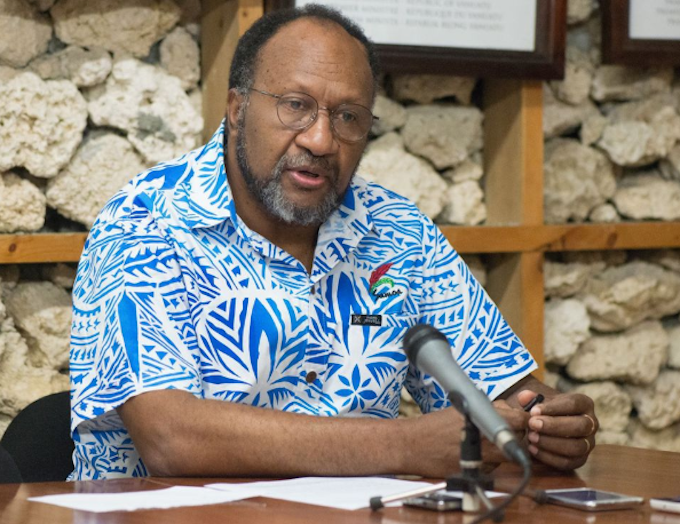
The reform comes after Prime Minister ‘Akilisi Pōhiva told Kaniva News in an interview that the TBC had run at a loss for many years because the majority of sponsors and listeners had moved and were using private broadcasters.

In February, the government, which is TBC’s main sponsor, injected TP$200,000 to the broadcaster to support its operations.

]]>

Ambae’s volcano still smoking, rumbling but now ‘normal’

]]>

AsiaPacificReport.nz

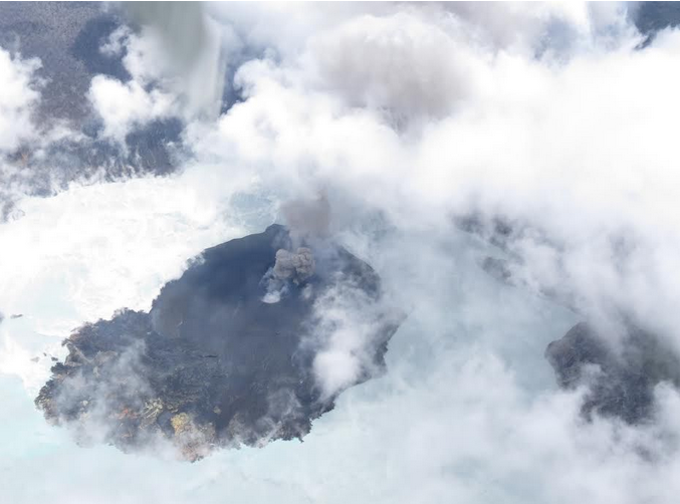
Latest photo of Ambae’s Manaro Voui volcano. Image: Geohazards Department/Vanuatu Daily Post

By Anita Roberts in Port Vila

The frequent volcano rumblings felt on Ambae and surface events seen from neighboring islands of Maewo, Pentecost and even Santo in Vanuatu are ideal settings of a volcano experiencing minor eruption categorised at alert level 3, say volcanologists.

This was the reply from the Manager of the Geohazards Department, Esline Bule, when she was asked to clarify public concerns on the increasing number of eruptions at the Manaro Voui volcano causing more fear among people.

The volcano seems to be making more smoke and rumblings that can be felt far away compared to when it was experiencing major unrest stage – the second highest alert level.

The entire 11,000 population of Ambae island was evacuated to other islands in Vanuatu earlier this month.

Locals from Maewo reported seeing flames and lava cascading down slope from the volcano recently.

These activities are related to the volcano being in a minor eruption state, the Geohazards Manager explained.

-Partners-

About the continuous erupting sounds, Bule said the reason they are louder is because they are coming out from a dry cone.

“Before, activities were happening beneath the lake (Lake Voui),” she said.

“Current eruptions are occurring from a dry cone.

Echo of erupting sounds
“The cone has also grown in height after the unstable activity. The echo of the erupting sounds bounce through the dry cone and can be heard from a very far distance.

“People in places or nearby islands facing the wind direction will receive the sound more clearly.

“Unlike Mt Yasur where its cone is located to a corner, the cone of Ambae volcano sits right at the top of the hill in the centre of the island.

“Definitely, erupting sounds will be heard from great distances as far as from the neighboring islands of Maewo and Pentecost.”

Bule continued to explain that the alert level 3 meant volcanic eruptions were continuing and – just like Mt Yasur – it was expected to throw out flying molten lava and volcanic gases.

No human activity was expected within 3km from the vent in Lake Voui.

People must not approach the volcano or go near the danger zone as chances for moderate explosions are likely, said the Geohazards Manager.

Anita Roberts is a Vanuatu Daily Post reporter and articles from the VDP are republished by Asia Pacific Report with permission.

]]>

Economically empowering refugees a solution to ‘broken’ system

]]>

AsiaPacificReport.nz

The global refugee system is failing … here is how it can be fixed, says Professor Alexander Betts. Video: TedTalks

By Jeremaiah M. Opiniano in Adelaide

Allowing refugees to be economically active in host societies may help solve a “broken” refugee system, says an Oxford University academic.

Professor Alexander Betts of Oxford’s Refugee Studies Centre told the audience at a public lecture hosted by the University of Adelaide’s Hugo Centre for Migration and Population Research recognition of refugees’ economic potentials would possibly create a “sustainable refugee system fit for purpose in the 21st century”.

Dr Bett’s view comes as European countries continue to struggle to accommodate Syrian refugees fleeing civil conflict and extremism.

In the US, President Donald Trump has slashed the maximum number of refugee entries to 45,000 in 2018, said to be the world leader in refugee resettlement’s most restrictive number in 70 years.

Dr Alexander Betts pushing for reforms in countries refugee policies. Image: Fidelma Breen/Hugo Centre for Migration and Population Research

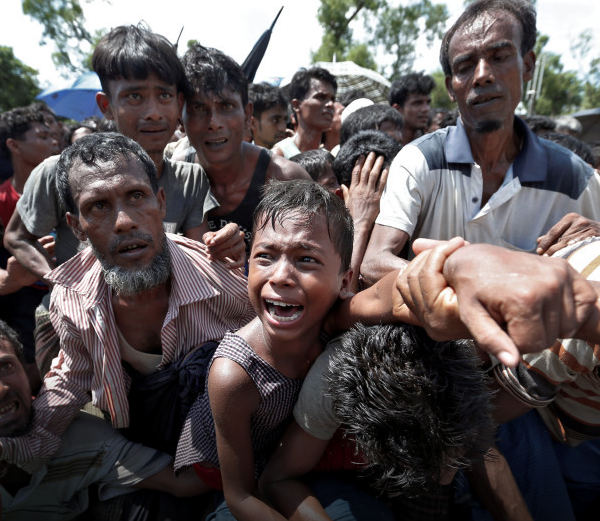
Myanmar and its Nobel laureate, Aung San Suu Kyi, continue to receive flak over the country’s brutal crackdown on some 370,000 Rohingya refugees.

-Partners-

Australia has been criticised by the UN Special Rapporteur on Torture for “violating” the rights of asylum seekers to be free from torture and inhuman or degrading treatment, all of which was dismissed by former Prime Minister Tony Abbott.

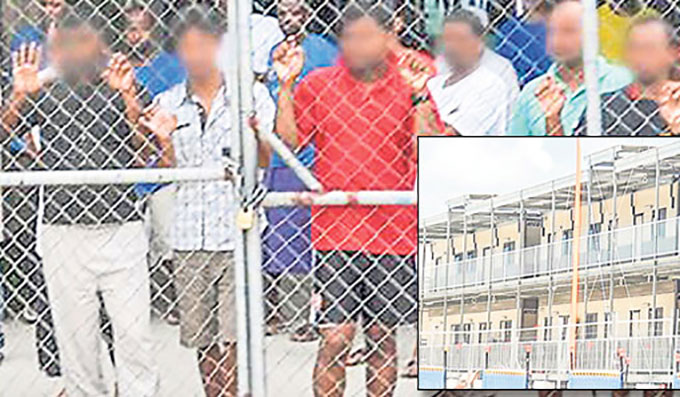
The country continues to hold some 2200 refugees and asylum seekers in offshore detention centres on Nauru.

Refugees own businesses
Citing findings by a Refugee Studies Centre’ survey of South Sudanese and Somali refugees in Uganda, Dr Betts said refugees are not economically isolated.

Dr Betts said a fifth of refugees surveyed by the centre owned a business, with 40 percent of employees being Ugandan.

He said refugees in Uganda had approximately 200 “distinct livelihood activities” run by skilled professionals.

Less than one percent of refugees surveyed had no formal income-generating activity, Dr Betts added.

“The findings in Uganda show what’s possible when refugees are given those opportunities,” Dr Betts said.

Over the past year, Uganda had taken in 1.3 million people – the equivalent of 2000 people a day fleeing famine, drought and violence – more than what any European country accommodated in the 2016 refugee crisis, Dr Betts added.

The economic success of refugees presented a different picture in Kenya amid stricter regulations, the centre’s survey showed.

Reliance on community
This is due to the fact refugees are only able to work in some refugee camps.

Dr Betts and his team found refugees in the camp at Kakuma rely more on community leaders, family and neighbours than they do on the social services provided by international organisations and NGOs.

His team also found the greatest barriers to being economically active related to supply and demand for goods, rather than life’s daily struggles in refugee camps.

Well known for research which reframes refugees as economic contributors, Dr Betts has pushed for the fusion of refugees into countries special economic zones.

The Refugee Studies Centre worked with Jordan to pilot the “Jordan Compact”, which allowed Syrian refugees to work in manufacturing companies found in these special economic zones.

Jordan was willing to grant 200,000 work permits to Syrian refugees across three to five years. In return, multilateral organisations gave Jordan concessionary loans and tariff exemptions.

Dr Betts said the project had achieved “mixed results”, however.

‘Innovative’ pilot project
Only 51,000 Syrian refugees had work permits – 2 percent of which were women – while a handful of multinational investors invested in Jordan.

“The Jordan Compact is an innovative pilot where lessons can be learned in spite of the most strict regulatory environments.

“Refugees have access to work, labour rights and forms of labour protection while helping rebuild post-conflict Syria,” Dr Betts said.

With global data revealing 10 developing countries host 60 percent of the world’s refugees, Dr Betts called on countries to rethink their refugee systems.

He said refugee assistance should be a combination of rescue, autonomy, and a “route out of limbo”.

This could be achieved through reimagining resettlement policies and visa systems for refugees.

“Even with rescue and autonomy, it is surely not reasonable for refugees to remain in limbo for more than five years,” he said.

“There may be alternative ways to manage these movements sustainably to benefit refugees and host countries.

“It will start by helping people help themselves.”

]]>

Bryce Edwards’ Political Roundup: Signs of a National-NZF government

Bryce Edwards’ Political Roundup: Signs of a National-NZF government

[caption id="attachment_13635" align="alignright" width="150"] Dr Bryce Edwards.[/caption] The day has arrived for Winston Peters and New Zealand First to decide which major party to put into power – even if the announcement won’t actually be made today. It really could go either way, but below are ten items that suggest Peters will be inclined to choose National. A follow-up column will look at signs of a Labour-NZ government. [caption id="attachment_2529" align="alignleft" width="300"] New Zealand First leader Winston Peters.[/caption] 1) The Greens could be too unstable in coalition government Former National Cabinet Minister Wayne Mapp has plenty of experience with MMP, and offers his observations of How coalitions are made (and destroyed). Mapp draws particular attention to the need for stability, arguing that NZ First will be wary of the Greens proving reminiscent of the Alliance, especially on foreign affairs: “If the Alliance could self destruct over Afghanistan in 2002, then it is quite possible the Greens would do the same in similar circumstances.” See also Newshub’s Greens could be ‘stumbling block’ to Labour victory – Patrick Gower. 2) Going with National will be simpler for NZ First In a column written prior to the release of the final results, leftwing political journalist Gordon Campbell put forward a number of reasons he suspects NZ First will go with National, including “a formal coalition with National would (a) create a bigger margin for passing legislation and (b) be cleaner to manage, in that only one other partner would be involved” – see: Peters’ end game in the coalition talks. Campbell says “All things considered, while it’s not impossible for Peters to go centre-left, it seems less likely. So to my mind – and this is only a wild guess – the likely options are between a formal coalition with National, or a confidence and supply deal with National.” In his latest column – Is Winston Peters our best current defence against market extremism? – Campbell cleverly foreshadows the rationalisations that will accompany Peters’ decision – whatever it may be – and says we can also look forward to “a stern lecture as to why the decision he reached had always been so very, very obvious.” 3) There will be too much backlash from a deal with Labour and the Greens If NZ First choose Labour and the Greens, there will be a massive backlash against the party, according to National Party blogger David Farrar: “For the first time the biggest party isn’t Government. Sure the political scientists and Twitterati will proclaim that is how MMP works. But they are not representative of the population… Those who say there will be no backlash don’t understand that not everyone is a political scientist. Many will see the Government as illegitimate. It will be called the coalition of the losers” – see: Why my heart wants Winston to choose Labour. In addition Farrar suggests, “Winston choosing Labour and the Greens (regardless of whether or not Greens get Ministers) will go down like cold sick in much of rural and provincial New Zealand.” 4) If NZ First wants to sit on “the crossbenches” outside of government, then National is more likely According to Mike Hosking, if NZ First chooses to stay out of government entirely, it will likely choose National: “If a confidence and supply deal is the way we go …you’d have to favour National, if for no other reason that they as a singular party have more support that both Labour and the Greens combined. For a third player to support two other players into government that can’t together equal the support of the single largest player is not democracy … and wouldn’t go down well at all” – see: Major parties acting like subservient wimps. 5) National’s superior vote is just too strong for NZ First to ignore The “moral authority” of National to govern means the incumbents are likely to be chosen by NZ First, according to John Roughan, writing on the day the final results came out: “When the final result of the election is declared today National is almost certain to have its victory confirmed. The margin over Labour will probably be reduced but still decisive. We should pause to acknowledge what an historic result this is” – see: A fourth election victory is truly historic. Similarly, see Roughan’s earlier column, A personality cult decides our next government. 6) National might be more able to help NZ First with a legacy National Party sources have told Richard Harman that the party can’t necessarily compete with Labour in offering policy concessions to NZ First, but there might be other gains they can offer, such as helping Ron Mark or Shane Jones win their electorate seats at the next election, in order to secure the survival of the party when Winston Peters retires – see: Winston faces a dilemma – policy or legacy. 7) Many commentators deem National the likely winner The Spinoff website asked a number of pundits the question: Which way will Winston leap? Most of those surveyed seem to think National will emerge victorious. For example, Steve Braunias explains why: “I think Peters won’t want to be part of a loser triumvirate. He’s great at picking winners. He’ll go with National. Also he’ll be the equal or the better of English, alongside him in government; alongside Ardern, he’ll just look like a silly old second-rate prat.” 8) Following its traditionalist inclinations, NZ First will opt for National Stuff political editor Tracy Watkins says National has the edge to become government: “the odds are still weighted in National’s favour. Peters is an old-fashioned politician and, despite the theatre, will be taking seriously the weight of public support behind National” – see: Winston Peters is in the box seat, and don’t we know it. Watkins sees a re-run of 1996: “Peters’ reasons for going with National back then were the same ones that will take priority in 2017 – whichever of Labour or National he chooses, it will be based on Peters’ belief in it being the most stable and more durable of the two options.” 9) NZ First is conservative According to veteran political columnist John Armstrong, writing soon after the election, Winston Peters will be very aware of “the risk he would be taking in hitching his unique brand of conservatism to the political correctness exhibited by Labour. Peters likes to talk a lot about bottom lines. But his ultimate bottom line is the survival of New Zealand First after he (eventually) retires from politics. And that will incline him to lean more in National’s direction as post-election negotiations progress over coming weeks” – see: Winston Peters’ ultimate bottom line. 10) NZ First has lost its more leftwing supporters Much is being made of NZ First supporters being more favourable towards a coalition with Labour. Yet during the campaign, many of these supporters shifted to Labour. Colin James explains: “If you had to assign New Zealand First conference delegates to National or Labour, most would go Labour. The same majority applies to its policies. But the fact that New Zealand First’s support halved after Ardern was made leader might mean its residual supporters are mostly National-leaning” – see: English on top but facing a stronger Labour. Finally, for the latest in coalition satire, see Toby Manhire’s Hi Winston, just a few thoughts…, Ben Uffindell’s Winston Peters said nothing in talks with National, just walked around room with a box cutter, Scott Yorke’s These coalition talks and Steve Braunias’ Secret Dairy of the coalition talks.]]>

Tongan journalists who clashed with PM reshuffled out of TBC newsroom

]]>

AsiaPacificReport.nz

Viola Ulakai (left) and Laumanu Petelō out after TBC newsroom in “shake-up” … critical of PM ‘Akilisi Pōhiva. Image: Kalino Latu/Kaniva Tonga

By Kalino Latu, editor of Kaniva News

Two senior journalists have been ousted from the newsroom for new roles in a shake-up at the state broadcaster,

Laumanu Petelō, editor of Tonga Broadcasting Commission’s (TBC) television and radio, and news manager Viola Ulakai have moved into a new department under the commission’s marketing and sales management.

The restructuring has been made under the direction of TBC’s new board chairman, Dr Tu’i Uata, who replaced ‘Ahongalu Fusimālohi last month.

Kaniva Tonga reports Petelō, Ulakai and Uata did not immediately respond to requests for comments.

However, Kakalu ‘o Tonga editor ‘Ulu’alo Po’uhila told Kaniva News Petelō had been interviewed about the reshuffle.

Po’uhila alleged Petelō and Ulakai were not happy with the shake-up and were seeking help from the Ombudsman’s Office and legal advisers.

-Partners-

The restructure comes after advice that Ulakai should be suspended in April 2016 after Prime Minister ‘Akilisi Pōhiva was disappointed to learn she had falsely claimed a request for a press conference to answer questions regarding his son had been made on the behalf of the Tonga Media Council.

Run-ins with Pōhiva
In March, Petelō repeatedly clashed with Pōhiva during a press conference in Nuku’alofa after the prime minister accused TBC for reporting negatively against his government.

Kaniva Tonga reports the rows between the government and TBC staffers reached a crisis after the Minister of Public Enterprises warned that the automatic renewal of its former general manager Nanisē Fifita’s contract with the broadcaster in May was void.

The minister wanted the post to be advertised.

Fifita took the minister to court but the judge ruled in favour of the government.

]]>

Bryce Edwards’ Political Roundup: The interesting ways New Zealanders voted in 2017

Bryce Edwards’ Political Roundup: The interesting ways New Zealanders voted in 2017

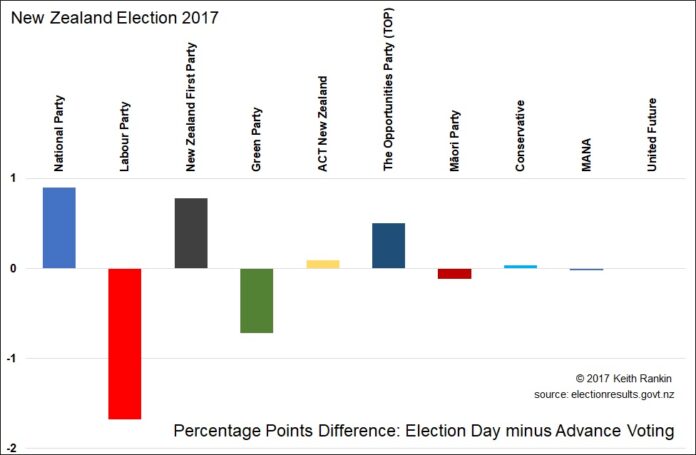
[caption id="attachment_13635" align="alignright" width="150"] Dr Bryce Edwards.[/caption] The final New Zealand general election results for 2017 are in. And although the media and public focus has swiftly turned to coalition building and negotiations, it’s worth looking at some of the more interesting results from election night and the final vote count. Here are 15 of the most notable voting statistics to ponder. [caption id="attachment_2961" align="aligncenter" width="1200"] Dairy cows and the protectors of New Zealand’s rural-based white-gold economy.[/caption] 1) The growing urban-rural divide in the election turned out to be a myth According to journalist Charlie Mitchell, “Election data shows not only is the rural/urban divide not growing, it is shrinking”, as “Not only did National fail to increase its influence in regional New Zealand, the opposite happened: Labour made significant gains in rural areas, while National was saved by the country’s most urban voters” – see: Election shows rural-urban divide shrinking, not growing. For an alternative view, see National campaigner Jenna Raeburn’s Inside the campaigns: how National took the migrant and rural vote. 2) National’s party vote increased in 14 electorates Anna Bracewell-Worrall believes National’s increasing vote in these electorates is unlikely to be due to issues such as Labour’s controversial water tax plans, because “All but one of them are in Auckland. Just one rural electorate saw an increase in National Party vote. That’s Hunua, which is mostly rural on the outskirts of Auckland” – see: Digging through the data: National’s urban success story. She reports that “Most of National’s biggest losses came from the South Island”. 3) National won most of the safe seats David Farrar looks at the MPs with the safest and most marginal electorates in Biggest and smallest majorities. Farrar points out that National has eight of the top ten safest seats in the country – led by Amy Adams in Selwyn, with the biggest majority of 19,639. At the other end of the scale, the most marginal seat is Adrian Rurawhe’s Te Tai Hauauru, which he holds with a 1,039 majority. Just behind Rurawhe is Greg O’Connor, with a 1,051 majority in Ohariu. 4) National is more of an electorate party and Labour is more of a list party National won 41 electorates and got 15 list MPs, whereas Labour won 17 electorates and got 29 list MPs. For more, see Colin James’ This is the world of MMP – get used to it. James also reports that Labour’s 2017 vote was “its highest score since 41.1% in 2005”. 5) New Zealand First’s support dropped in the Maori seats and Auckland, but picked up in some provinces According to Claire Trevett, “the seats in which NZ First performed best shows that while it still did better than its 7.2 per cent overall result in the Maori seats, its support dropped from 12-14 per cent in those electorates in 2014 to 7-9 per cent this election” – see: NZ First cops it in Maori seats, held up by regions. In Auckland, the party only received “around 3 to 6 per cent” of the party vote. But in Northland and Whangarei, the party vote was 14 per cent. 6) There were a record number of special votes The number of special votes cast this year was a record 446,287, up from 328,029 in 2014. National lost particularly badly from those special votes: “National always loses out in special votes, but 2017 was the biggest swing yet. The percentage point drop in its party vote share between the provisional and final vote counts was nearly three times what it was in 2008” – see Michael Wright’s Election analysis: Why did the special votes swing so far Left? 7) Voter turnout was highest in Wellington Central, and lowest in Tamaki Makaurau According to Anna Bracewell-Worrall, “The electorate with the highest turnout was the one on the Beehive’s doorstep – Wellington Central – with 86.6 percent of enrolled voters. The seat was won by Labour’s Grant Robertson. Of the 50,234 people enrolled to vote in Wellington Central, 43,166 people cast a vote” – see: NZ Election 2017: Five interesting facts about the vote. In Tamaki Makaurau 35,534 people were enrolled, but only 20,593 voted. 8) The distribution of special votes differed more than usual from regular votes Caleb Morgan’s number crunching shows that this year “Labour did their best ever on special votes: 18.91% better than on preliminary votes. Their previous best was last election, where they did 14.16% better” – see: Special votes are increasingly turning towards Labour, away from National. Similarly, “National did their worst ever on special votes: 21.12% worse than on preliminary votes. Their previous worst was last election, where they did 16.86% worse. 9) Although the National Party vote fell only slightly, the centre-right vote fell much more According to economist and blogger Michael Reddell, “The centre-right parties did impressively well to increase their total vote share in 2011 and again in 2014.  But the fall-off in this election – 6.6 percentage points – is pretty stark” – see: Fourth term government votes. Reddell includes a chart showing the decline of the centre-right. See also Reddell’s Fossicking in election statistics. 10) Not all voting booths produced the expected results The voting booth at St Heliers School in the “beachside east Auckland suburb adjacent to affluent Remuera and Mission Bay” claimed “the title for being the New Zealand People’s Party’s most successful voting booth, with 11 percent of the party vote in that booth” – see Matt Burrows’ Digging through the data: The election’s weirdest voting-booth stats. Similar examples are provided for the relative success of the Internet Party, the 1080 Party, and Act. 11) The Labour Party performed very well in and Maori and strongly Pacifica electorates Labour’s best party vote was in the South Auckland electorate of Mangere, with a 60 per cent Pacifica population – see Anna Bracewell-Worrall’s What the data tells us: Maori and Pacific voters throw support behind Labour. Apparently, “Labour’s 10 most popular electorates were the seven Māori seats and the three electorates with the highest Pacific populations in the country.” And the “biggest swing to Labour was in Te Tai Tokerau… where Labour gained 22.4 points, going from 35.1 percent of the vote in 2014 to 57.4 percent this time around.” 12) If only university students had voted, parliament might be made up of 39 per cent Labour MPs, 31 percent National MPs, and 19 per cent Green MPs This is the way people voted in the university-based booths, according to Critic magazine – see: National Comfortably Win Party Vote at Two Uni Campuses. Of course, different universities had very different results, with National “winning” at Lincoln University, and the Greens “winning Massey University’s Wellington campus and Victoria University”. 13) Labour possibly lost votes due to its immigration policies Looking at where Labour performed well and poorly, Branko Marcetic comes to a number of interesting conclusions, including that “Labour tended to lose the party vote in high-immigrant electorates” and “Labour made most of its gains where there were less immigrants” – see: How did Labour’s immigration stance impact its immigrant vote? See also, Jenée Tibshraeny’s The extent to which the migrant vote propped up National. 14) Labour did poorly from people splitting their votes The extent to which people split their party and electorate votes is examined by Andy Fyers in his article, The candidates who outshone their party. Apparently, “Labour candidates got 1.7 per cent more of the candidate vote than the party vote on average, in the general electorates. National candidates do about 1 per cent worse”. And Labour’s Stuart Nash is highlighted as a candidate who “won 53.4 per cent of the candidate vote compared to 37 per cent of the party vote that went to Labour.” For the latest on where Labour and National won electorates, but lost the party vote, see Claire Trevett’s Election Eye: Hiccups in Nelson but party vote shows Labour reclaiming its traditional turf. 15) There were 30 electorate candidates who got less than 100 votes Some of the less successful candidates are highlighted by Katie Kenny in her article, Let’s pause to consider the losers of this election. Kenny reports “Bob Wessex in Wellington Central was the country’s lowest-polling candidate, with just 14 votes.” And the article explains how her Not a Party (NAP) caused one voter to regret their support – writing to complain: “So disappointed in myself after being mislead to vote for you in Wellington Central. I didn’t have time to research any policies of any party so I just went by the name… To find out that NAP [Not a Party] had nothing to do with taking a nap whenever you wanted means I have wasted my vote. I thought I had found my home, my niche in the political landscape.” Finally, for an effective way to see some of the most interesting voting statistics, you can look at this interactive data-visualisation vote map. It’s statistician-creator, Chris McDowall explains how it works in his blog post, Interactive: mapping every booth’s votes from the 2017 general election.]]>

Keith Rankin Analysis: Migration within New Zealand: Evidence from the Election

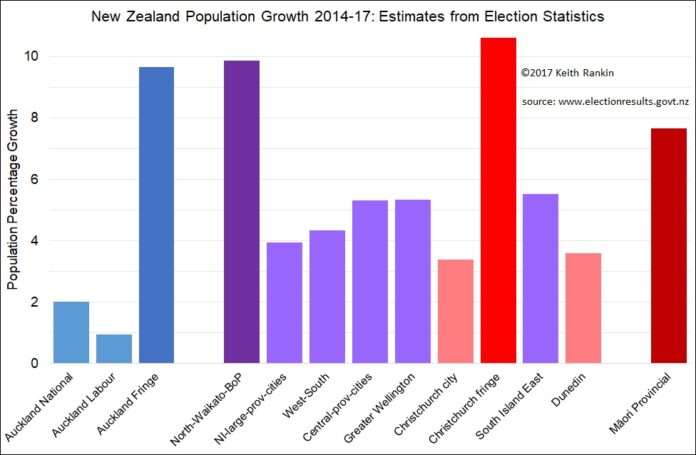
Flight to the Fringe. Chart by Keith Rankin.

Keith Rankin Analysis: Migration within New Zealand: Evidence from the Election

 New Zealand does not have reliable regional population statistics. The intercensal estimates that Statistics New Zealand publish are based on the extrapolation of trends that existed before the most recent census; in this case, the 2006 to 2013 trend. Sub-national population estimates are heavily revised after each census.

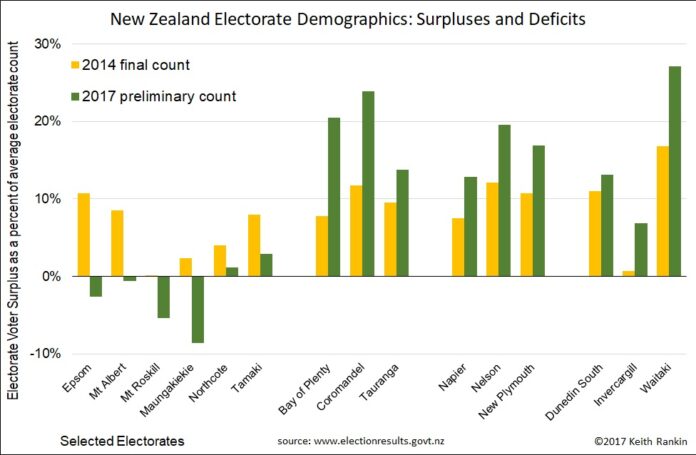
Last week I showed how, in the preliminary vote count for the 23 September election, the Auckland electorates revealed lower than expected vote tallies, and provincial New Zealand much higher than expected. These results meant that the population of Auckland had barely increased since 2014, or that Auckland had a disproportionate amount of uncounted special votes. Now that the final vote tally has been released, we see that both of these possibilities are true.

In today’s chart, I have grouped all electorates into regional categories, with greater Auckland divided into three categories: Auckland National, Auckland Labour, and Auckland fringe. Auckland National is those electorates in the isthmus, North Shore, and Pakuranga/Botany which have had a National MP for all this century. Likewise, Auckland Labour, which covers mainly the former Waitakere and Manukau cities, plus Tāmaki-Makaurau. While in many ways, Mt Albert and Mt Roskill are now a better fit with Auckland National, I have nevertheless included them with Auckland Labour. Auckland fringe is Helensville, Upper Harbour, Rodney, Hunua and Papakura.

The other particularly interesting grouping is the provincial ‘North-Waikato-BoP’: Northland, Whangarei, Waikato, Coromandel, Bay of Plenty, East Coast, Taupo, Taranaki King Country.

The chart shows the percentage increase in votes in these groups of electorates, adjusted by the overall increase in voter turnout (from 77.9% in 2014 to 79.67% in 2017). Thus, the chart gives an estimate of the increase in voter-age population in each electorate grouping.

Auckland Labour shows the smallest voter-age population increase. However, the higher overall voter turnout is not reflected in some of these electorates, which contain many of our most disengaged young people. Some residences and schools in South Auckland are undoubtedly overcrowded, and with disproportionate numbers of children.

We note that Tāmaki-Makaurau showed a particularly low vote in 2017, while other Māori electorates showed substantial percentage increases. This is strong evidence of ‘brown flight’ from Auckland to the provinces.

Of particular interest is the Auckland National grouping of electorates, which is the principal territory of the 2012-2016 Auckland house price bubble. There is evidence of a substantial net outflow from these nine electorates; partly people moving out of Auckland, and partly other people not moving into Auckland who otherwise would have moved to Auckland. It looks suspiciously like ‘white flight’, with the recipient electorates being on the Auckland fringe, the wider Auckland hinterland, and probably wider provincial New Zealand (including the South Island).

Other metropolitan electorates also showed slower population increases than their provincial hinterlands. Christchurch, not surprisingly, shows much growth on its fringe and little growth in its suburbs.

Dunedin shows least growth in its northern electorate. Hamilton mirrored this in its eastern electorate. So did Palmerston North, and Auckland Central. (Hamilton and Palmerston North are grouped together in North Island large provincial cities.) Cities with growing proportions of international students are certainly showing much smaller increases in votes cast.

To summarise, the major demographic features of the 2017 election are the redistributions from city to fringe (and hinterland) in Auckland and Christchurch, the distribution of non-voting international students, and the increase in provincial Māori.

Critics slam Indonesian military for meddling in national politics

]]>

AsiaPacificReport.nz

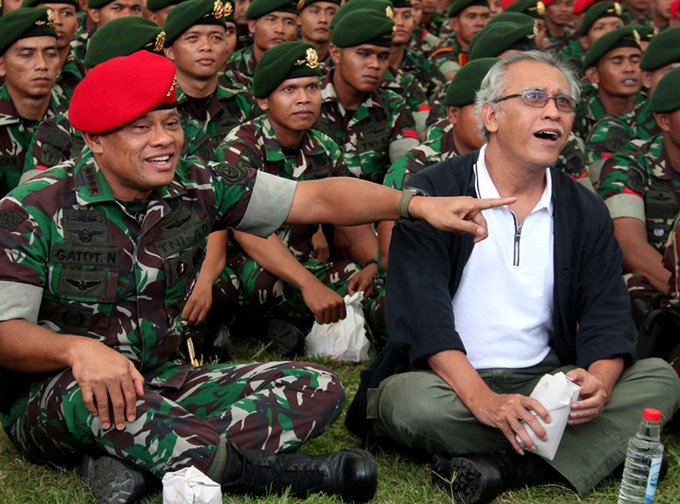
TNI Chief General Gatot Nurmantyo (left) at a concert with pop singer Iwan Fals. Image: Asep Fathulrahman/Antara/Jakarta Globe

Pacific Media Centre Newsdesk

Critics have rebuked the Indonesian Military, or TNI,  for meddling in politics, as it celebrated its 72nd anniversary last week, reports the Jakarta Globe.

The critics of the institution say there are signs it is trying to reestablish its political power — curbed since the fall of the military dictator President Suharto in 1998, including by regaining its old dwifungsi, or dual-function, role under current commander General Gatot Nurmantyo.

The TNI’s dwifungsi role, maintained for 32 years under military strongman Suharto, was scrapped soon after his downfall. Dwifungsi had allowed soldiers to be involved in business and politics, earning them enormous advantage and helping them stay in power.

Concerns that civil supremacy is slipping in Indonesia have been rising since Gatot took the reins of the TNI in July 2015. The general makes frequent public appearances, seems to court media attention and in recent months has been putting forth ultra-nationalistic remarks that created controversies.

Activists from Jakarta-based Kontras, a non-governmental organisation that has been helping victims of military violence, said in a note on civil-military relations entitled “A Gift for the Military’s 72nd Anniversary,” that Gatot had been making “obvious political maneouvres.”

“The commander of the military will always get drawn into politics,” Gatot told reporters in Banten, during preparations for TNI’s anniversary celebrations which were held last Thursday.

-Partners-

“But it’s state politics, not practical politics. The military remains neutral in practical politics,” Gatot, who is due to retire in March next year, said.

Gatot under fire
Gatot came under fire for his claim last month that an “institution outside the TNI” had illegally imported 5000 military-standard weapons. The claim had pit the TNI squarely against the police and forced Chief Security Minister Wiranto — himself a former TNI commander — to clarify matters.

Last month Gatot also ordered soldiers to hold screenings of a Suharto-era propaganda film depicting the killings of six army generals on the fateful night of September 30, 1965.

The murders were part of a failed coup attempt that was blamed on the now-banned Indonesian Communist Party (PKI) and led to an anti-communist pogrom that historians say killed up to 3 million people.

Large crowds, including children, were herded to watch the often violent film, which failed to mention the military-backed retaliation against the communists that followed.

Gatot’s claim of the illegal weapon import and his order to screen the propaganda film were mentioned in a list published in Kontras’s note on Wednesday along with other incidents that also involved the TNI commander since May last year.

The list, Kontras argued, “showed the military still retains its ambition to bring back dwifungsi”.

“We should keep in mind that almost all members of the current military elite were raised under the climate of dual function,” Kontras activist Puri Kencana Putri said.

“They were trained to be a force that won’t just stay put in the barracks.”

]]>

Jakarta third most polluted city – and its air quality is getting worse

]]>

AsiaPacificReport.nz

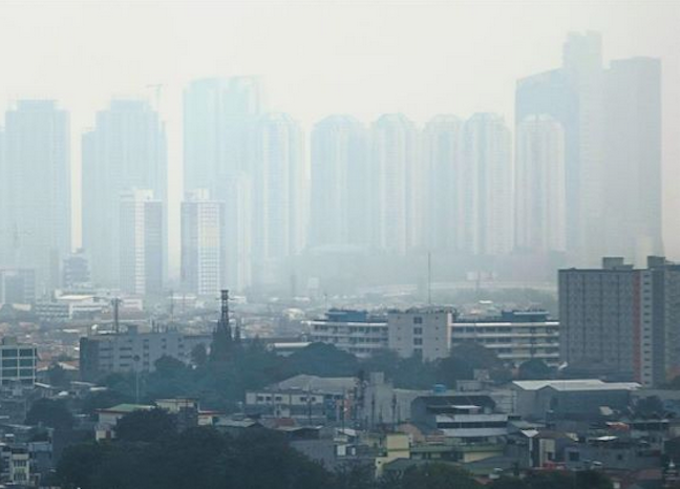
Health hazard: Haze shrouding the Jakarta skyline recently. Image: Jakarta Post/The Star

Pacific Media Centre Newsdesk

Anyone who wants to live a healthy life may have to consider moving out of Jakarta, as the city continues to climb up the rankings for the world’s worst air quality.

Based on a real-time air quality index uploaded to the Airvisual application at a recent survey, Jakarta ranked third as the most polluted city in the world, after Beijing and Dhaka, among 70 cities measured across the globe.

In mid-August, the application showed that Jakarta was at the top of the list, followed by Ankara, Turkey, and Lahore in Pakistan.

Residents in the Indonesian capital may have experienced the worsening air quality due to hazy air and the sharp smell of exhaust fumes from vehicles.

Filani Olyvia, 25, a resident of Mampang Prapatan, in South Jakarta, said she was worried about her health because she rides an ojek (motorcycle taxi) to work every day.

Greenpeace Indonesia revealed that air pollution in Greater Jakarta, with its high exposure to a carcinogenic pollutant called PM2.5, was three times higher than the maximum “safe” level recommended by the World Health Organisation of 25 micrograms per cubic metre.

-Partners-

According to research conducted by Greenpeace from January to June, the air in Greater Jakarta was considered “unhealthy” and hazardous for residents, especially children, pregnant women and the elderly.

Premature deaths rise
“In general, there has been a significant increase in premature deaths resulting from strokes, heart disease, respiratory infections (or what the local authorities call ISPA) in children, lung cancer and chronic lung diseases,” said Bondan Andriyanu, Greenpeace campaign spokesman for climate and energy.

Using the risk analysis from the Global Burden of Disease Project conducted by the Institute for Health Metrics and Evaluation, Greenpeace found that the great increase of people who suffered from pollution-related diseases occurred in areas highly exposed to the pollutant.

To protect themselves against emissions of PM2.5, residents have been advised by Greenpeace to wear N95 surgical masks, instead of regular disposable masks.

“We also urge the government to establish a proper, publicly accessible air quality monitoring system for residents,” he said.

]]>

Bryce Edwards’s Political Roundup: Time to scrap or reduce the 5% MMP threshold

Bryce Edwards’s Political Roundup: Time to scrap or reduce the 5% MMP threshold

[caption id="attachment_13635" align="alignright" width="150"] Dr Bryce Edwards.[/caption] MMP has a major problem – it’s killing off the minor parties. Smaller parties were supposed to revive and shakeup the party system, providing a diverse array of ideological options for voters. Instead, since 1996, no new parties have managed to make it into Parliament, except by splitting off from existing parties that already had representation. [caption id="attachment_3483" align="aligncenter" width="614"] New Zealand Parliament.[/caption] At this year’s election, the presence of minor parties has further reduced. Two minor parties were ousted from Parliament, and the three remaining ones suffered poor results as voters shifted back to the two major parties. In fact, a record low proportion of votes were cast for the minors, and on final results, only 18 minor party MPs were elected. In contrast, Labour and National won 102 of the MPs, by swallowing up over 81 per cent of the party vote. For the best overview of the decline in minor party strength, see Richard Shaw’s We’ve elected fewer parties than ever under MMP. He says, “the 2017 election is a reminder that the two traditional parties continue to dominate New Zealand politics.” Of course the simplest explanation for the decline of the minor parties is that voters simply didn’t vote for them. This is a point well made by the No Right Turn blogger – see: This is MMP working, not failing. Here’s his main point: “I share the disappointment at the lack of diverse representation and the apparent narrowing of our political sphere, but that isn’t due to any failure of MMP. With a Gallagher Index of 2.7, this election wasn’t especially unrepresentative in terms of votes equating to seats. MMP seems to have done a better job at ensuring that seats reflected public support than it did last time (when the Gallagher Index was 3.82), or in 2008 (when it was 3.84). Instead, the reason there are so few minor parties represented in Parliament this time is because people didn’t vote for them.” There are a number of reasons voters rejected the minor parties. And since the election these have been identified as issues relating to media coverage, a residual first-past-the-post mentality, the aggressive strategies of the major parties, the poor performance of the minor party leaders, and the financial superiority of the major parties. However, the factor that has dominated the debate about the decline of the minor parties is the role of MMP’s five per cent threshold, which everyone agrees helps keep the smaller parties out of Parliament. And there now seems to be an emerging debate about whether this is good or bad thing. Arguments for ditching the threshold The must-read argument for change is Michael Wright’s column, It’s time to ditch the MMP threshold. He outlines the problem, and then declares: “One change can fix this. It’s time to dispense with the 5 per cent threshold. Not just lower it, ditch it altogether. The rule that under MMP political parties must win at least 5 per cent of the party vote to enter Parliament is holding us back. The threshold exists to ensure the right mix of stability and proportionality in government. Right now it is providing neither of those things. After last month’s election, Parliament is home to four political parties and the rump of a fifth – the lowest-ever total under MMP”. Wright points out that the threshold doesn’t simply prevent parties below the magic five per cent from getting any seats, it suppresses the public’s consideration of those parties at all: “Media coverage was often framed in the will they-won’t they context of the threshold, an immediate turn-off for swing voters. TOP polled 2.2 per cent on election night but would surely have got more were it unencumbered by the threshold stigma. The same goes for other minnows like the Maori Party and Act.” The most interesting point he makes in favour of more minor parties in Parliament is there would be a better allocation of power, and more stable government: “More smaller parties in Parliament means less chance of one of them holding all the cards after election day, which is exactly what has just happened to New Zealand First.” On this topic, blogger No Right Turn agrees, saying “If you’re upset about Winston Peters having “all” the power (or rather, as much as the other parties give him), then the answer is to eliminate the threshold” – see: Time to ditch the threshold. Also in favour of jettisoning the threshold entirely, Julian Lee questions how well the system is working, given the poor results for the smaller parties. He says this has “cast doubt on the point of MMP – greater representation of the public in the democratic process” – see his article, The election was a minor party bloodbath, so has MMP done its dash? Lee compares the 2017 result with the high point for the minors, which was the 2002 election “when six minor parties took out 41 seats in Parliament, a third of the total number of seats.” And he ponders whether the state of the party system will get worse in the near future: “As for the two remaining minor parties, there is no guarantee the Greens will survive the next election given this year’s result, nor is there any guarantee New Zealand First’s Winston Peters will contest the next election at age 75. This leaves the potential for a 2020 election without minor parties. A 2020 Parliament of National and Labour. So, Lee, points to other MMP countries like Japan and Lesotho that don’t have a threshold, and suggests we emulate them. It would be relatively simple, as a “natural” threshold would be needed to get one seat – based on 1/120th of the total party vote: “all that was required to get a seat in Parliament was a .83 per cent vote, that is 18,000 votes”. And he says, “If the threshold were removed this election, two extra parties would have made it to Parliament – the Opportunities Party with three seats and the Maori Party with one.” Another blogger, “I’m no fox”, has also written this week about the problems of the threshold: “The biggest problem is the ridiculous threshold. The threshold is an unfair bar that numerous political movements, with tens of thousands of voters backing them, have failed to meet, keeping them locked out of the debating chamber. Both TOP and the Māori Party lost out because of it in this election; the Conservatives, Internet Mana, and the ALCP all lost out last time. You can have 4.99% of the population behind you, but because you didn’t have just a handful more people ticking your box, you have no direct legislative influence” – see: The problem isn’t just MMP, but how we use it. Prior to the election, I was also quoted by the Otago Daily Times’ Bruce Munro about the need to have more minor party representation: “Our democracy has a major flaw if we don’t have a full array of different options that we can seriously consider voting for. And ultimately the public is going to be less engaged in politics and in voting if the options on offer are boring, bland, and highly-restricted in range” – see: Minorities of none. Retain the threshold, but reduce it? There are plenty of other advocates at the moment for ditching the threshold, or at least lowering it. AUT’s Julienne Molineaux has published an excellent overview of coalition formation under MMP, and also discusses how well MMP is working for getting minor parties into Parliament – see: How MMP Works: Freestyle bargaining. Molineaux argues that the 5 per cent threshold “needs to be lowered because it wastes votes; it needs to be lowered because it has, so far, made it impossible for (completely) new parties to make it into parliament.” And in his review of how well MMP is performing, Peter McKenzie also cites the threshold as a major impediment to diversity in Parliament, saying that reducing the threshold to three per cent would have the most “significant effect on the ability of minor parties to grow and challenge Labour and National’s power” – see: MMP: How does New Zealand stack up? Finlay Macdonald complains that the electoral system still isn’t working properly and, amongst other fixes, he advocates a reduced threshold, adding “Our parliament would be better off for having the likes of Gareth Morgan on board” – see: Mixed-member proportional and the 2017 election. Three per cent is the magic number according to blogger Martyn Bradbury – see: In defence of MMP and how to fix it. But Bradbury strongly opposes getting rid of the threshold entirely, in case radicals get elected to Parliament: “Some have suggested we should scrap the threshold altogether, I think that is a dangerous suggestion that opens the door to political radicalisation and extremism. You only need to look at Israel who has a totally representative voting system and it leaves them hostage to tiny religious splinter group factions who hold any Government to ransom for hardline brutality against Palestinians. No threshold allows extremism, what we need to do in NZ is lower the threshold, not abandon it”. Bradbury’s arguments are supported by Mike Hosking, who would prefer to retain it at the full five percent, saying, “The last thing we’d want to do is to add to the madness by making it easier to access power” – see: For heaven’s sake don’t drop the MMP threshold. Hosking’s main argument is worth quoting at length: “Even at 5 per cent we still seem to have had ourselves a fair old selection of odd balls. Lower the 5 per cent – you’re merely inviting more madness into the place. Look at the countries who operate lower thresholds. Italy has 3per cent. That’s a stable democracy – not. Greece is another with 3 per cent surely another example of sensible fiscally responsible and longstanding stability – not. Cypress 3.6 per cent, Bosnia 3 per cent, Albania 3 per cent – now yes some of them run different systems, and some of them have other issues at play, but join the dots. The easier it is to get to parliament, the madder the place tends to be, the more parties end up in parliament, the more uncertainty and instability you tend to have.” Finally, for my own view on the threshold, as well as the MMP “coat-tails” rule, see my Herald opinion piece from 2011: Undemocratic 5pc threshold at fault, not MMP.]]>

West Papua petition causes UN stir, but Papuans say demands still clear

]]>

AsiaPacificReport.nz

Australia’s ABC News report on the banned West Papuan petition. Video: Lewis Prai Wellip

By Zely Ariane in Jayapura

A petition claimed to represent the wishes of Papuan people on a referendum on West Papua’s future has been debated since last week among Papuan people and commentators, the government of Indonesia and the United Nations.

Denials and accusations have sprung up in various media since the petition was published by the British publication The Guardian.

Benny Wenda (right) submitted a petition to Jeremy Corbyn, Member of the UK Parliament, and Chairman of the UK Labor Party, in July 2017. Image: Victor Mambor/Tabloid Jubi

The Indonesian government accused Benny Wenda, the key driver behind the petition of “lying and spreading hoax”.

Quoting the statement of the Chairman of Decolonisation Special Committee known as C24, Rafael Ramirez, the Indonesian Permanent Mission of the United Nations in New York said no petition had been received from West Papua by C24.

On the other hand, Benny Wenda said that if the petition was a hoax as alleged by the Indonesian government, why would anyone be jailed for organising the signing of the petition.

-Partners-

He already suspects Indonesia will do anything to discredit the petition, himself and other West Papuan leaders – even the people of West Papua.

However, some Papuans have the view that submitting the petition is not a substantial matter. The Indonesian government must recognize that Jakarta’s policy in the Land of Papua has not yet satisfied the indigenous Papuans.

Response from Papua
Responding to the furore over this petition, Papuan legislator Laurenz Kadepa said the current contrasting claims between the Indonesian government and Benny Wenda were not the substance of the Papua issue.

The most important thing should be a lesson for the government so that policies for Papua should be evaluated from all aspects, especially human rights.

“Hoax or true, the petition information is not to be debated. Now the human rights issue in Papua is on the UN agenda and it will be an obstacle for the Indonesian government. Because the states that are concerned with Papuan human rights continue to grow, not just Melanesian countries,” said Kadepa.

“The Indonesian government should correct itself and improve its policy in Papua,” Kadepa continued.

While a statement by the chairman of the West Papua National Committee (KNPB), Victor Yeimo, to Benar News confirmed that even if without any petition everyone knew the desire of the people of Papua, which was to hold a referendum to shape the fate of Papuan people.

Regarding the Chairman of C24’s rebuttal, Yeimo said that if the chairman refused to accept the petition it was within the authority of the commission. Ramirez had the right to refuse formal acceptance.

“What must be understood by the people of Papua is the chairman of C24 himself in the interview video said that West Papua was listed by General Assembly.

‘Procedural issues’
“It means he explains the procedural issues that are needed to be encouraged. So, the petition is good as public awareness, but the main thing for the Papuan people is to strengthen the strength of the domestic struggle, to encourage the liberation process of the people of Papua,” said Yeimo.

Markus Haluk, one of the ULMWP’s work teams, echoed this view. In fact, on 26 September 2017 Benny Wenda, accompanied by Rex Rumakiek, one of the executives of the United Liberation Movement for West Papua (ULMWP), submitted a petition to the Chairman of the UN Decolonisation Commission in New York.

“If there is a response from the government of Indonesia that says it is a lie, I think it’s all okay. We pray and work that in time the truth is upright for the nation of Papua, Indonesia and the UN,” said Haluk.

ULMWP continues to focus and work on the right of self-determination without being disturbed by the furore that arose from the petition.

Benny Wenda and his petition
Benny Wenda, a Papuan independence leader, claimed to have handed the West Papua People’s Petition to a C-24 representative.

After the news of the submission was released by The Guardian, the government of Indonesia immediately denied it and claimed the petition was a publicity stunt without any credibility.

Benny Wenda told Tabloid Jubi he had submitted the petition to C24 representatives on September 26 at the Office of the United Nations General Assembly in New York.

He was with Rex Rumakiek who also submitted the petition.

“More than 70 percent of the population in Papua want a referendum in West Papua.

“Bishop Desmond Tutu and Noam Chomsky are two of the world’s leading figures who signed the petition,” Wenda said.

Wenda added that the people of West Papua who were supported by the international community very much trusted the petition demand.

West Papuan demand
West Papuan people demanded that West Papua became a non-self-governing territory with full rights to liberty and freedom, he said.

The signing of this petition did not go smoothly.

Recorded petitions distributed online through the avaaz.org site were blocked by the Indonesian government by the end of 2016.

Similar petitions were carried out manually since April 2017.

According to the ULMWP records, 57 people were arrested for supporting the petition.

Among them are Yanto Awerkion, vice-chairman of  KNPB Mimika and its secretary Sem Ukago on 7 December 2016.

“Yanto and Sem were threatened with Article 169 of the Criminal Code for participating in associations aimed at committing a crime, or participating in other associations prohibited by general rules, are punishable by imprisonment of up to six years,” said Wenda.

Indonesian denial
The petition led to the Permanent Mission of Indonesia to the United Nations, New York, Triansyah Djani, issuing a press release quoting an interview with Rafael Ramirez.

“As the Chairman of the UN Decolonisation Special Committee (C-24), I and the Committee Secretariat, have never received, formally or informally, any petition or anyone about Papua as reported in The Guardian newspaper,” Rafael Ramírez said.

Ambassador Ramirez further affirmed that he highly respected the integrity and sovereignty of all members. The mandate of the Decolonisation Committee, he added, was limited to 17 Non-Self-Governing Territories and Papua was not included in this list.

Ramirez’s statement was supported by an interview video broadcast extensively through YouTube by the Permanent Mission of Indonesia to the UN, New York.

Indonesian Foreign Ministry spokesman Arrmanatha Nasir, who participated with the Indonesian delegation at the UN General Assembly meeting in New York, called the petition an unfounded action.

“It’s a pure publicity action without credibility,” he said, quoted by The Guardian.

Papua, continued Nasir is an integral part of Indonesia as stipulated in United Nations General Assembly resolution 2504 (XXIV) 1969.

Support of British MPs
The All Party Parliamentary Group (APPG) of England supports the West Papua people’s petition. An APPG release received by Tabloid Jubi said this petition provided strong evidence that the people of West Papua wanted to express their hope for a better future.

Therefore, according to Alex Sobel, an APPG member (from the British Labour Party) acknowledged that all APPG members supported West Papuan people in calling for their inalienable right to self-determination democratically, so that they could freely decide their own future peacefully.

“We will also step up this significant development with the British government,” Sobel said.

West Papua people has experienced more than 50 years of widespread human rights violations without a satisfactory solution. So it was clear that in a situation that continues to deteriorate, the people of West Papua were not secure under Indonesian occupation, Sobel said.

]]>

ICAN wins Nobel Peace Prize for nuclear weapons ban treaty

]]>

AsiaPacificReport.nz

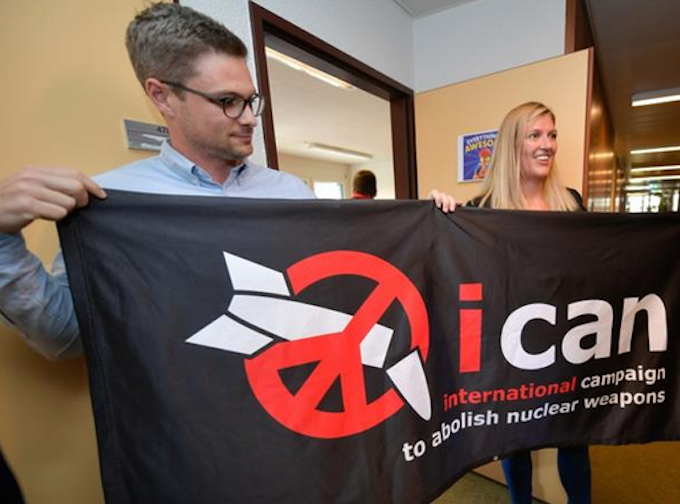
The creation of ICAN was inspired by the success of the International Campaign to Ban Landmines, Nobel Peace Prize winner in 1997. Image: Al Jazeera/AFP

Pacific Media Watch Newdesk

The Geneva-based International Campaign to Abolish Nuclear Weapons (ICAN) has been awarded the 2017 Nobel Peace Prize, reports Al Jazeera English.

In an announcement in Oslo, Norway, yesterday, the Nobel committee cited ICAN’s role in pushing for a global prohibition on the use of nuclear weapons, through the Treaty on the Prohibition of Nuclear Weapons, which was adopted at the United Nations in July 2017 by a vote of 122-1 with one country abstaining.

ICAN executive director Beatrice Fihn told reporters that given the current political atmosphere around the world, the call to ban nuclear weapons is more imperative.

“The treaty is meant to make it harder to justify nuclear weapons, to make it uncomfortable for states to continue the status quo, to put more pressure on them,” she said.

Here are some things to know about the winner of this year’s Nobel Peace Prize:

Banning nukes

  • In a landmark resolution, 123 countries voted to start talks on a “legally binding instrument to prohibit nuclear weapons” in the First Committee of the UN General Assembly in October 2016.
  • In July, a UN conference adopted the Treaty on the Prohibition of Nuclear Weapons.
  • It is the “first multilateral legally-binding instrument for nuclear disarmament to have been negotiated in 20 years”, the UN said in a statement.
  • The treaty opened for signature during the annual UN General Assembly last month.
  • As of September 20, 50 states had signed the treaty, which bans the use, development, testing or storing of nuclear weapons under any circumstances.
  • However, some of the top nuclear powers have yet to sign on to the pact, including the United States, Russia and China.
  • Significantly, Iran, which has been accused by the US President Donald Trump of pursuing a nuclear programme, has signed the treaty.

-Partners-

INSIDE STORY: Will the US pull out of the Iran nuclear deal? (25:30)

Strength in numbers
Before Friday, ICAN was a little-known organisation based in Geneva, Switzerland.

Originally founded in Australia in 2007, ICAN has now become a global coalition of 468 non-government organisations spread over 100 countries.

International partners include peace organisations to humanitarian and environmental groups.

Among its coalition partners are The Ceasefire Campaign in South Africa and the Africa Peace Forum in Kenya.

Physicians for Social Responsibility in Bangladesh is also a partner, as well as the Arab Network for Research on Landmines and Explosive Remnants of War.

Public figures who have voiced support for ICAN include Nobel Prize winners the Dalai Lama and Desmond Tutu, as well as artist and activist Ai Weiwei, and internationally-known artists Herbie Hancock and Yoko Ono.

“Let’s act up! Ban nuclear weapons completely and unconditionally,” Ai Weiwei was quoted as saying as he declared his support for the nuclear weapons ban treaty.

Its roots
In 2006, the International Physicians for the Prevention of Nuclear War, which won the 1985 Nobel Peace Prize, adopted ICAN as a major priority at its world congress in Helsinki Finland. A year later, ICAN was formed in Australia, and its international campaign was officially launched in Vienna, Austria.

Beatrice Fihn said ICAN founders were also inspired to establish the group following the success of the International Campaign to Ban Landmines, which won the Nobel Prize in 1997.

As part of its work to push for the nuclear prohibition treaty, ICAN launched in 2012 the campaign “Don’t Bank on the Bomb”, pushing for divestment from hundreds of banks, pension funds and insurance companies with investments in companies producing nuclear arms.

Call for global responsibility
Online, many celebrated the news that ICAN was awarded this year’s prize.

UN Secretary-General Antonio Guterres congratulated the campaign, saying “now more than ever we need a world without nuclear weapons”.

Others called the Nobel committee’s decision a “resounding call to global responsibility”.

Challenges
While ICAN’s Beatrice Fihn said that the prize is a “huge” boost for her organisation and other groups working on the nuclear weapons issue, the world faces significant hurdles related to the nuclear weapons and threats of war.

Just before the Nobel committee made the announcement in Oslo, US President Donald Trump had threatened not to re-certify the nuclear deal agreed between world powers and Iran.

“We must not allow Iran … to obtain nuclear weapons,” Trump said.

“The Iranian regime supports terrorism and exports violence, bloodshed and chaos across the Middle East. That is why we must put an end to Iran’s continued aggression and nuclear ambitions. They have not lived up to the spirit of their agreement,” he said.

Iran has denied it is pursuing a nuclear weapons programme and said it would continue to abide by the deal. The UN nuclear monitor also said that Iran is in compliance with the deal.

Trump has also threatened “to destroy North Korea” if necessary after its leader Kim Jong-un said that nothing could stop his country from acquiring ballistic missiles with the capability of carrying nuclear warheads.

]]>

Deported Chinese nationals alleged to be sex workers, not fraudsters

]]>

AsiaPacificReport.nz

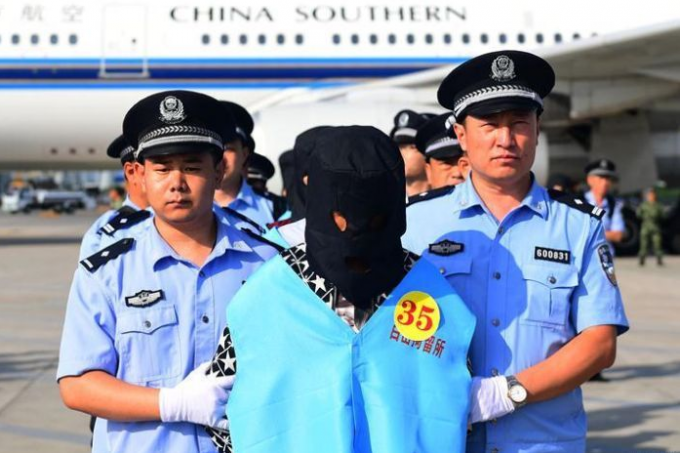
China’s Xinhua news agency released startling images of the 77 deportees upon their return to China. Image: Xinhua

Pacific Media Watch Newsdesk

The 77 Chinese citizens deported from Fiji by uniformed Chinese police in August were sex workers, according to an investigative report by the Australia Broadcasting Corporation.

The ABC’s Background Briefing investigation by Hagar Cohen has reported an unnamed source challenging official claims that the deported individuals were involved in an online gambling fraud ring, reports Fiji Newswire.

According to the ABC investigative report, Police Commissioner Sitiveni Qiliho declined to comment on the allegations.

The Office of the Prime Minister and the Chinese Embassy in Suva did not reply to the ABC’s requests.

The ABC reported that the deportees were “mainly young women brought to Fiji to service the Chinese diaspora,” and those locals close to their Nadi house said the inhabitants were primarily young women aged between 15 and 19.

One of those deportees was a young mother with a baby.

-Partners-

LISTEN: Fiji Silenced – China’s secret mission exposed on Sunday Extra: Background Briefing (Part 1)

In the two weeks before their removal, witnesses reported seeing Fijian police officers moving in and out of the compound — including movements that resembled a changing of the guard, and overnight shifts.

According to one local, who asked not to be identified, several of the women had attempted to escape but were chased and caught by local police.

]]>

Ambae is Vanuatu’s story, not just a global media backdrop

]]>

AsiaPacificReport.nz

OPINION: By Dan McGarry in Luganville, Vanuatu

It happens every time disaster strikes in the developing world. The inhabitants of the place become background players in a drama about selfless aid workers saving lives in the furthest corners of the globe.

To be fair, most aid workers reject that narrative. I should know. I’ve been one. When category 5 cyclone Pam devastated Vanuatu, I helped the UNICEF communications team deliver some of the first reports from the storm-ravaged country.

The image of the intrepid white person (let’s not dance around it) saving dark people’s lives is an inevitable and apparently unavoidable product of people’s need to understand. For you millions sitting at home, in the car or on the train, reading or listening to the news, all you’ll ever know — all you can know — about these far-flung localities is what you get in the 90-120 seconds that the media can give you before you move on.

If the scene contains familiar faces, it’s easier for you to relate. If it’s spoken in your language, it’s easier still. It’s all about making you care. And your care saves lives.

But we have to find a way to remember that the people in this story speak their own language. They have their own culture, their own values, their own sense of what is right.

Forced into exile
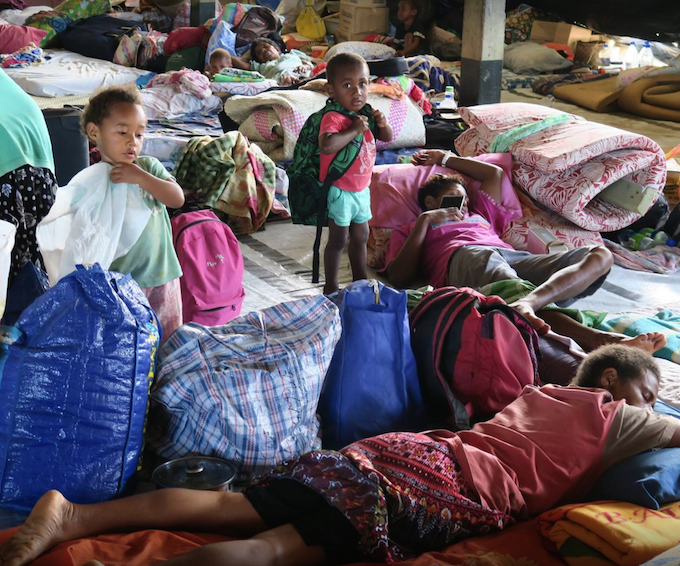
The defining aspect of the Manaro volcano story is how quickly and effectively people all across this country mobilised to support Ambae’s population after the volcano forced them into exile.

-Partners-

Goods were being collected from the moment people began to filter down from the hilltop villages that were the first affected by ash and acid rain. Nobody waited for authorities to tell them what to do.

Family comes first in Vanuatu, and we are all one family when faced with adversity such as this.

The islands of Ambae and Maewo have always enjoyed close ties, and nowhere was this more evident than in their warm and well-organised reception for the evacuees. One by one, chiefs from north to south designated which groups would be their respective wards.

Villagers throughout Maewo stepped up, establishing spaces for them in their villages, digging latrine pits, designating cooking areas, building shelters and providing food, water and other necessities.

People from end to end of the island of Pentecost have turned out and done everything within their power, not just to accommodate, but to welcome Ambae’s exiles. Pangi village in the south is famous for its land-diving.

Chiefs there gathered evacuees together and welcomed them with a feast, literally slaughtering a fatted calf for them.

No scenes of pandemonium
Nowhere has the effort been greater than in Luganville, Santo, which is hosting over 5300 evacuees. As the ships began arriving, some carrying as many as 1000 at a time, there were no scenes of pandemonium so commonly associated with mass migrations.

An eyewitness wrote, “People everywhere, trucks and cars everywhere, but everyone [was] calm, no panic, no one upset as the community welcomed them.”

This is the Ambae story: The amazing and inspiring willingness of the people of Vanuatu to do everything—and give everything—necessary to look after their own.

Only one person—an elderly man—has reportedly died so far, and he died of a broken heart at being uprooted from his land.

Vanuatu’s government is not absent in this picture; it is an inseparable part of it. The grassroots Ambae Manaro Organising Committee has worked hand in glove with the National Disaster Management Office to ship donated relied supplies, first to the island of Ambae itself, and now to Santo, for distribution to the large evacuee population there.

The foreign donors, aid organisations and NGOs who know us best will be doing the same: integrating their efforts into local endeavours.

Evacuees to be employed
The Ambae Manaro committee yesterday reported that they would be seeking to employ people within the evacuee population itself to provide essential services to their companions. The Santo Ambae Support Community echoes these sentiments.

“It’s so important for the evacuees were welcomed and cared by the community from Ambae, they can talk [the] same language and still feel [at] home.”

Those NGOs with a permanent presence here in Vanuatu know the value of fitting in, employing Ni Vanuatu staff and consultants in key positions in order to ensure that they operate effectively and with sensitivity to local concerns.

In spite of all this, millions of people who know nothing of Vanuatu but its suffering will only see images of military planes, bales of supplies, ships and expat workers doing what they can to help.

On TV screens, tablets and phones, the people of Vanuatu will be reduced to the backdrop against which the soap opera of disaster relief unfolds its all too predictable melodrama.

Swamped news feed
It doesn’t have to be that way, but sadly, it probably will be.

So today, at least, before our news feed gets swamped with images of Hercules planes, Black Hawk helicopters and crisply uniformed military officers, let’s take a moment to remind ourselves: This is Vanuatu’s story. It’s a story about fellowship, about buddies in bad times, about pulling together, and about helping at all costs.

Can we get through this without international help? Not a chance. We know it’s offered in the spirit of camaraderie and friendship.

We’re grateful, too. But when you talk to the international media, please don’t forget who was there first, and who will remain when you’ve gone back home.

Dan McGarry is media director of the Vanuatu Daily Post. Asia Pacific Report republishes VDP articles with permission.

]]>

Pacific Journalism Monographs go live on Tuwhera digital platform

]]>

Pacific Media Centre

Pacific Journalism Monographs, a research companion to Pacific Journalism Review, has been launched on AUT’s Tuwhera digital open access journals platform.

Dr Hermin Indah Wahyuni, director of the Center for Southeast Asian Social Studies (CESASS) at Gadjah Mada University in Yogyakarta, Indonesia, did the launching honours today.

Library staff, communication scholars from New Zealand and Indonesia shared in the launch.

The Monographs publish longer research projects in an online and booklet format.

The publication offers journalists, journalism academics and researchers an outlet for quality research and analysis in a long-form article of up to 15,000 words.

The Monographs are a sister publication to PJR but provide a broader platform than is generally available in the journal.

Topics cover a diverse range of journalism research from media freedom and human rights in the Asia-Pacific to Asia-Pacific research methodologies, climate change, vernacular Pasifika media research in New Zealand, and post-coup self-censorship in Fiji.

Pacific Journalism Monographs

Pacific Journalism Monographs editor Dr David Robie explains the publishing strategy. Image: AUT Library

]]>

Keith Rankin Analysis – Auckland Population: Evidence from the Election

Drift South? Graphic by Keith Rankin.

Keith Rankin Analysis – Auckland Population: Evidence from the Election

Last year I wrote that there is no evidence of disproportionate population growth in Auckland, and even suggested that a number of central Auckland suburbs may be experiencing population decline. (See Immigration, and Immigration and Auckland Housing.)

I have done a preliminary analysis of the electorate voting statistics. The election statistics are based on electorates drawn up on the basis of Census 2013 population distribution. Electorate boundaries were the same in 2014 and 2017.

Keith Rankin.

In today’s chart, showing selected electorates, the yellow bars show a surplus (positive percentage) either if the electorate has an above-average voter turnout, or if population increased disproportionately since the March 2013 census. The green bars will be lower than the yellow bars either if the electorate has had slower than average population growth since September 2014, or if the electorate has more special votes than the national average.

The results clearly show that there has been a net population flow from Auckland to the Bay of Plenty region; a flow that picked up after 2014. There has been a similar net flow to the ‘N’ provincial cities, and to Oamaru (Waitaki) and Dunedin. And the depopulation of the far south (eg Invercargill) appears to have reversed.

These are just preliminary results. I will do a more comprehensive analysis next week, after the final vote count. Certainly special votes may be disproportionately in Auckland.

These statistics shown do give the lie to the commonly repeated claim that net immigration into New Zealand is disproportionately into Auckland. And they do support the many anecdotal stories about Aucklanders selling up and moving to the more affordable provincial cities and towns.

When the electorate boundaries are redrawn after the 2018 census, Auckland might actually lose an electorate.

]]>

Bryce Edwards Political Roundup: Alternative coalition scenarios to consider

Bryce Edwards Political Roundup: Alternative coalition scenarios to consider

[caption id="attachment_13635" align="alignright" width="150"] Dr Bryce Edwards.[/caption] Winston Peters seems to be faced with a fairly straightforward choice when it comes to forming a coalition government – he needs to decide between Labour or National. And we’re expecting those parties to throw everything at Peters in the hope he will pick them. At least that’s the assumption most have been working under. But are there other credible options available to Peters and the major parties? Below are three broad government formation possibilities worth considering.  [caption id="attachment_297" align="aligncenter" width="1600"] The Beehive and Parliament Buildings.[/caption] 1) New Zealand First to go on the cross benches Increasingly commentators are talking about Winston Peters deciding to stay out of the next government, and instead position his party on the “cross benches”. This would allow others to govern, with New Zealand First having day-by-day leverage in determining whether legislation is passed. Vernon Small has best canvassed this idea in his column, Winston Peters’ crossbench option would have National sitting uncomfortably in seat of power. Small explains, with input from public law specialist Andrew Geddis, that New Zealand hasn’t really seen this option properly used under MMP yet, and the most likely version would see New Zealand First abstaining on all votes of confidence and supply, allowing another party – probably National – to govern. According to Small, “The option is seen as ‘live’ because Peters has left himself only four to five days between October 7 and October 12 to negotiate a deal with the other parties. That is seen as a very tight timetable for Peters to negotiate with at least two parties especially if he wants to nail down specific policy concessions.” David Farrar outlines the benefits of this arrangement for New Zealand First: “it is all power and no responsibility. You have the swing vote on every piece of legislation and you might bring the Government down at any stage, so they will come grovelling to you to ensure the Budget passes etc. But you have no formal agreement for policies or ministerial positions…. So in one sense this is a safe option for NZ First. They are not part of the Government, they are not responsible for anything the Government does, and hence won’t be blamed if the Government is unpopular” – see: Could Winston sit on the cross benches? The major downside to this “independent” cross bench scenario is that it could result in less stability and hamper a government’s ability to proceed with a clear agenda. For New Zealand First, the major downside would be that they would play no part in governing, and have no portfolios or daily input into cabinet decisions and appointments. However, in legislative terms, they would have a strong impact on what the government could or couldn’t do, and they could leverage that for non-legislative gains. But is that really what New Zealand First want? Quite possibly, according to former deputy leader, Tau Henare, who says “he expects his old boss to side with no one, and opt for the cross benches” – see Newshub’s What Winston Peters will do, according to those who know him. And National might even be keen on that option, too. According to Politik’s Richard Harman, “There were a number of sources inside both the National Party and caucus who yesterday acknowledged this and picked up on a suggestion made earlier in the year privately to some National MPs by Sir John Key that the best arrangement might be to have Peters abstain on confidence and supply and vote on a case by case basis on legislation” – see: English faces uphill battle. Harman says “The downside of that is that he could end up holding the whole Parliamentary process hostage which might only be able to be resolved by a snap election. Politik understands that this scenario has been discussed at the highest level within the National Party where officials are wary of the idea because they believe any Government calling a snap election risks alienating the electorate.” There’s also a related – but highly unlikely – scenario that Andrew Geddis raises: “If NZ First actively cast its votes against both National and Labour, no party could reach a governing majority and New Zealand would need to have a new election” – see Emma Hurley’s What if Winston Peters doesn’t go with Labour or National? 2) National walks away from a deal Numerous commentators and partisans on the political right have been talking up the idea of National choosing to go into opposition rather than yield to a difficult and possibly damaging deal with New Zealand First. For example, National Party blogger David Farrar has raised the issue quite frequently recently. In his blog post, How does NZ First survive?, he says: “I’m quite keen to have Winston go with Labour and Greens. It will be sad for the country, but good for National in the long term as they’d ride a wave of discontent in 2020 and only need to pick up two more seats to govern”. Similarly, see his post, Rating the election nights, in which Farrar says, “I’d prefer National to form the Government as I think Bill English is a great Prime Minister and would achieve a lot in another three years. But you have to go into opposition at some stage”. Conservative political commentator Liam Hehir also urges the National Party leader to: Walk away, Bill. Hehir says: “Bill English needs to be willing to walk away from Winston Peters. And, after watching Mr. Peters’ press conference today, I’m starting to think he should be ready for it. One can understand why Peters wishes to play his cards close to his chest. You can’t negotiate in public. He played the Sphinx all throughout the campaign — he’s hardly going to abandon that approach now. But today’s irascible performance is a reminder about governing with New Zealand First. Under the scrutiny that comes with power, the party’s dysfunction and internal contradictions will come to the fore.” Political journalists have discussed this option, too. Tracy Watkins reports on “rumblings from within National that maybe they should sit this one out” – see: Winston Peters is in the box seat, and don’t we know it. The logic is: “Better to let Labour have Peters and return in three years, credibility intact, is the logic.” There is division within National about walking away, according to Richard Harman, who says “what is clear is that the National party membership will not want to see too much given away in the government formation talks even if it means going into opposition” – see: Party to English – Hold the line. Harman also reports senior party officials are worried some of the parliamentary leadership “might feel that they have only another three years of political life left in them and they would prefer to spend that time in Government” and are therefore likely to give too much away to Peters to ensure this happens. He quotes a party official: “But if that means we’re in Opposition for nine years after the next election then it won’t have been worth it”. The Herald’s Fran O’Sullivan also urges National to turn away from Winston Peters and look for other options. As well as looking to the Greens, “English could talk with Labour’s Jacinda Ardern about some cross-party initiatives that the two main parties could develop” – see: Hail Caesar – calling the tune with just 7.5%. 3) Labour walks away from a deal There are plenty of very good reasons for the Labour Party to avoid going into coalition government with New Zealand First. And although Wayne Mapp might be a former National Cabinet minister, he very persuasively puts these reasons forward in his Herald article, Four reasons why Labour could be better off in opposition. It mostly boils down to the belief that Jacinda Ardern and Labour are likely to be in a much better position to form a government in 2020. But the argument is unique because Mapp draws on the lessons he and National learnt from being in a similar position in 1996, which went badly for National. Also coming from the right, Mike Hosking asks: Is opposition better for Jacinda Ardern than grovelling to Winston Peters? And here’s Hosking’s advice if negotiations with New Zealand First don’t go well: “I’d call a press conference, I’d tell the world what Winston asked for, tell them why I wasn’t going to agree to it – and tell them the destruction of my party and government simply aren’t worth it… and I’ll see when it all implodes. And I bet you anything you want … the party’s popularity would go through the roof. You see it’s all about the balance of power – by grovelling to a bloke with nine seats, by looking like you’re desperate, but not genuinely having the belief you don’t need this. You start out on the back foot. And that rarely ends well.” This advice isn’t just coming from Labour’s opponents. Chris Trotter also believes the differences between Labour/Greens and New Zealand First are just too big to bridge: “It would be an enormous error for New Zealand’s progressive community to convince itself that the deep contradictions embedded in the manifestos of Labour, NZ First and the Greens can somehow be overcome. Far better for Labour and the Greens, the two parties who are, at least theoretically, ideologically compatible, to spend the next three years developing a suite of progressive policies capable of making a real difference to the lives of the many – not the few” – see: The last thing progressive New Zealand needs is a coalition of contradictions. Pushing New Zealand First towards National might allow Labour to claim the high moral ground according to Alex Tarrant, who writes that Labour could argue “that it wasn’t prepared for Peters to run up expenditure and government debt beyond ‘prudent’ levels. It will also allow Labour to imply that National must have offered more to Peters on big-spending policies than Labour was prepared to. The hope for Ardern and Grant Robertson would be that National suddenly finds itself being attacked on throwing fiscal responsibility out the window with a set of coalition bribes” – see: The battle for the fiscal high ground remains politically relevant. And in terms of finance, it’s possible that New Zealand First could make some very difficult demands of Labour. Audrey Young writes “There have been some whispers that he could try to get former Labour finance spokesman David Parker appointed Finance Minister over Grant Robertson, Ardern’s political soul mate” – see: Winston Peters: 7 per cent of the vote, 100 per cent of the power. Finally, for the best political satire about the coalition negotiations so far, see Toby Manhire’s Will Winston reel in blue cod or a red snapper?, Andrew Gunn’s Winston and the ill-behooving menu, and Steve Braunias’ Secret Diary of Winston Peters.]]>

Howling dogs all that’s left in volcano island Ambae’s empty villages

]]>

AsiaPacificReport.nz

Ambae village families huddle at at an evacuation centre on Santo. Image: Ben Bohane/wakaphotos.com

By Dan McGarry on Santo

Only the howling of dogs can be heard now in Ambae’s abandoned villages. The entire population has now been moved off the island.

Of those who cannot stay with friends or family, the majority have found refuge in 36 evacuation centres scattered around Luganville, Santo.

Today, Ambae’s chiefs will formally thank the people of Santo with what is informally called a “10 pigs” kastom ceremony.

Chief Douglas Ngwele from Lolobuebue informed the Daily Post that he would be departing Port Vila for Santo immediately to prepare.

The Ambae community in Port Vila is now refocusing its efforts. Originally occupied with supporting evacuees within the island of Ambae, and later with their safe and timely removal, the community now plans to put its efforts into supporting the Ambaean diaspora in Santo.

In a statement on social media, Ambae Manaro Organising Committee member Henry Vira wrote that they had “resolved to move members of its Vila-based team to Luganville tomorrow morning to assist with coordination efforts there”. He added:

-Partners-

Entire population moved
“We will be joining efforts with the Santo Manaro Organising Committee, which was established following declaration of the State of Emergency for Total Evacuation of Ambae island. We have moved an entire population of approximately 11,600 people from Ambae including the very young, elderly, disabled, people with ill health, etc.

“We will be working closely with the various clusters already established through NDMO, SANMA Province and Ambae leaders identified within the evacuees.

“The Ambae Manaro Organising committee in Vila will finalise its arrangements today at Sarabulu Church (Namburu) and welcomes input from any one with the heart to help. The team will reconvene at Sarabulu Church today [Wednesday] at 12 noon to finalise arrangements.”

Other committee members clarified that the majority of volunteers would be remaining in Port Vila.

“We want to identify and empower community leaders within the evacuee groups in order to make sure we get the best coordination,” said one.

The committee recognises that there are numerous people here in Port Vila who have invited friends and family to stay with them in the capital. Support and assistance will be offered to them, but the sheer weight of numbers requires that they place their emphasis on supporting the Ambae community efforts in Luganville.

The volunteers gathered at Sarabulu church in Namburu emphasised that donations and supplies are still sorely needed. Bedding, tents, tarpaulins, food and water are all still welcome. Cash donations are desirable, as they offer the most flexibility in dealing with the shifting priorities of this open-ended crisis.

The members plan to extend a formal thank you to all those who have contributed to the effort so far. Without these early actions, the response would have been much smaller — and much slower — than it was.

Dan McGarry is media director of the Vanuatu Daily Post. Asia Pacific Report republishes VDP articles with permission.

]]>

Josef Benedict: Rohingya crisis is a moment of truth for ASEAN

]]>

AsiaPacificReport.nz

A boy is pulled to safety as Rohingya refugees scuffle while queuing for aid at Cox’s Bazar, Bangladesh. Image: Cathal McNaughton/ R/Jakarta Globe

ANALYSIS: By Josef Benedict

Today, we are watching history repeat itself in Southeast Asia in the worst possible way.

Once again, the Myanmar military has launched a brutal military campaign against the Rohingya minority, killing civilians and forcing hundreds of thousands to flee their homes.

And once again, the Association of Southeast Asian Nations (Asean) has failed to take a stand against horrors unfolding in one of its member states.

There is no question that what is taking place in Myanmar’s northern Rakhine State is ethnic cleansing. Since August 25, when a Rohingya armed group attacked security posts and killed at least 12 security officers, the Myanmar military has responded with vicious, unlawful and disproportionate violence targeting the Rohingya population as a whole.

Soldiers have torched entire villages and opened fire on people fleeing in panic in what amounts to a clear and deliberate campaign to drive the Rohingya people out of their country once and for all.

The Asean Charter, the treaty that binds Asean states together, declares a clear commitment to human rights, and Asean leaders have been paying lip service to this for years.

-Partners-

So the crisis in Rakhine State would have been – perhaps still is – an opportunity to prove that this was more than just talk. Instead, the regional bloc has so far, once again, proved that it is both unwilling and unable to address ongoing violations.

Bland statement
It took Asean almost a full month to even issue a statement on the situation, but the organisation might have been better off staying silent.

When it finally did materialise, on September 24, the statement by Asean foreign ministers, expressed “concern” over developments in Rakhine State, but completely failed to even mention the word “Rohingya” and atrocities so obviously inflicted on them by the security forces.

Instead, the foreign ministers labelled the crisis a “complex inter-communal issue” and only condemned the August 25 attacks on Myanmar security forces and “all acts of violence”.

The statement was so bland that at least one individual Asean member state felt a need to distance itself. The Malaysian Foreign Minister Anifah Aman called the statement a “misrepresentation of the reality of the situation”.

It is to Kuala Lumpur’s credit that it has taken a strong stance on the crimes of the Myanmar army, even though its treatment of Rohingya refugees inside its own borders leaves a lot to be desired.

Strong and urgent Asean action is all the more important as there is no sign of the violence in Rakhine State ending any time soon. Despite the claims by Aung San Suu Kyi – Myanmar’s de facto leader – that the fighting has stopped, Amnesty International was able to confirm fresh burnings in Myanmar as late as last week.

Fleeing in desperation
And people continue to flee in desperation into Bangladesh – more than half a million according to latest UN figures.

There is also a humanitarian catastrophe unfolding within Rakhine State, as the Myanmar government has cut off aid agencies’ access to affected areas and severely restricted their life-sustaining activities in other parts of the state.

Recently, we have received credible reports that Rohingya are not just fleeing violence but also face the very real risk of starvation, as food is running desperately short in many places.

The Rakhine State crisis could also have spill-over affects across Southeast Asia as a whole. Many of us will still remember the “boat crisis” in 2015, when thousands of Rohingya and Bangladeshis were stranded in the Bay of Bengal as governments in the region refused to let their boats in.

Asean countries must ensure that refugees are able to take safe routes to enter their countries, and that no one is forced to return to a country where they could face persecution or serious human rights violations, as the Rohingya most definitely will.

Asean should immediately hold an emergency summit to deal with the crisis in Rakhine State. Its members must also acknowledge and condemn the human rights violations being committed by the Myanmar military in strong and unequivocal terms.

Crimes against humanity
And make no mistake, what we are witnessing in Rakhine State are, under international law, crimes against humanity – surely a concern to Asean as well.

Asean states must also work to ensure that the ethnic cleansing of the Rohingya does not succeed, and that Myanmar ends all persecution, and discrimination against and segregation of the Rohingya.

All this would be well within the provisions of the Asean Charter, which allows its leaders to take action “in the case of a serious breach of the Charter” and to “address emergency situations affecting Asean by taking appropriate actions”.

It is time for Asean to bring to the fore these core values – of responding to emergencies and of respecting human rights – which are just as germane to Asean and part of its constitution as the over-flaunted principle of “non-intervention”.

This is a moment of truth for Asean, when the association has to decide which side of history it wants to be on. With ethnic cleansing and crimes against humanity taking place on its doorstep, will it do everything it can to end and redress it or simply sit idly by?

Josef Benedict is the Amnesty International’s deputy campaigns director for Southeast Asia and the Pacific.

]]>

Journalism under duress in Asia-Pacific – PMC’s 10th anniversary event

]]>

Pacific Media Centre

Natasha Greer performing a Tongan dance at the launch at the Creative Industries Research Institute (CIRI) on 12 October 2007.

Event date and time: 

Thursday, November 30, 2017 – 18:00 20:00

JOURNALISM UNDER DURESS IN ASIA-PACIFIC
The Pacific Media Centre in the AUT School of Communication Studies turns ten this year. We are planning a special event with Tagata Pasifika’s John Pulu as MC and it includes:

+ Guest speakers: Malou Mangahas, executive director of the Philippine Center for Investigative Journalism, speaking on journalist safety and the culture of impunity. The Philippines is the country with the largest single massacre of journalists in 2009, and where a “war on drugs” has led to a widely condemned wave of extrajudicial killings.

+ Johnny Blades, senior journalist of RNZ International, speaking about his experiences in West Papua and Melanesia.

+ Professor Berrin Yanıkkaya, head of the School of Communication Studies at AUT.

+ A special video by Sasya Wreksono highlighting the PMC’s achievements over 10 years.

+ A special book on investigative photojournalism marking 10 years of the PMC.

+ An exhibition of photographs of 10 years on the PMC.

+ Launching of special editions of Pacific Journalism Review and the Pacific Journalism Monographs on Tuwhera.

+ Special screening of the documentary Cap Bocage.

Watch the Facebook event page for more information

Picture spread from the 2007 launch

]]>

Rampaging mob attacks PM O’Neill’s car – ‘warlords’ take over Mendi

]]>

AsiaPacificReport.nz

The online cover for the Post-Courier story today. Image: PMC

By Johnny Poiya and Jeffrey Elapa in Port Moresby

A rampaging crowd has attacked Papua New Guinea Prime Minister Peter O’Neill’s official vehicle and business interests in Mendi, Southern Highlands Province.

The Toyota LandCruiser V8 vehicle was stolen, and construction and mining logistics company Wildcat Construction base looted and torched on Saturday afternoon.

Another company, South West Air’s airport hangar, was ransacked although its fleet of fixed wing and rotary wing aircraft had been moved elsewhere earlier.

The LandCruiser was among 10 vehicles, including an excavator, backhoe and grader, stolen by a rampaging crowd that had ran amok through the town.

An expatriate manager was rescued by bystanders when the Prime Minister’s premises were attacked.

The Wildcat Construction and South West Air are the two biggest locally owned companies in the province that employees many locals and foreigners.

-Partners-

The attack followed the declaration of William Powi as Governor of Southern Highlands Province last Thursday.

O’Neill blamed over election
Witnesses in Mendi yesterday said the rampaging crowd blamed O’Neill for the long delay in counting and eventual declaration of Powi as Governor.

All government services and businesses were closed and Mendi town was quiet and deserted yesterday.

The police station gate was locked with chain while the hospital, post office and Bank South Pacific were also closed.

Traffic along the Southern Highlands section of the Highlands Highway was scarce.

Senior public servants and a policeman, who spoke on condition of anonymity, said all facilities and business house like the bank, shops, airlines and schools, besides the provincial administration, had shut operations in fear of violence.

They said Air Niugini and South West Air, which lost computers and aircraft parts, have closed their operations for an indefinite period.

The former Carson Pratt Services workshop at Wara Maigani, now owned by Wildcat Construction, was burned down while the main Papindo Supermarket was looted.

Two policemen shot dead
“Also on Saturday afternoon, two policemen were shot dead while another was seriously wounded and is now admitted at the Mt Hagen General Hospital.

Two teachers were with the policemen when attacked; one of them had his hands chopped off while his colleague is still missing.

It was reported that gates at the Mendi General Hospital and the Mendi School of Nursing  were rammed while the staff were threatened.

Public servants and schools in Mendi, including Mendi Day Secondary Schools, have all been affected.

Sources said police in the province have sought refuge with the candidates, allowing criminals to take over the town, firing guns indiscriminately.

Southern Highlands Governor William Powi condemned the actions of the minority who continue to take the law into their hands.

He said it was the work of the police to maintain law and order but the province had been taken over by warlords.

Condolences sent
Sending his condolences to the families of the two police based in Koroba, Enga Province, killed and the wounded, Powi said he did not understand the motive of the killings.

“I send my condolences to the families of those attacked. We have no issue with Hela and the attack on innocent people is unacceptable. I call on the police hierarchy to arrest people involved in instigating violence and denying freedom of the citizens,” he said.

He said it was only a handful of people from Mendi who were sabotaging peace and harmony in the town.

]]>

Bryce Edwards’ Political Roundup: The Peters Problem

Bryce Edwards’ Political Roundup: The Peters Problem

[caption id="attachment_13635" align="alignright" width="150"] Dr Bryce Edwards.[/caption] Is Winston Peters the tail wagging the dog? He’s certainly very powerful in the current post-election coalition negotiation period. Hence the complaints about whether New Zealand First has too much power or, indeed, whether Peters is so problematic this could lead to a weakened democracy. Does Winston Peters have too much leverage? [caption id="attachment_2529" align="alignleft" width="300"] New Zealand First leader Winston Peters.[/caption] Many commentators are expressing frustration at the power wielded by Winston Peters and New Zealand First. These complaints partly stem from a failure to adjust to MMP realities, in which the major parties don’t have all the power. But there are legitimate questions about the extent of Peters’ power. Probably the strongest reaction is from Duncan Garner who says The megalomaniac reigns all over National’s parade. He points out that 93 per cent of voters “overwhelmingly rejected Peters” by voting for other parties, and asks: “In a country that prides itself on fairness, how can one man, Winston Peters, with just 7 per cent of all votes, have 100 per cent of the power?” Garner complains, “”One man with 160,000 votes now dictates terms and holds to ransom the two political beasts with 1.8 million votes between them.” Garner has a message for other media following the ins and outs of coalition negotiations: “Trying to second guess Peters and his next move is a fool’s paradise. Don’t bother, go on holiday. Wait to be told. He wants the attention, don’t empower him. He’s known as the ringmaster at times like this: in charge of the tired and exhausted nationwide circus with its empty seats, same old tricks, shabby backroom processes and policies not thought through or costed.” This week’s Listener magazine editorial makes some similar points: “Peters, who lost his own electorate seat and whose party vote went down, has 100% of the power to anoint the next prime minister. For a country that values fairness, that feels intuitively wrong. On election-night results, English should be in the driving seat; the problem is that Peters is lying across the windscreen” – see: Winston Peters has 7% support yet 100% of the power – that feels wrong. Some of that might just be old FPP-style thinking, but the editorial certainly makes a good point against the argument that New Zealand First has a stronger mandate to go with left rather than right: “Shaw’s argument that most New Zealanders voted for change would stack up if New Zealand First had declared before the election that it would align with the Greens and Labour”. Commentators are forecasting the techniques Peters will employ to extract the highest possible price from National or Labour in the negotiations. Audrey Young outlines one negotiating method: “It is possible Peters will conduct something more akin to a closed tender. Anyone who has bought a house that way knows how hard it is for the buyer (National and Labour) and how advantageous it can be for the seller. Under that scenario, the onus would be on National and Labour to present their best – and potentially their final – offers, which may or may not be accepted, or could be referred back for suggested improvements. NZ First would be freed from the accusation that it demanded anything. Labour and National could not afford to open their negotiation with a sub-grade offer in the expectation of slowly working up to a final agreement. There just would not be time for that. The time pressure would be designed to work in NZ First’s interests” – see: Winston Peters: 7 per cent of the vote, 100 per cent of the power. Peters’ public obfuscation We already know that Peters is combative, obstinate, and tends to obfuscate. Perhaps that’s what his voters love about him. We’re seeing plenty of this in his post-election behaviour. But, of course, it was also in evidence throughout the election campaign. It probably reached its height in the infamous interview with Guyon Espiner two weeks prior to polling day. You can watch the full 25-minute interview here: The Leader Interview – Winston Peters. Many consider this one of the highlights of the election campaign. Michael Daly wrote down the best parts – see Some of the best bits from Winston Peters’ Radio New Zealand interview. And communications professional George Hulbert blogged about it, describing, it as a “truly brilliant interview” – see: An interviewing masterclass: Guyon Espiner tackles Winston Peters. Hulbert says: “From the sublime to the ridiculous, this interview had it all – a calm, well-prepared and persistent interviewer, a seemingly unprepared, irritable interviewee, and of course us, the audience making our own judgement. Normally in our blog we try to dissect topical items and show how you can communicate better, but this was just so good that I think it does it all by itself. I recommend you watch it – and enjoy it as much as I did.” Peters continued his aggressive orientation towards the media after the election, with his spectacular news conference last week at the Beehive. This was strongly condemned by the usually mild-mannered Bernard Hickey, who stated Peters’ performance “was beneath him and served only to feed his small base with the red meat of abusing the media and scoring cheap points. It was self-indulgent, pointless and simply wasted one of the biggest opportunities he has ever had to convince New Zealanders he deserves to be in this position of deciding who will lead our next Government” – see: Winston’s awful start. Hickey was incensed by what “was more than the usual banter. It was just plain ugly, bizarre and painful to watch and be in. It made an important part of our democracy (the coalition-building phase after an MMP election) look like a chaotic joke”. And as to the substance of Peters’ complaints about the media, Hickey responds: “His points about his policies not being covered fairly by the media are simply not credible when for months he has refused to answer detailed questions about the specifics of his policies, including how they would operate and how much they would cost. He cannot claim the media did not cover his policies when he would not say what they were in detail.” And for more on this, you can listen to Guyon Espiner, Tim Watkin and Lisa Owen’s very good podcast: Coalition negotiations, THAT press conference & the supermarket dash. The Press’ Martin van Beynen has also looked at Peters’ complaints about the media, and admits he’s partly right: “The media should have paid him more attention. The fact he, and let’s face it, it will only be him, would decide the nature of the next government was probably the safest prediction of the election campaign. Maybe we should have looked much closer at NZ First’s policies and how much they would cost. Radio New Zealand’s Guyon Espiner did and Peters came out looking ill-prepared and on the back foot.  Yes maybe we should have followed Peters around and quizzed him on the detail of his policies and pronouncements” – see: Yesterday’s man holds all the cards. And van Beynen says that more media attention was required because we still don’t know that much about what Peters and his party really stands for: “it might have exposed a political game player who lacked the intellectual rigour and stamina required of a leader in 2017.  We should have put him under the lights and got to the bottom of what exactly he stands for. Because after 40 years, it’s still murky what exactly Peters is in politics to achieve. We know he is anti-immigration, anti-special treatment based on race, anti-changes to superannuation and anti-fat cats. But despite his strong protestations, bottom-lines and apparent bitterness, his seriousness and sincerity remain in question.” The Winston Peters enigma and his circus For an insight into the politician and his background, it’s worth reading former Herald political editor Tony Verdon’s article, Winston Peters: Politician, family man and enigma. He stresses Peters’ “Jekyll and Hyde personality” which shifts from highly sociable and amicable, to sometimes pugnacious and aggressive. Peters is undoubtedly enjoying the attention. And according to Tracy Watkins he also loves the scheming: “He makes Kevin Spacey’s House of Cards character Frank Underwood look like an amateur. Peters lives for the backroom deal and revels in conspiracy, intrigue – and keeping people guessing” – see: Winston Peters is in the box seat, and don’t we know it. Furthermore, Watkins alleges Peters is driven by rather base motives: “revenge and ambition are two emotions that carry Peters a very long way and he was back three years later. Peters may claim he isn’t driven by utu but he does have a very long memory”. She calls for him to get more serious: “now is the time to stop playing up to the small coterie of admirers and supporters who hang off every insult and every cantankerous tirade, and start acting like the statesman that the role of kingmaker demands.” And some of his former colleagues are also suggesting Peters is merely playing games. Outgoing NZ First MP Richard Prosser is reported as believing that “Peters probably made his mind up well before the election campaign even began” – see Dan Satherley and Lisa Owen’s What Winston Peters will do, according to those who know him. The same article and video has former NZ First MP Tau Henare arguing that Peters is simply enjoying “the theatre” and that he’s already made his decision. Tim Murphy raises the issue of Peters’ age and suggests it could be problem: “Peters’ difficulty is that he is old in New Zealand terms to be shaping, deputising for, and possibly leading the country. He is older than President Donald Trump. Older than Sir Robert Muldoon was – not when Muldoon rose to the Prime Ministership, or left it, or left Parliament, but when he died aged 70. If Peters aspires to share the role of Prime Minister, unless he negotiates to get the job-share in the early part of the administration, he could be PM in 2020 and match Walter Nash at 75 as our oldest to become the nation’s leader. If the burden of office, the travels as a possible foreign minister, the wearying inanity of dealing with enemies and the media became too great, who would Peters call on to take his party onwards?” – see: What if Winston, Bill, or Jacinda can’t go on? In this article Murphy also alludes to unsubstantiated health rumours spread during the campaign. These garnered a very short, sharp press release from Peters – see: Filthy rumour, dirty campaign – Winston Peters. Finally, for an updated view of Winston Peters’ kingmaker role, see my blog post of Cartoons and images about negotiating the new government.]]>

Keith Rankin Analysis: Election Day versus Advance Voting

The Left votes early. Graphic by Keith Rankin.

Keith Rankin Analysis: Election Day versus Advance Voting

With half of the preliminary (ie non-special) votes being cast before election day 2017, we can glean a clear view about which parties’ supporters are more likely or less likely to vote early.

This week’s chart shows the percentage point differences in voter behaviour for significant parties. By ‘percentage point difference’ we mean the party percentage of election day votes minus the party percentage of advance votes.

The four parties which gathered a larger proportion of advance votes relative to election day vote were the parties of the left. They show up in the chart as negative percentage differences. While the bigger parties necessarily show more prominently in this chart, relative to their own voter base the pattern is just as significant in the Māori Party and Mana Party figures.

It is not clear whether the left as a whole feels a greater sense of urgency in casting their votes, or whether it is in fact people who want change who tend to vote early. What matters here, for the future, is that, as election night tallies progress the party percentages for the Left (or for change) diminish. Labour got 36.7% of advance votes, but just 35.0% of election day votes. Their overall percentage tally dropped between 8pm and 11pm on election night, to 35.8%.

What also matters is that the advance votes probably tell us the pattern of special vote distribution, given that many of the special votes were cast early by people with similar motivation to those of early voters. My expectation is that Labour will gain almost as many special votes as National, and that the Green Party will gain enough specials to get one more MP. New Zealand First, who just missed getting a ninth MP in the preliminary count, will probably keep all nine MPs currently allocated to them.

One point of surprise is that the Opportunities Party (TOP) received proportionately many more votes on election day. Does that mean that TOP voters were largely conservatives? Did Gareth Morgan collect votes from people who voted for Colin Craig last time?

Ambae volcano ‘more stable’, say Vanuatu’s monitoring scientists

]]>

AsiaPacificReport.nz

Locals evacuate Ambae island as Manaro Voui volcano threatens to erupt in Vanuatu. – Video: Guardian Wires

By Godwin Ligo in Port Vila

New observations and data analysis by scientists from the Geohazards division of the Vanuatu Meteorology and Geo-hazard Department (VMGD) suggests that the volcano seems to have settled in a more stable state of activity.

According to the the VMGD, photographs and thermal infrared images taken during observation flights over the weekend show that the activity at the volcano is firmly restricted to the crater area.

READ MORE: Vanuatu Daily Post media director Dan McGarry reports on the ‘DIY evacuation’

Large volumes of stone and cooling lava can be seen spewing non-stop from two new vents in the volcano on top of Ambae’s Mount Lombenben. Image: Dan McGarry/Vanuatu Daily Post

The activity consists of explosions and ejection of hot rocks similar to that at Yasur on Tanna.

Small lava flows were also observed near the small craters, and into the lake.

-Partners-

Because the activity is more settled and focused in the summit area, the possibility of a large eruption affecting the whole island is now looking less likely.

Scientists from VMGD will keep monitoring closely the activity, both remotely from Port Vila, thanks to a network of instruments on Ambae, and on the island as needed.

The VMGD will continue to provide updates to the public and government.

A photo of Ambae’s Manaro Voui volcano pictured over the weekend. Image: VMGD/Vanuatu Daily Post

One evacuee man dies
An elderly man who was relocated to an evacuation center on west Ambae during the volcano crisis has died, reports Anita Roberts.

The cause of his death is yet to be determined, but a member of the Health Cluster Team has confirmed the death.

A member of the Disaster Working Group at Saratamata confirmed the old man died while in evacuation center but could not give further details.

The elderly people, women, children, the disabled and pregnant women were given the top priority to be evacuated as the most vulnerable group.

Meanwhile, the Director of the National Disaster Management Office (NDMO), Shadrack Welegtabit, issued an advisory notice yesterday forbidding people to travel to Ambae .

The general public has been told not to visit or travel to Ambae during the state of emergency but some people still fail to follow advice, an NDMO staff said following the advisory.

Godwin Ligo and Anita Roberts are reporters for the Vanuatu Daily Post. Asia Pacific Report has permission to republish articles.

Schools and community halls are being used as evacuation centres in the Ambae volcano crisis. Image: Vanuatu Daily Post ]]>

Manus Island refugees offered $25,000 each ‘if they go home’

]]>

AsiaPacificReport.nz

Asylum seekers in the Manus Island detention centre, Papua New Guinea. Image: The National

Pacific Media Watch Newsdesk

The Australian government will be offering money to refugees on Manus Island who agree to return to their home countries as it rushes to shut down the detention centre in Papua New Guinea, reports the PNG Post-Courier.

While most of the refugees have refused to stay in Papua New Guinea, Australia has promised to give each refugee $25,000 if they agree to return to their country of origin.

Last year, PNG’s Supreme Court reflected global protests when it ruled the detention centre breached human rights and ordered its closure.

Many praised the closure as a good thing. However, the United Nations has slammed the “deteriorating conditions” inside the facility as utilities are cut off.

The plight of the Rohingya refugees has been well-documented in the media in recent times.

They are an ethnic group from the southern state of Rakhine in Myanmar, but since 1982 the government has denied them citizenship.

-Partners-

It is estimated almost one million of them have fled their home country since the government began routine crackdowns in the 1970s.

Approximately 370,000 have fled in the last few weeks alone.

Asylum seeker dies
The ABC’s Papua New Guinea correspondent, Eric Tlozek, reports police on Manus Island have confirmed an asylum seeker has died overnight.

A 32-year-old Sri Lankan Tamil man was found near the kitchen of the Lorengau Hospital after reports he was mentally unwell, Tlozek reports.

Friends of the man said it appeared he took his own life and Australian authorities have confirmed the death.

“The department is aware of the death at Lorengau Hospital,” a spokesman for the Department of Immigration and Border Protection said.

]]>

Vanuatu President seeks calm, PM says ‘we’re not ready for disasters’

]]>

AsiaPacificReport.nz

Vanuatu Prime Minister Charlot Salwai … “we’re not ready for disasters”. Image: Dan McGarry/Vanuatu Daily Post

By Anita Roberts in Port Vila

Vanuatu sits on the Pacific Ring of Fire and though it is accustomed to being hit by cyclones and volcanoes, it does not have clear guidelines or policies ready to respond to major emergencies.

Prime Minister Charlot Salwai stressed these concerns when he was briefing journalists at the weekend on the government order’s for a mandatory evacuation of the entire Ambae Island following the Lombenben volcano crisis.

READ MORE: RNZI reporter Koroi Hawkins in Vanuatu on strained resources for the evacuees

He said there needs to be clear policies to address disaster situations.

While Salwai said the government – through the Ministry of Climate Change and Disaster Management – was responsible to protect and save lives in emergencies, the prime minister admitted the country did not have clear plans in place to respond to specific disasters.

Huge columns of smoke, ash and volcanic rocks billowing from the crater of Monaro volcano on Vanuatu’s Ambae Island pictured by a New Zealand Defence Force aerial survey last week. Image: NZDF

“We are not ready for disasters,” Salwai said.

-Partners-

“We have evacuation centers standby for cyclones that serves no purpose during volcano eruptions and tsunamis.

“In Vanuatu, many settlements are exposed to the coast. This is why we need a separate disaster plan for tsunamis,” he said

“With seven active volcanoes, and earthquakes occurring frequently, Vanuatu is at risk.”

‘Drowning’ islands fears
The prime minister has stressed fears about the possibility of islands in Vanuatu “drowning” due to the looming effects of climate change in the future.

“We must have our own national policies in place before we call for international help or while we continue to address climate change abroad, both regionally and internationally,” he said.

Prime Minister Salwai said the government did not want to get blamed for a large scale disaster, therefore it had issued the order for the Ambae evacuation so that it could provide mass care.

“It is better to evacuate than leave lives at risk,” he said.

“The government will extend the state of emergency period if the volcano activity remains in this stage.

“The affected families from Ambae rescued to neighboring islands will remain in temporary shelters until such time the state of emergency be lifted.”

Remain calm appeal
The President, Obed Moses, said the Lombenben volcano crisis must be considered a priority by the government, and every effort must be taken to move people to safety immediately.

The Head of State called on all citizens to remain calm and not to interfere with authorities handling the situation.

Director of the National Disaster Management Office (NDMO), Shadrack Welegtabit, said efforts were underway to evacuate people quickly to safety from the volcano affected island before next Friday, October 6.

An order was issued for all ships to standby on nearby shores for any request of assistance on evacuating 11,600 people to safety. Evacuation from Ambae officially started on Saturday but people were already voluntarily moving out.

According to the Director, 400 people had alread moved at their own cost.

Schools, community halls and churches on neighboring islands of Pentecost, Maewo and Santo were opening up to accommodate evacuees until the government found proper safe places and set up shelters and facilities, said Director Welegtabit.

A reported 283 final year students in schools on Ambae were given priority to be evacuated before mock examinations this week.

The Ministry of Education will waive school fees for third term this year and first term of 2018 for parents living on Ambae, according to an agency order.

Discounted airfares
The order, which was signed by the Minister of Climate Change and Disaster Management, Ham Lini, on the advice of the National Disaster Committee, provided for government shareholders to allow a discount of 50 percent on air fares on all Air Vanuatu flights from Ambae Island.

“Also, all government vehicles under the possession of government on Ambae be used to evacuate people from villages.”

Meanwhile, conditions remained difficult in evacuation centers with overcrowding on Ambae.

In Port Vila, business people, communities, churches,non-government organisations, international partners, including students offered humanitarian assistance.

The patrol boats LC Urata and LC Mahalia departed for Ambae with relief items, including water, hygiene kits, kitchen kits, tarpaulins, fuel and two lorries to assist with the transportation of people to ports.

Anita Roberts is a Vanuatu Daily Post reporter. Asia Pacific Report has permission to republish articles.

]]>

Keep your ‘green pledges’, NZ ecology groups warn key political leaders

]]>

AsiaPacificReport.nz

Supergroup’s open letter to the political leaders: “Environmental issues were at the centre of the 2017 election campaign. No matter who ends up in government, they will have a clear mandate and a responsibility to take action on fresh water, climate change, and conservation.” Image: wwf.org.nz

Pacific Media Centre Newsdesk

A “supergroup” of New Zealand environmental organisations has sent an open letter to the leaders of four key political parties, warning them that the public expects them to deliver on election commitments.

Following the so-called “environment election”, seven environmental groups have delivered their strong message to the incumbent centre-right National’s leader Bill English, centre-left Labour’s Jacinda Ardern, New Zealand First’s Winston Peters and Green Party’s James Shaw as they prepare to negotiate the country’s next coalition government.

While the open letter congratulates the parties and politicians for their election success last weekend, it reminds them about their commitments to improve the state of New Zealand’s environment.

The group said there was now a strong public expectation that there would be clear gains for freshwater, the climate and conservation in the next three years. It has pledged to hold future leaders to their promises.

The letter offers politicians help in achieving those key gains.

“Environmental issues were at the centre of the 2017 election campaign,” the open letter said.

-Partners-

“No matter who ends up in government, they will have a clear mandate and a responsibility to take action on fresh water, climate change, and conservation.

“And they should know that we will be right there to make sure they do.”

The signatories to the open letter are Ecologic, Environmental Defence Society, Fish and Game New Zealand, Forest and Bird, Generation Zero, Greenpeace NZ, and the World Wildlife Fund (WWF-New Zealand).

The open letter says:
29 September 2017

Rt. Hon. Bill English
Leader, National Party
Jacinda Adern MP
Leader, Labour Party

Rt. Hon. Winston Peters
Leader, New Zealand First Party

James Shaw MP
Co Leader, Green Party

Dear Party leaders,
A winner in this year’s election was the New Zealand environment. It featured as a bigger concern amongst the electorate than ever before. All of you through your party manifestos made commitments to improve the state of our environment. We congratulate you for those promises.

As environmental leaders, we wish to offer our congratulations to all parties and to both sitting and new MPs for their election success. We also wish to acknowledge those parties and MPs who are departing Parliament and thank them for their work.

There is now a strong public expectation that whichever parties form the next government, there must be clear gains for fresh water, the climate and conservation in the next three years.

We offer our help in achieving these gains:

FRESHWATER
It is clear that ecologically healthy freshwaters, and the ability of New Zealanders to safely swim in their rivers and lakes, will be a key measure of environmental success for the new Government. This can only be achieved if government facilitates and supports a transformation of the primary sector toward new, environmentally-friendly land uses and practices, coupled with tougher regulation and market signals which reflect the true costs of resource use.

CLIMATE
There must be a more structured and transparent approach to tackling the greatest challenge of our time – climate change. New Zealand’s emissions have continued to climb and we need an ambitious plan on how to reduce them. Transformative change is required through a new law to establish a statutory carbon budgeting process overseen by an independent Climate Commission to plan, monitor and report on the transition to net zero by 2050. Anything less betrays this and future generations.

CONSERVATION
The jewels in the crown of our national identity are the unique species which inhabit our lands, waters and wild places. We need the new Government to institute real measures to protect and enhance the viability of our precious species. This includes the health of the diverse and invaluable terrestrial and aquatic ecosystems that sustain both them and valued introduced species. An increase in funding of DOC’s core budget must be a key component in that strategy.

These issues, and the many others that fall under the umbrella of “environment”, are at the heart of the richness of our quality of life in New Zealand, and underpin our international reputation. They are also at the core of a genuinely sustainable future and are therefore true legacy issues. The natural world is our home and there are few greater gifts we can bestow our children than a vibrant, vital and healthy natural world.

We promise to continue our strong advocacy for the environment and look forward to working with all political parties, both in the next government and in the opposition, to achieve positive gains for our environment.

Yours sincerely

Kevin Hague
Forest and Bird

Russel Norman
Greenpeace New Zealand

Livia Esterhazy
WWF New Zealand

Bryce Johnson
Fish & Game New Zealand

Gary Taylor
Environmental Defence Society

Guy Salmon
Ecologic

Lisa McLaren
Generation Zero

]]>

OPINION: Older persons key players in global development agenda – Shamshad Akhtar

OPINION: Older persons key players in global development agenda By Shamshad Akhtar As the proportion of the older persons across the Asia-Pacific region increases exponentially, we must seek out new and innovative approaches to turn this demographic trend into an opportunity to be harnessed to help achieve the ambitious targets of the 2030 Agenda for Sustainable Development. The number of older persons in the region is expected to more than double, from 535 million in 2015 to about 1.3 billion by 2050, we need to consider the myriad impact of this phenomenon on our economies, societies, and livelihoods. Ignoring this challenge is likely to have profound consequences. We cannot leave the care of older persons to families alone nor can we ignore the need for progressive health care and income security schemes. Future economic growth cannot be assured by the current and projected working-age population. The ratio of people of working-age to older persons is decreasing sharply, and in most countries of the Asia-Pacific region, less than a third of the working-age population contributes to a pension scheme. Traditional systems rely on the family to support their ageing relatives – both financially as well as providing care for those who need it. However, with smaller families, there will be fewer family members in working-age to shoulder this responsibility. Declining support ratios also have implications on existing social security schemes, particularly pay-as-you-go pension systems, under which the contributions paid by current workers support the pensions of retirees. When one considers the differences in the average age at marriage, coupled with the longer life expectancy of women, women outlive their spouses on average by a range of 4 to 10 years. Yet, as the proportion of women in the population increases with age, women are less likely than men to have adequate pension benefits or control over assets, such as land, in their old age. Special social protection measures are required to redress the feminisation of poverty, in particular among older women. There is a linear relationship – although not a causality – between GDP per capita and the level of population ageing, which shows that countries with higher incomes tend to be more advanced in the ageing process. Some countries became old before becoming rich, such as Georgia, Armenia and Sri Lanka with per capita incomes between $3,500 and $4,100 and a proportion of older persons between 13 and almost 20 per cent. To economically benefit from our ageing populations, we must ensure that older persons who want to work have the right to and are provided with opportunities for re-employment. The statutory retirement age across Asia and the Pacific is low, considering the current and increasing life expectancies, resulting in long retirement duration. Eliminating age barriers in the formal labour market would help to ease the fiscal pressure on pension schemes and health care systems. Allowing older persons to work as long as they are able and willing would sustain their self-sufficiency and reduce their social alienation. We can turn the phenomenon of population ageing into a second demographic dividend, with financially-secure, healthy older persons, empowered to focus their decades of accumulated experience, wisdom and wealth to stimulate new economic growth. With the right preparation, we can benefit from a golden generation of healthy, wealthy and active older persons. In 2002, the United Nations brought countries together in Madrid to agree on a global way forward: to treat older persons as actors of development; to ensure their health and well-being; and to create enabling and supportive environments for them. A few weeks ago, representatives from 29 governments in our region assembled in Bangkok to add new resolve to their existing commitments during the Asia-Pacific Intergovernmental Meeting on the Third Review and Appraisal of the Madrid International Plan of Action on Ageing. The Economic and Social Commission of Asia and the Pacific is working to support countries to turn their commitments into action, to secure increasingly inclusive and sustainable economies and societies for all ages across the region. We grow wiser, together. Dr. Shamshad Akhtar is Under-Secretary-General of the United Nations and Executive Secretary of the Economic and Social Commission for Asia and the Pacific. ]]>

Health risks of climate change ‘earliest, most severe’ for Pacific – WHO

]]>

AsiaPacificReport.nz

By Kendall Hutt in Auckland 

Loss of sea ice, accelerated sea level rise, and longer, more intense heat waves. The observable effects of climate change on the environment are well documented and continue to make headlines.

But climate change also carries serious and fatal risks to human health.

“Under climate change conditions, the health and safety of humans are as vulnerable, eventually if not immediately,” the World Health Organisation (WHO) notes.

With rates of Type 2 diabetes and obesity among the highest levels in the world, the health of Pacific island communities in the face of climate change is grim.

In its 2015 report ‘Human health and climate change in Pacific island countries’ the WHO’s Western Pacific Region notes:

“The Pacific will experience some of the earliest and most severe impacts of climate change.

-Partners-

“These effects will include detrimental impacts on various aspects of human health and development.”

This is due to the fact climate change is regarded as a “health risk multiplier”. Put in simpler terms, climate change acts as a trigger and amplifier of pre-existing health risks.

For the Pacific, these include vector-borne (mosquito and tick), waterborne and foodborne diseases, injuries and deaths as a result of extreme weather events, and compromised food security and malnutrition.

These health risks are also regarded by Pacific Island countries as the “highest priority” to be addressed in health adaptation strategies.

Seia Mikaele Maiava, an organic farmer from Nukunonu, Tokelau, and a 350 Pacific Climate Warrior told Asia Pacific Report:

“Impact of climate to food security is growing in the Pacific. Islands like Tokelau, Kiribati and Tuvalu have salt water intrusion into their soil from rising sea water levels.

Farmers like Amelia Vua from Korolevu, Navosa, Fiji … see crops affected by climate change. Image: Kendall Hutt/PMC

“This brings a huge challenge in planting their crops, therefore people will depend on imported foods that are unhealthy.”

Maiava said the salinization of food crops was leading people to become dependent on imported “high fatty” and sugary food, increasing non-communicable diseases (NCD’s) such as diabetes.

Speaking to Asia Pacific Report from Samoa, Viliamu Iese, a research fellow in climate change, food security, and disaster risk management with the University of the South Pacific’s Pacific Centre for Environment and Sustainable Development, said the impact of climate change on food production was strong.

“It reduces access to food, increases malnutrition and reliance on imported processed foods, therefore increasing the risks of NCDs,” he said.

Maiava and Iese’s statements have been echoed by young journalism student Semi Malaki of Tuvalu, who told the Bearing Witness project: “With the impact of salt water intrusion and sea level rise, the salt water came up and killed the crops.

Salination of crops .. new dependence on unhealthy, imported foods. Image: Kendall Hutt/PMC

“People now are not much dependent on root crops, they’re dependent on imported foods from overseas and its had lots of impact on our diets.”

This phenomenon is sometimes known as “over-nutrition” and the Asian Development Bank regards climate-induced changes in food supply as one of the major risks posed by climate change on human health.

“Climate change in the Pacific will have both direct and indirect effects on food security.

“The most direct effect, particularly in the smaller atoll countries, will be further reduction of already declining output per capita as a result of increasing natural disasters and rising sea level in the longer term.”

The WHO notes in its report: “Many participants in the vulnerability assessment and adaptation planning process around the Pacific were firm in their belief that climate change would lead to a worsening of the NCD crisis.”

Though the situation may appear grim, it does not mean Pacific Island countries are not adapting and mitigating to the health impacts of climate change.

Although health adaptation finance may be a problem – climate change impacts on health only serve three percent of current adaptation funding targets according to the WHO – the Pacific has continued its “we are fighting” approach to climate change.

“Throughout their history, Pacific communities have long demonstrated a high degree of resilience to environmental challenges,” the WHO stated.

The Pacific’s national adaptation programmes of action, assessed in the WHO’s report, provide clear pathways for effective adaptation and mitigation.

Maiava also said people in the Pacific were becoming more aware and using innovative ideas to grow healthy, organic food.

“Many people are doing good work to raise awareness of growing your own food and eating healthy. I am part of good organisations doing this. Also, we have a keyhole garden project happening in Tokelau that will help each family to grow their own food,” he said.

The WHO notes that as early as the 1990’s “The health impacts of climate change had been given some consideration in many Pacific Island countries and areas as part of their early work on climate change adaptation, even before these policy documents that specifically address the health impacts of climate change were adopted by the health sector in the region.”

Such praise comes despite the unprecedented rate, scale and impact of climate change in modern human history.

However, the WHO notes “whole-of-government” and “whole-of-society” approaches are needed to address climate-sensitive health risks.

With COP23 fast-approaching, it is clear whole-of-world support will be needed to address the human cost of climate change.

Children, the elderly and disabled … most vulnerable to climate change amplified health risks. Image: Kendall Hutt/PMC ]]>

Ambae Manaro volcano’s crater lakes make it a serious threat to Vanuatu

]]>

AsiaPacificReport.nz

Smoke billows from Vanuatu’s Manaro Voui volcano on Ambae island. Video: The Guardian

ANALYSIS: By Chris Firth

If you turned on the television this week, you may have seen coverage of the potentially imminent eruption of Mount Agung volcano in Bali.

However, Mt Agung is not the only volcano in the region behaving badly. An evacuation of 11,000 residents in Vanuatu has been announced thanks to increasing levels of activity at Ambae volcano.

READ MORE: Bali’s Mount Agung threatens to erupt for the first time in more than 50 years

Vanuatu Prime Minister Charlot Salwai … “we’re not ready for disasters”. Image: Dan McGarry/Vanuatu Daily Post

While both Ambae and Agung pose significant threats to local populations, they represent very different types of volcanoes.

In fact, the unique features of the Ambae volcano mean it presents immediate danger.

-Partners-

What’s special about the Ambae volcano?
Ambae does not fit the stereotypical image of a volcano. Rather than being a steep-sided cone, it forms a low-angled mountain, reminiscent of shield lying flat on the earth.

Instead of having a vertiginous vent filled by a lava lake (like its southern neighbour Ambrym), the summit contains a shallow depression featuring several water-filled lakes.

The largest of these, Lake Voui, is the current focus of volcanic activity, and looks unlike any lake you have seen before.

Volcanic gasses, including sulfur, chlorine and carbon dioxide, are discharged into the base of the lake. Not only do these make the lake highly acidic, but they typically give it a vibrant turquoise colour.

A volcanic lake on Mt Ruapehu in New Zealand, showing similar colour and chemistry to Vanuatu’s Lake Voui. Image: C. Firth/The Conversation

When the volcano last erupted in 2005, ash and lava built a cone in the centre of the lake, which eventually reached a height of around 50 metres above the lake surface.

As this happened, changing degrees of interaction between the lava, volcanic gases and the lake water caused fluctuations in its chemistry. This in turn changed the colour, which went from turquoise to battleship grey and then finally to a deep mahogany shade of red.

An annotated Landsat Image of Ambae Island taken on 19 July 2017. There is a difference in colour of the two lakes on the summit of the volcano. Since this image was taken, activity at the volcano has increased markedly. Image: C. Firth/The Conversation

Since then, the volcano has continued to emit huge volumes of gas, which have caused issues for local inhabitants over recent years, as they can lead to acid rain.

Acid rain can kill plants. This is a major issue on Ambae, as much of the population lives on staple crops such as banana and taro. These plants have large leaves that are particularly susceptible to acid rain.

Over the past few weeks, gas emissions from Ambae have increased. Ash began to accompany the gas emissions around mid-September, suggesting that magma had reached the surface.

These changes in volcanic activity have repeatedly led the Vanuatu Meteorology and Geohazards Department to increase the alert level for the volcano.

Satellite monitoring indicates that volcanic activity is continuing to escalate. Recent observations by New Zealand Air Force pilots noted lava blasting out of a crater in the centre of Lake Voui.

Is this part of the Ring of Fire?
Both Bali’s Agung and Ambae sit on the Pacific’s “ring of fire”, and the same tectonic forces are responsible for both volcanoes. However, closer links between the two volcanoes are very unlikely.

On any given day, there are generally 20-30 volcanoes erupting around the world (although normally these eruptions are on a smaller scale and are away from large populations, so they do not make the news).

So how might the eruption at Ambae differ from Agung? The crater lake on Ambae offers particular hazards that might not be encountered elsewhere.

The first of these involves interaction between erupting lava and the lake water itself. The heat of the lava, which is likely to be 1000-1100℃, will rapidly turn lake water into steam, like dipping a hot frying pan into a sink of dishwater.

READ MORE: Vanuatu not ready for disasters, says PM

This scaled-up kitchen scenario can increase how explosive the eruption is, giving blasts from the volcano additional power. This may cause projectiles like lava bombs to go further, while also increasing the amount of ash produced.

A potentially more serious hazard may involve overflowing of the crater lake itself. If the eruption begins to displace water from the lake, it might trigger volcanic mudslides known as “lahars”, which would race down the volcano’s flanks, with the potential to inundate villages and gardens.

Local stories suggest villages on the island’s south coast were affected by lahars during the late 19th century, with significant loss of life.

Finally, there is a threat that activity may not be restricted to the volcano’s summit. The geological record indicates that magma has moved through fissures in the volcano’s flanks during previous eruptions, travelling laterally up to 20km from the centre of the volcano before erupting.

This means that rather than emerging on the sparsely inhabited summit of the volcano, lava may well erupt along the more densely populated coast. Such a scenario occurred in 1913 on the neighbouring volcano, Ambrym, where 21 people died.

The evacuation of the Ambae’s population will prevent such loss of life if this were to occur again.

Dr Chris Firth is a lecturer in geology at Macquarie University in Sydney. This article is republished from The Conversation under a Creative Commons licence.

]]>

‘Jail for life’ offer for freedom of co-accused in Fiji sedition trial

]]>

AsiaPacificReport.nz

Sailasa Wairoaroa Malani leads the way out of the High Court in Lautoka with the 14 accused who were convicted and served sentences for 33 counts of sedition yesterday. Image: Repeka Nasiko/The Fiji Times

By Repeka Nasiko in Suva

One accused walked away a free man yesterday while another offered to serve a life sentence if the High Court in Lautoka set free the other 13 co-accused in the Fiji sedition case.

As the month-long Ra sedition trial came to an end, Tui Nalawa Ratu Epeli Niudamu was handed a suspended sentence of two years while the remaining 14 accused were each handed partial sentences that ranged from 18 months to three years.

Ulaiyasi Rabua Tuivomo, however, caught everyone off guard when he addressed Justice Aruna Aluthge, saying he would serve all sentences meted out to the other 13 accused.

“I want to request this honourable court if it is possible if all the accused could be released and I could go to jail for life,” he said.

“If it’s not possible then I will respect the decision of the court.”

The group was accused of conducting secret military training in a remote area of the northern Ra province, as part of a wider effort to form a breakaway Christian state.

-Partners-

RNZI reports defence lawyer Ravindra Singh said the 15 accused continued to maintain their innocence.

“As far as they are concerned they have not committed a crime. They continue to believe that they have the right to champion and advocate for the rights of indigenous people, the rights of indigenous land and indigenous issues,” he said. “And that is exactly what they did and there is no shame in that.

Filing appeals
Ravindra-Singh said he would file appeals to the Court of Appeal from next week.

According to the Office of Director of Prosecutions, the following sentences were handed down:

– Ratu Epeli Niudamu: two year suspended sentence.

– Sailasa Wairoaroa Malani: 2 years in prison, six months of which is suspended.

– Sereima Adidave Rokodi: 2 years in prison, six months of which is suspended.

– Nanise Kasami Nagusuca: 3 years in prison, 12 months of which is suspended.

– Waisea Duailima: 3 years in prison, 12 months of which is suspended.

– Isikeli Waisega Kabakoro: 2 years in prison, six months of which is suspended.

– Laisiasa Mocevakaca: 2 years in prison, six months of which is suspended.

– Emosi Toga: 2 years in prison, six months of which is suspended.

– Waisake Racaca: 2 years in prison, six months of which is suspended.

– Samuela Ligabalavu: 2 years in prison, six months of which is suspended.

– Mikaele Gonerara: 2 years in prison, six months of which is suspended.

– Josefa Natau: 2 years in prison, six months of which is suspended.

– Sulueti Lotu Waqalala: 2 years in prison, six months of which is suspended.

– Ulaiyasi Rabua Tuivomo: 2 years in prison, four months of which is suspended.

– Apolosi Qalilawa: 18 months of prison, 6 months of which is suspended.

]]>

Worse West Papua human rights, ‘shrinking space’, says new report

]]>

AsiaPacificReport.nz

Pacific Media Centre Newsdesk

West Papua has experienced a “significant aggravation” of the human rights situation in the past two years compared to previous years, says a new report from more than 40 faith-based and civil rights organisations.

“Reports by local human rights defenders describe an alarming shrinking of democratic space,” says the report.

“Although Indonesian President Joko Widodo pushed economic development and granted clemency to five long-term political prisoners, the police strictly limited even the most peaceful dissident political activities.”

READ MORE: Pacific Media Watch on Indonesia’s hit back at Oceania nations

The report says that Indigenous Papuans – particularly women – “continued to have a high risk of becoming victims of human rights violations.”

It adds that “racist attitudes toward West Papuans among the police and military, insufficient legal protection, the lack of proper law enforcement, inconsistent policy implementation and corruptive practices among government officials contributed to the impunity of security forces.”

-Partners-

Local journalists in West Papua also continued to face “intimidation and obstruction” from the security forces.

This is the fifth report of the International Coalition for Papua (ICP) covering events from January 2015 until December 2016.

Human rights analysis
More than 40 organisations in West Papua, Jakarta, and worldwide have brought their analysis on the human rights and conflict situation in West Papua together.

The executive summary of the 218-pages report explains how several human rights standards have deteriorated over the last two years.

The report is compiled by the International Coalition for Papua (ICP) and the German Westpapua-Netzwerk (WPN). The executive summary says:

“The years 2015 and 2016 were characterised by a significant aggravation of the human rights situation in West Papua compared to previous years. The term West Papua refers to the Indonesian easternmost provinces of ‘Papua’ and ‘Papua Barat’. Reports by local human rights defenders describe an alarming shrinking of democratic space.

“Although Indonesian President Joko Widodo pushed economic development and granted clemency to five long-term political prisoners, the police strictly limited even the most peaceful dissident political activities.

“Indigenous Papuans, particularly women, continued to have a high risk of becoming victims of human rights violations. Racist attitudes toward West Papuans among the police and military, insufficient legal protection, the lack of proper law enforcement, inconsistent policy implementation and corruptive practices amongst government officials contributed to the impunity of security forces.

“Government critics and activists faced legal prosecution with varying charges. Using a charge of treason (‘makar’) remained common against non-violent offenders.

Increasing ‘incitement’ charges
“West Papuan political activists also faced an increasing number of charges incitement or violence despite the non-violence of protest and almost all activism.

“The deterioration of the political and civil rights situation in West Papua during the past two years was most obvious in the sheer number of political arrests.

“Those arrests drastically increased to 1083 in 2015, and then quadrupled in 2016 to 5361 arrests, in tandem with growing political protest for self-determination.

“Almost all of the arrests came during peaceful protest in support of the United Liberation Movement for West Papua (ULMWP). In addition, the Indonesian government and the regional police in West Papua increasingly restricted the right to freedom of opinion and expression using official statements (Makhlumat) issued by the Papuan Regional Police in 2016.

“Local journalists in West Papua faced continued intimidation and obstruction from the security forces. In comparison to previous years, the number of reported cases against local journalists has slightly decreased throughout the reporting period 2015 and 2016.

“President Joko Widodo’s promise in May 2015, to make West Papua freely accessible to foreign journalists and international observers was not implemented. Foreign journalists were in an increasing number of cases prevented from entering West Papua or when permitted to enter, they faced obstruction, surveillance, intimidation and physical violence.

“International human rights organisations and humanitarian organisations such as the Inter­national Committee of the Red Cross (ICRC) remained banned from freely accessing West Papua.

Threatened, obstructed
“Human rights defenders in West Papua had to work under fear of being monitored, threatened and obstructed by the security forces. The killing of well-known human rights defender Joberth Jitmau, marked the sad highlight of attacks against human rights defenders during these two years.

“The police termed Jitmau’s killing a traffic accident and did not conduct a criminal investigation. Jitmau’s case was a representative example of the widespread impunity in West Papua.

“Only in rare instances were security forces prosecuted in public or military trials. Two of the three cases of prosecution resulted in considerably low sentences for the perpetrators in view of the severity of the criminal offences.

“Security force members also continued to use torture and ill-treatment as a common response to political protest or incidents of alleged disturbance of public order. Extra-judicial killings occurred particularly often as an act of revenge or retaliation for violent acts or other non-violent interactions with members of the security forces.

“The situation with regard to economic, social and cultural rights in West Papua was stagnant. The quality of education in West Papua remained considerably low, due to poor management of the education system, inadequate competencies, high absence rates amongst teachers, and inadequate funding. (Less than 1 percent of Papua Province’s annual budget goes to education.)

“There is still no culturally appropriate curriculum in place, which is capable of improving the educational situation of indigenous Papuan children and of preserving local cultures.

“Health care and education remained in a devas­tating condition, far below the national average, despite the large amount of special autonomy funds that flow to the two administrative provinces Papua and Papua Barat.

Strong imbalance
“There is a strong imbalance in the fulfillment of minimum standards in terms of health, education, food and labor rights between the urban areas and the remote inland areas of West Papua.

“Indigenous Papuans, who mostly reside outside the urban centres, suffer the most of this imbalance. Both Papuan provinces are amongst the regions with the highest prevalence rate for HIV/AIDS infections and child mortality of any ‘Indonesian province’, while the quality of health services is alarmingly low.

“Insufficient equipment in rural health care institutions and a lack of adequate health monitoring and response mechanisms remained strikingly evident. These shortcomings were highlighted when a pertussis epidemic broke out in the remote highland regency of Nduga, killing least 51 children and three adults within a span of three months in late 2015. Malnutrition enabled the rapid spread of the epidemic.

“The case also mirrors the government’s growing challenge to guarantee indigenous Papuans right to food. Palm oil plantations and other agri­cultural mega-projects have led to the destruction of local food sources, livestock and access to clean drinking water.

“Cases of domestic violence are often settled in non-legal ways, which fail to bring justice for the victims and lack a deterrent effect for perpetrators. Women living with HIV/AIDS are particularly often facing discrimination and stigmatization.

“The very existence of West Papuans is threatened by the uncontrolled migration from other parts of Indonesia. This particularly applies to the urban centers where they have largely become a marginalised minority facing strong economic competition.

“In most rural areas, where indigenous Papuans are still the majority, government-promoted large-scale natural resource exploitation projects attract migrants and continue to cause severe environmental degra­dation as well as the destruction of live­ stock of indigenous communities.

“Govern­ment institutions continued to facilitate the interests of private Indonesian and foreign companies. This practice negatively impacts indigenous people’s right to their ancestral lands and resources as well as their right to determine their development.

“Resource extraction often means clearing large forest areas and polluting of water resources, thereby forcing indigenous communities to change their very way of life. Destruction of forests and hunting grounds as a life source puts an additional burden on women, in particular.”

]]>

Bryce Edwards’ Political Roundup: Outrage over the idea of a National-Greens coalition

]]>

Bryce Edwards’ Political Roundup: Outrage over the idea of a National-Greens coalition [caption id="attachment_13635" align="alignright" width="150"] Dr Bryce Edwards.[/caption] The political left and Green Party supporters are outraged by any notion of the Greens working in government with the National Party. It’s an idea that proposes the Greens use their handful of votes in Parliament to give National a majority, allowing the centre-right to govern. In exchange, the Greens would theoretically gain some hefty environmental and social policy wins.  It’s not going to happen, of course, for very good political reasons. And it would be just as challenging to rightwing supporters of National, as well as some environmentalists.   The blue-green deal The idea of a National-Greens government has been around for a while, and it’s inevitable it would be raised in the wake of National falling short of a governing majority. But the notion has been pushed further into the arena of public debate following a petition initiated by Christchurch organic fashion entrepreneur Clive Antony – see Simon Collins’ Grassroots petition calls for National-Green coalition. Antony explains: “I genuinely think there is common ground between the National Party and the Green Party, which could result in practical policy wins for New Zealand. Environmental issues such as carbon neutrality and social issues like child poverty come to mind.” His petition currently has 7202 signatures – you can sign it here: Show your support for the idea of a National/Green govt. Some find the idea more plausible under James Shaw’s sole leadership of the Greens. Tracy Watkins explains: “Metiria Turei’s departure from the Greens co-leadership seems to be what lies behind National’s belief that a deal may be possible – she was always cast as an implacable opponent to any deal with National. James Shaw is seen as being more of a pragmatist” – see: National says don’t rule out an approach to Greens on election night. Watkins explains why such a deal would be favourable for National, but argues that “National would only be prepared to make environmental concessions – the Greens’ social and economic policy platform would be seen as a step too far. Big concessions on climate change policy would also be a stumbling block.” In fact, a National-Green arrangement doesn’t necessarily require the two parties to work together in government at all. The Greens could allow National to govern as a minority government simply by agreeing to abstain on confidence and supply votes. For a list of some of the pros and cons of the Greens supporting National, see the blogpost, What are the Greens’ options? Arguments for a National-Green coalition It probably doesn’t help support for a National-Green coalition that the main proponent of it appears to be rightwing commentator Matthew Hooton. He’s been on social media stirring up debate, with tweets like: “Hi @NZGreens, you get that, if necessary, @NZNationalParty will agree to save the planet if that’s the price of 3 more years in power?” For more tweets from Hooton (@MatthewHootonNZ) and others, see my blog post: Top tweets about a National-Greens coalition deal. In fact, Hooton has been pushing a blue-green deal for many months. Back in July he wrote in the NBR about what sort of concessions National would be likely to give to the Greens: “The emissions trading scheme would need to be strengthened and agricultural emissions included. Alternatively, the two parties might agree to tough new carbon and methane taxes to fund company tax cuts. A price on water would be obligatory and National would have to accept much more ambitious goals for clean lakes and rivers and the elimination of pests. Public transport in Auckland would be more rapidly expanded and Singapore-style GPS road changing introduced. On social justice issues, the Greens may push National to put the taxpayers’ money where Mr English’s mouth has been on social investment. More state houses would need to be built” – see: Possibility of National-Green coalition grows (paywalled). This week, National Party blogger David Farrar also put together his thoughts on what National might be willing to give to the Greens, simply in exchange for the minor party abstaining on supply and confidence: “$1 billion over ten years for cycleways; A levy on nitrate pollution; A South Taranaki Whale Sanctuary; A levy on plastic bags; Accelerated timetable for rail to Auckland Airport; Doubling the funding for DOC; $65 million a year more for predator-free NZ; Stricter water quality standards to increase the number of water bodies rated excellent from 42% to 70%; A commitment to double the reduction of children in poverty from 50,000 to 100,000; Double the reduction target for greenhouse gas emissions by 2030 from 11% to 22%” – see: What could the Greens get if they went with National not Winston? Environmental entrepreneur Lance Wiggs has blogged this week about such a deal, arguing it’s time for the Greens to take advantage of National’s weakness: “It’s not the time to hunker down for another three years but rather the time to cut a deal, a good deal, with whatever party is going to be leading the new government.  At the moment the Greens have zero negotiating power – they have ceded it all to Labour by refusing to treat with National, and their members are not helping their own cause by reiterating the same. By painting themselves into this corner they will either end up in opposition again, with limited action on the causes that matter, or they will get what they are given in a red black and green coalition” – see: The real issue post-election is results, not dance partners. Wiggs has his own detailed shopping list of big policy changes for National to agree to, which focuses mainly on substantive shifts on climate change and water issues, but also includes “Julie-Ann Genter as minister of transport, James Shaw for climate change”. Newstalk ZB’s Rachel Smalley has also put the case for the Greens to be an independent party of the centre: “There is a very real appetite for a blue-green ideology in New Zealand – and James Shaw is the man to lead that change as the sole leader of the party. Metiria Turei was more activist then politician. She was more focused on keeping to the ideology then getting into government – but she’s gone now so Shaw should seize the opportunity, and look to lead something of a renaissance” – see: Shaw thing – why the Greens should swing in behind National. Certainly, many view the current situation as a window of opportunity for Shaw to take advantage of both the need to rebuild, as well as his sole status as leader. The Dominion Post suggests that he should be bold: “The pragmatic Shaw finds himself at the head of a party at a crossroads; without a co-leader to temper that pragmatism he is unlikely to have this opportunity again to consider a bold new path that could create a legacy for himself and the green movement” – see the editorial, Grand opportunity for Greens to grow. The newspaper suggests that going in with National might help the party’s rebuild: “A Green Party with the environment portfolio and a few runs on the board might not only survive but thrive ahead of the next election, picking up the people who deserted them in the previous cycle, and potentially others who have toyed with support in the past but ultimately been turned off by their lack of pragmatism and inability to compromise.” So there are legitimate arguments for a centre-right environmental party. But this would involve either a major change in direction from the Greens, or a new party altogether. Starting a new party from scratch to achieve 5 per cent, as numerous people including Gareth Morgan, Colin Craig and Kim Dotcom have learned, is extremely difficult. National and their supporters know that a major shift by the Greens is almost inconceivable and that the minor parties that have actually made it and survived for any length of time under MMP have all emerged from factional splits from existing parties. What they will be looking at for the next election, when National may well have completely run out of coalition partners, is a conservative splinter faction from the Greens as a new coalition possibility. Some commentators have pointed out that a very strong offer from the National party that was rejected by the Greens, would cause the Greens significant internal stress and division. Economist Eric Crampton makes the case that a strong policy offer from National to the Greens would serve the purpose of pressuring the leftwing party: “Make the strongest sincere environmental policy bundle offer they can credibly offer. If it’s accepted, they get that coalition with the Greens. If it isn’t, it’s riven the Green Party. And if National then forms a government with NZ First instead, it gives National the ability to bat back any Green complaint about environmental policy with a reminder of what was rejected. The risk: publicly making the offer annoys Winston Peters and then brings about a Labour-led coalition” – see: For a teal coalition. The NBR’s Rob Hosking elaborates on how a strong offer from National would at the very least call the Greens’ bluff about its claims that urgent action on climate change should be above all other considerations: “If climate change is indeed the greatest challenge facing humanity, and if  the state of New Zealand rivers is as appalling as the party says – and also if National isn’t, of its own initiative, doing anything about those things (which is, again, what the Green Party says) –  then why wouldn’t its members be prepared to make at least some sort of progress on those  issues rather than wait until 2020 or 2023 or whatever?… If those environmental concerns are truly paramount, then the Greens should be prepared to at least consider such a deal” – see: National-Greens deal won’t happen but not because of principle (paywalled). Hosking suggests that the Greens objection to working with National is more out of politics than principle: “Such a deal would see too many of its members revolt and, already wounded, the party would either split or, if not, still struggle to survive at the next election, whether that election is in 2020 or, as is increasingly likely, sooner.  And that is simply because that, for many, perhaps most, of the Green Party members, all the rhetoric about climate change being the paramount issue of our time is so much, well, hot air.  It is a stick to beat the evil Tories with.” Opposition to a National-Green coalition There has been outrage from many Green supporters about the very idea of blue-green cooperation. This is most evident on twitter, but for similar indignation, see Martyn Bradbury’s Why the National-Green Government idea is a desperate joke and The only way is Winston. In the latter, Bradbury says, “They’re Greens, so supporting dolphin-murdering, river-poisoning, National-Park-mining environmental vandals is off the table, even if you ignore the commitment to social justice”. Gordon Campbell epitomises leftwing opposition: “Of all the media diversions during campaign 2017, the recurring call for the Greens to consider a coalition deal with National has had to be the most ridiculous. Usually, the call goes hand in hand with the equally brain-dead notion that the Greens should decide to become only an environmental party, and forget all this Commie social justice nonsense. For starters: most of the Greens starkest conflicts with National are over the environmental issues, such as climate change, river pollution, intensive dairying etc” – see: On the election result, and likely road ahead. Campbell argues “National would be inviting the Greens to take all the risks, while it pocketed the gains from such an arrangement. It won’t happen, ever.” Blogger Caleb Morgan suggests that the Greens should simply put their strong environmental demands to National, and “National would refuse this offer. And then maybe people would stop trying to make “blue-green” happen. Or at least realise it’s not Green stubbornness stopping it happening. It’s National’s near-total lack of concern for the environment” – see: Blue-Green is not going to happen, and it’s not the Greens’ fault. Perhaps it’s more than just policies that inhibit any chance of a National-Green cooperation, according to former Green candidate David Hay, who says “these two parties are profoundly divided by values, world view and ideology” – see: The National-Green coalition fantasy. Hay argues that, to get the Greens on board, National “would have to offer the Greens a bulletproof coalition agreement which delivered some of the transformational social, economic and environmental changes sought by the Greens – along with seats at the Cabinet table for Green party ministers to drive those changes through. And that is unthinkable. Pure fantasy. It will never happen.” Mary-Margaret Slack makes a comprehensive argument against the Greens doing a deal in her article, Could a National-Greens coalition work? After surveying different views on the difficulty of such an alignment, Slack concludes: “National would likely use the Greens as a footstool, which would only hurt them. Where, then, would an independent voice for the environment and a fair society be? No-one wants to be a footstool, no-one deserves to be a footstool, and voters sure don’t want their core beliefs to be used as a footstool”. This idea that the Green’s own sustainability would be under threat from a deal with National is argued strongly by Duncan Greive in his opinion piece, The sad fate of the Maori party shows the Greens what awaits pragmatists. He admits that “the Greens and National are currently as politically compatible as they have ever been” and that “it’s not at all implausible to imagine English agreeing to far more ambitious targets on both poverty and emissions reduction – the two core Greens planks in the recent campaign – in exchange for a fourth term.” But he says a deal would never happen because even “an extraordinary deal – even one which saw radical and structural change on the issues they care most about – would spell the end of the Greens. Because they would be tied to every other decision made by National. And that would likely be enough.” Even if the caucus were in favour, Green MPs would have a Herculean task convincing the party members to approve any deal. As Tracy Watkins says, “The Green Party’s dilemma in stitching up a deal with National would be tenfold. Its grassroots activists and supporters are all left leaning and a deal with National would cause it to implode. The Greens rules are also an impediment to Shaw negotiating a post-coalition deal as the grassroots voted pre-election that they would only support a Labour government. It would be seen as a huge betrayal to do anything else” – see: The Green Party also hold the balance of power, but they don’t seem to want it. Perhaps the strongest argument against the Greens considering having anything to do with National is the simple fact that they campaigned strongly on “changing the government”, and to prevaricate on this would be democratically dishonest. Given that the Greens so strongly ruled out working with National, those who voted Green would have a strong grievance with the party. Finally, conservative political commentator Liam Hehir agrees that it would be impossible for the Greens to suddenly hitch their wagon to National: “an accommodation with the Great Satan would be disastrous in practice. The party’s slow transformation from an environmentalist party with socialist tendencies to the reverse can’t be quickly undone. Accepting any kind of indecent proposal from National would alienate a large part of the base.” But he thinks that further down the track, the Greens need to look at various new options, including as an independent party less aligned to Labour – see: Greens have decisions to make about their future focus.]]>

Vanuatu orders evacuation of Ambae’s 11,000 people over volcano’s gases

]]>

AsiaPacificReport.nz

A RNZAF flyover of Manaro Voui volcano on Ambae island. Video: NZDF

By Bob Makin in Port Vila

The Vanuatu government’s Council of Ministers has ordered the mass evacuation of the entire population of Ambae – about 11,100 people, according to the 2016 mini-census – as the Manaro Voui eruption worsens.

The evacuation order today is based on the advice of the Vanuatu Meteorological and Geo-hazards Department, which is reporting increasing activity of the volcano, including flying lava, poisonous volcanic gas, acid rain and ash falls.

An aerial view of the volcano on Ambae. Image: RNZAF/Vanuatu Digest

RNZI is reporting that Ambae’s population will be evacuated by ship to the neighbouring islands of Maewo, Espiritu Santo, Pentecost and Malakula by October 6.

The new order follows evacuations earlier this week of the populations of whole villages in the south of the island who were relocated to the north of Ambae.

The Vanuatu Prime Minister’s Office today held a press conference about the order and more details were expected later.

-Partners-

The Vanuatu Daily Post’s Anita Roberts reported earlier plans were in place to evacuate people from Ambae to safe sites on Maewo, Pentecost and Santo islands if the volcano crisis got worse.

The Director of the National Disaster Management Office (NDMO), Shadrack Welegtabit, made an assurance to cluster teams in their meeting yesterday.

Volcanoes are unpredictable. Nobody knows what will happen next – whether the activity will decrease or will turn explosive, said the Manager of the Geo-Hazards Department, Esline Garaebiti.

Bob Makin is an editor of Vanuatu Digest.

Mobilisation of relief supplies for Ambae island evacuees in Vanuatu. Image: Vanuatu Daily Post ]]>

Bryce Edwards’ Political Roundup: Why the Maori Party failed

]]>

Bryce Edwards’ Political Roundup: Why the Maori Party failed

[caption id="attachment_13635" align="alignright" width="150"] Dr Bryce Edwards.[/caption] So it’s haere ra to the Maori Party. But some are also saying good riddance. Nowhere is the divide over the Maori Party’s exit from Parliament starker than on social media, where there’s been satisfaction as well as sorrow – see my blog post, Top tweets on the demise of the Maori Party Should we mourn or celebrate the ejection of the Maori Party from Parliament at the weekend? Perhaps the answer lies in understanding why the Maori Party has failed. Did the Maori Party become too much a part of the elite? [caption id="attachment_7104" align="aligncenter" width="660"] Maori Crown Settlements.[/caption] Saturday’s result was, in many ways, simply the final nail in the coffin. The party hit its high point back in 2008 when it won five of the seven Maori seats. But since then it has been on a steep decline, going down to four MPs in 2011 (after the departure of Hone Harawira), then to just two MPs in 2014, and now none. So, its demise has been in train for quite a while. Essentially the party’s continued alignment with the centre-right National Party has been a source of controversy for some time and is key in understanding the party’s problems. Increasingly, commentators from across the political spectrum have identified the Maori Party’s long-term decline as being related to its conservative ideological and strategic approach. Regardless of the merits of the Maori Party attempting to position itself as an insider party, rather than automatically associated with the political left, it’s an approach that is out of sync with the vast majority of the Maori electorate. John Moore argues today that essentially the Maori Party transformed itself into a vehicle for collaboration with political forces of the right and Establishment – see his blog post: The Maori Brexit – Why the Maori Party has been wiped from parliament. According to Moore, “The Maori Party has been accused of being aligned with a growing Maori corporate class, as well as with the so called Maori iwi (tribal) elite. In contrast, Maori voters, who tend to lean leftwards economically and traditionally, gave their vote to Labour instead. It seems that many Maori have decided to ditch the Maori party once and for all. Most Maori are poor working people at best, or situated in New Zealand’s growing underclass. The fact that Labour has trumped the Maori Party in all the Maori electorates, suggests that class and material interests – or ‘bread and butter’ issues – have overridden cultural and indigenous concerns within the Maori electorates.” Moore forecast the demise of the party earlier in the year, suggesting that the departure of Willie Jackson and John Tamihere to Labour extinguished any chance of the Maori Party being able to “present a more urban and working class image to the Maori electorate” – see: Game over for kaupapa Maori parties. Likewise, yesterday’s Herald editorial discusses whether Maori need a separate political party, and points out that “while the Maori Party has functioned as a link between the Government and the Iwi Leaders’ Forum, it has steadily lost the confidence of Maori voters”- see: Can the Maori Party survive? Criticism that the Maori Party was, primarily, the political voice of the Iwi Leader’s forum has been around for many years. Way back in 2010 Annette Sykes gave the Bruce Jesson Memorial Lecture on The Politics of the Brown Table, in which she comprehensively examined the strategy that both iwi leaders and the Maori Party had adopted. The idea that the Maori Party has become focused on “the things that don’t matter to Maori” has been pushed by the Labour Party as well as a number of political commentators. For example, recently Willie Jackson wrote: “Te Ururoa Flavell and Marama Fox need to stop wasting time trying to get ASB to boycott Mike Hosking and spend more time on trying to get those banks to invest in our local communities” – this is highlighted by Morgan Godfery in his pre-election blog post, Please don’t tell Don Brash, but the Maori Party could decide the next government. Morgan also points to the Maori Party’s failures on issues of housing and homelessness in Flavell’s own electorate, which the Labour candidate Tamati Coffey was able to expose. Others have pointed (more sympathetically) to Flavell’s distance from the type of world that most Maori voters live in. For example, Graham Cameron blogs from the Waiariki electorate to say, “there is a small community of us in Tauranga Moana for whom that is our world, a world that is boundaried by te reo Maori, tikanga, kawa, whakapapa, raupatu, wananga, kura and kohanga reo. Most Maori in our electorate and round the country are clearly not immersed in that daily, so Te Ururoa must have seemed a bit distant and unrelatable” – see: Election reflections. NB potentially unpopular. The role of the Labour Party in the Maori Party’s defeat There should be no doubt that the Labour Party set out to destroy the Maori Party – not because it would get them more seats (and it didn’t) – but rather to deny National a potential coalition partner. And, it may have worked exactly as planned. After all, not only did Willie Jackson prove to be an important part of Labour’s campaign strategy, but it has to be remembered that he was set to stand in Tamaki Makaurau for the Maori Party. If that had happened then the Maori Party would possibly still be in Parliament. As I pointed out in February, the poaching of Jackson was a deft strategic move by Labour – see: Willie Jackson changes the game. Generally, across all the electorates and across the country there was a big swing to Labour, but especially in Te Tai Tokerau, where Kelvin Davis easily staved off Hone Harawira’s attempt to re-take the seat. Being the deputy leader of Labour obviously helped Davis, but it also gave reassurance to Maori that they weren’t going to continue to be marginalised within the Labour Party which, in essence, is why the Maori Party gained traction in the first place. In the short to medium term this will make it very hard for the Maori Party to come back in the Maori seats over Labour. Having comfortable wins in all the Maori seats, the deputy leader position and a substantial Maori presence in the caucus – including experienced operators like Jackson – will ensure that there is no repeat of the Foreshore and Seabed experience in the foreseeable future. So, did the Maori Labour candidates kill the Maori Party? Tamati Coffey answered that question on Saturday night, saying: “It wasn’t me who killed the Maori Party – it was the voters” – see Mark Jennings’ article, Video key to Tamati Coffey’s win. Can the Maori Party be revived? The Maori Party is promising that it will be back. And attention is now turning to the future of the party, possibly under Marama Fox and the highly-regarded Lance O’Sullivan, who recently committed himself as a candidate for the party in 2020. Other possibilities to take over the co-leadership from Flavell include former broadcaster Shane Taurima and current Mana Party leader Hone Harawira – see Claire Trevett’s Maori Party starts on long road to try rebuilding by 2020 after being booted out of Parliament. This article also reports that Tariana Turia is determined to come out of retirement to “save the party”. But many will question whether that might make things worse, given that she was largely responsible for the elite-oriented strategy that has failed so badly. The fact that she now has a knighthood bestowed on her by the National Government for her services will not impress many working class Maori voters. Similarly, while Lance O’Sullivan would obviously be a popular pick to be co-leader of the party, his conservative views on the health system might reinforce to Maori voters that the party is too close to the establishment. For example, in talking about his political future, O’Sullivan said last week that he wanted to put a five-year freeze on health spending, even if that lead to job losses in the sector, as he said “I think we waste about $2-3 billion a year on inefficiencies” – see Newshub’s New Zealander of the Year Dr Lance O’Sullivan wants ministerial role. Do Maori want separate representation? It would be very surprising if the Maori Party, or a version of it, does not contest the Maori seats at the next election. But such was the scale of the defeat this year, it may take a few election cycles to regain traction. However, there must be a question mark hanging over how much a Maori-only party resonates with the target voter base. At the moment it seems Maori voters have given a very strong message that it doesn’t. Voters appear to be very happy with the fact that every party in Parliament has a strong Maori contingent of representatives. And the Maori Party’s argument that these MPs are somehow less attentive to Maori needs has not been borne out. Others aren’t convinced however, that Maori MPs can deliver if they are in broader parties – see Shannon Haunui-Thompson’s What happens without a Maori voice?  and Kahu Kutia’s What is a government without the Maori or Mana parties? Funnily enough, the Maori Party has, at times, taken a more pan-ethnic approach, despite what it argues about being a dedicated Maori party. It has had non-Maori run as candidates in elections before, and as Damon Salesa describes very well, the party underwent an interesting but not very successful collaboration during this election, fielding candidates from the One Pacific party – see: The Maori Party’s Pacific path. Saturday’s result should also now trigger some introspection from the media and political commentariat, which largely failed to predict Flavell’s defeat in Waiariki. Part of the problem was the Maori TV opinion polls published in the lead up to the election, which had some electorates right but some horribly wrong. The Maori TV/Reid Research poll showed that Flavell had the support of 60 per cent of Waiariki voters, against only 40 per cent for Coffey. Similarly, in Te Tai Hauauru, the Maori Party’s Howie Tamati was projected to win with 52 per cent support, against Labour’s Adrian Rurawhe on only 39 per cent. So there are obviously issues to be resolved with polling the Maori seats. For example, the dependence on landlines is a real problem in the Maori seats because young and poor are much less likely to have landlines. There was one person who got it completely right. John Armstrong wrote: “Will the Maori Party survive? Goodbye Te Ururoa Flavell. The Maori Party currently holds only one of the seven Maori electorates. A resurgent Labour Party is about to reduce that number to zero” – see: Betting on election outcome a fool’s game, but scenarios don’t look good for Bill English. Finally, for a satirical look back at the Maori Party’s time in Parliament, see my blog post, Cartoons about the Maori Party, 2004-17.]]>

Vanuatu rescuers face tough challenges over Ambae volcano evacuation

]]>

AsiaPacificReport.nz

Police and VMF enjoy a brief rest before embarking for Ambae island on the patrol boat RVS Tukoro with supplies and a security contingent. Image: Dan McGarry/Vanuatu Daily Post Dan McGarry

By Anita Roberts in Port Vila

The Penama Provincial Disaster and Climate Change Committee is facing a number of challenges in its efforts to help the volcano eruption evacuees on Ambae.

This includes overcrowding and unsanitary evacuation centers, the possibility of contaminated water and not enough food.

Vanuatu Red Cross is taking water to evacuees on Ambae aboard the RVS Tukoro. Image: Vanuatu Red Cross/Vanuatu Digest/Twitter

The evacuation centers are overcrowded but more evacuees are still arriving.

“There is a need to set up more evacuation centers and provide tents,” a member of the Disaster Working Group at Saratamata on Ambae, Augustine Garae, from Red Cross Vanuatu (RCV) told the Vanuatu Daily Post.

According to the National Disaster Management Office (NDMO), 35 evacuation centers have been set up — 12 in the west and 21 in the east.

Garae stressed concerns about inadequate shelter and overcrowding, causing health problems to thousands who had been forced to flee their homes and were now living together.

-Partners-

“The number of evacuees is expected to rise, making facilities at the evacuation centers as proper toilets and sanitation not enough for everyone to access,” said.

Most evacuated
“There would not be enough space to move around. The majority of villagers have been evacuated.”

NDMO reported that by Tuesday, approximately 6800 people were recorded to be in evacuation with an additional 900 yet to be relocated.

Some people are seeking shelter with families, outside these facilities while a small number have voluntarily moved to Maewo.

Apart from shelter, NDMO has also confirmed ongoing challenges with water and food security on Ambae.

Immediate food needs are being met by provincial authorities and local shops. Water crisis, on the other hand, is already common on west Ambae where volcanic ash fall is regular.

With the situation on Ambae, water is the critical issue as recent dry weather means islands are already facing water shortage, said a Disaster and Natural Hazards Expert attached with RCV, Luke Johnston.

“The people may be displaced for a long period, as these type of eruptions can go on indefinitely. In the 2005 event, people were displaced for three months,” he said.

Water solutions
“RCV is activating an internal international emergency appeal, and is looking at longer term water solutions as well as sending 250 water containers to Ambae.”

The water containers were transported by the patrol boat RVS Tukoro, which left Port Vila last night with shelter equipment and Red Cross Officers who will be conducting hygiene education and awareness in evacuation centers.

The Tukoro will also be delivering donated items from the Port Vila Ambae community, including from Vanuatu Mobile Force personnel.

Further shipments by national authorities are planned for the coming days.

Meanwhile, the Sanma Provincial Disaster and Climate Change Committee have met yesterday to discuss planning in the event of evacuations from Ambae to Sanma.

Anita Roberts is a Vanuatu Daily Post reporter. Daily Post articles are republished in Asia Pacific Report with permission.

Ambae evacuees and their belongings awaiting relocation. Image: Vanuatu Daily Post
]]>

PMC hosting Gadjah Mada academic researcher team visit to AUT

]]>

Pacific Media Centre

Borobudur, a 9th-century Mahayana Buddhist temple near Yogyakarta, one of the world-renowned landmarks by the Indonesian city that hosts the Centre for SouthEast Asian Social Studies (CESASS) at Universitas Gadjah Mada. Image: UGM

Event date and time: 

Monday, October 2, 2017 – 09:00 Friday, October 13, 2017 – 08:00

A TEAM of seven academic researchers from the Universitas Gadjah Mada are visiting the Auckland University of Technology for two weeks on Monday.

They will be hosted by the Pacific Media Centre in the School of Communication Studies for series of seminars, workshops and research collaboration projects.

This visit is part of the Indonesian government’s World Class Professor (WCP) programme and PMC’s Professor David Robie will be visiting Yogyakarta at the end of October.

Along with Dr Robie, other academics taking part are: Professor Thomas Hanitzsch, chair and professor of Communication Studies at the Ludwig-Maximilians-Universitat Munchen, Germany; Professor Judith Schlehe, professor of Social and Cultural Anthropology at University of Freiburg, Germany; Dr Magaly Koch from the Centre for Remote Sensing at Boston University; Professor Hermann M. Fritz from Georgia Institute of Technology; and Dr David Menier, associate professor HDR at Université de Bretagne-Sud, France.

Highlights of the programme at AUT include:
Monday, October 2, 10am WG1028: – Morning tea and welcome from you at the PMC.

Wednesday, October 4, 10-12noon, AUT Library: – Tuwhera, Pacific Journalism Revieew and IKAT research journal and open access publishing workshop.

Thursday, October 5, 10-12noon, WG808: – School of Communication Studies seminars – three presentations by Gadjah Mada University academics on climate change and communication studies research.

Friday, October 6, 4.00-5.30pm, AUT’s Indonesia Centre, WT Level 15: – Welcome eception hosted by the AUT Office of International Relations and Development (OIRD)

Contact for more information: Khairiah Rahman khairiah.rahman@aut.ac.nz

More information

The CESASS researcher profiles

Attachment Size
Comm Studies Seminar_CESASS Oct 5.pdf 173.12 KB
Pacific Media _Invitation CESASS welcome.pdf 237.6 KB

]]>

‘Tautai’ – Putting Sāmoans at the centre of Sāmoan history

]]>

Pacific Media Centre

By Brandon Ulfsby and Hele Ikimotu
A book on the life of Mau leader and successful entrepreneur, Ta’isi O.F. Nelson, is retelling Sāmoan history through the lens of one of its most influential pioneers.

Called Tautai: Sāmoa, World History, and the Life of Ta’isi O. F. Nelson the book was launched in Māngere on 24 August, 2017, attended by dignitaries Tui Atua Tupua Tamasese Ta’isi Efi, former New Zealand Prime Minister Helen Clark and Sir La’auli Michael Jones.

Toeolesulusulu Damon Salesa, associate professor and head of Pacific Studies at the University of Auckland, who was also one of the reviewers of the book, said the published work was a cause for celebration.

“We are what we remember. History is a remembered tightrope that stretches across the abyss of all that we have forgotten,” he said.

“We see the need to step away from histories of Sāmoa that put at the very centre, Palagis and Palagi histories. We need to step away and this is a step in that direction – this opens up the possibility of an even more honest conversation about the Mau.”

Ta’isi was born in Safune, on the island of Savai’i on February 24, 1883, the eldest son of the five children of August Nilspiter Gustav Nelson, a Swedish-born trader, and his wife Sina Masoe, who has links to the Sa Tupua lineage.

He became one of the wealthiest men in Sāmoa and travelled extensively throughout the world whilst championing the right for Sāmoans in government – resulting in a backlash from the New Zealand administration who sentenced him to exile.

Tautai is written by Dr Patricia O’Brien, an Australian Research Council Future Fellow from the Australian National University, who said she had a keen interest in Ta’isi’s story.

Dr O’Brien spent four years on the book, working in the New Zealand archives before travelling to Sāmoa at the invitation of Tui Atua, the oldest grandson of Ta’isi, to take a closer look at his personal letters.

“I was the first historian to have thorough reading and access of those papers and those papers were a real gold mine,” she said.

“That’s when it all started. It’s an extraordinary story that’s just been waiting to be told. And so that’s when the investment really started. I’ve been working on it since then till January this year when I finally finished with it.”

The Tautai author said she hoped the book would inspire other Sāmoans to take a critical look at history and inspire further works of research.

“I want people to think about Sāmoa and Sāmoan history as a very rich, diverse story…a lot of Sāmoans didn’t know this story so I think it’s really important for them to have access to that story and to think about that story.”

For Tui Atua Tupua Tamasese Ta’isi Efi, the book held a more personal meaning.

“There were people who wanted to visit the Mau period and there were people who did not. And there were people like myself who wanted to put to rest the allegations of dishonesty of exploitation of political promotion by my grandfather,” he said.

The book launch was attended by former Prime Minister of New Zealand, Helen Clark, who while in office, issued a formal apology to Sāmoa over their administration and behaviour during the Mau.

Dr O’Brien said Clark’s selection as a reviewer of the book was significant as her apology in 2002 marked the end of the Mau story.

Tui Atua said the writings of Tautai are a significant milestone as it records the tales of a Sāmoan within Sāmoan history.

“Most importantly in the Mau story is you have to draw on our own anecdotes in order to preserve the essence of our being. We cannot draw on somebody else’s history and anecdotes.”

Nelson died in Āpia on February 28, 1944. The political goal he worked towards was fulfilled in 1962 when Sāmoa became an independent state.

Brandon Ulfsby and Hele Ikimotu are final year journalism students at the Auckland University of Technology (AUT) and interns with the New Zealand Institute for Pacific Research (NZIPR). NZIPR is a national institute to promote and support excellence in Pacific research and is a collaboration between the University of Auckland, Otago University and AUT. AUT’s Pacific Media Centre is one of the collaboration partners. This story was produced as part of Ulfsby and Ikimotu’s internship.

NZIPR

‘Tautai’ – Putting Sāmoans at the centre of Sāmoan history

]]>

Bryce Edwards’ Political Roundup: The emotional Maori Party demise

]]>

Bryce Edwards’ Political Roundup: The emotional Maori Party demise

[caption id="attachment_13635" align="alignright" width="150"] Dr Bryce Edwards.[/caption] The shock departure of the Maori Party was the only real upset of the election. Some have likened it to a “Maori Brexit”, with voters rebelling against the party in a way that some commentators and politicians are struggling to explain or comprehend. This column looks at the outpouring of emotion – sorrow, angst, recrimination and regret – that has followed Saturday night’s result. And tomorrow I’ll look at why the party failed. The media laments the loss of the Maori Party Perhaps surprisingly, one of the most emotional items in response to the loss is Patrick Gower’s one-minute interview with the two co-leaders, which Gower has posted on Facebook, with the message: “I have so much respect for what the Maori Party stands for” – see: Haere ra Te Ururoa Flavell MP and Marama Fox – I am really going to miss you. Also on Facebook, TVNZ broadcaster Miriama Kamo, paid tribute to the party, saying the tragedy was bigger than just two politicians being thrown out of office: “The loss of the Maori Party to parliament was hard to witness because it wasn’t just about the potential death of a party or two passionate MPs losing their jobs. It was about what the party represented. The Maori Party was born of a movement, an epic protest, that moved from the streets and into the halls of power. The leadership of Dame Tariana and Ta Pita, and then Te Ururoa and Marama, was the impressive shopfront for Māori aspiration. Those leaders knew that the fight wasn’t for themselves, but for Maori. They carried the legacy of the movement, that created the political waka, on their shoulders.” Even Mike Hosking is stepping up to defend the Maori Party, and admonish Maori voters for giving up on the party, suggesting voters don’t deserve them. He says “You get the representation you deserve” – see: The case to scrap the Maori seats. Hosking questions the wisdom of Maori voters shifting their support to the Labour Party: “what is it they want, in voting for a party that let’s be honest may not even be in government? And that’s the sadness of the Maori Party demise. They got to government on the very simple premise that you get more done in government than you do out of it. How can you argue with that logic? And why would you get punished for it?” On The Spinoff website, editor Duncan Greive gave an impassioned defence of the Maori Party’s achievements: “During their time supporting first John Key and then Bill English’s governments they appeared to have an influence on policy far out of proportion to their relative size. Their list of achievements, of putting kaupapa Maori solutions like Whanau Ora into or alongside core legislation, is long. It’s likely no coincidence that government relations with iwi seem as cordial as they have in years, perhaps as good as they’ve ever been” – see: The sad fate of the Maori party shows the Greens what awaits pragmatists. For a list of the party’s achievements, see Tom O’Connor’s Maori Party’s loss cuts deep. He says: “Between them they brought a greater official and public recognition of the New Zealand Land Wars, brought about a pardon for the prophet Rua Kenana and signed New Zealand up to the United Nations Declaration of the Rights of Indigenous Peoples. They also drove significant progress with the Whanau Ora programme, speeded up Treaty of Waitangi settlements and progressed the repeal of the foreshore and seabed legislation. While these matters may not be important to the general electorate they are very significant to Maori.” For many in the media, the rejection of the party by Maori has therefore been hard to comprehend. O’Connor continues: “No matter what the Maori Party gained in government it was never going to be enough for some voters who clearly had unreasonable expectations of what two members could achieve. That they achieved anything at all as part of a right-wing government is remarkable. That they achieved so much and were thrown out by a majority of their people is hard to fathom”. Emma Espiner despairs that there will no longer be a “kaupapa Maori” voice in government: “Some may be cheering the fact that the Maori Party have been punished for dealing with National and say good riddance to government. But as the decisions are made at a Cabinet table with no strong Maori voice, that could look like a Pyrrhic victory. Be careful what you wish for” – see: The death of the Maori Party. Espiner adds: “You wake up the morning after the election and who are your champions? Where is Metiria Turei, Te Ururoa Flavell, Hone Harawira, and worst of all – Marama Fox?” Anger and bitterness from Marama Fox TVNZ’s Marae programme had an excellent post-election episode – watch the hour-long programme here: Marae – Sunday 24 Sep. The most interesting interview was with Marama Fox, Marama Davidson and Willie Jackson. The fiery discussion starts with Fox saying, “Right now I’m just annoyed. I’m so angry… Congratulations Labour – you got exactly what you wanted.” Fox has voiced her bitterness about the result in other interviews too. On Maori TV, she was angry that voters had shifted to Labour: “What I think the whanau have done is they’ve gone back to the mothership. They’ve gone back like a beaten wife to the abuser who has abused our people over and over again” – see Leo Horgan’s Maori have ‘gone back like a beaten wife to the abuser’ – Marama Fox. She expresses her commiserations to the Ikaroa-Rawhiti electorate for re-electing Labour candidate Meka Whaitiri, and explains why she refuses to concede the election to her opponent: “I don’t concede because conceding means that we let red and blue government rule our people like they’ve done so for a hundred and fifty years.” Similarly, in another interview with Mihingarangi Forbes on The Hui, Fox says voters have chosen to “go back to the age of colonisation, where the paternalistic parties of red and blue tell Māori how to live” – see Dan Satherley’s NZ voted for return to ‘the age of colonisation’ – Marama Fox. She bemoans working harder than any “waste of space” Labour MPs, and concludes “obviously hard work does not get rewarded in this country”. This continued on from an interview last week in which she admonished other Maori MPs for “not standing up for Maori rights and issues” – see Dan Satherley’s Labour’s Maori MPs are ‘whipped’ – Marama Fox. The same article reports that “If she could do away with both the major parties, she would.” The defeat and devastation of Te Ururoa Flavell Te Ururoa Flavell appeared to be genuinely shocked at losing on Saturday. Shane Cowlishaw reported: “Flavell himself was a mixture of disbelief and barely contained anger after conceding defeat. His plan was to put in three more years and step away from politics on a high. But that dream is no more and he ruled out running again. He hinted at potential disquiet within the party, saying there were “things to discuss with the executive” but now was not the time. Ultimately, he took responsibility but dismissed suggestions the party had become too close to National” – see: The Maori Party meltdown. Flavell forecasts that Maori voters will come to regret turning away from his party: “Te Ao Maori is going to wake up and say ‘what the hang happened?’ and I’ll say ‘you spoke, you gave it, that’s how it is’.” He tells Maori voters not to come to him if their choice doesn’t work out: “I hope they don’t wake up tomorrow and start shaking their heads, saying, I feel sorry for you, because I don’t want to hear it… I don’t want to hear people talk about tino rangatiratanga, I don’t want to hear people talk about mana motuhake because we had it in our hands and it’s gone” – see Elton Rikihana Smallman’s Te Ururoa Flavell won’t be part of a Māori Party revival. Talking to RNZ’s Craig McCulloch, the party co-leader said that after his loss, he “had ‘lost a bit of faith’ in his people and did not ever want to return as an MP” – see: Maori Party demise signals end to Flavell’s career. But it’s not only the media and party co-leaders expressing regret about the Maori Party’s demise. According to Claire Trevett, “The downfall of the party’s MPs was regretted by fellow politicians across the spectrum – from Green leader James Shaw to National MP Judith Collins and even the party’s arch nemesis Winston Peters” – see: Maori Party starts on long road to try rebuilding by 2020 after being booted out of Parliament. Finally, it won’t be much solace to Fox and Flavell, but Parliament now looks set to have 28 Maori MPs, and to see who they are in each party, see Tepara Koti’s Who are our Maori Members of Parliament now?]]>