Page 1183

Explainer: why the UN has found Myanmar’s military committed genocide against the Rohingya

]]>

The Conversation (Au and NZ) – By Anthony Ware, Senior Lecturer in International & Community Development, Deakin University

The UN Human Rights Council released a new report last Monday, which calls last year’s violence against the Rohingya “genocide”.

Released almost exactly a year after the start of devastating violence that drove 671,500 Rohingya Muslims into Bangladesh within a matter of months, the report found conclusive evidence that Myanmar’s armed forces committed war crimes and crimes against humanity. Using the strongest language to date, the report calls for the Myanmar commander-in-chief, Min Aung Hlaing, and five generals to be prosecuted.

What was the UN investigating?

The UN Human Rights Council formed a Rohingya investigating commission in March 2017, five months before the start of the violence that led to the mass flight of Rohingya refugees. The initial reason for the commission was a five-month military “area clearance operations” in Rohingya communities from October 2016 to February 2017, which resulted in widespread allegations of human rights abuses and war crimes.

The commission was set up to investigate alleged human rights violations by military, “with a view to ensuring full accountability for perpetrators and justice for victims.” The August 2017 violence occurred after the commission had already begun, but obviously gave it more to investigate.

The “area clearance operations” were triggered by attacks against security forces on October 9, 2016, by a new militant group called the Arakan Rohingya Salvation Army (ARSA). What really spurred the military into action was that the same day as the attacks, the organisation uploaded a series of 11 videos calling for international funding and fighters to join their jihad to liberate northern Rakhine State for the Rohingya – links were quickly found between the leader and the Taliban.

Apparently fearing a situation similar to the ISIS-linked Marawi crisis in the Philippines, the Myanmar army launched massive operations. But this military action failed to root out ARSA, and they responded with a second, much larger attack on August 25, 2017.

The Myanmar government quickly labelled the coordinated attacks by ARSA on over 30 security posts on a single night as “terrorism”. In response, the military quickly launched even more brutal counter-terrorist operations.

Obviously, any government must respond to violence perpetrated against its security forces. But the UN commission has been investigating alleged human rights abuses by the Myanmar army against the Rohingya people as a whole, as they tried to contain the armed threat.

What is the state of the Rohingya crisis?

The onset of brutal military action in their communities led to mass panic by Rohingya communities. Over half the Rohingya in Myanmar were so terrified they abandoned everything and fled to Bangladesh. Médecins Sans Frontières (Doctors Without Borders) quickly estimated that at least 6,700 Rohingya died in the military violence in the first month alone. Total Rohingya deaths were perhaps over 13,000 people.

By March 2018, the UNHCR counted 671,500 Rohingya who had fled Myanmar since August 25, 2017. Counting those who had fled earlier violence, the UNHCR was looking after 836,210 Rohingya refugees in camps in Bangladesh.

Given some remain outside the camps, the Bangladeshi authorities claim 1,092,136 Rohingya refugees are now sheltering in their country. Only about 500,000-600,000 Rohingya Muslims now remain in Myanmar, and their situation is very vulnerable.

With allegations of Rohingya links to terrorism, some elements are trying to isolate these Rohingya villages and drive them out. On the other hand, there are many others locals rebuilding relations with local Rohingya.

What did the report find?

The Report of the Independent International Fact-Finding Mission on Myanmar released this week found conclusive evidence that the army and security forces had indeed engaged in mass killings and gang rapes of Rohingya, with “genocidal intent”. It therefore recommended that the UN Security Council should refer the Myanmar commander-in-chief and five generals to the International Criminal Court in The Hague, or an ad hoc international criminal tribunal. The report also suggested that ARSA might be guilty of war crimes too, and should be held to account.

The report said that Nobel Peace Prize-laureate Aung San Suu Kyi and her government “contributed” to the atrocities through “acts and omissions”. This is a serious critique, and the international community must continue to demand she and her government change policy direction on the Rohingya.

The report authors strongly criticised Suu Kyi in particular, for not using her moral or political authority to stem the hate speech or apparently attempt to limit the military response. However, the passive role described in this report does not leave her open to international prosecution.

How can the crisis be brought to an end?

With serious mass atrocity crimes now documented, it is now urgent that the power of the army be reined in. The Myanmar army must be brought under civilian, parliamentary oversight, and the key perpetrators be at very least removed from position. The military have clearly demonstrated that they need formal oversight, and that their current senior leadership are unfit for command.

Myanmar has long demonstrated its ability to be belligerent to the international community, and that it is prepared to isolate itself in the face of international criticism. If this occurs now, 1.1 million Rohingya refugees in Bangladesh and up to 600,000 Rohingya in Myanmar remain in peril.

The perpetrators of mass crimes must be removed. But we must be careful that dogged pursuit of individuals for prosecution does not so undermine any hope of cooperation by the military and government, and thus further jeopardise the future and wellbeing of the Rohingya themselves.


Read more: ‘They shot my two daughters in front of me’: Rohingya tell heartbreaking stories of loss and forced migration


The repatriation of Rohingya to Myanmar is urgent, before all chance of them returning to their own land is removed. But repatriation plans to date don’t sufficiently guarantee their security and human rights guarantees. The international community needs to push for this, and engage more strongly than ever with the Myanmar authorities in achieving this outcome.

Likewise, the international community must commit resources now to ensure the security and future of the 600,000 or so Rohingya remaining in Myanmar. Much work must be done on strengthening social cohesion, and facilitating the sort of social change that would prepare the local population for accepting all the refugees back too. Now is not the time for broad sanctions and isolation, but engagement for the sake of the Rohingya.

– Explainer: why the UN has found Myanmar’s military committed genocide against the Rohingya
– http://theconversation.com/explainer-why-the-un-has-found-myanmars-military-committed-genocide-against-the-rohingya-102251]]>

I’ve Always Wondered: why do our muscles stiffen as we age?

]]>

The Conversation (Au and NZ) – By Andrew Lavender, Lecturer, School of Physiotherapy and Exercise Science, Curtin University

This is an article from I’ve Always Wondered, a series where readers send in questions they’d like an expert to answer. Send your question to alwayswondered@theconversation.edu.au


Why do our muscles get stiffer as we get older? At the age of 65, I’m immensely grateful I can maintain an active lifestyle including bushwalking and cycling. But when starting after a period of rest I feel quite stiff and awkward. This wasn’t a problem a couple of decades ago. Now I watch the flexibility of my young grandsons with awe. What changes in our muscles to cause this stiffness as we age? – Peter, 65


Many older people find they’re not able to move as freely as they did when they were younger. They describe their movements as feeling stiff or restricted. In particular, feeling stiff when getting out of bed first thing in the morning or after sitting for a long period. The feeling does eventually ease with movement as the muscles “warm up”, but it can be troublesome. There are a few reasons this happens.

As we age, bones, joints and muscles tend to become weak. Movements feeling stiff is often our perception of the increased effort required to perform daily tasks.

Many older people have ageing-associated conditions that can contribute to muscle stiffness. These include osteoarthritis (breaking down of the cartilage in joints), osteomalacia (a softening of the bones due to a lack of vitamin D), osteoporosis (where bone mass is reduced causing bones to become brittle), rheumatoid arthritis, inflammation of the joints, and muscle weakness due to sarcopenia (the natural loss of muscle mass and strength).


Read more: Frailty isn’t an inevitable consequence of ageing


Blood flow may also play a part. As we age, our arteries become stiffer and less flexible, meaning blood can easily pool, particularly in the feet.

Staying active as we age is important for many reasons. From shutterstock.com

When we get up after sitting or lying down for a long period of time, the stiffness may be due to a lack of the lubricating fluid in the joints. Once we move around for a while and warm up, more of the lubricating fluid, called synovial fluid, is moved into the joint, so the joint surfaces have less resistance to movement and can move more freely.

Normal healthy ageing results in a loss of joint cartilage, particularly of the knee. This cartilage provides a smooth articulating surface between bones at the joint that wears down, becoming thinner and providing less cushioning between the articulating surfaces. This may account for stiffness felt during movement.

Another contributing factor is the change in ligaments, tendons and muscles that are relatively relaxed and flexible when we are young. These lose that flexibility with ageing and disuse. In fact, many of the age-related changes in muscles, bones and joints are the result of disuse.


Read more: What’s happening in our bodies as we age?


Move it or lose it

As we get older, we tend to become less physically active. While that’s understandable and reasonable, reducing the amount we exercise too much or stopping exercise altogether can exacerbate these age-related changes. Muscles need to be stimulated by physical activity in order to maintain strength and mass.

Bones also need stimulation through loading to keep their density. Joints too need stimulation from movement to keep that feeling of stiffness to a minimum. And aside from our muscles and joints, the heart, lungs and circulatory system also need to be stimulated by exercise to maintain their ability to function optimally.

While there are many factors that contribute to this common feeling of restricted movement or stiffness, the most important action we can take is to move more. This can be achieved through a number of measures.


Read more: Do you even lift? Why lifting weights is more important for your health than you think


Becoming involved with a formal exercise or sports club is a great way to ensure you continue to exercise regularly. Teaming up with a friend to meet for exercise which could include aerobic activities such as running, swimming or walking is another good way to make sure you get some exercise.

Resistance training is also important for muscles and bones. Moving the limbs through the entire range of motion of the joints is important for maintaining the ability to move freely and keep the muscles, tendons and ligaments healthy.

There’s a lot of truth to the old adage “move it or lose it”: if we don’t keep moving, we lose our ability to do so. Exercise can be fun and finding something enjoyable will help you to stick to it. The social interactions that come with exercising, particularly in groups or clubs, is an added advantage which also has mental health benefits.


* Email your question to alwayswondered@theconversation.edu.au
* Tell us on Twitter by tagging @ConversationEDU with the hashtag #alwayswondered, or
* Tell us on Facebook

– I’ve Always Wondered: why do our muscles stiffen as we age?
– http://theconversation.com/ive-always-wondered-why-do-our-muscles-stiffen-as-we-age-101808]]>

Female corporate leaders make firms less likely to fall foul of environmental laws

]]>

The Conversation (Au and NZ) – By Chelsea Liu, Senior Lecturer, Adelaide Business School, University of Adelaide

Companies with more gender-balanced boards are less often sued for breaching environmental laws, suggesting that these companies are more mindful of protecting the environment. That is the key finding of my research, published in the Journal of Corporate Finance.

I studied 1,893 environmental lawsuits filed against any of the firms listed on the Standard and Poor’s 1500 composite index in the United States from 2000 to 2015.

I found that for every additional woman appointed to a corporate board, the company experienced an average 1.5% reduction in litigation risk.

The average cost of an environmental lawsuit is estimated to be 2.26% of a company’s market value, which translates into a dollar value of US$204.3 million based on the current average market capitalisation of the S&P1500 firms in my sample. This means that reducing the litigation risk by 1.5% (by appointing a female director) would be the equivalent of saving US$3.1 million.

What makes female directors green?

My research only shows a correlation between the gender makeup of corporate boards and their likelihood of having been sued on environmental grounds in subsequent years. From these data it is of course difficult to draw any conclusions about the causes of this relationship. But there are nevertheless several theories that can potentially help to explain why more gender-diverse boards might tend to make better environmental decisions.

First, women and men tend to have different ethical standards, according to existing research. Male directors are stereotypically power-oriented, whereas female directors show greater universalistic concerns for other people. Female voices in the boardroom could therefore conceivably help companies to keep the welfare of local communities in mind when making environmental decisions.

Second, people who are more different from one another (such as in terms of gender or race) generally make better group decisions together. This is in part because different people can bring different perspectives to discussions and come up with a wider range of potential options from which to choose. This in turn allows them to find the optimal solution. Given that many arenas of business are still male-dominated, hiring female directors generally improves boardroom diversity.

Third, research shows that female executives and directors are more likely to seek advice to complement their own knowledge. Environmental decisions typically require specialised knowledge and skills, and women’s openness to receiving expert advice may thus help to minimise environmental risks.

However, having more women on the board is not always better. If the proportion of female directors exceeds half, then any additional women appointed will reduce gender diversity. Given that diversity is key to good decision-making, maintaining a balance of men and women on the board is important.

I found that female directors make a bigger difference in reducing environmental lawsuits in companies run by male chief executives, compared with those companies that have female chief executives. Conversely, when I divided the firms into two groups with higher versus lower levels of female board representation, I found that a female chief executive only makes any difference to environmental lawsuit risk when the board is male-dominated. This shows that female chief executives and female directors have complementary roles in a boardroom.

Gender quotas?

Globally, women are underrepresented on corporate boards. According to the Australian Institute of Company Directors, only 21.7% of board members of the top 500 companies on the Australian Stock Exchange are women – and 113 of those companies still have no women on their boards.

Australian Institute of Company Directors

Ten years ago, Norway blazed a trail by becoming the first country to require companies to appoint at least 40% women on their boards. Since then a dozen countries have followed suit and set boardroom gender quotas, including France, Belgium, Italy, and Spain. The UK and Australia continue to rely on firms adopting voluntary initiatives, such as joining the 30% Club, to improve boardroom gender diversity.

In Australia and the European Union, debates persist over whether companies should have a mandatory quota of female directors. Critics of this idea have argued that it would not necessarily boost profits, and may force companies to hire unqualified candidates or to offer multiple board positions to a relatively small group of highly qualified women.


Read more: Daniel Andrews, board quotas and the myth of ‘insufficient women’


Proponents of board gender diversity argue that having women on boards helps companies make better decisions – a theory that is supported by my research results.

My study did not directly measure whether “being green” makes companies financially better off. But given the urgency of global environmental problems, female corporate leadership makes an important contribution to benefit societies by improving companies’ environmental conduct.

– Female corporate leaders make firms less likely to fall foul of environmental laws
– http://theconversation.com/female-corporate-leaders-make-firms-less-likely-to-fall-foul-of-environmental-laws-102342]]>

More than just lip service: done right, awareness-raising days can pack a punch

]]>

The Conversation (Au and NZ) – By Kim Beasy, Lecturer in Curriculum and Pedagogy (Equity and Diversity), University of Tasmania

Through the year there are now countless awareness-raising days for a range of causes. Whether you’re sending your child to school with a gold coin for Red Nose Day or wearing a pink ribbon on your lapel to work for Breast Cancer Awareness Month, these initiatives are now common in Australian daily life. But what’s the purpose of these events and do they actually work?

In a time of social media “slacktivism” from behind computer screens, there has been much criticism of the practical ability of awareness-raising campaigns to bring about real social change beyond superficial feel-good politics.

There’s no hard data to suggest days such as Wear It Purple Day this week actually have a long-term effect. But there is some evidence similar events provide important visibility for complex social issues and can create social change.

Wear It Purple

Wear It Purple Day is celebrated on the last Friday in August each year. It’s an annual event to raise awareness about same-sex attracted and gender diverse young people’s experiences of bullying and harassment, particularly at school.


Read more: Making schools safer and more welcoming for LGBTQI students


Wear It Purple was founded in 2010 in response to high rates of young people taking their lives as a result of homophobic bullying. This event is now an international movement. Many Australian workplaces and schools will host bake sales and encourage staff and students to wear purple clothes to support their lesbian, gay, bisexual, transgender, intersex and queer (LGBTIQ) peers.

The Queensland Police Service have even issued officers and staff with purple bootlaces to wear on the day.

But while these celebrations of diversity and inclusion send an important message, it’s unlikely they’ll have any real effect if they don’t give people practical things they can do to help the cause, or if they don’t engage the broader community in a meaningful way.

R U OK? Day

R U OK? Day, held annually in September, is dedicated to reminding people to ask others “are you OK?”, in terms of their mental health.

Researchers from across Australia used a population survey to find out what impact this event was having in the community. They found people who were aware of R U OK? Day were more willing to talk with others about their troubles and to hear the troubles of others.

Melbourne-based researchers reviewed suicide prevention media campaigns more broadly and found they create positive impacts in the community, including boosting help-seeking behaviours and improvements in attitudes about suicide.

White Ribbon Day

White Ribbon Day has become a global movement to end violence against women. Its history in Australia is one example of how an awareness-raising day can be the platform for building a broader movement. Starting as an annual White Ribbon Day on November 25, the organisation now delivers education programs and bystander initiatives.

Although it continues to attract critics, White Ribbon Day demonstrates the potential for one-off awareness-raising days to have a broader social impact when expanded into an ongoing movement, organisation, or initiative.

Mardi Gras

This year marked the 40th anniversary of the first Gay and Lesbian Mardi Gras march in Sydney. It began in 1978 as a protest against police brutality of gay men. The 1978 Sydney Mardi Gras became a defining moment in the history of LGBTIQ rights in Australia and remains symbolic for the LGBTIQ community. The Sydney Mardi Gras marches put Sydney on the map as an international gay and lesbian city.

A study found Pride marches such as Mardi Gras are important for raising awareness of social injustice for event participants. They also enhance participants’ sense of identity in everyday life through collective experiences of resistance and the shared identity.


Read more: How the histories of Mardi Gras and gay tourism in Australia are intertwined


More than just lip service

Taken together, these examples show how raising awareness is only the first step in creating social change. The impact of awareness-raising days is in their power to start conversations about important issues and provide visibility to causes that might otherwise be absent in the public sphere.

While there is a real danger of equity and diversity days reducing the issue to a local or individual concern, there’s also the potential for such events to create dramatic change in policy if communities get behind the cause.

Practical strategies that help give awareness-raising days momentum include having a clear call for action, such as R U OK? Day, which aims to promote conversation between individuals and raise awareness of mental health. Or by leveraging the passionate people invested in the cause, similar to Mardi Gras. Or to work strategically with key stakeholders to build longer term awareness-raising programs into organisations, such is the work of White Ribbon.

– More than just lip service: done right, awareness-raising days can pack a punch
– http://theconversation.com/more-than-just-lip-service-done-right-awareness-raising-days-can-pack-a-punch-101661]]>

Flatting in retirement: how to provide suitable and affordable housing for ageing people

]]>

The Conversation (Au and NZ) – By Fatemeh Yavari, PhD candidate in Architecture, Victoria University of Wellington

With a global rise in the number of people aged 65-plus, it will be increasingly important to have appropriate housing that allows them to remain in their familiar communities and “age in place” for as long as possible.

However, as experience shows in New Zealand and other parts of the world, including Australia and the United Kingdom, housing for many people in this age group is far from appropriate.

In our research, we explore different design solutions to convert existing housing into shared living spaces for people approaching their later years.


Read more: Not enough homes being built for older people – new research


Housing in New Zealand

The majority of the housing stock in New Zealand is a three-or-more-bedroom house. Stats New Zealand found that 80% of people aged 65-plus either lived with their partner or alone. This implies that as the ageing demographic grows, houses designed to accommodate more people are increasingly occupied by one or two.

This is a waste of housing resources, especially when combined with the slow rate (around 1% per year) of homes being added to the housing stock. Furthermore, older people are often on restricted incomes. They may not be able to maintain or heat these houses as much as needed.

In response, we set out to find ways of altering larger houses to make them more suitable for ageing in place, while at the same time ensuring the conversions are energy efficient and affordable.

A new solution for ageing in place

The current market response of private retirement villages is not suitable for many older people who want to stay in their own neighbourhoods. At the same time retirement villages offer a much needed sense of community and alleviation of loneliness for some people. The idea was, therefore, to look at various design solutions that could provide a sense of companionship.

One is co-housing. Although most existing co-housing is multi-generational, senior co-housing is a new trend. Community Housing in Auckland, New Zealand’s largest city, is a great example of a new purpose-built house where five older women share. Abbeyfield’s supported housing is based on the same idea.

Subdividing an existing section and building a suitable unit, known as accessory dwelling unit or ADU, is another option. For our research, we focused on the possibility of converting existing houses with various degrees of sharing of the internal and external spaces.

Vetting designs

We investigated two New Zealand housing types: early 20th-century villas with a central corridor and 1940–60s single-storey state houses. For each house type, we produced three designs, ranging from subdivision (conversion to two smaller units), to having some shared spaces such as a guest bedroom, to private en-suite bedsitting rooms and sharing of all living spaces. To meet the accessibility needs of an ageing person, New Zealand level three Lifemark standards, a rating to show how well a home will suit a person’s needs over a lifetime, were incorporated in all designs.

This floor plan shows how a villa can be converted into two separate units, with some shared spaces. Fatemeh Yavari​, CC BY-ND

We examined the proposed conversions through a questionnaire-based survey, a focus group of experts on the built environment and ageing as well as two focus groups of potential clients aged 55-plus. Whereas comments from the former were focused on viability aspects of the proposed conversions, such as fire regulations and sound proofing, the latter groups were voluble about the various degrees of sharing.

Two schemes emerged as preferences: dividing a villa into private units or private units with limited shared space (entry and guest room). This indicates that, despite living in small, often single-person households, participants still wanted a sense of space in their homes. Women tended to rate both schemes higher than men, suggesting they are more ready to share.

Who people shared with was also important. Some people would be prepared to live with their children, relatives or close friends in a shared house. But they preferred the small house converted into private units over a large house with all living spaces shared. This suggests that privacy is preferred over space if both cannot be achieved.

Sharing and saving energy

Our findings show that people aged 55 to 85 have very specific housing needs when it comes to ageing in place. Therefore, engaging potential users with the design process at an early stage might be a good idea to make conversion and modification more effective.

Although converting a small state house proved unpopular, we used a life-cycle energy approach to calculate the resource implications of two such conversion schemes based on seven different occupancy scenarios. This included subdivision of a state house into either two one-bedroom units or two en-suite bedsits with shared living areas and laundry cupboard.

Four occupants in the latter option, it led to a 27% reduction in life-cycle energy per person (calculated over 50 years) compared with the original house with two occupants. But none of the other scenarios resulted in significant savings.

We discovered that although converting houses into smaller, easier-to-heat units that meet Lifemark standards seems a good idea, it does not necessarily lead to improved energy use. The potential resource saving comes from sharing rather than living in smaller units.

We also considered potential health issue and access to support services funded by District Health Boards for older people who wish to age in place to maintain their independence and quality of life. As our research shows, it is possible to convert existing houses to provide homes similar to those in purpose-built retirement villages.

– Flatting in retirement: how to provide suitable and affordable housing for ageing people
– http://theconversation.com/flatting-in-retirement-how-to-provide-suitable-and-affordable-housing-for-ageing-people-101598]]>

Vital Signs: online retailing is changing our lives, whether we use it or not

]]>

The Conversation (Au and NZ) – By Richard Holden, Professor of Economics and PLuS Alliance Fellow, UNSW

Vital Signs is a regular economic wrap from UNSW economics professor Richard Holden (@profholden). Vital Signs aims to contextualise weekly economic events and cut through the noise of the data affecting global economies.


Last week, the Federal Reserve Bank of Kansas City held its much anticipated annual central banking conference in Jackson Hole. This year’s topic “Changing Market Structures and Implications for Monetary Policy” garnered even more attention than usual.

This was in no small part because it highlighted that macroeconomists and central bankers now care a lot about what used to be the province of other fields of economics – what firms are doing. As a result, part of the mystery of why advanced economies have had a decade of low inflation and low wage growth is being unlocked.

One of the most interesting papers went right to this issue. Alberto Cavallo of Harvard Business School examined how online retailing – involving easily discoverable prices that are often determined by algorithms – can change the pricing behaviour of more traditional retailers and, it turn, impact inflation overall.


Read more: Vital Signs: jobs may be increasing but the real test is whether we get a pay rise this year


Could it be that the new economy has fundamentally changed how prices are set across the economy, thereby changing inflation dynamics and what our Reserve Bank is prepared to permit? If so it could have a significant effect on the so-called “real economy”.

The short answer is – quite possibly. But the details are both fascinating and important.

Cavallo makes use of data from the Billion Prices Project, which he co-founded with Roberto Rigobon, which scrapes price data from the internet. It contains more than 15 million daily prices, from 1000 retailers, across 60 countries, since 2008 (disclosure: Rigobon and I were colleagues at MIT). Cavallo adds country of origin data from Walmart products and product descriptions from Amazon to construct a proxy for online competition of each good. His data go down to the zip-code level so he can look at how prices vary within the US.

Cavallo shows that price changes have been happening more frequently. Multi-channel retailers – who sell both online and in “bricks-and-mortar” stores – have gone from changing prices once every 6.7 months in 2008–2010 to every 3.7 months in 2014–2017. Often these changes are cuts. This “rapid change effect” is strongest in categories like electronics and household goods, where online retailers have high market share.

The clear conclusion is that online competition is intense due to the easy availability of information about competitors’ pricing, and the ability to change prices cheaply, quickly, and often even algorithmically. Added to this is that charging different prices in different locations seems, from the data, to be harder than before because consumers can find out.

As one might expect, this also facilitates the rapid passthrough of shocks to prices that come from movements in exchange rates or fuel prices.

All of this means that there is more of a lid on prices than in the past – so lower average inflation – this is the “Amazon effect”. This would help explain why the US has 3.9% unemployment but no sign yet of runaway inflation.


Read more: Vital Signs: it’s time to discuss a new framework for central banking


The other implication is that retail prices are less insulated from macroeconomic shocks than in the past. This makes it harder to central banks to glean how the economy is travelling. In essence, prices contain more noise and less signal.

For Australia and the Reserve Bank the implications are similar, if a little more muted than in the US. Online retailing is not yet as widespread. But in many ways it doesn’t need to be widespread to discipline prices. The mere possibility that goods can be purchased online is enough to discipline traditional retailers.

As game theorists like to say, “out-of-equilibrium threats matter”. This could be a leading explanation for why inflation is low in Australia despite low interest rates and relatively low unemployment.

Because the Australian dollar is fairly volatile and we do import goods worth about 20% of GDP the “noise-to-signal” effect could be particularly strong in Australia – making things harder for the Reserve Bank.

The new economy has changed the overall economy in a host of ways from casualisation and the gig-economy to lower prices and new products. It will probably lead to a new era of monetary policy, but we don’t know what. As Reserve governor Phil Lowe is fond of saying: “time will tell”.

– Vital Signs: online retailing is changing our lives, whether we use it or not
– http://theconversation.com/vital-signs-online-retailing-is-changing-our-lives-whether-we-use-it-or-not-102338]]>

Friday essay: the art of the colonial kangaroo hunt

]]>

The Conversation (Au and NZ) – By Ken Gelder, Professor of English, University of Melbourne

Since the beginnings of settler occupation in Australia, the kangaroo has been claimed at once as a national symbol and as a type of vermin to be destroyed en masse. In Kate Clere McIntyre and Michael McIntyre’s recent award-winning film, Kangaroo: A Love Hate Story, Sydney academic Peter Chen sums up this stark contradiction: “Kangaroos are wonderful, fuzzy, they’re maternal, and they’re also a pest that should be eliminated wholesale”.

The killing of kangaroos by Europeans began at exactly the same time that the species was first identified. Shooting, naming, describing, scientifically classifying, sketching, dissecting, eating: these things all played out simultaneously as soon as Cook’s Endeavour got stranded on a reef in far north Queensland in June and July 1770.

Lieutenant John Gore was the first to shoot a kangaroo; Cook noted that Aboriginal people called this animal “Kangooroo, or Kanguru”; the ship’s artist Sydney Parkinson produced two beautiful sketches of these creatures; and Joseph Banks went ashore to hunt with his greyhound and “dress’d” a kangaroo for his dinner.

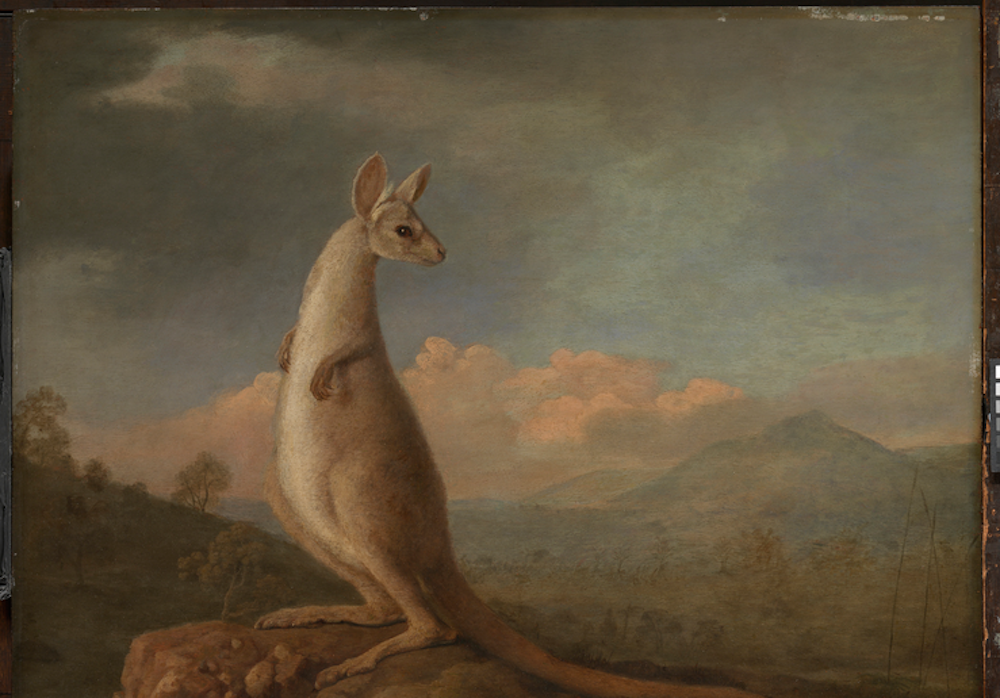
Bits and pieces of dead kangaroos were shipped back to England, where Banks presented them to George Stubbs, an artist famous for his anatomical accuracy – and who had made his name as a painter of thoroughbred horses and hunting scenes. Stubbs worked with a stuffed or inflated pelt and drew on Parkinson’s sketches to produce the first painting of this newly-identified species, Portrait of the Kongouro from New Holland (1770).

George Stubbs, Portrait of the Kongouro from New Holland (1770). Wikimedia Commons.

An engraving of this painting – with the kangaroo gazing back over its shoulder (curiously? Is someone pursuing it?) – was used to illustrate the bestselling 1773 publication of Cook’s journal. As Des Cowley and Brian Hubber have noted, further engravings were made, the image began to circulate, and soon “the kangaroo had entered the European popular imagination”.

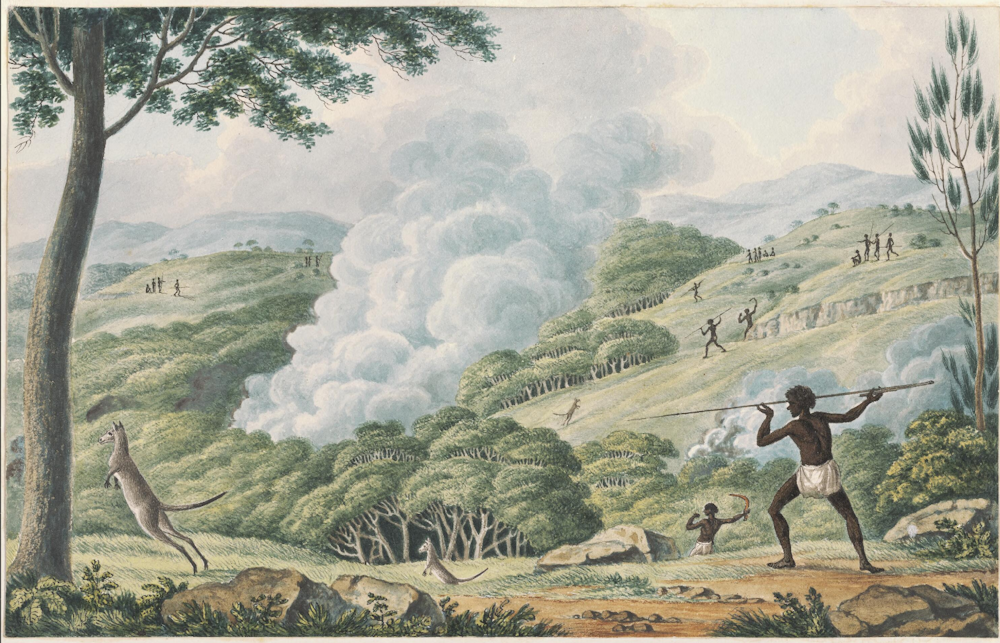
Joseph Lycett, Aborigines using fire to hunt kangaroo (c.1817). National Library of Australia.

The kangaroo hunt quickly became a recognisable genre in colonial Australian art. Joseph Lycett was transported to New South Wales in 1813, a convicted forger. His Aborigines using fire to hunt kangaroo (c. 1817) and Aborigines hunting kangaroos (1820) give us two early examples of “ethnographic” landscape painting where Aboriginal people hunt kangaroos in a fantasy precolonial space untouched by the impact of European settlement.

Joseph Lycett, Aborigines hunting kangaroos (1820) National Library of Australia.

In other works, however, Lycett placed Aboriginal hunters alongside settlers as mutual participants in the developing social and economic life of the colony. In these early days of settlement, kangaroos were a vital food source.

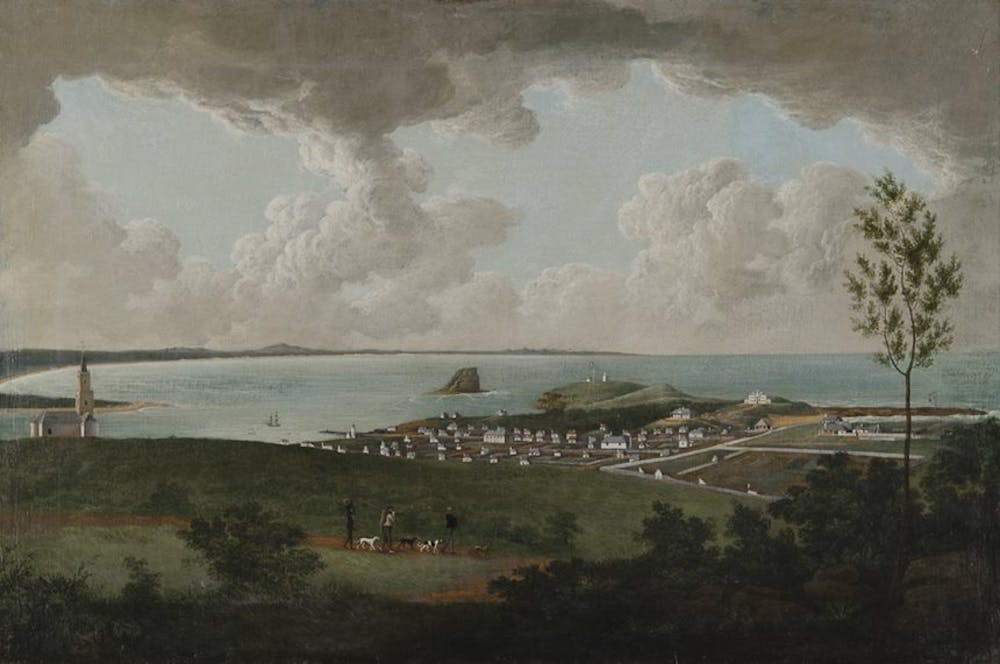
Lycett’s Inner View of Newcastle (1818) depicts a settler, a convict and an Aboriginal man walking in single file with four kangaroo dogs (usually, greyhound, deerhound and wolfhound crossbreeds); the convict is carrying the carcass of a freshly killed kangaroo over his shoulder.

Joseph Lycett, Inner View of Newcastle (1818). Newcastle Art Gallery.

Lycett’s View on the Wingeecarrabee River, New South Wales (1824) takes us down to the Southern Highlands, inland from Wollongong – where a settler with a musket, an Aboriginal man with a spear and two kangaroo dogs are all chasing down a single kangaroo.

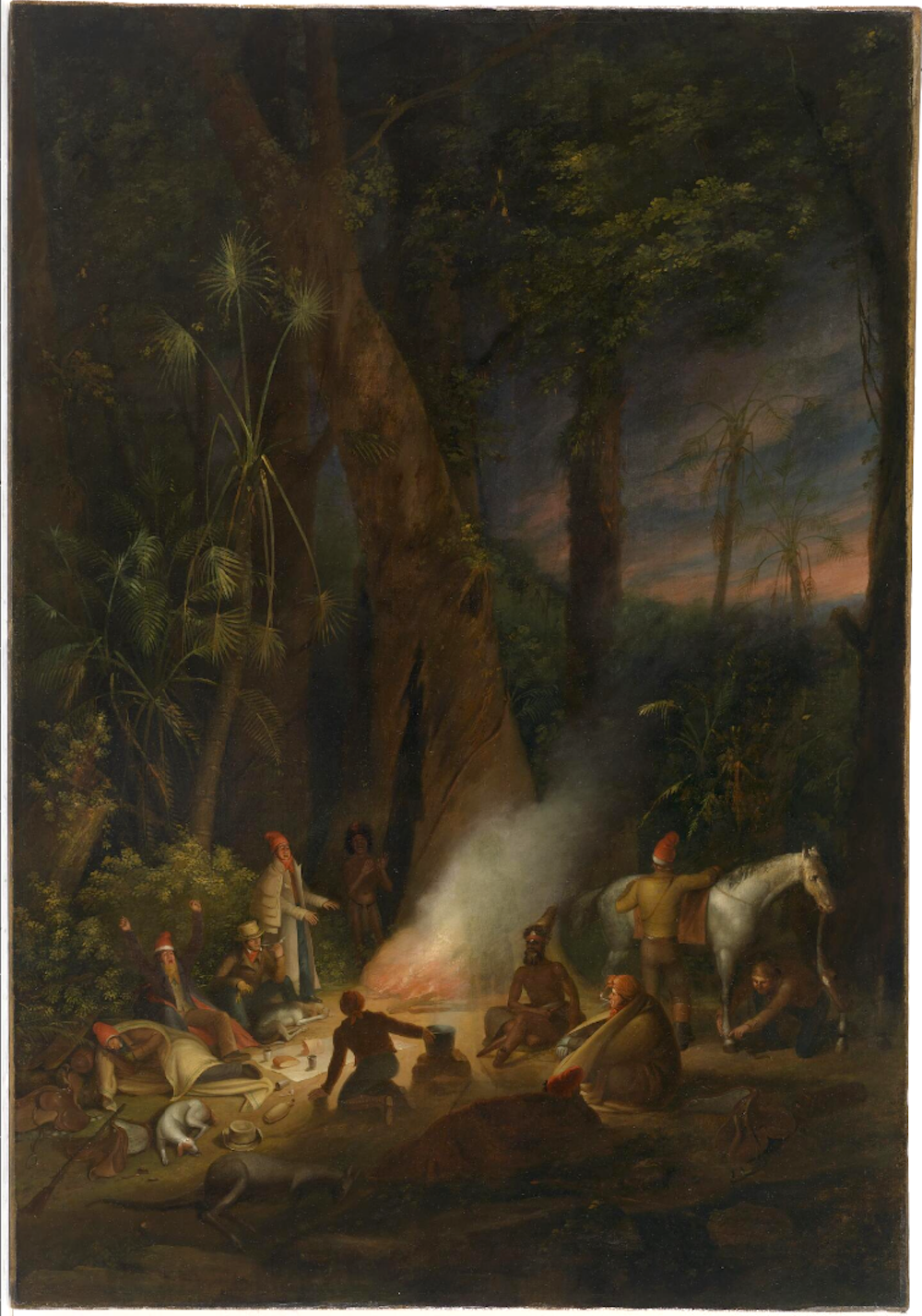
Augustus Earle was a freelance professional artist who had travelled around the world – with Charles Darwin, among others. He spent two and a half years in Australia in the mid-1820s, chronicling metropolitan and bush scenes. His painting A Bivouac of Travellers in Australia in a Cabbage Tree Forest, Day Break (1827) gives us an idyllic scene of Aboriginal and settler companionship in the wake of a kangaroo hunt.

A group of settlers and two Aboriginal men are arranged around a campfire, waking up, preparing breakfast, and tending to a horse. There are two kangaroo dogs curled up and sleeping, and in the foreground of the painting – in the shadows, lying beside a rifle – is a large, dead kangaroo.

Augustus Earle, A Bivouac of Travellers in Australia in a Cabbage Tree Forest, Day Break (1827). Wikimedia Commons

Hunting clubs

S. T. Gill is probably the best known local artist to represent the kangaroo hunt as an organized recreational event. Colonial hunting clubs were established across Australia in the 1830s and 1840s; the first “meet” in Victoria, for example, was in 1839, organized near Geelong by the Indian-born military officer and pastoralist William Mercer. Squatters bred packs of hounds and wealthy locals and visiting dignitaries would be invited to join in the hunt and all the social occasions that went with it.

Foster Fyans was the Police Magistrate of Geelong and helped to oversee the dispossession of Aboriginal people across the western district frontier. “A noble pack of hounds was kept up by gentlemen squatters who met every season”, he recalled much later on, “hunting twice and thrice a week, and meeting at each other’s houses, where good cheer and good and happy society were ever to be met”.

Kangaroo hunting helped to consolidate squatter power and influence, lending it an available rhetoric of pleasure and merriment. No longer dependent on the kangaroo as a source of food, landowning colonists soon learned how to enjoy the thrill of the chase and the kill for its own sake, as a blood sport that came to define their social world.

Gill was a prolific chronicler of colonial life; his Australian Sketchbook (1865) included one scene, Kangaroo Stalking, in which a settler with a gun and an Aboriginal man hunt kangaroos together. In 1858 he produced a series of three lithographs under the general title Kangaroo Hunting. The first, The Meet, shows a gathering of men outside a rustic colonial homestead, with their horses and dogs (and some chickens; and a magpie on the roof). One of them has the conspicuous trappings of a wealthy squatter, tall, commanding, elaborately styled in black riding boots, yellow waistcoat, and scarlet jacket.

S.T. Gill, Kangaroo Hunting, The Meet, from his Australian Sketchbook (1865). National Library of Australia.

The second, The Chase, puts the squatter into the foreground, leaping over a fallen log on his powerful white horse. The reckless excitement of the hunt is obvious as the settlers gallop across the dangerous terrain, whips raised. The dogs are chasing a kangaroo, which is retreating into the distance.

S.T. Gill Kangaroo Huntin, The Chase, from his Australian Sketchbook (1865). National Library of Australia.

But the third lithograph, The Death, seals the animal’s fate. A squatter stands beside his exhausted hounds as a hunter readies his knife to take the dead kangaroo’s tail. Another hunter lifts his hat, looking back; perhaps he is greeting a group of Aboriginal people who are approaching in the background. The leader of this group – a family? – is carrying a spear; he may also be returning from a hunt.

S.T. Gill, Kangaroo Hunting, The Death, from his Australian Sketchbook (1865). National Library of Australia.

There is no sense of impending frontier violence here, but the lithograph does seem to register the differences between settler and Aboriginal relationships to the body of the dead kangaroo: who claims possession of it, and for what purpose.

Settler triumph

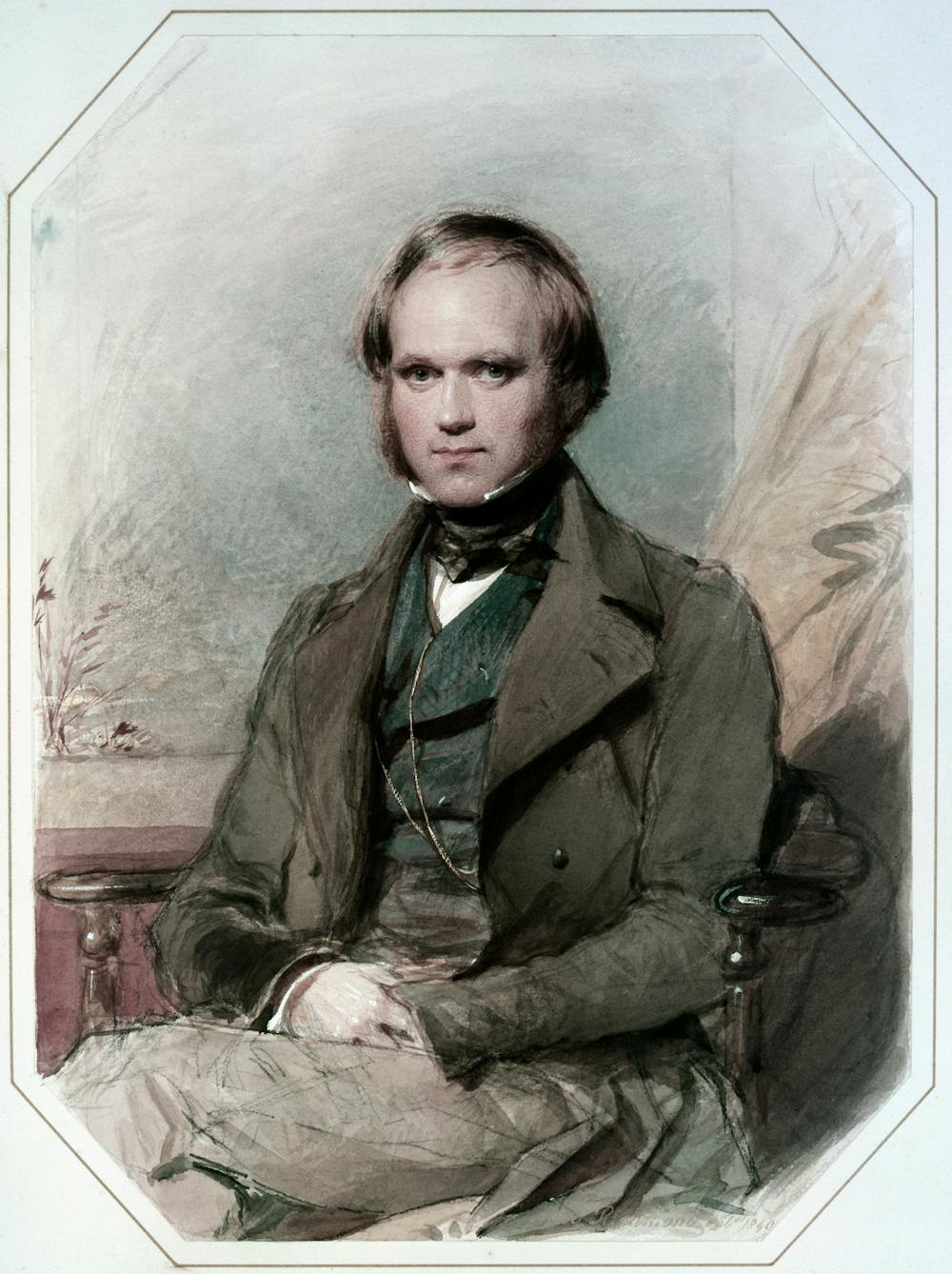
A portrait of Charles Darwin in the 1830s by George Richmond: he tried his hand at kangaroo hunting. Wikimedia Commons

Many notable visitors participated in organized kangaroo hunts: Charles Darwin in 1836 (“my usual ill-fortune in sporting followed us”), Britain’s Admiral of the Fleet Henry Keppel in 1850, the novelist Anthony Trollope in 1871.

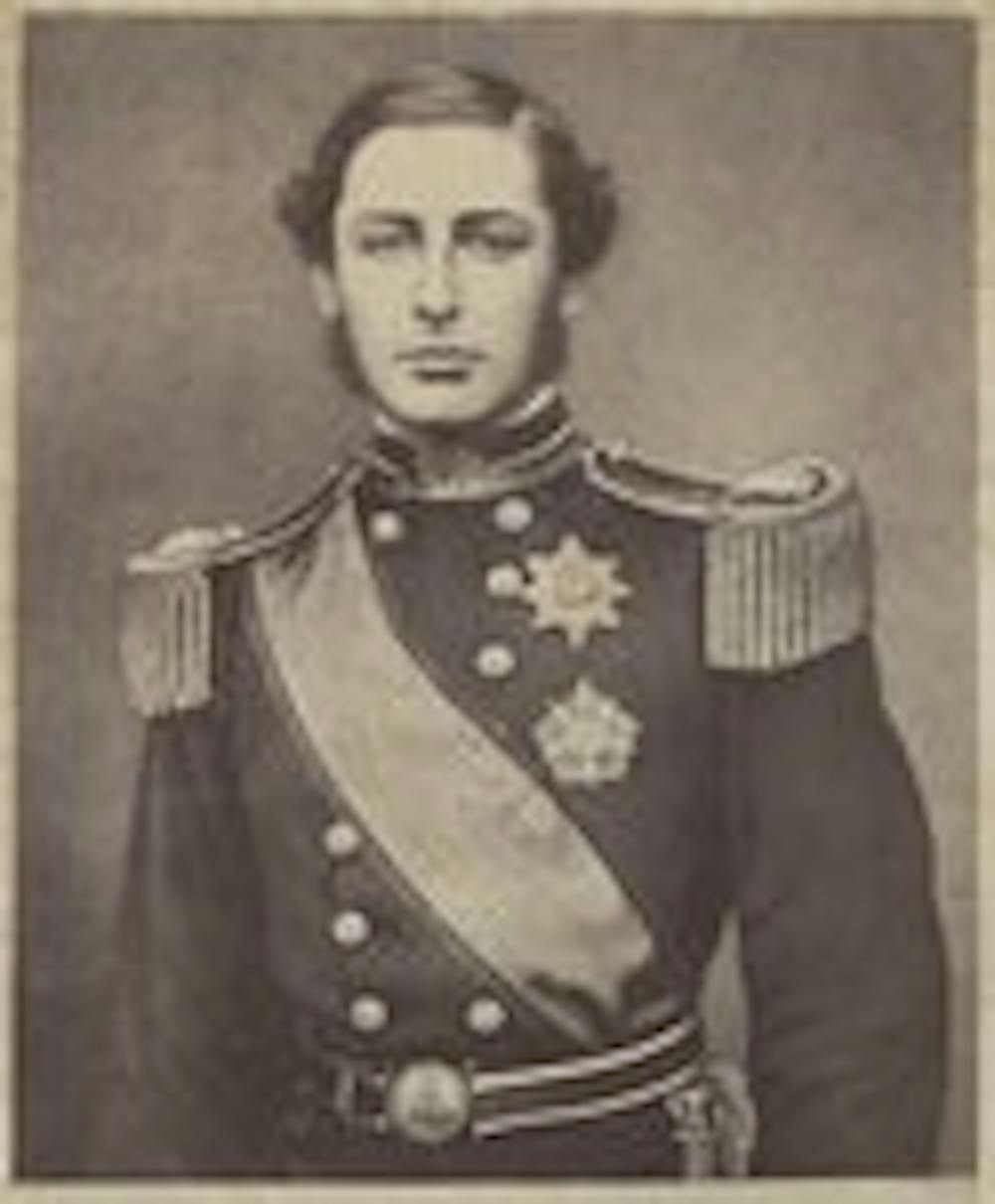
Alfred, Duke of Edinburgh, shot about 30 kangaroos trapped in a yard. State Library of Victoria

The Duke of Edinburgh came to the colonies in 1867 – the first royal visit – hunting kangaroo in South Australia and then travelling out to Victoria’s western district for more sport.

The Russian-born colonial artist Nicholas Chevalier accompanied him on tour, staying at the squatter John Moffat’s luxurious homestead Chatsworth House at Hopkins Hill, where he sketched a number of hunting scenes. The Duke himself shot at close range over 30 kangaroos trapped in a yard; he got the locals to preserve the skins and claws.

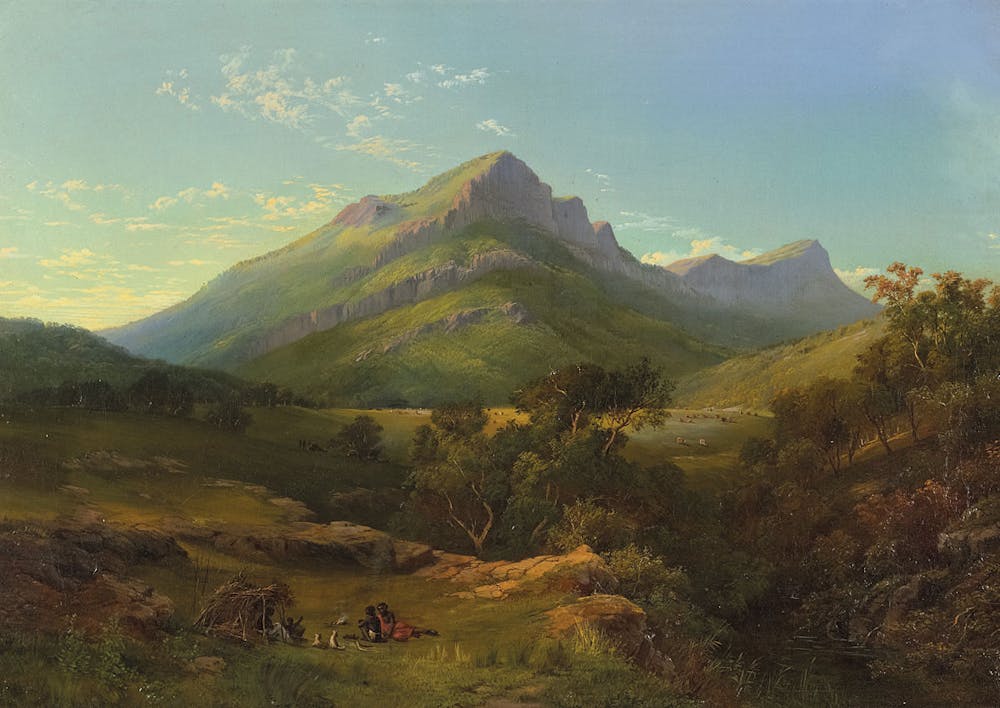
A few years earlier, Chevalier had joined an expedition to the Grampians, producing two significant landscapes. Mount Abrupt (1864) shows an Aboriginal family peacefully camping on a plateau above a gully, with cattle grazing on the pastures behind and the mountain in the background. This family is not (yet) dispossessed from what is clearly settler property.

Nicholas Chevalier, Mount Abrupt (1864). Hamilton Art Gallery, purchased by Hamilton Art Gallery Trust Fund – M.L Foster Endowment with assistance from the Friends of Hamilton Art Gallery.

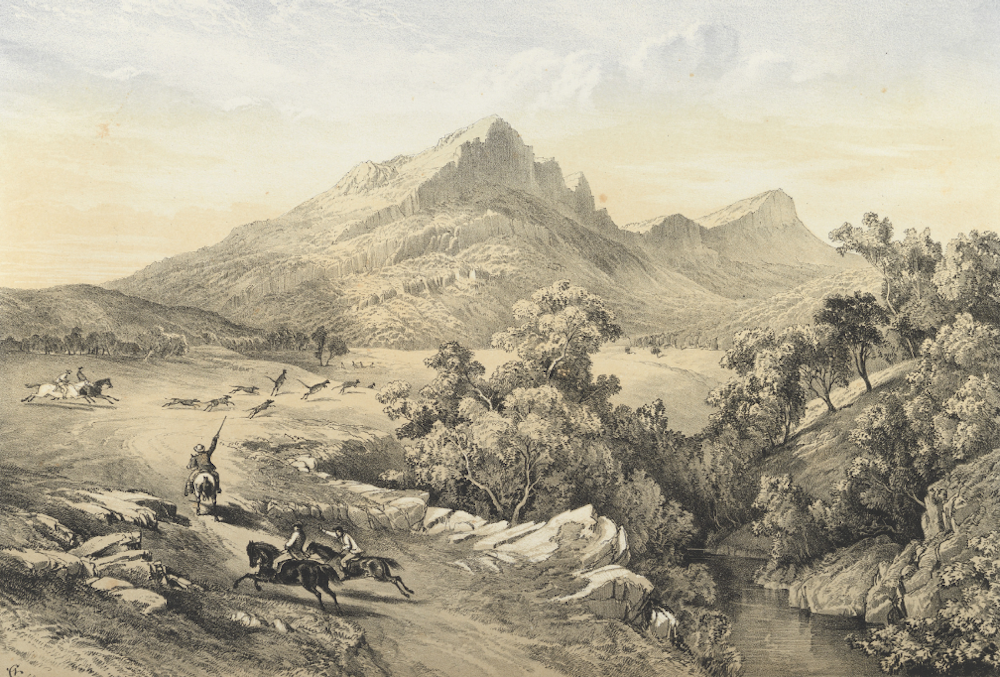
Mount Abrupt and The Grampians – produced the same year and published as a lithograph in Charles Troedel’s The Melbourne Album – gives us the same perspective of this mountain. But now there is no Aboriginal family. Instead, a group of settler hunters and their hounds ride roughshod over the place this family had once occupied, chasing kangaroos. It is as if the hunt itself has erased any trace of Aboriginal occupation of land. Its depiction is an expression of settler triumph over both native species (the kangaroo will surely be killed) and Indigeneity (Aboriginal people have been dispossessed).

Nicholas Chevalier, Mount Abrupt and The Grampians (1864). National Library of Australia.

Godfrey Mundy was another officer who had served in colonial India. He came to Australia in 1846, where he held a senior role in colonial military administration. He was also the cousin of Sir Charles Fitzroy, who by this time was Governor of New South Wales. Together, they went across the Blue Mountains on a month-long journey that became the basis for Mundy’s bestselling diary and narrative of colonial development, Our Antipodes (1852).

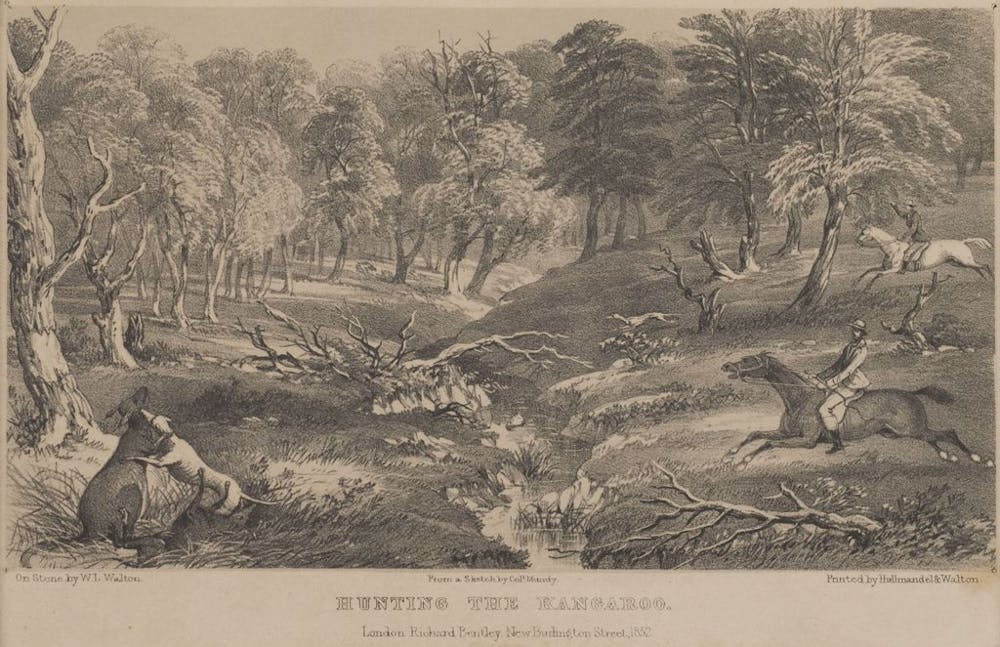
Mundy also illustrated his book; one of the illustrations is titled Hunting the Kangaroo. Here, two hunters are in hot pursuit of a kangaroo, with their hounds leading the way. One of the hounds has the kangaroo by the throat; the other lies injured at its feet. Interestingly, Mundy depicts himself as one of the hunters, with his initials “G.M.” branded on the shoulder of one of the horses.

Godfrey Mundy, Hunting the Kangaroo (1852). Our Antipodes.

On 30 November 1846, Mundy writes, “the resident gentlemen of the vicinity…attempt to show [us] the sport, par excellence, of the country”. But they find only one kangaroo, which eludes them. The landscape makes the kangaroo hunt difficult and dangerous, with uneven ground, tree stumps, and so on. Mundy rides “at full speed into the fork of a fallen tree” and has to “retreat”. But in his sketch, he is still proudly mounted on his horse and in full pursuit; and the kangaroo is about to die. This is the kangaroo hunt sketch as wish-fulfilment, a fantasy conclusion.

Sympathy for the kangaroo

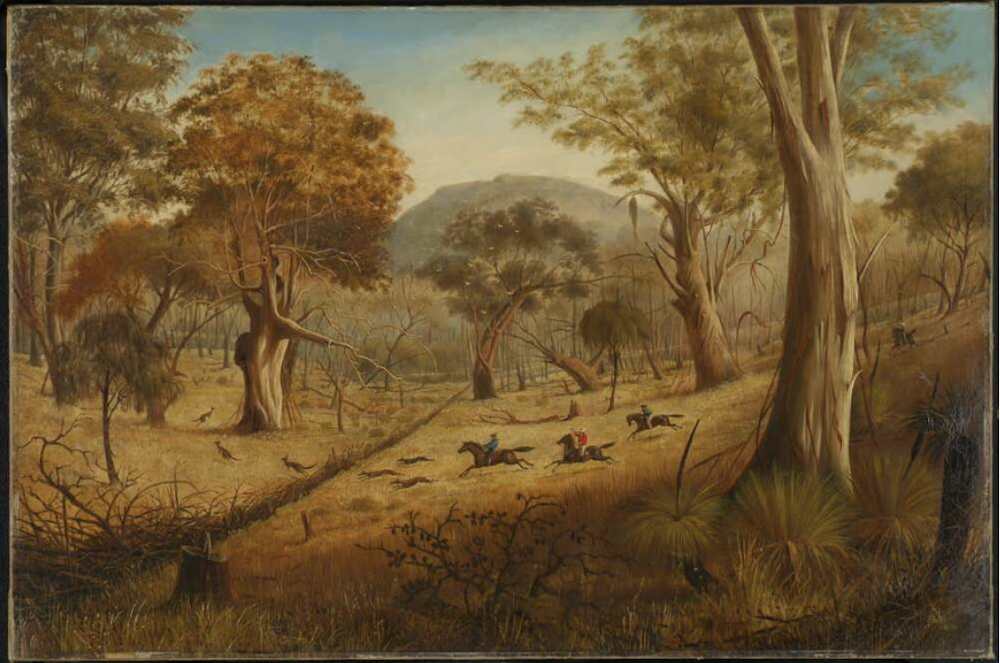
Edward Roper was a keen naturalist and artist who travelled around the world, coming to Australia in 1857. His landscape A Kangaroo Hunt under Mount Zero, the Grampians (1880) has four hunters galloping through a woodland of eucalypts and grass trees, chasing three kangaroos. A long brushwood fence separates the hunters from their quarry. The riders and their hounds are approaching the fence at break-neck speed, highlighting the thrills and dangers of the chase; this is their land now, and they ride across it as a post-frontier expression of settler freedom and exhilaration.

Edward Roper, A Kangaroo Hunt under Mount Zero, the Grampians (1880). National Library of Australia.

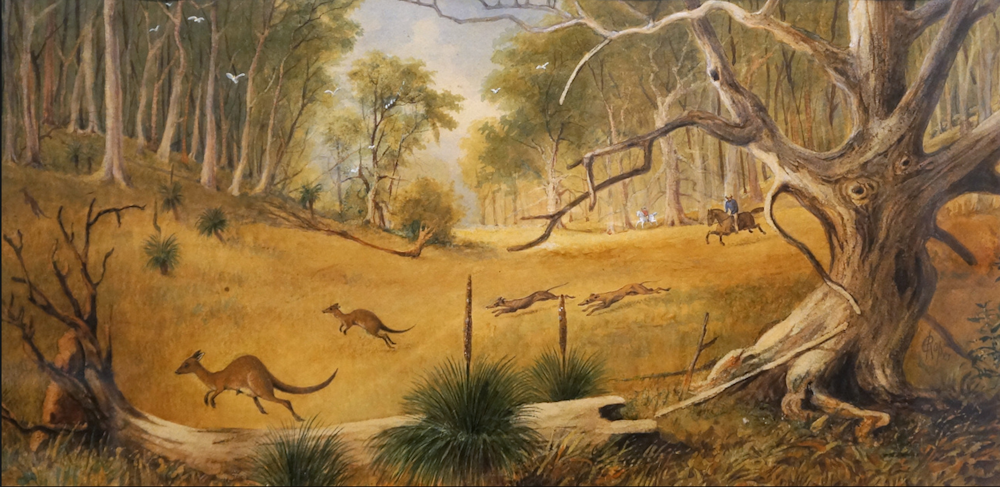
Roper’s After the Flying Doe gives us a similar scene, although with a closer view of everything including Mount Zero, which now looms large in the background. There is no fence in this version: two hunters on horseback are pursuing kangaroos, with a couple of hounds racing along in front.

Edward Roper, After the Flying Doe. Benalla Art Gallery. Source: Ledger Gift, 1985.

Unusually, the kangaroos themselves are in the foreground of the painting. The “doe’s” femininity is apparent in the delicate representation of her features, and possibly there is a joey peeking from her pouch. It looks like this painting wants to invite some sympathy for the female kangaroo’s plight by placing her in the foreground, emphasizing her gender and invoking her directly in the title.

What happens when male hunters kill a female kangaroo? “Colonial Hunt” is the first poem published in Australia on an Australian topic; it appeared in the Sydney Gazette in June 1805. Here, a female kangaroo (“Kanguroo”) is pursued and trapped by a hunter and his dog. “Fatigu’d, broken hearted, tears gush from her eyes”, the poet writes, as she realizes her fate.

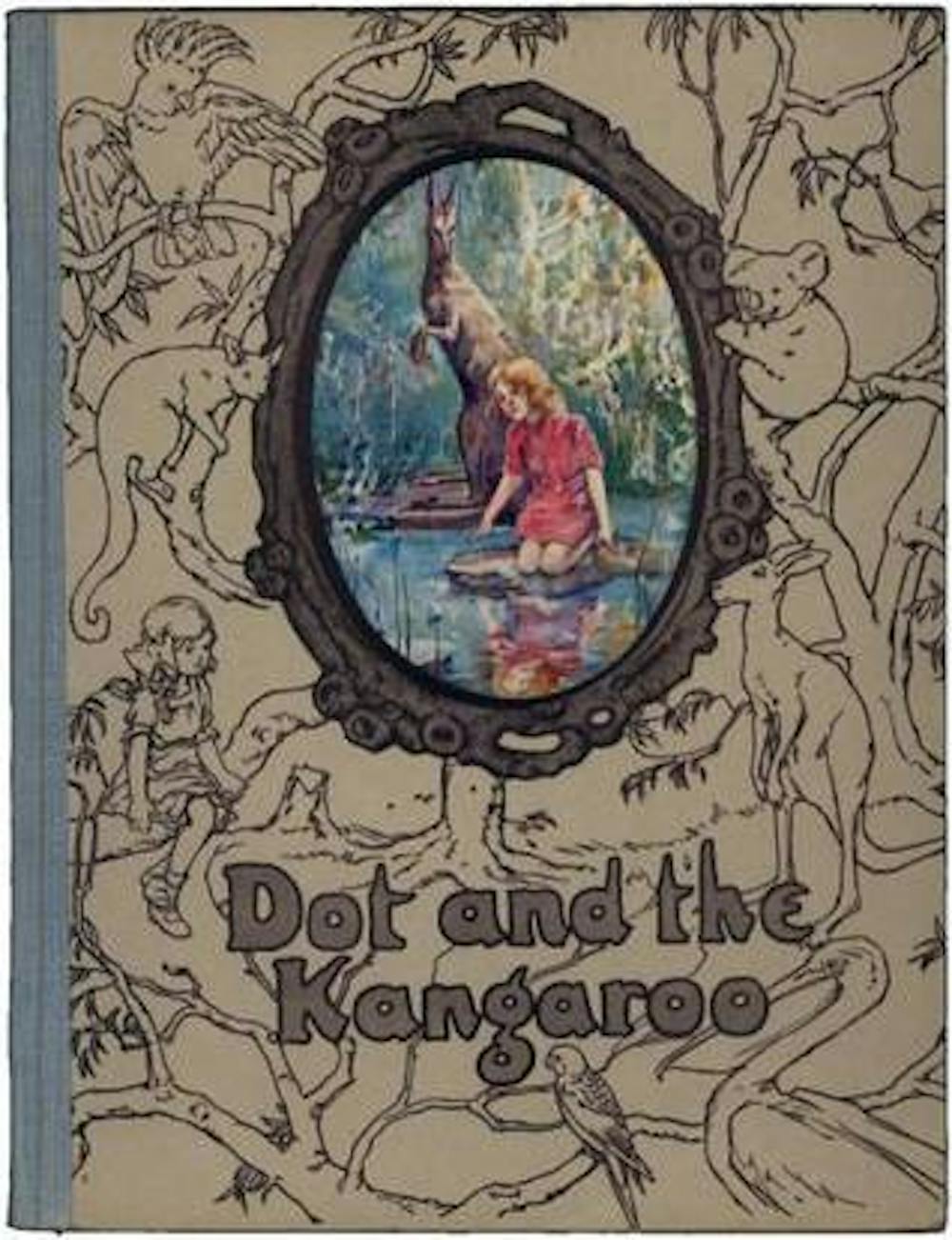
The kangaroo that weeps when it dies offers a rare moment of sentimental identification with a native species that by 1805 is already a target for extermination. We don’t see kangaroo tears again until Ethel C. Pedley’s Dot and the Kangaroo (1902). In this famous children’s story, a female kangaroo’s sadness over the ecological toll of settlement is now shared by all native species: “Every creature in the bush weeps”, she says, “that they should have come to take the beautiful bush away from us”.

Organised hunts could kill any number of kangaroos; alongside hunting meets that pursued individual roos as game, squatters also organised large scale drives or battues, which could see thousands of kangaroos rounded up, slaughtered and left to rot.

Kangaroos are no longer hunted on horseback, of course. But small – and large -scale killing continues unabated. Recently, the New South Wales government relaxed kangaroo culling licences, consistent with the view of the kangaroo as a “pest” that competes with livestock for survival in drought conditions. If we add this to that government’s plan to expand and intensify forest logging, it’s easy to sympathise with the kangaroo’s complaint in Pedley’s turn-of-the century fantasy.

– Friday essay: the art of the colonial kangaroo hunt
– http://theconversation.com/friday-essay-the-art-of-the-colonial-kangaroo-hunt-102169]]>


Grattan on Friday: The high costs of our destructive coup culture

]]>

The Conversation (Au and NZ) – By Michelle Grattan, Professorial Fellow, University of Canberra

Australia’s “coup culture” has become so entrenched that it now holds serious dangers for our democracy. Not that the politicians seem to give a damn. For all the talk of “listening” and being “on your side” the voters have once again been treated as little more than a gullible audience for a low-grade reality show.

A decade or two ago, many commentators advocated four-year federal parliamentary terms, to encourage better policy-making. Now we can’t even count on a prime minister lasting through the three-year parliamentary term after the election they win.

In less than a decade, we’ve had four prime ministerial coups: from Rudd to Gillard (2010); from Gillard to Rudd (2013); from Abbott to Turnbull (2015); and, last week, from Turnbull to Morrison.

A couple of these seemed politically savvy. I admit to thinking them so. In 2013, Kevin Rudd was reinstated to “save the furniture”, and he did. In 2015, Tony Abbott’s government appeared headed for certain oblivion. Malcolm Turnbull was installed as a better prospect; in the event, he won in 2016 only by the skin of his teeth.

The Gillard coup, driven by a panic attack and colleagues’ frustration with Rudd’s style, was ill-conceived. The botched assault by Peter Dutton, that elevated Scott Morrison, was fuelled by a cocktail of revenge against Turnbull and a policy push to the right. We’ll see how it ends, but likely it won’t be well.

While a particular coup may have its justifications, when you look at a clutch of them, they’re bad for the country and for the political system.

Some will point to history for precedent – Paul Keating overthrew Bob Hawke in 1991. But we didn’t in those days have a “coup culture”.

We may chuckle on hearing Australia referred to abroad as the “coup capital” of the world. But it’s not a joke. Although this country will continue to be seen as a safe place to invest, a rolling prime ministership must eventually test the faith of outsiders.

The coup culture works against the sort of decision-making that requires serious policy bravery. Timeframes shorten – ironically, just when governments fancifully cast programs as stretching over 10 years.

Thinking for the future is difficult enough with continuous polling and the shrill media cycle. But if a prime minister can’t rely on their troops guaranteeing their leadership through tough patches, or standing up against guerrilla insurgencies, public policy is reduced to the lowest common denominator or falls victim to the worst of internal power struggles.

Ditching opposition leaders is different from tossing out prime ministers. It has its own problems, but doesn’t undermine the system the way assassinating a PM does. Voters feel (and are entitled to feel) they elect the prime minister; it’s not technically true but it is effectively so, as campaigns are so leader-focused.

Fundamental in this revolving door is the cost to trust. As in other democracies, Australians’ trust in their system and its players has been eroding over decades.

Research from the University of Canberra’s Institute for Governance and Policy Analysis found fewer than 41% of Australians are currently satisfied with the way our democracy works. This compared with 78% in 1996.

Generation X is least satisfied (31%); the baby boomers most satisfied (50%). Women are generally less satisfied with democracy and more distrustful of politicians and political institutions.

According to this data – which preceded the leadership crisis – politicians are trusted by only 21%, and journalists by 28%.

The yet-to-be-released research concluded that “politicians, government ministers and political parties are deeply distrusted and media of all kinds and how they report Canberra politics is viewed as a key part of the problem.” It also found strong public support for reforms to ensure greater political accountability of MPs and to stimulate more public participation.

The coup culture further alienates an already disillusioned public, unable to comprehend the appalling behaviour they often witness from their politicians.

Recently I spoke to members of a community leadership program who’d come to Canberra for a couple of days of briefings from politicians and others. They’d been to Question Time a few hours before I met them.

To journalists, it was a pretty standard QT. For these people, what they witnessed was shocking. They had trouble getting their heads around how the goings on – the shouting, the insults – could be so dreadful. They’d looked over at the school children in another part of the public gallery and wondered what those youngsters were thinking.

They asked: why do our politicians act like this and what can be done? All 72 decided to write to their MPs to say this wasn’t the type of conduct they wanted to see from them.

My hunch is that this group of ordinary, well-educated, interested citizens would probably be even more put off by subsequent events.

One thing I suspect would have particularly disturbed them is the way the players in last week’s coup expect the public to just move right on. Everyone was back to work, they said.

Gillard in 2010 tried to explain and justify her deposing of Rudd by saying “I believed that a good government was losing its way”. It didn’t wash.

We know for ourselves the reasons for the latest coup – hatred of Turnbull and a desire to force a sharp turn to the right. But have the main coup-makers and their allies (as distinct from their noisy backers in the media), and the windfall beneficiaries felt the need to properly account for their actions?

This hit-and-run attitude is contemptuous of the public.

The coup culture, especially in this instance, is also accompanied by an “anything goes” view of tactics. Again, it is a matter of degree – the extent to which the hardball, which we always see at such times, crosses a line.

For some of the Liberal women, it undoubtedly did last week.

Julia Banks, announcing on Wednesday that she’ll resign her Melbourne seat of Chisholm at the election, has cited bullying. Liberal senator Linda Reynolds went to the lengths of telling the Senate: “I just hope that … the behaviours we have seen and the bullying and intimidation, which I do not recognise as Liberal in any way, shape or form, are brought to account.”

But Victorian Liberal president Michael Kroger saw it as par for the course, saying, in response to Banks: “This is politics. People do speak strongly to each other. You just need to look at Question Time. If you think Question Time is not full of bullying and intimidation then you’ve got another think coming.”

Well, anyone who bullied or was fine with such conduct should do this: go to your local high school and explain to the kids why bullying shouldn’t be in their tool kit but was needed in yours.

Some Liberals flirt with the idea of rules to curb the coup culture, a path Labor has gone down.

It depends on the model: as with so much in politics, what looks good at first sight may hold dangers. Giving a party’s rank and file a say in electing the leader, as the ALP does, might eventually give an advantage to those harder to sell to voters, given party memberships are small and unrepresentative.

A higher than 50% threshold for a spill, which Labor also has embraced and Reynolds suggests, holds some merit. But when Anthony Albanese was stalking Bill Shorten before Super Saturday, Albanese’s supporters insisted the rule could be circumvented.

What’s really critical is the culture – in a party and in the political system generally. And once that’s been corroded, it’s a devil of a job to scrape the rust off.

There are no easy ways to rid ourselves of the coup culture, or to force tin-eared politicians to lift their game. But it wouldn’t hurt for more people to follow the example of those in the community leadership program and remind their MPs of their KPIs.

– Grattan on Friday: The high costs of our destructive coup culture
– http://theconversation.com/grattan-on-friday-the-high-costs-of-our-destructive-coup-culture-102416]]>

Sarah Kane’s controversial 1990s play Blasted feels prescient in the #MeToo era

]]>

The Conversation (Au and NZ) – By Jana Perkovic, Sessional lecturer and researcher, University of Melbourne

Review: Blasted, Malthouse Theatre.


Playwright Sarah Kane was an “honorary lad” in in-yer-face drama that dominated the 1990s in Britain. Hers was one of few female voices in the testosterone-heavy genre, as well as one of its most prominent, even though her oeuvre was slight: five plays written over five years, and one short film, Skin (1997). The plays were: Blasted (1995), Phaedra`s Love (1996), Cleansed and Crave (1998), and finally 4.48 Psychosis, which premiered in 2000, not long after Kane’s life ended in suicide.

Today considered one of the luminaries of British dramatic writing, her work was hotly debated during her life, none more so than Blasted, a play that met such a furious response on opening night that an entire mythology has sprung around it. Some of the outraged review headlines – most famously Jack Tinker’s “This Disgusting Feast of Filth” – were picked up by the media and amplified into a nation-wide frenzy. The director Stephen Daldry defended it on national television. The first run sold out, with queues around the block for returns.

What incensed the critics in 1995 was the violence, both physical and psychological, that permeates the play in ways that then seemed gratuitous, overblown, and dramaturgically incongruous. Blasted spliced together forms of abuse that until then rarely appeared side by side on stage. The play opens with a chamber piece, a man and a woman in an expensive hotel room in Leeds, “so expensive it could be anywhere in the world.”

The play opens in a hotel ‘so expensive it could be anywhere’. Pia Johnson

Ian, a middle-aged journalist who rants about the wogs and Pakis taking over Britain, has brought in a much younger and vulnerable Cate, whom he verbally puts down, cajoles, and – it is implied – coerces into sex. The interaction between them is a series of discomforting, not-enthusiastically-consented-to steps towards sexual intercourse. With today’s eyes, it reads like one of those accounts of what Harvey Weinstein allegedly did with his hotel room guests; but even in 1995, the intimidation, power struggle and joylessness were apparent.

However, roughly halfway through the play, as Cate locks herself in the bathroom to have a bath, a soldier erupts into the room. From this moment on, another play entirely seems to take place, one no longer set in Leeds, but in a country for which Ian needs a passport. The intimate violence between a man and a woman suddenly explodes into the panoramic violence of bombs, guns, mass rapes. The soldier rapes Ian, after telling him about the atrocities committed outside, to his own girlfriend. A bomb blasts through the room.

Fayssal Bazzi as the soldier. Pia Johnson

And then it all grows bigger, operatic almost. The soldier gouges Ian’s eyes out. Cate returns with a baby, which dies and is buried under the floorboards of the room. We are in Tarantino territory by this point: grotesque violence, theatrical, all plot dissolving into a series of disconnected, visually pregnant scenes as Ian descends into despair.

Interestingly, even though Kane’s later works, plotless and poetic, are considered to be the “hard” ones, they all seem to get staged more often than Blasted. The cynic in me thinks that, as hard as it may be to stage a prose poem, it may not be as hard as staging a bomb going off in a hotel room. Anne-Louise Sarks’ production of Blasted for the Malthouse is the first stage version I have ever seen – and it offers an opportunity to observe how this defining play of the 1990s has aged.

In 1995, Blasted was a play that connected the ordinary, everyday life in the UK, marked by hooliganism, lad culture and post-Thatcherism, to the atrocities of war in former Yugoslavia, a war which was schizophrenically experienced in Western Europe as both geographically close and unfathomably distant.

The collapse of contexts and genres that marks the play (and that so infuriated the critics) is a gesture that would later repeat in Michael Haneke’s films (particularly Hidden), as well as in Lars von Trier’s: by the 2000s, the slip from middle-class banality to splatter horror would become common. It would also become more legible, as an expression of anxiety: that the prosperous peace here and the civic collapse there are somehow linked, perhaps even causally.

In 2018, Sarks’ production is a Blasted of the #MeToo era, and of the Syrian refugee crisis. The notion that terrorism and domestic violence are intimately linked by underlying diseased masculinity is no longer just a poetic metaphor: it is discussed in policy papers and newspaper articles around the world.

In 2018, the link between domestic violence and terrorism is no longer just a metaphor. Pia Johnson

2018 makes Blasted look prescient, prophetic. Sarks, who is an exceptionally imaginative and courageous director, but has never been one for unnecessary statements, deliberately pares back directorial gestures to let the play speak. It is not a showy production.

Marg Horwell’s normcore set (very similar to her work on Revolt, She said. Revolt Again in 2017) is a box of grey hotelness, later explodes to reveal the walls and utilities of the Malthouse building. The actors are exceptional, but none draw attention to themselves at the expense of the ensemble. The production takes a while to find its rhythm, but once Fayssal Bazzi’s Soldier enters and the war gets going, it grips and holds us breathless until the very last words of the play. It is the work of a director who has come into her full powers and has nothing left to prove.

It is hard to know how the contemporary audience will receive a stage work where so much of the effect hinges on being genuinely terrified by simulated rape, or theatrical cannibalism. The 1990s were, in some ways, a simpler and more naïve time.

But even if some of the mechanics of Blasted have aged, its central emotional core stands solid. Kane often said that all her works are really about love. The central journey in Blasted is not a tourist trip through extreme violence. It’s the emotional journey of a bully who learns to be grateful for small acts of kindness.


Blasted is being staged at the Malthouse Theatre, Melbourne, until September 16.

– Sarah Kane’s controversial 1990s play Blasted feels prescient in the #MeToo era
– http://theconversation.com/sarah-kanes-controversial-1990s-play-blasted-feels-prescient-in-the-metoo-era-99759]]>

Trust Me, I’m An Expert: How augmented reality may one day make music a visual, interactive experience

]]>

The Conversation (Au and NZ) – By Sunanda Creagh, Head of Digital Storytelling

You probably heard your first strains of music when you were in utero. From then on it’s helped you learn, helped you relax, hyped you up, helped you work, helped you exercise, helped you celebrate and helped you grieve.

Music is ingrained in so many aspect of our lives, but it’s also the subject of a significant body of academic work.

Today’s episode of Trust Me, I’m An Expert is all about research on music. We’ll be hearing from Dr Ben Swift, a digital artist and computer science lecturer from the Australian National University on how technology is changing the way we interact with music. Could it one day be something we experience through augmented reality, responding to the way we move through the world? Sound supplemented with colours and shapes?

And Conversation intern Juliana Yu spoke with Dr Clint Bracknell, a researcher at the Sydney Conservatorium of Music about how he’s investigating the power of song to help address the national and global crisis of Indigenous language-loss. He’s working on this research with Wirlomin Noongar Language and Stories Inc.

And we’ll hear from researcher Dr Hollis Taylor, most recently at Macquarie University, who has been studying, recording, and transcribing pied butcherbird song for 12 years. Taylor produces what she calls “re(compositions)” – musical arrangements that mimic and complement pied butcherbird song.

Trust Me I’m An Expert is a podcast from The Conversation, where we bring you stories, ideas and insights from the world of academic research. Special thanks today to Shelley Hepworth and Juliana Yu, as well as academics Hollis Taylor, Ben Swift and Clint Bracknell.

You can download previous episodes of Trust Me here. And please do check out other podcasts from The Conversation – including The Conversation US’ Heat and Light, about 1968 in the US, and The Anthill from The Conversation UK, as well as Media Files, a brand new podcast all about the media. You can find all our podcasts over here.

Additional audio

Kindergarten by Unkle Ho, from Elefant Traks

Svefn-g-englar by Sigur Ros

Green Lake, Victoria for soprano recorder and field recording by Hollis Taylor, Genevieve Lacey, recorder

Owen Springs Reserve 2014 for vibraphone and field recording by Hollis Taylor/Jon Rose, Claire Edwardes, vibraphone

Field recordings by Hollis Taylor

2 Adagio (Fantasia in C minor K 475 by W. A. Mozart) by NoLogic, from Free Music Archive

Procession by The Marian Circle Drum Brigade, from Free Music Archive

Svela Tal by Blue Dot Sessions, from Free Music Archive

Critters creeping Lee Rosevere Shimmering Still Water – Free Sound Archive

Asmodeus Redux by Ben Swift

Elder Brother by Ben Swift

The Illiac Suite by Hiller and Isaacson

Wirlomin members practicing old Noongar songs with the guidance of Henry Dabb, Gaye Roberts and the Wirlomin Elders Reference Group

– Trust Me, I’m An Expert: How augmented reality may one day make music a visual, interactive experience
– http://theconversation.com/trust-me-im-an-expert-how-augmented-reality-may-one-day-make-music-a-visual-interactive-experience-100318]]>

Court opens door to domestic violence victim to sue police for negligence

]]>

The Conversation (Au and NZ) – By Mandy Shircore, Associate Professor, James Cook University, James Cook University

This week the Victorian Supreme Court refused an application by the State of Victoria to strike out a claim by Tara Smith and her three children. Smith claims Victoria Police officers were negligent because they failed to prevent numerous breaches of protection orders by her ex-partner, the father of the children. As a result, Smith and the children have suffered ongoing psychological harm.

In refusing to strike out Smith’s claim, the court has accepted that it is arguable police could owe a common law duty of care to specific victims of domestic violence to protect them from preventable harm. This is an important decision, because no Australian case has determined the question of whether police owe a duty of care to victims of domestic violence. Finding a duty of care is the first step in a civil action for damages in negligence. Without a duty of care there can be no liability in negligence, no matter how careless the defendant is.

Every year in Australia, more than 100,000 victims of domestic violence take out a protection order. Protection orders impose conditions on the perpetrator’s behaviour and victims rely on police to act when perpetrators breach those conditions. Domestic violence legislation and police policies and procedures are focused on victim safety – police failure to follow them can have tragic results. In Victoria, police now have strong powers to respond to domestic violence.


Read more: How Victoria’s family violence system fails some victims – by assuming they’re perpetrators


For Tara Smith and her children, the consequences of the alleged failures by the police resulted in years of continued violence perpetrated by her ex-partner, despite four intervention orders being taken out against him. She claims police knew or should have known about the orders.

In Smith’s case, the State of Victoria argued that Australian law does not, and should not, recognise that police owe a duty of care to individual members of the public to investigate violence or prevent certain conduct occurring, unless there are exceptional circumstances. The state also argued that imposing a duty of care on police would result in police owing conflicting duties to individuals versus the general public, it would divert police resources from their public duties and could result in “defensive” police practices.

These arguments reflect recent UK Supreme Court decisions and some earlier Australian legal cases. Some commentators and judges have criticised these policy arguments as unproven, questioning why police should be protected from negligence actions when other professionals and public officers are not.

When the case is finally heard, the court will need to consider the nature of the relationship between the police and Smith and her children, in deciding if the police owe a duty of care. The court will also consider the nature of the harm. So far, no Australian cases have found that police can’t be sued for negligence.

However, like the UK, Australian courts have been reluctant to impose a duty of care on police in cases where the allegation is that the police failed to protect a plaintiff from third party harm – in Smith’s case, her ex-partner. In similar cases, the courts have considered the degree of control the police had over the perpetrator of the harm.


Read more: Victorian government should be wary of introducing a stand-alone offence of non-fatal strangulation


Smith argued that domestic violence legislation and policies give police significant powers to exercise control over a perpetrator of violence. They require proactive policing to protect victims. Smith’s ex-partner was a known re-offender of family violence and the police had the power and responsibility to enforce the protection orders. Smith alleged that the police failed to follow their own training and procedures when they failed to enforce the protection orders.

Had the Victorian Supreme Court decided to strike out Smith’s claim, the allegations of police negligence in this case could not be tested and given a full hearing in court. However, the court has allowed the important question of whether the police could owe a duty of care to a victim of domestic violence to be examined in light of all the facts and evidence of the case.

Police officers have a difficult task in tackling domestic violence. They require specialised and ongoing training to deal with the complex issues involved.

Yet, like other professionals, it should be possible to hold them accountable for their failure to do so. Denying that they owe a duty of care to victims of domestic violence in circumstances of serious failures sends a message to victims that they cannot rely on police for protection.

Note: Tara Smith is a pseudonym.

– Court opens door to domestic violence victim to sue police for negligence
– http://theconversation.com/court-opens-door-to-domestic-violence-victim-to-sue-police-for-negligence-102336]]>

FactCheck: GetUp! on the impact of US corporate tax cuts on wages

]]>

The Conversation (Au and NZ) – By Fabrizio Carmignani, Professor, Griffith Business School, Griffith University

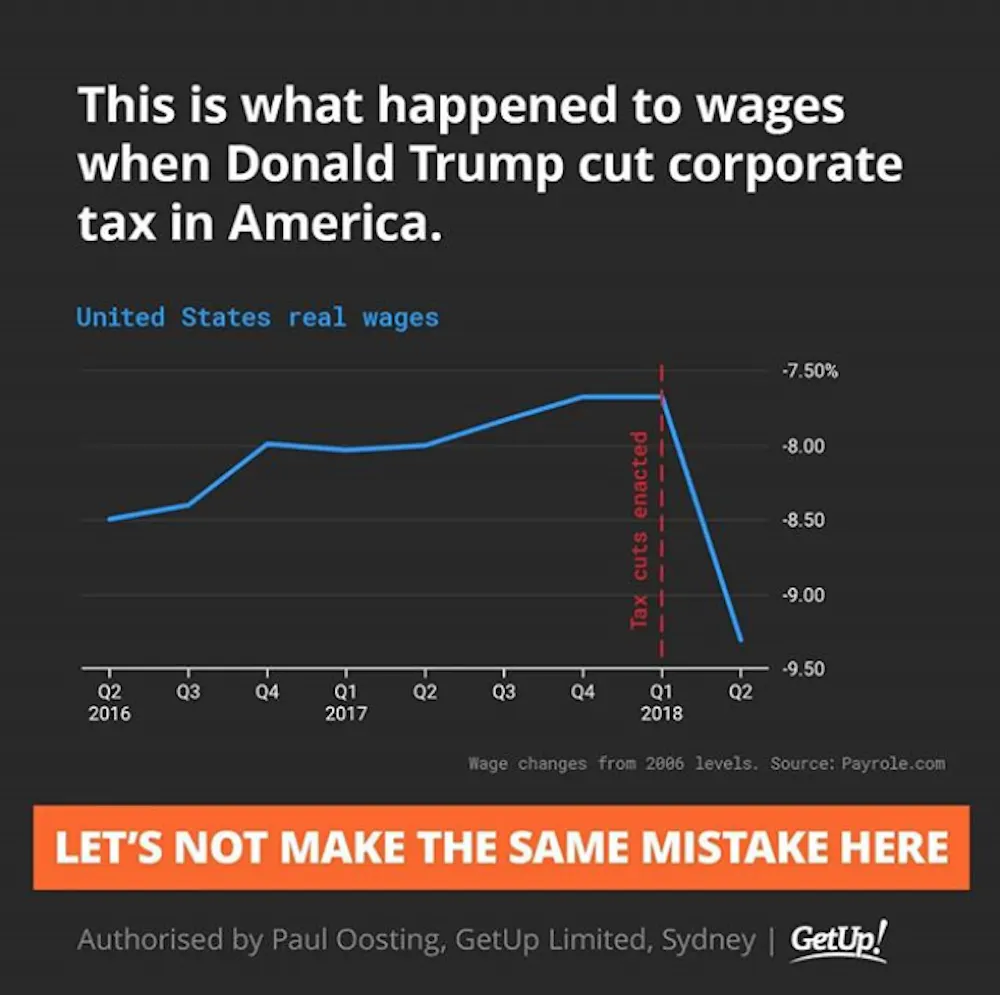
Graph: GetUp! Australia Instagram post, July 2018. Graph: GetUp! Australia, Instagram

Graph shared by GetUp! Australia on Facebook and Instagram, July 2018

Debate continues over the Turnbull government’s proposal to cut the corporate tax rate from 30% to 25% for businesses with turnover of more than A$50 million.

One major point of contention is the possible effect of the tax cuts on Australian wages.

A social media post shared by lobby group GetUp! Australia argued against the tax cuts, suggesting that US real wages fell after the Trump administration cut corporate tax rates from 35% to 21%.

Let’s take a closer look.

Checking the source

The Conversation requested sources and comment from GetUp! to support the data used in the graph, and the suggestion that there had been a causal relationship between the enactment of corporate tax cuts in the US and a reduction in real wages.

We first found the graph in Bloomberg in this article by economics blogger and former Assistant Professor of Finance at Stony Brook University, Noah Smith.

The underlying data comes from the Payscale Real Wage Index – adjusted for inflation. We noted that percentage change since 2006 is an unorthodox Y axis for a wages graph, but that’s what the Payscale Index tracks.

We added the marker of the corporate tax rate being cut in the United States, which while passed in Q4 [the fourth quarter] of 2017, came into effect in Q1 [the first quarter] of 2018.

Note that in the Instagram image, we attributed Payrole.com as the source, instead of Payscale.com. This was a drafting error on our part.

Proponents of corporate tax cuts both in the US and Australia have asserted that there is a causal relationship between a lower corporate tax rate and higher wages (see US example and Australian example). The graph we posted in Instagram demonstrates that, in the US experience, that has not been the case.

This suggests that there is no causal relationship between a lower corporate tax rate and higher wages, and that cutting the corporate tax rate based on an expected flow on effect to wages would be a mistake.


Verdict

The social media post shared by GetUp! Australia, which could be read by many as suggesting that US corporate tax cuts caused wages to fall, is problematic and potentially misleading for two reasons.

Firstly: charts constructed with data from the US Bureau of Labor Statistics suggest that the chart used by GetUp! overestimates the drop in wage growth in the US between the first and second quarters of 2018.

According to the Bureau of Labor Statistics data, wage growth over that period declined slightly (rather than significantly), or was moderately positive, depending on the measure used.

Secondly, and most importantly: the chart used by GetUp! can’t conclusively establish any causal relationship between the enactment of US corporate tax cuts in January 2018 and any drop in wage growth.

While the chart does not support the argument that corporate tax cuts cause higher wages, it also cannot conclusively reject it.


What does the GetUp! chart show and suggest?

The social media post shared by GetUp! has the title: “This is what happened to wages when Donald Trump cut corporate tax in America.”

It shows a line chart with the heading: “United States real wages.” The reference to “real wages” means the index has been adjusted for inflation. A note below the chart says the wage changes are relative to 2006 levels.

The line chart depicts US real wages rising from minus 8.50% of 2006 levels in Q2 2016, to minus 7.70% in Q1 2018. A vertical line marks the point in Q1 2018 when the tax cuts were enacted. The line then shows a drop to minus 9.30% of 2006 levels in Q2 2018.

A reader could quite easily interpret the chart as meaning the enactment of corporate tax cuts in the US had an immediate and negative effect on real wage growth.

The subtitle reads: “Let’s not make the same mistake here.”

Are the data used in the chart appropriate?

As noted by GetUp! in their response to The Conversation, the source for the data used in the chart is Payscale, not payrole.com, as stated in the post.

Payscale is a US commercial company that provides information about salaries. The company publishes a quarterly wage index based on its own data, which it says is based on more than 300,000 employee profiles in each quarter, capturing the total cash compensation of full time employees in private industry and education professionals in the US.

Given the commercial nature of Payscale data, I don’t have access to their primary dataset, and can only rely on the description of the methodology reported on their website. I have no reason to doubt the validity of the data and/or the methodology.

I do, however, suggest that presenting the data in the form of percentage changes from 2006 is not ideal for an assessment of wage dynamics around the time of the enactment of corporate tax cuts.

In their response to The Conversation, GetUp! did acknowledge that “percentage change since 2006 is an unorthodox Y axis for a wages graph”.

It would be more informative to present the data as percentage changes between one quarter and the same quarter of the previous year, or between two consecutive quarters. I have done this in the two charts below, using the data publicly available from Payscale.

The story is qualitatively similar to that shown in the chart presented by GetUp!. Therefore, we can say that – based on the Payscale data – real wages seem to have dropped between the first and second quarters of 2018.

Is Payscale the best source for this kind of analysis?

While there is no reason to believe that the Payscale data are incorrect, it is worth considering a more standard statistical source.

Earnings data for the US are available from a variety of institutions. The difficulty, in this case, is that there are many different statistical definitions of earnings and wages depending on which sectors, geographical areas, and types of employees are observed.

One of the most commonly used definitions is the “average hourly earnings of production and non-supervisory employees on private payrolls”, with monthly data supplied by the US Bureau of Labor Statistics.

Using these data, I have recomputed changes in real wages (adjusted for inflation) between one quarter to the same quarter of the previous year and between two consecutive quarters.

These two charts based on US Bureau of Labor Statistics data tell a different story from the charts based on the Payscale data.

In particular, the change in wages between the first and second quarters of 2018 is moderately positive (+0.4%) rather than significantly negative (minus 1.7% based on the Payscale data).

The drop in wages between the second quarter of 2017 and the second quarter of 2018 is also less sharp (minus 0.11%, compared to minus 1.4% from the Payscale data).

These differences may be determined by the different coverage and/or statistical definitions used by Payscale and the US Bureau of Labor Statistics to measure wages and compensation.

The story the GetUp! chart suggests: is it correct?

The combination of the words and the image could suggest to some that there was a causal relationship between the enactment of corporate tax cuts and a drop in real wages in the US.

But the chart used in the post isn’t suited to provide any evidence on causality.

That’s because changes in real wages can be determined by a variety of economic factors, such as changes in the makeup of the labour force and business cycle fluctuations. A chart like the one published by GetUp! can’t possibly isolate the impact of just one factor.

The observation that wage growth dropped around the time of the enactment of the corporate tax cuts doesn’t automatically imply that this drop was caused by the tax cuts. At best, a correlation between the two events can be established, not a causal effect.

We also need to keep in mind that the relationship between tax cuts and wages is likely to involve time lags. The effect of corporate tax cuts on wages, or any other economic variable, takes time to feed through the economic system and to show up in the data. This reinforces the argument that the chart demonstrates correlation, rather than causality.

Having said that, while the data used cannot provide evidence for the argument that corporate tax cuts lead to lower wages, it cannot conclusively reject the argument, either. – Fabrizio Carmignani


Blind review

The GetUp! chart is captioned: “This is what happened when Donald Trump cut corporate tax in America.” Strictly speaking, GetUp! don’t actually claim that the corporate tax cut caused the wage to fall, but it is certainly what the reader is led to believe.

The author has identified the key problem with the GetUp! chart, which is that there is no evidence that the fall in real wages was caused by the enactment of corporate tax cuts. In fact, the chart provides no evidence to either support or reject the premise that a corporate tax cut would have any effect on wages.

The alternative data sourced by the author from the US Bureau of Labor Statistics cast some doubt on the accuracy of the data used by GetUp!, yet this is a distraction from the main argument that neither chart proves causality between corporate tax cuts and wage growth.

As the author says, there are many factors that influence real wage growth. Some examples include changes in the skills and experience of the working population, changes in government expenditure, and of course, changes to tax policy. It would be a mistake to attribute the recent decline in US wages to any single factor, such as the cut to the corporate tax rate.

This is why economic modelling is so powerful. In a “laboratory”, economic modellers can build two versions of the world: one with a tax cut and one without. With all other things held equal, the only differences between these two worlds must be a consequence of the tax cut.

Economic modelling produced by Victoria University’s Centre of Policy Studies (and of which I was an author) finds that despite stimulating growth in pre-tax real wages, a company tax cut would cause a fall in the average incomes of the Australian population.

So while this FactCheck shows that the wage chart from GetUp! is inconclusive, my view (based on the Victoria University modelling) is that company tax cuts here would be a “mistake” because of the negative impact on the incomes of Australians. – Janine Dixon


The Conversation FactCheck is accredited by the International Fact-Checking Network.

The Conversation’s FactCheck unit was the first fact-checking team in Australia and one of the first worldwide to be accredited by the International Fact-Checking Network, an alliance of fact-checkers hosted at the Poynter Institute in the US. Read more here.

Have you seen a “fact” worth checking? The Conversation’s FactCheck asks academic experts to test claims and see how true they are. We then ask a second academic to review an anonymous copy of the article. You can request a check at checkit@theconversation.edu.au. Please include the statement you would like us to check, the date it was made, and a link if possible.

– FactCheck: GetUp! on the impact of US corporate tax cuts on wages
– http://theconversation.com/factcheck-getup-on-the-impact-of-us-corporate-tax-cuts-on-wages-100753]]>

Our new PM wants to ‘bust congestion’ – here are four ways he could do that

]]>

The Conversation (Au and NZ) – By Jake Whitehead, Research Fellow, The University of Queensland

Road congestion is costing Australia more than an avoidable A$16 billion every year. This is set to almost double to A$30 billion by 2030. That’s why we have a new minister for cities and urban infrastructure, Alan Tudge, who says he’s looking forward to “congestion busting”.

It’s also why state election campaigns repeatedly focus on reducing congestion. The Victorian Labor government’s recent announcement of a plan to build “the biggest public transport project in Australian history” is a good example.

The proposed A$50 billion underground rail link will allow commuters to travel between suburbs without having to go into the city. And transport minister Jacinta Allan said it will take 200,000 cars off major roads.

While the project’s 2050 timeline is disappointing, this is a step in the right direction. If federal, state and local governments are serious about congestion, the discussion must continue to move beyond our obsession with more roads.

Building more roads is not a long-term solution to solving congestion. Most new roads, and the temporary de-congestion they may bring, simply lure more people into their cars. Eventually congestion increases, except now with more cars on the road, further exacerbating the original problem.

Here are four alternative measures to “bust” congestion and improve our overall quality of life.


Read more: Traffic congestion: is there a miracle cure? (Hint: it’s not roads)


1. Invest in mass, rapid, zero-emissions public transport

This type of transport includes electric bus rapid transit, where buses have dedicated roads and priority at intersections, and high-speed, electric underground systems, such as where passengers are transported in autonomous so-called “electric skates” that travel at over 200km/h.

These high-speed, underground electric skates are an example of the kind of public transport governments should be investing in.

Australia has been sorely lacking investment in mass, rapid public transport over recent decades. But this is slowly changing with the announcements of future projects, including: Sydney Metro, Melbourne Metro, Brisbane Metro, the recent Melbourne Suburban Rail Loop, and Brisbane Cross River Rail

But much more effort is needed to ensure these projects are implemented quickly and expanded beyond inner-city suburbs. Peak-hour bus lanes should be introduced to provide congestion-free bus rapid transit routes to and from metro stations.

And these new projects must move towards zero-emission vehicles to reduce the 1,700 premature deaths caused every year in Australia due to vehicle pollution – 40% more than in motor vehicle accidents.

2. Enable public transport subscriptions

The difference between public and private transport pricing in Australia is perverse. Those who own a car mainly pay a fixed upfront fee every year, no matter when or where they travel.

Ironically, the exact opposite is true for public transport users who are often charged more to travel during peak-hour traffic (see fares in Queensland, New South Wales, and South Australia), and have to pay for each individual trip, at a higher cost, the further they travel. This pricing structure effectively penalises commuters.


Read more: How many people make a good city? It’s not the size that matters, but how you use it


Enabling monthly and annual public transport tickets, with unlimited trips, would encourage commuters to use public transport more often, to get the best bang for their buck from their subscription ticket.

Governments should also support integrating other transport services into these subscription tickets, including taxis, bike-sharing and even car hire. Such schemes have already been introduced overseas, including in the UK and Finland, given their potential to reduce car ownership and congestion under the right policy settings.

3. Invest more in active transport

Investment in dedicated active transport infrastructure, such as separated lanes, is paramount for encouraging active transport. It will also ensure the safety of pedestrians and cyclists, while minimising motor vehicle conflicts.

Additionally, the arrival of electric bikes, scooters, and skateboards, has opened up other modes of transport as a viable option for more Australians. These devices are particularly important for addressing the “first and last mile transport problem”, where commuters do not use public transport because stations are too far to walk to and/or from.

Forms of active transport, such as electric scooters (these are in Washington DC), are becoming a viable alternative in Australia. from shutterstock.com

While there are challenges with regulating some of these devices, and ensuring they are safe to use, it is important governments invest in infrastructure – such as electric bike charging at public transport stations – to support their use in addressing the first and last mile problem.

4. Introduce dynamic road pricing

Finally, while public and active transport is crucial for reducing congestion, infrastructure to support these services comes at a cost. Most road taxes, such as annual registration fees, do not accurately reflect how and when car owners drive.

Is it fair for a pensioner who drives to the shops a couple of times a week, outside peak-hour, to pay the same fees as someone who drives to and from the city, every day, during peak-hour traffic? We need to progressively introduce cost-reflective road pricing, which is not simply focused on how far car owners drive, but on when, where and what they drive.

Road pricing should be used to disincentivise peak-hour, urban commuting to minimise congestion, while raising revenue to fund both public and active transport alternatives, as well as reduce tolls on roads that bypass city centres.


Read more: City-wide trial shows how road use charges can reduce traffic jams


One pathway forward could be a voluntary (low-fee) road pricing scheme for electric vehicle owners. This would be in exchange for waiving existing road taxes, such as registration, stamp duty, import duty and fuel excise. Such a scheme could initially act as an incentive to encourage the uptake of this technology.

As electric vehicles become more affordable, the pricing scheme could be increased and expanded to the entire vehicle fleet, reducing emissions and travel costs, at the same time as minimising congestion.

– Our new PM wants to ‘bust congestion’ – here are four ways he could do that
– http://theconversation.com/our-new-pm-wants-to-bust-congestion-here-are-four-ways-he-could-do-that-102249]]>

Belly fat is the most dangerous, but losing it from anywhere helps

]]>

The Conversation (Au and NZ) – By Evelyn Parr, Research Fellow in Exercise Metabolism and Nutrition, Mary MacKillop Institute for Health Research, Australian Catholic University

Excess storage of fat is linked to many different chronic diseases. But some areas of fat storage on the body are worse than others.

In general, women have greater absolute body fat percentages than men. Typically, women carry more fat around the legs, hip and buttocks, as well as the chest and upper arms. Women have more subcutaneous fat – the fat you can pinch under your skin – while men typically have more visceral fat, which is stored in and around the abdominal organs.

People who have greater fat stores around their butt and thigh (glutealfemoral) regions are at lower risk of chronic diseases, such as diabetes and heart disease, than those with greater fat stores around their middle.


Read more: Explainer: overweight, obese, BMI – what does it all mean?


Why is belly fat more dangerous?

Excess fat around the tummy is subcutaneous fat – which you can pinch – as well as visceral fat, which is in and around the organs in the abdominal cavity and only visible using medical scans. Researchers have found excess visceral fat storage is a significant risk factor for metabolic health complications of obesity such as type 2 diabetes, fatty liver and heart disease.

The fat around the organs is a different kind of fat. from www.shutterstock.com

Fat cells in a healthy person are able to grow, recruit inflammatory cells to help reduce inflammation, and remodel themselves in order to allow for healthy body growth. But if there is excess fat tissue, these mechanisms don’t function as well. And with excess fat, the body can become resistant to the hormone insulin – which maintains our blood sugar levels.

Visceral (belly) fat secretes greater levels of adipokines – chemicals that trigger inflammation – and releases more fatty acids into the bloodstream. Whereas the fat cells in the leg region, and the pinchable, subcutaneous layers of fat around the middle, store fatty acids within themselves, rather than pushing them into the circulation.

The fat around the hips and legs is more passive, meaning it releases fewer chemicals into the body.


Read more: Coffee companion: how that muffin or banana bread adds to your waistline


Just try to lose fat, anywhere

A recent weight-loss study that looked at where fat mass was lost found the area of fat loss didn’t change the risk factors for heart disease and stroke. The important thing was losing fat from anywhere. While diet and exercise are unable to specifically target regions of fat depots, fat mass loss from anywhere can improve risk factors.

Online ads might tell you a magic workout machine will reduce fat in one particular area, but adipose tissue is unable to be targeted in the same way that we can target a specific muscle group.

Total loss of fat mass, through a healthy diet and exercise, is the best outcome for overall health and reducing either the symptoms of chronic disease (such as diabetes) or the risk of developing disease such as diabetes or heart disease.

– Belly fat is the most dangerous, but losing it from anywhere helps
– http://theconversation.com/belly-fat-is-the-most-dangerous-but-losing-it-from-anywhere-helps-89449]]>

Training won’t end discrimination, we have to hold people responsible

]]>

The Conversation (Au and NZ) – By Lucy Taksa, Professor and Associate Dean, Macquarie University

Efforts to address discrimination and lack of diversity in the workplace often focus on unconscious bias and unconscious bias training.

While this sounds fine, it can be problematic in offering the perpetrators an out.

Unconscious bias is bias we are unaware of. It is said to be outside of our control. Training to recognise it has become widespread. Starbucks recently closed 8,000 stores in North America for unconscious bias training after one of its managers called police to arrest two African-American men who had been sitting at a table but not ordering while waiting for a friend.

But training to recognise something can also normalise it. Unconscious bias training, in effect, side-steps accusations and blame, by creating the impression that everyone is biased, making it possible for people to avoid being accountable for their biases and biased behaviour.


Read more: Why short ‘unconscious bias’ programs aren’t enough to end racial harassment and discrimination


Equating discrimination with mental states

The concept of unconscious bias emerged from the field of social psychology during the 1990s. It is commonly associated with an Implicit Association Test that asks people to assign an adjective such as “pleasant” or “unpleasant” to an entire group, such as males or females or blacks or whites. The speed with which people assign the adjective is said to measure the strength of the association.

The test had reportedly been taken over 17 million times by 2015. It has helped legitimise a link between unconscious bias and discriminatory behaviour, even while scholars question its assumptions and the reliability.

Of more serious concern is that it legitimises bias by spreading the idea that most people are biased.


Read more: What’s unconscious bias training, and does it work?


The concept made its way to American employment discrimination lawsuits in the 1990s. The idea that it was possible to unconsciously discriminate removed the need to prove an intention to discriminate and increased the possibility of successful claims.

But Australian discrimination law has never required proof of intention. Here, it is illegal for employers to discriminate or allow harassment, regardless of what they intended.

Australian workplace health and safety laws operate on the same principle. It is illegal for someone with a duty of care to be reckless without a reasonable excuse.

Yet despite the workings of our law, Australian organisations have embraced the concept of unconscious bias with almost as much fervour as the Americans, and are spending immense amounts of money on training to recognise it.

The goal of reducing discrimination is, of course, laudable. But attributing bad behaviour to unconscious causes deflects blame away from the perpetrators, and also away from the organisations themselves.

They can market themselves as “valuing diversity” while blaming discrimination on employees and managers who ‘fail to learn’.

The alternative would be to actively use performance management and disciplinary systems to ensure discrimination didn’t take place. And to make sure the law didn’t permit it.

– Training won’t end discrimination, we have to hold people responsible
– http://theconversation.com/training-wont-end-discrimination-we-have-to-hold-people-responsible-101035]]>

Spring is coming, and there’s little drought relief in sight

]]>

The Conversation (Au and NZ) – By Jonathan Pollock, Climatologist, Australian Bureau of Meteorology

So far, 2018 has been very warm and exceptionally dry over large parts of mainland Australia. The Bureau of Meteorology’s climate outlook for spring, released today, shows that significant widespread relief is unlikely.

The chance of a spring El Niño, along with other climate drivers, is likely to mean below-average rainfall for large parts of the country in the coming months.

A dry winter for most of Australia

Winter rainfall has been below average over most of Australia’s eastern mainland. Large parts of New South Wales are on track to have winter rainfall in the lowest 10% of records. This has compounded drought conditions in the east after mixed rainfall last year and a dry start to 2018 for much of the country.

But it’s not just the lack of rainfall that has made the impact of drought severe. Another factor was the warmer than average daytime temperatures.


Read more: Winter is coming, and it’s looking mighty mild


Warmest January-August on record for some

The 2017-18 summer average temperature was Australia’s second-warmest in 108 years of records, while autumn was Australia’s fourth-warmest on record. Winter 2018 is likely to be among the five warmest winters on record in terms of maximum temperatures.

Many of the above-average daytime temperatures have been focused over the country’s southeast. In fact, South Australia, New South Wales and Victoria are all on track for their warmest maximum temperatures for the January to August period.

The below-average rainfall combined with above-average maximum temperatures resulted in a rapid and intense drying of the landscape. This has led to unusually severe fire weather conditions in July and August – conditions more typically seen at the end of spring than the end of winter.


Read more: Drought, wind and heat: when fire seasons start earlier and last longer


In contrast, low rainfall, cloud-free skies and dry soils mean it has been colder than usual overnight across most of the country during winter.

Climate conditions favour low rainfall

Will spring see a break in the warmer days and below average rainfall? Probably not. Both the El Niño-Southern Oscillation (ENSO) and the Indian Ocean Dipole (IOD), can be major influences on Australia’s seasonal rainfall and temperature patterns.

During winter, both ENSO and the IOD were neutral, meaning that neither of them provided a large influence on winter’s weather (so we can’t blame them this time).


Read more: The BOM outlook for the weather over the next three months is ‘neutral’ – here’s what that really means


However, most international climate models have been forecasting a spring El Niño since June. Sea surface temperatures in the central Pacific have been gradually warming since autumn and are rising towards El Niño thresholds. At the beginning of June the Bureau went on El Niño watch, which indicates a roughly 50% chance of El Niño forming in 2018 – double the usual likelihood. El Niño during spring typically means below-average rainfall across eastern and northern Australia.

Three out of five international models are forecasting that a positive Indian Ocean Dipole event is also possible this spring. A positive IOD during spring typically means below-average rainfall in central and southern Australia. When El Niño and a positive IOD coincide, their drying influences can be exacerbated.

So, what’s the outlook for spring?

With a reasonable chance of both El Niño developing and a positive Indian Ocean Dipole, the outlook for spring shows below-average rainfall is likely over much of the southeast and parts of the northeast and southwest. The rest of the country has a neutral outlook, showing no strong push towards a wetter or drier than average three months.

Inland areas are typically dry at this time of year, so the neutral outlook in the arid interior typically implies that low rainfall is likely. No part of the country favours above-average rainfall in the spring outlook.

Spring days are likely to be warmer than average across Australia, with the highest chances (greater than 80%) over northern and western Australia. Most of the country is likely to have warmer than average nights this spring, except for areas around the Great Australian Bight which have roughly equal chances of warmer or cooler than average minimum temperatures.

What does this mean for the drought and bushfires?

Like the rest of the country, the Bureau is hoping that farmers in drought-affected areas get the rainfall they need soon. But this outlook isn’t the news many want to hear.

Last weekend’s rainfall over northeastern New South Wales and southeastern Queensland was welcomed by most, but unfortunately it was well short of what was required for a recovery from the longer-term rainfall deficits. Many locations on the east coast are well below their average year-to-date rainfall totals.

Rainfall deficiencies for the first seven months of 2018 in areas of western NSW, northwest Victoria and eastern South Australia widely show rainfall totals in the lowest 5% of the 118 years of record. It would take many months of above-average rainfall to return to average levels.


Read more: How to prepare your home for a bushfire – and when to leave


The above average temperatures in 2018 so far, combined with below average rainfall and dry vegetation, mean a higher likelihood of fire activity in parts of southern Australia. The warm and dry outlook for spring means the drought in parts of the country’s east is likely to continue.


Learn how climate outlooks are made.

– Spring is coming, and there’s little drought relief in sight
– http://theconversation.com/spring-is-coming-and-theres-little-drought-relief-in-sight-102393]]>

Speaking with: journalist David Neiwert on the rise of the alt-right in Trump’s America

]]>

The Conversation (Au and NZ) – By Kumuda Simpson, Lecturer in International Relations, La Trobe University

The rise of the radical right-wing movement in the US has become closely linked to Donald Trump’s presidency and the mainstreaming of ideas about race that were not so long ago found only on the furthest fringes of society.

David Neiwert’s new book, Alt-America: The Rise of the Radical Right in the Age of Trump, charts the key political and social moments that have shaped these movements. He has spent more than two decades immersing himself in the strange, disturbing world of radical right-wing groups in the US, which are characterised by conspiracy theories unhinged from reality and a growing tendency to espouse violence against liberals as a solution to the world’s problems.

Alt-America: The Rise of the Radical Right in the Age of Trump. Verso Books

While many of the ideas championed by these groups are similar those propagated by the Ku Klux Klan of the past, the new radical right-wing groups have benefited from the internet and social media. This allows them to easily communicate their perceived grievances to a new generation of followers, predominantly young men.

In some ways, this provides for a degree of anonymity, as well. Some of the more violent, racist and often misogynist views are promulgated by these groups online with little personal social cost.

What is most concerning, and what Neiwert demonstrates in detail throughout the book, is the way in which the mainstream news media, in particular Fox News, has become a forum for mainstreaming some of these ideas about racial superiority, fuelling political division and partisanship.

With the election of Trump, these once marginalised groups now have a clear figurehead – one who promotes their wild, and sometimes dangerous, conspiracy theories to the world.

Neiwert’s book delves deep into the anxieties these people feel about their status in a changing and complex world. Issues like immigration, changing race relations, women’s rights and economic stagnation have all fuelled a desire to find someone to blame. When this is mixed with a pervasive gun culture, the result is a highly volatile mix of anger, paranoia and violence.

Investigative journalist David Neiwert. Author provided

The consequences have been deeply disturbing. Political rallies that end in frenzied screams of “lock her up”, alt-right rallies that result in death, and the growing toll of mass shootings that are disproportionately carried out by offenders influenced by the alt-right are a sign that something fundamentally twisted and nasty is colonising mainstream American politics.


David Neiwert is appearing at the Word Christchurch Festival on Thursday, 30 August; the Antitode Festival in Sydney on Sunday, 2 September; and the Brisbane Writers Festival on Saturday, 8 September.

Subscribe to The Conversation’s Speaking With podcasts on iTunes, or follow on Tunein Radio.

See also:

Trump’s First Year in Office: Bizarre and Sometimes Alarming

Booksellers, the alt-right and Milos Yiannopolous

The seeds of the alt-right, America’s emergent, right-wing populist movement

– Speaking with: journalist David Neiwert on the rise of the alt-right in Trump’s America
– http://theconversation.com/speaking-with-journalist-david-neiwert-on-the-rise-of-the-alt-right-in-trumps-america-101972]]>

Sex, technology and disability – it’s complicated

]]>

The Conversation (Au and NZ) – By Phillippa Carnemolla, Senior Research Fellow, School of the Built Environment, University of Technology Sydney

People living with disability are largely excluded from conversations about sexuality, and face overlapping barriers to sexual expression that are both social and physical.

Media portrayals of sexuality often focus on a visual and verbal vocabulary that is young, white, cisgender, heterosexual and … not disabled.

My research into inclusive design explores how design can – intentionally or unintentionally – exclude marginalised or vulnerable people, as well as how design can ensure that everyone is included. That might mean design of the built environment, everyday products, or even how information is presented.


Read more: Sexual desires of people with learning disabilities are taboo – it’s why we mishandle their pregnancies


UTS has been collaborating for over a year with Northcott Innovation, a nonprofit organisation based in NSW that focuses on solutions for people with disability, to understand the barriers people face, and how inclusive design can help break them down.

When it comes to sexuality, new technologies have a role to play – but we need to look at both the opportunities and risks that these developments bring.

Starting the conversation

David* is a young man living with cerebral palsy who expresses a deep frustration about being unable to have his sexual desires met. He revealed his thoughts during facilitated discussions around sex and disability.

I can’t get into a lot clubs in my wheelchair – or restaurant or cafés for that matter. So where do I go to meet someone? Or go on a date? Let alone if we wanted to be intimate!

Northcott Innovation’s executive director Sam Frain isn’t surprised by what these conversations are revealing:

People with disability want to date, fall in love, or even fall out of love. They want to be recognised as the adults they are. In acknowledging their capacity for meaningful relationships, we must also acknowledge their sexuality – in whatever form that takes.

David faces complex social barriers too. Because it’s hard to for him to discuss his sexuality at all, coming out to his mother feels particularly fraught:

My mum doesn’t really know that I want to meet a future husband, not wife. I want to go on more dates. I don’t just want to meet other men with disability either. I want to meet lots of guys – but where can I go and how do I do this?

Inclusive sex toys

People living with disability have diverse physical and social support needs when it comes to expressing their sexuality. That means there isn’t going to be a one-size-fits-all solution. Rather we need a design approach that allows for customisation.

A new research project at RMIT, led by industrial design lecturer Judith Glover, is investigating the design of customised, inclusive sex toys.


Read more: Pleasure, porn and power: rethinking sex and disability


Aside from some engineering research undertaken earlier this year at the University of São Paulo into the neurodildo – a sex toy operated remotely by brain waves – inclusive sex toys are an under-explored area of design research.

Glover feels strongly that designing sexual health products or services – whether for therapy or for recreation – should be treated as any other area of design. She acknowledges that the sex toy industry has barely started to address sex toys for an ageing population, let alone solutions for people with various disabilities:

Some of the people I meet, who are physically incapable of holding and moving objects, may have trouble communicating verbally – yet who really yearn to be able to develop their own sexual practice. Plus who doesn’t need to just get off every once in a while?

David agrees:

I really want to explore the option of sex toys more, but I don’t know what to try, or how to use it.

Social media and intellectual disability

Connecting communities together is an important strategy to overcome marginalisation and amplify the voices of people with disability.

Social media is a space where technology brings like-minded people together. But creating safe online spaces for people to express their sexuality can create unforeseen challenges – particularly for people with intellectual disability.

Deakin University and the Intellectual Disability Rights Service (IDRS) set up a closed Facebook support group earlier this year for people with intellectual disability who identify as LGBTQI. Jonathon Kellaher, an educator with IDRS, says:

Group administrators quickly realised that people who were not “out” and did not understand that group members can be viewed publicly were at risk of accidentally “outing” themselves when requesting to join the group.

To address this issue, the group privacy setting was set to “secret”. But this meant new members had to wait to be added, so it became a barrier to the group’s potential as a social connector. Deakin is now working on a project with GALFA to learn more about how people connect in this space.

Technology must promote inclusion

Then there is the elephant in the room: sex robots.

Manufacturers claim sex robots provide health and social benefits for people with disability, but researchers have been quick to point out that there’s no evidence to support the range of claims that have been made.

While it’s possible to see the introduction of sex robots as a form of assistive technology – a new way to experience pleasure, or to explore preferences and body capabilities – there’s another, more tragic, side.

Viewing sex robots as a solution to the loneliness of people with disability (or anyone for that matter), or as a remedy for a lack of available dates, risks perpetuating and exacerbating the social and sexual exclusion of people with disability.


Read more: Disabled LGBT+ young people face a battle just to be taken seriously


Technology can’t replace human connection, so it’s critical that new technologies support greater inclusion for people living with disability. It’s a human right to be able to safely express and enjoy sexuality, and have the choice to live a life with pleasure.

For David, that fits in to his ideal world very clearly:

One day I really want a husband to love me, two children, and to own my own restaurant.


* David’s name has been changed to protect his identity.

– Sex, technology and disability – it’s complicated
– http://theconversation.com/sex-technology-and-disability-its-complicated-99849]]>

A ‘woman problem’? No, the Liberals have a ‘man problem’, and they need to fix it

]]>

The Conversation (Au and NZ) – By Chris Wallace, ARC DECRA Fellow, Australian National University

Politics isn’t rational. Prejudice trumps performance. Politics is run by thugs. These are three reasonable conclusions from the snubbing of electorally popular Julie Bishop in last week’s Liberal leadership ballot, and Bishop-ally Julia Banks’ decision not to stand at the next election to protest bullying during the leadership campaign.

Why did it happen? Does politics have to work this way?

There are four facets to why Bishop, far away the most likely to maximise the Liberal vote at the next federal election, is not now prime minister.


Read more: The Turnbull government is all but finished, and the Liberals will now need to work out who they are


Firstly, there is not so much a “woman problem” as a “man problem” on the conservative side of politics in Australia. The Liberal Party room is dominated – and increasingly so over the past generation – by male MPs who anoint leaders in their own image.

Last week they looked at Peter Dutton, Scott Morrison and Bishop and chose the one who is, if you average out the demographics of current Liberal MPs, their identikit picture. This reinforces the collective power of men in the Liberal party room, maximises their comfort level and is, until exposed to political reality in the form of a general election, an approach easily sold on the inside as “common sense”.

Secondly, the reluctance of Liberal women to name and organise around the liberal feminism they actually practice, psychologically undercuts their power and keeps them in a prone position.

They need to name and unashamedly organise around the set of ideas that can end the present male Liberal monoculture in a way consistent with their political philosophy: that is, liberal feminism. Every time Bishop and those like her shy from declaring themselves liberal feminists, they pull the rug from under not only their own feet, but also from under the feet of every other Liberal woman around them. It’s time they staked out their philosophical ground.

Thirdly, Liberal women have to stake out their organisational ground too. They have yet to apply obvious lessons from overseas examples of how to organise and achieve change. As a British Conservative Party opposition frontbencher in 2005, the now British prime minister Theresa May established “Women2Win” to get more Tory women into parliament: the number of female Conservative Party MPs in Britain has since nearly quadrupled. Where is the Australian equivalent? Only Liberal women can make it happen.

And fourthly, in Australia, because of its particularly brutal gender politics, quotas have to be part of the answer. The long-held, empirically unarguable view of experts like ANU political scientist Marian Sawer is that the Liberals’ refusal to adopt Labor-style minimum quotas for women’s pre-selection in winnable seats is dragging women’s parliamentary representation here backwards.

Australia has moved from 15th place in the world in terms of women’s overall parliamentary representation in 1999 to 50th place in 2018 – an astonishing regression entirely down to the fall in female conservative MPs. Liberal women should accept the findings of sustained research in this area and make quotas central to their bargaining agenda.

Globally, the most successful conservative politician of the 21st century, by a very long margin, is a woman: German Chancellor Angela Merkel. If you want to see someone dispatch a thug, watch Merkel deal with US President Donald Trump. The British Conservative Party has already had two women prime ministers: Margaret Thatcher and Theresa May. There won’t be a female Liberal prime minister here until Liberal women themselves organise with moderate allies to boost their numbers and normalise their presence in the party room.

Nor is this just an internal Liberal Party problem. It’s in the interests of all Australian voters for the Liberals’ “man problem” to be fixed since the consequences of being hostage to it, as we are now seeing, are so bad.

Like a river dying from lack of water, increased party political involvement overall has to underpin change like this. More “occasional politicians”, as Max Weber described them, are needed and fewer political apparatchiks. More doing your civic duty by joining a political party and voting in preselections rather than leaving these crucial choices to the sad, mad and self-seeking. It means reasonable people not folding and leaving in the face of pressure from the thugs, but rather binding together and seeing the thugs off.

Politics can, and has been, more rational. Prejudice doesn’t have to, and hasn’t always, trumped performance. Politics doesn’t have to be run by thugs.


Read more: ‘Balmain basket weavers’ strike again, tearing the Liberal Party apart


When the histories are written, the Liberal “moderates” appeasement of the party’s thuggish right-wing, both in policy and personnel, will be revealed as central to former prime minister Malcolm Turnbull’s downfall and the party room’s failure to elect Bishop his successor.

Early this year, the numbers were there for moderate NSW Liberals to defeat the preselections of key right-wingers Tony Abbott in Warringah, Craig Kelly in Hughes and Angus Taylor in Hume. Internal discussions occurred over whether to do so. Turnbull and every key moderate squibbed the chance.

You can’t beat thugs through appeasement. You’ve got to get rid of them. Cleaning up the Liberals right-wing is the challenge for a future leader – a real leader.

– A ‘woman problem’? No, the Liberals have a ‘man problem’, and they need to fix it
– http://theconversation.com/a-woman-problem-no-the-liberals-have-a-man-problem-and-they-need-to-fix-it-102339]]>

Better than the alternative. What the market thought of ScoMo

]]>

The Conversation (Au and NZ) – By Mark Humphery-Jenner, Associate Professor of Finance, UNSW

Australia received a new prime minister last week. Much ink has been spilled on the desirability, or otherwise, of this leadership change. But, how did the market respond?

Considerations when examining reaction

Looking at the market’s reaction to a leadership turnover is often fraught for several reasons. First, leadership changes are often anticipated, so it is not clear exactly when the market starts reacting to the leadership change. Second, other events can take over to drive returns.

For example, the market’s views on leaders could be dwarfed by concerns over trade with China, and Australia’s dealings with Huawei and ZTE. Third, sometimes leaders’ policies and cabinets take time to form and the market might need sometime to digest all this information.

But this time it is possible to examine the reaction. That’s because the market seemed to expect Peter Dutton to win, or at least expect the contest to be close. There was still some “surprise” when Scott Morrison won.

It is possible to examine the market’s reaction to Morrison’s selection, and to Morrision’s selection alone, in the hours immediately after the vote. All other events (such as Australia’s interactions with ZTE and Huawei) were already public knowledge and incorporated into prices.

The reaction

With this in mind, we can look at how the market responded immediately after Morrison’s selection, and around the selection timeline on the day of the selection.

Market movements on Friday 24 August. Reuters, Author provided

Before the spill: Leading up to his selection, the sharemarket was sliding, as indicated in line A in the above graph. This might have reflected the uncertainty surrounding the party’s leadership. It could also reflect the consensus view up until the challenge that Dutton would win. That would suggest that the market was apprehensive about a shift from Malcolm Turnbull and his policies.

Immediately after Morrison’s selection, the market climbed significantly (as indicated in line B in the graph). For example, the S&P 200 increased from 6238 to 6263 (a 0.4% increase) in the course of 30 minutes. This implies at least an initial positive reaction to Morrison.

By the end of trade on Friday, August 24, this was pared back to 6255, representing a 0.27% increase over the low immediately before the results were announced. Importantly, on the following Monday the All Ordinaries Index increased another 0.36%, suggesting that the market did not renege on its initial positive reaction.

What does it mean?

Well, it means several things. First, given that (a) the sharemarket was trending downwards before the spill when Dutton was expected to prevail, and (b) the market increased when Morrison prevailed, there is some (albeit weak) evidence that the market prefers Morrison to Dutton. Second, the overall market reaction has been reasonably muted around this leadership spill. This implies that the market expects economic policies to remain relatively steady. This is unsurprising given that Morrison was treasurer under Turnbull.

Put together, we can see that while there has been some disquiet about yet another leadership change, the market has not tanked, and business as usual is likely to continue.

– Better than the alternative. What the market thought of ScoMo
– http://theconversation.com/better-than-the-alternative-what-the-market-thought-of-scomo-102349]]>

Gender quotas and targets would speed up progress on gender equity in academia

]]>

The Conversation (Au and NZ) – By Joanne Pyke, Senior Research Fellow, Centre for Strategic Economic Studies (CSES), Victoria University

Recently, the University of Adelaide used a special exemption under the Equal Opportunity Act to advertise eight academic positions in the faculty of engineering, computer and mathematical sciences for women only. This raises questions about why a university might take this approach.

While Australia has had gender equality legislation for 30 years, there has been very slow progress towards addressing the gender equity issues plaguing the sector. To illustrate, women are still under-represented at senior levels. Only 27% of full professors (the main recruitment pool for top jobs) are women, and only 32% of Vice-Chancellors in public universities.

One of the principal reasons women don’t reach leadership roles is women are concentrated in fewer disciplines. Women’s academic employment in the science, technology, engineering and maths (STEM) disciplines is particularly low at 17%. This under-representation of women in STEM and higher education leadership is a result of multiple barriers to women’s career progression.

Posting job openings in male-dominated fields to specifically target women is one of the most direct and immediate measures to bring about change.

Does selective recruitment work against the merit principle?

One of the concerns raised when employment targets are implemented is that women will be appointed unfairly over more qualified male candidates. But the intention of selective recruitment is to address the problem that qualified women are discouraged and excluded from academic employment.

The corporatisation of higher education has led to the growth of contract and casual positions in academia. This often results in little prospect of career progression. While these conditions impact all academics, women work in academia under different conditions to men.

For example, women are more likely to be employed as sessional workers, at lower pay levels and have interrupted career development. Women are effectively held back or slowed down in many ways men are not, making the long-term goal of academic tenure and progression illusive.


Read more: Rate my professor’s gender?


So, despite being over-represented overall at undergraduate and entry level in academia, women are still underrepresented in STEM disciplines and at senior academic levels. The disciplinary culture of STEM favours men who have an uninterrupted focus on research for decades. It also doesn’t make these careers attractive to younger men, and particularly to younger women, who value work-life balance.

The implementation of targets is designed to address these barriers and expand the potential academic talent pool.

Barriers to women getting into and staying in academia

Women in academic leadership roles have often successfully negotiated with and navigated gendered leadership cultures at the cost of expending considerable energy to fit in to this masculinist culture. Not surprisingly, a study found younger academic women examined then dismissed leadership careers in higher education.

Two studies examined the careers of women in middle management in universities. The first study, conducted in Canada, questioned if these positions were a ladder to leadership or a revolving door taking women back to the ranks from whence they came.


Read more: Why do female academics give up on becoming professors?


The other study, conducted in Australia, found the managers and colleagues of mid-career women academics were commonly unsupportive or even actively discriminatory or hostile. A 2004 Australian case study found these women were subject to bullying from senior managers.

This has made academic careers, particularly in STEM, either unattractive or unsustainable for many of the next generation of women leaders.

Do quotas work?

Evidence suggests quotas in higher education do work.

For example, in Austria national legislation was introduced to require university bodies such as the senate and all commissions appointed by the senate to meet a quota of 40% female members. By 2016 all but one of the university councils had fulfilled this quota. The quota was raised to 50% in 2014.

Research from Austria shows gender quotas in academia do work. www.shutterstock.com

Do anti-discrimination laws support or prevent this?

Cross-national structures such as the OECD and EU, driven by market logic, are concerned about the loss to society when highly educated women are excluded or marginalised.

This concern is shared by the professions. For example, the engineering profession notes women’s higher attrition in engineering is a cost that should be addressed.

Linking commitment on getting more women into leadership roles to funding appears to be one of the most effective ways of increasing women’s representation in academia. This has been demonstrated by Athena SWAN Charter in the UK. This aligns science funding with an institution’s performance in improving gender representation, especially at senior levels. The program has become a catalyst for institutional change, and is now being implemented in some Australian universities.


Read more: Sexism in science: one step back, two steps forward


Similarly, the Australian National Health and Medical Research Council (NHMRC) introduced a gender equity policy requiring institutions to submit gender equity policies that include a strategy to address the under-representation of women in senior positions.

These strategies take time to yield results, but the implementation of targets and affirmative action in recruitment will directly speed up progress on gender equity. The alternative is to allow the same inequalities to prevail for another 30 years. This will cost us economically, and means we would only be using half of Australia’s potential pool of talent.

– Gender quotas and targets would speed up progress on gender equity in academia
– http://theconversation.com/gender-quotas-and-targets-would-speed-up-progress-on-gender-equity-in-academia-102103]]>

Guide to the classics: Donald Trump’s Brave New World and Aldous Huxley’s dystopian vision

]]>

The Conversation (Au and NZ) – By Keith Booker, Professor of English, University of Arkansas

In our series, Guide to the classics, experts explain key works of literature.


A year-and-a-half into the presidency of Donald Trump, some see this administration as the stuff of dystopian nightmares. Trump’s apparent disrespect for truth is suspiciously similar to the manipulation of history in George Orwell’s Nineteen Eighty-four. The crass, three-ring-circus texture of the current crowd in Washington recalls the degraded America depicted in Mike Judge’s 2006 cinematic farce Idiocracy. However, the English writer Aldous Huxley’s 1932 classic Brave New World might provide the best dystopian gloss on our contemporary predicament.

Like most good dystopian fiction, Brave New World is not a prediction but rather a diagnosis of dangerous tendencies in Huxley’s present. One of the most striking elements of Huxley’s vision of the future involves factories in which infants are designed to perform specific social functions.


Read more: How the moral lessons of To Kill a Mockingbird endure today


These Stepford babies are later conditioned through standardised educational practices. This motif is not primarily a cautionary tale about the potential abuse of genetic engineering. Rather, it is a commentary on existing class inequalities and the use of education to reinforce social obedience. It exemplifies the fundamental tendency of capitalism to convert humans into commodities, interchangeable and bereft of genuine individualism.

Aldous Huxley. LIFE Magazine/Wikimedia Commons

Certain aspects of Huxley’s dystopian society strikingly resemble our current situation. A lack of respect for history, a population conditioned to consume goods at breakneck pace, a tendency toward globalisation, and the pacification of individuals via an entertainment culture curated to squelch any inchoate rumblings of critical thought: all of these are hallmarks of Huxley’s and our worlds.

An illustrious family

Born in Surrey, England, in 1894, Aldous Leonard Huxley was a member of one of England’s most illustrious intellectual families. He also went on to become one of the most important English writers of the 20th century, though he was also important as a social and philosophical commentator — and spent the last 26 years of his life living in the United States.

His brother, Julian, was a prominent biologist knighted by the queen. Aldous and Julian were the grandsons of well-known naturalist Thomas Henry Huxley, a leading 19th-century advocate for Charles Darwin’s theory of evolution. Aldous himself considered a career in biology or medicine, though he eventually turned to literature instead.

By the time Huxley wrote Brave New World in 1931, he was well established as a British novelist; works such as Crome Yellow (1921), Antic Hay (1923), and Point Counter Point (1928) arguably made him the most important English novelist of the 1920s, while also prefiguring Brave New World in important ways with their satirical treatment of British society.

A trip to the US shortly before the writing of Brave New World also contributed to Huxley’s formulation of his thoughts for the novel. (He moved there in 1937, where he would write more dystopian and utopian novels such as Ape and Essence (1948), Brave New World Revisited (1958) and Island (1962).)

History is bunk

In Brave New World, Huxley’s World State has arisen in the wake of a global war that nearly destroyed humanity. Its policies are officially driven by a desire to prevent a recurrence of this war at all costs. Stability and placidity in every aspect of life are of paramount concern. The public is protected from anything that might upset them and rock the social boat. However, the underlying goal is to ensure the smooth operation of the consumer capitalist economy and to remove any historical reminders that things might be other than they are.

The first edition of Brave New World. Wikimedia

Huxley presents us with the basic characteristics of his dystopian society through a loosely constructed narrative told largely from the point of view of Bernard Marx. An “alpha” who has been engineered and conditioned to be among the society’s intellectual elite, Bernard finds that his own individualist tendencies make him unable to function comfortably in this conformist society.

We are also introduced to Mustapha Mond, a “world controller” who attempts to explain to Bernard the rationale for the State’s policies, including its rejection of literature and history as sources of wisdom.

Also important to the narrative is “John the Savage.” Born biologically on a “Savage Reservation” and brought up reading the works of Shakespeare, John grows to adulthood outside the controls of the World State. He is eventually brought to London, where he finds himself so unable to fit in that he is driven to suicide.

The lack of respect for history in Huxley’s world is encapsulated in the slogan “history is bunk”. The phrase is but one of many slogan-like modules of prepackaged “wisdom” that pass for public discourse. This particular phrase is attributed in the novel to Henry Ford – the central cultural hero of the society – who was at the height of his influence at the time Brave New World was written. A true forerunner of Donald Trump (but a much better businessman), Ford is an honoured icon of American capitalism even today. Yet, he was also an admirer of Adolf Hitler and a philistine with no respect for culture.

Henry Ford on the cover of Time in 1935. Wikimedia

It should thus come as no surprise that the devaluation of genuine understanding in Huxley’s imagined world includes the suppression of most of the great works of world literature. This is ostensibly done because they might trigger strong emotions. The true reason is that such works are not easily reduced to consumer commodities.

The World State is the ultimate consumer society, even if it cannot match the marketing sophistication of today’s global capitalism. Designed along “Fordist” lines, this society is devoted to economic efficiency, but only in the narrow consumerist sense of boosting sales.

Not only are individuals treated like commodities, but they live in a world that is saturated with the ethos of marketing. They are constantly bombarded by jingle-like slogans that encourage as much consumption as possible. Individuals are urged to replace rather than repair, because “ending is better than mending”.


Read more: Guide to the classics: The Tale of Genji, a 1,000-year-old Japanese masterpiece


Disturbing resonances

Huxley’s vision of a World State underestimates the staying power of nationalist rhetoric, of which Trump’s “America First” agenda is but one example. Yet, amid the mad scramble to exploit all potential sources of cheap labour, we have established trade networks that extend into all the nooks and crannies of the global market.

These networks involve individuals and institutions from a wide variety of cultures. When combined with the current trend toward the globalisation of world culture, these networks are so effective that a World State seems redundant, if only in terms of capitalist business practices.

Culture is key to the functioning of Huxley’s entertainment-oriented society. The populace is numbed by happy-making drugs that have “all the advantages of Christianity and alcohol; none of their defects”.

Huxley’s World State was centred on consumerism and entertainment. Shutterstock.com

Huxley’s future humans are fed a nonstop dose of popular culture. Designed to amuse and stupefy, this breed of pop culture neither challenges nor inspires. Content is delivered via high-tech mechanisms which foreshadow our own world wide web. Artefacts such as virtual reality “feelies” (echoing the then-new “talkies”) seem highly familiar to a modern audience. As does their effect on the general population.

In Huxley’s world, even human relationships have been made an arm of pop culture. Sexual promiscuity is encouraged and emotional attachments forbidden. Relations between the sexes are just another form of entertainment. Sexual reproduction has become obsolete. Motherhood is an unthinkable obscenity and the parent-child bond has been eliminated. These details differ from Donald Trump’s recent proposed changes to abortion regulations, but they are equally misogynistic.

Frighteningly, although the characteristics of Trump’s America differ from the World State, the differences almost all make 21st-century America seem worse than Huxley’s nightmare consumerist world, from racial hatred to a looming climate crisis.

We are not just in danger of achieving a Huxleyesque dystopia. We are in danger of blowing past it to something Huxley couldn’t possibly have imagined.

– Guide to the classics: Donald Trump’s Brave New World and Aldous Huxley’s dystopian vision
– http://theconversation.com/guide-to-the-classics-donald-trumps-brave-new-world-and-aldous-huxleys-dystopian-vision-93946]]>

New solar cells offer you the chance to print out solar panels and stick them on your roof

]]>

The Conversation (Au and NZ) – By Paul Dastoor, Professor, School of Mathematical and Physical Sciences, University of Newcastle

Australia’s first commercial installation of printed solar cells, made using specialised semiconducting inks and printed using a conventional reel-to-reel printer, has been installed on a factory roof in Newcastle.

The 200 square metre array was installed in just one day by a team of five people. No other energy solution is as lightweight, as quick to manufacture, or as easy to install on this scale.


Read more: Smart windows could combine solar panels and TVs too


Our research team manufactured the solar modules using standard printing techniques; in fact, the machine that we use typically makes wine labels. Each solar cell consists of several individual layers printed on top of each other, which are then connected in series to form a bank of cells. These cells are then connected in parallel to form a solar module.

Since 1996, we have progressed from making tiny, millimetre-sized solar cells to the first commercial installation. In the latest installation each module is ten metres long and sandwiched between two layers of recyclable plastic.

At the core of the technology are the specialised semiconducting polymer-based inks that we have developed. This group of materials has fundamentally altered our ability to build electronic devices; replacing hard, rigid, glass-like materials such as silicon with flexible inks and paints that can be printed or coated over vast areas at extremely low cost.

As a result, these modules cost less than A$10 per square metre when manufactured at scale. This means it would take only 2-3 years to become cost-competitive with other technologies, even at efficiencies of only 2-3%.

These printed solar modules could conceivably be installed onto any roof or structure using simple adhesive tape and connected to wires using simple press-studs. The new installation at Newcastle is an important milestone on the path towards commercialisation of the technology – we will spend the next six months testing its performance and durability before removing and recycling the materials.

The solar cells can be installed with little more than sticky tape. University of Newcastle, Author provided

We think this technology has enormous potential. Obviously our technology is still at the trial stage, but our vision is a world in which every building in every city in every country has printed solar cells generating low-cost sustainable energy for everyone. This latest installation has brought the goal of solar roofs, walls and windows a step closer.


Read more: WA bathes in sunshine but the poorest households lack solar panels – that needs to change


Ultimately, we imagine that these solar cells could even benefit those people who don’t own or have access to roof space. People who live in apartment complexes, for example, could potentially sign up to a plan that lets them pay to access the power generated by cells installed by the building’s owner or body corporate, and need never necessarily “own” the infrastructure outright.

But in a fractured and uncertain energy policy landscape, this new technology is a clear illustration of the value of taking power into one’s own hands.

– New solar cells offer you the chance to print out solar panels and stick them on your roof
– http://theconversation.com/new-solar-cells-offer-you-the-chance-to-print-out-solar-panels-and-stick-them-on-your-roof-102335]]>

Plea for PM to be ‘game-changer’ in Pacific support for West Papua

]]>

A protest in support of West Papuan self-determination in Apia, Samoa. Image: PRN

Pacific Media Centre Newsdesk

A New Zealand-based West Papua advocacy group has appealed to Prime Minister Jacinda Ardern and other leaders meeting at the Pacific Islands Forum in Nauru next week to support Vanuatu’s United Nations initiative.

Vanuatu has pledged to take a resolution to the 2019 UN General Assembly endorsing West Papua’s right to self-determination and calling for West Papua to be re-inscribed on the list of nations overseen by the UN Decolonisation Committee (the Committee of 24).

Vanuatu has the strong backing of the United Liberation Movement for West Papua (ULMWP).

READ MORE: PMC director condemns targeting of journalists and silence on West Papua

A statement from West Papua Action Auckland group said today New Zealand had the opportunity to be a game-changer at this Forum meeting.

“New Zealand is influential at the Forum and its support for the issue to go to the UN is crucial,” said spokesperson Maire Leadbeater, author of the recent book See No Evil about NZ’s “betrayal” of West Papuan aspirations.

-Partners-

“The people of West Papua were cruelly denied their right to self-determination in the 1960s, setting the stage for decades of state sanctioned violence at the hands of the Indonesian military.

“The 1962 New York Agreement brokered by the United States delivered West Papua to Indonesian control without any consultation with West Papuan representatives.

‘Fraudulent exercise’
“The so-called ‘Act of Free Choice’ held in 1969 was a fraudulent exercise carried out under extreme duress.

“This issue is extremely urgent. The people of West Papua are experiencing slow genocide due to ongoing human rights abuses and the harmful conditions of life experienced by so many Papuans.

“Authoritative human rights reports document the routine use of torture and killings as well as the denial the right to freedom of speech and freedom of assembly. Not to mention the constant inflow of migrants and the marginalisation of indigenous Papuans.

“It is time to stand up for our Melanesian neighbours. West Papuans risk their lives to speak out for self-determination and freedom.

“New Zealand should have nothing to fear by joining in a call to involve the United Nations in what is the most grievous human rights crisis in our region.”

Print Friendly, PDF & Email

Article by AsiaPacificReport.nz

]]>

Baliau village apologises for assault on PNG’s volcano island journalist

]]>

Manam volcano in the wake of the eruption. Image: James Tuguru/The PNG News Page
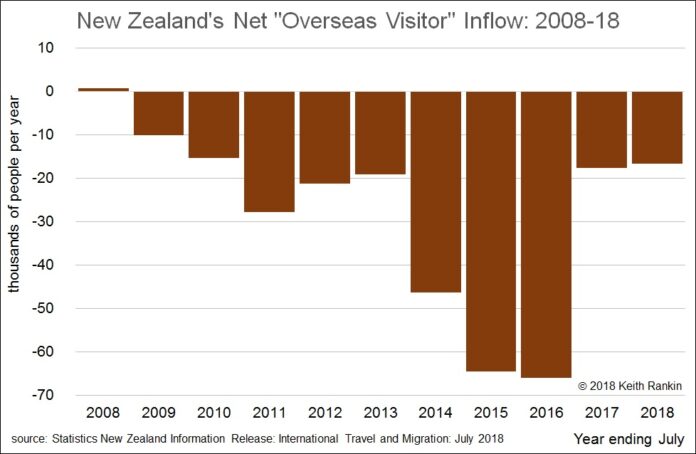
Pacific Media Watch Newsdesk

The village of Baliau on Papua New Guinea’s Manam island has publicly apologised to an assaulted journalist reporting for The National daily newspaper and praised media coverage in the wake of

.

Henry Konaka, chair of the Manam Development Association, said in a social media statement on behalf of the Baliau villagers and the village kukurai (leader), Casper Kauke, it was an “unfortunate and deplorable act of physical violence” on reporter Dorothy Mark and the media team.

He added that the “perpetrators” had been handed over to the police less than 24 hours later.

The assault has stirred protests from media freedom groups across the Pacific.

Konaka also condemned the neglect of the Manam islanders, many who live in refugee camps on the mainland in poverty since an evacuation after an eruption in 2004.

-Partners-

Konaka’s full apology:

“I extend on behalf of the people of Baliau village and the village kukurai, Casper Kauke, apology on the unfortunate and deplorable act of physical assault on Ms Dorothy Mark and the media team.

“We understand the fear and trauma Ms Mark and the rest of the media team have endured and we deeply regret. We the Baliau people assure 110 percent safety of Ms Mark and the rest of the media entourage.

“The kukurai regrets the incident which happened without his consent and knowledge. In assuring the entourage’s safety, the chief will be hosting a reconciliation as soon as possible and customarily apologise to Ms Mark and the affected entourage.

“The perpetrators had been handed over to the police less than 24 hours after the incident. A conciliatory meeting was held between the parties led by Acting Yabu LLG President Kenny Boli with police where compensatory agreement reached. A reconciliation ceremony is planned for within the next two weeks.

“With the gravest heart I had extended our profound sorrow and apology with shame and regret to Ms Mark, the husband (Peter Gupuri Mase), Ms Mark’s children, the extended family including the wider media community on the deplorable act of my frustrated people of Baliau. We deplore these acts in the strongest term possible, orchestrated and venged (sic) by a small minority.

“It is regrettable that our people have venged their frustrations and anger on an innocent party, least of which, the media fraternity and more particularly a woman. The Manam people are so indebted to the media fraternity on the news coverage of our continuing plight and despair. We value and hold the media fraternity with the highest regard.

“We hope that the government accepts responsibility on such an unfortunate incident due to its continuing neglect of our plight. The people of Manam had been demanding permanent and lasting solution to our plight and have agree to resettlement. However, no progress had been made since the enactment of the Manam Resettlement Authority (MRA) Act in April 2016.

“With regret to the assault, leaders and people of Baliau will continue to express their frustrations to government by not accept relief supplies including attempts to move to temporary care centres unless a permanent resettlement area is identified and allocated.

” feel for my people of Manam and on our continuing plight. I am prepared and happy to accept all ridicule and criticism on behalf of my people of Baliau and the wider Manam community.

“God bless you all.

Henry Konaka
Chairman
Manam Peoples’s Sustainable Development Association

A Manam islander trying to breathe surrounded by ash. Image: James Tuguru/The PNG News Page
Print Friendly, PDF & Email

Article by AsiaPacificReport.nz

]]>

Canberra’s new PM Morrison has little foreign policy, Pacific interest

]]>

Prime Minister Scott Morrison will not be at the Pacific Islands Forum in Nauru next week. He needs to rely heavily on the experience of his new Foreign Minister, Marise Payne, and deputy leader, Josh Frydenberg. Image: Andrew Taylor/The Conversation/AAP

By Susan Harris Rimmer in Brisbane

With all the focus this week on new Prime Minister Scott Morrison’s domestic challenges, less attention has been paid to the international impact of the leadership change and any new directions for Australian foreign policy.

Morrison’s foreign policy credentials are slim and his interest in foreign policy is low, not rating even a mention in his first speech to the nation as PM.

As immigration minister, Morrison presided over the “stop the boats” policy that was so unpopular with Australia’s Asia-Pacific neighbours and negotiated the disastrous and expensive Cambodia asylum deal.

READ MORE: Julie Bishop goes to backbench, Marise Payne becomes new foreign minister

He may also be perceived by Muslim-majority nations as unfriendly to Muslims after the 2011 shadow cabinet leak that he urged his party to capitalise on the electorate’s growing concerns about immigration and Muslims in Australia.

It is therefore a good idea indeed that Morrison will make his first trip overseas as prime minister this week to Jakarta to hasten the Australia and Indonesia free-trade agreement and shore up one of our country’s most crucial relationships.

-Partners-

There are other big trips he’ll need to make quick decisions about. Morrison has already decided not to attend the Pacific Islands Forum in Nauru next week, sending his new foreign minister, Marise Payne, instead.

After that, there’s the UN General Assembly in New York (September 24), the Asia-Pacific Economic Cooperation summit in Papua New Guinea (November 12), the East Asia Summit in Singapore (November 14) and the G20 summit in Buenos Aires (November 30).

An Australian PM would usually attend all of these, although the Coalition has often sent the foreign minister to the UN.

New leader, same outlook
In many ways, Morrison’s foreign policy positions are unlikely to be different from Malcolm Turnbull’s. He will likely be perceived as friendly to the US and unfriendly to China on foreign investment, but a realist and pro-free trade.

Morrison made a dramatic intervention in 2016 to block Chinese companies from bidding for the NSW electricity distributor, Ausgrid, on national security grounds.

As acting home affairs minister last week, Morrison also announced the government’s decision to effectively ban Chinese companies Huawei and ZTE from participating in Australia’s new 5G mobile phone networks. In reality, though, the Turnbull reset on the China relationship is likely to continue, as guided by the Foreign Policy White Paper.

The leadership change was not predicated on policy disagreements, with the exception of different ideologies on climate change. The change was rather more personality-driven, a question of style. But style – and leaders – matter in diplomacy.

Many foreign policy experts have been distraught by the damage done to Australia’s international reputation by such disruptive spills, and how external messaging on good governance will be undermined.
The big loss here is Julie Bishop, who has been a point of stability and continuity for Australia’s international partners since 2009, when she became shadow foreign minister. The sudden, inexplicable loss of both Turnbull and Bishop will be hard for our allies (and most Australians) to understand.

Bishop will be remembered for her path-breaking role as the first female foreign minister and first female secretary of DFAT. Her legacy also includes the New Colombo Plan, her push for e-diplomacy and her passionate quest for justice for the victims of Malaysian Airlines flight MH17.

She did face criticism – as did the Coalition more broadly – for the inability or unwillingness to defend the aid budget from deep cuts, an asylum seeker policy that affected our international reputation, and an unwillingness to speak out on human rights, such as against Myanmar’s leaders.

Morrison’s support team
Bishop’s loss is ameliorated by two factors – the appointment of Payne and the influence of Josh Frydenberg in the leadership team.

Frydenberg, the new deputy Liberal leader and treasurer, has a strong interest and inclination for foreign policy, having worked for former Foreign Minister Alexander Downer. He was very active in the Brisbane G20 Summit in 2014. He is even a published author on the liberal tradition in Australian foreign policy.

Frydenberg’s maiden speech contained a particularly beautiful narrative about how his family suffered during the Holocaust in Europe and later emigrated to Australia.

Like so many other immigrants to our great shores, all of my grandparents came here with nothing. … The welcome my family received and the opportunities and freedom they enjoyed is for me the essence of what makes Australia great.

The G20 Summit in Argentina in November is the best opportunity for Morrison and Frydenberg to shine in the international sphere. Given his newly-elevated platform at the summit, Morrison may have to moderate his constant criticism of “the new romantics of protectionism” and dislike of the World Trade Organisation.

Morrison and Frydenberg should also pay heed to the difficult negotiations around the Australia-EU free-trade agreement.

Payne positive appointment
Payne’s appointment as foreign minister is also seen as a positive, as is Simon Birmingham’s elevation to trade minister. Both are hardworking, reasonable politicians from the moderate wing of the Liberal party who can manage stakeholders well. Hopefully, they will have time before the next election to bring their own style to the positions.

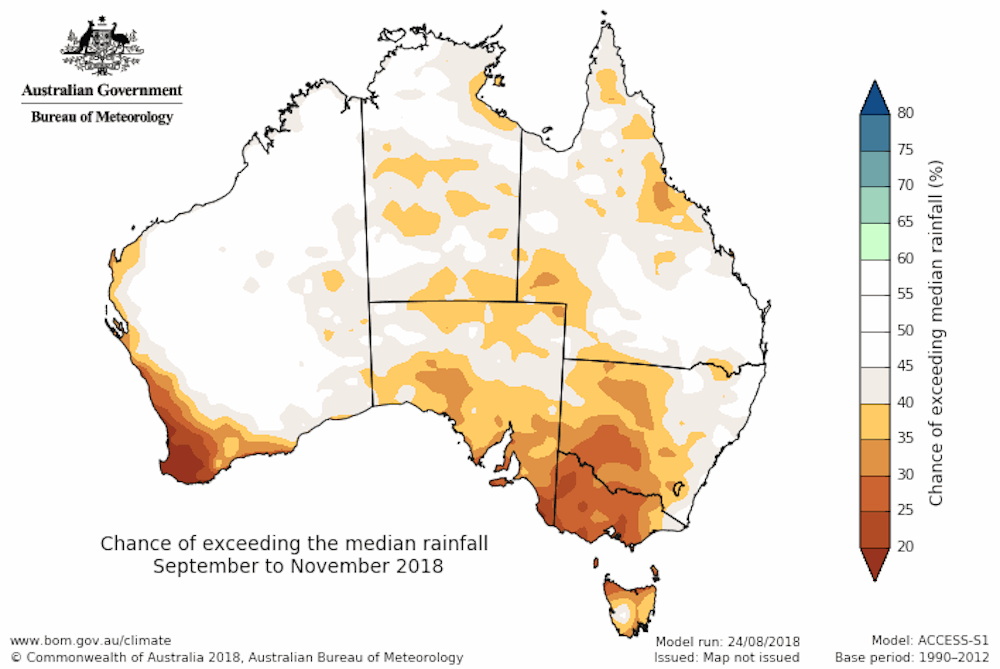
Mark Coulton remains assistant minister for trade, tourism and investment. He has yet to make much impact since being appointed in March, but has a welcome focus on Papua New Guinea, host of APEC.

Anne Ruston has been appointed assistant minister for international development and the Pacific. She has voted in the past against increases in foreign aid and has limited experience in the region.

She should follow the example of Richard Marles, who did exemplary work in this portfolio, garnering respect in the Pacific. This role could become more difficult with Morrison deciding not to attend the Pacific Islands Forum.

Morrison should rely on Payne and Birmingham to manage Australia’s foreign policy and pay special attention to rebuilding our reputation for good governance. There is hard work to be done, and little time to do it.

is Australian Research Council Future Fellow, Griffith Law School, Griffith University. Disclosure: She receives funding from the Australian Research Council. She is affiliated as a national board member with the International Women’s Development Agency. This article is republished from The Conversation under a Creative Commons licence.

Print Friendly, PDF & Email

Article by AsiaPacificReport.nz

]]>

Pacific media freedom groups blast assault on reporters on volcano island

]]>

The National reporter Dorothy Mark … assaulted while reporting on the volcano eruption in a village on Papua New Guinea’s Manam island. This photograph was taken on a different occasion. Image: poboxblog

Pacific Media Watch Newsdesk

Some villagers affected by the volcanic eruption on Manam island haven taken out their anger and frustration against four journalists covering the disaster, triggering protests by media freedom groups in the Pacific.

The reporters had entered Baliau village after visiting other affected villages and were questioned on the purpose of their visit, reports The National daily newspaper.

Villager Peter Sukua asked them why they were there and why they arrived one day after Saturday’s volcanic eruption.

He said the villagers would rather see Madang Governor Peter Yama and Bogia MP Robert Naguri.

The National reporter, Dorothy Mark, said she was stopped by Sukua taking pictures and punched in the face and threatened that her camera would be thrown into the sea.

“While I sat face down and spitting blood, they kicked me until some people intervened and stopped them,” she said.

-Partners-

The journalists were rescued by ward councillor for Dugulava village Paul Maburau and walked for one hour through a bush track.

They arrived at the Bieng Catholic station where they arranged for transportation to Bogia.

Sukua and others were later taken away by police.

Pacific groups condemn
The Suva-based Pacific Islands News Association (PINA) condemned the attack in a statement.

President Kora Nou, who is also the managing director of PNG’s National Broadcasting Corporation (NBC), said he was “appalled and disappointed” by the attack and called for prosecution of those responsible.

The Auckland-based Pacific Media Centre called for strong action over the assault, saying the reporters were providing critical and important information in the public interest at a time of crisis.

The Rarotonga-based Pacific Freedom Forum also condemned the attack.

Print Friendly, PDF & Email

Article by AsiaPacificReport.nz

]]>

Desperate call for food, water from 5000 on Manam volcano island

]]>

EMTV’s Madang correspondent Martha Louis reports from Manam island. Video: EMTV

Pacific Media Centre Newsdesk

More than 5000 people, including children, on Papua New Guinea’s Manam Island are without food and clean water since the volcano erupted on Saturday morning.

Many houses were also destroyed by volcanic lava, while two villages were completely destroyed by the ash fall on Saturday.

Today is the third day since the eruption and islanders are now crying for food supplies and clean water to assist them.

EMTV journalist Martha Louis was on the island yesterday. Her pictures can be seen on the EMTV News Facebook page.

Activity has subsided at the volcano but it is still being monitored by the National Disaster Office.

-Partners-

A media conference called by the office yesterday was told a team had been sent to make a full assessment of the extent of the damage. An EMTV News video of their media conference is below.

EMTV News reports are republished by Asia Pacific Report with permission.

Print Friendly, PDF & Email

Article by AsiaPacificReport.nz

]]>

Newsletter: New Zealand Politics Daily – August 27 2018

Newsletter: New Zealand Politics Daily – August 27 2018 Editor’s Note: Here below is a list of the main issues currently under discussion in New Zealand and links to media coverage. [caption id="attachment_297" align="aligncenter" width="640"] The Beehive and Parliament Buildings.[/caption] Simon Bridges expenses leak Newshub: ‘Please tell me’ who leaked my expenses – Simon Bridges 1News: Simon Bridges hits out at Speaker Trevor Mallard over expenses inquiry cancellation, Winston Peters’ ‘fake news’ Jo Moir (Stuff): National to push ahead with its own inquiry into expense leak Leith Huffadine (Stuff): National Party continues with Simon Bridges expenses leak inquiry Audrey Young (Herald): Simon Bridges says if leaking issue is not resolved, Trevor Mallard is to blame Richard Harman (Politik): National turns on the Speaker Audrey Young (Herald): National leader Simon Bridges loses control of leak inquiry Bryce Edwards (RNZ): Expenses saga turns to political capital for Bridges Tim Watkin (Pundit): Time for leaker to come clean and get help Barry Soper (Herald): Someone’s out to get Simon Bridges. They’ll likely succeed Heather du Plessis-Allan (Herald): Clock is ticking for Simon Bridges Mike Hosking (Newstalk ZB): Simon Bridges hopelessly exposed on leak Herald Editorial: The strange case of Simon Bridges’ inquiry bill just got a little stranger Lucy Bennett (Herald): Speaker Trevor Mallard ‘obfuscating’ on Simon Bridges leak inquiry, Gerry Brownlee says David Farrar: Mallard calls inquiry off Tova O’Brien (Newshub): Bridges should have called off inquiry himself RNZ: Speaker calls off Bridges expenses inquiry Sam Sachdeva (Newsroom): Bridges leak inquiry called off after text Stacey Kirk (Stuff): Inquiry into Simon Bridges’ expenses leak called off Moana Makapelu Lee (Māori TV): Speaker calls off inquiry into Simon Bridges expenses leak Terry Sarten (Herald): Politicians are going places … at our expense Clare Curran demoted Jonathan Milne (Stuff): Public can have no confidence in broadcast minister – and neither can Prime Minister John Drinnan: Why Did Jacinda Ardern Go Soft On Curran? Audrey Young (Herald): Jacinda Ardern’s punishment for Clare Curran proportionate Tim Murphy (Newsroom): Ardern pushes the half-eject button Newshub: Why wasn’t Clare Curran stripped of all her portfolios? RNZ: Gerry Brownlee questions ‘minimum’ sanction for Clare Curran Newstalk Zb: Political commentator: PM didn’t go far enough over Curran Martin Johnston (Herald): Minister Clare Curran’s forgotten meeting to cost her $46,000 a year in lost salary John Roughan (Herald) Editorial: Jacinda Ardern has ‘sacked’ her first minister Kate Hawkesby (Newstalk ZB): More concerning than a flaky Clare Curran is a soft Prime Minister Jacinda Ardern RNZ: Clare Curran: ‘I’ve let myself down’ Nicholas Jones (Herald): Clare Curran sacked from Cabinet, PM Jacinda Ardern announces Sam Sachdeva (Newsroom): Curran sacked from Cabinet by PM Stuff: Jacinda Ardern announces Clare Curran removed from Cabinet Emma Hurley (Newshub): Prime Minister removes Clare Curran from Cabinet Māori TV): Curran removed from Cabinet after second failure to declare David Farrar: Curran demoted after a further secret meeting Alison Mau (Stuff): Please Prime Minister, don’t let a great opportunity pass you by Parliament Tracy Watkins (Stuff): Prime Minister, Speaker fumble political bombshells David Farrar: Watkins critical of PM and Speaker Stacey Kirk (Stuff): The foreboding sense there’s more to come in two capital scandals Phil Smith (RNZ): Anatomy of a minister’s office: what happens in the Beehive? Tracy Watkins (Stuff): Below the beltway Australia RNZ: New Aus PM knows NZ political psyche Dominion Post Editorial: We can’t depend on the Aussies Audrey Young (Herald): Thank you Australia for making us appreciate what we have here Audrey Young (Herald): NZ breathes collective sigh of relief at Australia’s choice of Prime Minister, Scott Morrison Newshub: Will Australia take up NZ’s refugee offer now? Herald: Australia’s next PM made his name on turning back refugees Fran O’Sullivan (Herald): Jacinda Ardern must lead rebuild of strong ties with Australia Lucy Bennett (Herald): Ardern hopeful of strong relationship with new Australian PM Scott Morrison Mitch McCann (Newshub): Scott Morrison to become Australia’s new Prime Minister ODT Editorial: A new PM, a new challenge Brigitte Morten (RNZ): Aus political process a factional mess RNZ: Australia’s foreign minister resigns from Cabinet Eleanor Ainge Roy (Guardian):‘Unlucky country’: New Zealand has fun as Australia’s political gloom deepens Herald: Clarke Gayford takes on board Aussie’s advice Zane Small (Newshub): Amid political chaos, has Australia lost its ‘Lucky Country’ crown? John Roughan (Heald): Swallow the leader Oz’s new national sport Andrew Gunn (Stuff): New Aussie policy – deport all crims to NZ Foreign affairs and trade Alexander Gillespie (Newshub): Opinion: How does chaos in Washington affect New Zealand? Newshub: Interview: Scott Brown (video) Newshub: ‘President Trump hasn’t got a fair go from day one’ – US Ambassador RNZ: US ambassador says he’s arguing NZ’s case for tariff exemption RNZ: US officials to meet with Pacific Forum leaders in Nauru James Croot (Stuff): Sam Neill: Why New Zealand needs to take the lead in the Pacific Martin van Beynen (Stuff): Whisky on ice: The downfall of Antarctica NZ’s bon vivant Herald: Foreign Minister Winston Peters pays tribute to US Senator John McCain Dileepa Fonseka and Anna Loren (Stuff): ‘A hero, a leader’: NZ politicians, dignitaries remember US senator John McCain Simon Hartley (ODT): $4.44b annual trade balance highest in nine years Suicide, depression, mental health Barry Taylor (Stuff): From sad blokes to well men: how to tackle New Zealand’s depression crisis Hannah Norton (Herald): An open letter to NZ men considering suicide: You are so loved Shaun Robinson (RNZ): Suicide prevention strategies need more resources Brad Flahive (Stuff): Māori suicide rate the highest its ever been. What are we missing? RNZ: Māori suicide prevention groups want more support Brad Flahive (Stuff): New Zealand suicide rate highest since records began Chelsea Boyle (Herald): New Zealand suicides highest since records began RNZ: Number of deaths by suicide increase for fourth year in a row Cate Broughton and Michael Hayward (Stuff): Canterbury suicide numbers increase for fourth year Cate Broughton (Stuff): Men with mental health challenges face uncertain future as hostel home of 12 years closes 1News: Psychologist Nigel Latta calls for mindfulness to be taught in every NZ school Chlöe Swarbrick (Herald): There’s a responsibility to be frank and real about mental health Oscar Kightley (Stuff): New Zealand, we have a problem Michael Daly (Stuff): Learning to love yourself after surviving a suicide attempt Stuff: Depression: I suffer in silence because I am ashamed Stuff: Polly Gillespie shares her own depression battle, laments state of New Zealand mental health system Tamsyn Parker (Herald): TVNZ boss Kevin Kenrick on Greg Boyed: ‘It will bring us together more’ Duncan Garner (Stuff): Let Greg Boyed be the reason we start finding solutions Deborah Hill Cone (Herald): The things unsaid about the death of Greg Boyed Jack Tame (Herald): Greg Boyed’s death is a reminder of life’s fickle nature Greg Boyed and Warwick Roger obituaries Phil Vine (Stuff): Greg Boyed: An obituary Karl du Fresne (Dominion Post): Warwick Roger: audacious, combative and hugely influential journalist Justice Liam Martin (Herald): Myths don’t do us justice; we need to share facts Newshub: We need more conversations about institutional racism – Corrections Minister (interview) Newshub: Interview: Kelvin Davis Catriona MacLennan (Newsroom): A few concerns with justice reforms Chris Trotter: The Summit Of Folly: Why ‘Middle New Zealand” Will Have The Last Word On Crime And Punishment. Damien Grant (Stuff): Prison does not change you – I know from personal experience Alison Mau (Stuff): New Zealand needs to shut down its prisons – or blow them up Ben Strong (RNZ): ‘If gangs are part of the problem, they should be part of the solution’ Bess Manson (Stuff): ‘Broken justice system’ ignites rage in reformer Julia Whaipooti’s soul Joel Maxwell (Stuff): Before you judge, take a trip to your nearest courthouse Newshub: Upper Hutt mayor calls for calm over child sex offender housing Anne Marie May (RNZ): Housing of ex-cons on prison grounds upsets locals Melissa Davies and Finn Hogan (Newshub): Taranaki mother’s agonisingly long struggle to clear her name for killing child Employment and migrant exploitation Newshub: Migrant workers should be paid more – Immigration Minister Eva Corlett, (RNZ): Filipino construction workers – ‘We made life terrible for them’ Newshub: ‘Alarming’ exploitation of Filipino construction workers – report Herald: ‘We didn’t look after them’: Filipino construction workers face low pay, poor housing issues – report Jonathan Guildford (Press): Report outlines discriminatory practices for migrants in the construction sector Herald: Auckland concrete truck drivers strike, claiming poor pay, conditions and treatment of migrant workers Newshub: Pallet workers to strike because the ‘pay is so low’ Bruce Cotterill (Stuff): Wages must represent value rather than fairness Primary industries and animal cruelty Rod Oram (Newsroom): Time to transform our global food systems Kirsty Johnston (Herald): Pregnant cows ‘suffering’ for calf blood industry – insider Lynda Hallinan (Stuff): Grainwashing: The inconvenient truth of Wakanui beef Eloise Gibson (Newsroom): Cows as office workers, in cubicles Glen Herud (Stuff): Milking it: It’s not ‘anti-farmer’ to want better for cows and calves  Gerard Hutching (Stuff): Milking it: The true cost of dairy on the environment Charlie Dreaver (RNZ): Financial incentives no silver bullet for sustainable agriculture – study RNZ: Insight: Farmland – not so free to roam RNZ: Farmer cops $34k fine for illegally clearing river bed Stuff: Two companies fined over ‘unacceptable’ effluent discharges Maja Burry (RNZ): Call for compo for farmers maintaining walkways Andrea Vance (Stuff): Taiwanese fishing boat investigated after being caught in NZ waters Eric Frykberg (RNZ): Nurseries and orchards could get compo for fruit tree seizures ODT: Manuka seedlings in demand this season Government Chris Trotter: “Keep Cutting, Jacinda!” Peter Dunne (Newsroom): Greens paying for not playing hard to get Paul Little (Herald): The bicycle bell heard around the world Maiki Sherman (1News):‘Out of control’ – National accuses Labour on number of reviews and working groups National Graham Adams (Noted): National stagnates as the government makes waves Vanita Prasad (Newsroom): National’s Facebook ad deemed irresponsible Business and economy Shamubeel Eaqub (Stuff): What to do about the ever-increasing rate of CEO pay David Farrar: No performance pay for Govt CEs David Slack (Stuff): The cult of executive talent Jason Walls (Interest): Hey NZ business leaders – take a look at Australia and the US Dene Mackenzie (ODT): ASB outlook: things are not that bad Mark Fowler (Herald): Is the Reserve Bank creeping too far? Brian Gaynor (Herald): Bull run — is it the 1980s all over again? Environment and conservation David Williams (Newsroom): Warning over parliamentary ‘back door’ David Williams (Newsroom): The dam that divides a dry district Warren Gamble (Stuff): Shane Jones urges Tasman councillors to stand up for Waimea dam Dominic Harris (Stuff): Environment Canterbury orders China-based firm to stop water bottling after it breached consent RNZ: Controversial water-bottling company has council consent halted Alexandra Nelson (Newshub): Coromandel locals rally to protect endangered Archey’s frog from gold mining ODT Editorial: Time to change whitebait seasons Thomas Manch (Stuff): Lake Horowhenua activist Philip Taueki to shut public road access to lake Sarah Robson (RNZ): Final great walk narrowed down to three Emma Hatton (RNZ): Vehicle access rules confuse Kāpiti beachgoers Andrew McRae (RNZ): Hunters turn conservationists to help save blue duck Te Kuru o te Marama Dewes (Māori TV): Taking stock of the biodiversity in the Te Wherowhero lagoon Jared McCulloch (Newshub): Fast food joints, cafes and bars join New Zealand’s straw-free movement Newshub: Auckland businesses give up straws Housing Maiki Sherman (1News): Government poised to reduce number of times landlords can hike rent for tenants John Anthony (Stuff): Rise of property management industry ‘significantly disadvantaging tenants’ Catherine Harris (Stuff): Renters put Tenancy Tribunal’s operations in the spotlight Newshub: Tenants ‘ironically’ like letting fees – landlords Ben Bootsma (Southland Times): Southland landlords decide whether to insulate or sell Audrey Malone (Stuff): Grim findings in China survey Henry Cooke (Stuff): Where the 6400 new state homes are going: half to Auckland, over 700 to Wellington Newshub: Where the new state houses will be built RNZ: Govt plans to build 6400 new state homes within four years Thomas Coughlan (Newsroom): End of the line for “laxative” SHAs Corazon Miller (Herald): Death on the Street: How is homelessness measured in New Zealand? Corazon Miller (Herald): Death on the Street: The faces of homelessness Donna-Lee Biddle (Stuff): Government spends close to a million dollars on skip bins for state house tenants Health Herald: Major new study reveals that no amount of alcohol is safe Ruby MacAndrew (Stuff): Experts conclude there’s no ‘safe’ level of alcohol consumption after global study Alice Peacock (Herald): Trapped for weeks: Disabled woman confined in her home by broken lift 1News: Health board finally apologises for the ‘unfortunate experiment’ Oliver Lewis (Stuff): Planning changes result in delays for stranded mental health services Michael Neilson (Herald): Hikurangi Cannabis country’s first company to be granted medicinal cannabis licence RNZ: NZ licence granted for cultivating medicinal cannabis Talisa Kupenga (Māori TV): East Coast locals welcome medicinal cannabis license Matt Brown (Stuff): Former corporal campaigns for reform of medical marijuana law from garage Jane Matthews (Stuff): Whānau-orientated health care provider celebrates its 20th birthday Matthew Littlewood (Stuff): SCDHB restructure expected to save $650k Phillipa Yalden (Stuff): Hospital rooms decontaminated after meth found RNZ: Rescue helicopter changes cause concern for some Carly Gooch (Nelson Mail): Multiple Sclerosis a ‘silent, horrible disease’ that’s forced a new chapter in Lesley’s life Aaron Leaman (Stuff): Wintec responds to physiotherapist shortage Hannah Ross (Western Leader): Hospitals have compassionate car parking discounts but who qualifies? Abbey Jury: The glyphosate debate Education 1News: Government committed to returning to negotiations with teachers, says education minister Katie Scotcher, (RNZ): $82.5m to be spent on school re-vamps and classroom replacement Wanganui Chronicle: Whistleblower vindicated – Waho did not bring trust into disrepute, was unlawfully removed Michael Neilson (Herald): Auckland schools ask Government to walk the talk on te reo in schools Zane Small (Newshub): Rosehill College brawl: Students demand change after brutal fights Mānia Clarke (Māori TV): South Ak community uneasy following school brawl Zoe Hunter (Bay of Plenty Times): Students suspended after lunchtime brawl at Katikati College Jessica Tyson (Māori TV): Low decile schools benefit from eye screening programme Rukuwai Tipene-Allen (Māori TV): Programme is a sight for sore little eyes Emma Hatton (RNZ): Auckland uni set to axe 21 jobs in education faculty Elena McPhee (ODT): Art history programme likely to go Kurt Bayer (Herald): AUT student editor fears censorship, despite university denying claims Aaron Leaman (Stuff): Waikato University celebrates Dame Annette King, distinguished graduates Regan Paranihi (Māori TV): Massey University host Te Huinga Tauira 2018 Child welfare Alice Peacock (Herald): New survey reveals New Zealand’s youth among worst in cyberbullying rates Phil Pennington (RNZ): Bishop’s apology over clergy sex abuse prompts more complaints RNZ: More calls for including faith-based organisations in abuse inquiry Kiri Tamihere-Waititi (E-Tangata): Ani Black has opened a can of worms. Let it stay open. Media and broadcasting Colin Peacock (RNZ): Mediawatch: MP puts political pressure on publicly funded TV Colin Peacock (RNZ): Mediawatch: Broadcasters band together to promote the positive (audio) David Farrar: How about the stakeholders called taxpayers? Tim Murphy (Newsroom): The TVNZ ratings machine Leah Te Whata (Māori TV): Māori Radio launches Treaty claim against Crown Te Aniwa Hurihanganui (Māori TV): Longest running Māori radio station wins reprieve Māori TV): Te Ūpoko o Te Ika to stay on air Glen McConnell (Stuff): Māori broadcaster to launch Waitangi Tribunal action over Wellington ‘crisis’ Herald: TVNZ political editor Jessica Mutch weds bearded bodyguard Newshub: Jacinda Ardern’s ‘hot bodyguard’ marries reporter Immigration and refugees Jared Savage (Herald): Immigration New Zealand budget blowout kept overstayers in NZ Hannah Martin (Stuff): Airport departure cards will be off the table come November RNZ: Departure cards to be scrapped Newshub: Airport departure cards to be axed Herald: Travel departure cards get the boot: No longer needed from November Michael Reddell: Tossing away valuable emigration data Boris Jancic (1News): Fixing New Zealand’s ‘dismal’ refugee figures Adam Dudding (Stuff): New baby for family who fled violence to settle in NZ Transport Alexia Russell (Newsroom): Why cycling paths are taking over Hamish Rutherford (Stuff): Wellington Airport could build wall at end of runway to extend safety area Grant Bradley (Herald): It’s time for Auckland Airport to deliver George Block (ODT): Taxi operator ‘abused’ by other drivers Ben Strang (RNZ): Firefighters forced to slow down due to tyres Sophie Boot (BusinessDesk): KiwiRail loss widens in 2018 on further writedowns RNZ: Levin residents in way of potential highway want answers Matt Stewart (Dominion Post): Bus nightmare: Wellington council officials face jeers and abuse at fiery meeting 1News: Fierce criticism six weeks after Wellington introduces new bus network RNZ: 300 Wellington bus users voice frustrations at meeting Local government Todd Niall (Stuff): Why won’t the Government release details on QV’s Auckland property revaluation fail? Collette Devlin (Stuff): Wellington’s regional council mulls teeing off on multi-million-dollar golf course bailout 1News: Council is ‘offending Aucklanders’ with massive rates rises for churches, councillor says Joel Ineson (Stuff): Christchurch City Council has 11 months to check insulation on more properties than it has in three years Zac Fleming (RNZ): Auckland churches hit with biblical rates’ rises Newshub: Auckland Council in stoush with churches over rates bills – report David Farrar: Why shouldn’t churches pay rates? Amber-Leigh Woolf (Stuff): ‘Toothless’ councils call for law change to make it easier to punish people for littering Juliet McGhie (Stuff): Maintenance costs for Auckland beach ‘in the millions’ Tim MIller (ODT): Publishing of newest citizens’ names irregular Pam Jones (ODT): Land sale could net CODC $2.8m Jono Galuszka (Stuff): Council candidate Ross Barber unfit to control his own affairs Tim Miller (ODT): Parking fees make millions Defence Clinton Llewellyn (Hawke’s Bay Today): Defence minister apologises to families of soldiers finally brought home: “I’m sorry it took so long Ruby MacAndrew (Stuff): NZ Defence Force seeks bids for new external mental health services Red zone payouts ODT Editorial: Red-zone relief sets a precedent Mike Hosking (Newstalk ZB): 12 million reasons why this Government earthquake payouts are dangerously naive Tourism Grant Bradley (Herald): What the China-US rift could mean for NZ tourism Pam Jones (ODT): No justification for bed tax: academic Sport Indira Stewart (RNZ): We can be heroes: Wrestling legends and Pacific literary icons 1News: Steve Hansen pushed for more funding as Jacinda Ardern and Grant Robertson toured All Blacks’ changing rooms Grant Chapman (Newshub):All Blacks: Steve Hansen’s locker-room funding bid wins guarded support 1News: TJ Perenara gave All Blacks jersey to Jacinda Ardern after last night’s Test before snapping a photo together Zac Fleming (RNZ): Rugby needs to be more inclusive to ‘deserve’ title of national sport – PM 1News: Auckland College Sport defends decision to stop talented female player from playing against boys Felicity Reid (Stuff): NZ under-20s women’s footballer not allowed to play in school’s top boys team Other Andrea Vance (Stuff): Anger at axing of single mum programme: ‘It changed not just my work life, but also my everyday attitude’ Kate Nicol-Williams (1News): Legislation is destroying towns not earthquakes, says local councils Anusha Bradley (RNZ): Maraenui; The suburb swallowed by synthetics John de Bueger (Taranaki Daily News): Options for a lower-carbon future don’t include nuclear Simon Wilson (Herald): Nigel Farage, Don Brash and friends Martin van Beynen (Press): New Zealand is not vigilant enough about creeping corruption Dene Mackenzie (ODT): Kiwibank a national success story: CEO RNZ: Most Kiwis positive about Chinese culture – NZ China Council boss Lois Williams (RNZ): Southern members of northern iwi want fresh hapū elections Dan Satherley (Newshub): UFOs in New Zealand: What Kiwis see in the skies Vicki Anderson (Stuff): Wasted nation: feeding bellies not bins Anton Smith (Spinoff): Yes, law firm culture is f****d. And nothing is going to change anytime soon Rachel Ros (Herald): Whanganui agencies on the frontline working to counter family violence]]>

Opposition leader calls on Fiji to end ‘betrayal’ of West Papuans

]]>

Fiji Opposition Leader Ro Teimumu Kepa (centre) pictured with Papuan Morning Star flags on World Indigenous Day earlier this month … Fiji has “stabbed West Papua in the back”, she says. Image: Opposition FB

Pacific Media Centre Newsdesk

Fiji’s Opposition Leader Ro Teimumu Kepa has called on the government of Fiji to “stop its betrayal” of the people of West Papua.

She said the government should strongly support the inclusion of the territory in the United Nation’s Decolonisation List at next year’s UN General Assembly.

“Vanuatu has taken a courageous decision to seek freedom for the West Papuans through the UN,” Ro Teimumu added in a media statement.

Vanuatu is pushing for support from the Pacific Islands Forum (PIF) which is meeting in Nauru next week.

Fiji’s official stance over the region has been to regard the future of the twin Melanesian provinces of Papua and West Papua as an internal matter for the Indonesian government.

Indonesia invaded the former Dutch colony in 1962 and established rule by a controversial UN-sanctioned “Act of Free Choice” in 1969 that has been widely criticised as a flawed process and achieved by coercion.

-Partners-

West Papuans have continued to struggle for self-determination since then.

“I call on Fiji and other regional governments to demonstrate solidarity with this cause. It is time to stand up and be counted, ” Ro Teimumu said.

‘True Melanesian brother’
“I thank and salute Prime Minister Charlot Salwai of Vanuatu for showing real leadership, and for being a true Melanesian brother to the West Papuan people. The SODELPA opposition in Fiji is behind him in his mission.

“A SODELPA-led government will put its weight behind West Papua.”

Fiji is due to have an election this year but the date has not yet been called.

Ro Teimumu said Fiji’s government and its Prime Minister Voreqe Bainimarama were outspoken advocates for Melanesian unity.

“Despite this they have stabbed the indigenous Melanesian people of West Papua in the back by refusing to support their quest to be released from the colonial control of their homeland by Indonesia,” she said.

“Their behaviour towards the oppressed West Papuans is shameful.

“How dare the Prime Minister speak so glowingly of Melanesian brotherhood when he and his government have completely sold out their West Papuan kin to Indonesia?

‘Afraid to challenge’
“The truth is that they are afraid to challenge Indonesia’s sham claim to sovereignty over West Papua. They should have the courage to follow Vanuatu’s example.

“The West Papuan struggle is known here at home, throughout the region and around the globe – our silence and that of our neighbours is deafening.

“For more than 50 years, the indigenous people of West Papua have struggled for self-determination.

“It is immoral for the region and international community to look the other way and deny the people of West Papua the liberty to decide for themselves how they wish to be governed.

“There is little that we can do to reverse our past failure to support the people of West Papua; however we can do something now and in the future to make amends for our past failures.”

Print Friendly, PDF & Email

Article by AsiaPacificReport.nz

]]>

Calls grow for Jokowi to protect Indonesia’s Tapanuli orangutan

]]>

By Evi Mariani and Apriadi Gunawan in Jekarta and Medan

Indonesia’s Environment and Forestry Minister Siti Nurbaya paid a visit to President Joko “Jokowi” Widodo at the palace last October 31 bearing good news. A group of scientists had confirmed the finding of a new orangutan species called Tapanuli orangutan, she reported to the President.

Less than a year later, the global scientists who researched the endangered species sent two letters to the Presidential Palace. The first letter in July said there was a Chinese-funded hydropower project in the orangutan habitat that “could be the death knell for the Tapanuli orangutan, by flooding a key expanse of its habitat and, even more crucially, by slicing up its remaining forest home with new roads, power lines, tunnels and other built facilities”.

The scientists believe only 800 Tapanuli orangutans remain in their habitat, the Batang Toru ecosystem in South Tapanuli regency, North Sumatra.

The apes, with frizzier hair than their Bornean and Sumatran counterparts, have been threatened by poaching and illegal logging. The planned dam, they believe, will make the species’ chance of survival slimmer.

The International Union for Conservation of Nature (IUCN) has included the species – Pongo tapanuliensis – on its red list, calling it “critically endangered”.

The second letter, dated August 16, reiterated the scientists’ request, saying that they had collected scientific evidence that had led them to believe the project “should not have been approved initially by the North Sumatra provincial government”.

-Partners-

‘Green’ dam
The company responsible for the project, PT North Sumatera Hydro Energy (NSHE), denied the scientists’ claims, saying that the hydropower plant, designed to produce 510 megawatts of electricity, was an “environmentally friendly” project, which would not flood much of the Batang Toru ecosystem.

The NSHE said the hydropower plant, which used “run-of-river technology” and had Chinese state-owned company Sinohydro as the contractor and operator, would only flood 67.7 ha of area in Batang Toru, which is not a protected forest but an area penggunaan lain (nonforest estate). The company also argued that it had completed all the necessary documents required by the North Sumatra administration.

The company, which is financially backed by a consortium of Chinese and international banks, said it had taken measures to protect the orangutans and that it was also interested in protecting the forest because its project depended on the abundance of water in the Batang Toru River.

“We will join any effort in the future that aims to better the orangutan habitat,” Agus Djoko Ismanto, a senior adviser to the NSHE, said recently. “We are not planning to inundate 9600 ha,” Agus said.

Poacher threat
The scientists, however, are not convinced.

One of them, Bill Laurance, director of the Centre for Tropical Environmental and Sustainability Science at Australia’s James Cook University, said in-depth scientific analysis of the conservation status and threats to the Tapanuli orangutan had found that when new roads appeared, apes disappeared.

The NSHE confirmed that besides the 67.7 ha that will be flooded with water; about 600 ha will be used to build roads, tunnels and other infrastructure.

In the letter addressed to the President in July, 25 scientists from all over the world, including Jatna Supriatna from the University of Indonesia, said that instead of approving the dam project, the government should have had initiated forest restoration efforts in Batang Toru.

“Roads are a particularly insidious threat because they open the ape’s habitat to poachers, illegal loggers, miners and land encroachers. Recent scientific analysis shows that the Tapanuli orangutan survives only where roads are almost entirely absent,” the letter said.

1.3 million supporters
Environmentalists and others all over the world have voiced their support for the scientists. A global campaign to save the species began early this month and had gained more than 1.31 million supporters.

“As citizens from across the world, we urge you to save the last 800 Tapanuli orangutans from extinction by canceling the Batang Toru hydropower dam project. The fate of this entire species rests in your hands, “the petition on avaaz.org said.

Protests from national environmentalists have also escalated into a lawsuit. The Indonesian Forum for the Environment (Walhi) filed a lawsuit earlier this month against the regional administration’s decision to issue permits for the power plant.

One of the organisation’s lawyers, Golfrid Siregar, said the permit issuance was problematic on account of the lack of discussion and participation from locals.

Separately, the director of Walhi’s North Sumatra office, Dana Prima Tarigan, said the power plant could also cause an ecological disaster, as it would be located near an earthquake-prone area in the province.

In response to the growing calls, the Environment and Forestry Ministry had held a coordination meeting with the Energy and Mineral Resources Ministry and the company to discuss possible solutions.

Task force
“After the meeting, we established a joint team comprising personnel from both ministries, the company, regional administration and the Indonesian Orangutan Forum [Forina], which is task with looking for alternatives to be applied in the area,” the ministry’s natural resources and ecosystems director-general Wiratno said last week.

One of the solutions offered by the company, he added, was to build an “orangutan corridor” that would help the animal migrate between the two forest areas in Batang Toru.

Should the concept be applied in the area, it will become the first corridor to be implemented in Indonesia.

“It, however, was still an idea. The team will need to go into the area first before offering possible solutions. We are still waiting for data from the field,” Wiratno said.

Kharishar Kahfi contributed to this story for The Jakarta Post from the capital of Jakarta.

Print Friendly, PDF & Email

Article by AsiaPacificReport.nz

]]>

PNG deploys ships and soldiers to Manam for emergency evacuation

]]>

The Manam volcano eruption. Image: Scott Waide/EMTV News

By Scott Waide in Lae

Madang Governor Peter Yama confirmed today that at least two Papua New Guinea Defence Force vessels were being sent to conduct emergency evacuations from Manam Island following the volcanic eruption yesterday.

“The Prime Minister has been very supportive since the he was informed,” the Madang governor said.

Yama was in Port Moresby to mobilise additional support from the national government.

READ MORE: PNG volcano erupts, forcing villagers to flee

“A platoon from the Engineering Battalion is traveling to Madang. HMS Dreger and Port Moresby have been allocated for the evacuation operation. Two officers from the PNGDF Headquarters are traveling to Madang to assist the Provincial Administrator.”

Government officers from Bogia district in Madang were deployed to Manam early yesterday after the volcano erupted.

-Partners-

The Acting Provincial Administrator, John Bivi, said his officers had been in close contact with village elders since the eruption.

“This eruption is different. There are two craters that have erupted and lava flow has happened. This is problematic.,” he said.

Houses collapsed
Manam Islander James Sukua, who contacted his family yesterday, said several trees and at least two houses had collapsed during the heavy ash fall.

At least two houses along the path of the lava flow were destroyed.

“Rain and ash fell in the morning in places like Baliau, Bien Station and Kuluguma. No casualties [were] reported.”

The Rabaul Volcano observatory reported that the ash column rose 15 km from the volcano.

The observatory also warned pilots to stay clear of the Manam airspace over the next 12 hours.

“Additional volcanic activity is possible in the coming days. Individuals planning to travel to Manam are advised to avoid the areas affected and to wear respiratory gear and covering clothing.”

About 2000 people live on the island.

Scott Waide is chief of the EMTV News bureau in Lae. This article was first published on his blog My Land, My Country and is republished by Asia Pacific Report with permission.

Print Friendly, PDF & Email

Article by AsiaPacificReport.nz

]]>