Page 1179

Poll wrap: Labor retains big Newspoll lead; savage anti-Liberal swing in Wagga Wagga; Wentworth is tied

]]>

The Conversation (Au and NZ) – By Adrian Beaumont, Honorary Associate, School of Mathematics and Statistics, University of Melbourne

This week’s Newspoll, conducted September 6-9 from a sample of 1,650 gave Labor a second consecutive landslide 56-44 lead. Primary votes were 42% Labor (up one), 34% Coalition (up one), 10% Greens (steady) and 6% One Nation (down one).

This is the Coalition’s 40th successive Newspoll loss. It is also Labor’s highest primary vote since Julia Gillard ousted Kevin Rudd as PM in June 2010. Labor and the Greens combined have had a majority of the primary vote in the last two Newspolls. Under Malcolm Turnbull, the highest Labor/Greens vote was 48%.

Scott Morrison’s first Newspoll ratings were 41% satisfied, 39% dissatisfied, for a net approval of +2. In his last Newspoll as PM four weeks ago, Turnbull’s net approval was -19, but in the poll before that his net approval was -6, his equal highest this term. Bill Shorten’s net approval jumped ten points to -14 since four weeks ago. Morrison led Shorten by 42-36 as better PM (39-33 to Shorten last fortnight).

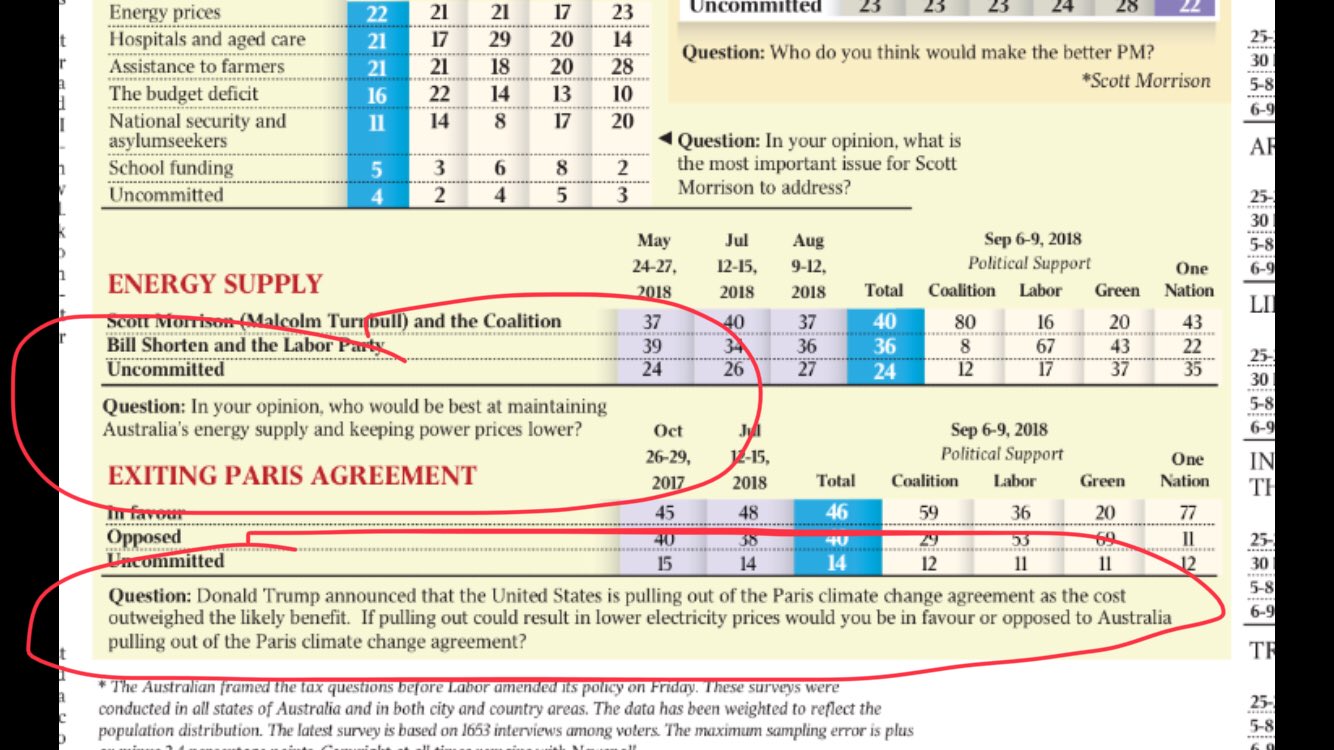
The Coalition and Morrison led Labor and Shorten by 40-36 on maintaining energy supply and keeping power prices lower (37-36 four weeks ago). A question on pulling out of the Paris climate agreement is skewed right.

This question asks if pulling out “could result in lower electricity prices”, which is a dubious proposition. It also presents Donald Trump’s reasons for pulling out as a statement of fact. In last fortnight’s Essential, voters opposed withdrawing from Paris by 46-32, while in Newspoll’s skewed question, they favoured pulling out 46-40.

Morrison is currently relatively popular, but the Coalition is trailing badly. This indicates that perceptions of the Coalition have crashed since the leadership spill, and the last two weeks of claims about bullying have not helped.


Read more: Poll wrap: Worst reaction to midterm PM change in Newspoll history; contrary polls in Dutton’s Dickson


In January to February 2010, new NSW Labor Premier Kristina Keneally had a +15 net approval in Newspoll, while her party trailed by 57-43. At the March 2011 state election, Labor was crushed by 64-36 on two party preferred votes. The key question is whether perceptions of the federal Coalition recover before the next election.

Morrison’s positive ratings are likely due to a honeymoon effect, with people giving him the benefit of the doubt. However, Morrison’s +2 net approval is weak compared to most new PMs in their first Newspoll ratings.

According to analyst Kevin Bonham, only Paul Keating (a -21 net approval) had a net approval much worse than Morrison. Rudd’s second stint as PM began with a net zero approval, and all other new PMs had a far better net approval than Morrison.

I have conducted analysis based on The Poll Bludger’s review of the 2016 election, and aggregated data from Turnbull’s final three Newspolls as PM. As explained on my personal website, the Coalition under Morrison appears most likely to lose support among the well-educated, the young and in Victoria.

The federal Coalition’s woes almost certainly contributed to bad results for the state Liberals in the Wagga Wagga byelection and in a Tasmanian state poll.

Over 28% primary vote swing against Liberals at Wagga Wagga byelection

A byelection was held on Saturday in the New South Wales state seat of Wagga Wagga, following the resignation of Liberal MP Daryl Maguire over allegations of corrupt behaviour. The Liberals have held Wagga Wagga since 1957.

Primary votes were 25.5% Liberal (down 28.2% since the 2015 election), 25.4% for independent Joe McGirr, 23.7% Labor (down 4.3%), 10.6% for independent Paul Funnell (up 0.9%) and 9.9% Shooters. McGirr will almost certainly win on preferences from all other candidates, but we do not yet have a two candidate count as the electoral commission selected Labor and the Liberals as its two candidates on election night.

The Labor vs Liberal election night two candidate count gave Labor a 51.4-48.6 lead, though not all votes were entered before it was pulled. So if the Liberals and Labor had been the final two candidates, Labor would have won on about a 14% swing. NSW uses optional preferential voting for its state elections, and the swing to Labor would be higher with compulsory preferential.

The NSW state election will be held in March 2019, but I have seen no NSW state polls since a March ReachTEL poll, which had the Coalition ahead by 52-48.

Wentworth ReachTEL: 50-50 tie

A byelection is likely to be held in Wentworth in October. A ReachTEL Wentworth poll for the left-wing Australia Institute, conducted August 27 from a sample of 886, had a 50-50 tie between the Liberals and Labor, an 18% swing to Labor since the 2016 election.

There were two primary vote scenarios. In the first, the Liberals had 41.9%, Labor 31.5%, the Greens 15.6% and One Nation 2.3%. The second scenario included two prominent independents, who each had 11-12%, with the Liberals on 34.6%, Labor 20.3% and the Greens 8.9%.

While seat polls are unreliable, the loss of Turnbull’s personal vote, and the anger of well-educated voters at his ousting, could make Wentworth close (see my previous article).

By 67-24, Wentworth voters thought the national energy guarantee should include an emissions reduction target. By 69-10, they thought Scott Morrison would do less to tackle climate change than Turnbull, rather than more.

National Essential: 54-46 to Labor

This week’s national Essential poll, conducted September 6-9 from a sample of 1,050, gave Labor a 54-46 lead, a one point gain for the Coalition since last fortnight. Primary votes were 37% Labor (down two), 36% Coalition (up one), 10% Greens (steady) and 8% One Nation (up one).

Essential still uses the 2016 election preference flows, where One Nation preferences split evenly, while Newspoll assigns One Nation preferences about 60-40 to the Coalition. If both pollsters used the same preferencing method, there would be a three point gap between Newspoll and Essential. The Labor primary vote is five points lower in Essential than in Newspoll.

Morrison’s initial ratings in Essential were 37% approve, 31% disapprove, for a net approval of +6; Turnbull had a net zero approval in August. Shorten’s net approval was up two points since August to -8. Morrison led Shorten by 39-27 as better PM (39-29 last fortnight).

By 47-35, voters disapproved of the change from Turnbull to Morrison (40-35 last fortnight). By 69-23, they thought it important that the government agree to a policy for reducing carbon emissions.

Over 57% agreed with four negative statements about the government, but voters disagreed by 41-34 with the proposition that Tony Abbott and his conservative supporters are really running the country now.

Over 2/3 of One Nation preferences went to LNP at Longman byelection

A political eternity ago, five byelections were held on July 28. On August 30, the electoral commission provided detailed preference flow data.


Read more: Poll wrap: Turnbull’s Newspoll ratings slump; Labor leads in Victoria; Longman preferences helped LNP


Labor won Longman by 54.5-45.5 against the LNP, a 3.7% swing to Labor. Primary votes were 39.8% Labor, 29.6% LNP, 15.9% One Nation, 4.8% Greens and 9.8% for all Others. 67.7% of One Nation voters preferenced the LNP ahead of Labor, a massive increase from 43.5% at the 2016 election.

Labor also had weaker flows from the Greens, winning 76.5% of their preferences, down from 80.7%. However, Labor won 59.0% of preferences from Other candidates, including 81% from the DLP.

At the 2016 election, One Nation recommended preferences to Labor ahead of the LNP in Longman; at the byelection, they reversed their recommendations. However, I believe the largest factor in the One Nation shift is that they were perceived as an anti-establishment party in 2016, but are now clearly a right-wing party.

One Nation’s preference flows in Longman vindicate Newspoll’s decision to assign about 60% of One Nation’s preferences to the Coalition, rather than the 50-50 split that occurred at the 2016 election.

Final results and preference flows for the other four July 28 byelection seats are available at my personal website. Overall, Labor had strong performances in Longman and Fremantle, but did not do very well in the other seats. The Greens failed to benefit from the Liberals’ absence in Perth and Fremantle.

Tasmanian EMRS poll: 36% Liberals (down 11), 34% Labor, 16% Greens

A Tasmanian state EMRS poll, conducted August 29-31 from a sample of 1,000, gave the Liberals 36% of the vote (down 11 since May), Labor 34% (up four) and the Greens 16% (up two). Labor leader Rebecca White led incumbent Will Hodgman as better Premier by 46-38 (47-41 to Hodgman in May). This is the largest poll-to–poll drop for a party in EMRS history.

Bonham interpreted this poll as 39% Liberals, 36% Labor and 13% Greens. If the poll is correct, the Liberals are likely to lose their majority under Tasmania’s Hare Clark system.

– Poll wrap: Labor retains big Newspoll lead; savage anti-Liberal swing in Wagga Wagga; Wentworth is tied
– http://theconversation.com/poll-wrap-labor-retains-big-newspoll-lead-savage-anti-liberal-swing-in-wagga-wagga-wentworth-is-tied-102771]]>

The myth of a vegetarian India

]]>

The Conversation (Au and NZ) – By Tani Khara, PhD student in Sustainability, University of Technology Sydney

India has a reputation as a vegetarian nation, and Indians certainly consume far less meat than the global average. But the view of India as a predominantly vegetarian nation may not be quite accurate.

India, whose population is predicted to overtake China’s, is rapidly changing from an agricultural society to an industrial economy with a surging urban population. This is driving the fastest-growing poultry market in the world, as cultural norms change and eating meat becomes a status symbol.

Total vegetarianism is rare

Vegetarianism in India has been gradually becoming less strict over the past 30 years. Only about three in ten Indians now claim to be vegetarian, and a 2016 national survey found that more than half of people aged between 15 and 34 eat meat.

A recent National Family Health Survey found that only 30% of women and 22% of men describe themselves as vegetarian. Other studies have similarly found that a relatively small minority practise vegetarianism.


Read more: Is a vegetarian diet really more environmentally friendly than eating meat?


Even these numbers may well be underestimates. Indians are said to underreport their meat consumption due to religious and cultural stigmas associated with it.

Tastes like chicken

Poultry is India’s most popular type of meat, and India is projected to be one of the world’s largest growth markets for poultry consumption.

The rise in meat consumption is predominantly driven by urban India, and the highest percentages of non-vegetarians come from southern states such as Telgana, Andhra Pradesh, Tamil Nadu and Kerala.

Another reason may be that chicken can be considered a universally acceptable meat, given the religious taboos associated with beef among Hindus and pork among Muslims. Although 80% of Indians are Hindus, India is home to several other major religions and sub-faiths, each with its own strictures about food and eating. Vegetarianism is less common among Muslims, Sikhs, Christians, Bahais, Parsis and Jews who collectively make up 15% of India’s population.

Upwardly mobile urbanites

In addition to religious and cultural variations, several key factors have influenced India’s shift, overall, towards meat consumption. These include rising urbanisation, increasing disposable incomes, globalisation and cross-cultural influences. Many urban Indians are embracing consumerism as a sign of upward social mobility and meat is widely considered to be a status symbol.

Despite this, others still consider meat-eating to be socially and culturally unacceptable. A 2015 study found young people felt “you eat [meat] in secret, away from your family”.

This appears to reflect differences in front-stage and backstage behaviours, a trait mainly found in collectivist cultures. “Front-stage behaviours”, which is how we act in public, may have more role-playing elements than backstage behaviours, which tend to be carried out in private.

It seems urban Indians today face a dissonance. On one hand, increasing exposure to new lifestyles is creating cultural change, but there is still pressure to adhere to traditions that have prevailed for centuries.

This contradiction is reflected in some of the urban Indian attitudes from the 2015 study on meat consumption. On one hand, some felt:

…in our Bhagvad Gita, Ramayan (in reference to the Hindu holy books) there are old teachings that non-veg is impure. It is the food of demons/monsters.

On the other hand, it was also claimed:

[When it comes to] holy men and Brahmins, it’s not like they don’t like eggs or meat. In front of people they will behave, but on the quiet/sly, they will smoke and drink and eat everything else.

Meat eating in India is a complex issue, with many facets. However, recent trends and figures certainly seem to indicate one thing: it is a mistake to label India as a vegetarian nation.

– The myth of a vegetarian India
– http://theconversation.com/the-myth-of-a-vegetarian-india-102768]]>

Blue poles 45 years on: asset or overvalued drip painting?

]]>

The Conversation (Au and NZ) – By Sue Rabbitt Roff, Researcher, Social History/Tutor in Medical Education, University of Dundee

Blue poles infinitely winding, as I write, as I write.

Patti Smith

Forty-five years ago, the National Gallery of Australia was still a gleam in the eye of Prime Minister Gough Whitlam and the yet-to-be-built gallery’s acting director, James Mollinson. But in 1973 Mollinson’s former boss, Australian art dealer Max Hutchinson, wrote to him from New York, telling him Jackson Pollock’s Blue poles was for sale. New York property mogul Ben Heller ultimately sold the painting to the NGA for US$1.9 million (then A$1.3m). Unusually, the Australian government as buyer paid the dealer’s fee of A$100,000.

This was the highest price paid for an American art work at the time. Owning this abstract expressionist painting, Mollinson and his political supporters said, would put Australia on the international art map – and the NGA said it had almost completed its collection of Australian art. You could perhaps see this as the moment Australia transferred its cultural cringe from Britain to the US.

I asked the now 92-year-old Heller recently why he had sold the painting to Australia. “There’s never a simple answer,” he told me. “I was very close to Jackson and out of the blue I got an approach from Max Hutchinson for Blue poles. I was in possession of knowledge where other things might be going, where the major Pollocks were. This was different and would appeal to Jackson [who had died in 1956] because he had his daring side… This place [Australia] was new, different, not likely to have a Pollock.”

Indeed, the purchase, says Heller, was “a mark of Australia joining Western culture”.


Read more: Here’s looking at: Blue poles by Jackson Pollock


An added attraction was that the purchasers were willing to leave the painting on Heller’s apartment wall in New York until the NGA was built (the building was officially opened in October 1982.) This later proved impossible for insurance reasons.

Another attraction may well have been that Heller’s asking price doubled during negotiations with the Australians.

Be that as it may, Blue poles has progressively increased in reputed monetary value over the past 45 years. It was recently reported to have an insurance value of A$350 million. This figure is often cited to justify the purchase even if the aesthetics offend some and the painting’s provenance has been questioned from the outset.

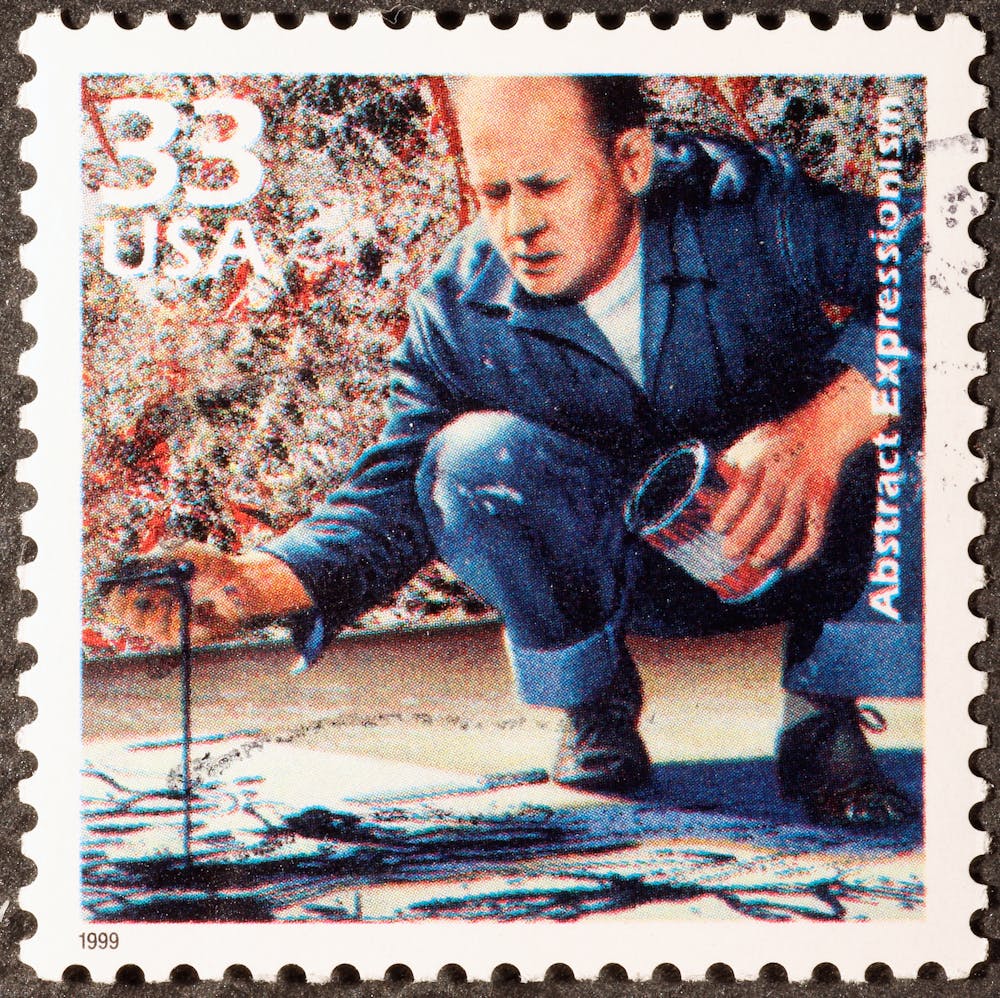
A postage stamp depicting Pollock at work. shutterstock

In 1974, a meeting had been convened at the National Gallery of Art in Washington to explore whether Pollock’s mates Tony Smith and Barnett Newman had helped to squeeze paint onto the canvas that became Blue poles. Present were Pollock’s widow, Lee Krasner, and  gallerist Bryan Robertson, who had given both Pollock and Krasner their first major showings in London. As the NGA website carefully puts it: “The examination revealed that any marks made on the canvas” by those other than Pollock “played no part” in the painting that became Blue poles.

In 2016, Victorian Liberal Senator James Paterson suggested that if Blue poles was worth A$350 million it should be sold to reduce the national debt. His idea was quickly quashed by many, including his party’s own Finance Minister Mathias Cormann, who called Blue poles a “national art treasure”.

(Mind you, as one accountant recently pointed out to me, insurance value of a work of art is often different from the price it might reach on the open market. And upping insurance valuations can markedly increase both premiums and security costs.)


Read more: Here’s looking at: Mike Parr’s Jackson Pollock the Female


Interestingly, as early as 1977 Mollinson told Art News: “I’m sick of it [Blue poles]. It’s not the sort of painting I ordinarily respond to on a personal level anyway. That isn’t what a museum director’s job is necessarily about.”

He thought that when the NGA finally opened in 1982, “We’ll play it down. It’s just one painting – a picture made by a very ordinary person about which a lot of people showed interest at the time we bought it.”

Rather than playing down the controversial painting, in 2015 the then director of the NGA, Gerard Vaughan, said Blue poles was one of the greatest ever American abstract expressionist pictures and had proved to be an excellent purchase.

“It’s the best investment this country has made in anything in my view,” he said.

Still, if it wasn’t for the probably inflated price Australia paid for one of scores of Jackson Pollock’s drip paintings, it might never have become the crowd-drawer it is.

When I asked Heller what he thought of the sums now being talked about in relation to the painting he sold for US$1.9 million 45 years ago, he roared with laughter. “It’s so expensive I don’t want to discuss it!”

– Blue poles 45 years on: asset or overvalued drip painting?
– http://theconversation.com/blue-poles-45-years-on-asset-or-overvalued-drip-painting-102639]]>

World politics explainer: Pinochet’s Chile

]]>

The Conversation (Au and NZ) – By Peter Read, Professor of History, Australian National University

This article is part of our series of explainers on key moments in the past 100 years of world political history. In it, our authors examine how and why an event unfolded, its impact at the time, and its relevance to politics today. You can read parts one, two and three here.


General Augusto Pinochet Ugarte, a career military officer, was appointed Commander in Chief of the Chilean army by President Salvador Allende on August 1973. Eighteen days later, with the connivance, if not the assistance, of the US, he authorised a coup against Allende’s Socialist government.

To be clear, Pinochet’s rule was not the first, last or worst dictatorship in the history of Latin America. But it did grip the attention of western countries because of Chile’s comparatively orderly and democratic past, its institutions that made it seem closer to Great Britain than to Spain, its status as the first freely-elected Marxist government in the west, and the questionable role of the CIA in undermining the socialist Allende’s government.

What happened?

Augusto Pinochet Ugarte, 1986. Biblioteca del Congreso Nacional, CC BY

On hearing the news of the coup, Allende dashed to his seat of government in the capital. Then, after his last and remarkable radio address, he shot himself rather than becoming a prisoner. Pinochet proclaimed himself president of the military junta (dictatorship) that followed.

The initial plan held that Pinochet would rule only for a year, to be succeeded by the chiefs of the navy, police and air force. However, Pinochet continued to rule, eventually as President of the Republic by decree (in effect, Chile’s military dictator) up until 1988. At that point, following a constitutional obligation signed eight years earlier, he held a national plebiscite. Unexpectedly to his followers, and no doubt himself, 55% of the country voted against him.

Pinochet retired soon after, in 1990, to what he hoped would be a quieter life as lifetime senator. But in 1998, he was detained in Britain to answer charges of torturing Spanish citizens in Chile during his rule. He was held in Britain for 18 months before being allowed to return to Chile to answer further charges. It was the first time a former head of state had been arrested based on the principle of universal jurisdiction.

Augusto Pinochet Ugarte (left) with Mario Arnello. Biblioteca del Congreso Nacional, CC BY

He returned to face 59 criminal complaints for kidnapping, murder, and torture. Those charges never eventuated from a variety of legal complexities, principally because the Chilean Supreme Court ruled him mentally and physically unable to answer them.

He died in 2006 without answering those charges.

Nevertheless, by then, his reputation was damaged, even among his supporters. This is because of the findings of two National Commissions detailing the arbitrary arrests, torture, incarceration, disappearances and political executions that had occurred under his dictatorship. He directed his forces first at the more extreme of the left-wing parties, the Armed Revolutionary Movement (El MIR) and the Socialists, but later none of the members of any left wing party could consider themselves safe.

Some Chileans who had supported Pinochet’s attempt to rid the country of what he called the “communist cancer” withdrew support after allegations of serious financial mismanagement for his own benefit were revealed. For all the accusations levelled against him, Pinochet admitted nothing. Instead, he blamed his senior operatives like Manuel Contreras, his hated head of the secret police, for the terrible abuses that he himself had authorised.

The impact on the development of neoliberalism

One of the biggest impacts of Pinochet’s coup is his contribution to the advancement of an economic theory known as neoliberalism, which arguably has shaped the economies of many modern western countries to this day. Neoliberalism in essence means a distant retreat by the state from total economic management: it wants the state to withdraw from much regulation, encourage free enterprise and competition, and let the market determine real value. By contrast, socialist “command” economies seek to be the regulators of supply, demand and wages.

The last chaotic year of Allende’s presidency, marked by massive protectionism, chaotic land expropriations, strikes, food shortages (some artificially induced) and galloping inflation, certainly demanded reform. This provided the basis for the work a group of conservative Chilean economists had discussed and planned for a decade, which was enacted after 1973.

Members of the Government Junta in 1985 and Augusto Pinochet (middle) Wikicommons

These economists renewed international trade, reduced inflation and divested the state of some of its assets. Some of these actions proved unwise, including selling some national utilities to Spanish companies, which did not necessarily run them in the interests of Chile.

The debates about Pinochet’s economic achievements continue, especially for the period after 1982, when the benefits of neoliberal practice faltered. His successes are still held by some to be a Chilean miracle, but the reality was a situation heavily tilted in his favour at a time when political opposition was eliminated, trade unions weakened and working class wages determined by the military dictatorship. The revelations of massive human rights abuses has further tarnished some of this achievement.

Contemporary relevance

We can now also detect some unforeseen consequences, thanks to Chile’s long and successful tradition of reconciliation after political trauma. The ten years of centre-left rule that followed Pinochet was a remarkable achievement, as was the first four-year term of the moderate centre-right Piñera government from 2010. This was the product of the peacemaking tradition called the via Chilena, the Chilean way.

Those who had achieved political exile in East Germany or the Soviet Union during Pinochet’s government did not take long to discover that life under the communist state was not the people’s utopia they had hoped to achieve in their own country.

Some returned, somewhat disillusioned, after 1990 to become high officials in much more moderate administrations than those they had planned many years before. They had learned not to make political changes too fast. Other exiles taking refuge in western Europe learned alternatives to a program of people’s revolution in every Latin American nation as taught by Che Guevara. They came to appreciate the lessons of Euro-Communism, that political change need not be wrought by violence but negotiation and co-operation with less radical left-wing parties.

Woman holding pictures of victims of Pinochet’s rule, marching in commemoration of the coup, 2015. Mauricio Gomez/Crowdspark/AAP

Some reverberations from Pinochet’s rule are still also working themselves out. Members of what was once the radical and optimistic left, who gave so much to the radical cause and suffered so grievously, now wonder about the value of their struggle under Pinochet as they contemplate the low wages of today, much unemployment and, especially, wide disillusionment in the processes of government.

Some of their children have come to the same, but more pointed, conclusion. Fifty or 60 Chileans were actually sent to Cuba by their parents so they could re-enter the country at a later stage to continue the armed struggle against Pinochet. The children did not enjoy the experience. The documentary El edificio de los chilenos (The Chilean House) shows the filmmaker subjecting her once-radical mother to an excoriating interrogation as to whether her ideology, and by inference, any political ideology, should supervene her duty to care for her children.

Pinochet is now remembered not so much as someone who saved his country from becoming a second Cuba, or for clearing the ground to test economic theory. Rather, internationally he is recalled for his sensational detention in the UK. That’s an important outcome that, perhaps, makes every retired dictator think twice before venturing from their homelands.

– World politics explainer: Pinochet’s Chile
– http://theconversation.com/world-politics-explainer-pinochets-chile-100659]]>

Who is our health regulator, AHPRA, and does it operate effectively?

]]>

The Conversation (Au and NZ) – By Bill Madden, Adjunct Fellow, School of Law & School of Medicine, Western Sydney University

In Australia, we sometimes hear of problems in the health industry regarding anaesthetics, cosmetic surgeons or chiropractors acting in ways that could be, and sometimes are, harmful to patients.

This leads many to wonder whether our health regulations are sound enough to protect patients. We do have a national health regulator that usually operates effectively, but it currently doesn’t have all the data it needs to make good judgements on professional negligence.


Read more: Early action against ‘complaint-prone’ doctors may help protect patients


Who is our regulator?

Our national health regulator, the Australian Health Practitioner Regulation Agency (AHPRA), has been operating nationally for almost ten years. Prior to that there were individual systems in each state and territory, but no national system.

AHPRA now administers a national registration and accreditation scheme for health practitioners, extending to 15 national boards that also play a role in maintaining standards in health care.

Medical practitioners, nurses, midwives and pharmacists are of course covered. Perhaps less well known are the boards for Aboriginal and Torres Strait Islander health practice, Chinese medicine, chiropractors and osteopaths. In all there are about 700,000 registered health practitioners and about 150,000 registered students.

But AHPRA not only registers health practitioners, it also has a “disciplinary” role – though not for all states. In New South Wales, for example, that disciplinary role is performed by the Health Care Complaints Commission, which cooperates with AHPRA.

AHPRA regulates chiros and osteos as well as doctors, nurses and pharmacists. from www.shutterstock.com

Practitioner performance and conduct

Recognition of appropriate qualifications for practitioners and their registration is unfortunately not enough to guarantee highest-quality health treatments. The performance or conduct of registered health practitioners sometimes requires “disciplinary” action by AHRPA or the state-based health complaints bodies.

Recent disciplinary matters cover many health services, as can be seen from the NSW Health Care Complaints Commission website. Examples include a pharmacist involved in the illegal supply of prohibited drugs, a doctor engaged in inappropriate “off-label” prescribing of ketamine and his failure to maintain adequate medical records, and a psychologist providing an excessive number of treatment sessions at an excessive cost.

Similar (and arguably greater) problems may arise in relation to the provision of health-related services by people who are not registered health practitioners. The NSW Health Care Complaints Commission recently issued a public warning based on its concerns about unsafe practices involving subdermal (under the skin) implants inserted for “extreme” body modification purposes, such as horns and crowns.


Read more: Medical watchdog turns its back on implant safety complaints


Minimising the chance of future harm

It’s been recognised for some time that there may be a problem with repeat offenders putting the public at risk. A consultation paper was recently released by the Council of Australian Governments health council with a view to enhancing the powers of AHPRA, to keep the national law up to date and fit for purpose.

The paper notes there are increasing expectations (from governments and the community) that the national boards, such as the Medical Board of Australia and the Nursing and Midwifery Board, monitor and intervene early where a practitioner’s practice presents a risk to public health and safety.

Accurately predicting future risk requires all useful information about past and present practice issues to reach AHPRA and the national boards. At the moment, AHPRA and the national boards do not have information about compensation claims made against health practitioners.

So one enhanced power raised for discussion in the consultation paper is the compulsory reporting of compensation claim data. The national law would have to be amended to impose an obligation to report professional negligence settlements and judgements to AHPRA. Such an obligation might be imposed on a practitioner personally, and/or on the practitioners indemnity insurer.

One example of a potentially reportable judgement might be a recent matter where a medical practitioner was held liable for delaying the diagnosis of possible chronic renal disease. While such publicly-available judgements could be located by AHPRA, confidential settlements cannot.

Establishing AHPRA was a sensible step. While not perfect, it has been working well in conjunction with the national boards. But there is room for improvement.

In the modern world we rely heavily on data, which makes it difficult to argue against the compulsory reporting of claims data as a new power for AHPRA to enhance its capacity to protect the public. This might be of particular value in relation to health practitioners who appear to be involved more often in compensation claims, such as those in cosmetic surgery.

– Who is our health regulator, AHPRA, and does it operate effectively?
– http://theconversation.com/who-is-our-health-regulator-ahpra-and-does-it-operate-effectively-101966]]>

Prasad confident NFP could be in Fiji’s post-election government

]]>

Fiji’s National Federation Party (NFP) leader, Professor Biman Prasad could find himself in the same position as New Zealand’s deputy prime minister and leader of the New Zealand First Party, Winston Peters, if there is a major swing against the ruling FijiFirst Party. Sri Krishnamurthi talks to the man who might be the kingmaker after the Fiji general election, due later this year.

The National Federation Party (NFP) is the oldest political party in Fiji. It was founded by A.D. Patel in 1968 as a merger between the National Democratic Party and the Federation Party.

It has survived through four coups and it has had its ups and down, but never out, having secured three MPs in Parliament in the 2014 election (FijiFirst has 32 seats, SODELPA has 15).

A professor of economics, Biman Prasad, who was former dean of the Faculty of Business and Economics at the University of the South Pacific is the man in charge of NFP since taking over the leadership in 2014.

SPECIAL FIJI PRE-ELECTION REPORTS

He could possibly be the kingmaker of the next government if his party wins as many as 10-seats in a 50-seat Parliament – as some predict. And, he, like Peters, is giving nothing away.

“Somebody has called me ‘Winston Prasad’,” he laughed, of the man he was likened to in the Fiji Sun.

“It’s possible, but first we want to be a major party. I’ve looked at the agreement that he (Peters) has with Labour because we follow New Zealand and Australian politics very closely,” the former academic said.

-Partners-

“We are hoping to get a good number of seats, if not, the majority of seats. And we are being realistic because we got three seats in the last election, but strange things have happened in politics.

‘Fighting on our own’
“We may not need another party. We have said we are fighting the election on our own. As for a coalition, you can ask the other parties who they are going to go with.

“That is a question best left until after elections because it comes down to negotiations and the various policies of each party.”

At best, he can hope for a coalition with the ruling FijiFirst Party, holding at least 60 per cent of the vote in the 2014 election, and in many eyes, the favourite in this election.

In the event of an upset, NFP’s other option could be the major indigenous Fijian party, the Social Democratic Liberal Party (SODEPLA), led by 1987 coup leader and former prime minister, Sitiveni Rabuka, although Prasad is not confirming much in this regard, preferring to wait and see how the votes swing.

Prasad is adamant that he has not jumped the gun by announcing some of his candidates early and drip feeding his policies in print since July last year – suggesting that his was the first party to do so.

“We are the only party that has announced almost all its candidates. We started this early and we have announced major policies.”

One of the key planks in the NFP’s foreign policy, which he announced last week, was his support of the West Papua struggle for independence, which SODELPA endorsed a fortnight ago.

Support for West Papua
“We feel Fiji should support its Melanesian brothers. If smaller countries like Vanuatu and the Solomon Islands can raise this issue then we must do something about it,” he said.

Prasad is also concerned about Fiji’s debt, which he places at about F$5.5 billion, especially the $500 million reportedly owed to China.

He points out that for the 2018/19 financial year, the repayment is $635 million, of which $300 million is interest alone.

“We need about $53 million cash every month for payment,” he said.

But, Fiji’s Economy Minister Aiyaz Sayed-Khaiyum said in May this year that the World Bank had done a thorough analysis of the national debt and was convinced it was manageable.

NFP has other policies of note like increasing the minimum wage and addressing the cost of living designed to get them into the driver’s seat post-election by appealing to the common vote.

Prasad alleges that despite the “handouts” and “freebies” dispensed by government, the people are struggling because of the high and mounting cost of living.

People disenchanted
He said people were disenchanted and this would be seen in the voting patterns.

However, could waiting for the election take the sting out of his campaign, given that they have been gearing up for it for a long time now?

“As a party, we are ready whenever the election is called. Technically, the election could have been held after April 6; that is the earliest that Parliament could have been dissolved,” he explained.

“That is when we finish three-and-a-half years. The Constitution says you cannot dissolve Parliament and have an election before three years and six months has elapsed from the first sitting of Parliament.

“The writ can be issued once Parliament is dissolved in that six months. If it is not dissolved before October 6, then it will automatically dissolve by that date. Once Parliament is dissolved, within seven days the writ is issued.

“Once the writ is issued, you have 14 days for nominations and then you have a maximum of 30 days for elections. The last date is November 21.”

The final word on the oldest party in Fiji that is defiant is that the curtains aren’t set to come down yet.

“I am confident we are going to be in government, whether jointly or on our own, and that is the feedback we are getting,” Prasad says confidently.

Spoken like Winston.

Sri Krishnamurthi is a journalist and Postgraduate Diploma in Communication Studies student at Auckland University of Technology. He is attached to the University of the South Pacific’s Journalism Programme, filing for USP’s Wansolwara News and the AUT Pacific Media Centre’s Asia Pacific Report.

Print Friendly, PDF & Email

Article by AsiaPacificReport.nz

]]>

I’ve Always Wondered: How do we know what lies at the heart of Pluto?

]]>

The Conversation (Au and NZ) – By Helen Maynard-Casely, Instrument Scientist, Australian Nuclear Science and Technology Organisation

This is an article from I’ve Always Wondered, a series where readers send in questions they’d like an expert to answer. Send your question to alwayswondered@theconversation.edu.au


I’ve always wondered: how do astronomers determine what comprises the core and layers of distant planetary bodies like Pluto when we’ve never been there? – Brian

Its not just astronomers that get to answer this question, though they do play a key role. Like many issues in planetary science, it takes a village of different specialists to solve these planet-sized problems.

To build up a picture of each planet’s interior has required the merging of keenly observed astronomy, complex theoretical calculations, and the most elegant of experiments. And it is very much ongoing work; only this year our idea of what’s inside Jupiter changed completely.

Let’s start with Earth

The deepest hole that’s been dug (well, drilled) into Earth is the Kola super deep borehole. Cutting through the Siberian peninsula it is 12.6 km deep,only a fraction of the 6,400km to the centre of Earth. Despite this we do know quite a bit about the interior of our own planet.


Read more: I’ve Always Wondered: Why are the volcanoes on Earth active, but the ones on Mars are not?


We know Earth has layers of minerals that increase in density as you delve deeper and the pressure increases, until we reach the core. We also know that the very centre of Earth, its core, is made of two components: a surprising liquid outer part, and a solid inner. Both parts of the core are made of super-dense iron and nickel mixture, with some other mystery element in the mix.

Our knowledge of Earth’s interior has come from listening to earthquakes that send sound waves right through our planet. These sound waves are affected by the density changes, and this can be unwrapped by having a network of siesmometers that can pick up signals from each quake.

The density changes have been followed by extensive laboratory studies that have recreated the conditions and come up with a great picture of the mineral changes as you delve towards Earth’s core.

Sadly, however, there is no other planet with a seismometer on it. There will be soon though, as NASA’s Insight mission is on its way to plant one on Mars. Yet, like Earth, we do have some good theories about the centre of Mars, Pluto and indeed all of the planetary bodies in our solar system.

How dense is your planet?

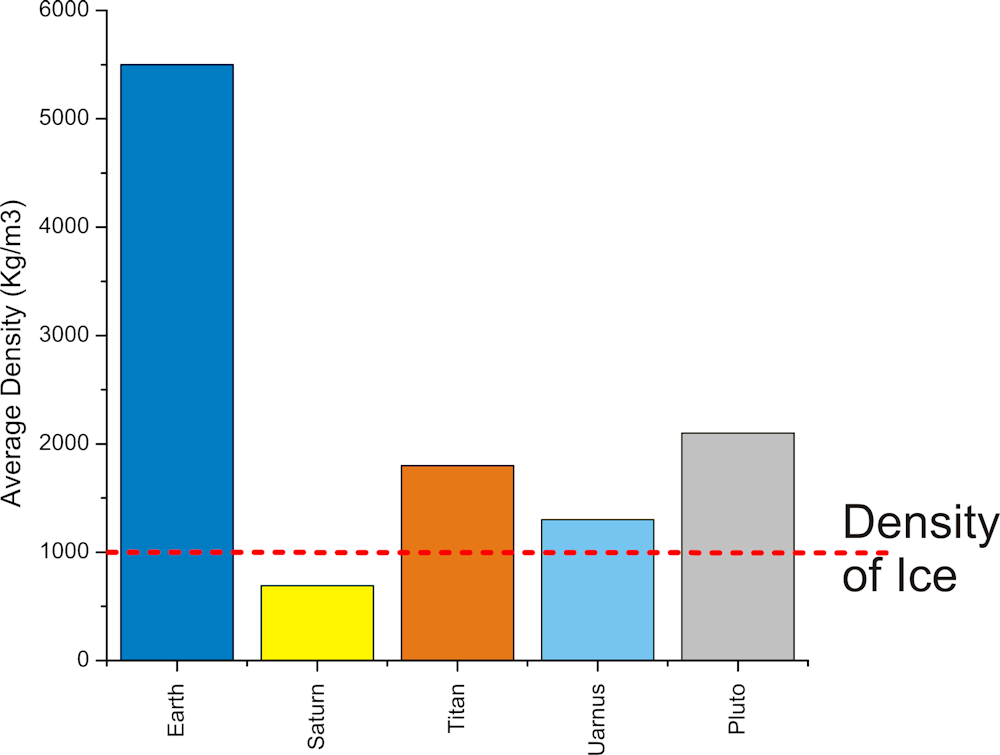
A big clue to a planet’s interior is its average density. This can be calculated from its mass (which you can measure as soon as you have anything orbiting it) and its radius (which can be found from telescope observations). Once you have that, you can relate this average density to that of a similar material.

Average density of a few planetary bodies. Helen Maynard-Casely, Author provided

I’ve plotted a few of them (above) and you can see that rocky planets such as Earth have an average density close to that of rock (about 5,000 kg/m3), whereas gas giants have a much lower density.

Even the difference between two gas giants can be quite big. The change between Saturn and Uranus tells us that Saturn is mainly made of the light gases hydrogen and helium, whereas Uranus is made of heavier molecules such as water.

Pluto, like many icy worlds, has a density between that of rock and ice – but closer to ice. So that immediately suggests it is a mixture of both.

As a planet evolves, heavier materials sink towards its centre. So it is safe to assume that, in Pluto’s case, the rock will sit at its core and the ice and lighter materials will make up its surface and subsurface.

But can we tell any more than that? We can, by examining the detail of a planet’s gravity field.

Looking for wobbles

Slight wobbles in how spacecraft orbit planets can tell us how density is distributed beneath the surface. For gas giants such as Jupiter, this can extend right through the planet.

The Juno spacecraft is currently measuring Jupiter’s gravity field in more detail than ever before – and has already revolutionised what we know of the gas giant’s interior.

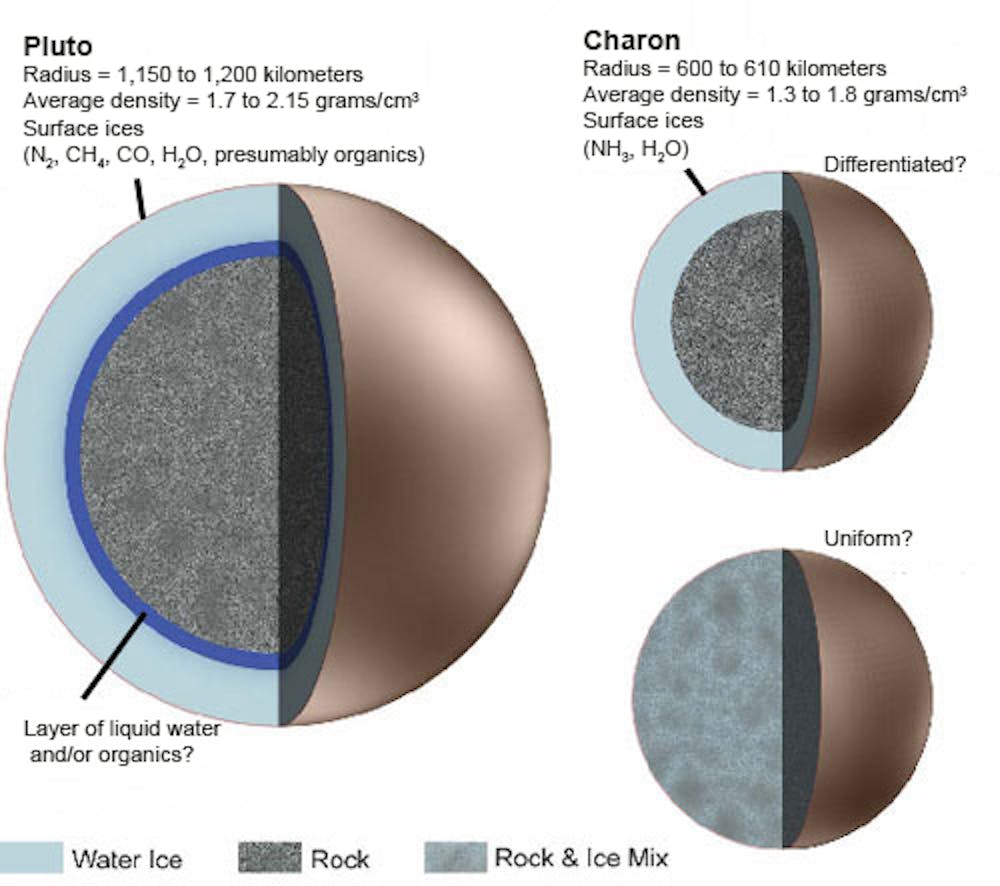
The inside story of Pluto and its largest moon Charon. NASA/Johns Hopkins University Applied Physics Laboratory/Southwest Research Institute, Author provided

This does work for the smaller rocky planetary bodies – but gives us a less complete picture. For instance, small wobbles in Cassini’s orbit (only milimetres) around Saturn that were observed all the way back on Earth gave us evidence that there is a ocean under the south pole of Saturn’s tiny moon Enceladus.


Read more: Planet or dwarf planet: all worlds are worth investigating


With Pluto, evidence from the flyby suggests it also has a liquid ocean under its icy surface. But gravity field data from a flyby, like that of NASA’s New Horizons, is never as good as having a spacecraft in orbit – so we’ll have to wait until we return to Pluto to know more.

You can watch me here explaining in a bit more detail how we’ve followed these observations with lab work to discover yet more about the insides of our planetary neighbours.

Helen takes us on a journey to get to know the planets of our solar system, filmed at Science Academy.

– I’ve Always Wondered: How do we know what lies at the heart of Pluto?
– http://theconversation.com/ive-always-wondered-how-do-we-know-what-lies-at-the-heart-of-pluto-101327]]>

Reforming our political system is not a quick fix. Here’s a step-by-step guide to how to do it

]]>

The Conversation (Au and NZ) – By Mark Triffitt, Lecturer, Public Policy and Political Communications, University of Melbourne

With public trust in government already in serious decline over the last ten years, the downfall of yet another prime minister between elections underlines both the importance and urgency of making serious changes to our political system.

The key to renewing Australia’s democratic system is to view it as our next major reform challenge, just as economic renewal was prioritised in the 1980s and ’90s.

So far, however, the changes proposed by political commentators, academics and think tanks are largely single reforms, such as citizens’ juries to seek more public input into policy, or fixed four-year terms for federal parliament to allow more time to tackle big problems and implement complex policy.

These fall short of matching the scope of the challenge: democratic renewal requires multi-level and multi-step change addressing interconnected issues. In short, we need a comprehensive roadmap for political reform.


Charting a roadmap for renewal

We first need to recognise that two distinct crises are contributing to declining public trust in government.

The first is a “crisis of representation”. This results from a fragmented, highly diverse electorate that increasingly fails to connect with major parties. The major parties are left with shrinking, less diverse memberships.

The second is a “crisis of functionality”. Our democratic system is increasingly unable to deliver good public policy in a consistent or coherent way, and to convince the public to support it.


Read more: Australians think our politicians are corrupt, but where is the evidence?


This “crisis of functionality” is partly due to the decline of the public service and its ability to deliver independent, quality policy advice to ministers. Also to blame is an increasingly myopic approach to policymaking by parties obsessed with short-term polling and point-scoring.

But it is also linked to the “crisis of representation”. As an increasingly disconnected public turns its back on politicians, it also loses trust in their ability to deliver sound policy programs and decisions.

A two-stage approach

The dual nature of these problems underlines a critical issue. The roadmap not only needs to link up separate reforms, it also needs to be rolled out in stages to persuade a highly distrustful public that democratic renewal is in the interests of everyone – not just those in power.

The first stage is what I would call “creative governance”. The aim here is to start restoring public trust in government by making immediate and tangible improvements to the political system.

These reforms would have clear precedents or strong levels of public support. For example, national uniform caps on campaign spending, like those recently introduced in New Zealand, would reduce money in politics. This in turn would put the onus on politicians to explain their policies with more fact-based detail instead of expensive, slogan-based advertising campaigns.


Read more: Australia trails way behind other nations in regulating political donations


Other possible reforms include real-time disclosure of all political donations, which is already in effect in Queensland, and the establishment of a federal anti-corruption commission, also already in existence at the state level.

Recent surveys show that a majority of Australians support both moves and believe these would improve transparency in the political system.

Setting the scene for deeper reform

The more difficult second stage of political reform is what I call “systemic renewal”. The goal here is to realign our democracy with the fundamentally changed dynamics and expectations of how it should work in the 21st century.

For instance, a major overhaul of our federal-state constitution is needed to update a framework originally written in the 1890s. It’s replete with outdated rules, processes and responsibilities.

However, this has largely failed to capture the public’s imagination because of the arcane way experts talk about the problem and potential solutions. Reframing it as part of a broader democratic renewal to usher in a more nimble and representative political system is much more likely to gain public traction.


Read more: Ideas for Australia: Voters have a good choice of politicians, but need to overcome their mistrust of them


Major reforms are also needed to make federal parliament more effective and less dysfunctional. These might include eliminating Question Time and mandating a strict code of ethics for MPs aimed at addressing toxic behaviours like the bullying crisis rocking the Coalition government.

Reforms like these would raise the level of decorum in parliament and set a new standard for parliamentary behaviour. This would increase public confidence that politicians both reflect and are accountable to modern values.

Lastly, a “Citizens’ Assembly” could be formed of randomly selected citizens to act as a non-partisan check and balance on parliament. Such an assembly could be modelled after the citizens’ juries that have been trialled successfully around the world, including Ireland, Canada and South Australia. The assembly would be given the responsibility to chart out long-term, national policy blueprints in areas like health, tax and education.

With this kind of direct voice on a national level, the public would be much more involved in policymaking and thus more vested in the success of their government.

Thinking like reformers

What’s clear is we must do the hard strategic thinking of reformers if we are serious about fixing our political system.

Like every credible plan to reform a major institution showing multiple dysfunctions, we need more than one reform idea. We also need to test these ideas against the root causes of the institution’s malaise. And we need to organise them into a strategic and practical sequence.

The alternative is to believe Australian democracy will magically right itself. Which is no alternative at all.

– Reforming our political system is not a quick fix. Here’s a step-by-step guide to how to do it
– http://theconversation.com/reforming-our-political-system-is-not-a-quick-fix-heres-a-step-by-step-guide-to-how-to-do-it-102415]]>

How will my divorce affect my kids?

]]>

The Conversation (Au and NZ) – By Kim Halford, Professor of Clinical Psychology, The University of Queensland

This is part of a package on Parenting after Divorce. Read the other articles in the series here.


Most children adjust well to parental separation and divorce, at least in the long term.

A minority of children of separated parents have long-term problems, which can affect them through their childhood and into adult life. But it’s conflict between separated parents, and not the separation itself, which accounts for many of the problems children of separated parents experience.

Many Australian children experience parental separation and divorce. About 50,000 to 60,000 children in Australia experience their parents separating each year. Around one in five Australian children (about one million) will experience parental separation before the age of 18.

Immediately before and after parental separation, children are often upset. But for most children, their adjustment improves across the next year or two. Studies show most children adjust reasonably well in the longer term.

On average, children of separated parents do just a little bit worse than children of parents in intact families. This effect is evident across multiple outcomes. For example, children of divorce do a little bit worse on educational attainment, have slightly more behaviour problems, and are slightly more likely to suffer from anxiety and depression.

While the average effect of parental separation is small, children of separated parents have twice the rate of serious mental health problems and substance abuse, and are twice as likely to attempt suicide, as children of parents in intact families. These statistics reflect that a minority of children from separated parents have very poor adjustment.


Read more: How to tell your child you’re getting divorced


Witnessing conflict

The strongest predictor of poor child adjustment after separation is conflict between the separated parents. Poor long-term outcomes for children occur when parental conflict is severe (such as verbal abuse or physical violence), is frequent, and occurs in front of the child.

Children are particularly affected when the conflict is about them, or issues around parenting. Many children blame themselves for parental conflict, particularly when the conflict is about parenting or child behaviour. If the child believes they have caused the conflict, or should be able to stop the conflict, then they are particularly likely to suffer adjustment problems.

Severe parental conflict in front of the children is also associated with child adjustment problems in intact families. In high conflict parental relationships, separation sometimes reduces children’s exposure to parental conflict. So staying in a relationship does not necessarily protect children from parental conflict.

As well as parental conflict, poor child adjustment is predicted by mental health or substance abuse problems in a parent. Many separated parents re-partner and these new relationships sometimes end. Frequent changes in the child’s living arrangements, and changes in who cares for the children, are also associated with poor child adjustment.


Read more: How to co-parent after divorce


Children are particularly affected when the conflict is about them, or issues around parenting. from www.shutterstock.com

Co-parenting after divorce

When parents separate there has to be an agreement about how the children will be cared for. Agreements have to address issues such as where the child will live, how much time each parent will spend with the child, and how and where the parents will communicate about parenting decisions.

About 30% of separating parents reach a co-parenting agreement without assistance. Another 30% seek advice from professionals such as family lawyers, psychologists, or family counsellors, and then negotiate an agreement acceptable to both parents. But about 40% of separated parents have disagreement about parenting arrangements they’re unable to resolve.

In Australia, most parents who disagree about parenting arrangements are required to undertake mediation. If mediation does not produce an agreement, then the parents can apply to the Family Court to make a decision. In some circumstances, the parents can go straight to court without having to attempt mediation. Examples of such circumstances are if there is family violence, or if one of the parents has a mental health problem that is seen to make mediation inappropriate.

Family mediation usually involves four or five hours of sessions with a professional mediator. Typically the mediator conducts a separate individual interview with each parent to assess the family background, and identify the current issues of dispute around parenting. There might also be a session talking with the child or children asking them their views. Then there would be a conjoint session between the mediator and the two parents.


Read more: What type of relationship should I have with my co-parent now we’re divorced?


Of separated parents who undertake mediation, about two-thirds reach a co-parenting agreement. The remaining third usually go to the Family Court to have a judge or magistrate determine what the parenting arrangements will be.

As most parents will realise, parenting arrangements need to change as children’s circumstances change. Parenting agreements need to allow for decision-making as new circumstances arise, and to be renegotiated across time. For example, a child who usually stays weekends with her mother might get interested in a weekend sport that occurs near her father’s home, and the child might want to change around where she spends her weekends.

Due to the ongoing nature of co-parenting, separated parents often have contact with each other for 20 or 30 years after they separate. Developing collaborative co-parenting can be challenging for separated parents. If separated parents allow conflict to occur in front of their children, the children suffer. If parents manage to be mutually respectful and keep their child’s best interests as their shared focus, then the child is likely to do well.

Numerous services are available to assist separated parents to develop more effective co-parenting. These include parenting education, counselling, and legal advice. The Family Relationships Advice line provides information and referral to services. Their telephone line is open Monday to Friday 8am to 8pm, and Saturday 10am to 4pm (local time) on 1800 050 321. Information is online here.

– How will my divorce affect my kids?
– http://theconversation.com/how-will-my-divorce-affect-my-kids-101594]]>

Ten of Australia’s best literary comics

]]>

The Conversation (Au and NZ) – By Gabriel Clark, Lecturer, Faculty of Design, Architecture and Building, University of Technology Sydney

With news that the Man Booker Prize long list includes a graphic novel for the first time, the spotlight is on comics as a literary form. That’s a welcome development; the comic is one of the oldest kinds of storytelling we have and a powerful artform.

Right now, the Australian comics community is producing some of the best original work in the world. Australian comics punch above their weight globally. Many have been picked up by international publishers and nominated for international and national literary awards – yet remain little known at home. Some are directed at an adult audience; some are for all ages. They tackle issues ranging from true crime to environmental ruin to life in detention.

As someone who has researched comics for years – and been a fan since childhood – I want to share with you some highlights from the contemporary Australian comic scene. Here are 10 Australian comics of note, in no particular order.


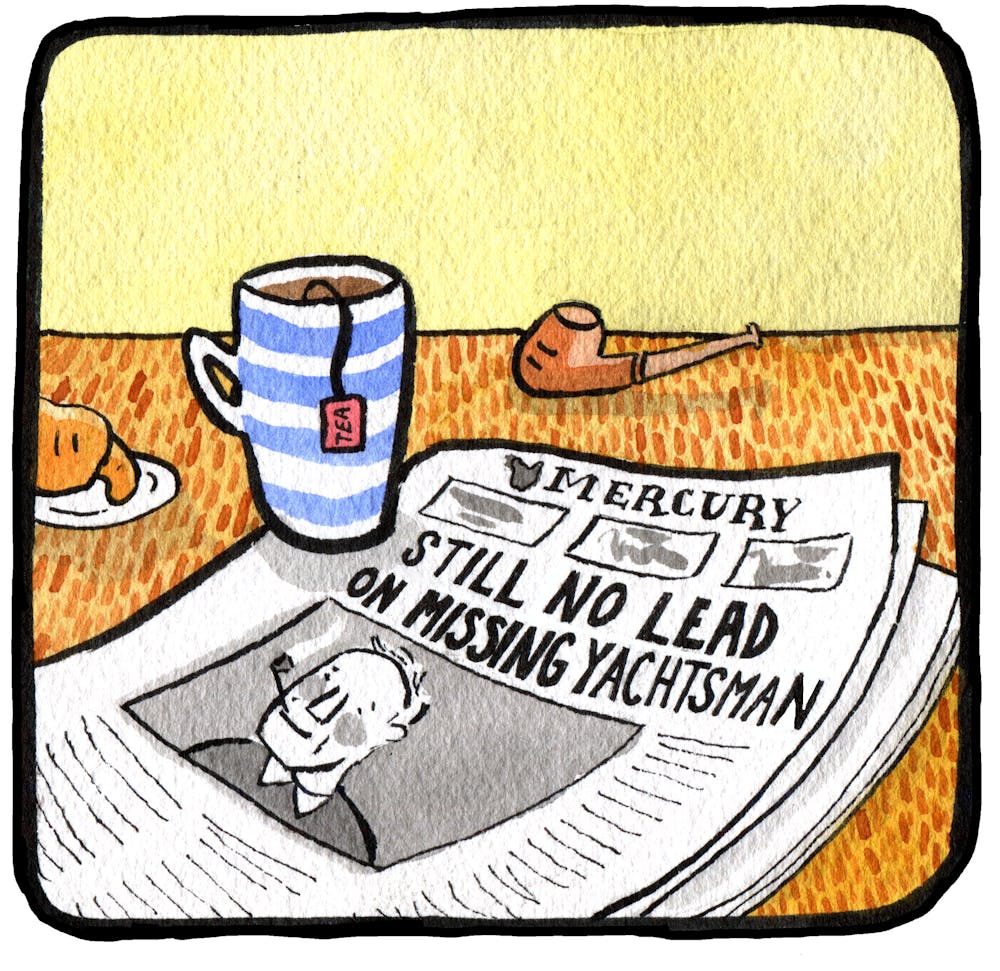
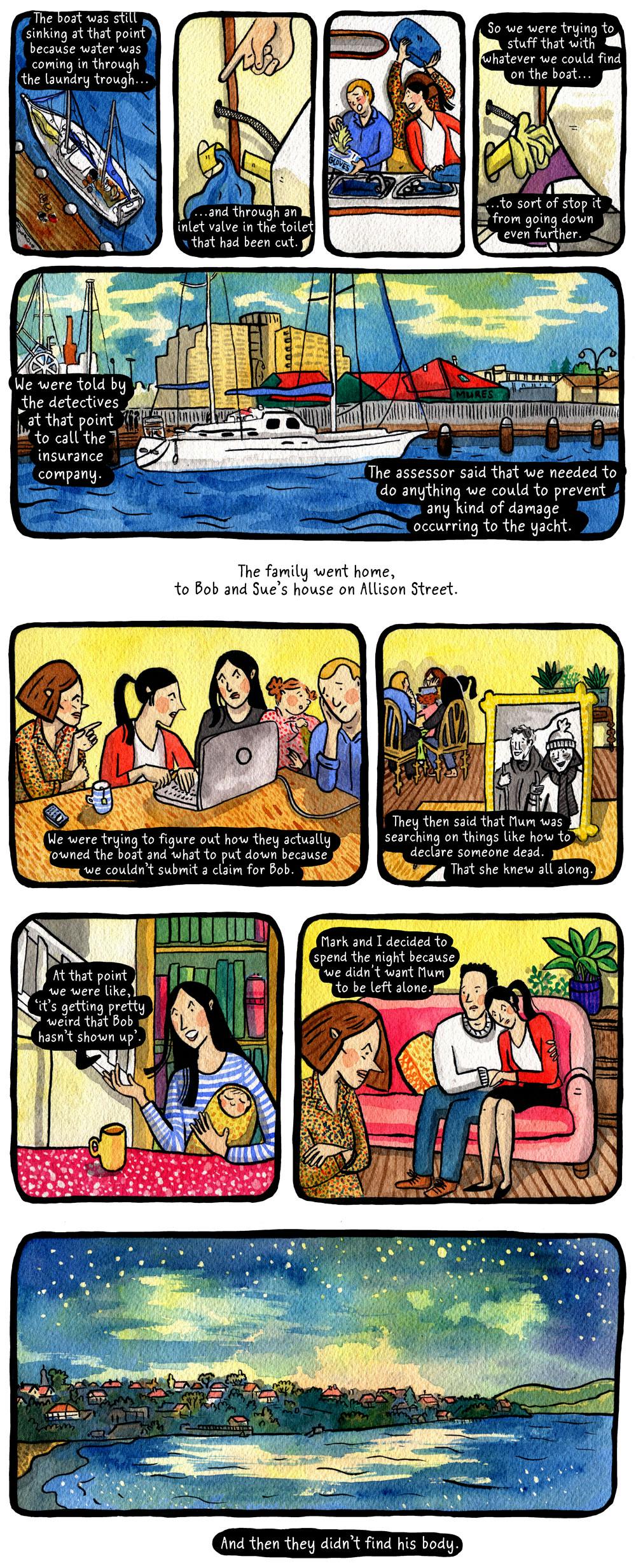
Sue Neill-Fraser’s conviction for the murder of her de-facto partner Bob Chappell in 2009 polarised the Tasmanian city of Hobart. To this day, Sue has maintained her innocence. This piece of long-form comics journalism by cartoonist Eleri Mai Harris takes readers deep into the personal impact this case has had on the families of those involved.

You can read Reported Missing online here.

Reported Missing; cover page. Reported Missing; inside page.

Bottled, by Chris Gooch

According to one study, mean friends can be good for you. The opposite may be true in this psychological drama, a tale of jealousy, friendship and narcissism. Bottled is a tense piece of suburban noir set in the suburbs of Melbourne, rendered stark and disjointed by Chris Gooch’s striking artwork.

Bottled; cover page. Bottled; inside page.

Who is my birth mother? In this autobiographical story, Meg O’Shea travels to Seoul to find an answer to that question, armed with her sense of humour and imagination. This whimsical story of sliding door moments explores the emotional impact of not having solutions and the fatality of not knowing.

You can read A Part Of Me Is Still Unknown here.

A part of me is still unknown; cover page. A part of me is still unknown; inside page.

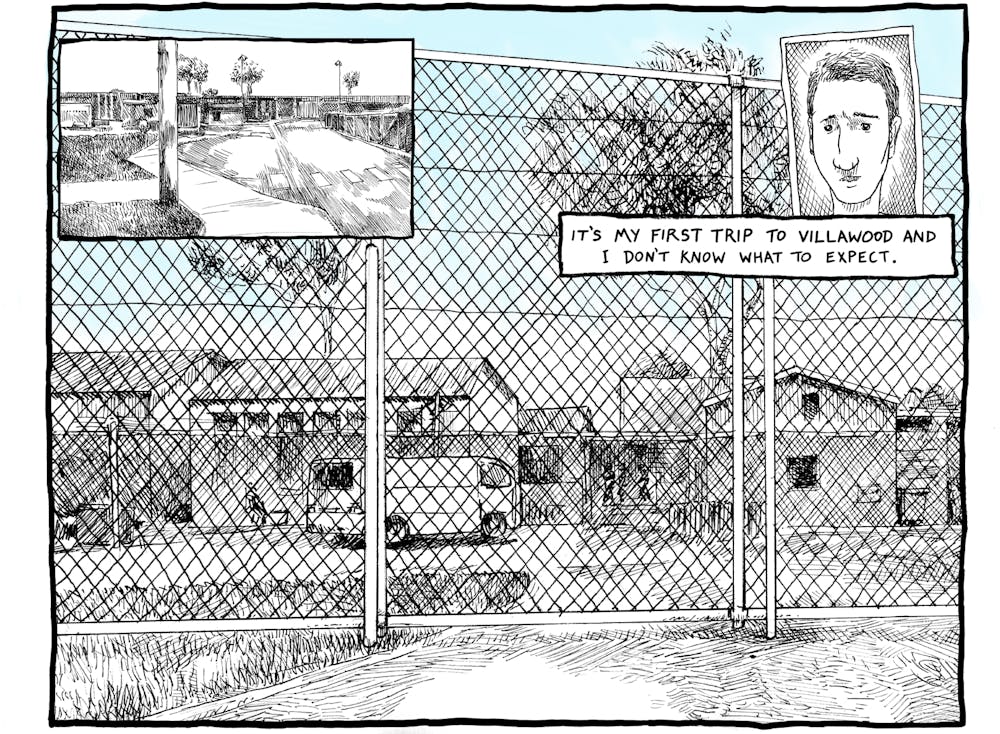
Villawood is a Walkley award-winning piece of comics journalism about the experiences of being held captive in a Sydney asylum seeker detention centre. In sharing the stories and experiences of the detainees, it lays bare the harsh realities of indefinite detention. These stories are made even more real through the inclusion of artwork created by the detainees. Their images sit alongside Safdar’s tense line work, which illustrates the realities of this brutal system.

You can read Villawood online here.

Villawood cover. Villawood inside page.

Home Time, by Campbell Whyte

Changes are on the horizon for a group of Year Six school friends who are looking at their last summer together. But their suburban world is transformed after a freak accident transports them to an alternative universe. The friends find themselves in an inverse world filled with creepy gumnut babies, cups of tea and a deceptively familiar Australian landscape. With Home Time, Campbell Whyte has created an intoxicating and visually stunning Australian Narnia.

Home Time; cover page. Home Time; inside page.

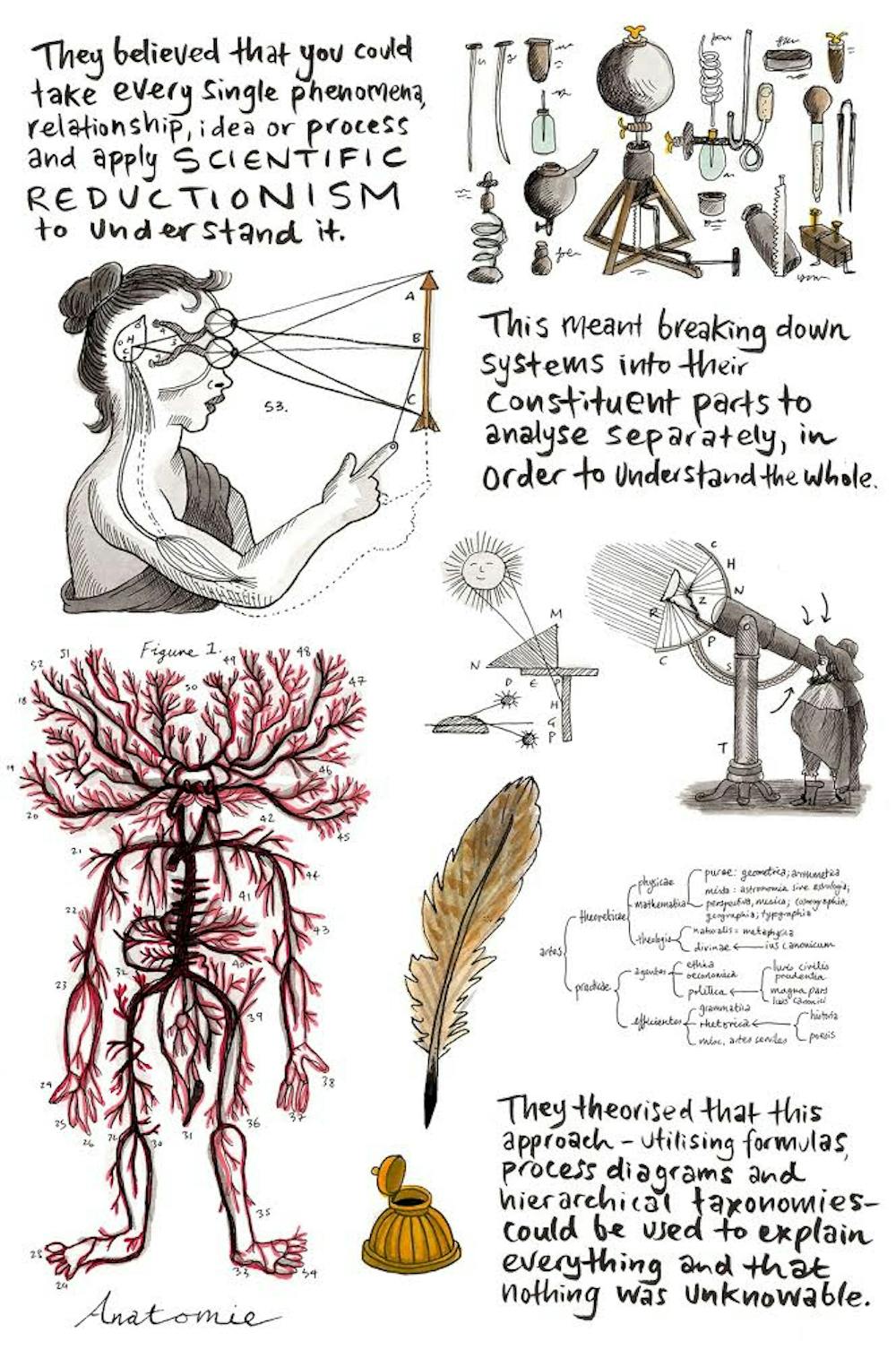
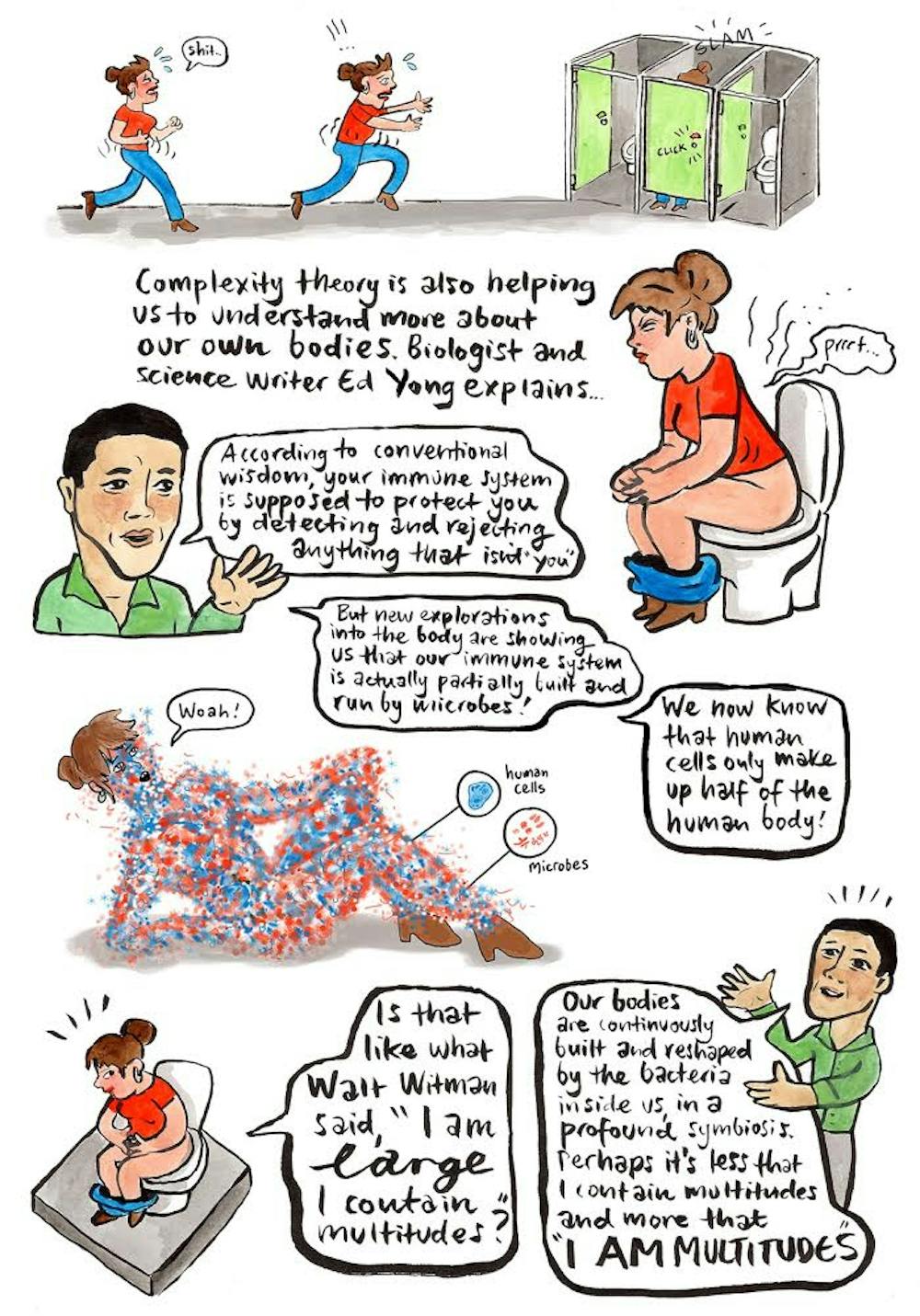
Sarah Catherine Firth’s visual essay explores how we understand the complex systems that exist in the world around us. Through autobiographical anecdotes and humour, it covers the history of scientific thought, unpacks complex ideas and helps provide answers to complicated questions.

You can read Making Sense of Complexity online here.

Making sense of complexity Making sense of complexity.

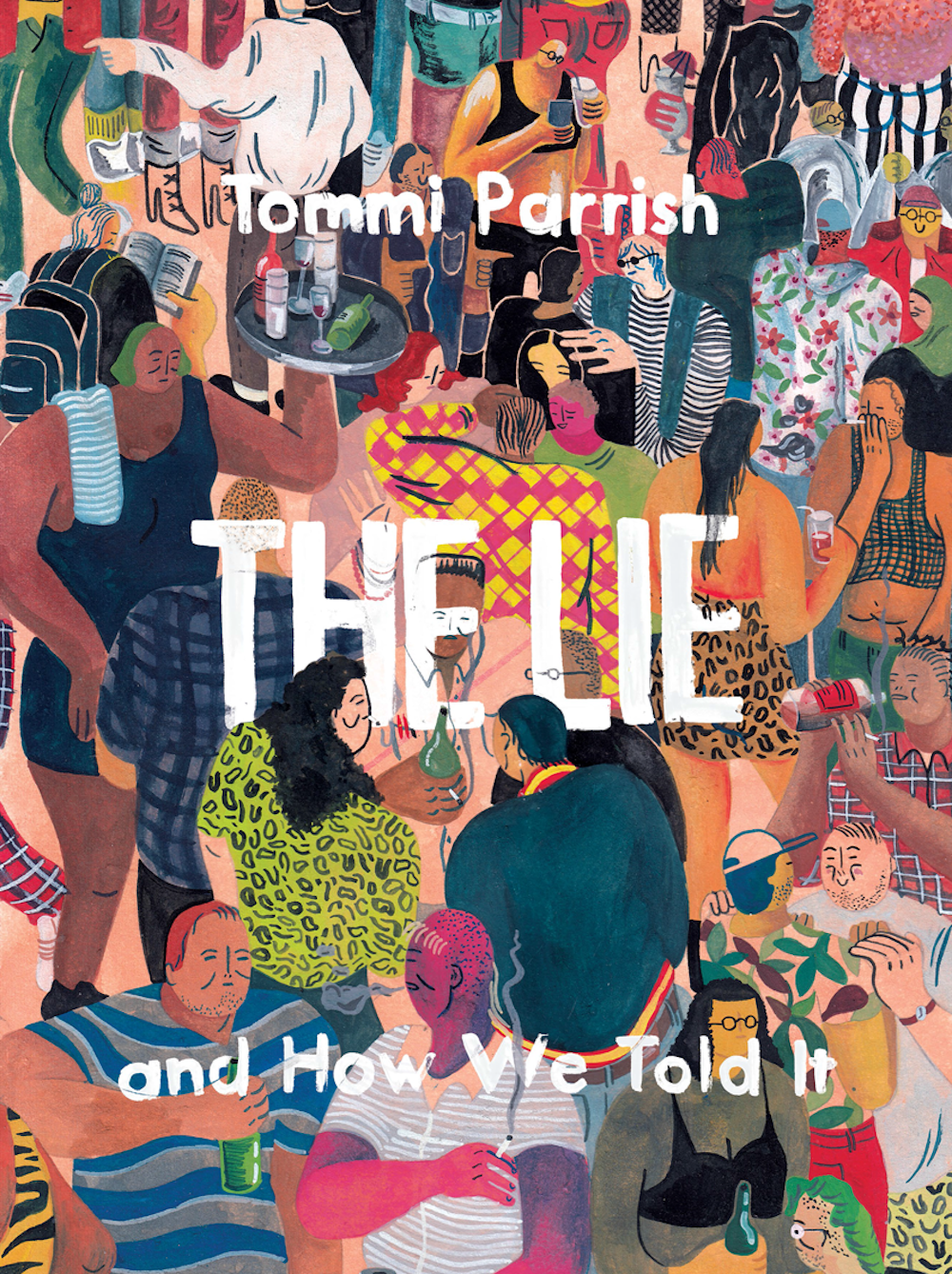
The blurb says The Lie is about how “after a chance encounter, two formerly close friends try to salvage whatever is left of their decaying relationship”. But it’s much more that. Visually, Tommi Parissh’s disproportioned characters dominate the spaces and the panels they inhabit, their uneven bodies reflecting their unease with themselves and their shared history. The Lie is a beautifully poignant tale of confused identities, self-centeredness and regret.

The Lie and How We Told It; cover page. The Lie and How We Told It; inside page.

Hidden, by Mirranda Burton

“Everyone sees the world in their own unique way.” That’s how Mirranda Burton introduces Steve, one of the intellectually impaired adults she teaches art to. But Hidden isn’t about how her subjects see the world. It’s about how Mirranda sees them – with care, respect and humour. Mirranda’s fictionalised stories reveal how engaging meaningfully with people can shift your perspectives in beautiful and unexpected ways.

Hidden; cover page. Hidden; inside page.

The Grot, by Pat Grant with colours by Fionn McCabe

If everyone you know is trying to get rich at everyone else’s expense, then who can you trust? In The Grot, the world is in the wake of an unnamed environmental catastrophe, technology and society have been reduced to simple mechanics, and everyone is rushing to Felter City to make their fortunes. With The Grot, Pat Grant and Fionn McCabe have created a stained and wondrously dilapidated alternative universe of Australian hustlers and grifters fighting to survive in a new Australian gold rush.

You can read The Grot online here.

The Grot; cover page. The Grot; inside page.

Sam Wallman’s comic essay So Below explores ideas of land ownership and its social and political ramifications. Sam’s poetic artwork guides the reader through complicated questions to reveal the communities impacted by the social construct of land ownership.

You can read So Below online here.

So Below; cover page. So Below; inside page.

– Ten of Australia’s best literary comics
– http://theconversation.com/ten-of-australias-best-literary-comics-98766]]>

View from The Hill: Wentworth looks scary for Liberals having trouble explaining why they sacked a PM

]]>

The Conversation (Au and NZ) – By Michelle Grattan, Professorial Fellow, University of Canberra

As the government faced its first post-coup parliamentary day, the enormous gamble the Liberals have taken was obvious.

It isn’t just that big “transaction costs” of felling a prime minister are coming back to be paid.

It’s that leading Liberals can give no half-way convincing rationale for an upheaval that has pushed the Coalition’s two-party vote substantially backwards in Newspoll, and further baked in the community’s anger with politicians.


Read more: Labor leads 56-44% in Newspoll, but Morrison rates better than Shorten


We talk about “narratives” in politics. This coup does not have a presentable public “narrative”.

In parliament and the media, everyone this week is demanding answers to the “why?” question. No doubt Liberal MPs have been belted with it in their electorates during their short break among the voters.

Scott Morrison talks about the new (post coup) generation of Liberal leadership. As they struggle to explain the inexplicable, this looks more like the old generation heavily bandaged after a bar room brawl.

Some are not even pretending.

Deputy leader Josh Frydenberg was up front on Sunday about the National Energy Guarantee being ditched. “No one is more disappointed than I am”, he told the ABC. As to why Turnbull was sacked: well, he’d just leave that to the commentators to discuss.

On Monday, arguing the government’s defence against Labor’s (unsuccessful) attempt to launch a censure, Leader of the House Christopher Pyne made the frank admission that “changing the leader is not the right thing to do.

“The Australian public are quite rightly most disconcerted with what’s occurred”, he said, but it was Labor’s fault because they’d started the process. “I agree with the Australian public that what they want is stability,” Pyne said.

After dodging and weaving, Morrison told parliament: “The party chooses the person they want to lead to ensure that we can put the best foot forward at the next election and to ensure that we are connecting with Australians all around the country.”

Insofar as there can be any hygiene in such a business, Morrison has been able to claim relatively clean hands. But Senate leader Mathias Cormann. whose withdrawal of support delivered a fatal blow for Malcolm Turnbull, clearly soiled his hands on the way through and struggles to explain.

When his shifting positions were put to him in Senate question time, his defence was one of I-meant-it-when-I-said-it. “All of these statements were, of course, entirely accurate at the time,” he maintained.

Boiled down to its essence, the core answer to the “why?” question is that the Liberal party’s right – surely it is time we called them “the right” rather than “the conservatives” – made a grab for power that killed Turnbull, although they didn’t have the numbers to install their man Peter Dutton.

There were other important factors but that was at the heart of it.

Morrison and his colleagues can’t, however, say that. They have to indulge in non-answers or fudges until the media get sick of asking the why question.

One of the coup’s back stories has been about the media, because it has highlighted the growing power of the shouty commentators, and the move of Sky’s evening programming towards the Fox News model.

The always-forthright Liberal backbencher Warren Entsch called out the role of certain media commentators who, he suggested, became players in the coup.

Asked about the actions of some sections of the media applying pressure during the coup week, Entsch said: “I thought it was an absolute disgrace. I don’t think Sky News in particular wrapped themselves in glory.”

He told the ABC: “I actually saw texts coming through to colleagues encouraging them to get rid of the prime minister, from some of these commentators. And to me, that’s overstepping the line.”

Their “absolute dislike” of Turnbull was obvious, he said: “There was nothing that the former prime minister could have done to satisfy their obvious hatred of him. And they took every opportunity to actively have him removed”.

If the past is beyond explanation, the future is looming increasingly scary for the Liberals. The Wentworth byelection – despite a 17.7% buffer – is shaping as a close-run thing.

If any Liberals were complacent about Wentworth, they won’t be after the weekend Wagga Wagga state byelection. where a community-based independent, Joe McGirr, took the seat after a massive 28 point drop in the Liberal vote.

How much damage could a similar candidate do in Malcolm Turnbull’s old seat? Probably a great deal.

Kerryn Phelps, who is set to run in Wentworth, is (like McGirr) a doctor. She is well known, with a local practice in the electorate. Most recently she received plenty of publicity during the same-sex marriage plebiscite.

On Monday Andrew Bragg, who had quit his Business Council of Australia job to seek Liberal preselection and had been considered one of the frontrunners, withdrew. Whatever influences were at work there, Bragg’s public explanation was that the party should choose a woman.

The leading females in the preselection race are Mary-Lou Jarvis, a NSW party vice-president and president of the NSW Liberal Women’s Council, and Katherine O’Regan, chair of the Sydney East Business Chamber.


Read more: Bragg drops out of Liberal preselection battle, calling for woman candidate


Whoever becomes the Liberal candidate, this is potentially one of those byelections for the history books.

It will be hugely expensive, just when the Liberals face a NSW election and the federal election. The cost will only be exceeded by the stakes. If the Liberals don’t hold the seat Morrison goes into minority government, with the angst that would bring.

In the meantime, in the campaign the Wentworth voters will want better answers than we’re hearing now on why the party deposed their man.

– View from The Hill: Wentworth looks scary for Liberals having trouble explaining why they sacked a PM
– http://theconversation.com/view-from-the-hill-wentworth-looks-scary-for-liberals-having-trouble-explaining-why-they-sacked-a-pm-102940]]>

At its current rate, Australia is on track for 50% renewable electricity in 2025

]]>

The Conversation (Au and NZ) – By Ken Baldwin, Director, Energy Change Institute, Australian National University

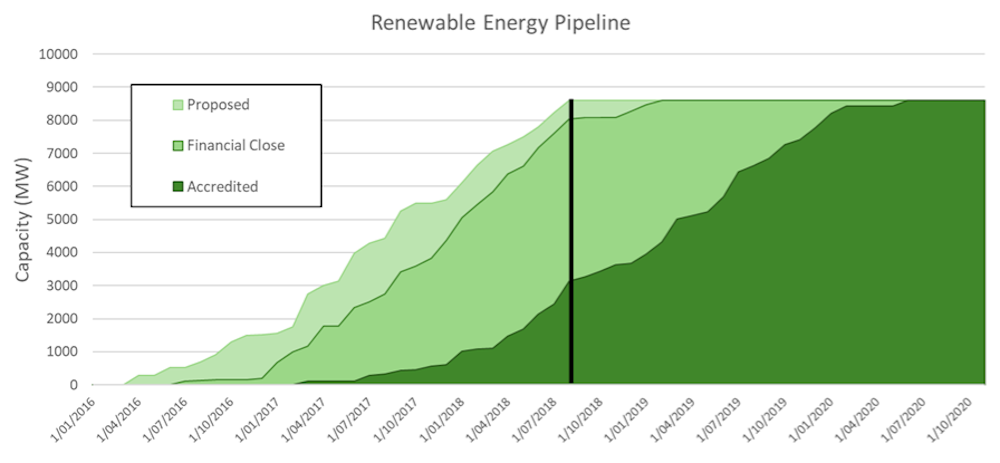
The Australian renewable energy industry will install more than 10 gigawatts of new solar and wind power during 2018 and 2019. If that rate is maintained, Australia would reach 50% renewables in 2025.

The recent demise of the National Energy Guarantee saw the end of the fourth-best option for aligning climate and energy policy, following earlier vetoes by the Coalition party room on carbon pricing, an emissions intensity scheme, and the clean energy target.


Read more: The renewable energy train is unstoppable. The NEG needs to get on board


Yet despite the federal government’s policy paralysis, the renewable energy train just keeps on rolling.

Our analysis, released today by the ANU Energy Change Institute, shows that the Australian energy industry has now demonstrated the capacity to deliver 100% renewable electricity by the early 2030s, if the current rate of installations continues beyond the end of this decade.

Record-breaking pace

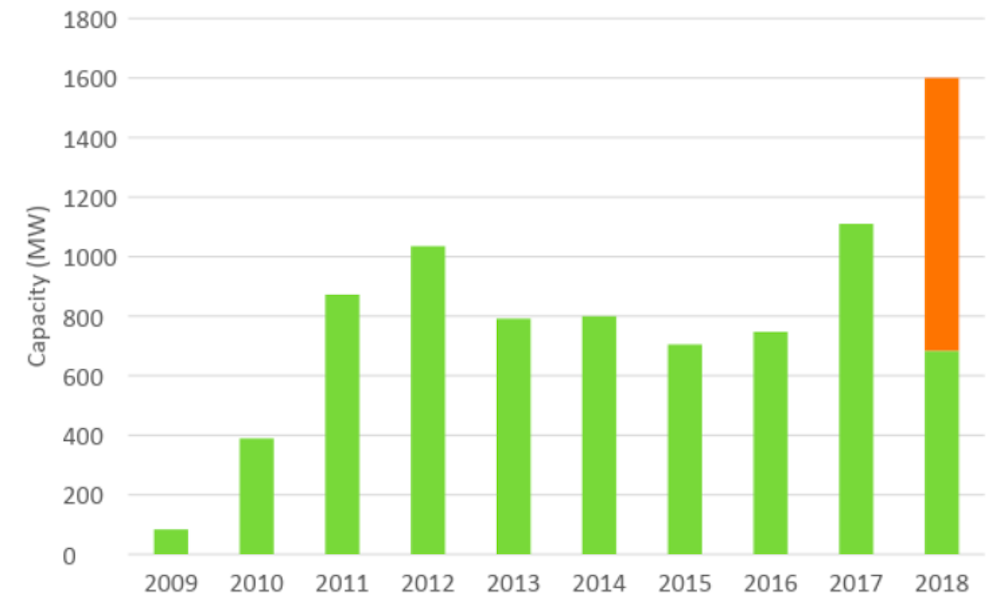
Last year was a record year for renewable energy in Australia, with 2,200 megawatts of capacity added. Based on data from the Clean Energy Regulator, during 2018 and 2019 Australia will install about 10,400MW of new renewable energy, comprising 7,200MW of large-scale renewables and 3,200MW of rooftop solar (see charts below). This new capacity is divided roughly equally between large-scale solar photovoltaics (PV), wind farms, and rooftop solar panels. This represents a per-capita rate of 224 watts per person per year, which is among the highest of any nation.

Actual and probable deployment of large-scale (more than 0.1MW) systems in Australia. About 4,000MW per year is currently being installed. Clean Enegy Regulator/ANU, Author provided Annual small-scale (less than 0.1MW) rooftop PV capacity additions including an estimate of 1,600MW for the whole of 2018 based on installations for the year to June. Clean Energy Regulator/ANU, Author provided

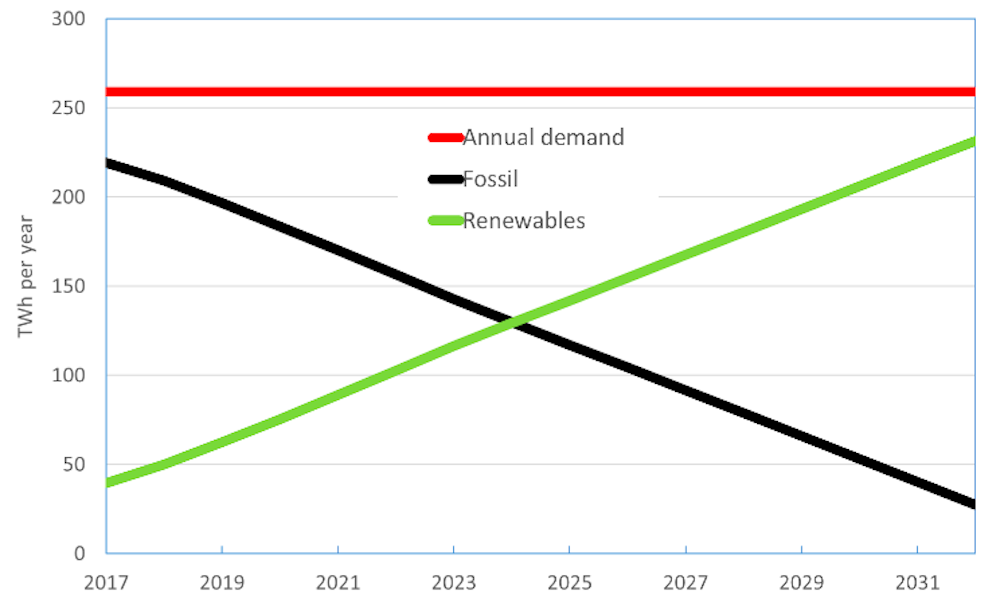
If the current rate of renewable energy installation continues, Australia will eclipse the large-scale Renewable Energy Target (LRET), reaching 29% renewable electricity in 2020 and 50% in 2025. It may even surpass the original 41 terawatt-hour (TWh) target, which was downgraded by the Abbott government to the current 33 TWh.

Our projections are based on the following assumptions:

  • demand (including behind-the-meter demand) remains constant. Demand has changed little in the past decade

  • large- and small-scale solar PV and wind power continue to be deployed at their current rates of 2,000MW, 1,600MW and 2,000MW per year, respectively

  • large- and small-scale solar PV and wind continue to have capacity factors of 21%, 15% and 40%, respectively

  • existing hydro and bio generation remains constant at 20 terawatt-hours per year

  • fossil fuels meet the rapidly declining balance of demand.

No subsidies needed

Renewable energy developers are well aware of these projections, which indicate that they believe that little or no financial support is required for projects to be competitive in 2020 and beyond.

Indeed, the current price of carbon reduction from the government’s existing Emissions Reduction Fund (A$12 per tonne, equivalent to A$11 per MWh for a coal-fired power station (at 0.9 tonnes per MWh), would be sufficient to finance many more renewable energy projects.

The current deployment rate might continue because:

  • large-scale generation certificates will continue to be issued by the Clean Energy Regulator to accredited new renewables generators right up until 2030

  • renewable investment opportunities are broadening beyond the wholesale electricity market, as companies value the economic benefits and green profile of renewable energy supply contracts. For example, British steel magnate Sanjeev Gupta has announced plans to install more than 1GW of renewable energy at the Whyalla steelworks, and Sun Metals in Townsville has already installed 125MW of solar capacity

  • the price of wind and PV will continue to fall rapidly, opening up further market opportunities and putting downward pressure on electricity prices

  • increased use of electric vehicles and electric heat pumps for water and space heating are expected to increase electricity demand. This increased demand is expected to be met by wind and solar PV, which represent almost all new generation capacity in Australia

  • retiring existing coal power stations are being replaced by PV and wind.

A renewables-powered grid

As the electricity sector approaches and exceeds 50% renewables, more investment will be required in storage (like batteries and pumped hydro) and in high-voltage interconnections between regions to smooth out the effects of local weather and demand.

We have previously shown the hourly cost of this grid balancing is about A$5 per MWh for a renewable energy fraction of 50%, rising to A$25 per MWh at 100% renewables.

Modelled increase in annual PV and wind generation (TWh) and the consequent reduction in fossil generation based on extrapolation of current industry deployment rates for renewables. ANU, Author provided

What do our projections mean for Australia’s greenhouse gas emissions? In 2017 these emissions were 534 megatonnes (MT). Under the Paris Agreement, Australia has undertaken to reduce greenhouse gas emissions by 26%, from 612MT per year in 2005 to 453MT per year by 2030. This is a reduction of 81MT per year from current emissions.

We assume that all emission reductions are obtained within the electricity system through progressive closure of black coal power stations, which emit an average of 0.9 tonnes of carbon dioxide per MWh of electricity.

On this basis, emissions in the electricity sector will decline by more than 26% in 2020-21, and will meet Australia’s entire Paris target of 26% reduction across all sectors of the economy (not just “electricity’s fair share”) in 2024-25.


Read more: The government is right to fund energy storage: a 100% renewable grid is within reach


Our analysis shows Australia’s renewable energy industry has the capacity to deliver deep and rapid emissions reductions. Direct government support for renewables would help, but it is no longer vital.

Government support for stronger high-voltage interstate interconnectors and large-scale storage projects (like the Snowy 2.0 pumped hydro proposal) will allow 50-100% renewables to be smoothly integrated into the Australian grid. What is crucial is government policy certainty that will enable the renewable industry to realise its potential to deliver deep emissions cuts.

– At its current rate, Australia is on track for 50% renewable electricity in 2025
– http://theconversation.com/at-its-current-rate-australia-is-on-track-for-50-renewable-electricity-in-2025-102903]]>

If the NBN and Snowy Hydro 2.0 were value for money, would we know?

]]>

The Conversation (Au and NZ) – By Rosalind Dixon, Professor of Law, UNSW

When Malcolm Turnbull wrote to his electorate last week outlining his achievements he listed economic growth, jobs, same-sex marriage and a number of really big construction projects including the Western Sydney airport, Melbourne to Brisbane inland rail, and Snowy Hydro 2.0.

Some people will like those and other big projects, some will not. But, combined, they are going to cost more than $75 billion over the next ten years, so it is worth asking as a separate (threshold) question whether they are likely to be value for money.

For some of them, such as the National Broadband Network or the Gonski education reforms, its worth asking whether we might get better value if we spent even more. Turnbull’s downsizing of Labor’s original NBN plan made it cheaper, but not necessarily better.

For goods provided for a social purpose, value for money is about more than profit. But social returns often get left out of the equations because they are harder to measure. In a paper to be launched on Monday night as part of the University of NSW Grand Challenge on Inequality, we put forward a mechanism for considering both together.

In the private sector any significant investment decision requires a summation of future costs and benefits discounted (cut) by a few per cent each year to accord with the reality that future costs and benefits matter less to us than immediate payoffs or costs.

If the project makes sense when the discount rate is set at or above the firm’s cost of capital (or hurdle rate of return) it is worth agreeing to. If its benefits are so far into the future that they only make sense with a very low discount rate it is said to be not worth proceeding with.

There is no reason why we can’t do the same for public sector projects as well, although assessing the benefits is complicated.

This is where the revolution in empirical economics and social science over the last two decades comes in.

Consider a proposal to lengthen the school day by two hours. The costs are relatively easy to calculate: some more teacher time, slightly larger utility bills. Maybe some more pencils.

The benefits are more complex. Does a longer school day lead to better educational outcomes? What does that lead to late in life? How can we tell?

Modern social science has a well-refined method for answering these questions – the randomised controlled trial. Take 50 randomly selected schools and lengthen their school day, then compare the outcomes on standardised tests to a group of control schools. This reveals the true, causal impact of a longer school day on test scores.

Test scores are obviously not an end in themselves, but these can then be mapped all the way through into high school and post-secondary outcomes, and then into labour market and later life outcomes. This would naturally involve understanding the impact on earnings, but also outcomes such as crime and physical and mental health.

Answering these questions persuasively is what modern social science, armed with amazing data and great computing power, does extremely well. Just as a pharmaceutical trial gives one group, say, heart medication and another group a placebo, randomised trials can increasingly guide public policy.

Our study includes a demonstration of that sort of analysis on the money that will spent on the National Broadband Network and the National Disability Insurance Scheme.

We find that, taking into account social benefits such as telemedicine and the expansion of skills, the money being spent on the NBN will make sense even at a very high discount rate of 15.2%. Labor’s original more expensive fibre-to-the-premises model would have made sense at an even higher discount rate of 21.1%.

The benefits of the National Disability Insurance System are harder to measure. But, when account is taken of the value of reducing stress in carers and value of independence to those being cared for, it too becomes worthwhile at reasonable discount rates.

Politics, and political debate, will still need ultimately to control these sorts of investment decisions.

But the debate would be far better if we had a common language for assessing the relevant costs and benefits, and a more principled way of prioritising the competing demands on the public purse.

– If the NBN and Snowy Hydro 2.0 were value for money, would we know?
– http://theconversation.com/if-the-nbn-and-snowy-hydro-2-0-were-value-for-money-would-we-know-102908]]>

At its current rate, Australia is on track for 50% renewable energy in 2025

]]>

The Conversation (Au and NZ) – By Ken Baldwin, Director, Energy Change Institute, Australian National University

The Australian renewable energy industry will install more than 10 gigawatts of new solar and wind power during 2018 and 2019. If that rate is maintained, Australia would reach 50% renewables in 2025.

The recent demise of the National Energy Guarantee saw the end of the fourth-best option for aligning climate and energy policy, following earlier vetoes by the Coalition party room on carbon pricing, an emissions intensity scheme, and the clean energy target.


Read more: The renewable energy train is unstoppable. The NEG needs to get on board


Yet despite the federal government’s policy paralysis, the renewable energy train just keeps on rolling.

Our analysis, released today by the ANU Energy Change Institute, shows that the Australian energy industry has now demonstrated the capacity to deliver 100% renewable electricity by the early 2030s, if the current rate of installations continues beyond the end of this decade.

Record-breaking pace

Last year was a record year for renewable energy in Australia, with 2,200 megawatts of capacity added. Based on data from the Clean Energy Regulator, during 2018 and 2019 Australia will install about 10,400MW of new renewable energy, comprising 7,200MW of large-scale renewables and 3,200MW of rooftop solar (see charts below). This new capacity is divided roughly equally between large-scale solar photovoltaics (PV), wind farms, and rooftop solar panels. This represents a per-capita rate of 224 watts per person per year, which is among the highest of any nation.

Actual and probable deployment of large-scale (more than 0.1MW) systems in Australia. About 4,000MW per year is currently being installed. Clean Enegy Regulator/ANU, Author provided Annual small-scale (less than 0.1MW) rooftop PV capacity additions including an estimate of 1,600MW for the whole of 2018 based on installations for the year to June. Clean Energy Regulator/ANU, Author provided

If the current rate of renewable energy installation continues, Australia will eclipse the large-scale Renewable Energy Target (LRET), reaching 29% renewable electricity in 2020 and 50% in 2025. It may even surpass the original 41 terawatt-hour (TWh) target, which was downgraded by the Abbott government to the current 33 TWh.

Our projections are based on the following assumptions:

  • demand (including behind-the-meter demand) remains constant. Demand has changed little in the past decade

  • large- and small-scale solar PV and wind power continue to be deployed at their current rates of 2,000MW, 1,600MW and 2,000MW per year, respectively

  • large- and small-scale solar PV and wind continue to have capacity factors of 21%, 15% and 40%, respectively

  • existing hydro and bio generation remains constant at 20 terawatt-hours per year

  • fossil fuels meet the rapidly declining balance of demand.

No subsidies needed

Renewable energy developers are well aware of these projections, which indicate that they believe that little or no financial support is required for projects to be competitive in 2020 and beyond.

Indeed, the current price of carbon reduction from the government’s existing Emissions Reduction Fund (A$12 per tonne, equivalent to A$11 per MWh for a coal-fired power station (at 0.9 tonnes per MWh), would be sufficient to finance many more renewable energy projects.

The current deployment rate might continue because:

  • large-scale generation certificates will continue to be issued by the Clean Energy Regulator to accredited new renewables generators right up until 2030

  • renewable investment opportunities are broadening beyond the wholesale electricity market, as companies value the economic benefits and green profile of renewable energy supply contracts. For example, British steel magnate Sanjeev Gupta has announced plans to install more than 1GW of renewable energy at the Whyalla steelworks, and Sun Metals in Townsville has already installed 125MW of solar capacity

  • the price of wind and PV will continue to fall rapidly, opening up further market opportunities and putting downward pressure on electricity prices

  • increased use of electric vehicles and electric heat pumps for water and space heating are expected to increase electricity demand. This increased demand is expected to be met by wind and solar PV, which represent almost all new generation capacity in Australia

  • retiring existing coal power stations are being replaced by PV and wind.

A renewables-powered grid

As the electricity sector approaches and exceeds 50% renewables, more investment will be required in storage (like batteries and pumped hydro) and in high-voltage interconnections between regions to smooth out the effects of local weather and demand.

We have previously shown the hourly cost of this grid balancing is about A$5 per MWh for a renewable energy fraction of 50%, rising to A$25 per MWh at 100% renewables.

Modelled increase in annual PV and wind generation (TWh) and the consequent reduction in fossil generation based on extrapolation of current industry deployment rates for renewables. ANU, Author provided

What do our projections mean for Australia’s greenhouse gas emissions? In 2017 these emissions were 534 megatonnes (MT). Under the Paris Agreement, Australia has undertaken to reduce greenhouse gas emissions by 26%, from 612MT per year in 2005 to 453MT per year by 2030. This is a reduction of 81MT per year from current emissions.

We assume that all emission reductions are obtained within the electricity system through progressive closure of black coal power stations, which emit an average of 0.9 tonnes of carbon dioxide per MWh of electricity.

On this basis, emissions in the electricity sector will decline by more than 26% in 2020-21, and will meet Australia’s entire Paris target of 26% reduction across all sectors of the economy (not just “electricity’s fair share”) in 2024-25.


Read more: The government is right to fund energy storage: a 100% renewable grid is within reach


Our analysis shows Australia’s renewable energy industry has the capacity to deliver deep and rapid emissions reductions. Direct government support for renewables would help, but it is no longer vital.

Government support for stronger high-voltage interstate interconnectors and large-scale storage projects (like the Snowy 2.0 pumped hydro proposal) will allow 50-100% renewables to be smoothly integrated into the Australian grid. What is crucial is government policy certainty that will enable the renewable industry to realise its potential to deliver deep emissions cuts.

– At its current rate, Australia is on track for 50% renewable energy in 2025
– http://theconversation.com/at-its-current-rate-australia-is-on-track-for-50-renewable-energy-in-2025-102903]]>

In Spike Lee’s BlacKkKlansman, language is power

]]>

The Conversation (Au and NZ) – By Dr Gemma King, Lecturer in French Studies, Australian National University

Ever since his 1989 film Do the Right Thing opened with Rosie Perez’s boxing-inspired dance to Public Enemy’s Fight the Power, Spike Lee’s cinema has been driven by the tensions between power and race in America. Lee’s mostly black protagonists can only make it in their racist surrounds when they know their own power, and how to use it.

But Lee’s latest film, BlacKkKlansman, suggests their most powerful weapon against racism may also be a commonplace one – the English language.

Based on a true story, and set in 1970s Colorado Springs, BlacKkKlansman follows Ron Stallworth (played by John David Washington) as he becomes the city’s first black police officer and inflitrates the Ku Klux Klan. The film is both a pitch-perfect representation of the period, charting the parallel rises of the Black Power movement and the revised Ku Klux Klan under David Duke, and a deft indictment of Trump’s America. Everything and nothing has changed.

In BlacKkKlansman, English is not one language but many. Stallworth quickly distinguishes himself through his ability to code-switch between “black” and “white” dialects to manipulate, infiltrate and compromise power structures from within.

His first mission is to observe a rally by Black Power icon Kwame Ture, where he slides into “jive” with the Black Student Union President Patrice Dumas (“I can dig it, sister, I can dig it”).

But when he comes across a KKK recruitment ad, Stallworth woos local Klan members over the phone with his convincing imitation of a racist man with “pure-as-driven-snow white skin”. He will, of course, need a white stand-in to attend local meetings in his place, and his superiors initially question whether he can keep up the ruse.

Insists Stallworth: “Some of us speak King’s English, some of us speak jive. Ron Stallworth happens to be fluent in both.”

Stallworth ends up regularly speaking with David Duke (played by Topher Grace), the Grand Wizard of the Klan. Their phone conversations, such as the following one, are darkly ironic:

Topher Grace in BlacKkKlansman (2018). 40 Acres & A Mule Filmworks, Blumhouse Productions, Legendary Entertainment

Duke: I can always tell when I’m talking to a Negro.

Stallworth: How so?

Duke: Take you, for example, Ron.

Stallworth: …Me?

Duke: Yeah. Now, I can tell that you’re a pure, Aryan white man by the way you pronounce certain words.

Stallworth: Can you give me any examples?

Duke: Yeah, take the word ‘are’. A pure Aryan like you or I would pronounce it correctly: ‘are’. A Negro pronounces it ‘are-uh’. D’you ever notice that? It’s like ‘Are-uh… you gonna fry up that… crispy fried chicken, soul brother?’

Duke’s dialogue is deeply racist, and Lee cuts through its heaviness by having Stallworth and his white sergeant, who is eavesdropping on the line, struggle to suppress their shared laughter.

But the exchange reveals something else: Duke cannot code-switch. He cannot enter his adversary’s world, and as such will never be able to truly understand him – or identify him on the other end of the phone.

‘Passing’

Passing, or presenting as another race (usually white) to escape discrimination, is a centuries-old practice crystallised in Nella Larsen’s 1929 novel, Passing. In Larsen’s book, two black women pass as white to sidestep the racism of 1920s society. And Stallworth’s stand-in is not just any WASP cop; his colleague Flip (Adam Driver) is a Jewish man whose need to deny his heritage to the Klan prompts introspection as to his own racial passing.

Spike Lee, Topher Grace, and Adam Driver working on BlacKkKlansman (2018). to come

BlacKkKlansman is far from alone in representing such issues. Boots Riley’s 2018 Sorry to Bother You, a less hopeful but no less incisive look at linguistic racism, follows a black telemarketer, Cassius (Lakeith Stanfield) who learns he makes more sales if he speaks like a white person when pitching to white clients. In fact Cassius is so adept at using his “white voice” he is promoted to the prestigious sales role of “Power Caller”.

Linguistic passing also recurs in films like Justin Simien’s 2014 Dear White People and Jordan Peele’s 2017 Get Out. Fittingly, Peele was a producer of BlacKkKlansman, and brought Stallworth’s story to Lee in the first place.

Unlike the women in Larsen’s Passing or Flip in BlacKkKlansman, Ron Stallworth cannot pass as white when it comes to his appearance. Nor does he want to. Though he often disagrees about methods for black liberation with Dumas, who views his job as a “pig” as colluding with the enemy, he does not code-switch to hide from himself.

In fact, the film’s comedic climax lies in Ron’s triumphant reveal to Duke (“are-uh… you sure you don’t know [who I am]?”) He uses his ability to shift, chameleon-like, between his natural expression, the Black Student Union’s dialect and the pompous inflections of the Klan not to efface his identity, but to take down those who seek to threaten it.

Ron doesn’t fully belong in Dumas’s world, and he certainly doesn’t belong in Duke’s. Instead, he carves out a place for himself in the spaces in between. There, he can speak truth to power.

– In Spike Lee’s BlacKkKlansman, language is power
– http://theconversation.com/in-spike-lees-blackkklansman-language-is-power-102716]]>

A new way to recognise an Indigenous nation in Australia

]]>

The Conversation (Au and NZ) – By Michael Breen, McKenzie Postdoctoral Fellow, University of Melbourne

After years of debate, the process for achieving constitutional recognition of Indigenous Australians has reached a crossroads. More than a year has gone by since the Uluru Statement from the Heart, when Indigenous peoples rejected symbolic constitutional reform and asked for more practical changes.

Instead of looking at selected components of the Uluru Statement as a solution, there’s another way forward.

We should examine our existing political system and ask how it can be adapted to meet the aspirations of Indigenous peoples while remaining true to the principles that underpin our constitutional democracy.

In other words, we should look to federalism.

What is a federal model?

Federalism aims to bring disparate entities or groups together through a system of shared-rule in a central or national government and self-rule in a state or region.

Federal systems are usually set up on a territorial basis with two tiers of governments, such as the Commonwealth government and state governments in Australia. Each government exercises self-rule with its own legislative and executive powers and has a direct relationship with the people through elections.

However, there are many different versions. Belgium, for instance, has a type of cultural federalism that isn’t defined by just territorial divisions. Membership of a cultural community is defined according to who you are (in Belgium’s case, what language you speak), rather than where you live.


Read more: How will Indigenous people be compensated for lost native title rights? The High Court will soon decide


In this type of federal system, cultural communities have power over language, education and other cultural matters, while regional governments take responsibility for land-based issues, such as infrastructure and the environment.

This approach to cultural autonomy is used in other countries, too. In Estonia, for example, a national cultural autonomy law has been enacted that allows any ethnic group of at least 3,000 people to establish a separate legal identity, levy taxes and take responsibility for education, cultural institutions and youth affairs.

In Scandinavia, separate parliaments have also been established for the Indigenous Sámi population. Norway’s Sámi parliament also doubles as an executive branch of government. It was originally a consultative body, but now has power over most measures to promote Sámi culture and oversees compliance with other relevant administrative orders.

The US and Canada, too, have applied this principle in their Indigenous land settlements and treaties. In this system, sometimes known as “treaty federalism”, rights and benefits are based on membership of a group, not just residence.

Importantly, these agreements recognise a mixture of territorial and non-territorial rights. For example, the Nisga’a Treaty signed by the Nisga’a Nation, the British Columbia government and the Canadian government grants the Nisga’a people authority over education, taxation and environmental protection on their defined lands, as well as control over citizenship and social services for members living both on and off Nisga’a lands.

This is precisely what makes federalism for Indigenous Australians viable and worthy of exploration as an option for reform.

What an Indigenous nation would look like

The government-appointed panel on constitutional recognition of Indigenous Australians considered allocating seats in parliament to Aboriginal and Torres Strait Islander peoples, but didn’t explore the idea of federalism itself.

Tasmanian Indigenous activist Michael Mansell has called for the establishment of a seventh state comprising Aboriginal lands across Australia. This could be done through legislation, as the constitution permits the parliament to establish new states or territories.


Read more: Indigenous recognition in our Constitution matters – and will need greater political will to achieve


An alternative approach is to follow the non-territorial, cultural model used in Belgium, while at the same time recognising Indigenous rights over traditional lands, such as in the US and Canada.

In this model, an Indigenous “nation” or “nations” would be:

  1. a constituent unit(s) of Australia, equal in status to the states and the Commonwealth
  2. represented (have a voice) in the upper house of parliament
  3. have constitutionally defined executive and legislative powers
  4. have representation on the Council of Australian Governments

Further, an Indigenous nation would be recognised as a sovereign entity within Australia because of its status as a federal unit with powers of self-government.

These powers may be best negotiated in a treaty and could include the responsibility for making laws, delivering services and ensuring compliance on matters like health and education, native title lands and taxation.

Federalism would therefore go quite some way to delivering on three of the four key elements of the Uluru Statement – providing Indigenous peoples with a voice, driving an agreement-making process (a treaty) and recognising sovereignty.

And if an Indigenous nation agreed to unite with Australia’s states “in one dissoluble Federal Constitution”, this could finally give our constitution legitimacy.

Logical next step

Such an approach may seem impractical, but all the elements already exist or are in the works in Australia.

Native title settlements, for all their shortcomings, recognise distinct groups, define membership in those groups, establish rights over areas of land and allow for government-to-government relationships.

Numerous Indigenous nations, such as the Ngarrindjeri in South Australia and the Gunditjmara in Victoria already have in place the equivalent of legislatures and executive branches that are legally recognised. Federalism is the logical next step.


Read more: Listening to the heart: what now for Indigenous recognition after the Uluru summit?


Further, federalism does not mean that Indigenous peoples would have an extra vote. Like the Máori in New Zealand, Australian Indigenous peoples could choose to vote in an Indigenous electorate or a general electorate.

Self-determination has been the one proven approach to addressing Indigenous disadvantage in other parts of the world. It’s time we realise that federalism is the political structure best suited to delivering this in the Australian context.

– A new way to recognise an Indigenous nation in Australia
– http://theconversation.com/a-new-way-to-recognise-an-indigenous-nation-in-australia-101189]]>

Lack of technical knowledge in leadership is a key reason why so many IT projects fail

]]>

The Conversation (Au and NZ) – By Darryl Carlton, Industry Fellow, Swinburne University of Technology

Implementing information technology projects in the public sector is challenging. And we seem to experience these challenges with a regularity that is both perplexing and frustrating. Think #censusfail, the myki smartcard fiasco and the Queensland Health payroll debacle, to name just a few.

Indeed, the failure rates of large-scale IT projects are unreasonably high across both the public and private sectors, with costs of failure reported in the hundreds of millions of dollars.


Read more: As census failure blame points at IBM, why we shouldn’t be surprised by its failings


Researchers have been studying the causes of this kind of failure for decades – yet this appears to have had no impact on the problems organisations face when they undertake large-scale IT projects.

Only a few of these studies have considered the role played by the technical knowledge of project leaders. With colleagues, my own research finds the technical knowledge of leadership plays a key role.

Understanding the advice being given

We examined previous research alongside a case study of a large-scale public sector IT project failure. Reports on the project and documents obtained through freedom of information requests created a rich pool of data that allowed us to examine the life of the project as it unfolded over many years.

One of our main findings was underpinned by the idea that leaders require more than a passing familiarity with the technical skills required to do the job if they are to identify competence in those carrying out the work. Without this, the projects have a poor chance of success.

Technological competence needs to be specific, not generalised. The most senior executive with day-to-day accountability for the project, and who has a direct and material impact on project outcomes, must have experience with, and knowledge of, the technology being developed.

An inexperienced project leader will be incapable of comprehending the advice being provided if they lack the specific experience in the technical domain being managed. That means that it’s not sufficient to surround an inexperienced manager with experts upon whom they would theoretically turn to for advice.


Read more: ‘Digital by default’ – efficient eGovernment or costly flop?


The research and the case study demonstrate that an inexperienced senior executive defers to inappropriate sources for advice and support, choosing not to trust the advice of their internal experts. Instead, they are apt to treat technical disagreements as personality conflicts, and characterise critiques of the vendors’ performance as interference.

Technical skills on Australian boards

Australian public companies are investing in very large information systems projects and many of these are at risk. When these projects fail it can have a direct material impact on a company and its share price. And when projects are delivered with less than the required functionality, or at an inflated price, they negatively impact upon the performance and effectiveness of those businesses.

Effective oversight requires competence and experience. This means that the boards need some measure of IT knowledge if they expect to provide effective governance, risk management and strategic oversight of IT projects.

We have analysed Australian Stock Exchange publicly available information on the qualifications and experience of Australian directors in order to gain some insight into the digital competence of Australian boards.


Read more: The road to failure is paved with good intentions – here’s how to turn them into action


After examining 35,000 director positions, with 37,500 reported qualifications, we found that just 6% of directors had qualifications in a STEM-related field, or possessed a PhD.

Most directors have qualifications in finance (18%) or accounting (19%). Lawyers figure strongly on boards with 9% representation, while mining qualifications count for 8% of board membership. Those with arts, business or other qualifications accounted for 40%.

The current composition of Australian boards of directors is heavily weighted towards finance, accounting and legal. While this background is not particularly surprising, it means that the accumulated knowledge and experience of Australian boards is not adequate to provide effective governance and oversight when it comes to the significant challenge of IT projects.

Focus on the problem, not the symptoms

Lots of factors contribute to the success of information systems projects: support from senior management; clear and realistic goals; a strong, detailed plan that’s kept up to date; good communication and feedback; the involvement of both clients and users; suitably qualified and sufficient resources; and effective change management.

But the absence of some or all of these factors are not a cause of project failure. Rather they are consequences of a poorly run project due to the situational incompetence of project leaders who have direct oversight and accountability for the day-to-day workings of the project.

– Lack of technical knowledge in leadership is a key reason why so many IT projects fail
– http://theconversation.com/lack-of-technical-knowledge-in-leadership-is-a-key-reason-why-so-many-it-projects-fail-101889]]>

Health Check: what happens when you hold in a fart?

]]>

The Conversation (Au and NZ) – By Clare Collins, Professor in Nutrition and Dietetics, University of Newcastle

Ever been in a situation where passing wind is going to be hugely embarrassing and you’ve had to hold in a fart? Let’s face it – we all have.

Trying to hold it in leads to a build up of pressure and major discomfort. A build up of intestinal gas can trigger abdominal distension, with some gas reabsorbed into the circulation and exhaled in your breath. Holding on too long means the build up of intestinal gas will eventually escape via an uncontrollable fart.

The research is not clear on whether the rise in pressure in your rectum increases your chance of developing a condition called diverticulitis, where small pouches develop in the gut lining and become inflamed – or whether it doesn’t matter at all.


Read more: Health Check: the ins and outs of burping and farting


What is flatus?

Flatus, farts and breaking wind refer to intestinal gases that enter the rectum due to the body’s usual gastrointestinal processes of digestion and metabolism and then leave via the anus.

As your body digests food in the small intestine, components that can’t be broken down move further along the gastrointestinal track and eventually into the large intestine called the colon.

Intestinal bacteria break down some of the contents by fermentation. This process produces gases and by products called fatty acids that are reabsorbed and used in metabolic pathways related to immunity and preventing disease development.

Gases can either be reabsorbed through the gut wall into the circulation and eventually exhaled through the lungs or excreted via the rectum, as a fart.

How much flatus is normal?

It can be challenging for researchers to get people to sign up for experiments that measure farts. But thankfully, ten healthy adults volunteered to have the amount of gas they passed over a day quantified.

In a 24-hour period all the flatus they expelled was collected via a rectal catheter (ouch). They ate normally but to ensure a boost in gas production they also had to eat 200 grams (half a large can) of baked beans.

The participants produced a median total volume of 705ml of gas in 24 hours, but it ranged from 476ml to 1,490ml per person. Hydrogen gas was produced in the greatest volume (361ml over 24 hours), followed by carbon dioxide (68ml/24 hr). Only three adults produced methane, which ranged from 3ml/24 to 120ml/24 hr. The remaining gases, thought to mostly be nitrogen, contributed about 213ml/24 hr.


Read more: From the Sumerians to Shakespeare to Twain: why fart jokes never get old


Men and women produced about the same amount of gas and averaged eight flatus episodes (individual or a series of farts) over 24 hours. The volume varied between 33 and 125 ml per fart, with bigger amounts of intestinal gas released in the hour after meals.

Gas was also produced while they were asleep, but at half the rate compared to during the day (median 16ml/hr vs 34ml/hr).

Fibre and flatus

In a study on dietary fibre and flatus, researches investigated what happens to intestinal gas production when you put people on a high-fibre diet.

The researchers got ten healthy adult volunteers to eat their usual diet for seven days while consuming 30 grams of psyllium a day as a source of soluble fibre, or not. In the psyllium week, they were asked to add 10 grams – about one heaped tablespoon – to each meal.

Not the best choice if you’ve been holding on. By GoodStudio

At the end of each week, the participants were brought into the lab and, in a carefully controlled experiment, had an intra-rectal catheter inserted to quantify how gas (in terms of gas volume, pressure and number) moved through the intestine over a couple of hours.

They found the high psyllium-fibre diet led to longer initial retention of gas, but the volume stayed the same, meaning fewer but bigger farts.

Where do the gases come from?

Gas in the intestines comes from different sources. It can be from swallowing air. Or from carbon dioxide produced when stomach acid mixes with bicarbonate in the small intestine. Or gasses can be produced by bacteria that are located in the large intestine.

While these gases are thought to perform specific tasks that impact on health, producing excessive intestinal gas can cause bloating, pain, borborygmus (which means rumbling sounds), belching and lots of farts.

The smelliest farts are due to sulphur containing gases. This was confirmed in a study of 16 healthy adults who were fed pinto beans and lactulose, a non-absorbable carbohydrate that gets fermented in the colon. The odour intensity of flatus samples was evaluated by two judges (pity them).

The good news was that in a follow-up experiment, the researchers identified that a charcoal-lined cushion was able to help quash the smell of the sulphur gases.


Read more: Health Check: are you eating the right sorts of fibre?


Finally, some bad news for jet-setters: pressurised cabins on aeroplanes mean you’re more likely to pass flatus due to the gas volume expanding at the lower cabin pressure, compared to being on the ground. With modern noise-reduction features, your fellow passengers are more likely than they used to be to hear you fart.

What should you do?

The next time you feel a large volume of intestinal gas getting ready to do what it does, try to move to a more convenient location. Whether you make it there or not, the best thing for your digestive health is to just let it go.

For some creative ideas (and a chuckle) on how to hold in a fart, check this Wiki How to do anything.

Step 1: Clench your butt-cheeks. Screen shot from wikihow.com

– Health Check: what happens when you hold in a fart?
– http://theconversation.com/health-check-what-happens-when-you-hold-in-a-fart-98310]]>

Can you tell fact from fiction in the news? Most students can’t

]]>

The Conversation (Au and NZ) – By Kathleen Williams, Head of Journalism, Media and Communications, University of Tasmania

Have you clicked through to this article from your news feed? Are you checking it on your phone? More of us are consuming news online, and increasingly we’re turning to social media for news. Social media platforms are now the main source of news for Australians aged 18 to 24.

The Digital News Report: Australia 2018 shows while Australians’ trust in the media has risen overall, when it comes to online news, 65% of Australians are still concerned about what’s real and what isn’t.

Less than one-quarter of those surveyed said they trusted social media as a source of news. A Roy Morgan poll also found nearly half of young Australians (47%) distrust social media.

Despite the issues with trust, news media is a critical part of keeping up to date and informed for most Australians – particularly young people. It’s crucial we better empower young people to understand our ever-shifting media landscape. This is central to the health of our democracy.


Read more: How a journalism class is teaching middle schoolers to fight fake news


Australia needs dedicated media literacy curricula

Recent studies show young Australians are not confident about spotting false news online. We surveyed 97 primary and secondary school teachers across Catholic, independent and state schools in Tasmania about how they understand the role of contemporary media in the classroom and the challenges they face.

Some 77% of teachers surveyed said they felt equipped to guide students on whether news stories were true and could be trusted, but nearly one-quarter say they couldn’t. Overwhelmingly, teachers viewed critical thinking about media as important, but nearly one-quarter said they rarely turned it into a classroom activity.

Young Australians are not confident in spotting false news. www.shutterstock.com

The data from this research identifies the need for more dedicated curricula, professional development and resources to boost critical thinking about media, in and beyond the classroom. In 2017, just one in five young people said they’d received lessons at school in the past year to help them work out if news stories were true and could be trusted.

Why the mistrust of the media?

Many teachers, particularly those at the secondary level, are deeply worried about students’ reliance on digital and mobile media for news.

The concerns about editorial independence and editorial quality raised by Nine Entertainment’s takeover of Fairfax Media has added to the complexity at national and local levels. There are concerns about the implications for investigative journalism and the future of 160 community, regional, rural and suburban publications in Australia and New Zealand. These concerns centre around a potential lack of media diversity in regional and local areas.

Data from more than 50 million Facebook users was harvested without their consent or knowledge. There are also growing fears about where artificial intelligence on our social networks will take us next. Our verification skills are being constantly tested by new video and audio trickery.

Hint: it’s not Obama, it’s a trick using artificial intelligence!

Given the complexity of misinformation and low levels of public trust, we need to to equip people of all ages to navigate the news. To design better ways of helping all citizens, media organisations, academics and educators need to collaborate more deeply on the issue.

Teachers need better resources

The teachers in our survey were predominantly aged over 35 and tended to trust traditional media such as the ABC, local newspapers, TV and radio.

Teachers report a lack of contemporary teaching resources at their disposal to adequately transform ideas about media literacy into tangible, practical activities. This hinders their ability to truly incorporate media literacy into the classroom. They’re also concerned about students’ increasing reliance on social media to access information.

Teachers need more resources to instruct students how to identify false news. www.shutterstock.com

There appears to be a growing divergence between the practices of teachers and the young people they guide. It’s critical to address how we mediate the gap between the media consumption practices of teachers and young people to ensure a common ground on which to build. Children, teenagers and teachers deserve creative and engaging ways of sifting fact from fiction, with more practical support from their schools and community.

Resources that could be provided in classrooms to boost media literacy include:

  • age-specific, engaging videos about understanding and making news
  • interactive quizzes that include fact and source-checking games
  • current, relevant media news with examples of misinformation with tips for classroom use.

These could give young people insight into the mechanisms of media production, while empowering them to make decisions about what they consume outside the classroom. While resources such as these would be useful for teachers and students, teachers have pointed to the need for in-person and virtual professional development sessions to provide them with strategies and resources for teaching media literacy.

What media and social media organisations can do

As social media is central to how people access news, transparency from platforms and newsrooms is an important way to build trust (or in Facebook’s case, attempt to claw it back). As well as Facebook and Twitter supporting academic research, Facebook recently lifted the veil of secrecy on its news feed algorithm and how its engineering and product teams are tackling the complexity of fighting false news.

But the need for transparency doesn’t stop with international platforms. Australian journalists, while serving as honest and reliable distributors of news, need to become more involved with new ways of helping citizens develop the necessary skills to identify quality information. The emergence of fact-check outlets such as The Conversation and RMIT-ABC Factcheck are a step in the right direction.


Read more: How should you read unnamed sources and leaks?


One way to broaden the conversation about media literacy is for news outlets to think about building transparency of practice. The Australian’s Behind the Media podcast and ABC Backstory rise to this challenge by providing insight into the journalistic process. Demystifying the process can lead to greater insight into how to check sources and information, which are good skills for all ages.

The concept of media literacy is being approached in new ways at the school level, in the journalism industry and in the community. It’s increasingly viewed by researchers to be one of the best weapons against false news, which in turn provides knowledgeable citizens with a toolkit to bypass incorrect or misleading content.


This article is based on a national conference hosted by the ABC and the University of Tasmania. Navigating the News focuses on transparency and trust in news and media literacy and involves media, academia, educators and youth. You can watch segments from the conference on iView.

– Can you tell fact from fiction in the news? Most students can’t
– http://theconversation.com/can-you-tell-fact-from-fiction-in-the-news-most-students-cant-102580]]>

What Nestlé’s attempt to trademark the shape of a KitKat teaches us about design

]]>

The Conversation (Au and NZ) – By Tom Lee, Lecturer, Faculty of Design and Architecture Building, University of Technology Sydney

For many people there is something irresistible about chocolate. But in the hungry rush to make it part of our bodies there is a missed opportunity to meditate on the different gestural experiences chocolate affords.

We take it for granted that chocolate commonly comes to us in bars – that stereotypical industrial form. But prior to the colonial project and the industrial revolution, the idea of eating chocolate in a bar would have seemed like a radical idea. In Mayan and Aztec cultures, where chocolate was part of the culture for a much longer time, it was consumed in liquid form.


Read more: KitKat lost its trade mark case: what you need to know


In addition to being pleasurable to eat, chocolate bars are designed to be handled in particular ways. Take the KitKat for example, which has been the focus of a recent trademark protections lawsuit. What do you do with a KitKat before you eat it?

You know the slogan: “Have a break, have a Kitkat.” KitKats are made for breaking. They are not unique in this sense. Cadbury Dairy Milk, Galaxy, Hersheys, Green & Black’s and Toblerone all feature bars with individual little segments that make them easier to break.

But KitKat, as its trademarked slogan testifies, and to a lesser extent Toblerone, have really made a thing of the break – and the poetic possibilities it has in the broader experience of the chocolate.

A Toblerone commercial.

Certain shapes invite particular actions

In 2002, Nestlé applied in the European Union to protect the the four-finger shape associated with KitKat. In July, it lost the case on the basis that consumers don’t primarily rely on this element to distinguish KitKat from other products.

The judge argued that the logo used on the packaging and imprinted on the chocolate were more prominent indicators.

Commentary on the case so far has emphasised the difficulty of protecting shapes under trademark, and the extent to which the form of the chocolate or the symbolic elements are more direct identifying markers.


Read more: Who owns your tattoo? Maybe not you


But something is missed when interpreting a product as either form or as symbol. The experience of a product is also significantly informed by the way specific shapes or forms constrain and invite certain actions.

The concept of “affordances” is used by product designers to capture this sense that an object seems to call for certain kinds of use.

Affordances are the action potentials of different forms: a chair affords sitting, standing, and sometimes stacking. A handle affords holding, a button pressing, and so on.

The concept is meant to be a happy compromise between deterministic notions of form and function, which emphasise the power of objects or technology over human action, and social constructionist approaches, which emphasise the influence of specific histories, socio-cultural factors and differing human abilities.

Designing chocolate

Chocolate bars are mass produced with the help of moulds into which the warm liquid chocolate is poured, and then left to cool and later packed. These moulds are manufactured according to very precise information such as the dimensions of the bar and its surface texture, which is derived from the design of the chocolate bar.

Kit Kat being packed in factory (1940-1950s). Nestlé, CC BY-NC-ND

Designers will consider many aspects ranging from the obvious, such as the overall shape and desired surface texture, to more subtle aspects, such as the manual interaction of breaking off a segment.

The affordance of notches and grooves is derived from the widely shared understanding that if something is considerably thinner in one place than another, it is more likely to break at the thinner place. Chocolate bar manufacturers have been using this affordance for over a century.

But the designers at KitKat and Tobelerone have taken this one step further. They’ve been attempting to allow their chocolate bars to speak to consumers through the affordance of breaking.

KitKat commercial 1988.

There is a multitude of material available online aimed at constructing the relationship between form, affordance, and perhaps most importantly, the experience of eating these chocolates.

The ambiguous role of affordances with regard to trademark law is in tension with the important role they can play in articulating brand identity and the experience of a product. Much blood is spilt in court as a result.

The meaning of a brand

But none of this is to say KitKat should have won the case. The popular Norwegian chocolate Kvikk Lunsj (Norwegian for “Quick Lunch”) is almost exactly the same shape.

Interestingly, while the breaking affordance is present in some of their advertising, they don’t make use of it in their branding, preferring the slogan “Tursjokoladen” – which means “the hiking or trekking chocolate”.


Read more: Which type of chocolate is best for your health? Here’s the science


The lesson here is that while important, affordances aren’t necessarily the primary determinants of meaning in the experience of a brand. They can be amplified, distorted and muted to varying degrees when combined with other media.

Nonetheless, there’s a gaping hole in the vocabulary if concepts like affordances, which emphasise the dynamic interaction between objects and action, are missing from discussions about what products mean.

– What Nestlé’s attempt to trademark the shape of a KitKat teaches us about design
– http://theconversation.com/what-nestles-attempt-to-trademark-the-shape-of-a-kitkat-teaches-us-about-design-102487]]>

Five types of food to increase your psychological well-being

]]>

The Conversation (Au and NZ) – By Megan Lee, Academic Tutor and Lecturer, Southern Cross University

We all know eating “healthy” food is good for our physical health and can decrease our risk of developing diabetes, cancer, obesity and heart disease. What is not as well known is that eating healthy food is also good for our mental health and can decrease our risk of depression and anxiety.

Mental health disorders are increasing at an alarming rate and therapies and medications cost $US2.5 trillion dollars a year globally.

There is now evidence dietary changes can decrease the development of mental health issues and alleviate this growing burden. Australia’s clinical guidelines recommend addressing diet when treating depression.

Recently there have been major advances addressing the influence certain foods have on psychological well-being. Increasing these nutrients could not only increase personal well-being but could also decrease the cost of mental health issues all around the world.


Read more: You are what you eat: how diet affects mental well-being


1. Complex carbohydrates

One way to increase psychological well-being is by fuelling brain cells correctly through the carbohydrates in our food. Complex carbohydrates are sugars made up of large molecules contained within fibre and starch. They are found in fruit, vegetables, and wholegrains and are beneficial for brain health as they release glucose slowly into our system. This helps stabilise our mood.

Simple carbohydrates found in sugary snacks and drinks create sugar highs and lows that rapidly increase and decrease feelings of happiness and produce a negative effect on our psychological well-being.

We often use these types of sugary foods to comfort us when we’re feeling down. But this can create an addiction-like response in the brain, similar to illicit drugs that increase mood for the short term but have negative long-term effects.

Increasing intake of complex carbohydrates and decreasing sugary drinks and snacks could be the first step in increased happiness and well-being.

Avoiding sugar highs and lows stabilises our mood. from shutterstock.com.au

Read more: Poor nutrition can put children at higher risk of mental illness


2. Antioxidants

Oxidation is a normal process our cells carry out to function. Oxidation produces energy for our body and brain. Unfortunately, this process also creates oxidative stress and more of this happens in the brain than any other part of the body.

Chemicals that promote happiness in the brain such as dopamine and serotonin are reduced due to oxidation and this can contribute to a decrease in mental health. Antioxidants found in brightly coloured foods such as fruit and vegetables act as a defence against oxidative stress and inflammation in the brain and body.

Antioxidants also repair oxidative damage and scavenge free radicals that cause cell damage in the brain. Eating more antioxidant-rich foods can increase the feel-good chemicals in our brain and heighten mood.

Antioxidants can help restore the happy chemicals in the brain. www.shutterstock.com.au

3. Omega 3

Omega 3 are polyunsaturated fatty acids that are involved in the process of converting food into energy. They are important for the health of the brain and the communication of its feel-good chemicals dopamine, serotonin and norepinephrine.

Omega 3 fatty acids are commonly found in oily fish, nuts, seeds, leafy vegetables, eggs, and in grass fed meats. Omega 3 has been found to increase brain functioning, can slow down the progression of dementia and may improve symptoms of depression.

Omega 3 are essential nutrients that are not readily produced by the body and can only be found in the foods we eat, so it’s imperative we include more foods high in omega 3 in our everyday diet.

Omega 3 has been found to slow the progress of dementia. from www.shutterstock.com

Read more: Mellow yellow? The mood and cognitive effects of curcumin from turmeric


4. B vitamins

B vitamins play a large role in the production of our brain’s happiness chemicals serotonin and dopamine and can be found in green vegetables, beans, bananas, and beetroot. High amounts of vitamins B6, B12, and folate in the diet have been known to protect against depression and too low amounts to increase the severity of symptoms.

Vitamin B deficiency can result in a reduced production of happiness chemicals in our brain and can lead to the onset of low mood that could lead to mental health issues over a long period. Increasing B vitamins in our diet could increase the production of the feel good chemicals in our brain which promote happiness and well-being.

B vitamins can protect against depression. from www.shutterstock.com

5. Prebiotics and probiotics

The trillions of good and bad bacteria living in our tummies also influence our mood, behaviour and brain health. Chemical messengers produced in our stomach influence our emotions, appetite and our reactions to stressful situations.

Prebiotics and probiotics found in yoghurt, cheese and fermented foods such as kombucha, sauerkraut and kimchi work on the same pathways in the brain as antidepressant medications and studies have found they might have similar effects.

Prebiotics and Probiotics have been found to suppress immune reactions in the body, reduce inflammation in the brain, decrease depressed and anxious states and elevate happy emotions.

Incorporating these foods into our diet will not only increase our physical health but will have beneficial effects on our mental health, including reducing our risk of disorders such as depression and anxiety.

Fermented foods affect the same pathways as anti-depressant medications. from www.shutterstock.com

– Five types of food to increase your psychological well-being
– http://theconversation.com/five-types-of-food-to-increase-your-psychological-well-being-101818]]>

Lack of climate policy threatens to trip up Australian diplomacy this summit season

]]>

The Conversation (Au and NZ) – By Christian Downie, Australian Research Council DECRA Fellow, Australian National University

Australia has navigated a somewhat stormy passage through the Pacific Islands Forum in Nauru. Scott Morrison’s new-look government faced renewed accusations at the summit about the strength of Australia’s resolve on climate policy.

Australia is neither a small nation nor one of the most powerful, but for many years it has been a trusted nation. Historically, Australia has been seen as a good international citizen, a country that stands by its international commitments and works with others to improve the international system, not undermine it.

But in recent years climate change has threatened this reputation. This is especially so among our allies and neighbours in the Pacific region, who attended this week’s Nauru summit.


Read more: For Pacific Island nations, rising sea levels are a bigger security concern than rising Chinese influence


With Australia’s new foreign minister, Marise Payne, attending instead of the prime minister – not a good look, albeit understandable in the circumstances – the government came under yet more international pressure to state plainly its commitment to the Paris climate agreement.

Pacific nations may be divided on many issues, but climate change is rarely one of them.

Before the meeting, Pacific leaders urged Australia to sign a pledge of support for the agreement and to declare climate change “the single greatest threat to the livelihoods, security and wellbeing” of the region.

Australia ultimately signed the pledge, but also reportedly resisted a push for the summit’s communique to include stronger calls for the world to pursue the Paris Agreement’s more ambitious goal of limiting global warming to 1.5℃.


Read more: Pacific pariah: how Australia’s love of coal has left it out in the diplomatic cold


The government now has a chance to catch its breath before international summit season begins in earnest in November with the East Asia Summit in Singapore, followed quickly by APEC in Papua New Guinea and then the G20 summit in Buenos Aires on November 30 and December 1, not to mention the next round of UN climate negotiations in Poland in December.

The G20 is arguably the most important summit, bringing together the leaders of the 20 most powerful nations in the world. It is a forum at which Australia’s position on the climate issue has already suffered significant diplomatic damage under the Coalition government.

When Australia hosted the G20 Brisbane talks in 2014, the then prime minister, Tony Abbott, worked to keep climate change off the formal agenda. Stiff opposition from several of Australia’s allies forced him to back down.

Other nations will be wary of Australia’s stance at the G20 this time around, especially following the leadership turmoil in Canberra.

Indeed, with climate policy continuing to divide the Coalition, there is a significant risk that further missteps on climate change will undermine Australia’s international standing.

A better option

It doesn’t have to be this way. Australia could easily meet its Paris target of cutting emissions to 26-28% below 2005 levels by 2030 with a national climate and energy strategy. But right now Australia is without one, and with Malcolm Turnbull’s passing as prime minister and the demise of the National Energy Guarantee, it looks unlikely to have a strategy in place by the time the G20 rolls around in November.

Australia’s overall greenhouse emissions have been rising for several years now, and many independent projections have Australia overshooting what is in reality a modest target.

But, rather than rectifying the situation, Morrison and his new cabinet have yet to make it completely clear whether Australia will stand by the Paris Agreement at all.

Even if the scenario of a US-style pullout is avoided, Morrison will face mounting pressure from the vocal band of conservatives in his party room not to commit to anything on climate change, be it symbolic or tangible.


Read more: The too hard basket: a short history of Australia’s aborted climate policies


What the government chooses to do next could have reputational repercussions for years to come.

Australia may not have the might of other nations, but what it has had at times is a reputation as a constructive international partner. This needs to be restored if Australian diplomats are to successfully navigate a disruptive international landscape.

Climate policy is clearly a threat to our domestic politics and to the job security of Australian prime ministers. With further missteps it could upend our diplomacy as well. Summit season will go a long way towards determining how much of a threat it really is.

– Lack of climate policy threatens to trip up Australian diplomacy this summit season
– http://theconversation.com/lack-of-climate-policy-threatens-to-trip-up-australian-diplomacy-this-summit-season-102845]]>

Melbourne or Sydney? This is how our two biggest cities compare for liveability

]]>

The Conversation (Au and NZ) – By Lucy Gunn, Research Fellow, Healthy Liveable Cities Group, Centre for Urban Research, RMIT University, RMIT University

The question of which city is the most liveable is an annual hot topic. Competition is fierce, especially between Melbourne and Sydney. We have previously highlighted the limitations of The Economist Intelligence Unit Global Liveability Index. In this article we analyse the differences between Sydney and Melbourne using clearly defined liveability indicators based on objective spatial data.

Liveability is an important concept with implications for health and well-being that go beyond promotional material or the prestige of being named number one. As part of our Creating Liveable Cities project, in July we released a scorecard looking at the liveability of Sydney. The scorecard for Melbourne comes out today.


Read more: The world’s ‘most liveable city’ title isn’t a measure of the things most of us actually care about


For this research, we mapped policies designed to create liveable cities. We found great variation in these policies. Both cities do well on some but not all aspects of liveability.

We also found inequities in the delivery of infrastructure relating to liveability policies in both cities. Some suburbs do better than others, but in both cities suburbs on the urban fringe are less liveable. These areas often have poor access to the basic amenities needed for daily living.

So, let’s take a closer look at the liveability of Melbourne and Sydney.

Public transport access

Melbourne has an ambitious policy for public transport access. This requires 95% of residences to be within a 400-metre walk to a bus stop, 600m to a tram stop, or 800m to a train station. At present, 69% of residences meet this target.

The policy we measured spatially for Sydney is even more stringent. It requires 100% of residences to be close to public transport – within 400m of a bus stop with a service every 30 minutes, or 800m of a train station with a service every 15 minutes. Only 38% of residences and 2% of suburbs meet this target.

To create a consistent comparison between Sydney and Melbourne, we developed a common national liveability indicator that measures access (within 400m) to frequent public transport (a 30-minute service frequency). Results using this indicator were very similar: 36% of residences in Melbourne achieved this, compared to 35% in Sydney.

In both cities, however, inner and more established suburbs have the best public transport access. Many middle and outer suburbs miss out (Figure 1).

Figure 1: Percentage of residences by suburb within 400m of a public transport stop with a service every 30 minutes. Author provided

Read more: Some suburbs are being short-changed on services and liveability – which ones and what’s the solution?


Another important liveability indicator measures how people get to work. This is especially important with growing population, increased traffic congestion and longer commuting times. Our research shows cities are healthier, more liveable and sustainable when walking, cycling and public transport are more convenient than driving.

Residents of Sydney are more likely to use public transport (26%) than residents of Melbourne (18%). The proportions who walk or cycle to work in each city are similar (6% Sydney, 5% in Melbourne). Both Melbourne and Sydney are doing well relative to other Australian cities.

By international standards, though, we have a long way to go. For instance, 50% of people (and 63% of MPs!) in Denmark’s capital, Copenhagen, commute daily by bike.

Walkability

Coinciding with good access to public transport are walkable areas, which combine somewhere to walk (to local shops and services), population density (to support the services) and a way to get there (connected road network). Walkable neighbourhoods are the backbone of a liveable city.

Figure 2 shows that in both Sydney and Melbourne inner areas have the highest walkability. This declines dramatically towards the urban fringe. Yet neither city has policies in place to achieve walkable neighbourhoods in the suburbs.

Figure 2: Composite walkability indicator* for suburbs within each capital city. Author provided

Read more: Young people want walkable neighbourhoods, but safety is a worry


Walkability is also unlikely to be achieved with population density requirements set at only 15 dwellings per hectare. That’s too low to achieve walkable neighbourhoods.

Higher residential densities ensure there are enough people and the associated demand to support the transport and everyday services that help make cities liveable. Research is now showing that this requires higher densities of at least 25 dwellings per hectare, and even higher around activity centres and transport nodes.

Suburban densities are higher in Sydney, at 19 dwellings per hectare, than in Melbourne, which has only 13 dwellings per hectare.

Better policies create better cities

So to the question: which is the most liveable city? The answer in turn depends on another question: liveable for whom? Both cities have areas performing well on some liveability domains and other areas where more could be done.

The findings of these reports show a need for more ambitious policies, research evidence linking liveability indicators to health and well-being, and investment in infrastructure and spatial planning to improve liveability, health and well-being for all residents of all cities.


Read more: This is what our cities need to do to be truly liveable for all


– Melbourne or Sydney? This is how our two biggest cities compare for liveability
– http://theconversation.com/melbourne-or-sydney-this-is-how-our-two-biggest-cities-compare-for-liveability-102247]]>

Three things Netflix’s controversial ‘fat-shaming’ series Insatiable gets right

]]>

The Conversation (Au and NZ) – By Andrea Waling, Research fellow, La Trobe University

Netflix’s controversial Insatiable (2018) is the story of a teen who loses weight and competes in beauty pageants. Some people have said the show promotes fat-shaming and disordered eating. Thousands of viewers have called for it to pulled from Netflix. However, despite the show’s problems, it does shed light on other issues facing young women.

Insatiable tells the story of Patty (Debbie Ryan), an overweight teen who has spent her life being relentlessly bullied. After an altercation that causes Patty to have her jaw wired shut for three months, Patty loses the weight, becomes beautiful and vows to seek revenge on those who have hurt her, with the help of Bob Armstrong (Dallas Roberts), her lawyer and beauty pageant coach.

As a plus-size, queer cis-woman living with binge-eating disorder and body dysmorphic disorder (BDD), I felt the show provides a clever commentary on issues of disordered eating and body image, gender and sexuality, and representing female pleasure.

Netflix’s Insatiable trailer.

Disordered eating

Insatiable explores aspects of compulsive overeating, binge-eating, bulmia nervosa and BDD. These disorders can go undiagnosed and/or untreated due to sufferers’ feelings of shame and stigma in seeking treatment, and the misconception that individuals must be dangerously thin to have an eating disorder.


Read more: When people don’t take your eating disorder seriously, it becomes a self-fulfilling prophecy


What Insatiable captures is the everydayness of binge-eating and compulsive overeating, which hides the severity of these disorders. Patty is in many ways out of control, but seems otherwise. She is often seen eating or about to eat, with other characters both encouraging and reprimanding her. Patty’s binge-eating scene where she eats an entire slab of sheet cake is haunting and, for sufferers like myself, uncomfortably familiar.

Patty’s offhand attitude towards using laxatives and fasting to counteract her binge-eating weight gain may seem glamourised. However, this attitude is common and can become an everyday, routine part of someone with bulimia as they go through binge cycles.

Patty eating outside her local convenience store before she is physically assaulted. Season 1, Episode 1. IMDB

Patty’s anxiety about wearing a bathing suit, and the sheer panic, shame and distress she feels in the change room when confronted with the image of herself, is also common among people with BDD. It is something I have repeatedly experienced.

These scenes are confronting and hit too close to home. They are also realistic for some with lived experiences of binge-eating or compulsive overeating and BDD. They illustrate a need to represent high-functioning experiences of eating disorders rather than just extreme examples of obsession, weight loss, thinness and purging.

Questioning gender and sexuality

Insatiable’s handling of sexuality and gender expression is certainly not as developed as in acclaimed shows like Sense 8. However, it engages with the ever-changing nature of how we might understand and practise our gender, sexuality and relationships. A number of the characters are in a state of questioning, and this is not necessarily resolved.

Nonnie (Kimmy Shields), Patty’s childhood best friend, does not necessarily identify as gay and is frustrated by other characters who are quick to label her based on her androgynous gender expression and her attraction to Patty and Dee.

Nonnie with Donald (Daniel Kang) at the local coffee house, where she confesses that she’s not sure if she’s gay, but does have feelings for Patty. Season 1, Episode 6. IMDB

Bob Armstrong encounters this same frustration when attempting to negotiate polyamory with his wife (Alyssa Milano) and boyfriend (Christopher Gorham). He is repeatedly told he is gay and his previous heterosexual existence is a lie, despite his insistence that he might be bisexual. Bob’s attempt to open a marriage is also refreshingly presented as difficult and clumsy, rather than being perfect from the onset.

Both incidents reflect the social tendency to assume a person’s sexuality, and how both heterosexual and queer people may do this. Representation of that questioning and relationship renegotiation is important. It reminds us that our gender expression, sexuality and relationship style can change, even in adulthood.

Female pleasure

The series’ title Insatiable is not only a reference to Patty’s binge-eating and need for revenge, but also to her emerging sexuality. Patty’s sexual engagements with her high-school crush and first boyfriend, Brick (Michael Provost), and later second boyfriend, resident bad-boy Christian (James Lastovic), have been criticised for promoting the idea that people with fat bodies do not have sexual drives, or can’t have a fulfilling sexual life. This criticism is based on Patty’s statement that she “finally deserves this” after having lost weight.

Patty with Christian before he performs oral sex on her. Season 1, Episode 6. IMDB

However, Patty is representative of those who are perceived to “lack” sexual desirability. In contemporary culture, women with smaller bodies are deemed more worthy of experiencing pleasure.

This message is amplified by Dee (Ashley D. Kelley), a queer, black, plus-size woman who, unlike Patty, is comfortable in her body and her sexuality, and seeks pleasure despite those social expectations. Patty’s “realisation” of her sexual hunger, while attributed to her changed body, is reflective of her own problematic social beliefs around beauty and sexuality.

Insatiable is certainly not perfect. It’s depiction of blatant fat-shaming is quite triggering for some, myself included. We do need more fat-positive characters on TV that don’t rely on revenge weight-loss narratives, bullying, fat-shaming and comedy.

Nevertheless, I urge people and critics to watch the show in its entirety, and pay attention to how the series cleverly comments on what appear to be brazen examples of fat-phobia. While for some the show may feel damaging, for others like myself Insatiable reflects our lived experiences, and this should not be discounted.


Anyone seeking support or information about issues discussed above can contact The Eating Disorders Helpline on 1300 550 236 or (03) 9417 6598; The Butterfly Foundation national helpline on 1800 33 4673 or online chat; SANE helpline on 1800 187 263; QLife on 1800 184 527 or online chat; Lifeline on 13 11 14 or crisis support chat; or Suicide Helpline on 1300 651 251.

– Three things Netflix’s controversial ‘fat-shaming’ series Insatiable gets right
– http://theconversation.com/three-things-netflixs-controversial-fat-shaming-series-insatiable-gets-right-102577]]>

Viewpoints: should universities raise the ATAR required for entrance into teaching degrees?

]]>

The Conversation (Au and NZ) – By Anne-Marie Morgan, Professor and Associate Dean, Teaching and Learning, Faculty of Humanities, Arts and Social Sciences, and Education, University of New England

Shadow education minister Tanya Plibersek has announced a Labor government would raise the ATAR required for entrance into a teaching degree if elected at the next election. Plibersek said:

I don’t want people with ATARs of 35 going into teaching, I just don’t.

The effectiveness of ATAR as an entrance criteria has been heavily debated for some time. Some say to improve teacher quality, we need to raise the entrance criteria. Others argue ATAR doesn’t tell us all we need to know about a person’s suitability for teaching.

So is raising the ATAR for teachers a good idea, or will it simply exclude potentially great teachers?


The case for no minimum ATAR

Tania Aspland, Professor in Teacher Education, Dean, Education Policy and Strategy at Australian Catholic University and President, Australian Council of Deans of Education

We all want to attract and retain the best teachers and move away from the singular focus on ATAR scores. Earlier this year, the Mitchell Institute released a report which stated only one in four domestic undergraduate students was admitted to courses based on an ATAR. This does not match the message reinforced by schools, families and the media that ATAR is everything.

Many students with average or comparatively low senior secondary results also do well once at university. www.shutterstock.com

In 2014, the Teacher Education Ministerial Advisory Group report, which has underpinned the raft of recent reforms in teacher education, found:

  1. research indicates ATAR is a good predictor of success for students entering university with strong secondary school performance, but loses predictive capability for those entering university with lower scores. Many students with average or comparatively low senior secondary results also do well once at university

  2. while rankings are clearly a very good predictor of performance in engineering, agriculture and science, the relationship is low for education.

The argument about ATARs ignores the range of selection methods universities use to choose teacher education students with the right mix of academic and personal traits. These include looking at prior experience, interviews or psychometric tests.

It ignores the clearly defined professional teaching standards and the new numeracy and literacy test teaching students must pass before they graduate.


Read more: Why we need to review how we test for teacher quality


It also strikes at the heart of whether or not we want to provide multiple pathways to attract a diverse cohort to teach in our increasingly diverse classrooms. This includes those from marginalised and disadvantaged groups, such as students from rural or regional areas and Aboriginal and Torres Strait Islander students.

Teacher education students accepted with lower ATARs need to be viewed in context. They may be selected because:

  • they have gained further experience and qualifications that supersede their ATAR, as their ATAR may have been acquired years before their university entry
  • they’re given special consideration due to personal circumstances (such as the death of a parent) as their low ATAR doesn’t reflect prior academic performance
  • as a member of a disadvantaged group, they’re granted access to a pathway course during which they would have to prove they’re capable of undertaking teacher education.

Research does not support the move to mandate ATAR entry scores.


The case for setting benchmarks

Anne-Marie Morgan, Professor and Associate Dean, Teaching and Learning at the University of New England

ATARs provide a visible measure of standard to the public, prospective students and their families. They’re also used by politicians as an indicator of confidence in producing quality teachers. But the reliance on ATAR levels as a predictor of success is insufficient on its own, and is tied up with complex equity issues around location (especially for regional and rural students), socioeconomic status, family dynamics and unequal access to educational opportunities.

In the Teacher Education Ministerial Advisory Group report which has guided national education policy on initial teacher education, the relationship between ATARs and student success in education courses was acknowledged to be low, and is the reason why other processes are included for entry, within programs and at graduation.

There is research that indicates an ATAR of 70 supports successful outcomes. It found ATAR scores were significant, but scores on a scale which measured motivation and engagement were a much stronger predictor of first year marks results. This indicates students’ motivation and how they’re taught in their first year are more important than ATAR, but so is setting an appropriate benchmark for ATAR, for students who enter using this pathway.

Setting an ATAR benchmark is prudent, while also allowing for other entry pathways. www.shutterstock.com

UNE currently has an ATAR requirement of 77 for its education courses. Historically, competition for places in our teacher education programs has justified this level. This is higher than most NSW and interstate universities.

We are currently considering lowering this to 70 in line with confidence in our students’ results, the literature, and to open opportunities for teaching to a wider range of students and to compensate for pathways lost through changes such as removal of Principals’ recommendations of year 12 students considered to have the right attributes for teaching.

The Victorian state government currently requires an ATAR of 65 for teaching courses, which will be raised to 70 in 2019. This will be done so teacher education students in Victoria are from the top 30% of year 12 graduates, but there are also opportunities in this policy for entrance pathways other than ATAR.

So, setting an appropriate ATAR benchmark is prudent, while also ensuring there are other entry pathways that uphold our commitment to equity of access. The programs we provide, and how we teach students are other critical factors in ensuring we prepare great teachers.


Read more: How to get quality teachers in disadvantaged schools – and keep them there


Tania Aspland

I appreciate that we are both largely on the same page that the best research doesn’t supports the case for minimum ATARs. Setting minimum ATARs may make the public feel more confident, but that confidence stems largely from perceptions based on the narrow focus on ATARs by public figures.


Read more: Should we scrap the ATAR? What are the alternative options? Experts comment


I also appreciate the valuable contributions made by the diverse range of great teachers who have have come into teacher education through different pathways and graduated with high professional academic standards.

Anne-Marie Morgan

We agree on the conclusion that the research to date does not support the obsession with ATARs as the only source for entry to an initial teacher education course. But it will be important to continue to collect data to demonstrate this conclusion, and to show how both other entry pathways and what happens during a student’s preparation to be a teacher influence their chances of success, and suitability to be a great teacher.

As Tania says, governments, communities, parents, teacher educators, and the wider community all want to attract and retain the best teachers.


Read more: Your ATAR isn’t the only thing universities are looking at


Our teachers are recognised as some of the best in the world. We should continue to provide opportunities for our teachers to come from diverse communities and backgrounds to work with children who are also diverse. We need to talk about the complexity of the profession and the needs of students in more nuanced terms.

– Viewpoints: should universities raise the ATAR required for entrance into teaching degrees?
– http://theconversation.com/viewpoints-should-universities-raise-the-atar-required-for-entrance-into-teaching-degrees-102841]]>

RSF open letter plea to Suu Kyi for Myanmar journalists’ freedom

]]>

RSF open letter to Aung San Suu Kyi … “How are we to understand the sentence passed on these two journalists at the start of the week? What credibility can the rule of law and judicial independence have in Myanmar after this farce?” Image: Ye Aung Thu/AFP/RSF

Pacific Media Watch Newsdesk

Five days after Reuters reporters Wa Lone and Kyaw Soe Oo were sentenced to seven years in prison on a trumped-up charge, the Paris-based media freedom watchdog Reporters Without Borders (RSF) has written to the head of Myanmar’s government asking her to end her deafening silence and to intercede on behalf of the two journalists.

READ MORE: Massacre in Myanmar – the Reuters investigation

This is the open letter:

Daw Aung San Suu Kyi
State Counsellor
Minister of Foreign Affairs
Minister of the President’s Office
of the Republic of the Union of Myanmar
State Counsellor Office No 8
Naypyitaw, Myanmar

Paris, 6 September 2018

Dear State Counsellor,

-Partners-

An iniquitous sentence of seven years in prison on a trumped-up charge of violating the Official Secrets Acts was passed at the start of this week on Wa Lone and Kyaw Soe Oo, two reporters with the Reuters news agency who have already spent nearly nine months in detention.

Their only crime was to investigate the September 2017 massacre of 10 Rohingya civilians by members of Myanmar’s army. In the course of shedding light on the terrible reality of the ethnic cleansing carried out by the army and its auxiliaries in the north of Rakhine State, the news agency’s reporters discovered summary executions, mass graves, the torching of villages and systematic efforts to eliminate of all trace of the atrocities.

As you know, the two reporters were crudely framed by the police, as a police captain, Moe Yan Naing, acknowledged in court on 20 April. The thoroughness of their investigative reporting nonetheless forced the Tatmadaw, Myanmar armed forces, to recognise the reality of the Inn Dinn massacre and to sentence seven soldiers to 10 years in prison for their role.

We are deeply saddened by your only statement about the two journalists. In an interview for NHK in June, you simply said that “they were nor arrested for covering the Rakhine issue” but “because they broke the Official Secrets Act” and that it “will be up to judiciary, it is for the judiciary to decide.” Their innocence was nonetheless glaringly obvious.

RSF wrote to you on 7 September 2017 asking you to use your moral authority to ensure that journalists were free to work in Myanmar. Your response was silence. Your response to the appeals of Myanmar’s journalists and foreign journalists was silence. Your response to the international community’s appeals was silence.

How are we to understand the sentence passed on these two journalists at the start of the week? What credibility can the rule of law and judicial independence have in Myanmar after this farce? To those who have tried to raise the issue in your presence, you have responded with “fury,” as in January with former US diplomat Bill Richardson, one of your oldest supporters, who felt obliged to resign from your international panel of advisers after you described Wa Lone and Kyaw Soe Oo as “traitors.”

Were journalists traitors when they covered the military junta’s suppression of the 1988 democracy movement, in which you rose to political prominence? Were journalists traitors when they relayed your calls for democracy during the 15 years you spent under house arrest? Were journalists traitors when they hailed the advent of democracy with your party’s victory in 2015 and your appointment as head of government in 2016?

Awarded the Sakharov Prize in 1990 and the Nobel Peace Prize in 1991, you have long been hailed as resolute advocate of democracy and you have defended what is one of its foundations with a great deal of vision. Speaking when you were released in 2010, you said, “the basis of democratic freedom is freedom of speech.” The following year, you assured RSF of your commitment to press freedom.

Since the end of your time under house arrest, you have on several occasions said that you reject the status of icon and that you see yourself as a politician seeking concrete results for her people. We are aware of the political circumstances in Myanmar that force you to seek compromises with the Tatmadaw’s representatives.

But nothing, absolutely nothing, forces you, as the Union of Myanmar’s head of government, to observe this deafening silence. Nothing forces you to refer to journalists’ coverage of Rakhine State as “a huge iceberg of misinformation.” Nothing forces you to go down in history as someone who betrayed the ideals on which she built her reputation.

This is why we urge you to intercede immediately to obtain the release of these two Reuters journalists. One of your closest allies, President Win Myint, has the power to grant them a pardon.

You have the ability to take action today in support of the values that you defended with courage for so long.

Sincerely,

Christophe Deloire
Secretary-General
Reporters sans frontières / Reporters Without Borders / RSF
Paris, France

Nobel Peace prize winner, Aung San Suu Kyi under fire for not condemning the Rohingya’s prosecution in Myanmar. In April 2017, she said: “I don’t think there is ethnic cleansing going on.” She also refused to allow UN investigators access to the region. Video: Al Jazeera

Print Friendly, PDF & Email

Article by AsiaPacificReport.nz

]]>

Why AMP and IOOF went rogue

]]>

The Conversation (Au and NZ) – By Andrew Linden, Sessional Lecturer, PhD (Management) Candidate, School of Management, RMIT University

The ‘M’ in AMP stood for Mutual. Like another former mutual, IOOF, it was owned by, and set up to benefit, its members.

Both AMP and IOOF were presented with draft findings that they acted against the interests of their members at the conclusion of the round five hearings of the Royal Commission into Banking and Financial Services.

Although both are now purely commercial organisations, each has marketed itself as different from the others because of its cooperative history and founding ethos.

So what went wrong?

The early twentieth century German sociologist Max Weber argued the culture of an organisation was the product of its history, institutional structure and a consciously held shared ethos of its members. It was a different view to that of mainstream economists who these days assume organisations attempt to maximise profits and that of so-called behavioural economists who assume cognitive biases make decision making less rational.

In his book the Protestant Ethic and the Spirit of Capitalism Weber outlined the ways in which the ascetic sensibilities of the Protestant sects had influenced the growth of commerce in post reformation Northern Europe and 19th century America. They were concerned with thrift as much as with profit.

The ‘P’ in AMP stood for Providence. The AMP was set up to help its members save.

Disengagement, demutalisation and corporatisation changed AMP and IOOF forever

The move away from the government provision of services in the 1970s and Margaret Thatcher’s famous claim in the 1980s that there was “no such thing as society” saw a move away from mutuals and cooperatives in tandem with a move away from thrift.

In the 1990s AMP and IOOF ‘demutualised’, becoming companies listed on the sharemarket. Value that had been accumulated for generations was turned into tradable shares. Members who voted for the change were accused of intergenerational theft. Those who didn’t feel the least bit thrifty cashed-out by selling their shares.

Laws were changed to make it easier.

From a Weberian perspective the current governance problems of AMP and IOOF can in part be attributed to abandoning of the original founding ascetic ideal in favour of an unconstrained focus on profit maximisation for the benefit of shareholders rather than members.

The change in the culture of such organisations in Australia and overseas was accelerated by decisions to put independent directors and executives with “commercial savvy” on boards.

Turning back the clock won’t work

While Weber suggests organisations founded on a particular set of values can be highly disciplined the process of demutalisation/listing can create the conditions for misconduct. Appointing directors and outside managers who have no understanding of the mutual’s ideal allows an aggressive commercial culture to take root. The argument can be extended to former public sector corporations such as the Commonwealth Bank.

Despite calls to wind back the clock very few former cooperatives or public sector entities have. Once they have taken even a half step to corporatisation, as did Telstra, the Commonwealth Bank and the Murray Goulburn Cooperative, the die has been cast. The organisation and its ethos has changed.

Appointing high profile directors and executive directors with CVs that include community involvement is only going to paper over the change.

What might work

Mutual organisations are not misconduct and misstep free. They are vulnerable to ‘groupthink’ in which managers back each other up in order to aviod disharmony.

But commercial organisations that prioritise profits create incentives for managers to rationalise away breaking the law in order to lift short-term profitability or boost share prices and bonuses.

If he were alive today Weber might suggest subjecting such organisations to increased and more effective regulatory scrutiny and increased internal and external democratic accountability would be a necessary first step to improve governance.

Weber might very well argue the Banking Royal Commission itself is helping the community forge a new ethos grounded in community expectations about corporate conduct and purpose, buttressed by strong laws to back them up that will guide individual conduct and organisational governance.

– Why AMP and IOOF went rogue
– http://theconversation.com/why-amp-and-ioof-went-rogue-102569]]>

Pacific Climate Warriors rise for global day of ‘urgent action’

]]>

West Papua advocates talk about climate change and human rights. Video: Human Rights Watch

Pacific Media Centre Newsdesk

Pacific Islanders across the Pacific and within Pacific Island diaspora communities in Australia, New Zealand and the United States are joining more than 800 actions in 90 countries under the banner of Rise for Climate to demonstrate the urgency of the climate crisis.

From the September 8-10, these Pacific communities will shine a spotlight on the increasing impacts they are experiencing and demand stronger action to keep fossil fuels in the ground, reports the advocacy group 350 Pacific.

As part of these global mobilisations, the Pacific is leading the charge with creative events and actions that call for a swift and just transition to 100 percent renewable energy for all.

READ MORE: World has three years left to stop dangerous climate change, warn experts

Globally, people are rising to support urgent action before 2020 to accelerate to the rapid phase out of fossil fuels and a just transition to clean and fair energy systems for all.

-Partners-

“There is no time to lose. Climate change is a threat that is already here and now in the Pacific: inundation by sea level rise, the strongest cyclones ever recorded in the Southern Hemisphere, massive flooding, and droughts are some of the recent impacts of climate change being felt across the region,” says 350 Pacific.

Already this year the world has experienced:

  • Catastrophic heatwaves in North Africa, Europe, Japan, Pakistan, Australia and Argentina;
  • Deadly wildfires in Greece, Sweden, the USA and Russia;
  • Drought in Kenya and Somalia;
  • Major water shortages in Afghanistan and South Africa;
  • Extreme storms and flooding in Hawaii, India, Oman and Yemen;
  • Record melting of the Bering Sea ice; and
  • the 400th month in a row of above-average global temperatures.

This weekend’s Rise for Climate will demonstrate the growing strength and diversity of the climate movement and the people who will not wait for governments to act, but will lead by example and hold them to account.

Climate change affects the whole of the Pacific, including West Papua. 350 Pacific says:

“On top of dealing with the Indonesian occupation, our brothers and sisters in West Papua are also living with the impacts of climate change.”

West Papua … a struggle over climate change and for human rights. Image: 350 Pacific
Print Friendly, PDF & Email

Article by AsiaPacificReport.nz

]]>

No finding by Nationals in Barnaby Joyce sexual harassment case

]]>

The Conversation (Au and NZ) – By Michelle Grattan, Professorial Fellow, University of Canberra

The Nationals have been unable to make a finding on the claim by a woman that former deputy prime minister Barnaby Joyce sexually harassed her.

Catherine Marriott, former West Australian Rural Woman of the Year, made the allegation at the height of the controversy over Joyce’s affair with his former staffer (and now partner), Vikki Campion. He claimed at the time it was the tipping point that led him to quit the Nationals’ leadership, although he has said subsequently when Campion became pregnant, he always knew he would have to go.

Marriott, who made the complaint in confidence, was highly upset when her name was quickly leaked.

She said in a Friday statement expressing her frustration at the inconclusive result of the eight months investigation that “the outcome simply isn’t good enough”.

She had been told by email on Thursday that the NSW National Party “has been unable to make a determination … due to insufficient evidence”.

“This is despite the investigation finding I was ‘forthright, believable, open and genuinely upset’ by the incident.

“The result of this investigation has underpinned what is wrong with the process and the absolute dire need for change”, she said.

Joyce on Friday had no comment beyond standing by what he had said initially, when he described the accusation as “spurious and defamatory”.

Marriott said she was “extremely disappointed that after eight months of waiting, three trips to the east coast at my own expense to meet with the party, my name and confidential complaint being leaked to the national media, and my personal and professional life being upended, the National Party have reached a ‘no conclusion’ verdict.”

But she said she wasn’t surprised because the party hadn’t had an external process in place to deal with such a complaint “My complaint was handled internally by the NSW National Party executive with no professional external expert brought in at any stage.”

She said the only positive outcome from a “harrowing experience” had been “the development of much improved policy by the party”, which she had encouraged. She was heartened that people who found themselves in similar situations in future “will have a robust policy in place to assist them”.

The outcome of the investigation comes as the Liberal party has been rocked by allegations of bullying during the leadership battle. Several Liberal women have spoken out strongly against the bad behaviour, and MPs are waiting to see whether individuals are named in parliament next week.

– No finding by Nationals in Barnaby Joyce sexual harassment case
– http://theconversation.com/no-finding-by-nationals-in-barnaby-joyce-sexual-harassment-case-102850]]>

Wasps, aphids and ants: the other honey makers

]]>

The Conversation (Au and NZ) – By Manu Saunders, Research fellow, University of New England

There are seven species of Apis honey bee in the world, all of them native to Asia, Europe and Africa. Apis mellifera, the western honey bee, is the species recognised globally as “the honey bee”. But it’s not the only insect that makes honey.

Many other bee, ant and wasp species make and store honey. Many of these insects have been used as a natural sugar source for centuries by indigenous cultures around the world.


Read more: What is fake honey and why didn’t the official tests pick it up?


By definition, honey is a sweet, sticky substance that insects make by collecting and processing flower nectar. The commercial association between honey and honey bees has mostly developed alongside the long-term relationship between humans and domesticated honey bees.

This association is also supported by the Codex Alimentarius, the international food standards established by the United Nations and the World Health Organisation. The Honey Codex mentions only “honey bees” and states that honey sold as such should not have any food additives or other ingredients added.

Oh honey, honey

Biologically, there are other insect sources of honey. Stingless bees (Meliponini) are a group of about 500 bee species that are excellent honey producers and are also managed as efficient crop pollinators in some regions. Stingless bees are mostly found in tropical and subtropical regions of Australia, Africa, Southeast Asia and the Americas.


Read more: A bee economist explains honey bees’ vital role in growing tasty almonds


Their honey is different in taste and consistency to honey bee honey. It has a higher water content, so it’s a lot runnier and tastes quite tangy. Stingless bee honey is an important food and income source for many traditional communities around the world.

Harvesting “sugarbag”, as it’s known in Australia, is an important cultural tradition for indigenous communities in northern and eastern regions.

A sugarbag bee. James Niland/Flickr, CC BY

Stingless bee honey production hasn’t reached the commercial success of honey bee honey, mostly because stingless bee colonies produce a lot less honey than an Apis honey bee hive and are more complicated to harvest. But keeping stingless bees in their native range for honey, pollination services and human well-being is an increasing trend.

Bumblebees also make honey, albeit on a very small scale. The nectar they store in wax honey pots is mostly for the queen’s consumption, to maintain her energy during reproduction. Because very few bumblebee colonies establish permanently, they don’t need to store large quantities of honey. This makes it almost impossible to manage these bees for honey production.

Bees aren’t the only hymenopterans that make honey. Some species of paper wasps, particularly the Mexican honey wasps (Brachygastra spp.), also store excess nectar in their cardboard nests. Local indigenous communities value these wasps as a source of food, income and traditional medicine.

Mexican honey wasp. Wikimedia Commons

Ants have similar lifestyles to their bee and wasp cousins and are common nectar foragers. Some species also make honey.

“Honeypot ant” is a common name for the many species of ant with workers that store honey in their abdomen. These individuals, called repletes, can swell their abdomens many times the normal size with the nectar they gorge. They act as food reservoirs for their colony, but are also harvested by humans, particularly by indigenous communities in arid regions.

Close-up of three large replete honeypot ants (Myrmecocystus mimicus) at Oakland Zoo. via Wikimedia Commons

These ants don’t just collect nectar from flowers, but also sap leaks on plant stems (called extrafloral nectaries) and honeydew produced by hemipteran sap-suckers like aphids and scale insects.

Aphids and scale insects aren’t all bad – they produce a delicious sugary syrup called honeydew. We mostly know these insects as garden and crop pests: warty lumps huddled on plant stems, often coated in sticky honeydew and the black sooty mould that thrives on the sugar.

Males of these insect species are usually short-lived, but females can live for months, sucking plant sap and releasing sweet sticky honeydew as waste from their rears. The sugar composition varies greatly depending on both the plant and the sap-sucking species.

Honeydew has long been a valuable sugar source for indigenous cultures in many parts of the world where native honey-producing bees are scarce. Many other animals that seek out floral nectar, like bees, flies, butterflies, moths and ants, also feed on honeydew. It’s an especially valuable resource over winter or when floral resources are scarce, and not just for other insects; geckoes, honeyeaters, other small birds, possums and gliders are all known to feed on honeydew.

Honeydew on a leaf. Dmitri Don/Wikipedia, CC BY-SA

It’s also an indirect source of honey bee honey: plant sap that has been recycled through two different insect species! Honey bees are well-known honeydew collectors. In some parts of Europe, honeydew is an important forage resource for bee colonies.

Honeydew honeys have a unique flavour, depending on the host tree the scale insects were feeding on. Famous examples of this specialty honey are the German Black Forest honey and New Zealand’s Honeydew honey.


Read more: Unique pollen signatures in Australian honey could help tackle a counterfeit industry


So why not find out a bit more about what insects are producing honey in your local region?

– Wasps, aphids and ants: the other honey makers
– http://theconversation.com/wasps-aphids-and-ants-the-other-honey-makers-102838]]>

Media watchdog’s finding on Sunrise’s Indigenous adoption segment is justified

]]>

The Conversation (Au and NZ) – By Alana Schetzer, Sessional Tutor and Journalist, University of Melbourne

In March this year, Sunrise aired a panel discussion about the removal of Indigenous children from dangerous or abusive family situations.

It wrongly claimed that Indigenous children could not be fostered by non-Indigenous families and one panellist, commentator Prue MacSween, suggested that the Stolen Generation might need to be repeated in order to save children from physical and sexual abuse.

The reaction was swift and fierce: the segment was condemned as racist and insensitive, with many questioning why the panel featured no experts or Indigenous people. There were protests at the show’s Sydney studio, and multiple complaints were made to the Australian Communications and Media Authority.

This week, ACMA announced that the Channel Seven breakfast show did indeed breach the Commercial Television Industry Code of Practice in airing false claims that Indigenous children could not be placed with white families.

It was also found that the segment provoked “serious contempt on the basis of race in breach of the Code as it contained strong negative generalisations about Indigenous people as a group”.


Read more: Barnaby Joyce’s decision to sell his story is a breach of professional ethics


Seven has defended their actions, labelling the ACMA’s decision as “censorship” and “a direct assault on the workings of an independent media”. They are also considering seeking a judicial review of the decision.

However, it is not correct to assess ACMA’s decision, nor its role, as censorship. Rather, the ACMA monitors and enforces basic journalistic principles governing ethics and responsibility.

The decision is more symbolic than material – Channel Seven will not be forced to pull the segment from online; indeed, it is widely available. ACMA also has no power to order any compensation to be paid to a wronged party or fine the broadcaster; nor can it force Channel Seven to apologise or correct its error.

This dispute is but one of many examples that raises questions over the power of the media and what happens when media make a mistake, deliberately bend the truth or publish information that may cause harm to people, especially from marginalised groups.

In his research on the media portrayal of Indigenous people and issues, and the difference between sensitivity versus censorship, Michael Meadowsargues the media are resistant to admitting there is a problem with racist or insensitive coverage. He writes:

Aboriginal Australians have had to be content with a portrayal which is mostly stereotypical, sensational, emotional or exotic, with an ignorance of the historical and political context in which these images are situated.

While “censorship” is a label that is often used by the media in response to criticism, actual censorship in Australia by government or media watchdogs is thankfully rare to nonexistent. Other issue such as defamation law are greater sources of censorship.

In a 2018 report released by Reporters Without Borders, a worldwide organisation that advocates for a free press, Australia ranked 19th out of 180 countries on press freedom. This was a fall from ninth in 2017 due to of media restrictions on reporting on asylum seekers and refugees in offshore detention centres, not the role of ACMA. In fact, ACMA and the Australian Press Council were not even mentioned.

Australian journalists are expected, although not obliged, to abide by the Media, Entertainment and Arts Alliance’s Code of Ethics. This states that journalists should “report and interpret honestly, striving for accuracy, fairness and disclosure of all essential facts” and to “do your utmost to achieve fair correction of errors”.

ACMA’s finding on the Sunrise segment that featured sweeping claims such as “children left in Indigenous families would be abused and neglected”, is simply holding those responsible to the minimum standards expected, not just within the industry, but from the public, too.

In the era of “fake news”, it is not surprising that the public’s trust in journalists is low; a 2018 surveyfound only 20% of Australians deemed newspaper journalists as being “very” honest and ethical, with television reporters fairing even worse, at 17%.


Read more: New bill would make Australia worst in the free world for criminalising journalism


The ACMA was created in 2005 following the public outcry over the infamous “cash for comment” scandals in 1999 and 2004. At the time, the then-Australian Broadcasting Authority was criticised for being “too soft” and ineffective in response, the ABA was abolished and replaced by the ACMA.

It’s incorrect to label the ACMA’s role as playing “censor” when they do no such thing. In fact, there is criticism that ACMA, like its predecessor, is a “toothless tiger” that lacks any power to actually hold the media to account.

No media can operate without a basic framework that places public interest, a commitment to accuracy and responsibility to the public.

In a statement released on September 4, ACMA chairwoman Nerida O’Loughlin highlighted this important distinction:

Broadcasters can, of course, discuss matters of public interest, including extremely sensitive topics such as child abuse in Indigenous communities. However, such matters should be discussed with care, with editorial framing to ensure compliance with the Code.

With “clickbait” and inflammatory opinion increasingly finding a home in the media, it’s more important than ever that the media respect and abide by their responsibilities to fairness and the truth. And when they cannot or do not do this, regulatory bodies such as the ACMA are essential.

– Media watchdog’s finding on Sunrise’s Indigenous adoption segment is justified
– http://theconversation.com/media-watchdogs-finding-on-sunrises-indigenous-adoption-segment-is-justified-102722]]>

Considering surgery for endometriosis? Here’s what you need to know

]]>

The Conversation (Au and NZ) – By Martin Healey, Clinical Associate Professor in the Department of Obstetrics and Gynaecology, University of Melbourne

Between 1% and 10% of Australian women have endometriosis, a condition where the tissue that normally lines the uterus, the endometrium, grows outside the womb.

These days, incisions for endometriosis surgery are small. Medical Art Inc/Shutterstock

Since endometriosis was first identified in the second half of the 19th century, doctors have been treating it surgically. This initially involved an open cut in the woman’s abdomen and removing the endometriosis using a scalpel.

With progress in the last 100 years, most surgery for endometriosis is done with laparoscopy (key-hole surgery) and uses diathermy (electric current) or laser to either vaporise or cut out endometriosis.

The appearance of endometriosis varies. It can be clear, yellow, white, red or black. It can appear as a small bleb, a lump surrounded by scarring, or as an adhesion holding two organs together.

The level of experience of the operating gynaecologist at finding and recognising endometriosis is likely to have a direct impact on how much is identified and treated.

Endometriosis is considered a benign disease: it doesn’t kill. It varies from causing no symptoms, to causing debilitating pain and infertility.


Read more: I have painful periods, could it be endometriosis?


The surgical approach to endometriosis reflects this variability. For a woman with no symptoms, it’s often reasonable to not have any treatment. But for a woman with debilitating pain, surgery can be life-changing.

Endometriosis can grow on important organs such as the bowel and bladder. Surgical removal of the disease on these organs comes with extra risks of complications, so should only be performed when symptoms are severe.

When symptoms aren’t severe, the surgeon may leave residual endometriosis in the wall of the bowel or bladder.

If, however, a woman has severe symptoms such as pain when opening her bowels, she may opt for more aggressive surgery, such as the removal of the piece of bowel invaded by endometriosis and having all the disease cleared.

Success rates

After surgery to remove all visible endometriosis, the likelihood of the disease recurring is estimated as 21.5% at two years and 40-50% at five years. Of this, around one-third of cases will occur because some endometriosis has been missed at the original surgery. The other two-thirds will be due to new disease (recurrence).

The key-hole surgery to treat all endometriosis varies from being simple and lasting 20 minutes, through to complex work taking four to five hours and requiring a gynaecologist with advanced training.

Such surgery comes with risks. Rarely, an important organ such as the bowel or bladder can be damaged and need to be repaired. Infections involving the cuts, the bladder or the womb can also occur. Occasionally, women will initially be unable to pass urine and will need a catheter.

Five years after surgery, 40-50% of women will have the disease. Rawpixel

Unfortunately for some women, the surgery won’t alleviate their symptoms. The surgery may go very well, but at least 20% of women will return after surgery with the same levels of pain. Surgeons will discuss this possibility with patients before surgery.

Managing endometriosis

Most endometriosis is thought to occur because of retrograde menstruation, where menstrual blood and cells of the endometrium go backwards through the fallopian tubes and stick in the pelvis.

It therefore makes sense to stop this happening to prevent new endometriosis. This can be done in two ways.

The first is to use hormones (the combined contraceptive pill, high dose progesterone-like drugs, or menopause-inducing drugs) to stop periods. This delays recurrence (new disease) but may come with hormonal side effects, such as moodiness, bloating, weight gain, loss of libido, hair loss, pimples, hot flushes, night sweats and headaches.


Read more: What happens to endometriosis when you’re on the pill?


The second approach is to surgically prevent retrograde menstruation by either blocking the fallopian tubes (tubal clips), destroying the endometrium (endometrial ablation) or removing the uterus (hysterectomy).

These procedures in theory should be effective but have not been proven with research. They are only an option if women don’t want to have children or have finished having children. They also carry some risks, such as infections, damage to important organs such as the bowel, bladder or large blood vessels, and the development of scar tissue in the pelvis.

As with all health-care decisions, a woman’s choice of treatment for endometriosis will be based on her assessment of the risks and benefits. She will have her own experiences and knowledge, and these may have a greater impact than her doctor’s recommendation. Access to balanced, evidence-based information is therefore essential for women to make an informed decision.

Based on the evidence, women with minor symptoms may choose not to have active treatment but, rather, to watch and wait. For women with debilitating symptoms, the choice is more difficult, as we don’t currently have good evidence-based research to justify promoting surgery over hormonal treatment, or vice versa.


Read more: Can diet improve the symptoms of endometriosis? Sadly, there’s no clear answer


– Considering surgery for endometriosis? Here’s what you need to know
– http://theconversation.com/considering-surgery-for-endometriosis-heres-what-you-need-to-know-102254]]>

We’ve crunched the numbers in McDonald’s Monopoly challenge to find your chance of winning

]]>

The Conversation (Au and NZ) – By Sarah Belet, Postgraduate Student, Monash University

McDonald’s Monopoly competition is back this month offering a chance to win expensive prizes, all for the price of a Big Mac.

Given you could become tens of thousands of dollars richer by simply going on a Macca’s run, McDonald’s Monopoly games have in the past been subject to cheating and a multimillion-dollar scandal.

But for those who prefer to play fair, what are your chances of actually snaring a prize?

Prizes, prizes, prizes

To take part you need to buy certain McDonald’s food items that include peel-off Monopoly tickets. Each ticket has three different possible outcomes: an “Instant win”, a “Chance card” or a “Collect to win”.


Read more: Seven reasons we play lotto – even though we know we probably won’t win the jackpot


Instant prizes are either a McDonald’s food item such as a burger, or a non-food prize such as a movie ticket or a cash gift card, redeemed by entering the 12-digit code on the ticket into a phone app.

A “Chance card” ticket also provides a 12-digit code which, when entered into an app, provides another opportunity to nab an instant prize or a digital “Collect to win” ticket.

The “Collect to win” tickets are the real meat of the game, and yield the major prizes: sometimes a car or large amounts of money. To win one of these prizes, you need to collect all “Collect to win” tickets of the same colour, as you would playing the traditional Monopoly game.

For obvious reasons, McDonald’s doesn’t tell us much about how these tickets are distributed across Australia. But what it does tell us is the maximum number of prizes that can be awarded for each prize type.

Using some fairly basic number-crunching, we can get a better picture of what our chances are of winning a shiny new car just by purchasing a Big Mac meal.

What the numbers reveal

This year, McDonald’s says 136,634,083 tickets will be distributed across the fastfood giant’s restaurants, and lists the maximum number of prizes available.

While we have no way of determining whether or not this maximum is reached, we can still get a general idea of our chances of winning a prize by using these values.

McDonald’s says there is a one-in-five chance of winning an instant prize, which could either be a food prize or a non-food prize.

  • about 18 million tickets yield instant food prizes, which gives a roughly 13.2% chance of winning

  • about 11.8 million tickets yield instant non-food prizes, which gives a roughly 8.7% chance of winning

Of course, 13.2% plus 8.7% gives a 21.9% chance of winning an instant prize, on average, which roughly agrees with the one-in-five that McDonald’s claims.

The Gambler’s Fallacy

It’s important not fall for the Gambler’s Fallacy when trying to collect instant win tickets. Collecting five tickets does not mean that one of them will always be an instant win ticket.

McDonald’s simply promises an average rate of an instant win, owing to the fact that about 20% of physical tickets include a prize of some sort.

There are 3,415,852 “Chance” tickets available, so you have roughly a 2.5% chance of getting a “Chance” ticket with your purchase.

McDonald’s says one in five, or 20%, of Chance tickets will result in an instant win. Working the numbers means you have a 0.5% chance of obtaining a Chance ticket that will also get you a prize, so it’s not a strategy you should be banking on.

The bigger prize tickets

While we know how many “Instant win” and “Chance” tickets there are, the details around the “Collect to win” part of the McDonald’s Monopoly game are more closely guarded.

Going by previous observations, it seems that for each “Collect to win” ticket colour, all but one of each set will likely by very commonly distributed. The final one, not so common.

In this year’s game there are two prizes available of a year of free fuel by collecting the three red tickets: The Strand, Fleet Street and Trafalgar Square.

So it’s entirely possible that the probability of finding that final red ticket in the set could be as low as 2 in 136 million.

If you are planning on trying to win one of the major “Collect to win” prizes, these are the odds we think you should be expecting, even if you have collected all but one of the tickets needed, based on the number of prizes avaailable:

1 in 136 million (one prize each)

  • one year car rental
  • A$10,000 room makeover voucher

1 in 68 million (two prizes each)

  • A$5,000 travel gift card
  • one year of free fuel
  • car

1 in 45 million (three prizes each)

  • ultimate gaming package
  • home theatre

1 in 34 million (four prizes)

1 in 17 million (eight prizes)

  • A$1,000 shopping voucher

Can you hack the app?

Given each ticket has a 12-digit code you can enter into the app to see if you’ve won a prize, a cheeky idea might be to enter random codes to see if you can guess a winning number.

There are several reasons why this is a waste of time (not least the fact that you need to present a physical copy of a ticket to collect a prize), but let’s also get some mathematical perspective.

Every ticket code consists of a combination of letters and numbers. There are 9 possible numbers (1-9, ignoring 0 so as not to confuse with the letter O) and 26 possible letters (A-Z, capitals only) that can appear in a ticket code.

This means there are 35 possibilities for each of the 12 alphanumeric characters in a code. So how many possible 12-character codes are there? We can calculate that with:

= 35 × 35 × 35 × 35 × 35 × 35 × 35 × 35 × 35 × 35 × 35 × 35

= 3512

= 3,379,220,508,056,640,625

But there are only a maximum of 136,634,083 tickets in the game.

So the probability of entering a random 12-digit code into the app and having it recognised as a valid ticket code is given by:

= 136,634,083/(3512)

= 0.00000000004

In other words, a 0.000000004% chance that you would have randomly picked a valid ticket code.

Cracking codes takes time

A number this small is hard to imagine, so let’s think of it another way. If you wanted to increases your chance of randomly picking a valid ticket code to roughly 4% (still a very slim chance!), you should be prepared to pick about 1011, or 100 billion random 12-character codes first.

If we assume that picking, entering and checking a code into the app only took you one second, then entering a hundred billion codes would take you about 3,180 years. The competition ends next month.


Read more: The quick brown fox can help secure your passwords online


Incidentally, this is one of the reasons why websites and email services encourage you to choose passwords that are at least eight characters long, with a mixture of numbers, letters and special characters. It takes a long time for people with nefarious intentions to guess your password if it’s as long as a McDonald’s Monopoly ticket code, even if they get a computer to help them.

So what’s the best way to play?

If you remember that McDonald’s Monopoly is much like a regular lottery, you’ll be better off as you can relax and know that there’s next to no chance that you will win a major prize.

The instant win aspect is a nice bonus if you’re already planning on having a meal at McDonald’s, since it’s not all that unlikely that you could end up with some extra fries or a drink.

– We’ve crunched the numbers in McDonald’s Monopoly challenge to find your chance of winning
– http://theconversation.com/weve-crunched-the-numbers-in-mcdonalds-monopoly-challenge-to-find-your-chance-of-winning-102763]]>

Shark tourism can change your mind about these much-maligned predators

]]>

The Conversation (Au and NZ) – By Michele Barnes, Environmental Social Science Research Fellow, James Cook University

Shark ecotourism can change people’s attitudes about sharks and make them more likely to support conservation projects – even after allowing for the fact that ecotourists are more likely to be environmentally minded in the first place.

In our research, published in the journal Marine Policy, we surveyed 547 participants in a shark ecotourism program oriented towards education and conservation off the coast of Oahu, Hawaii.

We looked at participants’ knowledge of and attitudes towards sharks, and their intention to engage with shark conservation projects before and after the tour. We then compared these with the knowledge, attitudes, and conservation intentions of 488 members of the public who had not taken part in shark ecotourism.


Read more: Friday essay: The Meg is a horror story but our treatment of sharks is scarier


Even before taking part in the shark ecotourism program, participants were generally more environmentally minded, more knowledgeable about sharks, and had more positive attitudes towards sharks than the general public.

For example, 71% of participants had positive attitudes towards sharks before the tour, compared with only 45% of the general public. To a certain extent, therefore, the shark ecotourism program was attracting people who were already “converted” to environmentalism.

But, crucially, we also found that after the ecotourism program, participants had significantly more knowledge of the ecological role of sharks and a more favourable attitude towards them. There was a 39% increase in knowledge along our measured scale, and 97% of participants who held negative attitudes ended up changing their mind about sharks as a result of the tour.

Ultimately, the program had a significantly positive effect on people’s intentions to engage in shark conservation behaviour, despite them already being more environmentally minded than the general public. In other words, these programs are not just “preaching to the converted” – they really do improve people’s engagement with conservation.

Learning to love sharks? Juan Oliphant, Author provided

Sharks’ PR problem

Sharks are crucial to our marine ecosystems, yet many shark populations are in decline as a result of fishing (particularly for shark fin soup), fisheries bycatch, habitat destruction, and climate change.

To survive, sharks need a coordinated global conservation effort. And for that they need people to speak up for them.

Unfortunately, sharks have a PR problem. They are feared by many members of the public, demonised by the media, treated as human-hunting monsters, and cast as the villains in blockbuster movies like Jaws and The Meg. In many places, government-funded programs actively cull sharks in the name of beachgoers’ safety.


Read more: Feeding frenzy: public accuse the media of deliberately fuelling shark fear


Winning hearts and minds

Shark ecotourism provides an opportunity to learn about sharks’ role in ocean ecosystems, and to view and interact with them in their natural environment. Our research suggests it offers a way to counteract misconceptions and build support for shark conservation.

Not all programs marketed as shark ecotourism are equal, however. There are legitimate concerns about some forms of shark tourism, with important questions about animal welfare, ecological impacts, and public safety (particularly where chum or bait is used to attract sharks).

The conservation benefits of shark ecotourism are thus most likely to be realised when it is conducted responsibly, with trained staff, in areas that don’t conflict with other ocean uses.

Hopefully, our findings will encourage the development of responsible, environmentally friendly and educational shark ecotourism programs with specific conservation goals, which will allow people to engage with sharks in a positive way. In turn, that could help to build political and social pressure to conserve sharks.

– Shark tourism can change your mind about these much-maligned predators
– http://theconversation.com/shark-tourism-can-change-your-mind-about-these-much-maligned-predators-102766]]>

Joanne Wallis: Australia needs to sing from same song sheet as Pacific

]]>

Australian Foreign Minister Marise Payne … hamstrung at the PIF summit in Nauru this week by Australia’s hypocritical policies. Image: Pacific Islands Forum Secretariat

By Joanne Wallis in Nauru

Australia’s new Minister for Foreign Affairs Marise Payne probably envied New Zealand Prime Minister Jacinda Ardern’s welcome at this week’s Pacific Islands Forum leaders’ meeting in Nauru this week.

During the leaders’ retreat lunch break on Wednesday, Nauru President Baron Waqa joined a group of local elders to serenade Ardern with a song titled “Aotearoa our friend, Jacinda new star in the sky’”.

Payne was never going to be described in such warm terms. After just over a week in the job, she had to convince Pacific leaders that Australia remained committed to being the region’s “principal security partner” when the new prime minister, Scott Morrison, had chosen not to attend.

READ MORE: Australia to improve Pacific access to security information

49th PACIFIC ISLANDS FORUM COMMUNIQUE

Morrison’s absence, and his non-appearance at the April 2018 Forum Economic Ministers’ meeting, suggest that Australia’s continued claims about prioritising the region might be more hyperbole than fact.

The PM’s failure to attend this week’s gathering also undermines Australia’s claimed recognition of the importance of building people-to-people links.

-Partners-

Although Payne is the person in Cabinet most likely to continue Julie Bishop’s positive approach to the region as foreign minister, she was hamstrung at the meeting by Australia’s hypocritical policies.

The centrepiece of Wednesday’s leaders’ meeting was the signing of the Boe Declaration, designed to update the 2000 Biketawa Declaration on regional security.

The Boe Declaration articulates an “expanded concept of security inclusive of human security, humanitarian assistance, prioritising environmental security, and regional cooperation in building resilience to disasters and climate change”. It’s a sad irony that this commitment to “human security” was signed only kilometres from Australia’s offshore processing centre where the human rights of refugees are regularly violated.

This expanded concept of security also highlights the different priorities of Australia and its Pacific Island neighbours. Australia is focused on strategic concerns, particularly the increasingly crowded and complex geopolitics of the region, which has negative effects in the Pacific islands.

Samoan Prime Minister Tuilaepa Sailele Malielegaoi warned in a speech in Sydney last week that the region is “seeing invasion and interest in the form of strategic manipulation”.

“The big powers,” he declared, “are doggedly pursuing strategies to widen and extend their reach and inculcating a far-reaching sense of insecurity.”

The biggest challenge facing Payne was the reality of Australia’s climate change policies. The Boe Declaration identifies climate change as “the single greatest threat to the livelihoods, security and wellbeing of the peoples of the Pacific” and reaffirms forum members’ “commitment to progress the implementation of the Paris Agreement”.

Payne faced a tough job convincing Pacific leaders that Australia is genuinely committed to meaningful action on climate change when her prime minister is a known advocate for coal-fired power and the government refuses to adopt an explicit strategy to meet its Paris Agreement targets.

There is scope for Australia to improve its relationships in the region. For example, the Boe Declaration reaffirms forum members’ commitment to the idea of the “Blue Pacific”, which is intended to highlight the “collective potential of our shared stewardship of the Pacific Ocean”.

Australia already does valuable and valued work to help Pacific island states protect their ocean territories through its Pacific Maritime Security Programme, under which it provides patrol boats and personnel to regional states. It’s now looking to bolster that with expanded aerial surveillance, with a particular focus on fisheries and, increasingly, undersea natural resource management.

Prime Minister Jacinda Ardern … serenaded at the Pacific Islands Forum in Nauru. Image: RNZ/New Zealand Herald/Pool

The wider understanding of security outlined in the declaration also specifies “humanitarian assistance” as a priority. Australia is already the primary provider of humanitarian and disaster relief (alongside New Zealand), which it can continue and expand.

The declaration identifies “transnational crime” as another priority, an area in which Australia provides significant support and which is likely to be enhanced when the proposed Australia Pacific Security College is established to train security and law enforcement officials.

The declaration specifically mentions the need to “improve coordination among existing security mechanisms”, which is likely to be assisted by Australia’s proposed Pacific Fusion Centre to connect regional security agencies.

And the declaration highlights the need to promote the “prosperity of Pacific people”, to which Payne’s signing this week in Nauru of agreements with Samoa, Solomon Islands and Vanuatu to join the Pacific Labour Scheme (Kiribati, Nauru and Tuvalu are already members) will hopefully make a contribution.

However, this week’s forum leaders’ meeting again highlighted the counterproductive nature of Australia’s approach to the Pacific islands.

Bishop worked hard to build bridges with the region when she was foreign minister, and was instrumental in formulating Australia’s policy of “stepping up” its engagement with the Pacific islands, but those positive developments are undermined by Australia’s declared policy positions.

While it’s unlikely that Payne (or any Australian leader) will be serenaded by Pacific leaders soon, Australia at least needs to be singing from the same song sheet as the region, particularly when it comes to climate change.

Joanne Wallis is a senior lecturer at the Strategic and Defence Studies Centre at the Australian National University and the author of Pacific power? Australia’s strategy in the Pacific Islands.

Print Friendly, PDF & Email

Article by AsiaPacificReport.nz

]]>

Pacific Forum backs ‘constructive engagement’ over West Papua

]]>

Vanuatu’s Foreign Minister Ralph Regenvanu … support for West Papua at Pacific Islands Forum in Nauru encouraging. Image: PIFS

By Royson Willie in Port Vila

The Pacific Islands Forum has supported “constructive engagement” with Indonesia over “elections and human rights” at this week’s leaders summit in Nauru.

Just before the final communique was released by the Forum Secretariat, Vanuatu’s Foreign Affairs Minister, Ralph Regenvanu who was in Nauru, said in a telephone interview with Kizzy Kalsakau from 96 Buzz FM News that he hoped West Papua would be included.

Item 33 of the Forum Communique states:

“Leaders recognised the constructive engagement by Forum countries with Indonesia with respect to elections and human rights in West Papua (Papua) and to continue dialogue in an open and constructive manner.”

49th PACIFIC ISLANDS FORUM C0MMUNIQUE

Regenvanu said Vanuatu would be putting forward a resolution before the UN General Assembly next year for West Papua to be relisted on the agenda of the UN Decolonisation Committee.

He said for this to happen, it would need the support of the majority of the General Assembly, which means 100 countries would have to vote in support of the resolution.

-Partners-

“We are now putting up this resolution next year,” Regenvanu said.

“We have informed all Pacific Islands Forum member countries that we are doing this and we will be asking for their support when it comes to the UN General Assembly next year.

“Already, as minister of foreign affairs at the Pacific Islands Forum Foreign Ministers meeting in Apia last month, I informed all my colleague foreign ministers that Vanuatu was going to do this and I asked for their support,” Regenvanu said.

‘Eight or nine’ countries in support
He said it was already clear that the resolution would not get support from Australia, Fiji and Papua New Guinea but around eight or nine other countries in the Pacific were in support.

Regenvanu said Prime Minister Charlot Salwai had told him before the leaders’ retreat at the Forum meeting that he would raise the issue of West Papua with the Forum leaders.

Other regional priorities cited in the communique are:

  • Leaders recalled their 2017 decision on a regional security declaration and endorsed the Regional Security Declaration to be known as the Boe Declaration.
  • Climate change presents the single greatest threat to the livelihood, security and wellbeing of Pacific people.
  • Leaders reiterated their commitment to ensuring the long-term sustainability and viability of the region’s fisheries resources.
  • Leaders acknowledged the urgency and importance of securing the region’s maritime boundaries as a key issue for the development and security of the region, and
  • Leaders expressed their grave concern with the increasing incidence of non-communicable diseases (NCDs), noting that NCDs now represents the leading cause of premature deaths in the region.

Asia Pacific Report republishes selected Vanuatu Daily Post items with permission.

Print Friendly, PDF & Email

Article by AsiaPacificReport.nz

]]>