Page 1168

The Senate is set to approve it, but what exactly is the Trans Pacific Partnership?

]]>

Source: The Conversation (Au and NZ) – By Pat Ranald, Research Associate, University of Sydney

These days it is called the TPP-11 or, more formally, the Comprehensive and Progressive Agreement for Trans Pacific Partnership.

It is what was left of the 12-nation Trans Pacific Partnership after President Donald Trump pulled out the US, after a decade of negotiation, in 2017.

Still in it are Australia, New Zealand, Canada, Mexico, Peru, Chile, Japan, Brunei, Singapore, Malaysia and Vietnam. It’ll cover 13% of the world’s economy rather than 30%.

What’s in it for us?

It is hard to know exactly what it will do for us, because the Australian government hasn’t commissioned independent modelling, either of the TPP-11 before the Senate or the original TPP-12.

A report commissioned by business organisations, including the Minerals Council, the Business Council, the Food and Grocery Council, the Australian Industry Group and the Australian Chamber of Commerce and Industry, finds the gains for Australia are negligible, eventually amounting to 0.4% of national income (instead of 0.5% under the TPP-12).

The report says:

The reason is simple: Australia already benefits from extensive past liberalisation, especially with Asia-Pacific partners.

But it says bigger gains would come from expanding TPP-11 to many more members, all using “common rules” and the same “predictable regulatory environment”.

Gradual deregulation

Setting up that predictable environment takes an unprecedented 30 chapters, covering topics including temporary workers, trade in services, financial services, telecommunications, electronic commerce, competition policy, state-owned enterprises and regulatory coherence.

Most treat regulation as something to be frozen and reduced over time, and never increased.


Read more: The Trans-Pacific Partnership is back: experts respond


It’s a regime that suits global businesses, but will make it harder for future governments to re-regulate should they decide they need to.

Our experience of the global financial crisis, the banking royal commission, escalating climate change and the exploitation of vulnerable temporary workers tells us that from time to time governments do need to be able to re-regulate in the public interest.


International ISDS tribunals

And some decisions will be beyond our control. In addition to the normal state-to-state dispute processes in all trade agreements, the TPP-11 contains so-called Investor-State Dispute Settlement (ISDS) provisions that allow private corporations to bypass national courts and seek compensation from extraterritorial tribunals if they believe a change in the law or policy has harmed their investments.

Only tobacco cases are clearly excluded.

ISDS clauses will benefit some Australian-based firms. They will be able to take action against foreign governments that pass laws that threaten their investments, although until now there have been only four cases. John Howard did not include ISDS in the 2004 Australia-US FTA, following strong public reaction against it.


Read more: When trade agreements threaten sovereignty: Australia beware


Known ISDS cases have increased from less than 10 in 1994 to 850 in 2017, and many are against health, environment, indigenous rights and other public interest regulations.

If, after the TPP-11 is in force, a future government wants to introduce new regulations requiring mining or energy companies to reduce their carbon emissions, it is not beyond the bounds of possibility that companies headquartered in TPP-11 members might launch cases to object.

Legal firms specialising in ISDS are already canvassing those options.

Even where governments win such cases, it takes years and tens of millions of dollars in legal and arbitration fees to defend them. It took an FOI decision to discover that the Australian government spent $39 million in legal costs to defend its tobacco plain packaging laws in the Philip Morris case. The percentage of those costs recovered by the government is still not known.

A limited role for parliament

The text of trade agreements such as TPP-11 remains secret until the moment they are signed. After that it’s then tabled in parliament and reviewed by a parliamentary committee.

But the parliament can’t change the text. It can only approve or reject the legislation before it.


Read more: Sovereign risk fears around TPP are overblown


In another oddity, that legislation doesn’t cover the whole agreement, merely those parts of it that are necessary to do things such as cut tariffs.

The parliament won’t be asked to vote on Australia’s decision to subject itself to ISDS, or on many of the other measures in the agreement that purport to restrict the government’s ability to impose future regulations.

Could Labor approve it, then change it?

In the midst of internal opposition to TPP-11, the Labor opposition has decided to endorse it and then try to negotiate changes if it wins government.

In government it has promised to release the text of future agreements before they are signed, and to subject them to independent analysis.

And it says it will legislate to outlaw ISDS and temporary labour provisions in future agreements.

But renegotiation won’t be easy. Labour will have to try to negotiate side letters with each of the other TPP governments. If the TPP-11 gets through the Senate, Labor is likely to be stuck with it.

ref. The Senate is set to approve it, but what exactly is the Trans Pacific Partnership? – http://theconversation.com/the-senate-is-set-to-approve-it-but-what-exactly-is-the-trans-pacific-partnership-104918]]>


View from The Hill: Conservatives may come to regret stirring hornets’ nest of religious freedom

]]>

Source: The Conversation (Au and NZ) – By Michelle Grattan, Professorial Fellow, University of Canberra

When Scott Morrison promised to abolish the right of religious schools to expel gay students because of their sexual orientation, his motive was obvious – and so was what would inevitably happen next.

Morrison insults people’s intelligence by claiming his move is unrelated to the Wentworth byelection. You don’t say you must deal immediately with a single matter from a report that you won’t yet release unless there is some political imperative.

Wentworth has a large gay population, and a leak from the Ruddock report on religious freedom gave independent Kerryn Phelps – the Liberals’ main opponent – an issue to exploit. So Morrison played the fixer.

But it was clear that once he addressed the question of students, the debate would focus on teachers. That’s much more difficult for a Liberal prime minister, very religious himself, who has a strong right wing in his party.

The existing law (and the tweaked one that was proposed by the Ruddock inquiry) allows these schools to discriminate against both students and teachers. While the situation of the students might appear more outrageous, in practical terms the coverage of teachers affects more people.

This was ripe for a counter-move by Bill Shorten. On Monday the opposition leader called for a wider change.

“I’m pleased both sides of politics are now united in the view that exemptions allowing religious schools to discriminate against children should be removed”, Shorten said.

“I believe we can use this goodwill to go further and remove the exemption that would allow a teacher or school staff member to be sacked or refused employment because of their sexual orientation.

These laws are no longer appropriate, if indeed they ever were appropriate.” (The current law dates from Labor’s time.)

Predictably this was a step too far for the government, even under the pressure of Wentworth.

Morrison argued in parliament that while students needed to be protected “urgently”, there would be “a time and a place to address” other issues from the Ruddock review.

Advocating a ban on discrimination against teachers would take Morrison onto very sticky ground among conservatives in his ranks and some figures in the churches. (It will be interesting to see whether Labor comes under some church pressure for its stand.)

The Anglican Archbishop of Sydney, Glenn Davies, while supporting Morrison’s position on students, said church schools “should not be forced to play by secular rules. … Anglican schools, if they are going to remain Anglican, must be able to employ staff who support the Christian values of the school”.

Despite Morrison wanting to push the teacher issue off, deputy Liberal leader Josh Frydenberg was willing to put a stake in the ground. “I don’t think there’s any room for discrimination and be it a student or against a teacher,” he told the ABC, while adding, “that being said, we need to work through this process with the Labor Party and ensure that we can provide a bipartisan front to the country.”

Campaigning in Wentworth, Liberal candidate Dave Sharma, appearing at a candidates’ forum, denounced discrimination against teachers, and said the 2013 law should be changed.

As the Liberals fight for survival in the seat – which is also a fight for the survival of the government’s parliamentary majority – Sharma now seems to be going for broke, telling the locals he had been “appalled” at how Malcolm Turnbull had been treated. This is not a candidate going rogue – he has been let off the leash to maximise his chances.

But Sharma won’t be helped in this progressive electorate by the government’s extraordinary decision to support Pauline Hanson’s (unsuccessful) motion on Monday calling on the Senate to acknowledge “the deplorable rise of anti-white racism and attacks on Western civilisation” and that “it is OK to be white.” This will take some explaining in Wentworth.

The amendment on students is not expected to go to Tuesday’s Coalition party meeting. Maybe drafting is taking a while, or perhaps the government, now it has announced its plan, would prefer to leave the detailed discussion until next week, after Wentworth.

Even the precise terms of the amendment are uncertain. The government refers to expulsion, but what about enrolments, which are covered by the present wide provision?

When asked by The Conversation to clarify, a spokesman for Attorney-General Christian Porter said: “Our amendments will be broad enough to minimise the risk of students at independent schools facing discrimination, while at the same time respecting the right of religious schools to run their schools in line with their beliefs and traditions.”

Some sources say the amendment will be confined to expulsion.

The opposition and others will keep the teacher issue running to get maximum exposure before Saturday. Senate motions are planned. The Labor one calls for immediate legislation to “abolish the current exemptions that permit discrimination against LGBTI students and staff in religious schools”, and also for the government to release the Ruddock report at once.

Some Liberals who agitated for action on religious freedom might be starting to appreciate that the best stand for a conservative can sometimes be just to leave things alone.

The Ruddock review was a concession to those opposed to same-sex marriage.

But the fallout from it so far has been pressure to roll back privileges accorded to religions, rather than to extend them – quite the opposite to the direction in which Morrison appeared to be heading only weeks ago.

ref. View from The Hill: Conservatives may come to regret stirring hornets’ nest of religious freedom – http://theconversation.com/view-from-the-hill-conservatives-may-come-to-regret-stirring-hornets-nest-of-religious-freedom-104982]]>

PNG government faces mounting pressure over Maseratis splurge

]]>

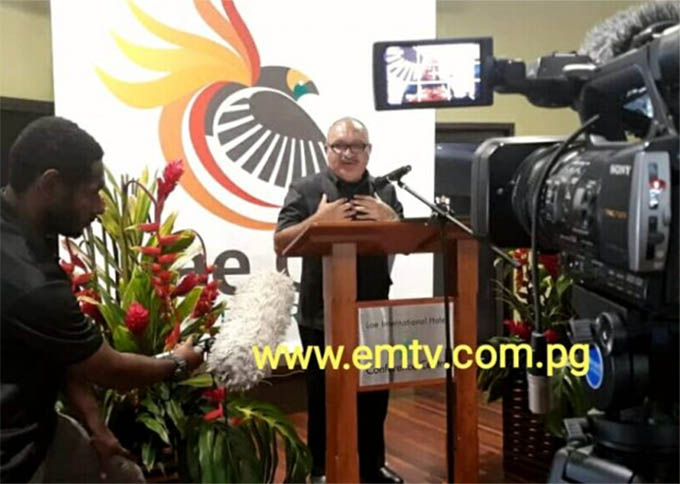
One of the 40 Maseratis imported by Papua New Guinea for APEC 2018 … threatened two-day strike looms. Image: EMTV News

By Johnny Blades of RNZ Pacific

Papua New Guinea’s government is under mounting pressure to account for a purchase of 40 luxury vehicles for next month’s Asia Pacific Economic Cooperation (APEC) summit in the capital of Port Moresby.

Shipments of the Maserati sedans from Italy arrived in Port Moresby last week, to be used for ferrying around APEC leaders and other dignitaries at the summit on November 17-18.

APEC Minister Justin Tkatchenko said the Maseratis were “being committed to be paid for by the private sector” where demand was so keen they would sell “like hot cakes”.

READ MORE: Facts triumph PNG government spin in Maserati furore

Putting the value of each car at a little over US$100,000 (NZ$150,000), Tkatchenko initially said the Maseratis were being paid for with “no overall cost to the state”.

Amid a public outcry about the Maseratis, the opposition Madang MP Bryan Kramer said the deal could be illegal if the vehicles have been bought by the private sector without any cost to the government.

-Partners-

With PNG’s Public Finance Management Act requiring any state assets to be acquired or disposed of by calling for public tender, Kramer said the government must reveal when the public tender was called.

He has linked the purchase to an invoice for US$6,357,684 to PNG’s government from a Sri Lanka-based auto spare parts and sales company, Ideal Choices.

Since his earlier statement, the minister admitted to Australian media that the government paid a deposit for the purchase. But he has not explained how it would recover its costs after on-selling cars at what is expected to be a depreciated price tag.

Meanwhile, as the jigsaw around the costs of this opaque deal falls into place, the company which transported the cars, Air Bridge Cargo, confirmed its freight planes were chartered by PNG’s government.

Strike looms
Opposition MPs have called for a nationwide strike later this week in protest against the government’s Maserati deal, which has been criticised as being excessively extravagant for a government struggling to fund basic health services.

“While the country faces a polio outbreak, failing health and education systems, systemic corruption, and escalating law and order issues, prime minister (Peter) O’Neill appears to be more concerned about impressing world leaders,” Kramer said in a statement.

“The bottom line is, we cannot afford to be this extravagant. Our country is broke and the O’Neill government continues to be irresponsible and reckless.”

Papua New Guinea APEC Minister Justin Tkatchenko … facing calls to be sacked. Image: Koroi Hawkins/RNZ

Facing calls to sack Tkatchenko and step down himself, O’Neill said yesterday that the vehicles would be sold to the private sector in a public tender.

This would happen in a transparent process, he explained, as soon as the APEC summit concluded in mid-November.

“Like many other international events that we have hosted in the past in the past 40 years, there has always been an arrangement where the private sector will buy those vehicles, so that it saves government money,” the prime minister explained.

Disastrous ‘optics’
But the Maserati deal has made for disastrous “optics”, triggering global media attention and outrage among Papua New Guineans.

“The Italian automobile manufacturer must now come out publicly to explain why they agreed to sell 40 Maseratis destined for PNG APEC to a small dealership based in Colombo, Sir Lanka,” said Kramer.

The outspoken MP said he could not envisage world leaders agreeing to be ferried in luxury vehicles that appear to be procured through a small backyard dealership.

However, Tkatchenko continues to defend the import, saying the kind of service provided through Maserati was standard for APEC summits.

This article is republished under the Pacific Media Centre’s content partnership with Radio New Zealand.

Print Friendly, PDF & Email

Article by AsiaPacificReport.nz

]]>

Australians care about animals – but we don’t buy ethical meat

]]>

Source: The Conversation (Au and NZ) – By Amelia Cornish, PhD student, University of Sydney

Australians clearly care about animal welfare: our research has found 92% shoppers in Sydney considered animal welfare to be important.

However, when we look at the distribution of market share of so-called high-welfare foods in Australia, we get a varied picture. Aussie shoppers seem to care far more about free-range eggs than the living conditions of pigs, cows and broilers (meat poultry).


Read more: What comes first: the free-range chicken or the free-range egg?


Free-range eggs now account for more than 40% of all eggs sold in Australia. This contrasts with only a 14% market share for free-range poultry and even less for pork, with only 5% coming from pigs raised outdoors.

Modern Australians are far removed from the production of their food. Around 95% of meat chickens and pigs eaten in Australia live on intensive farms, where huge numbers of animals are kept in small enclosed areas. This means we are largely divorced from the price animals pay in becoming our food.

Mind the hypocrisy gap

If we care about the welfare of the animals we eat, why don’t we buy foods that come from animals that were treated well? And why are we buying eggs that reflect higher welfare but not other animal-based foods?

This incongruence is an example of what is referred to as the attitude-behaviour gap, or the disparity between what we say and what we do. Many of us love animals, but buy the cheapest meat at the supermarket. This may be simply because all the different labels about welfare standards are too confusing, or it might be a consequence of the considerable price disparity.


Read more: How to know what you’re getting when you buy free-range eggs


We also know when a researcher asks shoppers if they’d pay more for free-range, she may receive disingenuous answers. We often like the idea we’ll do the “right” thing, and until we’re forced to put our money where our mouth is, it costs nothing to say we would behave honourably.

Hard to know

Even with the best intentions, it can be hard to know how the cows and pigs we eat are raised. Australian legislation doesn’t require producers to disclose fully their farming methods, such as the use of sow stalls. Sow stalls are highly confined housing that pregnant pigs are kept in. Promisingly, Pork Australia has said Aussie farmers are voluntarily phasing them out.

Shoppers can easily be left in the dark about the animal welfare implications of certain foods or, worse, misled by an array of labels, claims or certifications that are essentially meaningless.

When it comes to pork and bacon, Aussie consumers are afforded no legally enforceable definitions for pig husbandry systems. Currently, upwards of 95% of all pigs grown in Australia have no outdoor access.

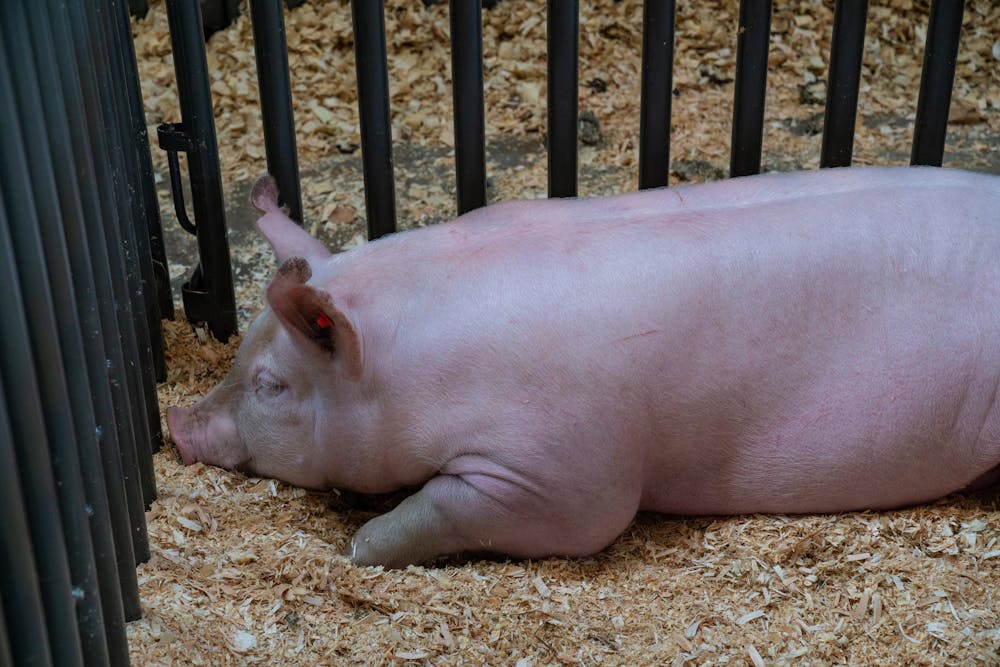
It can be hard to find out how pigs are raised. Tony Webster/Flickr, CC BY

When pigs are reared indoors, their stocking densities (number of animals per unit floor area) have a direct impact on farmers’ profit margins. Overcrowding and tail-biting in confined pigs are among the chief welfare concerns that drive consumers to pay a price premium for free-range pork and bacon.

But there is a growing trend towards use of the rather opaque term “outdoor-bred”. This denotes that piglets are born outdoors, but when weaned, at about 21 days of age, they are transferred to sheds where they spend the rest of their lives. Unfortunately, most consumers are unaware of the true conditions behind this label and think it indicates that the animals spend all of their lives ranging freely.

Bred free-range is such a misleading term that Australia’s consumer watchdog has pushed for the inclusion of the words “Raised indoors on straw” to make it clearer to consumers that the pigs are born outdoors but raised indoors from weaning until slaughter.

The stocking densities on Australian farms are governed by the Model Code of Practice for the Welfare of Animals: Pigs. However, for outdoor pigs, the code only offers “recommended” maximum stocking densities. Thus there is really no way of knowing how much space “free-range” pigs occupy, unless you study the details of accreditation or assurance schemes.

Information feeds demand

Australian shoppers now see plenty of information on egg cartons, which raises our awareness and, in turn, the demand for higher welfare eggs. This high demand lowers the price, and the attitude-behaviour gap shrinks a little when it comes to eggs.

Free-range eggs sell at a lower price premium than other high welfare animal-based foods. For example, intensively farmed cage eggs will cost you about A$3.50 per dozen, yet for just an extra dollar or two you can buy free-range eggs. This contrasts sharply with intensively farmed chicken meat, which will generally cost you A$7 per kg for breast fillets, while the free-range counterpart sits at around A$16/kg.

If you are confused about this disparity, so are we! That’s why we are exploring the extent of the attitude-behaviour gap in Australia and have launched an online survey. We need you to tell us how labelling around animal welfare influences your shopping decisions.


Read more: Animal welfare and animal rights are very different beasts


Welfare-friendly shopping involves avoiding foods that have been produced using practices such as so-called battery cages (for egg production) and sow stalls (for pork production). With the attitude-behaviour gap in mind, it’s important to find higher-welfare products by looking for labels such as RSPCA Approved Farming Scheme,Humane Choice or FREPA, just to name a few. But we should also be demanding clearer labels.

ref. Australians care about animals – but we don’t buy ethical meat – http://theconversation.com/australians-care-about-animals-but-we-dont-buy-ethical-meat-104394]]>

For the sake of our retirement savings, it’s time to reform the investment management boys’ club

]]>

Source: The Conversation (Au and NZ) – By Sarah Oxenbridge, Research Fellow, University of Sydney Business School, University of Sydney

Australians have A$2.6 trillion in superannuation assets. We conducted a study of Australian women who influence or make decisions about how these assets are invested. Research shows gender-diverse investment teams lead to better investment returns. Yet women report being subject to sexist and unequal treatment in their industry.

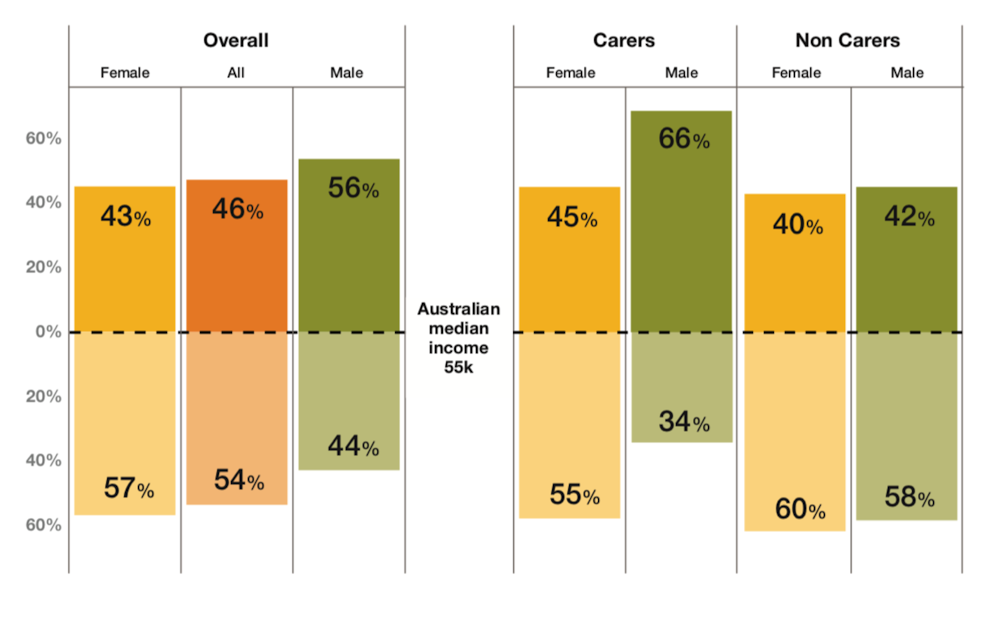
While women are now the majority of finance graduates at some Australian universities, they remain a minority at all levels of investment management. They comprise 17% of Australian investment managers. On average they experience a 33% gender pay gap. This is almost 10 percentage points bigger than the gap across all industries.

The gender pay gap is particularly pronounced because discretionary bonuses make up a substantial portion of pay packets in investment management. Women are less likely to be in roles that are paid bonuses. The also report being paid lower bonuses than male equivalents.


Read more: Will the real gender pay gap please stand up?


Our survey and interview data from 127 women show investment management remains a “boys’ club”. Our findings mirror those of studies of women in Australian finance conducted since 1991. Little has changed over 30 years.

The women in our study were ambitious and passionate about working in investment management. They talked about the strong sense of purpose their jobs provided. They wanted more women making career decisions to be aware of the financial and intellectual rewards.

Most study participants were relatively senior, and most agreed they were treated with respect and had sufficient flexibility over work hours. But only half agreed their workplace treated men and women equally. A significant minority had experienced sexual harassment, offensive remarks or behaviours, and exclusion from important work-related events.

Working mothers have it hardest

Lack of accommodation of working mothers was the key problem identified.

More than half agreed working flexibly or part-time compromised career opportunities. Women described only limited access to flexibility and maternity leave, and stalled careers as a result. Women who took extended leave or “downshifted” were paid less than men in their cohort. This led to a widening pay gap over the course of their careers.


Read more: Honey, I hid the kids: Australia’s screen industry is letting down carers


Other problems were identified:

  • an “ingrained” culture of sexism and gender discrimination; this included stereotyped views of women being best suited to administrative roles, and that their primary role was that of family carer

  • unconscious and conscious biases screening women out of recruitment processes and preventing their advancement

  • disillusionment that men across the industry were only paying “lip service” to gender equality

  • an absence of support, sponsorship and mentoring from direct managers throughout their careers.

Diversity promotes accountability

Finance-sector organisations are under pressure to improve their accountability and performance following the banking royal commission. Having more diverse decision-making is key to this. Cognitively diverse teams are less likely to engage in group think or risky behaviours.

It’s important the leaders of investment management organisations show genuine commitment to improving diversity. It’s equally important this commitment is enacted by managers at all levels.

At the team level, managers should provide support and equal opportunities for women to “stretch” themselves and build their potential for promotion. We found women given the same career-advancing assignments as male colleagues advanced to senior levels and recruited more women at levels below.


Read more: How men and women can help reduce gender bias in the workplace


One catalyst for change might be to link managers’ pay, bonuses or promotion prospects to achieving key performance indicators for supportive and equitable management practices.

At an industry level, superannuation funds such as HESTA are measuring gender diversity in the firms that manage their assets.

The research points to a need for organisations to “de-bias” all people management processes to ensure gender-equal outcomes in recruitment, allocation of assignments, development opportunities, promotions and remuneration.

To accommodate working parents, organisations should redesign jobs to allow for reduced workloads and career advancement. They need to develop strategies that minimise the impact of maternity leave on career trajectories. They should also encourage men to work flexibly and take extended parental leave, so this becomes a cultural norm.

ref. For the sake of our retirement savings, it’s time to reform the investment management boys’ club – http://theconversation.com/for-the-sake-of-our-retirement-savings-its-time-to-reform-the-investment-management-boys-club-103319]]>

University of the South Pacific annual journalism awards – celebrating 50 years

Author profile: 

Event date and time: 

Friday, October 19, 2018 – 18:00 20:00

ANNUAL JOURNALISM AWARDS AT UNIVERSITY OF THE SOUTH PACIFIC
The Pacific Media Centre’s director, Professor David Robie, has been invited as keynote speaker for the annual journalism awards at the University of the South Pacific.

The ceremony is part of events marking the 50th anniversary of the creation of USP and 18 years since the awards were first launched by Dr Robie.

He was coordinator of the programme between 1998 and 2002. The programme is now led by Dr Shailendra Singh assisted by Wansolwara editor-in-chief Geraldine Panapasa and assistant lecturer Eliki Druganalevu.

All welcome.

Who: Professor David Robie

When: Friday, October 19, 6pm.

Where: Oceania Centre for Arts, Culture and Pacific Studies pavillion,
Laucala Campus, University of the South Pacific

More information: Dr Shailendra Singh

Wansolwara News

Report by Pacific Media Centre ]]>

A new take on An Enemy of the People fizzes with contemporary relevance

]]>

Source: The Conversation (Au and NZ) – By Huw Griffiths, Senior Lecturer in English Literature, University of Sydney

Review: An Enemy of the People, Belvoir.


The fitness of Henrik Ibsen’s plays to address the political questions of our modern lives renews itself with each generation. So, Arthur Miller adapted Ibsen’s 1882 play, An Enemy of the People, in 1950, using it as a way to confront the beginnings of McCarthyism and its assaults on writers’ capacities to tell the truth.

And now, at Belvoir in Sydney, we have a new adaptation from Melissa Reeves, transplanted by director, Anne-Louise Sarks, to a small-town in Australia. We are ready to confront, via Ibsen, some of what it means to live in Scott Morrison’s Australia. This is a land where vested interests might prevent our access to the truth, and where nobody’s motives are entirely free from narcissistic self-regard.

An Enemy of the People has a title that uncannily prefigures Donald Trump’s preferred description for mainstream journalists. As one of Ibsen’s plays that is more overtly concerned with public life, it is primed to address some important questions of our time: how possible is it to tell the truth, or even to hear the truth, if nobody is allowed to escape the prison-house of vested interests?

At the centre of the play is the whistle-blower Dr. Brockmann, here played by Kate Mulvany. The doctor discovers that her town’s source of income — the healing waters of a health spa (“wellness centre”) — pose a significant health risk; they have been poisoned by run-off from local industry. At first, local media and small businesses are both on her side, and plan to help rectify the problem.

But, as the politicians get hold of the issue, what seems like a straightforwardly practical and scientific problem becomes clouded by self-interest. The town turns on the doctor that they had previously seen as its champion. In this production, Leon Ford, as the town’s mayor and brother to the good doctor, successfully evinces a perfect mix of parochial narrow-mindedness and mean-spirited disregard for his sister’s campaigning.

Nikita Waldron, Leon Ford, Kate Mulvany in An Enemy of the People. Brett Boardman

At the same time, the doctor’s crusade is harmed by a tendency to enjoy the limelight just a little too much. This is a Dr. Brockmann who, whilst passionate in her commitment to the truth, is blind to the way that her campaigning might ignore the town’s deeper conflicts.

Mulvany captures well a combination of steely resolve and an anguished vulnerability to the harsh treatment that her neighbours dole out. In amongst the damaging fight that ensues, Ibsen shows us that any path to “truth” is unlikely ever to come clearly into view.

An Enemy of the People is something of an outlier in Ibsen’s work in that it focuses more on political associations than it does on personal relationships. The playwright’s interest in the difficulties of truth-telling is, however, something that connects almost all of his work.

He wrote this play in Danish in 1882, in between two of his masterpieces: Ghosts (1881) and The Wild Duck (1884). A contemporary review in The Times of the first English production remarks on how different the play is by way of it being much easier to understand: “the name of Ibsen … has hitherto been associated with work which is full of enigmas and obscurities,” the anonymous reviewer writes, but “here we have a play which everybody can understand.”

Incomprehension was a very common reaction to Ibsen’s plays during his lifetime. What we now take for granted as a staple of drama — a realistic representation of everyday life that hints, in its many silences, at the larger power struggles within which people become trapped – was, for late 19th-century playgoers, difficult to make sense of.

The play Ghosts, for example, had received a particularly hostile reception from some aspects of the press. The story of syphilis that it tells resulted in it being seen, according to one newspaper, as a “mass of vulgarity, egotism, coarseness and absurdity”.

Catherine Davis in An Enemy of the People. Brett Boardman

Others saw in Ibsen a truth-teller, somebody who was prepared to try and show life as it is really lived, not caring to insist that audiences adopt particular points of view. A contemporary supporter of Ibsen, Arthur Symons, wrote that, “Nothing shows us better than Ibsen’s social dramas the true meaning of the word realism” and that his work, “is daring to discuss matters over which society draws a veil”.

In Dr. Brockmann, we get an Ibsen-like figure: a misunderstood truth-teller, wondering if it is all still worth it when faced with seemingly impossible opposition. This might be why some of his contemporaries found this play to be a bit more digestible than his others. With his other plays, Ibsen turns inwards, into people’s minds and into their private rooms, as he traces the appalling effects of stifled opportunity. But, with this play, he goes on the attack and looks outward.

In this production, this outward-looking trajectory provides for some fresh and compelling dialogue from Reeves. Her adaptation fizzes with contemporary relevance.

The fourth act is particularly strong. This is a public meeting between the doctor and her opponents. In the original, Ibsen manages this by filling his usually sparsely-populated stage with a huge crowd of people. Contradictory viewpoints fly across the stage. He takes us out of his usual habitat, the middle-class parlour, where he might just show us “life as it is lived” without offering us any explanations.

Instead, we are being addressed directly as if part of the crowd, confronted by the demands of the playwright as much as by the demands of Dr Brockmann.

In the Belvoir production, we are actually made part of the crowd, as Mulvany’s Brockmann draws us into the argument, challenging us on our own complicities, our own refusals really to break through the spin and listen to the “truth”.


An Enemy of the People is being staged at Belvoir until November 4.

ref. A new take on An Enemy of the People fizzes with contemporary relevance – http://theconversation.com/a-new-take-on-an-enemy-of-the-people-fizzes-with-contemporary-relevance-104928]]>

Boyer Lectures: the new eugenics is the same as the old, just in fancier clothes

]]>

Source: The Conversation (Au and NZ) – By Ross L Jones, Honorary Senior Fellow, Department of Anatomy and Neuroscience, University of Melbourne; Associate, Centre for Health Law and Society, La Trobe University, University of Melbourne

This year marks the 60th anniversary of the ABC’s Boyer Lectures. Delivered by Professor John Rasko, the 2018 Life Engineered lectures explore ethical and other issues around gene therapy and related technologies, and their potential to cure disease, prolong life and change the course of human evolution.

The first lecture will be broadcast on RN’s Big Ideas at 8pm tonight. In this article, we explore the history of eugenics and the ethical implications of its resurgence with the evolution of genetic therapy.


News about the potential of genetic engineering to improve our lives is often compromised by problematic stories about its potential for misuse. Should couples be allowed to choose the gender of their offspring? Should the state intervene in the reproductive lives of its citizens?

We can see this most recently in the case of couples travelling to clinics overseas to use IVF to choose the gender of their child – a practice prohibited in Australia. Such case studies represent only the current point in a long history of the debate about “improving” humanity – the science of eugenics.

Some scientists and ethicists believe eugenics is a value-free science that got a bad name due to the practices in Nazi Germany.

Philosopher and bioethicist Julian Savulescu, for instance, has endorsed the “new eugenics”, claiming that in its previous incarnation it was sullied by bad science and state intervention. He has argued we have a moral obligation to overcome some limitations if science permits it, such as ensuring babies aren’t born with certain types of disabilities.

The argument follows that the new science is “good” science and the free market will lead to human improvement, not contravene fundamental rights.


Read more: Toby Young: what is ‘progressive eugenics’ and what does it have to do with meritocracy?


Eugenics not a Nazi creation

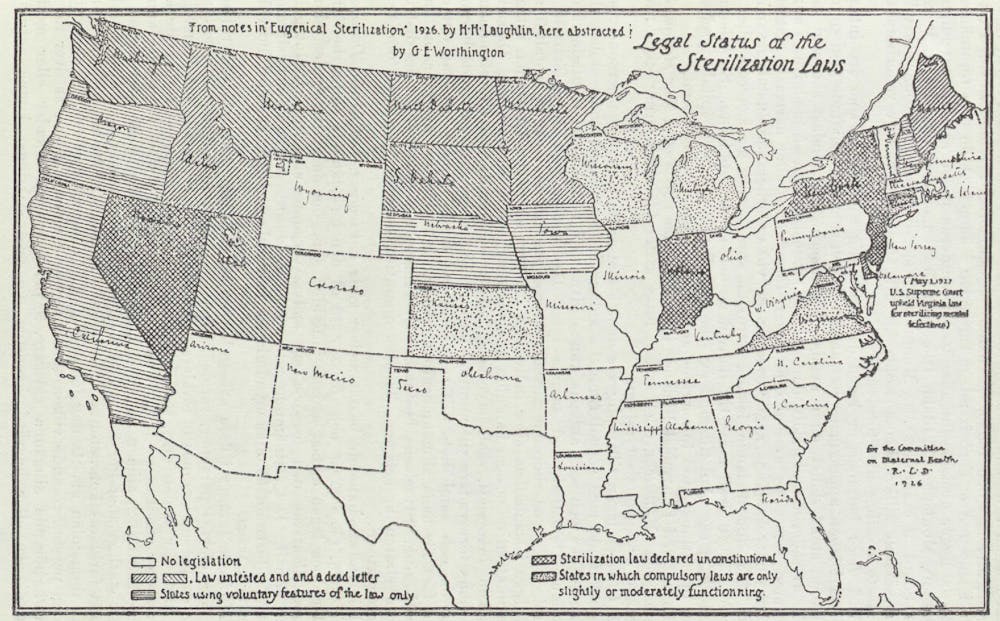
Discussing Nazi eugenics, however, misses the point. This is because German eugenicists actually learnt the craft from observing the extensive sterilisation programs in the US in the 1920s and ’30s that stopped tens of thousands of people from reproducing.

Legal oversight failed completely. The sterilisation program that targeted “inferior” Americans was endorsed by the Supreme Court in Buck v Bell in 1927. Carrie Buck was surgically sterilised at the age of 22 using fabricated evidence of her, her mother’s and her seven-month-old daughter’s mental incapacity. The reason given in the leading judgment was that “three generations of imbeciles is enough”.

The Rockefeller Foundation funded the pre-second world war work of Josef Mengele (a doctor who later performed human experiments on prisoners at Auschwitz concentration camp) on genetics and disease. Along with the Carnegie Foundation and the Harriman family, millions of dollars went into research programs used to justify the sterilisation of people in the US with disabilities.

The US sterilised tens of thousands of people with disabilities in the early 20th century. (taken from1929 Swedish royal commission report) Wikimedia Commons

Leading scientists and eugenics

Not that we can point the finger just at the US. Charles Darwin’s cousin Francis Galton founded the modern eugenics movement in Britain. He set the ball in motion for the Eugenics Society to be born in the early 1900s. It supported policies that reduced the breeding rights of “inferior” members of society – ranging from birth-control clinics in the slums of major cities and severe restrictions on immigration, through to state-imposed sterilisation.

The first Galton Chair of Eugenics at University College London, Karl Pearson, discovered many of the most important principles underlying modern statistics. Central to his development of statistics was his work in establishing methods of measuring biological normality for the purposes of breeding “better” humans.

Many leading biological scientists and Nobel laureates were members of the society – the brightest minds of generations, who were thought leaders of the time. These included Ronald Fisher, the founder of modern evolutionary biology (who argued that the poorer classes are genetically inferior to the middle classes), the Nobel Prize-winning immunologist Peter Medawar and IVF pioneer Robert Edwards.


Read more: Boyer Lectures: gene therapy is still in its infancy but the future looks promising


Leading scientists still preached the eugenic message of the biological inequality of humans after 1945, as well as the need to restrict the reproductive rights of such people. For example, in the late 1950s and early 1960s Australia’s own Nobel laureate, virologist McFarlane Burnett, pointed out the danger in letting less intelligent members of society have larger families in an article of the Eugenics Society magazine, the Eugenics Review.

Even more controversially, James Watson, who with Francis Crick and, with a very belated acknowledgement, Rosalind Franklin, discovered the double-helix architecture of the chromosome in 1953, argued recently that blacks are less genetically intelligent than whites, and that women are less able in the sciences.


Read more: Eugenics in Australia: The secret of Melbourne’s elite


But we’re ‘better’ now

Maybe the science is much “better” now, as Savalescu claims – but there have been concerns about that as well.

Perhaps the most important consideration when evaluating the benefits of the new eugenics is the vexed question of what makes a human “better”.

Certainly if we take deafness, there is an important movement of the deaf that sees deafness as a culture, not a disability. Advocates of this view argue that deaf people aren’t lacking in a way that makes them inferior, they are just different and society should accommodate such difference, not “cure” it, in the same way homosexuality has been de-medicalised.

Can this be said of other so-called disabilities? Is having a higher IQ “better”?

The founder of social Darwinism, Herbert Spencer, coined the term “survival of the fittest”. Interrogating this statement actually shows its a tautology.

Question: Who survives?

Answer: The fittest

Question: Who are the fittest?

Answer: Those who survive.

A tautology is a meaningless formula for future action as it only describes what has gone on in the past. We know who “survived”, it’s the story written by the “winners”. For Spencer, middle-class white males were the “fittest”. Have we just replaced “fittest” with “best”?

We need to think clearly about the consequences of the new genetic technologies and not blindly embrace them in the name of “betterment” if we don’t scrupulously interrogate why such “improvements” are necessary. This was a problem with most of the definitions of the unfit by eugenicists in the past.

If significant funding is to be allocated to the modern eugenics, policymakers must be involved in finding solutions to these problems, otherwise the “new eugenics” is just the old one in new clothes.

ref. Boyer Lectures: the new eugenics is the same as the old, just in fancier clothes – http://theconversation.com/boyer-lectures-the-new-eugenics-is-the-same-as-the-old-just-in-fancier-clothes-103165]]>

Poll wrap: Labor slips in Newspoll, but gains in Ipsos, in Wentworth and in Victoria

]]>

Source: The Conversation (Au and NZ) – By Adrian Beaumont, Honorary Associate, School of Mathematics and Statistics, University of Melbourne

This week’s Newspoll, conducted October 11-14 from a sample of 1,707, gave Labor a 53-47 lead, a one-point gain for the Coalition since three weeks ago. Primary votes were 38% Labor (down one), 37% Coalition (up one), 11% Greens (up one) and 6% One Nation (steady).

In contrast to Newspoll, Labor’s lead increased to a 55-45 margin in a Fairfax Ipsos poll, a two-point gain for Labor since four weeks ago. Primary votes were 35% Coalition (up one), 35% Labor (up four), 15% Greens (steady) and 5% One Nation (down two). This poll was taken October 10-13 from a sample of 1,200.


Read more: Coalition trails 47-53% in Newspoll, as Ipsos finds 74% oppose law discriminating against gay students and teachers


When Scott Morrison replaced Malcolm Turnbull in late August, Labor’s lead blew out to a 56-44 margin in Newspoll, and the Coalition has since clawed back support. However, these two polls indicate the Coalition’s gains have stalled. Analyst Kevin Bonham’s aggregate is at 53.9% two party to Labor by last election preferences, a 0.6% gain for Labor since last week.

As usual, the Greens vote in Ipsos is too high, but Newspoll also indicates that the Greens have gained; this is their highest Newspoll vote since August 2017. The Coalition’s dismissal of the IPCC report is a plausible reason for Green gains.

Respondent allocated preferences in Ipsos were 55-45 to Labor, the same as the previous election preference method. Under Turnbull, respondent preferences skewed to the Coalition, but the two Ipsos polls under Morrison have had identical respondent and previous election results. A stronger flow of Greens and Others to Labor could be compensating for One Nation’s flows to the Coalition.


Read more: Poll wrap: Labor’s lead shrinks in federal Ipsos, but grows in Victorian Galaxy; Trump’s ratings slip


In Newspoll, 45% were satisfied with Morrison (up one), and 38% were dissatisfied (down one), for a net approval of +7. Bill Shorten’s net approval was up six points to -16. Morrison led Shorten by 45-34 as better PM (45-32 three weeks ago).

Morrison’s first three Newspoll net approval ratings have been +2, +5 and +7. Turnbull’s first three Newspoll net approval ratings after deposing Tony Abbott were +18, +25 and +35. While Morrison’s current ratings are much better than Turnbull before he was deposed, they are far worse than Turnbull in his honeymoon period.

Despite the stronger voting intentions for Labor in Ipsos, 50% approved of Morrison (up four) and 33% disapproved (down three), for a net approval of +17, up seven points. Shorten’s net approval dropped four points to -8. Morrison led Shorten by 48-35 as better PM (47-37 four weeks ago).

By a massive 74-21, voters in Ipsos opposed allowing religious schools to discriminate against gay teachers and students. Bonham cautions that, as a live phone pollster, Ipsos is prone to social desirability bias, so the real margin for this question is probably closer.

By 64-29, Ipsos voters were dissatisfied with the Coalition on immigration. 45% thought immigration should be reduced, 23% increased, and 29% thought immigration should remain as is.

By 50-32, voters in Newspoll thought Morrison more capable of handling the economy than Shorten (48-31 to Turnbull in May). Morrison also led on cost-of-living 44-43 (43-41 to Shorten over Turnbull in December 2017) and on delivering tax cuts 45-33 (40-33 to Turnbull in December). The economy and tax cuts tend to favour conservatives.

In February 2016, five months after deposing Abbott, Turnbull led Shorten by 58-22 on the economy and 42-33 on cost-of-living.

All of the polls below were taken before the events of last week.

Essential: 53-47 to Labor

Last week’s Essential poll, conducted October 4-7 from a sample of 1,025, gave Labor a 53-47 lead, unchanged on three weeks ago. Primary votes were 38% Coalition (up one), 37% Labor (up one), 10% Greens (down two) and 7% One Nation (up two).

43% approved of Morrison (up six since September) and 28% disapproved (down three), for a net approval of +15. Shorten’s net approval fell four points to -12. Morrison led Shorten by 42-27 as better PM (39-27 in September).

57-62% had at least some trust in ABC and SBS TV and radio news and current affairs. Other news sources had between 35% and 48% trust, with Internet blogs at the bottom with just 17% trust. There was little change in trust since October 2017.

36% thought the government had too much influence over the ABC, 16% too little and 17% about the right amount. By 40-34, voters thought news reporting and comment on the ABC was unbiased, with Labor and Greens voters more likely to say the ABC was unbiased.

By 43-35, voters opposed keeping all asylum seekers on Nauru indefinitely. By 42-37, they opposed closing the detention centres and transferring all remaining asylum seekers to Australia. By a narrow 40-39, voters supported transferring families and children from Nauru to Australia.

Wentworth ReachTEL poll tied 50-50 Liberal vs Labor

The Wentworth byelection will be held on October 20. A ReachTEL poll for the Refugee Council of Australia, conducted in the first week of October from a sample of 870, had the Liberals’ Dave Sharma and Labor’s Tim Murray tied at 50-50, a one-point gain for Murray since a September 27 ReachTEL poll for independent Licia Heath’s campaign.

According to The Poll Bludger, primary votes, including a forced choice question for initially undecided voters, were 39.9% Sharma (down 3.1%), 25.0% Murray (up 4.3%), 17.3% for independent Kerryn Phelps (down 0.6%), 9.1% Greens (up 2.5%) and 3.6% Heath (down 6.4%). It is likely the Heath campaign poll exaggerated her support.


Read more: Poll wrap: Phelps slumps to third in Wentworth; Trump’s ratings up after fight over Kavanaugh


This poll also gave a Sharma vs Phelps two candidate estimate, which had Phelps beating Sharma 53-47. However, on the primary vote figures, it is likely Phelps will be eliminated and her preferences distributed between Sharma and Murray. Phelps’ decision to preference the Liberals ahead of Labor, doing an about-face on her previous position of putting the Liberals last, appears to have damaged her.

Seat polls are unreliable, so the 50-50 Sharma vs Murray estimate could reasonably be out by up to five points in either direction. The respondent preference flows implied by this poll (about two-thirds of all Other preferences to Labor) are more reasonable than in the previous poll (three-quarters of Other preferences to Labor).

It is disappointing there have been no properly conducted polls of Wentworth since early October, and no media-commmissioned polls at all. Bonham has big issues with a Voter Choice poll that has both Phelps and Murray defeating Sharma by about 55-45 after preferences, due to that poll’s opt-in nature and weighting adjustments. A Liberal internal poll reportedly shows Sharma is just behind Phelps, who is likely to finish ahead of Murray.

Victorian ReachTEL: 52-48 to Labor

The Victorian election will be held on November 24. A ReachTEL poll for The Age, conducted October 3 from a sample of 1,240, gave Labor a 52-48 lead, a one-point gain for Labor since July. Primary votes were 39.4% Coalition (down 1.4%), 37.6% Labor (up 0.9%), 10.9% Greens (steady) and 4.0% Shooters, Fishers and Farmers.

One Nation had 3.7% in the July poll, but they will not contest the election. The Shooters have benefited from One Nation’s absence.

Premier Daniel Andrews led Opposition Leader Matthew Guy by a 51.3-48.7 margin as better Premier, a 0.7% gain for Andrews since July. ReachTEL’s forced choice better PM/Premier questions are usually better for opposition leaders than other polls.

In other forced choice questions, Labor led the Coalition by 54.0-46.0 on dealing with Melbourne’s congestion (Coalition ahead by 50.8-49.2 in July). Labor led by 52.9-47.1 on cost-of-living (50.2-49.8 in July). The Coalition led by 53.9-46.1 on law and order (55.8-44.2 in July) and by 50.4-49.6 on managing growing population (51.6-48.4 in July).


Read more: Victorian ReachTEL poll: 51-49 to Labor, and time running out for upper house reform


All these issues surveyed have moved towards Labor since July, with a large movement on Melbourne’s congestion. Issue questions usually move in the same direction as voting intentions.

A Galaxy poll in September for the bus industry gave Labor a 53-47 lead. State political parties tend to do better when the opposite party is in power federally. Labor is clearly ahead now, and is likely to win the Victorian election.

In brief: US midterm elections and far-right likely to win Brazil presidential election

I had an article for The Poll Bludger on the November 6 US midterm elections published Sunday. Since the fight over judge Brett Kavanaugh’s confirmation to the US Supreme Court, Republicans have gained ground in the Senate, but Democrats have gained in the House. A split decision, where the Democrats win the House, but Republicans keep the Senate, is the most likely outcome.

I also previewed the Brazilian presidential election on my personal website. At the October 7 first round election, the far-right candidate, Jair Bolsonaro, won 46.0% of the vote, while the left-wing Workers’ Party candidate, Fernando Haddad, had 29.3%. Another left-wing candidate won 12.5%, and a centre-right candidate won 4.8%.

As Bolsonaro did not win over 50% in the first round, a runoff will be held on October 28 between Bolsonaro and Haddad. The three runoff polls taken so far give Bolsonaro a seven to fifteen point lead over Haddad. Bolsonaro has made comments sympathetic to the 1964-85 Brazilian military dictatorship.

ref. Poll wrap: Labor slips in Newspoll, but gains in Ipsos, in Wentworth and in Victoria – http://theconversation.com/poll-wrap-labor-slips-in-newspoll-but-gains-in-ipsos-in-wentworth-and-in-victoria-104562]]>

VR technology gives new meaning to ‘holidaying at home’. But is it really a substitute for travel?

]]>

Source: The Conversation (Au and NZ) – By Vikki Schaffer, Program Co-ordinator and Lecturer, Tourism, Leisure and Event Management, University of the Sunshine Coast

As virtual reality technology improves, it creates new opportunities for travellers seeking new experiences. This is the latest instalment of our series exploring how technology is changing tourism.


Tourism is often about seeking deeper emotional and personal connections with the world around us. It’s a quintessential part of the “experience economy”, creating memories that can be recalled, re-lived and re-shared for a lifetime.

But not all travel experiences take place in the real world. With the evolution of virtual reality (VR) technology, tourism is increasingly a mash-up of physical and virtual worlds. VR can even remove the need to travel entirely.

Excessive tourism, or over-tourism, in popular destinations can degrade heritage sites, the quality of life of host communities, and the experience of visitors. Virtual reality not only offers alternative forms of access to threatened locations, it also recreates historical experiences and provides virtual access to remote locations you might not make it to otherwise.

Up to 6,000 people were visiting Maya Bay every day before it was closed to tourists. Shutterstock

Read more: How Virtual Reality is giving the world’s roller coasters a new twist


Evoking a sense of ‘being there’

Our brains seem to have an inbuilt VR-like mechanism that enables us to live imagined experiences. Much of our waking life is spent thinking about either the past (retrospection) or the future (prospection). This is known as mind wandering.

During these events we’re not paying attention to the current world around us. Instead, we’re recalling memories, or creating and processing imagined futures.

When we’re engaged in mind wandering, our brains process and appraise mental images via the same neural pathways they use to receive stimuli from the real world. So, the imagined past or future can evoke emotions and feelings similar to how we react to everyday life.


Read more: Museums are using virtual reality to preserve the past – before it’s too late


VR can elicit these same feelings. Virtual worlds use sensory stimulation and vivid imagery to generate authentic experiences. Immersion in these environments can lead to a deeper understanding of a place or event than simply reading about it or looking at pictures.

There is evidence virtual reality can create absorption, or a state of attention, leading to a sense of “presence” or “being there”. After a tourism VR experience of the Great Barrier Reef, for example, participants reported experiencing a sense of relaxation, similar to that gained from travel in real life.

What VR tourism looks like

Choosing a destination

Immersive videos of Australian holiday destinations created by Tourism Australia have been viewed more than 10.5 million times over the past two years. Research conducted by Tourism Australia shows that almost 20% of consumers have used VR to choose a holiday destination, while about 25% plan to use VR to choose a future destination. There is evidence VR can sometimes surpass reality, potentially leading the participant to choose an alternate destination.

A 360 degree video of Stokes Bay on Kangaroo Island in South Australia.

Sustainability

In March, Thai authorities closed sections of the famous Maya Bay (which featured in Hollywood movie The Beach) because over-tourism threatened coral reefs. VR could offer experiences of locations like this without impacting the natural environment. It could also help support capacity management at “bucket list” destinations, such as Machu Picchu. But if VR is too effective at reducing visitation, alternate forms of income for local people need to be developed to support economic viability.

Visiting Machu Picchu.

Historical recreations

In 2018, the Australian War Memorial brought the Battle of Hamel to virtual life using 3D and 360 degree video. Designers of the A$100 million Sir John Monash Centre in Villers-Bretonneux, France used immersive video, interactive touch screens and historical relics to recreate the soldiers’ experience on the Western Front during WWI. Similar work is being completed in regional Australia to recreate life on a US Airbase on “the Brisbane Line” – Australia’s controversial last point of defence in WWII.

Audiences can immerse themselves in the key action fought on 4 July 1918 on the Western Front via VR.

Access to remote areas

Wildlife watching can elicit feelings of empathy, surprise, novelty, even fear. It can also generate excitement, stimulation, entertainment and learning. But government regulation, cost, remoteness and seasonality of migratory patterns may limit opportunities for people to encounter some of the awe-inspiring creatures on our planet. Virtual immersion can offer alternatives that support conservation goals and provide transformative visitor experiences.

Birdly is a flight simulator that uses arm holsters and 3D goggles to give a person the feeling of a bird soaring above ground.

Read more: Want to be a space tour guide? Apply here… in 2025


Enhancing health and wellbeing

VR tourism could also help to increase health and well-being. Long working hours can lead to anxiety and depression. Research demonstrates immersion in the outdoors encourages relaxation, rejuvenation, expectation, surprise, trust in oneself, and improved self-esteem that can contribute to reduced symptoms. Short breaks using tourism-based VR experiences can mirror these effects and improve health.

Tourists encounter whales in the wild and are treated to a spectacular display.

New possibilities for VR applications – both practical and pleasurable – are emerging as the technology evolves. And as travellers seek new and novel experiences, combining virtual with real world experiences may become a common feature of tourism in the future.

ref. VR technology gives new meaning to ‘holidaying at home’. But is it really a substitute for travel? – http://theconversation.com/vr-technology-gives-new-meaning-to-holidaying-at-home-but-is-it-really-a-substitute-for-travel-101258]]>

All eyes on November’s G20 meeting as tensions between China and the US ratchet up

]]>

Source: The Conversation (Au and NZ) – By Tony Walker, Adjunct Professor, School of Communications, La Trobe University

When G20 finance ministers met in Bali last week to review economic developments in the lead-up to the annual G20 summit, they could not ignore troubling signs in the global economy driven by concerns about an intensifying US-China trade conflict.

Last week’s slide in equities markets will have served as a warning – if that was needed – of the risks of a trade conflict undermining confidence more generally.

China’s own Shanghai index is down nearly 30% this year. This is partly due to concerns about a trade disruption becoming an all-out trade war.


Read more: The risks of a new Cold War between the US and China are real: here’s why


IMF Managing Director Christine Lagarde’s call on G20 participants to “de-escalate” trade tensions or risk a further drag on global economic growth might have resonated among her listeners in Bali, but it is not clear calls to reason are getting much traction in Washington these days.

Uncertainties caused by a disrupted trading environment are already having an impact on global growth. In its latest World Economic Outlook, the IMF revised growth down to 3.7% from 3.9% for 2018-19, 0.2 percentage points lower than forecast in April.

IMF Managing Director Christine Lagarde has called on G20 members to AAP/EPA/Made Nagi

The IMF is predicting slower growth for the Australian economy, down from a projected 2.9% this year to 2.8% next year. The May federal budget projected growth of 3% for 2018-19 and the following year.

Adding to trade and other tensions between the US and China are the issues of currency valuations, and a Chinese trade surplus.

In September, China’s trade surplus with the US ballooned to a record U$34.1 billion.

This comes amid persistent US complaints that Beijing has fostered a depreciation of the Yuan by about 10% this year to boost exports, which China denies.

These are perilous times in a global market in which the US appears to have shunned its traditional leadership role in favour of an internally-focused “America First” strategy.

So far, fallout from an increasingly contentious relationship between Washington and Beijing has been contained, but a near collision earlier this month between US and Chinese warships in the South China sea reminds us accidents can happen.

This is the background to a meeting at the G20 summit in Buenos Aires late in November between US President Donald Trump and Chinese President Xi Jinping. That encounter is assuming greater significance as a list of grievances between the two countries expands.

US Vice President Mike Pence’s speech last week to the conservative Hudson Institute invited this question when he accused of China of “malign” intent towards the US.

Are we seeing the beginning of a new cold war?

The short answer is not necessarily. However, a further deterioration in relations could take on some of the characteristics of a cold war, in which collaboration between Washington and Beijing on issues like North Korea becomes more difficult.

By any standards, Pence’s remarks about China were surprising. He suggested, for example, that Chinese meddling in American internal affairs was more serious than Russia’s interventions in the 2016 president campaign.

He accused Beijing of seeking to harm Republican prospects in mid-term congressional elections and Trump’s 2020 re-election bid. This was a reference to China having taken its campaign against US tariffs to newspaper ads in farm states like Iowa.

Soybean exports to China have been hit hard by retaliatory tariff measures applied by Beijing in response to a first round of tariffs levied by the US.

“China wants a different American president,” Pence said.

This is probably true, but it could also be said that much of the rest of the world – not to mention half of the US population – would like a different American president.

All this unsteadiness – and talk of a “new cold war” – is forcing an extensive debate about how to manage relations with the US and China in a disrupted environment that seems likely to become more, not less, challenging.

Australian academic debate, including contributions from various “think tanks”, has tended to focus on the defence implications of tensions in the South China Sea for Australia’s alliance relationship with the US.

This debate has narrowed the focus of Australia’s concerns to those relating to America’s ability – or willingness – to balance China’s regional assertiveness.

This assertiveness increasingly is finding an expression in China’s activities in the south-west Pacific, where Chinese chequebook – or “debt-trap” – diplomacy is being wielded to build political influence.

Australian policymakers have been slow to respond to China’s push into what has been regarded as Australia’s own sphere of influence.


Read more: Despite strong words, the US has few options left to reverse China’s gains in the South China Sea


Leaving aside narrowly-focused Australian perspectives, it might be useful to get an American view on the overarching challenges facing the US and its allies in their attempts to manage China’s seemingly inexorable rise.

Among American China specialists, few have the academic background and real-time government experience to match that of Jeffrey Bader, who served as President Barack Obama special assistant for national security affairs from 2009-2011.

In a monograph for the Brookings Institution published in September, Bader poses a question that becomes more pertinent in view of Pence’s intervention. He writes:

Ever since President Richard Nixon opened the door to China in 1972, it has been axiomatic that extensive interaction and engagement with Beijing has been in the US national interest.

The decisive question we face today is, should such broad-based interaction be continued in a new era of increasing rivalry, or should it be abandoned or radically altered?

The starkness of choices offered by Bader is striking. These are questions that would not have entered the public discourse as recently as a few months ago.

He cites a host of reasons why America and its allies should be disquieted by developments in China. These include its mercantilist trade policies and its failure to liberalise politically in the three decades since the Tiananmen protests.

However, he concludes the costs of distancing would far outweigh the benefits of engagement to no-one’s advantage, least of all American allies like Japan, India and Australia.

None of these countries, in Bader’s words, would risk economic ties with China nor join in a “perverse struggle to re-erect the ‘bamboo curtain’… We will be on our own”. He concludes:

American should reflect on what a world would be like in which the two largest powers are disengaged then isolated from, and ultimately hostile to each other – for disengagement is almost certain to turn out to be a way station on the road to hostility, he concludes.

Bader has been accused of proffering a “straw man argument’’ on grounds that the administration is feeling its way towards a more robust policy, and not one of disengagement. But his basic point is valid that Trump administration policies represent a departure from the norm.


Read more: Response to rumours of a Chinese military base in Vanuatu speaks volumes about Australian foreign policy


At the conclusion of the IMF/World Bank meetings in Bali, the Christine Lagarde added to her earlier warnings of “choppy” waters in the global economy stemming from trade tensions and further financial tightening. She said:

There are risks out there in the system and we need to be mindful of that…It’s time to buckle up.

That would seem to be an understatement, given the unsteadiness in the US-China relationship and global geopolitical strains more generally.

ref. All eyes on November’s G20 meeting as tensions between China and the US ratchet up – http://theconversation.com/all-eyes-on-novembers-g20-meeting-as-tensions-between-china-and-the-us-ratchet-up-104311]]>

Boyer Lectures: gene therapy is still in its infancy but the future looks promising

]]>

Source: The Conversation (Au and NZ) – By Merlin Crossley, Deputy Vice-Chancellor Academic and Professor of Molecular Biology, UNSW

This year marks the 60th anniversary of the ABC’s Boyer Lectures. Delivered by Professor John Rasko, the 2018 Life Engineered lectures explore ethical and other issues around gene therapy and related technologies, and their potential to cure disease, prolong life and change the course of human evolution.

The first lecture will be broadcast on RN’s Big Ideas at 8pm tonight. In light of this, we’ve asked Merlin Crossley to explain what gene therapy actually is and how we got to where we are with it.


Over the last few centuries, infectious diseases have been understood and tackled, through advances in sanitation, anti-microbial medications and vaccination. One day we may also be able to tackle genetic diseases – lifelong conditions arising from mutations that we inherit from our ancestors or that occur during our development.

We’re over the foothills but we still have mountains to climb in treating genetic diseases.

Step 1 – understanding genetic disease

The key step to tackling infectious diseases was to truly define the nature of the microorganisms that caused them. Similarly, with genetic diseases the first step was to understand and define the nature of a gene.

Our red blood cells carry oxygen with the help of the protein haemoglobin. shutterstock.com

Scientists, including Watson, Crick and Franklin, determined the structure of DNA in 1953. Gradually it became clear that a gene was a stretch of DNA that encoded a functional product, such as the oxygen-carrying protein haemoglobin.

Around the same time in 1949, US chemist Linus Pauling demonstrated that the disease sickle cell anaemia was caused by a chemical change in haemoglobin. He called this the first “molecular disease”. With the advent of DNA sequencing in the 1970s, the actual mutation in the globin gene was identified.


Read more: Explainer: one day science may cure sickle cell anaemia


Rapidly after this, the genetic lesions responsible for other inherited diseases – such as haemophilia, cystic fibrosis and muscular dystrophy – were identified. From this moment on, the idea of replacing defective genes or correcting them captured people’s imaginations, and this is the basis of what we now call “gene therapy”.

Step 2 – replacing defective genes

Patients suffering from genetic diseases either have a defective gene or may altogether lack a key gene. In the early stages of gene therapy there was no way of correcting genes, so researchers focused on supplementing the body with a replacement gene.

In the 1980s, recombinant DNA technology (where chosen DNA molecules are transferred between individual organisms) was developed by harnessing the miniature machinery bacteria and viruses use to move DNA around. This allowed researchers to isolate individual human genes and encapsulate them in harmless viruses to deliver them into human cells.

In somatic gene therapy, the therapeutic genes can be put inside a virus and transported into the body. shutterstock.com

It was possible to get the genes into certain blood cells and other accessible tissues. This process was termed somatic gene therapy (from “soma” meaning, “the body”) and was distinct from germline gene therapy where eggs or sperm, or early embryos, would be modified and whole people and their offspring changed forever.

Human germline gene therapy is widely outlawed and there is no evidence it has ever been seriously attempted.


Read more: Human genome editing report strikes the right balance between risks and benefits


But somatic gene therapy has been attempted and, in some cases, has been successful. Viruses really can be made harmless and filled with human DNA, which they deliver into the patient’s cells.

A handful of people have now been successfully treated in this way for haemoglobin deficiencies, haemophilia, and for immune disorders, such as so-called “bubble boy” disease (where victims are particularly vulnerable to infectious diseases).

Step 3 – improving replacement gene therapy

Attempts at these forms of gene replacement therapy began in the 1990s but early results were disappointing. It proved difficult to get the genes into enough human cells, and when the genes did get in they were often turned off after a few weeks.

More worryingly, it was not possible to determine where in the chromosome the replacement gene would land. Often it integrated harmlessly in an unimportant part of the genome, but sometimes it landed near to, and activated, growth control genes called “oncogenes” that drive cellular proliferation and cancer.

Some of the first children treated for “bubble boy” disease developed leukemias. These leukemias were treatable, but the complications, together with immune reactions, such as led to the death of Jesse Gelsinger in an early gene therapy trial in 2000, led to caution.

Over the years, researchers have developed better viruses, systematically improved the gene delivery protocols and found control switches that aren’t turned off by our body’s anti-viral response. In recent gene therapy trials for haemophilia, haemoglobin disorders, and also for specific inherited forms of blindness, many of the patients treated have benefited.

Step 4 – gene correction

The advent of new techniques, most notably CRISPR-mediated gene editing, has led to the idea of correcting a mutant gene rather than adding a replacement. CRISPR is a system that bacteria use to identify and cut invading viral DNA. It has now been used by researchers to direct DNA modification machines to chosen human genes.

We can now develop miniature chemical tools to convert harmful mutations back into normal sequences. News that this technology was being used on human embryos in China created a storm of controversy but so far those experiments have only involved embryos that were known to be non-viable and the research has been purely experimental.

Elsewhere researchers aren’t exploring modifications of whole embryos. Instead the somatic gene therapy approach is being followed, for example, to see if genes can be corrected in a high proportion of blood stem cells and whether these cells can then be transplanted back into the patient to cure their disease.

Step 5 – The future

We will soon see an increasing number of patients helped by both gene replacement therapy and by CRISPR-mediated gene correction. But the work is likely to be focused on a few specific diseases rather than there being a broad advance across all genetic diseases.

An increasing number of patients will soon be helped by CRISPR-mediated gene correction. shutterstock.com

The diseases treated first will share some key characteristics: the genetic defects would be well-understood; they must affect a tissue we can get at easily (blood will be easier than brains and bones); the conditions would be serious and have no other effective treatments.

And they must be so costly in terms of human suffering and economic burdens that a complex and expensive treatment such as gene therapy becomes a viable option.

This means common blood and immune disorders are likely to feature in the first generation trials. Cancer is also a genetic disease, but one typically caused by mutations that accumulate in our cells over time rather than by inherited mutations, and somatic gene therapy, in the form of immunotherapy, involving enhancing the capacity of our immune systems to fight cancer may also become common.

A Nobel Prize was just awarded for anti-cancer immunotherapy, and it is likely that the genetic modification of the immune system will increasingly be used to treat cancers.


Read more: How two 1990s discoveries have led to (some) cured cancers, and a Nobel Prize


The age of gene therapy is arriving but it will be gradual, not sudden. But incrementally, more people will benefit from these treatments.

In the long term, as we all become aware of mutations we carry in our own genomes that may affect our offspring, there may be pressure to correct more and more genetic lesions. This will remain too risky and expensive for many years so gene therapy will likely remain a niche and specialist treatment for the foreseeable future.

ref. Boyer Lectures: gene therapy is still in its infancy but the future looks promising – http://theconversation.com/boyer-lectures-gene-therapy-is-still-in-its-infancy-but-the-future-looks-promising-104558]]>

Big firms voice lack of faith in ‘cumbersome’ and ‘impractical’ Emissions Reduction Fund

]]>

Source: The Conversation (Au and NZ) – By Jayanthi Kumarasiri, Lecturer in Accounting, RMIT University

Four years after it was launched, the federal government’s A$2.55 billion Emissions Reduction Fund (ERF) has still not attracted the participation of many of Australia’s highest-emitting companies.

Our research on corporate managers’ attitudes suggests that the scheme, which remains the Coalition government’s flagship policy to curb Australia’s rising greenhouse emissions, is plagued by significant policy uncertainty, lack of visible commercial imperatives, lack of clear policy guidance, and strict and unrealistic qualifying conditions.

The new federal environment minister Melissa Price last month signalled her desire to continue relying on the ERF – which uses a series of “reverse auctions” to allocate funding to emissions-reduction projects – as the main policy to reach Australia’s 2030 climate targets.


Read more: Australia’s Emissions Reduction Fund is almost empty. It shouldn’t be refilled


The government claims a main objective of the ERF is to create an incentive for Australian businesses to adopt smarter practices to reduce their greenhouse emissions. But our surveys of the business community suggest the policy has not achieved this objective.

Our research conducted in 2015 found that big businesses were taking a wait-and-see approach on whether to opt into the scheme. Our latest results suggest this cynicism has become even more entrenched.

During 2018 we interviewed 14 senior executives involved in managing the emissions of large corporations in the materials, industrial, utility and consumer staples industries. Their responses, some of which are quoted anonymously below, reveal the ERF has not been effective in attracting the trust and participation of high-emitting companies:

The ERF process is long-winded, cumbersome […] and it’s just impractical.

The functions of auctions and the secondary market are unclear; industrial methods are difficult to use, which hinders participation.

Many interviewees believe the ERF process is costly, and the scheme does not offer visible commercial incentives for companies to participate:

for the amount of work and the number of audits that are required it’s very expensive and time-consuming to apply.

Some participants also claimed the conditions to qualify for funding are overly strict, unrealistic and complicated:

One of the projects didn’t qualify because we had ordered a part for [that] project at a date prior to registering the project […] This was a project that would have had considerable reductions associated with it.

Some interviewees also suggested the ERF does not focus enough on high-emitting sectors such as electricity generation:

the sector that produces the most emissions and where the technology exists now to get the best reductions is the electricity generation sector. It’s completely exempted from this policy.

Minimal participation

Only four of the nine companies represented in the interviews participated in the ERF, and three of these submitted only one project each. Some companies preferred state-run schemes over the national ERF:

We have purposely avoided the ERF and gone with the New South Wales ESF scheme […] because the ESF scheme has much better rules, it’s much easier to work with.

A minority of our interviewees described the plan to extend the ERF scheme as a waste of taxpayers’ money. But while most remained in favour of the policy, they stressed it needs to be improved – particularly with regard to its “safeguard mechanism” which aims to stop big emitters cancelling out the progress made elsewhere.

[T]he ERF should be funded along with implementing changes to the safeguard mechanism and other policies to make sure it’s more effective in its outcomes.

Almost all the managers highlighted the need for a stable, long-term policy to motivate significant emissions reductions in the corporate sector.

We want some level of policy certainty over a long period of time, so we can make informed and considered investment decisions. It’s the same thing we’ve been asking for for a while.


Read more: Australia’s biggest emitters opt to ‘wait and see’ over Emissions Reduction Fund


Overall, the study suggests carbon emissions regulation in Australia has been politicised and bureaucratised to such an extent there is now a disconnect between regulators and corporations. As a result, ERF funding has been skewed towards the land and agriculture sectors, and high-emitting industries have been distanced from the fund. This is clearly detrimental to emissions reductions as a whole.

Australia’s carbon emissions continue to rise, adding further jeopardy to our already threatened efforts to meet our Paris targets.

Therefore, leaving high-emitting companies to regulate their own carbon emissions may not be a rational decision. Boosting ERF funding may be necessary, but not before a critical review of the policy so as to ensure the highest emitters actually sign up to the scheme.

ref. Big firms voice lack of faith in ‘cumbersome’ and ‘impractical’ Emissions Reduction Fund – http://theconversation.com/big-firms-voice-lack-of-faith-in-cumbersome-and-impractical-emissions-reduction-fund-104136]]>

Curious Kids: why do some dogs get ‘snow nose’ in winter?

]]>

Source: The Conversation (Au and NZ) – By Aaron Herndon, Senior Lecturer – Small Animal Internal Medicine, The University of Queensland

This is an article from Curious Kids, a series for children of all ages. The Conversation is asking young people to send in questions they’d like an expert to answer. All questions are welcome: find out how to enter at the bottom.


My question is I am wondering why dogs get ‘snow nose’ in winter, and is it something to do with blood circulation? – Maddy, 11, Melbourne.

That is a very clever answer, Maddy! But the truth is, we don’t know why some dark brown, black or tan dogs’ noses fade during the winter months.

The dark colour in the nose (or any skin on the body) is called melanin. The more melanin you have, the darker your skin. If it happens to collect in patches, we call those freckles.

Melanin protects your skin from ultraviolet light by absorbing radiation. When you spend more time in the sun, the body makes more melanin.

A dogs nose can turn lighter or darker depending on how much sun it gets – just like your skin might change colour after spending a day in the sun. Shutterstock

During winter, or if you don’t spend much time in the sun, that pigment fades.

The cells that make that melanin are called melanocytes. If your body doesn’t make melanocytes, or if those melanocytes don’t make any pigment, then you have albinism.

Notice how this deer is white when the rest of its herd are brown. It is albino, meaning its body either doesn’t make melanocytes or its melanocytes don’t have any pigment. Shutterstock

Because these melanocytes are so involved in absorbing radiation from the sun, they are a bit prone to damage. If they get too damaged, they might become cancer.


Read more: Curious Kids: Do cats and dogs lose baby teeth like people do?


Do you get freckles on your nose? Those are patches of melanin, the same pigment in a dog’s nose that causes it to change colour. Shutterstock

Tumours of melanocytes are called melanoma, which is a big problem in Australia and why you must always wear a hat, sunnies and sunblock!

Dog skin is exactly the same and yours and mine. Hair colour and skin colour is the result of how much melanin is in the hair or skin. Most all the different colour variations you see are really just a result of how much melanin is in the skin and hair.

In some dogs (particularly breeds like the husky and some retrievers) their noses will lose some pigment in the winter. Occasionally this is permanent, but usually it fades in winter and gets darker in summer.

It is the melanin coming and going, just like a tan.

We know that’s not the whole story, because it’s not the entire nose that loses pigment, it’s down the middle and along the top. But it’s the best idea we have!

Maybe it also has to do with temperature, and that will be influenced on blood flow, just like you suggested! Your answer might be “right on the nose” after all.


Read more: Curious Kids: Why don’t cats wear shoes?


Hello, curious kids! Have you got a question you’d like an expert to answer? Ask an adult to send your question to us. You can:

* Email your question to curiouskids@theconversation.edu.au
* Tell us on Twitter by tagging @ConversationEDU with the hashtag #curiouskids, or
* Tell us on Facebook

CC BY-ND

Please tell us your name, age and which city you live in. You can send an audio recording of your question too, if you want. Send as many questions as you like! We won’t be able to answer every question but we will do our best.

ref. Curious Kids: why do some dogs get ‘snow nose’ in winter? – http://theconversation.com/curious-kids-why-do-some-dogs-get-snow-nose-in-winter-104131]]>

Four fundamental principles for upholding freedom of speech on campus

]]>

Source: The Conversation (Au and NZ) – By Adrienne Stone, Redmond Barry Distinguished Professor, Kathleen Fitzpatrick Australian Laureate Fellow, Director, Centre for Comparative Constitutional Studies, University of Melbourne

It goes without saying – or at least it ought to – that freedom of speech should be a core value of universities. As a scholar of freedom of speech and a university academic, it has been gratifying to see so many Vice Chancellors (and a former Chief Justice of the High Court) take it so seriously.

This attention to freedom of speech is a response to recent controversies about on campus. Bettina Arndt’s campus tour met with rowdy and obstructive demonstrations. Students have accused each other of bullying and censorship. And last year, La Trobe University academic Roz Ward was briefly suspended for misconduct for her controversial views on Australia’s flag in a Facebook post.


Read more: The great irony in punishing universities for ‘failing’ to uphold freedom of speech


Temperatures are running high enough that universities have occasionally been forced to cancel controversial speakers for fear of the disruption caused by protesters. These controversies are not new. But it’s high time for universities to think very carefully about freedom of speech and they should prevent speakers from speaking in only very rare cases.

The special context of the university

One thing to consider is there is no context in which freedom of speech constitutes an absolute right to say anything at all. All serious thinkers about freedom of speech and all legal systems – even the US, which has the strongest protection of free speech in the world – recognise some limits on freedom of speech. The difficult question is where those limits properly lie.

Universities should support the pursuit of knowledge, even if that means airing unorthodox ideas. from www.shutterstock.com

It’s also important to remember universities have a special responsibility for the attainment of knowledge and for the education of students. These goals require high levels of intellectual freedom, including freedom of speech. Freedom of speech enables researchers and students to discover new things, communicate and test their ideas, and foster and develop critical thinking skills.

But freedom of speech in universities is a means to that end, and not an end in itself.

The four fundamental principles

Because of this responsibility, universities should be guided by four fundamental free speech principles.

1. Unorthodox ideas should be welcomed and offensive ideas must be tolerated

The proper advancement of knowledge and learning requires a high degree of freedom of speech. It’s very important orthodoxies can be challenged and ideas subject to debate and criticism. It’s through freedom of speech, for example, that women and minorities challenged established ideas about their inferiority.

A university community is necessarily one in which people disagree and will often do so in deep and unchangeable ways. Those disagreements mean sometimes public debate on campus will be highly offensive and upsetting. Even so, offensive ideas must be tolerated.


Read more: Who really benefits from freedom of speech?


Our willingness to extend the right to people we disagree with is at the heart of freedom of speech. After all, popular or mainstream ideas generally need no protection. There is no question, for example, that Bettina Arndt should be permitted to speak on university campuses, as should those who oppose her.

2. Protest is crucial to the proper exercise of free speech rights on campus and should be permitted and facilitated

The protection of protest is just as important as protecting the expression of unorthodox and unpopular ideas. Protest – whether by environmentalists or anti-abortion activists – is an important means for the expression of unorthodox and unpopular ideas, as well as for a response to them. We should expect protest to be part of university life and universities should both permit and facilitate them.

Universities should permit and facilitate protest, like this one at the University of Adelaide in 2014. Brenton Edwards

Obviously, universities will be in the middle of fierce disputes between opposing elements of the community and working out a balance of interests will be difficult. If there are loud and chaotic protests that require significant security, it will also be expensive.

But it’s not fair to place the cost of security entirely on those provoking the protest (giving protesters an effective heckler’s veto). Nor is it fair to place it on those protesting (given the importance of protest as a mechanism for free speech).

If governments are serious about protecting freedom of speech on campus they should fund universities in a way that makes it possible for them to balance free speech and protest on their campuses. A free speech fund for each university seems like a small price to pay for something so fundamental.

3. The university must protect the pursuit of knowledge

Because universities have a responsibility to promote the attainment of knowledge and education, they also need to protect those activities from people who blatantly disregard evidence, research and scholarly standards of inquiry.

Universities should not be required to give a platform to those who peddle nonsense – especially dangerous nonsense. Universities are quite within their rights to deny anti-vaxxers, holocaust deniers, flat earthers and others from the use of their facilities.

The line between the unorthodox and nonsense can, of course, be blurry and universities should be very careful about how they exercise this power. They might choose instead to permit such speakers but to ensure a platform for their critics that’s at least as prominent.

Free speech scholar and Columbia University President Lee Bollinger provided a good example of this kind of action when he permitted the appearance of then President of Iran, Mahmoud Ahmadinejad, on Columbia’s campus but personally introduced him with a series of sharp challenges. Universities should support freedom of speech, including unpopular ideas, but not without challenging them.

4. The university’s intellectual climate must be inclusive

Universities can’t be sure they have the best researchers and students unless everyone has an equal opportunity to attend and participate in university life. For this reason, universities need to take seriously the concerns of students and staff who are affected by the exercise of the free speech rights of others.


Read more: University changes to academic contracts are threatening freedom of speech


Students who claim controversial ideas threaten their safety have been widely condemned. Hurt feelings themselves provide no good reason to take action against speech or speakers. But these students are often arguing that ideas perpetuated by these speakers are a barrier to their equality and can lead to discrimination or violence.

At least in public forums on campus, a university should very rarely prevent speakers from spreading their message. But students concerned about their equality and safety on campus should not be ignored or ridiculed.

Universities need to engage with their students about their concerns, take steps to protect their physical safety and well-being, and ensure these students can respond on their own behalf. In serious cases, where students are subject to unfair and abusive commentary, the university ought to use its own powers of speech to defend them publicly.

ref. Four fundamental principles for upholding freedom of speech on campus – http://theconversation.com/four-fundamental-principles-for-upholding-freedom-of-speech-on-campus-104690]]>

Is it time to move beyond the limits of ‘built environment’ thinking?

]]>

Source: The Conversation (Au and NZ) – By Christian Tietz, Senior Lecturer in Industrial Design, UNSW

The constructed world around us provides the stage for our daily life. The term “built environment” is in the past tense, describing a scenario after the fact. What does it actually mean beyond the obvious connotation of buildings and parks?

A house in Füssen, Schrannengasse 11, Bavaria, Germany, first recorded mention in 1398, last renovated in 1996, still lived in today. Christian Tietz, Author provided

If we look closely at these two words they tell a hidden story. We have built, which is made, created and manufactured, and environment, which can be either human-made or natural. The term links the made world with our natural world. It describes the world we made so far. But the two are separated.

The interesting thing is that the made world, the one we created, is mentioned first. The setting it creates or into which the buildings are placed comes second. There is a hierarchy here that relegates the environment to second place.


Read more: Sustainable cities? Australia’s building and planning rules stand in the way of getting there


Yet when we pay respect at a formal occasion to the traditional peoples of Australia it is generally referred to as Acknowledgement of Country. Here we acknowledge the environment (country) first and then the custodians of it.

Today we are at pains to integrate environmental concerns into our building efforts. We are discussing how to meet climate targets, reduce heat island effects and limit the impacts of the built environs, which have harmed our planet. The term built environment seem to come from a time when we felt the need to dominate nature; now we are desperately trying to work with it.

Viewed from a different perspective, the built environment is a constructed historical record of how societies developed and applied their technical skills to express the culture of their time. It is all the infrastructure, power grids, water pipelines, dams, refineries, cargo terminals and industrial manufacturing sites that enable our urban existence.

The term also speaks about the expertise of the various trades and the craftsmen involved. But not so much about the professions that negotiate the abstract world of policies, council guidelines, building codes and the laws – not only of physics but also of the legal framework of contracts and workers’ rights. Together it creates visible structures that allow for comfortable living, business activities and transport networks.

Piraeus Port, Greece. Milan Gonda/Shutterstock

Looking beyond buildings

The term built environment in an academic setting describes a suite of disciplines engaged in studying and therefore aiming to improve it. The late architect Col James “made housing a verb”. He did so not only to reflect the human agency involved in the processes but to provide a more equitable and just living environment for people who don’t have the means to get their own architect to design a dream home for a cool US$2 billion.

The built environment looks like the material world conceived by planners, designed by architects and constructed by builders and labourers. Yet, if we look closer, we can see that these structures are only one part of the equation. These build things (buildings) on their own can not simply be populated by people. People would have nothing to do in these buildings were it not be for the fixtures, fittings, furnishings and products within them.

These elements enable and activate these environments and make them usable and productive for their intended purposes. If the products within them fail they can make buildings harmful.

Who’d want to live in a home without a fridge? Filipe B Varela/Shutterstock

These products are not so much built in the traditional sense, but are mass-produced high-volume items. From window frames to light switches, phones and furniture, these are products conceived, designed and specified by professionals like industrial designers. They form an integral part of the built environment.

Even buildings themselves are not built in the traditional sense anymore, but are more and more the result of complex manufacturing processes. Project managers and builders are orchestrating a vast range of pre-manufactured items, which they assemble skilfully into an environment fit for human use.

A ready-made kitchen at Ikea. Tooykrub/Shutterstock

If we are at a hospital, train station or playground, these environments are populated with equipment that speaks explicitly to the use of the space. In hospitals we see kidney analysis machines, hospital beds and infusion stands. The station has signage, trains and turnstiles. And at the playground the equipment lets us play and have fun.

Without these things these places wouldn’t be what they are. They could not perform the function that is their reason for being. Therefore it is the things in these environments that give them their meaning and function, because they enable it.

Our environment is and always has been integrated with products that help us with access to the services and infrastructure available at the time.

A light switch is a deceptively simple element of making a building liveable. Author provided

Take for example the prosaic light switch. It activates the enormous resource-intensive electricity-generating industry, which delivers power over vast distances, from its massive powerplants, through its extensive grid via high-voltage cables, in and out of substations and transformers and finally through to the consumer switchboard into the home of the end user. Who, with an unremarkable flick of a switch, can power up a light, laptop, TV, heater or whatever else.

Without this user interface of the switch – or tap, or stove knob – these entire huge networks are useless. It is the integration of these seemingly insignificant humble “actors” and their affordances that enables entire utility networks to be adjusted and controlled to create an enjoyable and healthy living environment for people.

ref. Is it time to move beyond the limits of ‘built environment’ thinking? – http://theconversation.com/is-it-time-to-move-beyond-the-limits-of-built-environment-thinking-102774]]>

Local film and TV content makes up just 1.6% of Netflix’s Australian catalogue

]]>

Source: The Conversation (Au and NZ) – By Ramon Lobato, Senior research fellow, RMIT University

Over the last few years we have been studying the catalogues of Netflix and Stan to see how much local screen content each service carries and how this compares to international benchmarks.

Our first report in 2017 found that the Netflix Australia catalogue carried around 2-2.5% local content, much of it licensed from the ABC. Stan’s local content level was slightly higher, at 9.5%.

Our latest report finds that Netflix’s local content level has fallen to 1.6% (82 Australian titles out of 4,959). This is due to Netflix’s overall catalogue growth, rather than any significant decrease in the absolute number of Australian titles available. Stan’s local content level has risen to 11.1% (172 titles out of 1,548).

While these figures may seem alarming, we should remember that, unlike free-to-air TV, subscription video-on-demand services are not regulated for local content. Netflix also plays a big role in promoting Australian content overseas.

Behind the figures

Digital access to local content, particularly on services like Netflix, has become a big issue for policymakers around the world. The European Parliament recently approved a minimum 30% European content quota for video-on-demand services operating in the region.

In Australia, groups such as Screen Producers Australia and APRA AMCOS (a music rights organisation) are calling for new regulation to be introduced here. This could include local production spending requirements for video streaming services, or playlist quotas for music streaming services.

Tysan Towney in Stan’s reboot of Romper Stomper. IMDB

In this context, Netflix’s 1.6% local content ratio might seem alarming, especially when compared to the minimum 55% local content quotas that apply to free-to-air television in prime-time hours. But there’s more to the story. Comparing free-to-air TV and video streaming services is like comparing apples and oranges: one is regulated for local content while the other is not.

Netflix’s local content figures are arguably more in line with other parts of the screen industry. On pay-TV channels, where a local content expenditure requirement rather than an hours quota applies, local content levels are generally lower. At the local cinema box office, Australian films have historically made up around 9% of releases and 4% of takings.

Australia has long been an importer of screen content, and subscription video streaming simply extends that tradition into the digital age.

The changing TV ecology

Another way to approach the problem is to think about such services as part of a wider audiovisual ecology, with some parts regulated for local content and others not. Despite all the hype about the streaming revolution, Netflix and Stan do not simply replace free-to-air TV; they complement and interact with it.


Read more: As local networks retreat, Netflix is filling the gap in teen TV


Our research found, for example, that the ABC remains a very important supplier to both Netflix and Stan. Almost 60% of the licensed local television content on Netflix and 37% of the local television content on Stan was initially commissioned and distributed by the ABC.

Rachael Blake and Susie Porter in Stan feature film The Second. IMDB

The algorithms that determine how content is displayed to viewers on streaming services also complicate things. Users of Stan and Netflix experience the catalogue as a curated, personalised library rather than as a raw list. Hence, the visibility of Australian content in each portal will vary from user to user, depending on viewing history.

The bright side

There is a bright side to this story. Our research also looked at the availability of Australian content in Netflix’s international catalogues. We found, for example, that Netflix’s US catalogue contains more Australian content than the Australian Netflix catalogue does (both in the number of titles and the overall proportion of the library).

What’s more, Netflix markets a number of its Australian co-productions and exclusive acquisitions as Netflix originals in international territories, even though these are not available in the Australian Netflix catalogue (because the local co-production partners and commissioners typically have exclusivity).

So, the low levels of local content in the Australian catalogue must be considered alongside Netflix’s significant capacity to distribute and promote Australian content internationally.

The trailer for Nanette, an Australian production that has travelled internationally via Netflix.

What do the platforms have to say?

We invited both Stan and Netflix to check our figures. Netflix’s global public policy manager, Josh Korn, responded and provided some interesting context.

Emphasising Netflix’s international distribution function, Korn confirmed that Hannah Gadsby’s Nanette – Netflix’s first Australian stand-up original title – had been viewed by Netflix subscribers in over 190 territories. Similarly, he noted that 95% of Netflix viewing hours for the Australian kids show, Mako Mermaids: An H20 Adventure, were from outside Australia, with similar numbers claimed for the dramas Miss Fisher’s Murder Mysteries and Glitch.

Mako Mermaids is one of the Australian shows Netflix has promoted overseas. IMDB

Netflix also points to the Australian shows in its production pipeline, including Pine Gap, Tidelands, Motown Magic, an untitled Chris Lilley project, and live stand-up comedy performances by Joel Creasey and Nazeem Hussein.

Stan, which was the first streaming video platform to commission local original content, has also recently released a new Romper Stomper reboot and its first feature, The Second, which add to the service’s existing Australian originals (such as No Activity, The Other Guy and Wolf Creek). New drama series Bloom and The Gloaming are in production.


Read more: Romper Stomper reboot is a compelling investigation into Australia’s extremist politics


This is all good news for Australian screen producers, who now have a bigger pool of buyers and new sources of production finance. But adding these new productions to both catalogues is unlikely to significantly increase the overall local content ratio in each service.

We may need to come to terms with the fact that Netflix and Stan cannot do the job of broadcast television when it comes to local content.

ref. Local film and TV content makes up just 1.6% of Netflix’s Australian catalogue – http://theconversation.com/local-film-and-tv-content-makes-up-just-1-6-of-netflixs-australian-catalogue-104773]]>

O’Neill replies on Maseratis, shuns ‘racist’ critic as opponents call strike

]]>

Prime Minister Peter O’Neill says the Papua New Guinean government will not spend any money on the purchase of 40 Maserati luxury sedans to be used to ferry APEC world leaders next month. Video: EMTV News

Pacific Media Centre Newsdesk

Prime Minister Peter O’Neill says all 40 Maserati executive vehicles being delivered to Papua New Guinea for the use of world leaders at the Asia-Pacific Economic Cooperation (APEC) summit next month will be sold to the private sector by public tender after use.

He confirmed this would be conducted in a transparent process right after the APEC leaders’ summit on November 17-18 as frustrated opposition MPs have called for a national strike this Thursday and Friday.

Opposition MP Bryan Kramer announced on social media he had spoken to Oro Governor Garry Juffa and East Sepik Governor Allan Bird at the weekend. They agreed to call the strike as a “nonviolent act of defiance”.

READ MORE: Uproar as PNG buys 40 Maseratis for APEC summit

“We agreed that we are sick to death of seeing our people suffer while our own members of Parliament who were mandated to fight for our people’s welfare are instead colluding with overseas opportunists only to steal from our people,” Kramer said.

-Partners-

“We are disgusted. We have heard your views and expressions on social media and we share the same concerns about the corruption and scandals led by the O’Neill government.

“I asked for the support from governors Juffa and Bird and we have agreed that enough is enough. If we continue to sit back and watch you struggle to put your children through school in the hope of a job that will never exist, if the economy continues as it is, how can we call ourselves leaders?

“The degree of mismanagement and corruption is overwhelmingly out of control. If we are to wait any longer there will be nothing left to fight for.”

Former PM’s backing
A former prime minister, Sir Mekere Morauta, MP for Moresby North-West, also supported the strike call in protest at what he branded the “continuing corruption” by the O’Neill government.

“Astonishing revelations in the last couple of days about the crooked contract to buy luxury Maserati cars for APEC, and then secretly sell them to private sector cronies, is the last straw,” he said.

Prime Minister O’Neill said the government was doing nothing secret but was prepared to host a successful APEC summit next month.

When asked by Loop PNG to give a response to a statement by Australian politician Pauline Hanson about the 40 Maseratis, he said he did not respond to “racist” Australian politicians who had no idea about Papua New Guinea.

The prime minister added there had been no cuts to the PNG health budget as speculated on but the government had increased spending to combat the polio outbreak.

Increasing awareness
O’Neill said the government was also increasing awareness that parents must allow their children to be immunised early to avoid such diseases.

He added that like all previous events hosted by governments in the past, all vehicles would be sold to the private sector in a public tender.

The prime minister said all APEC hosting nations, including Australia, had provided appropriate standard vehicles for all leaders in the past.

O’Neill said it would be inappropriate for the country to transport national leaders in landcruisers.

One Nation Party Leader and Queensland Senator Pauline Hanson said she was furious with the government of PNG over the purchase of the Maserati vehicles, and called for the withdrawal of Australian aid.

The minister responsible for APEC, Justin Tkatchenko, described Hanson’s statement as not only defaming the country but a “total disgrace”.

Prime Minister Peter O’Neill explaining to media about the Maserati car purchase for APEC 2018 next month. Image: EMTV News screenshot


Previous practice
Theckla Gunga of EMTV News reports: the practice of importing expensive vehicles for hosting APEC leaders’ summits has been adopted by host countries in the past.

In 2017, the Vietnamese government, through a public-private-partnership, imported Audi vehicles to use during the APEC leaders’ week.

Two years earlier, the Philippines imported 200 BMW sedans to ferry world leaders and delegates during the APEC summit.

After the meetings, those vehicles were sold to the public, or bought by the private sector.

The Pacific Media Centre has a content sharing arrangement with EM TV News.

Print Friendly, PDF & Email

Article by AsiaPacificReport.nz

]]>

Timor-Leste state media group sacks editor over role on Press Council

]]>

GMN news editor Francisco Simões Belo … elected to represent Timor-Leste journalists in the TL Press Council. Image: RTTL

Pacific Media Watch Newsdesk

The news editor for National Media Group (GMN) in Timor-Leste has been dismissed due to his role as the TL Press Union (TLPU) representative on the country’s Press Council.

The International Federation of Journalists (IFJ) and its affiliate the TLPU has condemned the dismissal of the editor as “outrageous” and called for his immediate reinstatement.

Francisco Simões Belo, news editor of GMN received a letter from GMN information director Francedes Sun on September 27 stating that he was dismissed from his position because his role with the Press Council did not benefit GMN, according to a report by the IFJ Asia-Pacific website.

READ MORE: Bid to unite Asia-Pacific press councils takes off in Timor-Leste

The letter also said that Belo “could not concentrate” on the GMN newsroom while he was representing journalists at the Press Council.

Belo was elected by TLPU members to represent TLPU on the Press Council. He has registered his case and mediation is due to begin on October 29.

-Partners-

The IFJ said: “The sacking of a journalist for simply fighting for the rights of fellow journalists is outrageous.

“Francisco has worked hard for journalists across Timor-Leste, and should not be punished for this work. We demand GMN immediately reinstate his employment.”

Print Friendly, PDF & Email

Article by AsiaPacificReport.nz

]]>

Paga Hill iconic human rights documentary banned from PNG festival

]]>

Report by Dr David Robie – Café Pacific. –

Activist lawyer Jose Moses as he appears in a Frontline Insight item about the Paga Hill struggle for justice
in Papua New Guinea. Video: Reuters Foundation
By Pacific Media Watch

An internationally acclaimed investigative documentary about Paga Hill community’s fight for justice from the illegal eviction and demolition of their homes in Papua New Guinea’s capital of Port Moresby has been banned from screening today at the PNG Human Rights Festival.

“The ban highlights the lingering limits on free speech in our country and the continued attempts to censor our story of resistance against gross human rights violations,” claimed Paga Hill community leader and lawyer Joe Moses, the main character in The Opposition film who had to seek exile in the United Kingdom after fighting for his community’s rights.

“This censorship comes as a deep disappointment for my community who have suffered greatly over the past six years.”

The Opposition tells the David-and-Goliath battles of a community evicted, displaced, abandoned – their homes completely demolished at the hands of two Australian-run companies, Curtain Brothers and Paga Hill Development Company, and the PNG state.

What was once home to 3000 people of up to four generations, Paga Hill is now part of the Asia-Pacific Economic Co-operation (APEC) summit “AELM Precinct” which will take place this November.

The PNG Human Rights Film Festival.
Image: Programme screenshot

Moses said: “We appreciate the PNG Human Rights Film Festival for choosing to screen The Opposition film at their Madang and Port Moresby screenings.

“It is shameful that our government continues to limit free speech and put such pressure on our country’s only annual arts and human rights event. How does this make us look to the world leaders who will be coming here for the APEC meeting in November?”

‘Speak up today’
Under the theme “Tokautnau long senisim tumora” (Speak up today to change tomorrow) the mission of the PNG Human Rights Film Festival includes: “We are all born free and equal in dignity and rights”.

The international and local human rights films screened “promote increased respect, protection and fulfillment of human rights in Papua New Guinea”.

Paga Hill youth leader Allan Mogerema, who also features in the film said: “The right to freedom of speech and freedom of press is provided for under Section 46 of the PNG Constitution. By banning our story, the PNG government is in breach of our Constitution and our rights as Papua New Guinean citizens.”

The Opposition trailer.

As a human rights defender, Mogerema has been invited to the 2018 Annual Human Rights and People’s Diplomacy Training Programme for Human Rights Defenders from the Asia-Pacific Region and Indigenous Australia organised by the Diplomacy Training Programme (DTP) and the Judicial System Monitoring Programme (JSMP) to share his story of the illegal land grab, eviction and demolition of his community.

“The film has already been screened in settlements across PNG and at the Human Rights Film Festival’s Madang screenings. No matter how hard they try to censor us, our story continues to live, and our fight for justice continues to thrive,” added Mogerema.

“No matter how long it takes, our community will get justice.”

Dame Carol Kidu is also featured in The Opposition film. Initially an advocate for the Paga Hill community, Dame Carol turned her back on them by setting up a consultancy to be hired by the Paga Hill Development Corporation, on a contract of $178,000 for three months’ work.

In 2017, she launched a legal action in the Supreme Court of NSW to censor the film. In June that year, the court ruled against Dame Carol’s application.

#Justice4Paga

Frontline Insight: The Paga Hill struggle. Video: Reuters Foundation

This article was first published on Café Pacific.]]>

Paga Hill iconic human rights film banned from PNG festival

]]>

A Frontline Insight item about Joe Moses and the Paga Hill struggle for justice in Papua New Guinea. Video: Reuters Foundation

Pacific Media Watch Newsdesk

An internationally acclaimed investigative documentary about Paga Hill community’s fight for justice from the illegal eviction and demolition of their homes in Papua New Guinea’s capital of Port Moresby has been banned from screening today at the PNG Human Rights Festival.

“The ban highlights the lingering limits on free speech in our country and the continued attempts to censor our story of resistance against gross human rights violations,” claimed Paga Hill community leader and lawyer Joe Moses, the main character in The Opposition film who had to seek exile in the United Kingdom after fighting for his community’s rights.2,3

“This censorship comes as a deep disappointment for my community who have suffered greatly over the past six years.”

READ MORE: Paga Hill resettlement mothers plead for help from Governor Parkop

The PNG Human Rights Film Festival. Image: Programme screenshot

The Opposition film tells the David-and-Goliath battles of a community evicted, displaced, abandoned – their homes completely demolished at the hands of two Australian-run companies, Curtain Brothers and Paga Hill Development Company, and the PNG state.

-Partners-

What was once home to 3000 people of up to four generations, Paga Hill is now part of the Asia-Pacific Economic Co-operation (APEC) summit “AELM Precinct” which will take place this November.

Moses said: “We appreciate the PNG Human Rights Film Festival for choosing to screen The Opposition film at their Madang and Port Moresby screenings.

“It is shameful that our government continues to limit free speech and put such pressure on our country’s only annual arts and human rights event. How does this make us look to the world leaders who will be coming here for the APEC meeting in November?”

‘Speak up today’
Under the theme “Tokautnau long senisim tumora” (Speak up today to change tomorrow) the mission of the PNG Human Rights Film Festival includes: “We are all born free and equal in dignity and rights”.

The international and local human rights films screened “promote increased respect, protection and fulfillment of human rights in Papua New Guinea”.

Paga Hill youth leader Allan Mogerema, who also features in the film said: “The right to freedom of speech and freedom of press is provided for under Section 46 of the PNG Constitution. By banning our story, the PNG government is in breach of our Constitution and our rights as Papua New Guinean citizens.”


The Opposition trailer.

As a Human Rights Defender, Mogerema has been invited to the 2018 Annual Human Rights and People’s Diplomacy Training Programme for Human Rights Defenders from the Asia-Pacific Region and Indigenous Australia organised by the Diplomacy Training Programme (DTP) and the Judicial System Monitoring Programme (JSMP) to share his story of the illegal land grab, eviction and demolition of his community.

“The film has already been screened in settlements across PNG and at the Human Rights Film Festival’s Madang screenings. No matter how hard they try to censor us, our story continues to live, and our fight for justice continues to thrive,” added Mogerema.

“No matter how long it takes, our community will get justice.”

Dame Carol Kidu is also featured in The Opposition film.

Initially an advocate for the Paga Hill community, Dame Carol turned her back on them by setting up a consultancy to be hired by the Paga Hill Development Corporation, on a contract of $178,000 for three months’ work.

In 2017, she launched a legal action in the Supreme Court of NSW to censor the film.

In June that year, the court ruled against Dame Carol’s application.

#Justice4PagaHill

Paga Hill homes being destroyed in May 2012. Image: Frontline Insight screenshot
Print Friendly, PDF & Email

Article by AsiaPacificReport.nz

]]>

Police shut down Bali people’s global conference against World Bank

]]>

Protesters picket the Nirmala Hotel after the second cancellation of the People’s Global Conference in Bali. Image: PGC

By Rio Apinino in Denpasar, Bali

Indonesian police have closed down the Peoples’ Global Conference Against the IMF-World Bank which should have opened earlier today at the Radio Republic Indonesia (RRI) Auditorium in Denpasar, Bali.

As its name suggests, the conference opposes the annual International Monetary Fund-World Bank meeting which is currently being held in Nusa Dua, Bali.

The event, organised by the People’s Movement Against the IMF-WB — which is made up of a number of Indonesian non-government and social organisations — was to have several discussion panels on a variety of themes broadly aimed at trying to present an alternative to the narrative promoted by the IMF and World Bank.

READ MORE: People’s global conference hassled

The event however had to be cancelled after being blocked by police.

Agrarian Reform Movement Alliance (AGRA) chairperson Rahmat Ajiguna, who is on the conference organising committee, told Tirto that until the evening of October 10 all of the preparations for the event had proceeded smoothly. All of the technical issues related to the conference had been completed.

-Partners-

“But in the end, the venue was cancelled by the RRI [radio] management”, Rahmat told Tirto last night.

The organisers tried to find an alternative venue and finally found one at the Nirmala Hotel and Convention Centre, also located in the capital Denpasar.

Hotel cancellation
Once again, however, the event was cancelled by the hotel management at the last minute on the grounds that the organisers did not have a permit from police.

After being pushed on the issue, said Rahmat, the management admitted that “the hotel had been approached by police intel [intelligence officers] and were told that we are not allowed to hold the event there”.

The conference participants were not just from Indonesia but also included international guests.

Several international organisations were to take part including, among others, the Asia Pacific Mission for Migrants, the Asia Pacific Research Network, the Asian Peasant Coalition, the Indigenous Peoples’ Movement for Self Determination and Liberation and People Over Profit.

Rahmat said that all of the participants agreed that the IMF-World Bank annual meetings brought no benefits to the majority of people.

In fact they result in the majority of the world’s people “falling into poverty, hunger, unemployment and long-term suffering. It’s like they [the IMF-World Bank] are the gods that determine humanity’s lives from the beds they sleep in to their [lives] outside the home”, he said.

The participants were only told about the cancellation when they arrived at the venue. They then formed a line holding banners in front of the hotel lobby and give speeches, which resulting in an argument between the participants and the hotel management.

Hotel security
When hotel security personnel tried to remove them one of the overseas guests said: “You’re working class. You should be with us!”

In the end they were forced to disband and participants are now trying to find an alternate venue so that the conference can still go ahead.

Rizal Assalam, one of the conference guests, said the “operation” against the conference had in fact being going on for several days.

On October 7, Peoples’ Global Conference posters appeared on WhatsApp with the logo of the Hizbut Tahrir Indonesia (HTI), yet the alliance has no links with the radical Islamic organisation which was outlawed by the government last year.

“Then on October 8, at the Puputan Margarana park [in Renon, Denpasar], out protest action was forcibly broken up by intel officers who claimed to be local residents. Police continued to harass [us] until the action disbanded and while participants waited to be picked up to leave the location,” Rizal said.

“On the evening of October 10, police came to the Bali LBH [Legal Aid Foundation]. Students who were staying overnight there were ordered to leave,” he added.

Earlier this morning, Rizal said, several police officers were also at the Nirmala Hotel and Convention Centre taking pictures of the participants.

Translated by James Balowski for the Indoleft News Service. The original title of the article was “Diskusi Tandingan IMF-WB Diberangus Kepolisian Bali”.

Print Friendly, PDF & Email

Article by AsiaPacificReport.nz

]]>

We need to know more about charities to be sure they are helping their cause, not themselves

]]>

Source: The Conversation (Au and NZ) – By Ushi Ghoorah, Associate lecturer, Western Sydney University

The case of Eman Sharobeem, the NSW Australian of the Year finalist who stole almost $800,000 from charitable organisations she ran, highlights major problems with transparency throughout the nonprofit sector.

Sharobeem managed two organisations that received funds to help immigrant women. She stole the money over more than 10 years, using it to buy items such as jewellery and a Mercedes.

That she was got away with it for so long is indicative of the nonprofit sector’s general lack of accountability. The overwhelming majority of organisations make no public financial disclosures. Generally the only ones that do are those required to by law.

Only nonprofit groups registered as charities have to lodge information with the sector’s regulator, the Australian Charities and Not-for-Profit Commission (ACNC). The degree of information depends on their annual revenue. Only charities earning more than A$1 million a year must submit audited financial statements.


The commission is now considering increasing this threshold to A$5 million.

My research suggests this will make publicly available financial disclosures extremely rare. This means donors, volunteers, employees and taxpayers will have even less assurance that charity dollars are being spent efficiently on their intended cause.


Read more: Australian charities are well regulated, but changes are needed to cut red tape


The Australian nonprofit sector

Australia’s nonprofit sector numbers about 600,000 organisations. Despite the sector’s scale and social importance, we don’t know much about it. Most information is limited to the 56,000 registered charities that have to submit a basic Annual Information Statement to the charities regulator to be tax-deductible.


Read more: Celebrity charities just compete with all other charities – so why start one?


These charities receive more than A$140 billion in annual revenue as well as 328 million unpaid hours from almost 3 million volunteers.

Voluntary disclosure is rare

My research on financial disclosures looked at 342 nonprofit organisations. They covered four areas: social services, culture and recreation, education and research, and environment.

Just 55 (16%) made their annual reports and financial statements public. Of those, 52 had annual revenues of at least $A1 million. Just three charities earning less than A$1 million made their financial statements voluntarily public.

This suggests most nonprofit organisations are unlikely to make financial disclosures if not required to do so.

Differences between sub-sectors

Among those making financial disclosures, there is no consistency in approach taken. This was particularly glaring among social services organisations, which made up 34 of the 52 organisations in my study earning more than A$1 million a year.


This graph shows the best and and worst disclosure scores within the four sub-sectors.

The score indicates the extent of voluntary financial disclosures above and beyond what is required by law. These include the amount of grants received, total donation revenue, program expenses, administration expenses, management expenses and the value of volunteer contributions.

Each organisation received a score of one for each voluntary disclosure within its published financial statement.

The lack of consistency illustrates the failure of the charity regulator’s reporting requirements to create a level playing field. For example, religious charities of any size do not have to answer financial questions or submit financial reports.

Elaborate narratives, limited financial disclosures

Most crucially, there is no obligation under the existing reporting standard for any organisation to specifically disclose what it spends on its core social mission.

So while most of the 52 organisations provided elaborate narratives about their social mission, few disclosed the actual amount of money spent on their mission.

As a result, it’s hard for donors to assess how many cents in the dollar go to the cause they want to support.

Public’s right to greater transparency

These limited, inconsistent and vague disclosures are an impediment to the nonprofit sector. It is difficult to assess if an organisation is deploying its resources consistent with its mission.

Charitable nonprofit organisations are eligible for many tax benefits and government subsidies. These benefits should oblige them to put their financial records in the public domain.


Read more: Charity regulators should not assume that donors always know best


What needs to be done

Rather than making financial disclosure even rarer, the Australian Charities and Not-for-Profit Commission should make three key regulatory changes.

First, there needs to be a reporting system where all nonprofit organisations have to make minimal financial disclosures of funds received and spent. This should be irrespective of their size or status.

Second, there needs to be a standardised approach to disclosures, so anyone can know what an organisation spends, and how much goes to its core social mission rather than other costs such as fundraising. This would enable the performance of organisations with similar missions to be compared.

Third, the nonprofit regulator needs to create a platform to make all financial disclosures easily accessible to the public.

These reforms are crucial for people to have confidence in the nonprofit sector and the organisations to which they donate.

ref. We need to know more about charities to be sure they are helping their cause, not themselves – http://theconversation.com/we-need-to-know-more-about-charities-to-be-sure-they-are-helping-their-cause-not-themselves-103881]]>

Leek orchids are beautiful, endangered and we have no idea how to grow them

]]>

Source: The Conversation (Au and NZ) – By Marc Freestone, PhD Candidate, Australian National University

Sign up to Beating Around the Bush, a series that profiles native plants: part gardening column, part dispatches from country, entirely Australian.


Leek orchids don’t have many friends. Maybe it’s because they lack the drop-dead gorgeous looks of many of their fellow family members. Or perhaps it’s because they’re always the first to leave the party: as soon as sheep or weeds encroach on their territory, they’re out of there. Whatever the reason, you don’t see leek orchids around very often.


Read more: Secrets of the orchid mantis revealed – it doesn’t mimic an orchid after all


Leek orchids are small, ground-dwelling native Australian orchids, so called for their single spring-onion-like leaf, which shoots up from an underground tuber each autumn. In the spring, if there’s been enough rain, they produce a spike of small brown, green or white flowers.

Like many native orchids, they are battling extinction. My research involves trying to find the secret to propagating them – something we still don’t fully understand.

Marc Freestone/The Conversation

Extinction

Australia is quite rich in orchids with more than 1,300 native species (by contrast, there are only about 200 species in all of North America). About 140 of these are leek orchids, and most live in bushland remnants across the south of Australia.

With a preference for fertile soils and relatively high rainfall, these little plants suffered severely during the period of agricultural expansion in the southeast of the country during the first half of last century. Rabbits, weeds, inappropriate fire regimes, and declining rainfall patterns continue to plague those that survive, which often hang on in narrow roadsides, beside rail lines or in rural cemeteries – tiny pockets of land that were never ploughed.


Read more: Bunya pines are ancient, delicious and possibly deadly


Almost one-third of all leek orchid species are at risk of extinction. Some are already extinct, such as the Lilac Leek-orchid (Prasophyllum colemaniae). It once grew in Melbourne’s outer eastern suburbs, but disappeared when an upgrade of a rail line in the 1970s destroyed the last population. Standing half a metre tall, with fragrant purple-white flowers, it was said to be the most beautiful of all leek orchids.

Collecting seed in the Alpine region. Marc Freestone

Native orchids are rebounding – but not leek orchids

Fast forward to 2018 and things have changed. The Royal Botanic Gardens Victoria now hosts the largest orchid conservation program in the world. Dozens of critically endangered native orchids from the southeast mainland are being brought back from the brink of extinction through propagation and reintroduction programs.

But not leek orchids.

That’s because we still don’t know how to grow leek orchids successfully. In fact, growing any type of orchid is hard work. For a start, orchid seed is microscopic. It is so small it doesn’t contain any food for the germinating orchid seedling.

Instead, all orchids rely on symbiotic fungi that live in their roots and the surrounding soil and are required to inoculate the orchid seed – the fungus literally pumps food into the seeds to get them to germinate. We have no idea why these fungi do this, but we can replicate this scenario in the lab by carefully extracting fungi from the roots of a wild orchid plant, growing the fungi in a petri dish, and sprinkling in the orchid seed. But for some reason, leek orchid seed rarely germinates, and if it does, the young seedlings usually brown off and die.

Three month old baby leek orchid seedlings. Of the few seeds that germinate, most won’t survive past this point. Marc Freestone

How to grow leek orchids is the subject of my PhD project with the Australian National University, based at the Royal Botanic Gardens Victoria. We have many theories about what might be going on and we’re looking at seed viability, growing conditions, and the relationship between leek orchids and their symbiotic fungi.

It’s a race against time to work out how to grow them before more species – like the Shelford Leek-orchid (Prasophyllum fosteri) from western Victoria, which is now down to only a handful of wild plants – go extinct.

Why should we care?

At first glance, leek orchids do not appear to be particularly useful for anything. They can’t cure cancer or be traded for Bitcoin. So who cares if they go extinct?

There are only a few hundred coast leek orchids remaining. Marc Freestone

Well, the first point is we don’t know enough about leek orchids to be able to conclude that they are indeed completely useless to the human race. Second, leek orchids probably used to play an important ecosystem role in the lowland grasslands of southeastern Australia.

Up in the Australian Alps there are several species of leek orchid that are still very common, their flowers providing an important food source for insects. Seeing the massed flowering of the Alpine Leek-orchid (Prasophyllum tadgellianum) in summer really gives you a feel for what the lowland grasslands would have been like once upon a time, when species like the Gaping Leek-orchid (Prasophyllum correctum) would have numbered in the millions. Now there are perhaps 10 plants left.

If it goes extinct, Australia will have lost part of what makes it unique. A small part, perhaps, but when added to all the other threatened species in this country, a significant part.


Read more: ‘The worst kind of pain you can imagine’ – what it’s like to be stung by a stinging tree


Personally, I find leek orchids delicate and utterly defenceless against humans, who have engulfed their world. Ironically, some species are now totally dependent on us for their survival. I feel a great sense of responsibility to help them.

Sign up to Beating Around the Bush, a series that profiles native plants: part gardening column, part dispatches from country, entirely Australian.

ref. Leek orchids are beautiful, endangered and we have no idea how to grow them – http://theconversation.com/leek-orchids-are-beautiful-endangered-and-we-have-no-idea-how-to-grow-them-103224]]>

VIDEO: Michelle Grattan on the contest in Wentworth, the Religious Freedom report leak and fast-tracking tax cuts

]]>

Source: The Conversation (Au and NZ) – By Michelle Grattan, Professorial Fellow, University of Canberra

Michelle Grattan speaks to Director of the University’s Institute for Governance and Policy Analysis Mark Evans about the week in Australian politics. They discuss the Wentworth byelection campaign, the leaks from the Ruddock inquiry into religious freedom, and Scott Morrison’s announcement that the government will fast-track the company tax cuts for small and medium businesses.

ref. VIDEO: Michelle Grattan on the contest in Wentworth, the Religious Freedom report leak and fast-tracking tax cuts – http://theconversation.com/video-michelle-grattan-on-the-contest-in-wentworth-the-religious-freedom-report-leak-and-fast-tracking-tax-cuts-104850]]>

Honey, I hid the kids: Australia’s screen industry is letting down carers

]]>

Source: The Conversation (Au and NZ) – By Sheree Gregory, Lecturer, Western Sydney University

Women in Australia’s screen industry are finding it difficult to juggle their working lives with their caring roles, according to our study released today.

In our online survey of 600 people working in the industry about the impacts of parenting and caring responsibilities on their paid working lives, we found that 74% of carers felt their caring responsibilities had a negative impact on their career. Of these, 86% were women.

One parent responded:

I have been careful to not mention my child [at work]; pretending not to have a child.

This sums up what many workers conveyed to us about the current work-care dynamics in the industry and the lengths women go to in order to hide their status as parents. It says something of the disapproval that parents and carers feel – both sharply and painfully.

While in the 21st century women are reminded to “lean in” and celebrate their choices, the reality is that many women in the screen industry are managing and navigating their working realities by “leaning out”. They work as though they don’t have children, and parent as though they don’t have a job.

The report also reveals that 73% of respondents find it difficult to impossible to vary their work hours or access the amount of payment needed for caring support. Given 60% of carers are freelance or self-employed, it’s not surprising that long hours, financial uncertainty and unpredictable paid work commitments are major concerns.


Read more: Women aren’t the problem in the film industry, men are


Parents and carers in the Australian screen industry are acutely aware that the current work culture is unfriendly towards caring.

One respondent said they “have been overlooked for a role where it was expected that I couldn’t do the hours” (rather than anyone asking me before offering it to someone else).

Another commented: “Returning to work after time off for babies is slow. Even though I can work full-time, employers are reticent to offer me full-time roles because I have small children.”

There has been a swift response. The South Australian Film Corporation today announced new measures to address the impact of caring on film workers.

These include:

  • a requirement that major projects hire at least one crew member who is returning to work after a caring role
  • incentives for films that use different methods of production, such as more flexible shooting schedules that allow people to work and care
  • a program that keeps employees skilled while they are away from work to care for others.

These responses are all in line with our report recommendations.

‘Fatherhood bonus’

Compared to the invisibility of mothers behind the screen, one man experienced the opposite. Paradoxically, his caring status helped his career:

I swear I get some gigs with repeat clients just so they can hear about or catch up with my son. He is a pretty awesome kid. Has also made many appearances on sets and gets taken seriously as being helpful and intelligent from a pretty young age.

His experience is supported by other findings from the survey. Approximate pre-tax earnings from the screen industry for the last financial year show that men who are carers earned substantially more than women who are carers, and receive a substantial income boost – the “fatherhood bonus” – compared to men without children.

Erin Joly

Read more: Three ways Screen Australia can actually improve diversity in the industry


Doing better

Working parents and carers taking the survey identified long and inflexible hours, typical of the screen industry, as their key challenge. This confirms findings from previous reports, including a UK survey that this Australian study was adapted from. This UK report yielded similar responses, with 79% of carers saying they fared badly compared to non-carers.

We suggest a number of policy recommendations to help address the unwritten rules that hide parenting and caring in the screen industry. These include:

  • measures for supporting carers to return to work such as funding incentives, subsidies for childcare, flexible work arrangements, and more predictable working hours
  • industry incentives that reward inclusive production structures and processes
  • recognition of carers as productive industry members
  • actions to redress the negative impact of attitudes to carers in the workplace
  • the introduction of care-sensitivity in funding agency processes.

Households wrestle with the challenge of balancing work and care, often by crafting their own private solutions. Our survey and report recognises this is a problem that is best solved by employers and industry decision-makers who are in a position to make change happen at the broadest level. Households and workers know this and are calling out for support from policymakers.

ref. Honey, I hid the kids: Australia’s screen industry is letting down carers – http://theconversation.com/honey-i-hid-the-kids-australias-screen-industry-is-letting-down-carers-104843]]>

Five in a row – the planets align in the night sky

]]>

Source: The Conversation (Au and NZ) – By Tanya Hill, Honorary Fellow of the University of Melbourne and Senior Curator (Astronomy), Museums Victoria

For the second time this year, the five brightest planets can be seen at the same time. You can catch them by looking towards the western sky after sunset. The planets will form a line rising up from the horizon.

Mercury and Venus are low to the west, with bright Jupiter shining just above. Higher up in the northwestern sky is Saturn, and completing the set of five is the red planet Mars, high overhead.

On Friday October 12 a beautiful crescent Moon sits just to the right of Jupiter. Keep watching the planets night after night and you can track the progression of the Moon.


Read more: More ‘bright’ fast radio bursts revealed, but where do they all come from?


As the Moon zips around Earth each month, its apparent motion in the sky is much faster than the more leisurely motion of the planets in their orbits around the Sun.

After sunset around Australia, the five bright planets can be seen in the western sky this week. Museums Victoria/Stellarium

By Monday October 15, the Moon will have moved higher in the sky to sit near Saturn, and a few days later, on October 18, the Moon will partner with Mars.

That will also be a perfect evening to see the planets, as Venus and Mercury will be sitting side by side. Of all the five planets, Mercury is the faintest and therefore hardest to see, so having bright Venus as a signpost to Mercury is always an advantage.

In about a week’s time, Venus, which has been the bright evening star for most of this year, will move into the glare of the Sun and out of the night sky.

Five planets, two groups

The planets have been doing a merry dance in the night sky over the past few months.

Back in July, they also came together in the evening sky, but on that occasion they were stretched right across the sky. Mercury and Venus could be found in the west, while Jupiter, Saturn and Mars were rising in the east.

The five planets were last seen together in the western sky, August 2016. Alex Cherney

As Mercury and Venus are the inner planets, orbiting closer to the Sun than Earth does, we only ever see these two low to the west after sunset, or low to the east before sunrise. They are the planets either following or leading the Sun.

In contrast, the outer planets of Mars, Jupiter and Saturn can drift right across the sky, which is exactly what they have been doing since July. The trio has moved from east to west, and now they join Mercury and Venus to put on the five-planet show.

There’s more in store

It may seem like a common occurrence, since the five planets have come together again in the space of just a few months. But it’s only possible because Jupiter and Saturn are currently on the same side of the Sun and therefore near each other, relatively speaking.

The five planets have come together twice this year and twice in 2016, but before that there was a decade when it just wasn’t possible. The two gas giants were too far apart.

Watch the planets come together.

As Jupiter and Saturn pair up in the sky, it’s only a matter of time before the other planets fall into the right configuration to bring them all together.

The next time this occurs will be in July 2020, but it will be harder to see compared to this week. The planets will be stretched across the sky rather than all clustered together in the west as they are right now.

So it’s still special to spot the five planets coming together. There’s great satisfaction in being able to tick off all five planets in a single viewing.

Up for a challenge?

Not only are the five easy-to-see planets visible in the evening sky, but they are joined by Uranus and Neptune to complete the planetary set.

Voyager 2 flew by Uranus in 1986 and Neptune in 1989 capturing stunning close-up images. NASA/JPL-Caltech (Uranus) and NASA (Neptune)

These two ice giants that orbit beyond Saturn are modern-day planets. They were not known in ancient times because their discovery needed the aid of a telescope and an understanding of gravity to know how the Solar System works.

But while they may not be seen with the naked eye, Uranus is low in the east at sunset and Neptune is higher up, about midway to Mars.

Practised observers, viewing the sky from a dark country site, have been able to see Uranus with the naked eye by knowing exactly where to look. Through binoculars, Uranus appears like a faint star but a good telescope will show its slightly bluish disc.


Read more: Aboriginal traditions describe the complex motions of planets, the ‘wandering stars’ of the sky


It is best to wait until later in the evening, when Uranus has risen higher, to try to observe it. But now is an ideal time, as the planet is approaching opposition on October 24, when it will be at its best.

Neptune is about the same size as Uranus but much further away, making it harder to see. Even with a modest telescope it appears as a bluish star, while the right observing conditions and a high-quality telescope are needed to reveal Neptune’s disc.

Lastly, and not to be left out, even the dwarf planet Pluto joins the crowd. It’s much too small and distant to be seen but currently sits about midway between Saturn and Mars.

Even with a high-quality telescope Pluto only ever appears as a faint star-like object, and it will be a challenge for most (myself included) to find it in its current position among all the stars near the bright Milky Way.

If you are up for the challenge, a free astronomy program such as Stellarium is ideal to help locate the planets. But it’s just as rewarding to enjoy the five bright planets, observed since ancient times, briefly coming together in the western sky.

ref. Five in a row – the planets align in the night sky – http://theconversation.com/five-in-a-row-the-planets-align-in-the-night-sky-104387]]>

World politics explainer: the Russian revolution

]]>

Source: The Conversation (Au and NZ) – By Mark Edele, Hansen Chair in History, University of Melbourne

This article is part of our series of explainers on key moments in the past 100 years of world political history. In it, our authors examine how and why an event unfolded, its impact at the time, and its relevance to politics today.


For most people, the term “Russian Revolution” conjures up a popular set of images: demonstrations in Petrograd’s cold February of 1917, greatcoated men in the Petrograd Soviet, Vladimir Lenin addressing the crowds in front of the Finland station, demonstrators dispersed during the July days and the storming of the Winter Palace in October.

What happened?

These were all important events that forced the Tsar to abdicate, brought the Bolsheviks to power, took Russia out of the first world war, prompted British, American, and Japanese interventions, and careened the Romanov empire towards years of bloody civil war.

Among revolutionary socialists, they still inspire daydreams of future revolutions. Historians on the political right, by contrast, promote them as warnings of what happens if you try to change the world. In Russia, meanwhile, they pose complex challenges for constructing a past that can inspire the present.

The standard story summarised by these pictures goes something like this:

Demonstrations in Petrograd, February 1917. Wikicommons Riot on Nevsky Prospekt, July 1917. Viktor Bulla/Wikicommons Storming of the Winter Palace, October 1917. Wikicommons

The Russian empire, already under severe political and social strain in 1914, broke apart under the pressures of modern warfare. In 1916, a massive uprising against conscription to work shook central Asia.

In 1917, it was the turn of the Russian heartland. Industrial strikes, protests over food shortages, and women’s demonstrations combined to create a revolutionary crisis in Petrograd, the capital of the empire.

Eventually, this crisis convinced both the political and the military elites to pressure the Tsar to abdicate. These events are known as the February revolution.

They turned out to be only the first step. Throughout 1917, the revolution radicalised until in October, the most radical wing of the Russian Social Democrats – Lenin’s Bolsheviks – took power in the name of the revolutionary working class. The October revolution, in turn, triggered the Russian Civil War which was eventually won by the Bolsheviks.

But this focus on events in Petrograd in 1917 is misleading. If we want to understand the significance of the Russian revolution for today’s world, we need to understand both its position in a wider historical process and its very complexity.


Read more: Friday essay: Putin, memory wars and the 100th anniversary of the Russian revolution


The larger context

What happened in 1917 was not just a beginning. It was also a moment in the larger trajectory of the Romanov empire (the pre-Soviet Russian Empire) embroiled in a world war it was poorly prepared to fight.

1917 is part of the story of how an empire, built between the 15th and the 18th century on the basis of peasants tied to the land of their master (serfdom) and the indisputable power of the Tsar (autocracy) tried to come to grips with a changing world in the 19th and early 20th centuries filled with overseas empires, industrialisation, and the emerging mass society.

It is but a snapshot in the history of imperialism, economic and social change, and decolonisation. These are all ongoing processes that still trouble the region today.
This sequence of events began with the lost Crimean War of 1853-56, which triggered the Great Reforms of the 1860s and 1870s.

Together with a determined push in the 1890s to industrialise the country, these reforms brought a new, more modern, more urban, and more educated society into being.

This more complex society then faced its first test in 1904-05. A disastrous war against Japan destabilised the empire enough to trigger a first revolution in 1905. It forced the Tsar to make concessions towards modern politics through the creation of a pseudo-parliament, legal parties, and decreased control of the media.

Then came the first world war. The military campaign went poorly, disgruntling the elites with an obviously incompetent regime, dislocating populations on a massive scale, intensifying national feelings in this multi-ethic empire, triggering an economic crisis of immense proportions, and further polarising social divisions between the haves and have-nots.

The result was a cluster of wars, revolutions, and civil wars that dragged on to the early 1920s. The Union of Soviet Socialist republics that emerged from this catastrophe united most of the lands the Romanovs had ruled. Finland, Latvia, Estonia, Lithuania, and Poland went their own way, meanwhile, at least until the second world war.

Map of former USSR States. Wikicommons, CC BY-SA

Contemporary relevance

The “Russian revolution”, then, was not just Russian and not just a revolution. It was also a moment when modern nations were born.

Notwithstanding earlier histories, today’s Ukraine, Belarus, Lithuania, Latvia, and Estonia began their lives in the crucible of war and revolution. Independent Finland and Poland, too, saw the light of day in 1917.

As one historian has pointed out in a compressed overview over events in Ukraine, “the Ukrainian revolution is not the Russian revolution.” Neither were the more democratic revolutions in Omsk, Samara, and Ufa, the same as the Bolshevik revolution in Petrograd, to say nothing of those beyond the peaks of the Caucasus, or the grassroots rural revolutions all over the empire. These other revolutions, often forgotten but as much part of the process as the iconic events in Petrograd, amounted to the catastrophic breakdown of the empire in 1918.

But the revolutionary period saw more than just the replacement of one empire by another. It also changed matters decisively. For one, the Soviet empire was not capitalist, notwithstanding the limited market mechanisms allowed under the New Economic Policy (NEP), introduced in 1921 to deal with the catastrophic economic crisis engendered by war, revolution, and civil war.

The new empire was also much more national in form than its Romanov predecessor had been. The aspirations of the non-Russian peoples had to be accommodated in some way and hence a pseudo-federal state was erected, where “Union republics” (such as Ukraine, Belarus, or Russia) were joined together in a Union of Soviet Socialist Republics (or USSR). In 1991, it would break apart along the borders of these Union republics, lines drawn, by and large, as a result of the reconquest of the Romanov lands by the revolutionary Red Army.

These lines became more significant over time, because of a second far reaching aspect of the national transformation of the multi-ethnic Romanov empire in the crucible of the “Russian” revolution. In order to deal with the threat of nationalism, the Soviet Union became an “affirmative action empire”, which gave non-Russian minorities space and resources to develop their languages and cultures. This affirmation of the national principle was meant to disarm nationalism and help the development of socialism. Instead, it inadvertently “promoted ethnic particularism”.

As a result, many of the nationalisms we encounter in the region today are to a considerable degree a result of this paradoxical Soviet nation making.

ref. World politics explainer: the Russian revolution – http://theconversation.com/world-politics-explainer-the-russian-revolution-100669]]>

You may not like reality TV but How ‘Mad’ Are You? rightly tests our assumptions about mental illness

]]>

Source: The Conversation (Au and NZ) – By Fincina Hopgood, Lecturer in Screen Studies, University of New England

In recent years, Australia’s public broadcasters have been willing to program innovative, thought-provoking content to coincide with Mental Health Week. This year is no exception, with SBS taking a gamble on a new format in a two-part series How ‘Mad’ Are You?, which began last night.

The series is produced by Blackfella Films, which also made the factual series First Contact and Filthy, Rich and Homeless. Much like these shows, How ‘Mad’ Are You? adapts the reality TV format of “the social experiment” to examine a complex social issue.


Read more: Go back to where you came from: Reality TV encounters the refugee crisis


This format – in which a group of strangers is placed in shared living arrangements and assigned tasks by the producers to create unscripted drama – was pioneered by Big Brother and has become a familiar trope of reality TV, most commonly associated with the melodrama of The Bachelor or Survivor franchises.

How ‘Mad’ Are You? shows the compassion and support of a diverse group of people who have willingly participated in this social experiment to combat the stigma of complex mental health conditions such as schizophrenia, obsessive compulsive disorder, anorexia nervosa, clinical depression and bipolar disorder.

Perhaps most importantly, the series offers a platform for five people with a lived experience of these conditions to tell their stories.

Who is ‘mad’ anyway?

Using this reality TV format to explore mental illness – specifically its diagnosis and the social stigma that accompanies it – was bound to be provocative, as some early comments on social media indicate.

The series’ title alone is a provocation, but it also offers an invitation (How ‘Mad’ Are You?) to place ourselves in the shoes of the participants.

By using quote marks, the title actively questions the term “mad” and invites us to consider its shifting definition in different contexts. This also alerts us to the show’s intention, as declared by SBS, to “challenge assumptions about what it means to have a mental illness.”


Read more: Go back to where you came from: Reality TV encounters the refugee crisis


How ‘Mad’ Are You? highlights the importance of collaboration between the screen industry and the mental health sector. As part of the show’s mission to challenge the social stigma of mental illness, Blackfella Films consulted with SANE Australia for expert advice to ensure the series would be responsible, not exploitative, in its handling of this sensitive issue and the participants.

In keeping with the Mindframe guidelines for media portrayals of mental illness, the show’s broadcast on SBS will provide viewers with contact information for mental health support services.

Questioning the diagnosis

How ‘Mad’ Are You? is based on a two-part 2008 BBC Horizon/Discovery Channel Co-Production of the same title (minus the quotation marks).

The BBC program was inspired by the 1972 Rosenhan Experiment in which the American psychologist David Rosenhan and colleagues faked symptoms of mental illness to see if they would be admitted to psychiatric hospitals.


Read more: Hoax highlights the pitfalls and perils of open access publishing


The experiment raised questions about the validity of psychiatric diagnosis, and was part of a broader social movement in the 1970s that highlighted the social construction of mental illness.

The Australian production follows the BBC format closely: ten volunteers, five of whom have a history of a mental illness diagnosis, complete a series of tests and challenges, such as performing stand-up comedy or solving a complex puzzle.

The participants undergo a range of tests to see how they function and perform. SBS/Blackfella Films

Their performance is observed by a panel of three mental health experts. After each test, the experts have to decide which of the five has a history of a mental illness diagnosis and what that diagnosis might be.

In the British version, the three experts included a psychiatrist, a professor of clinical psychology, and a psychiatric nurse: for the Australian version, the experts are Professor Jayashri Kulkarni, director of Australia’s largest psychiatry research centre; senior psychiatric nurse Jan Macintire; and clinical psychologist Professor Tim Carey.

The proverbial thin line between mental well-being and ill-health is visualised in How ‘Mad’ Are You? when the experts are asked to place photos of the participants on either side of a dividing line between mental health and illness.

The expert mental health panel try to guess who has been diagnosed with a metal illness in the past – and what type – and who hasn’t. SBS/Blackfella Films

This is a crude device, but it serves as the catalyst for reflective conversation between the experts, who become increasingly exasperated with the demands of the task and the scanty evidence on which they have to base their conclusions. “This is not what we normally do!” protests Professor Kulkarni.


Read more: Mental illness on screen – a new world of hopes and aspirations


The task of diagnosing an individual’s mental health solely on the basis of their performance in a series of tests, with both participants and experts being filmed by a camera crew, is unquestionably an artificial abstraction of mental health practice.

But what this experiment reveals is how stereotyping and snap judgements based on appearance and other social cues influence our wider perceptions of mental ill-health. The three experts navigate this minefield with tact and critical self-awareness.

The panellists acknowledge the difficulties of trying to diagnose someone based on observation alone. SBS/Blackfella Films

The series provides insight into the complex decision-making underpinning diagnosis and it is refreshing to see mental health experts willing to admit their uncertainty about the conclusions they are reaching.

Their empathy and compassion for the people they have been asked to scrutinise is palpable.

Under the guise of “entertainment” through the reality TV format, How ‘Mad’ Are You? will certainly start conversations about the role of diagnosis in the lived experience of mental ill-health.

While some viewers may object to the show’s central concept, How ‘Mad’ Are You? offers a new way of telling stories about mental health on screen and brings all of us into the conversation.

How ‘Mad’ Are You? is available on SBS On Demand. Part two airs next Thursday October 18 at 8.30pm.


For help or information call Lifeline on 13 11 14 or visit beyondblue.org.au.

ref. You may not like reality TV but How ‘Mad’ Are You? rightly tests our assumptions about mental illness – http://theconversation.com/you-may-not-like-reality-tv-but-how-mad-are-you-rightly-tests-our-assumptions-about-mental-illness-104764]]>

Archaeology can help us prepare for climates ahead – not just look back

]]>

Source: The Conversation (Au and NZ) – By Amy Prendergast, Lecturer in Physical Geography, University of Melbourne

This article is part of our occasional long read series Zoom Out, where authors explore key ideas in science and technology in the broader context of society and humanity.


Watching the weather for today and tomorrow is relatively easy with apps and news programs – but knowing what the climate was like in the past is a little more difficult.

Archaeological evidence can show us how humans coped with long-gone seasonal and environmental changes. For me, it’s fascinating because it reveals what life was like back then. But it’s useful beyond that too. This body of data helps us understand and build resilience to climate change in the modern world.

Archaeological data is now of a standard where it can map past climate variability, offer context for human-induced climate change, and even improve future climate predictions.


Read more: Friday essay: how archaeology helped save the Franklin River


Surviving all the seasons

As Earth takes its annual trip around the Sun, temperature, daylight hours and water availability vary through the seasons. These dictate natural cycles of animal breeding and migration, and plant fruiting and flowering. Such cycles control the availability of food, shelter, and raw material resources.

People living in cities might notice the changing seasons: autumn leaves turn a golden hue, and in summer fresh berries fill the supermarket shelves.

However, modern technology and global trade networks lessen the impact of the seasons on our daily lives. We can buy strawberries at any time of year (if we pay a premium). We can escape summer heatwaves by turning on air conditioners.

In most parts of Australia, our lives no longer depend on tracking the changes in plants and animals throughout the year. But in the past, if you weren’t in tune with seasonal patterns, you wouldn’t survive.

In my work I study how past people interacted with seasonal changes, using evidence from archaeological sites around the world.

Past and present seasonal patterns have changed due to climate change, causing cooler winters, warmer summers, or altered rainfall. Different seasons may occur earlier or later, last longer or be more extreme.

These changes have flow-on effects that can be detected in the archaeological record.


Read more: Sustainable shopping: want to eat healthy? Try an eco-friendly diet


Life in ancient Libya

One archaeological site where seasonal changes have been well studied is the Haua Fteah cave in the Gebel Akhdar region of Libya.

The entrance to the Haua Fteah cave site, Libya. Giulio Lucarini, University of Cambridge

The Haua Fteah covers the transitions from prehistoric hunter-gatherers (beginning around 150,000 years ago), and prehistoric farmers (beginning around 7,500 years ago), right the way through to more recent times.

We found the Haua Fteah experienced the most arid and highly seasonal conditions just after the last global ice age. This changed the plant and animal resources available in the local landscape over 17,000 to 15,000 years ago.

However, despite the climate and resource instability, human activity was the most intense during this period.

To investigate this, we compared climate records from the Gebel Akhdar and adjacent regions of North Africa.

It turns out that even though the Gebel Akhdar had an arid and highly seasonal climate, it was not as arid as surrounding regions at this time. Scientists believe that increasingly dry conditions elsewhere led to population increases at the Haua Fteah – people were simply seeking a less hostile place to live.

Additionally, use of shellfish as a food source changed from a predominantly winter-focused activity to a year-round activity during this period.

Year-round shellfish reliance was probably an adaptation to supplement the diet when other resources were less available. A mixture of climate and population pressures likely drove the restriction of resources and reliance on shellfish.


Read more: Curious Kids: Why do crab and prawn shells go red after they have been cooked?


Amy Prendergast excavating a shell rich layer from the archaeological site of Haua Fteah. Giulio Lucarini, University of Cambridge

But beyond just knowing what people ate, and when, hiding in such shells (and other items) are clues about regional differences in seasonality.

Here’s how it works.

The remains of ancient meals

Archaeologists are essentially trash sifters. We use clues preserved in artefacts, plant and animal remains that people threw away or left behind to reconstruct the past.

Hard animal parts, including mollusc shells, teeth, fish ear bones (otoliths) and antlers, are routinely preserved in archaeological sites. These items accumulate from hunting, fishing, farming, and foraging activities.

The growth of these animal parts over time forms periodic growth rings, or increments. Much like tree rings in dendrochronology, the structure and chemical composition of these increments is influenced by the environment. By analysing these increments, we can understand what the environmental conditions during the animal’s life may have been like.


Read more: How ‘bling’ makes us human


Seasonal variations in climate parameters such as temperature, rainfall, and humidity can be reconstructed by analysing the chemical composition of these growth increments using the presence of stable isotopes and trace elements.

Analyses of the annual — and in some cases, fortnightly, daily and even tidal — increments allow us to reconstruct a detailed timeline of environmental change. This field of study is known as sclerochronology and it has expanded exponentially in the past couple of decades.

Image of shell growth increments from a limpet shell. A shows where the shell is cut to reveal the cross section in B. The shell cross section in C has been stained to enhance the visibility of the increments. Amy Prendergast

The shells, teeth and animal bones that we analyse are the remains of food collected and consumed by people. Therefore climate reconstructions from them can be directly linked to human activity.

We can establish the animal’s season of death and season of exploitation by humans by examining the growth pattern or chemistry of the most recent growth increment. For example, we can use oxygen isotopes to reconstruct the sea surface temperature when the animal died. A very cool temperature tells us that the animal was collected by humans during the winter.

Marine mollusc shells (Phorcus turbinatus) from the Haua Fteah archaeological site. Amy Prendergast

My colleagues and I recently wrote a review article and edited a journal special issue highlighting some of the latest research using these methods. The studies – which included evidence from prehistoric hunter-gatherers in the Mediterranean to historic Inuit sites in Canada – show how people dealt with seasonal variability in the past.

Learning from the past

Climate change is one of the most pressing issues in today’s world.

However, our understanding of how human-induced climate change fits into natural climate variability (pre-industrial) is limited by the instrumental record, which rarely extends beyond a century or so.

Proxy records of past climate variability — such as increments from animal teeth or mollusc shells — extend our understanding of long-term climate variability.

Such abundant archaeological evidence can fill in the gaps from climate records about seasonal and sub-seasonal variation.


Read more: Rising seas will displace millions of people – and Australia must be ready


We need the robust, quantitative, detailed data we are now getting from archaeological sites around the globe. It helps to contextualise current and future climate change, and to form baselines for environmental monitoring.

Additionally, these climate records are useful for testing and refining global and regional climate models. More accurate climate models give us a better understanding of the overall climate system, and an enhanced ability to predict future climate change.

Such data may help us build resilience to climate change in our modern world.

So next time you tuck into your shellfish dinner, or juicy steak, take a moment to reflect on all of the useful information preserved in the intricate hard parts these creatures leave behind.

Will archaeologists of the future study your discarded shells and bones?

ref. Archaeology can help us prepare for climates ahead – not just look back – http://theconversation.com/archaeology-can-help-us-prepare-for-climates-ahead-not-just-look-back-101823]]>

On gender and sexuality, Scott Morrison’s ‘blind spot’ may come from reading the Bible too literally

]]>

Source: The Conversation (Au and NZ) – By Robyn J. Whitaker, Senior Lecturer in New Testament, Pilgrim Theological College, University of Divinity

Why is our prime minister so poor on matters of gender and sexuality? Why won’t he clearly state that no institution in Australia, including schools, should be able to discriminate against children on the basis of their sexuality? Why won’t he condemn gay conversion therapy, despite widespread agreement within the medical community that it has no therapeutic value and is likely to harm?

This week, Morrison has hidden behind the phrase “it’s existing law” to defend religious schools’ right to discriminate against LGBT+ students.

He has previously stated that he is open to “preventative legislation” to protect religious freedoms and has talked about sending his daughters to an independent Christian school because he doesn’t want the values of the Safe Schools program imposed on them.

Some colleagues even claim Morrison has a “blind spot” when it comes to debate about religious freedom.

As a Pentecostal Christian, Morrison’s faith has already received much commentary. Yet, Pentecostalism alone does not explain Morrison’s views on gender and sexuality.


Read more: Explainer: what is Pentecostalism, and how might it influence Scott Morrison’s politics?


The Pentecostal movement was once at the vanguard of Christianity for its inclusion of women (and black) preachers, precisely because of its belief that the Holy Spirit endows gifts on whomever she chooses, not on the basis of gender, race, education, or any other criteria. Hence, it is not unusual to see a woman preaching in a Pentecostal church.

The key issue, as always, is how the Pentecostal church understands and interprets the Bible (hermeneutics). On this matter, the Pentecostal church sits within a wider strand of Christianity that reads the Bible in a “plain sense” or rather literalistic way. That is, it doesn’t have a robust scholarly tradition when it comes to the interpretation of this complex, ancient text, which can lead to pretty simplistic interpretation and a misunderstanding about the nature of biblical knowledge and truth.

Take, for example, the very first chapter of the Bible, which is often a basis for Christian conceptions of gender. Genesis 1 famously describes six “days” of creation and one day of divine rest.

Scholars agree that it is a form of Hebrew poetry that ultimately makes Sabbath/Shabbat the pinnacle of creation. The days are not literal 24 hour periods, but rather reflect the weekly pattern to life that undergirds Jewish life and laws about Shabbat. It was never intended to be a description of the science nor mechanics of creation. Instead, Genesis 1 offers a deep theological statement about the goodness of creation and God’s gift to that creation in mandating and blessing rest (for humans, animals, and land).

Yet, many Christians have and do interpret Genesis 1 in a more literalistic way: as actual action over six days that decrees the way God intended things to be or, worse still, as a scientific description of creation. So when they read “so God created humankind in his image, in the image of God he created them; male and female he created them” they interpret it to mean God intended only two genders. It seems pretty straightforward, right?

Well, no. Genesis 1 is full of poetic binaries: light and dark, day and night, land and sea, male and female. Just because we have light and dark does not mean we don’t have dusk and dawn. Just because we have land and sea does not mean we do not have beaches and tidal plains. These are not absolute categories, but rather a shorthand for the breadth of creation.

By extension, then, just because humans are created male and female, does not mean we don’t have diverse gender expressions that lie somewhere in between, nor that these diversities are not also part of the creation God declared to be good.

The Horizon church that Scott Morrison attends has no statement about gender or sexuality on its website. It is affiliated with the Australian Christian Churches, which also does not have an explicit statement on gender or sexuality. But it does say this about the Bible:

We believe that the Bible is God’s Word. It is accurate, authoritative and applicable to our every day lives.

Another statement claims the Bible is “infallible”. Words such as “accurate” and “infallible” commonly denote a worldview that considers the Bible to be the supreme authority on all knowledge, including scientific knowledge, putting it in fundamental conflict with science. It is a misunderstanding of what the Bible claims to be and the complex diversity of perspectives and genres therein.

The problem is, the Bible is neither accurate nor infallible on several measures. It is inconsistent, repeatedly historically inaccurate, and a text that reflects the cultural assumptions of its time (slavery is assumed, for example).

If you were to keep reading Genesis, you’d discover that Genesis 2 also describes creation, but this time it occurs in the opposite order (a human first) out of a dry dusty place (not watery chaos). Which is true? It can’t be both if “accuracy” means something measured in literal, factual, or scientific terms.


Read more: Ruddock report constrains, not expands, federal religious exemptions


Herein lies the problem. Beliefs about biblical “accuracy” are faith claims and are best framed in terms of theological truths about God. Taken in this light, biblical stories about gender and sexuality are not scientific evidence that sets Christianity against current medical and scientific knowledge, but rather ways that ancient believers expressed their understanding of God, life, and one another.

Morrison’s conservatism about gender and sexuality implies a worldview shaped by a conservative approach to the Bible where “biblical truth” is viewed as at odds with medical and scientific knowledge.

The dichotomy does not need to be there. One can hold belief in biblical authority and give credence to scientific knowledge on matters of gender, sexuality, or even climate change if one understands what the Bible does and does not claim to do. It is simply a matter of better interpretation.

ref. On gender and sexuality, Scott Morrison’s ‘blind spot’ may come from reading the Bible too literally – http://theconversation.com/on-gender-and-sexuality-scott-morrisons-blind-spot-may-come-from-reading-the-bible-too-literally-102843]]>

Focusing on people at ‘high risk’ of suicide has failed as a suicide prevention strategy

]]>

Source: The Conversation (Au and NZ) – By Helen Stallman, Hospital Research Foundation Fellow, University of South Australia

Many current suicide prevention interventions focus on raising awareness of suicide or on preventing it only at the point just prior to it occurring. But despite decades of government investment in suicide awareness programs, the rate of deaths by suicide in Australia is the second highest it’s been in ten years.

Clearly, we must expand our efforts.

Suicide occurs when a person can’t identify any other effective strategy to reduce their distress. It comes at a point when a person has reached the end of their tether. Australia’s National Mental Health and Suicide Prevention Plan 2017–2022 largely focuses on this kind of endpoint when people are about to die or have died of suicide. The focus is also on people with serious psychiatric illnesses or those considered at “high risk” of suicide.

To bring down Australia’s suicide rate, Australia must stop focusing on the suicide itself and put more effort into helping people find ways to cope. It should invest on helping people reduce their emotional reactivity, rather than waiting to intervene until the last minute before someone dies.


Read more: Three charts on: why rates of mental illness aren’t going down despite higher spending


Getting there earlier

There is often discussion about which age groups (adolescents, older adults or middle-aged adults), life circumstances (homelessness, domestic violence, workplaces, childhood abuse), or professions (doctors, lawyers, veterans, FIFO workers) have highest rates of deaths by suicide. This can distract from the underlying biological, psychological and social factors that contribute to suicide.

The factors contributing to distress and emotional reactivity are well-established. They are unhealthy environments (physical, social, cultural and economic), inadequate parenting, social isolation and unhealthy behaviours (sleep, nutrition and exercise), healthy coping, lack of resilience and lack of access to physical and psychological treatments.


Read more: Five types of food to increase your psychological well-being


Most of these factors don’t feature in Australia’s National Mental Health and Suicide Prevention Plan 2017–2022. Where the plan does address psychological and social issues, it does so in relation to people who already have a serious psychiatric illness or those considered “at high-risk” of suicide.

In our overburdened health systems, often only those determined to be at “high risk” get access to immediate services. Despite assessing risk for suicide being the prevailing model, more than 50 years of data has shown this approach is ineffective at the individual level – as everyone is different and the issue is complex.

If a person is deemed to be at risk, health professionals in Australia and internationally generally make decisions as to what shall be done to the person and what services they can receive. Such practices often end up detaining, monitoring and reducing access to possible methods of suicide.

Each person is different so the same strategy might not work for everyone. from shutterstock.com

While such strategies can help prevent someone from dying by suicide in any given moment, failure to address overwhelming stressors and improve everyday coping strategies leave a person vulnerable in the future. These practices can also make patients feel traumatised and unsupported.

Address the complex factors

There are three areas that need attention if we truly want to help people reaching the end point: prevention, evaluation and support.

Nationally, we have high rates of those factors associated with emotional instability: inadequate sleep, poor nutrition, and inadequate exercise. These are some obvious population targets to improve mental health in all Australians and prevent long-term risk of suicide. Meeting people’s basic needs for housing, parenting, and belonging are also important.

Health practitioners need to be skilled at identifying the primary drivers of distress and mental illness, and providing treatments. They must have links for patients to access community resources (such as financial aid, domestic violence support, housing, sleep, nutrition and physical activity interventions) where necessary to support their health and well-being and reduce distress.


Read more: Five lifestyle changes to enhance your mood and mental health


People who are distressed need to be supported to cope and access the right intensity of support when they ask for help. Too many people who ask for help are assessed as “not at high risk” and later die by suicide. Others are discharged from inpatient services without adequate support and later die. We must invest in supporting all Australians to cope, rather than waiting until the moment before we think they may die from suicide.

Focusing on suicide as a suicide prevention strategy has not been effective in reducing the prevalence of suicide. While we continue to fund band-aid solutions, rather than addressing the complex factors that contribute to emotional problems and overwhelming distress, it is unlikely rates of death by suicide in Australia will decline.

There is talk of setting targets for suicide prevention, which is also a very low measure of success. Similar to observing and monitoring vital signs of inpatients with suicidal thoughts to ensure they are alive, it ignores the mental life and quality of life of those who are alive.

Our long-term mental health strategy needs to focus on preventing distress through improved health and well-being, improved coping, and providing timely and adequate access to evidence-based treatments for all those who ask for help.


Anyone seeking support and information about suicide can contact Lifeline on 131 114 or beyondblue 1300 22 46 36.

ref. Focusing on people at ‘high risk’ of suicide has failed as a suicide prevention strategy – http://theconversation.com/focusing-on-people-at-high-risk-of-suicide-has-failed-as-a-suicide-prevention-strategy-104002]]>

Farmers’ climate denial begins to wane as reality bites

]]>

Source: The Conversation (Au and NZ) – By Sarah Ann Wheeler, Professor in Water Economics, University of Adelaide

Australia has been described as the “front line of the battle for climate change adaptation”, and our farmers are the ones who have to lead the charge. Farmers will have to cope, among other pressures, with longer droughts, more erratic rainfall, higher temperatures, and changes to the timing of seasons.

Yet, puzzlingly enough to many commentators, climate denial has been widespread among farmers and in the ranks of the National Party, which purports to represent their interests.


Read more: The Nationals have changed their leader but kept the same climate story


Back in 2008, only one-third of farmers accepted the science of climate change. Our 2010-11 survey of 946 irrigators in the southern Murray-Darling Basin (published in 2013) found similar results: 32% accepted that climate change posed a risk to their region; half disagreed; and 18% did not know.

These numbers have consistently trailed behind the wider public, a clear majority of whom have consistently accepted the science. More Australians in 2018 accepted the reality of climate change than at almost any time, with 76% accepting climate change is occurring, 11% not believing in it and 13% being unsure.

Yet there are signs we may be on the brink of a wholesale shift in farmers’ attitudes towards climate change. For example, we have seen the creation of Young Carbon Farmers, Farmers for Climate Action, the first ever rally on climate change by farmers in Canberra, and national adverts by farmers on the need for climate action. Since 2016 the National Farmers Federation has strengthened its calls for action to reduce greenhouse emissions.

Our latest preliminary research results have also revealed evidence of this change. We surveyed 1,000 irrigators in 2015-16 in the southern Murray-Darling Basin, and found attitudes have shifted significantly since the 2010 survey.

Now, 43% of farmers accept climate change poses a risk to their region, compared with just 32% five years earlier. Those not accepting correspondingly fell to 36%, while the percentage who did not know slightly increased to 21%.

Farmers’ attitudes to climate change have shifted over the course of this decade. Centre for Global Food and Resources, Author provided (No reuse)

Why would farmers deny the science?

There are many factors that influence a person’s denial of climate change, with gender, race, education and age all playing a part. While this partly explains the attitudes that persist among farmers (who tend to be predominantly male, older, Caucasian, and have less formal education), it is not the full story.

The very fact that farmers are on the front line of climate change also drives their climate change denial. For a farmer, accepting the science means facing up to the prospect of a harsher, more uncertain future.

Yet as these changes move from future prospect to current reality, they can also have a galvanising effect. Our survey results suggest farmers who have seen their farm’s productivity decrease over time are more likely to accept the science of climate change.

Doing it tough. AAP Image/Lukas Coch

Many farmers who have turned to regenerative, organic or biodynamic agriculture talk about the change of mindset they went through as they realised they could no longer manage a drying landscape without major changes to their farming practices.


Read more: Farmers experiencing drought-related stress need targeted support


In addition, we have found another characteristic that is associated with climate change denial is whether farmers have identified a successor for their farm. Many farmers desire to turn their farm over to the next generation, hopefully in a better state than how they received the farm. This is where the psychological aspect of increased future uncertainty plays an important role – farmers don’t want to believe their children will face a worse future on the farm.

We all want our children to have better lives than our own, and for farmers in particular, accepting climate change makes that very challenging. But it can also prompt stronger advocacy for doing something about it before it’s too late.

What can we do?

Whether farmers do or do not accept climate change, they all have to deal with the uncertainty of weather – and indeed they have been doing so for a very long time. The question is, can we help them to do it better? Given the term “climate change” can be polarising, explicit climate information campaigns will not necessarily deliver the desired results.


Read more: To help drought-affected farmers, we need to support them in good times as well as bad


What farmers need are policies to help them manage risk and improve their decision-making. This can be done by focusing on how adaptation to weather variability can increase profitability and strengthen the farm’s long-term viability.

Farming policy should be more strategic and forward-thinking; subsidies should be removed for unsustainable practices; and farmers should be rewarded for good land management – both before and during droughts. The quest remains to minimise the pain suffered by all in times of drought.

ref. Farmers’ climate denial begins to wane as reality bites – http://theconversation.com/farmers-climate-denial-begins-to-wane-as-reality-bites-103906]]>

The science is clear: we have to start creating our low-carbon future today

]]>

Source: The Conversation (Au and NZ) – By Alan Finkel, Australia’s Chief Scientist, Office of the Chief Scientist

This week’s release of the special report from the Intergovernmental Panel on Climate Change (IPCC) has put scientific evidence on the front page of the world’s newspapers.

As Australia’s Chief Scientist, I hope it will be recognised as a tremendous validation of the work that scientists do.

The people of the world, speaking through their governments, requested this report to quantify the impacts of warming by 1.5℃ and what steps might be taken to limit it. They asked for the clearest possible picture of the consequences and feasible solutions.


Read more: The UN’s 1.5°C special climate report at a glance


It is not my intention in this article to offer a detailed commentary on the IPCC’s findings. I commend the many scientists with expertise in climate systems who have helped Australians to understand the messages of this report.

My purpose is to urge all decision-makers – in government, industry and the community – to listen to the science.

Focus on the goal

It would be possible for the public to take from this week’s headlines an overwhelming sense of despair.

The message I take is that we do not have time for fatalism.

We have to look squarely at the goal of a zero-emissions planet, then work out how to get there while maximising our economic growth. It requires an orderly transition, and that transition will have to be managed over several decades.

That is why my review of the National Electricity Market called for a whole-of-economy emissions reduction strategy for 2050, to be in place by the end of 2020.


Read more: The Finkel Review at a glance


We have to be upfront with the community about the magnitude of the task. In a word, it is huge.

Many of the technologies in the IPCC’s most optimistic scenarios are at an early stage, or conceptual. Two that stand out in that category are:

  • carbon dioxide removal (CDR): large-scale technologies to remove carbon dioxide from the atmosphere.

  • carbon capture and sequestration (CCS): technology to capture and store carbon dioxide from electricity generation.

It will take a decade or more for these technologies to be developed to the point at which they have proven impact, then more decades to be widely deployed.

The IPCC’s pathways for rapid emissions reduction also include a substantial role for behavioural change. Behavioural change is with us always, but it is incremental.

Driving change of this magnitude, across all societies, in fundamental matters like the homes we build and the foods we eat, will only succeed if we give it time – and avoid the inevitable backlash from pushing too fast.

The IPCC has made it clear that the level of emissions reduction we can achieve in the next decade will be crucial. So we cannot afford to wait.

Many options

No option should be ruled off the table without rigorous consideration.

In that context, the Finkel Review pointed to a crucial role for natural gas, particularly in the next vital decade, as we scale up renewable energy.

The IPCC has made the same point, not just for Australia but for the world.

The question should not be “renewables or coal”. The focus should be on atmospheric greenhouse emissions. This is the outcome that matters.

Denying ourselves options makes it harder, not easier, to get to the goal.

There also has to be serious consideration of other options modelled by the IPCC, including biofuels, catchment hydroelectricity, and nuclear power.

My own focus in recent months has been on the potential for clean hydrogen, the newest entrant to the world’s energy markets.


Read more: How hydrogen power can help us cut emissions, boost exports, and even drive further between refills


In future, I expect hydrogen to be used as an alternative to fossil fuels to power long-distance travel for cars, trucks, trains and ships; for heating buildings; for electricity storage; and, in some countries, for electricity generation.

We have in Australia the abundant resources required to produce clean hydrogen for the global market at a competitive price, on either of the two viable pathways: splitting water using solar and wind electricity, or deriving hydrogen from natural gas and coal in combination with carbon capture and sequestration.

Building an export hydrogen industry will be a major undertaking. But it will also bring jobs and infrastructure development, largely in regional communities, for decades.

So the scale of the task is all the more reason to press on today – at the same time as we press on with mining lithium for batteries, clearing the path for electric vehicles, planning more carbon-efficient cities, and so much more.

There are no easy answers. I hope, through this and other reports, there are newly determined people ready to contribute to the global good.

ref. The science is clear: we have to start creating our low-carbon future today – http://theconversation.com/the-science-is-clear-we-have-to-start-creating-our-low-carbon-future-today-104774]]>

Newsflash. For most, energy remains affordable

]]>

Source: The Conversation (Au and NZ) – By Ben Phillips, Associate Professor, Centre for Social Research and Methods, Director, Centre for Economic Policy Research (CEPR), Research School of Economics, Australian National University

Electricity prices have doubled in the past ten years, climbing 117%, which is 76% more than inflation. Gas prices climbed 89%, 53% more than inflation.

In a report to be released on Friday by the Australian Council of Social Service and the Brotherhood of St Laurence, we examine what these climbing prices have actually cost different types of households, after taking full account of energy use and government concessions and rebates, including solar energy rebates.

Our modelling is based on the Bureau of Statistics Household Expenditure Survey. We use the changes between the 2003-04, 2009-10 and 2015-16 surveys to develop estimates for the changes between 2008 and 2018.

For most, it’s as affordable as it was ten years ago

A perhaps surprising finding is that, despite those strong price rises, there has been relatively little change in the amount households spend on gas and electricity as a proportion of their incomes.

The average proportion of household income spent on electricity and gas has climbed just 0.1% over the decade, from 2.3% to 2.4%.


Read more: Capping electricity prices: a quick fix with hidden risks


Prices have climbed more sharply than spending, but some households have responded to higher prices by using less energy in order to keep costs in check. This has been achieved partly by taking advantage of improvements in the efficiency of devices such as air conditioners, and also by being more frugal.

But not for renters, or the unemployed

Low-income households, in particular households whose main source of income is a government payment such as Newstart, are spending much more of their (already small) budgets on energy.


In 2008 energy costs took up 5.9% of low-income households’ disposable income. By 2018 they took up 6.4%.

In contrast, the highest-earning households spend just 1.5% of their income on energy, up from 1.4%.


One in four low-income households spend at least 9% or more of their income on energy.

Renters pay a higher proportion of their income than home owners, and have also suffered much bigger increases in costs, perhaps because they have less scope to make the sorts of changes to their homes needed to get costs down.


By region, costs are the highest in Adelaide (on average about 3.4% of disposable income) and the lowest in Sydney and Brisbane (about 2%).

If you’re wealthy, you can go solar

Another perhaps surprising finding is that the take-up of solar panels is fairly evenly distributed across the income spectrum. Among the bottom four in ten households the take-up is 15%. Among the top four in ten, it is 17%.


Read more: Are solar panels a middle-class purchase? This survey says yes


But high wealth households are far more likely than low wealth households to take up solar. For the most wealthy the take-up is 23.5%, for the least wealthy it is 4%.

Typical savings are about A$500 a year. High wealth households saved much more than low wealth households.

It’s the high payers that are paying more

For most, energy remains as affordable as it was ten years ago. That’s because, for most, incomes have been climbing – although not to the same extent as energy prices. Even pensioners received quite big increases in 2009.


Read more: Higher energy prices are here to stay – here’s what we can do about it


It’s also because many households have been able to cut back their use of externally supplied energy, especially high wealth households that can afford solar panels, and those who own the home they live and have the right to modify it.

For others, especially households who rent, and those headed by people on non-pension benefits, energy costs are climbing sharply. Already paying much more of their income than others, they’re trapped into spending even more.

ref. Newsflash. For most, energy remains affordable – http://theconversation.com/newsflash-for-most-energy-remains-affordable-104541]]>

Vital Signs: Amazon has lifted its wages, but the implications aren’t as good as you might think

]]>

Source: The Conversation (Au and NZ) – By Richard Holden, Professor of Economics and PLuS Alliance Fellow, UNSW

Amazon has just voluntarily raised its employees’ minimum wage to US$15 an hour. Retail giant Costco has moved to US$14. This might not sound like a lot – and it is sure not a lot to live on – but with the US federal minimum wage at US$7.25 it is a big shift.

Why are they paying more?

The cheap answer is that Amazon in particular has buckled to external pressure.

Democrat senator Elizabeth Warren, a possible 2020 presidential contender, has suggested regulating it and other technology companies with a version of the depression-era laws used to curb the power of banks.

Senator Bernie Sanders and Representative Ro Khanna have already introduced the Stop Bad Employers by Zeroing Out Subsidies Act. Also known as the Stop BEZOS Act. Oh, the subtlety. But Amazon founder Jeff Bezos didn’t get to be the world’s richest man by pre-emptively giving into these kind of folks.

A more interesting answer is this. The US labour market is incredibly tight right now. Unemployment is running at 3.7%. Standard economic theory says that as unemployment goes down employers have to pay more to attract workers. So wages go up. People like me normally draw a nice, smooth curve in economics 101 to represent that relationship.

Trouble with the curve

But maybe the curve isn’t smooth. It could be that, especially in large companies such as Amazon, wage rises come in jumps, not smooth increments.

Imagine yourself Bezos for a day and consider what happens if you raise wages a modest amount for all your nearly 550,000 employees. That costs a ton. You could raise wages more frequently but by just a few cents an hour, which would of course cost less.

Yet we know from behavioural economics people tend to think of small raises as zero. So it costs you something but your workers don’t care. That’s a bad trade.


Read more: Is faster profit growth essential for a pick-up in wages growth?


How does this shake out? Well, it takes getting unemployment down a lot before you are willing to raise wages; and when you move, it will be a big enough move to be appreciated.

Now this is just a theory. But perhaps the explanation that sluggish wage growth can be blamed on the excessive power of big employers is incomplete.

Perhaps it is more accurate to say that power manifests itself in slow wages growth only for moderate movements in unemployment. With really big changes – like the huge decline in unemployment seen in the US – things are different.

Only big steps count

If this is right then one unmistakable implication is that Australia also needs a big step down in unemployment to get past its sluggish wage growth. For the past five years or so wages growth has barely kept up with inflation.

Perhaps we need to get unemployment down from its current level of 5.6% to something more like 4.5% before employers will offer significant wage rises.


Read more: This is what policymakers can and can’t do about low wage growth


For the Reserve Bank of Australia, stimulating the economy to reduce the jobless rate would mean cutting, not raising, the cash rate from 1.5% now to perhaps 1% or so. With less fear about property bubbles thanks to tighter lending standards – and less fear still if Labor is elected and cuts back negative gearing perks – there is more room to cut.


I have just laid out a kind of “what if” theory. Economists test such theories with data – in this case identifying the causal effect of unemployment changes on wage bargaining outcomes – and by using some natural experiment (like an unexpected war) or clever empirical strategy (think Steve Levitt and Mark Duggan’s statistical evidence for cheating in Sumo Wrestling).

Economics research like this typically takes a couple of years. But the RBA has to set interest rates every month based on its best guess of the answer. It can’t just wait two years for the research to come in.

This is the kind of time pressure economic policy makers have had to deal with over the past decade. The world is different than it was. The old economic models of unemployment and the macroeconomy don’t work very well. Intuitions need to be rethought and instincts rewired.

ref. Vital Signs: Amazon has lifted its wages, but the implications aren’t as good as you might think – http://theconversation.com/vital-signs-amazon-has-lifted-its-wages-but-the-implications-arent-as-good-as-you-might-think-104687]]>

Friday essay: where are the female academics on film?

]]>

Source: The Conversation (Au and NZ) – By Tom van Laer, Reader (Associate Professor) of Marketing, City, University of London

The 2016 science-fiction drama Arrival, starring Amy Adams as linguistics professor Dr Louise Banks, was a ceiling-shattering moment for female academics. The film, directed by Denis Villeneuve, presented Adams’ character in a race against time to avert a war by finding a way to communicate with extraterrestrial visitors.

Banks’s character was groundbreaking because for decades, men have been portrayed as brilliant, heroic academics in American and British films. Movies such as A Beautiful Mind, The Imitation Game, The Theory of Everything, Good Will Hunting and Wonder Boys are not only all set at a university or in research institutes – and mostly excellent works of art – but are also all dramas of academic masculinity.

In these movies, women are extras who exist only to offer comfort, help, love, lust and support to the great man until they are assaulted, dumped or divorced.

Women make up 49.3% of academia in America, 45.7% in Britain and 45.6% in Australia. Yet female academics have barely appeared as rounded characters in movies.

I still remember my joy and shock at watching Alfonso Cuarón’s Gravity, five years ago, in which Sandra Bullock plays Dr Ryan Stone, a medical engineer who is stranded in space after the mid-orbit destruction of her space shuttle. Here was a blockbuster movie starring a complex, female academic character. Yet Gravity was not the breakthrough for which I had hoped. A single momentous work cannot, by itself, change things.

The absence of these characters in mainstream film matters, because most women in academia must still fight to tell their own stories and fight against the stories that distort or erase them. And on the rare occasions when women have appeared as academics in Hollywood films, their depictions have often been awful.

The most notorious examples are characters such as the naive palaeontologist Dr Sarah Harding (Julianne Moore) in The Lost World: Jurassic Park, or worse, the talented PhD student Hannah Green (Katie Holmes) in Wonder Boys, who lusts after her male supervisor.

While Dr Harding is ostensibly an intelligent academic, in The Lost World she more accurately serves as a damsel-in-distress. Ironically, it is Dr Harding’s supposed intelligence that puts her in distress in the first place. (Bring the baby Tyrannosaurus rex aboard the mobile home? Sure mommy, the nine-ton predator will never smell a baby or hear its cries in there!) When Dr Harding’s scientific shortsightedness leads to trouble, she proves she can wail on par with any princess in jeopardy.

Julianne Moore in The Lost World: Jurassic Park (1997). IMDB

The Wonder Boys’ Hannah Green is the ideal student for hyper-masculine academics. She is beautiful, brilliant, and innocent. She lives for her studies. And she has a crush on her male professor. Moon-eyed, she gushes:

I was thinking it’s like all your sentences seem as if they’ve always existed, waiting around up there, in Style Heaven, or wherever, for you to fetch them down.

In short, she is the perfect muse.

Women wince at these unrealistic portrayals. They hurt because many viewers will take these stereotyped depictions and transfer them to any female academic they later encounter.

The brilliant women who deserve movies

One solution to all this is to change how and what stories are told. So here are my picks of women with brilliant minds who deserve movies of their own.

  • Hypatia, the Egyptian astronomer who built an astrolabe, the first instrument for calculating the position of the sun, moon, and stars at any given time. She taught astronomy and philosophy in ancient Alexandria and her classes where always popular. Students and other scholars would crowd in to hear her explain that you must reserve your right to think – for even to think wrongly is better than not to think at all.

  • Maria Reiche, the 20th century German archaeologist who found that hundreds of mysterious lines etched into the dry Peruvian desert, called Nazca Lines, actually correspond to the constellations in the night sky. She flew helicopters and planes to map the lines and used so many brooms to clean them that some people thought she was a witch.

A hummingbird depicted in the Nazca lines. Maria Reiche figured out the lines corresponded to constellations. Shutterstock.com
  • Ada Lovelace, the British mathematician who in 1843 wrote the first computer program in history, way before modern computers were invented!
A portrait of Ada Lovelace circa 1840, possibly painted by Alfred Edward Chalon. Wikimedia
  • Grace Hopper, the American computer scientist. Thanks to the programs she wrote for the first computer, called Mark I, and its successors, US forces were able to decode secret messages their enemies sent during the second world war.

  • Marie Curie, the scientist who found out that some minerals are radioactive, give off powerful rays and glow in the dark. Born in Poland in 1867, she moved to France to study. She discovered two new radioactive elements – polonium and radium – and won two Nobel prizes for her work. She died in France in 1934 due to exposure to radiation.

  • Jane Goodall, the British primatologist who has discovered that chimpanzees have rituals and use tools, that their language comprises at least 20 different sounds, and that they are omnivores.

  • Maria Montessori, an Italian physician and educator who lived from 1870 to 1952. Instead of applying old teaching methods, she watched children to see how they learnt. Her innovative teaching method is applied in thousands of schools and it helps children all over the world grow independent and self-sufficient.

Jane Goodall, who first went to study chimpanzees in Tanzania in 1960. IMDB
  • Mae C. Jemison, the first African-American woman in space. She graduated in African-American studies, chemical engineering, and medicine and learnt to speak Japanese, Russian, and Swahili. After becoming a doctor and volunteering in Cambodia and Sierra Leone, she then applied to NASA to become an astronaut. Dr Jemison was selected and sent into space on board the space shuttle. She carried out tests on other members of the crew. Since she was not only an astronaut but also a doctor, her mission was to conduct experiments on weightlessness and motion sickness. When Dr Jemison came back to Earth, she realised that her true passion was improving health in Africa. So, she quit NASA and now runs a company that uses satellites to do just that.

Signs of progress

Filmmakers continue to produce movies with male actors (The Martian), with academic characters played by male actors (Doctor Strange) and with research institutes led by men (Interstellar).

Mae C. Jemison became the first African-American woman in space in. Wikimedia

Nevertheless, the developments since Arrival are encouraging. 2017 saw Hidden Figures, the movie about the three brilliant African-American women at NASA – Katherine Johnson (Taraji P. Henson), Mary Jackson (Janelle Monáe), and Dorothy Vaughan (Octavia Spencer) – who served as the brains behind one of the greatest operations in history: the launch of astronaut John Glenn (Glen Powell) into orbit. It was a stunning achievement that restored the US’s confidence, turned around the Space Race, and galvanised the world.

And this year, Annihilation was launched. Based on Jeff VanderMeer’s bestselling Southern Reach Trilogy, the movie stars Natalie Portman (as a cellular biologist), Jennifer Jason Leigh (as a psychologist), Tuva Novotny (as an anthropologist), Tessa Thompson (as a physicist), and Gina Rodriguez (as a paramedic). If Gravity chipped the ceiling for female academics; Arrival appears to have finally smashed it.

If Arrival does succeed in transforming how filmmakers perceive and represent women and female academics, it is due not only to this one movie being good and profitable, but also to the long, slow work by female and male actors, agents, directors, producers, researchers, writers and others that has gone before it. For decades, people have been researching gender representation in media and advocating for equal representation of women.

Still, Arrival should really have been just a science-fiction drama about a linguistics professor, who happens to be female, leading an elite team of investigators. Yet, with so few movies about female professors, or female humanities scholars, or female lead investigators, or female academics in general, it became highly symbolic.

The real test of how far things have progressed will be when a female academic has the luxury of being the star of a bad movie. That is one measure of equality — the right to be bad and not suffer for it, rather than the demand, placed on female academics and actresses, to be exceptional just to be seen.

ref. Friday essay: where are the female academics on film? – http://theconversation.com/friday-essay-where-are-the-female-academics-on-film-102986]]>

Media prize a ‘defeat’ for Australian refugee censorship, says author

]]>

Behrouz Boochani … Australian government used “systematic censorship” to control refugee information. Image: Hoda Afshar/Behrouz Boochani/RNZ Pacific

By RNZ Pacific

A refugee journalist detained on Papua New Guinea’s Manus Island says winning an Italian award for investigative journalism could end censorship of offshore detention in the Australian media.

Behrouz Boochani, who has made a documentary and written a book during his five years in exile, has won the Anna Politkovskaya Prize for Press Freedom from the Italian magazine Internazionale.

Boochani regularly contributes to The Guardian and the Saturday Paper in Australia but said other publications supported the Australian government’s efforts to restrict information about its offshore detention regime.

READ MORE: Australia needs a moral revolution

“The Australian government couldn’t keep 2000 people, including children and women, in a harsh prison camps on Manus and Nauru without systematic censorship,” Boochani said.

“I have many experiences working with the media in Australia and also internationally over the past five years and I know that the government always tries to manage the information and censor the situation,” he said.

-Partners-

“But after five years I think they are defeated because international media and public opinion are aware completely of what the government has done on Manus and Nauru.”

Condemning a fact
The Guardian reported that the award’s organisers paid tribute to Boochani’s “commitment to condemning a fact which has been intentionally kept out of the spotlight”.

The prize was a symbol of the struggle of the refugees who had spoken out from offshore detention as well as their advocates, human rights defenders and independent journalists who had covered their stories, the journalist said.

“I think it is very important because our work is acknowledged and recognised internationally.”

This article is republished under the Pacific Media Centre’s content partnership with Radio New Zealand.

Print Friendly, PDF & Email

Article by AsiaPacificReport.nz

]]>