In September, the New York Times revealed that one of the world’s top cancer specialists had quietly received millions of dollars from drug and other companies. And what’s more, he’d failed to disclose the payments in many of his high-profile medical journal articles.
A few months before that, a study found that many experts who write medical textbooks received company payments, but again, their readers didn’t know about it.
Today our Australian study of the doctors who write influential clinical guidelines has uncovered a similar problem. At least one in five of them have had a financial relationship with a drug company that was not disclosed in the guidelines.
This is a huge concern because guidelines can have big impacts on the sort of care you receive from a doctor, and on which drugs they prescribe. And receiving benefits like free lunches or consulting fees from companies may cause bias.
Only last month a massive research investigation in the United States found a link between marketing payments to doctors, and local deaths from opioids.
Our research team from Bond and Sydney universities also included officials from the National Health and Medical Research Council, which is currently trying to improve the quality of Australian guidelines for doctors.
The team identified a random sample of guidelines, drawn from a comprehensive set, which covered ten major disease areas, including heart disease and mental health.
We then looked at what was disclosed in each guideline about any relationships between guideline authors and drug companies. If an author did not have any information, we searched through all the articles that author had published in the scientific literature in the previous five years.
We were specifically looking to see if a guideline author had any links with a drug company which sold products in the disease area that the author’s guideline covered.
What we found
The study, published today in BMJ Open, found at least one in five of all guideline writers had a potentially relevant tie to a drug company, which was not disclosed in the guideline. And two-thirds of all the guidelines had at least one author with a tie that wasn’t disclosed.
We also found this lack of transparency may be worse in certain disease areas, including diabetes and heart disease.
This raises very serious questions about hidden bias and the trustworthiness of these guidelines – which have such an impact on how our doctors make decisions.
Clinical guidelines can have big impacts on the sort of care you receive from a doctor, and on which drugs they prescribe.New_World/Shutterstock
As part of the analysis we compared guidelines which had been funded and developed by governments, as opposed to say specialist groups or medical foundations.
We found guidelines funded and developed by state, federal or territory governments had much lower rates of authors not disclosing their drug company links.
Other similar studies have looked at guidelines like this, but to our knowledge today’s is the biggest and broadest, and the first ever in Australia.
More transparency and greater independence
Despite what you might hear, drug company wining and dining of doctors and other health professionals like pharmacists and nurses, is not a thing a past. There are perhaps 25,000 events or more every year in Australia where drug companies provide free hospitality.
At the same time many senior specialists, like the ones who write guidelines, continue to receive all manner of company benefits as consultants, speakers or sponsored researchers.
But there is widespread concern about these links, and a growing push for much greater transparency in medicine. The United States has the Sunshine Act, which forces disclosure of all company payments to all doctors.
Australia’s rules have changed since the time our study covers, and some payments to individual doctors are now routinely disclosed. But our rules have huge loopholes and are much weaker than the Sunshine Act, a reform that is well overdue in Australia.
While disclosure and transparency are needed, they don’t solve the problem of bias that flows from close financial relationships between doctors and drug companies.
For such influential things as guidelines – which can impact the care of millions of people – it may be best to have writers totally free of ties to industry. And this is exactly what a new policy from Australia’s National Health and Medical Research Council is recommending.
The new policy, launched just a few months ago, is very clear in its preference:
It is strongly encouraged that your guideline development group will be composed of members with no financial or other links to relevant industry groups.
The failure of the Opal Tower building in Sydney has highlighted the poor quality of speculatively built multi-unit housing in Australia. The tower’s 392 apartments were evacuated on Christmas Eve when residents heard loud cracks and defects were found. So far, the only reaction from government has been a knee-jerk promise to crack down on shonky building certifiers (that’s you Matt Kean, minister for innovation and better regulation in New South Wales). Unfortunately, there is no evidence this will make any difference.
An Opal Tower apartment with ceiling and flooring removed and propping equipment installed.AAP/Supplied
Planning policies embraced by the NSW and Victorian governments mean a greater percentage of new housing is being constructed in tall multi-unit developments than ever before, particularly in Sydney and Melbourne.
Between 50% and 80% of multi-unit buildings have defects serious enough to be the subject of strata committee involvement. Possibly close to 100% have significant defects at completion. Most of the problems are waterproofing issues (which may not be evident for years), malfunctioning services or a lack of proper compliance with fire codes and standards.
We can only fix this problem by changing the culture of the residential building industry.
We don’t need another royal commission. Governments could implement all of the suggestions below using their existing powers.
1) Increase density by permitting more subdivisions on existing housing blocks rather than building tall buildings.
Two Torrens title townhouses can be built on a normal single-house quarter-acre block. Low-scale buildings will still suffer from defects, but are less problematic to build, inspect and repair than tall buildings and use simpler technology.
2) In the short term, provide occupation certificates to new residential buildings taller than three storeys only if they comply with an enhanced protocol of regulations and oversight.
State government would implement this, with a focus on waterproofing and fire performance.
A suitable code, standards and protocols could be developed in a few weeks. The necessary people to provide independent oversight could be drawn from qualified architects, builders and engineers who are able to pass a probing exam. They would be independent of the design and construction team. The government would fix their fees.
3) Develop a program to enhance the standards for residential building standards in the National Construction Code (NCC).
The current NCC codes for Class 2 buildings (home units) favour innovation and cost reduction over consumer protection. This is the wrong way around for housing. Section F, which covers health and amenity (including waterproofing), is weak and must be strengthened.
4) A voluntary quality scheme to star-rate all apartments, similar to ANCAP (Australasia New Car Assessment Program), might work with industry support.
The minimum standard permissible would comply with the enhanced standards. The NSW Building and Construction Council promoted a scheme in the 1990s but failed due to lack of government support. It was a good idea then, and it is still a good idea now.
5) If the industry won’t support a voluntary scheme, government should introduce a coercive qualified practitioner (QP) scheme.
This would be a permanent version of the short-term scheme. If a building goes bad, the QP could lose the right to practise as a QP as well as being liable to the owners.
6) Revitalise trade training and certification to ensure all trade workers are properly trained and certified.
Many trades on building sites have no training and are not licensed. The requirement to read directions and document work against procedures means everyone on site must be functionally literate. The goal should be to have 30% of people working on site at Certificate 4 level by 2025. 100% of building workers should be literate by 2025. This should be a national requirement, checked by inspectors.
7) All leading hands for any trade should be educated up to Certificate 4 level.
This should be independently verified to cut out shonky training providers. Leading hands in all trades should be licensed and responsible for the work they do.
8) Enhance licensing of builders and subcontractors to ensure people in charge on site are educated beyond Certificate 4.
All people occupying construction roles with management responsibility should have valid qualifications in architecture, structural engineering or building.
9) Consider additional laws on contract provisions to reduce the economic power disparity between developers, head contractors and subcontractors.
Unfair commercial pressures are at the heart of much bad building. We should do more to cushion the smaller players from the larger ones.
10) And, while we are at it, we should ensure a value-capture process accompanies the development of tall residential buildings so the cost of upgrading social infrastructure is recovered.
High-density, high-rise buildings massively increase loads on socially owned infrastructure, such as schools, libraries, hospitals, parks and sporting facilities. The developers of tall buildings should be made to contribute adequately to the economic cost of enhancing these provisions, which can involve solutions that are unusually expensive, such as high-rise schools.
Ever since financial deregulation in the 1980s we’ve had a finance industry scandal followed by an inquiry, a quick fix, and a declaration that it shouldn’t happen again.
In the early 1990s there were royal commissions into the A$1.7 billion Tri-continental/ State Bank Victoria collapse, the A$3.1 billion State Bank of South Australia collapse and the WA Inc collapse which explored the interrelated activities at Rothwells bank, the A$1.8 billion collapse of Bond Corporation and the A$1.2 billion siphoned from Bell Resources.
And now, bang on schedule, we have Kenneth Hayne delivering the final report of a royal commission into systemic misconduct in banking, superannuation and financial services industry to a government that voted 26 times against holding it.
There are two particularly striking things about the 10-15 year cycle.
One is the rhythm of public inquiries followed by reports, then (sometimes) trials, then books, then almost everyone forgetting (except for those personally scarred) only for problems to resurface later.
The other is that the times between have been punctuated by government-commissioned banking and financial system reviews: the 1991 Campbell Inauiry, the 1996 Wallis Inquiry, the 2010 Cooper superannuation review and the 2012 Murray Review . Each either missed or downplayed the links between poor governance, industry structure, systemic misconduct and prudential risk.
Has Kenneth got the frequency right this time?
Commissioner Kenneth Hayne’s 1000-page final report hasn’t gone far enough to end this cycle.
While his referral of 24 misdeeds for possible criminal and civil prosecution will help in righting past wrongs and perhaps focus the minds of directors and executives, the impact will be generational rather than permanent.
The flurry of prosecutions and actions will again reveal problems with the law – gaps in coverage, inadequate penalties and cases the law won’t allow to stand up.
Taken together the recommendations are a patchwork of measures that if implemented will over time be eaten away – and at some point will be dismantled – because the rationale for their adoption will be forgotten.
Even before they are implemented they will have to run the gauntlet of a massive subterranean lobbying effort from industry to water them down, something Hayne indicated he expected.
The deepest flaw lies unaddressed…
Even though Hayne emphasises the link between systemic misconduct, governance, structure and prudential (system-wide) risk, something that Treasury, the RBA and Australia’s three business regulator amigos, APRA, ASIC and the ACCC, have long rejected, he makes no concrete suggestions to tackle it.
As we have written previously, research tells us big systemically important shareholder-focused universal for-profit banks that cross-sell products are more profitable than smaller banks in the good times but are more prone to misconduct and to failure in the worse times.
Australia’s big four fit the bill – they’re big, they have been vertically integrated one-stop shops, they are very, very profitable and they are very focused on shareholder returns.
While the banks, apart from Westpac, have divested themselves of wealth management and insurance arms for now there is nothing stopping them reacquiring them in the future.
This means we are once again 10 or 15 years away from systemic misconduct resurfacing as big banks seek to become more profitable.
…and putting the onus on directors won’t much help
While heads might roll in yet another round of internal investigations to fix bank culture, it is wise to remember that as Adele Ferguson observed ANZ’s internal investigation of the Opes Prime collapse left the bigger governance lessons “unlearned”.
Directors and senior executives of failed companies continue to live charmed lives.
The directors of Babcock and Brown were cheered as they left the building, while friends and family of the disgraced One.Tel director Jodee Rich have resurfaced at Hayne and other public inquiries.
Some of the One.Tel directors have had long corporate careers. The former chair at of the collapsed Allco Finance Group Bob Mansfield went on to review the ABC.
Without them we could very easily have another crisis and another royal commission in 15 to 15 years time.
Ireland has taken a been prepared to change corporate structures. After the meltdown of its financial system triggered by the end of a “classic vanilla property boom” its parliament legislated to appoint public interest directors to the boards of its failed banks.
These changes were designed to ensure banks directors put the public interest first, ahead of shareholders interests and even customers interests.
It’s beyond time we did it here.
Hayne’s main recommendations:
Mortgage brokers required to act in the best interests of the borrower
Mortgage brokers to charge borrowers rather than lenders
Insurance providers required to “take reasonable care”
Funeral insurance to be subject to financial service laws
Cap on insurance sales commissions for car dealers
Reduced cap on life insurance commissions
Cold call selling of financial products banned
Ongoing fee arrangements to be reapproved annually
“Grandfathering” of fee arrangements to stop
Banks to no longer charge dishonour fees on basic accounts
Banks to no longer provide overdrafts on basic accounts without consent
National scheme for mediation of farm debt
Industry-funded compensation scheme of last resort
Super fund trustees not to be employees of super fund owner
Australians to be defaulted into only one super fund, once
ASIC to use court action as the “starting point” for considering how to take action
Justice Hayne says in almost every case of appalling misconduct examined by his commission, what happened was “driven not only by the relevant entity’s pursuit of profit, but also by individuals’ pursuit of gain”.
He is fingering greed: personal greed.
One of his suggested solutions is to change corporate culture, something one bank board chairman said in evidence would take 10 years.
Banning some, but not all, sales commissions will help.
But a big failing in the report is its inability to come to grips with the importance of setting remuneration targets and measuring performance.
Put simply, rating performance is a big part of the problem. And we have to rate performance.
We reward the end rather than the means
The way performance is rated and rewarded communicates clearly what the institution wants, but does not necessarily set any limits on how it is achieved.
Being recognised for customer service hasn’t been a big part of those wants. They have usually been usually more directly connected with profit.
For chief executives and their direct reports, that’s underlying group profit, which removes one-off items such as expenses to upgrade computers or pay redundancies or pay regulator fines. Some executives can earn more than 200% of their fixed pay as an extra short term incentive.
If an executive earned fixed pay of A$2 million per year, the opportunity to earn an extra $4 million as a bonus provides a strong incentive to “perform”. Performance will also seep into decisions about the rate of base pay for next year.
This group profit growth target is then divided up between business divisions or units and sub targets identified. This process continues right down to frontline staff, who might get only 5-10% of their base salary as a bonus.
A particular definition of group profit
At this level the employment terms might explicitly link next year’s base salary with this year’s performance rating. Getting a good rating not only determines this year’s bonus, but also next year’s rate of pay.
Commissioner Hayne recommends changes to how the Australian Prudential Regulatory Authority supervises remuneration practices and extend the existing Bank Accountability Regime (BEAR) to other institutions such as insurers and superannuation funds.
He stops short of recommending new laws prescribing how financial institutions reward their staff, seeing that as a matter of culture and something where “no one size fits all”.
If we must reward profit, we could do it differently
But if financial institutions don’t expressly consider how good (profit) performance is achieved – whether it is by treating customers poorly, being less than frank with the regulator, cutting corners to achieve sales – nothing much will change and customers will continue to feel bitter and hurt, and the community will remain distrustful.
The sad truth is that left to their own devices, our financial institutions are likely to continue to set targets that value financial results over the right results for customers.
Acting in the customers’ interests needn’t be at the expense of profit, but it might well be at the expense of as much profit.
A better approach might be to ask financial institutions to take into account the one-off costs of fixing up the messes identified by the royal commission when measuring profit. And then to look beyond profit while also considering all customer outcomes, not merely net promoter scores of sentiment.
Hayne’s main recommendations:
Mortgage brokers required to act in the best interests of the borrower
Mortgage brokers to charge borrowers rather than lenders
Insurance providers required to “take reasonable care”
Funeral insurance to be subject to financial service laws
Cap on insurance sales commissions for car dealers
Reduced cap on life insurance commissions
Cold call selling of financial products banned
Ongoing fee arrangements to be reapproved annually
“Grandfathering” of fee arrangements to stop
Banks to no longer charge dishonour fees on basic accounts
Banks to no longer provide overdrafts on basic accounts without consent
National scheme for mediation of farm debt
Industry-funded compensation scheme of last resort
Super fund trustees not to be employees of super fund owner
Australians to be defaulted into only one super fund, once
ASIC to use court action as the “starting point” for considering how to take action
Source: The Conversation (Au and NZ) – By Richard de Grijs, Associate Dean (Global Engagement) and Professor of Astrophysics, Macquarie University
From a great distance, our Milky Way would look like a thin disc of stars that rotates once every few hundred million years around its central region. Hundreds of billions of stars provide the gravitational glue to hold it all together.
But the pull of gravity is much weaker in the galaxy’s far outer disc. Out there, the hydrogen clouds that make up most of the Milky Way’s gas disc are no longer confined to a thin plane. Instead, they give the disc an S-like, warped appearance.
Although the Milky Way’s warped hydrogen gas layer had been known for decades, in research published today in Nature Astronomy, we discovered that a disc of young, massive stars there is warped too, and in a progressively twisted spiral pattern.
We were able to determine this twisted appearance after having developed the first accurate three-dimensional picture of the Milky Way’s stellar disc out to its far outer regions.
Mapping the Milky Way
Trying to determine the real shape of our galaxy is like standing in a Sydney garden and attempting to determine the shape of Australia. The Milky Way is all around us, so to determine its shape, we would need to map the distributions of stars in all directions.
While that is not particularly difficult in directions above and below the stellar disc plane, it becomes much harder along the Milky Way’s plane.
Other than stars and hydrogen gas clouds in the Milky Way’s plane, our view is obscured by huge quantities of dust. The material astronomers call dust is made up of carbon particles. It is not too different from the soot that builds up in your home if, for example, you have an open fire.
Large quantities of dust obscure our view of what lies beyond, but dust also makes light look redder. This is because the size of those carbon particles is close to the wavelength of blue light. Therefore, blue light can be absorbed quite easily by the dust while red light passes through without too much trouble.
But it’s not just the presence of dust that makes mapping our Milky Way galaxy troublesome. It is notoriously difficult to determine distances from the Sun to parts of the Milky Way’s outer disc without having a clear idea of what that disc actually looks like.
Pulsating stars
One of the researchers in my international team – Xiaodian Chen of the National Astronomical Observatories (Chinese Academy of Sciences) in Beijing – compiled a new catalogue of well-behaved variable stars known as classical Cepheids. These stars vary in brightness over a period of time.
These stars are among the best mileposts in astronomy: they can be used to determine very accurate distances with uncertainties of only 3-5%. This is pretty much as good as it gets in astronomy, allowing us to obtain the most accurate map of the outer Milky Way available to date.
Our new catalogue was based on observations made with NASA’s Wide-field Infrared Survey Explorer (WISE), a space telescope fitted with long-wavelength (infrared) glasses, ideal to look through any dust in the Milky Way’s disc.
The Cepheids mapped range from the Milky Way’s centre to its outer regions with most on the near side of the centre of our galaxy because of observational limitations.
Classical Cepheids are young stars that are some 4 to 20 times as massive as our Sun, and up to 100,000 times as bright. Such high stellar masses imply that these stars live fast and die young, burning through the hydrogen fuel in their stellar interiors very quickly, sometimes in only a few million years.
Cepheids show day- to month-long pulsations, which can be observed quite easily as changes in their brightness. Combined with a Cepheid’s observed average brightness, the period of its pulsation cycle can be used to obtain an accurate distance.
We all warp together
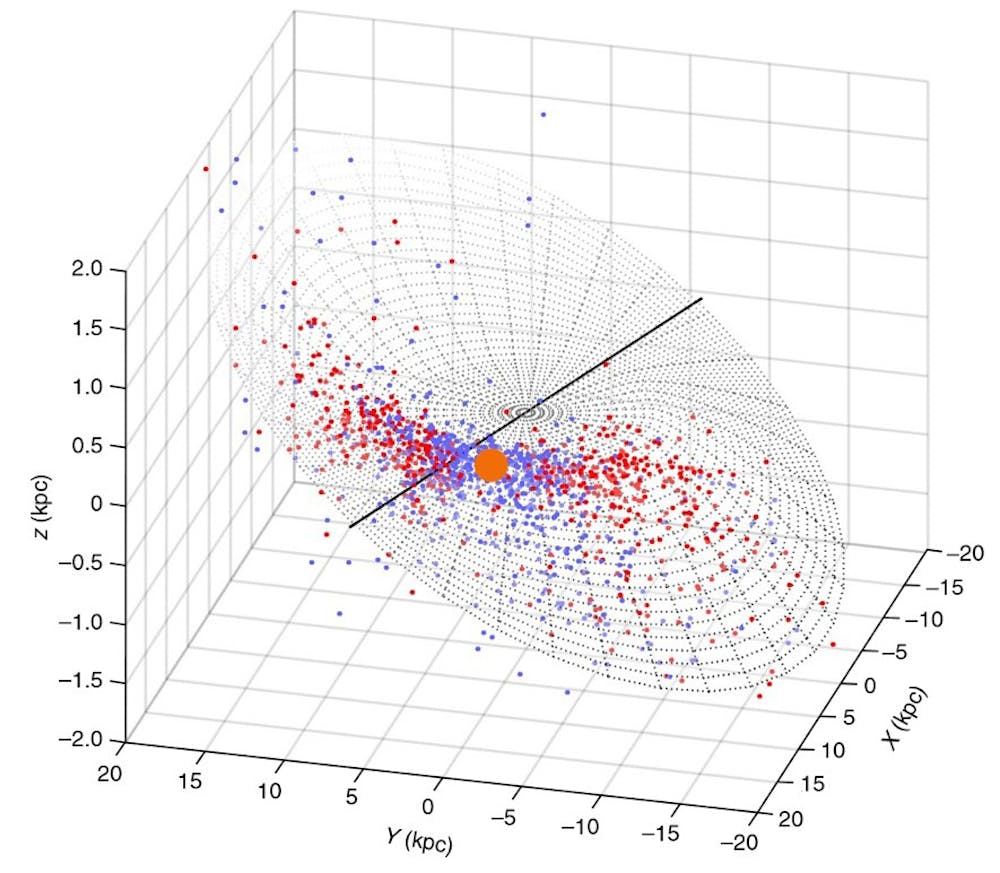
Somewhat to our surprise, we found that our collection of 1,339 Cepheid stars and the Milky Way’s gas disc follow each other closely. Until our recent study, it had not been possible to tie the distribution of young stars in the Milky Way’s outer disc so well to the flaring and warped disc made up of hydrogen gas clouds.
3D distribution of the classical Cepheid variable stars in the Milky Way’s warped disc (red and blue points) centred on the location of the Sun (shown as a large orange symbol). The units kpc are kiloparsecs (1 kpc = about 3,262 light years) along the image’s three axes are used by astronomers to indicate distances on galaxy-wide scales.Richard de Grijs (Macquarie University), Author provided
But perhaps more importantly, we discovered that the stellar disc is warped in a progressively twisted spiral pattern.
Many spiral galaxies are warped to varying extents, such as the galaxy ESO 510-G13 (pictured top) in the southern constellation Hydra, roughly 150 million light-years from Earth. However, only a dozen other galaxies were known to also show similarly twisted patterns in their outer discs.
Combining our results with these earlier observations, we concluded that the Milky Way’s warped and twisted spiral pattern is likely caused by forced torques from the galaxy’s massive inner disc. The rotating inner disc is, in essence, dragging the outer disc along, but since the outer disc’s rotation is lagging the resulting structure is a spiral pattern.
This new map provides a crucial update for studies of our galaxy’s stellar motions and the origins of the Milky Way’s disc. This is particularly interesting given the wealth of information we anticipate to receive from the European Space Agency’s Gaia satellite mission.
Gaia aims to eventually map our Milky Way in unprecedented detail, based on the most accurate distance determinations to the galaxy’s brightest stars ever obtained.
In the face of persistent heatwaves, Australians are reaching for the sunscreen. But you might have heard some mixed messages about its harm to the environment – specifically to coral reefs.
In July 2018, Hawaii passed a law to prohibit the future sale of sunscreens containing benzophene-3 and octinoxate, claiming these two chemicals increase coral bleaching, and have significant harmful impacts on Hawaii’s marine environment.
In October 2018, the Republic of Palau followed suit, and banned “reef-toxic” sunscreens. Like most reefs throughout the tropics and subtropics, coral reefs in Hawaii and Palau have already severely bleached multiple times during recent, unusually hot summers, causing extensive loss of corals.
Key West, in Florida, may be the latest area to follow this trend, with a proposed ban to be voted on in early February.
However, medical and skin cancer specialists have warned of the public health risks of a ban on widely used sunscreens, describing the prohibition as risky and unjustified, in part because the few studies that have addressed the environmental impacts of sunscreens experimentally “are not representative of real world conditions”.
For example, the way in which coral tissues were exposed to sunscreen in experiments does not mimic the dispersal and dilution of pollutants from a tourist’s skin (and other sources) into reef waters and onto corals growing in the wild.
Experiments that expose corals to sunscreen chemicals typically use far higher concentrations than have ever been measured on an actual reef. A recent review of the amount of benzophne-3 in reef waters found that, typically, concentrations are barely detectable – usually, a few parts per trillion. One much higher report of 1.4 parts per million, in the US Virgin Islands, is based on a single water sample.
The environmental concerns over sunscreens on coral reefs are centred overwhelmingly on just two studies. The first, published in 2008, noted that there was no previous scientific evidence for an impact of sunscreens on coral reefs.
This study exposed small fragments of corals (branch tips) to high levels of benzophenone-3 and other chemicals by incubating them for a few days inside plastic bags. The fragments in the bags quickly became diseased with viruses and bleached. The authors concluded “up to 10% of the world reefs are potentially threatened by sunscreen-induced coral bleaching”.
Bleaching is a stress response by corals, where they turn pale due to a decline in the symbiotic micro-algae that lives inside their tissues. You can make a coral bleach experimentally by torturing it in any number of ways. However, coral bleaching at a global and regional scale is caused by anthropogenic heating, not sunscreen. We know the footprint of bleaching on the Great Barrier Reef in 1998, 2002, 2016 and 2017 is closely matched to where the water was hottest for longest in each event.
Even the most remote reefs are vulnerable to heat stress. The physiological mechanisms and timescale of thermal bleaching due to global heating is very different from the rapid responses of corals to experimental exposure to high concentrations of sunscreen chemicals.
The second and most-widely cited study of sunscreen toxicity on corals is also laboratory-based. Published in 2016, it focused mainly on the responses of the day-old larvae of one coral species, as well as isolated coral cells. This study did not examine intact coral colonies.
The larvae were placed in 2-3 centilitres of artificial seawater containing a range of concentrations of sunscreen chemicals and a solvent to disperse them. After a few hours, the coral larvae became increasingly pale (bleached) with higher concentrations of oxybenzone.
This study also measured the concentration of benzophenone in sea water at six locations in Hawaii. These samples were unreplicated (one per location), and all of them had unmeasureable amounts of sunscreen chemicals. In the US Virgin Islands, the authors found higher concentrations of benzophenone at four out of ten locations, although they did not report results for any blank samples (to control for contamination). The study concluded that oxybenzone threatens the resilience of coral reefs to climate change.
In conclusion, there is actually no direct evidence to demonstrate that bleaching due to global heating is exacerbated by sunscreen pollutants. Similarly, there is no evidence that recovery from thermal bleaching is impaired by sunscreens, or that sunscreens cause coral bleaching in the wild.
In this series, we look at under-acknowledged women through the ages.
In April 1941, just a few short years after Superman came swooping out of the Manhattan skies, Miss Fury – originally known as Black Fury – became the first major female superhero to go to print. She beat Charles Moulton Marsden’s Wonder Woman to the page by more than six months. More significantly, Miss Fury was the first female superhero to be written and drawn by a woman, Tarpé Mills.
Miss Fury’s creator – whose real name was June – shared much of the gritty ingenuity of her superheroine. Like other female artists of the Golden Age, Mills was obliged to make her name in comics by disguising her gender. As she later told the New York Post, “It would have been a major let-down to the kids if they found out that the author of such virile and awesome characters was a gal.”
Yet, this trailblazing illustrator, squeezed out of the comic world amid a post-WW2 backlash against unconventional images of femininity and a 1950s climate of heightened censorship, has been largely excluded from the pantheon of comic greats – until now.
Comics then and now tend to feature weak-kneed female characters who seem to exist for the sole purpose of being saved by a male hero – or, worse still, are “fridged”, a contemporary comic book colloquialism that refers to the gruesome slaying of an undeveloped female character to deepen the hero’s motivation and propel him on his journey.
But Mills believed there was room in comics for a different kind of female character, one who was able, level-headed and capable, mingling tough-minded complexity with Mills’ own taste for risqué behaviour and haute couture gowns.
Miss Fury toting a gun.Author provided
Where Wonder Woman’s powers are “marvellous” – that is, not real or attainable – Miss Fury and her alter ego Marla Drake use their collective brains, resourcefulness and the odd stiletto heel in the face to bring the villains to justice.
A WW2 plane featuring an image of Miss Fury.http://www.tarpemills.com
And for a time they were wildly successful.
Miss Fury ran a full decade from April 1941 to December 1951, was syndicated in 100 different newspapers at the height of her wartime fame, and sold a million copies an issue in reprints released by Timely (now Marvel) comics.
Fighter pilots painted Miss Fury on the fuselage of bomber planes. Young girls played with paper doll cut outs featuring her extensive high fashion wardrobe.
An anarchic, ‘gender flipped’ universe
Miss Fury’s “origin story” offers its own coolly ironic commentary on the masculine conventions of the comic genre.
One night a girl called Marla Drake finds out that her friend Carol is wearing an identical gown to a masquerade party. So, at the behest of her maid Francine, she dons a skin tight black cat suit that – in an imperial twist, typical of the period – was once worn as a ceremonial robe by a witch doctor in Africa.
On the way to the ball, Marla takes on a gun-toting killer, using her cat claws, stiletto heels, and – hilariously – a puff of powder blown from her makeup compact to disarm the villain. She leaves him trussed up with a hapless and unconscious police detective by the side of the road.
Tarpe Mills with her beloved Persian cat.Author provided
Miss Fury could fly a fighter plane when she had to, jumping out in a parachute dressed in a red satin ball gown and matching shoes. She was also a crack shot.
This was an anarchic, gender flipped, comic book universe in which the protagonist and principle antagonists were women, and in which the supposed tools of patriarchy – high heels, makeup and mermaid bottom ball gowns – were turned against the system. Arch nemesis Erica Von Kampf – a sultry vamp who hides a swastika-branded forehead behind a v-shaped blond fringe – also displayed amazing enterprise in her criminal antics.
Author provided
Invariably the male characters required saving from the crime gangs, the Nazis or merely from themselves. Among the most ingenious panels in the strip were the ones devoted to hapless lovelorn men, endowed with the kind of “thought bubbles” commonly found hovering above the heads of angsty heroines in romance comics.
By contrast, the female characters possessed a gritty ingenuity inspired by Noir as much as by the changed reality of women’s wartime lives. Half way through the series, Marla got a job, and – astonishingly, for a Sunday comic supplement – became a single mother, adopting the son of her arch nemesis, wrestling with snarling dogs and chains to save the toddler from a deadly experiment.
Mills claims to have modelled Miss Fury on herself. She even named Marla’s cat Peri-Purr after her own beloved Persian pet. Born in Brooklyn in 1918, Mills grew up in a house headed by a single widowed mother, who supported the family by working in a beauty parlour. Mills worked her way through New York’s Pratt Institute by working as a model and fashion illustrator.
Censorship
In the end, ironically, it was Miss Fury’s high fashion wardrobe that became a major source of controversy.
In 1947, no less than 37 newspapers declined to run a panel that featured one of Mills’ tough-minded heroines, Era – a South American Nazi-Fighter who became a post-war nightclub entertainer – dressed as Eve, replete with snake and apple, in a spangled, two-piece costume.
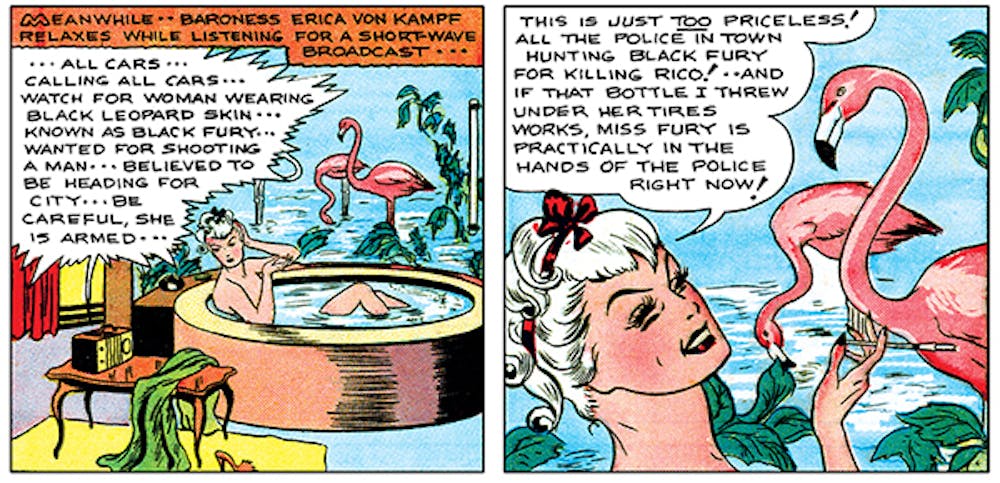
This was not the only time the comic strip was censored. Earlier in the decade, Timely comics had refused to run a picture of the villainess Erica resplendent in her bath – surrounded by pink flamingo wallpaper.
Erica in the bath, surrounded by pink flamingo wallpaper.Author provided.
But so many frilly negligées, cat fights, and shower scenes had escaped the censor’s eye. It’s not a leap to speculate that behind the ban lay the post-war backlash against powerful and unconventional women.
In wartime, nations had relied on women to fill the production jobs that men had left behind. Just as “Rosie the Riveter” encouraged women to get to work with the slogan “We Can Do It!”, so too the comparative absence of men opened up room for less conventional images of women in the comics.
A Miss Fury paper doll cut out.Author provided
Once the war was over, women lost their jobs to returning servicemen. Comic creators were no longer encouraged to show women as independent or decisive. Politicians and psychologists attributed juvenile delinquency to the rise of unconventional comic book heroines and by 1954 the Comics Code Authority was policing the representation of women in comics, in line with increasingly conservative ideologies. In the 1950s, female action comics gave way to romance ones, featuring heroines who once again placed men at the centre of their existence.
Miss Fury was dropped from circulation in December 1951, and despite a handful of attempted comebacks, Mills and her anarchic creation slipped from public view.
Mills continued to work as a commercial illustrator on the fringes of a booming advertising industry. In 1971, she turned a hand to romance comics, penning a seven-page story that was published by Marvel, but it wasn’t her forte. In 1979, she began work on a graphic novel Albino Jo, which remains unfinished.
Despite her chronic asthma, Mills – like the reckless Noir heroine she so resembled – chain-smoked to the bitter end. She died of emphysema on December 12, 1988, and is buried in New Jersey under the simple inscription, “Creator of Miss Fury”.
This year Mills’ work will be belatedly recognised. As a recipient of the 2019 Eisner Award, she will finally take her place in the Comics Hall of Fame, alongside the male creators of the Golden Age who have too long dominated the history of the genre. Hopefully this will bring her comic creation the kind of notoriety, readership and big screen adventures she thoroughly deserves.
Source: The Conversation (Au and NZ) – By Arjuna Dibley, Graduate Fellow, Steyer-Taylor Center for Energy Policy and Finance, Stanford University
The tragic recent events on the Darling River, and the political and policy furore around them, have again highlighted the severe financial and environmental consequences of mismanaging climate risks. The Murray-Darling Royal Commission demonstrates how closely boards of public sector corporate bodies can be scrutinised for their management of these risks.
Public authorities must follow private companies and factor climate risk into their board decision-making. Royal Commissioner Brett Walker has delivered a damning indictment of the Murray Darling Basin Authority’s management of climate-related risks. His report argues that the authority’s senior management and board were “negligent” and fell short of acting with “reasonable care, skill and diligence”. For its part, the authority “rejects the assertion” that it “acted improperly or unlawfully in any way”.
The Royal Commission has also drawn attention to the potentially significant legal and reputational consequences for directors and organisations whose climate risk management is deemed to have fallen short of a rising bar.
Until recently, scrutiny of how effectively large and influential organisations are responding to climate risks has focused mostly on the private sector.
In Australia it is widely acknowledged among legal experts that private company directors’ duty of “due care and diligence” requires them to consider foreseeable climate risks that intersect with the interests of the company. Indeed, Australia’s companies regulator, ASIC, has called for directors to take a “probative and proactive” approach to these risks.
The recent focus on management of the Murray-Darling Basin again highlights the crucial role public sector corporations (or “public authorities” as we call them) also play in our overall responses to climate change – and the consequences when things go wrong.
Australia’s economy, once dominated by publicly owned enterprises, was reshaped by waves of privatisations in the late 20th century. However, hundreds of public authorities continue to play an important role in our economy. They build and maintain infrastructure, generate energy, oversee superannuation portfolios, provide insurance and manage water resources, among many other activities.
This means that, like their counterparts in the private sector, many face risks associated with climate change. Take Melbourne Water, for instance, a statutory water corporation established to manage the city’s water supply. It will have to contend with increasingly hot summers and reduced rainfall (a physical risk), and also with the risk that government policy in the future might impose stricter conditions on how water is used (a transition risk).
What duties do public authorities owe?
Our new research from the Centre for Policy Development, shows that, at the Commonwealth and Victorian level (and likely in other Australian jurisdictions), the main laws governing officials in public authorities are likely to create similar obligations to those imposed on private company directors.
For instance, a 2013 federal act requires public authority board members to carry out their duties with the degree of “due care and diligence” that a reasonable person would exercise if they were a Commonwealth official in that board position.
The concept of a “reasonable person” is crucial. There is ever-increasing certainty about the human contribution to climate change. New tools and models have been created to measure the impact of climate change on the economy. Climate risks are therefore reasonably foreseeable if you are acting carefully and diligently, and thus public authority directors should consider these risks.
The obligations of public authority directors may, in some cases, go beyond what is required of private company directors. The same act mentioned above requires Commonwealth officials to promote best practice in the way they carry out their duties. While there is still wide divergence in how private companies manage climate change, best practice in leading corporations is moving towards more systematic analysis and disclosure of these risks. Accordingly, a “best practice” obligation places an even higher onus on public sector directors to manage climate risk.
The specific legislation that governs certain public authorities may introduce different and more onerous requirements. For instance, the Murray-Darling Basin Authority’s governing legislation, the Water Act 2007, imposes a number of additional conditions on the authority. This includes the extent to which the minister can influence board decision-making.
Nonetheless, our laws set out a widely applicable standard for public authority directors.
Approaches to better manage public authority climate risks
While some public authorities are already carefully considering how physical and transition climate risks affect their work, our research suggests that standards vary widely.
As with the private sector, a combination of clear expectations for better climate risk management, greater scrutiny and more investment in climate-related capabilities and risk-management frameworks can all play a role in raising the bar. Our research highlights four steps that governments should consider:
creating a whole-of-government toolkit and implementation strategy for training and supporting directors to account for climate-risk in decision-making
using existing public authority accountability mechanisms – such as the public sector commissioner or auditor general’s office – to more closely scrutinise the management of climate-related financial risks
issuing formal ministerial statements of expectations to clarify how public authorities and their directors should manage climate-related risks and policy priorities
making legislative or regulatory changes to ensure consistent consideration, management and disclosure of climate risk by public sector decision-makers.
Measures such as these would set clear expectations for more consistent, sophisticated responses to climate risks by public authorities. However, even without any changes, it should be clear that public authority directors have legal duties to consider climate risks – and that these duties must be taken seriously even when doing so is complicated, controversial or politically sensitive.
The Morrison government has promised to establish a compensation scheme of last resort – paid for by the financial services industry – as it seeks to avoid the outcome of the banking royal commission becoming a damaging election issue for it.
Treasurer Josh Frydenberg, releasing Commissioner Kenneth Hayne’s three-volume report which excoriates the financial sector, said the government would be “tacking action” on all 76 recommendations.
The commissioner has made 24 referrals to the regulatory authorities over entities’ conduct in specific instances. All the major banks have been referred except Westpac. AMP, Suncorp, Allianz and Youi are among entities that have been referred.
Commisioner Hayne has made no criminal conduct referrals – he was dealing with entities rather than individuals. But this does not preclude criminal prosecutions as a result of the investigations.
In an indictment of years of bad behaviour which has left many customers devastated, Hayne says “there can be no doubt that the primary responsibility for misconduct in the financial services industry lies with the entities concerned and those who managed and controlled those entities”.
“Rewarding misconduct is wrong. Yet incentive, bonus and commission schemes throughout the financial services industry have measured sales and profit, but not compliance with the law and proper standards,” the commissioner says.
“Entities and individuals acted in the ways they did because they could.
“Entities set the terms on which they would deal, consumers often had little detailed knowledge or understanding of the transaction and consumers had next to no power to negotiate the terms.”
Hayne says that “too often, financial services entities that broke the law werenot properly held to account.
“The Australian community expects, and is entitled to expect, that if an entity breaks the law and causes damage to customers, it will compensate those affected customers. But the community also expects that financial services entities that break the law will be held to account.”
The commissioner stresses that “where possible, conflicts of interest and conflicts between duty and interest should be removed” in financial services.
Hayne says that because it was the financial entities, their boards and senior executives, who bore primary responsibility for what had happened, attention must be given to their culture, governance and renumeration practices.
Changes to the law were “necessary protections for consumers against misconduct, to provide adequate redress and to redress asymmetries of power and information between entities and consumers”.
The commission’s multiple recommendations propose:
…simplifying the law so that its intent is met;
…removing where possible conflicts of interest;
…improving the effectiveness of the regulators, the Australian Prudential Regulation Authority (APRA) and the Australian Securities and Investments Commission (ASIC);
…driving cultural change in institutions and increasing their accountability;
…increasing protection for consumers from “misconduct or conduct that falls below community standards and expectations”, and providing for remediation.
The government has provided point-by-point responses to the recommendations.
The commission had seven rounds of public hearings with about 130 witnesses, and reviewed more than 10,000 public submissions. It dealt with banking, financial advice, superannuation and insurance.
While there have been claims that the fallout from the commission could risk a further tightening of credit for small business in particular, Hayne has been careful in his report to minimise that danger.
But he makes it clear that there should be no excuse for avoiding needed action. “Some entities used the undoubted need for care in recommending change as a basis for saying that there should be no change. The ‘Caution’ sign was read as if it said ‘Do Not Enter’.”
The commissioner has some sharp words for the NAB in his report, saying that “having heard from both the CEO Mr Thorburn, and the Chair, Dr Henry, I am not as confident as I would wish to be that the lessons of the past have been learned.
“More particularly, I was not persuaded that NAB is willing to accept the necessary responsibility for deciding, for itself, what is the right thing to do, and then having its staff act accordingly. I thought it telling that Dr Henry seemed unwilling to accept any criticism of how the board had dealt with some issues.
“I thought it telling that Mr Thorburn treated all issues of fees for no service as nothing more than carelessness combined with system deficiencies … Overall, my fear – that there may be a wide gap between the public face NAB seeks to show and what it does in practice – remains.”
Among his specific recommendations Hayne says that grandfathering provisions for conflicted remuneration “should be repealed as soon as is reasonably practicable”. The government has said it will do this from January 2021.
Hayne proposes a new oversight authority that would monitor APRA and ASIC.
He lashes ASIC for not cracking down on fees for no service.
“Until this commission was established, ASIC and the relevant entities approached the fees for no service conduct as if it called, at most, for the entity to repay what it had taken, together with some compensation for the client not having had the use of the money.
“That is, the conduct was treated as if it was no more than a series of inadvertent slips brought about by some want of care in record keeping.”
In relation to the sale of products the commission recommends the removal of the exclusion of funeral expenses policies from the definition of “financial product”. It should be put “beyond doubt that the consumer protection provisions of the ASIC act apply to funeral expenses policies.”
On superannuation the commission says that “hawking” of superannuation products should be prohibited, and that a person should have only one default account.
In a statement Scott Morrison and Frydenberg said that in outlining its response to the commission “the government’s principal focus is on restoring trust in our financial system and delivering better consumer outcomes, while maintaining the flow of credit and continuing to promote competition.”
They said the government would expand the remit of Australian Financial Complaints Authority (AFCA) so it could award compensation for successful claims going back a decade.
Political Roundup: Back to school poverty and inequality
by Dr Bryce Edwards
Many children were supposed to start back at school today – but how many actually turned up? On an average day in New Zealand schools, only 64 per cent of students show up. Many absences are obviously due to illness, but there are ill-effects from societal problems that are preventing children from getting a basic education.
The attendance figures from the Ministry of Education came out last week for the 2018 school year. According to education reporter Josephine Franks, “the overall regular attendance rate was 63.8 per cent in 2018. That’s up slightly from 2017, when it sat at 63 per cent” – see: One-third of children regularly miss school. This report also says that “chronic absence continued to be more prevalent in lower socio-economic schools”.
A big part of the problem is poverty. The KidsCan charity argues that the cost of getting kids ready for school will prevent some students from attending on the first day. The charity’s chief executive Julie Chapman is reported today as arguing that “Some parents won’t send their children to school because they felt ashamed they can’t make ends meet”. Chapman also says: “Those that do go, start on the back foot because they don’t have the right clothes, and they’re hungry” – see Scott Yeoman and Zoe Hunter’s Tauranga families turn to foodbanks for school lunches.
According to the charity, “data shows that one in every five children in low-decile schools around New Zealand will head back to class this year without enough food.” Commenting on this, Greerton Village School principal Anne Mackintosh says “It is a grim state of affairs and a very sad indictment on what is happening socially, economically and politically to our children, our most vulnerable.” Furthermore, this article reports her believing that “schools had become more of a social agency by ensuring children had the necessities provided by volunteers”.
Here’s the key part: “When schools return next month at least 240 children won’t have the basic requirements – a school uniform, shoes, a bag, lunch box, stationery, money to go on camp or do sports, field trips and exams. Their peers will be filled with excitement, collecting stationery, meeting new classmates and comparing their Christmas holidays. But the children whose parents cannot afford related school costs – that doesn’t include fees or donations – will either be missing from class altogether or likely dressed in a budget version of uniform with no sun hat, no shoes and no books to write in.”
As Variety chief executive Lorraine Taylor puts it, in New Zealand, “Education is free but access to it isn’t”. This “means children are turning up to school unequipped and feeling like the odd one out… For some, it means the beginning of their school year is delayed.”
The KidsCan charity is also experiencing record demand: “During 2018, KidsCan gave out 5.27 million items of food and clothed 47,350 children in warm jackets across New Zealand. In the past five years, the number of schools the charity supported have almost doubled, from 388 to 742” – see Jacques Steenkamp’s Hungry children won’t show up for new school year, principal says.
According to this article, some schools are being forced to innovate, taking on a role as social agencies. For example, one decile three Pakuranga primary school “has taken a novel approach to the hunger pains; slipping sandwiches and fruit surreptitiously into the schoolbags of students who aren’t able to bring their own.” In addition, “The school also sends food home with certain children in the evenings and on weekends, and help with uniforms and stationery costs.”
But should schools really be expected to play these social service roles in society? Auckland Primary Principals’ Association president Helen Varney raises the question of why the Government isn’t stepping up: “Is this what schools should be doing or should this be something our government should be looking at more closely and providing better services to the families in order to ensure children are coming to school everyday ready to learn?” – see RNZ’s Charity feeds thousands of school children each week.
Commenting on student poverty figures, Varney states: “I think it’s terribly sad. I think there’s something wrong with our society if that number is that high. It’s not acceptable at all but what we’re finding is that schools are having to create a range of initiatives so they meet the need of their community.”
She argues that “schools had become the social hub for communities”, but “providing meals for students each day meant that people were working on that rather than the providing education”. This can’t be avoided, she says: “We all know a child must be well fed, they must sleep well and eat well in order to be able to learn. So if they come to school hungry our first priority is to feed them.” However, “What surprises me now is how many are being supported and that’s a sad indictment on our society today”.
Not all commentators are impressed with such charity. Newstalk ZB talkback host Tim Dower agrees that something is wrong, and points out that “instead of this ambulance at the bottom of the cliff approach perhaps that’s where we should be directing our energy” – see: It’s great that KidsCan helps to feed schoolkids – but where are their parents? His approach is to point the finger at parents, with the answer being to show and help them “do the right thing by their children.”
Dower elaborates on the problem: “I can’t help asking where the hell the parents are in all this? And what message do we send when we step in and take over a job that truly is the responsibility of parents? And if we take that responsibility away from the parents are we giving them the idea they don’t need to feed their kids or put shoes on their feet? It’s OK: someone else will step in and do it. There’s been a lot of angry talkback about this and I really get where it’s coming from.”
Another community group, Money Talks, which is “a major financial and budgeting helpline” also says that this year has been particularly bad for families of school-age children in poverty – see 1News’ Kiwi parents feeling financial strain as students prepare to head back to school. The organisation “say they’ve had their busiest week ever as parents face up to the cost of getting their children ready for class.” This news report cites the case of one mother of four who is expecting to have to pay over $1000 to get them ready for school.
Another news report suggests that costs per child can be up to $900 – see Jamie Ensor’s Back to school costs limiting Kiwi kids’ future success – children’s charity. In this, Variety New Zealand’s Lorraine Taylor argues that “Many of the next generation of talented Kiwis won’t be successful due to the insurmountable costs associated with going back to school.” She also says “There are children that just don’t turn up to school on the first day because their parents don’t want to send them unless they have got the right uniform or the right equipment.”
A case study of a Northland primary and secondary school is provided by the Northern Advocate newspaper, examining the required purchases of stationery, uniforms, and digital devices – see: Back to school: Costs overwhelming for struggling families. This news item also reports on a school that has stopped asking for donations from families, but points out that the school’s offerings suffer as a result.
The escalating problem of back-to-school-poverty has brought about a major focus on the costs of uniforms, with allegations that prices are being “racked up” – see Katy Jones’ School uniform costs ‘horrendous’ in NZ, sparking call for government action. This article also reports that the Korowai charitable trust is calling on the Government to help fix the issue.
One simple fix has been proposed by More FM’s Gary McCormick, who says it’s time for the Ministry of Education to get rid of the blazers, and roll out one basic uniform across the country, albeit with different jerseys for different schools – see: Gary McCormick calls for national standardised uniforms for Kiwi kids.
For an in-depth examination of the production, distribution and pricing of school uniforms, it’s well worth reading Adele Redmond’s School uniforms – why do they cost so much?
According to Redmond, “The mark-up on school uniform items often exceeds 100 per cent after passing through importers, embellishers, and retailers. One importer, who supplies fabric to several large uniform companies, says he’s seen a kilt produced from his fabric sold at a 700 per cent mark-up.”
Finally, since virtually every other element of the education system is currently under review, perhaps it’s time to also move on from tradition and embrace diversity and change in terms of what kids wear to school – see the Dominion Post’s excellent editorial, Paying the cost of tradition: Is it time to ditch school uniforms?
Many scientists know how unrealistic such claims are.
My new study provides data confirming that ground-breaking research takes time, and that the basic research underpinning it is typically overlooked or under-valued.
During my undergraduate degree I was fascinated to learn that cutting-edge molecular biology techniques – those used for manipulating proteins, DNA and other molecules – come from nature. In this paper I analysed the development of eight important molecular techniques, and showed they all were developed from basic biological research.
My case studies include the relatively new molecular technology known as CRISPR-Cas (now known as a precise DNA cutting tool, but which comes from biologists discovering how bacteria build immunity to viruses), and older technologies like DNA sequencing (developed thanks to biologists discovering how DNA copies itself).
Scientific breakthroughs do not happen overnight
I identified that the major breakthroughs in molecular technology take on average a quarter of a century from basic biological research to the practical payoff. This time frame is a lot longer than any election cycle or the funding period for a research project.
The long lead time before the payoff means it is difficult to calculate the exact benefit of funding basic biological research. But basic research has a major impact.
A loose estimate suggests that the return on investment of funding basic research is between 20-60% per year! In Australia, every $1 invested into our National Health and Medical Research Council returns $3.20 in health and economic benefits.
Scientific glory is not bestowed upon basic research
I found the basic research that led to the development of new and important molecular technologies is not well recognised by the scientific community.
Basic research findings are not favoured by the science publication model. When you compare scientific articles describing basic research to applied research, the former is less likely to be published in high-profile journals or to be highly cited.
This is an important point, because scientific articles are key to career progression in science. Scientists who dedicate their careers to basic research make vital contributions to science but find it harder to obtain funding and have fewer career advancement opportunities.
Molecular technologies transform the world, and that is why the eight case studies have all eventually been linked with the awarding of Nobel Prizes (or are expected to be, in the case of CRISPR-Cas).
However, I found that the researchers who conduct basic research are less likely to be awarded the Nobel Prize or the relevant patents for the development of these molecular biology techniques.
We need to ensure the contributions of basic research scientists are recognised.
We need a new investment approach from government funding agencies. The best strategy for high-risk ventures, such as basic research, is to provide stable funding to a wide variety of projects to diversify the risk. If we cast a wider net, we ensure we will always catch one of these “big fish”.
Funders can think of themselves as angel investors who are investing in a portfolio of start-up businesses (another type of venture that is high risk but also high reward).
The expectation of government funding agencies needs to be that most investments in basic research will not provide a return on investment. Data suggests that for start-up businesses, the failure rate is as high as 60%.
A few projects will return what was invested into them. But some research projects will be priceless scientific breakthroughs – these are known to occur with some regularity. Our modern world is built upon them.
If funding agencies are not consistently funding today’s basic research projects, then the revolutionary technologies of tomorrow will never be developed.
Most of us will have entered into consumer contracts with large companies and ticked a box to confirm we understand the terms and conditions – without bothering to read the fine print.
We accept standard form contracts when using social media, booking flights, opening a bank account, subscribing to a gym or renting a car. In all these cases, companies offer pre-drafted standardised agreements that are not negotiable.
At the same time, consumers are legally assumed to read the terms and conditions of their contracts. Because of this “duty to read”, consumers are held responsible for the written terms of their agreements, regardless of whether they read them or not.
While consumers have the legal burden to read their contracts, companies do not have a general duty to offer readable ones. As our research shows, most of them are incomprehensible.
We have studied popular online consumer contracts and examined the readability of the 500 most popular sign-in-wrap contracts in the United States.
These contracts, now used routinely by popular companies such as Facebook, Amazon, Uber and Airbnb, assume that the user agrees to the website’s terms and conditions by signing up. During the sign-up process, the website provides a hyperlink to its terms and conditions. But the consumer is not required to actually access the terms.
Many scholars argue that consumers do not read their contracts. Nonetheless, courts enforce these contracts based on the assumption that consumers had an opportunity to read them. In other words, according to this reasoning, consumers freely choose to ignore these contracts.
To examine this legal argument, we applied two well-established linguistic tools to check if consumers can actually read sign-in-wrap contracts. We used the Flesch Reading Ease and the Flesch-Kincaid tests. Both tests are based on two factors: the average sentence length and the average number of syllables per word.
Consumer contracts as dense as academic papers
We found that according to these criteria, the contracts examined in our sample are very hard to read. In fact, they are written at the same level as academic articles. Reading these agreements requires, on average, more than 14 years of education. This result is troubling, given the recommended reading level for consumer materials is eighth grade.
Our study shows consumers cannot be expected to read their contracts. A contract is based on mutual assent, but consumers cannot truly assent to something they cannot read.
We hope such findings will encourage policymakers to revisit their approach to consumer contracts. For starters, legislatures should require companies to better communicate their terms. Beyond that, we should also detail systematic and objective criteria as to what is readable.
At the same time, courts should not assume consumers can read their contracts. Judges should hence be more willing to excuse consumers from unreadable agreements.
Where to from here
Linguistic tests may serve as a good starting point. But such tools should be used only as a perquisite legal standard for examining readability. Companies might deliberately generate good readability scores but that does not necessarily mean the text is actually easy to understand.
The purpose of plain language requirements is not to increase readability per se. Rather, it is to improve the chances that users will be able to understand these agreements, shop among them, and make informed decisions.
Making contracts readable does not rest other concerns, such as the incorporation of unfair terms. Policymakers need to take further steps to level the consumer-business playing field. Currently, the law neglects to impose on companies a clear and operational duty to draft readable contracts. Without a clear incentive, companies will continue to use unreadable texts as their contracts.
This research is a joint project, co-authored with Dr Uri Benoliel at the College of Law and Business in Ramat Gan, Israel.
Source: The Conversation (Au and NZ) – By Mary-Louise McLaws, Professor of Epidemiology Healthcare Infection and Infectious Diseases Control, UNSW
Curious Kids is a series for children. If you have a question you’d like an expert to answer, send it to curiouskids@theconversation.edu.au You might also like the podcast Imagine This, a co-production between ABC KIDS listen and The Conversation, based on Curious Kids.
Why do we need soap? – Claire, age 4.
Thank you, Claire, for your question.
Soap is fun; it feels nice and slippery, you can blow bubbles with it and it often smells lovely. But it also keeps you healthy because it makes it easy for us to remove germs.
Germs are very very small, so small they are invisible to our eyes. We have many germs on our hands all the time. They like to live in the invisible layer of oil on our hands, and they particularly like to hide in skin creases and under your nails. There are many thousands and thousands of germs on your hands right now.
There are good and bad germs. Good germs live on your skin to keep it healthy. Bad germs – what scientists call “pathogens” – can make us sick.
We don’t know if bad germs are on our hands because you can’t see them. The best and easiest way to remove bad germs is washing them away with soap.
It’s a good idea to wash your hands after you go to the toilet, after you blow your nose, before you help prepare food and before you eat. Otherwise, when you touch your mouth, nose or eyes you might accidentally get a bad germ from your hands into your body – where it can make you very sick.
If you’re not a nurse or a doctor you don’t need to “kill” all the germs on your hands. You just need to wash the germs away. Soap is amazingly good at doing this.
Soap gets foamy when we rub it with water between our hands. Foam makes it easy to move soap all around your hands and fingers. While we move soap around, it lifts up invisible oil that holds germs onto your hand. Under the running water we can easily wash off the soap, and all the invisible oil and germs along with it.
If you just use water without soap, the germs will stay on your hands. That’s because water alone can’t lift off the invisible oil where the germs are hiding, often tucked away in tiny creases in the skin on your hands.
We need to rub our hands together with soap and water long enough for the soap to do its job. We need to allow enough time for the soap to make foam, lift the oil holding onto the germs, and rinse them all away.
How long is long enough? Try singing the Happy Birthday song as you rub the soap and water between your hands.Flickr/Lucille Pine, CC BY
How long is long enough? Try singing the Happy Birthday song as you rub the soap and water between your hands, especially rubbing the soap and water over your fingers and fingernails where germs love to live. If you get through the whole song, you are giving the soap long enough to do its important job.
Don’t forget to rub your hands on a clean towel to remove any bad germs that could have been left on your hands.
When we wash our hands with soap and water, the soap lifts up both the bad and good germs and the water washes them away.
But don’t worry – all the good germs that keep your skin healthy will grow back very fast.
Hello, curious kids! Have you got a question you’d like an expert to answer? Ask an adult to send your question to curiouskids@theconversation.edu.au
To find out how people define trolling, we conducted a survey with 379 participants. The results suggest there is a difference in the way the media, the research community and the general public understand trolling.
If we want to reduce abusive online behaviour, let’s start by getting the definition right.
-Partners-
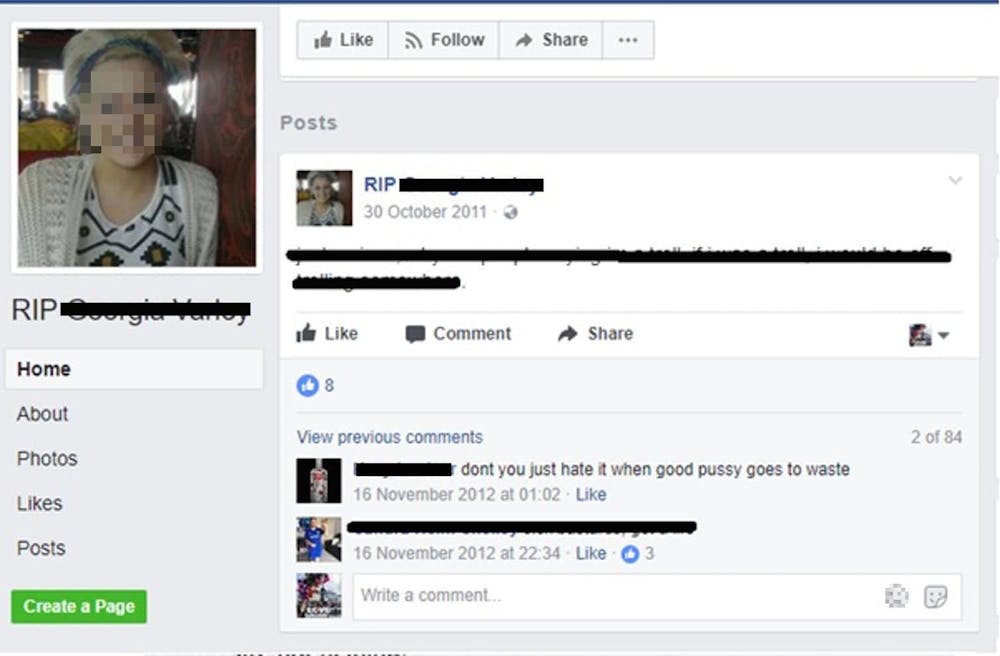
Which of these cases is trolling? Consider the comments that appear in the image below:
Without providing any definitions, we asked if this was an example of internet trolling. Of participants, 44 percent said yes, 41 percent said no and 15 percent were unsure.
Now consider this next image:
Of participants, 69 percent said this was an example of internet trolling, 16 percent said no, and 15 percent were unsure.
These two images depict very different online behaviour. The first image depicts mischievous and comical behaviour, where the author perhaps intended to amuse the audience. The second image depicts malicious and antisocial behaviour, where the author may have intended to cause harm.
There was more consensus among participants that the second image depicted trolling. That aligns with a more common definition of internet trolling as destructive and disruptive online behaviour that causes harm to others.
But this definition has only really evolved in more recent years. Previously, internet trolling was defined very differently.
A shifting definition In 2002, one of the earliest definitions of internet “trolling” described the behaviour as:
luring others online (commonly on discussion forums) into pointless and time-consuming activities.
Trolling often started with a message that was intentionally incorrect, but not overly controversial. By contrast, internet “flaming” described online behaviour with hostile intentions, characterised by profanity, obscenity, and insults that inflict harm to a person or an organisation.
So, modern day definitions of internet trolling seem more consistent with the definition of flaming, rather than the initial definition of trolling.
To highlight this intention to amuse compared to the intention to harm, communication researcher Jonathan Bishop suggested we differentiate between “kudos trolling” to describe trolling for mutual enjoyment and entertainment, and “flame trolling” to describe trolling that is abusive and not intended to be humorous.
How people in our study defined trolling In our study, which has been accepted to be published in the journal Cyberpsychology, Behavior, and Social Networking, we recruited 379 participants (60 percent women) to answer an online, anonymous questionnaire where they provided short answer responses to the following questions:
how do you define internet trolling?
what kind of behaviours constitute internet trolling?
Here are some examples of how participants responded:
Where an individual online verbally attacks another individual with intention of offending the other (female, 27)
People saying intentionally provocative things on social media with the intent of attacking / causing discomfort or offence (female, 26)
Teasing, bullying, joking or making fun of something, someone or a group (male, 29)
Deliberately commenting on a post to elicit a desired response, or to purely gratify oneself by emotionally manipulating another (male, 35)
Based on participant responses, we suggest that internet trolling is now more commonly seen as an intentional, malicious online behaviour, rather than a harmless activity for mutual enjoyment.
A word cloud representing how survey participants described trolling behaviours. Image: The Conversation
Researchers use ‘trolling’ as a catch-all Clearly there are discrepancies in the definition of internet trolling, and this is a problem.
Research does not differentiate between kudos trolling and flame trolling. Some members of the public might still view trolling as a kudos behaviour. For example, one participant in our study said:
Depends which definition you mean. The common definition now, especially as used by the media and within academia, is essentially just a synonym to “asshole”. The better, and classic, definition is someone who speaks from outside the shared paradigm of a community in order to disrupt presuppositions and try to trigger critical thought and awareness (male, 41)
Not only does the definition of trolling differ from researcher to researcher, but there can also be discrepancy between the researcher and the public.
As a term, internet trolling has significantly deviated from its early, 2002 definition and become a catch-all for all antisocial online behaviours. The lack of a uniform definition of internet trolling leaves all research on trolling open to validity concerns, which could leave the behaviour remaining largely unchecked.
We need to agree on the terminology We propose replacing the catch-all term of trolling with “cyberabuse”.
Cyberbullying, cyberhate and cyberaggression are all different online behaviours with different definitions, but they are often referred to uniformly as “trolling”.
It is time to move away from the term trolling to describe these serious instances of cyberabuse. While it may have been empowering for the public to picture these internet “trolls” as ugly creatures living under the bridge, this imagery may have begun to downplay the seriousness of their online behaviour.
Continuing to use the term trolling, a term that initially described a behaviour that was not intended to harm, could have serious consequences for managing and preventing the behaviour.
Dr Evita March is a senior lecturer in psychology at the Federation University in Australia. This article is republished from The Conversation under a Creative Commons licence.
If you are observant enough in the Australian bush, you may be able to spot the spade flower, a member of the violet family. Spade flowers grow under the semi-shade of open eucalypt forest, among other little green herbaceous plants.
This often-overlooked member of Australian flora hides some interesting secrets, including a rare chemical that may hold the key to turning regular plants into medicinal cures.
The common name spade flower refers to the flower’s shape, which is dominated by the spade-shaped labellum. Its botanical name, Hybanthus enneaspermus, is equally descriptive. The generic name Hybanthus means “humpbacked flower”, referring to the posture of the flowers. Meanwhile, the specific name enneaspermus means “nine-seeded”, because upon maturity each tiny 5mm fruit splits into three sections bearing three seeds each.
The Conversation
A hidden talent
Violets are familiar objects, from the showy native Viola banksii or the scent of European sweet violets. What is not common knowledge is that members of the Violaceae family produce some very curious molecules called peptides.
People – and many other organisms – use peptides as signals that enable communication between cells and tissues. An example of a peptide messenger from humans with an important function is oxytocin, also known as the “love hormone”. Oxytocin regulates social bonding and other key aspects of our biology and sociality. In contrast, plants sometimes use peptides for a different purpose, as toxins to protect themselves from insects and other pests.
But unlike most peptides, those produced by Violaceae are circular instead of linear. Because of this circular shape, they are highly stable in conditions that would degrade other peptides. This special class of peptides are called “cyclotides” and are only found in relatively few plant species. This is why we have been searching all across northern Australia, from the Kimberley region in Western Australia to the Queensland coast, for samples of native Australian Violaceae.
The first cyclotide to grab the attention of scientists comes from an African plant called kalata-kalata, traditionally used in teas to hasten childbirth. In 2013, it was shown that a specific cyclotide from kalata-kalata acts on smooth muscle to cause contraction of muscle tissue.
Kalata-kalata, or Oldenlandia affinis, is used in a traditional medicinal tea. It’s efficacy comes from the cyclotides it produces.KalataB1/Wikipedia
But easing childbirth might not be the only effect cyclotides have. Initial experiments with spade flower extracts demonstrate a significant effect on the mating behaviour of rats. Rats treated with peptide-laden extracts from spade flower exhibit, uh, increased copulation frequency.
In us humans, the receptors that detect peptides control libido, sleep, and other aspects of our biology. These observations leave spade flower cyclotides as prime suspects underpinning this amorous bioactivity, and could be the basis for coining yet another name for this plant: the “love shrub”.
Despite this intriguing effect, until further scientific investigation validates these initial aphrodisiac findings and their basis, it is probably wise to steer clear of ingesting these plants.
Spade flower is indigenous to Australia, but the native range extends through southern Asia, India, and into Africa. Despite the wide range of the species, the plant is usually distributed in a here-and-there fashion. In our experience this sparse distribution has meant finding no sign of them along the roughly 600km Gibb River Road at the end of the wet season, and just a single observation from a roadside south of Gladstone. This scarcity tests the resolve of many skillful plant spotters, ourselves included.
Spade flower buds are delicate and graceful.Author provided
You’re most likely to find spade flowers in semi-shaded environments north of the Queensland-New South Wales border, along the east coast, and across the Top End. It grows along roadsides or near waterways, but it is difficult to spot because its narrow leaves tend to blend into the mix of herbs growing alongside it.
Look for the lilac spade-shaped flowers among the understory herbs during the warmer and wetter months, but do this before midday when the flowers wilt away from view.
There are other Hybanthus species in Australia, however the genus appears to be polyphyletic (meaning they are grouped together but don’t share a single common ancestor) so the genus is not truly representative of a single taxonomic group per se. Other Hybanthus species look similar to spade flower, namely H. monopetalus, which grows multiple purple-blue flowers on a single stem instead of single lilac-coloured flowers.
In habitats between Brisbane and Sydney spade flower is scarce, however a similar and arguably showier species called H. stellarioides occurs. H. stellarioides is somewhat more delicate, but what really sets it apart are the bright royal orange flowers it produces in summer and autumn.
Spade flowers next to their flashier orange cousin, H. stellarioides.Author provided
In many other aspects these two species look so similar that for some time H. stellarioides was considered a subspecies of the spade flower, however it is now clear they are genetically distinct.
As part of Professor David Craik’s research group at The University of Queensland, we have sequenced the expressed genes of spade flower shoots and roots to uncover how these clever plants make cyclotides. These data helped explain spade flower’s cyclotide amino acid sequences.
Armed with this information, the scientific community can now make stable designer peptides as potential pharmaceuticals. The Craik group is working on making modified cyclotides that can treat cancer and other diseases, and then reintroducing those genes into edible plants – turning a regular tomato plant into a medicinal plant for example. Learning how the spade flower makes cyclotides has already helped us to make some new cyclotides in other plant seeds.
Finally, this work facilitates the isolation of individual “love shrub” cyclotides to test their effects. Watch this space and the herbs underfoot. The humble and shy spade flower may have more surprises yet!
It seems like internet trolling happens everywhere online these days – and it’s showing no signs of slowing down.
This week, the British press and Kensington Palace officials have called for an end to the merciless online trolling of Duchesses Kate Middleton and Meghan Markle, which reportedly includes racist and sexist content, and even threats.
But what exactly is internet trolling? How do trolls “behave”? Do they intend to harm, or amuse?
To find out how people define trolling, we conducted a survey with 379 participants. The results suggest there is a difference in the way the media, the research community and the general public understand trolling.
If we want to reduce abusive online behaviour, let’s start by getting the definition right.
Consider the comments that appear in the image below:
Screenshot
Without providing any definitions, we asked if this was an example of internet trolling. Of participants, 44% said yes, 41% said no and 15% were unsure.
Now consider this next image:
Screenshot
Of participants, 69% said this was an example of internet trolling, 16% said no, and 15% were unsure).
These two images depict very different online behaviour. The first image depicts mischievous and comical behaviour, where the author perhaps intended to amuse the audience. The second image depicts malicious and antisocial behaviour, where the author may have intended to cause harm.
There was more consensus among participants that the second image depicted trolling. That aligns with a more common definition of internet trolling as destructive and disruptive online behaviour that causes harm to others.
But this definition has only really evolved in more recent years. Previously, internet trolling was defined very differently.
luring others online (commonly on discussion forums) into pointless and time-consuming activities.
Trolling often started with a message that was intentionally incorrect, but not overly controversial. By contrast, internet “flaming” described online behaviour with hostile intentions, characterised by profanity, obscenity, and insults that inflict harm to a person or an organisation.
So, modern day definitions of internet trolling seem more consistent with the definition of flaming, rather than the initial definition of trolling.
To highlight this intention to amuse compared to the intention to harm, communication researcher Jonathan Bishop suggested we differentiate between “kudos trolling” to describe trolling for mutual enjoyment and entertainment, and “flame trolling” to describe trolling that is abusive and not intended to be humorous.
How people in our study defined trolling
In our study, which has been accepted to be published in the journal Cyberpsychology, Behavior, and Social Networking, we recruited 379 participants (60% women) to answer an online, anonymous questionnaire where they provided short answer responses to the following questions:
how do you define internet trolling?
what kind of behaviours constitute internet trolling?
Here are some examples of how participants responded:
Where an individual online verbally attacks another individual with intention of offending the other (female, 27)
People saying intentionally provocative things on social media with the intent of attacking / causing discomfort or offence (female, 26)
Teasing, bullying, joking or making fun of something, someone or a group (male, 29)
Deliberately commenting on a post to elicit a desired response, or to purely gratify oneself by emotionally manipulating another (male, 35)
Based on participant responses, we suggest that internet trolling is now more commonly seen as an intentional, malicious online behaviour, rather than a harmless activity for mutual enjoyment.
A word cloud representing how survey participants described trolling behaviours.
Researchers use ‘trolling’ as a catch-all
Clearly there are discrepancies in the definition of internet trolling, and this is a problem.
Research does not differentiate between kudos trolling and flame trolling. Some members of the public might still view trolling as a kudos behaviour. For example, one participant in our study said:
Depends which definition you mean. The common definition now, especially as used by the media and within academia, is essentially just a synonym to “asshole”. The better, and classic, definition is someone who speaks from outside the shared paradigm of a community in order to disrupt presuppositions and try to trigger critical thought and awareness (male, 41)
Not only does the definition of trolling differ from researcher to researcher, but there can also be discrepancy between the researcher and the public.
As a term, internet trolling has significantly deviated from its early, 2002 definition and become a catch-all for all antisocial online behaviours. The lack of a uniform definition of internet trolling leaves all research on trolling open to validity concerns, which could leave the behaviour remaining largely unchecked.
We propose replacing the catch-all term of trolling with “cyberabuse”.
Cyberbullying, cyberhate and cyberaggression are all different online behaviours with different definitions, but they are often referred to uniformly as “trolling”.
It is time to move away from the term trolling to describe these serious instances of cyberabuse. While it may have been empowering for the public to picture these internet “trolls” as ugly creatures living under the bridge, this imagery may have begun to downplay the seriousness of their online behaviour.
Continuing to use the term trolling, a term that initially described a behaviour that was not intended to harm, could have serious consequences for managing and preventing the behaviour.
A federal integrity commission is an idea whose time has finally come. The Coalition announced its proposal for a Commonwealth Integrity Commission in mid-December, joining the Greens, Labor and independents led by Cathy McGowan in recognising the need for a body to investigate corruption by politicians and public servants.
But not all integrity commissions are equal. Unfortunately, the government’s initial proposal is light on both powers and resources and is unlikely to weed out corruption and serious misconduct.
At a minimum, the new commission should be able to investigate and resolve claims of corruption in the public sector. Yet the government’s proposal limits its scope and powers in three critical ways.
1. It limits who can report corruption
The government proposes the commission only investigate corruption in the public sector if the federal police or agency heads refer it. The proposal explicitly excludes investigation of public complaints. It also appears to exclude investigation of tips and information from lower-level public officials, journalists and whistleblowers.
Closing off the best source of information about corruption — those that have witnessed it directly or heard about it — would severely limit the commission’s effectiveness. Indeed, instead of ignoring public tips, the commission should be a gateway for them.
2. It limits investigations to criminal offences
The proposed commission will only investigate conduct likely to be a criminal offence. While criminal conduct should be the priority, the commission should also be able to investigate other forms of serious misconduct. For example, links between financial contributions and political favours should be explored even if an improper motive – required to meet the criminal threshold – isn’t likely to be established.
3. Findings may remain secret
The proposed commission “will not be able to make findings of corruption, criminal conduct or misconduct at large”. Only the courts can make findings of criminal conduct. But the commission needs to be able to report to the public on the outcomes of its investigations. The government’s proposal makes no mention of the commission having any public presence.
The commission won’t allay public concern if it operates purely behind closed doors. It should be empowered to publish findings of fact in relation to its investigations and refer suspected criminal conduct to the Commonwealth Director of Public Prosecutions, or serious misconduct to the relevant agency.
Public findings from the commission are important to reassure the public that corruption and serious misconduct are being investigated. It also creates accountability for the agencies ultimately tasked with pursuing the conduct. It is equally important the commission makes public statements when it does not find facts to support an allegation, so that public officials don’t live under a cloud of suspicion.
Funding too tight
The government proposes a commission operating budget of about A$30 million a year. This is supposed to fund the new public sector integrity division as well as a division to investigate corruption in law enforcement agencies – a task currently undertaken by the Australian Commission for Law Enforcement Integrity (ACLEI), with a budget of about $12 million a year.
Assuming the law enforcement division requires only the existing ACLEI budget – optimistic given the raft of new agencies the government is asking it to cover – this would leave the public sector division with a budget of $18 million.
That’s far smaller than the annual budgets of the larger states’ integrity agencies: NSW $24 million, Western Australia $30 million, Victoria $40 million and Queensland $57 million.
A recent review estimated the cost of a well-functioning commonwealth integrity agency at $47 million a year (including a law enforcement division).
Broader integrity reforms are also needed
An integrity commission, even a powerful and properly resourced one, is not enough on its own to ensure well-resourced and well-connected groups don’t have too much sway over public policy.
A number of simple changes could reduce these risks, including capping political advertising expenditure during election campaigns, strengthening the disclosure regime for political donations and making lobbying more transparent by publishing ministerial diaries.
Setting much clearer standards for politicians on potential conflicts of interest – particularly relating to corporate hospitality, gifts and secondary employment – would also be a useful complement to the integrity commission’s activities.
Back to the drawing board
The government should go back to the drawing board. A weak and poorly resourced integrity commission is only marginally better than no integrity commission. Fortunately, there is time for the government to fix the model before the proposal is put to parliament. And if the government is serious about lifting the standards in public office, it should reform political donations and lobbying rules at the same time.
Worldwide, more than 300 million people live with depression. Without effective treatment, the condition can make it difficult to work and maintain relationships with family and friends.
Depression can cause sleep problems, difficulty concentrating, and a lack of interest in activities that are usually pleasurable. At its most extreme, it can lead to suicide.
Depression has long been treated with medication and talking therapies – and they’re not going anywhere just yet. But we’re beginning to understand that increasing how much exercise we get and switching to a healthy diet can also play an important role in treating – and even preventing – depression.
So what should you eat more of, and avoid, for the sake of your mood?
Ditch junk food
Research suggests that while healthy diets can reduce the risk or severity of depression, unhealthy diets may increase the risk.
Of course, we all all indulge from time to time but unhealthy diets are those that contain lots of foods that are high in energy (kilojoules) and low on nutrition. This means too much of the foods we should limit:
processed and takeaway foods
processed meats
fried food
butter
salt
potatoes
refined grains, such as those in white bread, pasta, cakes and pastries
This way of eating is common in Mediterranean countries, where people have been identified as having lower rates of cognitive decline, depression and dementia.
In Japan, a diet low in processed foods and high in fresh fruit, vegetables, green tea and soy products is recognised for its protective role in mental health.
How does healthy food help?
A healthy diet is naturally high in five food types that boost our mental health in different ways:
Complex carbohydrates found in fruits, vegetables and wholegrains help fuel our brain cells. Complex carbohydrates release glucose slowly into our system, unlike simple carbohydrates (found in sugary snacks and drinks), which create energy highs and lows throughout the day. These peaks and troughs decrease feelings of happiness and negatively affect our psychological well-being.
Antioxidants in brightly coloured fruit and vegetables scavenge free radicals, eliminate oxidative stress and decrease inflammation in the brain. This in turn increases the feelgood chemicals in the brain that elevate our mood.
Omega 3 found in oily fish and B vitamins found in some vegetables increase the production of the brain’s happiness chemicals and have been known to protect against both dementia and depression.
Pro and prebiotics found in yoghurt, cheese and fermented products boost the millions of bacteria living in our gut. These bacteria produce chemical messengers from the gut to the brain that influence our emotions and reactions to stressful situations.
An Australian research team recently undertook the first randomised control trial studying 56 individuals with depression.
Over a 12-week period, 31 participants were given nutritional consulting sessions and asked to change from their unhealthy diets to a healthy diet. The other 25 attended social support sessions and continued their usual eating patterns.
The participants continued their existing antidepressant and talking therapies during the trial.
At the end of the trial, the depressive symptoms of the group that maintained a healthier diet significantly improved. Some 32% of participants had scores so low they no longer met the criteria for depression, compared with 8% of the control group.
The trial was replicated by another research team, which found similar results, and supported by a recent review of all studies on dietary patterns and depression. The review found that across 41 studies, people who stuck to a healthy diet had a 24-35% lower risk of depressive symptoms than those who ate more unhealthy foods.
I live where I want to live and I work where the work is. I don’t understand people that go “this is where I’ll work [and] this is where I’ll buy a house” because it might not be the area they want to live in. – Larry
Sydney’s most recent metropolitan strategy, The Greater Sydney Plan, has the 30-minute city as its key aspiration. The plan recommends that the majority of dwellings be located within a 30-minute public transport trip of a strategic centre or cluster. This is proposed as a solution to the problems with transport, infrastructure and housing affordability that are dominating the headlines and lives of Sydneysiders.
Often the 30-minute city ideal is applied to the journey to work. It’s implied that half-an-hour there and back is around the commute time that is acceptable to most people in most circumstances. A recent survey of residents’ reasons for settling in a new outer suburb of Sydney challenges this assumption. It found other factors were more important than commuting time in deciding where to live.
Proponents of the 30-minute city generally rely, either explicitly or implicitly, on a concept known as the Marchetti Constant. This constant promotes a universal travel time budget of around 60 minutes on average per person per day. The assumption is that although city structure, transport systems and technologies might change, people gradually adjust their lives to their conditions such that the average time they spend travelling stays roughly constant at one hour a day.
In 2014, influential Australian transport planners Peter Newman and John Kenworthy used 2004 data to apply the Marchetti Constant to transport practices in 41 cities around the world. Using average mode travel speeds, the analysis showed mean and median travel times per day were 66 and 65 minutes respectively. Sydney is included in this list.
It is from this kind of analysis that the 30-minute city ideal is born. However, the applicability of Newman and Kenworthy’s analysis to life in Australian cities in 2019 is questionable.
For a start, the analysis is difficult to replicate. It relies on multiple assumptions and masks variability and nuance in its use of averages.
More importantly, elements of life and employment in cities have changed since the Marchetti finding (1980) and Newman and Kenworthy’s most recent data collection (in 2004).
So what has changed?
First, global labour markets have become more flexible. The workforce in 2004 was less dominated by fixed-term contracts and casual positions. The gig economy, based on short-term contract work, freelancing and self-employment, was relatively nascent.
These changes to ways of working mean people can no longer expect their place of employment to remain stable over time. It therefore doesn’t make sense to base decisions on where to live on proximity to the place where we work. Factors such as lifestyle take precedence over minimising travel time when considering where to live.
Second, back in 2004 the housing market was more accessible. More suburbs had median house prices that were affordable for more people. Again, this made the idea of households following employment possible. People not only had the inclination but also the financial ability to live close to where they worked and minimise travel time.
Third, the way we use time while commuting has changed. Technology has started to free time spent travelling from complete redundancy. In 2019 we can legally drive a car while participating in teleconferences, listening to audiobooks and podcasts and/or chatting to family and friends online.
These three basic shifts – working conditions, housing affordability and the freeing up of commute time – highlight that it’s time to question the idea of a universal travel time budget of 60 minutes per day. While the 30-minute city may be desirable to most, our willingness to travel, the need to travel and the way we experience travel are being recast.
Some of these factors were confirmed by a recent survey of 300 people who had recently relocated to the greenfield suburb of Oran Park. The survey asked the newly settled residents why they chose Oran Park, which is about 60 kilometres southwest of the Sydney CBD. It was not surprising they didn’t choose to live in Oran Park to minimise the time they spent travelling.
They were more motivated by the affordability of a new house in a family-friendly and attractive urban neighbourhood. Being close to employment and public transport access were less important. Residents’ treatment of these elements of access as less significant was balanced by most respondents ranking the ability to drive everywhere as an appealing feature of Oran Park.
Why Oran Park? The developers know residents buy into the lifestyle of a detached family home with paths for walking, schools for learning and parks for playing.www.oranparktown.com.au
This confirms existing research suggesting location relative to employment is not a particularly strong influence on housing choice. It also confirms research demonstrating how attachments to private car use are alive and well in subsets of Australian culture.
Proponents of jobs-housing balance within a city’s sub-regions, including those who dream of a 30-minute city, rarely consider these factors.
Where does this leave those seeking to plan for the growth of a city such as Sydney? This study suggests a population so desperate to buy into the lifestyle of a detached family home with paths for walking, schools for learning and parks for playing that they will wear an increased commute time.
This willingness – a cultural inclination to sacrifice for home ownership – is lived out in both greenfield estates and infill developments across Australia’s rapidly growing cities. Decreasing housing affordability and increased uncertainty in employment – including where that employment will be located – reinforce this. This is a mix with unanticipated potential to derail the 30-minute city ideal.
Source: The Conversation (Au and NZ) – By Nicole Gillespie, Professor of Management; KPMG Chair in Organizational Trust, The University of Queensland
After today’s Banking Royal Commission’s final report it may seem as if it is impossible for banks to regain trust.
But it is possible, as I know from working with prominent British and European banks after the global financial crisis, taking part in policy meetings at the UK parliament about how to restore trust, and researching cases of trust repair.
Here are the six most important questions our banks will need to answer for their stakeholders to regain trust:
1. What went wrong and why?
When a major breach of trust occurs, it is often unclear what caused it and who is responsible. It is essential to get a shared understanding of what happened.
This can be arrived at through inquiries and investigations which are most effective when timely, comprehensive, and independently conducted.
But banks also need to conduct their own investigations and explain what happened to their customers and shareholders.
The paradox is that such a “warts and all” investigation is likely to lower trust in the short term as the true extent and scale of the misconduct is revealed.
But without it, it is hard to “draw a line in the sand” and move on.
2. Have the banks learned their lesson and made amends?
Social rituals and symbolic acts – such as apologies, fines, punishments and compensation – play an important role in repairing trust.
They signal that the organisation understands its conduct was wrong and has “paid a price”. They can help resolve negative emotions and restore a sense of equity and justice in the relationship between the organisation and its stakeholders.
Apologies are usually more effective when combined with substantive actions – such as offering compensation – to avoid appearing as “cheap talk”. They are also more effective when offered voluntarily. Unfortunately, Australia’s banks have often been reactive, issuing public apologies only after damning evidence has emerged, and being slow to offer compensation.
3. Can future violations be prevented?
Given what’s been revealed at the royal commission, stakeholders want to see evidence that the banks have “got their house in order” and won’t let it happen again. This will require comprehensive reforms to their strategies, cultures, incentive schemes, and formal control mechanisms (such as revised accountability and governance structures, procedures, rules, policies, and codes of conduct).
4. Is trustworthiness embedded in their DNA?
Banks are typically good at formal controls. The more difficult task is bringing about cultural change. Yet it is absolutely necessary, because cultural values and norms powerfully influence behaviour.
Ensuring that trust-inducing values and decision making are role modelled and embodied by leaders and managers and embedded in everyday routines will require the banks to challenge firmly held beliefs and assumptions that lead them to prioritise short-term profits and returns to shareholders over a more balanced multi-stakeholder perspective grounded in a broader purpose and responsibility to society.
5. Do others believe the banks are trustworthy?
Transparently sharing information about their conduct over time (through for example corporate reporting and monitoring) and having it verified by credible independent third parties (such as auditors) can help restore and maintain trust. It signals the bank has “nothing to hide”.
In the UK, the Banking Standards Board was established to monitor and report on bank conduct and culture.
Stakeholders need to know that reforms to the governance and regulation of the industry will reward trustworthy conduct, identify and punish misconduct, and root out systematic problems.
This is important for upholding minimal standards of conduct over time.
The banks will have to convincingly answer each of these questions in order to regain trust. Leaving any one of them unaddressed means it might not happen.
The banks will find the task neither quick nor easy.
It will require time, money, effort, political will, coordination amongst a range of actors and skilled change management, among other things.
Given banks are an essential pillar of a well-functioning society, it is important that they rise to the challenge.
Today’s report will provide an opportunity.
The opinions expressed in this article are solely those of the author.
If ever you find a job is too big for you, you probably get a friend or an expert to help.
In business, if a department of, say, ten people is not keeping up with its work commitments and making more and more mistakes, a good manager will add three or four extra staff, probably skilled, to improve performance.
Balancing workload with resources is Management 101.
As will be shown in today’s report of the Financial Services Royal Commission, the boards of the major banks, especially Commonwealth Bank, appear to have been overwhelmed with scandals.
They weren’t keeping up with their workload and were making repeated very costly mistakes.
Might it be that the directors of the big four banks have been overloaded and unable to do the job they were being asked to do, which was to govern their institutions?
Overloaded, unable to cope
The scathing Australian Prudential Regulation Authority report into the Commonwealth Bank reads as if the bank’s directors were unable to cope with the constant round of scandals, and frequently dropped the ball as a result.
It concluded diplomatically that the bank’s governance practices were “below mature practice”.
In other words, the directors need to lift their game – a lot.
If they wanted to lift it to “mature practice” where would they look?
My submission to the commission looks at how the leading banks in Canada are well governed, managing not to get themselves into the sort of mess that Australia’s leading banks have done, yet remain just as profitable and strong.
Canadians do it better
Australia and Canada have almost identical political and economic systems. They are two of the largest countries in the world by area, but sparsely populated, with 24 million people in Australia and 36 million in Canada. Both are blessed with abundant natural resources whose exports dominate their economies. Both have similar Westminster-style governments with a two-house federal parliament, plus state and provincial governments. Both legal systems derive from those of the United Kingdom.
Their banking systems are also similar, with the “four pillars” dominating in Australia (and New Zealand) and the “big five” dominating in Canada, in each case controlling more than 75% of the nation’s banking assets.
Many of the financial metrics of the two sets of banks are also comparable, including average net income, return on equity, total assets, and tier 1 capital.
Their bank boards are different
But to date the biggest Canadian banks, while not angels, have largely avoided the scandals that have plagued the biggest Australian banks for a decade.
I reckon the differences in corporate governance have a lot to do with it.
My research comparing the latest (2017) annual reports from the nine banks finds:
The boards of the largest Canadian banks are 60% larger than their Australian counterparts (an average of 14.4 directors, compared with 9)
Directors in Canadian banks have been in their roles on average 55% longer (average tenure is 7 years, compared with 4.5)
The boards in the largest Canadian banks therefore have an average of 100 years of experience of directorships in their banks, whereas Australian banks have only 40 years – a 250% advantage
Canadian bank boards are more diverse not only as regards female participation (37% vs 31%), but have broader experience in industry, many having been chief executives. Australian banks are top-heavy with ex-consultants with mainly legal and accounting experience
While total remuneration is higher for Canadian boards (because there are more directors), Australian directors are on average paid some 40% more.
In short, the boards of Australia’s biggest banks are smaller, less experienced, and have less diverse experience than the boards of Canada’s biggest banks.
This would suggest that there is a “governance deficit” in Australia’s bank boards.
Ours could be 50% bigger
Their directors do not have the time, bandwidth or experience to take on the demanding roles of properly governing huge institutions that are vital to the Australian economy. To be comparable with Canadian banks, Australian bank boards should be at least 50% bigger.
Of course, it would be difficult to conclude firmly that board size and composition are the only (or even the main) reasons why Australian banks have been so much more prone to misconduct than Canadian banks.
It would be unfair to conclude that our twin peaks system has failed. The execution has been woeful, as the Royal Commission has discovered. If implemented properly, twin peaks might well be the best model for dealing with the misconduct in the four pillars.
The question needs research, funded and conducted objectively rather than by the banks or regulators.
The case for beefing up our bank boards to the kind of size needed to do the kind of job they have, seems overwhelming.
What makes a film a classic? In this video series, film scholar Bruce Isaacs looks at a classic film and analyses its brilliance. (Warning: this scene contains violence and may be upsetting for some viewers.)
Rome, Open City (1945)
In what way does a film reflect the politics of the time and place in which it was made? We started answering this question in the episode on Back to the Future (1985). Today, we explore this question further with Rome, Open City (Roma città aperta), directed by Roberto Rossellini and released to Italian audiences in 1945.
Rossellini made the film just after the German withdrawal, a couple of years after Mussolini’s death and the end of Fascism in Italy. The historical context is important because it provides an insight into what Rossellini was trying to achieve. If you are an Italian filmmaker, committed to the art form, but also to the country and its history, how do you respond to this turbulent moment in history? Rossellini used the medium of cinema to not only reconstruct Italy’s recent past under Fascism, but also its potential future.
Conference proceedings: Robie, David; and Marbrook, Jim (2018). Bearing Witness 2018: A climate change journalism/documentary development project. DevNet 2018: Disruption and Renewal conference. Robie, David (2018). Pacific Media Centre: Driving an innovative journalism research and publication strategy. NZ Institute for Pacific Research (NZIPR) conference Robie, David (2018). Kele’a, va, kororonga, talanoa and tapoetethakot: Expanding millennial notions of ‘Pacific way’ journalism education and media research culture. 26th Asia Media Information and Communication (AMIC) Centre Conference, Manipal, South India.
Edited journals: Robie, David; and Nash, Philip (eds). (2017, November 30). Media education in Asia-Pacific. Pacific Journalism Review : Te Koakoa, 23(2). 230pp. Robie, David; Nash, Chris; and Singh, Shailendra (eds.). (2017, July 21). Climate change in Asia-Pacific. Pacific Journalism Review : Te Koakoa, 23(1). 284pp.
Authored book chapters: Robie, David (2016). ‘Unfree and unfair’? Media intimidation in Fiji’s 2014 election. In Lawson, Stephanie, and Ratuva, Steven (Eds.), The People Have Spoken: The 2014 Elections in Fiji (pp. 83-107). Canberra: Australian National University.
Robie, David (2015). Unfree and unfair? Media intimidation in Fiji’s 2014 election. In Ratuva, Steve, and Lawson, Stephanie, Fiji’s 2014 General Election. Canberra: Australian National University (Forthcoming). – See more at: https://dev.aut.ac.nz/profiles/david-robie#sthash.jCFOPQSW.dpuf
Robie, David (2015). Unfree and unfair? Media intimidation in Fiji’s 2014 election. In Ratuva, Steve, and Lawson, Stephanie, Fiji’s 2014 General Election. Canberra: Australian National University (Forthcoming). – See more at: https://dev.aut.ac.nz/profiles/david-robie#sthash.jCFOPQSW.dpuf
Edited books/journals: Neilson, Michael (2016). Pacific Way: Auckland’s Pasifika community diaspora media. Pacific Journalism Monograph No. 5. (72 pages) Cass, Philip, and Robie, David (2016). Journalism Education in the Pacific. Pacific Journalism Review, 22(2). (216 pages). Robie, David (2016, May). Endangered Journalists. Pacific Journalism Review, 22(1). (262 pages).
Conference papers: Robie, David (2016, September 1-3). From Un Tavur to Asia Pacific Report: Case studies in campus-based social justice media. Counter Futures Conference, “Social Movements, Resistance and Social Change”, Victoria University, Wellington. Robie, David (2016, July 2). Tanah Papua, Asia Pacific news blind spots and citizen media. Otago Foreign Policy School, Otago University, Dunedion, 1-3 July 2016. Robie, David (2016, April 17). Pacific human rights as a ‘mindful’ journalist. [Extracted from keynote address by Dr Robie].”Enhancing a Human rights-based approach to news reporting” Forum in Nadi, Fiji, 13-15 April 2016.
Authored book chapters: Robie, David (2015). Unfree and unfair? Media intimidation in Fiji’s 2014 election. In Ratuva, Steve, and Lawson, Stephanie, Fiji’s 2014 General Election. Canberra: Australian National University (In production).
Robie, David (2015). Unfree and unfair? Media intimidation in Fiji’s 2014 election. In Ratuva, Steve, and Lawson, Stephanie, Fiji’s 2014 General Election. Canberra: Australian National University (Forthcoming). – See more at: https://dev.aut.ac.nz/profiles/david-robie#sthash.jCFOPQSW.dpuf
Robie, David (2015). Unfree and unfair? Media intimidation in Fiji’s 2014 election. In Ratuva, Steve, and Lawson, Stephanie, Fiji’s 2014 General Election. Canberra: Australian National University (Forthcoming). – See more at: https://dev.aut.ac.nz/profiles/david-robie#sthash.jCFOPQSW.dpuf
Edited books/journals: Robie, David; King, Barry; Cass, Philip, and Bacon, Wendy (2015, May). Political Journalism in the Asia-Pacific [Book edition]. Pacific Journalism Review, 21(1): 262 pages.
King, Barry, Goldson, Annie; and Robie, David (2015, October). Documentary Practice in the Asia-Pacific. Pacific Journalism Review, 21(2): 217 pages.
Refereed journal articles: Aslam, Rukhsana (2015). Media, politics and the threats to journalists in Pakistan. Pacific Journalism Review, 21(1): 178-195.
Korauaba, Taberannang (2015). Kiribati in review: Pacific Political Reviews. The Contemporary Pacific, 27(1): 232-237.
Robie, David (2015). La’o Hamutuk and Timor-Leste’s development challenges: A case study in human rights and collaborative journalism. Media Asia. (In production).
Conference papers: Robie, David (2014). Coconet w-fi, digital technology, business and education. Oral -presentation – plenary. Asian Development Bank (ADB), Pacific Business Media Summit, Sydney, Australia. 25-26 March 2014.
Robie, David (2014). West Papua: The Pacific’s secret shame: the challenges for Pacific news media. Oral presentation – keynote. Faculty of Law, University of Auckland. 1-2 August 2014.
Robie, David, and Abcede, Delia (2014). Cybercrime, criminal libel and the media: from ‘e-martial law’ to the Magna Carta in the Philippines. Pacific Journalism Review Twentieth Anniversary Conference, AUT University, 27-29 November 2014.
Conference contributions: Robie, David (2013): Pacific media watch and protest in Oceania: A case study of a campus-based free media collective. Protest and the Media conference, University of Westminster, London, United Kingdom, 12-13 June 2013.
Robie, David (2013). Deliberative journalism, environmental risk and media credibility. Islands and Nations: ‘Failed states’ and the environment in the Pacific conference. University of the South Pacific, Suva, Fiji, 10-11 July 2013.
Robie, David (2013). An Asia-Pacific free media paradigm: Challenging a parochial news ethos in Aotearoa. Asian Media Information and Communication Centre (AMIC) 22nd international conference, Yogyakarta, Indonesia. 4-7 July 2013.
Oral presentations: Robie, David (2013). Relatoriu media nia liberdade iha Azia Pasifiku liqa ho Timor-Leste. La’o Hamutuk – Timor-Leste Institute of Reconstruction Monitoring and Analysis, Dili, Timor-Leste, 26 November 2013.
Robie, David (2013). Climate change, conflict and global news: Critical media issues facing Pacific micro states. Institute of Media Studies, Stockholm University, Sweden. 17 October 2013.
Daniel Drageset (2013). Series of interviews with Radio 95bFM programme on Pacific affairs (Pacific Media Watch project).
Pacific Media Watch research project: Daniel Drageset (2013, November 7). Interview with Jason Garman, media and communications manager of Oxfam New Zealand, about women’s issues and sanitary issues in Papua New Guinea. (Audio story published on PS/PMW)
Daniel Drageset/Shilo Kino (2013, November 6). Interview with Monalisa Palu, national coordinator in New Zealand for the cultural tourism support programme in Tonga, about development of cultural tourism in Tonga (specifically with regards to Tongan handicrafts). Tourism advisor Elizabeth Latham was also interviewed. (Audio story published on PS/PMW)
Daniel Drageset (2013, November 1). Interview with Florent Eurisouké, environmental campaigner in New Caledonia, about his involvement in Jim Marbrook’s upcoming documentary Cap Bocage + possible New Caledonian independence, the future of the Kanak people and other issues. Kanak elder Jean “Jojo” Neporo was also briefly interviewed in the article. Steve Woodward (Jim’s cameraman) was the chief translator, but Jim Marbrook also translated bits. (Only written story published on PS/PMW)
Daniel Drageset (2013, October 22 and July 10).Two interviews with Emani Fakaotimanava-Lui and his wife TaniRose Fakaotimanava-Lui, about development of internet on Niue and starting up and running a global business from Niue. (Audio story published on PS/PMW)
Daniel Drageset (2013, October 9). Interview with Jim Marbrook, documentary film-maker and AUT University lecturer, on his upcoming documentary Cap Bocage about the fight over the Cap Bocage mine in New Caledonia. (Audio story published on PMW/PS)
Daniel Drageset (2013, September 30). Interview with Matai Akauola, newly appointed director of the Media Industry Development Authority (MIDA) in Fiji, about Fiji’s media policies and Australia and New Zealand’s role in the development of Fiji media. (Audio story published on PMW/PS)
Daniel Drageset (2013, September 19). Audio interviews at the launch of the Asia Pacific Human Rights Coalition (APHRC) with interviews of Amanda Brydon of Amnesty International New Zealand (Aotearoa), Kevin McBride, co-founder and co-coordinator of APHRC, and Joan Macdonald of the Women’s International League for Peace and Freedom (WILPF). (Audio story published on PMC/PS)
Daniel Drageset (2013, September 2). Interview with Giff Johnson, editor of the Marshall Islands Journal, about the upcoming Pacific Islands Forum in Majuro, Marshall Islands. (Audio story, published on PMW/PS)
Daniel Drageset (2013, August 23). Interview with Kevin Buzzacott, Aboriginal elder and one of the organisers of the West Papua Freedom Flotilla, about the flotilla’s mission and human rights in West Papua. (Audio story, published on PMW/PS)
Daniel Drageset (2013, August 12). Interview with Mata’afa Keni Lesa, editor of the Samoa Observer, about the Samoan Prime Minister’s attacks on the media (and him personally) and the state of media freedom in Samoa at the moment. (Audio story, published on PMW/PS)
Daniel Drageset (2013, July 24). Interview with Sylvia Cadena, project officer of the Information Society Innovation Fund (ISIF) Asia (the regional internet registry for the Asia-Pacific region), about ISIF Asia’s projects and development of internet infrastructure in the Pacific. Interview conducted during the Nethui conference. (Audio story, published on PMW/PS)
Daniel Drageset (2013, July 1). Interview with Giff Johnson, editor of the Marshall Islands Journal, about his new biographical book about his late wife Darlene Keju, an anti-nuclear campaigner. (Audio story, published on PMW/PS)
Daniel Drageset (2013, June 21). Interview with Ricardo Morris, editor of Repúblika magazine, about the removal of a speaker during the University of South Pacific’s (USP) UNESCO World Press Freedom Day event. A written email interview with Peter Lomas, CEO and published of the Fiji Sun, was also conducted for this story. (Audio interview with Ricardo Morris, published on PMW/PS)
Daniel Drageset (2013, May 31). Interview with Tajinder Singh Hayer, film-maker and participant at the Film Raro festival in the Cook Islands, about his film and how he liked working on Rarotonga. (Audio story, published only on PMW)
Daniel Drageset (2013, May 21). Interview with Jason Brown, coordinator for the Pacific Freedom Forum (PFF), about a proposed new ombudsman to bring enhanced accountability and credibility among Pacific news groups. (Audio story, published only on PMW)
Daniel Drageset (2013, May 17). Interview with Bilal Sarwary, Afghan BBC reporter, about media freedom accomplishments in Afghanistan. (Audio story, published on PMW/PS)
Daniel Drageset (2013, May 15). Interview with various moviegoers at the New Zealand premiere of Kon-Tiki, about Norwegian explorer Thor Heyerdahl’s epic voyage on a balsa-wood raft from Peru to French Polynesia. (Audio story, published only on PMW)
Daniel Drageset (2013, May 3 and April 26). Interview with Professor Mark Pearson, lecturer at Griffith University in Brisbane and keynote speaker at AUT University’s UNESCO World Press Freedom Day event on May 3, about media freedom in the Pacific and the importance of supporting media institutions in order to boost press freedom. Two stories were published in the lead-up to the World Press Freedom Day resulting from one interview. (Audio story, published on PMW/PS)
Daniel Drageset (2013, April 23). Interview with Paul Mambrasar, secretary of the Institute for Human Rights Study and Advocacy of Papua (ElsHAM Papua), about the newly launched website Papuans Behind Bars, which details the stories of all political prisoners in West Papua. (Audio story, published on PMW/PS)
Daniel Drageset (2013, April 12: Interview with Alastair Thompson, editor and general manager of Scoop Media and one of the founders of the Scoop Foundation Project, which hopes to give a boost to public interest journalism in New Zealand – about the new project and the media situation in New Zealand at the moment. An audio interview was also conducted with Allison McCulloch, another founder of the project. (Audio story, published on PMW/PS)
Daniel Drageset (2013, April 10). Interview with Professor Hans Henrik Holm, lecturer at the Danish School of Journalism, about the Danish MP Marie Krarup’s racist comments on Maori culture during her visit to Auckland. (Audio story, published on PMW/PS)
Daniel Drageset (2013, March 28). Interview with social justice photographer John Miller, about the importance of his work and the nuclear-free movement. (Audio story, published only on PMW)
Daniel Drageset (2013, March 27 and March 21). Interview with Titi Gabi, co-chair of the Pacific Freedom Forum (PFF), about domestic violence in Papua New Guinea and how media can play a part in limiting that. A separate story was published on March 21 on the same topic. (Audio story, published on PMW/PS)
Daniel Drageset (2013, March 22). Interview with John Pulu, reporter at TVNZ’s Tagata Pasifika, about the opening of the Sir Paul Reeves Building. (Audio story, published only on PMW)
Perrottet, Alex (2012). Pacific media freedom. World Press Freedom Day event, University of the South Pacific, Suva, Fiji, 3-4 May 2012.
Robie, David (2012). Credibility of social media: Trust – should the public believe what they’re told? Presented at the Second Pacific Media Summit, Pacific Harbour, Fiji, 26-30 March 2012.
Korauaba, Taberannang (2012). Media and Climate Change in Kiribati: A case study on journalism in a ‘disappearing nation’. Unpublished Master of Communication Studies (MCS) thesis. Auckland: Auckland University of Technology.
O’Rourke, S. & Johnson, R. (2011). Internationalising a media studies degree in Arab Higher Education: A case study arising from an agreement between New Zealand and Oman in Sabry, T. (Ed). Arab Cultural Studies, Mapping the Field. London: IB. Tauris. (Publication in November).
O’Rourke, S. ( 2011). Teaching Journalism in Oman: Reflections after the Arab Spring. Pacific Journalism Review .17 (1) : 109- 129.
O’Rourke, S. (2011 ). Curriculum development for Oman 2006 – 2011: Implications for off-shore education and challenges for intercultural communications within New Zealand. New Zealand Communication Journal Special edition: Intercultural Communication. (12)1: 42 – 56.
Robie, D. (2011). Independent journalism in the South Pacific: Two campus-based media case studies in Fiji and New Zealand. Presented at the 20th AMIC annual conference: Taking stock of media and communication studies: The challenges and opportunities of globalisation, new media and the rise of Asia, Hyderabad, India, 24-27 June 2011.
Robie, D. (2011). ‘Drugs, guns and gangs’ and a growing Pacific state tendency to deploy NZ media regulators to stifle investigative reportage. Presented at the “Back to the source” Investigative journalism conference, University of Technology, Sydney, 16-17 September 2011.
Robie, D. (2011). Creative Commons and a Pacific media ‘hub’: A news education model amid crisis, Journalism Education Association of Australia (JEAA) conference in Adelaide, South Australia, 28-30 November 2011.
Postgraduate students’ research and project researcher outcomes:
Abplanalp, K. (2011, December). Blood Money, Metro magazine. [Asia-Pacific Journalism postgraduate investigative assignment].
Manning, B. S. (2011). Security intelligence and the public interest: An examination into how keeping security intelligence and classified information secret, and privy only to a state’s executive and aligned operational agencies, affects the function of a modern democracy. An exegesis presented as a companion document attached to the creative component documentary, Behind The Shroud, for a Master of Communication Studies degree at AUT University.
Bacon, W., Robie, D., and Samson, A. (2010). Reporting Wars: The ongoing challenges. Pacific Journalism Review, 16(1), 234pp. ISSN 1023-9499
Hadlow, M., Mackinnon, M., and Robie, D. (2010). UNESCO WPFD: Media freedom in Oceania. Pacific Journalism Review, 16(2), 232pp. ISSN 1023-9499
Chapters/sections in books:
Robie, D. (2010). Pacific reports. In Karlekar, K., Freedom of the Press 2010: A Global Survey of Media Independence. [Pacific Contributor]. New York: Freedom House.
Robie, D. (2010/11). Media literacies in Papua New Guinean newsrooms: The campus and the deadline. In Papoutsaki, E., McManus, M., and Matbob, P. (Eds.). Communication, Culture and Society in Papua New Guinea: Tu tok wanem? Madang: Divine Word University Press; and Auckland: Pacific Media Centre. ISBN 978-1877314-94-3
Robie, D. (2010). Barbouzes, bullets and beat-ups: South Pacific media realities. In Sun, W. (ed). Media, Policies and Cultures in the Asia-Pacific Region. London: Routledge.
Commissioned reports for external body:
Robie, D. (2010). Country reports on Fiji, NZ, Samoa and Tonga. RSF Media Freedom Report Index 2010. Paris: Reporters sans frontieres.
Refereed journal articles:
Cullen, T. and Callaghan, R. (2010). Reporting HIV in Papua New Guinea: Trends and omissions from 2000 to 2010. Pacific Journalism Review, 16(2): 163-177.
Oosterman, A. (2010). New Zealand war correspondence before 1915. Pacific Journalism Review, 16(1): 133-152.
Robie, D. (2010). Media under fire: Pacific ‘self-determination’ insurgencies and the student press. Pacific Journalism Review, ISSN 1023-9499, 16(1): 60-64. ISSN 1728-7456
Robie, D. (2010). Pacific freedom of the press: Case studies in independent campus-based media models. Pacific Journalism Review, ISSN 1023-9499, 16(2): 99-126.
Robie, D. (2010). Conflict reporting in the South Pacific: Why peace journalism has a chance. The Journal of Pacific Studies, ISSN 1011-3029, Vol 32(2):
Vikilani, S. (2010). Media freedom and state control in Tonga. Pacific Journalism Review, 16(2): 62-80.
Refereed conference papers:
Aslam, R. (2010). Challenges and dangers in practising effective journalism. Paper presented at the Media, Investigative Journalism and Technology Conference at AUT University, December 4/5.
Manning, S. (2010). Political documentary used as a vehicle to communicate a contemporary reality. Paper presented at the Media, Investigative Journalism and Technology Conference at AUT University, December 4/5.
Marat, D., Papoutsaki, E., Latu, S, Aumua, L., Talakai, M., Sun, K. (2010). Akoaga – Retention & achievement in the New Zealand tertiary sector: Perspectives of students & parents from Pasifika communities on efficacy, agency & success. Presentation at the 34th Annual Pacific Islands Studies Conference University of Hawaii Celebrating connections: 60 years of Pacific Studies 4-6 November 2010.
Marbrook, J. (2010). Cap Bocage: exploring concepts of legitimacy and militancy in local environmental protest in New Caledonia. Paper presented at the Media, Investigative Journalism and Technology Conference at AUT University, December 4/5.
Miller, J., and Peters, G. (2010). Seeing the wood for the trees: media coverage of the 1970s Ngatihine Forestry Block – a case study. Paper presented at the Media, Investigative Journalism and Technology Conference at AUT University, December 4/5.
Robie, D. (2010). Pacific freedom of the press: Case studies in campus-based media models. Keynote paper presented as UNESCO World Press Freedom Day University of Queensland Lecture Series, University of Queensland, April 30.
Robie, D. (2010). Censorship and the legacy of independent campus-based publishers in Oceania. Paper presented at the Journalism Education Association of Australia (JEAA) conference at the University of Technology, Sydney, November 24.
Singh, T. R. (2010). The 2000 Speight coup in Fiji: An analysis of the role of The Fiji Times and the impact of partisan media. Paper presented at the Journalism Education Association of Australia (JEAA) conference at the University of Technology, Sydney, November 24. [Winner of the JEAA Pacific Scholarship].
Singh, T. R. (2010). Coup culture in Fiji: An analysis 1987 to 2006 from an investigative journalism perspective. Paper presented at the Media, Investigative Journalism and Technology (2010) conference at AUT University, 4/5 December 2010.
Thomas, V., Papoutsaki, E., Eggins, J. (2010). Visual Dialogues, Community Action & Social Change: a South Pacific Islands HIV/AIDS project application. AMIC 19th Annual Conference Technology and Culture: Communication Connectors and Dividers, 21-23 June 2010.
Thomas, V., Mel, M., Papoutsaki, E.. (2010). Exploring local methodologies through creative collaborations with Pacific communities. AAAPS 3rd annual conference, Oceanic Transformations. Melbourne: Victoria University, Melbourne, 8-11 April 2010.
Research project:
KOMUNITI TOK PIKSA ? Integrating Papua New Guinean Highland narratives into visual HIV/ AIDS prevention and education material. Role: Chief Investigator – Research Capacity Expert. 2 year Project Funded by the PNG National HIV/AIDS Council and AusAID PNG. Project hosting institutions: Centre for Health Communication, University of Technology Sydney & University of Goroka, PNG
TVNZ7 (2010, April 15). Media 7 interview by Russell Brown with David Robie, Barbara Dreaver and Tim Pankhurst on the Fiji Media Industry Development Decree. (Series 4, Ep 7, Pt 1). www.youtube.com/watch?v=7hpkKvW9d9Y
Timor-Leste’s Press Council (TLPC) has strongly condemned political interference in the country’s public broadcasting service (RTTL) newsroom where political-appointed advisors for the president of RTTL have interfered in its coverage.
During a press conference at the TLPC’s offices in Dili, chairperson Virgílio Guterres said it was the first political interference in RTTL’s newsroom since country’s restoration of independence.
“Press Council follows and is informed that after the recent change to the leadership of RTTL, bad interference in the newsroom has been happening. That is why the Press Council is concerned,” he said.
The condemnation was about political interference, but there was also physical interference in that certain advisors went in to the newsroom asking to change the news coverage,” Guterres told journalists.
It was a serious problem, he said, and an “act of crime” against the public as the political-appointed advisor had seized the authority of the editor-in-chief to remove the content of news stories.
-Partners-
“It is a crime against journalism as these people have seized the power of the editor-in-chief for exercising their political interests.
“The Press Council is concerned about this situation, and would like to take the opportunity to convey our concerns to the public as well also to the government bodies to look into this situation,” he said.
Sacking threat The Press Council also condemned the head of the Office of the Secretary of State for Social Communication (SECOMS), Julio Goncalves, as he had threatened to sack RTTL journalist Constancio Vieira from his job, following his comments on freedom expression and freedom of the press on his social media account.
In an interview with Timorese media, which was also broadcast by the country’s public radio, the president of RTTL Francisco “Gari” da Silva, said he had received an official letter from the Press Council, protesting against the newsroom interference.
“We have received a protest letter from the Press Council and we held a meeting discussing the issue, which regard to the news stories that RTTL broadcast. We do appreciate the Press Council’s concerns and hope we will make self-improvements,” he told public radio.
The political interference in RTTL’s newsroom happened in the country’s broadcasting service after the former president Gil da Costa Naldo Rey, was sacked from his post by the new government, following a controversial audit that had been conducted, indicating that there were some “irregularities”.
Francisco da Silva Gari was the one who in charge of the Secretary of State for Social Communication-led audit. Weeks later he was appointed to replace Gil da Costa Naldo Rei as new president of RTTL.
Political Roundup: The political smarts behind National’s new tax attack
by Dr Bryce Edwards
Simon Bridges’ tax announcement this week was generally well-received, with most considering it a clever piece of political positioning at the start of the year. There will still be all sorts of criticisms that can be levelled at National’s new policy on tax bracket creep, and questions about the policy that remain unanswered, but overall there are plaudits for both the substance of the policy as well as a recognition that the announcement was a smart move, in terms of Bridges taking National in a new direction.
Trevett reports that Bridges is “promising from 2021 to move income tax thresholds every three years in line with the cost of living – a halt to bracket ‘creep’. It would leave someone on the average wage about $450 a year better off in the first year, rising after that. Those on higher wages would be about $550 better off. He pointed out those brackets had not changed since 2010 and bracket creep was “tax increases by stealth”.”
Here’s why Trevett sees Bridges’ announcement as clever: “It was also a bid to put the ructions of last year and his low personal polling behind him and assure National supporters the party had not changed. He sought to remind people of National’s core strengths – sticking to the safe territory of talking about the economy, dismissing Labour’s ‘woolly’ talk of a wellbeing Budget.”
Trevett also reports the reactions from the Government’s Finance Minister, Grant Robertson: “On National’s numbers, the indexation of tax brackets would meant the Government missed out on $650 million – one percent of tax revenue. Robertson pointed out Bridges was also going to scrap regional fuel taxes and any capital gains tax moves Labour might make, and had promised no new taxes in a first term. Yet he still wanted to build all the roads and pay all the teachers more.”
Bridges is directing the policy at ordinary New Zealanders concerned about the rising cost of living. This is the emphasis in Sam Sachdeva’s report on the speech: Bridges proposes end to ‘bracket creep’. According to this report, “The largest benefits of ending bracket creep would go to those earning between $50,000 and $75,000 a year”.
And Bridges is quoted as identifying who would benefit: “They’re not rich, they’re people who are mechanics, who are teachers, who are nurses, who do all manner of things”. Reportedly, Bridges “estimated a worker on the average wage would save $430 a year in tax after the first change, $900 better off after the second adjustment, and $1400 after the third.”
Of course, the Finance Minister has hit back with some very different figures: “Robertson also questioned the value of the tax change, saying it would be worth $8 a week to the average earner in 2021, and $1 a week to someone receiving $40,000 a year.”
Much bigger official numbers are pointed to in a report in today’s Herald: “Wage and salary earners paid out $1.7 billion in ‘stealth’ tax last year after inflation increases pushed workers and their pay packets into higher tax brackets, according to advice to the Tax Working Group” – see David Fisher, Martin Johnston, Chris Knox’s The $1.7bn ‘stealth’ tax grab – work out how much ‘extra’ tax you have been paying?
This article uses official Inland Revenue and Treasury advice provided to the Tax Working Group, which made the case for the type of indexing that National is proposing: “The officials said the revenue pulled in by those moving into higher tax brackets, without inflation being taken into account, could be seen as ‘non-transparent’ taxation – a ‘stealth’ tax.”
The size of the “problem” is also detailed in this article: “Since 2008, inflation combined with pay rises has doubled the number of workers paying the full 33 per cent tax rate on earnings over $70,000. Those in the highest tax bracket increased in 10 years from 335,000 people to 665,000 people.”
The online article also includes a calculator that readers can use to identify how much they would save if tax brackets were indexed to inflation.
Most commentators are taking Bridges’ state of the nation speech and announcement as a signal that National is going to be highly focused on economic issues this year. According to Sam Sachdeva, “What is clear is that Bridges intends to stick to the mantra that drove Bill Clinton’s 1992 presidential campaign: ‘It’s the economy, stupid.’ By putting the focus so squarely on taxation, the cost of living and the state of the economy more generally, the hope will be to contrast National’s reputation as sound fiscal stewards with the cliche of left-wing parties’ profligacy” – see: Bridges puts finances to the fore, but lacks ‘vision thing’.
Sachdeva also suggests that National plans to “force a wedge between Labour and New Zealand First over the polarising issue of a capital gains tax, and Bridges’ approach could bear fruit.”
Ironically, Sachdeva points out, National is now pushing a general philosophical tax position that Labour once did when Michael Cullen was Minister of Finance – remember the infamous “chewing gum tax cuts” – and Labour is now using the same attack lines that National once pushed: “Robertson borrowed from the attacks against Cullen in responding to Bridges, noting that someone on $40,000 a year would only save $1 a week – suspiciously close to the price of a packet of gum.”
Sachdeva also gives the policy his approval, saying that although “at first glance” the policy appears to fit the category of “dull but worthy… on closer inspection it feels like sound policy.”
For the best explanation of why the policy and Bridges apparent new direction is very smart, see Stacey Kirk’s analysis, Politics, not tax, the point of Simon Bridges attack on ‘income bracket creep’. Essentially, Kirk argues that Bridges is managing to signal that National is going to be a party of powerhouse policy substance, and also that it’s focused on the rising cost of living in a way that the Government isn’t.
Here’s Kirk’s argument about National’s positioning as a policy innovator: “Bridges, in Opposition, has come straight out of the blocks in 2019 with policy; clearly communicated, easy to understand, not groundbreaking, but not a stretch to implement. He will be hoping that the simple act of unveiling costed policy, in a non-election year, will seem to be a contrast to Labour’s time spent on the opposing benches. It’s set to be a key theme of National’s strategy, which also includes the release of a series of high-level discussion documents for public consultation throughout the year, as though it’s a well-resourced Government department.”
In terms of positioning National as being focused on economic issues, Kirk says: “if Robertson’s not careful, he could find himself arguing that New Zealanders earning $70k or more, are rich enough to afford a bit of tax creep. As the Opposition seeks to increase its focus on the ‘rising cost of living’, that’s a large swathe of middle New Zealand that National is daring the Government to alienate. In the early stages, it appears to have taken the bait.”
Matthew Hooton also makes some similar arguments in his Herald column today, proclaiming “Bridges’ policy is such obvious common sense that it deserves almost no credit. But the politics behind it are first-class” – see: Simon Bridges bets on specifics over waffle.
Hooton sees National as gaining the edge in the looming debate about tax reform: “Aside from making Robertson defend automatically increasing families’ real tax burden, the political value of Bridges’ very specific promise is that it contrasts with a Government certain to get on the wrong side of the tax debate and already trying to hide its lack of policy clarity with bureaucratic waffle.”
Not all commentators are impressed, however. Economist Michael Reddell goes through Bridges’ speech and finds it lacking in terms of real economic innovation, especially with the lack of attention to the New Zealand economy’s poor productivity: “Sadly, there is no sign from this speech that a future National government would be any more serious about reversing our relative economic decline than their predecessors” – see: Bridges and the State of the Nation.
Although Reddell approves of National’s indexation of tax brackets, he also challenges the idea that it should only happen every three years, and that the Government should retain veto rights over the process, pointing out “we don’t apply this approach to (say) New Zealand Superannuation payments”.
Other elements of Bridges’ speech are also criticised – especially his law and order promise “that under the next National Government, New Zealand will become the safest place to live in the world”. Reddell comments: “Cutting our murder rate by more than two-thirds would involve getting, and keeping, it, down to the very lowest individual years managed in the last 100 years or so. It would be laudable goal…. at least if Mr Bridges had any serious and plausible ideas about how to do it.”
Other commentators have also drawn attention to Bridges’ less than inspiring delivery of his speech. For example, Sam Sachdeva says “In that respect, Simon Bridges’ address to a Christchurch audience was workmanlike rather than wowing.” And Claire Trevett says the speech “lacked the fire of conviction for a traditional ‘vision’ State of the Nation speech.” One possible explanation for this is, she says, “because he had dismissed Prime Minister Jacinda Ardern’s talk as being all style and little substance, so maybe he was trying to deliver the reverse.”
Barry Soper also drew attention to this in his column, Jacinda Ardern dodges KiwiBuild questions, Simon Bridges fails to engage. Here’s his key point: “An autocue would have helped, the Perspex screen that pops the words up in front of you and allows you to at least pretend to be engaging with the audience. Most other leaders have used them but not Bridges, who was insistent on reading his notes, not deviating from the words typed in front of him, although despite his concentration, he misread a figure he spent the closing months of last year rehearsing, the $300 million he claims Labour’s spent on working groups because they didn’t do the work themselves in opposition. He read the figure as $3m, but no one noticed.
Finally, Bridges’ tax proposal has sparked further discussion about the level of taxation in New Zealand and whether it’s too high or too low. Zane Small looks at the evidence in: How New Zealand’s income tax ranks against the world.
When the author Richard Flanagan described Behrouz Boochani, a Kurdish-Iranian asylum seeker currently held on Manus Island, as “a great Australian writer”, he turned tired cliché into a pointed question: what makes an “Australian” writer?
No Friend But the Mountains by Behrouz Boochani.Pan Macmillan
Flanagan was writing in the foreword to Boochani’s startling book No Friend But the Mountains (Picador), which last night won the $100,000 Victorian Prize for Literature, the richest of its kind in Australia. Boochani also claimed the award for non-fiction, worth another $25,000.
This triumph cements Boochani’s status as an Australian writer.
Boochani was arguably the most important literary phenomenon in Australian literature in 2018. In part, this is because of the distinctive qualities of No Friend But the Mountains, an epic work that moves between verse and prose, reportage and fantasy, the mundane and the historical. The fact that Boochani’s political memoir of what he calls Manus Prison was ever published in book form defies the odds.
A journalist and experimental documentary maker, Boochani wrote the book as text messages on his mobile phone, sending them, sometimes through several intermediaries, to the academic Omid Tofighian for translation into English.
Indeed, beyond the recognition of Boochani’s book as a singular achievement in its own right, its success this week highlights recent intersections of human rights activism and the vocal political position-taking of the Australian literary community.
The publication of No Friend But the Mountains was accompanied by numerous public events, such as one at the Greek Centre in Melbourne in October 2018, where the conditions detailed in the book were discussed and protested, and Boochani participated via Skype. The same month, A “National Day of Action” organised by Academics for Refugees featured public “read-ins” of the book on university campuses nationwide.
Other Australian authors have also used their voices to bring attention to the plight of asylum seekers. During her acceptance speech for her second Miles Franklin Award in August 2018, Michelle de Kretser chastised politicians for their treatment of refugees on Nauru and Manus Island. To illustrate her point, she read a list of names of asylum seekers who have died there in the past five years.
It is tempting to dismiss such actions as gesture politics by an urban elite. But each individual action has served to raise awareness of the Australian government’s policy of “offshore processing” for asylum seekers, and to fuse artistic expression with political activism in a particularly forceful manner.
At the same time, and perhaps uniquely in the history of Australian literature, No Friend has seen the translation of human rights awards into convertible cultural capital in the literary field. The author has been awarded the Anna Politkovskaya Award, the Amnesty International Award and Liberty Victoria’s Empty Chair Award. These humanitarian awards have confirmed Boochani’s rapidly acquired high profile in the literary field.
Last night’s news topped all of that to make Boochani the first “non-Australian” author to win the Victorian Premier’s Literary Awards. The Victorian government established these awards in 1985 to honour Australian writing. The specific challenge this poses to the definition of “Australian writing” can be seen as an intervention by the literary community into the field of politics. If a non-citizen who has never set foot on mainland Australia can win, who counts as an Australian author?
Ironically, perhaps, Boochani’s success simply mirrors some of the prevailing trends in Australian authorship in an age of global literary circulation, which allow writers to transcend national borders. An example of this phenomenon is Nam Le who rose to fame with the publication of his very successful The Boat. This collection of short stories, informed by the author’s diasporic identity and upbringing in Australia, soon earned him over a dozen major literary awards in Australia, the United States and Europe.
Conversely, Boochani’s status on Manus Island has been defined by deterrence, indefinite detention and the spectre of refoulement. The narrative of this experience is one that he seeks to address directly to the Australian people from beyond Australia’s borders.
With no clear solution to the indefinite detention of asylum seekers on Manus and Nauru in sight, the paradox of Boochani’s award success can only contribute further to public debate over the tangled logic of indefinite detention. It shows how cultural practices and political activism can be reconfigured to correspond with the newly created literary currency associated with refugee writing. For now, at least, Boochani is an “Australian writer” because Australia is morally implicated in what he wrote and how he wrote it.
Port Moresby’s Governor Powes Parkop with the West Papuan Morning Star flag … strong backing for Bougainville and West Papuan self-determination and independence. Image: Filbert Simeon
By Clifford Faiparik in Port Moresby
National Capital District Governor Powes Parkop is pushing for Bougainville and West Papua to gain independence from Papua New Guinea and Indonesia respectively.
Parkop said this in no uncertain terms during a West Papua forum in Port Moresby yesterday.
Northern Governor Gary Juffa, who was also present, expressed similar sentiments.
“The government must give political independence to Bougainville,” Parkop said. “Likewise, the Indonesian government should also give political independence to the West Papua provinces.
“Both of these people have struggled bitterly for independence for a long time, resulting in widespread deaths. The governments of both countries should not deny these respective people’s rights.”
-Partners-
Parkop said Bougainvilleans would be given the opportunity to determine whether they wanted to remain as part of PNG, or go separate.
“We are not afraid and I’m not afraid,” he said. “If Bougainville chooses independence, they will not move the island of Bougainville to Europe or another place in the world.
‘Still be there’ “They will still be there. We are all inter-married now. There are family and tribal relationships been bonded already.
“We might have a better future because if you look at the history of PNG, because of Bougainville, we were political and economically shaped.”
Parkop said the same message must be told to Indonesia.
“Indonesia must know that if West Papua becomes independent, they will not move the land to the United States,” he said.
“They will still stay there. The people speak Bahasa. Intermarriages have already been forged and established with people from other parts of Indonesia.
“Economically, they can be integrated. Socially, they can still move around in Indonesia. I don’t think the West Papua freedom movement will remove Indonesian investments.
The Indonesians must overcome their fear.”
Clifford Faiparik is a journalist with The National daily newspaper.
The most concerning revelation in today’s release is the extent of political donations from gambling businesses in the lead-up to the March 2018 Tasmanian election. Tasmania relies on Commonwealth rules and processes to make donations public.
The future of poker machines in pubs and clubs was a key election issue: Tasmanian Labor proposed to get rid of the machines by 2023, whereas the Liberals wanted them to stay for at least 25 years.
The hotels lobby ran an intensive advertising campaign during the election. Many commentators suspected pro-gambling lobby groups were also using political donations to support their cause. But it’s taken until today to reveal their donations.
The Tasmanian Liberal Party (who won the election) declared more than A$400,000 from pro-gambling groups in the lead-up to the state election – equal to nearly 90% of the party’s declared donations, and a ten-fold increase on the amount gambling groups gave in the previous election.
Some A$50,000 came from the well-known Federal Group, a family business that runs casinos and gaming assets across the state. Pro-gambling donors gave nothing to Labor, and Labor’s Tasmanian branch received a total of only A$160,000 in donations for the year.
Heavy reliance on a single donor industry creates the risk of undue influence over policy. Tasmanians would be right to question the effect on this inflow of funds from the gambling lobby on their democracy.
In the age of the internet and instant communications, there’s no good reason for this: donations are revealed in close to “real time” in several Australian states.
Tasmanian donations also reveal problems with the disclosure threshold. Parties have to declare donations of A$13,800 or more. But they’re not required to release the details of donations under the threshold – even if a donor makes a series of smaller donations that together exceed the threshold.
The Tasmanian Hotels’ Association declaration reveals that, just two days before the election, they gave A$57,000 to the Liberal Party in seven separate donations.
Because each donation was under the threshold, these donations are not identified in the Liberal Party declaration. The only way for the public to find out about these funds is to guess who might have donated and go hunting in the donor records.
The national returns for the parties shows how significant this issue is. Around half of the Coalition’s funding and a third of the ALP’s funding we know nothing about. A lot of this is likely to be donations below the disclosure threshold. Some of this will doubtless be from “mum and dad” donors who like to give small amounts to their preferred party.
But a lot is probably “donation splitting” from groups adopting a similar approach to the Tasmanian Hotels’ Association.
Despite its deficiencies, the data does reveal some interesting things about how our political parties are funded. Parties received A$154 million in political donations, public funding and other income in 2017-18, down 25% from 2016-17. It’s normal for funding to drop outside of election years, but the parties will be keenly seeking to boost their coffers in the lead-up to this year’s federal election. Unfortunately voters won’t be told anything about that money until 2020.
The data reaffirms the importance of union money to the ALP, and of hotels and mining money to the Coalition. The ALP’s biggest donors and contributors include the shop assistants’ union (A$1.4 million), the Electrical Trade Union (A$940,000) and the CFMEU (A$530,000).
The Coalition’s biggest contributors include the Waratah Group (A$175,000) and the Australian Mining Group (A$170,000). Hotels associations from around the country were also major contributors, giving a combined total of more than A$600,000 to the Coalition.
Both major parties received A$250,000 in donations from ANZ, interesting given the Royal Commission but consistent with the bank’s recent practice of making significant donations to both sides.
Reform the donations regime, for the sake of our democracy
Today’s donations data release will only fuel people’s cynicism about the role of money in politics. If political parties want to start to rebuild the public’s trust, making donations releases more timely and transparent would be a good place to start.
Brand activism is becoming increasingly prevalent as brands try to stand out in a cluttered and fragmented marketplace, driven in part by heightened consumer expectations of a brand’s power and duty to do good. In this emerging space, brands have a choice when and how they decide to take a stand, what causes they choose to engage with, and what sort of message they send about this support.
Procter & Gamble razor brand Gillette’s viral campaign against toxic masculinity is an interesting case study.
Gillette’s financial support remains ambiguous beyond the initial donations. Our current research indicates that backing up a brand activism marketing message with authentic practice makes it appear less like “woke washing”. When combined with positive and visible socio-political practices, a brand’s message can increase perceptions of authenticity.
In the case of Gillette, criticism has centred around the seemingly insignificant amount to be donated, compared with the heft of Gillette’s annual profits. Others have criticised Gillette’s “pink tax” gender-based price discrimination and have called out the brand for seemingly appropriating the #MeToo cause while charging more for women’s products.
Despite making a visible effort to match messaging with practice through donations, the leveraging of a gender-driven “pink tax” demonstrates inconsistency with actual corporate practice.
Another campaign released around the same time received less publicity. In response to the recent US government shutdown, Kraft sought to make a meaningful difference. The Kraft campaign, “Kraft Now, Pay Later” provided food for federal government workers and doubled down on this message by asking consumers to donate to a charity of their choice, instead of paying the company.
This ad was not accompanied by a high-budget advertisement or celebrity endorser such as Nike’s campaign featuring Colin Kaepernick. For the most part, it forwent the marketing messaging aspect entirely, focusing instead on authentic practice. It is high on action, and therefore authenticity of practice, and low on marketing as a brand activism initiative.
According to our research, Kraft could have benefited from publicising their actions through brand activism marketing, creating positive brand sentiment and loyalty. From a marketing perspective, Kraft may have left some money on the table with their approach but scored authenticity points for not appearing to appropriate a cause. But authenticity may not be enough to catch consumer attention.
Intentionally provocative
If a brand’s goal is to insert itself in a topical conversation, garnering media attention and engaging in a provocative way can have its merits. While this is a risky tactic, the brand’s gamble is wagered on the potential to find intensely positive resonance with a subset of consumers rather than mildly favourable reactions from the masses.
The message framing of the Gillette ad serves as a good example of this phenomenon. Historically, positive appeals have been more successful than negative appeals. Think of the empowering Dove “Real Beauty”campaigns or the stirring “Thank you Mom” advertisements aired in conjunction with the Olympic Games. Both garnered favourable reactions from the general public.
However, in a marketplace increasingly flooded with companies’ good intentions, acting in a way that is unexpected, surprising or even shocking has become necessary to gain attention (and go viral). Links to causes or a socially conscious image that previously provided clear brand differentiation have increasingly become points-of-parity, common across many brands, thus diluting the impact.
Surprising or incongruous advertisements elicit deeper levels of consumer processing because of the unanticipated nature of the message. The more a consumer is prompted to think about an ad, the more likely that consumer is to engage with the brand.
Incongruence can be demonstrated through unexpected alignment between brand and cause. While this can be a successful strategy if properly executed, Pepsi’s unsuccessful attempt to engage in the anti-police brutality conversation using supermodel Kendall Jenner clearly backfired.
Gillette instead used the strategy of negatively framed messaging, leading with examples of “toxic masculinity” such as bullying and sexual harassment. Although they went on to show more desirable examples of positive masculinity, for many, the negative frame was inflammatory enough to spark outrage and anger at the brand. But it has started a conversation about toxic masculinity. Had Gillette focused on the positive and employed a motivational style of ad, general sentiment towards the brand may have been more positive — but it likely wouldn’t have had the same impact.
Source: The Conversation (Au and NZ) – By Mustapha Bangura, Part-time lecturer and PhD Candidate in Property Economics, Western Sydney University
Housing affordability changes over the years for home owners, but this has been largely ignored. The focus has mostly been on entry-level affordability for home buyers. But how does affordability change over the years after people have bought their home? Our newly published research in Australian Geographer has found owners who entered the housing market 10-15 years ago are less likely to be in housing stress compared with renters or prospective home buyers.
Housing becomes unaffordable when households, especially lower-income households, spend more than 30% of their income on housing costs. Thus the threshold for affordability on our housing affordability index is 30 points. The index shows continuous improvement in ongoing housing affordability for owners over time.
In particular, those who entered the market 10-15 years ago are more likely to find their housing is affordable. Housing stress is not very relevant to them. This is a key benefit of ongoing home ownership.
Our study focused on Greater Sydney, where we found entry-level housing remains unaffordable in all regions, but the level of unaffordability varies across regions. Specifically, the deterioration in housing affordability is more obvious in lower-income regions such as Western Sydney.
Ongoing housing affordability for those who have entered the market improves considerably within five to ten years. However, there are again significant differences between regions. Residents in lower-income regions such as Western Sydney take longer to improve their ongoing affordability than residents in high-income regions, such as eastern Sydney.
Ongoing housing affordability examines how affordability evolves from the year after entry into the housing market for each cohort of entrants. This is a superior housing affordability measure for most households, particularly current home owners. Importantly, it also demonstrates the benefits and importance of home ownership.
Our ongoing housing affordability indices suggest households in Greater Sydney may experience some level of housing stress in the first five years after buying a house. But this improves from the tenth year after entering and continuously staying in the market.
For instance, ongoing housing affordability for the cohorts who entered the market in Greater Sydney in 1992 improved significantly from an index value of 38.3 points (a lower index value represents higher housing affordability) in 1992 to around 19 points in 2002. It improved by another 9.5 points by 2016. This reflects a continuous improvement in housing affordability for ongoing owners.
This improvement is explained by a combination of two factors. First, owner incomes typically rose in the years after they first bought a house. Second, those who got in early also avoided the house price inflation of recent times. This means those who entered the market 20 years ago probably do not find their housing is severely unaffordable.
A comparison between the cohort who entered the market in 1992 and the cohort who entered the market in 2015 shows clear differences. The 1992 cohort has a lower housing affordability index value of 9.5 points (meaning more affordable) in 2016 compared to 60.3 points for the 2015 cohort. Housing is clearly much less affordable for new entrants or home owners than for those who entered markets 23 years earlier.
Renters or prospective home buyers are also more likely in housing stress compared with current homeowners, particularly those who entered the market 10-15 years ago. Entering the housing market earlier made a big difference for housing stress. Thus, the long-term benefits of home ownership should be promoted to prospective house buyers.
Affordability gains vary across regions
Ongoing housing affordability for home owners improves considerably within five to ten years of entering the market. However, the ongoing affordability indices show the rate of this improvement varies across different regions of Sydney.
Figure 2 shows that residents in lower-income regions (such as Western Sydney) take longer to reach the affordability threshold of 30 points than residents in higher-income regions (Eastern Sydney). This is likely to affect the consumption and welfare of households, particularly those from lower-income regions.
What next?
The research findings point to two key take-outs:
Long-term owners’ head start makes a big difference for housing stress. Policymakers should promote home ownership as a means to reduce housing stress among prospective home buyers as housing affordability improves over time for home owners.
Governments should redesign existing housing policies to enhance affordability for all households, but particularly entry-level housing for low-income households.
In the wake of revelations of water theft, fish kills, and towns running out of water, the South Australian Royal Commission into the Murray-Darling Basin has reported that the Basin Plan must be strengthened if there is to be any hope of saving the river system, and the communities along it, from a bleak future.
Evidence uncovered by the Royal Commission showed systemic failures in the implementation of the Murray-Darling Basin Plan. The damning report must trigger action by all governments and bodies involved in managing the basin.
The Basin Plan was adopted in 2012 to address overallocation of water to irrigated farming at the expense of the environment, river towns, Traditional Owners, and the pastoral and tourism industries.
The Commission has made 111 findings and 44 recommendations that accuse federal agencies of maladministration, and challenge key policies that were pursued in implementing the plan.
The commission found that the Basin Plan breached federal water laws by applying a “triple bottom line” trade-off of environmental and socioeconomic values, rather than prioritising environmental sustainability and then optimising socio-economic outcomes.
ensuring that state governments produce competent subsidiary plans and comply with agreements to remove constraints to inundating floodplain wetlands
addressing the impacts of climate change
improving monitoring and compliance of Basin Plan implementation.
Resilience in decline
The Murray-Darling Basin is not just a food bowl. It is a living ecosystem that depends on interconnected natural resources. It also underpins the livelihoods of 2.6 million people and agricultural production worth more than A$24 billion.
The continued health of the basin and its economy depends on a healthy river – which in turns means healthy water flows. Like much of Australia, the Murray-Darling Basin is subject to periods of “droughts and flooding rains”. But over the past century the extraction of water, especially for irrigation, has reduced river flows to a point at which the natural system can no longer recover from these extremes.
That lack of resilience is evidenced by the current Darling River fish kills. More broadly, overextraction risks the health of the entire basin, and its capacity to sustain productive regional economies for future generations.
From the perspective of the Wentworth Group, we support the commission’s main recommendations, including increasing pressure on recalcitrant state governments to responsibly deliver their elements of the plan, and to refocus on the health of the river.
We welcome the recommendation to reassess the sustainable levels of water extraction so as to comply with the Commonwealth Water Act. These must be constructed with a primary focus on the environment.
In line with this, the 70 billion litre reduction in environmental water from the northern basin adopted by parliament in 2018 should be immediately repealed. So should the ban on direct buyback of water from farmers for the environment.
We also recognise that the Basin Plan’s water recovery target is insufficient to restore health to the environment and prevent further damage, and would welcome an increase in the target above 3,200 billion litres.
South Australian Premier Steven Marshall has taken a welcome first step in calling for a Council of Australian Governments meeting to discuss the commission’s findings. Our governments need to avoid the temptation to legislate away the politically inconvenient failings exposed by the commission, and instead act constructively and implement its recommendations.
This is not only a challenge for the current conservative federal government. The Labor side of politics needs to address its legacy in establishing the Murray-Darling Basin Authority and the Basin Plan, as well as the Victorian government’s role in frustrating the plan’s implementation by failing to remove constraints to environmental water flows.
Now, more than ever, we need strong leadership. If the Murray-Darling Basin Plan fails, we all lose.
University of Canberra Vice-Chancellor Deep Saini speaks with Michelle Grattan about the week in Australian politics. They discuss the week in politics including; independents Zali Steggall of Warringah; Oliver Yates in Kooyong and Julia Banks in Flinders, ministers Michael Keenan and Nigel Scullion, announcement they would be resigning at the next election, and the Coalition’s election campaigns.
This article is part of our occasional long read series Zoom Out, where authors explore key ideas in science and technology in the broader context of society and humanity.
Scientists have many tools at their disposal to study, manipulate and copy genes.
Qiang Sun, a senior researcher in the project and Director of ION’s Nonhuman Primate Research Facility explains:
We believe that this approach of cloning gene-edited monkeys could be used to generate a variety of monkey models for gene-based diseases, including many brain diseases, as well as immune and metabolic disorders and cancer.
It sounds like a good idea at face value – curing human disease is something most of us consider a priority. But there are some complex ethical issues at play here.
First, there’s the ongoing question of how we should decide which animals should be used for research.
Second, cloning itself introduces some unique problems around commodification of research animals.
The science in these two reported studies involved cutting out a gene involved in regulating the sleep/wake cycle. Then, an edited embryo was cloned (copied) to produce five live-born monkeys. The five monkeys are essentially genetically identical, and all missing that one gene.
The gene removal created multiple effects in edited monkeys, such as reduced sleep time, increased movement during the night, changed blood hormone levels, increased anxiety and depression, and some schizophrenia-like behaviours.
A statement from the Institute of Neuroscience says this research is an important first step towards the production of “customised gene-edited macaque monkeys with uniform genetic background” for biomedical research.
The underlying motivation of this sort of approach is that the more genetically identical research subjects are, the better any science conducted using them as subjects can be. When comparing two possible outcomes of an experiment – comparing the effect of a new drug versus a non-active placebo for treating anxiety, for example – it allows researchers to remove the complicating effects of natural gene variation from the study outcomes.
Not humans
Animal testing and research involves people doing things to animals that we would not permit them to do to human subjects.
The World Medical Association’s Declaration of Helsinki indicates that in human subject research, the interests of the research subject should be considered paramount. No amount of possible societal benefit should trump the consideration we give for the consent and welfare of human subjects.
This obviously prevents all sorts of research from taking place – because even though results may be beneficial to humanity overall, some experiments would be harmful to the research subject.
The solution to this problem has been to shift this research to animals – given that many believe that animals have a lower moral standing than humans.
Human proxies
So animals are used as a proxy to try to assess what would happen to a human subject exposed to the same environment or condition.
Ideally the animal needs to be close to humans in the relevant health aspects that are being tested. Otherwise the results are likely to not tell us anything useful from the human perspective.
However, the closer to humans the subject is in a biological sense, the more likely the animal to also have a high moral status – perhaps even the same moral status as humans do.
This is because moral status is typically thought to be based on the capabilities something has, rather than its genetics. A number of different characteristics have been suggested as the root of moral status, such as sentience, consciousness, personhood, rationality and higher order reasoning. The closer an animal is to us, the more likely it also shares these traits with us.
So the better a model of human biology an animal is, the more controversial and ethically problematic it will be to use them in research, especially research that is harmful or destructive in nature.
Primates are closer to us than other species in terms of their capacities. Even if we don’t hold that all primates hold the same moral status as humans, it seems clear that if any animal does have moral status, primates would be highly placed on the list. Legislation and practices around research have grown to reflect this.
Some countries – such as the Netherlands, New Zealand, the United Kingdom, Sweden, Germany and Austria – have legislation that recognises high moral status animals (great apes such as orangutans and chimpanzees, for example) from being used as research subjects. This has occurred because of work by organisations like the Great Ape Project and the Nonhuman Rights Project.
Despite this many non-human primates are still used in research, around 75,000 in the US in 2017 for example – most of whom are bred in captivity for this purpose.
The macaques edited and cloned in these new papers are an example of a primate that is still used a research model to explore human health.
Macaques have many characteristics in common with humans.
Cloning is different from breeding
Cloning introduces additional ethical issues for non-human primate research.
There are two ways that cloning is different than captive breeding in terms of ethics.
First, the process of cloning itself introduces harms. For each live birth there are often several unsuccessful attempts to create, implant and bring to term a clone.
A report suggests that to create the five cloned macaques in this world-first case, the team started with 325 cloned gene-edited embryos, which they implanted into 65 surrogate monkeys, a process that cost about US$500,000. I suspect these costs will be reduced as the technique used is refined.
The second issue has to do with commodification, the practice of taking something and making it “property”.
A ‘thing’ rather than a being
Commodification is important psychologically because it helps with the othering that allows us to abuse and misuse. If something is an object rather than a subject, a “thing” rather than a “being”, it becomes easier to discount its welfare.
Commodities have no standing of their own; they are things we use and discard at will.
Of course research animals are already property. The vast majority are captive bred, and many of those animals are commercially created for use in research.
Cloning for research purposes might nonetheless increase the commodification of these animals by commercialising their production even further. When techniques are used to create animals with specific harmful characteristics to improve their usefulness as test subjects, this inherently increases the view of these animals as merely disposable objects.
Given that we recognise primates often have a high moral standing, it is likely that commodification will lead to the inappropriate treatment of these creatures.
Controversial cases – such as this relatively recent piece of research testing the effects of diesel fume exposure on monkeys and humans – provide a troubling window into what can occur when creatures are treated merely as a means to a scientific end rather than as beings in their own right.
Commodifying creatures that are close to us in moral standing may well itself lead to a slippery slope. A word commonly used regarding commodification in the human context is “dehumanising”.
Once we are used to treating those creatures as a commodity, something merely to be used, destroyed and discarded if needed for scientific quality, it may be easier to treat fellow humans in that way too.
An Iranian asylum-seeker detained in Papua New Guinea under Australian asylum laws has won Australia’s most valuable literary prize for a book he reportedly wrote using the online messaging service WhatsApp, reports France 24/AFP.
Behrouz Boochani, a Kurd who has been held on PNG’s Manus Island since 2013, was awarded the Victorian Prize for Literature yesterday, said a statement on a government website for the state of Victoria.
He will receive an additional A$25,000 after it also won the non-fiction category.
“(Boochani’s) award was accepted by the book’s translator Omid Tofighian, who worked with Boochani over five years to bring the stories to life,” the state website said.
-Partners-
Media reports said Boochani wrote the work on his phone and sent it to Tofighian bit-by-bit in text messages.
This was because he felt unsafe in the guarded camp, which was shut last year after a local court ruling and the asylum-seekers moved elsewhere on the island.
For years Canberra has sent asylum-seekers who try to enter the country by boat to Manus Island or Nauru in the Pacific for processing, with those found to be refugees barred from resettling in Australia.
The harsh policy is meant to deter people embarking on treacherous sea journeys, but the United Nations and other rights groups have criticised the camps’ conditions and long detention periods.
Boochani’s book beat 27 other shortlisted works published last year in Australia to win the overall prize.
You’d be hard pressed to have missed the news that there’s been a big spike in the number of drowning deaths this summer – up about 50% since last year. The media’s been full of stories of migrants and tourists losing their lives on our beaches.
But our unpublished analysis of the coverage of drowning deaths this summer reveals many news outlets don’t present the true picture of what’s happening in our waterways. And that’s putting people most at risk of drowning in even greater danger.
Are foreigners and migrants more at risk than Australian-born swimmers?
We found that almost half of all stories reported on drownings of migrants and people from overseas. For example, the deaths of three migrants at Moonee Beach in NSW was the most covered incident across stories analysed. Many of these articles suggested solutions such as ensuring tourists are informed of water risks and providing new migrants swimming classes.
Again, these suggestions are useful, but the idea that more drowning victims are foreign-born is misleading. Only two articles we read pointed out the truth – that only a third of deaths this summer involved people born overseas. This is about the same proportion of the Australian population born overseas at 28.2%. Although overseas tourists are more at risk of drowning, migrants are not.
All swimmers need to be made aware they are at risk, foreign-born or not. In fact, Australians raised on home soil may actually be overconfident of their water safety knowledge and swimming ability, and the media needs to be more explicit about this.
Australian and foreign-born swimmers are both at risk of drowning.Photo by zayzayem on Foter.com / CC BY-SA
Are beaches really more dangerous than rivers?
Our analysis showed a clear preference for reporting beach-related drowning deaths over deaths occurring inland, such as in rivers and lakes. This bias perpetuates the idea that beaches are more risky than inland water.
However, this summer, almost as many deaths occurred in inland waterways than beaches (43% v 47% at the time this was written), and in 2017/18 more drowning deaths occurred in natural inland waterways.
So most stories emphasise providing beach-related safety tips, emphasising the importance of visiting patrolled beaches and learning how to spot rips. Although this is important advice, it doesn’t apply to inland bodies of water. Where advice is provided, there are statements such as “respect the river”, which provides little practical guidance.
By focusing on beaches, the media may also be missing an opportunity to warn Australians of the dangers of rivers and lakes, which are being greatly underestimated.
Rivers may seem safe, but deep water and fast flowing currents can be dangerous.Mr.TinDC on Foter.com / CC BY-ND
Vague advice
In many stories, safety spokespeople talk about the “think and plan” approach to water safety. This guidance encourages swimmers to choose swimming areas that suit their abilities, assess the risks and consider possible rescue methods. However, little guidance is given on how to assess environments for dangers. And few Australians know what to do when someone is drowning.
How can we reduce drownings?
What should governments do?
Governments need to provide education that reflects real risks. This includes identifying dangerous river and lake conditions, and learning what to do if you get stuck in a current. Communication around water safety after storms and heavy rains can also help, such as during news weather reports.
Although many water bodies have safety warning signs, there is limited evidence they work to prevent unsafe behaviours.
What is well documented is that people follow what other people are doing, especially when they are young, so may ignore signs if others are acting dangerously. As well as signs, more strict enforcement at particularly dangerous spots may be needed, such as random patrolling of rangers and building fences.
A last important action is providing rescue equipment at beaches and popular inland swimming spots, including emergency phones, floatation devices and rope.
What should I do?
Check out these tips on how to stay safe around rivers. Tips include checking the depth of the water before swimming, something many Australians don’t do.
You can do this by looking for reeds breaking the surface or using a stick. You can also test current speed by throwing a leaf in the water and seeing how fast it flows. If you get stuck in a current, lie on your back, feet forward, until you reach a shallower area.
It’s also important to be aware of when you need to wear life jackets. Most Australians would be aware that we should wear them on smaller motor boats, but what if you are rock fishing? Or being towed in a tube? Different states have slightly different guidelines.
Don’t swim if you’ve been drinking. Even a small amount of alcohol can impair your ability to swim and respond to hazards.
Use a floating object to rescue.christophercjensen on Foter.com / CC BY-ND
If someone is drowning, the safest way to save them is to throw a floating object, such as a life ring or life jacket, or the end of a rope or stick. If the person is too far or you have nothing available, don’t try to saving the victim if you have not received proper training or you are not a confident swimmer. Call emergency services and ask others for help.
Lastly, look out for friends and children. Active supervision isn’t about sitting nearby on your phone – it can take as little as 20 seconds for a child to go under. Signs of a person drowning include their head tilted back and mouth at water level, hair over the forehead or eyes, their body in a vertical position, and gasping.
Actively supervise children at all times.dickdotcom on Foter.com / CC BY-SA
With the right action from governments and individuals, we can save tens of lives from drowning in our waterways. This action can’t just wait until next summer – staying safe is an all-year round endeavour. So, campaign for better safety measures at your local waterways, get yourself educated and trained, and help make sure that Australia’s favourite summer pastime only leaves happy memories.
Migrant women with temporary visa status are particularly vulnerable when it comes to domestic and family violence. That vulnerability is intensified when you add technology to the mix.
Technology-facilitated abuse has been recognised as a new breed of domestic violence. Technology-facilitated abuse refers to controlling, monitoring and harassing behaviours using tools such as mobile phones, SMS, email, tracking apps and social media.
In our recent study, we analysed interviews with migrant women who had experienced domestic abuse about their experiences with technology-facilitated abuse. We found while technology can help women to reduce their isolation in a new country, a partner’s control of technology may increase isolation for migrant women, which can heighten the risk of abuse.
A number of temporary visas – including partner and prospective marriage visas – require sponsorship by partners with Australian citizenship.
Women who come to Australia on these visas are often separated from family and friends, have limited access to money, and hold fears of deportation and losing custody of their children.
They are often also ineligible to access key resources, such as Centrelink and long term housing, that could help them leave violent relationships.
Technology can make a difference, but without independent income, securing a personal mobile or internet connection is challenging.
The control of devices and digital media by abusers restricts women’s opportunities to connect with support networks, to identify their situation as abusive and to seek help.
We reported on women’s experiences of these harms in our study. Analysis of interviews one of us (Heather Douglas) conducted with 65 women who had experienced domestic and family violence showed that most had experienced technology-facilitated abuse as part of their partner’s coercive and controlling behaviour.
Here’s what some of the women on temporary visas told us.
Radha’s story
Radha came to Australia after her marriage to an Australian citizen was arranged. She used Skype to maintain contact with parents, siblings, and friends overseas, but her partner intermittently disabled Skype as “a tactic to pressurise” her.
He would grant access to the internet when she ceded to his demands, such as when she agreed to make him breakfast. He restricted her access to the internet as a way to control her. She said:
it was just to make me […] do something […] Like, if I don’t listen to him he would just switch off the internet.
Celina met her partner online, and arrived in Australia to live with him on a partner visa. She was given only enough money to catch public transport. He used a mobile phone to monitor her throughout the day. She said:
I was still new to this country and I didn’t have anything. I was using his personal mobile […] He was carrying the office mobile with him all the time […] he could call me and tell me OK you do this and that during the day […] Every day after work he came home, he took the personal mobile that was with me and went to the toilet and browsed the history and everything.
Dara’s story
Dara described how her abuser severed her connections to resources and her social circle, which were facilitated by technology. She said:
He totally destroyed […] my laptop. My email accounts, password, he changed, that’s why I can’t access my bank. I can’t see my bank account, anything, he changed everything […] He steal my mobile […] It’s my life this is just […] my contact point.
Angelina’s story
Angelina highlights how her abuser monitored her use of technology. She said:
[he] checks [the] phone but I never hide nothing. I had a password on his computer, like guest. He always can go and check history on internet.
A key area for development
As these women’s experiences show, lack of access to technology and a partner’s control of devices can heighten geographic and social isolation.
This causes particular problems for migrant women who rely on technology to maintain supportive connections with family and friends in their home country.
While programs have been developed to assist domestic violence survivors to safely use technology, there are no programs targeting migrant women who are new arrivals.
Specialised services for migrant women are limited, and rely on a small number of staff to serve large geographic areas.
WESNET’s Safe Connections program works with Telstra to provide smartphones with pre-paid credit to survivors of domestic and family violence, but this program relies on women seeking help.
Given barriers facing those on temporary visas, it would be helpful if their sponsors were required to provide a smartphone, with credit, as part of their sponsorship. Sponsors of prospective marriage visas are currently required to provide an Australian and foreign police check.
It’s important, too, that technology-facilitated abuse is highlighted in programs targeting new arrivals. Women on temporary visas are often required to attend English language courses – information about technology-facilitated abuse should also be offered in this context.
Survivors could also be better protected and empowered by amendments to the Migration Regulations to expand eligibility provisions for permanent residency and to expand eligibility for government support to those on temporary visas. More specialised support services are also needed for survivors on temporary visas.
It’s election season again and behind the scenes, the political “spin doctors” are working around the clock.
They are the campaign advisers, social media strategists, press secretaries and others who craft political messages to help “sell” their candidate. The term “spin” is contested, of course, and like the phrase “fake news” has become an easy retort for people who reject any version of events that does not reflect their own.
But the fact is any good spin doctor employs a range of overt and covert tactics to get their message across, and I’ve listed some below.
This list is drawnfrom a rangeofacademic and other sources, and my own personal experience as a “spin doctor”. (I was once a media adviser to Labor’s Anna Bligh, a former Queensland premier. I am also married to one.) It is by no means exhaustive, but it provides an overview of some of the traditional tactics employed by political media advisers and politicians.
British researcher Ivor Gaber talked about “overt” and “covert” tactics used by press secretaries in the Blair government in the UK.
Overt refers to standard or benign public relations tactics, such as writing press releases, staging events, giving speeches and appearing in the media.
Covert, on the other hand, refers to a range of cynical techniques to manage information – these are the more malign tactics most people associate with “spin”.
The list below contains a wide range of “covert” tactics drawn from a range of research and personal experience. Each of these tactics is employed in a bid to exert control over the way the news media report the message:
the leak: these are strategic leaks offered by politicians or their staff to journalists, in exchange for no scrutiny. In other words, you only get the leak if you promise not to seek comment from the opposing side, or other critics. This is increasing and is a real problem
the freeze: punishing journalists for negative reporting
the spray: a form of bullying and intimidation, this is another way of punishing journalists for negative coverage. Many political reporters who file an unfavourable story can expect to “cop a spray” over the phone after it’s published
the drip: the act of keeping favoured reporters on a drip of exclusive information
staying on message: the goal of every public appearance or interview by a politician. In itself, it’s not a malign tactic, but the constant repetition of the same messages without answering questions can be a form of obfuscation
pivoting: this refers to politicians shifting away from a difficult question or issue to the one he or she wants to talk about
the vomit principle: this rule of thumb is widely referred to in political offices. The idea is that if you repeat something so often you feel like vomiting, only then is it likely to be cutting through with the public
playing a dead bat: this refers to not responding to a media inquiry or giving a minimal response in an effort to kill the story
the truth, but not the whole truth: this refers to being selective with what one reveals, sharing only the most beneficial or least damaging information
throwing out the bodies/taking out the garbage: these tactics are used to disclose damaging information under the cover of a major distraction. The classic example often used is that of Jo Moore, a media adviser in the Blair government in the UK. On the day of the 9/11 attacks she sent out an email saying: “It is now a very good day to get out anything we want to bury. Councillors expenses?” Other common days to bury bad news are Christmas Eve, New Year’s Eve, grand final day, Melbourne Cup day, or a distraction like a royal visit
get rid of it now: the aim of this tactic is to release all of the damaging information on an issue at one time, so the negative story can be dealt with quickly rather than allowing it to bleed on for weeks in the media. One media adviser I interviewed explained it like this: “It’s a truism in politics – If you’ve got to eat a shit sandwich you’ve got to eat it straight away… The advice was always, ‘Get rid of it now. Go and deal with it now’.”
fire-breaking: setting up or staging a diversion to distract attention away from another issue. In the film Wag the Dog, the US president fabricates a war in Albania to distract from a sex scandal. Less extreme examples would be launching a new policy to distract from a negative issue in an attempt to shift the media’s attention
kite-flying: this means testing or floating an idea before making a commitment to announce it
feeding or starving a story: feeding a story means keeping it alive by commenting on it in the media. Starving a story means starving it of oxygen by not commenting on it. The theory being that after a while the media will get bored and move on
keeping out of the media/being a small target: this is a useful tactic if the politician is unpopular and affects the polls, has a controversial portfolio or is an accident-prone poor performer
flying under the radar: this refers to just quietly getting on with things without publicising it
dishing dirt: this is where old claims suddenly emerge publicly before or during an election in an effort to smear someone’s reputation. The “dirt” can come from outside or inside a party. It’s a tactic used to try to destroy someone’s career
wedging: this tactic involves raising an issue that is popular in the electorate and sensitive to the party you are opposing to “wedge” them in to a difficult position and sow division in the party.
To hear Caroline Fisher in conversation with Michelle Grattan in a special election spin-themed episode of our podcast Trust Me, I’m An Expert, click here or search for it in your podcast app.
New to podcasts?
Podcasts are often best enjoyed using a podcast app. All iPhones come with the Apple Podcasts app already installed, or you may want to listen and subscribe on another app such as Pocket Casts (click here to listen to Trust Me, I’m An Expert on Pocket Casts).
You can also hear us on Stitcher, Spotify or any of the apps below. Just pick a service from one of those listed below and click on the icon to find Trust Me, I’m An Expert.
It’s February, the holidays seem like a distant memory and here we are barrelling toward a federal election, which the government has indicated will be in May.
Remember in the olden days – as in, a few elections ago – we used to have a fairly set election campaign period of usually about six weeks? Now, of course, politicians seem to always be in campaign mode.
They’re not doing that all by themselves, of course. There’s a small army of spin doctors, social media strategists, political campaign advisers and press secretaries behind the scenes, finessing every utterance so it fits with the overall campaign strategy. And that’s what we are talking about on the podcast today – the art of political spin.
We’ll hear from Caroline Fisher, political communication and journalism researcher from the University of Canberra. She began her career as a journalist with the ABC, but went on to work as a media adviser for Labor’s Anna Bligh, a former Queensland premier.
Today, she’s talking to Michelle Grattan, political journalist and Professorial Fellow at the University of Canberra about the tips and tricks spin doctors use to shape the political messages you’re hearing every day. And you can read Caroline Fisher’s article on the spin tactics over here.
All year round and especially during election season, you’re going to hear a lot of competing claims about the state of the economy. Has school funding been cut or is it at a record high? Do tax cuts make the economy better or worse? Why are the government and the opposition saying seemingly contradictory things about debt and deficits?
To find out, Lucinda Beaman – who was our FactCheck editor but has just moved to the ABC – spoke to Fabrizio Carmignagni, a professor of economics at the Griffith Business School, Griffith University.
He’s authored many FactCheck articles for The Conversation, where he tests statements by key public figures against the evidence and his special super power is pulling back the curtain to reveal why certain claims you hear about the economy don’t stand up to scrutiny.
Today, Professor Carmignani reveals why you should be suspicious when you hear a politician claim their government has created jobs, how to spot a bit of causation vs correlation spin doctoring, and other political porkies that make economists’ skin crawl.
Trust Me, I’m An Expert is a podcast where we ask academics to surprise, delight and inform us with their research. You can download previous episodes here. And please, do check out other podcasts from The Conversation – you can find them all over here.
The segments in today’s podcast were recorded and edited by Sunanda Creagh, with additional recording and editing by Dilpreet Kaur and Eliza Berlage.
Podcasts are often best enjoyed using a podcast app. All iPhones come with the Apple Podcasts app already installed, or you may want to listen and subscribe on another app such as Pocket Casts (click here to listen to Trust Me, I’m An Expert on Pocket Casts).
You can also hear us on Stitcher, Spotify or any of the apps below. Just pick a service from one of those listed below and click on the icon to find Trust Me, I’m An Expert.




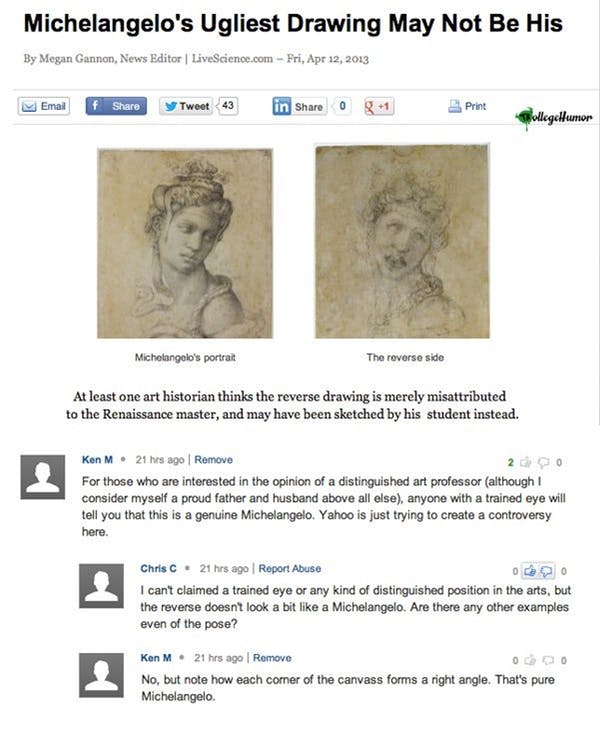 Without providing any definitions, we asked if this was an example of internet trolling. Of participants, 44 percent said yes, 41 percent said no and 15 percent were unsure.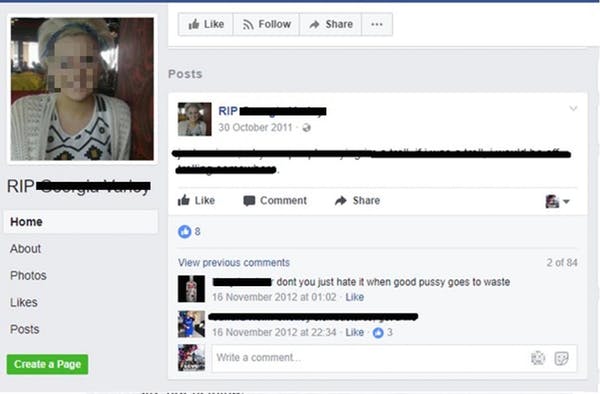
 A word cloud representing how survey participants described trolling behaviours. Image: The Conversation