Page 1135

Does microdosing improve your mood and performance? Here’s what the research says

]]>

Source: The Conversation (Au and NZ) – By Vince Polito, Postdoctoral Research Fellow in Cognitive Science, Macquarie University

Microdosing means regularly taking very small doses of psychedelic substances such as LSD or psilocybin (magic mushrooms) over a period of weeks or months. The practice has made countless headlines over the past couple of years, with claims it can improve health, strengthen relationships, and increase productivity.

These claims are surprising because microdosers take doses so small there are no noticeable effects. These can be just 1/20th of a typical recreational dose, often every three or four days. With such small amounts, microdosers go about their daily business, including going to work, without experiencing any typical drug effects.

Previous research suggests microdosing may lead to better mood and energy levels, improved creativity, increased wisdom, and changes to how we perceive time.


Read more: LSD ‘microdosing’ is trending in Silicon Valley – but can it actually make you more creative?


But these previous studies have mainly involved asking people to complete ratings or behavioural tasks as one-off measures.

Our study, published today in PLOS One, tracked the experience of 98 users over a longer period – six weeks – to systematically measure any psychological changes.

Overall, the participants reported both positive and negative effects from microdosing, including improved attention and mental health; but also more neuroticism.

What we did

As you would expect, there are many legal and bureaucratic barriers to psychedelic research. It wasn’t possible for us to run a study where we actually provided participants with psychedelic substances. Instead, we tried to come up with the most rigorous design possible in the current restrictive legal climate.

Our solution was to recruit people who were already experimenting with microdosing and to track their experiences carefully over time, using well validated and reliable psychometric measures.

Microdosers go about their lives without any typical drug effects. Parker Byrd

Each day we asked participants to complete some brief ratings, telling us whether they had microdosed that day and describing their overall experience. This let us track the immediate effects of microdosing.

At the beginning and end of the study participants completed a detailed battery of psychological measures. This let us track the longer-term effects of microdosing.

In a separate sample, we explored the beliefs and expectations of people who are interested in microdosing. This let us track whether any changes in our main sample were aligned with what people generally predict will happen when microdosing.

What we found

There are five key findings from our study.

1. A general positive boost on microdosing days, but limited residual effects of each dose.

Many online accounts of microdosing suggest people microdose every three or four days. The thinking is that each microdose supposedly has a residual effect that lasts for a few days.

The daily ratings from participants in our study do not support this idea. Participants reported an immediate boost in all measures (connectedness, contemplation, creativity, focus, happiness, productiveness and wellness) on dosing days. But this was mostly not maintained on the following days.

However, there was some indication of a slight rebound in feelings of focus and productivity two days after dosing.

Microdosers experienced increased focus. Rawpixel

2. Some indications of improvements in mental health

We also looked at cumulative effects of longer term microdosing. We found that after six weeks, participants reported lower levels of depression and stress.

We recruited people who were not experiencing any kind of mental illness for the study, so levels of depression and stress were relatively low to begin with. Nevertheless, ratings on these measures did drop.

This is an intriguing finding but it’s not clear from this result whether microdosing would have any effect on more significant levels of mood disturbance.

3. Shifts in attention

The microdosers in our study reported reduced mind wandering, meaning they were less likely to be distracted by unwanted thoughts.

They also reported an increase in absorption, meaning they were more likely to experience intense focused attention on imaginative experiences. Absorption has been linked to strong engagement with art and nature.

4. Increases in neuroticism and some challenging experiences

Not everyone had a good time microdosing. Some participants reported unpleasant and difficult experiences. In some cases, participants tried microdosing just once or twice, then didn’t want to continue.

Overall, participants reported a small increase in neuroticism after six weeks of microdosing, indicating an increase in the frequency of unpleasant emotions.

5. Changes do not entirely match people’s expectations

People have strong expectations about the effects of microdosing. But when we looked at the specific variables participants most expected would change, these didn’t match up with the changes actually reported by our microdosers.

Two of the biggest changes microdosers expected were increases in creativity and life satisfaction, but we found no evidence of shifts in these areas. This suggests the changes we found were not simply due to people’s expectations.

What does it all mean?

This complex set of findings is not what’s typically reported in media stories and online discussions of microdosing. There are promising indications of possible benefits of microdosing here, but also indications of some potential negative impacts, which should be taken seriously.


Read more: Opening up the future of psychedelic science


It’s important to remember this was an observational study that relied heavily on the accuracy and honesty of participants in their reports. As such, these results need to be treated cautiously.

It’s early days for microdosing research and this work shows that we need to look more carefully at the effects of low dose psychedelics on mental health, attention, and neuroticism.

ref. Does microdosing improve your mood and performance? Here’s what the research says – http://theconversation.com/does-microdosing-improve-your-mood-and-performance-heres-what-the-research-says-106850

One in six Australian women in their 30s have had an abortion – and we’re starting to understand why

]]>

Source: The Conversation (Au and NZ) – By Jayne Lucke, Chair, Australian Research Centre in Sex, Health & Society, La Trobe University

Abortion is a common experience for Australian women. Around one in six have had an abortion by their mid-30s, according our new research published today in the Australia New Zealand Journal of Public Health.

Narratives about abortion often stigmatise women who have had one, or seek to access to one. But our research shows women from all walks of life may have an abortion: married, single, child-free, and mothers. In fact, women who have already had children are more likely to have a termination than those who haven’t.

Women make decisions about whether or not to have an abortion in the context of their complex lives. And it’s by no means an easy decision.


Read more: Some women feel grief after an abortion, but there’s no evidence of serious mental health issues


Our research investigated the factors associated with abortion as women move from their late teens into their mid-30s. We found women with lower levels of control over their reproductive health, whether through family violence, drug use or ineffective contraception, are more likely than their peers to terminate a pregnancy.

If we want to reduce the rate of unintended pregnancies and abortion in Australia, we need to empower women to have control over their fertility and support them with appropriate health services.

Women’s experiences

We used data from five surveys of the Australian Longitudinal Study on Women’s Health to examine factors associated with “induced” abortions which were not undertaken because of a foetal abnormality.

We looked at a cohort of more than 9,000 women born between 1973-78 who were first surveyed at ages 18-23 years. At the fifth survey they were aged 31-36 years.

Overall, by their mid-30s, 16% of the women in this study had reported at least one abortion.

We also looked at the proportion of women who reported a new abortion at each survey. At the first survey, when women were aged 18-23, 7% reported having had an abortion. In subsequent surveys, 2-3% of women reported having an abortion since the last survey. While most women reported only one new abortion, around one in ten reported two abortions, and around 2% reported three abortions.

Abortion is understandably more common for women when they are in their 20s than it is when women reach their 30s. This may be because many women in their 30s are actively trying to be pregnant, or may be using contraception more effectively if they’re trying to avoid becoming pregnant.

Woman who already have children are more likely to have an abortion than women who don’t. Guillaume de Germain/Unsplash

Compared with married women, those who were in a de facto relationship, were single, or divorced were more likely to have had an abortion.

Women with children were more likely to have an abortion than women who did not have children. In the fourth survey, the majority of women (72%) said they hoped to have one or two children, 20% wanted three or more, while 8% didn’t want to have children.

Perhaps unsurprisingly, women who had an abortion in the later surveys were more likely to have previously reported using ineffective contraception, or to have had a past abortion, than women who didn’t terminate a pregnancy in their 30s.


Read more: Don’t want to take a contraceptive pill every day? These are the long-acting alternatives


Women whose alcohol use had recently become riskier and women who reported using any illicit drugs in the past 12 months were also more likely to have an abortion.

Violence was also a big factor. Women who recently experienced partner violence were more likely to terminate a pregnancy than women who reported no violence. Even women who reported childhood sexual abuse had a significantly increased likelihood of abortion in their twenties (but not in their 30s).

In fact, women reporting violence of any kind, and at any time, had a significantly increased likelihood of having an abortion.

What can we do about it?

Australia is going through a much-needed process of law reform to ensure women across the country have access to abortions as part their women’s health service. Queensland is the most recent state to remove abortion from the criminal code.

Alongside this, we need to improve training and resources to for health providers to identify and help women who may be at risk of unintended pregnancy, particularly those who are using illicit drugs or are experiencing partner violence.

We need better ways of reaching all vulnerable women, but especially young women experiencing reproductive coercion.


Read more: How forced pregnancies and abortions deny women control over their own bodies


We also need to ensure that all women are provided with good access to information about effective contraceptive choices. While the oral contraceptive pill and condoms are the most common methods Australian women use, long-acting reversible methods (such as intra-uterine devices and implants) can be good options for many women wanting effective contraception.

ref. One in six Australian women in their 30s have had an abortion – and we’re starting to understand why – http://theconversation.com/one-in-six-australian-women-in-their-30s-have-had-an-abortion-and-were-starting-to-understand-why-111246

What has Australia learned from Black Saturday?

]]>

Source: The Conversation (Au and NZ) – By Kevin Tolhurst, Senior Lecturer, Fire Ecology and Management, University of Melbourne

Black Saturday was a day like no other; it will be forever remembered in the history of bushfire disasters in Australia. The fires burned about 300,000 hectares in a single day; 173 human lives were lost and more than 2,000 houses were destroyed in one afternoon.

Australia was shocked at the scale of the destruction. Questions were soon being asked about how this could happen in the modern world, what could have been done to reduce the loss of lives and physical destruction, and what can be done to stop this happening again.


Read more: After the firestorm: the health implications of returning to a bushfire zone


The many reports, studies and inquiries in the ten years since Black Saturday have created a new regime for assessing and dealing with fires. While this has meant many improvements in how we communicate and coordinate in the face of bushfires, I believe it has also resulted in an overemphasis on accountability and technology at the expense of effective fire control.

The aftermath

As days passed and the fires were still being fully controlled, attention turned to capturing information about the fires so we could better understand what had happened. Victims and people affected by the fires were interviewed by journalists and social scientists, welfare workers and counsellors, friends and family. Nobody, at the time of the fires, had full knowledge of what had happened, so the collective knowledge pieced the puzzle together.

Fire scientists and meteorologist were also trying to capture as much information as possible about the fires and what drove them. This was a unique opportunity to collect information about fire and weather that could never be reproduced in experiments.

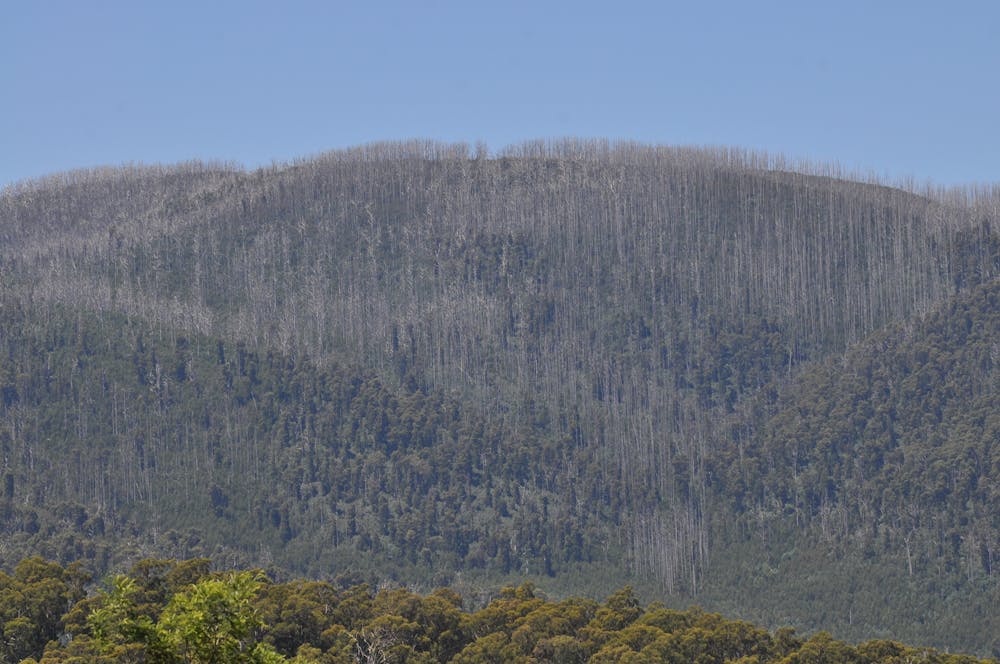
Mountain ash trees killed by the intense heat of the Black Saturday bushfire are still plainly visible on the hills around Marysville ten years on. AAP Image/Supplied by Jamie Duncan

Within a few days of the fire, the Victorian premier had announced a royal commission to investigate the cause of the fires, the factors leading to the unprecedented level of death and destruction, and the institutional response before, during and after the fires. The commission ran for 18 months, heard from 434 witnesses, cost more than A$90 million and produced 67 recommendations.

What has changed?

Research and the royal commission significantly increased our understanding of what occurred on Black Saturday. Research using these fires still continues ten years after the event. The knowledge gained has resulted in better weather forecasting, better communication about fires and weather to the public, better coordination and cooperation between emergency response agencies and public land managers, and better building and planning regulations for fire-prone areas.

Unfortunately, the close scrutiny of fire and land management agencies has led to greater emphasis on following standard processes and recording all actions and information used during fire events. This has led to a lot of time and resources being allocated to accountability at the expense of effectiveness in reducing bushfire impacts. This is clearly not a deliberate intention of the various agencies, but is the reality of a highly political and litigious world.

Another unintended development has been the increased reliance on technology for both fighting fires and communication. Many people in the bushfire-prone areas demand reliable access to warnings and fire developments, so there has been a rapid expansion of the mobile phone and internet networks across Victoria. However, just because people have access to such information does not ensure that they will respond in ways that emergency response agencies expect.


Read more: Drought, wind and heat: when fire seasons start earlier and last longer


Other technology such as bigger, stronger fire trucks and the use of aircraft for water bombing has reduced the extent of dry firefighting techniques – that is, controlling fire using firebreaks, hand tools and backburning with little or no water used. This has increased the number of fires growing to damaging sizes and escaping control lines.

This failing has not been fully recognised. Partly, that’s because any “technology” is easily taken by the media, public and politicians as an improvement, when in fact it may not be.

The lessons we’ve yet to learn

Since Black Saturday, use of the concept of “bushfire risk” has been growing. This makes it clear that bushfires in Australia are a constant threat and the risk is never zero.

The “risk concept” allows public agencies, private groups and communities to reduce bushfire risk to a level that they can afford and are willing to accept. However, how bushfire risk is assessed and communicated, and how trade-offs are negotiated, still has a long way to go if bushfire risk is to be a truly “shared responsibility” as the royal commission recommended.

Another complication is that public agencies have a regular turnover of staff. This makes it more difficult to establish trusted relationships between public agencies and private individuals.


Read more: Future bushfires will be worse: we need to adapt now


An event like Black Saturday will occur again. The terrain, vegetation, climate and weather patterns in southeastern Australia ensure that. Climate change will increase this risk.

When it does happen again, the extent of what we learned from Black Saturday will be judged by the impact of that event. We should not expect there will be no loss of lives and property in future massive blazes, but we should expect it will be significantly less than Black Saturday.

ref. What has Australia learned from Black Saturday? – http://theconversation.com/what-has-australia-learned-from-black-saturday-111245

Climate change is poised to deliver more Black Saturdays in decades to come

]]>

Source: The Conversation (Au and NZ) – By Scott Hamilton, Strategic Advisory Panel Member, Australian-German Energy Transition Hub, University of Melbourne

Ten years ago, on February 7, 2009, the Black Saturday bushfires killed 173 people. More than 2,000 houses were destroyed in Victoria, including at Kilmore, Kinglake, Vectis (Horsham), Narbethong, Marysville, Strathewan, Beechworth, Labertouche (Bunyip), Coleraine, Weerite, Redesdale, Harkaway, Upper Ferntree Gully, Maiden Gully, Bendigo, Eaglehawk, Lynbrook, St Andrews, Flowerdale, Narre Warren, Callignee, and my home town of Churchill, where my mother and father still lived. Their home wasn’t burned, but many of their neighbours were badly affected by the worst bushfire day in Australia’s history.

A week before, my uncle and aunt had to seek refuge at Mum and Dad’s place when a fire ember landed in their front yard during the Boolarra bushfires. Mum has since passed and Dad still lives in Churchill.

The climate is changing due to human induced greenhouse gas emissions, and this means more bushfire danger days in what is already one of the most fire-prone countries in the world. Unfortunately, we have not done enough to curb climate change and the situation is getting worse.

Climate change means more days of extreme heat, longer heatwaves and more frequent droughts. Droughts now occur further south than in the past and have been increasing in Australia’s southeast, including Tasmania. The records continue to tumble, and the evidence of dangerous climate change continues to mount.


Read more: Fires are increasing in warming world, but a new model could help us predict them


Back in 2008, John Brumby was Premier of Victoria and Kevin Rudd was Prime Minister. I was working on climate change for the Victorian government, developing projections for increased risk of bushfires. A 2005 study had already predicted an increase in fire weather risk throughout most of southeastern Australia over the coming decades, with “very high” and “extreme” fire danger ratings likely to increase in frequency by 4-25% by 2020 and 15-70% by 2050.

There has been more research in this area, although certainly not enough, given the huge stakes. A 2007 report for the Climate Institute of Australia predicted increases in annual average fire danger of up to 30% by 2050, and a potential trebling in the number of days per year where the uppermost values of the index are exceeded. The largest changes are predicted for the arid and semi-arid interior of New South Wales and northern Victoria.

Projected increases in the number of days with very high or extreme fire weather for selected years. This study was based on scenarios producing 0.4℃, 1.0℃ and 2.9℃ temperature rises, which will respectively be reached by the years indicated, without emissions reduction. Lucas et al. 2007, Author provided

The 2008 Garnaut Climate Change Review also warned that fire seasons will begin earlier, end slightly later, and generally be more intense. “This effect increases over time but should be directly observable by 2020,” it said.

In 2015, a further study by CSIRO and the Bureau of Meteorology concluded that:

Projections of warming and drying in southern and eastern Australia will lead to increases in [forest fire danger index] and a greater number of days with severe fire danger. In a business as usual scenario (worst case, driest scenario), severe fire days increase by up to 160-190% by 2090.

By combining all of this research, I created the graph below.

Projected annual number of days of very high or extreme bushfire danger. CSIRO/BoM/Bushfire CRC

This shows that while there is some uncertainty as to the extent of increase in the number of bushfire danger days in southeastern Australia, the situation is undoubtedly getting worse, and it’s time for action.

In 2017, the independent Climate Council published a report on Victoria’s growing bushfire threat, which made several stark findings and recommendations:

  1. Climate change is increasing the risk of bushfires in Victoria and lengthening fire seasons.

  2. Victoria is the state most affected by bushfires, and is on the front line of increasing bushfire risk.

  3. The economic cost of bushfires in Victoria is an estimated A$180 million a year, and this is predicted to more than double by 2050.

  4. Bushfires will continue to adversely affect human and environmental health.

  5. In the future, Victoria is very likely to experience an increased number of days with extreme fire danger. Communities and emergency services across Victoria must be prepared.

  6. Reducing greenhouse emissions is vital for protecting Australians.

Risk to water supplies

Our grandfathers and grandmothers had the wisdom to build amazing water infrastructure, protected by the “closed catchments” that give Melbourne and Victoria some of the best water in the world. Bushfires are a major risk to these water supplies – particularly in the catchments of major dams such as the Thomson.

A bushfire followed by a downpour that washes ash into the dam could potentially force the closure of the trillion-litre capacity Thomson reservoir, making it unusable for months. Firefighters have been battling exactly this kind of blaze at Mount Baw Baw in recent days and at the time of writing the situation has improved.

Major bushfires often occur in time of severe drought. Black Saturday itself happened towards the end of the 15-year Millennium Drought, when Victoria’s water supplies were already strained. I remember vividly the then chief executive of the Melbourne Water Corporation urging the government to deal with any fire in the Thomson Dam catchment immediately, given the threat to Melbourne’s water.

Fortunately, amid the devastation of Black Saturday we avoided major disruption to our water supplies. But this risk poses a huge challenge to both firefighters and policy-makers. The rule is that protection of human life is ranked above assets and infrastructure, and rightly so. But when there is a clear and present danger of towns and cities going without water, it’s also true that safeguarding water means saving human lives in the ensuing days.


Read more: The bitter lesson of the Californian fires


Any way you look at it, these are hard questions. On our current trajectory, we are heading for terrible trade-offs.

In 2050 my daughter Astrid and my son Atticus – Mum and Dad’s grandchildren – will be 45 and 43, respectively. I hope it is not too late for our leaders in Canberra, Davos and throughout the world to wake up and take urgent action to limit global warming 1.5℃. That would mean that the most fearful predictions of our bushfire future never come to pass.

ref. Climate change is poised to deliver more Black Saturdays in decades to come – http://theconversation.com/climate-change-is-poised-to-deliver-more-black-saturdays-in-decades-to-come-111064

Ten years ago, climate adaptation research was gaining steam. Today, it’s gutted

]]>

Source: The Conversation (Au and NZ) – By Rod Keenan, Professor, University of Melbourne

Ten years ago, on February 7, 2009, I sat down in my apartment in central Melbourne to write a job application. All of the blinds were down, and the windows tightly closed. Outside it was 47℃. We had no air conditioning. The heat seeped through the walls.

When I stepped outside, the air ripped at my nose and throat, like a fan-forced sauna. It felt ominous. With my forestry training, and some previous experience of bad fire weather in Tasmania, I knew any fires that day would be catastrophic. They were. Black Saturday became Australia’s worst-ever bushfire disaster.

I was applying for the position of Director of the Victorian Centre for Climate Change Adaptation Research (VCCCAR). I was successful and started the job later that year.


Read more: We can build homes to survive bushfires, so why don’t we?


The climate in Victoria over the previous 12 years had been harsh. Between 1997 and 2009 the state suffered its worst drought on record, and major bushfires in 2003 and 2006-07 burned more than 2 million hectares of forest. Then came Black Saturday, and the year after that saw the start of Australia’s wettest two-year period on record, bringing major floods to the state’s north, as well as to vast swathes of the rest of the country.

In Victoria alone, hundreds of millions of dollars a year were being spent on response and recovery from climate-related events. In government, the view was that things couldn’t go on that way. As climate change accelerated, these costs would only rise.

We had to get better at preparing for, and avoiding, the future impacts of rapid climate change. This is what is what we mean by the term “climate adaptation”.

Facing up to disasters

A decade after Black Saturday, with record floods in Queensland, severe bushfires in Tasmania and Victoria, widespread heatwaves and drought, and a crisis in the Murray-Darling Basin, it is timely to reflect on the state of adaptation policy and practice in Australia.

In 2009 the Rudd Labor government had taken up the challenge of reducing greenhouse gas emissions. With Malcolm Turnbull as opposition leader, we seemed headed for a bipartisan national solution ahead of the Copenhagen climate summit in December. Governments, meanwhile, agreed that adaptation was more a state and local responsibility. Different parts of Australia faced different climate risks. Communities and industries in those regions had different vulnerabilities and adaptive capacities and needed locally driven initiatives.

Led by the Brumby government in Victoria, state governments developed an adaptation policy framework and sought federal financial support to implement it. This included research on climate adaptation. The federal government put A$50 million into a new National Climate Change Adaptation Research Facility, based in Queensland, alongside the CSIRO Adaptation Flagship which was set up in 2007.

The Victorian Government invested A$5 million in VCCCAR. The state faced local risks: more heatwaves, floods, storms, bushfires and rising sea levels, and my colleagues and I found there was plenty of information on climate impacts. The question was: what can policy-makers, communities, businesses and individuals do in practical terms to plan and prepare?

Getting to work

From 2009 until June 2014, researchers from across disciplines in four universities collaborated with state and local governments, industry and the community to lay the groundwork for better decisions in a changing climate.

We held 20 regional and metropolitan consultation events and hosted visiting international experts on urban design, flood, drought, and community planning. Annual forums brought together researchers, practitioners, consultants and industry to share knowledge and engage in collective discussion on adaptation options. We worked with eight government departments, driving the message that adapting to climate change wasn’t just an “environmental” problem and needed responses across government.

All involved considered the VCCCAR a success. It improved knowledge about climate adaptation options and confidence in making climate decisions. The results fed into Victoria’s 2013 Climate Change Adaptation Plan, as well as policies for urban design and natural resource management, and practices in the local government and community sectors. I hoped the centre would continue to provide a foundation for future adaptation policy and practice.

Funding cuts

In the 2014 state budget the Napthine government chose not to continue funding the VCCCAR. Soon after, the Abbott federal government reduced the funding and scope of its national counterpart, and funding ended last year.

Meanwhile, CSIRO chief executive Larry Marshall argued that climate science was less important than the need for innovation and turning inventions into benefits for society. Along with other areas of climate science, the Adaptation Flagship was cut, its staff let go or redirected. From a strong presence in 2014, climate adaptation has become almost invisible in the national research landscape.

In the current chaos of climate policy, adaptation has been downgraded. There is a national strategy but little high-level policy attention. State governments have shifted their focus to energy, investing in renewables and energy security. Climate change was largely ignored in developing the Murray-Darling Basin Plan.

Despite this lack of policy leadership, many organisations are adapting. Local governments with the resources are addressing their particular challenges, and building resilience. Our public transport now functions better in heatwaves, and climate change is being considered in new transport infrastructure. The public is more aware of heatwave risks, and there is investment in emergency management research, but this is primarily focused on disaster response.

Large companies making long-term investments, such as Brisbane Airport, have improved their capacity to consider future climate risks. There are better planning tools and systems for business, and the finance and insurance sectors are seriously considering these risks in investment decisions. Smart rural producers are diversifying, using their resources differently, or shifting to different growing environments.

Struggling to cope

But much more is needed. Old buildings and cooling systems are not built to cope with our current temperatures. Small businesses are suffering, but few have capacity to analyse their vulnerabilities or assess responses. The power generation system is under increasing pressure. Warning systems have improved but there is still much to do to design warnings in a way that ensures an appropriate public reaction. Too many people still adopt a “she’ll be right” attitude and ignore warnings, or leave it until the last minute to evacuate.

In an internal submission to government in 2014 we proposed a Victorian Climate Resilience Program to provide information and tools for small businesses. Other parts of the program included frameworks for managing risks for local governments, urban greening, building community leadership for resilience, and new conservation approaches in landscapes undergoing rapid change.


Read more: The 2017 budget has axed research to help Australia adapt to climate change


Investment in climate adaptation pays off. Small investments now can generate payoffs of 3-5:1 in reduced future impacts. A recent business round table report indicates that carefully targeted research and information provision could save state and federal governments A$12.2 billion and reduce the overall economic costs of natural disasters (which are projected to rise to A$23 billion a year by 2050) by more than 50%.

Ten years on from Black Saturday, climate change is accelerating. The 2030 climate forecasts made in 2009 have come true in half the time. Today we are living through more and hotter heatwaves, longer droughts, uncontrollable fires, intense downpours and significant shifts in seasonal rainfall patterns.

Yes, policy-makers need to focus on reducing greenhouse emissions, but we also need a similar focus on adaptation to maintain functioning and prosperous communities, economies and ecosystems under this rapid change. It is vital that we rebuild our research capacity and learn from our past experiences, to support the partnerships needed to make climate-smart decisions.

ref. Ten years ago, climate adaptation research was gaining steam. Today, it’s gutted – http://theconversation.com/ten-years-ago-climate-adaptation-research-was-gaining-steam-today-its-gutted-111180

70 years before Black Saturday, the birth of the Victorian CFA was a sad tale of politics as usual

]]>

Source: The Conversation (Au and NZ) – By James (Jim) McLennan, adjunct professor, School of Psychology & Public Health, La Trobe University, La Trobe University

Black Saturday, ten years ago today, was Australia’s worst bushfire tragedy. It claimed 173 lives and more than 2,000 homes, and prompted a royal commission that made 67 recommendations, including 15 relating to the Country Fire Authority (CFA). All but one of the 67 were accepted by the Brumby government in 2010.

The CFA owes its existence to a series of earlier bushfire tragedies, but its birth was far less straightforward than is widely believed, and back then the government of the day was much slower to act on the advice it received in the aftermath of disaster.

January 13, 2019, was another significant bushfire anniversary: 80 years since the 1939 Victorian “Black Friday” fires. Before Black Saturday this was Australia’s worst bushfire tragedy, with an official death toll of 71.


Read more: What firefighters say about climate change


In 1939 there was no CFA, and bushfires were fought by local volunteer fire brigades, with no statewide organisation responsible for managing bushfire danger.

In the wake of Black Friday, Premier Albert Dunstan’s Country Party government also established a Royal Commission, chaired by Leonard Stretton, to investigate the bushfires. His report was tabled in state parliament on June 28, 1939 – less than six months after the fires – and it continues to earn praise as a model of comprehensiveness and clarity. One of its recommendations was to establish an authority with overall responsibility for bushfire management in Victoria.

Not so fast

It’s widely believed that this recommendation led directly to the formation of CFA. In truth it did not – the CFA was not established until December 1944.

You might ask why it took so long to implement such a clear recommendation. The answer is a sad indictment of the Victorian politics of the day, which also has parallels with government reactions to today’s environmental issues.

Stretton’s report was attacked savagely in the Victorian Parliament. Deputy Premier and Minister for Forests Alfred Lind – whose department was criticised strongly in the report – led the charge. None of the report’s recommendations were acted upon. The Labor opposition was incensed at the lack of action and moved a motion of no confidence in the government, which was defeated on party lines. And that, it seemed, was the end of the matter.

But it wasn’t, because the environment itself intervened. The summer of 1943-44 followed a severe drought in Victoria. The fire season began with a grass fire on December 23, 1943, in which ten members of the Wangaratta volunteer fire brigade died. In January 1944, raging grass fires claimed more than 20 lives and destroyed many homes across several regions of Victoria. In February, a fire near Morwell in Gippsland spread to the Yallourn open-cut coalmine; the nearby power station was threatened and there were blackouts across the state.

All told, there were 51 bushfire deaths that fateful summer, leading to public outcry over the lack of action just a few years before. Dunstan and Lind decided there was no alternative but to ask Stretton to chair a second Royal Commission, this one inquiring into the circumstances of the Yallourn fire. The resulting report made several pointed references to the previous, ignored, Royal Commission findings.

Times had changed, and World War 2 was at its peak. War-related manpower needs meant that there were fewer volunteer firefighters available, and power outages were seen as interfering with war-related industrial output. The government came under intense pressure to mitigate future bushfire danger by establishing an agency with legislated statewide responsibility for fire management.

After protracted negotiations with competing interest groups – notably the Country Fire Brigades Board and the Bush Fire Brigades Association – Stretton’s recommendation was finally realised when a bill to establish the CFA was passed on December 6, 1944. The board of the new authority met for the first time on January 3, 1945.


Read more: The Victorian firefighter dispute comes to a resolution, but for how long?


From its inception, the CFA has been the subject of controversy, most recently when the current Andrews government proposed converting it to an all-volunteer fire service, with professional firefighters moved to another agency. The necessary legislation has so far failed to pass the state parliament’s upper house. Politics, it seems, continues to determine how our fire services are delivered.

ref. 70 years before Black Saturday, the birth of the Victorian CFA was a sad tale of politics as usual – http://theconversation.com/70-years-before-black-saturday-the-birth-of-the-victorian-cfa-was-a-sad-tale-of-politics-as-usual-111080

Dry lightning has set Tasmania ablaze, and climate change makes it more likely to happen again

]]>

Source: The Conversation (Au and NZ) – By Nick Earl, Postdoctoral associate, School of Earth Sciences, University of Melbourne

Every year Tasmania is hit by thousands of lightning strikes, which harmlessly hit wet ground. But a huge swathe of the state is now burning as a result of “dry lightning” strikes.

Dry lightning occurs when a storm forms from high temperatures or along a weather front (as usual) but, unlike normal thunderstorms, the rain evaporates before it reaches the ground, so lightning strikes dry vegetation and sparks bushfires.

Dangerous, large fires occur when dry lightning strikes in very dry environments that are full of fuel ready to burn. Cold fronts in Tasmania, which often carry fire-extinguishing rain, have recently been dry, making these fires worse. The fronts draw in strong hot, dry northerly winds, fanning the flames.


Read more: Fires in Tasmania’s ancient forests are a warning for all of us


Research has found that as climate change creates a drier Tasmania landscape, dry lightning – and therefore these kinds of fires – are likely to increase.

History and detection in Tasmania

Lightning has always started fires across Tasmania. Fire scars and other paleo evidence across Tasmania show large fires are a natural process) in some places. However, frequent large, intense fires were rare. Now such fires are being fought almost every year.

Contrary to anecdotal belief, our recent preliminary work suggests that lightning activity has not increased over recent decades. So why do fires started by lightning appear to be increasing?

As temperatures rise, evaporation rates are increasing, but current rainfall rates are about the same. In combination this means the Tasmanian landscape is drying. The landscape is more often primed, waiting for an ignition source such as a dry-lightning strike. In such conditions, it only takes one.

When dry lighting strikes

Lightning struck just such a landscape in late December 2018, starting the Gell River bushfire in southwest Tasmania. This uncontrollable fire burnt about 20,000 hectares in the first half of January and is still burning. These large fires deplete the state’s resources, fatigue our volunteer and professional fire fighters and can have disastrous effects on natural systems.

With no significant rain falling over Tasmania since mid-December, the island is breaking dry spell records and thousands of dry lightning events have occurred. On January 15 alone over 2,000 lightning strikes sparked more than 60 bushfires.

Most of these were controlled rapidly, a credit to Tasmania’s emergency responders. One of the worst-hit areas was the Tasmanian Wilderness World Heritage Area, where many bushfires continue to burn in inaccessible locations.

This is putting some of Tasmania’s most pristine and valuable places in danger of being lost. The state stands to lose its most remarkable old-growth forests, like Mount Anne, which is home to some of the world’s largest King Billy Pines, a species endemic to Tasmania.

Increasing dry area

Ongoing climate change is making dry spells longer and more frequent, increasing the fire-prone area of Tasmania. Almost the whole state is becoming vulnerable to dry lightning.

Some regions of the west coast of Tasmania used to have very little to no risk of bushfires as they were always damp. However, this is no longer the case, resulting in species coming under threat.

Unlike most of Australia’s vegetation, many of Tasmania’s alpine and subalpine species evolved in the absence of fire and therefore do not recover after being burnt. Endemic species like Pencil Pine, Huon Pine and Deciduous Beech may be wiped out by one fire.

So what does the future hold? Using data from Climate Futures for Tasmania, we can peek into the future. Our models indicate that climate change is highly likely to result in profound changes to the fire climate of Tasmania, especially in the west.

Climate change already playing a role

With a warming climate, the rain-producing low-pressure systems are moving south and many storms that used to hit Tasmania are drifting south, leaving the island drier. This, combined with increasing evaporation rates, result in rapid drying of some areas. Areas that historically rarely experienced fire will become increasingly prone to burn. The drying trend is projected to be particularly profound throughout western Tasmania.

By the end of the century, summer conditions are projected to last eight weeks longer. This drying means that lightning events (and therefore dry lightning) will become an ever-increasing threat and the impact of these events will become more significant.

Higher levels of dryness will mean when bushfires occur the potential for these to burn into the rainforest, peat soils and alpine areas will be significantly increased.


Read more: How far away was that lightning?


These changes are already happening and will get progressively worse throughout the 21st century. Climate change is no longer a threat of the future: we are experiencing it now.

ref. Dry lightning has set Tasmania ablaze, and climate change makes it more likely to happen again – http://theconversation.com/dry-lightning-has-set-tasmania-ablaze-and-climate-change-makes-it-more-likely-to-happen-again-111264

Can bees do maths? Yes – new research shows they can add and subtract

]]>

Source: The Conversation (Au and NZ) – By Scarlett Howard, PhD candidate, RMIT University

The humble honeybee can use symbols to perform basic maths including addition and subtraction, shows new research published today in the journal Science Advances.

Bee have miniature brains – but they can learn basic arithmetic.

Despite having a brain containing less than one million neurons, the honeybee has recently shown it can manage complex problems – like understanding the concept of zero.

Honeybees are a high value model for exploring questions about neuroscience. In our latest study we decided to test if they could learn to perform simple arithmetical operations such as addition and subtraction.


Read more: Which square is bigger? Honeybees see visual illusions like humans do


Addition and subtraction operations

As children, we learn that a plus symbol (+) means we have to add two or more quantities, while a minus symbol (-) means we have to subtract quantities from each other.

To solve these problems, we need both long-term and short-term memory. We use working (short-term) memory to manage the numerical values while performing the operation, and we store the rules for adding or subtracting in long-term memory.

Although the ability to perform arithmetic like adding and subtracting is not simple, it is vital in human societies. The Egyptians and Babylonians show evidence of using arithmetic around 2000BCE, which would have been useful – for example – to count live stock and calculate new numbers when cattle were sold off.

This scene depicts a cattle count (copied by the Egyptologist Lepsius). In the middle register we see 835 horned cattle on the left, right behind them are some 220 animals and on the right 2,235 goats. In the bottom register we see 760 donkeys on the left and 974 goats on the right. Wikimedia commons, CC BY

But does the development of arithmetical thinking require a large primate brain, or do other animals face similar problems that enable them to process arithmetic operations? We explored this using the honeybee.

How to train a bee

Honeybees are central place foragers – which means that a forager bee will return to a place if the location provides a good source of food.

We provide bees with a high concentration of sugar water during experiments, so individual bees (all female) continue to return to the experiment to collect nutrition for the hive.

In our setup, when a bee chooses a correct number (see below) she receives a reward of sugar water. If she makes an incorrect choice, she will receive a bitter tasting quinine solution.

We use this method to teach individual bees to learn the task of addition or subtraction over four to seven hours. Each time the bee became full she returned to the hive, then came back to the experiment to continue learning.


Read more: Are they watching you? The tiny brains of bees and wasps can recognise faces


Addition and subtraction in bees

Honeybees were individually trained to visit a Y-maze shaped apparatus.

The bee would fly into the entrance of the Y-maze and view an array of elements consisting of between one to five shapes. The shapes (for example: square shapes, but many shape options were employed in actual experiments) would be one of two colours. Blue meant the bee had to perform an addition operation (+ 1). If the shapes were yellow, the bee would have to perform a subtraction operation (- 1).

For the task of either plus or minus one, one side would contain an incorrect answer and the other side would contain the correct answer. The side of stimuli was changed randomly throughout the experiment, so that the bee would not learn to only visit one side of the Y-maze.

After viewing the initial number, each bee would fly through a hole into a decision chamber where it could either choose to fly to the left or right side of the Y-maze depending on operation to which she had been trained for.

The Y-maze apparatus used for training honeybees. Scarlett Howard

At the beginning of the experiment, bees made random choices until they could work out how to solve the problem. Eventually, over 100 learning trials, bees learnt that blue meant +1 while yellow meant -1. Bees could then apply the rules to new numbers.

During testing with a novel number, bees were correct in addition and subtraction of one element 64-72% of the time. The bee’s performance on tests was significantly different than what we would expect if bees were choosing randomly, called chance level performance (50% correct/incorrect)

Thus, our “bee school” within the Y-maze allowed the bees to learn how to use arithmetic operators to add or subtract.

Why is this a complex question for bees?

Numerical operations such as addition and subtraction are complex questions because they require two levels of processing. The first level requires a bee to comprehend the value of numerical attributes. The second level requires the bee to mentally manipulate numerical attributes in working memory.

In addition to these two processes, bees also had to perform the arithmetic operations in working memory – the number “one” to be added or subtracted was not visually present. Rather, the idea of plus one or minus “one” was an abstract concept which bees had to resolve over the course of the training.

Showing that a bee can combine simple arithmetic and symbolic learning has identified numerous areas of research to expand into, such as whether other animals can add and subtract.


Read more: Bees get stressed at work too (and it might be causing colony collapse)


Implications for AI and neurobiology

There is a lot of interest in AI, and how well computers can enable self learning of novel problems.

Our new findings show that learning symbolic arithmetic operators to enable addition and subtraction is possible with a miniature brain. This suggests there may be new ways to incorporate interactions of both long-term rules and working memory into designs to improve rapid AI learning of new problems.

Also, our findings show that the understanding of maths symbols as a language with operators is something that many brains can probably achieve, and helps explain how many human cultures independently developed numeracy skills.


This article has been published simultaneously in Spanish on The Conversation Espana.

ref. Can bees do maths? Yes – new research shows they can add and subtract – http://theconversation.com/can-bees-do-maths-yes-new-research-shows-they-can-add-and-subtract-108074

What is Islamic dispute resolution and why is it controversial in Australia?

]]>

Source: The Conversation (Au and NZ) – By Dr Maria Bhatti, Lecturer in Law, Western Sydney University

Islamic dispute resolution involves resolving disputes without going to court and is similar to alternative dispute resolution, or ADR.

But Islamic dispute resolution has been controversial. Australia’s Muslim community is divided on whether it should be used here, its potential risks and benefits, and how it would sit with Australian law.

Why would an established form of mediation be so controversial? And what are the issues with implementing it in Australia?


Read more: Explainer: what is ‘sharia law’? And does it fit with Western law?


Remind me again, what is dispute resolution?

The form of dispute resolution typically used in Australia, ADR, usually involves an independent third party helping parties to resolve matters without involving courts. Alternatively, it may involve negotiation between parties and their lawyers without a third party.

It’s encouraged because it is an efficient method of resolving disputes. Parties can save money and time and reduce the stress involved with court proceedings. It’s often referred to as appropriate dispute resolution.


Read more: Do you need your day in court? The evolution of dispute resolution


ADR traditionally consists of negotiation, mediation, conciliation and arbitration. In both domestic and international arbitration, the final decision is binding. Negotiation, conciliation and mediation result in non-binding decisions.

In the field of international commercial arbitration, only commercial matters between international parties can be the subject of arbitration, as opposed to family, criminal or civil matters.

What about Islamic law?

Similarly, Islamic law encourages disputes to be resolved outside court through tahkim (arbitration) or sulh (mediation). The dispute resolution processes in Islam are part of a larger Islamic legal framework, known as Islamic law or Shariah.

There are two main primary sources of Islamic law. The first is the Quran, which is the holy book for Muslims. The second is the hadith, which are written collections recording the actions and sayings of the Prophet Muhammad (Sunna). Islamic law is also divided into different schools of jurisprudence and varying interpretations.

International commercial arbitration can also be subject to Islamic law. The Asian International Arbitration Centre has developed i-Arbitration rules (“i” signifies compliance with Islamic law). This caters for international parties who are interested in resolving their disputes through Islamic procedures.

For example, an arbitrator may choose not to include interest (riba) when determining a penalty in international commercial arbitration subject to Islamic principles. Although Islamic law encourages trade and profit, it prohibits riba. This prohibition is mentioned both in the Quran and the hadith and is considered an unethical and excessive gain.

The i-Arbitration rules are also consistent with the United Nations Commission on International Trade Law (UNCITRAL) Arbitration Rules.

What are the objections?

In 2009, Australia’s Muslim community was divided on the issue of establishing Islamic dispute resolution tribunals. One board member of the Islamic Council of Victoria supported and advocated the idea. But the Islamic Council of Victoria, as an organisation, opposed it.

The council was afraid that misconceptions about the term “Shariah” would trigger an unhealthy debate. Another concern raised by a representative of the Islamic Women’s Welfare Council of Victoria was that certain patriarchal interpretations of Islamic principles could place women at a disadvantage.

For example, reports from the UK suggest that there have been cases where male mediators have made it more difficult for women to obtain a divorce because they believe it should be the last resort. Also, some mediators were unaware of issues such as domestic violence and other structural injustices impacting women.


Read more: Explainer: what Islam actually says about domestic violence


This issue was again highlighted in the media in 2011 when the Australia Federation of Islamic Councils made a submission to the federal parliament’s Committee on Multicultural Affairs calling for a recognition of certain aspects of Islamic law.

In response, the then federal attorney-general, Robert McClelland, very clearly responded that there was no place for Islamic law in Australia.

How might it work with Australian law?

However, the proposal for implementing Islamic dispute resolution and the criticisms in relation to women being at a disadvantage were not thoroughly investigated.

There was no clear empirical research about whether women’s rights would be infringed in Australia if it was implemented.

It was also unclear how Islamic dispute resolution would operate. Would it function separately from or with Australian law? And would it be part of traditional ADR or separate from it? If it did form part of traditional ADR, would mediators and arbitrators be required to go through professional training and accreditation?

What can we learn from the UK?

Muslim Arbitral Tribunals operate in the UK and are subject to the law of England and Wales; they do not operate as a parallel legal system. They determine commercial, civil, family and personal law matters.

Although the tribunal may arbitrate on commercial matters, the decision can only be enforced in court if it meets legal requirements under the law of England and Wales. The tribunal can also mediate family law disputes about children and domestic violence, but such decisions are not binding.

In 2018, an independent review of these tribunals was presented to parliament. It recommended Muslim tribunals could provide women with more agency by addressing their concerns and involving them in dispute resolution procedures. Other recommendations included involving professional mediators who are aware of matters such as the rights of women to divorce, and ensuring mediators are professionals who are trained, accredited and educated about women’s rights.


Read more: Islam and feminism are not mutually exclusive, and faith can be an important liberator


Researchers from the universities of Sydney and Melbourne are exploring the experiences of women, men and mediators who have used informal community processes to resolve family disputes. The Australian Research Council is funding the project. It will shed light on whether Islamic dispute resolution processes will cater for issues such as domestic violence and the rights of women to divorce.

If the research suggests Islamic dispute resolution can operate in harmony with Australian law and provide women with agency, there is no reason why ADR should not cater for Muslims. If the operation of Muslim tribunals proves to conflict with Australian law and harm women, Muslim tribunals should not be established.

Regardless of the outcomes and recommendations, it is important that such discussions do not form part of a racist and Islamophobic narrative. Rather, Islamic dispute resolution should be further explored with the aim of empowering women and accommodating religious diversity.

ref. What is Islamic dispute resolution and why is it controversial in Australia? – http://theconversation.com/what-is-islamic-dispute-resolution-and-why-is-it-controversial-in-australia-110497

Five tips to make school bookshelves more diverse and five books to get you started

]]>

Source: The Conversation (Au and NZ) – By Helen Joanne Adam, Lecturer in Literacy Education and Children’s Literature, Edith Cowan University

A lack of diverse books is failing children from minority backgrounds. This is something that should concern all Australians.

I studied five Australian early learning settings and found less than 5% of books contained cultural diversity. My more recent findings show educators are struggling to use books in ways that promote intercultural understandings.


Read more: Eight Australian picture books that celebrate family diversity


Diverse books can help achieve principles of diversity written into Australian education polices. The potential of diverse books in addressing these principles and equity more generally is too important to ignore.

How books impact little readers socially and academically

Reading to children has a powerful impact on their academic and intellectual development. Children learn about themselves and the world through the books they’re exposed to. Importantly, children can learn understanding and respect for themselves and for those who are different to them.

The majority of children’s books depict white main characters. Photo by Hello I’m Nik on Unsplash, CC BY

But a lack of diverse books means we have a serious problem. Currently, children from minority backgrounds rarely see themselves reflected in the books they’re exposed to. Research over the last two decades shows the world presented in children’s books is overwhelmingly white, male and middle class.

For children from minority groups, this can lead to a sense of exclusion. This can then impact on their sense of identity and on their educational and social outcomes.

Stereotypes and misrepresentation

The evidence regarding Indigenous groups across the world is even more alarming. Research shows these groups are rarely represented. And, if represented at all, are most likely to be represented in stereotypical or outdated ways.

Many educators or adults unwittingly promote stereotypical, outdated or exotic views of minority groups. This can damage the outcomes for children from those groups. Children from dominant cultural groups can view themselves as “normal” and “others” as different.


Read more: How children’s picturebooks can disrupt existing language hierarchies


In my recent study, I found the book collections in early childhood settings were overwhelmingly monocultural. Less than 5% of the books contained any characters who were not white. And in those few books, the minority group characters played a background role to a white main character.

Particularly concerning was the lack of representation of Aboriginal and Torres Strait Islander people. Of 2,377 books, there were only two books available to children that contained Aboriginal and Torres Strait Islander characters. Only one of these was a story book.

In this book, the Aboriginal character was portrayed as a semi-naked person playing a didgeridoo in the outback. There were no books showing actual everyday lifestyles or views of Aboriginal people.

Teachers are uncertain

The accompanying practice of teachers may also be counterproductive to achieving equitable outcomes for children from minority backgrounds. The teachers in my study were keen and committed to the children in their care. They were passionate about the importance of reading to children. But when it came to selecting books, they struggled to know what books to select and how best to use them.

Teachers also need support to learn how to select diverse books. from www.shutterstock.com

Other research has found similar uncertainty among teachers. Some teachers overlooked the importance of diversity altogether. Some saw diversity as a special extra to address occasionally rather than an essential part of everyday practice.

How can we make bookshelves more diverse?

The call for more diverse booksfor children is gaining momentum around the world. The value of diverse books for children’s educational, social and emotional outcomes is of interest to all.

The voices of Aboriginal and minority group writers calling for change are gaining momentum. But there is still much to be done.

The recent development of a database from the National Centre for Australian Children’s Literacy is an important step. Publications of diverse books are still very much in the minority but some awareness and promotion of diverse books is increasing.

These important steps forward could be supported with better training for teachers and increased discussion among those who write, publish and source books for children. Here are five tips to help you build a more diverse book collection.


The Conversation, CC BY-ND


Educators and parents can strive to create libraries of inclusive books. This can ensure every child has the opportunity to achieve the substantial benefits we know books can bring. Here are five book titles to get you started on building a more diverse collection of books.


The Conversation, CC BY-ND


When we share diverse books with children, they gain opportunities to see themselves reflected and affirmed. Importantly we broaden children’s perspectives and understandings of those that are different to themselves.


Read more: Telling the real story: diversity in young adult literature


This supports children to value others as unique and equal individuals. Inclusive book collections which depict and affirm a diverse range of children, will contribute to equitable outcomes for all children.

ref. Five tips to make school bookshelves more diverse and five books to get you started – http://theconversation.com/five-tips-to-make-school-bookshelves-more-diverse-and-five-books-to-get-you-started-110718

What TV comedy The Good Place tells us about why banks and other corporations do bad things

]]>

Source: The Conversation (Au and NZ) – By Danny Davis, Executive Director, Australian Institute of Performance Sciences, and researcher at, La Trobe University

What does the American Netflix fantasy-comedy The Good Place have in common with Australia’s banking royal commission?

The Good Place, in case you don’t know, is about a happy afterlife accessed through earning enough life points from good deeds (bad deeds get point reductions).

It’s an improbably successful television series that riffs off thorny ethical questions about what it takes to be a good person. Its third season has contemplated the ethics of intention, obligation and consequences.


Read more: Kantian comedy: the philosophy of The Good Place


This is surprisingly similar ground to that covered by the royal commission’s final report into misconduct in Australia’s banking, superannuation and financial services industry.

“Everyday the world gets a little more complicated and being a good person becomes harder,” says Michael, the supernatural architect played by Ted Danson, in “The Tale of Two Dougs” (Season 3, episode 11).

The destinies of the two Dougs illustrate why fewer and fewer people are earning enough points to get to The Good Place.

The first Doug, in the year 1534, picks roses and gives them to his grandmother. He earns points. The second Doug, in the year 2009, orders roses using his mobile phone and gives them his to his grandmother. He loses points.

Why? Because now the flowers are grown thousands of miles away, using fertilisers and pesticides that harm the ecosystem, picked by workers who are underpaid, and transported using vehicles that pollute the atmosphere.

The point: it is harder to know how to do good in a more complex, interconnected world. Now our actions have implications that ripple further. And ignorance is not a defence.

Good intentions are not enough

The royal commission’s final report says something to this effect in its tale of two bank boards – of NAB and Commonwealth Bank – that failed in their primary duty to police actions that ripped off customers.

“There can be no doubt,” the report states in its introduction, “the primary responsibility for misconduct in the financial services industry lies with the entities concerned and those who managed and controlled those entities: their boards and senior management.”

“Too often,” it says further on, “boards did not get the right information about emerging non-financial risks; did not do enough to seek further or better information where what they had was clearly deficient; and did not do enough with the information they had.”

It’s a lot like second Doug not doing enough to avoid the harm of buying flowers online.

Obviously the royal commission has identified plenty of conduct that was simply bad behaviour – unconscionable misdeeds motivated by greed.

But it has also identified that those ultimately responsible for the mess of misconduct may be individuals devoid of malicious motivation.

These are hard-working executives and board directors who might have had the best of intention to do the right thing. Yet they they still failed to ensure ethical outcomes.

Life now is so complicated: Michael explains why the point system is broken.

Governance tools are obsolete

What The Good Place suggests to us about individuals is also applicable to companies: it is getting harder to be good.

The bigger a corporation gets the more complex its business becomes. It is exposed to volatile markets and disruptive technologies. Its supply chains are likely to span the globe. There is so much more information to consider.

A century ago, for example, a company didn’t worry about its greenhouse gas emissions. Now carbon footprint affects a company’s public reputation, profitability and long-term sustainability.

As the Australian Stock Exchange’s Corporate Governance Council has pointed out, boards are increasingly called on “to address new or emerging issues including around culture, conduct risk, digital disruption, cyber-security, sustainability and climate change”.

Yet they are relying on obsolete governance systems.

One of the organisations working on the new systems needed is Accounting for Sustainability, established by the Prince of Wales in 2004 to “ensure we are not battling to meet 21st century challenges with, at best, 20th century decision-making and reporting systems”.


Read more: Banking Royal Commission: no commissions, no exemptions, no fees without permission. Hayne gets the government to do a U-turn


There are other initiatives around the world engaging in this challenge. But Australian companies are underrepresented. Better practices that exist are still not widely known here.

I’ve had the opportunity to discuss governance failings and potential improvements with hundreds of Australian and global corporate leaders, including directors from Australia’s ten biggest companies. Most of these organisations operate as “islands of excellence”. They are really good in parts, but can’t bring it all together.

Privately, directors acknowledge they can’t keep on top of the information, understanding and follow-through expected of them.

One member of a board of a big-four bank has told me of several billion-dollar transformation projects intended to correct these known problems that “haven’t made a difference”.

Getting the right information

Governance is important. “Without the right information,” the royal commission report rightly states, “a board cannot discharge its functions effectively.”

But it does not “offer any single answer to how boards can ensure that they receive the right information”. It merely asks leaders to “keep considering how to present information about the right issues, in the right way”.

We need to have a clearer remedy than that.

On The Good Place, central character Eleanor (played by Kristen Bell) has Chidi, a trained moral philosophy professor (played by William Jackson Harper), to help her become a better person and avoid The Bad Place.

Who will be our corporate leaders’ Chidi?


Read more: Hayne’s failure to tackle bank structure means that in a decade or so another treasurer will have to call another royal commission


At the Australian Institute of Performance Sciences we’re working on a summit to bring together the top 50 corporate, investment and government actors in the Australian economy. They will be called on to collaborate in developing a better model of governance, akin to the way accounting and auditing standards have been improved over time. We will see what they choose to do.

Royal commissioner Ken Hayne has noted the “reluctance in some entities to form and then to give practical effect to their understanding of what is ethical, of what is efficient honest and fair, of what is the ‘right’ thing to do”.

The moral universe of the The Good Place damns those who fail see through the complexity of modern life. Corporations and their leaders guilty of the same failing warrant the same.

ref. What TV comedy The Good Place tells us about why banks and other corporations do bad things – http://theconversation.com/what-tv-comedy-the-good-place-tells-us-about-why-banks-and-other-corporations-do-bad-things-111062

Where are the in-depth documentaries calling to account the institutions that are failing us?

]]>

Source: The Conversation (Au and NZ) – By Steve Thomas, Senior Lecturer in Film and Television, University of Melbourne

There is no shortage of documentary makers out there – experienced and emerging – who are ready and willing to bring Australian stories to worldwide audiences.

But the ever shrinking pool of funding on which they can draw and the lack of interest from our two major public broadcasters in one-off, subject-specific docos, makes it extremely hard for that enthusiasm and skill to be realised.

In this context, Tom Zubrycki’s new essay on the changing landscape of Australian documentaries is both a timely summary of the history of documentary filmmaking here, and a rallying call for anyone who regards the genre as a serious player in the business of social change.


Read more: Local film and TV content makes up just 1.6% of Netflix’s Australian catalogue


Zubrycki reminds us of the incredibly rich inheritance we owe to those who laid the ground for the surge in documentary making of the 1980s and 90s – from the Lumiere Brothers to John Heyer’s Back of Beyond (the inspiration for the Mad Max movies) and the groundbreaking anthropological filmmaking of innovators such as Ian Dunlop and David McDougall.

With the inception of the Australian Film Commission and Film Australia, followed by the Film Finance Corporation (FFC), the likes of Mike Rubbo, Bob Connolly and Robin Anderson, Dennis O’Rourke, John Hughes, David Bradbury, Tevor Graham, Gillian Leahy, Pat Fiske, Zubrycki himself, and numerous others took up the torch. Their longitudinal observational documentaries, essay and political films have influenced how ordinary Australians view themselves.

Tom Zubrycki’s 1981 film Waterloo.

These were the iconic filmmakers that inspired me to take up documentary making when I arrived in Australia in the early 1980s. I saw their work mainly on the ABC and SBS. Sadly, although most of the above are still active filmmakers, or would like to be, their work stands little chance of gaining the interest of our beloved, if shredded and now ratings-obsessed, public broadcasters.

Recently, when Bob Connolly wanted to update his seminal trilogy of films set in Papua New Guinea following the life and times of coffee plantation owner Joe Leahy, the only way he could find to do it on TV was as a reporter for Foreign Correspondent. And when Trevor Graham, the maker of Mabo: Life of an Island Man, wanted to celebrate the 25th anniversary of the Mabo ruling, he resorted to radio.

Part of Bob Connolly’s trilogy of films set in PNG.

The rise of ‘documentary lite’

In his essay, Zubrycki succinctly chronicles the complicated history of the rise and fall of government/broadcaster subsidies to Australian documentaries. There were many aspects to this: from the “heyday” of the “Accords” deal between the funding agencies and ABC/SBS (which allowed broadcasters to commission docos with a 25% presale investment triggering the rest of the budget from the FFC) to the eventual government-imposed amalgamation of the FFC, the Australian Film Commission and Film Australia into Screen Australia.

Meanwhile there was a corresponding shift of broadcaster interest from one-off docos to so-called “reality TV”, “docusoap” and “infotainment” series, which marked the transition from filmmakers as independents to servants of TV commissioning editors.


Read more: Missing in action: the ABC and Australia’s screen culture


Tom Zubrycki. idmb

It is hard to see this trend towards branded and formulaic, “factual” content as much other than a dumbing down of content in pursuit of the holy grail of ratings. This was something the public broadcasters with their remit of public education and reflection of Australian culture never really had to bother about – until economic rational arguments won the day and they were required to “stand on their own feet”.

Zubrycki makes the point that the rise of what one might call “documentary-lite” has been at the cost of independent, one-off social documentaries, typically laboured over and nurtured for a long period, with a deep concern for the ethics of telling real stories.

But I think he could have pushed a little harder at the disingenuous stance of the public broadcasters, particularly SBS, in labelling much of their content “documentary” when it is really something else.

While it is hard to define what documentary is, I don’t believe it is to be found in the newly coined “unscripted” television world, where producers toss around ideas for the creation of artificial situations (even when well-meaning) that will bring financial returns via formats franchised around the world.

SBS’s Look Me in the Eye: ‘documentary lite’ television.

A resilient bunch

The positive side of Zubrycki’s argument, of course, is that documentary makers are not just resilient but adept at finding new ways to get their films made and seen. This may be via diversification of skills, philanthropy (the Documentary Australia Foundation has been a major development in this regard) or exploiting new media platforms such as YouTube, cinema on demand and streaming subscription channels.

I learned long ago from my students that free-to-air TV is the last thing young people consider when they think about documentaries.

Of course, Zubrycki is right to call the new masters of TV content – Netflix, Stan and Amazon Prime – to task over their lack of commitment to funding local product. Like every multi-national, they will resist local regulation, even when they’ve agreed to it elsewhere (as they apparently have in Europe and Canada). And our federal governments of either hue never show much appetite to take on media moguls.


Read more: Australia must act now to preserve its culture in the face of global tech giants


A recent development Zubrycki doesn’t mention is the new fashion (on SBS anyway) of “slow TV”. Such programming has interesting echoes with early anthropological and ethnographic, observational work that Australian filmmakers did so well. But to date both of the trans-Australian railway “blockbusters” and The Kimberley Cruise aired recently on SBS were commissioned from a subsidiary of All3media, a multi-national production company with its headquarters (of course) in London. This hardly represents a diversification of opportunity for Australian independents.

Slow TV: The Kimberley Cruise.


Read more: Why slow TV deserves our (divided) attention


I gave up on the idea years ago that any broadcaster would take an interest in the docos I want to make. Along with numerous experienced filmmakers (a trend which Zubrycki also doesn’t touch on) I have moved into tertiary education and collaborate with the academy (as well as philanthropy) to resource my filmmaking as best I can.

For me, the key question that remains after all this discussion is this: beyond journalistic programming, where are the in-depth docos penetrating and calling to account the institutions that are failing us? The banks, the body politic, the organisations that run our offshore detention centres, the youth detention system, and the lack of meaningful responses to the recognition of Indigenous Australians and the crisis of climate change?

At the start of his essay Zubrycki quotes Chilean director Patricio Guzmán: “A country without documentary films is like a family without a photo album”. I would add that a country without the latter kind of docos is a country without a conscience.

ref. Where are the in-depth documentaries calling to account the institutions that are failing us? – http://theconversation.com/where-are-the-in-depth-documentaries-calling-to-account-the-institutions-that-are-failing-us-111075

One Infinity explores tension and connection between China and the West

]]>

Source: The Conversation (Au and NZ) – By Kiu-wai Chu, Postdoctoral Research Fellow, Western Sydney University

Review: One Infinity, Sydney Festival 2019


In an age of growing mistrust, the Chinese-Australian artistic collaboration One Infinity demonstrates the ability of dance and music to navigate tensions between different cultures.

As the Chinese title of the show (Chu.Wuyin初.無垠, literally “Beginning, No Border”) suggests, the performance aims to take us back to the beginning of time, to a world without boundaries. It explores connection and disconnection; nature and culture, taking cross-cultural music and dance collaboration to a new level.

Produced by Playking Productions (Australia) and Jun Tian Fang (China), the show is directed and choreographed by Gideon Obarzanek (Australia), and features dancers from both Beijing Dance Theatre and Townsville-based Dancenorth Australia.

One Infinity’s stage resembles a mirror or a lake’s surface. Gregory Lorenzutti

One Infinity takes place on a softly-lit centre stage with a reflective floor resembling a mirror or a lake’s surface, where the musicians and dancers float. Mirror and reflection, water and nature, are all major motifs in the hour-long performance.

It begins with a melodic dialogue between two chirping birds, represented by Australian recorder virtuoso Genevieve Lacey’s recorder, and a Chinese flute. This is followed by renowned guqin master Wang Peng’s performance of the classic solo piece, Wild Geese Descending on the Sandbank (Pingsha Luoyan).

With that, ten dancers are revealed under the spotlights, seated among the audience (five dancers from the Beijing Dance Theatre on one side, and five from Dancenorth Australia on the other).

The two quintets morph into flocks of birds, which at times also resemble two giant butterflies flapping their wings, both being common motifs in classical Chinese nature poetry and painting.

Equally impressive is the Jun Tian Fang Music Ensemble’s classical duet “Two Flowing Waters (shuang liushui)”, where two guqins imitate the flowing water of two intersecting streams.

Entering a phase of exchange between the two dance companies, these early poetic dialogues are followed by a series of dance sequences that see continuously changing dynamics among the dancers.

One Infinity features dancers from Beijing Dance Theatre and Dancenorth Australia. Sarah Walker

One duo is characterised by uncertainty, anxiety and fear, while in a group dance the ten dancers turn themselves into a huge organism in the centre stage, interlocking their bodies to create a shifting mandala.

If there is anything we can make of it, the dance seems to suggest any form of interpersonal interaction and cross-cultural exchange would involve some degree of awkwardness, misunderstanding, anxiety and uncertainty, but not without the possibility to reconcile.

The dancers then scatter themselves all over the stage. They lie still on the ground, their bodies twitching slowly like worms crawling out of the ground. Gradually, they crawl up and regain physical human forms, as if turning human evolution into a dance sequence. In doing so, they are no longer divided by their ethnic and cultural differences, but united by their return to the origin of species, to a nature that is fundamental and universal.

If the early scenes of the other-worldly guqin music and the elegant dance moves recreate nature in the classical Chinese literary sense, then the latter part of the show represents a very different notion.

The performance includes a phase of exchange between the two dance companies. Gregory Lorenzutti

Performed to UK composer Max de Wardener’s electronic ambient music, the instinctual and unsophisticated body movements of the dancers highlight physical movement and the biological complexity of individual human bodies. This evokes the western system of knowledge, based on science, materialism and individualism. We are presented with a dualism, the (Chinese) spiritual nature and the (western) material nature.

One of the best parts of One Infinity is that the musicians each feature separately in different parts of the performance, thus letting their music shine in its own way, without having their collaboration reduced to some hybridised, chop-suey-ish, musical bricolage.

In this way, One Infinity does not intend to represent pure harmony and unity between East and West. It constantly reminds us of tensions and differences among the various forms of exchanges we can identify in the performance: between western and Chinese music; classical music and contemporary dance; Australian and Chinese dancers; and professional performers and the audience.

One Infinity also involves audience participation. Sarah Walker

Audience engagement and participation also play a role throughout the show, as the audience is led to participate with simple (but occasionally quick and vigorous) hand gestures. While our moves were far from synchronised, the ripples and waves we created turned out to be a surprisingly satisfying sight. Together, we disappeared into a sea of patterns, and became part of something larger than ourselves.

One Infinity offers a subtle a reminder that in cross-cultural exchange, Confucius’s famous saying “to harmonise but not to unify (he er bu tong)” still has its relevance.

We aim not to achieve uniformity, but to keep the desire to connect, to understand, to resist dominance, to pay mutual respect, and to constantly seek more common grounds.

One Infinity was staged as part of the 2019 Sydney Festival. It will be performed at the Perth Festival from February 7-10.

ref. One Infinity explores tension and connection between China and the West – http://theconversation.com/one-infinity-explores-tension-and-connection-between-china-and-the-west-111179

Curious Kids: why are burps so loud?

]]>

Source: The Conversation (Au and NZ) – By Clare Collins, Professor in Nutrition and Dietetics, University of Newcastle

Curious Kids is a series for children. If you have a question you’d like an expert to answer, send it to curiouskids@theconversation.edu.au You might also like the podcast Imagine This, a co-production between ABC KIDS listen and The Conversation, based on Curious Kids.


Why are burps so loud? – Byron, age 6, Sydney.


That’s a great question Byron. Some burps can be really loud, but they can be quiet too. How loud a burp is depends of a few factors, like how much gas is in your stomach to burp up and the structure of your food pipe that the burp travels along before it leaves your mouth. Let’s look at burps in a bit more detail.

What is a burp?

“Burp” is the word that describes the release of gas that builds up in your stomach and food pipe after eating and drinking. The food pipe, also called the gullet, has the scientific name oesophagus. The oesophagus is a muscular tube, about the length of a ruler, that joins the stomach to the back of your throat.

Where does the ‘burp’ noise come from?

If you open your mouth wide in front of a mirror, you can see a flap of tissue hanging down at the back of your throat. This is called the epiglottis. When you swallow, the epiglottis tips back to block off the windpipe that leads down to your lungs and that means the opening to your food pipe is now clear. (The epiglottis is a bit like a traffic controller.)

It’s all about the epiglottis and the oesophagus. Shutterstock

The noise made when you burp comes from gas that is trapped in your stomach and upper oesophagus when the food pipe is shut. This gas is under pressure, especially when there is a lot of it. As the pressurised gas flows up the food pipe, over the surface of the upper esophagus and past the epiglottis, it makes the surface of the upper part of your oesophagus rattle and vibrate. It is a bit like windows that rattle during a windy storm. The other factor is that because the oesophagus is long and round, the noise echoes as it travels up the food pipe.

Can you make yourself burp more loudly or quietly?

Take an empty cardboard tube from inside a roll of lunch wrap, or a toilet roll. Put your lips over the end and softly hum. This makes a louder noise compared to when you just hum without the tube, because of the echo. Now do it again, but put a lot of power into your hum. The noise is much louder. Forcing more air into the tube makes a louder echo. This is why bigger burps are noisier.

Whether you can make yourself burp more loudly or softly depends on how big your food pipe is and how much gas you have in there. Windows rattle more during a wild storm compared to when there is a gentle breeze blowing.

If you drink a small glass of soda water then you will only have a small amount of gas from the bubbles of carbon dioxide gas in the soda to burp up, but if you drink a whole can and take lots of gulps so you swallow more air and you can hold on so you burp all the gas out in one go, then you can produce a really loud burp.

Babies have small food pipes and small stomachs and produce burps that are more quiet than burps from children and adults.

Where does the gas come from?

The gas comes from a few different places. It can be from air that you swallow when you eat and drink which ends up in your stomach. Some people swallow more air if they eat too fast or when they drink from a straw. The “fizz” in soft drinks is the gas carbon dioxide and some other gasses are produced in your intestines during digestion.


Hello, curious kids! Have you got a question you’d like an expert to answer? Ask an adult to send your question to curiouskids@theconversation.edu.au

CC BY-ND

Please tell us your name, age and which city you live in. We won’t be able to answer every question but we will do our best.

ref. Curious Kids: why are burps so loud? – http://theconversation.com/curious-kids-why-are-burps-so-loud-108988

Health Check: do we really need to take 10,000 steps a day?

]]>

Source: The Conversation (Au and NZ) – By Corneel Vandelanotte, Professorial Research Fellow: Physical Activity and Health, CQUniversity Australia

Regular walking produces many health benefits, including reducing our risk of heart disease, type 2 diabetes and depression.

Best of all, it’s free, we can do it anywhere and, for most of us, it’s relatively easy to fit into our daily routines.

We often hear 10,000 as the golden number of steps to strive for in a day. But do we really need to take 10,000 steps a day?

Not necessarily. This figure was originally popularised as part of a marketing campaign, and has been subject to some criticism. But if it gets you walking more, it might be a good goal to work towards.


Read more: Health Check: in terms of exercise, is walking enough?


Where did 10,000 come from?

The 10,000 steps concept was initially formulated in Japan in the lead-up to the 1964 Tokyo Olympics. There was no real evidence to support this target. Rather, it was a marketing strategy to sell step counters.

There was very little interest in the idea until the turn of the century, when the concept was revisited by Australian health promotion researchers in 2001 to encourage people to be more active.

Based on accumulated evidence, many physical activity guidelines around the world – including the Australian guidelines – recommend a minimum of 150 minutes of moderate intensity physical activity a week. This equates to 30 minutes on most days. A half hour of activity corresponds to about 3,000 to 4,000 dedicated steps at a moderate pace.

In Australia, the average adult accumulates about 7,400 steps a day. So an additional 3,000 to 4,000 steps through dedicated walking will get you to the 10,000 steps target.


Read more: Are you walking your dog enough?


One size doesn’t fit all

Of course, some people accumulate a lot fewer steps per day – for example, older people, those with a chronic disease, and office workers. And others do a lot more: children, runners, and some blue-collar workers. So the 10,000 goal is not suitable for everyone.

Setting a lower individual step goal is fine as long as you try to add about 3,000 to 4,000 steps to your day. This means you will have done your 30 minutes of activity.

People measure their daily steps using a variety of activity trackers. From shutterstock.com

Studies that examine how the number of daily steps relates to health benefits have mainly been cross-sectional. This means they present a snapshot, and don’t look at how changes in steps affect people’s health over time. Therefore, what we call “reverse causality” may occur. So rather than more steps leading to increased health benefits, being healthier may in fact lead to taking more steps.

Nonetheless, most studies do find taking more steps is associated with better health outcomes.

Several studies have shown improved health outcomes even in participants who take less than 10,000 steps. An Australian study, for example, found people who took more than 5,000 steps a day had a much lower risk of heart disease and stroke than those who took less than 5,000 steps.

Another study found that women who did 5,000 steps a day had a significantly lower risk of being overweight or having high blood pressure than those who did not.

The more the better

Many studies do, however, show a greater number of steps leads to increased health benefits.

An American study from 2010 found a 10% reduction in the occurrence of metabolic syndrome (a collection of conditions that increase your risk of diabetes, heart disease and stroke) for each 1,000-step increase per day.

An Australian study from 2015 demonstrated that each 1,000-step increase per day reduced the risk of dying prematurely of any cause by 6%, with those taking 10,000 or more steps having a 46% lower risk of early death.


Read more: The faster you walk, the better for long term health – especially as you age


Another Australian study from 2017 showed people with increasingly higher step counts spent less time in hospital.

So the bottom line is the more steps, the better.

Step it up

It’s important to recognise that no public health guideline is entirely appropriate for every person; public health messages are aimed at the population at large.

That being said, we shouldn’t underestimate the power of a simple public health message: 10,000 steps is an easily remembered goal and you can readily measure and assess your progress. You can use an activity tracker, or follow your progress through a program such as 10,000 Steps Australia.

Increasing your activity levels, through increasing your daily step count, is worthwhile; even if 10,000 steps is not the right goal for you. The most important thing is being as active as you can. Striving for 10,000 steps is just one way of doing this.

ref. Health Check: do we really need to take 10,000 steps a day? – http://theconversation.com/health-check-do-we-really-need-to-take-10-000-steps-a-day-109079

Old bones reveal new evidence about the role of islands in penguin evolution

]]>

Source: The Conversation (Au and NZ) – By Theresa Cole, PhD candidate, University of Otago

Ever since Charles Darwin’s voyage to the Galapagos, biologists have been trying to figure out what determines the number of species that exist at any point in time. Our research, published today, provides an answer to this question, at least when it comes to penguins.

The discovery of two new penguins from the Chatham Islands, east of New Zealand, has revealed that the emergence of islands played a key role in penguin evolution.

Artist’s reconstruction of the extinct penguin, Eudyptes warhami, which was endemic to the Chatham Islands east of New Zealand. Sean Murtha, CC BY-ND

Island isolation drives penguin evolution

There are currently 20 different penguin species, spread around the southern hemisphere. By analysing bones from the Chatham Islands, we discovered a new species of large crested penguin (Eudyptes warhami) and a new subspecies of the yellow-eyed penguin (Megadyptes antipodes richdalei). But these unique penguins were driven to extinction by humans just a few centuries ago.


Read more: New Zealand discovery of fossilised ‘monster bird’ bones reveals a colossal, ancient penguin


We used genetic information from all living and extinct penguins and showed that in many cases the timing of island emergence closely matches the age of the penguin species that breed there. As islands have formed, so have new penguin species.

Penguin species range from the large 45kg emperor penguin to the tiny 1.5kg little penguin. The group also has a rich fossil record, including the extinct Waitaha penguin that once lived around New Zealand’s mainland.

Penguins are known to be astounding long-distance swimmers, often crossing entire oceans to turn up hundreds or thousands of kilometres from home. While they spend much of their lives at sea, penguins remain tied to the land for breeding. One third of all living penguin species are endemic to geologically young islands.

Adelie penguins coming onshore to breed. Chris Long/Antarctica New Zealand

We used genetic information from penguin fossils, as well as modern penguins, to reveal the timescale for the evolution of this iconic bird group. We found a consistent pattern, with many recent penguins evolving soon after the formation of the islands they inhabit.

By putting together these pieces of the jigsaw, we showed that island formation itself has played a key role in the evolution of penguin diversity. Young penguin species are typically associated with young islands, with examples including Macquarie Island, the Galapagos, Antipodes, and the Chathams. It seems that new penguin populations on recently emerged islands eventually became isolated, leading to the formation of new penguin species.

Old bones unlock new evidence

The discovery of two penguins from the Chatham Islands previously unknown to science came as a surprise. We originally expected to find only closer relatives to species found on nearby New Zealand. But our analysis of fossil bones from the Chatham Islands revealed a completely new species of large crested penguin and a dwarf subspecies of the yellow-eyed penguin.

The latter was particularly surprising, as the bones of this penguin were much smaller than those of their close relatives. These penguins appear to have evolved soon after the emergence of the Chatham Islands archipelago in the last few million years, and were key to unravelling the link between island formation and penguin evolution.

Skull of the newly-described (extinct) penguin, Eudyptes warhami. Jean-Claude Stahl/Museum of New Zealand Te Papa Tongarewa

Protecting island species

The presence of their bones in middens and a lack of reliable historical sightings suggest that Chathams crested and yellow-eyed penguin populations became extinct shortly after human settlement on the Chatham Islands a few centuries ago. These findings therefore potentially represent important new examples of human-driven extinction of island birds in the Pacific.

The extinct Chatham penguins provide a timely reminder that – even today – species may become extinct before they are known to science.

Our research also highlights the special vulnerability of isolated island species to human-driven extinction. Island species have often evolved in the absence of predators, making them poorly equipped to withstand the arrival of humans and other mammalian predators. Eliminating introduced predators represents a key step towards securing the future of surviving island species.

ref. Old bones reveal new evidence about the role of islands in penguin evolution – http://theconversation.com/old-bones-reveal-new-evidence-about-the-role-of-islands-in-penguin-evolution-110959

The Treaty of Waitangi and its influence on identity politics in New Zealand

]]>

Source: The Conversation (Au and NZ) – By James H. Liu, Professor of Psychology, Massey University

Globally, there has been a crisis of confidence in the promises of liberal democracy in recent years. In the United States, the president wants to build a border wall. The United Kingdom is agonising over Brexit. The leaders of the Philippines and Brazil proclaim a willingness to flout rule by law, and strike terror into “undesirables”. Authoritarian rule has not decreased in China, despite rising GDP.

Against these trends, New Zealand has experienced little backlash against immigration, even though it has one of the highest ratios of overseas-born residents in the world.

I argue that the Treaty of Waitangi, whose 1840 signing New Zealand marks today, has endowed New Zealanders with a convention for working through issues of equality and inequality, inclusion and exclusion; where some commitment to cultural diversity is threaded through the processes for constructing national identity.


Read more: Explainer: the significance of the Treaty of Waitangi


The visibility of culture and ethnicity at the heart of this foundational document of New Zealand sovereignty provides its people with a degree of inoculation against the worst of race-based nationalism.

Bicultural foundation

The 1840 signing of Te Tiriti o Waitangi between Māori chieftains and the British crown is today regarded as the single most important event in New Zealand’s history. It ceded rights of governorship (but not sovereignty) to the Crown, guaranteed continuity of property rights for Māori (and exclusive rights to purchase these from Māori by the Crown), as well as rights to British citizenship for Māori.

It provided a framework for colonial settlement. But this deteriorated into warfare as the legality of land sales was questioned amid debate about who was actually sovereign. At its peak in the 1860s, the New Zealand wars required 10,000 British regulars to subdue skilled and innovative Māori warriors (who established the world’s first artillery bunkers to resist cannon fire). But by 1877, a judge had declared the treaty a “simple nullity”, in line with accelerating settler demands for farmland and reduced Māori capacity for resistance.

Even as land was alienated from Māori at an accelerating rate in the late 1800s, New Zealand governors’ talk about the two groups remained civil. There has not been an expression of biological superiority or inferiority regarding Māori in any speech from the throne (signalling an incoming government’s legislative intent) in New Zealand history.

Cooperative relationships between white and Māori elites were common (also, designated seats for Māori have been established in parliament since 1867). Thus, Māori and Pākehā (New Zealander Europeans) have had a lot of practice in managing their differences through negotiation as well as conflict.


Read more: Why guaranteed Indigenous seats in parliament could ease inequality


Impact of colonisation

Despite symbolic inclusion and some good intercultural practices, disease and land alienation took its toll. By 1990, Māori were considered a “dying race”. To counter this, key Māori leaders had little choice but to encourage assimilation.

In the mid-20th century, Māori began a semi-forced migration to the cities, where traditional cultural practices had to change. The 1970s were the critical decade in which contemporary bicultural New Zealand identity politics began taking shape, a hundred years after the issue of who would control material resources and sovereignty was decided. Capitalising on anti-establishment feelings triggered by the Vietnam War, Māori across the spectrum mobilised Pākehā allies and engaged in protest movements that revitalised Māori identity and gave rise to 1975 treaty legislation that allowed fiscal settlements for colonial-era injustices through a tribunal.

Treaty-based legislation has evolved continually since then. Today most public institutions are required to honour the principles of the treaty (partnership, participation and protection). New Zealanders accept that colonial injustices were done to Māori, and NZ$2.2 billion of reparations have been made.

After Britain joined the European Economic Community in the 1970s, and excluded New Zealanders from British citizenship, New Zealanders of European origins began to articulate their relationship with Māori as part of their own identity. Not only are Māori symbolically included within the nation, the nation as a whole also draws symbolic resources from Māori and from the treaty.

Foreign dignitaries are welcomed by a Māori ceremony (a powhiri), the nation’s sports team (the All-Blacks) precedes its contests with a haka, and the country’s coat of arms is bicultural. Te Papa, the nation’s museum is structured biculturally, with the Treaty at its symbolic centre.

Recognising Māori as the people of the land

The discourse that “we are all immigrants” rings truer in New Zealand than in other English-speaking post-colonial societies (except maybe Canada). The current status of the treaty reminds citizens of the central position of Māori as tangata whenua (people of the land). This puts anti-immigrant rhetoric from New Zealand Europeans on shaky ground. The major anti-immigration politician in recent decades, Winston Peters, has Māori ancestry, and he is able to work with politicians who do not share his views.

Māori mostly have had bigger political fish to fry than roasting immigration. Having been colonised and dispossessed, improving collective well-being, as the Labour Party’s well-being budget declares, might be more important than guarding watery borders or aerial frontiers.

Democracy rose with enlightened leaders in Europe and the United States around two hundred some years ago, premised on the notion that individuals are capable of rational choice. The problem is, group-based politics is frequently far from rational, and is vulnerable to rabble-rousing. Leaders like Trump and the Brexiters represent sub-groups within their nations that are vociferously opposed by other groups. As the differences between them and their opponents involve identity politics that are group- and values-based, compromise is hard.

Group-based rationality works in New Zealand because it is treaty-based and has evolved stable and mutually acceptable platforms for dialogue. It is acceptable for Māori to filter their political views through the lens of culture. No matter how dominant the largest group (NZ Europeans), no matter if they are liberal or conservative, on Waitangi Day, any immigrant of any ethnicity becomes tangata tiriti (people of the treaty) in relationship with Māori as tangata whenua.

This pattern of cross-cutting allegiances is good medicine for facing the challenges to liberal democracy today.

ref. The Treaty of Waitangi and its influence on identity politics in New Zealand – http://theconversation.com/the-treaty-of-waitangi-and-its-influence-on-identity-politics-in-new-zealand-110991

What actually is populism? And why does it have a bad reputation?

]]>

Source: The Conversation (Au and NZ) – By Octavia Bryant, Doctoral Candidate, National School of Arts, Australian Catholic University

No doubt thanks to Donald Trump, Brexit, and a string of anti-establishment leaders and parties in Europe, Latin America and Asia, everyone seems to be talking about populism.

But populism is nothing new. It’s long accompanied democratic politics, and its activity and success has experienced peaks and troughs. Right now we’re in a bit of a heyday for populism, and this is impacting the nature of politics in general. So it’s important we know what it means and how to recognise it.

Even among academics, populism has been difficult to define. This is partly because it has manifested in different ways during different times. While currently its most well-known cases are right-wing parties, leaders and movements, it can also be left-wing.

There’s academic debate on how to categorise the concept: is it an ideology, a style, a discourse, or a strategy? But across these debates, researchers tend to agree populism has two core principles:

  1. it must claim to speak on behalf of ordinary people

  2. these ordinary people must stand in opposition to an elite establishment which stops them from fulfilling their political preferences.

These two core principles are combined in different ways with different populist parties, leaders and movements. For example, left-wing populists’ conceptions of “the people” and “the elite” generally coalesce around socioeconomic grievances, whereas right-wing populists’ conceptions of those groups generally tend to focus on socio-cultural issues such as immigration.

The ambiguity of the terms “the people” and “the elite” mean the core principles of people-centrism and anti-elitism can be used for very different ends.


Read more: Populism’s problems can be fixed by getting the public better-informed. And that’s actually possible


How can appealing to ordinary people be a bad thing?

Populism gets a bad name for a couple of reasons.

First, because many of the most prominent cases of populism have recently appeared on the radical right, it has often been conflated with authoritarianism and anti-immigration ideas. But these features are more to do with the ideology of the radical right than they are to do with populism itself.

Second, populists are disruptive. They position themselves as outsiders who are radically different and separate from the existing order. So they frequently advocate for a change to the status quo and may champion the need for urgent structural change, whether that is economic or cultural. They often do this by promoting a sense of crisis (whether true or not), and presenting themselves as having the solution to the crisis.

The leader of the Podemos party in Spain, who questioned capitalism in the wake of the Great Recession. Kiko Huesca/AAP

A current example of this process is Trump’s southern border wall, where he’s characterised the issue of illegal crossings on the southern border as a national emergency, despite, for example, more terrorist-related border crossings occurring on the northern, Canadian border and by air.

The fact populists often want to transform the status quo, ostensibly in the name of the people, means they can appear threatening to the democratic norms and societal customs many people value.

And the very construction of “the people” plays a large part in populists being perceived as “bad”, because it ostracises portions of society that don’t fit in with this group.


Read more: Perspectives on migrants distorted by politics of prejudice


What are some examples of populist leaders and policies?

The most famous contemporary example of a populist leader is the president of the United States, Donald Trump, and the renewed interest in populism is partly due to his 2016 electoral success. One way researchers measure populism, and consequently determine whether a leader or party is populist, is through measuring language.

Research has found Trump’s rhetoric during the campaign was highly populist. He targeted political elites, drawing on the core populist feature of anti-elitism and frequently used people-centric language, with a strong use of collective pronouns of “our” and “we”.

He combined this populist language with his radical right ideology, putting forward policies such as “America First” foreign policy, his proposed wall between the US and Mexico, and protectionist and anti-globalisation economic policies.

The combination of populism and such policies allowed him to draw a distinction between “the people” and those outside that group (Muslims, Mexicans), emphasising the superiority of the former.

These policies also allow for the critiquing of the elite establishment’s preference for globalisation, free trade and more liberal immigration policies. His use of the “drain the swamp” slogan – where he’s claiming he’ll rid Washington of elites who are out of touch with regular Americans – also reflects this.

Along with Trump, Brexit has also come to exemplify contemporary populism, because of its European Union-centred anti-elitism and the very nature of the referendum acting as an expression of “the people’s” will.

In South America, populism has been most associated with the left. The late Hugo Chavez, former president of Venezuela, was also highly populist in his rhetoric, and is perhaps the most famous example of a left-wing populist leader.

Chavez’s populism was centred around socioeconomic issues. Even while governing, he positioned himself as an anti-establishment politician, channelling the country’s oil revenues into social programs with the aim of distributing wealth among the Venezuelan people, relieving poverty and promoting food security.


Read more: Venezuela is fast becoming a ‘mafia state’: here’s what you need to know


The current Mexican president, Andrés Manuel López Obrador, and the Bolivian president, Evo Morales are also considered left-wing populist leaders.

But left-wing populism is not just confined to South America. In Europe, contemporary examples of left-wing populist parties include the Spanish Podemos and the Greek Syriza. These parties enjoyed success in the aftermath of the Great Recession. They questioned the legitimacy of unregulated capitalism and advocated structural economic changes to alleviate the consequences of the recession on their people.

It doesn’t look like populism is going anywhere. So it’s important to know how to recognise it, and to understand how its presence can shape our democracies, for better or worse.

ref. What actually is populism? And why does it have a bad reputation? – http://theconversation.com/what-actually-is-populism-and-why-does-it-have-a-bad-reputation-109874

Whose hearts, livers and lungs are transplanted in China? Origins must be clear in human organ research

]]>

Source: The Conversation (Au and NZ) – By Wendy Rogers, Professor in Clinical Ethics, Macquarie University

Scientist He Jiankui’s claimed use of the genetic tool CRISPR to edit the genomes of twin girls led to international condemnation. His actions have focused a spotlight on research ethics – and what the consequences should be when scientists “go rogue”.

The Chinese Academy of Science initially looked into He’s conduct, and a subsequent internal government investigation has allegedly identified multiple violations of state laws. He has now been fired by his university.


Read more: Tension as scientist at centre of CRISPR outrage speaks at genome editing summit


But beyond just this example, what does happen when scientists fail to comply with globally-accepted guidelines for ethical medical research? We examined this issue focusing on published research involving recipients of organ transplants performed in the People’s Republic of China.

International professional standards ban publication of research that:

  1. involves any biological material from executed prisoners
  2. lacks human research ethics committee approval
  3. lacks consent of donors.

But as described in our new paper, we found that research which does not comply with these standards is regularly accepted for publication in international peer-reviewed journals.

Human organ transplants in China

Using a scoping review methodology, we examined 445 studies published in peer reviewed English language journals between January 2000 and April 2017. The papers reported research involving recipients of human organ transplants (limited to hearts, livers or lungs) taking place in China. The data included 85,477 transplants.

We found that 92.5% of the publications failed to state whether or not the transplanted organs were obtained from executed prisoners. Nearly all of them (99%) failed to report whether organ donors gave consent. In contrast, 73% of papers reported approval from an institutional ethics committee for the research reported in the paper.

Widespread ethical concerns over the inability of condemned prisoners to give informed consent for organ donation are exacerbated in the People’s Republic of China. Here, the judicial and police system lacks safeguards against procedural abuses. Faulty convictions are extensively documented and extremely difficult to redress.

In addition, a growing body of credible evidence suggests that organ harvesting is not limited to condemned prisoners, but also includes prisoners of conscience. It is possible therefore — though not verifiable in any particular case — that peer reviewed publications may contain data obtained from prisoners of conscience killed for the purpose of organ acquisition.


Read more: Real Bodies controversy: how Australian museums regulate the display of human remains


Who is responsible for ensuring that data based on research involving organs harvested from non-consenting prisoners is banned from publication? We argue in our paper that reviewers and journal editors have a role to play.

Where do the organs come from?

In 19 papers involving 2,688 organs transplanted prior to 2010, the source of organs was reported as voluntary donors. But as widely known in the transplantation community, there was no volunteer deceased organ donor program in China before a pilot started in 2010. It therefore seems reasonable to assume that organs may have been sourced from prisoners, making claims about volunteer donation unreliable.

The two journals that published the greatest number of Chinese transplant papers identified in our study are Transplantation Proceedings, with 65 of the total 445 papers, and PLOS ONE, with 20. Other journals with papers identified by this study include the American Journal of Transplantation, and Transplantation (the official journal of the peak international body, The Transplantation Society). These journals both have policies that explicitly prohibit the publication of research based on organ transplants from non-consenting and/or prisoner donors.

We argue that, if they are not already doing so, reviewers and medical journals should demand information about the source of organs in Chinese transplant research before these are published for the broader public and scientific communities. If they are demanding such information, the responses to those demands should be published. And if they are not satisfied with the responses, they should refuse to publish the research.

When a paper is published without identifying the source of the transplanted organs, it risks sending the message that ethical standards may be ignored or breached. This undermines the incentive to comply with these standards in the future.


Read more: Here’s what Australia can do to help end the Chinese organ trade


We’re all responsible

Our findings raise important and disturbing questions about ethical oversight on the part of all of those involved in the process of reviewing and publishing transplantation research.

In response, we propose large-scale retractions of the papers identified by our research that are not consistent with international standards regarding organ donation.

We also propose a moratorium on all clinical transplant publications from China pending an international summit. The summit of transplantation community members and other stakeholders could develop appropriate policies and processes for handling future research.

Our hopes for these retractions are, however, not high. As one of us (Rogers) found, securing a retraction can be a prolonged process even where there is evidence of overt falsehood in the paper.


An article retracted due to concerns about the source of organs used for donation. Screen shot captured on Dec 12 2018.


Journals are reluctant to retract articles, and even retracted articles continue to be widely cited.

Nevertheless, there is growing interest in trying to uphold the integrity of published research, as well as initiatives to demand the publication of all clinical trial data. These initiatives offer some hope that breaches such as the ones we discovered will become less common.

As for the authors involved in retracted or ethically non-compliant research, there is little information about the impact on their careers. Being the author on a paper that is retracted may lead to a ban by the journal, trigger an institutional investigation, or have no effect.

Academic misconduct investigations by universities are rarely reported in the public domain. Apart from high profile cases like that of He, the nature and extent of the consequences for researchers who breach ethical standards is largely unknown.

ref. Whose hearts, livers and lungs are transplanted in China? Origins must be clear in human organ research – http://theconversation.com/whose-hearts-livers-and-lungs-are-transplanted-in-china-origins-must-be-clear-in-human-organ-research-108077

Explainer: the significance of the Treaty of Waitangi

]]>

Source: The Conversation (Au and NZ) – By Sandra Morrison, Associate Professor, Faculty of Māori and Indigenous Studies, University of Waikato

The Treaty of Waitangi is New Zealand’s foundation document. On February 6, 1840, the treaty was signed by representatives of the British Crown and Māori chiefs who acted on behalf of their hapū (sub-tribes).

Māori are indigenous to New Zealand, with historical ties and common narratives extending to Polynesia. The signing of the treaty confirmed formal European settlement in New Zealand. But debate and confusion have continued ever since regarding the exact meaning of the treaty text.


Read more: New Zealand’s indigenous reconciliation efforts show having a treaty isn’t enough


Nuance in translation

The debate stems from the fact that the parties involved in its signing, namely the rangatira (chiefs) and New Zealand’s first governor William Hobson on behalf of the British Crown, had different understandings and expectations as to what they had signed and what authority they would exercise.

There are two accepted versions of the Treaty of Waitangi: a Māori text known as Te Tiriti o Waitangi and the English version hereon called the Treaty of Waitangi. Under law both are accepted as the Treaty of Waitangi, but they are significantly different in meaning.

Te Tiriti speaks of the chiefs maintaining their tino rangatiratanga (authority) over their taonga (all that they hold precious, including the Māori language). The chiefs allow the Queen to have kāwanatanga, a nominal and delegated authority so that she can control her people. On the other hand, the treaty in English tells us that the chiefs ceded their sovereignty to the crown while retaining full, exclusive and undisturbed possession over their lands, estates, forests and fisheries.

A matter of interpretation

Given that at the time of the signing, the dominant language was Te Reo Māori and the majority of the discussions would have been conducted orally, the Māori text of Te Tiriti reflects the intentions of the chiefs. It is a critical reference point in informing our understandings, reinforced by the international convention of contra proferentem in relation to treaty making. This rule in contract law states that any clause considered to be ambiguous should be interpreted against the interests of the party that requested the clause to be included.

Claudia Orange, generally considered the most authoritative Pākehā (non-Māori) historian on the treaty, states:

The treaty was presented in a manner calculated to secure Māori agreement. The transfer of power to the Crown was thus played down.

Bear in mind also that the Declaration of Independence, the forerunner to Te Tiriti/Treaty, signed in 1835, had affirmed the authority chiefs already had. This meant they held mana and rangatiratanga (all power and sovereign authority). This system of political authority had been in place for many centuries.

Legal status of the treaty

Fast forward to 2019 and what has been happening in the landscape of treaty jurisdiction. During and after the cumulative impact of introduced legislation and policies which led to systemic colonisation, consistent and unwavering Māori protests at violations of both treaties eventually led to the introduction of the 1975 Treaty of Waitangi Act and its 1985 amendment.

This gave us the Waitangi Tribunal, which allows for a process to hear claims about breaches of the treaty, typically the taking of land and resources from Māori. The tribunal found in 2014 that Maori did not cede their sovereignty in Te Tiriti o Waitangi. It also introduced a set of principles which embodied the intention of both treaties in an attempt to mediate the differences in the two versions.

A series of judgements and mandates by the courts and the Waitangi Tribunal also ruled that the Crown has the right to govern (kāwanatanga), subject to the protection of Māori interests (rangatiratanga). This position is not accepted by many Māori who will continue to advocate for the supremacy of rangatiratanga over kāwanatanga.

In his book about the treaty’s place in New Zealand law and constitution, Mathew Palmer notes:

The Waitangi Tribunal developed the core of an interpretation of the meaning of the treaty that could and should be applied in contemporary New Zealand. This was a forward-looking constructive approach to enhancing relationships between the Crown and Māori.

A long-standing education campaign about the Treaty of Waitangi has also helped non-indigenous New Zealanders to appreciate the significance of the treaty relationship.

Treaty settlements

Most discussions on the principles of the Treaty of Waitangi generally include the following:

  • duty to act in good faith, reasonably and/or honourably
  • principle of partnership
  • principle of protection or active protection.

New Zealand’s constitution demands that robust public policy gives expression to the principles of the Treaty of Waitangi. This has led to the redesign of Crown agencies which must now be culturally responsive to the aspirations of Māori and actively innovate solutions to reduce the glaring social disparities where Māori are disproportionately represented.

The Waitangi Tribunal has heard and settled 54 treaty claims since 1989, including financial redress of more than NZ$1.5 billion. The first settlement, in respect of the Waitomo Caves, involved the transfer of land and a loan. Settlements since then have included several elements of redress: a formal apology by the crown, financial and cultural redress, the transfer of or the option to purchase significant properties, and restoration of traditional geographical names.

Since the identity of hapū is rooted in their physical and spiritual relationship with the environment over hundreds of years, these forms of cultural redress acknowledge the tribe as the rightful guardians and their deep association with place. The process seeks to restore the sacred relationships compromised by colonisation.

The treaty settlement process has been the catalyst for significant economic growth for iwi (tribe) controlled assets and Māori enterprise. This naturally brings positive development to the New Zealand economy, encouraging iwi and Māori to continue to progress their advancement not only economically but socially, culturally and environmentally.

ref. Explainer: the significance of the Treaty of Waitangi – http://theconversation.com/explainer-the-significance-of-the-treaty-of-waitangi-110982

Considering using IVF to have a baby? Here’s what you need to know

]]>

Source: The Conversation (Au and NZ) – By Hannah Brown, Chief Science Storyteller, South Australian Health & Medical Research Institute

If it’s not you, perhaps it’s someone you know. You don’t look infertile, you don’t feel infertile, but after many months (or years) of trying to start a family, followed by several months of monitoring your cycle in a fertility clinic, it’s time to discuss IVF.

This is a big decision. It will impact your time, your finances, your emotions, your relationships and your dreams of being a parent.

Despite the language of “falling pregnant”, inferring absolute simplicity, infertility is a reality for one in six Australian couples.


Read more: Women’s fertility: does ‘egg timer’ testing work, and what are the other options?


Infertility isn’t picky, but it is ageist!

A woman’s age is the single best predictor of IVF success. This is because a woman is born with all the eggs she will ever have, somewhere between one and four million. Our eggs are slowly tricking out of the ovary in a steady stream, until at menopause there are no eggs left.

Despite the fact that almost 400 eggs will begin to grow each month from puberty to menopause, only one egg will survive each month, bursting out of the ovary at ovulation ready to be fertilised.

Sperm are an equally critical component of both IVF and natural fertility.

Despite the myth that male fertility is not impacted by age, a growing body of evidence shows men’s age – and lifestyle factors such as excess weight, smoking and heavy drinking – affect fertility.

Intracytoplasmic sperm injection (ICSI) has been developed so fertilisation in the lab can still be successful even if only one good quality sperm is available.


Read more: Most men don’t realise age is a factor in their fertility too


What is the process and how will I feel?

IVF artificially increases the number of mature eggs ready for fertilisation. Your treatment very much depends on what your infertility diagnosis is, but for most couples undergoing IVF, the process will look a bit like this.

Step 1: ovarian stimulation

The hormone which makes eggs grow (FSH or follicle stimulating hormone) is given by very tiny, self-given injections just under the skin, in high but tailored doses. This creates a hormone tsunami, giving many eggs a chance to ride this wave.

Women self-administer the hormone injections. vchal/Shutterstock

Using IVF, we can safely increase the number of eggs the woman produces in a cycle without risking of multiple births. We take the eggs out of the body, in a process known as egg harvest or oocyte pickup, or OPU. Leaving the eggs in the body for fertilisation incurs an unacceptable risk of having twins, triplets, or more.

These hormones can have some side effects, which are usually mild, and may include tenderness at the injection site, hot flashes, blurred vision, nausea, headache, irritability and restlessness. Your doctor will outline them, and tell you what to monitor.

Step 2: egg harvest (oocyte pickup)

When the eggs are mature (generally up to 18 mm in size) and your estrogen levels are consistent with the egg numbers and size we need, we plan an egg harvest.

A trigger injection is given to finalise egg growth and development, and approximately 36 hours later, we perform the surgical procedure to collect them, ready to put them together with the sperm for in vitro fertilisation (IVF).

This procedure is more like a blood test than open surgery and in many units this procedure is done with pain relief while the female partner is awake. Other units use a light sedative anaesthetic, while they insert a narrow needle and camera (ultrasound) through the vagina to collect the eggs for IVF.

Step 3: in vitro fertilisation (IVF)

Over the next few hours, the embryologists will wash all the viable eggs and prepare them for fertilisation. They are then placed in a dish with thousands of sperm, which were collected previously and frozen, or collected on the same day from your partner.

ICSI looks something like this. Apl56/Shutterstock

Or, if you’re using intracytoplasmic sperm injection (ICSI), the embryologists directly inject one sperm into the cytoplasm of each egg.

Step 4: embryo culture

The day after IVF, the embryologist or nurse will phone you to tell you how many eggs were fertilised.

For the next few days, your embryos will live in a dish, in an oven heated to body temperature. Staff will monitor their growth and development and will eventually pick the right one for transfer back into the womb.

The embryo is gently transferred back into the womb on day five or six, in a process similar to that of a pap test. If you have many healthy embryos at this stage, they can be frozen for use later.

Now you wait

About a week-and-a-half to two weeks after your embryo was transferred, we can test to see if it’s attached to the womb. A simple blood test, or even home pregnancy test, will detect levels of human chorionic gonadotrophin (HCG), a sign that you are finally pregnant.

There’s so much waiting when you go through IVF. Rawpixel/Shutterstock

For some, the test will be negative. If they have frozen embryos, they can try again without needing to take more injections and have a surgical procedure.

Others will receive a diagnosis after learning something about their eggs, sperm and embryos, which can help the IVF team adjust the cycle plan and improve the couple’s outcomes in future cycles.

For some, it was the last time they were going to try IVF, or fertilisation didn’t occur, or an embryo transfer could not be done. Disappointment, frustration and grief becomes part of the experience and couples may need support and counselling.

For many, a positive pregnancy test is the outcome. But there is still more waiting; after all, you are still 38 weeks away from delivery. A small number of pregnancies miscarry or are lost so support in early pregnancy and good obstetric care is vital.

How much does it cost?

The cost of IVF is hugely variable, and is dependent on your level of private health cover. The out of pocket costs, even with the highest level of cover may reach A$9,000 for the first cycle. And each test and process will change the price.

Sit down with your specialist and ask “can you talk me through all of the costs associated with this round of treatment?” and have them break it down.


Read more: Women now have clearer statistics on whether IVF is likely to work


How do you find the right clinic?

There is a big difference in the quality of fertility care you can receive across Australia, with some clinics having dramatically higher success rates than others.

But keep in mind some clinics may not show all the data. They may quote the pregnancy rates for “every started IVF cycle” or for “every embryo transfer”, meaning the cycles where there is no embryo to transfer are excluded – thus making the rates look unrealistically good.

Many factors affect a couple’s success rate. Tina Bo

Despite the desire to shop for price, asking the clinic specifically about your chance of taking home a healthy baby in their clinic, and finding a health care provider you feel comfortable with is key.


Read more: Five traps to be aware of when reading success rates on IVF clinic websites


Your personal success may not be equal across two clinics, and you may save yourself money by finding a clinician and clinic with high success rates, and with a specialist who specialises in your condition, whether it’s polycystic ovary syndrome (PCOS), endometriosis, or something else.

Never be afraid to ask as many questions as you have, and to ask for clarity when you don’t understand. Undertaking IVF is a big step.

ref. Considering using IVF to have a baby? Here’s what you need to know – http://theconversation.com/considering-using-ivf-to-have-a-baby-heres-what-you-need-to-know-108910

Adapting to secondary school: why the physical environment is important too

]]>

Source: The Conversation (Au and NZ) – By Brendon Hyndman, Senior Lecturer and Course Director of Postgraduate Studies in Education, Charles Sturt University

School is back, so students new to secondary school will be beginning to adapt to their new school environments. This adaption commonly involves suddenly having multiple classes with different teachers and locations, many more students, different peer groups, becoming the youngest again and even managing a timetable.

For most commencing, their biggest concern is finding new friends and feeling a sense of social belonging. Yet, the majority are emotionally and socially settled much quicker and better than expected.


Read more: How much physical activity should teenagers do, and how can they get enough?


Another challenge for students entering secondary schools is the physical environment. This can influence students’ health behaviours. Students spend more time sitting or standing in secondary school, and less time being active because they have reduced access to spaces that support physical activity.

Primary and secondary school environments

Australian research found the change from primary into secondary schooling can make students less active and more sedentary, compared to a primary-secondary combined setting.

In Australian secondary schools, there are often high proportions of seats, lounges, empty spaces and picnic tables. In comparison, primary schools have wide varieties of facilities for students to use, such as climbing frames and surface markings.

Secondary school environments are less conducive to physical activity than primary schools. from www.shutterstock.com

A large review of multiple types of studies revealed links between providing high quality, well maintained facilities in secondary schools and meeting students’ physical activity needs. For example, it was important to be able to access and play soccer on a field, rather than in a confined space.

An outdoor audit of Australian secondary schools found many have low maintenance, litter or graffiti, few coloured markings/murals or vegetable gardens and spaces not suitable for informal games. Other concerns include areas for smoking, poor facilities to get changed in, little bike storage and not enough space.

What do secondary school students need?

In primary school, students develop fundamental skills, like catching or kicking a ball. In secondary school, students seek facilities with more adventure-type focuses (such as climbing walls or rope swings/courses) and advanced opportunities to test their physical skills (such as gymnastics, skating, sporting and fitness facilities).

But funding for these facilities can be limited. Secondary school students have also suggested walking programs and regular community excursions to places such as swimming pools or baseball fields.

Many suggestions from secondary school students for facilities are very different to their existing school places. Some simply hang around canteens and locker bays.

If you ask secondary school students, they want access to more adventurous types of exercise. from www.shutterstock.com

Why is this important?

Students are often presented with more opportunities to sit and stand around in secondary schools than in primary schools. This can have an impact on students’ physical health.

International and national reports point to many increased physical health risks when students enter secondary school. Sedentary behaviour can increase in secondary school. More students exceed daily sedentary behaviour screen time guidelines (just two hours for recreation/entertainment) and use more electronic devices.

Secondary school-aged students are also less likely to meet national physical activity recommendations. It’s recommended they complete at least one hour of moderate to vigorous physical activity each day (activity that makes you puff or develop a light sweat). The recommendations are important to maintain good health, develop movement habits and prevent lifestyle diseases (such as type two diabetes).

Additionally, there are fewer secondary school-aged students participating in non-organised (such as kicking a soccer ball around with friends) and organised (such as team sports) physical activity and sport after primary school.

Fewer students play team sports in secondary school. from www.shutterstock.com

School physical activity participation typically peaks at the end of primary schooling and declines as people age. The primary to secondary transition is a crucial period for maintaining physical activity as a lifelong healthy habit.

What can we do to support new secondary school students?

  1. Consult students on their interests and needs prior to and during the transition into secondary school. What will engage and challenge them? If facilities or programs are unavailable, various excursions to community recreation facilities can help.

  2. Make the amount and variety of physical activities, and the maintenance and access to physical activity facilities a priority. Activity programs can be promoted both within and outside the curriculum. For example, schools can encourage active transport (travelling to/from school by walking or cycling), organised sport, scheduled classes, active lesson breaks or recess periods and before/after school.

  3. Reduce the amount of sitting time in secondary schools to prevent sedentary behaviour, including in the classroom. Encouraging social interaction does not have to involve sitting down.

  4. During unavoidable and prolonged periods of electronics use, provide short breaks for a few minutes with movement tasks, such as moving to music.

  5. Consider multiple strategies that address mental, social and policy factors within physical environments for students. These could help them connect socially (team/group work, involving family or role modelling), mentally (solving problems and goal setting for motivation), academically (connecting to subject areas and reframing negative attitudes) and spiritually (giving them time to reflect) that can be replicated in the community.

  6. Staff need professional development to learn about, accommodate and deliver holistic health approaches in schools and provide inclusive physical activity and sporting settings.

  7. Provide physical activity opportunities that strengthen muscles and bone, such as with resistance bands and providing ideas for bodyweight exercises. This can develop muscles, fitness, prevent injury and meet additional activity guidelines.

Secondary school environments are complex spaces, so we must consider the physical environment to develop adolescent health during the transition from primary schooling.


Read more: How physical activity in Australian schools can help prevent depression in young people


ref. Adapting to secondary school: why the physical environment is important too – http://theconversation.com/adapting-to-secondary-school-why-the-physical-environment-is-important-too-110894

Is social housing essential infrastructure? How we think about it does matter

]]>

Source: The Conversation (Au and NZ) – By Kathleen Flanagan, Research Fellow & Deputy Director, HACRU, University of Tasmania

We know that safe, adequate, affordable and appropriate housing is essential for our health, well-being and social and economic security. However, even as house prices subside from recent record highs, many Australians struggle to obtain the housing they need to be as healthy, well and secure as they could be. An unacceptable number of Australians have no home at all.

How Australian governments meet such housing challenges has changed over time. Decades ago, direct investment in publicly owned housing was the core of their response. In the 1950s, state housing authorities built more than 100,000 dwellings — one in eight of all new homesat the time.

Over time, however, social housing has been recast as a welfare service. Political support has dwindled. Social housing is starved of funds, stigmatised and residualised.


Read more: Australia needs to reboot affordable housing funding, not scrap it


Could changing how we think about social housing serve as a starting point for a renaissance? Policy advocates like the Australian Council of Social Service (ACOSS) argue that social housing is actually a form of essential infrastructure. This is because it supports economic productivity and a range of other non-shelter outcomes.

Our research has examined whether changing how we think about social housing to see it as infrastructure might provide a pathway to increased investment.

What’s the evidence for this approach?

Conceptually, we found a link between social housing and infrastructure: both operate as forms of spatially fixed, durable capital that enable economies and societies to work better. Governments need to be involved in providing infrastructure to realise its full benefits — because of the scale of investment needed and because effects are spread across the community. In the same way, realising all the benefits of social housing requires government involvement.

When we look at history, there is compelling evidence for this. For example, during Australia’s post-war public housing construction boom, governments recognised their investment as necessary to enhance economic productivity, improve public health, and support families to thrive.

Across [Europe], especially in Finland, Austria and Scotland, we see social housing investment today undertaken in support of energy sustainability, economic stability, and social cohesion.

A small-scale project in Horsham, Victoria, is a rare Australian example of social housing investment in support of energy sustainability. Trivess Moore/RMIT University


Read more: Sustainable housing’s expensive, right? Not when you look at the whole equation


However, if social housing is to be considered as infrastructure, then proponents need to be more conversant with the practices and policies that sustain infrastructure investment. This includes developing credible, costed arguments to demonstrate the benefits of social housing relative to its cost. This isn’t easy — much that is relevant to the purpose of social housing and the people who live in it cannot be quantified or monetised.

Public infrastructure and private finance

An even more fundamental challenge arises from prevailing ideas about how infrastructure should be financed and funded.

In infrastructure-speak, “financing” is the provision of money to build and maintain an infrastructure asset, and “funding” is the means of paying the costs of finance. Even as governments pay more attention to infrastructure policy, the prevailing view is that it should be privately financed by institutional investors like banks or super funds. The role of governments, according to this view, should be limited to funding investments where user charges won’t deliver enough return to the investor.


Read more: Making sense of the global infrastructure turn


This prevailing view comes from a deep-seated belief within Australian governments and the wider community that governments are always fiscally constrained and that the mark of a “good” government is a budget surplus.

These are not just surface beliefs — the norms and practices associated with them are embedded in the way bureaucracies and governments prepare and manage their budgets.

When there is not enough government money to go around, even with a rigorous, costed business case establishing beyond doubt the value of investment in social housing, it might not be recognised as high enough priority for any meaningful level of funding to result.

To change this belief, we need to do more than make a case for social housing as infrastructure. We need to make the case for social housing.

A vision for social housing

To make the case, we must confront the politics of housing. The prevailing narratives have benefited powerful interest groups and produced mounting debt and inequality.


Read more: Housing policy is captive to property politics, so don’t expect politicians to tackle affordability


But we can draw on the historical precedents of policies that created public wealth through public investment in rental housing and expanded opportunities for ownership. We need to make the case for government to take a stronger, more direct role in infrastructure investment by embracing its role as a patient investor and a deliberate co-creator and shaper of markets for specified public purposes.

Direct public investment is also the cheapest, most effective way to generate affordable housing supply that meets community needs and delivers vital economic and social benefits.

Engaging with this vision, and what it implies about the role of government in Australia today, offers us the chance to think differently enough about social housing to make not properly investing in it unthinkable.


Read more: Australia needs to triple its social housing by 2036. This is the best way to do it


AHURI is presenting the inaugural Discussion Series event, “Is social housing infrastructure?”, at the State Library Victoria, Melbourne, on Monday, February 11 2019. A second event examining the same research topic will be held in Brisbane in March. More details are available here.

ref. Is social housing essential infrastructure? How we think about it does matter – http://theconversation.com/is-social-housing-essential-infrastructure-how-we-think-about-it-does-matter-110777

Banking Royal Commission: How Hayne failed remote Australia

]]>

Source: The Conversation (Au and NZ) – By Jonathon Louth, Research Fellow, The Australian Alliance for Social Enterprise, University of South Australia

It’s been an enormous year for the financial services industry.

First there was a Productivity Commission report calling for major changes to superannuation, then a Senate inquiry into financial services targeted at Australians at risk of hardship, and now the final report of the Royal Commission into Misconduct in the Banking, Superannuation and Financial Services Industry.

And it’s only February.

Yet all three investigations either missed something big or failed to take it sufficiently seriously.

It’s the plight of Australians in remote Indigenous communities.

As if to inoculate himself against such criticism, Commissioner Kenneth Hayne made it clear in his preface that it would have been impossible to hear every case and that inevitably there would be disappointment.

As a consequence, the (relatively privileged) voices that were heard didn’t properly reflect the hardships, vulnerabilities and lives of those far away from the centres of finance, yet increasingly dependent on them as their lives become ever more financialised.

Automatic teller machines

Take the simplest example: ATM fees.

There is not always an understanding within remote Indigenous communities – whether because of language or financial literacy skills – that ATMs attract a A$2.50 fee every time they are used, including to check balances. This often isn’t the case in cities where ATMS are operated by banks.

But in remote locations with only one or two ATMs, they are usually third-party operations, run for profit. It is not uncommon for people waiting for funds to appear in their accounts to check multiple times, draining the account until they find something there.

The only government access point and only phone and only internet service in Urapunga, Northern Territory. J. Louth

While the main report makes generic reference to ATM fees, it is only in the appendices where the question is touched upon.

The Bankers Association is well aware of it.

It conducted a limited two-year trial of free ATMs that concluded at the end of 2017, and was then extended.

It raises a telling question: if there was a recognisable problem and a recognisable solution, why extend the limited trial instead of making it universal?

It is a question about which the Royal Commission was silent.

Superanuation

And then there is super. The Productivity Commission’s earlier 722-page report on super (widely cited in the royal commission report) only twice makes explicit reference to issues faced by Aboriginal people.

This for a product where preservation age for a male is 60 years, yet the average life expectancy for an Indigenous male in the Northern Territory is 63.6.

While it raised the idea of a lower preservation age or releasing superannuation early for medical and associated expenses, the idea was relegated to the appendices.

Yet superannuation is a vital lifeline in remote communities. One Elder in the Northern Territory community of Wadeye made it clear to me that she uses access to super to get their children out of “town”, onto their country and away from social problems.

While the Productivity Commission does note the need to universalise access to hardship payments, it does not acknowledge that the capped amount of A$10,000 is taxed at up to 22%.

Portion control

To Commissioner Hayne’s credit, he urges consultation with Aboriginal and Torres Strait Islanders about making death benefit nominations reflect kinship ties.

It’s an excellent idea – one that would have carried more weight had he made it a formal recommendation.

His recommendations 4.1 and 4.2 are are as bold as they come, calling for a ban on the hawking of insurance policies and for funeral expense policies to be subject to the same rules as insurance policies.


Final Report, Royal Commission into the Misconduct in the Banking, Superannuation and Financial Services Industry, Vol. 1.


There’s nothing wrong with these recommendations, but they only deal with a small portion of the range of financial abuses that take place in remote communities or when community members visit larger towns and cities.

They include payday lenders offering multiple loans, telephone companies who sell phones they know have no coverage in remote communities, high-interest credit and motor vehicle insurance contracts, charity collectors who sign up community members for monthly donations (taking advantage of cultural notions of reciprocity), expensive furniture and appliance rentals, rent-to-buy schemes and, now, pay later schemes.

Indeed, while I was conducting an interview with an Elder in Wurrumiyanga in the Tiwi Islands, the Elder asked about the text message he received while we were speaking. It was from a payday lender offering immediate access to funds.


Read more: Banking Royal Commission: no commissions, no exemptions, no fees without permission. Hayne gets the government to do a U-turn


The Senate inquiry is examining some of these exploitative and predatory practices, but the royal commission’s terms of reference appeared to exclude consideration of them.

In the Northern Territory, where 25% of the population identifies as Aboriginal or Torres Strait Islander, they are not so easily excluded.

My research in the NT suggests that financialisation reinforces the systemic disadvantage introduced by white settlement and transmits it across generations.

Any effort to improve financial well-being in remote communities has to take into account the ways in which an imposed economic system has torn at the heart of the one it replaced.

Many of us seem unwilling to accept that an economic world existed prior to European settlement, that (international) trade routes and agriculture were sustained for millennia.

Working through this isn’t simple. It requires spending time with and listening to remote Indigenous communities. Yet as one Elder out past Timber Creek put it:

Government don’t ask, they just tell us. They don’t like to talk to Aboriginal people about what needs to happen, what needs to be done.

This brings us to recommendation 1.8:

Final Report, Royal Commission into Misconduct in the Banking, Superannuation and Financial Services Industry, Vol. 1.

The need to “identify a suitable way for those customers to access and undertake their banking” is vague, but important.

It ought to mean that the financial sector works with communities to develop its cultural competencies. It ought to mean exploring community and cultural literacies and embracing community knowledge.

It ought to mean having financial counsellors – who are Indigenous – trained in and able spending time on communities.

It will need commitment and ongoing funding from both industry and government.

But it’s more of a thought bubble than a worked-through proposal. At best, it’s a start.


The Conversation


ref. Banking Royal Commission: How Hayne failed remote Australia – http://theconversation.com/banking-royal-commission-how-hayne-failed-remote-australia-111100

How public ineptitude and private enterprise combined to give Venezuela hyperinflation

]]>

Source: The Conversation (Au and NZ) – By Michelle Carmody, Academic Specialist, Latin America, University of Melbourne

Imagine going to the store and finding that nothing has a price tag on it. Instead you take it to the cashier and they calculate the price. What you pay could be twice as much, or more, than an hour earlier. That’s if there is even anything left in stock.

This is the economic reality that underpins Venezuela’s current “political crisis” – though in truth that crisis has been going on for years.

The government headed by Nicolás Maduro, who has presided over Venezuela since 2013, declared a state of emergency in 2016. That year the inflation rate hit 800%. Things have since gone from bad to worse.

By 2018 inflation was an estimated 80,000%. It’s difficult to say what the rate is now, but Bloomberg’s Venezuelan Cafe Con Leche Index, based on the price of a cup of coffee, suggests it is now about 380,000%.

About 3 million Venezuelans – a tenth of the population – have fled the country. This is the largest human displacement in Latin American history, driven by shortages of everything including food as well as the Maduro regime’s oppressive treatment of dissent.


Read more: Venezuela is fast becoming a ‘mafia state’: here’s what you need to know


No wonder, then, that Maduro, who has just begun his second term as president, is now under considerable domestic and international pressure to call new elections.

So how did things get so bad? How did inflation become hyperinflation in Venezuela? And how do Venezuelans deal with it?

Venezuelans living in Santiago, Chile, protest against the regime of of Nicolás Maduro on February 2. A huge diaspora of Venezuelans is now spread throughout Latin America. Alberto Valdes/EPA

The cost of goods and the value of currency

What we pay for goods and services reflects not only their cost of production but also of the value of the currency we buy them in. If that currency loses value against the currency the goods are sold in, the price of those goods goes up.

By 2014 the value of Venezuela’s currency, the bolívar, and the prosperity of the Venezuelan economy, was highly dependent on oil exports. More than 90% of the country’s export earnings came from oil.

These export earnings had enabled the government headed by Hugo Chavez from 1999 to 2013 to pay for social programs intended to combat poverty and inequality. From subsidies for those on low incomes to health services, the government’s spending obligations were high.

Then the global price of oil dropped. Foreign demand for the bolívar to buy Venezuelan oil crashed. As the currency’s value fell, the cost of imported goods rose. The Venezuelan economy went into crisis.

The solution of Venezuela’s new president Nicolas Maduro, who succeeded Chavez in March 2013, was to print more money.

The sign in a store in Cucuta, the Colombian-Venezuelan border, reads: ‘We do not accept bolívares, only Pesos. Schenyder Mendoza/EPA

That might seem silly, but it can keep the economy moving while it gets over a hump caused by a short-term price shock.

The Venezuelan crisis, however, just got worse as the oil price continued to fall, compounded by other factors that reduced Venezuelan oil output. International investors began looking elsewhere, driving the value of the bolívar even lower.


Read more: Curious Kids: why don’t poorer countries just print more money?


In these conditions, printing more money simply made the problem worse. It added to the supply of currency, pushing the value down even further. As prices rose, the government printed more money to pay its bills. This cycle is what causes hyperinflation.

Playing the currency market

Circumstances like these quickly make saving money in the local currency nonsensical. To protect themselves, Venezuelans started to convert their savings into a more stable currency, like the US dollar. This lowered the value of the bolívar even further.

The government responded by issuing currency controls. It set a fixed exchange rate, to stop the official value of the bolívar dropping against the US dollar, and made it difficult to actually get permission to exchange bolívares into US dollars. The idea was to stabilise the currency by effectively shutting down all currency transactions.

US dollars were still available on the black market, however. This meant going to any number of operators on the streets of downtown Caracas or asking some friend or to hook you up. As the crisis deepened, more and more Venezuelans looked to switch their bolívares into US dollars.

By mid-2018 the official foreign exchange rate was about 250,000 bolívares to one US dollar. shutterstock

This increasing demand meant the black market price for greenbacks rose, creating a difference between the official exchange rate (set by the government) and the unofficial going rate.

With this came new opportunities. In 2014 reports emerged that groups of middle-aged women were crossing the border to use ATMs in Colombia. They could withdraw funds from their Venezuelan accounts as US dollars at the official rate. They could then cross back into Venezuela and exchange the dollars for bolívares at the unofficial rate, making a tidy profit. Government officials able to exchange bolívares for US dollars within Venezuela had their own version of this practice.

This pushed the price of US dollars up, and that of bolívars down, even more. As the crisis deepened increasing numbers of ordinary Venezuelans began to engage in the unofficial currency market.

Sometimes this took the form of taking subsidised Venezuelan goods like food across the border to sell. This earned the sellers foreign currency, but it also exacerbated shortages of goods within the country, driving prices up even further.

This does not mean Venezuela’s currency crisis is the fault of ordinary Venezuelans. Illegal economic activity is largely a coping mechanism, a bellwether of the actual economy’s ability to provide for people. When a government fails its responsibilities, it should be no surprise that people protect themselves through unofficial currency trading. This is exactly what big international investors do all the time, albeit through more official channels.

A street kid uses now worthless currency to make handicrafts to sell in the streets of Caracas, Venezuela’s capital. The currency was changed from the ‘Bolívares Fuertes’ to the ‘Bolívares Soberanos’ in August 2018. Miguel Gutierrez/EPA

Cannot be trusted

By August 2018 the Venezuelan currency was worth so little that it was more prudent to use cash for toilet paper rather than buy toilet paper.

The government tried to get on top of this situation by issuing a currency devaluation. Maduro devalued the bolívar by 95%, the largest currency devaluation in contemporary world history. He also tied the new currency to the price of oil, an economic experiment designed to show the Venezuelan economy had solid foundations.

By bringing the bolívar’s value into line with the reality of what people actually thought it was worth, and showing it was backed by something valuable, oil, Maduro’s government hoped Venezuelans would believe in their own currency and not exchange it for dollars. This would help stabilise the economy overall.

But within weeks of the devaluation it was clear ordinary Venezuelans had not been convinced.

They had no reason to be, given the government was not addressing other issues, such as policies contributing to low productivity across the economy. The government’s increasing authoritarianism, including interfering with the constitution and elections, also signalled it was not to be trusted.


Read more: Is authoritarianism bad for the economy? Ask Venezuela – or Hungary or Turkey


Hyperinflation is a very difficult hole out of which to climb. Very few economies ever experience it, and it’s hard to stop it without massively cutting government spending.

It is easy, then, to see why millions of Venezuelans responded by dealing in the black market or taking their savings, and themselves, out the country altogether.

As the political crisis in the country deepens, Venezuelans will have to continue to seek ways to allow them to survive the storm any way they can.

ref. How public ineptitude and private enterprise combined to give Venezuela hyperinflation – http://theconversation.com/how-public-ineptitude-and-private-enterprise-combined-to-give-venezuela-hyperinflation-102483

Feminist hero Ruth Bader Ginsburg has been stifled by a new patriarchal construct: the cinema

]]>

Source: The Conversation (Au and NZ) – By Alicia Byrnes, PhD Candidate and Sessional Tutor, Screen and Cultural Studies, University of Melbourne

On the morning I went to see Mimi Leder’s Ruth Bader Ginsburg biopic, On the Basis of Sex, Fox News accidentally aired a graphic reporting Ginsburg’s death.

Representatives for the channel immediately apologised for their misstep and withdrew the graphic. (Ginsburg is very much alive at 85, though unwell). Still, there was an irony to the gaffe given Ginsburg’s progressive judgements as a trailblazing US Supreme Court justice have challenged the conservative thinking Fox News promotes.

It is therefore a shame that Leder’s film cedes to a similar sort of false reporting in its softened portrayal of the feminist icon.

On the Basis of Sex focuses on an early segment of Ginsburg’s life, as she begins Harvard Law School as one of nine women in her class, and goes on to fight a sex discrimination case in court.


Read more: Ruth Bader Ginsburg helped shape the modern era of women’s rights – before she went on the Supreme Court


The film’s screenplay is the debut attempt by Daniel Stiepleman, Ginsburg’s nephew. He was taken with this little-known case because it was the sole instance of his aunt (played by Felicity Jones) working professionally alongside her beloved husband, Martin “Marty” Ginsburg (Armie Hammer).

The couple’s professional interests intersected on the case. The plaintiff was a never-married man seeking a tax deduction for expenses required to care for his elderly mother, an endeavour prohibited by law on the basis of sex.

As the film tells it, Marty, a tax attorney, pitched the case to Ruth (or Kiki, a name used endearingly by Marty, by others in condescension) for its inverse demonstration of sex-based discrimination within the legal system. I won’t spoil the outcome for you, but suffice to say Ginsburg has built her reputation overturning these kinds of laws.

The central legal case works effectively from a narrative standpoint, harnessing a number of threads explicative of Ginsburg’s life. She experiences prejudice from the defence counsel (comprised, in part, of her past Harvard Law professors), the judges on the Court of Appeal, and even Mel Wulf of the American Civil Liberties Union (Justin Theroux, with an inexplicable spray tan), who agrees to assist her on the case to give it legitimacy.

On The Basis of Sex focuses on an early period in the life of US Supreme Court justice Ruth Bader Ginsburg. Entertainment One

The case also allows Ginsburg to delineate her stance on social politics, including her seminal contention that gender discrimination should be treated as seriously as racial discrimination. To the film’s credit, it works concertedly to recognise the implications of this point for intersectionality, too.

The case comes at a time when the women’s liberation movement was taking shape (Gloria Steinem is mentioned more than once), capturing Ginsburg’s teenage daughter, Jane (Cailee Spaeny), in its momentum. At its core, the case demonstrates Ginsburg’s admirable relationship with Marty, their unwavering support for one another in all things personal and professional. That this case is so all encompassing is perhaps the film’s fundamental problem.

Armie Hammer and Felicity Jones in On the Basis of Sex. Entertainment One

In a recent New Yorker interview, Stiepleman reflected on his aunt’s penchant for silences:

… you talk to her and there’s always a long silence. It took me a while to figure out that that was how she communicated.

On the Basis of Sex could learn something from Ginsburg’s expressive practice, for broad strokes and exposition are its modus operandi. Stiepleman’s script is almost didactic in how it illustrates Ginsburg’s trials (we are constantly reminded that the case is “unwinnable”), resisting the kind of subtlety typical of systemic social discrimination.

Leder’s method of storytelling is similarly heavy-handed, often resorting to cinematic clichés that produce exchanges that seem inauthentic. It is disappointing, for instance, to see Ginsburg’s relationship with Jane reduced to a series of arguments so typical of onscreen mothers and daughters.

Ginsburg’s relationship with Marty feels similarly synthetic at times. I couldn’t help but wonder what the real Ginsburg would make of the stuffy sex scene that occurs between Jones and Hammer some ten minutes in.

On The Basis of Sex resorts to heavy-handed storytelling. Entertainment One

In the rigorous documentary about Ginsburg released late last year, RBG, those close to the Justice repeatedly comment on her staunchness. Echoing Stiepleman’s characterisation of his aunt, Ginsburg’s college friends and colleagues recall her distaste for small talk, and Jane remembers her mother’s “exigent” approach to parenting children.

These accounts were present in my mind as I watched On the Basis of Sex, for Ginsburg’s depiction here seems comparatively flat. Stiepleman was reticent to turn his aunt “into a superhero”, but Jones portrays Ginsburg with a doe-eyed earnestness that runs counter to her well-observed stoicism and strategic implementation of silence. It is as if Jones’s Ginsberg needs permission to action her opinions.

In sum, it seems that Ginsburg has been stifled by yet another patriarchal construct: the cinema. Perhaps the filmmakers feared that the “Notorious RBG” would be too much for cinemagoers, and so made her less assured, more triumphant.

Indeed, the film’s penultimate scene before the Court of Appeal reminded me less of archival Ginsburg footage than the denouement of Legally Blonde. Ginsburg deserves a biopic that reflects her poised approach to resisting a kind of prejudice that was so toxic and ingrained, people needed to be reminded that it was there.

On the Basis of Sex opens in Australian cinemas on February 7.

ref. Feminist hero Ruth Bader Ginsburg has been stifled by a new patriarchal construct: the cinema – http://theconversation.com/feminist-hero-ruth-bader-ginsburg-has-been-stifled-by-a-new-patriarchal-construct-the-cinema-109956

Why bank shares are climbing despite the royal commission

]]>

Source: The Conversation (Au and NZ) – By Mark Humphery-Jenner, Associate Professor of Finance, UNSW

The Banking Royal Commission landed after the stock exchange closed for business on Monday. It recommended additional controls on banks and financial services providers, and excoriated one.

But the banks’ share prices jumped on Tuesday, by much more than the rest of the market. Even the National Australia Bank, whose chairman and chiefs came in for stinging criticism, did better than the market, although not as well as the rest of the big four.

The shares of the best-performing bank, Westpac, jumped by 7% on a day when the total share market index climbed 2%.

Also surprisingly, it happened on the day leading up to the report’s release. Westpac’s shares jumped 1.8% when the market climbed 0.5%.

Bank Returns.

On the face of it, it’s hard to understand. But there are clues in the report itself and in the government’s response to it.

1. The recommendations weren’t as damaging as feared

The report was a pleasant surprise to shareholders who were expecting worse. They might even improve the financial performance of banks.

It was feared the report might recommend a separation of banking businesses from financial advice businesses. Instead it went for the status quo, noting that breaking up the big banks would be costly and disruptive.

It encouraged regulators to be more stringent and take banks to court, but in practice that needn’t change much. Courts often encourage settlements, which is partly why the Australian Securities and Investments Commission seeks enforceable undertakings.

Settlements are cheap, which is good for the banks, and they have teeth, which is good for ASIC, as indicated recently when a unit of the Commonwealth Bank breached an undertaking and was banned from charging fees until further notice.


Read more: Hayne’s failure to tackle bank structure means that in a decade or so another treasurer will have to call another royal commission


ASIC appears circumspect about a proposed increase in litigation, worrying that if it happens at all it might cost it cases and the prospect of obtaining compensation for victims.

And many recommendations only tangentially affect banks.

For example, the report recommends an end to commissions for mortgage brokers, which will lower some bank costs (they won’t need to pay the commissions) and increase others (they might need to employ more of their own staff to do what brokers did), probably having little effect either way.

2. The government’s response has been measured

There was a fear the government would use the report to engage in kneejerk political point-scoring, promising excessive regulation and interference in the financial service industry with little regard for the consequences.

Instead it has done no more than say it will act on the the report’s recommendations. It has made clear that it won’t hurt banks for political purposes. It has remained cognisant of the need to avoid making customers collateral damage if regulatory changes caused a credit squeeze.

3. And some recommendations will actually help

The banks have already done much of what’s been asked, meaning it has already been incorporated into their share prices.

The extent varies between banks. For example, Macquarie restructured advisor fees before the final report came out. Other banks have not.

In some cases the report sets out standards that bankers ought to be following anyway, and would have been better off if they had been. They relate to conflicts of interest, corporate governance, and internal controls.

While shareholders might benefit in the short term from bankers’ misdeeds, they don’t help them in the long term. Improving governance and internal controls could in fact ultimately help shareholders.

The royal commission could have been much worse for banks. Some of it might actually be good.


The Conversation


ref. Why bank shares are climbing despite the royal commission – http://theconversation.com/why-bank-shares-are-climbing-despite-the-royal-commission-111175

Politics with Michelle Grattan: Michael McCormack on banks and the bush, and the election battle

]]>

Source: The Conversation (Au and NZ) – By Michelle Grattan, Professorial Fellow, University of Canberra

Deputy prime minister and Nationals leader Michael McCormack says the banking royal commission report contained a good outcome for farmers.

McCormack praised Nationals backbenchers Llew O’Brien, George Christensen and John “Wacka” Williams for their role in pushing for the commission, saying he was “really pleased” about major changes recommended in relation to agricultural loans.

Acknowledging the big challenges ahead for the Nationals at the election, he told The Conversation he is “not going to write Cowper off yet” – a Nationals seat under siege from Rob Oakeshott, who was an independent for the seat of Lyne from 2008-2013.

With Williams retiring, McCormack says prospects for the NSW Nationals in the Senate are “difficult” and “it is yet to be decided” if the Nationals will run their own ticket in that state.

ref. Politics with Michelle Grattan: Michael McCormack on banks and the bush, and the election battle – http://theconversation.com/politics-with-michelle-grattan-michael-mccormack-on-banks-and-the-bush-and-the-election-battle-111192

Venezuela under siege – some class reflections from Max Lane

]]>

Report by Dr David Robie – Café Pacific.

Pro self-proclaimed “interim president” Guaido “Trumpeters” at a rally in Caracas. Image: TeleSUR
By Max Lane

IT IS necessary to understand that the conflict in Venezuela manifests a war between classes, not between factions of the one class, as in elections in “normal” bourgeois democracies.. The victor will not be inclined to give the other side a chance to come back into power “at the next election”.

We cannot expect the Chavistas to play by “normal” bourgeois electoral rules while the other side tries coups, economic sabotage, actively supports a foreign state’s economic sanctions, takes tens of millions from a hostile foreign state, attempts presidential assassination, and kills pro govt activists, while also owning all the private media.

Some expect the so-called liberal democratic rules of the game to be applied – but by one side only.

And what will be the result if the Venezuelan Bolivarian movement plays to lose and is defeated. Just remember two names: Pinochet and Suharto.

All out class war for a state based one class or the other has usually been resolved militarily, through a revolutionary war (Russia, China, Vietnam, Cuba) or counter-revolutionary violence (Indonesia, Chile). Uniquely, in the case of Venezuela, neither war nor a counter-revolution has yet occurred, even 20 years on.

My guess is that the Chavistas are constrained to show restraint towards the capitalist class, avoiding escalation to a military confrontation, because of one main factor: the threat of military destruction.

Libya showed that the US was willing to see a country go to hell as long as oil could still flow. The US is now threatening military intervention – but to militarise a class war in Venezuela will run the risk of it spreading beyond national borders.

Economic constraints
Besides this constraint, the Venezuealan Bolivarians have been constrained by the objective limits of a 3rd world economy – and a 3rd world economy under siege and with no Soviet Union to protect or aid it, only valiant and principled little Cuba.

When Chavez became President in 1998, the GDP had already fallen back to 1963 levels. Corruption, including in the oil sector, was endemic. Immediately on Chavez’s election US and local capitalist economic sabotage began.

Underpinning this is the reality of a 3rd world economy in an imperialist world economy. The achievements of the Chavez government in improving economic conditions in these circumstances between 1998 and when oil prices started to fall in 2013 was extremely impressive.

Declining oil prices in a country 90 percent dependent on oil for foreign exchange hit the economy hard, all worsened by ongoing economic sabotage from within and without. From August 2017, the sabotage became even more savage with intensified US economic sanctions.

The Chavista government, like the governments of all 3rd world countries, most of whom are still pro-capitalist, did not have the financial capacity (capital) or access to technology (monopolised by imperialist countries) to embark on any significant program of diversified industrialisation.

This has not occurred anywhere by a medium sized poor country, let alone by an anti-capitalist government under siege, still consolidating itself.

Active support
The 2018 presidential elections showed the current government had the active support of 6 million Venezuelans, mostly from among the poor. The demonstrations over the last few days shows that this 6 million will still struggle, struggle to win more to their side.

More elections may figure in the evolution of this struggle, but we should all note that any such new election processes, should they occur, will be part of a struggle where one side, since the beginning, from at least 2002, has resorted to coups, economic sabotage, political collaboration with a hostile foreign power (much deeper than anything D. Trump may have been involved in), among other “non rules of the game” practices.

Only recognise the Maduro government!

Demand the end of economic sanctions against the Venezuealan people and state!

No to any US military intervention!

This article was first published on Café Pacific.

The shocking use of ‘jiggers’ in horse racing

]]>

Source: The Conversation (Au and NZ) – By Paul McGreevy, Professor of Animal Behaviour and Animal Welfare Science, University of Sydney

Trainer Darren Weir will not contest three charges for alleged possession of electronic devices used to give shocks to horses, according to a statement released by Racing Victoria earlier today.

The statement says assistant trainer Jarrod McLean will contest a charge for allegedly possessing a similar electric shocking device.

The charges against both are to be heard on a date to be fixed by the Racing Appeals and Disciplinary Board.


Read more: Why horse-racing in Australia needs a social licence to operate


They stem from January raids at Victorian properties when Victoria Police seized four electric devices, known as “jiggers”.

But this latest issue highlights inconsistencies in our attitudes to the use of aversive devices on animals in general.

Racing Victoria’s chief executive Giles Thompson said today the incident was a “bruising for the reputation of the industry”.

One of Australia’s most respected equine veterinary surgeons said previously that such “cruel, medieval measures” threatened the future of Victorian racing. Meanwhile trainers were said to be outraged at allegations that every trainer would have a jigger in their stable.

We agree that any violence towards animals can never be condoned.

That said, whipping is still allowed in Australian thoroughbred racing, despite a recent poll showing three-quarters of those quizzed were against its use.

Training horses to respond to unusual cues

Jiggers refer to illegal battery-powered shock devices. They were commonly used in Australian horse racing until the quality of stewards’ surveillance improved with the introduction of video recording.

Nowadays, those inclined to apply them must rely on illegal training prior to a race. This involves classical (Pavlovian) conditioning designed to ensure that a horse anticipates the delivery of a shock following some kind of stimulus that can be applied during a race.

Most anecdotal accounts describe jiggers as being applied to the horse’s neck. The horse feels the pressure of the device before it discharges its electric shock, a pressure similar to that of the butt of a jockey’s whip.

This is critical, because the jockey must be able to apply a similar cue in the same anatomical area of a horse on race day. Through classical conditioning, the pressure cue means that the horse will anticipate a shock when it feels the butt of the whip during the race.

Additional associative learning is involved when an item of equipment that the horse wears is linked to the application of the shocks.

For example, if blinkers are fitted whenever jigger conditioning is carried out, when the horse races with the blinkers (a change that must be approved by the stewards and declared to punters), it associates the equipment with the shocks it received in training.

In learning theory, stimuli like the blinkers are known as occasion setters, ones that increase the strength of a conditioned reaction.

Races are recorded so that stewards can spot tell-tale signs of rule-breaking such as the butt of the whip being pressed against a horse’s neck. That said, filming from just one side of the course is almost universal, so that up to 50% of the jockeys’ interactions with their horses may go unrecorded.

Electricity in animal training

Jiggers are just one of a number of what are called electric pulse training aids (EPTAs) – devices that apply an electric current to the skin of an animal.

The number of these devices used in Australia is not known. They are illegal in South Australia and the ACT, whereas in New South Wales they are permitted for containment of dogs by invisible boundaries.

The UK’s Companion Animal Welfare Council (CAWC) produced a report on these devices in 2012 in which it said:

It has been suggested that there are currently around 350,000 EPTAs in the UK, although the number in active use is unknown.

The report concluded there were “sound animal welfare-based arguments both for and against the use of EPTAs in theory”, but there was also a substantial lack of relevant research to inform the conclusions of those from either side of the debate.

A subsequent study published in 2014 found dogs that had been shocked with remote-controlled devices were more tense, yawned more often, and engaged in less environmental interaction than dogs trained without shocks.

The devices are to be banned in England with steps already taken to ban them in Wales and Scotland.

No research to date has compared the effects of EPTAs with other aversive devices – for example, the use of choke chains that are a far more common instrument of abuse in dogs.

The CAWC report identified an inconsistency in attitudes towards the use of shock, in that electric fences to contain livestock are generally accepted.

It’s worth noting that Australia is leading the world in the development of GPS-triggered electric shock collars to contain cattle on broadacre properties.

What about the whip?

The aversiveness of jiggers relative to strikes from padded whips will depend on the voltage discharged, not to mention the wetness (and therefore conductivity) of the haircoat of a horse.


Read more: Poll says most people support a ban on whips in Australian horse racing


So there is no such thing as a standard jigger zap, just as there is no such thing as a standard whip strike. And while there are some limits on the number of whip strikes that can be inflicted on a horse during a race, there are none for whipping at home in training.

It may one day be shown that random events of violent force from whips on tired horses are worse than random shocks to fresh horses during track work.

The industry may then regret the current outcry on jiggers, unless it has by then accepted that the whipping of tired horses is just as bad for the image of racing.

ref. The shocking use of ‘jiggers’ in horse racing – http://theconversation.com/the-shocking-use-of-jiggers-in-horse-racing-111176

A life well lived paves way to encourage Pasifika women in communication

Geraldine Lopdell’s family was looking for a fitting way to celebrate a “life well lived” when they decided to set up one of AUT’s newest awards.

During life, Geraldine had been an excellent teacher and artist, a supportive and generous friend and a captivating storyteller with an adventurous spirit.

Her early years were spent in Tonga and Samoa where her family travelled for her father’s work, and she had a firm belief that more women’s stories and views – particularly those of Pasifika women – needed to be told and heard.

The Geraldine Lopdell Award for Diversity in Communication will encourage Pasifika women to tell their stories. The first prize will be given in April 2019, nearly one year after Geraldine’s passing. It will be set at $1,200, and is anticipated to be offered annually for an initial term of ten years.

Deciding a memorial award to support something she cared about would be a fitting way to celebrate her life, Geraldine’s partner Colin and her two daughters Alex and Anne had approached their family friend, AUT’s Professor David Robie and have since been working with the AUT Foundation to establish the award.

Professor Robie, who heads up AUT’s Pacific Media Centre – Te Amokura, suggested a prize be established alongside the existing Storyboard Award for Diversity Reporting. It was decided the Pacific Media Centre, with its focus on telling ignored and ‘untold’ stories, and amplifying Pasifika women’s voices, was a natural fit for an award to celebrate this special woman’s legacy.

The family believe that Geraldine would have been honoured to have this award established in her name as she would have wanted to value the contributions and perspectives of Pasifika women.

Future generations
As Colin says: “The award is about recognising the life of an extraordinary and wonderful woman by encouraging an extraordinary and wonderful woman at the start of her career. She would have liked her legacy to support the next generation.

“It’s not just about making a financial difference to the recipient, although clearly we hope that it will help. It is about saying to them that we acknowledge your hard work, we recognise your achievements, you are doing brilliantly, keep going!”

Setting an award up is fairly straightforward, Alex says: “and you can direct it in a way to match up with the social changes that you want to encourage and see. It’s something that can benefit future generations and depending how you set it up, it can go on in perpetuity.’

Alex and Colin say they would love to see more awards of this type, “because you don’t have to have a huge amount of money to do something small and positive. We’d love to see other people think in this space and unleash that potential.”

Stand by for news of the first recipient of the Geraldine Lopdell Memorial Award for Excellence in Communication – and undoubtedly, a few great stories from the recipient.
 
The Geraldine Lopdell Award for Diversity in Communication – criteria and background

AUT Foundation

More information

Report by Pacific Media Centre

Queensland’s floods are so huge the only way to track them is from space

]]>

Source: The Conversation (Au and NZ) – By Linlin Ge, Professor, UNSW

Many parts of Queensland have been declared disaster zones and thousands of residents evacuated due to a 1-in-100-year flood. Townsville is at the epicentre of the “unprecedented” monsoonal downpour that brought more than a year’s worth of rain in just a few days, and the emergency is far from over with yet more torrential rain expected.

Such monumental disruption calls for emergency work to safeguard crucial infrastructure such as bridges, dams, motorways, railways, power substations, power lines and telecommunications cables. In turn, that requires accurate, timely mapping of flood waters.

For the first time in Australia, our research team has been monitoring the floods closely using a new technique involving European satellites, which allows us to “see” beneath the cloud cover and map developments on the ground.


Read more: Floods don’t occur randomly, so why do we still plan as if they do?


Given that the flooding currently covers a 700km stretch of coast from Cairns to Mackay, it would take days to piece together the big picture of the flood using airborne mapping. What’s more, conventional optical imaging satellites are easily “blinded” by cloud cover.

But a radar satellite can fly over the entire state in a matter of seconds, and an accurate and comprehensive flood map can be produced in less than an hour.

Eyes above the skies

Our new method uses an imaging technology called “synthetic aperture radar” (SAR), which can observe the ground day or night, through cloud cover or smoke. By combining and comparing SAR images, we can determine the progress of an unfolding disaster such as a flood.

In simple terms, if an area is not flooded on the first image but is inundated on the second image, the resulting discrepancy between the two images can help to reveal the flood’s extent and identify the advancing flood front.

To automate this process and make it more accurate, we use two pairs of images: a “pre-event pair” taken before the flood, and a “co-event pair” made up of one image before the flood, and another later image during the flooding.

The European satellites have been operated strategically to collect images globally once every 12 days, making it possible for us to test this new technique in Townsville as soon as flooding occurs.

To monitor the current floods in Townsville, we took the pre-event images on January 6 and January 18, 2019. The co-event pair was collected on January 18 and January 30. These sets of images were then used to generate the accurate and detailed flood map shown below.

The image comparisons can all be done algorithmically, without a human having to scrutinise the images themselves. Then we can just look out for image pairs with significant discrepancies, and then concentrate our attention on those.

Satellite flood mapping along the Queensland coast, compiled using images from the European radar satellite Sentinel-1A. European Space Agency/Smart Spatial Technology Development Laborator (SSTD), UNSW, Author provided


Read more: Planning for a rainy day: there’s still lots to learn about Australia’s flood patterns


Our technique potentially avoids the need to monitor floods from airborne reconnaissance planes – a dangerous or even impossible task amid heavy rains, strong wind, thick cloud and lightning.

This timely flood intelligence from satellites can be used to switch off critical infrastructure such as power substations before flood water reaches them.

ref. Queensland’s floods are so huge the only way to track them is from space – http://theconversation.com/queenslands-floods-are-so-huge-the-only-way-to-track-them-is-from-space-111083

The Syrian war is not over, it’s just on a new trajectory: here’s what you need to know

]]>

Source: The Conversation (Au and NZ) – By Mehmet Ozalp, Associate Professor in Islamic Studies, Director of The Centre for Islamic Studies and Civilisation and Executive Member of Public and Contextual Theology, Charles Sturt University

December 2018 marked a significant shift in the Syrian conflict. The end-of-year events put the country on a new trajectory, one in which President Bashar al-Assad looks towards consolidating his power and Islamic State (IS) sees a chance to perpetuate its existence.

Turkey’s role

Kick-starting the development was Turkish President Recep Tayyip Erdogan’s announcement he would start a military operation east of the Euphrates River – an area controlled by the US supported and Kurdish-led Syrian Democratic Forces.

The US and Kurdish-led Syrian Democratic Forces control the area to the east of the Euphrates River. Wikimedia Commons

Throughout the eight-year conflict, Assad and his main backer, Russia, have not militarily engaged with the Kurds. Assad and Russia didn’t see the Kurds as terrorists or insurgents, but as protectors of their territory against IS and other jihadist forces.

But Turkey sees the Kurdish zone as an existential threat. Turkey has legitimate fears: if the Kurdish region in Syria becomes independent, it can unite with the Kurdish region in northern Iraq and eventually claim the largely Kurdish southeast of Turkey.

Turkey’s intended military operation east of the Euphrates is yet to eventuate. But the announcement was a bold move, made more real by the large military build-up on the Turkish-Syrian border. It put pressure on the US administration and US President Donald Trump to make a call on Syria: either stand firm against Turkey and further stretch already tense relations, or pull out of Syria to abrogate responsibility.

Trump chose the second option. He swiftly declared the US would pull out from Syria altogether – and sell Patriot surface-to-air missiles to Turkey to prevent its attempt to purchase the Russian S-400 missile defence system.

The removal of US troops came with a Trump-style announcement on Twitter: “After historic victories against ISIS, it’s time to bring our great young people home!”

US policy

Since April 2018, Trump had made clear his desire to leave Syria. Ten days after declaring his intention, an episode of chemical attacks forced Trump’s hand into staying in Syria and retaliating. This time, though, either the pressure from Turkey worked or Trump saw it as a perfect time to execute his intent to leave.

Under the Obama administration, US foreign policy with regards to Syria was to remain there until IS was destroyed completely, Iran and its associated entities removed and a political solution achieved in line with the UN-led Geneva peace talks. Trump claimed the first goal was complete and saw it as sufficient grounds to pull out.


Read more: Further strikes on Syria unlikely – but Trump is always the wild card


Then, on December 21 2018, Trump announced Defence Secretary James Mattis would retire at the end of February 2019. The Washington Post reported Mattis vehemently objected to, and clashed with Trump over, the Syrian withdrawal. In his resignation letter, Mattis wrote: “you have the right to have a Secretary of Defence whose views are better aligned with yours”.

Differences have marked US policy on Syria since the beginning of the conflict in 2011. Trump further added to the confusion, and his erratic decision-making also demonstrates his frustration with his own administration.

Russia’s game

The global fear, of course, is that the US withdrawal will leave Russia as the region’s military and political kingpin, with Iran and Turkey as its partners.


Read more: Stakes are high as Turkey, Russia and the US tussle over the future of Syria


Russia’s President Vladimir Putin has publicly stated that Russia respects Turkey’s national interests in Syria. He added Turkey was willing to compromise and work together to improve the situation and fight against terrorism. Turkey appears to have accepted Russian objectives in Syria in return for Russia’s green light to do what Turkey deems best for its national interests in the Kurdish region.

One Russian objective is to ensure Assad remains Syria’s president. Russia may allow Turkey to host limited operations in the Kurdish region, not only to hold a compromise with Turkey, but also to eventually pressure Kurdish forces into cooperating with Russia and accepting the Assad regime.

Russia is playing out a careful strategy – pleasing Turkey, but not at the expense of Assad’s sovereignty in Syria. Erdogan was a staunch adversary of Assad in the early years of the conflict. Russia counts on Erdogan’s recognition of Assad to influence other Sunni majority states to cross over to the Russian-Assad camp.

Russia’s strategy is to please Turkey, but only to the extent that it doesn’t threaten Assad’s hold on power in Syria. from shutterstock.com

The Turkish foreign minister has said Turkey may consider working with Assad if Syria holds democratic elections. Of course, Assad will only agree to elections if he is assured of a win.

The United Arab Emirates announced a reopening of its embassy in Damascus, which was followed by Bahrain stating it had never cut its diplomatic ties with the Syrian administration. Although Saudi Arabia denied it, there are media reports that the Saudi foreign ministry is establishing diplomatic ties with the Syrian administration.

These are indications the main players in the region are preparing to recognise and work with the Assad government.

An important step in Turkey’s recognition of Assad came in a meeting on January 23 between Putin and Erdogan. Putin reminded Erdogan of the 1998 Adana Pact between Turkey and Syria. The pact began a period of previously unprecedented bilateral links between Turkey and Syria until 2011, when the current conflict flared.

Erdogan acknowledged the 1998 pact was still in operation, meaning Turkey and the Assad administration could work together against terrorism.

Trump may also see no problem with the eventuality. There was no mention of Assad when he claimed victory in Syria, indicating he does not care whether Assad remains in power or not.

Islamic State

The overarching concern is that the US pulling out of Syria would bring back IS. The group has lost large territories and the major cities of Mosul in Iraq and Raqqa in Syria. The last town under IS control, Hajin, fell to coalition forces in December 2018. Despite these wins, it’s too soon to claim the end for IS.

Trump has a solution to this too: outsourcing. In a Tweet on December 24, he announced Turkish President Erdogan will “eradicate whatever is left of ISIS in Syria”. This is highly unlikely as Turkey’s main concern is the Kurdish region in northern Syria where IS is not likely to pose any threat.

Given Russia and Assad will be the main forces in Syria, their policies will determine the future of IS.

Assad would not want IS to jeopardise his own government. At the same time, Assad’s claim for legitimacy throughout the civil war was his fight against terrorism, embodied by IS. If IS were to exist in some shape and form, it would benefit Assad in the crucial years of consolidating his power. This may lead to Assad appearing to crack down on IS while not entirely eradicating them.


Read more: James Mattis: what defence secretary’s resignation means for Syria, Afghanistan and NATO, as Trump leans in to Putin


IS will also try hard to survive. It still has a large number of seasoned commanders and fighters who can unleash guerrilla warfare. IS also has operatives peppered throughout Syria to launch suicide bombing attacks in Syrian cities, similar to what they have been doing in Iraq.

Israel, meanwhile, has been quietly hitting Iranian targets in Syria since May 2018. Israeli air strikes intensified in January 2019 and occurred in broad daylight. In acknowledging the strikes, Israeli Prime Minister Benjamin Netanyahu said Israel’s “permanent policy” was to strike at the Iranian entrenchment in Syria.

We could see more altercations between Israel and Iran in 2019, now that the US has abandoned the objective of countering Iran’s presence in Syria.

The Syrian conflict is not over. It’s just on a new trajectory. The US withdrawal is sure to leave a power vacuum, which will quickly be filled by other regional powers like Turkey, Iran and Israel under the watchful eye of Russia.

ref. The Syrian war is not over, it’s just on a new trajectory: here’s what you need to know – http://theconversation.com/the-syrian-war-is-not-over-its-just-on-a-new-trajectory-heres-what-you-need-to-know-110292

Jokowi plays it tough, accusing Prabowo of ‘outbursts of lies’

]]>
Presidential candidates Joko “Jokowi” Widodo (left) and Ma’ruf Amin make statements during the first candidate debate on January 18. Image: Dhoni Setiawan/Jakarta Post

Pacific Media Centre Newsdesk

President Joko “Jokowi” Widodo appears to have gone on the offensive against his challenger in the upcoming presidential election Prabowo Subianto as the second presidential debate draws nearer, reports The Jakarta Post.

Over the weekend, Jokowi made strong remarks slamming his rival in his speeches, ranging from criticising Prabowo’s statement that Indonesia could become extinct to accusing the rival camp of using foreign consultants to prepare themselves for the election.

The incumbent also defended Finance Minister Sri Mulyani Indrawati against Prabowo’s statement that described her as a “debt-printing minister” in relation to swelling government debt, as Widodo implied that the former military general did not understand macroeconomic issues.

READ MORE: Facebook, Twitter try to safeguard Indonesian elections

“I can only convey [the facts] as they are. How can I stay silent and continue to remain patient? I will not,” President Widodo said in Jakarta on Sunday, “I can [play rough] once in a while.”

The statement came two weeks before the second election debate, in which Jokowi and Prabowo are expected to trade blows on issues surrounding food, energy, natural resources, the environment and infrastructure, reports The Jakarta Post.

-Partners-

During his 2019 presidential campaign event in Semarang, Central Java, President Widodo said the most important thing was that he conveyed facts and data in his statements.

“What’s important is [we] don’t produce outbursts of lies […] and hoaxes,” he said on Sunday, in an apparent jab at Prabowo supporters who have been implicated in spreading misinformation.

Hate speech
Last week, musician Ahmad Dhani was sentenced to imprisonment for hate speech and violating the Information and Electronic Transactions (ITE) Law.

Dhani was found guilty for hate speech in connection with a tweet he posted that incited people to attack supporters of former Jakarta governor Basuki Tjahaja Purnama.

Fellow opposition activist Ratna Sarumpaet, a former member of the Prabowo-Sandiaga campaign team, is currently in police custody awaiting trial for violation of the same law, after falsely claiming that she had been assaulted by three unknown assailants last September.

She later admitted that the bruises on her face were the result of cosmetic surgery.

President Widodo’s recent remarks, however, are not the first time that the incumbent has taken the offensive against political attacks that have targeted his administration over the last four years.

In the past few months, the incumbent fumed over accusations that he was affiliated to the now-defunct Indonesian Communist Party (PKI), a rumor which started during his 2014 presidential election campaign.

He has also refuted allegations that he is a foreign puppet, pointing out that Indonesia had officially become the majority owner of PT Freeport Indonesia (PTFI) with 51.23 percent of ownership during his tenure.

Print Friendly, PDF & Email

Article by AsiaPacificReport.nz

Our ‘bee-eye camera’ helps us support bees, grow food and protect the environment

]]>

Source: The Conversation (Au and NZ) – By Adrian Dyer, Associate Professor, RMIT University

Walking through our gardens in Australia, we may not realise that buzzing around us is one of our greatest natural resources. Bees are responsible for pollinating about a third of food for human consumption, and data on crop production suggests that bees contribute more than US$235 billion to the global economy each year.

By pollinating native and non-native plants, including many ornamental species, honeybees and Australian native bees also play an essential role in creating healthy communities – from urban parks to backyard gardens.

Despite their importance to human and environmental health, it is amazing how little we know how about our hard working insect friends actually see the world.

By learning how bees see and make decisions, it’s possible to improve our understanding of how best to work with bees to manage our essential resources.

Insects in the city: a honeybee forages in the heart of Sydney. Adrian Dyer/RMIT University


Read more: Bees get stressed at work too (and it might be causing colony collapse)


How bee vision differs from human vision

A new documentary on ABC TV, The Great Australian Bee Challenge, is teaching everyday Australians all about bees. In it, we conducted an experiment to demonstrate how bees use their amazing eyes to find complex shapes in flowers, or even human faces.

Humans use the lens in our eye to focus light onto our retina, resulting in a sharp image. By contrast, insects like bees use a compound eye that is made up of many light-guiding tubes called ommatidia.

The top of each ommatidia is called a facet. In each of a bees’ two compound eyes, there are about 5000 different ommatidia, each funnelling part of the scene towards specialised sensors to enable visual perception by the bee brain.

How we see fine detail with our eyes, and how a bee eye camera views the same information at a distance of about 15cm. Sue Williams and Adrian Dyer/RMIT University

Since each ommatidia carries limited information about a scene due to the physics of light, the resulting composite image is relatively “grainy” compared to human vision. The problem of reduced visual sharpness poses a challenge for bees trying to find flowers at a distance.

To help draw bees’ attention, flowers that are pollinated by bees have typically evolved to send very strong colour signals. We may find them beautiful, but flowers haven’t evolved for our eyes. In fact, the strongest signals appeal to a bee’s ability to perceive mixtures of ultraviolet, blue and green light.

Yellow flower (Gelsemium sempervirens) as it appears to our eye, as taken through a UV sensitive camera, and how it likely appears to a bee. Sue Williams and Adrian Dyer/RMIT University


Read more: Bees can learn the difference between European and Australian Indigenous art styles in a single afternoon


Building a bee eye camera

Despite all of our research, it can still be hard to imagine how a bee sees.

So to help people (including ourselves) visualise what the world looks like to a bee, we built a special, bio-inspired “bee-eye” camera that mimics the optical principles of the bee compound eye by using about 5000 drinking straws. Each straw views just one part of a scene, but the array of straws allows all parts of the scene to be projected onto a piece of tracing paper.

How a bee eye camera works by only passing the constructive rays of light to form an image. Sue Williams and Adrian Dyer/RMIT University

The resulting image can then be captured using a digital camera. This project can be constructed by school age children, and easily be assembled multiple times to enable insights into how bees see our world.

Because bees can be trained to learn visual targets, we know that our device does a good job of mimicking a bees visual acuity.

Student projects can explore the interesting nexus between science, photography and art to show how bees see different things, like carrots – which are an important part of our diet and which require bees for the efficient production of seeds.

Clip from “The Great Australian Bee Challenge, Episode 2.


Read more: A bee economist explains honey bees’ vital role in growing tasty almonds


Understanding bee vision helps us protect bees

Bees need flowers to live, and we need bees to pollinate our crops. Understanding bee vision can help us better support our buzzy friends and the critical pollination services they provide.

In nature, it appears that flowers often bloom in communities, using combined cues like colour and scent to help important pollinators find the area with the best resources.

Having lots of flowers blooming together attracts pollinators in much the same way that boxing day sales attract consumers to a shopping centre. Shops are better together, even though they are in competition – the same may be true for flowers!

This suggests that there is unlikely to be one flower that is “best” for bees. The solution for better supporting bees is to incorporate as many flowers as possible – both native and non native – in the environment. Basically: if you plant it, they will come.

We are only starting to understand how bees see and perceive our shared world – including art styles – and the more we know, the better we can protect and encourage our essential insect partners.

Looking at the fruits and vegetables of bee pollination; a bee camera eye view of carrots. Sue Williams and Adrian Dyer/RMIT University

ref. Our ‘bee-eye camera’ helps us support bees, grow food and protect the environment – http://theconversation.com/our-bee-eye-camera-helps-us-support-bees-grow-food-and-protect-the-environment-110022

Cladding fires expose gaps in building material safety checks. Here’s a solution

]]>

Source: The Conversation (Au and NZ) – By Kevin Argus, Lecturer, Marketing & Design Thinking, RMIT University

A fire at the Neo 200 apartment building in Spencer Street, Melbourne, on Monday highlighted the risk to human safety from flammable cladding and other non-conforming building products. Building quality and safety are compromised when there is no transparency about the products used.

Our experimental research project suggests a solution that uses sensor technology and artificial intelligence. Finding such a solution to ensure unsafe and substandard products are detected and prevented from being used in buildings is critical, given the scale of the problem in Australia.

In 2014, a similar cladding fire spread across multiple levels of the Lacrosse Tower in Melbourne’s Docklands. This led to an initial audit by the Victorian Building Authority.

In 2017, after 72 people died in the Grenfell cladding fire in London, the Victorian Cladding Taskforce conducted another audit. It found at least 1,400 buildings contained cladding that was non-conforming to Australian standards and/or non-compliant with government safety regulations. Its interim report concluded:

The Victorian Cladding Taskforce has found systems failures have led to major safety risks and widespread non-compliant use of combustible cladding in the building industry across the state.


Read more: Grenfell: a year on, here’s what we know went wrong


How could this happen?

The taskforce noted 12 reasons for non-compliant use of cladding. From a systems perspective, these can be categorised as:

  1. incentive to substitute products driven by cost
  2. no reliable means of independently verifying product certification
  3. product labelling cannot be verified to detect fraudulent or misleading information
  4. products cannot reliably be verified as being the same as those approved (and used)
  5. on-site inspections are unreliable or do not take place.

Essentially, the taskforce identified a problem with the system of verifying products’ conformance to standards and compliance with government regulation.

Substandard products can be found across a range of materials used in the building sector. These include steel, copper, electrical products, glass, aluminium and engineered wood. For example, the Senate inquiry into non-conforming products found:

The ACCC [Australian Competition and Consumer Commission] advised that electrical retailers and wholesalers have recalled Infinity and Olsent-branded electrical cables, warning that ‘physical contact with the recalled cables could dislodge the insulation and lead to electric shock or fires’.

The taskforce estimated over 22,000 homes were affected. It estimated the cost of the recall and replacement at A$80 million.


Read more: Reach for the sky: why safety must rule as tall buildings aim higher


So how can technology help?

A QR code can tell you about this bottle of Chianti and, by matching against supply chain data, can be used to verify that the wine is genuine. Andrea Pavanello, Milano/WIkimedia, CC BY-SA

Similar problems have existed in other industries. In the wine export industry, sensor technology has been used to detect fraudulent products in our biggest market, China. This involves scanning QR codes on bottle labels to identify the manufacturer, the batch and other product details that authenticate wine products.

Scanning technology, involving complex data-matching across different data platforms, is used daily – when we use credit cards, for example. The building industry has embraced some excellent systems to collect data of importance such as building information modelling (BIM). However, BIM does not verify authenticity of products.

In the the case of flammable cladding, data verification to solve the use of non-conforming products is housed across a number of authorities, manufacturers and industry associations. Collaboration is needed to design a system to solve the problem. The data should be collected and stored in a manner that enables secure access by a digital verification system.

What features does the system need to have?

Our research focus has been on designing a system based on criteria informed by industry innovators and stakeholders. The system must be able to:

  1. collect and match product data in real time
  2. verify non-conforming and non-compliant products in real time
  3. maintain integrity of labelling
  4. store data securely so all stakeholders can verify the status of the building, including architects, builders, site managers, inspectors, owners, investors, insurers and financiers
  5. trace data (and composition) throughout the product life-cycle, to predict maintenance, recovery and repurposing.

The system we suggest uses two elements, sensor technology and artificial intelligence, to do all this.

Technology to solve the problem of tracking and validating building product safety is being developed.

How does the system work?

A mobile app that can scan QR codes or “building material passports” is being developed in Europe. The label will hold relevant compliance data of the assembled product and its component parts. This includes building code compliance, and relevant assessments and certifications.

The product’s QR code can be scanned at any time along the supply chain and throughout the life of the building. This then enables its status to be verified via data matching.

Linking to a platform that uses artificial intelligence (AI) solves the problem of ensuring compliance with government regulation. CSIRO Data 61 has developed an AI software tool that enables regulation to be coded using AI algorithms to accurately determine compliance. We are working with Data 61 to test Australian regulation and ensure transparency for all.

The solution is designed to plug into existing technology solutions, such as BIM and Matrack, to trace the movement of products along the supply chain and throughout the building’s life-cycle.

ref. Cladding fires expose gaps in building material safety checks. Here’s a solution – http://theconversation.com/cladding-fires-expose-gaps-in-building-material-safety-checks-heres-a-solution-111073

Graeme Simsion’s The Rosie Result puts autism front and centre

]]>

Source: The Conversation (Au and NZ) – By Katie Sutherland, Doctor of Creative Arts; Writer and researcher, Western Sydney University

Review: The Rosie Result by Graeme Simsion


Genetics Professor Don Tillman is having flashbacks. He’s remembering the time he spent in the principal’s office as a kid in Shepparton, Victoria. The time he spent learning to ride his sister’s bike, much later than was socially acceptable. The time he spent “regarding the majority of the human race as another species”.

The Rosie Result by Graeme Simsion (2019). Text Publishing

Only now, Don is reliving it all with his 11-year old son Hudson. They are on “similar trajectories” and Don is terrified that Hudson might end up socially isolated, clinically depressed and unable to find a partner until the age of 40, like his father.

Author Graeme Simsion admits autism is a word he “skirted around” in his international bestsellers, The Rosie Project and The Rosie Effect. The character of Don displayed traits commonly associated with Asperger’s, such as the ability to be highly focused and difficulty with social skills, but autism was not an explicit focus of the first two books. In the third and final instalment, The Rosie Result, Simsion tackles the topic head on.

The Rosie Result essentially takes up where the last book left off. Don and Rosie have relocated to Melbourne and are coming to grips with the fact that Hudson is struggling at school. Hudson, however, cannot see the problem, nor how learning how to play football will make school any more enjoyable.

Don and his partner Rosie suspect their son Hudson is autistic, but they are cautious about seeking a diagnosis. A devoted father, Don sets about being the “World’s Best Problem-Solver” and goes out of his way to help Hudson fit in, or “conform to neurotypical norms of behaviour”.

Don notices that Hudson is “resisting being classified as intrinsically deficient – even if only in a small number of domains”, and while he and Rosie respect this, they want to ensure that Hudson is not “ill-prepared”. As Don’s fashion designer friend Carl remarks: “In the end you’ve got to be yourself, but it helps to know how other people are going to see you”.

A lot has changed in autism circles since The Rosie Project was published in 2013, with a dramatic increase in awareness about the topic. This, of course, is largely thanks to cultural representations of autism such as Mark Haddon’s The Curious Incident of the Dog in the Night-Time, and characters like Don Tillman.


Read more: Friday essay: moving autism on TV beyond the genius stereotype


The Rosie Project (2013) is the first book in the ‘Rosie’ series by Graeme Simsion. Text Publishing

Along with a shift in social perceptions since readers first met Tillman, there have been changes to diagnostic criteria. Asperger’s, for example, no longer has its own diagnostic category, but falls under the umbrella of autism. Another development is the move toward the idea of “neurodiversity”, or the view that neurological differences have always existed and are part of human evolution.

Simsion takes all of this on board in The Rosie Result, while still maintaining the comedic flavour of the first two books. It is an ambitious task: writing a light and engaging novel while incorporating a serious topic in an inclusive manner. But Simsion pulls it off, maintaining a strong sense of characterisation and narrative, all the while encouraging readers to question their own values.

Not afraid to get political, Simsion raises topics such as the inflexibility of the school system, misunderstandings and stereotypes, bullying, medication, vaccination, and the pros and cons of having a label.

Myth busting

Throughout the book, Simsion uses a technique of italicising phrases to debunk common misconceptions. For example: “Hudson laughed briefly. Autistic people often do not get jokes”.

At first I found this a little clunky and questioned whether it was necessary, but it might be helpful for those less familiar with autism. It also demonstrates that the checklist Don is running through in his head is not a clear-cut or definitive way of defining autism.

I was pleased to see “empathy” deconstructed in the book, as the word is often misconstrued when it comes to autism. Don remarks:

I had observed that neurotypicals criticised autistic people for lacking empathy — towards them — but seldom made any effort to improve their own empathy toward autistic people.

Simsion covers a lot of terrain in this new instalment, including the importance of community and the gender divide in parenting. Rosie’s load as a working mother is front and centre, as she juggles family life and a demanding research job with a sexist boss. While some plot developments are a tad far-fetched, such as Don getting into a fight with another father who is a professional kickboxer, the reader is rewarded for suspending their imagination, for this is fiction after all.

As in the first two books, Don’s first-person written voice can at times be irritatingly wooden. But it does allow the reader to see the world from his literal and logical perspective, and learn, in the words of character Eugenie, that a “lack of coolness can be pretty cool”.

Simsion effectively draws on character dialogue (The Rosie Project began as a screenplay) and metaphor throughout. For example, when Don is lecturing a class on race, which later becomes very controversial, he could easily be alluding to the complexity of autism, stating “we’re not dealing with categories but a spectrum – in fact multiple spectra”.

Does the book address everything there is to say about autism? No, of course not. But it certainly unpacks a few myths and demonstrates that humans are complex beings. As Don’s friend Dave reminds us: “There’s no solution to that sort of thing. I mean, people stuff. Anyway, you solve one thing, another comes along.”

The key, it seems, is keeping the conversation going.

ref. Graeme Simsion’s The Rosie Result puts autism front and centre – http://theconversation.com/graeme-simsions-the-rosie-result-puts-autism-front-and-centre-110032

Five warning signs of overdiagnosis

]]>

Source: The Conversation (Au and NZ) – By Alexandra Barratt, Professor of Public Health, University of Sydney

We’ve had it drummed into us over decades that early detection is key to treating diseases early, before they have a chance to turn into something really nasty.

But we’ve since learnt the flip-side of this is overdiagnosis, where people are diagnosed with diseases that won’t harm them. Overdiagnosis is often followed by overtreatment, where procedures or other therapies are offered that won’t benefit the patient and may cause harm.

The chance discovery of a small thyroid cancer in someone’s neck, for instance, is likely to result in a total thyroidectomy (removal) and lifelong thyroid hormone replacement. But this cancer is very unlikely to have caused harm had it been left alone. And studies have found dramatic increases in thyroid cancer worldwide, without changes in death rates.


Read more: Is it time to remove the cancer label from low-risk conditions?


Overdiagnosis may also begin with a new, more sensitive test. Such tests can expand the number of people who are classified as “diseased” and send them down a path of additional invasive tests such as biopsies, as well as surgery and medication.

After the introduction of a new test for pulmonary embolism, for instance, more people were diagnosed with these lung blood clots and started on blood thinning drugs. Some suffered complications such as gut and brain haemorrhages. And despite more people being diagnosed and treated for pulmonary embolism, there was no impact on how many people died from them.

But overdiagnosis is difficult to detect. It can take years for the data to be collected to prove there’s a problem with the new way of diagnosing a disease, based on the new test, compared to the old way.

To speed up the detection process, we have collated a list of five markers to indicate overdiagnosis may be occurring. The markers, published today in the journal Annals of Internal Medicine, can help researchers, health authorities, clinicians and even patients determine whether new tests are candidates for overdiangosis. Here they are as a set of questions:

  1. is there potential for more diagnoses with the new test?
  2. are more people actually being diagnosed by the new test?
  3. do the additional people diagnosed have milder or harmless forms of the disease?
  4. are more people being treated?
  5. might the harms of being treated outweigh the benefits?

Read more: Less is the new more: choosing medical tests and treatments wisely


A better way to detect heart disease? Not quite

When we applied these questions to a new blood test for acute heart disease – highly sensitive cardiac troponin (HS-cTn) – we found we answered yes to most of them.

This new test was evaluated in a large trial in Scotland. The trial found that among patients presenting to hospital with a possible heart attack, the new test (HS-cTn) led to more people being told they had suffered injury to their heart muscle.

New tests aren’t generally subject to the same standards of proof of benefit as medications. Ronald Rampsch/Shutterstock

It also led to more people being given additional tests, such as coronary angiogram (a type of X-ray), and prescribed anti-platelet (blood-thinning) and other drugs to prevent heart disease. The risks of coronary angiogram are rare but include heart attack, stroke, arrhythmia, infection and bleeding. A major side effect of anti-platelet medication is bleeding.

Surprisingly, the new test didn’t mean fewer people died of a heart attack over the following year as was expected, despite the additional people being treated. That possibility, or other more long-term benefits, weren’t ruled out by the trial though, so we were unable to answer the last question with confidence.

The new test, HS-cTn, was introduced into Australia in 2010 and is now widely used in Australia, Europe, and the United States. But we still don’t know whether using it improves patients’ lives.

We can’t say for sure whether overdiagnosis is occurring as a result of this new test, but there are enough red flags to identify that it could be a problem. We need to evaluate the new test further.

More scrutiny of new tests needed

While we used the example of HS-cTn, the same reservations and uncertainties apply to the introduction of many new tests.

New tests aren’t generally subject to the same standards of proof of benefit as medications, before being allowed (and often promoted) on the market. It’s time to change the rules.


Read more: Five commonly over-diagnosed conditions and what we can do about them


Potential harms, as well as benefits, need to be considered before new tests are used in routine clinical practice. At a minimum, processes should be set up to collect and monitor the data needed to answer the five questions.

Regulators should only allow the provisional use of the test in the years immediately after it becomes available; for a limited time period, for instance, or in research contexts.

Further funding would be dependent on proof the test is overall beneficial rather than harmful for patients once both benefits and harms are established.

Without these safeguards, the introduction of new tests will continue to put patients at risk of harm from the very tests and treatments they expect will help them.

ref. Five warning signs of overdiagnosis – http://theconversation.com/five-warning-signs-of-overdiagnosis-110895