It has been a big week for democracy, starting with a pro-coal verdict in Australia and ending with Europeans going to the polls.
Environmentalists despaired as Australian Labor lost another battle in the “climate wars”, punished in coal country for refusing to subsidise new mining infrastructure.
On the other side of the world, European parliamentary elections kicked off on Thursday in a fractured political landscape. Between cries of climate emergency on the streets and surging far-right populism, there’s an emerging consensus to set an EU 2050 net zero emissions target.
It’s a good time to dust off this 2017 profile by Aditi Roy Ghatak. While known for embracing renewables, Modi has simultaneously swept aside environmental protections to benefit business cronies like the Adani family (incidentally the owners of the Australian mega-mine Labor were punished for not supporting).
School and tertiary students throng Aotea Square in the rally for climate action in Auckland yesterday. Image: Del Abcede/PMC
Seen and heard As youth climate activists took part in their biggest school strike to date, Climate Home News offered them a platform to share their diverse perspectives from around the world.
In New Zealand, RNZ Checkpoint reports that the second round of climate change strikes took place yesterday with thousands of school and tertiary students around the country skipping classes to take part.
School strikes were planned in 24 locations around Aotearoa after the first strike in March ended early because of the Christchurch mosque attacks.
This article has been republished from Climate Home News under a Creative Commons licence.
#Strike4Climate
The second round of global climate change strikes in Auckland this week with school and tertiary students in Auckland skipping classes to take part. Video: RNZ
What’s happened to the Government’s promised liberalising reform of abortion laws? An announcement of new legislation is looming, but there are signs that reform might be less liberal than pro-choice campaigners were wanting or expecting.
The concept of a “woman’s right to choose” is at the centre of the demand for abortion liberalisation reform. Campaigners believe that neither the state nor doctors should have any say in whether a woman terminates a pregnancy. They want the current laws repealed so that the existing legal and practical barriers are removed, allowing individuals to freely obtain pregnancy terminations. And this was something promised by Jacinda Ardern during the 2017 election campaign.
However it’s not clear that this is going to be delivered. Instead, it looks more likely that only some barriers will be removed, meaning that a woman’s right to choose will be remain limited.
So far, the Government’s reform plans on abortion liberalisation are well behind schedule. Delays, produced by internal coalition negotiations, suggest that the reform agenda is in danger, and there must some risk that the promised legislation won’t get passed this year as planned.
Originally, a Cabinet decision was due at the end of last year, following the November publication of the Law Commission’s report on reform options. This report gave three options for reform – ranging from Option A (complete decriminalisation) to Option C (partial decriminalisation, based on a cut-off date of a 22-week gestation – after which a medical consultation process would still be necessary). And ever since then the Government has been suggesting that a decision is imminent.
The latest news on the abortion reform process came earlier this month in Claire Trevett’s article, Breakthrough sees possible abortion reforms back on track (paywalled). According to this, the Government appears to have decided on a reform option that would see a degree of liberalisation, with women being given the right to choose to have an abortion – without legal barriers – for the first 19 or 20 weeks of pregnancy. But after 19 or 20 weeks, any woman seeking a termination would still need to go through a consultation process with a doctor.
This amounts to the Government choosing the more conservative Option C from the Law Commission, but shifting the cut-off point forward from 22 weeks to 19 or 20. After that 19-20 weeks of pregnancy, abortion would essentially remain subject to the Crimes Act or something similar.
As Justice Minister Andrew Little said in an interview late last year, “If the threshold test is to have any meaning, there’s got to be consequences” – see Dan Satherley and Simon Shepherd’s Justice Minister Andrew Little backs removing legal restrictions on abortions up to 22 weeks. According to this report, “it’s not clear what would happen if an abortion was carried out after the 22-week threshold without meeting the statutory requirements”.
That article also points out that “During consultation almost all health professionals supported having no test.” This is also a point made by Eleanor Ainge Roy’s Guardian article, New Zealand pro-choice campaigners hail move towards abortion law reform. She reports that the Law Commission “found health practitioners and professional bodies were ‘almost unanimous’ in their support for model A.”
Furthermore, she reports that “Terry Bellamak, director of ALRANZ Abortion Rights Aotearoa, said model A was the only option that would make accessing abortion a more streamlined and dignified experience for women, many of whom found the existing system ‘degrading’.” This model – which asserts a woman’s right to choose at any stage of the gestation – is used in other countries such as Canada.
Bellamak also writes about this elsewhere, quoting Little’s justification for keeping a limit on women’s right to choose: “given the likely viability of the foetus there are public policy considerations that come into it that I think a GP should be held to when they are giving advice.” She provides her own interpretation of what Little means by this: “it looks like he’s saying women can’t be trusted not to request abortions later in pregnancy in situations where the doctor would be required to put a check on their wishes and deny their abortion in the interest of public policy. It implies women are likely to delay requesting abortions for reasons that are morally indefensible” – see: Four different perspectives on reproductive rights.
She points to the fact that “women in other countries have been deciding to receive abortion care without let or hindrance for yonks”, and therefore suggests that limiting a women’s right to abortion is “sexist” and “shows a complete lack of trust in women and pregnant people as fully autonomous human beings”. Furthermore, she argues that “the cultural narrative of a woman popping off to get an abortion on a whim at a late stage for morally indefensible reasons” is a “ridiculous lie”.
Another pro-choice campaigner, Liz Beddoe, says “Most people want the option which leaves the decision to terminate a pregnancy to the pregnant person and would enable self-referral to free and accessible services” – see: As US protection of abortion rights weakens, NZ should strengthen laws.
Beddoe is suspicious that the Government is watering down the reform agenda: “We were told by Minister of Justice Andrew Little that a decision would be announced in April. In the middle of May we have yet to hear that decision. Women are questioning what is happening behind the scenes? What rights are being traded as coalition politics pitting conservative New Zealand First politicians against Labour and the Green Party, both of which have promised reform? Will we yet again see our rights cynically traded for political favours? This is a watershed moment for women’s reproductive freedom in Aotearoa.”
A challenge is issued to the Prime Minister not to compromise: “Will the Prime Minister stand up to the misinformed, selfish zealots and deliver women a safe legal abortion service as promised? Women are watching and anything less than this, with protection of patients and health professionals from harassment, will not be forgiven. It’s time Prime Minister. This is the ‘well-being’ legislation we want.”
Most politicians are likely to favour the compromise solution of Option C. This is explained by Claire Trevett in her excellent overview article from late last year, in which she examines the orientation of various MPs and political parties to the prospect of reform – see: To the Barricades: The battle over abortion forty years on.
From this, it appears that the only MP who overtly favours complete decriminalisation of abortion is Act MP David Seymour. The Greens don’t seem to have come to a position on this, while the other parties are clearly divided. The overwhelming lesson of Trevett’s article is that virtually all politicians are treading very carefully for fear of offending voters Even someone as normally outspoken as Judith Collins is noted as being reluctant to talk. And Jacinda Ardern, despite her promises of reform, wouldn’t be interviewed on the topic.
In contrast to the timidity of MPs on abortion reform, there seems to be a growing societal mood in favour of a “woman’s right to choose” on the matter. According to one recent poll, two-thirds of New Zealanders are in favour of a women’s right to choose – see Regan Paranihi’s Abortion survey: 66% support women’s right to choose.
Clearly politicians are struggling to catch up with the public on this issue. I wrote about the rise of abortion politics in New Zealand in two 2017 political roundup columns: Should abortion be decriminalised? and The uncomfortable abortion reform challenge. As I explained in these columns, there are some disappointing reasons that the issue of abortion law reform has been kept off the agenda and, although politicians lacked the courage of their convictions on this, they were being forced to confront a growing demand for change.
Late last year I also wrote about the rise in public acceptance of abortion: “Abortion has gradually become more acceptable to the wider public. Yet over that forty years politicians of all sides have effectively kicked for touch on the issue, happy with a compromise situation in which abortion laws have been draconian in theory, but liberal in practice. Therefore, the politicians – from Labour and National, alike – have simply not kept up with social progress” – see: The mild abortion “culture wars”.
In this article, I also tracked how the topic of abortion reform had heated up after a long period of inactivity. This is reflected in my research on media publications: “the number of published articles about abortion remained relatively stable since 1991, with normally about 700 published each year. But since 2017, the number of published articles mentioning “abortion” has started to skyrocket” reaching about 2000 articles last year.
Last week saw an explosion of new articles relating to abortion due to National MP Alfred Ngaro’s views on the matter being investigated. The MP shared a Facebook post comparing abortion to the holocaust, which he later expressed regret over saying abortion was, more accurately, a tragedy. He also made a very contentious statement questioning the necessity of abortion reform: “Here’s the thing: Has any woman actually ever been made to feel like a criminal? Absolutely not. Those provisions have been there for some time”.
Ngaro also brought the discussion back to the question of when a “woman’s right to choose” begins and ends, “claiming the Government had suggested abortions up to the full term of 40 weeks as part of changes to abortion law” – see Katie Fitzgerald’s Government ‘poked the bear’ with discussion about abortion rights – Ngaro.
He argued the Government was being provocative in potentially giving women the right to choose at any point during gestation: “I tell you who poked the bear, it was this Government which decided in their recommendations they want to go from 20 weeks to 40 weeks. Now the question is do you think New Zealanders accept that? Absolutely not.”
Finally, partly in response to Ngaro’s claims, but also in reaction to the increased debate about abortion reform, there have been plenty of personal stories published of womens’ lived experiences of abortion and contraception – see, for example, Emma Espiner’s Abortion – a life on my terms, Lynn Williams’ On Abortion, and Paula Penfold’s Women are in fact made to feel criminal, Mr Ngaro.
You sold all our todays and were about to sell our children’s tomorrows too. You were in the most enviable and powerful position to do what is right and just by the people of Papua New Guinea – my people.
But instead you and a few chosen vultures and pirates and similar characters who you call “friends” chose to exploit our people and destroy our people’s future. All for profit and all for greed.
You and these despicable and greedy selfish raiders and plunderers will not package pieces of our homeland and sell it to benefit yourselves only.
Every Papua New Guinean is a shareholder of Papua New Guinea. They all have a say. And they won’t stand for it.
-Partners-
They are rising up to fight. That’s what we do when our homes and children are threatened by war. Your war. A war to take all that is ours and sell it to your friends and cronies.
Now I asked myself often why? Why would a Papua New Guinean destroy his own people? It is as if you don’t care about this country and are not from it.
I believe the answer to that is emerging soon enough. This question and all the questions rising from this need answers still.
Vultures and pirates For your information, we are not going to let you do that. We are not going to let you and these vultures and pirates and minions of yours package and sell our children’s birthrights.
Land is our life. It will not be sold.
Ever.
We are taking back what is ours – and our children’s, our beloved Papua New Guinea.
Piece by piece.
You made a mistake. You arrogantly thought that the leaders supporting you would remain silent and continue to do so.
But you forgot one fundamental fact.
Not blinded by greed They are Papua New Guineans. Not all would be blinded by your greed and agree to all your madness.
That’s not why they were elected. To follow and obey the destruction of this great nation at your will and whim for the benefit of your evil plundering and marauding pirate friends!
They are not all blind and deaf and ignorant as you have so arrogantly assumed. Many were disturbed and unable to sleep at night.
The cries of their mothers and sisters in our remote rural hamlets could be heard. The bitter protests of our landowners who trusted you and lost all their hopes was too loud.
The crumbling stations and districts and aid posts bereft of medicine and services could not be un-seen. The roads and buildings you built at exorbitant inflated prices with your friends could not be accepted.
Meanwhile, our children sat packed in hot dusty prisons to learn from unpaid teachers, our police had no vehicles and fuel to protect people and property.
The list of all you could have rectified but ignored to do so is grim and dark.
Master conductor You were instead the master conductor of an evil symphony, with one wave of your hand you diverted our proceeds of resources offshore so you could get more loans that our we and our children and their children would pay off at huge cost for years to come.
With another wave of your hand you allowed a foreign owned company to sell us medecines from a source cited by the World Health Organisation for selling counterfeit drugs. With a deft flick of your wrist you invested in the plundering of our sea bed, and with the other hand you stifled action on addressing the plunder of our forests … and on and on it went.
Your arrogance and ignorance led to this terrible miscalculation that will bring you down. You thought that the elected Papua New Guinean leaders would keep supporting you as you destroyed our country and our people and their children’s future.
But as Papua New Guineans, many of these elected leaders would not stand for it. That is why they have stopped supporting you and started to listen to their peoples cries and are now with their people and not with you.
The government’s tax relief package is shaping up as the first test of incoming opposition leader Anthony Albanese, with Treasurer Josh Frydenberg declaring on Friday it must be supported “in its entirety” when put to the new parliament.
But Albanese has only guaranteed support for the first tranche. As for the later cuts for higher income earners, “we will consider that,” he said on Friday.
But let me tell you, it is a triumph of hope over experience and reality that the government knows […] what the economic circumstances are in 2025 or 2023, in the middle of the next decade.
Appearing with Albanese on the Nine Network, Trade Minister Simon Birmingham said:
Albo, it would be remarkable if your first act as leader of the opposition was […] to oppose a long term package of tax relief – that would show a real tin ear for the Australian people”.
In an interview with The Conversation, Frydenberg refused to be drawn on what the government would do if unable to get the whole bill through.
It would, however, be hard for it to avoid splitting the bill – to hold out would deny the immediate relief pledged in the April budget.
All or nothing
Nor could Frydenberg say when parliament will meet to consider the legislation, although the government has effectively conceded it will not be in time for the promised July 1 start of the additional tax offset promised in the budget. (A smaller offset from last year’s budget will be paid from then.)
But Albanese said the tax cuts could be passed in time for July 1, because it would only need a couple of hours of sitting. “We’ll do a deal. I can do that. One speaker a side, and Bob’s your uncle.”
Frydenberg said Reserve Bank Governor Philip Lowe had highlighted the positive impact the tax cuts would have on household incomes.
“Let’s too not forget that $7.5 billion will flow to households in the coming financial year, as a result of these tax cuts,” Frydenberg said.
Tax cuts as good as rate cuts
“This benefit to households and the economy is equivalent to two 25 basis point interest rate cuts and is one reason why growth and household consumption is projected to pick up,” he said.
“The tax reforms we are putting to parliament are not just providing immediate relief, but leading to long term structural change. This will tackle bracket creep and reward aspiration.
“Earning more is nothing to be ashamed of and should be encouraged not punished. Rewarding aspiration is in the Coalition’s DNA and will be a fundamental driver of our policies in government.”
In his assessment of the economic outlook, Frydenberg had two messages.
He said in his discussions with some of Australia’s biggest employers, “I’ve been buoyed by their confidence and their desire to work with the government, to support continued economic growth and job creation”.
Headwinds worsening
But the economy “faces significant headwinds. Trade tensions between the United States and China have increased, with the potential to negatively impact global growth.
“Were there to be another round of US tariff increases, the potential for which has been flagged publicly, the proportion of global trade covered by recent trade actions would double from 2% to 4%.”
Also, flood, drought and fires had taken a toll and the housing market slowdown was hitting dwelling investment and having an impact on consumption.
The challenges made the government’s agenda for growth, including tax relief, so important and time critical.
Asked whether the “headwinds” faced by the Australian economy were stronger than at budget time, when he also spoke of headwinds, Frydenberg said: “I think the tensions between China and the US have increased”.
Frydenberg spoke with the US Treasury Secretary Steve Mnuchin this week and the two will meet in Japan at the G20 finance ministers meeting in a few weeks. Frydenberg stressed in the conversation the importance of free trade to Australia and its wish to see disputes resolved as amicably as possible.
Asked whether, if the economy deteriorated further, the government would be willing to live with a smaller surplus next financial year than the $7.1 billion projected in the budget, Frydenberg said, “that’s the amount that we’re committed to”.
He would not be drawn on the signal this week from Lowe that an interest rate cut was coming.
The Treasurer said the current unemployment rate of 5.2% reflected “strong labour market performance”.
While there are no plans for an overhaul of federal-state relations by the re-elected government, Frydenberg said he would work closely with the states on infrastructure and managing population.
He said he would respond fully to the Productivity Commission report on superannuation, although he had not set a date for this.
“The issues that were raised through the Productivity Commission report which we need to have a good look at are about the unintended multiple accounts and the under-performing funds,” he said.
“The royal commission [on banking] recommended having a single default [account], which we accepted and Labor accepted, so we’ll go ahead and do that”.
The biggest coalition partner in Prime Minister Peter O’Neill’s coalition government has defected to the opposition in the most dramatic shift in numbers in Papua New Guinea’s power struggle.
State Enterprises Minister William Duma arrived at the Opposition’s Laguna camp early this afternoon following days of intense negotiations behind the scenes.
As leader of the United Resources Party (URP), Duma brings with him 11 MPs to the opposition.
Along with him was Higher Education Minister Pila Niningi and Police Minister Jelta Wong.
Duma immediately held a news conference in which he expressed his reasons for leaving the government. Chief among them was the controversial loan with the Swiss bank UBS.
-Partners-
“I have never come out publicly. But I can say that I was one of those that opposed the UBS deal. My colleagues, Don Polye and Kerenga Kua…we were terminated for speaking out. We were not terminated for incompetence,” he said.
‘Call for a change’ “I forgave our Prime Minister and I served him. But I have come to a point where I cannot serve this Prime Minister any more.
“It is in the best interest of the people who we represent that we join the Opposition and call for a change in government.”
About half an hour before William Duma’s arrival, Commerce and Trade Minister Wera Mori, arrived at the opposition camp where he was welcomed by opposition MPs.
The Post-Courier reports that the opposition camp is now understood to have 62 MPs. Fifty six MPs are needed to form a majority in the 111-seat parliamentary Haus.
Like Avengers: Endgame we all knew it was coming but weren’t quite sure exactly how it would play out. Theresa May, the Remainer who promised to deliver Brexit, has finally relinquished her impossible job.
Many in the UK, the EU and above all the Conservative Party will be toasting her departure, but it is hard not to feel sorry for her. She was certainly dealt a bad hand.
But the added problem was she played it badly, too. By interpreting the vote to leave the EU as a mandate for a “hard Brexit”, she made the UK government hostage to the extreme Brexiteers in her own party.
Above all, her decision to call a snap election in 2017 was the greatest miscalculation in British politics since 2016, when then-Prime Minister David Cameron lost the EU Referendum. (The bar is set quite high at the moment.)
In the end, her much-vaunted resilience and fortitude became part of the problem rather than the solution. The Brexit conundrum requires a deft political touch, sublime party management skills, subtle negotiation techniques, interpersonal nous and a sense of the gravity of the situation that the United Kingdom faces.
Cue… Boris Johnson.
Boris Johnson’s hard-Brexit stance has made him a popular favourite to replace May as Conservative leader.Andy Rain/EPA
BoJo’s hard Brexit credentials
Johnson – or BoJo to his mates – is one of the leading candidates to succeed May as prime minster. He has none of the required qualities to make a success of Brexit. If Johnson becomes PM, the most likely outcome is a no-deal Brexit leavened with the rhetoric of past and future glories.
Johnson is the gadfly of British politics. There has always been a strong suspicion that Brexit is merely part of a grand strategy to make himself prime minister – like Winston Churchill, only not as good.
A latecomer to the Brexit cause, his influential role in the Leave campaign saw him elevated to the position of foreign secretary. In ways that can happen only to the privileged, this was a position he acquired as a punishment for getting Britain into this mess in the first place.
Slumming it as foreign secretary was never going to be enough for Johnson – he’s always had his eyes on 10 Downing Street. But he has not chosen the usual path to the top: entering Cabinet, working diligently, cultivating a broad appeal that can transcend party politics when one tilts at the top job.
This kind of “British humour” is one of the reasons he is so universally disliked within the EU. It is also one of the reasons he is so favoured amongst the Conservative rank and file.
Having taken a drubbing at local and EU elections, the Conservatives have the sense to see the crisis facing their party, even if they continue to believe that Britain can be economically better off out of the EU. And the way Johnson has flexed his hard-Brexit muscles has won him support amongst a base that has become increasingly radicalised as the Brexit negotiations under May hit a dead end at Westminster.
Johnson’s hard Brexit credentials were established back in July 2018 when he resigned from Cabinet over the so-called Chequers proposal – the first of many iterations of the plan to extricate the UK from the EU.
But Brexit is not just about UK-EU relations. Despite the British rhetoric, Johnson, like most Brexiteers, does not understand the United Kingdom particularly well. The whole impasse over the Irish border backstop came about because no one in the Leave camp thought through the implications that leaving the EU would have on Northern Ireland.
Johnson is also not seeing the risk that a no-deal Brexit will very likely trigger another referendum – on Scottish independence.
What all this means for Australia
There is a morbid fascination with watching this from Australia, but we are closer to the whole mess than we might think.
Johnson is a huge fan of Australia. While in Melbourne in 2013, he suggested having a zone of labour mobility between the UK and Australia, similar to the rights enjoyed by EU citizens. In 2014, he went further by proposing such a labour mobility zone in a report to parliament.
This plan, however, was not well thought through. It is yet another example of Johnson’s greatest flaw.
Johnson had fans here, too, although those people are mostly now departed from federal parliament. Before he made Prince Philip a knight of Australia, Tony Abbott made Johnson honorary Australian of the Year in 2014, for his services to Australians in “Kangaroo Valley” (Earls Court, not New South Wales) when mayor of London.
There are plenty of other candidates for leader of the Conservative Party (and hence prime minister), who would approach the job more seriously. But Johnson is popular and is recognised across the UK and the world over – and that will likely be enough to make him the next UK prime minister.
When we asked them, they told us the job was better than any others they had.
That’s something that should concern us all.
Across the world the proportion of people in “insecure” jobs is creeping upwards. Less than half of all Australian workers now have permanent full-time jobs.
As the “gig-economy” grows, casuals and contractors without protections such as paid leave and job security may become the new normal. So too may be the experiences of those who end up driving for Uber.
The best of a bad situation
Our team interviewed 24 Uber drivers in Brisbane. Most had worked in hospitality or service sectors. These drivers were earning A$10 to A$17.50 an hour. Almost all reported some form of economic insecurity working for Uber.
Yet most said they were satisfied working as a “driver-partner” because their other options were awful. Many turned to Uber because of chronic underemployment, with their current job not giving them enough hours.
According to the Australian Bureau of Statistics, 8.1% of Australian workers are underemployed, up from 2.5% in the 1970s. The graph below shows Australians want more work but aren’t finding it.
Surprisingly this was an experience related to us by drivers who had been working in areas such as advertising, business management and finance. They told us about “commission only” jobs, and having to “win” projects from potential employers, which meant they always felt insecure and didn’t have reliable income.
Uber was essential to them in making up the difference. In fact, for many Uber became their primary income.
Others told us about even worse working conditions at their old jobs. Former hospitality workers struggled with too few hours, unpaid work outside of shifts and terrible managers.
While they earned less per hour driving than working at a restaurant, they were free to work as long as they wanted. That flexibility meant they could do things such as pick up their children from school without having to take time off.
So in many ways Uber has been a step up for these workers.
Driving into uncertainty
While Uber drivers have greater flexibility and earn extra income, should workers have to choose between bad and worse?
This points to a bigger problem than just ride-sourcing: precarious, insecure and non-standard work with uncertain job length, few benefits and unpredictable pay is becoming an issue for more and more Australians.
Uber listed on the New York Stock Exchange on May 10, 2019. Its share price has fallen from the US$45 of the initial public offering, but the stockmarket float has still made a handful of company owners extremely wealthy.Justin Lane/EPA
The Australian Council of Trade Unions regards Australia as a “global pacesetter in creating precarious jobs”. It says about 4 million people now work on short-term contracts, for labour hire companies and as so-called independent contractors, as is the case with Uber drivers.
The proportion of Australian workers in some type of non-standard employment is the third-highest in the Organisation for Economic Cooperation and Development (behind the Netherlands and Switzerland), according to a 2015 report.
Non-standard work includes any job that is not full-time and permanent. It is less likely to have the same rights and entitlements, such as sick leave and paid holidays.
This type of employment was historically common in industries such as hospitality and retail. But our interviews with skilled workers turning to Uber presents evidence that non-standard work is spreading to other industries.
Businesses such as Uber use legal loopholes to avoid responsibilities as employers. As more companies try to “uberise” their workforce, the future of work becomes more precarious.
Worker organisations are important for protecting individual workers. But federal and state governments must do more to close the legal loopholes and protect all workers.
The most important change is ensuring workplace laws cover non-standard workers. The law should ensure contractors such as Uber drivers are protected from unfair dismissal, minimum wage violations and safety violations.
Non-standard forms of employment can be useful for entrepreneurs, primary carers and students. But without basic guarantees of income and regular work, contractors are at the mercy of whoever pays their bill.
If almost half of Australians are precariously employed, we need a change.
Such fireballs are not rare events, and serve as yet another reminder that Earth sits in a celestial shooting gallery. In addition to their spectacle, they hold the key to understanding the Solar system’s formation and history.
Crash, bang, boom!
On any clear night, if you gaze skyward long enough, you will see meteors. These flashes of light are the result of objects impacting on our planet’s atmosphere.
The larger the object, the more spectacular the flash. Where your typical meteor is caused by an object the size of a grain of dust (or, for a particularly bright one, a grain of rice), fireballs like those seen this week are caused by much larger bodies – the size of a grapefruit, a melon or even a car.
Such impacts are rarer than their tiny siblings because there are many more small objects in the Solar system than larger bodies.
That was probably the largest impact on Earth for 100 years, and caused plenty of damage and injuries. It was the result of the explosion of an object 10,000 tonnes in mass, around 20 metres in diameter.
On longer timescales, the largest impacts are truly enormous. Some 66 million years ago, a comet or asteroid around 10km in diameter ploughed into what is now the Yucatan Peninsula, Mexico. The result? A crater some 200km across, and a mass extinction that included the dinosaurs.
Even that is not the largest impact Earth has experienced. Back in our planet’s youth, it was victim to a truly cataclysmic event, when it collided with an object the size of Mars.
When the dust and debris cleared, our once solitary planet was accompanied by the Moon.
Smaller impacts, like those seen earlier this week, come far more frequently – indeed, footage of another fireball was reported earlier this month over Illinois in the United States.
In other words, it is not that unusual to have two bright fireballs in the space of a couple of days over a country as vast as Australia.
Pristine relics of planet formation
These bright fireballs can be an incredible boon to our understanding of the formation and evolution of the Solar system. When an object is large enough, it is possible for fragments (or the whole thing) to penetrate the atmosphere intact, delivering a new meteorite to our planet’s surface.
Meteorites are incredibly valuable to scientists. They are celestial time capsules – relatively pristine fragments of asteroids and comets that formed when the Solar system was young.
Most meteorites we find have lain on Earth for long periods of time before their discovery. These are termed “finds” and while still valuable, are often degraded and weathered, chemically altered by our planet’s wet, warm environment.
By contrast, “falls” (meteorites whose fall has been observed and that are recovered within hours or days of the event) are far more precious. When we study their composition, we can be confident we are studying something ancient and pristine, rather than worrying that we’re seeing the effect of Earth’s influence.
Tracking the fireballs
For this reason, the Australian Desert Fireball Network has set up an enormous network of cameras across our vast continent. These cameras are designed to scour the skies, all night, every night, watching for fireballs like those seen earlier this week.
If we can observe such a fireball from multiple directions, we can triangulate its path, calculate its motion through the atmosphere, and work out whether it is likely to have dropped a meteorite. Using that data, we can even work out where to look.
A successful meteorite search by the Australian Desert Fireball Network.
In addition to these cameras, the project can make use of any data provided by people who saw the event. For that reason, the Fireballs team developed a free app, Fireballs in the Sky.
It contains great information about fireballs and meteor showers, and has links to experiments tied into the national curriculum. More importantly, it also allows its users to submit their own fireball reports.
As for this week’s fireball over southern Australia, NASA says it was probably caused by an object the size of a small car. As for finding any remains, they are now likely lost in the waters of the Great Australian Bight.
NASA’s record on the location marked in the Great Australian Bight of one of the fireballs over Australia this week.NASA
University of Canberra Deputy Vice-Chancellor Geoff Crisp speaks with Michelle Grattan about the week in politics. They discuss the Coalition’s shock victory and the contradicting polls and predictions; Bill Shorten standing down as leader of the Labor party and his likely successor Anthony Albanese; and Scott Morrison’s trouble over delivering his policy of immediate tax cuts.
In 2002, I went on a bushwalk with plant taxonomist David Albrecht, and had a big surprise. He pointed to a plant I thought I knew, and said: “that’s probably a new species.”
A new species? How could it be that this plant had not already been scientifically described and named?
I was in for another surprise when I learnt there are estimated to be thousands of undescribed plant species in Australia. But just because one botanist says a plant is a new species, it doesn’t mean that everyone else automatically agrees.
As a researcher, I had the opportunity to study one of Australia’s most iconic plant groups – the eucalypts.
Herbarium records of an endagered eucalyptus species, the Northern Blue Box (Eucalyptus magnificata), showed populations from the Northern Tablelands in New South Wales scattered up to the Granite Belt in southern Queensland.
The Conversation
But on closer inspection, I discovered there were different ecosystems between populations. E. magnificata, for instance, is found on rims of gorges in Oxley Wild Rivers National Park, whereas E. baueriana is typically found on riverbanks and flood plains.
The question I wanted answered was: are all these populations really E. magnificata or have some been misidentified and represent other common species? Or, alternatively, are they new, undescribed rarer species?
So when my supervisors, Professor Jeremy Bruhl and Dr Rose Andrew, and I visited the mystery trees near Dalveen in southern Queensland, we knew immediately they were something exciting. They just looked different to everything else we’d seen.
Eucalyptus that smells sweet and fruity
To find out, I’d been sampling eucalyptus (collecting, pressing and drying specimens) and had spent the past two days with my supervisors. With our heads craned back, we stared through binoculars to search the tree canopy at dozens of sites on the Northern Tablelands looking for the buds and fruits that enable eucalypt identification.
Crushing the leaves releases a sweet, mild and fruity aroma.Author provided (No reuse)
Not only did these trees at Dalveen look unlike anything else we’d seen on the trip, they also had a different smell. When we crushed a leaf, the aroma was sweet, mild and fruity, quite unlike the familiar eucalyptus oil.
Back at the university, I could compare the different collections. I examined and recorded differences in the size and shapes of the leaves, buds and fruits. I grew seedlings of my field collections and saw that seedling leaves were also consistently different.
And I extracted the mixture of aromatic chemicals in the leaf oils collected during fieldwork. Then, I used a chemistry laboratory technique, called Gas Chromatography Mass Spectrometry, to compare their concentrations with closely related species, such as E. baueriana and E. polyanthemos.
The results clearly explained why the leaves had a unique scent. That sweet and fruity aroma was due to larger molecules, called sesquiterpenes, which dominated the leaf-oil. There were only traces of the familiar-smelling cineole molecule common to most eucalypts.
A new species, or just an uninhibited sex romp?
Sequencing the DNA of the tree added another piece to the puzzle.
We had collected samples from all of the closely related common species. We had strong evidence from the shape of the leaves, fruits and flower buds suggesting the Dalveen trees were different. But the possibility remained that they were just hybrids.
Eucalyptus trees can be wickedly promiscuous and hybrid trees with similar characteristics are common. In some parts of eastern Australia, for instance, eucalypts naturally form hybrid swarms, the botanical equivalent of a wildly uninhibited sex romp!
But the DNA told us the trees from Dalveen were genetically distinct, and with no suggestion of shared ancestry.
Now, with three very different data sets all supporting the same conclusion, it became imperative we publish our findings and describe the new species, which we named Eucalyptus dalveenica, or the Dalveen Blue Box.
New species have to be named using a universal and internationally accepted naming system. Names and descriptions must be published, and a pressed and dried specimen must be nominated to be the representative that other collections can be compared to.
A pressed, dried specimen of a previously undescribed species is the representative other species can compare to.University of New England, Author provided (No reuse)
Most importantly, convincing evidence must be presented that persuades the botanical community the newly named species should be accepted.
But naming a new species is only the first step in knowing what it is. Importantly, naming tells us what it isn’t. The trees at Dalveen are not Eucalyptus magnificata, nor do they belong to another more common species, E. baueriana or E. conica.
Eucalyptus dalveenica is a rare and endangered part of Australia’s natural heritage. Taxonomic description of new species (classifying, describing and naming) provides the framework for ongoing accurate identification, species conservation and further study.
We are fortunate to live in a beautiful part of the world, with diverse and unique wildlife. Describing biodiversity and communicating new discoveries develops connections between people and their local environment, leading to a broader understanding of our home.
Source: The Conversation (Au and NZ) – By Rachel Morgain, Knowledge Broker, Fenner School of Environment and Society, Australian National University
The environment was a keyconcern in the recent federal election. It was also a polarising one, with concerns raised about regional industries and livelihoods. But jobs and environment need not be locked in battle: there are pathways that secure a better future for both our environment and future generations.
It’s just over two weeks since the global announcement that extinction looms for about a million species. The warning may have been partially lost in the noise of Australia’s election campaign, but it should resonate long after the political dust settles. This scale of loss will have catastrophic consequences not only for nature, but for us too.
The good news is many of the key steps to addressing Australia’s ecological challenges are also wins for jobs, industry and social well-being. Others involve more difficult choices, but could be helped with careful strategic planning and the active involvement of all those with a stake. All require factoring in costs and benefits not only to our generation, but also to generations of the future.
Here are seven suggestions to get us started.
1. Support wildlife-friendly agriculture
More than 60% of Australia is managed for agricultural production. Agriculture is a major driver of species loss both at home and abroad. Yet we know it is possible to manage our agricultural landscapes for wildlife and productivity. Actions like restoring native vegetation, establishing shelterbelts, and creating wildlife-friendly farm dams can help maintain or even boost farms’ productivity and resilience, including in times of drought.
Many farmers are already doing this but their efforts are undermined by policy instability. Political leadership and incentives such as stewardship payments and direct carbon investments are needed to support farmers as they increasingly support the nature from which we all benefit.
3. Help Indigenous Australians care for natural heritage
Indigenous people prospered for millennia in Australia by forging deep connections with land, water and sky. But these connections are ever harder to maintain in the face of two centuries of colonialism and disruption to traditional lore and custom.
Long-term stability with these programs provides for healthy communities, maintains connection to country, and delivers enormous environmental benefits.
Foreshore revegetation is one process that can help species recover.CSIRO, CC BY
4. Invest in species recovery
Many valiant efforts to help threatened species are undertaken by dedicated groups with often limited resources. They have shown that success is possible. But to prevent extinctions we need much greater investment in strategic and committed management of species, and of pervasive threats like changed fire regimes and changed water flows. Australia’s investment in biodiversity conservation is low compared with other countries, particularly in light of our high rates of species loss.
Investing in threatened species and conservation works. Involving the community in recovery actions can also create employment, skills and many other benefits, especially to rural and Indigenous communities.
5. Build strategically important safe havens and strengthen biosecurity
Much of Australia’s wildlife is threatened by introduced species – predators, herbivores, weeds and disease. Chytrid fungus, introduced through the pet trade, has devastated frog populations. New pathogens like myrtle rust, which affects many Australian plants, look set to repeat this scale of loss. Invasive predators such as cats and foxes are the single biggest threat to most of Australia’s threatened mammals, some of which survive only on islands and inside fenced areas.
Strong biosecurity, of the kind that has long helped Australian agriculture, is vital to prevent introductions of new invasive species. New havens are needed in strategic locations, underpinned by national coordination and partnerships, to help protect species like the central rock rat that are still not safe from predators.
Invasive species harm Australia’s native wildlife.Shutterstock
6. Support integrated environmental assessments
Regional development, mining and urban expansion are part of our economy. They can also harm species and ecosystems.
Improving resourcing for decisions about environmental approvals can ensure they are underpinned by sound science. Independent oversight and review could help ensure environmental approvals are credible, transparent, and consistent with Australia’s conservation commitments. Strengthening and expanding protections for critical habitat could ensure our most vulnerable wildlife is protected.
Development can be designed to avoid wholesale devastation or “death by 1,000 cuts”. But ensuring that crucial species habitats are protected will require careful planning based on strong environmental and social science. Applying existing provisions for integrated environmental assessments, fully resourcing these processes, and ensuring all affected people – including local and Indigenous communities – are involved from the start, can help plan a future that works for industries, communities and natural and cultural heritage.
7. Minimise and adapt to climate change, including by investing in biodiversity
Climate change threatens our communities, economy, health, and wildlife – it is changing our country as we know it. It has already contributed to the extinction of species such as the Bramble Cay Melomys. Impacts will certainly worsen, but by how much depends on whether we take strong action.
Many communities, businesses and governments are aiming to tackle climate change. Strategies such as greening cities to reduce heat islands can help native species too. Investing in biodiversity-rich carbon storage (such as old growth forests) can boost regional economies. Options include restoring native ecosystems, boosting soil carbon, managing fire, and transitioning native forests from timber harvesting to being managed for carbon, while sourcing wood products from plantations.
Our economy, communities, cultures, health and livelihoods depend on environmental infrastructure – clean water, clean air, good soils, native vegetation and animals. As with Indigenous sense of place and identities they are entangled with the creatures that share our unique and diverse continent. We steal from future generations every time a species is lost.
For our sake and that of our descendants, we cannot afford to disregard this essential connection. Investing in natural infrastructure, just as we invest in our built infrastructure, is the sort of transformational change needed to ensure our communities and economy continue to flourish.
At the same time, a new documentary will show how one of the modern Indigenous superstars of the sport, Adam Goodes, was driven from it by prejudice and repeated denigration.
Clearly, Indigenous players have made huge inroads in professional Australian football leagues. In fact, to mark this year’s Indigenous round, the AFL Players Association recently updated its map celebrating the 84 male Indigenous players and 13 female players in the league and showing where they come from.
But in order to understand how we got to this point, it’s important to know the full history of Indigenous involvement in the sport, including the discrimination faced by players like Goodes, and all those who came before him.
Indigenous men playing football in a paddock at Coranderrk Aboriginal Station, 1904.State Library of Victoria, Author provided
The early days on missions and stations
In my latest book, [Aboriginal People and Australian Football in the Nineteenth Century,](https://www.cambridgescholars.com/aboriginal-people-and-australian-football-in-the-nineteenth-century](https://www.cambridgescholars.com/aboriginal-people-and-australian-football-in-the-nineteenth-century) I examine the long history of Aboriginal involvement in Australian football since the game was codified in the middle of the 19th century. It’s a story of resilience in the face of sometimes overwhelming obstacles to their participation.
By the 1860s, the Indigenous population of Victoria had been drastically reduced to just a few thousand people, due largely to massacres, disease, and the other impacts of European settlement. Most of these people were confined to missions or stations in remote parts of the colony under the control of “protectors.”
In the second half of the century, the Indigenous inhabitants of these institutions saw the white settlers playing football and sought to take part. They brought skills developed in hunting and their own games like marngrook and joined the white players in football games, first as individuals and then by forming their own teams.
Eventually, the Indigenous teams started taking part in and then winning local leagues. It was a triumph of the human spirit in the face of appalling adversity.
This story can only be told because the deeds of these early generations of Indigenous players were reported in the sports pages of newspapers digitised by the National Library of Australia. Indigenous deeds on the field were being recounted positively, a contrast to the typical media reports of the day focused on “outrages” committed by – or less often, against – our original inhabitants.
Dominating and winning league titles
The numbers of Indigenous players remained small throughout the 19th century and getting leave to compete from the missions and stations was often difficult or inconsistent. Indigenous Australians may have found it slightly easier to break into individual sports like pedestrianism or boxing than team games like cricket and football at the time.
But many Indigenous teams found success. At Coranderrk in the Upper Yarra Valley near Melbourne, Indigenous people from the station began playing regularly in the 1890s, forming a team to compete in local competitions involving three non-Aboriginal teams, Healesville, Lilydale and Yarra Glen.
Dick Rowan was invited to play with the South Melbourne club in 1892, but when he sought permission to play again the following season, he was refused by the Board for the Protection of Aborigines of Victoria. Their reason: if he was allowed to play, others would wish to follow. The board wanted to keep Indigenous people on the periphery.
In 1911, the Coranderrk team won the local league against white teams for the first time, but could not field a team the following year after several of their players were recruited by other clubs.
Other dominant Indigenous teams of the era included Framlingham, Lake Condah, Lake Tyers and above all Cummeragunja. Cummeragunja had suffered heavy defeats in the late 1880s, but the team eventually became so strong that it won the Western and Moira League five out of six years, and was promptly handicapped. (They were not allowed to field players over the age of 25.) In 1900, they ran rings around a strong Bendigo team and gave a Ballarat team a close game, as well.
The Redgummers, the name given to the team of combined Barmah and Cummeragunja players, 1905.State Library of New South Wales, Author provided
Lake Tyers in Gippsland followed a similar pattern. After the first world war, the team became the receptacle for Indigenous players moved from other stations and missions around the state and was extremely successful, winning the East Gippsland League in 1934, 1938 and 1939.
Critics will point out that this was only “bush football”, but that was all that was on offer to Indigenous teams. They could not get regular matches against professional Melbourne teams, and Indigenous players were denied opportunities to play in senior leagues owing to racial bias.
There were a few exceptions, including Doug Nicholls from Cummeragunja, who was later knighted and became governor of South Australia. He rhapsodised about playing the game:
Once on the football field, I forget everything else. I’m playing football. I never take my eyes off that ball. My aim is not only to beat my opponent, but also to serve my side. I realise that in football as in other things, it’s team-work that tells.
My aim in writing this book was to show how the history of the game could be rewritten to better reflect Indigenous contributions and experiences by using newspapers and other materials of the day as a basis, even the much maligned “colonial record”. This may assist Indigenous peoples to tell the story from their perspective about what happened to their ancestors and their more recent history.
As the Wiradjuri historian Lawrence Bamblett argues, this could have a positive impact on the sport and help counter the racism and discrimination that Indigenous peoples still face both on and off the field.
…broadening the discourse will bring representations of Aborigines in the writing about sport more closely into line with the richer lived experiences of individuals, and this in itself combats racism.
My hope is that some young Indigenous people with an interest in football will take up this story and tell it from their unique perspective.
Curious Kids is a series for children. If you have a question you’d like an expert to answer, send it to curiouskids@theconversation.edu.au You might also like the podcast Imagine This, a co-production between ABC KIDS listen and The Conversation, based on Curious Kids.
Why are there waves? – Evie, age 5.
Thanks for a great question, Evie.
When you look at the waves breaking at the beach, those waves might be at the end of a long journey. The waves might have been created thousands of kilometres away, or they could have been created near you.
There are lots of types of waves in the ocean, but the waves you usually see at a beach are created by the wind. When the wind blows over a smooth ocean, it creates little waves or ripples on the surface. If the wind continues to blow, the waves grow bigger.
The faster the wind blows (like in a strong storm out at sea), the bigger the waves will grow.
The further the wind blows (or the bigger the area of the storm), the bigger the waves will grow.
And the longer the wind blows (like in a storm that lasts a long time), the bigger the waves will grow.
If the wind stops, or changes direction, the waves will stop growing, but they won’t stop travelling.
They will keep travelling away from where they were created in a straight line, sometimes for days, until they run into something like a beach where they are stopped because they break. That’s why there are still waves at the beach, even when it is not windy.
Waves trip over themselves
Imagine you were running really quickly. But then suddenly, you ran into thick gloopy mud. Your feet would slow down, but the top half of your body would still be going fast. You’d trip over.
Waves do the same thing and that is when they break.
As waves approach the shore, the water is shallower, and the bottom of the wave starts to feel the sand and rocks and seaweed. The bottom of the wave slows down, and soon, the top of the wave is going faster than the bottom part of the wave, so the top spills forward and topples over in a big splash.
Scientists who study the ocean (called oceanographers) have measured waves created in the Southern Ocean, and seen them travel all the way across the Pacific Ocean and break on the beaches of North America more than a week later.
Try counting the seconds between waves breaking on the beach. If the time between waves is 10 seconds or more, the waves have come from a long way away. If the waves were created nearby, the time between waves will be short, perhaps five seconds or fewer.
Sometimes when we look at the sea we might see different waves (some big, some small) all happening at the same time. These waves were created at different places, perhaps by different storms, but ended up in the same spot at the same time.
Freak waves
During big storms, waves can get very big. If big waves from two different storms meet together, that can create enormous waves that we call “freak waves”. The largest waves measured are around 25 metres high (that’s five giraffes standing on top of each other!) and they can tip over ships.
New Zealand foreign minister Winston Peters says his government is “asking for explanations” about alleged mismanagement at the regional University of the South Pacific.
New Zealand is the 12-country USP’s second largest funder behind Australia, contributing US$3.5m ($NZ5.3m) in 2017.
The university’s headquarters are in Suva and claims of mismanagement and questionable staff appointments over several years have been referred to Fiji’s anti-corruption agency.
Peters said New Zealand was talking to its partners across the Pacific and watching developments.
“We’re concerned of course for the outcome for the students, for the viability of the operation in the first place but we are in the present moment trying to find out what the answers are, what the causes are and what the explanations are,” he said.
-Partners-
Australia contributed $US13m to the USP in 2017, the European Union $1.5m, Japan $2.3m and other partners $2m, according to the USP’s accounts for that year.
This article is published under the Pacific Media Centre’s content partnership with Radio New Zealand.
DNA testing to predict disease risk has the potential to prevent disease and save lives. Yet few Australians can currently access predictive DNA testing via the health-care system.
DNA screening would involve large numbers of otherwise healthy people having DNA testing, by providing a simple blood or saliva sample, to identify risk of certain conditions. This includes types of cancer or heart disease that run in families – and can be prevented.
Being identified at increased risk doesn’t mean you’ll get the disease. But identifying risk early and before symptoms appear provides the opportunity for prevention. Prevention can be achieved through regular check ups, medications or even risk-reducing surgeries.
The new opportunities for prevention genomics offers could transform public health.
But a number of challenges exist. How would we provide DNA testing to millions of people and deliver the required health services to all those at high risk?
What about genetic discrimination? Could testing cause more harm than good, and lead to over-diagnosis? How would the health-care system fund this level of testing, and would it be cost-effective? Do people even want testing?
The concept of population DNA screening is daunting. But the benefits could be huge.
Australia has the chance to do it properly. Here are five things to know.
1. DNA screening is not a crystal ball, but it identifies risk
DNA testing can’t tell us everything. It estimates risk well for certain types of diseases, mostly those caused by single gene changes. These are distinct from other common diseases where genetic risk accumulates from hundreds of genes and is harder to predict.
Genetic risk for these conditions is often identified too late, after cancer is diagnosed or someone dies from a cardiac arrest. Limited health budgets mean testing is usually offered only to people diagnosed with genetic diseases and their families, not healthy people.
This means thousands of Australians are missing out on DNA testing that could be life-saving, and don’t know they’re at risk of a condition they might be able to prevent.
2. DNA screening could prevent different types of genetic conditions
There are measures people can take to reduce the risk for many genetic conditions. Once risk is identified through testing, people can enter risk surveillance programs, which are highly effective, especially for some types of cancer and high cholesterol. These can detect symptoms at an early (and more treatable) stage.
Some preventive medications can also reduce risk of breast cancer (tamoxifen), bowel cancer (aspirin), high cholesterol (statins) and genetic heart disease (beta blockers).
In some cases, preventive surgeries are available, such as mastectomy to significantly reduce breast cancer risk.
We modelled the health and economic benefits of offering population DNA screening in Australia, focusing on young adults aged 18-25 years (about 2.6 million Australians).
Young adults are most likely to benefit from screening, being old enough to provide informed consent, but below the average age of onset for preventable adult genetic conditions, and below the average age of having their first child.
We modelled screening for four well-understood cancer genes. We calculated screening for these genes alone would prevent 2,411 cancers and save 1,270 lives in Australia over the populaiton’s lifespan, compared with current rates of DNA testing.
It’s possible some people won’t actually want to know if they are at heightened risk of disease.From www.shutterstock.com
At an estimated A$400 per test, this would cost the Australian government around A$600 million (four to five times more than current expenditure on genetic testing for these conditions).
But we estimated screening would save around A$300 million in prevented cancer treatment costs, making DNA screening highly cost-effective in this population.
At A$200 per test (which could be realistic in the near future), savings in treatment costs could outweigh screening costs, saving the health-care system money and saving lives.
We also modelled the impact of providing screening results for family planning. This would identify “carrier” parents for rare genetic diseases that occur when children inherit two defective copies, one from each unaffected parent (such as cystic fibrosis).
Options like prenatal testing to identify affected pregnancies, or using IVF to ensure only unaffected embryos are implanted, are available to high-risk couples. Adding reproductive information to the model further improved the cost-effectiveness.
4. DNA screening raises ethical and regulatory concerns
Despite its potential to save lives and money, DNA screening raises ethical questions. Some people may not want testing due to concerns including DNA privacy, insurance discrimination or the “right not to know”. The shared nature of DNA also means testing implicates family members, and issues such as non-paternity may arise.
Those identified as high-risk by DNA screening may be stigmatised. Genetic discrimination already occurs in Australian life insurance, and evidence shows many people at high risk of certain conditions refuse testing for this reason.
Reproductive screening also introduces difficult decisions related to using IVF and termination of pregnancy. Ethical positions vary across religious and cultural groups, and must be respected.
Making screening routine may also risk pressuring some people towards irreversible medical interventions, such as surgery or termination of pregnancy.
As a society, we must carefully consider these ethical issues. A recently-launched nationwide study will offer reproductive carrier-screening to 10,000 Australian couples to see if they are carriers of inheritable conditions. This will be crucial for building public awareness and examining these ethical concerns.
5. DNA screening will be feasible in the near future
As the cost of DNA testing falls, publicly-funded population DNA screening is becoming realistic. Genetic testing for risk of breast and ovarian cancer is already reimbursed on the Medicare Benefits Schedule in Australia for individuals at high risk, and more tests will likley be added in coming years.
If widespread testing is not provided by the health-care system, consumers will likely turn to cheap internet-based alternatives, which don’t necessarily follow Australian standards for scientific validity or quality.
Population DNA testing through the health-care system would ensure higher standards of quality control. It would also facilitate equity-of-access to testing that is required to maximise population health benefits.
The federal government has already published guidance on population screening. But before Australia can launch a universal DNA screening program, we need more public education, regulatory protection, and increased funding to expand genetic health services.
This week Melbourne’s water storage dropped below 50%, a sign of the prolonged and deepening drought gripping eastern Australia. Sydney is only marginally better off, at 53.8% of full storage.
Along with many regional towns across southeastern Australia, the two largest capital city water supplies are steadily shrinking.
But while Melbourne’s water levels are lower, if we look at the last 12 months we see another story: Sydney has plummeted from 72.3% to 53.8%, while Melbourne has only dropped from 58.9%.
Melbourne’s average residential water consumption is 161 litres per person per day. In Sydney, for 2018, it was 210 litres per person. That is nearly 50 litres more per person – a difference of about 30%!
So why do Sydney residents use so much more water than people in Melbourne?
Sydney is thirsty
Sydney is using far more water than experts predicted. In March 2017, Sydney released a Metropolitan Water Plan. Among the glossy pictures is a graph that indicates how thirsty Sydney is.
It predicted that by 2018, Sydney would be using around 550 gigalitres (GL) a year. But Sydney’s actual 2018 consumption was 600GL, far higher than the “high use” estimate.
In fact, back in 2017 experts thought Sydney would only need 600GL for normal use in 2040, when the population would be far higher.
This chart, from the 2017 Sydney Metro Water Plan, fell far short of actual water use in 2018.
Sydney’s actual water use is shown below. Crucially, the 2016 mark – where water use begins a sharp increase – is the same time water prices in Sydney fell by 13.5% (more on this in a moment).
Sydney Water 2017-18 Water Conservation report
It must be remembered that Sydney and Melbourne residents both consume less water than before the millennium drought. Sydney guzzled more than 600GL a year for seven of the years between 1991 and 2003.
Due to the influence of water restriction and the millennium drought, consumption fell to about 480GL. In Melbourne stores also fell steeply, even more sharply than in Sydney, from 500GL in 2000 to a low of 343GL in 2010.
Both Sydney and Melbourne have large and expensive desalination plants, which supplement their water supplies.
Sydney Water will begin preliminary planning to double the size of its desalination plant when water stores fall to 50%. Based on recent months, this is likely to be reached in the next two months or so.
Sydney’s desalination plant is relatively small, as it currently is capable of supplying 15% of the daily water demand. In comparison, Perth’s two desalination plants can produce about 50% of its water demand.
Is water too cheap?
The lower water use per resident of Melbourne is a major element in the city’s lower water thirst. If you live in Sydney and use the average amount of water a day (210 litres per person per day) that will cost you just 48 cents per day. The price is A$2.28 per thousand litres.
Water is far more expensive in Melbourne, which has variable pricing for residential water. The more water you use, the higher the progressive cost per litre.
Each of Melbourne’s three water retailers charge more money for low and high water usage. For example, Yarra Valley Water charges A$2.64 (per 1,000 litres) for water use less than 440 litres a day. For more than 881 litres a day it charges A$4.62, which is 75% higher than the lowest water use charge. For intermediate amounts the charge is A$3.11. This sends an important price signal to residents – it pays to conserve water. In comparison, Sydney charges a flat rate for each litre of water, with no penalty for higher water users.
Sydney is not alone in charging a flat price for residential water use. So do Darwin and Hobart. Canberra has the highest charge for higher water users (A$4.88 per 1,000 litres).
Was dropping Sydney’s water prices in 2016 a mistake?
It is not a simple thing to change water prices in Sydney – the prices Sydney Water charges its customers are set by an independent pricing regulator (IPART).
Based on advice from Sydney Water, IPART dropped the price of residential water in 2016 by 13.5%. This was broadly welcomed as a reduction in the cost of living in Australia’s most expensive city.
This coincides with a sharp rise in the total consumption of water in Sydney in 2016, 2017 and 2018.
As drought continues to bite in southeastern Australia the water authorities have a number of plans to save water, especially water lost from leaking infrastructure.
Currently about 7.5% of Sydney’s water (129.5 megalitres per day) is lost from leakage from its 22,000km of pipes. Sydney Water has explained that hotter weather in 2018 made clay soils expand and crack underground water pipes, exacerbating this problem.
Prepare for water restrictions
Compulsory water restrictions are planned to begin in Sydney as soon as the available storage drops below 50%.
This follows major success in millennium drought, when Sydney had water restriction from 2003 to 2009.
water.
The Victorian government has laws in place to impose fines and even jail for offenders that breach water restrictions during the most severe drought conditions.
With no end to the drought it sight, it may be time for Sydney to learn from Melbourne. Sydney could easily put a higher price on water, with higher users eventually paying more per litre.
Source: The Conversation (Au and NZ) – By Brendon Hyndman, Senior Lecturer and Course Director (Postgraduate Education courses), Charles Sturt University
You may have heard of play. It’s that thing children do – the diverse range of unstructured, spontaneous activities and behaviours.
Children play in many ways, including by exploring movements, constructing with equipment, creating games, using imagination and chasing others around a playground.
The UN Convention on the Rights of the Child recognises play as every child’s basic right. But play is becoming extinct. Global studies, acrossgenerations, have confirmed outdoor children’s play has been declining, across all age groups, for decades.
Play is every child’s basic right.from shutterstock.com
Unstructured play improves learning and social and physical development. Providing a variety of play options, improved play access and fewer restrictions can encourage children to engage in physical activity with peers in line with their imaginations.
There are many reasons researchers are describing child’s play as “endangered” and “extinct”. These include more use of electronic devices and parents wanting to protect children from strangers, traffic, pollution and bullying.
Research also points to a low awareness of the importance of play, more pressure on children to do well in class and more restrictions on play. Hectic schedules, such as parents’ jobs and children’s extra-curricular activities, may also contribute.
Fewer children are cycling or walking to school.from shutterstock.com
Parents have reported their children are playing outdoors far less than they used to when they, themselves, were children. Parents are noticing fewer children walking and cycling to school or actively playing after school.
Modern parents are more likely to accompany children, by driving them to school, attending their excursions, supervising them on school grounds, or keeping them indoors altogether.
More than half of the world’s population lives in cities. Urban environments are prone to decreasing play opportunities with less open, natural spaces for outdoor play.
Why this matters
Children have fewer opportunities to engage with nature. Providing more contact with nature can enhance children’s creativity, boost their mood, lower stress, improve well-being, promote physical activity and improve attention spans.
Nature play is also becoming more important as a counterbalance to children’s technological saturation. It is important for children to connect with nature early, as they are then likely to learn to appreciate nature into adulthood.
In primary school, children spend around 30 hours per week at the school and have more than 4,000 recess periods. If play opportunities are becoming limited around the home and community, schools are the best place for children to meet their play requirements.
How schools can help
Research shows introducing simple objects from around the home (such as milk crates, pipes and wooden planks) into school playgrounds may influence children to work cooperatively. They discover new ideas and solve problems by constructing, observing, designing and learning from each other.
Providing more options for children to play outdoors ensures they are intellectually challenged and engaged to find new ways to use such spaces for discovery. If loose play equipment, such as balls, bats and blocks, isn’t available children can still use what nature provides, such as twigs, leaves, rocks, feathers, petals, mud and sand.
The diversity of outdoor objects and features offers children a variety of shapes, sizes and locations they can use to discover, explore and invent games or designs. It’s better for play objects not to be fixed as this helps with exploration, discovery and creativity.
How three UK schools have improved playgrounds through natural play materials and landscapes.
Many Australian school playgrounds are fixed in the same spot. But new and replenishing play opportunities are important for children. For schools and parents to maximise children’s play, play environments should include:
spaces for thinking, so school children can make discoveries, learn and be intellectually engaged
spaces for doing, so school children can take moderate risks, undertake play challenges and extend themselves physically
spaces for being, so school children can be themselves away from the confines of classroom walls or overly restrictive rules, regulations and routines
spaces for feeling, so school children can explore and independently embrace their senses and play decisions with a diversity of colours and features.
The Australian Curriculum recognises the importance of play and outdoor learning. Ensuring children can access quality outdoor play can help align with national curriculum objectives.
A little over a year ago, former Australian cricket captain Steve Smith made a tearful confession and apology to the public, having been banned from cricket for 12 months for ball tampering. Smith’s confession was expected. As Australian captain, he would take responsibility for the indiscretions of the whole team.
Smith’s televised confession and apology, and a later Vodafone advertisement referencing it that leans into a redemption narrative, have paved the way for his atonement and successful return to cricket. Smith recently played for the Australia XI in a game against New Zealand; he and Warner will likely play in the first Ashes in August.
We might interpret these confessions cynically, as a public relations exercise. But it is also clear that, in performing these acts, Smith is following particular, expected cultural templates for confession and apology.
Though confession has its origins within Judeo-Christian faiths, it has evolved to become one of Western society’s most familiar rituals. We see confessions every day: in literature, on television, and now online. Some are more convincing than others.
While confessions on reality TV programs, on certain current affairs shows, and from YouTubers who thrive on controversy are now quite formulaic, new spaces are constantly opening up for confessional narratives. Anonymous social media spaces such as “Reddit” have shown that there is something potentially liberating about sending an anonymous (or semi-anonymous) confession out into the world. While these do have the potential to cause harm, they show just how strong the confessional impulse can be.
The word confession originates from Latin Middle English via Old French Latin (confession, confiture – meaning “acknowledge”). In the act of confession, people disclose their sins (by speaking to a priest) or as part of the sacrament of reconciliation. But whatever the context for the confession, the listener is essential; only they have the power to judge and absolve.
Secular contexts
Though influenced by its religious origins, confession has become meaningful in secular contexts. It is central to legal discourse. The admission of a crime within a court of law is the first step towards penance and possibly absolution.
The tradition of literary confession is thought to have begun with Saint Augustine’s Confessions, written between AD397-400. Augustine writes about the sins of his youth and his eventual conversion to Christianity. Along with Jean-Jacques Rosseau’s 1782 autobiography Confessions, Augustine has provided a model for writing the confessional that has endured over time: deep, intimate introspection as the first-person author or speaker admits to having committed sins that they wish to atone for.
In Australia, comedians like Judith Lucy use confession, usually in the form of embarrassing personal disclosure, as the foundation for their stand-up. More recently, Hannah Gadsby, in Nanette, explored the problems that come with confessing for laughs. Gadsby persuasively argued that comedians (particularly those from minority groups) should not use self-deprecating humour to put themselves down. Personal stories should instead be positioned as a powerful means of connecting humanity through mutual understanding. Now, Gadsby continues to tell personal stories, but on her own terms – to share and explore her politics on issues such as gender, sexuality, and power.
Comedian Hannah Gadsby spoke in her show Nanette of the problems that come with confessing for laughs.Supplied by WENN.com/AAP
In these contexts, where humour, confession, and trauma intersect, the listener is positioned to respond with empathy and without judgement. Such self-disclosures establish a sense of intimacy between performer and audience; this might forge connections in an often individualistic, impersonal world.
Confessions are also a staple of televised entertainment, encouraging a very different listener/spectator dynamic. Contemporary television confessions are usually about an indiscretion and the need to expunge guilt – for personal reasons or because society requires it (like Steve Smith). Or, the confessor might benefit in some way from the confession (for instance, fame, infamy or monetary reward).
Witness the rise of minor celebrities from reality TV shows like Married at First Sight. At the program’s “commitment ceremonies”, those who offered the most salacious disclosures have become the most in/famous participants. Viewers witnessed the indiscretions on previous episodes. And because they know how these programs work, they are aware that the confessions are coming, and will become an integral part of the show’s narrative arc.
Confessional narratives are sometimes positioned as therapeutic for the confessor, but the viewer is invited to engage in schadenfreude – the joy of witnessing someone else’s misfortune. Reality TV confessions are edited and structured for their sensational value, rather than complexity or nuance. The confession exists in a formulaic mode; the genre is rarely transgressed.
Confessions have become an expected ritual in Married at First Sight.9now/IMDB
On a Sunday evening you will typically witness confessions on 60 Minutes or Sunday Night. The latter recently ran a story titled “Sex, Guys and Videos” in which so-called “football groupies” (women who date famous AFL or NRL players) disclosed their experiences with the sport’s cultures of toxic masculinity (in particular, sex scandals). Such confessions are constructed as cautionary tales for the viewer: “don’t fall into the traps that I have”. The women discussed their hurt and embarrassment. But these confessions also function as a celebrity exposé and a strong social commentary around power, sexual consent and sexist cultures that seek to silence and degrade women. Confession commonly implicates others.
Confessing online
Not surprisingly, there are myriad outlets for confession online, whether public, semi-public, or anonymous; indeed, the internet has been described as a “global confessing machine”.
There are possibly millions of portals online catering to different genres of confession. On the news, rating and discussion site and app, Reddit, there are various discussion pages or “subreddits” devoted to anonymous confession. One called “Admit your wrongdoings”, has over a million subscribers.
The “rules” of this subreddit state that all submissions must be a confession, ie a statement that “presumes that you are providing information that you believe other people in your life are not aware of, and is frequently associated with an admission of a moral or legal wrong”. Common confessions here include cheating on partners, failing college, and financial failures.
Perhaps the most infamous spaces for online confessions in recent years are anonymous social networking apps such as “Whisper”, and “Confide”. Designed for mobile use, they allow users (most likely young people) to publicly share secrets and confessions, usually through uploading a symbolic image and one-line caption. Confessional subjects include the breakdown of friendships, unrequited love, and family secrets.
Other apps such as “Wut”, “Rumr” and “Sarahah” are described as “semi-anonymous” because users exist in a known network (for instance, a school or work network), but messages are anonymous.
These anonymous messages are not first-person confessions, but confessions directed towards another. They usually take the form of “feedback” to another user (“I said I liked your formal dress, but really I hate it”). This, unsurprisingly, has resulted in instances of bullying and the potential for defamation.
The likely appeal of these anonymous apps is that they offer an antidote to the more public and performative spaces of Facebook and Instagram, enabling young people to engage anonymously outside of their usual social networks.
Anonymous social networking apps like Whisper have become a new forum for confession.Sharaf Maksumov/Shutterstock
As my colleagues and I have found, personal disclosure can be positive and empowering for young people. Online self-representations and self-disclosures can encourage teenagers to take control of their public self-image and how and where it is shared.
There are lots of moral panics about teens over-sharing online, or having stories and images shared without consent. But it is possible that the more experience young people have using different apps and sites, the more skilled, knowledgeable, and comfortable they will be using them to their own benefit.
Social media self-representations can be a site for creativity, showcasing photography, clothing ensembles, hair and make-up, making memes and so on. Private, online confessional spaces can offer supportive networks for exploring thoughts and ideas than require a more intimate public and a place for positive exploration of identities with like-minded peers.
The use of anonymous apps suggests that there is something emancipatory about being invisible amidst so much pressure to be active and visible in their everyday public storying to larger networks on Snapchat and Instagram. There’s potentially something thrilling in the risk of being recognised, or of recognising someone else when engaged in online confession. There’s also the promise of social contact, of connection, attention and validation.
But these apps also have the potential to prey on young people’s sense of alienation or loneliness – when confessions are elicited by platforms designed for profit, who holds the power?
Anonymous social media apps could be emancipatory for young people – but they could also prey on loneliness.Shutterstock
Such concerns – about the potential manipulation of young media consumers – are not new; they simply shift according to new media trends. As I found in my research, young people’s engagements with sites such as these anonymous ones are much more complex than we currently know, and are shifting at a pace faster than we can track.
Engagements with social media can be time-consuming, dull, and harmful. They can also be empowering, creative, and community-forming. And they might be everything in between.
Either/or debates are not useful here: we need to develop much more nuanced discussions on this fast-shifting cultural terrain. And these discussions are best driven by young cultural consumers and producers.
YouTube apologies
Another genre of confession that has become very visible online is apologies from “YouTubers”. The usual sequence of events is this: the YouTuber says something inappropriate or offensive in a video on their channel. They receive backlash from the media or from followers. As in the case of Steve Smith, they must conform to established scripts for confession and apology or else risk being “cancelled” by their fans.
As writer Morgan Sung has noted, because their YouTube content is most often autobiographical, covering intimate subjects and perspectives, apologies are expected as an extension of this constructed intimacy between YouTuber and viewer.
For instance, one of the most well-known YouTubers, Shane Dawson, has found himself in an apologetic loop as he tries to evade his own digital footprint. The now 30-year-old Dawson has confessed to, and apologised for, things he said online during his younger days, most notably for offensive jokes he made during his late-teens “shock” phase. He was heavily criticised for his racially offensive humour, inappropriate sexual jokes, and the attention he paid to conspiracy theories.
Just last week we witnessed the rapid fall of YouTube beauty blogger and make up artist James Charles. Charles’s public feud with fellow YouTuber and former mentor Tati Westbrook resulted in him losing over 2.5 million subscribers. Charles’s numerous confessions via apology videos did not initially help his case. However, after a week of excessive social media banter and accusation (and a 40-minute video from Charles titled No More Lies), the feud seems to have settled a little.
James Charles’s apology video.
Apology videos have become so common they are now often the subject of parody for being insincere or exaggerated. These videos have a formulaic structure; they most often function as image repair – to ensure the YouTuber does not lose their followers. Like the reality television confessions, these apology videos follow expected templates.
The confession compulsion
Though confession has evolved considerably since the times of Augustine and Rosseau, we can see familiar patterns in contemporary practices: we are guided by the moral conventions of our time to perform confession and contrition when required, or else suffer the consequences. Confession, whether anonymous or public, has long been positioned as a means for redemption, connection, or simply, a way of feeling better.
But if the stakes are high enough; if confession and apology are required for the maintenance of economic livelihood, or fame, these acts, whether believable, will at least be predictable.
It’s another way game developers can make money from gamers (via paid subscriptions). But it’s also seen as a way to keep you playing for longer, and attract new players to complex games that otherwise offer little help or instruction on how to play.
Machine learning to play
These coaching tools use machine learning. This is a form of artificial intelligence (AI) in computing systems that, through the capture and analysis of large amounts of information, can improve performance at a particular task over time.
Machine-learning based assistant tools are particularly noticeable around competitive, multiplayer videogames. These games often require significant effort on your behalf to develop even a modicum of skill.
A good example is DotaPlus for Valve’s popular multiplayer videogame Dota 2 – a competitive five-versus-five player contest that draws from elements of strategy and role-playing games. (This is a proprietary tool but third-party options are available.)
Launched in March 2018, DotaPlus provides you with basic functions, such as statistics about your gameplay, and the gameplay activity of others (such as broader play-style trends, and the ability to view other players’ gameplay performance in detail during matches).
Better than hints
The PlusAssistant feature gives you prompts on how you should play the game, based on Valve’s accumulation of match data from all players.
This kind of personalised data-driven help is different from more standard hints you often get when playing a game.
To give some examples, as soon as you enter into a game of Dota 2, you face the often daunting task of selecting the most strategically appropriate character (or hero) to play as.
But, as a DotaPlus user, the PlusAssistant will make suggestions about what is most appropriate for you to play. Is your chosen character likely to perform well against characters of your opponents? Does it synergise with characters of your teammates?
As you progress further in the game, DotaPlus provides suggestions about which of the game’s many “items” (which give your character particular skills or bonuses) are most beneficial to you.
Certain items in Dota 2 are better against certain enemies, support stronger playing as a certain character, and add advantage at particular points of the game.
For example, when I play the Bristleback hero – one that uses many abilities or “spells” – the game recommends I buy the “Octarine Core” item, which allows me to cast spells more frequently.
DotaPlus also suggests how you should use your character’s abilities or skills (all of which have unique effects and uses).
For example, the game might tell me that one ability is what 80% of players picked at level 1. This is the interface nudging me towards a choice that will likely yield the most positive outcome.
Skill suggestions within the ingame interface in Dota 2.
Once again, the predictive capabilities of DotaPlus de-emphasise the need for you as a player to deliberate on what to do in the game. They minimise the need for you to have a large amount of accumulated knowledge of how to play.
Without this feature, games such as Dota 2 offer you very little help on how to play. As a more simple and cheaper option, many players learn by watching videos produced by members of the game’s community.
Valve’s move with launching DotaPlus (which costs from A$5.60 a month) is likely, at least in part, a response to this – providing a more user-friendly experience for newer players.
It’s also likely a move to better monetise the game (previously reliant on microtransactions and other monetisation features).
The use of data to gain an advantage isn’t new in and of itself.
The practice, known as “theorycraft”, has been a part of gaming communities for some time. It’s essentially a high-level, specialist kind of number-crunching to help players adapt their style for even the slightest competitive advantage.
This was particularly prevalent in Blizzard’s once hugely popular World of Warcraft. Players used a program called SimulationCraft to quantify and rank things like items or in-game actions in terms of their performance according to certain in-game metrics (such as how much damage one’s character deals per second).
Analytics tools can be provided by the game’s developer – as is the case with Battlefield’s BattleLog, an application for tracking users’ gameplay activity in the game.
But they can also be provided by third-party developers. DotaBuff in Dota 2, or Warcraft Logs in World of Warcraft are good examples. As described above, these allow users to retrieve detailed statistical information about their own and others’ performance at these games.
The difference with DotaPlus and other such tools is that players negotiate the gameplay itself through a real-time gaze of data, derived from the surveillance tracking of your own and others’ activity – a more sensuous way of experiencing the game through data.
These subscription-based services are a popular and highly effective way to monetise games. Perhaps Valve’s move, in creating pay-for-use data analytics (as opposed to other more conventional subscriptions) will inspire similar developments.
In the lead up to the recent federal election, there was plenty of negative rhetoric about current policy settings. Piecing together the various messages, it seems we have entered an armageddon of poor fiscal management, intolerable social inequality, and environmental degradation. If we took the rhetoric seriously, who in their right minds would want to take charge of the mess that is government?
These assessments are symptomatic of a longstanding, worldwide tendency of politicians, commentators, and citizens to fixate on the limitations of government. We know the lexicon. Terms such as “blunder”, “blowout”, “crisis”, “failure”, “fiasco”, “incompetence”, “red tape” and “scandal” are well-used in public and academic discourse about government, politics and public policy. But this kind of rhetoric risks creating self-fulfilling prophecies in the way we look at, talk about, think of, evaluate, and emotionally relate to public institutions.
By contrast, successful policy accomplishments are seldom deemed newsworthy. Neither are the thousands of everyday forms of effective public value created by and through governments.
To help turn the tide, we recently commissioned 20 up close and in depth case study accounts about the genesis and evolution of standout public policy accomplishments in Australia and New Zealand, across a range of sectors and challenges.
To identify the cases, we convened a panel of experts consisting of prominent public policy scholars and senior practitioners in Australia and New Zealand. We then invited expert scholars in the relevant fields to produce the case studies.
World-leading response to HIV/AIDS
Consider Australia’s response to HIV/AIDS. It emerged in the early 1980s as an unidentifiable, infectious and lethal disease affecting some of the most stigmatised communities.
What followed was ground-breaking policy embedded in three key principles: partnership, community engagement and bipartisan support.
The first Australian National HIV/AIDS Strategy, in 1989, contained three policy goals:
restrict the spread of HIV/AIDS transmission
care for those infected
educate and support healthcare professionals.
Subsequent national strategies have maintained this strong values base. This framework has ensured Australia’s national policy response to HIV/AIDS has been lauded as one of the best in the world.
Australia’s gun laws offer another case of successful policy.
In the 1980s and early 1990s, Australia suffered 14 mass shootings. These culminated on April 28, 1996 in the Port Arthur Massacre, when a single gunman killed 35 people and seriously injured 18 with military-style semiautomatic rifles.
Tasmania was one of the few places in the western world where an unlicensed individual could obtain such a weapon. Policy change was swift. Adopted in a crisis, the new policy was nonetheless the result of years of policy development. The government of the day united different parties and stakeholders to present a broad coalition in favour of the new laws.
With those laws in place, the risk of an Australian dying by gunshot fell by more than half. Australia’s rate of gun homicide remains 25 times lower than that of the United States.
Australian Prime Minister John Howard lays a wreath at the memorial site of the Port Arthur massacre during a memorial service to mark the 10th anniversary of the massacre in Port Arthur, Tasmania.Ian Wildie/AAP
Six ingredients of successful public policy
These two cases, along with the others in our study, have led us to note six recurrent patterns that seem to promote successful policy outcomes:
they tend to address a problem that has been well defined and broadly acknowledged at the outset of the policy development process
they tend to rest on conceptually coherent, evidence-informed advice that has paid attention to the realities of implementation
champions and stewards are key, not just during the design and decision making phase, but equally critically during the implementation phase
astute policy advocates carefully build their cases for policy change, readying themselves to fit their workable solutions to the crisis of the hour
virtually all the policies we studied had sufficiently broad appeal that they survived changes of government from the party that gave them initial support
implementation challenges dog any major policy initiative – but when policymakers persevere, learn from experience, and adjust their approaches accordingly, they can help policies become major successes in the longer term.
Without doubt, the current times present major challenges for all governments. And new challenges will surely arise in the years ahead. The negative lexicon has its place in political life. But governments can and do generate much that is good, and that serves our collective interests well.
Looking ahead, we encourage more people to reflect on cases of successful public policy. We especially hope that politicians of every ideological persuasion, and those who advise them, will heed the lessons of the past that reveal what it takes to produce strongly positive outcomes that improve the lives of generations of citizens.
In February, a terrorist attack by Jaysh e-Mohammad (JeM) killed more than 40 Indian military personnel in the Indian state of Jammu and Kashmir. It triggered the worst escalation of India–Pakistan tensions for nearly two decades.
The flare-up was a stark reminder that the Kashmir conflict appears to be intractable, with especially dangerous consequences for the weaker party, Pakistan.
At great economic cost, Pakistan has constructed a nuclear-armed national security state over many decades to counter the Indian “threat”. This somewhat ossified approach has done little to improve security in South Asia.
It is also generating dangerous new threats to stability inside the country.
The militarisation of Pakistan during the Cold War
Kashmir has been in a geopolitical limbo, with a disputed border, ever since partition in 1947. The conflicting Indian and Pakistani claims to sovereignty over Kashmir have helped generate the emergence of a Pakistani national security state in which the military became a dominant political actor.
The Pakistan military has received the lion’s share of national resources and began acquiring nuclear weapons during the 1970s. But it has also played a key role in framing Islamabad’s national security policy.
Because Pakistan was struggling to compete with India, which is much larger in terms of territory, population, economy and military power, it needed external support. The Cold War provided an opportunity for Pakistan to make an alliance with the US, which was looking to contain the Soviet Union in South Asia. In February 1954, the Eisenhower administration announced it was providing military assistance to Pakistan.
American assistance significantly strengthened the role of the military and enabled it to become the key actor in Pakistan’s foreign and security policy. The civilian bureaucracy cooperated with the Pakistani military in a pragmatic fashion to help it exercise political control during the Cold War.
The Pakistani judiciary provided legal justifications for military rule when required. Consequently, the Pakistani military ruled the country directly for 24 years from 1947 to 1988. During this period the parliamentary system was undermined and a “controlled democracy” became the norm.
The Pakistani military also used its political and administrative autonomy to establish its own commercial ventures. This included road building, real estate, cement factories and private banks. By establishing its own version of a military industrial complex, the Pakistani military assumed a dominant position in the country’s national security policies.
The Inter-Services Intelligence (ISI) emerged during the Soviet occupation of Afghanistan in the 1980s as a second key player. Civilian political parties or leaders in Pakistan were effectively constrained in national security decision-making by a military-led coalition that encompassed intelligence agencies, the civil bureaucracy and the judiciary.
The end of the Cold War did little to diminish Pakistan’s fixation with the Kashmir conflict. Its intense rivalry with India continued in South Asia, including in war-torn Afghanistan. But the post-Cold War era changed the strategic equation.
First, India embarked on a successful process of economic liberalisation in the early 1990s. This significantly widened the wealth gap between a rising India and a desperately poor Pakistan.
Second, the US no longer needed Pakistan after the Soviet withdrawal from Afghanistan in the late 1980s and drastically reduced its military support for Islamabad.
But the Pakistani national security state showed little willingness to adapt to the realities of a transformed strategic environment. Islamabad persisted with its involvement in proxy wars in Kashmir. It supported militant Islamist forces opposing the Indian presence and, in Afghanistan, it supported Taliban militants in a bid to counter Indian influence in that country.
In the post-Cold War context, Pakistan’s stance on national security has largely failed to balance India’s preponderance and generated significant new internal security threats from factions of Tehrik-e-Taliban (TTP) and other militant groups.
The war on terror and Pakistan’s dangerous double game
The 9/11 attacks helped restore Pakistan’s position as a key strategic partner of America in Washington’s war on terror. But the country’s national security state continued to pursue its anti-Indian agenda in Kashmir and Afghanistan, while ostensibly cooperating with US administrations in hunting down al-Qaeda terrorists in South Asia.
Osama bin Laden was eventually killed at a hideout inside Pakistan in May 2011, not far from a major Pakistani army base. This double game not only frustrated Washington, it also led to dangerous blowback at home.
Since the US-led war on terror, Pakistan’s internal security has been increasingly threatened by the activities of Taliban militants and the influx of al-Qaeda operatives into the country from neighbouring Afghanistan.
Over the past decade, Pakistan has experienced a gradual shift to more democratic processes. Nevertheless, the military has continued to play a dominant role in the making of foreign and security policy.
Today, Pakistan is a country in desperate need of peace and stability. But unless Pakistan’s national security state is reformed and brought under full civilian control, it is difficult to see how the country can reverse an ominous pattern of domestic instability and economic decline.
Private enterprise has shaped the skylines of Australia’s cities, and the names of their highest towers reflect this. The towers of Sydney shout finance: Deutsche Bank, MLC, Ernst & Young, ANZ, Suncorp. The tall buildings of Perth read like a mining index: BHP Billiton, Rio Tinto, Woodside. In Melbourne, residential skyscrapers for investors make up the mass of new development, with names like Aurora, Verve, Empire and Vision – names that are timeless (and placeless).
The recent transformation of Australian city centres makes them appear unruly and wild, with their gilded towers, curtain walls compiled from a cladding company catalogue, and hybrid building types. Two-storey Victorian-era fronts abutt six-storey apartment buildings, or are completely engulfed by towers. This bricolage, paired with aspirational branding, creates the impression that property developers and financiers are the main drivers and shapers of this “anything goes” approach to urban development.
New residential towers along Melbourne’s Elizabeth Street as viewed from Queen Victoria Market.Shawn Ang/Unsplash
This is partly true. Market-driven development has always played a leading role in the urban settlement of Australia. But markets operate within a framework of rules that mitigate the negatives of urban development for the public good.
Governments have a key role in setting policies, rules and regulations that steer those driving urban development through the morass of planning policies, design guidelines and codes for buildings. Within these planning mechanisms, government actions should reflect the standards and expectations of the communities they represent.
So why is there such a gulf between what the centres of Australian cities look like, including their public spaces, and community expectations? Part of the problem is the lack of guidance about quality design during the planning and design phase and the consistent decision-making necessary to achieve it.
Take Melbourne, for example
Nowhere is this more obvious than some of Melbourne’s recently built tall towers.
Over the two decades up to 2015 there was a lack of strong regulation of planning schemes around taller buildings. In 1999 – when the economy was sluggish – the state government removed density controls from the city centre to allow maximum flexibility in property development.
These controls had established a maximum floor area ratio (FAR) of 12:1. This means that if a site has an area of 1,000 square metres, the construction of 12,000 square metres of floor space is allowed. It might be a building built across the whole site to 12 storeys, or a building on half the site to 24 storeys.
It is only by chance that Melbourne’s height limit was set between 265 metres and 315 metres, so that buildings did not intrude into aircraft flight paths.
The soaring heights of Melbourne’s buildings are not necessarily a major problem. The new residential towers take their share of the 100,000-plus new residents who move to Greater Melbourne each year, and these people are more likely to walk than drive. And restricting building heights does not necessarily lead to better buildings and neighbourhoods.
However, setting height limits through density controls – regulating floor areas, and apartments, in a building, block or precinct – is an important lever for achieving better design. It’s a form of regulatory “bargaining power”, permitting a few extra floors in return for better public amenity. Without it, there can be many bad outcomes, particularly at street level, as is obvious in some recently built towers.
The City of Melbourne’s 2018 report, Promoting High Quality Urban Design Outcomes in the Central City and Southbank, notes a “lack of design investment in the lower 20 metres of building facades and in particular in shopfront design” in the past. The problems include allowing parking above ground in podiums, tinted glass that renders active uses (such as common areas or commercial tenancies) invisible, and poor materials and architectural details that undermine the quality of the streetscape. This can contribute to poor visual connections between building occupiers and pedestrians, which reduces surveillance from above that would help make streets safer.
Some developments just look incredibly cheap and bland. There are flat finishes and facades, tinted glass, floor-to-ceiling glazing with repetitious frames and mullions, building services taking up much of the street frontage – despite the luxury apartment taglines used to market these towers.
Tighter controls for better design
Melbourne has more than 40 skyscrapers, with another 20 or more under construction.Arun Clarke/Unsplash
Planning controls in the central city and Southbank area of Melbourne have become tighter since interim controls were put in place in 2015. These became permanent in 2016. Most of the podium and infill towers recently springing up in Melbourne received planning permission before then.
The new controls stipulate stronger requirements for minimum street setbacks, overshadowing, wind effects, FAR limits and tower separation. New height limits are based on density controls. However, high-rise apartment towers are still permitted to produce densities higher than those found in areas of Tokyo or Hong Kong.
These new planning controls have already led to a reduction in above-ground car park podiums, as developers aim to increase their yield in the face of restrictions on floor area ratios.
Despite these new planning provisions promoting quality design, there is still ambiguity around what good design means for Melbourne’s taller building proposals. This becomes an issue when tall buildings are subject to discretionary height limits.
The report Measurable Criteria to Assess Development Applications Exceeding Preferred Heights: Analysis and Recommendations by MGS Architects observed through several case studies across Melbourne – including in South Yarra and Collingwood – that extra height can be negotiated for projects that demonstrate a “high standard of architectural design”. But good design here may not relate to setbacks, overshadowing, provision of public space, or quality architectural details. It could be because a building is marketed as a “landmark”, “gateway” or “icon”.
But does a building’s height make it a landmark? If so, how high should it be? And should poor public amenity (such as generating traffic or overshadowing) be traded away because a building is “slender” and “sculptural”?
In the case of projects that went to the planning tribunal VCAT, the City of Melbourne report observed:
Where the tribunal was required to make a decision between an acceptable urban design outcome or project viability (such as the ability to achieve a viable tower envelope), viability and consolidation objectives prevailed on balance.
What more needs to be done?
Certainty and consistency are lacking. MGS Architects writes that this “undermines the public perception of a fair and orderly process for development approvals”.
All property developers, architects and planners desire consistency and clarity in urban planning, design and policy in order to deliver their projects – as do local communities. And despite moves in the right direction in Melbourne, there still is room to improve regulation. This includes introducing clearer density controls in relation to quality architectural design, a design review process in which designers lead decision-making and design-led envelope controls (where quantitative rules about where development is permitted are matched by qualitative rules that focus on how the building interfaces with the public realm).
However, to encourage innovation the regulations should still allow for flexibility.
An easing of height restrictions in part of Adelaide has led to a slew of new commercial, residential and hotel building projects over 100 metres.GagliardiPhotography/Shutterstock
The growth in Melbourne’s residential towers reinforces to the inhabitants of Australian cities the need to regulate for quality design outcomes. It acts as a warning for strategic town centres in Melbourne, and across Australia, that lack adequate quality control of their taller buildings.
Height restrictions were eased in part of Adelaide’s city centre this decade with the Capital City Development Plan Amendment. This led to a slew of new commercial, residential and hotel buildings over 100 metres proposed or under construction. Let’s hope that, with strong design guidelines, Adelaide avoids the mistakes of some of Melbourne’s recent additions.
The Conversation is co-publishing articles with Future West (Australian Urbanism), produced by the University of Western Australia’s Faculty of Architecture, Landscape and Visual Arts. These biannual collections of articles look towards the future of urbanism, taking Perth and Western Australia as its reference point. The latest series looks at the notion that urbanism is shaped by design enterprise. You can read other articles here.
Are we letting too many or too few migrants into Australia?
For 2019-20 the Australian government has cut the annual net migrant intake from 190,000 to 160,000. It’s a political decision, balancing the concerns of those who want much lower or higher immigration levels for a mix of social, environmental and economic reasons.
It’s an unsatisfactory and ad-hoc balancing act. Could there be more “science” in these decisions?
We’ve sought to come up with an evidence-based method to gauge the effects of migration. To do so we’ve used the internationally accepted framework for development planning, the Sustainable Development Goals. The goals cover major aspects of economic, social and environmental well-being, from decent jobs and quality education to good health and clean water.
We investigated three population scenarios: one similar to Australia’s recent annual level of net migration (about 200,000 a year); one much lower (about 70,000 a year); and one much higher (about 300,000 a year).
What our results show, perhaps surprisingly, and more by luck than design, is that recent levels of immigration seem to be in a “goldilocks zone” that balances economic, social and environmental objectives.
Our results also suggest migration is neither the problem nor solution in many areas where Australia is off-track, from government debt to environmental action.
Annual migration intake is set as part of the the annual budget cycle. The government treats it primarily as a short-term economic issue. But population growth has long-term impacts on many sectors, from health and education to infrastructure and housing. Population growth, particularly through urban expansion, increases pressures on the natural environment.
The question remains about how to make evidence-based policy that balances deeply divided views. Some strongly support high net migration due to the important role population growth plays in managing an ageing population. Others argue equally forcefully for reducing migration because it places a burden on infrastructure, services and the environment.
Using the sustainable development goals
To negotiate these differences, we chose the UN Sustainable Development Goals (SDGs). The goals cover long-term targets in 17 major areas of economic prosperity, social justice and environmental sustainability. All member states of the UN, including Australia, have agreed to them as a shared blueprint to achieve by 2030.
Each goal area includes multiple specific targets – 169 in all. For example, Goal 11 (“Make cities and human settlements inclusive, safe, resilient and sustainable”) includes the targets of adequate, safe and affordable housing and affordable, accessible and sustainable transport systems.
Countries are not required to adopt all targets, but focus on those appropriate. We chose 52 targets relevant to Australia, covering all 17 goals and ensuring a reasonable balance of economic, social and environmental priorities.
Using advanced modelling capabilities, we tested how achieving the targets by 2030 might be affected by different population sizes.
Overall, not a huge difference
The following chart shows our results in a single graphic. For our low-migration scenario, Australia’s population in 2030 is 27.3 million; for the moderate, 28.9 million; and for the high, 30.6 million.
How low, moderate and high population scenarios affect Australian’s performance on the Sustainable Development Goals.The authors
Only in two goal areas – education, clean water and sanitation – do our results show Australia doing better than 85% achievement by 2030 under all three scenarios. Only in another three – health, gender equality and energy – do we do better than 50%.
All scenarios had equal effect on eliminating poverty (Goal 1). However, the low-migration scenario did better for achieving food security and improving nutrition (Goal 2).
Perhaps surprisingly, for decent work and economic growth (Goal 8), the middle scenario scored the best.
In the centre of the chart are the overall scores of each scenario.
The high-migration scenario (39.4% progress towards all targets) is the lowest , but not by much. There is almost no difference between maintaining recent migration levels (40.5%) and significanly slashing the migration intake (40.6%).
This suggests that, on an equal balance across a broad set of competing objectives, recent historic levels may be about right.
However, these results brush over the range of trade-offs between different targets – some of which may be considered more important than others.
Compared against the low scenario, for example, the high scenario results in an estimated 1.7 million extra vehicles on the roads, increased water consumption (~600 million m3), greater urban sprawl (~60,000 ha), and higher greenhouse gas emissions (~15 million tons CO2-equivalent).
Poor performance in many areas
What is perhaps most striking is that, regardless of the population scenario, Australia isn’t tracking well on most measures of sustainable development. Other studies have concluded the same.
As already noted, Australia is doing well on health, education and water quality. But it’s performing poorly on climate action (Goal 13) and responsible consumption (Goal 12), to name just two.
Broadly accepted frameworks to measure progress and weigh policy decisions in contested areas is something we lack across the policy board.
Finding new drivers of economic growth and job creation, addressing infrastructure needs, and tackling climate change are just some of the complex challenges Australia faces.
Ad-hoc, short-term approaches to addressing them are unlikely to often deliver optimal outcomes. Combining clear targets, a long-term perspective and advances in modelling might help.
Bill Shorten has said he likes doing the family shopping, nevertheless Tuesday’s front page picture in The Australian did capture the savagery of changing political fortunes. There was Shorten, clutching a packet of Rice Bubbles, going through his gate.
While he was coping with a massive let down, a shell-shocked Labor party was moving with lightning speed to its post-Shorten era.
Not wanting Anthony Albanese, who had stalked him, as his successor, Shorten encouraged Tanya Plibersek, then Chris Bowen, to stand for leader. Plibersek quickly found she lacked the numbers and pulled back; Bowen on Tuesday declared he’d run but by Wednesday had decided that would be futile.
Colleagues of Shorten, who would have been crowding close to him if the result had been different, now resented any whiff of interference – a resentment no doubt intensified by the fact Shorten hadn’t just been defeated but had lost in face of an overwhelming expectation of victory.
Jim Chalmers held out until Thursday, wondering if the call of “generational change” could get the numbers. He concluded it couldn’t.
So finally Albanese, so long the bridesmaid, will get the prize. If you can call leader of the opposition, after a rout, a prize.
But maybe you can. After all, many thought Scott Morrison inherited a poisoned chalice last August.
The Morrison government’s majority will be small – the next election remains quite winnable for Labor. The outcome in 2022 will be determined by the comparative performances of Morrison and Albanese, and their teams.
We can expect (on the balance of probabilities) that these two will survive to that election. Rule changes in both parties bring more stability to the leadership (although there’s never absolute certainty – before “Super Saturday” there was speculation that if things went badly Albanese was ready to make a challenge).
In style, there are similarities between Morrison and Albanese – perhaps summed up in their enthusiastic self-identification with their respective nicknames, “ScoMo” and “Albo”. They’re both knockabout, at ease mixing with people, fanatical about rugby league. When Albanese did the background briefings for the media after caucus meetings, more often than not these sessions started with a reference to the Rabbitohs’ latest good or bad news.
Albanese comes to the leadership with the advantage of having positioned himself somewhat to the side during the Shorten years. So he is not associated with the crafting of controversial election policies, such as the franking credits crackdown, although of course he campaigned for them.
He made his independence felt in small as well as bigger ways – his press releases, for example, never went through the centralised channel of the leader’s office, as did those of other shadow ministers. Albanese also has other advantages – not least that he doesn’t have Shorten’s closeness to the militant CFMMEU.
There is one contrast between Morrison and Albanese that’s potentially important. During his whole political career Morrison has been the ultimate pragmatist, indeed a chameleon. Albanese, from Labor’s left, in the past was quite militantly ideological, although the experience of government and later saw him shift to a more centrist, flexible position. Last year, in a major speech, he stressed the need for Labor to have a good relationship with business.
However close the electoral margin and whatever his personal strengths, preparing Labor for its next run at government won’t be easy.
Current policies will have to be overhauled and in some cases discarded, unlike after the 2016 election when basically they were added to.
Labor needs to better tune into middle suburbia, which proved less committed on issues such as climate change and more worried about economic management than the opposition had expected. Yet it can’t afford to turn its back on the issues that concern its more progressive supporters. It will be a tricky balancing act.
If he’s wise, Albanese will resist media demands that the ALP has a policy on everything instantly. It can afford to glide for a while, listening, thinking, weighing options. We all praised Shorten for Labor’s long game approach, but Morrison showed how the sprint can work. Albanese needs something in between.
Meanwhile Albanese is signalling that Labor may put up a fight on the government’s tax cuts legislation, which will be the first item when the new parliament meets.
There’s agreement over the immediate cuts but the Coalition wants those scheduled for years on to be passed at the same time. If the Senate refuses, the government will need to give way – politically, it can’t afford to do anything else. It has already had to concede it won’t meet its promised timetable for delivering this relief from July 1, because parliament is not able to meet before then.
Among the many challenges confronting Albanese will be where he takes Labor policy on climate change, with the debate already starting with comments from environment spokesman Tony Burke.
For some, the election was to be much about climate – at least as much, perhaps, as the 2007 election was. In fact, in terms of results, on that issue it’s been more of a setback than a positive.
The climate debate may have helped Zali Steggall dislodge Tony Abbott in Warringah, but arguably Abbott’s own behaviour – his defiance of the electorate on same-sex marriage, his destructive role in the Liberal party – was what really killed him.
Activists threw everything at the climate issue, but much of the effort turned out counter-productive.
Labor, trying to walk both sides of the street on Adani and internally divided over that controversial project, lost votes in the Queensland mining areas. The anti-Adani convoy, led by Bob Brown from the south to the north of the country, backfired in Queensland.
To cap things off, after Saturday’s result Queensland Labor premier Annastacia Palaszczuk, who faces an election next year, immediately demanded the Adani approval process be put on skates.
Adani is likely, it seems, to get an early go-ahead, which will deeply disappoint many activists. But for the new Labor leader, that could be a relief, taking an awkward issue off the federal Labor agenda.
The resounding victory of the Bharitya Janata Party (BJP) coalition in India’s federal election represents a key marker in the modern history of India. It was the most extensive and probably most expensive election campaign in the country’s history, with 900 million voters casting their votes in one million polling stations over 38 days. Some 83 million Indians were first-time voters, with 15 million of them aged 18 and 19.
The great Indian festival of democracy – as the elections are often called – is seen as the most challenging exercise in making all Indians feel they have a say in the running of the government.
And the return of Narendra Modi as prime minister is both an opportunity and challenge for the country.
The 2019 parliamentary elections were the most “presidential” since the era of Prime Minister Indira Gandhi four decades ago, with a focus more on the personality of one leader (and his track record) than the candidates standing for office and their respective parties.
I travelled across India to the hustings in as many as 50 parliamentary constituencies and witnessed firsthand the “Modi phenomenon.” In constituency after constituency, BJP candidates evoked Modi’s name and displayed his image every opportunity they could.
Modi is loved by many in India, but blamed by others for worsening divisions between Hindus and other ethnic and religious minorities.Harish Tyagi/EPA
Modi’s larger-than-life presence
Modi was projected as the only leader who would revive the great Indian civilization and save the country from the powerful elites and corrupt politicians who made up what the BJP deemed the “anti-national” opposition.
At times in the campaign, his personality assumed almost mythological proportions. The defining image was of the Indian leader shedding his regal robes and retreating to a bare cave in the Himalayas, close to one of the important centres of Hindu pilgrimage, where he meditated in a monastic saffron shawl. This reinforced his popular image as a puritanical and incorruptible leader whose first choice in life was to be a monk.
In contrast to this imagery, the opposition parties ran lazy, tired campaigns that failed to have much impact.
The Congress Party, the country’s once-dominant political party, did not improve much on its devastating results from the 2014 election. Priyanka Gandhi Vadra, the sister of Congress President Rahul Gandhi, tried hard to mobilise voters with rousing speeches and campaign events, but these were just brief moments in the longest campaign in Indian electoral history.
The Congress Party’s traditional hubris showed little signs of abating as it abandoned any chance of building potentially winning coalitions that could have countered the Modi juggernaut.
The Modi campaign succeeded not just in appealing to nostalgia for India’s greatness or in the ultra-nationalism that peaked after airstrikes against what India viewed as terrorist camps in Pakistan in February. It was actual delivery on the ground.
The social welfare schemes built around providing lavatories, cooking gas and direct cash transfers to India’s poorest have had tremendous impact across the country. Surprisingly, even the more woolly-headed schemes of the Modi government, such as his chaotic demonetisation decision in 2016 and a poorly implemented introduction of GST, were perceived by many voters as policies that were well-intentioned, but badly executed by the toxic bureaucracy seeking to undermine Modi.
In part due to these social welfare schemes, the BJP expanded its presence in states where it has traditionally had little previous success, including Bengal, Odisha and many parts of southern India.
A young Modi supporter at a rally in New Delhi.Harish Tyagi/EPA
What Modi’s win means for India
So, what can Indians expect from a BJP-led government for the next five years? Based on what we have seen since 2014, the government will be centralised and driven primarily from Modi’s office. Fortunately, the messiness of Indian democracy and the strengths of the constitution will prevent the country from leaning towards authoritarianism, so that should not be a concern.
The previous Modi government has shown it was possible to take a pragmatic approach to social and economic policies.
There are many key challenges that will require a fine balancing act. These include a further liberalising of the economy, with the structural changes needed to make it easier to do business in India and attract more foreign investment. Creating jobs and skills training for the vast numbers of young Indians remains a formidable challenge, as does India’s struggling agrarian sector, which has reached a crisis point.
It remains to be seen if the activism of the BJP’s rank-and-file members, as well as the party’s supporters in the Hindu nationalist movement, can be managed without compromising on key policies that India needs for social cohesion and to continue growing the economy. It will also fall to Modi to reassure ethnic and religious minorities – many of whom have fallen victim to Hindu mob attacks – that they are part of an inclusive vision for the country.
In terms of foreign policy, Modi has demonstrated deftness in New Delhi’s relations with powers like China and the US, as well as other countries in the region. There are sure to be new challenges with Pakistan, in particular, as well as an increasingly belligerent China, but Modi has already shown he has a unique ability to build a personal rapport with other leaders.
Vanuatu-based journalist Ben Bohane raises West Papuan questions with UN Secretary-General António Guterres during his visit to Vanuatu. Video: Ben Bohane/Ginny Stein
By Dan McGarry in Port Vila
During his visit to Port Vila last weekend, United Nations Secretary-General António Guterres was confronted with questions about West Papua – but he waffled in his responses.
The matter was on the agenda during a bilateral meeting held between Guterres and key government officials, including Prime Minister Charlot Salwai and Foreign Affairs Minister Ralph Regenvanu.
In a joint press conference, Salwai was unequivocal about Vanuatu’s continued commitment to support and help drive the decolonisation process globally, and especially in West Papua.
Foreign Minister Ralph Regenvanu (background) and UN Secretary-General António Guterres during a visit to Port Vila’s seafront … West Papua issue raised in vain. Image: Dan McGarry/Vanuatu Daily Post
The UN head did little more than acknowledge the PM’s words in his own prepared remarks.
-Partners-
Guterres also responded to questions on the topic from the media. The following exchange occurred during a pooled interview with Agence France Presse’s Ben Bohane. He had little more to offer there.
The most serious deforestation, the most serious ecological trouble, as well as the most serious human rights abuses in the whole Pacific are happening in West Papua, Bohane said.
Shouldn’t the UN be doing more to try and stop the human right abuses, and the ecological disaster that is unfolding there?
UN ‘doing its job’ Guterres did little to raise expectations of a resolution to this crisis any time soon.
“There is a framework in the institutions, namely the human rights council… there are special procedures, there was a panel, that recently made a report on those issues, a report that was then presented internationally. Indonesia also responded,” he said.
“So the UN is doing its job, with a major concern that there and everywhere, human rights are respected.”
The problem is, he was told, that Indonesia is blocking Pacific island delegations, and they also appear to be blocking the UN Human Rights Commission from visiting West Papua.
At the moment, all international media is banned. Again, shouldn’t the UN be doing more to open up West Papua?
The Secretary-General appeared to grant that there were indeed concerns about access to the area.
“The Human Rights High Commissioner has reaffirmed availability to visit the territory, and that remains our concern, and our objective.”
So, if Indonesia says no, he was asked, is there nothing anyone can do, even the UN?
“As I said, we had the institutions working, we have a panel of experts, but there are also from our side strong commitments there and everywhere.”
Little evidence of those commitments was on display in Port Vila.
Source: The Conversation (Au and NZ) – By Philippa Burne, Lecturer, BFA Screenwriting, Victorian College of the Arts, University of Melbourne, University of Melbourne
Why do we tell stories, and how are they crafted? In this series, we unpick the work of the writer on both page and screen.
The rule of three is a commonly held one for writers. It’s used for comedy (two relatively normal things are often followed by a third twist or stereotype), for rhythm, and it’s widely accepted that people remember things more clearly when listed in threes. Think of The Three Little Pigs, The Three Musketeers or Slip Slop Slap.
This rule of threes is also embedded deeply within television screenwriting. Writing episodic TV, scriptwriters traditionally work from a principle of having three stories woven together through an episode. These are known as the A story, the B story and the C story.
Newly launched in 2019, and already well received, the ABC’s half-hour series, The Heights, uses this threefold technique skilfully to establish characters and story world. By breaking down the pilot episode we can see how the three stories run through it.
The A story in TV drives the action, prompting the viewer to ask “What’s going to happen?” or “Who did it?”. The B storyline is typically more character-driven, or emotion-driven. The C story could be lighter, perhaps comedic, depending on the show.
The A story is the main thread of the episode, and will generally have the most plot points (or beats or scenes). The B story has fewer story beats per episode; the C story fewer still.
Plotting an episode involves working out the beats for each storyline, then weaving them together for satisfying narrative build, scene design and character development.
Wherever storylines cross over, or dramatically contrast or impact on one another, this will be carefully identified and structured to give the audience the strongest possible dramatic or comic experience.
In The Heights, The A story is that of an abandoned baby. The B story follows who will inherit the local pub. The C story explores a teenage boy’s choice about which parent to live with.
Other characters’ stories are also seeded in to be developed in later episodes – Claudia and Sabine’s arrival in town, Pav’s obtaining pain relief through marijuana, and Sully and Ash’s relationship – but these only have a single beat (within one scene).
Let’s take a look at the pilot episode, scene by scene, to uncover more about this ABC structure.
The cast of The Heights.Ben King/ABC
Breaking down the ABC structure
The opening sequence sets up the world, and many of the characters, utilising soccer, a barbecue, and the fire alarm. The fire alarm pays off a couple of scenes later as having been a deliberate part of a plan to abandon the baby. (A story).
Hazel is set up as hoping to inherit the pub from her father, Bill, who has just died. It is her “lottery ticket”. (B story).
At the end of this sequence, Pav finds an abandoned baby in the garden. Pav rushes the baby to the hospital. Police search for clues as to the baby’s identity. (A story).
This scene also reveals that Pav is a retired, injured cop. He has to climb the stairs and .has leg pain, so he self-medicates with marijuana. His kids and ex-wife are established for the audience. Mich, his son, wants to stay with Pav rather than Leona, his mother. (C story).
This scene also cleverly keeps the A-story alive by featuring a news report of the abandoned baby – this technique is used across many scenes of the episode. So, it’s not necessarily new information for the A-story – though it might be – but is functioning to tie the characters and community together for the audience, and also give the characters information.
Claudia and Anna meet while nursing the abandoned baby. This scene also functions to further develop the world and interlink the characters through a common workplace. (A story). Claudia is home to her unpacked boxes and her daughter, Sabine, who is starting at the local high school the next day.
Hazel is opening the pub and a mystery man watches her. He is revealed to be her estranged son, Ryan, and the tension between them is established due to Ryan having stolen money from the pub and been gone 12 years. (B story). Also, his sister Shannon is established as having been gone for some weeks. Shannon will be revealed to be important to the A-story.
The grocery store is established, with its proprietor, Iris, her son Sully and his friend, Ash. Pav and Leona meet there and talk in the street about their kids. (C story).
From left, Phoenix Raei (Ash) and Koa Nuen (Sully) in The Heights.Bohdan Warchomij/AAP
At the river, Ryan and Anna meet up. A possible rekindled romance is seeded, and the pub inheritance discussed. (B story). Shannon’s absence is mentioned.
At the beach, Pav hangs out with his kids. They discuss trying to find the mother of the baby, and also Mich’s living arrangements. (A,C stories).
Hazel plans to sell the pub and retire, and Ryan pays back the money. (B, A stories).
Clues to the baby’s mother are discussed by Pav and Max. A girl is watching Claudia nurse the baby. Claudia gives chase. (A story).
Bill’s wake is being held, and Hazel and Ryan begin to reconcile, before a lawyer arrives and tells Hazel that Bill left the pub in equal shares to Hazel, Ryan and Shannon. Hazel is furious. Then Shannon arrives and collapses. There is a big reveal – Shannon is the baby’s mother. (B,A stories).
Establishing themes
As this breakdown shows, the greatest number of story beats revolve around the episode’s A story: the abandoned baby. The mystery is solved by the end, the story having served its dramatic function in driving it while simultaneously connecting the characters and establishing the show’s world and recurring themes, namely parenting and family.
The B story has the next highest number of story beats. It has left major characters – Hazel and Ryan – with a dramatic legacy to be played out in future episodes (owning and running the pub). These estranged family members are now tied together in day-to-day responsibility.
The C story has the fewest number of beats, and begins another ongoing story about family and responsibility. It is less dramatic and immediate than the A and B stories, but has plenty of potential for emotional, long-term narrative – and future drama.
It was framed as “the climate election”, but last week Australia returned a government with climate policies that make the task of building a zero-emissions, safe climate Australia even harder.
This result comes at a time when international studies are raising the real and imminent spectre of a mass extinction crisis and many communities are already struggling with the consequences of the climate emergency now unfolding around us.
Amid the growing strength of movements like Extinction Rebellion and climate activist Greta Thunberg’s advice to “act as you would in a crisis”, Australian film-maker Damon Gameau’s new climate change solutions film 2040 focuses on highlighting the huge range of climate action opportunities being explored and accelerated, not just in Australia but around the world.
Structured as a visual letter to Gameau’s four-year-old daughter, 2040 takes us on an engaging, upbeat journey, introducing us to a wide array of climate and energy solutions already underway. The film then fast-forwards 20 years to help us imagine how a zero-emissions world might unfold.
2040 is a letter to Damon Gameau’s four-year-old daughter.GoodThing Productions
The film and accompanying book showcase a rich tapestry of climate action stories from around the world, from renewable energy microgrids in Bangladesh, to autonomous electric vehicles in Singapore and regenerative agriculture in Shepparton, Victoria.
Economist Kate Raworth speaks eloquently about the urgent need for a new “doughnut economics” approach, which grows jobs and health and well-being rather than consumerism, pollution and inequality.
Paul Hawken, founder of the Drawdown project reminds us we already have the tools required to build a just and resilient zero-carbon economy. Our key task now is to mobilise the resources and harness the creativity required to bring this work to scale at emergency speed.
Importantly, the 2040 project also includes the Whats Your 2040 website, where audiences can explore their own personal climate action plans.
I have had the privilege to contribute ideas and advice to the 2040 film project, drawing on research I’ve undertaken over the last ten years on strategies for accelerating the creation of post-carbon economies. Its also been exciting to see such enthusiasm and determination from audiences watching 2040, particularly among students and young people.
From fear to hope and action
While 2040 doesn’t avoid hard truths about the rapidly escalating risks and dangers of the climate emergency, Gameau has made a clear choice to focus his narrative of “fact based dreaming” on stories of hope and action rather than just chaos and catastrophe.
The goal is to offer viewers a refreshing and energising change from yet more images of burning forests and melting glaciers.
Of course, some will also bear in mind the cautionary warning of Greta Thunberg:
I don’t want you to be hopeful…I want you to feel the fear I feel every day…I want you to act as you would in a crisis. I want you to act as if the house is on fire. Because it is.
US author Rebecca Solnit provides another valuable perspective. “Hope”, she argues “is not about what we expect. It’s an embrace of the essential unknowability of the world. Hope is not a door but a sense that there might be a door.”
In my work with climate scientists, activists and policy makers over the last ten years I’ve had many challenging conversations about finding the right balance between fear and hope; threat and opportunity; naive optimism and paralysing despair.
Emergency response
One useful source of wisdom in navigating this tension is research on effective and timely responses to more immediate natural disasters, like fast-moving storms, floods and fires.
Successfully dealing with an emergency requires recognising that decisive action is urgently necessary, possible in the time available, and desirable. Broken down, this means understanding:
the emergency is real and heading our way, but
there is a clear course of action that will significantly reduce the danger, and
the benefits of decisive collective action clearly outweigh the costs and risks of inaction.
There is certainly no shortage of scientific and experiential evidence about the scale and speed of the climate emergency which has now arrived at our door. But the case for radical hope, defiant courage and decisive collective action also continues to strengthen.
2040 trawls the world for innovative solutions to climate problems.GoodThing Productions
This challenge is also being taken up by some sections of the business world. (See, for example, Ross Garnaut’s recent lecture series outlining Australia’s great potential as a renewable energy superpower.)
Ideas like this are particularly important in developing a convincing and compelling narrative about a future post-fossil fuel economy that creates high-quality secure jobs and leaves no Australian worker or community behind.
The election outcome is clearly a significant setback for those who had hoped that there might now be clearer air for a more mature conversation in Australia about the necessity, urgency and desirability of accelerating the transition to a just and resilient zero-carbon economy.
None of us know exactly how our journey into a harsh climate future will evolve. We can however be sure that the journey will be far tougher if we close our eyes and fail to act with honesty and imagination; wisdom and courage. 2040 makes an important contribution to this urgent and essential work.
Source: The Conversation (Au and NZ) – By Julia Hurst, Faculty of Arts Indigenous Postdoctoral Fellow, Indigenous and Settler Relations Collaboration, University of Melbourne
A body hangs over me. I am so close I can feel there is weight to the body. It seems to twitch in the stagnant air of the theatre with the last tendrils of spirit. There is nowhere to avert my gaze. I remind myself this is the point: to feel the overwhelming sickness and powerlessness Indigenous people so often feel.
I am sitting watching Jack Sheppard’s performance of The Honouring for the Yirrimboi Festival in Melbourne.
Sheppard asked his audience to sit with him and explore themes of grief, Indigenous suicide, and the transitionary healing of Sorry Business in Australia. I hold my grief in my throat. Sheppard gently brings the body down from its hanging place caressing this dear and valued soul that has nowhere to go. Suffering from internal sickness, pervading darkness and deep-seated trauma, the weight of reality and history is too much to bear.
Sheppard tells us this body could so easily have been his.
In 2018, an Australian Senate enquiry heard overwhelming evidence from mental health experts that:
in too many cases, the causes of suicide for Aboriginal and Torres Strait Islander peoples is not mental illness, but despair caused by the history of dispossession combined with the social and economic conditions in which [they] live.
We know suicide is contagious. Within groups of vulnerable people, prior suicide can lead to the occurrence of others. Lifeline reports the suicide rate amongst Indigenous people is more than double the national rate; Indigenous children die from suicide at five times the rate of their non-Indigenous peers.
Australia is not on track to ‘close the gap’
The burden of suicide rests with our most disadvantaged. Its impact is mirrored in findings across child mortality, school attendance, life expectancy, reading and numeracy and employment.
Since 2005, Australia has endeavoured to “Close the Gap” with Indigenous people. Only early childhood education and year 12 attainment are on track to be met.
Mick Dodson, when he was Aboriginal and Torres Straight Islander Social Justice Commissioner, got to the heart of the issue in 1994 when he wrote:
The statistics of infant and perinatal mortality, are our babies and children who die in our arms… the statistics of shortened life expectancy, are our mothers and fathers, uncles, aunties and elders who live diminished lives and die before their gifts of knowledge and experience are passed on. We die silently under these statistics.
Both major political parties have announced their intention to commit funding to stop the Indigenous suicide epidemic. Prime Minister Scott Morrison has directed $A503.1 million into a strategy to fund research and services to boost the government’s youth mental health and suicide prevention plan.
During the election campaign, Labor promised effective urban and rural suicide prevention projects.
These commitments are, at least, something. But none of these policies acknowledge the need to educate non-Indigenous people about the complex narrative of Australia’s dispossession. Invasion, frontier violence and massacre exist within living memory of Indigenous families, as do slavery, stolen wages, mandatory sentencing, and myriad racist government policies across Australia that have contributed to harm – and continue to do so.
Given ongoing disadvantage, along with emerging evidence that the effects of trauma can be passed on from one generation to another, for Indigenous people, in a real sense, our “history” rests in our body. Its effect is inescapable, we do not have a choice, we do not get to decide whether intergenerational trauma affects us or not.
The prime minister has called his $A6.7 million plan to retrace Captain Cook’s circumnavigation of Australia a “great opportunity to talk about our history”, even though Cook’s voyage only went along the east coast.
This is just a small example of the widespread casual ignorance about our colonial past that means most Australians wouldn’t be able to connect the dots between One Nation’s proposed system of Indigenous identification – requiring me and my kids to undergo DNA testing to prove 25% ancestry – and the Stolen Generation strategy to breed out the colour.
This ignorance, and the continued discriminatory behaviour towards Indigenous peoples, prevents meaningful, ongoing action.
There is no empathy for the impact of history on Indigenous people in Australia. Our history is not an open book. I only need to mention Australia Day to make my point. We are yet to come to terms with our entangled history, our story and how to begin a process of truth-telling.
Policies aimed at reducing Indigenous youth suicide will fail to achieve their aims if they don’t fully acknowledge the cumulative effects of our history, associated intergenerational trauma and the ongoing violence towards Indigenous Australians.
The violence of dispossession is spilling across generations and has become a disease that is destroying our families and communities. It is not safe to be an Indigenous person in Australia. Where can we have a frank and brave conversation about this?
I watch the stage as Sheppard tucks his people in to dream without ceremony, dance or song. Without the safety of cultural authority and the healing transition of Sorry Business, our people move with Sheppard through grief to despair to madness to silence. What else is there to do but sit quietly with him and begin to speak back for the dead?
If you or anyone you know needs help or support, you can call Lifeline on 13 11 14.
This is an edited version of an article co-published with Pursuit.
But Huawei infrastructure is already ubiquitous in telecommunications networks, and we have other avenues available to us if we’re concerned about cybersecurity.
In the end, halting involvement of Huawei in Australia will be felt directly by customers. We will have to be satisfied with below-par 5G internet speeds and delayed service rollouts.
And we probably won’t be able to use Google Play on Huawei smart phones after 2020.
Huawei offers the best 5G
5G is a mobile phone network that promises top speeds, especially in highly populated areas. Australia has been expecting the network to be broadly up and running by around 2020 – there is limited availability in some central business districts right now.
Top 5G speeds can reach up to 10 gigabits per second, 20 times faster than 4G. This means movie downloads in a matter of seconds – as opposed to minutes with 4G. A mobile phone, gaming laptop or smart TV can communicate with a 5G network at a response speed of 1 millisecond, as opposed to 30 milliseconds with 4G.
Huawei has been involved in providing 3G and 4G services in Australia since 2004 – reportedly working with Vodafone and Optus, but not Telstra or NBN Co. Huawei built a private 4G network for mining company Santos, and digital voice and data communication systems for rail services in Western Australia and New South Wales. This includes radio masts, base stations and handheld radios, but not the core network.
But Huawei was restricted from participating in future development of Australia’s and the US’s telecommunications networks from August 2018 and May 2019, respectively.
This stems from apparent Australian and US government concerns that Huawei infrastructure could allow the Chinese government to collect foreign intelligence and sensitive information, and sabotage economic interests.
These reforms “place obligations on telecommunications companies to protect Australian networks from unauthorised interference or access that might prejudice our national security”.
The guidance effectively put the companies on notice, implying that use of Huawei could violate cybersecurity laws. No company wants to be in such a position. Continuing with Huawei after being informed that the company may pose a national security risk could bring legal and reputational risks.
The result is companies such as Optus and Vodafone were left scrambling to re-negotiate 5G testing and rollout plans that had been in the works since 2016. Optus has already delayed its 5G roll out.
Most operators do use additional manufacturers such as Nokia and Ericsson for networks and testing. But it’s already clear from cases in Europe that such companies have been slow to release equipment that is as advanced as Huawei’s.
Costs incurred by such changes and the delays in rolling out high-quality services are absorbed by mobile phone companies in the first instance, and eventually passed on to the consumer.
Given existing frustrations with the NBN, customers will continue to wait longer and may have to pay more for top 5G services.
Customers who prefer to use Huawei-made phones could be hit with a double whammy. Recent actions by Google to suspend business operations with Huawei could prevent these customers from having access to Google Play (the equivalent of Apple’s app store on Android devices) in the future.
Huawei is already here
It’s no secret that China’s foreign intelligence-gathering over the internet is increasing.
But it’s doubtful Huawei has assisted such efforts. Technical flaws detected in Italy are reported to be normal in the sector and not due to a backdoor.
Germany has decided to introduce a broad regulatory regime that requires suppliers of 5G networks to be trustworthy, and provide assured protection of information under local laws.
A similar approach in Australia would require telecommunications equipment to be tested before installation, and at regular intervals after installation for the lifetime of the network, under a security capability plan the supplier is required to submit.
More broadly speaking, the Coalition has pledged A$156 million to cybersecurity, aimed at developing skills to defend against cyber intrusions and to improve the capabilities of the Australian Cyber Security Centre (ACSC). These plans could reasonably be timed with the expected launch of 5G at the end of 2020.
Added to this, the 2018 Assistance and Access Act – commonly referred to as the Encryption Bill – already requires all telecommunications manufacturers to protect their networks and assist national security and law enforcement agencies to share information. Huawei is subject to this legal obligation.
If there are security fears about 5G, those same fears would exist in respect of 4G that has been installed and is supported by Huawei in this country for more than a decade.
It’s not clear what we gain by blocking Huawei’s involvement in Australia’s 5G network.
Since Scott Morrison became PM in August 2018, Newspoll has usually been the best pollster for Labor. This was particularly so in late 2018, but these strong polls for Labor should now be questioned. In November 2018, Labor had two 52-48 lead results from Essential and Ipsos, but two Newspoll results the week before and the week after those polls gave Labor a 55-45 lead.
In late 2018, Essential usually gave Labor a lower two party vote than Newspoll, even though Essential’s preferencing method was better for Labor than Newspoll. Essential used last-election preferences, while Newspoll adjusted One Nation’s preferences to 60-40 to the Coalition – from the results, this adjustment was justified.
At the time, poll analysts assumed that Newspoll, not Essential, was correct, but the election results suggest Essential was more accurate in consistently having Labor’s primary vote lower than Newspoll had it.
Analyst Kevin Bonham said there is no evidence of a late swing; pre-poll booths had a greater swing to the Coalition than Election Day booths (2% vs 0.8%). That suggests that the polling has been wrong for a long time, and that Newspoll was flawed. During the campaign, other pollsters herded their results towards where Newspoll had it, but this was wrong.
The four active pollsters at this election were YouGov Galaxy, which conducts Newspoll, Ipsos, Essential and Morgan. Galaxy uses online methods and robopolling, Essential uses online methods, Ipsos uses live phone polling and Morgan uses face-to-face interviews. No pollster does only landline polling – Ipsos calls mobiles.
Australian pollsters have inadequate documentation of their methods. For example, we do not know what portion of Galaxy’s surveys are robocalls, and what portion use online methods. This lack of documentation should change after this poll failure.
Polls have not been accurate in recent state elections
Labor led in the final federal election polls by about 51.5-48.5, but lost the election by about the same margin. We won’t know final figures for at least a few weeks, but this miss was about three points. At recent elections, polls have not been accurate, also missing badly at the November 2018 Victorian election. Polls appear to have have become less accurate since the 2016 federal election.
This is the table of polls vs the election outcome for the July 2016 federal election. As with the 2019 election, polls appeared to “herd” too close together, but in 2016 they herded to the correct result. Bold numbers for poll estimates in the tables below denote cases where the poll was within 1% of the actual result.
Federal election July 2016 polls vs election.
At the March 2017 WA election, polls were too high on One Nation’s vote, caused by One Nation not contesting all WA seats. The Greens and Labor did a bit better than expected.
WA March 2017 polls vs election.
At the November 2017 Queensland election, polls were good – unlike Queensland state breakdowns or polls at the federal election, which suggested 51-49 to the LNP or a 50-50 tie. The LNP currently leads in Queensland by 57.5-42.5.
Queensland November 2017 polls vs election.
At the March 2018 Tasmanian election, two polls, taken about a week before the election, understated the Liberal vote. But Tasmania has a bandwagon effect where people opt for the major party that can govern without needing the Greens.
Tasmania March 2018 polls vs election.
At the March 2018 SA election, both major parties, particularly the Liberals, had a greater primary vote than the polls estimated, and SA-Best did worse. SA-Best support had been falling.
SA March 2018 polls vs election.
At the November 2018 Victorian election, Labor led in the final polls by about 53.5-46.5, and won by 57.6-42.4. Few people care when the party expected to win wins by a bigger than expected margin, so polls are not criticised for these mistakes as much as they should be. When the expected winner loses, polls are heavily criticised.
Victoria November 2018 polls vs election.
Only one poll at the March 2019 NSW election could be thought of as a final poll, with Newspoll at 51-49 to the Coalition (actual result 52.0-48.0). Movement to the Coalition was explained by the revelation of a video of Labor leader Michael Daley that could be construed as anti-Asian.
Late counting updates
Much counting of Liberal-friendly postal votes in Chisholm has confirmed it will be retained by the Liberals. That gives the Coalition an overall majority with 76 of the 151 seats. The Coalition is also likely to gain Bass, while Macquarie is still uncertain, but with the Liberals currently ahead.
The Coalition has improved its position in the Victorian and Queensland Senate races. With 58% counted in Victoria, the Coalition has 2.47 quotas, Labor 2.24 and the Greens 0.72. With 60% counted in Queensland, the LNP has 2.70 quotas, Labor 1.62, the Greens 0.72 and One Nation 0.70.
If these results hold up, the Coalition is well-placed to win the final Victorian Senate seat. In Queensland, whoever is last after preferences from LNP, Labor, Greens and One Nation misses out, and that looks likely to be Labor. That would mean Queensland would split 4-2 to the right in the Senate.
If current counting in Victoria and Queensland holds, there will be 38 right-wing senators out of 76 (35 Coalition, two One Nation and Cory Bernardi), 35 left-wing senators (26 Labor and nine Greens), two Centre Alliance and Jacqui Lambie. The Coalition’s easiest path to passing legislation opposed by the left would be with other right-wing senators, plus either Lambie or Centre Alliance.
AEC’s two party count does not yet include all electorates
The Electoral Commission has a two party preferred count on the home page of its results, currently showing the Coalition ahead by 51.3-48.7. However, this two party count only includes seats where the Coalition and Labor are expected to be the final two candidates. There are currently 15 seats out of 151 with “non-classic” contests, where the final two candidates were not from the Coalition and Labor.
These non-classic contests are added to the two party count via a special count between the Coalition and Labor candidates, but this will not happen until the seat count has been nearly finalised. Ten of these seats are very likely to favour the Coalition when added to the count, and only five will favour Labor. That means the current two party count is biased to Labor.
In addition, there are three seats – Calare, Grey and Barker – where the Electoral Commission thought Labor would not make the final two. Labor made the final two in those seats, so they are slowly being recounted between the Coalition and Labor. These conservative seats still have plenty of votes that haven’t been added to the two party count.
With these distortions factored in, the two party count is probably close to 52-48 to the Coalition, though Labor should improve as absent votes, which favour Labor, have yet to be included.
UK’s European Union elections are today
I wrote for The Poll Bludger about the UK’s European Union elections, which will be held today. No results will be released until all EU countries finish voting early on May 27 Australian Eastern Standard Time. Nigel Farage’s Brexit party is expected to win the UK’s EU elections, with the Conservatives crashing to their lowest ever national vote share. There has been much recent speculation that Theresa May will resign soon, so Boris Johnson could be the next PM.
If adoption secrecy were a game show, they’d call it, ‘how much do you really want this?’
Because I am adopted, I have no birth story. However, the state holds a large number of files on me. Legal documents, doctors notes, feeding recipes and home visit comments. Through these documents, I could build a picture of what happened to my mother and me.
To play this game, and access those files you need to navigate endless obstacles. You have to engage with and overcome bureaucracy, rudeness, disrespect and callousness. At every turn, the expectation is that you will give up, slink away, swallow your anger and “just get over it.”
In my playing of this game, I’ve spent months on one small detail — my original birth certificate (OBC).
If you are a non-adopted person, your founding document is a straightforward affair. It names your parents, their occupations, your name, date and place of birth.
At the bottom of the certificate, there’s a small box that states:
CAUTION – Any person who falsifies the particulars on this certificate or uses it as true, knowing it to be false, is liable to prosecution under the Crimes Act 1961.
I have one of those birth certificates. It looks exactly like your non-adopted certificate. Except mine falsifies my details. It names the people who adopted me as birth parents. My name is not the one I received at birth.
When it comes to stranger adoption, falsifying details is not a crime.
Rachel from Internal Affairs had the answer. She described my post-adoption birth certificate as “statutory fiction.” She later described it as a “lawful falsehood.”
The 1985 Adult Adoption Information Act was supposed to sort all this. The Act says I have a right to my OBC.
For a couple of years after the Act came into being, adopted people were able to access their OBC. It looked exactly like the post-adoption certificate, except it told the truth.
Then Births, Deaths and Marriages realised there was a loophole in the legislation.
If adopted people had two birth certificates in different names, they could use them to create multiple identities. (oh the irony)
Even though it was already illegal to use any birth certificate to create a new identity, Internal Affairs decided adopted people represented a special risk.
To resolve this, and they began to endorse our OBC’s. They added large stamps with the names and details of our adopters. They added the names our adopters gave us.
Back to Rachel from Internal Affairs. The endorsements are not an issue, she said, because original birth certificates are “essentially ornamental.”
Of course, telling adopted people their authentic identities are ornamental is all part of the game show.
It turns out Births, Deaths and Marriages do not hold a drawer full of birth certificates. When you call up and request a copy, they go into the files and find your source document and birth printout. These two documents contain a wealth of information about you. They use these to create each birth certificate.
For a nominal fee, you can apply for copies of your source document and your birth printout. Unless you are adopted.
Despite the Adult Adoption Information Act, we have no right to these. Until our adopting parents and natural parents are all dead. Or we get a court order. Or we reach 120 years of age. (I am not making this up)
But, to get that court order, an adopted person has only one option. You must prove ‘special grounds’.
Special grounds appears to be a term coined especially for adopted people. There is no definition in law. ‘Special grounds’ is whatever the Judge of the day says it is.
In my case, the Judge requested I provide “all reasons, preferably special ones,” for opening my file. He gave no hint as to what he might consider a special reason.
When you are adopted, everything you were or could have been is locked away. Your history, your culture, your language, your genealogy, your extended family. It is all disappeared.
You’d think they purposely misnamed the Adult Adoption Information Act, just to fool you. Or gaslight you. Because we are still forbidden from accessing everything, except that endorsed not-so-original birth certificate.
While I was successful in convincing a Judge I had special grounds, I am one of a very few. But I still do not have a clean, accurate copy of my birth certificate. I am asking that the law treat me equally with every non-adopted citizen.
Because my life and my authentic identity is not a game show. Why is that so difficult to understand?
Source: The Conversation (Au and NZ) – By Niraj Lal, Visiting Fellow at the ANU Centre for Sustainable Energy Systems, Australian National University
Curious Kids is a series for children. If you have a question you’d like an expert to answer, send it to curiouskids@theconversation.edu.au You might also like the podcast Imagine This, a co-production between ABC KIDS listen and The Conversation, based on Curious Kids.
How was the Earth made? – Audrey, age 5.
More than 4,500,000,000 years ago – before even the dinosaurs existed, before even the Earth existed – there was space.
And in one part of space, there was a huge collection of stars mixed in with massive clouds of gas and dust, that today we call the Milky Way galaxy.
The Milky Way is just one of many galaxies. This is Galaxy NGC 4414, a spiral galaxy just like our own Milky Way.NASA, CC BY
In a small corner of that huge galaxy, in an area that would later become our solar system, there was a big cloud of gas that had been swirling around since the Big Bang. There were also some dusty remains of an old star that had exploded long ago.
The gas and dust were floating, swirling and spinning past each other – but they were all quite far apart. But then… a nearby star exploded, in what we call a supernova.
This supernova sent a shockwave of light and energy rippling across space, pushing some of the gas and dust towards each other. This gas and dust soon became a ball, which started to get bigger and bigger because of gravity.
Gravity makes everything in the universe move towards everything else – and when things get really big (like, planet-size big), they start to pull all nearby things towards it.
The Eagle Nebula, filled with gas and dust, and currently the birthplace of lots of new stars.Hubble Telescope/NASA, CC BY
As the ball of gas and dust got bigger, the gas and dust started to crush in on itself until something called a “nuclear reaction” happened right in the middle of the ball. A nuclear reaction is super powerful, and this particular one turned our Sun into a brilliantly shining star, throwing light across the rest of the gas and dust that was still spinning around it.
Gas and dust started clumping together to form planets
Some of those other swirling, twirling chunks of gas and dust (that hadn’t been sucked into the Sun) were bumping and clumping into each other. Soon, those clumps got big enough that gravity started pulling in all the other gas and dust around it, all while still going round and round the giant shining Sun.
Some of these twirling bits clumped together to make our Earth. Others clumped together to make Mercury, Venus, Mars, Jupiter, Saturn, Uranus and Neptune – and all of their moons too.
All these baby planets swirled and spun, and pulled in all the nearby matter. They squished together to become super-tight big giant hot balls of spinning stuff.
Our own Earth was getting hit by rocks that were falling towards it. It kept getting bigger and hotter until it was a giant ball of melted rock.
Then, a really huge rock smashed into Earth and made it even bigger. And a little bit of that rock flew off and floated into space to make the Moon.
Early on, a big bit of rock hit Earh. And a little bit of it flew off and floated into space to make the Moon.NASA/JPL-CALTECH/T. PYLE, CC BY
So the Earth was just out there floating in space, near the Sun. But it looked totally different to the Earth we live on today. There were volcanoes all over the place, with hot lava and gas everywhere.
But slowly over many years, Earth started to cool down. Some rocks full of ice and gas hit it and melted to make the sea.
This is continuing today – every year more than three tonnes of space rocks hit the Earth.
But slowly, over many years, the top layer of the Earth was cool enough to harden. This is the ground we walk on today. We call it the Earth’s crust, like a crust of bread. Deep down underground, the Earth is still full of melted hot rock.
And gradually, over a long time, plants started to grow, bugs started to live and life on Earth began to form (which is a whole story on its own).
Earth is really ancient, and humans have only been around for a tiny part of that. All the buildings and the cars and the restaurants, and the phones and even everything that’s inside of you… it all started with an exploding star, billions of years ago.
Jakarta Governor Anies Baswedan says six people have been killed during the worst riots to hit Indonesia’s capital city since 1998, when a student rally demanding the ouster of then-president Suharto led to a deadly riot that killed thousands.
The riots over two nights broke out in Jakarta shortly after supporters of losing presidential candidate Prabowo Subianto took to the streets on Tuesday to protest against the results of the April 17 election, which they claimed were plagued with fraud, reports The Jakarta Post.
“Six people have died so far; two at Tarakan Hospital and [the others] at the hospitals Pelni, Budi Kemulyaan, Cipto Mangunkusumo and RSAL Mintoharjo,” Governor Baswedan said.
Protesters set alight wooden stalls during a demonstration near the Elections Supervisory Agency (Bawaslu) in Jakarta on Wednesday. The protest turned into a riot. Image: Dany Khrisnadhi/AFP/JP
The National Police confirmed that six people had died during the riots and said they were investigating the deaths.
-Partners-
“This has to be clarified. We don’t want [people] to speculate, since there is an attempt to provoke people by blaming the security apparatus and inciting public anger,” National Police chief General Tito Karnavian said.
The Jakarta Post reported it could only independently confirm the deaths of three people: two people reported by Tarakan Hospital in West Jakarta and one at Budi Kemuliaan Hospital in Central Jakarta.
The deceased were identified as 17-year-old Adam Nooryan, who lived in Tambora, West Jakarta, 17-year-old Widianto Rizky Ramadhan, who lived in Palmerah, West Jakarta and 30-year-old Farhan Syahfero, a resident of Depok, West Java.
Planned riots The National Police believe the riots were orchestrated and said many of the arrested “provocateurs” came from outside Jakarta.
“We have detained 58 people suspected of being provocateurs of the riot,” Police spokesperson Inspector General M. Iqbal said at a press conference at the Office of the Coordinating Political, Legal and Security Affairs Minister in Central Jakarta.
“There are indications that most of the rioters were from outside Jakarta and that they had been paid [to riot].”
He said the initial protesters outside the headquarters of the Elections Supervisory Agency (Bawaslu) were peaceful and had cooperated with police.
“The protest coordinator asked for permission to break the fast together and perform tarawih (evening Ramadan prayers), which we allowed, even though the law states that protests should end by 6:30 pm.”
He added that police had asked the crowd to disperse at 9:00 pm, which it did without incident.
“But then, around 11:00 pm, another crowd of unknown origin arrived and started to damage the security barriers [in front of the Bawaslu headquarters],” he said.
Police then drove the crowd, which had started to throw projectiles such as rocks and Molotov cocktails at the security forces, back toward Tanah Abang.
After police had mostly subdued the crowd, another, separate group of people appeared and started attacking the National Police’s Mobile Brigade (Brimob) dormitories in Petamburan, Cental Jakarta, setting the building on fire.
“We found an ambulance with a political party logo that was filled with rocks and other tools,” Iqbal said, declining to name the party. “We also confiscated envelopes full of money.”
A series of post-election protests also took place in Pontianak, West Kalimantan, with an unidentified group of people setting fire to a police post on Wednesday.
Social media restrictions The government took measures to slow down the uploading and downloading of photographs on social media platforms and online messaging apps following the rioting in Central and West Jakarta.
“To avoid provocations and false news from spreading to the wider public, we are temporarily limiting access to certain features on social media,” Coordinating Political, Legal and Security Affairs Minister Wiranto said at a press conference yesterday.
Communications and Information Minister Rudiantara said the sharing of videos and photos online had been blocked.
“The limitations are applied to features on social media platforms and messaging systems,” Rudiantara said at the same press conference. “We know that the modus operandi [of spreading false news] is by posting videos, memes and photos on Facebook, Instagram and Twitter.
These posts are screen-capped and go viral on messaging apps, such as WhatsApp. So we will all experience a slowdown if we try to download or upload videos and photos.”
He said the move was necessary because the fake videos and photos triggered an “emotional response.”
Jokowi wins election
The General Elections Commission (KPU) announced incumbent President Joko “Jokowi” Widodo as the winner of the 2019 presidential election early on Tuesday morning, giving the president a second and final term in office.
Jokowi captured 55.5 percent of the vote or over 85 million votes, 17 million more than rival Prabowo Subianto, who received over 68 million votes or 44.5 percent of the vote, reportsThe Jakarta Post.
The victory had been forecast by reputable pollsters in the country, including the Centre for Strategic and International Studies (CSIS) and Cyrus Network, which forecast his victory against Prabowo at 55.6-44.4.
Jokowi won 21 of 34 provinces while Prabowo won 13 provinces, most of which were in Sumatra.
In the remote desert of western Egypt, near the Libyan border, lie clues to an ancient cosmic cataclysm.
Libyan desert glass is the name given to fragments of canary-yellow glass found scattered over hundreds of kilometres, between giant shifting sand dunes.
Interest in Libyan desert glass goes back more than 3,000 years. Among items recovered from King Tut’s burial chamber is a gold and jewel-encrusted breastplate. In the centre sits a beautiful scarab beetle, carved from Libyan desert glass.
Libyan desert glass – raw and carved – is easily available today, but how the glass formed has long puzzled scientists.
Studies show the Libyan desert glass formed about 29 million years ago. The glass is nearly pure silica, which requires temperatures above 1,600℃ to form, and that is hotter than any igneous rock on Earth.
Optical light images of a thin slice of Libyan desert glass.Aaron J Cavosie
But few mineral relics survived from whatever caused the melting. Within the glass are rare occurrences of high-temperature minerals, including a form of quartz called cristobalite.
There are also grains of the mineral zircon, although most have reacted to form a higher-temperature mineral called zirconia.
Ideas about how the glass formed include melting during meteorite impact, or melting caused by an airburst from an asteroid or other object burning up high in Earth’s atmosphere.
Despite many studies, definitive proof about which origin is correct has been elusive, until now.
One problem is that no impact crater from any object hitting the ground in the area has been identified as the source of the glass. Another was the lack of evidence of damage from high-pressure shock waves caused by any impact.
Evidence of impact
Our research, published in the journal Geology, reports the first evidence of high-pressure damage, showing the glass formed during a meteorite impact.
Meteorite impacts and airbursts are both catastrophic events. Large meteorite impacts, such as the one that killed the dinosaurs more than 65 million years ago, are rare.
But airbursts occur more frequently. An airburst over Chelyabinsk, Russia, in 2013 caused extensive property damage and injured people.
Boom!
The Chelyabinsk airburst deposited 0.5 megatons of energy into the sky. Despite the damage, that event did not cause melting or shock damage.
In contrast, Libyan desert glass is thought by some to have been caused by a 100-megaton airburst, an event 200 times larger than the Russian airburst.
The airburst idea arose from modelling atmospheric nuclear explosions. Like a nuclear bomb, a large airburst deposits energy into the atmosphere that can melt surface materials. And an airburst does not leave a crater.
The new “smoking gun” for understanding the origin of the Libyan desert glass is evidence of an unusual mineral called reidite. Reidite only forms during a meteorite impact, when atoms in the mineral zircon are forced into a tighter arrangement.
Such high-pressure minerals are a hallmark of a meteorite impact, and do not form during airbursts.
Zircon is a common mineral in granite, sandstone and other rock types. It is known from Earth, the Moon, Mars, and various meteorites. It is widely used for dating when rocks formed.
Zircon is also useful when searching for evidence of shock deformation caused by a meteorite impact. At low shock intensity, zircon deforms by bending of the crystal. It is like bending a plastic spoon to the point where it deforms but does not break.
As the shock intensity increases, zircon further responds in several unique ways and at extreme pressures, reidite forms.
If the rocks then get hot, zircon will recrystallise. This results in the formation of a network of new, tiny interlocking grains. Above 1,700℃ zircon ultimately breaks down to zirconia.
Libyan desert glass contains many zircon grains, all smaller than the width of a human hair. While most reacted to zirconia due to the heat, about 10% preserve evidence of former reidite. But the thing is, reidite is no longer present.
Reidite is not stable when hot, and reverts back to zircon above 1,200℃. It only gets preserved if shocked rocks do not melt. So it takes a specialised technique called electron backscatter diffraction to nut out whether reidite once existed in shocked zircons that got hot.
The key to finding evidence of former reidite lies in analysing the crystal orientations of the tiny interlocking grains in reverted zircon.
Similar to turning a Rubik’s cube, the initial transformation to reidite occurs along specific directions in a zircon crystal. When reidite changes back to zircon, it leaves a fingerprint of its existence that can be detected through orientation analysis.
And we found the reidite fingerprint in samples of the Libyan desert glass. We examined zircon grains from seven samples and the critical crystal orientation evidence of former reidite was present in each sample.
A closer look at Libyan desert glass: The colors indicate the crystal orientations of tiny interlocking grains of recrystallised zircon. A recrystallized zircon with no history of reidite would be the same color.Aaron J Cavosie, Author provided
A meteor impact
Reidite is rare and only reported from meteorite impact sites. It is found in material ejected from craters and in shocked rocks at craters.
Prior studies have found evidence of former reidite within zircon from impact melt, similar to how it was identified in Libyan desert glass.
A 100 megaton airburst should occur every 10,000 years. If this size event is supposed to have caused Libyan desert glass to form, the geological record does not support the idea. The reidite fingerprint points to a meteor impact as the only option.
Outstanding mysteries about Libyan desert glass still remain, such as the location of the source crater, its size, and determining if it has eroded away.
Source: The Conversation (Au and NZ) – By Frank Bongiorno, Professor of History, ANU College of Arts and Social Sciences, Australian National University
I recently had cause to look at a large file of material I collected about Mark Latham during 2004. It is full of many of the same columnists who have just campaigned successfully for the return of the Morrison government. They were buzzing with excitement and hubris. News Corps’s Miranda Devine saw an omen in the news that arrived from Paris as the polls opened in Australia:
Jacques Derrida, the father of deconstructionism, died in Paris of pancreatic cancer, bringing to a symbolic end a destructive era of postmodern truth-twisting.
While no one else seemed to draw a bow quite so long, almost everyone could agree that John Howard’s victory was “historic” and that Labor was in “crisis”.
But The Australian’s Janet Albrechtsen’s response to that election brings us closest to the present. Howard’s very lack of a grand vision was precisely what had attracted voters to him, she claimed:
While the Left aches for a top-down vision imposed from above by some Whitlamite, Keatingesque leader, the rest of us prefer the bottom-up Howard version where we get to choose our own vision.
With Scott Morrison, we also have little choice but to choose our own vision if we want one. But Howard, it turned out, had plans if not a vision. He would use the Senate majority voters had sent his way to deal with Australia’s unions once and for all, through WorkChoices. At the 2007 election, Howard lost government as well as his own seat.
Labor supporters despairing of the result of Saturday’s election would do well to recall 2004. It is, to my mind, the closest parallel with what we have just seen. Labor took bold policies to the voters in 2004 and 2019. A Coalition leader managed to persuade enough voters that Labor couldn’t be trusted in economic matters.
Resources industries mattered for both elections, Tasmanian forests in 2004, and Queensland coal in 2019. Labor fumbled each, just as housing – interest rates in 2004, and property values and rents in 2019 – caused Labor grief on each occasion.
Shorten is no Latham, but there were question marks hanging over both leaders that told against their party. Shorten made his mistakes but ran a solid campaign in 2019, gradually hitting his stride.
Latham was no slouch in 2004, either; there has been a conflation of his behaviour after the campaign with that during its course. Writing straight after the election in The Australian, Paul Kelly had many criticisms of both Labor and Latham. But he also thought Latham had campaigned “very well” personally.
The more common comparison of 2019 has been with 1993, John Hewson’s “unlosable election”. There is, of course, something in that and, again, some hope for Labor.
There were reasons to imagine after the 1993 election that Labor was in for the long haul – that it would be the modern equivalent of the post-war Coalition with its 23-year run. The Liberals continued with a broken Hewson, had a brief and disastrous experiment with Alexander Downer, and then settled on a failed leader from the previous decade, Howard.
Few saw the Coalition’s future as bright after Keating’s win. But Labor fumbled its post-1993 election budget and, for all of Keating’s bravado in the house and all of his “big picture” hobnobbing with world leaders such as Clinton and Suharto outside it, the foundations of Labor rule were crumbling.
Is Labor’s “crisis”, if it is a crisis, worse than that faced by the Coalition in 1993 and Labor in 2004? If the ultimate test is electoral success, only the next election will allow us to answer that question.
But there are some alarming indicators. Labor seems to have lost votes to the far right in Queensland and preferences then flowed helpfully to the Coalition. Morrison was able to have his cake – getting the Liberals to put One Nation last south of the Tweed – while eating it north of the Tweed, where he had no sway over LNP preferencing and the Coalition reaped the rewards.
There is an emerging narrative that Adani mattered in key Queensland seats, not so much in its own right but for its wider symbolic significance for the future of coal mining in Queensland and Labor’s commitment to traditional blue-collar jobs.
If so, Labor has a lot of work to do to clarify its policy and messaging, in a state where coal has formed one of the foundations of the economy since the 1960s.
And it needs to do so without damaging its prospects elsewhere by equivocating on commitments to renewable energy and vigorous action on climate change. The old calculation that alienated Greens votes will come back to Labor might still be largely correct, but Labor has never won from opposition when the electorate votes for it only grudgingly.
It was ironic, in view of Labor’s problems in some regions and outer suburbs, that the two front-runners who initially emerged as Labor leadership contenders were members of the Left faction representing neighbouring seats in oh-so-hip inner Sydney. With Tanya Plibersek withdrawing – and another Sydneysider, Chris Bowen, also bowing out – the leadership is now likely to fall to the Left’s Anthony Albanese. Queenslander Jim Chalmers, from the Right, is considering whether to run.
The terms in which the post-election debate about Labor’s future has been carried on could have occurred after any election defeat in the last 50 years. But the foundational issue for Labor is not where it places itself on the political spectrum, or even whether it can win back voters in the regions, but whether it has any capacity to grapple with the inequalities and frailties that lax, opportunistic and unsustainable policy – much of it dating back to the Howard era – has embedded.
At the 2019 election, Labor proposed chasing revenue by winding back tax concessions to some categories of shareholder, property investor and superannuant. This approach was rejected at the polls. But economic growth and productivity seem unlikely to provide an alternative pathway for a future Labor government, unless there is a miraculous turn-around in the global economy.
No prospective Labor leader should be taken seriously unless he – and it seems it will indeed be a “he” – is at least able to articulate this dilemma.
Aboriginal Australians continue to face serious health challenges. Life expectancy is about 10.7 years less for Indigenous Australians than non-Indigenous Australians.
Brain injury occurs up to three times more often in Aboriginal Australians than their non-Aboriginal counterparts. It also commonly occurs at a younger age, and is more likely among Aboriginal people living in rural and remote areas.
Despite their greater need, Aboriginal people access rehabilitation services at a lower rate than the general population.
Barriers to accessing health services can be related to communication breakdowns, distance from facilities, and previous negative experiences with services.
Aboriginal people who have suffered brain injury are even more vulnerable to these barriers.
Our research tells us the absence of Aboriginal people in rehabilitation services has often led largely non-Aboriginal practitioners to assume they don’t want therapy.
But based on our interviews with Aboriginal brain injury survivors in Western Australia, we’ve found they want more information and education about brain injury, and more practical support along their rehabilitation journey.
Culturally secure health care
The effects of colonisation, social exclusion, poverty and racism continue to impact many of our First Nations peoples today.
This is compounded by health services that may not have the tools to consistently recognise and respond to the cultural needs of Aboriginal people.
Aboriginal understandings of health and wellness, and how these understandings differ from Western biomedical models, need to be better reflected in practice.
The Aboriginal construct of health is a holistic model that perceives physical, psychological, spiritual, cultural, social, environmental and economic factors as affecting a person’s functioning.
Cultural security directly links understandings and actions. So providing culturally secure health care means all these factors are taken into account. Importantly, patients can practise their cultural norms and their care will not be compromised as a result.
For example, under certain circumstances, interactions may only be considered culturally secure when conducted between people of the same gender, language group, or when aligned with kinship rules. Hospital limitations on the number of family members visiting at one time may lead to feelings of exclusion and infringement on family rights.
We spoke to Aboriginal people who had experienced brain injury as a result of a stroke, or a traumatic injury such as a car accident, assault, or fall.
Our participants spoke frequently about poor communication with non-Aboriginal hospital staff. Many felt staff did not understand or empathise with their situation and the centrality of family and culture in their lives. Some expressed feeling vulnerable, alone and diminished in the hospital environment.
Several people reported being unable to understand technical explanations they were given regarding stroke, its treatment and recovery. Many Aboriginal stroke patients and families felt they received very little practical information about services available to them once they left hospital.
We also interviewed non-Aboriginal health service providers. They reported not feeling confident working with Aboriginal patients and families.
Reasons for this included a lack of skills in positively engaging and communicating with Aboriginal people, a fear of offending, and recognition that their largely Western knowledge base may not be appropriate when delivering medical care to Aboriginal patients.
We need Aboriginal service providers on the ground
The first point of contact after a brain injury is critical in determining the person’s ongoing rehabilitation journey. If information and support are made accessible from the outset, and cultural security guaranteed, follow-up and two-way engagement will be more likely.
In our studies, patients often talked about feeling more comfortable with another Aboriginal person. Someone who understands their personal context including family, culture and community is uniquely placed to assist with the person’s journey to recovery.
As a result of our findings, the National Health and Medical Research Council funded Healing Right Way, a project across Western Australia to improve the journey after brain injury for Aboriginal people and their families.
Aboriginal Brain Injury Coordinators provide education around brain injury and support patients during rehabilitation and recovery.Edith Cowan University, Author provided
Healing Right Way will employ eight Aboriginal Brain Injury Coordinators to support Aboriginal people for the first six months following their injury. These are the first such positions in Australia.
Typically nurses, the coordinators meet the patient and their family in hospital immediately after injury. They provide education around brain injury and subsequent rehabilitation and recovery, as well as psychological support.
They also liaise with other services and care providers such as GPs, specialists, and Aboriginal Community Controlled Health Services.
Meanwhile, the project is providing training for hospital staff to enhance their skills and knowledge in delivering culturally secure care for Aboriginal people with brain injury.
One man who suffered a severe stroke looked to family and community groups to support his recovery. He resumed painting, travelling, and socialising over time, despite being partially paralysed and having virtually no speech. This was enabled by a strong will and help from his sister who organised taxi vouchers, train trips and other supports.
These stories provide a rich basis from which to explore alternative possibilities in the rehabilitation process. Learning from Aboriginal brain injury survivors about how to re-engage with community and return to regular activities offers insights that can be shared with brain injury survivors in the future, and, importantly, with rehabilitation service providers.
The issues raised for Aboriginal people with brain injury are mirrored in First Nations people with a range of other conditions.
While examples of individual clinicians attempting to provide culturally secure services were evident in our research, system-wide practices doing the same were rare.
To build a more culturally secure approach for Aboriginal patients recovering from brain injury, there needs to be acknowledgement of patient experiences alongside a system willing to implement change.
The involvement and leadership of Aboriginal researchers, health professionals and consumers is essential.
A mysterious rebound in the emissions of ozone-depleting chemicals – despite a global ban stretching back almost a decade – has been traced to eastern China.
Research published by an international team today in Nature used a global network of monitoring stations to pinpoint the source of the rogue emissions. According to these data, 40-60% of the increase in emissions seen since 2013 is due to possibly illegal industrial activity in the Chinese provinces of Shandong and Hebei.
Chlorofluorocarbon-11 (CFC-11) is a powerful ozone-depleting chemical that plays a major role in the appearance, each spring, of the ozone “hole” over Antarctica.
In the past, CFC-11 had been used primarily as a propellant in aerosol products and as a foam plastic blowing agent. The production and consumption (use) of CFC-11 are controlled by the global Montreal Protocol. CFC-11 consumption has been banned in developed countries since 1996, and worldwide since 2010.
This has resulted in a significant decline of CFC-11 in the atmosphere. Long-term CFC-11 measurements at Cape Grim, Tasmania, show the amount in the atmosphere peaked in 1994, and fell 14% by 2018.
However, this decline has not been as rapid as expected under the global zero production and consumption mandated by the Montreal Protocol since 2010.
Background levels of CFC-11 measured at Australia’s Cape Grim Baseline Air Pollution Station, located at the north-west tip of Tasmania.CSIRO/Bureau of Meteorology
A 2014 study was the first to deduce that global emissions of CFC-11 stopped declining in 2002. In 2015, CSIRO scientists advised the Australian government, based on measurements compiled by the Advanced Global Atmospheric Gases Experiment (AGAGE), which includes those from Cape Grim, that emissions had risen significantly since 2011. The cause of this rebound in CFC-11 emissions was a mystery.
Global CFC-11 emissions based on atmospheric measurements compared with the expected decline of this compound in the atmosphere if compliance with the Montreal Protocol was adhered to.CSIRO/AGAGE
An initial explanation came in 2018, when researchers led by Stephen Montzka of the US National Oceanic and Atmospheric Administration analysed the CFC-11 data collected weekly at Mauna Loa, Hawaii. They deduced that the increased emissions originated largely from East Asia – likely as a result of new, illegal production.
Montzka’s team concluded that if these increased CFC-11 emissions continued, the closure of the Antarctic ozone hole could be delayed, possibly for decades. This was a remarkable piece of detective work, considering that Mauna Loa is more than 8,000km from East Asia.
Suspicions confirmed
A still more detailed explanation is published today in the journal Nature by an international research team led by Matt Rigby of the University of Bristol, UK, and Sunyoung Park of Kyungpook National University, South Korea, together with colleagues from Japan, the United States, Australia and Switzerland. The new study uses data collected every two hours by the AGAGE global monitoring network, including data from Gosan, South Korea, and from an AGAGE-affiliated station at Hateruma, Japan. Crucially, Gosan and Hateruma are just 1,000km and 2,000km, respectively, from the suspected epicentre of CFC-11 emissions in East Asia.
The Korean and Japanese data show that these new emissions of CFC-11 do indeed come from eastern China – in particular the provinces of Shandong and Hebei – and that they have increased by around 7,000 tonnes per year since 2013.
Meanwhile, the rest of the AGAGE network has detected no evidence of increasing CFC-11 emissions elsewhere around the world, including in North America, Europe, Japan, Korea or Australia.
Yet while this new study has accounted for roughly half of the recent global emissions rise, it is possible that smaller increases have also taken place in other countries, or even in other parts of China, not covered by the AGAGE network. There are large swathes of the globe for which we have very little detailed information on CFC emissions.
Map showing the region where the increased CFC-11 emissions came from, based on atmospheric measurements and modelling.University of Bristol/CSIRO
Nevertheless, this study represents an important milestone in atmospheric scientists’ ability to tell which regions are emitting ozone-depleting substances and in what quantities. It is now vital we find out which industries are responsible for these new emissions.
If the emissions are due to the manufacture and use of products such as foams, it is possible that, so far, we have seen in the atmosphere only a fraction of the total amount of CFC-11 that was produced illegally. The remainder could be locked up in buildings and chillers, and will ultimately be released to the atmosphere over the coming decades.
While our new study cannot determine which industry or industries are responsible, it does provide strong evidence that substantial new emissions of CFC-11 have occurred from China. Chinese authorities have identified, and closed down, some illegal production facilities over the past several years.
This study highlights the importance of undertaking long-term measurements of trace gases like CFC-11 to verify that international treaties and protocols are working. It also identifies shortcomings in the global networks for detecting regional emissions of ozone depleting substances. This should encourage expansion of these vital measurement networks which would lead to a capability of more rapid identification of future emission transgressions.




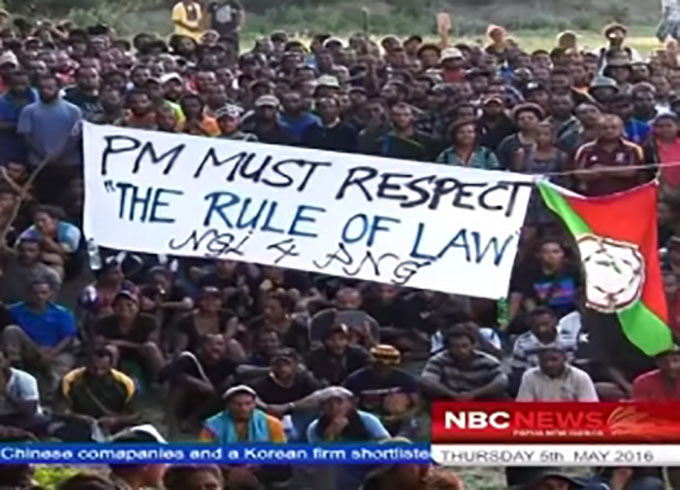


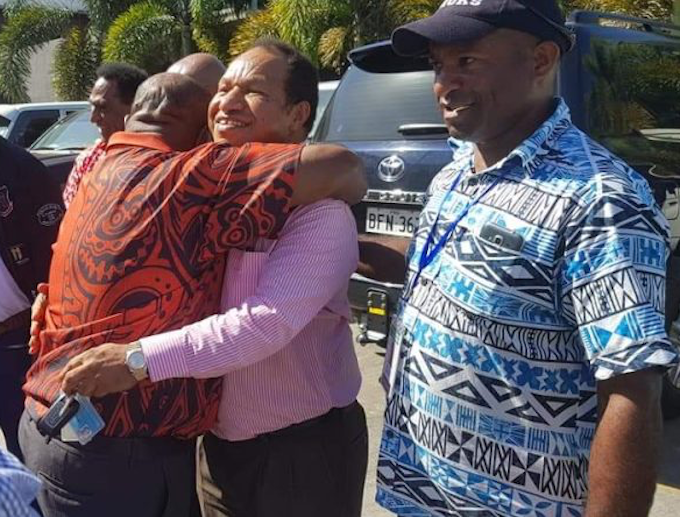


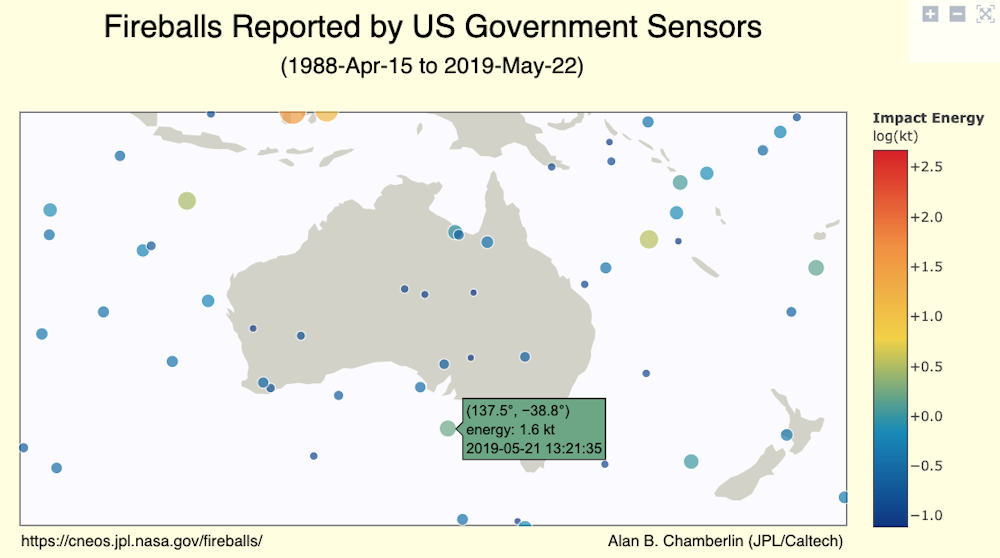


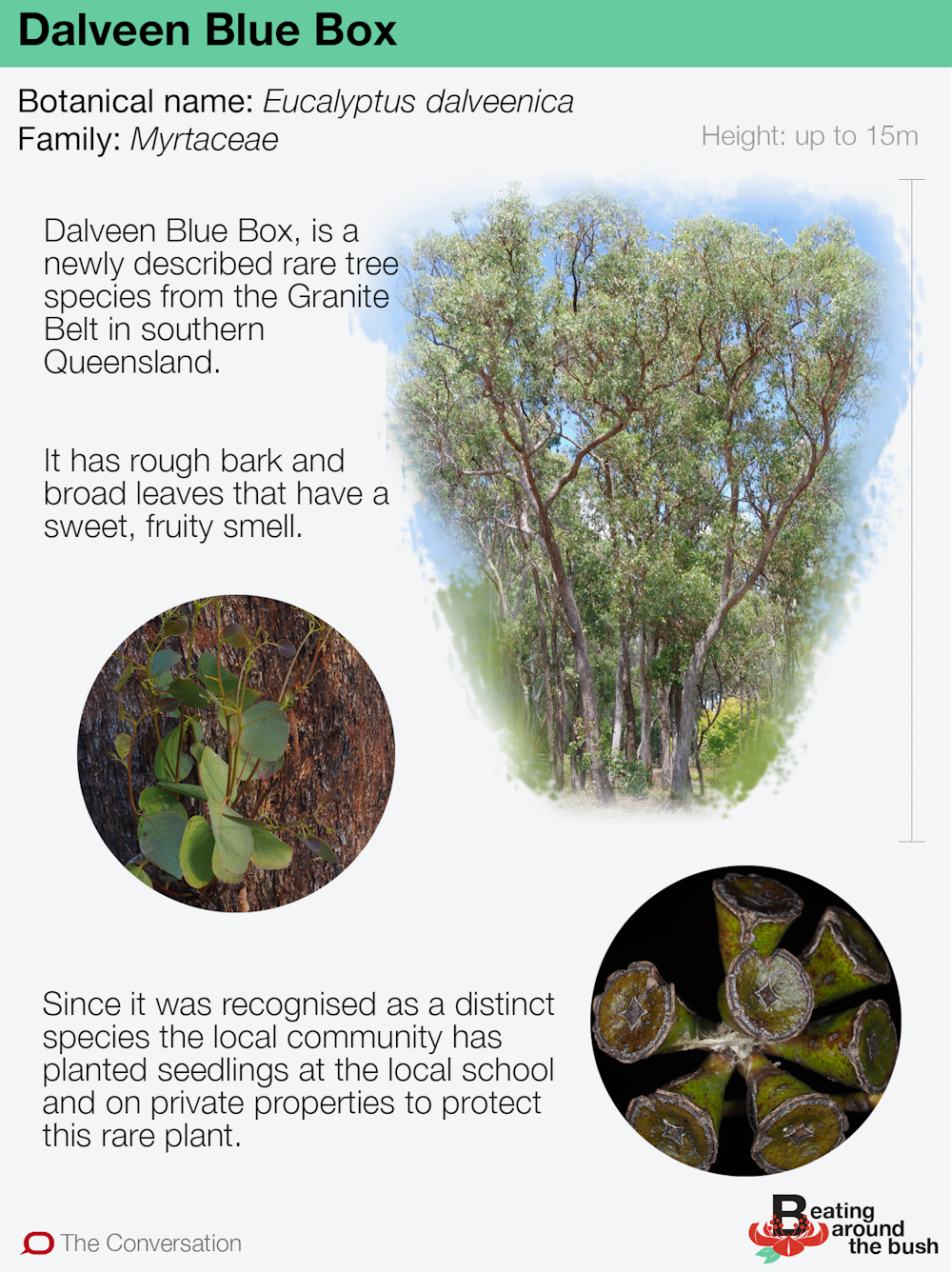









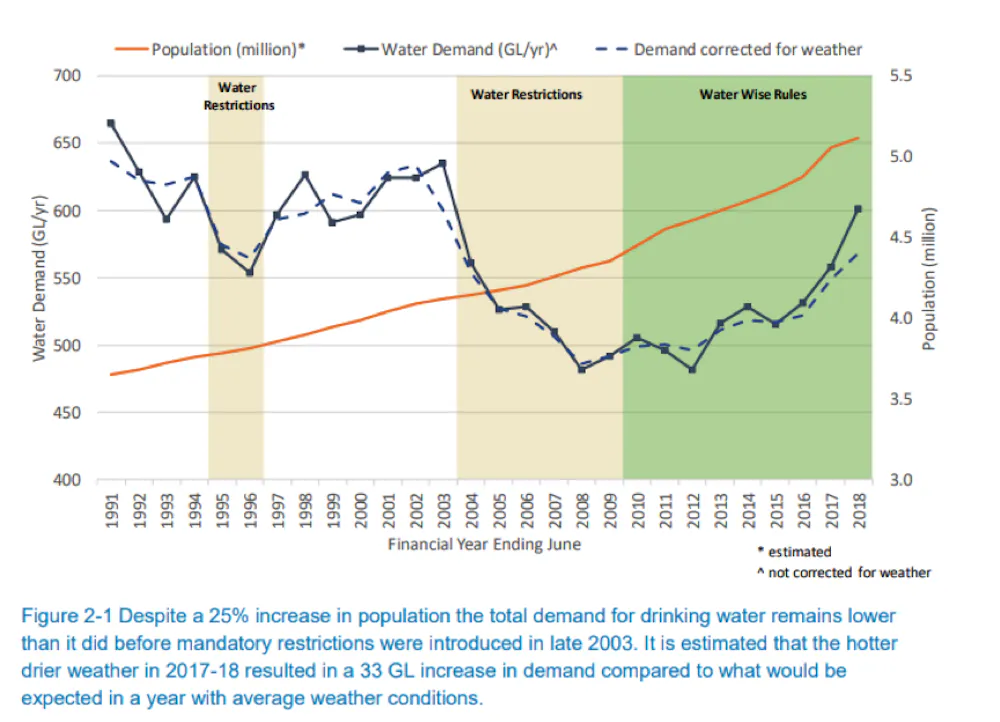
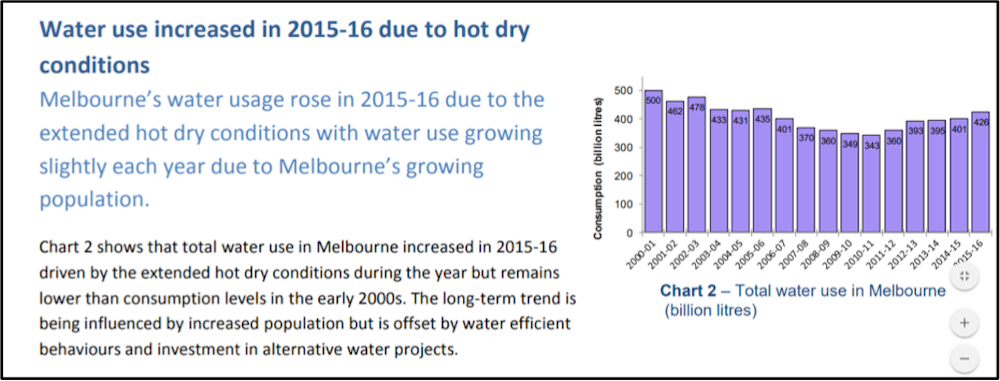















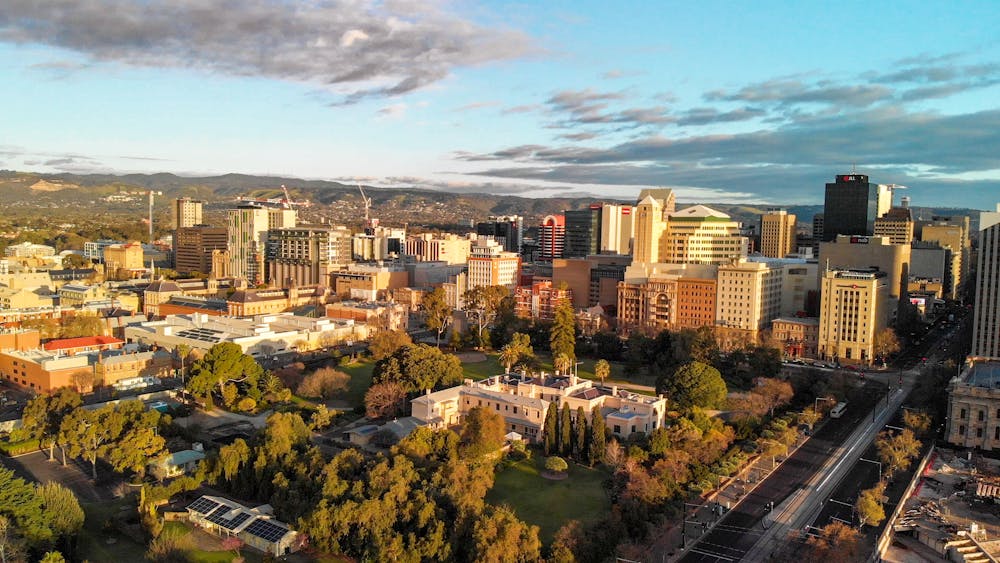














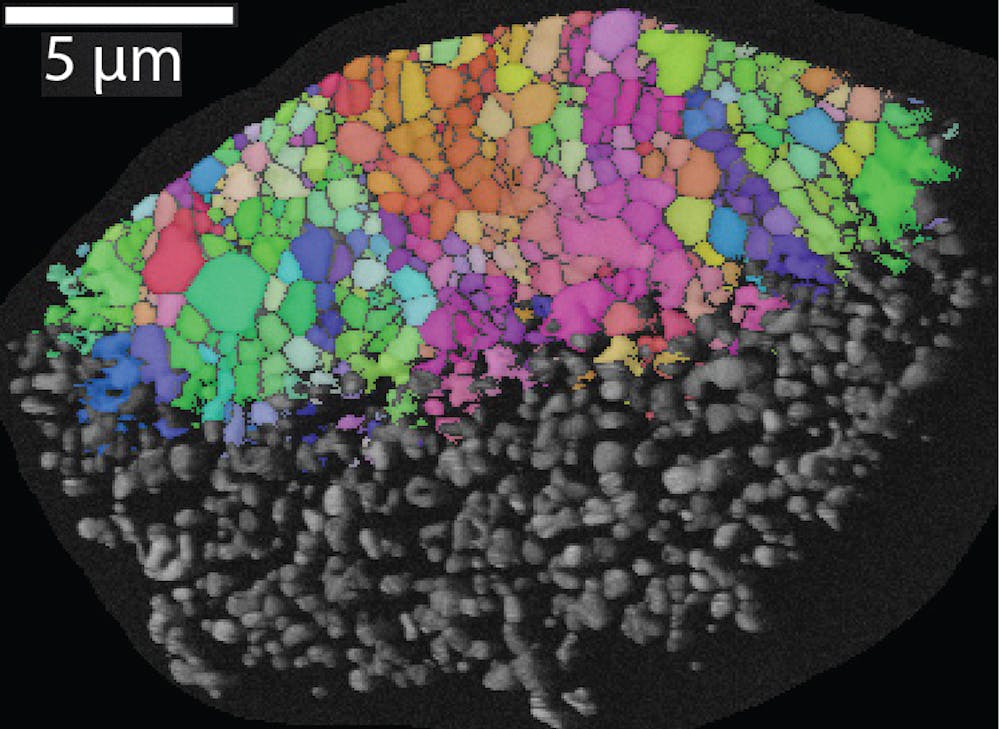



.jpg)
