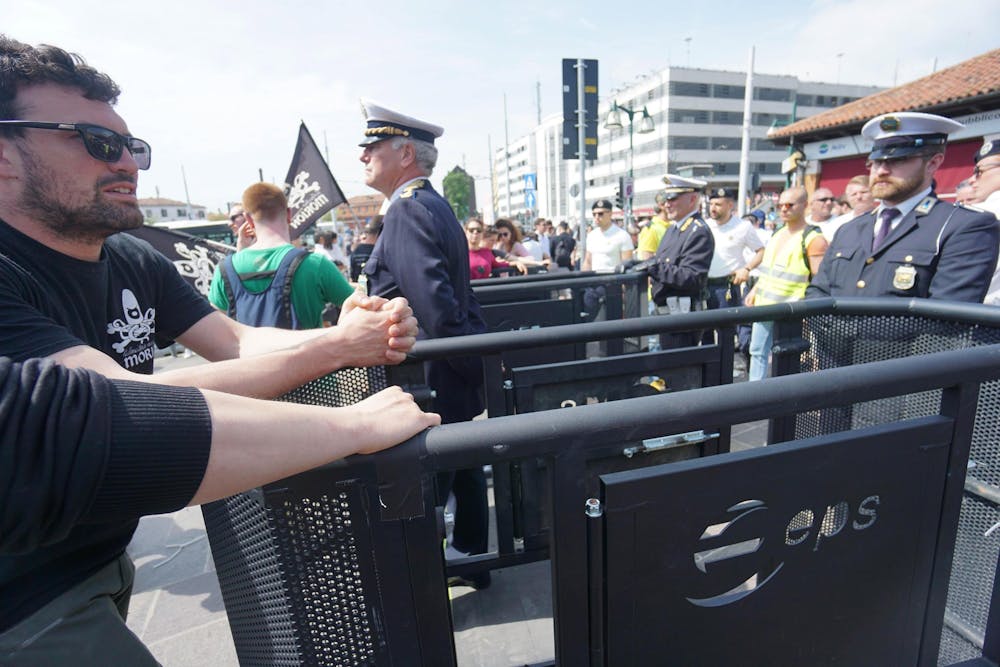
In response, new tactics have been tried, ranging from tourist “police” and tourist taxes to entry fees and crowd control. Cities are having to rethink their engagement with tourism if they want to keep the locals from rioting.
Fundamental concerns are being raised. If tourism is to have a sustainable future, we need to reorient our focus and put the well-being and interests of local residents at the forefront.
Understanding tourism
Tourism is typically understood from two angles. On the one hand, the focus is on the tourists and the nature of their motivations and demand, in the hope of enticing more. On the other is the business side, focused on developing products and services to provide to tourists.
The industry seeks to grow tourism for profits. Governments support the industry for the jobs and revenues it provides. The result has been a relentless growth in tourism in forms that locals have often not appreciated.
In Hong Kong, locals have protested about the unregulated numbers of tourists from the Chinese mainland.Alex Hofford/EPA/AAP
Developments like Airbnb are placing tourists in the heart of local neighbourhoods, disrupting the rhythms of daily life. Events are imposed on communities, driving out locals or blighting their quality of life. A case in point is the Newcastle 500 Supercars event, which some locals claim has harmed local businesses and disrupted residents’ lives.
We could create a different future for tourism if it was reoriented to be centred on the local community. Our recently published research paper redefined tourism as:
The process of local communities inviting, receiving and hosting visitors in their local community, for a limited time duration, with the intention of receiving benefits from such actions.
Such forms of tourism may be offered by commercial businesses or made possible by non-profit organisations. But in this restructure of tourism, tourism operators would be allowed access to the local community’s assets only under their authorisation and stewardship.
The seeds of such a transition to more sustainable forms of tourism are already growing.
Respect and fairness go a long way
Venice provides a good example. In 2017, the authorities launched a #EnjoyRespectVenezia campaign to overcome problems of poor tourist behaviour.
But local communities and organisations are not waiting for authorities to act. Community activists are organising to take control of tourism for themselves.
A grassroots initiative from Amsterdam and Venice has resulted in Fairbnb. It’s a social cooperative designed to challenge the damaging and disruptive model of Airbnb. The new platform “provides a community-centred alternative to current vacation rental platforms that prioritises people over profit and offers the potential for authentic, sustainable and intimate travel experiences”.
Like Airbnb, Fairbnb offers a platform to book vacation rentals. The difference is that 50% of revenues will be directed to local community projects. It also has a “one host, one home” policy – only one property on the market for each host – to limit negative impacts on local residential housing markets.
Meanwhile in Australia …
Australia does not have the same level of overtourism that places in Europe are suffering. But pressures are building right around the country from Byron Bay and the Great Ocean Road to our bigger cities like Sydney and Melbourne. Locals are complaining about housing affordability, congested roads and badly behaved tourists.
Australia would benefit from strategies to reorient tourism to local well-being and control. Some promising examples already exist.
Lirrwi Tourism in Arnhem Land, Northern Territory, stands out. The Yolngu Aboriginal operators have embraced tourism access but only under a visionary set of guiding principles. These declare “Yolngu have a responsibility to care for country” and “Tourism should never control what happens on country”. It’s an example of tourism on the local community’s terms.
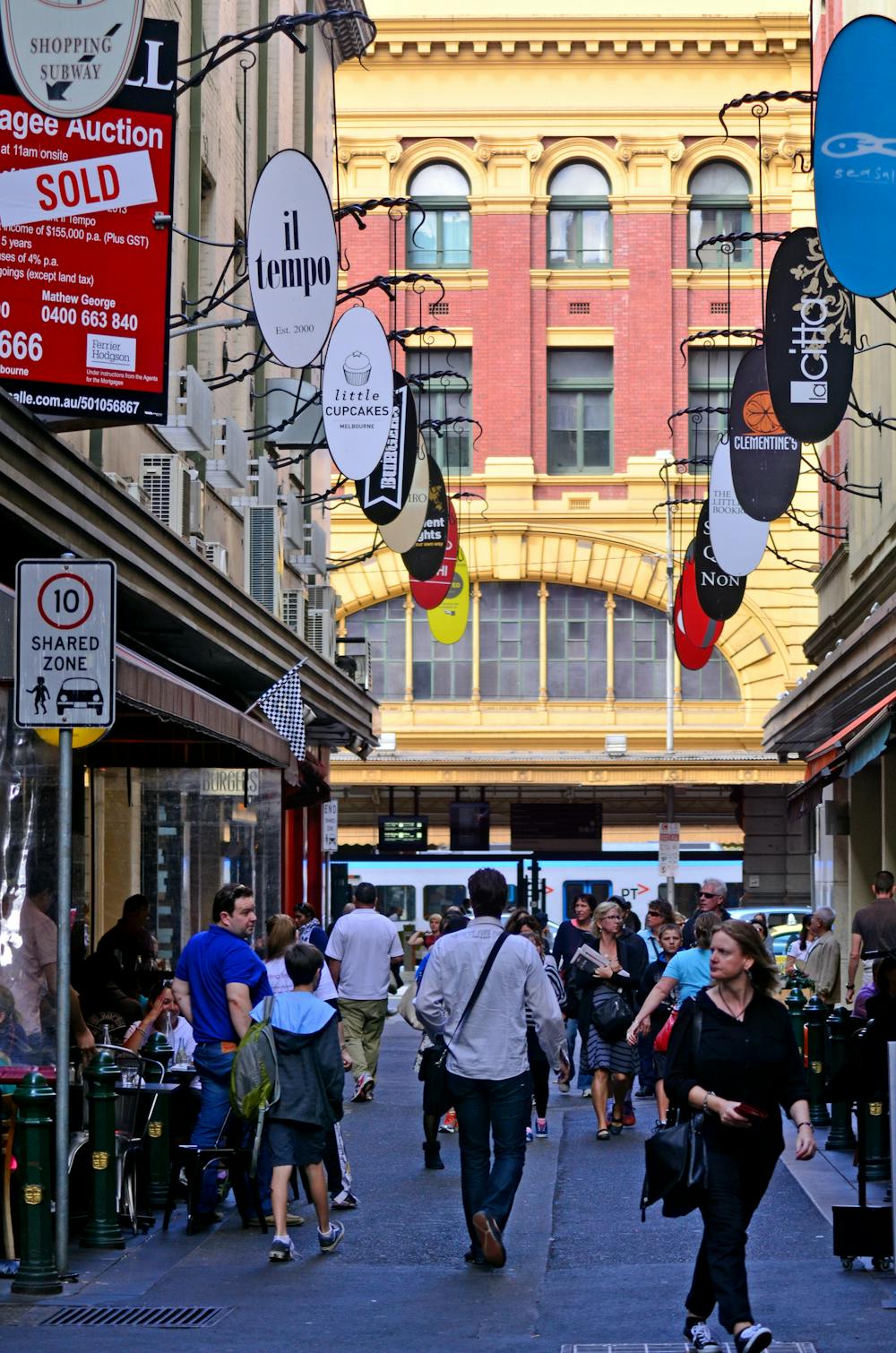
Melbourne’s laneways strategy has produced benefits for both locals and tourists.ChameleonsEye/Shutterstock
Melbourne’s laneways strategy has demonstrated one way CBD revitalisation, resident well-being and visitor experiences can be brought together for great outcomes.
Tourists can play their part by meeting local communities halfway. In a resource-constrained world the pleasures of tourism must be balanced with some basic responsibilities.
Tourists must gain some basic understanding of local living conditions and shape their travel plans accordingly. The focus must be to give locals the maximum benefits from the visit with the minimum negative impacts. The recent campaign “Helpful or harmful: what sort of traveller are you?” provides a place to start.
The long-term sustainability of tourism depends on ensuring visitors do not wear out their welcome. Reorienting tourism to enhance local well-being is the way forward.
Very few people saw the Coalition’s win coming. If it was, as opposition leader Bill Shorten contended, “a referendum on wages” then it follows that Australians were content with sluggish wage growth and didn’t want a more substantial pay rise.
But that would be a great oversimplification. Labor had a more ambitious program of workplace reform, part of a much wider agenda for economic change and wealth redistribution, that it simply couldn’t sell to the electorate.
Where does this leave the industrial wing of the labour movement, which pushed the Labor Party to adopt sweeping re-regulation of the labour market?
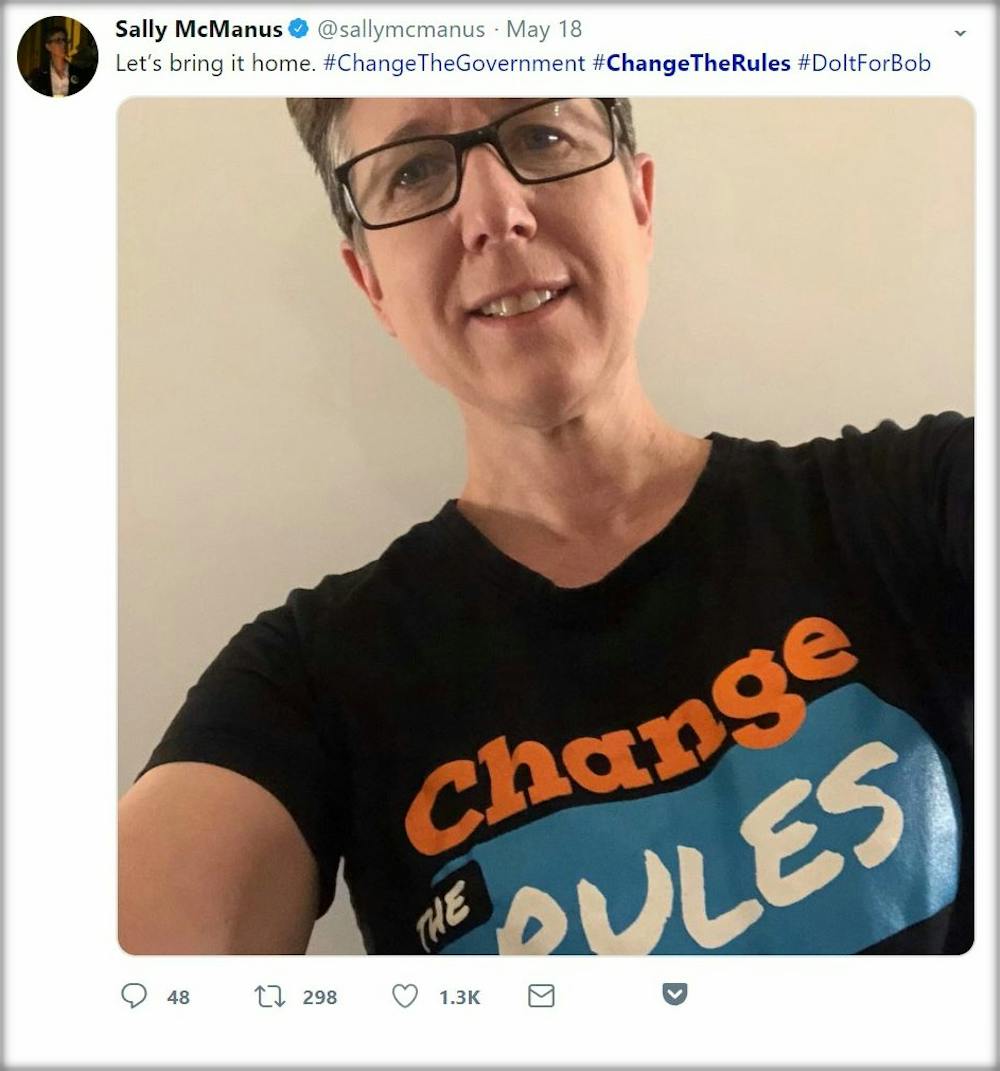
For two years through its “change the rules” campaign the Australian Council of Trade Unions has had remarkable success in entrenching in public consciousness the twin themes of wage theft and insecure work.
It seemed to have a deliberate strategy of repeating its talking points and examples to reinforce the view that something is “broken” and needs to change.
But it provided very little detail about the type of change it wanted.
Whether it should have provided more or less detail is now very much up for debate as it and the Labor Party try to work out what went wrong on Saturday.
Rather than getting what they wanted, they are both on the defensive. Already business groups are weighing in, urging the Morrison government to “simplify” the industrial relations system and prevent casual workers from “double-dipping” – obtaining both a casual loading and leave entitlements.
Harvey Norman executive chairman Gerry Harvey put it this way on Monday, perhaps revealing something about how he sees his workforce: “The economy works best when all the little ants out there are left to get on and do great things.”
Now it’s up to the Coalition
The Coalition did not advocate workplace law changes in the election campaign. It gained a mandate to do no more than implement the recommendations of the Migrant Workers Taskforce which it accepted back in March. As it happens, they are mostly worker-friendly measures directed at systemic underpayment and other forms of exploitation.
However, given the pressure that is already coming from the business community, don’t be too surprised if the Government dusts off some of the recommendations of the Productivity Commission’s 2015 inquiry into workplace relations.
These include “enterprise contracts” that allow businesses to vary award terms, and a relaxation of the “better off overall test” for enterprise agreements.
The Australian Building and Construction Commission and Registered Organisations Commission will remain in place as “cops on the beat” to combat union power, probably with increased resources.
Unions have a choice of strategies
So what room is there for unions in the new environment? In my view, plenty. The deep problems that “change the rules” and Labor’s policies sought to address haven’t gone away.
We still have a culture of wage theft in many sectors of the economy. We still have a proliferation of dodgy labour hire contractors. We still have misuse of the labour hire business model at companies like Amazon, with many workers trapped in long-term casual engagement. We still have widespread use of rolling fixed-term contracts.
We still have the collapse of effective collective bargaining in much of the private sector, and employer ‘work-arounds’ to avoid negotiating an enterprise agreement or get out of an existing one. We still don’t have the basis for a proper living wage.
As the results unfolded ACTU secretary Sally McManus has made it clear that the union movement would “never give up, never stop fighting for fairness for working people”. That said, it will doubtless revisit the change the rules campaign and its accompanying communications and electoral strategies.
Rather than shrinking back to a “small target”, as Labor is now contemplating in some policy areas, I think the ACTU should consider remaining bold in its vision for workplace reform.
It could prepare a clearly articulated case for “changing the rules” using detailed research that precisely measures the extent of problems employers like to downplay such as insecure work and wage theft.
And it should outline precisely how it wants the rules changed and what those changes would do to working lives.
Of course, campaigning for legal changes can only be one part of the unions’ playbook.
Organising and connecting with workers on the ground in new and innovative ways is also essential, as shown by the United Voice’s new digital union [Hospo Voice] which campaigns against wage theft and sexual harassment in the hospitality industry and the Young Workers Centre and Migrant Workers Centre which are one-stop shops run by the Victorian Trades Hall Council.
As the National Union of Workers and United Voice put it in the context of their current amalgamation proposal: “we need to change the rules, but we also need to change the game”.
Prime Minister Scott Morrison began his victory speech on Saturday with the words, “I have always believed in miracles”. This was no mere hyperbole. Morrison appeared to be declaring his belief that God had actively intervened in the political process to bring about his re-election.
Morrison’s Pentecostal Christian faith is at the centre of his understanding of political life. He invited cameras to film him while worshipping at his church, Horizon, in southern Sydney. And in his maiden speech to Parliament in 2008, he described Pentecostal Hillsong Church leader Brian Houston as his “mentor” and himself as standing for “the immutable truths and principles of the Christian faith”.
In Morrison, the marketing man joins the evangelical preacher. When he tells his listeners, “I will burn for you”, this references the Biblical text, “Never let the fire in your heart go out,” (Romans 12.11). And, if he stays true to his church’s Pentecostal doctrine, he presumably believes in a personal Devil “who, by his influence, brought about the downfall of man”.
What then, are the key aspects of Pentecostal belief that will likely shape Morrison’s actions as a re-elected Prime Minister commanding huge authority in his party?
Miracles
Morrison’s Horizon Church is part of the broader Pentecostal movement that emerged in the United States in the early 20th century. That miracles happen is a central tenet of Pentecostalism. As a religion, it sees itself as re-creating the gifts of the Spirit experienced by the earliest Christian worshippers. Along with the working of miracles, these included speaking in tongues and healings. They remain central features of Pentecostal belief and worship today.
Divine providence
Morrison’s mention of an election miracle coheres with the Pentecostal belief in the divine providence. Put simply, this is the belief that, in spite of the apparent chaos in the world, as the old song puts it, “He’s got the whole world in his hands”.
According to Pentecostal theology, all of history – and the future – is in the control of God; from creation, to the Fall of humanity in the Garden of Eden, to the redemption of all in the crucifixion and resurrection of Jesus Christ. In turn, this will lead to the second coming of Christ, the end of the world and the final judgement.
This is why further action on reducing carbon emissions to counter the environmental damage wrought by climate change may have little intellectual purchase with the PM. If the end of the world through climate change is part of God’s providential plan, there is precious little that we need to or can do about it.
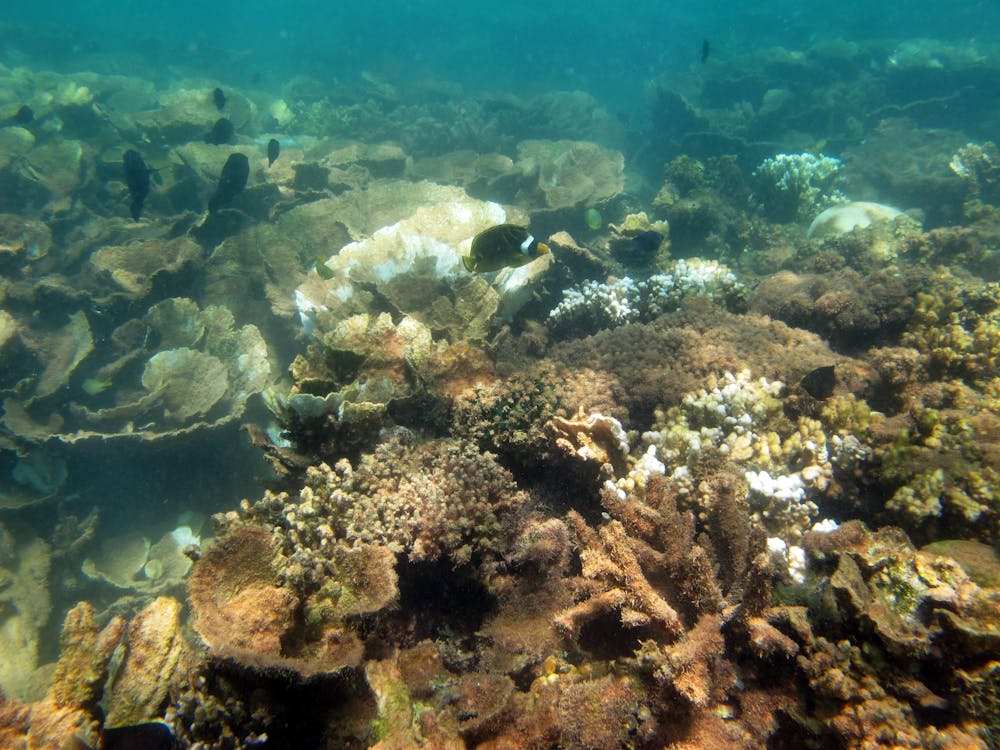
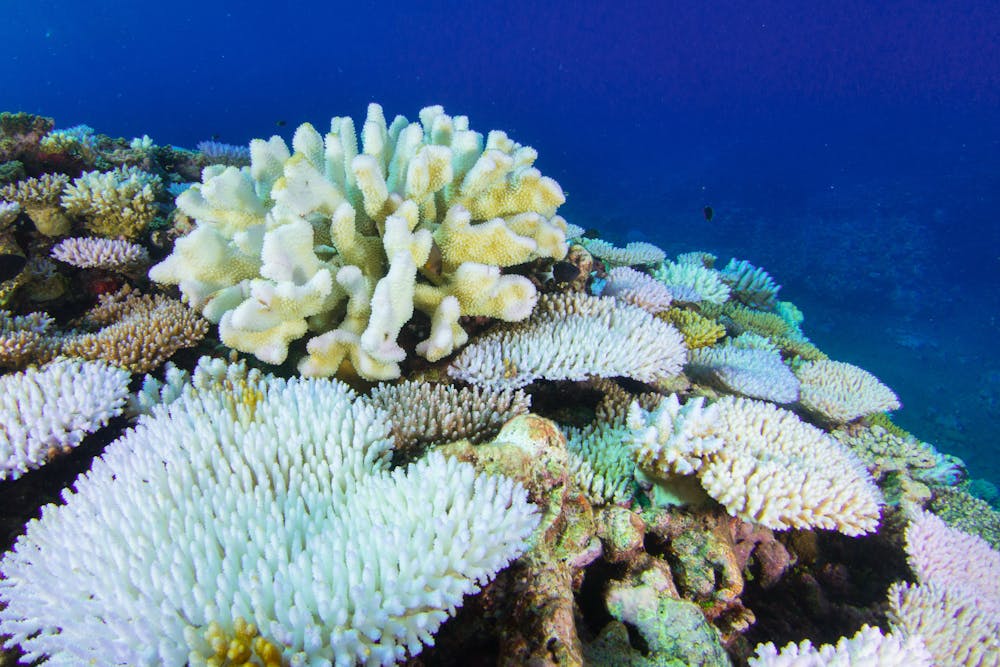
Coral bleaching in the Kimberley region in 2017. If climate change is part of God’s plan, there is precious little we need do about it.University of Western Australia
Prosperity theology
In keeping with his theology, Morrison appears to see himself as chosen by God to lead us all towards his understanding of the promised land, which as we know means, “If you have a go, you get a go”.
This “have a go” philosophy sits squarely within Pentecostal prosperity theology. This is the view that belief in God leads to material wealth. Salvation too has a connection to material wealth – “Jesus saves those who save”. So the godly become wealthy and the wealthy are godly. And, unfortunately, the ungodly become poor and the poor are ungodly.
This theology aligns perfectly with the neo-liberal economic views espoused by Morrison. The consequence is that it becomes a God-given task to liberate people from reliance on the welfare state.
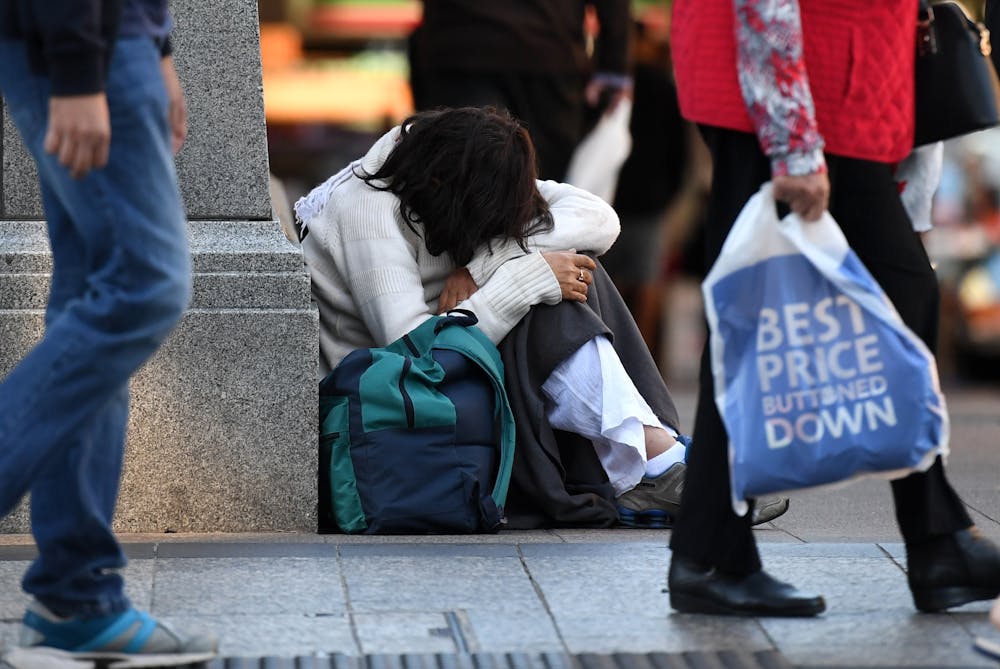
So there is no sense in Pentecostal economics of a Jesus Christ who was on the side of the poor and the oppressed. Nor is there one of rich men finding it easier to pass through the eyes of needles than to enter the Kingdom of Heaven. On the contrary, God helps those who are able to pull themselves up by their own bootstraps.
A homeless woman in Brisbane in 2017. There is no sense in Pentecostal economics of a Jesus Christ who was on the side of the poor and the oppressed.Dan Peled/AAP
Exclusivism
That said, in some ways, Pentecostalism is pretty light on beliefs. Rather, it stresses an immediate personal connection with God that is the exclusive property of those who are saved. This leads to a fairly binary view of the world. There are the saved and the damned, the righteous and the wicked, the godly and the satanic.
In this Pentecostalist exclusivist view, Jesus is the only way to salvation. Only those who have been saved by Jesus (generally those who have had a personal experience of being “born again” which often happens in church spontaneously during worship) have any hope of attaining eternal life in heaven. At its best, it generates a modesty and humility; at its worst a smugness and arrogance.
So only born-again Christians will gain salvation. Muslims, Jews, Buddhists, Hindus, atheists, and non-born-again Christians are doomed to spend an eternity in the torments of hell.
Thus, as the website of the Christian group to which Scott Morrison’s Horizon church belongs puts it, “We believe in the everlasting punishment of the wicked (in the sense of eternal torment) who wilfully reject and despise the love of God manifested in the great sacrifice of his only Son on the cross for their salvation”.
Worshippers at Horizon church in April: Pentecostalists are more concerned with the experience of the Holy Spirit than the Bible.Mick Tiskas/AAP
Pietism
In principle, the PM’s faith is “pietistic”. It is about the individual’s personal relationship with God. So faith is focused “upwards” on God in the here and now – and the hereafter. The result is that Pentecostalism is weak on the social implications of its beliefs. Social equity and social justice are very much on the back burner.
So you would not expect from a Pentecostalist like Morrison any progressive views on abortion, womens’ rights, LGBTI issues, immigration, the environment, same sex marriage, and so on.
Pentecostalists are not fundamentalists. Unlike them, they are especially concerned with the direct experience of the Holy Spirit as the key to salvation. But like fundamentalists, they believe in the Bible as the inerrant word of God in matters of ethics, science and history.
Thus, they hold to a social conservatism reinforced by an uncritical approach to the Bible, which reveals everything necessary for salvation. It would be difficult, for example, for a Pentecostalist to reject the Biblical teaching that homosexuals were bound for hell. The Prime Minister recently did so. But only after first evading the question and then through very gritted teeth.
Shadow treasurer Chris Bowen has pulled out of Labor’s leadership race, increasing the pressure for an uncontested run for Anthony Albanese, which would prevent an extended limbo period for the party.
But finance spokesman Jim Chalmers, Albanese’s only potential challenger, was still considering his position overnight. He will announce on Thursday morning whether he will run.
Bowen said he had decided to withdraw because, while he believed he would have a narrow majority in the caucus ballot, Albanese would beat him in the rank-and-file vote by a good margin.
“Hence I have reached the view that it would be unlikely for me to win the [overall] ballot.” The party and caucus ballots have equal weighting.
Chalmers immediately tweeted:
I feel for Chris & I know it would’ve been hard for him to pull out. I’m being encouraged to nominate for leader & I’ll now consider my options overnight. @AustralianLabor needs to rebuild, refresh & renew & I want to play a prominent role in that. What role is to be determined.
Chalmers, from the right, has been receiving support from those who believe the party needs generational change. Also, he is from Queensland, where Labor will have a big challenge in seeking to improve its support.
If he decides not to stand, he would be a strong contender for deputy.
Labor’s national executive met on Wednesday evening to tick off on dates if there is a contest. Nominations open Thursday and close Monday. If there is more than one candidate, a postal ballot would be held between May 31 and June 27, followed by a caucus ballot on July 1.
Joel Fitzgibbon, who earlier this week threatened to run for leader, threw his support behind Albanese, saying he’d had a long discussion with him “about my demands that the party strengthens its focus on regional Australia”.
“I am satisfied that a Labor Party led by Anthony Albanese will provide that focus and he’ll listen closely to the needs and aspirations of our country people.”
There has been a pile-on of public support from senior Labor figures for Albanese. Labor’s Senate leader Penny Wong described him as “the outstanding parliamentarian of our generation”.
“Anthony Albanese knows who he is and he knows what he stands for. He’s a man of authenticity and integrity. He’s got a capacity to speak to people across this great country, to speak to people in the regions and in the outer suburbs as well as in our cities,” she said.
Speaking before Bowen’s withdrawal, Wong was asked about reports Bill Shorten was lobbying on Bowen’s behalf.
She said she would be surprised if that were happening – “it would undermine the unity that Bill has been such an important part in rebuilding”.
Shorten sources said reports of the outgoing leader’s activity (he encouraged Tanya Plibersek and then Bowen to stand) had been “overblown” – these had been the people he’d worked closely with.
Kristina Keneally, strongly backing Albanese, said Labor “had our backsides handed to us on a platter” on Saturday. Keneally may get the post of deputy Labor leader in the Senate.
Albanese said he believed he had majority support in caucus if there was a contest, and recalled his win in the rank-and-file ballot after the 2013 election.
“So I am confident but not complacent about being able to succeed if another candidate comes forward.”
If he became leader he would bring a different style to the position, he said.
“One of the things I won’t do is walk along to press conferences and make policy announcements without consultation, on the run.
“I won’t be obsessed by the 24-hour media cycle. We will have considered responses. We’ll have respect for caucus processes.”
He said that under his leadership Bowen would have “a critical role”.
In his news conference Bowen, who holds a seat in western Sydney, an area which has a big ethnic vote, made a strong call for the Labor party to give more attention to its attitude to “people of faith”.
He said it needed urgently to deal with “the matter of people of faith in our community not feeling that the Labor Party talks to them”.
He had noticed during the election campaign and afterwards “how often it has been raised with me that people of faith no longer feel that progressive politics cares about them.
“These are people with a social conscience, who want to be included in the progressive movement. We need to tackle this urgently. I think this is an issue from the federal election that we haven’t yet focused on”.
The Nationals’ Barnaby Joyce said that “Albanese would be an incredibly formidable leader of the opposition”, making the next election “vastly more difficult for the Coalition than the one we’ve just had”.
The Nationals meet in Canberra on Thursday, with their female representation tripled, from two to six, but the party’s cabinet numbers cut.
The Nationals held all their seats but one – Steve Martin, who joined the Nationals after replacing Jacqui Lambie in the last term, lost his Tasmanian Senate spot. The party room now numbers 21.
The good result has cemented the leadership of Michael McCormack, who had earlier been stalked by former leader Barnaby Joyce.
Joyce told The Conversation on Wednesday that he would like a position on the frontbench but “I don’t expect to get one”.
He said he would not be at the meeting. His partner Vikki Campion is expecting their second child soon.
McCormack chooses the Nationals frontbenchers who go into the Coalition ministry, with the number determined under a formula according to the proportion of seats won by the Liberals and Nationals.
The Nationals had five in the cabinet but are set now to have four under the formula.
What portfolios are allocated to the Nationals is a matter of negotiation between the prime minister and the deputy prime minister.
The new women are Perin Davey (Senate, NSW), Sam McMahon (Senate, NT), Susan McDonald (Senate, Queensland), and Anne Webster (Mallee, Victoria). They join deputy leader Bridget McKenzie and Michelle Landry from Queensland.
Nationals senators have to choose a new Senate leader to replace Nigel Scullion, who retired at the election. But that vote would be delayed – the new Senate does not come in until July 1. The obvious choice would be Matt Canavan, given the other Nationals senators, apart from McKenzie, will all be new.
Thursday’s meeting will discuss the party’s priorities and canvass the Coalition agreement.
Source: The Conversation (Au and NZ) – By Samantha Hepburn, Director of the Centre for Energy and Natural Resources Law, Deakin Law School, Deakin University
After months of “start” and “stop” Adani campaigning, the coalmine is poised to go ahead following the surprise success of the Coalition government at the federal election.
So is anything still stopping the coalmine from being built?
Australia has a federal system of government, but states own coal. This means the Queensland Labor government is responsible for issuing the Adani mining licence.
And there are suggestions pressure is mounting in the state Labor party for the final approvals to be passed.
Strategists have argued the state government must approve the Adani mine if they are to be re-elected next year. One of the reasons Labor lost votes in Queensland may have been because of perceived delays in the approval process by the Queensland Department of Environment and Science.
Now, Queensland premier Annastacia Palaszczuk has appointed her coordinator-general to oversee the remaining approvals. In a press conference, she said:
I think that the community is fed up with the processes, I know I’m fed up with the processes, I know my local members are fed up with the processes … We need some certainty and we need some timeframes — enough is enough.
But what has “delayed” the state government so far is its legal duty to make sure the coalmine has an effective plan to manage matters of environmental significance.
Before the election, the federal government already approved two controversial environmental plans – the groundwater management plan and the finch management plan. The only thing left now is for the Queensland Labor government to give its nod of approval.
Not ‘delay tactics’, but a legal duty
The federal government does not have jurisdiction over state resources unless the project impacts matters of national environmental significance.
And the Adani mine is one such project. The mine would remove the habitat of an endangered species and significantly impact vital underground water resources.
This means the project needed to be referred to the federal government.
The aim of this referral was to make sure the environmental assessment process would sufficiently prevent or reduce irreparable damage to the environment.
Generally, in a bilateral arrangement, the federal government authorises the state to conduct an environmental assessment. And this is the framework that has informed the Adani project from the outset.
This is our rule of law, and one that’s in the public interest.
So any suggestion the Queensland government engaged in “delay tactics” when they were carrying out these critical legal responsibilities is inaccurate and misconceives the fundamental legal responsibilities that underlie this process.
There are two more approvals left
There are two outstanding approvals required for the environmental conditions to be satisfied: the black-throated finch environmental management plan and the groundwater environmental management plan.
The habitat of the endangered black-throated finch must be protected.Steve Dew, CC BY
Black-throated finch
The Queensland government rejected the black-throated finch management plan submitted by Adani last month. This was because the plan did not constitute a management plan at all.
If the finch’s habitat is destroyed by the coalmine, then it’s necessary to outline how this endangered species will be relocated, and how this relocation will be managed.
But the Adani management plan does not do this. Rather than setting up a conservation area for the finch, the Adani plan proposed establishing a cow paddock, which would destroy the grass seeds vital for the survival of the finch.
Clearly this plan does not comply with the environmental condition attached to its licence.
The Queensland Department of Environment and Science is currently reviewing the groundwater management plan and have sought further advice from Geoscience Australia and CSIRO.
Adani must address how the mine will impact the threatened Doongmabulla Springs in the Great Artesian Basin. This involves creating a groundwater model capable of estimating how much groundwater levels will decrease when water is used to extract the coal.
This is important because the basin is a water supply for cattle stations, irrigation, livestock and domestic usage. It also provides vital water supplies to around 200 towns, which are entitled to draw between 100 and 500 million litres of water each year.
Any impact on the underground aquifers that feed into the Great Artesian Basin would not only be devastating for the environment, but also for all the communities that rely on its water resources.
The original groundwater model submitted by Adani was not “suitable to ensure the outcomes sought by the EPBC Act conditions are met”.
It’s unclear whether Adani’s resubmitted groundwater model still under-predicted the impact because the further submissions made by Adani have not been subjected to extensive review at the federal level.
Great care needs to be taken to ensure the expert advice from CSIRO and Geoscience is properly heeded.
But the international coal market is variable. India’s consumption is expected to rise by the end of 2023, but their aim is to reduce coal imports. And China’s coal consumption is projected to fall almost 3%, largely due to the country’s ambitious clean energy plans. What’s more, coal is in decline in the United States and across Europe generally.
The global economy is de-carbonising. As global warming accelerates and cleaner energy options gain more traction, coal will inevitably decline even further.
A hasty post-election approval of the outstanding environmental plans for Adani coalmine would not only conflict with our domestic legal framework, but also the broader imperatives of the international community.
Sentences for most sex offences are getting harsher in Victoria, according to new data released on Wednesday by the Victorian Sentencing Advisory Council.
The data are for all cases sentenced in the County Court for certain sex offences over the five-year period from 2013-14 to 2017-18.
Are Victorian courts too lenient?
There is a common perception in Victoria that courts are too lenient on offenders – a perception the courts are well aware of. But demands for harsher sentences are often based on sensational and selective reporting of a small number of cases.
Anyone who watched Peter Kidd, the chief judge of the County Court of Victoria, sentence Cardinal George Pell in March will have noticed he spent over an hour explaining his decision. This is actually a typical duration for a sentencing hearing and demonstrates not just the complexity of the sentencing task in general, but also the care that judges take in explaining the sentence to victims, offenders and the general community.
Indeed, contrary to the popular belief that courts are too lenient, research with Tasmanian and Victorian juries over the last decade has repeatedly found that when members of the public are given all the information about a case – not just a dramatic snippet – most people would actually impose a lesser sentence than what the judge imposed.
In addition, when jurors were asked if the sentence the judge imposed in their cases was appropriate, nine out of ten said it was.
But there are some exceptions.
When jurors in sex offence trials were asked what sentence they would have imposed – without knowing what sentence the judge had given – half of them said a jail term longer than the judge’s, particularly for offences involving children.
What’s more, when the jurors from those trials were told what sentence the judge had imposed, 83% thought it was too lenient.
Sentences for sex offences getting harsher
The image below shows the median prison sentence and longest prison sentence imposed over the last five years for six specific sex offences. For example, the median prison sentence for a single charge of rape was five years, while the longest prison sentence was 12 years.
Median and longest prison sentences for sex offences in Victoria from 2013-14 to 2017-18.https://www.sentencingcouncil.vic.gov.au/snapshots-offence
The most interesting feature of the latest data released by the Sentencing Advisory Council is that the average sentence imposed for almost all of those offences increased significantly in 2017-18 compared to the average for the four previous years. In particular:
Prison sentences for sexual penetration of a child under 12, however, decreased by 2% (to four years). This is particularly concerning given that the council has previously found that sentences for this offence “re-enforce past norms” and do not reflect community expectations.
The council’s data reveal general trends, but these do not tell the whole story. It doesn’t reveal the many competing factors that judges must balance as part of the sentencing process for every case, such as the impact on the victim, whether the offender pleaded guilty, or whether the offender had mental health or substance abuse issues.
Before these statistics are used to level criticism at the courts, it is important to understand that there are complex stories behind the numbers.
Despite these longer average sentences for most sexual offences, many Victorians will likely still view them as not tough enough.
However, this upward trend in sentences is likely to be sustained in the coming years, due to several factors.
First, in late 2017, the High Court held that Victorian courts had been giving too much weight to past sentencing practices and that consistency should be just one of the many factors taken into account in sentencing. It should not be given primacy above other sentencing factors, such as the harm done to victims.
As a result of that High Court decision, Victorian courts have effectively been unshackled from the “gravitational pull” of past sentencing practices, especially in the context of sex offences, and can start imposing harsher sentences when appropriate.
Another factor is the government’s introduction of new standard sentencing laws for offences committed after February 1 2018. These laws require courts to consider imposing longer sentences than those currently being handed out for certain offences, especially sexual offences.
Indeed, the then attorney-general, Martin Pakula, said these laws were expressly intended to “increase sentences”.
We are yet to see the full effect of both of these changes on sentences in the state, but jail terms for sex offences are likely to only continue to increase, becoming more closely aligned with community expectations.
The National Sexual Assault, Family & Domestic Violence Counselling Line – 1800 RESPECT (1800 737 732) – is available 24 hours a day, seven days a week for any Australian who has experienced, or is at risk of, family and domestic violence and/or sexual assault.
Such comments are at the polite end of social media responses from progressive voters in other parts of Australia who were disappointed by the Coalition’s “miracle” win on Saturday.
Putting to one side the fact that the swings against Labor were not much bigger in Queensland than some other parts of the country, and that it had the most marginal seats in the election, the instinct to blame and deride Queensland highlights exactly what went wrong for the ALP.
Contrary to the claims of #Quexiteers, Queenslanders are not all deeply conservative, rusted-on LNP voters, even in central and northern regions. If they were, they wouldn’t have elected Labor governments for 25 of the past 30 years.
Anna Bligh was the first woman in Australia to be elected premier and Annastacia Palaszczuk was the first woman to be elected premier from opposition. Her ministry was the first in Australia to have a female majority. Voters who elected LNP members in Leichhardt, Herbert, Dawson and Capricornia on Saturday voted in ALP members in the 2017 state election in seats like Cook, Cairns, Gladstone, Mackay and Keppel.
The problem for Labor, then, isn’t that Queenslanders don’t like voting Labor. Instead, the federal Labor Party, like the many pundits who predicted an ALP win, seem to have underestimated or misunderstood the variances and nuances of the Queensland electorate.
As the only state where a majority of the population lives outside the capital city, regionalism matters in Queensland in a way it does not elsewhere.
Why Queensland is different
Settlement patterns in Queensland did not mirror other states. Regional towns and cities developed as service centres and ports for the hinterland industries, among them beef, gold, sugar, coal and gas. The first railways in the 1860s ran from the ports in coastal towns to these inland production centres, creating an interdependence not replicated in other parts of the country.
Queensland’s regions, therefore, developed as separate economic entities, with limited connection to the rest of Queensland (including the capital Brisbane), or indeed Australia.
This geography also informs the way people have historically voted. Any threat to the economic viability of hinterland industries had a spillover effect on the regional towns that serviced them.
As regions reliant on export industries, they have been highly susceptible to cycles of boom and bust. Many are still suffering high unemployment and depressed housing prices following a slowdown in mining and the end of the LNG construction boom in and around Gladstone. Frequent natural disasters have compounded their difficulties.
As a result, Queensland governments have had to be highly responsive to the interests and fears of diverse communities.
The national focus of federal politics, however, is less conducive to understanding the differences between, say, Cairns and Clermont, Caboolture and Charleville. This hurt both Labor and the Coalition in the recent federal election, as evidenced by the rise in first preferences to minor parties like One Nation and the United Australia Party.
Labor suffered more, though, due to its policy-rich campaign platform focused mainly on metropolitan, first-time home buyers and environmentalists. This did not signal to regional Australians, particularly those in Queensland, that their concerns had been heard.
Who is representing the workers?
Queensland has a proud place in Labor history. The Labor movement was born under the Tree of Knowledge in Barcaldine in 1891. The state also elected the world’s first Labor government in 1899. To characterise Queensland as regressive and redneck is to deny its historic and contemporary relationship with the Labor Party and workers.
It may be that working Queenslanders no longer see their lives or aspirations reflected in the federal Labor Party and its leadership. The pathway that Andrew Fisher and Ben Chifley took, for example, from engine driver to prime minister has gone the way of the poisoned Tree of Knowledge. Labor is now dominated by professional political operatives drawn from the knowledge and professional classes – the group Bill Shorten personified.
When workers couldn’t see their concerns and fears reflected in Labor policies, they parked their vote with the permanent voices of disaffection – Pauline Hanson and Clive Palmer. And in the federal election those parties’ preferences flowed strongly to the LNP.
In the marginal seats of Flynn, Capricornia, Dawson, Forde and Petrie, the LNP’s primary vote scarcely moved. After preferences, however, swings to the LNP ranged from 5.7% in Flynn to 11.1% in Capricornia and 11.4% in Dawson, with votes still to be counted as of Wednesday.
Concerns of the ‘neglected classes’
Labor paid the electoral price for misjudging Queensland, but it was far from alone in doing so. Analysts and commentators, predominantly those south of the Tweed, indulged in the smug chauvinism of tired stereotypes. Social media lit up, exposing the cultural and political divide between urban, regional and rural Australia that journalist Gabrielle Chan documented in her recent book, Rusted Off: Why Country Australia is Fed Up.
Chan describes the “neglected classes” – Australians locked out of opportunity by economic and social shifts, as well as a lack of technology, in the nation’s left-behind places. An index of prosperity and distress in Australian localities developed by the Centre of Full Employment and Equity identifies the seats of Hinkler, Wide Bay, Kennedy, Maranoa, Flynn and Capricornia in Queensland among the most economically distressed in the nation. Dawson, Blair, Longman, Herbert and Rankin are classified as “high risk”.
Another index developed by Griffith University researchers identifies Gladstone, Logan (encompassing the marginal seat of Forde retained by the LNP) and Far North Queensland as “hotspots” of energy poverty, meaning they lack access to affordable energy services.
The prevailing discourse in Canberra, Sydney and Melbourne that this was the “climate change” election obscured the role that economic insecurity and disadvantage might have played in shifting votes to One Nation and United Australia, which flowed as preferences to the Coalition.
Voters in other parts of Australia made the Adani mine a campaign issue, but in Queensland, other concerns were paramount.David Crosling/AAP
Lessons for the future
What, then, can we learn from the 2019 federal election? For one, we need a better way of understanding the needs and interests of all Australians in election campaigns and developing a nuanced sense of local contexts and concerns.
Griffith University’s data dashboard and our coverage of Queensland seats sought to ensure more informed reporting of the campaign than we have come to expect from the national media and commentators, whose lack of knowledge of different parts of Queensland seldom tempers their opinions.
Another important take-home is that federalism matters – perhaps more than ever. Australia’s federal framework was premised on the principle of subsidiarity – that decision-making should be devolved to the most local level possible.
National governments, by their nature, are homogenising. Political elites often strive to force states and regions to conform to a one-size-fits-all national policy approach, usually driven from the top down.
Labor’s experience in Queensland, however, suggests that local governments are better placed to accommodate regional differences and try to balance competing influences and perspectives.
Federalism was not mentioned once in the 2019 federal election campaign, but the result in Queensland suggests the need to rethink and reconceptualise the role the national government plays in a contemporary federation. This could help foster a political culture that is more responsive to, and respectful of, all parts of Australia – including and perhaps especially Queensland.
Speaker of the New Zealand Parliament, Trevor Mallard.
Should Trevor Mallard remain as Speaker of Parliament? It’s a legitimate question, given the current accumulation of concerns about his bullying and bias, and the heightened public concern about the health of this important democratic institution.
Certainly some of his past conduct and allegations against him make for sobering reading – including physical assault, attempts to sabotage the employment of opponents, and sexist bullying.
And some of the terms that have been applied to Mallard – such as “Knee Capper”, “Head Kicker”, “Bully” and, most commonly, “Bovver Boy” – from journalists and commentators (leftwing, rightwing and neutral) give a clue to his temperament and raise questions about his appropriateness for the role of Speaker.
Since yesterday’s report came out, his critics have had a field day drawing attention to the irony of Mallard trying to deal to bullying at Parliament. Former MP Tau Henare went on TV3’s The Project to say that “I think that we have a Speaker that is the epitome of the word irony”. Of course, it was Henare who was punched by Mallard outside the debating chamber back in 2007 – for which Mallard was convicted and fined.
Henare claimed: “This guy was the biggest schoolyard bully in the place. If there was a programme called ‘The Biggest Bully’, he would have won it ten years in a row… When it was announced by him that he was going to do a report on bullying, I literally nearly wet myself” – see Jamie Ensor’s Former National MP Tau Henare lets rip on bullying in Parliament after review release.
Mallard claimed his own bullying is a result of his upbringing: “When I was first here it was in the immediate post-Muldoon period, the system up until there had been run by Second World War veterans, it was very stratified, it was very structured, and as was our society”.
AM Show host, Duncan Garner, has also drawn attention to Mallard’s bullying and says he must take more responsibility for what goes on: “He effectively controls the entire Parliament, how it operates, behaves and is perceived. Yet history shows Mallard is always near the centre of controversy, or a dust-up” – see: Speaker of the house Trevor Mallard must lift the lid on bullies.
Garner says: “Mallard still protects the club. He should be naming and shaming our worst MPs and, if he’s on the list, own it – call yourself out. Instead, we slam the door shut. This inquiry is no better than the behaviour itself. Mallard must lift the lid and stop protecting the bullies, otherwise, he’s only encouraging them.”
Over the years there have been a number of significant episodes that might be characterised as bullying by Mallard. Two particularly important ones were his treatment of senior public servant and whistleblower Erin Leigh, and former head of WINZ Christine Rankin.
In 2007 Erin Leigh accused the politician of destroying her reputation. She won her Supreme Court case against Mallard in 2011 – see this Dominion Post editorial from that time: Likeable larrikin becomes a bully.
The former head of WINZ, Christine Rankin, has spoken out in recent times about Mallard’s treatment of her, saying “He was a bully… They were all bullies and they revelled in it” – see Anna Bracewell-Worrall’s ‘He was a bully’: Christine Rankin accuses ‘crude’ Trevor Mallard of bullying. According to this article, Rankin “says ministers would whisper and laugh about her during meetings – with Mr Mallard using language that still makes her too uncomfortable to repeat.”
His targets also include the media – as the Speaker has a history of personally attacking commentators. He has no compunction in launching personal attacks against people in a manner that makes it hard for them to fight back – the hallmark of a bully.
Of course, the story has rapidly moved on today following Mallard’s shocking allegations this morning that a rapist has been working in the Parliamentary complex – see Derek Cheng’s Parliamentary staffer stood down after historic assault allegation. Mallard went on TV and radio this morning to talk about this, saying on RNZ’s Morning Report that “We’re talking about serious sexual assault. Well that, for me, that’s rape.”
Politicians and political parties are reeling and have demanded action. According to Stacey Kirk, National’s deputy leader Paula Bennett “has accused Speaker Trevor Mallard of ‘harbouring of a criminal’ and urged him to call in police” – see: Paula Bennett says police should be involved over Parliament rape allegation.
According to this article, “The National Party was taking it ‘really seriously’, said Bennett, but Mallard had a duty of care to any victims. Bennett said she had no idea who the potential perpetrator was. But people were now feeling unsafe, following Mallard’s comments, and Bennett said she was personally dealing with staff.”
In addition to being known for bullying, Mallard is increasing gaining a reputation for bias in his role running Parliament and the debating chamber. Of course, most Speakers get labelled as biased, but a consensus is emerging that Mallard is the worst in living memory. And some commentators worry that he is bringing the institution of Parliament into disrepute.
The Herald’s political editor, Audrey Young, has recently said that Mallard is both extremely good and bad: “I have covered Parliament under seven Speakers and Mallard is both the best and worst of Speakers rolled into one. When he’s good, he’s brilliant but on a bad day he is a House-wrecker” – see: Is it time for fresh challenges for Speaker Trevor Mallard?
Young says Mallard is at his worst “when he abuses the inherent power of the chair by insulting Opposition MPs and then punishes them for reacting under extreme provocation.” She suggests Jacinda Ardern should solve the problem by making him a Government Cabinet Minister in her upcoming reshuffle.
Around the same time, Heather du Plessis-Allan gave her own evaluation: “Speaker of the House isn’t proving a career highlight. He’s been accused of bias towards Labour. And even worse, of trying to protect the Prime Minister. And, much as I like the guy, I have to admit he deserves the criticism” – see: Trevor Mallard is protecting Jacinda Ardern. She outlines the ways in which the Speaker has been biased towards his own side in Parliament, arguing however that this prejudice has actually backfired on the Government.
The most cutting criticisms of Mallard’s bias came in a recent blog post by former parliamentary colleague and opponent, Peter Dunne – see: Parliament’s resident bully boy. Dunne says “time and time again, he seems too quick to intervene to cut the Opposition short, to the benefit and delight of the Government. That is not as it should be.”
Dunne says that Mallard has taken on the role as protector of the Prime Minister: “Faced with a new government and a totally inexperienced Prime Minister he seems to have taken on the role of her protector in the cut and thrust of Parliamentary debate, Question Time in particular. While his paternalistic approach towards the Prime Minister may be understandable in the circumstances, it is, at the same time, not only utterly patronising, but, worse, it is completely inappropriate and totally compromising of the presumed impartiality of the Speaker.”
Going with the analogy that the Speaker’s job is akin to that of a sports referee, Liam Hehir wrote earlier this month that “It is as if the referee, in his excitement, is occasionally catching the ball and kicking a drop goal. It’s not hard to see why the opposing team might feel aggrieved” – see: Parliament’s ref continues to drop the ball and it can’t continue.
Along with many others, Hehir points to the problem of Mallard not being able to make the transition from being one of the hardest Parliamentary brawlers to being in charge: “When he was appointed speaker, the hackneyed cliché of “poacher turned gamekeeper” got a good workout. But for the transition to be sincere, the poaching really needs to stop. It should not remain an occasional sideline.”
Also using a sporting metaphor, legal scholar Andrew Geddis wrote a useful blog post last year about Protecting the umpire, in which he examines the extent to which the Speaker can and can’t be criticised. He points out that Parliament could, in theory, decide to hold critics of Mallard to be in contempt, but in practice this would be highly unlikely to occur.
Armstrong argues that the spats from last year have “exposed a yawning gap in the fabric of New Zealand’s democracy. Quite simply, the current procedure employed to select one of Parliament’s number to fill the role of Speaker is archaic, unfair and unacceptable in falling well short of meeting acceptable constitutional standards. In short, there is a drastic need for reform. The New Zealand Parliament needs to take a close look at how some of its overseas counterparts choose their Speaker and – perhaps of even more importance – the steps taken to bolster the independence of the holder of that office.”
But don’t expect reform of the Speaker’s role – or any other parliamentary procedure – any time soon, says Danyl Mclauchlan. He argues it’s not in the interest of the government and nor will it be in the interest of the next government – because they always benefit from the backward arrangements – see: How the Bennett vs Mallard standoff exposes a paradox at the heart of politics.
Classical music has traditionally not been a welcoming environment for women composers. Opera Australia’s 2019 season, for instance, features just one work by a female composer, Elena Kats-Chernin.
At a recent New Opera Workshop, held in Brisbane in April, numerous prominent composers and artists (both female and male) put forward a united call for action from the opera sector. “We want to decolonise the distribution of power so that the stories … of women and all people with diverse voices resonate equally with that of men”, they said in part.
Despite the exclusion of their creative work from mainstream opera companies, Australian women are creating spaces for themselves: writing music that tackles issues such as colonisation and misogyny and breathing new life into vocal styles.
Andrée Greenwell is an Australian composer exploring the expressive possibilities of voice to tell female centred stories. In her most recent work, Listen to Me, created for radio and podcast, women speak about gendered violence.
In this collection of songs, words and music, words take precedence, without sacrificing the aching beauty of the richly melodic writing. The recording and mixing of Listen To Me gives the clarity and feeling of intimate speech – in contrast to traditional classical singing, which prioritises beauty of tone over intelligibility of the word.
Among the words featured are those of Clementine Ford and Candy Royalle, two public figures who have stood up for women and been subject to sustained sexist abuse as a result. Candy Royalle writes about struggling to be heard in the media space: “We wrap our tongues around our ancestors stories which intermingle with our own new lives and cannot be silenced, no matter how hard, how sustained the attack on our voices.”
Another, Australian poet and cultural commentator Alison Croggon has powerfully described the under-representation of female voices in the performing arts in general. It means, she says, that “the same stories, the same viewpoints, the same assumptions, the same tropes, continue to dominate our representations of humanity, sexuality, relationships and power. And these representations reinforce the behaviours that in turn force women out of these industries. It’s the definition of a vicious circle”.
Greenwell’s vocal writing is also exploring new territory, with a contemporary classical style that is influenced by renaissance and folk song. It has something in common with minimalist composers like David Lang and American composers and singers Caroline Shaw of Roomful of Teeth and Shara Nova of My Brightest Diamond.
Indigenous stories
For Indigenous Australians, classical music has never been an arena to tell their own stories. However, Yorta Yorta composer and soprano Deborah Cheetham is committed to using classical forms such as opera, oratorio and song as vehicles for Indigenous stories and performers.
Pecan Summer, an opera based on the story of the 1939 Cummeragunga Mission walk off, was written by Cheetham. After auditioning Indigenous opera singers across Australia for two years, she has established a training and support program for them.
Cheetham uses centuries old European classical music forms to tell Indigenous stories that are thousands of years old. She is writing works in the world’s oldest living languages and giving voice to stories that have been suppressed or little known.
She is also writing in a form that have been notorious for excluding and suppressing the work of women composers – depicting female characters as mad, dangerous, cunning, virtuous, stupid and rarely the authors of their own destiny. As Susan McClary has written: “Operas … offer up the female as spectacle … while guaranteeing she doesn’t step out of line.”
Cheetham has followed Pecan Summer with a Requiem inspired by one of the most brutal resistance wars fought in Australia, The Eumeralla Wars between European squatters and Gunditjmara people in south west Victoria. Eumeralla, A War Requiem for Peace is sung entirely in the language of the Gunditjmara. It will have its Melbourne Premiere next month with the Melbourne Symphony Orchestra.
Cheetham says of this requiem for her people:
Unlike other theatres of war, such as ANZAC Cove and the Somme, where peace was declared and relationships restored with the Turkish and the Germans, no such peace was declared in the resistance wars: no such restoration.
Cheetham is adapting traditional musical forms such as opera, oratorio and art song, while placing women at the centre of the stories. She is reinventing old musical forms with rich, soaring melodies that touch the heart and inhabit the body.
Other women
There are many other women reshaping classical music. Sound artist Jo Truman, a composer/performer who is one of Australia’s leading experimental artists working and composing for voice says: “I felt empowered and embodied by singing … I wasn’t singing songs; my body was a physical score and I could draw feelings and landscape out of it.”
Musician, pianist, educator, conductor and composer Sally Whitwell has won two ARIA awards for her recordings of Philip Glass and Michael Nyman while challenging distinctions between high and low art, serious and light music.
While Greenwell and Cheetham explore the power of words and narrative, in her work Speechless, composer Cat Hope uses the visceral quality of sound and wordless voice to explore the lack of action on the 2014 Australian Human rights Commission report “The Forgotten Children: National Inquiry into Children in Immigration Detention”.
Born in rural Thailand, Watcharaporn Nantahkhum gave birth to her first child at the age of 17. Her father killed himself when she was young, to absolve the family of debt. Her mother later ran into debt, and arrangements were made for her to travel to Australia, to earn money to support her family. She knew she would be working in the sex industry, however, at 37 years of age, she had been sold.
Details of the conditions she put up with in a Sydney brothel were later revealed in a Canberra court. They were severe. She was a virtual prisoner, not allowed to leave unsupervised. Being older than the other sex workers, she could not refuse clients, nor insist they use a condom.
We know her story, however, not because she was a victim of human trafficking. In 2012 she became the first person in the Australian Capital Territory to be convicted of possessing a slave.
By 2007, just three years after being trafficked, she herself became a trafficker. Ultimately charged with six offences relating to two victims, she was sentenced to eight years, 10 months in prison (reduced on appeal to six years, 10 months).
Her trajectory is far from unique. Since 2004, 20 people have been convicted of human trafficking-related crimes in Australia. Of those, nine have been women, with six of them having a history of some form of sexual victimisation.
Does such a history aggravate or mitigate involvement in human trafficking? My research indicates some judges in Australia appear to take the former view – that someone who knows what it’s like to be exploited has no excuse to exploit others.
But I suggest that their history of victimisation is important. Because they were once themselves exploited as the trafficked victim, their offending behaviour needs to be understood within the context of their victimisation.
Victims turned victimisers
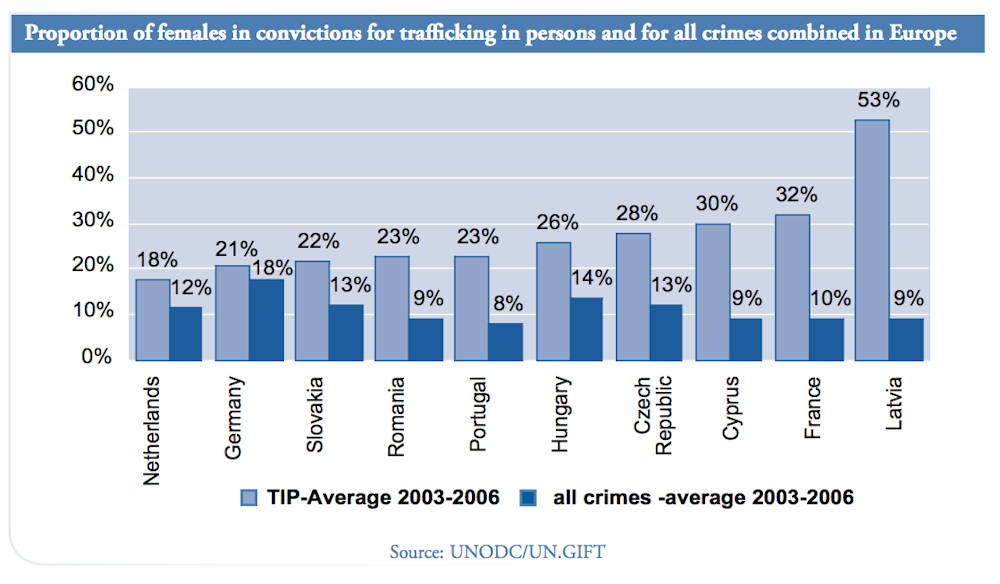
We tend to think human trafficking for commercial sexual exploitation is perpetrated by men against women and girls. But the high proportion of women among those convicted of trafficking in Australia echoes an international trend. The United Nations notes women comprise a large share of convicted offenders compared with most other crimes.
Data compiled by the United Nations Office on Drugs and Crime shows the proportion of those convicted for human trafficking who are women is higher than for all other categories of crime.UNODC, Global Report on Trafficking in Persons, 2009,
In three of the Australian cases, the offenders (all from Thailand) came into the country in remarkably similar ways to their victims. They were were lured with promises of making large amounts of money. They incurred a debt for the trafficking arrangements, and were effectively held captive.
After they paid their debt, they stayed and continued to work in the sex industry. Then they made the transition from victim to offender, by profiting from other women being trafficked and prostituted.
The judges who sentenced these three women drew attention to what the offenders experienced as victims of sex trafficking and then helped perpetrate on others.
As Justice Richard Refshauge said in sentencing Nantahkhum: “This has both positive and negative elements to it as far as sentencing is concerned. She knew what it was like to be constrained in this way […] She should have known that this was not the way to conduct such a business.”
A question of free choice
The issue of victims who become victimisers is a complex one. Certainly many victims do not become offenders, but research points to earlier experiences of victimisation being strongly associated with later offending. This victim-offender overlap has been recognised in other areas, for example, intimate partner violence.
To what extent we judge and punish someone for their offences depends on the degree to which society believes it necessary to serve justice, signal abhorrence of certain behaviour and judges the offender responsible for their own actions.
In the three cases of trafficked women turning traffickers that I looked closely at, the sentencing judgements assume a choice freely exercised. All three had, after all, been released from their previous situations of exploitation. They were free to begin a life, away from away from the exploitation other people. Why didn’t they, apart from sheer greed?
But how free were these women really?
They had limited education – particularly in English, limited opportunities and limited experience – except of course, of sex work and the trafficking business.
Appearing to defend the offender is contentious. I do not suggest these women should be released of all culpability of their crimes. But these women were not always offenders. It’s possible, had they not been trafficked, they would not have become traffickers. Their victimisation does not excuse their offending, but nor does their offending erase that victimisation.
The structure of our criminal courts is not designed to grapple with a person being both a victim and an offender, or both innocent and guilty. Their function can thus obscure or overlook complexities, and contribute to a wider system failure.
We need to understand the events that led these women to exploit others to help break the cycle of exploitation.
On Tuesday, the gunman in the Christchurch mosque shootings was charged with committing a terrorist act. The new charge came more than two months after the massacre.
The gunman, who the author and The Conversation have chosen not to name, had already faced 50 charges of murder and 40 charges of attempted murder stemming from the attacks. An additional murder charge was also brought on Tuesday, bringing the total to 51.
So, why was the terrorism charge added at this later stage? And why is it significant?
Difficulties using the terrorism law
The terrorism charge is unprecedented because the offence of committing a terrorist act has never been prosecuted successfully in New Zealand. The offence is found in Section 6A of the Terrorism Suppression Act 2002 (NZ), which was enacted by the New Zealand parliament in response to the 9/11 terror attacks in the US.
The offence relies on a statutory definition of terrorism, which is found in Section 5. To constitute a terrorist act, the conduct must include the following:
be carried out for the purpose of advancing an ideological, political, or religious cause
be intended to induce terror in a civilian population, or to unduly compel or force a government or international organisation to do or abstain from doing any act
cause one in a list of specified harms, including death, serious bodily injury, a serious risk to health or safety, serious property damage, or serious interference with an infrastructure facility.
On face value, it is clear the shootings at the two mosques in March, which left 51 people dead, amounted to terrorism.
The delay in bringing the terrorism charge was likely due to the fact New Zealand police and prosecutors needed sufficient time to ensure they could prepare a successful case. The definition of terrorism creates additional hurdles compared to a murder charge, and New Zealand authorities have faced difficulties using the Terrorism Suppression Act in the past.
There are some concerns about giving the Christchurch a platform to espouse his white supremacist views in court.Martin Hunter/EPA
In 2007, for instance, New Zealand police arrested a group of environmental activists running military-style training camps in the Urewera forest on the eastern side of the North Island. The raids were known as “Operation Eight.”
No terrorism charges were brought in that case, even though there was evidence that some members of the group intended to harm innocent people. The possibility of a terrorism charge was explored, but New Zealand’s solicitor-general concluded that the law was “unnecessarily complex, incoherent, and … almost impossible to apply.” Four of the 17 activists were eventually convicted of firearms offences.
It is not clear why the solicitor-general considered the terrorism law so difficult to apply after Operation Eight, as most of the evidence is not publicly available. The definition of terrorism is very similar to that found in Australia, as both laws are based on UK legislation. However, there is a greater focus in the New Zealand law on international terrorism conventions, which may make it harder to apply to domestic acts of terrorism.
More likely, it may have been difficult in that case to fit environmental activism within the definition of a political, religious or ideological motive because there is a presumption against legitimate protest falling within the law. In addition, there were significant concerns around police use of force and racial motives against the mostly Maori offenders.
Prosecutors will not likely face the same difficulties in applying the terrorism laws to the Christchurch massacre, where the intention to cause harm and the attacker’s motivations (as outlined in his manifesto) are obvious.
However, the prosecution may still be risky if it gives the gunman a platform to espouse his extremist views. He would still be able to do this while facing a murder charge alone, but a terrorism trial will carry added weight and the prosecutors will need to admit evidence about his ideological motives.
Why is a terrorism charge important?
There is no added practical benefit to charging the gunman with terrorism in addition to murder. A maximum penalty of life imprisonment was already possible with the murder charges.
However, the choice to bring a terrorism charge is not simply a practical one. The criminal law is said to have two purposes: a practical one (to put dangerous people in prison) and a moral one (to denounce conduct that is morally unacceptable).
Adding this charge signals to the wider community that the massacre was an act terrorism and will be punished as such. This may give victims, too, some degree of closure, if the offender is sent to prison for committing a terrorist act.
Labels are also particularly important in this case given that it was an act of terrorism by a white supremacist against Muslim worshippers. Had prosecutors only pursued the murder charges, they may have been criticised for a double standard. Acts of violence by Islamist extremists are commonly treated as terrorism, even if they result in far fewer fatalities.
In other words, bringing a terrorism charge is a trade-off: there’s a risk of giving the gunman a platform, but also a need to denounce the massacre for what it was – an act of terrorism.
This charge sends a clear signal that political or religious violence against innocent people is abhorrent and will be punished as terrorism, no matter its colour or ideology.
Australia’s lowest ever Reserve Bank cash rate – 1.5% – is about to be consigned to history.
On Tuesday Governor Philip Lowe made it clear that he plans to cut it in two weeks time. The money market cash rate (from which all other rates derive) will then fall to 1.25%.
After that, if betting in the market is right he will cut the cash rate to just 1% by Christmas.
inflation was likely to remain low relative to the target, and that a decrease in the cash rate would likely be appropriate.
A lower cash rate would support employment growth and bring forward the time when inflation is consistent with the target. Given this assessment, at our meeting in two weeks’ time, we will consider the case for lower interest rates.
The bank is forecasting a tick up in economic growth from the present 2.3% to 2.75% by the end of the year and a fairly steady unemployment rate.
But here’s the thing. He was keen to emphasise that those forecasts only applied if he cut rates twice this year – that’s twice, before the end of the year.
He is planning to do it because the economy is weak, much weaker than his political masters suggested during the election campaign. Consumer spending is “unusually soft”.
Over the past three years, household disposable income has increased at an average rate of just 2¾ per cent. This compares with an average of 6 per cent over the preceding decade.
As this period of weak income growth has persisted, it has become harder for households to dismiss it as just a temporary development – as something that will pass quickly. The lower rate of income growth has also made it harder for households to pay down debt. The end result has been that many people have decided to adjust their spending plans.
The cuts are just the start
It isn’t much good cutting interest rates if mortgage rates don’t follow. That will be up to the banks. But until this week, even if they had passed it on, there would have been so many would-be borrowers it wouldn’t have helped.
That’s because, whatever the interest rate, and lately new mortgages have been going for 4.5% or lower, and whatever a would-be borrower’s ability to make payments, banks have generally refused to lend to anyone who couldn’t cope with a rate of 7.25%.
It’s been the doing of the Australian Prudential Regulation Authority – one of the Reserve Bank’s sister organisations. It regulates banks and super funds and other institutions in order to keep the financial system stable.
In December 2014 it directed the institutions it supervises to impose serviceability assessments that incorporated a buffer of at least two percentage points above the loan product rate they were offering and a minimum floor rate of at least 7%.
That meant that if new mortgage rates were 5%, as they were at the time, the lenders had to satisfy themselves that the borrower could cope with 7%. As new mortgage rates fell to 4.5% they still had to satisfy themselves that the borrower could cope with 7%.
Banks have needed unreasonably high buffers
APRA’s directive stated that “prudent practice would be to maintain a buffer and floor rate comfortably above these levels”, meaning that in practice most lenders wouldn’t lend to anyone who wasn’t able to cope with the mortgage rate climbing to 7.25%, no matter how unlikely that was becoming.
On Tuesday this week, a few hours before Governor Lowe delivered his speech, it wrote to the institutions again, telling them that
the low interest rate environment is now expected to persist for longer than originally envisaged. This may mean that the gap between actual rates paid and the floor rate may become unnecessarily wide.
It was proposing to remove “reference to a specific 7% floor”.
The required serviceability buffer would climb from 2% to 2.5%, and it would no longer expect lenders to use a rate “comfortably above” that buffer.
Soon, they’ll be able to lend more…
While strictly speaking the letter notified lenders of a one month consultation period, what it really did was notify them that the changes were about to be implemented.
In recent months most new mortgage rates have been below 4.5%, with some high quality borrowers able to get rates as low as 3.6%.
The new arrangements will allow banks to assess them on their ability to make payments on a 6% to 7% loan instead of a 7.25% loan.
Should the next two cash rate cuts be passed on, it would allow them to assess lenders on their ability to repay a 5.5% to 6.5% loan.
It would represent a substantial easing of credit standards for new borrowers.
..up to 10% more
My calculations suggest it would increase the borrowing capacity of home buyers by as much as 10%, enough to have a material positive impact on the housing market.
APRA’s move (almost certainly taken in consultation with the Reserve Bank) both makes a cut in the Reserve Banks’s cash rate less imperative and more potent.
As interest rates get lower, further cuts seem to have been losing their ability to get people and businesses spending and borrowing, something the Governor would have been thinking of when he referred in his speech to the “limitations” of relying on just one instrument to boost the economy.
It would also be up to the government to provide “additional fiscal support” (which means extra spending or tax cuts” including through spending on infrastructure and “policies that support firms expanding, investing and employing people”.
The first of his rate cuts, due in a fortnight, will have more impact than it would have had APRA not acted.
Or perhaps not as much as he would have hoped if the banks, carrying big costs as a result of the misdeeds uncovered in the royal commission, don’t pass it all on.
The Australian election result has precipitated a wave of suicide attempts among Manus Island refugees that the government can no longer ignore, warns a refugee advocate.
The Liberal Party-led Coalition was returned to power on Saturday. It defeated the Labor Party, which had promised to expedite the resettlement of about 900 refugees who have been detained by Australia without trial on Papua New Guinea’s Manus and Nauru for six years.
The advocate, Ian Rintoul, said yesterday that seven refugees had attempted suicide since Saturday.
A suicide note written by a Manus Island refugee. Image: Ian Rintoul/RNZ Pacific
“It has been building for six years, but the weekend’s election result has precipitated a crisis that the government cannot afford to ignore,” Rintoul said.
“Offshore detention is slowing strangling the life out of its victims.”
-Partners-
Rintoul circulated a “heartbreaking” suicide note written by a 31-year-old Sudanese refugee, who attempted to hang himself on Tuesday morning.
“I can’t fight any longer, everythings have gone from me, my lovely youth, and age, and love and happiness and I became broken, worthless and useless,” it said.
Two other refugees were in Lorengau hospital on Tuesday after suicide attempts, another was discharged that morning while two others were in one of three refugee detention centres on the island, Rintoul said.
Two other men, who had attempted to set fire to themselves on Sunday, had been moved from police cells to a low security compound, he said.
“The government has no resettlement arrangements for those still left on Manus and Nauru. Hundreds remain in limbo, and all hope is draining away.”
Where to get help
These are services across the Pacific for people who may be thinking about suicide, or those who are concerned about family or friends.
Tonga: Lifeline: 23000 or 25144
Fiji:
Lifeline: 667 0565
Papua New Guinea:
Lifeline: Port Moresby 326 0011
Samoa:
Samoa Lifeline: 800-5433
New Zealand:
Lifeline: 0800 543 354
Suicide Crisis Helpline: 0508 828 865 / 0508 TAUTOKO (24/7). This is a service for people who may be thinking about suicide, or those who are concerned about family or friends.
Depression Helpline: 0800 111 757 (24/7)
Samaritans: 0800 726 666 (24/7)
Youthline: 0800 376 633 (24/7) or free text 234 (8am-12am), or email talk@youthline.co.nz
New Zealand police have laid a terrorism charge against the man accused of murdering 51 people in Christchurch in deadly terror attacks on two Christchurch mosques on March 15.
In addition to the murder charges, Brenton Tarrant faces 40 of attempted murder and one charge under the Terrorism Suppression Act.
In a statement, police said they had updated the victims’ families and survivors of the Christchurch attacks.
“A charge of engaging in a Terrorist Act under section 6A of the Terrorism Suppression Act 2002 has now been filed against Brenton Tarrant,” they said.
“The charge will allege that a terrorist act was carried out in Christchurch on 15 March 2019 and follows consultation between Police, Crown Law and the Christchurch Crown Solicitors Office.”
-Partners-
Police also filed an additional murder charge and two additional attempted murder charges.
Fifty-one charges of murder, 40 of attempted murder and one charge under the Terrorism Suppression Act have now been filed against Tarrant.
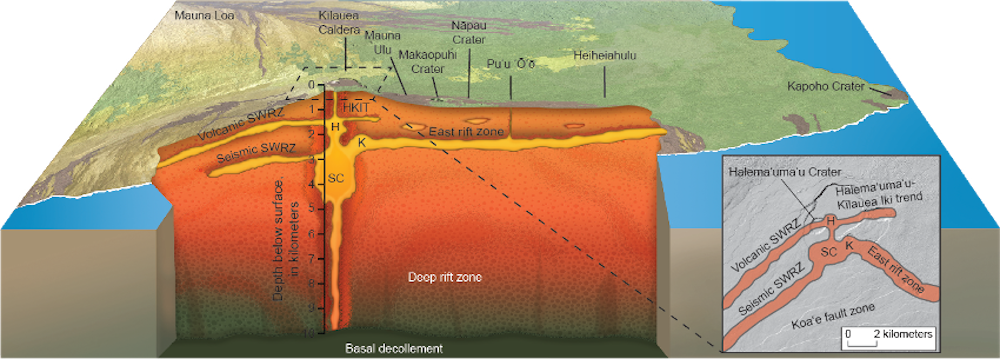
Predicting when a volcano will next blow is tricky business, but lessons we learned from one of Hawaii’s recent eruptions may help.
Kīlauea, on the Big Island of Hawai’i, is probably the best understood volcano on Earth. That’s thanks to monitoring and gathered information that extends back to the formation of the Hawaiian Volcano Observatory in 1912.
The volcano is also subject to the world’s most technologically advanced geophysical monitoring network.
From the skies, satellites collect data that show the changing topography of the volcano as magma moves throughout the internal magma plumbing system. Satellites also look at the composition of volcanic gases.
From the ground, volcanologists use a number of highly sensitive chemical and physical tools to further understand the structure of that magma plumbing system. This helps to study the movement of magma within the volcano.
Earthquakes and vibrations
A lynch pin of volcano monitoring is seismicity – how often, where and when earthquakes occur. Magma movement within the volcano triggers earthquakes, and putting together the data on their location (a technique known as triangulation) tracks the path of magma underground.
A schematic of the deep magma plumbind system of Kilauea volcano, Big Island, Hawaii. Magma is transported from deep within the Earth and arrives in a series of summit magma reservoirs.USGS
A newer technique, seismic interferometry, uses vibrations of energy from ocean waves hitting the distant shorelines that then travel through the volcano.
Changes in the speed of these vibrations help us map the 3D footprint of the volcano’s magma plumbing system. We can then detect when, and in some cases how, the magma plumbing system is changing.
This monitoring provides the “pulse” of the volcano during times of inactivity – a baseline from which to detect change during volcanic unrest. This proved invaluable for early warning, and the prediction of where and when, of the eruption of Kīlauea on May 3, 2018.
The speeds of vibrations travelling through the volcano are predictable during observations of inflation/deflation cycles. When the volcano bulges, the vibrations travel faster through the volcano as rock and magma is compressed. When the volcano contracts these speeds decrease.
We describe this relationship between the two sets of data – the bulging/contraction and the faster/slower speed of vibrations – as coupled.
Something changed
Compared to our baseline, we saw the coupled data shift 10 days before the Kīlauea eruption on May 3. That told scientists the magma plumbing system had changed in a significant way.
The volcano was bulging due to the buildup of pressure inside the magma chamber, but the seismic waves were slowing down quite dramatically, instead of speeding up.
Our interpretation of this data was that the summit magma chamber was not able to sustain the pressure from an increasing magma supply – the bulge was too big. Rock material started to break around the summit magma chamber.
Breakage of the rocks perhaps then led to changes of the summit magmatic system so that more magma could more easily arrive at the eruption site about 40km away.
As well as Kīlauea, such coupled data sets are regularly collected, investigated and interpreted in terms of magma transport at other volcanoes globally. Sites include Piton de la Fournaise on Reunion Island, and Etna volcano, Italy.
But our modelling was the first to demonstrate these changes in the coupled data relationship could occur due to weakening of the material inside the volcano before an eruption.
The damage model that we applied can now be used for other volcanoes in a state of unrest. This adds to the toolbox volcanologists need to predict the when and where of an impending eruption.
So much data, we need help
When volcanoes are in a heightened state of unrest, the volume of information available from digital data and ground observations is extreme. Scientists tend to rely on observational monitoring first, and other data when time and extra people are available.
But the total amount of incoming data (such as from satellites) is overwhelming, and scientists simply can’t keep up. Machine learning might be able to help us here.
Artificial intelligence is the new kid on the block for eruption prediction. Neural networks and other algorithms can use high volumes of complex data and “learn” to distinguish between different signals.
Automated early alert systems of an impending eruption using sensor arrays exist for some volcanoes today, for example at Etna volcano, Italy. It’s likely that artificial intelligence will make these systems more sophisticated in the future.
Early detection sounds wonderful for authorities charged with public safety, but many volcanologists are wary.
If they lead to multiple false alarms then that could slash trust in scientists for both managers of volcanic crises and the public alike.
Two big media-related issues have emerged from the federal election: how opinion polls are reported and the polarisation of the main newspaper groups.
Opinion polls have been part of Australia’s political landscape for 90 years, and for most of that time they have been reliable barometers of public opinion.
As a result, they have acquired considerable credibility. Malcolm Turnbull weaponised this for political purposes when he justified his challenge to Tony Abbott’s prime ministership in 2015 on the basis that Abbott had lost 30 consecutive Newspolls.
It was a gross lapse of judgment.
Not only did it set up Turnbull to be judged by the same criterion – as duly happened last year when he lost his 31st Newspoll – but he chose precisely the wrong time to elevate public opinion polls to the status of prime ministerial kingmaker.
Public opinion polls have been living on borrowed time since mobile phones began to displace household fixed-line phones, a gradual but inexorable process over a couple of decades.
Without digressing too far into the complexities of sampling, it is now difficult, time-consuming and expensive to generate a genuinely random sample of voters.
Telephone polling, introduced in the 1980s, originally drew its samples from the Telstra list of fixed-line numbers – in other words, from the White Pages. There is no equivalent available list of mobile phones so, for practical purposes, drawing a genuine random sample has become impossible.
To cope with these realities, polling organisations have adopted somewhat makeshift sampling and interviewing procedures, drawing on various combinations of fixed-line phones, mobile phones, large panels of available respondents, and robo-polling.
This in turn raises questions about the validity of statements about sampling error, something the election results brought home with a thump.
Yet the media have carried on reporting the polls as if nothing has changed.
Poll results still make banner headlines. Stories are still written on the basis that the data are as good as they have always been.
The public, accustomed to the longstanding reliability of Australian polls, do not know and are not told that this is nonsense.
Polls are useful and interesting stories, but the reporting of them needs to change.
There needs to be greater transparency about how a poll’s sampling and interviewing are done. The way a poll is done – whether it is a human being or a machine asking the questions, for instance – is significant.
The public is also entitled to know that today’s polls have limitations that polls of the past did not have. They are more indicative and less precise, so statements about sampling error need to be qualified accordingly.
And as the main newspapers have become more partisan, so the reporting of polls has shifted from straightforward accounts of the data to stories dominated by analysis, comment or wishful thinking on the part of the writer or the editor.
Partisanship in the media, especially the newspapers, has always been with us, but analyses by Media Watch and The New Daily show it reached extreme levels in this election.
An audit of metropolitan newspaper front pages by Media Watch showed a heavy anti-Labor bias by News Corp papers, and a roughly equivalent – but less strident – pro-Labor bias by the old Fairfax (now Nine) newspapers, The Sydney Morning Herald and The Age.
The New Daily analysed three nights of Sky News coverage – April 30, May 1 and 2 – and found gross anti-Labor bias:
News Corp’s unconstrained anti-Labor bias cannot account entirely for Labor’s disastrous showing, but common sense says it accounts for some.
For example, the company has a daily newspaper monopoly in Brisbane through The Courier-Mail. It was virulently anti-Labor and Labor did astonishingly badly in Queensland. Coincidence? Possibly, but unlikely.
If Australia had a half-decent system of media accountability, there would be a public inquiry into the increasing polarisation of Australian newspapers and into the conduct of Sky at night.
However, the newspaper industry’s self-regulator, the Australian Press Council, relies on the two big newspaper organisations for nearly all its funding, so the chances of having such an inquiry approach zero.
And the broadcasting regulator, the Australian Media and Communications Authority, has never shown the slightest interest in reviewing the way commercial television and radio cover elections.
So in an age where polarisation is undermining democracies around the world, Australia is stuck with an increasingly polarised media, a highly concentrated media ownership landscape and no apparent way to do anything about it.
Aboriginal women are the fastest growing prison population in Australia. They comprise around one-third of female prisoners in New South Wales, despite making up just 3% of the population. The majority of Aboriginal women in prison (more than 80%) are mothers.
Our research team interviewed 43 Aboriginal mothers in six prisons across NSW about their physical and mental health and well-being. We found they were overwhelmingly unable to access culturally appropriate treatments for their mental health, well-being and substance use issues.
These circumstances compounded the poor health and well-being of Aboriginal mothers, and in some instances triggered or exacerbated mental health problems.
The mothers we interviewed said intergenerational trauma and the forced removal of their children by government services were the most significant factors affecting their health and well-being.
Mothers recounted their own and their relatives’ experiences of being removed from their families as children, as part of the Stolen Generations, painting a picture of longstanding and ongoing intergenerational trauma.
In prison, many of the Aboriginal mothers experienced significant distress due to the trauma of separation from children combined with the stress of the prison environment. Trauma is associated with high rates of co-occurring mental health disorders.
Many mothers had children in the care of family members, but the long distances between the prison and the family’s home made regular contact extremely difficult.
Phone contact in prison was also difficult if the mothers did not have the money to use the prison phones.
Mothers whose children had been taken by government services were reliant on government caseworkers to facilitate their children’s visits. Many mothers reported that these visits were rare, even though they had been ordered by the court. Mothers worried that their children would not be returned to them.
Some Aboriginal women use substances to cope with past trauma. But this is seen as a law and order issue rather than a health problem or coping method of last resort because they haven’t been able to access services to address intergenerational trauma.
This further increases risk of contact with the criminal justice system and leads to deterioration of mental health and well-being. But no action is taken to address these underlying causes of discrimination and incarceration.
As a result, more than 80% of Aboriginal mothers in prison in NSW report their offences are drug-related. Aboriginal women are more likely to be charged and imprisoned for minor offences than non-Aboriginal women. Consequently, Aboriginal women often cycle through the prison system on shorter sentences or remand (unsentenced) and experience multiple incarcerations.
Indigenous women are overrepresented in the female prison population in Australia.ArliftAtoz2205/Shutterstock
This compounds intergenerational trauma and cycles of incarceration. It creates another generation of Aboriginal children forcibly removed from their mothers as well as separating Aboriginal mothers from their families and communities.
Some had sustained injuries caused by family violence. Head injuries produced ongoing symptoms such as head pain, blurred vision, and memory loss, which made it more difficult to access treatment.
The mothers reported a high occurrence of reproductive health problems including endometriosis, ovarian cysts, precancerous changes of the cervix, and cervical cancer. The mothers highlighted the links between reproductive health problems and trauma, injury, and poor social and emotional well-being.
Many of the women reported extensive waiting times to access treatment and support, which exacerbated these problems.
Many women who had been taking medication that had been effective for a mental health problem in the community, for example prescription medication for anxiety, were not able to continue on that medication on admission to prison.
They were forced to withdraw from it and wait, sometimes weeks, to see a prison psychiatrist, presenting a serious and imminent risk to their stability, health and well-being.
What can be done?
The incarceration of Aboriginal mothers is a serious public health issue. The gross over-representation of Aboriginal women in prison reflects the inequity and discrimination they face, and the failure of multiple systems to address their needs and divert them from prison.
We urgently need culturally informed approaches to address the health and well-being of Aboriginal mothers in prison and after release to stop ongoing cycles of incarceration and child removal.
The mothers in our study highlighted the need for culturally appropriate services in the community that promote healing for intergenerational trauma. This includes an Aboriginal women’s healing and drug and alcohol service, long-term housing, trauma-informed counselling, and facilities specifically to support Aboriginal women in regaining access to their children.
Aboriginal mothers know what it means to be healthy and stay healthy, but too often do not have access to culturally safe services to support them in their mothering, to realise their health goals, and to remain out of prison and in the community.
Diving on the remote coral reefs in the north of Western Australia during the world’s worst bleaching event in 2016, the first thing I noticed was the heat. It was like diving into a warm bath, with surface temperatures of 34⁰C.
Then I noticed the expanse of bleached colonies. Their bright white skeletons were visible through the translucent tissue following the loss of the algae with which they share a biological relationship. The coral skeletons had not yet eroded and collapsed, a grim reminder of what it looked like just a few months before.
I spent the past 15 years documenting the recovery of these reefs following the first global coral bleaching event in 1998, only to see them devastated again in the third global bleaching event in 2016.
The WA coral reefs may not be as well known as the Great Barrier Reef, but they’re just as large and diverse. And they too have been affected by cyclones and coral bleaching. Our recent study found many WA reefs now have the lowest coral cover on record.
When my colleague, Rebecca Green, witnessed that mass bleaching for the first time, she asked me how long it would take the reefs to recover.
“Probably not in my lifetime” was my reply – an abrupt but accurate reply considering the previous rate of recovery, future increases in ocean temperatures … and my age.
Patches of Ningaloo Reef were severely affected by bleaching in 2016.AIMS: J Gilmour, Author provided (No reuse)
The worst mass bleaching on record
A similar scene is playing out around the world as researchers document the decline of ecosystems they have spent a lifetime studying.
Our study, published in the journal Coral Reefs, is the first to establish a long-term history of changes in coral cover across eight reef systems, and to document the effects of the 2016 mass bleaching event at 401 sites across WA.
Given the vast expanse of WA coral reefs, our assessment included data from several monitoring programs and researchers from 19 institutions.
These reefs exist in some of the most remote and inaccessible parts of the world, so our study also relied on important observations of coral bleaching from regional managers, tourist operators and Bardi Jawi Indigenous Rangers in the Kimberley.
Our aim was to establish the effects of climate change on coral reefs along Western Australia’s vast coastline and their current condition.
The heat stress in 2016 was the worst on record, causing mass bleaching and large reductions in coral cover at Christmas Island, Ashmore Reef and Scott Reef. This was also the first time mass bleaching was recorded in the southern parts of the inshore Kimberley region, including in the long oral history of Indigenous Australians who have managed this sea-country for thousands of years.
Bleaching in Scott Reef.AIMS: N Thake, Author provided (No reuse)
The mass bleaching events we documented were triggered by a global increase in temperature of 1⁰C above pre-industrial levels, whereas temperatures are predicted to rise by 1.5⁰C between 2030 and 2052.
In that scenario, the reefs that have bleached badly will unlikely have the capacity to fully recover, and mass bleaching will occur at the reefs that have so far escaped the worst impacts.
The future of WA’s coral reefs is uncertain, but until carbon emissions can be reduced, coral bleaching will continue to increase.
Surviving coral reef refuges must be protected
The extreme El Niño conditions in 2016 severely affected the northern reefs, and a similar pattern was seen in the long-term records.
The more southern reefs were affected by extreme La Niña conditions – most significantly by a heatwave in 2011 that caused coral bleaching, impacted fisheries and devastated other marine and terrestrial ecosystems.
Since 2010, all of WA’s reefs systems have bleached at least once.
NOAA Coral Reef Watch Annual maximum bleaching alert levels for WA in 2011 and 2016. Black marks show bleaching observations or coral monitoring sites. No stress = no bleaching; warning = possible bleaching; alert level 1 = bleaching likely; alert level 2 = mortality likely.NOAA, Author provided (No reuse)
Frequent bleaching and cyclone damage have stalled the recovery of reefs at Shark Bay, Ningaloo and at the Montebello and Barrow Islands. And coral cover at Scott Reef, Ashmore Reef and at Christmas Island is low following the 2016 mass bleaching.
In fact, average coral cover at most (75%) reef systems is at or near the lowest on record. But not all WA reefs have been affected equally.
In 2016 there was little (around 10%) bleaching recorded at the northern inshore Kimberley Reefs, at the Cocos Keeling Islands, and at the Rowley Shoals. Coral cover and diversity at these reefs remain high.
Some WA reefs, such as the Rowley Shoals, have not yet been severely affected by coral bleaching and are well managed. Their outstanding coral communities and diversity of marine life are a reminder of the value of healthy coral reefs.AIMS: N Thake, Author provided (No reuse)
And during mass bleaching there were patches of reef that were less affected by heat stress.
These patches of reef will hopefully escape the worst impacts and retain moderate coral cover and diversity as the world warms, acting as refuges. There are also corals that have adapted to survive in parts of the reef where temperatures are naturally hotter.
Some reefs across WA will persist, thanks to these refuges from heat stress, their ability to adapt and to expand their range. These refuges must be protected from any additional stress, such as poor water quality and overfishing.
In any case, the longer it takes to curb carbon emissions and other pressures to coral reefs, the greater the loss will be.
Coral reefs support critical food stocks for fisheries around the world and provide a significant contribution to Australia’s Blue Economy, worth an estimated A$68.1 billion.
We are handing environmental uncertainty to the next generation of scientists, and we must better articulate to everyone that their dependence on nature is the most fundamental of all the scientific concepts we explore.
Source: The Conversation (Au and NZ) – By Michael Sievers, Research Fellow, Global Wetlands Project, Australia Rivers Institute, Griffith University
When we think of mangrove forests, seagrass meadows and saltmarshes, we don’t immediately think of shark habitats. But the first global review of links between large marine animals (megafauna) and coastal wetlands is challenging this view – and how we might respond to the biodiversity crisis.
Mangrove forests, seagrass meadows and saltmarshes support rich biodiversity, underpin the livelihoods of more than a billion people worldwide, store carbon, and protect us from extreme weather events.
Mangrove forests, seagrass meadows and saltmarshes are the three key vegetated habitats found in coastal wetlands.Tom Rayner/www.shutterstock.com
We know marine megafauna also use these habitats to live, feed and breed. Green turtles and manatees, for instance, are known to eat seagrass, and dolphins hunt in mangroves.
But new associations are also being discovered. The bonnethead shark – a close relative of hammerheads – was recently found to eat and digest seagrass.
The problem is that we’re losing these important places. And until now, we’ve underestimated how important they are for large, charismatic and ecologically important marine animals.
Counting wetland megafauna
Today our review of the connections between marine megafauna and vegetated coastal wetlands was published in the journal Trends in Ecology and Evolution. As it turns out, far more megafauna species use coastal wetlands than we thought.
Before our review, the number of marine megafauna species known to use these habitats was 110, according to the International Union for Conservation of Nature (IUCN) Red List, which assesses species’ conservation status.
We identified another 64 species from 340 published studies, bringing the total number to 174 species. This means 13% of all marine megafauna use vegetated coastal wetlands.
We predominantly documented these habitat associations by electronic tracking, direct observation or from analysing stomach contents or chemical tracers in animal tissues.
Less commonly, acoustic recordings and animal-borne video studies – strapping a camera on the back of turtle, for instance – were used.
Deepening our understanding of how species use their habitats
In recent weeks, the Intergovernmental Science-Policy Platform on Biodiversity and Ecosystem Services (IPBES) released a damming assessment of humanity’s stewardship of the natural world. Up to 1 million species were reported to be facing extinction within decades.
We need to dramatically change how we relate to and engage with species and their habitats, if we are to fix this problem.
But the question is, how can we make global change real, relevant and feasible at local and regional scales? And, as the international community rises to this challenge, what information is needed to support such efforts?
Our study suggests a critical first step to addressing the global biodiversity crisis is to deepen our understanding of links between species and their habitats. We also need to elevate how the evidence is used to both assess extinction risk and prioritise, plan and deliver conservation actions.
A juvenile lemon shark swimming in mangroves. More than half of the world’s coastal wetlands have been lost.Shutterstock
More than half of all coastal wetlands have been lost globally and the rest are at risk from a range of serious threats, including deforestation. There is an urgent need to limit and reverse the loss of coastal wetlands to stop biodiversity loss, protect communities and tackle climate change.
Targeting places where high rates of mangrove loss intersect with threatened megafauna could lead to more efficient and effective conservation outcomes. Southeast Asia, Mexico and northern Brazil are such places.
In Southeast Asia, for example, the world’s largest mangrove forest is losing trees at a rate far exceeding global averages, largely due to aquaculture and agriculture. This is threatening the critically endangered green sawfish, which relies on these magroves habitats.
Habitats should always be considered in assessments
The IUCN Red List assesses the extinction risk for almost 100,000 species. It provides comprehensive information on global conservation statuses, combining information on population sizes, trends and threats.
The wealth of data collected during species’ assessments, including habitat associations of threatened species, is one of the Red List’s most valuable features.
But our study shows many known associations are yet to be included. And for more than half of the assessments for marine megafauna, habitat change is yet to be listed as a threat.
‘Proportion species’ refers to all species within key taxonomic groups that are associated with coastal wetlands.Author supplied
This is concerning because assessments that overlook habitat associations or lack sufficient detail, may not allow conservation resources be directed at the most effective recovery measures.
But it’s also important to note habitat associations have varying strengths and degrees of supporting evidence. For example, a population of animals shown to consume substantial amounts of seagrass is clearly a stronger ecological link than an individual simply being observed above seagrass.
The data on habitat associations must be strengthened in species assessments.Shutterstock
In our paper, we propose a simple framework to address these issues, by clarifying habitat associations in conservation assessments. Ideally, these assessments would include the following:
list all habitat types the species is known to associate with
indicate the type of association (occurrence, grazing, foraging or breeding)
cite the source of supporting evidence
provide an estimate of the level of habitat dependence.
Data for decision making
Habitat loss is accelerating a global extinction crisis, but the importance of coastal habitats to marine megafauna has been significantly undervalued in assessments of extinction risk.
We need to strive to protect remaining coastal wetland habitats, not only for their ecological role, but also for their economic, social and cultural values to humans. We can do this by strengthening how we use existing scientific data on habitat associations in species assessments and conservation planning.
The Greater Sydney Commission has proposed a 40-year vision of a metropolitan region formed of three “cities”: the Eastern “Harbour” City, the Central “River” City, and the Western “Parkland” City. The plan aims to create 30-minute cities, where the community has access to jobs and services in three largely self-contained but connected regions. Thus, Sydney would be polycentric.
A polycentric city has multiple centres of employment, economic or social activity. Local labour markets and residential zones minimise long commutes, create a sense of place and neighbourhood, and strengthen economic agglomeration as companies, services and industries benefit from being close to one another.
However, it is still unclear whether Sydney is actually moving towards such a structure. In our recent work, we developed new ways of measuring polycentricity. We applied these to Journey to Work data from the 2016 Census to test how consistent the current centricity patterns of Greater Sydney are with the proposed plan.
How do you measure polycentricity?
Traditionally, employment densities are used as a measure of polycentricity. If the density of jobs in a location is higher than the average density for the entire region, then it is a centre.
However, this simple measure misses a key notion that makes cities what they are: network flows and spatial interactions. People “flow” from one place to another. Employment centres “attract” flows, and residential areas “produce” flows. Thus, a city is a collection of locations that interact dynamically, connected by daily commuting flows.
We proposed a set of new metrics to capture this idea of flows. We defined the net inflow of people to a location as the total number coming to this location to work minus the total number going from this location to work elsewhere. If the net inflows are positive, this place is a centre.
The chart below illustrates the idea. The base arc on the circle shows the number of people “flowing” out of a location to another location. The connecting arcs are coloured black if the net inflows into the focus regions (a), (b) or (c) are positive.
Testing polycentricity via net inflows: (a) Sydney City and Inner South (Sydney CBD), (b) Parramatta, (c) Eastern Suburbs.Source: The authors
Sydney CBD clearly emerges as a global centre for the whole region. Parramatta is a regional centre. Other locations such as the Eastern Suburbs are not centres at all.
The net inflow to a location can be divided by the total number of trips in the system, so inflow values are scaled from 0 to 1 using a standard statistical procedure. The higher the value, the higher the centre’s rank in the urban system. Here, a score of 1 means the centre is an absolute: all the trips in the system are a net inflow into the centre.
This gives us a trip-based centricity measure. And based on the area of the location, we can calculate a density-based centricity measure.
The maps below show trip-and-density-based measures – (a) and (b) respectively – for Greater Sydney at the Statistical Area Level 2 (representing a community that interacts together socially and economically).
Note the dominant role of the Sydney CBD. The other centres emerge as weak centres. Also, many of the second-order centres are very close to the CBD.
Visualising polycentricity in Sydney (red indicates highest values): (a) trip-based centricity, (b) density-based centricity, (c) transit-accessibility-based centricity, and (d) auto-accessibility-based centricity.Source: The Authors
The concept of accessibility
Counting the net inflow into a location may provide us with information about general centricity. However, it still does not tell us how easy or difficult it is for people to actually get to jobs. This brings us to the idea of accessibility.
Walter Hansen defined accessibility as “the spatial distribution of activities about a point, adjusted for the ability and the desire of people … to overcome spatial separation”. More practically speaking, a location is accessible if it can be reached within a set time (say 30 minutes) from another location.
We counted the net accessibility of a location by counting the number of jobs minus the number of workers (labour) that could be accessed from a particular location (SA2) in Sydney within 30 minutes. We counted travel time both by car and by public transport during a usual weekday peak hour (Wednesday 8am). Similar to the trip and density measures, accessibility centricities can also be scaled as values between 0 and 1. This allows us to compare across the four measures.
In the maps above, (c) and (d) show the transit and auto-based accessibility centricities based on accessibility for public transport and vehicles. Sydney CBD is highly accessible. The second-order centres show much weaker accessibility.
Takeaways for urban policy and the three-cities plan
The chart below shows the top-ranked centre, Sydney CBD (Level 1 centre), and the lower-ranked subcentres (Levels 2 and 3) emerging from our analysis.
Identified Level 1, 2, and 3 Centres for the Greater Sydney metropolitan region.Source: Authors
Accessibility planning should guide the design of a polycentric city
The design of polycentric Sydney should be guided by accessibility, the locations of jobs and homes, and subregional labour market organisation.
In short, the region should give priority to making jobs accessible by locating new jobs in emerging centres, instead of a mobility-focused system that takes people to jobs.
Reduce spatial mismatches between jobs and homes
Our results show that Sydney, paradoxically, remains strongly monocentric and strongly dispersed at the same time. The Sydney CBD accounts for 15% of jobs in the region, with the remaining 85% of jobs scattered around in weaker second-order centres and non-centres. Positive correlations exist between percentage of employed workers, trip-based centricity and the subcentre ranks.
But we see significant disparities between these ranks and accessibility centricities. This shows the spatial mismatches for commute lengths in the system.
A subcentre with high trip-centricity, employing a high percentage of workers, but relatively lower auto- and transit-based accessibility centricity, implies that even though a significant percentage of the population comes to this location to work, access to jobs at this centre within 30 minutes is low.
A policy response would be to increase the accessibility of jobs from this location, as it already serves as a centre. This situation is particularly clear in the cases of Parramatta-Rosehill and Macquarie Park-Marsfield. Penrith and Liverpool too have extremely weak accessibility centricity.
Parramatta CBD is emerging as a secondary centre in the Greater Sydney region, but with much weaker accessibility of jobs than Sydney CBD.haireena/Shutterstock
As cities grow in size, commute lengths increase if the labour market for the entire metropolitan region is integrated. Commute lengths will stabilise if a city has a clear polycentric or modular structure.
In the case of Sydney, spatial equity has always been a concern. However, inter-city comparisons show city size has a strong bearing on its equity and efficiency.
Our results show it’s increasingly important for larger cities to introduce a framework of subregional labour markets as part of the polycentricity agenda. Enabling shorter commutes for workers will improve spatial equity as well as efficiencies.
The Australian Labor Party’s 2019 election campaign showed a depth and breadth of economic policies rare for an opposition party to present. Its policy agenda was boldly extensive. But in developing these policies over the past five years, it seems Labor’s economic minds overlooked some fundamental principles of behavioural economics.
Had greater focus been put on these principles, it is possible Labor would have taken a different approach to selling its credentials, and succeeded in moving more voters its way.
Distinguished psychologists Amos Tversky and Daniel Kahneman demonstrated in the 1970s that losses have a profound psychological impact and people prefer to avoid them. In 1979 they published a paper proposing what they called “prospect theory” – that the pain a person feels from a monetary loss is greater than the pleasure felt from a monetary gain of the same value.
Prospect theory explains why people exhibit both risk-seeking and risk-averse behaviour.www.economicshelp.org
As Tversky and Daniel Kahneman put it succinctly: “Losses loom larger than gains.” This means, when faced with uncertain outcomes, most people prefer keeping the status quo to the risk of change.
Labor’s failure to persuade more voters they would gain more than they might lose under its reforms played to the Coalition’s advantage.
The government was able, for example, to make the most of Labor’s policy on negative gearing by playing on the chance all home values would fall, even though modelling suggested any fall would be minor.
It did something similar with Labor’s franking credit, casting it as a “retiree tax”, and playing on fears that big promises to increase spending on welfare, health, education and wages might mean them losing money from other tax changes.
2. Limited decision-making
People’s decisions are limited by the amount of information they have – a concept known as bounded rationality – and giving them more information doesn’t necessarily help.
Our ability to pay attention to two or three things at the same time is much more limited than we think. We tend to be selectively inattentive, screening out information we perceive as unimportant, and preferencing information that confirms existing views.
Economists Richard Thaler and Cass Sunstein argued in a 2002 article that bounded rationality demanded “libertarian paternalism” – limiting the choices offered to voters without eliminating freedom of choice.
Labor went another way – burying voters in an avalanche of policy prescriptions. Arguably it overestimated how much people would absorb, and diluted focus on a few key ideas.
To understand and compare policy detail, according to economist and psychologist Daniel Kahneman, requires a deliberate and methodical approach – what he calls “System 2 thinking”.
But most media and social media deals in “System 1 thinking”, which responds instinctively to short slogans and repeated messaging.
What Labor failed to do was reconcile System 2 idealism with System 1 necessities.
3. Now is worth more than later
People place a higher value on the short-term over the long-term. From an evolutionary perspective, this bias has no doubt served us well, particularly in times past when the future was much more uncertain.
This disposition informs an important economic concept known as hyperbolic discounting – the tendency for people to increasingly choose a smaller reward sooner over a larger reward later.
Say, for example, you were offered a choice between taking $150 now or $160 in four weeks. Most people would take the $150.
But what if you were asked to choose between $150 in 48 weeks or $160 in 52 weeks? Research shows most people would then elect to wait the extra four weeks to receive the higher amount of money.
So Labor faced the problem of it promising to deliver benefits that might take decades to pan out, such as transitioning from fossil fuels to renewable energy, while the Coalition was offering immediate tax cuts and cheaper energy prices. Many Australians, we can imagine, preferred the more immediate benefits to the longer-term ones.
Whatever criticisms might be made about other aspects of the campaign, the Coalition’s messaging demonstrated an intuitive understanding of the behavioural biases of individuals.
In this series, we look at under-acknowledged women through the ages.
“It belongs in a museum.” With these words, Indiana Jones, the world’s best-known fictional archaeologist, articulated an association between archaeologists, antiquities, and museums that has a very long history. Indeed, even Jones himself would likely marvel at the historic setting of the world’s first “museum,” and the remarkable woman who is believed to have been its curator, the Mesopotamian princess, Ennigaldi-Nanna.
Ennigaldi-Nanna was the priestess of the moon deity Sin, and the daughter of the Neo-Babylonian king, Nabonidus. In the ancient Mesopotamian city of Ur, around 530BCE, a small collection of antiquities was gathered, with Ennigaldi-Nanna working to arrange and label the varied artefacts.
C. Leonard Woolley (left) and T. E. Lawrence at archaeological excavations in Syria, circa 1912-1914.Wikimedia Commons
This collection was considered by the British archaeologist, Sir Charles Leonard Woolley, to be the earliest known example of a “museum”.
In 1925, Woolley and his team were excavating at Ur (now in the Dhi Qar governate of southern Iraq). They discovered a curious collection of artefacts among the ruins of a Babylonian palace. Especially unusual was that while the items were from different geographical areas and historical settings, they were neatly assembled together.
An example of Sumerian script on a foundation tablet 2144-2124 BCE (Lagash II; Ur III).The Walters Art Museum
The items ranged in dates from around 2100 BCE to 600 BCE. They included part of a statue of the famous early king, Shulgi of Ur, who ruled around 2058 BCE, a ceremonial mace-head made of stone, and some texts. The statue, Woolley observed, had been carefully restored to preserve the writing.
There was also a Kassite boundary stele (called a “kudurru”), a written document used to mark boundaries and make proclamations. The stele was dated to around 1400 BCE, and contained, Woolley noted, a “terrific curse” on anyone who removed or destroyed the record it contained.
Many items were accompanied by labels giving details about the artefacts. These were written in three languages, including Sumerian. The labels have been described in modern scholarship as early examples of the “metadata” that is so critical to the preservation of antiquities and the historical record.
The museum, over 2,500 years old, was centred on cultural heritage, and it is thought to have perhaps had an educational purpose. Along with her other roles, Ennigaldi-Nanna is believed to have run a scribal school for elite women.
When considering the discovery, Woolley noted that the discovery of a museum associated with the priestess was not unexpected, given the close connection between religious specialists and education. He also commented on the “antiquarian piety” of the time of the museum’s construction — an interest in history was a common feature among monarchs from the Neo-Babylonian period.
A family fascination with history
Indeed, Ennigaldi-Nanna’s appreciation for the past seems to have been a family trait. Her father Nabonidus had a fascination with history which led him to conduct excavations and discover lost texts. Many of the items in the collection were discovered by him, with Nabonidus sometimes described in the modern day as the world’s first archaeologist.
Stela of Nabonidus made of basalt.Wikimedia Commons
Nabonidus was the last king of the Neo-Babylonian Empire, and a religious reformer. His eldest son, Belshazzar, ruled as his regent for many years, but is perhaps best known for his appearance in the biblical Book of Daniel. In a famous scene, the unfortunate regent sees the end of the Neo-Babylonian kingdom coming when it is foretold through the writing of a disembodied hand on a wall.
King Nabonidus’ interest in history didn’t end with archaeology. He also worked to revive ancient cultic traditions relating to the moon deity, Sin (Sumerian Nanna). His daughter Ennigaldi was an important part of these efforts, indeed, her name is an ancient Sumerian one, meaning “the priestess, the desire of the Moon god.”
A boundary stele/kudurru showing King Melishipak I (1186–1172 BC) presenting his daughter to the goddess Nannaya. The crescent moon represents the god Sin, the sun the Shamash and the star the goddess Ishtar.Wikimedia Commons
The appointment of Ennigaldi as high priestess in Ur reinvigorated a historical trend made famous by Sargon of Akkad, who installed his daughter, the poetess Enheduanna, in the role over 1000 years earlier.
By the time of Ennigaldi-Nanna’s appointment, the religious role she would inhabit had long been unoccupied, and the rituals associated with the post had been forgotten. Nabonidus, however, describes finding an ancient stela belonging to Nebuchadnezzar I, and using it to guide his actions.
The historic aspects of the appointment of Ennigaldi-Nanna were further emphasised by Nabonidus when noting his research into the requirements of her role. The king describes consulting the writings of a previous priestess, a sister of the ruler Rim-Sin named En-ane-du.
Rim-Sin reigned over 1200 years before Nabonidus came to power. While some scholars doubt Nabonidus’ discovery of the stela of Nebuchadnezzar I, his recovery of the writings of the priestess, En-ane-du, has greater acceptance.
Ruins in the town of Ur, Southern Iraq, photographed in 2006. Around 530BCE, a small collection of antiquities was gathered here, with Ennigaldi-Nanna working to arrange and label the varied artefacts.Wikimedia Commons
Little known today
Ennigaldi is largely unknown in the modern day. An exception to her modern anonymity may be found in the luxury fashion line, Ennigaldi, which creates pieces inspired by ancient Babylonian architecture.
While relatively little is known of the life of Ennigaldi, there are other well-known women in her family tree. Ennigaldi’s grandmother, Adad-guppi, was also a powerful priestess involved in the political world of her son, Nabonidus. Adad-guppi is best known in the present day from her “autobiography,” a cuneiform account of her life, written in the first person. Adad-guppi’s autobiography records the blessings she received from the moon deity such as living to the age of 104 with a sound mind and body.
The city of Ur and its museum were abandoned around 500 BCE, due to deteriorating environmental conditions. These included a severe drought, along with changing river and silt patterns. The prevalence of drought has also been cited as a likely cause of the falls of many earlier kingdoms from the Bronze Age.
Social media backlash and a Queensland government complaint to the Australian Press Council has forced the Sunshine Coast Daily to apologise to its readers for picturing Queensland Premier Annastacia Palaszczuk in crosshairs on its front page, next to the headline “Anna, you’re next”.
The newspaper’s editor Craig Warhurst said in a statement:
For those of you in the community who feel let down and betrayed by the image, I apologise.
Warhust says the paper will publish the apology in tomorrow’s edition, along with reader criticism and concerns.
But is this enough?
Marcus Strom, Federal President (Media) of the Media, Entertainment & Arts Alliance (MEAA) argues that in a time of increased political violence, including the murder of British politician Jo Cox in 2016, publishing this image is irresponsible:
At best, this image is distasteful, at worst it could be interpreted as incitement to violence.
The Queensland government’s complaint to the Australian Press Council (APC) was lodged on the grounds that the graphic used by the newspaper encouraged violence against women.
A detailed look at the MEAA Code of Ethics reveals that “incitement to violence” isn’t listed as a breach. But there is nothing about this front page which could be construed as public interest. As Lynnette Sheridan Burns argues in her book Understanding Journalism, journalists should consider the social ramifications of their activities.
The national violence prevention initiative, Our Watch, has guidelines for reporting on violence against women. Our Watch CEO, Patty Kinnersly, says:
While images and vision are vital to telling a story, it is important that media professionals use appropriate footage that doesn’t sensationalise, trivialise or condone violence against women.
Sexism and threats of violence are not new phenomena in Australian media coverage of women politicians.
Julia Gillard, Australia’s first woman prime minister, was subjected to an unprecedented amount of gendered reporting that adopted violent and sexist imagery. The mainstream press often magnified the violent assault that Gillard received, claiming that she “used the gender-card” when she eventually called it out.
Notoriously, one TV commentator advised Australians “ought to be out there kicking her to death”, while radio host Alan Jones threatened that Gillard should be put “in a chaff bag and [taken] out to sea”.
And the problem isn’t limited to Australia. Women political leaders across the globe have long endured gendered and often sexist portrayals within the mainstream media which largely focuses on their bodies, fashion and personal lives. Such news stories trivialise women politicians in their political roles, further reinforcing male dominance within politics.
As in the example of Gillard, this has taken a more violent turn in recent years, where women politicians are portrayed through commentary that is sexist and even intimidating or threatening.
Unfortunately, this is largely regarded as “politics as usual”, with women politicians expected to just put up with it, or risk being seen as playing the gender-card.
Violent and misogynistic coverage of women has tangible run-on effects. A 2016 global survey found that 81.8% of women parliamentarians experienced some form of gendered violence, with half receiving threats of rape, beatings and even death.
Julia Gillard has spoken up about the sexist and violent coverage, warning that rape and death threats are an expected part of being a woman politician. Witnessing this gendered and violent media reporting can deter women from entering politics at a time when we should instead be striving toward gender parity.
Apologies in journalism are hard to come by, unless they are made to minimise damages, and they rarely achieve the prominence of the original affront. In this instance, the apology would have to take up the same space as the original image and headline, which, in Australian media, would be a unicorn apology indeed.
The Sunshine Coast Daily’s – “for those of you in the community who feel let down and betrayed by the image” – appears to fit into the #sorrynotsorry category. Whether or not the apology is worth the pixels or paper its printed on, the newspaper won’t be compelled to do more.
In the meantime, the Australian Press Council needs a stronger bite and the MEAA should consider redrafting its Code of Ethics to include some consideration to address the increasingly polarised media attacks on women.
Shadow treasurer Chris Bowen is running for Labor leader, despite carrying the baggage of being the architect of election policies, especially on franking credits, now being blamed after Saturday’s rout.
As they fight for the job of opposition leader, Bowen and Anthony Albanese are both putting economic growth at the centre of their campaigns.
This is a recognition that Labor did not meet the government’s argument about the importance of economic management.
On franking credits, however, Bowen is defensive, while Albanese has been very willing to acknowledge the proposed crackdown on cash refunds was a problem.
Bowen stood in front of the house in which he was brought up in Sydney’s suburb of Smithfield to announce his candidacy on Tuesday.
“I think that the party deserves choice. It deserves to hear competing ideas. I think it would be wrong of me not to provide that choice,” he said.
But he admitted Albanese is favourite. The Albanese camp is confident, and surprised Bowen is running.
Bowen, from the right, said he believed in economic growth and in “reconnecting with the suburbs like this and the regions. I believe in connecting with people from all walks of life”.
He quickly went to the issue of franking credits, which he described as “the elephant in the room”.
“Some say Labor lost the election because of franking credits, which is a policy that I designed.
“I designed it to invest more in schools and hospitals […] We lost this election for a whole range of reasons – some of probably we haven’t yet determined.
“Franking credits was a controversial policy. A controversial policy, for which, no doubt, we lost some votes. But I don’t accept that it is why we lost the election in entirety.”
The leadership will be decided by ballots of the party membership and the caucus, with a 50-50 weighting.
Bowen said he would not be a candidate for deputy if he lost. He was not running on a ticket. But if he won, he would expect the deputy would come from the left. He said if Tanya Plibersek did not want to remain in the post, possible candidates might be Linda Burney or Mark Butler.
Albanese, from the left, said he “wouldn’t expect that there would be a massive chasm between my ideological position and Chris Bowen’s […] and I don’t think we should try to create false distinctions where they’re not there”.
When he launched his campaign on Sunday, Albanese said Labor had to show it cared not just about the distribution of wealth but also “about the creation of wealth”.
He has also said the franking issue “was very difficult for us” – it “impacted on people’s hip pockets and some of those of course weren’t very wealthy people”. While he represents an inner city electorate in Sydney, Albanese is selling himself as able to relate to a wide range of people, as well as having held a number of portfolios in government. He was briefly deputy prime minister.
At his news conference following Bowen’s, Albanese said he liked engaging people, whether at the footy ground, in boardrooms, in workplaces, at the local school, at the local pub.
He said he believed in markets, but also in government intervention “because markets don’t have a conscience”.
Albanese ran for leader after the 2013 defeat against Bill Shorten – he won the membership ballot, but lost after his lead was negated by the caucus ballot.
He said he was “very pleased with the level of support that I’ve received up to this point from caucus members and that is certainly not confined to the left. It goes across the factions, across the states”.
Finance spokesman Jim Chalmers, who indicated on Monday he was considering running, is unlikely to do so, given Bowen’s bid.
If Albanese became leader, Chalmers might win the deputy position, which is elected by caucus. He would have choice of portfolio and might choose shadow treasurer, pushing Bowen out of that post.
Delivery of the budget tax cut will be delayed for some people because the parliament can’t meet before June 30 to pass the needed legislation.
Scott Morrison finally admitted in a Monday night Sky interview that there wouldn’t be enough time after the writs were returned – on Friday June 28 – to bring the parliament back before the end of the financial year. It is not known when the parliament will meet.
It was made clear by officials during the election campaign that legislation would be needed before the cuts were paid, but Morrison tried to suggest it could be done administratively.
Treasurer Josh Frydenberg said on Tuesday the legislation would be a first priority for the new parliament. The administrative turnaround by the Tax Office would then be quick.
What this means is that people who put in their return early would not get all the promised offset of up to $1,080 for low and middle income earners immediately. Half, dating from last year’s budget, would come at once. The rest would wait upon the legislation. But it would be paid automatically when the bill was passed, without the need for people to submit a second return. Many people do not put their tax returns in until later in the financial year so would not be affected.
Frydenberg said reports of a delay of up to a year were wrong. But he dodged being pinned down to how long the delay would be.
The government will put its whole tax package to the parliament, which includes later cuts favouring high income earners. But if the Senate resists, the government would almost certainly have to split the bill so it could keep faith with its core election commitment of delivering immediate tax relief.
Shadow treasurer Chris Bowen accused Morrison of lying during the campaign by suggesting the tax relief could be delivered administratively.
In a Tuesday speech, Reserve Bank Governor Philip Lowe highlighted the tax relief as providing a boost to household disposable income.
“Over the past year, tax paid by households increased at a much faster rate than did income; almost 10%, compared with 3¼% – that is a big difference and it is unusual,” he said.
Source: The Conversation (Au and NZ) – By Nick Bisley, Head of Humanities and Social Sciences and Professor of International Relations at La Trobe University, La Trobe University
Trump’s long-threatened trade war with China is now a reality. Beijing has met Washington’s sanctions with retaliatory measures as the world’s two most important economies square off.
Since Vice President Mike Pence’s speech to the Hudson Institute in October 2018, American policymakers have increasingly used hardline rhetoric toward China. FBI director Christopher Wray described China as a “whole of society threat” in testimony to Congress.
The view that China’s rise has come at the expense of the US is now seen as conventional wisdom. The evidently warm relationship established by leaders Donald Trump and Xi Jinping over chocolate cake at Mar-a-Lago in 2017 seems a world away.
Given this, it is unsurprising that many scholars and analysts have described the emergence of a new Cold War between China and the US (including myself in an essay last year).
The Cold War seems an obvious historical parallel. Like the former Soviet Union, China is also a communist country. And the US and China both have genuinely global interests and the capacity to act on those interests around the world.
But is the deteriorating state of US-China relations likely to tip the world back into the kind of ideological and geopolitical competition that dominated international politics for four decades after the second world war?
The Cold War’s unique dynamics
The Cold War was unlike any great power rivalry that has come before. Most obviously, it was the first geopolitical contest of the nuclear age. Both the US and Soviet Union rapidly developed vast arsenals of the most devastating weapons yet conceived. And their jockeying for power and influence meant that the threat of global annihilation was an ever-present risk.
But it was not just a contest for power – the Cold War was also fight between two evangelical ideologies. Each side believed their respective ideologies – liberal capitalism and Soviet communism – represented universal and fundamentally superior ways of organising society. The mobilisation of resources on a global scale, the nature of these commitments, and the risks they were willing to take was underpinned by the ideological dimensions of the contest.
The Cold War was principally focused on Europe and East Asia, yet it had a global reach. As colonial empires crumbled after 1945, the Soviets and Americans competed for influence among those fighting for their independence and the newly free. This indirect competition, which led at times to proxy wars, and its consequence of dividing the world into duelling blocs was the Cold War’s third main component.
…And a very different current world order
Sino-American relations are at their lowest point since at least 1989 and appear to be entering a level of mutual mistrust and suspicion not seen since the 1970s. Yet in spite of the trade war, explicit calls from US officials to treat China as a full-spectrum threat, and a growing militarisation of their interactions in the western Pacific, this is no Cold War.
More importantly, Sino-American relations are not even on that trajectory. And shrewd statecraft could easily avoid a repeat of the four decades when the world sat on the edge of nuclear apocalypse.
Presently, there is no meaningful ideological dimension to the competition between the two. While China is formally a communist state, its economy is an unusual mix of command, market and statist forms.
The country also shows little interest in spreading its particular mix of ideas and values globally, although, like all great powers, it is interested in increasing its global influence. China adheres to an orthodox view of sovereignty and evinces no meaningful desire to reshape the political and economic structures of states in its own image.
Equally, the contest between the world’s top two economies has not moved beyond the Asian theatre, geo-politically. Clearly, the US is concerned that Chinese technology may be used on a global scale to advance the country’s interests, hence its very visible campaign to try to contain Huawei’s global reach, but this is a long way from using conscripts to intervene in conflicts in Vietnam and Korea.
And most obviously, the economies of the USSR and US were hermetically sealed from one another. They may as well have been on different planets, such was the sparse nature of their interactions. The US and China could not be more different.
A rivalry for a new age
Today, China presents an increasingly confident face on the global stage. It is increasingly assertive and at times even abrasive in the way it tries to advance its interests.
But it is not yet explicitly contesting the US role in Asia or indeed the world. Rather, it is testing the US-led order to probe for vulnerability and creating new institutions to try to shape the world around it, like the Asian Infrastructure Investment Bank and the Belt and Road Initiative.
But it is a long way from a direct confrontation. In part, this is because China’s risk appetite is not that great. But it’s also because Beijing believes it does not need to take such steps to increase its influence in the world.
For its part, the US has moved from its cautious engagement of China to a position in which it is trying to counter Chinese advances and contain its influence. Even with the tariff wars, the two remain profoundly economically interdependent and it will take many years for any real de-coupling of their relationship to occur.
The first great power rivalry of the 21st century has begun. It is not a re-run of the Cold War, however. Instead, this rivalry will look unlike any that has come before it. How acute the competition will be and the consequences for the world order will depend on the price China and the US are willing to pay to undermine and limit the other’s ambition.
There are just so many damning statements and statistics that need to be highlighted from today’s parliamentary bullying report. These all show that Parliamentary staff work in a dangerous and toxic place. But one of the most revealing facts in the report is actually found in the introduction and does not arise directly out of the review – but instead comes from a recent Colmar Brunton poll of the public about Parliament.
The survey, from November last year, says that only 13 per cent of New Zealanders ‘would speak highly of Parliament’ and only 7 per cent ‘would speak highly of MPs’. Furthermore, only 27 per cent of the public say they trust Parliament. For plenty of other statistics about how poorly the country thinks of our foremost democratic institution, see: Survey of the New Zealand public.
The point is that the public generally has a very negative attitude to Parliament, being aware of the toxicity of how politics operates in this country. And today’s bullying report, authored by Debbie Francis, is only going to reinforce the belief that there is a major problem, particularly with MP behaviour.
The report emphasises this bad behaviour is a serious problem for democracy. It points out: “Many of those who contributed to this Review drew a direct link between the culture and behaviours within the parliamentary workplace and the healthy and productive functioning of New Zealand’s democracy during a time of great challenge.”
One parliamentary staff member is quoted about the lack of political leadership: “Never has there been a moment in history when we most needed our leaders to engage constructively on the existential and profoundly complex issues that threaten the planet – climate change, nativism and economic inequality being just a few.” You can read the whole report here: Bullying and Harassment in the New Zealand Parliamentary Workplace.
Overall, a particularly ugly picture is painted, and this is best reported on by Andrea Vance – the journalist who has followed this topic more closely than any other – see: Parliament a toxic workplace with systematic bullying problem – Francis Review. She reports, “Parliament is a toxic workplace with a systematic bullying and harassment problem, a sweeping new review has confirmed.”
MPs come out of the report very badly. For example, the review reports the view of staff that MPs are “treated like gods” with a “master servant relationship”. Debbie Francis “described hearing about unreasonably aggressive behaviour, language or gestures, that staff found intimidating and threatening. There was frequent shouting, abusive calls or texts, character assassination – like one staffer who was ‘constantly’ told they were stupid.”
Lucy Bennett has also summed up some of the statistics from the report describing the life of parliamentary staff: “Of the more than 1000 respondents, 29 per cent had experienced some form of bullying or harassment from either an MP or a manager, 30 per cent from peers and 24 per cent from a member of the public. Some 56 per cent had experienced destructive gossip, 47 per cent demeaning language, 53 per cent a lack of co-operation and support and 41 per cent aggressive behaviour” – see: Francis review into harmful behaviour in Parliament released.
There was a particularly gendered nature to a lot of the harassment. Bennett reports: “Sexist behaviour was prevalent, Francis found, with 60 per cent of those interviewed saying they had experienced offensive remarks, comments, jokes and gestures that were sexist. Some 35 per cent had experienced the same but of a sexual nature. The report also said that sexual harassment and sexual violence were likely to be under-reported.”
There are plenty of examples in the report of bad behaviour by politicians. For example, Anna Whyte reports the view of one staffer: “This workplace is so ridiculously demanding that only 24-year-olds and older people can survive in here and then only with self-medication. Anyone sane or with a family just gets out” – see: Bullying and harassment widespread in Parliament, report finds.
Of course, it’s hard to know how representative such examples are. But Whyte also quotes Debbie Francis saying she was not “cherry picking stories about a bad day or an off-coloured joke.” Instead, there was a clear picture “of a small number of Members whose behaviours fall well outside the normal range to be expected in a workplace”.
A number of MPs are apparently identified – but not named – in the report as being particularly toxic to work with. These MPs are apparently well-known within Parliament, with one staffer saying: “Everyone will give you the same list. It’s well known but there’s a conspiracy of silence about these few.” Likewise, another staffer said: “The few who are various shades of shits… and everybody knows who they are, and no-one every challenges them… at least obviously or effectively.”
All political parties and all MPs will now be looked at with suspicion. “How well do you treat your staff?” might very well be asked of all MPs. This report certainly doesn’t give clearance to any MPs, but instead says that some of them are very bad. Which ones will now be speculated on.
The staff involved have also been given anonymity in the report. But that doesn’t mean we aren’t going to see any current or former parliamentary staff standing up publicly to condemn behaviours or even particular politicians or parties.
On Twitter, a number of former staffers have posted to give their support for the report – for example, two former Green Party workers. Jack McDonald (@tautokai) has tweeted: “As a former parliamentary staffer for four years and my team’s staff rep on our management committee, this absolutely aligns with my experiences. Parliament is a toxic place for staffers to work and I’m so glad to no longer be there.”
And Asher Wilson-Goldman (@AsherGoldman): “As a former parliamentary staffer and union delegate for parliamentary staff (though I left just before the scope of this review began) I’m really glad this stuff is out in the open now. Looking forward to reading the recommendations.”
Finally, one of the most interesting commentaries on the report comes from blogger No Right Turn, who is particularly unimpressed that the badly-behaving MPs are not being outed: “The report of course refuses to name those MPs, meaning that the independent reviewer is effectively part of this conspiracy of silence as well. Which is not acceptable. Naming names is the first step towards accountability, and that needs to happen if anything is to change” – see: A toxic workplace.
And he has a theory about what might be contributing to the toxic nature of parliamentary working conditions: “it’s worth noting that both of the publicly-identified parliamentary bullies (Jami-Lee Ross and Meka Whaitiri) previously served as member-support staff, meaning their bullying behaviour may have been institutionalised into them. Its rather like intergenerational child-abuse: today’s abusive MP’s were normalised to abusive habits by their past exposure to a toxic, abusive institution.”
Papua New Guinea’s opposition says it is withdrawing its motion of no confidence against Prime Minister Peter O’Neill, but is likely to lodge a new one soon.
Also, former Finance Minister James Marape is withdrawing as the opposition’s choice for alternative Prime Minister, paving the way for a new nomination for the role.
Marape and other opposition MPs announced the withdrawal of the motion at a press conference today in Port Moresby.
The motion, which was lodged with Parliament’s Speaker two weeks ago, had earlier been expected to progress to a confidence vote against O’Neill early next month.
However with 50 MPs, the opposition was still six MPs short of a majority in the 111-seat Parliament.
Back to drawing board The grouping has opted to go back to the drawing board, with an eye to submitting a new motion of no confidence within coming weeks.
The offer of an alternative Prime Minister is on the table, according to Marape and other MPs.
Sinasina-Yonganugl MP Kerenga Kua said Marape took the initiative to withdraw his name with consensus of the two dozen MPs who left government with him, and the other 26 already in opposition.
“James Marape himself asked the opposition caucus to withdraw his nomination as alternative candidiate and put the position back on the table again, in the hope that any other contenders from the government side who want to put their name up can consider coming across with their number,” Kua explained.
In his response to the withdrawal, the Prime Minister issued a scathing statement, accusing Marape of grandstanding and making misleading claims amid “crumbling support”.
“This is a desperate and last-ditch attempt, in the public arena, that is aimed at trying to convince leaders to support his ambitions,” O’Neill said.
However, after the recent exodus from his People’s National Congress (PNC) party, the Prime Minister is facing the biggest threat to his leadership in seven years.
Bad governance MPs who have resigned since last month have accused O’Neill of exerting too much control on state departments, overriding the authority of ministers, and of allowing bad governance to fester.
Kerenga Kua said the opposition appealed to MPs in the government to join their group for discussions over a new look government.
This was echoed by Marape who cited his original reason for resigning as Finance Minister last month and leaving O’Neill’s ruling party.
“So I resigned as minister not to be Prime Minister but to be part of a new government that can chart a new future for our country with honesty and giving our people new sense of purpose and direction away from the path O’Neill has been leading us,” Marape said in a statement.
“I encourage those many Prime Ministerial candidates and good free thinking leaders presently with O’Neill to detach and join us.
“The offer of alternate Prime Ministership is on the table.”
According to O’Neill, his former close ally was making a confused attempt to lure support for his personal ambitions to change the government.
“His suggestion of looking for candidates for possible nomination as an alternative Prime Minister is unnecessary, and not good for the country,” O’Neill said.
“Leadership nominations are not something to be passed around like a football to leaders who have no vision for the country or any policy agenda.”
Mood for change However, Kua said there was a mood for change throughout country, and that MPs were increasingly taking note. According to him, nomination as alternative Prime Minister was not being directly offered to leaders still in the government coalition.
“The system that we have agreed to is for the leadership to be decided by consensus. It’s back on the table,” he said.
“Those people who want to participate in the selection process have to come in and participate in it.”
He said that the opposition grouping would ultimately hold an exhaustive secret ballot, to democratically select the nomination for alternative Prime Minister.
From there, a new motion of no confidence against O’Neill could be lodged, which the opposition would likely look to do in the coming sitting of parliament which starts in a week’s time.
This article is published under the Pacific Media Centre’s content partnership with Radio New Zealand.
Source: The Conversation (Au and NZ) – By Adrian Barnett, Professor of Statistics; President of the Statistical Society of Australia, Queensland University of Technology
In 2012, US statistician Nate Silver correctly predicted the results of all 50 states in the US presidential election with 100% accuracy.
it must find a large and representative sample of Australian voters
it must get those voters to honestly divulge who they will vote for.
If both of these things happen, statistical theory gives us confidence that the poll will be reliable.
To add to the difficulty, we don’t just need good opinion polls we need excellent opinion polls, because even a small error could mean predicting the wrong winner.
For example, if a government ministry wanted to know what percentage of people had done volunteer work in the last year, it probably wouldn’t matter for their purposes if they commissioned two polls which gave estimates of 48% and 52%. But this variation is unacceptable for electoral opinion polls, which need a small margin of error to accurately predict the winner.
How to get a representative sample
A good representative sample will be the whole Australian voting population, but in microcosm. If there are 16 million eligible voters, then a representative sample of 1,600 would mean that each sampled voter represents 1,000 people just like them.
Using relatively small samples is a cheap way to estimate the bigger picture of the election, without resorting to expensive surveys like the Australian same-sex marriage survey.
With a large and representative sample, statistical theory tells us that we will get close to the real result with a narrow margin of error. But the opinion polls in this election consistently predicted the wrong winner, meaning there was something wrong with the samples.
Opinion polls are usually implemented by pollsters calling landlines, sometimes calling mobile phones, robo-dialling and internet surveys.
In the recent past when almost every Australian had a landline phone, it was far easier to get a representative sample of voters by randomly calling numbers or randomly sampling from the White Pages. The randomness is key, because it destroys bias by giving every eligible voter the same chance of being surveyed. This in turn avoids favouring particular groups.
Modern methods of communication have spoiled the representativeness of landlines – 36% of Australian adults now use a mobile only. And because older Australians are more likely to keep their landline, this biases any sample that uses landlines alone.
Far more Australians have a mobile phone than a landline – so why not use these instead? One reason is that some people have two mobiles – business and personal – so the poll would over-represent working Australians. And with fewer older people having mobiles, this approach would also over-represent younger Australians.
Even if we had a perfectly representative sample of phone numbers, we can expect a large number of people not to answer or hang up, which creates another bias because the poll then over-represents people with more time and those who are more politically engaged.
How to get honest answers
Opinion polls have been wrong before. Two examples are the 1992 and 2015 elections in the UK, where the polls wrongly predicted a good result for Labour. The post-mortem of these failings came up with the theory of the “Shy Tory factor”, where people were too embarrassed to admit to pollsters that they were voting for the Tories (the Conservative right-wing party).
Plenty of Australians are not embarrassed to tell anyone who they will vote for, but even the proportion of shy voters is small, then they could still derail the accuracy of the poll.
A number of Australian voters have admitted to giving fake answers to telephone polls because they were annoyed by the call. Even a small percent of annoyed people could ruin an otherwise well-designed opinion poll.
Another theory – put forward by Australian Nobel Laureate Brian Schmidt – is that the pollsters listened to each other more than they did the public. This is known as “herding”, where poll results that seemed to far from the norm were shepherded towards a groupthink.
Better opinions polls are more expensive because pollsters need to spend more effort getting a representative and honest sample of voters. Some of the quick and easy polls that are currently used are primarily aimed at generating news stories, with accuracy as a secondary goal.
Poll accuracy could be increased by paying people to participate, and paying them more if, as a group, they get the result right. This is an untested idea, but it could create a strong incentive for people share their true intentions.
The same argument could also improve the pollsters’ strategies. That is, create financial rewards for getting things right, or penalties for getting them wrong. However, with shrinking budgets at news outlets to finance polling, there is no reason to believe that this problem is going to fix itself.
An opinion poll targets the shifting opinions of an ever-changing population. Voters are often difficult to reach or recalcitrant. Yet much of the population is likely unhappy with the polls. They may never pay heed to polls again, or refuse to participate in them, which will ironically make the pollster’s job even harder.
Election opinion polls are like penalty shoot-outs at a World Cup final: there’s huge pressure to get it right and we remember the big misses most of all. But come the next World Cup we’re back watching the penalties, because nobody has come up with a better system to assess the national mood.
Source: The Conversation (Au and NZ) – By Marian Sawer, Emeritus Professor, School of Politics and International Relations, Australian National University
Can billionaires buy elections in Australia? In the 2019 election, Clive Palmer demonstrated they can certainly flood the print media, airwaves, social media and billboards with advertising and have an impact on the results through their preferences and negative advertising.
Apart from United Australia Party hype about how it was going to win government, most of the high-profile advertising in the 2019 campaign was negative. There is a longstanding 48-hour ban on political advertising in radio and broadcast media prior to polling day, but advertising on social media is not covered. The very useful Facebook Ad Library showed the kind of horrors being broadcast during the 48-hour blackout.
The Coalition was running many “death tax” ads on the Thursday and Friday. These were ads cut to show one Labor frontbencher after another saying the words “death tax”, when in fact they were denying a rumour about such a tax. Negativity, or even sheer invention, proved very effective.
One of the Coalition’s many “death tax” campaign ads.
By comparison, Labor ads on issues such as childcare or the gender pay gap – as well as its own negative ads aimed at the Coalition’s disunity and climate change policies – appeared to have little impact.
Labor’s final online advertising push didn’t resonate with voters.
Lack of regulations at federal level
How have we arrived at a place where our elections are awash with paid advertising? Believe it or not, this has been a relatively recent phenomenon.
Elaborate precautions exist to prevent wealthy men practically purchasing seats: the expenditure of a senatorial candidate is limited to £250 and of a candidate for the other House to £100.
These expenditure limits became increasingly obsolete and were not enforced. They were discarded at the federal level after 1980, following a successful challenge to the election of three candidates in the Tasmanian seat of Denison for each having spent more than A$1,500 in the 1979 state election.
From that time, Australia has been notable for the laxity of its regulation of political finance. At the federal level, there are no restrictions on the size or source of donations to political parties, apart from the recent ban on foreign donations. And there are no limits on campaign expenditure or paid advertising, apart from the requirement for authorisation.
As a result, industry bodies wishing to fend off government regulation of guns or poker machines or financial advice are free to spend as much as they like on political donations and advertising.
There is also no “truth in advertising” requirement at the federal level, and the Australian Electoral Commission does not have the authority to approve electoral communications for publication. The only requirement in the Commonwealth Electoral Act is for authorisation, including of electronic advertising. Ultimately, it is up to the courts to enforce this, on a case by case basis.
This differs greatly from many countries in Europe, including the UK, Ireland and the Scandinavian countries, which have never allowed such paid political advertising. Two-thirds of European countries limit the amount a candidate can spend on a campaign, including advertising, and 43% limit the amount a party can spend.
This decision put a dampener on reform at the federal level. It is only recently the High Court has changed course to find that burdens on free speech can be legitimate if they serve another democratic purpose, such as political equality.
In the McCloy v NSW case in 2015, the High Court upheld a cap on political donations and a total ban on political donations by property developers, finding the restrictions on freedom of political communication were more than balanced by the benefits of ensuring the integrity of the political system and “equality of opportunity to participate in the exercise of political sovereignty.”
The constitutionality of regulating political donations was reaffirmed by the High Court in April 2019.
The government had passed amendments to the Commonwealth Electoral Act to enable Commonwealth law to override the tighter regulation of political donations at the state or territory level. This provision was overturned by the High Court and Queensland’s ban on developer donations was upheld. This was despite an attempt by the plaintiff, former LNP Queensland President Gary Spence, to argue it restricted freedom of political communication.
These High Court decisions open the way to possible future caps on expenditure and donations at the federal level, which could reduce the torrent of negative political advertising democracy is currently drowning in.
Clive Palmer’s advertising was largely aimed at Labor’s policies. This ad was viewed more than 800,000 times on YouTube.
Impacts of unlimited spending on democracy
The lack of restrictions on political expenditure or donations at the federal level has contributed to perceptions that government is run primarily for the benefit of the big end of town. In 2016, 56% of respondents to the Australian Election Study believed this.
In addition, negative advertising further erodes the public’s faith in government. American political scientist Joseph Nye observed more than 20 years ago a relationship between negative advertising and loss of trust in political parties and government. In the Democracy 2025 survey conducted in Australia last year, respondents were asked about possible reforms to rebuild trust in government. It revealed strongest support for limits on political donations and campaign expenditure.
The laxity of political finance regulation at the federal level also creates loopholes at the state or territory level, where genuine progress has been made in limiting political expenditure by parties, candidates and lobbying groups.
It is equally important that allowing paid political advertising in electronic media drives up the costs of political campaigns and increases dependence on wealthy donors.
Australia could rein in the ever-increasing role of private money in its federal elections. Labor and the Greens are committed to greater transparency for political donations and spending caps on federal campaign expenditure, while the High Court has shown it is now unlikely to strike down reasonable (“proportionate”) regulation of political finance.
Democracy should be about political equality, not about the deep pockets of billionaires.
Imagine you’re a 14-year-old girl on the train on your way home from school, when out of nowhere a “dick pic” appears on your phone. Surprise! You’ve been cyber flashed.
It’s a form of harassment that didn’t exist even a few years ago, and highlights the fast-evolving digital world our teenagers now have to manage (along with all the more regular challenges of nearly being an adult).
Unlike old-fashioned flashing, in which the culprit is standing right in front of you, cyber flashing is anonymous. The sender positions themself in a shopping centre, sporting ground, or other public space and sends the photo to anyone within a 3-metre radius – it could be a teenager, an adult or even a 3-year-old holding mum’s phone. The victim will likely search around to identify the sender, but ultimately it is a guessing game; it could be anyone in your field of vision.
Like other online harassment such as posting threatening messages, photos or videos online or repeatedly sending unwanted messages, the aim of cyber flashing is to humiliate the victim, and incite fear. The anonymity of the communication exacerbates this.
In the case of the 14-year-old girl, she would have no opportunity to identify her harasser, to seek justice, or even gain an apology for their actions. This will likely leave her feeling powerless, anxious and potentially fearful of future communications by the harasser.
Digital devices have changed us
Digital devices have massively influenced how, when, where and why we communicate with others. For example, it is almost standard practice now for many of us to send a series of digital messages over the course of the day, recounting where you are and what you are doing. It may be to your partner, friend, or as social media status updates to whoever is interested, and it could result in 10, 20 or even 50+ digital messages every day.
Twenty years ago, this form of communication would have been highly unusual, almost impossible to deliver, and likely considered inappropriate behaviour.
Snapshat, Twitter, WhatsApp, Instagram, Facebook and more… kids constantly update their friends on what they’re doing each day.from www.shutterstock.com
The constantly changing ways we use technology to communicate with anyone, anytime and anywhere, has had a huge impact on the lives of parents and their children as they endeavour to navigate the digital age in a safe and healthy way.
Until recently, parents did not even know they had to guide their children in how to manage cyber flashing.
Outdated thinking doesn’t help
Some public figures recommend confiscating technology as the only way to keep young people safe. Such proposals, however, are unhelpful and unfeasible, and based on outdated thinking. The horse has bolted, and technology use has firmly become a central and defining feature of life today.
Smartphone use is almost ubiquitous for young people (95%), and social media is firmly established as their preferred platform for communicating with others. Solutions to keep young people safe need to acknowledge and build this understanding into solutions, rather than dismiss or ignore the realities of their digital lives.
While adults often interpret social media as negatively affecting the relationships young people form, this is not the consensus among teens. Although 27% of teens concede that social media has led to more bullying, overall spread of rumours, and less meaningful human interactions, 31% consider social media to have a mostly positive influence on their life. Teens emphasise social media makes it easier to communicate with family and friends, to connect with new people, to be self-expressive and to get support from others.
For the most part, however, nearly half (45%) of teens say the effect of social media is neither positive nor negative on them; it is just life as they know it.
Can we expect cyber safety to ease?
New online safety risks emerge because of a range of intertwined factors.
Continual technology innovation, our increasingly skilled use of our devices, and more blurring of our online and offline lives means that new ways to harass and to be harassed will unfortunately continue to emerge.
It’s not just about the technology, however. Harassment (whether digital or not) also boils down to human values. It taps into prejudices and discrimination that relate to, for example, sexuality or gender identity. It can also be connected to personality traits such as impulsivity, low self-control, inability to appropriately express anger and low self-esteem.
Direct comparison between factors influencing cyber bullying compared to school yard bullying is difficult. However, some factors are emerging as more influential on cyber bullying. For example, over controlling parenting can lead to an increase in children engaging in cyber bullying victimisation. A high level of moral disengagement is associated with cyber bullying.
Our digital lives are still human lives. It’s vital we support young people to feel safe, and able to deal with the ever-changing risks that can come via digital communication.
Adolescence is a time of transition, and media use in children is increasing. This means parental involvement can be particularly influential and important in supporting teens ability to understand and manage online harassment should it occur.
This fosters a sense of openness, so that a teen will feel comfortable to tell their parent about being cyber-flashed or other online harassment they may experience. Dismissing teens’ digital lives, trivialising them or being highly judgemental will not.
It’s an axiom that the effectiveness of documentary typically rests on two things: if its subject matter is interesting, and if we more or less believe in the film’s accuracy regarding its representation of reality.
Of course any representation requires framing that reflects the values of the artist. But Australian photojournalist Travis Beard’s documentary Rockabul certainly bears this proposition out. It is concerned with a very interesting subject – “District Unknown,” a heavy metal band forming in war-torn Afghanistan – and the film never allows technical concerns to get in the way of its presentation of people and events.
The film follows a group of young rock and rollers in Kabul as they form the band, rehearse a great deal – in some cases learning to play their instruments for the first time – and begin to gig at underground parties. They then become more publicly recognised (and, in deeply conservative Afghanistan, imperilled) and perform on bigger stages, including the South Asian Bands festival in India in 2012.
They’re not very good musicians, but this doesn’t really matter, and we do see a marked improvement, from terrible at the beginning of the film, to pretty bad by the end. Then again, the individual musicians don’t have 20 years of lessons under their belts, and the band isn’t recorded by Quincy Jones.
The band: we do see a marked improvement, from terrible at the beginning of the film, to pretty bad by the end.Potential films
Rockabul concurrently follows the efforts of its director Beard – who mentors and manages the band, giving its members a rehearsal space and lending them his gear – as he sets up the Sound Central Music Festival in Kabul, the first of its kind. He appears throughout as filmmaker, facilitator, interviewer, and fellow musician, using his access to resources to assist the band’s development.
The whole thing is, of course, situated in the context of the invasion and occupation of Afghanistan by America and its allies (including Australia), and the attempts of the Taliban to wrest control from the US-supported government.
Life and death stakes
The film opens, for example, with an interview with a Taliban judge, who declares that he would without doubt kill any infidels, delivered to him by Allah, who listened to rock music – let alone played it. Thus the viewer is aware, from the beginning, of the life and death stakes of these characters’ desire to rock.
This is exemplified when, at one stage, the band perform in masks to protect their own and their families’ identities. This is a very different reason for disguising themselves, one suspects, from that of metal bands of the past, like Kiss, and present, like Ghost.
Like many of the most effective documentaries, Rockabul isn’t always pretty. Whereas, for example, Werner Herzog’s documentaries are frequently buoyed by his ineffable style as a filmmaker, and his penchant for hypnotic images and sounds, the energy behind Rockabul clearly goes into capturing as much as possible of the thoughts and worlds of these characters, rather than stylish framing shots or expensive songs for the soundtrack. (It’s notable that, for a film about heavy metal, there are no well known heavy metal songs used – for financial reasons, perhaps.)
There are some problematic elements underpinning the whole project, as Beard acknowledged in a recent Q and A session, concerning the presence in Afghanistan of Americans and American allies, in relation to an imperial war. Indeed Beard pointed out that he is now making another film that looks more critically at the symbiotic relationship, as he put it, between “the war machine, the aid machine and the diplomacy machine” in the country.
Rockabul director Travis Beard.David Gill
His claim that one cannot put everything in a single film is fair enough. But I suspect Rockabul might have been strengthened with a slightly more overtly critically aware approach to the cultural politics of the region at the time.
The film notes, for example, through archival footage, how much of a splash news of the band made internationally and in the US, with a major article, “Amps in Kabul,” appearing in Rolling Stone. But one cannot help but think that this interest is, at least in part, in service to the aims of the American invasion.
A story about some poor kids who love American culture and are repressed by a despotic community and regime is perfect fodder for ideologically sustaining the more brutal forms of military coercion underpinning the invasion. The US mainstream media seemed predictably quick to jump onto this story of the struggle for individual “freedom” against Islamic oppression, whilst remaining, for the most part, conspicuously silent about the US bombing the hell out of the region in the first place.
A Rockabul performance.Potential Films
The very fact that Beard’s music festival was funded by ten different embassies in Afghanistan, as he noted in the Q and A session, is worth closer consideration. An embassy is an offshoot of the power of a country. Embassies attempt to influence, through diplomacy, the relations between the host nation and the home nation in favour of the latter.
The fact that all of these embassies were willing to put a bunch of money behind the festival may show that cultural attaches like supporting artistic projects, but it definitely shows the interest these countries had in spreading American culture and cultural values. As political economist Joseph Nye famously pointed out, “soft power” is always a vital complement of hard power.
This is not a criticism of Beard, the festival or the film itself, and, without doubt, the more people rocking and rolling in the world the better.
In any case, Rockabul is an engaging, low-key documentary that does at least one truly great thing: it reinvigorates the viewer’s belief in the subversive and radical potential of rock and roll. In an era of hyper-consumerism, this is an impressive feat indeed.
Curious Kids is a series for children. If you have a question you’d like an expert to answer, send it to curiouskids@theconversation.edu.au You might also like the podcast Imagine This, a co-production between ABC KIDS listen and The Conversation, based on Curious Kids.
Why do we sigh? – Sophie, aged 4, East St Kilda, Melbourne.
Dear Sophie,
Thanks for your lovely and excellent question about sighing.
Since you asked a question about sighing, it is probably safe to say that you already know something about breathing. But, for the benefit of everyone else (who might not be an expert like you or me) I am going to talk a little bit about breathing first.
You have two lungs that you use to breathe. Each lung is a stretchy sack, kind of like a balloon, but not empty like a balloon. Inside your lung are millions and millions and millions of tiny sacks called alveoli. These tiny sacks called alveoli are very important.
To keep living, we need a gas called oxygen to be moved out of the air and into our blood. And that’s not all! We need another gas called carbon dioxide to be moved in the opposite direction: from out of your blood and into the air.
For these two things to happen, the air and your blood need to be brought very, very close together. This is exactly what what happens in the tiny sacks called alveoli that fill your lungs. This is just as well! If you don’t get oxygen in and carbon dioxide out, you will die, which is bad.
Your lungs are not empty. They are full of alveoli.Shutterstock
When you breathe in, the tiny sacks called alveoli (seriously, your lungs are full of ‘em) get filled with air. At the same time, blood (pumped by your heart) flows around the sides of the tiny sacks.
This brings the air and the blood very close together and so allows the gases to move in the right direction (oxygen in, carbon dioxide out).
Moving these gases is essential for survival, which means that breathing is essential for survival, which means the tiny sacks called alveoli are very, very essential for survival indeed.
Here’s the thing about the tiny sacks called alveoli: you have so many of them that, actually, you don’t need to use them all at once. When you are sitting quietly, you can get move enough gas by using just some of them.
This is all fine and well, but if you are sitting quietly for a long while, these tiny unused sacks stay unused. And when a sack stays unused for a long time, it tends to collapse in on itself. When the tiny sacks called alveoli that fill your lungs collapse, they can’t be used to move gas in or out of your blood any more, which is bad.
Fortunately, there is a solution: the sigh. A sigh is breath that is deeper than usual, so sighs fill your lungs with more air than a normal breath would.
This means that any tiny sacks (called alveoli) that are not being used get filled up with lovely air when you sigh. This stops them from collapsing and averts the danger! Hooray!
Most of the time, your brain takes care of breathing for you and, fortunately, it takes care of sighing for you too. This means that you don’t need to worry about remembering to sigh.
If you need to worry about remembering anything, Sophie, it’s that you should never stop asking this sort of lovely question. Congratulations: you are now an expert on breathing and sighing.
Curious Kids is a series for children. If you have a question you’d like an expert to answer, send it to curiouskids@theconversation.edu.au You might also like the podcast Imagine This, a co-production between ABC KIDS listen and The Conversation, based on Curious Kids.
Why do we lose our baby teeth? – Jack, age 8.
Losing your first baby tooth is an important part of growing up.
We need teeth to bite, chomp and chew so that we can enjoy a healthy diet with lots of different types of food. Teeth also help us speak and pronounce tricky words. They help to grow our jaws and face and of course, teeth help us smile.
Because of how much we need them, teeth start to grow even before we are born. We can’t see them at the start because they are growing inside our jaws, under our gums. But by the time we are around six months old, we can start to see the first few teeth coming through.
Different teeth have different uses
Most people will eventually get 20 baby teeth. They are our first set of teeth. They will be replaced by adult teeth as we grow up. The last baby tooth usually falls out at about 12 years of age.
The teeth at the front of the mouth are called incisors, and they have sharp edges for biting (like when we bite into an apple). The really pointy teeth are called canines and we need them to tear off food.
At the back, we have molar teeth. They are big teeth with lots of bumps and grooves to help us chew. Adults also have premolar teeth (but kids do not).
We often don’t notice, but at the same time that our first baby teeth start to fall out, we also get new teeth at the back of our mouth. These are our first adult molar teeth.
By around our sixth birthday, we might start to see and feel some changes in our mouths. Our baby teeth are becoming worn down from all the biting and chewing they have done. We have also grown bigger overall and our jaws and mouths have grown too.
Teeth stay in the mouth because, like trees, they have roots that hold them in our jaws.
Tooth roots are usually, long and smooth. Front teeth usually have only one root but back teeth can have as many as three roots. When the time is right, our bodies have special cells that slowly eat away the roots of the teeth. As the roots get shorter, the teeth start to become loose. Finally, most of the root disappears and the tooth falls out!
The parts of a tooth.Shutterstock
Not long after, a new adult tooth will start to peek through the gap left by the baby tooth.
Adult teeth can look a bit funny at the start – they are usually a bit yellower, can have bumps and grooves and are of course much bigger. They also have much longer roots. Adult teeth are made this way so that they are strong enough to last our entire lives. You’ll be chewing food for many, many decades to come. That’s a lot of food to chew through!
The right teeth for the right job
People get two sets of teeth because this is what works best for the way we eat and grow.
Animals are just the same – they have teeth that match the way they eat and grow. Rats like to use their front teeth to nibble and gnaw at food and so have front teeth that keep growing. Alligators can make new teeth whenever they need and sharks have rows of teeth that they replace all the time. They get a lot more sets of teeth than us.
But people only have two sets of teeth so we have to do our best to look after them by brushing twice a day with toothpaste and avoiding sweet drinks and snacks.
Occasionally, an adult tooth can push through before the baby tooth falls out. Although this often gets better on its own, it may sometimes need treatment – so it’s important to have regular check ups.Shutterstock
Vanuatu and other Pacific nations can teach a lesson to the world, says UN Secretary-General António Guterres.
“That lesson is very simple. We absolutely need to save the Pacific, and to save the world, that the temperatures will not rise above 1.5 degrees Celsius by the end of the century.”
The UN head arrived in Vanuatu on Saturday with literal as well as metaphorical storm clouds looming on the horizon. An out-of-season cyclone north of Fiji brought low cloud and high winds to Vanuatu, casting a light drizzle on the tarmac as the Guterres disembarked from a Royal Australian Air Force Hercules.
He was welcomed by representatives of the Vaturisu Council of Chiefs and given the high honour of passing under a pair of namele leaves as he entered the airport VIP lounge.
-Partners-
After a brief courtesy visit to the Head of State, where he toasted Vanuatu with a fresh coconut, the SG headed to the Prime Minister’s Office, where a bilateral meeting discussed climate change, as well as other priority matters, including Vanuatu’s continued support for decolonisation the world over.
Lip-service to West Papua Guterres gave little more than lip-service to West Papua and other concerns, but he spoke passionately about the emerging climate emergency.
“The Pacific,” he said, “has the moral authority to request all countries to be able to abide by what the international community—and the scientific community—now consider essential: that temperatures will not rise more than 1.5 degrees by the end of the century, and for that purpose, that we reach carbon neutrality by 2050.
He insisted “that these objectives are possible. They only depend on political will.”
Later, in an interview with the AFP news agency, he said: “I was in Tuvalu yesterday, and to see the existential risks that Tuvalu is facing really breaks my heart.”
Asked if action was needed in 50 years, 20 years or next year, he said, “No. We have to deal with it immediately. We have the risk of making [climate damage] irreversible, and the targets that were fixed cannot be reached.”
Pacific Islanders have never seen such a high-level endorsement offered in-person and with evident sincerity.
But it is debatable whether that will translate into meaningful international action.
Actual progress? If he thought there was any chance of finding a receptive audience in Washington, London—or Canberra, for that matter—Guterres would be saying those words there, not here.
And if it meant actual progress, Pacific islanders would be more than content to listen to them on the nightly news broadcast.
But with hardening attitudes among the most resource-rich nations, and the superpowers’ increasing fixation on trade wars and territorial disputes, it’s exceedingly difficult to see Guterres’ fervent entreaties having any impact whatsoever.
Less than a day after his surprise win in the Australian general election, Prime Minister Scott Morrison was being encouraged by Sky News commentators to walk away entirely from the nation’s remaining climate commitments.
The only substantial climate promises Australia has made to the Pacific relate to adaptation, not mitigation.
Australia signed the Boe Declaration along with all the other Pacific Island Forum countries. The declaration emphasises that the damage caused by a rapidly changing climate is the single greatest security threat the region faces.
Boe debate disappeared But in the ensuing months, no mention whatsoever has been made of this by Australian diplomats or politicians. It has simply disappeared from their vocabulary.
And António Guterres is powerless in the face of this intransigence. His own speeches made no mention of Boe, presumably for fear of giving offence.
Given the opportunity, he refused to encourage Australian voters to think of the environment.
The most pressing global crisis facing the human species today has near-zero traction on the global stage.
There is no more striking evidence of this than the commendable but quixotic decision by António Guterres to use the Pacific as his backdrop in what will most likely be a vain attempt to build momentum for action.
Dan McGarry is the media director of the Vanuatu Daily Post group. This article is republished with permission.
Source: The Conversation (Au and NZ) – By Emma Beckett, Lecturer (Food Science and Human Nutrition), School of Environmental and Life Sciences, University of Newcastle
We choose to spend money on household items based on how they look, feel and taste, and how we think they might make our lives better.
Manufacturers apply nanotechnology – a field of technology that makes use of effects that happen at the nanoscale – to create the properties we want in such items. For example, whiteness in toothpaste, or preventing growth of bacteria in socks.
One nanometre is one billionth of a metre. Chemical and physical interactions at the nanoscale are way smaller than our eyes can see. Medicines, tiny sensors, fast computers and food science are all ways we can put nanotechnology to use.
But some people are concerned nanoparticles may present health risks. Recently France announced one nanoscale food additive will be banned from 2020 due to a lack of evidence about its safety.
Here’s what we know about nanotechnology in food.
What are nanoparticles?
Nanoparticles are extremely tiny particles. Their external dimensions are smaller than 100 nanometres, or 0.0001 of a millimetre. That’s pretty small!
Not all nanoparticles are the same. The can be made of all kinds of different things – metals like silver and gold, carbon or even clay – and can have different structures and chemistry. These properties ultimately determine how the nanoparticles behave, their functions and whether or not they are safe.
Nanoparticles occur naturally, and can also be manufactured. Naturally occurring nanoparticles can be found in ash, waterways, fine sand and dust, and even biological matter like viruses. When used in medicine, technology or science, nanoparticles are typically manufactured to better control their properties.
The benefits of nanoparticles come from their extremely small sizes. For example, materials can be made stronger, lighter or better electrical conductors. In medicine, nanoparticles can be manufactured to get into difficult-to-reach places in the body. This is useful in the treatment or diagnosis of diseases such as cancer and infections.
But sometimes nanoparticles which you did not intend to ingest get into the body, or small amounts are consumed in products. This leaves some people asking how we know they are safe.
Firstly, nanoparticles in foods are not new. Nano-sized particles occur naturally in some foods: a good example is milk. Casein micelles in milk are nano-sized spheres made of proteins. By naturally coming together this way, the nutrients in the micelles are more available for us to absorb.
In addition to milk, it is also possible for some food ingredients to naturally assemble into nanoparticle sized units such as micelles. During digestion, our bodies use the bile that comes from our gall bladder to “nanofabricate” the fats we eat into micelles so we can absorb them.
Micelles also allow fats to be mixed more effectively into water – we create micelles when we wash the dishes using detergents.
Nanoparticles can be created during food processing – such as in homogenisation and emulsification, and milling and grinding. They are also shed from metallic cutlery and other cooking instruments over time.
Nanoparticles are in some additives
Common additives like titanium dioxide, a whitening agent, and silicon dioxide, an anticaking agent, can contain nanoparticles. This is because they are added as powders, and some of the powder particles will be nano-sized. These ingredients only make up a small percentage of foods and only a small fraction of them are actually nano-sized.
Titanium dioxide recently made headlines because a study showed it had an effect on bacteria in the guts of mice. This sounds scary, but the effects were seen when mice were given a big dose (about 50mg per kilogram of body weight each day). This is 50 to 25 times the estimated exposure in humans. It was also added to their drinking water, so there was no food around for the particles to bind with through digestion (as is the case when we eat products with nanoparticles in them).
Two reviews commissioned by Food Standards Australia New Zealand in 2015 found current evidence that nanoparticles of titanium dioxide and silicon dioxide are not absorbed better than micro-sized particles (particles a thousand times the size) and that the majority is excreted.
Nano-sized salt and sugar could help make foods healthier. The smaller the particles, the quicker and more easily they can access your taste buds on your tongue, so the less we might need to eat to get that sweet or salty hit. Similarly, using nanoparticles can mean lower levels of additives by helping them mix more easily through products.
Nanoparticles might also be able to extend shelf life, improve safety of foods, and reducing the need for added fats. Testing for toxicity will be an important part of bringing these new technologies to market.
Our “state of the states” series takes stock of the key issues, seats and policies affecting the vote in each of Australia’s states.
We’ll check in with our expert political analysts around the country every week of the campaign for updates on how it is playing out.
Queensland
Maxine Newlands, Senior Lecturer in Political Science at James Cook University
The Coalition’s emphatic win in Queensland has been the story of the 2019 federal election. The Coalition, with some help from preference votes, took out 23 of the 30 seats – up from 21 seats in 2016.
Shorten spent three years campaigning in north Queensland, with over 20 town hall events, yet in the last five weeks the then Labor leader was seen just a few times in north Queensland.
Marginal Coalition seats have been shored up with an 11.3% swing in Dawson and 10.7% in Capricornia.
Labor took 20 years to win Herbert from the Coalition in 2016, but it’s easily slipped back into Coalition hands. With a 7.6% swing to the Coalition, it could be a long time until Labor holds Herbert again.
The Coalition win in Longman (3.9% swing) chips away at Labor’s Brisbane base, leaving Labor exposed with no seats outside the state capital.
Peter Dutton will begin his seventh term in Dickson, with preferences from United Australia Party (UAP) and Pauline Hanson’s One Nation (PHON) getting him over the line. But a predicted upward swing from 1.7% to 2.1%, still leaves Dickson vulnerable.
Member for Dickson Peter Dutton arrives with his wife Kirilly to celebrate the win of the Dickson electorate against Ali France on Election Night in Brisbane.Glenn Hunt/AAP
The 2019 election will be remembered as an election that pitted the economy against the environment. No parties seemed able to offer policies for both. And a majority of voters apparently prioritised economics over environmental policy in the search for job security.
The Carmichael mine might not be the silver bullet that economists hope for by bringing jobs and reducing youth unemployment, but voters’ desire for big infrastructure projects that bring knock-on community benefits secured the Coalition’s victory.
The coalition’s strategy to promise little, but provide enough detail to offer hope is a tried and tested approach. By contrast, Labor’s consistent policy announcements and change mantra left them open to criticism over higher taxes for retirees and uncertainty on costings for climate change.
The blame game between federal and Queensland Labor has begun. The Adani mine remains the elephant in the room, setting the scene for next year’s Queensland state election.
Nick Economou, Senior Lecturer in the School of Political and Social Inquiry at Monash University
Contrary to general expectation, Victoria has not delivered a government majority to Labor. With more than 75% of the vote counted, the two party swing to Labor is less than 0.5%. The only certain gains for the opposition are the seats of Dunkley and Corangamite, which were already notionally Labor after a redistribution.
To the list of Liberal heroes mentioned by Scott Morrison on election night should be added Michael Sukkar in Deakin and Jason Wood in La Trobe, both of whom defended their potentially vulnerable seats. Sukkar’s performance was particularly noteworthy given the ferocity of the campaign run against him by those angered by his conservative stand on marriage equality, and his contribution to the fate of former Liberal leader Malcolm Turnbull. He will probably be rewarded with a ministerial appointment.
Independent Helen Haines has won Indi and the Greens’ Adam Bandt retains Melbourne, but all other non-major party challenges in the lower house contest failed. That includes Julia Banks in Flinders (comfortably won by Liberal Greg Hunt); Julian Burnside in his bid on behalf of the Greens to oust Josh Frydenberg in Kooyong; Jason Ball’s attempt to win Higgins on behalf of the Greens (it is a Liberal retain); and the field of aspirant independents who rolled out in Mallee (won by the National party).
In the Senate, meanwhile, both Labor and Liberal are guaranteed of at least two seats each. The Greens are hovering close to a quota at 11.7% of the vote, and with 1.5% of Animal Justice Party preferences likely to flow through to lead candidate Janet Rice.
Labor’s rather weak primary vote means there won’t be a significant transfer of quota to the Justice Party, so it’s unlikely that Derryn Hinch will be returned. The final seat will be a tussle between the third placed candidate on the Liberal ticket, David Van, and a right-of-centre minor party candidate that could still be the United Australia Party, depending on how preferences flow.
The expectation of a better result for Labor was based on opinion polling that measured two party support for the opposition at 54%. Currently the two party vote result is 52.2% – a strong level of support for Labor, but clearly insufficient to result in a significant transfer of seats. This was, indeed, a quite typically Victorian outcome.
Tasmania
Richard Eccleston is Director of the Institute for the Study of Social Change at the University of Tasmania
Tasmania, and the northern seats of Bass and Braddon, were always going to be key elements of a Coalition victory, and so it proved to be.
Indeed, Tasmania is a microcosm of the national election result, with inner urban electorates becoming more progressive, while regional seats have swung to the Coalition. Across the board support for independents, minor parties and the informal vote was up, reflecting broad-based voter disillusionment.
It seems clear Labor’s Justine Keay will lose the North West seat of Braddon, having suffered a 5% two-party preferred swing to Liberal challenger and new member Gavin Pearce. There was, however, a 4% swing against the Liberals on the primary vote with Liberal-aligned independent Craig Brakey securing 11%.
Bass is again on a knife edge.
Sitting Labor member Ross Hart is trailing his Liberal challenger Brigid Archer by less than 500 votes, with about 12,000 pre-poll votes to count. The final result in Bass may determine whether the Coalition can govern in its own right or whether it has to rely on the likes of the Katter Australia Party.
It’s clear that Bass and Braddon continue to be volatile and marginal and will be a focus of future federal campaigns.
Any hopes the Liberals had of securing the rural seat of Lyons were dashed with the resignation of their candidate Jessica Whelan midway through the campaign. Labor’s Brian Mitchell was returned with a small swing, as was sitting member Julie Collins in Franklin.
In the Hobart-based seat of Clark, independent Andrew Wilkie secured over 50% of the primary vote, while the combined Liberal and Labor vote was just 37%. The fact that almost two thirds of voters in the state capital didn’t vote for either of the major parties highlights the fundamental challenges facing our political parties and system of government more generally.
Election night coverage inevitably focuses on the lower house, but the composition of the Senate will have a big impact on how Scott Morrison governs. In the Tasmanian Senate race, it appears that the Liberals and Labor will each secure two seats. The Greens Nick McKim will also be returned, while Jacquie Lambie is best placed to win the final seat and resume her colourful political career.
Stewart Jackson, Lecturer in the Department of Government and International Relations at the University of Sydney
Bill Shorten and the Labor Party went into the 2019 election with some expectation of reversing the decline in their vote in NSW. They hoped to capture at least three seats (Gilmore, Reid and Banks), with the chance of another in Page, while retaining marginal seats such as Macquarie and Lindsay.
By the end of election night it was clear that things had not gone to plan. While Gilmore went to Labor’s Fiona Phillips, the party failed to capture Reid and Banks. And Lindsay moved in the other direction, falling to the Liberal’s Melissa McIntosh.
It’s also clear that the supposed surge in support for minor parties and independents didn’t materialise. While Zali Steggall won the seat of Warringah – ending Tony Abbott’s 25-year hold on the seat – hers was an isolated victory. Kerryn Phelps lost narrowly to Dave Sharma, and Kevin Mack came up well short in Farrer. Adam Blakester, in New England, was unable to make any inroads on Barnaby Joyce’s hold on the seat, with Joyce even enjoying a small swing in his favour on primary votes.
Former Independent MP Rob Oakeshott slipped backwards in Cowper, a seat that he came close to winning in 2016, and which he partially covered while he was MP for Lyne between 2008 and 2013. The only real challenge from a minor party candidate came from One Nation’s Stuart Bonds against Labor’s Joel Fitzgibbon in the seat of Hunter. Bonds’ 22%, directed to the National’s Josh Angus, nearly deprived the ALP of one of its key frontbenchers.
The key lesson then from NSW is that not much has changed. The Berejiklian government’s narrow return in March might have been a portent for what NSW voters were thinking – and certainly there was no joy for the ALP to be found there.
South Australia
Rob Manwaring, Senior Lecturer in Politics and Public Policy at Flinders University
There was a good deal of movement among South Australian voters, but it looks like no seats will change hands at all in the state. Of the ten seats, the Liberals have three, the ALP five, and the Centre Alliance have held onto the seat of Mayo. On current counting, the most marginal seat – Boothby – looks like a Liberal retain, held by Nicolle Flint, but only on the slimmest of margins.
In South Australia, the Coalition scored a strong-ish primary vote of 40.6% (SA) compared to 41.4% (national). In contrast, the ALP’s primary vote in the state was 35.9% (SA) compared to 33.9% (national).
Both parties have seen a swing towards them in SA, although the swing is slightly greater to the Liberals. On the counting so far, the 2016 Centre Alliance votes seem to have disproportionately favoured the Liberals, rather than the ALP. Given that the Centre Alliance campaigned against Labour’s “retiree tax”, and Sharkie emphasised her “non-Labor” seat, it appears their “centre” is moderately more right than left.
At this stage, at least two seats in the Senate remain unclear, but with “likely” predictions. The Liberals and Labor have picked up the first four spots between them (two Liberal, two Labor). Greens Senator Sarah Hanson-Young looks likely to have taken the fifth spot, and remarkably, the Liberals might take the final sixth spot off the hands off One Nation. Here, the Centre Alliance have appeared to have lost out. The main issue is that by the next federal election, most of the seats will be even “safer”.
Green senator Sarah Hanson Young looks set to retain her Senate seat in South Australia.Kelly Barnes/AAP
Ian Cook, Senior Lecturer of Australian Politics at Murdoch University
Looking at the Western Australian results for the House of Representatives on the ABC website reminds you of the “red” (Republican) and “blue” (Democrat) states of US politics – although the meaning of the colours is more or less the opposite here.
And when you look at it, Western Australia is a blue, that is Liberal, state.
If, as most people expect, Anne Aly wins Cowan, Labor will continue to hold only five of the 16 lower house seats in WA. While most Liberal candidates in WA increased their margins, Liberal candidates in what looked like vulnerable Liberal-held seats either increased their margins or suffered only minor swings against them. (The Nationals still don’t hold a lower house seat in WA.)
Of the four Liberal-held seats everyone was watching, the Liberals’ now hold Halsuck by a margin of 4.6% (up from 2.1%), and Pearce by 6.8% (up from 3.6%). The Liberals’ margin fell in Swan from 3.6% to 1.7%, and in Stirling from 6.1% to 5.1%. But 5.1% is still a lot.
The upshot is that two of the four seats that were within Labor’s reach in 2019 are now close-to out of reach (Hasluck) or, subject to some disaster, completely out of reach (Pearce). The seat that was furthest out of reach (Stirling) is marginally closer to within reach, but is still a stretch for Labor. This leaves only one of the four seats that were within Labor’s reach still within its reach at the next election (Swan). (No Liberal-held seat has slipped into the marginal category.)
That’s going to make it hard to convince anyone that WA is crucial to an election result when there is only one seat in play in the state.
During elections to come, Western Australians will talk wistfully of that time when the those folk over East cared. When you couldn’t turn around, but to find one of the leaders or some other major party figure at your elbow, debating and throwing money around with abandon. Ah, those were the days…
The 2017 migration statistics show that about 34 people out of every 1,000 lived away from their place of birth. This number was over 31 in 2010, and 28 in 2000.
This challenge was on display at a recent meeting where a group of South Asian journalists, academics and activists gathered to address the core issue of migration.
Officially, the number of migrants globally reached 258 million in 2017, compared to about 173 million in 2000, which represents an increase of 49%. But it remains difficult to determine with reasonable clarity who is a migrant and who is not. The multiple identities of people on the move complicate migration statistics and generate controversy.
One of the speakers, Chris Lowenstein-Lom from the International Organisation of Migration (IOM), presented an overview of migration scenarios in South Asia to highlight the sheer number of migrants in the region, both internally and internationally. Many participants questioned the validity of the figures.
Journalists raised questions about the migration data gathered by the UN Department of Economic and Social Affairs (UN DESA) and IOM. The figures either contradicted their lived experience (for example, the number of Indian-origin people living in Pakistan, and vice versa) or overlooked the historical context of certain migrants (for example those of Bangladeshi-origin in India).
The IOM representative’s insistence on his organisation’s goal of “safe, regular and orderly” movement of people across borders resonated with other participants. They emphasised that improving data quality is important for achieving safe passage of migrants.
Difficulties with migration data
Concerns about accuracy and clarity of migration statistics were raised concerning both data collection methods and interpretation. For example, the ranking of countries by the number of migrants shifts dramatically with a change in definition.
The highest number of immigrants (over 48 million) live in the United States, which constitutes 15% of the country’s population. However, the highest proportion of immigrants to a population (87%) live in the United Arab Emirates, which is only eight million in number. The highest number of migrants (nearly 16 million) originate from India, which is only 1.2% of the country’s population. But the highest proportion of migrants to a country’s population (45.6%) is in Bosnia and Herzegovina, which is only two million.
Any statistical generalisation about migrants requires significant qualification. Political perspectives on who is or is not a bona fide migrant vary significantly between countries. As a result, the figures produced to represent certain sections of the migrant population can become cloudy or even opaque.
For example, many Indian politicians label the Bangla-speaking Muslim population in northeast India as migrants from Bangladesh. But from the Bangladeshi perspective, most of these people can hardly be considered as such because they had lived in their current location since well before the state of Bangladesh was created in 1971.
Similarly, in the early stage of the 2017 influx of Rohingya people to Bangladesh, this definitional opacity created confusion about their status. Were they returnees, refugees or infiltrators? This lack of clarity in legal status has the potential to render a vast number of people stateless.
On the other hand, the refugee status of the Afghani people in Pakistan has been relatively clear to many sides, even though the identity of a specific individual can still be problematic.
Challenge to report on migration
These differences create a challenge for South Asian journalists to report accurately on migration issues.
Consider the following figures: According to the UN DESA 2017 estimate, 33.5 million people moved out of five South Asian countries (Bangladesh, India, Nepal, Pakistan and Sri Lanka) while 11.7 million people lived in these countries as migrants.
The largest number of migrants in South Asia were from neighbouring countries, such as from Myanmar to Bangladesh (42% of the total 2.2 million immigrants in the country), from Afghanistan to Pakistan (1.4 million out of the total 3.4 million), and from Pakistan and Bangladesh to India (together, 81% of the total 5.2 million immigrants).
According to this estimate, about 60% of the 5.2 million migrants in India were from Bangladesh. But this estimate was based mainly on population data produced by India. Bangladeshi officials and experts had reservations about this figure because, they claimed, the historical dimension mentioned above had been overlooked in its calculation.
Consequences of data opacity
One can easily imagine the difficulties faced by journalists in busy newsrooms with limited resources. They need to report on complex migration issues and are expected to report them accurately, without a clear definition about who is and is not a migrant. Would you label Rohingya people in Bangladesh as “returnees”, following the Myanmar authorities? Or would you use the “infiltrator” description, as Bangladeshi officials initially identified them?
Some of this confusion may be clarified over time, but others continue to bug journalists and other commentators. The lack of a clear definition exists not only in South Asia.
An important characteristic of the data set is its origin. They are mainly produced through official population censuses by the respective member states, using public money. Everyone has a stake in improving the quality of these data for a better understanding of the complexity of South Asian and global migration.
Concussion is a temporary disturbance in brain function following an impact to the head. It can also occur after a blow to the body, if the force is transmitted to the head.
Most people associate concussion with sports but they can occur anywhere, even at work or school.
There are many signs and symptoms of concussion, which may present differently between individuals. These include headaches, nausea, vomiting, slurred speech, dizziness, temporary loss of memory, and inability to focus. Loss of consciousness only occurs in around 10% of concussions.
Most people with concussions recover relatively quickly. Around 90% will recover within several days to a couple of weeks.
But sometimes symptoms continue beyond a couple of weeks. When symptoms persist beyond three months, the person may be diagnosed as having persistent post-concussion symptoms.
We don’t know exactly how common concussions are, because they’re under-reported. Some people don’t think they are a serious injury, so don’t seek treatment, while others mask their injury because they don’t want to be seen as weak.
The World Health Organisation classifies concussion, which is a type of traumatic brain injury, as a critical public health issue.
While rest in the immediate 24-48 hours after a concussion is still advised, patients are now encouraged to undertake low-intensity exercise (such as walking, light jogging, or stationary cycling) and light mental stimulation (such as work or study) over the following days.
Recovery is individual, but the intensity of physical and mental activity should gradually increase over time and should not exacerbate or worsen the symptoms.
As with concussion, persistent post-concussion symptoms vary among individuals but may include headaches, balance problems, light or noise sensitivity, anxiety and depression.
We still don’t know why some people’s symptoms persist for many months, sometimes even years.
But we suspect psychology may play a role. While the evidence is limited, early psychological intervention for those with ongoing symptoms, which involves educating the person on why they are feeling this way, has been shown to be effective at reducing the anxiety and depression that accompany persistent post-concussion symptoms.
Despite psychological support, some express continued physical symptoms, such as headaches, balance problems, and light/noise sensitivity; reflecting possible changes or abnormalities in the brain.
Fatigue, both mental and physical, is common in people with persistent post-concussion symptoms, but is often overlooked, despite it significantly impacting on quality of life.
What can measures of fatigue tell us?
Our new research suggests people with persistent post-concussion symptoms may have ongoing problems with fatigue and cognitive function because of changes to the way information is transmitted to and from their brain.
We used transcranial magnetic stimulation, a non-invasive brain stimulation technique, to measure participants’ brain function and neural processing.
When compared to both age-matched controls, as well as a group of people who have recovered from a previous concussion, we found people with persistent post-concussion symptoms were slower to complete the set activities – and their outcomes were more varied.
We have previously compared brain responses via this method in retired Australian Rules and Rugby league players and found abnormal responses compared to other people of the same age with no history of head trauma.
The next stage of our research is to better understand who is vulnerable to persistent post-concussion symptoms and how the condition can be treated.
We understand how to diagnose and treat concussion in the short term, but we’re yet to uncover how to best assist people with persistent post-concussion symptoms to return to leading productive lives.