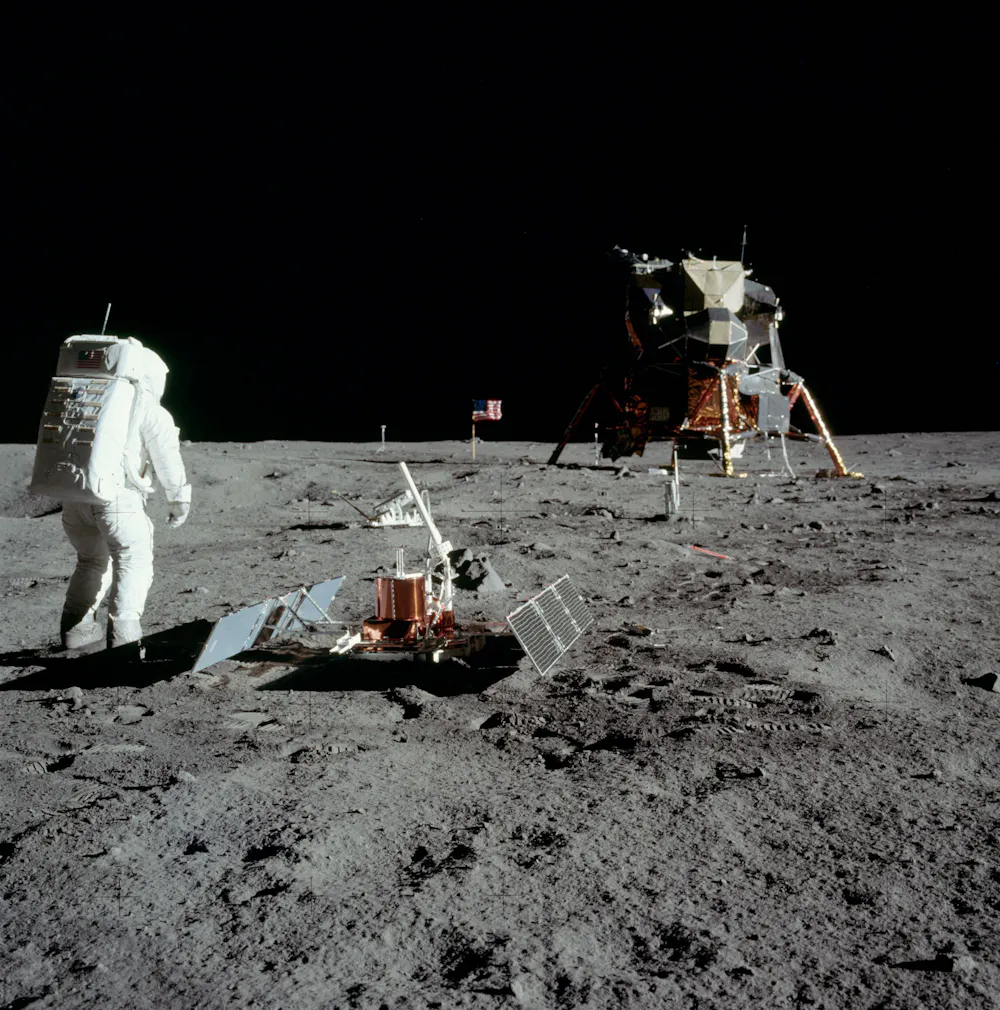
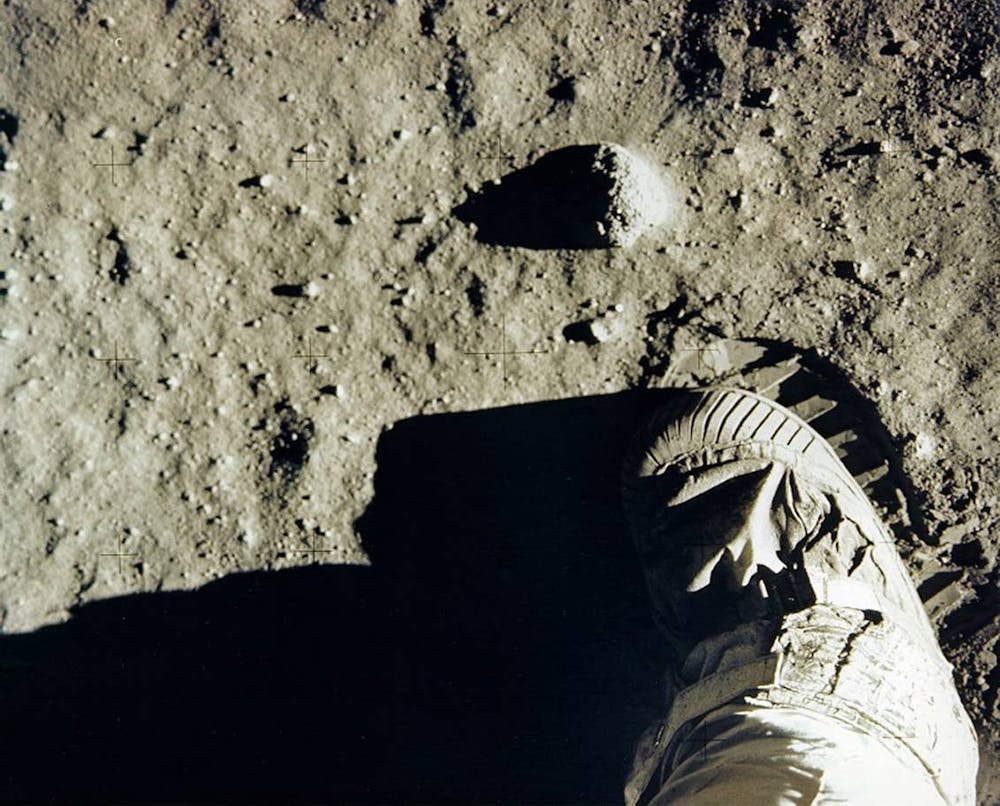
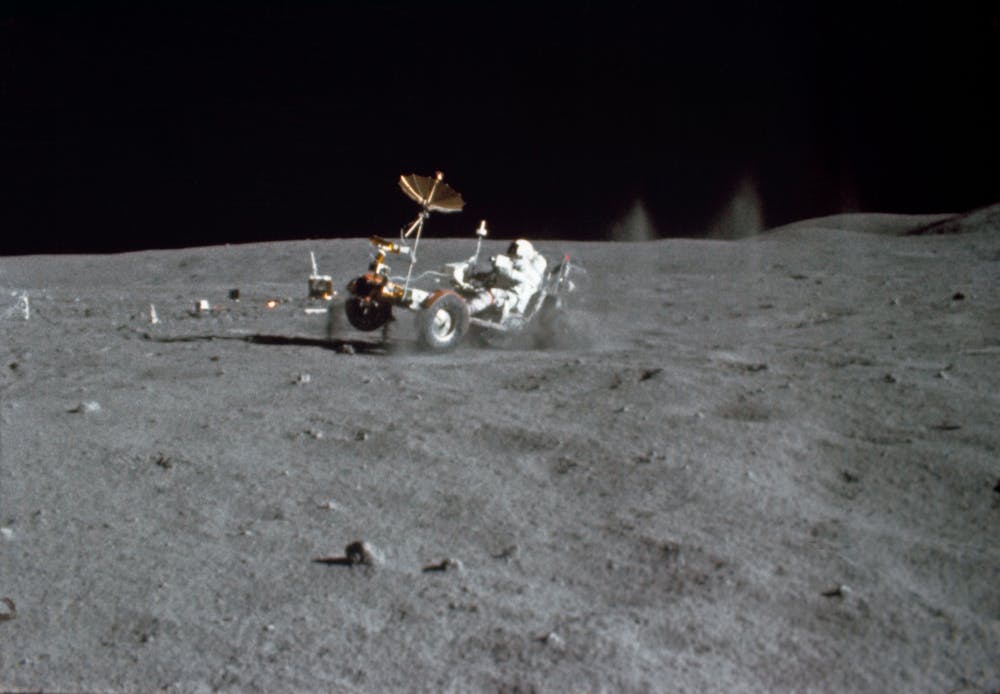
You’ve probably heard that this week marks 50 years since humans first set foot on the Moon – a feat that still boggles the mind given the limitations of technology at the time and the global effort required to pull it off.
If you’re as fascinated as we are about the history and future of space exploration, check out The Conversation podcast, To the moon and beyond, a five-part podcast series from The Conversation. We’ve featured a little taste of it on Trust Me today.
Through interviews with academic experts around the world – from space scientists to historians, lawyers, futurists and a former astronaut – science journalist Miriam Frankel and space scientist Martin Archer look at the past 50 years of space exploration and what the 50 years ahead have in store.
Episode two features Australia’s own space archaeologist, Alice Gorman, in conversation with Sarah Keenihan about why Apollo 11 landing spots could become heritage sites for future generations of visitors to the Moon.
But today, The Conversation’s Molly Glassey sits down with a panel of astrophysicists to ask the big questions about space, like: what’s the next big thing that’s happening in space research, the thing that will blow us away or bring us together the way the Moon landing did back in 1969? And what’s the likelihood we’ll be living on Mars or the Moon in future?
Podcasts are often best enjoyed using a podcast app. All iPhones come with the Apple Podcasts app already installed, or you may want to listen and subscribe on another app such as Pocket Casts (click here to listen to Trust Me, I’m An Expert on Pocket Casts).
You can also hear us on Stitcher, Spotify or any of the apps below. Just pick a service from one of those listed below and click on the icon to find Trust Me, I’m An Expert.
Credits:
To the moon and beyond is produced by Gemma Ware and Annabel Bligh. Sound editing by Siva Thangarajah. Thank you to City, University of London’s Department of Journalism for allowing use of their studios for To the moon and beyond, and to .
As strange as it might sound, whistleblowers in Australia have reason to rejoice – so long as they are in the private sector.
Thanks to new laws that came into effect this month, private-sector whistleblowers have a range of new protections. This includes, in certain prescribed circumstances, the prospect of being compensated if they experience adverse outcomes after taking their concerns to the the media.
The timing is ironic, given last month Australia’s federal police launched raids on journalists and media outlets who received and published disclosures from public-sector whistleblowers. If identified and prosecuted, those whistleblowers could face lengthy prison sentences.
In fact, private-sector whistleblowers now have, for the first time, greater protection than their public-sector counterparts.
What the new laws do
The catalyst for the new laws was a parliamentary inquiry into whistleblower protection established in November 2016. The inquiry’s final report, published in September 2017, made a total of 35 recommendations. Though 19 were rejected by the federal government, the outcome is still a vast improvement on the previous provisions.
For the first time, federal legislation now defines, in broad terms, the following.
Who qualifies as a whistleblower. The list of those protected for making disclosures goes beyond company officers and employees. It includes suppliers, employees of suppliers, and relatives and dependants of officers, employees and suppliers.
What is a disclosable matter. Whistleblower protection isn’t just for disclosing illegal conduct. It also covers “misconduct” or an “improper state of affairs” (not including concerns about personal work-related grievances).
Who to make a disclosure to. To qualify for protection, whistleblowers no longer need to raise their concern through a “formal” whistleblowing channel. They can go to any officer or senior manager in a company, or to an auditor, or to regulators. Disclosures to journalists and members of parliament also qualify for protection in certain prescribed circumstances.
What constitutes detriment. Detrimental outcomes for whistleblowing are not constrained to dismissal or demotion. They include discrimination, harassment or intimidation, harm or injury (including psychological), and damage to property, financial position or reputation.
Above all, the legislation empowers the courts to order payment of compensation to whistleblowers who experience detriment. To avoid any liability, organisations must demonstrate they have taken steps to protect whistleblowers.
Promoting protection
The prevailing view is that whistleblowing is a sure path to career suicide. The stories that loom large in the public consciousness are those of whistleblowers who, despite acting in the best interests of the organisations that employ them, are ostracised and abandoned.
Whistleblowing, to be sure, is an arduous undertaking that will always take some type of toll. But this prevailing narrative of significant adverse consequences is misleading.
I say this for two reasons.
The first is personal. In 2004, I was one of the whistleblowers in a major governance failure at the National Australia Bank. It led to four colleagues being jailed and senior executives resigning. Despite this, I went on to spend a further 12 years at the bank. The bank endorsed a book I subsequently wrote about the origins of ethical failure. Chairman Ken Henry even wrote the foreword.
National Australia Bank’s chief executive, John Stewart, explains in March 2004 how four foreign exchange traders exploited loopholes to hide A$360 million in losses and protect their bonuses.Julian Smith/AAP
The second, more importantly, is the evidence. The world-leading Whistling While They Work Research Project at Griffith University surveyed close to 18,000 people working in public and private sector organisations across Australia and New Zealand. Of the 4,382 respondents who reported wrongdoing in their organisations, 21% said they were treated well by both management and colleagues, compared to less than 13% who said they were treated badly.
There is no denying whistleblowers sometimes pay a significant price, but these results show positive outcomes are possible.
Beyond ‘tick-the-box’ compliance
The new whistleblowing laws aim to increase those positive outcomes and provide avenues for compensation when whistleblowers aren’t treated well.
The challenge for organisations now is making this happen.
A first step is to put in place a whistleblower policy. The legislation requires that all publicly listed and large proprietary companies have one. Among other things, the policy must detail:
the internal channels through which whistleblowers can make disclosures
how thorough, independent investigations will be conducted
how the interests of the whistleblower will be protected.
As important as formal whistleblowing policies and programs are, however, they are not sufficient. Any “tick-the-box” compliance approach will inevitably fail to promote positive outcomes for whistleblowers without an ethical culture.
Organisations must work hard to create environments that support those who raise concerns, and where leaders listen and take action. This will reduce potential liabilities for organisations and help shift the prevailing narrative surrounding whistleblowing.
We are now in a new era for private sector whistleblowers. Of course, the true litmus test will be when the laws are tested in the courts. But my hope is not just that the courts richly (and deservedly) compensate whistleblowers who suffer detriment. I hope the legislation is a catalyst for organisations to create environments that support whistleblowers, recognising the tremendous value they bring to any workplace.
Two Vanuatu Daily Post journalists were literally given a pat-down by the police criminal investigation unit yesterday over a story they had written about the vehicle of the Chairman of the Public Service Commission, Martin Mahe, being detained.
The heavy-handed tactic against journalists took place amid confirmation by police that a complaint has been lodged against the Vanuatu Broadcasting and Television Corporation by Mahe.
The Daily Post journalists were initially told in a phone call that they needed to be questioned over the word “detained” used in the story as it is believed the vehicle was “not detained”.
But both journalists say police traffic officers had verbally informed them that they had confiscated the key to the vehicle and it was effectively under their custody even though the car was not physically taken to the Central Police Station due to a flat tyre.
– Partner –
In other words, police had detained the vehicle.
The VBTC Chief Executive Officer could not be reached for comment yesterday on this issue but the Media Association of Vanuatu President, Stevenson Liu, told the Daily Post that no written formal complaint had been received by the association.
Public interest Meanwhile, the Daily Post media director, Dan McGarry, said the reporting was made in the public interest.
”Frankly, I think Martin Mahe is behaving childishly,” he said.
”If he believes a news report is grounds for a criminal complaint, then we have to ask if he understands either the media or the law.
”The police took his keys from him for a reason, and the public deserves to know why.
”This is clearly in the public interest.
”The chairman oversees the conduct of all public servants.
”He has been quoted numerous times in our newspaper about vehicle misuse.
”Mr Mahe has a professional duty to hold himself up to the same standards he enforces.
”It’s the media’s job to point this out,” McGarry said.
After the questioning of Daily Post journalists yesterday, police said no complaint was lodged against this newspaper.
Papua New Guinean Prime Minister James Marape will visit Australia this weekend for a week-long state visit and the Bougainville independence referendum in less than three months is expected to be high on the agenda.
Marape will leave Port Moresby on Sunday and will start his visit with a meeting with his Australian counterpart Scott Morrison in Canberra.
He will be accompanied by several cabinet ministers and will also be the first foreign leader to visit Australia since the re-election of Morrison in May.
The two men will discuss a wide range of issues, but specifically focus their discussions on opportunities to boost trade and investment, ways to address shared regional challenges, and strengthen bilateral co-operation on labour mobility, defence and security.
It is understood the Bougainville referendum, for which writs would be issued next month, will be a draw card for discussions because Australia has been and is playing a major role in the referendum vote in October.
– Partner –
It has been reported widely by Australian media that Australia could soon have a new country as a neighbour when Bougainville goes to poll in October, an issue which is also close to Australia’s agenda.
“Discussions will focus on opportunities to boost trade and investment, ways to address shared regional challenges, and strengthening our bilateral co-operation on labour mobility, defence and security,” Morrison’s office said in a statement yesterday.
“Marape will be in Australia from July 21 to July 26.”
It is understood Marape will be in Canberra for his bilateral meeting with Morrison before his Royal Australian Air Force trip and visits to Perth, Sydney and Brisbane.
Gorethy Kenneth is a senior Post-Courier political journalist.
Source: The Conversation (Au and NZ) – By Christine Griebsch, Specialist and Senior Lecturer in Small Animal Medicine, University Veterinary Teaching Hospital Sydney, Sydney School of Veterinary Science, University of Sydney
Recently reported cases of the often fatal bacterial infection leptospirosis in dogs in Sydney have raised the issue of animal diseases that also affect humans.
This zoonotic disease is spread by rats and other rodents. However, this latest cluster in dogs has not been accompanied by human cases in the Sydney area so far; dog cases aren’t always accompanied by human cases nearby.
So what is leptospirosis? And what can we do to protect ourselves and our pets from this potentially fatal disease?
There have been at least six confirmed cases of canine leptospirosis so far in Sydney’s inner west and city in 2019, with three in May and June. Five of the six dogs died.
So far, these cases have been confined to one part of Sydney but we don’t know the source of the infection. Some people have speculated that recent building work may have dispersed rats and spread contaminated water through flooding.
How is it spread?
Leptospirosis is caused by Leptospira bacteria that rodents and other animals can transmit to animals and humans.
Dogs can become infected by direct contact (for instance, from a rat bite or from eating rats) or via indirect contact (for instance, by drinking urine-contaminated water).
Clinical signs might not show up in dogs for about seven days. Early signs can be vague — fever, lethargy, anorexia (loss of appetite), vomiting and diarrhoea.
Dogs can also shed bacteria in their urine without being clinically sick (“silent shedders”). This and contact with sick dogs poses a potential risk to other dogs and people coming in contact with their urine.
Severely affected dogs can develop acute kidney failure, liver injury and jaundice (yellow discoloration of the skin), uveitis (inflammation of the eyes), bleeding and in severe cases bleeding into the lungs leading to breathing difficulties. These clinical signs are the result of damage to the blood vessels (vasculitis) and resulting damage to organ blood supply.
Veterinarians can confirm the diagnosis after taking blood and urine samples. In suspicious cases, treatment with antibiotics needs to start quickly, even before the disease is confirmed by lab tests, to minimise organ damage. Severely ill dogs will require intensive care, ideally in an intensive care unit.
How do humans catch it?
As well as being exposed to bacteria from their infected pets’ urine, humans can become infected by rodents themselves. This can be directly (from a rat bite) or if a wound is exposed to soil or water contaminated with rat urine. Eating contaminated food or drinking contaminated water can also be responsible for transmitting the bacteria.
Humans might not have symptoms for two to 25 days. But in 90% of human cases, these are mild and mimic influenza.
Less commonly, more severe disease can develop, which can be similar to what we see in dogs, and is known as Weil’s disease.
According to NSW Health, these more severe symptoms include kidney failure, jaundice (yellow colouration of the skin and eye balls which indicates liver disease), and haemorrhage into skin and mucous membranes. Meningitis (inflammation of the lining of the brain) and bleeding in the lungs can also occur. Most people who develop severe disease need to go to hospital, and severe leptospirosis can sometimes be fatal.
Leptospirosis is a notifiable disease in humans which means that laboratories have to notify cases of leptospirosis to the local public health unit. This year, 51 cases have been reported so far in Australia, but none of these have been linked to the current outbreak in dogs.
How do we prevent it?
We can prevent leptospirosis by limiting contact we and our pets have to sources of infection, and by vaccinating our dogs.
Make sure dogs don’t swim in and drink from stagnant water like ponds, lakes or puddles.
Wash your hands after contact with stagnant water, soil, urine from rodents, dogs or cats or simply after any contact with pets, especially before eating.
Similarly, avoid contact with rodents, and make sure you correctly dispose of garbage to reduce the chance of attracting rats.
Until now, leptospirosis has rarely been reported in Sydney. So, dogs are not routinely vaccinated. But we currently advise vaccination for all dogs in the inner west and city area.
The vaccine available in Australia protects against one serovar (type of the bacterium), and we do not know if this is the only type causing recent problems. Vaccines against multiple serovars are available overseas.
To learn more about the current cluster, we have started a research project. This will investigate the geographical distribution of the recent outbreak and the serovars of the bacteria involved. We are also collaborating with Sydney veterinarians who, with pet owners’ consent, are taking blood and urine samples from dogs before they get vaccinated against leptospirosis.
Hopefully then, we can better understand this latest cluster and how we can protect animal, and ultimately, human health in the future.
The role Australia played in relaying the first television images of astronaut Neil Armstrong’s historic walk on the Moon 50 years ago this July features in the popular movie The Dish.
But that only tells part of the story (with some fictionalisation as well).
What really happened is just as dramatic as the movie, and needed two Australian dishes. Australia actually played host to more NASA tracking stations than any other country outside the United States.
Our geographical location was ideal as US spacecraft would pass over Australia during their first orbit, soon after launch. Tracking facilities in Australia could confirm and refine their orbits at the earliest possible opportunity for the mission teams.
To maintain continuous coverage of spacecraft in space as the Earth turned, NASA required a network of at least three tracking stations, spaced 120 degrees apart in longitude. Since the first was established in the US at Goldstone, California, Australia was in exactly the right longitude for another tracking station. The third station was near Madrid in Spain.
Australia’s world-leading place in radio astronomy was another factor, having played a key role in founding the science after the second world war. Consequently, Australian engineers and scientists developed great expertise in designing and building sensitive radio receivers and antennas.
While these were great at discovering pulsars and other stars, they also excelled at tracking spacecraft. When the CSIRO Parkes radio telescope opened in 1961 it was the most advanced and sensitive dish in the world. It became the model for NASA’s large tracking antennas.
The Parkes dish with Moon in 1969.CSIRO, Author provided
The Commonwealth Rocket Range at Woomera, South Australia, also allowed Australians to gain experience in tracking missiles and other advanced systems.
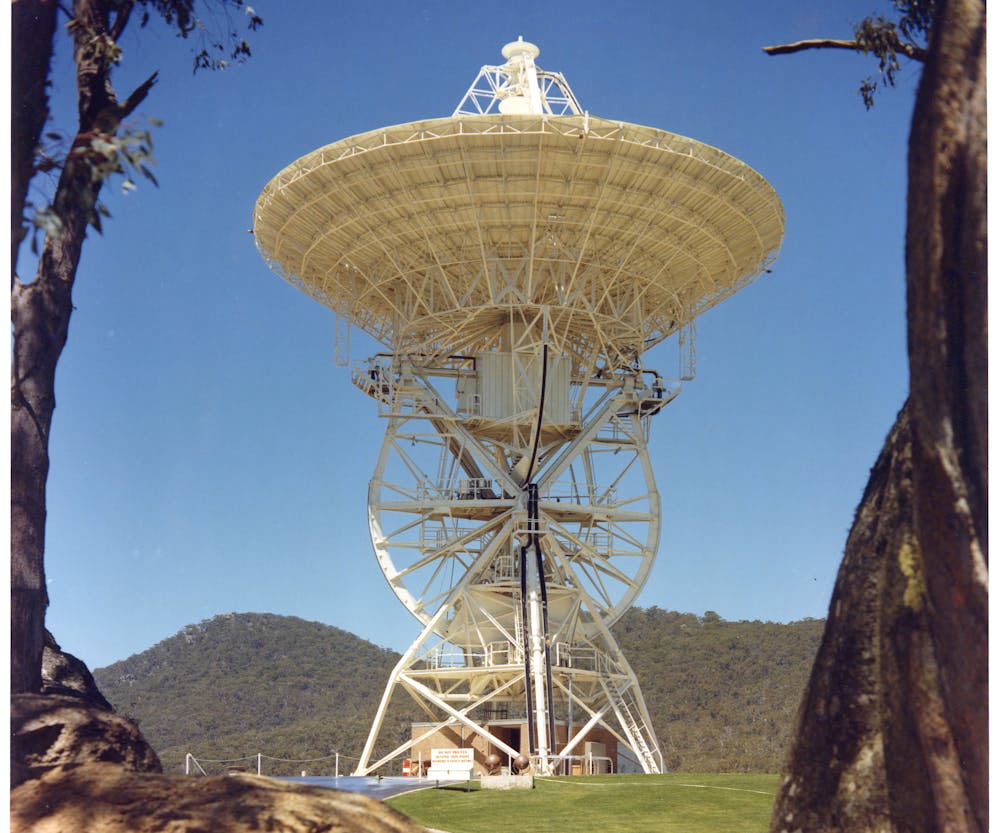
The dish you need is at Honeysuckle Creek
NASA invested a considerable amount in its Australian tracking facilities, all staffed and operated by Australians under a nation-to-nation treaty signed in February 1960.
For human spaceflight, the main tracking station was at Honeysuckle Creek, near Canberra. Its 26-metre dish was designed as NASA’s prime antenna in Australia for supporting astronauts on the Moon.
Honeysuckle Creek antenna in 1969.Hamish Lindsay, Author provided
NASA’s nearby Deep Space Network station at Tidbinbilla also had a 26-metre antenna but with a more sensitive radio receiver. It was called on to act as a wing station to Honeysuckle Creek, enhancing its capabilities, and ultimately tracked the orbiting command module during Apollo 11.
Over in Western Australia, Carnarvon’s smaller 9-metre antenna was used to track the Apollo spacecraft when initially in Earth orbit, as well as to receive signals from the lunar surface experiments.
To augment the receiving capabilities of these stations, the 64-metre Parkes radio telescope was asked to support Apollo 11 while astronauts were on the lunar surface. The observatory’s director, John Bolton, was prepared to accept a one-line contract:
The Radiophysics Division would agree to support the Apollo 11 mission.
The original plan
The decision to broadcast the first moonwalk was almost an afterthought.
Originally, the tracking stations were to receive only voice communications and spacecraft and biomedical telemetry. What mattered most to mission control was the vital telemetry on the status of the astronauts and the lunar module systems.
Since Parkes was an astronomical telescope, it could only receive the signals, not transmit. It was regarded as a support station to Honeysuckle Creek, which was also tasked with receiving the signals from the lunar module, Eagle.
When the decision was made to broadcast the moonwalk, Parkes came into its own. The large collecting area of its dish provided extra gain in signal strength, making it ideal for receiving a weak TV signal transmitted 384,000km from the Moon, using the same power output as two LED lights today.
One giant leap
On Monday, July 21 1969, at 6.17am (AEST), astronauts Neil Armstrong and Buzz Aldrin landed the Eagle lunar module on the Sea of Tranquillity.
‘The Eagle has landed.’
It occurred during the coverage period of the Goldstone station, while the Moon was still almost seven hours from rising in Australia.
The flight plan had the astronauts sleeping for six hours before preparing to exit the lunar module. Parkes was all set to become the prime receiving station for the TV broadcast.
This changed when Armstrong exercised his option for an immediate walk – five hours before the Moon was to rise at Parkes. With this change of plan, it seemed the moonwalk would be over before the Moon even rose in Australia.
But as the hours passed, it became evident that the process of donning the spacesuits took much more time than anticipated. The astronauts were being deliberately careful in their preparations. They also had some difficulty in depressurising the cabin of the lunar module.
Meanwhile, moonrise was creeping closer in Australia. Staff at Honeysuckle Creek and Parkes began to hope they might get to track the moonwalk after all – at least as a backup to Goldstone in the US.
Bad weather hits
The weather at Parkes on the day of the landing was miserable. It was a typical July winter’s day – grey overcast skies with rain and high winds. During the flight to the Moon and the days in lunar orbit, the weather at Parkes had been perfect, but this day, of all days, a violent squall hit the telescope.
The Parkes radio telescope with the passing storm that almost stopped the dish from broadcasting the images from the Moon.CSIRO/David Cooke, Author provided
Still, the giant dish of the Parkes radio telescope was fully tipped down to its 30-degree elevation limit (the telescope’s horizon is 30 degrees above the true horizon), waiting for the Moon to rise in the north-east.
As the Moon slowly crept up to the telescope’s horizon, dust was seen racing across the country from the south. The dish, being fully tipped over, was at its most vulnerable, acting like a huge sail.
The winds picked up and two sharp gusts exceeding 110km/h struck the large surface, slamming it back against the zenith angle drive pinions that controlled the telescope’s up and down motion. The control tower shuddered and swayed from this battering, creating concern in all present.
The atmosphere in the control room was tense, with the wind alarm ringing and the 1,000-ton telescope ominously rumbling overhead.
Parkes had two radio receivers installed in the focus cabin of the telescope. The main receiver was on the focus position and a second, less sensitive receiver was offset a very short distance away, which gave it a view just below the main receiver.
Fortunately, as the winds abated, the Moon rose into the field-of-view of the telescope’s offset receiver, just as Aldrin activated the TV at 12.54pm (AEST). It was a remarkable piece of timing.
NASA and CSIRO staff at the Parkes radio telescope.CSIRO/David Cooke, Author provided
The 64m antenna at Goldstone, the 26m antenna at Honeysuckle Creek and the 64m dish at Parkes all received the signal simultaneously.
At first, NASA switched between the signals from Goldstone and Honeysuckle Creek, searching for the best-quality TV picture.
After finding Goldstone’s image initially upside down and then of poor quality, Houston selected Honeysuckle’s incoming signal as the one used to broadcast Armstrong’s “one giant leap” to the world.
You can listen to the conversations between the Australian and US teams as Armstrong’s first step on the Moon was captured by Honeysuckle Creek (at 2’39”) and Aldrin’s descent was captured by Parkes (at 21’30”).
Eight minutes into the broadcast, at 1.02pm (AEST), the Moon finally rose high enough to be received by Parkes’ main, on-focus receiver. The TV quality improved, so Houston switched to Parkes and stayed with it for the remainder of the two-and-a-half hours of the moonwalk, never switching away.
Honeysuckle continued to concentrate on their main task of communications with the astronauts and receiving that vital telemetry data.
A close-up shot of the monitor showing the moonwalk signal from Apollo 11 as it happened.CSIRO/David Cooke, Author provided
Throughout the moonwalk, the weather remained bad at Parkes. The telescope operated well outside safety limits for the entire duration. It even hailed toward the end, but there was no degradation in the TV signal.
It’s hailing on the dish. CSIRO, Author provided321 KB(download)
The moonwalk lasted a total of 2 hours, 31 minutes and 40 seconds, from the time the Eagle’s hatch opened to the time the hatch closed.
Australians saw it first
In Australia, the Apollo 11 feed was split. One feed was sent to NASA mission control for broadcast around the world. The other went directly to the ABC’s Gore Hill studios, in Sydney, for distribution to Australian TV networks.
As a result Australians watched the moonwalk, and Armstrong’s first step through Honeysuckle, just 300 milliseconds before the rest of the world.
An estimated 600 million people, one-sixth of the world’s population at the time, watched the historic Apollo 11 moonwalk live on TV. At the time it was the greatest television audience in history. As a proportion of the world’s population, it has not been exceeded since.
The success of the Apollo 11 mission was due to the combined effort, dedication and professionalism of hundreds of thousands of people in the United States and around the planet.
Australians from Canberra to Parkes, remote Western Australia to central Sydney played a critical role in helping broadcast that historic moment to an awestruck world.
Parkes gives NASA the best TV pictures yet. NASA/CSIRO, Author provided267 KB(download)
Apollo 11 commander Neil Armstrong back inside the lunar module on the Moon after the moonwalk.NASA
You can hear more about the Moon landing in our special podcast series, To the Moon and beyond.
In Australia’s social security laws, the “couple rule” is used to determine if a person is in a relationship, tying access to Centrelink payments to the income and assets of their partner.
For victims of domestic violence, it ties a woman’s access to social security payment to the perpetrator.
Recently I analysed Administrative Appeals Tribunal (AAT) couple rule decisions from 1992 to 2016 that involved domestic violence. The full array of violence was represented in my sample of 70 decisions – from rape and enforced marriage to financial abuse.
I found that the very tactics perpetrators used to control and intimidate women were often used as evidence for a relationship. For example, financial abuse can be misinterpreted as “sharing finances”, which can indicate a relationship in the criteria of the couple rule.
As a result, women experiencing domestic violence were denied payment, made to repay a social security debt, or both. Some women were also be prosecuted for social security fraud through criminal courts.
And since many domestic violence victims rely on social security payment to become financially independent of the perpetrator, the couple rule must be seriously reviewed to give women a chance to begin a new life free from violence.
Criteria for the couple rule
The couple rule outlines criteria to determine if someone is in a relationship when it’s unclear.
The criteria considers various aspects of a relationship – financial, living arrangements, social, sexual (yes, they do ask), and commitment. A wide array of evidence is gathered to make this decision – from ATM records to children’s school records, and even hospital records.
But the criteria rarely make an exception for domestic violence, despite difficulties determining when a violent relationship ends, as women often make multiple attempts to leave.
In the sample, the AAT decided that more than half (49 out of 70) of the women experiencing domestic violence were in a legitimate relationship.
Abuse tactics that indicate a relationship
Centrelink and AAT decision-makers used perpetrator tactics as evidence for a relationship.
For example, refusing to leave the family home when asked, and visiting a woman’s new address if she leaves, are examples of control over living arrangements. But cohabitation and “frequent visiting” could be considered indicators of a continuing relationship.
Perpetrators stealing money and denying finances to meet women’s and children’s basic needs are examples of financial abuse. But “sharing financial resources”, whether consensual or not, can be considered to be an indicator of a relationship.
And controlling information flow was recorded in the sample. In this case, the perpetrator can mould the image that Centrelink sees about the relationship. For instance, preventing a woman from receiving her own mail means he can make her miss important notifications and doesn’t respond to requests for updated relationship information.
Using police and hospital reports
Also concerning was the use of hospital and domestic violence police reports by social security decision-makers as evidence of a continuing relationship.
Centrelink has extensive legislative powers to compel the release of evidence from their customers, a person they believe to be the customer’s partner, and public and private institutions.
More than half of the decisions in the sample, 41 out of 70, used this type of information, and they have a very real impact on domestic violence victims receiving social security payments.
For example, a woman admitted to hospital with injuries from her partner, which included him as next of kin, was considered an indication of a relationship.
Similarly, a woman asking for police support when harassed in her new home by her former partner was also considered evidence because he referred to her as his partner. A women’s opinion of her own relationship is only part of the evidence considered. Alarmingly, a perpetrator can also be asked to give evidence.
Victims can be punished for relationship fraud
The couple rule not only ties women’s access to social security payment to the assets and income of perpetrators, but it also puts them at risk of debt and imprisonment.
Women experiencing domestic violence and found to be in a relationship can be, and often were, asked to repay a Centrelink debt. And they can, and were, also be tried in criminal courts for social security fraud and imprisoned.
In a 2016 study, I found women could be doubly punished by being asked to repay a Centrleink debt through the AAT, and simultaneously tried for criminal prosecution and imprisoned through criminal courts.
Essentially, the couple rule in Australian social security law punishes the victims of domestic violence. It needs serious review in both its application, and its legislative basis.
The National Sexual Assault, Family & Domestic Violence Counselling Line – 1800 RESPECT (1800 737 732) – is available 24 hours a day, seven days a week for any Australian who has experienced, or is at risk of, family and domestic violence and/or sexual assault.
We live in a society obsessed with performance. For both young and old, competitions, awards and rankings are an inescapable feature of life.
How well we do – in the classroom, at work, on the sports field or even in life in general – influences how others see us, but also how we see ourselves. In some cases, this influence can be so strong that we come to see our performance as a key part of who we are.
Our research focuses on this potential identification with how good we are at what we do, and we argue that we need to recognise and better understand what we call performance-based identities.
A performance-based identity arises when a person not only knows that they excel (or at the other extreme, are completely inept) at something, but feels fundamentally defined by that level of performance. Should they cease to perform to the same standard for any reason, they can lose their sense of self (or a big chunk of it).
Put simply, they’d struggle to answer that age-old question “who am I?” This in turn would raise all sorts of tricky questions about their place in the world, and their purpose and possibilities in life.
Not everyone will develop a performance-based identity, but we’re all potential candidates. This is simply because we all live in a world that constantly tells us doing well is important. This obsession with performance is pervasive beyond the realm of work and formal performance reviews. It is a part of our culture.
A recent survey of the values of more than 80,000 people worldwide found that over 65% of respondents thought being very successful or having others recognise their achievements was important to them. We see this focus on performance in all sorts of ways in everyday life. The most popular television shows are all about outperforming others on some activity, be it singing, cooking, creating a home, dating – or even marriage. In politics, voters are increasingly attracted to candidates who manage to portray themselves as “winners”, regardless of how much the evidence justifies their claims.
Not a new phenomenon
While the concept of performance-based identity is new, the phenomenon itself isn’t. About a century ago, the eminent German sociologist Max Weber developed the idea of the Protestant work ethic. He proposed that this religiously rooted drive to work hard was the psychological fuel of capitalism. In the 80s and 90s, Stanford University psychologist Albert Bandura and colleagues produced a mass of research on the origins and outcomes of self-efficacy – what many people (to Bandura’s dismay) know as confidence.
More recently, another Stanford psychologist, Carol Dweck, has garnered a lot of popular interest for her research on “mindsets” – people’s assumptions about the changeability of their own skills and abilities. All these ideas point to the impact performance can have on how we see ourselves, and how we behave.
Yet the idea that people might go so far as to identify with their performance, at a very personal level, has so far eluded researchers’ attention, and recognition in everyday life. We aim to change this with our work, as we suspect that performance-based identities could be an influential part of many people’s mental makeup.
Why it matters
More often than not, we tend to think of performance-based identities in positive terms, and as having positive consequences. Think of the iconic status granted to boxer Muhammad Ali, and his famous “I am the greatest!” poem. Likewise, people usually admire – even envy – the intense self-belief demonstrated by the world’s top CEOs, movie stars and musicians.
It is indeed plausible that performance-based identities have many positive consequences for those who hold them. Defining yourself as exceptionally good at something presumably does wonders for self-esteem and confidence. Such an identity is also likely to provide protection during periods of poor performance or failure. If you and others know you are a top performer, moments of not so stellar performance will be brushed off as temporary anomalies.
Performance-based identities are also likely to inoculate against the well documented “impostor syndrome”, where people discount the role their own skills and abilities played in their achievements, which in turn leads to feelings of self-doubt and inadequacy.
Still, there’s undoubtedly a dark side to these identities as well. A positive performance-based identity could leave a person feeling as though they have no room to improve, making them overconfident and complacent about practice and development. Elite athletes sometimes speak about trying to avoid developing a performance-based identity for this very reason.
Problems can also arise when people define themselves as top performers, but aren’t entirely certain of this identity. In these situations, people may be upset by even the most constructive feedback on their performance, or avoid helping (or sometimes even sabotage) their colleagues out of fear they’d lose their place at the top of the hierarchy.
Finally, negative performance-based identities – where individuals define themselves not as top performers but as exceptionally poor ones – are also likely to have a range of negative outcomes, such as low self-esteem and avoidance of challenging tasks.
More research that explores how performance-based identities impacts our lives is needed. In the meantime, Aristotle’s remark that “knowing yourself is the beginning of all wisdom” reminds us all of how our own sense of self might be shaped by the pervasive pressures to excel.
One-third of all preschools may lack a qualified teacher in the next four years if nothing changes, my new modelling shows.
Currently, half of all early childhood teachers have a bachelor degree, with a further one-third still working towards one. With many expected to drop out, my modelling shows a significant shortfall by 2023.
What are the numbers?
To lift children’s outcomes, early learning needs to be high quality, which includes being delivered by trained staff. This is why a focus on supporting the workforce to grow is so important.
The Department of Employment, Skills, Small and Family Business predicts Australia will need around 49,000 preschool teachers by 2023. That means we’ll need an extra 29,000 from where we’re at now (some of the current workforce is expected to drop off).
We are a long way from meeting the shortfall given the current shortage of teachers and low numbers of teachers in training. Across Australia, around 4,000 students are enrolled in early childhood education teaching degrees per year.
Assuming the pass rate for these teachers is around the average of 56% (as for other teaching students), this would mean around 11,200 additional teachers would be available by 2023. That would leave a shortfall of 17,800.
It’s worth noting many of these degrees are for teaching from birth to Year 8, or birth to Year 12, so not all graduates would seek to work in an early childhood setting. If more teachers choose school teaching with its higher wages and better conditions, the shortage will be far worse.
If we assume there is one qualified teacher per preschool service, this means by 2023 at least one-third of all services could be without the trained teacher they need.
Early childhood teachers perform a variety of roles including planning and delivering learning programs and providing support for diploma and certificate-qualified educators, who make up the bulk of the early childhood workforce.
One outcome of the 2009 agreement was:
All children have access to affordable, quality early childhood education in the year before formal schooling.
And one of the performance indicators was:
The number of teachers delivering preschool programs who are four-year university trained and early childhood qualified.
In 2012, governments put transitional provisions in place. This was to give early childhood providers time to meet workforce provisions in hard-to-staff locations.
These provisions permitted educators working towards qualifications to be counted as teachers in remote and very remote areas. They also allowed services in these areas to remotely access teachers to meet their ratios.
The provisions were due to expire after five years, but were extended until 2020 given little attention was paid to workforce development for rural and remote services.
The Education Council, the meeting of all state and territory and Commonwealth education ministers, met recently to discuss early childhood.
Instead of deciding a workforce strategy to ensure these extensions end, they agreed another extension until 2021 in most states except Victoria, and until 2023 for Western Australia and the Northern Territory.
What is the potential impact on children?
Trained teachers and educators in early childhood make a difference to children’s academic outcomes in school. One study showed students who attended preschool led by a diploma or degree-qualified teacher were ahead the equivalent of 15 to 20 weeks of schooling at Year 3, based on their NAPLAN results.
Many children – more than one in four from remote areas, compared to one in five from major cities – are starting school behind their peers. In very remote areas, nearly half of children start behind.
In addition to children living away from city centres, children from low socio-economic areas are most likely to be affected. They are already less likely to attend the highest-quality centres and more likely to start school behind their more advantaged peers.
A decade after all four-year-olds received their right to preschool, a shortage of trained teachers could mean one in three children miss out and start school further behind their peers as a result.
What could we do differently?
Governments have a few choices to make.
One choice is to accept the transitional provisions are actually an ongoing reality for many services and many children will miss out on trained teachers and fall further behind.
A better option would be to take workforce planning seriously and commit to investing in making sure every child has access to a trained teacher and a chance to succeed.
This would require efforts on a number of fronts. Attrition is a major issue in the early childhood education and care sector. Trained staff average just 7.4 years of experience and around 20% of the workforce intend to leave the profession within 12 months.
A key focus needs to be on keeping the current workforce. A raft of research has confirmed the major issues that need to be addressed to achieve this, including pay and conditions, professional status, and career and professional development.
A secondary focus needs to be on attracting, up-skilling and retaining new entrants to the profession. This includes examining what supports would be needed to up-skill educators to diploma and degree level.
Some of this work is happening in individual jurisdictions. For example, scholarships are available in Victoria to support the roll-out of three-year-old preschool.
A national workforce strategy is needed to build a workforce to ensure that all children, no matter where they live, are able to benefit from quality early learning.
In the digital age, a public library can connect even the most remote community to networks of knowledge and information. Today’s public libraries work to engage marginalised communities as users; pioneering projects like Townsville’s Murri Book Club explore ways to make the library meaningful to Indigenous people.
Despite all this, there is one area in which public libraries are underused. Libraries can also help us plan for the future.
Long-term planning is always challenging. It’s simply impossible to gather data from events that haven’t happened yet.
Sometimes we may detect trends, but these can fall apart under what some foresight experts call “TUNA conditions”, when we face Turbulence, Uncertainty, Novelty or Ambiguity.
Think of someone trying to predict that experiments with debt on Wall Street would lead to the global financial crisis and the political ripples that have followed. Think of trying, today, to foretell all the long-term consequences of climate change.
Enter scenario planning
That means we’ve had to find new ways to look at the unpredictable future. Big business has used scenario planning since the 1960s, when Pierre Wack pioneered the approach for Shell.
Shell’s scenarios became famous in the 1970s when the company successfully anticipated the oil crisis that followed the Yom Kippur War. Shell hadn’t predicted the conflict, but had imagined scenarios where Middle Eastern oil producers worked as a cartel to control global supply. When those countries did start an oil embargo, scenario planning meant Shell had already thought through this possibility ahead of its competitors.
Today, experts thinking about the future acknowledge the need for engagement from the bottom up as well as top down. For example, the European Union’s new proposal for “mission-oriented innovation” aims to get all of us focused on solving society’s problems. In turbulent times, it’s important that at every level of society we strengthen our ability to imagine the future that awaits us – and our own future choices.
Public library services are built on relationships, not just transactions; they are entwined with the specific and deeply local context of everyday life in the communities they serve.
Locally held scenario planning sessions, convened by communities at their public library, would make use of the library’s existing capacity to connect people – but this time with the goal of helping us reimagine the future.
Librarians would work with their local council to identify issues that call for a long-term perspective. Should we invest in “smart” tech for our small country towns? How much should we rely on recycled water or desalination in the big coastal cities?
Librarians would provide background research and host community workshops to develop local scenarios. People would start to have deeper, richer discussions about the future: there’s a reason scenarios have been called “the art of strategic conversation”.
The scenario process depends on bringing together a group of individuals in a trusted space, with enough information to give the scenarios detail and flavour. In a local community, the public library is that place of trust and information.
Much as public librarians use their skills to help with job seeking or support people’s health and well-being, as scenario planners they would apply their talents to a new domain.
A playful event at Ann Arbor Public Library to explore an imagined future.
If public libraries were supported to deliver strategic foresight to their communities, politics could transform. The electorate would be better informed, thinking deeper and further ahead about political issues. Councils could take decisions with confidence that the community had been consulted about the long-term consequences.
Scenarios would offer a playbook of potential futures, already imagined and rehearsed. Every Australian could have access to the kind of foresight tools that have been informing the decisions of government and big business for the past half century.
Imagine the conversations we, as a country, would be having about our future if we democratised those tools via the local library.
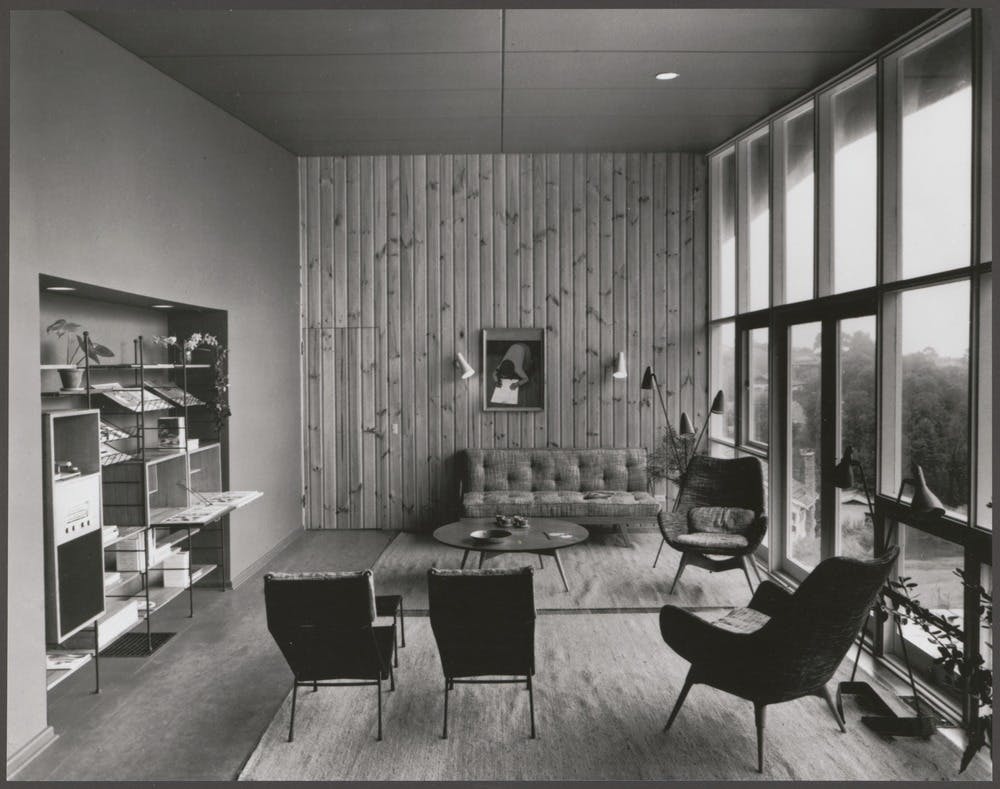
Of all the mantras for modernism, the one I think most befitting for Australian mid-century modern houses is L’esprit Nouveau – The New Spirit. These houses represented more than style; they reflected a new Australian spirit that emerged in the postwar era.
Modernism was established in Europe at the beginning of the 20th century. An intentional shift away from classical tradition, it was informed by new technology and mass production. While early modernism was weighed down by the avant garde and elitism, mid-century modernism – which includes architecture from the 1950s to the late 1970s – became accessible and was embraced internationally.
The current resurgence in popularity of mid-century modern houses in Australia has been spurred by websites such as Modernist Australia, social media groups for “MCM” enthusiasts, public exhibitions, and even real estate agents dedicated to selling the Modern House.
A fascination with mid-century modernism has also been explored in the two-part documentary Streets of Your Town, hosted by comedian and self-proclaimed “architecture tragic” Tim Ross. He describes how the popularity of these houses was underpinned by purpose as much as style:
Modernism may have had its birth in Europe and its glamour in America but I think it found its egalitarian purpose, unrivalled anywhere else in the world, in Australia’s suburbs.
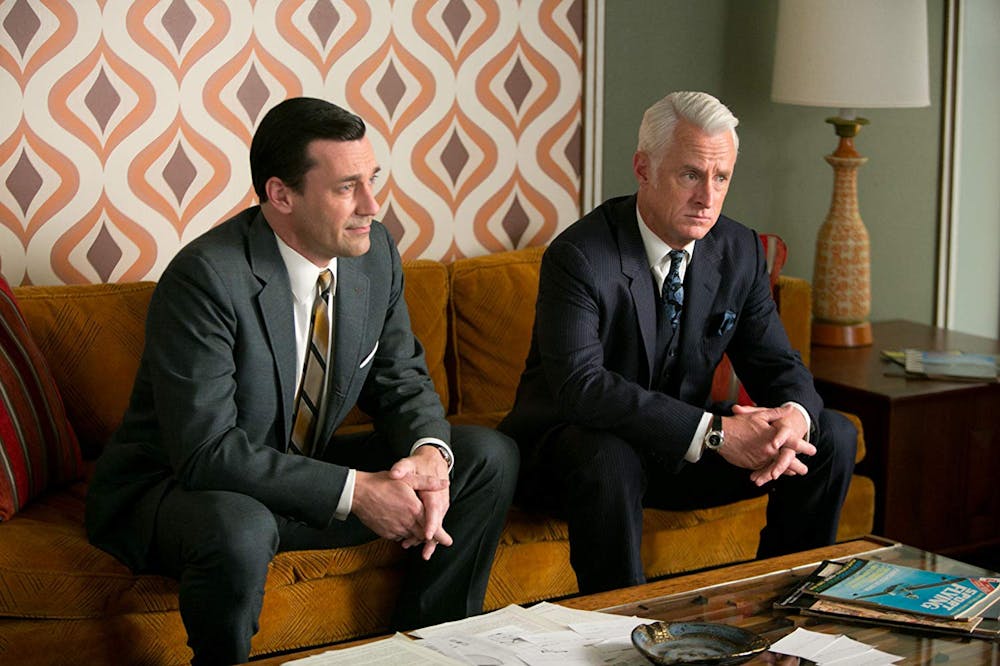
Some enthusiasts point to the television series Mad Men as the catalyst for international mid-century modern revivalism. But visual culture has also been central to its popularity in Australia. As these homes emerged, so too did the suburbs, which became the setting for much of Australian television and theatre.
The hit TV series Mad Men is closely associated with the global revival of mid-century modern style.IMDB
I think this is central to the popularity of these houses. Even if you didn’t grow up in one, you probably watched a family who did on television.
I grew up in a late 70s, mid-century modern home. It was designed by a draftsperson, not an architect, but featured many of the design elements commonly associated with the style. Just like the Kerrigan family in The Castle we had a pool room, complete with a purpose-built bar.
Mid-century modern in pop culture
Early 20th century Australian architecture, especially during the interwar period, had been burdened with the nationalistic desire to create a distinctly Australian house.
In the postwar era, however, the cultural landscape shifted from the wide brown land to the interior of our suburbs, and especially our homes. Australian culture was motivated by the kind of self-consciousness often associated with modernism. This was reflected in mid-century modern houses, with their humble facades and efficient planning.
Ray Lawler’s 1955 play Summer of the 17th Doll exemplifies this shift and is considered to be the first Australian play to be set inside a house. Around the same time, in 1956, Melbourne was hosting the Olympic Games, and with a shortage of hotel accommodation, families were asked to billet athletes. This placed Australian homes, in a very real sense, on an international stage.
It was this event that inspired the character Mrs Norman Everage (later Dame Edna Everage) of Moonee Ponds. The first Edna Everage show revolved around her domestic preparations for international guests in the lead up the 1956 Games. Barry Humphries then took a satirical view of Australian domesticity to an international audience.
Humphries’ critical view on Australian life, alongside books such as David Horne’s The Lucky Country (1964) and architect Robin Boyd’s The Australian Ugliness (1960), represented a maturing of Australian culture, which emerged from critical reflections on our position in the world through art, architecture, literature and film.
Boyd and Humphries shared an enduring friendship, and there are many overlaps in their critique of Australian domesticity. Boyd’s work has undoubtedly been at the centre of the current mid-century modern revival. The attention it attracts is not just about his architecture, but also the sentiments that informed it. For Boyd, architecture was not an isolated discipline, rather it possessed the capacity to shape, and be shaped by, broader social, political, economic and cultural ideas.
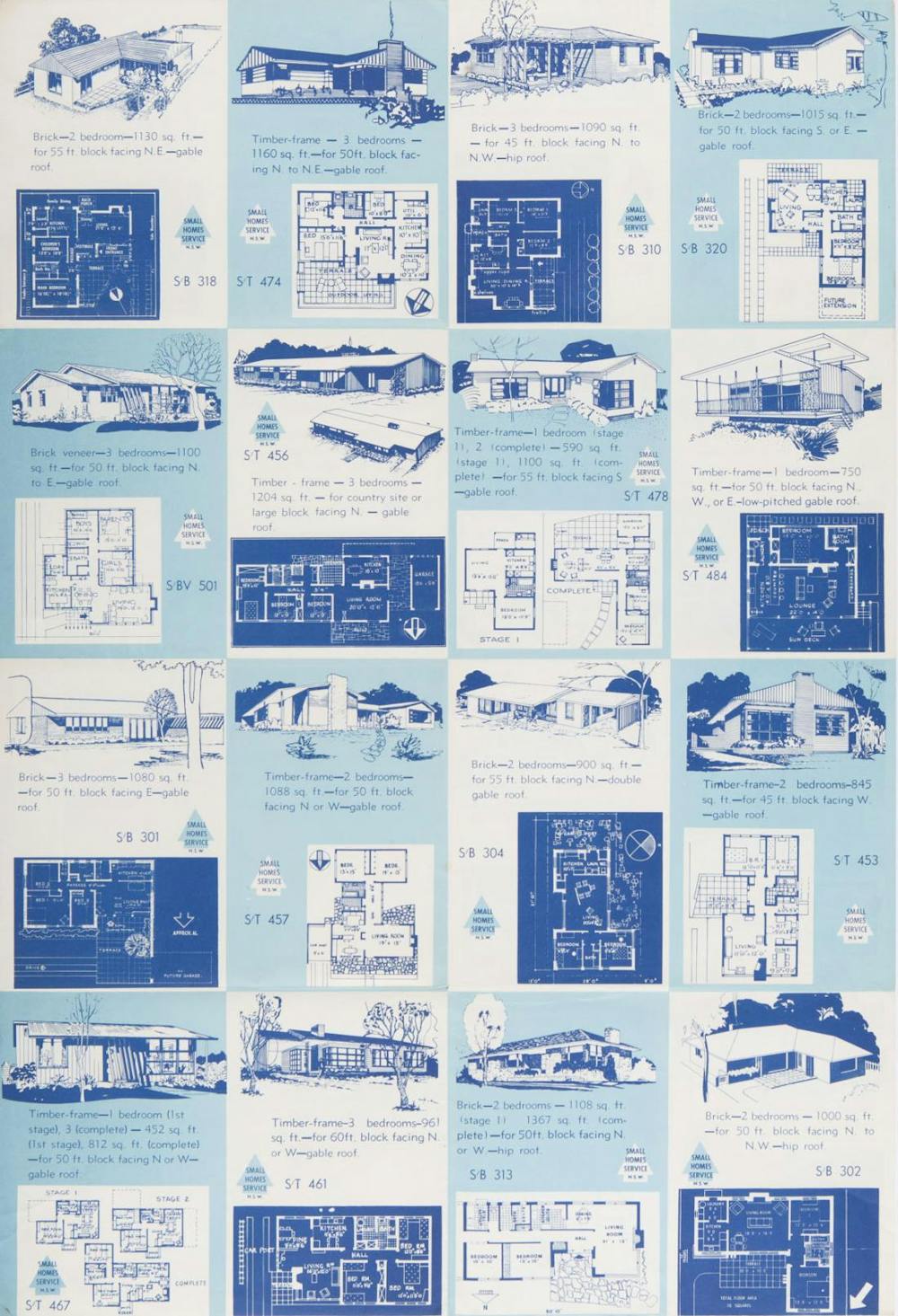
Boyd was instrumental in setting up the Small Home Service in 1947, which delivered designs for modern, small, flexible, and affordable homes in response to postwar housing shortages. It is probably this aspect of his work that resonates the most – a solution to housing inefficiencies led by professionals for the greater good, not financial greed.
Of course, there is much to admire about Boyd’s designs, and those of the other architects working for the Small Home Service. Externally, the designs were refined and simple. Australian mid-century modern houses are unique with their pitched roofs in contrast to the flat roofs found in America and Europe. They introduced open plan living areas, a move away from a series of rooms connected by hallways.
This openness brought more light into living spaces, as did bigger windows and glass sliding doors that connected inside and outside. And, as Ross’ book The Rumpus Room, And other stories from the suburbs (2017) describes, this openness made them great Australian party houses.
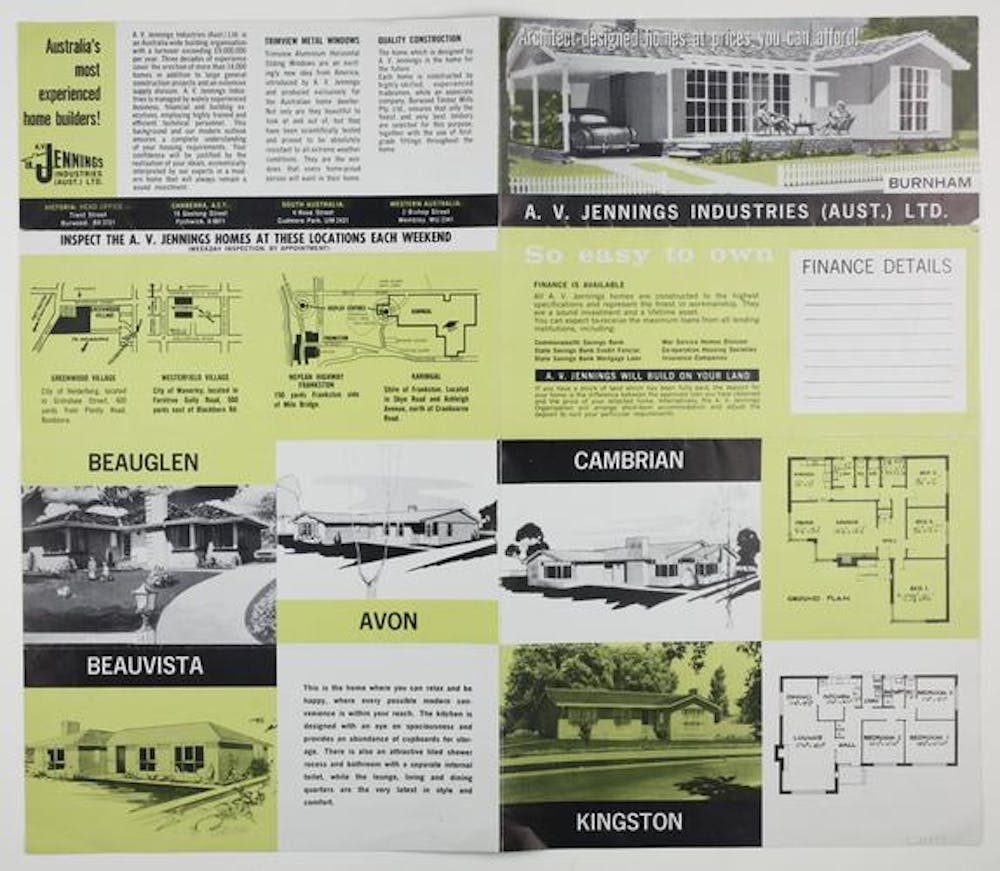
Made of prefabricated elements, these houses were a builders’ delight – and affordable. By the 1960s, most large building companies, including AV Jennings offered a range of such houses for sale.
AV Jenning Homes Brochure 1960s.AV Jennings
This year marks 50 years since the election party that inspired David Williamson’s play Don’s Party (1971). Williamson drew inspiration from his AV Jennings Type 15 home, built in the Melbourne suburb of Bundoora in the 1960s.
In 2011, I asked him how his home had influenced the writing of Don’s Party. He told me:
a feature of these houses was the openness and connectedness of the living, dining and kitchen areas with the bedrooms down a corridor at the back. This openness allowed one to think of a set design. It was good for the dramatic structure. I drew a floor plan and had the characters’ names on slips of paper which I slid around the floor plan so I knew who was where at any particular time.
Williamson’s reflections show how these houses were a literal backdrop to writers and performers at the time.
Cooley’s Monologue from the 1976 film version of Don’s Party.
The 1976 film Don’s Party was shot in a house built by Australian company Pettit and Sevitt, founded in 1961. Its design, known as the “Lowline”, was created by architects Ken Woolley and Michael Dysart.
Like the Small Homes Service, Pettit and Sevitt aimed to build good quality, affordable, architect-designed homes. Forty years after closing their business, they have recently re-opened it, such is the current enthusiasm for mid-century modernism.
It seems obvious that the combination of affordability and well designed homes is an irresistible quality. However, the popularity of mid-century homes, – both then and now – runs much deeper. I would argue that they are also a reflection of a nation quietly contemplating its place in the world.
The problem child of heritage
The rise of the mid-century modern house unfortunately coincided with the modernist urban planning principles that resulted in car dependent, low density suburbs on the outskirts of cities. The sprawling nature of these suburbs has contributed to the housing stress many Australians currently experience.
The location of these houses, along with their larger lot sizes, means many have now been demolished and replaced with higher density developments. There is now a sense of urgency about their protection and conservation.
Professor Philip Goad from the University of Melbourne describes modernism as the “problem child of heritage”. By this he means, it belongs to an era that has surely passed by, but is too young to be broadly admired as built heritage.
Very few surveys of mid-century modern houses in Australian suburbs exist. In 2018, Bayside Council in Melbourne started a heritage survey of them in the suburbs of Beaumaris and Black Rock. Unfortunately, less than a year later, council had abandoned the project.
The connection between Australia’s mid-century modern houses and popular culture demonstrates their cultural and heritage value. However, heritage is not simply determined by perceived aesthetic merit – it also needs to address practical issues such as the maintenance of building materials, as well as good planning principles.
The efforts of mid-century modern enthusiasts have produced greater awareness of the cultural significance of these buildings. In time, they should secure the same heritage protection afforded to other architectural styles.
Australia’s relations with China will be further complicated by the news that Australian citizen Yang Hengjun is set to be charged with endangering state security.
This is a serious charge that carries the penalty of at least three years in jail.
Yang’s wife Yuan Xiaoliang was notified earlier today that her husband would be charged, a day before the six-month deadline determining whether he is to be released, charged or have his detention extended.
Charges against Yang appear to relate to his work as a writer and blogger in which he has been sharply critical of the Chinese regime. He developed a large following on Chinese social media and on Twitter, and his criticisms will have infuriated Chinese authorities.
Yang was arrested after he returned to China earlier this year with his family. He has been held in a Beijing state security prison since then, without access to lawyers, and denied contact with his family.
Australian attempts to secure access have been rebuffed.
Canberra’s relations with Beijing
China’s decision to charge Yang comes at an awkward moment in relations between Beijing and Canberra.
Australia this week was obliged to step up its consular efforts to persuade China to allow Uyghur families to leave Xinjiang to be reunited with their Australian families.
This followed broadcast an ABC four Corners program that drew attention to the plight of Uighurs in Xinjiang. Up to a million out of a population of 11 million in the region are reported to be in “re-education” camps.
China’s official media responded harshly to the ABC program and to criticism of China’s treatment of Uyghurs more generally. The Global Times newspaper, which tends to reflect a hardline nationalist view, accused critics of “recklessly attacking” China.
Yang’s case reflects China’s extreme sensitivity to criticism.
This episode won’t help Australia’s efforts to get its relationship with China on more stable footing after several years of difficulties.
China had objected to criticism of its attempts to interfere in Australian domestic politics via Chinese nationals associated with Beijing. This led to a freeze on visits to China by Australian political leaders. While that freeze has thawed, tensions remain.
Chinese laws affect other western democracies
Australia is far from alone among western democracies whose citizens have fallen foul of opaque and arbitary Chinese law and legal procedures.
Canada is wrestling with the cases of two of its citizens who have been held without charge since last year. China has accused the pair of stealing state secrets.
This is a serious charge that can result in the death penalty.
The two Canadians were detained after the arrest at Vancouver airport of Meng Wanzhou, daughter of the founder of the Chinese telecommunications giant, Huawei. Meng is appealing attempts by the United States to extradite her to face charge of fraud.
This is a highly contentious issue, and one that is complicating relations between Washington, Ottawa and Beijing.
Apart from arresting the Canadians accused of stealing state secrets, China has also taken aim at Canada economically. It has stopped Canadian rapeseed oil imports, dealing a hefty blow to a multibillion dollar canola industry.
What the Canadian arrests, and now that of an Australian writer, demonstrates is that relations with China are unlikely to become less complicated. Rather, it is likely they will become more so.
Among challenges for countries like Australia is how to quarantine issues of mistreatment of its citizens and broader human rights abuses, from the functioning of broad-ranging bilateral relations.
More than 28,000 species around the world are threatened, according to the Red List of Threatened Species compiled by the International Union for the Conservation of Nature (IUCN). The list, updated on Thursday night, has assessed the extinction risk of almost 106,000 species and found more than a quarter are in trouble.
While recent headline-grabbing estimates put as many as 1 million species facing extinction, these were based on approximations, whereas the IUCN uses rigorous criteria to assess each species, creating the world-standard guide to biodiversity extinction risk.
In this update, 105,732 species were ranked from least concern (little to no risk of extinction), to critically endangered (an extremely high risk of extinction) and extinct (the last individual of a species has expired).
This Red List update doesn’t hold a lot of good news. It takes the total number of threatened species to 28,338 (or 27% of those assessed) and logs the extinction of 873 species since the year 1500.
These numbers seem small when thinking about the estimated 1 million species at risk of extinction, but only around 1% of the world’s animals, fungi and plants have been formally assessed on the IUCN Red List. As more species are assessed, the number of threatened species will no doubt grow.
More than 7,000 species from around the world were added to the Red List in this update. This includes 501 Australian species, ranging from dragonflies to fish.
The shortfin eel (Anguilla australis) has been assessed as near threatened due to poor water and river management, land clearing, nutrient run-off, and recurring drought.
The Australian shortfin eel is under threat from drought and land clearing.
Twenty Australian dragonflies were also assessed for the first time, including five species with restricted ranges under threat from habitat loss and degradation. Urban and mining expansion pose serious threats to the western swiftwing (Lathrocordulia metallica), which is only found in Western Australia.
Plight of the rhino rays
I coordinate shark and ray Red List assessments for the IUCN. Of particular concern in this update is the plight of some unique and strange fishes: wedgefishes and giant guitarfishes, collectively known as “rhino rays”.
This group of shark-like rays, which range from Australia to the Eastern Atlantic, are perilously close to extinction. All six giant guitarfishes and nine out of 10 wedgefishes are critically endangered.
Bottlenose wedgefish in Raja Ampat, Indonesia.Credit: Arnaud Brival
While rhino ray populations are faring comparatively well in Australia, this is not the case throughout their wider Indo-Pacific and, in some cases, Eastern Atlantic ranges, where they are subject to intense and often unregulated exploitation.
The predicament of rhino rays is driven by overfishing for meat and their valuable fins. Their meat is often eaten or traded locally and, along with other sharks, rays and bony fishes, is an important part of coastal livelihoods and food security in tropical countries. Their fins are traded internationally to meet demand for shark fin soup. The “white fins” of rhino rays are highly prized in the trade and can fetch close to US$1,000 per kilogram.
This exploitation for a high-value yet small body part places the rhino rays in the company of the rhinoceroses in more than name alone.
Bottlenose wedgefish in the Kota Kinabalu fish market in Malaysia.Peter Kyne
Two species in particular may be very close to extinction. The clown wedgefish (Rhynchobatus cooki) from the Indo-Malay Archipelago has been seen only once in over 20 years – when a local researcher photographed a dead specimen in a Singapore fish market.
The false shark ray (Rhynchorhina mauritaniensis) is known from only one location in Mauritania in West Africa, and there have been no recent sightings. It’s likely increased fishing has taken a serious toll; the number of small fishing boats in Mauritania has risen from 125 in 1950 to nearly 4,000 in 2005.
This rising level of fishing effort is mirrored in the tropical nations of the Indo-West Pacific where most rhino rays are found.
Effective rhino ray conservation will require a suite of measures working in concert: national species protection, habitat management, bycatch reduction and international trade restrictions. These are not quick and easy solutions; all will be dependent on effective enforcement and compliance.
The challenges of saving rhino rays illustrate the larger, mammoth task of tackling our current extinction crisis. But the cost of inaction is even larger: precipitous loss of biodiversity and, eventually, the collapse of the ecosystems on which we depend.
This article was co-written by Caroline Pollock, Program Officer for the IUCN’s Red List Unit.
Source: The Conversation (Au and NZ) – By Clive Hamilton, Professor of Public Ethics, Centre For Applied Philosophy & Public Ethics (CAPPE), Charles Sturt University
Two Australian universities, University of Technology Sydney and Curtin University, are conducting internal reviews of their funding and research approval procedures after Four Corners’ revealed their links to researchers whose work has materially assisted China’s human rights abuses against the Uyghur minority in Xinjiang province.
UTS, in particular, is in the spotlight because of a major research collaboration with CETC, the Chinese state-owned military research conglomerate. In a response to Four Corners, UTS expressed dismay at the allegations of human rights violations in Xinjiang, which were raised in a Human Rights Watch report earlier this year.
Yet, UTS has been aware of concerns about its collaboration with CETC for two years. When I met with two of the university’s deputy vice chancellors in 2017 to ask them about their work with CETC, they dismissed the concerns.
According to a report for the Jamestown Foundation, CETC openly declares that its purpose is “leveraging civilian electronics for the gain of the PLA (People’s Liberation Army).” Similar concerns had been raised about CETC’s military links and its work with the CSIRO.
Alex Joske, now an analyst with the Australian Strategic Policy Institute, and I had also uncovered a pattern of widespread research collaborations between academics at Australian universities and Chinese scientists and corporations connected to China’s armed forces and security services.
Along with UTS, ANU and UNSW are the most heavily invested. Some of the collaborations have been partly funded by the Australian Research Council. Some of our research was published in June and October 2017.
Some universities challenged over their associations have reacted defensively. Responding to a story questioning the wisdom of UNSW’s huge commitment to a China-funded “Torch Technology Park”, DVC Brian Boyle dismissed the evidence and suggested the criticisms were motivated by xenophobia.
When UTS teamed up with CETC in 2016 to collaborate on research projects worth A$10 million in its CETC Research Institute on Smart Cities, CETC was already working with the Chinese state to improve the world’s most comprehensive and oppressive system of surveillance and control of its citizens.
CETC is upfront about its Smart Cities work, saying it includes “public security early warning preventative and supervisory abilities” and “cyberspace control abilities.” A report by the official Xinhua news agency in 2016 noted that CETC’s work on smart cities “integrates and connects civilian-military dual-use technologies.”
Defence controls
When asked about their collaborations with Chinese experts in military and security technology, universities have typically responded that all of their research proposals comply with the Defence Trade Controls Act, which restricts the export of technologies, including IP, deemed sensitive.
They were able to tick the right boxes on the relevant forms because it was possible to describe the planned research as “civilian.” But even well-informed amateurs know that the traditional distinction between civilian and military research no longer applies because major civilian technologies, like big data, satellite navigation and facial recognition technology, are used in modern weapons systems and citizen surveillance.
UNSW scientists have collaborated with experts from the National University of Defence Technology (NUDT), a top military research centre, on China’s Beidou satellite system, which has many civilian as well as military uses, including tracking the movements of people and guiding missiles.
Joske found that some two dozen NUDT-linked researchers have passed through UNSW as visiting scholars or PhD students in the last decade. A further 14 have passed through ANU. Some have backgrounds working on classified Chinese defence projects.
Having visited and studied at Australian institutions, these researchers, who hold rank in the People’s Liberation Army, return to China with deep international networks, advanced training, and access to research that is yet to be classified. In many cases, a clear connection can be drawn between the work that PLA personnel have done in Australia and specific projects they undertake for the Chinese military.
The same can be said for companies like CETC that take research output from Australian researchers and apply it to the security and surveillance technology used across China.
“Orwellian” seems inadequate for the types of surveillance and security technologies being implemented in China. Facial recognition scanners have even been set up in toilets to allocate the proper amount of toilet paper. The state tells you whether you can wipe your backside.
Fixing the system
Some universities pass the buck by saying that the department of immigration is responsible for any security concerns when assessing visa applications for researchers. (Now the authorities are doing more checks, but the universities are grumbling because visas for Chinese scientists are taking too long.)
The universities’ refusal to accept any responsibility tells us there is a cultural problem. Most university executives believe that international scientific collaboration is a pure public good because it contributes to the betterment of humankind — and, of course, the bottom line.
So asking them more carefully to assess and rule out some kinds of research goes against the grain.
All of this suggests that the system is broken. The fact remains that Chinese military scientists and researchers at companies like CETC have been returning to China with improved knowledge of how to build better weapons and more Orwellian surveillance systems.
American universities are now alive to the problem by looking much more closely at the China links of scientists working in the US. So, in April 2018, it was reassuring to see the Australian minister of defence, Marise Payne, commission an inquiry into the effectiveness of the defence trade controls regime.
However, when it came time, the report failed to recognise Australia’s new security environment, especially the risks posed by China’s aggressive program of acquiring technology from abroad. It accepted the university view that the system is working fine and, apart from a few recommended adjustments to the existing Defence Trade Controls Act, kicked the can down the road.
In short, defence and security organisations, who can see how the world has changed, lost out to those who benefit from an open international research environment, one that has been heavily exploited by Beijing for its own benefit.
In the US, federal science funding authorities have been sending the message that continued funding will be contingent on universities applying more due diligence to the national security impacts of their overseas research collaborations. We can expect to see something similar in Australia.
The next US presidential election will be held on November 3, 2020. Incumbent president Donald Trump will almost certainly be the Republican nominee, but there is a contest for the Democratic presidential nomination. The Republican and Democratic nominees will be the only candidates with a realistic chance of winning the presidency.
Both major parties will hold presidential primaries and caucuses in the various states between early February and early June 2020. These contests select delegates to the party conventions in mid-July (Democrats) and late August (Republicans), at which the party’s candidate is formally nominated. Primaries are administered by the state election authority, while caucuses are managed by the party.
Democratic delegates are allocated proportionally to candidates who clear a high 15% threshold, both within each Congressional District (CD) and state. The more Democratic-leaning a CD is, the more delegates it will receive. The total number of delegates for a state depends on that state’s population and how Democratic-leaning it is.
There will be a grand total of 3,768 pledged delegates, so 1,885 is needed to win on the first ballot at the Democratic convention. Superdelegates (Democratic members of Congress, governors and party leaders) cannot vote in the first round, but if no candidate has a first round majority, it becomes a “contested convention”, and superdelegates can vote.
Four Democratic contests are permitted in February 2020: the Iowa caucus (Feb 3), New Hampshire primary (Feb 11), Nevada caucus (Feb 22) and South Carolina primary (Feb 29). Relatively few delegates will be chosen at these contests, but they are still very important for establishing front runners and winnowing the field.
On “Super Tuesday” March 3, 14 states will vote including delegate-heavy California and Texas. 1,358 pledged Democratic delegates, or 36% of the total, will be determined as a result of these contests, so this could be the decisive moment of the Democratic presidential nomination.
Current Democratic primary polling
In the RealClearPolitics poll aggregate, Joe Biden has 28.4% support from national Democrat-aligned voters, followed by Bernie Sanders at 15.0%, Elizabeth Warren at 14.6% and Kamala Harris at 12.6%. Everyone else is at 5% or less.
The first Democratic presidential debate was held over two nights, June 26-27, to cope with the 20 candidates who qualified. As a result of this debate, Biden dropped from the low 30’s to the mid 20’s, but has recovered a little. Harris surged from 7% to 15%, but has fallen back since.
The next Democratic debate will also be held over two nights, July 30-31. For the following debate on September 12, the qualification threshold has been raised, so fewer candidates will qualify.
In early-state polls taken since the first debate, Biden had 24% in Iowa, Harris 16%, Warren 13% and Sanders 9%. In New Hampshire, Biden averaged 22.5%, Warren 18%, Sanders 14.5% and Harris 13.5%.
On current polling, Biden would win the Democratic nomination as he would be the only candidate certain to pass the 15% threshold in the vast majority of CDs and states. Unless one of Sanders, Warren or Harris can build their support beyond 20%, this is a viable scenario.
Biden appeals to older and more conservative Democrats, but an important reason for his lead is his perceived electability. After Hillary Clinton’s shocking loss in 2016, Democrats are desperate to ensure Trump is a one-term president. In a Quinnipiac poll of California, 45% of Democrats thought Biden had the best chance of any candidate to beat Trump, with no other candidate getting more than 12%.
By the time of the 2020 general election, Biden will be almost 78, Sanders will be 79, and Trump will be a mere 74. Warren will be 71. Harris is easily the youngest top-tier candidate; she will be 56 by the election. According to CNN analyst Harry Enten, only 33% of Democrats would feel comfortable with a nominee aged over 75.
Another reason for scepticism about Biden’s electability is that, like Clinton, he is an established politician who was first elected to the Senate in 1972. There are likely to be some things in Biden’s long political career that Trump will be able to exploit in the general election.
In the FiveThirtyEight poll aggregate, Trump’s ratings are currently 42.4% approve, 52.8% disapprove with all adults. With polls of registered or likely voters, his ratings are 43.3% approve, 52.4% disapprove.
With the official US unemployment rate at just 3.7%, Trump’s ratings are weaker than they should be given economic data. There has been little change in his ratings since a slump during the January 2019 government shutdown, followed by a recovery once the shutdown ended.
Trump’s current ratings show that, if the next election is a referendum on his performance, he should be defeated. Trump’s best chance of re-election is if the Democrats nominate somebody who is also unpopular, as Clinton was in 2016.
On current economic figures, Trump will probably be defeated in 2020, but this is by no means certain. However, there is a major political risk to the economy: a “no-deal” Brexit. Right-wingers have strongly advocated a hard Brexit, and they may get what they want with Boris Johnson certain to be the next British PM – as I wrote for The Poll Bludger on July 10. The result of the Conservative members’ ballot for leader will be declared on July 23.
If a no-deal Brexit occurs on October 31, there is likely to be a large negative impact on the UK economy, with knock-on effects for the world economy. A no-deal Brexit and Trump’s tariffs are likely to have some impact on the US economy. A US recession in 2020 would be very bad for Trump’s re-election chances.
As I said in the article I wrote immediately after the May Australian election, I believe the left’s only hope to consistently win elections is if there is a major economic disaster that is blamed on the right.
Right wins Greek election, left wins Turkish Istanbul mayoral re-election
I wrote on my personal website on July 8 that the conservative New Democracy won the July 7 Greek election with 158 of the 300 parliamentary seats, ousting the far-left SYRIZA. In Turkey, the left won the June 23 Istanbul mayoral re-election by a much bigger margin than originally.
“Indonesia strongly condemns the award by the Oxford City Council for this person,” said the Indonesian Foreign Affairs Ministry in a written statement on Thursday July 18.
The ministry said that giving the award to Wenda shows that the Oxford Council does not fully understand the real situation in Papua and West Papua provinces. It also said that the council does not understand Wenda’s behavior.
“Giving an award to this person shows the Oxford City Council’s lack of understanding about the behaviour of this person and the real situation in the provinces of Papua and West Papua, including the development and advances there,” the ministry said.
The ministry also said that the government’s position on the independence movement in Papua remains firm although it also expressed its thanks to the British government for consistently and fully supporting Indonesia’s sovereignty over Papua.
– Partner –
“Indonesia’s position on the separatist movement remains firm.We will not retreat one centimetre in upholding the [sovereignty of the] RI [Republic of Indonesia]”, it saidusing the term “separatist”, which the West Papuan movement rejects in favour of pro-independence.
“Indonesia respects the British government’s firm position of consistently and fully supporting the sovereignty and integrity of the Unitary State of the Republic of Indonesia and because of this the Oxford City Council’s position has no meaning whatsoever.”
In relation to the award, the British government asserted that it does not mean that the government supports Papuan independence.
“We support Indonesia’s territorial integrity and Papua as part of Indonesia,” said the British Foreign Affairs Department as quoted by BBC News.
The Oxford City Council decision to give the award to Wenda has no relationship with the British government’s position on Papua.
“Politically, the position of local councils are independent of the central government, so this represents the authority of the Oxford City Council,” the department said in conclusion.
The City Council awarded Oxford based Wenda its highest honour in recognition of his tireless fight for West Papuan self determination.
In a press release it said that “Oxford residents and the City Council have taken up the cause for their own.”
Wenda meanwhile said that he appreciates being given the award saying that it shows that Oxford City is concerned about justice and human rights for the Papuan people.
“This award shows that the people of Oxford have listened and responded,” he said.
Opera Australia’s newest production, Whiteley, brings together three Australian icons. Elena Kats-Chernin, the doyenne of Australian composers, has written an opera on the life of a famous Australian painter and had it staged at that most recognisable of Australian buildings, the Sydney Opera House.
With Sydney Harbour described as “the jewel of Australasia”, there were moments when it felt like a tourism commercial. However, the artist in question, Brett Whiteley, had an equivocal attitude to his homeland, as the opera as a whole makes clear.
Like so many of his generation, Whiteley aspired to success abroad, and thanks to a travelling art scholarship, he first made a splash in the British art scene. The opera’s libretto by Justin Fleming traces his travels to Italy, his London stint, and his periods in America and Fiji, before his return to Australia. His expulsion from the Pacific island left Whiteley yelling “bugger” as Act I concluded, a heartfelt comment on his forced repatriation.
Nonetheless, after settling back in Sydney, his fame at home skyrocketed as his wider reputation faded. His biographer Ashleigh Wilson represents him as deliberately rejecting internationalism in favour of local celebrity, and certainly his canvases increasingly depicted Sydney scenes. Some of these featured as backdrops during the opera; for instance, the Harbour ferry at the start of Act II was clearly reproduced from a canvas.
Leigh Melrose as Brett Whiteley in Opera Australia’s 2019 production of Whiteley at the Sydney Opera House.Prudence Upton
Our fascination with creative artists runs deep, but when it comes to representing their lives in film or on stage, the focus is often on their personalities and biographies rather than on the acts of creation themselves. While several of Whiteley’s paintings did feature (good use was made here of projections by director David Freeman and production designer Dan Potra), the opera’s two main themes were the artist’s turbulent relationship with his wife, Wendy, and his addictions.
The centrality of Wendy was clear from the opening tableau, where the drink-sozzled artist sees her (or imagines her?) in a moment of crisis – but she rejects him. This wordless flash-forward was separate from the main course of the opera, which traced episodes of his life in chronological order.
With Whiteley’s widow present at the premiere, it was perhaps no surprise she was portrayed sympathetically; her affair with Michael Driscoll was preceded by her husband’s infidelities, and she urged him to follow her example and get clean of drugs. “All my heroes are addicts”, sang Whiteley, and his use of alcohol, heroin and other substances is represented as both creatively stimulating and personally destructive.
Julie Lea Goodwin as Wendy Whiteley and Leigh Melrose as Brett Whiteley in Opera Australia’s 2019 production of Whiteley at the Sydney Opera House.Prudence Upton
Kats-Chernin was recently voted 16th in an ABC survey of Australia’s favourite composers, which made her the second most-beloved living composer (after John Williams), the highest woman in the list and the top Australian.
Her score for Whiteley displayed in the abundance catchy rhythms, attractive melodies and sensitive scoring that have endeared her to so many. Some of the strongest numbers were the lighter ones: the satirical “Brett Whiteley has arrived”, where a stage full of critics pontificated pretentiously about the young artist, had a winsome verve to it.
Other plot elements were given recurring musical motifs. Drug use was signalled by thin, dissonant notes high on the strings, while creative acts were often accompanied by solo winds, including the rare alto flute. The melancholy saxophone music that began the overture later returned as Brett questioned whether Wendy still loved him.
With its shifts in location and time, the libretto sometimes became disjointed, and Kats-Chernin wasn’t always able to solve this. On a few occasions, conductor Tahu Matheson brought a number to an end, and left a few seconds before starting the next. These seams were not always jarring, but they were noticeable and could have been avoided by a few bars of transitional music.
The cast of Opera Australia’s 2019 production of Whiteley at the Sydney Opera House.Prudence Upton
Other parts less to my taste included the schmaltzy D major music in which Fiji was extolled as a paradise, and the ending, where Whiteley’s wife, daughter and mother provided reflections after his overdose.
This trio felt somewhat bloodless: euphonious without being truly melodious, not grief-stricken nor suggestive of the transcendent. Maybe this was the point: a life like Whiteley’s does not offer a clear moral message.
In the title role, Opera Australia newcomer Leigh Melrose was a titanic presence. He sang with power throughout the evening, capturing both the charisma and the darker side of the artist. Julie Lea Goodwin was good match for the role of Wendy, tracing the course from young lover to disillusioned wife in a ringing soprano.
Their daughter, Arkie, was played by two different singers: Natasha Green was the younger version, and sang with very pure tones and accurate pitching, while Kate Amos demonstrated a highly flexible soprano as the older Arkie. Dominica Matthews was as reliable as ever as Whiteley’s mother, and managed to coax some humour out of the part.
Leigh Melrose as Brett Whiteley and Kate Amos as Older Arkie Whiteley in Opera Australia’s 2019 production of Whiteley at the Sydney Opera House.Prudence Upton
Richard Anderson was a strong dramatic presence as Joel Elenberg, one of Whiteley’s two closest Australian colleagues, while Nicholas Jones’s attractive tenor voice made his scenes as Michael Driscoll particularly enjoyable. Fitting a life lived on three continents, a large contingent of small roles was needed, among whom Celeste Lazarenko as a backpacker and Sitiveni Talei as a Fijian Police Officer stood out.
The female members of the Opera Australia chorus were unseen presences in some scenes, but shone when they appeared as the murder victims in a case that fascinated and stimulated Whiteley. The orchestra under Matheson negotiated the tricky corners of the score with aplomb, allowing the driving rhythmic pulse to emerge clearly.
The Whiteley opera appears at a time when debates around opera have ramped up a notch: is it too much in thrall to a canon of past works, and are these works consonant with social values today?
Meanwhile, can Australian opera establish itself on the world stage? Where Kats-Chernin’s work fits into such debates remains to be seen, but that it can be seen right now at Australia’s premier opera venue is an important first step.
Whiteley is on at the Sydney Opera House until July 30.
The United Nations in Papua New Guinea is boosting its presence in the Highlands as it works with the government to improve access to justice for tribal communities.
The acting resident coordinator said the massacre of 24 women and children near Tari last week has focussed the need for more conflict resolution.
David McLoughlin, who is also the head of Unicef, said since last year’s earthquake and resurgence of polio in the country, the UN has increased its work and presence there.
He said it is establishing a base in Mendi under the International Organisation for Migration.
“It’s going to be basing on a strong peace building, conflict resolution, enhancing the community’s access to justice. And strengthening the informal and formal justice institutions.
– Partner –
“And working with the community leaderships around conflict management skills and conflict mediation, for the longer term. But in the meantime the government needs to take a very strong hand but a very respectful with regards to human rights hand, in dealing with this matter.”
David McLoughlin is pinning a lot of hope on the country’s new leadership to appoint more judges and police to ensure justice and human rights for PNG’s people.
He said the UN will be bringing in a lot of capacity development around mediation.
McLoughlin said the agency has recently had missions in the Highlands where it was able to help two warring tribes negotiate a successful conflict resolution agreement, so he is hopeful of progress.
He said humanitarian agencies, the government, the extractive industries and churches all have a responsible role to play in Papua New Guinea’s development.
This article is published under the Pacific Media Centre’s content partnership with Radio New Zealand.
Indigenous Australians have a long and proud heritage in both traditional sports and games, and in modern sport through the achievements of people like Johnathan Thurston and Ashleigh Barty.
There’s also long been the belief that sport can be used as a lever for improvement in outcomes for Indigenous communities. The 1987 Royal Commission into Aboriginal Deaths in Custody, for instance, found that sport and recreation can play a role in the reduction of offending behaviour among Indigenous peoples.
And while there are a number of physical activity and sports programs for Aboriginal and Torres Strait Islander people today, a parliamentary inquiry in 2013 recommended that much more comprehensive evaluation of sports programs should be conducted to gauge their impact.
The report said some government sports programs
are being rolled out with very little understanding of how the Close the Gap outcomes are being achieved.
Another study noted that sport has often been seen as a “panacea” for myriad problems in Indigenous communities, and this belief has led to
ambitious, ill-defined and, in terms of evaluation, often elusive social outcome goals.
What could sport achieve?
To better understand the impact sport can have on Indigenous communities and how government investment could be better targeted, we undertook a review of 20 Australian studies published in peer-reviewed journals between 2003 and 2018.
The research looked at how sport and physical activity programs for Indigenous adults or children improved outcomes in six different areas:
1) education 2) employment 3) culture 4) social and emotional well-being 5) life skills 6) crime reduction
Because of the low level of evidence in this area so far, we included all relevant studies. The 20 studies involved over 2,500 individual participants located in urban, rural and remote areas across Australia.
Our review, which was published in the Journal of Science and Medicine in Sport, found some evidence that sport and physical activity increases Aboriginal and Torres Strait Islander school attendance, improves self-esteem and can enhance cultural connectedness, values and identity.
But the studies were inconclusive on whether sport and physical activity can have longer-term benefits, such as improving educational or employment outcomes or reducing crime.
Eleven of the studies we reviewed examined education. Overall, most showed positive outcomes for young people involved in sport.
A number of programs were shown to improve school attendance, such as two AFL youth programs in Cape York and the Northern Territory aimed at encouraging school attendance and improving behaviour through Australian rules football.
Only one study examined the impact of sport on employment: the AFL youth program in the NT. Almost all of the participants and stakeholders felt the program helped players to secure paid work or training, but the study didn’t link to employment data specifically.
Culture
Nine studies examined culture. And like education, most programs showed positive outcomes for participants when it came to cultural connections, values and identity.
For example, in Victoria, the Fitzroy Stars community sports club study found that social and community connection was an important way for participants to strengthen and maintain their cultural values and identity.
And the study on the impact of the Swan Nyungar sports education program for young people in Perth found the success of participants depended on incorporating their families and culture in the instruction.
Social and emotional well-being
Twelve studies examined social and emotional well-being. Improved self-esteem and confidence were found in the participants of several programs, such as the WA Girls Academy and Indigenous surfing programs in several states.
A study of Queensland’s Deadly Choices program, which aims to help Indigenous people make healthier lifestyle choices, found that participants had increased confidence and were more proactive about preventing chronic disease.
Life skills
Five studies examined “life skills.” The positive outcomes ranged from improved attitudes and lifestyle choices ([the AFL Cape York program]) to hygiene and health, self-reliance and fundraising skills (the WA Girls Academy).
Crime
Only five studies examined the impact of sport on crime prevention and prison inmate management, and the findings were limited.
The Aboriginal Power Cup, another youth football program in South Australia, was found to have positive impacts when it came to school achievement, but the study didn’t directly examine aspects of crime.
A study into a prison sport program in central Australia found that it was an effective diversion for inmates, but there were only six participants in the study, which is not a very robust sample size.
Meanwhile, the impact of the NT AFL program on community safety and violence was unclear, as was the impact of a sports program in Arnhem Land that aimed to steer Indigenous youth away from substance abuse.
This is a key challenge for researchers in this area – identifying the specific impacts of sport and physical activity programs on societal problems such as crime in which many factors come into play.
Substantial challenges remain in accurately measuring how sports programs like these can lead to better outcomes for Indigenous communities. Scoping reviews, for instance, do not include an assessment of study quality and therefore may overestimate the findings.
More studies are needed to track the impact of sport through a range of indicators. We also still need to know more about how programs can improve employment and crime outcomes.
With more robust evidence, a more targeted plan can be made for future programs that are better suited to the needs of individual communities.
It’s 50 years since the two Apollo 11 astronauts – Neil Armstrong and Buzz Aldrin – spent 22 hours collecting samples, deploying experiments and sometimes just playing in the Sea of Tranquillity on the Moon.
In doing so, they created an archaeological site unique in human history.
Now, with what’s been called the New Space Race and plans to return to the Moon, the Apollo 11 and other lunar sites are under threat. We need to protect this heritage for future generations.
The archaeological site of Tranquillity Base consists of the hardware left behind, as well as the marks made in the lunar surface by the astronauts and instruments.
Apollo 11 astronaut Buzz Aldrin with the seismic experiment and other equipment left on the Moon.NASA
The hardware component includes the landing module, the famous flag (no longer standing), experiment packages, cameras, antennas, commemorative objects, space boots and many other discarded objects – more than 106 in total.
Around these objects are the first human footprints on the Moon as well as the tracks the astronauts made walking around, and the places where they dug out samples of rock and dust to take back to Earth for scientific analysis.
The artefacts, traces and the landscape constitute an archaeological site. The relationships between them can be used by archaeologists to study human behaviour in this environment so different to Earth, with one-sixth terrestrial gravity and no atmosphere.
Assessing the heritage value
Not only this, but the site has heritage value for people on Earth. To assess this, we can look at a number of categories of cultural significance. Those in the Burra Charter are widely used across the world for heritage assessment.
Historic: There is no doubt that, as the first place where humans set foot on another celestial body, this is a very important place in global history. It also represents the ideologies of the Cold War (1947-1992) between the US and the USSR.
Buzz Aldrin leaves a footprint on the first Moon landing.NASA
Scientific: What can we learn from the site? More particularly, what questions would we no longer be able to answer if Tranquillity Base was damaged or destroyed?
This is not just about archaeological research into human behaviour on the Moon. Apollo 11 has been exposed to the harsh lunar environment for 50 years. The surfaces of the hardware are accidental experiments in themseves: they carry the record of 50 years of micrometeorite and cosmic ray bombardment. Finding out how well the materials have survived can also provide information about how to design future missions.
Aesthetic: This type of cultural significance is about how we experience a place. While we can’t assess it in person, there are films and photographs that give us a feeling for the place. This includes the light, shadows and colours of the lunar surface from the perspective of the human senses. The aesthetic qualities have inspired many artists and musicians, including astronaut Alan Bean who devoted his post-Apollo 12 life to painting the Moon.
Astronaut Alan Bean deploys some experiments during his Apollo 12 mission on the Moon.NASA
Social: This is about the value that contemporary communities place on the site. For the 600 million-plus people who watched the television broadcast of the landing, it was a life-changing moment representing the ingenuity of human technology and visions of a space-age future.
But the mission did not mean the same for everyone. Some African-Americans protested against Apollo 11, seeing it as a waste of resources when there was such great economic and social disparity between white and black communities in the US. For them, it was a sign of human failure rather than a triumph.
The larger the community that has an interest in a heritage place, the higher its level of social significance. It could be argued that Apollo 11 has outstanding universal significance, like places on the World Heritage List (unfortunately the World Heritage Convention cannot be applied to space).
What are the threats?
In the past few years we have seen an increase in proposed missions to return to the Moon. Some have stated their intention to revisit the Apollo sites, by human crew or robot – and this could lead to the removal of material, for souvenirs or science.
But the sites are both fragile and unprotected. The two primary risks to their survival are uncontrolled looting, and damage from abrasive and sticky lunar dust.
Look at the dust thrown up by the Lunar Roving Vehicle driven by astronaut John W. Young during the Apollo 16 mission. Both dust and rover are still on the Moon.NASA
Removing material from the sites damages the integrity of the artefacts and the relationships between them. A casual visit could erase the original footprints and astronaut traverses. The corrosive dust disturbed by surface activities could wear away the materials.
Dust was a problem for all the crewed lunar missions. Apollo 16 commander John Young said: “Dust is the number one concern in returning to the Moon.”
The dust can be stirred up by plumes from landing or ascending vehicles, driving vehicles, walking on the surface, or, in the next phase of lunar settlement, by construction and industrial activities, such as mining.
Attempts at protection
The Outer Space Treaty of 1967 forbids making territorial claims in space. Applying any national heritage legislation to a place on the Moon could be interpreted as a territorial claim.
The US states of California and New Mexico have placed the Apollo 11 artefacts left on the Moon on a heritage list. They can do this because, under the treaty, the US legally owns the artefacts. But this does not protect the site itself.
Note the footprints on this image of astronaut Charles M. Duke junior on the Apollo 16 mission.NASA
NASA has established a set of heritage guidelines for its sites on the Moon. The guidelines propose buffer zones around these areas, inside which no-one should enter. They make recommendations for approaching the sites to minimise dust disturbance.
To require any Federal agency that issues licences to conduct activities in outer space to include in the requirements for such licences an agreement relating to the preservation and protection of the Apollo 11 landing site, and for other purposes.
But the bill applies only to Apollo 11 and does not have similar requirements for the five other Apollo landing sites. It also applies only to US missions. It’s a step in the right direction, but there is still much more to be done.
The plaque left on the lunar module base during the Apollo 11 mission.NASA
Only in the last decade has the idea of space archaeology gained legitimacy. Until recently, there was no urgency to establish an international framework to manage the cultural values of lunar heritage.
Now we’re in a new situation. On Earth, it’s common for industrial or urban activities that disturb the environment to be subject to an environmental impact assessment, which includes heritage.
Even when there are no laws to force companies to pay attention to heritage, many consider it important to seek a Social Licence to Operate – support from stakeholder communities to continue their activities.
Everyone on Earth is a stakeholder in the heritage of the Moon. Fifty years from now, what will remain of the Apollo 11 and other sites? What new meanings will people draw from it?
Source: The Conversation (Au and NZ) – By Neal Hughes, Senior Economist, Australian Bureau of Agricultural and Resource Economics and Sciences (ABARES)
Water prices in the southern Murray-Darling Basin have reached their highest levels since the worst of the Millennium drought more than a decade ago. These high water prices are causing much anxiety in the region, and have led the federal government to call on the Australian Competition and Consumer Commission to hold an inquiry into the water market.
While some of these factors have had an effect on the market, they are in many ways a distraction from the simpler truth: that high water prices have mostly been caused by a lack of rain.
Supply drives the market
The waters of the northern basin run to the Darling River and the waters of the southern basin run to the Murray River.MDBA
Market reforms in the 1980s and 1990s enabled water trading in many parts of Australia. By far the most active market exists in the southern Murray-Darling basin, which covers the Murray River and its tributaries in northern Victoria, southern New South Wales and eastern South Australia.
The market allows users – mostly irrigation farmers – to trade their water allocations (effectively shares of water in the rivers’ major dams). This trading helps ensure limited water supplies go to the farmers who value them the most, which can be crucial in times of drought.
Historical data shows the main driver of water market prices in the southern basin is change in water supply.
The following chart shows storage volumes (in orange) and water prices (in red) in the southern basin since 2006. Prices peaked at the height of the Millennium drought in 2007. During the floods of 2011, they fell near zero. Prices have increased again during the latest drought, and are now at their highest levels in a decade.
Water allocation prices and storage volumes in the southern Murray-Darling Basin.State government trade registers, BOM, Ruralco Water, ABARES estimates.
Lower rainfall, higher temperatures
While water prices have always been higher in dry years and lower in wet, we’ve been getting a lot more dry years in recent decades.
Over the past 20 years, rainfall, run-off and stream flow in the southern basin has been far less than historical conditions.
The below chart shows modelled flow data for the Murray River, assuming historical weather conditions and no water extraction, over the past century. It shows that average water flows this century are about 40% below the average of the 20th century.
Modelled ‘without-development’ annual Murray River flow, 1900 to 2018.Murray-Darling Basin Authority.
Lower rainfall and higher temperatures also make crops thirstier, increasing demand for irrigation water. This was evident in January, when temperatures exceeded 35℃ for 14 days and irrigators’ demand for water spiked from about 4.5 gigalitres to 7 gigalitres a day.
The Murray-Darling Basin Plan seeks to improve the environmental health of the river system by recovering water rights from irrigation farmers. To date, more than 1,700 gigalitres of water rights – about 20% of annual water supply – have been recovered in the southern basin.
By reducing supply, water recovery was always expected to increase water prices. However, the effects of water recovery on supply – while significant – are still small relative to the effects of climate over the same period, as shown in the below chart.
Water allocation use in the southern basin with and without water recovery.State government agencies, Department of Agriculture, ABARES estimates.
Measuring the precise effect of water recovery on prices is difficult. Water buybacks are straightforward and have been modelled by ABARES and others. But the effects of infrastructure programs – where farmers return a portion of their water rights in exchange for funding to upgrade infrastructure – are harder to estimate.
Historically farmers had to use water allocations within a 12-month window. The introduction of “carryover” – most recently in Victoria in 2008 – means users can now hold their unused water in dams. This rule change was a good thing, as it encourages farmers to conserve water and build up a buffer against drought.
But it might also have contributed to anxiety about the water market’s operations.
Since water allocations can be bought and held for multiple years, information about future conditions can have a big effect on prices now. For example, we see large jumps in price following news of worse-than-expected supply forecasts. This may have helped fuel concern about “speculators”.
Over the longer-term, the ability to store water helps to “smooth” water prices, with slightly higher prices in most years offset by much lower prices in drought years. Again this is a good thing, but it may have added to the perception of higher prices in the market.
Water demand is rising
When a profitable new irrigation activity is willing to pay more for water – as is the case with almond farms in the southern basin – competition for limited supplies can potentially drive up prices.
ABARES’ research shows that between 2003 and 2016 there was little change in irrigation demand (aside from that linked to rainfall). Growth in demand from expanding activities such as almonds and cotton was offset by reductions in others including dairy, rice and wine grapes. However, there is evidence since 2016 that demand for water has started to increase, contributing to higher water prices. Longer-term projections suggest this trend may continue.
With drought and climate change reducing water supply, and demand for both environmental and irrigation water increasing, high water prices are only likely to become more common in the basin in future.
It seems inevitable that New Zealand will soon officially be in a state of emergency over climate change, with a declaration likely to be passed in Parliament. Is this a good thing?
The debate over moving into official emergency status has already been going on in every local government body throughout the country. A large number of authorities have voted to declare climate emergencies. It’s happening overseas, too – mostly with local authorities, but countries like the UK have also officially moved into a state of declared emergency.
These council declarations have been a useful way for politicians to illustrate their commitment to addressing climate change. But there’s also a lot of doubt about what declaring a climate emergency really means, whether it will achieve anything or be “enough”, and even whether it might actually be a mistake.
Political scientist and climate change campaigner Bronwyn Hayward, of the University of Canterbury, has spoken out against the trend for climate change emergency declarations. She was recently interviewed on RNZ by Jessie Mulligan, and argued that the declarations can be counterproductive and ineffective. She said: “When people are in panic mode, they’re easily manipulated, and one of the big risks is that people panic and don’t look at the basic things that are possible and within our grasp to do right now” – see: Taking climate change seriously without being alarmist. The whole 18-minute interview is well worth listening to.
Hayward “is worried recent doom-and-gloom climate reports will just induce paralysis and panic.” She says: “it is great that we are seeing the urgency, but it’s actually taking the practical steps that matters more than the declarations.” And she argues that the concept of an immediate emergency is also one that goes against the need for a sustained long-term approach: “People can’t sustain this long period of panic, so my worry is what happens when this drops off? We need to be building for a sense of inter-generational support over the long haul, not just the immediate.”
Hayward prefers that climate change action focuses more on solutions than hyperbole about imminent collapse and chaos: “Let’s wind back the language of panic and wind up the language of practical action.”
Talking to Herald science journalist Jamie Morton, Hayward cautioned against the Auckland Council’s declaration of emergency, arguing it was more important to focus on actions: “We can’t maintain this level of intensity – we have to get quite practical and a lot of that is very boring… It’s attending to those first principles of lowering carbon emissions in the cities, like changing the way we build our buildings, tackling freshwater supplies and making sure our housing is as dense as we can make it, live-ably” – see: Explained: What does Auckland’s ‘climate emergency’ actually mean? (paywalled).
The same article also discusses the legalities of whether the climate change crisis could be classified as a Civil Defence emergency: “As it stood, climate change wasn’t included in the formal definition of an ’emergency’ under the Civil Defence and Emergency Management Act 2002. A declaration of a ‘climate emergency’ also had no other inherent statutory or legal implications.”
So, if it’s problematic to deal with climate change with a declared state of emergency, should it be something stronger? Political journalist Henry Cooke has argued this week that a declaration of war makes more sense: “War is much better. Wars take several years, require cooperation between countries, and often produce millions of refugees, much like climate change will. Vast technological change can be engendered as countries gear their entire economies towards a singular goal outside of simple growth” – see: We don’t need a climate emergency. We need a climate war.
Here’s Cooke’s main argument against the concept of a state of climate emergency: “Emergency responses are almost the opposite of what climate change requires. Emergencies last for small periods of time and require governments to temporarily act quickly to deploy resources to the effected area, in order to make an abnormal situation normal again. Almost everyone accepts that the normal rules should be suspended for this immediate response – dairy owners hand out water, respondents work overtime, and normalcy is eventually restored. Climate change is nothing like this. It is urgent but not urgent like an earthquake is. And fixing it requires a much more structural change to the way the world is run than other emergencies do”.
Another important analysis and critique of the logic of declaring climate emergencies can be found in Mark Blackham’s recent opinion piece, Declarations of climate emergencies will only increase apathy. As with Hayward, he suggests that the declarations will have a negative impact on fostering the public mood for change, suggesting that “Right when we most need sombre, thoughtful global and local action, our institutions are all too often faddish and hypocritical.”
The good intentions behind the declarations are noted, and he agrees with the concept of trying to get people to understand the seriousness of climate change, but for Blackham, the declarations are too gimmicky, especially in the absence of sufficient actions taken by the politicians: “We get it, but there is no emergency in the sense that ordinary people commonly use it. Where are the dead, dying and the fleeing? Where are the emergency services? No matter how you co-opt language, reality interferes. We will always respond differently to an emergency happening in the next 10 years, and an emergency happening right now.”
Blackham says “I doubt the authorities will take the sort of robust action that corresponds to an emergency. There will be no bans on cars, foreign travel, or imported consumer goods.” Ultimately, therefore, the public will lose more trust in those institutions making the declarations, and will become more cynical about climate change.
Does it matter if the emergency declarations are simply “symbolic gestures”? According to scientist Quentin Atkinson of the University of Auckland, this is exactly what is needed at the moment: “Symbolic gestures are what motivated New Zealand support to end apartheid and the nuclear-free stance and they had an effect, and we can hold our heads high knowing we were clear where we stood” – see Joel MacManus’ PM Jacinda Ardern: Government ‘not opposed to’ idea of declaring a climate emergency.
Atkinson is one of “more than 50 of New Zealand’s top scientists” calling for a declaration of emergency. And responding to this, “Prime Minister Jacinda Ardern says the Government is not opposed to declaring a national climate emergency”.
Ardern is reported as favouring a New Zealand-wide emergency declaration, but also suggesting that the Government is already dealing sufficiently with the problem: “I don’t see why there should be any reason why members of Parliament wouldn’t want to demonstrate that this is a matter of urgency… The one thing I think we need to make really clear though – a declaration in Parliament doesn’t change our direction of travel. It’s what we invest in and it’s the laws that we pass that make the big difference and on those grounds I think we are making good, solid progress.”
This article explains that a motion was earlier put in Parliament by Green MP Chlöe Swarbrick but was voted down by National. The National Party spokesperson on climate change issues, Todd Muller, criticised the motion as being just “Green Party symbolism”, and explained why his party didn’t support it: “There was no plan at all behind it – normally when Government’s calls emergencies, it brings the whole aspect of the state to bear to be able to deal with it.”
Quentin Atkinson, one of the scientist behind the call for a declaration of emergency, also challenges whether the Government has a sufficient plan for dealing with the crisis, saying: “Such a declaration also serves to highlight the hypocrisy of ongoing government policies that are inconsistent with a climate emergency. This is exactly what has happened in the UK, where policies are now being scrutinised in the light of the climate emergency declaration. This is a good thing. Of course, declaring a climate emergency does not in itself solve the challenge we face. We need a real Zero Carbon Act that lives up to its name” – see: We must face climate emergency head-on.
There are some real questions about whether the current Government is doing anywhere enough on climate change. For example, looking at last week’s rather moderate and limited policy announcement on electric vehicles, John Armstrong was scathing, saying it epitomises the “profound lack of urgency” in dealing with climate change under the current administration – see: Jacinda Ardern’s eco-warrior, emissions cutting image is a ‘charade’.
Armstrong argues that the Prime Minister continues to deliver “warm fuzzies” rather than make hard choices: “Ardern constructed an image of herself as some kind of eco-warrior in the front-line of the international crusade against global warming. It is a charade. Jacinda Ardern would like everyone to believe her administration is being bold in its framing of policies to cut greenhouse gas emissions. But it isn’t.”
Within the Government itself, there is division about whether to characterise the campaign on climate change as an emergency or even a war. Last week the Associate Transport Minister, Julie Anne Genter, tweeted to say climate change was “our generation’s WWII”, which was an escalation of Ardern’s famous statement about it being “our generation’s nuclear-free moment”. The Prime Minister has since stated that she wouldn’t use the same comparison as Genter – see Jamie Ensor’s Prime Minister Jacinda Ardern won’t compare climate change to World War II.
In terms of local government, most authorities appear to be passing emergency declarations – but not all. For example, earlier this month, Environment Southland voted eight-to-four against such a state of emergency. One councillor justified voting against the declaration, saying “The word emergency creates a knee-jerk reaction” and arguing it would create a “siege mentality” – see Blair Jackson’s Southland climate emergency motion voted down.
Similarly, the Thames-Coromandel Council voted six to three against the declaration in April, and now some residents are taking legal action to get this reversed – see Amy Williams’ Council taken to court over lack of action on climate change.
And some of the councils declaring emergencies are now being taken to task for subsequent actions that apparently contradict their gesture. For the best example of this, see Dave Armstrong’s How serious is Wellington about its ‘climate change emergency’? He points to continued attempts by the council to extend the airport runway, promotion of a convention centre as a destination for conferences, and the use of dirty diesel buses as going against the lofty proclamations of an emergency.
Similarly, when the Auckland council passed its climate change emergency motion the mayor had to miss the vote to attend the announcement that one of the world’s biggest retailer, Costco, was about to launch in the city. Simon Wilson asks: “Were the two events – the climate emergency declaration and the Costco deal – by any chance related? The timing might have been coincidental but each has far-reaching implications for the other” – see his in-depth and thoughtful examination of what the emergency declaration might mean for Auckland and its council: Costco vs the climate emergency: planning the future of Auckland (paywalled).
Finally, there’s an ongoing debate within the environmental movement about how to rally the masses to take climate change more seriously without producing a sense of doom. This was raised in a recent debate in which an environmentalist from an NGO published an article suggesting that the type of groups that they had worked for had downplayed the state of the crisis in order not to scare people – see: An apology from an environmentalist.
This got a response from Danyl Mclauchlan, who wrote: The real enemy: Why blaming NGOs for climate inaction is stupid. He explains: “Every piece of research about climate messaging always finds the same thing. If you tell people we’re doomed – which is the apologetic environmentalists message – they’re less likely to take action than if you give them agency and tell them there’s hope.”
Mclauchlan examines the problems of over-egging the crisis of climate change: “some people seem to like declaring that the world is ending and that we’re all about to die. This is a religious impulse not a scientific one, but some activists relish playing the role of end-of-time preacher condemning society to perdition for our consumerist sins.”
Instead of seeing the struggle against climate change as “a binary phenomenon” in which the world is either saved or doomed, he suggests that it’s more like a spectrum of possible outcomes, and therefore the actions taken by humanity will impact on how good or bad the outcomes are. In terms of current efforts by the Government, Mclauchlan – who is a former Green Party activist – is not so impressed: “I’m less optimistic about progress in national politics, and a little staggered by how little progress this government has made on climate issues.”
Even though we can see the Moon shining brightly in the night sky – and sometimes in daylight – it’s hard to put into perspective just how large, and just how distant, our nearest neighbour actually is.
The Moon passing in front of Earth, captured by the Earth Polychromatic Imaging Camera (EPIC), more than a million kilometres away from our planet.
That answer isn’t quite as straightforward as you might think. Like Earth, the Moon isn’t a perfect sphere. Instead, it’s slightly squashed (what we call an oblate sphereoid). This means the Moon’s diameter from pole to pole is less than the diameter measured at the equator.
But that’s just one way of looking at things. Although the Moon is about as wide as Australia, it is actually much bigger when you think in terms of surface area. It turns out the surface of the Moon is much larger than that of Australia.
Asking how far away is the Moon is another of those questions whose answer is more complicated than you might expect.
The Moon moves in an elliptical orbit around the Earth, which means its distance from our planet is constantly changing. That distance can vary by up to 50,000km during a single orbit, which is why the size of the Moon in our sky varies slightly from week to week.
Notice the difference in size? The Moon viewed from Earth at perigee (closest approach at 356,700km on October 26 2007) and apogee (farthest approach at 406,300km on April 3 2007).Wikimedia/Tomruen, CC BY-SA
The Moon’s orbit is also influenced by every other object in the Solar System. Even when all of that is taken into account, the distance answer is still always changing, because the Moon is gradually receding from the Earth as a result of the tidal interaction between the two.
That last point is something we’ve been able to better study as a result of the Apollo missions. The astronauts who visited the Moon placed an array of mirror reflectors on its surface. Those reflectors are the continual target of lasers from the Earth.
By timing how long it takes for that laser light to travel to the Moon and back, scientists are able to measure the distance to the Moon with incredible precision, and to track the Moon’s recession from Earth. The result? The Moon is receding at a speed of 38mm per year – or just under 4 metres per century.
Drive me to the Moon
Having said all that, the average distance between the Moon and Earth is 384,402km. So let’s put that into context.
If I were to drive from Brisbane to Perth, following the fastest route suggested by Google, I would cover 4,310km on my road trip. That journey, driving across the breadth of our country, would take around 46 hours.
If I wanted to clock up enough kilometres to say that I’d covered the distance between the Earth and the Moon, I’d have to make that trip more than 89 times. It would take five-and-a-half months of driving, non-stop, assuming I didn’t run into any traffic jams on the way.
Fortunately, the Apollo 11 astronauts weren’t restricted to Australian speed limits. The command module Columbia took just three days and four hours to reach lunar orbit following its launch on July 16 1969.
An eclipse coincidence
The equatorial diameter of the Sun is almost 1.4 million kilometres, which is almost exactly 400 times the diameter of the Moon.
That ratio leads to one of astronomy’s most spectacular quirks – because the distance between the Earth and the Sun (149.6 million kilometres) is almost (but not quite) 400 times the distance between the Earth and the Moon.
The result? The Moon and the Sun appear almost exactly the same size in Earth’s sky. As a result, when the Moon and the Sun line up perfectly, as seen from Earth, something wonderful happens – a total eclipse of the Sun.
The total solar eclipse seen from north Queensland in November 2012.
Sadly, such spectacular eclipses will eventually come to an end on Earth. Thanks to the Moon’s recession, it will one day be too distant to perfectly obscure the Sun. But that day will be a long time coming, with most estimates suggesting it will occur in something like 600 million years’ time.
The moonwalkers
While we’ve dispatched out robot envoys to the icy depths of the Solar System, the Moon remains the only other world on which humanity has walked.
Astronaut Buzz Aldrin was the second man to walk on the Moon and one of the few moonwalkers still alive today.NASA
Fifty years after that first adventure, the number of people to have walked on the Moon who are still alive is in sharp decline. Twelve people have had that experience but, as of today, just four remain.
Vast as the Moon is, those 12 moonwalkers barely scratched the surface. Hopefully, in the coming years, we will return, to inspire a whole new generation and to continue humanity’s in-person exploration of our nearest celestial neighbour.
Indonesian President Joko Widodo’s threat to pursue anyone who impedes investment is worrying environmental activists who claim that such actions could criminalise those fighting for the environment, reports CNN Indonesia.
Jokowi made the threat during his July 14 “Vision Indonesia” speech, in which he said he would chase and “soundly thrash” those who obstruct Indonesian investment.
“Slow or complicated permit processes, especially illegal levies. Be careful, going forward I guarantee that I will chase, I will control, I will check and I will soundly thrash [them] if necessary! There should no longer be any obstructions to investment because this is the key to creating more jobs,” said Widodo in the speech.
The head of The Indonesian Forum for the Environment, Khalisa Khalid, said such language could implicate anyone defending their livelihoods.
“When Jokowi uses threatening diction like that, then the apparatus underneath him will pursue it, so we are worried that it will increase the violence and criminalisation of people who are fighting for their livelihoods and the environment.”
– Partner –
She said that this narrative is worrying because ever since the New Order regime of former president Suharto people who have defended their sources of livelihood and the environment have been accused of obstructing investment.
“On the other hand investment permits which have been issued recklessly since the New Order regime have resulted in hundreds of thousands even millions of people losing their sources of livelihood.”
She said this kind of investment has forced farming communities to become factory workers or plantation labourers. Land evictions have also resulted in traditional communities losing their local identity.
“The culture of saving and holding the environment sacred is being sacrificed for the sake of pursuing macro-economic growth,” she said.
Khalid is calling on president elect Widodo and his new vice president Ma’ruf Amin not to play around with environmental issues and consistently implement the political pledges made in Nawa Cita (Widodo’s nine point priority program).
“This is not about me or you, it’s also not about us or them. But this is about the fate of the environment and the future of the nation’s next generation,” she said.
But a lack of knowledge about the drug use patterns and demographic profile of festival goers has stymied capacity to develop evidence-informed policy responses.
Yesterday we published two data reports to inform the inquest and shed light on these patterns. Both reports are based on data from more than 5,000 Australian festival goers who completed the Global Drug Survey from late 2018.
It suggests common assumptions about Australian festival goers and the risks they take may be wrong.
Who goes to music festivals and what drugs do festival goers take?
Most Australian music festival attendees we sampled were young (with a mean age of 22.4), male (55%), heterosexual (76%) and white (87%).
They were well-educated and most were employed (85.6%). Very few reported having a criminal conviction (6%).
And while it’s often assumed that people going to festivals are “hardcore” or regular attendees, almost half (49.6%) reported going to only one or two festivals a year.
The most common drug they took, unsurprisingly, was alcohol. Of the illicit substances, the most commonly used were MDMA, cannabis and cocaine.
We asked about drug use in all settings, not just festivals, and not just on the day of the festival.
While nearly half (44%) reported drinking alcohol weekly or more often, 64% typically drank at least five standard drinks.
Festival goers who used MDMA typically reported use ten times in the last 12 months. Those who used cocaine typically did so five times in the last 12 months.
Although MDMA use is the focus of the NSW Coronial Inquest, and public debates about festival safety, our data show that alcohol remains the biggest contributor to drug-related harm among festival goers.
Festival goers who reported using MDMA typically took the drug ten times in the past year.Krists Luhaers
Festival goers’ experiences with policing
Our analysis showed most festival goers (75%) reported they encountered police in relation to their drug use in the last 12 months. Some 69% reported drug dog encounters at festivals.
This is a concern because encounters with drug detection dogs are often traumatic and can lead to more harmful practices, such as taking multiple doses to avoid detection.
NSW festival goers were 1.3 times more likely to report encounters with drug detection dogs than those from other states (79% versus 62%). This is notable, given our earlier analysis showed encounters with drug detection dogs are already seven times higher in Australia than in New Zealand.
Who seeks medical treatment?
Few festival goers we sampled sought medical attention. Just 280 respondents (6%) reported seeking medical help after alcohol or other drug use at least once in the last 12 months. We cannot tell from these data where these young people were located when they sought medical help, whether at a festival or in the community.
Young women aged 16 to 20 years were the most likely to report seeking medical help after drinking alcohol or taking other drugs (8.7%), followed by young men in the same age group (7.3%). Just 4.9% of men aged 21 and over and 5.2% of women in the same age group reported seeking help.
Festival goers who had problems with alcohol were more likely to seek help (4.3% of users) than those who were struggling after using other drugs including MDMA (2.5%), LSD (1.48%), cannabis (0.96%) and cocaine (0.67%).
Festival goers seeking help for alcohol consumption typically drank 15 standard alcoholic drinks.
The most commonly mentioned symptoms here were nausea or vomiting (45%), accident or trauma (40%) or passing out (37%). Some 65% reported being admitted to hospital.
Those seeking help after taking MDMA typically consumed three pills or 0.4g during the session. The majority (56%) reported taking a larger than usual dose of MDMA on that occasion.
Just 28% reported starting the session with a smaller “test dose” of MDMA.
Festival goers commonly mixed alcohol with other drugs.Marvin Meyer
Most (81%) reported combining MDMA with alcohol and or other illegal drugs. And most of those who drank alcohol with MDMA said they were “already drunk” before taking the MDMA.
The most common symptoms they experienced were confusion (40%), anxiety and panic (40%) and very low mood in the days afterwards (40%). Almost half (48%) reported being admitted to hospital.
What does this data tell us?
Despite the understandable focus on the harms from illicit drugs, most illicit drug use among Australian festival attendees appears to be occasional and isn’t problematic.
Nevertheless, there is a small but notable group of young people who experience higher rates of drug-related harms.
To reduce these harms, we should expand access to peer education services, such as those provided by the DanceWize team. DanceWize provides credible information about safer partying. It delivers harm-reduction services, including crowd care services (water, sunscreen and information). It also hosts a safe space for festival goers.
We should also expand trials of on-site drug checking services at festivals and outside these settings (for example, drop-in services at urban centres). Drug checking (or pill testing) services invite members of the public to anonymously submit drug samples for forensic analysis and then provide individualised feedback of results and counselling as appropriate.
Given their high rates of policing, particularly with drug detection dogs, Australian festival goers may be reluctant to seek medical advice or support if they are afraid of being detected in possession of drugs.
Reducing the use of drug detection dogs at festivals, as well as expanding non-criminal alternatives for personal use and possession offences, should be prioritised to reset the balance between public health and public safety.
Humans and dogs go way back. From wolf totems to the big bad wolf of fact and fairy tale, through sheepdogs, lap dogs, and labradoodles, our relationships with these animals are complex, emotionally charged and sometimes contradictory.
The split between humanity’s lavishing of affection on domestic dogs and our contrasting animosity towards their wild relatives is well-documented. But what of domestic dogs and dingoes?
Our research, published today, found similarly contrasting relationships in Australia, where the dingo, Australia’s native dog, is frequently killed for management. We suggest that an inexpensive “dingo conservation levy” on domestic dog costs could fund more ethical management of dingoes. In this way our affection for domestic dogs could be harnessed to improve conservation outcomes for their wild relatives.
Dingoes have an ecotourism appeal in places like K’gari (Fraser Island)Shutterstock
Canine economics
Australians collectively spend over A$10 billion each year on their domestic dogs – housing, feeding, and sometimes even giving them the status of honorary family members. Meanwhile, government and landowners jointly spend at least A$30 million on large-scale exclusion fencing and lethal control of dingoes.
Other research suggests dingoes, as top predators, provide considerable economic benefits. For example, dingoes prey upon kangaroos and other herbivores that may compete with livestock for food and water. In fact, some estimates suggest dingoes improve gross margins by $0.83 per hectare in this context.
They also help biodiversity by suppressing feral cats and foxes, and dingoes have considerable ecotourism appeal in locations like K’gari (Fraser Island) and Kakadu National Park.
Managing dingoes
Australia’s current approach to dingo management highlights the paradox of an animal viewed both as a valuable native predator that should be conserved, and as a pest to be destroyed. And this makes it a nightmare to manage.
The dingo fence stretches for thousands of kilometres in the Australian outback to try to keep dingoes away from sheep and livestock.Shutterstock
Current dingo management relies heavily on exclusion fencing and lethal control, and around 200kg of 1080 powder (poison) is administered to baits and peppered across the continent annually.
Countless bullets are also fired, and traps set, as the lion’s share of management budgets is allocated to business as usual. To break this deadly cycle, there is a clear need to provide farmers and governments with good evidence that different approaches could work. This can only be done through substantial parallel investment in robust, independent experimental tests of alternative approaches.
A modest dingo conservation levy could fund this. With a levy on the A$10 billion domestic dog industry, we could harness humanity’s affinity for domestic dogs to improve conservation and welfare outcomes for their wild counterparts.
It wouldn’t need to be prohibitively expensive either.
A levy on the sale of pet dogs, dog food, or both, of only about 0.3% of the amount that pet owners spend on this annually – or A$7.36 per dog – would generate A$30 million each year.
That is similar to the lowest estimates of current national spending on dingo control, which means we would potentially see the current spending doubled.
Why should dog owners pick up the tab?
Applying a levy to all dog owners may seem unfair, and perhaps it is. But as Australia’s “dingo problem” is, arguably, at least in part caused by domestic dogs gone feral, such a levy would seem no more unfair on conscientious dog owners than third-party insurance is on careful drivers.
Given that pet owners tend to view wild animals more positively and show more concern for their welfare, such a levy might actually be well received by dog-owners anyway.
An alternative approach might be to seek the voluntary involvement of pet-food manufacturers in such a scheme, giving consumers choice over whether to support it.
Dog-lovers generally also love wild animals, and may be happy to pick up the costs for ethical dingo conservation.Shutterstock
A dingo conservation levy – perhaps supplemented by a voluntary fund for donors without dogs – might also be more acceptable and attractive if it were clear the funds would be specifically channelled towards research and uptake of non-lethal tools.
Generally, we are broadly in favour of any techniques designed to reduce the animosity towards dingoes, reduce the costs and negative impacts of living alongside them, and boost the positive effects dingoes have on ecosystems.
As some have already argued, they are all dogs at the end of the day. Perhaps then it is time that we treated them as such.
We would like to gratefully acknowledge the contributions of Mike Letnic, Henry Brink, Brad Purcell and Hugh Webster to this article.
Artistic depictions of several chemical elements feature in a new exhibition from today as part of Australia’s celebrations for the International Year of the Periodic Table.
They are the work of artists Damon Kowarsky and Hyunju Kim, who worked together since December 2018 on the renditions that will be on display at Quantum Victoria, a specialist science and mathematics centre in the northern suburbs of Melbourne.
Damon Kowarsky and Hyunju Kim.Photo credit Delilah Yu
The project followed a chance meeting between Damon and Soula Bennett, the director of Quantum Victoria. Soula believes Science, Technology, Engineering and Mathematics (STEM) naturally extend to incorporate art.
So Damon and Kim were commissioned to produce a series of 51 artistic interpretations illustrating elements of significance in the story of the birth of the universe from the Periodic Table.
Mat Greentree and Damon Kowarsky installing some of the works at Quantum.Photo credit Hyunju Kim
While Kowarsky was responsible for creating the drawings of the panels, the colours are by Kim.
As scientists who work with many elements from a scientific point of view, we were curious as to how Kowarsky chose some of the representations he did, so we asked him to describe the artistic process for some of his favourite elements.
The helium (He) artwork.Damon Kowarsky and Hyunju Kim
Popular view: Used for balloons and to make your voice sound funny as it’s lighter and less dense than air.
Chemist’s view: An unreactive (noble) gas that is particularly useful in cooling applications – liquid helium at -269℃ is used to keep magnets at a superconducting temperature. Element with the lowest boiling point.
Artist’s view (Damon): Helium is colourless, odourless, tasteless, almost completely inert, not commonly found on Earth, and named after the Sun, whose image dominated the design I completed for hydrogen.
Not a promising start in terms of visualisation!
In many ways it’s the most abstract of elements, and this ultimately was the clue that unlocked the design. The background composition is structured around a chart showing the passage of the Sun through the sky at the latitude and longitude of Charles La Trobe College (in Melbourne, the site of the installation) on January 1.
Overlaid onto this is the sequence of helium formation in stellar nucleosynthesis, a graph showing the rates of production and consumption of helium (despite its prevalence in the universe it’s a finite resource on Earth) and the bars of the absorption spectrum that allowed this, the first ever extraterrestrial element, to be discovered.
The iron (Fe) artwork.Damon Kowarsky and Hyunju Kim
Popular view: Used to make steel. Iron ore is the source of much of Australia’s wealth. Found in blood.
Chemist’s view: The most common element on Earth, making up around 35% of the its mass. Iron is used to catalyse a very important chemical reaction, the combination of nitrogen and hydrogen into ammonia, an essential component of fertiliser.
Artist’s view: Iron is a pivotal element in the Periodic Table in terms of how the elements are created.
Showing a cross section of Earth allowed me to talk about its prevalence, maintain design coherence through the repetition of circles, and introduce bold and saturated colours. The smaller circle represents a red blood cell (iron is found in haemoglobin) and the pie charts show the relative distribution of iron isotopes.
In the bottom left corner the alchemical symbol for iron (Mars, the masculine attribute) breaks into the form of Earth. Alchemy is important as one of the foundations of modern chemistry and its symbols are historically and visually interesting. I didn’t want it to dominate though, so using a negative shape seemed a good way to balance all these concerns.
The copper (Cu) artwork.Damon Kowarsky and Hyunju Kim
Popular view: For the older generation, copper pipes and 1 and 2 cent coins.
Chemist’s view: Metal with very high thermal and electrical conductivity. Very useful for catalysing some chemical reactions, especially a so-called click reaction where two molecules can be quickly linked together under mild conditions.
Artist’s view: With copper there’s the amazing colour and its history as one of the oldest metals known to humans.
I relied on the element’s utility and familiarity, and wanted to step away from symmetry and the geometric prevalence of circles. Even though copper is inorganic, its malleability and ductility lends an almost lifelike quality to its forms.
A map of Cyprus (copper is named for the place it was first discovered and mined) contributes to the overall balanced asymmetry of the design.
The calcium (Ca) artwork.Damon Kowarsky and Hyunju Kim
Popular view: Found in limestone, chalk and coral, and bones and teeth.
Chemist’s view: Highly reactive and the most abundant metal in the human body. As calcium chloride, used as a desiccant to remove water from air and solvents so reactions can be done anhydrously (without the presence of water, which can interfere with some reactions).
Artist’s view: Calcium is common in bones, shells and teeth. The challenge was finding images that were visually interesting and fitted the hexagonal shape.
Happily, this collection of human bones found on the web was neither articulated nor hopelessly jumbled. I was pleased how the curved bones (rib and collar) echo other design elements.
The energy artwork.Damon Kowarsky and Hyunju Kim
Shells of course follow the Fibonacci Curve, whose elegant spiral can be seen in the another panel of the exhibit (“Energy”), where it represents a timeline of the universe.
The nitrogen (N) artwork.Damon Kowarsky and Hyunju Kim
Popular view: Forms about 78% of Earth’s atmosphere, found in proteins and nucleic acids (DNA, RNA), and a key component of fertilisers.
Chemist’s view: The triple bond (N≡N) form of nitrogen found in the atmosphere, is the second strongest bond in any diatomic molecule (composed of two elements). Although problematic for chemistry, it is useful as it releases large amounts of energy when broken. This is used both for fertilisers and explosives, and remains an essential process in the chemical industry.
Artist’s view: Nitrogen compounds are essential for life. There are two main ways atmospheric nitrogen is converted to forms that are usable by plants and animals.
The first is lightning.
The second, and much less dramatic, is the symbiotic relationship between bacteria and the roots of certain plants. Typically these are beans and legumes but Australian wattles and acacias also contain nitrogen-fixing nodules.
Other artistic elements
Of course, Damon Kowarsky and Hyunju Kim are not the first to take an artistic look at the elements.
Other examples include a graphic artist’s version by Julie Hu to convey to non-scientists the richness of what these substances bring to our world.
Multiple quilting projects have drawn inspiration from sources such as the elements’ names, unique characteristics, and purposes (curated by artist Jill Rumoshosky Werner in 2015) or the wonderful stories about people, cultures, history, art, politics and science associated with them (curated by Kim Baird).
The artworks are on display from July 18, 2019, at Quantum Victoria, 235 Kingsbury Drive, Macleod, Victoria (they’re also available online).
If you’d like to see them please call (03) 9223 1460 or email at admin@quantumvictoria.vic.edu.au to arrange a visit, as this is a school site (co-located with Charles La Trobe P-12 College).
In 2017, a small group of male prisoners participated in an eight-week yoga program at the Alexander Maconochie Centre(AMC), which houses all adult prisoners in Canberra. While prison yoga programs have been evaluated in other countries, this yoga program was the first in Australia to be the subject of academic research.
Specifically, prisoners showed improvements in their levels of depression, anxiety and stress. They also reported an increase in self-esteem and an improved ability to accept their emotional responses and engage in goal-directed behaviour.
These are important outcomes because they are all crucial for the healthy functioning of the prison, and prisoners’ ability to build strong relationships after release.
In addition to evaluating the results of the program for participants, another aim of the pilot was to identify the challenges involved in establishing a yoga program in a prison. The pilot was made possible through a partnership between our research team (made up of a clinical psychologist, criminal defence barrister and criminologist), ACT Corrective Services and the Yoga Foundation.
On a hot afternoon in late January 2017, ten male prisoners, with security classifications ranging from minimum to maximum, met their yoga teacher for the first time at the AMC prison.
None had any experience with yoga. In fact, they thought the program was an unconventional and “weird” offering.
For the next eight weeks, the prisoners were taught basic yoga postures (from downward dog to the triangle pose), various movement sequences and breath awareness. For participating prisoners, the challenges of learning the discipline were both physical and mental, as were the benefits.
Nine prisoners completed the program. Their efforts were acknowledged in a graduation ceremony, where they were presented with a yoga mat supplied by a local studio.
Our findings
The prisoners were assessed before the program to determine their existing levels of depression, anxiety and stress, their capacity to regulate their emotions and their self-esteem. They completed the same assessments again at the end of the program.
The participants reported improved flexibility, sleep and pain reduction. They also identified improvements in their mental well-being. All said the program had relaxed them.
One participant reflected that
it was something I looked forward to each week, towards feeling relaxed and calm. I would just feel really relaxed and at peace.
Another said that, after starting the yoga, he had fewer negative thoughts. Yet another reported that the program had an impact on how he approached people.
Four out of every ten people entering prison had been diagnosed with a mental health condition, while 30% had a chronic physical health condition and 21% had a history of self-harm.
Recent data presents a similarly grim picture in the ACT, with 30% of prisoners reporting depression, 32% reporting anxiety and 35% having attempted suicide.
Physically, 33% of prisoners in the ACT survey experienced chronic pain of some sort and 34% reported back problems.
What studies in other countries have found
A randomised controlled study was conducted in nine Swedish prisons in 2017 to assess the effects of yoga on prisoners. After the participants took part in a 10-week program, the researchers found significant improvements on 13 of 19 measures relating to well-being, leading them to conclude that
yoga practice can play an important part in the rehabilitation of prison inmates.
This is consistent with other studies on the rehabilitative benefits of yoga practices in countries where it has been introduced to prisons, such as India, the US and UK. The findings across various studies demonstrate statistically significant decreases in stress, depression, anxiety and aggression among prisoners who practised yoga, as well as improvements in impulse control.
The future for prison yoga in Australia
International research indicates that yoga programs can be a “cost-effective supplementary treatment” for prisoners with compromised mental and physical health, alongside professional medial care. Beyond this, yoga programs offer the potential to promote well-being even for those not experiencing any identified mental or physical health challenges.
All the participants in the Canberra program were enthusiastic about the potential for yoga programs to be offered more widely and regularly at the AMC. One, reflecting on his own experience of the benefits of participation, was adamant that priority should be given to “people who were really depressed”.
One of the challenges identified by the participants was the difficulty in maintaining their own practice without a structured class, pointing to the need for regular yoga programs.
For a prison to offer ongoing classes, it would require funding for qualified yoga teachers. (We had the benefit of an experienced yoga teacher volunteering his time for our study.) In the UK and Ireland, funding for yoga and meditation enables classes to be offered in over a third of their prisons.
Ongoing classes also requires a commitment to meeting operational requirements, such as providing a space and arranging for the movement of prisoners.
We hope the ACT pilot program will lead to more yoga programs in Australian prisons that can be subject to larger-scale evaluations to test their benefits.
The last word on the potential for yoga programs to support prisoner well-being is best left to one of our participants.
You would have a negative day and then come there and after you had done it, it was nice, it was calming … the effects lasted, they were ongoing.
Source: The Conversation (Au and NZ) – By Ramon Zenel Shaban, Clinical Chair and Professor of Infection Prevention and Disease Control at the University of Sydney, University of Sydney
“Travel safe, travel far, travel wide, and travel often,” saysNomadic Matt, the American who quit his job to travel the world, write about it and coach others to do the same.
But there’s a downside to all this travel, with its unprecedented volume of passengers moving from one side of the world to the other, largely by plane.
There’s the risk of those passengers spreading infectious diseases and microorganisms resistant to multiple drugs (superbugs) around the world.
Yet, our recently published research into health advice provided by inflight magazines shows plane passengers are given practically no advice on how to limit the spread of infectious diseases.
Should we be worried about the part air travel plays in spreading infectious diseases? And what can we do about it?
There are many examples of infectious diseases spread via international flying. The World Health Organization documented transmission of tuberculosis (TB) on board commercial aircraft during long-haul flights during the 1980s.
Research published in 2011 documents the transmission of influenza on two transcontinental international flights in May 2009.
More recently, the current global outbreak of measles in many countries, including the Philippines and the Unites States, gave rise to the risk of transmission during international travel. In a recent case a baby too young to be vaccinated who had measles returned from Manilla in the Philippines to Sydney, exposing travellers on that flight to infection.
Then there is the risk of transmitting antimicrobial-resistant organisms that cause disease, such as multi-drug resistant TB.
Recently, patients in Victoria and New South Wales were identified as carrying the drug-resistant fungus Candida auris, which they acquired overseas.
One study estimates that over 300 million travellers visit high-risk areas, such as the western Pacific, Southeast Asia and Eastern Mediterranean, each year worldwide, and more than 20% return as new carriers of resistant organisms.
These popular destinations, as well as the Middle East, have high rates of drug resistant organisms.
How is this happening?
Aircraft move large volumes of people around the world swiftly. But what sets them apart from buses and trains is that passengers are close together, in confined spaces, for a long time. This increases the risk of transmitting infections.
Passengers interact with high-touch surfaces, such as tray tables, headsets, seats and handles. We cough, sneeze and touch multiple surfaces multiple times during a flight, with limited opportunities to clean our hands with soap and water.
Many infections, such as gastroenteritis and diarrhoea, are spread and contracted by touch and contact.
Providing plane travellers with relevant health advice is one way to limit the spread of infectious diseases via air travel.
This would include information and advice on routine hand washing with soap and water, or using alcohol-based hand rubs, and other basic measures including cough etiquette, such as coughing into your elbow and covering your nose and face.
Researchers have looked at the role commercial websites and travel agencies might play in providing that advice. And since the 1990s, airline magazines have been highlighted as an underused source of traveller health advice. More than 20 years on, we discovered little has changed.
In our recent study, published in the journal Travel Medicine and Infectious Disease, we looked at the content of inflight magazines from 103 airlines issued during January 2019.
Of the 47 available online, only a quarter (11) included an official section on passengers’ general health and well-being, of which only two contained information related to infection control and the preventing infectious diseases.
Inflight magazines have a potential audience of billions. So why not include advice on hand hygiene and coughing etiquette?from www.shutterstock.com
The first magazine, from a UAE-based airline, had an official section on passenger health and well-being that included very limited relevant content. It advised passengers “with blood diseases or ear, nose and sinus infections should seek medical advice before flying”.
There was no further explanation or information, nor were there any strategies to prevent these or other infections.
The second magazine, from a USA-based airline, contained general travel health advice, but none specifically about infectious diseases.
However there was a full-page, colour advertisement next to the health section. This contained images of many disease causing microorganisms on passengers’ tray tables and advocated the use of a disinfectant wipe for hands and other inflight surfaces.
The slogan “because germs are frequent fliers” was displayed across the tray table. This was accompanied by information about the use and effectiveness of disinfectant wipes for hand hygiene and disinfecting surfaces during air travel, public transport use, and in hotels and restaurants.
Inflight magazines are valuable assets for airlines and are the source of considerable advertising revenue. They are read by potentially billions of passengers every year. The results of this study show that they are a greatly underused source of information about infection control and measures to prevent the spread of infectious diseases.
Airlines should also provide health advice to passengers in other media, in particular video screens, about infection prevention and basic control measures such as hand hygiene, cough etiquette and personal hygiene.
Such advice should be provided before, during and after the flight. It could also include destination-related advice for particularly risky travel routes and destinations.
More information for passengers
Airlines providing health advice to passengers is just one way to limit the spread of infectious diseases and antimicrobial-resistant organisms around the world via air travel.
This would need to sit alongside other measures, such as information and guidelines provided to those who travel via the sea.
The simple, low-cost measures highlighted in our research could go a long way to help passengers stay healthy and avoid illness from infectious diseases. At the same time, these measures could reduce the impact of outbreaks of infectious diseases for airlines and society as a whole.
Former Australian Greens leader Bob Brown made headlines this week after he objected to a proposed wind farm on Tasmania’s Robbins Island. The development would see 200 towers built, each standing 270 metres from base to the tip of their blades.
Leaving aside the question of the Robbins Island development, these will be extraordinarily tall towers. However, they fit right in with the current trend for wind turbines.
Wind turbines come in many designs, but the most common is the so-called “horizontal axis” kind, which look like giant fans on poles. This type of turbine is highly efficient at turning the energy in the wind into electrical energy.
Keen observers will have noticed that these turbines have been gaining in size over the years. In the 1990s, wind turbines typically had hub heights and rotor diameters of the order of 30m. Today, hub heights and rotor diameters are pushing well past 100m.
Shutterstock/The Conversation
Bigger is better
When it comes to wind turbines, bigger is definitely better. The bigger the radius of the rotor blades (or diameter of the “rotor disc”), the more wind the blades can use to turn into torque that drives the electrical generators in the hub. More torque means more power. Increasing the diameter means that not only more power can be extracted, but it can be done so more efficiently.
Larger and longer turbine blades mean greater aerodynamic efficiency. Creating more power in one turbine means less energy is lost as it is moved into the transmission system, and from there into the electrical generator. The economies of scale provide an overwhelming push for wind energy companies to develop larger rotor blades.
Wind turbines are also growing taller because of the way wind travels around the world. Because air is viscous (like very thin honey) and “sticks” to the ground, the wind velocity at higher altitudes can be many times higher than at ground level.
Hence it is advantageous to put the turbine high in the sky where there is more energy to extract. Hilly terrain (like a mountain ridge) may also distort the wind, requiring engineers to design the wind turbines to be even taller to catch the wind. Wind turbines used offshore are generally larger and taller because of the higher levels of wind energy available at sea.
Typically, onshore turbines (most common in Australia) have blades between 40m and 90m long. Tower heights are usually in the range of 150m. Offshore turbines (those situated at sea and common in Europe) are much larger.
Offshore turbines are typically much larger than onshore towers.Shutterstock
One of the largest wind turbine designs in the world, General Electric’s offshore 12-megawatt Haliade-X, has 107m blades and a total height of 260m. As a comparison, Sydney’s Centrepoint tower is 309m tall.
If the Robbins Island turbines are indeed built to 270m, as reported in the media, they would eclipse General Electric’s behemoths. I cannot speak to the likelihood of this, but I would assume engineers will have to select the best turbine for the prevailing wind conditions and existing infrastructure.
Challenging heights
The quest for bigger and taller turbines comes with its fair share of engineering challenges.
Longer blades are more flexible than shorter ones, which can create vibration. If not controlled, this vibration affects performance and reduces the life of the blades and anything they are attached to, such as the gearbox or generator.
Materials and manufacturing techniques are constantly being refined to create longer, and longer-lasting, turbine blades.
The longer the turbine’s blades, the more pressure is put on internal mechanisms.Shutterstock
Taller turbines generate more power, which puts greater loads on the gearbox and transmission system, requiring mechanical engineers to develop new ways of converting the ever-increasing torque into electrical power. Taller wind turbines also need stronger support towers and foundations. The list of challenges is long.
As turbines grow, so too does the noise they make. The dominant source of noise occurs at the outer edge of the blades. Here, turbulence caused by the blade itself creates a “hissing” sound as it passes over the trailing edge. More noise is created when the blade chops through atmospheric turbulence in the wind as it blows into the tower.
Noise isn’t just a matter of size. If one turbine is placed in the wake of another, the sound of its blades passing through the highly turbulent air created by the upstream turbine will be very loud.
Keeping noise under control requires inventive solutions, such as borrowing ideas from nature: the silent-flying owl uses serrated feathers to control noise and these are now being used to make noisy turbines quieter.
Of course, engineering challenges are not the only considerations for creating wind farms. Environmental effects, noise, visual impacts and other community concerns all need to be considered, as with any large infrastructure project. But wind turbines are one of the most cost-effective and technologically sophisticated forms of renewable energy, and as the developed world comes to grips with climate change we will only see more of them.
A majority of academic staff at some of Australia’s top universities work in casual or fixed-term positions. This reflects a trend towards casualisation in academia, and other industries, in Australia and New Zealand.
Fixed-term employment is also a form of precarious employment. This is usually when the university employs research staff working on externally funded projects only for the extent of the project. So, in effect, the research funds the academic’s employment (from a research grant) while enhancing the reputation of the university.
Precarious employment particularly affects young academics. In some Australian universities, more than 80% of staff under the age of 30 are insecurely employed. This insecurity significantly restrains their lifestyle options.
For my PhD, submitted in 2017, I explored the experiences and well-being of young academics in precarious work. I interviewed ten young academics employed at Monash University in Melbourne on three occasions over a year.
Participants had been employed by Monash for between five weeks and six years at the time of the first interview (the average was two years). The average age of participants was 27.
My research found participants on casual contracts felt vulnerable and of lower status than “permanent” staff members. They sometimes minimised instances of exploitation as part of an authentic academic experience.
You’re on your own
Formal induction programs, professional mentoring or performance review processes were often reserved for “permanent” staff. Academics in precarious employment made sense of what it means to be an academic, as well as gained knowledge about workplace norms and expectations, informally.
Participants said they gleaned information from chats with colleagues and supervisors, listening to presentations, reading emails, seeing media coverage of academic employment issues, as well as observing normative social practices in the workplace.
Positioned as early career researchers (ECRs), participants often sought solace from others like them. One ECR told me:
[…] talking to my friends and people in the ECR group, it is that communal moaning kind of thing, which is cathartic and helpful in that respect. But it is not going anywhere, we are all complaining about the same things we face, we just complain about it because we have got to tell it to someone who can understand […]
Tenured academics may be sympathetic to their precarious position but, according to the stories I heard, they weren’t necessarily helpful.
Will* described when tenured staff members would compare their position to his in a way that highlighted his situation.
Well my position’s secure and thank goodness I’m not on a fixed-term contract because that’d worry me […] you’re new so you have to get good evaluations because your probation is in a year and a half and you need to achieve that to be able to stay here.
Will found this type of interaction distressing as the communication style distanced himself (an insecure worker) from others (tenured workers).
Research participants were constantly reminded they did not have the status or privileges of permanent employment.
For instance, Logan described how, despite having his PhD and being employed full-time by the university, he still spent most of his time “hanging out with the PhD students” because his desk was positioned in an open-plan space with them.
Defending exploitation
There was a sense among participants of constantly trying to impress their supervisors. This came from knowing their future employment depended on the approval of the university and people in it.
Participants had a somewhat defensive attitude towards their exploitation. For instance, Mike said he worked on average an extra one unpaid day per week, which caused him stress and pressure. But, straight after saying this, he added:
I don’t feel like the organisation is a demanding environment. Like I don’t know what would happen if I did start working less […]
Mike also minimised the issues associated with feeling insecure and working unpaid hours by saying:
[…] there are a couple of funny things about how they (the university) handle contracts and staff and stuff.
Mike’s comment painted questionable employment practices, and working without pay, as part of the authentic academic experience.
It was difficult for many of the participants to be critical of their working context and the people in it, even if they were working unpaid hours. This was because, as Jasmine said, “I can’t escape work because that is my entire world, basically.”
Max told me he felt emotionally attached to the university:
I have just been here a long time. I studied here, I lived on campus here for two years, I was involved in a lot of student things when I was a student. I have seen the campus physically change a lot […] I can definitely see how much I have changed since I got to Monash. So it feels like I am a part of Monash or Monash is a part of me […]
Others felt more pragmatically tied to the institution, noting it was arduous changing employment. Ruby said:
If I went to another institution I have to learn it (the systems and policies) all over again.
Constantly anxious
My research found the insecure nature of the participants’ work interfered with their sense of identity, personal security, feelings of trust and self-confidence. Such feelings, which come from a constant state of flux, are encompassed in a term coined by British sociologist Anthony Giddens in 1991: “ontological security”.
In his book exploring the effects of modernity on social psychology, he referred to ontological security as:
the confidence that most human beings have in the continuity of their self-identity and in the constancy of the surrounding social and material environments of action.
Ontological security is linked to identity as it refers to feelings of security, trust, sense of familiarity, and the reliability of interactions across time and space.
The participants in my research had a threatened sense of well-being. As precarious workers, they felt vulnerable, dependent and of a lower status. Feeling continually at risk of being excluded from the university made them anxious and caused high levels of stress.
Will mentioned the word “probation” 25 times during his first interview. And Mike said the university could “get rid of people” by simply not offering them another contract.
But the participants also felt their precarious employment could help increase their sense of identity because it could lead to more (possibly permanent) employment.
In many instances, participants wanted information on how to develop their careers, forge ongoing working relationships, contribute to the academic community and gain the respect of their colleagues and supervisors.
Universities must consider the well-being of their workers, particularly those on precarious contracts, as well as the influence of tenured staff on their experience.
Source: The Conversation (Au and NZ) – By Claire Smith, Professor of Archaeology, College of Humanities, Arts and Social Sciences, Flinders University
The Budj Bim Cultural Landscape in south-west Victoria is the first Indigenous Australian landscape to be gazetted on the World Heritage List purely for its cultural values.
This listing breaks an invisible barrier: even the most iconic Indigenous Australian cultural sites, such as Uluru-Kata Tjuta and Kakadu National Parks, were listed for both natural and cultural values.
Could the Budj Bim listing open the door to other Australian Indigenous sites obtaining a World Heritage listing? Here are five that certainly deserve greater attention.
When considering them it’s important to understand how ancestral beings inhabit living Indigenous landscapes, which they created during the era known as the Dreaming.
Today, these beings continue to live in the land. They are seen by Indigenous people as powerful and intelligent, with the capacity to hurt those who don’t act in the right way. They can be in different places at the same time. And they see everything.
The Dampier Archipelago (including the Burrup Peninsula)
The Dampier Archipelago, 1,550 kilometres north of Perth, has one of the most spectacular rock art landscapes in Australia. The richness and diversity of this art is extraordinary, ranging from small shelters to complexes with thousands of engravings. Some images are similar to those found hundreds of kilometres away in Depuch Island, the Calvert Ranges and Port Hedland, revealing ancient social connections spanning vast distances.
The Ngarda-Ngarlie people believe this area of land was created by the ancestral beings Ngkurr, Bardi and Gardi, who left their marks in its physical features. For instance, the blood of creative beings turned into stains that are now the Marntawarrura, or “black hills”.
Ancient Aboriginal rock art found amongst thousands of drawings and carvings near the Burrup Peninsula in Western Australia.Robert G. Bednarik/AAP
Baiame’s Ngunnhu (Brewarrina Fishtraps)
The Brewarrina fishtraps, located in the Darling River near Brewarrina in New South Wales, are a clear example of Indigenous science. They offer material evidence of the Ngemba people’s advanced knowledge of dry-stone wall technology, river hydrology and fish ecology.
The Ngemba people believe the ancestral being Baiame revealed the innovative design of the traps by throwing his net over the river. With the help of his two sons, Baiame built the fishtraps in the shape of this net.
Nearly half a kilometre long, the fishtraps’ design and complexity is extraordinary. Dry-stone weirs and ponds were designed to take advantage of the specific configuration of the landscape and seasonal changes in river flows. The pond gates are strategically located to trap fish as they migrate both upstream and downstream. For thousands of years, these distinctive traps have been used to catch fresh water fish.
The fish traps at Brewarrina photographed in 2008.Dean Lewins/AAP
Ngarrabullgan
Ngarrabullgan, a sacred and dangerous place in north Queensland, is an important example of congruence between Aboriginal traditions and archaeologically recorded changes in behaviours. Excavations show that Aboriginal people began living on Ngarrabullgan more than 37,000 years ago. They stopped camping there about 600 years ago.
There is no evidence of climate or environmental change at this time. Nor is there evidence of depopulation, which could have caused changes in site use. However, the Djungan people believe that a spiritual being called Eekoo lives on Ngarrabullgan (also known as Mt Mulligan). He can cause sickness by throwing stones, hooks or pieces of wood into a person’s body. This does not leave a mark.
Djungan people avoid going near the top of Ngarrabullgan where Eekoo lives to avoid disturbing him. They attribute any sickness when on the mountain to Eekoo.
Ngarrabullgan, also known as Mt Mulligan, in Queensland.Wikimedia Commons
Quinkan country
The distinctive feature of Quinkan Country in the Cape York Peninsula in North Queensland is the richness, size and density of its Aboriginal paintings and engravings. This country is best known for its depictions of Quinkan spirit beings, tall, slender Timaras and fat-bodied Imjims (or Anurra).
The rock art of Quinkan Country provides insights into Aboriginal occupation of the north-east region of Australia. The cultural traditions, laws, and stories told there were developed over at least 37,000 years.
Ranger Trevor Bramwell points to rock paintings at Split Rock near the Cape York town of Laura in 2017, in the land known as Quinkan Country.Rebekah Ison/AAP
Western Tasmania Aboriginal Cultural Landscape
The Western Tasmania Aboriginal Cultural Landscape provides evidence of a specialised and more sedentary way of life based on seals, shellfish and land mammals. This unusual Aboriginal way of life began around 2,000 years ago. It continued until the 1830s.
Shell middens in this landscape do not contain the remains of bony fish. However, they do contain “hut depressions”. Sometimes, these are formed into the shape of villages. Circular pits in cobble beaches are near some of these depressions. It is likely that they are hides that were used when hunting seals.
A shell midden in Tasmania.Candice Marshall/AAP
Other candidates
These places already appear on our national heritage list. There is a plethora of other important ones, both on and off the list, including Mutawintji National Park, Gundabooka National Park and State Conservation area, and Koonalda Cave, on the Nullarbor Plain.
But Aboriginal owners and custodians must be the decision-makers when it comes to proposing a World Heritage listing. They have an inherited right to benefit from a listing – and they hold cultural responsibility for the consequences of it. Protecting these living landscapes is their responsibility. Increased tourist activity could be a new source of income for them but it could also place cultural landscapes at risk.
Figure 10: A Kanak voter wearing a ‘Kanaky New Caledonia’ flag tee shirt at the Loyalty Islands special polling booth in Vallee du Tir, Noumea. Image: David Robie
David Robie
Wednesday, July 17, 2019
Abstract
The French-ruled territory of New Caledonia, or Kanaky, as Indigenous pro-independence campaigners call their cigar-shaped islands, voted on their political future on 4 November 2018 amid controversy and tension. This was an historic vote on independence in a ‘three-strikes’ scenario in the territory ruled by France since 1853, originally as a penal colony for convicts and political dissidents. In the end, the vote was remarkably close, reflecting the success of the pro-independence Kanak and Socialist National Liberation Front (FLNKS) in mobilising voters, particularly the youth. The referendum choice was simple and stark. Voters simply had to respond ‘yes’ or ‘no’ to the question: ‘Do you want New Caledonia to attain full sovereignty and become independent?’ In spite of prophecies of an overwhelming negative vote, the ‘no’ response slipped to a 56.4 percent vote while the ‘yes’ vote wrested a credible 43.6 percent share with a record turnout of almost 81 percent. New Caledonia is expected to face two further votes on the independence question in 2020 and 2022. The author of this article reported as a journalist on an uprising against French rule in the 1980s, known by the euphemism ‘lesÉvènements’ (‘the Events’). He returned there three decades later as an academic to bear witness to the vote and examine the role of digital media and youth. This article reflects on his impressions of the result, democracy and the future.
Something incredible might be happening to James Bond: a separation, a personal Brexit of sorts. According to the Daily Mail, while Daniel Craig will return as Bond in the next film, Bond may not return as 007. There will, reportedly, be a new 007 in town, and she’ll be black. And a woman.
At this stage, the rumour that 007 will be played by British actress Lashana Lynch is unconfirmed, sourced from tabloid “insiders”. But if this claim is true (and it does have more than a hint of authenticity to it) what does it mean? A dangerous fragmentation of the franchise? Or a necessary evolution?
As a lifelong Bond aficionado, I hope the news is true for the simple reason that it’s about bloody time. I love Bond, but he has only ever moved with the times on the most surface of levels – like a cool uncle who continues to buy the latest tech, but no longer quite understands how to use it. For the entirety of its life, the franchise has been the epitome of conservatism.
The first Bond film I saw was The Spy Who Loved Me. The action, adventure, humour, gadgets and “coolness” of the alpha-male in action was intoxicating, and I burned voraciously through the movies, novels and short stories.
It should be said that there are two distinct Bonds: one of the page and one of the screen. The book Bond, created by Ian Fleming in 1953, actually worked in an office. The novels were a fulfilment fantasy of the (male) office clerk, one who was still experiencing the effects of rationing from WWII and had no opportunity for international travel.
Bond had a (female) secretary and did mundane paperwork until he got the call from M, who would send him on impossibly glamorous and global secret missions. The books were unashamedly equal parts thriller and travelogue. Written in the pulp tradition, the symbolism of the stories was deliberately obvious; heroes had names like “Trueblood”, with the villains usually foreign and most often “half-breeds”.
Even now, the racism of the books tends to be classified as what critic and cultural commentator Umberto Eco once indulgently called just “a cautious, middle-class chauvinism”, with Fleming guilty of nothing more than portraying attitudes prevalent and unexamined at the time. However you label the variety of racism, it dated the books badly, sealing them in a time capsule of the 1950s.
Bond himself was never given racist attitudes, instead the equally “of their time” sexist ones. Whereas the racism of the books did not translate directly to the screen, the misogyny carried over wholesale.
The movie Bond is an always-active spy: a dashing, tough, charismatic man’s man (yes, even Roger Moore) who knew how to both charm and manipulate women. And this, apart from some cosmetic updating, is still essentially the Bond we have today.
The clearest example of Bond attempting to deceive the zeitgeist comes from GoldenEye. It was 1995, and Bond was back after a six-year gap, with Pierce Brosnan in the lead. Much was made of the film series keeping up with current attitudes: there was now not only a female “M” (played by Judi Dench), but she got to call Bond a “sexist, misogynist dinosaur,” to much publicity (and in the trailer too).
But this was merely lip-service: Bond was proven to be misunderstood (it seemed “M” mistakenly thought him a playboy dilettante), and the film simply carried on with its normal value system, including having a character called Xenia Onatopp who killed men during sex with her thighs. This was not just a missed opportunity, it completely missed the point.
The old 20th century Bond films have become like the original books – dated cultural products that need context. However, the new Craig-era films are far more problematic.
Full disclosure: I hate this Bond. Notwithstanding that this iteration has been rewritten not just as proto-Bond (Casino Royale), but also dumb-Bond (Skyfall) and eventually just inept-Bond (Spectre), the series started as a reactionary scramble to copy the success of the Bourne franchise. This Bond might have had a vulnerable side, but he has been moulded not as a man-of-his-time, but a man-out-of-time.
The problem is that he is still paraded as a figure to be idolised, a heroic role model for the new generation. This extends to one of the most questionable scenes of any Bond era: his sexually exploiting a sex slave who has come to him for help in Skyfall. Don’t get me wrong, sex scenes are completely welcome, a core genre convention, but the moment is barely consensual yet depicted simply as impressive sexual conquest.
No-one wants a Bond rewritten as an asexual pacifist, but neither should he be defined by misogyny. The brilliant Phoebe Waller-Bridge, only the second woman since 1962 to be brought in to work on a Bond script, believes rightly that it is important the films evolve and treat women better, even if Bond doesn’t. I hold a slightly different view – if Bond always exists in the always-present “now”, and his attitudes are simply indicative of the time, then there is no need to cling to outdated worldviews.
This is why the prospect of a potential radical new era is so thrilling. If Lynch becomes 007, it will be a brilliant, yet still somewhat conservative move, as the makers are very late to the now market-tested “woke” table, but we may finally get a truly authentic contemporary Bond. One that still has plenty of gratuitous sex and violence, whether or not those engaging in it are black, female or 007.
Source: The Conversation (Au and NZ) – By Samantha Hepburn, Director of the Centre for Energy and Natural Resources Law, Deakin Law School, Deakin University
A freedom of information request has revealed Adani sought the names of CSIRO and Geoscience Australia scientists involved in reviewing groundwater management plans related to its proposed Carmichael mine.
Adani argued it required a list of people involved in the review so as to have “peace of mind” that it was being treated fairly and impartially on a scientific rather than a political basis.
Ten days before Adani’s request, Geoscience Australia’s acting director of groundwater advice and data reportedly raised concerns that Adani had “actively searched/viewed” his LinkedIn profile and that of a colleague.
Significantly, Adani’s request to the government was made before CSIRO and Geoscience Australia had reported their review findings back to the Queensland government.
While the federal Department of the Environment and Energy reportedly declined to hand over the names, the fact the letter was sent in the first place is concerning. It fundamentally interferes with the capacity of individual scientists to provide clear and informed evaluation.
The letter obtained under freedom of information by environmental group Lock The Gate. Click to enlarge.Lock the Gate
Was Adani denied procedural fairness?
In the absence of clear legislation to the contrary, government decision-makers have a general duty to accord “procedural fairness” to those affected by their decisions. While procedural fairness is protected by common law, Commonwealth legislation also provides some protection, and a breach of procedural fairness is a ground for judicial review.
What exactly constitutes procedural fairness varies from case to case. Fundamentally, the principles of procedural fairness acknowledge the power imbalance that can arise between an administrative decision-maker and an individual citizen. Traditionally, procedural fairness has two elements: the fair hearing rule and the rule against bias.
The fair hearing rule requires a person – or company, in this case – to have an opportunity to be heard before a decision is made affecting their interest.
The rule against bias ensures the decision-maker can be objectively considered to be impartial and not to have prejudged a decision. This rule is flexible, and must be determined by reference to a hypothetical observer who is fair minded and informed of the circumstances.
There is no indication of any breach of procedural fairness in the environmental assessment process. The review of the groundwater management plan was conducted rigorously, according to the public interest.
The letter sent by Adani requesting the names of scientists was allegedly grounded in concerns about the possibility of anti-Adani activism by expert reviewers. Despite this, Adani made it clear that it was not explicitly alleging bias. Its objective, the letter said, was a desire to be “treated fairly and in a manner consistent with other industry participants”.
The real purpose of the letter
If Adani was seriously concerned about a breach of procedural fairness in the review of their groundwater management plan, it would have sought a judicial review. It did not – because there was no breach.
The scientists working at CSIRO and Geoscience Australia are all experts in their disciplines. They were engaged in the important process of determining whether Adani’s plan for managing groundwater around their mine would meet the environmental conditions of their mining licence. In other words, the scientists were doing their job.
Deputy Prime Minister Michael McCormack has said he “understands” Adani’s actions because of the delays associated with the review, but this is not how the system works. The delays occurred because the original plan submitted by Adani had to be revised following expert review, and the updated plan required detailed evaluation. The mine could potentially have a serious impact on groundwater, the communities and ecosystems dependent on the water, and the nationally significant Doongmabulla Springs; this deserves careful scrutiny.
As Adani has not brought an action for judicial review, the substantive purpose of the letter appears to be, as suggested by CSIRO representatives, to pressure scientists and potentially seek to discredit their work. The potentially chilling effect is clear.
Concern about climate change is not bias
The profound concerns raised by climate change and fossil fuel emissions are shared by many scientists around the world. The reports prepared for the International Panel on Climate Change make it clear that coal fired electricity must drop to nearly zero by 2050 to keep warming within 1.5℃.
This shared concern does not make scientists political activists. Nor does it prevent scientists from acting fairly and impartially when reviewing a groundwater management plan.
An acceptance of climate science and even a belief that coal-fired energy should be decommissioned does not constitute bias. A reasonable bystander would expect most environmental scientists to be concerned about climate change.
It is crucial the environmental assessment process for large coal mines remains rigorously independent and absolutely free from any direct or indirect pressure from the coal industry. This is even more important when dealing with groundwater assessments, given their economic, social and ecological significance.
The letter, sent before the review was handed down, sets a dangerous precedent. Not because it suggests the scientists were impartial or there was any procedural unfairness involved in the process. But rather, because it jeopardises the independence of our scientists who, in seeking to ensure the longevity of our water, food and energy resources, carry a heavy responsibility to the public interest.
I Need to Know is an ongoing series for teens in search of reliable, confidential advice about life’s tricky questions. If you’re a teen, send us your questions about sex, drugs, health and relationships and we’ll ask an expert to answer it for you.
Hi I’ve been in a relationship for nearly 4 years now and have gone from having a high libido to a very low one, is there ways that I can change this? – Anonymous
Key Points
Our libidos fluctuate. Changes are normal
Most relationships start on a high, then libidos can decrease
Communication is key to working through these types of issues.
Changes in libido are common throughout life, and affect all genders. This can cause worry, especially when you notice what seems like a dramatic drop. But there are plenty of ways to help!
Some medical conditions and medications as well as commonly used drugs like alcohol can affect hormones and brain chemicals which lower the sex drive – in other words, there is a physical component to a person’s libido.
For example, depression can cause the sex drive to take a dive, and yet so can medication to treat depression.
Similarly, some people experience lower libido on some hormonal contraceptives, while others find it helps. Everyone is different and things can change over time.
Most importantly, libido is hugely influenced by circumstances and experiences around us, from the past or present. A common scenario is like your own – where libido drops as a relationship gets older.
The early part of a relationship can be full of sex drive and something called limerence. Limerence is an emotional reaction to a new partner or relationship that is intensely romantic – plenty of love songs are written during this phase of a relationship! It’s due to the activation of certain brain chemicals and for some people feels like an addiction or obsession, the feeling of being “madly in love”.
As the relationship continues, limerence declines and sometimes sex drive does too. For some couples, this is fine and doesn’t cause too much concern. For others, having a lower libido creates distress for one or both people.
Actually Beyoncé, it’s called limerence.
Communicate, communicate, communicate!
Sometimes simply knowing that a drop in libido can be normal is reassuring. Other times it’s not and it’s worth checking out a few things. Do a quick scan of your general health, including stress and lifestyle (alcohol, drugs, sleep habits, exercise).
Alternatively chat with your partner and look at what’s happening inside and outside the bedroom. Here’s some good questions to ask them (and remember, talk through them honestly with each other):
do you have different levels of libido or body clocks (one falls asleep at 9pm the other at 1am)?
does your partner want sex much more (or much less) than you do? This can create tension or anxiety which will affect your sex drive
over the four years you’ve been together, have you been able to communicate with each other about what gives you pleasure and does that feel mutual?
what sort of variety do you like in bed?
could there be issues going on outside the relationship, such as financial stress, worry about parents/family or study or work?
could there be issues from the past that have been weighing on your mind?
If you’re worried about a medical issue, see your GP to start with. If it’s more likely to be related to stress or your relationship, then you could see a counsellor on your own or as a couple.
You might not need professional intervention – many couples can figure out this stuff with good communication, but don’t hesitate to reach out for help if you want to.
If you’re a teenager and have a question you’d like answered by an expert, you can:
Please tell us your name age and which city you live in. Send as many questions as you like! We won’t be able to answer every question, but we will do our best.
Look up on a clear night and you can see some circular formations on the face of our lunar neighbour. These are impact craters, circular depressions found on planetary surfaces.
About a century ago, they were suspected to exist on Earth but the cosmic origin was often met with suspicion and most geologists believed that craters were of volcanic origin.
Around 1960, the American astrogeologist Gene Shoemaker, one of the founders of planetary science, studied the dynamics of crater formation on Earth and planetary surfaces. He investigated why they – including our Moon – are so cratered.
By 1970, there were more than 50 craters discovered on Earth but that work was still considered controversial, until pictures of the lunar surface brought by the Apollo missions confirmed that impact cratering is a common geological process outside Earth.
The crater Daedalus on the far side of the Moon as seen from the Apollo 11 spacecraft in lunar orbit. Daedalus has a diameter of about 80km.NASA
Unlike Earth’s surface, the lunar surface is covered with craters. This is because Earth is a dynamic planet, and tectonics, volcanism, seismicity, wind and oceans all play against the preservation of impact craters on Earth.
It does not mean Earth – even Australia – has not been battered. We should have been hit by more rocks from space than the Moon has, simply because our planet is larger.
In contrast to Earth, our Moon has been inactive over long geological timescales and has no atmosphere, which has allowed the persistent impact cratering to remain over eons. The lunar cratering record spans its entire bombardment history – from the Moon’s very origins to today.
The big ones
The largest and oldest impact crater in the Solar system is believed to be on the Moon, and it is called the South Pole-Aitken basin, but we cannot see it from Earth because it is on the far side of the Moon. The Moon is tidally locked to Earth’s rotation and the same side always faces toward us.
The South Pole-Aitken Basin shown here in the elevation data (not natural colours) with the low center in dark blue and purple and mountains on its edge, remnants of outer rings, in red and yellow.NASA/GSFC/University of Arizona
But this crater, more than 2,000km across, is thought to predate any other large impact bombardment that occurred during lunar evolution. Impact simulations suggested it was formed by a 150-250km asteroid hurtling into the Moon at 15-20km per second!
From Earth, the human eye can observe areas of different shades of grey on the surface of the Moon facing us. The dark areas are called maria, and can be up to more than 1,000km across.
They are volcanic deposits that flooded depressions created by the formation of the large impact basins on the Moon. These volcanic eruptions were active for millions of years after these impacts occurred.
My favourite is the Orientale impact basin, the youngest of the large impact craters on the Moon, but still estimated to have formed “only” about 3.7 billion years ago.
Orientale basin is about 930km wide and has three distinct rings, which form a bullseye-like pattern. This view is a mosaic of images from NASA’s Lunar Reconnaissance Orbiter.NASA/GSFC/Arizona State University
No other large impact event has occurred on the Moon since then. This is a good sign, because it implies there were no very large impacts occurring on Earth either after this time in evolutionary history. (The asteroid that wiped out the dinosaurs on Earth 66 million years ago was only about 10-15km in size and left a crater larger than 150km in size, which was substantial enough to cause a mass extinction.)
As seen from Earth
With a small telescope, or fancy binoculars, you can check out some of the best-preserved complex craters on the Moon, such as the Tycho or Copernicuscraters.
Tycho Crater is one of the most prominent craters on the Moon.NASA/Goddard/Arizona State University
They are called complex craters because they are not entirely bowl-shaped, but are a bit shallower and include a peak in the centre of the crater as a consequence of the material collapsing into the hole made during impact. Tycho and Copernicus are both 80-100km across but have spectacular central peaks and prominent “ejecta rays” – areas where material was ejected across the lunar surface after an impact.
The formation of these craters excavated underlying material that was brighter than the actual surface. This is because lunar surface is subjected to space weathering, which causes surface rocks to darken.
Still a target for impacts
The Apollo 12, 14, 15, and 16 missions placed several seismic stations on the Moon between 1969 and 1972, creating the first extraterrestrial seismic network (ALSEP). During one year of operations, more than 1,000 seismic events were recorded, of which 10% were associated with meteoroids impacts.
So the Moon is still being hit by objects, albeit mostly tiny ones. But as there is no atmosphere on the Moon, there is no gas to help burn up these rocks from space and stop them smashing into the Moon.
The seismic network was functional until it was switched off in 1977, in preparation for new space missions. No one expected that the next fully operational extraterrestrial seismometer would not be placed on a planetary surface (Mars) until 40 years later.
Nowadays, from Earth, using a small telescope (and armed with a little patience), you can see so-called “impact flashes”, which are small meteorite impacts on the lunar surface that is facing us.
You need to be quick to see the flashes – watch for the green boxes.
Thanks to the atmosphere on Earth, similar-sized rocks from space cannot make an impact here because they tend to predominantly burn up, but on the Moon they crash into the soil and release its kinetic energy of the impact via bright thermal emission.
The past three days in US politics have been very difficult – and ugly.
President Donald Trump chosen to exploit divisions inside the Democratic Party in the House of Representatives – generational and ideological – by attacking four new women members of Congress, denying their status as Americans and their legitimacy to serve in Congress. They are women of colour and, yes, they are from the far left of the Democratic Party. They have pushed hard against their leaders.
But Trump’s vicious, racist attacks on them have in fact solved the unity problem among the Democrats: they are today (re)united against Trump.
And his attacks on these lawmakers is based on a lie: three of the congresswomen were born in America. One is an immigrant, now a citizen, and as American as any citizen – just like Trump’s wife.
I worked in the House of Representatives for ten years. I learned early that you do not impugn – you have no right to impugn – the legitimacy of an elected member of Congress. Only the voters can do that.
Other presidents have been racist. Lyndon Johnson worked with the southern segregationists. Nixon railed in private against Jews. But none have spoken so openly, so publicly, without shame or remorse for these sentiments. So this is new territory.
And this is unlike Charlottesville, where there was vocal and visible pushback from Republicans on Trump giving an amber light to the Nazis in the streets. This is how much the political culture and norms have corroded over the past two years.
The Democrats chose to fight back by bringing a resolution condemning Trump for his remarks to the House of Representatives floor. Historians are still scurrying, but it appears this is unprecedented – the house has never in its history, which dates to the 1790s, voted to condemn a president’s remarks. (The Senate censured President Andrew Jackson over banking issues in 1834.)
The house passed the measure almost along party lines, with only four Republicans out of 197 – just 2% – voting for the resolution.
Whereas President Donald Trump’s racist comments have legitimised fear and hatred of new Americans and people of color: Now, therefore, be it resolved, That the House of Representatives […] condemns President Donald Trump’s racist comments that have legitimised and increased fear and hatred of new Americans and people of colour by saying that our fellow Americans who are immigrants, and those who may look to the President like immigrants, should “go back” to other countries, by referring to immigrants and asylum seekers as “invaders”, and by saying that Members of Congress who are immigrants (or those of our colleagues who are wrongly assumed to be immigrants) do not belong in Congress or in the United States of America.
So Trump is secure within his party – and he believes he has nothing to fear from the testimony of the special counsel, Robert Mueller, next week before the House Judiciary and Intelligence Committees.
Much attention will be paid to the examination of obstruction-of-justice issues when Mueller testifies. But the more meaningful discussion will occur in the assessment by the intelligence committee examining Russian interference in the 2016 election, and the persistence of a Russian threat in 2020.
The central allegation of our indictments [is] that there were multiple, systematic efforts to interference in our election. That allegation deserves the attention of every American.
The US presidential election remains vulnerable and it is not clear that sufficient safeguards are being put in place to protect the country’s democracy.
But it is the unresolved drama over impeachment that will colour Mueller’s appearance on Wednesday.
Mueller concluded he could not indict a sitting president. However, he forensically detailed ten instances of possible obstruction of justice. Mueller said that if he believed Trump had not committed a crime he would have said so and that, as a result, he could not “exonerate” Trump.
The key question that will be asked of Mueller is: “If the record you developed on obstruction of justice was applied to any individual who was not president of the United States, would you have sought an indictment?”
And on the answer to that question turns the issue of whether there will be critical mass among House of Representatives Democrats, and perhaps supported by the American people, to vote for a bill of impeachment against Donald J. Trump.