Page 1077

An electronic chip that makes ‘memories’ is a step towards creating bionic brains

Source: The Conversation (Au and NZ) – By Sumeet Walia, Senior Lecturer and Vice Chancellor’s Fellow, RMIT University

What better way to build smarter computer chips than to mimic nature’s most perfect computer – the human brain?

Being able to store, delete and process information is crucial for computing, and the brain does this extremely efficiently.

Our new electronic chip uses light to create and modify memories, moving us closer towards artificial intelligence (AI) that can replicate the human brain’s sophistication.

To develop this, we drew inspiration from a new technique called optogenetics, to develop a device that replicates the way the brain stores (and loses) information. Optogenetics involves using light to control cells in living tissue, typically nerve cells (neurons).


Read more: Exciting cells and controlling heartbeats – could optogenetics create drug-free treatments?


This area of science allows us to delve into the body’s electrical system with incredible precision, using light to manipulate neurons so they can be turned on or off. So what if we applied the same approach to designing computer chips?

The RMIT brain chip. Author provided

Using light to make memories

Neural connections happen in the brain through electrical impulses. When tiny energy spikes reach a certain threshold voltage, the neurons bind together – and you’ve started creating a memory.

Our new chip, details of which are published in the journals Small and Advanced Functional Materials, aims to do the same thing using electronics.

It is based on an ultrathin material that changes electrical resistance in response to different wavelengths of light. This enables it to mimic the way neurons work to store and delete information in the brain.

This means we can simulate the brain’s inner workings simply by shining different colours onto our chip.

We have also demonstrated that the chip can perform basic information processing – involving simple logic operations in which several inputs can be combined to produce a particular output. This ticks yet another box for brain-like functionality.

The chip is activated by different wavelegths of light. Author provided

How the chip works

Shining a light onto the chip generates an electric current in the chip’s light-sensitive material. Switching between colours causes the current to reverse direction from positive to negative.

This direction switch is equivalent to the binding and breaking of connections between neurons in the brain, a mechanism that enables neurons to connect (and form new memories) or disconnect (and forget them again).

In optogenetics, light-induced modification of neurons causes them to turn on or off, enabling or inhibiting connections to the next neuron in the chain. This light-based process is what our chip can mimic.

To develop the technology, we used a material called black phosphorus, with a slightly deformed molecular structure due to missing atoms. Defects like this are typically viewed as a problem for electronics, but we have exploited it to our advantage. The defects allow us to manipulate the material’s behaviour to mimic both neural connections and disconnections, depending on the wavelength of light shining on it.

Thinking ahead

Our new chip takes us further on the path towards fast, efficient and secure light-based computing.

It also brings us an important step closer to creating a bionic brain that can learn from its environment just like we do.

Being able to replicate neural behaviour on an electronic chip also offers exciting avenues for research to better understand the brain and how it is affected by disorders that disrupt neural connections, such as Alzheimer’s disease and other forms of dementia.

The human brain is made up of billions of neurons in connected networks. They communicate with each other by using a sequence of electrical signals to express different behaviours, such as learning through sensory organs or more complicated processes like emotions and memory.

Any disruption to these signalling sequences can lead to a loss of these vital neural connections, potentially causing memory loss and dementia.

Curing these disorders would require identifying the faulty neurons and restoring their signalling routine, without affecting the functioning of other neurons in the network.

So by having a computer model of the brain, neuroscientists would be able to simulate brain functions and abnormalities, and work towards cures, without the need for living test subjects.


Read more: The brain: a radical rethink is needed to understand it


Our technology could also potentially be incorporated into wearable electronics, bionic prosthetics, or smart gadgets imbued with artificial intelligence.

But there are still several hurdles to clear before this technology can be commercialised. And needless to say, we still have a long way to go to build a network as large and complex as a human brain, or even a segment of it that could be useful to neuroscientists.

But we hope ultimately that this technology could interface with living tissues, giving rise to bionic devices such as retinal implants. The human retina contains cells that are sensitive to different wavelengths of light, generating a signal that the brain interprets as different colours. As our chip also responds differently to different wavelengths, it could potentially one day be used to make artificial retinas.

ref. An electronic chip that makes ‘memories’ is a step towards creating bionic brains – http://theconversation.com/an-electronic-chip-that-makes-memories-is-a-step-towards-creating-bionic-brains-119741

Changing the Australian Constitution was always meant to be difficult – here’s why

Source: The Conversation (Au and NZ) – By Anne Twomey, Professor of Constitutional Law, University of Sydney

Debates about constitutional change in Australia inevitably raise the poor success rate of referendums. Only eight out of 44 attempts have ever succeeded and there has not been a successful constitutional change since 1977.

So why was the referendum chosen as the means of amending our federal constitution, and was it really intended to be so hard to succeed?

In the 1890s, adopting a referendum as the means of amending the constitution was quite radical. None of the countries from which the framers of the constitution drew precedents and inspiration – the United Kingdom, Canada and the United States – used a referendum.

Why then did Australia take a different path and entrust the people with the final decision on constitutional change?


Read more: Grattan on Friday: When it comes to Indigenous recognition, Ken Wyatt will have to close multiple gaps


The UK supported flexible constitutions and easy change

In the United Kingdom, the view was taken that every generation had the right to change the constitution to suit its own needs. Accordingly, it did not have a formal constitution with restrictions on how it could be amended. Instead, the UK had a range of legislation dealing with constitutional matters that could be changed by the vote of an ordinary majority in parliament.

In the 1850s, when the New South Wales Constitution was being enacted, NSW politicians wanted to:

frame a Constitution in perpetuity for the colony – not a Constitution which could be set aside, altered and shattered to pieces by every blast of popular opinion.

But the British government inserted an overriding provision in the statute that approved the NSW Constitution, which allowed the constitution to be amended by ordinary legislation passed by the NSW parliament. They sought to ensure that the people, through their parliamentary representatives, were free to change their constitution as and when it suited them.

Federal systems need rigid constitutions and more difficult change

When it came to making a constitution for an Australian federation, such flexibility was not possible.

A federal constitution confers different powers at the federal and state level. If the federal parliament had the power to change it by passing ordinary legislation, then all powers and protections of the states could be easily removed, destroying the federal system. That meant that a “rigid” or “entrenched” constitution was needed – one that could not be amended simply at the behest of one level of government.

The two obvious federal examples to draw on were Canada and the United States. The Constitution of Canada was set out in a British statute of 1867. Because it did not contain an internal mechanism to amend the constitution, only the British parliament could amend it.

The framers of the Australian Constitution did not want to go begging to Westminster whenever they wanted to amend their constitution. They wanted control over the constitution to rest in Australian hands. So they rejected the Canadian approach.

The other well-known federal example was the United States. Despite all the constitutional rhetoric of “we, the people”, the US Constitution has never been amended by a direct vote of the people. Instead, it requires a constitutional amendment to be initiated and ratified by a combination of special majorities of votes in Congress, the state legislatures or especially established conventions. The people do not get a direct say.

How the referendum was seen in the 1890s

In the 1890s, the referendum became the subject of much study and interest outside its existing use in Switzerland and in parts of the United States at state and local level.

One strong and influential supporter of the referendum in the United Kingdom was A. V. Dicey. This was surprising, as he is best known for his support of parliamentary sovereignty. But Dicey saw the referendum as both democratic and conservative. In 1890 he said:

It is democratic, for it appeals to and protects the sovereignty of the people; it is conservative, for it balances the weight of the nation’s common sense or inertia against the violence of partisanship and the fanaticism of reformers.

Dicey was opposed to Home Rule for Ireland and saw the referendum as a means of allowing the people to veto constitutional change that would otherwise be imposed on the country due to party-political considerations.

In 1894, he described the referendum as “the People’s Veto”. In words that might well resonate today, he expressed concern that

the art of Party warfare is turning into the art of bribing and confusing voters.

To him, the referendum was a means of defeating change by relying on the general reluctance of people to risk the unknown. It is as if he had foreseen the history of federal referendums in Australia.

Why Australia chose the referendum

The idea of adopting the referendum, both as a means of approving a federal constitution and later amending it, was raised by Alfred Deakin in 1890 and Charles Kingston in 1891. They approached the issue as one of democracy, rather than conservatism.

Nonetheless, the 1891 Constitutional Convention rejected the proposal for a referendum. Sir Samuel Griffith argued that constitutional change was complex and it was not practicable for voters to be familiar with every detail. He considered an elected convention of political experts was better suited to dealing with such issues.

The convention ultimately approved a model similar to that in the United States, involving passage of an amendment by an absolute majority of both houses of the federal parliament, then approval by special conventions in a majority of states.

By the time of the 1897 Constitutional Convention, however, Griffith was gone and those supporting a form of more direct democracy prevailed. The referendum was chosen, but it was still to be subject to several hurdles.

There was no intention that the constitution be easy to change. Tasmanian Premier Sir Edward Braddon observed that the feeling of the convention was:

… that it should be made as difficult as possible to amend the Constitution.

While it was not to be made “absolutely impossible”, the constitution should not be easily capable of change upon “any fluctuation of public opinion” or in response to a crisis of a temporary character.

What is needed for a referendum to pass?

So what hurdles must be overcome for the Australian Constitution to be amended?

First, the amendment must be approved by an absolute majority of each house of parliament, or it must be passed twice by an absolute majority of one house, with an interval of three months in between. This effectively gives the federal government control over what goes to a referendum, because even if the Senate alone approves a referendum, it still requires the governor-general to put it to the referendum. On the only occasion this occurred, in 1914, the governor-general acted on the advice of the government not to hold the referendum.

Secondly, once a constitutional amendment is put to a referendum, it has to be passed by a majority of all the electors who vote. Since 1977, this has included electors in the territories.

Thirdly, a referendum must also be approved by a majority of voters in a majority of the states. That means that there has to be majority “yes” vote in four of the six states.


Read more: The Indigenous community deserves a voice in the constitution. Will the nation finally listen?


There are also special requirements if the constitutional change would diminish the proportionate or minimum parliamentary representation of a state or affect the borders of a state, in which case the approval of a majority of electors in the affected state is required.

The political hurdles to referendum success

These are the legal and constitutional hurdles. But as Dicey noted in the 1890s, and many others have since, there are numerous political reasons why referendums fail. These include poor proposals, fear of change, political opportunism by governments or oppositions, a low level of public understanding of constitutional matters, poor campaigning and sheer inertia or public disinterest.

Constitutional change in Australia is always an uphill battle, but that is no reason to shirk it. Instead, it should be a spur to produce better proposals for constitutional change, develop strong and clear arguments for reform, cultivate widespread public support and undertake vigorous, but honest, campaigns.

ref. Changing the Australian Constitution was always meant to be difficult – here’s why – http://theconversation.com/changing-the-australian-constitution-was-always-meant-to-be-difficult-heres-why-119162

Treating suspected autism at 12 months of age improves children’s language skills

Source: The Conversation (Au and NZ) – By Andrew Whitehouse, Bennett Chair of Autism, Telethon Kids Institute, Univeristy of Western Australia, University of Western Australia

Therapies given to infants before they receive a diagnosis of autism may lead to important improvements in their language abilities, according to our new research published today in the journal Lancet Child and Adolescent Health.

Children with autism typically begin therapy after receiving a diagnosis, which usually doesn’t occur until at least two years of age.

However, our new study suggests that starting therapy with 12-month-old infants who show early behavioural signs of autism may provide additional benefit.

Parents of toddlers who received six months of early therapy reported that their child understood an average of 37 more words, and spoke an average of 15 more words, than those who didn’t receive the therapy.


Read more: What causes autism? What we know, don’t know and suspect


How is autism diagnosed?

Autism is diagnosed on the basis of behavioural differences. These include difficulties in social communication and interaction, and the presence of restricted and repetitive behaviours or interests.

A diagnosis based on behaviour is an inherently subjective task. The dividing line between “typical” and “atypical” is often blurry and can lead to considerable debate.

These challenges led to the development in 2018 of new Australian guidelines for autism assessment and diagnosis, with the hope of addressing inconsistencies in autism diagnosis across Australia.


Read more: New autism guidelines aim to improve diagnostics and access to services


We don’t tend to diagnose autism until two years of age at the very earliest. Two is the earliest age at which a diagnosis is relatively stable. In other words, when a child receives a diagnosis of autism at age two, they’re also very likely to have that diagnosis if they’re reassessed in later childhood. This is not necessarily the case for children younger than two.

In most health systems around the world, including in Australia, therapy for children with autism typically begins after receiving a diagnosis. This is often a straight economic decision for a finite disability funding pool: the limited funding for therapies goes to children who need it most. And we can guarantee that children with a diagnosis of autism need these therapies.

But this model doesn’t allow therapies to take advantage of the first two years of life. These are crucial years for brain development, and early therapies may be more effective in reducing child disability.

The theory is that if therapies are started early enough, particularly when the brain is so young, it might be possible to alter the trajectory of autism, or even prevent the development of the condition in some infants.

The early years are crucial for brain development. Santypan/Shutterstock

Our study

Our study is one of the first rigorous tests of this theory.

We recruited 103 infants from Perth and Melbourne, aged between 9 and 14 months, who were showing early behavioural signs of autism, such as not responding to their names, poor eye contact, and few social smiles.

Half the children were randomly assigned to receive an intervention that helps parents understand their infant’s communication cues, and helps them respond in a way that promotes back-and-forth interactions.

By creating a socially rich environment around the infant that is tailored to their specific needs, we may help support the development of the neural pathways involved in language and social development.

The therapy is considered “low intensity” in the number of contact hours with a therapist (one hour per fortnight). This contrasts with “high intensity” therapies for older children with a diagnosis of autism, which often require at least ten contact hours per week.

The therapy promoted back-and-forth interactions between the infants and their parents. Pavla/Shutterstock

The other half of the group was randomly assigned to receive standard community care. This is often restricted to a parent information session, a few sessions with allied health professionals, or no intervention at all. This group served as the control group.

We then assessed the infants’ development either side of a six-month therapy period.

What did we find?

The intervention group did not show a significant reduction in early autism behaviours compared with the control group. This finding is consistent with a previous study that found it’s not easy to change the symptoms of autism.

However, after treatment, parents in the treatment group rated their infants as having better communication skills than those in the control group.

In the six-month therapy period, the treatment group improved in understanding an average of 37 more words and saying an average of 15 more words compared with the control group. Most children were not saying any words at the start of the therapy period, and so these language gains reported by parents are an important improvement.

This finding has an important caveat: parents could not be “blinded” to the therapy. It’s therefore possible the finding reflects “rater bias”, whereby parents whose children received the intervention hoped there was a developmental improvement, and rated their infants accordingly.

What does this mean for the NDIS?

This study is an important milestone in our understanding of how (and whether) to provide therapy to young infants who show early signs of autism.

Our findings suggest that these therapies do not reduce the core autism symptoms, but may improve language skills. These gains may be especially important for reducing long-term disability and helping each child reach their full potential.

It’s unclear whether the difference will remain when the children are older. Shutterstock

The long-term test will be whether these improvements are still evident when the infants are older.

Few studies have found long-term developmental changes as a result of infant therapies, and we are currently in the process of reassessing the children in our study when they turn three.

If we find that pre-diagnostic therapy leads to longer-term developmental changes, this has important implications for health and disability services.


Read more: Young children with autism can thrive in mainstream childcare


People on the autism spectrum currently represent 29% of all participants enrolling in Australia’s National Disability Insurance Scheme (NDIS).

A key plank of the NDIS is the Early Childhood Early Intervention pathway, which provides resources to support intervention for children up to seven years of age.

The pathway is very well conceived, but there are currently long wait lists.

The federal government recently announced a plan to resolve these delays, which indicates a recognition of the importance of early intervention for children with a confirmed diagnosis in reducing long-term disability in these children.

The follow-up of the children in the current study to three years of age will provide a litmus test as to whether very early intervention for infants should be an even higher priority.

ref. Treating suspected autism at 12 months of age improves children’s language skills – http://theconversation.com/treating-suspected-autism-at-12-months-of-age-improves-childrens-language-skills-120331

Lights out! Clownfish can only hatch in the dark – which light pollution is taking away

Source: The Conversation (Au and NZ) – By Emily Fobert, Research Associate, Flinders University

Clownfish achieved worldwide fame following Finding Nemo, but it turns out these fish don’t do so well in the spotlight.

Our research, published in Biology Letters, found when clownfish eggs were exposed to low levels of light at night – as they would be if laid near a coastal town – not a single egg hatched.

This finding adds to the growing body of research on the health affects of light pollution, a rapidly spreading ecological problem.


Read more: Light pollution: the dark side of keeping the lights on


What is light pollution?

Light pollution occurs when artificial light interferes with ecological systems or processes, usually at night.

Natural light at night, produced by the moon, stars, and other celestial bodies, is minimal. A full moon creates only 0.05-0.1 lux, which pales in comparison to the artificial light produced by humans, which can range from around 10 lux from an LED or low-pressure sodium streetlight, up to 2,000 lux from something like stadium lighting.

Clownfish were exposed to artificial light to see what effect it would have on their reproduction. Emily Fobert, Author provided

Because nearly all organisms on Earth have evolved with a stable day-night, light and dark cycle, many biological events are now highly attuned to the daily, lunar, and seasonal changes in light produced by the reliable movements of the Earth and Moon around the Sun.

But artificial light can mask these natural light rhythms and interfere with the behaviour and physiology of individual creatures, and ecosystems as a whole.

The ocean is not exempt from these problems. Light pollution is spreading to marine habitats through urbanised coastlines and increasing marine infrastructure such as piers, harbours, cruise ships, and tropical island resorts where bungalows extend out into the lagoon, directly above coral reefs.

Why are clownfish at risk?

Clownfish, like many reef fish, are particularly vulnerable to light pollution because they don’t move around much in their adult stage. Clownfish can travel long distances in the first 2 weeks after hatching, but at the end of this period the young fish will settle in a suitable sea anemone that becomes their forever-home.

Once clownfish find a suitable anemone they stay put forever. Emily Fobert, Author provided

This means that if a fish chooses an anemone on a shallow reef in an area that is heavily lit at night, they will experience chronic exposure to light pollution throughout their life; they won’t just move away.

Clownfish also lay their eggs attached to rock or other hard surfaces, so in areas exposed to light pollution the eggs will experience continuous artificial light (as opposed to many fish that lay and fertilise eggs in open water, so they are immediately carried away by ocean currents).

What we found

To test how artificial light affects clownfish reproduction, we examined the common clownfish (Amphiprion ocellaris) in a lab experiment.

Five breeding pairs of fish experienced a normal 12-hour daylight, 12-hour dark cycle, while another five pairs of fish had their “night” period replaced with 12 hours of light at 26.5 lux, mimicking light pollution from an average coastal town.

For 60 days, we monitored how often the fish spawned, how many eggs were fertilised, and how many eggs hatched. While we saw no difference in spawning frequency or fertilisation rates between the two groups of fish, the impact of the artificial light treatment on hatch rate was staggering. None of the eggs hatched, compared with an average of 86% in the control group.

Clownfish attach their eggs to rocks or other hard surfaces, leaving them at the mercy of their immediate environmental conditions. Emily Frobert, Author provided

Read more: Why does Nemo the clownfish have three white stripes? The riddle solved at last


At the end of the experiment we removed the artificial light and monitored the fish for another 60 days to see how they would recover. As soon as the light at night was removed, eggs resumed hatching at normal rates.

Clownfish, like many reef fish, have evolved to hatch after dusk to avoid the threat of being eaten. Newly hatched baby clownfish, like most coral reef fish, are small (about 5mm long) and transparent. Hatching in darkness likely means they are less visible to predators as they emerge from their eggs.

Our findings show that the presence of artificial light, even at relatively low levels, can disrupt this crucial process, by masking the environmental cue – darkness – that triggers hatching. As many reef fish share similar reproductive behaviours to clownfish, it is likely artificial light will similarly interfere with the ability of other fish species to produce viable offspring.

Healthy, fertilised clownfish eggs did not hatch in the presence of artificial light. Emily Frobert, Author provided

The larger problem

Light pollution is one of the most pervasive forms of environmental change. An estimated 23% of land surface (excluding the poles) and 22% of coastal regions are exposed to light pollution.

And the problem is only growing. The reach of light pollution across all land and sea is expanding at an estimated rate of 2.2% per year, and this will only increase with the rising global human population.


Read more: Saving Nemo: how climate change threatens anemonefish and their homes


Although research on the ecological impacts of light pollution is arguably only in its infancy, the evidence for negative consequences for a range of insects, birds, amphibians, reptiles, and mammals, including humans, is stacking up.

Our new research adds another species to the list, and highlights the importance of finding ways to manage or reduce artificial light, on land and below the waves.

ref. Lights out! Clownfish can only hatch in the dark – which light pollution is taking away – http://theconversation.com/lights-out-clownfish-can-only-hatch-in-the-dark-which-light-pollution-is-taking-away-120409

Team-building exercises can be a waste of time. You achieve more by getting personal

Source: The Conversation (Au and NZ) – By Julien Pollack, Associate Professor, University of Sydney

Someone we know recently told us about a team-building event that proved anything but.

The chief executive who arranged it loved mountain biking. So he chose a venue to share his passion with his team. On the day, he shot around the track. Others with less experience took up to three hours longer. He settled in at the bar with a small entourage. Other staff trudged in much later, tired and bloody, not feeling at all like a team.

Many of us can recall team-building exercises that seemed like a waste of time. One problem is overcoming the natural human tendency to hang out with those people we already feel comfortable with, just as that chief executive did.

We suggest there is a better team-building approach. It doesn’t involve bicycles or obstacle courses or whitewater rafting. It doesn’t even necessarily involve your whole team.

It’s about understanding that teams are social networks built on connections between individuals. It involves deep one-on-one conversations, designed to get people out of their comfort zones.

Psychological safety

In any situation, be it at a party or at work, most of us naturally tend to gravitate towards those we know. In doing so we strengthen already strong relationships. Familiarity creates psychological safety – the feeling of trust that you are free to be you.


Read more: Meet me at the bar! How uni students interact on a campus, and why chocolate can help


Research suggests psychological safety is crucial in the work environment. There is much more to team success than simply focusing on the task at hand. Team members need to talk regularly, and be comfortable raising difficult issues. Feeling able to make a mistake and express oneself freely improves team performance and the ability to innovate.

Building psychological safety takes time, however, and normal workplace interactions may not be conducive to developing trust naturally. Which is why managers often turn to team-building exercises.

Analysing the social network

But what exercises work the best?

Well-designed team-building should target and strengthen relationships that are for some reason too weak. Such weaknesses can disrupt communication networks by stopping critical information from getting to the people who need it.

We have used what is called social network analysis to map relationships in project teams.

Social network analysis is used in economics, marketing and management to study the structures of relationships between people and organisations. The focus is on the structural patterns of relationships within the entire team. These patterns can be systemically visualised using network graphs, such as those below.

As researchers we gauged the strength of connections by asking questions such as: “How often or how comfortable are you talking to each member of your team?”


A network diagram of a team can visualise potential communication gaps. Circles stand for team members and lines depict the most comfortable relationships. Team members who are relatively more comfortable with each other are placed closer together. Authors

The above two diagrams are the same group three months apart. In scenario (a) the group was split into two subgroups that were relatively comfortable communicating with each other. The group had, in fact, been two teams, brought together under a single manager. They were co-located but still largely working as two separate groups.

The company’s management thought team-building might help bring the subgroups together, and asked us to help. Scenario (b) shows the team three months later. There were more connections within the group, with one individual particularly pivotal in unifying the team.

What caused this change? Not traditional team-building exercises but “targeted self-disclosure exercises”.


Read more: Celebrities and politicians tell us their deepest, darkest secrets. Why?


The 36 questions

We began with social network analysis to identify pairs of colleagues whose relationships were critical for the cohesion of the network, and would benefit the group by being stronger. We then paired people across the group divide and let those pairs do an exercise involving a structured conversation over one hour, working through a series of 36 increasingly personal questions.

The questions start with relatively safe topics, like:

“Given the choice of anyone in the world, whom would you want as a dinner guest?”

Near the end of the session, they’re like this:

“When did you last cry in front of another person? By yourself?”

You may have heard of this before, as the “36 questions that lead to love”.

The questions were first published in 1997 as part of research by psychologist Arthur Aron and colleagues about how feelings of interpersonal closeness are cultivated by disclosing personal details.

They became an internet sensation in 2015, after an article in The New York Times by Mandy Len Caltron pitched them as a technique “to fall in love with anyone”. But their applicability is by no means limited to romantic contexts, as our workplace experiments have demonstrated.

Changing communication patterns

The last question involves you sharing a personal problem with your discussion partner and asking their advice on how to handle it.

This is not the sort of thing most people would normally chose to do at work, but our results show its worth. We measured significantly changed patterns of communication over three months. Participating pairs felt more comfortable talking to each other, and talked more often – the most common change being from “not in the last month” to “once a week”.

The participants who got to know each other better also started to talk about work a bit more, as shown in the chart below. The change – about half a point increase on a six-point frequency scale – was relatively small compared to the dramatic increase in the personal comfort the participants felt towards each other, but even a small change can make a big difference.


A comparison of changes in relationship strengths over three months among pairs of co-workers who participated in a self-disclosure exercise and those who did not. Comfort is measured on a 10-point scale and frequency on a 6-point scale. The authors

Importantly, as already shown in the first diagram, the divide between the two cliques decreased by more bridging links being created.

Risks and rewards

For some, there is a clear line between work life and personal life. Not everyone feels comfortable with talking about personal issues, let alone with colleagues to whom they’re not close. It’s true that rapid personal disclosure can be risky.

In any such exercise you need to proceed at a pace at which you and your colleague are willing to reciprocate. Though the gradually increasing sensitivity of questions in the facilitated self-disclosure exercise are meant to help achieve this, even then it may not suit everyone – and management shouldn’t compel anyone to feel uncomfortable.


Read more: Why too many fearless people on a team make collaboration less likely


But if you are willing to accept a little discomfort, our findings suggest that sharing a bit more in the workplace can be both personally rewarding and beneficial to the group.

ref. Team-building exercises can be a waste of time. You achieve more by getting personal – http://theconversation.com/team-building-exercises-can-be-a-waste-of-time-you-achieve-more-by-getting-personal-119601

As the federal government debates an Indigenous Voice, state and territories are pressing ahead

Source: The Conversation (Au and NZ) – By Harry Hobbs, Lecturer, University of Technology Sydney

Queensland Deputy Premier Jackie Trad has announced that the state will begin a conversation about a pathway to treaty with Aboriginal and Torres Strait Islander peoples.

In doing so, Queensland joined Victoria and the Northern Territory in formally commencing treaty processes.

This is a significant development. While the Commonwealth government embarks on another round of important yet time-consuming consultations over a potential First Nations Voice to Parliament, the states and territories are taking the lead on treaties.

Queensland’s ‘track to treaty’

Queensland’s announcement reflects a shift in debate on Indigenous constitutional recognition at the state and territory level. Only a few year ago, the states and territories debated whether to include a reference to Indigenous Australians in their constitutions. Now, they are contemplating negotiating treaties.

Treaties have been accepted globally as the means of reaching a settlement between Indigenous peoples and those who have colonised their lands. They are formal agreements, reached via respectful negotiation in which both sides accept a series of responsibilities.

Treaties acknowledge Indigenous peoples were prior owners and occupiers of the land and, as such, retain a right to self-government. At a minimum, they recognise or establish structures of culturally appropriate governance and means of decision-making and control.

The Queensland treaty process is still in its early stages and negotiations will not begin for several years. This is sensible, because it is important that both the state and First Nations are ready to start negotiations.

For First Nations, this means having a clear sense of what a treaty might mean for their communities, as well as a broad consensus on their negotiating position. Preparing for treaty negotiations can also enable First Nations to engage in nation-(re)building, consistent with their values and aspirations, which is valuable regardless of the content, or even the completion, of a treaty.

For the state, it is equally important that non-Indigenous Queenslanders understand what a treaty is and what it might result in.


Read more: Will treaties with Indigenous Australians overtake constitutional recognition?


Reflecting these preliminary steps, the government has established a bipartisan eminent panel of Indigenous and non-Indigenous Queenslanders, with Indigenous academic Jackie Huggins and former Attorney-General Michael Lavarch serving as co-chairs.

Their responsibility is to provide leadership and engage with key stakeholders across the state. A treaty working group will also be established soon to lead consultations with First Nations, allowing them to discuss and reach agreement on what a treaty might contain.

Jackie Huggins (left) will take a lead role in the Queensland treaty process. Alan Porritt/AAP

Others leading the way

These steps follow similar processes in two other states and territories with Labor governments – Victoria and the Northern Territory.

In Victoria, the Andrews government committed to entering treaty negotiations in 2016. An Aboriginal Treaty Working Group was established to lead two rounds of community consultations, which resulted in the creation of a First Peoples’ Assembly. The assembly will not negotiate treaties itself, but will work with the state to develop a treaty framework through which the state and First Nations can negotiate.

At the same time, Victoria also established a Treaty Advancement Commission to maintain momentum for a treaty and keep all Victorians informed.

The process in the Northern Territory is following this pattern. In June 2018, the government signed a memorandum of understanding with representatives of the four Indigenous land councils, committing to exploring a treaty.

Earlier this year, Mick Dodson, the former director of the National Centre for Indigenous Studies at the Australian National University, was appointed NT treaty commissioner. He is currently leading consultations with Aboriginal Territorians.

Why a lack of federal involvement is a problem

These are promising developments, but there are several challenges ahead.

First, treaties are political agreements. As such, they are vulnerable to political fluctuations.

In Queensland, the Liberal National Party opposition wants to look at the government’s announcement in more detail, but has already suggested it would adopt different priorities. If the LNP wins the 2020 state election, it could abandon the process before negotiations even commence.

We have already seen this play out in South Australia. In 2017, the state Labor government formally started treaty negotiations. But within a year, a newly-elected Coalition government stepped away from this commitment.

Second, the federal government’s position is problematic. Ken Wyatt, the new minister for Indigenous Australians, has said the federal government will leave treaty processes to the states and territories.


Read more: Politics with Michelle Grattan: Ken Wyatt on constitutional recognition for Indigenous Australians


Federal government involvement is not legally necessary. Queensland has the legal authority to sign and implement a treaty with Indigenous peoples.

However, the Commonwealth parliament has the power to overrule any state or territory treaty. For this reason, it is preferable that the Commonwealth play a role in these processes. The Uluru Statement from the Heart offers an avenue to do so.

.

In this light, the federal government’s response to the Uluru Statement adds a further complication. The statement calls for

  • A constitutionally enshrined national representative body to advise the federal parliament (known as a “Voice” to parliament); and

  • A Makarrata Commission to supervise a process of agreement-making between governments and First Nations and truth-telling about Australia’s history.

As constitutional lawyer Megan Davis has explained, these reforms are “deliberately sequenced.” The value of starting with a First Nations Voice and Makarrata Commission is that they can oversee developments across the country. Without these bodies, state and territory treaty processes may diverge and result in wildly different settlement terms.

Ken Wyatt faces intense opposition to his proposal for a referendum on constitutional recognition. Lukas Coch/AAP

Finally, the support of Indigenous peoples is not assured.

Increasingly, First Nations are resisting agreement-making with governments that act inconsistently with their values and aspirations.

For instance, the Djab Wurrung Embassy, a group of traditional owners protesting VicRoads’ plan to cut down sacred trees, has launched a “No Trees, No Treaty” campaign to highlight the state government’s refusal to listen to their views.

Just last month, the Yorta Yorta Elders Council also rejected a Victorian treaty

as a trip wire and only a pathway to assimilation.

Consensus cannot be assumed, and will become more complex as First Nations articulate their objectives and objections to possible treaties.

What’s next?

Notwithstanding these challenges, Queensland’s announcement is historic.

It confirms that progress on Indigenous constitutional recognition is being led by the states and territories. It also directs more attention to the federal government’s approach to this issue.

It is hoped that the Commonwealth reflects on Queensland’s announcement and commits to establishing a Makarrata Commission. And that commission should be designed by Indigenous representatives serving on a constitutionally enshrined First Nations Voice.

ref. As the federal government debates an Indigenous Voice, state and territories are pressing ahead – http://theconversation.com/as-the-federal-government-debates-an-indigenous-voice-state-and-territories-are-pressing-ahead-120411

Your body as a weapon: the rise of the ‘revenge body’ online

Source: The Conversation (Au and NZ) – By Mair Underwood, Lecturer in Anthropology and Sociology, The University of Queensland

Months after a public breakup with her husband, the politician Barnaby Joyce, Natalie Joyce made news when she displayed her “new” body in a bodybuilding competition. Joyce’s muscular appearance was described by some news organisations as a “revenge body”.

Two years earlier, after taking “revenge” on ex-husband Lamar Odom with her body transformation, Khloe Kardashian launched a reality TV show, Revenge Body. The show, in which she teams up with celebrity trainers, nutritionists, and stylists to help people build these bodies, began its third season this month.

For the uninitiated, a “revenge body” is an improved body (reduced fat and/or increased muscle) built in order to demonstrate to someone who hurt you how well you are doing without them.

Typically such bodies are built in order to make your ex-lover (who has cheated, or otherwise ruined or ended the relationship) want you back. But you’re too good for them now. You reject them and hurt them through the weapon of your body.

There are over 100,000 posts on Instagram tagged “#revengebody”. Online, people come together to support each other in their quests to build one.

Revenge bodies are about gaining power, particularly the power to attract sexual interest. Perhaps more importantly they are about having the power to reject certain sexual advances, typically those of the ex.

Who builds revenge bodies?

In the past, “revenge body” was a term used only by the tabloid media who imposed it on (largely female) celebrities. For instance, Katie Holmes was dubbed “best revenge body of the year” in 2012 after splitting up with Tom Cruise. More recently, Jennifer Aniston was described as having a “revenge body” after her split with Justin Theroux.

New Idea recently described Jennifer Aniston as possessing a ‘revenge body’. Guillermo Proano/WENN.com/AAP

What’s new is the phenomenon of individuals, particularly women, describing themselves as creating a “revenge body” online.

As part of my research into the phenomenon, I am gathering data on social media use of the term. While most people will merely post an image of their body with the hashtag #revengebody, some post comments asking for someone to hurt or reject them so that they can have the motivation to transform their bodies. In online groups, women share diet and exercise tips to help others build what they describe as “revenge bodies”.

I became interested in revenge bodies through my research on the Australian recreational bodybuilder “Zyzz” (online persona of Aziz Shavershian) and his fandom.

Zyzz fans tell the story of an avid computer gamer, frequently rejected by women, who at the age of 17, sold his World of Warcraft profile to buy a gym membership. In just a few years he transformed himself from skinny geek to muscular Adonis.

Many Zyzz fans transform their bodies to take revenge – as their idol is said to have done. They frequently quote Zyzz as saying:

i had a girlfriend at 17, who was pretty but slightly chubby, when i was a skinny nerd. She kept pointing out how skinny i was and always looked at other guys with good bodies which was one of the reasons i wanted to start going to the gym. Needless to say when i saw her 2 years later and her jaw dropped, brushing her off at that moment was probably the best feeling i have experienced in my life.

Indeed, Zyzz’s philosophy to “disregard females” (i.e. play hard to get) and his rejection of women online was a major factor in his popularity. Through online forums and social media Zyzz developed a fanbase of approximately 80,000 people.

But Zyzz didn’t get to enjoy the power afforded by his body for long. In 2011, while holidaying in Thailand, he collapsed and died from a heart attack, aged just 22, reportedly due to an undiagnosed congenital heart defect. Zyzz fans liken him to Narcissus as they suggest it was his love for his own beauty, in particular his steroid and fat burner use, that contributed to his death.

Zyzz’s popularity has only increased since his death. Eight years later his fans (numbering in the hundreds of thousands) still discuss Zyzz every day online. Zyzz rode the first wave of photo and video centered social media, now used by people around the world to display their bodies for revenge purposes.

Why now?

The rise of the “revenge body” online reflects our relatively new ability to display our bodies through smartphones, social media and high-speed internet. These technological advances have allowed us all to have public bodies – not just celebrities.

Western culture also increasingly emphasises the body as a project that reflects your worth. The condition of one’s body is often seen as a choice: everyone can have an ideal body if they just put in the work.

The rise of the revenge body can also be attributed to the fact that in recent years, we have seen muscularity become part of the feminine ideal. The ideal body for women is no longer just thin, it is thin and toned. This means women can’t just diet to achieve the ideal body, they must also actively shape their bodies through resistance training.

The evolution of the revenge body

Women have had more practice using their bodies as weapons of power. But, as Zyzz attests, a new generation of men are also embracing these bodies.

Recently the term “revenge body” has been used more broadly – in Kardashian’s TV show and some online groups – to describe any bodily transformation, not just those aimed at whoever has hurt you.

But perhaps in a society where body shaming has become rife, and body change is seen as a way of fixing anything and everything, it would be more appropriate to take revenge against the whole culture.

ref. Your body as a weapon: the rise of the ‘revenge body’ online – http://theconversation.com/your-body-as-a-weapon-the-rise-of-the-revenge-body-online-118332

Stop worrying about screen ‘time’. It’s your child’s screen experience that matters

Source: The Conversation (Au and NZ) – By Brittany Huber, Postdoctoral researcher, Swinburne University of Technology

Most (80%) Australian parents worry children spend too much time with screens.

But what children are doing on and off screen matters more than how much time they’re exposed to screen media.

Too much time?

There was a time when society was concerned about children reading. If kids are reading, how will they complete their chores or homework?

The fear that time spent with media replaces other “acceptable” activities of childhood is often referred to as the displacement hypothesis. One such concern is that screen time occupies time spent in physical activity.


Read more: What is physical activity in early childhood, and is it really that important?


Because screen time is often sedentary, researchers have investigated whether it displaces the time children spend being physically active. But the relationship between screen time and physical activity is not straightforward.

Spending time using a screen doesn’t automatically mean less time on physical activity. from shutterstock.com

Low levels of screen time do not always equate to higher levels of physical activity. And when there is a relationship between more screen time and less physical activity, it’s often a result of excessive daily screen time.

The Australian guidelines on physical activity and sedentary behaviour advise children under two avoid screen time entirely. But a nationally representative poll conducted by the Royal Children’s Hospital found 63% of children aged two and under had screen exposure.

For children aged two to five, the Australian guidelines encourage parents to limit the time children spend with screens to no more than one hour a day. The child health poll found around 72% of children in this age group exceeded this recommendation.


Read more: Look up north. Here’s how Aussie kids can move more at school, Nordic style


So, most Australian families are exceeding the guidelines, which are essentially built on a premise that isn’t clear-cut. Not all screen time is “bad”.

Is screen time bad?

A 2004 study from the United States explored the average time children spent watching television per day when they were aged one and three, and whether this affected their attention span in later years.

They found watching TV in the early years was associated with a higher risk of attention problems when these children were seven. But the research didn’t test the types of programs the children were watching.

In 2007, the same researchers looked at the effects of the content children watched. They found an association between watching violent or entertaining television such as Scooby Doo and Rugrats before the age of three and an increased risk of attention problems five years later. __

But there was no such association when it came to educational content such as Sesame Street.

Educational content is better than entertainment. from shutterstock.com

So, content plays a role, but the child’s age also matters. In this same study, the type of content viewed by four- and five-year-olds did not affect their attention five years later.

The above studies describe changes over time. But other studies looked at the immediate effects of different screen content on children’s executive functioning – the thinking required to problem solve and stay on task.


Read more: Two-hour screen limit for kids is virtually impossible to enforce


These studies found exposure to educational content didn’t hinder children’s subsequent executive functioning. But these abilities were depleted in four- and six-year-olds who had just watched fast and fantastical shows that played with the bounds of physics and reality.

What if you use screens with your children?

Decades of television research has shown children under three years old learn better from live interactions than from two-dimensional sources. So, these young children have little to gain from screens in the absence of a parent or peer.

Television meant for adult audiences, as well as television on in the background, disrupts the quality of children’s play and parent-child interactions that are critical for early language and social development.

The adverse effects of this type of screen exposure are due to limiting both the frequency and quality of interactions between child and caregiver. In the presence of background television, parents are less attentive and responsive to their child.


Read more: Let them play! Kids need freedom from play restrictions to develop


Parents’ own device use can be detrimental to the interactions they have with their children. Smartphone use can cause parents to be less attentive and responsive to their children.

All this is important to be mindful of, especially during the early years when these interactions directly contribute to language learning and social skills.

But what about if a parent uses a screen together with their child?

A 2014 study found preschoolers’ storybook comprehension and parent-child interactions did not significantly differ between a traditional book and an electronic book.

However, the quality of play and parent-child interactions are reduced with electronic toys as compared to traditional toys.

So, what screen time is OK?

To have healthy, positive, quality screen media experiences, parents could ask the following questions:

Is the screen content

  • optimally challenging (meaning not too difficult or too easy)?

  • engaging (does it have age-appropriate features that maintain attention and invite participation)?

  • meaningful (can children relate the content to their lives)?

  • interactive, in the physical or social sense. Young children can actually form relationships with screen characters, which improves their learning. Older children can engage virtually in worlds such Minecraft, then talk about it in school.

Sharing the screen experience with an adult has benefits too. These include helping children understand the content and having an adult direct learning and ask questions.

The best way to engage in screen time with your children is to talk about it, ask questions and create opportunities to take the screen into the 3D world.

And, importantly, model the media use behaviour you want your children to adopt.

By occasionally employing the “digital babysitter”, you are not dooming your children’s success. What children are doing matters just as much, if not more, than how long they’re doing it for.


Parents can find more information about creating positive screen media experiences at:

ref. Stop worrying about screen ‘time’. It’s your child’s screen experience that matters – http://theconversation.com/stop-worrying-about-screen-time-its-your-childs-screen-experience-that-matters-118610

Finally, the NDIS will fund sex therapy. But it should cover sex workers too

Source: The Conversation (Au and NZ) – By Matthew Yau, Adjunct professor, College of Healthcare Sciences, James Cook University

The Administrative Appeals Tribunal recently granted a woman with multiple sclerosis the right to have a sex therapist paid for under the National Disability Insurance Scheme (NDIS).

After her initial application for sex therapy to be covered under her NDIS package was rejected, she appealed the decision. The tribunal ruled in the applicant’s favour, arguing sex therapy is a “reasonable and necessary support” for this woman and for other people with disability.

This is a significant milestone in the advancement of sexual rights of people with disability. It represents a recognition that people with disability have sexual needs, and that they experience sexual challenges that require attention and assistance.


Read more: Why the NDIS should cover the services of sex workers


To further recognise this, people with disability should also be able to access sex workers under the NDIS.

The difference between a sex therapist and a sex worker is in the provision of physical contact. While a sex therapist will offer verbal coaching, a sex worker has a specified role in providing a paid sexual service.

Like everyone else, people with disability have sexual needs

Sexual expression is a fundamental part of being human, and disability does not dampen a peson’s sexual desire, nor their need for intimacy.

Decades of research have shown the many benefits of sex, which include improved physical health, quality of life, and psychological well-being.

People with disability – whether physical or intellectual – may face challenges in achieving sexual pleasure. Professional sex therapy can provide sex education, guidance and counselling to couples and individuals with a disability.

Sex therapists generally come from a professional background of health care, psychology or counselling, with specialised training in sex therapy. Treatment for clients with disability may focus on how to enjoy or resume sexual and intimate activities after an injury, or how to adapt sexual activities as the client’s disability progresses.

Sex workers should be covered, too

While we can choose our sexual partners and the ways we express and satisfy our own sexual needs, these things can be more challenging for people with disability. This is due in a large part to social prejudices and discrimination.

In this sense, the tribunal decision did not go far enough. It should have recognised not only sex therapy, but also that the service of sex workers may be required by some people with disability.

People who have a physical or intellectual disability might find it difficult to express their sexuality in satisfying ways. From shutterstock.com

Sex workers may engage in sexual intercourse with a person with disability, or physically assist a couple with disability to have sex.

For those who don’t have potential partners or the physical and/or intellectual capacity for sexual expression, access to sex worker services to satisfy their sexual needs should be seen as a legitimate option.


Read more: The NDIS is delivering ‘reasonable and necessary’ supports for some, but others are missing out


Opposition to the decision

The National Disability Insurance Agency (NDIA), the agency charged with implementing the NDIS, has previously stressed it doesn’t cover sexual services.

Following the tribunal hearing, NDIS minister Stuart Robert reiterated this position, and noted the NDIA would appeal the ruling to the federal court.

Many people question why we should use taxpayers’ money to subsidise a person with disability pursuing sexual pleasure, when this may also be a challenge for couples and individuals not affected by disability.

Looking to the future

If we believe our Australian welfare system is equitable and respectful of individual rights, whether the NDIS service user is using the money for a hobby class on entomology (the study of insects), a sex worker’s intimate service, or something else, this is an individual choice which we need to support for his/her quality of life and independence.

With the tribunal decision, people with disability can now legitimately request sex therapy in their care plan and access professional assistance to address their sexual challenges.

Sexual expression and intimacy are basic human needs, and should be equally recognised among people with and without disability as facilitating improved quality of life.


Read more: Sex, technology and disability – it’s complicated


ref. Finally, the NDIS will fund sex therapy. But it should cover sex workers too – http://theconversation.com/finally-the-ndis-will-fund-sex-therapy-but-it-should-cover-sex-workers-too-120284

Politics with Michelle Grattan: Megan Davis on a First Nations Voice in the Constitution

Source: The Conversation (Au and NZ) – By Michelle Grattan, Professorial Fellow, University of Canberra

Last week on this podcast we talked to Ken Wyatt about the government’s plan for a referendum – hopefully this parliamentary term – to recognise Indigenous Australians in the Constitution.

This week, we continue the conversation on Indigenous recognition with Megan Davis, a law professor and expert member of a key United Nations Indigenous rights body on the debate about an Indigenous ‘Voice’ which has followed Ken Wyatt’s announcement.

“At this point the only viable option for constitutional reform is this proposal for a Voice to parliament,” says Megan Davis.

The Uluru Statement from the Heart is significant because it’s the first time an Australian government has gone out to community and said to them what does recognition mean to you in the Australian Constitution? And their answer was we want a better say in the laws and policies that affect our lives.

[…]

The very key point here is the symbolic elements of recognition were completely unanimously rejected. So there was a very strong view that this needed to be practical reconciliation – that Aboriginal people were over symbolism.

Megan Davis is currently in Geneva for a meeting of the UN body she sits on, where she says this issue will be raised among other issues which Australian Indigenous people face.

Australia’s reputation on the international stage has had a number of issues such as “incarceration[…]the conditions of young people in youth detention[…][and] the numbers of child removals”.

New to podcasts?

Podcasts are often best enjoyed using a podcast app. All iPhones come with the Apple Podcasts app already installed, or you may want to listen and subscribe on another app such as Pocket Casts (click here to listen to Politics with Michelle Grattan on Pocket Casts).

You can also hear it on Stitcher, Spotify or any of the apps below. Just pick a service from one of those listed below and click on the icon to find Politics with Michelle Grattan.

Additional audio

A List of Ways to Die, Lee Rosevere, from Free Music Archive.

Image:

RICHARD WAINWRIGHT/AAP

ref. Politics with Michelle Grattan: Megan Davis on a First Nations Voice in the Constitution – http://theconversation.com/politics-with-michelle-grattan-megan-davis-on-a-first-nations-voice-in-the-constitution-120349

Yamin Kogoya: Why Indonesian trade expo deception won’t win Pacific hearts and minds

COMMENTARY: By Yamin Kogoya in Auckland

More than 50 years of “torture” has been inflicted on the Papuan people by the Indonesian government. With the complicity of Western governments, great fear has been put in the hearts and minds of people across the Pacific.

These terrors have become cancerous tumours in the body of the peaceful Pacific island community.

Indonesia’s Pacific 2019 Exposition in Auckland last week was another calculated deception attempted by Jakarta’s elites to try to “cure” this cancer.

READ MORE: Indonesia’s ‘Pacific elevation’ – step up or power play?

But Indonesians have failed to recognise that this malignance cannot be removed by mere trade talk with the people of the Pacific Islands. This cannot be cured merely by bringing a few Pacific diplomats to attend a weekend event, such as the one organised in Auckland.

The Indonesian government might be successful in making friends with a few Pacific leaders through their diplomatic networks, but they will not win the hearts and minds of scores of communities across Oceania.

-Partners-

The head of the telecommunication and information accessibility body BAKTI, Anang Achmad Latif, said during the Expo:

“We are currently focusing on developing telecommunications in Papua, West Papua, Maluku, and East Nusa Tenggara, where the people of each province have similarities with those in the Pacific countries.”

Indonesian Pacific Expo music
Music at the Indonesian Pacific Expos 2019 … “Jakarta’s desperate effort to try to bury West Papua’s right to be part of the Pacific family, as well as the global human family”. Image: Yamin Kogoya/PMC

Two crucial issues
Two crucial issues emerged out of this statement – firstly, a broken human spirit cannot be fixed simply by developing and connecting high speed broadband communication.

Secondly, after 57 years, Indonesia has failed to understand the deepest desires of the Papuans.

Indonesia has broken the human spirit of Pacific Islander communities by invading the already independent country of West Papua in 1963. Since then, Jakarta has established a new colonial system in West Papua, to influence the Papuans with all kinds of Indonesian-based development projects but it has failed.

The Indonesian government in Jakarta has been trying to forcefully compel the people of Eastern Indonesia, such as Maluku, to be part of West Papua and make West Papua part of Eastern Indonesia.

All of this is simply Jakarta’s desperate effort to try to bury West Papua’s right to be part of the Pacific family, as well as the global human family.

Jakarta has been devious in its approach since the 1960s, when – with the help of Western governments – it removed the Papuan rights to determine their own future during the phoney 1969 UN-sponsored Act of Free Choice, which Papuans refer to as the “Act of NO Choice”.

For 57 years, both Jakarta’s domestic and foreign policies regarding West Papua, have been a cover up immense untruths and propaganda. The illegal incorporation of an already Independent West Papua by manipulating the UN’s process from the 1950s, leading up to the so-called Act of Free Choice, was the greatest lie Indonesia has been endeavouring to cover up.

Decades old lie
This decades old lie has turned into an incurable cancer within the bodies of both Indonesia and the Pacific. This cannot be simply cured by high speed broadband communication development, or by trade and business deals among the leaders.

The Dutch East Indies ruled over Indonesia for more than 300 years, but the colonial Dutch failed to turn Indonesia into a manufactured European state with their tricks and lies. The Dutch did not establish the colonial system based on the principle of equality for all humans, but rather based it on a European doctrine of controlling, subjugating and civilising others.

In a similar manner to the Dutch, Indonesians have a comparable developmental aim and a wish to “civilise” the Papuans as they see fit.

Jakarta has assumed that Papuans want development, but this assumption is wrong and Indonesian leaders have failed to recognise it.

What Papuans need is not high-speed broadband development as advocated by the Ministry of Communications and Informatics in Auckland. What Papuans need is the awakening of high-speed human spirit that connects us all together and to recognise that the genocide of Papuan humans is the annihilation of all humans.

I have my doubts that Indonesian engagement with the original people of Oceania (Melanesian, Polynesian, Micronesian and Australian Aborigines) will effectively change their fundamental worldview.

Indonesian leaders in Jakarta cannot go to Pacific island countries and say, “we are one family and we have one culture”, while simultaneously “torturing” the Papuans.

Real Papuan issues
It is also unfortunate to note that there was no accommodation made at Indonesia’s Pacific Exposition 2019 in Auckland to disclose the real issues Papuan people face. What Indonesians did display in terms of the Papuan image at this expo was misconstrued.

When New Zealand’s Foreign Affairs Minister Winston Peters was asked about his view on the lack of West Papuan representation at the Expo, he admitted that he was “unable to answer why the Indonesians did not bring an independent West Papuan”.

The central issue here is not about Indonesia’s broadband speed communication development projects for West Papua or Maluku. It is not about trade and business partnership deals with the Pacific countries.

The core issue that gives nightmares to Indonesian military generals in Jakarta and drive their foreign policies towards Pacific island countries, as well as other countries around the world, is all about West Papua independence.

Peters probably knew deep in his heart that West Papua’s Independence was the reason Indonesia’s Pacific Exposition 2019 was organised.

Finding answers to the minister’s question will help cure the cancer Indonesia has created in the minds, hearts and bodies of communities across the Pacific.

The integrity of Indonesia’s public images promoted in the international arena, with the slogan, “Wonderful Indonesia” can never really be fully appreciated and respected by the world’s communities if they continue to terrorise the Pacific Melanesian population of West Papuans.

  • Yamin Kogoya is a West Papuan academic who has a Master of Applied Anthropology and Participatory Development from the Australian National University who contributes to Asia Pacific Report. From the Lani tribe in the Papuan Highlands, he is currently living in the Gold Coast, Queensland, Australia, and he attended the Auckland Expo.
  • Other Yamin Kogoya articles
Protesters with images of the West Papuan independence flag Morning Star – banned in Indonesia – picket the SkyCity venue of the Pacific Expo 2019 in Auckland last week. Image: Yamin Kogoya/PMC
Print Friendly, PDF & Email

Article by AsiaPacificReport.nz

PMC’s mid-winter smorgasbord video, PJR and website ‘launch’ fono

Event date and time: 

Friday, July 26, 2019 – 17:00 18:30

JOIN US for this Pacific Media Centre‘s smorgasbord “launch” mid-winter fono and celebration for:

+ Two new documentaries on climate change and media freedom

+ The latest Pacific Journalism Review themed on “The NZ Mosque Massacre: Dilemmas for Journalism and Democracy”

+ The next generation of our mobile website with Little Island Press Ltd

Meet our project students and hear their stories.

WHERE: At the WE Television Practice Studio, City Campus, AUT University

WHEN: Friday, July 26, 5-6.30pm

Free. All welcome. MC: A/Professor Camille Nakhid

Director: Professor David Robie

More information

AUT School of Communication Studies

Video link: Banabans of Rabi trailer – Hele Ikimotu and Blessen Tom

Report by Pacific Media Centre

Bryan Kramer: PNG ‘merciless’ payback killings have changed everything

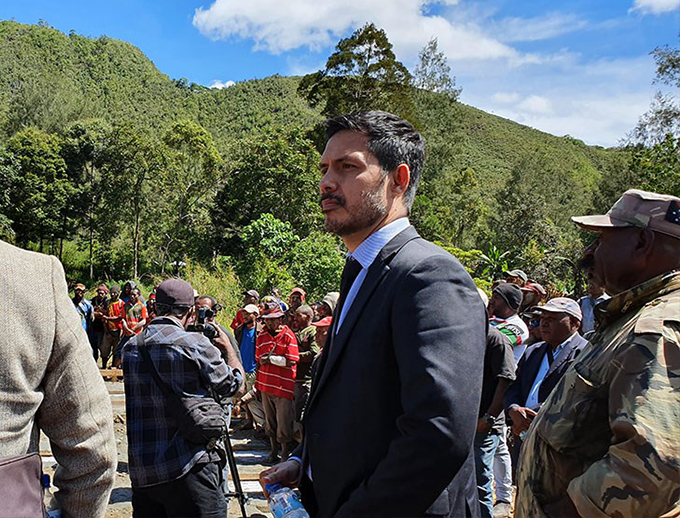
COMMENTARY: By Bryan Kramer in Port Moresby 

Yesterday, I returned from Tari Electorate in Hela Province following a one day trip to assess the situation following the horrific killing of 23 women (two of whom were pregnant) and nine children in the worst payback killing in our country’s history.

In my capacity as Minister for Police, I represented the James Marape-led government to be on the ground to pay respects to those killed and prepare and provide a brief to the Prime Minister on the circumstances behind the incident – what, who, when, how and why.

Tribal fights are not new in PNG and in recent years they have become more prevalent in the highlands region; one may argue they have been going on since the beginning of time.

READ MORE: Women who died in PNG’s Karida massacre were community ‘anchors’

However since that time the rules of engagement have always been that the elderly, women and children have been off limits.

So killing of innocent women and children in tribal conflicts until recently was unheard of. Last week’s merciless killings have changed everything. The immediate concern is that it will become the new trend.

-Partners-

I guess the questions people are asking are why did it happen, will it happen again and more importantly what is being done to prevent it from ever happening again?

Why it happened
On the first issue, why it happened:

What people would not be aware of was that last week there were three separate killings in Tagali local level government relating to a tribal conflict that has been going on for almost two decades.

The conflict has been between two tribes, one headed by a man called Oi Kiru, who comes from Pajaka 2 village, and the opposing tribe, led by Libe Koi and his second in charge Ha’gu’ai, who come from Yaganda village.

In June 2019, a key tribesman of Libe was killed. His name was Eganada and he lived in Munima village. Usually, when tribes go to war they solicit the support of surrounding villages they are married into or provide protection to.

In this case, a key ally to Libe was Eaganda, who in June was killed by his own cousin A’gun’ai (a known drug body) over an ongoing dispute between them. It is alleged A’gun’ai killed Eganada and in fear of his life fled to Oi Kiru’s village. As the saying goes, the enemy of your enemy is your friend.

However, while in the protection of Oi’ Kiru’s tribesman, we were told A’gun’ai, with a number of his own tribesman, killed six of Oi Kiru’s clansmen including his mother.

They returned to their village and threatened a nearby village called Karita, which A’gun’ai is married into, insisting that Karita village pay them protection money or face a similar attack.

Peace ceremony
On Sunday, July 7, Munima and Karita village got together to stage a peace ceremony, Karita offering 10 pigs and 4,000 kina to A’gun’ai and his clansmen.

Unbeknownst to them, Oi Kiru, learning of his mother’s death, raided a village near Munima called Peta, killing three women and three children – they were all shot to death using high powered rifles.

Following the killing at Peta village, on Monday morning around 6am young tribesman attacked Karita Village killing nine women and seven children. Two of the women were pregnant. They were killed after being attacked by the young men with machetes.

Why were women and children attacked at Karita village?

It appears the killing of women and children stemmed from the killing of Oi Kiru’s mother by men under the influence of marijuana. What followed was the payback killing of three women and three children at Peta village that triggered the further payback killing of nine women and seven children at Karita village.

On Tuesday, members of Police Mobile Squad and the Defence Force were deployed to the area. Following the recent visits by the governor of Hela Philip Undialu and me, the killings have stopped for now. Reports indicate those involved have fled the province.

The Governor and I visited both Munima and Karita villages to get a first-hand account of what happened and provide an assurance that the Marape-Steven government will bring those responsible to account.

I had intended to stay overnight at Karita village, since that was the last village to have suffered a major loss, however I was advised against it as Munima village would expect the same treatment.

Community leaders
Despite my disappointment in not spending enough time in the villages, the fact that the governor and I were on the ground prompted the community leaders from Munima and Karita not to continue to retaliate.

So what happens now.

Following consultation with Provincial Governor, Provincial Administrator and the Provincial Police Commander, including Acting Deputy Commissioner of Police David Manning, a platoon from the Defence Force and Police Mobile Squad is being stationed at Munima Primary School to provide round-the-clock security, to prevent any further escalation of violence.

High level discussions on a strategic deployment action plan, using drone technology and satellite surveillance, will be used to track and apprehend those on the run. An intelligence unit will also be established to gather information from community.

While a number of plans are being put into action to ensure peace prevails, to prevent such devastating acts of violence in our communities it is important that for the long term that we find a different way of resolving conflict that rejects revenge but encourages resolution through dialogue.

I intend to return to the province in a week’s time to get an update.

  • This article is republished by Asia Pacific Report with permission from Keith Jackson’s blog PNG Attitude. It was originally published on Bryan Kramer’s Facebook page Kramer Report.
Print Friendly, PDF & Email

Article by AsiaPacificReport.nz

Teeth ‘time capsule’ reveals that 2 million years ago, early humans breastfed for up to 6 years

Source: The Conversation (Au and NZ) – By Renaud Joannes-Boyau, Senior research fellow, Southern Cross University

Humans’ distant ancestor Australopithecus africanus had a unique approach to raising their young, as shown in our new research published today in Nature.

Geochemical analysis of four teeth shows they exclusively breastfed infants for about 6-9 months, before supplementing breast milk with varying amounts of solid food until they were 5-6 years old. The balance between milk and solid food in this period varied cyclically, probably in response to seasonal changes in food availability.


Read more: How we calculated the age of caves in the Cradle of Humankind — and why it matters


This knowledge is useful on several fronts. From an evolutionary point of view, it helps us understand the particular biological and behavioural adaptations of Australopithecus africanus compared to other extinct human ancestors and modern humans.

However, breastfeeding for up to 5-6 years is metabolically expensive – it requires a certain input of calories for the lactating mother. Using milk as a supplemental food for older offspring may have hampered the ability of the A. africanus species to successfully survive during a period of substantially changing climate.

Perhaps this way of life hastened the extinction of A. africanus around 2 million years ago.

A puzzling hominin

A. africanus was first discovered in 1924 by Australian-born scientist Raymond Dart at Taung in South Africa, and represented the first early human ancestor identified from Africa.

A century of excavation and research later, Taung and other sites across South Africa produced a rich record of early human ancestors. This region is now a UNESCO World Heritage Site known as “The Cradle of Humankind”.

This hominin species, a member of the human evolutionary lineage, had a mixture of ape-like characteristics and more specialised ones. It has only been recovered from fossil sites in South Africa that date to between 3 million and 2 million years ago.

Because only a few specimens exist, we have little information about how A. africanus lived and its relationship to other fossil hominin species such as the eastern African species of Australopithecus, the robust Paranthropus, and our own genus, Homo.

Illustration of a mother Australopithecus africanus and her young offspring. Jose Garcia and Renaud Joannes-Boyau

Zapping teeth

Our research takes advantage of cutting-edge analytical techniques. We used a laser to zap tiny pieces off fossil teeth, and then used an instrument called a mass spectrometer to determine their chemical composition.

This is much less destructive than traditional methods that require the sample to be crushed and dissolved before analysis. This makes it a crucial technique for rare specimens such as those of A. africanus.

Our laser method also allowed us to map the composition of a specimen across the entire surface of a tooth – illuminating changes in diet, mobility or climate through time. This is an important advance, as it can reveal information that has been impossible to establish using conventional palaeontological methods.

Schematic diagram of the use of laser ablation analysis to map the concentration of strontium and uranium within a tooth. Renaud Joannes-Boyau, Author provided

In this study, we mapped changes in the concentration of barium, strontium and lithium in fossil teeth of two individuals. The amounts of these elements in our bodies can change significantly depending on our diet, and these changes are reflected in the composition of our bones and teeth.

While our bones continue to change composition as they remodel during our lives, our teeth don’t change after they form during childhood. Teeth are thus a perfect chemical time capsule of our childhood diet.


Read more: What teeth can tell about the lives and environments of ancient humans and Neanderthals


Mapping a varied diet

The concentration of barium in breast milk is very high, so infant teeth that form during breastfeeding will also have a high concentration of this element. This concentration gradually drops as other sources of food are introduced.

The samples we analysed from A. africanus show a different pattern, with cyclical fluctuations in barium concentration. This suggests mothers would increase or reduce the amount of additional food, probably depending on the availability of other resources. This is an adaptation to food stress also used by modern orangutans.

The concentration of lithium in these teeth also varies cyclically, although not always at the same time as barium. The precise cause of lithium variations is still unclear but it seems to be linked to variations in body fat reserves or how much protein is eaten.

This suggests A. africanus regularly faced food stress, causing their diet and/or fat reserves to change with the seasons.

Australopithecus africanus canine showing a first period of nursing behaviour followed by a cyclical signal in the lithium, strontium and barium distribution. Renaud Joannes-Boyau

We compared the results from A. africanus to modern animals from similar savannah biome regions, which supported our results by showing cyclical signal linked to seasonal variations mix with another signal interpreted as cyclical breastfeeding also seen in mdoern orangutans.

Close to home

We also investigated the strontium isotope composition of these teeth to help understand where A. africanus was moving through the landscape. Isotopes of the same element can be distinguished by their mass.

Strontium isotopes are often used for this purpose in palaeontology, as different regions have characteristic isotope values that are taken up through food and drink.

The two A. africanus individuals in our study seemed to have lived most of their lives near the Sterkfontein cave where their remains were found.

Strontium isotopic ratio along the growth axis of an Australopithecus africanus tooth. Renaud Joannes-Boyau

Living in a region with limited food resources meant these early hominins would have eaten lots of different kinds of foods collected from varying habitats in order to survive.

Our research provides the first understanding of the nursing behaviour of A. africanus. We now know this hominin had an extended period of breastfeeding supplemented by varying amounts of solid food that caused their fat reserves to fluctuate significantly.

This was likely part of a largely successful survival strategy for the species.

But as ecosystems changed with climate around 2 million years ago, the metabolic stress on mothers may have contributed to the eventual extinction of this species.

ref. Teeth ‘time capsule’ reveals that 2 million years ago, early humans breastfed for up to 6 years – http://theconversation.com/teeth-time-capsule-reveals-that-2-million-years-ago-early-humans-breastfed-for-up-to-6-years-117894

Curious Kids: can people live in space?

Source: The Conversation (Au and NZ) – By Jonti Horner, Professor (Astrophysics), University of Southern Queensland

Curious Kids is a series for children. If you have a question you’d like an expert to answer, send it to curiouskids@theconversation.edu.au You might also like the podcast Imagine This, a co-production between ABC KIDS listen and The Conversation, based on Curious Kids.


Can people live outside Earth? – Holly, age 7, Toowoomba.


That’s a great question, Holly. The short answer is yes, but it’s really, really difficult.

Humans are great at living in tough places. Even before we developed modern technology, we had spread out to live in all of Earth’s continents – from the really cold areas in North America, Europe and Asia, to the hottest parts of Australia. But there are still lots of places on Earth humans can’t normally survive – like underneath the ocean, or at the South Pole.

Those places are dangerous – without protection, you would die in seconds or minutes. But, thanks to modern technology, we’ve worked out how to live there. People can live for months at a time under the oceans, or down at the icy South Pole.

How do they manage it? Well, they find a way to make the conditions there more like what we’re used to at home.


Read more: Curious Kids: why is the Sun orange when white stars are the hottest?


To live underwater, people build submarines. They’re warm and dry inside – perfect conditions for people to live in. People take food, oxygen and water with them into submarines, and use electricity to power lights and heaters. In other words, they change a cold, dark and dangerous place (deep beneath the ocean) into something like a home.

We do the same at the South Pole. We build special buildings, and dig tunnels, and make them warm and dry. The people who live there take food and water with them, and there’s extra heating so people don’t freeze in the Antarctic winds and ice.

But you can’t live in these cold, dark places forever. Humans don’t cope well if they don’t get enough sunlight, so they do need to get back to “normal life” after a while. And it’s really expensive to bring all the food, water, air and energy to these places.

People live at the Amundsen-Scott South Pole Station all year around – even during the six month long Antarctic night! Mradyfist at English Wikipedia

Read more: Curious Kids: What plants could grow in the Goldilocks zone of space?


Life in space

Space is very dangerous – and without protection, people would not be able to survive there. In space, there’s no air – so you couldn’t breathe. It’s cold – so you’d freeze. And there’s lots of nasty radiation (from the Sun, and from the rest of the Universe), so you’d get really, really bad sunburn. But despite all that, we have people living in space all the time!

There’s this amazing place orbiting the Earth called the International Space Station – and there are people who live there, all day, every day. You can sometimes even see it from your back yard, on a clear night!

That white line is the International Space Station passing overhead. This picture was taken using a photographer’s trick called ‘long exposure’ which makes the space station show up as a white line in the night sky. Flickr/Adam Baker, CC BY
This is what the International Space Station looks like, close up. NASA/Crew of STS-132 [Public domain]

The space station is like a submarine built especially for space. A giant tin can, filled with air, and kept nice and warm – not too hot, and not too cold. It protects the astronauts from the cold of space, gives them air to breathe, and protects them from all that nasty radiation. We send up regular shipments of food and drink – everything they need to survive.

Here’s an astronaut on a space walk outside the International Space Station. NASA’s Marshall Space Flight Center, CC BY

In other words – we’ve found a way to let people live outside Earth, and we do it by making the place we want to live just like home. Again, though, it’s not safe for people to live their forever, and being in space for a long time isn’t good for your body.

If people ever get to live on Mars, or on the Moon – or other places in the Solar system (and beyond) – it will be because we have found a way to make those places nice, safe and a bit more like home.

Whilst living on the Moon or Mars sounds like science fiction, people are talking seriously about doing just that in the future. It would be very dangerous, and really expensive. But who knows what the future holds?


Read more: Curious Kids: Do astronauts get space sick when they travel from Earth to the International Space Station?


Hello, curious kids! Have you got a question you’d like an expert to answer? Ask an adult to send your question to curiouskids@theconversation.edu.au Please tell us your name, age and which city you live in. We won’t be able to answer every question but we will do our best.

ref. Curious Kids: can people live in space? – http://theconversation.com/curious-kids-can-people-live-in-space-120334

Extremist mobs? How China’s propaganda machine tried to control the message in the Hong Kong protests

Source: The Conversation (Au and NZ) – By Joyce Y.M. Nip, Senior lecturer, Department of Media and Communications; Department of Chinese Studies, University of Sydney

As China grows more powerful and influential, our New Superpower series looks at what this means for the world – how China maintains its power, how it wields its power and how its power might be threatened. Read the rest of the series here.


China is known for the strict control it exercises on information, especially online. Discussion of events that might reflect unfavourably on the government is often censored, or framed in such a way that it becomes pro-government propaganda.

That’s why so many Chinese citizens remain unaware of, for example, the 1989 Tiananmen Square massacre.

Online discussion of the recent protests in Hong Kong against a now-suspended extradition bill was no different. But this was also a rare occasion when China’s news propaganda machine was mobilised to simultaneously target several audiences both inside and outside China.

China’s propaganda network is made up of a constellation of domestic and international news outlets. They span social media, mobile apps, websites and traditional media.

The news is tailored to particular audiences according to different agendas. Everything, however, comes under the direction of the Central Publicity (formerly translated as “Propaganda”) Department of the Chinese Communist Party.

Over the past few weeks, we’ve seen the China extradition bill elevated from a local Hong Kong controversy to a story of international concern following the protesters’ lobbying campaign targeted at the G20 summit.

As events escalated from peaceful rallies focused on a single issue to at times violent confrontations seeking a range of demands, including the resignation of Hong Kong Chief Executive Carrie Lam, the agendas of several spheres of China’s propaganda converged.

Here’s how it unfolded.

China’s de-facto media and new media allies in Hong Kong

The first day protesters took to the streets was March 31. That was two days after the extradition bill was published in the Gazette, the official publication of the Hong Kong government.

The same day, two Chinese-language newspapers that have long acted as de-facto official media of the Chinese government in Hong Kong (but not openly declared as such) swung into action.

Wen Wei Po and Ta Kung Pao both used either the entire or the majority of the second pages in the news sections to proclaim the merits of the bill. They also, to a lesser extent, attacked the bill’s opponents.


Read more: Pressure builds with more protests in Hong Kong, but what’s the end game?


These outlets are on the semi-periphery of China’s propaganda machine, targeting a local audience in Hong Kong. They cannot ignore negative news about China or the Beijing-endorsed Hong Kong government, despite the fact China has co-opted most traditional media outlets in Hong Kong in recent decades. They seek instead to counter it with a positive spin while discrediting opposing voices.

Their messages were reinforced by relatively new digital media outlets in Hong Kong that are supportive of the Chinese regime. These outlets form the periphery of China’s propaganda in the city and focus a great deal of coverage on bashing the government’s perceived enemies.

After the extradition bill was published, outlets like the Silent Majority of Hong Kong and Hong Kong G Pao pumped out positive propaganda stories about it and the Hong Kong police and negative propaganda about the opponents of the bill.

One of the three articles, published by the Silent Majority of Hong Kong on May 31, for example, attacked the publisher of the Apple Daily Newspaper, one of few media outlets in Hong Kong that is openly critical of Beijing, for the “nonsense” he expressed that the bill would harm press freedom.

The articles employed the outlet’s usual tactics: singling out individuals and pitching them against the interests of society. Silent Majority also encourage readers to “like” their stories, forming supportive public opinion while helping the news to spread.

China’s central media outlets followed suit

The core news propaganda outlets of the Chinese state, such as People’s Daily, and CCTV, didn’t address the Hong Kong protests until April 17, more than two weeks later.

These outlets target the domestic audience inside mainland China, and as such, tend to ignore stories like this on sensitive subjects or those that paint the party in a bad light.

The mission of core state media is to foster a positive image of China, either for a domestic or international audience. Usually this involves reporting on China’s achievements. When China comes under pressure, the core media attempt to justify the government’s actions as reasonable.


Read more: How a cyber attack hampered Hong Kong protesters


The establishment of a group in Hong Kong that supported the extradition bill gave the online edition of the People’s Daily an opportunity for positive propaganda on April 17. One story read, in part:

The group calls on citizens to participate in a signature petition organised by it to support the passage of the amendment bill, so as to improve the legal system and demonstrate justice and avoid Hong Kong becoming a place for criminals to evade legal responsibility.

Targeting an international audience, the English-language China Daily dismissed concerns about the bill in an editorial on April 29, the day after the second protest against it. Part of it read:

…the opposition camp and its foreign backers have gone to great lengths to present scary scenarios the amendments could lead to in order to garner support for their own political agenda.

On June 12, protesters encircled Hong Kong’s legislative chamber and clashed with police. The following day, China’s national news agency, Xinhua, published a story claiming that the majority of the Hong Kong public supported the bill.

Then, on July 1, a group of protesters occupied Hong Kong’s legislative chamber. The action drew strong and extensive statements of condemnation from China’s core propaganda outlets in the following days.

The rule of law in Hong Kong cannot be challenged.

Resolutely support the SAR Government in pursuing serious violations of the law.

Attack on HK legislature a ‘political act’ with ‘hidden agenda’.

Why language matters in coverage, too

These three layers of propaganda target different audiences and operate in different information environments. They follow different tactics.

This involves using different language. The news about the extradition bill in China’s core propaganda outlets is full of statements from official state agencies and other organisations that are supportive of the bill. The language is formal and repeats stock phrases, including:

  • violence
  • rule of law
  • extremists
  • stability and prosperity
  • one country, two systems
  • foreign interference
  • national security.

Read more: The world has a hard time trusting China. But does it really care?


The same stock phrases are supplemented by more accusatory words in the semi-peripheral layer of China’s news propaganda, including:

  • riot
  • terrorism
  • mob
  • independentist
  • colour revolution.

Some of the digital-only outlets on the periphery, operating in the clickbait-driven online environment, show little restraint in using abusive, colloquial language, such as by calling opposition politicians “scoundrels.” They sometimes also fake facts and doctor images to attack opponents. This differentiates them from the traditional news media, which follow journalistic principles more closely.

Studying China’s core state media alone overlooks the complementary way each layer of the propaganda machine works with the others. Using different communication tactics in different spheres, each outlet reinforces the others to create a coherent world view.

What they have in common, though, is an adherence to the main party line – and with this, the party hopes to control the message on the Hong Kong protests, even as it struggles to control the streets.


Hiu-long Chu, a Masters student of Social Work at the Australian College of Applied Psychology, contributed to this report.

ref. Extremist mobs? How China’s propaganda machine tried to control the message in the Hong Kong protests – http://theconversation.com/extremist-mobs-how-chinas-propaganda-machine-tried-to-control-the-message-in-the-hong-kong-protests-119646

Hand sanitisers in public won’t wipe out the flu but they might help reduce its spread

Source: The Conversation (Au and NZ) – By Trent Yarwood, Infectious Diseases Physician, Senior Lecturer, James Cook University and, The University of Queensland

This year’s flu season is off to an early start, with 144,000 confirmed cases so far in 2019. That’s more than twice as many confirmed cases of the flu than for all of 2018 (58,000), and almost as many as the 2017 horror flu season (251,000).

The number of cases so far this year, including more than 231 deaths nationwide, led the NSW opposition health spokesperson to call for hand sanitisers in public spaces to help slow the spread.


Read more: It’s a bad year for flu, but it’s too early to call it the worst ever – 5 charts on the 2019 season so far


Influenza spreads via droplets from coughing and sneezing, which is why it’s a good idea to catch your cough. But coughing into your hand can leave flu virus on your hands, which is why we recommend coughing into your elbow or sleeve and washing your hands afterwards.

Along with getting vaccinated and staying home if you’re sick, washing your hands is the best defence against getting the flu.

If the government can make this easier by providing hand sanitisers in public places, it may be worth the investment. It won’t solve our flu problem but it might be an important tool in the toolbox of measures to reduce its spread.

What does the research say?

The scientific literature on hand sanitisers isn’t so clear-cut.

A 2019 study in university colleges showed the use of hand hygiene and face masks didn’t protect against flu any better than mask use alone. But unlike some other countries, Australia doesn’t have a strong habit of mask use when people are unwell, so this may not be very helpful to us.

A 2014 study in New Zealand schools showed that providing sanitiser didn’t reduce the rate of absenteeism from school either.

While these studies make it sound like hand sanitiser is not very effective, that’s not the end of the story.

Other studies show a positive effect – a 16% reduction in respiratory illness in one and a 21% reduction in another. For some infections, the evidence is even stronger – for example, gastroenteritis, most of which is also viral.

However, few of these studies showing the benefits of hand sanitisers were done during a large disease outbreak, which means the potential benefit may be even greater.

Not all influenza-like illness is caused by the flu – it can be other viruses as well, so the estimates are a bit rubbery at best. Hand sanitiser trials which look at influenza-like illness or respiratory infections generally are more likely to show benefits than those that just look for influenza – meaning good hand hygiene prevents other infections as well.

If you have the flu, the best place to be is at home. Tero Vesalainen/Shutterstock

Lessons from hospitals

Although preventing infection in hospitals is not the same as doing it in the community, there are two important lessons from hospital infection control.

First, in hospital hand-hygiene programs, hand sanitiser is more effective than soap-and-water hand-washing, provided your hands aren’t visibly dirty.

This is partly because of the rapid effect of the alcohol, but mostly because it’s much quicker and therefore more likely that staff will use it.


Read more: Health Check: should I use antibacterial hand sanitisers?


The second important point from hand hygiene and other areas of hospital infection control is that introducing a “bundle” of strategies usually reduces healthcare-associated infection rates – even when the individual parts of these bundles don’t show benefits alone.

This could be because the individual effect sizes are too small, or that change in practice highlights a “safety culture”.

Sanitisers can be one of many strategies

Installing hand rub in public areas won’t solve this year’s flu outbreak by itself. But it can be part of a bundle of strategies – as long as the dispensers are kept topped up.

And it’s certainly a safe intervention – despite some desperate hysteria about the safety of hand gels, or the risk of people drinking them, there is little evidence this actually occurs in reality.

Hand sanitiser is also likely to be easier to implement than fixing the much larger social problem of Australians going to work when they’re sick. This may be because of inadequate sick leave, concerns about “letting the team down”, or other logistical problems such as child-care.

Get your flu vaccine – even now it’s still not too late – and get it for your kids as well, for their sake as well as your own.

Remember to stay home if you’re unwell, and always to cough into your sleeve. And don’t forget to clean your hands – even if the government doesn’t end up making it easier for you.


Read more: The 2019 flu shot isn’t perfect – but it’s still our best defence against influenza


ref. Hand sanitisers in public won’t wipe out the flu but they might help reduce its spread – http://theconversation.com/hand-sanitisers-in-public-wont-wipe-out-the-flu-but-they-might-help-reduce-its-spread-120228

Regional cities beware – fast rail might lead to disadvantaged dormitories, not booming economies

Source: The Conversation (Au and NZ) – By Todd Denham, PhD Candidate, School of Global, Urban & Social Studies, RMIT University

Governments are looking to fast rail services to regional cities to relieve population pressures in Sydney, Melbourne and Brisbane. The federal government is funding nine business cases for such schemes. But what economic effect might these fast links have on the regional cities?

The current fast rail schemes seem oriented at relieving population pressures in the major cities rather than a productive regional economic purpose. The minister for population, cities and urban infrastructure recently stated:

… the National Faster Rail Agency begins operating from today [July 1]. The new Agency will oversee the government’s 20-year fast rail agenda, which will connect satellite regional cities to our big capitals. This will allow people to reside in regional centres with its [sic] cheaper housing and regional lifestyle but still access easily and daily the major employment centres.


Read more: We can halve train travel times between our cities by moving to faster rail


The argument seems built on a pitch to city workers priced out of metropolitan housing markets. It treats regional towns as remote dormitories for metropolitan workers rather than as regional cities that serve as service hubs and employment centres. But will subsidising metropolitan workers to live in cheaper regional towns have a positive economic effect on those towns?

An unequal relationship

Concern is growing among international observers that fast rail connections between two cities benefit the larger of the pair. Professor Michael Storper observed:

One of the biggest mistakes we’ve made was being naïve about connectivity – give infrastructure and it spreads. Well, often it concentrates. The high-speed train network in France, guess what it did. It advantaged Paris.

While Paris is seen as benefiting the most from the national fast rail TGV service, the regional cities of Lyon and Lille have strengthened their economic positions. The Lyon and Lille fast rail stations form the hub of their respective regional transport networks and have attracted new commercial activity. They also sit at intersections of major European fast rail networks.

It’s a pattern that cannot be easily achieved for Australia’s regional cities due to our widely dispersed settlements. So what does this mean for our regional cities?

Improving transport infrastructure doesn’t just improve regional business access to metropolitan markets. It decrease the costs of trade in both directions. And large cities are typically more productive economically. This is because they offer more specialised goods and services and can leverage the agglomeration effects of shared high-quality labour markets and infrastructure, plus a concentration of skills and knowledge.


Read more: Our big cities are engines of inequality, so how do we fix that?


Reduced travel times can mean regional businesses become less efficient than metropolitan competitors that can offer a wider range of specialist goods and services. This may lead to regional business closures, employment losses and wage decline. Unless a regional city is able to develop a specialised set of high-skill, high-wage industries that complement or outcompete the metropolis it risks being economically disadvantaged by faster rail.

New regional demand arising from commuter population growth might counter the loss of higher-order regional jobs due to improved transport links. But that will largely be in lower-value retail and personal service sectors. The result will still be a net economic gain for the metropolis.


Read more: The growing skills gap between jobs in Australian cities and the regions


An influx of commuters earning metropolitan wages might also inflate regional housing markets. This would disadvantage lower-paid regional workers. The beneficiaries of this scenario are likely to be local rentiers, such as landholders and developers who can profit from land-price inflation.

This interest group will likely vocally promote regional fast rail. But sustainable economic prosperity for regional cities requires more than population-driven land speculation.


Read more: A housing affordability crisis in regional Australia? Yes, and here’s why


The example of Geelong

The most advanced of the current Australian proposals is the Geelong-Melbourne route. It has received federal and state funding for planning with an estimated total cost of at least A$10 billion. But planners need to ask how this spending will provide a net economic benefit, and how the benefits will be distributed.

Growth in commuter population and the services this attracts may be seem like a resolution to metropolitan population problems, but could further concentrate higher-paid jobs in Melbourne. Faster commutes mean Melbourne-based firms will have a greater pick of Geelong-based workers, thus consolidating metropolitan competitive advantage. Fast rail thus risks placing Geelong at a competitive disadvantage, with jobs and workers being exported to Melbourne.

Meanwhile the pressure of housing another 145,000 residents in the next 20 years already falls on Geelong, a city of 280,000 people. The strain on infrastructure and services is proportionately greater than would be the case in Melbourne, which has nearly 5 million residents.


Read more: This is how regional rail can help ease our big cities’ commuter crush


What can policymakers do about this?

To resolve this conundrum, thought must be given to what specialised high-value jobs will be attracted to regional cities to accompany fast rail investments, so these cities remain competitive and productive, regionally, nationally and internationally. This might include policies such as relocating public agencies, regional targeting of university-based research and development spending, boosting services such as schools and hospitals, and providing incentives for innovative private companies to relocate to regional towns.

Policymakers should also consider positioning regional cities as rail network hubs in their own right. An example would be connecting Geelong, Ballarat and Bendigo by rail, along with better linkages to national and international airports.

We don’t yet know for sure what the effects of fast rail on regional cities will be. But the impact of this infrastructure needs to be assessed very carefully lest it turns Australia’s regional cities into dependent population dormitories rather than regional dynamos, at vast public expense.

ref. Regional cities beware – fast rail might lead to disadvantaged dormitories, not booming economies – http://theconversation.com/regional-cities-beware-fast-rail-might-lead-to-disadvantaged-dormitories-not-booming-economies-119090

Four Corners’ forced labour exposé shows why you might be wearing slave-made clothes

Source: The Conversation (Au and NZ) – By Yvette Selim, Interim Deputy Director, Anti-Slavery Australia, University of Technology Sydney

With China’s western-most province of Xinjiang being turned into a mass internment camp, last night’s ABC Four Corners program reported on the Chinese Communist Party’s alleged plans to put up to a million detained Uyghurs to work.

The exposé highlights how global supply chains make it possible for the clothes you’re wearing, and many other things you own, to have been made using slavery.

The program featured the cases of several women who say they have been forced to work in textile factories. According to China scholar Adrian Zenz, government documents reveal plans for “re-education” through labour. Satellite photos show what look like large warehouses close to detention camps.


Read more: Explainer: who are the Uyghurs and why is the Chinese government detaining them?


Target, Cotton On, Jeanswest, Dangerfield, IKEA and H&M are among the brands in Australia sourcing cotton from Xinjiang, according to Four Corners. In response to questions from the ABC, Target and Cotton On declared they would investigate their relationships with suppliers.

Activists protest the treatment of Uyghur Muslims outside the headquarters of the European Union, in Brussels, in February 2019. Alexandros Michailidis/Shutterstock

Modern slavery: a snapshot

For many of us it is hard to believe modern slavery is now more prevalent than at any time in history.

But the ubiquity and lack of accountability in global supply chains mean an estimated 25 million people around the world are in forced labour. A further 15 million are in forced marriage.

About two-thirds of the total number of people in modern slavery are in the Asia-Pacific region, where most Australian companies source their materials and products.

The problem is so widespread it’s unlikely any companies’ operations or supply chains are completely free of modern slavery.

Yet many businesses are unaware of what modern slavery is and what it might look like in their operations and supply chains. And some companies – and their customers – may be complicit in creating a “race to bottom” by demanding cheaper goods and services without checks on social (and environmental) credentials.

Anti-Slavery Australia

Australia’s legal reforms

This problem was recognised with Australia passing modern slavery legislation last year. The Modern Slavery Act 2018 requires businesses of a certain size to report their efforts to keep their supply chains slavery-free. The requirements came into effect this month.

Modelled on the UK Modern Slavery Act 2015, Australia’s law requires businesses with a consolidated annual revenue of more than $100 million a year to publish an annual modern slavery statement.

The statement must address seven mandatory criteria (including risks in the business’ operations and supply chains and the actions taken to address those risks).


Read more: At last, Australia has a Modern Slavery Act. Here’s what you’ll need to know


The government has the power to publicly name those that fail to comply, but not to fine or penalise them in other ways. It is hoped fear of shaming will be enough icentive to avoid the reputational, financial and other risks that might arise from public scrutiny.

Without penalties, civil, shareholder and consumer activism will be crucial to motivate businesses.

If nothing else, as shoppers we can become better informed about the risks in business supply chains and challenge companies and governments to do better through social media and other avenues. Each purchase of a good or service can be an ethical choice.

More to be done

In the end, the Australian modern slavery legislation is about ensuring businesses do their part to ensure the food, clothes and electronics we buy have not been made using modern slavery.

Drawing on Anti-Slavery Australia’s legal casework experience with survivors of modern slavery, we also know victims aren’t just overseas. An estimated 1,500 people in Australia are victims of modern slavery. They are often migrants, who fear coming forward and are intimidated by the legal system.


Read more: Human trafficking and slavery still happen in Australia. This comic explains how


We continue to advocate for further improvements of the Modern Slavery Act, including for penalties and independent oversight.

NSW has its own legislation that’s about to go under review and it includes an independent Anti-Slavery Commissioner and penalties for up to A$1.1 million for failing to comply or making false or misleading statements. These would be welcome additions to the federal regime, along with more support for survivors, and better monitoring and data collection.

We’ve taken a step in the right direction, but as the ABC Four Corners’ exposé indicates, there is much more to be done.


Anti-Slavery Australia, based at the University of Technology Sydney, is Australia’s only specialist legal research and policy centre focused on the abolition of modern slavery in all its forms. For more information or confidential legal advice, contact www.antislavery.org.au. For information and advice on forced marriage, see www.mybluesky.org.au.

ref. Four Corners’ forced labour exposé shows why you might be wearing slave-made clothes – http://theconversation.com/four-corners-forced-labour-expose-shows-why-you-might-be-wearing-slave-made-clothes-115462

Wind and solar cut rather than boost Australia’s wholesale electricity prices

Source: The Conversation (Au and NZ) – By Zsuzsanna Csereklyei, Lecturer in Economics, RMIT University

Wholesale prices in the National Electricity Market have climbed significantly in recent years. The increase has coincided with a rapid increase in the proportion of electricity supplied by wind and solar generators.

But that needn’t mean the increase in wind and solar generation caused the increase in prices. It might have been caused by other things.

Colleagues Songze Qu and Tihomir Ancev from the University of Sydney and I have examined the contribution of each type of generator to wholesale prices, half hour by half hour over the eight years between November 1, 2010 and June 30, 2018.

We find that, rather than pushing prices up, each extra gigawatt of dispatched wind generation cuts the wholesale electricity price by about A$11 per megawatt hour at the time of generation, while each extra gigawatt of utility-scale solar cuts it A$14 per megawatt hour.

Merit order matters

Here’s how.

In Australia’s National Electricity Market, prices are determined at five-minute intervals and averaged over 30-minute intervals for settlement. Generators place bids for supplying electricity to meet the expected demand which are accepted in a “merit order” of cheapest to most expensive.

The final price – awarded to all the bidders accepted – is determined by the final and most expensive bid accepted, which is often a bid by a gas generator.


Read more: A high price for policy failure: the ten-year story of spiralling electricity bills


Wind and utility-scale solar generators bid into the market at low cost because their power is essentially free when the wind is blowing or the sun is shining. They displace higher cost bids, usually from gas or diesel turbines that have high fuel costs. We find this effect on prices (known as the “merit order effect”) has grown as wind and solar generation has grown.

The daily impact of wind and solar on wholesale prices is somewhat lower. A 1 gigawatt per hour increase in daily wind generation is associated with about a A$1 per megawatt hour decrease in the average daily wholesale price. The same increase in solar generation is associated with A$2.7 per megawatt hour decrease in daily wholesale electricity prices.

These findings and those of others since 2003 challenge the previous conventional wisdom that mandating renewable generation necessarily increases prices.

So why are prices climbing?

Natural gas prices have been climbing dramatically over the recent years, mainly due to the opening up of east coast export capacity and the integration of the Australian market with international markets. The higher prices have made it more expensive to run gas turbines and have pushed up the price of what is often the last bid to be accepted.

We find the price of natural gas has a strong positive effect on wholesale electricity prices. An increase of A$1 per gigajoule in the natural gas price pushes up wholesale electricity prices by about A$5 per megawatt hour.

Although in recent years the upward price pressure from more expensive gas has overwhelmed the downward pressure from greater wind and solar capacity, it is nevertheless true that wholesale prices are lower than they would have been without renewable generation.

Therefore, a continued expansion of renewables is likely to put downward pressure on wholesale prices for some time.

There’s a case for moving away from gas peaking plants

This means that rather than reconsidering renewables, authorities should reconsider their reliance on gas plants for handling peaks in demand. While peaking plants are more needed with the increased penetration of renewables, there is a case for switching to alternative providers of peaking power, such as large-scale batteries and pumped hydro.

In doing so governments should also consider something else. Wholesale prices that are too low will discourage investment, leading to higher prices down the track.

The lower prices go, the more the government might need to provide investment incentives.

For now, all other things being equal, more wind and solar power means lower wholesale prices. But they’ll have to be watched.


Read more: The verdict is in: renewables reduce energy prices (yes, even in South Australia)


This article is based on a paper being delivered to the 2019 Australian Conference of Economists, taking place in Melbourne from July 14 to 16.

ref. Wind and solar cut rather than boost Australia’s wholesale electricity prices – http://theconversation.com/wind-and-solar-cut-rather-than-boost-australias-wholesale-electricity-prices-119979

Reading and writing assistance increases the chance of getting a Disability Support Pension

Source: The Conversation (Au and NZ) – By Nary Hong, PhD candidate in Economics, UNSW

The 2019 Australian Conference of Economists is taking place in Melbourne from July 14 to 16.

During the conference The Conversation is publishing a selection of articles by the authors of papers being delivered at the conference.


The Disability Support Pension is important in the lives of the Australians who receive it. The latest figures show that’s 4% of the working age population.

Yet a huge proportion of claims for it are rejected. Over the four years from 2011-12 to 2014-15 the average “grant rate” was 43%, meaning 57% of claims were rejected.

The largest non-medical reason given for rejection is failure to supply the requested information, accounting for one in eight rejections.

In a paper to be presented to the Australian Conference of Economists in Melbourne on Tuesday I examine the extent to which that is due to a specific kind of disability – an inability to properly complete the form.

Does form-filling matter?

The Bureau of Statistics survey of disability, ageing and carers provides rich data the on employment, socio-demographic characteristics and health conditions of disabled Australians, including the extent to which they have assistance with reading and writing.

One question is

do/does you/he/she receive assistance from any organised services to help with reading and writing tasks?

Another is

do/does you/he/she receive assistance from anyone else, such as a partner or spouse/parent, family, friends or neighbours to help with reading and writing tasks?

I combined the answers to these questions to create a yes/no answer to the broader question of whether or not an applicant for the Disability Support Pension obtained help with reading and writing from any source.

Confidentialised unit record files from 2003, 2009 and 2015 gave me data on 18,141 disabled Australians between the ages of 16 to 64.

Help with reading does matter…

I found that reading and writing assistance is associated with an increase of about 20% in the probability of getting the Disability Support Pension.

Most of that reading and writing support comes from informal sources (family, friends and neighbours) rather than formal ones.

And it seems to be more than an association. Using statistical techniques to set aside the impact of other things that might be driving the effect, I find that the impact of help with literacy is even greater.

Ideally, help shouldn’t have much impact, but the claim form for the Disability Support Pension is 33 pages long.


Read more: Financial literacy is a public policy problem


The government has introduced new assessment tables in a legitimate and successful attempt to restrain the growth of the Disability Support Pension.

But there can be no case for (unintentionally) using complexity as another means of restraining growth in use of the pension.

…we should be taking it mainstream

The strong positive impact of the reading assistance that has been available builds a case for providing more of it, through formal means, to ensure that fewer people are deterred from applying for benefits for which they are eligible.

Greater formal provision of help would also ease the pressure on informal helpers, making it easier for them to stay in the workforce and improving their emotional well-being.

This finding has implications for the National Disability Insurance Scheme, for which reading and writing is even more important to navigate. The NDIS emphasises individual choices, making the application process particularly complex.

Disability with paperwork should not be a barrier to receiving disability benefits.


Read more: The NDIS hasn’t made much difference to carers’ opportunities for paid work


ref. Reading and writing assistance increases the chance of getting a Disability Support Pension – http://theconversation.com/reading-and-writing-assistance-increases-the-chance-of-getting-a-disability-support-pension-119980

‘Making up games is more important than you think’: why Bluey is a font of parenting wisdom

Source: The Conversation (Au and NZ) – By Koa Whittingham, Psychologist and Research Fellow, The University of Queensland

Bluey is a ground-breaking Australian children’s television series and the most downloaded show in ABC iView history. Since premiering in October 2018, Bluey has been played on iView over 100 million times, and it is set to stream internationally on Disney’s streaming platform starting later this year.

The show follows the adventures of a blue heeler puppy, six-year-old Bluey, and her close-knit family: her four-year-old sister Bingo and their dad Bandit and mum Chilli. It is a gem of Australian art, carefully distilling the essence of family life and – between laughs – capturing the wonder and joy of parenting, and delivering precious nuggets of parenting wisdom along the way.

In fact, the messages the show subtly imparts are remarkably consistent with the scientific literature on parenting and parental wellbeing. Here, then, are just a few poignant examples of “Bluey” wisdom.

Play matters

Play is the powerhouse of child development. It is linked to language abilities, creativity and emotional intelligence. Parents can feel so pressured by other demands on their own and their children’s time, though, that it’s easy to forget that play is one of the most important, enriching activities needed for children to flourish. As Bandit tells his daughter, “Making up games is more important than you think”.

In fact, we are beginning to understand that play is important for adults too. Emphasising the importance of work, at the expense of play, undermines long-term achievement, health and happiness, so finding a balance is key.

Bandit and Chilli are masters at maintaining connection with their daughters, squeezing precious moments of play (like pretending to be a sick patient who has swallowed a cat or an employee who really just wants to dance) between work and household tasks. Their playfulness is clearly beneficial for them as well.


Read more: Let them play! Kids need freedom from play restrictions to develop


Be the parent you want to be, even when you don’t feel like it

Every day, we each have to choose between taking the “easy” option – whatever makes us feel better in the moment – or investing time and energy in doing what really matters.

Psychologists describe this as living in accordance with our values. Although the easy option can bring immediate relief from feelings like sadness or anger – and, let’s face it, we all find ways to avoid negative emotions now and then – it can become a big problem when this way of dealing with challenges becomes a pattern.

Living out our values is not always easy. It can be tough, and making room for difficult emotions is part of moving towards living a meaningful life. Bluey’s parents, Bandit and Chilli, frequently give a sigh and a skywards glance before playing yet another game of “hospitals” or “hotels” with their children – it is clear that it isn’t always easy for them – yet, being a fun and playful parent is clearly a core value for both of them. So they jump right in regardless.

Emotions are opportunities for learning and connection

We can all can forge deeper connections with others – including our children – through emotional exchange: by listening to their expressions of emotion, validating their emotions and gently exploring them. This process is called “emotion coaching” and has been linked to better emotional and social skills in children.

Bandit and Chilli are master emotion coaches. Whether it is Bluey’s sorrow at the death of a bird, or her frustration while trying to learn to ride a bike, they listen, validate and explore their children’s emotional worlds through conversation or play.

Bluey’s parents recognise the importance of play. IMDB

Natural and logical consequences

There’s a trap we will all fall into at some stage in our parenting careers: using a whole lot of talking to get through to our children, all the while protecting them from the consequences of their actions – and then becoming frustrated that they aren’t learning the “lesson”!

Bandit and Chilli aren’t afraid to allow Bluey and Bingo to experience the natural consequences of their own actions. For example, Bluey learns that when you spend your money on a toffee apple at the market, changing your mind about your purchase doesn’t mean you get your money back.

Bandit and Chilli skilfully demonstrate the use of logical consequences too. Logical consequences are parent-generated, but are comparable to the kinds of consequences that truly happen in the world, so children are learning a genuine and useful life lesson.

For example, in the episode “Wagonride”, when Bluey impatiently interrupts Bandit, wanting to move straight to the monkey bars, Bandit uses a logical consequence – stopping the wagon – to impart an invaluable life lesson: doing activities with other people requires give and take, and a bit of patience.

Bluey is a landmark Australian show for many reasons. But an important one is this: amid the ridiculous and the ordinary, Bluey’s parents regularly find themselves both sharing and receiving the poignant wisdom that comes with the drudgery and absurdity of parenting. And Australian parents can relate to that.

ref. ‘Making up games is more important than you think’: why Bluey is a font of parenting wisdom – http://theconversation.com/making-up-games-is-more-important-than-you-think-why-bluey-is-a-font-of-parenting-wisdom-118583

Pacific Games: New Caledonia lead, Samoa second at halfway point

By RNZ Pacific

New Caledonia has a healthy lead on the Pacific Games medals table after the first week of the competition.

The French Territory has won 42 gold medals after the first six days of competition and more than 50 silver and bronze, with host nation Samoa the nearest challenger with 26 gold medals while Tahiti have 21.

Another six first place finishes on the final night of swimming action brought New Caledonia’s total haul in the pool to 25 gold, 11 silver and 13 bronze medals.

READ MORE: Athletics headline Week 2 at the Pacific Games

Swimming Team Manager Cyril Huet said it’s an even bigger haul than they managed in Port Moresby four years ago.

“We are very happy and the team is very unique,” he said. “We win the games because it’s an objective we want to win the games, but behind you you have the team of Fiji it’s a very good team too and finished No.2 (in swimming) and is very good. To have competition with Fiji, Samoa, Tahiti, Cooks, it’s very good competition.”

-Partners-

“All the team is high level. The girls win 12 gold medals, the boys win 11 gold medals. It’s a group, it’s a unique group. Not one swimmer is better – it’s all the group, I think. We want all the time to work all together,” he said.

Elsewhere in Apia, Dgeniva Matauli won the women’s singles title in badminton and teamed up with Johanna Kou to take the doubles crown, while the French Territory proved unbeatable on the golf course, winning the men’s and women’s team events, with Dylan Benoit and Emilie Ricaud winning individual gold.

New Caledonia’s Emilie Ricaud won gold in the women’s golf tournament. Image: RNZ Pacific

Meanwhile sailor Juliette Bone won gold in the women’s laser radial – Samoa won the team event – and Avelino Monteiro won gold in the men’s para table tennis.

Samoan weightlifters wow home crowd
Sanele Mao set five Oceania and Commonwealth records in front of a raucous home crowd as Samoa’s weightlifters finished with an impressive haul of 16 Pacific Games gold medals.

Competing in the men’s 109kg division, the 32 year-old Mao snatched 160kg before clean and jerking 206kg to finish with a monster total of 366kg. That was enough to win three Pacific Games gold medals, while he broke the Oceania senior record in all three disciplines and set a new Commonwealth best in the clean and jerk and total.

Petunu Opeloge won gold in the men’s 102kg snatch, Iuniarra Sipaia won gold in the women’s +89kg clean and jerk, while Lauititi Lui rounded off Samoa’s golden haul with victory in the men’s +109kg snatch.

Papua New Guinea’s Steven Kari won two gold medals in the men’s 96kg division, with Israel Kaikilekofe from Wallis and Futuna taking out the snatch title.

Meanwhile there was also success for New Zealand and Tongan lifters on Saturday afternoon, as Laurel Hubbard upstaged Samoan flag-bearer Feagaiga Stowers to win gold in the women’s +87kg snatch and total and silver in the clean and jerk.

It was the 41 year-old’s first major medals since the 2017 World Championships and comes 15 months after she injured herself competing at the Commonwealth Games.

Hubbard was unavailable for comment but the high performance director for Olympic Weightlifting New Zealand, Simon Kent, was delighted with her performance in Apia.

“She performed particularly well today. A full house, full home crowd cheering on all their lifters but she really put in a performance she can be proud of,” he said. “It’s good healthy competition and I think it was Laurel’s third snatch there on 125kg that just about set up that victory today.”

“She’s been training hard, she’s been based in Noumea for the last couple of weeks training with the (Oceania Weightlifting) Institute lifters. She certainly came here with a lot of confidence. She’s been very much part of our team and I think she will be delighted with her performance today.”

New Zealand’s Commonwealth Games champion David Liti could only manage a silver medal in the men’s +109kg snatch and failed to complete a lift in the clean and jerk, with Tonga’s Aisake Tuitupou winning the Kingdom’s first two gold medals of these Pacific Games in the clean and jerk and total.

Around the grounds
Tahiti won the final two V6 marathon races at Mulifanua to finish with 10 gold medals from 12 events in Va’a.

Swimmer Rahiti De Vos won gold in the men’s 400m, Heiava Lamaud prevailed in the women’s para table tennis, while Remi Rossi was involved in three badminton gold medals, winning the men’s singles before teaming up to also claim victory in the men’s and mixed doubles events.

Vanuatu reigned supreme in table tennis, winning the men’s and women’s titles in singles and doubles, to triple their overall gold medal haul to six.

History repeated as the Samoa women’s cricket team defeated Papua New Guinea by four wickets to win the gold medal, with the winning runs struck just moments before rain began to bucket down at the faleata cricket field.

History repeated as the Samoa women’s cricket team defeated Papua New Guinea by four wickets the win gold medal. Image: RNZ Pacific

The host restricted PNG to 72 for 7 from their 20 overs and finally reached their target with nine balls remaining.

Captain Regina Lili’i said it was even more special to win in front of a home crowd.

“It puts all the hard work that we have done as a group, as a collective leading up to this tournament,” she said. “All that hard work is worthwhile when you come out with this result, with a gold medal,” she said.

“To have the support of our home crowd here – noisy all throughout the match – I don’t really have any words for it but as you could see with our girls they were all crying at the end and it just meant so much for us in front of our family and friends here.”

Defeat avenged
It wasn’t all bad for Papua New Guinea as the Barramundis defeated defending champions Vanuatu by 32 runs in the men’s final to avenge their defeat in Port Moresby four years ago.

Meanwhile Fiji defended both rugby sevens titles, with the Fijiana women beating Australia 14-7 and the men holding off hosts Samoa 7-5, despite conceding two yellow cards.

Men’s coach Gareth Baber said they didn’t have a lot of ball but the players worked hard and defended well, even when they had less players than the opposition.

“Two sin bins but I think Samoa could have got two sin bins as well, I think it was that type of game,” he said.

“We know when we play against Samoa there’s going to be that and it’s going to get to that level but it’s who can control that at the end of it and I thought that when we went down to the sin bins we worked extremely hard to make sure that the six did the job for the seven.”

The Pacific Games resumed on Monday for the second week with the start of athletics at Apia Park among the highlights.

This article is published under the Pacific Media Centre’s content partnership with Radio New Zealand.

Print Friendly, PDF & Email

Article by AsiaPacificReport.nz

Can criminal suspects be identified just by the sound of their voices?

Source: The Conversation (Au and NZ) – By Ahmar Mahboob, Associate Professor of Linguistics, University of Sydney

A few months ago, I received a call from a barrister who asked me if I could evaluate whether voice identification testimony submitted in a criminal case against an Indigenous man was based on appropriate analysis.

He told me a police officer had been working on a criminal investigation when he heard a voice on a covert audio recording that he believed was one of three suspects in an unrelated armed robbery investigation.

The police had mobile phone and location data on two of the suspects in the case. However, they did not have direct evidence tying the third suspect to the crime. To prove his involvement, the prosecution sought to use voice identification evidence, in addition to other evidence that I was not privy to.

After a single meeting with the suspect in custody, the officer investigating the case identified the voice on the recording as his. The police officer said he was certain of the match because the suspect, like the voice on the recordings, had

a low voice. He speaks with a kind of a drawl and occasionally sounds like a bit of a whine.

The suspect pleaded not guilty to the crime and questioned the validity of the voice identification. It was at this point the lawyers contacted me.

I reviewed the police procedures used in the case with another linguistics professor at the University of Sydney, Mark Post, and a team of graduate students, and we agreed the voice identification did not meet the standards for forensic linguistic evidence used in trials.


Read more: Imperfect match: weighing probability in forensic voice analysis


The evidence had been submitted by a so-called “ad hoc expert,” in this case, the police officer, who had no training or expertise in forensic linguistics. As part of our brief, our job was limited to reviewing whether sufficient language analysis had been carried out to substantiate the voice identification. In our expert opinion, it had not.

According to the barrister, the judge was convinced of the suspect’s identification based on all the evidence in the case, not just the voice evidence. The man was ultimately convicted and sent back to prison.

The problem with voice evidence

Multiple studies have warned about the reliability of voice evidence in criminal cases. For example, one recent study concluded that the way such evidence is used in trials is inconsistent with scientific research and needs to be revised.

Other studies have found that while there are a number of legal requirements around the use of eyewitness testimonies in trials, voice identification testimony has not been sufficiently scrutinised.

One of the problems is that both Commonwealth and state laws currently permit voice identification evidence to be provided by so-called “ad hoc experts”, such as a police officer or interpreter who listens to a recording of a person accused of a crime and then matches that voice to a specific suspect.

This is a problem because these people usually lack the linguistic training and expertise to make an accurate identification.


Read more: You’re the voice – the science behind speaker recognition tech


Another issue is “expectancy bias,” which occurs when an expert listens to the same recording multiple times and develops an expectation as to the person’s identity, leading to a biased result.

Other socio-economic and racial biases also come into play and can result in a false identification.

In the testimony that our team examined, for instance, it was our opinion that the words “low voice”, “drawl” and “bit of a whine” in the police officer’s testimony suggested a negative attitude towards the English dialect spoken by some Indigenous Australians.

Studies have also shown that factors such as fatigue, drug or alcohol use, and emotional distress can significantly alter voice quality (including, but not limited to, recordings) and impact the reliability of voice identification testimony.

In other cases where the quality of an audio recording is poor, voice enhancements or forensic transcripts may be provided to the jury. But, this, too can be problematic.

Evidence suggests that voice enhancements can also lead to false identifications. If the person enhancing or editing the audio has certain biases, for instance, he or she can digitally edit the audio recordings in a way that promotes particular “hearings” or interpretations of the recording.

Forensic transcripts can likewise be influenced by the perceptions or biases of the person transcribing the audio.

Possible legal solutions

The Australian legal system, like the rest of the world, needs to respond to these issues by engaging with language experts and considering changes to the guidelines regarding the admissibility of voice evidence.

Such changes should include a re-evaluation of the type of voice evidence allowed in trials, how it’s analysed by experts, and what types of enhancements or transcripts are permitted.


Read more: Could you identify a criminal by their voice? It’s far harder than it sounds


Forensic linguistic experts also need to learn how to better communicate their opinions to the court.

Questions around voice identification evidence need to be addressed urgently. If false identifications often occur based on this type of evidence, imagine all the wrongful convictions it could be resulting in.

ref. Can criminal suspects be identified just by the sound of their voices? – http://theconversation.com/can-criminal-suspects-be-identified-just-by-the-sound-of-their-voices-114815

Southeast Asia was crowded with archaic human groups long before we turned up

Source: The Conversation (Au and NZ) – By João Teixeira, Research associate, University of Adelaide

Around 55,000-50,000 years ago, a population of modern humans left Africa and started on the long trek that would lead them around the world. After rapidly crossing Eurasia and Southeast Asia, they travelled through the islands of Indonesia, and eventually as far as the continent of Sahul – modern-day Australia and New Guinea.

Their descendants are the modern human populations found right across this enormous region today.

In new research published in Proceedings of the National Academy of Sciences, we detail how during this remarkable journey the ancestors of modern humans met and genetically mixed with a number of archaic human groups, including Neandertals and Denisovans, and several others for which we currently have no name. The traces of these interactions are still preserved in our genomes.

For example, all modern non-African populations contain about 2% Neandertal ancestry. This strong universal signal shows that the original Neandertal mixing event must have happened just after the small founding population left Africa.


Read more: When did Aboriginal people first arrive in Australia?


We can even use the Neandertal genetic signal to date when they left Africa. The large size of Neandertal DNA fragments in the genome of an ancient skeleton from southern Russia, which is 45,000 years old, shows that at most 230-430 generations could have passed since the initial mixing event (dating it around 50-55,000 years ago).

By analysing where the archaic genetic traces are found today (from previous genetic studies) and using paleovegetation maps that identify favourable savannah-like habitat along the route 55,000 years ago, we have reconstructed the likely geographic locations and number of the archaic hominin mixing events.

A map showing where the ancestors of modern humans appear to have met and mixed with archaic hominins. Author provided

Leaving Africa

One of the first mixing events after the Neandertals appears to have taken place during the movement across southern Asia. The archaic human group involved was neither the Neandertals or Denisovans, but something similar – which currently has no name.

The genetic traces of this archaic group can be found from modern Punjabi and Bengal populations all the way through to New Guinea and Australia. As a result, we think this mixing event (marked 1 on the map) likely took place somewhere around northern India, which is the most “upstream” or westerly position it is first observed.

The ancestral population of modern humans then appears to have split as it moved across Asia with one pulse dispersing north into mainland Asia, where it met and mixed with a Denisovan group (marked 2 on the map). These Denisovans were genetically close to those we already know about from the Altai mountains. The traces of this event can be seen in East Asia today, and also in North and South America populations, who stem from northeastern Asia.

Island Southeast Asia was already crowded

The other pulse of modern humans headed south down the Malaysian Peninsula and into Island Southeast Asia (ISEA) where a big surprise awaited. They found the area was already crowded with different archaic human groups, including completely different species.

Recent fossil finds of small skeletons have shown that apparent relatives of Homo erectus (whose early fossils are common on Java) had survived on the Philippines and Flores (where they are known as “hobbits”) until around 52,000 years ago. Effectively right up until the modern humans arrived.


Read more: An incredible journey: the first people to arrive in Australia came in large numbers, and on purpose


The incoming modern human population apparently first met and mixed with a distant relative of the Denisovans in the area, leaving a signal in the genomes of Australo-Papuans and several ISEA populations. These signals are very different from the above East Asian mixing event, and instead come from a Denisovan relative that had separated genetically from the Altai/East Asian Denisovans around 280,000 years ago. This mixing event appears to have been somewhere around southern Malaysia/Borneo (marked 3 on the map).

Landfall in Australia

The wave of modern humans does not appear to have waited long to cross Wallace’s Line – the famous biogeographic barrier that effectively marks the edge of the ISEA landmasses joined together during past glacial periods, when sea levels were up to 120 metres lower.

We know this because a sudden appearance of archaeological sites right across Australia around 50,000 years ago indicates that modern humans had quickly crossed the marine gaps through ISEA.

While there is one much earlier Australian site, the 65-80,000 year old Madjedbebe rock shelter in Arnhem Land, it is a complete outlier to the rest of the Australian record and the age of the site has been queried.

While moving through ISEA, the modern human population appears to have met – and mixed with – two more archaic human groups. Hunter-gatherer populations in the Philippines preserve signals of yet another Denisovan-mixing event (marked 4 on the map), after they had diverged from the main wave of modern humans moving through ISEA.

Similarly, a genetic study of the short-statured modern day population that lives around the Flores cave where the tiny skeletons of the “hobbits” were found identified signals of DNA not from Homo erectus, the target of the study, but an enigmatic signal from something else. The source was neither Neandertal nor Denisovan but something of similar age – yet another currently unknown archaic group (marked 5 on the map).


Read more: Australia’s epic story: a tale of amazing people, amazing creatures and rising seas


The last survivors

What the different genetic studies across this region tell us is that the ancestors of modern humans appear to have met and mixed with four different archaic hominins, in at least six events. And this all happened in the very short window of time between leaving Africa 50-55,000 years ago, and arriving in Australia and New Guinea at most 5,000 years later.

Remarkably, none of these genetic mixing events appears to have involved fossil species in ISEA that we know were still around when modern humans arrived, such as Homo luzonensis (Philippines) and the Flores hobbits.

ISEA was clearly a very crowded place around 50,000 years ago, occupied by many different archaic human groups on many different islands. But shortly thereafter there was only one survivor: us.

ref. Southeast Asia was crowded with archaic human groups long before we turned up – http://theconversation.com/southeast-asia-was-crowded-with-archaic-human-groups-long-before-we-turned-up-119818

PNG ‘merciless’ killings have changed everything, says Bryan Kramer

By Bryan Kramer in Port Moresby 

Yesterday, I returned from Tari Electorate in Hela Province following a one day trip to assess the situation following the horrific killing of 23 women (two of whom were pregnant) and nine children in the worst payback killing in our country’s history.

In my capacity as Minister for Police, I represented the Marape-Steven government to be on the ground to pay respects to those killed and prepare and provide a brief to the Prime Minister on the circumstances behind the incident – what, who, when, how and why.

Tribal fights are not new in PNG and in recent years they have become more prevalent in the highlands region; one may argue they have been going on since the beginning of time.

READ MORE: Women who died in PNG’s Karida massacre were community ‘anchors’

However since that time the rules of engagement have always been that the elderly, women and children have been off limits.

So killing of innocent women and children in tribal conflicts until recently was unheard of. Last week’s merciless killings have changed everything. The immediate concern is that it will become the new trend.

-Partners-

I guess the questions people are asking are why did it happen, will it happen again and more importantly what is being done to prevent it from ever happening again?

On the first issue, why it happened:

What people would not be aware of was that last week there were three separate killings in Tagali local level government relating to a tribal conflict that has been going on for almost two decades.

The conflict has been between two tribes, one headed by a man called Oi Kiru, who comes from Pajaka 2 village, and the opposing tribe, led by Libe Koi and his second in charge Ha’gu’ai, who come from Yaganda village.

In June 2019, a key tribesman of Libe was killed. His name was Eganada and he lived in Munima village. Usually, when tribes go to war they solicit the support of surrounding villages they are married into or provide protection to.

In this case, a key ally to Libe was Eaganda, who in June was killed by his own cousin A’gun’ai (a known drug body) over an ongoing dispute between them. It is alleged A’gun’ai killed Eganada and in fear of his life fled to Oi Kiru’s village. As the saying goes, the enemy of your enemy is your friend.

However, while in the protection of Oi’ Kiru’s tribesman, we were told A’gun’ai, with a number of his own tribesman, killed six of Oi Kiru’s clansmen including his mother.

They returned to their village and threatened a nearby village called Karita, which A’gun’ai is married into, insisting that Karita village pay them protection money or face a similar attack.

Last Sunday, Munima and Karita village got together to stage a peace ceremony, Karita offering 10 pigs and 4,000 kina to A’gun’ai and his clansmen.

Unbeknownst to them, Oi Kiru, learning of his mother’s death, raided a village near Munima called Peta, killing three women and three children – they were all shot to death using high powered rifles.

Following the killing at Peta village, on Monday morning around 6am young tribesman attacked Karita Village killing nine women and seven children. Two of the women were pregnant. They were killed after being attacked by the young men with machetes.

Why were women and children attacked at Karita village?

It appears the killing of women and children stemmed from the killing of Oi Kiru’s mother by men under the influence of marijuana. What followed was the payback killing of three women and three children at Peta village that triggered the further payback killing of nine women and seven children at Karita village.

On Tuesday, members of Police Mobile Squad and the Defence Force were deployed to the area. Following the recent visits by the governor of Hela Philip Undialu and me, the killings have stopped for now. Reports indicate those involved have fled the province.

The Governor and I visited both Munima and Karita villages to get a first-hand account of what happened and provide an assurance that the Marape-Steven government will bring those responsible to account.

I had intended to stay overnight at Karita village, since that was the last village to have suffered a major loss, however I was advised against it as Munima village would expect the same treatment.

Despite my disappointment in not spending enough time in the villages, the fact that the Governor and I were on the ground prompted the community leaders from Munima and Karita not to continue to retaliate.

So what happens now.

Following consultation with Provincial Governor, Provincial Administrator and the Provincial Police Commander, including Acting Deputy Commissioner of Police David Manning, a platoon from the Defence Force and Police Mobile Squad is being stationed at Munima Primary School to provide round-the-clock security, to prevent any further escalation of violence.

High level discussions on a strategic deployment action plan, using drone technology and satellite surveillance, will be used to track and apprehend those on the run. An intelligence unit will also be established to gather information from community.

While a number of plans are being put into action to ensure peace prevails, to prevent such devastating acts of violence in our communities it is important that for the long term that we find a different way of resolving conflict that rejects revenge but encourages resolution through dialogue.

I intend to return to the province in a week’s time to get an update.

  • This article is republished by Asia Pacific Report with permission from Keith Jackson’s blog PNG Attitude.
  • It was originally published on Bryan Kramer’s Facebook page Kramer Report.
Print Friendly, PDF & Email

Article by AsiaPacificReport.nz

Curious Kids: did the velociraptors have feathers?

Source: The Conversation (Au and NZ) – By Caitlin Syme, PhD in Vertebrate Palaeontology, The University of Queensland

Curious Kids is a series for children. If you have a question you’d like an expert to answer, send it to curiouskids@theconversation.edu.au You might also like the podcast Imagine This, a co-production between ABC KIDS listen and The Conversation, based on Curious Kids.


Did the velociraptors have feathers? – Evelyn Fisk, age 5, Portland, Maine.


Hi Evelyn. This is a good question because it tells us a lot about science versus movies.

Have you seen the movies Jurassic Park and Jurassic World? The first one came out in 1993, when your parents were probably kids. The second one came out much later in 2015, when they were already grownups.

But in the time between Jurassic Park and Jurassic World coming out, scientists made a lot of new discoveries about dinosaurs. Our ideas about what they might have looked like changed a lot.


Read more: Curious Kids: why did the dinosaurs die?


Back in 1993, we didn’t know which dinosaurs had feathers. But in 2007, quite a few years after the Jurassic Park movies were made, some people found a fossil Velociraptor arm bone with little bumps along its edge.

These bumps were where feathers would have grown from. This made palaeontologists (meaning dinosaur experts) think that Velociraptor had fluffy, feathery arms.

Palaeontologists then wondered if Velociraptor had feathers covering the rest of its body.

It seems most likely that Velociraptor had feathers on its whole body and not just its arms. This is an artist’s impression of Velociraptor mongoliensis. Fred Wierum/Wikimedia, CC BY

It’s hard to find dinosaur fossils with feathers. Dinosaur bone is hard and can become fossilised, and that’s why most dinosaur fossils are bony skeletons. Skin and feathers are soft and often rot before they can turn into fossils.

But sometimes palaeontologists are lucky and can find a “feathery” fossil. Since the 1990s, we have known about fossils of dinosaurs that were “cousins” to Velociraptor that had feathers on their arms, legs, and tails. But they didn’t fly like birds do.

They might have used their feathers to keep warm, or to “talk” with other dinosaurs by waving their tails and wings to make friends or to scare their enemies away!

It seems most likely that Velociraptor had feathers on its whole body and not just its arms.

So why don’t the velociraptors in Jurassic World have feathers?

If you have seen this movies, you will know that Velociraptors in Jurassic World (the more recent movies) don’t seem to have feathers. Even though we knew by then that they had feathers, the Velociraptors in the Jurrasic World movies look smooth and leathery, like in this clip (just ask your parents’ permission before you watch it, because it is a bit scary).

So some palaeontologists were pretty annoyed when the movie Jurassic World came out in 2015 and the Velociraptors didn’t have feathers at all. A character in the film actually gives an excuse, saying that (in the story) theme park customers wouldn’t want dinosaurs with feathers.

Movies don’t have to show dinosaurs like they were in the real world, but I think it would be really good if they did.

There is a lot of wonderful information we can see from dinosaur fossils, so why shouldn’t the movies share it and show off these fluffy, feathery beasts?


Read more: Curious Kids: how was the Earth made?


Hello, curious kids! Have you got a question you’d like an expert to answer? Ask an adult to send your question to curiouskids@theconversation.edu.au Please tell us your name, age and which city you live in. We won’t be able to answer every question but we will do our best.

ref. Curious Kids: did the velociraptors have feathers? – http://theconversation.com/curious-kids-did-the-velociraptors-have-feathers-119535

West Papua’s Benny Wenda to be awarded Oxford’s highest honour

By Pacific Media Centre Newsdesk

The Oxford City Council is to award West Papuan activist Benny Wenda the Honorary Freedom of the City accolade for his tireless fight for West Papuan self-determination.

Wenda, whom the United Kingdom granted political asylum in 2002, lives in Oxford with his family and it serves as the headquarters of his campaign to liberate the people of West Papua.

According to the Oxford City Council, the Freedom award is the highest honour the City of Oxford can bestow and is one of the oldest surviving traditional ceremonies still in existence.

READ MORE: Benny Wenda: Please hear my Papuan people’s cry for freedom

It is an honorary status only, with no other rights than to attend formal council meetings, such as Annual Council, and ceremonial occasions such as civic church services.

In a Council press release, Leader of Oxford City Council, Councillor Susan Brown said “ever since Benny Wenda made Oxford his home and base for campaigning for the people of West Papua, Oxford residents and the City Council have taken his cause for their own.”

-Partners-

“We are delighted to give this honour to an Oxford resident who has campaigned so tirelessly on behalf of his people.”

Wenda thanked the Oxford City Council and people of Oxford for their generosity and support in conveying the award.

“When I escaped from an Indonesian prison in West Papua in 2002, Oxford was one of the first places in the world that welcomed me and my family,” he said.

“I was given asylum in the UK and have made Oxford my home. Oxford was one of the first to hear the cry of the West Papuan people for justice, human rights and self-determination and this award shows that the people of Oxford are listening and responding.

“The West Papuan people know that our struggle is not just an issue for West Papuans now, but has become an issue that has touched the hearts of thousands around the world. My journey has taken me here from the jungles of West Papua and the inside of an Indonesian prison cell.

“But until we are able to return to an independent West Papua, my family and I are not truly free. I thank the people of Oxford for all their assistance as we work to finish our long journey home.”

According to the press release, Wenda settled in the city after reading Oxford-resident George Monbiot’s book ‘Poisoned Arrows’, which first brought to light the story of the tribal people of western New Guinea and described the Indonesian government’s transmigration campaign to drive them off ancestral lands into poverty and starvation.

He has acted as special representative of the Papuan people in the UK Parliament, United Nations and European Parliament. In 2017 he was appointed Chairman for the United Liberation Movement for West Papua (ULMWP), a new organisation uniting the three main political organisations struggling for the independence of West Papua.

The Freedom will be awarded at a special meeting of the Full Council to be held in Oxford Town Hall, at 5pm on July 17.

Wenda and West Papuan activists outside the Oxford Town Hall in 2015 with the ‘Morning Star’ flag raised. Image: Bennywenda.org
Print Friendly, PDF & Email

Article by AsiaPacificReport.nz

Voice evidence in trials: can a criminal suspect be identified just by the sound of his voice?

Source: The Conversation (Au and NZ) – By Ahmar Mahboob, Associate Professor of Linguistics, University of Sydney

A few months ago, I received a call from a barrister who asked me if I could evaluate whether voice identification testimony submitted in a criminal case against an Indigenous man was based on appropriate analysis.

He told me a police officer had been working on a criminal investigation when he heard a voice on a covert audio recording that he believed was one of three suspects in an unrelated armed robbery investigation.

The police had mobile phone and location data on two of the suspects in the case. However, they did not have direct evidence tying the third suspect to the crime. To prove his involvement, the prosecution sought to use voice identification evidence, in addition to other evidence that I was not privy to.

After a single meeting with the suspect in custody, the officer investigating the case identified the voice on the recording as his. The police officer said he was certain of the match because the suspect, like the voice on the recordings, had

a low voice. He speaks with a kind of a drawl and occasionally sounds like a bit of a whine.

The suspect pleaded not guilty to the crime and questioned the validity of the voice identification. It was at this point the lawyers contacted me.

I reviewed the police procedures used in the case with another linguistics professor at the University of Sydney, Mark Post, and a team of graduate students, and we agreed the voice identification did not meet the standards for forensic linguistic evidence used in trials.


Read more: Imperfect match: weighing probability in forensic voice analysis


The evidence had been submitted by a so-called “ad hoc expert,” in this case, the police officer, who had no training or expertise in forensic linguistics. As part of our brief, our job was limited to reviewing whether sufficient language analysis had been carried out to substantiate the voice identification. In our expert opinion, it had not.

According to the barrister, the judge was convinced of the suspect’s identification based on all the evidence in the case, not just the voice evidence. The man was ultimately convicted and sent back to prison.

The problem with voice evidence

Multiple studies have warned about the reliability of voice evidence in criminal cases. For example, one recent study concluded that the way such evidence is used in trials is inconsistent with scientific research and needs to be revised.

Other studies have found that while there are a number of legal requirements around the use of eyewitness testimonies in trials, voice identification testimony has not been sufficiently scrutinised.

One of the problems is that both Commonwealth and state laws currently permit voice identification evidence to be provided by so-called “ad hoc experts”, such as a police officer or interpreter who listens to a recording of a person accused of a crime and then matches that voice to a specific suspect.

This is a problem because these people usually lack the linguistic training and expertise to make an accurate identification.


Read more: You’re the voice – the science behind speaker recognition tech


Another issue is “expectancy bias,” which occurs when an expert listens to the same recording multiple times and develops an expectation as to the person’s identity, leading to a biased result.

Other socio-economic and racial biases also come into play and can result in a false identification.

In the testimony that our team examined, for instance, it was our opinion that the words “low voice”, “drawl” and “bit of a whine” in the police officer’s testimony suggested a negative attitude towards the English dialect spoken by some Indigenous Australians.

Studies have also shown that factors such as fatigue, drug or alcohol use, and emotional distress can significantly alter voice quality (including, but not limited to, recordings) and impact the reliability of voice identification testimony.

In other cases where the quality of an audio recording is poor, voice enhancements or forensic transcripts may be provided to the jury. But, this, too can be problematic.

Evidence suggests that voice enhancements can also lead to false identifications. If the person enhancing or editing the audio has certain biases, for instance, he or she can digitally edit the audio recordings in a way that promotes particular “hearings” or interpretations of the recording.

Forensic transcripts can likewise be influenced by the perceptions or biases of the person transcribing the audio.

Possible legal solutions

The Australian legal system, like the rest of the world, needs to respond to these issues by engaging with language experts and considering changes to the guidelines regarding the admissibility of voice evidence.

Such changes should include a re-evaluation of the type of voice evidence allowed in trials, how it’s analysed by experts, and what types of enhancements or transcripts are permitted.


Read more: Could you identify a criminal by their voice? It’s far harder than it sounds


Forensic linguistic experts also need to learn how to better communicate their opinions to the court.

Questions around voice identification evidence need to be addressed urgently. If false identifications often occur based on this type of evidence, imagine all the wrongful convictions it could be resulting in.

ref. Voice evidence in trials: can a criminal suspect be identified just by the sound of his voice? – http://theconversation.com/voice-evidence-in-trials-can-a-criminal-suspect-be-identified-just-by-the-sound-of-his-voice-114815

1 in 10 patients are infected in hospital, and it’s not always with what you think

Source: The Conversation (Au and NZ) – By Philip Russo, Associate Professor, Director Cabrini Monash University Department of Nursing Research, Monash University

Most people expect hospital treatment to make them better. But for some, a stay in hospital can actually make them sicker. Their wound might get infected after an operation or they might get a blood infection as a result of a medical procedure.

Our study, published today in the international journal Antimicrobial Resistance and Infection Control, found one in ten adult patients in hospital with an acute (short-term) condition had a health care associated infection.

In the first study of its kind in Australia for over 30 years, we also uncovered unexpected infections, like pneumonia and urinary tract infections, as well as high numbers of patients with multi-drug resistant organisms (superbugs).


Read more: Infections, complications and safety breaches: why patients need better data on how hospitals compare


Why do we need to keep track of infections?

Most of these infections can be prevented. So it is important to know what type of infections they are, how common they are and which patients get them. Once we have this information, we can work out a way to prevent them.

Left unchecked, these infections can make already sick patients sicker, can divert hospital resources unnecessarily, and can kill.

Most hospitals in Australia have ongoing surveillance for specific infections, such as wound and bloodstream infections.

Some states have well coordinated programs like the Victorian program VICNISS, leading to detailed data on health care associated infections. This data is then used to inform hospital strategies on how to prevent infections. However, this type of surveillance method requires extensive resources and does not capture all infections that occur in a hospital.

Instead, we conducted a “point prevalence” survey, which takes a snapshot of the current situation on any given day. This is less resource intensive than ongoing surveillance and it provides valuable information on the distribution and occurrence of all infections in a hospital.


Read more: Some private hospitals are safer than others, but we don’t know which


In Europe, the European Centre for Disease Prevention and Control co-ordinates national point prevalence studies every four years. These have provided valuable insight into the burden of health care associated infections. They have also been used to track the emergence of multi-drug resistant organisms in Europe. The US, Singapore and many other countries also run them.

Most hospital infections can be prevented. Santypan/Shutterstock

Unlike most OECD countries, Australia does not have a national health care associated infection surveillance program and does not undertake national point prevalence studies.

The only national data routinely collected relates to bloodstream infections caused by the microorganism Staphylococcus aureus. These infections are serious but rare and only represent a tiny fraction of all infections in hospitals.


Read more: Golden staph: the deadly bug that wreaks havoc in hospitals


To improve our understanding of health care associated infections across Australia, we used the same study method as the Europeans. Over a four month period in 2018, we visited 19 large hospitals across Australia and collected information on all infections in adult acute inpatients. Four of the hospitals were regional, the others major city hospitals.

What infections did we find?

Of the 2,767 patients we surveyed, we found 363 infections in 273 patients, meaning some patients had more than one infection. The most common infections were wound infections after surgery (surgical site infections), pneumonia and urinary tract infections. These accounted for 64% of all the infections we found.

This is important as most hospitals do not normally look for pneumonia or urinary tract infections and there is no routine statewide or national surveillance for these.

Our findings mean these infections are commonly occurring but undetected. A potential source of information on these types of infections is hospital administrative coding data. However, these codes were mainly designed for billing purposes and have been shown to be unreliable when it comes to identifying infections.


Read more: We know _why_ bacteria become resistant to antibiotics, but _how_ does this actually happen?


We also found patients with a medical device, such as a large intravenous drip, or urinary catheter (a flexible tube inserted into the bladder to empty it of urine), were more likely to have an infection than those who did not.

Intensive care units treat patients who are gravely unwell and at greater risk of infection. So it was unsurprising to find that 25% of patients in intensive care units had a health care associated infection.

The emergence of multi-drug resistant organisms (superbugs) is a concern worldwide. Previously unknown, our study revealed that 10% of the adult acute inpatients in our study had a multi-drug resistant organism.

What have other studies found?

For the first time in 34 years we have a glimpse of how common health care associated infections are in Australian hospitals. Although the only other previous study was larger, a major strength of our study is that we used the same two trained data collectors to collect the data from all hospitals.

This reduced the potential inconsistency in finding infections that might occur if hospital staff collected their own data. It also minimised the use of hospital resources to undertake the survey.

Importantly though, we did not survey all types of hospitals. It is possible that if the same survey was extended to include children, babies and cancer hospitals, higher rates of infection may be found given the vulnerability of these patients.

What can we do better?

As one of the authors has previously noted, a major gap in Australia’s effort to combat health care associated infections, and the emergence of multi-drug resistance organisms, is the lack of robust national data.

This means we cannot measure the effect of national policy or guidelines despite significant investment.

In the absence of a national surveillance program, we recommend that large-scale point prevalence surveys, including smaller hospitals, specialist hospitals and the private sector be undertaken regularly. Data generated from these studies could then be used to inform and drive national infection prevention initiatives.

ref. 1 in 10 patients are infected in hospital, and it’s not always with what you think – http://theconversation.com/1-in-10-patients-are-infected-in-hospital-and-its-not-always-with-what-you-think-120095

The long history of gender violence in Australia, and why it matters today

Source: The Conversation (Au and NZ) – By Alana Piper, Postdoctoral Research Fellow, University of Technology Sydney

In 2015, the Australian federal government proclaimed that violence against women had become a national crisis. Despite widespread social and economic advances in the status of women since the 1970s, including growing awareness and action around gender violence, its prevalence remains alarming.

Australian Bureau of Statistics data shows that a third of all women in Australia have been assaulted physically and a fifth of all women have been assaulted sexually. In 2016, nearly a fifth of adult women also reported they had been sexually harassed in the past 12 months.

Other statistics show that one woman is murdered by an intimate partner in Australia each week, and family violence is a leading factor in a third of all cases of homelessness.

The resulting strain on government services and lost productivity is estimated to cost the Australian economy around A$13.6 billion a year.

Gender violence seems to have reached a particularly significant moment in Australia. But violence against women is often represented as a timeless and universal phenomenon. This creates the perception that the problem is too large to fix, or that only the worst abuses are worthy of attention.

Yet, as our book Gender Violence in Australia: Historical Perspectives illustrates, understanding how gender violence occurred in the past can provide the necessary context to help respond to the problem today.


Read more: Infographic: A snapshot of domestic violence in Australia


A ‘silent’ epidemic?

Family violence and domestic violence are frequently referred to as a “silent epidemic” that is quietly engulfing Australia.

A culture of silence at the individual level means victims are often too fearful or ashamed, and bystanders too uncomfortable or conflicted, to speak out.

This may suggest gender violence was invisible in Australia’s past, or that it was only recently recognised as a social problem. This is not the case.

As Australian feminist historical scholarship began to emerge in the 1970s, historians started to discover a range of source material on the everyday lives of Australian women, including their experiences of family, sexual, and other forms of violence.

Kay Saunders, for example, commented on the “surprising abundance of primary sources” about violence against women when she published her seminal 1984 article on domestic violence in colonial Queensland. Looking for court records on a completely different topic, she had been struck by the frequency of domestic assault cases brought before 19th century courts.

And Australian newspapers made these cases known to the community. The language may have been different – 19th and early 20th-century journalists referred to domestic violence as “wife-beating” – but the issue was far from silent.

A cartoon published in the Recorder newspaper depicting the pervasiveness of wife-beating in Australia in the 1930s. National Library of Australia

Into the 20th century, the belief persisted that husbands had the right to “chastise” their wives’ behaviour, including through corporal punishment. However, there was also a general acknowledgement that unjustifiable wife-beating was a widespread problem.

But then, as now, positive action to confront this problem was less forthcoming than expressions of concern about it.

When it came to sexual violence, there was not only awareness of the problem as far back as the 19th century, but legislative attempts to address it, albeit with limited success.

Historian Andy Kaladelfos points out that Australian jurisdictions were among the first in the world to try to tackle the problem of child sexual abuse within families by making incest a specific criminal offence.


Read more: After a deadly month for domestic violence, the message doesn’t appear to be getting through


Concerns about sexual violence against women (at least white women), especially on the colonial frontier, also meant that Australian jurisdictions retained the death penalty for rape long after its use was abolished in England in 1841.

However, in most Australian jurisdictions across the late 19th to mid-20th century, only around 56%-63% of men prosecuted for the rape of adult women were convicted. In NSW, this figure dropped down to a mere 32%.

Juries’ reluctance to convict men was due in large part to victim-blaming attitudes that research shows has never disappeared from Australian courtrooms.

A culture of violence

Historically, these attempts to reduce gender violence usually floundered because legislation failed to address the underlying causes enabling this culture of violence.

For instance, Australian society has told men they need to be physically and mentally tough, which normalised male aggression. During the 19th and 20th century, housewife manuals routinely instructed women, as the “gentle sex”, that it was up to them to manage the moods of the men around them.

This implied that a truly “womanly” woman would be able to avert a man’s anger or violence.

A newspaper illustration from 1877 depicting the body of an Eaglehawk woman. Her husband was charged with her murder. State Library of Victoria

For much of the 19th century, men far outnumbered women within the European population of the Australian colonies. This produced a culture that prized hyper-masculinity as a national ideal.

Historian Elizabeth Nelson reveals that the first world war further embedded these cultural attitudes, exacerbating gender violence during the interwar period.


Read more: ‘Toy war’ debates misunderstand the causes of domestic violence


These legacies of Australia’s past contributed to the development of a particularly virulent toxic masculinity that persists today.

Another key factor was gender-based economic inequalities in early Australian society. Historically, the limited and low-paying nature of women’s work prevented many from leaving men who were abusive to them or their children. When husbands were charged with assaults, wives would often petition magistrates for clemency to avoid the financial ruin that would come if the family breadwinner was sent to prison.

Historian Judith Allen argues that there were two major cultural changes that empowered more Australian women to leave violent men.

One was the decline in family fertility between 1880 and 1920, which meant women had fewer dependants to support in the event of relationship breakdown. The other was the post-war rise in opportunities for paid female employment.

This underlines the importance of recognising how non-physical forms of abuse – such as economic abuse – continue to prevent women from leaving unhealthy relationships.

In a society where men still largely control the economic livelihoods of women, this also perpetuates a culture of sexual violence.

Vulnerable communities

Gender violence can affect anyone. But historical legacies have rendered some communities more vulnerable than others.

Frontier violence routinely led to the sexual and economic exploitation of Indigenous women, who became particularly vulnerable to gender violence when isolated from kinship networks.

Again and again, the media has amplified some reports over others. Its sensationalist approach engendered a focus on the almost wholly specious “white slave panic”, an early 20th century phenomenon that cultivated fears about white women and girls being sold into international sex slavery. This increased the stigmatisation of migrant women who did wish to engage in sex work, leaving them prey to exploitative conditions.

Cultural attitudes towards sexuality have also influenced patterns of gender violence. Although the term “homophobia” emerged from the gay and lesbian activism of the 1970s, historian Shirleene Robinson argues it has its roots in the late 19th century.

One outcome of this history is that the media continues to personify white women as a type of ideal victim, while routinely characterising women of colour, the LGBTIQ community, migrant women, and sex workers as culpable for their own victimisation.

Reform and resistance

Women’s rights reformers and feminists have fought hard to pass laws against gender violence in Australia since the late 19th century. These range from arguing for statutes to raise the age of consent in the 1880s and 1890s to criminalising marital rape a century later.

Activist women have also long challenged the sensationalist approach of the media in its coverage of gender violence by developing emotional appeals that humanise violated women and link gender, race and class to the root causes of the issue.

Today, digital initiatives such as Destroy the Joint’s Counting Dead Women project continue this important work.

Historical gains against gender violence in Australia only occurred because of the willingness of some to stand against complacency. The problem will not be solved by the simple march of time. Action is needed.


The National Sexual Assault, Family & Domestic Violence Counselling Line – 1800 RESPECT (1800 737 732) – is available 24 hours a day, seven days a week for any Australian who has experienced, or is at risk of, family and domestic violence and/or sexual assault.

ref. The long history of gender violence in Australia, and why it matters today – http://theconversation.com/the-long-history-of-gender-violence-in-australia-and-why-it-matters-today-119927

It’s a bad year for flu, but it’s too early to call it the worst ever – 5 charts on the 2019 season so far

Source: The Conversation (Au and NZ) – By Ian Barr, Deputy Director, WHO Collaborating Centre for Reference and Research on Influenza

From early this year it’s been apparent the 2019 Australian influenza “season” was going to be different. Normally, the flu season coincides with the winter months of July and August, sometimes stretching to September and October.

But this year, things have happened much earlier, with a record number of influenza cases reported in summer and autumn.

So what’s been happening, and is it really as bad as the media have been reporting? Here we look at some of the latest data on cases and their outcomes to see if it is indeed “a horror flu season”.


The impact of influenza on the community is measured in several ways. The most basic measure is to simply count the number of cases of people presenting to their GP with influenza-like illness.

Sometimes the doctor will take a swab, and these are tested in the laboratory to confirm that influenza virus is present (it’s possible another respiratory virus or bacteria might be causing the flu-like symptoms).


Read more: The 2019 flu shot isn’t perfect – but it’s still our best defence against influenza


Cases of influenza-like illness were increasing in early March, peaked in early June, and are now decreasing. Laboratory confirmed cases (the results of which we see in the above chart) show a similar trend. We haven’t included July in this chart because it’s not finished yet, but we’re still seeing a high number of cases into July.

Compared to previous years, 2019 looks like a big year with more than 120,000 cases of lab confirmed influenza up to the end of June. But it’s not nearly as bad as 2017, which had more than 250,000 cases reported to the National Notifiable Diseases Surveillance System (NNDSS) by the end of the year. As this season occurred much later than 2019’s, 2017 had only 24,000 cases reported up to July 7.

The good news is that as the 2019 season started earlier, it’s also likely to finish earlier than usual. This is because once the main influenza season starts, it usually ends around 12-16 weeks later, when the number of susceptible people drops below the level required to maintain efficient circulation.

FluCAN (via Department of Health Influenza Surveillance Report), CC BY-ND

Another measure of how severe the influenza season is can be gauged by the number of hospitalisations, including admissions to ICU (intensive care units).

Hospital admissions show from April 1 to June 30 this year, there have been 1,309 admissions to the Australian sentinel surveillance hospitals (a number of hospitals where flu admissions are tracked each year).

This figure is much higher than previous years at the same time point. In 2018, there were 90 admissions, and in 2017, 311. But in 2017 the season arrived much later and more seriously and ultimately resulted in 3,969 admissions for that year.


Read more: Kids are more vulnerable to the flu – here’s what to look out for this winter


It’s also useful to look at the proportion of people attending hospital with influenza infections who are admitted directly to ICU. In 2019 it’s been 6.7% of admissions compared to 2018 (a mild influenza year) with 8.1% of admissions, and 2017 (a very severe year) with 8.9% of admissions.

The 2019 ICU rate is at the lower end of historical figures which range from 8.7% in 2015 to 14.2% in 2013. By this measure, the 2019 season is of a similar severity to that seen in previous seasons and is therefore not exceptional.

While hospital admissions can be measured relatively easily, measuring deaths due to influenza is more complicated for a few reasons. The flu often paves the way for secondary bacterial infections, like pneumonia, which can lead to hospitalisation and death, particularly in the elderly. When this happens, it can be difficult to link death directly to an earlier influenza infection.

And, death data is often very delayed. So readily available death data collected by the NNDSS is considered a significant underestimate of the actual number.

To the end of June 2019, there were 231 influenza-related deaths reported to the NNDSS. Virtually all of these were due to the influenza A strain. They spanned all ages, but most deaths were in the elderly (80 years and older).


Read more: Sick with the flu? Here’s why you feel so bad


This compares to 24 and 21 deaths over the same period in 2018 and 2017 respectively. But these figures grew to 55 deaths and 598 deaths reported by the end of 2018 and 2017 respectively.

Clearly 2019 is more severe than 2018, based on the measures detailed above, but at this stage it looks like it will be less severe than 2017. However, we’ll need to wait for a number of weeks yet to be sure.

When we look at what’s happened in each state of Australia so far this year, we see some interesting differences in how the season has played out. Most states began to see significant rises in cases in April, while South Australia had already peaked in April and this number of cases was maintained into May. This means that most other states still have a number of weeks of influenza circulation to endure.


People of all ages are susceptible to influenza, and this is reflected in the wide range of ages at which people are infected. Young children (especially those under 10 years of age) and the elderly (especially those over 80 years of age) are more susceptible, and are often more severely affected by influenza infections – as are pregnant women.

Interestingly, different types of influenza affect different age groups, with influenza B and influenza A(H1N1) more common in the young and influenza A(H3N2) more common in the elderly.


Read more: Here’s why the 2017 flu season was so bad


At this stage we can conclude that the 2019 influenza season is quite different to our usual seasons and overall, is likely to be one of the more severe seasons seen in the last 20 years.

So while 2019 doesn’t appear to be the worst season we’ve ever seen – that’s likely to remain with 2017 – it may well run a close second place. But we’ll have to wait another month or two before we can be sure.

ref. It’s a bad year for flu, but it’s too early to call it the worst ever – 5 charts on the 2019 season so far – http://theconversation.com/its-a-bad-year-for-flu-but-its-too-early-to-call-it-the-worst-ever-5-charts-on-the-2019-season-so-far-120093

Making deer fair game for unlicensed hunting is the right step for New South Wales

Source: The Conversation (Au and NZ) – By Thomas Newsome, Lecturer, University of Sydney

The New South Wales government last week revealed plans to ease shooting restrictions on feral deer. If the plans go ahead, deer will be stripped of their status as a game animal and will no longer be afforded protection under the state’s animal control laws.

This will mean that a game hunting licence would not be required for recreational, commercial and professional hunting of deer species. Restrictions on how and when deer can be hunted would also be lifted.

Feral deer will be treated the same as other pest animals in NSW, including red foxes, feral cats and rabbits.

Deer are already considered a pest

Last year the NSW government approved 11 regional pest animal plans, each of which declared deer as a priority pest species. Several hunting regulations have already been suspended to manage abundant deer populations, and in February 2019 the government announced a A$9 million deer control program described as the most extensive of its kind.


Read more: Oh deer: a tricky conservation problem for Tasmania


Removing the game status of deer is the next logical step towards controlling existing deer numbers in NSW, and slowing their spread to new areas. Deer currently cover 17% of NSW, and this area has more than doubled since 2009.

Deer now cover 17% of NSW. NSW Dept of Primary Industries

Without urgent and effective control, the deer population could spread throughout the entire state and beyond.

Effective control is needed to stop the spread of feral deer in Australia. Emma Spencer

The impacts of deer

Feral deer remain one of Australia’s least studied introduced mammals. Yet the evidence shows they have a substantial impact on Australia’s ecosystems and agriculture.

Since 2005, grazing and environmental damage by feral deer has been listed as a key threatening process under NSW legislation. Deer are known to graze on threatened plant species, and also cause erosion and soil compaction. They damage pasture; destroy fences and contaminate water sources; harm trees via antler rubbing; rip up the ground during rutting season; and potentially contribute to the spread of livestock diseases.

Deer are a threat to humans too. The Illawarra region south of Sydney, a hotspot for deer activity, has seen one death and multiple serious injuries between 2003 and 2017 due to vehicle collisions with deer.

Deer can also carry pathogens that cause human disease such as Leptospirosis and Cryptosporidium.

Choosing the right control method

Ground-based shooting is the main way to manage deer in the urban fringes, regional areas and national parks. Unfortunately, coordinated ground shoots have only been effective for areas of less than 1,000 hectares, and there is no evidence that uncoordinated shooting by recreational hunters actually works to control deer on a widespread basis.

Aerial shooting can potentially be more successful over large tracts of land, but may not be a good option when tree cover is high and visibility is low. Poison baiting could help, although there is no method available to deliver baits safely, effectively and specifically to deer.

Irrespective of the control method, a coordinated approach is needed. We need a strategy that not only controls deer where damage is worst, but also prevents their spread to new areas. This will require NSW to work closely with the ACT and Victoria.

A red fox feeds on a culled feral deer. Emma Spencer

Rigorous monitoring will also be vital. This is important to gauge success (how many deer were culled, and the ethics of shooting, trapping and baiting), and to determine whether the control efforts have unintended impacts on the environment, such as deer carcasses providing food for scavenging pests.


Read more: The protected pest: deer in Australia


Scavenging pests have been observed feeding on carcasses, but whether culling deer and other feral animals actually increases their abundance and impacts is unknown. Carcasses also provide a source of food for native scavengers such as eagles and ravens, and are integral to the structure and function of ecosystems.

The negative and positive impacts of deer culling on the broader ecosystem therefore needs consideration when developing and implementing monitoring plans. NSW can be the leader in this regard, starting from day one after removing the status of the deer as a game species.

ref. Making deer fair game for unlicensed hunting is the right step for New South Wales – http://theconversation.com/making-deer-fair-game-for-unlicensed-hunting-is-the-right-step-for-new-south-wales-120211

China can learn from Australian urban design, but it’s not all one-way traffic

Source: The Conversation (Au and NZ) – By Lucile Jacquot, Research fellow, Griffith University

By 2017, 58% of Chinese people were living in cities. This is much less than the 79% for Western Europe and 86% for Australia, but China is undergoing very rapid urbanisation, as the chart below shows. It is expected 70% of China’s population will be living in cities between 2035 and 2045.

Source: OWID based on UN World Urbanisation Prospects 2018 and historical sources

In response to these trends, the Chinese government released a national urbanisation plan (2014-2020), with a focus on the quality of Chinese urbanisation and public spaces. So the policymakers’ concern is not solely with the economic development of China’s cities but also a healthier built environment and increased well-being for its citizens.

In addition to growing population pressures, Chinese cities face battles with pollution and climate change. Furthermore, China is now the third-most-visited country, behind France and the United States. No doubt the country’s growing tourism industry is an important driver for developing better cities.

The rise of private public partnership projects and growing private interests in China’s built environment also call for a fresh look at urban design. Connecting urban planning and architecture, public spaces and private buildings, metropolitan scale and street scale, urban design can help to balance private interests and public needs while developing urban areas.

If those challenges are quite recent for China, they have been experienced, tested and theorised in Western countries for the past two centuries. Thus there might be an interest in learning from Western urban design principles, both to draw inspiration from the good practices and to avoid repeating the mistakes.

Urban design is well established in Australia

Some major Chinese cities such as Guangzhou and Shanghai have recently created their own urban design guidelines. However, many Chinese cities don’t have any.

In Australia the situation is quite different. Urban design theory and practices are well grounded. More than 20 guidelines have been published since the 2000s at all levels of government.

Urban design guidelines in Australia at federal, state and local government level. Lucile Jacquot, 2019, Author provided

The diversity of Australian guidelines means that urban design research is very active and responsive to the evolution of technologies, lifestyles and expectations. Also, the outcomes are often considered successful – Australian cities usually do well in rankings of urban quality of life. For example, Melbourne, Adelaide and Sydney are consistently ranked in the top ten of the Global Liveability Index.

Good examples of urban design are also acknowledged in Australia – for example, through the annual Australian Urban Design Awards. The recognition of best practices and fostering of healthy competition create a rich urban design culture.

How can Chinese cities be improved?

Dalian is a good example of an emerging city in China. Its location between the sea and the mountains and its rich colonial heritage make it a major tourist destination. Nevertheless, the experience of Dalian’s urban spaces could be improved in many ways.

Firstly, one of the main goals of urban design is to provide adequate public facilities such as pedestrian pathways, sitting areas and public toilets. In Dalian, an increase in such facilities could encourage the city’s residents to make more use of the public space. Similarly, shaded areas and water fountains could make public spaces more liveable, no matter the hour of the day or the weather.

Secondly, installing such facilities is not enough on its own to make the city engaging and attractive. Dalian’s urban spaces are quite monochromatic and a more vibrant cityscape could improve the overall ambience of the city. One way to achieve this would be through the use of different colours, textures and materials to define spatial difference between private and public space, and create new pedestrian experiences.

The differences in urban design of pedestrian squares in Dalian (left) and Melbourne are clear. Images: K. Dupré (left), L. Jacquot (right), Author provided

Lastly, the main purpose of designing the look and feel of a city is to engage people with their surroundings. The urban space not only has to cater for all types of people and their needs, but also to provide safe socialising opportunities.

In Dalian, providing more playgrounds, for example, could enhance these interactions. All the benefits of good urban design come together in a safe urban space where all types of people can meet, exchange and feel comfortable.

Public spaces in Dalian (left) and Gold Coast. Images: K. Dupré (left) and picswe.net (right), Author provided

Australian cities can also learn from China

While Australia’s urban design principles are considerably more advanced, its cities face similar challenges to those in China.

For example, Australia is still grappling with the relationship between people and their urban space. Most Australian cities are car-dominated, going against contemporary understanding of a healthy, sustainable and liveable city.

Car use is dramatically affecting the urban fabric of Chinese and Australian cities. In particular, it has impacts on the experience of pedestrians. The wide streets are difficult to cross, footpaths are often sacrificed for the benefit of the car, and cyclists’ safety is compromised. Good urban design would definitely strive towards a more people-based city model.

Another common challenge is climate change. Both Australian and Chinese cities must deal with rising temperatures. The positive impact urban design can have to moderate urban temperatures is now widely recognised. Major Australian cities have now developed guidelines on measures to counter heat, while China is actively working on the issue.

But in one area, the battle to reduce carbon footprints, Chinese cities lead the way. The Chinese government has also developed a substantial green policy. So, while Chinese cities could certainly learn from Australia, the converse seems equally true.

ref. China can learn from Australian urban design, but it’s not all one-way traffic – http://theconversation.com/china-can-learn-from-australian-urban-design-but-its-not-all-one-way-traffic-115905

Simple fixes could help save Australian consumers from up to $3.6 billion in ‘loyalty taxes’

Source: The Conversation (Au and NZ) – By Allan Fels, Professorial Fellow, University of Melbourne

A “loyalty tax” occurs when discounts are offered to new customers while longer-term customers pay more. Often this involves increasing premiums at the first and subsequent renewals.

As the NSW government’s Insurance Monitor, charged with making sure insurance companies do not charge unreasonably high prices or mislead policy holders, I have had my office research the prevalence of loyalty taxes.

Our research last year showed, on average, customers renewing their insurance policy paid 27% more than new customers. Our most recent data indicates the gap has risen to 34%. This translates to hundreds of dollars for the average home and contents insurance policy.

Loyalty taxes appear to be widespread in Australia. The Australian Competition and Consumer Commission concluded from different pricing inquiries that loyal customers of both banks and energy providers end up paying more. It also demonstrated the price difference for insurance in northern Australian – with one insurer on average charging renewing customers 15-20% more than new customers.


Read more: Consumers let down badly by electricity market: ACCC report


In Britain, regulators have calculated that customers are, by their fifth renewal, paying about 70% more than a new customer. The Competition and Markets Authority estimates the total cost of loyalty taxes in five British markets – mortgage, savings, home insurance, mobile phone contracts and broadband – to be about £4 billion (about A$7 billion) a year.

Translating this British estimate to the equivalent sectors in Australia (taking into account differences in population and GDP), the cost to consumers could be as high as A$3.6 billion, or at least $140 a year per person. This estimate does not include the energy sector, where evidence suggests the practice of charging longstanding customers more is rife.

Deceptive practice

Discounting to win new customers is not fair if the costs of that discount are passed on to longstanding customers. It discriminates against people who do not or cannot easily switch to another supplier. Vulnerable consumers – elderly consumers, those on low incomes, low education, or those with a disability – are disproportionately affected.

Complicated pricing structures often make it hard for consumers to compare quotes to see if one deal is better than another.


Read more: Inducing consumer paralysis: how retailers bury customers in an avalanche of choice


Consumer awareness of the loyalty tax appears to be low. It’s quite possible they may not be aware they are paying more each year. Companies can get away with making large price increases over successive renewals with little fear a customer will switch.

This practice is deceptive and falls short of community expectations. Greater respect for loyal customers is something the Hayne Royal Commission said financial institutions should have better regard for.


Read more: What are we teaching in business schools? The royal commission’s challenge to amoral theory


An important reform

In NSW, in my role as Insurance Monitor, I introduced a requirement that insurers must display last year’s premium on the renewal notices to policyholders. The information is provided in a similar way as it is on a domestic water bill. It’s now a mandatory requirement in NSW, coming into effect this month.

But the good news is that all of the major insurers have decided to make the change nationally.

Ensuring customers can see just how much their bill has gone up since last year is a significant reform – one I have been pushing over the past five years, since I was involved in monitoring the pricing of insurance in the context of an insurance levy reform in Victoria.

Information empowers consumers. It puts pressure on insurers to justify any increases.

If you are not happy with the increase, or the explanation for it, you should shop around and reassess your options.

You will need to get a couple of quotes. Our research shows major variations in insurance quotes for identical homes with identical risks. Every quarter we seek quotes for a specified home with identical risk, and the highest quotes are up to 2.7 times that of the cheapest.

More can be done

The insurance market is in many respects like other sectors. While there are lots of brands to choose from, the market is highly concentrated and not particularly competitive. Like the banking industry, there are just four major players.

The larger problem, however, is on the demand side. Consumers are generally not well informed. The complexity of products and the large amount of fine print in contracts makes it hard for customers to tell if they are getting a fair deal. Once they’ve made a choice, most will not think about switching, because it’s time-consuming, costly and inconvenient.

I hope this reform will help increase awareness of what consumers are paying – and not just for insurance. I encourage governments and policymakers around Australia to support and continue with reforms aimed at better disclosure for consumers. NSW has taken a small step. But much more can be done.

ref. Simple fixes could help save Australian consumers from up to $3.6 billion in ‘loyalty taxes’ – http://theconversation.com/simple-fixes-could-help-save-australian-consumers-from-up-to-3-6-billion-in-loyalty-taxes-119978

The edges of home ownership are becoming porous. It’s no longer a one-way street

Source: The Conversation (Au and NZ) – By Rachel Ong ViforJ, Professor of Economics, School of Economics, Finance and Property, Curtin University

This year’s Australian Conference of Economists takes place in Melbourne on July 14-16.

During the conference The Conversation will publish a selection of pieces written by the authors of papers to be delivered at the conference.


More than in many countries, in Australia home ownership has traditionally been seen as a journey, with most of us aspiring to own a home and pay down a mortgage by the time we retire.

Because it’s been seen as a one-way street, we have tended to worry most about the first big transition: moving from renting to getting a mortgage, assuming that afterwards things will be okay. But things are becoming more complicated.

The charts below are built from microdata from the Bureau of Statistics survey of income and housing. Each shows the changing housing profiles of Australians in a particular age group between 1990 and 2015.

The bars show – from left to right – the share of Australians who are renting, have large mortgage debt, moderate mortgage debt, low mortgage debt; and have become outright owners, both in 1990 and 2015.


Then and now. Home tenure by type, per cent

25 – 34 year olds:

35 – 54 year olds:

55 – 64 year olds:

High debt = mortgage debt-to-income ratio above 200%, middle debt = 100-200%, low debt = below 100%. Author’s calculations, ABS 6553.0 microdata

Less ownership, more churning

In each age group there is more renting and less ownership than there used to be.

And among owners, there is much less outright ownership and much more high debt than there used to be, exposing more of them to the risk of losing their homes.

Indeed, data from the Household, Income and Labour Dynamics survey shows that in the first decade of this century alone, nearly 2 million people left home ownership and returned to renting.

These “leavers” represent one fifth of all home owners in the decade.

But this wasn’t a one-way street either. Of those who lost their home, nearly two-thirds regained home ownership later in the decade. Astonishingly, 7% of these “churners” moved in and out of home ownership more than once.

Who’s leaving, who’s churning?

The edges of home ownership are becoming permeable, in an especially Australian way. Leavers and churners are more common in Australia than in Britain, a country which on the surface has a similar high home ownership rate and a well-developed mortgage market.

Leavers appear to be characterised by mortgage stress, divorce or relationship breakdown and poor health. They have better chances to regaining ownership if they were able to extract relatively large amounts of home equity before they leave.

Those who are able to find rent-free housing, say from parents, find it easier to save for a deposit to get them back into home ownership.

Some are able to directly access the “bank of mum and dad”. It is a leg up only available to those with wealthy and willing parents, accentuating the socio-economic divide between owners and renters.

What will have to change?

There are at least three important implications.

First, debt-free home ownership in old age can no longer be regarded as the norm; instead, mortgage stress in old age will become more common as churners take on more debt later in order to regain home ownership.

This raises complex questions around how ageing mortgage holders will manage retirement strategies, superannuation payouts and spending to cope with mortgages that aren’t extinguished.

Second, lifelong renting will become more common. This means governments will need to prepare for an upsurge in spending on housing assistance and pressure for legislation to provide greater security of tenure for private renters.


Read more: Can the private rental sector provide a secure, affordable housing solution?


Evidence suggests mortgage indebtedness depresses wellbeing. On the other hand, people who have abandoned their mortgage experience a notable rebound in wellbeing, especially if they get secure rental tenure.

Finally, governments cannot just focus on programs that help first home buyers, such as the First Home Loan Deposit Scheme announced during the election. They will need to design programs that help prevent people from dropping out and help former owners get back.

The growing twilight zone between being an owner and being being a renter is largely unrecognised in the political imagination.


Read more: More people are retiring with high mortgage debts. The implications are huge


ref. The edges of home ownership are becoming porous. It’s no longer a one-way street – http://theconversation.com/the-edges-of-home-ownership-are-becoming-porous-its-no-longer-a-one-way-street-119995

Inequality is growing, but it is also changing as Australia’s super rich evolve

Source: The Conversation (Au and NZ) – By Salvatore Ferraro, Lecturer, RMIT University

This year’s Australian Conference of Economists takes place in Melbourne on July 14-16.

During the conference The Conversation will publish a selection of pieces written by the authors of papers to be delivered at the conference.


Since the surprise re-election of the Coalition, there has been renewed debate about the role the “aspirational” Australian played in the final outcome. The debate is taking place against the backdrop where income inequality has been growing in most developed countries over the past half-, including in Australia.

Bureau of Statistics figures released on Friday show that the wealth of Australia’s wealthiest households has grown much faster than the wealth of the rest.


Household net worth by quintile (top fifth to bottom fifth)

AUD millions, top quintile is the wealthiest 20% of households. ABS 6523.0

Over the course of the 20th century, income equality has been U-shaped, a point noted by French economist Thomas Piketty and Australia’s Productivity Commission.

In Australia, the income share of the top 1 per cent peaked at 14% in 1950, then fell to a low of 5% in the early 1980s before climbing again to 9% by 2015.

Wealth inequality has also followed a long term U-pattern, and in many countries wealth is even more concentrated than income.

The Productivity Commission finds that in Australia, a person at in the top 10% of wealth distribution has 40 times as much wealth as a person in the bottom 10%. That person has four times as much income.


Income shares of the top 1%, by country

Per cent of unequivalised gross taxable income earned by the top 1% of adult income earners, 1913 to 2013. Productivity Commission, 2018

In a paper to be presented to the Australian Conference of Economists in Melbourne on Tuesday, my colleague Monica Jurin and I shed light on wealth inequality over the past three decades through the lens of Australia’s super rich – the richest 200 households and families.

The super rich are changing

The BRW/AFR Rich List, updated since 1984

Based on the Rich List, compiled by the Business Review Weekly since the 1980s, and now updated annually by the Australian Financial Review, we examine the importance of inherited wealth versus entrepreneurship among Australia’s super rich.

The Rich List confirms the rise in wealth inequality. In 2019, the richest 200 families accounted for 3.6% of the aggregate net worth of all Australian families, up significantly from 2.3% in 1989.

But the importance of inherited wealth appears to have diminished.

Those with inherited wealth and family businesses today make up one-third of the super rich, well below 43% in 1989, with a gradual decline over each of the past three decades. Inherited wealth by itself accounts for 37% of the Rich List’s net worth today, well below 55% in 1989.


Read more: They’re rich, unelected and shaping public policy


The emergence of technology entrepreneurs such as Mike Cannon-Brookes and and Scott Farquar, founders of software company Atlassian, stand out.

Today, the technology sector accounts for almost 8% of the Rich List’s net worth, compared to almost none in 1989.

The results seem somewhat less egalitarian when we examine whether those on the list have appeared on it before.

They’ve more persistence, less inheritance

For instance Frank Lowy, co-founder of Westfield, is considered to be self made. But once on the list, he remained on in each of the four decades we examined.

Whatever the sources of one’s entry to the Rich List, members like Mr Lowy provide evidence of persistence. Conditional on being on the list a decade earlier, members have a slightly higher probability of remaining on it than they did in 1999, controlling for death and other factors.

Our findings complement those of Steven Kaplan and Joshua Rauh who observe similar patterns in the Forbes 400 list in the US.

Here, and in the United States

They find that inherited wealth has become less important and being college educated has become more important.

In Australia we find that a substantially higher share of the richest individuals are tertiary qualified today than they were in 1989, but we are reluctant to draw strong conclusions because the entire society has greater access to tertiary education than it did in 1989.

The super rich have occupied a unique place in modern Australian culture since the emergence of conspicuous entrepreneurs and the emergence of the Rich List in the 1980s.

They are changing, and probably in a good way, even as inequality is growing.


Read more: Egalitarian or Edwardian? The rising wealth inequality in Australia


ref. Inequality is growing, but it is also changing as Australia’s super rich evolve – http://theconversation.com/inequality-is-growing-but-it-is-also-changing-as-australias-super-rich-evolve-119925