First used in the 1940s, the term “woke” has resurfaced in recent years as a concept that symbolises awareness of social issues and movement against injustice, inequality, and prejudice.
But popularity has diluted its meaning and the idea has been cynically applied to everything from soft drink to razors, attracting criticism if too liberally applied.
One recent stretch for this term is the New Yorker magazine’s headline for a story about a vegan chef’s output, which read: What’s in a Woke McRib?
Being woke was originally associated with black Americans fighting racism, but has been appropriated by other activist groups – taking it from awareness and blackness to a colourless and timeless phenomenon.
Black Americans in their ongoing fight against racism and social injustice have used the term “woke” at key moments of history.
In literal terms, being woke refers to being awake and not asleep. One Urban Dictionary contributor defines woke as “being aware of the truth behind things ‘the man’ doesn’t want you to know”. Meanwhile, a concurrent definition signals a shift in meaning to “the act of being very pretentious about how much you care about a social issue”.
The Oxford dictionary expanded its definition of the word “woke” in 2017 to add it as an adjective meaning “alert to injustice in society, especially racism”.
In the 1942 first volume of Negro Digest, J. Saunders Redding used the term in an article about labor unions. Twenty years later, a 1962 New York Times article was titled: If You’re Woke You Dig It: No mickey mouse can be expected to follow today’s Negro idiom without a hip assist.
There is nothing more tragic than to sleep through a revolution […] The wind of change is blowing, and we see in our day and our age a significant development […] The great challenge facing every individual graduating today is to remain awake through this social revolution.
Fast forward to 2008, Erykah Badu sang “I stay woke” in her popular song Master Teacher. In July 2012, Badu tweeted a message to “stay woke” in solidarity with Russian rock group Pussy Riot, extending the fight for social injustice to another context.
Hashtags and tweets
From February 26, 2012 to April 19 2015, a sequence of incidents brought attention to the treatment of young black Americans by police and sparked an eruption in social justice and equality activism. In summer 2013, after George Zimmerman was found not guilty of killing teenager Trayvan Martin, the hashtag #blacklivesmatter was created, urging people to stay woke and be conscious of race struggles.
A review of Google keywords shows the search for defining wokeness surged post 2015 with phrases such as “defining woke”, “woke meme”, “woke urban”, and “woke define” used.
In 2017, Black Lives Matter protesters made their presence felt at a Unite the Right rally in Charlottesville, Virginia USA.Shutterstock
By September 2016, the phrase Black Lives Matter had been tweeted more than 30 million times. The phrase “stay woke” gained strength and became a symbol of movement and activism. Staying woke became the umbrella purpose for movements like #blacklivesmatter (fighting racism), the #MeToo movement (fighting sexism, and sexual misconduct), and the #NoBanNoWall movement (fighting for immigrants and refugees).
Work marketing
Big corporations on the look out for ways to develop attachment with their target audience, saw an opportunity beyond adopting human traits (humility, passion, sophistication) to adopt human behaviours (activism).
Pepsi’s woke soft drink campaign starring model Kendall Jenner was pulled after public criticism.
Riding on consumer tensions, corporations became activists, fighting for injustice. Nike’s social injustice campaign (featuring Colin Kaepernick), Pepsi’s short-lived advertisement featuring Kendall Jenner, and Gillette’s take on toxic masculinity, were among the most talked about examples.
But brands without a clear moral purpose were perceived by an increasingly cynical public as inauthentic: lecturing in morality but not practising what they preached. This spawned the meme “get woke, go broke”. On the one hand, corporations triggered public debate on key issues, on the other hand, they damaged the woke concept.
Late last year, Andrew Sullivan wrote about woke social awareness as an equal but opposing position to Evangelical Christianity:
And so the young adherents of the Great Awokening exhibit the zeal of the Great Awakening […] they punish heresy by banishing sinners from society or coercing them to public demonstrations of shame […] We have the cult of social justice on the left, a religion whose followers show the same zeal as any born-again Evangelical.
Going forward, brands will likely balance activism with safer and perhaps less polarising consumer engagement. Gillette’s latest campaign shifts the brand’s focus from big issues to more traditional local heroes.
With its parent company recently writing down the value of the brand, Gillette appears to have pivoted swiftly from its woke marketing messages.
Analysis by Dr Bryce Edwards – What sort of topsy-turvy political world have we arrived at? This week, the Government continued to defend its fiscally conservative approach, in direct opposition to economists who suggest more spending is warranted. Even Treasury, the Reserve Bank, the private sector, and National appear to be open to much greater spending.
On Tuesday, Finance Minister Grant Robertson had to once again defend to economists why the Government is being so fiscally conservative – see Victoria Young’sFinance minister Grant Robertson resists calls for fiscal stimulus. Covering the Minister’s inaugural “Bloomberg address” in Auckland, this article reports: “Robertson says he will spend if necessary but for now he is resisting calls to use fiscal policy to stimulate New Zealand’s economy.”
Surely it should be the other way around. Shouldn’t a Labour Government be spending strongly on health, education, and infrastructure, with opposition coming from economists worried about debt levels and deficits? That would certainly be the normal order of things. Instead, there is a growing economic consensus about the need for Robertson and his Government to stop being so stingy and start spending on things the country urgently needs.
But as Reserve Bank Governor Adrian Orr has said, “we live in very very very interesting times”. This comment is meant in terms of fiscal and monetary conditions, yet this also applies to the political response to these conditions.
The KiwiBuild fiasco has again raised the issue of why the Government isn’t willing to invest in a mass programme of house building. The KiwiBuild reset announcement had a number of commentators arguing that the Government should be expanding house production rather than scaling back its ambitions.
Most notably, Bernard Hickey argued yesterday that the Government could have undertaken a programme to make housing affordable, but this would have cost significant amounts of money and “would have necessitated a relaxation of the debt limit” – see: Young renters just got double toasted.
This couldn’t happen, Hickey says, because “our political class are still wedded to the idea that public debt should be as close to zero as is possible”. That means KiwiBuild, or any other proper house building programme, was always going to be undercut by a lack of ambition: “The decision by the Greens and Labour to both adopt the 20 percent debt target ruled out subsidising a mass house building programme.”
Hickey has argued many times for the Government to go beyond it’s highly-restrictive Budget Responsibility Rules and start spending. For example, last month he suggested that Robertson and Ardern have spent too many hours in the studio with Mike Hosking and this has made them overly-fearful of being more than National-lite on fiscal policy – see: The building case for big and long fiscal stimulus everywhere.
Similarly, former Labour politician Bryan Gould has complained that the current Government seems too “timid” and “foolish” to embark on the necessary state building programmes to meet New Zealand’s needs: “Many other countries around the world have followed this insight – not least, today, Japan and China – but, at various other times, countries like the pre-war United States re-arming under Franklin Roosevelt, and depression-ridden New Zealand under Michael Joseph Savage, when we built thousands of state houses and brought the Great Depression to an end in the 1930s” – see: More courage needed.
Gould says Robertson is failing to do the right and smart thing because he’s allowing National to set the political agenda: “It makes no sense for the government to be reluctant to borrow, when it can do so at virtually no cost, and could thereby provide a shot in the arm for a slowing economy – as well as proceeding with economically beneficial infrastructure projects. Sadly, Labour governments have often been unwilling to borrow when it would make sense to do so, for fear of being accused of profligacy, but this is to allow their opponents to set the agenda.”
And writing today, the boss of KiwiSaver company Simplicity, Sam Stubbs, says Government spending on infrastructure is urgent, and “In my 40 years of investing I’ve never seen such an opportunity. Why? Because demand, supply and price are in a rare and very close alignment. The demand for major infrastructure is clear, with many projects nationally and locally needing serious funding” – see: Government debt is low and borrowing is cheap; time to think very big.
Stubbs calls out the Government’s lack of action at a time when borrowing is so cheap and debt is so low: “fiscal restraint when interest rates are this low simply isn’t a rational way to manage any balance sheet, let alone a whole economy.” The Government’s reluctance to spend the necessary money just isn’t logical: “It’s looking increasingly like the Government is still wanting to save money for a rainy day, when its already raining. We need to build bridges over troubled waters in the short term, and we need them anyway. The case for investing heavily in infrastructure, using local money, is now compelling.”
Another private sector investor, Mark Fowler, writes in the Herald today that “the Government’s reluctance to spend” doesn’t make sense, and by building infrastructure they would be creating jobs, economic growth and valuable assets for the nation – see: Why are politicians so averse to investing for the future? (paywalled). He says Labour and National need to be listening more to the Reserve Bank, which is currently encouraging borrowing and spending.
Similarly, today TOP leader Geoff Simmons writes about the unsuccessful KiwiBuild reset, and argues that central government should be stepping in to fund the infrastructure necessary for massive new housing, and that this would be an “opportunity for the Government to finally be bold and transformative” – see: KiwiBuild reset shows Labour have completed their transition into National Lite.
The reluctance of politicians to deal properly with the “public infrastructure deficit” is also lamented by Pattrick Smellie, who says “our two main parties of government, National and Labour, are locked in a mindless contest to be the least willing to let the boat out on government debt” – see: Bone-headed debt debate ahead (paywalled).
Smellie points to Reserve Bank Governor Adrian Orr recently making “an unusually frank plea for the government to use its balance sheet strength” by spending more, and he says Orr’s request should be heeded. He argues that the “low-debt mantra” of the Finance Minister and others is harmful and unintelligent.
Although some more conservative economists are unconvinced about the need for a big spend-up, even former Reserve Bank economist Michael Reddell acknowledges that a good case can be made for more spending – see his blog post, Fiscal policy. He points out that by historical comparison, the current government is rather rightwing in its low level of expenditure.
What’s particularly interesting is Reddell’s calculations that the Labour-led Government are effectively spending less on health and education than National was under Bill English. Here’s his main point: “Education spending this year was last this low in 1988. Health spending has increased a little, but the share of GDP spent this year is lower than in all but the last two years of the previous National government. And this in a sector where the ageing population – and, arguably, advances in technology – could probably make a case for a rising share of government spending in GDP. At least if you were a party making the sorts of arguments Labour was making at the last election. There is something about their fiscal choices that – based on their professed values and rhetoric – doesn’t make a lot of sense to me”.
Nonetheless, the paradigm is changing fast, with everyone coming around to the need for increased government spending. This even includes the National Party. As Jenée Tibshraeny details, under finance spokesperson Paul Goldsmith National seems to be becoming much more fiscally liberal – see: National no longer sees need for government debt-to-GDP ratio to fall.
National is even relatively happy with the Government’s current levels of spending, with Goldsmith saying: “We think the figure at the moment is about right”. Furthermore, he says “if there are good opportunities to spend money on infrastructure, we’re open for that.”
This has been reinforced by a recent opinion piece by former National Finance Minister Steven Joyce, who has made the case for more spending. He’s outlined how at the time of the global financial crisis, his government spent more despite its declining income, and he argues it’s time for such an increase again – see: Here’s why the Government needs to spend more now.
Joyce says: “It makes sense in a slowing economy to bring forward infrastructure investment to boost economic activity and protect jobs. You get the economic boost from the extra spend, plus something to show for it. If you build the right infrastructure it can in turn boost economic growth in the future. Governments build things like hospitals, schools, prisons, electricity transmission lines, and new roads and railway tracks.”
Of course, National’s favoured target for infrastructure spending is on transport and roading, and Joyce claims the current Government are making disastrous cutbacks in this area.
With the clamour to spend more, there will now be a whole new debate on where this should occur. This topic is well covered by Liam Dann in his column, Get set for the most stimulating NZ election in a generation (paywalled). In this, he outlines how the ideological traditions of Labour and National will result in different areas for generosity at the next election. Beyond infrastructure spending – which both parties may end up agreeing on – it’s likely to be a question of more welfare spending (Labour) or tax cuts (National).
Regardless, Dann says to expect a new focus on spending over the next year: “Brace yourself, New Zealand. You’re about to get fiscally stimulated. With the Reserve Bank Governor, economists and business groups calling for the Government to inject more fuel into our slowing economic engine, the 2020 election is shaping up to be the most generous campaign in years. The time for austerity has passed. Politicians across the ideological spectrum have been given the green light to loosen the shackles on the Treasury vaults.”
For another very interesting discussion of these issues, see Thomas Coughlan’sNational and Labour on the same page on debt. He points to National’s recent loosening of fiscal policy as being highly significant: “The concession was massive. If National wins power in 2020 and sets its debt limit for the rest of term, it would mean an increase of $36 billion over the 10 per cent target set by the previous National government’s finance minister, Steven Joyce.”
The topsy-turvy aspect of the situation could even play out further, Coughlan says, with National willing to set spending/debt targets higher than Labour: “If National really wanted to do something for the economy, it would set a public debt target above Labour’s. Such a target would probably align quite closely with where the business community would like to see public debt.”
And, if that seems odd, Coughlan also points out that it’s Treasury – alongside the Reserve Bank – that is currently signaling the need for, or possibility of, much higher government spending: “Even Treasury – that famously hawkish Government ministry – said net debt could rise to roughly 30 per cent of GDP and still leave headroom for a crisis like an earthquake or a recession. The case for borrowing has never been greater.”
Much of the debate about greater government spending relates to the possible use of an aggressive injection of money into the economy by Government if some sort of sharp recession struck. The common term for this is “helicopter money” – which is well explained by Thomas Coughlan: “Helicopter money is the nickname for stimulating the economy by putting money in peoples’ accounts, as if you had thrown it out of a helicopter” – see: Give Kiwis ‘helicopter money’ cash payouts if economy crashes – Treasury.
Since the first mapping of the human genome there has been interest in understanding which genetic factors underpin performance in sport.
With the rise of genetic testing among athletes, it remains to be seen exactly how the world of elite sport will be affected.
Last year the Chinese Ministry of Science and Technology revealed China will use genetic testing on its athletes ahead of the 2022 Winter Olympics, incorporating it into the official athlete selection process.
Concerns are mounting as the falling cost of genetic testing lead to worldwide interest in commercialising it. This is resulting in more direct-to-consumer tests being offered, without input from medical practitioners or genetic counselling.
Critics of these services worry about the quality controls of the genetic analyses and interpretation of results. They argue the services could lead to significant misinformation which could negatively impact an athlete’s sporting future.
China’s Jinjie Gong and Tianshi Zhong with their gold medals after winning the women’s Team Sprint Final at a Rio 2016 Olympic Games Track Cycling event.ALEJANDRO ERNESTO/AAP
A specialised approach
Two gene variants are commonly linked with sports performance. These are ACE II (associated with endurance athletes) and ACTN3 RR (associated with sprinters and power athletes).
While there is strong evidence these genes are related to sports performance, there’s little evidence that an individual’s sporting performance capacity can be predicted based on genes.
This is because sport is complex and very few sports are classified as solely a sprint, power or endurance sport. Also, many factors underpin athletic success including a broader variety of genetic traits and physical, environmental and psychological elements. All of these work in concert to impact overall performance.
That said, a knowledge of genetic predispositions is a potentially valuable tool for understanding individual responses to exercise training.
It’s possible understanding the relationships between genes and individual training responses can be used to better individualise athlete training programs.
A paper published this year reported those with particular gene variants linked to aerobic training adaptations showed greater training responsiveness after eight weeks of targeted training.
Therefore, genetic testing could potentially be used to personalise an athlete’s training program and improve the efficiency and results of training processes.
The ethical considerations
The debate over whether genetic testing of athletes actually works has been around for some time, especially regarding recruitment and selection programs.
Many are worried its use to determine sporting potential will pose a significant challenge to the spirit of the Olympics and similar contests.
In 2015 researchers examined the available literature on direct-to-consumer genetic testing for sports performance and talent identification, and published a consensus statement. This was followed by the Australian Institute of Sport’s 2016 Position Stand.
In these documents, genetics experts suggest no child or young athlete should have their training altered or be talent-spotted based on direct-to-consumer genetic testing. This is due to concerns around a lack of evidence-based interpretation of results, which may give aspiring athletes incorrect advice about their suitability for a sport.
Because of the complex nature of sports performance, the authors of the AIS Position Stand suggest genetic testing should never be used for inclusion or exclusion in a talent-identification program. They say the “use of genetic phenotypes as an absolute predictor of athletic prowess or sport selection is unscientific and unethical”.
In 2003 the Australian Law Reform Commission and National Health and Medical Research Council recommended discrimination laws be amended to make it illegal to discriminate on a person’s real or perceived genetic status.
The fact is, there is great potential for genetic testing to result in discrimination.
Keeping up with the inevitable
A study published last year examining elite sport in the United Kingdom found that most athletes and support staff surveyed weren’t aware of genetic testing for sport performance (92%) or injury risk assessment (91%).
When sport support staff were asked if they would consider genetic testing of their athletes, most were interested in the relationship between genetics and performance (61%) and injury susceptibility (78%). When asked whether testing should be used as a talent-identification tool, 51% of support staff were less willing to consider it.
Nonetheless, several nations are turning to genetic testing to determine athletic potential. In 2014 it was revealed Uzbekistan is also using genetic testing as a tool for finding future Olympians.
There are concerns more countries will follow suit and this could lead Olympic sport down a slippery slope, or even encourage gene doping programs.
To ensure a future in which we harness genetic testing while not compromising on fairness in sport, we must further research the benefits of knowing how genetics relate to human performance and injury risk. And we should apply this knowledge to enhance training processes.
The future should’t be in excluding individuals from sport but in finding ways to use genetics to precisely prescribe athletes’ training programs. This will help them chase their unique sporting dreams while remaining true to the Olympic spirit.
Source: The Conversation (Au and NZ) – By Libby Callaway, Senior Lecturer, Occupational Therapy Department, School of Primary and Allied Healthcare, Monash University
Around 6,000 Australians aged under 65 live in aged care, and numbers have only changed slightly in the last decade.
Young people most commonly enter aged care after acquiring a disability. This means they need support in everyday activities, as well as specialised equipment, home modifications or accessible housing.
Nursing homes are no place for young people who want to be independent or live with their family or peers, but who lack affordable and accessible housing options and coordinated support to do so. Aged care is distressing for these people and their families.
A young person with disability needs highly specialised support, vastly different to that of an older person needing end-of-life care. The wrong type of support can lead to secondary physical and mental health problems, such as incontinence and depression.
This week’s royal commission hearings will give voice to younger Australians who have lived in aged care – people like Chris:
After experiencing a brain injury, and going through rehabilitation, at the age of 53 years and – having lived an independent life raising two children and working as a chef – I had no other option but to enter a nursing home. The nursing home felt like a prison to me.
Chris had no other option but to enter a nursing home.Chris Le Cerf, Author provided
Since the launch of the National Disability Insurance Scheme (NDIS), many young people with a disability have had more timely access to equipment and support. But the lack of accessible and affordable housing remains an issue, as does obtaining streamlined NDIS access and coordinated support when leaving hospital.
The NDIS – when delivered well – funds equipment, support and home modifications, and (for a smaller sub-group) Specialist Disability Accommodation.
NDIS Specialist Disability Accommodation payments offer funding for accessible housing, which is then coupled with shared or individualised support.
However, only people with the most extreme functional impairment (around 6% of NDIS participants) will get this funding. This leaves the remaining 94% to seek housing elsewhere.
In March this year, the Australian government announced a national action plan to halve the number of people under 65 entering aged care by 2025. The plan is to improve access to age-appropriate housing and supported living.
This group has also been prioritised for the new NDIS Complex Support Needs Pathway. This pathway includes specialised NDIS planning teams, National Disability Insurance Agency liaison, and support coordinators who understand the complex needs that may result from disability.
These are all positive steps. But policy failures in other areas will make this target difficult to achieve, including:
Too few new buildings meet the minimum standards for accessibility.Grejak/Shutterstock
So what can we do?
Beyond continued development of the NDIS, five other key activities are required:
1) A seamless and coordinated pathway from the health system to community living for young people with disability. This should include ways to divert this group from aged care and monitor people at risk of being placed there.
4) Coordination of the activities of the NDIS Quality and Safeguards Commission and the National Disability Insurance Agency. This will ensure regulatory activities aren’t duplicated, or affect the ability to provide a market of skilled NDIS providers for participants to buy services from; issues with NDIS implementation are minimised; and NDIS plans include flexible budgets for therapy, behaviour support, and disability support for everyday tasks.
Chris is a real example of the change possible when government leadership, community partnerships, accessible home and community design, and strategic policy responses are delivered.
After 18 months living in an aged care nursing home, Chris now lives in his own fully accessible unit, which has smart home automation and communication technologies. This technology allows Chris access to on-call support as needed, while offering privacy at home.
Chris’ unit is on the border of a university. So Chris can have additional support from health professional students for about 40 weeks a year. And Chris now contributes to both health professional student education and university research projects in paid roles.
Chris now lives in his own home and has access to the support he requires.Chris Le Cerf, Author provided
NDIS participant Chris Le Cerf co-authored this article.
Educating teachers who leave the profession early is a wasteful and inefficient use of public funds. Educational funding is diverted from school resources and facilities to recruitment and replacement.
Schools lose the expertise of new, high-achieving graduates and are destabilised and disrupted by any high staff turnover. Student learning can be compromised by this churn. It takes time for students to build relationships and adjust to learning with new teachers who are not guaranteed to be as expert as the ones they are replacing.
As for the early career teachers, the costs can be high in terms of the social, emotional, economic and (potentially) geographic dislocation that can occur when a graduate’s personal and career aspirations are damaged due to their decision to leave the teaching profession.
This issue is becoming more serious in Australia because we are experiencing early signs of a teacher supply problem. For example, fewer people are being attracted to a career in teaching.
There are growing shortages of teachers in specific subject areas such as mathematics and science.
There is also an increasing difficulty in recruiting teachers to schools in rural and remote regions, or in communities facing significant social and economic challenges.
Clearly, these ways of addressing a lack of teachers undermine the quality of education.
So we need to find ways to prevent good teachers from leaving the profession for the wrong reasons.
How to keep early career teachers
Our recent compilation of research from a group of international scholars offers new ways to retain early career teachers. Two related workforce development strategies stand out from this work.
It’s well known many early career teachers begin their working lives in insecure, casual work. This entrance into teaching often comes with low wages and few opportunities for the mentoring and other support that more securely employed teachers might experience.
In one contribution in our book, University of Canberra education researcher Barbara Preston’s argument is simple – rather than relying on new graduates to fill the (increasing) demand for casual work, workforce strategies should instead look to:
develop more robust ways to model the supply and demand for teachers
reduce the overall number of casual positions needed to staff schools by appointing more permanent teachers
professionalise relief and casual work by looking to create forms of permanent casual employment that are attractive for more senior teachers to take up (for example, as part of a transition to retirement)
regulate the forms of employment that can be undertaken by early career teachers.
Our research confirms that principals also play a crucial role in shaping what work is like for early career teachers.
For example, principals can think about the spaces allocated to new teachers in staff rooms. It’s important to have spaces that are inviting, make teachers feel welcome and where they can talk or engage in the private work they need to do for classes.
Staff rooms are also places where a lot of professional knowledge is exchanged and where new teachers can access the “know how” of more experienced teachers. These are important places where early career teachers can relax, take time out and refresh themselves for the next part of their busy day.
Principals can also restrict the extra work new teachers are asked to do out of the classroom, and position early career teachers as assets to their staff and the wider school community.
All these actions matter. They affect the relationships early career teachers build with their employer and subsequently have an impact on their view of the profession as a sustainable career choice.
We believe these human resource strategies will support early career teacher retention and reduce the attrition rate.
Former assistant minister Sarah Henderson, who lost her marginal seat of Corangamite at the election, will return to parliament after winning preselection for a Victorian Senate vacancy on Sunday.
She takes the spot left by former minister Mitch Fifield, who quit to become ambassador to the United Nations.
Henderson had the support of Prime Minister Scott Morrison. Treasurer Josh Frydenberg, who is deputy Liberal leader, lobbied hard for her.
She beat Greg Mirabella, husband of former senior Liberal MP Sophie Mirabella, 234 to 197 after other runners were eliminated.
Henderson, 55, a moderate, was assistant minister for social services, housing and disability services under Morrison.
After her win, Henderson thanked Morrison and Frydenberg for their support and promised to “hit the ground running”.
The NSW Liberal party has yet to choose a replacement for Arthur Sinodinos, who will leave the Senate soon to become ambassador to the United States.
Parliament returns on Monday after the winter break for a fortnight sitting, with the legislation including the extension of the rollout of the cashless welfare card and the introduction of a trial drug testing of 5000 new recipients of Newstart and the Youth Allowance. The government has previously not had the numbers to pass the trialling of drug testing.
The government is also proposing mandatory sentencing as part of a legislative crackdown on paedophiles. Attorney-General Christian Porter said last week 28% of child sex offenders convicted of federal offences in 2018-19 did not spend a single day in jail. Labor is against mandatory sentencing in principle, but has indicated it would agree to it when it is tied to a measure the ALP supports.
The government is casting items on its current legislative agenda as tests for Labor. Morrison, speaking to the NSW Liberal state council on Saturday, said:
I like to set them tests when we come back to parliament. Because I’m just trying to help. I know they’re struggling to work out who they are and what they’re about so I just thought I should ask them a few questions every time we come to parliament.
In relation to the cashless card, “The test is on them next week – whose side are they on when it comes to getting people off welfare and into work?”
On drug testing, “I want to help people get off welfare and into work. And drugs and substance abuse is an obstacle to that.”
Labor leader Anthony Albanese dismissed the government’s agenda as looking for distractions from economic issues.
He said there was no evidence the cashless welfare card had made any significant improvement on jobs. As for the drug tests, “are we really going to start drug testing those people over the age of 55 who are on Newstart?”
What I want to see from the government this week is a plan for economic growth and a plan for jobs, because that’s the main game that is facing Australia at the moment. The fact is, it’s out of touch.
Jackie Lambie, who holds a crucial crossbench vote in the Senate, said she had been a “big supporter” of the cashless card from the beginning.
She would not have a problem with the drug testing trials as long as anyone else who received money from the public purse – including parliamentarians and bureaucrats – was also subject to them. MPs and bureaucrats should “lead by example,” she said.
She had some concerns about mandatory sentencing. “It bothers me a little bit” because in some cases there might be mitigating circumstances.
Also in parliament this fortnight is legislation to protect farmers against trespassing activists.
But the government does not plan to push the medevac repeal legislation this fortnight. Lambie, who will hold the deciding vote on this, has made it clear she wants to see the Senate inquiry report, which will not be finished until October.
Pauline Hanson in a Sunday statement likened “Lambie’s sluggishness in supporting the medevac repeal bill to first calling for an official enquiry before firefighters can tackle raging bushfires.”
Hanson said she was keen to see the medevac repeal bill passed this week. Pointing also to the delay in the deportation of the Tamil family, whose case is before the federal court. Hanson said:
We seem to be losing control of our own country, so let’s repeal the medevac laws and deport all those who are ruled ineligible for refugee status.
Source: The Conversation (Au and NZ) – By Dylan McConnell, Researcher at the Australian German Climate and Energy College, University of Melbourne
A wind farm project in Tasmania this week helped Australia reach something of a milestone, nudging it over the line to reach its renewable energy target.
Federal energy and emissions reduction minister Angus Taylor seized on the development, suggesting it showed the government’s record investment in renewable energy was world-leading.
Energy and Emissions Reduction Minister Angus Taylor said renewables investment would continue to grow.AAP
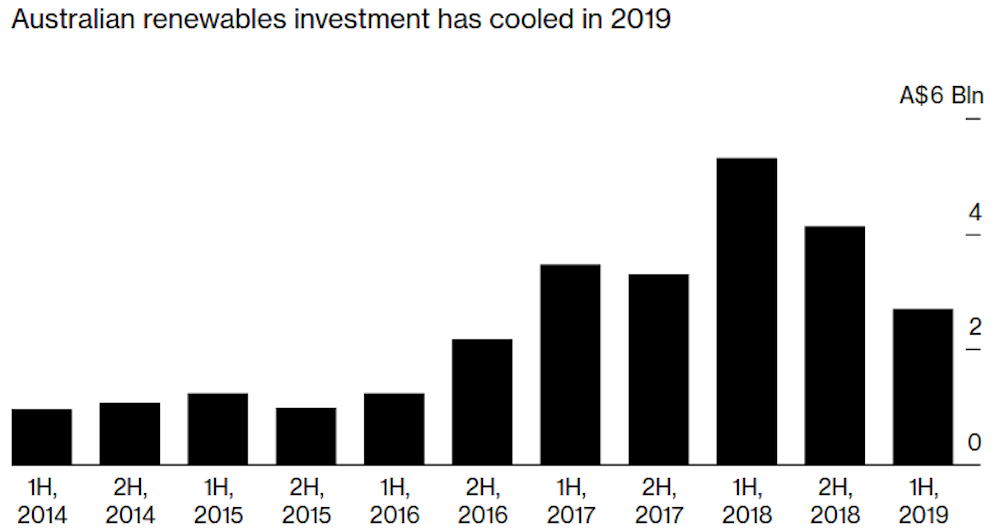
This bold claim flies in the face of the evidence. Investment in new renewable energy capacity is slowing down.
Losing momentum: Australian renewables investment has cooled in 2019.Bloomberg New Energy Finance
The latest data from Bloomberg New Energy Finance clearly shows a 21% drop in investment from the 2018 to 2019 financial years.
As Australia’s emissions reduction task becomes ever more urgent, the investment downturn begs the question: what happens next?
In fact, Australia cruised over the line
It is ironic that the Morrison government rushed to claim a win on the renewable energy target when many in the Coalition had claimed it would be difficult to meet, or wanted it scrapped altogether.
Under the target just met, 33 terrawatt-hours (TWh) of Australia’s electricity would be produced by new renewables by 2020, bringing the total share of renewable energy to about 23.5%.
Mount Majura Solar farm near Canberra.AAP/Lucas Cochleae
As it transpired, that target was easily met. But the then industry minister Ian Macfarlane described the task as an “enormous challege”, and industry figures suggested the required wind energy was “almost impossible”. Even Taylor initially said the target was “too high”.
The cut itself was bad enough for the renewable energy industry. But the uncertainty created during the review devastated investment.
Renewable energy investment in Australia. There was a drop in investment during the review of the target, and a significant uptick once the bipartisan ship and a new target was restored. [Available from: https://www.abc.net.au/news/2018-01-18/renewable-energy-investment-in-australia/9339350]BNEF
Investment did boom following bipartisan support for the new, lower target. But we can only speculate what may have been possible without the uncertainty created by the review.
It’s not looking rosy for renewables
The drop-off in investment is a worrying trend for the renewable energy industry, and for climate action more broadly. We can expect a drop-off in new additions in capacity in line with the drop in investment.
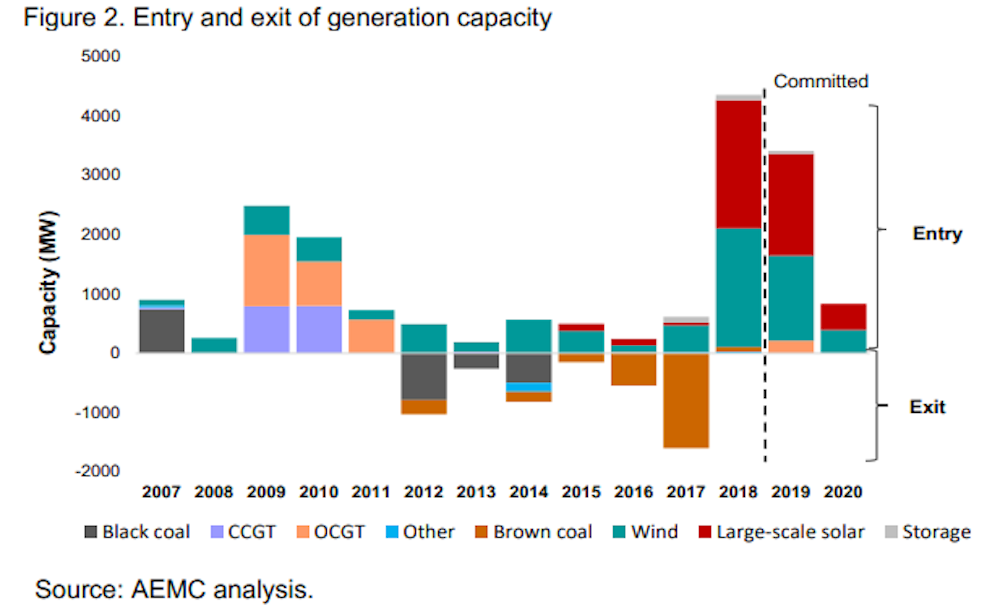
Australian Energy Market Commission data showing committed renewable energy projects for the next 12-18 months.
The table above shows the current committed projects for next 12-18 months. While more projects are likely to be committed over the next 18 months, it’s hard to see the peak of 2018 repeated soon, particularly with investment dropping away.
The achievement of the renewable energy target leaves a federal policy void. Renewable energy may now be the lowest-cost source of new electricity supply. But it is competing against assets such as coal-fired power stations with sunk costs – meaning that new renewables projects are essentially competing only with a coal plant’s fuel costs. Absent a price on carbon or similar policy, coal assets are allowed to pollute the atmosphere for free.
The renewable energy target has helped displace fossil fuel-derived power from the electricity mix.AAP
There are lessons to be learned from Germany to ensure a less bumpy transition to a decarbonised electricity sector. “Deployment corridors” help make the development of renewable energy sources more predictable, improve integration into the power system, and keep additional costs to consumers manageable.
But unless emissions-intensive generation closes or renewable energy support is reintroduced, renewable energy expansion in Australia is unlikely to proceed at the pace required to meet the Paris targets. Keeping the global average temperature rise well below 2℃ requires “rapid and profound near-term decarbonisation of energy supply” and strong upscaling of renewables.
The states are attempting to fill the federal policy gap. Several have their own renewable energy support schemes and all states in the east coast’s National Electricity Market have committed to net zero emissions by 2050.
A coal station in Victoria’s Latrobe Valley.Julian Smith/AAP
Continued renewables growth also requires transmission infrastructure and storage technologies to ensure the distributed energy can be delivered where it is needed, and that reliability is maintained. Several states have also recently committed resources to transmission investment.
The state-led action calls into question the effectiveness of the Council of Australian Governments’ (COAG) energy council. The group comprises the nation’s energy ministers and claims to maintain national “policy leadership” on energy. However it hasn’t met in almost nine months and its overarching agreement is more then 15 years old, and doesn’t refer to environmental outcomes or emissions cuts.
A new direction for the council is probably wishful thinking in the current political environment. But as emissions continue to rise in Australia, the need for significant reform only intensifies.
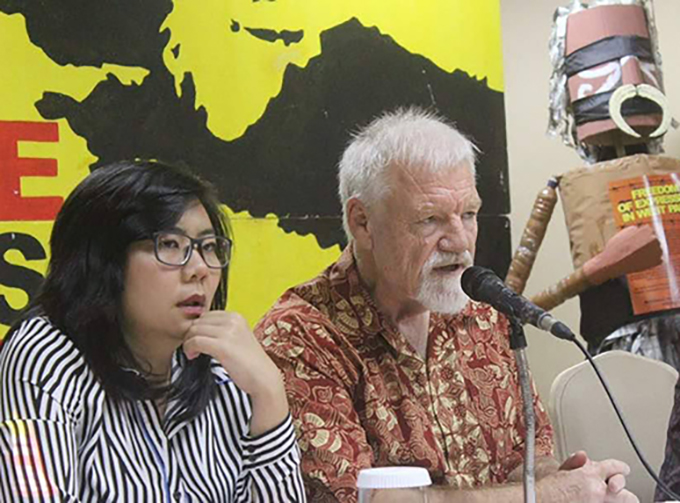
Internet access in West Papua has been at least partially restored just days after Indonesian police accused human rights lawyer Veronica Koman and West Papuan independence leader Benny Wenda of spreading unrest through social media, reports Indonesia Expat.
However, The Coordinating Minister of Politics, Law, and Security Issues Wiranto said it would be shut down again should protests continue.
A ex-army General found by the UN to have committed human rights abuses against the people of Timor-Leste, Wiranto has been charged with managing the unrest in Papua.
Earlier this week he blamed Benny Wenda for inciting the protests and said he would “personally arrest him” if he were to return to Indonesia or Papua, reports Tempo.
Although Koman was overseas at the time, the police deemed her posts of the attack as having a “provocative tone” and sparking anti-racism demonstrations.
According to The Guardian, Amnesty International Indonesia Executive Director Usman Hamid said the move was misguided and did not reflect the real cause of the unrest.
“The root of the real problem is the act of racism by some members of the TNI [Indonesian army] and the excessive use of force by the police in the student dormitory in Surabaya,” Hamid said.
While the 2-week long internet blackout had severely restricted accurate reports of the situation in Papua, Veronica Koman’s social media activity has been a critical source information.
Her posts have shown subsequent attacks against Papuans and the burials of those who have been killed in the unrest.
She has been charged under articles from four different laws, namely the electronic transaction and information law.
If found guilty she could be jailed for up to six years and fined $US70,000.
The Pacific Media Centre has issued a statement in support of Koman.
“As a human rights lawyer, Veronica Koman is respected throughout the world as a trusted source of accurate and truthful information at the shocking state of repression of Papuan people seeking freedom of expression and the right to express self-determination,” said PMC director Professor David Robie.
“This is further intimidation of those people who are prepared to speak out for Papuan rights. The allegations are spurious and the charge of ‘provocation’ should be dropped without delay.”
Source: The Conversation (Au and NZ) – By Dylan McConnell, Researcher at the Australian German Climate and Energy College, University of Melbourne
A wind farm project in Tasmania this week helped Australia reach something of a milestone, nudging it over the line to reach its renewable energy target.
Federal energy and emissions reduction minister Angus Taylor seized on the development, suggesting it showed the government’s record investment in renewable energy was world-leading.
Energy and Emissions Reduction Minister Angus Taylor said renewables investment would continue to grow.AAP
This bold claim flies in the face of the evidence. Investment in new renewable energy capacity is slowing down.
Losing momentum: Australian renewables investment has cooled in 2019.Bloomberg New Energy Finance
The latest data from Bloomberg New Energy Finance clearly shows a 21% drop in investment from the 2018 to 2019 financial years.
As Australia’s emissions reduction task becomes ever more urgent, the investment downturn begs the question: what happens next?
In fact, Australia cruised over the line
It is ironic that the Morrison government rushed to claim a win on the renewable energy target when many in the Coalition had claimed it would be difficult to meet, or wanted it scrapped altogether.
Under the target just met, 33 terrawatt-hours (TWh) of Australia’s electricity would be produced by new renewables by 2020, bringing the total share of renewable energy to about 23.5%.
Mount Majura Solar farm near Canberra.AAP/Lucas Cochleae
As it transpired, that target was easily met. But the then industry minister Ian Macfarlane described the task as an “enormous challege”, and industry figures suggested the required wind energy was “almost impossible”. Even Taylor initially said the target was “too high”.
The cut itself was bad enough for the renewable energy industry. But the uncertainty created during the review devastated investment.
Renewable energy investment in Australia. There was a drop in investment during the review of the target, and a significant uptick once the bipartisan ship and a new target was restored. [Available from: https://www.abc.net.au/news/2018-01-18/renewable-energy-investment-in-australia/9339350]BNEF
Investment did boom following bipartisan support for the new, lower target. But we can only speculate what may have been possible without the uncertainty created by the review.
It’s not looking rosy for renewables
The drop-off in investment is a worrying trend for the renewable energy industry, and for climate action more broadly. We can expect a drop-off in new additions in capacity in line with the drop in investment.
Australian Energy Market Commission data showing committed renewable energy projects for the next 12-18 months.
The table above shows the current committed projects for next 12-18 months. While more projects are likely to be committed over the next 18 months, it’s hard to see the peak of 2018 repeated soon, particularly with investment dropping away.
The achievement of the renewable energy target leaves a federal policy void. Renewable energy may now be the lowest-cost source of new electricity supply. But it is competing against assets such as coal-fired power stations with sunk costs – meaning that new renewables projects are essentially competing only with a coal plant’s fuel costs. Absent a price on carbon or similar policy, coal assets are allowed to pollute the atmosphere for free.
The renewable energy target has helped displace fossil fuel-derived power from the electricity mix.AAP
There are lessons to be learned from Germany to ensure a less bumpy transition to a decarbonised electricity sector. “Deployment corridors” help make the development of renewable energy sources more predictable, improve integration into the power system, and keep additional costs to consumers manageable.
But unless emissions-intensive generation closes or renewable energy support is reintroduced, renewable energy expansion in Australia is unlikely to proceed at the pace required to meet the Paris targets. Keeping the global average temperature rise well below 2℃ requires “rapid and profound near-term decarbonisation of energy supply” and strong upscaling of renewables.
The states are attempting to fill the federal policy gap. Several have their own renewable energy support schemes and all states in the east coast’s National Electricity Market have committed to net zero emissions by 2050.
A coal station in Victoria’s Latrobe Valley.Julian Smith/AAP
Continued renewables growth also requires transmission infrastructure and storage technologies to ensure the distributed energy can be delivered where it is needed, and that reliability is maintained. Several states have also recently committed resources to transmission investment.
The state-led action calls into question the effectiveness of the Council of Australian Governments’ (COAG) energy council. The group comprises the nation’s energy ministers and claims to maintain national “policy leadership” on energy. However it hasn’t met in almost nine months and its overarching agreement is more then 15 years old, and doesn’t refer to environmental outcomes or emissions cuts.
A new direction for the council is probably wishful thinking in the current political environment. But as emissions continue to rise in Australia, the need for significant reform only intensifies.
Record warm temperatures above Antarctica over the coming weeks are likely to bring above-average spring temperatures and below-average rainfall across large parts of New South Wales and southern Queensland.
The warming began in the last week of August, when temperatures in the stratosphere high above the South Pole began rapidly heating in a phenomenon called “sudden stratospheric warming”.
In the coming weeks the warming is forecast to intensify, and its effects will extend downward to Earth’s surface, affecting much of eastern Australia over the coming months.
The Bureau of Meteorology is predicting the strongest Antarctic warming on record, likely to exceed the previous record of September 2002.
(Left) Observation of September 2002 stratospheric warming compared to (right) 2019 forecast for September.The forecast for 2019 was provided by the Australian Bureau of Meteorology and was initialised on August 30, 2019.
What’s going on?
Every winter, westerly winds – often up to 200km per hour – develop in the stratosphere high above the South Pole and circle the polar region. The winds develop as a result of the difference in temperature over the pole (where there is no sunlight) and the Southern Ocean (where the sun still shines).
As the sun shifts southward during spring, the polar region starts to warm. This warming causes the stratospheric vortex and associated westerly winds to gradually weaken over the period of a few months.
However, in some years this breakdown can happen faster than usual. Waves of air from the lower atmosphere (from large weather systems or flow over mountains) warm the stratosphere above the South Pole, and weaken or “mix” the high-speed westerly winds.
Very rarely, if the waves are strong enough they can rapidly break down the polar vortex, actually reversing the direction of the winds so they become easterly. This is the technical definition of “sudden stratospheric warming.”
Although we have seen plenty of weak or moderate variations in the polar vortex over the past 60 years, the only other true sudden stratospheric warming event in the Southern Hemisphere was in September 2002.
In contrast, their northern counterpart occurs every other year or so during late winter of the Northern Hemisphere because of stronger and more variable tropospheric wave activity.
What can Australia expect?
Impacts from this stratospheric warming are likely to reach Earth’s surface in the next month and possibly extend through to January.
Apart from warming the Antarctic region, the most notable effect will be a shift of the Southern Ocean westerly winds towards the Equator.
For regions directly in the path of the strongest westerlies, which includes western Tasmania, New Zealand’s South Island, and Patagonia in South America, this generally results in more storminess and rainfall, and colder temperatures.
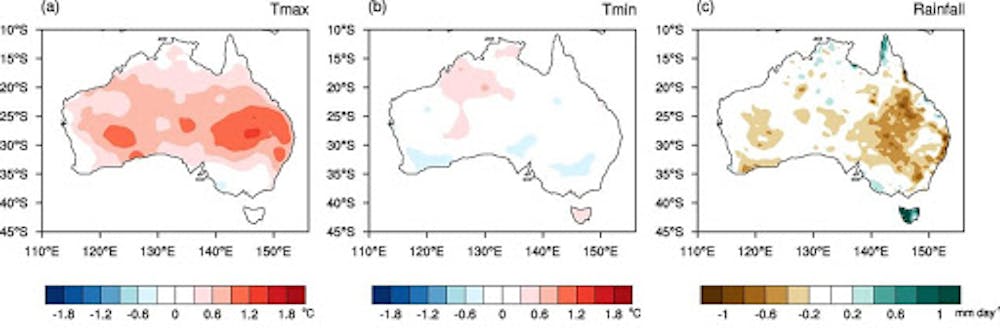
Past stratospheric warming events and associated wind changes have had their strongest effects in NSW and southern Queensland, where springtime temperatures increased, rainfall decreased and heatwaves and fire risk rose.
The influence of the stratospheric warming has been captured by the Bureau’s climate outlooks, along with the influence of other major climate drivers such as the current positive Indian Ocean Dipole, leading to a hot and dry outlook for spring.
Anomalous Australian climate conditions during the nine most significant polar vortex weakening years (1979, 1988, 2000, 2002, 2004, 2005, 2012, 2013, 2016) on both maximum and minimum temperatures, and rainfall for October-November, as compared to all other years between 1979-2016.Bureau of Meteorology
Effects on the ozone hole and Antarctic sea ice
One positive note of sudden stratospheric warming is the reduction – or even absence altogether – of the spring Antarctic ozone hole. This is for two reasons.
First, the rapid rise of temperatures in the upper atmosphere means the super cold polar stratospheric ice clouds, which are vital for the chemical process that destroys ozone, may not even form.
Secondly, the disrupted winds carry more ozone-rich air from the tropics to the polar region, helping repair the ozone hole.
We also expect an enhanced decline in Antarctic sea ice between October and January, particularly in the eastern Ross Sea and western Amundsen Sea, as more warm water moves towards the poles due to the weaker westerly winds.
Thanks to improvements in modelling and the Bureau’s new supercomputer, these types of events can be forecast better than ever before. Compared to 2002, when we didn’t know much about the event until after it had happened, this time we’ve had almost three weeks’ notice that a very strong warming event was coming. We also know much more about the process that has been set in train, that will affect our weather over the next one to four months.
University of Canberra Vice-Chancellor Professor Deep Saini and Michelle Grattan discuss the slowing economy, and how the government plans to prevent a possible recession. They also talk about Channel 9, which has come under fire from its newspaper journalists for hosting a fundraiser for the Liberal party.
Scientists and science fans love to discuss the science in Doctor Who.
We’re interested in how its theories and gadgets stack up against real science and technology (really, really interested).
We care about gender equity among Doctor Who’s scientist characters, and the cultural significance of casting Jodie Whittaker as the first female Doctor.
As long ago as 1985, Britain’s Royal Society wondered whether they could use Doctor Who to promote greater public understanding of science.
Given that we care so much, one might expect to see strong evidence that Doctor Who shapes how its viewers think and feel about science. But there has been no peer-reviewed research in this area, only anecdotes from a few scientist-fans.
Until now.
In my research, published in the Journal of Science Communication, I surveyed 575 science-interested Doctor Who viewers, asking whether and how the show contributed to their relationship with science.
Many of them said it did. But as it turns out, not in consistent ways.
Thoughts about science
I recruited the 575 people via ScienceAlert; they were 59% female, 40% male and 1% non-binary or gender-fluid. They were aged 18-73, and were drawn from 37 nations, predominantly Australia (50%) and the United States (24%).
Of the 575 respondents, 398 said Doctor Who influenced their thoughts about science in one way or another.
Just over 300 respondents said the show contributed to their ideas about science ethics, the relationship between science and the rest of society, and/or the place of science in human history.
Most commonly, Doctor Who prompted people to think more deeply about the ethics of science, including its moral ambiguity and potential for doing both good and bad. Second to that, many said Doctor Who demonstrated science’s importance in society and history.
However, individual participants sometimes drew opposite conclusions about the show’s moral messages. For example, one participant said their take-home message from Doctor Who on science ethics was:
Strong ethical guidelines and laws need to exist, and be enforced.
But for another participant it was precisely the opposite:
We should stop putting ethics in the way of scientific research.
Choosing science
Beyond shaping people’s attitudes, Doctor Who had a material impact on a few people’s life choices too.
It influenced 74 participants’ education choices and 49 participants’ career choices. It sparked interest in pursuing diverse science (and other) fields including physics, astronomy, maths, engineering, computer science, environmental science, chemistry, psychology, science teaching, and science communication.
People said things like:
It made me want to learn more about science. I became a science major [because] of it.
And:
I have a degree in Environmental Science specifically because of watching the 4th Doctor deal with oil rigs. That and the Exxon Valdez made me want to change things.
Some respondents said Doctor Who simply instilled a love of learning in them or made them proud of achieving academic success.
Just a TV show?
The survey responses go far beyond the previous anecdotes from fans about how much they love science and Doctor Who. It gives us lots of new evidence to analyse – some 58,000 words of qualitative data. But the responses were far from unanimously positive.
In the survey group, 107 people answered “no” to all or most of my key questions, indicating Doctor Who had not contributed to their relationship to science in any of the ways I asked about.
They gave a range of reasons. Some came to Doctor Who too late, after their views on science had already formed. Or other factors such as school or family determined their attitudes to science and life decisions, so Doctor Who wasn’t important (gasp!).
Others were more cynical, generally mocking the notion of science fiction influencing them at all, or arguing that Doctor Who’s depictions of science were too inaccurate, fantastical or trivial to have an impact.
Some responses were neither particularly positive or negative, with Doctor Who simply validating or reinforcing people’s existing ideas about science.
So will Doctor Who create a planet of scientists?
Part of the job for some science communicators, science teachers and scientists is to inspire people’s interest in science.
My study shows that engaging with a science-rich television program can have a profoundly inspiring effect on a person’s attitudes to science. In fact, their life might be changed because of it.
If that kind of inspiration is your goal, it is worth investing in science-rich television fiction as a science engagement medium.
But don’t get too excited. Not everyone’s science attitudes are affected by the same program. Any positive effects may be minor, rather than life-changing. And two viewers may interpret the science on screen in completely different ways. Also, my participants volunteered to participate, so the numbers don’t necessarily represent statistical patterns among Doctor Who viewers generally.
This backs up what sciencecommunicationresearchers have been saying for years. Television audiences aren’t ignorant dupes brainwashed by what they watch. People watch television fiction critically, aware it is fiction. All of us bring our existing knowledge, beliefs, fears and ideals to the viewing experience and make our own meanings from it in light of them.
What science-rich fiction can do, though, is set an agenda. It can offer people new frameworks for pondering science questions and provoking conversations about them.
So despite the caveats, if we want to nurture a society of people who think about science more keenly, more critically and more often, we could do worse than plug the next season of Doctor Who.
New Zealand’s government released a plan to reverse the decline of iconic lakes and rivers this week. It proposes higher standards for water quality, interim controls on land intensification and a higher bar on ecosystem health.
The agenda for change recognises that the perceived trade-off between agriculture and the environment makes little sense. If New Zealand trades internationally on a reputation for a healthy environment, continued degradation of water fouls the value of major exports. It also spoils the natural heritage that fuels the tourist economy and many New Zealanders consider a birthright.
The policy announcement reflects more than a decade of previous attempts, with the first draft notified in 2008, the first implementation in 2011, and major updates in 2014 and 2017. The new policy package addresses major deficiencies in the earlier versions, and has been fast-tracked to curtail freshwater pollution that has been allowed to get worse longer than it should.
The new regulations are designed to protect the health of entire ecosystems from excess nutrients. Some of the most compelling provisions draw clear lines where limits need to be set to prevent further slippage.
There’s a halt to significant expansions of dairy farming and irrigation, and limits on the use of nitrogen in some key catchments. Further improvements will better protect waterways and wetlands from grazing animals, and limits will be placed on recently criticised winter grazing.
Two significant steps will reverse the main cause of delays in the past. The first is an implementation at national level. This should reduce reliance on a National Policy Statement (NPS) that requires regional councils to implement changes to local legislation.
This step will be reinforced by signalled changes to the national legislation, the Resource Management Act, which in turn will make regional council actions less cumbersome and underfunded. Secondly, where the new NPS requires region-by-region action, caps on increasing agricultural intensity will apply until regional plans have been amended to comply.
These steps increase the chance of preventing further degradation. Some benefits, such as a reduced risk of getting sick from swimming, should come through quickly. Others, such as reduced nutrient loads of nitrogen and phosphorous and a healthier ecology in lakes and rivers, could take years or decades.
Challenges ahead
To improve freshwater quality, we will need reliable monitoring and modelling tools to measure progress. These will need to be an integral part of the process, even though any decisions are ultimately determined by values. Working through this challenge highlights two large issues that remain unresolved in the plan.
The first is a lack of monitoring tools. The announcement didn’t take up recommendations in the Freshwater Leaders Group’s report that described present tools as unsuitable for providing enough confidence to move forward. The implications are that promised investment to develop the nutrient-monitoring Overseer tool will only eventually get us what we needed years ago.
Tools need to connect nutrient management with farm and catchment planning. They should focus more on future solutions rather than quantifying impacts of past land use that led to freshwater pollution.
The role for Māori
The issue of water allocation is even more important given the constitutional role Māori play in New Zealand’s freshwater governance, enshrined in the Treaty of Waitangi.
One of the most intriguing options left open to consultation is the extent to which Māori values will receive compulsory consideration, or alternately, be afforded consideration place-by-place by individual iwi (tribes) and hapū (sub-tribes). The advisory body representing Māori interests in the environment and in land-based industries raised concerns that these options are too weak.
These concerns are substantially amplified by the recent report by the Waitangi Tribunal, suggesting that the delays and dysfunction associated with freshwater policies have disproportionately undermined the ability of Māori to maintain holistic cultural connections to water, and obtain fair value from lands recently returned to them by the Crown.
These concerns and the need for better planning tools that resolve past degradation and enable future investment ultimately go hand-in-hand. Māori businesses, enabled by treaty settlements, are leading innovators and investors using social and environmental values to drive high-value exports.
The release now opens a period of consultation and national debate. This will pit the passionate voice of the farming community against voices representing our freshwater ecosystems. But this is the first time a proposed plan brings together all aspects of policy we need to keep aquatic life healthy.
A new five-year South Australian Arts Plan was launched this week. But there was a strange disconnect between an acknowledgement by the consultants of a problem in the state – given a significant reduction in arts funding and support services over the past year in particular – and limited means of addressing this going forward.
In fact, at the outset, the consultants note that their review, “does not make recommendations requiring significant additional government expenditure”.
In other words, despite the evidence of a sector that is struggling to make sense of cuts and reductions across the spectrum, the review has no intention of recommending changes that will address this.
The review notes “some concern at the loss of an independent arts department”. In December 2018, Arts SA as an independent government entity was dissolved by the government and the skeleton staff remaining were transferred to the Premier’s Department. Arts organisations are now embedded across several departments meaning there is now no one body charged with responsibility for the arts across SA.
Increasing the pressure
While the plan’s authors note problematic aspects of the SA arts scene (such as its over-reliance on festivals and lack of cultural infrastructure) they do not make strong recommendations as to how to fix this, aside from voicing support for a new concert hall.
Instead, they put the pressure back on the arts sector itself, arguing for more structural collaboration (such as better cooperation between the Adelaide Festival Centre and its users) and more sharing of resources. They also recommend other agents get involved in the arts to cover the shortfall in government support. That is, bring in the philanthropists and the private sector.
SA Premier Steven Marshall announcing Adelaide Festival’s new three year partnership with the French Festival d’ Aix-en-Provence in March this year.Kelly Barnes/AAP
The reality is that this does not work in a state with no corporate head offices and limited philanthropic engagement. Nevertheless, the review recommends the national organisation Creative Partnerships Australia re-open an office in SA (paid for, probably, by South Australia), despite the national organisation closing it themselves several years ago.
Creative disconnection
Also last week, the Australia Council released its next five-year strategy, titled Creativity Connects Us. There is a serious attempt within the strategy to recognise that the arts cover a broad spectrum of cultural activity – not just elite activity. It acknowledges the diversity of Australia’s culture and highlights the extraordinary length and depth of First Nations’ cultural practices.
The strategy supports “equity of opportunity and access in our creative expression, workforce, leaders and audiences”. A key performance criterion for measuring this is, “supporting at least 200 culturally diverse applications with total funding of $13 million provided per year”.
But there is a gap between rhetoric and practice. The Council’s funding for the arts was $189.3 million in 2017-18, according to its annual report. More than $111 million or around 58% of this funding goes to arguably “elite” arts activity under the major performing arts framework.
If $13 million of this was allocated towards cultural diverse activity as noted, that represents around 7% of the Council’s total arts funding. This percentage does not reflect the cultural diversity of Australia, given in 2018 the ABS recorded that 29% of the population were born overseas.
Funding rejected
Both plans use “corporate speak” and adopt a neo-liberal view of the arts which frames government arts funding as “investments”. While arts activities, organisations and artists themselves are always in competition with each other for funding, the current climate appears to exacerbate this. Further, the continued emphasis on the arts as a framing for commercial activity and as a minor player in the creative industries, serves to undermine any belief that healthy societies benefit from arts practice and should therefore generously support them.
For example, the week before the Australia Council published its new plan touting how “its investment and initiatives have grown the profile and reach of Australian arts experiences,” it had rejected hundreds of organisations for future funding through its latest funding round.
Out of 412 applications from small to medium organisations across all art forms for four-year, general grant funding, 250 have been informed they were not successful.
Of the 162 remaining, only around 100 will eventually be successful. The same scenario occurred in May 2016, on a day known as Black Friday in the arts sector, when 65 arts organisations lost their funding.
Performers in Theatreworks’ recent production of Slaughterhouse Five: Sam Barson, Talia Zipper Simran Giria, and Caitlin Duff.Sarah Walker
This latest round has meant loss of funding for Theatreworks in Melbourne, AustralianPlays.org in Tasmania (a resource repository for Australian plays) and the journal Overland. Others have noted the art form of literature now receives less funding as an overall percentage than it did 40 years ago.
Making arts organisations with totally different mandates compete against each other, for a diminishing amount of funding, makes no sense. Where is the rationale here for building a strong and healthy arts sector?
An ironic feature of the South Australian Arts Plan is the inclusion of the theatre company Slingsby as an example of a wonderful arts organisation that has shown appropriate resilience and fortitude. This company, despite doing incredible work, was defunded in the 2016 funding round by the Australia Council.
It has continued to survive because of the extraordinary effort of its artists and supporters.
Since the introduction of a “competition strategy” mentality in 2016, vital activities and organisations that underpin the arts are being lost, even if they have been essential to the development of a sector for 40 years. And arts activities that are inspirational and unique, such as Slingsby, are not supported.
Victoria is facing an incarceration crisis. Despite a new prison (Ravenhall) opening in 2017, the state’s prison system is under enormous strain, with the premier recently announcing prefabricated prison cells would be introduced in existing prisons to cope with overcrowding.
Recent research by Federal MP Andrew Leigh argues we are now in a “second convict age”, imprisoning a greater proportion of the adult population than at any point since 1899. Imprisoning people before their trial contributes to this startling situation.
In fact, a key driver of the increasing prison population is the unprecedented increase in the number of people imprisoned before trial. These are people who aren’t granted bail and are being held in prison “on remand” (pending trial). In fact, nearly two in five prisoners are currently on remand.
There are now more legally innocent people in jail in Victoria than there were convicted prisoners in 2005.
But Victoria is not unique. A growth in the remand population has been taking place in other Australian states and territories, with even higher proportions of prisoners being held on remand in South Australia and the Australian Capital Territory.
The changing function of bail
The increase in the number of people being held in prison before their trial is due to a change in the function of bail.
Traditionally, decisions were primarily based on an assessment of whether the person seeking bail would, if released back into the community, then turn up at court for the hearing of their case. Anyone deemed to be unlikely to do so would be held in prison until their trial.
Recent Victorian parliamentary debates make it clear that decisions about bail now focus on protecting the community from crimes that might be committed if people are released on bail.
Victoria Premier Daniel Andrews recently announced prefabricated prison cells would be used to cope with the overcrowding.Daniel Pockett/AAP
This means that bail now essentially functions as a means of crime prevention.
And legislative changes have made it harder to get bail in Victoria. There are now more than 100 offences where the person applying for bail must establish why they should not be detained in custody. These offences include murder but also many drug and assault offences.
This “reverse onus” is contrary to established legal principles that presume innocence and place responsibility on the prosecution to establish the case against an accused person.
The exception, not the rule
Several high profile crimes underpin the concerns about people on bail committing offences. Adrian Bayley was on bail when he raped and murdered Jill Meagher in 2012. Sean Price was on bail and a supervision order when he killed Masa Vukotic in 2015.
And community outrage was amplified when it became known that James Gargasoulas was on bail when he killed six people and injured 27 more in Bourke Street in January 2017.
With such terrible crimes dominating parliamentary debates and media reporting, it is hard to remember that violent offending by those released on bail is the exception rather than the rule.
We spend a lot of money putting a large number of people in prison before their trial. But the benefits aren’t clear.
Imprisoning those charged with, but not convicted of, a crime breaches the right to liberty and the presumption of innocence.
Being imprisoned disrupts family relationships, can lead to the loss of employment, makes preparing for trial more difficult and exposes people to the dangers of a prison environment.
Women and Indigenous Australians are particularly disadvantaged, with more Indigenous Australians dying on remand than after being sentenced.
There are more disadvantages associated with imprisonment before trial. Some people will be found not guilty when their trial takes place or, if convicted, given a non-custodial sentence, such as a community corrections order or a fine. These people receive no compensation for the time they have spent in prison.
Troublingly, there is also emerging evidence that denying bail and imprisoning people makes it more likely they will commit a criminal offence in the future.
Carefully controlled research from the United States indicates pre-trial imprisonment itself has this “downstream” effect. It’s a sad irony that imprisoning people before trial to increase community safety may actually contribute to later offending that places the community at risk.
Collectively, this information suggests we need to more accurately identify those who present a serious risk to community safety and abandon the current broad approach that is resulting in too many people being detained.
We should then re-invest the money being spent on imprisoning people before trial into more productive activities, such as housing and drug and alcohol services.
This greater support would enable more people to be released on bail and get the services they need, contributing to their rehabilitation – the best form of community protection.
Tooth enamel is one of the hardest tissues in the human body. It acts as a protective layer for our teeth, and gives our smile that pearly white shimmer. But when enamel erodes, it can’t regrow itself.
In a significant scientific breakthrough, researchers recently discovered a way to regrow human tooth enamel.
Scientists from China have invented a gel that contains mineral clusters naturally found in teeth. In partially acid-damaged teeth, the gel stimulates crystal regrowth to restore tooth enamel back to its original structure.
While the method is yet to be tested on people, one day this could mean saying goodbye to painful needles, the dreaded dentist drill, and even fillings.
Enamel is the outermost layer of our teeth, and protects our pearly whites from wear and tear. It also insulates us from feeling pain and sensitivity.
When this protective coat erodes, our teeth soften and become vulnerable to developing cavities (holes in the teeth) which may require dental treatment such as fillings.
Enamel is the protective outer layer of our teeth.From shutterstock.com
Tooth enamel contains the same minerals, calcium and phosphate, found in bone. Unlike bone though, enamel contains relatively more mineral, and enamel crystals are arranged in a complex geometrical pattern.
Under a microscope, enamel crystals are shaped like long ribbons, or spaghetti strands. These crystal strands are assembled into clusters, like packets of dry spaghetti, orientated at 60 degrees to each other. The ribbon clusters, which weave together like honeycomb, are known as rods and inter-rods.
When destroyed, this weave is difficult to recreate, because the cells that form enamel die as our teeth emerge from our gums.
Why does our tooth enamel erode?
While enamel is very hard, it’s also brittle and susceptible to erosion. This occurs when tooth mineral dissolves into our saliva.
Our saliva is constantly trying to balance any “bad guys” it encounters with “good guys” at its disposal. When we get acid in our mouth (a bad guy) the mineral in our saliva (a good guy) tries to bind to it to neutralise the acid, and prevent it from causing harm. This is known as buffering.
If there’s too much acid, or the quality and quantity of our saliva is inadequate, we run out of mineral to buffer the “acid attack”. So in a final effort to neutralise the acidity in our mouth, the mineral in our teeth will dissolve into our saliva. This is when our teeth erode and become vulnerable.
Like the erosion we see in our beaches and river beds, under a microscope, eroded enamel surfaces appear moth-eaten and uneven. This is because erosion destroys the crystal organisation I described above.
Current dentist-recommended products repair enamel but cannot regrow the complex crystal structure to recreate a pearly white shimmer. This is why globally, the dental community are very excited about this research.
Can we control erosion?
Our teeth erode when we eat and drink foods rich in acid, including wine, cola beverages, fruit juices, sour lollies, and energy and sports drinks. As a general rule, anything that tastes sour is high in acid. It’s best to avoid or limit acidic food and drinks where possible.
People with medical conditions such as bulimia or acid reflux may be at greater risk of their teeth eroding. If you suffer from these conditions, in addition to getting help from your doctor, it’s best to seek regular dental check-ups.
We know lollies aren’t good for teeth. But sour lollies in particular contain acid, which contributes to erosion.From shutterstock.com
When our enamel erodes, it makes our teeth appear yellower. Often, we may also experience toothache or sensitivity because we’ve lost the enamel’s natural insulation.
If your teeth are eroding, a dentist and/or dental hygienist will be able to monitor and help you manage your oral health. In addition to brushing and cleaning between your teeth, your dental professional may also recommend:
rinsing with a bicarbonate and salt water mouthwash
chewing sugar-free gum to stimulate an increase in mineral-rich saliva
using a dentist-recommended toothpaste, special cream and/or mouthwash to help replace lost mineral and repair your teeth
delaying cleaning your teeth after an “acid attack” to prevent removing softened enamel.
In a lab, extracted teeth were treated with acid to simulate erosion, then painted with a special gel. This gel contained calcium phosphate ion clusters – mineral clusters naturally found in teeth – mixed with an ingredient called triethylamine (TEA).
After two days in a simulated mouth-like environment, the previously eroded enamel was checked for crystal growth, size, shape, organisation and composition using special microscopes.
The spaghetti-like crystals had regrown seamlessly, and the crystal clusters had correctly orientated themselves to form the rod and inter-rod honeycomb weave.
When will we be able to regrow enamel?
While this technology is something to look forward to, the short answer for now is “not yet”. This study has only been performed on extracted teeth. The researchers are hoping to test their method on mice, and then people soon after.
One of the significant limitations to moving towards animal and human trials is the toxicity of the essential ingredient, TEA. Another challenge is the enamel thickness they were able to repair was at a microscopic level.
But all is not lost. The scientists hope to find a safe way to use TEA with the intention of growing enamel thick enough to fix larger sections of eroded enamel.
For now, the thought of not having to get fillings at the dentist is an exciting prospect on the horizon. So watch this space.
Source: The Conversation (Au and NZ) – By Joanna Mendelssohn, Honorary Principal Fellow, University of Melbourne. Editor in Chief, Design and Art of Australia Online, University of Melbourne
In October 1969, Sydney became the focus for dedicated followers of international avant garde art. It is hard to imagine how unusual it was at that time for Australia to be the focus of anything much.
The Opera House was still being built, apparently forever. Our involvement in the Vietnam war, even though it was causing a great deal of angst, was essentially a side show in global politics. We were a long way from the rest of the world and air travel was still prohibitively expensive.
But here were Christo and Jeanne-Claude directing a motley group of students, artists and other volunteers, to make the world’s largest ever work of art – wrapping the entire coast along Little Bay.
The Art Gallery of New South Wales’ latest exhibition, Making Art Public: 50 years of Kaldor Public Art Projects, revisits some of the most iconic large-scale art presented in Australia then and since – through artworks, archival materials and reconstructions. The projects were all funded by contemporary arts patron and collector John Kaldor’s public art organisation.
One million square feet
In the 1960s, creative partnerships were commonly discussed as being a purely male creation, so it was not until 1994 that Jeanne-Claude was fully acknowledged as Christo’s equal.
The previous year, they had wrapped the Kunsthalle at Berne in Switzerland, and had hoped to wrap a length of coast in California. There were logistical problems, all of which were solved by the persuasive Australian art collector and textiles manufacturer, John Kaldor. The Wrapped Coast used a lot of fabric.
Christo and Jeanne-Claude are now seen as major art stars of their generation. After completing Little Bay, they created headlines around the world with each event as they wrapped a Roman Wall at Via Veneto, Pont Neuf in Paris and hung a curtain across a valley in Colorado. In 1995 they realised their long-held ambition to wrap Berlin’s Reichstag. But Little Bay remains the first magnificent installation on a grand scale. Photographs record the sheer beauty of the way fabric and rope redefined the shape of the land.
Daniel Thomas, then curator at the Art Gallery of NSW, was a passionate advocate for Christo and supported Kaldor’s offer of a wrapped gum tree as gift to the collection. It was rejected by the Trustees. In 2011, the tree entered the collection as a part of the Kaldor family’s gift of their collection to the Gallery. Now, 50 years after Little Bay, Kaldor Public Art Projects have joined with the gallery to create a survey celebrating the half century of promoting art in public.
Crowd pleasers
Christo was only the beginning. In 1971, Kaldor brought Harald Szeemann, curator for Germany’s Kassel Documenta, to Australia. Szeemann looked at studios of artists, well-known, little known and unknown. The resulting exhibition I want to leave a nice well-done child here, did not result in Szeemann choosing any Australians for international stardom, but it did encourage a new generation of Australian artists to think of themselves as being part of a global community.
Some projects showed that modern art and pleasure can go well together. In 1973, Gilbert and George performed The Singing Sculpture, while the food artist, Miralda, created Coloured bread.
Kaldor Public Art Project 5: Charlotte Moorman and Nam June Paik. Charlotte Moorman performs Sky Kiss, composition by Jim McWillliams, above the Sydney Opera House Forecourt as part of the project Moorman + Paik, 11 April 1976.Photo: Kerry Dundas
Most sensational of all was Charlotte Moorman and Nam June Paik’s 1976 exhibition and performances with TV Cello, that included Moorman naked and playing an ice cello and smothered in 13 kilograms of chocolate fudge.
Another popular event was Jeff Koons’Puppy, created in flowers outside the Museum of Contemporary Art.
By way of contrast Thomas Demand’s The dailies was an intimate installation in the old Commercial Travellers’ Association headquarters, which are concealed inside Sydney’s MLC building.
The Kaldor artists have often experimented with different venues. Martin Boyce’s We are shipwrecked and landlocked was installed in the Old Melbourne Gaol, while Bill Viola’s Fire Woman and Tristan’s Ascension (The Sound of a Mountain Under a Waterfall) were installations at St Saviour’s Church in Redfern.
The Kaldor Public Art Projects have always relied on willing volunteer workers, many of them art students. The importance of these volunteers to the Kaldor program is explored in Alicia Frankovich’s The Work, exhibited at the Art Gallery of NSW. As a part of Project 30, Marina Abramović: In Residence the artist mentored 12 young Australian performance artists.
The objective always was more than just showing art to a bemused public. As a part of the current exhibition, the artist Imants Tillers, who became an artist after working on the Wrapped Coast, has created A New World Rises, an homage to the impact of the Kaldor Art Projects on his professional career.
In another part of the gallery Ian Milliss, another volunteer from 1969, has created Natural Parallels 2, consisting of ropes running between four flights of stairs. Milliss had been a modernist painter before Little Bay showed him how art could be a form of political engagement.
A smaller world
Modern communications have made the world a more intimate space than it was in 1969. Australian artists are now self confident in approaching their history and their identity.
In 2016 Jonathan Jones confronted some of the ghosts of our past with barrangal dyara (skin and bones), the first Kaldor commission of an Australian artist.
Despite its size, (it effectively took over the top part of Sydney’s Royal Botanic Garden), barrangal dyara trod lightly on the earth. All that is left of it are the photographic records and the gypsum shields, now moved far away.
Agatha Gothe-Snape, who was born 11 years after the wrapping of Little Bay, has created Lion’s Honey, an ongoing performance tribute to the art that has helped stimulate her own practice.
The Art Gallery of NSW has recreated as much as it can of events past – using objects that have been left behind, videos and photographs.
It is an exhibition to trigger memories of experiencing, for the first time, the heady sense of being at the heart of amazing art.
Making Art Public is at the Art Gallery of NSW from Sept 7-February 16.
A study of three remote community water supplies in northern Australia, published today in the journal PLOS Neglected Tropical Diseases, revealed that bores with high levels of iron were more likely to harbour Burkholderia pseudomallei, the bacterium that causes the potentially fatal disease melioidosis in both humans and animals, than bores with low iron levels.
The study, by researchers from Charles Darwin University and Menzies School of Health Research, reveals the challenge of delivering safe water to remote communities in Australia’s wet-dry tropics, many of which rely on bore water from shallow aquifers. But we also found that treating water with chlorine is an effective way to improve its safety.
B. pseudomallei is found naturally in soil and surface water in rural areas around Darwin. Around one-third of tested unchlorinated residential bores were positive for this bacterium, and it has also been found in aerator sprays and tank sludge from water treatment plants.
Water can usually be made safe by treating it with chlorine, although in laboratory experiments some B. pseudomallei strains can tolerate higher chlorine levels than others.
There is also an association between B. pseudomallei and increased iron levels in bore water. Naturally occurring iron-cycling bacteria can metabolise the iron, producing bacterial films inside pipes that contribute to corrosion and reduce bore yield. The problem with biofilms is that opportunistic pathogens in water supplies such as Legionella pneumophila or Pseudomonas aeruginosa can also colonise the biofilms, protecting the bacteria from chlorination.
Many aquifers in Northern Australia contain naturally high levels of iron, and some are also shallow and prone to inundation with surface water during the wet season. This iron-rich source water potentially compromises the water in the distribution system.
Putting bores to the test
The problem is that we know very little about the microbiology of drinking water in remote communities. To learn more, we studied three remote water supplies in the Top End with varying iron levels: one low, one medium, and one high.
The “high iron” community had water with an average of 0.8mg of iron per litre – more than double the threshold of 0.3mg/L suggested by the Australian drinking water guidelines above which the taste of water is affected.
The “medium iron” community had water with average iron concentrations of 0.25mg/L, while the figure for the “low iron” community was 0.05mg/L.
All three communities had reported melioidosis cases over recent decades: three cases since 1994 in the high-iron community; 11 in the medium-iron community; and four in the low-iron community. It is not known where these patients acquired the melioidosis bacteria.
Sampling a high-iron bore.Mirjam Kaestli, Author provided
For each community, together with collaboratorsPower and Water Corporation, we sampled water from five points along the drinking water distribution system, of which three were unchlorinated (bores and tanks), and two were from the chlorinated reticulation system. We then used genetic sequencing to survey the bacterial communities in water.
We found that the geochemistry of the groundwater had a substantial impact on the types of bacteria in untreated water, particularly in the case of bacteria that can metabolise iron.
We found B. pseudomallei in bores with high iron levels, and in a bacterial biofilm inside a bore pipe which also contained iron-oxidising Gallionella, nitrifying Nitrospira, and free-living Hartmannella amoebae, which may be able to harbour B. pseudomallei.
Growing challenge
If B. pseudomallei occurs inside amoebae growing in remote communities’ source water, this could make it harder to successfully target the bacteria using chlorination. Second, the interaction with Gallionella bears further scrutiny because this iron-oxidising bacterium is increasingly used in biological iron-removal filters.
In our samples we detected three pathogen groups: non-tuberculous mycobacteria, Pseudomonas aeruginosa, and B. pseudomallei. Importantly, B. pseudomallei was found in water with scarce nutrients. This highlights the fact that this bacterium can thrive under nutritionally poor conditions (it has been known to survive even in distilled water for up to 16 years). This in turn means when water providers routinely monitor the water supply integrity by using heterotrophic bacteria counts, they might not suspect the presence of B. pseudomallei as the former cannot survive under such nutrient scarce conditions.
Surprisingly, we also found B. pseudomallei in a bore accessing a deeper aquifer. We will need to investigate further across all seasons to determine whether this bacterium does indeed live in deeper, confined aquifers, or whether it is mainly linked to intrusions of surface water during the wet season. The latter would be easier for water providers to manage.
We detected no B. pseudomallei in treated water, although we did find abundant DNA of another opportunistic pathogen group: non-tuberculous mycobacteria.
Our study provides a first snapshot of the bacteria in a selection of remote water supplies, and can hopefully contribute to improved management of water supplies in the wet-dry tropics.
This month, the biopic of jockey Michelle Payne’s life, Ride Like A Girl, will be released.
In 2015, Payne made Australian sport history by riding Prince Of Penzance to victory in the Melbourne Cup at 100-1 odds. She was the first female jockey in the Cup’s 155-year history to win the prestigious race.
Payne’s success is part of a surge in the numbers of female jockeys in Australia. But while women are more visible in the silks, there is nonetheless a persistent sexist culture that is proving hard to stamp out. Australia lags behind other racing nations in making meaningful changes for women.
A sport steeped in masculine history
In its long history, horse racing has been dominated by men – they have been the jockeys, the strappers, the trainers and the administrators. It wasn’t until 1979 that female jockeys were finally granted licences to compete against men in professional races.
In recent years, the gender imbalance has started to turn around. There is little doubt that Payne’s historic win spurred the continued rise in female jockey numbers – and, in turn, the rising number of women winning races.
In Victoria, female apprentice jockeys outnumber men. As a result, women’s riding opportunities are steadily increasing.
But it remains a dangerous sport, as highlighted by the recent deaths of two female jockeys. In fact, nine of the past ten jockey deaths in Australia have been women, raising questions about safety.
While these statistics may cause people to hypothesise a link between gender and jockey falls, research remains scarce. Australian racing officials are warning that conclusions should not be drawn too early, especially about any gender-based implications.
In addition, the masculinist culture within the sport remains hard to shift. That seems to extend to racegoers too: despite impressive performances on the turf, punters show significant bias against female jockeys.
However, this assumption is mistaken, with female jockey performances often equal to those of men.
Following her victory, Payne had a visible platform from which to call out racing’s sexist culture. She said:
It’s such a chauvinistic sport, a lot of the owners wanted to kick me off. Everyone else can get stuffed [who] think women aren’t good enough. I believe that we [women] sort of don’t get enough of a go and hopefully this [her Cup win] will help.
A man’s world
Recent research highlights the sport’s persistent gender inequities, which are often played out in inappropriate comments about female jockeys’ physical appearance, or unwanted sexual advances. While women and men finally competing against each other equally and for equal pay is cause for celebration, women’s earning potential is often restricted because they tend to ride inferior horses in lower-class races. As American jockey Erica Murray put it:
To survive, you have to keep your mouth shut.
For many years, the few jobs for women in horse racing have been in “caring” roles such as stablehands. While women have made some gains as trainers, group 1 racing opportunities remain largely dominated by men.
In 2018, three of the top six riders in Australia were women. Despite competing and succeeding at this level, few other women made up the top 50.
Jockeys need to be strong but slight. But while women’s smaller size might be a natural advantage, within racing circles they are often considered weaker and so less able to withstand the physicality of race riding.
Where to from here?
Australian racing may be able to learn something from the French example. To create a level playing field, racehorses are given different weights. Put simply, better-performing horses are required to carry heavier loads. In 2017, the French allowed a horse with a female rider to carry two kilograms less weight than those with male jockeys. This year, Japan’s Racing Association followed suit.
Since this measure was implemented, the number of female starters in flat racing in France has doubled, with a 165% increase in the number of wins by women.
While similar measures may eventually be adopted in Australia, some female jockeys remain cautious. When asked if she would go to France to take advantage of the rule, Melbourne-based rider Linda Meech said:
You are joking. We can compete with the men without any need for that sort of advantage.
Those opposed to such a measure argue it might entrench the belief that women are somehow less capable than their male counterparts and require an advantage. For others, it is anti-competitive and discriminates against men.
Others in the industry argue that cash incentives might increase female jockey numbers. Some UK commentators go as far as to call for quota systems as a way to fast-track women.
Cultural change takes time. If the sport had more women not just riding in group 1 races but also becoming trainers and rising through the administration ranks, its entrenched sexist culture would start to change.
A three-year-old boy with haemophilia and an acquired brain injury is facing removal from the country because the home affairs department has ruled his medical costs would unduly burden Australian taxpayers.
Kayban Jamshaad’s case is before Perth’s Administrative Appeal Tribunal where his parents claim that removal to their home country of the Maldives would be a death sentence because he would lose the medical care he needs to survive.
The case highlightsoneexample of how a migrant’s health or disability can affect their visa status.
In this case, as with many others making the news, Kayban’s family had been living happy and productive lives in Australia on temporary visas.
Transitioning to permanent status, however, involves more onerous health requirements that deny visas to people likely to require care or use scarce community resources. Applicants are assessed against their “deemed cost”, regardless of what health or community services they will actually use.
The immigration minister has the power to grant someone a permanent visa if they fail any of the health tests, but only when intervention is in the “public interest”.
Rules are discriminatory, obscure and unfair
Complaints about the migration health rules have focused on their bluntly discriminatory nature and questionable service to Australia’s national interests.
The rules make no distinction between disease and disability: the assumption is both are equally burdensome.
No attempt is made to balance someone’s “cost” against his or her contribution to Australia. The algorithms used to determine cost, including projected costs over time, are also opaque.
Australia’s discriminatory treatment of migrants with diseases, such as HIV/AIDS, and disabilities is protected by caveats it has created under both domestic and international laws.
The Commonwealth Disability Discrimination Act 1992 exempts migration decisions from full compliance with that Act.
Australia has also lodged an “interpretive declaration” to Article 18 of the Convention on the Rights of Persons with Disabilities, which addresses liberty of movement.
Yet the central focus of both the Disability Discrimination Act and the Convention on the Rights of Persons with Disabilities is to acknowledge people with disabilities as rights bearers who are entitled to dignity and equal treatment before the law.
The UN Committee overseeing the Convention on the Rights of Persons with Disabilities has identified the migration health rules as a matter of concern. When Australia appears before the Committee later this month it will be asked to account for the measures.
Tests for HIV and other infectious diseases
In Australia, all visa applicants aged 15 or over must be tested for HIV, tuberculosis and other diseases considered a public health risk.
Australia continues to test for HIV despite comparator countries no longer doing so.
People with HIV are automatically considered a public health risk and cannot migrate to Australia permanently.from www.shutterstock.com
Australia has ignored recommendations from the UN Programme on HIV/AIDS and others to soften its hard stance on people with HIV by abandoning mandatory testing and acknowledging the success and modest cost of available therapies.
Some softening of the rules
Persistent lobbying on the health rules themselves has seen some movement. Although, the government seems to have gone out of its way to ensure modest rule changes in July were made quietly.
In determining whether someone will incur health costs, officials consider a person’s age, state of health and (if relevant) their particular disease or disability.
Australia can ensure immigration does not result in undue burden without ditching fairness and humanity. A good starting point would be “nett benefit” health rules that measure a migrant’s contributions as well as projected costs.
Allowing officials to weigh benefit against burden would also free the minister from endless petitions to personally intervene.
The latest preliminary NAPLAN results came out recently, but new research has found the test might have little to do with what the kids are actually learning in class.
Our research, presented at the Mathematics Education Research Group of Australasia (MERGA) conference in July this year, found the NAPLAN questions in numeracy for Years 5 and 9 do not cover many of the topics students are studying that year, based on the Australian mathematics curriculum.
Yet the organisation running the tests – the Australian Curriculum, Assessment and Reporting Authority (ACARA) – says NAPLAN should be aligned to the curriculum.
We found NAPLAN mathematics is nowhere near the year level of study the students are doing at the time of taking the tests. The majority of the Year 5 numeracy test is actually content from the curriculum for Year 2 and Year 3.
In the Year 9 NAPLAN test, only 25% is content above Year 7 level. Absent from the tests are some of the more difficult content areas, including use of large numbers to do addition in Year 5 and the index laws (such as xaxb=xa+b) in Year 9.
The tables (below) show that the NAPLAN tests have a year level focus which is much lower than the year level of the students sitting the tests.
Where is the mathematical reasoning?
The NAPLAN Numeracy tests are mainly multiple choice, so it’s not surprising topics that require depth of thinking – such as reasoning and problem solving – are neglected.
This is despite what the lead writer of the mathematics curriculum, Professor Peter Sullivan, says:
[…] reasoning is essential to mathematics, it’s what doing mathematics is about.
Our analysis of 312 questions from the most recent publicly-available NAPLAN tests in numeracy found a significant number of the questions tested recall rather than skills.
For example, in measurement and geometry there is an emphasis on knowing the names of shapes, rather than applications such as symmetry or proof.
We found 19% of what the mathematics curriculum Year 5 students should be able to do was not tested in the Year 5 NAPLAN numeracy test. That figure was 35% for Year 9 students.
The Australian Mathematics Curriculum requires students to be able to sketch graphs, and to explain a plan for selecting a random sample from a population in order to describe the items using statistics. The words “explore” and “investigate” occur in many content areas.
Such aspects of the curriculum are not recognised in the format used in NAPLAN testing. Instead of mathematics being thoughtful and creative, NAPLAN promotes an impression that quick responses to a lot of brief questions reveals a complete picture of mathematical ability.
The move to test online
NAPLAN is moving to an online format, which means tests since 2016 will not be made public because the questions will be reused within the new online system.
In future, students will not all receive the same questions. Instead, questions will be drawn from a secret database depending on how well the students are doing. It will no longer be possible to assess the nature of the questions nor to compare them against the curriculum.
The reliability of NAPLAN is not in question. The questions consistently give predictable results. It is validity that is the issue: does the NAPLAN actually reveal ability at what the students should have been learning?
We say no, as the questions cover material from the curriculum for much younger students and avoid the difficult aspects of mathematics.
NAPLAN is a multimillion dollar exercise which is supposed to assess the attainment of Australian school students. In practice, the results come to teachers too late to be of value for diagnostic purposes, and students are never permitted to know which questions they got wrong.
But NAPLAN is influential in defining the public impression of what mathematics is, and that is not the same as the mathematics curriculum.
If the real purpose of the NAPLAN is to check up on schools and school systems, there has to be a cheaper and less harmful way of doing so.
Many of the chronic and costly diseases Australians face are related to how we live in cities. The speed of modern life clashes with poorly designed urban areas. As a result, health-promoting activities, such as regular physical activity, community interaction and the preparation of healthy food, become low priorities.
We know better urban planning can encourage healthier behaviours. Providing infrastructure for walking and cycling is a prime example.
Yet there are other, often overlooked, ways that urban planners are on the front line when it comes to promoting the health of Australians. In particular, the way cities are planned can reduce inequities in both access to health services and health outcomes. This has important implications for the health of individuals and their communities.
Urban planners are well versed in the fundamentals of planning the equitable city. But planners must work within the constraints of our political systems and prevailing approaches to government. Our recent analysis of health and urban planning in Australia identified a few key ways urban planners can “work the system” to promote health equity.
Why is equity so important for health?
Promoting equity is important for health because there is a social gradient to the differences between people’s health. In general, the higher a person’s socio-economic position, the healthier he or she is. People from poorer social or economic circumstances have higher rates of illness and disability, and live shorter lives.
Differences in life expectancies across the nation illustrate this. In 2016, a man born in remote New South Wales had a life expectancy 13 years less than a man born in the affluent suburb of Mosman in Sydney.
To promote equity, we need to define what we are seeking to equalise. In this case, it is the distribution of the social determinants of health.
These determinants are the conditions in which people are born, grow up, live, work and age. Factors such as income, education, employment, empowerment and social support can strengthen or undermine health and well-being.
Our planners have access to the data and the grounded knowledge required to expose gaps in services. For example, a local infrastructure planner can readily identify the communities that lack internet broadband access but need it. A transport planner working for Sydney’s City Rail knows all too well which train service is unreliable, and which train station is routinely missed during the peak because of overcrowding.
Planners also have the skills and insights to raise concerns about shortages of residential housing stock, before these trigger the kind of housing affordability crises we have seen recently in Australian cities.
Governments like the state government of New South Wales are starting to make explicit connections between urban planning and community health.NSW Government/Transport for NSW 2019
The real challenge for planners promoting equity in Australia is the need to work within the constraints of the nation’s dominant political economy. In Australia today, we have a neoliberal system, epitomised by “the subjugation of the public to the private, the state to the market, the social to the economic”, as John Clarke put it. The result of this has been a progressive withdrawal of government involvement in many areas since the latter half of the 20th century.
Our recent analysis of health and urban planning in Australia provides several recommendations on how urban planners can work within this system to promote health equity.
Play to emotions
The first is to harness the power of human health’s emotive appeal. Relative to other planning concerns, such as environmental sustainability, health is an issue that appeals more directly to the individual.
By making clear the links between good planning principles and human health, planners can leverage this emotion to promote concepts that might otherwise be ignored in developer-driven agendas. The protection of green open spaces for physical activity and community connection is a good example. By pointing out how important these things are for human health, urban planners can make a compelling and robust case for preserving these spaces.
Ever-increasing health expenditure (shown here, adjusted for inflation, from 2006-07 to 2015-16) presents an opportunity to show how good planning can produce cost savings.AIHW health expenditure database; Table S2.2.1, CC BY
Most of this funding is dedicated to treating people once they are sick, rather than preventing illness. But prevention would produce large cost-savings. These savings can be captured in decision-making tools such as cost-benefit analysis.
Planners are in a powerful position to work with public health professionals to develop a deeper understanding of the health cost savings to be made from better urban planning decisions.
Enlist trusted figures
Finally, health can be promoted by harnessing the power of the health fraternity. Australian research shows the voice of a well-versed and respected individual can often make the difference when it comes to preserving a piece of open space, funding a cycleway or protecting the use of land for farmers’ markets.
Australians hold health professionals in high esteem. Polling company Roy Morgan conducts an Image of Professions Survey, asking Australians to rank 30 professions by characteristics such as ethics and honesty. Medical professionals, such as nurses, doctors, pharmacists and dentists, have consistently featured in the top five. These trusted professionals could be influential voices for healthy built environment agendas.
Our cities can and should be places that promote good health for everyone who lives in them. Quite simply, this means the (re)prioritisation of well-being over economic growth.
This is a crucial barrier to planning healthy built environments in Australia. Yet it is not insurmountable. Indeed, the key to overcoming it may well be harnessing the power of health as a significant concern for all.
GDP growth was only 0.5% for the June quarter, meaning that in the past year output grew by a feeble 1.4%.
The figures weren’t a surprise, but they do contain a message about what can go wrong.
Australia has enjoyed 28 years of uninterrupted economic growth, in part due to good management, in part due to good luck, and in part due to happy accidents of timing.
Good management
Australian prime minister Bob Hawke, honoured at Parliament House.Lukas Coch/AAP
Credit has to be paid to the economic reforms of the Hawke-Keating era. Labor doesn’t talk about that legacy much these days, but it was a remarkable period of transformation.
From floating the Australian dollar and financial deregulation to the accord with trade unions, tariff reductions, and privatisation of state-owned enterprises, Hawke and Keating opened Australia to the world, and the world to Australia.
Without those reforms the Australian economy would look more like those of Italy, Spain, or Portugal.
And although John Howard was no pushover as a politician, he deserves credit for voting for economic reforms he believed in, even if Labor got the credit for implementing them.
It is worth remembering that there was a time, not so long ago, when politicians put country before party.
Good luck
We’ve also had some pretty good luck as a country. The most obvious piece of luck has been the economic awakening of China.
To have a billion people on our doorstep rapidly and radically transitioning from subsistence farming to sophisticated manufacturing and commerce, hungry for natural resources, sure helped.
Perhaps less obvious has been the rising importance of globally relevant cities around the world.
In his wonderful book, The Triumph of the City, Harvard economics professor Ed Glaeser chronicles how, as he puts it, “cities magnify humanity’s strengths”.
Modern cities, thanks in part to information technology, spur innovation like never before. They bring talent together, serve as a cradle for entrepreneurship, and provide a vehicle for socioeconomic mobility.
Australia, as a highly urbanised country with two globally relevant cities in Sydney and Melbourne, as well as several other very important cities, has benefited from the triumph of the city more than most countries.
Great timing
But perhaps the greatest piece of good luck we’ve had was timing.
We now know that we live in a low-growth, low-inflation world, known as a secular-stagnation world. Former US Treasury Secretary Larry Summers says we might have been in one for many years but failed to notice.
In Summers’s telling, secular stagnation was masked in the United States by a massive housing bubble. In Australia it was masked by a housing bubble and a once-in-a century mining boom.
But more to the point, as housing and mining waxed and waned – as these things tend to do – one always seemed to be doing well just as the other was struggling, as the following chart shows:
Helpfully out of sync. Growth in mining output and property prices
Source: ABS
So, not only have we had a “China boom”, we’ve also had a “China hedge”: a source of economic growth not fully synced with, and at times offsetting, housing booms and busts.
Our future may lie beyond our vision, but it is not completely beyond our control. It is the shaping impulse of America that neither fate nor nature nor the irresistible tides of history, but the work of our own hands, matched to reason and principle, that will determine our destiny.
There is pride in that, even arrogance, but there is also experience and truth. In any event, it is the only way we can live.
The same might be said of Australia.
We want to believe our national destiny will be shaped by good work, rather than good luck.
For that to be the case, we will need to have some hard discussions about the what government can and should do in the new low growth, low inflation secular-stagnation world.
This is Richard Holden’s 200th article for The Conversation.
In Dreaming stories, Emu is often a narcissist who damages social relationships. These stories teach us about the protocols for living sustainably, and warn us about unsustainable behaviours. The basic protocols of Aboriginal society, like most societies, include respecting and hearing all points of view in a yarn.
Narcissists demand this right, then refuse to allow other points of view on the grounds that any other opinion somehow infringes their freedom of speech or is offensive.
They destroy the basic social contracts of reciprocity (which allow people to build a reputation of generosity based on sharing to ensure ongoing connectedness and support), shattering these frameworks of harmony with a few words of nasty gossip. They apply double standards and break down systems of give and take until every member of a social group becomes isolated, lost in a Darwinian struggle for power and dwindling resources that destroys everything. Then they move on to another place, another group. Feel free to extrapolate this pattern globally and historically.
We have stories for this behaviour, memorial stones scattered along songlines throughout the landscape, victims and transgressors transformed into rock following epic struggles to stand for all time as cautionary tales. Clancy McKellar, a Wangkumarra Songman, took me to a site where three brothers who had kidnapped women were punished and turned to stone.
All over that place in Tibooburra the red rocks are people turned to stone for breaking the Law or messing around too much with weather modification rituals. There is Law and knowledge of Law in stones. All Law-breaking comes from that first evil thought, “I am greater-than,” that original sin of placing yourself above the land or above other people.
Red Rocks at Tibooburra.Author provided
In our traditional systems of Law we remember, however, that everyone is an idiot from time to time. Punishment is harsh and swift, but afterwards there is no criminal record, no grudge against the transgressor. Perpetrators are only criminals until they are punished, and then they may be respected again and begin afresh to make a positive contribution to the group.
In this way, people will not lie and shift blame or avoid punishment by twisting rules to escape accountability. They can look forward to a clean slate and therefore be willing and equal participants in their own punishment and transformation, which is a learning process more than anything else.
This is perhaps something of value to be taken from our stone stories to make justice systems more effective and sustainable today. Those old criminals in stone all over this country are not despised figures, but respected entities who received their punishment and are now revered in their roles of keeping the Law. If we respect them and hear their stories, they can tell us how to live together better.
But I don’t know very much about rocks. I feel more at home on open savannah and dry sclerophyll bushlands, and my Story Place has only one stone, which moves around of its own accord and so is in a different position every time you go there. It arrived from Asia, carried by a cyclone, and never quite settled down to live slowly like other rocks. So I need to yarn with somebody who really understands the way stone works. As usual, I seek the most insightful knowledge in the most marginalised point of view. I talk to a young Tasmanian Aboriginal boy called Max.
Max has silvery white hair and alabaster skin. He looks and talks like he’d be more at home riding a dragon than a stock horse. He’s a proper nerd, memorising hundreds of digits of pi for no particular reason, thinking his martial arts skills are much better than they really are, and carrying around an encyclopaedic knowledge of elves and hobbits and superheroes. He can also write songs in his ancestral language that make me cry.
Max.Author provided
We’ve spent a lot of time sparring in a traditional style that was once done with stone knives. The rules of engagement are that you can only cut your opponent on the arms, shoulders or back (extremely difficult to do) and — here’s the kicker — at the end of the fight the winner must get cut up the same as the loser, so that nobody can walk away with a grudge.
It’s hard enough to cut somebody on the back with a stone knife when they’re trying to do the same to you, but it’s even harder when you know that every time you cut them you’re really just cutting yourself.
In our yarns following these sessions we decided this kind of combat forces you to see your enemy’s point of view, and by the end of it you can no longer be opponents because you’re connected by mutual respect and understanding. More lessons from stone — but how to apply these today? Sounds like a good opportunity for a thought experiment.
I guess if you wanted to take a contemporary economy that is dependent on perpetual war and try to make it sustainable, you could start by applying similar rules of engagement. But in the stone-knife model, enemies are a non-renewable resource and eventually you would run out of them. It would not be sustainable at all for the war machine if everybody ended up respecting all points of view.
Perhaps the transferable wisdom here is simply that most young men need something a little meatier than mindfulness workshops to curtail the terrifying narcissism that overtakes them from the moment their balls drop. Maybe then they won’t grow up to be the men who start wars in the first place.
This brings us back to that foundational flaw, that Luciferian lie: “I am greater than you; you are lesser than me.” Because his appearance does not match some people’s idea of his cultural identity, Max faces abusive encounters grounded in that foundational flaw daily. His identity is constantly questioned by both Aboriginal and non-Aboriginal people who place themselves in a greater-than position and get a little thrill out of pronouncing judgement on his existence. Max reflects on these encounters, deciding that these people lack their own authentic identities and therefore can only find comfort in assaulting his.
Max may not know everything about his lineage or his culture, both of which were catastrophically disrupted by large-scale genocide, but he knows who he is, and the fragments of cultural knowledge he carries have integrity and value. He applies the pattern in those fragments to every aspect of his life.
I don’t know what I’d be if I didn’t have my identity, because I haven’t really known a life without it. I can’t discern parts that are Indigenous and parts that are not because all of my actions are Indigenous — the way I move through the world, my social interactions, my way of thinking about anything. It bleeds through you no matter what.
When Max recites a hundred digits of pi he is not stepping outside of his identity; he is singing a pattern of creation from north to south. He does not need to have an Elder’s level of knowledge to do this. He needs only to perceive the pattern in what he does know.
Keepers of knowledge see him behaving in this way and know he is ready to be responsible for additional knowledge, so pass on story to him. This is how Indigenous Knowledge works.
Strong no matter what
Max teaches me about rocks, because Tasmanian people have a particular connection to rocks.
Stones to me are the objects that parallel all life, more so than trees or mortal things because stones are almost immortal. They know things learned over deep time. Stone represents earth, tools and spirit; it conveys meaning through its use and through its resilience to the elements. At the same time it ages, cracking and eroding as time wears it down, but it is still there, filled with energy and spirit.
The Albino Boy sacred site: a massive complex of carved standing stones in north west New South Wales.Author provided
We yarn about the sentience of stones and the ancient Greek mistake of identifying “dead matter” as opposed to living matter, limiting for centuries to come the potential of western thought when attempting to define things like consciousness and self-organising systems such as galaxies. They viewed space as lifeless and empty between stars; our own stories represented those dark areas as living country, based on observed effects of attraction from those places on celestial bodies.
Theories of dead matter and empty space meant that western science came late to discoveries of what they now call “dark matter”, finding that those areas of “dead and empty” space actually contain most of the matter in the universe.
This brings us back to Elder of the Nyoongar people, Uncle Noel Nannup’s, creation story of when Emu went nuts with narcissism and demanded to become the boss of creation. In that story, the pre-creation reality was that space was solid: it sat heavily upon the ground, crushing everything that attempted to come into being. Earth and sky had to be separated, the Ancestors lifting up the heavens physically.
Sky country is seen in our stories as tangible, having mass, in a way that reveals an understanding of dark matter. All that celestial territory is in constant communication with us, exerting forces upon us and even exchanging matter in the form of rocks crashing through our atmosphere. Our stories show our ancient understanding of the way asteroids form craters, a realisation that only entered scientific knowledge a few short decades ago.
Max and I yarn about how our knowledge of these things cannot have always been unique to our culture alone, as the ancient names for constellations are often the same as ours throughout the world — the seven sisters, the two brothers, the eagle, the hunter.
Sylvia Ken, winner of the 2019 Wynne Prize, with her painting of the Seven Sisters at the Art Gallery of NSW in May.Peter Rae/AAP
These are global stories and systems of knowledge that must have once been common to all people. We think something terrible must have happened in the north to make people forget, causing science to have to start all over again from scratch rather than building on what went before. What could this cataclysm have been?
I imagine the Black Death couldn’t have helped, but I suspect it began earlier than that. I think the Emu deception got out of hand somewhere and spread, causing more and more people to think themselves greater than the land, greater than others, greater than the women who hold our lives in their hands and bellies. Whatever it is, this cataclysm is growing and I wonder how we can stand against it.
Max responds:
Stone teaches us that we should be strong no matter what tries to crack us or wear us down, keeping an unbreakable core through your culture and your beliefs. The majority of this earth is rock, and while water and plants make up its surface, the body of the earth, the part that keeps it all together, is rock.
You can have life and creation but it will all crumble without a solid base, same with society, companies, relationships, identities, knowledge, almost anything both tangible and intangible. Like those forests and trees sitting as a skin over the rocks of the earth — without that strength inside, without that stone, it would crumble.
Uluru rocks
Thinking about the shape of the world Max describes and the thin skin around it, I reflect on the physics of our creation stories and the way rocks wear away over time into balls.
I perceive a pattern in the universe whereby the most efficient shape for holding matter together is a sphere. I might say to the growing numbers of flat-earth theorists out there, “Blow me a flat bubble and I’ll consider your theory.” But that would be placing myself in a greater-than position, so I need to check myself and pay attention to them, remembering that there is always value in marginal viewpoints.
So I listen to them online and realise that the sphere is not the final shape of this creation process. Our own galaxy began as a sphere and flattened into a disc and the earth is gradually flattening itself too, as it spins like a lump of clay on a wheel. It’s only flattened by just over 20 kilometres at the poles so far, but it’s getting there. It’s a good thing I didn’t dismiss the flat-earthers out of hand, otherwise I might never have understood that properly.
But what use could come from that kind of thinking? Well, thought experiment might yield a few applications. Packaging, for example, might make more efficient use of space and resources if we considered that you can get a hell of a lot more into a small sphere than a big box.
But then what would stop those spheres rolling off the shelves? The flat-earthers resolve this — just squash the spheres down a bit. Thank you, flat-earthers. That innovation could save a bit of landfill, buy us a little time.
Max thinks it will take a bigger shift in thinking to stave off planetary destruction, that we need to learn more about respect from the stones. I agree — the understanding that we are no greater or lesser than a rock would certainly change things if a critical mass of people all came to it at once.
Anyone who thinks they’re better than a rock should be turned into one — then they would find out they’re not that special, and they could finally be happy. Max suggests that in recent decades people have been becoming aware of rock spirit, reminding me of what has been going on at Uluru.
There is a shed there full of rocks. For a long time, tourists took stones away from that sacred site as souvenirs, then a few decades ago something strange began to happen. The tourists started mailing the rocks back with panicked reports of weird happenings, disturbed sleep, bad luck, ghostly visitations and terrible accidents. Somehow they knew it was because of the rocks, and were sending them back with desperate apologies. So many were returned that they had to build a big storage shed to house them.
In our Law we know that rocks are sentient and contain spirit. You can’t just pick one up and carry it home, as you will disturb its spirit and it will disturb you in turn. If you sit at any campfire for a yarn with Aboriginal people anywhere on this continent, you will be sure to hear a cautionary tale about a relative who was silly enough to pick up a rock and take it home, who then got sick or was haunted or killed or went crazy.
A lot of rocks are benevolent and enjoy being used and traded, but you have to follow the guidance of the old people to know which ones you can use. Rocks are to be respected.
Perhaps further work needs to be done on what constitutes consciousness and what constitutes life. If the definitions of these things could include rocks as sentient beings, it would go a long way towards stemming the emu-like behaviours that are running rampant across the earth and cyberspace right now. Either that, or we could start mailing those Uluru rocks out to all the narcissists to give them a lesson in respect for others.
This is an edited extract from Tyson Yunkaporta’s Sand Talk: How Indigenous Thinking Can Save the World, Text Publishing.
It was all gain for Scott Morrison when he took a bunch of senior colleagues to Nine’s Monday fundraiser which reaped mega dollars – the exact amount is unclear – for the Liberal party. Maximum productivity for minimum effort.
The pain was worn by Nine and its chief executive Hugh Marks, who faced a backlash from staff at the company’s recently acquired former Fairfax newspapers, the Sydney Morning Herald, The Age and the Australian Financial Review. The journalists were appalled, as they should have been, to see such compromising behaviour from their management.
As the papers’ house committees pointed out, “Our mastheads have done much to expose the corrupting influence of money on politics. It is vitally important that we remain independent of the political process.”
Questioned later, Morrison avoided being drawn into the row. Asked on 3AW whose idea the function had been he said, “I couldn’t tell you, I was just invited”. Did he see anything wrong with it? “Well it’s not really for me to say. I mean they were happy to host an event and I attended an event.”
The money-raising hosted by Nine had none of the sleaziness and claimed illegality of the $100,000 donation a Chinese property developer allegedly delivered to the NSW ALP in that now-notorious Aldi bag. (Incidentally, the assistant minister for financial services, Jane Hume, produced an Aldi bag at the Nine function to make a joke about Labor’s woes.)
But while the Nine gathering was above board and nobody will end up on any witness stand, it was, according to those trying to explain it away later, a bid to get into the prime minister’s ear. Just as Huang Xiangmo , the Chinese billionaire, was always attempting to get into (multiple) Labor ears.
James Chessell, executive editor of Nine’s newspapers, said in a note responding to staff anger that Marks had told him hosting the function had been a mistake. “Hugh made the point Nine’s primary motivation was to engage with the government on issues of importance to the newsroom – such a press freedom and the ACCC’s inquiry into digital platforms – which is a valid argument for management to make. But he agrees it could have been handled better.”
Well indeed it could have. There is something bizarre in arguing that a good way to engage with the government on press freedom is to rake in funds for it.
The Nine journalists and the management are at one in wanting to try to guarantee media freedom after it has come into question with the recent raids on a News Corp journalist and the ABC.
But this should be pressed without opening the organisation to criticism on other fronts, by appearing as if it is kowtowing.
If the company wants to make its case with the PM on its own turf (the function was held at Nine’s Willoughby studios), then invite him to a board room lunch, a common practice. By all means give him a free meal, but don’t generate a wad of money to go with it.
Anyway, one wonders how much Morrison will be influenced on media freedom by such lobbying. He sounded hard line this week in comments about everyone being subject to the law. The impression he gives is that he will only cede what ground he absolutely has to.
It’s also difficult to judge whether Nine’s assertion about wanting to use the occasion for representations on press freedom was in part just “spin”, after it emerged Nine hosted a fundraiser for Malcolm Turnbull too.
Relations between media companies and powerful political figures are often murky. At least this ill-judged effort was out in the open. The first report of it came from Joe Aston, gossip columnist in the AFR, shortly before the event.
Post the fundraiser debacle, media observers will have an even closer eye on how the journalism works out in the merged Nine organisation (which is chaired by Peter Costello, formerly treasurer in the Howard government).
The Nine takeover of Fairfax brought into the fold newspapers which had behind them decades of tough independent editorial cultures. Chessell in his message to staff made the point that nobody at Nine had attempted to influence editorial coverage since the merger.
But it’s early days and whether the newspapers’ cultures will remain in future years as they are now has to be an open question. Remember it was not all that long ago that the Age and the Sydney Morning Herald had competing federal political coverage. Now it is all one, a major change that would have seemed unlikely a few years before.
More immediately, the current focus on political fund raising is a fresh reminder of how distorting – and at its worst, as in NSW Labor, corrupting – this can be for the democratic system. Combined with the professional lobbying industry, it has made access and influence expensive tradable commodities. Vested interests are literally buying the time of political leaders.
On the other side of the coin, occasionally the threatened withdrawal of funds can be invoked to try to twist arms. The CFMEU Victorian branch has warned it would cut off funds to the ALP if its official, John Setka, is expelled (a threat that fortunately does not appear to faze Anthony Albanese).
Legislating various rules around donations hasn’t deterred wrongdoing. In NSW the laws have been flouted over the years by both sides of politics.
The most drastic solution is total public funding of election campaigns, which are already partly paid for by the taxpayer.
Moving to full funding should be a last resort, because it raises issues of cost, fairness (how to treat emerging parties), and people’s rights to use their resources to promote their views.
Short of that solution, the shocking story unfolding in NSW emphasises the need for real time disclosure of donations and tighter enforcement of rules.
The lesson of the Nine affair is actually less about donations and more about the importance of those managing a media empire imbibing a central principle of journalism. Its sharp message is that, while it might often seem otherwise, the media must keep a fence between themselves and the politicians.
This week’s June quarter national accounts showed weakness in business investment and consumer spending, reflecting an all-round lack of confidence. Still, Treasurer Josh Frydenberg remains optimistic about the economy.
In this episode of Politics with Michelle Grattan, Frydenberg talks about the government’s discussions with the Reserve Bank on a new agreement covering the inflation target, saying:
If you look at the last 20 quarters, 17 of those were outside the [2-3%] band and today inflation is at 1.6%.[…]You want to have a target which can be met, which is met, and is not merely just aspirational.
He also promises to announce the proposed inquiry into retirement incomes before year’s end.
New to podcasts?
Podcasts are often best enjoyed using a podcast app. All iPhones come with the Apple Podcasts app already installed, or you may want to listen and subscribe on another app such as Pocket Casts (click here to listen to Politics with Michelle Grattan on Pocket Casts).
You can also hear it on Stitcher, Spotify or any of the apps below. Just pick a service from one of those listed below and click on the icon to find Politics with Michelle Grattan.
Next year, both NASA and the European Space Agency (ESA) will send new rovers to Mars to hunt for evidence of past life.
As previous missions have discovered, Mars had a warmer and wetter past, featuring conditions that could probably sustain life. Current satellites orbiting Mars also reveal there are many places where water was once present on the surface.
The difficulty in hunting for life lies not in finding where there was water, but in identifying where the essential nutrients for life coincided with water.
Micrometeorites mean potential life
For life to move into a new environment and survive, it needs essential nutrients such as carbon, hydrogen, nitrogen, oxygen, phosphorus, and sulfur (together known as CHNOPS), plus other trace elements. It also needs to acquire energy from the environment. Some of Earth’s earliest life forms gained energy by oxidising minerals.
Mars’s crust is mostly made of intrusive and volcanic basalt (the same rock that forms from Hawaii’s lavas) which is not particularly nutrient-rich. However, meteorites and micrometeorites are known to continuously provide essential nutrients to the surfaces of planets.
Our team investigated how much cosmic dust (comet and asteroid dust) would survive atmospheric entry to Mars, and where it would accumulate on the surface as micrometeorites.
We modelled the heating and oxidation effects of atmospheric entry to Mars and found most particles less than about 0.1-0.2mm in diameter would not melt, depending on their composition. In terms of materials accumulating on the martian surface, particles of this size are overwhelmingly more common than larger particles.
On Earth, about 100 times as much cosmic dust in this size range accumulates on the surface, when compared to meteorites larger than 4mm. This is despite extensive melting and evaporation during atmospheric entry to Earth.
Evidence closer to home
As part of our research, we used an analogue site on the Nullarbor Plain in South Australia (which, like Mars, has wind-modified sediment sitting on cracked bedrock) to examine whether wind causes micrometeorites to accumulate at predictable locations.
We found more than 1,600 micrometeorites from a variety of sample sites.
Microscope image of a sectioned micrometeorite from the Nullarbor Plain, Australia. The bright sphere is iron-nickel metal, the grey minerals are iron oxides.Angus Rogers
Our observations show that because many micrometeorites are denser than normal sand grains, they are likely to accumulate in bedrock cracks and on gravel-rich surfaces where lighter particles have been blown away. Our samples typically contained several hundred micrometeorites per kilogram.
Several factors added together indicate that micrometeorites should be much more abundant on Mars than on Earth. And this is expected to be true for most of Mars’s 4.5-billion-year history.
Even martians need nutrients
Unmelted and partially melted micrometeorites supply complex carbon compounds to the martian surface, which are the building blocks of life. They also supply the only source of reduced phosphorus through the mineral schreibersite, which has been shown to react with simple hydroxyl compounds to form the precursors for life.
Micrometeorites also provide other reduced minerals like sulfides and iron-nickel metal that can be exploited as an energy source by primitive microbes. Therefore, they provide both the essential nutrients and an energy source that can allow existing microbes to migrate and persist.
Mars 2020
Many scientists believe life on Earth may have started around undersea geothermal vents or in volcanic hot springs like those at Yellowstone or Rotorua. Beneath these, water circulates through the hot crust, dissolving nutrients from the rocks and carrying them upwards to the vents, where there are dramatic changes in temperature and chemistry.
This creates a large range of niche environments, some of which have the ideal combination of water, temperate conditions and chemistry for life.
The expired Spirit rover found evidence of an extinct volcanic spring on Mars and more have been inferred from orbital observations. These volcanic springs were considered as a landing site for NASA’s Mars 2020 rover, but in the end Jezero Crater was chosen.
Jezero Crater has a combination of water-produced channels in a delta system that contains clay and carbonate minerals in sedimentary rocks. These are ideal for preservinggeochemical signs of life. Similarly, Oxia Planum has been chosen as the landing site for ESA’s ExoMars rover, which also contains clays in sedimentary deposits.
While neither Jezero Crater or Oxia Planum contain known volcanic springs, they are still water-rich environments where life may have existed on Mars.
Micrometeorites provide the nutrients that may have allowed life to migrate into and persist at these locations, and could even provide the ingredients for life to emerge away from Mars’s volcanic springs.
With plans in the works for 2020, we may soon be on the cusp of one of the greatest scientific breakthroughs of all time.
In the FiveThirtyEight aggregate of US national polls, Donald Trump’s ratings are currently 41.4% approve, 54.0% disapprove with all polls for a net approval of -12.6%. With polls of registered or likely voters, Trump’s ratings are 42.6% approve, 53.3% disapprove (net -10.7%). His ratings have slowly slid since mid-July, with economic concerns over the US-China trade war likely responsible for the more recent downturn.
In a late August Quinnipiac University national poll (one of Trump’s worst pollsters), his ratings were 38% approve, 56% disapprove. Trump trailed leading Democratic contenders Joe Biden by 54-38, Bernie Sanders by 53-39, Elizabeth Warren by 52-40 and Kamala Harris by 51-40. The most support he achieved against any Democrat was two points above his overall approval rating.
CNN analyst Harry Enten has compared Trump’s deficits in this Quinnipiac poll against how all incumbent presidents since the second world war have performed in head to head match-ups against their eventual opponents in their worst poll about this far from election day. The presidential general election will be held on November 3 2020.
At this point, only two incumbent presidents trailed in any poll. Jimmy Carter trailed Ronald Reagan by four points, and Barack Obama trailed Mitt Romney by one point. Enten says there were other polls that had Obama ahead. Carter was defeated at the 1980 election, but Obama won in 2012. Trump’s current deficits (11 to 16 points depending on his opponent in this Quinnipiac poll) are far larger than any incumbent president has faced at this point.
Quinnipiac is one of Trump’s worst pollsters, and other polls are not so bad. In RealClearPolitics averages, he trails Biden by 9.9 points, Sanders by 6.0 points, Warren by 4.1 points and Harris by 3.5 points.
To be re-elected, Trump needs the US economy to stay strong. He will also probably need to successfully demonise his eventual opponent. Once again, he could win the Electoral College despite losing the national popular vote.
There was a further bad finding for Trump in this Quinnipiac poll. By 49-46, voters disapproved of his handling of the economy. The only previous occasion in Quinnipiac polls going back to June 2018 where Trump’s rating on the economy was negative was in late January 2019 (51-46 disapproved), owing to the government shutdown.
Biden still leads Democratic primary despite one outlier poll
In late August, Monmouth University had a sensational poll of the national Democratic primary, which had Sanders and Warren leading with 20% each, followed by Biden at 19%. The Democratic primary sample was just 298, with a 5.7% margin of error.
Since this poll, other polls have confirmed that Biden is clearly ahead. In the RealClearPolitics average, Biden has 30.4%, Warren 17.1%, Sanders 16.3%, Harris 6.6% and Pete Buttigieg 4.6%, with everyone else at 3% or less. For some reason, there have been no polls of the earliest voting states of Iowa and New Hampshire taken since early August.
Some people have suggested that Monmouth should have suppressed its poll, but I strongly disagree. One of the problems with polling at the Australian election was “herding” – where pollsters look at each other’s results as a check. Pollsters should produce an outlier now and again – it means they are being honest.
In late 2015, the old live phone Newspoll was closed, and replaced with an online and robopolling firm. Since this occurred, Newspoll has been excessively stable unless there was a clear reason for a change. This probably contributed to the polling miss at the federal election.
Owing to higher thresholds, just ten candidates qualified for the September 12 Democratic debate, down from the 20 in the first two debates. As a result, this third debate will occur on one night; the first two debates were held over two nights.
UK: Legislation opposing a no-deal Brexit passes against government’s wishes
On September 3, the UK House of Commons changed the order of business to allow legislation opposing a no-deal Brexit to be debated by 328 votes to 301. As a result, the 21 Conservative MPs who opposed the government were kicked out of the Conservative party and will not be able to stand as Conservative candidates at the next election.
On September 4, the legislation passed the Commons comfortably, and will now go to the House of Lords, where it will pass easily. PM Boris Johnson attempted to call an early election, but won far fewer than the two-thirds majority needed to dissolve parliament.
Assuming this legislation passes the Lords and gains royal assent, it does not stop a no-deal Brexit on October 31, as Johnson could defy parliament and refuse to request an extension.
I wrote for The Poll Bludger in August that there are two definite ways for Parliament to prevent a no-deal Brexit: no-confidence in Johnson followed by confidence in someone who will follow parliament’s wishes, or revoking Brexit legislation altogether. Neither of these solutions is likely.
Johnson wants an election to be held on October 15, but opposition parties will not cooperate in giving him his election until (at the least) the legislation against no-deal passes parliament and receives royal assent; this should occur by early next week before parliament is prorogued.
I wrote for The Poll Bludger on September 2 that the Conservatives have a large lead in the UK polls, though those polls were taken before parliament returned from summer recess.
Palaszczuk’s ratings tank in a Queensland YouGov poll
A Queensland YouGov poll, conducted August 28-29 from a sample of 1,000, gave the LNP a 51-49 lead, a three-point gain for the LNP since the last such poll in February. Primary votes were 37% LNP (up two), 32% Labor (down three), 13% Greens (up two) and 13% One Nation (up five). The next Queensland election will be held in late October 2020.
34% (down 12) approved of Premier Annastacia Palaszczuk, and 45% disapproved (up seven), for a net approval of -11, down 19 points. Opposition Leader Deb Frecklington had 30% approval (down one) and 30% disapproval (down five). Palaszczuk lead by 34-29 as better premier, a big fall from a 47-27 lead in February.
In the federal component of this poll, the Coalition led in Queensland by 55-45 (58.4-41.6 at the May election). Primary votes were 40% LNP, 29% Labor, 13% Greens and 12% One Nation. Federal polling in Queensland has had a bias towards Labor, and particularly so at the last election. As The Poll Bludger says, the last YouGov Queensland poll, taken 9-10 days from the election, gave the federal Coalition just a 51-49 lead, more than a seven point miss.
The latest federal Newspoll, conducted August 15-18 from a sample of 1,620, gave the Coalition a 51-49 lead, a two-point gain for Labor since late July. Primary votes were 42% Coalition (down two), 34% Labor (up one), 11% Greens (steady) and 4% One Nation (up one). Scott Morrison had a +6 net approval, down from +15. Anthony Albanese had a +7 net approval, up from +3. Morrison led by 48-30 as better PM (48-31 previously).
Far-right Salvini loses power in Italy
In Italy, there was a coalition between the far-right League and the anti-establishment Five Star Movement. I wrote for my personal website on September 4 that League leader Matteo Salvini broke this coalition to force early elections, but the Five Stars allied with the centre-left Democrats to form a new government. Also covered: Israeli polls ahead of the September 17 election, and the far-right surges in two German state elections.
Economists ask a slightly different question regarding economic growth (usually measured as growth in gross domestic product). Does supply or demand come first?
A week before yesterday’s news that Australia’s GDP growth is at its slowest in a decade, federal treasurer Josh Frydenberg signalled he was firmly in the supply camp.
In a speech to the Business Council of Australia, he put Australia’s 28 consecutive years of economic growth down to “the three Ps”: productivity, population and participation.
Productivity had contributed 1.7 percentage points of Australia’s 3.1% annual average growth rate over those years, Frydenberg said, with population and participation responsibe for the other 1.4 percentage points.
The three Ps refer to what economists call our “capacity” to produce goods and services. Productivity means how much output is produced per inputs used. Population and participation determine the number of people in the labour force.
This focus on supply-side factors in economic growth is the conventionally accepted one. But is it correct?
A different school of economic thought says it is not – that it errs in giving too little emphasis to the role of demand. This error is more than academic, because it may result in the wrong economic policies.
The conventional view
The conventional view about economic growth acknowledges demand is needed for businesses to want to produce goods and services. But it emphasises that boosting capacity to produce is ultimately what leads to greater demand.
It says increasing productivity (both directly through workers improving their skills and indirectly through using better technology in production) will lead to higher wages, because an employer will pay more to a more productive employee. Higher wages in turn lead to greater consumer spending.
As Frydenberg said last week, to guarantee higher living standards “we must tackle the productivity challenge”.
Lack of demand, in the conventional economic view, suppresses GDP growth only in the short term. It’s something that can be fixed by making markets work more efficiently. In the longer term what counts are capacity factors, with demand eventually adapting itself to supply.
Those who subscribe to this view don’t spend much time worrying that sluggish GDP growth might actually be caused by wage stagnation. If anything, they think stronger growth and a healthier labour market have to come first to get wages moving.
They also tend to be lukewarm about the idea that, when monetary policy (the Reserve Bank setting interest rates lower) appears ineffective, the key to lifting GDP growth is for the government to ratchet up fiscal policy and stimulate the economy with more spending.
Instead, they will argue for microeconomic measures – such as tax incentives to business, workplace reform, getting people off welfare and into work – intended to boost the three Ps.
An alternative view
An alternative “demand-led” view of economic growth has existed as an undercurrent in economics for as long as the conventional view.
It has evolved out of the first formalised economic models of growth, by English economist Roy Harrod and Russian-American economist Evsey Domar, in the late 1930s and early 1940s. These models were inspired by John Maynard Keyne’s critique of conventional economic theory.
The “demand-led” view says there is no automatic mechanism by which increasing productivity or the size of the labour force magically generates greater demand. It says improvements in productivity and labour-force participation are more likely the result of growth, not its cause.
Higher productivity, for example, usually comes from new technology, which is generally the result of new investment, which is driven by expectations of growing demand. Labour force participation increases when it becomes easier to get a job, and this occurs when businesses hire more people as they expand.
In the conventional view, full employment is assured over time so long as markets are working properly (wages are flexible, there is sufficient competition and so on). In the demand-led view, there is no guarantee of full employment, no matter how well the markets are working.
The demand-driven view of economic growth casts serious doubts on the conventional notion that growth in labour productivity must come before growth in wages. On the contrary, it suggests increasing wages may be needed to increase consumer spending and therefore create incentives for business investment.
It leads to very different policies to lift economic growth. If consumers and investors are unwilling to spend or invest more, and monetary policy is pushed to the wall, it’s up to the government to boost demand by spending more.
The Australian government, however, has staked its reputation as a responsible economic manager on delivering a budget surplus. If the conventional view of economic growth is in fact wrong, its policy cupboard is bare.
An Indonesian human rights lawyer working with West Papuans has been named as a criminal suspect.
Veronica Koman is accused of “incitement” and spreading fake news of “hoaxes” online, fuelling violent protests which have rocked Papua in recent weeks.
Koman is an outspoken government critic and has shared videos and posts on Twitter of the protests and alleged state abuse against Papuans.
Under Indonesian online information laws, the lawyer could be jailed for up to six years and fined $US70,000 if found guilty.
– Partner –
During the August 17 incident, police arrested dozens of students in their dormitory after a mob harassed them with racist slurs. The event is viewed as a key trigger for the unrest in Papua, which has seen thousands of Papuans take to the streets in anti-racism and pro-independence rallies.
A police spokesperson told Reuters on Wednesday that evidence against Koman was based on a video of the Surabaya incident which she posted on Twitter.
Amnesty International Indonesia is calling for police to drop their action against Koman, describing it as an appalling attack on free speech.
“These charges are clearly intended to deter others from speaking out against human rights violations related to Papua,” said its executive director, Usman Hamid in a statement.
Koman couldn’t immediately be reached for comment.
This article is published under the Pacific Media Centre’s content partnership with Radio New Zealand.
When you visit a pharmacy, your main focus is probably getting your script filled, or some advice on an over-the-counter medication. While you’re there, you might also pick up some cosmetics, sunglasses, toys, jellybeans or other items.
If you’re an investor, the pharmacy is a way of making money – potentially lots of money if you operate on a large scale. While the consumer thinks of convenience and health, the entrepreneur thinks of revenue and opportunities to reshape the rules for greater profit.
Those opportunities for profit underpin the Community Pharmacy Agreement, Australia’s pharmacy regulation framework. Negotiations for the seventh agreement, which will take effect mid next year, are currently underway.
Last week the Australian Medical Association raised the issue of who should be allowed to own pharmacies and where they can be located. Doctors should, the AMA argued, be able to own pharmacies that are co-located in their clinics, for the convenience of patients.
But deregulating pharmacy ownership could enshrine the dominance of major operators and privilege a handful of health companies that already own GP clinics, private hospitals, rehabilitation and testing centres.
What are the current rules?
In Australia, you are broadly free to operate most retail premises in any location. Three coffee shops might sit side by side, along with two bike shops and a barber’s.
A consequence of the National Health Act 1953 and state and territory law is that pharmacies are different – that’s why you never see two in a row.
Location restrictions state that when pharmacies relocate, they must do so within 10km of the existing site.
The establishment of a new pharmacy must generally be at least 1.5km from an existing operation.
We also have restrictions on ownership. Pharmacies must be operated by a registered pharmacist. A single person or corporation can own no more than five pharmacies. (Though franchising – where individual owners pay for use of a national brand such as Amcal and for services provided by the brand owner – blurs that restriction.)
The current rules seek to ensure most Australians have access to a pharmacy staffed by a highly skilled professional with a pharmacy degree.
By not having too many pharmacies within the same area, and therefore reduced local competition, it increases the likelihood they’ll make enough profit to stay open.
Such restriction is pragmatic, although it discomforts free-market purists who believe fewer rules foster competition through lower prices and better service.
What could change?
One suggestion is restrictions on pharmacy ownership should be removed to allow, for example, an individual (who isn’t a pharmacist) or corporation to own an unlimited number of outlets that operate as standalone stores or are co-located with other businesses, including those outside the health sector.
Should pharmacy ownership remain restricted to pharmacists?Wavebreakmedia
It is also of interest to the companies such as API (Australian Pharmaceutical Industries), which currently own some pharmacies and determine the operation of many more through franchises.
The API group is the parent company of 420 Priceline Pharmacy stores, 100 Soul Pattinson Chemists, 72 Pharmacist Advice pharmacies and affiliates.
API’s competitor Sigma Healthcare distributes through 700 pharmacies, under the brands Amcal, Guardian, Discount Drug Stores, Chemist King and PharmaSave.
Why should you care?
Relaxing ownership rules risks pharmacies replicating the corporatisation of health services, such as GP clinics and pathology providers, where corporations have numerous premises across Australia in the same way there is a KFC and McDonalds in all major centres.
Just like GP chains wiped out many smaller, independent practices, such a move in pharmacy could spell the death of the local chemist, and the higher quality and more individualised care you receive.
Changing rules about ownership of pharmacies located in medical centres also risks accelerating the shift towards “factory medicine”, with customers processed as quickly as possible (with little time wasted on advice or empathy) and persuaded to buy goods such as herbal products or vitamins that most people don’t need.
Discussions shouldn’t only involve the privileged
As pharmacy and health department officials negotiate the seventh Community Pharmacy Agreement behind closed doors, we need public debate about pharmacy ownership and location rules, and the implications of such changes.
Should pharmacy ownership remain restricted to pharmacists, as long as a pharmacists is on site to guide customers?
And should pharmacy ownership be capped at five stores? Or should it be completely opened up, so that if you have the resources you could have a bottle shop, a tyre outlet, a pharmacy and a supermarket in every town and major suburb across Australia?
If it’s the latter, pharmacists will need to resist pressure from corporate owners to sell homeopathic and other products that don’t work, or risk losing the public’s trust in the pharmacy profession.
Former ACCC head Graeme Samuel’s suggestion that regional towns could have a combined post office, bank and pharmacy makes for a nice soundbite but the reality could be very different.
The Government has been widely panned over its major announcement yesterday on housing. There are a few positive takes on the “reset”, but generally it has been viewed as an embarrassing backdown at best, or at worst a sell-out of those needing the housing crisis addressed. One political journalist has even branded yesterday’s announcement as “easily the worst day politically” for the Labour-led Government so far.
This criticism isn’t just politicking from conservatives or the right. The most severe criticism has come from progressives and the left. This isn’t really surprising because – as with Jacinda Ardern’s capitulation on the capital gains tax – the announcement suggests the Government has essentially given up on bringing transformational change to the housing crisis. Many of those who might be sympathetic or supportive of the Government are those most deeply disappointed with what Housing Minister Megan Woods is now doing with KiwiBuild.
To get an idea of critical reaction from the political left, it’s worth reading the No Right Turn blogpost: Not impressed. He calls the reset a “broken promise” and is disappointing about the tinkering announcements, suggesting they might actually make the housing crisis worse.
He concludes that the reset shows Labour, as with other political parties, simply isn’t interested in solving the housing problem: “while the obvious policy we need is a mass house-building programme of state and affordable homes, to crash both house prices and rents, the property owning class – which includes almost every MP – don’t want that, because it would devalue their assets and their landleach income-streams. So instead we get this sort of bullshit, spending billions on producing the impression of action, while actually doing nothing much”.
It’s not only leftwing bloggers who are unimpressed. For a scathing assessment of yesterday’s announcement see Newsroom editor Bernard Hickey’s latest column, Young renters just got double toasted, in which he argues those suffering from the housing crisis have now been abandoned by this government.
Hickey argues that the jettisoning of the basic KiwiBuild promise was entirely unnecessary: “to abandon the entire target for the entire 10 years is simply silly because the first year’s target was missed. Urgent and large scale action by the Government could have cleared the way for a 100,000 house build over the next 10 years. Labour just gave up at the first hint of trouble”.
As to all the minor announcements made yesterday, Hickey thinks they’re a “distraction” meant to help sell the capitulation to the public: “It also tried to dress the broken promise by making it easier to use more KiwiSaver money for home deposits and to be able to borrow more to buy a first home. Neither will sweeten this dead rat much. It’s more of a rotting and hairy cat.”
Hickey says the conclusion we can draw from the KiwiBuild reset is that Ardern’s reputation is now settled, and it goes to “prove she is just another transactional smile-and-wave politician who believes she is better at wielding the status quo than the other lot. She has now forfeited any right she had to talk about being transformational and claiming ownership of a generation’s dream.”
Similarly, in an opinion piece for RNZ, I’ve argued that Labour and its coalition partners now risk losing support from their core supporters who were relying on seeing real progress on the housing crisis, and those struggling with housing might legitimately feel “ripped off” – see: Government should be held to their 100,000 KiwiBuild promise.
Here’s my conclusion: “much like the CGT backdown – the government’s other key policy to deal with the housing crisis – it will shake the confidence of supporters who are wanting to see the transformational change promised. The Year of Delivery becomes an empty slogan for those depending on real change. When it comes to next year’s election, the governing parties might find their lack of courage leads to fewer of their supporters being mobilised to vote… Having won power in 2017 on the basis of promises like KiwiBuild, it would be apt if the Labour-led government lost that power in 2020 because of their failure to deliver.”
RNZ’s Tim Watkin points out that this failure of delivery and ambition is what Labour used to criticise the last National Government for: “Twyford was famous for mocking previous Minister Nick Smith by saying ‘you can’t live in a consent’. Truth is, you can’t live in a reset either” – see: You can’t live in a reset.
Watkin labels yesterday’s announcement a “disaster”, saying “amidst the announcements came the smell of burning rubber as the government preformed some of the biggest political u-turns you’ve ever seen.” Green co-leader Marama Davidson was also at the announcement, claiming the KiwiBuild reset put housing “back within the realm of lower income people”, but Watkin says “It’s hard to see how.”
Political journalists have also been damning in their reports. Henry Cooke, who has probably written more on KiwiBuild than any other journalist in recent years, says: “KiwiBuild is now a shadow of the huge promise it once was” and that the reset was a “serious humiliation for the Government” – see: KiwiBuild emerges from nine months in the shop a shadow of its former self.
He disputes many of the claims of the Housing Minister. For example, on the notion that the Government is still delivering a significant house ownership programme, he says: “that’s like selling someone a car and delivering a scooter. They both serve the same purpose, but the product is not what was said on the tin.”
As to Megan Woods’ new mantra that “KiwiBuild is a lever, not an outcome”, Cooke says: “That’s fine and good if you’re looking at the housing market from the perspective of a minister, but if you’re a young buyer who thought with 100,000 homes there was sure to be one for you in the mix, KiwiBuild sure as hell was the outcome, and an outcome you wanted. Bad luck.”
Cooke also outlines how the Government is failing to deliver in other areas of housing. And some of the new announcements seem half-baked at this stage – for example, “the fact this progressive home ownership plan has still not gone to Cabinet beggars belief.” And he says that the changes to eligibility will not “change the problems with KiwiBuild thus far.”
As to cancelling the 100,000 house target, and the refusal to replace it with anything new, Cooke says: “Every Government breaks promises made during elections. But few break ones this big and this specific.”
This broken promise will come to haunt Labour in the future, according to Claire Trevett: “it has given Labour a credibility problem. This will cause Labour problems in future elections when they put up similarly ambitious policies. Ambitious is a kind way of saying unbelievable. It gives voters greater cause to doubt whether they can actually deliver. It has, in short, become Labour’s folly” – see: The lesson of KiwiBuild, the Little Engine that couldn’t (paywalled).
The failure to adopt a new target is also a problem for accountability she says: “The 100,000 figure was replaced by the rather more nebulous ‘as many homes as we can’. That is far less pithy – but also much harder to hold the Government to account for.”
This nebulous promise is highlighted by Herald political editor Audrey Young who says: “It is not a line that would be acceptable in many other policy areas. Imagine the farmers saying: ‘We will lower methane emissions as much as we can, as quickly as we can'” – see: KiwiBuild reset – Megan Woods gives masterclass in surrendering to failure (paywalled).
Young says this abandonment of targets is confusing, because in other policy areas Labour is adamant about the importance of such goals – for example: “It is clear the Government can’t make up its mind about targets. It’s good for child poverty reduction to have an overall target and short-term targets, so much so that it is now a statutory requirement to set targets.”
She also marvels at the chutzpah of the new Minister of Housing in selling such negative news as being so positive: “Woods gave a masterclass today in political communication that should impress not only her hapless predecessor, Phil Twyford, but every other member of the Cabinet that could be prone to trouble. Let’s not call it a reset. It was backdown to behold, a political surrender painted as showing courage and honesty to voters.”
Little attention has been directed, so far, at the logic of stripping a fifth off the KiwiBuild budget and putting it into a separate programme for the Greens’ nebulous “rent-to-own” scheme. But Newsroom’s Marc Daalder covers this in his article, KiwiBuild reset shows how badly policy was bungled.
Here’s his main point, questioning the scheme: “the Government concedes that only 4,000 people are expected to benefit from this. That’s 20 percent of the KiwiBuild budget put towards helping put people in just 4 percent of the now-scrapped 100,000 homes. While that money will eventually be paid back to the Government and recycled into KiwiBuild, that could take years. This raises the question: wouldn’t the money be better spent on state housing?”
In terms of Megan Woods’ decision to scrap plans to continue with hundreds of KiwiBuild houses and sell them on the open market, Daalder says: “the entire situation underscores how significantly the Government’s flagship policy was bungled.”
For economist Gareth Kiernan the reset was a missed opportunity, and he laments the “sticking-plaster solutions” that were announced – see: KiwiBuild reset proves Government still doesn’t get it. One preferred solution, he says, would have been to focus more on state housing supply: “the Government has missed the chance to shift its building programme from the middle-class welfare of KiwiBuild to concentrate on social housing, where the needs are evident.”
Kiernan also suggests that other more fundamental problems remain in the housing market, which he argues the Government are not grappling with – especially partnering KiwiBuild with mass construction technologies.
It’s not all bad for the Government. Some commentators have been supportive of the KiwiBuild reset. For example, today Newstalk ZB’s Mike Hosking says the Housing Minister has been sensible – see: New KiwiBuild Minister Megan Wood showing signs of common sense.
Today’s very congratulatory editorial in the Dominion Post makes the argument that modern governments aren’t equipped to make significant market interventions like KiwiBuild, and therefore Megan Woods is to be commended for recognising this and abandoning “unrealistic” goals – see: After the fantasy, Woods restores some sense in KiwiBuild.
The editorial points out the gist of the new KiwiBuild approach: “The reset KiwiBuild will help fund buyers into new homes, rather than build those houses for them.” Therefore: “The rethink is less a reset and more of a recognition that modern governments no longer have all the answers. Nor the means. They have steadily withdrawn from the many markets and industries they once controlled and must use greater wisdom to understand what they can change, and how to go about it.”
Former CEO of the Property Institute of New Zealand, Ashley Church, awards the Government with a 10 out 10 mark for scrapping the Kiwibuild targets, and a 10 out of 10 for making it easier for buyers with smaller savings to get together a deposit to buy houses on the open market – see: 5% deposits for first home buyers will remedy housing travesty.
Church says Woods “has delivered. The main features of her near-total rewrite of the previous policy have rendered it virtually unrecognisable – but the changes are mostly pragmatic and bring KiwiBuild more into line with the commercial and cyclical realities of the market.”
It is clear and proper that New Zealand’s Ministry of Foreign Affairs and Trade is closely monitoring a concerning situation of deteriorating violence in West Papua.
It is also apparent that groups who have long monitored the security situation in West Papua have contacted the New Zealand Prime Minister, Jacinda Ardern, urging her to speak up against the violence and human rights abuses in the Indonesian-controlled state. I believe the Prime Minister should. Here’s why.
When considering the history of West Papua – the increasing violence; the enduring wish of its peoples for self-determination; the arrests on treason charges of those who seek a pathway toward independence; the intensifying concerns of its immediate neighbours Papua New Guinea, Vanuatu, and the states that make up the Melanesian Spearhead Group – it would be a brave but significant step should New Zealand also add its considerable weight behind a call for a multilateral-led resolution to the West Papua conflict.
New Zealand’s reputation as an honest-broker on global human rights issues, and the Prime Minister’s significant reputation for being able to identify common-ground, and, map out a way forward for parties with disparate interests, would provide significant leverage and resolution to a conflict that is at risk of becoming a human catastrophe.
Also, New Zealand is right smack in the middle of the Asia Pacific region. Despite Australia’s historical interests in Melanesia, this is New Zealand’s patch as well. Human rights abuses, conflicts, disorder within our region will impact on New Zealand in the future as they have in the past.
– Partner –
Take the Solomon Islands conflict in the early 2000s. The Melanesian state was descending into civil war. In 2003, I was in Townsville, at an Australian airforce base when the leaders of Melanesian and Polynesian states (including New Zealand’s Helen Clark and Australia’s John Howard) signed a non-aggression pact and sent armed forces to the Solomon Islands to help reestablish peace and progress.
The operation became known as RAMSI (Regional Assistance Mission to the Solomon Islands).
Under RAMSI, once order was restored in the Solomon Islands, the countries of this region helped the once chaotic state to establish good governance and government operations, and helped to establish a thriving civil society.
The merits of RAMSI can be seen today in how the Solomon Islands now functions as a progressing state and valuable member of the Pacific Islands Forum.
Learning from East Timor Regarding West Papua, New Zealand, and indeed the other nations of the region, ought not to permit a repeat of the violence that took hold of East Timor in 1999.
For years those advocating self-determination in East Timor were persecuted and killed by forces and militia loyal to Indonesia’s interests. In 1999 the crisis descended into massacre. In the end, it was estimated over 100,000 people were butchered in an unnecessary and preventable street-conflict.
At the time in 1999, New Zealand was hosting APEC (Asia Pacific Economic Co-Operation) leader’s summit. It was the end of the National Party’s run of government and Jenny Shipley was the Prime Minister. The government was determined to keep East Timor and its troubles off the APEC agenda. It refused to allow the massacre to be discussed at formal APEC meetings, that is, until the United States’ then president Bill Clinton and Japan’s then Prime Minister Keizō Obuchi demanded that a special meeting to discuss a multilateral response to the East Timor crisis be held.
While thousands of people were being massacred on the streets of East Timor’s capital, Dili, the leaders of APEC’s nations forged a consensus that became a pathway to peace.
Pressure from world leaders Obuchi’s message to his Indonesian counterpart Habibie was as follows: “East Timor remains in a very difficult situation. But Japan has a good relationship with Indonesia. And Japan will continue to encourage Indonesia to take measures to bring East Timor back to a state of peace.”
He went further with diplo-speak akin to: “We are your friend Habibie, you know we are your friend. Afterall we provide you with $2 billion US in humanitarian aid [60 percent of the annual total]. We do not want to take that away from you, to do so will cause hardship throughout Asia, and only bring retaliatory consequences to all. So allow the international peacekeepers in to help you bring about peace. To do so is not an embarrassment. It is recognising the gesture of a friend. And to do so will prevent Japan from having to withdraw its aid to the people of Indonesia.” (ref. Scoop, Selwyn Manning, 1999)
The gesture was significant and began a process that led to East Timor becoming the Democratic Republic of Timor-Leste – a self-determining independent state.
I argue here, that there is no need for Asia Pacific’s leaders to sit back and dispassionately observe a disturbing escalation of violence in West Papua.
Timor-Leste’s experience, as does RAMSI’s – the Regional Assistance Mission to the Solomon Islands – provide examples of how leaders of a region, who have the willpower, can and do bring warring parties back from the brink of atrocity.
Jacinda Ardern has, for good reasons, obvious diplomatic credentials. She is seen as an honest broker on the world stage. A new generation leader. She is reacquainting New Zealand to a foreign policy that we were once proud of as an independent Pacific Island state. The realignment is something to celebrate. With regard to West Papua, there is an opportunity to use it to do good. The people there are being persecuted and killed for their ethnicity and for their political views.
A new Human Rights Measurements Initiative (HRMI) is being rolled out in the Pacific but not all governments are expected to react positively to its findings.
“Human rights have gone largely unmeasured for the last 70 years because governments typically do not want to submit to this kind of scrutiny,” said HRMI co-founder and development lead Anne-Marie Brook.
The not-for-profit organisation held workshops in Auckland last month (August) and is looking to build social and political datasets in the region.
To that end it has gained $NZ622,800 funding from the New Zealand government.
However, the organisation had to be mindful as this was the first time it had accepted money from a government.
– Partner –
A clause had to be inserted into its contract with New Zealand’s Foreign Ministry to safeguard HRMI’s independence.
“Because human rights are so politically sensitive, it’s really clear that human rights needs to be measured independently of government because governments often face conflicts of interest,” she said.
“Some governments may be unhappy, or even hostile, about our work. But some governments may welcome the chance to base human rights policy on robust data. Our metrics can give leaders a nudge they may have been wanting to make positive changes.”
Methodology The organisation measures civil and political rights using an expert survey methodology; and economic and social rights by drawing on existing international databases and applying a unique econometrics analysis to show how well a country is doing based on its level of income.
The funding from the New Zealand Aid Programme is to expand human rights data coverage to 21 countries and territories in the Pacific region.
This expansion will include a concerted effort to locate official statistics suitable for ensuring more comprehensive reporting on economic and social rights (the rights to food, education, health, housing and work) and the roll-out of the expert survey, which collects information with respect to seven different civil and political rights:
• freedom of expression and opinion • freedom of assembly and association • right to participate in government • freedom from torture • freedom from execution • freedom from arbitrary arrest and detention • freedom from disappearance.
Extending coverage HRMI also receives funding from the Open Society Foundations and other donors. Its goal now is to extend data coverage to every country in the world.
The purpose of its work is to determine how governments are faring and how they can do better.
“Our metrics can show governments how they are performing, and encourage them to shift priorities and spending in order to raise their scores, and ensure better lives for their people.” said Brook.
“Unfortunately, there are lots of gaps in our dataset for the Pacific region countries, but we expect that this positive trend for economic and social rights would also be true for this region, and we hope to confirm this as part of our economic and social rights data work over the coming year.”
Data difficulties Being such a new measure, collecting datasets in the Pacific had its own difficulties.
“It is not possible to make any such assessment for civil and political rights, however, because HRMI is the first global project to measure respect for human rights in this systematic way,” said Brook.
“Until now, Fiji, New Zealand and Australia have been the only Pacific countries we have carried out our unique data collection in.
“We hope that the expansion of our work into more Pacific countries and territories will enable people to see more clearly what the human rights successes and challenges are in their communities.”
Fiji human rights Fiji scored poorly in human rights performance when the HRMI released its first dataset in June, 2019.
It scored 3.5 out 10 for the empowerment rights scale which measured the right to participate in government, the right to opinion and expression and the right to assembly and association.
Its lowest scores were 3.7 out of 10 for the right to freedom from torture, 3.4 out of 10 for the right to freedom of expression and opinion, and 4.0 out of 10 for the right to participate in government, with experts identifying the same groups of people as at risk of rights violations.
In comparison Australia scored 7.1 for empowerment and 8.0 for security from state; and New Zealand scored 7.3 for empowerment and 8.4. for security from state.
The measures are for between 120 to 180 countries world-wide.
For many years, the Apple iPhone has been considered one of the most secure smart phones available. But despite this reputation, security issues that might affect millions of users came to light last week, when researchers at Google revealed they had discovered websites that can infect iPhones, iPads, and iPods with dangerous software.
Simply visiting one of these websites is enough to infect your device with malicious software, allowing a high level of access to the device. Worryingly, it seems these vulnerabilities have been “in the wild” (that is, actively used by cyber-criminals) for around two years.
As there is no visible sign of infection on the device, it is likely users are completely unaware of the risks they’re facing.
The vulnerabilities being exploited are present on devices running recent (but not the most recent) versions of Apple’s iOS operating system — specifically, iOS 10 through to early versions of iOS 12. Every device running the vulnerable versions of iOS is a potential target for these websites.
Devices are infected via several methods, using 14 different security flaws — an unusual number of ways to compromise a device. Worse is that seven of the flaws involve Safari, the default web browser for many of these devices (and web browsing is a common activity for many users).
It’s not all bad news though. After Google reported the issues to Apple earlier this year, the vulnerabilities were promptly patched with the latest release of iOS (12.4.1).
Any user updating their device to the latest version of iOS should be protected against this attack. The easiest way to do it is to go to Settings > General > Software Update on your phone and then follow the prompts.
What happens when you visit an infected site?
As soon you open the web page, malicious software is installed on the device. This software has the potential to access location data and information stored by various apps (such as iMessage, WhatsApp, and Google Hangouts).
This information can be transmitted to a remote location and potentially misused by an attacker. The information extracted can include messages that are otherwise protected when sent and received by the user, removing the protection offered through encryption. Hackers can also potentially access private files stored on the device, including photos, emails, contact lists, and sensitive information such as WiFi passwords.
According to antivirus firm Malwarebytes, the malicious software is removed when the infected device is restarted. While this limits the amount of time that the device is compromised, the user risks being reinfected the next time they visit the same website (if still using a vulnerable version of iOS).
The list of websites involved has not yet been made publicly available, so users have no means to protect themselves other than by updating their device’s operating system. But we do know the number of visitors to these sites are estimated in the thousands per week.
Are Apple devices no longer secure?
High-profile attacks on these devices might dispel the myth that Apple devices are not susceptible to serious security breaches. However, Apple does have a bug-bounty program that offers a US$1 million reward to users who report problems that help to identify security flaws.
But considering the impact of this incident, it’s obvious someone out there is making considerable efforts to target Apple devices. While the tech giant regularly updates its software, there have been recent incidents in which previously fixed security flaws were reintroduced. This highlights the complexity of these devices and the challenge of maintaining a secure platform.
The most important lesson for Apple’s millions of users is to ensure you keep up to date with the latest patches and fixes. Simply installing the latest iOS update is sufficient to remove the threats caused by this vulnerability.
If you’re concerned your details may have been stolen, changing passwords and checking your credit card and bank account statements are also important steps to take.
Australia voted against the adoption of the United Nations’ Declaration on the Rights of Indigenous Peoples in 2007, before changing its view and accepting the declaration as an “aspirational” statement in 2009, complete with its insistence that development on Indigenous lands should not take place without the Indigenous people’s “free, prior and informed consent”.
At the time, federal Minister for Indigenous Affairs Jenny Macklin explained the declaration had the potential to help reset “the relationship between Indigenous and non-Indigenous Australians and mov[e] forward towards a new future”.
But, legally, extinguishment means the land in the Galilee Basin is no longer Indigenous land.
And while extinguishment of native title remains possible and has happened, the “aspiration” for Indigenous people to enjoy political authority over their own affairs, as the declaration promises, is severely restricted.
This means Indigenous citizenship cannot be equal. For example, insecure land rights mean the internationally-recognised human right to culture cannot be upheld.
What is native title?
Native title is regulated under the Commonwealth Native Title Act 1993. But the commercial interests of Adani prevailing over the rights of the Wangan and Jagalingou people shows just how fragile the act is.
Native title is the recognition Aboriginal and Torres Strait Islander people have rights to land according to their own laws and customs.
It also recognises Indigenous rights of prior occupancy. This follows the Mabo v Queensland decision of the High Court in 1992, in which the court found Australia was not terra nullius – it was not “unoccupied land” when British colonisation began.
Then, in 1996, the High Court granted a native title claim by the Wik peoples of Cape York. This case was significant because the court found native title could co-exist with pastoral leases issued by the government. A lease over pastoral land did not automatically extinguish native title.
Annastacia Palaszczuk’s government has extinguished native title over 1,385 hectares of Wangan and Jagalingou country.Jono Searle/AAP Image
Political controversy about the scope of the native title right followed. There were deeply contested arguments about whose positions would prevail when there was conflict between native title rights and the rights or interests of others, with some arguing pastoral leases should, in fact, automatically extinguish native title.
The right to say ‘no’ is at the heart of political equality
While the native title holders’ objections no longer have legal significance in terms of stopping the Adani mine, there is far-reaching moral significance in terms of, for instance, Queensland’s ideas of equal citizenship and property rights.
With the guidance of the UN declaration, Queensland could aspire to more democratic values. In a liberal democratic society, the internationally-recognised right to property is a basic right and should not be taken away lightly.
At the same time, mining on Indigenous lands is not always a source of conflict. Native title holders can enter Land Use Agreements with companies like Adani to allow mining on mutually beneficial terms.
Some native title holders in the Galilee Basin preferred this approach, but others did not because they wanted to retain use and custodianship of the land.
In any case, a secure right to say “no” is a mark of political equality. The right to say “no” means non-Indigenous interests do not automatically take priority.
Political equality occurs when the “rightness” or “wrongness” of a policy idea is determined by reason and argument. It’s not determined by the apparent moral inferiority of an Indigenous position, just because it’s an Indigenous view.
The deep politics of racial division is at play when governments position mining as in the public interest, with Indigenous land owners obstructive of that interest and not part of the public on whose behalf governments are supposed to govern.
The UN declaration imagines a more inclusive idea of who and what makes up the “public”, with Indigenous peoples having the same meaningful opportunities as anyone to participate in decision-making, and their perspectives respectfully heard.
Indigenous rights in Australia
According to the declaration, Indigenous peoples have the right:
to participate fully, if they so choose, in the political, economic, social and cultural life of the state.
The declaration also affirms Indigenous rights to land and culture. If one sees it as an aspirational document, as Australia does, then the declaration would allow cultural priorities to be expressed by Indigenous people in policy-making forums.
Instead, extinguishing a land right also means extinguishing certain cultural rights. It means extinguishing elements of what the declaration affirms as:
the right to maintain and strengthen their distinct political, legal, economic, social and cultural institutions.
Indigenous autonomy cannot be realised when native title is extinguished. Taking away native title means the full implications of the High Court finding that Australia was not terra nullius in 1788, cannot be fully examined.
The declaration’s aspirations for language, culture, land, and decision-making authorities provide a framework for thinking about what it means to have fundamental human equality in a land which has, in fact, been occupied for many thousands of years.
While drug treatments are widely used and can be effective, they sometimes come with troubling side-effects such as weight gain, headaches, and fatigue.
Talking therapies can be just as effective for a number of mental health conditions including anxiety and depression, or can be a good add-on therapy for those who are finding success with medications.
And they have the added benefit of tackling any underlying reasons why the problem arose in the first place.
So, what are the options for treatment and how do they work?
If you don’t “click” within the first few sessions, treatment is unlikely to be effective.
This doesn’t mean there’s anything wrong with you or your psychologist. It’s just that this particular relationship isn’t going to be useful – and you should seek out someone you can connect with.
It’s also important to find the method of therapy that suits you best.
Some people, for example, like to get clear instructions and advice, while others prefer to take time to discover their own solutions. Each of these people will connect with different types of therapy and different psychologists.
So what are the key types of therapy psychologists offer and who are they best suited to?
CBT refers to a range of different structured approaches that are based on the assumption that the way a person feels is closely related to the way a person thinks and the way they behave.
The treatment then uses activities to target both the things people think (their cognitions) and the things they do (their behaviours).
To change a person’s feelings, a psychologist providing CBT will help that person engage in different activities that can help to change thinking and behaviour patterns.
A CBT psychologist might encourage a person to keep a diary, for example, of the kinds of things they think through the day. Thought diaries often follow an ABC format:
A, the activating event – the thing that made the thought happen
B, the belief – the actual thought itself
C, the consequence – how thinking that thought made the person feel.
Sometimes D and E are added:
D, some disputing the person could do – what could they think instead
E, the end result – reflecting on how this alternative way of thinking makes the person feel.
Acceptance and commitment therapy (ACT) is another popular treatment that can be effective across a wide range of situations and problems.
ACT specifically targets the person’s tendency to avoid things and helps them develop greater psychological flexibility so they can pursue areas of value and live meaningful lives.
While CBT tries to change thinking and behaviour, ACT introduces the intriguing idea of people not changing their thoughts and behaviours but, rather, achieving a state of mind where they’re able to notice the problematic thoughts, images, feelings, or behaviours but not be overwhelmed or consumed by them. That’s the “acceptance” part.
ACT also encourages people to identify values that are important to them and figure out ways their day-to-day life can reflect these values. That’s the commitment part.
ACT psychologists have a range of novel and engaging activities at their disposal. An ACT psychologist might help a person visualise placing their thoughts on leaves floating down a stream. They can then watch their thoughts float by and disappear down the stream.
Behavioural activation was initially developed for the treatment of depression but has since been used more widely. It involves identifying and scheduling activities that promote enjoyment or reduce stress.
Behavioural activation helps people identify things in their environment that are contributing to the problem, and the things that could really help, along with the behaviours that are associated with each of those things.
The focus of behavioural activation is on helping people develop specific goals and achievable plans that activate rewarding behaviours.
Behavioural activation can involve similar activities to CBT, with more of an emphasis on the behaviours than the thoughts. Someone engaging with a behavioural activation psychologist, for example, might spend time monitoring the activities they do throughout the day and rating each in terms of the impact it has on their mood.
Method of levels
Method of levels is a newer and less well-known treatment but is gaining increasing interest. It focuses on the control that a person has in their life, how it was interrupted, and how it can be restored.
Method of levels has similarities with each of the other therapies but uses the conversation that develops in therapy, based on the indivdual’s perspective of their problems, as the main “technique”.
This type of therapy responds to how a person is functioning “right now” in the session as they’re talking to the psychologist.
The topic of any session is determined by the person with the problem. The psychologist focuses on the distress associated with any particular pattern of symptoms rather than the symptoms themselves.
Method of levels psychologists focus on what’s going on in the persons’s life and how their control can be restored.Syda Productions/Shutterstock
If a person reported, for example, being highly anxious in social situations and constantly worrying about what other people were thinking of them, the psychologist would be interested in exploring what bothered the person about feeling that way, what it was interfering with, and what it was stopping them from doing.
Through these conversations, the psychologist helps people generate their own solutions to their problems rather than providing advice and guidance from their perspective.
Method of levels recognises the variability in how long it takes for people to resolve psychological and social problems and that psychological change often follows a nonlinear, unpredictable course, so it uses a patient-led approach to appointment scheduling rather than neat schedules.
What if it’s not working?
There are many more treatments available than those listed above, and many psychologists will be skilled in more than one treatment or may even combine different treatment types.
If you can find someone you relate to, who is interested in monitoring your progress on a regular basis, and who can work flexibly and responsively with you about the things you’re troubled by, it’s likely you’ll find the relief you are looking for.
But there are no guarantees. A treatment is simply a resource which people can use to help make sense of things that previously seemed senseless and to restore contentment, satisfaction, and feeling that you’re living a valued life. It’s the people who make treatments work.
If you don’t seem to be getting the results you want, it could be time to consider seeing someone else or trying a different type of therapy.
Through play, they learn cultural norms, socialisation guidelines and experiment with different ways to interact with their environment.
But play between a father and their child or children can offer a different type of play. It’s often boisterous, physical and competitive, and this all has an equally important role to play in a child’s development.
Dads tend to engage in more active, physical play activities with their young children – rough-and-tumble play.
A bit of rough-and-tumble play, looks like fun for dad and the kids!
Dads often engage in activities such as play wrestling and throwing their child into the air.
Up in the air!
This type of play is full of excitement and challenge, and if it weren’t for the clear enjoyment of both parties, it might sometimes seem a little aggressive to an outsider.
But this play isn’t just fun. Research has shown it’s also important for healthy child development.
Of course, rough-and-tumble play doesn’t have to be exclusive to dads. Mums can also engage in such play with their kids and, although that’s not been the subject of research to date, there’s no reason the results can’t be just the same.
Rough-and-tumble play improves social skills
In one study we looked at the quality of father-child rough-and-tumble play, and children’s emotional and behavioural problems.
High-quality rough-and-tumble play was defined as being warm and sensitive, dominance-sharing and playful in nature.
Smashing dad!
We found high-quality play was related to higher levels of what’s termed prosocial behaviour. Prosocial behaviour includes things like being considerate of other people’s feelings and sharing well with others.
In other words, high-quality rough-and-tumble play is linked to nice children who are probably going to have an easier time making friends with their peers.
Rough-and-tumble play improves emotion regulation
Play that’s active, physical and competitive has also been linked to better emotion regulation.
Dads have a tendency to push their kids to the limit, to set goals that are just a bit beyond their reach, and to rough-and-tumble play in a way that gets the kids worked up.
Cushion fight!
Good rough-and-tumble play is play where the kids don’t just get worked up and potentially frustrated, but where the child learns how to handle these emotions – how to regulate them.
This is important as better emotion regulation allows children to understand and manage their own behaviour and reactions.
Rough-and-tumble play reduces injury risk
Now this one might seem a bit counter-intuitive.
In one of the studies we conducted, we looked at the relationship between father-child rough-and-tumble play and childhood injury rates in 46 families.
Tackling dad, three on one!
What we found was the more dads engaged in rough-and-tumble play with their kids, the fewer injuries those kids sustained.
We think the rough-and-tumble play is teaching kids about their limits – how far they can physically push themselves.
Winners and losers
One of the important lessons from any rough-and-tumble play, though, is about the balance between winning and losing. It’s important parents don’t dominate.
One of my favourite rough-and-tumble games is the sock wrestle. Each player puts on just one sock. The aim of the game is to get your opponent’s sock off their foot. Give it a try. It’s simple, but a lot of fun!
Give me that sock!
When you’re playing this with your kid (or kids if you want an extra challenge!), make sure you share the winning and losing.
It’s important for your child to both win and lose, as without the losing and the frustration that comes with that, you’re not helping to teach them how to regulate their emotions.
So it seems as though the rough-and-tumble play with kids isn’t just enjoyable, it’s also an important part of a child’s development.
It’s teaching children how to regulate their emotions, how to safely push and extend their limits, how to assess risky situations, and how to get along well with others.
Not only that, but physical activity has multiple health benefits too. Rough-and-tumble play is the sort of thing we should be encouraging parents to do regularly.