Page 1041

Climate explained: why Mars is cold despite an atmosphere of mostly carbon dioxide

Source: The Conversation (Au and NZ) – By Paulo de Souza, Professor, Griffith University

CC BY-ND

Climate Explained is a collaboration between The Conversation, Stuff and the New Zealand Science Media Centre to answer your questions about climate change.

If you have a question you’d like an expert to answer, please send it to climate.change@stuff.co.nz

If tiny concentrations of carbon dioxide can hold enough heat to create a global warming impact on Earth, why is Mars cold? Its atmosphere is 95% carbon dioxide.

The recipe for the temperature of a planet’s surface has four major ingredients: atmospheric composition, atmospheric density, water content (from oceans, rivers and air humidity) and distance from the Sun. There are other ingredients, including seasonal effects or the presence of a magnetosphere, but these work more like adding flavour to a cake.

When we look at Earth, the balance of these ingredients makes our planet habitable. Changes in this balance can result in effects that can be felt on a planetary scale. This is exactly what is happening with the increase of greenhouse gases in the atmosphere of our planet.

Increased concentrations of carbon dioxide, methane, sulphur hexafluoride and other gases in the atmosphere have been raising the temperature of our planet’s surface gradually and will continue to do so for many years to come.


Read more: Climate explained: why carbon dioxide has such outsized influence on Earth’s climate


As a consequence, places covered in ice start melting and extreme weather events become more frequent. This poses a growing challenge for us to adapt to this new reality.

Small concentration, big effect

It is surprising to realise how little the concentration of carbon dioxide (CO₂) and other greenhouse gases has to change to cause such a shift in our climate. Since the 1950s, we have raised CO₂ levels in the atmosphere by a fraction of a percent, but this is already causing several changes in our climate.

This is because CO₂ represents a tiny part of Earth’s atmosphere. It is measured in parts per million (ppm) which means that for every carbon dioxide molecule there are a million others. Its concentration is just 0.041%, but even a small percentage change represents a big change in concentration.

We can tell what Earth’s atmosphere and climate were like in the distant past by analysing bubbles of ancient air trapped in ice. During Earth’s ice ages, the concentration of carbon dioxide was around 200ppm. During the warmer interglacial periods, it hovered around 280ppm, but since the 1950s, it has continued to rise relentlessly. By 2013, CO₂ levels surpassed 400ppm for the first time in recorded history.

This graph, based on samples of air bubbles fro ice cores and direct measurements of carbon dioxide, shows the rise of atmospheric carbon dioxide since the industrial revolution. NASA, CC BY-ND

This rise represents almost a doubling in concentration, and it clear that, in the recipe for Earth’s surface temperature, carbon dioxide and other greenhouse gases are to be used in moderation.

The role of water

Like flour for a cake, water is an important ingredient of the Earth’s surface. Water makes temperature move slowly. That’s why the temperatures in tropical rainforests does not change much, but the Sahara desert is cold at night. Earth is rich in water.

Let’s have a look at our solid planets. Mercury is the closest planet to the Sun, but it has a very thin atmosphere and is not the warmest planet. Venus is very, very hot. Its atmosphere is rich in carbon dioxide (over 96%) and it is very dense.

The atmosphere of Mars is also rich in carbon dioxide (above 96%), but it is extremely thin (1% of Earth’s atmosphere), very dry and located further away from the Sun. This combination makes the planet an incredibly cold place.

The absence of water makes the temperature on Mars change a lot. The Mars exploration rovers (Spirit at Gusev Crater and Opportunity at Meridiani Planun) experienced temperatures ranging from a few degrees Celsius above zero to minus 80℃ at night: every single Martian day, known as sol.


Read more: Curious Kids: What are some of the challenges to Mars travel?


Terraforming or terra fixing

One of the interesting challenges we face while building space payloads, like we do at Griffith University, is to build instruments that can withstand such a wide temperature range.

I love conversations about terraforming. This is the idea that we could fly to a planet with an unbreathable atmosphere and fix it by using some sort of machine to filter nasty gases and release good ones we need to survive, at the correct amount. That is a recurrent theme in many science fiction films, including Aliens, Total Recall and Red Planet.

I hope we can fix our own atmosphere on Earth and reduce our planet’s fever.

ref. Climate explained: why Mars is cold despite an atmosphere of mostly carbon dioxide – http://theconversation.com/climate-explained-why-mars-is-cold-despite-an-atmosphere-of-mostly-carbon-dioxide-126337

Churches have legal rights in Australia. Why not sacred trees?

Source: The Conversation (Au and NZ) – By Wendy Steele, Associate Professor, Centre for Urban Research and Urban Futures Enabling Capability Platform, RMIT University

This article is part of a series on rebalancing the human–nature interactions that are central to the study and practice of ecological economics, which is the focus of the 2019 ANZSEE Conference in Melbourne later this month.


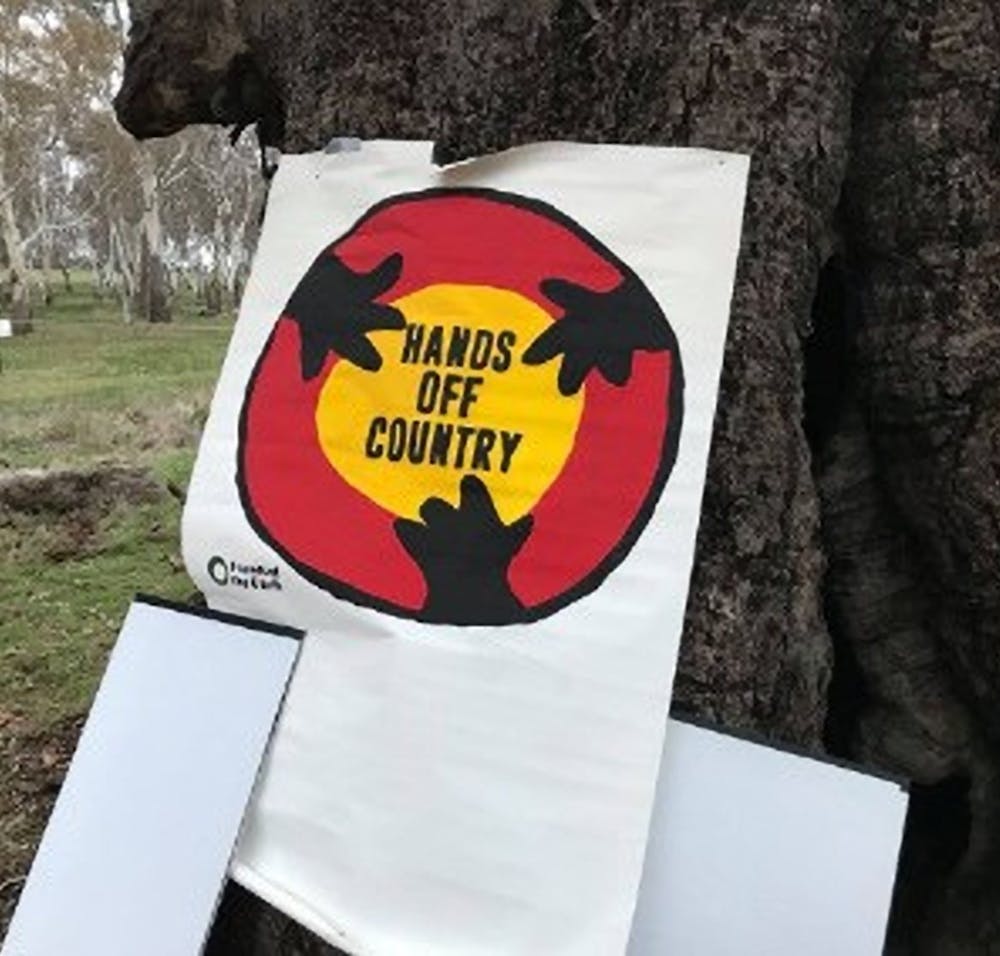
Work has resumed on widening the Western Highway near Ararat, Victoria, which will destroy thousands of trees. This includes around 250 sacred trees, some up to 800 years old. These trees are a living heritage of deep cultural significance and practice for the Djab Wurrung traditional owners.

In Australia, corporations such as Coles and Westpac and even some churches operate as legal entities entitled to most of the rights and responsibilities that individuals possess. Why don’t the Djab Wurrung sacred trees have legal standing?


Read more: What kind of state values a freeway’s heritage above the heritage of our oldest living culture?


In New Zealand, the Whanganui River now has it. Even in Victoria legislation to protect the Yarra River recognises the connection of the traditional owners to the river and surrounding land, Birrarung Country.

It’s not just people who have legal standing

Australian law has long accorded legal standing to other entities such as businesses. Under the Corporations Act 2001, a corporation is a legal entity that can enter contracts, lend and borrow money, sue and be sued, hire employees, own assets, and pay taxes. Over the past few decades corporate rights have expanded, and the process of incorporation has been simplified.

Corporations exist now as private enterprises for churches, not-for-profits and lobby groups. A corporation is separate and distinct from its owners, which minimises the risk for stakeholders and investors. It operates as a living person who can assert their rights in relation to economic (self)-interest.

The logic of Homo economicus and the utilitarian maximisation of profit is central to settler societies such as Australia’s. The settler colonial approach to nature decouples people from country. There is a hierarchy of rights that favours and reinforces settler property rights in the quest for new towns, farms, fences, and transportation lines.

If trees had rights this would be very costly for development. Trees are seen as resources, classified according to their utilitarian value.

Who speaks for the trees?

In Australia, the law protects trees if they are considered threatened, endangered or vulnerable. Indigenous plant species, for example, may be protected under the Environment Protection and Biodiversity Conservation Act 1999.

Vegetation may be protected more broadly as part of the public estate (such as in national parks, for instance). Native vegetation on private land may also be protected to conserve biodiversity and preserve habitat for endangered species.

Recognition of the role of traditional owners, which includes protection of Country, is a key issue of environmental justice in Australia. Djab Wurrung Embassy

Federal and state government laws may protect “significant” trees through heritage and/or Aboriginal heritage legislation. Or they may not.

The Djab Wurrung have challenged both state and federal government decisions against heritage protection for the sacred trees and their surrounds. Activists have set up camp to protest the destruction of the trees – grandmother birthing trees, their companion grandfather trees, and directions trees.

They reject the rationale that supports the widening of a freeway over the preservation of significant living cultural heritage and ask for its protection:

We ask that this impending destruction as part of VicRoads works be halted immediately, more appropriate respect for the concerns of the Djab Wuurung community be taken into consideration, and that the trees and the site are protected.

Should trees have legal standing?

In New Zealand, the Whanganui River, which flows 145 kilometres to the sea in the central North Island, now has legal standing. The law recognises the Maori Iwi people’s sacred relationship with land and water.

Through this legislation the Whanganui River is recognised as a person when it comes to the law. The river has “its own legal identity with all the corresponding rights, duties and liabilities of a legal person”, the minister for Treaty of Waitangi negotiations said:

This legislation recognises the deep spiritual connection between the Whanganui Iwi and its ancestral river and creates a strong platform for the future of Whanganui River.

Similar “rights of nature” laws, which change the legal status of nature, exist in Ecuador, Bolivia, Colombia, India, and Uganda, to name a few.


Read more: Three rivers are now legally people – but that’s just the start of looking after them


Djab Wurrung Dreaming is entitled to protection

Why isn’t Australia embracing “rights of nature” legislation? Djab Wurrung trees, and the ancient dreaming cultural landscape of which they are part, need protection.

Communities are starting to advocate for the rights of nature to exist, thrive and evolve. Under the Yarra River (Wilip-gin Birrarung murron) Act, while the river’s legal status hasn’t changed, there is progressive recognition of the connection between the traditional owners and the river. As the preamble to the act states:

This Act recognises the intrinsic connection of the traditional owners to the Yarra River and its Country and further recognises them as the custodians of the land and waterway which they call Birrarung.


Read more: New law finally gives voice to the Yarra River’s traditional owners


Such Indigenous perspectives, developed on Country in holistic ways incorporating lore/law, have a particularly valuable contribution to make to ecological economies.

We need far better legal recognition of the role of traditional owners, which includes cultural and environmental heritage protection. In the current political environment, deeply locked into a culture and mindset of economic growth and property ownership, “you’d have to be dreaming”.

ref. Churches have legal rights in Australia. Why not sacred trees? – http://theconversation.com/churches-have-legal-rights-in-australia-why-not-sacred-trees-123919

Policing the Berlin Wall: the ghostly photos taken by the Stasi’s hidden cameras

Source: The Conversation (Au and NZ) – By Donna West Brett, Lecturer in Art History, University of Sydney

When the Berlin Wall divided Germany from 1961 to 1989, East Germany’s Ministry for State Security – commonly known as the Stasi – undertook mass surveillance of German Democratic Republic citizens.

Operatives were trained at the Stasi Observational school in photography, trailing suspects, and dressing in disguise.

Surveillance occurred through the collection of documents, audio, video, human odours – and around two million photographs now held in the Stasi archive.

In order to take covert photographs, cameras were designed specifically to be hidden in flowerpots, pens, jackets, and bags. Cameras were even invented so small they could be sewn with the lens behind a buttonhole, the shutter release kept in a pocket.

Thirty years after the fall of the wall, images from this time of mass state surveillance give us an unparalleled look into the people who tried to escape from the east to the west – and the activities of the Stasi.

The dark edged shadows appear now as effect of the film – it is actually the edge of the buttonhole fabric. Observations with a hidden camera around 1975. BStU MfS HA XVIII Fo 46 Bl. 36 and 23. Courtesy of the BStU Stasi Records Agency Berlin.

Photographs taken by buttonhole cameras offer a strange dark shadow around the edge of the image that look like the ghostly photographic effects of a groovy low-fi plastic camera. These photographs are often out of focus, the observer hurried by their determination to catch the suspects in action.

One series taken in 1975 observes a couple handing over a bag in the street.

These covert photographs captured a couple exchanging a bag. Observing suspicious suspects exchanging a bag on the street, Berlin, around 1975. BStU MfS HA II Fo 865 Bl. 09. Courtesy of the BStU Stasi Records Agency Berlin.

The Stasi operative followed the couple, taking photographs that record them walking to a car. The photographs cast a suspicious pall over these quite innocent actions. But there is no further information in the Stasi archive about this couple or this event. This is likely because many records were later damaged or destroyed by the regime to hide their illegal mass surveillance.

The actions could be innocent – but the act of photography makes them seem suspicious. Observing suspicious suspects exchanging a bag on the street, Berlin, around 1975. BStU MfS HA II Fo 865 Bl. 13

Escape routes

The Berlin Wall was erected primarily to stem the flow of over four million citizens who had left East Germany for the more prosperous and democratic West. More than 5,000 people escaped from East Germany between 1961 and 1989. Methods included jumping out of windows situated on the border; hot air balloons; tunnels; in car boots; and even one report of an attempted escape inside the hollow belly of a model cow.**


Read more: World politics explainer: The fall of the Berlin Wall


One famous escape took place on July 29 1965, when Heinz Holzapfel travelled with his wife and son from Leipzig to East Berlin. The family hid out in a ministry building close to the wall before heading to the roof and signalling with a torch to helpers in West Berlin, who threw them a nylon rope tied to a hammer.

The night was cold and windy and the flight across the wall, in a pulley made from a bicycle wheel and a sling, was highly dangerous.

A news photograph shows Heinz and his son safely in West Berlin, demonstrating the sling. They are pictured happy and smiling having survived their escape ordeal, which took over a year of planning.

The escape harness the Holzapfel family used to cross the wall, photographed for a newspaper article on the escape. Anonymous: Refugees, GDR, Flight of the Family Holzapfel to the West, 1965

Surveilling the wall

Suspected defectors were followed by Stasi officers, with the aim of preventing an escape and arresting the suspects. Between July and August 1962, Stasi officers set up observation of an abandoned restaurant in Kreuzberg, Berlin. Informers had reported the digging of a tunnel from inside the restaurant and under the wall.

The officers created detailed reports of each person entering and exiting the building: hair colour, gender, height, clothing, what time they arrived and left, and if they came by car or on foot.

In addition to the copious notes are photographs. Some look like movie stills. Others are poorly shot as if the photographer was in a hurry to capture the moment.

Suspected defectors are photographed meeting friends in a car. Observation of a possible escape incident near a checkpoint in Berlin, August 26, 1962. BStU MfS HA I 13255, Bild 0123 8. Courtesy of the BStU Stasi Records Agency Berlin.

One day in August, Stasi agents took photographs in a flurry of activity, suspecting the escape attempt was imminent. A number of characters – deemed suspicious by their location near a checkpoint – were meeting friends in a car (many attempts of escape were made by cars ramming or driving under checkpoint barriers) while others observed from a nearby roof.

This action may have been a diversion. The tunnel and the attempted escape was abandoned for unknown reasons, and the Stasi were unable to make any arrests.

Painful memories locked in historical records

In late 1989, citizens stormed the offices of the East German Ministry for State Security following a series of revolutions that shook Eastern Europe. The fall of the Berlin Wall on November 9 would mark the end of the post-war era and the division of Germany.

Individuals subject to surveillance and imprisonment can now access their Stasi file. These files may hold photographs and evidence of informers who were family members, wives, husbands, or lovers.

Files like this evidence of a successful tunnel escape of the Thomas Family, 7th of May, 1962, are now available to the public, including individuals subject to surveillance. Stasi Records Agency, Berlin, BStU MfS HA I 3278 S. 0181

Vera Iburg, who works with the archives, told Der Spiegel: “It’s terrible, it makes you despair at the malicious lies people would tell, and at the weakness of human nature.”

We look on these photographs now as aesthetic objects and as archival evidence of a mass surveillance regime, yet they still hold a painful resonance for the victims.

It might serve us well to reflect on the lessons learned from the Stasi and the everyday lives constantly monitored.

ref. Policing the Berlin Wall: the ghostly photos taken by the Stasi’s hidden cameras – http://theconversation.com/policing-the-berlin-wall-the-ghostly-photos-taken-by-the-stasis-hidden-cameras-126264

Australia wants to host the 2023 FIFA Women’s World Cup. Equal pay for the Matildas will help our chances

Source: The Conversation (Au and NZ) – By Lee McGowan, Senior Lecturer, Queensland University of Technology

Women’s football has never looked better.

1.85 million Australians play football, including over 400,000 women and girls. Over 1 billion people watched the 2019 FIFA Women’s World Cup in France. Club level matches in England, Spain and Italy draw crowds of over 30,000 people. This coming weekend, England will play to a sold-out Wembly stadium: that’s 90,000 seats.

At home, the Matildas played in front of 17,000 at Penrith in 2017; and W-League matches draw between 4000 and 8000 fans.

This week, the Matildas secured equal pay with the men’s side. This substantial pay rise is a huge win for the women’s team: speaking to feasible career pathways, the strength of the team, and the strength of the game.

Australia is currently bidding to host the 2023 Women’s World Cup. The campaign, #GetOnside, builds on and supercharges the optimism of our expanding local football community. This latest pay announcement speaks highly to the support Australians have thrown behind the team.

Matildas players Lisa De Vanna, Chloe Logarzo, Alanna Kennedy and Caitlin Foord at the 2018 launch of #getonside. Joel Carrett/AAP

This is Australia’s fourth bid for the cup. In all its energy and enthusiasm, the bid feels brand new. Can our fourth bid to host the tournament put down under on top of the world?

A tale of three bids

In 1995, the Australian Soccer Federation submitted a bid to host the 1999 tournament. Enthusiasm around the impending formation of a national competition – the Women’s National Soccer League – was the likely driver. But the prospect of competing with an American bid boasting a US$30 million bankroll saw the EOI withdrawn in the same year.

Australia tried again in 1999 for the 2003 tournament. This more polished bid included a full colour eight-page brochure with a gush from Prime Minister John Howard about Australia’s natural wonders, clean air and healthy food.

The cover of the eight-page glossy brochure used to promote Australia for the 2003 World Cup. Author provided

During the 1999 Women’s World Cup in Los Angeles, Australian delegates were pre-emptively congratulated on their bid’s success. It wasn’t to be: FIFA awarded the tournament to China. In 2003, an outbreak of SARS caused a last minute change of venue, and the game returned to the 1999 hosts. China hosted in 2007.

Australia had another crack in 2007, for 2011 – only for Football Federation Australia to withdraw and support Germany, in exchange for Germany supporting Australia’s bid to host the 2022 Men’s Cup – which would become one of Australian football’s most infamous stories.


Read more: Scandals are forever for FIFA as World Cup hosting saga drags on


Finance behind women’s bids has never been as fraught. The A$5 million the government has committed to support the 2023 bid is by far its most generous. Even then, to secure a tournament that might generate A$500 million, departing FFA CEO David Gallup has suggested it will require a great deal more investment.

A record number of EOIs have been submitted. The towels of Belgium and Bolivia already lie on the changing room floor. Argentina, Brazil, Colombia, Japan, South Africa, New Zealand and South Korea remain. The Koreas, and Australia and New Zealand, are both exploring joint-hosting.

Formal bids are due in December. The host will be announced in May.

A fierce competitor

Australian fans have never been so connected to the game or in a position to give such a bid their backing. This pay rise is the latest demonstration of their power.

Digital platforms have been critical in growing audiences for women’s sport. Sports journalist and campaign coordinator for Australia’s World Cup bid, Ann Odong, says “the ability for independent media to shine a light on the game has been key to its visibility.”

With live streaming, independent fan groups, and dynamic advocates, online spaces are generating huge following and interest – in Australia, and around the world.

In the US, the Portland Thorns average 20,000 a game as a result of their community. At home, the newly established Brisbane Roar fan group @TheRoarCorps aim to follow their lead.

On November 9 and 12, the Matilda’s will play two friendly games against Chile in Sydney and Adelaide. Match attendances will play a huge part in showing how important the game is here – and demonstrating Australia’s support for the 2023 cup.

Football is about community

The Matildas are our nation’s most loved team. They vibrantly represent the rich diversity and inclusivity the game wholeheartedly offers.

The Women’s World Cup is the world’s largest female sporting event. Tickets sales, sponsorship and media presence would bring lucrative economic benefits.

But there are benefits, too, in the way the women’s game challenges the way we collectively think about sport, such as the fight for gender equity and in building community. The 2019 cup in France was “a turning point”: amplifying the profile of elite women’s sport on a global scale.

Australia’s 2023 bid is centred on the value of community engagement and legacy-building. It offers a vibrant, joyful charm and ensures unused stadiums won’t haunt our cities.

More importantly, it demonstrates what FIFA most want to see: women’s football is taken seriously in Australia – and it pulls a serious crowd.

ref. Australia wants to host the 2023 FIFA Women’s World Cup. Equal pay for the Matildas will help our chances – http://theconversation.com/australia-wants-to-host-the-2023-fifa-womens-world-cup-equal-pay-for-the-matildas-will-help-our-chances-125564

Should you worry about Boeing 737s? Only if you run an airline

Source: The Conversation (Au and NZ) – By John Page, Senior Lecturer with the School of Mechanical and Manufacturing Engineering, UNSW

The cracks found in three Qantas-owned Boeing 737s last week led to calls that it should ground its 33 aircraft with a similar service record.

Although the three planes have been grounded and will require complex repairs, the cracks – in a component called the pickle fork, which helps strengthen the join between the aircraft’s body and wing – do not threaten the plane’s airworthiness.

This makes it more of a threat to consumers’ confidence in Boeing and the airlines that fly its planes, rather than a direct risk to passenger safety, especially after the tragedies over a poorly thought out automatic control system installed on the Boeing 737 MAX 8.


Read more: Flights suspended and vital questions remain after second Boeing 737 MAX 8 crash within five months


More broadly, however, the pickle fork defects highlight a problem that aviation engineers have been contending with for decades: component fatigue.

The world’s first commercial jet airliner, the de Havilland Comet, launched in 1952 but suffered two near-identical crashes in 1953 in which the planes broke up shortly after takeoff, killing all on board. A third fatal breakup in 1954 triggered an investigation and threatened to end the era of mass air travel almost as soon as it had begun.

The crashes were all ultimately blamed on “fatigue failure”, caused by a concentration of stress in one of the passenger windows which resulted in a rapidly growing crack.

Almost any metal structure can potentially suffer fatigue failure, but the problem is that it is very hard to predict before it happens.

It begins at an “initiation area”, often at a random point in the component, from which a crack gradually grows each time the part is loaded. In the case of aircraft, the initiation area may be random, but from there the crack generally grows at a predictable rate each flight cycle.

One solution instituted after the Comet investigation was to subject all aircraft to regular inspections that can detect cracks early, and monitor their growth. When the damage becomes critical – that is, if a component shows an increased risk of failure before the next inspection – that part is repaired or replaced.

The current damage to the Qantas aircraft is a long way short of critical, as highlighted by the fact that Qantas has pointed out the next routine inspection was not due for at least seven months – or about 1,000 flights. This is normal practice under the official airworthiness directives for Boeing 737s.

Obviously, given the public relations considerations also involved, Qantas has nevertheless taken the three planes out of service immediately.

Why aren’t the pickle forks a threat?

It might sound strange to say the cracks in the pickle forks aren’t a threat to the aircraft’s safety. Does that mean aircraft can just fly around with cracks in them?

Well, yes. Virtually all aircraft have cracks, and a monitored crack is much safer than a part that fails without warning. Bear in mind that all aircraft safety is reinforced by multiple layers of protection, and in the case of the pickle fork there are at least two such layers.

First, the pickle fork is secured with multiple bolts, so if one bolt should fail as a result of cracking, depending on the location there will be another five or six bolts still holding it in place.

Second, should the unthinkable occur and a pickle fork totally fail, there is still another “structural load path” that would maintain the strength of connection between the wing and body, so this would not affect the operation of the aircraft.

On this basis, it seems strange that the Australian Licensed Aircraft Engineers Association has called for the entire fleet to be grounded, especially given that this union has no official role in the grounding of aircraft. The Civil Aviation Safety Authority is the only agency in Australia with a legal obligation to make such a ruling, and has assured passengers it is unnecessary.

Aircraft maintenance procedures are drawn up by the manufacturer’s design engineering team. Before the aircraft obtains a permit to fly, the designer has to demonstrate to a regulator – in Boeing’s case, the US Federal Aviation Administration – that is has fully accounted for all airworthiness issues. This has to be proved by both engineering calculations and physical models. The result is an extensive maintenance manual for each aircraft model.


Read more: All Boeing 737 MAX flights grounded – and travellers could feel it in the hip pocket


Before each flight the aircraft must be demonstrated to conform to the maintenance manual, which is the role of the maintenance engineers who work directly for airlines. While the maintenance engineers’ union is right to bring any safety concerns or maintenance issues to the attention of the airline and possibly the regulator, only the regulator is in a position to rule on whether a fleet, or part of it, should be grounded.

Boeing and Qantas, and the many other airlines that fly 737s, are right to be concerned by this latest development because of the potential for it to harm them commercially. But while the cracked pickle forks will be giving executives headaches, passengers should rest easy in their seats.

ref. Should you worry about Boeing 737s? Only if you run an airline – http://theconversation.com/should-you-worry-about-boeing-737s-only-if-you-run-an-airline-126268

India’s not joining the latest free-trade deal which limits Australia’s market access

Source: The Conversation (Au and NZ) – By Pat Ranald, Research fellow, University of Sydney

Australian prime minister Scott Morrison and other leaders involved in the Regional Comprehensive Economic Partnership (RCEP) announced late yesterday that 15 of the 16 countries have finalised the text, and are prepared to sign the trade deal in early 2020.

India is the only one not to join, a joint leaders’ statement saying the country had “significant outstanding issues”. Negotiations will continue in the hope it may join later.

The RCEP now involves Australia, New Zealand, China, Japan, South Korea and the 10 Association of Southeast Asian Nations (ASEAN) countries, covering 2.5 billion people.


Read more: Arrogance destroyed the World Trade Organisation. What replaces it will be even worse


A lost Indian market, for now, and concerns about corporate power

India’s absence severely diminishes the market access Australia hoped to gain. Australia already has a free trade agreement with ASEAN, and has bilateral free trade agreements with all of the other countries.

India would have been the main area of additional market access for Australian agricultural and other exports.

RCEP negotiations have dragged on since 2012. Much attention has focused on India’s resistance to lower tariffs and emphasised the importance of concluding a major trade deal in the face of US president Donald Trump’s America-first protectionism.

But there is a hidden contentious agenda of non-tariff issues that has influenced India’s decision and could restrict future government regulation by giving more rights to global corporations.

These deserve more public discussion in Australia, and reflect the widely divergent levels of economic development of RECP countries.

A secret deal

As usual, the wording of the RECP deal is secret. The final text will not be revealed until after it is signed.

It’s a process widely criticised by both civil society groups and the Productivity Commission.

This secrecy favours corporate players, which have the most resources to lobby governments.

Leaked documents reveal the industrialised countries, including Japan, South Korea and Australia, have been pushing non-tariff rules that suit their major corporations, similar to those in the controversial Trans-Pacific Partnership (TPP).

These have been resisted by developing countries, which have more vulnerable populations, and wish to preserve regulatory space to develop local industries.

Concern over foreign investor rights

The contested proposals include foreign investor rights to bypass national courts and sue governments for millions of dollars in international tribunals if they can argue a change in law or policy will harm their investment. This is known as Investor-State Dispute Settlement or ISDS.


Read more: Suddenly, the world’s biggest trade agreement won’t allow corporations to sue governments


Tobacco company Philip Morris used ISDS to sue our government for compensation over our plain packaging law, a public health measure designed to discourage young smokers. Australia won in the end, but at a cost to taxpayers of $12 million.

Most of the 983 known ISDS cases have been taken against developing countries, with increasing numbers against health, environment, indigenous land rights, labour laws and other public interest regulation in both developing and industrialised countries.

RCEP members India and Indonesia have policies to exclude or severely restrict investor rights in new agreements.

ISDS has been reportedly excluded from the RCEP text. India was one of the main opponents of ISDS. We won’t know for sure whether ISDS is still excluded until the text is released after signing.

Other concerns over patents and e-commerce

Even more contentious are proposals that pharmaceutical companies should be given longer patent monopolies on medicines than the current 20 years. This would delay the availability of cheaper medicines, at greatest cost to developing countries.

There are also proposals to extend to developing countries’ rules on patenting of seeds and plants that apply to industrialised countries. This would make it more difficult for millions of small-scale farmers in developing countries to save and exchange seeds with each other as they have done for centuries. They lack the capacity to use the legal system to obtain patent rights and lack the funds to buy patented seeds.

The RCEP also includes an e-commerce chapter that mandates free cross-border data flows for global corporations such as Google and Facebook. This makes it more difficult for governments to regulate them.

For example, if trade rules forbid requirements to store data locally, then national privacy laws and other consumer protections cannot be applied to data stored in other countries.

The recent Digital Platforms report of the Australian Consumer and Competition Commission recommended more, not less regulation of these corporations. That was in the face of scandals about violations of consumer privacy, misuse of data in elections and tax evasion.

Developing countries are also concerned rules favouring the global tech companies will lock in their market dominance at the expense of local IT industry development.

These conflicts between governments have been deepened by national pressures from civil society groups in RCEP countries including Australia. When RECP negotiations were held in Australia in July this year, 52 community organisations, including public health, union, church, environment and aid groups endorsed a letter to the trade minister Simon Birmingham. They asked him to oppose ISDS and longer medicine monopolies in the RCEP, and to release the text for independent evaluation before it is signed.

Show us the deal

Even without India in the deal, the Australian government says it will boost local jobs and exports.


Read more: Myth busted: China’s status as a developing country gives it few benefits in the World Trade Organisation


But without India, claimed market access gains are marginal for Australia and must be evaluated against the costs of expanded corporate rights and restraints on future government regulation.

That’s why the text of the RCEP deal should be released before it is signed and there should be independent evaluation of its costs and benefits for both Australia and its trading partners.

ref. India’s not joining the latest free-trade deal which limits Australia’s market access – http://theconversation.com/indias-not-joining-the-latest-free-trade-deal-which-limits-australias-market-access-126343

Dogs really can chase away loneliness

Source: The Conversation (Au and NZ) – By Lauren Powell, PhD candidate, University of Sydney

Feeling lonely? A dog may help. Our research out today confirms what many dog owners already know: dogs are great companions that can help you to feel less lonely.

Cuddles and slobbery kisses, meeting other dog owners in the park and a general lift in mood all likely help.

But our study, published today in BMC Public Health, found dogs didn’t affect psychological distress, the type seen in depression and anxiety.


Read more: 1 in 3 young adults is lonely – and it affects their mental health


Why are we studying this?

Almost two in five Australian households own a dog. And although most dog owners will assure you, in no uncertain terms, their dog is a source of sheer happiness, scientific evidence is lacking.

Most previous studies have compared the mental well-being of dog owners to non-owners at a single point in time. The problem with these studies is they cannot tell if dogs actually make us happier, less lonely or less stressed. They also cannot tell us if dog owners are simply in a more positive state of mind in the first place.

So, in this study, we measured mental well-being at three points in time: before owning a dog, three months after owning a dog and eight months after owning a dog.


Read more: Man’s stressed friend: how your mental health can affect your dog


What did we do?

Our study, known as the PAWS trial, involved 71 Sydney adults who were separated into three groups:

  • people who bought a dog within one month of starting the study
  • people who were interested in getting a dog in the near future but agreed not to get one during the study, and
  • people who had no interest in getting a dog.

People filled out surveys to measure their mood, loneliness and symptoms of psychological distress at the three different time-points. We then compared the mental well-being of the groups at the beginning of the study, to the mid-point and to the end-point.


Read more: Curious Kids: is it true dogs don’t like to travel?


Here’s what we found

New dog owners felt less lonely after they got a dog compared to the other two groups. The effect happened quite quickly, within three months of acquiring a dog. There was no further decrease in loneliness between three months and eight months.

Aww. The joy of a new dog eased loneliness within the first few months. from www.shutterstock.com

We also found some evidence that dog owners had fewer negative emotions, such as nervousness or distress, within three months of getting a new dog but this finding was not as clear cut.

We found that symptoms of depression and anxiety were unchanged after acquiring a dog. Maybe the dog owners in our study already had low levels of psychological distress before they got a dog, so dog ownership didn’t lower these levels any further.

What does it all mean?

There are lots of possible reasons dogs can help to lessen feelings of loneliness. We know having a quick cuddle with a dog boosts people’s mood in the short-term. Maybe daily dog cuddles can also boost owners’ mood in the long-term which could help to lower feelings of loneliness.

Dog owners may also meet new people through their dog as people are more likely to talk strangers if they are accompanied by a dog. In our study, dog owners also said they had met new people in their neighbourhood because of their dog.


Read more: Is your dog happy? Ten common misconceptions about dog behaviour


So far, there have only been two similar studies to look at mental well-being in new dog owners, one of which was conducted almost 30 years ago.

Of these studies, one found dog owners had fewer symptoms of psychiatric disorders after they acquired a dog. The other study found no difference in loneliness after people brought a new dog home.

Dogs may also improve our physical health, by reducing blood pressure, improving cardiovascular health and increasing the amount of physical activity their owners perform. But, as is the case with mental well-being, the scientific evidence is still limited.

So, what happens next?

One of the things our study cannot determine is how dogs affect men’s mental well-being. By chance, all the new dog owners in our study were women. So, we don’t know whether dogs affect men’s mental well-being in a different way to women’s.


Read more: Whose best friend? How gender and stereotypes can shape our relationship with dogs


Our next step is to look at mental well-being in a much bigger group of new dog owners to confirm these findings. A bigger study could also provide more insight into the relationship between dog ownership and mental illness, such as depression and anxiety.


If this article has raised issues for you, or if you’re concerned about someone you know, call Lifeline on 13 11 14.

ref. Dogs really can chase away loneliness – http://theconversation.com/dogs-really-can-chase-away-loneliness-125495

Our shameful legacy: just 15 years’ worth of emissions will raise sea level in 2300

Source: The Conversation (Au and NZ) – By Bill Hare, Director, Climate Analytics, Adjunct Professor, Murdoch University (Perth), Visiting scientist, Potsdam Institute for Climate Impact Research

Greenhouse gas emissions released over the first 15 years of the Paris Agreement would alone lock in 20cm of sea-level rise in centuries to come, according to new research published today.

The paper shows that what the world pumps into the atmosphere today has grave long-term consequences. It underscores the need for governments to dramatically scale up their emission reduction ambition – including Australia, where climate action efforts have been paltry.

The report is the first to quantify the sea-level rise contribution of human-caused greenhouse gas emissions that countries would release if they met their current Paris pledges.

The 20cm sea-level rise is equal to that observed over the entire 20th century. It would comprise one-fifth of the 1m sea level rise projected for 2300.

A satellite image showing meltwater ponding in northwest Greenland near the ice sheet’s edge. EPA/NASA EARTH OBSERVATORY

The picture is bleak

The study was led by researchers at Climate Analytics and the Potsdam Institute for Climate Impact Research, and was published today by the Proceedings of the National Academy of Sciences. It estimated the sea level rise to be locked in by 2300 due to greenhouse gas emissions between 2016 and 2030 – the first pledge period on the Paris treaty.

During those 15 years, emissions would cause sea levels to rise by 20cm by 2300. Even if the world cut all emissions to zero in 2030, sea levels would still rise in 2300. These estimates do not take into account the irreversible melting of parts of the Antarctic ice sheet.


Read more: The good, the bad and the ugly: the nations leading and failing on climate action


The researchers found that just over half of the sea level rise can be attributed to the top five polluters: China, the US, the European Union, India and Russia.

The emissions of these jurisdictions under will cause seas to rise by 12cm by 2300, the study shows.

The important takeaway message is that what the world does now will take years to play out – it is a stark warning of the long-term consequences of our actions.

Severe storms at Collaroy on Sydney’s northern beaches caused major damage to beachfront homes. UNSW WATER RESEARCH

It’s worse than we thought

Last week a separate paper in Nature Communications showed sea-level rise could affect many more people than previously thought. The authors produced a new digital elevation model that showed many of the world’s coastlines are far lower than estimated with standard methods.

In low-lying parts of coastal Australia, for example, the previous data has overestimated elevation by an average of 2.5m.

Their projections for the millions of people to be affected by sea-level rise are frightening. Within three decades, rising sea levels could push chronic floods higher than land currently home to 300 million people. By 2100, areas home to 200 million people could be permanently below the high tide line.

But what of Australia, girt by sea?

Australia is a coastal nation: the vast majority of our population lives within 50km of the sea, and will be heavily impacted by sea-level rise. Already, we’re seeing severe coastal erosion and inundation during king tides – and that’s without factoring in the impact of storm surges.

Clearly the world needs strong climate action to reduce greenhouse gas emissions as fast as possible. The Intergovernmental Panel on Climate Change has said emissions must be lowered to 45% below 2010 levels by 2030 and to zero by mid-century.

We also know that unless the world achieves this, we will not just lose parts of our coasts but also iconic ecosystems such as the Great Barrier Reef.


Australia’s emissions comprise a relatively small proportion of the global total – 1.4% or around 5% if we count coal and liquified natural gas exports. However, we have a much bigger diplomatic and political influence on the international stage.


Read more: Australia’s hidden opportunity to cut carbon emissions, and make money in the process


Australia should use its position to push for urgent action internationally. But the federal government’s appalling record on emissions reduction – despite its efforts to claim otherwise – puts us in a very weak position on the global stage. We cannot point fingers at other nations while our emissions rise and we sell as much coal as possible to the rest of the world, while also burning as much as we can.


All the while, Australia is becoming the poster child for extreme sea-level events, more frequent and severe bushfires and other devastating climate impacts.

Governments, including Australia’s, must put forward much stronger 2030 emission reduction pledges by 2020. There should seek to decarbonise at a pace in line with the Paris Agreement’s 1.5°C temperature goal.

Otherwise, our emissions today will cause seas to rise far into the future. This process cannot be reversed – it will be our legacy to future generations.


Climate Analytics researcher Alexander Nauels was lead author of the study.

ref. Our shameful legacy: just 15 years’ worth of emissions will raise sea level in 2300 – http://theconversation.com/our-shameful-legacy-just-15-years-worth-of-emissions-will-raise-sea-level-in-2300-126429

Running may help you live longer but more isn’t necessarily better

Source: The Conversation (Au and NZ) – By Željko Pedišić, Associate Professor, Victoria University

It’s free, requires no equipment and the scenery can be stunning – it’s no wonder running is among the world’s most popular sports.

The number of recreational runners in Australia has doubled from 2006 to 2014. Now more than 1.35 million Australians (7.4%) run for fun and exercise.

Our study, published today in the British Journal of Sports Medicine, suggests running can significantly improve your health and reduce the risk of death at a given point in time.

And you don’t have to run fast or far to reap the benefits.


Read more: Health Check: do we lose gains from exercise as our bodies get used to it?


Our study

Past research has found running reduces the risk of obesity, high blood pressure, high cholesterol, disability, type 2 diabetes, heart disease and cancer.

It also improves aerobic endurance, heart function, balance and metabolism.

These are important components of your overall health status. So, it would be reasonable to assume participation in running increases longevity. But the previous scientific evidence on this has been inconsistent.

Our review summarised the results of 14 individual studies on the association between running or jogging and the risk of death from all causes, heart disease and cancer.

Our pooled sample included more than 230,000 participants, 10% of whom were runners. The studies tracked participants’ health for between 5.5 and 35 years. During this time, 25,951 of the participants died.


Read more: Which sports are best for health and long life?


When we pooled the data from the studies, we found runners had a 27% lower risk of dying during the study period from any cause compared with non-runners.

Specifically, running was associated with a 30% lower risk of death from heart disease and a 23% lower risk of death from cancer.

More isn’t necessarily better

We found running just once a week, or for 50 minutes a week, reduces the risk of death at a given point in time. The benefits don’t seem to increase or decrease with higher amounts of running.

This is good news for those who don’t have much time on their hands for exercise. But it shouldn’t discourage those who enjoy running longer and more often. We found even “hardcore” running (for example, every day or four hours a week) is beneficial for health.

Run as fast and as far as you feel comfortable. Ekapong

Nor do the benefits necessarily increase by running at high speeds. We found similar benefits for running at any speed between 8 and 13 km/h. It might be that running at your own “most comfortable pace” is the best for your health.

But keep in mind there are risks as well

Running may lead to overuse injuries. These occur as a consequence of repeated mechanical stress on the tissue without sufficient time for recovery.

A history of injury and a longer duration of activity increase the risk of overuse injuries.

You can minimise the risk by avoiding uneven or hard surfaces, wearing appropriate footwear, and trying not to suddenly increase the pace or duration of running.

There is always the risk of sudden death during exercise, but this occurs very rarely.

Importantly, we found the overall benefit of running far outweighs the associated risks. Shorter duration and lower pace of running will further reduce the risks.

Tips for beginners

Start slow and gradually increase the pace, duration and weekly frequency. Set your aim at 50 minutes a week or more, and run at a comfortable speed. Be persistent, but don’t let yourself run out of steam.


Read more: Health Check: how to start exercising if you’re out of shape


The benefits will be similar, regardless of whether you do it in one go or in multiple sessions spread across the week.

If you don’t like running alone, consider joining a running group or an organised event such as parkrun. Running in a group can increase your motivation and provide a fun social experience.

It can be hard to start running, but it shouldn’t be too hard. If you don’t like running, don’t force it; there are more than 800 other interesting sports to choose from. The benefits of many other sports (such as swimming, tennis, cycling and aerobics) are comparable to the ones we found for running.

ref. Running may help you live longer but more isn’t necessarily better – http://theconversation.com/running-may-help-you-live-longer-but-more-isnt-necessarily-better-120578

Former PNG PM O’Neill denies fleeing country

By RNZ Pacific

Papua New Guinea’s former Prime Minister Peter O’Neill has denied a claim that he has fled the country to avoid being arrested.

This is despite police last week withdrawing an arrest warrant for O’Neill, after his lawyers had launched a legal challenge to its validity.

The warrant was issued for the Ialibu-Pangia MP at the Waigani District Court on October 11.

READ MORE: Bryan Kramer: O’Neill flees country as national court dismisses case preventing his arrest

PNG’s Acting Police Commissioner David Manning said investigators sought the warrant in relation to a corruption case.

The national court issued a stay on the arrest while O’Neill’s legal team sought leave for a judicial review of the warrant.

– Partner –

But the Police Minister Bryan Kramer posted on Facebook that O’Neill fled to Australia on Friday shortly before the National Court ruling on his judicial review proceedings.

However O’Neill has rubbished this claim, saying he had flown to Sydney to be with his children.

“I have every right to travel and attend to my children’s needs,” O’Neill told RNZ Pacific.

The MP has also denied Kramer’s claim that O’Neill and his lawyers earlier fabricated a defective arrest warrant document to put before the court.

Last Thursday after police withdrew the warrant, O’Neill’s lawyers argued against the move, saying police would just seek a fresh warrant to avoid the review.

The State Solicitor, however, argued that O’Neill’s lawyers were trying to delay the matter by keeping it in court.

The case was adjourned.

  • This article is published under the Pacific Media Centre’s content partnership with Radio New Zealand
Print Friendly, PDF & Email

Article by AsiaPacificReport.nz

India’s social media content removal order is a nail in the coffin of the internet as we know it

Source: The Conversation (Au and NZ) – By Dan Jerker B. Svantesson, Professor, Bond University

In recent weeks, India’s High Court of Delhi put another nail in the coffin of the internet as we currently know it. The court granted an order requiring Facebook, Twitter and Google to remove certain content globally, based on that content being defamatory under local law in India.

This decision underlines a worrying trend of a “race to the bottom” for internet freedom, where the scope of jurisdiction claimed by the courts is global.

If widely adopted, this may result in a situation where the only content that remains online is that which complies with all the laws of every country in the world.

Another brick in the wall

In reaching its decision, the Indian court relied on a string of recent decisions from around the world. For example, it drew from the Canadian approach in Equustek, where the Supreme Court of Canada ordered Google to remove content globally.

It also referred to a 2017 Australian case in which the Supreme Court of New South Wales ruled Twitter must globally block any future posting by a specific user.


Read more: Facebook goes full circle on censorship, like it or not


The most recent decision referred to was a ruling by the Court of Justice of the European Union (CJEU) in which the CJEU concluded the EU’s e-commerce directive doesn’t prevent courts in EU countries from ordering social media sites to block or remove information worldwide.

Following the CJEU’s decision, several leading commentators argued that, while much has been made of the CJEU’s apparent green light to global takedown orders, in reality this was just a decision about the dividing line between EU law and national law.

Even if this is true, headlines around the world didn’t communicate such a nuanced outcome. And with the current decision from India, we can see with complete clarity how that case is now being used by foreign courts. This shows how careful courts must be as to the messaging of their judgements.

It’s of course possible to suggest this type of application of an EU law case is a mistake by the Indian court, rather than the CJEU – and there is certainly merit in such an argument. However, the CJEU’s decision was a missed opportunity to clearly communicate a general stance against global orders as being standard.

A missed opportunity to explain geo-location technologies

Geo-location technology may be used to block online content within a specified geographical area. This practice caters to a global internet while still respecting differences in laws, and in India’s case could provide an alternative to a global blocking order.


Read more: Governments are making fake news a crime – but it could stifle free speech


However, more than once, courts have failed to understand how this technology operates. And at least on this occasion, errors could have been avoided since the court “had specifically directed the defendants to throw some light on how geo-blocking is done and to keep a technical person present in court to seek clarification on geo-blocking”.

The court said none of the internet platforms had given a detailed explanation as to how geo-blocking is done.

As a result, the court clearly misunderstood the impact of geo-blocking:

If geo-blocking alone is permitted in respect of the entire content, […] the offending information would still […] be accessible from India, […] by accessing the international websites of these platforms.

Where geo-blocking is done by reference to domain names, internet users can indeed use another country’s version of the site in question and access the content. This seems to be the situation the court had in mind.

In contrast, with blocking by geo-location technology, the content is tailored to the user’s location, regardless of which country’s version of the site is accessed. It’s highly unfortunate the court wasn’t made to understand this important distinction.

Silver linings, and the way onward

Although the above probably makes clear that I see the Indian court’s decision as a setback, there are also some positive aspects that ought to be highlighted.

In its decision, the court clearly acknowledged the importance of the scope of jurisdiction issue and the implications of global orders.

The court also devoted considerable effort to discussing case law from around the world. This is an important step if we are to see a global harmonisation in approach. That said, I’d like to add that currently harmonisation seems to be taking us in an undesirable direction, with global blocking/removal orders as standard.

Given the court had taken account of the international environment, it’s disappointing, not to say odd, that it didn’t properly engage with the international law issues raised by the defendants. For instance, defendants mentioned the doctrine of comity, which demands courts take the international impact of their decisions into consideration.


Read more: Caution over the EU’s call for global forgetfulness from Google


While the Indian court decision is currently under appeal, there’s no point denying the future of the internet looks bleak when it comes to scope of jurisdiction.

The case discussed here sets an important precedent, not just for India but also the rest of the world. And much is at stake.

ref. India’s social media content removal order is a nail in the coffin of the internet as we know it – http://theconversation.com/indias-social-media-content-removal-order-is-a-nail-in-the-coffin-of-the-internet-as-we-know-it-126273

Scott Morrison wants to outlaw boycott campaigns. But the mining industry doesn’t need protection

Source: The Conversation (Au and NZ) – By Graeme Orr, Professor of Law, The University of Queensland

On Friday, Prime Minister Scott Morrison vowed to craft new laws targeting social and political protest. Speaking to the Queensland Resources Council, he labelled some activist groups as environmental “anarchists”, and lamented how businesses like banks might be sensitive to consumer or protest group pressure to limit dealings with the mining industry.

These laws could ban activists from advocating for certain boycotts against companies. Morrison lambasted progressives, saying they:

want to tell you where to live, what job you can have, what you can say and what you can think – and tax you more for the privilege of all of those instructions.

Boycott laws already exist

The first thing to note is there is no proposal on the table. Morrison merely warned his government was:

working to identify mechanisms that can successfully outlaw these indulgent and selfish practices.

The existing law on boycotts has been driven by conservative governments. In the 1970s, the Fraser government sought to crack down on “secondary boycotts”, with stiff provisions in trade practices or competition law. Morrison also specifically invoked “secondary boycotts” in his speech.

A secondary boycott is simply pressure you put on someone you’re dealing with to have them “boycott”, or not deal with, another person or business. It’s considered secondary action because you have no particular beef with the person you are directly pressuring. The real target of your pressure is the “secondary” person or business down the chain.

It’s easy to imagine secondary boycotts most people would sympathise with. Going on strike to stop your employer dealing with overseas sweatshops, for instance.

The chief concern of secondary boycott law has been with union power. The fear was that a strong union, in a key sector like the wharfies unloading ships, could wield disproportionate social power through secondary boycotts.

As a result, unionised workers are now confined to industrial action, such as going on strike, to improve conditions in an enterprise bargain at their workplace.

Morrison wants to stop consumer pressure on banks

The focus of laws against secondary boycotts has never been against consumer groups or movements involving non-employees. There’s an obvious and good reason for this.

Encouraging or organising consumers to put pressure on one company to limit its dealings with a secondary “target” company is a form of political communication and association. These are freedoms the High Court has read into our constitution.

It might seem unfair to banks for consumers to organise boycotts against them to encourage a change in their business practices. The banks may see themselves as the meat in the sandwich, caught between activists and the mining industry.


Read more: Cattle prods and welfare cuts: mounting threats to Extinction Rebellion show demands are being heard, but ignored


The Morrison government will not only try to sell this idea as a “get protesters” or “protect coal” initiative. He’ll also argue markets should be as free as possible and boycotts either distort competition or are an abuse of power. There are two problems with this.

Companies don’t need more protection

First, it’s a hard sell to pretend banks are the playthings of activist groups. Financial institutions look at mining investments across a range of risks, including their social brand and reputation.

Second, modern corporations, especially retail ones dealing with citizens every day, have long been aware of the social environment around business. They don’t trade in an economic bubble because economics has never been divorced from society.

Social media reinforces this reality by galvanising and magnifying consumer and activist sentiment.

Things would be different if activists could strong-arm one business to renege on an actual contract with another. It has long been against tort law (laws against “civil wrongs” like intimidation or tresspass) to leverage someone into breaking an agreement, without some justification.

But if a bank reneges on an existing funding deal with a mining company, say because protesters were blockading the bank’s offices, the miners would hardly have to go after the protesters.

The bank would be liable for damages to the mining company director. And the bank would only buckle under such pressure after a thorough cost-benefit analysis to itself.

Morrison also appealed to “quiet shareholders” in his remarks. He implied they were the real meat in the sandwich when businesses did not pursue a singular vision of putting today’s profits above long-term social reputation.


Read more: Is the Morrison government ‘authoritarian populist’ with a punitive bent?


The irony here is that even company law is not solely about economics, shorn from social reality. Shareholders are entitled to be corporate activists, too.

Previous attempts at boycott legislation

In any case, you can expect the government to sell any proposal to expand secondary boycott law as one to protect smaller businesses, not the banks or big miners.

Last year, it heralded a proposal to criminalise the incitement of protesters trespassing to protect family farms. The law that was passed this year extends to all manner of primary production, including large-scale abattoirs.

We have seen similar kites aloft before. In 2007, Treasurer Peter Costello vowed to crack down on those who organised boycotts. He singled out animal welfare activist group PETA for encouraging a boycott of Australian wool in protest against the de-skinning of sheep.

In the end, Costello’s bill did not expand secondary boycott law. It just allowed the competition watchdog to take representative action on behalf of businesses affected by secondary boycotts. Labor waived it through.

This time, the stakes may be higher.

ref. Scott Morrison wants to outlaw boycott campaigns. But the mining industry doesn’t need protection – http://theconversation.com/scott-morrison-wants-to-outlaw-boycott-campaigns-but-the-mining-industry-doesnt-need-protection-126326

Why is Japan’s Olympic marathon shifting cities to avoid the heat? A sports physiologist explains

Source: The Conversation (Au and NZ) – By Chloe Taylor, Senior Lecturer in Sport and Exercise Science, Western Sydney University

The International Olympic Committee last week decided to shift next year’s Olympic marathon from Tokyo to Sapporo to protect athletes from the heat.

Tokyo’s average temperatures during the month of August exceed 30℃, with some days reaching 35℃. Sapporo, about 800 kilometres to the north of Tokyo, is expected to be 5-6℃ cooler than Tokyo at this time.

Some of Tokyo’s officials have argued for a night-time race in Japan’s capital instead, but without success.

While the move has stirred debate, shifting the events to a cooler climate will reduce the athletes’ risk of health complications that can result from endurance exercise in extreme heat.


Read more: Health Check: how to exercise safely in the heat


Endurance and extreme heat

In September, several athletes collapsed while competing in the marathon at the World Athletics Championships in Doha, Qatar.

Despite running the marathon at midnight, the extreme temperatures – about 32℃ – meant 28 out of 68 women did not complete the race. Similar effects were seen in the men’s event.

Sustained exertion in extreme heat can lead to heat exhaustion and heat stroke. When our body is under heat stress, it moves blood to the skin to cool us down.

With prolonged exposure, this can mean a lack of blood reaching the exercising muscles, brain and other organs.

Body temperature and time of day

The body clock is responsible for regulating the cycle of our body temperature throughout the day. Of course, our body temperature is influenced by the conditions we’re in – but our body clock sets somewhat of a “baseline”. This “baseline” is generally highest in the afternoon.

An increase in body temperature speeds up metabolism and makes our muscles contract more effectively. So in general, athletes perform better in the afternoon. When body temperature is at its highest they experience peaks in speed, strength, power and flexibility. This is likely why more athletic world records are broken in the afternoon than other times of day.


Read more: The ancient clock that rules our lives – and determines our health


However, endurance events in the heat present a unique challenge: extremely high body temperatures can jeopardise the athletes’ health and performance.

The 2020 Olympic marathon events were scheduled for 6am starts to avoid Tokyo’s highest temperatures. There were also plans to provide shade and coat the roads with heat-shielding material to reduce road surface temperatures.

In response to the decision to switch to Sapporo, Tokyo officials proposed changing the start time to 5am, or even 3am.

Are ‘midnight marathons’ the answer?

At night the body is in “heat loss mode”. Thanks to our body clocks, body temperature starts to drop in the late evening. It typically reaches its lowest point around 5am.

Starting a long-distance race with a lower body temperature has advantages. Competitors typically reduce their body temperature by immersing themselves in cold water or wearing cooling garments, but these methods only delay rises in body temperature. So combining these strategies with a naturally lower baseline body temperature may help athletes stay cooler for longer.

Despite this, night marathons still present challenges for athletes. As the body clock starts to reduce body temperature in the late evening to prepare for sleep, this slows down our metabolism and leads to lower energy levels. Many of us know the difficulty of getting up in the middle of the night to watch a sporting event – imagine having to compete at 3am.

And even though ambient temperatures are lower at night than during the day, overnight temperature lows in Tokyo can still be close to 30℃ in August.

Sweating is our body’s way of regulating its temperature. But this process doesn’t work as efficiently in humid weather. From shutterstock.com

Another major factor, relevant in day time as well as night time conditions, is humidity. The process of sweat evaporating from the skin is what cools the body down. In humid environments, we can’t sweat as effectively because there’s so much water in the air – so the body can’t regulate its temperature as well.

In Tokyo, summer humidity can be well over 70%. These levels, similar to those seen during the recent marathons in Doha, mean athletes shed heat less effectively. So the combination of high humidity and high temperatures can be particularly dangerous.

Athletes have to rely on other forms of heat loss, such as radiation (via infrared rays) and what’s called convection (movement of air across the skin). But even these can be less effective as air temperature approaches skin temperature.

Alongside these physiological challenges, running in darkness is associated with greater perceived effort and over-estimation of distance travelled.


Read more: Extreme heat in sport: why using a fixed temperature cut-off isn’t as simple as it seems


Ready, set, Sapporo

The race in Sapporo has been scheduled during daylight hours, which aligns better with the body clock.

Similar levels of humidity in Sapporo may still pose challenges, but avoiding extreme heat will reduce the danger of athletes overheating and suffering health complications.

The downside is the timing of this decision: with the Olympics less than nine months away, athletes and coaches have already been preparing for Tokyo and its conditions.


Read more: How do Olympic athletes learn to handle the heat?


ref. Why is Japan’s Olympic marathon shifting cities to avoid the heat? A sports physiologist explains – http://theconversation.com/why-is-japans-olympic-marathon-shifting-cities-to-avoid-the-heat-a-sports-physiologist-explains-126189

Recycling plastic bottles is good, but reusing them is better

Source: The Conversation (Au and NZ) – By Rachael Wakefield-Rann, Research Consultant, Institute for Sustainable Futures, University of Technology Sydney

Last week Woolworths announced a new food delivery system, in collaboration with US company TerraCycle, that delivers grocery essentials in reusable packaging.

The system, called Loop, lets shoppers buy products from common supermarket brands in reusable packaging.

As Australia works out how to meet the national packaging target for 100% of Australian packaging to be recyclable, compostable or reusable by 2025, programs like this offer an opportunity to overhaul how plastic packaging is produced, used and recycled.


Read more: Here’s what happens to our plastic recycling when it goes offshore


Recycling alone is not the silver bullet

Plastic packaging, most of which is for food and beverages, is the fastest growing category of plastic use.

In Australia less than 10% of this plastic packaging is recycled, compared with 70% for paper and cardboard packaging.

Of the seven categories of plastic, recycling of water bottles (PET) and milk bottles (HDPA) is most effective, yet recycling rates remain relatively low, around 30%.

Other hard plastics (PVC, PS) and soft or flexible plastics, such as clingfilm and plastic bags, present significant challenges for recyclers. In the case of soft plastics, although recycling options are available, the use of additives known as plasticisers – used to make the hard plastic soft and malleable – often make products recycled out of soft plastics weak, non-durable, and unable to be recycled further.

Some researchers argue recycling actually represents a downgrading process, as plastic packaging is not always recycled into new packaging, owing to contamination or diminished quality.


Read more: We can’t recycle our way to ‘zero waste’


Even where single-use plastic packaging can be effectively recycled, it often isn’t. The more single-use plastics that are produced, the higher the chance they will enter the ocean and other environments where their plasticiser chemicals leach out, harming wildlife populations and the humans who depend on them.

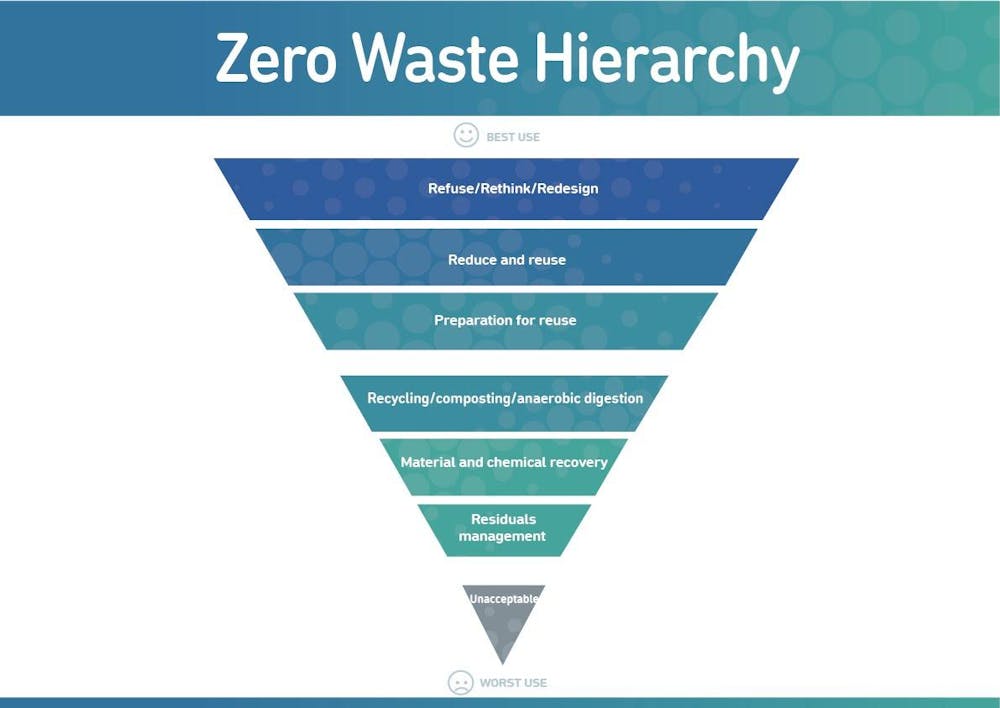
Zero Waste Europe recently updated its Waste Hierarchy to emphasise avoiding packaging in the first instance, and to encourage reuse over recycling.

The zero waste hierarchy for a circular economy. Zero Waste Europe

Getting reuse right

For a reusable product to be more environmentally sustainable than a single-use product, it must promote the use of less energy and resources in our daily routines.

Although the uptake of products such as reusable cups and shopping bags have increased, these types of reusable items have attracted criticism. If used correctly, these products represent a positive change. However, some research suggests these products can be less sustainable than the single-use items they are replacing if people treat them like disposable items and do not reuse them enough.

For example, if you regularly buy new reusable bags at the supermarket, that potentially has a greater environmental impact than using “single-use” plastic bags.

To really reduce plastic packaging, we need to find ways to alter the routines that involve plastic packaging, rather than directly substituting individual products (such as reusable bags for single-use ones).

Developing new reusable packaging systems

Redesigning ubiquitous plastic packaging means understanding why it is so useful. For food packaging, its functions might include:

  1. allowing food to travel from producer to consumer while maintaining its freshness and form

  2. enabling the food to be kept on a shelf for an extended period of time without becoming inedible

  3. allowing the brand to display various nutritional information, branding and other product claims.

So how might these functions be met without disposable plastic packaging?

TerraCycle Loop, the business model that Woolworths has announced it will partner with, is currently also trialling services in the United States and France. They have partnered with postal services and large food and personal care brands including Unilever, Procter & Gamble, Clorox, Nestlé, Mars, Coca-Cola, and PepsiCo.

Customers order products online, from ice-cream to juice and shampoo, with a small container deposit. These items are delivered to their house, and collected again with the next delivery. The containers are washed and taken back to the manufacturers for refill. The major participating brands have all redesigned their packaging to participate in the program.

TerraCycle Loop reusable packaging. TerraCycle Loop

This model works because it is not replacing products one-for-one, but creating a new product system to allow people to easily integrate reuse into their daily routines.

We can examine the function of single use plastic packaging in takeaway food in a similar way. The purpose of takeaway food packaging is to let us enjoy a meal at home or on the move without having to cook it ourselves or sit in a restaurant. So how might these functions be achieved without disposable packaging?

Australian company RETURNR has addressed this with a system in which cafes partner with food delivery services. Customers buy food in a RETURNR container, pay a deposit with the cost of their meal, and then return the container to any cafe in the network.

The Kickstarter campaign Zero Co, is offering a similar model for a resuse service that covers kitchen, laundry and bathroom products.

Making reuse easy and convenient is crucial to the success of these systems.


Read more: China’s recycling ‘ban’ throws Australia into a very messy waste crisis


If Australia is to meet our national packaging targets, we need to prioritise the elimination of unnecessary packaging. Although recycling is likely to remain crucial to keeping plastic waste out of landfill in the near future, it should only be pursued when options higher up the waste hierarchy – such as reuse – have been ruled out.

ref. Recycling plastic bottles is good, but reusing them is better – http://theconversation.com/recycling-plastic-bottles-is-good-but-reusing-them-is-better-126339

‘Let’s design a waterproof shoe for a refugee child’: how to teach science and maths so students actually care

Source: The Conversation (Au and NZ) – By Paula Mildenhall, Associate Dean (Teaching and Learning), Edith Cowan University

In a May 2019 speech, Australia’s Chief Scientist, Alan Finkel, noted participation in science and maths was slipping in Australian schools. Specifically speaking about STEM (science, technology, engineering and mathematics), he said:

STEM education addresses real world problems and is useful to us and the wider community in many, many ways.

Finkel’s predecessor made similar assertions, arguing many countries are taking substantial action to address the decline in STEM engagement.

Australia’s STEM workfoce: Science, Technology, Engineering and Mathematics. Report from the office of the Chief Scientist.

STEM education can vary from anything connected to one of the STEM subjects to interdisciplinary integration of the four areas. Students are often discouraged from engaging in STEM, and many have had negative experiences with the subjects.

In 2016, the Western Australian Education Department commissioned the development of a set of modules that promote schools teaching STEM in a way that integrates several subjects. This resulted in the STEM Learning Project (SLP), which we spent the last three years evaluating.

More than 1,000 teachers and school leaders from WA metro and regional areas attended professional development workshops on how to guide students – from kindergarten to year 12 – to find solutions to open-ended, real-world problems.

The teachers applied this knowledge in their classrooms. They helped children research a problem and work together to design solutions.

The projects were varied and included: creating a bridge so animals could cross the road safely, designing a shoe for a refugee child, and finding solutions to the excessive heat experienced in Australia.

Designing a shoe

One project involved eight- and nine-year-old students designing a pair of shoes, using recyclable materials, for a child in a South Sudanese refugee camp.

They researched the conditions in the camp to identify what features the shoes should have. They then used scientific skills to test the suitability of different materials.

The students came up with a variety of designs. Each group used different materials, cutting and sticking them together, while referring to their designs.

A waterproof shoe designed by a year 3 class for a child in a refugee camp. Author provided

A year 3 class created the shoe pictured above. It was made of clear plastic material as the class identified the importance of the shoe being waterproof.

The teacher who facilitated this activity said:

Both boys and girls enjoyed the work and they were highly engaged in every part, even the mathematics, and I have children that are not engaged in maths [who] really struggle.

One of the students said:

I enjoyed when we were designing our shoes ’cos we could work as a group.

Another student said they would want to do this every term because it made them creative and they could use their imagination.


Read more: Don’t just solve for x: letting kids explore real-world scenarios will keep them in maths class


Designing a birdhouse

In an education support centre, a class of 14 students in years 4 to 6 worked on designing a home for a crow named Russell, who visited the school grounds and had a damaged wing.

Students created designs of the birdhouse and then produced 3D versions of them.

At this stage, members of the local Men’s Shed visited the school to view the designs. The men combined the best elements to produce a wooden version for Russell.

The birdhouse pictured below was a 3D cardboard box version of the students’ design. The groups were asked to consider aesthetics and functionality and this birdhouse managed to address both.

A birdhouse designed for Russell the crow, who has a damaged wing. Author provided

One of the teachers said the project was wonderful and all the children could contribute their specific abilities. She said:

Boys and girls both loved it […] they added their own touch with decorating their models and birdhouses.

The teacher also noted the benefits of involving the community, saying this made the students feel their work was of value.

Schools should do this more

Our evaluation found that, due to the hands-on nature and authenticity of the tasks, nearly all students were enthusiastic and engaged.

A teacher whose year 4 students worked to address the decline of bees, said:

The kids loved it. Whenever they see STEM on the board in the morning they go “yes”. […] I think because there is that element of creativity it does cater to everybody’s abilities […] everyone had a feeling of success.

Another teacher, who worked with kindergarten students to design a bridge for animals, explained this approach catered

[…] for a wider selection of learning styles. More children were engaged.

Schools need to put more emphasis on this type of interdisciplinary STEM learning. Our evaluation shows it helps children remain engaged in STEM subjects while developing important skills for their future.


Read more: More teens are dropping maths. Here are three reasons to stick with it


The Stem Learning Project is a joint undertaking of a consortium in STEM education comprised of the Educational Computing Association of WA (ECAWA), the Mathematical Association of WA (MAWA), the Science Teachers Association of WA (STAWA) and Scitech.

ref. ‘Let’s design a waterproof shoe for a refugee child’: how to teach science and maths so students actually care – http://theconversation.com/lets-design-a-waterproof-shoe-for-a-refugee-child-how-to-teach-science-and-maths-so-students-actually-care-125234

No Australian city has a long-term vision for living sustainably. We can’t go on like this

Source: The Conversation (Au and NZ) – By Mike Berry, Emeritus Professor, RMIT University

This article is part of a series on rebalancing the human–nature interactions that are central to the study and practice of ecological economics, which is the focus of the 2019 ANZSEE Conference in Melbourne later this month.


Australia was already one of the most urbanised nations by the end of the 19th century. Unlike European and North American countries, Australia’s pattern of settlement did not have a neat urban hierarchy. The gap between the large and small towns was huge.

These patterns have intensified in the decades since federation, especially after the second world war. International and internal migration trends have driven rapid growth in the big cities, especially Melbourne and Sydney. This has created major problems with providing adequate housing, infrastructure and services.

The fundamental issue is the reluctance of urban communities and their leaders to discuss what might be sustainable populations.


Read more: If we want liveable cities in 2060 we’ll have to work together to transform urban systems


The folly of unlimited growth

No Australian city has a long-term vision showing how a future stabilised population might be supported with the essential resources of food, water and energy. No Australian city has faced up to the inevitable social tensions of increasing inequality between a well-served inner-urban elite and an increasingly under-resourced urban fringe.

Leaders in cities that have not grown as rapidly, such as Adelaide, lament their failure to grow like Sydney and Melbourne, despite all the associated problems. All implicitly believe unlimited growth is possible.

In reality, the expanding ecological footprints of the large cities have created unsustainable demands on land to support urban dwellers. And the wastes the cities produce are straining the capacity of the environment to handle these.


Read more: What is ‘ecological economics’ and why do we need to talk about it?


Given the many unpriced flow-on effects from dense urban growth and market-led development, governments are struggling to deal with the undesirable consequences. Congestion and pollution threaten to overwhelm the many social and economic benefits of urban life.

The growth and concentration of populations are also driving chronic excess demand for appropriate housing. The result is serious affordability problems, which are adding to inequality across society and generations.


Read more: 50 years after The Lucky Country, Australia’s sustainability challenge remains


In 1970, urban historian Hugh Stretton pointed to the role of Australia’s widespread owner occupation in offsetting the inequalities generated in labour markets and by inherited wealth. This is no longer the case.

The dominant neoliberal economic ideology has resulted in a retreat from providing public housing. Abandoning would-be home-owners to the market has produced a situation in which urban land and house ownership is reinforcing class-based inequalities. Home ownership is increasingly the preserve of the affluent and their children.

Housing-related inequality is also seen in the geography of our cities. Poorer households are priced out of locations with better access to good jobs, schools, transport, health care and other services.


Read more: Our big cities are engines of inequality, so how do we fix that?


Failures of governance

Governments in Australia’s federation are poorly placed to respond adequately. Responsibilities and fiscal resources are divided, creating obstacles to effective planning and infrastructure provision.

The main factor driving urban population growth is an unprecedented rate of inward migration. The national government sets large migration targets as an easy way of creating economic growth. This leaves state governments with the impossible task of meeting the resulting demand for infrastructure.

Jane O’Sullivan has shown each extra urban citizen requires about A$250,000 of investment. The total sum is well beyond the capacity of state and local governments.

Arguments between federal and state governments are heavily politicised, especially when it comes to major transport investments. Even within single jurisdictions, complex demands and unexpected consequences prevent effective action. The waste recycling crisis is a prime example.

State governments must also deal with difficult trade-offs between, for example, allowing further development on the edges of cities or encouraging higher density in built-up areas. This often involves conflicts with local governments and communities, concerned to protect their ways of life.

Australian planners and governments have long tinkered with policies to encourage decentralisation to smaller cities. Despite these attempts, the dominant pattern of urbanisation with its seemingly intractable problems has hardened, a triumph of reality over rhetoric.


Read more: Our cities fall short on sustainability, but planning innovations offer local solutions


What needs to change?

To get beyond the rhetoric and make our cities more sustainably liveable requires a much more deliberate and interventionist role for government. It also requires residents of our cities and suburbs to be willing to allow their governments to interrupt business as usual.

This, we know from experience, is a big ask. It will step on the toes of the property lobby and ordinary home owners. In some cases, for example, the short-term financial interests of property owners are leading local authorities to ignore scientific warnings about the impacts of climate change on coastal development.


Read more: Water may soon lap at the door, but still some homeowners don’t want to rock the boat


Major changes are also needed in how urban land is taxed and the proceeds invested. “Simple” reforms like replacing stamp duty on land transfer with a universal land tax, as the Henry Tax Review recommended, will take political courage that has been absent to date.

More complex policies like finding ways of diverting population growth to non-metropolitan regions will take careful thought and experimentation. This might include relocating government agencies to provincial cities. This has been tried sporadically in the past at the federal level and in states such as Victoria and New South Wales. However, such cases tend to be one-offs and do not reflect an overall strategic plan.

Future generations will inevitably be critical of the complete failure of current leaders to plan for sustainable development.

ref. No Australian city has a long-term vision for living sustainably. We can’t go on like this – http://theconversation.com/no-australian-city-has-a-long-term-vision-for-living-sustainably-we-cant-go-on-like-this-123916

What is ‘ecological economics’ and why do we need to talk about it?

Source: The Conversation (Au and NZ) – By Anitra Nelson, Associate Professor, Centre for Urban Research, RMIT University

This article is part of a series on rebalancing the human–nature interactions that are central to the study and practice of ecological economics, which is the focus of the 2019 ANZSEE Conference in Melbourne later this month.


As environmental crises and the urgency to create ecological sustainability escalate, so does the importance of ecological economics. This applied, solutions-based field of studies is concerned with sustainability and development, rather than efficiency and growth. Also, given that cities account for 70-80% of global economic activity and associated resource use, emissions and waste, they are central to finding solutions to the challenge of sustainability.

Ecological economics recognises local to global environmental limits. It ranges from research for short-term policy and local challenges through to long-term visions of sustainable societies. Ecological economists also consider global issues such as carbon emissions, deforestation, overfishing and species extinctions.


Read more: Our cities fall short on sustainability, but planning innovations offer local solutions


Core concepts

You’re probably familiar with some core concepts of ecological economics. These include “steady-state economies”, “carrying capacity”, “ecological footprints” and “environmental justice”.

Nicholas Georgescu-Roegen was one of the first economists to argue that an economy faces limits to growth as a result of resource depletion.

A steady-state economy is both relatively stable and respects ecological limits. Drawing on the work of mathematician and economist Nicholas Georgescu-Roegen, economist Herman Daly elaborated the model, editing a 1973 anthology, Toward a Steady-State Economy.

In 1990, Daly co-founded the International Society of Ecological Economics (ISEE). It had three key principles:

  • the human economy is embedded in nature, and economic processes are actually biological, physical and chemical processes and transformations

  • ecological economics is a meeting place for researchers committed to environmental issues

  • ecological economics requires transdisciplinary work to describe economic processes in relation to physical reality.

Joshua Farley, who has worked with Daly, discusses some of these principles in an opening address to the Australia New Zealand Society of Ecological Economics (ANZSEE) conference at RMIT University later this month.

In a partnership program of several North American universities, Farley teaches Economics for the Anthropocene postgraduates. They apply ecological economics to “real-world environmental solutions”. Some will talk at the conference about their research.

Today overconsumption is measured against Earth’s carrying capacity.


Read more: Human carrying capacity and our need for a parachute


William Rees and Mathis Wackernagel developed the related concept of the ecological footprint. It’s an indicator of the ecological impacts of everyday activities and practices.

Ecological footprints are useful ways for industries, governments and people to assess which practices we need to reduce to keep within the limits of Earth’s regenerative capacity.

The ecological footprint explained.

Read more: Chinese migrants follow and add to Australian city dwellers’ giant ecological footprints


ISEE co-founder Joan Martinez-Alier established the global Environmental Justice Atlas. Activists and scholars developed this online database of around 3,000 environmental justice conflicts. It provides open access to many and various ecological and economic value assessments.

Issues of environmental justice in Australia include:


Read more: An environmentally just city works best for all in the end


Mountains of waste are a stark reminder we are consuming more than the Earth can sustain. ThavornC/Shutterstock

A new kind of economics

Ecological economics partly developed from frustration with the narrowness of environmental and resource economics. These approaches apply mainstream economics to the environment. In doing so, they fail to incorporate critical environmental concerns that arise with inputs, outputs and waste.


Read more: Beyond GDP: are there better ways to measure well-being?


In addition, ecological economists have a broader view about what “progress” is and how to measure it. Ecological econonomists are more sceptical about how much human-made capital improves on the benefits we get from nature. Critically, they ask: “How useful is it to put a monetary value on nature?”

Ecological economist Clive Hamilton discusses that question in the case of Coronation Hill in Kakadu National Park. He argues that market-based assessments such as “willingness to pay” favour market-based solutions. Similarly, Brian Coffey highlights the conundrum of monetising ecological values:

I would rather ask “why is nature important?” and “how can we live with, and within, it?”

Despite this, certain ecological economists use monetary data to make powerful ecological statements. For instance, Ida Kubiszewski and her co-authors surveyed land uses under different future scenarios. They concluded that continuing business as usual could wipe out a third of the value of Asia-Pacific ecosystems by 2050.


Read more: Without action, Asia-Pacific ecosystems could lose a third of their value by 2050


Solutions for sustainable and just futures

In short, ecological economics has contributors from diverse disciplinary and professional backgrounds.

Presenters to the ANZSEE conference of course include ecologists and economists. But there are also social and physical scientists, sociologists, philosophers, historians, planners and sustainability experts.

Sustainability expert Samuel Alexander speaks about living well with degrowth. Others argue that a climate-safe world requires radical forms of economics.


Read more: Limits to growth: policies to steer the economy away from disaster


Contributors will also talk about just transitions, commoning, the genuine progress indicator (GPI), School Strike for Climate (SS4C), resilience, decarbonisation and ethical investment. Keynote speaker Jon Altman presents a model of hybrid economies that’s useful in the context of Indigenous peoples.

ref. What is ‘ecological economics’ and why do we need to talk about it? – http://theconversation.com/what-is-ecological-economics-and-why-do-we-need-to-talk-about-it-123915

Asylum seekers left ‘desperate’ and ‘helpless’ when they try to find work in Australia

Source: The Conversation (Au and NZ) – By Kiros Hiruy, Senior Research Fellow, Faculty of Business and Law, Swinburne University of Technology

Finding work can be a challenge for new migrants to Australia who often arrive with limited English skills and lack local contacts.

But finding work for people seeking asylum can be even harder, as we found in a study that looked at the experience some had in trying to find a decent job.

We surveyed 59 asylum seekers in Victoria, current employers of asylum seekers, and staff from the Asylum Seeker Resource Centre (ASRC), a not-for-profit organisation that supports people seeking asylum.


Read more: Asylum seekers have a right to higher education and academics can be powerful advocates


Some found their qualifications were ignored, others were left to take what are known as survival jobs, which is any job they can get just to earn a basic living. And the challenges they face can be compounded by the traumatic experiences in their past.

The barriers to employment

Access to decent work is not only important for economic security, but also health and well-being. It’s increasingly being recognised as a human right.

Yet we found asylum seekers face layers of complex, structural barriers to employment. Some we spoke to had been relying on not-for-profit organisations for years to make ends meet.

Many described their job search as “desperate” and “helpless”.

Visa conditions of some had changed and their work rights denied for periods, often based on seemingly arbitrary factors such as how they came to Australia. For example, people who arrived by plane and are on a bridging visa can’t access concession courses at TAFE while those who arrive on boat can access concession rates.

Even years after first arriving, some are still struggling to find work, as one respondent explained:

Now I have been without a job for almost two years, and it is very difficult to get back into the workforce.

Even participants with high-demand skills and qualifications have few opportunities to use them, hence they depend on survival jobs.

For example, one held a master’s degree and wished to pursue a PhD in Australia, but said he was struggling to access essential living services, let alone attain a scholarship. He said:

I would love to teach and become a lecturer to contribute my quota in this country, but I have been relegated to warehouse job wasting my talent.

One of the managers from the Asylum Seeker Resource Centre we interviewed referred to this as “de-skilling”. She said by virtue of entering Australia, most asylum seekers are automatically denied recognition of any of their skills, qualifications or experience and are forced to “work their way up from the bottom”.

She added:

I find it hard when I speak to (asylum seekers) on the phone about the fact that they are now working night shift in, say, a pharmaceutical company, when they are just (like), ‘This is not what I really want to be doing. I am a particle physicist’, or something, ‘from my home country’.

These survival jobs are often financially unsustainable. Many respondents relayed stories of being underpaid and forced to work in exploitative conditions. For example, one said:

I faced lots of racist people who took advantage of me and recruited me under normal pay because I am an asylum seeker.

Our study found this exploitation was rife across the sector, but as one respondent said, government policies didn’t help as they were “so punitive that it completely reduces people’s ability to feel like they can stand up for their rights”.

Government cuts make it harder

These are just a few of the many factors that trap asylum seekers into a vicious cycle of precarious livelihood. The situation was made worse by the recent government cuts to the Status Resolution Support Service (SRSS).

The SRSS is the only source of government-funded financial and social support available to asylum seekers, offering vital necessities including counselling for torture and trauma, subsidised medication and income support.

Cuts to the scheme in 2018 resulted in 1,200 people dropped from support, with another 8,299 people expected to become ineligible in the next year. The cuts reportedly left people seeking asylum feeling destitute.

The asylum seekers most hard hit by these cuts also had the lowest skills and qualifications. Unable to even find survival jobs or access social security or mental health support services, these people are forced to rely on not-for-profit organisations for help.

Despite these organisations’ best efforts to provide personalised training and support, they are flooded with demand beyond their capacity.

As a staff member explained, they are merely “doing the best with what they have”.

What can we do?

Our report suggests some ways forward to alleviate these challenges.


Read more: ‘We all slept in the car, five of us’. Young refugees talk about being homeless in Australia


Most notably, given the inadequacy of federal policy responses, state governments should work with community organisations and employers to provide more targeted services to asylum seekers who have fallen through the cracks of SRSS cuts.

They should fund programs that help recognise their skills and provide support to get them ready for any employment opportunities.

This should help address some of the “de-skilling” and survival job challenges asylum seekers face, and help them contribute significantly to the local economy.

ref. Asylum seekers left ‘desperate’ and ‘helpless’ when they try to find work in Australia – http://theconversation.com/asylum-seekers-left-desperate-and-helpless-when-they-try-to-find-work-in-australia-125931

The Crown series 3 review: Olivia Colman shines as an older, frumpier Elizabeth

Source: The Conversation (Au and NZ) – By Giselle Bastin, Associate Professor of English, Flinders University

As a researcher of the royal House of Windsor I’m most often asked, “Have you ever met her?” The second most common question I get is, “Do you like The Crown and is it accurate?”

Such questions go some way to describing the impact the Netflix series has had on people not otherwise interested in the British monarchy. Series 3 of The Crown, being released here on November 17, will not disappoint fans of the first two seasons although they may feel that they’ve been here before.

Spanning 1964-1976, it finds the Queen facing new challenges, not least a change of the very popular first and second series cast, as well as the prospect this time of a couple of duller prime ministers (Harold Wilson and, briefly, Edward Heath).

Episode 1 opens with the death and state funeral of Winston Churchill, and the visage of a monarch at something of a crossroads in her reign. No longer the clear, blue-eyed ingenue of Claire Foy days, Her Majesty (played by Olivia Colman) is older, frumpier, and with brown eyes that look like they’ve seen a thing or two over the past decade.

Some of the advance publicity for this series has made much of the fact that Colman unsuccessfully tried to copy the Queen’s (and Foy’s) blue eyes, both by wearing contact lenses, and then having her eyes CGI-ed. Both attempts were unsuccessful because, in the words of director Ben Caron, they seemed to “diminish what [Colman] was doing”.

Series 3 marks its changing of the guard by opening with the Queen surveying her “updated” older official portrait that will be used on coins, stamps and banknotes. She complains about looking and feeling older, her own currency as devalued as the Pound Sterling will become under Wilson’s leadership later in the series.

Tobias Menzies and Olivia Colman in The Crown (2016) Left Bank Pictures, Sony Pictures Television Production UK.

There is no sense of feeling short-changed in the casting of Colman as the Queen, however. After the first few scenes, one feels as if she were born to the role. Colman’s performance is understated and assured; it quickly becomes apparent that she’s worked out how to get under her character’s skin. Despite depicting a monarch who is unable to cry either in public or private, Colman plays the Queen feelingly, an actor as much in control of her craft as the Monarch is of hers.

Peter Morgan, the show’s creator, sticks to the structure established from its inception, which sees each episode anchored on the primary relationship between the Queen and her prime minister of the day.

Headlining stories, both national and international, are drawn on to suggest how the institution is tracking in different epochs. Series 3 focuses on dramatic events such as Elizabeth’s stymieing an establishment coup attempt led by her Uncle Dickie, Lord Mountbatten (played icily by Charles Dance); the Queen’s colluding with MI5 to keep Sir Anthony Blunt’s treachery as a spy for the Russians a secret while he remains housed in Buckingham Palace in his role as Surveyor of the Queen’s Pictures; and Elizabeth’s reluctant appearance at the scene of the 1966 Aberfan mining disaster.

Colman’s queen catches adeptly a sovereign who has become a little tired and distracted behind the eyes. Her hairstyle, twin sets and hemline may be lacquered into a holding pattern emblematic of her reign, but the outside world comes to remind her in episode after episode that the times they are a changin’.

Helena Bonham-Carter (Princess Margaret) and Ben Daniels (Antony Armstrong-Jones) in The Crown. Left Bank Pictures, Sony Pictures Television Production UK

Holding the royals to account

Increasingly, in this series, the public hold Elizabeth and the royal family more accountable. They do not merely want their queen on banknotes, but demand instead value for money. No longer an empire on which the sun never sets, Colman’s Britain is one where the lights are rarely ever on for long because of national power strikes.

The Queen’s successor, Prince Charles, played exceptionally well by Josh O’Connor, is a young man whose life is beset by waiting: waiting for a role that can only be his when his mother dies; waiting for a job he doesn’t even want. Helena Bonham Carter’s Princess Margaret captures well the princess’s ramshackle decade and the way that she, despite her diminutive form, managed to upstage her sister in nearly every scene she was in.

Helena Bonham Carter captures Princess Margaret’s ramshackle decade. Left Bank Pictures, Sony Pictures Television Production UK

Tobias Menzies’ Prince Philip maintains the toughness and cockiness of Matt Smith’s earlier version, but plays him as a more nuanced man undergoing a pronounced mid-life crisis.

His commissioning the BBC to make a film about the Windsors, 1969’s Royal Family, portrays him as the one who opened the Pandora’s Box of media intrusion into the royals’ lives – a box whose lid the royals have been trying to slap closed ever since. The irony is clear: without the film Royal Family – an intimate portrait of the Royals’ daily life – there would never have been The Crown.

Tobias Menzies as Prince Philip opens the Pandora’s Box of media intrusion. Left Bank Pictures, Sony Pictures Television Production UK

Series 3 will satisfy fans of The Crown who are looking for business as usual. If there is a risk, however, it is that Morgan’s “if it ain’t broke, don’t fix it” approach can start to feel a touch formulaic and stale.

Just as it was for the royals themselves, this feels like the season we had to have while we wait for the dramatic potential of the 1980s and the advent of the Diana and Thatcher years.

Series 4, which is in production now, will do well to shift it up a gear and use the Diana storyline to shake The Crown to its core.

And in case you’re wondering, no I haven’t met Her, but after the first three seasons of The Crown, I’m starting to feel just a little as if I’m getting to know her.

The Crown series 3 will air on Netflix from November 17.

ref. The Crown series 3 review: Olivia Colman shines as an older, frumpier Elizabeth – http://theconversation.com/the-crown-series-3-review-olivia-colman-shines-as-an-older-frumpier-elizabeth-126340

Attorney-General Christian Porter targets Market Forces in push against environment groups

Source: The Conversation (Au and NZ) – By Michelle Grattan, Professorial Fellow, University of Canberra

The government has the activist group Market Forces squarely in its sights as it considers ways to stop environmental organisations persuading financial and other businesses to boycott companies in the mining sector.

It is also targeting funders of class actions, in its proposed crackdown on those running climate change campaigns that hit firms.

Attorney-General Christian Porter singled out Market Forces in a Monday statement that said he was co-ordinating advice across several portfolios on what could be done to protect resource businesses from such activism.


Read more: VIDEO: Michelle Grattan on the government’s drought policy – and the trust divide in politics


Prime Minister Scott Morrison on Friday condemned “an escalating trend towards a new form of secondary boycotts” which had potentially serious economic consequences, especially for regional economies.

“Environment groups are targeting businesses and firms who provide goods or services to firms they don’t like, especially in the resources sector,” Morrison told the Queensland Resources Council.

Market Forces was launched in 2013, and is affiliated with Friends of the Earth. The organisation’s website says it “exposes” institutions, such as banks, superannuation funds and governments that are financing environmentally destructive projects.

Market Forces has lobbied heavily against Adani’s proposed Carmichael mine in central Queensland. Its website lists the companies it says have links to the project, and asks supporters to contact those companies to demand they cut ties.

A 2017 protest against the Commonwealth Bank over its then-links to mining giant Adani. Tracey Nearmy/AAP

The organisation’s chief executive Julien Vincent hit back at the government on Monday, saying that where it saw something it did not like “its response is to get it shut down”.

“We simply allow people to make informed decisions on who they do business with,” Vincent said.


Read more: Low carbon economy can spur Australian “manufacturing boom”: Albanese


“That’s a right that we thought, until recently, that this government was prepared to uphold”.

But Porter said it was “simply not OK” for any Australian business to be targeted by groups seeking to do it financial harm “when all they are doing is working in an industry like mining and resources that a small number of domestic and international activists have an ideological objection to.

“There are a growing number of examples where we have seen radical activist groups like Market Forces that try and impose their political will on companies across the country through widespread, co-ordinated harassment and threats of boycotts,” he said.

The government was looking at multiple options, across portfolios, Porter said, and the work would be prepared urgently.

Attorney-General Christian Porter has announced the government will try to prevent activist groups from initiating boycotts against companies. BIANCA DE MARCHI/AAP

The government was also considering regulatory action against “the growing presence of litigation funders who are receiving disproportionately large shares of payments in class action litigation which is becoming increasingly politicised by a focus on companies that operate in the mining and resources sector”.

Casting the net even wider, Porter said the government would consider other areas of activists’ “lawfare” which was “designed to delay, frustrate and cause unnecessary expense to mining and other legitimate commercial projects and businesses”.

Secondary boycotts are already outlawed under the competition and consumer legislation but there is an exemption where the dominant reason is for environmental or consumer protection.

An obvious course for the government would be to seek to remove the exemption. Another option would be to remove the tax deductibility status of groups.

Labor has accused Morrison of “virtue signalling” in his planned attack on activist groups.

ref. Attorney-General Christian Porter targets Market Forces in push against environment groups – http://theconversation.com/attorney-general-christian-porter-targets-market-forces-in-push-against-environment-groups-126357

Happy Sad Man: a small, gentle, important film that reveals the vulnerability of men

Source: The Conversation (Au and NZ) – By Scott McKinnon, Vice-Chancellor’s Postdoctoral Research Fellow, University of Wollongong

Review: Happy Sad Man, directed by Genevieve Bailey

“I am just me. Put that on the big screen. I’ve got a mental illness. So have you.”

The above is a quote from John, one of five men whose lives filmmaker Genevieve Bailey explores in her documentary Happy Sad Man. Bailey’s hand-held camera moves in close on John’s hard-lined face as he makes this statement. His emotions are hard to read. Sad, defiant, amused. In voice-over, Bailey describes John as “the happiest and saddest man I’ve ever met.”

John provided inspiration for the film. Photo: Genevieve Bailey

The question of how men “navigate the dance between happiness and sadness” is the film’s core concern. Each of the lives through which Bailey explores that question is impacted by mental illness.

John has been diagnosed with bipolar disorder, as has surfer Grant. David, an artist, experiences anxiety. Jake has worked as a photographer and community worker in war zones and has been diagnosed with PTSD. Ivan is a farmer who works with rural men’s health groups, offering an empathetic ear to men who need to talk and explaining, “It’s pretty scary, I reckon, how vulnerable we all are.”

Bailey has friendships with each of the five and has, over several years, recorded extensive conversations with them all, as well as moments with their families and friends. The result is a kind and gentle film with empathy at its heart. Happy Sad Man makes a case for talking, listening and simply “being with” as valuable acts of care.

Happy Sad Man trailer.

In so doing, the film seeks to disrupt a commonly held idea that men do not want to talk about their emotions. Bailey states that, in her experience, “the opposite is true.”

Each of the five men Bailey interviews is extremely articulate in describing their experiences with mental illness. She also meets an older man at a rural Men’s Shed whom knows she is making a film about mental illness and wants to ask her questions. It’s not that he doesn’t want to talk, it seems, but rather that he has previously lacked the language and the opportunities for doing so.

Optimism

The film is intrinsically optimistic, revealing increasing openings for conversation created through acts of empathy, kindness, whimsy and joy. This isn’t to say Bailey downplays the impacts of mental illness. She records John in the midst of a depressive episode so severe he is hospitalised for several weeks. It’s heartbreaking, difficult viewing. Also suggested – if mostly obliquely – are the ways in which John’s illness has harmed his relationships with family and friends through the course of his life.

Bailey makes the argument, however, that old forms of masculinity are being resisted or challenged, producing new opportunities for better treatment. John tells her, “I was brought up in the school that you tough it out son, you tough it out. You’re a wuss.”

Happy, Sad Man reveals strategies deployed by her subjects to resist such limiting and harmful views of masculinity, celebrating these acts of resistance as indicative of important progress.

Grant, for example, has organised a weekly surf event called Fluro Friday where participants dress in fluorescent clothes, creating humorous, cheerfully offbeat spaces in which to discuss mental health. David, who describes masculinity as “quite banal, really”, creates art that is witty and revels in its own eccentricity. These deliberate disruptions celebrate – rather than fear – men’s difference, openness and vulnerability.

Jake, another friend of Bailey’s in the film, battles PTSD. Photo: Ben McNamara

These acts are worth celebrating, as are improvements in health care. I found the film’s optimism admirable and valuable, while at times wondering if ongoing and harmful patriarchal structures were being overlooked or downplayed.

Limitations

There is an intimacy to the film’s scope that is both a limitation and a strength. Issues of indigeneity, sexuality and gender identity, for example, each of which is known to potentially exacerbate the impacts of mental illness, are not explored.

Ongoing questions about the funding of mental healthcare are not addressed.

And amid arguments about men’s ability and desire to discuss their emotions, I was left wondering about workplace and other environments that continue to limit the kinds of shifts away from macho culture the film celebrates.

At a moment, though, in which (justifiable) anger and brutal debate dominate so much of our collective conversations, this small, gentle film feels important.

As viewers, we might feel uncomfortable with Bailey’s camera recording her subjects in moments of despair. But in doing so, both filmmaker and subject resist the shaming that seeks to define these moments as unspeakable or hidden.

Happy Sad Man reveals the vulnerability of men dealing with mental illness and creates a space for radical kindness.

ref. Happy Sad Man: a small, gentle, important film that reveals the vulnerability of men – http://theconversation.com/happy-sad-man-a-small-gentle-important-film-that-reveals-the-vulnerability-of-men-126110

Curious Kids: how do fish sleep?

Source: The Conversation (Au and NZ) – By Culum Brown, Professor, Macquarie University


How do fish sleep? Do they keep swimming or do they sleep somewhere? – Anna, age 5, Thornleigh, NSW, Australia.


Nearly all animals sleep. Sleep is very important for refreshing the mind and body. When people sleep we close our eyes and lie motionless for a long time. We may be less aware of what is going on around us and our breathing slows down. Some people are very heavy sleepers and it takes a LOT to wake them up!

Fish don’t have eyelids — they don’t need them underwater because dust can’t get in their eyes. But fish still sleep. Some sleep during the day and only wake up at night, while others sleep at night and are awake through the day (just like you and I).

A happy puffer fish. Flickr

How do fish know when it’s bedtime?

It’s pretty easy to tell when fish are sleeping: they lie motionless, often at the bottom or near the surface of the water. They are slow to respond to things going on around them, or may not respond at all (see some sleeping catfish here). If you watch their gills, you’ll notice they’re breathing very slowly.


Read more: Curious Kids: how are stars made?


People with fish tanks at home will know that when the lights go off at night, the fish become far less active. If you turn a light on in the middle of the night you’ll see how still they are.

Like people, fish have an internal clock that tells them when to do things like sleep and eat. So even if you accidentally leave the lights on at night, the fish may settle down and go to sleep anyway.

A video showing sleeping catfish.

Some scientists have studied sleep in fish that live in caves where it is always dark. Even in some of these species there are times of low activity that look just like sleep. Of course there is no sunrise or sunset in caves so their rhythm is often different to fish that live at the surface in bright sunshine.

Some fish, like tuna and some sharks, have to swim all the time so that they can breathe. Its likely that these fish sleep with half their brain at a time, just like dolphins.

Parrot fish make a mucus cocoon around themselves at night — a gross, sticky sleeping bag which might protect them from parasites attacking them while they sleep.

Fish don’t need eyelids because dust can’t get in their eyes – but they still sleep. Gavin Leung/Flickr

Fish may dream like people do!

One wonders if fish dream while they are sleeping. So far we don’t have the answer to that question but recent video footage of a sleeping octopus showed it changing colours, which suggests it may have been dreaming about hiding from a predator or sneaking up on its own prey (which is why octopuses change colour when they’re awake).


Read more: Curious Kids: why is the sea salty?


Believe it or not, fish sleep is being studied to help us better understand sleep in people. Most of these studies use zebrafish and try to understand things like the effects of sleep deprivation (lack of sleep), insomnia (trouble getting to sleep) and circadian rhythm (sleep cycles).

Here is a cool video about sleep in animals, including fish.


Hello, curious kids! Have you got a question you’d like an expert to answer? Ask an adult to send your question to curiouskids@theconversation.edu.au — —

ref. Curious Kids: how do fish sleep? – http://theconversation.com/curious-kids-how-do-fish-sleep-126018

Moale James: Citizen journalism countering ‘deliberate’ media silence on West Papua

OPINION: Moale James

What should we expect for the future of media freedom in the Pacific? And how do we sift through the “bullshit” as emerging journalists? These were two of the many questions raised at the pre-conference keynote for the Melanesian Media Freedom Forum at Griffith University, Brisbane.

Attending on the night where various media professionals, many with extensive careers in the Pacific. A few notable attendees included SBS correspondent Stefan Armbruster, retired foreign correspondent Sean Dorney, radio journalist Pauline Nare and academic Dr Tess Newton Cain.

Key note speaker, Professor David Robie focused the night’s conversation on the lack of media freedom in West Papua with the main issue being the lack of international media attention and its effect on opportunities to make positive humanitarian changes.

READ MORE: WEST PAPUA: PMC director blasts politicians, media over ‘shameful silence’ on rights violations

To date, 528,000 West Papuans have lost their lives to a slow-motion genocide.

Dr Robie and audience members expressed their disgust and concern at the silence and inaction from international governments and the lack of media reporting on these events.

– Partner –

With a death toll as high as this, it becomes clear that the lack of journalistic reporting on this issue is a deliberate decision. This is not a number that can simply be ignored.

Dr Robie likened the media situation in West Papua to the cases of imprisoned female investigative journalists in Iran. The deliberate action of imprisoning critical journalists who are exposing human rights abuses is a mirrored pattern in the Pacific.

However, although there are international journalists being imprisoned there is an exciting emergence of “citizen journalism” a term that describes the creation, collection and distribution of news and information by the public on the internet and social media.

West Papuans are using the resources that they have on the ground and in their hands to capture the human rights abuses they are experiencing and actively sharing these online, forcing open the eyes of the world onto the slow genocide occurring in West Papua.

The “citizen journalism” coming out of West Papua has created global pressure on the Indonesian Government, which initiated a blackout across West Papua on August 21, 2019  in response to the growing unrest. Black spots are still active today in Jayapura and Maokwari.

Coming to the end of the key note presentation, Dr Robie unfurled the West Papuan flag  from behind the podium. In an act of solidarity, he asked all attendants to stand with him and make the promise that they would endeavour to be honest, passionate and critical journalists when it came to writing about the atrocities in West Papua.

If mainstream media are deliberately choosing not to report on the events in West Papua, then independent journalists must make the conscious decision to do so instead.

As the lecture came to an end it became clear that conversations around West Papua did not simply end with the slideshow. Conversations and deliberate actions of those present following this event are sure to be the catalyst for change for media freedom in not only West Papua but across the Pacific.

Papua Merdeka from Sorong to Samarai.

Moale James is a student at the University of Queensland undertaking her Bachelor in Journalism. Moale also proudly identifies as a mixed-race Papua New Guinean-Australian.

Print Friendly, PDF & Email

Article by AsiaPacificReport.nz

A new bill keeping 10 year olds out of jail is a good start, but it needs to go further

Source: The Conversation (Au and NZ) – By Thomas Crofts, Professor, School of Law and Department of Social and Behavioural Sciences, City University of Hong Kong

A nine-year-old boy was recently charged with arson and five counts of murder in Illinois, US. In court, the boy didn’t even understand what “arson” meant.

In Australia, a nine year old cannot be prosecuted and found guilty of an offence, but a ten year old can. From ten until 14, children can be held criminally responsible in criminal proceedings if there is proof the child understood the wrongfulness of their behaviour.

But it’s increasingly clear ten years old is too young for a child to be held criminally accountable.

There have been calls for an increase to the minimum age of criminal responsibility in Australia for many decades. The commonwealth, state and territory governments have so far been reluctant to change the age level – but that may soon change.


Read more: Young crime is often a phase, and locking kids up is counterproductive


A private member’s bill currently before the federal parliament proposes to raise the minimum age to 14 for federal offences. And a working group reviewing the issue will report to the Council of Attorneys-General at the end of November.

Australia’s minimum age is low compared to other countries. Most European countries have set their age between 14 and 16, while others such as China, Russia, Japan and Sierra Leone have it set at 14.

The increase would be in line with Australia’s obligations under the UN Convention on the Rights of the Child. Last month the UN Committee recommended all countries should adopt a minimum age of at least 14, but preferably 15 or 16.

Breaking the cycle

Raising the age would break the cycle of early entry into, and entanglement within, the criminal justice system. Children arrested before 14 years old are three times more likely than those arrested after 14, to reoffend as adults.

It would particularly help address the crisis of over-representation of young Indigenous children in the criminal justice system.

Between 2016 and 2017, an average 566 children aged ten, 11, 12 and 13 years were in detention. Of these 69% were Indigenous children.

The criminal justice system is no place for children who lack the capacity to be criminally responsible at the age of ten, or even 12 or 14.

The part of the brain responsible for abstract reasoning and the ability to control impulses is still developing in children that age. They’re less able to gauge the longer-term consequences of their behaviour, understand the impact of their actions or to comprehend criminal proceedings.


Read more: Congratulations, you’re ten! Now you can be arrested


What’s more, research shows developmental and cognitive disabilities – which result in communication difficulties, cognitive delay, learning disabilities, emotional and behavioural problems and lack of inhibition – are more prevalent in the juvenile justice sector than in the general population.

What happens if the bill passes?

Even if passed, the bill might prove of limited use because it only applies to federal offences.

Such offences, often related to national or international matters, include importing serious drugs, tax and social security fraud, counter-terrorism, money laundering, environmental offences, human trafficking, slavery and servitude, and online child sexual exploitation.

So if the bill passes, a child could still be prosecuted for a state or territory criminal offence at a younger age than they could be prosecuted for a federal offence.


Read more: We need evidence-based law reform to reduce rates of Indigenous incarceration


Still, a change to the federal age might make the states and territories consider raising theirs to avoid such a situation.

It’s also possible for the federal government to step in and increase the age in all states and territories, to ensure Australia complies with its UN obligations. But such a move would probably be unpopular with the states and territories.

Soft on crime?

We might expect the bill will face no problem getting passed in parliament – the arguments for change are compelling. But setting the age of criminal responsibility isn’t just based on research, it’s a question of policy and is influenced largely by politics.

The bill could face an uphill battle, with politicians not wanting to appear as being soft on youth crime. The Federal Attorney-General Christian Porter, in a statement to the ABC, called the bill highly controversial because it would mean there would never be any circumstances where a person aged ten to 14 could be held responsible for their actions.

It must be made clear when the bill is being debated that increasing the age does not mean children will get away with crime and nothing can be done. There are more effective ways to respond to offending by children than the criminal justice system.


Read more: Locking up kids damages their mental health and sets them up for more disadvantage. Is this what we want?


In Scotland, which has recently raised its criminally responsible age to 12, children are rarely prosecuted, unless they commit a serious offence.

Children under 16 who commit an offence are generally referred to the children’s hearing system, which determines whether they are in need of support and can issue a Compulsory Supervision Order.

As Amnesty International note:

an educational, medical, psychological, social and cultural response that deals with the underlying causes is more effective and appropriate than a justice response.

ref. A new bill keeping 10 year olds out of jail is a good start, but it needs to go further – http://theconversation.com/a-new-bill-keeping-10-year-olds-out-of-jail-is-a-good-start-but-it-needs-to-go-further-125872

Caught red-handed: automatic cameras will spot mobile-using motorists, but at what cost?

Source: The Conversation (Au and NZ) – By Ian J. Faulks, Adjunct Fellow, Macquarie University & NRMA-ACT Road Safety Trust Research Scholar, Centre for Accident Research and Road Safety (CARRS-Q),, Queensland University of Technology

Over the years, advances in technology and transport policy have greatly impacted drivers. In the 1980s this came in the form of random breath testing, and more recently, mobile drug testing.

A new policing tool under consideration may have a similar effect, as the New South Wales legislature considers the camera-based detection of illegal mobile phone use. Other states have also indicated interest in the program.

If the NSW rollout (scheduled for December) is enacted, within months there could be widespread detection of drivers illegally using mobile phones. This will likely receive community support, as the use of handheld phones is recognised as being dangerous.

Currently, an estimated two in three drivers (at least), are tempted to make or take a call, text, or browse the internet while driving. With these cameras, driver behaviour is likely to change radically, simply by increasing the risk of detection.

How will it work?

The cameras (which can be fixed or mobile) and their supporting software have been developed by Australian-Indian alliance Acusensus.

Known as the Heads-Up Distracted Driving Detection and Enforcement Solution, they can be used 24/7. As with speed cameras, a sensor system records the speed of vehicles, and a specialised camera captures a high-resolution image of the vehicle, driver and registration plate.

If the legislation is enacted, a community awareness campaign will be conducted to educate drivers about the new enforcement tool. Transport NSW, Author provided (No reuse)

Using artificial intelligence, the system examines images to detect the possibility of mobile use. While all vehicles at a site are examined, only photos that are likely to show mobile use are sent to a human reviewer (with passengers and registration plates blurred).

If an offence is alleged, the evidence is forwarded to authorities who can issue fines.

2019 trial results

A trial conducted early this year at eight sites assessed 8.5 million vehicles, and Acusensus presented some results:

• 104,000 evidence packages of drivers using a mobile were detected, screened and adjudicated as evidence of an offence

• drivers offended more in lower speed limit areas

• offending happened throughout day and night, with only slight variation: slightly lower from 6am-9am; slightly higher from 7pm-9pm; and highest of all between 4pm-5pm

• 15% of offending drivers drove a heavy vehicle

• 85% of offending drivers were the only person in the vehicle

• 5% of offending drivers used the mobile with both hands while the vehicle was moving

• 75% of drivers were using their left hand to operate the mobile

• offending drivers were generally texting or viewing the mobile screen (28%), speaking on the phone (4%), simply holding the mobile (25%), or had the mobile on their lap (43%).

Currently in NSW, about 40,000 traffic infringement notices are issued annually for mobile use. During the trials, a limited number of cameras detected more than 104,000 offences within months.

The NSW government has announced plans for at least 135 million vehicles to be screened annually. If a similar detection rate is assumed, this means 1.65 million offences can be expected to be detected each year by the cameras.

However, these estimates are likely at the high end, as drivers will probably change their mobile use rapidly following the rollout.

The planned rollout

Currently, drivers who use a mobile illegally are fined A$337 and deducted 5 demerit points. Novice drivers, who aren’t permitted to use a phone at all, may exceed their limit with one offence and have to serve a three-month suspension.

But these penalties won’t apply at the start of the program, and there will be a three-month warning letter period for drivers.

Signage indicating mobile phone detection cameras are being used will also be placed on roads to make drivers aware.

Trouble in the courts

The proposed legislation will have a significant impact on the justice system and on driver licence administration, as large numbers of drivers will experience penalties and potential licence loss, and may seek to challenge infringements.

There are some heavily-debated aspects of the program. Firstly, the legislation will presume an object held by a driver is a phone and place an onus on a driver to prove it isn’t. This may be problematic if the object looks similar to a mobile phone, such as a chocolate bar or wallet. Under current enforcement practice for alleged illegal mobile use, police officers must provide evidence the object was a phone.

Issues around privacy also arise. Camera-based mobile enforcement is invasive, as images are purposely taken of the driver and passenger compartment. While the cameras are used in public spaces, privacy concerns remain around how images are stored, accessed and disposed of. Also, who has access?

The form in which evidentiary images are presented must be subject to explicit safeguarding rules, which should also be audited. Also, a legal obligation to delete images where no offence is detected must be enacted.

Given the scale of enforcement possible with the cameras, there will also be pressure to extend the program for other surveillance purposes.

Too many unknowns

The decision to introduce mobile phone enforcement in NSW, while worthwhile, seems rushed. While some elements of an evaluative approach are evident, others are missing.

For instance, there has been:

• no public report of the trial released,

• limited modelling (at best) of the impact on the justice system,

• no modelling of the impact on driver licence administration and

• no modelling of the personal, social and economic impact of potential widespread driver licence loss.

This is not to say the program should not be advanced. But it seems appropriate a sunset provision is inserted into the legislation, to allow for a review of the impact of the program.

Especially since the new camera-based enforcement approach will likely be a game-changer.

ref. Caught red-handed: automatic cameras will spot mobile-using motorists, but at what cost? – http://theconversation.com/caught-red-handed-automatic-cameras-will-spot-mobile-using-motorists-but-at-what-cost-125638

Is the Morrison government ‘authoritarian populist’ with a punitive bent?

Source: The Conversation (Au and NZ) – By Carol Johnson, Adjunct Professor, Department of Politics and International Relations, University of Adelaide

In a recent interview Malcolm Turnbull raised the possibility that these days many so-called “conservatives” in the Liberal Party might be better described as “authoritarian populists”.

It would be easy to dismiss his comments as being those of a bitter former leader. But maybe Turnbull has a point, and perhaps it might even be applied more broadly to the Morrison government.

Although the term “authoritarian populism” is often associated with far-right parties, it has also been used to describe mainstream governments, such as those of Margaret Thatcher (1979-1990).


Read more: Why a code of conduct may not be enough to change the boys’ club culture in the Liberal Party


Thatcherite populist rhetoric mobilised the people against big government and elite special interests, which was combined with authoritarian measures such as increased policing of ethnic minorities and militant unions.

Authoritarian populist is a term now sometimes applied to Donald Trump. So it is well worth asking whether the Morrison government also has some authoritarian populist tendencies.

This is particularly the case given Morrison’s recent embrace of a Trump-influenced anti-globalist rhetoric, which seems partly aimed at asserting Australian independence from international human rights frameworks.

The populist tinge to Morrison’s politics was obvious during the 2019 election campaign. Morrison countered Labor’s own populist arguments (standing against the “top end of town”) by using an alternative populism that mobilised the people against big-spending, big-taxing Labor governments. He argued that Labor would rip off ordinary citizens, run up big debts and ruin the economy, costing jobs in the process.

Morrison’s election persona of “ScoMo”, the warm and friendly daggy dad from the suburbs, might not seem authoritarian. However, even then, there were authoritarian tendencies creeping in to his populism. This is not just in his attitudes to asylum seekers, but also to Australians. For example, Morrison’s slogan: “A fair go for those who have a go” implied that some welfare recipients didn’t deserve the benefits they were getting.

Morrison’s ‘daggy dad’ persona may not seem authoritarian, but there are strains of it in his populism. AAP/Craig Golding

Indeed, the Morrison government’s authoritarian policy agenda also has a punitive element that has become more evident since the election. Not only has the government emphasised it won’t increase Newstart (despite even business groups calling for an increase), but welfare recipients have been increasingly demonised.

The social services minister reportedly rejected increasing Newstart on the grounds that many welfare recipients would just spend the money on drugs and alcohol. The government has instead revived punitive mandatory drug-testing proposals for welfare recipients.

The government has also supported an expansion of the cashless welfare card, despite trenchant criticisms from the Australian Council of Social Service.

Meanwhile, Peter Dutton has suggested climate change protesters should face mandatory imprisonment and lose their unemployment benefits.

Morrison has dismissed calls for greater media freedom with the populist argument that journalists should not be “above the law”. (In doing so, he implies journalists are an elitist group demanding special privileges denied to ordinary people.)

Yet it is governments that make the law, including authoritarian and punitive laws that can shield them from proper democratic scrutiny. Suggesting that the attorney-general should have the final say on whether police proceed with prosecutions against journalists compounds, rather than reduces, the problem.

It is not just powerful media organisations facing the government’s authoritarian streak. Attacking higher energy prices is a popular move (and easier for the Liberals than developing a full energy policy, given internal divisions).

But businesses have expressed their concern at the “big stick” potentially being wielded against them. Predictably, though, it is unions that face the government’s most authoritarian measures, with the ACTU arguing the proposed new laws are designed to bust them.

Admittedly, as I have argued elsewhere, none of these authoritarian tendencies are totally new. The Howard government had a history of tough legislation against unions and of defunding advocacy groups.

Australian governments have introduced increasingly authoritarian measures that the United Nations and human rights organisations have criticised previously for undermining Australian democracy, including under Turnbull’s watch.

Many moderate Liberals who remembered Turnbull from his libertarian spycatcher days, opposing British government secrecy, were sadly disappointed by his failure to stand up to the right-wingers in his party on such issues. (Admittedly, Labor often capitulated on so-called national security issues as well.)

Nor is it unusual for conservatives in the party to demonise protesters. Indeed, a NSW Liberal premier once reportedly urged a driver to run them over.


Read more: Win or lose the next election, it may be time for the Liberals to rethink their economic narrative


However, the attitudes towards Newstart, for example, are very different from the days when Robert Menzies was proud of increasing unemployment benefits. The authoritarian industrial relations measures are also a far cry from the social liberal traditions that used to influence the Liberal Party. The eroding of civil liberties will be concerning to many small-“l” Liberal voters, as well as to more left-wing voters.

Some Turnbull supporters would have felt relieved when he was replaced by Morrison rather than the Coalition’s hard man, Dutton.

However, perhaps “ScoMo” is just a more personable Dutton in some respects. Whether his government’s punitive measures will eventually undermine Morrison’s warm and friendly election image remains to be seen.

ref. Is the Morrison government ‘authoritarian populist’ with a punitive bent? – http://theconversation.com/is-the-morrison-government-authoritarian-populist-with-a-punitive-bent-126032

Opioid dependence treatment saves lives. So why don’t more people use it?

Source: The Conversation (Au and NZ) – By Suzanne Nielsen, Associate Professor and Deputy Director, Monash Addiction Research Centre, Monash University

In Australia last year, 1,123 people died from opioids – illicit drugs such as heroin, and pain relievers such as codeine, oxycodone and morphine. If used regularly, physical and psychological dependence can develop.

In recent years most deaths have been due to pharmaceutical opioids – that is, overdoses of strong pain medicines. Though heroin-related deaths are increasing rapidly, so we need evidence-based responses for both.

One key approach to reducing these deaths is treatment for opioid dependence. Although the evidence shows treatments such as methadone and buprenorphine are effective, people who are dependent on opioids continue to face barriers to accessing them.

These include cost, stigma, restrictiveness of the treatment regime, and a lack of places to go to receive treatment.


Read more: Weekly Dose: Naloxone, how to save a life from opioid overdose


Opioid dependence treatment

The dependence treatment backed by the strongest evidence is called “opioid agonist treatment”. An opioid “agonist” means a drug that produces opioid effects in the body.

Opioid agonist treatment is when a known and legal opioid medicine (the opioid “agonist”) is provided in a therapeutic setting, like a clinic or pharmacy, in a regular dose. This removes the need for using additional opioids by reducing craving and withdrawal.

The Conversation, CC BY-ND

Staying in treatment longer is associated with better outcomes, with best results seen when treatment is continued for 12 months or more. So this is a longer-term treatment providing an opportunity to make sustainable changes, as opposed to a short-term detox.

The two most common medicines used in Australia are methadone and buprenorphine. Both are available through general practitioners and community pharmacies, as well as specialist clinics. Newer forms such as long-acting buprenorphine have also recently entered the market.


Read more: How we can reduce dependency on opioid painkillers in rural and regional Australia


Methadone is what we call a “full opioid agonist”. It mimics the effects of other opioids, such as codeine or morphine, and it can remove the need to take other opioids by preventing opioid withdrawal and craving. Taken in daily oral doses methadone does not produce euphoria, or a “high”. At higher doses, methadone also blocks the effects of other opioids, helping to prevent return to other opioid use.

Buprenorphine (often provided in combination with naloxone, a medicine used to reverse the effects of an opioid overdose) is referred to as a “partial opioid agonist”. It’s less sedating and, unlike methadone and other opioids, is less likely to cause breathing difficulties and overdose.

Treatment is effective

High-quality evidence shows these treatments work. They help reduce opioid use, improve health, prevent the spread of blood borne viruses by reducing the likelihood people continue to inject, are cost effective, and reduce crime.

The most profound effects of these treatments is their ability to save lives. Risk of death while in treatment is substantially reduced, by around half compared to when a person is dependent on opioids and not receiving treatment.

Opioids include pain relievers like codeine, oxycodone and morphine, and illicit drugs like heroin. From shutterstock.com

These treatments have been shown to work just as well for people who develop dependence to prescribed opioids and people who use heroin.

In 2005 the World Health Organisation put methadone and buprenorphine on their list of essential medicines, recognising their importance in treating opioid dependence.

So it might be surprising to learn many people in Australia who could benefit from these treatments choose not to use them, or are not able to access them.


Read more: Weekly Dose: methadone, the most effective treatment for heroin dependence


4 barriers to treatment

Cost

Opioid agonist treatments attract some subsidies, but their dispensing fees are not covered by Australia’s Pharmaceutical Benefits Scheme, which subsidises prescription drugs. Where treatment usually adds up to A$35-A$70 a week, cost can be a key barrier to access.

Stigma

Some people choose not to access these treatments because they see them as being for people who use heroin, or don’t want to attend services seen as being for people who use illicit drugs.

Other people believe these treatments are just replacing one opioid with another, and are not aware of their strong scientific support.


Read more: Fixing pain management could help us solve the opioid crisis


Restrictiveness of the treatment regime

The need to attend a pharmacy daily for dosing at the start of treatment can affect work, study or family commitments.

Nowhere to go

Finally, treatment access is limited in some regions because there are not enough GPs who prescribe these treatments. This is despite a change from many state governments in recent years to reduce barriers to prescribing.

In Victoria and New South Wales, for example, all GPs can prescribe buprenorphine treatment without additional training. Nonetheless, prescriber numbers have been slow to increase, with some GPs remaining hesitant to offer these treatments.

People turning to short-term treatments instead

As a result of these barriers, many people who are dependent on opioids choose not to seek help, or are not able to access the treatment they need.

Some choose to access shorter-term treatments such as a “detox”, where over the course of seven to ten days they cease opioids while their withdrawal symptoms are treated with medications.

This is concerning because the rates of relapse from short-term treatment are high, and research shows the risk of non-fatal or fatal opioid overdose increases following short-term treatment. This means these short-term treatments contribute to opioid-related deaths rather than preventing them.

To stem the loss of life from opioid use in Australia, it’s critical we break down the barriers to the opioid dependence treatments we know are most effective.


Read more: Here’s what happened when codeine was made prescription only. No, the sky didn’t fall in


ref. Opioid dependence treatment saves lives. So why don’t more people use it? – http://theconversation.com/opioid-dependence-treatment-saves-lives-so-why-dont-more-people-use-it-122537

Australia’s only active volcanoes and a very expensive fish: the secrets of the Kerguelen Plateau

Source: The Conversation (Au and NZ) – By James Dell, Post Doctoral Fellow, University of Tasmania

Stretching towards Antarctica lies a hidden natural oasis – a massive underwater plateau created when continents split more than 100 million years ago.

Straddling the Indian and Southern Oceans, the Kerguelen Plateau is three times the size of Japan. It’s farthest depths are four kilometres below the surface; its islands form one of the most isolated archipelagos on Earth. These include Heard Island and McDonald islands, Australia’s only active surface volcanoes.


Read more: The air above Antarctica is suddenly getting warmer – here’s what it means for Australia


Australia and France share a territorial border across the Kerguelen Plateau and work together to study it. The most recent findings, The Kerguelen Plateau: Marine Ecosystems and Fisheries, have been published by the Australian Antarctic Division.

The collaboration has fostered new knowledge of the Kerguelen Plateau as a unique living laboratory – and as the home of the world’s most expensive fish.

Bird activity behind a research vessel near the Kerguelen Plateau. Paul Tixier

Tracking the Patagonian toothfish

Volcanic activity pumps vast amounts of minerals such as iron into the water, making the Kerguelen Plateau a biological hotspot.

The plateau hosts populations of Patagonian toothfish, or Dissostichus eleginoides, a predatory fish that lives and feeds near the bottom of the Southern Ocean. The brownish-grey fish grow up to 2 metres long, live for 60 years and can weigh 200kg. The species is often marketed as Chilean seabass.

Australia and France have worked together since the early 2000s to eliminate illegal, unregulated and unreported fishing, to understand the toothfish’s population dynamics and surrounding ecology. As a long-lived top predator with a broad diet, they have a key role in the structure of communities inhabiting the seafloor.

A location map of the Heard and Macquarie islands. AAD

The toothfish is also economically important. Its snow-white flesh is prized as rich, good at carrying flavour and rich in omega-3 fatty acids. Catches command high market prices: prepared fillets have sold for more than A$100 per kg in recent years.

Approved commercial fishing vessels catch Patagonian toothfish around the plateau. Over the past few decades, scientific observers on fishing boats have tagged and released more than 50,000 toothfish at the Australian islands. This, along with annual surveys, biological sampling and data collection, has shed light on the species’ biology and population ecology.

This informs management measures such as total allowable catches and “move on” rules, where vessels must cease fishing in an area once a predetermined weight of non-target fish has been caught.


Read more: If warming exceeds 2°C, Antarctica’s melting ice sheets could raise seas 20 metres in coming centuries


The nations continue to manage toothfish populations, as well as fish, seabirds and marine mammals that interact with fishing activity.

The shallow banks of the plateau support a spectacular diversity of long-lived sponges, brittle stars, anemones, soft and hard corals and crustaceans. These fragile and slow-growing communities are vulnerable to disturbance. Fishing gear fitted with automated video cameras helps locate and protect sensitive areas, and Australia and France have established marine reserves and managed areas across the plateau.

Patagonian toothfish are prized in the restaurant industry for their rich flesh.

A unique underwater oasis

The plateau’s islands are incredibly isolated and provide the only breeding and land-based refuge for birds and seals in this part of the Southern Ocean.

Submarine volcanoes, some of them active, surround the islands and are particularly abundant around the younger McDonald Islands.

The plateau cuts across the strong current systems that sweep around the South Pole. This thrusts deep, cold water, enriched with volcanic minerals, to the surface then back to the seafloor. In turn, this powers a food chain stretching from small zooplankton to fish and predators such as Patagonian toothfish, penguins and albatross, and diving marine mammals such as elephant seals and sperm whales.


Read more: A landmark report confirms Australia is girt by hotter, higher seas. But there’s still time to act


Carbon and nutrients returned to the seafloor support diverse communities of invertebrate and fish species that could not inhabit this location if not for the plateau.

The orientation and location of the Kerguelen Plateau make it a canary in the coalmine for understanding the southward shift in marine ecology due to climate change. As sea temperatures rise and ocean currents shift, plant and animal species will move south in search of cooler waters.

Recent modelling suggests those species most at risk from climate change in this region are those sedentary or slow-moving invertebrates, such as sea urchins.

King penguins at Corinthian Bay, Heard Island. Matt Curnock

Policy backed by science

Work continues to build comprehensive maps of the seafloor, deploy a network of ocean robots to collect physical and biological information, and use French and Australian fishing fleets for research.

The plateau’s waters are in the region overseen by the Commission for the Conservation of Antarctic Marine Living Resources, an international treaty body. French-Australian research is presented to the commission at meetings in Hobart each year to guide management decisions.

The cross-country partnership is a model for international scientific cooperation and fisheries management. In the context of a changing climate, these efforts will provide insight into future impacts on natural systems throughout the Southern Ocean.

ref. Australia’s only active volcanoes and a very expensive fish: the secrets of the Kerguelen Plateau – http://theconversation.com/australias-only-active-volcanoes-and-a-very-expensive-fish-the-secrets-of-the-kerguelen-plateau-123351

‘I cheated on a school exam and I feel terrible. How can I get past this?’

Source: The Conversation (Au and NZ) – By Lydia Woodyatt, Senior Lecturer, College of Education, Psychology and Social Work, Flinders University

With so many external pressures, I yielded to cheating on an exam. I feel absolutely terrible as it is not what I stand for at all, a lot of people seem to hate me and I totally respect their opinion as what I did was wrong … but I’m so scared that now it will define me; before I had a perfect record and outstanding achievements and I don’t know how I can get past it. – Anonymous


Key points

  • everyone makes mistakes, but they don’t define us
  • our brains are wired to make us feel shame after making a mistake
  • forgive yourself!

You’re not the only person who has done something you wish you hadn’t. By the time we reach adulthood most, if not all, of us have. People cheat, lie, hurt others, or fail. It’s part of the human condition.

Many people have cheated in exams. For example, nearly 30% of university students who responded to a 2012 UK survey agreed they had “submitted work taken wholly from an internet source” as their own.


Read more: When does getting help on an assignment turn into cheating?


These mistakes don’t have to define us. If we work through them in a healthy way, mistakes can help shape who we are, what we care about, and how we treat others.

At the time, mistakes can be painful. It can seem to be this huge thing, occupying lots of our thoughts, impacting how we see ourselves and making it feel like everyone else will be focused on this failure forever.

But think of someone you know who has made a mistake. Do you spend all your time thinking about that person’s failure – is that failure all the person is to you? Probably not. Humans spend most of their time thinking about themselves, and humans have lots of ways of reconciling, forgiving and forgetting.

So why does our brain make us feel like it’s the end of the world when we fail?

Blame our brains

Humans are a group species. Our brains have evolved to pay attention to when people might exclude or judge us for being a bad or inappropriate group member.

Our brains are wired to make us feel awful when we believe we’ve been an inappropriate member of our social group. from shutterstock.com

When we do something wrong, our feelings act like an alert signal; a red flashing yucky feeling telling us there is a problem. These guilty feelings can be especially bad if we think about our mistake in certain ways. Thoughts like:

“This is going to affect how everyone sees me!”

or

“People are never going to trust me again!”

Blowing up the negative consequences in your mind, predicting the future in a negative way, or rehearsing how bad a person you are, are types of thinking that can send that red alert into overdrive.

Another way we keep the red alert on is if we avoid the issue and don’t take time to work through what happened. Research shows avoiding things that make us feel shame can actually just make us feel worse.

Instead, you can learn to forgive yourself. Start by taking responsibility – rather than trying to explain it away or avoid it, own up to it and say to yourself “yep, I did that”.


Read more: If someone hurt you this year, forgiving them may improve your health (as long as you’re safe, too)


Then, you need to work through what happened. Research shows reaffirming our values is one of the most effective ways of working through our wrongdoing and forgiving ourselves.

Forgive yourself. Here’s how

Reaffirm your values

Write a letter to yourself answering the following questions:

  1. What value have I broken in this situation? (Values are what character traits you find important. These could be generosity, fairness or authenticity. If you have trouble identifying your values, this can help.)
  2. Why is that value important to me?
  3. What is a time in the past I have acted in a way that is consistent with that value?
  4. What would it mean to act consistent with that value over the next day, week and month? (This may include confessing to someone, an apology or a commitment to do it right next time.)

Write three ideas of what you could do, and plan to do one of them this week. Remind yourself of these values and your commitment to them whenever you feel guilty.

Write a letter to yourself outlining your values. Remember them every time you feel guilty. Hannah Olinger/Unsplash

Accept your emotions as feelings, not facts

Emotions are part of the way our body responds to a situation. But they are not perfect. They are like a torch in a dark room, focusing our attention on a small part of the room, but missing other things.

Write a thought diary of your feelings and thoughts. Then go back over what you have written and think:

Is this really the full picture of what is happening, or am I keeping my alert button on by practising unhelpful thinking?

Remember you’re a human

When we fail, we sometimes hold ourselves up against perfect standards. But we are human, which means we don’t always have perfect knowledge of the future, control of our own feelings, or wisdom about how to act in the moment.

Instead of beating yourself up about what you could or should have done, acknowledge you are not perfect – then choose to pursue your values moving forward.

Talk it out with others

Often we keep our failures private. But since our brain is monitoring for risk of rejection, it stays active in case others find out or are already judging us because they know.

Talking it out with others can help because we have also evolved a sense of compassion and can often be kinder to others than to ourselves.

Seek help

Underlying depression or other health or mental-health issues may be making our feelings of guilt, regret, shame, fear or embarrassment worse. If your feelings don’t change (especially if they continue for two weeks or more) then it is probably a good idea to chat to a psychologist, counsellor or your doctor.


Read more: ‘What is wrong with me? I’m never happy and I hate school’


You can also call Beyond Blue at any time on 1300 22 4636; or Kids Helpline, a service specifically for children and young people aged 5-25 on 1800 55 1800.


I Need to Know is an ongoing series for teens in search of reliable, confidential advice about life’s tricky questions.

If you’re a teenager and have a question you’d like answered by an expert, you can:

Please tell us your name (you can use a fake name if you don’t want to be identified), age and which city you live in. Send as many questions as you like! We won’t be able to answer every question, but we will do our best.

ref. ‘I cheated on a school exam and I feel terrible. How can I get past this?’ – http://theconversation.com/i-cheated-on-a-school-exam-and-i-feel-terrible-how-can-i-get-past-this-122646

How we feel about our cars means the road to a driverless future may not be smooth

Source: The Conversation (Au and NZ) – By Raul A. Barreto, Senior Lecturer, University of Adelaide

There is a reasonable expectation that autonomous vehicles will dominate the future of transport. Utopian visions suggest these driverless vehicles will lead to dramatic changes to our cities and their transportation.

Autonomous vehicles operating on a network would allow traffic to move safely and seamlessly through cities. They would use less space per vehicle. Traffic flow would be unhindered by traffic lights or other traditional driver signals.

More efficient transportation would use less fuel. Urban spaces could be repurposed as parking needs virtually disappear.

But this utopian vision depends on a range of factors. In particular, these predictions largely rely on how current car drivers respond to the advent of autonomous vehicles.

Our research suggests people’s attitudes to driving and their cars could limit the predicted benefits to traffic flow and city efficiency, at least during the initial transition to driverless vehicles.

What did the research look at?

The research uses the city of Adelaide as a test case. We surveyed commuter preferences for the acceptance and use of driverless vehicles, as compared with their current preferences.

We then developed two scenarios. One is for the medium to long term, when vehicles are fully autonomous. The other is for the short-term transitional phase, during which a mix of conventional and driverless vehicles share the roads.

Using traffic-flow data for Adelaide, we analysed the implications of a shift towards driverless vehicles for:

  • traffic flow
  • the number of vehicles needed to service commuter demands
  • parking
  • broader land use in the city centre.

Adelaide is unusual, as a result of its history as a planned city, in having a discrete number of entry and exit points. This allows us to map more accurately average daily traffic flows into and out of the city centre.

Our analysis focuses on three of the city’s gateways, as shown below.

The three Adelaide city gateways analysed for the research. Google Earth, Author provided

We measured flows through these intersections on a typical day. Using minute-by-minute real-time data, monitored at traffic signals, we created a picture of typical traffic flows into and out of the CBD.

Traffic flows at gateway site into and out of Adelaide city (Unley Rd/South Terrace). Adelaide City Council, Author provided

We also surveyed commuters to discern their current transport preferences versus their perceptions of the hypothetical future.

Combining this information, we then describe possible outcomes of the transition to automated vehicles.

What did the survey find?

Below is a summary of the survey of a representative sample of 526 regular commuters into the Adelaide CBD.

Data: How Might Autonomous Vehicles Impact the City?, Author provided

We queried respondents’ willingness to carshare by taking advantage of common knowledge of real-world company Uber.

We also investigated respondents’ attitudes by positing a scenario in which driverless vehicles are the norm and conventional driving is a luxury. We assessed likely resistance to autonomous vehicles by considering their willingness to pay to continue to drive traditional vehicles in this scenario.

Key results are shown below.

Data: How Might Autonomous Vehicles Impact the City?, Author provided

Attitudes and costs will shape transition

Two observations flow from the responses.

First, it seems likely drivers’ prevailing attitudes to vehicle ownership may be influencing their attitudes to autonomous vehicles. For many, their car represents a status symbol. They feel a strong personal attachment to it.

Second, cost may be a crucial factor in take-up of driverless vehicles. As costs fall, most commuters might bow to financial pressure to shift to autonomous vehicles. However, a minority might lobby to keep a mix of driverless and conventional vehicles on the road.

Our analysis suggests Adelaide could reduce its current vehicle fleet by as much as 76% in the utopian driverless future. This is due to current high car dependence and long commuting times and distances at peak periods.

Yet some predicted benefits, notably the very large reduction in vehicle numbers and better traffic flows, might not be achieved in the near to medium term. This is due to uncertainty about how the transition to a totally driverless city will be achieved and how long it will take.

Key factors are commuter attitudes to driving and autonomous vehicles, the price of the technology, and consumer attitudes to car sharing. Attitudes to car ownership and driving appear to be central to how the transition will play out.

The survey suggests the pleasure of driving themselves, which a substantial minority of Adelaide drivers are unwilling to forgo, could limit the benefits that much of the academic literature optimistically predicts.

Public transport may also be adversely affected as riders switch to driverlesss vehicles. This shift could increase vehicle flows in peak periods, making congestion worse during the transition to complete adoption.

We support the oft-suggested argument that large-scale adoption of driverless vehicles risks stimulating an increase in urban sprawl. In the city centre, parking demand is likely to reduce greatly, allowing more diverse land uses and intensification of economic activity. But parking outside the CBD might increase, as driverless vehicles need not park near their users’ or owners’ workplace, at the expense of amenity.

Our analysis strongly suggests urban policy will be needed to counter the potential negative effects of introducing driverless vehicles.

ref. How we feel about our cars means the road to a driverless future may not be smooth – http://theconversation.com/how-we-feel-about-our-cars-means-the-road-to-a-driverless-future-may-not-be-smooth-125874

We asked 13 economists how to fix things. All back the RBA governor over the treasurer

Source: The Conversation (Au and NZ) – By Peter Martin, Visiting Fellow, Crawford School of Public Policy, Australian National University

Thirteen leading economists have declared their hands in the stand off between the government and the Governor of the Reserve Bank over the best way to boost the economy.

All 13 back Reserve Bank Governor Philip Lowe.

They say that, by itself, the Reserve Bank cannot be expected to do everything extra that will be needed to boost the economy.

All think that extra stimulus will be needed, and all think it’ll have to come from Treasurer Josh Frydenberg, as well as the bank.

All but two say the treasurer should be prepared to sacrifice his goal of an immediate budget surplus in order to provide it.

The 13 are members of the 20-person economic forecasting panel assembled by The Conversation at the start of this year.

All but one have been surprised by the extent of the economic slowdown.


Read more: No surplus, no share market growth, no lift in wage growth. Economic survey points to bleaker times post-election


The 13 represent ten universities in five states.

Among them are macroeconomists, economic modellers, former Treasury, IMF, OECD and Reserve Bank officials and a former government minister.

The Bank needs help

At issue is the government’s contention, spelled out by Frydenberg’s treasury secretary Steven Kennedy in evidence to the Senate last month, that there is usually little role for government spending and tax (“fiscal”) measures in stimulating the economy in the event of a downturn.

Absent a crisis, economic weakness was “best responded to by monetary policy”.

Monetary policy – the adjustment of interest rates by the Reserve Bank – is nearing the end of its effectiveness in its present form. The bank has already cut its cash rate to close to zero (0.75%) and will consider another cut on Tuesday.

It is preparing to consider so-called “unconventional” measures, including buying bonds in order to force longer-term interest rates down toward zero.


Read more: If you want to boost the economy, big infrastructure projects won’t cut it: new Treasury boss


Governor Lowe has made the case for “fiscal support, including through spending on infrastructure” saying there are limits to what monetary policy can achieve.

The 13 economists unanimously back the Governor.

Seven of the 13 say what is needed most is fiscal stimulus (including extra government spending on infrastructure), three say both fiscal and monetary measures are needed, and three want government “structural reform”, including measures to help the economy deal with climate change and remove red tape.

None say the Reserve Bank should be left to fight the downturn by itself without further help from the government.

There is plenty of room for fiscal stimulus, particularly infrastructure spending – Mark Crosby, Monash University

I agree with the emerging consensus that monetary policy is no longer effective when interest rates are so low – Ross Guest, Griffith University

It is time for coordinated monetary and fiscal policies to boost domestic demand – Guay Lim, Melbourne Institute

The surplus can wait

Eleven of the 13 believe the government should abandon its determination to deliver a budget surplus in 2019-20.

Renee Fry-McKibbin. Ease surplus at all costs. ANU

Economic modeller Renee Fry-McKibbin says the government should “ease its position of a surplus at all costs”.

Former Commonwealth Treasury and ANZ economist Warren Hogan says achieving a surplus in the current environment would have “zero value”.

Former OECD director Adrian Blundell-Wignall says that rather than aiming for an overall budget surplus, the government should aim instead for an “net operating balance”, a proposal that was put forward by Scott Morrison as treasurer in 2017.

The approach would move worthwhile infrastructure spending and borrowing onto a separate balance sheet that would not need to balance.

Political debate would focus instead on whether the annual operating budget was balanced or in deficit.

Former treasury and IMF economist Tony Makin is one of only two economists surveyed who backs the government’s continued pursuit of a surplus, saying annual interest payments on government debt have reached A$14 billion, “four times the foreign aid budget and almost twice as much as federal spending on higher education”.

Tony Makin. Surplus needed for budget repair. Griffith University

Further deterioration of the balance via “facile fiscal stimulus” would risk Australia’s creditworthiness.

However Makin doesn’t think the government should leave everything to the Reserve Bank.

He has put forward a program of extra spending on infrastructure projects that meet rigorous criteria, along with company tax cuts or investment allowances paid for by government spending cuts.

Former trade minister Craig Emerson also wants an investment allowance, suggesting businesses should be able to immediately deduct 20% of eligible spending.

It’s an idea put forward by Labor during the 2019 election campaign. Treasurer Josh Frydenberg has indicated something like it is being considered for the 2020 budget.

Emerson says it should be possible to deliver both the investment allowance and a budget surplus.

Quantitative easing would be a worry

Five of the 13 economists are concerned about the Reserve Bank adopting so-called “unconvential” measures such as buying government and private sector bonds in order to push long-term interest rates down toward zero, a practice known as quantitative easing.

Jeffrey Sheen and Renee Fry-McKibbin say it should be kept in reserve for emergencies.

Adrian Blundell-Wignall and Mark Crosby say it hasn’t worked in the countries that have tried it.

A quantitative easing avalanche policy by the European central bank larger than the entire UK economy has left inflation below target and growth fading. Quantitative easing destroys the interbank market, under-prices risk, and encourages leverage and asset speculation – Adrian Blundell-Wignall

Steve Keen says in both Europe and the United States quantitative easing enriched banks and drove up asset prices but did little to boost consumer spending, “because the rich don’t consume much of the wealth”.

The treasurer should step up

Taken together, the responses of the 13 economists suggest it is ultimately the government’s responsibility to ensure the economy doesn’t weaken any further, and that it would be especially unwise to palm it off on to the Reserve Bank at a time when the bank’s cash rate is close to zero and the effectiveness of the unconventional measures it might adopt is in doubt.

Measures the government could adopt include increasing the rate of the Newstart unemployment benefit, boosting funding for schools and skills training, borrowing for well-chosen infrastructure projects with a social rate of return greater than the cost of borrowing, further tax cuts that double as tax reform (including further tax breaks for business investment) and spending more on programs aimed at avoiding the worst of climate change and adapting to it.

The economists are backing the governor in his plea for help. They think he needs it.


The 13 economists surveyed


Read more: Buckle up. 2019-20 survey finds the economy weak and heading down, and that’s ahead of surprises


ref. We asked 13 economists how to fix things. All back the RBA governor over the treasurer – http://theconversation.com/we-asked-13-economists-how-to-fix-things-all-back-the-rba-governor-over-the-treasurer-126283

Strippers on film: battlers, showgirls and hustlers

Source: The Conversation (Au and NZ) – By Ari Mattes, Lecturer in Communications and Media, University of Notre Dame Australia

In her landmark 1975 essay, Visual Pleasure and Narrative Cinema, Laura Mulvey argues classical Hollywood style is built upon the fetishisation of the female body.

Female characters are frequently photographed in wide, full body shots, constructed to please an imaginary male viewer, and male protagonists tend to be situated closer to the camera, implying agency. Classical Hollywood style, Mulvey suggests, turns all popular film into a kind of striptease.

As the star-studded Hustlers struts across our screens, we can reflect on how strippers have been portrayed since the beginning of cinema and ask: is there anything left to take off?

Classic hard knocks stories

Natalie Wood in Gypsy, based on a Broadway hit about dancer Gypsy Rose Lee. IMDB

This celebration of the spectacle of female erotic energy is not limited to film, with its history going back to the earliest recorded art works including Venus of Willendorf. Though the term “striptease” was first used in 1931, the concept stretches back to Sumerian myth. Striptease was standardised in 18th century London brothels.

Early Hollywood stripper-protagonists were rare until the sleazey VHS boom of the 1980s (see Abel Ferrara’s Fear City featuring an oft-naked Melanie Griffith). One exception was Barbara Stanwyck in Lady of Burlesque (1943), directed by Hollywood great William Wellman.

Joanne Woodward in The Stripper. IMDB

In the 1960s, two films established the standard stripper narrative – Gypsy (1962) and The Stripper (1963), which follow failed actresses stripping to survive.

Such films are moralistic to a fault, going to absurd lengths to prove the stripper is virtuous but driven to strip by extreme hardship.

Cassidy in The Wrestler – for which Marisa Tomei received an Oscar nomination – is a single mum. Erin (Demi Morre) in Striptease is toughing it through a custody battle. In Flashdance, one of the 1980s most stirring dance films, heroine Alex (Jennifer Beals) strips by night and welds by day, while she waits to audition for a classical ballet school.

Demi Moore enacted the “hard times call for desperate measures” formula in Striptease.

Watching and judging

The irony of these hard knocks melodramas that position stripping as a last resort is that stripping is used to attract viewers to the film in the first place. The imagined viewer is able to feel morally superior while still reaping the erotic fruits of nude dancing.

Things go off the rails a bit for Magic Mike but he’s portrayed as less desperate than female strippers on film. IMDB

Due to novelty – and the reverence with which women are supposed to treat sex in movieland – films featuring male strippers, like Magic Mike and The Full Monty focus more on the joys and pitfalls of performance than on a sense of desperation (though both these films maintain the “tough times” structure).

Paul Verhoeven’s critically lambasted 1995 film Showgirls eschews such moralism.

With his signature ice-cold craftiness, Verhoeven takes a functional approach to stripping, looking at it as a kind of sensory technology in a broader system of corporate American entertainment. Verhoeven manages to de-eroticise the film’s bountiful nudity. Ironically, this was one of the complaints critics had against the film, with Roger Ebert lamenting it “contains no true eroticism”.

Though panned by critics, Showgirls managed to de-eroticise stripping. IMDB

There is something detached about Verhoeven’s camera, and this side-stepping of any attempt at intimacy or empathy with the characters makes for a more interesting film than its stock-standard plot would suggest, involving a dancer trying to make it as a Vegas showgirl and stepping on the throats of colleagues along the way.

Hustlers

Lorene Scafaria’s acclaimed new film, Hustlers, focuses less on the morality of stripping, instead offering a satisfying heist movie in the context of the 2008 Global Financial Crisis.

Writer-director Scafaria says she hopes the film shows strippers in a new light, as athletes.

The stripping in the film is depicted as akin to other high-risk vocations, the strip club a place of precarious employment. When the GFC damages business, a group of savvy strippers begin ripping off rich businessmen. While it’s easy to read the plot in terms of gender – empowered women getting their own against predatory men – it’s equally effective as a kind of class critique.

Roselyn Keo, on whose life Hustlers is based, states her story has more in common with the Wolf of Wall Street than Flashdance. It’s no surprise the film has been popular: the combination of an outlandish true story with a cast dominated by celebrity pop stars effectively taps into the zeitgeist.

Art of the strip

There are many strip sequences in Hollywood films that are incidental to the main narrative (Pussycat Doll romps in Charlie’s Angels: Full Throttle, club hi-jinks in Beverley Hills Cop, Jamie Lee Curtis in True Lies, or Olive’s dance sequence in teen comedy Easy A).

One of the most legendary strip sequences in Hollywood history indeed does not involve a stripper, and contains no nudity. In Charles Vidor’s hard-boiled noir film Gilda, Rita Hayworth removes her black satin glove while lip-syncing Put the Blame on Mame.

Less was more when Rita Hayworth captured global attention in 1946’s Gilda.

As Mulvey writes, film is an erotically-charged medium, trading on our enjoyment of watching other people pretending they’re not being watched. The striptease simply offers an amplified version of that spectacular pleasure.

ref. Strippers on film: battlers, showgirls and hustlers – http://theconversation.com/strippers-on-film-battlers-showgirls-and-hustlers-125882

Argentina embraces progressive hope with challenges on the horizon

Source: Council on Hemispheric Affairs – Analysis-Reportage

Op-Ed

Juan Pablo Vacatello
From Washington, D.C.

A few seconds past 9:00 PM last October 27, the outgoing administration of Mauricio Macri announced the first official results of the presidential election. A first reading indicated that the numbers were clear and irrefutable. With 65% percent of the votes cast, the unity ticket formed by Alberto Fernández and Cristina Fernández won by a margin sufficient to avoid a second round of voting, with 47% for the Frente de Todos (Front for All), and 41% for Juntos por el Cambio (Together for Change). With the passage of time the margin only increased, to 48.1% versus 40.37%, with 97.13% of votes cast.[1] Nevertheless, the votes were far from the 15 to 20 percentage points predicted by polls and the results of the open and obligatory primaries conducted last August 12th.

16 million Argentines are poor

We know that this outcome was no small matter. For four years the country has endured a model of exclusion, of the destruction of the nation’s productive capacity, a doubling of unemployment from 5.2% to figures exceeding two digits, 10.6% according to an official survey conducted in September of this year.[2] The productive potential of the country is now 62%,[3] compared to  almost  full capacity in 2015. Out of control annual inflation reached 54.5% in September.[4]  The national currency has been devalued around 85%, from $9.50 pesos to around $60.00 pesos per US dollar.[5] The external public debt has also irresponsibly grown. And above all, poverty has hugely increased  to between four and five million new poor just within the past four years. In 2015, the poverty rate was 29% which represents between 11 and 12 million poor.[6] In 2019, the rate exceeded 35.4%, which translates into 16 million Argentines.[7]

All of this is in economic terms. We are not even talking about the change of course in political terms or the impact on social rights. Under Macri Argentina resumed a strong close relationship with the United States (deja vu of the “carnal” relationship of the ‘90s)[8] and turned its back on the Latin American processes underway during the first decade of the twenty first century. It also joined the rest of the continental right in delivering the coup de grâce to Unasur, shaping the Lima Group and advancing hegemonic power in the region.

The electoral victory is important, fundamental. It was a win over a government with plenipotential power, having under its control public institutions, the mass media, big landowners and banks, the owners of capital. To recuperate the keys of the State is the first step.

A decisive but not easy victory

At the same time, the election  results have a disquieting and concerning dimension. Something is amiss in terms of the classical process where impoverished middle classes under right-wing governments reveal themselves overwhelmly as clear majorities through broad popular mobilization. Given the magnitude of the economic and political disaster, one would have expected an easier victory.

This election raises many questions, and we ought to try to find answers before addressing the process of transforming society. How does one explain why the neoliberal and extreme right-wing candidates garnered 43% of the vote?[9] How does one combat the deceptive discourse of the modern right in times of post-truth? What does one do about the judicial branch, historically controlled by the oligarchy, in times of “lawfare”?[10]

A first approximation tells us that the prevailing powers and deceitful message of the modern right have stolen our “banners.”

Macri leaves the country financially broke

The new government faces a complex situation. The country is broke. The productive capacity destroyed. The prices of commodities deflated.  Interest on the debt acquired with the International Monetary Fund will be very difficult to pay back, and the country is on the brink of default with the private international lenders. Meanwhile, there is an urgent necessity to provide a response to the 16 million poor and indigent with inequality on the rise.

The Fernández team will have  to address the expectations of half of the country which supported a return to a model of inclusion and expansion of social rights and will demand immediate results. At the same time, the team ought to combat the discourse of the hegemonic power supported by the other half of the electorate.

A new model centered on the common good

Difficult times are coming. It is clear that if one wants to transform the prevailing model, one ought to bring about structural changes. It will not be enough to incentivize consumption and reactivate the economy given the already complicated objectives to be achieved at this juncture. Perhaps the first step would be the restructuring of the tax system to make it progressive, taxing high income businesses and individuals, enabling a reduction of the regressive tax on consumption.

It is equally necessary to rethink objectives as a society. The mercantilist neoliberal view of the human being as a consuming subject has taken deep root in Argentine culture. The great challenge of the new government will be to try to modify this model for one where human life in community is at the center of the scene and solidarity with the most needy is the fundamental value and objective. This would involve a real shift in cultural values. As the new vice president elect, Cristina Fernández, said some years ago, “the Homeland is the other.”

Juan Pablo Vacatello holds a degree in Business Administration from the University of Buenos Aires. He specializes in housing public policy and is a member of various boards of non-governmental organizations in the Washington, D.C. metropolitan area.

Translation by Frederick B. Mills


End notes

[1] “Elecciones 2019: Los resultados de las elecciones en todo el país”. https://www.clarin.com/politica/resultados-elecciones-2019-quien-gano-argentina_0_fAmHiiJe.html

[2] “La tasa de desocupación alcanzó el 10,6% en el segundo trimestre del año y afecta a más de 2,1 millones de personas”. https://www.infobae.com/economia/2019/09/19/la-tasa-de-desocupacion-alcanzo-el-106-en-el-segundo-trimestre-del-ano-y-afecta-a-mas-de-21-millones-de-personas/

[3] “Subió a 62% el uso de la capacidad instalada de la industria argentina en mayo”. https://www.telam.com.ar/notas/201907/375705-subio-a-62-el-uso-de-la-capacidad-instalada-de-la-industria-argentina-en-mayo.html

[4] “La inflación argentina repuntó hasta el 4% mensual en agosto”. https://elpais.com/internacional/2019/09/12/argentina/1568310356_760861.html

[5] El Economista América – Argentina. https://www.eleconomistaamerica.com.ar/cruce/USDARS

[6] “Para la UCA, hay 13 millones de personas en la pobreza”, 1 de abril de 2016. http://www.telam.com.ar/notas/201604/141656-uca-pobreza-indigencia.html

[7] “La pobreza subió al 35,4% y ya alcanza a 15,9 millones de argentinos, según el Indec”. https://www.infobae.com/economia/2019/09/30/la-pobreza-subio-al-354-y-ya-alcanza-a-159-millones-de-argentinos-segun-el-indec/

[8] The term was used by Argentine Foreign Minister Guido di Tella during the government of Carlos Saul Ménem to refer to relations between the governments of Argentina and the United States.

[9] As of this article goes to press, with 97.20% of votes cast, the “Together for Change” ticket garners 40.4% of the vote, the “NOS” front (a conservative, anti-abortion platform) 1.7% of the vote, and the “Awaken” front (libertarian right) 1.5% of the vote, a total of 43.6% of voters.

[10] A term used to explain the use of positions of power in the judicial branch as a form of warfare against governments within the parameters of institutional legality.

Twitter is banning political ads – but the real battle for democracy is with Facebook and Google

Source: The Conversation (Au and NZ) – By Johan Lidberg, Associate Professor, School of Media, Film and Journalism, Monash University

Finally, some good news from the weirdo-sphere that is social media. Twitter CEO Jack Dorsey has announced that, effective November 22, the microblogging platform will ban all political advertising – globally.

This is a momentous move by Twitter. It comes when Facebook and its CEO Mark Zuckerberg are under increasing pressure to deal with the amount of mis- and disinformation published via paid political advertising on Facebook.

Zuckerberg recently told a congress hearing Facebook had no plans of fact-checking political ads, and he did not answer a direct question from Congresswoman Alexandria Ocasio-Cortez if Facebook would take down political ads found to be untrue. Not a good look.

A few days after Zuckerberg’s train wreck appearance before the congress committee, Twitter announced its move.


Read more: Merchants of misinformation are all over the internet. But the real problem lies with us


While Twitter should get credit for its sensible move, the microblogging company is tiny compared to Facebook and Google. So, until the two giants change, Twitter’s political ad ban will have little effect on elections around the globe.

A symptom of the democratic flu

It’s important to call out Google on political advertising. The company often manages to fly under the radar on this issue, hiding behind Facebook, which takes most of the flack.

The global social media platforms are injecting poison into liberal democratic systems around the globe. The misinformation and outright lies they allow to be published on their platforms is partly responsible for the increasingly bitter deep partisan divides between different sides of politics in most mature liberal democracies.

Add to this the micro targeting of voters illustrated by the Cambridge Analytica scandal, and a picture emerges of long-standing democratic systems under extreme stress. This is clearly exemplified by the UK parliament’s paralysis over Brexit and the canyon-deep political divides in the US.


Read more: Why you should talk to your children about Cambridge Analytica


Banning political advertising only deals with a symptom of the democratic flu the platforms are causing. The root cause of the flu is the fact social media platforms are no longer only platforms – they are publishers.

Until they acknowledge this and agree to adhere to the legal and ethical frameworks connected with publishing, our democracies will not recover.

Not platforms, but publishers

Being a publisher is complex and much more expensive than being a platform. You have to hire editorial staff (unless you can create algorithms advanced enough to do editorial tasks) to fact-check, edit and curate content. And you have to become a good corporate citizen, accepting you have social responsibilities.

Convincing the platforms to accept their publisher role is the most long-term and sustainable way of dealing with the current toxic content issue.

Accepting publisher status could be a win-win, where the social media companies rebuild trust with the public and governments by acting ethcially and socially responsibly, stopping the poisoning of our democracies.

Mark Zuckerberg claims Facebook users being able to publish lies and misinformation is a free speech issue. It is not. Free speech is a privilege as well as a right and, like all privileges, it comes with responsibilities and limitations.

Examples of limitations are defamation laws and racial vilification and discrimination laws. And that’s just the legal framework. The strong ethical frame work that applies to publishing should be added to this.

Ownership concentration like never before

Then, there’s the global social media oligopoly issue. Never before in recorded human history have we seen any industry achieve a level of ownership concentration displayed by the social media companies. This is why this issue is so deeply serious. It’s global, it reaches billions and the money and profits involved is staggering.


Read more: The fightback against Facebook is getting stronger


Facebook co-founder, Chris Hughes, got it absolutely right when he in his New York Times article pointed out the Federal Trade Commission – the US equivalent to the Australian Competition and Consumer Commission – got it wrong when they allowed Facebook to buy Instagram and WhatsApp.

Hughes wants Facebook broken up and points to the attempts from parts of US civil society moving in this direction. He writes:

This movement of public servants, scholars and activists deserves our support. Mark Zuckerberg cannot fix Facebook, but our government can.

Yesterday, I posted on my Facebook timeline for the first time since the Cambridge Analytica scandal broke. I made the point that after Twitter’s announcement, the ball is now squarely in Facebook’s and Google’s courts.

For research and professional reasons, I cannot delete my Facebook account. But I can pledge to not be an active Facebook user until the company grows up and shoulders its social responsibility as an ethical publisher that enhances our democracies instead of undermining them.

ref. Twitter is banning political ads – but the real battle for democracy is with Facebook and Google – http://theconversation.com/twitter-is-banning-political-ads-but-the-real-battle-for-democracy-is-with-facebook-and-google-126260

Nearly all your devices run on lithium batteries. Here’s a Nobel Prizewinner on his part in their invention – and their future

Source: The Conversation (Au and NZ) – By Sunanda Creagh, Head of Digital Storytelling

British-born scientist M. Stanley Whittingham, of Binghamton University, was one of three scientists who won the 2019 Nobel Prize in Chemistry for their work developing lithium-ion batteries.

L-R: John Goodenough; Stanley Whittingham; Akira Yoshino, the three scientists who won the Nobel Prize for Chemistry this year for their work developing lithium-ion batteries. Niklas Elmehed/Royal Swedish Acad. Sci.

Maybe you know exactly what a lithium-ion battery is but even if you don’t, chances are you’re carrying one right now. They’re the batteries used to power mobile phones, laptops and even electric cars.

When it comes to energy storage, they’re vastly more powerful than conventional batteries and you can recharge them many more times.

Their widespread use is driving global demand for the metal lithium – demand that Opposition Leader Anthony Albanese this week said Australia should do more to meet.

The University of Queensland’s Mark Blaskovich, who trained in chemistry and penned this article about Whittingham’s selection for the chemistry Nobel Prize, sat down with the award-winner this week.

They discussed what the future of battery science may hold and how we might address some of the environmental and fire risks around lithium-ion batteries.

He began by asking M. Stanley Whittingham how lithium batteries differ from conventional, lead-acid batteries, like the kind you might find in your car.


Read more: ‘Highly charged story’: chemistry Nobel goes to inventors of lithium-ion batteries


New to podcasts?

Podcasts are often best enjoyed using a podcast app. All iPhones come with the Apple Podcasts app already installed, or you may want to listen and subscribe on another app such as Pocket Casts (click here to listen to Trust Me, I’m An Expert on Pocket Casts).

You can also hear us on Stitcher, Spotify or any of the apps below. Just pick a service from one of those listed below and click on the icon to find Trust Me, I’m An Expert.


Read more: Trust Me, I’m An Expert: what science says about how to lose weight and whether you really need to


Additional credits

Recording and production assistance by Thea Blaskovich

Kindergarten by Unkle Ho, from Elefant Traks.

Announcement of the Nobel Prize in Chemistry 2019

Images

Shutterstock

ref. Nearly all your devices run on lithium batteries. Here’s a Nobel Prizewinner on his part in their invention – and their future – http://theconversation.com/nearly-all-your-devices-run-on-lithium-batteries-heres-a-nobel-prizewinner-on-his-part-in-their-invention-and-their-future-126197

Involving kids in making schools sustainable spreads the message beyond the classroom

Source: The Conversation (Au and NZ) – By Belinda Gibbons, Senior lecturer, University of Wollongong

The recent student-led climate protests reflect the need for schools to provide opportunities to nurture their students’ global, environmentally conscious minds. Modern education isn’t only about teaching kids the traditional concepts of say, English and Mathematics – it is also about helping to develop confident adults and informed citizens.

The curriculum goes some way to doing this. The NSW geography curriculum for years 11 and 12, for instance, suggests kids learn about responsible values and attitudes towards sustainability. But it doesn’t specify how these attitudes and values should be taught, leaving it up to the schools and teachers to design the methods.


Read more: Ever wondered what our curriculum teaches kids about climate change? The answer is ‘not much’


Research shows kids are more engaged when they’re actively involved in their learning, rather than learning passively through listening or reading.

Schools can engage students in being environmentally conscious by taking steps to become more sustainable themselves.

Our faculty helps high schools develop initiatives to meet the Sustainable Development Goals. We recently spoke to principals of three schools in our region to see how they’re teaching their students sustainability while taking steps themselves to lower their energy generation, decrease waste and increase their recycling.

Students saving energy

Most schools in our region (the Illawara) have solar panels. In fact, more than 1,400 schools across NSW have had solar panels installed since 2010 to generate at least some of their electricity. Under a project that ended in 2013, around 60% of Australian schools had solar panels installed.

Dapto High School’s agriculture, science and maths classrooms were one of the first in Australia to pilot the Hivve sustainability classroom. This is an initiative by the Australian government and the Australian Renewable Energy Agency and has been used by schools in NSW, QLD and the NT.

The sustainable classroom uses solar energy, and has a monitor in the classroom so kids and teachers can see how much energy they’re using. It also tells the staff and students how their school’s energy consumption compares with other similar schools.

The school’s principal and a team of so-called “green student warriors” can also get this information sent to an app on their phone. So they can see from home if air conditioning or lights have been left on in the gym after a game, for instance.

Accessing live energy data also helps the school manage events requiring a lot of energy, such as air-conditioning in summer. This way when students are not indoors, they can switch off the air-con to reduce waste and excess costs.

Waste management audits

At Edmond Rice College, students have been given the freedom to organise one of the first local student-led sustainability conferences. Students came together from local public and private schools to learn, discuss and tackle the environmental challenges in their communities.

This day involved presentations from young climate activists, as well as teams working on how to eliminate plastic water bottles. The day ended with school students sharing their top environmental actions.


Read more: Ignoring young people’s climate change fears is a recipe for anxiety


The school’s environment team also recently conducted their second waste management audit. Students and teachers recorded and collected waste from the playground and general waste bins, as well as the newly implemented blue paper bins.

Holy Spirit College had Vinnie’s blue bins installed. Vinnie’s Wollongong/Facebook

They did this to see if bins were used for their intended purposes and whether any of the bins were contaminated with waste that didn’t need to be there. Students were tasked with sorting and recording waste into categories and weighing and comparing it to previous years of waste.

They concluded less waste was being put into landfill and more was being recycled. They found due to the blue paper bins, the school had recycled 100kg of paper had that year.

Recycling action plan

Holy Spirit College engages in a variety of initiatives alongside their student environment group. The school put out a call for students interested in being part of the group. Since then, around 40 members have joined.

The environmental group has been in charge of installing Vinnie’s blue bins around the school to recycle plastic bottles and cans. They also aim to raise awareness of sustainability and recycling through different activities such as workshops for students to make reusable tote bags out of old t-shirts.

Bettina Grimston, the director of the environment group, said she was amazed with the students’ passion to “save the planet”. She agreed “there’s no planet B”, and it’s the duty of educators to help students be aware of their actions.


Read more: Students striking for climate action are showing the exact skills employers look for


ref. Involving kids in making schools sustainable spreads the message beyond the classroom – http://theconversation.com/involving-kids-in-making-schools-sustainable-spreads-the-message-beyond-the-classroom-119470

The aged care royal commission’s 3 areas of immediate action are worthy, but won’t fix a broken system

Source: The Conversation (Au and NZ) – By Joseph Ibrahim, Professor, Health Law and Ageing Research Unit, Department of Forensic Medicine, Monash University

After many months of hearings across the country, the Royal Commission into Aged Care Quality and Safety has published its interim report.

Titled Neglect, the commissioners were courageous and accurate in laying out the fundamental issues facing the aged care system in Australia. They demonstrated an under-resourced system where the failures in delivering appropriate care are shocking and widespread. They noted the aged care industry fosters a culture where the voices of older people, their families and carers are not heard.

Finally, the commissioners highlighted the absence of accountability and the lack of transparency by governing, regulatory and provider organisations.


Read more: Aged care royal commission benefits Generation X: it’s too late for the silent generation


The interim report identified three areas where action should be taken now. These are important to address, though change will be slow and mostly benefit future generations.

And unfortunately, rectifying these three areas will not make the system better overall. The underlying causes of the problems plaguing Australia’s aged care system remain deeply entrenched and systemic.

1. Home care packages

Home care packages aim to support older people with complex care needs to stay at home, rather than entering residential aged care.

At June 30 2019, there were 72,062 people waiting on a home care package. The commission recommends increased funding to reduce the waiting list. This is an obvious policy strategy that has been identified for some time.

But notably, Australia doesn’t have a standing army of personal carers or health professionals waiting to step in to provide these additional services. Increasing the number of home care packages will require more health professionals and care workers who have the skill set and desire to provide services in the home.


Read more: As home care packages become big business, older people are not getting the personalised support they need


2. Reducing the use of chemical restraint

Chemical restraint is when residents are given sedative, antipsychotic and antidepressant medications to “control” their behaviour. The commission recommends reducing this practice, which is widespread across residential aged care.

They propose improving access to and strengthening the use of what’s called the “Residential Medication Management Review”. This provides for a pharmacist to examine and advise on the use of prescribed medications for aged care residents.


Read more: There’s almost always a better way to care for nursing home residents than restraining them


But this will be of limited benefit as it fails to address the fundamental factors which contribute to the use of restraint, including a culture where the practice is accepted, shortages of staff, and inadequately trained and skilled staff.

We can’t reduce the use of restraint with money alone; it will require a cultural shift in clinical and aged care practice. This includes having staff who understand the unique needs of a person with dementia and are trained to respond appropriately.

The commission recommended immediate action to ensure young people aren’t living in nursing homes. From shutterstock.com

3. Getting young people out

The third area is stopping the flow of younger people with a disability entering residential aged care – and speeding up the process of relocating those younger people who are already in residential aged care into community living.

Advocacy for the plight of young people in residential aged care is not new. Over the past two decades neither two investigations by the Australian Senate Community Affairs Reference Committee, nor the roll out of the National Disability Insurance Scheme, have been able to reduce the number of young people living in nursing homes.

The logistics of building new housing and developing services in areas of need take careful planning and time.


Read more: ‘It felt like a prison’ – too many young Australians are still stuck in nursing homes


These are all worthwhile goals, but…

These solutions are neither simple nor straightforward. Additional funding is needed, but at the same time, providing more money doesn’t solve these problems. In fact, releasing large amounts of money into the aged care sector without the proper oversights to ensure safe, effective, efficient and person-centred care could cause harm.

The two major barriers to achieving these goals are an absence of political will to act – evident in repeated failures to implement recommendations from multiple earlier inquiries into aged care – alongside a failure to recognise the cause of poor care is systemic.

The commission’s report is a call to action. Yet the minister for ageing cannot solve this crisis alone. We need to see a whole of government response:

  • the treasurer should be asking tougher questions about how our taxpayer funds are allocated and spent
  • the minister for population, cities and urban infrastructure should be examining how and where nursing homes are located and integrated into the community
  • the attorney general should be addressing elder abuse and neglect
  • the minister for health should be building better partnerships with acute hospitals and general practice to improve care
  • the minister for education should be creating programs and incentives for new graduate programs to train the skilled staff needed now and into the future.

Read more: Nearly 2 out of 3 nursing homes are understaffed. These 10 charts explain why aged care is in crisis


There are no simple or quick fixes here. But a whole of government response, alongside a concerted effort from the aged care industry, would be a good start.

The commission’s final report is due in November 2020.

ref. The aged care royal commission’s 3 areas of immediate action are worthy, but won’t fix a broken system – http://theconversation.com/the-aged-care-royal-commissions-3-areas-of-immediate-action-are-worthy-but-wont-fix-a-broken-system-126208

VIDEO: Michelle Grattan on the aged care royal commission report

Source: The Conversation (Au and NZ) – By Michelle Grattan, Professorial Fellow, University of Canberra

University of Canberra Deputy Vice-Chancellor Leigh Sullivan discusses the findings of the aged care royal commission’s interim report with Michelle Grattan. They also talk about the minister for Indigenous Australians, Ken Wyatt’s announcement of an Indigenous “voice to government”, and Anthony Albanese’s first of a series of ‘vision statements’.

ref. VIDEO: Michelle Grattan on the aged care royal commission report – http://theconversation.com/video-michelle-grattan-on-the-aged-care-royal-commission-report-126269