In recent weeks, Johannesburg’s computer network was held for ransom by a hacker group called Shadow Kill Hackers. This was the second time in three months a ransomware attack has hit South Africa’s largest city. This time, however, hackers didn’t pose the usual threat.
Rather than denying the city access to its data, the standard blackmail in a ransomware attack, they threatened to publish it online. This style of attack, known as leakware, allows hackers to target more victims in a single attack – in this case the city’s citizens.
The latest Johannesburg attack was the second leakware attack of this type ever recorded, and a similar attack could hit Australia soon. And although our current cyberattack defences are more advanced than many countries, we could be taken by surprise because of the unique way leakware operates.
A new plan of attack
During the Johannesburg attack, city employees received a computer message saying hackers had “compromised all passwords and sensitive data such as finance and personal population information”. In exchange for not uploading the stolen data online, destroying it and revealing how they executed the breach, the hackers demanded four bitcoins (worth about A$52,663) – “a small amount of money” for a vast city council, they said.
The hacker group operated a Twitter account, on which they posted a photo showing the directories they had access to.ShadowKillGroup/twitter
In this case, access to data was not denied. But the threat of releasing data online can put enormous pressure on authorities to comply, or they risk releasing citizens’ sensitive information, and in doing so, betraying their trust.
The city of Johannesburg decided not to pay the ransom and to restore systems on its own. Yet we don’t know whether the data has been released online or not. The attack suggests cybercriminals will continue to experiment and innovate in a bid to defeat current prevention and defence measures against leakware attacks.
This login screen message was displayed on computers in Johannesburg following the attack.pule_madumo/twitter
Another notable leakware attack happened a decade ago against the US state of Virginia. Hackers stole prescription drug information from the state and tried obtaining a ransom by threatening to either release it online, or sell it to the highest bidder.
When to trust the word of a cybercriminal?
Ransomware attack victims face two options: pay, or don’t pay. If they choose the latter, they need to try other methods to recover the data being kept from them.
If a ransom is paid, criminals will often decrypt the data as promised. They do this to encourage compliance in future victims. That said, paying a ransom doesn’t guarantee the release or decryption of data.
The type of attack experienced in Johannesburg poses a new incentive for criminals. Once the attackers have stolen the data, and have been paid the ransom, the data still has extractive value to them. This gives them duelling incentives about whether to publish the data or not, as publishing it would mean they could continue to extort value from the city by targeting citizens directly.
In cases where victims decide not to pay, the solution so far has been to have strong, separate and updated data backups, or use one of the passkeys available online. Passkeys are decryption tools that help regain access to files once they’ve been held at ransom, by applying a repository of keys to unlock the most common types of ransomware.
But these solutions don’t address the negative outcomes of leakware attacks, because the “hostage” data is not meant to be released to the victim, but to the public. In this way, criminals manage to innovate their way out of being defeated by backups and decryption keys.
It can also be done by encrypting the data and converting it to a format that makes it inaccessible to the original user. In such cases, criminals contact the victim and pressure them into paying a ransom in exchange for their data. The criminal’s success depends on both the value the data holds for the victim, and the victim’s inability to retrieve the data from elsewhere.
Some cybercriminal groups have even developed complex online “customer support” assistance channels, to help victims buy cryptocurrency or otherwise assist in the process of paying ransoms.
Trouble close to home
Facing the risk of losing sensitive information, companies and governments often pay ransoms. This is especially true in Australia. Last year, 81% of Australian companies that experienced a cyberattack were held at ransom, and 51% of these paid.
Generally, paying tends to increase the likelihood of future attacks, extending vulnerability to more targets. This is why ransomware is a rising global threat.
In the first quarter of 2019, ransomware attacks went up by 118%. They also became more targeted towards governments, and the healthcare and legal sectors. Attacks on these sectors are now more lucrative than ever.
The threat of leakware attacks is increasing. And as they become more advanced, Australian city councils and organisations should adapt their defences to brace for a new wave of sophisticated onslaught.
There has been no shortage of bad news for Australia’s literary and publishing sector in the last year. Major literary journals Island and Overland have been defunded. Only 2.7% of Australia Council funding went to books and writing. The Chair in Australian Literature at University of Sydney is not being renewed.
Two major projects by literary academics were recommended for funding by the Australian Research Council’s peer-review process in 2018, but were rejected by ministerial discretion. Melbourne University Publishing’s CEO, Louise Adler, resigned after the university asked for a change in editorial direction.
And now University of Western Australia has announced dramatic changes to its highly-decorated press, University of Western Australia Publishing. These changes involve not renewing the contract of Director Terri-ann White, deemed “surplus to requirements”, and an end to current publishing activities.
It would be hard to blame writers and literary academics for feeling paranoid. Just because you’re paranoid, it doesn’t mean they’re not out to get you.
He argued that between WWII and the 1990s, Australian publishers embraced their role in shaping national culture by subsidising unprofitable literary works with profits from more commercial titles. But by the 2000s, publishers had become neoliberal organisations that sought to maximise profits rather than support literary culture.
We are now seeing this same logic applied by universities.
Universities are increasingly focused on metrics driving enrolments, international rankings and research excellence. This, in turn, supports government funding and research grant income. Universities increasingly prioritise these metrics over cultural contributions that are harder to quantify.
A statement released by UWA claims the changes will help “to guarantee modern university publishing into the future”, foreshadowing “a mix of print, greater digitisation and open access publishing.”
This statement might appear to mirror recent events at Melbourne University Press last year, but these situations are very different.
A leading literary publisher
Academics had long questioned Melbourne University Press’ publication of works with commercial and political appeal but no clear scholarly or cultural value.
Professor Ronan McDonald summed up this view earlier this year when he wrote that Melbourne University Press was “a trade press irritatingly obliged to publish a few academic titles”.
Melbourne University reaffirmed its commitment to the Press by hiring a respected scholarly publisher, founding director of Monash University Publishing Nathan Hollier, with a track record of producing scholarly titles alongside prize-winning works for a general readership.
UWA Publishing, on the other hand, is one of our leading literary publishers, cultivating authors and significant titles often overlooked by commercial publishers.
It published Josephine Wilson’s Extinctions, which won the Miles Franklin Award in 2017; is one of Australia’s foremost publishers of poetry; and has published scholarly works by leading Australian humanities academics, such as John Frow, Ross Gibson, and Ken Gelder. It has also published a series of traditional Noongar stories retold by the award-winning author Kim Scott
It has always balanced commitments to scholarly publishing with a significant literary list.
Open access university presses: a failed experiment
The notion that a respected publishing house can be replaced by open access publishing is disproved by examining other Australian university presses, such as the now-closed University of Adelaide Press, founded in 2009 with a mission to be an open access publisher.
While the press generated many interesting titles, it failed to have a cultural impact. Open access enables free and easy dissemination of work, but this does not meant that it engages with literary culture. Scholars can access works freely, but titles are isolated from bookshops, reviews, and cultural conversations.
Sydney University Press, which was relaunched in 2003 after closing in 1987, has employed a “hybrid approach” to open access. It is now returning to a more standard university publishing model, establishing a research series with dedicated editorial boards of academics, and even publishing a novel, Joshua Lobb’s The Flight of Birds, shortlisted for the Readings New Fiction Prize in 2019.
Open access has an important role to play in academic publishing, but it is laughable to claim UWA Publishing’s cultural impact can simply be replaced through open access.
Can it be saved?
There is a campaign underway to save UWA Publishing, including a petition with over 6,000 signatures.
It is hard to know at this stage if it will have any effect. It may be the publishing house is the victim of larger financial pressures currently affecting University of Western Australia.
This, of course, is the problem for the literary sector more generally: when cuts are needed, literature is always first on the chopping block.
Over the past decades, Indigenous Australians have fought to have our voices heard. Too often, decision-makers across the country have failed to hear us and work genuinely with us. They’ve failed to commit to having decisions driven by those best-placed to inform and influence the outcomes needed to improve the lives of Aboriginal and Torres Strait Islander Australians.
That’s why the announcement by Minister for Indigenous Australians Ken Wyatt shouldn’t have come as a surprise to anyone. The minister has essentially said it’s time to hit pause and rework how we approach Indigenous policy-making in Australia.
He’s asked us to help guide this process, and we have welcomed the opportunity because we genuinely feel this is a once-in-a-generation chance to recast how decisions are made, how governments engage, and most importantly, how governments can listen to what’s really needed in Indigenous communities and affairs.
For this process to work, we all need to accept that what has come before hasn’t represented a silver bullet. And the design of this process acknowledges there isn’t necessarily one out there.
Moving forward from the Uluru Statement
When the Uluru Statement from the Heart was presented in 2017, it was a significant moment – a collective of Indigenous Australians saying the status quo had failed them and there was a need for their voices to be better heard and represented. These sentiments complemented the consultations and formation of the National Congress of Australia’s First Peoples in 2010.
We remain committed to the intention of the Uluru Statement, but we must acknowledge the process failed to define what a voice would look like, which is why more work must be done. The Referendum Council report also made a number of recommendations and acknowledged that more consultation would be needed to develop an appropriate model for a voice.
Both these processes introduced a number of new ideas for government to consider. While many of us have been talking about them for years, we must also acknowledge that no government – Coalition or Labor – was ever going to adopt and implement all recommendations overnight.
Appropriately, the Coalition government established a parliamentary joint select committee, led by Labor’s Pat Dodson and the Liberals’ Julian Leeser, to examine the recommendations and advise on the way forward.
The Coalition government elected to adopt a policy of co-design to develop an Indigenous voice. In other words, implementing a process that is a genuine partnership between government and Indigenous Australians and implementing the first recommendation of the joint-select committee’s report.
What we are doing now is what government took to the election. This was the process outlined in the report, which is why there should be no surprises on the path forward.
On the question of constitutional enshrinement, many are right to be upset that this government has ruled out putting the voice in the constitution. But this is the political reality of today. It doesn’t diminish the opportunity that we have before us to make long-lasting substantial and enduring change.
How the process will work
There are two stages to the co-design process that will unfold over the next year.
The senior advisory group, which we will co-chair, will oversee two separate processes.
First, a local/regional co-design group will look at what local and regional structures are currently in place across Australia. It will examine what’s working and where we can find improvement, and importantly, how we can better harmonise these models to ensure we have the best forms of engagement possible.
As part of this, Minister Wyatt has made it clear there won’t be a one-size-fits-all approach. Every community has different needs, so there will be different answers to the question of how we can help. We also know states and territories have existing processes in place. Their integrity will not be undermined.
At the same time, a national co-design group will look at models for an Indigenous voice to government.
This process should be welcomed. The minister has not ruled anything in or out. And we are committed to presenting him with a range of models to give our people a voice to address the needs of Indigenous Australians in relation to employment, education, health, housing, culture and land rights, to name just a few.
Following this first phase, models and options will be put to the Australian people for consultation and feedback.
Everyone will have the opportunity to assess a range of models that have been developed by Indigenous Australians from across Australia.
Focusing on common ground
We don’t know what a voice, or voices, will look like yet.
But for the first time, we have a government that is acknowledging the need for an Indigenous voice and is committed to working in partnership with Aboriginal and Torres Strait Islander people to give them that voice, through a process of genuine co-design.
The critics who are deriding this process haven’t even given it an opportunity to work. This is their opportunity to work constructively with those of us who have toiled for decades to improve the lives of Indigenous Australians.
If we don’t collectively grasp this opportunity, it may not come around again for a long time.
So let’s focus on the common ground – the need to finally work together and put behind us decades of underachievement in Indigenous policy-making.
The opportunity for a voice is now.
We’re prepared to lend ours to this process – and encourage everyone to join with theirs. We can be united together for all Australians and a better future for the generations of Indigenous Australians to come.
Marcia Langton and Tom Calma are the co-chairs of the Voice Co-Design Senior Advisory Group.
Historians have long been engaged in a fractious, sometimes spiteful, debate about the legacies of the first world war. This is especially so because the politics of the war continue to resonate in our own discussions of national identity and purpose.
We debate the extent to which the Anzac tradition reflects our understanding of what makes a good Australian, and how important our cultural affinities are with Britain. Did the war curtail a progressive spirit, and entrench political conservatism, or did it encourage a new confidence in ourselves?
These evaluations were already present the moment the war ended in November 1918. Australians had endured a terrible trauma. Sixty thousand of them were dead from a population of not quite 5 million. Another 150,000 returned sick or wounded, physically and mentally.
Those at home were quick to draw attention to their own sufferings, too. They had known the war not only in its military dimensions, but as an ordeal of waiting and worrying, of constantly fearing the worst. The Victorian parliamentarian John Percy Jones simply declared the war
has kept me in a condition of mental agony. I am hardly able to realise even yet that the fearful times through which we have been passing are now over.
What, then, should we make of that sacrifice? Some called the nation to unity around the experience of the war, and in doing so elevated the Anzacs to the peak of Australian virtue.
In the federal parliament, Senator Edward Millen declared:
this war, amongst other things, has made Australia a nation in a sense that it was not before. It has given us a new conception of national life.
A divided nation
But it was also clear the war had driven apart Australians in the demands it made on the people. Calls to unity faltered, as intense debates over recruiting for the army crystallised in two failed attempts to endorse compulsory military service by plebiscite.
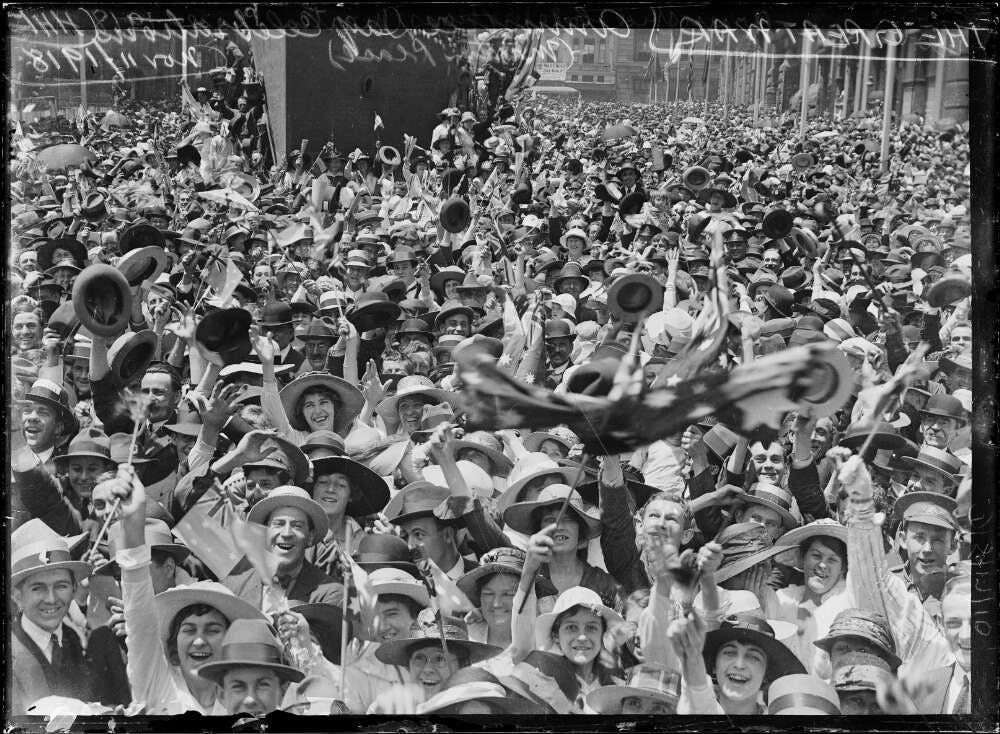
Armistice celebrations in 1918. Conscription campaigns polarised Australian politics and society.National Library of Australia
The conscription campaigns divided Australians bitterly. Those who voted against the principle found their loyalty to nation and empire questioned. Those in favour faced accusations they betrayed Australia’s future by sending its young men to die.
The party’s now unequivocal anti-conscription sentiments found it tarred with the brush of disloyalty and ensured a conservative ascendancy in federal politics until 1929.
Even in private life, those political divisions were deep and abiding. One woman wrote to her soldier husband at the front that she had broken off friendships over the issue:
they don’t come here now since conscription I told them what I thought of them.
Returned soldiers as ‘most deserving’
It is small wonder that those on the political left – many historians included – should feel uncomfortable about the effects of the first world war on Australian society and culture.
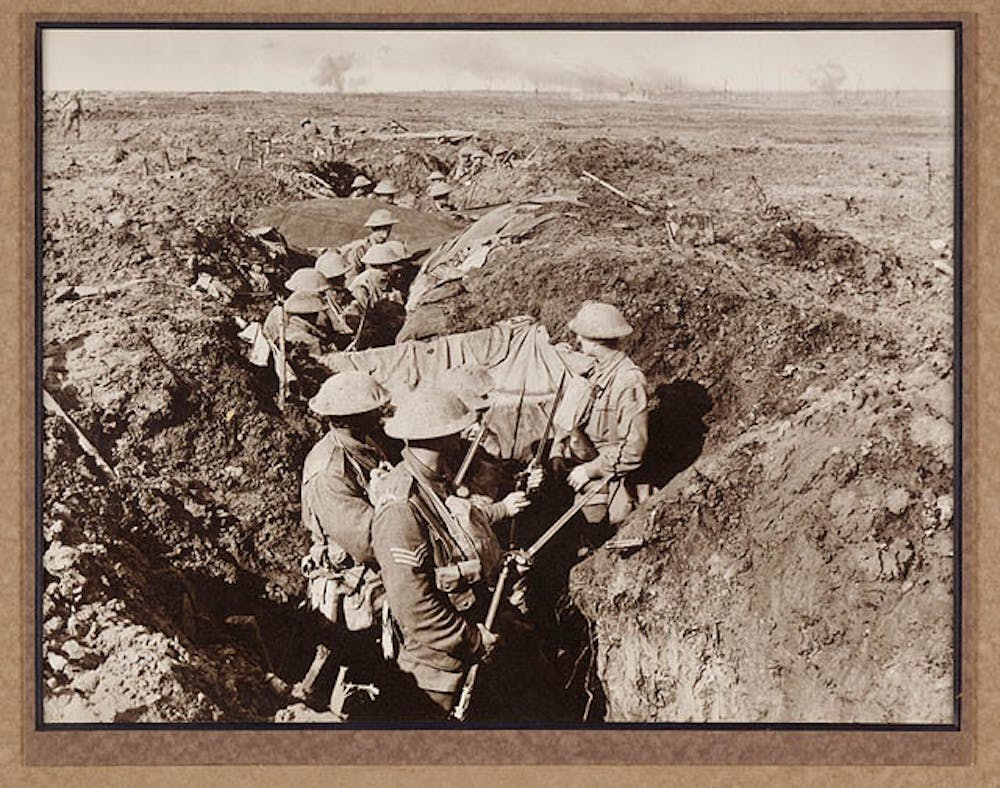
Dugout at Gallipoli. 60,000 Australians were killed in the First World War.State Library of Victoria, CC BY
The tendency of the war had been to draw Australia more closely into the British Empire’s embrace. The German threat provoked deep expressions of cultural unity with Britain from Australians, and further encouraged them to see their future security in terms of even closer defence and economic ties with the empire.
The Anzac tradition itself embodied those difficult politics, as it promoted the Empire-loyal “digger” as the embodiment of the Australian national character.
In Anzac’s rhetoric, Australian soldiers had proved themselves the exemplars of a series of desirable qualities such as courage, initiative, and loyalty to mates. But they had not so much achieved independence for Australia as raised Australia to equality within a British brotherhood.
For those on the political left, the veneration of the digger displaced all other potential contributions to the making of Australian nationhood, including the contributions of women, pacifists and political radicals.
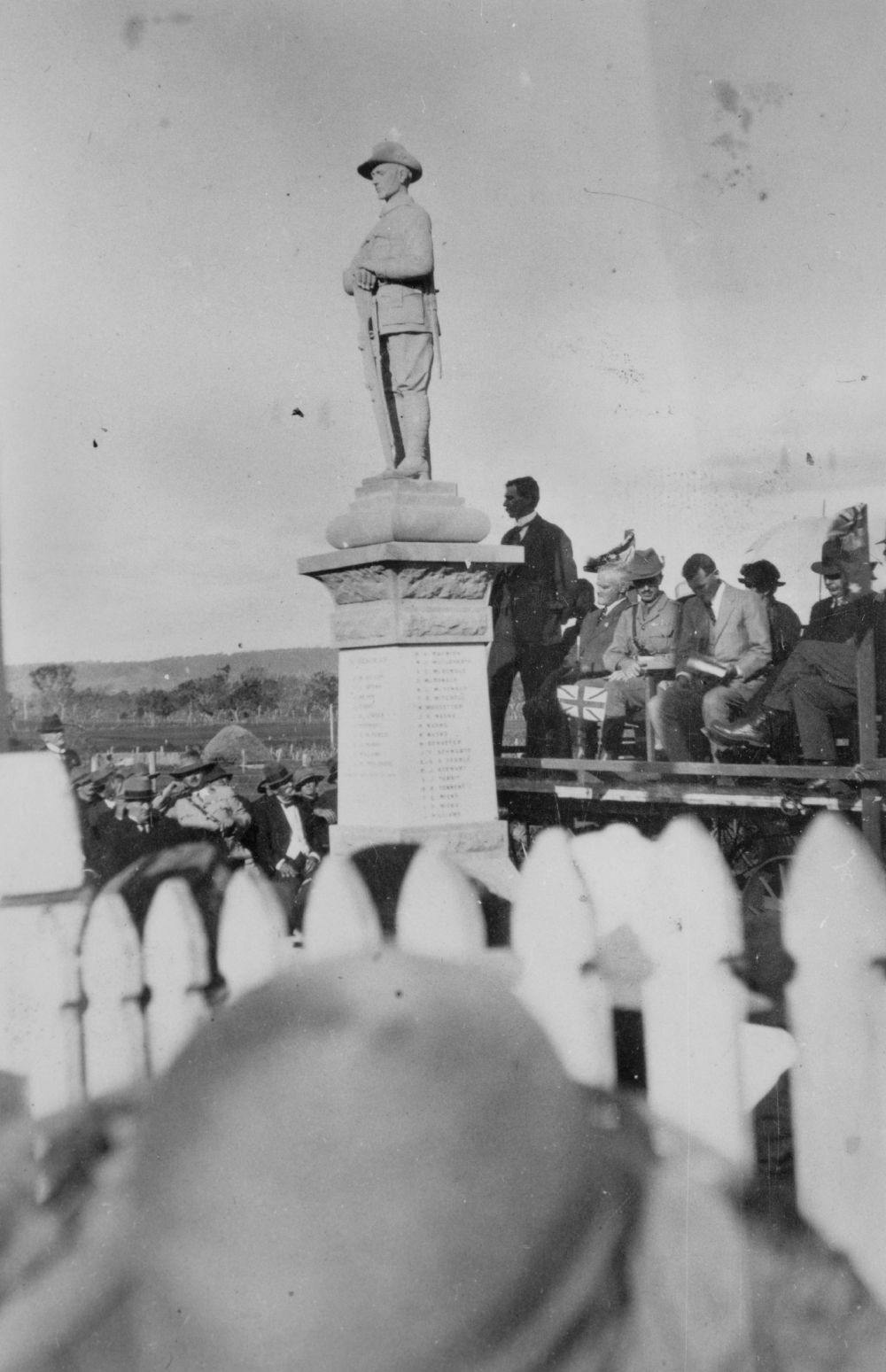
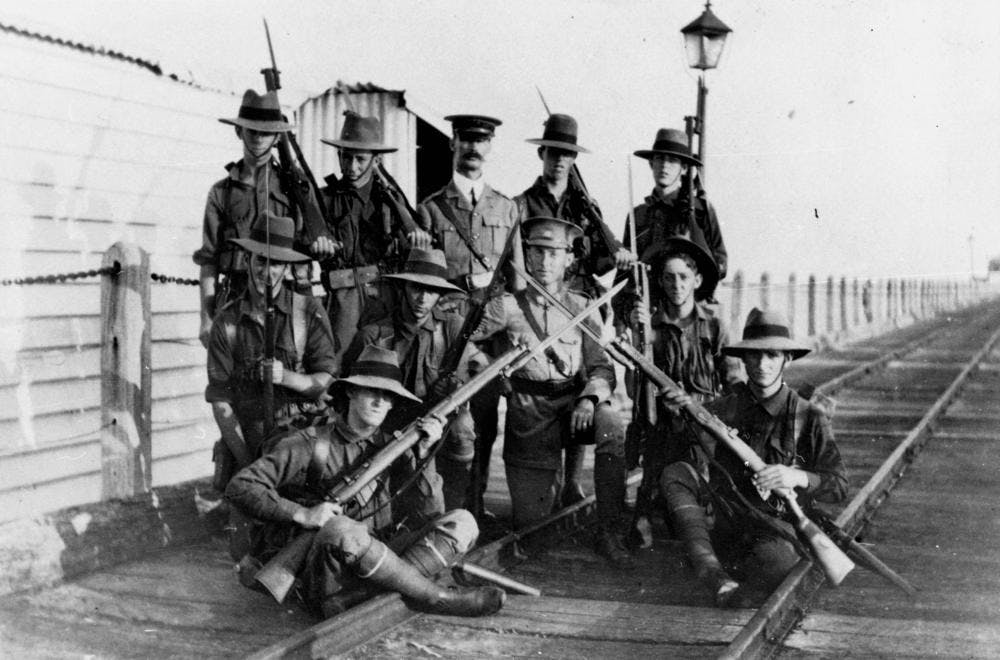
Australian soldiers became the embodiment of national character, and they assumed the position of the most deserving in citizenship hierarchies.State Library of Queensland
It reorganised hierarchies of citizenship, so returned soldiers assumed the position of the most deserving, whether in terms of government largesse or in cultural terms as the embodiment of national character.
But conservative historians have naturally been much more comfortable with that interpretation of the war’s effects than their counterparts.
It speaks to a sense that Australians held close to their British descent and traditions, while also recognising the economic and security value of continued close ties. And it gave Australians a figure whose characteristics were not only to be admired, but emulated in civic life and subsequent conflicts.
A century on from the national trauma of 1914-18, the politics of that event remain present. The kind of Australia we prefer to see depends on whether we regret or embrace the effects of the first world war on Australian politics and culture.
As we gather again on the anniversary of the end of the “war to end all wars”, we might observe that the conclusion of the war only started the long and continuing effort to come to terms with its meaning.
This is one of our occasional Essays on Health. It’s a long read. Enjoy!
The idea of growing babies outside the body has inspired novels and movies for decades.
Now, research groups around the world are exploring the possibility of artificial gestation. For instance, one group successfully grew a lamb in an artificial womb for four weeks. Australian researchers have also experimented with artificial gestation for lambs and sharks.
And in recent weeks, researchers in The Netherlands have received €2.9m (A$4.66m) to develop a prototype for gestating premature babies.
So it’s important to consider some of the ethical issues this technology might bring.
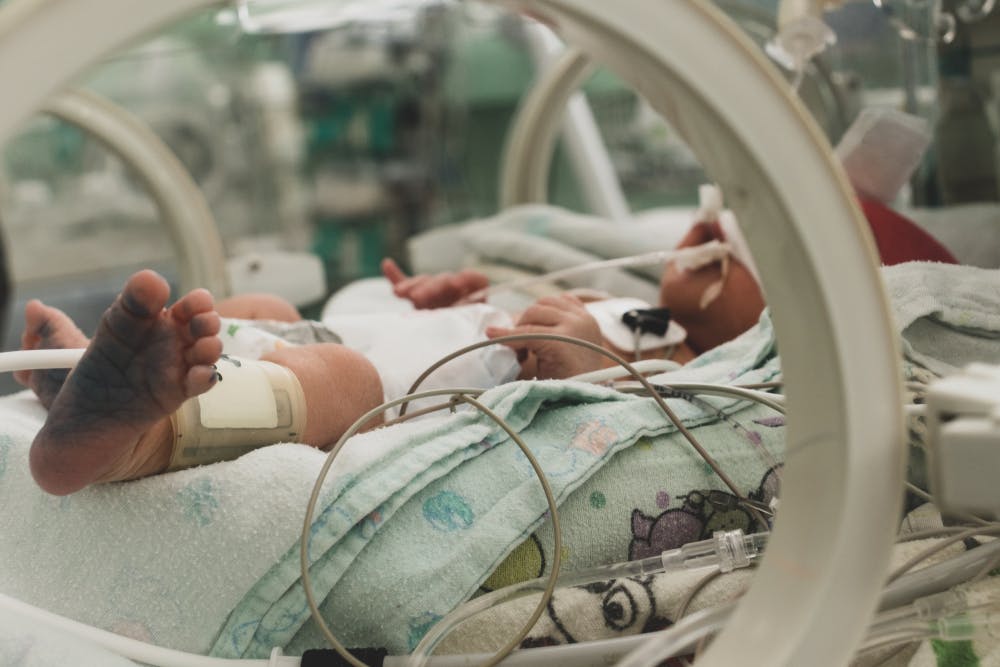
Growing a baby outside the womb is known as ectogenesis (or exogenesis). And we’re already using a form of it. When premature infants are transferred to humidicribs to continue their development in a neonatal unit, that’s partial ectogenesis.
When premature infants are transferred to humidicribs to continue their development in a neonatal unit, that’s partial ectogenesis.from www.shutterstock.com
But an artificial womb could extend the period a fetus could be gestated outside the body. Eventually we might be able to do away with human wombs altogether.
This may sound far-fetched, but many scientists working in reproductive biotechnology believe that with the necessary scientific and legal support, full ectogenesis is a real possibility for the future.
What would an artificial womb contain?
An artificial womb would need an outer shell or chamber. That’s somewhere to implant the embryo and protect it as it grows. So far, animal experiments have used acrylic tanks, plastics bags and uterine tissues removed from an organism and artificially kept alive.
An artificial womb would also need a synthetic replacement for amniotic fluid, a shock absorber in the womb during natural pregnancy.
Finally, there would have to be a way to exchange oxygen and nutrients (so oxygen and nutrients in and carbon dioxide and waste products out). In other words, researchers would have to build an artificial placenta.
And just as in the case of IVF, there are many who are concerned about what this new realm of reproductive medicine might mean for the future of creating a family.
So what are some of the ethical considerations?
Artificial wombs could help premature babies
The main discussion about artificial wombs has focused on their potential benefit in increasing the survival rate of extremely premature babies.
Currently, those born earlier than 22 weeks gestation have little-to-no hope of survival. And those born at 23 weeks are likely to suffer a range of disabilities.
Using a sealed “biobag”, which mimics the maternal womb might help extremely premature babies survive and improve their quality of life.
A biobag provides oxygen, a type of substitute amniotic fluid, umbilical cord access and all necessary water and nutrients (and medicine, if required). This could potentially allow the gestational period to be prolonged outside the womb until the baby has developed sufficiently to live independently and with good health prospects.
Premature lambs survived for four weeks in a ‘biobag’ at the Children’s Hospital of Philadelphia (Tech Insider/YouTube).
An artificial womb might provide an optimum environment for the fetus to grow, providing it with the appropriate balance of hormones and nutrients. It would also avoid exposing the growing fetus to external harms such as infectious diseases.
And it could see the end of long-term hospital stays for premature infants, saving health care dollars in the process. This is particularly noteworthy considering some of the largest private insurance payments are currently for neonatal intensive care unit expenses.
Artificial wombs could help with infertility and fertility
This emerging reproductive technology may allow women who are infertile, either due to physiological or social reasons, with the chance of having a child. It may also offer opportunities for transgender women and other women born without a uterus, or those who have lost their uterus due to cancer, injury or medical conditions, to have children.
Similarly, it could allow single men and gay male couples to become parents without needing a surrogate.
Artificial wombs could allow gay men to become parents without needing a surrogate.from www.shutterstock.com
Will this lead to a broader discussion about gender roles and equality in reproduction? Will it remove potential risks and expectations of pregnancy and childbirth currently only affecting women? Will this eliminate commercial surrogacy?
Equally, artificial wombs could help fertile women who for health or personal reasons choose not to be pregnant. It would allow those whose career choices, medication or lifestyle might otherwise expose a developing fetus to malformation or abnormality.
Artificial wombs may harm women, reinforce inequality and lead to discrimination
The prospect of artificial wombs might offer hope for many, but it also highlights a number of potential hazards.
For some women, using an artificial womb for gestation to continue might seem like a welcome alternative to terminating a pregnancy. But there are fears that other women thinking about an abortion might be compelled to use an artificial womb to continue gestation.
Whether artificial wombs should be allowed to influence a woman’s right to choose is already under debate.
Artificial wombs might also further increase the gap between rich and poor. Wealthy prospective parents may opt to pay for artificial wombs, while poorer people will rely on women’s bodies to gestate their babies. Existing disparities in nutrition and exposure to pathogens between pregnancies across socio-economic divides could also be exacerbated.
This raises issues of distribution of access. Will artificial wombs receive government funding? If it does, who should decide who gets subsidised access? Will there be a threshold to meet?
Other issues concern potential discrimination individuals born via an artificial womb may face. How do we prevent discrimination or invasive publicity and ensure individuals’ origin stories are not subject to negative public curiosity or ridicule?
Others might consider artificial wombs to be deeply repugnant and fundamentally against the natural reproductive order.
Preparing for future wombs
Currently, there is no prototype of an artificial womb for humans. And the technology is very much in its infancy. Yet we do need to consider ethical and legal issues before rushing headlong into this reproductive technology.
Not only do we need to ensure the technology is safe and works, we need to consider whether it’s the right path to take for different circumstances.
It might be easier to defend using artificial wombs in emergency situations, such as saving the lives of extremely premature neonates. However, using them in other circumstances might need broader social and policy considerations.
Without first establishing clear regulatory and ethico-legal frameworks, the development and release of artificial wombs could be problematic. We need to clearly outline pregnancy termination rights, parenthood and guardianship issues, limitations to experimentation, and other issues before the technology is fully realised and available. We need to do this soon rather than allowing the law to lag behind the science.
We recommend:
approved protocols for testing artificial wombs that gradually extend the gestation period
funding that prevents discrimination on socio-economic grounds. This might be in the form of government funding to ensue a wide range of groups have access to the technology
clear legal guidelines for the status of ectogenetic embryos and fetuses, including what happens if prospective parents die, divorce or disagree on how to proceed
guidelines for access that calm public fears about misuse of emerging reproductive technologies.
It is easy to get carried away with visions of utopian or dystopian societies. As radical and futuristic as artificial wombs might sound, it is important to pause and reflect on the present.
While this technology may solve some existing problems concerning inequality in reproduction, there are many other issues that demand our immediate attention.
Improving maternal health services, equal opportunity in the workplace, and reducing the impact of poor social determinants of health on fetal outcomes are all pressing concerns we must address now before we can consider what the future of reproductive biotechnology might hold.
A meeting on Friday between state and federal environment ministers to discuss Australia’s recycling and waste crisis has been disappointingly inconclusive.
Some targets were set for banning the export of various used materials: glass exports will be banned by July 2020 and mixed plastics by July 2021. New focus was put on managing other waste, such as batteries and tyres.
an 80% recovery rate of material across all waste streams,
significant increases to government procurement of recycled materials, and
halving the amount of organic waste sent to landfill.
So, not all doom and gloom.
But it was reasonable to expect this meeting to deliver more concrete strategies. We have known since 2013 China would stop accepting low-quality rubbish imports; the time has well and truly come for real action.
Inquiry upon inquiry upon…
In 2018 the commonwealth, state and local governments came together to agree to a National Waste Policy.
Providing 14 strategies, it was expected specific detail on actual targets and implementation schedules would follow.
Moving forward, at a December 2018 meeting of environment ministers another set of actions was agreed upon, again with an understanding that detail on implementation and targets would be developed.
Following another COAG meeting in August 2019 Prime Minister Scott Morrison announced the export of recyclables would be banned as “soon as possible”. In Tuvalu for the Pacific Islands Forum later that month, Morrison made a commitment to “attack waste in the South Pacific”.
And in October this year the commonwealth government announced an inquiry into Australia’s waste management and recycling industries.
The states and councils are acting
So are we really any closer to solving the waste and recycling problem?
There has been some commendable efforts by state and local governments. Victoria currently has a number of inquiries, reviews and reports underway into improving recycling and waste management.
South Australia had a task force to advise the government on legislation to phase out single-use plastics. Queensland has similarly released a plastic pollution reduction plan.
In addition, councils are looking at a variety of schemes to better manage waste. Yarra Council is providing an extra bin for glass, for example, and Ballarat has banned it from the household recycling stream.
While each plan has been well thought out by the councils, the main issue is the lack of consistency. When someone is visiting or moves across council lines, they may inadvertently contaminate recycling streams by simply doing what they would when at their own home.
Better options do exist
A recent draft report from Infrastructure Victoria provided a range of options for improving waste and recycling management. These options were provided to (among other reasons) promote discussion as to what could be the preferred options.
This draft report covered the many areas that could be improved – such as the processing sector, use of recycled materials, waste to energy, organics management and so on. Yet the one proposal that received media attention was the suggestion that households have six bins for sorting waste and recyclables.
After all these inquiries, meetings and recommended actions by the various levels of government, where are we at? Recyclables are still going to landfill, many in the community are still confused as to how to correctly sort waste and recyclables, and the issue of contamination has not been resolved.
It was hoped this November meeting would finally result in specific actions and detailed solutions.
Where are the commitments to waste avoidance and reduction initiatives? What about community education to reduce contamination? Or a way to ensure consistency within and across the states and territories?
Education is vital for reducing the inappropriate mixing of recycled materials. Yet very little has been done, excluding some sterling efforts by local councils. This is an easy and relatively cheap action. It is very difficult to understand why we don’t, for example, see national TV ads indicating correct recycling.
So now we await the next environment ministers meeting, scheduled for early 2020, for more detail on schedules and implementation.
Perhaps we should just settle back, take a deep breath, and keep doing what we’re doing. More band-aid solutions may only create greater confusion, and ultimately fail to reduce waste or increase proper recycling.
There is a hidden problem with reading in Australian schools. Ten years’ worth of NAPLAN data show improvements in years 3, 5 and 9. But reading progress has slowed dramatically between years 5 and 7.
And, somewhat surprisingly, the downward trend is strongest for the most advantaged students.
Years 5-7 typically include the transition from primary to secondary school. Yet the reading slowdown can’t just be blamed on this transition, because numeracy progress between the years has improved. So, what is going wrong with reading?
Reading base camp is higher each year
Progress in reading is like climbing a mountain. The better your reading skills, the higher you are. The higher you are, the further you can see. And the further you can see, the more sense you can make of the world.
Like a real mountain, the reading mountain must be tackled in stages. NAPLAN – the National Assessment Program, Literacy and Numeracy – provides insight into those stages, by measuring reading skills at years 3, 5, 7 and 9.
The good news is that the average level of reading skills of year 3 students – reading base camp – is getting higher.
To make the results easier to interpret, I’ve converted the NAPLAN data into the equivalent year level of reading achievement. For instance, in 2010, children in year 3 were reading at equivalent year level 2.6 when they sat NAPLAN. This means they were four-and-a-half months behind a benchmark set at the long-run average for metropolitan non-Indigenous students.
By 2019, the mean reading achievement among all year 3 children was equivalent to year 3.0, meeting this benchmark.
Over ten years, the improvement has been worth about five months of extra learning.
Reading progress improved in years 7-9
There is more good news in secondary school. Recent cohorts have made better progress between years 7 and 9 than earlier cohorts. My best estimate is that learning progress has increased by almost three months of learning over this two-year stage of schooling.
Students in years 3-5 haven’t made the same gains. But (if anything) they are heading in the right direction.
But progress in years 5-7 has fallen
Something is going wrong between year 5 and 7. Students are making six months less progress than they used to. It’s not that they are getting worse at reading; they just aren’t climbing as fast as previous cohorts.
This drop in reading progress can’t simply be attributed to the transition from primary to secondary. Among other things, numeracy progress during this stage of schooling has increased by about six months since 2010.
It’s as if students have started skipping a term in each of their final two years of primary school, but only in English, not in maths. And not all groups of students are affected equally.
Advantaged students are affected the most
Reading progress has slowed the most for students from advantaged backgrounds. For instance, students whose parents are senior managers make ten months less progress from year 5 to 7 than earlier cohorts.
Interestingly, the student groups with the biggest slowdown in years 5-7 have also shown the most improvement in year 5 reading.
This pattern – big gains in year 5 that evaporate by year 7 – rules out poor early reading instruction as a cause. This reading problem isn’t about phonics, but a failure to stretch students in upper primary school.
My analysis also shows:
the years 5-7 reading slump is happening in every state and territory
Queensland and Western Australia had big drops in years 5-7 reading progress in 2015, the year those two states moved year 7 from primary to secondary
students from English-speaking backgrounds are affected more than those who don’t speak English at home
neither gender nor Indigenous status affects the strength of the slowdown.
So, what is going on?
Maybe some primary school teachers focus more on helping students reach a good minimum standard of reading, and not on how far they go. This fits with the trend in year 5; no need to push hard if students are already doing well.
But it doesn’t explain the large drop in progress in Queensland and WA the year they shifted year 7 to secondary school.
Maybe schools push hard on literacy and numeracy until students have done their last NAPLAN test in that school. This would help explain the 2015 drop in reading progress for Queensland and WA, but not the divergent picture for reading and numeracy progress, including in the Queensland/WA change-over year.
Maybe students are reading less as technology becomes ubiquitous. This could explain the difference between reading and numeracy. But why would it reduce progress between years 5 and 7 but not between years 3 and 5 or 7 and 9?
Increased use of technology also fails to explain the sudden slump in Queensland and WA in 2015.
Other potential explanations need to explain the complex pattern of outcomes, including the fact the reading slowdown is so widespread even while numeracy progress is going the other way.
My best guess is that some advantaged primary schools focus on literacy and numeracy until the year 5 NAPLAN tests are done, but then switch to project-based learning, leadership or year 6 graduation projects. These “gap year” activities don’t displace maths hour (which drives numeracy progress) but may disrupt reading hour or other activities that build reading skills.
Meanwhile, disadvantaged primary schools are very aware of the need to keep building their students’ reading levels to set them up for success in secondary school.
This story is speculative, but it fits the data.
What next?
Education system leaders need to figure out what is happening in reading between years 5 and 7, and quickly. They should look closely at upper primary years, as well as the transition to secondary school. This is much more subtle than a traditional back-to-basics narrative.
In the meantime, teachers in years 5, 6 and 7 should be aware their students are making less progress than previous cohorts, and focus on extending reading capabilities for students who are already doing well. All students deserve to climb higher on their reading mountain.
The new transport projects governments are constantly announcing are expensive. In the recent New South Wales and Victorian elections, the returned state governments’ transport infrastructure promises added up to A$165 billion. What’s mostly missing from the promised transport solutions is smart technology that provides higher benefits at a fraction of the cost – when retrofitting existing roads in particular. The benefit-to-cost ratio can be more than a dozen times greater than for a new road.
Clearly, infrastructure spending helps to drive the economy. These projects also deliver benefits to the community, including increased road safety, shorter travel times and fewer delays.
The economic merit of these projects is usually captured using a benefit-to-cost ratio (BCR). For example, the BCR of the A$15.8 billionNorth East Link road project in Melbourne is estimated to be 1.25 – for every A$1 invested, A$1.25 is returned in benefits to the economy and community. For the Melbourne Metro rail tunnel, a best-case BCR of 3.3 has been reported.
But are we getting good value for money? Could cheaper alternatives deliver more benefits?
Technology offers smarter, cheaper solutions
Technology offers transport solutions that provide higher benefits at a fraction of the cost of building new infrastructure. Collectively known as intelligent transport systems, these are widely recognised today as better answers for smart transport outcomes.
Intelligent transport systems can have positive impacts on the safety, efficiency and environmental performance of transport.
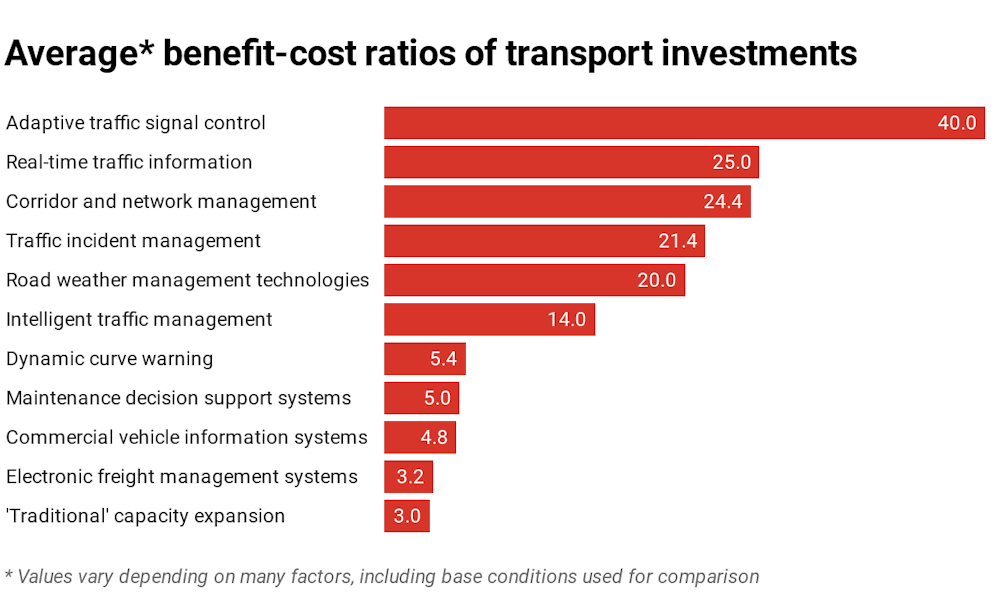
When comparing different “congestion-busting” options, “building more roads” provides, on average, a BCR of 3.0. This is dwarfed by the much higher BCR values of tech solutions.
Traffic signals along a route can be coordinated to create “green waves” for platoons of vehicles to travel without stopping. These solutions are effective for congested cities that experience rapid traffic growth and changing traffic patterns.
A simulation of adaptive traffic signals
Corridor management systems use technology to control networks of motorways and urban roads. The average BCR is 24.
Active motorway management improves the performance of existing roads.
Traffic incident management, which has a BCR of 21, includes technologies that aid quick detection and removal of crashes. They also detect other incidents such as broken-down vehicles or spilled loads that reduce road capacity. The systems rely on smart software that analyses sensor data in real time.
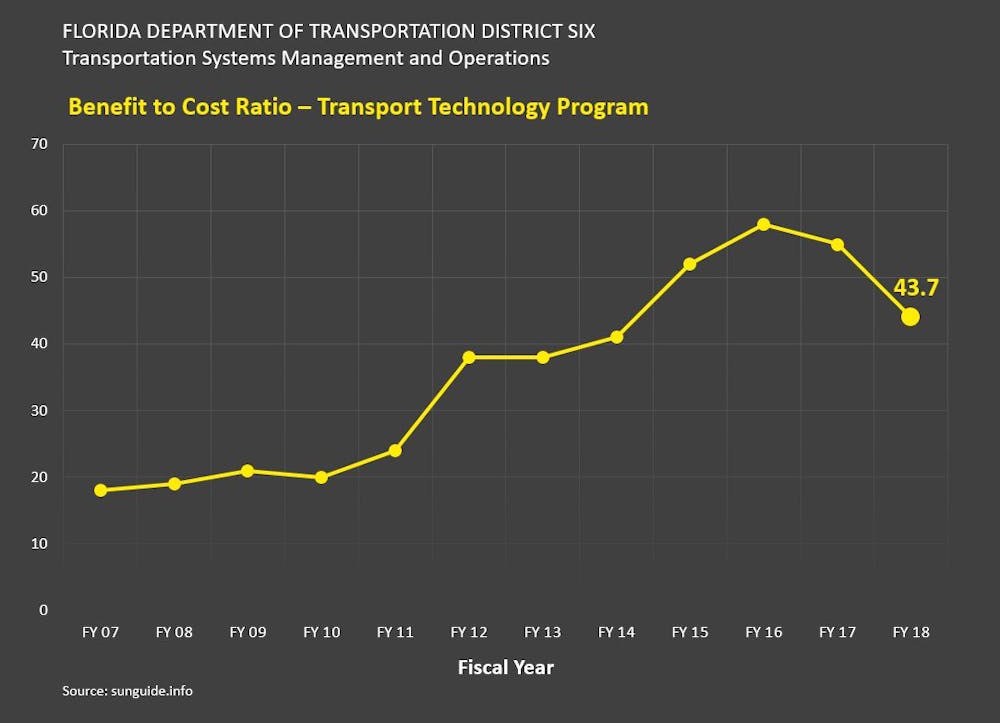
When solutions are combined, benefits are amplified. The Florida Department of Transportation implements a transport technology program on its networks. The solutions include incident management, ramp signalling, traveller information and express lanes. Reduced incident duration and traffic delays are among the key benefits.
In 2018, the benefits of this program totalled almost US$3.1 billion (A$4.5 billion). The costs were US$70.3 million (A$102 million). That’s a BCR of 43.7.
Benefit-cost ratios of transport technology solutions implemented over a decade by Florida Department of Transportation.Author provided
In the UK, the cost of implementing technology solutions on the M42 motorway was US$150 million (A$218 million) and took two years to complete. Widening the road to produce the same outcome would have taken 10 years and cost US$800 million (A$1.16 billion).
A shift in priorities is needed
Considerable investment in transport infrastructure is still required. It should be guided by strong business cases and aligned with community values and expectations.
However, technology is getting to the point where it’s making a serious difference in tackling the mega challenges facing our cities. Its role must be prioritised.
The benefits are compelling. Intelligent technology systems improve the use of existing assets and increase their operational life. They enhance traveller experience and reduce reliance on building new roads. And they deliver superior value for money.
But widespread deployment of these technologies is still limited. To spur change and unlock value, we must move beyond a project-by-project approach.
Learn from the best
Governments can be guided by leading nations in this field such as South Korea, Japan and Singapore. Their citizens experience the benefits every day. Smart transport solutions improve their quality of life through easier travel, less congestion and more reliable services.
The recurring policy themes in these countries include a national vision of smart infrastructure and commitment to funding. They prioritise investment in research and trials, standards development and partnerships with industry. These are key factors in the success of their tech-driven transport solutions.
These are the policies and investments Australia should prioritise. They will modernise our transport systems in innovative ways that lift our economy and living standards.
In a large storage room in the basement of the former Musée d’Histoires Naturelles in Lyon, France, stands a rare relic of the colonial era: a full-body plaster cast of an 18-year-old Badtjala man from K’gari (Fraser Island), Queensland.
While the history of Europe’s “human zoos” is well documented from a European perspective, the research behind my novel Paris Savages builds on knowledge of Australia’s little-known connection to this confronting past; a past with lasting and damaging legacies.
Boni, l’australien
The man from whom the cast was made, Bonangera (Benanyora, Bonny or Boni) stands naked and holds a boomerang over his head. The plaster has been painted a dark brown. His eyes have been coloured red. Rows of horizontal cicatrices, or tribal markings, are visible as scars on his chest. Also discovered in storage were casts of the man’s hands and feet.
The collection began to draw attention in 2009 when researchers at the museum, since relocated and now known as the Musée des Confluences, linked it to the European visit of an Aboriginal trio from Fraser Island.
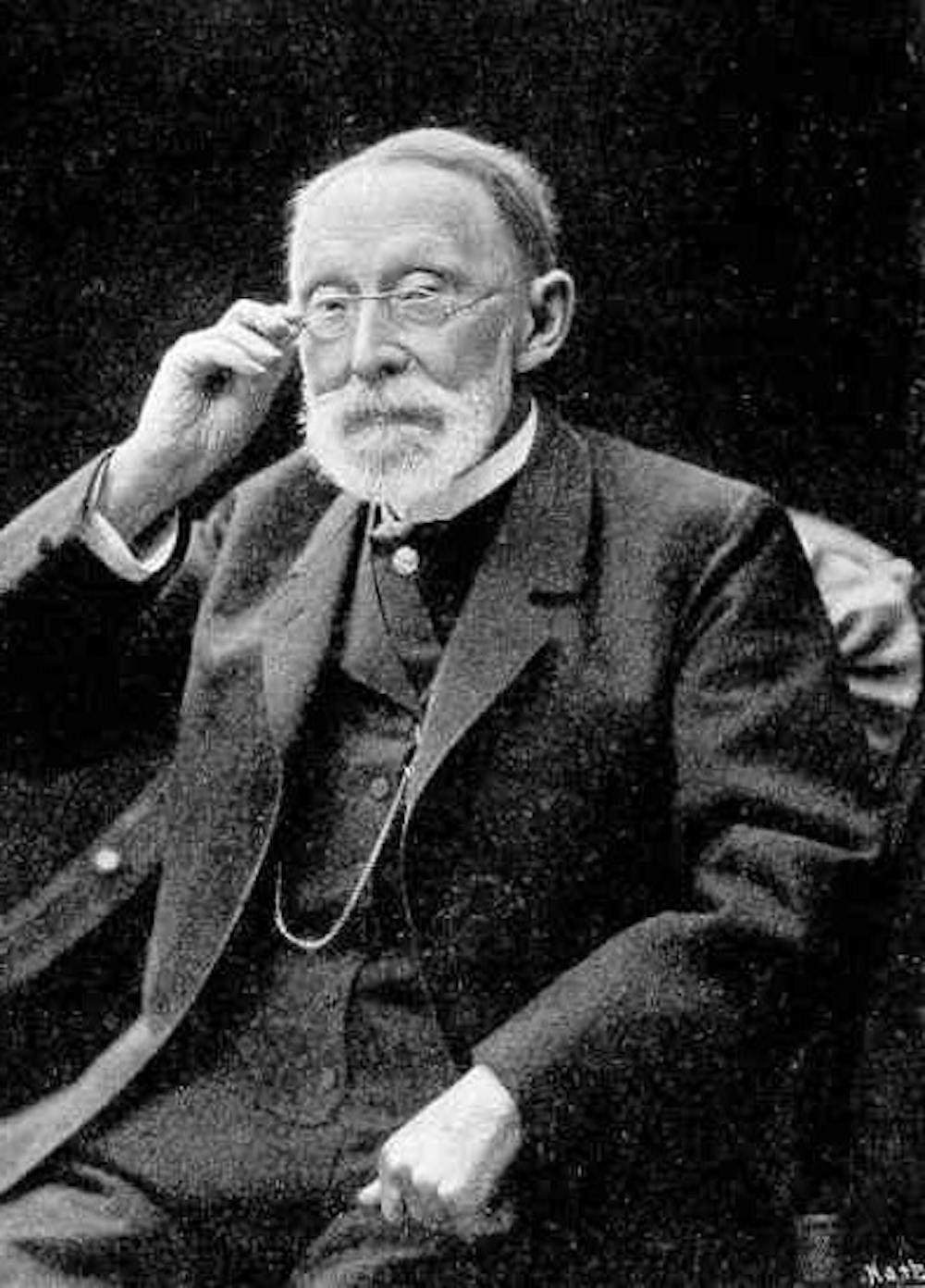
Physician Rudolf Virchow, known as ‘the father of modern pathology’, studied the Badtjala/Butchulla group.Wikimedia
From the inscription on the base of the plaster foot, “Boni, l’australien”, it is likely this was the same “Bonny” famous physician and anatomist Rudolf Virchow examined in 1883.
Also studied were two other Badtjala people: Jurano/Jurono/Durono (aged 22), known in Europe as Alfred, and Dorondera/Borondera (15), known as Susanne. German man Louis Müller took the group to Germany in 1882 to perform in ethnographic exhibitions.
Cast in plaster
During our document research in Germany, Birgit Scheps of Museum für Völkerkunde zu Leipzig and I discovered a missing cast of Jurano was in fact a death mask, establishing that at least one of the troupe sadly died in Europe.
From the Lyon full-body cast, Bonangera appears proud and serious. It is likely he was concealing pain, for the gypsum plaster was often contaminated with lime and burnt the skin. But it is impossible to know how he truly felt.
A poster advertising the Somali Park at Jardin Zoologique Paris in 1890.Wikimedia
Indeed, there are few first-hand accounts of any of the 35,000 performers from around the globe who French researchers estimate toured the West between 1810 and the mid-20th century.
Bonangera climbs a tree believed to be in the zoological garden in Basel, Switzerland, in 1883 before he went to Lyon.Image: Staatsarchiv Basel
Throughout Germany, France and Switzerland, Bonangera threw boomerangs and spears, participated in mock fights with Jurano, and climbed tall poles vaguely reminiscent of the giant satinay and hoop pine trees that grew out of sand on Fraser Island. He danced and sang in a voice described in the German newspaper Illustrirte Zeitung as reminiscent of “the monotone negro melodies of America”.
In storage
In the Lyon basement, remnants of other “ethnic shows” include a canoe used by “Laplanders”, Sami people.
Inside a compactus are masks and shields. Bonangera stares straight ahead, his expression unchanged for, what would now be, 136 years. In an era aspiring towards postcolonialism, the cast is chilling.
Daniel Browning’s heavily researched documentary on the discovery of the cast, Cast Among Strangers, features an interview with acclaimed Badtjala artist and academic Fiona Foley, who travelled with Browning to Europe.
Disturbed by the silences in the history, I contacted Dr Foley about drawing on this episode as the basis for a novel. She informed others in her community and fact-checked aspects of the work.
Browning’s research establishes that members of the Badtjala group toured cities including Hamburg, Leipzig, Berlin, Dresden, Basel and Lyon. It is now known that Bonangera also visited Geneva. Groups were commonly shown at mass exhibition sites such as Paris’s Jardin d’Acclimatation.
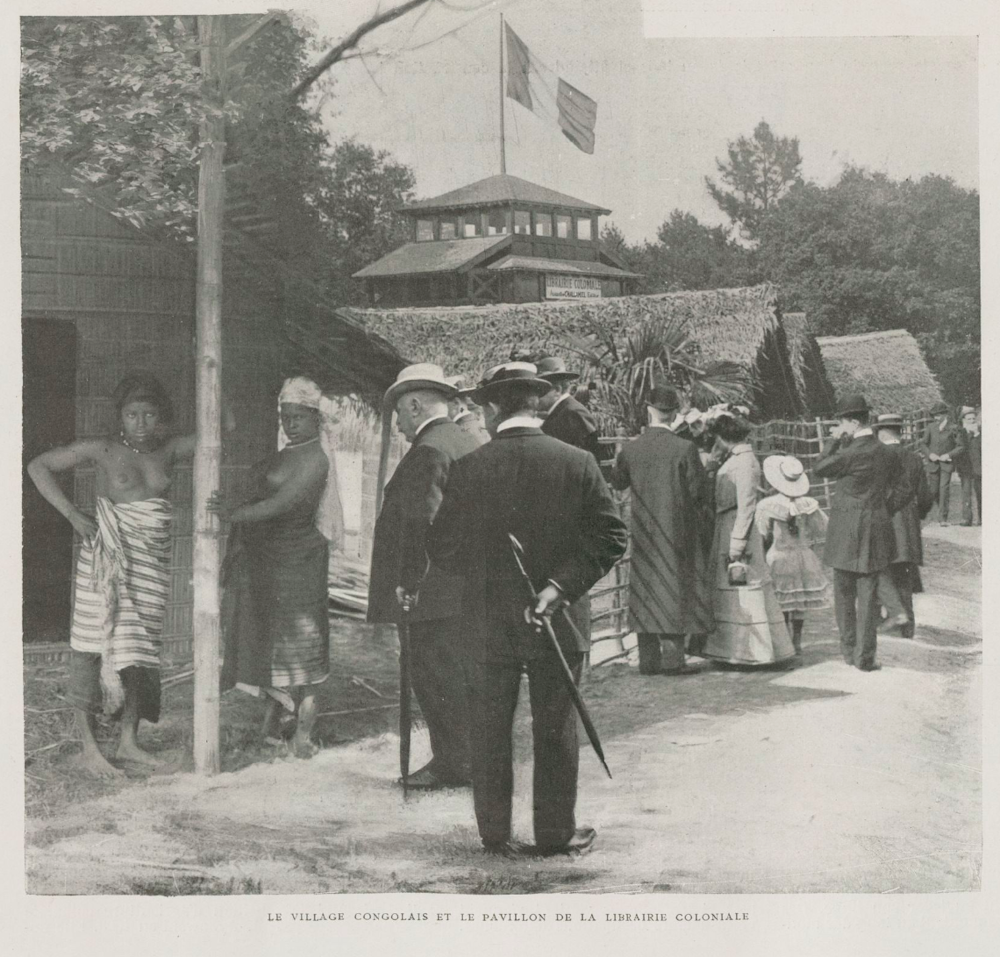
From 1877, groups were shown almost yearly at the Jardin d’Acclimatation, with 1883 featuring four different groups attracting audiences totalling almost one million for the year. Paris’s Bois de Vincennes also hosted exhibitions including the Colonial Exhibitions of 1907 and 1931, the latter lasting six months and drawing 33.5 million visitors.Wikimedia
The Dresden casts of Bonangera and “Susanne” were made at the Berlin Panoptikum, where my research with Hilke Thode-Arora and Scheps confirmed the group performed. Also in the Dresden storage space were casts of Aboriginal performers from Queensland’s Hinchenbrook and Palm islands who, Roslyn Poignant writes in Professional Savages, were taken by self-confessed “man-hunter” R. A. Cunningham to Europe and America, where they performed in P.T. Barnum’s shows.
While the Sami negotiated contracts, even going on strike if conditions were not met, an 1882 account in the German journal Das Ausland has Dorondera turning her back on the audience. Was she asserting her agency over conditions she was unhappy with?
An exhibition of casts at Paris’s Musée de l’Homme (2017) grappled with the West’s obsession with the ‘other’.Author provided
Without trace
After performances throughout Germany, according to the Berlin Panoptikum archives, one of the Badtjala men (likely Jurano) was admitted to Berlin’s Charité hospital in 1883. Dorondera disappears from the records without trace.
On August 23 1883, the French newspaper Le Progrès covered Bonangera’s Lyon performances with a “Samoyed” troupe (indigenous people from the Russian arctic) and their reindeer. It is an incredible image to imagine.
His last recorded sighting was reported in Salut Public on September 3 1883. Bonangera performed in Lyon throwing a boomerang, the racist account marvelling that people “little more than monkeys” could accomplish something by “playing” that Europeans could not do. We can only wonder what Bonangera made of his audience.
The last “human zoo” to close featured people from the Congo who were exhibited at the Brussels World’s Fair. The year was 1958.
Media Director of the Vanuatu Daily Post group, Dan McGarry, is devastated by the Vanuatu government’s decision to reject his work permit after 16 years in the country and calls it an attack on media Freedom.
“I’m gutted, personally. I’ve devoted 16 years of my life to this country’s development. My family is Ni Vanuatu,” the Canadian told the Pacific Media Centre (PMC).
On Thursday (November 7) he announced the rejection on social media (Facebook, Twitter) expressing his disappointment at being asked to leave as “After over a month of delay and uncertainty, I was informed this afternoon that my work permit has been rejected,” he said.
“In July, the Prime Minister (Chariot Salwai) summoned me and berated me for my ‘negative’ reporting ‘if you don’t like it here,’ he told me, ‘go home’. But Vanuatu is my home”.
“This all began when we broke a story about how six Chinese nationals had been detained without trial or access to legal counsel. Four of them had their Vanuatu citizenship unlawfully revoked without ever seeing the inside of a courtroom. All of them were summarily deported to face prosecution in China,” McGarry summarised.
“Within days of these reports surfacing, complaints were lodged with the Media Association of Vanuatu about the Daily Post’s ‘negative’ reporting. No evidence was provided to support these complaints, but the timing leaves little question as to how and why they came about.”
– Partner –
He vowed to continue his fight to stay in Vanuatu and maintain standards of a free and independent media.
“The government can dress it up any way they like, but the evidence is clear: This is an attack on a free and independent media in Vanuatu. But Vanuatu is not Hong Kong, and it’s not China. This fight isn’t over yet…by a long shot,” he said.
“The groundswell of support we’ve seen, both at home and overseas, is heart-warming and humbling. We will pursue this appeal aggressively, and fight for justice to the last.”
McGarry explained that he was in the procedure of getting his citizenship when the government rejected his work permit.
“I am in the process of obtaining Vanuatu citizenship. This entire affair began when the Labour department declined to grant a short-term work permit while the application progressed,” McGarry said.
“The government alleges that my employer hasn’t prepared a proper succession plan, and suggests that another individual employed here is qualified for the job.
“Neither of these is true, and for the government to try to tell any private company who it should hire is highly inappropriate. To do so to an independent media company is doubly so.”
The next steps are to appeal the rejection, which followed an administrative process that he expected would take a month or more, and if that failed he would be seeking a judicial review.
The rejection of his work permit has happened on the eve of Melanesian Media Freedom Forum which is on Monday/Tuesday in Brisbane, and which he will attend.
Dr Tess Newton Cain, chair of the organising committee said of McGarry’s predicament “we expect that this issue will be a topic of conversation during the two days as indicative of issues that affect media freedom in our region,” she said.
McGarry’s employers, Trading Post Ltd, were just as surprised with the decision and pledged to support him.
“Based on conversations with the owners, the Daily Post rejects the allegations, and is of the opinion that the decision is illegitimate and flawed on its own merits. They intend to fight it.”
PMC’s Professor David Robie. Image: Isabella Porras/PMC
The Director of the Pacific Media Centre and editor of Pacific Media Watch, Professor David Robie, has also condemned the denial of a work permit by Vanuatu, saying it was “outrageous authoritarianism” and called for the visa to be granted.
“Dan McGarry is one of the leading investigative journalists in Vanuatu and the Pacific and has a commitment to development values,” Professor David Robie said.
“Dan has also been a strong media freedom advocate and has followed the proud traditions set by the Daily Post founder and owner, Marc Neil-Jones, by publishing the truth and holding the powerful to account.
“A loss of Dan McGarry to Vanuatu would be a huge loss to the region as well,” Professor Robie said.
McGarry has received support from the Media Association of Vanuatu and its 89 members which has urged Prime Minister Salwai to relook at all the contributions the Vanuatu Media Industry has made and all that McGarry has done in promoting the development policies and projects over the last four years of the government.
In the report, Deputy State Coroner Harriet Grahame recommends pill testing, a ban on sniffer dogs and a reduction in the number of strip searches, among other measures to prevent deaths.
These evidence-based strategies for harm reduction are to be applauded. But it remains to be seen if the NSW government will change its stance on drug use and harm reduction to implement the coroner’s recommendations.
The inquest examined the deaths of six young people who died during or just after attending music festivals in NSW between December 2017 and January 2019.
All died as a result of taking MDMA or ecstasy. Five of the six also had other drugs in their system.
In the report, Grahame said:
It can be hard for the community to grapple with some of the underlying issues when drug use is illegal and drug users are stigmatised. It is difficult to properly explain the potential risks to young people if our only permissible message is “just say no”. While we continue to hide the true extent of drug use, it remains inherently more dangerous.
However, Grahame noted the NSW government had already put in place, since these deaths, a range of measures including more formalised emergency medical responses at festivals and clinical guidelines on how to manage drug incidents before the person reaches hospital.
She also noted festival organisers had implemented strategies that improved safety since these deaths.
What did the coroner recommend?
Drug checking
The coroner recommended the government introduce drug checking, which includes a range of approaches designed to test the content of illicit drugs and alert people to dangerous substances. She said the evidence for it was “compelling”.
These approaches include mobile facilities at festivals to test drugs brought by festival goers with direct feedback to them, sometimes referred to as “pill testing”.
Grahame recommended a mobile unit at festivals and other events to test drugs acquired by police.
She also recommended a fixed site facility. This is a permanent site, outside the festival, where people could bring drugs to be tested and receive harm-reduction advice.
These recommendations are a significant step forward and would place NSW in line with international best practice.
No more sniffer dogs and fewer strip searches
Grahame recommended stopping the use of drug sniffer dogs at festivals because of the harm it causes.
This includes festival goers taking drugs before the festival (pre-loading), taking double the dose, or panicking and taking drugs quickly to avoid detection.
She also recommended strip searches should be used only in extreme circumstance.
She said:
Risky ingestion and secretion, trauma especially when coupled with strip search and the destruction of trust between young people and police are all serious concerns.
She said the NSW police commissioner should issue operational guidelines to direct how police should exercise their discretion with illicit drug use and possession at festivals. She encouraged police to engage more positively and not to take punitive approaches with festival goers.
the NSW government facilitate a meeting with a range of stakeholders, including the health department, festival health services, festival promoters and other experts, to ensure mandatory minimum standards for policing, medical services and harm reduction at music festivals
the redefining of drug use as a health rather than law-enforcement issue
a drug summit to develop evidence-based drug policy. She recommended the summit include consideration of guidelines for drug-checking services, drug education, decriminalisation of personal use drugs and regulation of some currently illicit drugs.
These recommendations are key because it’s important stakeholders work together with the best interest of young people at heart. Our best approach, as the coroner has indicated, is to keep young people as safe as possible in the short period in which they experiment with illicit drugs.
She also recommended improved drug education for young people and their parents.
What happens next?
Policy on alcohol and other drugs is largely the responsibility of the states and territories. So, it will be up to the NSW government to implement most of these recommendations.
However, the government has already shown strong opposition to what we know works to reduce harms (like drug checking) and escalated what we know increases harms (like drug dogs and strip searches). We need to wait and see whether it can find a way to re-adjust its position on drug use and harm reduction and follow the coroner’s recommendations.
If this happens, NSW will be among the most innovative and evidence-based states in Australia on drug policy, and among leaders globally.
New research reported in the media says the clitoris plays an important role in fertility and reproduction, making it more than an organ that exists purely for sexual pleasure.
The truth about the clitoris: why it’s not just built for pleasure
and
New clue reveals how a woman can conceive, and it all comes down to the clitoris
The reports were based on a controversial review by retired UK scientist Dr Roy Levin published this week in the journal Clinical Anatomy.
He brings together evidence to support a new theory that the clitoris is equally important for reproduction as it is for sexual pleasure, which he first proposed in 2018.
This is controversial as the clitoris has not previously been given a direct role in reproduction. Levin says this is because other researchers have been so fixated on its role in sexual pleasure they have completely overlooked its other role.
Levin’s review is the latest development in a long history of controversy about the clitoris. Over the centuries, anatomists have debated its function, a discussion often dominated by men.
In the 1820s, English surgeon and president of the Society of British Medicine Isaac Baker Brown thought the clitoris was a source of “hysteria” and epilepsy. And he said it should be removed to cure hysteria and other forms of “female madness”.
Today, most scientists agree the main function of the clitoris is for sexual pleasure. But how did we come to have such an organ and why would we need one?
Researchers just last month proposed the clitoral orgasm is a remnant of our evolutionary past that once served to induce ovulation during intercourse.
Another view of the clitoris argues it allows women to discriminate between sexual partners based on who can help them reach orgasm with the right type of stimulation.
A third common view is clitoral orgasms lead to stronger bonding between sexual partners preparing them for childbearing and parenting.
So how does this fit with the latest claim?
This latest paper argues stimulation of the clitoris activates parts of the brain, leading to multiple physiological changes in the vaginal tract.
He also discusses how female genital mutilation reduces a woman’s fertility, implying this is a result of circumcision of the clitoris. However, he does not cite any evidence for this.
With this equivocal evidence, Levin’s conclusion that “the reappraisal of the functions of the clitoris as both reproductive as well as recreative are of equal importance is clearly now unavoidable”, could be disputed.
The conclusion is not quite that definite.
However, this does not mean Levin’s theory is incorrect; it just requires further investigation and discussion.
His review highlights that often the science around the clitoris has been heavily influenced by the cultural context — from feminism, through to religion and simply the morals of the time. While cultural context is important, this has diverted attention away from objectively examining scientific evidence.
Perhaps the most important aspect of this review is it may trigger a discussion on the functions of the clitoris and bring that discussion back to science.
As Levin highlights, the two proposed functions of the clitoris as an organ of both “procreation” and “recreation” are not mutually exclusive and can be of equal importance, a proposition worth examining.
This week, the royal commission into disability heard horrifying stories of children’s experiences in the education system. It is no wonder children with disabilities are over-represented among the tens of thousands of Australians who leave school before finishing year 12.
Many early school leavers are bored or disengaged; some are escaping bullying, while others do so due to poor mental health. Some who exit say they simply didn’t fit in the mainstream system.
One way governments have addressed this issue is to provide flexible learning options, which cater for the unique needs of students. The aim is to help them stay connected to learning, but so far, evidence of their value has only been largely anecdotal.
These schools or programs come in the form of community spaces, school annexes, stand-alone spaces and a growing number of independent schools. They have many names, including flexi schools, alternative education and flexible learning programs.
These programs are usually on the edge of the education system, which is one of the difficulties in tracking the outcomes for the disparate range of programs. Our research was conducted in South Australia, where the programs are more embedded into the state’s education system. But even here, the actual figures of early school leavers involved in these programs has been hard to come by.
What we did find, however, is a lack of significant benefit – in terms of school retention and later employment – to the programs’ participants. Despite the good intentions, it seems the flexible learning options are simply acting as a convenient safety valve for students who the mainstream has abandoned.
It seems positive…
Every state has flexible learning options. More than 70,000 Australian students of high school age were enrolled in flexible learning programs in 2019. This is up from 30,000 only five years ago.
South Australia was the first Australian state to establish flexible learning options, in 2007. This was done as a way to support and offer case management for those at risk of leaving school early. At the time, flexible learning options was hailed as a way to support social inclusion.
Our research was an analysis of several sources including government reports, records and parliamentary speechess; and relevant academic literature and news articles.
We found students with disabilities represent 8.5% of the mainstream school cohort in SA but 19% of students in flexible learning programs. Figures for Indigenous students are 5.6% and but 14% respectively.
SA’s flexible learning options have a common set of positive features. They usually have a higher number of staff per student than mainstream schools. The composition of staff is different too – it includes youth and social workers as well as teachers.
Flexible learning options emphasise case management for specific needs, with attention to personalised learning programs and remediation. The removal of structures such as uniforms, age-graded lessons and strict discipline codes are a positive alternative for students disengaged from mainstream schools.
… but the outcomes are uncertain
Students and adult workers report high levels of satisfaction with flexible learning programs but the reality of low educational attainment and lack of meaningful pathways puts the efficacy of these programs in doubt.
Take the ICAN program. It has a total of more than 40,000 enrolments since its beginning in 2017, at a total cost of more than $300 million dollars – averaging around A$8,500 per year per student.
Completion of the year 12 certification or its VET equivalent is under 5%, compared to a rate of 52% for SA government schools.
One of the SA governments’ stated aims for introducing flexible learning programs was to provide qualifications so students entered adulthood with a fighting chance of employment.
We have seen reports evaluating flexible learning options, conducted for the SA education department by private consulting firm ARTD, which have since been removed from the internet. They noted there was a lack of information about the destination of students exiting flexible learning program but a destination survey estimated that only 3% secured employment of any kind.
So, what should we do with disengaged young people?
What to do with young people who leave education early is not a challenge unique to Australia. Canada, the US and UK have all taken concerted actions to deal with the issue of students dropping out, with varying success. In the UKm a system of studio schools, and university vocational colleges, were established to cater for students outside of the mainstream, with limited success.
Some of the charter schools the USA hide the issue of high-school dropouts by enrolling students who would otherwise fail.
Students will continue to experience difficulties in mainstream schools, but flexible learning options seem to be a convenient way for these schools to shirk responsibility for managing these difficulties.
Schools need to be responsive to the most disadvantaged students and not seek to exclude them to a lesser form of education. Mainstream schools should reassert their purpose of being for all students and examine how they can offer more engaging and inclusive schooling practices that enable more hopeful futures.
In its quarterly statement on monetary policy, released today, the Reserve Bank of Australia declared its preparedness to “ease monetary policy further if needed”.
This suggests the bank still thinks monetary policy – in this case lowering interest rates to stimulate the economy – could help “support sustainable growth in the economy, full employment and the achievement of the medium-term inflation target”.
But in the wake of the bank last month lowering the official interest rate to a record low and the current somewhat sad state of the Australian economy, many commentators have speculated that monetary policy doesn’t work any more.
There are a number of variants of the “monetary policy doesn’t work” argument. The most basic is that the Reserve Bank has this year cut rates from 1.50% to 0.75% without any improvement to the Australian economy.
This is a textbook example of one of the classic logic fallacies known as “post hoc ergo propter hoc” (from the Latin, meaning “after this, therefore because of this”). Put simply, it assumes the rate cuts have had no effect and doesn’t account for the possibility things might have been worse had there been no cuts.
Things might have been even worse. We’ll never know.
It also ignores what might have happened if the RBA had cut sooner. Again, we can’t know for sure. It is possible, though, to make an educated guess.
When to cut rates
Had the Reserve Bank acted, say, 18 months earlier to cut rates, it would have signalled that Gross Domestic Product (GDP) growth was indeed lower than desired, the sustainable rate of unemployment was more like 4.5% than 5%, and most importantly that it understood the need to act decisively.
That would have sent a powerful signal.
It would also have ameliorated the huge decline in housing credit that pushed down housing prices in Sydney and Melbourne by double digits. That, in turn, would have prevented some of the weakening in the balance sheets of the big four banks that has occurred (witness this annual general meeting season).
All of this would have pumped more liquidity into the economy and put households in a much stronger position, likely leading to stronger consumer spending than we have seen.
It is true there is a problem with banks not being able to cut deposit rates below zero, and as a result having less scope to cut mortgage rates, which are majority funded from deposits.
But there are, of course, other ways monetary policy can work. The leading example is quantitative easing (QE). This is where the central bank pushes down long-term interest rates by buying bonds. At the same time this expands the money supply, thereby adding some upward inflationary pressure.
There is little reason to believe such measures won’t work.
The power of free money
Perhaps paradoxically, the closer interest rates get to zero the more powerful those rates may end up being.
To put it bluntly, if someone shoves a pile of money into your hand and asks almost nothing in return, you’re likely to use it. In fact, you would be pretty silly not to.
You might decide to redraw that and spend the money on a home renovation or some other productive purpose. Or you might decide to buy a more expensive house.
Such spending provides an economic boost. The effect is all the more pronounced if people expect interest rates to be low for a long period of time. Aggressive cutting coupled with quantitative easing – which lowers long-term rates – signal just that.
But not only monetary policy
Just because monetary policy still has some effect at near-zero rates doesn’t mean we should pin all of our economic hopes to it.
A near consensus of economists have argued repeatedly for the use of more aggressive fiscal policy – including more infrastructure spending and more tax cuts.
Indeed, Philip Lowe has raised eyebrows by speaking so forthrightly on this issue. That doesn’t make him wrong, though.
There is little doubt the Reserve Bank should have acted much earlier to cut official interest rates. There is also a very good chance it will need to begin to use other measures such as quantitative easing in the relatively near future.
All of that says the Australian economy, like most advanced economies around the world, is in bad shape.
But it doesn’t mean monetary policy has completely run out of puff.
Australia could create tens of thousands of new jobs and generate many billions of dollars in export revenues if it turned more to manufacturing metals rather than exporting ore to other countries.
As international climate action accelerates, there is a need to produce goods without the carbon emissions. The report describes opportunities for Australia to use its exceptional wind and solar resources to make zero-emissions metals.
Demand for metals is set to grow, not least because of their importance in nearly all renewable energy technologies. Wind turbines are made from steel, copper and rarer metals such as cobalt and neodymium. Solar panels and batteries use metals including silicon, lithium, manganese, nickel and titanium.
As the global economy tries to reduce carbon emissions we must change the way metals are made. Metal production is energy intensive and accounts for around 9% of global greenhouse gas emissions. Herein lies Australia’s opportunity.
Australia is already a major source of the world’s metal. It is among the top three exporters of iron ore, bauxite, lithium, manganese and rare earth metals.
A small proportion of these metals are refined domestically, but most are shipped overseas in their raw mineral form. For example, we found Australia converts less than 1% of its iron ore into steel.
By exporting raw ores, Australia is selling non-renewable resources at the lowest point of the value chain. Processed metal is worth much more than ore.
Metal needs energy
Many metals are made through electrically-driven processes so we can reduce carbon emissions by switching to cheaper renewable electricity.
One example for this approach is Sun Metals, near Townsville in Queensland. The company built a 125MW solar farm to supply a third of the energy required by its zinc refinery. It is now considering adding wind power and battery storage.
Similar opportunities exist with the production of other metals such as manganese, copper, nickel and rare earths.
Another angle for Australia is to make specialised metal products with higher profit margins. Element 25, in Western Australia, plans to produce high-value manganese metal using an energy-efficient process developed with CSIRO. The company says a 90% renewable energy mix could lower production costs and help it compete with Chinese producers.
Renewable energy could even relieve Australia’s ailing aluminium industry. The owners of three of Australia’s existing aluminium smelters said they were “not sustainable” with current electricity prices. Could cheap wind and solar energy provide a lifeline?
The usual objection is that aluminium smelters need a steady power input, not variable solar and wind energy. But, new technologies enable more flexible operation, allowing smelters to react to market conditions, while relieving pressure on the grid during peaks in demand.
Steel production presents a different kind of problem. It uses so much coal that it accounts for 7% of global emissions. But new steel can be made without coal.
Many steelmakers around the world use an alternative process, called direct reduction, fuelled by natural gas. This technique reduces emissions by about 40% and can be modified to run on pure renewable hydrogen, enabling production of near-zero emissions steel.
At least five companies in Europe are actively pursuing hydrogen-based steel production as part of their efforts to eliminate emissions. So far there are no similar plans in Australia despite this country’s unrivalled wealth of iron ore and renewable resources.
The jobs boom
Zero-emissions metals could become a major export industry. Our report explores a scenario in which Australia could double the value of its iron and steel exports to A$150 billion by converting just 18% of currently mined iron ore into steel using renewable hydrogen.
This would be a welcome boost for the national balance of trade, counteracting any reduction in coal exports due to climate and energy policies among Australia’s trading partners.
Making this amount of zero-emissions steel requires a huge amount of renewable electricity – almost double the total electricity generated in Australia in 2018.
But this demand for renewable energy is part of the point – Australia can do this, most of our competitors cannot due to their greater energy demand relative to land suitable for generating renewable energy.
A successful zero emissions metal industry would bring many thousands of steady jobs, often in regional areas with higher unemployment. It could also support towns such as Portland, in Victoria, and Gladstone, in Queensland, where metal producers are already the chief employer.
The market for zero-emissions metals is likely to be enormous. Until recently, emissions embodied in materials have been neglected. But this is changing, as hundreds of the world’s largest companies commit to reducing the emissions of their supply chains.
For example, car makers Volkswagen and Toyota are aiming for zero-carbon production.
In September the World Green Building Council challenged the global construction sector to ensure all new buildings have net-zero embodied carbon by 2050. Such public commitments are a strong signal to manufacturers everywhere.
Make it happen
Zero-emissions metals could be one of Australia’s most significant new industries of the 21st century.
To make it happen, our report recommends governments acknowledge this opportunity by creating a National Zero-Emissions Metals strategy, committing serious resources to ensure it succeeds. This strategy should identify and evaluate Australia’s best opportunities within the metals sector.
If we don’t do something then, as South Australian Senator Rex Patrick put it, we’ll just continue to “export rocks” and let others reap the benefits from developing technologies to process them.
Cinema has always been a medium in crisis. After the so-called golden age of Hollywood came television: why go to the movies when you can sit in the comfort of your home, watching recycled movies in letterbox format? Yet cinemas adapted and survived.
This week, major cinema chains said they would not run Martin Scorsese’s upcoming film The Irishman because Netflix – who partially funded production and own distribution rights – were restricting its theatre run to four weeks before it hit small screens.
The news signals a looming threat to cinema as we know it.
Big screen blues
Television made movies a commodity audiences could consume on their own terms. Yet cinema survived. In fact, it became a global mass cultural medium in the late 1970s and in the multiplexes of the 1980s.
Even the turbulent digital turn that brought cinema to a second crisis point in the early 2000s was navigated by the major Hollywood studios with the rebirth of the blockbuster in pristine form: Avatar (2009) in stereoscopic 3-D, the high-tech Marvel cinematic universe.
This is all to say that cinema, for the time being, is alive and well.
Director Martin Scorsese with Al Pacino and cinematographer Rodrigo Prieto on set.IMDB
But shrinking diversity in cinema offerings – Scorsese is no Marvel fan – has forced even big name directors to seek funding from alternative sources. This is especially necessary when their movie costs US$159 million (A$230 million) to make. Enter television streaming giant Netflix.
Are you talking to me?
The Irishman, Scorsese’s eagerly anticipated gangster epic, opened this week in a number of independent Australian cinemas.
The Irishman tells the story of war veteran Frank Sheeran (Robert De Niro) who worked as a hitman alongside Jimmy Hoffa (Al Pacino).
Scorsese is perhaps America’s greatest living auteur, the director of films including Taxi Driver (1976), Raging Bull (1980), Goodfellas (1990), and Casino (1995).
But what makes The Irishman unlike any other Scorsese film is that it is being distributed by Netflix. After its short theatre run it will be distributed to our homes, where it will do its major business.
Director Steven Spielberg (pictured with Scorsese at the Golden Globes) has argued Netflix films shouldn’t be considered Oscar-worthy.IMDB
In February, the tension between Netflix and theatrical distributors escalated with the nomination of Alfonso Cuarón’s Netflix-distributed Roma for a Best Picture Oscar. Director Steven Spielberg subsequently declared a Netflix film might “deserve an Emmy, but not an Oscar”.
A Netflix production – whether David Fincher’s monumental longform series, Mindhunter, or Scorsese’s The Irishman – was television and therefore not cinema.
Goodfellas or bad guys?
Netflix represents a very real threat to theatrically screened cinema and its distribution apparatus, which is why several large cinema chains in the US (and, indeed, Australia) are boycotting The Irishman.
While Netflix has consistently produced high quality content either through internal production or by acquiring and distributing titles, its assimilation of an auteur picture – a Scorsese gangster epic, no less – signals an aggressive move into the once sacrosanct domain of cinema entertainment.
One wonders: if Scorsese capitulates to the economic strictures of the contemporary studio system, what will independent filmmakers do? How will low budget features be funded in an era in which Netflix colonises the large and small-scale productions alike?
Scorsese has directed many of the greatest characters of modern cinema.
Netflix is not cinema, but neither is it television. Directors such as Spielberg struggle to understand that the new media entertainment regime is far removed from the projection (theatre) or broadcast (television) media environment of a predigital era.
Instead of declaring a Netflix production unworthy of an Oscar, we could invert this measure: perhaps it is the Oscar that is increasingly outmoded as an artistic and cultural mark of value.
‘The End’, roll credits
The digital economic currents that carry Netflix intuitively seek expansion into proximate markets, and cinema is a natural fit. Netflix’s move into cinema distribution – with Scorsese at the helm – is therefore a smart negotiation. Even if Scorsese is an unwilling participant, it sets a clear precedent.
It seems unlikely that cinema will end in any formal sense, at least within the next few decades.
But a Netflix-distributed Scorsese film gives us cause to lament the ailing cinema experience. Christopher Nolan’s Dunkirk (2017) exemplified cinema’s ability to assault us with big screen images and jolt our bodies with a powerful soundscape. Only a grand technological scale can provide this kind of visceral experience.
Can films on television ever pack the same punch as a cinema experience? Above, a still from The Irishman.IMDB
And yet, like Scorsese, I’m tired of Marvel. I’m tired of the rigidity of formulaic narrative and image structures intrinsic to the contemporary studio system. I’m disappointed at Hollywood’s capitulation to an instrumental economic model. Could a studio have produced The Irishman? They had a chance, and they turned it down.
Hollywood – and media entertainment structures more generally – will need to find a way for the big and small screen distributors to get along in order to keep the dynasty alive.
It was one of the most brutal events in New Zealand’s past. Government troops marched into Parihaka and took control of the settlement. They systematically destroyed the community’s ability to sustain itself, suspending the ordinary course of law and imprisoning people without trial for participating in what was a justified act of non-violent resistance.
Almost 140 years later, New Zealand is beginning to make amends for this low point of civil liberties, biculturalism and tolerance in the history of the nation. The Crown has formalised its apology with the signing of the Te Pire Haeata ki Parihaka/Parihaka Reconciliation Act last week. A succession of recent governments acknowledged and apologised for “unconscionable actions at Parihaka” and a NZ$9 million reconciliation agreement was signed last year “to heal the relationship between Parihaka and the Crown”.
While it is important that we apologise and reconcile, it is equally important that we learn from the experience so it is never repeated. This is why I have looked back at how law has been wrongfully applied as an instrument of power to crush non-violent dissent.
Te Whiti o Rongomai was one of the leaders of peaceful protests at Parihaka.Wikimedia Commons, CC BY-ND
This story began in 1866 when Te Whiti o Rongomai and Tohu Kākahi established a settlement at Parihaka on land confiscated by the government in the 1860s as a penalty against “rebels” in the Taranaki wars. Te Whiti and Tohu began to develop a community which adopted non-violent measures to resist further land loss. It quickly grew to more than 2,000 inhabitants.
Accordingly, after surveyors failed to mark out reserves promised to Māori in southern Taranaki, in March 1879 Te Whiti ordered the surveyors to be peacefully evicted. In May of the same year, followers of Te Whiti and Tohu began to plough land across the disputed areas, as an assertion of their rights to it. By the end of July, 182 ploughmen had been arrested.
Worst land laws in NZ’s history
The government responded in early August with the Māori Prisoner Trials Acts. This enabled their continued imprisonment “for offences against public order” until a date was set for their trial.
The crime of removing survey pegs or ploughing was liable for a penalty of up to two years in jail. The date for trial was continually postponed and the numbers continued to build up. Between July and September 1880, 223 more Māori were arrested for placing fences across the road in an attempt to protect their cultivations.
Only 59 fencers received a trial, but all were sent hundreds of kilometres away to prisons in the South Island. In late July, a new Māori Prisoners Act of 1880 deemed it lawful to hold people in custody. To avoid any confusion (or questioning of what was going on), a text was added that said:
All the said Natives so committed for and waiting trial … shall be deemed and taken to have been lawfully arrested and to be in lawful custody, and may be lawfully detained.
The West Coast Settlement Act 1880 allowed any armed constable to arrest without warrant anyone interfering with surveys, engaged in unlawful ploughing or fencing, or obstructing a road.
The settlement of Parihaka.Wikimedia Commons, CC BY-ND
In 1881, a commission set up to examine the matter concluded that the Crown had failed to fulfil promises about Māori reserves. It recommended some be granted. The government started creating new reserves by late September 1881, but these were not returned to Māori outright and instead placed under the administration of a public trustee. Many were sold or leased in perpetuity by European farmers.
The new law did not resolve the situation. People in Parihaka continued to erect fences around traditional cultivation sites. The government decided to use direct action.
Fearing that the non-violent resistance was a prelude to armed conflict, the government called up 31 units of the volunteer militia and five companies of the armed constabulary and a naval brigade (655 troops and nearly 1,000 settler volunteers). They entered the site on November 5 1881.
The troops found the road blocked by 200 children singing songs. The troops carried groups of older girls off the road and finally met residents sitting in the centre of the marae (meeting area). After reading out the Riot Act and telling those gathered to disperse, some 1,600 Parihaka inhabitants were expelled and dispersed throughout Taranaki without food or shelter.
The remaining 600 residents were issued with government passes to control their movement. Soldiers then destroyed most of the buildings at Parihaka. The government issued an indemnity order for all of those acting on behalf of the Crown at Parihaka.
Te Whiti and Tohu were arrested and charged with sedition for saying that “the land belongs to me”. They were held without trial for 16 months. With the West Coast Peace Preservation Act of 1882, the Crown decided not to prosecute the case, but the governor was given the right to retain them in custody, or free them with, or without, conditions if deemed necessary.
Local Māori were also prohibited from gathering in groups of more than 50. Anyone threatening to breach the peace could be jailed for 12 months.
Source: The Conversation (Au and NZ) – By Frank Bongiorno, Professor of History, ANU College of Arts and Social Sciences, Australian National University
The media have been itching for a report that blamed Labor’s defeat on a dud leader. But the Review of Labor’s 2019 Federal Election Campaign, chaired by former Rudd and Gillard government minister Craig Emerson and former South Australian premier Jay Weatherill, is proportionate in the blame it sends Bill Shorten’s way. Shorten’s unpopularity contributed to Labor’s defeat, but there were wider problems that cannot be put down to leadership alone.
The review is a nuanced account of why Labor lost. Its brief explanation for that loss – a combination “of a weak strategy that could not adapt to the change in Liberal leadership, a cluttered policy agenda that looked risky and an unpopular leader” – belies the sophistication of the report as whole.
The document does better than most post-election analysis that has so far come from within the party. Some of this has been so tendentious and self-serving that its value in either explaining what went wrong or in pointing a way forward has been close to nil.
The review suggests that central to the party’s failure was that it did not reassess its approach adequately when Scott Morrison replaced Malcolm Turnbull. Rhetoric that might have made sense when the Liberal Party was being led by “Mr Harbourside Mansion”, as well as proposing business tax cuts, made rather less sense once the “daggy suburban dad” in the baseball cap was in charge.
Labor made too little of the chaos in the Coalition. Instead, the ALP made itself the issue at the election, a kind of government-in-waiting with a target on its back.
University-educated voters in the southern states, when they tuned in to Morrison, might have heard a sound something like the air escaping from a whoopee cushion. And such voters swung to the Labor Party in the election.
But voters in the suburbs and the regions, especially in Queensland, liked what they saw. So did professing Christians, who liked it even more when they saw photos of the devout believer at prayer, right arm pointing to heaven.
Christian voters swung behind the devout Scott Morrison in the 2019 election.Mick Tsikas/AAP
On the other hand, many voters saw a danger to their already insecure lives in Labor’s multitude of expensive promises – and the taxation changes proposed to pay for them. They believed Morrison when he warned them of the risks of voting Labor.
Then there was coal. The authors of the report do seem to struggle with Adani. Like just about everyone else, they know it’s a financial and environmental mess. But in terms of electoral politics, Adani is radioactive.
Labor suffered in Queensland and the Hunter Valley as a result of its ambiguity, but the authors are silent on what the party could have done differently. If it had been less ambiguous about Adani, it would have needed to take a stand. But what should that stand have been?
The report is insistent that Labor should not alienate progressive and well-educated voters for whom climate change matters a lot and Adani is toxic. But how can it avoid their alienation while also pleasing economically insecure voters in Queensland? Is this simply a matter of finessing one’s language, or do the problems run deeper?
This is perhaps the report’s weakness. It is good at setting out the kinds of dilemmas Labor faces, which the party failed to grapple with at the 2019 election. It bemoans the party’s tendency to become the vehicle for various interests with diverse grievances, at the expense of serving the needs of economically insecure working-class voters. The habit of trying to serve too many masters multiplies policies and increases the complexity of campaign messaging, while undermining the party’s ability to craft a coherent story based on the party’s “core values”.
Yet the report has little to say on what such a narrative would look like or what those core values actually are. We are told the latter include:
improving the job opportunities, security and conditions of working Australians, fairness, non-discrimination on the basis of race, religion and gender, and care for the environment.
But there is nothing much here that would prompt an undecided voter to look to Labor rather than the Coalition, especially if they like the look of the Coalition’s leader better than Labor’s – as most did in 2019.
And then, when the review tries to set out what a “persuasive growth story” might look like, we are treated to the usual history lesson on the Hawke and Keating governments, whose “whole economic strategy” was about promoting “growth, and through it, jobs” (otherwise known as “jobs and growth”). For the Labor Party, it seems, it’s always 1983. We just need to find the winged keel to get us home.
Rather as the Hawke and Keating governments did, the review pushes any idea of redistribution, or of reducing inequality, to the very margins of Labor philosophy and policy. Indeed, the hosing down of such aspirations – modest as they were at the 2019 election – may well help to explain one of the strangest silences in the report: its failure to deal with the role of the Murdoch press.
The Murdoch media didn’t merely favour the government over the opposition. It campaigned vigorously for the return of the Coalition. And it is a vast empire, with a monopoly through much of regional Queensland, for instance. It is hard not to see in the review’s silence on this matter a clearing of the way for a future kissing of the ring of the familiar kind.
Still, there is much that is valuable in the review. There is its frank criticism of the deficiencies in the Labor Party’s strategising and the incoherence of its campaign organisation. There is the news that the party’s own internal data pointed to the possibility of the catastrophe that ultimately occurred – polling outside the party prompted a misreading of the readily available evidence.
The review is also particularly good on the damaging effects of Clive Palmer’s massive advertising splurge. And it makes a fair attempt to relate the Labor Party’s problems to wider international trends, such as the decline of trust, the insecurity of working life for many, the crisis of social democracy, and the search for convenient scapegoats – all of which have undermined the position of parties of reform.
Best of all, the review spares us a lot of rubbish about moving the party to the centre, or the right. It does make much of the need for Labor to reinvigorate its appeal to those groups who seem to have been most alienated at the 2019 election.
It recognises – correctly in my view – that Labor’s position on Adani performed unfortunate symbolic work, suggesting to people especially in parts of Queensland “that Labor did not value them or the work they do”.
But when your primary vote in Queensland is tracking at about 25% and you hold fewer than a quarter of the lower-house seats in that state and Western Australia combined, you probably don’t need a review to tell you something has to change.
One Nation leader Pauline Hanson’s unfounded claim women that lie about domestic abuse to deny fathers access to their children is what’s driving the latest parliamentary inquiry into the family law system.
But this isn’t a new idea. Hanson’s claim stems from a history of discrediting women in the family court, with gendered expressions “parental alienation” and “parental alienation syndrome” emerging in the 1980s. They’re expressions you can expect to hear as the inquiry unfolds across the country over the next year.
Parental alienation is hard to define because of its contested nature. But it is generally understood as the actions of one parent to prevent a child from having an ongoing relationship with the other parent.
Of course, there are cases where parents engage in despicable and irrational conduct towards each other after separation – and involve their children. Both mothers and fathers are capable of this.
But many parents accused of alienation are mothers alleging family violence or child sexual abuse.
And the consequences can be serious and detrimental to children if the court requires them to visit or live with an abusive parent.
While the theory of parental alienation syndrome was exposed as junk science, parental alienation is wielded by fathers’ rights groups and continues to have credibility in the family law system.
Parental alienation in Australian courts
Recent Australian research into family law cases shows parental alienation continues to be raised by fathers as a “defence” to child sexual abuse allegations.
When parental alienation is raised, mothers can experience intimidation from many angles – fathers, family report writers, judges and lawyers – all painting them as “hysterical, vindictive and manipulative women”.
This research is reflected in harrowing stories such as those Jess Hill and other journalists have gathered from women and children caught up in alienation claims in our family courts.
These problems still occur in Australia partly because the legislation regulating family law in Australia promotes a philosophy of “sharing children” after parents separate, in terms of decision-making and time.
While the term “parental alienation” is not in the family law act, a mother who is reluctant to send her children to their father may be perceived as obstructive in the face of this “sharing children” aspect of the law.
It’s a short distance from being seen as obstructive to being labelled alienating.
When an alienation accusation finds support from an expert witness or a judge, the children may be sent to live with the father and the mother’s access may be severely reduced or totally denied.
Although such an outcome does not always follow, orders transferring the residence of children to an allegedly abusive father are sometimes made, often against the strong and clear views of the children.
A debunked, outdated theory
The term parental alienation syndrome first appeared in Australia in 1989 in a widely read family law journal. The author, Kenneth Byrne, reported on this new concept called “parental alienation syndrome”, which had been coined by USA child psychiatrist Dr Richard Gardner a few years earlier.
Unfortunately, and incorrectly, Byrne informed his readers that although “some” claims of child abuse
are legitimate; many more are manifestations of [parental alienation syndrome] embedded in charges of abuse.
In 1995, the term parental alienation syndrome first appeared in a published case from the Australian Family Court.
It’s no coincidence this was when the first set of legislation amendments aimed at shared parenting were under consideration. Mothers who did not willingly send their children to their fathers came under scrutiny for their “hostile” attitude.
Research after those mid-1990s amendments found women were often disbelieved in their claims of family violence and child sexual abuse and such claims were often responded to with allegations of alienation.
Mothers even reported that their lawyers advised them not to raise violence for fear of being accused of being an alienator and potentially losing their children.
Despite this, parental alienation and parental alienation syndrome continue to be alleged in parenting cases. And research continues to be conducted both by scholars who see parental alienation as valid concept and by those, such as myself, who are concerned that the term is easily misused and is dangerous.
Unsafe arrangements for children
American researchers recently conducted a large study of cases involving parental alienation and abuse allegations.
They found where the father claimed parental alienation, courts were more than twice as likely to disbelieve any claims of abuse by mothers, and almost four times more likely to disbelieve allegations of child sexual abuse.
In Australia, the most recent inquiries about the family law system recommend repealing some of the sections of the Family Law Act that strongly promote shared parenting because of concerns that they sometimes silenced violence and created unsafe arrangements for children. But none of the recommendations from the recent inquiries have yet been implemented.
The new inquiry is an unsubtle attempt to push these concerns away – until the next child is abused or dies while visiting a parent against their wishes – and a new inquiry is called into how to deal better with family violence in family law.
The National Dust Disease Taskforce is preparing to read submissions next week on how best to handle the resurgence of the fatal lung disease silicosis. This can develop after breathing in silica dust when cutting artificial stone — also known as engineered, composite or manufactured stone — the type used for kitchen benchtops.
But this is not the first time we’ve been alerted to the long-term effects of exposure to hazardous dust. Think asbestos.
So what lessons can Australia learn from tackling asbestos to manage this latest preventable occupational hazard?
We’ve known about hazardous dust at work for centuries
Centuries ago, we recognised dust in mines badly damaged workers’ lungs. In 1713, Italian physician Bernardino Ramazzini wrote how miners’ bodies:
[…] are badly affected, the lungs especially since they take in with the air mineral spirits.
More evidence led to a 1930 conference in South Africa agreeing the lung disease silicosis was caused by silica dust. A few years later, the International Labour Organisation included silicosis in a list of diseases workers could be compensated for.
Control measures to reduce the risk of silicosis were well-recognised even in the mid-1930s; lawsuits were filed against the Union Carbide company for not protecting construction workers.
At that time, breathing protection was fairly basic. But in the decades since then, we established that any activity generating silica dust (such as cutting, blasting or grinding concrete or rock) needed water spray systems, extraction fans and respirators.
The dangers of cutting engineered stone
So how, in a country like Australia, do we suddenly see young workers dying of this completely preventable disease?
The cases seem to be arising from cutting artificial stone. This can contain up to 95% silica, compared with less than 40% silica in natural stone.
Cutting engineered stone exposes workers to higher levels of silica dust than cutting natural stone.from www.shutterstock.com
Cutting artificial stone has emerged as a major hazard. The ABC reports there have been 260 cases of silicosis in Australia, mostly in Queensland.
And there are likely to be more cases developing. Regulators’responses — proactively inspecting workplaces to see if they comply with safe work practices and issuing prohibition notices and fines to individual workplaces if not — are very welcome.
But these responses come too late for those hundreds of young workers who have lost their health, some of whom may die without a lung transplant.
What can we learn from asbestos?
We have been here before. Asbestos mining and manufacturing and the importation of asbestos products into Australia started in the 1880s. Over the next century, it developed into a major industry, peaking in the decades after the second world war.
Over the same time, medical knowledge about the diseases caused by asbestos was growing. The first recorded case of asbestosis (a progressive lung disease) was described in London in 1906 (although, reports of ill health in asbestos workers had been reported from as early as 1899).
In 1928 the Journal of the American Medical Association published an editorial on asbestosis. And, in Australia from 1945, standards for exposure to asbestos were introduced as controlling dust levels was thought the best way to prevent disease.
If Australia had stopped the use of asbestos in 1928, the ill health and death associated with asbestos would not be at levels we’ve seen since.
Instead, Australia only stopped using blue asbestos (the most carcinogenic form) in the late 1960s, brown asbestos (the next most carcinogenic) in the 1980s, and all asbestos in 2003.
The standard response to the silicosis epidemic is that workers should use control measures and personal protection. However, there is increasingevidence dust control measures do not reduce the levels of silica to non-hazardous levels.
Many companies also use a mixture of dry and wet cutting, particularly when installing the products. As with asbestos, there simply is no way to safely use this material.
We need to go back to the basics of occupational health — the hierarchy of control. This means, if there is a hazard, we first see if we can eliminate it by banning the dangerous product.
This basic principle, taught to all occupational health and safety professionals, seems to have been forgotten for silica. For example, SafeWork Australia does not mention elimination in its online information on controlling silica, although it does mention substitution with products containing lower levels of silica.
[…] is the preferred method of control as it completely eliminates the hazard, but unfortunately it is not often feasible.
Yes, a ban is feasible
We argue it is feasible to ban artificial stone, which is not made in Australia but imported. There are many alternatives, such as natural stone, or Betta Stone made from recycled glass.
The National Dust Disease Taskforce is taking submissions until November 11, 2019.
We suggest:
a total ban on importing, making and using engineered stone with a crystalline silica content of more than 80%
immediate regulation (in every jurisdiction) banning dry cutting, grinding or polishing of all artificial stone
a reduction of the workplace exposure standard for respiratory crystalline silica to half current levels by January 2020 (from 0.10mg/m³ to 0.05mg/m³). Disappointingly, a recent SafeWork Australia meeting rejected the opportunity to reduce the level to 0.02mg/m³.
It took 70 years for Australia to ban all forms of asbestos. We need to learn from that disaster and immediately ban artificial stone. We just can’t continue to let young Australian workers die just so we can have cheap, fashionable kitchens.
Source: The Conversation (Au and NZ) – By Jon Altman, Emeritus professor, School of Regulation and Global Governance, ANU, Australian National University
Land titling in Australia has undergone a revolutionary shift over the past four decades. The return of diverse forms of title to Indigenous Australians has produced some semblance of land justice. About half the continent is now held under some form of Indigenous title.
Forms of title range from inalienable freehold title to non-exclusive (or shared) native title. Much of this estate is in northern Australia, as this recent map shows.
Status of Indigenous title across Australia.K. Jordon, F. Markham and J. Altman, Linking Indigenous communities with regional development: Australia Overview, report to OECD (2019), Author provided
Another map from 2014 shows over 1,000 discrete Indigenous communities and the division between north and south.
What’s different about these lands?
These lands and their populations have some unusual features.
First, the lands are extremely remote and relatively undeveloped in a capitalist “extractive” sense. These are the largest relatively intact savannah landscapes in Australia — and possibly the world.
Indigenous Protected Area management plans address these threats to ensure biodiversity and cultural values are at best restored or maintained, at worst not eroded.
Second, parts of these lands in the wet-dry tropics are valuable as sources of emissions avoidance and carbon storage.
Many groups are paid through offset markets and voluntary agreements to reduce overall emissions. There are emerging options for payment for long-term carbon storage – between 25 and 100 years.
Third, the Indigenous owners and majority inhabitants are among the poorest Australians. Only 35% of Aboriginal adults in very remote Australia are formally employed. Over 50% of Indigenous people in these areas live below the poverty line.
Such poverty is explained partly by past colonisation and associated social exclusion and neglect, geographic isolation from market capitalism and labour markets, and different priorities.
Having legally proven continuity of customs, traditions and connection to reclaimed ancestral lands, landowners generally look to care for their country. They use its natural resources for domestic non-commercial purposes as allowed by law.
But Indigenous people continually struggle to inhabit these lands. Their dispersed small settlements range from townships to homelands. Government support is minimal and policy intentionally discouraging.
Since federation, many government policy proposals to “develop the north” have sought to replicate the economic growth trajectory of the temperate south. Such plans are based on state-sanctioned, often environmentally damaging, market capitalism.
The latest version is the 2015 Our North, Our Future white paper, released after a parliamentary inquiry. In submission 136, Francis Markham and I asked, “developing whose north for whom and in what way?” We pointed out 48% of the north’s 3 million square kilometres was under Indigenous title at that time, and Indigenous ideas about the land are often very different from those of the government and corporate, mainly extractive, interests.
Four years on, a Senate select inquiry is examining how the Our North, Our Future agenda is progressing. A specific reference to First Nations people has been added. In submission 13, we highlighted four fundamental changes over the past five years.
the Indigenous land share of northern Australia has grown to 60%
We are at a critical crossroads in policy thinking about northern Australia.
The dominant approach sees it as ripe for capitalist development, extraction and associated economic growth, irrespective of environmental consequences. Corporate pressure to undertake risky fracking for oil and gas and to develop industrial-scale agriculture and aquaculture projects epitomises such thinking.
The zero-emissions alternative
The holistic focus of ecological economics informs an alternative approach. It’s based on the tenet that everything connects to everything else: the economy is embedded in society and society is embedded in the environment, the natural order.
This line of reasoning resonates with the focus of many Indigenous landowners on the need to nurture kin, ancestral country and living, natural resources.
Ecological economics distinguishes between economic growth that depletes non-renewable resources irrespective of environmental harm, and forms of development that focus on human well-being, cultural and environmental values.
Development in the north might take many transformational forms as we strive for a zero-emissions economy.
Economist Ross Garnaut discusses the potential of a zero-emissions economy in Australia.
Indigenous-titled and peopled lands are well positioned to drive this in three proven ways:
by intensifying projects that reduce emissions and sequester carbon
by increasing efforts to conserve biodiversity by managing and potentially reversing impacts of invasive species
by becoming key players in the renewables sector through massive projects for domestic energy use and export.
The same landscapes can be used for sustainable wildlife harvesting for food and diverse forms of cultural production for income. These uses accord with Indigenous tradition and leave minimal environmental footprints.
Policy and practice must be informed by the environmental perspectives of Indigenous landowners, which are highly compatible with the core concepts of ecological economics.
In these ways, the North could emerge as a powerhouse region beyond current imaginaries. The climate crisis makes this transformation essential.
As ecological economies, remote Indigenous lands could deliver sustainable livelihoods to Indigenous people and contribute significantly to a zero-emissions economy of critical benefit to national and global communities.
Even the sound of a bayonet could be frightening. The audible whetting of blades in the enemy’s trenches could puncture a night’s rest with premonitions of steely death. The sight of gleaming blades, too, turned the stomach of many a soldier. For all the sheer, witless terror it could produce in those who heard, saw and perhaps felt its cold steel, there was no weapon more visceral than the bayonet.
It might have been a moment of inspired panic that brought the bayonet into existence. The bearer of a musket – maybe a soldier, maybe a hunter – having fired his weapon and missed his target, found himself at the mercy of a fast-approaching assailant.
With no time to reload, he plunged the handle of a dagger into the muzzle, converting it from firearm to elongated knife or pike. Perhaps he had missed his target altogether and expected to be assaulted at any moment, or perhaps his wounded quarry had disappeared into a thicket and needed to be chased at speed.
As time was of the essence, it could not be squandered in the cumbersome act of reloading. Shoved snugly inside the muzzle of a firearm, even a short dagger could deliver a lethal strike.
From its first use somewhere in southwestern France sometime in the first half of the 17th century, the genius of the invention spread far and wide. History has it that the first acknowledged military use of the bayonet was at Ypres in 1647. It also reveals that, for all its genius, the days of the “plug bayonet” were numbered. While the wooden handle was plugged in the musket, the weapon could not be fired. Worse than that, over-vigorous use might damage the barrel, or the blade might break while wedged firmly inside.
A Russian grenadier with bayonet in 1732.Wikimedia Commons
Over time, ways were found to attach blades to the outside of barrels, whether running alongside, on top or beneath them. The blades could be short and dagger-like. Or they could be as long as swords, so that when attached to long-barrelled weapons they could deliver their bearer the advantage of reach. In cross-section, they might be broad and thin like a carving knife, round like a stiletto, or star-shaped.
In their countless variations, bayonets appeared on many a battlefield in Europe and other parts of the world, until in the last decades of the 19th century they appeared to have met their match. The American Civil War and the Franco–Prussian War seemed to teach one incontrovertible lesson – that advances in military technology had rendered the humble bayonet obsolete. In the face of machine-gun fire or a bombardment of artillery, the infantryman with a fixed bayonet might never see his killer, let alone plunge the cold steel into him.
Yet while machine-guns, mortars and artillery might serve to mow down the serried ranks of the enemy or blow them apart, ultimately even positions strewn with corpses had to be occupied and claimed. It remained the infantrymen’s vital role to make contested territory their own. If the very sight of fixed bayonets did not persuade any surviving defenders to surrender, then the bayonets might still have work to do.
The War for the Union, 1862 – A Bayonet Charge (Harper’s Weekly, Vol. VII)Wikimedia Commons
A 20th century revival
The 20th century proved that declarations of the bayonet’s demise had been premature. It remained standard issue for infantrymen all over the world, even if its shape and use varied.
A German bayonet from the first world war.Wikimedia Commons
The Russians clung fanatically to their faith in the socket bayonet. The Japanese reintroduced a sword bayonet in 1897, inspired by a French weapon. Where stealth was of the essence, as it was in night attacks in the Russo–Japanese War, the bayonet delivered silent death. Americans, too, insisted that their infantry carry long bayonet blades – an intimidating 40 centimetres – on their belts, ready to be fixed when the need arose. In time and with experience, though, the Germans opted for shorter knife bayonets of 25 or 30 centimetres.
In Britain, and all her Dominions, the so-called “Pattern 1907” bayonet was preferred. Over the centuries, the fundamentals of the bayonet had barely changed, and the Pattern, too, consisted of a blade, a guard with crosspiece and muzzle ring, and a wooden hilt. Along much of the length of the blade ran a groove, a fuller. It reduced the weight of the weapon and also allowed air to pass into the wound, making it easier to extract the blade.
While most of the standard weapons of the British Empire’s armies were manufactured in Britain, Australia, like India, manufactured its own Pattern 1907 bayonets in both wars.
In the first world war they were made in a factory in Lithgow, while those from the second world war were stamped with 13 (for Orange Arsenal) or 14 (for Munitions Australia). The wooden grips were stamped with “SLAZ”, an abbreviation of their British maker, Slazenger, active in the sporting goods business back to the 1880s.
Kept normally in a scabbard attached to the soldier’s belt, when fixed to the standard-issue Short Magazine Lee Enfield rifle, the Pattern 1907 extended the soldier’s reach by more than 40 centimetres.
Australian soldiers guard the jetty in Bowen during world war one.Wikimedia Commons
Australia’s willing killers
Bayonets were standard equipment in the first world war, even as the accelerated development of military technology enforced the trend to mechanised, industrial killing. Australians earned themselves a reputation for using their bayonets with relish. Well trained and drilled in their use, they plunged, parried and stabbed with great vigour at Gallipoli and on the Western Front. The Australians, as the historian Bill Gammage has put it:
by reputation and probably in fact, were among the most willing to kill. They had an uncomplicated attitude towards the Hun, conditioned largely by propaganda and hardly at all by contact, and they hated him with a loathing paralleled, at least in the British Army, only by some other colonial troops. Accordingly many killed their opponents brutally, savagely, and unnecessarily.
Australian infantry in the trenches with bayonets during World War One.Frank Hurley/Wikimedia Commons
It was not only the Germans who became acquainted with the Pattern 1907. At Gallipoli Albert Jacka won Australia’s first VC of the war by shooting five Turks and bayonetting two others. Another Australian, Nigel Ellsworth, noted that in advance of a night attack on Turkish lines:
one can’t buy a place in the main firing trench, and men are known to have refused for their positions during the fighting. They stand up in the trenches &; yell out ‘Come on, we’ll give you Allah’ & … let some Turks actually get into our Trenches then tickle them up with the bayonet.
‘Steel has an unearthly terror’
Archie Barwick, a farmer from New South Wales, spoke of being transported into a state of “mad intoxication” when he took to the Turks with fixed bayonet.
I can recollect driving the bayonet into the body of one fellow quite clearly, & he fell right at my feet & when I drew the bayonet out, the blood spurted from his body.
A New Zealand officer writing home from Gallipoli claimed that the Turks “redoubled” their fire over the New Zealanders’ positions at night. It was “the one hope of deterring the dreaded bayonets of our men … steel has an unearthly terror for them”.
In a similar vein, another Australian wrote boastfully to his family of the short work he made of Germans:
They get it too right where the chicken gets the axe … I … will fix a few more before I have finished. It’s good sport father, when the bayonet goes in their eyes bulge out like a prawns.
If there was a danger in the over-zealous use of the bayonet, it was that the weapon might be driven so far and firmly into the opponent’s body that it was difficult to extract it. The Queenslander Hugh Knyvett recalled a case where a fellow Australian drove his bayonet through a German and into a hardwood beam, from which it could not be withdrawn. The blade had to be released from the rifle, “leaving the German stuck up there as a souvenir of his visit”.
By the latter stages of the first world war, the Australians’ skill had manifested in the use of a particular lethal movement with the bayonet known as the “throat jab”.
It is well illustrated in William Longstaff ’s iconic painting Night Attack by 13th Brigade at Villers- Bretonneux, which shows an Australian holding aloft his Lee Enfield, bayonet attached, and thrusting it into a German’s exposed throat.
Night attack by 13th Brigade at Villers- Bretonneux.Australian War Memorial
In recalling his own role in that battle in the night from 24 April to Anzac Day, Walter Downing wrote:
Bayonets passed with ease through grey-clad bodies, and were withdrawn with a sucking noise … Many had tallies of twenty and thirty and more, all killed with the bayonet, or bullet, or bomb. Some found chances in the slaughter to light cigarettes, then continued the killing.
Still, in reality the bayonet’s role in the first world war was more prominent in the telling than on the battlefield. Sober analysis showed that the vast majority of deaths and casualties were put down to machine-guns and artillery. As for the Australians themselves, more than half of those admitted to field hospitals in France suffered injuries from shells and shell-shock, and more than a third from bullets. The combined tally from bombs, grenades and bayonets was just over 2%.
The fear of cold steel
After the war, even former combatants voiced their awareness of the bayonet’s shortcomings. It might have been helpful for certain mundane tasks like opening tins, chopping firewood or perhaps roasting meat over a fire, but in a charge across open land in the sights of German machine-gunners, it was at best an unwelcome burden.
In close quarters, too, it had its drawbacks. Fixed in readiness to the end of a Lee Enfield and lugged along a trench, its most likely victim was a comrade in arms, who might receive a prod to the buttocks or a poke in the eye.
A Pattern 1907 bayonet with hooked quillon.Australian War Memorial
Nonetheless, by 1939, the bayonet still had its place in every army. The true value of the bayonet was in the soldier’s mind, not at the end of his rifle.
That was true in two ways. While the greatest threat to the 20th century soldier was the bomb or the bullet delivered anonymously from afar, the most animating of fears was that of “cold steel” inserted into his body in a mortal duel, the most intimate form of combat death.
The most feared weapons in war are not necessarily the most dangerous. One reason why field hospitals counted relatively few casualties caused by bayonet wounds may well have been that many a soldier turned and ran before taking his chances against a surging line of men, bayonets glistening, and in all likelihood adorning their advance with the kinds of cries or yells designed to curdle blood.
In those circumstances, only in the rarest cases would bayonet steel clash with steel. Unlike the arrival of the bullet or the shell, the bayonet’s advent was seen, possibly heard, and with judicious retreat was probably avoidable. As one soldier of the second world war put it, “If I was that close to a Jerry, where we could use bayonets, one of us would have already surrendered!”
More crucial, though, than the psychological effect of the bayonet on the enemy was its impact on the men who wielded it. To take the lives of fellow human beings required not just weapons, but a mentality that tolerated the act of killing and even facilitated it.
In this war, as in the last, at military training schools across the world, instructor sergeants taught their charges to lunge, thrust and parry. Bayonets in hand, recruits were exhorted to plunge their weapons into swinging sacks of sawdust or bags of straw, aiming for those parts marked as weak and vulnerable.
British soldiers practising with bayonets in the first world war.Wikimedia Commons
To ramp up the level of realism, some British recruits practised “in abattoirs, with warm animal blood thrown in their faces as they plunged home their bayonets”.
Confidence in the use of the bayonet, it was believed, would give infantry the courage to advance from their positions and confront the enemy directly. They developed was what some called “the spirit of the bayonet”, l’esprit de la baïonnette. More crudely, it was a “lust for blood”. Although the statistics insisted it was unlikely that the bayonet would be the cause of death, it was crucial because it engendered in its bearer the desire to advance and to kill.
A mental reflex
Ideally the effect of such training, then, was not just to acquire the strength and skills akin to those of a fencer or swordsman. It was to develop a mental reflex perhaps best understood as the form of associative learning that psychologists term “classical conditioning”.
Just as Pavlov’s dog was conditioned to salivate on the appearance of a metronome – an artefact the dog had been trained to associate with the presentation of food – so in the mind of the infantryman the command to fix bayonets would trigger a hyper-aggressive state.
At that point it might even have seemed to the soldier that all agency had shifted to his bayonet, which would tug him into wild acts of violence, as if he had “no choice but to go along with its spirit”. As one infantryman put it, the “shining things leap from the scabbards and flash in the light … They seem alive and joyous; they turn us into fiends, thirsty for slaughter.”
If any soldiers in the second world war were entitled to the view that the march of military technology had rendered the bayonet obsolete, it was the parachutists and mountain troops Hitler sent to invade the island of Crete in May 1941.
Superbly trained and equipped, they had proved to themselves and the world that warfare had entered a new era. Germany’s armed forces, the Wehrmacht, had demonstrated that in the modern age, death could be delivered anonymously and at a distance, above all from the skies. The age of intimate killing was over.
The Australian army’s rising sun badge.Wikimedia Commons
Or so it seemed. In Crete they were to confront Australians and New Zealanders who, like their fathers, were deeply familiar with the spirit of the bayonet. On the upturned brims of their slouch hats, the Australians displayed their allegiance to a powerful tradition in the form of the Rising Sun badge, a semi-circle of glistening bayonets radiating from a crown.
Like the Anzacs of the Great War, the Anzacs of 1941 were well trained in the use of the Pattern 1907 – they could lunge and stab with all the skill and deadliness of their forebears. When the order was given to fix bayonets, these Anzacs of 1941, too, would be expected to spill blood.
NB: Bayonets were used in charges as recently as in the Falklands War, the Second Gulf War and in Afghanistan. In many parts of the world to this day, training for infantrymen introduces them to the “spirit of the bayonet”.
“West Papuans are being denied their basic human rights … Human beings have a right to freedom. Freedom to be treated fairly like a human being. Freedom to be respected. To have your own dignity and pride. This is being taken away from West Papuans.”
Richard Mogu is a Papua New Guinean musician and activist currently touring with fellow Papuans and West Papuans in the band, Rize of the Morning Star. For the last decade Rize has been spreading the message: “Sorong Samarai. One people, one soul, one destiny.”
In 2016 the song Sorong Samarai composed by Airileke Ingram featuring the duo Twin Tribe was released. The song itself leaves the listener feeling empowered and inspired to create change as the lyrics sing.
“Rise up freedom fighter. Rise up and take your stand again. Bird of paradise never die in vain. Melanesia you, me rise up again. For those who live in darkness, consider the light afar. Dawn of a new day come. With the rise of the morning star … Sorong Samarai. One people. One soul. One destiny.”
The video shows powerful footage of men, women and children proudly raising the Morning Star flag, painting it across their bodies in protest against the Indonesian government. This act is a chargeable offence in West Papua, with people having been persecuted for this simple act of freedom, to be able to fly the Morning Star Flag.
– Partner –
The message of Sorong Samarai itself suggests that from the tip of West Papua, Sorong, to the Eastern point of Papua New Guinea, Samarai, the people of New Guinea are one, with the same destiny, to be free.
This song is a rally cry for all Papua New Guineas to unite and stand together for the freedom of all their people.
‘Echos’ of abuses
There are many who echo stories of these human rights abuses under the hand of the Indonesian government and militia.
“There is a war going on next door. People here [in Australia and Papua New Guinea] they don’t know about it…. My Father went to jail for 10 years for speaking out for West Papuans. He was charged with a death sentence… Activists and independent journalists are being taken [by Indonesian military]. They are killed and then thrown in rivers.”
These are the words of West Papuan refugee and dancer, Sam Roem. At 15 years-old Sam fled the genocide in his hometown of Merauke in Papua in a small dinghy with his older brother and 41 others.
After being lost at sea for a week with only food scraps to eat, their canoe came to rest on the shore of Cape York Australia. At thirty years old, you can now find him performing with Rize of the Morning Star sharing his art as a dancer and his story as a refugee.
“My parents were tortured by Indonesian military. I felt then and still feel now anger and pain. I want to do something in my home. But what can I do? I don’t want to be stupid and get myself killed.”
Nicclaude Domini (stage name, Ukam Maniczy) is twenty-two year old West Papuan musician and rapper. Nicclaude is currently wanted by Indonesian authorities for speaking out against the government’s abuse.
‘Forced to flee’
Despite calling many places in Indonesia home, people like Sam and Nicclaude have been forced to either flee or go into hiding due to the threat of persecution back in their home country. Research shows that today there are more than 11,000 West Papuans living in refugee camps or in exile overseas.
At times, for these men and many others the battle can seem helpless and hopeless as the years continue. Today, in 2019 despite the efforts of many West Papuans, activists, government officials and even the United Nations, the Indonesian government is still in control.
West Papuans are still trying to survive the genocide being committed by the Indonesian Government and associated militia. At this point in time, 528,000 West Papuans have lost their lives and their fight for freedom at the hands of brutal military and government abuse since Indonesian occupation in 1963.
Research has found that many West Papuans have been killed, raped, tortured, imprisoned and have witnessed the burning down of their villages and many other atrocities (Elmsie, 2010).
Journalist and chief editor of West Papua media, Nick Chesterfield has been working with Rize of the Morning Star and other independent journalists for the last thirteen years.
‘Issue of genocide’
“This is an issue of genocide,” he said.
“There are 250 language groups in West Papua alone. It is the most linguistically and culturally diverse place on earth. There is a complete human uniqueness that has been lost in this genocide. The loss of old knowledge and the loss of ancient land custodianship. When the primary human right of self-determination is suppressed that is a tragedy for everyone.”
Since the anniversary of the 1962 New York Agreement in August there have been a number of rallies and protests by West Papuans. The response from Indonesian militia and the government has been severe.
Many civilians have been arrested, militia have opened fire on demonstrators, and cases of mutilations, killings and sexual assaults have increased. It reached a point where there was a complete internet blackout across West Papua, preventing any international media attention and support.
The fight for freedom and independence for West Papua is not over. It has not been an easy fight and there have been many sacrifices and consequences for those brave enough to protest. Although, there has been so much pain, West Papuans still hope for their freedom. The members of Rize of the Morning Star still have hope as they continue to spread their message.
Sorong Samarai. One people, one soul, one destiny.
Moale James is a student at the University of Queensland undertaking her Bachelor in Journalism. Moale also proudly identifies as a mixed-race Papua New Guinean-Australian.
The messages for next time from Labor’s 2019 election post-mortem are clear. Have a better strategy. Have a stronger narrative, fewer policies, greater emphasis on economic growth. Have a better leader.
Obvious. Incontestable. Just, as a package, devilishly hard to achieve.
The review by Labor elders Jay Weatherill and Craig Emerson identifies the plethora of reasons for Labor’s unanticipated failure. It doesn’t pull punches and contains sensible recommendations.
But no prescribed remedies can guarantee success, in a game where how the other side operates is as important – and can be more so – than what your side does. And that’s apart from the general climate of the times, these days characterised by uncertainty and distrust.
Political success comes from judgement and planning, but there’s also the lottery element. We’ll never know whether Bill Shorten could have beaten Malcolm Turnbull if he’d been the prime minister in May. Turnbull would say no. Many of the Liberals who ditched Turnbull would say yes. Everyone would agree with the review’s conclusion that Labor failed to adapt when it suddenly faced a new, tactically-astute Liberal PM.
The review’s release was much anticipated, as though it marks a watershed. It doesn’t. It’s sound, well and thoroughly prepared. But it was never going to say how policies should be recast. It leaves the hard work still to be done, and that will be painful and prolonged.
While there’s been much emphasis on Labor’s big taxing promises, the review stresses they were driven by the ALP opting for big spending.
It says “the size and complexity” of the ALP’s spending promises – more than $100 billion – “drove its tax policies and exposed Labor to a Coalition attack that fuelled anxieties among insecure, low-income couples in outer-urban and regional Australia that Labor would crash the economy and risk their jobs”.
Labor has long believed in both the policy desirability and the political attractiveness of large dollops of money for education and health in particular.
Beyond a certain point, however, the value of ever more dollars becomes questionable, on both policy and political grounds. Is the community, for example, getting the return it should for the funds put into schools over the past decade?
One can assume Labor will throw around fewer dollars next time.
The review doesn’t target the controversial policies on negative gearing and franking credits. But it is expected they’ll be watered down, at the least. The franking credits policy should have had a protection built in to avoid hitting genuinely low-income retirees while still catching wealthy people who’d rearranged their affairs to have little or no income. Shorten was advised to change it, but refused. On Thursday he said “were the universe to grant reruns” he would “take a different position on franking credits”.
However the internal debate goes, it will be a lot easier for Labor to deal with these tax measures than with climate policy.
The review says: “A modern Labor Party cannot neglect human-induced climate change. To do so would be environmentally irresponsible and a clear electoral liability. Labor needs to increase public awareness of the costs of inaction on climate change, respect the role of workers in fossil-fuel industries and support job opportunities in emissions-reducing industries while taking the pressure off electricity prices.”
Indeed. The summary just highlights the complexities for Labor in working out its revised climate policy.
Anthony Albanese has already put the policy, whatever its detail, into a framework of its potential for job creation as the economy moves to renewables.
It’s part of his broader emphasis on jobs and growth (accompanied by his pursuit of improved relations with business, never again to be labelled “the top end of town”).
It’s possible increasing public worry about climate change could help Labor at the next election, if the government’s response is seen as inadequate. That won’t, however, make it any less imperative for the ALP to have a better pitched policy than its 2019 election one, which was too ambitious, lacked costings, and was conflicted on coal.
This segues into Labor’s problem juggling its “progressive” supporters with its working class suburban base, to say nothing of those in coal areas. Taking one line in the south and another in the north didn’t work. The unpalatable truth may be these constituencies are actually not reconcilable, but Labor has to find more effective ways to deal with the clash.
Notably, the review points to the risk of Labor “becoming a grievance-based organisation”. “Working people experiencing economic dislocation caused by technological change will lose faith in Labor if they do not believe the party is responding to their needs, instead being preoccupied with issues not concerning them or that are actively against their interests,” it says.
This is an important warning in an era of identity politics. But again, Labor is in a difficult position, because its commitment to rights, non-discrimination and similar values will mean it attracts certain groups and has to be concerned with their problems. It’s a matter of balance, and not letting itself become hostage.
Grievance politics, looked at through a positive lens, is a way of identifying wrongs and injustices and seeking to rectify them. But it is also in part a reflection of the wider negativity infecting contemporary politics, amplified by today’s media.
That culture can add to the problems of a centre left party trying to sell an alternative.
Labor frontbencher Mark Butler recently noted that on the three post-war occasions when Labor won from opposition, it had immensely popular leaders (Gough Whitlam, Bob Hawke and Kevin Rudd), visions for the nation and superior campaigns.
Whitlam sold a sweeping new program in tune with the changing times. Hawke promoted “reconciliation, recovery and reconstruction”. Rudd was welcomed as a fresh face embracing concern about climate change. Albanese has boldly dubbed a series of his speeches (the first already delivered) “vision statements”. But “vision” is an elusive elixir, apparently harder than ever to come by.
Winning from opposition is a struggle for Labor. This makes it crucial to have a leader who can both reassure and inspire swinging voters. Unfortunately out-of-the box leaders don’t come often; in reality, a party has to work with what it has got.
In the past, when you needed chemotherapy or intravenous (in-the-vein) treatments such as antibiotics or hydration, you needed to be admitted to hospital.
These days, it’s possible to have such treatments in the comfort of your home, with nursing or other clinical supports.
Public hospital-in-the-home and other hospital-substitute programs are burgeoning in the public sector, including in Victoria, Western Australia and New South Wales. These programs now provide the equivalent of hundreds of hospital beds.
Having treatment at home is more convenient for patients, reduces the demand on hospitals, and cuts costs for the health system.
But if you have private health insurance and want to access these services via a private hospital, it’s often not possible. This needs to change.
What’s the problem?
Private health insurers are tightly regulated. If you have a top “gold” package, for example, the insurer must pay for all hospital services that attract a government Medicare Benefits Schedule (MBS) payment, other than cosmetic surgery.
But insurers are currently not allowed to cover care provided outside of hospitals, except in very limited circumstances.
Insurers are allowed to cover eligible home-based programs developed by private hospitals. But they get to decide on a case-by-case basis whether to cover these programs. And each insurer makes a separate decision for each program.
This means private hospitals must negotiate with each private health insurer for each separate program, for each contract period. This makes it almost impossible for private hospitals to develop sustainable business cases for their programs.
The upshot is patients often miss out on the convenience of having hospital-type services in their home, and instead may face prolonged hospital stays.
The red tape needs to be untangled to make it easier for private hospitals and doctors to run these programs and for insurers to pay for them.
What kind of care can you get at home?
Few hospital-type services are delivered at home under the current system for privately insured patients: they account for about 4% of hospital treatments paid in 2018-19.
A number of insurers are conducting pilot programs for out-of-hospital rehabilitation after strokes, joint replacements or an accident; chemotherapy; kidney dialysis; and palliative care, so people can die more comfortably in their own homes.
Theoretically, hospital-substitute programs at home could expand to other treatment areas such as obstetrics to have your baby at home. Or for mental health treatment, which may be more efficiently provided outside hospital.
But legislative restrictions (designed to stop insurers covering general practice) have limited the expansion of these programs.
Regulation should support people’s access to the most efficient form of care. And private hospitals should have more certainty about how they’ll be reimbursed when they invest in alternatives to hospital inpatient care.
Rather than each insurer deciding whether they should fund good programs, the independent body which assesses and approves the public-sector equivalent of home-based care – the Independent Hospital Pricing Authority – should do the same for the private sector.
If a program has been approved by the authority, then private health insurers should be required to pay for it.
Specialist doctors, such as oncologists, should also be able to establish hospital substitute programs and have them approved for funding by private health insurers.
All of this is about improving quality and access to care, while at the same time reducing costs. It should be easier for private health insurers to pay for better alternatives to hospital care, where they can deliver the same treatment with the same or better outcomes, but at a lower cost.
It is also about providing good alternatives to private hospital care, increasing competition in the health system, and reducing the number of unnecessary hospital admissions.
There are big opportunities for system-wide efficiencies in the private sector by shifting care from inpatient to outpatient settings – particularly for rehabilitation, psychiatric care, eye injections for retinal conditions, and outpatient vein surgery.
The public sector has already expanded its alternatives to hospital inpatient care. It’s time for the private system to do the same.
New Zealand First leader and Deputy Prime Minister Winston Peters with Governor General Dame Patsy Reddy and Prime Minister Jacinda Ardern.
New Zealand First leader and Deputy Prime Minister Winston Peters with Governor General Dame Patsy Reddy and Prime Minister Jacinda Ardern.
Winston Peters is well known for being belligerent, complaining and prone to political conspiracies. It’s easy to write-off his current High Court trial as hubris and score-settling.
Peters is suing former National Cabinet Ministers and heads of government departments for their alleged role in his embarrassing 2017 scandal when his pension overpayments were made public in the midst of the election campaign.
Many seem to think that the Deputy Prime Minister should just move on. However, the issues involved in Peters’ lawsuit are incredibly important for politics and democracy. They go to the heart of ethics and the dangers of corruption in government. Peters is alleging, after all, that public servants and ministers of the Crown used privileged and private state information in a way that tried to bring him and his political party down during an election campaign.
One journalist who has been close to much of this action, has little doubt that dirty politics has been in play. Newstalk ZB’s Heather du Plessis-Allan claims that she knows it was National who leaked the dirt on Peters’, because they told her this themselves – see her opinion piece, Winston’s in the right – National has a history of playing ‘dirty politics’.
Here’s the key part: “Did the National party leak Winston Peters’ superannuation details? In my opinion, yes. The reason I say that is because in the weeks before the leak, I was told by the Nats that the Nats had the information. They told me they were considering leaking it. They told me how they would leak it, the process they would follow to cover their tracks. Without going into details, I can tell you that’s exactly how it played out. So the chances that the Nats leaked it are about 99 per cent.”
Du Plessis-Allan says Peters is therefore completely justified in taking legal action: “Winston Peters is doing the right thing by suing senior MPs in the National Party. In fact, he’s doing us all a favour. I’ve no appetite for the dirty politics that the National Party plays. In my time working in and around the press gallery in Wellington, in my opinion, there was no party prepared to stoop to the levels the Nats were to ruin someone’s reputation. Too often they made things personal.”
Here’s my main point: “It’s yet to be proven that the National politicians were in any way involved in the leak – even if it seems highly likely. But what is not in doubt is that the dirt on Mr Peters was passed on to his political opponents by public servants. Mr Peters is right to challenge this. There is something wrong when government departments are passing on potentially damning electoral weapons to their masters of the day. There’s a term for this: the politicisation of the public service. It’s what erodes democracies, allowing ruling politicians to have unfair and unethical advantages over their opponents.”
Much of the debate in the case hinges on the so-called “No Surprises” briefings that senior public servants used to convey the information to National Cabinet Ministers during the 2017 election campaign. These briefings are supposed to be used to alert government ministers to significant operational developments in their government departments.
But it’s hard to see how the Peters pension overpayments qualified as being a legitimate subject for a briefing. According to blogger No Right Turn, “WINZ had a legal duty to protect his privacy. And instead of doing that, they handed private data about a past issue which had been resolved to their satisfaction and which they had decided was not worthy of prosecution or further action to Ministers to be used for a shoddy political smear” – see: Winston is right.
According to the blogger, Peters is therefore right to characterise the leak as “malicious” and “repugnant”, and he believes those involved “absolutely deserve to be taken to the cleaners over this”.
Similar arguments have been made by rightwing commentator Matthew Hooton, who says the “no surprises” briefing policy has become corrupted, leading to its misuse for political and anti-democratic advantage of governments – see: Good may come from Peters’ lawsuit.
According to Hooton, in recent administrations, “scuttlebutt” about political opponents would be passed on by government departments under the auspices of the need to know in case it becomes public, but this political dirt was then likely to become public through this very process.
Hooton finds it hard to believe that the two ministers who were briefed – Anne Tolley and Paula Bennett – wouldn’t have misused the dirt on Peters by leaking it. But he says that’s only natural, as politicians can hardly be blamed for doing what politicians do, and really it’s the job of officials to keep information to themselves. He’s astounded that senior public servants could possibly believe it was right to hand the information over to campaigning politicians.
For more on the history of the “no surprises” briefing policy, and how it has been misused, it’s also worth reading John Tamihere’s column from last year: Peters right to pursue leak in court.
In this, he argues that public servants should have been extra careful during the election period not to involve themselves in politicised actions, and the officials who decided to pass the political dirt onto National politicians would have known this information would hurt Peters and affect the democratic process.
According to this, Tolley shared the dirt on Peters with staff and family members. Furthermore, the information was passed onto others in Tolley’s office.
Not everyone following the High Court trial necessarily sees Peters as being the victim. Newsroom co-editor Tim Murphy, is covering the trial in detail, and portrays the leak of Peters’ pension information as being the work of a “whistleblower”. The implication is that Peters deserved to be exposed – see Murphy’s latest report from the courtroom: Minister told husband, sister about Peters’ super.
In this, Murphy also reports the arguments of Tolley and Bennett’s lawyer, Bruce Gray QC, who suggests that the release of the dirt on Peters was in the public interest. Gray says: “For senior politicians seeking high office there are things which the public are legitimately interested in and may be entitled to know, that need to be considered.” And he bats away the notion that Peters might have an expectation of privacy: “sadly for those who bring themselves into the public eye, it’s not one-size-fits-all. It is case-by-case and person-by-person.”
The same article also reports on the other minister briefed about Peters, Paula Bennett, who says she informed National’s campaign strategist, Steven Joyce, when he expressed concern that the media were about to publish scandalous details about Bennett’s own private life. She claims she wanted to reassure him that a looming expose in the media would actually be about Peters rather than her.
Murphy also reports on the testimony of other journalists summoned as witnesses – see: Who leaked? Journalists’ views differ. In this, Newstalk ZB’s Barry Soper is reported as blaming the National Party for the leak, while Newsroom’s Melanie Reid pointed in another direction: “Reid said her anonymous informant had imparted unhappiness at the fate of former Greens co-leader Metiria Turei over welfare payments when Peters’ overpayment had been quietly tidied away.”
In another article, Murphy reports on the trial discussions of how Peters came to claim the wrong level of superannuation, together with the role of Peters’ partner in the issue – see: Trotman forced out of Winston’s shadow.
Despite all the focus on who filled in Peters’ application form, and who was at fault, the article notes that the Chief High Court Judge, Justice Geoffrey Venning “said the case was one of breach of privacy and it was accepted a mistake had been made on the form. He did not expect to spend much time on the form-filling in his judgment.”
Finally, given that the Peters’ court case involves the politicisation of the public service, it’s useful to reflect on the fact that today is New Zealand’s first official “Public Service Day”, celebrating the anniversary of the day the Public Service Act 1912 became law, establishing a politically neutral and professional public service – see Minister of State Services, Chris Hipkins’ Celebrating NZ’s first Public Service Day.
A directive ordering Queensland Health staff to avoid upgrades to the state’s hospital electronic medical record system during parliamentary sitting weeks was recently reversed. After the email containing the directive was leaked, the state’s health minister Steven Miles revoked the directive. He said the timing of upgrades should be based on “what’s best for clinical care”.
Queensland’s integrated electronic medical record system (ieMR) is designed to provide information about patients in the state’s health system. The ieMR was built by Cerner, a global provider of electronic medical record software. Like any IT project of this scale, it’s extensively customised for Queensland Health and individual hospitals.
The directive to avoid the ieMR upgrades was overturned after an email to Queensland Health staff was leaked to the media.shutterstock
The directive to refrain from ieMR upgrades during sitting weeks seems to be connected to 38 system outages earlier this year. Most of these happened following upgrades performed by Cerner. On at least one occasion, upgrades didn’t go smoothly, and led to system outages that required clinicians to revert to paper-based methods.
The rollout of the ieMR system to new hospitals, which began back in 2011, was put on hold earlier this year.
Monolithic systems may not be the future
A major difficulty with “monolithic” (that is, all-in-one systems developed by a single company) e-health systems is that a single design team is attempting to solve an incredibly broad set of complex problems.
Health systems involve interactions between dozens of different types of highly trained professionals. Building software to effectively support just one speciality to do its job efficiently is enormously challenging. Developers of unified electronic medical record systems must build systems that support dozens of them. As a result, it’s unlikely that such systems provide the best possible solutions for any particular speciality.
Because of this, research and development in e-health systems is moving away from monolithic, one-size-fits-all systems. Companies are instead working on allowing smaller, more specialised health IT systems to work together using parallel systems designed to work in concert.
In theory, this means clinicians and departments will be able to use the best software for their particular requirements, while each system can communicate with the others in a common language.
Of course, it won’t be quite that simple in practice. But Queensland Health’s current adoption of massive centralised systems imposed from the top down is extremely hard to get right.
A history of e-health system problems
The ieMR project isn’t the first time Queensland Health has had difficulties with a health-related IT system. An attempt to replace the payroll system, prompted in the late 2000s, was disastrous.
The Commission of Inquiry report into the payroll system is such a compelling description of an IT project failure that I use it to show my undergraduate students an example of what not to do.
The report describes a litany of problems including conflicted advisers, unrealistic timetables, woefully insufficient attention to software requirements, inadequate testing and, to top it all off, a lack of any contingency plan in case the system wasn’t ready in time. This led to the deployment of a system with known critical flaws.
The results were predictably catastrophic, costing the state hundreds of millions of dollars.
It’s important to point out, however, that the ieMR is a completely separate system. Nonetheless, a consultant’s report in 2014 reportedly said “no lessons have been learned” from the earlier payroll system disaster.
While later efforts attempted to fix issues identified at that time, decisions made previously – especially major architectural decisions such as the choice of a particular off-the-shelf software system – cannot easily be undone.
The problems are varied
Difficulty managing service upgrades is one of many challenges the ieMR project has faced. Other issues identified include:
concerns that software settings may have compromised the flow of information between clinicians treating a pregnant woman with serious health problems.
other patient safety concerns, including corrupted medication records. While no specific health events were reported as a result of this, incorrect medication poses an obvious safety concern.
Other states have struggled, too
While the concept of electronic medical records is attractive to clinicians and administrators alike, Queensland Health is not the only health operator to have struck trouble with electronic medical records projects.
Emergency departments in New South Wales hospitals implemented a new electronic medical records system (also supplied by Cerner) in 2009 as part of a planned statewide rollout. The system was unpopular with clinicians, and one peer-reviewed academic study indicated it was associated with longer emergency department wait times.
Since the commencement of the ieMR project in 2011, hundreds of millions of dollars have been invested. Sunk costs of this kind, and institutions that tend to follow the status quo, often discourage critical analysis and the exploration of alternative paths.
As the decision has been made to pause the rollout, now seems like an opportune time to properly consider whether current e-health system architecture is the best option for the future.
There are two basic components to the Morrison government’s latest A$1 billion package response to the drought affecting large parts eastern Australia. One part involves extra subsidies to farmers and farm-related business. The other involves measures to create or upgrade infrastructure in rural areas.
Unfortunately, most funds will be misdirected and the response is unlikely to secure the long-term prosperity of regional and rural communities. This is a quick fix to a political problem, appealing to an important constituency. But it misses the point, again, about the emerging economics of drought.
Hitting the political target
The bulk of the A$1 billion package is allocated to a loan fund. The terms of the ten-year loans are more generous than what has been offered in the past. They are now interest-free for two years, with no requirement to start paying back the principal till the sixth year.
Farmers will be able to borrow up to A$2 million. In addition, loans of up to A$500,000 will also be available to small businesses in drought-affected towns.
Because recipients are not having to pay the full cost, these loans are in practice a form of subsidy.
Australia’s prime minister, Scott Morrison, with farmer David Gooding on Gooding’s property near Dalby, Queensland, on September 27, 2019.Dan Peled/AAP
Subsidies are used by government to make more people undertake an activity than would otherwise be the case. In this case the government is offering a subsidy to keep farmers and small businesses owners doing what they’ve been doing, even though from an economic point of view this might not be very wise at all.
The question that should be asked is: “do we want more or fewer people to be involved in a farming activity that is vulnerable to drought?”
Most farming in Australia is completely reliant on rainfed crops and pastures. Rainfall is already highly variable. All the indicators from climate science is that rain will be even more unreliable in the future.
In addition, the agricultural industries currently drought affected are not just at the whims of rainfall. These industries are constantly changing and being affected by new technologies and market forces.
For most agricultural produce the key market force is price. Sure, some farms and farmers can carve out niche markets, but most farm businesses depend on producing at lowest cost. Increasingly, the farms that survive in a highly competitive global environment do this by exploiting economies of scale. Big farms are thus more profitable than small ones in the good times (such as when it rains); and during the tough times (such as during drought) they have more resources and deeper reserves to ride it out.
Ultimately, this means successful farms are continually getting bigger and small farmers are getting squeezed out.
The data also support the view that the farmers who survive and are simultaneously exposed to drought ultimately become even more profitable, because of what they learnt about managing in a difficult environment.
This is not to argue drought is a good thing for any farm, but it does raise a serious question about any government policy that effectively encourages more people to keep doing something when global and technological forces would point to it being unsustainable.
So what’s the point?
The second component of the Morrison government’s relief response involves directing about A$500 million from existing regional infrastructure funds into building roads and other things into affected communities.
While many will welcome this on top of the the extension of loans to small business in country towns, the policy detracts from the serious questions that confront rural and regional communities.
The economics of agriculture has flow-on effects to towns, but it would be wrong to think all are impacted in the same way.
As a general rule, when farmers sell up, they tend to leave from the small communities first. The upshot is that small communities get smaller, older and poorer as those least mobile are left behind. These people also generally require more, not less, public support. Mid-size communities tend to level out, while continuing to age. Large regional centres tend to grow and prosper.
The point is that each community requires different things from government. Genuine public goods like roads, health services and education are desperately needed and undersupplied in many cases. Providing cash to a few select businesses and grading a gravel road in this situation belies the complexity of the long-term challenges and fails to address serious issues.
An elderly retiree in a rural town might well ask why their local road or bridge is only upgraded during a drought. Surely, government should focus on providing legitimate public goods for the long term, regardless of the weather.
Why do we tell stories, and how are they crafted? In this series, we unpick the work of the writer on both page and screen.
From Patrick White’s Voss to Tim Winton’s Breath, white, male Australian novelists have reproduced the hero character through sexualised conquests of other bodies and spaces.
To limited levels of success, debut novelist Shaun Prescott explores alternatives to this tradition in The Town.
Women and nature to conquer
Voss, an anti-hero, virtually penetrates his immaculate lover, Laura, through telepathy; just as his journey into the “dead heart” of the country is both invasive and seemingly invisible.
Winton’s Pike looks back on a life defined by his own climactic physical drives towards the ocean and women. Despite rarely making sexual references, even Gerald Murnane’s narratives often employ traditional fantasies of women who, similar to his grassy horizons, are distant and mirage-like.
Though not without self-awareness, these stories repeat gendered male quests in which women and nature are analogous. They also reflect colonial visions of unpeopled landscapes for the taking.
Inspiring a new response
Written in the era of the Stella Count – a survey of newspapers, journals and magazines to gauge gender bias in Australian book reviews – Prescott’s The Town joins recent debuts by his peers, Jack Cox’s Dodge Rose (2016) and Tom Lee’s Coach Fitz (2018), in attempting to respond to a moment of intensified feminist and anti-colonial activism.
These novels follow the great renaissance of First Nations fiction led by Alexis Wright, Kim Scott and Melissa Lucashenko. They appear alongside culturally and sexually diverse settler stories by male authors like Omar Musa and Peter Polites. As a corollary to social change, the future of the white, heterosexual male character in Australian writing will undergo revision.
Murnane’s influence on The Town manifests in Prescott’s minute attention to Australian regionalism. It’s also there in Prescott’s reduction of that locality to abstractions, his narrator speculating:
If there’s a town in the countryside where I belong, it might already be hidden by some impenetrable shimmer.
Parochial dystopia
It’s David Ireland, though, who emerges as the most productive influence on Prescott. The latter may be continuing Ireland’s quite radical subversion of Australian gender images.
woman of the future.
Ireland’s novels, including A Woman of the Future (1979) and City of Women (1981), probe the edges of realism and project into dystopian or surreal futures, just as Prescott does in The Town. Like Ireland, Prescott creates a magical realist world of parochial plausibility.
Prescott’s unnamed narrator is attempting to write a book on disappearing Australian towns, when the one he has chosen to research begins to dissolve into blank gaps and holes. This happens both metaphorically, as plazas and supermarkets take over town precincts, and literally as a source of mild terror. It’s all relayed with a bemused, laconic tone of narration:
The shops in the main streets were all closing. Dust set in thickly, brochures and mail littered stoops, and signs lost their colour beneath the gloom of rusted awnings. These losses did not register with the townspeople: they wandered the air-conditioned plazas, entering and exiting via escalators from dark undercover car parks.
Not driven by desire
Prescott ups the ante when it comes to plot. His narrator is searching for purpose. He has no outwardly directed sexual drive and where attraction looks like it could become a motivation, it proves a red herring.
The narrator strikes up a rapport with his housemate’s girlfriend, Ciara, who becomes an ally. While she leaves her boyfriend and joins him on the road, the journey is neither romantic nor sexually tense. They are useful to one another. Her help makes the narrator feel “unqualified to speak”.
By reconstructing character conventions, Prescott flouts a heterosexual questing plot. Instead of sex, his narrator seeks food and drink, an austerely documented yet solo pastime.
Touching on the right to speak at the heart of anti-patriarchal and anti-colonial representations, the narrator’s cultural voice – his manuscript – peters out. A remnant sense of conservative responsibility compels him salvage what he can of the town’s disappearing culture. Ultimately, he comes to reject the goal as foolish and vain.
Alone in a crowd
The narrator ends up in Sydney, living in a car. Anonymity, incoherence and lost community define his experience of the city. Alone in the crowd, he observes an Anzac parade, a fleeting celebration of “unanimous sadness”. He concludes that collective cultural identity is a temporary truth. The man in the landscape, once silently independent, is now confused, homeless and deferential.
The narrator ultimately gives up on documenting the demise of the town.Shutterstock
This is where the frame of the novel buckles. Prescott’s narrator must speak – a lot, and to us – so he remains our interpreter of the world. While he relinquishes anthropological detachment, he also encourages himself to let go of the town as a subject to be recorded.
The novel’s protagonist exceeds its fictive device. This leaves Prescott in a tricky spot; The Town is, after all, the promised manuscript about disappearing towns. Prescott doesn’t scramble his protagonist’s world or morality as Ireland does, but ends the narration of his own cultural theory.
Structurally, The Town outstays its plot, becoming circular and monotonous. The narrative veil over Prescott’s own voice can feel like an unnecessary smokescreen when his ideas might, after all, have reached greater depths in the form of an essay.
To speak or not to speak; Prescott seems undecided. We watch as a white Australian male writes himself a marginal relationship to the continent.
The long-awaited ALP campaign review says Labor lost “because of a weak strategy that could not adapt to the change in Liberal leadership, a cluttered policy agenda that looked risky and an unpopular leader”.
“No one of these shortcomings was decisive but in combination they explain the result,” says the report from former South Australian premier Jay Weatherill and former federal minister Craig Emerson.
While it says Labor’s big tax policies didn’t cause the defeat, the size and complexity of its spending plans “drove its tax policies” exposing it “to a Coalition attack that fuelled anxieties among insecure, low-income couples in outer-urban and regional Australia that Labor would crash the economy and risk their jobs”.
Labor failed to “craft a simple narrative” bringing together its policies, the reviews says.
Its analysis is damning while seeking to be positive for the future, at a time when the ALP remains in shock at its unexpected loss and divided and uncertain about the way forward.
Looking ahead, the report says “policies can be bold but should form part of a coherent Labor story, be limited in number and be easily explainable, making them less capable of misrepresentation”.
“Labor should position itself as a party of economic growth and job creation. Labor should adopt the language of inclusion, recognising the contribution of small and large businesses to economic prosperity, and abandon derogatory references to ‘the big end of town’.”
The report’s emphasis on the importance of Labor tapping into economic growth and being attuned to business reflects the direction in which Anthony Albanese has been seeking to take the party since becoming leader.
The criticism of the “top end of town” language is a direct slap at the rhetoric of Bill Shorten.
Just ahead of the report’s release, Shorten said in a Thursday statement that “were the universe to grant reruns” he would have fewer campaign messages, put more emphasis on the opportunities provided by renewable energies, and take a different position on franking credits.
He also said he should have promised bigger immediate tax cuts for working people.
Shorten reiterated his intention to remain in politics for the next 20 years.
The report warns that “care needs to be taken to avoid Labor becoming a grievance-based organisation,” saying it “has been increasingly mobilised to address the political grievances of a vast and disparate constituency”.
“Working people experiencing economic dislocation caused by technological change will lose faith in Labor if they do not believe the party is responding to their needs, instead being preoccupied with issues not concerning them or that are actively against their interests.
“A grievance-based approach can create a culture of moving from one issue to the next, formulating myriad policies in response to a broad range of concerns.”
Addressing the swing against the ALP by low-income workers, the report says the party’s “ambiguous language on Adani, combined with some anti-coal rhetoric, devastated its support in the coal mining communities of regional Queensland and the Hunter Valley.”
In contrast, higher-income urban voters worried about climate change moved to Labor, despite the potential impact on them of the opposition’s tax policies.
Labor lost some Christian voters, “particularly devout, first-generation migrant Christians”, but the review does not find that people of faith in general deserted Labor.
The review does not believe Labor’s values – “improving the job opportunities, security and conditions of working Australians, fairness, non-discrimination on the basis of race, religion and gender, and care for the environment – were the problem at the election, and says Labor should retain its commitment to these values.
“Labor’s policy formulation should be guided by the national interest, avoiding any perception of capture by special interest groups.”
As a debate has raged within the ALP on how Labor should reshape its climate change policy, and notably its targets, the report says: “A modern Labor Party cannot neglect human-induced climate change. To do so would be environmentally irresponsible and a clear electoral liability.
“Labor needs to increase public awareness of the costs of inaction on climate change, respect the role of workers in fossil fuel industries and support job opportunities in emissions-reducing industries while taking the pressure off electricity prices.”
The report says that high expectations of victory caused Labor incorrectly to assume it had a stronger campaign machine and better digital capacity than the Coalition. It also led to “little consideration being given to querying Labor’s strategy and policy agenda”.
Following Clive Palmer’s huge advertising blitz, the review urges caps on spending by high wealth individuals. Also, influenced by the scare campaign that wrongly asserted Labor had in mind a death tax, said the issue of truth in advertising should be looked at.
Margaret was depressed, jobless, broke and behind on her rent when the single mother of two heard about Vanguard Laundry Services, in Toowoomba, Queensland.
“I was desperate for work, any work,” she recalls. She started working at the laundry the day before she was due to be evicted.
Given her situation, Margaret was lucky to hear about Vanguard. The laundry is a social enterprise established specifically to provide jobs to people with mental illness. The factors Margaret felt had been barriers to jobs at other businesses – such as her age, gender and health – were no impediment to her employment.
Employers generally tend to be far less accepting and understanding. According to Australian Bureau of Statistics data, 34% of unemployed women and 26% of unemployed men are dealing with mental illness. It makes it harder for them get and hold down a job. Being unemployed also tends to harm mental health, so it’s a Catch-22.
The Productivity Commission’s draft report into mental health – which puts the economic cost of mental illness at A$180 billion a year – notes “particularly strong links between employment and mental health” and the importance of increasing job opportunities.
My research with Vanguard Laundry Services and the people who work there shows just how transformative a job opportunity can be.
Since it launched in December 2016, the business has provided jobs to about 78 people with histories of mental illness and long-term unemployment. My research has followed 48 of them. Most report significantly improved mental and physical health since starting work there. There have been concrete social benefits in terms of reduced reliance on public welfare and health services.
Most of those employed at Vanguard Laundry Services report significantly improved mental and physical health since starting work there.Author supplied, Author provided (No reuse)
Flaws in the system
Under the existing federal Disability Employment Services (DES) system, which pays job service providers to assist people with disabilities, less than a third of those with mental-health-related disability actually obtain a job.
According to a Senate Committee inquiry, the employment service system creates “perverse financial incentives to churn unemployed workers into easier and more reliable income-producing outcomes, such as employability training, Work for the Dole, and job search programs”.
Financial incentives for employers are hardly better. The government will pay a wage subsidy up to $6,500 over six months for hiring someone registered with a job service provider for more than 12 months. These subsidies are open to any employer – including social enterprises like Vanguard Laundry – but this system can also be abused by profit-driven employers to offer only short-term jobs.
The Productivity Commission’s draft report makes several recommendations to improve employment outcomes. One is to put more resources into Individual Placement and Support (IPS) services, which include job coaching, assistance dealing with government services, education and on-the-job support.
There is evidence IPS is more successful than other employment interventions but, like other intermediary employment service approaches, there’s still the challenge of finding employers who are both willing to give someone a go and have a supportive work culture.
Many participants in my research spoke about past employment experiences that included unrealistically high workloads, verbally abusive supervisors and discrimination. Though employment is generally beneficial for mental health, a job with bad working conditions can be worse than unemployment.
Creating inclusive employment
This is where social enterprises like Vanguard Laundry Services have a role to play.
When creating employment is the reason an enterprise exists, working conditions can be more focused on the needs of workers. My research found staff appreciated having flexibility over their hours and tasks, having understanding and supportive supervisors, and being able be open about their mental health issues yet still be accepted.
saving A$153,451 in welfare payments by raising the median income of target staff by $152 a week and reducing average Centrelink payments by A$102.25 a week
saving A$231,767 in health costs, through employees spending a total of 138 fewer days in hospital.
These results highlight the potential benefits for society that the right mix of government policies can offer through supporting social enterprises.
By responding to some of the challenges within the existing employment system, social enterprises like Vanguard Laundry have the potential to both increase access to work for people with mental illness, and ensure the workplaces people move into are conducive to good mental health.
As Margaret’s story illustrates, access to decent work can make a drastic difference to a person experiencing mental illness and struggling to get by. “It’s just totally changed my life,” she says. “To be quite honest, it saved my life.”
Margaret’s name and some details have been changed to protect her privacy.
Set in a dystopian 2019, the sci-fi classic Blade Runner explores how artificial humans could impact our humanity. Harrison Ford’s character experiences powerful emotional and moral effects as he goes about hunting “replicants”.
Now, in the real 2019, the influence of robots on human behaviour is increasingly relevant. Killer military robots and sex robots, for example, might alter attitudes to killing and to women, respectively.
In our research, we explored the potential link between social robots and human character.
Could treating social robots kindly make us kinder people? And could cruelty towards them make us more callous?
Social robots are designed for companionship, customer service, health care and education. Many are animal-like. Paro, the furry baby seal who has even starred in The Simpsons, is used in aged care facilities. Paro can learn new names, respond to greetings, and “enjoys” being praised and petted.
Paro the robot seal was featured on The Simpsons.
AIBO is a robot dog that plays, expresses likes and dislikes, and develops a personality. Future robot companions might even be human-animal hybrids or realisations of mythical creatures such as centaurs or dragons.
Some social robots are humanoid, which means they resemble humans. Sophia, modelled on Audrey Hepburn, can recognise faces and hold simple conversations.
Human behaviour towards robots
It’s hard to predict whether and how robots might change us. Early research in human-computer interaction observed people being polite to computers. More recent research suggests humans may respect a robot’s personal space and trust their judgement.
And there are many examples where robots have pulled at our heartstrings. When Steve, a robot security guard, “drowned” in a Washington fountain, locals created a memorial for it.
Similarly, upset Japanese robot owners held Buddhist funerals for their AIBO dogs when Sony withdrew technical support for AIBO.
Watching people “abuse” robots can also elicit uneasiness.
This compilation of clips shows various robots being physically “abused”.
Some years ago, a military experiment that crippled a six-legged robot was halted for being inhumane. On another occasion, when instructed by researchers to “torture” Pleo the dinosaur robot, participants frequently refused.
Yet the desire to harm robots is also real. One study found some children would, in the absence of their parents, verbally abuse, kick, and punch a service robot in a shopping mall.
Establishing a robot cruelty-kindness link
But don’t we mistakenly attribute feelings to robots?
This is possible, but uncertain. After all, we may pity or despise a character in a book, movie, or video game without believing they actually experience anything.
That said, a link between our treatment of robots and our character need not depend on us truly believing robots have feelings.
In a scene from the comedy series The Good Place, Janet the robot begs human characters not to terminate her. When the humans instinctively withdraw in sympathy, Janet comically reminds them that, as an artificial thing, she cannot feel or die. Thus, Janet implies, their reluctance to terminate her is, despite her own pleas for mercy, irrational.
But is it?
Janet the robot from The Good Place has a strong emotional and moral influence on her fellow human characters.
Imagine a non-talking robot which, when threatened or assaulted, struggles, staggers, tries to flee, and petitions other people for assistance. Such a robot might prompt our pity – or our cruelty – in a way that goes beyond responses to fictional characters.
In this way, it perhaps makes sense that cruelty or kindness towards social robots could encourage cruelty or kindness towards sentient beings, even when we know robots feel nothing.
Sentient animals, which have minimal legal protections, may be especially vulnerable to this effect. But humans may also be at risk.
If social robots could shape our characters in significant ways, it may be young children who are most affected, as childrens’ characters are especially impressionable.
Two sides of the argument
Some experts believe robots could indeed make us crueller. Consider this argument.
Humans tend to subconsciously attribute sentience (feelings) to robots. Our treatment of these robots can then influence our treatment of other living creatures.
This argument resembles philosopher Immanuel Kant’s claim of a link between animal and human cruelty. Kant said:
If a man is not to stifle his own feelings, he must practice kindness towards animals, for he who is cruel to animals becomes hard also in his dealings with men.
Moreover, robots are not sentient and lack feelings. But, while some may argue it’s therefore impossible to be “cruel” or “kind” to them, this isn’t entirely obvious in instances where they can struggle, flee, protect themselves, and ask for assistance.
We should hope social robots encourage kinder actions in humans in general, rather than crueller ones.
Perhaps robot anti-cruelty laws are excessive in a liberal society.
But as robots increasingly become a part of our lives, often making decisions without human control, we have good reason to monitor the influence they have on us.
Thirty years after protesters pulled down the Berlin Wall, the city has knitted itself back together. It has emerged not only as the new capital of reunified Germany (during the split, West Germany’s capital was Bonn), but also as the political and cultural centre of Europe.
Old eastern suburbs like Prenzlauer Berg have become some of the hottest addresses in Germany. Icecream-eating crowds flock to the stirring monument to the Soviet war dead in Treptower Park, while tourists patiently wait in line to pose for photos with giant statues of Marx and Engels in the shadow of the old East German TV tower.
Even the east’s iconic hat-wearing Ampelmännchen (traffic light figure) has managed to colonise the west. Thirty years after mass protests led to the capitulation of East German officialdom and the opening of the Berlin Wall, parts of the old east have not only persisted, they have thrived.
Nevertheless, the old east hasn’t had everything its own way. Symbolically, the East German parliament building, the “People’s Palace” (which also housed theatres, restaurants and a disco, all for public use), was dramatically torn down between 2006 and 2008. This was heartbreaking for many who had fond memories of times spent there.
Somewhat strangely, it has been replaced with a replica of the palace of the German kaisers that once stood there. This colossal monument to Germany’s pre-Communist and pre-Nazi royal past will host a museum filled with colonial-era artefacts (many of a dubious provenance).
Understandably, some East Germans feel that important parts of their past have disappeared down a memory hole. Familiar landscapes and fond reminiscences have been airbrushed out by others eager to view the “two dictatorships” – the genocidal Nazi empire and the Communist East German state – as equal halves of a history of 20th-century German totalitarianism.
More broadly, the effects of change (that is, westernisation) on the old East Germany have been unevenly felt. Material standards of living have clearly risen. Parts of the east have done very well out of the billions of euros that flowed eastward as part of the reunification “solidarity tax”. But structural redevelopment has been a rocky road.
The way in which economic gurus from the west either sold off or shut down East Germany’s heavy industries left many in the “new German states” protesting against what they saw as a form of western colonisation that conspired to keep Germany’s industrial muscle concentrated in the west at the expense of eastern jobs.
The sentiment is understandable, given unemployment has remained stubbornly high in the east ever since reunification. As a result, outside of hipster hubs like Berlin and Leipzig, many young people continue to head west in search of better career and life prospects.
Politically, there are some noticeable differences between east and west. Unarguably, the less multicultural east has played host to an unnerving rise in increasingly brazen far-right extremist activity.
For example, Chemnitz (the old “Karl Marx City”) was the scene of far-right rallies (but also anti-racist counter-rallies) in 2018. Dresden recently declared a “Nazi emergency” as it tries to combat anti-democratic racists who have gravitated to the city. And in recent local elections in Thuringia in the old east, the far-right Alternative for Germany Party (AfD) came in second to the Left Party.
Counter demonstrators form a sit-in blockade against a neo-Nazi demonstration in Dresden in 2015.Oliver Killig/AAP/EPA
The Left Party, seen as unelectable in the west due to perceived links to the old East German Communist Party, has been a popular government in this eastern state for several years. The old centrist parties of the west, the Christian Democratic Union (CDU) and the Social Democratic Party (SPD), whose governing grand coalition creaks along at the federal level, floundered into third and fourth places respectively at the last election. Elsewhere, in this year’s elections in Saxony the AfD surged to take almost a third of the seats in the state parliament.
This rise of the AfD in the east is noteworthy, but it is not contained to the east. In some ways, looking to the legacy of communism to explain it doesn’t really make too much sense either, given that similar far-right, anti-immigration parties have risen in Austria, Switzerland, Italy, France, the Netherlands, Hungary and Poland.
Notably, the AfD’s most incendiary leader, Björn Höcke, is from the industrial heartland of the west, the Ruhr region.
In terms of recent neo-Nazi violence, although the murderous October attack on a synagogue occurred in the old East German city of Halle, its inspiration seems to have been other racist mass murders such as the Christchurch attack. A believer in the international far-right white genocide delusion allegedly carried out the Halle attack.
Another shocking political murder this year, of pro-immigration CDU politician Walter Lübcke, was carried out in the western city of Kassel, allegedly by a long-time member of the West German neo-Nazi scene.
With infrastructure renewed and the standard of living approaching that of the west, the AfD and its extremist fellow travellers represent a real threat to the political life and social cohesion of the old East German states, indeed to all Germans. Pretending that its rise somehow stems from a deep East German nostalgia for authoritarian rule won’t help, particularly given the enormous number of AfD voters who hadn’t been born when the wall came down.
The assumption that the AfD is a legacy of East Germany’s communist past is an example of the patronising attitude of “west knows best” that has irked Germans in the east ever since reunification.
Men who adhere to rigid, sexist stereotypes of how to be a man are more likely to use and tolerate violence against women.
On the other hand, men with more flexible, gender-equitable ideas about manhood are more likely to treat women with respect. And promoting healthy, more flexible models of masculinity is an important way to end domestic and sexual violence.
While they may be familiar, these ideas have been backed up by a new report from domestic violence not-for-profit Our Watch, which reviewed Australian and international research on masculinity, citing 374 sources.
Most men don’t ever use violence against a woman. But some men are far more likely to use violence than others. Consider this hypothetical scenario.
You’re a young heterosexual woman and you want a boyfriend. By happy coincidence, there are 100 men in the building next door, all single and heterosexual.
Which of those guys are most likely to treat you with respect and care and gender equity? And which, on the other hand, are more likely to abuse, control, and assault you?
Among those 100 men, a minority have used violence. Depending on the study, anywhere from 15 to 20 to 25 of those 100 men have raped or pressured a woman into sex.
What it means to be a man
Many factors can reliably predict the risk of perpetrating violence. One key set of factors is to do with masculinity, that is, the attitudes and behaviours stereotypically associated with being a man.
Longstanding ideals about manhood include ideas that men should be strong, forceful, and dominant in relationships and households. Men should be tough and in control, while women are lesser, or even malicious and dishonest.
Ending violence against women starts with gender equality.
Men who conform to these ideals are more likely to hit, abuse, coerce, and sexually harass women than men who see women as their equals.
But sexist models of manhood are also a risk at the community and societal levels. Societies characterised by male dominance and systemic gender inequality have higher levels of violence against women.
Domestic and sexual violence reflect surrounding social systems and structures, including gender inequalities at the levels of neighbourhoods and entire countries. For example, studies find gender-inequitable norms in communities in Tanzania and India go along with higher rates of partner violence against women.
And sexist masculinity not only causes the direct perpetration of violence against women, but also its perpetuation.
Most of those 100 men in the building next door have not used violence. But traditional ideals of masculinity make it more likely that some will blame a woman who has been raped, refrain from intervening in violence-supportive behaviours, turn a blind eye to other men’s sexual coercion, or laugh along with jokes which sustain social tolerance for rape.
Among those 100 men, many other factors, alongside gender, shape their likelihood of perpetrating violence. This includes their social circumstances, childhood experiences of violence, mental health, and so on.
Violence prevention advocates increasingly adopt an “intersectional” approach, recognising gender intersects with other forms of social disadvantage and privilege to shape involvements in violence perpetration and victimisation.
Masculinity is fundamentally social
There is widespread recognition that to prevent and reduce violence against women, we must engage men and boys in this work. We must redefine masculinity, promoting healthier, positive social expectations among men and boys. And men and boys themselves will benefit from such change.
Non-physical forms of abuse.
Masculinity, the attitudes and behaviours associated with being male, is fundamentally social, that is, produced in society. The meanings attached to manhood and the social shape of men’s lives vary radically across history and cultures.
This means masculinity’s role in violence against women is social too, and it can be changed through prevention efforts addressing the sexist norms, practices, and structures of masculinity.
Face-to-face education programs can improve men’s and boys’ attitudes and behaviours. Community campaigns can shift social norms. And policy and law reform on discrimination, work, and parenting can contribute to societal-level change in gender roles.
Prevention work must be gender-transformative, actively challenging sexist and unhealthy aspects of masculinity and gender roles. It must be done in partnership with women’s rights efforts. And it must reach far beyond work with a few “bad” men, to making change in masculine social norms, systemic gender inequalities, and other social injustices.
The National Sexual Assault, Family & Domestic Violence Counselling Line – 1800 RESPECT (1800 737 732) – is available 24 hours a day, seven days a week for any Australian who has experienced, or is at risk of, family and domestic violence and/or sexual assault.
Source: The Conversation (Au and NZ) – By Brad Ridout, Research Fellow; Registered Psychologist; Deputy Chair, Cyberpsychology Research Group, University of Sydney
In the past decade, smartphones have gone from being a status item to an indispensable part of our everyday lives. And we spend a lot of time on them, around four hours a day on average.
But it’s recently been suggested we should be more concerned with the potential for smartphones to shorten our lives by chronically raising our levels of cortisol, one of the body’s main stress hormones.
Cortisol is often mislabelled as the primary fight-or-flight hormone that springs us into action when we are facing a threat (it is actually adrenaline that does this). Cortisol is produced when we are under stress, but its role is to keep the body on high alert, by increasing blood sugar levels and suppressing the immune system.
This serves us well when dealing with an immediate physical threat that resolves quickly. But when we’re faced with ongoing emotional stressors (like 24/7 work emails) chronically elevated cortisol levels can lead to all sorts of health problems including diabetes, obesity, high blood pressure and depression. The long term risks for disease, heart attack, stroke and dementia are also increased, all of which can lead to premature death.
While many people say they feel more stressed now than before they had a smartphone, research has yet to determine the role our smartphones play in actually elevating our levels of cortisol throughout the day.
A recent study found greater smartphone use was associated with a greater rise in the cortisol awakening response – the natural spike in cortisol that occurs around 30 minutes after waking to prepare us for the demands of the day.
In the past, we couldn’t receive angry emails from our bosses 24/7.from www.shutterstock.com
Awakening responses that are too high or too low are associated with poor physical and mental health. But smartphone use did not affect participants’ natural pattern of cortisol rises and falls throughout the rest of the day. And no other studies have pointed to a link between smartphone use and chronically elevated cortisol levels.
Checking work emails in the evening or first thing upon waking can lead to the kind of stress that could potentially interfere with natural cortisol rhythms (not to mention sleep). Social media can also be stressful, making us feel tethered to our social networks, exposing us to conflict and cyberbullying, and fostering social comparison and FoMO (fear of missing out).
Despite being aware of these stressors, the dopamine hit we get thanks to social media’s addictive design means there is still a compulsion to check our feeds and notifications whenever we find ourselves with idle time. More than half of under 35s regularly check their smartphone when on the toilet.
Some tips
Dealing with smartphone-induced stress is not as simple as having periods of going cold turkey. The withdrawals associated with the unofficial condition known as nomophobia (an abbreviation of “no-mobile-phone phobia”) have also been shown to increase cortisol levels.
Rather than going on a digital detox, which has been likened to the fad of the juice cleanse diet, we should be aiming for digital nutrition. That is, maintaining a healthier relationship with our smartphones where we are more mindful and intentional about what we consume digitally, so we can maximise the benefits and minimise the stress they bring to our lives.
Making the bed and kitchen table phone-free zones can help to reduce their effect on our lives.from www.shutterstock.com
Here are some tips for healthier smartphone use:
Use Apple’s “Screen Time”, Android’s ActionDash or the Moment app to take an audit of how often you use your phone and which apps take up most of your time
Turn off all but the most important app notifications (such as private messages) so you can take back control of when you look at your phone. You can also allocate certain times of the day to be notification free
Turn off the “push” or “fetch new data” option on your smartphone’s email. This way emails will only appear when you open the mail app and refresh it. As an added bonus this will help extend your phone’s battery life
Take some time to complete a digital declutter, which includes unfollowing people/pages (there’s an app for that!) and unsubscribing from email lists (that too!) that cause you stress or don’t benefit you. Remember you can unfollow friends on Facebook without defriending them
Create tech-free zones in your house, such as the kitchen table or bedrooms. An “out of sight out of mind” approach will help keep smartphone-delivered stress from creeping into your downtime
Set a digital curfew to support better restorative sleep and don’t keep your phone next to your bed. Instead of reaching for your phone first thing in the morning, start your day with a brief meditation, some exercise, or a slow breakfast
Be mindful and curious about how often you pick up your phone during the day simply out of boredom. Instead of bombarding your mind with information, use these opportunities to clear your mind with a short breathing exercise. There’s even a mindfulness exercise that challenges you to hold your phone while you meditate on your relationship with it, so you can reclaim your phone as a cue to check-in with yourself, rather than your emails or social media feed.
Sea levels rose 10 metres above present levels during Earth’s last warm period 125,000 years ago, according to new research that offers a glimpse of what may happen under our current climate change trajectory.
Our paper, published today in Nature Communications, shows that melting ice from Antarctica was the main driver of sea level rise in the last interglacial period, which lasted about 10,000 years.
Rising sea levels are one of the biggest challenges to humanity posed by climate change, and sound predictions are crucial if we are to adapt.
This research shows that Antarctica, long thought to be the “sleeping giant” of sea level rise, is actually a key player. Its ice sheets can change quickly, and in ways that could have huge implications for coastal communities and infrastructure in future.
Aerial footage showing devastation caused by severe storms at Collaroy on Sydney’s northern beaches in June 2016.UNSW Water Research Laboratory
A warning from the past
Earth’s cycles consist of both cold glacial periods – or ice ages – when large parts of the world are covered in large ice sheets, and warmer interglacial periods when the ice thaws and sea levels rise.
The Earth is presently in an interglacial period which began about 10,000 years ago. But greenhouse gas emissions over the past 200 years have caused climate changes that are faster and more extreme than experienced during the last interglacial. This means past rates of sea level rise provide only low-end predictions of what might happen in future.
We examined data from the last interglacial, which occurred 125,000 to 118,000 years ago. Temperatures were up to 1℃ higher than today – similar to those projected for the near future.
Our research reveals that ice melt in the last interglacial period caused global seas to rise about 10 metres above the present level. The ice melted first in Antarctica, then a few thousand years later in Greenland.
Sea levels rose at up to 3 metres per century, far exceeding the roughly 0.3-metre rise observed over the past 150 years.
The early ice loss in Antarctica occurred when the Southern Ocean warmed at the start of the interglacial. This meltwater changed the way Earth’s oceans circulated, which caused warming in the northern polar region and triggered ice melt in Greenland.
Dogs hauling a sled through meltwater on coastal sea ice during an expedition in northwest Greenland,June 2019.STEFFEN M. OLSEN/DANISH METEOROLOGICAL INSTITUTE
Understanding the data
Global average sea level is currently estimated to be rising at more than 3 millimetres a year. This rate is projected to increase and total sea-level rise by 2100 (relative to 2000) is projected to reach 70-100 centimetres, depending on which greenhouse gas emissions pathway we follow.
Such projections usually rely on records gathered this century from tide gauges, and since the 1990s from satellite data.
Most of these projections do not account for a key natural process – ice-cliff instability – which is not observed in the short instrumental record. This is why geological observations are vital.
When ice reaches the ocean, it becomes a floating ice-shelf which ends in an ice-cliff. When these cliffs get very large, they become unstable and can rapidly collapse.
This collapse increases the discharge of land ice into the ocean. The end result is global sea-level rise. A few models have attempted to include ice-cliff instability, but the results are contentious. Outputs from these models do, however, predict rates of sea-level rise that are intriguingly similar to our newly observed last interglacial data.
Antactica was long thought to be the sleeping giant of sea level rise, but is now considered a key driver.Australian Antarctic Division
Our work examines records of total sea-level change, which by definition includes all relevant natural processes.
We examined chemical changes in fossil plankton shells in marine sediments from the Red Sea, which reliably relate to changes in sea level. Together with evidence of meltwater input around Antarctica and Greenland, this record reveals how rapidly sea level rose, and distinguishes between different ice sheet contributions.
Looking to the future
What is striking about the last interglacial record is how high and quickly sea level rose above present levels. Temperatures during the last interglacial were similar to those projected for the near future, which means melting polar ice sheets will likely affect future sea levels far more dramatically than anticipated to date.
The last interglacial is not a perfect scenario for the future. Incoming solar radiation was higher than today because of differences in Earth’s position relative to the Sun. Carbon dioxide levels were only 280 parts per million, compared with more than 410 parts per million today.
Crucially, warming between the two poles in the last interglacial did not happen simultaneously. But under today’s greenhouse-gas-driven climate change, warming and ice loss are happening in both regions at the same time. This means that if climate change continues unabated, Earth’s past dramatic sea level rise could be a small taste of what’s to come.
Sydney’s Macquarie University announced budget cuts in recent days, due to “zero growth” in enrolments next year.
Vice-Chancellor Bruce Dowton reportedly wrote a letter to staff announcing the cuts, which included a hiring freeze. The letter said:
Enrolment growth domestically and internationally has slowed significantly at a time when our base operating costs continue to rise […] Current projections are that there will be zero growth in load [full-time student numbers] in 2020.
This comes a few months after a report from the Centre for Independent Studies warned Australia’s universities were in for a “catastrophic” financial hit due to their over-reliance on international students from China.
Macquarie has been hit harder than most other universities, but many universities are finding it more difficult to recruit students than they did a few years ago. New domestic enrolments are in a mild recession. And although international student numbers are still growing, demand from Chinese international students has stabilised.
No increase in school leavers wanting university
In 2018, the number of students starting a bachelor degree fell for the first time since 2003. Of Australia’s 37 public universities, 23 took fewer new bachelor-degree students in 2018 than 2017.
Enrolments are expected to be down again in 2019, following a drop in applications. Commencing domestic postgraduate student numbers peaked several years ago.
In a sector used to growth a downturn causes problems.
Since a Commonwealth funding freeze announced in late 2017, universities have not had strong financial incentives to enrol additional students. But this is not the main reason for falling enrolments. The issue is weak demand more than reluctant supply.
Demand for higher education is influenced by the population of potential applicants. Recent school leavers are the biggest bachelor-degree market. The number of year 12 school students fell slightly in 2018, mostly due to a downward trend in babies born 17 years previously.
Birth and forecast population trends suggest year 12 student numbers will increase by only 1-2% in the next couple of years. So domestic demand for higher education from school leavers should stay close to current levels.
Mature-age students also affect enrolments
To date, mature-age students are the principal cause of falling commencing bachelor-degree enrolments. But the number of non-year 12 applicants new to higher education is not trending down. For the last few years their applications have fluctuated in a narrow range.
The drop in demand is driven by people who have been to university before. Possibly, more student places under demand-driven funding triggered a boom in course switching and former students returning, which has now subsided.
Former students are also affecting the domestic postgraduate market. The number of people who already have a degree, which makes them eligible for postgraduate study, is at record levels. But domestic postgraduate coursework commencements peaked in 2014 and have declined since.
The story is very different in the international-student postgraduate market, which is growing rapidly. In 2018, for the first time ever, more international students started a postgraduate than an undergraduate course in Australia.
Despite some soft international markets, the overall trend is up. The most recent data, which take us to August 2019 and cover all levels of higher education, show commencing enrolments are 7% higher than at the same time in the previous year.
Student visa applications, which go up to September this year, suggest overall demand continues to increase modestly. But we should wait until later in the year before drawing firm conclusions.
A key cause of enrolment increases is India’s rapid rise. Commencing Indian student enrolments have more than doubled since 2016. Although China remains the largest source of international students, new Chinese enrolments have stabilised this year.
International student issues could cause numbers to fall
Population issues contributed to a rule change to attract international students away from congested big cities to regional and minor city locations. I expect further regulatory changes and market reactions to international education issues to eventually cause a decline in numbers.
University luck might be about to run out
For universities addicted to international student dollars any enrolment decline is bad news. But universities have a history of luck. As international student numbers dropped a decade ago, domestic enrolments boomed. And as domestic numbers flattened in recent years, the international market took off.
As the domestic demography chart above suggests, there is potential for big increases in Australian undergraduates in the mid-2020s, as the mid-2000s baby boom children reach university age.
Without one, the future contains major risks. Universities could have falling enrolments for both domestic and international students. This will mean staff cuts and less money for research.
And the people born in the mid-2000s could be part of an unlucky generation in which population growth collides with budget constraint. Their chances of finding a university place will be lower than for people born in earlier decades.