Page 979

Researcher claims CRISPR-edited twins are born. How will science respond?

]]>

Source: The Conversation (Au and NZ) – By Dimitri Perrin, Senior Lecturer, Queensland University of Technology

Gene editing technology is revolutionising biology – and now twin human baby girls may be a living part of this story.

Today several media outlets report that a team of scientists in China has used CRISPR to modify the DNA of healthy human embryos to genetically “vaccinate” against HIV infection.

This is the first reported case of humans born with CRISPR-modifed DNA.


Read more: What is CRISPR gene editing, and how does it work?


The molecular scissors known as CRISPR (CRISPR/cas9 in full) allow scientists to modify DNA with high precision and greater ease than previous technologies. There are high hopes these molecular scissors may aid in curing diseases such as cancer or others conditions – but scientists around the world had agreed careful regulation was required before the technology was used in humans.

Now with this news, all eyes will be on the Second International Summit on Human Genome Editing taking place this week in Hong Kong. This meeting will hopefully lead to a renewed consensus for tighter control of CRISPR editing in human embryos.

How has the babies’ genome been modified?

According to several reports, researchers at the Southern University of Science and Technology in Shenzhen (China) have created the first gene-edited babies.

It’s important to note here the science has not been posted on a preprint server or published in a peer-reviewed journal – the usual standard applied to confirm new research is valid and ethically sound. However, Chinese medical documents posted online support the notion that a trial had been set up, and the lead scientist involved (He Jiankui) has made a video statement.

Scientist He Jiankui of Shenzhen says he said he has altered DNA in human embryos, and that healthy twin girls are now at home with their parents.

In China the prevalence of HIV infection is high, and access to health care a serious public health concern. According to the medical document published online, the study recruited HIV-positive men with HIV-negative female partners, and who were willing to participate in an IVF program and allow embryos to be edited with CRISPR.

The team led by Jiankui He focused on removing a gene called CCR5, critical for the HIV virus to enter into the cells. The goal was to genetically “vaccinate” the babies against HIV infection. They modified the DNA of the embryos, verified the molecular scissors were truly on target and implanted edited embryos in the mother’s body.

Reports indicate that gene-edited twin girls have now been born. In one of the twins both copies of the CCR5 gene are said to be modified, and for the other one only one copy is modified.

We have little to no details on how this was performed and we must take these reports with a lot of caution.

Serious ethical concerns

CRISPR is easier to use and more precise than previous methods, but it is not a perfect technology. It can lead to unintended consequences, such as affecting others genes (“off-target” effects) or making multiple modifications of the gene we are aiming to modify (“on-target” effects). There is an ongoing discussion as to how widespread “off target” and “on-targets” modifications are, and what the unintended consequences of these effects may be.

Modifying embryos may have lasting consequences: not only would affected children have had their genome modified, but their future offspring could also carry these genetic modifications. To date we do not know what the long term effects of CRISPR-modification of human DNA are.


Read more: World’s first gene-edited babies? Premature, dangerous and irresponsible


Given the massive, multi-generational implications of editing embryos, we argue it should only be considered in cases where the modification would cure an existing disease and for which no other, lower-risk solution is available and when potential side effects are known.

Controversially, in the study being discussed, the edit does not cure a pre-existing disease, and we already have existing alternatives to prevent HIV infection and limit its clinical progression to AIDS.

The reports fall in the grey area between attempts to cure diseases, and the dreaded “designer baby” scenario, where humans could be modified for benefits unrelated to health (potentially expanding to include intelligence, aesthetics and more).

An important, broader discussion is taking place

As soon as CRIPSR technology was widely available, it was a matter of when, rather than if, it would be used on humans. The first modification of human embryos was reported by another Chinese team in May 2015. Those embryos were not viable, but it sparked an intense debate about the ethics of such modifications.


Read more: Human embryo CRISPR advances science but let’s focus on ethics, not world firsts


This led to the the Chinese Academy of Sciences (CAS), the Royal Society (RS), and the U.S. National Academy of Sciences (NAS) and U.S. National Academy of Medicine (NAM) coming together to organise an International Summit on Human Gene Editing in December 2015 in Washington, DC.

Editing human embryos was the topic discussed at that meeting. At the time, a published conclusion stated that:

it would be irresponsible to proceed with any clinical use of human embryos editing unless and until (i) the relevant safety and efficacy issues have been resolved, based on appropriate understanding and balancing of risks, potential benefits, and alternatives, and (ii) there is broad societal consensus about the appropriateness of the proposed application.

The committee also noted:

these criteria have not been met for any proposed clinical use: the safety issues have not yet been adequately explored; the cases of most compelling benefit are limited.

CRISPR pioneers Jennifer Doudna and Emmanuelle Charpentier rightly noted the need for a rational public discourse on the use of the technology. However, this rational debate can only take place if all scientists play their part and ensure that all experiments are done in the public interest.

In Australia human embryo editing for reproductive purpose is strictly prohibited.

A race for attention

Based on the information currently available, it is difficult not to consider this latest experiment as anything but an attempt to win a “race” and grab attention.

The Southern University of Science and Technology has now released a statement that it gave no permission to Jiankui He for his experiment, that he has been on leave since February, and that they believe the experiment violates academic ethics and academic norms.

Rice University has also opened an investigation into Michael Deem (a bioengineering professor at Rice and previous supervisor of He) and his possible role in the study.

Whether He’s claims are true or not, this whole situation is a disservice to the entire field of research, and to potential future recipients of CRISPR-based therapies.

ref. Researcher claims CRISPR-edited twins are born. How will science respond? – http://theconversation.com/researcher-claims-crispr-edited-twins-are-born-how-will-science-respond-107693

Researcher claims CRIPSR-edited twins are born. How will science respond?

]]>

Source: The Conversation (Au and NZ) – By Dimitri Perrin, Senior Lecturer, Queensland University of Technology

Gene editing technology is revolutionising biology – and now twin human baby girls may be a living part of this story.

Today several media outlets report that a team of scientists in China has used CRISPR to modify the DNA of healthy human embryos to genetically “vaccinate” against HIV infection.

This is the first reported case of humans born with CRISPR-modifed DNA.


Read more: What is CRISPR gene editing, and how does it work?


The molecular scissors known as CRISPR (CRISPR/cas9 in full) allow scientists to modify DNA with high precision and greater ease than previous technologies. There are high hopes these molecular scissors may aid in curing diseases such as cancer or others conditions – but scientists around the world had agreed careful regulation was required before the technology was used in humans.

Now with this news, all eyes will be on the Second International Summit on Human Genome Editing taking place this week in Hong Kong. This meeting will hopefully lead to a renewed consensus for tighter control of CRISPR editing in human embryos.

How has the babies’ genome been modified?

According to several reports, researchers at the Southern University of Science and Technology in Shenzhen (China) have created the first gene-edited babies.

It’s important to note here the science has not been posted on a preprint server or published in a peer-reviewed journal – the usual standard applied to confirm new research is valid and ethically sound. However, Chinese medical documents posted online support the notion that a trial had been set up, and the lead scientist involved (He Jiankui) has made a video statement.

Scientist He Jiankui of Shenzhen says he said he has altered DNA in human embryos, and that healthy twin girls are now at home with their parents.

In China the prevalence of HIV infection is high, and access to health care a serious public health concern. According to the medical document published online, the study recruited HIV-positive men with HIV-negative female partners, and who were willing to participate in an IVF program and allow embryos to be edited with CRISPR.

The team led by Jiankui He focused on removing a gene called CCR5, critical for the HIV virus to enter into the cells. The goal was to genetically “vaccinate” the babies against HIV infection. They modified the DNA of the embryos, verified the molecular scissors were truly on target and implanted edited embryos in the mother’s body.

Reports indicate that gene-edited twin girls have now been born. In one of the twins both copies of the CCR5 gene are said to be modified, and for the other one only one copy is modified.

We have little to no details on how this was performed and we must take these reports with a lot of caution.

Serious ethical concerns

CRISPR is easier to use and more precise than previous methods, but it is not a perfect technology. It can lead to unintended consequences, such as affecting others genes (“off-target” effects) or making multiple modifications of the gene we are aiming to modify (“on-target” effects). There is an ongoing discussion as to how widespread “off target” and “on-targets” modifications are, and what the unintended consequences of these effects may be.

Modifying embryos may have lasting consequences: not only would affected children have had their genome modified, but their future offspring could also carry these genetic modifications. To date we do not know what the long term effects of CRISPR-modification of human DNA are.


Read more: World’s first gene-edited babies? Premature, dangerous and irresponsible


Given the massive, multi-generational implications of editing embryos, we argue it should only be considered in cases where the modification would cure an existing disease and for which no other, lower-risk solution is available and when potential side effects are known.

Controversially, in the study being discussed, the edit does not cure a pre-existing disease, and we already have existing alternatives to prevent HIV infection and limit its clinical progression to AIDS.

The reports fall in the grey area between attempts to cure diseases, and the dreaded “designer baby” scenario, where humans could be modified for benefits unrelated to health (potentially expanding to include intelligence, aesthetics and more).

An important, broader discussion is taking place

As soon as CRIPSR technology was widely available, it was a matter of when, rather than if, it would be used on humans. The first modification of human embryos was reported by another Chinese team in May 2015. Those embryos were not viable, but it sparked an intense debate about the ethics of such modifications.


Read more: Human embryo CRISPR advances science but let’s focus on ethics, not world firsts


This led to the the Chinese Academy of Sciences (CAS), the Royal Society (RS), and the U.S. National Academy of Sciences (NAS) and U.S. National Academy of Medicine (NAM) coming together to organise an International Summit on Human Gene Editing in December 2015 in Washington, DC.

Editing human embryos was the topic discussed at that meeting. At the time, a published conclusion stated that:

it would be irresponsible to proceed with any clinical use of human embryos editing unless and until (i) the relevant safety and efficacy issues have been resolved, based on appropriate understanding and balancing of risks, potential benefits, and alternatives, and (ii) there is broad societal consensus about the appropriateness of the proposed application.

The committee also noted:

these criteria have not been met for any proposed clinical use: the safety issues have not yet been adequately explored; the cases of most compelling benefit are limited.

CRISPR pioneers Jennifer Doudna and Emmanuelle Charpentier rightly noted the need for a rational public discourse on the use of the technology. However, this rational debate can only take place if all scientists play their part and ensure that all experiments are done in the public intere

In Australia human embryo editing for reproductive purpose is strictly prohibited.

A race for attention

Based on the information currently available, it is difficult not to consider this latest experiment as anything but an attempt to win a “race” and grab attention.

The Southern University of Science and Technology has now released a statement that it gave no permission to Jiankui He for his experiment, that he has been on leave since February, and that they believe the experiment violates academic ethics and academic norms.

Rice University has also opened an investigation into Michael Deem (a bioengineering professor at Rice and previous supervisor of He) and his possible role in the study.

Whether He’s claims are true or not, this whole situation is a disservice to the entire field of research, and to potential future recipients of CRISPR-based therapies.

ref. Researcher claims CRIPSR-edited twins are born. How will science respond? – http://theconversation.com/researcher-claims-cripsr-edited-twins-are-born-how-will-science-respond-107693

Our long fascination with the journey to Mars

]]>

Source: The Conversation (Au and NZ) – By Paulo de Souza, Science Leader – Cybernetics, CSIRO

It’s touchdown again on Mars, with NASA’s InSight probe due to land today. This latest mission will continue our exploration of much that is still unknown about the planet.

As seen from Earth, the big red dot in the night sky has certainly caught the attention of humans since we started contemplating the universe.

The first observations with telescopes gave us a much clearer picture of Mars, with the poles covered in ice and different tones of red and black in the tropics.

NASA’s InSight (Interior Exploration using Seismic Investigations, Geodesy and Heat Transport) mission should tell us more about the interior of Mars and how the planet formed.


Read more: Evidence of aliens? What to make of research and reporting on ‘Oumuamua, our visitor from space


Beware of Martians

Perhaps the most curious account of Mars came from the Italian astronomer Giovanni Schiaparelli in 1877. He observed a dense network of linear structures on the surface of Mars which he called “canali” in Italian, meaning “channels”.

Giovanni Schiaparelli’s map of Mars, compiled over the period 1877-1886. NASA/Flammarion, La Planète Mars

But the term was misinterpreted by some English-speakers as “canals”, which implied they were made by Martians.

Our love and fear relationship with Mars escalated to another level in 1938, when Orson Welles broadcast an all-too-real adaption of HG Wells’ classic The War of the Worlds.

The Halloween night broadcast of the invasion of Martians to Earth apparently lead some listeners in the United States to panic, as they took the fiction as a fact (a story told in the 1975 movie, The Night That Panicked America). How much panic is still open to question.

HG Wells’ 1898 novel has inspired more than a few Hollywood movies, television series and a musical telling since then, including Steven Spielberg’s 2005 movie War of the Worlds.

The chances of anything coming from Mars.

Mars close up

The first close-up images from Mars came in 1965 with the Mariner 4 spacecraft flying by the planet, and then with Mariner 9 entering orbit in 1971.

Mariner 4 takes the first close-up image ever taken of Mars. NASA

Both spacecraft showed Mars as a cold, barren, desert-like world. Before these missions we had only seen Mars through telescopes, and the question of whether the planet was habitable (or inhabited) was still open.

I still remember when I was a child watching a TV program showing images of the Viking mission which landed two probes on Mars in 1976.

Instead of talking about our first successful spacecraft to land on Mars and sending us images and scientific data from the surface of another planet, the program talked for a long time about a feature that looked like a face of a man on the surface of Mars, and structures that resembled pyramids.

NASA’s Viking 1 Orbiter spacecraft photographed this region in the northern latitudes of Mars on July 25, 1976 while searching for a landing site for the Viking 2 Lander. The eroded rock resembles a human face near the centre of the image. NASA/JPL

Those images certainly affected me, and were key in my fascination for Mars and space in general.

The legacy of the Viking landers was mostly their first geochemical characterisation from the surface, and a detailed atmospheric composition analysis from Mars.

Viking results were fantastic in many ways, but disappointing too as they indicated a dry planet, full of primary rocks that would have transformed into minerals if water was present.

This colour image of the Martian surface was taken by Viking Lander 1, looking southwest, about 15 minutes before sunset. NASA/JPL

Pictures from the surface showed no signs of life – no signs of little bushes, a bit of moss on some rocks, or a green man smiling to the cameras.

In a way we lost our interest for Mars until it attacked us with meteorites.

Rocks from Mars

Rocks from planets and the Moon, and meteors, hold chemical hints of where they came from. So it’s possible to tell if a meteorite is from our Moon, from Mars, or from elsewhere.

A meteorite found in Antarctica (dubbed ALH84001) is one that scientists affirm came from Mars.

A 4.5 billion-year-old rock, labeled meteorite ALH84001, identified from Mars. NASA/JSC/Stanford University

Martian meteorites can be found on Earth because a big meteorite probably fell on Mars, and in the process ended up ejecting pieces of the surface into space.

Some were big enough to enter our atmosphere and be found later. ALH84001 is made mostly of carbonate: a mineral that needs water to be formed. Therefore, indirectly we can conclude that Mars was once wet.

To make it even more interesting, this Martian postcard has some miniscule structures that look like some bacteria found on Earth.

This high-resolution scanning electron microscope image shows an unusual tube-like structural form that is less than 1/100th the width of a human hair in size found in meteorite ALH84001. NASA

Scientists are still debating whether those structures are Martian fossils or not. But the discovery and analysis of ALH84001 brought us back to Mars. Now it was time for us to counterattack.

Rover missions to Mars

NASA then announced the first rover mission to Mars called Pathfinder. The microwave oven sized rover it carried, called Sojourner, landed on Mars in 1997.

Take a look around on Mars.

The rover produced results quite similar to those found by Viking, pointing to a very dry past and present on Mars. What followed was a considerable effort to get more images of the Martian surface from orbiters, and select the place to land with future payloads.

After debating more than 174 potential landing sites, scientists and engineers involved with Mars research discussed and they to two places to land on Mars with two large rovers: Spirit and Opportunity.

After seven months of interplanetary travel, the rovers landed in January 2004. The initial results obtained by Spirit were similar to those from Viking and Mars Pathfinder.

The first groundbreaking results came from Opportunity with the discovery of jarosite and hematite: two minerals that need water and acidic conditions to be formed.

After working way beyond their manufacture warranty (three months), the twin rovers transformed our knowledge about the past of Mars.

NASA’s Mars rover Opportunity catches its own late-afternoon shadow in this dramatically lit view eastward across Endeavour Crater on Mars. NASA/JPL-Caltech/Cornell/Arizona State Univ.

Before we landed there was the question of whether Mars was once wet. Now we know that there were once oceans on Mars as salty as the Dead Sea, plus there were hot springs and fresh water streams.


Read more: Discovered: a huge liquid water lake beneath the southern pole of Mars


Water on Mars was not only present, but it was there in different forms. Mars had perfect conditions for long enough for life to form and evolve. At least we can say Mars was habitable.

Spirit was active for six years and Opportunity, after 15 years, is still officially going on.

During this time a lander called Phoenix landed in the Green Valley of Castitas Borealis on the Martian northern hemisphere, near the north pole. The key discovery from Phoenix was the presence of minute concentrations of perchlorate, a powerful bacterial killer salt.

A thin layer of water frost is visible on the ground around NASA’s Phoenix Mars Lander. NASA/JPL-Caltech/University of Arizona/Texas A&M University

Despite the impact these missions have in our understanding about Mars, there were a number of instruments we would love to use and could not fit in a rover.

The idea of having a fully equipped Martian laboratory fuelled scientists to propose a new mission: Mars Science Laboratory with a much larger rover. It’s equipped with laser beams able to analyse rocks at distance, rock grinders and analysers able to provide a more detailed characterisation of Mars rocks, soil and atmosphere.

Perchlorates were also found by the Curiosity rover, from the Mars Science Laboratory mission, and also on a Martian meteorite called EETA79001 which suggest a global distribution of these bacterial-killer salts.

A new InSight to Mars

The past 50 years were full of discoveries about Mars’s surface, but little is known about its subsoil or inner core. This is where the InSight mission that is about to land on Mars comes in to play.

Inside Mars.

It’s supported by NASA’s Deep Space Network, including our station in Canberra which is managed on NASA’s behalf by CSIRO. InSight’s team hopes to learn how the deep interior of Mars was formed, and how similar they would be to other rocky worlds such as Venus, Mercury, our Moon, Earth, or those exoplanets from other solar systems.

This is the first mission that is designed to investigate deep inside of Mars. Insight has a seismometer and temperature probe as part of its payload.


Read more: Curious Kids: What are some of the challenges to Mars travel?


The future will be dominated by sample return missions: those spacecraft able to land on Mars and bring samples back to Earth (similar to what Russians did on the Moon) and by our effort to have astronauts exploring Mars on their own feet.

We don’t yet have the technology required to make that happen. An idea of the challenge ahead is captured by the CSIRO Space Industry Roadmap, which outlines some of the key technologies needed for future exploration and the unique contributions that Australian companies and universities could offer in that pursuit

The quest for understanding the evolution of our Solar System continues and I am still confronted by a large number of questions without an answer. Hopefully InSight will provide some of those answers but there is still much to learn about what lies above us on Mars, the fourth planet out from the Sun.

This artist’s concept depicts NASA’s InSight lander after it has deployed its instruments on the Martian surface. NASA/JPL-Caltech

ref. Our long fascination with the journey to Mars – http://theconversation.com/our-long-fascination-with-the-journey-to-mars-106541

How a change in climate wiped out the ‘Siberian unicorn’

]]>

Source: The Conversation (Au and NZ) – By Kieren Mitchell, Postdoctoral Research Associate, Australian Centre for Ancient DNA (ACAD) & Centre for Australian Biodiversity and Heritage (CABAH), University of Adelaide

A mysterious shaggy giant species of rhinoceros – named the Siberian unicorn due to its enormous single horn – turns out to have survived in western Russia until just 36,000 years ago, according to research published today in Nature Ecology & Evolution. This extinction date means that the Siberian unicorn’s final days were shared with early modern humans and Neanderthals.

Previously, little was known about the creature thought to have become extinct more than 200,000 years ago. But genetic analysis and radiocarbon dating have begun to reveal many aspects of how it lived, and when it died out.

A key finding is that the Siberian unicorn did not become extinct due to modern human hunting, nor even the peak of the last Ice Age starting around 25,000 years ago.


Read more: China’s legalisation of rhino horn trade: disaster or opportunity?


Instead, it succumbed to a more subtle change in climate that reduced grassland from eastern Europe to China.

Our new results show that the Siberian unicorn was reliant on these grasslands and, unlike other species in the area such as the saiga antelope, was unable to adapt to change.

The ‘Siberian unicorn’

The Siberian unicorn (Elasmotherium) had a single large horn, estimated at up to a metre in length. It was one of many diverse rhino species that once existed.

In addition to the extinct woolly rhinoceros (which is still found as frozen mummies), there are five species of living rhino. All of these creatures are now sadly in trouble, including the white rhino (near threatened), the Javan rhino (critically endangered), and the Sumatran rhino (critically endangered).

The loss of the Siberian unicorn provides a valuable case study displaying the poor resilience of rhinos to environmental change.

The animal we worked on was found in modern-day Russia, though its range also extended to areas that now include Kazakhstan, Mongolia, and northern China, where it inhabited a steppe-like habitat dominated by grasses and herbs.

The Siberian unicorn shared this environment with the saiga antelope, and other Ice Age species including the woolly rhino and mammoth.

But most evidence to date suggested that the Siberian unicorn became extinct 200,000 years ago, while the woolly rhino and mammoth became extinct around 13,000 and 4,000 years ago, respectively.

So why did the Siberian unicorn become extinct while other species that lived in the same habitat held on for thousands of years longer or, like the saiga, still survive today?

Saiga antelope at the Stepnoi Sanctuary, Russia. Its impressive nose acts as a dust-filter and reverse-cycle air-conditioner, minimising water loss in dry environments. Wikimedia/Andrey Giljov, CC BY-SA

A smoking gun

A few unconfirmed pieces of evidence have recently suggested that the Siberian unicorn survived until closer to the present, much like the woolly rhinoceros. So we surveyed the age of 23 bone samples of the animal held in museum collections in Russia and the UK.

Rather than 200,000 years, new dating found the Siberian unicorn actually became extinct as recently as just 36,000 years ago.

Next we considered how it might have become extinct at this time.

Climate change seems a likely contender – but 36,000 years is well before the height of the Ice Age, which occurred 20,000-25,000 years ago.

But this date does match the timing of a pronounced change towards cooler summers across Northern Europe and Asia. This seasonal change resulted in grasses and herbs becoming more sparse, and an increase in tundra plant species such as mosses and lichens.

A vulnerable specialist

So why did a change in climate 36,000 years ago drive the Siberian unicorn extinct, but not the woolly rhinoceros or the saiga?

To answer this question, our study took fossil bones from the Siberian unicorn, woolly rhino, and saiga, and looked at the nitrogen and carbon they contained – as differences in these elements reflect an animal’s diet.

We found that before 36,000 years ago the saiga and the Siberian unicorn behaved very similarly, eating grass almost exclusively. After this point, the carbon and nitrogen in saiga bones showed a major dietary shift towards other plant types.


Read more: Ancient fish evolved in shallow seas – the very places humans threaten today


But shifting from a grass diet proved too difficult for the Siberian unicorn, with its special folded wear-resistant teeth and a low-slung head right at grass height. Relatives such as the woolly rhino had always eaten a more balanced array of plants, and were much less impacted by a change in habitat.

Importantly, the change in climate that drove the Siberian unicorn extinct was actually much less pronounced than those which occurred during the Ice Age that followed. Or the changes that we will face in the near future.

The story of the Siberian unicorn is a timely reminder that even subtle changes in plant distributions can have devastating knock-on effects for large animal species.

Worryingly, this is a dire risk for many animals, such as the Siberian unicorn’s surviving cousins, which thanks to humans already have heavily restricted ranges.

ref. How a change in climate wiped out the ‘Siberian unicorn’ – http://theconversation.com/how-a-change-in-climate-wiped-out-the-siberian-unicorn-107365

Groping, grinding, grabbing: new research on nightclubs finds men do it often but know it’s wrong

]]>

Source: The Conversation (Au and NZ) – By Alfred Allan, Professor, Edith Cowan University

We have conducted what we believe to be Australia’s first quantitative research on young people’s behaviour in nightclubs and the findings present a disturbing picture.

The research suggests that behaviour is taking place at these clubs that would be criminal if non-consensual, and totally unacceptable at the very least.

However, the behaviour is somehow tolerated – in some cases almost encouraged. Many young people think they are too conservative, and that the behaviours they witness must be normal and acceptable in a nightclub setting – so they just put up with it.

Men engage in this conduct – such as groping, grabbing, and pinching a person on the buttocks – far more than women. Our research was confined to behaviour between heterosexual men and women. The respondents came from across Australia.

On the relatively rare occasions when women initiate such conduct, respondents of both genders regard this as somewhat more acceptable than when it’s men engaging in the conduct.

A values and accountability-free zone?

On any given weekend, young Australians flock to nightclubs and bars to have a good time and, in many cases, find a sexual partner. For years, nightclubs have been hot spots for sexual behaviour that would be deemed out of order in any other setting.

We hear of women who avoid nightlife settings because they dislike their “grab, grope and grind” culture. We also know these behaviours can potentially cause some people to feel degraded, threatened or distressed .

In our study, we explored the norms of sexual behaviour in nightclubs and bars as experienced by 381 young Australians.

They comprised 342 women and 39 men, all of whom identified as heterosexual. They were aged 18 to 30 and had been to nightclubs in the past six months. We recruited them using social media, given the high level of adoption of these platforms by nightclub-goers. We were able to find only 39 male respondents because it’s very hard to get men to open up on this subject. Statistically, this is less than ideal.

We posed the various scenarios listed below, then reversed the role of male and female for each scenario. The third scenario – grinding – is clearly non-consensual, and so would amount to criminal assault. The other scenarios might well amount to criminal assault if non-consensual.

Both genders are more accepting of these behaviours if the perpetrator is a woman.

This finding is difficult to explain. The explanation is likely to be complex, but several factors probably play a role.

It could be that the rise of feminism and the associated sexual liberation of women might have influenced participants from both genders to be more accepting of these behaviours by women.

Men’s behaviour more likely to cause harm

Or could it be that participants believed this type of behaviour by men could cause more harm to recipients than women would cause. This belief is also echoed in the media and society, where the voices of male survivors of sexual assault by women are dismissed or belittled as the harm caused to them is often perceived to be less than that of a female victim. Women are sexually assaulted by men in far greater numbers than the number of men sexually assaulted by women.

In follow-up questions we posed after the study, several men indicated that the more attractive the woman engaging in the unacceptable behaviour was – attractive as perceived by the respondent making the judgement – the more acceptable the behaviour would be. No woman said anything similar of such behaviour by men.

Other research has previously found that men are welcoming of most sexual behaviour in nightlife settings. In relation to the rare instances of women groping men at nightclubs, men have said women cannot help themselves around a young attractive man and that they, the men, do not see the behaviour as a threat – more as a [self-esteem boost].

People think they must be more prudish than their peers

Participants in our study reported they often observe these four behaviours in nightlife settings. Why do they suppress their personal values in this setting and not in others?

Many young people wrongly think that most other people find the behaviours acceptable. Research shows it’s a common phenomenon for people to wrongly think they are more conservative than their peers. They therefore subjugate their personal values in nightlife settings because they think most other people find the behaviour acceptable.

Another reason is patrons find it difficult to identify whether the behaviour is consensual or not. The continuum of consensual sexual behaviour in nightlife settings extends much further than in most other public settings, such as workplaces or the street – that is, an act that would clearly be assault on the street might conceivably be mutually consented to by two people in a nightclub.

Some people go to nightlife settings to find sexual partners, and flirting and hook-up behaviours often occur. There can also be significant pressure on people, especially men, to find a sexual partner, which can lead to riskier and more aggressive sexual advances.

So what’s the solution?

Nightlife settings serve an important social function as a place where young people relax, socialise, develop their social identities and find sexual partners. Society should allow them that opportunity, but at the same time the nightclub should not necessarily be a place where personal values and integrity are left at the door.

One option is to educate young people about criminal behaviour – if they are willing to listen. Shutterstock

The lock-out laws in some states are an overreaction by authorities to engineer change in these environments. But how can young people bring the right balance to what happens in nightlife settings?

One possible way forward is to use what we academics call “normative interventions”. Such interventions involve first letting young people know what the majority of them actually think, and that is that “grabbing, groping and grinding” in nightlife settings is wrong. Just because it seems like everyone is doing it, doesn’t make it OK.

The next step is to encourage patrons to speak up when such behaviours occur, whether they are the victim or a bystander. Research in other settings shows it’s possible to develop programs that encourage people who observe such behaviour to intervene, such as confronting the perpetrator or reporting the incident to authorities. In further research currently underway, we are looking more closely at the role of consent in nightclub conduct.

ref. Groping, grinding, grabbing: new research on nightclubs finds men do it often but know it’s wrong – http://theconversation.com/groping-grinding-grabbing-new-research-on-nightclubs-finds-men-do-it-often-but-know-its-wrong-106994

For the first time we’ve looked at every threatened bird in Australia side-by-side

]]>

Source: The Conversation (Au and NZ) – By Stephen Garnett, Professor of Conservation and Sustainable Livelihoods, Charles Darwin University

Glossy Black-Cockatoos used to be common on South Australia’s Kangaroo Island until possums started eating their eggs and chicks. After volunteers helped protect nest hollows and erect safe nest boxes, the population more than doubled.

But how do you measure such success? How do you compare cockatoo nest protection with any other investment in conservation?

Unfortunately, we have few ways to compare and track the different efforts many people may be making to help conserve our natural treasures.

That’s why a group of us from a dozen Australian universities along with scientists and private researchers around the world have created metrics of progress for both our understanding of how to manage threats of different intensity, and how well that management has been implemented. We also provide guidance on what still needs doing before a threat no longer needs active management.

For the first time, we looked at every threatened bird in Australia to see how well – or not – they are managed. Hopefully, we can use this to avoid compounding our disastrous recent track record of extinctions in Australia.


Read more: For whom the bell tolls: cats kill more than a million Australian birds every day


The state of Australian birds

What we did differently was collect the same data across different species, which meant we could compare conservation efforts across all bids.

The mallee emu-wren is unique to Australia and endangered due to habitat loss. Nik Borrow/Flickr

When we applied these metrics to Australia’s 238 threatened bird species, the results were both encouraging and daunting. The good news is that we understand how to reduce the impact of about 52% of the threats – although of course that means we know little about how to deal with the other 48%.

But the situation is decidedly worse when we consider how effectively we are putting that research into practice. Only 43% of threats are being managed in any way at all – and just a third of the worst threats – and we are achieving good outcomes for just 20%.

But at least we now know where we are. We can celebrate what we have accomplished, appreciate how much needs doing, and direct our efforts where they will have the greatest benefit.

The threats to our birds

Introduced mammals, particularly cats, have been (and continue to be) a significant threat to Australian birds. Although we have successfully eradicated feral animals on many islands, saving many species, they remain a grave threat on the mainland.

The effect of climate change is becoming the top priority threat for the future. About half of all threatened birds are likely to be affected by increases in drought, fire, heat or sea level. Given the policy prevarication at a global level, targeted research is essential if birds are to be helped to cope.

By looking at multiple species, we can also identify what helps successful conservation. Monitoring, for instance, has a big impact on threat alleviation – better monitored species receive more attention.

The orange-bellied parrot is amongst Australia’s most critically endangered birds. sompreaw/Shutterstock

There is also – unsurprisingly – a strong connection between knowledge of how to manage a threat and successful application of that knowledge. Often policy people want instant action, but our work suggests that action before knowledge will squander money.

Where to from here?

So what can we use this analysis for? One use is helping species close to extinction.

Using the same approach for multiple species groups, it is apparent that, while birds and mammals are in a parlous state, the most threatened fish are far worse off. We can also identify some clear priorities for action.

Finally, we must acknowledge this work emerged not from a government research grant, but from a non-government organisation (NGO). BirdLife Australia needed an overview of the country’s performance with threatened birds and was able to draw on the volunteered skills of biologists and mathematicians from around the country, and then the world.


Read more: Australia relies on volunteers to monitor its endangered species


Indeed, one of the future projects will be using the new assessment tool to see just how much of the conservation action around the country is being driven by volunteers, from the many people who contributed their knowledge and skills to this paper through to those keeping glossy black-cockatoo chicks safe on Kangaroo Island.

ref. For the first time we’ve looked at every threatened bird in Australia side-by-side – http://theconversation.com/for-the-first-time-weve-looked-at-every-threatened-bird-in-australia-side-by-side-107432

The battle to be the Amazon (or Netflix) of transport

]]>

Source: The Conversation (Au and NZ) – By Neil Sipe, Professor of Urban and Regional Planning, The University of Queensland

High-tech companies and venture capitalists have been striving to break into the transport and mobility market. Between 2016 and 2018, venture capital investment in urban technology surpassed that of many other areas, including pharmaceuticals and artificial intelligence. Almost 70% of this investment was in mobility.


Read more: Smart mobility alone is no substitute for strong policy leadership


There are many players in this space, but the three largest are Alphabet, Uber and Didi Chuxing.

So what do these companies do?

Alphabet, Google’s parent company, was recently dubbed a superpower of transportation by business research firm Gartner. Its market capitalisation, estimated at more than US$700 billion in November 2018, makes it one of the world’s most valuable companies.

Alphabet has many different investment arms, including GV, CapitalG and Gradient. All have invested heavily in transport companies such as Uber, Lyft, Gojek, SpaceX and Scotty Labs.

Google got started in transport by creating digital maps with navigation functions. Later it added features such as traffic conditions and street views. It’s estimated that nearly 70% of smartphone users use the Google Map app.

Alphabet also owns Waze, another navigation app that enables users to crowdsource information on highway construction and traffic congestion.

Google is acknowledged as a leader in autonomous vehicle research through Waymo, its self-driving car unit. To date, Waymo vehicles have logged more than 16 million kilometres in tests.

In October, Waymo marked a milestone of more than 16 million kilometres self-driven on public roads.

Waymo is also working with cities to improve public transport. One of these initiatives is a partnership with Phoenix Valley Public Transit in Arizona to provide services to solve the “first and last mile” problem.

Another initiative related to autonomous vehicles involves developing self-driving buses. These will reduce costs of providing public transport by eliminating human drivers.


Read more: In a driverless future, what happens to today’s drivers?


Alphabet created Sidewalk Labs in 2015 to focus on building better and “smarter” cities. Sidewalk Labs’ first experimental site in Toronto will feature flexible, modular streets and heated sidewalks.

Within Sidewalk Labs are three portfolio companies. Among these, Coord is involved with improving mobility in cities. Cityblock focuses on health. And Intersection is interested in urban innovation and technology.

Personal mobility is a key focus of the Sidewalk Toronto project.


Read more: Can a tech company build a city? Ask Google


Finally, the Google founders are personally interested in developing flying cars and high-tech blimps.

Uber was founded in 2009 as a peer-to-peer ride-sharing company. It has been one of the most successful startups. As of August 2018, it was valued at US$72 billion. In a recent interview with The Economist, CEO Dara Khosrowshahi said his goal is for Uber to become the Amazon of transport.

As the previous CEO of Expedia, he has experience in aggregating services from a range of companies. This is what Expedia did by combining fare information for hotels, flights and car rentals into a single site.

Uber is involved in a range of transport-related offerings, including ride sharing, pooled ride sharing, share bikes and scooters, autonomous vehicles, food delivery and freight.

The company is looking to expand into public transit. Earlier this year, it created the Cincinnati Mobility Lab to conduct research and engage with employers to help Cincinnati, Ohio, develop a transport plan to increase public transport use.

Didi Chuxing bought out Uber in China in 2016 and is now expanding to other countries, including Australia. How Hwee Young/EPA

The third major player is Didi Chuxing. Established in 2012, the Beijing-based company has attracted venture capital funding and was valued at US$56 billion as of August 2018. Didi was a major competitor to Uber in China until in 2016 it purchased Uber’s Chinese operations for US$35 billion. Until recently it operated in China only, but is now branching out in Mexico, Brazil and Australia, with plans for further expansion into a number of other countries.

Like Uber, Didi provides transport services across taxis, minibuses, ride pooling and ride, car, bicycle and e-scooter sharing.


Read more: Can e-scooters solve the ‘last mile’ problem? They’ll need to avoid the fate of dockless bikes


Recently Didi has expanded into three other transport-related areas: big data management to service its growing transport empire; artificial intelligence focusing on autonomous vehicles; and smart transport applications such as smart traffic signals, reversible traffic lane management and the like.


Read more: City streets become a living lab that could transform your daily travel


Mass transportation versus MaaS

While not specifically mentioning Mobility as a Service (MaaS), all of the tech companies are headed in the same direction. They all want to be the dominant provider of a transport services platform.

A company that has played a major role in promoting MaaS is MaaS Global. It’s much smaller than Alphabet, Uber and Didi Chuxing, but its CEO has aspirations for the company to become the Netflix of transport.


Read more: For Mobility as a Service (MaaS) to solve our transport woes, some things need to change


What’s behind all this interest?

Tech companies and venture capitalist may be interested in transport only because there is money to be made. Or, perhaps, they are also interested in solving a growing global problem.

Either way, with urbanisation increasing worldwide, traffic congestion will continue to worsen. Building more infrastructure is not only costly, but provides only a temporary fix. Perhaps improving mobility by making better use of existing infrastructure, as tech companies are proposing, is the way forward for cities.

ref. The battle to be the Amazon (or Netflix) of transport – http://theconversation.com/the-battle-to-be-the-amazon-or-netflix-of-transport-103351

We’ll wait an eternity for the banks to fix themselves. Here’s what we can do now

]]>

Source: The Conversation (Au and NZ) – By Paul Johnson, Warden, Forrest Research Foundation, University of Western Australia

Asked at the banking royal commission how long it might take to embed the right culture in the National Australia Bank, its chairman Ken Henry replied: ten years.

As head of the Commonwealth Treasury before he left to join the NAB board in 2011, Dr Henry was regarded as a good, if cautious, forecaster. So ten years might be about the right answer.

He said there were “cultural inhibitors” at the bank, and he is right.


Deeply embedded within the workings of many financial institutions is a corrupt ethos of client exploitation.

These words might seem harsh, a kneejerk reaction to outrageous and possibly transient circumstances.

But they are neither my words, nor new ones.

Commissions corrupt, inevitably

Way back in 1826, when life insurance was in its infancy, it was already apparent that many policies were being mis-sold.

Charles Babbage, better known as the inventor of the first programmable computer, but also actuary of the Protector Life Assurance Society of London, identified the fundamental problem with commission-based selling of financial products, which he likened to “the acceptance of a bribe”.

It is a system, said Babbage, that will inevitably “corrupt and debase those through whom it is carried on”.


Read more: Toppling bankers can be satisfying, but it’s not enough to heal a sick culture


What Babbage described is what economists have subsequently called the “agency problem”, and it is endemic to commission-based remuneration where the agent is supposed to be working in the best interest of the client, but will gain greatest personal benefit by selling the product that offers the largest commission.

It is present whether the product is insurance, or financial advice, or a mortgage.

Bankers’ codes of ethics don’t work

The Royal Commission has shown that insurance companies, banks, brokers and advisers are prepared to trample on the trust placed in them by millions of Australians by putting their own income and interests ahead of their clients’.


Read more: A tip for bankers ahead of the royal commission: be more like doctors


The way professions have typically addressed the agency problem is by constructing a set of moral codes and formal regulations to prevent (or at least limit) bad behaviour.

Medics have their Hippocratic Oath; lawyers have their Code of Ethical Conduct, and in large measure they seem to work.

Insurers, bankers, brokers and financial planners have less formal codes of conduct, but it is now clear that they don’t work – they are little more than smokescreens to conceal self-interested avarice.


As Babbage noted almost two centuries ago, wherever financial products are sold on commission, the payment received by the agent or broker has all the characteristics of a bribe.

What will work is removing temptation

These habits of rapacity are so deeply ingrained in the culture and operation of financial institutions that no amount of self regulation, no elaboration or reinforcement of voluntary codes of conduct, has been able to spare the sector from the corruption and debasement that Babbage foresaw.

More self regulation won’t help.

Here’s what would.

First, ban commissions of all types

The government should impose an outright ban on the payment of any commission of any kind with respect to any consumer financial transaction.

The cost of the work should be transparently priced, and should be paid for at the point of delivery.


Read more: Restructuring alone won’t clean up the banks’ act


It would, at a stroke, end high-pressure selling and would reward financial advisers and brokers for the service they actually deliver to clients.

Those who deliver good advice would prosper. The rest would go out of business.

The idea lies at the heart of the banning of commissions in Labor’s Future of Financial Advice Act, which unfortunately did not extend its ban on commissions to those for insurance.

Then report fees as dollar amounts

Second, where clients buy a financial product that charges an annual management fee, such as a superannuation account, the fee should be reported to the client in dollar terms rather than the percentage of funds under management.

Each year the client should be given the option of a “free transfer” of their funds to an alternative provider that can offer the same product for a lower fee.


Read more: With a billion reasons not to trust super trustees, we need regulators to act in the public interest


It would open up the opaque structure of management fees to critical review by clients, and would impose competitive pressure to drive down fees, which in Australia’s bloated superannuation sector are more than double the OECD average.

Such reforms would be greeted with howls of protest from super funds (and banks, where banks still control them) but as Babbage foresaw and the Royal Commission has demonstrated, the industry has become so beholden to its own self-interest that it has forfeited the right to control its future.

ref. We’ll wait an eternity for the banks to fix themselves. Here’s what we can do now – http://theconversation.com/well-wait-an-eternity-for-the-banks-to-fix-themselves-heres-what-we-can-do-now-103098

Scott Waide reinstated – ‘thank you’ message from EMTV journalist

]]>
Scott Waide reporting in a Papua New Guinea village … image from his blog My Land, My Country.

COMMENT: By Scott Waide, in an open letter posted on his blog after he was reinstated by EMTV today following suspension for broadcasting an APEC news item on November 17 criticising wasteful government spending.

Dear all,

Over the last 48 hours, I have been very humbled by the incredible support my family and I have received from people both here in Papua New Guinea and abroad. Support also came from friends in the media, academia, law enforcement, the military and many other circles, too many to name.

I have since been reinstated to my job as deputy regional head of news at EMTV.

I wish to thank our media friends here and overseas, especially. Thank you for your support and your words of encouragement. Thank you to my immediate and extended family and to the strangers who offered support and words of encouragement in Port Moresby, Lae and remote parts of PNG.

READ MORE: PNG journalist reinstated after suspension over APEC Maseratis story

Today’s EMTV reinstatement media release. Source: EMTV

My news teams both in Port Moresby, Lae, Kokopo, Madang and Mt Hagen demonstrated the highest level of professionalism and maturity by remaining away from everything that has happened.

-Partners-

I am proud to lead this team of young journalists, camera operators and support staff.

A great many thanks also to management of EMTV and CEO for working through this very trying time, despite the challenges and pressures. A very special thank you to head of news, Neville Choi, and the powerful Sincha Dimara. (I apologise if I missed out anyone.)

I was suspended on Sunday, 18 November, on the last day of the APEC (Asia Pacific Economic Cooperation) meetings. The reasons for the suspensions are now public knowledge and I do not wish to dwell too much on them.

Essential part of democracy
However, I do wish to make the following points:

  • Papua New Guinea is a democracy and the media is free to hold those in authority to account. This means highlighting flaws in policy and making sure mistakes are pointed out and corrected. It is an essential part of our democracy.
  • There should NEVER be any interference at the operational level by board members. The media is an institution of democracy and must remain free and independent. It is our constitutional right to report AND be critical.
  • Journalists of “state owned” media are NOT government public relations officers, nor are media organisations PR machines.
  • EMTV is “state-owned” which means the PEOPLE own this company through their elected government.
  • Journalism is an art… and art and creativity cannot operate in an environment of suppression and fear.

Papua New Guinea is at a critical moment of its history with the growth and influence of China, US-China trade tensions and challenges within our own country.

We are a largely rural nation. Many of our people still have no access to basic services.

We will continue to promote critical, proactive and transparent journalism. The people’s voice has to be heard and the media must remain as the conduit and platform for opinions and debate and those who cannot accept it MUST step aside and let progress happen.

– Scott Waide

The Pacific Media Centre’s Asia Pacific Report frequently republishes articles from Scott Waide’s blog My Land, My Country with permission to provide a PNG “voice” on developments.

Print Friendly, PDF & Email

Article by AsiaPacificReport.nz

View from The Hill: Day One of minority government sees battle over national integrity commission

]]>

Source: The Conversation (Au and NZ) – By Michelle Grattan, Professorial Fellow, University of Canberra

Whatever it does, the Morrison government seems to find itself caught on the sticky fly paper. As if it didn’t have trouble enough with trying to decide about the embassy in Israel and the religious freedom report, on Monday it became messily entangled in the issue of a national integrity commission.

On the first day of formal minority government, the crossbench flexed its muscle and the government bowed to the new reality.

Well, not quite bowed – but bought time by taking a line of least resistance.

After the independent member for Indi, Cathy McGowan, introduced her private member’s bill for a national integrity commission, the House of Representatives considered a motion from the Senate which called on “the federal government to establish a national anti-corruption commission”.

The government didn’t oppose the motion, which went through on the voices.

It was claimed that Attorney-General Christian Porter wanted to set out the government’s objections to the McGowan bill, which he couldn’t do in private members’ time.

The real reason was the government didn’t want to test its numbers on the floor when there could be a defector or two from its own ranks.

Porter embarked on something of a lawyer’s frolic as he pointed to dangers in the bill.

He warned that any public official who, it could be argued, had breached public trust or impaired confidence in public administration “would be liable to a finding of corruption”, even for a trivial matter.

The ABC would come under the proposed body. So Porter conjured up the scenario of ABC political editor Andrew Probyn (who, it will be recalled, former ABC chairman Justin Milne wanted shot) being caught under the bill.

On Porter’s account, that would be because Probyn was found in breach of the ABC code of practice’s provision on impartiality for saying Tony Abbott was the “most destructive politician of his generation”.

“Under this bill before the House—no ifs, ands or buts—Andrew Probyn would be found to have committed corruption,” Porter declared.

He didn’t sound as if he were joking but maybe the Attorney has a very dry sense of humour.

Not that McGowan is claiming her bill has the detail right. What she and other crossbenchers are trying to do is force the government’s hand.

How far they’ll succeed is not clear – they’ll get something but not the full monty.

The government’s preference would be to do nothing. But that’s no longer politically viable. Labor is committed to a new anti-corruption body (once it didn’t believe in one), and the level of public distrust of the political system makes this an issue that resonates in the community.

The government now finds itself in the rather bizarre situation of having voted for a “national anti-corruption commission” without committing itself to one.

In fact, such a commission is the least likely to get a tick of the three options before the government. Porter has all but written it off.

The other options, according to Porter, are expanding one of the existing 13 bodies that presently deal with integrity and corruption (probably the Australian Commission for Law Enforcement Integrity), or merging some of them to eliminate overlap.

Ideally the way forward would be by a bipartisan approach. The issues are indeed complex and state experience suggests the need for careful balances and protections. But bipartisanship not the way of things before an election.

Attacking Shorten, Scott Morrison accused him of being preoccupied with a “fringe issue”.

Morrison said the matter would be dealt with “through a normal Cabinet process”. Porter says this process is well underway. Indeed a lot of it happened under Malcolm Turnbull – Porter says he has been working on it since he became attorney-general nearly a year ago.

Both the embassy question and the religious freedom report are in “processes” at the moment.

The government received another prod on the latter when on Monday a Labor-chaired Senate committee recommended in its majority report that a ban on religious schools discriminating against gay teachers should be considered.

This goes much further than the government’s plan – bogged down in negotiations with Labor – for legislation to prevent discrimination against gay students. The opposition is expected on Tuesday to push the government to act immediately on its promise to protect students.

As the Liberals took in the devastating Victorian result, there was the feeling that the Morrison government was just holding things together.


Read more: View from The Hill: Labor’s 55-45% Newspoll lead adds to Liberals’ weekend of woe


Senate president and Victorian Liberal Scott Ryan, who rarely enters controversies given his position as a presiding officer, unleashed a restrained but pointed assault against the right of the party (and rightwing commentators).


Read more: Senate president Scott Ryan launches grenade against the right


Victorian Liberal backbencher Tim Wilson delivered a sharp message to the coal lovers. “If anybody thinks that there’s this great public sentiment out there that people really deep down hate renewables and they’re hugging something like coal, I say again — get real”.

That immediately encouraged a rerun of Morrison’s coal hugging in parliament.

In question time the Prime Minister was decidedly shouty and aggressive.

And, despite the crossbenchers now looming large in his world, he didn’t make time to sit in the chamber for Kerryn Phelps’ maiden speech. He had other engagements, his office said.

ref. View from The Hill: Day One of minority government sees battle over national integrity commission – http://theconversation.com/view-from-the-hill-day-one-of-minority-government-sees-battle-over-national-integrity-commission-107637

PM blames Bougainville missing budget on ‘administrative error’

]]>
The Bougainville flag … a critical year for the referendum on independence next year. Image: Bougainville News

By RNZ Pacific

The Bougainville President, John Momis, says he has been assured by Papua New Guinea’s Prime Minister, Peter O’Neill, that the absence of a vital grant from the 2019 Budget was an “administrative error”.

Both leaders met last week in Port Moresby

PNG’s budget, announced last week, makes no mention of the Restoration and Development Grant which is constitutionally guaranteed under the Bougainville Peace Agreement.

READ MORE: PNG budget reports lack transparency, says economist

Momis said Bougainville relied on this grant for essential projects and a failure by the national government to pay it would reflect badly on both Port Moresby and Bougainville.

The budget did feature a cut to recurrent funding for the Autonomous Bougainville Government.

-Partners-

Next year, 2019, will be a critical year with a referendum on Bougainville’s long term political future scheduled to take place in June, Momis said.

The PNG and Bougainville governments must ensure that together they provide the funding and support needed to allow the vote to take place and for the important work of peace building to continue, he said.

O’Neill has promised to rectify the issues.

This article is republished under the Pacific Media Centre’s content partnership with Radio New Zealand.

Print Friendly, PDF & Email

Article by AsiaPacificReport.nz

Bryan Kramer: Who was culprit behind O’Neill government revenge on Waide?

]]>
Revenge against one of PNG’s leading journalists Scott Waide, says opposition MP for Madang = Bryan Kramer. Image: Bryan Kramer Facebook

COMMENT: By Bryan Kramer, MP for Madang

Papua New Guinea’s O’Neill government has taken revenge against senior EMTV Reporter Scott Waide, who was suspended over his broadcasting of New Zealand Prime Minister Jacinda Ardern’s comments about the Maserati scandal.

I was informed soon after APEC (Asia Pacific Economic Cooperation) that the O’Neil  actually planned on sacking Waide. However, there was pushback from the management and staff so they decided to instead suspend him and order that he go on leave.

I suspect given the recent unrest in Port Moresby involving security forces, they had to be careful not to trigger another incident.

READ MORE: O’Neill defends government on suspension of EMTV journalist Waide

Opposition MP Bryan Kramer … wants to get to the bottom of the attempt to sack Scott Waide. Image: Kramer Report

So the real question is, who was behind the decision calling for Waide’s “sacking/suspension”, Prime Minister Peter O’Neill himself, or the usual suspects such as O’Neill’s Chief Media Officer Chris Hawkins and Minister for APEC Justin Tkatchenko?

EMTV is owned by Telikom PNG that is ultimately owned by Kumul Holdings Consolidated, a state-owned enterprise.

-Partners-

Shadow minister
The minister responsible for state-owned enterprises is William Duma and I am the shadow minister.

I will be writing to the minister and CEO of Kumul Consolidated Holdings asking them for an explanation behind this suspension.

I don’t expect a response, but what I can assure them is that following the removal of O’Neill in February 2019, the person behind the decision can expect to be sacked.

Last week, Opposition Members were on FM100 radio talkback that was telecast live on EMTV. However, half way through the programme we were cut off air. This is the second time it has happened.

It appears those feeding from a corrupt O’Neill government are starting to get desperate in their efforts to take away our rights – including our freedom of speech.

It’s time Papua New Guineans start to seriously think about organising ourselves in the cause to hold to account a corrupt prime minister and his cronies.

Opposition Madang MP Bryan Kramer is the shadow minister for state-owned enterprises, including the Telikom-owned EMTV. He founded the Allegiance Party and is an investigative journalist who publishes Kramer Report.

Print Friendly, PDF & Email

Article by AsiaPacificReport.nz

Kathleen Petyarre: a brilliant artist whose life was rudely interrupted by colonisers

]]>

Source: The Conversation (Au and NZ) – By Christine Judith Nicholls, Senior Lecturer in Australian Studies, Flinders University

The artist Kwementyaye (Kathleen) Petyarre (c. 1938 – 24 November 2018) has died in Alice Springs, surrounded by family and loved ones, at about the age of 80. Alhwarrpe.

“About” that age, because Petyarre was born out bush, delivered by Anmatyerr midwives at Atnangker on Anmatyerr country in Australia’s northeast Central Desert. Petyarre’s birth was not recorded in any official birth register, although it is believed to have taken place between the late 1930s or early ’40s.

Earliest days

Known in childhood as Kweyetemp Petyarre, she and her extended family group moved around their vast desert estate in Anmatyerr country. Their base was Atnangker, a site over which they exerted proprietary rights through the male line. According to principles of systematic rotational navigation they hunted and gathered food and water on the basis of seasonal availability. Their daily cuisine could include emu, kangaroo, perentie, goanna, blue tongue lizard, witchetty grubs, yams, bush plums, bush tomatoes and bush honey.

Kathleen Petyarre and Myrtle Petyarre, Kathleen’s eldest sister, nursing Josie Anne Petyarre, walk up the sandhill or ‘mountain’ as Kathleen describes it, towards the ceremonial site on Atnangker, December 2000. Photograph Ian North; courtesy Wakefield Press.

Anmatyerr women would grind seeds and cook delicious cakes on open fires. Later, the “bush seeds” that flourished on her country would become a signature theme in Petyarre’s oeuvre. Delicately represented by abundant tiny dots that she originally applied with a tyepal, fashioned from a twig and also used by women in body painting, later Petyarre turned to miniature saté sticks, sourced from Indonesia.

Arnkerrth, the Mountain or Thorny Devil (Moloch horridus). Photograph Hans Boessem, Todd Camera Store, Alice Springs, Northern Territory.

During her early years, under the instruction of her paternal grandmother, little Kweyetemp embarked on a highly disciplined classical Eastern Anmatyerr education. This was how she acquired foundational knowledge relating to her principal Dreaming Ancestor, Arnkerrth, the Mountain or Thorny Devil.

A small lizard that looks like a bonsai dinosaur, arnkerrth avoids predators by changing colour to camouflage itself to merge with the surrounding environment, also needing only minimal water to survive. Underpinned by Anmatyerr Law, this small creature would become Petyarre’s greatest and most significant artistic subject.

Kathleen Petyarre, Mountain Devil Lizard Dreaming (Sandstorm), 2000, synthetic polymer paint on Belgian linen, 122 x 122 cm. Private Collection Adelaide.

Meeting a white man for the first time

In the late 1940s, after the second world war, Kweyetemp first encountered a white man. The man was crossing Anmatyerr country with a camel. From behind small shrubs, the children peeked nervously at the strangely hued man and his equally bizarre animal companion. Eventually their father revealed himself and addressed the stranger, offering him food and water, which the interloper desperately needed.

With no rancour, Petyarre informed me that the man, who remained there for some time, insisted that the family cover their nakedness. In turn, he supplied “garments”.

Chuckling, Petyarre reflected on this to me in the following words:

We girls had to wear sacks, flour bags with cut-out hole (sic), for neck and arms. Really itchy one!

The older boys were made to wear army supply shorts. This was in the desert summer heat in excess of 50℃ in the shade. The uninvited interloper simply would not abide with the family’s nakedness.

Becoming ‘Kathleen’

Kathleen Petyarre and relatives at Ilyentye (Mosquito Bore) Utopia, Northern Territory, 6 December 2000. From left: Gracie Ngale, Maggie Pwerle (Kathleen’s mother), Josie-Anne Petyarre, Roseanne Petyarre (Gracie’s daughter), Josiah Kemarre (nicknamed ‘Jo-Jay’), Gracie’s granddaughter Pwerle, Kathleen Petyarre, Sabrina Pwerle. Photograph Ian North courtesy Wakefield Press.

Not far from Atnangker, a pastoral property on Anmatyerr country had been established by whitefellas some years earlier. The latter group named that large stretch of country – bitterly tongue in cheek – “Utopia”.

This led to Petyarre’s family working for the new “owners” of the pastoral lease. In return the family received rations of flour, sugar and tea, but no pay. Unrelenting assimilatory pressure ensued. English names were imposed on all Eastern Anmatyerr people, and Kweyetemp became “Kathleen”.

A school was set up in a silver bullet caravan and Kathleen began working there as the teacher’s aide, insisting that she instruct the children in their natal language, Eastern Anmatyerr. Her close sister Violet worked in the school as a laundress. Older Anmatyerr ladies were charged to sew uniforms with the words “Utopia School” stitched on.

Kathleen Petyarre, Mountain Devil Lizard Dreaming, 1997, synthetic polymer paint on Belgian linen, 122 x 122 cm. Thomas Vroom Collection, The Netherlands.

But apropos of the uniforms, there was a catch. Anmatyerr children were permitted to wear the uniforms during school hours only, and were obliged to remove them before returning home in the afternoon. So they left in the same way they’d arrived at school on the same morning – naked.

Violet would wash their uniforms daily, hanging them out to dry overnight so that in the morning, at school, the children would don clean uniforms. Ironic, given that the small settlements that comprised Utopia had very little running water.

“Utopia” is an umbrella term encompassing a cluster of widely dispersed small homelands, once known as “outstations”. In 1977 Jenny Green arrived in Utopia to work as an adult educator, organising workshops in batik method. For kinship-related reasons, 99% of those who attended those workshops were women. These included Emily Kngwarrey (Kathleen’s aunt), Kathleen, Violet and Gloria and the other four Petyarre sisters.

Rodney Gooch at Utopia

In 1987, Rodney Gooch (1949-2002), a flamboyantly “out” gay man, who had been working for the Central Australia Aboriginal Media Association in Alice Springs, was asked to take over the management of the Utopia Women’s Batik Group. Kathleen wasn’t alone in recollecting that the Eastern Anmatyerr women adored “Ronnie” as they called him.

During his tenure, Gooch introduced acrylic painting on canvas and other media. This was a movement that had started in Papunya in the early ‘70s and took off like wildfire across the arid desert regions.

Kathleen Petyarre, My Country – Bush Seeds (Sandstorm),1999. Private Collection, Adelaide.

Kathleen, whose chronic asthmatic condition arose from an allergic reaction to the fumes generated in batik production, took to the new media like a duck to water.

By the mid-1990s Petyarre had become involved with Adelaide’s Gallerie Australis in Adelaide, which represented her exclusively. Exhibitions of her astonishing artworks were mounted – with art lovers attending in droves.

The Telstra prize

This culminated in 1996 when Petyarre won the coveted major prize: the Telstra Art Award.

But this success was relatively short-lived when Petyarre’s non-Indigenous partner Ray Beamish, a former Darwin “long-grasser”, came forward with a claim that he had painted parts of Petyarre’s artworks, including the prizewinning work. A visual art writer working for The Australian newspaper took up this allegation with gusto, which served to amplify the issue. It became national and even international news.

The protracted period of time that it took to resolve this took an enormous toll on Kathleen’s health: she began shaking with fear, for months barely speaking and not painting at all. The source of Petyarre’s malaise was what she understood to be the theft of the Mountain Devil Dreaming, passed down to her by generations of Ancestors who held sacred copyright over that Dreaming.

Kathleen Petyarre, Thorny Devil Lizard Dreaming (watercourses and rock holes) 1997, synthetic polymer paint on Belgian linen, 122 x 183 cm. Thomas Vroom Collection, The Netherlands.

In 1997-1998, the Board of the Museum and Art Gallery of the NT conducted an enquiry into these allegations. After strenuous investigations and interviews with relevant parties, Board Chair Colin McDonald announced that:

The Board found the allegations of Mr Beamish regarding the authorship of the painting were not proved. Accordingly, there is not basis for interfering with the decision of the judges awarding the 1996 Telstra Prize to Kathleen Petyarre. (24 April 1998).

Fortunately Petyarre eventually returned to painting, and since then her work has been exhibited worldwide – including France, Scotland, Indonesia and the United States. In many instances she travelled to those destinations. Like her Ancestor Arnkerrth, the Old Woman Mountain Devil, Petyarre became a seasoned journeywoman.

Wicked humour

In relation to her personal qualities Kathleen could be imperious, but the attribute I best remember is her marvellous, often wicked, sense of humour. When in 1998 I travelled to the US with Kathleen and her sister Violet, this came to the fore. There was an international conference for Indigenous people worldwide that we attended. The three of us stayed in the same hotel room.

Violet Petyarre (left) and Kathleen Petyarre in Disneyland, California, 1998. Photograph Agnes Love, courtesy Wakefield Press.

One example will suffice. The background to this is that while Kathleen’s understanding of English was very good, her spoken English was so inflected with Anmatyerr language that 99% of English speakers found it unintelligible. It also practically stopped Kathleen and Violet from trying to communicate verbally, although neither is shy.

As a result, all the other conference attendees addressed me as the conduit to the two Anmatyerr women. A very earnest, middle-aged American lady in hippy attire approached me in the presence of the sisters, asking me, “Is it true that they only communicate by telepathy”?

Kathleen remained silent, but using only her hands she gestured towards her mouth in mock-sign language. Hence I responded to the lady by saying, “No, that isn’t true. Of course they talk.” When we returned to our hotel room that evening, all three of us acted out this scenario over and over again, shrieking and screaming with laughter. It must be admitted that our outbreak of unstoppable hilarity was underpropped by a teeny modicum of schadenfreude.

The Old Mountain Devil Woman

The thorny devil is unable to cover country in a straight line – she always takes a semi-circular route across her vast, arid country. This seems an apt metaphor for Kweyetemp Petyarre’s life, which hasn’t followed the trajectory that her younger self had foreseen, perforce veering off and rounding corners that she had never dreamed of in her childhood. That life, so rudely interrupted by the colonisers, was largely held together by her love of her family, and their love for her.

Petyarre also enjoyed being feted as a successful artist, and the travel that involved – arnkerrth is a great traveller.

On the occasion that I interviewed Petyarre on the subject of death, she had this to say:

If I could make wish I like to move straight back into them old days out in spinifex country—good. Life good then — all the time.

Moloch horridus, the Mountain or Thorny Devil, tracks in the sand. Photograph Eric R. Pianka, School of Biological Sciences, University of Texas, Austin, Texas, U.S.A.


The author has received permission from the family to use Kathleen Petyarre’s full name and images of her in this article.

ref. Kathleen Petyarre: a brilliant artist whose life was rudely interrupted by colonisers – http://theconversation.com/kathleen-petyarre-a-brilliant-artist-whose-life-was-rudely-interrupted-by-colonisers-107593

Health Check: how long should I wait between pregnancies?

]]>

Source: The Conversation (Au and NZ) – By Amanda Henry, Senior Lecturer, School of Women’s and Children’s Health, UNSW

Women often wonder what the “right” length of time is after giving birth before getting pregnant again. A recent Canadian study suggests 12-18 months between pregnancies is ideal for most women.

But the period between pregnancies, and whether a shorter or longer period poses risks, is still contested, especially when it comes to other factors such as a mother’s age. It’s important to remember that in high-income countries most pregnancies go well regardless of the gap in between.

What is short and long

The time between the end of the first pregnancy and the conception of the next is known as the interpregnancy interval. A short interpregnancy interval is usually defined as less than 18 months to two years. The definition of a long interpregnancy interval varies – with more than two, three or five years all used in different studies.

Most studies look at the difference every six months in the interpregnancy interval makes. This means we can see whether there are different risks between a very short period in between (less than six months) versus just a short period (less than 18 months).

Most subsequent pregnancies, particularly in high-income countries like Australia, go well regardless of the gap. In the recent Canadian study, the risk of mothers having a severe complication varied between about one in 400 to about one in 100 depending on the interpregnancy interval and the mother’s age.

The risk of stillbirth or a severe baby complication varied from just under 2% to about 3%. So overall, at least 97% of babies and 99% of mothers did not have a major issue.

Most pregnancies in developed countries go well regardless of the gap in between. from shutterstock.com

Some differences in risk of pregnancy complications do seem to be related to the interpregnancy interval. Studies of the next pregnancy after a birth show that:


Read more: Explainer: what is pre-eclampsia, and how does it affect mums and babies?


What about other factors?

How much of the differences in complications are due to the period between pregnancies versus other factors such as a mother’s age is still contested. On the one hand, there are biological reasons why a short or a long period in between pregnancies could lead to complications.

If the gap is too short, mothers may not have had time to recover from the physical stressors of pregnancy and breastfeeding, such as pregnancy weight gain and reduced vitamin and mineral reserves. They may also not have completely recovered emotionally from the previous birth experience and demands of parenthood.

If the period between pregnancies is quite long, the body’s helpful adaptations to the previous pregnancy, such as changes in the uterus that are thought to improve the efficiency of labour, might be lost.


Read more: Chemical messengers: how pregnancy hormones affect the body


However, many women who tend to have a short interpregnancy interval also have characteristics that make them more at risk of pregnancy complications to start with – such as being younger or less educated.

Studies do attempt to control for these factors. The recent Canadian study took into account the number of previous children, smoking and the previous pregnancy outcomes, among other things. Even so, they concluded that risks of complications were modestly increased with a lower-than-six-month interpregnancy period for older women (over 35 years) compared to a 12-24-month period.

Other studies, however, including a 2014 West Australian paper comparing different pregnancies in the same women, have found little evidence of an effect of a short interpregnancy interval.

So, what’s the verdict?

Based on 1990s and early 2000s data, the World Health Organisation recommends an interpregnancy interval of at least 24 months. The more recent studies would suggest that this is overly restrictive in high-resource countries like Australia.

Although there may be modestly increased risks to mother and baby of a very short gap (under six months), the absolute risks appear small. For most women, particularly those in good health with a previously uncomplicated pregnancy and birth, their wishes about family spacing should be the major focus of decision-making.


Read more: Better health and diet well before conception results in healthier pregnancies


In the case of pregnancy after miscarriage, there appears even less need for restrictive recommendations. A 2017 review of more than 1 million pregnancies found that, compared to an interpregnancy interval of six to 12 months or over 12 months, an interpregnancy interval of less than six months had a lower risk of miscarriage and preterm birth, and did not increase the rate of pre-eclampsia or small babies.

So, once women feel ready to try again for pregnancy after miscarriage, they can safely be encouraged to do so.

ref. Health Check: how long should I wait between pregnancies? – http://theconversation.com/health-check-how-long-should-i-wait-between-pregnancies-106079

Curious Kids: What are some of the challenges to Mars travel?

]]>

Source: The Conversation (Au and NZ) – By Paulo de Souza, Science Leader – Sensor Networks, CSIRO

Curious Kids is a series for children. If you have a question you’d like an expert to answer, send it to curiouskids@theconversation.edu.au You might also like the podcast Imagine This, a co-production between ABC KIDS listen and The Conversation, based on Curious Kids.


What are some of the challenges humans will face as we make plans to travel to and explore Mars? – Lynlee, age 10, Arlington, Tennessee.


Hi Lynlee. You’re not the only one wondering what a trip to Mars might be like. Elon Musk, a US businessman who has a company called SpaceX, said his spaceship will be ready for short trips to the red planet by 2019.

Meanwhile, the Mars One project, run by a Dutch company, aims to build a permanent human settlement on Mars.

I’ve worked as a collaborating scientist with NASA’s Mars Exploration Rover Project for the past 16 years. If you managed to get yourself a ticket to Mars on a spaceship, here’s how I’d advise you to prepare.

An artist’s concept portrays a NASA Mars Exploration Rover on the surface of Mars. NASA/JPL, CC BY


Read more: An Opportunity for life: finding Mars’ most liveable mud


The journey to Mars

You might be travelling with other astronauts in a journey that will take between seven and 12 months, packed in a tight space. So you’ll need to stretch and probably find a way to have part of the spacecraft spinning to create artificial gravity. Having no gravity for a long time can cause a lot of painful health problems for astronauts.

Then there’s the powerful cosmic radiation that comes mostly from our Sun. It can damage electronic equipment on board and create health problems for the crew. You and the crew will have to solve these problems on your own.

You must know every detail of the spacecraft inside out and draw on your extensive astronaut training to fix problems using only what you brought with you. You may have to 3D print spare parts from materials like titanium (using tech invented by Australia’s national science agency CSIRO).

You’ll probably also need stuff like carbon fibre, printable solar cells, 3D mapping, robotics and cybersecurity technology. The good news for you is that CSIRO (where I work) is tackling this with its new space roadmap.

Communication will be difficult. Expect any message you send to Earth to take 20 minutes to reach its destination. Video conferencing will not be possible. Social media is still accessible, but tweets or Facebook posts will take 20 minutes to appear and responses from Earth will take up to 40 minutes to arrive.

Life on Mars

If you make it to Mars, the real challenge begins. Gravity on Mars is a fraction of what it is on Earth so everything will seem very light. A thing that weighed 100kg on Earth would weigh just 38kg on Mars.

You will need to live in Mars’ punishing environment. Dust storms with winds reaching 400km/h could leave you in the dark for several weeks. It’s mostly pretty cold. The temperature variation between day and night is in excess of 120℃.

The atmosphere is not breathable: it is only 1% the thickness of our atmosphere, mostly made of carbon dioxide, argon, and nitrogen with only a small amount of oxygen.

The most interesting challenge, in my opinion, is the Martian day (also known as “sol”). It is around 40 minutes longer than a day on Earth. I had the privilege of working with the Mars rovers Spirit and Opportunity and whilst doing that I had to live on Martian time.

I arrived at NASA’s Jet Propulsion Laboratory every day at 8am (on Martian time). If that was 8am in California, then the next day I had to arrive 8:40am, then 9:20am, 10am, 10:40am. It was like having a summer daylight savings every single day.

Here’s a Mars Rover. Scientists on Earth can control and drive it along Mars’ surface to inspect geological features. NASA/JPL, CC BY

Growing plants on Mars is not going to be easy. The soil is really salty and acidic. It is still unclear if we should bring bacteria to Mars to help plants grow (as they do on Earth).

Finally, I would say any mistake in flight or during the exploration can hurt or kill you. The room for error is really narrow.

Why on Earth would you engage into such a dangerous, life-threatening endeavour?

I guess the answer lies in what has made humans explore throughout the centuries. We are always looking for the next frontier.


Read more: Curious Kids: What plants could grow in the Goldilocks zone of space?


Hello, curious kids! Have you got a question you’d like an expert to answer? Ask an adult to send your question to us. They can:

* Email your question to curiouskids@theconversation.edu.au
* Tell us on Twitter

CC BY-ND

Please tell us your name, age and which city you live in. You can send an audio recording of your question too, if you want. Send as many questions as you like! We won’t be able to answer every question but we will do our best.

ref. Curious Kids: What are some of the challenges to Mars travel? – http://theconversation.com/curious-kids-what-are-some-of-the-challenges-to-mars-travel-105030

Labor’s policy can smooth the energy transition, but much more will be needed to tackle emissions

]]>

Source: The Conversation (Au and NZ) – By Frank Jotzo, Director, Centre for Climate Economics and Policy, Crawford School of Public Policy, Australian National University

The Labor party’s energy policy platform, released last week, is politically clever and would likely be effective. It includes plans to underwrite renewable energy and storage, and other elements that would help the energy transition along. Its approach to the transition away from coal-fired power is likely to need more work, and it will need to be accompanied by good policy in other sectors of the economy where greenhouse emissions are still climbing.

The politics is quite simple for Labor: support the transition to renewable electricity which is already underway and which a large majority of Australians support, and minimise the risk that its proposed policy instruments will come under effective attack in the lead-up to the 2019 election.


Read more: Grattan on Friday: Labor’s energy policy is savvy – now is it scare-proof?


By aiming for 50% renewables at 2030, the party has claimed the high ground. That goal and perhaps a lot more is achievable, given that the large investment pipeline in electricity consists almost entirely of wind and solar projects, and that new renewables are now typically the cheapest options to produce energy with new plants.

The question then is what policy instruments Labor would use to facilitate the transition from coal to renewables.

The government’s abandoned National Energy Guarantee (NEG) policy is now a political asset for Labor. If the Coalition were to support it under a Labor government, the policy would effectively be immune to political attack. If the Coalition were to block it, Labor could blame many future problems in electricity on the Coalition’s refusal to endorse a policy that it originally devised.

The NEG has many warts. Some of the compromises in its design were necessary to get it through the Coalition party room. That no longer matters, and so it should be possible to make improvements. One such improvement would be to allow for an explicit carbon price in electricity under the NEG, by creating an emissions intensity obligation for electricity generators with traded certificates. This is better than the opaque model of contract obligations on electricity retailers under the original version.

Underwriting renewables

But the real action under a Labor government might well come from a more direct policy approach to push the deployment of renewables. In his energy policy speech last week, Shorten foreshadowed that Labor would “invest in projects and underwrite contracts for clean power generation, as well as firming technologies like storage and gas”.

As interventionist as this sounds, it has some clear advantages over more indirect support mechanisms. First, it brings the costs of new projects down further by making cheap finance available – a tried and tested method in state-based renewables schemes. Second, it allows for a more targeted approach, supporting renewable energy generation where it makes most sense given demand and transmission lines, and prioritising storage where and when it is needed. Third, it channels government support only to new installations, rather than giving free money to wind farms and solar plants that are already in operation.

Managing coal exit

Where renewables rise, coal will fall. Labor’s approach to this issue centres on the affected workers and communities. A “just transition authority” would be created as a statutory authority, to administer redundancies, worker training, and economic diversification.

This is a good approach if it can work effectively and efficiently. But it may not be enough to manage the large and potentially rapid shifts in Australia’s power sector.

Contract prices for new wind farms and solar plants now are similar to or lower than the operating costs of many existing coal plants. The economics of existing coal plants are deteriorating, and many of Australia’s ageing coal power plants may shut down sooner than anticipated.

All that Labor’s policy says on the issue is that all large power plants would be required to provide three years’ notice of closure, as the Finkel Review recommended. But in practice this is unlikely to work.

Without any guiding framework, coal power plants could close very suddenly. If a major piece of equipment fails and repair is uneconomic, then the plant is out, and operators may find it opportune to run the plant right until that point. It’s like driving an old car – it runs sort of OK until the gearbox goes, and it’s off to the wreckers right then. It is unclear how a three-year rule could be enforced.

This is effectively what happened with the Hazelwood plant in Victoria. That closure caused a temporary rise in wholesale power prices, as new supply capacity gradually fills the gap.

One way to deal with this would be to draw up and implement some form of specific exit timetable for coal power plants. This would give notice to local communities, provide time to prepare investment in alternative economic activities, and allow replacement generation capacity to be brought online. Such a timetable would need a mechanism to implement it, probably a system of carrots and sticks.

Batteries, energy efficiency and the CEFC

Most public attention was given to a relatively small part of Labor’s energy policy platform: the promise to subsidise home batteries. Batteries can help reduce peak demand, and cut electricity bills for those who also have solar panels. But it is not clear whether home batteries are good value for money in the system overall. And the program would tend to benefit mostly upper middle-income earners.


Read more: Labor’s battery plan – good policy, or just good politics?


Labor’s platform also foreshadows a renewed emphasis on energy efficiency, which is economically sensible.

Finally, Labor promises to double the Clean Energy Finance Corporation’s endowment with another A$10 billion, to be used for revolving loans. The CEFC is already the world’s biggest “green bank”, co-financing projects that cut emissions and deliver financial returns. Another A$5 billion is promised as a fund for upgrading transmission and distribution infrastructure. These are big numbers, and justifiably so – building our future energy system will need massive investments, and some of these will be best made by government.

Big plans for electricity, but what about the rest?

Overall, Labor’s plan is a solid blueprint to support the electricity transition, with strong ambition made possible by the tremendous technological developments of recent years.

But really it is only the start. Electricity accounts for one-third of national greenhouse emissions. Emissions from the power sector will continue to fall, but emissions from other sectors have been rising. That poses a huge challenge for the economy-wide emissions reductions that are needed not only to achieve the 2030 emissions targets, but the much deeper reductions needed in coming decades.

A national low-carbon strategy will need to look at how to get industry to shift to zero-emission electricity, how to convert road transport to electricity or hydrogen, and how to tackle the difficult question of agricultural emissions. More pre-election announcements are to come. It will be interesting to see how far Labor will be willing to go in the direction of putting a price on carbon, which remains the economically sensible but most politically charged policy option.

As difficult as electricity policy may seem based on the tumultuous politics that have surrounded it, more seismic shifts are waiting in the wings.

ref. Labor’s policy can smooth the energy transition, but much more will be needed to tackle emissions – http://theconversation.com/labors-policy-can-smooth-the-energy-transition-but-much-more-will-be-needed-to-tackle-emissions-107565

Why regulating facial recognition technology is so problematic – and necessary

]]>

Source: The Conversation (Au and NZ) – By Liz Campbell, Francince McNiff Professor of criminal jurisprudence, Monash University

The use of automated facial recognition technology (FRT) is becoming more commonplace globally, in particular in China, the UK and now Australia.

FRT means we can identify individuals based on an analysis of their geometric facial features, drawing a comparison between an algorithm created from the captured image and one already stored, such as a driving licence, custody image or social media account.

FRT has numerous private and public-sector applications when identity verification is needed. These include accessing a secure area, unlocking a mobile device or boarding a plane. It’s also able to recognise people’s moods, reactions and, apparently, sexuality.

And it’s more valuable for policing than ordinary CCTV cameras as it can identify individuals in real time and link them to stored images. This is of immense value to the state in criminal investigations, counter-terrorism operations and border control.

How it impinges on rights to privacy

But the deployment of FRT, which is already being used by the AFP and state police forces and by private companies elsewhere (airports, sporting venues, banks and shopping centres), is under-regulated and based on questionable algorithms that are not publicly transparent.

This technology has major implications for people’s privacy rights, and its use can worsen existing biases and discrimination in policing practices.

The use of FRT impinges on privacy rights by creating an algorithm of unique personal characteristics. This in turn reduces people’s characteristics to data and enables their monitoring and surveillance. These data and images will also be stored for a certain period of time, opening up the possibility of hacking or defrauding.


Read more: Close up: the government’s facial recognition plan could reveal more than just your identity


In addition, FRT can expose people to potential discrimination in two ways. First, state agencies may misuse the technologies in relation to certain demographic groups, whether intentionally or otherwise.

And secondly, research indicates that ethnic minorities, people of colour and women are misidentified by FRT at higher rates than the rest of the population. This inaccuracy may lead to members of certain groups being subjected to heavy-handed policing or security measures and their data being retained inappropriately.

This is particularly relevant in relation to communities that are already targeted disproportionately in Australia.

What lawmakers are trying to do

Parliament has drafted a bill in an effort to regulate this space, but it leaves a lot to be desired. The bill is currently in second reading; no date has been set for a vote.

If passed, the bill would enable the exchange of identity information between the Commonwealth government, state and territory governments and “non-government entities” (which haven’t been specified) through the creation of a central hub called “The Capability”, as well as the National Driver Licence Facial Recognition Solution, a database of information contained in government identity documents, such as driver licences.

The bill would also authorise the Department of Home Affairs to collect, use and share identification information in relation to a range of activities, such as fraud prevention, law enforcement, community safety, and road safety.

It would be far preferable for such legislation to permit identity-sharing only for a limited range of serious offences. As written, this bill relates to people who have not been convicted of any criminal offences – and, in fact, need not be suspected of any offence.


Read more: Police mugshots: millions of citizens’ faces are now digitised and searchable – but the tech is poor


Also, the Australian people have not consented to their data being shared in this way. Such sharing would have a disproportionate effect on our right to privacy.

Importantly, the breach of the right to privacy is compounded by the fact that the bill would permit the private sector to access the identity matching services. Though the private sector already uses image comparison and verification technologies to some degree, such as by banks seeking to detect money laundering for instance, the bill would extend this. The bill does not provide sufficient safeguards or penalties for private entities if they use the hub or people’s data inappropriately.

The prevalence of false-positives in identity matches

In a practical sense, there are also concerns about the reliability and accuracy of FRT, which is developing rapidly but is not without major problems. Whether these problems are just bugs or a feature of FRT remains to be seen.

Experience from the UK illustrates these issues clearly. South Wales Police, the national British lead on facial recognition technology, used the system developed by a private Australian company called Neoface at 18 public gatherings between May 2017 and March 2018. It found that 91% of matches, or 2,451 instances, incorrectly identified innocent members of the public as being on a watchlist. Manual oversight of the program revealed the matches to be false-positives.


Read more: Facial recognition is increasingly common, but how does it work?


The London Metropolitan Police is also running an FRT pilot. It recorded somewhat better figures, but still had a false-negative identification rate of 30% at the Notting Hill Carnival and 22% at Remembrance Day, both in 2017.

The central role of private companies in the development of this technology is also important to flag. FRT algorithms are patented, and there is no publicly available indication of the measurement or standard that represents an identity “match”.

Legislating in a fast-moving, technologically driven space is not an enviable task. There is some benefit to a degree of flexibility in legal definitions and rules so the law doesn’t become static and redundant too soon. But even the most generous interpretation of the bill would admit that it is a flawed way of regulating the use of a powerful and problematic technology that is here to stay, like it or not.

ref. Why regulating facial recognition technology is so problematic – and necessary – http://theconversation.com/why-regulating-facial-recognition-technology-is-so-problematic-and-necessary-107284

Unscrambling the egg: how research works out what really leads to an increased disease risk

]]>

Source: The Conversation (Au and NZ) – By Sean Martin, NHMRC ECR Fellow, University of Adelaide

This article is part of the series This is research, where we ask academics to share and discuss open access articles that reveal important aspects of science. Today’s piece looks at disease itself – and how scientists known as epidemiologists work out what factors are involved.


Science is only ever as good as the research that sits behind it.

That means the methods we use to conduct science must be robust, repeatable and suitable to the questions we want to ask.

When these questions become very complex – for instance, why are some groups of people more likely to get diabetes than others? – we need to ensure that the tools we use are capable of handling such complexity.

This is really important when it comes to teasing apart the impact of distinct but sometimes interrelated factors, like ethnic background and socioeconomic factors. We need accurate answers so we can design successful health programs.


Read more: We’ve made ‘smart egg-cartons’ to transport cells to cure diabetes


How do we know what truly increases disease risk?

Some disease processes seem quite straightforward – bacteria like Salmonella can give you food poisoning, the HIV virus can lead to AIDS if untreated. Conditions like sickle cell anaemia and cystic fibrosis are the result of a single genetic mutation.

However non-infectious diseases – think cancer, heart disease or Alzheimer’s – are much more complex. In such cases, is a person’s risk for disease primarily determined by their genetics? Their cells? What about their organ systems? How about the role of social and cultural influences? What about their diet or other factors in their surroundings. And lastly what about their race or ethnicity?

Epidemiology – the science of understanding the patterns and causes of diseases in populations – aims to answer these questions.

A particular approach known as multi-level modelling can tease apart the roles of different risk factors – let’s look at type 2 diabetes as an example.

Type 2 diabetes

Diabetes, particularly type 2 diabetes, has reached epidemic levels in most developed (and some developing) countries.

Many risk factors for type 2 diabetes have been identified in the past 20 years alone. These include genetic, lifestyle and behavioural risk factors. There’s also an increasing recognition that cultural and environmental factors, including your ancestry, also influence your risk of disease. This is supported by evidence that type 2 diabetes occurs at different rates among different ethnic and racial groups.

Multi-level modelling allows epidemiologists to study the influence of these factors at two or more levels (e.g. within an individual and at the neighbourhood level) to generate models that account for the influence of these factors alone, and in combination, to influence type 2 diabetes risk.

Multi-level modelling as a technique has its origins in the behavioural and social sciences, but is now successfully adapted to suit the study of many phenomena, including complex human diseases.

Race and ethnicity, or…

In this paper, the authors wanted to work out how race and ethnic background might interact with other factors to increase type 2 diabetes risk.

The data was collected as part of the third wave of large, representative cohort study from Boston – in total, 2,764 men and women were extensively examined.

The researchers pooled results into five possible groups of factors that influence type 2 diabetes: biological, socioeconomic, environmental, psychosocial and lifestyle/behavioural.

Then they performed analyses to work out how each of these factors were linked, both directly and indirectly, to the type 2 diabetes risk for people in different racial and ethnic groups.

The results showed, as expected, that diabetes was more prevalent in black and Hispanic study participants compared to white participants. But – counter to the prevailing view – this was only in small part due to biological and lifestyle/behavioural factors. Such factors were only found to account for a combined 15% and 10% of the total direct effect of black and Hispanic race on type 2 diabetes.

By contrast, approximately 22% and 26% of the total direct effect were the result of socio-economic factors alone – especially income, health literacy, and health care access.

This suggests it’s social circumstance, and not biology, that explains most of the differences in the occurrence of diabetes among racial and ethnic groups.

This multilevel modelling study design allowed the researchers to unravel very complex, interwoven factors that contribute to type 2 diabetes.


Read more: The curious case of the missing workplace teaspoons


No model is perfect

Almost no epidemiological model can perfectly predict the occurrence and causes of a disease process. And multilevel modelling is not without its limitations.

In this instance, the groupings of factors used in this modelling process are often defined by researchers, and may not precisely reflect their occurrence in the real world.

Nevertheless, in an era of precision public health, and where funding for expensive population interventions and targeted treatments is under intense pressure, approaches such as this are promising.

The right research techniques may provide ways to optimise strategies to tackle the growing inequality that is already apparent in many diseases.


The open access research paper for this analysis is Relative Contributions of Socioeconomic, Local Environmental, Psychosocial, Lifestyle/Behavioral, Biophysiological, and Ancestral Factors to Racial/Ethnic Disparities in Type 2 Diabetes.

ref. Unscrambling the egg: how research works out what really leads to an increased disease risk – http://theconversation.com/unscrambling-the-egg-how-research-works-out-what-really-leads-to-an-increased-disease-risk-103990

Ambulance call-outs for pregabalin have spiked – here’s why

]]>

Source: The Conversation (Au and NZ) – By Shalini Arunogiri, Addiction Psychiatrist, Lecturer, Monash University

Pregabalin (sold under the brand name Lyrica) is prescribed as an anti-epileptic and a painkiller for nerve pain. Australian prescriptions of pregabalin have risen significantly in the past five years. It’s now in the top ten most expensive medications for the Pharmaceutical Benefits Scheme (PBS).

We’ve also seen a rise in “off-label” prescription of pregabalin. This means it’s being prescribed for conditions for which there is limited evidence of effectiveness. Pregabalin is often prescribed for chronic or persisting pain, for example, even when there is no clear nerve-related cause.


Read more: Explainer: why are off-label medicines prescribed?


Pregabalin is thought to have effects in the brain similar to those of benzodiazepines such as diazepam (Valium) by indirectly increasing levels of the neurotransmitter GABA.

Until recently, researchers and doctors did not think pregabalin was addictive. But now studies suggest pregabalin may also have an indirect effect on the brain’s reward chemical, dopamine.

Our research, published today in the Medical Journal of Australia, shows ambulance call-outs associated with the misuse of pregabalin have increased tenfold in Victoria since 2012. This mirrors an increase in prescription rates.

Growing evidence of misuse

In 2010, the first study was published that reported on a trend of pregabalin misuse.

Since then, several international research articles have documented misuse, including using higher doses than are recommended. At higher-than-prescribed doses, pregabalin causes sedation and euphoria.

People who use opioids – painkillers like oxycodone, or illicit opioids such as heroin – have a particularly high risk of misusing pregabalin. So do those with a history of substance use problems.

People who use illicit drugs report often using pregabalin in combination with other drugs. Pregabalin has been implicated in drug-related deaths in individuals who weren’t prescribed the medication, and often in combination with other sedative medications or illicit drugs.

High rates of pregabalin use are also reported in secure environments, such as prisons, in both Australia and the United Kingdom.

Two-thirds of call-outs for pregabalin were for people who also used other sedatives. Paul Miller/AAP

What did we find?

We analysed a unique database (the Ambo Project) that documents all ambulance attendances related to alcohol and drug use and mental health in Victoria.

We found pregabalin-related ambulance attendances increased tenfold between 2012 and 2017, from 0.28 cases per 100,000 population to 3.32 cases per 100,000. Pregabalin misuse contributed significantly to 1,201 call-outs from 2012 to 2017.

Pregabalin has a sedative effect, which can be compounded when used with other drugs that cause sedation, including alcohol, or other prescribed medications such as benzodiazepines and sleeping tablets (such as Valium).


Read more: Despite escalating prescriptions, nerve pain drug offers no relief for sciatica


More than two-thirds of pregabalin-related ambulance call-outs were for people who also used other sedatives. Almost 90% required transport to hospital. In some situations, such sedation could be life-threatening.

Our findings of rising harms, especially from co-use with other drugs, echo findings from a New South Wales research group that used data from poisons hotline calls, hospital admissions, and coronial reports from drug-related deaths.

How to reduce the harms

Doctors need to ensure patients are provided with the opportunity for careful and considered informed consent.

Pregabalin is a high-risk medication, especially when used with other sedatives. Although some doctors are aware of the side effects and harms associated with pregabalin, many are not.

The Royal College of General Practitioners recently warned doctors to carefully assess the risks when prescribing these medications, particularly for people who are also prescribed opioids or benzodiazepines. NPS MedicineWise also recently highlighted the need for prescribers to exercise caution.


Read more: Health Check: why can you feel groggy days after an operation?


Better regulation is also needed.

Some Australian states including Victoria plan to implement real-time prescription monitoring (RTPM). This would allow authorities to monitor and regulate access to high-risk medications such as opioid painkillers (oxycodone or similar) or benzodiazepines.

But pregabalin is not on the list of medications that will be captured by real-time prescription monitoring. To reduce the high risk of harm from pregabalin misuse, we should consider adding this drug to the list.

In the United Kingdom, pregabalin will become a “scheduled” or controlled medication from April 2019. This means doctors will need to apply for a permit before prescribing it.

If this is found to be successful, Australia should consider following suit.

ref. Ambulance call-outs for pregabalin have spiked – here’s why – http://theconversation.com/ambulance-call-outs-for-pregabalin-have-spiked-heres-why-106163

Mindfulness can help PhD students shift from surviving to thriving

]]>

Source: The Conversation (Au and NZ) – By Karen Barry, Senior Lecturer, Plant Pathology, University of Tasmania

Undertaking a PhD can be very stressful, due to a range of challenges. These include having to develop discipline expertise as well as generic skills (such as academic writing and maintaining motivation) during a largely solo pursuit.

Concern has been growing about the prevalence of mental health issues (such as depression and anxiety) among PhD candidates. A survey of more than 2,000 graduate research students from 26 countries published this year found they were six times as likely to experience depression or anxiety as the general population.


Read more: Doing a PhD can be a lonely business but it doesn’t have to be


A study of PhD students in the United States showed that of those who identified as experiencing depression or anxiety, 84% did not seek help from university support services. Perhaps, then, the best way to help PhD candidates is to give them the skills and strategies to manage their stress.

Earlier this month, we published a study in the Journal of American College Health. It provides evidence that practising mindfulness can help reduce stress, improve levels of depression and anxiety, and enhance feelings of hope, optimism, resilience and self-efficacy about completing a PhD.

How mindfulness can help

In recent years, mindfulness has become increasingly popular as a method for managing feelings of stress and distress.

Mindfulness research has exploded in the past five years. A medline (the major medical literature search engine) keyword search on the topic today reveals 5,815 search results, with more than 70% of these in the last five years. The quality of this research is also increasing, with 584 systematic reviews (the strongest level of evidence that combines lots of similar studies) included in these results.

Mindfulness techniques like meditation or guided breathing activities can help PhD students manage stress and anxiety. from www.shutterstock.com

Our research is the first to examine the psychological impacts of mindfulness in a controlled trial with PhD students. It followed the findings of a randomised controlled trial conducted at our institution by Emma Warnecke.

Her study showed that a guided mindfulness practice could significantly decrease perceived stress and anxiety among 66 undergraduate medical students. This is a relatively small study, but it used the gold standard design of a randomised controlled trial, and showed statistically and clinically significant results.

Our new study used the same guided mindfulness practice over an eight-week period as a daily intervention in a randomised control trial design. More than 80 students at our university volunteered to take part, and were randomly allocated to a control or intervention group.

How we measured stress

Psychological distress was measured before and after the eight-week trial period using the perceived stress scale (PSS) and the Depression, Anxiety and Stress scale (DASS).

We also measured levels of psychological capital, which is a positive psychological state of development composed of four psychological resources: feelings of hope, optimism, resilience, and self-efficacy.

Psychological capital was originally developed in the field of positive organisational behaviour, and previous research has primarily explored how psychological capital influences workplace attitudes, behaviours and performance. In recent years, scholars have begun to explore how it may also influence educational performance.

PhD students are six times more likely than the general population to experience depression or anxiety. Shutterstock.com

Pre- and post-intervention surveys collected from both groups provided data on the stress candidates experienced, how it affected their studies, the strategies they used to manage things that stressed them out, and their experiences of completing the intervention. Some 14 members of the intervention group also volunteered to be interviewed about their experiences.

For some candidates, mindfulness practice provided a period of peace and calm which gave them a time to relax, regroup, and recharge their batteries. For others, it provided an opportunity to deal with negative feelings and then shake them off. Some said the practice gave them more clarity and focus, new ways to deal with challenges, or enabled more productive work.


Read more: PhD completion: an evidence-based guide for students, supervisors and universities


Several candidates felt increased confidence in their ability to complete their PhD, for example by giving them a tool to deal with challenging times. Candidates also reported that completing the practice regularly had its own particular benefits, such as by helping them become more disciplined and structured in their habits.

Room for improvement

The study showed completing the mindfulness practice significantly reduced candidates’ reported levels of depression and improved their psychological capital. Perhaps just as importantly, these effects occurred even though study participants actually practised the mindfulness meditation much less often than requested.

The intervention group was asked to complete the 30-minute mindfulness intervention daily, a total of 56 practices over eight weeks. But the average number of sessions completed was 35.


Read more: Ten types of PhD supervisor relationships – which is yours?


An even greater effect may be possible if students practised more often. Alternatively, a daily practice may not be required in participants who are used to learning new complex skills so often. Or, shorter practices (such as 5-10 minutes) could be used with similar effect, such as those available through apps such as smiling mind.

Placing attention not only on the academic but also the psychological aspects of learning is key to successful outcomes and well-being. Self-help strategies such as mindfulness now have a proven place for supporting the PhD journey. Integration of these approaches with peer support programs such as the Write Smarter Feel Better program developed by the CRC for Mental Health provides a win-win to reduce loneliness on the journey to a PhD, and turn surviving into thriving.

ref. Mindfulness can help PhD students shift from surviving to thriving – http://theconversation.com/mindfulness-can-help-phd-students-shift-from-surviving-to-thriving-106608

Four ways our cities can cut transport emissions in a hurry: avoid, shift, share and improve

]]>

Source: The Conversation (Au and NZ) – By Hussein Dia, Chair, Department of Civil and Construction Engineering, Swinburne University of Technology

The UN Intergovernmental Panel on Climate Change recently warned that global warming could reach 1.5℃ as early as 2030. The landmark report by leading scientists urged nations to do more to avert an impending crisis.

We have 12 years, the report said, to contain greenhouse gas emissions. This includes serious efforts to reduce transport emissions.


Read more: New UN report outlines ‘urgent, transformational’ change needed to hold global warming to 1.5°C


In Australia, transport is the third-largest source of greenhouse gases, accounting for around 17% of emissions. Passenger cars account for around half of our transport emissions.

The transport sector is also one of the strongest factors in emissions growth in Australia. Emissions from transport have increased nearly 60% since 1990more than any other sector. Australia is ranked 20th out of 25 of the largest energy-using countries for transport energy efficiency.

Cities around the world have many opportunities to reduce emissions. But this requires renewed thinking and real commitment to change.

Our planet can’t survive our old transport habits

Past (and still current) practices in urban and transport planning are fundamental causes of the transport problems we face today.

Over the past half-century, cities worldwide have grown rapidly, leading to urban sprawl. The result was high demand for motorised transport and, in turn, increased emissions.

The traffic gridlock on roads and motorways was the catalyst for most transport policy responses during that period. The solution prescribed for most cities was to build out of congestion by providing more infrastructure for private vehicles. Limited attention was given to managing travel demand or improving other modes of transport.


Read more: Stuck in traffic: we need a smarter approach to congestion than building more roads


Equating mobility with building more roads nurtured a tendency towards increased motorisation, reinforcing an ever-increasing inclination to expand the road network. The result was a range of unintended adverse environmental, social and economic consequences. Most of these are rooted in the high priority given to private vehicles.

What are the opportunities to change?

The various strategies to move our cities in the right direction can be grouped into four broad categories: avoid, shift, share, and improve. Major policy, behaviour and technology changes are required to make these strategies work.

Avoid strategies aim to slow the growth of travel. They include initiatives to reduce trip lengths, such as high-density and mixed land use developments. Other options decrease private vehicle travel – for example, through car/ride sharing and congestion pricing. And teleworking and e-commerce help people avoid private car trips altogether.


Read more: City-wide trial shows how road use charges can reduce traffic jams


Shanghai’s Hongqiao transport hub is a unique example of an integrated air, rail and mixed land use development. It combines Hongqiao’s airport, metro subway lines, and regional high-speed rail. A low-carbon residential and commercial precinct surrounds the hub.

Layout of Shanghai Hongqiao integrated transport hub. Peng & Shen (2016)/Researchgate, CC BY

Shift strategies encourage travellers to switch from private vehicles to public transport, walking and cycling. This includes improving bus routes and service frequency.

Pricing strategies that discourage private vehicles and encourage other modes of transport can also be effective. Policies that include incentives that make electric vehicles more affordable have been shown to encourage the shift.

Norway is an undisputed world leader in electric vehicle uptake. Nearly a third of all new cars sold in 2017 were a plug-in model. The electric vehicle market share was expected to be as much as 40% within a year.

An electric vehicle charging station in the Norwegian capital Oslo. Softulka/Shutterstock


Read more: The new electric vehicle highway is a welcome gear shift, but other countries are still streets ahead


Share strategies affect car ownership. New sharing economy businesses are already moving people, goods and services. Shared mobility, rather than car ownership, is providing city dwellers with a real alternative.

This trend is likely to continue and will pose significant challenges to car ownership models.

Uber claims that its carpooling service in Mumbai saved 936,000 litres of fuel and reduced greenhouse gas emissions by 2,662 metric tonnes within one year. It also reports that UberPool in London achieved a reduction of more than 1.1 million driving kilometres in just six months.

UberPool is available in inner Melbourne suburbs. Trip must begin and end in this area. Uber

Improve strategies promote the use of technologies to optimise performance of transport modes and intelligent infrastructure. These include intelligent transport systems, urban information technologies and emerging solutions such as autonomous mobility.

Our research shows that sharing 80% of autonomous vehicles will reduce net emissions by up to 20%. The benefits increase with wider adoption of autonomous shared electric vehicles.

Autonomous vehicles can offer first- and last-kilometre solutions, especially in outer suburbs with limited public transport services. Monopoly919/Shutterstock


Read more: Utopia or nightmare? The answer lies in how we embrace self-driving, electric and shared vehicles


The urgency and benefits of steering our cities towards a path of low-carbon mobility are unmistakable. This was recognised in the past but progress has been slow. Today, the changing context for how we build future cities – smart, healthy and low-carbon – presents new opportunities.

If well planned and implemented, these four interventions will collectively achieve transport emission reduction targets. They will also improve access to the jobs and opportunities that are preconditions for sound economic development in cities around the world.

ref. Four ways our cities can cut transport emissions in a hurry: avoid, shift, share and improve – http://theconversation.com/four-ways-our-cities-can-cut-transport-emissions-in-a-hurry-avoid-shift-share-and-improve-106076

Why Christians prefer classical music and non-believers like heavy metal

]]>

Source: The Conversation (Au and NZ) – By Haydn Aarons, Senior Lecturer in Sociology, Australian Catholic University

When Prime Minister Scott Morrison bizarrely used a Fatman Scoop track embedded in a tweet, and then quickly retracted it, he shed perhaps unwitting light on the moral dimensions of our musical taste.

Morrison’s tweet used a section of the rap song with the cheerful lyrics “You got a hundred dollar bill, get your hands up! You got a fifty dollar bill, get your hands up!”. However, as many social media users pointed out, the lyrics become much more explicit in the following lines. Morrison retracted the tweet, stating that it was “just not OK”.

It may be that Morrison’s religious beliefs played a role in this incident. My research shows there are major differences in musical taste between religious and non-religious people, and between deeply religious and less committed religious people.


Read more: Why Scott Morrison’s white, male music playlists matter


These patterns represent forms of moral evaluation, based on the perceived reputations of genres such as rock, rap, and heavy metal. Highly committed Christians, for example, are far more likely to consume “highbrow” genres and attend classical music concerts. They also avoid, in much greater proportions, genres such as rock, blues, and pop.

Data reveal that regular church attendees are more than twice as likely to avoid live music venues such as nightclubs, pubs, and concerts. Of those who never attend religious services, 44.6% go to venues often, compared with only 20.6% for regular church attendees.

More theologically conservative Christian groups are also much more likely to shun popular forms of music than the non-religious. Evangelical groups, for example, were five times less likely to listen to or state a preference for rock, heavy metal, and alternative rock than the non-religious.

Conversely, Christians and committed churchgoers lead the way for highbrow genres such as classical music and opera. Of regular church attendees, 43% regularly attended classical music concerts and operas, compared with 29% of those who never attend church.

The greater differences in musical preference between the religious and non-religious are at the extremes. Avoiding rock, heavy metal, and alternative rock perhaps suggests moral aversion based on a perceived incitement to sex and violence associated with the lyrical content. Classical music is less explicit on such themes, and has also been central to some Christian liturgy.

Religion in my study also combines with class and education to produce taste patterns. These reflect an older Australian sectarian and social cleavage between Protestant and Catholic (Protestants are more in favour of highbrow genres, although Catholics are more highbrow than those who are not religious). Religious musical taste seeks to define moral boundaries through symbolically distancing some groups from others, much as class-based patterns maintain prestige and privilege.

Non-believers are less likely to attend classical music concerts. Shutterstock

Moral outrage

We usually think of musical taste in terms of class or education, using crude terms like “highbrow” or “lowbrow”. These divisions matter because they reveal our symbolic distance from each other, which in turn can produce real economic consequences. For instance, people who are thought to have “good taste” are likely to get better jobs.

Kath and Kim’s satirical take on “bad taste” led to plummeting sales of chardonnay. But, as my research and the Fatman Scoop incident demonstrate, taste also has a moral dimension.

We can see moral judgments at work in many areas of culture, from video games to film to visual art. We’re also seeing morality at work in the response to the #metoo movement, as audiences vote with their feet against artists who offend their values.

But there are dangers in mixing morals and music. Jazz, rock, heavy metal and blues have often been demonised (literally as “the devil’s music”) for their potential to incite particular passions. These genres were eventually appropriated by religious groups themselves, but my research suggests discomfort remains still in their secular guises.

Music in general has been moralised, feared, and suppressed by various authorities – both religious and secular – for its perceived power to arouse certain kinds of emotion, particularly in the young. There is a long tradition of such cultural politics that has sought to guard sexual integrity, quell violent impulses, and curb political protest, from Plato’s suspicion of certain music in The Republic through to rock music’s status as illegal in contemporary Iran.

Morality and music today tends to be confined to the private sphere. As in many other areas of cultural life, most people, including the religious, prefer an open society where people are free to listen to what they like, taste differences notwithstanding.

While there are standards (such as derived by classification bodies such as Classification Australia) that should delimit expression, access to culture, including the “devil’s music”, should be permitted.

ref. Why Christians prefer classical music and non-believers like heavy metal – http://theconversation.com/why-christians-prefer-classical-music-and-non-believers-like-heavy-metal-103691

View from The Hill: Labor’s 55-45% Newspoll lead adds to Liberals’ weekend of woe

]]>

Source: The Conversation (Au and NZ) – By Michelle Grattan, Professorial Fellow, University of Canberra

Labor has maintained a 55-45% two-party lead in the latest Newspoll, in a weekend of woe for the Morrison government, which is trying to play down the federal contribution to the Victorian Liberal wipeout.

The Coalition’s primary vote fell for the third consecutive time, to 34%, in a poll that if replicated at an election would see a loss of 21 seats. Labor’s primary vote remained at 40%. One Nation rose 2 points to 8%; the Greens were steady on 9%.

Scott Morrison boosted his lead over Bill Shorten as better PM to 12 points, leading 46-34% compared with 42-36% a fortnight ago. Morrison has a net positive satisfaction rating of plus one, improving from minus 8 in the last poll.

The poll will reinforce Coalition gloom after Saturday’s Victorian election which saw a swing to the Labor government estimated by ABC election expert Antony Green at around 4% in two-party terms. While an ALP win was expected, the stunning size of it came as a surprise.


Read more: Labor has landslide win in Victoria


Even assuming the Victoria election was mainly won (or lost) on state issues, there are clearly federal factors and lessons in this smashing of the Liberals, which if translated federally would potentially put at risk half a dozen Victorian seats.

As Premier Daniel Andrews said, Victoria is a “progressive” state. It stands to reason that Liberal infighting and the dumping of Malcolm Turnbull, the trashing of the National Energy Guarantee and the talking down of renewables, and the broad rightward lean of the federal Coalition alienated many middle-of-the-road Liberal voters.

The anecdotal evidence backs the conclusion that Victorians were sending strong messages to the Liberal party generally, including the federal party.

But are the federal Liberals willing to hear those message? And anyway, does Morrison have the capacity to respond to them effectively?

Morrison has so far demonstrated no personal vision for the country, and his play-for-the-moment tactics are being increasingly seen as unconvincing.


Read more: Victorian Labor’s thumping win reveals how out of step with voters Liberals have become


Morrison took the unusual course of not saying anything about Victoria on Saturday night or Sunday. He will meet the Victorian federal Liberals on Monday to discuss the outcome.

Ahead of that meeting Treasurer Josh Frydenberg – who is from Victoria and is deputy Liberal leader – played down the federal implications. While conceding “the noise from Canberra certainly didn’t help”, he claimed in an ABC Sunday night interview that the lessons to be learned federally were about grassroots campaigning and the need to rebut “Labor lies”. He would not concede a recalibration of policy was needed.

Some in the right will try to write Victoria off as unrepresentative of the nation, just as they did Wentworth. This flies in the face of reality – there were big swings in the eastern suburbs and the sandbelt, previously Liberal middle class strongholds.

The government needs to pitch much more to the centre in policy terms but it will be hard to do so.

Given its current positioning, how could it sound moderate on energy and climate policy? It can’t go back to the NEG. It is stuck with its obsessions about coal and its distrust of, or at least equivocation about, renewables, as well as its business-bashing threat of divestitures.

On issues such as coal and climate change, the party’s eyes have been turned obsessively to Queensland, where there is a raft of marginal seats, without sufficient regard to those in Victoria and NSW. Even in relation to Queensland, there has been a failure to adequately recognise that that state is not monolithic when it comes to issues and priorities.

The right is unlikely to stop its determined effort to take over the party, whatever the cost. Indeed some on the right will argue that the Morrison strategy should be to sharpen the policy differences further, rather than looking to the centre.

The right’s mood will be darkened by the dumping of rightwing senator Jim Molan to an unwinnable position on the NSW Liberal ticket. Molan has pulled out from Monday’s Q&A program; the ABC tweeted that he’d said he could “no longer defend the Liberals”.

As if the Victorian result was not sobering enough, the government this week begins the final fortnight of parliament in minority government, with independent Kerryn Phelps sworn in on Monday as Turnbull’s replacement in Wentworth.

The government wants the focus on national security legislation but other issues will be political irritants for it.

Crossbenchers and Labor are pushing the case for a federal anti-corruption body – the sort of initiative that would appeal to voters highly distrustful of politicians.

Crossbenchers Cathy McGowan and Rebekha Sharkie will introduce a private member’s bill. 34 former judges have signed an open letter advertisement calling for a national integrity commission.

They said: “Existing federal integrity agencies lack the necessary jurisdiction, powers and know-how to investigate properly the impartiality and bona fides of decisions made by, and conduct of, the federal government and public sector.”

The government is resisting a new body but will need some convincing alternative response.

The government will also be under pressure over Morrison’s pledge to legislate to remove the opportunity for religious schools to discriminate against gay students. Negotiations with the opposition have been at an impasse, although the government says it still wants legislation through this fortnight.

In the middle of the fortnight Morrison attends the G20, where he is expected to have a meeting with Donald Trump. One would assume they will canvass the Australian government’s consideration of moving our embassy to Jerusalem, with Trump urging Morrison to go ahead with the controversial move.

ref. View from The Hill: Labor’s 55-45% Newspoll lead adds to Liberals’ weekend of woe – http://theconversation.com/view-from-the-hill-labors-55-45-newspoll-lead-adds-to-liberals-weekend-of-woe-107583

PNG Media Council says bring back Waide – stop attacking free media

]]>
NZ Prime Minister Jacinda Ardern as she appeared on the “negative” EMTV News during APEC – she refused to ride in a Maserati luxury sedan and criticised the funding. Image: PMC screenshot from EMTV News

Pacific Media Watch Newsdesk

The Media Council of PNG has called on the board and management of Media Niugini
Limited to allow senior EMTV journalist Scott Waide to return to active duty.

This follows Waide’s suspension for reportedly broadcasting a “negative” news story on national EMTV News relayed by the New Zealand Newshub television from Port Moresby that criticised PNG’s purchase of 40 Maserati luxury sedans for the Asia Pacific Economic Cooperation (APEC).

In the story, visiting NZ Prime Minister Jacinda Ardern is featured saying that none of the NZ$15 million in aid money went towards buying the Maseratis and she would not travel in one in one of the cars.

“I will not and I have been advised that I will be travelling in a Toyota Highlander, I believe,” she added at the time.

READ MORE: EMTV suspends senior journalist Scott Waide over NZ Maserati news story

“Reinstate Scott Waide” … currently a popular meme on PNG social media. Image: PMC

The news item on November 17 was considered “negative” by the EMTV state ownership – MNL board, the Kumul Telikom Holdings board and the Kumul Consolidated Holdings board.

-Partners-

“The Media Council (MCPNG) sees this as a clear case of ignorance on the part of the chairmen and members of these boards, about the business of reporting the news,” the council said in a statement.

“The media in PNG is in the business of reporting the truth. Regardless of whatever form
it may take.

“It is clear that the owners of EMTV, do not appreciate the strength and commitment of
its news team, to tell the truth.

“EMTV News has been at the forefront of setting new ways of covering and reporting
the news, that is now international standard.

“Mr Waide and the EMTV News team has been leading this change. It is a step backward for democracy, and development in the The MCPNG maintains that the job of portraying a positive image of the country rests solely with the government of the day.

“The media is not responsible for this aspect of a country’s well-being. Its sole responsibility is to the people, and not to government, regardless of whether it owns some, or all of any media company’s shareholding.

“The media must not bend to the whims of insecure politicians, and spineless ‘yes-men’ who flaunt their authority, with impunity, and against all moral and ethical judgement.

“We in the media are in the business of reporting the truth. Journalists should not be looking over their shoulders, every time they work on a sensitive story, just because it may not paint the government of the day, in a good light.”

Print Friendly, PDF & Email

Article by AsiaPacificReport.nz

Open letter from MP for Wabag: EMTV move ‘dictatorship before our eyes’

]]>
Papua New Guinean journalists at APEC 2018 … “freedom of speech and expression are a fundamental right … and entrenched in the constitution”. Image: Loop PNG

OPINION: By Dr Lino Jeremaih Tom, MP for Wabag

The suspension of EMTV deputy news editor Scott Waide has brought us to a new low in Papua New Guinea’s downward spiral.

Freedom of speech and expression are a fundamental constitutional right entrenched in the constitution, are pillars of democracy and this suspension is a breach of this fundamental right.

We have become a dictatorship in essence and it’s happening right before our eyes. Leadership comes with the territory, and scrutiny and criticism are part of this package and the media plays a big part.

Wabag MP Lino Jeremaih Tom … “sad day for PNG for one of its most loved journalists to be treated this way”. Image: PNG Parliament

Biased reporting is not healthy for this country and it is indeed a sad day for PNG for one of its most loved journalists to be treated this way.

In fact, it’s disgusting and nauseating witnessing the gross abuse of power in recent times by those vested few in their bid for survival.

Desperation calls for desperate measures. All our oversight institutions and laws have been raped and plundered to a point where the remains are a dysfunctional wreck.

-Partners-

If we can’t condemn this stupid and selfish act then all of us leaders should resign in shame as we’d have failed miserably our mandated responsibilities as freedom of speech and expression is one of the foundation principles of any democratic society.

This is totally wrong EMTV. What’s your role as a media outlet in nation building in PNG? The management should hang their heads in shame for stooping this low.

Print Friendly, PDF & Email

Article by AsiaPacificReport.nz
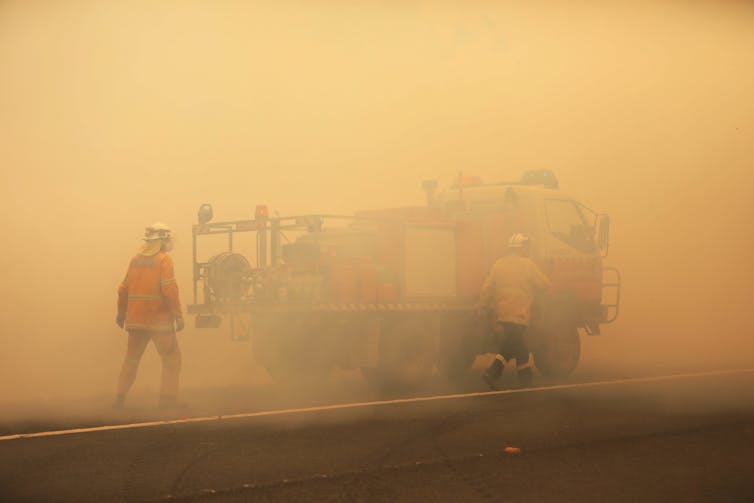
EMTV suspends senior journalist Scott Waide over NZ Maserati news story

]]>

The Maserati item from New Zealand’s Newshub screened on EMTV News on 17 November 2018.

By Vincent Moses in Port Moresby

The Papua New Guinean state-owned media company EMTV has been forced to act against its wishes and media ethics to suspend one of the country’s best reporters, their award-winning Lae bureau chief and senior journalist Scott Waide.

In an email sent to all staff of EMTV, the HR manager informed staff that EMTV management were forced by the government to take the action of suspending Waide.

READ MORE: The inside story of China’s ‘tantrum diplomacy’ at APEC

The email said: “EMTV is addressing with the utmost importance and priority, the situation with regards to our senior news personnel, Scott Waide, over a story broadcast during last Saturday’s news bulletin, 17th November 2018.

The EMTV memo shared widely on Pacific region social media.

“The decisions are not favourable to EMTV, and goes against our responsibility to report on all views, with freedom and fairness. However, we must remember we are state owned and that some sensitive reporting will be questioned, queried and even actioned upon.

-Partners-

“EMTV management would like it known to all staff that Mr Waide has not been NOT TERMINATED as speculated, and anyone who takes it upon themselves to act on such assumptions will be dealt with accordingly….” 

The poor management is not to be blamed for this action. After all EMTV is now state-owned and must adhere to instructions from their owners who happen to be Prime Minister Peter O’Neill-led government.

Scott Waide … suspended EMTV deputy news editor responsible for APEC news. Image: FB

The challenge is now on Communications Minister Sam Basil who was a very strong critic of media control when he was Deputy Opposition Leader to see if he will maintain his stand as a strong advocate of free media and do something to save this senior news reporter.

This action by the dictatorship O’Neill PNC government is not new. The same thing happened in 2013 when very senior staff and reporters of NBC Television were sacked, suspended and demoted for reporting about O’Neill’s nationalisation of OK Tedi copper and gold mine.

A freeze frame from the Maserati item on EMTV News on November 17. Image: PMC screenshot

Peter O’Neill is acting like another Chinese dictator in Papua New Guinea by exerting control over both state-owned and private media to not report truths and facts that expose his government and their corrupt acts to PNG and the world.

This is a huge attack on media freedom in PNG and must be condemned by everyone both in government, opposition, media council, Transparency International, media organisations both local and international and everyone in PNG.

Pacific reaction
Reaction around the Pacific on social media to this action by EMTV has been widely condemned. Reaction included:

Dr Shailendra Singh, journalism coordinator of the University of the South Pacific, said: “That Scott Waide was suspended for carrying out his journalistic duty is despicable and deplorable, but not unexpected or unusual in PNG, where tensions between media and government are increasing in proportion to the rise in alleged corruption, with one story after another to report in quick succession, and government lashing out to prevent exposure and to warn and intimidate journalists.”

The Pacific Media Centre director Professor David Robie described the action as “shameful and a blow to media independence and freedom of information in Papua New Guinea”.

He said it was understood the item objected to by the PNG government was a NZ Newshub item about the Maseratis controversy rebroadcast by EMTV News on November 17.

Dr Robie said it was clear to anybody monitoring PNG affairs and issues that Scott Waide was one of the country’s outstanding journalists with a great deal of courage and integrity, and an example to all reporters in the Pacific.

Dr Robie is also convenor of the PMC’s Pacific Media Watch freedom project.

Print Friendly, PDF & Email

Article by AsiaPacificReport.nz
Coalition pares back losses in late counting, as predicted chaos eventuates in upper house

]]>

Source: The Conversation (Au and NZ) – By Adrian Beaumont, Honorary Associate, School of Mathematics and Statistics, University of Melbourne

On election night, the ABC had Labor winning 58 of the 88 seats, to 20 for the Coalition. After late counting of pre-poll and postal votes, the ABC now shows Labor has won 52 of the 88 lower house seats, the Coalition 24, two Independents and ten seats are undecided, with 71% of enrolled voters counted.


Read more: Labor has landslide win in Victoria


Statewide primary votes are currently 42.9% Labor (up 4.8% since the 2014 election), 35.8% Coalition (down 6.3%) and 9.8% Greens (down 1.6%). As much of the Coalition-favouring pre-polls and postals have been counted, I expect the Greens to gain in late counting as left-leaning polling-day absent votes are counted.

In two party Labor vs Coalition terms, The Poll Bludger has Labor winning by 56.0-44.0 in seats that currently have such a count – that is, excluding Labor vs Greens counts in inner city seats, and Coalition vs independents in the regions. In seats with a two party count, the swing to Labor is 5.3%, which would be a 57.3-42.7 thrashing if projected to the whole state.

The Liberals have lost eastern suburbs heartland seats such as Mount Waverley, Burwood, Ringwood and Box Hill to Labor, but they have retained Caulfield and likely Sandringham, which looked likely to be losses earlier in the night. In Hawthorn, the Liberals lead by 53 votes, with many absent votes to come.

While the ABC currently lists Melbourne as in doubt, Greens-favouring absent votes will easily win it for the Greens. Labor leads the Greens by 72 votes in Brunswick, and will probably lose on absent votes. Labor has clearly retained Richmond against the Greens, and will regain Northcote, which they lost at a byelection. In Prahran, whichever of Labor or Greens finishes second will defeat the Liberals on the other’s preferences.

An independent has gained Mildura from the Nationals, and an independent has retained Shepparton. According to analyst Kevin Bonham, independents are some chance in Geelong, Benambra, South-West Coast, Morwell, Melton and Pascoe Vale; in some of these seats, independents are currently third, but could move ahead of a major party, then receive that major party’s preferences. These seats do not yet have a two candidate count against the independent; the ABC is guessing the two candidate result.

Micro parties could win ten upper house seats

The ABC’s upper house calculator currently has Labor winning 19 of the 40 upper house seats, the Coalition ten, the Greens one, and ten from other parties. These others include four Derryn Hinch Justice, two Transport Matters, one Aussie Battler, one Animal Justice, one Liberal Democrat and one Sustainable Australia.


Read more: Poll wrap: Labor’s worst polls since Turnbull; chaos likely in Victorian upper house


Overall upper house vote shares were 40.8% Labor, 28.2% Coalition, 9.2% Greens, 3.4% Hinch Justice and 0.6% Transport Matters. It is ludicrous that a party with 0.6% of the vote could win one more seat than a party with 9.2%, or that a party with 3.4% could win three more seats than the Greens.

The upper house count is only at 42.5%, while the lower house is at 71.1%. The pre-poll and postal votes that have assisted the Coalition in the lower house have not yet been tallied for the upper house. When they are counted, Labor will drop back and the Coalition will gain.

The below-the-line vote rate increased to about 10% at this election, from 6% in 2014. As the ABC calculator assumes that all upper house house votes are above-the-line ticket votes, errors can occur if the calculator margin at a critical point is close. Bonham thinks the Coalition will do a bit better at the expense of micro parties, but he still thinks there will be at least six micro party members.

If Labor wins 19 upper house seats, they will be in a strong position in the upper house. Since the election was a Labor landslide, they performed well in the upper house. Had Labor done worse, there would have been some incentive for them to attempt to reform group voting tickets, but this is now unlikely to happen.

ref. Coalition pares back losses in late counting, as predicted chaos eventuates in upper house – http://theconversation.com/coalition-pares-back-losses-in-late-counting-as-predicted-chaos-eventuates-in-upper-house-107516

Victorian Labor’s thumping win reveals how out of step with voters Liberals have become

]]>

Source: The Conversation (Au and NZ) – By Paul Strangio, Associate Professor of Politics, Monash University

The commanding return to office of the Andrews government emphatically reaffirms that Labor is the natural ruling party in Victoria. By the time the state’s next election is due in November 2022, Labor will have presided over Spring Street for three-quarters of the previous four decades.

That ascendancy is replicated in federal election results: the ALP has won the two-party preferred vote in Victoria on 12 of the past 14 occasions. The flipside is that Victoria has become foreign ground for the Liberal Party. It seems almost unimaginable that this was once the state dubbed the “jewel in the Liberal crown”.

If Labor’s re-election consolidates an established trend in Victorian politics, the scale of the victory (it has invited comparisons with the ALP’s Steve “Bracks-slide” of 2002) and the terms on which it has been won are remarkable.


Read more: Victoria election: the scandals, sloganeering and key issues to watch


From the moment he won office in 2014, Daniel Andrews styled himself as an assertive and activist premier. This has been exemplified by an ambitious infrastructure agenda, but also a willingness to barge his way through controversies unapologetically.

Andrews’ buttoned-up Clark Kent like exterior has also belied an adventurism on social reform highlighted by Victoria becoming the first Australian state to legalise voluntary assisted dying and other initiatives such as embarking on negotiating a treaty with the local Indigenous community.

Lacking the every-man touch of Bracks, Andrews has never seemed especially fussed about courting popularity and has mostly eschewed media contrivances to leaven his image. Neither has he sought to disguise that he is unambiguously a creature of the Labor Party, nor camouflaged his government’s closeness to the trade union movement.

Only last month, Andrews boldly marched at the head of an ACTU-organised rally in support of strengthened industrial rights and improved conditions for workers. On Saturday night, he made a conspicuous point of thanking the labour movement in his victory speech. All of this has inflamed his detractors (not least News Limited’s Herald Sun), yet Andrews has remained defiantly unmoved.

Arguably, there is a risk in this audacity that might grow greater with Andrews emboldened by winning a second term. And there remains a danger that, despite Labor’s expansive infrastructure program, his government will be overwhelmed by Melbourne’s exponential growth and the enormous strains this is placing on services.

For now, though, one cannot deny Andrews’ achievement. Pledged to serve another four years, he is on track to become the state’s second longest-serving Labor premier and he has bequeathed his party a victory so sweeping it should guarantee two further terms.

For the Liberal Party, this is an abject result. It rubs salt into the wounds of the Coalition’s first-term defeat in 2014. Twice in Labor’s era of dominance of the past four decades, the Liberals have squandered office.

A combination of policy inertia and ill-discipline sowed the seeds of the premature fall of the Ted Baillieu-Denis Napthine government in 2014, while in 1999 Jeff Kennett’s tenure was cut short by hubris and insensitivity to rural and regional Victoria that paved the way for an 11-year Labor reign under Bracks and John Brumby.

For the second state election in succession, the Victorian Liberals have also been handicapped by the actions of their federal counterparts. When Victorians voted in 2014, the politically poisonous first budget of Tony Abbott’s government was still exercising their minds, while on this occasion there was the backdrop of the upheaval surrounding Malcolm Turnbull’s deposal as prime minister.

But this result shows the Liberal’s difficulties in Victoria run far deeper to matters of identity and philosophy (and organisation). Though Matthew Guy gestured towards broadening his election pitch through decentralisation policies, everything in the Liberal campaign was ultimately dwarfed by a muscular conservative law and order agenda.

It was both narrow and discordant in a community of progressive sensibility and one that is defined by complexity and diversity. It is a community where, for example, there are electorates in which greater than 50% of people were born in non-English speaking countries, electorates where more than 30% of the population are of Muslim faith, and electorates where nearly 50% have no religion. The contemporary Liberal Party appears bereft of a vocabulary to speak to this pluralism.

Liberal leader Matthew Guy concedes defeat on Saturday night. AAP/David Crosling

This problem of being out of step with the nation’s second largest and fastest growing state besets the Liberal Party federally as well. Yet Scott Morrison and many of his colleagues have shown scant evidence of recognising let alone addressing this dilemma.

Instead, they seem intent on appealing to a Queensland-focused “base”. The cost of this hewing to the right and what it potentially augurs for next year’s federal election in Victoria is now plain to see.

In a more immediate sense, there is a serious chance that the Morrison government will be further destabilised by the recriminations flowing from this result. It is likely to deepen the divide in Liberal ranks between those who appear hell bent on remaking the party in their own conservative self-image regardless of electoral consequences and those who understand that this is folly.

Lastly, what of the Greens? Since 2002, the Greens have stalked Labor in its once traditional heartland in Melbourne’s inner city. Buoyed by a heady triumph in the Northcote by-election 12 months ago, the Greens looked forward to this contest convinced they were on an irresistible forward march.


Read more: The Greens set to be tested on a number of fronts in the Victorian election


That optimism was dented by defeat in the federal byelection in Batman in March. Now, after an unhappy campaign during which the party became mired in controversy over its culture towards women and struggled for traction against a progressive-credentialed government, the Greens have lost ground. Some experienced observers are speculating that we have witnessed “peak Green”.

That is probably premature. Yet, for Labor, the sullying of their tormentor’s image and disruption of their momentum is icing on its glorious election victory cake.

ref. Victorian Labor’s thumping win reveals how out of step with voters Liberals have become – http://theconversation.com/victorian-labors-thumping-win-reveals-how-out-of-step-with-voters-liberals-have-become-105574

Labor has landslide win in Victoria

]]>

Source: The Conversation (Au and NZ) – By Adrian Beaumont, Honorary Associate, School of Mathematics and Statistics, University of Melbourne

With 42% of enrolled voters counted in the Victorian election, the ALP has had an emphatic win. So far, the ABC has called 58 of the 88 seats for Labor, just 20 for the Coalition, one Green, two Independents and seven seats are undecided. Projected primary votes are currently 43.7% Labor (up 5.7% since the 2014 election), 34.9% Coalition (down 7.0%) and 10.5% Greens (down 1.0%). These projections are of what the final vote will be.

There was a large amount of pre-poll voting at this election, and perhaps the pre-poll swing to Labor is lower than the election-day swing. Pre-poll votes will be counted later in the night. However, Labor has clearly won a thumping victory.

I believe the Liberals law and order campaign was too right-wing for Victoria. The Liberals suffered large swings in their eastern suburb heartland seats such as Hawthorn, Sandringham and Box Hill. In these seats, voters with high levels of educational attainment would have been angered by the Liberals’ campaign, which could have been perceived as racist.

In the final pre-election Newspoll, Labor led the Liberals by 43-42 on handling the economy, a decline from a 45-37 lead in late October. However, the economy is traditionally a Liberal strength. The Victorian economy is good, and this undoubtedly helped Labor in its rout.

Labor had the advantage of being a first-term government with an unpopular federal Coalition government. The ousting of Malcolm Turnbull would not have gone down well among voters with high levels of educational attainment, and contributed to the swings against the Liberals.

The final four Victorian state polls had Labor’s two party vote between 53% and 54%, which would represent merely a 1 to 2% swing to Labor from the 2014 election. While we will not know the final two party result for at least two weeks, Labor has clearly performed far better than expected. Polls sometimes miss in the direction that surprises commentators.

For example, Trump’s US victory in 2016, the UK’s Brexit referendum in 2016, UK Labour’s forcing the Conservatives into a hung Parliament in 2017, and Emmanuel Macron’s blowout victory over Marine Le Pen in 2017 were all occasions where the polls missed in a way contrary to how conventional wisdom thought.

I will have more details tomorrow on the Victorian election including what happened in the upper house.

ref. Labor has landslide win in Victoria – http://theconversation.com/labor-has-landslide-win-in-victoria-107514

Mary-Louise O’Callaghan: Time we heard the Pacific’s take on the Pacific

]]>
Covering the Pacific … “we might even learn a thing or two about the nations and the region within which we live .” Image: Shane McLeod/The Interpreter

ANALYSIS: By Mary-Louise O’Callaghan

It is both apt and overdue that veteran ABC correspondent Sean Dorney was last night awarded the Outstanding Contribution to Journalism at the 2018 Walkley ceremonies.

Judged by the trustees of the Walkley Foundation, this award not only recognises Dorney’s extraordinary body of work built over four decades chronicling life and politics in the Pacific, especially Papua New Guinea, but pays homage to one of the last of a near extinct breed of old-time expat Pacific correspondents who lived and breathed their rounds as long-term residents of the communities upon which they were reporting.

Australian newsrooms, instead of panting and pontificating about the growing influence of China, might be better served by tapping into Pacific conversations.

READ MORE: Podcast by Bond academic, student wins Walkley Award for journalism excellence

Mary-Louise O’Callaghan … “not uncommon in the two decades either side of the turn of the century for Pacific correspondents to report on unfolding events such as the Bougainville secession crisis or expose corrupt or inept governance.” Image: The Interpreter

Sprung from the bad-old and arrogant days of colonial dispatches referencing “restless natives” and “strange customs” when first nation’s peoples served merely as the backdrop for the white man’s conquering and efforts to “civilise”, it can be argued that for a time these rusted-on corros (who not infrequently through their marriages, gained the privilege of the unique insight of living life within a Pacific family), served as useful intermediary interlocutors in the transitional societies of post-independent Pacific states.

As nations such as PNG, Fiji, Solomon Islands, and Vanuatu fought to different degrees to shake off their colonial framing and fashion a culture of accountability of their own, correspondents like myself and Dorney strove to facilitate and amplify indigenous views of events in these nations. This was both in our reporting for Australian audiences, or, in Dorney’s case, for the entire region. His reports were broadcast back into the countries he covered by Radio Australia, the ABC’s once wonderful but now defunct shortwave radio service.

-Partners-

Reporting crises
With the additional resources afforded our first-world news bureaus, it was not uncommon in the two decades either side of the turn of the century for Pacific correspondents to report on unfolding events such as the Bougainville secession crisis or expose corrupt or inept governance that indigenous journalists literally couldn’t afford to do.

As late as 2003, my “scoop” as The Australian’s South Pacific correspondent on the Howard government’s decision to dispatch a 2000-strong Australian-led Pacific intervention force to restore the rule of law in Solomon Islands after several years of unrest, was lifted by the national newspaper, The Solomon Star to run as their frontpage splash.

The only difference being that, unlike The Solomon Star’s newsroom, I worked for a media outlet that could bear the exorbitant cost of international phone calls; I had the means to contact Solomon Island government officials to confirm the story after their meetings in Canberra.

Much has been written in the past decade or so warning about the dangers of the disappearing resident Pacific correspondent, as first Australian Associated Press, then Fairfax closed their bureaus in Suva, Port Moresby, and Honiara, and in many cases wound down the network of stringers who reported for them elsewhere in the region.

The ABC is now the only Australian media outlet still maintaining a permanent presence in the South Pacific region with its bureau in Port Moresby.

But as we are all learning, with disruption comes new opportunities and with digital disruption, in particular, has come new ways of gathering, reporting, and disseminating news.

Hear from the people
Here’s the rub: should we really be lamenting the passing of the old-fashioned foreign correspondent, particularly in our own region?

Or is this a chance to embrace the opportunity to hear from the people of the Pacific in their own voices with analysis from their perspectives and news priorities that reflect Pacific agendas?

There is today a prolific cohort of indigenous journos, bloggers, and social commentators already daily reporting, dissecting, and disseminating their nations and region’s affairs with the insight only an indigenous member of an indigenous society can have.

Australian and New Zealand newsrooms, instead of panting and pontificating about the growing influence of China, might be better served tapping into these conversations.

If we joined them, we might even learn a thing or two about the nations and the region within which we live.

Mary-Louise O’Callaghan lived and reported on the Pacific as a foreign correspondent with Australian metropolitan daily newspapers for more than two decades. In 1997 she won the Gold Walkley for Excellence in Journalism for her investigative reporting exposing the Papua New Guinean government’s ill-conceived decision to hire foreign mercenaries to end a war for secession on the island of Bougainville. Her book Enemies Within, Australia, PNG and the Sandline Mercenary Affair, was published the following year. She is now working for World Vision Australia where she leads the Public Affairs team. This article is republished from the Lowy Institute’s Interpreter with permission.

Print Friendly, PDF & Email

Article by AsiaPacificReport.nz
Scott Waide: PNGFM news boss calls for investigations, penalties for troops who assaulted journalists

]]>
Parliament Haus in Waigani … scene of the reported assault against PNGFM journalists. Image Scott Waide’s blog

Scott Waide’s blog highlights an open letter by Genesis Ketan, director of news, PNGFM:

As director of News for PNGFM, I am very disappointed at the manner at which two of my reporters – one male and one female – were assaulted by disciplinary officers while covering the storming of Parliament on Tuesday,  20 November 2018.

They were simply there to do their jobs and cover the proceedings of what was happening at National Parliament when they were accosted by a group of inflamed disciplinary officers, both police and correctional service officers.

Upon seeing the journalists – one officer called out “Em ol Reporter ya, ol laik kisim wanem kain story, paitim ol”. (“They are reporters, what kind of story are they here for, beat them up.”)

READ MORE: RSF condemns exclusion of PNG journalists

Police Commissioner Gary Baki … received PNGFM’s assault complaint. Image: Loop PNG

The female journalist was manhandled by a group of police officers who pulled at her shirt attempting to rip it:

“One of the police officers pulled out my camera from my bag and smashed it right in front of me. While I was trying to take in what was happening, another officer pulled my bag causing the leather handle of my bag to break. He then threw my bag on the ground, kicked it towards the other officers, they in turn kicked the bag back to him, emptying out all my belongings in my bag. Another officer picked up my phone and smashed it while others were shouting and yelling abusive languages.”

-Partners-

She was pushed back and forth during the commotion with just one elderly officer attempting to assist her and help her out to safety.

At the same time, the male reporter was separated from his colleague, then told to put his camera away and not film or take shots.

“During the struggle, I was attacked by a Correctional Service officer at first, which then led to police officers surrounding me and attacking me. During the incident, I was trying to see what was happening to my colleague, but kept getting punched until one Police Mobile Squad officer pulled me away to safety. I had my vest broken, my note book gone and the company camera destroyed by the officers.”

PNGFM has written a letter of complaint to Correctional Service Commissioner Stephen Pokanis and Police Commissioner Gary Baki calling for those involved to be penalized.

Such an attack is an attack on our media freedom when journalists should be protected and not be subjected to such attacks for merely doing their jobs.

Meanwhile, at separate media conferences on Thursday, November 22, both Commissioner Pokanis and Commissioner Baki were informed of the assault against our journalists and have given assurance they will investigate this matter thoroughly.

– Genesis Ketan, director of news, PNGFM

Scott Waide’s blog columns are frequently published by Asia Pacific Report with permission. He is also EMTV deputy news editor based in Lae.

Print Friendly, PDF & Email

Article by AsiaPacificReport.nz
The latest citizenship-stripping plan risks statelessness, indefinite detention and constitutional challenge

]]>

Source: The Conversation (Au and NZ) – By Sangeetha Pillai, Senior Research Associate, Andrew & Renata Kaldor Centre for International Refugee Law, UNSW Law School, UNSW

This week, Prime Minister Scott Morrison and Home Affairs Minister Peter Dutton announced the federal government’s intention to introduce changes to Australia’s citizenship-stripping laws. The proposed changes would likely make Australia’s regime for citizenship-stripping the most expansive in the world. I’ll outline how the proposal would change the current law, and analyse its key elements.

What are Australia’s current citizenship-stripping laws?

In 2015, Australia introduced one of the most expansive regimes anywhere for citizenship deprivation on national security grounds. Under the current law, people can lose Australian citizenship against their will in two key ways:

  • Conduct-based citizenship deprivation: In certain circumstances, a citizen outside Australia can lose citizenship where the person has engaged in activities defined by reference to national security offences. A person does not need to be convicted of an offence to lose citizenship in this manner.

  • Conviction-based citizenship deprivation: The Minister for Home Affairs also has the power to revoke a person’s Australian citizenship where the person has been convicted of particular national security offences, and sentenced to at least six years’ imprisonment. This is generally the only way in which people within Australia can be stripped of Australian citizenship against their will.


Read more: Proposals to strip citizenship take Australia a step further than most


Currently, it is possible for the government to strip a person of Australian citizenship only if the person is a dual citizen. This means that, at present, Australian law does not allow a person to be deprived of Australian citizenship if this would render them stateless.

Dutton has said that the existing citizenship-stripping laws have been used to deprive nine people of their Australian citizenship. Very little information on the circumstances of these deprivations is available. However, it is clear that at least six of these instances involved citizens outside Australia who lost their citizenship on the basis of conduct committed overseas. There has been no reported instance of a person within Australia being deprived of Australian citizenship, or of the conviction-based ground for citizenship deprivation having been used.

What changes would the proposed laws introduce?

The government’s new proposal would make it easier for people to be stripped of their Australian citizenship in two ways.

Changes to the dual citizenship requirement

If the proposed changes become law, it will no longer be necessary for a person to definitively hold dual citizenship before losing Australian citizenship. A joint media release from the offices of Morrison and Dutton states:

The Government will…change the threshold for determining dual citizenship. This change aims to improve the minister’s scope to determine a person’s foreign citizenship status.

A bill has yet to go before parliament, and it is not clear from this statement exactly what the government envisages. One possibility is the legislation will give the minister the power to decide whether or not a person is a foreign citizen. This is likely to raise constitutional difficulties. As the High Court has made clear on many occasions, whether a person is a foreign citizen is a question determined by the law of the foreign country concerned.

Another possibility is that the legislation will allow a person to be stripped of Australian citizenship where the minister thinks it is reasonably likely, but not certain, the person has dual citizenship. As the recent referrals of multiple federal parliamentarians to the High Court over potential foreign citizenship illustrate, it can often be difficult to conclusively determine when a person has foreign citizenship. However, many people – including those born in Australia to Australian parents – hold dual citizenship as a result of a familial connection to a foreign country.

A change of this nature could also raise constitutional problems. The High Court has not yet determined the extent of the Commonwealth’s power to deprive a person of Australian citizenship. There is a plausible argument that certain citizens, especially those who hold only Australian citizenship or who have no substantive connection to a foreign country, are part of the Australian constitutional community, and are protected against citizenship deprivation.


Read more: Government’s own ‘freedom commissioner’ Tim Wilson questions citizenship plan


On a practical level, enabling the minister to revoke a person’s Australian citizenship without it being clear the person has citizenship in a foreign country creates a very real risk of rendering the person stateless. This would place Australia in violation of its obligations under Article 8 of the 1961 Convention on the Reduction of Statelessness, which prevents signatory countries from depriving people of their nationality if it would render them stateless.

Australia has signed up to an international agreement not to render people stateless. Shutterstock

Where a person inside Australia is deprived of Australian citizenship they become vulnerable to removal from Australia, and immigration detention until removal is possible. Where it is not clear that the person has citizenship in a foreign country, there is a likelihood of such detention being lengthy, or even indefinite.

Changes to the minimum sentence for conviction-based deprivation

The government’s media release also says:

The proposed changes would enable the minister to cease the citizenship of anyone who is convicted of a terrorism offence in Australia, irrespective of the sentence they receive. This removes the current requirement that a terrorist offender must be sentenced to at least six years’ imprisonment.

Currently, the minister has power to revoke a person’s citizenship only on conviction-based grounds where a person is convicted of a select list of national security offences. It is not clear whether the government intends to retain or expand this select list of offences.

An anti-terrorism exercise at Cologne Bonn airport in Germany on November 20. Marius Becker/dpa

Either way, the proposal is concerning. In 2015, before the current citizenship revocation laws were introduced, the Abbott government attempted to attach citizenship revocation to a much wider range of national security offences, with no requirement for a minimum sentence. A number of experts advised that this ran a risk of falling foul of the Constitution.

The more limited current legislation was ultimately arrived at following an inquiry by the Parliamentary Joint Committee on Intelligence and Security. It found that restricting the list of offences and requiring a minimum six year sentence was necessary to “appropriately target the most serious conduct that is closely linked to a terrorist threat”. Since 2015, the national threat level has not changed.

In this context, the government should clearly explain why removing the six year sentence threshold for conviction-based citizenship deprivation is necessary and proportionate. Given that the conviction-based citizenship-deprivation powers have not been used since their introduction, the need for a clear justification is particularly strong. The government’s media release states:

We now need to focus attention on strengthening the citizenship loss provisions which commenced in 2015 as they relate to terrorists within Australia, in order to protect our community.

As the Law Council has stated, this justification is not nearly strong enough.

ref. The latest citizenship-stripping plan risks statelessness, indefinite detention and constitutional challenge – http://theconversation.com/the-latest-citizenship-stripping-plan-risks-statelessness-indefinite-detention-and-constitutional-challenge-107439

Explainer: how a dust storm, and hazardous air quality, can harm your health

]]>

Source: The Conversation (Au and NZ) – By Mark Patrick Taylor, Professor of Environmental Science, Macquarie University

A major dust storm swept through Sydney and regional New South Wales this week. Red skies over Broken Hill on Wednesday night and Sydney on Thursday resembled those seen during intense bushfire activity and the massive 2009 dust storm.

The NSW government updated its air quality index to “hazardous”. People were advised to stay indoors unless it is essential to go outside, minimise strenuous physical activity and seek emergency medical assistance if they experience breathing difficulties, chest pains, or if other serious health concerns arise.

The hazardous air quality warning arose because fine dust levels were high relative to Australian air quality standards. Air quality levels of PM10 – particles at or less than 10 microns (µg) – were more than twice the Australian standard, of 50 µg/m³ measured over a 24-hour period, on Friday morning. They remained high throughout the day.

Perhaps of greater concern are the smaller PM2.5 dust particles, which were above the Australian standard of 25 µg/m³ at St Marys in Sydney’s west on Friday morning. Fine PM2.5 dust particles can penetrate deep into the lungs and cause respiratory difficulties. Short-term exposures aggravate asthma, increasing the number of emergency department visits, as well as causing wheezing and breathing difficulties.

Even for those not affected by asthma, exposure can cause coughing, a sore throat and a runny nose. Elevated dust exposure can also aggravate heart conditions. For example, increased short-term exposure to both PM10 and PM2.5 has been linked to increased death and hospitalisation rates due to heart disease, arrhythmias (palpitations) and stroke.

The city of Newcastle is experiencing much worse conditions. On Friday morning PM10 levels were four times the Australian standard of 50 µg/m³ due to additional smoke particles from local bushfires. Throughout the day PM2.5 levels in Newcastle have remained just below the maximum acceptable upper value of 25 µg/m³.

Fine dust particles are usually too small to see individually but high concentrations make them visible as a brown haze. Even as the dust begins to clear, the unseen fine particles outside or even inside your house can still present a health risk.


Read more: We can’t afford to ignore indoor air quality – our lives depend on it


It’s advisable to use any prescribed relieving medications and seek medical advice if symptoms do not improve. For those who own an air conditioner, it may be appropriate to use it as long as the fresh air intake is closed and the filter is clean, preventing particles from being drawn into the home.

It is also important to keep an eye on air quality, which can be done in real-time via the NSW government’s air quality monitoring network.

The 2009 dust storm also turned Sydney skies red. DAN PELED/AAP Image

The previous major dust storm in 2009 was made of predominantly natural elements – aluminium, silicon and iron. These originate from desert soils and did not contain significant concentrations of toxic elements. The current dust storm is likely similar in composition.

While there is some evidence the source and composition of dust has health implications, the most critical factor is the size of the particles. Evidence shows there is no safe level of fine PM2.5 dust.

Dust storms like this and the one in 2009 are unlikely to present a long-term health risk. However, they are concerning in the short term, especially for the elderly, people with pre-existing respiratory conditions and children, who breathe more air per kilogram of body mass than adults.

A health impact assessment of the 2009 dust storm showed marked increases in emergency admissions for asthma and respiratory conditions but no significant increase in cardiovascular (heart and vessel) hospital admissions. The age groups most affected were those known to be most vulnerable – people older than 65 and those aged five and younger.


Read more: Toxic chemicals and pollutants affect kids’ brain development


A similar situation is being experienced in California, where wildfires are causing high concentrations of dust and smoke in the air and significant concerns about human health.

Australia generally enjoys good air quality, which is not the case for many lower- to middle-income countries. According to the World Health Organisation (WHO), more than 600,000 children died in 2016 due to air pollution.

Air quality is a global public health issue. Around 91% of the world’s population live in areas where the WHO’s fine particle (PM2.5) guidelines are not met.


For those concerned about dust, Macquarie University’s DustSafe program will provide information on the dust in your home free of charge.

ref. Explainer: how a dust storm, and hazardous air quality, can harm your health – http://theconversation.com/explainer-how-a-dust-storm-and-hazardous-air-quality-can-harm-your-health-107499

Building our own warships is Australia’s path to the next industrial revolution

]]>

Source: The Conversation (Au and NZ) – By Giselle Rampersad, Associate Professor in Innovation, Flinders University

Naval defence procurement is very big business. Nine Hunter-class frigates will cost Australian taxpayers A$35 billion; the 12 submarines to replace the existing Collins-class subs at least A$50 billion.

Although both the frigates and submarines will be built by foreign companies – the frigates by Britain’s BAE, the subs by France’s Naval Group – part of the deal is that they build locally.

The federal government isn’t shy about spruiking the local economic benefits. “We make no apologies for deciding to invest in Australian-built ships, creating Australian jobs and using Australian steel,” said Christopher Pyne, the then defence industry minster and now the defence minister, in May.

There are critics. The Australian National Audit Office, for instance, has flagged the risks of cost blowouts in a local build. These risks will need to be proactively managed.

But the local shipbuilding program does present a tremendous economic opportunity. It provides a platform to invigorate advanced manufacturing and ride the wave of the next industrial revolution.

We need to focus on how to maximise the benefits by leveraging the program to create competitive new industries and jobs.

Mapping the manufacturing ecosystem

Transitioning the Australian economy towards advanced manufacturing is not easy. It is tempting to simply import cheaper products. A good example can found in the renewable energy sector. With a few exceptions, the majority of solar panels and wind farm components are imported. This is a missed opportunity.


Read more: On windmills and warships


We can avoid making the same mistake in shipbuilding. Our research shows that building ships locally has huge flow-on effects, and can help underpin other advanced manufacturing.

To facilitate this process, we have developed a map of the advanced manufacturing ecosystem in Australia. The aim is to help boost the visibility of Australian organisations capable of supplying components or services to these projects.

An emerging defence innovation ecosystem in Australia, with business, university, government and other key stakeholders.

This will assist in initiating partnerships. Several Australian businesses and universities have already begun to secure relationships with the international shipbuilders. More are in the pipeline.

Industry opportunities

Building ships presents many opportunities for Australian organisations.

In Australia, X-ray and imaging products are examples of complex products we have been able to competitively export. This technology is obviously relevant to medical imaging devices. It can also be applied to surveillance systems for the defence sector.

Conversely local manufacturers that develop capabilities in defence shipbuilding can leverage their expertise to supply to non-defence-related supply chains and for export.

Relevant technologies include autonomous vehicles and systems, energy management, cyber-security, robust and maintainable materials, acoustics and digital technologies. These technologies can have flow-on effects for advanced manufacturing in transport, renewables, health, space and information technology.

In these sectors, making complex products is vital for competitiveness.

A Hobart-class air warfare destroyer under construction in Adelaide in 2013. AAP Image/Lukas Coch

Anchoring industry 4.0

It is wrong to think advanced manufacturing is not viable in Australia. Britain and Germany are two economies with high labour costs, yet both have been able to sustain manufacturing sectors.

The success of advanced manufacturers in Europe is based on an approach called industry 4.0. The “4” refers to the advent of the fourth industrial revolution since the 18th century – integrating information and communication technology in industrial production.

During a visit to European manufacturing sites we saw how this involved the use of robots, cobots (or collaborative robots), digital twins and driverless vehicles.


Read more: Does the next industrial revolution spell the end of manufacturing jobs?


Automation means that shipbuilding will not provide the sorts of jobs it did in the past. In Germany’s automotive industry, for example, human labour that cost 40 euros an hour has been replaced by robots that cost 5-8 euros an hour to operate – even cheaper than a Chinese worker. But other other jobs have been created, particularly in computing and engineering. There are now 100,000 more jobs in Germany’s auto industry than in 2010.

Another feature of industry 4.0 is digitisation of the supply chain. Information about parts can be captured and used in new ways. When a component needs be serviced or replaced can now be predicted with high accuracy. This is important in any large ship, built to be operational for decades and using vast numbers of components from thousands of suppliers. It’s even more important in a naval ships, where a breakdown could be catastrophic.

Digital transformation will make our factories more competitive. Additionally, economic gains will come from defence procurement that encourages the local development of complex and competitive products. If done well, defence investment will make as powerful a contribution to the nation’s economic prosperity as its military security.

ref. Building our own warships is Australia’s path to the next industrial revolution – http://theconversation.com/building-our-own-warships-is-australias-path-to-the-next-industrial-revolution-105984

Innovation could just mean a better kind of co-operation

]]>

Source: The Conversation (Au and NZ) – By Professor Lars Coenen, City of Melbourne Chair in Resilient Cities, University of Melbourne

It seems Australia’s experiment at being a world leader at “innovation” is over, with the abrupt departure of its champion, Malcolm Turnbull.

The then prime minister made headlines with his 2015 Innovation Statement, which sought to move the Australian economy beyond dependence on natural resource extraction into an “ideas boom”.


Read more: No clear target in Australia’s 2030 national innovation report


But his replacement with Prime Minister Scott Morrison three months ago has seen innovation disappear off the government’s radar. Even the job of innovation minister was scrapped – to the consternation of the tech and start-up sectors.

Where does this leave us? Not poised to make the most of the 21st century, according to the Global Innovation Index, which last year ranked Australia a lowly 76th in terms of innovation efficiency.

But we cannot afford to turn our back on innovation. Our major sustainability problems – transitioning energy, future-proofing cities, reducing carbon emissions – need us to move past “business as usual”.

Rethinking innovation

As my research on innovative cities and regions in Europe and Australia shows, we urgently need to rethink what innovation is and how to go about it.

Too often it’s framed in purely economic or technological terms. But innovation should be much more than a buzzword or a techno-fix.

Our economy faces some intractable sustainability challenges, which must be prioritised. We’re struggling to stay within a safe climate envelope – despite (or even because of) technological advances. Around the world, social polarisation is deepening, even in cities that rank highly on livability and innovation indices.

We need a notion of innovation based on solving problems collectively, with solutions that are relevant to society – not just to economists.

What does this look like? We need to combine scientific and technological solutions with expertise from the social sciences and humanities, and to that mix we need to add real-world lessons from practice-based knowledge and experimentation.

Wind turbines located off the coast of Copenhagen, Denmark. Vadim Petrakov/Shutterstock

Consider the extraordinary success of wind power in Denmark, a small country which is a world leader on renewable energy. Denmark was an early mover in acting on the 1970s oil crisis and acknowledging – not ignoring – warnings of climate change.

The early development of wind turbines blended scientific expertise with farmers’ knowledge, with grassroots organisations involved too. New forms of partnerships were trialled between the private sector, government, universities and civil society organisations. The Danish government acted as an entrepreneurial state, which actively contributed to creating a market for wind energy.

Overall, the Danes took an approach of being resilient in a crisis and pursuing diversity of knowledge and cross-sector collaboration. It has paid off.

Innovation as collective problem-solving

So we need to have a broader understanding of what innovation really is: it’s collective problem-solving, not just something that’s done by heroic entrepreneurs. Even though there is no one-size-fits-all strategy, it will always be a messy process of trial and error, and it will always take time. Beware of politicians promising swift results.

The majority of innovation projects fail. Yet it is in the failures we find the interesting stories that we can learn from, as the brilliant Museum of Failure captures. We have to accept failure and share the lessons from it. This is a challenge for politicians, who tend to be risk-averse and preoccupied with cost.

Australia’s formal approach to innovation could use a shake-up, but since moving to Australia two years ago I’ve found plenty going on at ground level. I’ve been interested by the work of Farmers for Climate Action, who show how innovation in agriculture can be effective while largely flying under the radar.


Read more: Farmers’ climate denial begins to wane as reality bites


Then there’s the Resilient Melbourne Strategy, which was endorsed two years ago and aims to help the city prepare for change and whatever the future may hold. My (Lars) research into the strategy demonstrates the challenge of combining citizen engagement with large corporations, elite universities and governments (which can operate in silos) – but we need these cross-sector partnerships to make innovation work.

Meanwhile, back in my former home town of Malmö in Sweden, a former shipbuilding factory has been transformed into an experimental, sustainable “maker space” bringing together technology, crafts, art and culture.

Tailoring innovation to a specific place – whether it’s Melbourne or Malmö – reminds us why we need innovation in the first place. Getting innovation right is particularly important for places coping with the potential loss of their major industry, like Australia’s coal regions. We can’t afford to get this one wrong.


This is an edited extract of the MSSI Oration 2018, given by Lars Coenen at the Melbourne Sustainable Society Institute on November 20, 2018.

ref. Innovation could just mean a better kind of co-operation – http://theconversation.com/innovation-could-just-mean-a-better-kind-of-co-operation-106856

What skills does a cybersecurity professional need?

]]>

Source: The Conversation (Au and NZ) – By Joanne Hall, Lecturer in Mathematics and Cybersecurity, RMIT University

Cyber crime is a threat to every organisation that operates internet-connected devices. It’s highly profitable, highly disruptive, and hard to police due to the transnational nature of cyberspace.

Incidences of cyber crime might include fraud, identity theft or privacy breaches, which can have a high personal impact. Ransomware, which locks a system and demands payment, can have widespread economic or healthcare implications.

In the past year, 25% of the Australian adult population was impacted by cyber crime. If we want a robust and resilient society, we need cybersecurity professionals defending every organisation from cyber attack.

Cybersecurity professionals might work in software development, network testing, incident response, or policy development to ensure the security of an organisation.

In popular culture, these experts are often portrayed as lone hackers in hoodies. But in reality, cybersecurity professionals must regularly communicate with a variety of audiences. They must also display a high degree of personal integrity.


Read more: What teenagers need to know about cybersecurity


What cybersecurity professionals do

To ensure our cybersecurity classes are teaching skills relevant to industry, we consult with security professionals about the skills they are looking for.

As well as technical skills, they tell us they want those they hire to have communication skills, work well in teams, and show empathy and integrity.

The following scenarios show what cybersecurity professionals do on a daily basis. (Names and details have been changed.)

Ensuring systems are compliant

Anna is a software developer for an online retailer. She notices that one of their systems is processing credit card transactions in a way that does not comply with the Payment Card Industry Standards.

The technical project leader does not understand the legal jargon of the PCI standard. The business and legal staff do not understand the software processes behind credit card transactions.

It’s Anna’s job to bring together technical, legal, and business operations staff to discuss the resources required to fix this problem.

Identifying vulnerabilities

Basim is a security specialist working for a consulting company. His team has been contracted by a superannuation fund to conduct a simulated attack on the fund’s network.

Basim’s team grabs a round of coffees and sits around the whiteboard to develop a plan. That afternoon they find a way to change the password of every customer, using a commonly known vulnerability.

Basim immediately calls the super fund to notify them of the dangerous vulnerability. He then spends the rest of the afternoon working with the super fund’s IT team to begin to fix the issue.

The team continues with the simulated attack for three more days and finds a few (less urgent) vulnerabilities. The team collates the attack notes and writes a comprehensive report. The next day Basim hands over the report and delivers a presentation to key members of the super fund.


Read more: Some cybersecurity apps could be worse for privacy than nothing at all


Monitoring and responding to attacks

Chiyo works in the Security Operations Centre of a university. Her team has set up monitoring systems that alert them to any malicious software (malware) on the university network.

The monitoring system alerts her to some unusual activity with a staff email account, and automatically disables that account. She investigates and finds that a staff member has opened an email attachment containing malware.

Chiyo calls the staff member to notify them that their account has been disabled and discusses the process to regain access. A member of Chiyo’s team configures the email filter and firewall to block the source of malware.

Meanwhile Chiyo walks over to the staff member’s office and erases all data on the infected computer. She then works with the staff member to reinstate the email account, set up software, and retrieve documents from backup storage.

Preventing data breaches

Dimitry works in the cyber security team for a government department. His team is asked to analyse the policies, procedures, and structures of the department to look for risks to citizens’ privacy. He discusses the current laws and best practices with a colleague from the Office of the Australian Information Commissioner.

Dimitry’s team identifies five processes where there is a high risk for personal data to be leaked. They analyse each process, determine the likelihood of each type of problem, and examine the possible outcomes of each risk scenario. Dimitry develops a plan and budget to reduce each of the risks. He presents a report to the Minister and the Department Secretary.

The Department Secretary determines that there is a strong case to implement the plan for two of the risky procedures immediately. The other three risky procedures are deemed low-priority, and will be re-examined in six months’ time. Dimitry sets up a team to implement the remediation plan.


Read more: It’s time for governments to help their citizens deal with cybersecurity


Integrity and communications skills are essential

These scenarios highlight that, in addition to their technical skills, cybersecurity professionals need to work in teams and communicate with a variety of people.

In each case, the security professional had access to information that could easily be sold on the black market, or exploited for personal gain. Anna could have stolen credit card details. Basim’s team knew about some vulnerabilities three days before they informed the super fund. Chiyo had access to a staff member’s entire email history. Dimitry knows about three vulnerable processes that will not be changed for six months.

Personal integrity is crucial to maintain the security of these highly sensitive systems.

Communication with non-technical staff is essential to ensuring that best practice is implemented across an organisation. A strong ethical framework is an absolute necessity for security staff. The best technical staff will only build a safer organisation if their communication skills are strong and their personal integrity is unwavering.

ref. What skills does a cybersecurity professional need? – http://theconversation.com/what-skills-does-a-cybersecurity-professional-need-106521

VIDEO: Michelle Grattan on Labor’s energy plan, and the government’s anti-terrorism measures

]]>

Source: The Conversation (Au and NZ) – By Michelle Grattan, Professorial Fellow, University of Canberra

Michelle Grattan speaks with University of Canberra Vice-Chancellor Deep Saini about the week in Australian politics. They discuss Labor unveiling it’s energy plan, Minister for Women Kelly O’Dwyer’s announcement of the women’s economic statement, the government’s anti-terrorism measures, and what to expect in Parliament’s final sitting fortnight of the year.

ref. VIDEO: Michelle Grattan on Labor’s energy plan, and the government’s anti-terrorism measures – http://theconversation.com/video-michelle-grattan-on-labors-energy-plan-and-the-governments-anti-terrorism-measures-107503

- ADVERT -

MIL PODCASTS
Bookmark
| Follow | Subscribe Listen on Apple Podcasts

Foreign policy + Intel + Security

Subscribe | Follow | Bookmark
and join Buchanan & Manning LIVE Thursdays @ midday

MIL Public Webcast Service


- Advertisement -
- Advertisement -
- Advertisement -
- Advertisement -
- Advertisement -