Tooth decay has been described as a neglected epidemic in New Zealand however, our recent research suggests many people are unaware they are contributing to the problem by choosing a fluoride-free or “natural” toothpaste.
The 2016 Global Burden of Disease Study shows dental decay is the most prevalent health condition globally, affecting 2.4 billion people.
Failure to prevent oral diseases comes at significant personal and economic cost. In New Zealand, the cost of treatment of dental diseases is more than NZ$1.1 billion each year. Poor oral health is also linked to lost time at school and poorer school performance, absences from work and a lower quality of life.
Rates of tooth decay in childhood
Earlier New Zealand research shows only two in five children and two in three adults brush their teeth twice daily with fluoride toothpaste.
Our study was the first investigation of the use of non-fluoride toothpaste in a large, nationally representative sample of both adults and children. We wanted to find out which segments of the population are drawn to using non-fluoride toothpaste.
We analysed data from the most recent New Zealand Health Survey, which was the first to include a question about the use of “natural” toothpastes.
Our research found that 6-7% of all children and adults now use a “natural” or non-fluoride toothpaste. The study shows the highest use in moderately and more affluent population groups and middle-aged (35-44 years) people. We found the highest number of non-fluoride toothpaste users (both children and adults) were in the moderate to least deprived areas.
Our findings support prior concerns of dentists, particularly about tooth decay in children. A recent study shows 38% of five-year-olds had rotting teeth in 2017. Rates were even higher among Māori and Pacific children compared to other ethnicities. The New Zealand Dental Association has warned the increased popularity of non-fluoride toothpastes raises the risk.
A recent review of the world’s best available evidence shows toothpastes with fluoride are clearly more effective in preventing tooth decay than toothpastes without it. It means using non-fluoride toothpaste, often labelled as “natural”, raises the risk of future dental problems.
Misleading marketing and confusing messages
There is little evidence as to why people choose non-fluoride toothpastes. This is especially perplexing given the vast body of evidence in support of fluoride as a prevention of tooth decay.
One plausible explanation is that people think they are doing the “right thing” by choosing a “natural” option. Another more likely reason is that it is difficult to know whether a toothpaste contains fluoride. Current packaging doesn’t always highlight clearly whether a toothpaste contains fluoride or how much. Even if it does show the fluoride concentration, this is often hidden in small text.
In the future, better labelling on toothpaste tubes and packaging will help shoppers understand which toothpaste has fluoride. We also need to stop claims that “natural” toothpastes prevent tooth decay. The world’s best evidence clearly shows non-fluoride toothpastes do not prevent tooth decay.
Marketing is also often inconsistent with Ministry of Health recommendations. Evidence shows that for the toothpaste to work it needs fluoride in it. Adults should use a pea-sized amount and younger children a smear of fluoride toothpaste, without swallowing it.
In the future, it would also be helpful if supermarkets could help consumers make an informed choice by separating fluoride-containing from non-fluoride products. The bottom line is, if you want to avoid future trips to the dentist, your toothpaste should contain fluoride.
Drones have changed how we see the world. Even more profoundly, drones have transformed how we witness the world: how we decide the events that matter and create our shared “truth” of what happened.
Drone technology can blur viewpoints, pull focus onto surveillance and allow people to witness everything from public protests to places pushed out of reach by the pandemic.
Drones do more than ‘see’
It’s true that drones are vision machines: they loiter in the air with a persistent eye on the ground, beaming back imagery to their control point. For most drones, the images they send are optical. For military drones and those used in policing, border surveillance and even animal conservation, thermographic imaging is also common.
But drones are also data machines, accumulating information about altitude, speed, location and more.
My research shows this combination of aerial vision, remote control and data creation is changing how we witness the world. Drone imagery dissolves distinctions between war and domesticity, human and machine.
Drones are increasingly autonomous. Drone vision defines the contemporary aesthetic of war, but it is also increasingly present in new modes of art, activism, and popular and promotional culture.
The winning clip from last year’s Peugeot Drone Festival.
Images of conflict are now often seen through the eyes of Predator and Reaper drones, which can make witnessing war difficult if not impossible. Police drones can capture footage of protests and be used in the court room against activists.
Yet at the same time, drone vision can allow us to witness state violence that might otherwise have gone undetected and even reveal the invisible data systems that police airspace.
Drone footage of open cut mines, Great Barrier Reef bleaching and the newly intense devastation of bushfires, floods and droughts make the effects of the climate emergency inescapable.
As Black Lives Matter protests continue across America and the world, drones bear witness to clashes between police and activists, democratising the aerial view that once belonged to police and media helicopters.
A brief history of drones
Before drones, the view from above was limited to helicopters, satellites, air planes and, further back still, the hot air balloon. Drones have made the aerial view commonplace, found everywhere from news reports to geographic surveys to wedding photos.
Military drones might not exist today without a weapons designer who also happened to be an amateur glider enthusiast. Back in the 1980s, Israeli aeronautical engineer Abraham Karem became obsessed with designing a remotely piloted aircraft, and he wanted to do it on his own terms.
Emigrating to California and launching his own company, Karem used his passion for his love of glider design to design a drone that could stay in the air for hours, using only a glorified lawn mower engine to stay aloft: the Predator.
Initially designed as an intelligence, surveillance and reconnaissance craft, the Predator struggled to gain traction at the Pentagon. But the growing revolution in military affairs and protracted violence in the Balkans gave the Predator a chance, and the hunt for Osama bin Laden pushed it slowly to centre stage.
On the civilian side, drone development has focused more on quad-copter than fixed wing designs, with the market dominated by the Chinese manufacturer DJI.
Just a few years ago, hobbyist drones were tricky to fly but now there are selfie drones that can be piloted by gesture, autonomously avoid obstacles, and track you as you move.
Now found everywhere from search and rescue to agriculture to policing, the social and political impact of drones is a serious issue. During the pandemic, the policing function of drones has spread alarmingly to social distancing enforcement and biometric surveillance.
Witnesssing the pandemic
This year, drones have allowed people around the world to witness cities emptied of their usual crowds. These images testify to the scale of the upheaval of everyday life. For those sheltering in place, these images can provide a sense of the communal nature of a profoundly isolating time.
Empty New York City streets as seen by drone, helicopter, car and foot.
In contrast to the continual updating of testing, infection and death statistics and the ubiquitous logarithmic charts showing curves flattening or rising, drones allow us to witness the uncanny, melancholic and strangely beautiful disruption to everyday life.
This kind of witnessing provides context for the dislocations and anxieties of life under lockdown, even if it can’t necessarily make the disruption easier to bear.
Last month, the skies over Seoul, South Korea were lit up by around 300 drones creating messages of public health safety and lockdown encouragement. Previously, Lithuanian photographer Adas Vasiliauskas used his drone to facilitate human connections with friends and neighbours, who relished the chance to dress up and pose for family portraits.
With millions stuck in lockdown and travel restrictions in place, drone footage shared online can help people experience distant places without leaving home.
While remote tourism of this kind could be abusive and intrusive, infrastructure is in place for a more ethical approach. For example, WeRobotics and other groups have seeded drone expertise across Africa, Asian and South America, helping train local operators to undertake mapping and photography.
So much running, so much freedom.
Witnessing the world through the eyes of drones can be powerful for both good and ill. It can reveal beauty and injustice, but it can also subject people to unwelcome surveillance. As drones become more and more embedded in how we see the world, deeper understandings of the ethics of aerial vision will be essential.
The Victorian government’s roadmap out of pandemic lockdowns includes new provisions for single people living alone and single parents: the “single social bubble” system, which comes into effect on September 14.
Under the new system, if you’re a single person living alone or a single parent with children under 18, you can nominate one other person to be a part of your bubble.
The nominated person can visit your home and you can visit theirs — but only under certain circumstances. Both the single person and the nominated person must wear masks during the visit.
The system will replace the old rule, under which people could leave the house to visit an intimate or romantic partner but not a friend.
We collected answers to some common questions and asked three experts — an epidemiologist, an academic who researches sharehouses, and a philosophy researcher who examines how governments make rules around different types of relationships — to reflect on the new rules.
How long will I have to wear a mask?
Potentially for a good while yet.
Victoria’s Department of Health and Human Services told The Conversation:
Masks will remain a tool in our fight against coronavirus for the foreseeable future. We have seen that there is more and more evidence to support the use of masks in slowing the spread of coronavirus. They are relatively inexpensive, accessible, and not too much of an imposition.
We expect that they will continue to be a part of our daily lives for some time to come.
FAQs for the roadmap to recovery in Victoria can be found on the Vic gov website here.
I’m single but live in a sharehouse or with family. Can I form a single social bubble with my friend?
You can only nominate a person to be a part of your ‘single social bubble’ if you live alone, or are a single parent.
If you’re single and live alone, does the person you nominate also have to live alone?
No. Your nominated person can live in a sharehouse or with family. The factsheet says “you are also able to visit them in their home, but only when they are alone.”
So their housemates or family must be out of the house when you (the single person) wants to visit.
I live alone but am not single. Can I nominate a social bubble person to visit – my best friend or my sister, for example?
You’re faced with a tough choice. According to the Victorian government’s FAQ sheet:
people must choose whether they wish to see their intimate partner or form a ‘single social bubble’ with another nominated person.
If you designate someone to be in your bubble, is there some formal procedure? Do you have to register the person or get a permit?
No. If you’re a single person living alone or a single parent, your “nominated person” doesn’t need a permit – the Victorian government says it’s relying on people to “do the right thing”.
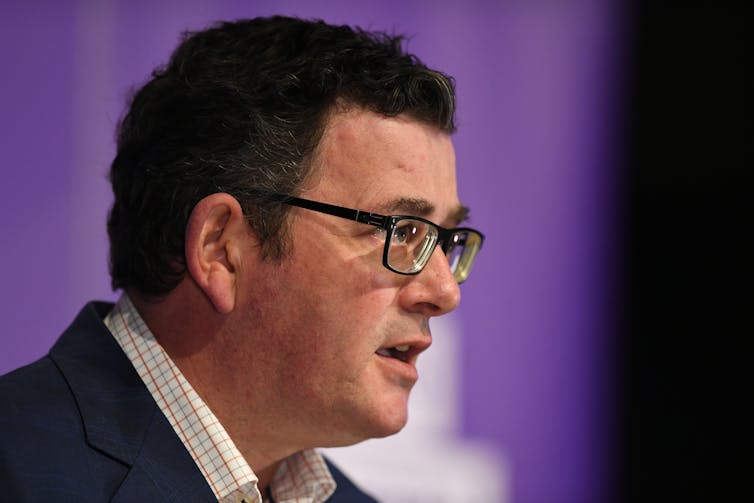
Victorian Premier Daniel Andrews announced a ‘single bubble’ on Sunday. People who are single and live alone will be able to have one visitor from 11:59pm September 13.Erik Anderson/AAP
The epidemiologist’s view: analysis from Mary-Louise McLaws
I am glad the rule on masks is remaining in place for a while yet. It’s a cost effective way to reduce transmission.
I am pleased the government has responded to calls from the community for compassion. I have argued before in favour of the bubble concept.
Yes, there are a lot of rules about how the single social bubble system will work in practice and some single people will miss out but I can understand why the authorities have done that.
On the rule that a single person can only visit their nominated person’s home if all other adult household members are out, I understand the logic and I think it’s reasonable and likely based on reducing the risk of spread to the household.
Yes, it might be tricky but you will be allowed to sit outside for two hours with one other person, so you and your bestie could be in the park.
Nothing is going to be perfect. Everything will have some logistical challenges but the fact authorities are willing to insert a compassionate component into this roadmap at the first step is commendable. For the sake of those who need support, we need to work around it.
I understand why they have asked people to wear masks when a single person and a nominated person get together in a shared home. There’s still a risk of transmission to others living in the shared accommodation even when they aren’t at home during the visit because the visitor can exhale virus several days before they start to show symptoms. Exhaled virus particles can contaminate surfaces or remain in the air when air flow at home is not high.
I hope people do the right thing. People are desperate to see the person they love or the person that makes them happy to help them get through this pandemic.
I am so delighted authorities are understanding they need to keep people safe and safety includes compassion. This is a step forward. Yes, some people will miss out and yes there are issues around the rules that need to be made safe. But Australia hasn’t had a pandemic quite like this before.
Socialising outside has a lower infection risk than indoors.Shutterstock
The sharehouse researcher’s view: analysis from Katrina Raynor
My research involved surveying more than a thousand people who have lived in a share house in Victoria at any time in 2020. We found many of them are already under intense pressure.
I think the single social bubbles concept in the new roadmap is an excellent step, but will be experienced differently by people who live in sharehouses.
Throughout the pandemic, I think there has been a presumption towards nuclear families or couples in the way policies have been written.
Particularly in relation to the idea of single social bubbles idea, the idea that a single person living alone can only visit their nominated person if the nominated person is alone in their house — this could be incredibly tricky in practice. And it differs from how intimate partners are treated in the rules.
These rules could present an extra area of conflict for sharehouses, many of which are already in conflict. One person we interviewed described COVID-19 as being like Married at First Sight for housemates, and I think that is very true.
Rules that stipulate only one person per household can shop are also confusing for sharehouses — housemates tend to shop for their own needs rather than the “household’s”. I suspect there are many who are not or can not follow that particular rule.
While I understand why members of share households won’t be able to take advantage of the single social bubble from a public health perspective, I think many will continue to feel lonely.
We may presume these single people have a fulfilling relationship with their housemates and that’s not always the case.
The philosopher’s view: analysis from Stephanie Collins
I think the single social bubble concept is an improvement on the rules we had before, where people could only visit their intimate partners. That clearly was an instance of society privileging one type of relationship over another, which is a question I look at in my research.
I am not too worried about “coupled up” people who live with an intimate partner and can’t take advantage of the social bubble.
But I am a bit worried about people who are single and living in a sharehouse not being able to form a single social bubble.
People don’t always know their housemates particularly well and might not turn to their housemates for the kind of intimate psychological connections we know are so important for human flourishing.
But we have to acknowledge the law is a blunt instrument. It’s difficult for the government to say “if you are not friends with your housemates then you can visit a nominated person”.
I do think the government is in a difficult position. What they have come up with is not a terrible compromise but it certainly won’t solve every social connection problem.
In general, I am very much in favour of the single social bubble. I think the previous rule really unjustly favoured people in intimate relationships over other kinds of relationships.
I hope this rule sticks around if Victoria or other states need to lockdown again in future. This concept could be integrated and improved in an ongoing way and I hope it’s not a reactionary decision.
The Morrison government wants sweeping new powers to cancel international arrangements by universities, councils and state governments. After announcing its intentions in August, it introduced a bill to parliament last week.
The government argues the bill is needed to “ensure a consistent and strategic approach to Australia’s international engagement”. Prime Minister Scott Morrison has said Australia must “speak with one voice”.
But the bill should not pass parliament.
Not only has the government failed to identify any specific problem with the status quo, the bill rests on a fundamental misunderstanding of the nature of modern diplomacy.
For decades, Australia has had international agreements beyond the federal level. A huge number of actors interact internationally and affect how Australia is viewed. This can’t be exclusively managed from Canberra.
The proposed legislation mistakenly rests on the idea that speaking with “one voice” in foreign policy is a positive thing, when the modern idea of diplomacy emphasises broad engagement.
Australia benefits when multiple actors across society engage internationally to balance the ups and downs in official relations. As American author Parag Khanna memorably described it, “diplomacy is no longer the stiff waltz of elites but the jazzy dance of the masses”.
This bill overreaches
The legislation badly overreaches by seeking to regulate activities across education, culture, research and trade.
For example, it treats a visual artist exchange between Victoria and Jiangsu or a library agreement between the City of Sydney and Guangzhou as issues of foreign policy.
Including universities is also a step too far. It was originally thought the legislation would only cover arrangements between universities and foreign agencies, but it also covers universities that do not have institutional autonomy, which is a large number of foreign universities. This vastly increases the scope of regulation.
Meanwhile, the test for vetoing a foreign arrangement is far too wide. The foreign minister can declare an arrangement invalid if it is likely to adversely affect Australia’s foreign relations (undefined) or be inconsistent with Australia’s foreign policy (defined as whatever the minister says it is, whether or not written or publicly available). “Arrangements” include anything in writing, whether or not legally binding.
We don’t actually need this bill
In sounding the alarm, the government has failed to pinpoint a real problem.
For example, there is zero evidence that a non-binding, symbolic memorandum of understanding between Victoria and China on to the Belt and Road Initiative has hampered the Commonwealth in pursuing Australia’s foreign policy.
It is important to note Australia already has the ability to protect itself, with existing laws on espionage, foreign interference and foreign investment and a University Foreign Interference Taskforce. We made it through the Cold War without needing this type of legislation.
What will happen if the bill passes?
Apart from being unnecessary over-regulation, the bill will also create problems for Australia if passed.
Firstly, the Department of Foreign Affairs and Trade will have to divert resources to this new function when its funding is the lowest in history.
This means diplomats, who could be pro-actively working to promote the national interest, must check potentially tens of thousands of overwhelmingly non-controversial arrangements like the City of Warrnambool’s local export bureau with Changchun or the City of Darwin’s student English language competition in Haikou.
Secondly, the bill is likely to reduce international linkages due to uncertainty about what will be approved. Educational or cultural exchanges are the most at risk.
State and local governments will continue to promote trade, but they will waste time filling in the prescribed form to take, say, a delegation of Australian start-ups to pitch to investors in Nanjing.
Beyond this, the legislation sends exactly the wrong message to the wider community: to be uneasy about international engagement.
There are better solutions: more information-sharing between different levels of government; a one-page bill banning state governments from the Belt and Road Initiative.
Even giving the foreign affairs minister the power to request information on, and then cancel, any specific arrangement would be better than the overkill regulatory burden proposed.
And if, as many believe, the bill is directed at China, the irony is that fighting the Chinese Community Party seems to bring out the Australian government’s authoritarian tendencies.
Speaking with one state-approved voice is not what a open democracy like Australia should aim to achieve.
The good news from Victoria’s road map to recovery is the stage 4 restrictions imposed in July are working, albeit more slowly than anyone wants.
The evidence also suggests the Victorian government’s “slow but sure” approach to easing those rules is the right strategy. Unless the risk of COVID-19 is suppressed, relaxing restrictions will not produce the economic recovery we want.
Under the plan announced by Premier Daniel Andrews yesterday, metropolitan Melbourne’s stage 4 restrictions are being extended till at least September 28, with some minor relaxations of curfew and exercise rules.
Then – if the number of new COVID-19 cases is fewer than 50 a day – there will be further relaxation of public gatherings and home visits. Child care centres will reopen, and about 100,000 workers in construction, delivery, manufacturing and gardening will be allowed to go back to work.
More substantial resumption of businesses activity won’t occur until at least October 26 – and only then if the average number of new cases over the previous two weeks is less than five a day.
If that is achieved, the government will allow most retail shops to open, and cafes and restaurants to serve patrons sitting outdoors. Hairdressers will be back in business, but not other beauty and personal care services.
From November 23, if there have been no new cases for 14 days, all retail will reopen, and hospitality restrictions will relax further.
For regional Victoria, Andrews said, it would likely be just be a matter of weeks before moving to “a very different range of settings compared to metropolitan Melbourne”.
Melbourne cafes and restaurants won’t be allowed to seat customers before late October.Andy Brownbill/AP
Blaming the lockdown, not the pandemic
Critics of the Victorian government (and lockdowns generally) have argued its containment measures have caused more economic and social damage than would have been caused by the virus itself.
But others argue the short-term economic cost is more than justified by the longer term benefits. They point to evidence suggesting the economy will only recover once COVID-19 is eliminated and the community again feels confident to socialise and shop as before.
University of Chicago economists Austan Goolsbee and Chad Syverson, for example, have analysed consumer behaviour in neighbouring regions with different social distancing restrictions in the US. They found voluntary changes in behaviour to reduce risks of catching COVID-19 were the major driver of lower economic activity. Government-imposed restrictions, they calculated, accounted for less than 12% of the total effect.
Victoria’s experience may provide more evidence on what is really driving the slowdown in economic activity.
Specifically, we can examine whether decreases in the number jobs appear to correspond more to growth in the COVID-19 caseload or to the timing of imposition of government restrictions.
The chart below displays how Victoria’s employment has tracked compared with the rest of Australia since the initial rise in COVID-19 cases in mid-March. It shows the difference (in percentage terms) between the decline in jobs in Victoria and the rest of Australia.
A number above zero means Victoria has lost a smaller share of its jobs than other states. A number below zero means a larger proportion of jobs have been lost.
As the chart shows, Victoria was following closely with other states till late April, then lost slightly more jobs through to late June.
But once COVID-19 re-emerged in late June, job losses in Victoria accelerated. By early August Victoria had lost about 4% more jobs than other states.
Job losses began before restrictions
The chart below shows how job numbers in accommodation and food services and arts and recreation services have changed in Victoria relative to other states.
These are the two sectors most affected by COVID-19, due to high levels of personal contact between and among customers and staff. The big question is to what extent the effect on employment in those sectors has been due to government rules or consumer behaviour.
The chart shows Victoria’s jobs changes in these two sectors were relatively consistent with the the rest of the country until June. (Arts and recreation did slightly better, food and accommodation slightly worse.)
The situation began to worsen in June with Victoria’s second-wave outbreak. This happened even before the Victorian government imposed stage 3 restriction on July 4.
In the two weeks prior to going back to stage 3, Victoria went from an average of about 16 new cases a day to 72 cases a day. Over the same period, the number of jobs in Victoria in accommodation and food services fell by 3%, and in arts and recreation services by 4.7%, compared with the rest of Australia.
As well, after the imposition of stage 3 restrictions the pace of decrease in jobs in Victoria was relatively steady. It matched the rise in COVID-19 cases (to an average of more than 450 a day in early August). Job losses do not seem to have been bunched around the dates restrictions were imposed, as might be expected if those restrictions were the main explanation for job losses.
All of this suggests that while the Victorian government’s path to remove restrictions will undoubtedly influence the level of economic activity in the months ahead, relaxing restrictions immediately would not bring the economy back to where we were in March.
It would only make the road to full recovery much slower and more uncertain.
When we hear about animals being neglected, we’re often outraged. Consider the revelation of the mistreatment of racehorses at a Queensland abattoir, or the man who decapitated a kookaburra. These stories left many of us shocked and appalled.
But harm to animals is common in our society. Tens of billions of animals are killed in farms and slaughterhouses every year. Their deaths are sometimes truly horrific. Humanity’s relationship with animals is dysfunctional: humans love animals yet simultaneously perpetrate extreme violence against them. This is not only bad for animals. It’s bad for us too.
But humans and animals cannot simply end their relationship and part ways. We have to share a world. So we have to forge a better relationship. The hard question is: what shape should that new relationship take?
WARNING: graphic content.
Differing standards for humans and for animals?
Here’s an ethics thought experiment. Five humans are dying of organ failure. The only way to save their lives is to kill one healthy person, harvest their organs, and transplant these into the five dying people. Is it morally acceptable to kill the one to save the many?
If you’re like most people, your answer is a firm “no”. Humans have a right to life and can’t be killed in service of the greater good. This is an example of what’s known as a deontological judgment.
But now let’s change the scenario. Suppose you are the manager of a sanctuary for chickens. An infectious virus is spreading through the sanctuary and you have to decide whether to kill one infected chicken or allow the virus to spread throughout the sanctuary, killing a larger number. Now what?
When confronted with the chicken scenario, many will say it’s acceptable to kill the one to save the many. Your responsibility as manager of the sanctuary is to promote the aggregate health and well-being of all the chickens in your care. If this means you have to kill one chicken to save many more, so be it. This is an example of what’s known as a utilitarian judgment.
When we think about cases where animal lives are at stake, we often tend to think in utilitarian terms. When we think about cases where human lives are at stake, we often tend to think in deontological terms.
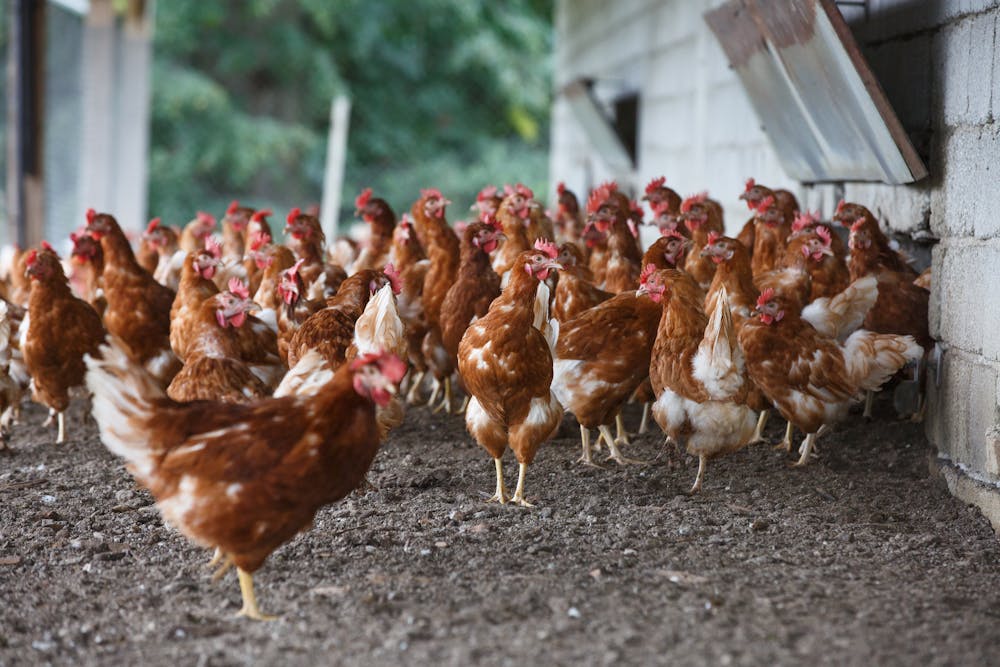
Do the needs of the many outweigh the needs of the few, when it comes to chickens?Shutterstock/zlikovec
Animal activists put to the test
Even animal activists, committed to a view of animals and humans as moral equals, may be inclined to see animals and humans from these differing perspectives.
At an animal activist conference in Melbourne last year (before the pandemic) we divided the audience into small groups and gave them different scenarios featuring different species.
Only 35% of those considering chicken cases said it was wrong to kill one chicken to save the many, whereas fully 85% of those considering human cases decided it was wrong to kill one human to save the many. An informal experiment, but it seems to illustrate a very human tendency to think of animals and humans according to different standards.
That tendency has been observed in many contexts. Robert Nozick influentially discusses a bifurcated view along these lines in his 1974 classic Anarchy, State, and Utopia. But the question of whether such a view can be attributed to ordinary people is only recently being rigorously studied by psychologists such as Lucius Caviola at Harvard University.
Beyond psychological research, we can look to institutions for evidence that this sort of bifurcated view is widespread, as we have argued elsewhere.
For example, when animals are used in scientific experimentation, researchers are mainly expected to show the benefits outweigh the costs: a utilitarian standard.
But when humans are used, characteristically deontological considerations, such as consent and autonomy, are brought to bear; a cost-benefit analysis isn’t enough.
So we tend to be more utilitarian about animals than about humans. Yet we also don’t see all animals from a purely utilitarian perspective. Think about your family dog. Would your conscience allow you to kill her to save five other dogs?
We use animals in scientific research.Shutterstock/unoL
Three perspectives
The upshot: humans seem to be capable of seeing animals in at least three very different ways.
First, we’re able to regard animals as objects that exist solely for the sake of our use and enjoyment and that don’t matter in themselves. For an example, consider the way the fishing industry treats bycatch as disposable.
Second, we’re able to regard animals as beings who matter in themselves yet who are fundamentally interchangeable with others. That’s a utilitarian perspective. It’s the perspective you occupy when you endorse killing one pig to save five. Such a view is defended by world-renowned Australian philosopher Peter Singer, among many others.
Third, we’re able to see animals as beings who not only matter in themselves, but who also have rights, such as the right to life, or the right to bodily integrity, or even the right to liberty.
Perhaps it’s strange to see farmed animals that way, but it’s not so strange to see non-human family members such as cats and dogs in that way. And famous philosophers such as Tom Regan have argued a vast range of animals ought to be seen in that way.
The future of human-animal relations
Currently, many of us see most animals as mere things, the way fishermen typically see bycatch. And this might continue into the future.
But that’d be a tragedy. Despite their differences from humans, animals are conscious individuals with their own welfare, and so do matter in themselves. Recognising this will be an essential step in reducing the tremendous amount of unnecessary suffering and death that humans inflict on animals.
The simple recognition that animals are not mere things is in itself of massive importance, but it’s also only the beginning of the work we have ahead of us. As a society we must confront deep and difficult questions about whether animals have moral rights and, if so, what those rights might be, and how (if at all) their rights differ from those of human beings. Philosophers have been debating such questions for decades but haven’t reached consensus (yet).
Such questions must be addressed before we can we hope to find a new relationship with animals that fully recognises and respects our obligations to them.
How do filmmakers communicate big ideas on screen? In this video series, film scholar Bruce Isaacs analyses pivotal film scenes in detail. (Warning: this video contains violence and may be upsetting for some viewers.)
There is perhaps no better time than now to appreciate the unique and subversive genre of zombie movies. These films have always been great socio-cultural lenses. Night of the Living Dead and Dawn of the Dead were two classics of the genre.
World War Z (2013), an adaptation of Max Brook’s 2006 apocalyptic zombie novel continues this tradition. In a pivotal scene set in Jerusalem, director Marc Foster encapsulates the greatest threat posed by zombies: the end of our individuality and loss of uniqueness. The casting of Hollywood star Brad Pitt is crucial, as are the cuts between him as a figure and the invading mass.
New Zealand’s MediaWorks has confirmed it will sell its television operations to US company Discovery Inc.
The deal includes channels Three and Bravo, streaming service ThreeNow, and multi-platform news and current affairs service Newshub, as well as the further channels Three+1, Bravo+1, The Edge TV and The Breeze TV.
The company says the sale is subject to pre-completion approvals and is expected to be completed by the end of the year.
MediaWorks has been trying to sell its TV operation since late last year and had already done a deal to sell its central Auckland premises.
In May, it announced 130 staff redundancies in response to a covid-19-driven slump in revenue.
Staff hours and pay were also reduced in April.
Chief executive Michael Anderson, who finishes with the company at the end of the year, said this was the best possible outcome.
‘Best possible outcome’ “We are very pleased to have reached a sales agreement with Discovery and to share this news today,” he said.
“This is the best possible outcome for the future of MediaWorks TV and its passionate and dedicated people who work tirelessly to make it a unique and special business.
“Under the ownership of Discovery, Three, Newshub and Bravo will have a long-term home and continue to play a vital role in New Zealand society.”
“The ongoing success of our radio and out-of-home business demonstrates that MediaWorks has a very bright future and with this unique and powerful combination, our focus now is to accelerate the opportunities that exist for our clients.”
Discovery president for Asia-Pacific Simon Robinson said it was an exciting purchase.
“MediaWorks TV is New Zealand’s leading independent free-to-air commercial broadcaster, with popular shows and great brands,” he said.
Global content creator “Discovery is a global content creator, a major free-to-air broadcaster across several European markets, including the UK, Germany, Italy, Poland and the Nordics, and has expertise in evolving our linear business to direct-to-consumer.
“With a 26-year heritage in the New Zealand market, we are committed to drive MediaWorks TV’s future growth and success, delivering increased value to audiences and advertisers across all screens in New Zealand.”
Glen Kyne has been appointed general manager of TV, and would report to Simon Robinson once the deal was completed.
Discovery has had a presence in New Zealand since 1994, when it first launched Discovery Channel on Sky.
This article is republished by the Pacific Media Centre under a partnership agreement with RNZ.
Source: Council on Hemispheric Affairs – Analysis-Reportage
COHA Editorial Board Washington DC
The Council on Hemispheric Affairs (COHA) expresses its solidarity and heartfelt sympathy to the family and political partners in the struggle of attorney and activist, Kevin Zeese, who died suddenly early Sunday morning, September 6, 2020, at his home in Baltimore, Maryland.
COHA shared a commitment to the principles of non-intervention with Kevin Zeese, who opposed the unilateral coercive measures the US has imposed in violation of international law and which cause so much suffering for the peoples of Latin America. Kevin Zeese upheld these values in word and deed throughout his life.
For many years Kevin Zeese dedicated himself to building social movements in the United States to bring about positive change. He and his life partner, Dr. Margaret Flowers, were very active in 2011 in key groups (October2011 andStop the Machine! Create a New World!) that joined forces with Occupy DC in the US capital.This movement opened a serious conversation about inequality in the United States that continues to this day. Kevin was active in the movement to support Chelsea Manning and indeed everyone’s right to information. He and Margaret also organized people to protest the Trump inauguration with civil disobedience actions in January of 2017, and Kevin was a leader in the anti-imperialist and anti-war movement in the United States, having helped organize conferences against NATO and serving as a leader of the US Peace Council and the United National Antiwar Coalition.
Kevin also understood the role of information in building social movements, as he and Margaret used their platform,Popular Resistance, to strengthen reporting from alternative media and social movements throughout the US and the world. In fact, Kevin was incredibly knowledgeable about people’s struggles around the planet and was often instrumental in helping other progressives sort through US hybrid warfare operations to get at the truth, usually through contacts with grassroots movements in different countries. Popular Resistance also hosts a Solidarity School in which activists learn about social transformation, furthering Kevin’s unflagging belief in the power of social movements to change our world.
Kevin Zeese was a legal advisor and one of the activists who defended the Embassy of Venezuela in Washington DC for several weeks in 2019, after the Trump administration violated diplomatic conventions by trying to hand the embassy over to self-appointed “authorities”, in violation of the United Nations Charter and several international treaties. Kevin and a collective of academics and professionals defended the legitimate government of President Nicolás Maduro and were not intimidated by the threat of fines or imprisonment. Their commitment led to a legal fight in US federal court where, after a months-long trial, federal charges supported by the Trump administration were finally dropped against the four Embassy Protectors.
In 2020 Kevin became the press secretary of the presidential campaign of Howie Hawkins, the Green Party candidate who believes in a platform of ecosocialism, the fight against inequality, opposing voter suppression, and reforming the current GOP-Democrat duopoly that leaves a large percentage of the U.S. people voiceless.
COHA expresses its profound solidarity with the family of Kevin Zeese, especially his wife and fellow activist, Dr. Margaret Flowers, whose ongoing commitment to the cause of social justice worldwide is a fitting tribute to this attorney who gave his all to the progressive and humanist ideals he believed in.
Armida Salsiah Alisjahbana - United Nations Under-Secretary-General and Executive Secretary of the UN Economic and Social Commission for Asia and the Pacific.
Opinion by Armida Salsiah Alisjahbana – United Nations Under-Secretary-General and Executive Secretary of the UN Economic and Social Commission for Asia and the Pacific
Armida Salsiah Alisjahbana – United Nations Under-Secretary-General and Executive Secretary of the UN Economic and Social Commission for Asia and the Pacific.
As the socio-economic impacts of the COVID-19 pandemic spread across the length and breadth of Asia and the Pacific, finance ministries are continuing their relentless efforts to inject trillions of dollars for emergency health responses and fiscal packages. With continued lockdown measures and restricted borders, economic rebound seems uncertain.
Compared to 2019’s economic situation, over the past six months, countries in Asia and the Pacific have been experiencing sharp drops in foreign exchange inflows due to declines in export earnings, remittances, tourism and FDI. This is worrying as policymakers are tackling difficult choices over how to prioritize development spending, while continuing to expand their squeezed fiscal space.
The United Nations is contributing through a global initiative on Financing for Development in the Era of COVID-19 and Beyond, co-convened by Canada and Jamaica, to articulate a comprehensive financing strategy to safeguard the Sustainable Development Goals (SDGs).
Governments are united together to ensure that adequate financial resources are available to steer an inclusive, sustainable and resilient post-COVID recovery. In the Asia-Pacific region, several countries have already adopted financing plans in three key areas. They aim to address the challenge of diminished fiscal space and debt vulnerability; to ensure sustainable recovery, consistent with the ambitions of the Paris Agreement and the 2030 Agenda; and to harness the potential of regional cooperation in support of financing for development.
The development arm of the United Nations in our region, the United Nations Economic and Social Commission for Asia and the Pacific (ESCAP) has recently launched its first-ever Regional Conversation Series on Building Back Better. We are joining forces with ministers, decision makers, private sectors and heads of international agencies to share collective insights in sharing pathways to resilient recovery from ongoing health pandemic and economic collapse.
To improve the fiscal space and manage high levels of debt distress, a growing call for extending the debt moratorium under global initiatives like the Debt Service Suspension initiative (DSSI) is timely. Central Banks can continue to keep the balance right of supporting the economy and maintaining financial stability. This further involves enhancing tax reforms and improving debt management capacities, while using limited fiscal space to invest in priority sectors. Exploring sustainability-oriented bonds and innovative financing instruments options such as debt swaps for SDG investment should be explored further.
In addition to economic considerations, the policy paradigm and financing architecture for recovery plans must mainstream affordable, accessible and green infrastructure standards, while promoting social equality and environmental sustainability principles as enshrined in the Paris Agreement. As we scale up the use of digital technology and innovative applications, the financing support of micro, small and medium-sized enterprises (MSMEs) must go hand in hand with these national job-rich recovery strategies.
The Regional Conversation on Financing for Development highlighted that no country could take this agenda forward alone. Regionally coordinated financing policies can restart trade, reorganize supply chains and revitalize sustainable tourism in a safe manner. Thankfully, several countries in the region have valuable experiences to share.
Across Asia and the Pacific, governments must pool financial resources to create regional investment funds in areas such liquidity funds for sustainability, funds for resilience and travel funds to relaunch our economies. Strengthening regional cooperation platforms to ensure that all countries receive an equitable number of doses of the vaccine on short notice to everyone everywhere is particularly essential. Without an end to the pandemic, the economic and social costs can’t be contained.
Through ESCAP, we can scale these efforts across the region, working closely with our member States, the private sector and innovators to build a collective financing response to mobilize the necessary additional resources. Together, we can chart financing strategies of Asia and the Pacific which can enhance societal well-being and economic resilience to future pandemics and crises.
————–
Armida SalsiahAlisjahbana is the United Nations Under-Secretary-General and Executive Secretary of the UN Economic and Social Commission for Asia and the Pacific.
It’s surprising how quickly public opinion can change. Winding the clocks back 12 months, many of us would have looked at a masked individual in public with suspicion.
Now, some countries have enshrined face mask use in law. They’ve also been made compulsory in Victoria and are recommended in several other states.
One consequence of this is that facial recognition systems in place for security and crime prevention may no longer be able to fulfil their purpose. In Australia, most agencies are silent about the use of facial recognition.
Facial recognition involves using computing to identify human faces in images or videos, and then measuring specific facial characteristics. This can include the distance between eyes, and the relative positions of the nose, chin and mouth.
This information is combined to create a facial signature, or profile. When used for individual recognition – such as to unlock your phone – an image from the camera is compared to a recorded profile. This process of facial “verification” is relatively simple.
However, when facial recognition is used to identify faces in a crowd, it requires a significant database of profiles against which to compare the main image.
These profiles can be legally collected by enrolling large numbers of users into systems. But they’re sometimes collected through covert means.
Facial ‘verification’ (the method used to unlock smartphones) compares the main image with a single pre-saved facial signature. Facial ‘identification’ requires examining the image against an entire database of facial signatures.teguhjatipras/pixabay
The problem with face masks
As facial signatures are based on mathematical models of the relative positions of facial features, anything that reduced the visibility of key characteristics (such as the nose, mouth and chin) interferes with facial recognition.
There are already many ways to evade or interfere with facial recognition technologies. Some of these evolved from techniques designed to evade number plate recognition systems.
Although the coronavirus pandemic has escalated concerns around the evasion of facial recognition systems, leaked US documents show these discussions taking place back in 2018 and 2019, too.
This clip shows how fashion designers are outsmarting facial recognition surveillance / YouTube.
And while the debate on the use and legality of facial recognition continues, the focus has recently shifted to the challenges presented by mask-wearing in public.
On this front, the US National Institute of Standards and Technology (NIST) coordinated a major research project to evaluate how masks impacted the performance of various facial recognition systems used across the globe.
Its report, published in July, found some algorithms struggled to correctly identify mask-wearing individuals up to 50% of the time. This was a significant error rate compared to when the same algorithms analysed unmasked faces.
There are currently no usable photo data sets of mask-wearing people that can be used to train and evaluate facial recognition systems.
The NIST study addressed this problem by superimposing masks (of various colours, sizes and positions) over images of faces, as seen here:
While this may not be a realistic portrayal of a person wearing a mask, it’s effective enough to study the effects of mask-wearing on facial recognition systems.
It’s possible images of real masked people would allow more details to be extracted to improve recognition systems – perhaps by estimating the nose’s position based on visible protrusions in the mask.
Many facial recognition technology vendors are already preparing for a future where mask use will continue, or even increase. One US company offers masks with customers’ faces printed on them, so they can unlock their smartphones without having to remove it.
Growing incentives for wearing masks
Even before the coronavirus pandemic, masks were a common defence against air pollution and viral infection in countries including China and Japan.
Facial recognition systems will need to adapt. Detection will be based on features that remain visible such as the eyes, eyebrows, hairline and general shape of the face.
Such technologies are already under development. Several suppliers are offering upgrades and solutions that claim to deliver reliable results with mask-wearing subjects.
For those who oppose the use of facial recognition and wish to go undetected, a plain mask may suffice for now. But in the future they might have to consider alternatives, such as a mask printed with a fake computer-generated face.
Source: The Conversation (Au and NZ) – By Ben Green, Postdoctoral resident adjunct, Griffith Centre for Social and Cultural Research, Griffith University
As we approach the end of a uniquely challenging school year, the class of 2020 look set to miss out on many of the usual highlights of year 12.
So far, public discussion of these cancellations have understandably focused on the risks posed by COVID and the possible mental health impacts on young people.
But young people aren’t just missing out on a chance to wear fancy clothes or party with their mates. Events like schoolies and formals also have a profound social purpose as rites of passage.
What are rites of passage?
Rites of passage are rituals that accompany changes in social status for individuals and groups. Their importance has been recognised by social researchers for more than a century.
In ethnographer Arnold Van Gennep’s original 1909 work, which is still broadly accepted by researchers, rites of passage share three basic phases:
a symbolic separation from normality, such as by travel or costumes
an in-between stage, in which social norms and hierarchies are cast off and people embrace a community spirit
a ceremonial confirmation of the new state of affairs, often with symbols like a ring or crown.
This creates a transformative experience for people. It marks a change as special, by stepping outside ordinary life.
The brief upturn in the social order also allows the community to strengthen its bonds and reaffirm its support for the broader, existing social system.
Traditional rites of passage are in decline
For young people today, ceremonies like school graduations or schoolies trips are even more important than for previous generations.
Declining rates of religious affiliation means religious coming-of-age has also declined in importance. Changing social norms also mean events like debutante balls and weddings are no longer common practice for teenagers and those in their early 20s.
Meanwhile, traditional economic markers of growing up – such as moving out of home, and starting full-time work – are also proving more elusive for young people, thanks to challenging job and housing markets.
This means other cultural traditions are a critical part of how young people transition to adulthood.
Often when we talk about “muck up” days, schoolies and gap years, debates focus (not always fairly) on the risks involved with young people who are celebrating and testing boundaries.
The Queensland government has cancelled official schoolies celebrations due to COVID.Dean Saffron/AAP
But research has shown how schoolies and gap year travel act as rituals to mark and manage the otherwise often unremarkable transition to adulthood.
These episodes provide a meaningful break with normal life and past identity. They see young people leave their comfort zone to experience a sense of community with their peers, before moving to the next stage of life.
Similarly, music festivals, while not one-off events, can also provide these experiences. Nightclubs and parties – which have also been significantly curtailed during COVID – are also spaces to escape everyday rules and experience communal energy within the broader period of emerging adulthood.
Lasting impacts?
In addition to the impact on education – which has yet to be fully understood – there are other ways in which the class of 2020 may be roundly disadvantaged.
COVID-19 has changed so many of the cultural experiences young people use to make their way into adulthood.
So, what might be the lasting consequences for this year’s school leavers?
Nightclubs are a place for young people to escape everyday rules.www.shutterstock.com
Missing out on rites of passage like schoolies week and festivals could mar the transition into adult society in subtle but palpable ways.
Without such cultural experiences it is harder to know when this change has really happened, to respect its significance and feel a sense of belonging in one’s new social role.
As per Van Gennep’s work, this cohort of young people is also missing chances to bond as a community and to reaffirm their commitment to the social order by temporarily disrupting it.
This is why, in the absence of formal rites of passage, people develop their own replacements, for better or worse. Recent reports of an impromptu rave inside a kebab shop show that young people will find other ways of crossing boundaries together – testing both legal and social norms.
On a more positive note, our ongoing research with young people about making music during COVID-19 is showing their resilience and creativity in balancing safety with social needs. Online performances are providing some missing ritual and social media also allows a level of community experience.
While we maintain our focus on community health and safety, we must recognise that what might look like frivolous or risky activities can have huge significance for young people as they move into adulthood.
This means they also have huge significance for our society more broadly.
The COVID-19 roadmap for Victoria announced by Premier Daniel Andrews sets the state on the right path. Something like it should be emulated by New South Wales, which has not yet achieved zero new cases.
For metropolitan Melbourne there are five steps; regional Victoria has four. For each step, the roadmap outlines which restrictions will be lifted on our road towards the cherished status of COVID-normal – or zero active cases of COVID-19. The roadmap also provisionally outlines when restrictions will be lifted, although this depends on case numbers.
For metropolitan Melbourne, the curfew will be eased from next week to start at 9pm instead of 8pm. It will remain in place until new cases average fewer than five per day over the course of a fortnight – the criterion to move to the third step of the roadmap.
The first two steps will still entail significant restrictions on public gatherings and visitors, plus the creation of a “single social bubble” allowance, under which people living alone can designate a person who can visit their home. Staged school returns will begin once there are fewer than 50 cases a day on a fortnightly average.
Step three sees the partial resumption of Melbourne’s café culture, as well as hairdressing.
Premier Daniel Andrews announced Victoria’s road map out of lockdown on Sunday. It features a stepped approach to relaxing restrictions, based on data rather than dates.Erik Anderson/AAP
The Victorian roadmap keeps appropriate restrictions until zero active cases – the Grattan criterion for defining zero – before the final step on the roadmap, COVID-normal.
Grattan’s second criterion – clear and explicit staging of the easing of restrictions – is also met in the Victorian roadmap, but in a confusing way. The thresholds adopted in the Victorian plan are a mishmash of epidemiological criteria, case numbers and dates.
It is entirely appropriate that the roadmap’s dates are purely provisional, and subject to epidemiological criteria such as average case numbers. But this raises the question of why the roadmap has dates at all.
Victorians may read the epidemiological criteria as reasons to bring forward the provisional dates for easing restrictions, when in reality they are more likely to put the provisional dates back. The public might end up frustrated if the promised date passes with no reward for good behaviour.
The epidemiological criteria are expressed in an extremely complex way: a 14-day threshold average, plus further criteria based on the source of infection. Until now, the public’s attention has been focused simply on the number of new cases each day.
Introducing this more complex measure is a step backward. Expressing the criterion as an average also runs the risk of the threshold being met but the final few days of the 14-day averaging period revealing an upward trend. A simple and clear criterion, based on number of new cases, would have been better.
Progressing through Victoria’s roadmap steps is based on complex epidemiological data, which isn’t necessarily easy for the public to understand.Erik Anderson/AAP
Step one will occur on September 13, regardless of the number of new cases detected between now and then. The new case threshold for step two is expressed as an average of 30-50 cases a day over the previous 14 days. It is unclear why there is a lower bound; why not just say “fewer than 50 cases”? If it is designed to give political flexibility, it defeats the purpose of clear criteria.
Knowledge of the coronavirus and how it works – both in terms of clinical treatment and public health science – is advancing rapidly. We now know more about which restrictions work best than we did when Melbourne first entered its Stage 4 lockdown.
Some restrictions included in the roadmap – such as night curfews – now have a weak evidence base. The evidence is also stronger now in allowing primary schools to return before secondary schools, but the roadmap takes no account of this distinction. It is a pity the roadmap doesn’t align more closely with the latest science.
Lockdowns are necessary, but they have big downsides which need to be weighed against the undoubted benefits. One main downside is that they hit the most disadvantaged people hardest. The cost of social isolation has been somewhat ameliorated in the roadmap, with its provision for “social bubbles”, but this could perhaps have been more generous.
Overall, Victoria’s roadmap is good. It identifies the right goal (zero active cases), it provides explicit criteria for when restrictions might be lifted (but unfortunately not as clear and simple as they could be), and each of the steps involves mostly appropriate restrictions.
Victorians have every reason to share in Andrews’ hopefulness for a COVID-normal Christmas to cap off a very difficult year.
Environmental scientists see flora, fauna and phenomena the rest of us rarely do. In this new series, we’ve invited them to share their unique photos from the field.
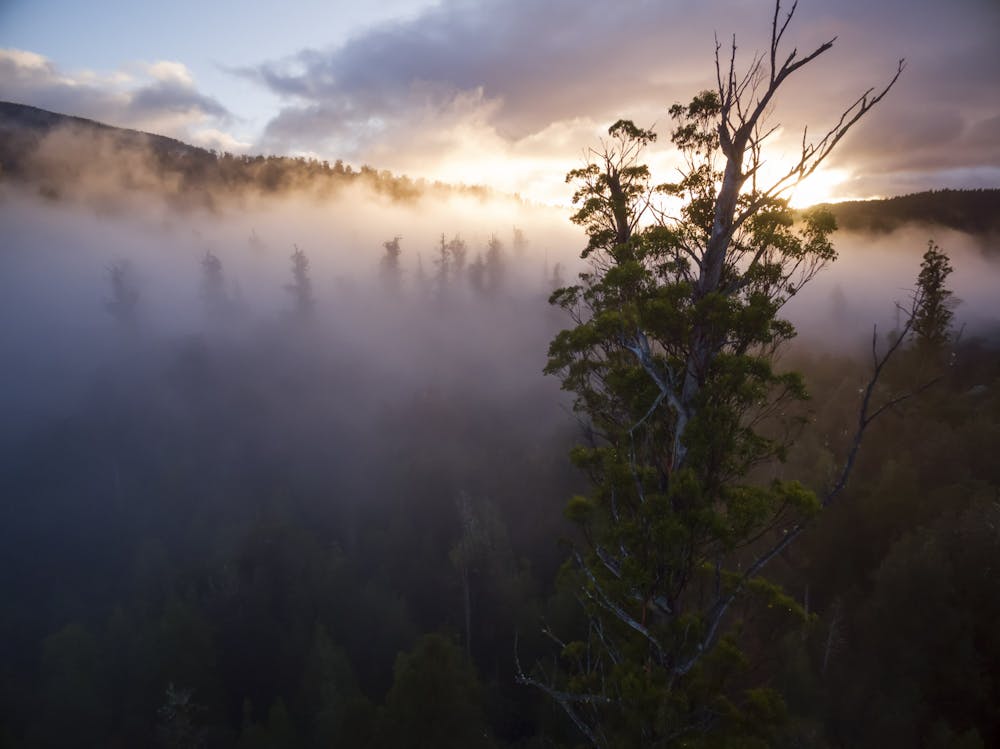
Tasmania’s native forests are home to some of the tallest, most beautiful trees in the world. They provide a habitat for many species, from black cockatoos and masked owls to the critically endangered swift parrot.
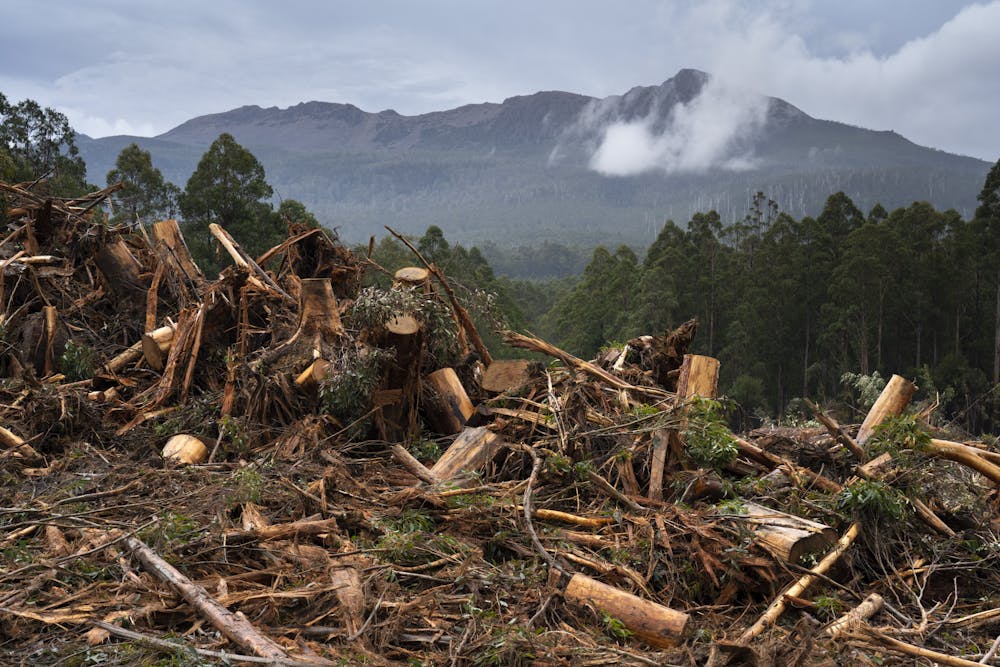
But these old, giant trees are being logged at alarming rates, despite their enormous ecological and heritage value (and untapped tourism potential). Many were also destroyed in Tasmania’s early 2019 fires.
Former Greens leader Bob Brown recently launched a legal challenge to Tasmania’s native forest logging. And this year, Forestry Watch, a small group of citizen scientists, found five giant trees measuring more than five metres in diameter inside logging coupes. “Coupes” are areas of forest chopped down in one logging operation.
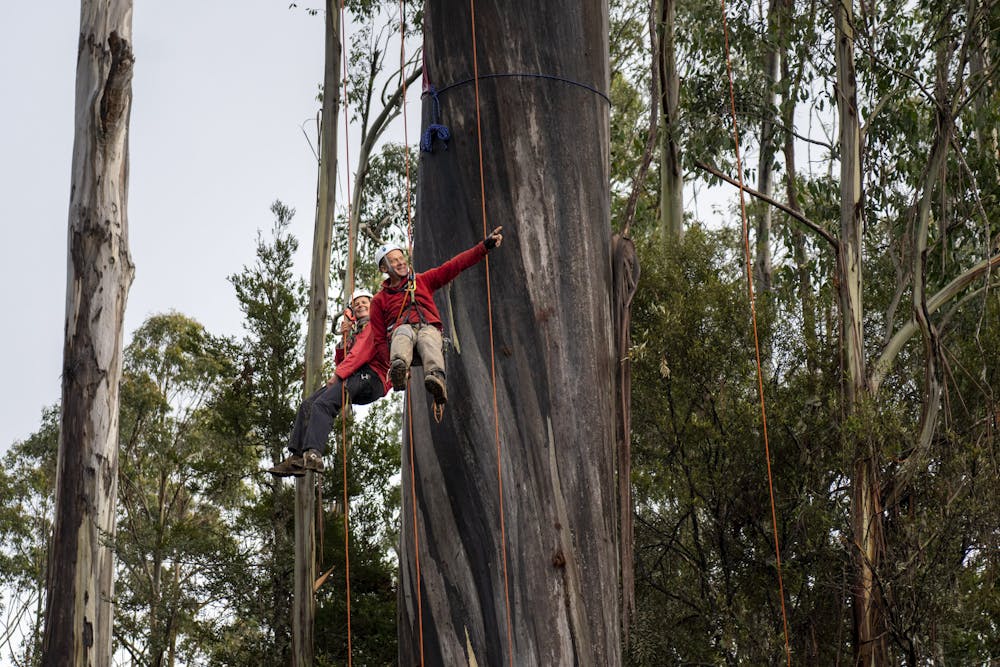
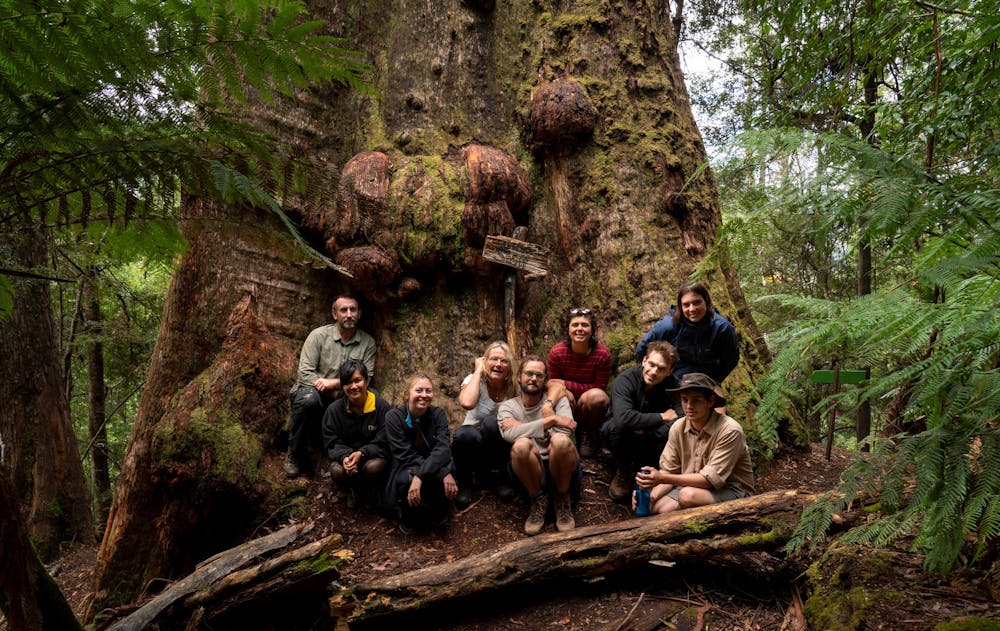
These trees are too important to be destroyed in the name of the forestry industry. This is why my husband Steve Pearce and I climb, explore and photograph these trees: to raise awareness and foster appreciation for the forests and their magnificent giants.
Climbing trees is not just for the young, but for the young at heart. Kevin is in his early 70’s and helps us with measuring giant trees.Steve Pearce/The Tree Projects, Author provided
What makes these trees so special?
Eualypytus regnans, known more commonly as Mountain Ash or Swamp Gum, can grow to 100 metres tall and live for more than 500 years. For a long time this species held the record as the tallest flowering tree. But last year, a 100.8 m tall Yellow Meranti (Shorea faguetiana) in Borneo, claimed the title — surpassing our tallest Eucalypt, named Centrioun, by a mere 30 centimetres.
Centrioun still holds the record as the tallest tree in the southern hemisphere. But five species of Eucalypt also grow above 85 m tall, with many ranking among some of the tallest trees in the world.
It’s not only their height that make these trees special, they’re also the most carbon dense forests in the world, with a single hectare storing more than 1,867 tonnes of carbon.
Our giant trees and old growth forests provide a myriad of ecological services such as water supply, climate abatement and habitat for threatened species. A 2017 study from the Central Highlands forests in Victoria has shown they’re worth A$310 million for water supply, A$260 million for tourism and A$49 million for carbon storage.
This significantly dwarfs the A$12 million comparison for native forest timber production in the region.
Chopping down old growth trees doesn’t make economic sense.Steve Pearce/The Tree Projects, Author provided
Tasmania’s Big Tree Register
Logging organisation Sustainable Timber Tasmania’s giant tree policy recognises the national and international significance of giant trees. To qualify for protection, trees must be at least 85 m tall or at least an estimated 280 cubic metres in stem volume.
While it’s a good place to start, this policy fails to consider the next generation of big, or truly exceptional trees that don’t quite reach these lofty heights.
That’s why we’ve created Tasmania’s Big Tree Register, an open-source public record of the location and measurements of more than 200 trees to help adventurers and tree-admirers locate and experience these giants for themselves. And, we hope, to protect them.
Last month, three giant trees measuring more than 5 m in diameter were added to the register. But these newly discovered trees are located in coupe TN034G, which is scheduled to be logged this year.
Logging is a very poor economic use for our forests. Native forest logging in Tasmania has struggled to make a profit due to declining demand for non-Forest Stewardship Council certified timber, which Sustainable Timber Tasmania recently failed. In fact, Sustainable Timber Tasmania sustained an eye watering cash loss of A$454 million over 20 years from 1997 to 2017.
The following photos can help show why these trees, as one of the great wonders of the world, should be embraced as an important part of our environmental heritage, not turned to wood chips.
Steve Pearce/The Tree Projects, Author provided
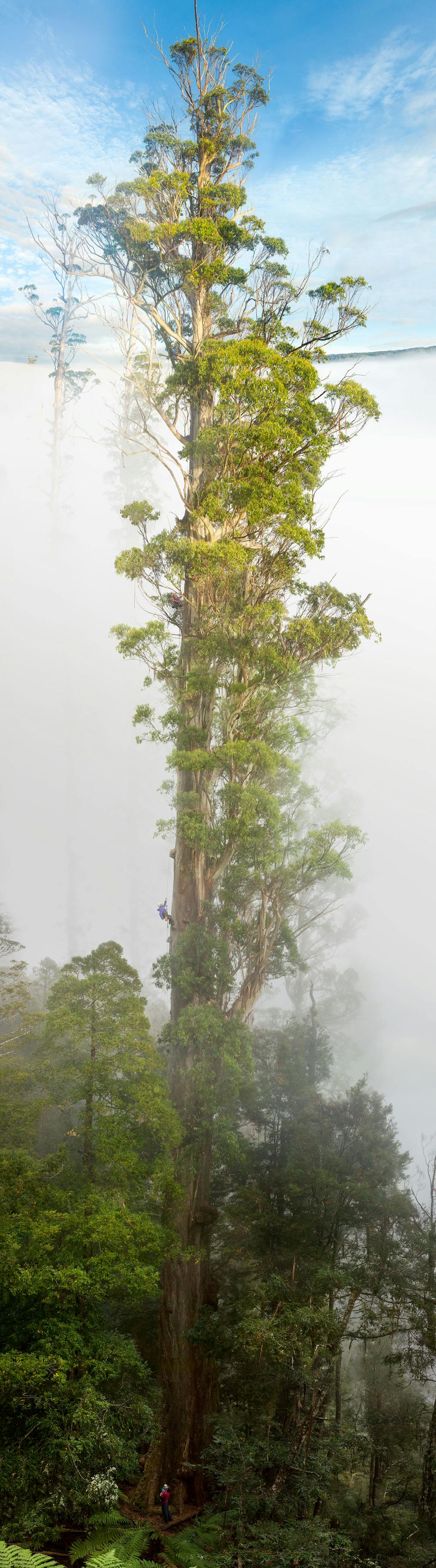
It’s not often you get to see the entirety of a tree in a single photo. This tree above is named Gandalf’s Staff and is a Eucalyptus regnans, measuring 84 m tall.
While Mountain Ash is the tallest species, others in Tasmania’s forests are also breathtakingly huge, such as the Tasmanian blue gum (Eucalyptus globulus) at 92 m, Manna gum (Eucalyptus viminalis) at 91 m, Alpine ash (Eucalyptus delegatensis) at 88 m and the Messmate Stringybark (Eucalyptus obliqua) at 86 m.
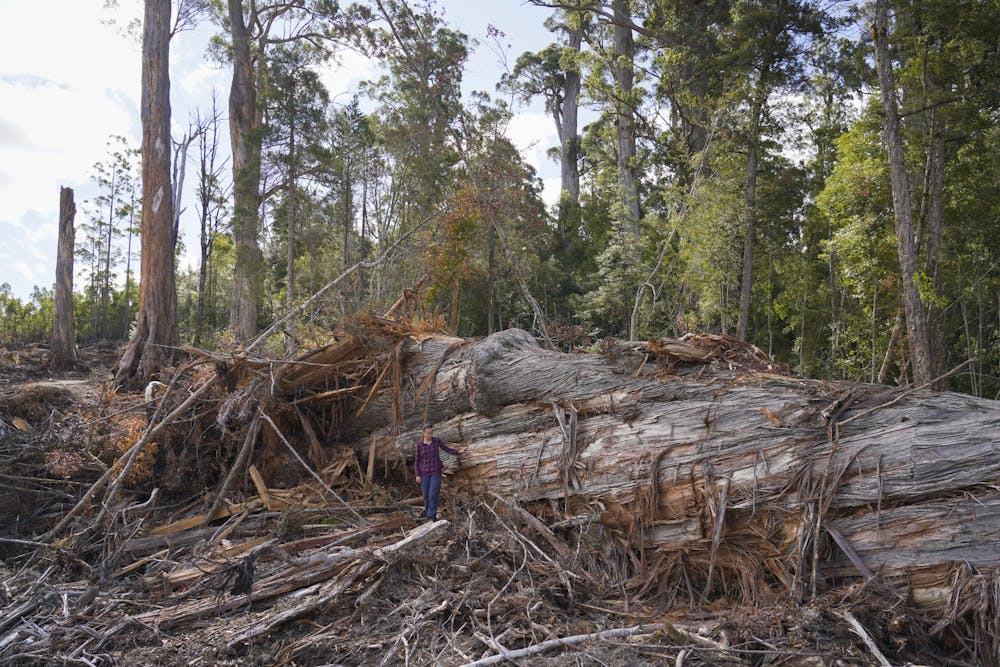
Steve Pearce/The Tree Projects, Author provided
This giant tree, pictured above, was a Messmate Stringybark that was felled in coupe, but was left behind for unknown reasons. Its diameter is 4.4 metres. Other giant trees like this were cut down in this coupe, many of which provided excellent nesting habitat for the critically endangered swift parrot.
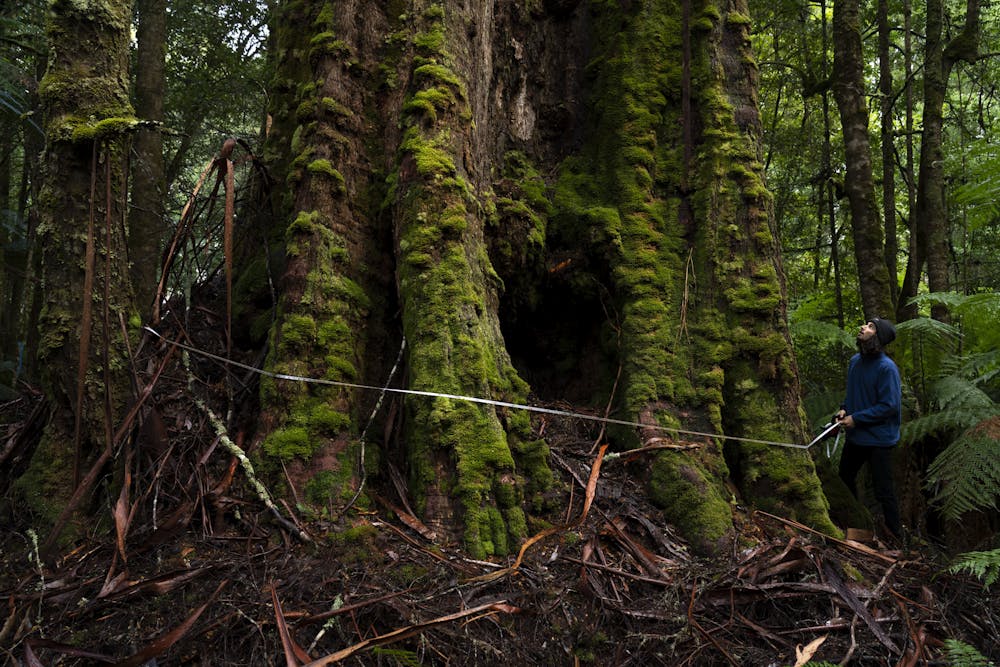
The citizen science group Forestry Watch helps search for and measure giant trees in Tasmania.Steve Pearce/The Tree Projects, Author provided
Old-growth forests dominated by giant trees are excellent at storing large amounts of carbon. Large trees continue to grow over their lifetime and absorb more carbon than younger trees.
Steve Pearce/The Tree Projects, Author provided
The tree in the photo above is called Obolus, from Greek mythology, with a diameter of 5.1 m. Names are generally given to trees by the person who first records them, and usually reflect the characteristics of the tree or tie in with certain themes.
For example, several trees in a valley are all named after Lord of the Rings characters, such as Gandalf’s Staff (pictured above), Fangorn and Morannon.
Steve Pearce/The Tree Projects, Author provided
Giant trees are typically associated with Californian Redwoods or the Giant Sequoias in the US, where tall tree tourism is huge industry. The estimated revenue in 2012 from just four Coastal Redwood reserves is A$58 million dollars per year, providing more than 500 jobs to the local communities.
Few Australians are aware of our own impressive trees. We could easily boost tourism to regional communities in Tasmania if the money was invested into tall tree infrastructure.
Some of my students have been assaulted. Others have been homeless, jobless or broke, some suffer from depression, anxiety or grief. Some fight addiction, cancer or for custody. Many are in pain and they want to write about it.
Opening wounds in the classroom is messy and risky. Boundaries and intentions can feel blurred in a class where memories and feelings also present teachable moments. But if teachers and students work together, opportunities to share difficult personal stories can be constructive.
Writing about trauma
The health benefits of writing about trauma are well documented. Some counselling theories — such as narrative therapy — incorporate writing into their therapeutic techniques.
Research suggests writing about trauma can be beneficial because it helps people re-evaluate their experiences by looking at them from different perspectives.
Studies suggest writing about traumatic events can help ease the emotional pressure of negative experiences. But writing about trauma is not a cure-all and it may be less effective if people are also struggling with ongoing mental health challenges, such as depression or post-traumatic stress disorder.
Internationally acclaimed researcher and clinician Bessel van der Kolk asserts in his book, The Body Keeps the Score, that trauma is more than a stored memory to be expunged. Rather, van der Kolk suggests our whole mind, brain and sense of self can change in response to trauma.
Pain is complicated. And teachers in a classroom are not counsellors in a clinic.
If properly managed, though, sharing stories about personal suffering can be a relevant and valuable educational experience. It’s a strategy my colleagues and I call “lit therapy”.
An empathetic space
Dr Jill Parris is a psychologist who works with refugees and uses lit therapy as an extension of trauma counselling. Parris and I also worked together on the project Home Truths: An Anthology of Refugee and Migrant Writing, which paired refugee authors with a writing mentor to develop personal stories about challenging migrant journeys to Australia.
Parris says writing about trauma is helpful in most cases, as long as teachers and their students monitor stress levels and offer an empathetic space where storytellers are given the time and tools to manage the complex feelings that may surface.
“It is important that people feel absolutely free to avoid focusing on traumatic events and this should be made clear from the start,” says Parris.
Teachers should therefore be wary of implying traumatic personal stories are inherently worthy subjects, that divulgence alone is more likely to receive a higher grade or publication. It isn’t. In fact, sharing a story may be detrimental. It may be unfair to the author’s future self, the other people involved in their experience, or to the piece’s intention for its readers.
Memories can be painful, but writing about them can help re-evaluate the experience.Unsplash
Helping individual students identify their own readiness to share personal experiences is an important first step. Parris recommends asking students how they know they are ready to share their story. What has changed to make them ready? Answering these questions helps people sit outside themselves.
As teachers, we also need to be mindful that sharing painful memories presents a risk for those hearing them.
Vicarious trauma
Vicarious trauma is a real threat. To help mitigate the risk of emotional contagion, teachers should check in with students at the beginning and end of class to monitor feelings, reminding people they are in the present, that the trauma they recounted or heard was survived.
If people feel stressed, Parris recommends looking around and forcing ourselves to name what we see, hear, feel, taste and smell as a way of returning to the present. Discussing what people will do outside class to care for themselves is also useful.
As teachers, it is important to help our students organise their thoughts and feelings in relation to the craft of professional writing, which is writing intended for consumption by an anonymous reader.
Students are likely to write what they’re passionate about — the good, the bad and the ugly. Their best writing comes out of what’s meaningful to them. Teachers can help guide their students’ search for authenticity.
Feelings and experiences matter, but writers and readers also want to know what they mean. Revealing how masters of personal storytelling bridge the personal and the universal is useful in demonstrating the broader purpose of sharing stories.
Story craft is part of how author Joan Didion’s The Year of Magical Thinking is both a personal reflection and a forensic investigation of grief. Part of a writing teacher’s job is exploring how personal stories can contribute to the archive of collective human experience.
While I work with adult students, there is also evidence narrative writing exercises can help children and teenagers process thoughts and emotions related to challenging personal events.
This work is emotionally demanding. Scenes of horrible things people have told me occasionally invade my mind, as if another person’s lived experience orbits my own memories. It’s unsettling. It’s also why stories matter. Because hearing them can help us better understand the people who share them. Stories help us glimpse the humanity in the hardship, showing us while pain is universal, compassion is too.
If you are struggling with mental health, it may be helpful to consult your doctor or contact Lifeline 13 11 14 or Beyond Blue 1300 22 4636.
Source: The Conversation (Au and NZ) – By Emma Felton, Honorary Senior Lecturer, Creative Industries Faculty, Queensland University of Technology
The reopening of cafes has been one of the highlights of relaxed COVID-19 restrictions for many Australians. During lockdowns, long queues for takeaway coffee were testimony to caffeine’s relevance to our lives.
Yet the precarious employment of so many hospitality workers meant hundreds of thousands of casual café workers and café owners lost work. Rents and mortgages were suspended or lost, upturning countless lives. At the other end of the coffee supply chain, many coffee farmers in poorer countries, who were already struggling to make a living, are doing it even tougher.
The pandemic has exposed the widening wealth gap in our global economy, and nowhere is this better illustrated than by our daily coffee fix. The multi-billion-dollar global coffee industry relies on vulnerable workers at both ends of the supply chain: the café worker serving your coffee and the struggling farmer who grew your coffee beans.
Coffee’s production and consumption echo its 18th-century origins as a global industry. It’s mostly consumed by people in affluent countries and produced by agricultural workers in the poorer global south.
The coffee industry’s business model is based on a type of neo-colonialism, dominated by a handful of transnational coffee merchants whose profits are bountiful. Plantation economies in developing countries were established by colonial empires whose use of slavery spearheaded the rapid growth of the industry.
The Spanish introduced the use of slaves from Africa in the Caribbean and Latin America. They were quickly followed by the Portuguese in Brazil, then British and French colonialists in the West Indies. African slaves were considered “robust, disease resistant and productive” – physically superior to the local indigenous populations of the Americas, many of whom died from diseases such as cholera and smallpox.
Producers live with poverty and hunger
While the type of slavery that launched the coffee industry no longer exists, other inequities remain. Coffee producers are among the most vulnerable members of the supply chain. When we buy our coffee, most of us are unaware of the bean’s provenance and the arduous labour of workers in small-scale plantations.
It’s estimated almost half of the world’s smallholder coffee producers live in poverty. Most of them are in East Africa, but others are in Latin America and Asia.
Many coffee farmers suffer chronic seasonal hunger. Unlike famine, this occurs between harvest seasons, when the previous year’s food stocks have dwindled, food prices are high and income is scarce.
In response to the industry’s inequities, many initiatives are seeking fairer and sustainable outcomes for coffee farmers and for the environment. Some have been in place for decades. Of the programs established by NGOs, governments, multinational companies and other organisations, Fair Trade and Direct Trade are among the better-known ones.
More recently, the 2007 International Coffee Agreement is designed to promote a more equitable coffee trade to support smallholder farmers throughout the world. To overcome problems such as very low wages, poor housing and gender inequality, to name a few, these schemes are by necessity site-specific. Despite some success stories, the complexity of the industry and the wide variety of contexts presents barriers to consistent equitable outcomes and results are mixed.
Another approach in the growing speciality coffee sector – independent cafes serving high-quality coffee – is upending traditional business models. An increasing number of entrepreneurs in affluent countries are forming direct partnerships with coffee farmers. The aim here is both ethical and business-focused: to ensure consistent bean quality and provide a fairer income for coffee producers through direct trade.
Spare a thought for the people at each end of the supply chain who produce and serve your coffee.Michael Dodge/AAP
The supply chain of coffee and cafes is a complex network of producers, distributors and services. Like all industries affected by the pandemic, some operators will survive and others will go to the wall.
While the pandemic’s impact is an unfolding story, it has brought into sharper focus inequalities in a thriving industry. Fault lines are evident across both producing and consuming nations, with many of those who work in the plantations and in our cafes on the wrong side of the divide.
It might give us something to think about as we enjoy our next coffee from our local café.
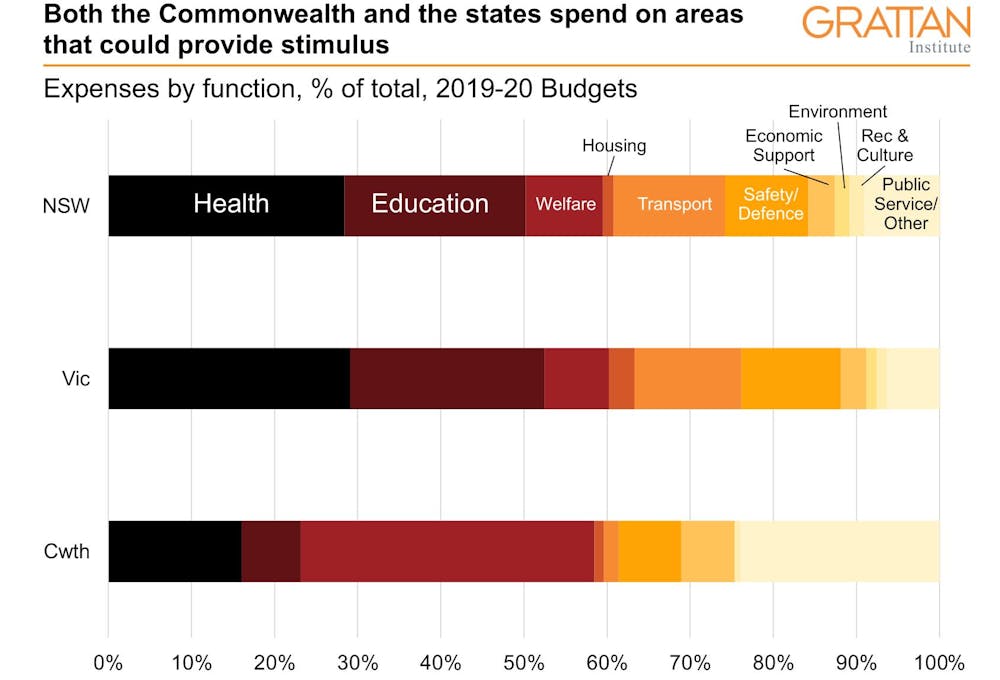
The Reserve Bank governor is more circumspect, but also says the states have an “important” role in the fiscal response to the COVID recession and “can do more over time”.
Have the states been slacking off? At first glance, it appears so. The Commonwealth’s stimulus contribution so far is more than A$170 billion, compared to less than A$30 billion from all of the state and territory governments.
To date, it’s the Feds more than the states
The Commonwealth has spent almost 9% of national output on stimulus, whereas no state except Tasmania has spent more than 2% of its own output.
The two biggest states, NSW and Victoria, have each spent little more than 1%.
But these measures tell only part of the story. The Commonwealth has greater spending power because it has more revenue to draw from, and the states get about half their revenue from the Commonwealth.
Source: Grattan analysis of government announcements
These disparities account for some of the unbalanced effort, but not all of it.
Excluding what it passes on to the states, the Commonwealth’s revenue as a share of gross domestic product is about twice that of most states as a share of gross state product.
Yet its COVID response has been almost six times as big.
Although the Commonwealth is the main funder for several of the traditional stimulus levers – including the welfare and personal income tax systems – the states also spend money in areas that can be used to stimulate the economy.
The most important include social housing, health, education, and industry support.
Notes: Commonwealth Budget (Budget Paper 1, Table 3, p5-7) does not specify funding for Environment, so this is included in other. ‘Economic Support’ for the Commonwealth includes spending on Fuel and energy; Agriculture, forestry and fishing; Mining, manufacturing and construction; and Other economic affairs. Commonwealth figures include transfers to the states.Source: 2019-20 Budget papers
There’s also plenty of “room to move” on state government balance sheets – all six states entered this crisis with net debt below 15% of gross state product and with interest and depreciation costs less than 2% of gross state product. All were projecting operating surpluses.
Their borrowing costs, though higher than the Commonwealth’s, are still exceptionally low.
NSW and Victoria can borrow for 10 years at an interest rate just over 1%, far below the Reserve Bank’s inflation target band, making the money free in real terms.
More is needed from both
All of this suggests our states can and should do more to support the recovery.
But the Commonwealth will also need to do more. Like the states, it has room to spend more, and it should.
The Reserve Bank expects unemployment to peak at 10% in the December quarter and still be as high as 7% in December 2022.
To avoid this scenario, the Grattan Institute recommended in June that governments of both kinds plan for $70-to-$90 billion in extra stimulus over the next two years to bring unemployment down to 5% and get wages growing again.
The renewed economic fallout from State 4 restrictions in Melbourne means that the response will now need to be even larger.
There are many things governments can do beyond the extensions of JobKeeper and JobSeeker already announced.
A banquet of options
The Commonwealth could introduce a wage subsidy for new employees beyond March. And it should boost the childcare subsidy to help parents who have lost jobs or hours during the downturn to re-enter work.
It could also amplify state investments in infrastructure and services that create jobs and serve social needs: social housing and mental health services are obvious candidates. The tutoring program to help disadvantaged students that Grattan proposed in June also fits this bill.
Well-targeted personal income tax cuts or better, a tax bonus, targeted at low and middle income earners, can also help boost demand, including in worst-hit sectors such as hospitality, tourism, and the arts.
But tax cuts generally don’t provide as much economic kicker as others forms of government stimulus because more of the money “leaks” to savings.
Announcing a permanent boost to JobSeeker beyond December would put money in the hands of those most likely to spend it.
Other ideas such as a temporary GST holiday or electronic vouchers to spend in certain sectors – an idea being adopted in Britain – have the advantage of being temporary and targeted.
There is a banquet of worthwhile options governments should be considering – and they shouldn’t fight over who picks up the tab.
If governments of both kinds don’t do more, the recession will last longer.
Maybe it wouldn’t hurt to make a little whoopee. The downside of doing too little way exceeds the potential downside of doing too much.
The federal government has nailed down two possible vaccine sources with supply and production agreements with pharmaceutical companies worth $1.7 billion.
The agreements mean the University of Oxford/AstraZeneca and the University of Queensland/CSL would provide more than 84.8 million vaccine doses, almost entirely manufactured in Melbourne.
The success of either vaccine still has to be demonstrated, but trials are encouraging.
If all goes well, there would be access to 3.8 million doses of the University of Oxford vaccine in January and February.
The government promises a vaccine would be made available free.
Earlier it announced it had signed a letter of intent for the Oxford vaccine.
Scott Morrison said there were “no guarantees” these vaccines would prove successful. “However the agreement puts Australia at the top of the queue, if our medical experts give the vaccines the green light.”
“By securing the production and supply agreements, Australians will be among the first in the world to receive a safe and effective vaccine, should it pass late stage testing,” he said.
The government is also exploring other promising vaccines which are being developed and it may invest further.
If successful, the Oxford vaccines would be available from the start of next year, and the UQ ones from mid year. There would be 33.8 million doses of the Oxford vaccine and 51 million of the UQ one.
More than 95% of doses would be manufactured in Australia.
Each person would have a dose of one vaccine followed by a second dose of the same one within a few weeks. First to get the vaccine would be people most at risk of COVID and health workers.
The government said the agreements it had secured allowed for more orders to be negotiated and for doses to be donated or on-sold, without mark-ups, to other countries or international organisations. Morrison has stressed Australia wants to help Pacific countries and other regional neighbours get early access.
Late stage phase 3 trials are underway for the Oxford vaccine. Phase 1 clinical trials for the UQ vaccine began in mid-July in Brisbane. If this is successful, CSL will take responsibility for the Phase 2b/3 clinical trial, expected to begin late this year.
The government would run a strong campaign to encourage people to be vaccinated, but this would not be compulsory.
Victoria’s ultra-cautious roadmap out of its lockdown, outlined by Daniel Andrews on Sunday, reinforced the strong message that came from Friday’s national cabinet.
Premiers are in the driving seat of exiting COVID restrictions, and they are imposing the strictest speed limits – much slower than Scott Morrison would like – and ignoring federal government pressure.
Western Australia’s Mark McGowan defied Morrison’s plan on Friday. Queensland’s Annastacia Palaszczuk made it clear she won’t open her state’s border with NSW until she’s good and ready.
Now, unsurprisingly, Andrews has indicated he will not be hurried, despite the cries from business and the sound of Canberra’s grinding teeth.
Andrews stressed his timetable “is not what many people want to hear – but it is the only option”. He warned “you can’t run” out of lockdown – or there would be a third wave.
The Morrison government doesn’t think it is the only option, and didn’t mince words in a statement quickly issued from the PM, Treasurer Josh Frydenberg and Health Minister Greg Hunt (the latter two are Victorians).
“To extend lockdown arrangements will be hard and crushing news for the people of Victoria,” they said.
Just in case anyone doubted where to sheet blame, this was “a further reminder of the impact and costs that result from not being able to contain the outbreaks of COVID 19”.
The statement stressed the roadmap was “a Victorian government plan”, distancing the feds from any ownership.
The tone was very different from Morrison’s words to parliament last Tuesday, when he said “Victoria has turned the corner and we, together with the Victorian government, are planning to reopen Melbourne and reopen Victoria”.
Sunday’s federal statement declared “the proposed roadmap will come at a further economic cost.”
“While this needs to be weighed up against mitigating the risk of further community outbreak, it is also true that the continued restrictions will have further impact on the Victorian and national economy, in further job losses and loss of livelihoods, as well as impacting on mental health.”
The federal government will talk to business in Victoria “to understand their concerns and seek to ensure they are addressed”.
Morrison and his ministers also had fresh praise for the NSW government, which has its economy running despite a continuing low levels of cases. They highlighted the Berejiklian government’s successful contact tracing.
Federal help is being offered to strengthen Victorian contact tracing, in the (probably vain) hope that could put the Victorian foot on the accelerator.
Andrews has used elaborate modelling in reaching his strategy. But his critics argue the benchmarks, particularly at the back end of the timetable, are unrealistic.
For example, the last step in Melbourne’s easing, dated from November 23, is contingent on “no new cases for 14 days (state-wide)”.
It was quickly pointed out if the Andrews’ road map were in place in NSW, that state would have a curfew now.
NSW’s tally announced on Sunday was 10 new cases to 8pm Saturday. The Melbourne curfew is to be lifted from October 26 if there is a statewide daily average over the previous fortnight of less than five new cases and a statewide total of less than five cases with unknown sources over that period.
For the immediate future, in Melbourne there will be an additional fortnight – beyond next weekend – of the hard lockdown, with some minimal tweaking.
The overnight curfew will start an hour later (at 9pm), exercise can be up to two hours, and singles will be able to form a bubble with someone else.
From September 28, if the cases have come down (latest tally on Sunday was 63) to 30-50 daily average over the previous fortnight, there will be gradual relaxations including the re-opening of childcare. The state government says step two would see about 100,000 people return to work across a number of sectors, including construction and manufacturing.
But Melbourne businesses in retail and hospitality will not be able to start to getting back to reasonable activity until the end of October, and hospitality will be strictly limited.
The restrictions in regional Victoria will be eased from their already lighter base.
Business is up in arms. The Australian Industry Group predicted “catastrophic economic, health and social damage caused by the continued lockdown and [the] prospect of more months of sharply diminished activity”.
Frydenberg said a week ago that on Treasury estimates, in the December and March quarters more Victorians were expected to be on JobKeeper than in every other state combined. The roadmap could see the numbers even higher than anticipated.
The Andrews timetable will put pressure on the Victorian government but also on Morrison.
Andrews’ hard line is stretching the tolerance of Victorians. Not only will many local businesses believe they can’t survive the longer restrictions, but some voters will be reaching levels of deep stress.
The pressure points on the federal government come from various directions.
There have been calls for it to just “do something”, to intervene to override what are being seen as recalcitrant states. However it is not obvious it would have viable power to do so.
Even if it could intervene, it would be high risk – on health, economic and political grounds – to do so.
The extended Victorian lockdown will increase demands for the government to provide more stimulus for the economy, and bolster the calls of those who say JobKeeper and the Coronavirus supplement should not be phased down.
The Victorian roadmap won’t just feed into the budget numbers, but affect the public climate in which the October budget is brought down.
In that budget, the government will be talking up hope. But on October 6, Victorians hearing that budget will be still under curfew, confined to takeaways, unable to see extended family.
“I want all of us to stay the course so that we can all have something approaching a normal Christmas,” Andrews said on Sunday. It will require quite a feat to deliver that, on the terms of this strict roadmap.
Source: The Conversation (Au and NZ) – By Laxman Bablani, Research Fellow, Population Interventions Unit, Centre for Epidemiology and Biostatistics, Melbourne School of Population and Global Health, University of Melbourne
The Victorian government today announced the eagerly anticipated roadmap out of COVID-19 lockdown. It features several steps that reflect a much slower relaxing of restrictions than last time around.
While the government has provided a provisional time frame for the various steps, it is data, not dates, that will determine when restrictions are actually eased.
We applaud this strategy. The virus does not obey a timeline. Rather, we have to beat it down to a level at which easing of restrictions is safer.
What was announced?
Metropolitan Melbourne’s current stage 4 restrictions will be extended for two weeks, to September 27. But from 11:59pm on September 13, there will be a few key changes.
The nightly curfew will be shortened by one hour, and will be in place from 9pm to 5am. Also, two people or a single household can meet outdoors for two hours maximum, up from the previous one hour, for exercise or recreation.
For people living alone, and single parents with children under 18, there will be a “single person bubble” policy that allows them to designate one other person who can visit their home.
Regional Victoria is already faring better than Melbourne, and will have a faster timeline.
Premier Daniel Andrews wants to maximise the chance of getting to Christmas in something like stage 1, while minimising the chance of a third wave of infection that sends the state back into lockdown. This means staying in strict restrictions for longer, and easing out more gradually.
How did data influence the decision?
The Victorian government’s decision was based in part on the output of a model developed by researchers at the University of Melbourne and the University of New England. It simulates population movements in a simplified world, based on parameters that describe the spread of COVID-19 and people’s interactions with each other.
In the real world, these patterns are highly random. So the researchers ran the model 1,000 times, with thresholds for relaxing (or tightening) restrictions set at an average of 25, 10, and 5 cases per day on a fortnightly basis. The model could then report the probability, under a given set of policy settings, of having to lock Victoria down again before Christmas.
Opening up too soon is likely to cause a third wave. In simulations in which restrictions were eased once average daily cases dipped below 25 per day, there was a 62% likelihood of new lockdowns. But with restrictions retained until daily cases dropped below 5 daily cases, the lockdown likelihood was just 3%.
Viewed in that light, it is easy to see why the Andrews government opted to set strict criteria for lifting restrictions, knowing that short-term pain is better than the economic ravages of another lockdown in the long term.
What might hold Victoria back?
First, there’s the elephant in the room — the quality of Victorian contact tracing (especially in comparison to New South Wales). Living with the virus requires high-quality contact tracing. There’s no doubt contact tracing in Victoria has improved since June when our second wave started. There is therefore a real possibility that we may get the case numbers down faster, and hold off resurgences of case numbers more effectively or for longer than the modelling suggests.
Second, infection disease control in health care and aged care has not been up to scratch in Victoria (compared with, dare we say it again, New South Wales). These represent particularly dangerous settings. Older adults are much more likely to become severely ill with COVID-19, whereas health-care workers who become infected with the coronavirus risk infecting the most vulnerable and reduce health capacity when it is most needed.
And of course, health and aged care workers live in the community too, and if community restrictions are relaxed the virus will leak back out through family members and surge again. The Victorian government decided to deal with both community and health-care transmission simultaneously. We think that it is the right approach.
Infection control in health and aged care hasn’t been good enough in Victoria, leading to a surge in infections among health-care workers and aged care residents.Daniel Pockett/AAP
Is elimination still possible?
There were strong arguments for an explicit elimination strategy back in early July, requiring “going hard” for a six-week lockdown. Unfortunately, Victoria didn’t go hard early enough. The government waited three weeks, numbers got out of control, and then we went into stage 4. With the benefit of hindsight, it was a huge missed opportunity.
The Grattan Institute is also arguing strongly for an explicit elimination strategy and much longer hard lockdowns. It argues this will result in better economic outcomes in the long run. An impressive modelling paper by Australian National University researchers also supports the theory that elimination is better for both health and the economy in the long run (although this paper has not yet been peer-reviewed).
However, things have changed in the past two months. First, we are now closer to a vaccine, so in theory the long-term payoff for short-term pain will arrive sooner. Second, New Zealand (and Queensland) have taught us that elimination can be lost. Third, NSW has taught us you can live with the virus at low levels (so far). Fourth, the imminent border openings and hotspot strategy are not really consistent with the hard border controls needed to defend elimination in places that achieve it.
Andrews aptly termed the state’s strategy “aggressive suppression”. It may even achieve elimination, as the first wave effort so nearly did. We hope it does – but do not bank on it.
It’s in our hands now, both the government and citizens. With some good luck – and few would begrudge Victorians a little of that – the roadmap will pan out as planned.
Victorian Premier Dan Andrews and Chief Health Officer Brett Sutton on Sunday announced steps to slowly ease COVID-19 restrictions in metropolitan Melbourne and regional Victoria.
There are four steps before Victoria totally opens up – a goal Andrews refers to as “COVID-normal”. Melburnians will have to wait a bit longer than regional Victorians before an easing of curfews and restrictions on leaving the house.
But there is now a clear set of thresholds and restrictions for what a COVID “safe” Victoria should look like over the coming months:
The easing of restrictions for regional Victoria starts at Step 2, and involves some thresholds that are independent of metropolitan Melbourne.
On Monday, September 7, Julian Assange is scheduled to appear in a British court for several weeks of hearings regarding the U.S. attempt to extradite him.
This concerns Wikileaks obtaining and jointly publishing US-classified data with leading outlets in 2010.
Assange remains imprisoned for this, after serving a maximal sentence, ostensibly, for breaching bail in connection with a closed investigation for sexual assault allegations made by Swedish police.
Remand for extradition requires an indictment having been the basis of an arrest. Approval must then come from the Home Office for the Court to process the matter.
Wikileaks founder Julian Assange … judge has scheduled a new arrest of Assange at the first hearing. Image: Independent Australia
But Judge Vanessa Baraitser has scheduled a new arrest of Assange at the first hearing. Her rationale is that she is powerless to reject a superseding indictment – despite its submission a year past the deadline – or to accept it in any way apart from just:
Presuming future arrest;
Presuming Home Office approval on the day of the arrest;
Leaving Assange incarcerated, though the basis for it had been removed when the US decided he would face a different indictment there.
Third indictment files
This third indictment was filed – to the detriment of a year of preparation made by the defence – late last month by US President Donald Trump’s Department of Justice.
His administration has often been described by the media as hostile toward it, in multiple contexts, including editorials in prestigious broadsheets opposing extradition of Assange.
The First Amendment to the US Constitution prohibits any law that abridges “freedom of speech, or of the press”.
Yet the Espionage Act of 1917 and the Computer Fraud and Abuse Act have increasingly been used in contravention of that provision. Assange is accordingly facing 175 years in prison, effectively the term of his natural life, under conditions widely denounced as purposely inhumane.
The United Nations maintains that Britain must free and compensate Assange. So why has it not done that and why hasn’t Australia insisted on it?
The reason is essentially pretence, based on a shared agenda with the US.
The “pretence” over the Assange case, based on a shared agenda with the US. Image: Independent Australia
Britain does not deny that it is bound to uphold the relevant international laws, because it incorporated them into its domestic law by way of ratification. Nor does it dispute the matter in further detail with the UN. It simply acts as if there is nothing to answer for.
Strictly bound
But unless the UN errs regarding their interpretation or application of these laws, the ratifying country is strictly bound to accord with any given ruling.
It can then be held to account, for instance, by journalists. Their role is to seek comment from that government regarding the UN view of how the law applies, report critically on resulting silence or statements as needed and repeat until the matter is resolved.
Yet the press has never seemed to realise that this is its job. As a consequence, many apparently feel there is nothing binding about international law.
Some even entertain the barbarous notion that without corporeal force to back them up, UN rulings and statements are just incidental fluff.
So when the media and society as a whole are negligent, courts and politicians get away with thumbing their noses at that UN and generally carrying on as if it did not exist.
Likewise for civil servants, as shown by a recent comment from Dennis Richardson, formerly Australia’s Director-General of Security, as well as Secretary of the Department of Foreign Affairs and Trade.
Though he nodded to Australian intervention for a journalist in Egypt, that was different in his view, since Assange is in the UK and “last time I looked the UK was a liberal democracy”.
By the Richardson line of reasoning, “either the UN is mistaken to identify torture and arbitrary detainment in Britain, or there is no actual problem with that being perpetrated on our citizen there.” Image: Independent Australia
Arbitrary detention
By that line of reasoning, either the UN is mistaken to identify torture and arbitrary detainment in Britain, or there is no actual problem with that being perpetrated on our citizen there.”
In short, nothing calamitous would ever get past the “learned judges” in the UK, as Richardson describes those who preside over Assange’s “fate”.
Yet these judges show contempt for the position of the UN. This is not because they have a better sense of how the law applies in this case or are more impartial. On the contrary, just by virtue of being UK judges, they have a conflict of interest when appraising any ruling applicable to their country.
Nor have they generally been so qualified or familiar with details of the matter as the panel that spent 16 months weighing submissions from all parties. Britain also lost an appeal after having agreed to abide by the decision, which of course, it did not.
But according to Richardson – who effectively spoke for the generally mute leadership of Australia on this matter – so long as the UK is a democracy it should not be accountable to us for its treatment of Assange. If a democracy tortures our citizen, we can live with it.
While some let the matter slide this way, Britain is in violation of legal obligations as determined by the appropriate authority. It is unreasonable to hold that its courts should be left alone to continue in such violation.
The matter should be taken from the courts by the politicians that sent it to them. The prosecutor, judges and politicians should in the meantime be made cognisant of how they need to meet Britain’s obligations under the arrangements it committed to.
The UK needs to be pressured into compliance by all civil means. Image: Independent Australia
Pressured into compliance
Specific details of the case should not be excluded from that education, as the UK needs to be pressured into compliance by all civil means.
Yet the mainstream media has never taken this issue by the horns and is only just coming around from having contributed to the problem. It might have prevented or solved it and could still win the day, contingent on nothing but its own resolve.
Furthermore, Australian Prime Minister Scott Morrison has ample power to successfully intervene for Assange and has been advised to that end by prominent legal experts, among others.
Indeed, how could Britain remain defiant if he so much as hints at commenting openly on its failure to comply with medical advice to move Assange to an adequate hospital?
If the press or Morrison are unprepared to act in these ways, it is mainly because of the catch-22 that Britain’s illegal and unconscionable action goes unremarked in public. Such quietude is no less malefic than meek, as it continues to enable outrages by leaving deferential trust in place.
To reiterate, as the authority to rule on such matters, the UN has found that Britain is mistreating a publisher for the US. This is no trifling technicality.
“The key phrase is ‘abuse of process’ and the pivotal authority is the UN. Image: Independent Australia
Australia can even sue Britain in its own courts if it fails to provide medical care that Assange has been determined to require. This would evidently leave the UK with no means to continue the pretence of due process.
Britain would simply capitulate
Yet long before it came to that, Britain would simply capitulate with whatever optics are needed to soften the blow to its pride.
The key phrase is “abuse of process” and the pivotal authority is the UN. With any passable media or parliamentary focus on these concepts, even Morrison will be swept along to rescue Assange. He has no means to improve on Richardson’s attempt to wave British abuses out of view, especially since the media began to reveal aspects of the broader injustice.
Some are apparently too proud of lacking sympathy for Assange to abide any defence of him. Nevermind if such defence is derived from politically motivated retribution for publishing authentic documents, found to be in the public interest by major outlets around the globe.
It seems they would sacrifice any point of difference with totalitarian regimes just to be sure that he doesn’t suffer any less than he might.
The Convention Against Torture (CAT) is ratified in the US, UK and Australia. Its second article states that:
‘No exceptional circumstances whatsoever, whether a state of war or a threat of war, internal political instability or any other public emergency, may be invoked as a justification of torture.’
By article 1 of the CAT, every official who acquiesces with torture anywhere contributes to their state’s culpability for it.
The Australian consulate in London has not assisted or rescued Assange from documented torture. If that was part of its job, then the buck stops with Scott Morrison to ensure it does the job.
Likewise, if that was not its job then the buck stops with Scott Morrison to do the job himself or get Foreign Affairs Minister Marise Payne to do it.
I have a lot for which to be thankful to Dr Joe Williams, or Papa Joe as we call him in the Pasifika Medical Association family.
I was a refugee from the military coup in Fiji at Christmas 1987, and arrived in New Zealand with a young family, not able to register immediately in my chosen medical profession.
Dr Joe Williams was a standout for me – a beacon of calm in those uncertain and stressful days. He was enormously helpful as I prepared myself for registration as a doctor.
Papa Joe was kind and thoughtful and very wise. He was always calm. My enduring memory of him is of a gentleman and a scholar, never rattled and always impeccably dressed.
He was the classic mentor, quick to praise, slow to criticise and never a negative word about anyone. He was a gentle and quiet leader and a great mentor to many.
The Pasifika Medical Association’s conference in Niue in 2019: from left, Dr Francis Agnew (PMA board member); Dr Joe Williams (PMA patron); Gaylene Tasmania (general secretary health and social services, Niue); Cook Islands prime minister Henry Puna, Hon Billy Talagi, Niue minister of health; Akaiti Puna, wife of PM Puna; Dr Collin Tukuitonga. Image: Dr Collin Tukuitonga
Since those early days, I have had a lot of interactions with Papa Joe, as we navigated our way in medicine and Pacific politics in New Zealand and across the Pacific region.
His achievements in New Zealand and the Cook Islands are well known. What is less well known is his enormous contribution to improving health and health services across the small islands of the Pacific region. Papa Joe was an outstanding health minister and diplomat for the region at global negotiations.
Patron of Pasifika Medical Association Papa Joe was the patron of the Pasifika Medical Association (PMA), working in New Zealand and across the Pacific. PMA is a family of Pacific health professionals.
He was one of the health ministers who helped create the Healthy Islands (Yanuca) Declaration in 1995 – a vision of a healthy, safe and prosperous Pacific region where the young and the old thrive and age with dignity. Healthy Islands remains a vision of hope and health, and a Pacific region where the environment is protected forever.
His achievements in health in the Pacific region are many and varied. He was recognised by the World Health Organisation (WHO) for his leadership in eradicating filariasis from the Cook Islands.
Above all, Papa Joe was a keen supporter of young health workers across the region at regional WHO and Pacific Community forums. He recognised the importance of political support in health care, and he was good at it.
We will miss you, Papa Joe, but we will carry on your legacy. We have come too far to stop now and I know that you expect nothing less.
Moe mai rā e te rangatira.
Dr Collin Tukuitonga is associate dean Pacific at the University of Auckland’s Faculty of Medical and Health Sciences. This article was first published by The Spinoff and is republished here with the permission of the author.
His medical practice was near the Americold cold store at the centre of the new community-transmission virus cluster in New Zealand.
Dr Williams served briefly as prime minister in 1999.
Cook Islands News extends deepest condolences to Dr Williams’ family at this sad time.
Dr Williams’ death is the second this week associated to the latest Auckland coronavirus cluster.
24 deaths in New Zealand RNZ Pacific reports that the Ministry of Health said Dr Williams’ death brings the total number of people who have died from the coronavirus in New Zealand to 24.
The Pasifika Medical Association announced his death, saying he was a well-respected and much loved man.
It is with the deepest sadness that the Pasifika Medical Association announces the passing of their respected and much-loved Patron Dr Joseph Williams MBChB, MPH, QSM, QSO. Rest well on your final voyage Papa Joe. Read full media release here: https://t.co/a3mEOnwNIqpic.twitter.com/HlWZU3fjje
— Pasifika Medical Association Group (@MedicalPasifika) September 4, 2020
Dr Williams spent 25 years in the Cook Islands and served as a Cabinet Minister between 1974 and 1978 and again in 1994-1996 before becoming Prime Minister in 1999.
Current Cook Islands Prime Minister Henry Puna said Dr Williams’ passing had caused him great sadness.
“Dr Joe was a pioneer on many fronts and a man way beyond his time. He was one of our early breed of home-grown medical officers of health.
“For thousands of our people in New Zealand, his medical practice was where they headed for their primary health care,” Puna said.
The prime minister said Dr Williams would be greatly missed.
“E tumu rakau ruperupe teia no te Basileia kua inga.
Heart-felt condolences “On behalf of the government and people of the Cook Islands I extend our heart-felt condolences to Dr William’s wife Jill and family.”
A National Memorial Service is to be organised for Dr Williams once his funeral arrangements have been confirmed
As a sign of respect and remembrance, all Cook Islands flags on government buildings were being lowered to fly at half-mast.
Dr Williams was born in Aitutaki, went to Northland College, and graduated from Otago Medical School in 1960, later completing a Master in Public Health at the University of Hawai’i.
He was involved with the World Health Organisation and in 2016 he received the WHO Award of Appreciation for his role in the elimination of lymphatic filariasis. He was also known for his work in the fields of eczema, prostate cancer and diabetes.
Most recently he had been practising medicine in Auckland.
He received the Queen’s Service medal in 1974 and was invested with the Companion Queens Service Order in 2011 for services to the Cook Islands community.
Pasifika MA life membership He was awarded a life membership by New Zealand’s Pasifika Medical Association in 2004 and was appointed as patron of the PMA in 2015.
PMA president Kiki Maoate said the death of Dr Williams had left the community feeling empty and distraught.
Dr Maoate, who is also a nephew of Dr Williams, said the immediate family was devastated and that feeling of sorrow had spread through the community.
Cook Islands flags flying at half-mast today. Image: Office of the PM
“There will be a sense of emptiness, there will be a sense of deep sorrow as we go through this period but I think at the end of the day we will look and see what he has actually touched is still there and we can carry the good work that he has actually started but he will leave a lot of distraught people for some time.”
He said Dr Williams was driven, in particular, by a love for his Cook Islands community.
Dr Maoate said the former prime minister was determined to serve his community, even well into his advanced years.
“There are other people communities that he plays a significant role [in] but first and foremost it’s about the people for him and that’s where his legacy really stands out.
Love for Cook Islands people “That’s why, I think when you reflect back on what he has developed and processed through the years and achieved, you can actually trace it back to his heritage and his love for the people of the Cook Islands,” Dr Maoate said.
Director-General of Health Dr Ashley Bloomfield today said Dr Williams was seen as a leading figure in the Cook Islands medical community and would be sadly missed.
“Our thoughts are with his family and community at this time of loss and grief.
“Today’s sad news again reinforces the importance of our shared vigilance against covid-19, the very serious consequences the virus can carry with it, and the measures we all need to take to stop the spread, break any chain of transmission and prevent deaths.”
Three new cases in NZ
RNZ News reports that three new cases of covid-19 were reported in New Zealand today – two in the community and one imported – after two deaths were reported in the previous 24 hours.
There was no media conference today. In a statement, the Health Ministry said both community cases had been epidemiologically linked to the Auckland cluster.
“One case has been linked as a close contact to the Americold household sub-cluster and the other is a close contact of a confirmed case linked to the Mount Roskill Evangelical Church sub-cluster,” the statement said.
The imported case is a young child linked to a previously identified case who arrived from India on August 23. The child was already in quarantine with family members.
There are two people in hospital with the coronavirus – one on a ward in North Shore Hospital and one in intensive care in Waikato Hospital.
There are now 77 people linked to the community cluster at the Auckland quarantine facility, including 60 people who have tested positive for Covid-19.
There are now 112 active cases in New Zealand, with one of the previously reported cases now recovered.
The total number of covid-19 cases in New Zealand is now 1416.
Rashneel Kumar is editor of the Cook Islands News.
The national cabinet, created to impose maximum unity on Australia’s response to COVID, has formally fractured. It hasn’t broken altogether, but the rubber band holding it together has been stretched too far and has now dramatically slackened.
Scott Morrison, who created the body to maximise his authority in a situation where the federal government did not have constitutional power, finally came up against the limits of his construct.
Morrison announced after Friday’s meeting that from now on, national cabinet will no longer operate on a consensus model; it will acknowledge differences rather than striving for unanimity.
Of course, previously there wasn’t unanimity on some critical issues – schools, borders. They were pushed off and states simply went their own ways.
On Friday, seven of the eight states and territories agreed to aim to open things up by Christmas, using some “hotspot” approach as a basis.
Western Australia was the one jurisdiction that opted out. With an election next year and sky-high popularity based on the success of a hard border, WA premier Mark McGowan was never going to limit his options.
The other major rebel, Queensland’s Annastacia Palaszczuk, has signed up to the December aim, but she has left herself the wriggle room she needs.
She hasn’t agreed to a particular definition of a hot spot. The Queensland election will be over by the end of October, and you can be confident she’ll run her own race until then.
Morrison likened the situation to getting people onto a bus. “Not everyone has to get on the bus for the bus to leave the station”, he said. “But it is important the bus leaves the station, and we all agree on that. […] Even when, on occasions, some might not want to get on, they know we need to keep moving forward.”
Morrison originally had hoped to have the health advisers settle on a hotspot definition, on the basis of which he could pressure states to bring down borders.
But it became clear that hope would fall at two hurdles. The federal and state health officials, who come together in the Australian Health Protection Principal Committee, did not all embrace a definition. And the outlier states would not cede their autonomy.
Like the national cabinet, the illusion of unity in the AHPPC – which operated on a “consensus” basis – has ended. The federal government has produced its own definition, but what will be more generally accepted as defining a hotspot remains a work-in-progress.
The federal government has been for weeks trying to arm-twist Queensland in particular. But the power over borders resides with the states, and they will use it when it’s in their interests to do so.
McGowan was blunt. At a news conference after the meeting, he described WA as an “island within an island” (shades of that old WA secessionist feeling), and boasted how well it was doing economically.
“We’re very, very proud West Australians but we’re also loyal Australians. States rights mean that premiers and state governments can do what they have to, in my view, to protect our citizens and protect our jobs. But we’re still part of the commonwealth, we’re still part of the nation. We still serve in the defence forces. We’re still Anzacs.”
He hoped the east of Australia would come to an “even greater appreciation” of what WA did for the country. “We carry the nation’s economy.”
McGowan spoke positively about Morrison; earlier Morrison had stressed special circumstances applied to WA. Their mutual public amiability reflected there had been a test of strength, and McGowan had won. It wasn’t for the first time. Some weeks ago, the federal government pulled out of Clive Palmer’s case against WA, under the weight of WA public opinion.
It’s part of Morrison’s pragmatic style to pivot when he is rebuffed. He seeks another route to his objective. An assertive stance is replaced by a conciliatory one. When you don’t have the power to coerce, you have to cajole.
Morrison wants to encourage Victoria to ease its restrictions as fast as the health imperatives allow; he wants Queensland welcoming tourists. But Dan Andrews’ Sunday roadmap will be cautious. As for Queensland, Morrison will have to wait until after the state election, when Palaszczuk might be more amenable – she did get on the Friday “bus” – or will have been replaced by a compliant new government.
On Thursday, Morrison told parliament the leaders should aim to make Australia “whole” again by Christmas. That deadline is looking very arbitrary.
“Wholeness” will eventually come, but certain conditions will have to be met. The Victorian outbreak must be conquered. The situation in NSW must be further stabilised.
Morrison talks of twin health and economic crises, but the polls suggest the health issue has the dominant grip on the public psyche. Until community transmission is stopped or minimal in Victoria and NSW the public mindset will impede the economic recovery.
Above all, that recovery requires public confidence – and that in turn needs the removal, or near removal, of fear of infection. Even where that fear may be excessive, it has become a roadblock to a return to normality.
What does the recalibration of the national cabinet’s dynamic mean for that institution, much praised when it started?
In the context of the pandemic national cabinet remains useful, despite having taken a bruising this week. It is a clearing house for information; it forces leaders to communicate regularly; it encourages them to seek constructive solutions (even though we have seen that has its limits); it helps cut through bureaucracy.
For the longer term, this week’s experience indicates the national cabinet does not promise a new nirvana of co-operative federalism. But that was always hype.
When a constitution divides power between a central government and state governments, there will inevitably be a mix of conflict and co-operation. What has stood out in the border wars is just how “federalist” the Australian federation can on occasion become.
The definition of “COVID-19 hotspot” as provided by Chief Medical Officer Paul Kelly can be found here
The University of the South Pacific Council has terminated the investigation into allegations of material misconduct against USP vice-chancellor and president Professor Pal Ahluwalia.
A media release from the university stated the council had considered the decision by the special executive committee, viewed all the evidence against the vice-chancellor, and came to a clear consensus that there was no indication of material misconduct.
USP vice-chancellor Professor Pal Ahluwalia said he was happy that the USP Council had cleared all allegations against him.
Professor Ahluwalia thanked the council, especially the special executive committee, for their commitment to seek truth and justice.
The USP vice-chancellor said he was deeply humbled by the support that had been bestowed upon him and his wife and they were committed to serving the Pacific and making USP even stronger.
Lena Reece is a senior multimedia journalist with FBC News.
A man in his 50s linked to the Auckland cluster of covid-19 coronavirus infections has died at Middlemore Hospital today – New Zealand’s first death from the virus in more than three months.
The Health Ministry confirmed this today and the death toll from covid-19 in New Zealand is now 23.
The man was a confirmed case of covid-19 and was being cared for in intensive care at Middlemore.
The ministry said his family were regularly updated, and his wife and son were able to visit him, using full PPE.
Director-General of Health Dr Ashley Bloomfield said he acknowledged the anxiety New Zealanders “may be feeling about today’s news, both in the wider community and also for the family and whanau grieving over this death”.
“Our thoughts are with his family and community at this time of loss and grief.
“We have always recognised that further deaths linked to covid-19 were possible. Although the health system has done and will continue to do everything we can to prevent them, this can be a very challenging virus to treat and for some people to recover from,” he said.
Shared vigilance important “Today’s news reinforces the importance of our shared vigilance against covid-19, the very serious consequences the virus can carry with it, and the measures we all need to take to stop the spread, break any chain of transmission and prevent deaths.”
The last death from covid-19 in New Zealand was on Sunday, May 24, and was added to New Zealand’s official death tally the following Friday, May 29.
If you havesymptomsof the coronavirus, call the NZ Covid-19 Healthline on 0800 358 5453 (+64 9 358 5453 for international SIMs) or call your GP – don’t show up at a medical centre.
News emerged this week former AFL footballer Danny Frawley was suffering from a brain disease called CTE when he died last year, according to reports received by the Victorian Coroner.
Chronic traumatic encephalopathy, or CTE, refers to changes in the brain that have been linked to repeated blows to the head, sometimes seen in former players of sports such as rugby and Australian and American football codes. It’s believed these changes relate to an abnormal buildup of a protein called “tau” in the brain, which can damage brain cells.
Frawley’s is the second confirmed case of CTE in a former AFL player, while two former NRL players are also thought to have had the condition.
CTE has prompted concern among the media and public, and researchers still don’t fully understand the condition. It is not yet clear whether CTE is directly caused by repeated hits to the head, as the condition has also been found in people with no known history of repetitive brain trauma.
There’s been a big increase in research on the topic over the past decade, which will hopefully teach us more about the condition and its possible treatments. But this will only happen if more funding is given to scientists to study it.
What are the symptoms?
The prevalence of CTE is unknown. Although it’s believed to be more common in athletes who suffer repeated head injuries, there has been no rigorous epidemiological study to confirm this claim. This may be because there’s no consensus on how to diagnose it while someone is alive – CTE can currently only be diagnosed retrospectively via an autopsy of brain tissue.
What’s more, the symptoms attributed to CTE are common in the general population, and are not specific to the condition. They range from mental health issues such as depression and anxiety, to substance abuse, suicidal behaviour, and even marital problems.
Proponents of CTE argue it’s a distinct neurodegenerative disease, separate from conditions such as Alzheimer’s. But other researchers say the brain changes in CTE are not unique, not necessarily progressive, and not specific to people exposed to repeated brain injury.
CTE is believed to occur in people who’ve had repeated head knocks over their lifetime.Dita Alangkara/AP/AAP
Where is the research up to?
Significant strides have been made in developing tools that may help diagnose or predict CTE in living people. These include brain imaging methods that might allow for the early detection of the specific tau changes believed to occur in the condition. Other research has focused on identifying genetic factors that may make some individuals more susceptible to CTE.
Scientists have also been investigating potential treatments, both for the symptoms and the underlying biological causes of CTE. For example, our laboratory at Monash University’s Department of Neuroscience has found a drug called sodium selenate can reduce the amount of abnormal forms of tau. This drug is currently in clinical trials for Alzheimer’s and another condition called frontotemporal dementia. It has also been shown to reduce the extent of cognitive deficits in rodents with repeated mild brain trauma.
Concussions can be devastating, even without CTE
While Frawley’s tragic death has renewed the focus on CTE, it’s important to recognise there are other devastating neurological complications that may be more likely to result from repetitive head injury. In particular, the risk of suffering from persistent post-concussion symptoms such headache, dizziness, and fatigue appears to be significantly greater in people with a history of multiple concussions.
Risk of these symptoms persisting after a concussion appears to be particularly high if repeat concussions happen in short succession. Some researchers think the recently concussed brain may have a “window of increased vulnerability” to repeated concussion. However, the length of time, and the underlying biological causes, of this vulnerable period are not yet well understood.
In sport, this creates a lot of uncertainty around when it’s OK for a previously concussed athlete to resume playing. Caution around allowing players to get back on the field is increasingly appreciated in some sporting codes, conveyed in the widely touted “when in doubt, sit them out” message.
How long is long enough? Researchers are working on ways to identify when it’s safe for players to return to sport after a concussion.Shutterstock
But what we don’t know yet is, for how long? In attempt to shed some light on this, our laboratory is investigating how new blood and MRI tests may be able to objectively indicate when the brain has recovered from concussion and is no longer in a vulnerable state, thereby allowing previously concussed athletes to resume playing.
In the meantime, we must use the current knowledge available to manage the risks from blows to the head. Many sports have implemented rule changes in an attempt to decrease the risk of brain injury, which is welcome. Some people have gone further, advocating for participation in collision or contact sports to be banned to prevent CTE.
But when considering this option, it’s important to emphasise evidence of CTE in people with no known history of repetitive brain trauma or collision sport participation. Further, there are many health benefits to participating in sport. In fact, exercise is considered a promising treatment strategy for both concussion and neurodegenerative disorders.
While we wait for further discoveries about CTE, it’s important to carefully weigh the known negatives and positives of sport participation. The interaction between physical activity and brain health is complex; we cannot ignore the problem of repeated brain trauma in sports, but stopping participation in all contact sports will also not lead to optimal brain health.
Making informed, evidence-based decisions about risk and benefit needs to rely on objective data (of which we need much more) rather than media hype.
While the number of new COVID-19 cases in Victoria continues to trend downwards, we’re still seeing a significant number of deaths from the disease.
The ongoing outbreaks in aged care, and the fact community transmission is continuing to occur, mean it’s likely there will be many more deaths to come.
As a result of strict infection control measures restricting hospital visitors, tragically, many people who have died from COVID-19 have died alone. Family members have missed out on the opportunity to provide comfort to the dying person, to sit with them at their bedside, and to say goodbye.
But it doesn’t have to be this way. We have cause to consider whether perhaps we could do more to preserve the patient-family connection at the end of life.
Who can visit?
There’s some variation between Victorian health-care facilities in how visitor restrictions are applied. Some allow visitors to enter hospitals for compassionate reasons, such as when a person is dying. But visitors are not permitted for patients with suspected or confirmed COVID-19.
The latest figures show 20 Victorians are in an intensive care unit (ICU) with 13 on a ventilator. This indicates their situation is critical.
Despite hospitals, and particularly ICUs, being adequately prepared and resourced to provide high-level care for people diagnosed with COVID-19, patients will still die.
Family-centred care at the end of life in intensive care is a core feature of nursing care. So in the face of this unprecedented global pandemic, we realised we needed to navigate the rules and restrictions associated with infection prevention and control and find a way to allow families to say goodbye.
Not having the chance to say goodbye may compound relatives’ grief.Shutterstock
Our recommendations
We’ve published a set of practice recommendations to guide critical care nurses in facilitating next-of-kin visits to patients dying from COVID-19 in ICUs. The Australian College of Critical Care Nurses and the Australasian College for Infection Prevention and Control have jointly endorsed this position statement.
The recommendations are evidence-based, reflecting current infection prevention and control directives, and provide step-by-step instructions for facilitating a family visit.
family visits should be limited to one person — the next-of-kin — and that person should be well
the visitor must be able to drive directly to and from the hospital to limit exposure to others
they should dress in single-layer clothing suitable for hot machine wash after the visit, remove jewellery, and carry as few valuables as possible
on arrival, staff should prepare the visitor for what they will see when they enter, what they may do, and what they may not do (for example, it would be OK to touch your loved one with a gloved hand)
a staff member trained in the use of personal protective equipment (PPE) should assist the visitor to put on PPE (a gown, surgical mask, goggles and gloves) and after the visit, to take it off, dispose of it safely and wash their hands
where possible, the visitor should be given time alone with their loved one, with instructions on how to seek staff assistance if necessary.
We also highlight the importance of intensive care staff ensuring emotional support is provided to the family member during and immediately after the visit.
ICU staff can help facilitate safe visits to patients who are dying from COVID-19.Shutterstock
Tailoring the guidance
It’s too early to know the full impact a loved one’s isolated death during COVID-19 may have on next-of-kin and extended family. But the effect is likely to be profound, extending beyond the immediate grief and complicating the bereavement process.
These recommendations are not meant to be prescriptive, nor can they be applied in every circumstance or intensive care setting.
We encourage intensive care teams to consider what will work for their unit and team. This may include considerations such as:
whether there are adequate facilities in which the visitor can be briefed and don PPE
whether social distancing is possible with current unit occupancy and staffing
whether an appropriately skilled clinician is available to coordinate and manage the family visit
each patient’s unique clinical and social situation.
Rather than just using a risk-minimisation approach to managing COVID-19, there’s scope for some flexibility and creativity in addressing family needs at the end of life.
Since its first death (in China) in January, 873 thousand people worldwide have died from Covid19. The chart shows the population-adjusted death tolls for the most-affected countries (excluding countries with less than 300,000 people. (San Marino – with 34,000 people – actually has the highest death rate.)
In recent days, Peru has overtaken Belgium as the worst affected country in the world from Covid19. It’s hard to say why Peru is easily the worst affected country in the Americas – because Peru did go into early lockdowns.
Nevertheless, the city of Lima was severely affected, probably due to a mix of weak border quarantines at Lima’s airport, and the inability of the people to sustain a harsh and lengthy lockdown. (We see similar problems with South Africa.)
The European countries most affected initially continue to be among those with the most tragic outcomes, in part because of rising cases from July. Europe’s people are at their most mobile in the July and August summer months.
Other than Peru and Belgium, the lead countries are showing a consistent 600 per million deaths; equivalent to 3,000 deaths in New Zealand. (Contrast New Zealand’s actual 22 deaths; 4.4 deaths per million people.)
The next block of countries – from Mexico to South Africa in the chart – probably have actual Covid19 death rates also approaching 600 per million; some of these have marked discrepancies between official deaths and ‘excess deaths’ recorded. (The Economist has been keeping tagson ‘excess deaths’; and see Measuring the true toll of the pandemic; April 25.)
Mexico may well be closer to Peru’s statistic than to that of the USA.
Two very prosperous smaller European countries make it onto the chart: Switzerland and Luxembourg. (Re Luxembourg, see my ‘Europia’ and the Spread of Covid19.)
Switzerland now has a sustained ‘second wave’ of Covid19 cases, though these have barely shown up yet in its death statistics.
The third major region of the world to suffer Covid19 deaths is Eastern Europe. No Asian countries (except Iran) appear on the chart, and only one African country (South Africa).
Arabia. Chart by Keith Rankin.
This chart, shows recorded (ie known) Covid19 cases as a percent of each country’s population.
When looking at these cumulative case statistics, we see that the Arabian countries dominate; and Singapore – which has an economy much like those of the Arabian Gulf States – also features. These countries – especially UAE, Qatar and Singapore – have early diagnoses, good quality health care, and high proportions of young immigrant workers. They also identify greater proportions of actual cases than do the countries which dominate the ‘deaths’ chart.
The countries in this chart which also feature in the ‘deaths’ chart most likely have actual infection rates similar to Qatar; probably actual cases around seven percent of the population.
Green Party co-leader, James Shaw. Image, Green Party New Zealand.
Political scientist, Dr Bryce Edwards.
How badly will James Shaw’s private school debacle affect the Greens? Will it push them out of Parliament? This is increasingly the question being asked as the scandal rolls on and on this week.
After all, the two main polling companies have had the party very close to the 5% MMP threshold in their surveys for the last year. So, the Greens only have to lose a small amount of support and they will be tipped out of office.
Greens badly wounded
Most commentators seem to believe that the Green Party has been seriously undermined by the decision to grant nearly $12m to a private eco-school. This is because it suggests the party has lost its way and no longer represents its traditional and more radical vision.
This is best explained today by leftwing commentator Chris Trotter, who argues in the Otago Daily Times that Shaw has successfully transformed the party into a “woke” pro-business party that is just trying to make capitalism more green – see: A Sorry excuse for a Green Party.
According to Trotter, Shaw “offered living proof to the rising generation of ambitious Green Party activists that they could look sharp, rub shoulders with the rich and famous, and still be non-gender-specific siblings in the struggle to save Parent Earth. Just like Bono.” And in the end, Shaw’s approach is partly responsible for driving their vote down, possibly pushing the party out of Parliament.
Trotter elaborates on this in another piece this week about Shaw’s Establishment green politics – see: From safe bet to Shaw loser.
Of course, the Greens have always had both a radical and moderate side, and this tension poses a challenge. In today’s NZ Herald, Matthew Hooton explains “The Green Party is an unstable coalition of the true believers who have sustained the movement for nearly 50 years and the coveters of $150,000 Audi Quattro e-trons who vote for it” – see: James Shaw dives straight into the Metiria Turei trap (paywalled).
Although most Green activists might be to the left of the Green MPs, the party’s voter base is much more middle class and, according to Hooton, Shaw is actually in line with these Green voters: “For him, being Green is not so much about overthrowing capitalism but things like global carbon trading, renewable energy, trendy new start-ups and instilling higher environmental and social consciousness in the next generation. At a stretch, you could even imagine Shaw accepting nuclear and gene technology to cure climate change. Within this outlook, the Green School fits nicely.”
Essentially, therefore, the scandal is actually a logical reflection of a contradiction in the party that has always been there: between the left activists and the “Audi wing” of the party, especially in the wealthy electorates it normally does so well in.
Some of these points are also well made today in RNZ’s Caucus election podcast, and Tim Watkin talks about that key Green division: “Many in the party see it as the voice of the down-trodden. In truth, most of its votes come from the comfortable middle-class” – see: The naughty prefect & The ‘single source Of truth’.
According to Watkin, the left of the party feel Shaw has let them down by failing to progress a leftwing, environmental agenda. Instead, he has apparently chosen a private school to die in a ditch over: “there are those in the party long wary of Shaw’s corporate Green agenda who would love to see him gone. They are exasperated that Shaw has spent three years saying he couldn’t put his foot down over issues such as welfare reform, water-bottling plants or getting agriculture into the ETS – that mean old Winston was bullying him – but found the strength to fight back… on behalf of a private school.”
Labour to benefit from the demise of the Greens
The Labour Party might be seen as an ally of the Greens, but it would be a mistake to think that Labour doesn’t want to kill off the Greens or at least take some of their votes off them. This point is made strongly by Hooton today, who says Labour are suspected of leaking some of the details of the scandal to the media, undermining Shaw. He draws parallels with the 2017 Greens scandal in which Labour leader Jacinda Ardern was seen as throwing Metiria Turei under a bus.
Here’s Hooton’s point about the current Labour-Green dynamic: “Labour is no more interested in sharing power with the Greens than with NZ First. If it can get both out of Parliament and govern alone, so much the better. Ardern is no unhappier about Shaw’s problems than Turei’s three years ago. Green supporters are now confronted with the awful possibility their party will leave Parliament next month and unravel.”
Similarly, the Herald’s Claire Trevett emphasises Labour’s refusal to get implicated by the scandal: “if Shaw had hoped for some cover from the other government parties, they all but threw him to the wolves. Education Minister Chris Hipkins bluntly refused to take any blame, pointing the finger straight at Shaw” – see: Will James Shaw’s endless sorry save the Greens? (paywalled).
Trevett believes Labour will benefit from the Greens demise: “there is an alternative safe harbour for any disgruntled supporters. That is Ardern and, judging from her lack of defence of Shaw, she has every intention of welcoming those voters with open arms again.”
Other reports show key Labour politicians have been very keen that Shaw answer for his decisions. For instance, when it emerged that Shaw had held up signing off other Government funding decisions in an apparent “ultimatum” email, Finance Minister Grant Robertson said: “He used those words and he has to be responsible for them” and Robertson “wouldn’t be drawn on whether the email amounted to a threat from Shaw” – see Derek Cheng’sRevealed: 44 projects worth $600m at stake over James Shaw’s ‘ultimatum’ email.
RNZ’s political editor Jane Patterson also believes Labour are well placed to win votes off the Greens over the saga: “The Greens might be a Labour ally but it’s every party for itself as they all gear up to resume campaigning and if there are any votes lost from the Greens, Labour is the most likely beneficiary. Or disillusioned Green supporters just may not vote. This is an incredibly volatile political environment and Labour will be out for every vote it can get. Shaw’s management of this situation has made it worse” – see: James Shaw battles to restore his credibility.
Similarly, Heather du Plessis-Allan says “They’ve lost voters to Labour as it’s out-greened them with moves like the oil and gas ban. The popularity of Jacinda Ardern makes it hard to win those voters back” – see: James Shaw has a bigger problem than the Green School saga.
Du Plessis-Allen says the party is now in trouble: “Up to now, I’d been confident that it didn’t really matter too much where the Greens were polling. On the night, I thought, their supporters would flock back to save them. But now, you’ve got to ask whether those supporters think they deserve saving.”
The Greens can survive the scandal
Not all commentators think it’s all over for the Greens. In Tim Watkin’s item (above) he reports that the RNZ Caucus podcast journalists don’t believe that the Greens are in trouble: “the Caucus crew don’t think this controversy is a fatal blow to its election prospects. The angriest voices come from within the party and, once the crystal dust has settled and the bio-energy cleaned, few are likely to switch their vote away from the Green’s policy agenda, even if they are losing patience with Shaw as leader. A determinedly centrist Labour Party and a John Tamihere co-led Māori Party are hardly magnetic alternatives.”
Writing in the Guardian today, Massey University’s Claire Robinson thinks the Greens have time to turn the scandal around: “In the Greens’ favour is that elections are not won or lost on single errors this far out from election day. If the election was still 19 September it might have been curtains for the party. But there are still 30 days until advance voting starts on 3 September and 45 days until election day on 17 October. This gives Shaw plenty of time to publicly make it up to his supporters whose faith in his green credentials will have been sorely tested by this incident” – see: James Shaw’s mea culpa on Green School funding exposed his lack of political nous.
The NBR’s Brent Edwards thinks that rather than hurting the Greens, the controversy could actually boost them. He believes the discontent is more of a “internal disagreement” and Shaw’s apology has been “extraordinary” – see: Will James Shaw’s contrition earn Green Party support? (paywalled).
Here’s Brent Edwards’ main point: “In the Green Party’s case, though, honesty and contrition might work in its favour, rather than condemn it to electoral defeat as many suggest. Will Green Party voters, upset by the investment in the Green School, give Shaw credit for taking the blame? And the warning that the Greens might risk falling below 5% might galvanise their more lukewarm supporters to swing in behind.”
Also writing in the NBR, Dita De Boni makes a defence of Shaw’s decision, essentially suggesting that although he was “careless”, it was a fairly harmless allocation of funding, and that it is creating an over-reaction – see: Greens once more enter election a divided force.
She worries if voters desert the Greens, then the result might be a NZ First-Labour government, or even a single party “milquetoast” Labour adminstration. She therefore calls on leftwing Green activists to pull back on their divisive criticisms of Shaw.
Similarly, the Herald’s Simon Wilson says there is too much to lose if the Greens dip out of Parliament, as they have already achieved so much, up against a conservative and weak prime minister and Labour Party. Especially for the causes of climate change and inequality, Wilson calls on progressives to support the Greens, despite Shaw’s mishaps – see: James Shaw and the honour of politicians (paywalled).
Shaw’s changing story
The problem for Shaw and the Greens is that the story and scandal won’t die. Every day more is revealed, helping unravel Shaw’s version of what occurred. The Green co-leader has gone to ground, refusing interviews.
Shaw also justified his decision on the basis that the local New Plymouth District Council had chosen to be a funder of the project, which also turned out to be entirely untrue – see Catherine Groenestein’sCouncil rebuts assertion over Green School funding.
University of Canberra Professorial Fellow Michelle Grattan and University of Canberra Vice-Chancellor and President Professor Paddy Nixon discuss the week in politics.
This week Michelle and Paddy discuss the first recession in Australia since the early 90’s, Scott Morrison’s continued pressure on the state premiers for a more open Australia, Melbourne’s improving coronavirus situation, and a fortnight of “COVID parliament”.
Source: The Conversation (Au and NZ) – By Quentin Grafton, Director of the Centre for Water Economics, Environment and Policy, Crawford School of Public Policy, Australian National University
The Morrison government today declared it will axe buybacks of water entitlements from irrigators, placating farmers who say the system has damaged their livelihood and communities.
Instead, Water Minister Keith Pitt says the government will scale up efforts to save water by upgrading infrastructure for farming irrigators in the Murray Darling Basin.
The move will anger environmentalists, who say water buybacks are vital to restoring flows to Australia’s most important river system. It also contradicts findings from the government’s own experts this week who said farm upgrades increase water prices more than buyback water recovery.
The government has chosen a route not backed by evidence, and which will deliver a bad deal to taxpayers and the environment.
The government will no longer buy water from farmers for the environment.Dean Lewins/AAP
A brief history of water buybacks
Farmers along the Murray Darling are entitled to a certain amount of river water which they can use or sell. In 2008, the federal Labor government began buying some of these entitlements in an open-tender process known as “buybacks”. The purchased water was returned to the parched river system to boost the environment.
In 2012, the Murray Darling Basin Plan was struck. It stipulated that 2,750 billion litres of water would be bought back from irrigators and delivered to the environment every year. The buyback system was not universally supported – critics claim buybacks increase water prices, and hurt farmers by reducing the water available for irrigation.
The Coalition government came to office in 2013 and adopted a “strategic” approach to water buybacks. These purchases were made behind closed doors with chosen irrigators.
In a review of these buybacks released last month, the Australian National Audit Office found many of these taxpayer-funded deals were not good value for money.
The federal government ordered the review after controversy involving the 2017 purchase of water from two Queensland properties owned by Eastern Australia Agriculture. The government paid A$80 million for the entitlements – an amount critics said was well over market value. The deal was also contentious because government frontbencher Angus Taylor was, before the purchase, a non-financial director of the company. The company also had links to the Cayman Islands tax haven.
The government took a strategic approach to water buybacks in the Murray Darling Basin.Shutterstock
Infrastructure subsidies: a flawed approach
The Coalition government is taking a different approach to recover water for the environment: subsidising water infrastructure on farms and elsewhere. This infrastructure includes lining ponds and possibly levees to trap and store water.
The subsidies have cost many billions of dollars yet recover water at a very much higher cost than reverse tenders. This approach also reduces the water that returns to streams and groundwater.
The justification for water infrastructure subsidies is that they are supposedly less damaging to irrigation communities. But the Australian Bureau of Agricultural and Resource Economics and Sciences (ABARES) concluded in a report published on Monday that on-farm water infrastructure subsidies, while beneficial for their participants, “push water prices higher, placing pressure on the wider irrigation sector”. This is the very sector the subsidies purport to help.
So why would the government expand the use of water infrastructure when it costs more and isn’t good value for money? The answer may lie in this finding from the ABARES report:
Irrigators who hold large volumes of entitlement relative to their water use (and are frequently net sellers of water allocations) may benefit from higher water prices, as this increases the value of their entitlements.
Farmers with limited entitlement holdings however may be adversely affected, as higher water prices increase their costs and lowers their profitability.
In other words, the “big end of town” benefits – at taxpayers’ expense – while the small-scale irrigators lose out.
Missing water
Adding insult to injury, the Wentworth Group of Concerned Scientists released a detailed report this week showing the basin plan is failing to deliver the water expected, even after accounting for dry weather. Some two trillion litres of water is not in the rivers and streams of the basin and appears to have been consumed – a volume that could be more than four times the water in Sydney Harbour.
The Wentworth group says stream flows may be less than expected because environmental water recovery has been undermined by ‘water-saving’ infrastructure that reduces water that would otherwise return to rivers and groundwater.
Yet this infrastructure, on which taxpayers have spent over A$4 billion, has not had the desired effect. Research has found those who receive infrastructure subsidies increased water extractions by more than those who did not receive subsidies. That’s because farmers who were using water more efficiently often planted thirstier crops.
Water Minister Keith Pitt, pictured during Question Time, is the minister responsible for the new approach.Mick Tsikas/AAP
We deserve better
It’s clear taxpayer dollars are much better spent buying back water entitlements, through open tenders, rather than subsidising water infrastructure. We can, and must, do much better with water policy.
Today, the federal government has doubled down on wasteful spending at taxpayer expense – in a time of a COVID-induced recession.
So what is on offer from the Morrison government? Continuing to ignore its own experts’ advice and deliver yet more ineffective subsidies for water infrastructure. Our rivers, our communities, and all Australians deserve much better.
Readily available drugs, which dampen the runaway inflammatory response in patients severely ill with COVID-19, save lives, according to evidence released this week.
An analysis by the World Health Organisation (WHO), which drew together results from several studies, confirms the benefit of this group of anti-inflammatory steroid drugs, known as corticosteroids.
While earlier studies showed the apparent benefit of one of these drugs, dexamethasone, this latest evidence goes further.
It shows other cheap and readily available corticosteroid drugs, including hydrocortisone, could benefit patients at the life-threatening stages of coronavirus infection.
Remind me again, what are corticosteroids?
Corticosteroids have been used for decades to treat a variety of inflammatory conditions. These include severe forms of lung inflammation, such as pneumonia, shock due to infection, and severe respiratory syndromes. They are also used to treat more common conditions, including asthma and eczema.
What do we already know about corticosteroids for COVID-19?
In June, early release of results from the RECOVERY trial showed dexamethasone reduced the risk of death by up to a third in people hospitalised with COVID-19 who needed a ventilator to help them breathe.
Results of the dexamethasone trial were released early.
Despite the early release of the trial results, and limited details at the time, the findings were compelling and clinical practice changed.
Several other trials were stopped. All patients switched to receive active treatment with a corticosteroid.
The results of the RECOVERY trial have since been formally peer reviewed and published.
The WHO drew together results from seven randomised clinical trials, including data from 1,703 critically ill patients with COVID-19.
This is a powerful and compelling way to combine information and truly address the question of whether these medicines benefit people in hospital critically unwell with COVID-19.
The study, which included patients from Australia and New Zealand, found almost 33% of people treated with corticosteroids died within 28 days of treatment. This was compared with 41% of patients who received supportive care (or placebo). Corticosteroid treatment helped patients whether or not they needed ventilation or oxygen.
Importantly, the analysis also concluded the benefits were not specific to one corticosteroid drug but were the same for dexamethasone and hydrocortisone.
Corticosteroids can also have an impact on the immune system. So the researchers looked at the risk of infection from other causes, for example bacterial pneumonia, and found it was not a major concern.
What does this mean for patients?
The weight of evidence has led WHO guidelines this week to strongly recommend using corticosteroids to treat people with severe or critical COVID-19.
Corticosteroids are not for everyone and are not a cure
It is important to remember these findings only apply to using corticosteroids in critically ill people hospitalised with COVID-19. There is currently limited information to suggest these medicines are appropriate for people with mild COVID-19.
While corticosteroids help treat the body’s response to the coronavirus infection, they are not antiviral drugs. They do not inhibit the virus itself, so they are not a cure.
Usually, several clinical trials on a common theme are published over a series of years. Then a meta-analysis draws together their results, publishing these combined results much later.
But the amazing thing about this latest evidence is the meta-analysis included data fromclinical trialspublishedat the same time. This shows a degree of co-operation and collaboration between researchers to share data to urgently address important research questions that guide clinical care.
Evidence to guide the best treatments and management for people with COVID-19 continues to emerge. You can follow the evidence and how it’s applied in Australia here.
But six months before that earthquake an interconnected maze of previously unidentified active faults ruptured beneath the alluvial plains some 20km to 80km west of Christchurch.
This multi-fault rupture produced a magnitude 7.1 earthquake that released 13 times more energy than the Christchurch earthquake. It was named the Darfield earthquake, after the nearest town, and violently shook us from our beds at 4.35am on September 4 2010.
No deaths occurred, but the significant damage to land and infrastructure stimulated numerous scientific investigations.
Ten years on and it is useful to summarise some of the lessons learned in its aftermath.
Early discoveries
Within hours of the Darfield earthquake, scientists rushed to the scene. They located evidence for a major ground surface rupture at Highfield Road (pictured above).
This site quickly became a geological tourist destination for the public, news media and politicians alike.
The then minister, Amy Adams (left), and prime minister, John Key (centre), and geologist Mark Quigley (right) discuss the Darfield earthquake on the Greendale Fault rupture trace in September 2010.Amy Adams, Author provided
Evidence for this ancient quake was eroded and buried beneath the gravels of the Canterbury Plains, so the fault system evaded discovery until its rupture in 2010.
But its emergence supported prior assertions that this sparsely studied region was populated with hidden active faults that could generate earthquakes with maximum magnitudes of 7.0 to 7.2.
The existence of planning guidelines at or near active faults before the Darfield earthquake also allowed scientists to rapidly place their preliminary observations into a decision-making context.
Specifically, decisions to allow residents to rebuild in the area after the Darfield earthquake were able to be made before all scientific evidence was acquired.
From this perspective, even though the Darfield earthquake was commonly described as a surprise, it was a scenario that seismic hazard models, building codes and land-use planning guidelines had considered before it occurred.
This reaffirms some important lessons in science: uncertainty and risk are everywhere, but we can create systems and guidelines to allow us to cope with this.
And to best contribute to decision-making, scientists need to be prepared, collaborative, diverse, strategic and very efficient in how we collect and communicate scientific information to decision-makers. This can be quite demanding in the time-compressed environment of a crisis.
We remain intrigued by this aspect, and have hypothesised that unfavourably oriented faults like Charing Cross may act as keystones that regulate the rupture behaviours of complex fault networks like those responsible for the Darfield earthquake.
Our modelling also shows complex multi-fault ruptures like the Darfield earthquake (and the Kaikoura earthquake in 2016) may be more common than single-fault earthquakes in these types of geologically complex regions.
This requires more careful consideration of how we variably distinguish or amalgamate them into seismic hazard models.
Earthquake hazards as harbingers
Earthquake hazards experienced in the Darfield earthquake such as falling rocks and liquefaction were harbingers of future hazards.
For example, the backyard of my house in eastern Christchurch first liquefied in the Darfield earthquake. The ground recurrently liquefied in at least nine more earthquakes over the next 16 months.
At the time of the Darfield earthquake, we had yet to understand the origins and significance of many of these hazards. Thus they did not inform land-use planning decisions.
Major programs in earthquake hazards operating across New Zealand continue to help improve our understanding of them and can support future decision-making.
Similarly complex fault systems are found throughout the Canterbury Plains and provide similar sources of hazard. Complex multi-fault earthquakes may be the norm, rather than the exception.
Major rockfall events analogous to those experienced in the 2011 Christchurch earthquakes have average return periods of 3,000 to 5,000 years. This does not mean future events cannot occur again within a significantly shorter time.
The Darfield earthquake stimulated an intense interest in using multiple geological sources to understand earthquakes. This knowledge is still influencing the trajectory of earthquake science more broadly.
Together with advances in engineering and other disciplines, this work shifts the narrative away from predicting the exact times and locations of earthquakes, which may never be possible, towards reducing the risks and enhancing our resilience to future events.
Then PM John Key in front of a farmhouse destroyed by the Darfield earthquake.Rob Griffith/AP
On Thursday, the Senate set up a parliamentary inquiry to look at options to “enable the flag to be freely used by the Australian community”.
So, what are the options to try and secure wider use of a flag that up until now has been a “uniting symbol for all Aboriginal people”?
What is the problem?
Unlike most other flags around the world, the Aboriginal flag is still protected by copyright.
That copyright is owned by Luritja man Harold Thomas, who created the flag for the National Aboriginal Day march in July 1971.
When the flag was proclaimed as an official flag of Australia in 1995, Thomas’ authorship of the artistic work (that constitutes the flag) was contested. But in 1997, the Federal Court declared him the author and owner of the copyright.
Thomas has since granted commercial licensing rights for use of the flag on clothing to WAM Clothing. There is also a licence to Gifts Mate for the right to reproduce the flag on merchandise and to Flagworld for the right to produce the Aboriginal flag as a flag.
Anyone wishing to do any of these activities must get permission from one of these companies.
AFL player Eddie Betts has shown his support for the ‘free the flag’ campaign.Dave Hunt/AAP
Importantly, copyright covers not just commercial reproductions of the flag but also non-commercial and private ones. This means it is fine to fly the flag, but anyone wishing to make their own copy or even get it as a tattoo needs Thomas’ permission.
#Freetheflag
There has been growing anger over the licensing arrangements after the AFL, NRL and Indigenous community groups have been asked to pay for using the flag and, in some cases, threatened with legal action.
An online petition, started by Indigenous social enterprise Spark Health, to change the licensing agreement around the flag, has so far collected more than 140,000 signatures. AFL clubs have also backed the #freetheflag campaign.
What does Labor want?
Labor says it plans to draft a private members’ bill to free up use of the flag. It also pushed for the Senate inquiry this week, which will report in October.
Labor’s Linda Burney says she wants to introduce a bill to ‘free’ the flag.Bianca De Marchi/AAP
As the party’s Indigenous Affairs spokesperson Linda Burney explained,
this is a national flag and the government has to make sure that it is freely available to all Australians. The government has the power and the resources to fix this.
For its part, the federal government says Labor’s plan is a “stunt” and it is working to “resolve” the issue.
What could a bill do?
It is true the federal government has the power to change the law, but whether it can easily “fix” the situation is more doubtful.
One option would be to pass a law that specifically takes the copyright away from Thomas and gives it to the government. However, such a law could run afoul of the Constitution, which provides that the Commonwealth can acquire property from a person, but must compensate them on “just terms”.
Alternatively, legislation could be passed so that copyright in the flag ceases entirely and the work becomes part of the public domain. This would be radical and unprecedented approach in copyright law.
A less drastic solution could be to introduce a law that restricted Thomas’ ability to grant licences of his copyright.
While these two options are likely to avoid constitutional issues (following the 2012 tobacco plain packaging case), they could be politically and culturally controversial – as they would involve either taking away property from an Indigenous man, or severely restricting his autonomy around it.
Minister for Indigenous Australians Ken Wyatt has also signalled his reluctance to do anything extreme.
I don’t want to go down a pathway where we legislate to take away the copyright of an individual.
Or, there could be a ‘fair use’ provision
Another option might be for legislation to draw inspiration from the Australian Law Reform Commission’s 2014 “fair use” proposal, which the Productivity Commission backed in 2016.
This would need legislation to stipulate Thomas’ copyright would not be infringed by anyone making “fair use” of the flag. This could include applying the flag to clothing for charitable purposes, private uses such as tattoos, as well as the production of images that incorporate the flag for cultural, social or political events.
At the same time, this would not deprive Thomas of the ability to license the flag for purely commercial uses.
What else can the government do?
This week, a spokesperson for Wyatt described the flag issue as “delicate and sensitive” and the government is “working to resolve the matter”.
The government could enter into an agreement with Thomas to buy the copyright, or acquire the licences. This option could respect Thomas’ rights as copyright owner, although would likely come with a hefty price tag .
Minister for Indigenous Australians Ken Wyatt has been working on the flag issue.Mick Tsikas/AAP
It also may not meet the concerns of others in the Indigenous community, as this would depend on any conditions the government might set for use of the flag.
Another approach would be for copyright to be assigned to an Indigenous-controlled body, as is the case with the Torres Strait Islander flag. Copyright in that flag is owned by the Torres Strait Island Regional Council, and requests to reproduce it must go to that body.
Our copyright law needs to do better
The flag debate also demonstrates how inadequate our law is when copyrighted works end up as cultural symbols or icons.
In the absence of a fair use exception, the law does not account for the fact that flags might be “artistic works” according to copyright, but the ways they are used and the emotions they inspire go well beyond the law’s concern with remunerating authors.
As Gunditjmara woman and owner of Spark Health, Laura Thomson, recently observed,
In many ways, it was the people that gave the flag value, not Harold.
As violent clashes have escalated between right- and left-wing protesters in the US city of Portland, President Donald Trump has sharpened his rhetoric against what he calls the “left-wing violent extremism” engulfing American cities.
In an interview this week, Trump alluded to “thugs wearing […] black uniforms with gear” flying around the country, which Vice President Mike Pence later attempted to clarify by saying
there’s something going on here, where the radical left, these anarchists and Antifa are moving people around the country.
This comes after US Attorney General William Barr claimed the left-wing, anti-fascist movement Antifa was engaged in domestic terrorism and “will be treated accordingly”. Trump has also vowed to deem Antifa a terrorist organisation.
Last week, a right-wing protester was fatally shot in Portland and police are now investigating whether a self-described anti-fascist allegedly motivated by Antifa principles was involved.
But research shows the threat posed by far-right extremist groups far exceeds that of other groups, including left-wing networks and attackers inspired by Islamist extremism.
Far-right extremists were behind two-thirds of the attacks and plots in the US in 2019 and more than 90% in the first half of this year.
Left-wing ideology has also inspired terrorism in the past, and indeed, left-wing terrorism remains a real contemporary threat.
But Antifa does not yet represent a terror threat by virtue of its organisation and activities. As it stands, it falls below the conventional thresholds for terrorism.
The Portland protests have drawn a mix of activists — some violent, others not.Beth Nakamura/AP
What is Antifa?
Antifa (short for “anti-fascist”) is a highly decentralised, oppositional social movement. It encompasses many autonomous groups, networks and individuals. What binds them together is a rejection of fascism and fascist ideas, including white supremacy.
Antifa is not a homogeneous entity, and has no identifiable command structure, leadership apparatus or radicalised membership. To designate Antifa as an “organisation” is to misconstrue the present reality of the movement.
Antifa engages in a wide variety of political activism, including doxxing (releasing people’s personal details online) and protests like those seen in Portland.
Not all Antifa activists are opposed to violence, as historian Mark Bray details in his book, Antifa: The Anti-Fascist Handbook. Activists have been known to use noxious gases, projectiles and other forms of violence at protests. However, they have traditionally stopped short of lethal acts.
To understand the roots of Antifa’s activism, we must first compare it to left-wing terrorism more broadly.
The heyday of left-wing extremism was during the “New Left” wave of terror from the 1960-80s. These terrorists opposed the Vietnam War and western imperialism, and stood in solidarity with left-wing revolutionaries like Võ Nguyên Giáp, Mao Zedong, Che Guevara and Carlos Marighella.
“New Left” terrorism was international by nature. In West Germany, the Red Army Faction group assassinated 11 prominent business and government representatives and bombed 30 business and military establishments.
What united these actors was the belief they were retaliating against oppression and injustice. Terrorism became a tactic essential to that mission.
In recent years, left-wing terrorism has been limited. In the US, left-wing attacks peaked in the early 2000s when eco-terrorists like the Animal Liberation Front and Earth Liberation Front targeted research centres and other businesses, but have been in decline since then.
Since 2009, left-wing terrorists were responsible for just 2% of attacks in Europe, paling in comparison to jihadists (69.3%) and right-wing extremists (21.8%).
So far, the Antifa movement has simply not met the conventional threshold for terrorism.
Terrorists use politically motivated violence to achieve two main goals: to gain support and coerce their targets. Terrorists typically use lethal violence and intimidation to exert power, which compensates for their perceived political weakness.
According to experts, the types of actions that typically qualify as terrorism are bombings, shootings, assassinations, kidnappings and hijackings. Terrorism does not necessarily need to be spectacular violence that draws attention; it can also be smaller acts of violence committed for ideological reasons.
By contrast, protest movements achieve power and seek to persuade decision-makers through popular support. Protesters largely act within the constraints of democratic, albeit contentious, politics. While violence is not uncommon at protests, it tends to be sporadic and reactive.
Left-wing protesters mobilised to counter a right-wing group, the Proud Boys, in Portland last year.Noah Berger/AP
While Antifa has previously engaged in low-level violence, such as street skirmishes and obstructing right-wing demonstrators, it lacks organisational coherence and a meaningful command structure. This limits the likelihood of organised and sophisticated violence akin to terrorism.
However, this does not stop lone actors inspired by Antifa principles from engaging in unsophisticated, individual attacks. These attacks generally occur on the fringes of the greater movement.
Most terrorism researchers have also rejected the idea that Antifa constitutes a terrorist threat, instead comparing them to gangs, militants or activists.
The danger of conflating protests with terrorism
Conflating protest movements with terrorism or violent extremism poses numerous risks to a democratic society.
For one, it undermines a central pillar of any functional, democratic system: the right to protest.
It also suppresses or manipulates legitimate dissent to serve an secondary agenda — in the case of Trump, to paint Democrat-controlled cities as out of control.
The Trump administration has come under fire for its securitised response to the protests.Nathan Howard/AP
When the Trump administration threatens to designate Antifa a terrorist organisation or send federal forces to cities to quell violent protests, it also diverts resources away from other high-priority threats.
This includes right-wing extremism, which has claimed dozens of lives in the past year in places like Christchurch, El Paso and elsewhere.
This is not an “either/or” situation — the threats from both right- and left-wing groups must be countered. But governments must allocate resources based on the actual threat they represent, rather than political rhetoric.
The political appeal of labelling oppositional protesters as terrorists must not outweigh the risks it poses to democratic principles.
In the current international security environment, there are many threats to democracy, but in order to truly safeguard it, we need to fiercely defend the rights of citizens to protest and voice dissent.
A group of 31 men on remand have escaped from a Papua New Guinea police station holding facility in Lae after taking the key from a guard who was fast asleep, reportedly drunk, police say.
Metropolitan Superintendent Chris Kunyanban said the officer guarding the facility – called the “watch house” – was suspended because he was allegedly under the influence of alcohol and had fallen off to sleep.
The 31 fled sometime between 1am and 6am on Wednesday morning.
“The cell guard was fast asleep after consuming alcohol with juvenile prisoners in the watch house. The detainees took the cell keys from his pocket, opened the cell gates and escaped,” Superintendent Kunyanban said.
He said the metropolitan police were alerted around 6.35am and managed to arrest four of the men on Seventh Street.
The other 27 were still at large.
Of the 31, 15 were facing charges relating to serious offences, six were charged with being in possession of dangerous drugs, and 10 for minor offences.
One facing murder charge Kunyanban said of the four re-arrested, one was facing a murder charge while the other three had been charged with minor offences.
He called on the people, especially family members of the men, to assist the police in rearresting them.
He blamed the incident on the negligence of cell guards.
The National front page, 3 September 2020. Image: PMC screenshot
“The cell guard on duty has been suspended and investigation has commenced,” he said.
“The investigation will also look at the system in place, security protocols and standard operating procedures.”
There are more than 140 prisoners kept at the facility which should only be holding a maximum of 100 people.
Some have already been convicted and were awaiting their transfer to Buimo prison.
33 still at large Meanwhile, police are yet to re-arrest the 33 who escaped from Buimo on August 14.
He said some of those on the run knew well how police conduct their operations. They avoid places where police frequent.
“It is becoming very hard. But we are relying on public assistance,” Kunyanban said.
Police suspect that some could have travelled to other provinces.
He warned people, especially family members, that harbouring criminals was an offence.
The Pacific Media Centre republishes The National articles with permission.