Speculation has been rife about the contents of an unclassified report set to be released later this month from the Pentagon’s Unidentified Aerial Phenomena (UAP) task force.
The document, expected to drop on June 25, will supposedly provide a comprehensive summary of what the US government knows about UAPs — or, to use the more popular term, UFOs.
While the report is not yet public, the New York Times recently published what it claimed was a preview of the findings, provided by unnamed senior officials who were privy to the report’s contents.
According to the Times’s sources, the report does not provide any clear link or association between more than 120 incidents of UFO sightings from the past two decades, and a possibility of Earth having been visited by aliens.
If the Times’s sources are to be believed, there’s clearly still no good reason to interpret an unexplained object in the sky as evidence of aliens. But does that mean aliens aren’t out there, somewhere else in the universe? And if they are, could we ever find them? Or might they be so different to us that “finding” them is impossible in any meaningful sense?
We asked five experts.
Four out of five experts said aliens do exist
Here are their detailed responses:
If you have a science or technology-related question you’d like posed to Five Experts, email it to: noor.gillani@theconversation.edu.au
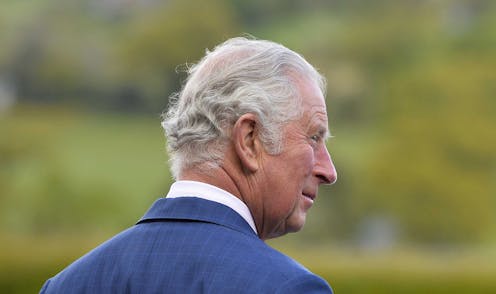
Today, many Australians are enjoying a public holiday. For republicans, days off are great, but celebrating the queen’s birthday rather than an Australian achievement is bizarre. Without constitutional change, we will soon be taking a day off in honour of King Charles.
Surely we can find a better reason.
Fortunately, the republic is back on the public agenda. The royal scandals surrounding Prince Andrew, the Palace Letters, and the explosive Oprah interview with Harry and Meghan (and ongoing fallout) have seen the debate take off anew.
Even the passing of the queen’s husband, Prince Philip has prompted reflection on Australia’s relationship with the monarchy.
We can be sure that when the queen’s long reign comes to an end, it will also spark a new push for an Australian republic.
The Australian Republic Movement’s new approach
Since the defeated referendum in 1999, the Australian Republic Movement has been neutral on what model should be used. Its position has been for a plebiscite asking only if people support a republic, before the exact model is determined. Critics have claimed this is asking for a policy blank cheque.
In a change of policy, the Australian Republic Movement now plans to unveil its preferred model later this year.
This is significant because it was the model, not the monarch, that sunk the republic in 1999. Some republicans were so opposed to the option on offer they campaigned with the official “no” team. Ultimately, the success of a new republic referendum will depend on the ability of the model to unite republicans, not the popularity of the monarch.
So, what are the options for a republic and what are their pros and cons?
Another minimal model
Under the minimal model from the 1999 referendum, the head of state would have been appointed by a two-thirds majority of parliament.
Despite its failure in 1999, many republicans still insist this is the best fit for Australia. The appointment by parliament is similar to the systems used in India, Israel, and Greece, and seeks to ensure a non-partisan appointment and reinforce the titular nature the position. Variations include the McGarvie model (proposed by former governor of Victoria, Richard McGarvie), which has a council of former governors to act on the prime minister’s advice and select a worthy candidate.
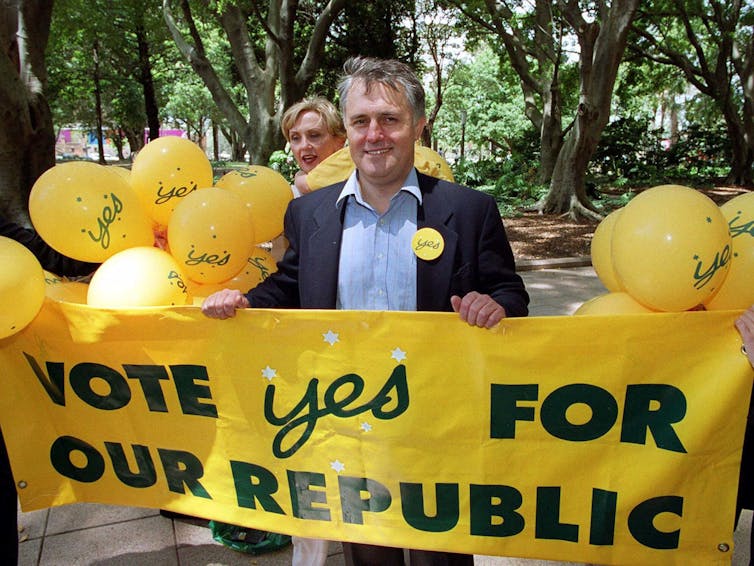
Malcolm Turnbull led the unsuccessful ‘yes’ campaign in the 1999 referendum. Rob Griffith/AP/AAP
For supporters, this model guards against populism, or candidates using their wealth or celebrity to gain the position. However, critics argue a minimal model has already failed the ultimate test.
Malcolm Turnbull, who led the 1999 “yes” campaign, argued at a recent Australian Republic Movement event that support for direct election is a “mile wide but an inch deep”. In other words, people instinctively support it but often change their minds when they consider the consequences.
Minimal model supporters insist that the referendum failed because of constitutional ignorance and an effective scare campaign. They suggest a minimal model can succeed with much wider community consultation and public education.
Direct election
Direct electionists argue that without a popular vote, Australia would only have a “politicians’ republic”. Leading up to the 1999 referendum, former independent MPs Phil Cleary and Ted Mack, and former Brisbane lord mayor Clem Jones, among others, formed the Real Republic, urging people to vote “no”. Now led by chair of the Clem Jones Trust, David Muir, the group is still active on Facebook.
In theory, direct election means anyone could be the head of state. Critics argue it could actually reduce the pool of candidates. Winning an election generally requires substantial finances and resources. Direct election could mean that only the rich or famous can realistically run.
Supporters counter this by claiming a mature nation can make up its own mind. If the people democratically elect someone like Clive Palmer or Shane Warne, then so be it.
A hybrid model
The third option is a hybrid of minimalism and direct-election. Former Western Australia Premier Geoff Gallop put forward the Gallop Model at the Constitutional Convention in 1998. He proposed that the federal parliament select at least three suitable nominees who are then put to a popular vote.
Another hybrid is the 50-50 model created by government consultant Anthony Cianflone. Under this model, anyone can nominate. Then there is both a popular vote and a parliamentary vote, each worth 50%.
Previously, I have proposed a hybrid model, with each state and territory parliament selecting a nominee, and then those eight going to a popular vote. The logic behind this system was that it provided a double hurdle for candidates. Only an exceptional candidate would gain the confidence of both an elected parliament and the people.
Critics of hybrid models say they are not democratic enough. Under a 50-50 model, the problematic situation could arise where the most popular candidate with the people is effectively vetoed by parliament. Critics of the Gallop model or mine could say it is undemocratic to only let people vote from a pre-approved list.
Further, public confidence in our parliaments is at a low point. Explaining my model to a friend recently, he exclaimed, “why let politicians anywhere near it?”
Other considerations
The method for choosing the head of state is the most important element in any republican model but there are other considerations.
Should gender equality be written into the constitution? Australian National University professor Kim Rubenstein has argued the head of state should alternate between women and men. Similarly, Griffith University professor and Waanyi and Jaru man Gregory Phillips has argued for direct election, but every second term the nominees must be Indigenous.
Some Australian republicans argue the republic campaign will only truly begins when Charles takes over from his mother. Kirsty Wigglesworth/AP/AAP
As the 1975 Whitlam dismissal showed, the governor-general has great reserve powers, even if they are rarely used. As a republic, Australia could continue to rely on protocol and trust the head of state to treat the position as titular and ceremonial.
Another option is to codify the head of state’s powers and have strict rules outlining exactly when and how they can be used. Under direct election models especially, this may be an important safeguard. Without it, a head of state may see their election as a popular mandate for political interference. Under any model, only codification can guarantee the dismissal is never repeated.
A way forward?
It was only in 1973 with the passage of the Royal Style and Titles Act that the queen was given a unique Australian title, the “Queen of Australia”. Without constitutional change, Charles will become the first official “King of Australia”.
When coins bearing Charles’s face come into circulation, we can expect many will question the benefit of a foreign head of state living on the other side of the world. Nevertheless, the fate of an Australian republic does not rest with the next monarch.
Whichever model goes to a vote, the mathematics is simple. Republicans will either unite and probably win or divide and certainly fail.
Benjamin T. Jones is a life member of the Australian Republic Movement.
Fees for residential aged are complex and can be confusing. Some are for your daily care, some are means-tested, some are for your accommodation and some pay for extras, such as cable TV.
But it’s easier to think of these fees as falling into two categories:
an “entry deposit”, which is usually more than $A300,000, and is refunded when you leave aged care
daily “ongoing fees”, which are $52.71-$300 a day, or more. These cover the basic daily fee, which everyone pays, and the means-tested care fee.
To find out how much government support you’ll receive for both these categories, you will have a “means test” to assess your income and assets. This means test is similar (but different) to the means test for the aged pension.
Generally speaking, the lower your aged-care means test amount, the more government support you’ll receive for aged care.
With full support, you don’t need to pay an “entry deposit”. But you still need to pay the basic daily fee (currently, $52.71 a day), equivalent to 85% of your aged pension. If you get partial support, you pay less for your “entry deposit” and ongoing fees.
You don’t have to pay for your “entry deposit” as a lump sum. You can choose to pay a rental-style daily cost instead.
This is calculated as follows: you multiply the amount of the required “entry deposit” by the maximum permissible interest rate. This rate is set by government and is currently at 4.01% per year for new residents. Then you divide that sum by 365 to give a daily rate. This option is like borrowing money to pay for your “entry deposit” via an interest-only loan.
You can also pay for your “entry deposit” with a combination of a lump sum and a daily rental cost.
As it’s not compulsory to pay a lump sum for your “entry deposit”, you have different options for dealing with your family home.
Option 1: keep your house and rent it out
This allows you to use the rental-style daily cost to finance your “entry deposit”.
Pros
you could have more income from rent. This can help pay for the rental-style daily cost and “ongoing fees” of aged care
you might have a special sentimental attachment to your family house. So keeping it might be a less confronting option
keeping an expensive family house will not heavily impact your residential aged care cost. That’s because any value of your family house above $173,075.20 will be excluded from your means test
you can still access the capital gains of your house, as house prices rise.
Option 2: keep your house and rent it out, with a twist
If you have some savings, you can use a combination of a lump sum and daily rental cost to pay for your “entry deposit”.
Pros
like option 1, you can keep your house and have a steady income
the amount of lump sum deposit will not be counted as an asset in the aged-care means test.
Cons
like option 1, you could have less pension income, higher age-care costs and need to pay more income tax
you have less liquid assets (assets you could quickly sell or access), which could be handy in an emergency.
Option 3: sell your house
If you sell your house, you can use all or part of the proceeds to pay for your “entry deposit”.
Pros
if you have any money left over after selling your house and paying for your “entry deposit”, you can invest the rest
as your “entry deposit” is exempt from your aged pension means test, it means more pension income.
Cons
if you have money left over after selling your house, this will be included in the aged-care means test. So you can end up with less financial support for aged care.
Keeping your house and renting it out (option 1 or 2) can give you a better income stream, which you can use to cover other living costs. And if you’re not concerned about having access to liquid assets in an emergency, option 2 can be better for you than option 1.
But selling your house (option 3) avoids you being exposed to a changing rental market, particularly if the economy is going into recession. It also gives you more capital, and you don’t need to pay a rental-style daily cost.
This article is general in nature, and should not be considered financial advice. For advice tailored to your individual situation and your personal finances, please see a qualified financial planner.
Colin Zhang does not work for, consult, own shares in or receive funding from any company or organisation that would benefit from this article, and has disclosed no relevant affiliations beyond their academic appointment.
The International Energy Agency (IEA) last month made global headlines when it declared there is no room for new fossil fuel investment if we’re to avoid catastrophic climate change.
However, our new research suggests the horse may have already bolted. We found even if no new fossil fuel projects were approved anywhere in the world, carbon emissions set to be released from existing projects will still push global warming over the dangerous 1.5℃ threshold.
Specifically, even with no new fossil fuel expansion, global emissions would be 22% too high to stay within 1.5℃ by 2025, and 66% too high by 2030.
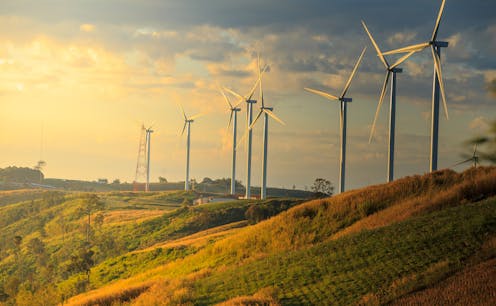
However, keeping global warming under 1.5℃ is still achievable with rapid deployment of renewables. Our research found solar and wind can supply the world’s energy demand more than 50 times over.
The stunning potential of wind and solar
While our findings were alarming, they also give us a new reason to be hopeful.
We analysed publicly available oil, gas and coal extraction data, and calculated the future production volume. We worked under the assumption no new fossil fuel extraction projects would be developed, and all existing projects would see production declining at standard industry rates.
We found fossil fuel projects already in the pipeline will, by 2030, produce 35% more oil and 69% more coal than what’s consistent with a pathway towards a 1.5℃ temperature rise.
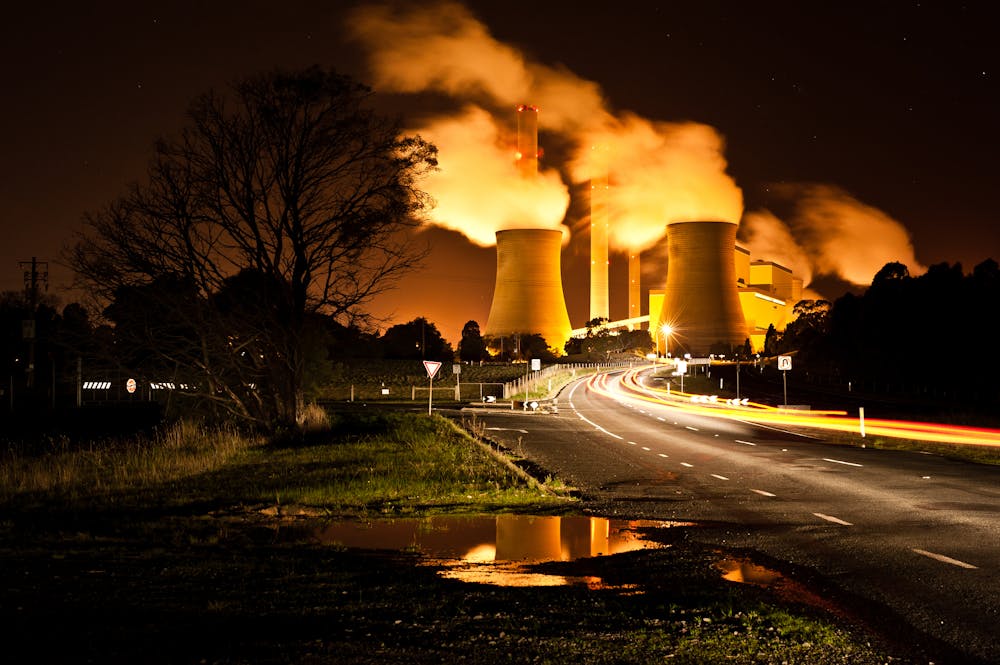
Fossil fuels account for over 75% of carbon dioxide emissions. Shutterstock
Fossil fuels are the main driver of climate change, accounting for more than 75% of carbon dioxide emissions. Continuing to expand this sector will not only be catastrophic for the climate, but also for the world’s economy as it locks in infrastructure that will become stranded assets.
Ultimately, it’s not enough to simply keep fossil fuels in the ground. To meet our climate goals under the Paris Agreement, we must phase down existing production.
Solar and wind power technologies are already market ready and cost competitive. And as our analysis confirms, they’re ready to be scaled up to meet the energy demands of every person on the planet.
Even after applying a set of robust, conservative estimates that take environmental safeguards, land constraints and technical feasibility into account, we found that solar and wind energy could meet the world’s energy demand from 2019 — 50 times over.
It’s clear we don’t need new fossil fuel development to ensure 100% energy access in the future.
Australia’s laggard status
In Australia, the Morrison government refuses to set new emissions reduction targets, and continues to fund new fossil fuel projects, such as a A$600 million gas plant in the New South Wales Hunter Valley.
Despite Australia’s laggard status on climate change, there are positive moves elsewhere around the world.
The progress was evident ahead of the G7 summit this past weekend, where climate change was firmly on the agenda. Ahead of the summit, environment ministers worldwide agreed to phase out overseas fossil fuel finance and end support for coal power.
And in recent weeks, three global fossil fuel giants – Shell, Chevron and ExxonMobil – faced legal and shareholder rebukes over their inadequate action on climate change.
Coming on top of all that, the IEA last month set out a comprehensive roadmap to achieve net-zero emissions by 2050. It included a stark warning: no new fossil fuel projects should be approved.
Natural carbon storage is key
However, the IEA’s findings contradict our own on several fronts. We believe the IEA underestimated the very real potential of renewable energy and relied on problematic solutions to fill what it sees as a gap in meeting the carbon budget.
For example, the IEA suggests a sharp increase in bioenergy is required over the next 30 years.
This would require biofuels from energy plantations — planting crops (such as rapeseed) specifically for energy use.
But conservationists estimate the sustainable potential for biofuels is lower. They also say high volumes of bioenergy might interfere with land use for food production and protected nature conservation areas.
Our research found the exact opposite is needed: rapid phase out of deforestation and significant reforestation alongside the decarbonisation of the energy sector.
Bioenergy should be produced predominantly from agricultural and organic waste to remain carbon neutral.
Likewise, the IEA calls for an extreme expansion of carbon capture and storage (CCS) projects — where carbon dioxide emissions are captured at the source, and then pumped and stored deep in the ground.
In its roadmap, the IEA expects CCS projects to grow from capturing 40 million tonnes of carbon dioxide (as is currently the case), to 1,665 million tonnes by 2030.
This is quite unrealistic, because it means betting on expensive, unproven technology that’s being deployed very slowly and is often plagued by technical issues.
Establishing natural carbon sinks should be prioritised instead, such as keeping forest, mangrove and seagrass ecosystems better intact to draw carbon dioxide from the atmosphere.
Phasing out early
As a wealthy country, Australia is better placed than most to weather any economic disruption from the energy transition.
Our research shows Australia should phase out fossil fuels early and urgently. The Australian government should also ensure communities and people reliant on fossil fuel industries are helped through the transition.
We must also support poorer countries highly dependent on fossil fuels, particularly in the Asia-Pacific region.
There is new international momentum for climate action, and the future of the fossil fuel industry looks increasingly dire. The technologies to make the transition are ready and waiting – now all that’s needed is political will.
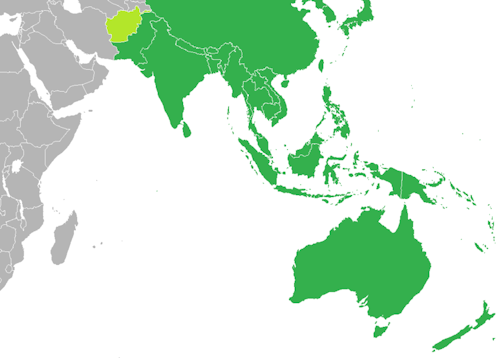
South Asia is crucial to the future of Australia. But Australia has just one (small) program focused on South Asian studies across its many universities.
This has not always been the case. In the mid-1970s, 13 of Australia’s universities offered undergraduate subjects on South Asia (India, Pakistan, Afghanistan, Sri Lanka, Bangladesh, Nepal, Bhutan, and the Maldives). Students could learn about South Asian coins at ANU and Sanskrit at the University of Wollongong.
Australia boasted some of the leading scholars on South Asia. ANU nurtured subaltern studies – the study of social groups excluded from dominant power structures – which became a global movement in the field of post-colonial analysis. Leading post-colonial scholar Dipesh Chakrabarty was based at the University of Melbourne. Other luminaries active in that period include A.L. Basham, Anthony Low and Robin Jeffrey.
But, even as the Australian university sector has expanded since the 1970s, it has withdrawn support for Asian studies, and South Asian studies in particular. There is currently only one South Asia or India program – at ANU.
Only five of the 40 Australian universities offer semester-length subjects on India or South Asia. Six universities offered an Indian language in 1996. Now only two do so.
Several universities, often supported by government grants, have launched country or regional research initiatives since 1990. The National Centre for South Asian Studies, based at Monash, is one of these. But Australian universities have not built any strong or sustainable South Asia programs for students.
A trend at odds with national priorities
This point sits oddly alongside a high-level commitment to South Asia in Australia. The Australian government is exploring new forms of engagement with India, including the Quad security dialogue involving India, Australia, Japan and the US.
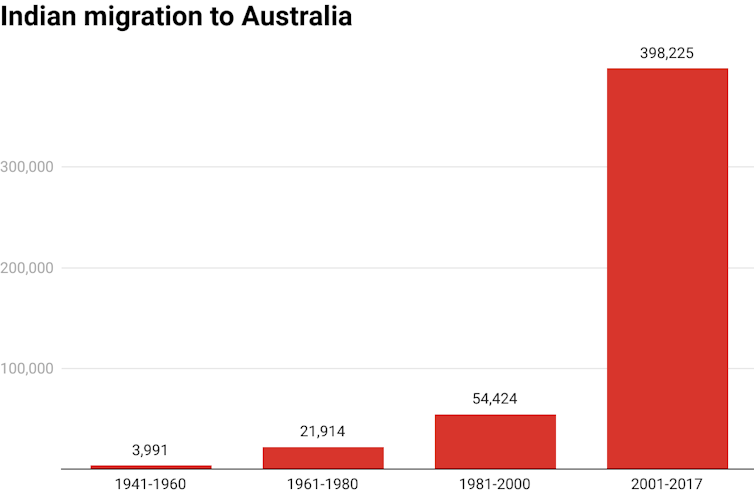
At a social level, Australia is increasingly Indian. In 2019 more than 700,000 people in Australia claimed Indian descent. Hindi is among the fastest-growing languages in Australia, and India is the country’s leading source of skilled migrants.
Historically, there are fascinating connections between Australia and South Asia. The lives and work of Australia’s “Ghans” (cameleers) is one famous example.
Moving forward, Australia needs a knowledge base to match this longstanding and increasingly important commitment to India and South Asia more generally.
Data: 2016 Census, Australian Bureau of Statistics
Out of step with global academic practice
Australian universities could learn from their counterparts in other parts of the world how to integrate area studies into their teaching. Outside of Australia, most of the top universities in the world make great play of their area studies expertise. Area studies enables people to apprehend their own distinctive humanity, anchors innovative cross-disciplinary teaching across the university, and provides a basis for re-evaluating assumptions about a person’s disciplinary field.
Students arriving at Oxford, Yale or Columbia know that if they are studying law, business, art, politics, education, design, technology, anthropology, economics, agriculture, military affairs or modern media, they will need to think about how to apply their disciplinary knowledge to specific places. A “whole of university” commitment to area studies teaching, including South Asian studies, has long been a key mechanism for drawing on multiple disciplines.
Even with small numbers of area studies majors, the world’s best universities do not see area studies as a niche endeavour. On the contrary, they see it as a central feature of their global mission. Strong universities without robust, independent, and widely accessible area studies programs open themselves up to accusations of antiquated parochialism and a poor understanding of the interdisciplinary trends that powerfully shape our world.
Today, South Asian studies programs in Australia should include internships, opportunities to study abroad and virtual classrooms connecting Australian students to their counterparts elsewhere.
Asian studies programs should also include language options, because effective communication with rising regions like South Asia is essential. Keep in mind that only 10% of India’s population speak English.
At its most fundamental, good area studies and good South Asian studies allow people to understand that they are, as French philosopher Michel de Montaigne put it in an essay on global education written 450 years ago “like a dot made by a very fine pencil” on the world map. It teaches them how they fit within a global whole.
Beyond this, area studies helps people understand and confidently engage with forms of difference and diversity. It fosters key skills for interacting with peers overseas as well as global diasporas. This includes connecting with foreign organisations, managing communications and cultivating an active sense of global citizenship.
Area studies allows us to develop an understanding of our common humanity across national boundaries – something Indian scholar Veena Das has written about in her book Critical Events.
Now is the time for Australian universities to place area studies teaching at the core of an internationally engaged education. We must provide a much larger number of Australians with a deeper understanding of South Asia.
Craig Jeffrey receives funding from the Australian Research Council.
Matthew Nelson does not work for, consult, own shares in or receive funding from any company or organisation that would benefit from this article, and has disclosed no relevant affiliations beyond their academic appointment.
Source: The Conversation (Au and NZ) – By John Hawkins, Senior Lecturer, Canberra School of Politics, Economics and Society and NATSEM, University of Canberra
Salvador Melendez/AP
Nayib Bukele, president of El Salvador, has got himself a pair of laser eyes – on his Twitter profile at least.
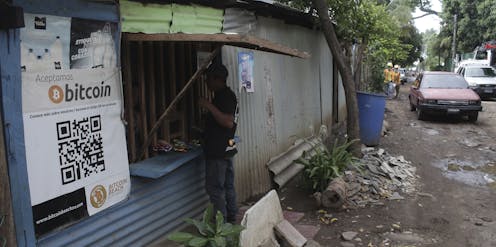
Laser eyes are something social media users give themselves to show they love cryptocurrency – and Bukele proved his crypto-enthusiasm last week by having El Salvador become the world’s first nation to make Bitcoin legal tender.
El Salvador’s parliament passed Bukele’s proposed legislation on June 9, after he announced his plan just a few days earlier. The law will take effect in September.
Some Bitcoin fans have leapt on this as a step towards much broader acceptance. But the changes in Bitcoin’s market value since Bukele announced his plan gives crypto-sceptics reason for doubt.
Over the past week Bitcoin’s value was as high as US$38,200 (about A$49,000) and as low as US$31,428. Over the past month it has fallen from more than US$58,000. This isn’t the type of price volatility any government generally wants to see in a currency.
Such fluctations show Bitcoin’s weakness as a viable alternative to central bank currencies – good only for transactions you don’t want traced and as a speculative investment.
So what is Bukele thinking in wanting to make Bitcoin legal tender for the small central American nation (population about 6.5 million) whose economy accounts for less than 0.05% of global GDP?
Before we get to that, let’s clarify what making Bitcoin legal tender means.
Using Bitcoin is already legal in El Salvador, as it is in most countries. If you want to pay for something in bitcoins, and the recipient is willing to accept them, it’s all good.
Making bitcoins legal tender mean a payee will have to accept them. As the new legislation states, “every economic agent must accept Bitcoin as payment when offered to him by whoever acquires a good or service”.
El Salvador making this move isn’t as significant as it would be for most nations, because it is one of about a dozen countries – most of them micro-states such as Andorra and Nauru – without its own currency (or a common currency such as the Euro).
El Salvador abandoned its own currency (the “colon”, named after Christopher Columbus) in 2001 and adopted the US dollar as its legal tender. This process of “official dollarisation” was seen as a reform that would curb inflation and increase trade with the US (by far its major trading partner).
So El Salvador has less to lose than other nations in adopting a second currency as legal tender. There is no controversy about losing sovereignty and monetary policy autonomy. There will be no loss of “seignorage” – the profit made on issuing currency that’s worth a lot more than the cost of making it.
Highly volatile
But having two legal tenders will complicate matters – particularly when one of those currencies is subject to wild swings in its value.
Consider the provision in the new law that “all obligations in money expressed in USD, existing before the effective date of this law, may be paid in bitcoin”.
Even that is complicated. How, and by whom, will the amount of bitcoins necessary to pay a debt be determined? Will it be based on the Bitcoin price at the time the debt was incurred, or when the debt falls due?
The difference of even a few days could be significant.
If the expectation is the price of Bitcoin is going to rise, why would you want to buy things with it? Why not wait? If the expectation is the price is going to fall, why would you want to accept it? For most transactions, using US dollars will still make the most sense.
So making Bitcoin legal tender could help destabilise El Salvador’s economy.
Things would have been simpler if El Salvador had adopted a “stablecoin” whose price is fixed at one US dollar – such as Tether, the third-largest cryptocurrency.
But that would have not been nearly so newsworthy, and would have defeated the apparent reason Bukele has championed this move.
Bukele’s reasoning, delivered via Twitter on June 6, is that Bitcoin has “a market cap of US$680 billion” and:
If 1% of it is invested in El Salvador, that would increase our GDP by 25%.
This argument – which appears to be the only “analysis” Bukele has made public – seems very confused.
Bukele explains his Bitcoin plan on Twitter. Twitter
Market capitalisation typically refers to a listed company’s valuation, based on multiplying the share price by the number of shares. The $US680 billion Bitcoin market cap Bukele referred to represents the currency’s market value multiplied by the number of bitcoins created so far. (For comparison, the market cap of Tether’s 63 billion coins in circulation is US$63 billion.)
But it is flawed logic to think Bitcoin’s total market value equals money bitcoin owners around the globe are looking to invest anywhere.
In very few cases do people buy bitcoins to invest in other things. Bitcoins are their investment. Neither major funds nor average punters holding bitcoins are likely to want to start investing in El Salvador.
Nor is foreign investment a component of GDP (which is the value of market transactions in an economy). Foreigners using bitcoins to buy assets such as land in El Salvador would bid up its price but not necessarily increase GDP. A surge in foreign investment into new infrastructure and businesess that increase productive capacity would contribute to GDP, but there’s no reason to think giving Bitcoin legal tender status will make this more likely.
Facilitating remittances
A second reason given by Bukele is that Bitcoin “will have 10 million potential new users” and is “the fastest growing way to transfer 6 billion dollars a year in remittances”.
This apparently refers to both the population of El Salvador (about 6.5 million) and Salvadorans living abroad, many of whom send money home to help their families. In 2020 these remittances totalled US$5.9 billion, or 23% of El Salvador’s GDP.
While any cryptocurrency can well facilitate more efficient transfers (without the charges banks impose), the significance of remittances to the Salvadoran economy points to another issue. El Salvador is a poor country, with one of the lowest rates of internet use in the Americas – 33% in 2017, according to World Bank data.
How many vendors, street hawkers or farmers are equipped to handle cryptocurrency transactions? US dollars will more than likely remain the default currency.
The benefits of making Bitcoin legal tender are far from clear. El Salvador is already facing higher interest rates as international investors are worried about the move. There are concerns wider use of Bitcoin will facilitate the black economy and make tax avoidance easier.
For the sake of El Salvador’s people, let’s hope it is successful. But the odds are on it being further evidence of the cryptocurrency’s unsuitability for use as a real currency – confirmation that Bitcoin is nothing more than a speculative gamble.
John Hawkins formerly worked for the Bank for International Settlements and two central banks,
First published in 2014, Pascoe’s Dark Emu has spawned numerous derivatives. Pascoe contends that in pre-contact times, Australian Aboriginal people weren’t “mere” hunter-gatherers, but agriculturalists. Descriptors like “simple” or “mere” are anathema to people like me who’ve lived long-term with hunter-gatherers.
For many Australians, Pascoe’s book is a “must-read”, speaking truth to power. For such readers, Dark Emu seems a breakthrough text. Not so, in Sutton and Walshe’s estimation. Nor mine.
Underpinning Dark Emu is the author’s rhetorical purpose. This proselytising is partly achieved by painstaking “massaging” of his sources, a practice forensically examined by Walshe and Sutton. It has led to converts to Pascoe’s dubious proposition. But this willingness to accept Pascoe’s argument reveals a systemic area of failure in the Australian education system.
On the basis of long-term research and observation, Sutton and Walshe portray classical Australian Aboriginal people as highly successful hunter-gatherers and fishers. They strongly repudiate racist notions of Aboriginal hunter-gatherers as living in a primitive state.
In their book, they assert there was and is nothing “simple” or “primitive” about hunter-gatherer-fishers’ labour practices. This complexity was, and in many cases, still is, underpinned by high levels of spiritual/cultural belief.
Not agriculturalists
As Sutton attests, seeds were and are occasionally deliberately scattered. But in classical Aboriginal societies they were never planted nor watered for agricultural purposes. Such aforementioned rituals are collectively called “increase ceremonies”. Sutton’s alternative term, “maintenance ceremonies”, invokes spiritual propagation as opposed to oversupply.
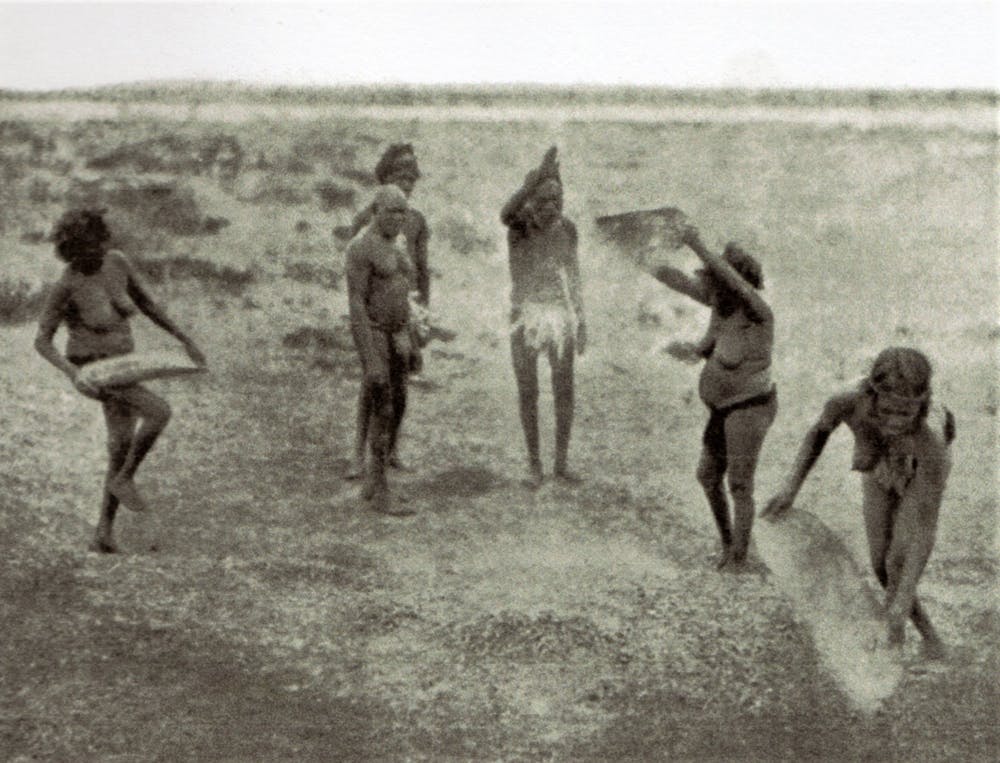
Their objective was continuing subsistence. Australia’s hunter-gatherer-fishers left an extremely light carbon footprint — the diametric opposite of many contemporary agricultural/industrial practices. The photo below, taken in 1932 or earlier, shows Pilbara people throwing yelka (nutgrass) — not threshing or scattering seeds.
‘Increase ceremony’ for yarrinyarri (nutgrass), north-west Australia. Ralph Piddington, ‘Totemic system of the Karadjeri tribe’, Oceania 4, 1932, pp. 376–93, Plate II.
Counter-intuitively, Pascoe mainly cites non-Aboriginal sources. There is no real “voice” given to the few remaining people who lived traditional lives as youngsters, or are cited in books or articles.
While some have described Dark Emu as fabrication, Sutton and Walshe are more measured. They methodically show that in Dark Emu, Pascoe has removed significant passages from publications that contradict his major objectives. This boosts his contention that all along Aboriginal people were farmers and/or aquaculturalists.
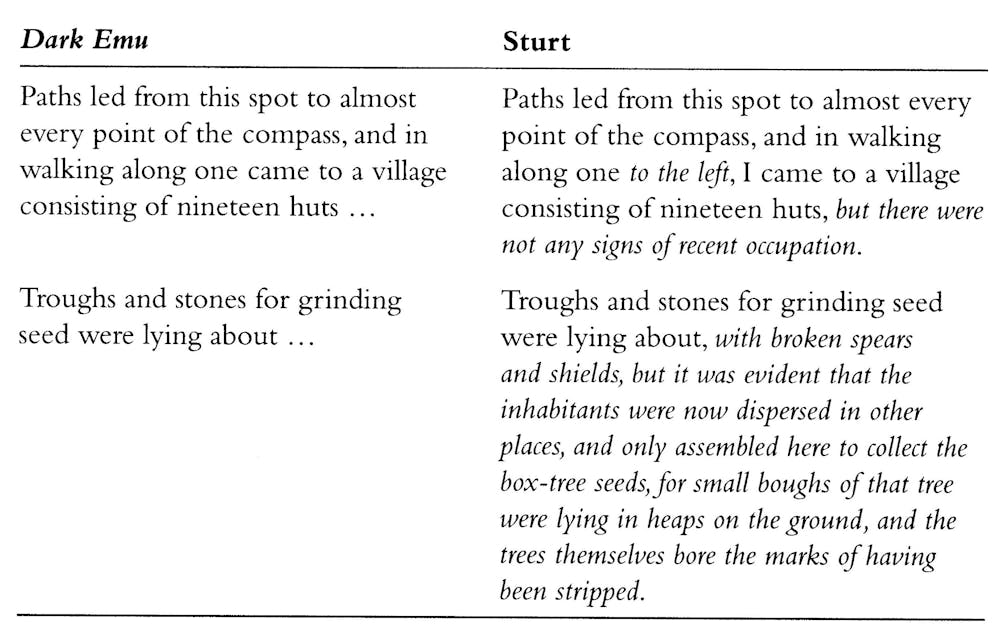
One example concerns Pascoe’s quoting of the journal entries of the explorer Charles Sturt. Sutton writes:
Sturt is quoted [by Pascoe] on his party’s discovery of a large well and ‘village’ of 19 huts somewhere north of Lake Torrens in South Australia.
This “village” concept arose from colonial records, and is still sometimes used in recent articles.
Pascoe’s edit of Sturt’s original 1849 text breathes oxygen into Dark Emu’s polemical edge. It’s misleading at best. For Sturt’s diary reveals Aboriginal people didn’t live in “houses” in any single site all year round.
Page 153, Dark Emu Debate.
Such accounts destabilise Pascoe’s argument, reinforced by ethnographic, colonial, and archaeological records.
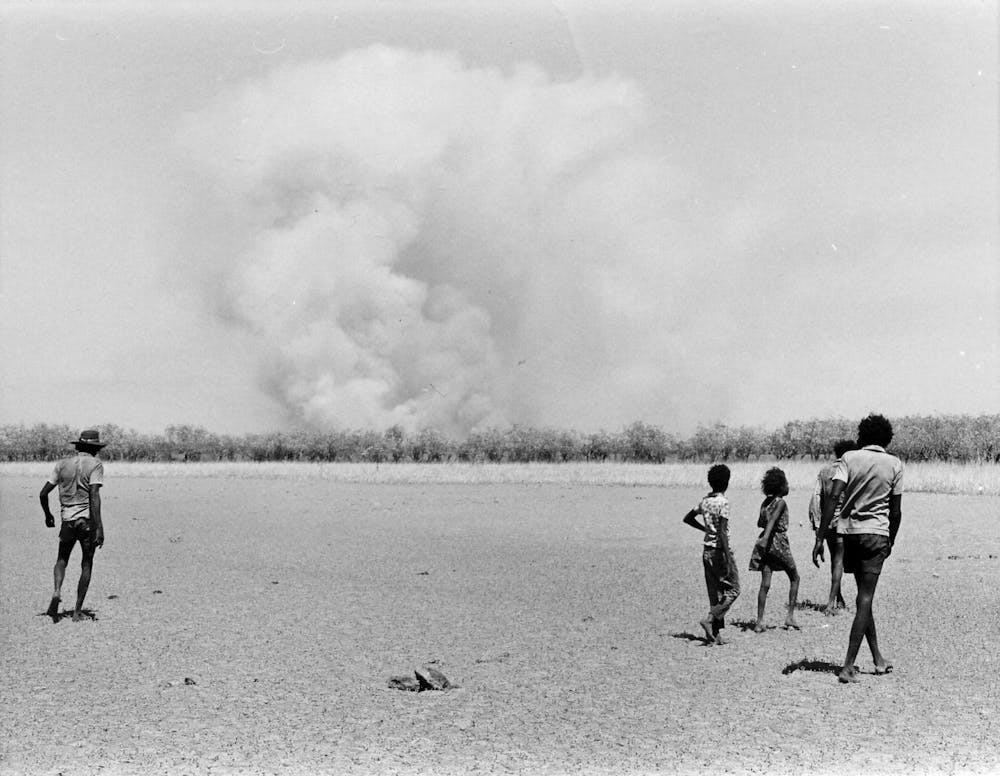
Hunter-gatherers did alter the country in significant ways — most Australians know about the ancient practice of firing the country, recently discussed in depth owing to our increasingly devastating bush-fires. This involved ecological agency and prowess. But expert fire-burning isn’t an agricultural practice, as Pascoe avers.
Wik people firing the country, middle Kirke River, Cape York Peninsula, 1977. Photo by Peter Sutton
In a key chapter, Walshe homes in on Pascoe’s mis-interpretations of hunter-gatherer implements, which he labels “agricultural” tools. For instance, Pascoe misconstrues grooved “Bogan Picks” as heavy stones used for agricultural activity.
Walshe disputes Pascoe’s claim, stating that, “with their adze-shaped end and grooved midline for hafting, they were likely used in a similar way to stone axes.”
Wooden digging sticks were also used for breaking up the earth to extract yams when in season, among various other purposes — not for “tilling” or “ploughing” the soil in preparation for planting seeds.
Grooved (Bogan style) picks. Photo by Malcolm Davidson
Language used by early colonists and explorers — words like “village” and “picks” — befuddles readers. British colonists’ monolingualism meant they used English words, often imposed arbitrarily, to name never-before-seen hunter-gatherer implements. For example, “Bogan Pick” references the nearby Bogan River.
Hunter-gatherer mobility and stasis
Sutton expertly summarises the experience of escaped convict, William Buckley, who spent 32 years travelling around country with the Wathawurrung people in Central Victoria.
Over time, Buckley became fluent in the language of his Wathawurrung hosts. Later, his oral account of the hunter-gatherer group’s approximate lengths of mobility and stasis at numerous sites was transcribed. It’s a unique document covering a significant timespan.
This account reinforces earlier chapters in Dark Emu Debate. Sutton and Walshe make it crystal clear that Aboriginal people weren’t “simple nomads” wandering around randomly, opportunistically searching for food and water. They knew their country intimately.
Rather, hunter-gatherers engaged in purposeful travel to sites with which they familiar and able to source seasonally available food, water and shelter at variable times of year.
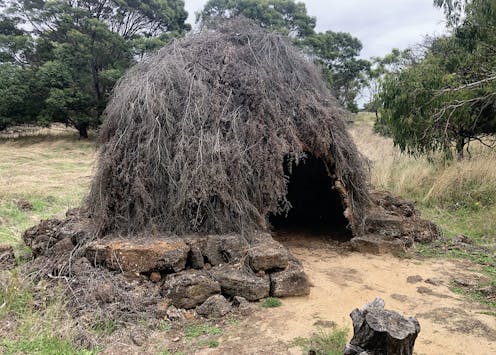
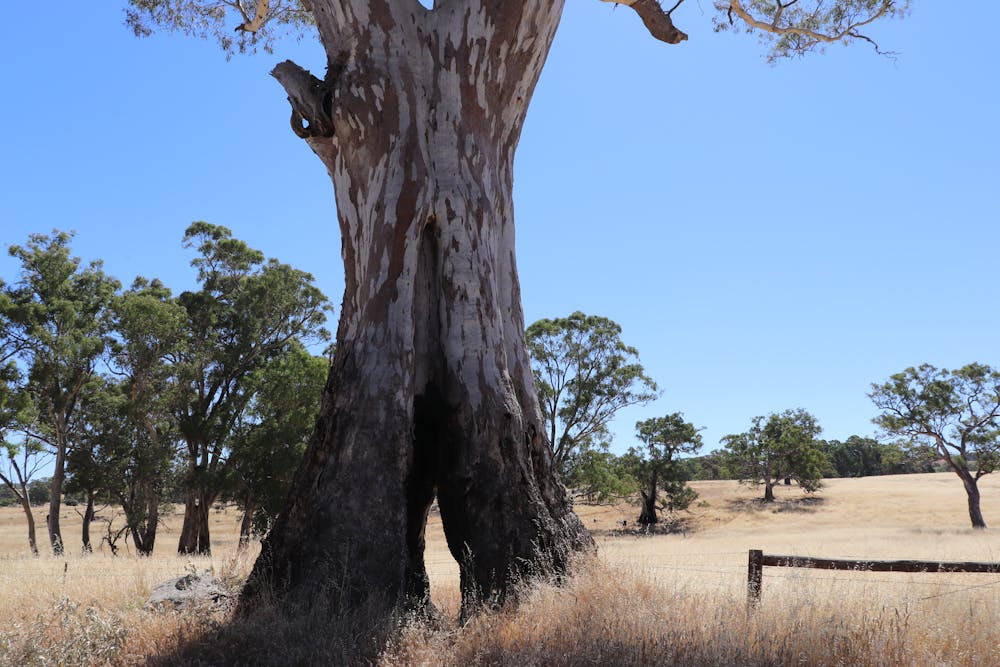
Shelter Tree, Eden Valley 2021. Keryn Walshe
Another conspicuous weakness in Dark Emu’s approach, pinpointed by Sutton and Walshe, is Pascoe’s penchant for choosing exceptions to the general rule, implying that these atypical practices were widespread or universal. It’s another strategy to consolidate his argument but involves eliding vital information.
Pre-contact aquaculture
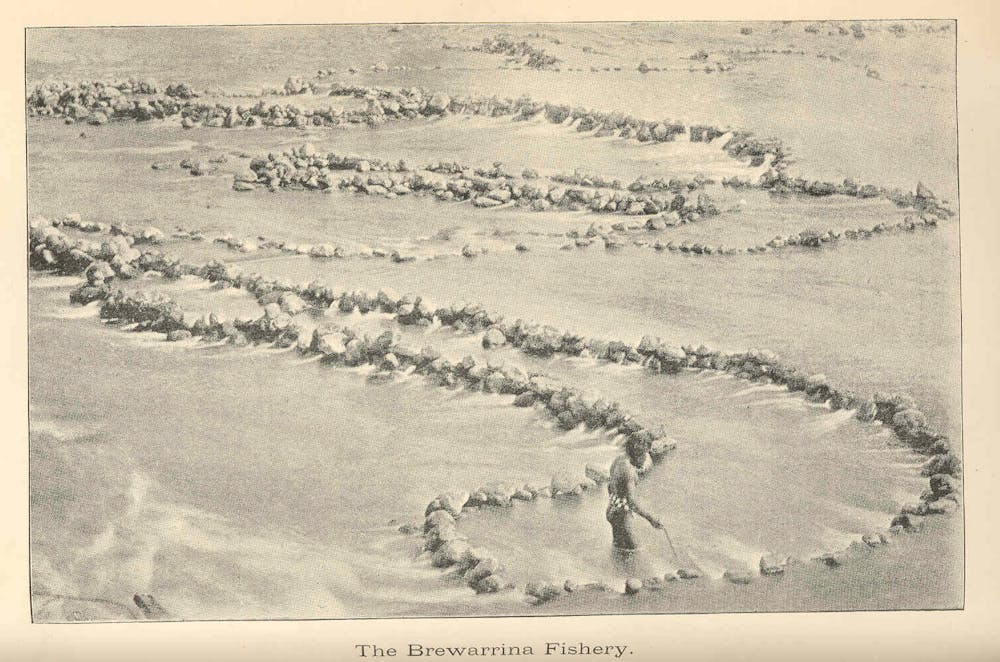
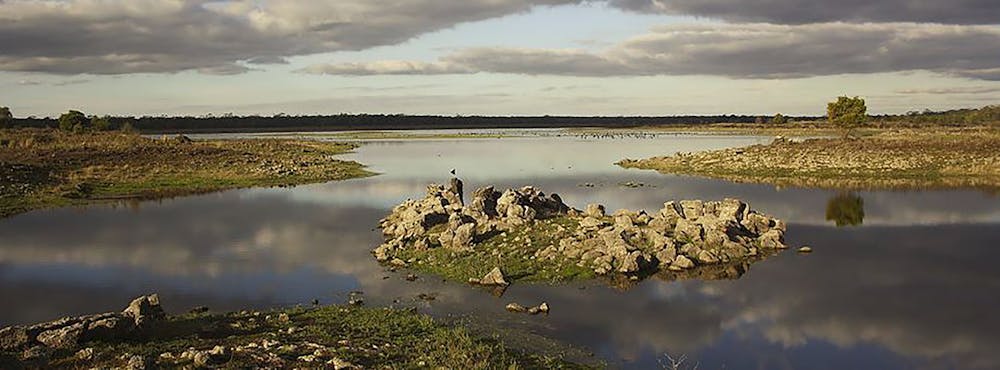
Pascoe offers two examples of “aquacultural” practice, one in Brewarrina (NSW) in the bed streams of the Barwon River, and the other in Lake Condah, in south-western Victoria.
He seizes on rock use in the Brewarrina fishery and Lake Condah’s fish and seasonal eel trapping as “proof” of Aboriginal people’s aqua/agricultural prowess — giving the impression they created these complex hydrological systems from scratch.
But Sutton writes, “The fish traps of Brewarrina … were not claimed as the ingenious works of human beings, but … regarded as having been put there in the Dreaming, by Dreamings.” Both he and Walshe readily acknowledge the fact that Aboriginal people use/d their human agency to create modifications. It’s not an either/or matter.
Brewarrina Fishery (‘Baiames Ngunnhu’), photograph Lindsay G. Thompson, 1893. University of Washington, Wikimedia Commons
However, a chapter written by Walshe throws light on the seismic activity that forged Lake Condah’s unique terrain and waterways. This area, she writes, is part of
a volcanic system … last active … 9,000 years ago, with a major eruption much earlier, about 37,000 thousand years ago, causing a massive lava flow across the pre-existing drainage system.
The natural tilt southwards, she explains, facilitated “naturally formed ancient river channels … to reach the Southern Ocean”.
This enabled migratory fish to spawn. Fish, and at certain times of year, eels, swam through both fresh and salty water — making for ease of catching. Local Aboriginal people moved the heavy stones into semi-circular formations to enable netting, spearing or grabbing by hand, possibly creating further semi-captivity of these food staples.
In this way, hunter-gatherers consistently and constantly “value-added” to, or enhanced, nature’s creation.
Lake Condah in the Budj Bim National Heritage Landscape. Budj Bim/AAP
Pascoe’s skilful editing of his sources involves conscious, deliberate intervention. Does he hope Dark Emu will convince people to change their belief in the noxious evolutionary ladder, once uniformly, but still sometimes, applied to different groups of homo sapiens?
Or was his book written to prove Aboriginal people were/are more like Europeans, which could perhaps lead to much needed progress on reconciliation? Perhaps that accounts for its rapturous reception by many Australians, especially the young.
Why not simply celebrate the long-term achievements of hunter-gatherers?
Hunter-gatherers worked in concert with the natural world, not against it as most humans do today, resulting in insoluble difficulties such as overcrowding, pandemics and toxic agricultural and aquacultural practices. Survival depends on this. For eons, it ensured the continuity and the continuing existence of Australia’s hunter-gatherer people and their culture.
Farmers or Hunter Gatherers? The Dark Emu Debate needs to be read carefully, keeping an open mind. The book’s focus is on both material and spiritual economies and their misrepresentation. Despite racist commentary from some, this isn’t an exclusively right or left-wing issue or a bunfight.
Bruce Pascoe’s Dark Emu will continue to be granted recognition, if not immortality. But Sutton and Walshe’s Dark Emu Debate will undoubtedly be acclaimed. As a critique of Pascoe’s book, it’s just about perfect — a volume with the twin virtues of rigour and readability.
Christine Judith Nicholls does not work for, consult, own shares in or receive funding from any company or organization that would benefit from this article, and has disclosed no relevant affiliations beyond their academic appointment.
Fifty-one cases of covid-19 have been confirmed in Fiji tonight, with 35 of them from the fastest-growing cluster at Nadi.
This takes the total number of infections since the outbreak started in April to 900, with 684 active cases currently in isolation.
The Health Ministry said two cases were from the Lami-Nausori containment zone and their links to other cases are unknown.
Health Secretary Dr James Fong said the rest of the cases were linked to existing clusters: Colonial War Memorial Hospital (CWMH) – 6; Nawaka, Nadi – 35; Vunimono – 2; the government’s Covid-19 Incident Management Team (IMT) – 4 and Waila – 1.
Dr Fong said another case was a primary contact of an active case, and the connection to a cluster was being determined by the contact tracing teams.
He said the two unknown cases were from Raiwai in Suva, and Nakasi in Nausori.
Dr Fong also announced the death of an individual who was admitted at the Colonial War Memorial Hospital and then tested positive for covid-19.
Medical complications He said the patient’s doctors had determined that he had died because of complications of the serious medical condition that led him to his admission in hospital.
“The ministry expresses our condolences to his family,” Dr Fong said.
Thirty nine cases were reported on Thursday, and Dr Fong said the outbreak remained primarily centred in the Lami-Suva-Nausori Containment Zone.
He said 22 patients had recovered with 684 active cases in isolation while 900 cases were recorded during the current outbreak that started two months ago.
There have been 970 cases recorded in Fiji since the first case was confirmed in March 2020, with 278 recoveries and four deaths.
Four other covid-19 positive patients have died from pre-existing illnesses and are non-related to the virus.
This article is republished under a community partnership agreement with RNZ.
Retired politics professor and historian Robert “Robbie” Robertson, 69, co-author of the book Shattered Coups about the 1987 coups led by then Lieutenant-Colonel Sitiveni Rabuka, has died in Melbourne, his family has confirmed.
Dr Robertson wrote the book with his partner Akosita Tamanisau, then a Fiji journalist. It was published in January 1988 and he also wrote other books and papers on Fiji and globalisation.
Dr Robertson was the second person at the University of the South Pacific to have his work permit rescinded and he was deported to New Zealand by Rabuka.
Attempts to have him relocated to Port Vila were sabotaged by the then Vanuatu government.
Moved to Australia He moved to Australia and joined La Trobe University and became associate professor of history and development studies in Bendigo.
Dr Robertson returned to USP from 2004 to 2006 as professor and director of development studies.
Subsequently, he served as professor and head of school of arts and social sciences at James Cook University (2010-2014) and as professor and dean of arts, social sciences and humanities at Swinburne University of Technology from July 2014 until he retired.
Retired professor of development studies at USP Dr Vijay Naidu and New Zealand researcher Dr Jackie Leckie recalled his contribution as a progressive and inspirational academic, and his sense of humour, Dr Leckie saying “Robbie was one of the good guys. I am so sorry that he had suffered in health recently.”
Dr Robertson is survived by his wife Akosita and sons Nemani and Julian.
“We take the pain and problems of victims home and it gives us nightmares many times.”
A police woman serving at the Family Sexual Violence Unit (FSVU) of the Papua New Guinea’s Waigani police station in the capital Port Moresby has shared her experience of how officers deal with victims being thrown out of homes, bashed up, marital affairs and other domestic-related issues faced with their partners.
First Constable Mary Louise Avu said many officers took the burden of victims of gender-based violence home and it had affected them mentally, reports the PNG Post-Courier.
“I am sleeping and in the middle of the night, a woman is calling me and crying over the phone begging for help,” she said.
“I can hear her being beaten up and when I call the support unit to assist us, no one is answering the phone or no vehicle and I don’t sleep. I stay up thinking of what the woman is going through.
“At that point, all we can do is advise the victim to seek safety and wait for the next day for police assistance.
“We try our best to help them. We wipe tears with them, feel their pain and carry the burden with them.
‘It isn’t easy’ “It isn’t an easy job when you see these women seeking help,” she said.
The public was good at giving negative comments about the work of the police but many of them did not know the real people behind the work.
She said there were policemen working hard to keep the community safe for everyone to walk freely — policemen were mentally defeated daily by people they protected.
At least 30 to 40 fresh cases of domestic violence were reported daily with the special unit at police stations around the city.
The Waigani FSVU office was looked after by six officers with eight cases being handled by each officer daily.
This statistics showed that more than 40 cases were registered by victims throughout the suburbs as far as 9-Mile, Erima, and Wildlife leaving their nearest station to come to being Waigani.
First Constable Avu said the victims travelled from outside areas to the station because of the effective results and the work the unit officers did.
‘Many prosecutions made’ “Many cases are handled and prosecutions are made,” she said.
She said despite the issues faced by officers such as the ink running out for the printer to non-availability of vehicles for arrests, they continued to work.
“One of the biggest problems now is the court system. We are preparing all the paper work and prosecuting the perpetrator but many have been released because they plead to the court that they are first time offenders thus the courts are lenient on them,” she said.
Const Avu said the court gave a three-month good behaviour bond which was not enough.
“Those three months should be served in prison. Many perpetrators are let off and continue to harass their partners,” she said.
Five police officers are among 39 new cases of covid-19 in Fiji while the government announced late last night that 32 of the latest cases are from existing clusters.
Another 11 cases were reported from the country’s main hospital in the capital Suva.
Health Secretary Dr James Fong said the ministry’s mitigation strategy was to isolate cases, treat seriously-ill patients and ensure the success of its vaccination rollout programme.
But he said they were concerned that Lami and the police barracks in Nasinu, both clusters outside Suva, may see increasing numbers of cases.
Teams are tracing and testing known contacts and are isolating positive patients to prevent further spread of the virus, Dr Fong said.
“In the near-term, we are concerned that Lami may see increasing numbers of cases.
“We also anticipate more cases from the cluster at the Police Barracks in Nasinu.
“Our stationary and mobile screening teams are tracing and testing known contacts and are isolating positive patients to prevent further spread of the virus.”
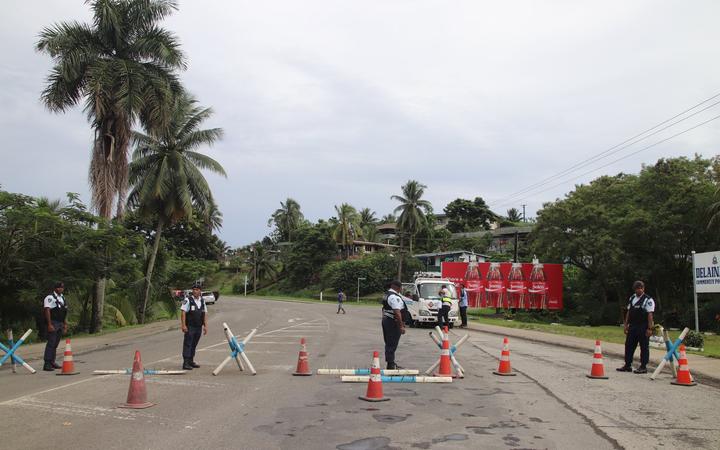
Police tried their best Acting Police Commissioner Rusiate Tudravu told local media the force had tried its best to prevent the spread of the virus among its officers.
Initially three officers from the Nasinu Police Station had tested positive for the virus and another 15 were swabbed earlier in the day.
Neither Tudravu nor Dr Fong provided information on how the officers were infected.
“I’m not surprised because we are classified as high mobile risk because of our job, it requests us to be on the front line,” Tudravu said.
“Having said that, we have tried our best not to have anyone in the force to have the virus.
“We are there in the front line and we are vulnerable to that.”
The infected police officers are on home isolation and monitored by the Ministry of Health and guarded by police officers, Tudravu added.
Latest cases The other latest cases included six from Nawaka, Nadi; three from the warehouses of the Fiji Independent Commission Against Corruption-FICAC, two from the Republic of Fiji Military Forces Naval Division, two from Waila in Nausori, one from Naitasiri, one from Caubati outside Suva and another case from the Covid-19 Incident Management Team at the Health Ministry’s headquarters in Suva.
The ministry is yet to determine the source of infection for seven other cases — four from Lami Town, one from Toorak a suburb adjacent to the central business district of Suva, one from Nasinu Town and one from Reservoir Road near the city.
Meanwhile, the government’s vaccination rollout programme continues with 228,030 people having already received at least one dose of the AstraZeneca vaccine.
Officials reported 50,000 doses of the vaccine had arrived in the country from Australia this week.
“The vaccine administration in Nadi had been temporarily halted due to a case among the administration teams,” Dr Fong said.
“Relevant personnel have since been cleared and vaccine administration in Nadi has resumed.”
Seven patients had recovered and there were now 656 active cases in Fiji.
There have been 849 cases since this outbreak began two months ago and 919 cases since March 2020.
This article is republished under a community partnership agreement with RNZ.
Fiji police man checkpoints into Suva … infected police officers are on home isolation and monitored by the Ministry of Health, and guarded by police officers. Image: Fiji Police/RNZ
The Media Council of Papua New Guinea has condemned an attack by male students at the University of Papua New Guinea on a media team covering a protest staged by female students on Tuesday, reports the PNG Post-Courier.
The council said that the actions of these students was an act against Article 11 of the International Human Rights Act, which talks about Freedom of Assembly and Association, and Sections 46, 47 and 55 of the country’s Constitution, which talks about the freedom of expression, freedom of assembly and association and equality of citizens.
The council is disappointed that these male students, who are supposed to be part of the elite of our tertiary student population, could use a mob rule approach, to harass and intimidate their female colleagues as well as the media.
The students were protesting against increased incidents of harassment against female students, and media representatives were there doing their job.
MCPNG is also saddened that the students who profess to come from a premier university in the Pacific could act in such an ignorant, rowdy manner and protect would-be criminals and sexual predators in the country’s leading university under the pretext of safeguarding the institution’s reputation.
The council believes strongly that continued coverage and exposure of ongoing social problems such as this, will help concerned authorities and the university administration address them, to make the university improve its image and reputation for the better.
MCPNG is now calling on the university administration and the council to immediately look into this matter and to ensure that female students’ safety and wellbeing on campus is guaranteed.
The Papua New Guinean government should protect women accused of practicing “sorcery” from violence and hold the attackers to account, says the advocacy group Human Rights Watch.
At least five women have been attacked in the past three months since March 2021 — one of whom was killed.
“The Papua New Guinea government should urgently investigate all cases of violence following sorcery accusations, and prosecute those responsible,” Stephanie McLennan, senior manager of Asia initiatives at Human Rights Watch, said in a statement today.
“Gender-based violence is a persistent problem in Papua New Guinea, and the government is doing very little to stop it.”
Violence following allegations of sorcery is common in Papua New Guinea, with the most recent reported case on May 7 in Hela Province.
Mary Kopari was accused of sorcery following the death of a young boy in her village. She was tied up and burned alive in Komo-Magarima District.
The attack was recorded on video and reported by Papua New Guinea television. Although the police know the identity of some of the attackers, no arrests have yet been reported.
Surge in covid cases Because sorcery accusations often arise in response to an unexpected death or illness in a community, the increase in such violence may be related to a surge in confirmed cases of covid-19 in Papua New Guinea.
On or around March 30, in Goroka, Eastern Highlands, a 45-year-old woman and her 19-year-old daughter were accused of causing the woman’s husband’s death, believed to be from covid-19.
They were held captive by the husband’s relatives and tortured with hot iron rods. Police rescued the pair.
On April 25, police rescued two women after a group of about 20 men tortured them in Port Moresby. The men accused the women of practising sorcery and killing a woman who had recently died.
The women were treated for severe burns and knife wounds.
“The Papua New Guinea government should address the root causes of sorcery accusations, including the lack of basic knowledge among the public about health problems,” McLennan said.
“The authorities should act swiftly and effectively to correct misinformation about deaths from covid-19 to prevent more sorcery accusations and attacks.”
Most attacks target women While there are past cases of violence based on accusations of sorcery targeting men, the majority of these attacks target women. Such attacks are part of the larger problem of high rates of gender-based violence and impunity for the abusers in Papua New Guinea.
A larger problem of high rates of gender-based violence and impunity for the abusers in papua New Guinea. Image: PNG Report
In November 2020 a coalition of Parliament members convened the country’s first national summit on gender-based violence. A special parliamentary committee on the issue held its first hearings on May 24 and 25, and will continue its inquiry until June 30.
Dr Fiona Hukula, gender specialist for the Pacific Islands Forum, testified at the May hearings about violence against women accused of sorcery, saying that they are are “often tortured, often cut, sexually violated, their clothes are removed and they are often kept in captivity”.
As Human Rights Watch has documented, greater resources and increased political will are needed to respond to all forms of gender-based violence in Papua New Guinea. At the recent parliamentary hearings, East Sepik Governor Allan Bird said “there are 1.4 million cases of GBV [gender-based violence] every year in PNG … and only 100 convictions achieved”.
Papua New Guinea will participate in November in the UN Human Rights Council’s Universal Periodic Review process under which member countries review the human rights situation in the country.
The Human Rights Watch submission for that process highlighted the issue of gender-based violence and violence following accusations of sorcery.
“Papua New Guinea’s leaders should order the police to take gender-based violence seriously, provide sufficient resources for officials to prosecute these crimes, and provide all survivors with medical treatment, shelter and access to support services,” McLennan said.
“The parliamentary inquiry should lead the way in exploring options for early warning, protection, and dispute resolution mechanisms that can help prevent such crimes.
Bullying and harassment are having devastating effects on young Indigenous people and their communities.Getty images
Social media offers many benefits to Indigenous peoples, such as ways to establish and navigate identity, build and maintain strong connections to family and community, and seek and offer mutual support. While there are these positive experiences, many people also report having negative encounters online.
The findings shed light on the types of harmful content Indigenous people are facing. These include references to white supremacy, Indigenous identity being challenged, and conflicts within Indigenous communities (also known as lateral violence) in which people attack or undermine each other, often based on colonial ideas about legitimate Indigenous identities.
Our research, which included Indigenous peoples from across Australia, was primarily concerned with identifying how negative content is conceptualised, identified and dealt with from Indigenous Australian perspectives.
Indigenous communities are facing a crisis in mental health, with harmful content on social media a major contributor to increased Indigenous suicide rates Our research responds to this crisis and can potentially help policy makers and social media companies make their platforms safer for Indigenous peoples.
Indigenous peoples’ experiences of social media: the good and the bad
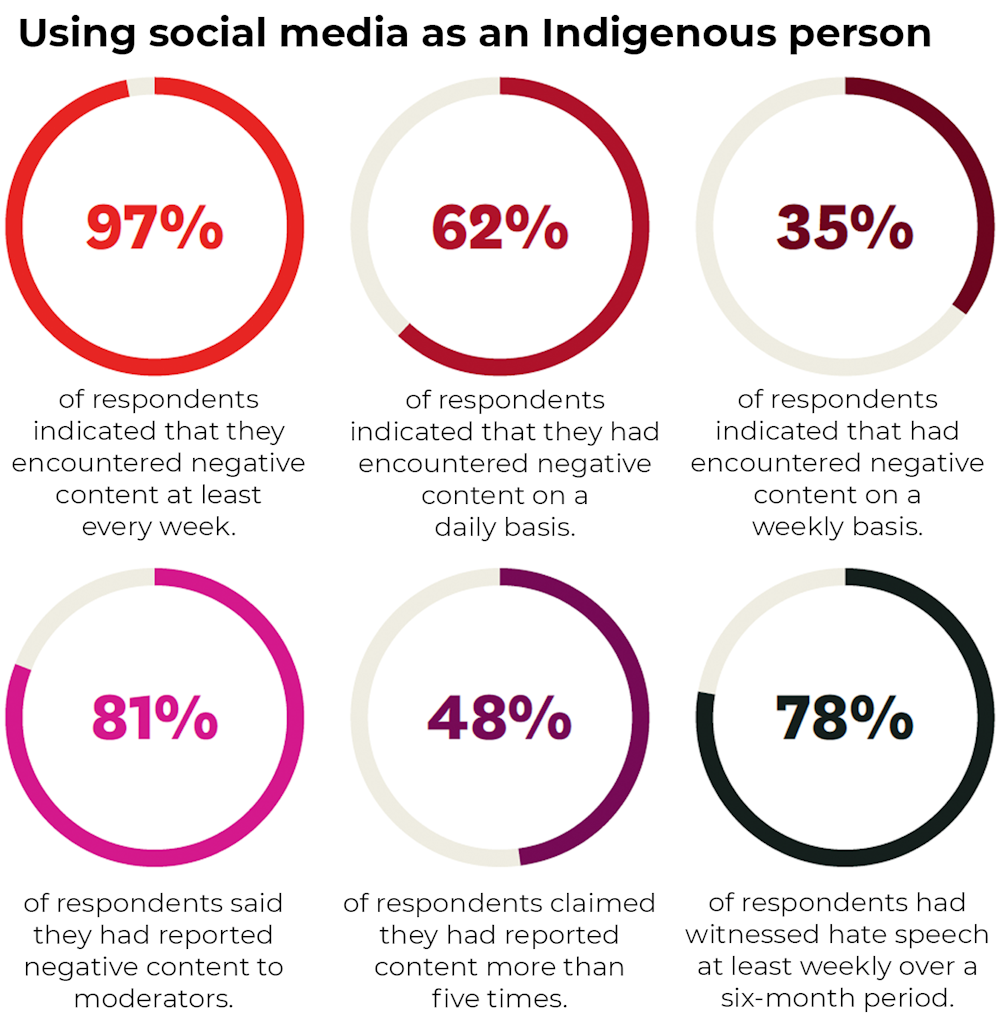
Participants in our study were quick to identify the positive contributions that social media makes in their lives. 83% of respondents confirmed they had positive experiences on social media on a daily basis. In fact, every respondent in the study noted they had positive experiences at least weekly.
Negative findings shed light on the types of harmful content Indigenous people are facing on social media platforms. Author provided, Author provided
Among the most positive aspects, respondents cited accessing creative arts, Indigenous storytelling, and making contact with community members and services. Another positive was the ability to engage in political conversations — that is, to raise issues that are important to Indigenous people which may not receive adequate attention in mainstream media.
Despite these positive opportunities, there is a less comfortable side to social media which must be addressed. Bullying and harassment are having devastating effects on our young people and communities.
In 2019, academics Bronwyn Carlson and Ryan Frazer pointed to research that suggested
victims of cyberbullying are more likely to experience psychological ill-health, most seriously in the forms of depression, anxiety and thoughts of suicide.
Participants in our study agreed negative content was commonplace on social media. 63% of respondents said they experienced negative content on social media on a daily basis, while 97% reported witnessing negative content at least weekly.
Much of this content is grounded in ways of talking about Indigenous people and racist ideas that have pervaded Australian settler-colonial history.
This includes assimilationist policies that were based on the idea that Indigenous culture could be “bred out”. This line of thinking underpins assertions on social media that Indigenous people who live in cities or have fair skin are not genuinely Indigenous.
How can moderators and social media platforms help?
It comes as no surprise harmful speech exists on (and off) social media. What remains troubling, however, is that the cultural subtleties of offensive content are not readily identified by non-Indigenous platform moderators.
Our research included Indigenous voices in the discussion about what needs to be done to address these concerns. They identified a need to employ more Indigenous peoples in society generally – particularly in government, policy making institutions and education.
Indigenous perspectives and voices, which for too long have been silenced or ignored, need to be heard in these settings.
Participants also suggested social media platforms could employ more Indigenous people to assist with learning from Indigenous communities how to identify the cultural subtleties of harmful content online.
Indigenous people who contributed to this study had some advice for non-Indigenous individuals, too. They suggested people connect with Indigenous-led social media pages that showcase diverse cultures and knowledges.
In the wake of National Reconciliation Week, there is no better time to make an effort to reach out via social media and connect with Indigenous community pages and websites.
By listening to and engaging with Indigenous peoples’ opinions and perspectives on social media, non-Indigenous people can learn about the history of their local area and find out what is happening around them.
Most of all, they can learn about what is important to Indigenous communities and how we can work together toward a safer online, and offline, society.
Tristan Kennedy received funding from Facebook Australia in support of this research project.
Research Checks interrogate newly published studies and how they’re reported in the media. The analysis is undertaken by one or more academics not involved with the study, and reviewed by another, to make sure it’s accurate.
Diets that exclude meat and fish (vegetarian) or all animal products including dairy and eggs (vegan) are becoming increasingly popular for health, environmental and ethical reasons.
Past research in adults has linked vegetarian and vegan diets with a reduced risk of heart disease but a greater risk of fractures, caused by low calcium intakes. But the impact on children has not been evaluated, until the release of a new study this week.
The researchers found a link between shorter heights and lower bone mineral content among vegan children, compared to meat-eaters. But they didn’t show vegan diets caused the difference. Nor can they say the differences will last into adulthood.
How was the study conducted?
The paper, published in the American Journal of Clinical Nutrition, examined the differences in children aged five to ten years of age in Poland.
They looked at 187 healthy children between 2014 and 2016 who had been on their respective diets for at least one year: 72 children were omnivores (meat eaters), 63 were vegetarians and 52 were vegans.
The research team looked at the children’s nutrient intakes, body composition and cardiovascular risk – how likely they are to have heart disease or a stroke in the future.
The study was observational, so researchers didn’t make any changes to the children’s diets. They recruited children who were already eating these diets.
Specifically, it was a type of observational study called a cross-sectional study. They looked back at the children’s diets, growth and cardiovascular risk factors at a given time point.
The researchers tracked 187 children in Poland. Shutterstock
The research team ensured the children in the vegan and vegetarian group were similar to children in the omnivore group, in factors that impact growth and cardiovascular risk factors. These include sex, age, parental smoking, parental education, clinical characteristics of their mother’s pregnancy and, importantly, their parents’ height.
The researchers found that compared to children on omnivore diets, children on vegan diets had a healthier cardiovascular risk profile, with 25% lower levels of low-density lipoprotein (LDL, or unhealthy cholesterol).
However the vegan children had an increased risk of nutritional deficiencies. They were more likely to have lower levels of vitamin B12, calcium, vitamin D and iron in their diet.
Children on vegan diets had about 5% lower bone mineral content and were on average 3cm shorter in height. This is important, as the higher the bone mineral content, the higher the bone mineral density.
This 5% difference is concerning, as people have a limited period of time at this age in which they can optimise their bone mineral density; 95% of bone mass is attained by about 20 years of age. Lower bone densities are linked to higher rates of fractures in later life.
Vegetarians showed less pronounced nutritional deficiencies but, unexpectedly, a less favourable cardiovascular risk profile compared to both meat-eaters and vegans. The authors attributed this to a lower-quality diet, with these children consuming more processed foods.
Are there any problems with the study?
Observational studies are only able to tell us if something is linked, not if one thing caused another. This study only tells us there is a link between these diets and the outcomes they looked at.
But in this study, there are plausible biological links between bone development and growth in children.
Calcium, vitamin D and protein are critical for bone development and growth. These nutrients may be lower in vegan diets, as they come mainly from animal products:
calcium is found in dairy products
vitamin D, which we normally get from exposure to sunlight on our skin, is also found in animal foods but in smaller amounts
One single plant source of protein won’t provide you with all the essential amino acids (the protein building blocks your body is unable to make for itself) that are needed. Vegans need to make sure they eat a variety of plants so they get a good mix of all the essential amino acids.
Children get vitamin D from sunlight, but also small amounts from food. Shutterstock
So, why didn’t the researchers carry out an intervention study and change the diets of the children?
First, it would be difficult to find children and their families who are willing to change their diets for a long period.
Second, it would be unethical to put children on a diet potentially affecting their growth and cardiovascular risk factors.
This study, conducted in Poland, is the only one to look at growth and cardiovascular outcomes in vegan and vegetarian children.
One small study in children aged five to ten years isn’t enough for the scientific community to say these results are valid and we must act on them.
But it does give us clues about potential problems and what we can look out for.
As the researchers indicated, more observational studies are needed, and in different countries.
So what does it mean for children on vegan and vegetarian diets?
This doesn’t mean every child who follows these diets is going to have these nutritional and health benefits or problems. And we also can’t say whether these problems will persist into adulthood.
But it does highlight potential risks which health practitioners and parents need to be aware of. And it’s a reminder to either find suitable replacements that align with the family’s diet philosophy, or prescribe supplements if a deficiency is diagnosed through a blood test.
In particular, parents and caregivers need to be careful their children are maintaining a good intake of protein from a variety of vegan sources (beans, lentils, nuts) and calcium (from calcium supplemented plant milks).
The study highlights potential risks for parents to be aware of. Shutterstock
Whether you’re following a vegan, vegetarian or meat-eating diet, you still need to make sure the diet is balanced across all food groups.
The study is also a reminder to minimise your family’s intake of processed foods which are high in salt, sugar and saturated fat, which are risk factors for heart disease and stroke.
If you’re concerned about your children’s diet, talk to your GP or an accredited practising dietitian, who can assess their growth and diet. – Evangeline Mantzioris
Blind peer review
The reviewer has provided an accurate assessment of the research paper.
The study highlights the importance of meal planning to optimise food and nutrient intakes of children whose usual dietary pattern is vegan or vegetarian and the need for regular use of fortified foods and/or dietary supplementation with vitamin B12 and vitamin D and potentially calcium and iron, particularly for vegans.
However, the results of the study may be a “best case scenario”, given most families participating were highly educated and hence likely to be more invested in planning family meals. It is possible other families might have less healthy dietary patterns, and therefore greater nutritional deficits.
Together with the results highlighted by the reviewer about bone mineral content and height, as well as iron and cholesterol levels, this study confirms both the potential risks and benefits associated with vegan and vegetarian diets in children.
A key message is that families following plant-based diets need more advice and support to optimise their food and nutrient intakes, and their children’s diet-related health and well-being. – Clare Collins
Evangeline Mantzioris receives funding from National Health & Medical Research Council.
Clare Collins is affiliated with the Priority Research Centre for Physical Activity and Nutrition, the University of Newcastle, NSW. She has received research grants from NHMRC, ARC, MRFF, Hunter Medical Research Institute, Diabetes Australia, Heart Foundation, Bill and Melinda Gates Foundation, nib foundation, Rijk Zwaan Australia, WA Dept. Health, Meat and Livestock Australia, and Greater Charitable Foundation. She has consulted to SHINE Australia, Novo Nordisk, Quality Bakers, the Sax Institute and the ABC. She was a team member conducting systematic reviews to inform the Australian Dietary Guidelines update and the Heart Foundation evidence reviews on meat and dietary patterns.
Bullying and harassment are having devastating effects on young Indigenous people and their communities.Getty images
Social media offers many benefits to Indigenous peoples, such as ways to establish and navigate identity, build and maintain strong connections to family and community, and seek and offer mutual support. While there are these positive experiences, many people also report having negative encounters online.
The findings shed light on the types of harmful content Indigenous people are facing. These include references to white supremacy, Indigenous identity being challenged, and conflicts within Indigenous communities (also known as lateral violence) in which people attack or undermine each other, often based on colonial ideas about legitimate Indigenous identities.
Our research, which included Indigenous peoples from across Australia, was primarily concerned with identifying how negative content is conceptualised, identified and dealt with from Indigenous Australian perspectives.
Indigenous communities are facing a crisis in mental health, with harmful content on social media a major contributor to increased Indigenous suicide rates Our research responds to this crisis and can potentially help policy makers and social media companies make their platforms safer for Indigenous peoples.
Indigenous peoples’ experiences of social media: the good and the bad
Participants in our study were quick to identify the positive contributions that social media makes in their lives. 83% of respondents confirmed they had positive experiences on social media on a daily basis. In fact, every respondent in the study noted they had positive experiences at least weekly.
Negative findings shed light on the types of harmful content Indigenous people are facing on social media platforms. Author provided, Author provided
Among the most positive aspects, respondents cited accessing creative arts, Indigenous storytelling, and making contact with community members and services. Another positive was the ability to engage in political conversations — that is, to raise issues that are important to Indigenous people which may not receive adequate attention in mainstream media.
Despite these positive opportunities, there is a less comfortable side to social media which must be addressed. Bullying and harassment are having devastating effects on our young people and communities.
In 2019, academics Bronwyn Carlson and Ryan Frazer pointed to research that suggested
victims of cyberbullying are more likely to experience psychological ill-health, most seriously in the forms of depression, anxiety and thoughts of suicide.
Participants in our study agreed negative content was commonplace on social media. 63% of respondents said they experienced negative content on social media on a daily basis, while 97% reported witnessing negative content at least weekly.
Much of this content is grounded in ways of talking about Indigenous people and racist ideas that have pervaded Australian settler-colonial history.
This includes assimilationist policies that were based on the idea that Indigenous culture could be “bred out”. This line of thinking underpins assertions on social media that Indigenous people who live in cities or have fair skin are not genuinely Indigenous.
How can moderators and social media platforms help?
It comes as no surprise harmful speech exists on (and off) social media. What remains troubling, however, is that the cultural subtleties of offensive content are not readily identified by non-Indigenous platform moderators.
Our research included Indigenous voices in the discussion about what needs to be done to address these concerns. They identified a need to employ more Indigenous peoples in society generally – particularly in government, policy making institutions and education.
Indigenous perspectives and voices, which for too long have been silenced or ignored, need to be heard in these settings.
Participants also suggested social media platforms could employ more Indigenous people to assist with learning from Indigenous communities how to identify the cultural subtleties of harmful content online.
Indigenous people who contributed to this study had some advice for non-Indigenous individuals, too. They suggested people connect with Indigenous-led social media pages that showcase diverse cultures and knowledges.
In the wake of National Reconciliation Week, there is no better time to make an effort to reach out via social media and connect with Indigenous community pages and websites.
By listening to and engaging with Indigenous peoples’ opinions and perspectives on social media, non-Indigenous people can learn about the history of their local area and find out what is happening around them.
Most of all, they can learn about what is important to Indigenous communities and how we can work together toward a safer online, and offline, society.
Tristan Kennedy received funding from Facebook Australia in support of this research project.
University of Canberra Professorial Fellow Michelle Grattan and University of Canberra Vice-Chancellor and President Professor Paddy Nixon discuss the week in politics.
This week Michelle and Paddy discuss the G7 summit which is set to take place in Cornwall, where Prime Minister Scott Morrison will be meeting with some of the world’s leaders and discussing COVID-19, climate change, and China.
Crucially, it will be Morrison’s first face-to-face meeting with US President Joe Biden.
Michelle Grattan does not work for, consult, own shares in or receive funding from any company or organisation that would benefit from this article, and has disclosed no relevant affiliations beyond their academic appointment.
Source: The Conversation (Au and NZ) – By Nerilie Abram, Professor; ARC Future Fellow; Chief Investigator for the ARC Centre of Excellence for Climate Extremes; Deputy Director for the Australian Centre for Excellence in Antarctic Science, Australian National University
Steven Saphore/AAP
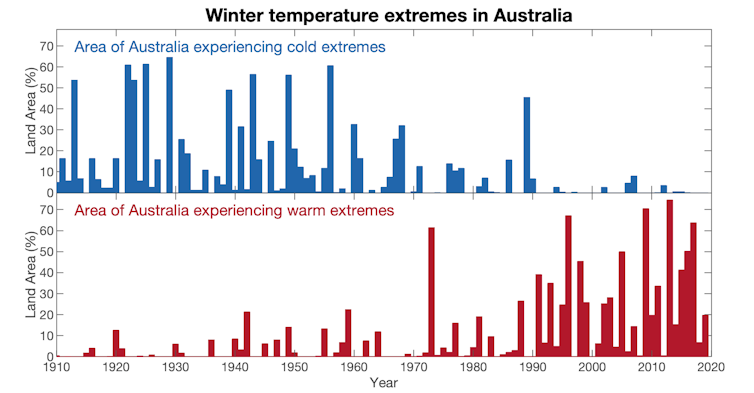
Senator Matt Canavan sent many eyeballs rolling yesterday when he tweeted photos of snowy scenes in regional New South Wales with a sardonic two-word caption: “climate change”.
Canavan, a renowned opponent of climate action and proponent of the coal industry, appeared to be suggesting that the existence of an isolated cold snap means global warming isn’t real.
Prime Minister Scott Morrison has previously insisted there is “no dispute in this country about the issue of climate change, globally, and its effect on global weather patterns”. But Canavan’s tweet would suggest otherwise.
The reality is, as the climate warms, record-breaking cold weather is becoming less common. And one winter storm does not negate more than a century of human-caused global warming. Here, we take a closer look at the cold weather misconception and two other common climate change myths.
Myth #1: A cold snap means global warming isn’t happening
Canavan’s tweet is an example of a common tactic used by climate change deniers that deliberately conflates weather and climate.
Parts of Australia are currently in the grip of a cold snap as icy air from Antarctica is funnelled up over the eastern states. This is part of a normal weather system, and is temporary.
Climate, on the other hand, refers to weather conditions over a much longer period, such as several decades. And as our climate warms, the probability of such weather systems bringing record-breaking cold temperatures reduces dramatically.
Just as average temperatures in Australia have risen markedly over the past century, so too have winter temperatures. That doesn’t mean climate change is not happening. In a warming world, extremely cold winter temperatures can still occur, but less often than they used to.
In fact, human-caused climate change means extreme winter warmth now occurs more often, and across larger parts of the country. Record-breaking hot events in Australia now far outweigh record breaking cold events.
Percentage of Australia experiencing extreme cold (bottom 10%) and extreme warmth (top 10%) in winter since 1910. Data from the Bureau of Meteorology.
Myth #2: Global warming is good for us
Yes, climate change may bring isolated benefits. For example, warmer global temperatures may mean fewer people die from extreme cold weather, or that shorter shipping routes open up across the Arctic as sea ice melts.
But the perverse benefits that may flow from climate change will be far outweighed by the damage caused.
Extreme heat can be fatal for humans. And a global study found 37% of heat-related deaths are a direct consequence of human-caused climate change. That means nearly 3,000 deaths in Brisbane, Sydney and Melbourne between 1991 and 2018 were due to climate change.
Extreme heat and humidity may make some parts of the world, especially those near the Equator, essentially uninhabitable by the end of this century.
Global warming also kills plants, animals and ecosystems. In 2018, an estimated one-third of Australia’s spectacled flying foxes died when temperatures around Cairns reached 42℃. And there is evidence many Australian plants will not cope well in a warmer world – and are already nearing their tipping point.
Myth #3: More CO₂ means Earth will definitely get greener
In January last year, News Corp columnist Andrew Bolt caused a stir with an article that suggested rising carbon dioxide (CO₂) emissions were “greening the planet” and were therefore “a good thing”.
During photosynthesis, plants absorb CO₂. So as the concentration of CO₂ in the atmosphere increases, some researchers predict the planet will become greener and crop yields will increase.
Rising temperatures lead to an earlier onset of spring, as well as prolonged summer plant growth – particularly in the Northern Hemisphere. Researchers think this has triggered an increase in the land carbon sink.
However, there’s also widespread evidence some trees are not growing as might be expected given the increased CO₂ levels in our atmosphere. For example, a study of how Australian eucalypts might respond to future CO₂ concentrations has so far found no increase in growth.
Increased plant growth may also cause them to use more water, causing significant reductions in streamflow that will compound water availability issues in dry regions.
Overall, attempts to reconcile the various lines of evidence of how climate change will alter Earth’s land vegetation have proved challenging.
So, are we doomed?
After all this bad news, you might be feeling a bit dejected. And true, the current outlook isn’t great.
Earth has already warmed by about 1℃, and current policies have the world on track for at least 3℃ warming this century. But there is still reason for hope. While every extra bit of warming matters, so too does every action to reduce greenhouse gas emissions.
And there are promising signs of increasing ambition to reduce greenhouse gas emissions on the global front – from the United States, the United Kingdom, the European Union, Japan and others.
Unfortunately, Australia is far behind our international peers, instead pushing the burden of action onto future generations. We now need the political leadership to set our country, and the world, on a safer and more secure path. Ill-informed tweets by senior members of the government only set back the cause.
Monk seals are one of the most endangered marine mammals alive today, with just over 2,000 individuals remaining in the wild. These seals live in warm waters, specifically the tropics and the Mediterranean.
Hunting by sailors in the past resulted in the extinction of the Caribbean monk seal by the end of the 1950s. It also heavily reduced the numbers of the two remaining populations, in Hawaii and the Mediterranean.
Given how rare monk seals are today, it is hard to imagine a time when they were abundant. However, fossils from Australia show monk seals used to be much more widespread.
Monk seals only survive today in the Mediterranean and the tropics. Peter Trusler, Author provided
Monk seals are from a completely different group to the fur seals and sea lions that live in Australian waters today. Australia’s warm environment in the past made it an ideal habitat for true seals, the group to which monk seals belong.
This discovery was made when our team revisited two fossils from Museums Victoria’s collections, the identity of which has been a mystery for 40 years.
When we analysed them, they turned out to be the oldest evidence of monk seals found so far, at roughly 5 million years old. The fossils are earbones, the part of the skull that contains the structures needed for hearing. The anatomy of earbones means they are very useful for helping palaeontologists identify what animal fossils belong to.
Ancient fossils found at Beaumaris and Hamilton in Victoria, Australia, belong to 5 million year old monk seals. Erich Fitzgerald, Author provided
Together with the recently discovered Eomonachus (a 3 million-year-old New Zealand monk seal), these fossils demonstrate that monk seals had a long history in Australasia. These discoveries have now almost doubled the number of geographic regions monk seals used to occupy in the past, and confirm they used to be a much larger group.
What happened?
If monk seals were so widespread down under in the past, why are they no longer here? The short answer is climate change.
Around 2.5 million years ago, the onset of the ice ages changed the world’s oceans, making the waters colder and sea levels lower. This led to extinctions in many marine mammal groups, including the monk seals. In short, monk seals disappeared in the southern hemisphere, leaving them only present in the Mediterranean and the tropics.
Despite monk seals being protected from hunting today, these fossil discoveries suggest their troubles may be far from over. Their fossil relatives have now demonstrated they are susceptible to environmental change.
Without continued protection, the remaining monk seals may soon disappear along with their extinct relatives.
This illustration shows reconstructions of fossil monk seals and their modern relatives. Peter Trusler, Author provided
James Patrick Rule received funding from an Australian Government Research Training Program Scholarship and a Robert Blackwood Scholarship.
Erich Fitzgerald receives support for research on The Lost World of Bayside from Bayside City Council, Community Bank Sandringham, Beaumaris Motor Yacht Squadron, Bayside Earth Sciences Society, Sandringham Foreshore Association and generous community donations to Museums Victoria.
Justin W. Adams receives funding from the Australian Research Council and Monash University.
While I am always happy to celebrate any accolades my country and city might garner on the international stage, seeing Auckland/Tāmaki Makaurau awarded the top ranking in a recent “most liveable cities” survey left me somewhat flummoxed.
In particular, I would argue that many Māori whānau in Auckland do not enjoy the benefits of this supposed “liveability”.
This is important, given Māori comprised 11.5% of the Auckland population in the 2018 Census. Roughly one in four Māori in Aotearoa New Zealand are living in the greater Auckland region.
The survey was conducted by the Economist Intelligence Unit, sister company of The Economist, and looked at 140 world cities. Auckland was ranked 12th in 2019, but took top spot this year for one obvious reason:
Auckland, in New Zealand, is at the top of The Economist Intelligence Unit’s Liveability rankings, owing to the city’s ability to contain the coronavirus (COVID-19) pandemic faster and thus lift restrictions earlier, unlike others around the world.
Alternative liveability criteria
Each city in the survey was rated on “relative comfort for over 30 qualitative and quantitative factors across five broad categories: stability, healthcare, culture and environment, education and infrastructure”.
Overall rankings depended on how those factors were rated on a sliding scale: acceptable, tolerable, uncomfortable, undesirable, intolerable. Quantitative measurements relied on “external data points”, but the qualitative ratings were “based on the judgment of our team of expert analysts and in-city contributors”.
The methodology, particularly around culture and environment, seems somewhat subjective. It’s predicated on the judgement of unnamed experts and contributors, and based on similarly undefined “cultural indicators”.
To better understand the living conditions of Māori in Auckland, therefore, we might use more robust “liveability” criteria. The New Zealand Treasury’s Living Standards Framework offers a useful model.
This sets out 12 domains of well-being: civic engagement and governance, cultural identity, environment, health, housing, income and consumption, jobs and earnings, knowledge and skills, time use, safety and security, social connections and subjective well-being.
Inner-city housing in Auckland: an average price increase of NZ$140,000 in one year. www.shutterstock.com
The Māori experience
Applying a small handful of these measures to Māori, we find the following.
Housing: According to recent reports, Auckland house prices increased by about NZ$140,00 on average in the past year. That contributed to Auckland being the fourth-least-affordable housing market, across New Zealand, Singapore, Australia, the US, UK, Ireland, Canada and Hong Kong.
Next to that sobering fact, we can point to estimates that Māori made up more than 40% of the homeless in Auckland in 2019. We can only assume this rapid increase in house prices has made homelessness worse.
Poverty: Alongside housing affordability is the growing concern about poverty in New Zealand, and particularly child poverty. While there has been an overall decline in child poverty, Māori and Pacific poverty rates remain “profoundly disturbing”.
Employment: As of March 2021, the Ministry of Business, Innovation and Employment recorded a Māori unemployment rate of 10.8%, well above the national rate (4.9%). This is particularly high for Māori youth (20.4%) and women (12.0%).
Health: Māori life expectancy is considerably lower than for non-Māori, and mortality rates are higher for Māori than non-Māori across nearly all age groups. Māori are also over-represented across a wide range of chronic and infectious diseases, injuries and suicide.
The digital divide: The Digital Government initiative has found Māori and Pasifika are among those less likely to have internet access, thus creating a level of digital poverty that may affect jobs and earnings, knowledge and skills, safety and security, and social connections.
Taken together, these factors show a different and darker picture for far too many Māori than “liveable city” headlines might suggest.
I say this as someone who has lived in Auckland for the majority of the past 60 years. It is a city I love, and I acknowledge the grace and generosity of the mana whenua of Tāmaki Makaurau, with whom I share this beautiful whenua and moana.
I am also part of a privileged group of Māori who enjoy job security, a decent income, a secure whānau and strong social networks.
But, until we address and ameliorate the inequities and disadvantages some of our whānau face, we cannot truly celebrate being the “most liveable city in the world”.
Ella Henry does not work for, consult, own shares in or receive funding from any company or organisation that would benefit from this article, and has disclosed no relevant affiliations beyond their academic appointment.
As a judicial officer, being subject to death threats not only for you but your family is a concern […] you are expected to simply soldier on and go to work the next day.
You can’t un-see or un-hear the material; and it’s impossible to forget, particularly when it involves very young children.
There is a cumulative effect for me, getting worse year by year.
These are some of the distressing sentiments that judges in NSW revealed as part of a recent study I conducted with colleagues at UNSW on the stresses they face in their jobs.
In surveys of 205 serving and retired members of state courts, we found the majority were exposed to alarming levels of traumatic experiences on a daily basis.
This included a high incidence of threats of physical harm to themselves and their families. Perhaps most worrying were the 47 respondents (about 25%) who had received death threats, and those whose families and/or children had been threatened with harm or death.
These types of threats are typically made by individuals with the means and motive to carry them out — namely, defendants in criminal cases and their associates. Said one respondent,
An offender smuggled a knife into the courtroom and was waiting for an opportunity to stab me. An attentive sheriff intervened before the opportunity arose.
Added to these stresses is the sometimes daily exposure to the cruel and sadistic behaviour of defendants to other adults and children, including physical and sexual violence.
Three-quarters of our respondents reported being exposed to events associated with trauma, and 30% reported symptoms consistent with trauma-related effects from being exposed to these types of cases on a daily basis.
Many respondents described the soul-destroying repetition of nastiness to which they are privy in both written and oral evidence. They also described the expectation that they “simply soldier on and go to work the next day”.
Said one participant:
The cumulative effect of witnessing violence towards and the degradation of others is a trauma which has a detrimental effect on one’s life, functioning and relationships. It is like an osmosis and manifests itself both physically and psychologically.
Judges frequently don’t have anyone to discuss these things with. Nor can they take on “other duties” to have an occasional respite from the grind. They live with their trauma and it can take a heavy toll on their health.
On top of this, and because of the very public nature of their roles, judges are considered fair game for criticism. This can sometimes be extreme and amount to vilification: they’re incompetent, they’re soft, they’re out of touch, they should have their face “smashed in”.
Sometimes this criticism comes from those in positions of power, which can carry greater weight. For instance, three federal ministers — Greg Hunt, Alan Tudge and Michael Sukkar — narrowly avoided contempt of court charges in 2018 after criticising what they perceived as lenient sentences for terrorism offences.
Usually, judges have little or no recourse to challenge such comments. The vast majority of respondents in our study said they did nothing about such vilification. Only a very small number said they had taken legal action, which, in the case of defamation, is a costly and precarious path.
The costs of these pressures and repeated traumatic experiences are shown in two psychological indices we used to gauge our respondents’ well-being, the K10 and the Impact of Event Scale.
On both, the study participants scored significantly worse than the general public. I am a clinician and if someone were referred to me with these scores, I would know I was looking at serious clinical issues.
The suicide of Melbourne judge Stephen Myall in 2018 shows just how taxing and unrelenting the job can be. Myall was said to be overwhelmed by an enormous caseload and had attended a well-being course two weeks before his death.
Another judge, Guy Andrew, was found dead in Queensland last year after he was ordered to undergo counselling and mentoring following complaints about his behaviour on the bench.
A public-facing job with high costs
In societies that value the rule of law, judges are seen as the pinnacle of the system and are held in high esteem, paid well, and honoured. Their task is to weigh evidence impartially and to speak without fear or favour.
In the courtroom, the judge is the only person who sits facing the court, on show to all. This arrangement is not accidental. Justice is supposed to be public and transparent.
But judges have historically paid a high price for their status.
Judges have been murdered in recent decades in Italy (by the Mafia), the United States, the United Kingdom, and other countries. Others have survived attempts on their lives.
In Australia, a man named Leonard Warwick, who was embroiled in a dispute with his ex-wife, targeted several Family Court judges in the early 1980s — shooting to death one and killing another one’s wife in a bombing of his home. Warwick also bombed the Family Court at Parramatta.
Ways forward
If there was a silver lining in our study, it was the extraordinarily high response rate. Our judicial officers are engaged and keen to have a say in how to improve the working conditions for themselves and their fellow judges.
There were many suggestions about how to do things better, and a degree of optimism about the future. Among the initiatives put forward were
devising formal mechanisms of mutual support for judges
making stress and trauma legitimate topics of discussion in the legal community
increasing safety and security precautions in courtrooms
instituting an annual mental health check for judicial officers.
As one of our participants expressed to us, change can only come from listening to judicial officers and hearing their concerns.
Thank you for doing this [survey]. […] I see people working so hard with no real voice and a desire to do right by all. It’s pretty sad.
Kevin O’Sullivan does not work for, consult, own shares in or receive funding from any company or organisation that would benefit from this article, and has disclosed no relevant affiliations beyond their academic appointment.
In promising to be New Zealand’s most open and transparent government ever, Labour has one key challenge: reform the Official Information Act. This vital piece of machinery for democracy is in terrible disrepair, and the Government has promised to rewrite it for the modern age, but so far are stalling on this.
Vance outlines how Jacinda Ardern came into office promising reform of the Official Information Act (OIA), and in her first formal speech to Parliament proclaimed: “This government will foster a more open and democratic society. It will strengthen transparency around official information.”
However the reality is quite different: “At every level, the Government manipulates the flow of information. It has not delivered on promises to fix the broken, and politically influenced OIA system.” The journalist has her own story of battling with both government departments and politicians to get information that legally should be available.
Some have argued in response to Vance and other OIA critics that the legislation and adherence to it is not as bad as is being made out. They point to statistics from 2018 that show the proportion of OIA requests that get answered within the legal time constraints are very high, and improving. For example, Labour-aligned blogger Gerard Otto says: “by the 2nd half of 2018 – 95% of all Official Information Act requests were completed on time under Labour, compared with only 91% in 2015/2016 under National” – see: Andrea’s artfully crafted mirage.
However, blogger No Right Turn has recently outlined how government agencies are manipulating the reporting process to make the statistics look better – particularly by “unlawfully extending requests to avoid them being classed as late” – see: Juking the stats, and You can’t manage what you don’t measure: Improving OIA statistics. Looking at just one agency’s OIA data (the Ministry of Education), he found that 40 per cent of their responses were outside the statutory 20 working day timeframe.
In another example, the blogger focused on Police responses to OIA requests beyond routine insurance-type requests and found that only 42.5 per cent were answered within the legal timeframe, which he labels “appalling” – see: How bad are the police at the OIA?.
If that’s not convincing enough that reform is needed, then Andre Chumko reports that Archives New Zealand has released a new report that reveals “worrying and inconsistent patterns of record-keeping within the public sector, which is struggling to keep up with rapidly-evolving technology”, ultimately meaning that OIA requests can’t be properly answered – see: Record-keeping in public sector still worrying — Archives New Zealand report.
Unsurprisingly, complaints about government agencies’ OIA delays are increasing. The Chief Ombudsman keeps records of the numbers, and their most recent report says that “figures for the full year rose about 5 percent to 334” – see RNZ’s Official Information Act request delays prompt more complaints.
The high degree of dysfunction means that tweaks to the OIA regime won’t be enough to fix the problem. Freedom of information campaigners have therefore argued that Labour needs to undertake a rigorous reform process rather than just carry out in-house tinkering. This was put well by Andrew Ecclestone late last year in his blog post: Why we need a full and independent review of the OIA.
The Government’s stalled reform of the OIA
Ever since Labour came to power in 2017 there have been on-again, off-again, signals from Government ministers that an overhaul or review of the OIA would occur. Just last year, in the lead up to the election, the then Justice Minister Andrew Little revealed a rewrite of the Act would happen, being reported as saying “I am committed to a rewrite of the Official Information Act, and this work will take place in association with my colleague Chris Hipkins, Minister of State Services [Open Government]” – see Nikki Macdonald’s Government to rewrite Official Information Act. This article also reports in response: “Freedom of information advocates applauded the review decision, but were frustrated it had taken so long.”
However, after the election, new Justice Minister Kris Faafoi admitted any review was likely to be “later in this parliamentary term” – see Nikki Macdonald’s Official Information Act review kicked down the road. The Ministry of Justice’s large workload is cited as a reason for the delay, referring to the Government’s newfound interest in extending Parliament’s term from three to four years.
Freedom of information campaigners were disappointed by the delay. The response of Council for Civil Liberties chairperson Thomas Beagle was reported: “It was telling that the Government was prioritising investigating increasing the electoral term, which would extend political power, rather than improving a law that keeps that power in check”.
Two months later, in March, the Ministry of Justice released documents about the review, following OIA requests from the media. Journalist Nikki Macdonald reported on the release, pointing out that the information was delivered “two weeks outside the timeframe required by the law. No explanation was given for the delay”, and when subsequent follow up questions were put to the Justice Ministry Deputy Secretary for Policy Rajesh Chhana, he “failed to answer” – see: Official Information Act review deferred because of justice ministry policy work overload.
These documents showed the delay was even worse than feared, because “the OIA review project was not in the Justice Ministry’s 2021-2023 policy programme and had been parked in a ‘holding pen’ until the ministry’s overstretched policy team could find time to consider it.” It appeared that the deferral of the project was due to new minister Kris Faafoi giving it a low priority.
Blogger No Right Turn then reviewed the Justice documents, concluding that the Ministry obviously wasn’t the right body to be dealing with the review, because: “As an agency, they’re stunningly uninterested in the OIA”, and as they’re too busy anyhow, it “provides a perfect excuse to take the job off them and give it to someone else – ideally, an independent, neutral body untainted by the interests of the public service” – see: The Ministry of Justice advice on an OIA review. He also pointed to Justice’s chief executive as being a problem: “Plus of course there’s the [Andrew] Kibblewhite factor: an agency led by a chief executive who publicly advocates for greater secrecy is hardly going to be trusted by requesters to rewrite the Act.”
Finally, the same blogger has put together five recommendations for what a rewrite of the OIA might look like, including expanding the Act to include Parliament, “enforcement by an independent Information Commissioner”, and “criminal penalties for egregious breaches” – see: A transparency agenda.
Virtual reality (VR) and augmented reality (AR) aren’t just for gaming anymore, they’re also proving to be useful tools for disaster safety research. In fact, they could save lives.
Around the world, natural and human-made disasters such as earthquakes, bushfires and terrorist attacks threaten substantial economic loss and human life.
My research review looked at 64 papers on the topic of using AR and VR-based experiments (mostly simulating emergency scenarios) to investigate human behaviour during disaster, provide disaster-related education and enhance the safety of built environments.
If we can investigate how certain factors influence people’s decisions about the best course of action during disaster, we can use this insight to further construct an array of VR and AR experiments.
Finding the optimal fire desing
Research has shown the potential of AR and VR in myriad disaster contexts. Both of these technologies involve digital visualisation. VR involves the visualisation of a complete digital scene, whereas AR allows digital objects to be superimposed over a real-life background.
This figure helps explain the difference between VR, AR and the real world. Ruggiero Lovreglio, Author provided
VR has already played a key role in designing safety evacuation systems for new buildings and infrastructure. For example, in past research my colleagues and I have used VR to identify which signage is the best to use in tunnels and buildings during emergency evacuations.
A participant in the CAVE (Cave Automatic Virtual Environment) at Lund University, in a VR-based tunnel evacuation experiment. Ruggiero Lovreglio, Author provided
In these studies we asked participants to rank different signs using a questionnaire based on the “theory of affordances”, which looks at what the physical environment or a specific object offers an individual. In other words, we explored how different signs can be sensed, understood and used by different people during emergencies.
Before building expensive new infrastructure, we can simulate it in VR form and test how different evacuation signage performs for participants. In the case of signage for tunnel exits, research showed:
— green or white flashing lights performed better than blue lights
— a flashing rate of one flash per second or four flashes per second is recommended over a slower rate of, say, one flash per four seconds.
— LED light sources performed better than single and double-strobe lights.
In another non-immersive VR study, we observed participants’ behaviours and identified which sign was the best to direct people away from a specific exit in case of an emergency (as that exit might lead towards a fire, for instance).
The results showed red flashing lights helped evacuees identify the sign, and the sign itself was most effective with a green background marked with a red “X”.
Research projects have tested how AR superimpositions can be used to guide people to safety during a tsunami warning or earthquake.
In theory, the same approach could be used in other contexts, such as during a terror attack. AR applications could be built to teach people how to act in case of terror attacks by following the rule of escape, hide and tell, as advised by the government.
Such virtual applications have great potential to educate thousands of people quickly and inexpensively. Our latest VR study indicated this may make them preferable to traditional training.
In some of our experiments, several participants were immersed in simulated fire emergencies where they had to evacuate. We investigated the factors that influenced how participants navigated a space to reach an exit, and how they chose between several exits in different fire and social conditions.
Studies on this front have highlighted humans are social animals. In line with “social influence theory”, they tend to follow other people during emergencies. This is a crucial consideration for authorities tasked with designing or implementing disaster evacuation protocols.
Another common behaviour observed was that participants tended to use exits they were already familiar with.
While these findings aren’t necessarily surprising, they help confirm existing theories about public evacuation behaviours. They also help reinforce observations made during real-life evacuation scenarios — where human lives can hang in the balance.
The next challenge is to ensure that in the future, advanced AR and VR-based training applications do not traumatise or distress participants.
A VR simulation of a metro station, used in one of our research studies. Ruggiero Lovreglio, Author provided
The myth of overwhelming panic
It’s worth noting that in the experiments there were no signs of “panic” among participants. Indeed, research has shown feeling panicked is very rare in fire scenarios.
Rather, participants took several factors into account before choosing what they deemed was the best option. Generally, people in disaster situations try hard to choose the most reasonable option; whether it leads to danger is another matter.
Our research can help enhance the safety design of buildings, transport terminals and general evacuation protocols. In the meantime, it’s reassuring to know people will more or less rely on their rationality in emergency situations.
This story is part of a series The Conversation is running on the nexus between disaster, disadvantage and resilience. It is supported by a philanthropic grant from the Paul Ramsay foundation. You can read the rest of the stories here.
Ruggiero Lovreglio does not work for, consult, own shares in or receive funding from any company or organisation that would benefit from this article, and has disclosed no relevant affiliations beyond their academic appointment.
We’re now technically into phase 2b, with certain age groups under 50 newly eligible, depending on the state or territory.
Pharmacists have been found to be capable, willing and ready to help with Australia’s vaccine rollout. But with the exception of Queensland, where 49 regional and remote community pharmacies are now allowed to deliver the vaccine, we have yet to see the government engage pharmacists in a meaningful way.
A bit of background
On February 5 this year, the federal government called for expressions of interest from community pharmacies to be involved with the vaccine rollout. Approximately 3,900 of the 5,700 pharmacies nationwide were deemed “suitable”.
The Pharmacy Guild of Australia has estimated allowing these pharmacies to administer the vaccine would accelerate Australia’s vaccination rollout by three months. Their modelling also suggested involving the pharmacy sector would save the government A$77 million.
In April, National Cabinet agreed pharmacies could be engaged in the states’ and territories’ rollout plans in locations where there are no or limited other places for people to be vaccinated.
In May, Federal Health Minister Greg Hunt announced up to 56 community pharmacies in regional Queensland would be approved to administer COVID vaccines, following a proposal from the Queensland government.
We’ve seen that begin this week, and it’s great news for those Queensland communities with no medical practice. It’s expected jurisdictions with large hinterlands including New South Wales and Western Australia will follow soon.
But we haven’t seen engagement of pharmacies more broadly, beyond filling the gaps that exist outside city centres (and even that we’ve only seen in Queensland so far). At the Australian Pharmacy Professional Conference in May, Minister Hunt stated the pharmacy sector would need to wait until “the latter part of the year” to be involved.
In personal communications with the department of health, inadequate supplies of vaccines at the state and territory level has been cited as the reason for delayed implementation of pharmacy-based vaccination, even in a “filling the gap” role.
This doesn’t help those Australians living in towns or in outer suburbs of the cities where there is an approved pharmacy but no GP. Nor does it help people whose GPs don’t provide COVID-19 vaccinations, or who are elderly or frail and unable to travel to mass vaccination hubs.
Pharmacists have been a fundamental part of Australia’s vaccination workforce since 2014. Depending on the state, pharmacists can administer influenza, whooping cough, measles, mumps, rubella, meningococcal, diphtheria and COVID-19 vaccines.
Approval for pharmacies to offer vaccination requires training to the same skill level as other vaccinators (such as nurses and doctors), appropriate private space within the pharmacy, and the capacity to upload patients’ vaccination records to the Australian Immunisation Register.
Once pharmacies get the green light for greater involvement, the lead time for the profession to come on board will be short as these factors are largely already in place.
With the expectation of assisting with the COVID-19 vaccination program, we’ve seen an upsurge in pharmacists completing vaccination training this year.
Many pharmacists are trained in vaccination. Shutterstock
Storage changes will make it easier
The Therapeutic Goods Administration recently approved changes to the storage requirements of the Pfizer-BioNTech vaccine.
This COVID vaccine belongs to a family of a new technology called mRNA vaccines, and initially required storage at around -60℃. During development of the mRNA vaccines, scientists didn’t know whether the vaccines would be stable in a refrigerator, but testing has since demonstrated they can be stored safely for one month at a normal fridge temperature of 2-8℃.
The capability to store vaccine in unopened vials in normal fridges, as opposed to ultra-cold freezers, will allow greater flexibility in vaccine delivery. This will be particularly useful for remote communities where deliveries can be complicated.
The storage change also enables administration of COVID-19 mRNA vaccines in community pharmacies which all have fridges with temperature monitors.
With Australia starting COVID-19 vaccination later than many places and slipping further behind comparable countries, all available resources should be brought to bear in assisting the population to accept and access vaccination.
We can look overseas to see government programs which engage community pharmacy in COVID-19 vaccination.
In the United States, for example, a collaboration between national and state governments and 40,000 pharmacies makes it easier for people to access COVID-19 vaccination locally, improving vaccine uptake and decreasing the logistical and operational burden on health departments.
Also in the US, the Pharmacy Partnership for Long-Term Care Program involves community pharmacies vaccinating residents and staff on-site at more than 62,000 residential aged-care facilities.
Pharmacists may be able to allay the concerns of some people who are hesitant about COVID vaccination. Shutterstock
While issues of global supply and vaccine storage have affected distribution, public concern about efficacy and side effects have contributed to vaccine hesitancy and affected uptake.
Public health messaging is important but these are complex and personal matters. Many people have questions, like “which vaccine is best for me taking into account my medical situation?” and “what are the potential side effects?”. Pharmacists are well-placed to answer these sorts of questions.
John Jackson is President of the Victorian Branch of the Pharmaceutical Society of Australia and has been engaged in negotiation within the profession and with the Victorian government on how and when pharmacists may be engaged in COVID-19 vaccination.
Harry Al-Wassiti received funding from Monash University and The Medical Research Future Fund (MRFF) to develop mRNA Covid19 vaccine. He collaborates, consults for or and receives funding from Pharmaceutical industry collaborators biotechnology and government bodies involved in the technological development of vaccines. No affiliation with Pharmacy councils or assoications.
Source: The Conversation (Au and NZ) – By Hugh Saddler, Honorary Associate Professor, Centre for Climate Economics and Policy, Australian National University
Shutterstock
World leaders including Prime Minister Scott Morrison will gather in the UK this weekend for the G7 summit. In a speech on Wednesday ahead of the meeting, Morrison said Australia recognises the need to reach net-zero emissions in order to tackle climate change, and expects to achieve the goal by 2050.
So has Australia started the journey towards deep cuts in greenhouse gas emissions?
In the electricity supply system, the answer is yes, as renewables form an ever-greater share of the electricity mix. But elsewhere in the energy sector – in transport, industry and buildings – there has been little or no progress.
This situation needs to change. These other parts of the energy system contribute nearly 40% of all national greenhouse gas emissions – and the share is growing. In a new working paper out today, we propose a way to track the low-carbon transition across the energy sector and check progress over the last decade.
Energy emissions from buildings, such as from gas cooktops, have largely escaped scrutiny. Shutterstock
A stark contrast
The energy sector can be separated into three major types of energy use in Australia:
electricity generation
transport and mobile equipment used in mining, farming, and construction
all other segments, mainly fossil fuel combustion to provide heat in industry and buildings.
In 2018-19, energy sector emissions accounted for 72% of Australia’s national total. Transition from fossil fuels to zero-emissions sources is at the heart of any strategy to cut emissions deeply.
The transition is already happening in electricity generation, as wind and solar supplies increase and coal-fired power stations close or operate less.
But in stark contrast, elsewhere in the sector there is no evidence of a meaningful low-emissions transition or acceleration in energy efficiency improvement.
This matters greatly because in 2019, these other segments contributed 53% of total energy combustion emissions and 38% of national greenhouse gas emissions. Total energy sector emissions increased between 2005 (the reference year for Australia’s Paris target) and 2019.
As the below graphic shows, while the renewables transition often gets the credit for Australia’s emissions reductions, falls since 2005 are largely down to changes in land use and forestry.
Let’s take a closer look at the areas where Australia could do far better in future.
1. Transport and mobile equipment
Transport includes road and rail transport, domestic aviation and coastal shipping. Mobile equipment includes machinery such as excavators and dump trucks used in mining, as well as tractors, bulldozers and other equipment used in farming and construction. Petroleum supplies almost 99% of the energy consumed by these machines.
Road transport is responsible for more than two-thirds of all the energy consumed by transport and mobile equipment.
What’s more, prior to COVID, energy use by transport and mobile equipment was steadily growing – as were emissions. The absence of fuel efficiency standards in Australia, and a trend towards larger cars, has contributed to the problem.
Electric vehicles offer great hope for cutting emissions from the transport sector. As Australia’s electricity grid continues to decarbonise, emissions associated with electric vehicles charged from the grid will keep falling.
Electric vehicles would slash road transport emissions. Shutterstock
2. Other energy emissions
Emissions from all other parts of the energy system arise mainly from burning:
gas to provide heat for buildings and manufacturing, and for the power needed to liquefy gas to make LNG
coal, for a limited range of heavy manufacturing activities, such as steel and cement production
petroleum products (mainly LPG) in much smaller quantities, where natural gas is unavailable or otherwise unsuitable.
Emissions from these sources, as a share of national emissions, rose from 13% in 2005 to 19% in 2019.
These types of emissions can be reduced through electrification – that is, using low- or zero-carbon electricity in industry and buildings. This might include using induction cooktops, and electric heat pumps to heat buildings and water.
However the data offer no evidence of such a shift. Fossil fuel use in this segment has declined, but mainly due to less manufacturing activity rather than cleaner energy supply.
And in 2018 and 2019, the expanding LNG industry drove further emissions growth, offsetting the decline in use of gas and coal in manufacturing.
How to track progress
Over the past decade or so, Australia’s emissions reduction policies – such as they are – have focused on an increasingly narrow range of emission sources and reduction opportunities, in particular electricity generation.
Only now are electric vehicles beginning to be taken seriously, while energy efficiency – a huge opportunity to cut emissions and costs – is typically ignored.
Our paper proposes a large set of new indicators, designed to show what’s happening (and not happening) across the energy sector.
The indicators fall into four groups:
greenhouse gas emissions from energy use
primary fuel mix including for electricity generation
final energy consumption including energy use efficiency
the fuel/technology mix used to deliver energy services to consumers.
By systematically tracking and analysing these indicators, and combining them with others, Australia’s energy transition can be monitored on an ongoing basis. This would complement the great level of detail already available for electricity generation. It would also create better public understanding and focus policy attention on areas that need it.
In some countries, government agencies monitor the energy transition in great detail. In some cases, such as Germany, independent experts also conduct systematic and substantial analysis as part of an annual process.
The road ahead
Australia has begun the journey to a zero-emissions energy sector. But we must get a move-on in transport, industry and buildings.
The technical opportunities are there. What’s now needed is government regulation and policy to encourage investment in zero-emissions technologies for both supplying and using all forms of energy.
And once available, the technology should be deployed now and in coming years, not in the distant future.
Frank Jotzo leads externally funded research projects and has received Australian government funding. There are no conflicts of interest regarding this article.
Hugh Saddler does not work for, consult, own shares in or receive funding from any company or organisation that would benefit from this article, and has disclosed no relevant affiliations beyond their academic appointment.
Longevity and healthy ageing programs worldwide have embraced the slogan “adding life to years”. Ageing well is driven by a combination of factors, including lifelong education and civic participation. That points to the need to promote age-friendliness in higher education, also known as the age-friendly university initiative.
Universities are naturally committed to equity and celebrate diversity. However, they have more work to do to support the increasing numbers of both mature-age students (those who haven’t come straight out of school) and older learners.
The AFU Global Network has adopted ten principles of age-friendly universities. These encompass the themes of inclusion, opportunities for older people and the ability to actively participate, contribute and optimise learning opportunities such as late-life qualifications and research degrees. Universities around the world have started to embrace these principles.
As well as health care and community support services, age-friendly universities are an important piece of the whole age-friendly environment puzzle. An inclusive approach that values every generation will advance society.
Age-friendly policies that promote inclusivity and diversity benefit the whole university community.
Inclusive university education typically involves supporting individuals to finish a degree, ensuring the best learning experience and establishing promising careers. However, the concept of having second-career, older learners is new to some.
Hence, engaging and supporting older students, staff or the retired community need not be based on deficits. The focus should be on optimising their potentials and abilities.
What distinguishes an Australian age-friendly university?
Enriching the exchange of knowledge and experiences would be a strong feature of age-friendly universities. Doing so would build on the increasingly diverse student populations of our universities. They have students from more than 150 countries of origin.
Older people have experience of different cultures and of living in earlier times. They would be able to share historical events, life experiences and real-world contexts with younger students.
Another feature of age-friendly Australian universities is wide geographical reach. They have campuses and operations in regional and metropolitan areas.
Older residents in rural areas are keen to take on opportunities for learning. They also want to actively contribute to their own community. Age-friendly universities would enable them to do both.
Being age-friendly offers multiple benefits for universities and the communities they serve.
An age-friendly university is friendly to all ages.
Meeting the needs of older learners results in a system that is friendly to other students. It may be as simple as easy-to-access online tools and websites.
An emphasis on age-friendliness should also stimulate educators to embrace robust approaches to teaching that suit individual learning needs and life experiences.
Age-friendly universities provide an environment for intergenerational learning and knowledge exchange. Such programs are increasingly popular, but most of these to date have been between older people and preschool children. While this approach has proven personal and health benefits, intergenerational learning should extend beyond the early learning and grandparenting concepts.
Programs like Old People’s Home For 4 Year Olds have highlighted the benefits of intergenerational learning for the very young and old, but what about higher education?
At university level, an intergenerational learning environment engages young and older citizens in collaborative learning, scholarly discussions and solving real-life societal problems.
If we can harness the untapped potential of older volunteers from the retired communities, the impacts on student learning experiences and the university are likely to be substantial.
Education does not have an age limit
The World Health Organisation’s first Global Report on Ageism outlined the goals of healthy ageing and strategies to reduce ageist attitudes at all levels of society. One of these strategies involves intergenerational educational programs. Clearly, universities have an active role to play here.
The time is right for Australian universities to join the Age-Friendly Universities Global Network. The University of Queensland is the first Australian member of the network, while others might still be contemplating membership. Regardless, age-friendly principles should be clearly articulated in all universities as they work towards responsive and inclusive education for all.
Jed Montayre receives funding from the World Health Organization for a project focusing on age-friendly programs and healthy ageing initiatives.
Alphia Possamai-Inesedy and Yenna Salamonson do not work for, consult, own shares in or receive funding from any company or organisation that would benefit from this article, and have disclosed no relevant affiliations beyond their academic appointment.
Australians have been told to stay home during lockdowns to prevent the spread of COVID-19. While evidence of the efficacy of this approach as a public health strategy during a pandemic is compelling, lockdowns and mobility restrictions are inevitably disruptive for many – virtually everyone. However, a group that has largely been overlooked is Australia’s nomadic population. Periods of lockdown are particularly challenging for these people, who live in vans, RVs, caravans and boats.
While nomads do not have a conventional single residential address, or live in a brick and mortar home, they are not homeless. Their van, RV, caravan or boat enables them to be permanently mobile while living in their permanent home.
The viability of their nomadic lifestyle depends on being able to freely move from place to place. Free movement enables nomads to access work and social networks as well as minimise living costs.
With the focus now on vaccinating Australians and working out longer-term strategies for managing COVID-19, more attention must be given to this permanently mobile population.
Who are nomads?
The recently released US film Nomadland follows the travels of a middle-aged woman who lives permanently in van. The film has raised awareness about the growing nomadic population in the US, and the complex economic and social drivers of this growth.
Nomadland: “I’m not homeless, I’m just houseless,” the lead character says. “Not the same thing, right?”
In modern societies, nomads are best thought of as a diverse group of people who are consciously seeking an alternative housing solution that enables them to balance their social and economic resources, needs and aspirations. Their lives and lifestyles are closely connected to life on the road. For those still in the workforce, a nomadic lifestyle can enable them to find seasonal work year-round.
In Australia, the term nomad has been most often associated with “grey nomads”, a broad group of people who are typically retired or semi-retired. They travel seasonally to warmer areas for winter and to cooler areas for summer.
Our new research has revealed the exact size and characteristics of the Australian nomad population are unknown and challenging to determine. Estimates vary dramatically from between 2,500 to 40,000, depending on how the group is defined.
Our official population statistics struggle to “capture” the realities of a whole range of population subsets that do not have one permanent place of “usual residence”, which compounds the challenge. The Australian Census, for example, has only three categories for residents: being “at home”, “away from home”, or homeless on census night.
Without knowing the size of the nomad population, it is difficult to determine if the population is growing or by how much. However, recent reports from the UK and US suggest that, largely in response to financial pressures, those countries’ nomadic populations have grown.
As Australia’s property market tightens and housing affordability worsens, it is plausible that more people may opt to sell up their brick and mortar assets (or rent these out for an income) to live a more affordable nomadic lifestyle.
The closure of national and state parks and informal camping grounds has caused problems for permanent grey nomads. While they are not homeless – their van, RV, caravan or boat is their home – the closure of parks and camping grounds forces them to find alternative safe locations.
For those who are working, travel is often planned to align with seasonal work needs in particular areas. Mobility restrictions and border closures are particularly problematic for those who rely on seasonal work.
COVID-19 lockdowns have left many of Australia’s nomads stranded.
An underpinning assumption of Australia’s public health measures to restrict the spread of COVID is that homes are generally not mobile and that people can remain within a location – albeit with disruption. Better information about the size, routes and characteristics of Australia’s nomad population may improve capacity to support them during periods of restrictions.
The rise of the digital nomad
While COVID-19 restrictions have thrown up many challenges, it appears opportunities are also emerging. Globally, many workplaces are moving work online and the digital nomad population has grown.
Digital nomads are people who work online to maintain a nomadic lifestyle.
So, while there is an urgent need to better ensure Australia’s nomads receive the supports and services they need during COVID-19 lockdowns and more broadly, it’s also worth keeping an eye on the growth of the digital nomad population. We need to consider what might be necessary to support this growing population into the future.
Sarah Prout Quicke has in the past received funding from both State and Federal governments to conduct independent research that examines different aspects of Australian population change and development.
Amanda Davies does not work for, consult, own shares in or receive funding from any company or organisation that would benefit from this article, and has disclosed no relevant affiliations beyond their academic appointment.
Once again folks are pointing to the potential danger of Australia’s low interest rates.
This week a poll of so-called “market economists” by ratings agency Fitch had only 12% of respondents in favour of the Reserve Bank of Australia’s current stance, with 68% saying its monetary policy was too loose – that is, interest rates are too low.
In Australia there is understandable concern about housing prices. Our already serious housing affordability problem seems to have been made worse by a heady combination of low interest rates, light at the end of the COVID-19 tunnel and a large dash of irrational exuberance.
But, as I’ve said before, the housing market should not be the focus of the Reserve Bank when setting monetary policy. The central bank must focus on its inflation target and maintaining credibility.
Comments in recent weeks by the bank’s deputy governor, Guy Debelle, and the bank’s actions over the past two years or so make clear the bank understands that.
Housing affordability is a pressing problem, but reforming tax concessions such as negative gearing and relaxing zoning restrictions are the appropriate instruments to address it.
That said, the prospect of inflation in the next few years is still an important consideration for central banks around the world.
There has been a spirited debate in the US in recent months about whether the Biden administration’s huge US$1.9 trillion spending plan will trigger a serious shift in inflation.
Two of the finest economists of their generation – Larry Summers and Olivier Blanchard – have been the intellectual leaders of such concerns.
Surging stock prices fuelled by stimulus spending are contributing to concerns about rising inflation in United States. Courtney Crow/New York Stock Exchange/AP
There are great minds on the other side of this debate too, including Treasury Secretary Janet Yellen, Nobel laureate Paul Krugman and Federal Reserve Chair Jay Powell.
What lessons should we in Australia take from this debate?
The Australian government has phased out its biggest pandemic support measures, JobKeeper and JobSeeker. Its federal budget embraced the use of fiscal policy (spending) but in moderation compared to the Biden administration’s plan. So Australia does not face the same immediate considerations as the US.
Nonetheless there is still an important lesson we should take from the US inflation debate.
Can inflation be fine-tuned?
The big intellectual argument driving inflation concerns in the US is that it is unwise to think inflation can be fine-tuned.
According to three decades of central bank practice around the world, inflation can be dialed up or down with careful tweaks of monetary policy.
Sure, extraordinary times call for extraordinary monetary policy – hence zero to negative interest rates and quantitative easing since the 2008 financial crisis – but central bankers maintain the belief they can keep inflation in the “Goldilocks zone”.
That zone is inflation of about 2-3%, maintained by central banks setting monetary policy independently of governments.
In many ways the experience since the central-bank independence movement took hold has borne this out. Sort of.
Cautionary inflationary tales
Japan is the classic cautionary tale of a country that has battled to avoid a deflationary spiral, in which prices are expected to fall rather than rise, leading people to save rather than spend, thereby fulfilling those expectations.
What about too much inflation rather than too little?
In recent decades that hasn’t been a problem in advanced economies with competent, independent central banks.
But it has been a problem in countries like Zimbabwe and Venezuela, where printing money has led to hyperinflation. Similar policies in France in the 1980s and Germany in the 1990s – of a much smaller magnitude, granted – triggered inflationary outbursts that were caught just in time.
The real question is this: can a country like Australia end up like Zimbabwe or Venezuela?
The more nuanced answer is “yes – although it’s not very likely”. But that doesn’t mean we should act as if it can’t happen.
Aiming for the Goldilocks zone
Economies, markets and expectations can be at equilibrium in both good and bad ways.
There is a good equilibrium where inflation is in the Goldilocks zone, people believe it will stay there, and the central bank can wield monetary policy like a scalpel.
But there is also a bad equilibrium where people lose faith in inflation staying in the Goldilocks zone. Killing off an inflationary outburst then takes a dramatic hike in interest rates. Monetary policy goes from being a scalpel to a chainsaw.
Paul Volcker, the US Fed’s chairman from 1979 to 1987, wielded that chainsaw to get rampant inflation under control in the early 1980s. But there was a lot of pain involved.
Summers, Blanchard and others now worried about inflation are essentially concerned about shifting to a bad equilibrium that requires painful policy moves to remedy.
Those who are less concerned essentially think we will stay in the current good equilibrium. Some even feel that talking about it is risky – potentially contributing to inflation expectations shifting.
Whatever happens in the US, we in Australia should watch carefully, and not be complacent about our ability to fine-tune the economy.
Richard Holden is president-elect of the Academy of the Social Sciences in Australia.
The black swan is an Australian icon. The official emblem of Western Australia, depicted in the state flag and coat-of-arms, it decorates several public buildings. The bird is also the namesake for Perth’s Swan River, where the British established the Swan River Colony in 1829.
The swan’s likeness has featured on stamps, sporting team uniforms, and in the logo for Swan Brewery, built on the sacred Noongar site of Goonininup on the banks of the Swan.
But this post-colonial history hides a much older and broader story. Not only is the black swan important for many Aboriginal people, it was also a potent symbol within the European imagination — 1500 years before Europeans even knew it existed.
Native to Australia, the black swan or Cygnus atratus can be found across the mainland, except for Cape York Peninsula. Populations have also been introduced to New Zealand, Japan, China, the United Kingdom and the United States.
Right now, the breeding season of the black swan is in full swing across southern Australia, having recently ended in the north. In waterways and wetlands, people are seeing pairs of swans — a quarter of which are same-sex — tending carefully to their cygnets, seeing off potential threats with elaborate triumph ceremonies, or gliding elegantly across the water, black feathers gleaming in the winter sun.
Yet once upon a time in a land far away, such birds were described as rare or even imaginary.
In the first century CE, Roman satirist Juvenal referred to a good wife as a “rare bird in the earth, and very like a black swan”.
Casual misogyny aside, this is an example of adynaton, a figure of speech for something absurd or preposterous — like pigs flying, or getting blood from a stone.
Over the centuries, versions of the phrases “black swan” and “rare bird” became common in several European languages, describing something that defied belief. The expressions made sense because Europeans assumed, based on their observations, that all swans were white.
Around the same time that Juvenal coined these phrases, Ptolemy devised a map of the world that included an unknown southern continent, Terra Australis Incognita. Many believed this distant southland was populated with monsters and fabulous races, like the Antipodes, imagined by Cicero as “men which have their feet planted right opposite to yours”.
In a quirk of history, both the impossible black swan and the hypothetical southland were indeed real. Even more unbelievably, they would be found at the same geographic coordinates.
Once they were white
Black swans are significant totems for many Aboriginal people and incorporated within songlines and constellations (where they are called Gnibi, Ginibi, or Gineevee).
Yet the Noongar people in WA, and the Yuin and Euahlayi in New South Wales, tell ancestral stories about white swans, which had most of their feathers torn out by eagles.
Print by an unknown artist after a drawing by Frederick Garling or watercolour by Frederick R. Clause, who accompanied Captain Stirling on his 1827 trip down the Swan River. State Library of Western Australia
In the Noongar story Maali, the swan, is proud and boastful of its beauty, and has its white feathers ripped out by Waalitj, the eagle, as punishment. In the Yuin story the swan, Guunyu, humble and quiet, is attacked because the other birds are jealous of his beauty.
And in the Euahlayi story, two brothers are transformed into swans, or Byahmul, as part of a robbery. Later they are attacked by eagles as an act of revenge.
In each story, after the swans have their white plumage torn out, crows release a cascade of feathers, turning the swans black, except for their white wing tips. Their red beak still shows blood from the attack.
These stories are keenly observant of, and offer an explanation for, the black swan’s colouration. They acknowledge the possibility swans could be white — even though it’s unlikely First Nations people observed white swans in their surroundings prior to British settlement.
This contrasts starkly with the European assumption that, having never seen a black swan, they couldn’t possibly exist.
European assumptions were destined to shatter once Dutch ships began visiting Australia’s western coastline in the 1600s. Seeing the mythical black swan in the flesh must have been like seeing a unicorn emerge from the shadows of the forest.
In 1636, Dutch mariner Antonie Caen observed black birds “as large as swans” at sea off Bernier Island — probably the first recorded European sighting.
In 1697, Willem de Vlamingh’s expedition to the west coast sighted many swans on what they dubbed Swarte Swaane Drift or Black Swan River. Noongar people know this river as Derbarl Yerrigan. If de Vlamingh was amazed at the sight of black swans, he did not record it, simply noting, “They are quite black”. Three swans were captured and taken to Batavia (Jakarta), but died before they could be brought to Europe.
Reports of the black swan made it back to the Netherlands and then to England, but it took another century for its mythical status to dissipate completely.
English ornithologist John Latham gave the black swan its first scientific name, Anas atrata, in 1790. Yet knowledge of its existence was still not widespread.
In 1792, the botanist on Bruni d’Entrecasteaux’s expedition, Jacques Labillardiere, made note of black swans at Recherche Bay in Tasmania, apparently unaware they were already known to Europeans.
In 1804, Nicolas Baudin’s expedition brought the first living specimens to Europe. These became part of the Empress Josephine Bonaparte’s garden menagerie at the Château de Malmaison.
The black swan had migrated from myth to the far edge of reality, joining the kangaroo and the platypus as awe-inspiring wonders from the distant, topsy-turvy southland — real, but only just.
Good versus evil
Black swans never established large populations in the wild after being brought to Europe. It’s speculated this is because black animals were considered bad omens, in league with witches and devils, and often driven away or killed.
Beliefs like these reflect the ancient assumption, found everywhere from the Dead Sea Scrolls to Star Wars, that darkness and the colour black represent evil and corruption, and that light and the colour white represent goodness and purity.
Frantz Fanon once argued that “the colonial world is a Manichean world”, in which light and dark, white and black, and good and evil are starkly divided. These divisions have been deeply implicated in the histories of colonialism and racism — often with devastating consequences.
Two swans, one dancer
The symbolic contrast of light and dark features heavily in Pyotr Ilyich Tchaikovsky’s most famous ballet, Swan Lake. Prince Siegfried falls in love with Odette, the innocent and virtuous white swan. But he is tricked into promising himself to her double, the seductive and malevolent Odile.
The ballet’s story was inspired by a long tradition of European fairy tales depicting Swan Maidens, but Tchaikovsky was also reportedly inspired by the life of King Ludwig II of Bavaria, known as the Swan King. Both Ludwig II and Tchaikovsky were caught between the societal pressure to marry and their own same-sex desires.
The roles of Odette and Odile are often played by the same ballerina, a tradition that started in 1895, two years after Tchaikovsky’s death. But it was not until 1941 that Odile was first depicted wearing black, and afterwards became known as the black swan.
Swan Lake suggests a Manichean worldview in which good and evil are polar opposites, as far away from each other as Europe is from the Antipodes. By having the same ballerina portray both roles, the ballet also suggests the world is not so simple — things can be black or white, or both at once.
False black swans
For 1500 years, Europeans had been spectacularly wrong about the black swan. Once its existence was accepted, its transmogrification from myth to reality became a metaphor within the philosophy of science. The black swan had shown the difficulty of making broad claims based on observable evidence.
Austrian philosopher Karl Popper used the black swan in 1959 to illustrate the difference between science that can be verified versus science that can be falsified.
To verify that all swans are white is practically impossible, because that would require assessing all swans — yet a single black swan can disprove the theory. In 2007, essayist and mathematic statistician Nassim Nicholas Taleb argued organisations and individuals should be robust enough to cope with “black swan events”: consequential but unexpected moments in history.
This Australian winter, those enjoying the sight of black swans and their cygnets might assume, based on observable evidence, that all Australian native swans are black. But as black swans have shown, and as Taleb argued, we should expect the unexpected.
Last month, some four centuries after Europeans were awe-struck by the sight of black swans on our waters, Tasmanian fisherman Jake Hume rescued a white-plumaged black swan, the only one known to exist.
The swan is not an albino, because it still has pigmentation around its beak and eye. Its white feathers are the expression of a rare genetic mutation. First sighted in the area in 2007, the bird was found riddled with shotgun pellets. It is recovering in Bonorong Wildlife Sanctuary until ready to be released.
Simultaneously a black swan, a white swan, and a metaphor, this assumption-shattering “rare bird” captures the complex cultural history surrounding this species.
David Haworth does not work for, consult, own shares in or receive funding from any company or organisation that would benefit from this article, and has disclosed no relevant affiliations beyond their academic appointment.
Scott Morrison, who was embraced as a bro’ by Donald Trump, now seeks to become one of Joe Biden’s besties.
Making this transition neatly is probably the most important aspect of Morrison’s trip to the G7 summit, at which Australia is one of several guest countries.
A feature of the weekend in Cornwall will be the prime minister’s bilateral with the president, with a show of bonhomie for the cameras and some shrewd mutual assessment in private.
The Australia-US relationship is driven by deep common interests rather than the extent of rapport (or lack of it) between leaders in office at any particular time. But establishing strong personal bonds can help grease the wheels.
Morrison’s pragmatism and his chameleon quality will help in developing intimacy. At and around the G7 he will play up the obvious points of commonality, with Biden and the other leaders. But he still carries some policy baggage, notably on the climate issue, and it’s unclear whether that will cause him trouble.
Morrison laid the groundwork for his trip in his Wednesday speech in Perth, which was titled “A world order that favours freedom”, and cast as a rallying call to allies. This neatly aligned with Biden’s recent Washington Post article, under the heading “My trip to Europe is about America rallying the world’s democracies”.
James Curran, professor of modern history at Sydney University, saw “more than a touch of hubris” in the Morrison speech.
“He appears to be claiming that Australia, by virtue of being at the frontline of the supposed ‘new Cold War’ against China, is a standard bearer for ‘a world order that favours freedom’.
“But I think it is a case more of the PM’s cleverly tapping into President Biden’s longstanding ‘alliance of democracies’ rhetoric. Far from being out front, Mr Morrison is playing the role of presidential mimic,” Curran says.
One way or another, Morrison is firmly on the same page as the new president.
It’s a easier page to be on than Trump’s. In the Trump era, closeness might be deemed necessary for Australia’s interests but was decidedly awkward. For instance, when asked on radio before his September 2019 US visit (with its state dinner) whether Trump was a good president, one could almost hear Morrison sliding across the room. “Yeah I, look we’ve got a straight up relationship and he respects Australia.”
In Wednesday’s speech Morrison talked up Australia’s book, declaring in the written version: “Australia is more connected and more respected today than arguably at any time in our history”. He added: “We have worked hard to ensure we are not a nation that can be easily marginalised and driven to unacceptable compromises”.
In broad strategic and economic terms, Morrison goes to the G7 focused on and preoccupied with the threat of an ever-more assertive China. Australia has increasingly felt the harsh edge of China’s diplomatic tongue, and some Australian exports suffer as China weaponises trade to express its displeasure over various issues.
Morrison is looking for maximum attention on the China challenge from allies and friends, especially the US, at the G7 and on every other possible occasion.
Given how deleterious for Australia China’s behaviour now is, the government’s reaction is not surprising. But there is also the risk of it becoming seriously counterproductive.
In Western Australia, there’s concern China could threaten that state’s iron ore exports. Critics don’t buy the federal government’s argument this would be against China’s own interests and so is unlikely.
WA premier Mark McGowan was decidedly unimpressed with the tone of Morrison’s speech. McGowan warned that “we need to be very careful in relation to our language and the way we approach these things because we could be the big losers out of it”.
One specific issue Morrison hopes the G7 will push is reform of the World Trade Organisation’s disputes settlement system, which has broken down in the wake of Trump vetoing the appointment of new judges. A well-functioning process is vital, especially for a country like Australia, to enforce trade rules and deal with grievances.
The Australian National University’s Shiro Armstrong, an expert on the WTO, says Morrison’s urging lends weight to a wider international recognition that global trade rules are outdated and the current system is under threat.
While the G7 is expected to call for action, Armstrong says change will require broader support. He points to the G20 (of which Australia is a member) being the body able to “set the strategic direction for reform of the WTO given its membership of the large emerging economies and established powers”.
Among the central issues on the G7 agenda will be climate change and the pandemic.
Morrison has made it clear he is not ready yet to embrace a firm 2050 target for net zero emissions – though he wants to before the Glasgow climate conference in November – let alone lift Australia’s ambition in the near term.
For all his talk of technology, and his defensive stand on Australia’s record, he won’t be in tune with the G7 leaders. It will be embarrassing. The question is, how embarrassing?
Will he be put on the spot in plain sight, or will Australia’s laggard position be politely ignored in public? And behind closed doors, will Biden twist his arm to move faster, or will the president leave that until later, or to his climate envoy John Kerry? Britain’s Boris Johnson has already been firm with him.
On the pandemic, Morrison will be able to boast about Australia’s health and economic performance. Perhaps he won’t dwell on the slowness and problems of the rollout.
But the G7 leaders will be focused on the need to get more vaccines to developing countries. Biden is proposing a big US initiative. Morrison will point to the vaccine aid Australia is funding for the region. We could always do more however – the government has on order and will receive more doses than necessary to fully cover all eligible Australians.
In his speech, Morrison made a point of welcoming Biden’s probe into the origins of coronavirus – whether it came from an animal, as initially was the accepted explanation, or the possibility it accidentally escaped from a Wuhan laboratory.
Australia’s early call for an inquiry marked a moment of further deterioration in the relationship with China. The investigation that eventually resulted was inconclusive.
According to a leaked version of the G7 draft communique, seen by Bloomberg News, the leaders are set to call for the World Health Organisation to set up a new inquiry into COVID-19’s origins.
For Morrison the search for the pandemic’s start is unfinished business, a point of strong accord with the president.
Michelle Grattan does not work for, consult, own shares in or receive funding from any company or organisation that would benefit from this article, and has disclosed no relevant affiliations beyond their academic appointment.
Senator Rex Patrick is currently challenging the secrecy around Scott Morrison’s national cabinet. He’s brought legal action – the outcome is pending – to attempt to have the minutes of this body, which includes federal, state and territory leaders, made public. The government claims the documents are protected by an exemption for cabinet documents in the freedom of information act, while Patrick claims national cabinet lacks some of the essential features that would afford it that cover.
Patrick’s also pressing for improvements in the freedom information law, which has become increasingly obstacle-ridden, to allow applicants more rights. It’s perhaps no wonder former senator Nick Xenophon, for whom Patrick once worked, labelled him “Inspector Rex”.
On a very different front, as a former submariner Patrick has been highly critical of the government’s Future Submarine Program, which has contracted a French company to build 12 submarines for the Royal Australian Navy. Patrick says the company is taking too long, and charging too much, to make submarines which may fail to achieve the necessary sovereign capability.
In this podcast, Patrick says Scott Morrison should take the opportunity during his coming meeting with French President Macron to issue an ultimatum that changes must be made.
“You know, despite the good relationship we may have with France, this is a matter of national security, and it’s also a matter of a huge amount of public expenditure. And the prime minister must put the Australian public before that relationship. And I think it would be wise for him to be just very frank and honest with the French president.”
Michelle Grattan does not work for, consult, own shares in or receive funding from any company or organisation that would benefit from this article, and has disclosed no relevant affiliations beyond their academic appointment.
Source: The Conversation (Au and NZ) – By Weihuan Zhou, Associate Professor, Director of Research and member of Herbert Smith Freehills CIBEL Centre, Faculty of Law and Justice, UNSW Sydney, UNSW
He spoke of “Australia’s preparedness to withstand economic coercion in recent times”. As “the most practical way to address economic coercion”, he called for reform of the World Trade Organization, particularly “the restoration of the global trading body’s binding dispute settlement system”.
It wasn’t hard to work out what – and who – he was talking about: China.
But Morrison faces a conundrum in his pitch to reform the WTO to resolve trade disputes with China, which has blocked or restricted Australian exports of beef, wheat, lobster, timber and coal, and imposed high tariffs on barley and wine.
But it isn’t China that has undermined the role of the WTO as the global mechanism for settling trade disputes peacefully through agreed rules and procedures.
The blame for that rests with the United States, which under the Trump administration effectively rendered the organisation’s appeals process inoperable.
By emphasising China’s economic coercion and using it to appeal to the US and others to reform the World Trade Organization, the Morrison government is playing a risky game. It may be squandering an opportunity to engage more constructively with China on common interests.
Trade disputes with China
As diplomatic relations between China and Australia deteriorated over the past 18 months – fuelled by things such as Australia leading the call for an independent investigation into the origins of the COVID-19 virus – China’s trade restrictions on Australian imports escalated.
By December 2020 Australia was ready to make its very first complaint against China to the WTO – over China’s five-year 80.5% tariff on Australian barley. The Morrison government is now contemplating a second WTO complaint over China’s tariffs of as high as 200% on Australian wine.
Appellate Court in limbo
The WTO established a panel to review the barley tariff in May.
Even if Australia does win its case, it faces the uncertainty of how long China takes in acting on the WTO ruling.
But before that is the problem of the WTO making a final ruling.
Like other court systems the WTO has an appeals mechanism, known as the Appellate Body. The Appellate Body is meant to have seven members, and requires a quorum of three judges to hear an appeal. Members are appointed to four-year terms. Appointments require all of the WTO’s 164 member nations to agree.
The US, however, has blocked every appointment and reappointment over the past four years or so. Now the Appellate Body has no members. So no dispute taken to the WTO can be resolved if one of the disputing parties appeals.
If Australia does win its case against China, and China appeals, the dispute will remain in limbo until the Appellate Body can hear that appeal.
On this issue, Australia and China have a shared position. In 2018, for example, they joined forces with other countries to push for the appointment of Appellate Body members.
They also have common interests on some other reform issues in trade that Morrison mentioned in his speech, such as the digital economy and environmental sustainability. Reducing pollution from trade in plastics is an example.
Morrison’s speech, however, tended to highlight the differences rather than shared interests in the international trading system.
“We are facing heightened competition in the Indo-Pacific region,” he said. “We know that because we live here. The task is to manage that competition. Competition does not have to lead to conflict. Nor does competition justify coercion.”
Morrison’s speech did acknowledge the need for “all nations to participate in the global system”. Australia, he said, “stands ready to engage in dialogue with all countries on shared challenges, including China when they are ready to do so with us”.
But Australia’s national interest demands more than just standing ready. The government needs to do the proverbial walking and chewing gum at the same time.
Though its primary motivation for WTO reform may be Australia’s trade disputes with China, it cannot ignore the need to promote that reform through engaging and collaborating with China, now the world’s biggest economy and Australia’s most important trading partner by far.
This won’t be easy. There are some big differences that separate China from Australia and its allies. The Chinese government is far more involved in its economy than the market-based ethos that drove the establishment of the World Trade Organization in the first place.
Negotiating these differences peacefully will require delicate conversations over the boundaries of trade law and policy. That will be impossible in an environment of mutual distrust.
Finding common ground on reinstating a reformed WTO Appellate Body could be a starting point for tempering this lack of trust. It could pave the way for the two nations to de-escalate and move closer to resolving their disputes.
Markus Wagner is the Executive Vice-President of the Society of International Economic Law. He writes in his personal capacity.
Weihuan Zhou does not work for, consult, own shares in or receive funding from any company or organisation that would benefit from this article, and has disclosed no relevant affiliations beyond their academic appointment.
Beekeeping has become hugely popular in recent years, and a new world of beekeeping influencers has recently emerged on TikTok. But it’s not without drama.
Erika Thompson — the bee lady from Texas Bee Works — has gained a following of 6.4 million on TikTok by posting videos of rescuing bee colonies from odd places, including trucks, toilets, and umbrellas. Thompson is at ease in the videos with the colonies, and is frequently not wearing protective clothing, has her hair loose, and handles the bees with her bare hands.
But lately, her videos have been getting backlash from other beekeepers, and fuelled by the media. They say she uses dangerous beekeeping practises, and she isn’t really “saving the bees” as she claims in each video.
We research bee behaviour at the University of Sydney. To us, this backlash is over the top.
Thompson is clearly a competent beekeeper who is educating the public about honeybees in her own way on social media. She shows the potential for TikTok to bring interesting biology to the public — and she does it all without getting hurt.
Beekeepers often wear thick full-length bee suits, veil, gloves, and enclosed shoes when working with their colonies. Many colourful options are available. Eliza Middleton @smiley_lize
Double standards
Thompson has been accused of “bee-washing” – when someone claims actions are more bee-friendly than they are, usually by inflating the conservation messaging of honey bees over other more threatened bee species.
This could well be the case, but Thompson wouldn’t be the first nor last person to piggy back on a popular message to boost her business.
Bee hotels are a great bee-washing example. You can buy these nesting boxes from many major stores, including Bunnings and Aldi, yet most native bees are ground nesting and bee hotels may even increase disease transmission if not cleaned between seasons.
Yes, Erika Thompson’s videos don’t show much of the mishaps that sometimes happen with beekeeping. But if she wants to send a positive message about bees and increase her following and business opportunities, it’s unlikely she’s going to show videos involving stings.
As researcher and beekeeper Lewis Bartlett pointed out on Twitter, attacks on Thompson seem to have a basis in misogyny, and some even read as downright envy.
In fact, research from 2018 confirmed women are more likely to get negative comments on YouTube, so it is sadly unsurprising a woman is behind the “controversial” videos.
But why isn’t she getting stung?
Honeybees are the leading cause of hospitalisation from a venomous animal in Australia. So it’s shocking and impressive to see someone scoop up bees with their bare hands.
While we don’t recommend people who aren’t beekeepers try this, bees can be beautiful, docile creatures. And it’s clear Thompson knows how to interact with bees and how to avoid being stung.
To prevent stings, Thompson gently handles bees, and is likely carefully choosing which bees to film based on how aggressive the colony is.
Colonies can be selectively bred to be less aggressive, and beekeepers will seek out certain subspecies of bee, such as the Italian subspecies Apis mellifera liguistica, which are popular due to their inherent gentle nature.
If a colony is agitated or aggressive by nature, it may be more likely to sting. If you can smell bananas around bees, you may be smelling their alarm pheromone. Even the weather will impact the mood of the bees — nicer weather brings nicer bees.
Beekeepers often use smokers to calm bees before interacting with them. If you scroll through Thompson’s TikTok feed, you’ll see her wearing protective bee keeping equipment and the presence of smokers in a few videos.
This beekeeper is confident there’s no risk of stings from honeybees, so he has taken off his hood and gloves. Sebastian Croker, CC BY-NC
There’s a chance the bees are actually stinging Thompson, but she isn’t bothered by them.
Each person has a different reaction to honeybee stings. Some people have a severe reaction, an anaphylactic response potentially leading to death, while others barely react.
‘Save the bees’
Thompson has proven her skills as an engaging educator on honeybee health and biology, filling her videos with interesting facts about honeybees and explaining their behaviours.
Her videos often end with “save the bees” messaging, but her focus on honeybees can take away from the importance of native bees.
Behavioural scientists work with honeybees but don’t need as much protective gear as beekeepers, as we usually don’t directly interfere with the bees. They’re generally more interested in foraging than finding someone to sting. Eliza Middleton @smiley_lize
Honeybees, on the other hand, are believed to have originated in Africa or Asia, and are considered native to Europe, Africa, and the Middle East. And yet, the number of colonies of honeybees in North America has increased.
By saving a non-native species over a native species, you can unwittingly increase the competition for resources and the native species can’t compete.
How can you help save the bees?
Beekeeping has been soaring in Australia. In Queensland, for example, the number of hobby beekeepers has doubled in the last five years.
A teddy bear bee, Amegilla bombiformis, a native Australian bee. Eliza Middleton @smiley_lize
While Thompson makes it look fairly easy to move swarms of bees, you should not try and move bees yourself without adequate training.
Bees in swarms are unlikely to sting, and usually move along in a few hours. But if you are concerned, call a professional beekeeper to remove them.
But to help save the bees, you don’t need to be a beekeeper. Simply planting flowers in your garden and reducing your use of pesticides can make a big difference.
Go outside and get to know your native bees, and maybe even get involved in some citizen science.
Caitlyn Forster receives funding from the Australian Research Council. She is affiliated with The Australasian Society for the Study of Animal Behaviour.
Eliza Middleton receives funding from the Australian Research Council.
Typically, comics are considered a silent medium. But while they don’t come with an aural soundtrack, comics have a unique grammar for sound.
From Wolverine’s SNIKT! when unsheathing his claws, to Mozart’s Piano Concerto No. 23 in The Death of Stalin (later made into a film) the use of “textual audio” invites comics readers to hear with their eyes.
Fundamental elements such as symbols, font styles and onomatopoeia (where words imitate sounds) mean reading comics is a cross-sensory experience. New and old examples show the endless potential of the artform.
Onomatopoeia — isn’t unique to comics but comic artists have certainly perfected this figurative form of language. POW! BAM! BANG! appear on the page when Batman and Robin land a punch. BLAM! is the sound made by the Penguin’s umbrella when it shoots from a distance.
The list of sounds represented by onomatopoeia is limitless in terms of creative potential. There are words that mimic sounds directly, such as SPLOSH! (the sound made by an object falling into water) and made-up sounds like that of Wolverine’s adamantium claws (as we will see further below).
The language of comics offers creative freedom to expand the aural lexicon. One online database lists over 2500 comic book sounds with links to comics images in which they’ve been used.
This can also present special challenges for translators. Sounds represented in comics can range from speech sounds (subject to language rules including those governing how syllables can be formed) to human-made non-verbal sounds like sneezes, to sounds made by objects and environments.
Visual context is important too. We only recognise the warning of Wolverine’s violent retribution in SNIKT! when the word is drawn and displayed next to the hairy mutant.
Wolverine extends his claws. Author provided
Likewise, the word THWIP! by itself may not mean much. But when positioned in context it can imbue a comic page with excitement and adventure.
Imagine a young man dressed in a tight red-and-blue bodysuit diving at high speed from the top of the Empire State building. Suddenly, just before hitting the ground, THWIP! he shoots spider webs from his wrists, using them to swing from building to building. Both readers and the crowd of enthusiastic fans on the page react: “Here comes Spidey!”
The way they say it
Comic creators also use font style and size and different speech bubble shapes and effects to shout, whisper or scream language.
Bold, italics, punctuation, faded or irregular letters are used to emphasise different features of the written words: fear, courage, loudness or quietness.
In My Friend Dahmer, created by a school friend of the infamous serial killer, the protagonist is seen carrying a dead cat on his way home by a group of kids. Comics creator John “Derf” Backderf applies bigger-bold words in one of the kids’ speech balloon to emphasise the shouting and surprise of onlookers.
My Friend Dahmer (2012) by Derf Backderf. Author provided
The 1973 manga Barefoot Gen, written by Keiji Nakazawa, explores his firsthand experience of the bombing of Hiroshima and its aftermath.
Gen, the main character, sings through several pages of the story. The author uses a musical note symbol (♪) to indicate where speech bubbles are sung. By the final pages of the fourth volume, Gen sings to celebrate that his hair is beginning to grow again after being affected by radiation poisoning.
When preceded by the easily recognisable musical symbol, it’s virtually impossible to read the dialogue without “hearing” a melody:
♪ “Red roof on a green hilltop …
A bell tower shaped like a pixie hat…
The bell rings, ding-dong-ding …
The baby goats sing along, baa-baa-baa …” ♪
Expanding on this concept, How to Talk to Girls at Parties by Neil Gaiman contains musical panels where the combination of drawings, words and signs present a soundtrack.
The How to Talk to Girls at Parties party scene (created by Neil Gaiman, Fábio Moon and Gabriel Bá) gives us a sense of how the scene sounds to the characters in it. Author provided
In film terminology, this is diegetic sound — noises or tunes from within the storyworld — as opposed to a narrative voiceover or a musical soundtrack the characters can’t hear within the story.
In Gaiman’s comic a combination of illustrations, musical notes and words (including the onomatopoeic TUM for a base drum beat) convey the sense that music fills every room of the house where a party is taking place.
In the political satire comic that inspired a movie, The Death of Stalin creator Fabien Nury and illustrator Thierry Robin show lines from Mozart’s orchestral score for his Piano Concerto No. 23 at the bottom of two pages. This adds drama to a climactic scene where Russian leader suffers a stroke.
The musical score can add pace and drama to an already dramatic scene. Author’
Next time you read a comic book, make sure you listen carefully. KABOOM!
Victor Araneda Jure does not work for, consult, own shares in or receive funding from any company or organization that would benefit from this article, and has disclosed no relevant affiliations beyond their academic appointment.
Children outside Prayagraj, Uttar Pradesh.Ramesh Kumar Singh/AP/AAP
The latest Senate estimates hearings revealed there were more than 200 Australian children stuck in India without their parents, up from 173 last month.
Department of Foreign Affairs and Trade secretary Frances Adamson says diplomats have a “steely determination” to bring these children back to Australia. Yet more than one year into the pandemic, the government is not able to provide a timeline for their return, other than “as soon as possible”.
While there has been attention given to Australians stranded overseas, much of this has related to adults.
What does human rights law say about children in this situation?
More than 35,000 stranded
According to the latest figures, some 35,128 Australians overseas are registered as wanting to come home. Of these, 10,994 are in India, including 209 children.
The government has arguably tried to downplay their vulnerability.
Foreign Minister Marise Payne told estimates last week some of the children registered had arrived in India this year, some had never been to Australia and others had arrived there as far back as 2008. While they have been described as “unaccompanied minors”, the government has stressed they are staying with extended family — and not literally on their own.
They are, however, separated from parents in Australia — or not where their parents want them to be.
Last week, we heard once more how demand for repatriation flights continues to outstrip capacity. The situation for children is particularly bleak. Minors under 18 are not allowed on commercial flights without a nominated adult accompanying them — including for the quarantine period.
Given parents are not allowed to travel to get them back, the situation is almost impossible. Some have reportedly resorted to hiring strangers to help get their kids home. As desperate parents seek alternative solutions, young people may become prey to strangers while in transit.
The legal situation for those overseas
The International Covenant on Civil and Political Rights guarantees a person the right to leave and return to their own country freely. The government cannot arbitrarily deny this right.
In March 2021, a group of Australian citizens stranded in the United States lodged a complaint with the United Nations Human Rights Committee. According to the group’s lawyer, Geoffrey Robertson,
International law recognises the strong bond between individuals and their homeland and no respectable government would impose travel caps to prevent, for over a year, its citizens from returning if they are prepared to do quarantine.
The UN’s Human Rights Committee has already urged Australia to ensure their “prompt return” while the case is considered.
But as Australia does not have a bill of rights, the lawfulness of the repatriation policies may not be able to be challenged in our domestic courts.
Extra rights for children
Children have extra rights due to their vulnerability — and these are highly relevant to the situation of those stranded in India. Critically, the Convention on the Rights of the Child says children
shall not be separated from his or her parents against their will.
The only exception would be if relevant authorities determine it is in the best interests of the child.
At the same time, the International Covenant on Civil and Political Rights guarantees every child the right to acquire a nationality and receive protection as a minor. Meanwhile, the International Covenant on Economic, Social and Cultural Rights guarantees the state shall provide the “widest possible” protection and assistance to families. This is “particularly” the case when families have dependent children.
The Australian government will have to account for itself as part of its regular reports to the United Nations Committee on the Rights of the Child. Australia submitted its most recent report in 2018. Its next report is due in 2023.
However, the only possible repercussions will be international condemnation — no sanctions apply.
Australia’s links to India
Policy and debate during COVID has seen a harsh and sometimes punitive tone taken on Australians stuck overseas — particularly when it comes to those in India. At times, Australian-Indians have even been blamed for COVID outbreaks or been portrayed as selfish for wanting to travel.
This shows a misunderstanding of our deep connections to India and of Indian cultural practices.
India has been severely hit by a second COVID wave since March 2021. Manesh A Kumar/AP/AAP
In 2020, the Australian Bureau of Statistics reported about 2.8% of Australians come from India. This makes India the second most common country of origin for Australian residents after England (with China in third place)
Indian society is “collectivistic” – which means the group is prioritised over the individual. Family links are extremely important, so even if migrant Indians are far from their country of origin, frequent travel is prioritised to maintain these links. This includes sending children to be with relatives.
So it’s not surprising to note that with border closures in March 2020, and this year’s temporary travel ban from India, thousands of Australian citizens were left stranded in the country.
Why can’t more be done?
There is no denying there are complex logistical issues when it comes to bringing people back during a global pandemic.
But there are clear human rights reasons (beyond simple compassion) for the Australian government to introduce further measures to bring children back from India.
It begs the question of why there is not immediate action to improve quarantine capacity for this group and allow parents special permission to travel to India to collect their children with specific charter flights to bring them home.
Joshua Aston does not work for, consult, own shares in or receive funding from any company or organisation that would benefit from this article, and has disclosed no relevant affiliations beyond their academic appointment.
A recently released policy guide book for teachers and schools has been receiving some criticism. For instance, an article in the Daily Telegraph claimed:
Teachers are being told not to use phrases like “girls and boys”, “normal” and “other” in class – but they should make students aware of “superdiversity” and “declare a climate change emergency” as a way of “telling the truth” about our “climate breakdown”.
The book is meant to be a free guide for teachers who may want to read the evidence on their topic of need. The policy templates are not prescriptive. The editors encourage users of the book to consider and adapt the policies to suit their unique school context, priorities and culture.
Topics such as “superdiversity” and “declaring a climate emergency” are only only a small selection of the 35 other topics in the book. Themes range from student participation in physical activity to well-being, excellence in Indigenous education and offering feedback for learning.
Teachers can say ‘boys and girls’
The book includes a chapter on transgender and non-binary students. This is where the criticism of being “told not to use phrases like girls and boys” come from.
The chapter suggests schools consider the language they use in the classroom to support inclusion.
The part about boys and girls more specifically asks that “staff should not divide students by gender for class activities, sports, subjects, lining up, et cetera” or address students as “girls and boys” if they want to create an inclusive environment specifically for students whose gender is not described by the binary categories of boy or girl.
This implies if there is a transgender or non-binary student in the class, teachers should consider not dividing groups in traditional and binary ways.
Recommendations to use gender inclusive language, particularly when pronouns are not known, is not new and is endorsed by several international bodies. The American Psychological Society advises terminology like “everyone”, “students”, “children” are useful alternatives to addressing class groups as “boys and girls” to ensure students are affirmed and aren’t misgendered.
Another critical interview on Sky News with Mark Latham circled around the term “superdiversity”. This refers to the array of differences that make up the population and acknowledges how the individual aspects that create diversity can interact with each other.
It comes from a chapter which responds to the increasing diversity seen in classrooms such as “disability, cognitive skills, gender/sexuality, and religious affiliation”. Diversity may also include “personality, interests, socioeconomic status, individual needs, and a wide range of other variables”.
Superdiversity acknowledges everyone’s differences and strengths. Shutterstock
The Daily Telegraph article suggested the book tells “teachers to stop using phrases such as English as a second language”. But the advice comes from one of several considerations for inclusive practice such as avoiding terms “which place students’ knowledge in a deficit manner”.
For instance, the term “ESL student” may not be problematic it itself, but the way it is used can be inaccurate for some students who speak multiple languages. This finding is drawn from a study of young students with various bilingual identities in Australia.
The message is that “each child has a range of personal characteristics that need to be considered in all aspects of school life”.
A climate emergency
Another of the book’s chapters outlines “why and how a school might go about declaring a climate emergency policy”. This is based on a scientific consensus of a warming climate linked to human activities. For instance, the Intergovernmental Panel on Climate Change (IPCC)‘s landmark Special Report on Climate Change warns of catastrophic climate change consequences by 2030 if we can’t limit warming to 1.5˚C above pre-industrial levels.
As the chapter suggests, teachers and students should “play their part in responding to this global declaration of a climate emergency”.
What evidence we used
In the Sky News interview, Mark Latham claimed the book has “very little evidence”.
Each policy has been authored or co-authored by researchers who are considered leading authorities on the topic. They include Laureate Professors John Hattie (expert in feedback for learning) and Marilyn Fleer (play in schools), Distinguished Professor Neil Selwyn (digital teachnologies) and Professor Andrew Martin (instruction to reduce cognitive load).
Wile the Sky News interview talked about identity politics and a left agenda, several policy recommendations in the book have been endorsed by the people levelling criticism against the book. For instance, the chapter on reading instruction by Professor Pamela Snow, Kate de Bruin and Linda Graham, endorses using systematic phonics instruction — which Mark Latham supports.
Each contributor was also asked to rate the evidence they used to support or inform the policy, and provide transparency. They rated the evidence in terms of impact (and potential impact), how it can be generalised and the ease with which each policy can be implemented. These ratings are provided in the book.
Each policy has been also reviewed by those considered its ultimate users, including parents and teachers.
This book does not seek to impose any specific ideological point of view into education systems. There is a known gap between research and practice. The book aims to fill that gap, providing the evidence straight to teachers as and when they might need it.
Kelly-Ann Allen co-edited the book discussed in the article.
When your Netflix stream drops out in the middle of a rainstorm, can you blame the wild weather?
Quite possibly. The weather can affect the performance of your internet connection in a variety of ways.
This can include issues such as physical damage to the network, water getting into electrical connections, and wireless signal interference. Some types of connection are more vulnerable to weather than others.
The behaviour of other humans in response to the weather can also have an effect on your connection.
How rain can affect your internet connection
Internet connections are much more complicated than the router and cables in our homes. There are many networking devices and cables and connections (of a variety of types and ages) between our homes and the websites we are browsing.
How do we connect to the Internet?
An internet connection may involve different kinds of physical link, including the copper wiring used in the old phone network and more modern fibre optic connections. There may also be wireless connections involved, such as WiFi, microwave and satellite radio.
Example of multi-layered internet access. Ferran, CC BY-SA 4.0 https://creativecommons.org/licenses/by-sa/4.0, via Wikimedia Commons
Rain can cause physical damage to cables, particularly where telecommunication networks are using old infrastructure.
ADSL-style connections, which use the old phone network, are particularly vulnerable to this type of interference. Although many Australians may be connected to the National Broadband Network (NBN), this can still run (in part) through pre-existing copper wires (in the case of “fibre to the node” or “fibre to the cabinet” connections) rather than modern optical fibres (“fibre to the home”).
Different types of NBN connection. Riick, CC BY-SA 3.0 http://creativecommons.org/licenses/by-sa/3.0/, via Wikimedia Commons
Much of the internet’s cabling is underground, so if there is flooding, moisture can get into the cables or their connectors. This can significantly interfere with signals or even block them entirely, by reducing the bandwidth or causing an electrical short-circuit.
But it isn’t just your home connection that can be impacted. Wireless signals outside the home or building can be affected by rainfall as water droplets can partially absorb the signal, which may result in a lower level of coverage.
Even once the rain stops, the effects can still be felt. High humidity can continue to affect the strength of wireless signals and may cause slower connection speeds.
Copper cables and changed behaviour
If you are using ADSL or NBN for your internet connection, it is likely copper phone cables are used for at least some of the journey. These cables were designed to carry voice signals rather than data, and on average they are now more than 35 years old.
Only around 18% of Australian homes have the faster and more reliable optical-fibre connections.
There is also a behaviour factor. When it rains, more people might decide to stay indoors or work from home. This inevitably leads to an increase in the network usage. When a large number of people increase their internet usage, the limited bandwidth available is rapidly consumed, resulting in apparent slowdowns.
In Australia, extreme cold is not usually a great concern. Heat is perhaps a more common problem. Our networking devices are likely to perform more slowly when exposed to extreme heat. Even cables can suffer physical damage that may affect the connection.
Imagine your computer fan is not running and the device overheats — it will eventually fail. While the device itself may be fine, it is likely the power supply will struggle in extremes. This same issue can affect the networking equipment that controls our internet connection.
Most of the time, human behaviour is the main cause
For most users, the impact of rain will be slight – unless they are physically affected by a significant issue such as submerged cables, or they are trying to use WiFi outside during a storm.
So, can weather affect your internet connection? Absolutely.
Will most users be affected? Unlikely.
So if your favourite Netflix show is running slow during in rainy weather, it’s most likely that the behaviour of other humans is to blame — holed up indoors and hitting the internet, just like you.
The authors do not work for, consult, own shares in or receive funding from any company or organisation that would benefit from this article, and have disclosed no relevant affiliations beyond their academic appointment.
Premier Dan Andrews shortly after the fall that left him with broken ribs and a damaged spine.AAP/@DanielAndrewsMP
A case study in the manufacture of fake news is playing out right now in Melbourne.
Victoria’s shadow treasurer, Louise Staley, is putting about suggestive questions hinting darkly at a cover-up of how Victorian Premier Daniel Andrews injured his back three months ago.
She has not produced a shred of evidence to support this suggestion, yet the exercise has gained substantial traction in the media. All the main news outlets have had to pay attention to it.
It is the kind of political chicanery that confronts responsible media with a dilemma: how to hold a public official to account without oxygenating the conspiracy theory in which she is trading.
In this case, the fake-news manufacturing process has worked like this.
A public official puts on the public record some questions that look innocuous but will be associated in some minds with a scurrilous conspiracy theory circulating on social media.
Because it is a public official putting this on the public record, it is then picked up by a journalist.
The journalist in turn asks a question about it at a press conference. In this case, the question was put to Acting Premier James Merlino on June 8.
It necessarily generates a response from Merlino and that adds a further ingredient of apparent legitimacy to the mix.
Ambulance Victoria feels it necessary to issue a statement reiterating the exact circumstances in which an ambulance was called to take Andrews to hospital.
Then the Chief Commissioner of Police, Shane Patton, feels obliged to put out a statement confirming police did not attend the scene.
All this adds to the false impression there is some real news here.
But it doesn’t make the originating material true.
The originating material remains fake, but now the conspiracy theory has accumulated many of the attributes of a real story.
However, responsible media recognise what the real story is.
The real story is the attempt by a senior state Liberal MP to manufacture fake news – so they tell this story without oxygenating the content of the fake news itself.
Shadow Treasurer Louise Staley has been leading the opposition’s questions about Andrews’ fall. James Ross/AAP
Australia’s professional mass media – television, radio, newspapers – have followed this course.
They have reported Staley’s raising of the conspiracy theory and her formulation of a series of questions to the government, while at the same time quoting condemnation of her antics by Merlino and others in the state government.
Even Sky News, notorious for its anti-Labor politics, has been circumspect. It has contented itself with references to a “torrent” of “amazing rumours” before retreating to safer and more familiar ground by describing Andrews as a Soviet-style paramount leader.
It reflects well on the Australian media – perhaps reinforced in their caution by the oppressiveness of Australia’s defamation laws – that they have handled this nasty outbreak of fakery with decency, accuracy and fairness.
The result is that, in this case, the manufacturing process has been cut off at the point of distribution.
For the record, Andrews slipped on wet stairs at a holiday house in Sorrento on the Mornington Peninsula on March 9, sustaining several broken ribs and a fractured vertebra. He is expected to return to work some time this month.
Denis Muller does not work for, consult, own shares in or receive funding from any company or organisation that would benefit from this article, and has disclosed no relevant affiliations beyond their academic appointment.
Selwyn Manning and Paul G. Buchanan present their podcast A View from Afar.
A View from Afar
PODCAST - Manning and Buchanan on NZ's National Security Strategy - Also Peru Voters Go Left
/
RSS Feed
Share
Link
Embed
A View from Afar: Selwyn Manning and Paul Buchanan present this week’s podcast, A View from Afar, where they analyse New Zealand’s national security strategy.
There has been no defence white paper since the John Key National-led governments and no comprehensive review of New Zealand’s strategic priorities, nor assessment of the region’s threat landscape both internal and external.
Now, with hybrid threats like cyberwarfare and terrorism adopting an “intermestic” (international and domestic) characteristic due to on-line recruitment and radicalisation, the perceived need is to develop a holistic national security strategy that addresses defence, security and intelligence needs of the 2020 decade.
But what does this all mean for New Zealand’s defence forces, intelligence community, and cyber-defence agencies?
ALSO: World Watch – The latest/recent round of elections in places like Peru, Mexico and Israel can be viewed as referendums on neoliberalism and national populism.
For example: You can see how Israel prime minister Benjamin Netanyahu has adopted Donald Trump-like rhetoric to describe his opponents.
A similar style has been used by the right wing in Peru as well as in Brazil.
The Peru election pits a socialist native Indian against Peru’s former dictator Fujimori’s daughter. She is a neoliberal conservative.
Both national populism and various socialist approaches have something in common: both ideologies reject neoliberal economic theory in principle and in fact.
With the left most likely to win the elections in Peru, and considering the challenges that Peru faces (including a pandemic where Covid-19 has raged through its communities positioning Peru as having suffered the highest recorded death rates in the world) the question begs, has neoliberalism run its course?
WE INVITE YOU TO PARTICIPATE WHILE WE ARE LIVE WITH COMMENTS AND QUESTIONS IN THE RECORDING OF THIS PODCAST:
You can comment on this debate by clicking on one of these social media channels and interacting in the social media’s comment area. Here are the links:
Threat.Technology placed A View from Afar at 9th in its 20 Best Defence Security Podcasts of 2021 category. You can follow A View from Afar via our affiliate syndicators.
Melbourne is once again emerging from lockdown but fitness fans may be wondering: how come gyms remain closed for another week, while hospitality venues are allowed to open?
It’s true in most lockdowns around the world, gyms have often been one of the last places to re-open. From an infection control perspective, the rationale is gyms may, in general, present certain risks that restaurants and cafes don’t.
Imagine your gym
Picture yourself at the gym. It might be a reasonably confined space, sometimes with limited fresh air. People are huffing and puffing, ventilation may be poor, everyone is moving around the room to use different pieces of equipment. You might be there quite a while.
After your workout, you might spend a fair bit of time in an equally confined changeroom area showering, changing and getting ready to go back to the outside world.
So in this scenario, spending a decent chunk of time in such a confined space milling around with other people represents an elevated risk for COVID-19, which is spread mostly by aerosols and/or droplets.
People doing exercise tend to create a lot more aerosols, and it’s not just the exhalation. There’s also a lot of inhalation with all that huffing and puffing.
People doing exercise tend to create a lot more aerosols. Shutterstock
Gyms are also often have classes, although of course they could be stopped. But in general you don’t want lots of people next to each other in a confined space breathing heavily.
And it’s not just about the workout room; gyms have a lot of shared facilities. There are showers, toilets, changing areas, hair dryers, a lot of communal areas that would present another risk in terms of people gathering in small spaces for long periods of time. And some people do spend quite a lot of time in the change room, re-doing hair and make-up or having a shave.
Early on there was a thought the equipment itself might pose a bigger risk but surface transmission is now probably less of a concern that other transmission routes. So with gyms, it’s not so much about sharing the weights, it’s more about the time spent together in a confined area.
Many hospitality settings have confined spaces too, but many in Melbourne have been encouraged and taken up the option to seat people outdoors or in better ventilated areas. And some can be quite large.
Of course, a lot of gyms may not be confined at all and may have excellent ventilation and outdoor areas. But in general, a great many do not.
In a hospitality setting, you can ensure people stay seated in one spot and remain distanced. That’s not really possible in a gym; it sort of defeats the purpose. The moving around creates extra risk because it means if there is a positive case there, they could be moving all over the room and to different parts of the building. They could spread virus around the entire gym as opposed to just the next table.
It’s true we have seen cases of transmissions in restaurants in this pandemic. So it certainly can happen that a super spreader transmits SARS-CoV-2 to a lot of people in a restaurant. But overall, the risks in a restaurant with other control measures, is probably less than in a gym because of all the movement that occurs. A gym has been linked to a large cluster in Hong Kong.
You can understand why gym owners feel it is not fair and many say they are happy to do anything they can possibly do to reduce the risk, just so they can run their business. You could see how the risk might be reduced by moving the weights to an outdoor area, if there was space.
A staged opening will always have the lower-risk settings and activities come back first. Gyms will come back, but for now it seems that is just a little longer yet.
Brett Mitchell has received research funding from the NHMRC, HCF Foundation, Medtronics, Australasian College for Infection Prevention and Control, Nurses Memorial Centre, Senver, GAMA Healthcare, Ian Potter Foundation and Commonwealth (Innovation Connections grant). Professor Mitchell is a Fellow of the Australasian College for Infection Prevention and Control and a Fellow of the Australian College of Nursing. He has run infection prevention and control programs for hospitals and at a State level, and is a credential Expert by the Australasian College for Infection Prevention and Control.
Philip Russo receives funding from the National Health and Medical Research Council, and has received research funding from the Rosemary Norman Foundation, Cardinal Health, Australian College of Nursing and the Cabrini Institute. He is the President of the Australasian College for Infection Prevention and Control, a member of the COVID19 Evidence Taskforce Steering Committee, the Australian Strategic and Technical Advisory Group on AMR, the Healthcare Associated Infection Advisory Committee to the Australian Commission on Safety and Quality in Health Care, a member of the Australian College of Nursing, is a credentialed Expert by the Australasian College for Infection Prevention and Control, and was involved in a review of hotel quarantine for the Victorian Department of Health.