Page 772

New covid cases in PNG, Bougainville, New Caledonia and Tahiti aired

Pacific Media Watch Newsdesk

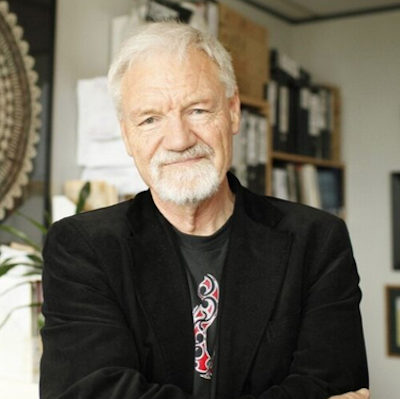
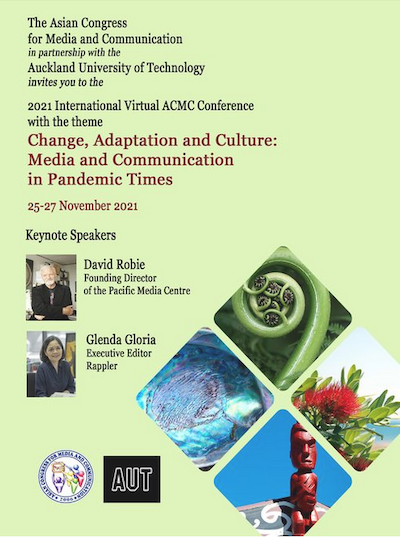
Radio 95bFM The Wire’s Zoë Larsen Cumming and Justin Wong talked to Pacific Media Centre director Professor David Robie today about a resurgence of coronavirus cases in Papua New Guinea and the impact of other Pacific cases on two very important upcoming votes in Bougainville and New Caledonia.

Speaking on the Southern Cross programme, Dr Robie also outlined the latest edition of Pacific Journalism Review, which has been causing ripples around the region over its criticisms of government assaults on media freedom in a series of research papers.

A dramatic increase in covid-19 cases in PNG over the past few days took the total to 214 at the weekend with another reported mine case, this time at Lihir in New Ireland province.

READ MORE: Concern over new covid cluster in French Polynesia

A covid status graphic in Papua New Guinea featured on the PMC Southern Cross radio item. Image: The National

Another positive case in New Caledonia has taken the total to 23, but French officials report that the important referendum on independence scheduled for October 4, will go ahead as planned.

The first covid case in Bougainville has been reported but the presidential election will take place on August 12-September 1.

Relaxed borders in French Polynesia has meant two more cases taking the total to 63.

PMC’s weekly Southern Cross radio programme is now taking a break for a while.

Print Friendly, PDF & Email

Article by AsiaPacificReport.nz

The Victorian government has allocated $60 million to mental health. But who gets the money? 

Source: The Conversation (Au and NZ) – By Chris Maylea, Senior Lecturer, Law and Social Work, RMIT University

The second wave of the coronavirus and the resulting restrictions have impacted all Victorians. Many are struggling, but some are struggling more than others.

In response to the increasing number of people having a hard time coping with the pandemic, the Victorian government yesterday announced an additional A$59.7 million in funding for mental health services.


Read more: Number of Australia’s vulnerable children is set to double as COVID-19 takes its toll


More than half of the new funding is for hospital–based services or services for people after they have left hospital. Most of the rest is focused on services for people who are really unwell or distressed, in an effort to avoid the need for hospitalisation.

A busy emergency department is never an ideal place for someone experiencing mental distress. But now, to reduce the risk of infection, it is even more important to give people the support they need before they end up in hospital.

The mental health system was “broken” before COVD-19

Victoria’s mental health system was in crisis before COVID-19 hit. In 2018, Victoria had the lowest per person funding for mental health in the country. Premier Daniel Andrews described the mental health system as “broken”, and launched the Royal Commission into Victoria’s Mental Health System.

The royal commission had only released its initial recommendations and interim report when the coronavirus hit, overwhelming an already broken system.


Read more: The government will spend $48 million to safeguard mental health. Extending JobKeeper would safeguard it even more


Accelerated initiatives

The new funding is in addition to the work of the royal commission and the funding announced in Februrary and April.

The government has increased the total number of new mental health inpatient beds to 144, nine more than the royal commission’s recommendation. Some A$30 million has been allocated to fast-tracking the new mental health inpatient beds in Geelong, Epping, Sunshine and Melbourne, and A$4.1 milliom will go to existing hospital-based services.

A hospital bed
The government has slightly increased the total number of new mental health inpatient beds to 144 from the 135 recommended by the Royal Commission. Shutterstock

Just over A$4 million has been committed to accelerating the statewide rollout of the Hospital Outreach Post-Suicidal Engagement (HOPE) program to Box Hill, Royal Melbourne, Monash, Heidelberg and Broadmeadows hospitals. But as with the extra inpatient beds, this program was already in the Royal Commission’s recommendations, so it’s not a new initiative, just accelerated.

New initiatives

But there are also some genuinely new initiatives. Some A$11.1 million has been designated to community-based mental health services to be open seven days a week, with extended hours and additional staff. General hospitals and general practitioners will have increased consultancy from psychiatrists to the tune of A$7 million. Headspace, which provides community mental health support to 12-25 year olds, has also received A$1 million across 15 Melbourne sites to reach young people in their homes.

Victorian Premier Daniel Andrews and Mental Health Minister Martin Foley walking and wearing masks
More than half of the new funding announced by the Victorian government on Sunday is for hospital–based or post-hospital services. Erik Anderson/AAP

The Victorian Mental Illness Awareness Council, Victoria’s peak body for people who use mental health services, and Tandem, Victoria’s peak body for carers of people who use mental health services, received a combined A$900,000 to continue their work supporting and representing people who use the mental health system.

More than A$1 million has also been allocated to supporting the mental health of police, paramedics, nurses and midwives. This is a valuable investment, but is arguably filling an existing need rather than catering to the effects of the pandemic.

Why now?

Since the same period last year, people going to emergency departments for self-harm has increased by nearly 10%. For young people, this has increased by 33%. With limited access to services and fewer opportunities for self-care, more people are ending up in emergency departments. In fact, compared with last year, the number of people seeking emergency mental health health support has increased by nearly a quarter.


Read more: Predicting the pandemic’s psychological toll: why suicide modelling is so difficult


Increased restrictions have made accessing services even harder. Telehealth services are increasing, but for many people a virtual meeting is no replacement for face-to-face contact. Some people don’t have the devices necessary for virtual meetings, can’t afford the data, or are not proficient in using technology.

Limited access to services is only part of the problem. Normally, people maintain good mental health by being active, working, and staying connected to their families and communities. These activities cannot be replaced by a weekly online counselling session.

Man clasping his hands, looking distressed
Compared with last year, the number of people going to emergency departments for mental health reasons has increased by nearly a quarter. Shutterstock

Will it make a difference?

The coronavirus and related restrictions have had devastating effects on people’s lives and livelihoods. Those who are most affected by restrictions include Victorians in precarious work, those who are experiencing family violence, or Victorians who live in disadvantaged areas.

This new funding is certainly welcome, and if it prevents the loss of even one life, it will be worth the investment. But the funding ultimately equates to only about A$10 per Victorian, and there will be many people who still can’t get access to services. The royal commission may bring much needed change to the system, but in the meantime many of our most disadvantaged community members will still not receive the support they desperately need.

What is really required is an approach that recognises this is just as much a social issue as it is a health issue – no amount of government support can replace a connected and supportive community.

ref. The Victorian government has allocated $60 million to mental health. But who gets the money?  – https://theconversation.com/the-victorian-government-has-allocated-60-million-to-mental-health-but-who-gets-the-money-144188

Want to see a therapist but don’t know where to start? Here’s how to get a mental health plan

Source: The Conversation (Au and NZ) – By Louise Stone, General practitioner; Clinical Associate Professor, ANU Medical School, Australian National University

Last week, the Australian government announced it will provide ten extra Medicare-subsidised psychological therapy sessions for Australians in lockdown areas due to COVID-19.

In such a stressful time, many people are experiencing poorer mental health, and some need additional support. However, our mental health system is complex and fragmented, so it can be challenging to find the care you need.

Here’s how to start seeing a therapist if you never have before.

What is a mental health treatment plan?

Under Medicare, you can already access ten subsidised sessions per calendar year with a registered psychologist, social worker or occupational therapist. Twenty sessions are now subsidised “for anybody who has used their initial ten services in a lockdown area under a public health order,” said Federal Health Minister Greg Hunt. Currently this includes all of Victoria.

But to get access to these sessions, first you need to get a mental health treatment plan from your GP. This involves an assessment of your physical and mental health, and a discussion of your particular needs. The GP then helps you decide what services you need.

All GPs who write mental health treatment plans have undergone additional training in mental health. There are also plenty of GPs with further interest and expertise in this area. It can be helpful to ask for recommendations from friends and family if you are unsure who to see.

Minister for Health Greg Hunt at a press conference
Federal Health Minister Greg Hunt last week announced an extra ten sessions for people under a mental health care plan in a lockdown area. Daniel Pockett/AAP

Physical and mental health issues frequently overlap, so a visit to a GP is an opportunity to assess any physical issues that may impact mental health as well. The GP should explore a person’s strengths and vulnerabilities, before agreeing on a plan for care.

Generally, this process takes 30-40 minutes, so it’s important to book a longer consultation with your doctor. At the end of this consultation, you can have a copy of the plan, and it’s also sent to the therapist of your choice. Once the mental health plan is billed to Medicare, you can get subsidised sessions with your preferred therapist. You will need to make the appointment with the therapist, but GPs or practice nurses will often help make this appointment for patients who are feeling too unwell to manage this phone call.

Using telehealth

Telehealth enables you to get care from your GP by phone or video. The Medicare requirements of telehealth are changing rapidly, so check when you make your appointment to see if telehealth is available and to make sure you will be eligible for a Medicare rebate for this consultation.

At the moment, to get a Medicare rebate for telehealth, you must have seen the GP in their practice face-to-face at some point in the past 12 months.

But this requirement doesn’t apply to:

  • children under 12 months

  • people who are homeless

  • patients living in a COVID-19 impacted area

  • patients receiving an urgent after-hours service

  • patients of medical practitioners at an Aboriginal Medical Service or an Aboriginal Community Controlled Health Service.

So if you live under the Victorian lockdowns, you can get a mental health care plan via telehealth, even if you have not seen the GP before.

Once you’ve got your care plan, you can do the therapy sessions via telehealth too. And you can now claim them under Medicare (though this wasn’t the case before COVID-19).


Read more: Coronavirus has boosted telehealth care in mental health, so let’s keep it up


A patient and a doctor doing a consultation via video call
Many GP clinics and psychologists are now conducting sessions via phone or video call. Shutterstock

Choosing a therapist

Your GP can help you choose a therapist, but it’s important to think about what you need from a psychologist. Psychological care can range from coaching when life is particularly challenging, to deep and complex work helping people manage mental health disorders or trauma.

Also consider the sort of person you prefer to see. Some people prefer practitioners from a particular cultural group, gender or location. You may have a preference for a very structured, problem-solving style, or you may want someone with a more conversational style. You may also have a preference for the type of therapy you need. If your GP can’t recommend someone appropriate, or if you are having trouble finding someone who is available to meet your needs, the Australian Psychological Society has a searchable database of therapists.

Psychologists, occupational therapists and social workers must be registered under Medicare to provide these services, so it’s important to check this with the receptionist when you make your appointment. The Medicare rebate varies according to the qualifications of the practitioner, and a psychologist’s fees may be well above the rebate, so clarify your expected out-of-pocket expenses when you make an initial appointment.

A clinical psychologist has additional training, and will give you a rebate of around $128, whereas a general psychologist has a rebate of around $86. Remember that a psychologist may charge well above the rebate, so you may be out of pocket anywhere from nothing to over $200.


Read more: 5 ways to get mental health help without having to talk on the phone


If you decide seeing a therapist under a mental health plan is not the right option for you, there are some alternatives. Some non-government organisations, like Headspace, provide counselling services through Medicare for no additional cost, as do some schools. Some workplaces also have psychological options like the Employee Assistance Program.

Some people benefit from online programs that teach psychological techniques. Head to Health also provides a searchable database of evidence-based sites to explore. Most are free or very low cost.

If you are very unwell, local mental health services attached to public hospitals can provide crisis support and referral.

These are difficult times.

It’s important to at least discuss your situation with someone you trust if you’re having difficulty sleeping, your mood is affecting you or your family, or you’re having frightening or worrying thoughts. Your GP is a good, confidential first port of call.


If you or someone you know needs assistance, contact Kids Helpline on 1800 55 1800, Lifeline on 13 11 14, or Beyond Blue on 1300 22 4636.

ref. Want to see a therapist but don’t know where to start? Here’s how to get a mental health plan – https://theconversation.com/want-to-see-a-therapist-but-dont-know-where-to-start-heres-how-to-get-a-mental-health-plan-143990

Why Trump’s WeChat ban does not make sense — and could actually cost him Chinese votes

Source: The Conversation (Au and NZ) – By Wanning Sun, Professor of Media and Cultural Studies, University of Technology Sydney

US President Donald Trump’s recent moves against Tiktok, the popular video-sharing platform, have been widely seen as part of a new “tech Cold War” between the US and China.

Trump has cited security concerns to justify his targeting of TikTok. But the use of the platform by those seeking to mock him and sabotage his rally in Tulsa in June has led some to believe this might be the real reason behind his aversion to the platform.

Last week, Trump effectively banned TikTok, as well as the Chinese messaging and payment app, WeChat, by executive order.

The targeting of WeChat, also due to perceived security concerns, has caused more confusion than Trump’s actions toward TikTok.

The nature and extent of the ban on WeChat is unclear. In fact, some have speculated that stoking uncertainty might actually be Trump’s aim.


Read more: As the US election looms, Trump is running as hard against China as he is against Biden


WeChat and the right-wing Chinese diaspora

Unlike TikTok, WeChat is the main — if not the only — social media platform regularly used by the Chinese diaspora worldwide, especially those who have migrated from China.

So far, the US mainstream media have responded to the ban by reporting on escalating US-China tensions and national security concerns. What is less discussed is the paradoxical role WeChat plays in domestic politics.

Research shows that like other social media platforms, WeChat has been vulnerable to disinformation campaigns.

However, it was also effective in garnering support for Trump among conservative and far-right American Chinese voters during the 2016 presidential presidential election, as well as Chinese liberal intellectuals.

In short, Trump has a lot be thankful for when it comes to WeChat.

And it’s now possible the ban could even alienate some of his supporters — an outcome Trump may not have anticipated when he made the decision.

Trump has accused WeChat and TikTok of allowing the Communist Party to obtain data on American users. Dennis Van TIne/STAR MAX/IPx/AP

A vehicle for robust political debate

But it is not just the Chinese diaspora on the right who use WeChat to participate in domestic US politics. Intellectuals on the left, especially second-generation Chinese Americans, are also active on the platform.

As such, the banning of WeChat has the potential to shut down important debates in the US, as well as among the rest of the Chinese diaspora.

During the Black Lives Matter protests, for instance, Yale student Eileen Huang published an open letter on WeChat to Chinese Americans of her parents’ generation. Huang noted how Chinese Americans have long held deep-seated prejudices against Black people, and called on them to pledge solidarity with Black Americans to fight racism.

Huang’s letter drew widespread criticism. One person, Lin Fei, wrote another open letter condescendingly calling Huang a “child” who was “brainwashed by the lefties” and naively assumed African Americans would side with Asian minorities’ views.

Within a week, the two letters were shared widely on WeChat, precipitating more open letters between younger Chinese studying at Ivy League universities and older Chinese Americans.

The debate within the Chinese community in the US, enabled by WeChat, is nothing short of a minor cultural revolution. As one commentator wrote,

This is a rare large-scale, open and direct ideological confrontation in the history of Chinese Americans.

Trump’s ban on WeChat has also caused much alarm, confusion and fear within the Chinese diaspora, prompting lively and anxious discussions in many of the WeChat groups I observe, both in the US and Australia.

Some ask with trepidation whether they will suddenly be thrust back to the old days of having to rely on phone cards and scratchy long-distance calls to stay in touch with family in China. Others fear if they update their phones, they may no longer be able to access the app.


Read more: TikTok tries to distance itself from Beijing, but will it be enough to avoid the global blacklist?


Misconceptions about WeChat in Australia

So far, the Australian government has responded to the US bans with caution. In July, Prime Minister Scott Morrison indicated his government would monitor TikTok “very closely” and “won’t be shy” about taking action.

Last week, however, the government announced it would not ban TikTok after finding the platform did not pose serious security concerns.

My policy brief on WeChat outlines a number of public misconceptions surrounding the platform in Australia.


Read more: Who do Chinese-Australian voters trust for their political news on WeChat?


Perhaps the most worrying misconception is many people believe WeChat to be a monolithic communications system primarily used by the Chinese Communist Party for propaganda purposes.

It is true content circulated on WeChat’s various platforms is subject to scrutiny and censorship by the Chinese authorities. However, there is a crucial distinction between WeChat being subject to censorship and WeChat being an instrument of CPC propaganda.

As part of research into Chinese-language social media in Australia, my colleagues and I conducted a study of the 50 top-ranked WeChat subscription accounts here over a one-week period in July 2019.

We found evidence of censorship of content being shared on WeChat in Australia. And users responded to this by refraining from publishing material that could alert the censors in China.

This censorship, however, did not amount to direct intervention of the platform or control of its content by the Chinese Communist Party.

A passenger in China uses WeChat to pay for a metro ticket. Blanches/AP

Another study from the same project showed how WeChat was used to spread misinformation during the 2019 federal election. But we also uncovered new ways in which WeChat has been used for citizen education, with new Chinese Australians learning about democratic procedures and values.

WeChat is also used by the Chinese diaspora to partake in civic actions. During the summer bushfires, for instance, Chinese migrants in Australia used WeChat to organise fundraising events and mobilise their fellow citizens to make donations for the victims.

And during the early days of the COVID-19 pandemic in Australia, WeChat was used widely by Chinese Australians returning from China to reinforce the importance of self-isolation and offer moral support to one another. Thousands of volunteers also sprang into action, organising through WeChat to deliver food, groceries and other necessities to those confined in their homes.

It’s for these reasons that banning WeChat for the Chinese diaspora does not seem to make much sense.

ref. Why Trump’s WeChat ban does not make sense — and could actually cost him Chinese votes – https://theconversation.com/why-trumps-wechat-ban-does-not-make-sense-and-could-actually-cost-him-chinese-votes-144207

Why most Aboriginal people have little say over clean energy projects planned for their land

Source: The Conversation (Au and NZ) – By Lily O’Neill, Research Fellow, Australian National University

Huge clean energy projects, such as the Asian Renewable Energy Hub in the Pilbara, Western Australia, are set to produce gigawatts of electricity over vast expanses of land in the near future.

The Asian Renewable Energy Hub is planning to erect wind turbines and solar arrays across 6,500 square kilometres of land. But, like with other renewable energy mega projects, this land is subject to Aboriginal rights and interests — known as the Indigenous Estate.

While renewable energy projects are essential for transitioning Australia to a zero-carbon economy, they come with a caveat: most traditional owners in Australia have little legal say over them.

A red-dirt road through the WA desert, with a tree either side.
Wind turbines will be built across 6,500 square kilometres in the Pilbara. Shutterstock

Projects on the Indigenous Estate

How much say Aboriginal people have over mining and renewable energy projects depends on the legal regime their land is under.

In the Northern Territory, the Aboriginal Land Rights (Northern Territory) Act 1976 (Cth) (ALRA) allows traditional owners to say no to developments proposed for their land. While the commonwealth can override this veto, they never have as far as we know.

In comparison, the dominant Aboriginal land tenure in Western Australia (and nationwide) is native title.

Native title — as recognised in the 1992 Mabo decision and later codified in the Native Title Act 1993 — recognises that Aboriginal peoples’ rights to land and waters still exist under certain circumstances despite British colonisation.


Read more: Indigenous people no longer have the legal right to say no to the Adani mine – here’s what it means for equality


But unlike the ALRA, the Native Title Act does not allow traditional owners to veto developments proposed for their land.

Both the Native Title Act and the the ALRA are federal laws, but the ALRA only applies in the NT. The Native Title Act applies nationwide, including in some parts of the NT.

Shortcomings in the Native Title Act

Native title holders can enter into a voluntary agreement with a company, known as an Indigenous Land Use Agreement, when a development is proposed for their land. This allows both parties to negotiate how the land and waters would be used, among other things.

If this is not negotiated, then native title holders have only certain, limited safeguards.

The strongest of these safeguards is known as the “right to negotiate”. This says resource companies must negotiate in good faith for at least six months with native title holders, and aim to reach an agreement.

But it is not a veto right. The company can fail to get the agreement of native title holders and still be granted access to the land by government.

For example, Fortescue Metals Group controversially built their Solomon iron ore mine in the Pilbara, despite not getting the agreement of the Yindjibarndi people who hold native title to the area.

Construction development over a mine.
Fortescue Metals Group did not reach an agreement with the Yindjibarndi people. AAP Image/Kim Christian

In fact, the National Native Title Tribunal — which rules on disputes between native title holders and companies — has sided with native title holders only three times, and with companies 126 times (of which 55 had conditions attached).

There are also lesser safeguards in the act, which stipulate that native title holders should be consulted, or notified, about proposed developments, and may have certain objection rights.

Negotiating fair agreements

So how does the Native Title Act treat large-scale renewable energy developments?

The answer is complicated because a renewable energy development likely contains different aspects (for example: wind turbines, roads and HVDC cables), and the act may treat each differently.

Broadly speaking, these huge developments don’t fall under the right to negotiate, but under lesser safeguards.

Does this matter? Yes, it does. We know from experience in the mining industry that while some companies negotiate fair agreements with Aboriginal landowners, some do not.


Read more: Rio Tinto just blasted away an ancient Aboriginal site. Here’s why that was allowed


For example, two very similar LNG projects — one in Western Australia and the other in Queensland — resulted in land access and benefit sharing agreements that were poles apart. The WA project’s agreements with traditional owners were worth A$1.5 billion, while the Queensland project’s agreements were worth just A$10 million.

Likewise, Rio Tinto’s agreement for the area including Juukan Gorge reportedly “gagged” traditional owners from objecting to any activities by the company, which then destroyed the 46,000-year-old rock shelters.

A group of protesters holding signs that read 'stop destroying Aboriginal sacred lands'.
Protests erupted in Perth after Rio Tinto blasted ancient Aboriginal sites in recent months. AAP Image/Richard Wainwright

A matter of leverage

We also know the likelihood of a new development having positive impacts for Aboriginal communities depends in part on the leverage they have to negotiate a strong agreement.


Read more: Uranium mines harm Indigenous people – so why have we approved a new one?


And the best leverage is political power. This comes from the ability to wage community campaigns against companies to force politicians to listen, or galvanise nation-wide protests that prevent work on a development continuing.

Legal rights are also very effective: the stronger your legal rights are, the better your negotiation position. And the strongest legal position to be in is if you can say no to the development.

For land under the Aboriginal Land Rights (Northern Territory) Act 1976, this ability to say no means traditional owners are in a good position to negotiate strong environmental, cultural heritage and economic benefits.

For land under the Native Title Act, traditional owners are in a weaker legal position. It is not a level playing field.

A just transition

To remedy this imbalance, the federal government must give native title holders the same rights for renewable energy projects as traditional owners have under the Aboriginal Land Rights Act in the NT.


Read more: Charles Perkins forced Australia to confront its racist past. His fight for justice continues today


Or, at the very least, extend the right to negotiate to cover the types of large-scale renewable energy projects likely to be proposed for native title land in coming decades.

We must ensure the transition to a zero-carbon economy is a just transition for First Nations.

ref. Why most Aboriginal people have little say over clean energy projects planned for their land – https://theconversation.com/why-most-aboriginal-people-have-little-say-over-clean-energy-projects-planned-for-their-land-139119

How the shady world of the data industry strips away our freedoms

Source: The Conversation (Au and NZ) – By Uri Gal, Associate Professor in Business Information Systems, University of Sydney

The recent questioning of the heads of Amazon, Facebook, Google and Apple in the US Congress has highlighted the threat their practices pose to our privacy and democracy.

However these big four companies are only part of a vast, sophisticated system of mass surveillance.

In this network are thousands of data brokers, ad agencies and technology companies – some of them Australian. They harvest data from millions of people, often without their explicit consent or knowledge.

Currently, this includes data related to the COVID-19 pandemic. For instance, data giant Palantir has provided lab test results and emergency department statuses to the US Centres for Disease Control and Prevention.

Last month, a US congressional hearing was held to examine the market power and dominance of Amazon, Facebook, Google and Apple. Sipa USA

How much do they know?

Data companies gather data about our online activity, location, DNA, health and even how we use our mouse. They use a range of techniques, such as:

This expansive tracking generates billions of data points that can reveal every facet of our lives including our family status, income, political affiliation, interests, friendships and sexual orientation.

Data companies use this information to compile detailed individual consumer profiles. These are used for purposes such as targeting us with ads, determining our eligibility for loans and assessing the riskiness of our lives.

The data industry in Australia

Some of the world’s largest data companies operate in Australia. Quantium is an Australian data analytics firm that acquires data from various partners including NAB, Qantas, Woolworths (which owns 50% of the company) and Foxtel.

These partnerships allow Quantium to “tap into the consumer data ecosystem with an unrivalled picture of the behaviours of more than 80% of Australian households, spanning banking, household and retail transactions”.

A company spokesperson told The Conversation most of its work is “data science and AI (artificial intelligence) work with first-party de-identified data supplied by the client”. From this, Quantium delivers “insights and AI/decision support tools” for clients.

Anonymised or “de-identified” data can still be accurately re-identified. Even if a person’s details are de-identified by being converted to an alphanumeric code, the conversion method is identical across most companies.

Therefore, each code is unique to an individual and can be used to identify them within the digital data ecosystem.


Read more: The ugly truth: tech companies are tracking and misusing our data, and there’s little we can do


A lack of transparency

With a revenue of more than US$110 million last year, the insights from Quantium’s data seem to be proving valuable.

From this revenue, more than A$61 million between 2012 and 2020 came from projects commissioned by the Australian government. This includes two 2020 engagements:

  • a “COVID-19 Data Analytics” project worth more than A$10 million with a contract period from March 17, 2020 to December 31, 2020

  • a “Quantium Health Data Analytics” project valued at more than A$7.4 million with a contract period from July 1, 2020 to June 30, 2021.

Quantium’s spokesperson said they could not discuss the details of the contracts without government approval.

In the past decade, the Australian government has commissioned dozens of projects to other data analytics firms worth more than A$200 million.

These include a A$13.8 million Debt Recovery Service project with Dun & Bradstreet and a A$3.3 million National Police Checks project with Equifax – both started in 2016. It’s unclear what and how much data has been shared for these projects.

Last year, Quantium was one of several larger companies put on notice by Australia’s consumer watchdog for sharing data with third parties without consumers’ knowledge or consent.

How do they work?

Data companies largely operate in the shadows. We rarely know who has collected information about us, how they use it, whom they give it to, whether it’s correct, or how much money is being made by it.

LiveRamp (formerly Acxiom) is a US-based company partnered with Australia’s Nine Entertainment Co. This partnership allows the Nine Network to give marketers access to online and offline data to target consumers across Nine’s digital network.

This data may include the Australian electoral roll, to which LiveRamp gained access last year.

In 2018, Nine Entertainment Co merged with Fairfax Media. Joel Carrett/AAP

Similarly, Optum is a US-based health data company that collects information from hospital records, electronic health records and insurance claims.

It has data on more than 216 million people and used this to develop a predictive algorithm that was shown to discriminate against black patients.

Compromising our democracy

The prevalence, scope and stealth of the abovementioned data practices are not congruent with the basic principles of a liberal democracy.

According to philosopher Isaiah Berlin, liberal democracies can only thrive if they have autonomous citizens with two types of freedoms:

  1. freedom to freely speak, choose and protest
  2. freedom from undue inspection and intervention.

Our data-driven world signals an extreme diminishing of both these freedoms. Our freedom of choice is harmed when our informational environments are doctored to nudge us towards behaviours that benefit other parties.

Our private space is all but gone in a digital environment where everything we do is recorded, processed and used by commercial and governmental entities.

How can we protect ourselves?

Although our ability to disconnect from the digital world and control our data is eroding rapidly, there are still steps we can take to protect our privacy.


Read more: The privacy paradox: we claim we care about our data, so why don’t our actions match?


We should focus on implementing legislation to protect our civil liberties. The Australian Consumer Data Right and Privacy Act stop short of ensuring the appropriate data protections. The Australian Competition and Consumer Commission highlighted this in its 2019 report.

In 2014, the US Federal Trade Commission recommended legislation to allow consumers to identify which brokers have data about them – and that they be able to access it.

It also recommended:

  • brokers be required to reveal their data sources
  • retailers disclose to consumers that they share their data with brokers
  • consumers be allowed to opt out.

If we care about our freedoms, we should try to ensure similar legislation is introduced in Australia.

ref. How the shady world of the data industry strips away our freedoms – https://theconversation.com/how-the-shady-world-of-the-data-industry-strips-away-our-freedoms-143823

Coalition maintains Newspoll lead federally and in Queensland; Biden’s lead over Trump narrows

Source: The Conversation (Au and NZ) – By Adrian Beaumont, Honorary Associate, School of Mathematics and Statistics, University of Melbourne

This week’s federal Newspoll, conducted August 5-8 from a sample of 1,509, gave the Coalition a 52-48 lead, a one-point gain for Labor since the last Newspoll, three weeks ago. Primary votes were 43% Coalition (down one), 33% Labor (down one), 11% Greens (up one) and 4% One Nation (steady). Figures from The Poll Bludger.

68% (steady) were satisfied with Scott Morrison’s performance, and 29% (up two) were dissatisfied, for a net approval of +39, just off Morrison’s record +41 in the last two Newspolls.

Anthony Albanese’s net approval improved two points to +3. Despite these slight movements against Morrison and favouring Albanese, Morrison’s better PM lead widened to 60-25 from 59-26 three weeks ago.

So far the Victorian Labor government is taking the blame for the coronavirus crisis. Three weeks ago, Newspoll polled the ratings of NSW Liberal Premier Gladys Berejiklian and Victorian Labor Premier Daniel Andrews. 57% were satisfied with Andrews and 37% were dissatisfied for a net approval of +20, down 20 points since late June. Berejiklian’s net approval also slid eight points to +34, with 64% satisfied and 30% dissatisfied.

As long as the Victorian government is blamed for the new coronavirus surge, while the federal government escapes blame, it is likely the federal Coalition will maintain its poll lead.

Rex Patrick’s resignation from Centre Alliance makes Senate easier for Coalition

On Sunday, SA Senator Rex Patrick announced he was leaving Centre Alliance and would continue in the Senate as an independent.

After the 2019 election, the Coalition held 35 of the 76 senators, Labor 26, the Greens nine, One Nation two, Centre Alliance two and Cory Bernardi and Jacqui Lambie one each. In January, Bernardi resigned from the Senate, and his seat reverted to the Liberals.

Before Patrick left Centre Alliance, the Coalition’s easiest path to the 39 votes required to pass legislation opposed by Labor and the Greens was to win support from One Nation and one of Centre Alliance or Lambie.

Now the Coalition has an extra option if they win One Nation’s support, needing just one out of Lambie, Patrick or Centre Alliance.

Queensland Newspoll: 51-49 to LNP

The Queensland election will be held on October 31. A Newspoll, conducted July 23-29 from a sample of 1,000, gave the LNP a 51-49 lead. Primary votes were 38% LNP, 34% Labor, 12% Greens and 11% One Nation.

This poll was branded as Newspoll, but Newspoll is conducted by YouGov. A YouGov poll in early June gave the LNP a 52-48 lead from primary votes of 38% LNP, 32% Labor, 12% Greens and 12% One Nation.

Despite the LNP lead on voting intentions, Labor Premier Annastacia Palaszczuk’s ratings improved from the late June premiers’ Newspoll. 64% (up five) were satisfied with her performance, and 29% (down six) were dissatisfied, for a net approval of +35. Opposition Leader Deb Frecklington was at 34% satisfied, 42% dissatisfied. Palaszczuk led as better premier by 57-26.

Both Palaszczuk and Morrison had great results on handling coronavirus, with Palaszczuk at 81% well, 14% badly and Morrison at 80% well, 17% badly.

Biden’s lead over Trump narrows

This section is an updated version of an article I had published for The Poll Bludger last Friday.

In the FiveThirtyEight poll aggregate, Donald Trump’s ratings with all polls are 41.4% approve, 54.7% disapprove (net -13.3%). With polls of registered or likely voters, Trump’s ratings are 42.0% approve, 54.4% disapprove (net -12.4%). Since my article three weeks ago, Trump’s net approval has improved about two points.

Less than three months before the November 3 election, FiveThirtyEight’s national aggregate has Joe Biden’s lead narrowing to a 49.9% to 42.1% margin over Trump, from a 50.3% to 41.2% margin three weeks ago.

In the key states, Biden leads by 7.8% in Michigan, 7.3% in Wisconsin, 6.0% in Pennsylvania, 5.2% in Florida and 3.6% in Arizona.

On current polling, Pennsylvania is the tipping-point state. If Trump wins all states more favourable for him than Pennsylvania, and Biden wins Pennsylvania and other states that are better for him, Biden wins the Electoral College by 278 Electoral Votes to 260. But the issue for Biden is that Pennsylvania is currently 1.8% more pro-Trump than the national average.

Trump’s gains come despite a coronavirus death toll that has trended up to over 1,000 daily deaths on most days. There have been over 160,000 US coronavirus deaths. However, the daily new cases have dropped into the 50,000’s from a peak of over 78,000 on July 24.

I believe Trump has gained owing to memories of George Floyd’s murder fading, and thus race relations becoming less important to voters. An improving economic outlook could also explain the poll movement.

Despite the coronavirus’ effect on the US economy, Trump’s economic approval is close to a net zero rating according to the RealClearPolitics average. Analyst Nate Silver says real disposable personal income increased sharply in April, contrary to what occurs in most recessions. This increase was due to the coronavirus stimulus, and explains Trump’s better economic ratings.

In the RealClearPolitics Senate map, Republicans lead in 46 races, Democrats lead in 45 and there are nine toss-ups. If toss-up races are assigned to the current leader, Democrats lead by 51 to 49. If Trump’s numbers continue to improve, Republicans are likely to be boosted in congressional races.

Danger for Democrats in mail voting

Owing to coronavirus, much of the US election will be conducted by mail voting. Trump has been castigating mail voting, and this could depress Republican mail turnout. But there is a danger for Biden and Democrats in Trump’s attacks.

As Cook Political Report analyst Dave Wasserman says, mail votes can be rejected owing to voter error. Also, while there are some states that conduct elections mostly by mail, the US as a whole does not. This means there could be errors such as voters not being sent their ballot papers in time.

If Republicans mostly vote in person, while Democrats mostly vote by mail, it is likely to distort the election night results as mail votes usually take longer to count. Furthermore, mail errors, whether by election officials or voters, are likely to cost Democrats in close races.

If Trump could get within five points in national polls, his advantage in the Electoral College and the mail issue could see him sneak another win.

Another good US jobs report

After the terrible US April jobs report, the last three have indicated a clear recovery trend from coronavirus. In July, 1.8 million jobs were created and the unemployment rate fell 0.9% to 10.2%. The unemployment rate is still high by historical standards, but much better than the 14.7% in April.

Job gains in July slowed from 4.8 million in June and 2.7 million in May. The employment population ratio – the percentage of eligible Americans employed – increased 0.5% in July to 55.1%, but is still over 3% below the 58.2% low reached in the aftermath of the global financial crisis.

NZ Labour has huge poll lead ahead of September 19 election

On July 28, I wrote for The Poll Bludger that a New Zealand Reid Research poll gave Labour a thumping 61% to 25% lead over the opposition National. A Colmar Brunton poll, released after the Poll Bludger article was published, gave Labour a 53% to 32% lead.

ref. Coalition maintains Newspoll lead federally and in Queensland; Biden’s lead over Trump narrows – https://theconversation.com/coalition-maintains-newspoll-lead-federally-and-in-queensland-bidens-lead-over-trump-narrows-144193

A new community case of COVID-19 in New Zealand is a matter of when, not if. Is the country prepared for it?

Source: The Conversation (Au and NZ) – By Michael Plank, Professor in Mathematics, University of Canterbury

Our latest modelling shows New Zealanders need to redouble their efforts to keep track of people they meet, if we are to have a chance of controlling any re-emergence of COVID-19.

The director general of health, Ashley Bloomfield, recently warned that a new case of COVID-19 community transmission is a matter of when, not if. He said:

We’re working on the basis it could be anytime, of course coupled with doing everything we can to intercept the virus at the border and stop it coming any further.

So far, our border restrictions and quarantine have kept the virus out, but with the pandemic accelerating globally, the threat of re-emergence is small but ever present. Should an infectious person slip through the border, our modelling shows comprehensive contact tracing and quick isolation are our best defences, without having to resort to another lockdown.


Read more: 100 days without COVID-19: how New Zealand got rid of a virus that keeps spreading across the world


Speed is of the essence

New Zealand has now gone for 100 days with no community transmission of COVID-19.

One way to measure the effectiveness of public health measures such as contact tracing is the virus reproduction number: the number of secondary infections for each new positive case. If this number can be kept below one, then one missed case at the border won’t lead to an outbreak.

Our new modelling results show that if we can trace and quarantine 80% of contacts within two days on average, we can reduce the effective reproduction number from 2.5 to 1.5. Some additional physical distancing and mask use could bring the number below one.

But contact tracing can only do this if we all help. So far, more than 600,000 new Zealanders have registered for the NZ COVID Tracer app, which now allows manual entries as well as scanning business QR codes. But regular use has been slow to catch on.

Our modelling also shows people will need to quarantine themselves promptly, even before they have symptoms. This might sound obvious, but it is easier said than done, especially for people in insecure employment, without paid sick leave, or with care-giving responsibilities.

The statutory sick leave entitlement in New Zealand is only five days but traced contacts may need to quarantine for up to 14 days, in some cases without showing any signs of illness. In England, there are fears people are reluctant to pass on details of contacts who may not have the financial resources to self-isolate.

In Australia, the state of Victoria has recently introduced a A$1,500 payment for people required to isolate after they or a household member tests positive. The Scottish government has also recognised the importance of this, adopting a “test, trace, isolate, support” approach. We need similar support put in place in New Zealand.


Read more: How New Zealand could keep eliminating coronavirus at its border for months to come, even as the global pandemic worsens


Check in machines at airport
People who work in airports are at higher risk of catching the virus. AAP/Mark Baker

Targeted testing

Once an outbreak gets too large, the contact tracing system will not cope. The earlier we can catch an outbreak, the better chance we have of containing it. This means doing lots of testing. Our current testing rate has dropped to around 2,000 per day from a high of around 7,500 per day in late June. We could be testing more people, but it is important to target high-risk groups.

At the moment, New Zealand’s biggest risk is at the border. We already test international arrivals twice during their quarantine.

People who work at the border, either in airports or at quarantine facilities, are also at higher risk of catching the virus. This is how Melbourne’s current outbreak started. It is crucial these workers are trained in infection prevention and proper use of protective equipment, and separated from people in quarantine.

Staff at quarantine hotels in Rotorua and Hamilton are now being tested fortnightly and have daily symptom checks. This needs to be extended to all staff at airports and quarantine facilities who have any contact with quarantined arrivals.

People with symptoms of COVID-19 should also be offered tests. If the border keeps doing its job, all of these tests will come back negative. But if we do get a case, we are much more likely to find it by testing people with symptoms rather than just testing randomly.


Read more: ‘An endless game of COVID-19 whack-a-mole’: a New Zealand expert on why Melbourne’s stage 4 lockdown should cover all of Victoria


Digital contact tracing

Because speed is essential, there is interest around the world in digital tracing systems such as Bluetooth apps or cards. But an effective digital tracing system needs to be well integrated with manual contact tracing.

A system that immediately provides a list of close contacts and phone numbers could make the job easier and faster for contact tracers. Apps that just send an automatic notification with no follow-up are less likely to result in effective quarantine.

Even with gold-standard contact tracing, our model suggests we would need to follow moderate social distancing rules to bring the reproduction number below one. If we don’t get on top of an outbreak very quickly, we can expect limits on gathering size, or even regional or national lockdowns. Past experience has shown that starting these measures as early as possible is the key to successful elimination.

ref. A new community case of COVID-19 in New Zealand is a matter of when, not if. Is the country prepared for it? – https://theconversation.com/a-new-community-case-of-covid-19-in-new-zealand-is-a-matter-of-when-not-if-is-the-country-prepared-for-it-143746

When English becomes the global language of education we risk losing other – often better – ways of learning

Source: The Conversation (Au and NZ) – By Stephen Dobson, Professor and Dean of Education, Te Herenga Waka — Victoria University of Wellington

The English language in education today is all-pervasive. “Hear more English, speak more English and become more successful” has become a self-fulfilling prophecy.

Some say it’s already a universal language, ahead of other mother tongues such as Arabic, Chinese, Russian, Spanish or French. In reality, of course, this has been centuries in the making. Colonial conquest and global trade routes won the hearts and minds of foreign education systems.

These days, the power of English (or the versions of English spoken in different countries) has become accepted wisdom, used to justify the globalisation of education at the cost of existing systems in non-English-speaking countries.

The British Council exemplifies this, with its global presence and approving references to the “English effect” on educational and employment prospects.

English as a passport to success

In non-English countries the packaging of English and its promise of success takes many forms. Instead of being integrated into (or added to) national teaching curricula, English language learning institutes, language courses and international education standards can dominate whole systems.

Among the most visible examples are Cambridge Assessment International Education and the International Baccalaureate (which is truly international and, to be fair, also offered in French and Spanish).


Read more: Beyond the black hole of global university rankings: rediscovering the true value of knowledge and ideas


Schools in non-English-speaking countries attract globally ambitious parents and their children with a mix of national and international curricula, such as the courses offered by the Singapore Intercultural School across South-East Asia.

Language and the class divide

The love of all things English begins at a young age in non-English-speaking countries, promoted by pop culture, Hollywood movies, fast-food brands, sports events and TV shows.

Later, with English skills and international education qualifications from high school, the path is laid to prestigious international universities in the English-speaking world and employment opportunities at home and abroad.

But those opportunities aren’t distributed equally across socioeconomic groups. Global education in English is largely reserved for middle-class students.

This is creating a divide between those inside the global English proficiency ecosystem and those relegated to parts of the education system where such opportunities don’t exist.

For the latter there is only the national education curriculum and the lesson that social mobility is a largely unattainable goal.

Indonesian schoolgirls outside a building
Schoolgirls in Sulawesi, Indonesia: is the language divide also a class divide? Shutterstock

The Indonesian experience

Indonesia presents a good case study. With a population of 268 million, access to English language curricula has mostly been limited to urban areas and middle-class parents who can afford to pay for private schools.

At the turn of this century, all Indonesian districts were mandated to have at least one public school offering a globally recognised curriculum in English to an international standard. But in 2013 this was deemed unconstitutional because equal educational opportunity should exist across all public schools.


Read more: Lessons taught in English are reshaping the global classroom


Nevertheless, today there are 219 private schools offering at least some part of the curriculum through Cambridge International, and 38 that identify as Muslim private schools. Western international curricula remain influential in setting the standard for what constitutes quality education.

In Muslim schools that have adopted globally recognised curricula in English, there is a tendency to over-focus on academic performance. Consequently, the important Muslim value of تَرْبِيَة (Tarbiya) is downplayed.

Encompassing the flourishing of the whole child and the realisation of their potential, Tarbiya is a central pillar in Muslim education. Viewed like this, schooling that concentrates solely on academic performance fails in terms of both culture and faith.

Learning is about more than academic performance

Academic performance measured by knowledge and skill is, of course, still important and a source of personal fulfilment. But without that cultural balance and the nurturing of positive character traits, we argue it lacks deeper meaning.


Read more: The top ranking education systems in the world aren’t there by accident. Here’s how Australia can climb up


A regulation issued by the Indonesian minister of education in 2018 underlined this. It listed a set of values and virtues that school education should foster: faith, honesty, tolerance, discipline, hard work, creativity, independence, democracy, curiosity, nationalism, patriotism, appreciation, communication, peace, a love of reading, environmental awareness, social awareness and responsibility.

These have been simplified to five basic elements of character education: religion, nationalism, Gotong Royong (collective voluntary work), independence and integrity.

These are not necessarily measurable by conventional, Western, English-speaking and empirical means. Is it time, then, to reconsider the internationalising of education (and not just in South-East Asia)? Has it gone too far, at least in its English form?

Isn’t it time to look closely at other forms of education in societies where English is not the mother tongue? These education systems are based on different values and they understand success in different ways.

It’s unfortunate so many schools view an English-speaking model as the gold standard and overlook their own local or regional wisdoms. We need to remember that encouraging young people to join a privileged English-speaking élite educated in foreign universities is only one of many possible educational options.

ref. When English becomes the global language of education we risk losing other – often better – ways of learning – https://theconversation.com/when-english-becomes-the-global-language-of-education-we-risk-losing-other-often-better-ways-of-learning-143744

Deepfake technology unlocks real stories of LGBTQ persecution in Welcome to Chechnya

Source: The Conversation (Au and NZ) – By Stuart Richards, Lecturer in Screen Studies, University of South Australia

Review: Welcome to Chechnya, screening at the Melbourne International Film Festival

Welcome to Chechnya, screening online as part of MIFF 68½, is a bracing documentary. This film is part of a queer trilogy of sorts for filmmaker and investigative reporter David France, who also directed 2012’s How to Survive a Plague (for which he received an Oscar nomination) and 2017’s The Death and Life of Marsha P. Johnson.

This third film is a distressing look at the torture and murder of LGBTQ people in Chechnya and the inspiring work of activists who fight to help them escape.

The “gay purge” of Chechnya is a political extermination, with Chechen leader, Ramzan Kadyrov, laughing in one interview as he describes LGBTQ people as subhuman:

We don’t have any gays … to purify our blood; if they are here, take them.


Read more: Suicide of Egyptian activist Sarah Hegazi exposes the ‘freedom and violence’ of LGBTQ Muslims in exile


Different paths, the same fate

The torture of men and women is very different in Chechnya.

Movie poster: Young man's face on red background
IMDB

For men, they are rounded up and sent to concentration camps where they are abused and murdered. One scene features “Grisha” slowly telling his boyfriend “Bogdan” of how he was abused.

For Chechen women, they are returned to their families, where their abuse and murder is more silent. The plight of “Anya”, whose father is an influential figure in the Chechen government, is included here. Her uncle has discovered that she is a lesbian and is threatening to tell her father if she doesn’t sleep with him. If her father discovers Anya’s secret, the result would most certainly be murder.

In one particularly intense moment, the hidden cameras film the activists going undercover in two teams to Grozny to sneak her out across the Russian border. We see Anya get quizzed by border officials and pace up and down in her new shelter while she awaits news of her asylum application.

The film depicts just how tenuous this political situation is. When a fugitive attempts suicide, the group are unable to call an ambulance as they need to keep their shelter hidden from authorities.

‘We don’t have such people here,’ says Chechen leader Ramzan Kadyrov in the film.

Fake identities

Rather than using traditional filmmaking techniques, such as pixilation or darkness, to keep those escaping anonymous, France employs deepfake technology to digitally transplant the faces of New York-based queer activists onto the Chechen fugitives.

The result lends a smoothness to the faces that reminds me of the age-defying work done in Scorsese’s The Irishman. Yet, it is made clear when the technology is being employed and when it is not during Welcome to Chechnya.

The edges of the “replaced” faces are blurry, which allows the viewer to identify which participants, like coordinators David Isteev and Olga Baranova, are sharing their real faces. The very presence of France’s camera puts many of these activists at risk.

Two men embrace at airport
Deepfake technology is used in the film to facilitate real stories. MIFF

Read more: LGBTQ caravan migrants may have to ‘prove’ their gender or sexual identity at US border


This digital technology adds an interesting element to the documentary’s aesthetic – flipping between slick and rough elements. Both the deepfake faces and the shaky cell phone footage are a reminder of the constant peril these people face.

While deepfake technology is intrinsically associated with a lack of authenticity, here it allows imperilled fugitives to participate to tell their story. As Grisha reveals his torture, Bogdan’s emotional response is evocative as he tenderly strokes his partner’s hands. The digitally transplanted face does not change or take away from this moment.

There are a number of videos interspersed throughout the documentary that were uncovered by LGBTQ activists in the region. These grainy images, often handheld and, in one instance CCTV footage, feature the abuse, murder and rape of queer Chechens.

It’s a confronting reminder of just how violent the homophobic and misogynistic values of the Chechen government and its operatives are. Some will find the more violent imagery upsetting. But it adds context and justification to the palpable rage that drives this film.

Like all great political documentaries, Welcome to Chechnya is a call to action. It’s a call for justice for the tortured and murdered in Chechnya, and a stark reminder of the realities many queer asylum seekers are facing.

As activist David Isteev states, if there is no punishment for those that treat LGBTQ people as subhuman, “anyone can find themselves in the shoes of gay Chechens”.

MIFF is online until 23 August 2020.

ref. Deepfake technology unlocks real stories of LGBTQ persecution in Welcome to Chechnya – https://theconversation.com/deepfake-technology-unlocks-real-stories-of-lgbtq-persecution-in-welcome-to-chechnya-144053

Federal departments had no specific COVID plan for aged care: royal commission counsel

Source: The Conversation (Au and NZ) – By Michelle Grattan, Professorial Fellow, University of Canberra

Australia’s aged care sector was “underprepared” to deal with the COVID-19 outbreak and federal authorities had no specific plan for it, according to a stinging indictment from Peter Rozen QC, senior counsel assisting the royal commission into aged care.

In a statement critical of authorities and providers, Rozen said while much was done to prepare the health sector more generally for the pandemic, “neither the Commonwealth Department of Health nor the aged care regulator developed a COVID-19 plan specifically for the aged care sector”.

Rozen was speaking at the start of several days of hearings to look at the sector’s preparations and response to the crisis. The commission will probe the NSW outbreaks in homes but not delve in detail into particular homes in Victoria because the crisis is ongoing there.

Aged care is a Commonwealth responsibility, while the states are responsible for health.

Rozen said on Commonwealth data, more than 1000 residents had been diagnosed with COVID-19, of whom 168 had died.

The pandemic had “starkly exposed” the flaws in the sector that had been highlighted during the royal commission.

In view of the deficiencies it was “hardly surprising that the aged care sector has struggled to respond to COVID-19”.

He stressed the consequences of the deskilling of the aged care workforce and a shortage of clinical skills in homes.

Rozen quoted health minister Greg Hunt saying on July 29 that “aged care around the country has been immensely prepared”. But, Rozen said, “in a number of important respects, the evidence will demonstrate that the sector has been underprepared”.

“We will be asking if greater attention to preparation may have saved lives and could save lives in the future.”

Rozen said that between June 19 and August 3, a crucial period when new infections in Victoria escalated, there was no updated advice for the aged care sector from the Australian Health Protection Principal Committee – the main source of COVID advice.

“There was no advice about how the sector should respond to the risk posed by aged care workers who may be COVID-19 positive yet asymptomatic, particularly those who work in multiple facilities.”

Rozen was critical of the Commonwealth regulator, the Aged Care Quality and Safety Commission, which oversees the sector.

“The regulator did not have an appropriate aged care sector COVID-19 response plan. Given that it was widely understood that recipients of aged care services were a high risk group, this seems surprising.”

On March 17, the regulator wrote to providers with a survey asking about their preparedness. Overwhelmingly they claimed to be prepared, but evidence would be critical of this survey, Rozen said.

He questioned the late timing of the regulator’s action in relation to the Newmarch House in Sydney and the fact the regulator had not investigated the circumstances of the Dorothy Henderson Lodge and Newmarch House outbreaks.


Read more: View from The Hill: Aged care crisis reflects poor preparation and a broken system


“We also have concerns about whether the regulator’s powers of investigation are adequate,” Rozen said, adding that comparable regulators in areas such as workplace or airline safety were not as fettered.

There were “notorious problems” in the relationship between the health system run by the states and the Commonwealth aged care sector, Rozen said.

He detailed an argument between federal and NSW authorities about whether residents with COVID should be transferred to hospitals, with the federal authorities wanting transfers and the state official opposing.

“Equal access to the hospital system is the fundamental right of all Australians young or old and regardless of where they live,” Rozen said.

“Many of the residents in aged care homes worked their entire lives to build the world class health system of which Australians are justifiable proud.

“They have the same right to access it in their hour of need as the rest of the community. To put it very directly, older people are no less deserving of care because they are old. Such an approach is ageist”.

Rozen noted the time it took, after experience in Sydney, for the Commonwealth health department to advise providers that 80-100% of their workforce might need to isolate in a major outbreak, and even then it was not highlighted.

“Regulators in other fields such as workplace safety publish page one ‘alerts’ to disseminate promptly via safety information they learn from incident investigations.”

Rozen said masks were not made compulsory for aged care workers until July 13 – two days after the first recorded deaths of an aged care resident in Victoria. On July 13, the number of new Victorian infections was 250.

“Why did authorities wait until after the fir st death to take what seems the simple and obvious step of making masks compulsory for aged care workers?”

ref. Federal departments had no specific COVID plan for aged care: royal commission counsel – https://theconversation.com/federal-departments-had-no-specific-covid-plan-for-aged-care-royal-commission-counsel-144204

Second PNG mine confirms covid case as national infections top 200

Lihir is the second mine in Papua New Guinea to report a confirmed covid-19 case as the national total of infections reached 214 at the weekend.

Newcrest Mining Limited confirmed that a 30-year-old male, a mine employee who had flown in from the capital Port Moresby on July 30, had tested positive.

He was detected during the routine screening process for all incoming workers where a mandatory screening and 14-day quarantine process is carried out upon arrival on the mine site.

READ MORE: Al Jazeera coronavirus live updates – Greece sets coronavirus cases record

This is also the first case for New Ireland province.

Deputy Pandemic Controller Dr Paison Dakulala said in a statement that the patient was part of 26 confirmed cases reported by the National Pandemic Control Centre in Port Moresby.

Included in the 26 reported cases is a second confirmed case from Lae. The patient is a 53-year-old female employee of a government institution who had recently spent time in China.

The other 24 cases, according to the statement, are from the National Capital District, 11 of whom have been identified through increased testing in the Wanigela settlement in Koki.

Thanks to community
The 26 reported cases brought the total to 214 confirmed covid-19 cases in PNG.

“Thank you to all community members and leaders for a combined effort to contain this outbreak,” said Dr Dakulala.

“We are encouraging residents from other suburbs in Port Moresby to report to the nearest clinic in your area if you have a cough, sore throat or flu like illness.

“Please protect your family, community and country by getting tested.

“To date, we have 214 confirmed cases of COVID-19 with 3 deaths, 63 discharges and 140 active cases,” said Dr Dakulala.

The total number of tests completed in PNG is 11,439 tests.

“As PNG hits the 200 mark today, globally we are just under 20 million confirmed cases.

“This is a critical time for all of us, we need you all to work with us to fight this virus,” Dr Dakulala said.

Meanwhile, contact tracing for patients in the provinces of Morobe, West Sepik, Southern Highlands, Western and the Autonomous Region of Bougainville are continuing.

All cases are currently monitored by their respective Provincial Health Authorities.

The Pacific Media Centre republishes stories from EMTV News with permission.

Article by AsiaPacificReport.nz

Are there ‘male’ and ‘female’ brains? Computers can see a distinction, but they rely strongly on differences in head size

Source: The Conversation (Au and NZ) – By Cordelia Fine, Professor, History & Philosophy of Science program, School of Historical & Philosophical Studies, University of Melbourne

How useful are the well-known and hotly contested categories of “male brain” and “female brain”?

Among experts, nobody really questions that anatomical sex differences in the brain exist. But since the advent of brain science, the scientific community has been divided over how many differences there are, which ones have been definitively proven, how large or small they are, and what they actually mean.

And, over the past several years, a new debate has been brewing among experts. Do anatomical differences in the brain “add up” to two clearly recognisable (sex-specific) brain types? Or do they rather “mix up” and form idiosyncratic combinations or “mosaics”, independent of sex?


Read more: Brain scientists haven’t been able to find major differences between women’s and men’s brains, despite over a century of searching


A mosaic of male and female features

The mosaic hypothesis was supported by the results of a ground-breaking study published in 2015 by Daphna Joel and her collaborators at Tel-Aviv University.

Using brain scans of more than 1,400 participants, Joel and company identified the 10 regions showing the largest differences in size between men and women. Next, they classified each region of each brain as “male-typical”, “female-typical” or “intermediate”.

Most of the brains turned out to be “mosaics” of male-typical and female-typical features, rather than being consistently male-typical (“male brains”) or female-typical (“female brains”). Joel concluded that brains “cannot be categorised into two distinct classes: male brain/female brain”.


Read more: Medicine’s gender revolution: how women stopped being treated as ‘small men’


Algorithms can ‘predict’ sex from brain data

Critics of the mosaic brain theory, however, point to machine-learning algorithms that can use a brain scan to “predict” an individual’s sex with 80 to 90 percent accuracy.

If an algorithm can classify brains into sexes so easily, the argument goes, it must be recognising some underlying difference.

To some extent, this is a disagreement about what the terms “male brains” and “female brains” should entail. For Joel, using these categories would only be justified if, for example, knowing somebody had a “female” or “male” brain allowed you to predict other things about their brain’s features.

But for Joel’s critics, the important thing is predicting the individual’s sex. It doesn’t matter whether or not slotting somebody’s brain into a sex category gives you more information about its structure.

Most machine-learning classification algorithms are “black boxes”, which means they don’t reveal anything about how they combine brain features to define “male” and “female” brains. Despite the accuracy of the algorithms, their definitions may not even be consistent: some evidence suggests the algorithms use different brain features when classifying different subpopulations of females and males.

Algorithms’ sex prediction may depend on head size

And now even this classification accuracy is under challenge. A research team led by one of us (Carla Sanchis Segura) published a new study that considers a neglected complication. On average, women have smaller bodies, heads and brains than men.

In the early days of brain science, these differences in body and brain were mistakenly taken as evidence of (white) men’s intellectual superiority. But in recent years, it has been recognised that head size variation poses a problem for neuroscientists interested in sex differences.

When you see a female/male difference in the size of a brain region, how do you know if you are seeing a specific effect of sex? It might simply be a difference between larger brains (more of which belong to males) and smaller brains (more of which belong to females), or a combination of the two.

Neuroscientists try to solve this problem by statistically “controlling” for head size. But exactly how is this done?

There are several different statistical methods in use. The current “gold standard” for assessing their validity is comparing the sex differences in the brain they find with those obtained in selected groups of females and males matched to have similar head sizes.


Read more: How we inherit masculine and feminine behaviours: a new idea about environment and genes


Using this “gold standard”, the Sanchis-Segura research team found, in an earlier study, that not all currently used methods are effective and valid. They also found that the method used has a major impact on the number, the size and even the direction of the estimated sex differences.

Having worked out which statistical control techniques are the most valid, Sanchis-Segura and her team were able to investigate an important question: to what extent does the high accuracy of “brain sex” classification depend on head size variation?

The researchers tested 12 different sex-predicting machine-learning algorithms with data that had been properly adjusted for head size variation, data that had been poorly adjusted, and data that had not been adjusted at all.

The algorithms delivered highly accurate results when using both raw data and poorly adjusted data. But when the same 12 algorithms were fed with properly adjusted data, classification accuracy dropped to 10% above ‘chance’, at about 60% accuracy.

One particularly deflationary finding of the study was that the algorithms achieved high accuracy if they were given just one piece of information – namely, head size!

These new findings continue to challenge the usefulfness of the categories “male brain” and “female brain”. Sex certainly affects the brain, and sex effects are important to study. But current attempts to classify brains into the categories “male brain” or “female brain” using machine-learning algorithm seem to add little beyond what has been known since the inception of modern science – that men, on average, have larger heads.

ref. Are there ‘male’ and ‘female’ brains? Computers can see a distinction, but they rely strongly on differences in head size – https://theconversation.com/are-there-male-and-female-brains-computers-can-see-a-distinction-but-they-rely-strongly-on-differences-in-head-size-143972

Australia’s politicians have learned that in the era of coronavirus, the future comes at you fast

Source: The Conversation (Au and NZ) – By Frank Bongiorno, Professor of History, ANU College of Arts and Social Sciences, Australian National University

Earlier this month, there were media reports that Liberal backbencher Craig Kelly had posted to Facebook advocating the anti-malarial drug, hydroxychloroquine, as a treatment for COVID-19.

Kelly went so far as to suggest Victorian Labor Premier Daniel Andrews might have to do some solid prison time after blocking its use. It might be recalled that Kelly’s preselection for the federal seat of Hughes had been in some difficulty before the last election, until he was reputedly saved by his leader, Scott Morrison.

What was remarkable about Kelly’s recent intervention in favour of a drug advocated by Donald Trump, but whose efficacy is not supported by research, is not that it was out of character. Kelly has said many outrageous things over the years. Rather, Kelly’s comments seemed to belong to “a long time ago in a galaxy far, far away”, to those olden days before the pandemic changed the world.


Read more: When Trump pushed hydroxychloroquine to treat COVID-19, hundreds of thousands of prescriptions followed despite little evidence that it worked


Back then, expert opinion was bunk, saying the unsayable could get you a week of media attention and a regular gig on breakfast television, and you could be confident that you were doing your leader a good turn by revving up the base while he went after the middle ground in his baseball cap and rugby top.

As I said, avant le pandemic.

In Australia, the hyper-partisanship of those times now seems to be confined to the fringes of mainstream politics – and the Liberal opposition in the Victorian parliament.

Scott Morrison has resisted promptings from his own side of politics to attack Labor state premiers, including Andrews during Victoria’s current ordeal. The anti-science, anti-reason discourse that wrecked climate change policy has never been as at home in the world of COVID-19 in this country. It instead finds its place among a sprinkling of “sovereign citizens”, social media obsessives of a certain kind, and in the occasional newspaper column that few read and fewer still take seriously.


Read more: Why good leaders need to hold the hose: how history might read Morrison’s coronavirus leadership


In Australia, the centre always holds

Pessimism about the state of Australian politics over the past few years has obscured a significant point that the pandemic has shown up starkly: the centre has held. The historian Stuart Macintyre pointed this out as long ago as 2017, in his Geoffrey Bolton Lecture. Australia, along with Canada and New Zealand, have from time to time experienced right-wing populist mobilisations – think Joh-for-PM and Pauline Hanson – but these have been “ephemeral”. That is also true of the right-wing insurgency of the recent past.

Pauline Hanson in the Senate
Right-wing populist mobilisations in the past, such as that led by Pauline Hanson, have not been sustained. AAP/Mick Tsikas

That insurgency contributed to climate policy failure; although it would not have achieved that result without the Murdoch media and the resources industry. It helped destroy Malcolm Turnbull’s prime ministership; but he also had a big hand in that himself. It helped get Peter Dutton within five party-room votes of the prime ministership; yet that would not have happened without the spinelessness of some of Turnbull’s erstwhile allies. It got Pauline Hanson’s One Nation a few seats in the federal upper house, where they subsequently managed to persuade Coalition senators that a resolution proclaiming “it’s OK to be white” was worthy of affirmation. But the Coalition soon changed its collective mind and, with Labor’s cooperation, was able to vote the other way the next day.

Still, it has been a politics of stunts and pinpricks rather than of transformation or revolution. And while Australian survey after survey has in recent years revealed disillusionment and distrust with politics and politicians, there is no evidence Australians generally gave up believing that government capable of looking after them.

Australian governments are good in a crisis

Historically, Australian governments have done better at dealing with crises than managing prosperity. The 2019-20 bushfire crisis and COVID-19 pandemic, especially the latter, have largely conformed to this pattern. Governments of all stripes have made many mistakes. But most Australians are sufficiently aware of what is happening elsewhere in the world, and what a worst-case scenario might actually look like, to realise that while their governments could be better, they could also do a whole lot worse.

For the time being, this attitude is a boon to incumbents. For Morrison in particular, it has been a very good pandemic. The man who went to the last election making a virtue of having little to offer except that he would stop Labor coming after your money now had serious work to do. And he has generally muddled along well enough. Sometimes, he’s needed to resist his worst instincts and sometimes, as when attending a Rugby League game as a new wave of infections hit Melbourne, not quite managing to do so.

If the Churchillian qualities identified in political commentary of the sub-literate kind are there, Morrison keeps them well hidden. Rather, if you enjoy comparison with British politics, Harold Wilson would be closer to the mark. Morrison improvises as each crisis comes along, without too many backward glances at what he claimed to believe wholeheartedly yesterday. The policies are sometimes bad, sometimes OK, and sometimes confused and confusing. But they are always well calculated to get him through to the next crisis – and with a sly peak ahead to the next election.

The various twists and turns of federal government policy on JobSeeker, JobKeeper, childcare, superannuation and so on keep the show on the road, especially while eyes are turned to each day’s announcement from Victoria. The reduction of parliamentary sittings has reduced opportunities for the pyrotechnics that oppositions need if they are to get any public attention.


Read more: Remembrance of rorts past: why the McKenzie scandal might not count for a hill of beans


Labor leader Anthony Albanese
Anthony Albanese has kept a low profile in the pandemic. AAP/Lukas Coch

Most politicians want to be seen to be cooperative and constructive, even when it is their job to hold the government accountable. Scandals such as “sports rorts”, which would otherwise have been a running sore, fail to regain traction. Journalists are more interested in pursuing the Andrews government over failures in hotel quarantine than the Morrison government over failures in aged care. Labor leader Anthony Albanese keeps a low profile in a time dominated by those with the power to make decisions.

And after the pandemic?

None of this seems likely to survive the end of the crisis signalled by the Victorian outbreak. At that point, Australians are likely to become more insistent on what the federal government will do to alleviate unemployment, business failure and household insolvency. They might also expect it to take a stronger hand in the matter of whether state borders remain open or closed. On this matter, the only consistency in its position has been its lack of consistency.

Can we afford, possibly for the next couple of years or more, to shut down a border every time the infection rate moves into double figures in a state the size of New South Wales, as Queensland has just done? Or to close down travel to Queensland from the Australian Capital Territory, which has no active cases at all? Can this really be consistent with section 92 of the Constitution? (We may soon know.)

Much in our lives that we took for granted before the pandemic is likely gone forever. But the one area in which snapback is likely to apply is the daily humdrum of Australian politics. In recent months, our politicians have had seriousness thrust upon them, following more than a decade in which there was almost no issue they were unwilling to leave to the future to solve.

In the COVID era, the future comes at you quickly.

ref. Australia’s politicians have learned that in the era of coronavirus, the future comes at you fast – https://theconversation.com/australias-politicians-have-learned-that-in-the-era-of-coronavirus-the-future-comes-at-you-fast-144057

Young men are more likely to believe COVID-19 myths. So how do we actually reach them?

Source: The Conversation (Au and NZ) – By Carissa Bonner, Research Fellow, University of Sydney

If the media is anything to go by, you’d think people who believe coronavirus myths are white, middle-aged women called Karen.

But our new study shows a different picture. We found men and people aged 18-25 are more likely to believe COVID-19 myths. We also found an increase among people from a non-English speaking background.

While we’ve heard recently about the importance of public health messages reaching people whose first language isn’t English, we’ve heard less about reaching young men.


Read more: We asked multicultural communities how best to communicate COVID-19 advice. Here’s what they told us


What did we find?

Sydney Health Literacy Lab has been running a national COVID-19 survey of more than 1,000 social media users each month since Australia’s first lockdown.

A few weeks in, our initial survey showed younger people and men were more likely to think the benefit of herd immunity was covered up, and the threat of COVID-19 was exaggerated.

People who agreed with such statements were less likely to want to receive a future COVID-19 vaccine.


Read more: The ‘herd immunity’ route to fighting coronavirus is unethical and potentially dangerous


In June, after restrictions eased, we asked social media users about more specific myths. We found:

  • men and younger people were more likely to believe prevention myths, such as hot temperatures or UV light being able to kill the virus that causes COVID-19

  • people with lower education and more social disadvantage were more likely to believe causation myths, such as 5G being used to spread the virus

  • younger people were more likely to believe cure myths, such as vitamin C and hydroxychloroquine being effective treatments.

We need more targeted research with young Australians, and men in particular, about why some of them believe these myths and what might change their mind.


Read more: No, 5G radiation doesn’t cause or spread the coronavirus. Saying it does is destructive


Although our research has yet to be formally peer-reviewed, it reflects what other researchers have found, both in Australia and internationally.

An Australian poll in May found similar patterns, in which men and younger people believed a range of myths more than other groups.

In the UK, younger people are more likely to hold conspiracy beliefs about COVID-19. American men are also more likely to agree with COVID-19 conspiracy theories than women.

Why is it important to reach this demographic?

We need to reach young people with health messaging for several reasons. In Australia, young people:

The Victorian and New South Wales premiers have appealed to young people to limit socialising.

But is this enough when young people are losing interest in COVID-19 news? How many 20-year-old men follow Daniel Andrews on Twitter, or watch Gladys Berejiklian on television?

How can we reach young people?

We need to involve young people in the design of COVID-19 messages to get the delivery right, if we are to convince them to socialise less and follow prevention advice. We need to include them rather than blame them.

We can do this by testing our communications on young people or running consumer focus groups before releasing them to the public. We can include young people on public health communications teams.

We can also borrow strategies from marketing. For example, we know how tobacco companies use social media to effectively target young people. Paying popular influencers on platforms such as TikTok to promote reliable information is one option.


Read more: Most adults have never heard of TikTok. That’s by design


We can target specific communities to reach young men who might not access mainstream media, for instance, gamers who have many followers on YouTube.

We also know humour can be more effective than serious messages to counteract science myths.

Some great examples

There are social media campaigns happening right now to address COVID-19, which might reach more young men than traditional public health methods.

NSW Health has recently started a campaign #Itest4NSW encouraging young people to upload videos to social media in support of COVID-19 testing.

The United Nations is running the global Verified campaign involving an army of volunteers to help spread more reliable information on social media. This may be a way to reach private groups on WhatsApp and Facebook Messenger, where misinformation spreads under the radar.

Telstra is using Australian comedian Mark Humphries to address 5G myths in a satirical way (although this would probably have more credibility if it didn’t come from a vested interest).

Telstra is using comedian Mark Humphries to dispel 5G coronavirus myths.

Finally, tech companies like Facebook are partnering with health organisations to flag misleading content and prioritise more reliable information. But this is just a start to address the huge problem of misinformation in health.


Read more: Why is it so hard to stop COVID-19 misinformation spreading on social media?


But we need more

We can’t expect young men to access reliable COVID-19 messages from people they don’t know, through media they don’t use. To reach them, we need to build new partnerships with the influencers they trust and the social media companies that control their information.

It’s time to change our approach to public health communication, to counteract misinformation and ensure all communities can access, understand and act on reliable COVID-19 prevention advice.

ref. Young men are more likely to believe COVID-19 myths. So how do we actually reach them? – https://theconversation.com/young-men-are-more-likely-to-believe-covid-19-myths-so-how-do-we-actually-reach-them-143745

Don’t rush into a hydrogen economy until we know all the risks to our climate

Source: The Conversation (Au and NZ) – By Graeme Pearman, Professorial Fellow, Australian-German Climate and Energy College, University of Melbourne

There is global interest in the potential for a hydrogen economy, in part driven by a concern over climate change and the need to move away from fossil fuels.

This month, for example, Australia’s national science agency, CSIRO, released a report showing the use of clean hydrogen as a fuel could slash aviation emissions, including a complete transition from conventional jet fuel around 2050.

A hydrogen economy could tap Australia’s abundant solar and wind energy resources, and provides a way to store and transport energy.

But, to date, there has been little attention on the technology’s potential environmental challenges.

Using hydrogen as a fuel might make global warming worse by affecting chemical reactions in the atmosphere. We must know more about this risk before we dive headlong into the hydrogen transition.

Australia’s hydrogen dawn

Hydrogen is the most abundant element in the universe. On Earth, it’s found mostly in water, from which it can be extracted. When renewable energy is used to power this process, hydrogen can be produced, in principle, with no emissions.

Australia’s National Hydrogen Strategy, released last November, identified hydrogen export as a major economic opportunity.

Countries such as Germany, Japan and South Korea have large energy demands and commitments to emissions reduction. But they have limited opportunities to develop their own renewable resources. This creates a major opportunity for Australia to ship hydrogen to the world.


Read more: Hydrogen fuels rockets, but what about power for daily life? We’re getting closer


Hydrogen projects in Australia are gearing up. For example, the Queensland government recently announced A$4.2 million for a trial project to inject hydrogen into the gas network of Gladstone.

A similar project is also proposed for South Australia, supported by a A$4.9 million state government grant. In New South Wales, a proposal is afoot to blend hydrogen into the existing gas network.

But little consideration has been given to the possible environmental consequences of hydrogen as an energy source.

A hydrogen station for fuel-cell vehicles in Japan
A hydrogen station for fuel-cell vehicles in Japan, which is a major export opportunity for hydrogen produced in Australia. Kydpl Kyodo/AP

Reactions in the atmosphere

In the atmosphere, ozone and water vapour react with sunlight to produce what are known as hydroxyl radicals.

These powerful oxidants react with and help remove other chemicals released into the atmosphere via natural and human processes, such as burning fossil fuels. One of these chemicals is methane, a potent greenhouse gas.


Read more: Emissions of methane – a greenhouse gas far more potent than carbon dioxide – are rising dangerously


But hydrogen also reacts with hydroxyl radicals and, in doing so, reduces their concentration. Any hydrogen leaked into the atmosphere – such as during production, transport or at the point of use – could cause this reaction.

This would reduce the number of hydroxyl radicals available for their important cleansing function.

A high-altitude view of Earth
Hydrogen reacts with hydroxyl radicals in the atmosphere. Shutterstock

Hydrogen on the rise

Hydrogen concentrations in the atmosphere are monitored around the world. Collectively, the data show an increase over time. This includes in Ireland and at Cape Grim in Tasmania’s northwest, where hydrogen concentrations have increased by about 4% in the past 25 years.

With our current understanding of the hydrogen cycle, it’s not possible to say why this has occurred. Indeed, this is the challenge: improving understanding so we can anticipate any effects of hydrogen leakage and decide what acceptable leakage rates might be.

Based on what we do know, hydrogen may increase global warming by 20-30% that of methane if leaked into the atmosphere.


Read more: Carbon pricing works: the largest-ever study puts it beyond doubt


Our understanding so far suggests that if a hydrogen economy replaced the fossil fuel-based energy system and had a leakage rate of 1%, its climate impact would be 0.6% of the fossil fuel system.

But we need to better understand the hydrogen cycle, such as how land surfaces absorb hydrogen. In the meantime, we must try to minimise leakage of hydrogen in production, storage and use.

Lessons from methane

A commitment to a hydrogen economy must avoid pitfalls that accompanied the expansion of the natural gas economy.

Research published this year found emissions from our increased use of fossil methane is about 25% to 40% greater than previously estimated.

Other research shows methane emissions grew almost 10% from 2000-2006 to the most recent year of the study, 2017.

Coming to grips with methane leakage is difficult because of the many ways it occurs, including:

By contrast, hydrogen emissions will likely mainly occur during distribution and end use via faulty pipe fittings, given the absence of mining in the hydrogen economy.

Technicians examine pipes at a shale gas facility in China
Technicians examine pipes at a shale gas facility in China. Such operations are a source of methane emissions. Hu Qingming/AP

Looking ahead

It’s possible the emission of hydrogen from reticulation and distribution systems will be low. But specifying how low this should be, and what engineering approaches are appropriate, should be part of the development process.

A hydrogen-based energy future may likely provide an attractive option in the quest for a zero-carbon economy. But all aspects of the hydrogen option should be considered in an holistic and evidence-based assessment.

This would ensure any transition to a hydrogen economy brings climate benefits far beyond fossil-fuel-based energy systems.


This article was co-authored by Richard G. Derwent, an independent scientist working in the United Kingdom on air pollution and atmospheric chemistry.

ref. Don’t rush into a hydrogen economy until we know all the risks to our climate – https://theconversation.com/dont-rush-into-a-hydrogen-economy-until-we-know-all-the-risks-to-our-climate-140433

Why regional universities and communities need targeted help to ride out the coronavirus storm

Source: The Conversation (Au and NZ) – By Mehmet Aslan, Honorary Fellow, School of Humanities and Social Inquiry, University of Wollongong

Australian universities are expected to lose billions of dollars in revenue due to the impacts of COVID-19. The estimated lost revenue from international students alone is A$18 billion by 2024. While all universities are affected, regional universities and communities are the most vulnerable.

Regional communities have limited resources, so their universities play a pivotal role in their economies. These universities must adjust to the rapidly changing circumstances and government policy changes, or risk jeopardising regional economic growth and jobs. Without targeted government support for these smaller universities, the long-term impacts on regional communities could be devastating.

The Regional Universities Network (RUN) includes CQUniversity, Southern Cross University, Federation University Australia, University of New England, University of Southern Queensland, University of the Sunshine Coast and Charles Sturt University. CQUniversity, where 39% of students are international students, has a revenue shortfall of A$116 million for 2020. Charles Sturt University (32% international students) faces a loss of about A$80 million.

Charles Sturt University campus at Bathurst, NSW
Charles Sturt University has announced cuts to courses and jobs because of its deficit. Geoff Whalan/Flickr, CC BY-NC-ND

Read more: COVID-19: what Australian universities can do to recover from the loss of international student fees


What are the regional economic impacts?

All universities face job losses as a result of COVID-19. But the impacts of these job losses are greatest for regional economies.

RUN chair Helen Bartlett told a federal parliamentary committee hearing in May:

Job losses from regional universities have a significant impact on regional communities when there are few alternatives for professional employment locally.

RUN chair Helen Bartlett
The RUN chair, Professor Helen Bartlett, notes that when regional universities shed jobs their local communities have few professional employment alternatives. USC News

She called on the government to double the annual regional loading funding of A$74 million.

Regional universities educate around 115,000 students each year. That’s about 9% of enrolments at Australian public universities.

A 2018 study found regional universities inject A$1.7 billion a year into their local economies. And seven out of ten graduates go on to work in regional areas.

Regional universities also contribute over A$2.1 billion and more than 14,000 full-time jobs to the national economy.

Table showing the three main effects of regional universities on their regions
‘The economic impact of the Regional Universities Network’/RUN

Read more: Australian universities could lose $19 billion in the next 3 years. Our economy will suffer with them


What is the government doing?

In April the federal government guaranteed A$18 billion in university funding this year to help the sector through the coronavirus crisis. It also provided A$100 million in regulatory fee relief.

Universities Australia chair Deborah Terry
The Universities Australia chair, Deborah Terry, has warned as many as 21,000 university jobs could be lost. Mick Tsikas/AAP

The chair of Universities Australia, Deborah Terry, welcomed this as a “first step”. However, she warned an estimated 21,000 jobs would still be lost.

In June, the government announced the Job-ready Graduates Package. It plans to lower student fees for selected courses (and raise others) to encourage study for what the government deems to be jobs of the future.


Read more: The government is making ‘job-ready’ degrees cheaper for students – but cutting funding to the same courses


Extra support announced for regional universities includes:

  • 3.5% growth in Commonwealth Grant Scheme funding to regional and remote campuses

  • A$5,000 payments for students from outer regional, remote and very remote areas who transfer to Certificate IV study or higher, for at least one year

  • a new A$500 million-a-year fund for programs that help Indigenous, regional and low socioeconomic status students get into university and graduate

  • A$48.4 million in research grants for regional universities to partner with industry and other universities to boost their research capacity

  • A$21 million to set up new regional university centres

  • guaranteed bachelor-level Commonwealth-supported places to support more Indigenous students from regional and remote areas to go to any public university.

The government has also promised a A$900 million industry linkage fund. The aim is to help universities build stronger relationships with STEM industries and provide work-integrated learning opportunities.


Read more: New modelling shows the importance of university research to business


What does this mean for regional universities?

The Regional Universities Network welcomed the package. Bartlett said:

Lowering the cost of the student contribution for courses such as nursing, allied health, teaching, agriculture, engineering, IT and maths should encourage greater uptake by regional students in these areas. It is estimated that there should be more places in the regions. More graduates from our universities will produce more graduates to work in regional Australia in areas of skills need.

As the COVID-19 economic battle is ever evolving, the tertiary education sector must be vigilant. Spending should be prioritised to make it equitable for all universities and their communities. Decision-makers need to be aware of the key issues affecting the success of tertiary education in the regions and their dependent communities.

Regional engagement activities and programs, backed by increased funding, improve the prospects of successfully weathering the COVID-19 storm. Regional universities can deliver national benefits, by overcoming skill shortages and meeting local workforce needs, while contributing to public and private community services such as schools and health services.

The government package is important for all universities, but this support is the only means of regional universities surviving. If they are not supported and are forced to close, regional education and economies will suffer for many years.

ref. Why regional universities and communities need targeted help to ride out the coronavirus storm – https://theconversation.com/why-regional-universities-and-communities-need-targeted-help-to-ride-out-the-coronavirus-storm-143355

Reforming ‘dad leave’ is a baby step towards greater gender equality

Source: The Conversation (Au and NZ) – By Owain Emslie, Senior Associate, Grattan Institute

Grattan Institute research published today shows the average 25-year-old woman who goes on to have a child can expect to earn A$2 million less by the time she is 70 than the average 25-year-old man who becomes a father. For childless women and men, the lifetime gap is about A$300,000.

This earnings gap leaves mothers particularly vulnerable if their relationship breaks down.

Unpaid work still falls largely on women

The income gap between mothers and fathers is typically due to women reducing their paid work to take on most of the caring and household work.

Even before COVID-19, Australian women were doing 2.2 fewer hours of paid work on average but 2.3 more hours of unpaid work than men every day.


Read more: COVID-19 is a disaster for mothers’ employment. And no, working from home is not the solution


The following chart shows how women’s and men’s time use diverges after the birth of their first child. Mothers typically reduce their paid work to take on the lion’s share of caring and household work. The change for fathers is less dramatic. They continue their paid work and take on some extra caring.


Grattan Institute, CC BY-ND

But habits stick. Even a decade after the birth of the first child, the average mother does more caring and twice as much household work as the average father.

When one parent does most of the caring, they become more confident in looking after the child. They know how to change the nappies, what food the child likes, and when nap time is. This knowledge tends to compound, leaving one parent with most of the parenting load.

Dad leave can help

Policy change can help different habits to form. Evidence from around the world – including North America, Iceland, Germany, Britain and Australia – shows fathers who take a significant period of parental leave when their baby is born are more likely to be more involved in caring and other housework years later.

But the Australian government’s paid parental leave scheme encourages a single “primary carer” model. The primary carer is eligible for 18 weeks of Parental Leave Pay at minimum wage (as well as any employer entitlements).

In 99.5% of cases that leave is taken by mothers. Secondary carer leave, called “Dad and Partner Pay”, is two weeks at minimum wage.

Many other countries provide much longer periods of parental leave for fathers and partners, sometimes referred to as “daddy leave”, as the following table shows.


Grattan Institute, CC BY-ND

Iceland, for example, provides three months’ paid leave to each parent and a further three months for them to divide as they wish. Sweden’s scheme entitles each parent to three months of parental leave, plus ten months parents can divide as they wish.

The schemes with the highest take-up typically pay 70% or more of the recipient’s normal earnings, as opposed to the minimum wage Australia’s scheme pays.

But a generous scheme is still no guarantee of success.

Social expectations about different roles for men and women at work and home can still be a barrier. This appears evident in Japan and South Korea. Despite generous schemes offering 52 weeks of leave for fathers, paid at more than two-thirds of normal earnings, just 6% of Japanese fathers and 13% of Korean fathers take parental leave.

A modest policy proposal

For a “daddy leave” scheme to have the best chance of success in Australia, the government would need to spend a lot of money and political capital.

Emulating a best-practice parental leave scheme like Iceland’s would cost at least A$7 billion a year.

A scheme where government payments are linked to an individual’s normal salary would encourage take-up. But the cost would dwarf the A$2.3 billion the federal government currently spends on parental leave, and the biggest benefits would go to wealthy families. Almost all Australian government payments are strictly means-tested, so payments proportional to salary would be a radical policy departure.

One option is a paid parental leave scheme that gives parents more flexibility to share leave. Six weeks reserved for each parent plus 12 weeks to share between them would allow mothers to still choose to take the 18 weeks now provided to primary carers. But families could also make other choices, and fathers would get more time early on to bond with their child and develop their parenting skills.


Read more: Why are sitcom dads still so inept?


This would be a relatively cheap reform. If paid at minimum wage like the existing scheme, it would cost at most an extra A$600 million a year.

Baby steps to equality

Reforming Australia’s paid parental leave is not the first and best option to increase women’s workforce participation. Our research shows changes such as making child care more affordable are likely to deliver more bang for buck.


Read more: Permanently raising the Child Care Subsidy is an economic opportunity too good to miss


But there is still a case for modest reforms to parental leave. Though it might not be a game-changer for women’s workforce participation, if constructed properly it will have some effect.

This is supported by evidence from Quebec’s parental leave scheme. Introduced in 2006, it included five non-transferable weeks for fathers, paid at about 70% of their usual salary. A 2014 study found it led to mothers, on average, doing an extra hour of paid work a day, earning an extra US$5,000 a year.

More fathers taking parental leave is also worthwhile in its own right, promoting greater sharing of the unpaid workload within families and giving fathers more time with their kids.


Read more: Father’s days: increasing the ‘daddy quota’ in parental leave makes everyone happier


Think of it as a baby step towards greater time and earnings equality between women and men in Australia.

ref. Reforming ‘dad leave’ is a baby step towards greater gender equality – https://theconversation.com/reforming-dad-leave-is-a-baby-step-towards-greater-gender-equality-144113

Pastel colours and serif fonts: is Annastacia Palaszczuk trying to be an Instagram influencer?

Source: The Conversation (Au and NZ) – By Beck Wise, Lecturer in Professional Writing, The University of Queensland

You might have scrolled right by Annastacia Palaszczuk’s recent quote posts if you saw them on Instagram – just another lifestyle influencer posting a “deep” quote – but when she (or her media team) reposted them to Twitter they stood out as belonging to another platform.

Blush pink, serif fonts, minimalist art – this isn’t what we expect to see on a politician’s feed. Instead, it all screams “Insta”.

But what is an Instagram aesthetic – and what does it do for Palaszczuk in the midst of a public health crisis, and the lead-up to an election?

Parsing Insta aesthetics

On Wednesday, Palaszczuk posted an crisp image above across her social feeds, including Twitter, Instagram and Facebook: a blush-pink background with the text “I will do everything I can to keep Queenslanders safe”.

Above, line art of Queensland’s borders; below, Palaszczuk’s name and “Premier of Queensland”, bolded and in all-caps.

This post – the latest in a series of three quotes posted since July 24 – leaps out from a grid that mixes up busy but low-contrast infographics with the vivid colours of the Queensland outdoors.

As readers, we recognise this form instantly: this is an inspirational Insta quote. We know that because specific visual elements work together to help us understand and categorise the image.

First up, the background colour. A post on July 31 used duck-egg blue; this latest is a soft blush pink, maybe not quite millennial pink, but definitely in that ballpark.

The pink is a muted Queensland maroon used across the account, and the flat texture makes it stand out from the busier backgrounds on her illustrated announcements.

Then there’s the font choices. Serif fonts read formal, literary – and as some users have commented after Instagram added serif fonts to Stories this week, “pretty”.

Using a serif font for the quote makes it seem like something we’d read in a book, elevating its importance. The blocky serif font for the credit reads strong, powerful and modern, as does the use of line art to replace the silhouette of Queensland used in earlier posts.

The vertical and horizontal centre alignment is also characteristic of Insta-inspiration quotes, which work best when they’re designed to transition seamlessly across the platform: cropped to a square for the grid and to a vertical rectangle for Stories.

When visual elements like text or icons are aligned to the edges of an image in one format, they look wrong when the edges move – like when you extend a square pic vertically to fill a phone screen.

This is what makes an earlier quote post look like it belongs on Twitter, not Instagram: the Queensland silhouette sits in the top right corner of the horizontal crop on the Twitter timeline, but floats when the image is extended to a square on Instagram.

Embracing these aesthetics softens a strong message, helping Palaszczuk navigate the double standards applied to women in leadership.


Read more: ‘Expect sexism’: a gender politics expert reads Julia Gillard’s Women and Leadership


The strong, direct phrasing foregrounds Palaszczuk’s leadership and commitment to Queensland’s security, while the feminine influencer layout helps dodge misogynist accusations of unladylike behaviour.

Screenshot of an instagram grid
Instagram therapist Lisa Olivera uses a mix of quotes and photographs on her Instagram. @lisaoliveratherapy/Instagram

Genre tells us how to read

These design choices are all examples of genre conventions: visual and written clues that help us know how to read and understand a message.

For politicians, committing 100% to social media genre conventions is a risky game.

Done well, you’re Alexandria Ocasio-Cortez, serving up voter education as she cooks mac and cheese, or sharing her notes for her iconic response to Ted Yoho.

Ocasio-Cortez uses a different, less obviously curated genre – it works because it feels authentic, relatable and consistent.

Miss the mark and risk your mentions clogging with Steve Buscemi gifs: “How do you do, fellow kids?” So why risk it?

Palaszczuk’s quote posts don’t feel #OnBrand amidst the outdoor photo ops, illustrated announcements and daily infographics that characterise her grid.

But by playing on readers’ implicit understanding of Instagram genres, they position her as a social leader.

As readers, we recognise that a flat pastel background, a prominent quote and maybe some minimal art signals a particular genre.

When we see a post go by on our timelines that looks like that, our understanding of genre conventions primes us to expect an inspirational quote from an historic figure – a Martin Luther King, a Gandhi, an Audre Lorde – and then signals to us that Palaszczuk belongs in that list: a world leader whose words can guide us in an unprecedented public health crisis.

The text says: “I will do everything I can to keep Queenslanders safe”; the subtext says: wouldn’t you vote for someone like me in October?

ref. Pastel colours and serif fonts: is Annastacia Palaszczuk trying to be an Instagram influencer? – https://theconversation.com/pastel-colours-and-serif-fonts-is-annastacia-palaszczuk-trying-to-be-an-instagram-influencer-143996

Foreign media told to ‘obey rules’ over mosque gunman sentencing

A senior journalism lecturer is urging the foreign media to respect New Zealand’s strict reporting restrictions for the sentencing of the gunman who carried out the Christchurch mosque attacks last year.

Brenton Tarrant will be sentenced in the High Court in Christchurch beginning on Monday, August 24.

Eighteen overseas and 11 New Zealand news organisations plan to cover the sentencing which cannot be reported live, and only under daily embargoes.

READ MORE: Seven days of shock, horror and soul-searching

Justice Cameron Mander notified media this week that live reporting of the sentencing hearing was banned with coverage of the hearing embargoed until the midday and end-of-day adjournments during what was set down to be a multi-day hearing.

Massey University journalism lecturer Dr Cathy Strong said it was harsh but necessary censorship, and hoped foreign media would respect New Zealand’s attempts at forging social justice.

“On the surface this looks like a strong hamstringing of the media. It reality…it is censorship but it’s necessary censorship,” she said.

“We’re in an unprecedented era here and we’ve seen overseas how mass shootings have been an epidemic and someone has to do something to stop it and this is one step. It’s unprecedented but it may need to be done.”

Court orders not always respected
Dr Strong said another recent high profile trial in New Zealand revealed foreign media did not always respect court orders.

During the Grace Millane murder trial several British publications named her killer, despite a suppression order.

Dr Strong said it remained a concern, particularly because of the speed in which news was distributed online, but she hoped methods by which reporters could cover the sentencing remotely might prevent rule breaches.

The court had made provision for overseas media and victims and their families who could not enter New Zealand due to the covid-19 pandemic to view the hearing remotely.

However, they must agree to the reporting restrictions and additionally to not copy or capture the digital stream in any form.

“My real worry is the overseas media and I urge them not to be crass, and respect that we’re trying to forge a new step in trying to cull mass shootings, because we know that it becomes what’s known as ‘dark fame’ – some people, that’s what they want even after they die – they want to be known for being a mass shooter and worse than anyone else,” Dr Strong said.

Dr Strong assumed overseas reporters would have to register with the court to get access to the online link, which even though it was an agreement, would be hard to police.

High ethical bar
“Once it’s out, there’s no jurisdiction but a really high ethical one throughout the world for journalism is that if you agree to certain regulations to get information, that you agree to the conditions around that.”

She said while mainstream media largely respected the rules, once information broke through the barricade and reached social media platforms, then a freefall occurred.

“Yes, that’s true, so it really comes down to who is going to get that link and there are ways of controlling that and you’d have to be pretty amateur in this day and age not to know the restrictions you can place on something like Zoom and who can connect to it – and that would be those who agree to the conditions,” Dr Strong said.

Dr Strong said some mainstream media were so eager to get a “scoop” they would risk violating ethical standards but she hoped they would not do that in this case.

This article is republished by the Pacific Media Centre under a partnership agreement with RNZ.

Article by AsiaPacificReport.nz

Former Somali refugee now Ivy League scholar bound for US

Studying a Bachelor of Arts at AUT helped Guled Mire understand his place in the world, so that he can make a difference in his community. Video: AUT

By Simon Smith

Guled Mire says his new Fulbright NZ scholarship to study at an Ivy League university in the United States sends a strong message to other refugee kids that they can believe in themselves.

The policy adviser and advocate for ethnic communities graduated from Auckland University of Technology with a Bachelor of Arts in 2013, majoring in international studies and policy.

Now he will take up his award, initially studying online, at Cornell University after being awarded a Fulbright General Graduate Award.

READ MORE: Guled Mire’s mission is to improve lives for migrants and refugees in NZ

“Getting this Fulbright scholarship means a lot. Growing up, I was a high school dropout and since I was young I’ve had messages instilled in me telling me I was not good enough for university,” Mire says.

“It sends a strong message to other refugee kids growing up in the country that they too can do it. I’m really excited to be helping to help shape and inspire the next generation of youth who are growing up in this country.”

Guled says New Zealand likes to consider itself as a country that is free of bias and discrimination.

“Perhaps it’s not as overt and open as it is in places overseas, but when you start to dig deeper you start to realise that isn’t the case,” he says.

“I want to look at that and I want to explore how that informs the narratives around discourse, around race, ethnicity and so forth – and I want to actually influence our policy direction.”

Academic success not a given
Mire’s path to academic success was not a given, however.

As a toddler he fled from Somalia to Kenya with his mother and eight siblings, where they spent time in a refugee camp. Four years later, Guled’s family was fortunate to resettle in New Zealand.

Escaping Somalia’s civil war was lifesaving, but the relocation to Hamilton presented new battles for the youngster in the form of racism and negative stereotypes.

Chased by skinheads and told by school teachers that university was not a place for people like him, Mire says he began to internalise these negative messages and wider societal stereotypes of people from refugee and ethnically-diverse backgrounds.

“Those messages that were relayed to me when I was growing up impacted on me, in terms of having confidence in my own abilities,” he says.

“I want young kids to see my success and, I hope, believe in their own abilities – regardless of those negative messages passed down, either unintentionally or intentionally.”

His thinking changed when he later visited Africa again. The trip instilled a new sense of inspiration and he returned to New Zealand and attended AUT.

Education opened doors and opportunities. He developed a keen interest for research and became involved in a highly-publicised study with AUT Associate Professor Camille Nakhid, the chair of the Pacific Media Centre advisory board, on African youth experiences with the New Zealand police and within the justice system.

Mire went on to spend years as a senior public policy adviser in the public service, as well as volunteering in community and governance roles.

“It sends a strong message to other refugee kids growing up in the country that they too can do it. I’m really excited to be helping to help shape and inspire the next generation of youth who are growing up in this country.”

In 2017, Mire co-founded Third Culture Minds with Veena Patel, a non-profit organisation dedicated to advancing positive mental health and wellbeing outcomes for ethnic youth in Aotearoa.

Third Culture Minds recently launched a three-episode mini-documentary series, with the support of the Mental Health Foundation of New Zealand.

Simon Smith is a writer for AUT News.

Guled Mire
Guled Mire … “I’m really excited to be helping to help shape and inspire the next generation of youth who are growing up in New Zealand.” Image: AUT
Print Friendly, PDF & Email

Article by AsiaPacificReport.nz

Contact tracing begins for first Bougainville covid case

By Patrick Makis in Buka

Contact tracing has begun for the Autonomous Region of Bougainville’s first covid-19 case.

The 22-year-old male, who had returned from Port Moresby on an Air Niugini flight on July 29, is stable and is being isolated in Arawa town.

ABG’s Deputy Controller, Health Secretary Clement Totavun, said the contact tracing would include all passengers who were on the same flight as the case and those whom he came into contact with in Bougainville.

READ MORE: Al Jazeera coronavirus live updates – South African covid deaths top 10,000

“Based on the assessment by our medical team – because they will be up in Arawa for at least a week – if any changes happen to him, we will move him up to the Suhin facility or admit him at the hospital if he develops any serious symptoms,” Totavun said.

“At the moment because he is stable, we will look at isolating him and checking his families and contacts as well.”

Buka Airport APR
Buka Airport … a search for the covid-19 case. Image: NBC News

Bougainville State of Emergency Controller Francis Tokura will be issuing new orders on the restriction of movement of people across the region.

Emergency authorities in Bougainville had been working around the clock to locate and isolate the first confirmed case of the virus in the region.

Samples from 55 passengers
Samples from all 55 passengers who had arrived on the same flight were taken by health emergency response staff at the airport and sent for testing at the PNG Institute of Medical Research in Goroka.

Tokura said that out of those samples one had returned a positive result.

Totavun has appealed to Bougainvilleans not to panic.

“This case was not symptomatic at the time of sample collection – meaning he didn’t display any symptoms, he was fine,” he said.

“But because of our requirements of surveillance at the airport, everyone has to go through sample collection and because he had come into contact with cases in Port Moresby he had got the virus.”

Patrick Makis is the NBC News reporter on Bougainville.

Print Friendly, PDF & Email

Article by AsiaPacificReport.nz

Video + Analysis: A crisis of governance – Paul G Buchanan

Beirut explosion.

Headline: A crisis of governance. – 36th Parallel Assessments

The Port of Beirut warehouse explosion, involving 2.7 kilotons of highly explosive ammonium nitrate negligently stored in an unsecured area, crystalizes in one national tragedy a much wider trend: the crisis and decline of democratic governance world-wide.

For a decade Lebanon has been gripped by a terminal national malaise. Its political system, a type of consociational democracy involving power-sharing agreements among key ethnic and partisan groups, has degenerated into a kleptocracy where politics is used as a means of individual and partisan enrichment.

Corruption is pervasive and endemic at all political levels, public services have ground to a halt (and replaced by organised crime-controlled service provision such as rubbish collection and disposal), the legal economy has shrunk while the black market economy has grown, the national currency has lost 90 percent of its value in one year, the rule of law is honored in the breach and demonstrations against the government and clashes between ethnic and partisan groups are regular and widespread.

The country is home to thousands of refugees and ideological extremists fleeing from and with connection to war-ravaged neighbours and it is hard-pressed to provide relief to the former and impose controls on the latter. There is a phrase for the condition of nation-states that exhibit such symptoms: organic crisis.

Before the explosion came the Covid 19 pandemic. Within weeks of its arrival Lebanese hospitals were at full occupancy and supplies of essential equipment were stretched thin not only because of a lack of supply given increased demand, but because corruption found its way into the supply chain. Then came the explosion, which not only delivered scores of dead, dying and injured to these hospitals but effectively destroyed those closest to the blast.

Beirut explosion.

Not surprisingly public anger has spilled into the streets amid calls for a “revolution.” People demand an end to politics as usual and a turn to strong central authority that will shake the parasites and opportunists out of the Lebanese social fabric. This resembles the circumstances that led to the election of Rodrigo Dutarte in the Philippines prior to the pandemic and without the explosive precipitant. Both reflect a larger trend, that being disaffection with democratic governance and rising support for authoritarianism on a world scale. That has not gone unnoticed.

Since the advent of the Covid-19 pandemic a number of political leaders have used it as an excuse to impose national emergency measures in order to consolidate and entrench their power. Dutarte, Viktor Orban, Aleksandr Lukashenko, Recep Erdogan, Naendra Modi, Nicolas Maduro, Jair Bolsonaro and even Donald Trump have all succumbed to the “authoritarian temptation:” find an external reason to restrict checks and balances on Executive power for self-serving purposes.

Sometimes the authoritarian gambit works, sometimes it does not. Depending on their initial approach to the pandemic, leaders who have used it to justify a consolidation of their power have had mixed results. Dutarte has successfully used the pandemic to his advantage. Bolsonaro, Trump and Lukashenko have suffered politically because they initially denied that the pandemic was serious, and now their claims about health matters are viewed skeptically along with their reasons for more Executive authority. Either way, the pandemic is more than just an excuse to go authoritarian.

It has exposed a global crisis of governance, particularly in democratic countries. The crisis is at once a health crisis, a political crisis and an economic crisis. Leadership incompetence has been revealed to be widespread on all three dimensions, which has undermined public support for democratic capitalism as the preferred political-economic form. Although authoritarians have a mixed record when it comes to pandemic control (think People’s Republic of China and Russia versus Singapore and Viet Nam), democracies have seen its most politically destabilising effects because the backdrop to the current moment has been long in the making. That is evident in global research surveys over the last decade, which show that support for democracy has steadily declined world wide, and is particularly notable amongst the young (under 35) demographic. In long standing liberal democracies as well as relatively new democracies in Latin America and Africa, support for democracy has eroded considerably across all demographics to the point that in some sectors of society less than 50 percent believe it is the best type of governance.

Not surprisingly, in the last year the number of democracies in the world fell below the number of autocracies for the first time in three decades. On pretty much every discernible measure–press freedom, party competition, government transparency, rights of speech and movement, etc.–authoritarians have exploited the so-called “democratic deficit” by clamping down on basic rights and freedoms. The difference this time around is that the current crop of strongmen enter into office via elections and then, like the European fascists of 90 years ago, slowly dismantle the apparatuses of democratic governance in favour of centralized top-down control. The pandemic was just another reason to do so.

Why does authoritarianism seem preferable to democracy? The short answer is that democracies no longer deliver on their promises. Economic prosperity has stagnated in the liberal and newly democratic world, exposing the contradiction inherent in the current phase of globalised capitalism that benefits elites but which does little for voting masses  who clamour for something different when it comes to economic opportunity, security and inter-generational prosperity. Violent protracted riots in places as disparate as France and Chile demonstrate the depth of resentment against the system as given. For many, the general condition is one of of uncertainty and precariousness. People can no longer assume that they will keep a stable job and provide for their own needs, much less guarantee the future of their children.

Many democracies have also lost their consensual, centrist nature and are increasingly rendered by partisanship, zero-sum political logics, “to the winner go the spoils” approaches, pervasive corruption (both institutional and personal) and social as well as political polarization that when taken together mark a general degeneration into political sclerosis. Even so, modern democratic elites can still manipulate in very sophisticated ways (via mainstream and social media as well as direct influence operations like lobbying) the political narrative that supports adherence to and support for the status quo. The sum effect is what is known as “gas-lighting:” the official narrative contradicts the experiential reality of most people, making them question their own interpretations and comprehension of social reality.

But the cracks in this facade are showing. The spectre of uncertainty looms over the voting population because they no longer see a direct relationship between their vote and a change in their material circumstances no matter how much elected authorities tell them that life is good and will get better. That is why apathy has taken strong root as well. If all politicians are cut from the same cloth and one’s situation remains the same or continues to worsen, what is the point of choosing between them?

The disconnect between how people live and what dominant political elites say are the realities of their collective condition is increasingly irreconcilable. The credibility gap is covered in a layer of falsehoods involving fear-mongering, culture wars, false promises, scapegoating of “others” and the like. Whatever the narrative, democratic politics is increasingly seen as a field for scoundrels, charlatans and venal opportunists, not people of principle.

Nowhere is this more evident than in the rise of national populism as a revamped form of authoritarianism. It has degrees of hardness, but the (often xenophobic or racist) appeal to an “in-group” along economic and political lines, in which the leader self-proclaims to be the “saviour” of the nation, is a common thread running through all of its variations. Time and time again, from Russia to Turkey to the UK, leaders go for the politics of exclusionary nationalism rather than for the big tent approach.

In effect, the turn to authoritarianism has it roots in poor democratic governance. Authoritarians can promise certainty instead of uncertainty, consistency instead of chaos (certainly with regards to repression), and efficiency over inefficiency in implementing public policy. Of course they may not keep their promises and may just be as inept as various democracies when it comes to dealing with the pandemic crisis and other tests of government competence, but they make no pretence to being fair, just or equitable. They simply identify those who support them and those who do not and develop policy responses accordingly. Of that people can be sure.

Whatever its short-term appeal, authoritarianism is not a long-term panacea because autocrats may perform no better than the discredited democrats and could well fall as a result, only to be replaced by other authoritarians. Plus, there are enough democracies that have done well in recent times, including NZ, Uruguay, Canada to some extent, Ireland, Portugal, the Nordic tier, Iceland and Finland, to suggest that it is not the end of days for this political form and that it offers an alternative to the dictatorial impulses so prevalent today. But these are certainly trying times for democracy nevertheless.

In the end, the pandemic has exposed what was evident all along. The  model of accumulation (global capitalism in its current phase) and the crisis of governance in the democratic world was a combination bound to prove unsustainable on one, the other or both fronts. The pandemic has just rendered transparent that fact, and the turn to authoritarianism is just a symptom of, not a solution to, that problem.

For analysts the important thing to understand that the rise of modern-day authoritarianism is actually a reflection of the crisis of democratic governance, and that the  crisis is born from within even if abetted from without (say, by electoral meddling by foreign powers). The solution therefore also lies within. But for that to happen, democratic elites must engage in some reflection and reformation. Like the drunk who has an epiphany after a bender, the moment of sobriety starts with an admission of failure and a drastic change of behaviour.

It remains to be seen if contemporary democracies can and will sober up.

Analysis syndicated by 36th Parallel Assessments

100 days without covid-19: how NZ got rid of a globally spreading virus

By Michael Baker, University of Otago; Amanda Kvalsvig, University of Otago, and Nick Wilson, University of Otago

Tomorrow, New Zealand will mark 100 days without community transmission of covid-19.

From the first known case imported into New Zealand on February 26 to the last case of community transmission detected on May 1, elimination took 65 days.

READ MORE: Two weeks of mandatory masks, but a record 725 new cases: why are Melbourne’s COVID-19 numbers so stubbornly high?

New Zealand relied on three types of measures to get rid of the virus:

  1. Ongoing border controls to stop covid-19 from entering the country
  2. A lockdown and physical distancing to stop community transmission
  3. Case-based controls using testing, contact tracing and quarantine.

Collectively, these measures have achieved low case numbers and deaths compared with high-income countries in Europe and North America that pursued a suppression strategy.

New Zealand is one of a small number of jurisdictions – including mainland China, Hong Kong, Taiwan, South Korea, Vietnam, Mongolia, Australia and Fiji – pursuing covid-19 containment or elimination. Most have had new outbreaks. The exceptions are Taiwan, Fiji and New Zealand.

Australia adopted very similar responses to the pandemic and it is important to note that most states and territories are in the same position as New Zealand. But Victoria and, to a lesser extent, New South Wales are seeing a significant resurgence.

The key difference is that New Zealand committed relatively early to a clearly articulated elimination strategy and pursued it aggressively. An intense lockdown proved highly effective at rapidly extinguishing the virus.

This difference can be seen graphically in this stringency index published by Oxford University’s Our World in Data.

CC BY-SA

There are key lessons from New Zealand’s covid-19 experience.

A vigorous, decisive response to the pandemic was highly effective at minimising cases and deaths. New Zealand has the lowest covid-19 death rate in the OECD.

Total all-cause deaths also dropped during the lockdown. This observation suggests it did not have severe negative effects on health, although it will almost certainly have some negative long-term effects.

Elimination of the virus appears to have allowed New Zealand to return to near-normal operation fairly rapidly, minimised economic damage compared with Australia. But the economic impact is likely to keep playing out over the coming months.

Getting through the pandemic
We have gained a much better understanding of covid-19 over the past eight months. Without effective control measures, it is likely to continue to spread globally for many months to years, ultimately infecting billions and killing millions. The proportion of infected people who die appears to be slightly below 1 percent.

The infection can cause serious long-term consequences for some people. The largest uncertainties involve immunity to this virus, whether it can develop from exposure to infection or vaccines, and if it is long-lasting. The potential for treatment with antivirals and other therapeutics is also still uncertain.

This knowledge reinforces the huge benefits of sustaining elimination. We know that if New Zealand were to experience widespread covid-19 transmission, the impact on Māori and Pasifika populations could be catastrophic.

We have previously described critical measures to get us through this period, including the use of fabric face masks, improving contact tracing with suitable digital tools, applying a science-based approach to border management, and the need for a dedicated national public health agency.

Maintaining elimination depends on adopting a highly strategic approach to risk management. This approach involves choosing an optimal mix of interventions and using resources in the most efficient way to keep the risk of covid-19 outbreaks at a consistently low level. Several measures can contribute to this goal over the next few months, while also allowing incremental increases in international travel:

  • resurgence planning for a border-control failure and outbreaks of various sizes, with state-of-the-art contact tracing and an upgraded alert level system
  • ensuring all New Zealanders own a re-useable fabric face mask with their use built into the alert level system
  • conducting exercises and simulations to test outbreak management procedures, possibly including “mass masking days” to engage the public in the response
  • carefully exploring processes to allow quarantine-free travel between jurisdictions free of covid-19, notably various Pacific Islands, Tasmania and Taiwan (which may require digital tracking of arriving travellers for the first few weeks)
  • planning for carefully managed inbound travel by key long-term visitor groups such as tertiary students who would generally still need managed quarantine.

Building back better
New Zealand cannot change the reality of the global covid-19 pandemic. But it can leverage possible benefits.

We should conduct an official inquiry into the covid-19 response so we learn everything we possibly can to improve our response capacity for future events.

We also need to establish a specialised national public health agency to manage serious threats to public health and provide critical mass to advance public health generally. Such an agency appears to have been a key factor in the success of Taiwan, which avoided a costly lockdown entirely.

Business as usual should not be an option for the recovery phase. A recent Massey University survey suggests seven out of ten New Zealanders support a green recovery approach.

New Zealand’s elimination of covid-19 has drawn attention worldwide. We are about to publish an overview of the approach in the New England Journal of Medicine. We support a rejuvenated World Health Organisation that could roll out an elimination model in other countries where there is public support for this approach.The Conversation

Dr Michael Baker, Professor of Public Health, University of Otago; Dr Amanda Kvalsvig, Senior Research Fellow, Department of Public Health, University of Otago, and Dr Nick Wilson, Professor of Public Health, University of Otago. This article is republished from The Conversation under a Creative Commons licence. Read the original article.

Print Friendly, PDF & Email

Article by AsiaPacificReport.nz

No snapback: Reserve Bank no longer confident of quick bounce out of recession

Source: The Conversation (Au and NZ) – By Peter Martin, Visiting Fellow, Crawford School of Public Policy, Australian National University

The good news in the Reserve Bank’s latest quarterly set of forecasts is that the recession won’t be as steep as it thought last time.

The bad news is it now expects ultra-weak economic growth to drag on and on, pushing out the recovery and meaning Australia won’t return to the path it was on for years if not the end of the decade.

Its so-called baseline scenario, which is for the worst recession in 70 years, relies on a number of things going right:

the heightened restrictions in Victoria are in place for the announced six weeks and then gradually lifted. In other parts of the country, restrictions continue to be gradually lifted or are only tightened modestly for a limited time, although restrictions on international departures and arrivals are assumed to stay in place until mid 2021

Where as three months ago in its May update the Reserve Bank expected economic activity to collapse 8% in the year to June 2020 and then bounce back 7% over the following year, it now believes it collapsed a lesser 6% but will claw back only 4% in the year to come.

The direct impact of locked doors and shut shops was smaller than it expected, but the ongoing impacts are “likely to be larger”.

It’ll depend on households

What economic growth there is will be driven by household spending. Business investment, once a key economic driver, won’t be back to anything like where it was until well into 2023.

Business after business has been telling the bank’s liaison officers they have deferred or cancelled planned spending to preserve cash.

In usual times, household spending accounts for 60% of gross domestic product.


Read more: The Reserve Bank thinks the recovery will look V-shaped. There are reasons to doubt it


The Reserve Bank believes household spending fell 11% by the middle of the year and will start to edge back up, but it warns that household incomes are expected to slide and unemployment grow as government winds back JobKeeper and JobSeeker:

The JobKeeper program ensures that many more workers remain attached to their job than otherwise. However, it is expected some workers will be retrenched once they are no longer eligible for the subsidy in late 2020 and early 2021. Moreover, the reinstatement of job search requirements for the JobSeeker program outside of Victoria in the September quarter and the lifting of restrictions will result in more people looking for jobs

It will have been heartened by the Prime Minister’s recent decision to make the wind-back of JobKeeper less steep.

The bank says that the way businesses and households adjust to a lower income in the months ahead will be “an important determinant of the outlook over the rest of the forecast period”.

Reserve Bank of Australia

It expects employment to fall further over the rest of the year, as job losses from restrictions in Victoria and the tightening of JobKeeper more than offset a continued recovery in jobs elsewhere.

One in ten of the businesses it has contacted through its liaison program report wage cuts, most of them targeted towards senior management, but some implemented broadly.


Read more: The Reserve Bank thinks the recovery will look V-shaped. There are reasons to doubt it


The proportion reporting wage cuts is “significantly higher” than during the global financial crisis.

By the end of next year the bank expects the published unemployment rate to be somewhere between 11% and 7%.

The forecast range is an indication of how uncertain it is about what will happen.

Reserve Bank of Australia

The bank’s forecasts for recession and recovery have a similarly wide range.

On one hand GDP might not be back to where it was until the middle of the decade, and not back to where it would have been until the start of the following decade.

On the other, it might have made up its losses by the end of next year.

Reserve Bank of Australia

The bank’s central “baseline” forecast points to a worse recession than any since World War II and the Great Depression.

Reserve Bank of Australia

Its upside scenario assumes quick progress in controlling the virus, improving consumer confidence as a result, a quick end to the outbreak in Victoria and no further major outbreaks.

The downside scenario assumes rolling outbreaks and rolling lockdowns along with a widespread resurgence in infections worldwide.

Risks a plenty..

It says if households conclude that low income growth will be more persistent than previously expected, they might “permanently adjust their spending” leaving the economy weaker for longer.

The uncertainty could lower firms’ risk appetite, prodding them to pay down debt and increase cash buffers rather than invest even when conditions recover.


Read more: It really is different for young people: it’s harder to climb the jobs ladder


A sustained period of lower investment, combined with “scarring” as people unemployed or underemployed find themselves unable to improve their position could “damage the economy’s productive potential”.

..little harm in spending

The bank says there’s little more it can do. It has considered negative interest rates, and believes they would be of no real help.

It’ll be up to the government to support the economy with spending. Where needed the bank will buy government bonds with money it creates in order to keep borrowing costs low.

To make the point that government shouldn’t be afraiding of borrowing it includes a graph of government debt since Federation.

Reserve Bank of Australia

Its point is that as a proportion of the economy the government has borrowed and spent much much more in the past.

To the extent that it is needed to make households feel able to spend and businesses able to invest it is worth it.

ref. No snapback: Reserve Bank no longer confident of quick bounce out of recession – https://theconversation.com/no-snapback-reserve-bank-no-longer-confident-of-quick-bounce-out-of-recession-144117

New French minister says New Caledonia referendum on track

By RNZ Pacific

France’s new overseas minister Sebastien Lecornu says New Caledonia’s restrictions over the covid-19 pandemic will not affect the preparations for the October referendum on independence.

Lecornu gave the assessment during a visit to New Caledonia House in Paris.

Paris is expected to send dozens of officials and magistrates to supervise the plebiscite, and both foreign observers and journalists are due for the occasion.

READ MORE: Independence for Kanaky? A media and political stalemate or a ‘three strikes’ Frexit challenge

However, anyone arriving in New Caledonia must go into a controlled two-week quarantine.

Lecornu said the foreign and the interior ministers as well as diplomatic posts would give instructions for distance voting, describing the role of the French state as impartial.

He said a document outlining the implications for New Caledonia in case of a vote for independence was still in preparation and would be presented to the parties concerned by the French High Commissioner in Noumea.

In the first of three possible referendums in 2018, just under 57 percent voted for the status quo.

Should voters again reject independence this year, another referendum can be called by New Caledonia’s Congress within two years.

French Overseas Territories Minister Sebastien Lecornu at New Caledonia House in Paris … a document outlining the French implications of a vote for independence is still being developed. Image: RNZ/French Overseas Ministry

FLNKS seeks three-year transition
The FLNKS movement says it would want a three-year transition period should voters opt for independence and the creation of a new country in the referendum on October 4.

FLNKS leaders gave their outline of a Kanaky New Caledonia as they prepare for the second referendum under the Noumea Accord.

The leaders say they hope to attain a 51 percent yes vote after securing just over 43 percent support in the first referendum in 2018.

According to them, the period after a victory should be used to draw up a constitution of a multicultural, democratic and secular state which would renew ties with France.

They say everybody, including those opposed to independence, will be allowed to stay.

This article is republished by the Pacific Media Centre under a partnership agreement with RNZ.

Print Friendly, PDF & Email

Article by AsiaPacificReport.nz

At moments like these, we need a cultural policy

Source: The Conversation (Au and NZ) – By Julian Meyrick, Professor of Creative Arts, Griffith University

National crises, like the pandemics that can provoke them, come in stages. Each stage presents leaders with unique problems that require mental, moral and emotional agility to manage. Change is the only constant, as policies that work one moment fail to do so another. National crises challenge ideology. There is little room for rhetoric when people’s lives and livelihoods are on the line.

A New Approach, funded by the Myer, Keir and Tim Fairfax foundations, is a research initiative of the Australian Academy of the Humanities. Its fourth, recently released report, Drivers of Arts and Cultural Policy Settings in Australia and Beyond, calls for a policy understanding of the cultural sector that scarcely exists.

This key part of Australian society has self-evidently not been at the front of the government’s mind. So, it is unlikely to hear the messages the report contains.

But it should. The Morrison government, like the Coalition governments before it, is wedded to the tropes of the extractive economy. After decades of “rationalising” Australia’s manufacturing sector, it is left with a handful of go-to industries it understands and/or whose lobbying has been successful (mining, construction, defence and agriculture, with a bit of tourism and small business thrown in).


Read more: Artists shouldn’t have to endlessly demonstrate their value. Coalition leaders used to know it


As the cultural sector is not one of the favoured few, the years since the Coalition’s election in 2013 have been ones of missed opportunity, ministerial posturing, and limp incrementalism. The government has given little thought and less support to the sector. COVID-19 has revealed an essential truth: Australia doesn’t have a cultural policy.

This has to change. In the post-COVID period a significant task of rebuilding faces Australia on both economic and social fronts. It will not be met by channelling the 1980s conservative energies of Margaret Thatcher and Ronald Reagan as Treasurer Josh Frydenberg proposes. The problems of stagflation and industrial reorganisation look nothing like the problems of collapsing aggregate demand and the promotion of sustainable growth.

A group of men stand with crew in a theatre
Prime Minister Scott Morrison, singer Guy Sebastian and Arts Minister Paul Fletcher view a sound desk in the Sydney Coliseum Theatre in June. AAP Image/Joel Carrett

New challenges require new responses, not a return to old ones. Wage stagnation, precarious employment and record-low interest rates make monetarist policies ineffective in the current climate.

It is fiscal instruments – government spending – that will determine whether Australia recovers swiftly from the effects of the current pandemic. The austerity era is over. Nations that spend nothing, will get nothing. The future belongs to those who are willing to build. That includes the Australian cultural sector.


Read more: The arts needed a champion – it got a package to prop up the major players 100 days later


Policy highs and lows

A New Approach’s fourth report should have been its first. It lays out the strategic landscape of cultural policy and gives a selective narrative of cultural policymaking since 1950. Key to the former is what the report calls “policy drivers”. It names four that have been dominant in Australia: collective identity, reputation building, social improvement and economic contribution.

What is a policy driver? In the report, they appear as a cross between a motivation, an aspiration and a management goal. At any rate, they are some kind of higher idea that are supposed to make sense of government action in the sector. It is both unfortunate and typical that none of the drivers identified are cultural ones, that Australian governments have apparently had little ambition to produce great art or support its creators. The core purposes of arts and culture lie in what it can do for other areas: identity, cohesion, industry and diplomacy. No wonder applying them has “often led to a lack of leadership in this area over the last 70 years”.

Australia’s cultural policy highs have been significant. Creative Nation was a world first in scope, content and tone when it appeared in 1994. But its prolonged lows have badly damaged a sector that has grown in spite of, not because of, government treatment. A New Approach’s historical timeline stops in 2010, three years before Creative Australia was released and legislation governing the Australia Council was rewritten, and well before cultural funding was (temporarily) increased.

Girl on stage set of train interior
Anthem, Melbourne International Arts Festival 2019. Pia Johnson

A New Approach notes that “Australia’s current cultural policy settings are designed for an earlier era”. This is a misrepresentation. The government’s approach to the cultural sector has been a baleful cocktail of favourites and indifference. In the barren years after 2013, government energy was invested in “counter-drivers”: negative policy attitudes that framed culture as elitist, useless, metropolitan and lefty.

The report puts forward eight recommendations, ready-packaged for policy wonks as “Opportunities”. One is the stand-out: to create a National Arts and Culture Plan that “could inform more coherent arts and cultural policy settings and investment at all three levels of government”. The report even identifies the appropriate body for actioning such a plan, the Meeting of Cultural Ministers. This is our national cabinet for arts and culture. The mechanism for effective cultural policymaking in Australia has long been in place. It is time to use it again.


Read more: Paul Keating’s Creative Nation: a policy document that changed us


Growing beyond the rescue effort

Why should the federal government move out of its comfort zone and take an informed interest in a policy domain that it has all but disavowed? The small and belated pandemic support package currently offered suggests there is some recognition that cultural is important. But it is far from enough. Through a triple whammy of bushfire disaster, COVID-19 shutdown and economic depression, the country has received a body blow that demands active leadership to recover from.

Where the policy debate has focused on a need to “rescue” the cultural sector from the ill-effects of COVID-19, the emphasis must now be on growing it as part of a wider program of public investment.

ANA’s report touches on six areas where this might happen: capital expenditure; support for cultural organisations; community and amenity building, especially in regional Australia; Indigenous arts centres and First Nations cultural programs; and digital participation.

Faced with this list of options, the box to tick is “all of the above”. The need to assist artists and those involved in the production of culture is greater than ever. Many have missed out on previous support offered and are grieving as they see a lifetime’s commitment evaporate. Investment in cultural infrastructure needs to come from all levels of government, but especially from the federal one, where, as the report points out, expenditure in the cultural area fell 18.9% per capita between 2008 and 2018. The burden of proof lies with those who would do nothing.

Empty gallery space with paintings on walls
The pandemic has shuttered exhibitions such as the Joy Hester survey at Heide. Heide

Read more: Friday essay: the politics of dancing and thinking about cultural values beyond dollars


A useful start

A National Arts and Culture Plan won’t guarantee the government will come to its senses and treat the cultural sector with the seriousness it deserves. But it is a useful start. The arts minister, Paul Fletcher, is a cleanskin, with the capacity to implement a broader policy agenda. The states and local governments are aware of the importance of the sector and its role in a post-COVID recovery. The Australia Council is doing all that it can with the little that it has to cope with the serial disasters sweeping over artists and cultural organisations.

What’s wanted is a positive lead from the federal government. It doesn’t need to pretend to an expertise it doesn’t have. It needs to listen to the industry and policy representatives who can give it good culture-specific advice. Then it needs to open its wallet and get ready to spend.

That won’t be easy for a political party that has drunk deep at the small-government-balanced-budget well for so long and, in its own mind, to good effect. But a different world looms, and the cultural sector is central to it. Whatever “policy drivers” the government chooses to commit to, commit to some it must. The clock is ticking, the sector is ailing. There is simply no time to lose.

ref. At moments like these, we need a cultural policy – https://theconversation.com/at-moments-like-these-we-need-a-cultural-policy-141974

No, the extra hygiene precautions we’re taking for COVID-19 won’t weaken our immune systems

Source: The Conversation (Au and NZ) – By Vasso Apostolopoulos, Pro Vice-Chancellor, Research Partnerships, Victoria University

During the COVID-19 pandemic we’re constantly being reminded to practise good hygiene by frequently washing our hands and regularly cleaning the spaces where we live and work.

These practices aim to remove or kill the coronavirus that causes COVID-19, and thereby minimise our risk of infection.

But there have been some suggestions using hand sanitiser and practising other hygiene measures too often could weaken our immune system, by reducing our body’s exposure to germs and with it the chance to “train” our immune defences.

The good news is, there’s no evidence to suggest this will be the case.


Read more: Early exposure to infections doesn’t protect against allergies, but getting into nature might


The ‘hygiene hypothesis’

For healthy immune function, it’s important we’re exposed to a diverse range of bugs in the environment, known as microbes. Most of these don’t make us sick.

The belief that a high level of cleaning and personal hygiene weakens our immune system is a common interpretation of what’s called the “hygiene hypothesis”.

The hygiene hypothesis is a theory that suggests a young child’s environment can be “too clean”, and they won’t be exposed to enough of these microbes to effectively stimulate their immune system as it develops.

The argument is that this results in increased allergies, asthma and certain autoimmune disorders. But scientists have refuted this hypothesis in recent years, as research has shown there are multiple other reasons for the increased incidence of these conditions.

Importantly, being too dirty doesn’t help our immune system either. It generally makes inflammation worse.

A young girl plays in the mud.
The ‘hygiene hypothesis’ has been controversial. Shutterstock

What is the immune system?

The immune system works to protect our bodies against things that threaten to make us sick — from harmful chemicals, to bacteria and viruses, to cancer cells.

It’s made up of two lines of defence. The first is the “innate” immune system, which responds rapidly to a range of pathogens to fight infection and prevent tissue damage.

Next is the “adaptive” immune system, made up of immune cells that develop a more targeted or specific response to fight off harsher germs such as viruses. Adaptive immune cells work by recognising small parts of the virus on the outside of the infected cell (for example, lung cells), and destroying them.

These cells then become what we call “memory cells”. The next time they encounter the same virus, they can eliminate it straight away.

This development of the immune system starts after birth and declines in old age.


Read more: 5 ways nutrition could help your immune system fight off the coronavirus


What can weaken our immune system?

Some aspects of our modern lifestyle can weaken our immune system. These include:

Woman holds healthy breakfast bowl with blueberries, guava and cereal.
A healthy diet is one way to support immune function. Shutterstock

But there’s no scientific evidence to support the notion that extra hygiene precautions will weaken our immune system or leave us more susceptible to infection by bacteria or viruses.

Microbes are everywhere: in the air, on food, and in plants, animals, soil and water. They can be found on just about every surface, including inside and outside your body.

The hygiene measures recommended during COVID-19 will help curb the spread of the coronavirus and greatly reduce our risk of infection — but won’t eliminate all microbes from our lives.


Read more: From hospitals to households, we can all be better at remembering to wash our hands


Keep it clean

Cleaning refers to the removal of microbes, dirt and impurities from surfaces. It doesn’t kill microbes, but by removing them, it lowers their numbers and therefore reduces the risk of spreading infection.

In contrast, disinfecting refers to using chemicals, known as disinfectants, to kill microbes on surfaces.

A combination of cleaning and disinfecting is the most effective way to get rid of microbes such as coronavirus.

A colourful bucket of cleaning products, with a woman mopping in the background.
Cleaning removes microbes and lowers the risk an infection will spread. Shutterstock

Extra hand hygiene is of course one of the most important infection control measures.

We’ve been advised to clean our hands with soap and water for at least 20 seconds. If this is not possible, use hand sanitiser with at least 60% ethanol or 70% isopropanol.

Frequent hand-washing, especially if a sanitiser is used, can disrupt the natural skin biome, which can lead to increased skin infections. This can be managed with the use of moisturisers.

But the extra hygiene measures during COVID-19 won’t weaken our immune systems. On the contrary, they are vital in controlling the pandemic.

If you’re worried about your immune system, don’t stop washing your hands or keeping your house clean. Importantly, follow a healthy balanced diet, do regular exercise and look after your mental health.


Read more: How to clean your house to prevent the spread of coronavirus and other infections


ref. No, the extra hygiene precautions we’re taking for COVID-19 won’t weaken our immune systems – https://theconversation.com/no-the-extra-hygiene-precautions-were-taking-for-covid-19-wont-weaken-our-immune-systems-143690

VIDEO: Michelle Grattan on Melbourne’s stage four lockdown, Morrison’s cyber security package, and paid pandemic leave

Source: The Conversation (Au and NZ) – By Michelle Grattan, Professorial Fellow, University of Canberra

University of Canberra Professorial Fellow Michelle Grattan and University of Canberra Assistant Professor Caroline Fisher discuss the week in politics.

This week Michelle and Caroline discuss the closure of ‘non-essential’ businesses in Melbourne under stage 4 restrictions, the Morrison government’s paid pandemic leave, and Scott Morrison and Peter Dutton’s cyber security package.

ref. VIDEO: Michelle Grattan on Melbourne’s stage four lockdown, Morrison’s cyber security package, and paid pandemic leave – https://theconversation.com/video-michelle-grattan-on-melbournes-stage-four-lockdown-morrisons-cyber-security-package-and-paid-pandemic-leave-144123

In The Meddler, we join a creeping nightcrawler as he chronicles death

Source: The Conversation (Au and NZ) – By Ari Mattes, Lecturer in Communications and Media, University of Notre Dame Australia

Review: The Meddler, screening at the Melbourne International Film Festival

For movie scholars and enthusiasts, one of the worst things about the COVID-19 pandemic has been the shutting down of cinemas. It’s a fundamentally different experience watching a film on a small screen with friends and family – or by yourself – from watching a movie on a massive screen in a dark room surrounded by strangers. This is why people have historically continued to go to the movies, despite the challenges posed first by the introduction of television, then by home video, and now by streaming services.

El Metido title with camera on red background
IMDB

Festivals like the Sydney Film Festival have attempted to adjust to the emergency context by operating as reduced online-only festivals. But watching a premiere in a packed State Theatre is not the same as watching the same film hunched over your laptop.

At the same time, it’s nice to have access to good films beyond the limited offerings from online services.

The Meddler (or El Metido), the recent documentary from Australian filmmakers Daniel Leclair and Alex Roberts now playing online as part of the Melbourne International Film Festival, is, indeed, a good film.

An addiction

It’s also quietly but profoundly unsettling. The documentarians follow German Cabrera, an unassuming mechanic in Guatemala City. Night after night he prowls the streets with a camera, trying to capture footage of crimes, accidents, and, mainly, dead bodies.

Occasionally we cut to Cabrera’s footage, but mostly the camera observes him. Through the filmmakers apparent refusal to intervene in the world, a careful irony slowly develops: a split between Cabrera’s self-perception and what we are watching as viewers.

Cabrera believes he does this because he’s a truth and justice warrior – and he does provide the footage for free to local news networks – but the film suggests there is more to it.

They call me ‘The Meddler’.

We see a man obsessed, in his own words “addicted”, to capturing these gruesome images. This leads, through the course of the film, to the disintegration of his marriage.

The reasons for his obsession remain enigmatic, and the film avoids the kind of psychologising that a bigger budget documentary may have been compelled to offer. This benefits the film; it is much eerier because of its lack of exposition.

At times it plays like a less strident (and less funny) Werner Herzog character study.

Like Herzog’s Timothy Treadwell from Grizzly Man – a self-proclaimed naturalist and environmental warrior who ends up being killed by a bear – Cabrera is a self-appointed investigative journalist-come-superhero. As with Herzog’s film, we gradually realise that Cabrera, with his mute, reactionary stance on what he perceives to be limitless crime is, simply, a really weird guy.


Read more: Neverending stories – why we still love Unsolved Mysteries


Nightcrawlers all

Known as “the night watcher” on local news, Cabrera is a kind of real life version of Lou Bloom (Jake Gyllenhaal), the stringer from Dan Gilroy’s Nightcrawler. It is, perhaps, more disturbing that this is a kind of hobby for Cabrera, rather than work as it is for Lou.

This is starkly realised in a moment midway through the film when Cabrera captures a bereaved teenager screaming, “I want my dad!” The film cuts from Cabrera’s footage to him watching the teenager through his camera, totally unmoved by what he is filming.

This moment is subtle, and flips back on us too. As the viewers of the documentary we are also drawn to these horrific images. We are suckers for sensation and the stimulation of the extreme. Are we, too, meddlers as we watch, for example, injured and bloody people in the back of an ambulance?

Man photographs dead body at nighttime.
Documentary subject German Cabrera is close to a real life Lou Bloom from Nightcrawler. MIFF

In another scene, we are confronted with disturbing footage of a dead boy, his mother crying over him in the street. He has died during the day because of a medical condition. Cabrera’s narration tells us he was driving down the street and saw the boy and mum in the street so he stopped and filmed them.

As we wade with him through the blood and guts filled streets, we begin to realise how awful the whole thing is, and how profoundly deluded Cabrera is about the value of what he is doing.

We don’t buy his justification. Often he simply films, in an incredibly invasive fashion, people who have nothing to do with organised crime or gangs – people suffering mental illness, drug addicts, drunks.


Read more: True crime: it’s time to start questioning the ethics of tuning in


Memorable, creepy

And yet the film cryptically oscillates between contrasting responses to Cabrera, at times legitimising his urban vigilante-survivalist viewpoint. At the end of the film, the music becomes triumphant as we listen to Cabrera (sounding like televsion hero Arrow) talking about people needing to fight to save the city from criminals.

The Meddler is a minor but memorable film, beautifully shot, capturing its subject in a clinical, creepy fashion. Its one notable technical problem concerns the sound, which seems thin and poorly mixed in places, and the music, which is underdone and cliched.

For a low budget documentary, though, this is a minor criticism. We may not be able to watch it in cinemas – and this is one film whose impact would be amplified in that collective context – but at least we can watch it.

MIFF is online until 23 August 2020.

ref. In The Meddler, we join a creeping nightcrawler as he chronicles death – https://theconversation.com/in-the-meddler-we-join-a-creeping-nightcrawler-as-he-chronicles-death-144054

Politics with Michelle Grattan: Concetta Fierravanti-Wells on aged care – what needs to be done differently

Source: The Conversation (Au and NZ) – By Michelle Grattan, Professorial Fellow, University of Canberra

The Royal Commission into Aged-Care Quality and Safety delivered it’s interim report in October 2019. Titled ‘Neglect’, it provided a scathing insight into the aged care industry – finding it centred around transactions not care. It minimised the voices of people receiving care, lacked transparency, and was staffed by an under-appreciated and under-pressure workforce.

The outbreak of coronavirus, and the second-wave of infections in Melbourne, has raised fresh questions. The virus has infected residents and staff en masse, leaving aged-care residents major victims of the pandemic.


Read more: View from The Hill: There’s no case for keeping secret any aged care facility’s COVID details


NSW Senator Concetta Fierravanti-Wells was the shadow minister for ageing for four years, during Tony Abbott’s time as opposition leader. She has made a detailed submission to the Royal Commission, critical of the government’s attempts to reform the troubled sector.

The Royal Commission is holding hearings next week to take evidence on the affects of the COVID virus. Among the questions Fierranvanti-Wells would like asked of the industry are

“How could you have avoided the situation that you were facing?

“What is it about the system that has led to you being in this difficult situation?

“What was in place to assist you in the event of a pandemic?

“Where have you found that the intersection between health and ageing has fallen over?

“Where could you have performed a better response if you’d had better medical services available in your aged care facility?

“And what workforce was required to have been available to you in your aged care facility to meet the potential of a pandemic?”

Concetta Fierravanti-Wells submission to the commission can be read here.

Listen on Apple Podcasts

Stitcher Listen on TuneIn

Listen on RadioPublic

Additional audio

A List of Ways to Die, Lee Rosevere, from Free Music Archive.

ref. Politics with Michelle Grattan: Concetta Fierravanti-Wells on aged care – what needs to be done differently – https://theconversation.com/politics-with-michelle-grattan-concetta-fierravanti-wells-on-aged-care-what-needs-to-be-done-differently-144098

Australia’s cybersecurity strategy: cash for cyberpolice and training, but the cyberdevil is in the cyberdetail

Source: The Conversation (Au and NZ) – By Damien Manuel, Director, Centre for Cyber Security Research & Innovation (CSRI), Deakin University

Australia’s long-awaited cybersecurity strategy, released yesterday, pledges to spend A$1.67 billion over the next ten years to improve online protection for businesses, individuals and the country as a whole.

The lion’s share of the cash will go towards policing and intelligence, with smaller amounts set aside for a grab bag of programs from cybersecurity training to digital ID. Much detail remains to be revealed, and whether the strategy succeeds in improving in the safety of all Australians will depend on how well it is executed over the coming decade.


Read more: Our cybersecurity isn’t just under attack from foreign states. There are holes in the government’s approach


The winners

As already announced on June 30, the Australian Signals Directorate (ASD) and the Australian Cyber Security Centre (ACSC) (which is based within the ASD) are big winners. They will jointly receive A$1.35 billion over the next ten years.

The funding will be used to:

  • fight cybercrime

  • build a new system to share information with industry about the tactics and operations of hackers, criminal syndicates and hostile foreign governments

  • implement technology and processes to block malicious websites and viruses before they reach millions of Australians

  • expand data science and intelligence capabilities (in other words, more cyber spies)

  • establish new research laboratories

  • transform the Joint Cyber Security Centres managed by the ACSC, including the placement of outreach officers to help support small and medium-sized businesses.

These businesses will be able to contact the ACSC for online cyber training to upskill staff and access a round-the-clock helpdesk for advice and assistance. It’s unclear how the government plans to assess this service, but high-quality advice and rapid response will be the keys for success.

The government will also implement an awareness campaign targeting small business, older Australians and Australian families to help improve community cyber safety. This is a long overdue measure, but it will need to be sustained and to resonate with the target audience to change the security culture and behaviour of Australians.

The losers

The remaining A$320 million, or A$32 million per year over ten years, will be spread over many programs largely aimed at businesses and the education sector.

Large businesses and service providers will be “encouraged” by the federal government to create tools and bundles of secure services to offer to small businesses. The cost of these secure services is unclear.

How the promised “encouragement” will occur is also open to interpretation. It may be the stick approach, with legislation, or the carrot, via tax incentives or grants.

This strategy has its dangers. The federal government may appear to be picking winners and losers in a complex ecosystem of service providers.

Wait and see

Cyber security professionals will be regulated to ensure clear professional standards, like plumbers and electricians. This is a good thing, but again, the details will be extremely important, such as who performs the accreditation, what framework they use, and how the program is overseen.

Businesses and academia will also receive yet more “encouragement”, this time to partner together to find innovative new ways to improve cyber security skills. This means an injection of A$26.5m into the Cyber Skill Partnership Innovation Fund, as part of the Cyber Security National Workforce Growth Program.

The fund will help support scholarships, apprenticeships, retraining initiatives, internships and other activities that meet the need of businesses. It sounds exciting, but again it is light on details and metrics.


Read more: Australia’s National Digital ID is here, but the government’s not talking about it


The strategy also discusses using digital identities such as myGovID to “make accessing online services easier and safer”. While this will help prevent identity theft and may be more convenient, it does raise the spectre of the return of the Australia Card concept. This national central identity register was proposed by the Hawke government in 1985.

We can also expect to see additional legislation introduced later this year, forcing critical infrastructure and systems of national significance to improve their cyber security. This is no bad thing, but it is unclear whether consumers or government will end up paying for it.

Execution of the strategy will be key

An Industry Advisory Committee will be established to guide and oversee the implementation of the strategy. Members of this extremely important committee are yet to be announced.

To be effective, the committee needs to include people from a variety of sectors such as healthcare, retail, manufacturing, finance, agriculture and education. As the government’s strategy makes clear, there is no one-size-fits-all solution for cyber security. The members of the committee must reflect a wide range of needs and diversity.

It is too early to tell whether the proposed strategy will deliver the right outcomes for Australian organisations, families and individuals. Until the strategy is executed, we won’t know whether and how it will deliver the promised safety improvements for all Australians.

ref. Australia’s cybersecurity strategy: cash for cyberpolice and training, but the cyberdevil is in the cyberdetail – https://theconversation.com/australias-cybersecurity-strategy-cash-for-cyberpolice-and-training-but-the-cyberdevil-is-in-the-cyberdetail-144070

How the ‘National Cabinet of Whores’ is leading Australia’s coronavirus response for sex workers

Source: The Conversation (Au and NZ) – By Roxana Diamond, PhD Candidate, Flinders University

This article has links that contain graphic content

Many industries and employees have been hurt by COVID-19.

But sex workers, who face stigma and discrimination at the best of times, have been hit particularly hard by the pandemic.

The United Nations has warned,

As a result of the COVID-19 pandemic, sex workers all over the world are experiencing hardship, a total loss of income and increased discrimination and harassment.

As both a researcher in the area and sex worker myself, I have seen how sex workers have been an afterthought in Australia’s responses to COVID-19. And how it has been up to sex workers yet again to protect their community, underscoring the importance of decriminalising sex work.

Sex workers in Australia

Sex work” is an umbrella term, describing the exchange of sexual services for money or other reward. The use of the term “sex worker” over “prostitution” reiterates that sex work is work and sex workers are deserving of the same rights and protections as any other profession.

There is no official data on the number of sex workers in Australia, but in 2014, the UN estimated there were 20,500.

Woman wearing sunglasses under a red umbrella
It’s estimated there are more than 20,000 sex workers in Australia. Tim Wimborne/AAP

Sex workers globally have long lobbied for the full decriminalisation of sex work. But in Australia, laws differ from state to state.

For example, sex work is largely decriminalised in New South Wales and the Northern Territory, while in Victoria and Queensland , some sex work is legalised.

Sex work is still criminalised in South Australia and Western Australia, while in Tasmania, brothel work and street based sex work is illegal, but private sex work is not. It is legalised in the ACT, where sole operators don’t need a license.

Legalisation creates a two-tiered system, where compliance is low and sex workers are heavily policed. For example, a 2012 Kirby Institute report estimated 50% of Victorian sex workers operate outside of the law.

We also know that the sex work population contains significant numbers of migrant sex workers, who face compounded levels of stigma, discrimination and criminalisation.

What has COVID meant?

When COVID-19 hit in March, the federal government listed brothels, strip clubs and sex on premises businesses as prohibited venues. This obviously had dramatic and immediate implications for sex workers.

Empty Melbourne street.
COVID lockdowns have had a dramatic impact on sex workers. Daniel Pockett/AAP

The different legal and pandemic situations around Australia have seen differing COVID-19 restrictions and support, state by state, confusing sex workers.

For example, sex workers have been able to continue working outside of brothels in NSW. In Queensland and Victoria, brothels were closed and private sex work was banned.

As national peak body Scarlet Alliance notes, sex workers predominantly work for sex industry businesses as independent contractors. Or they are sole traders who work for themselves. So, some sex workers have been eligible for the JobKeeper Payment or the JobSeeker Payment with its additional Coronavirus Supplement. But for others, government support has not been an option.

As Scarlet Alliance further explains, sex workers’ need for privacy and to protect themselves from stigma

can make it difficult, and in some cases impossible, for them to account for prior earnings if they now need urgent government support to survive.

Some sex workers have adapted their business model for the pandemic, by moving online. But the sex worker community is also hearing stories of sex workers facing homelessness and housing instability, along with difficulties buying food and basic items and paying bills.

The National Cabinet of Whores

As the pandemic took hold in Australia, sex workers quickly realised they would need to support themselves.


Read more: The right to bare arms: the history of Australian sex worker activism


In March, Scarlet Alliance, along with other Australian sex worker organisations, formed a working group known as “the National Cabinet of Whores”. Meeting every week, the Cabinet of Whores has developed advice around financial support, pandemic restrictions and back-to-work requirements.

It has also developed harm reduction advice for in-person work, such as not working if feeling unwell, screening clients and washing hands after touching money. These materials have also been translated into Chinese, Thai, Korean and Vietnamese.

The Cabinet of Whores has been crowdfunding to try and provide extra financial support for sex workers who have lost income and issued advice around transitioning to online, non-contact work. This includes webcam and phone sex work, offering social time on the phone or online and selling pictures and videos.

The importance of peer education

While some state governments have now developed COVID-safe plans for sex workers (led by sex workers), the public focus has been on policing the industry during the pandemic.

This emphasis damages ongoing efforts within the community to work safely.

The lack of clarity from governments about how and when services can re-open has also hurt efforts to help sex workers to earn an income and do it safely during COVID-19.


Read more: The stigma of sex work comes with a high cost


Sex workers have a strong tradition of working as a community to keep safe, supported and healthy.

Sex worker organising and peer education in Australia is already credited with excellent occupational health and safety, high condom use and low rates of sexually transmitted infections. Australia has virtually eliminated HIV in the sex worker population.

Importantly, research also shows how self-determination and peer education are more effective when it comes to protecting sex workers’ health, than criminalisation and police responses.

So, decriminalisation is key

COVID-19 has demonstrated once again how sex workers can mobilise to support themselves and reach marginalised members of their community.

However, it also shows how the patchwork of different laws in Australia can create confusion and makes things especially difficult in a crisis.

Rather than policing sex work, governments should focus instead on supporting peer education and harm reduction efforts. These are best practice models and are long-term solutions.

Sex workers are closely watching a Victorian government review, due to report in September, on the decriminalisation of sex work in the state. The campaign to decriminalise sex work in South Australia also continues. This week, the NSW Greens introduced a private members’ bill to protect sex workers from discrimination.

Full decriminalisation of sex work in Australia is critical. As this will enable all sex workers to access occupational work, health and safety protections and supports, just like other Australian employees.

This was important before COVID-19. It obviously even more critical now.

ref. How the ‘National Cabinet of Whores’ is leading Australia’s coronavirus response for sex workers – https://theconversation.com/how-the-national-cabinet-of-whores-is-leading-australias-coronavirus-response-for-sex-workers-142833

Port Moresby may need to expand covid isolation facilities, warns doctor

By Lulu Mark in Port Moresby

Port Moresby may need to expand its covid-19 isolation facilities quickly and effectively in case a big spike in cases occurs, a doctor says.

Rita Flynn isolation facility manager Dr Gary Nou said it would be a disaster if the spread of covid-19 in the capital city continued to increase “exponentially”.

He said the Rita Flynn facility had 50 beds and 38 patients on Wednesday.

READ MORE: Al Jazeera coronavirus live updates – WHO says ‘vaccine nationalism’ cannot beat the virus

The facility can accommodate 76 beds, and possibly be stretched to 100 if needed. But it cannot exceed 100.

The number of cases in Port Moresby reached 139 on Wednesday (the national total was 163) – with the number of active cases well above 50.

Dr Nou said one of the biggest problems faced at Rita Flynn was sanitation.

The facility has only four toilets for men and four for women.

Room for up to 100 people
He said the facility might have to isolate up to 100 people at any one time.

There is an option of using the Taurama Aquatic Indoor Centre and hospitals as isolation centres.

“If we don’t isolate (positive cases), we are letting the infection spread in the community,” Dr Nou said.

One plan was to have mild cases isolated in a bigger facility, moderate cases isolated at Rita Flynn, and the critically sick isolated at the Port Moresby General Hospital or in an intensive care unit facility.

The trend globally is that 85 percent of the cases are mild and asymptomatic, and 15 per cent require some form of medical care, with 5 per cent of those requiring critical to high dependency care.

“Say we have 1000 positive cases, 15 per cent of that (150) will need oxygen or some kind of therapy or care, and 5 percent of that will need to go to the Port Moresby General Hospital,” he said.

“Even 1000 cases is too much.

‘Flatten the curve’
“That’s why we keep telling people to flatten the curve by washing hands, wearing mask and maintain social distancing.

“It is about slowing the spread so that we don’t have the hospitals overwhelmed. We can manage slowly.

“We need to slow down the spread so that not many people will go to the hospital at the same time.”

He also pointed out that there were also non-coronavirus patients to think about who needed special care.

“If the Intensive Care Unit is full of covid-19 patients, a snakebite patient who also needs ventilation may die because all the ventilators are taken up,” he said.

Meanwhile, acting Health Secretary Dr Paison Dakulala said the surge in cases in Port Moresby, Morobe and other centres was worrying.

He said the capacity of the Rita Flynn facility could be expended but the problem was the lack of sanitation.

Dr Dakulala said work led by the NCD Health Authority to establish swabbing and testing sites in the city was continuing.

Lulu Mark is a reporter for The National newspaper in Port Moresby.

Spike in Cases
Where the 163 covid-19 cases in Papua New Guinea are dispersed across the country. Graphic: The National
Print Friendly, PDF & Email

Article by AsiaPacificReport.nz

We can’t let STEM skills become a casualty of COVID-19

Source: The Conversation (Au and NZ) – By Cathy Foley, Chief Scientist, CSIRO

Universities and other research organisations in Australia have been hit hard by the COVID-19 pandemic.

In May, a group led by Australia’s Chief Scientist Alan Finkel forecasted severe impacts for our research workforce. These included the loss of the equivalent of up to 21,000 full-time jobs in universities this year, including around 7,000 related to research.


Read more: Universities are cutting hundreds of jobs – they, and the government, can do better


These effects are now becoming very real. Universities and other research institutions are losing income as international students disappear. Several universities have announced they will cut jobs, and plenty more are expected.

Recovering these jobs won’t be quick or easy. There will be lasting impacts on our research sector.

At the same time, however, science and technology are essential to the recovery from this crisis, and to the long-term future of our economy.

In 2019 CSIRO released our Australian National Outlook report, which identified the key areas to drive innovation to secure our future prosperity. It said we need to reinvent our industries to make us more unique and more profitable, or risk falling into slow decline. Little did we know we would already be in recession in 2020.

Future economic growth will depend on the creation of future industries such as advanced manufacturing, hydrogen, space and quantum technologies. Science, including social sciences, will also underpin the delivery of many public sector services, including water management, land management and defence.

Invest now to prepare for the future

Expertise doesn’t grow overnight. Australia’s response to COVID-19 has been led by scientists we invested in decades ago. To face the challenges of the future, we need to invest today in the people who will be the leaders of tomorrow.

Both men and women will be the leaders of the future. Evidence suggests women in STEM, who are already underrepresented, are being hit hard by COVID-19 impacts.


Read more: Chief Scientist: women in STEM are still far short of workplace equity. COVID-19 risks undoing even these modest gains


Supporting these women is a key to future success: research shows increasing the number of women in leadership positions by just 10% boosts a company’s market value by 6.6%, or an average of A$105 million. Extrapolate that across entire industries and you are going to get some big numbers.

One way forward

The best response to this crisis will vary for different organisations. CSIRO’s approach is to continue working with universities and business to run programs that grow Australia’s future STEM workforce.

Each year, CSIRO recruits around 100 graduates from STEM higher degrees as postdoctoral fellows. In the past 24 months we have recruited 155 of these, of whom just over a third are women.

This year we are making as many positions available as possible, as quickly as we can. We are currently recruiting 50 postdoctoral positions and we plan to advertise another 20 later in the year.

The challenge

Without a thriving science and technology sector, Australia will not generate the innovation that spurs economic growth.

There are many other postgraduate students looking for placements and jobs, as well as the university staff and academics who will potentially be retrenched.

These are highly skilled people and we need them in our workforce. Our challenge is to support them to be taken up in other sectors by organisations looking to boost research and development, or help them create new businesses of their own.

Continued investment in R&D during economic downturn can give industries and businesses a competitive edge.

Research by McKinsey following the 2008 downturn found organisations were reluctant to cut R&D activities, seeing them as a competitive advantage for future growth. Organisations that gained the greatest benefit from R&D expanded their programs.

With all these skilled researchers coming into the market, there is an opportunity for industry to take them on and increase business investment in R&D, which has fallen in recent years and left Australia well below the OECD average.


Read more: Can government actually predict the jobs of the future?


Either way, instead of letting this amazing workforce disappear, we have an opportunity to help them find a different pathway to impact, one that may also help Australian businesses boost the sophistication of their products at the same time. Lemons to lemonade, as they say.

We need our scientists now more than ever to help us develop the high-value industries that will secure our future jobs and prosperity.

We can’t let our future STEM skills become a casualty of COVID-19, or we will pay for it in decades to come.

ref. We can’t let STEM skills become a casualty of COVID-19 – https://theconversation.com/we-cant-let-stem-skills-become-a-casualty-of-covid-19-143752

How to keep your contact lenses clean (and what can go wrong if you don’t)

Source: The Conversation (Au and NZ) – By Nicole Carnt, Scientia Senior Lecturer, School of Optometry and Vision Science, UNSW, Sydney, UNSW

You’re rushing and accidentally drop a contact lens on the bathroom floor. Should you:

a) run it under the tap and pop it in?

b) spit on it and do the same?

c) use the cleaning solution your optometrist insists you use?

d) replace it with a new lens?

e) do any of the above. It doesn’t really matter.

Don’t do what champion boxer and rugby league legend Anthony Mundine did in 2007 and go for (b) spit on your lens. He ended up in hospital with a severe eye infection.

If you chose c), it’s true that rubbing your lens with the cleaning solution for 20 seconds will remove some microbes. But you would need to soak the lenses in the solution for a minimum four to six hours to disinfect the lens effectively.

The best answer is d) replace with a new lens.

Running the lens under the tap, option a), risks your lens and eye becoming infected with a microorganism found in tapwater that could lead you to losing your sight.


Read more: Curious Kids: will I go blind if I shut my eyes and face the Sun?


Not all eye infections are harmless

Aren’t all eye infections conjunctivitis? Like the kids get, bit of redness, icky discharge, drops from chemist, all good after a week?

No. If your contact lens mixes with water, you could get a rare but severe infection called acanthamoeba keratitis.

Of the 680,000 contact lens wearers in Australia, we estimate 10-20 a year are affected by the condition.

Of these, we estimate about two to four people a year will need a transplant at the front of their eye to regain vision; about two to five people will need treatment for more than a year.

The condition mostly affects people who wear soft contact lenses, the main type worn in Australia.

Here’s how the condition affects people and their partners (NIHR Moorfields BRC).

We found about one-third of bathroom sinks in greater Sydney contain acanthamoeba. We assume it’s present in other parts of the country but no-one else has studied it so don’t know how common it is elsewhere in Australia.

Acanthamoeba are free-living protozoa (single-celled microorganisms) that feed on bacteria and cells at the front of the eye, the cornea. This leads to inflammation, disorganisation and destruction of the cornea, blocking vision.

The vast majority of acanthamoeba keratitis occurs in contact lens wearers.

But you can minimise your chance of getting it. Avoid exposing your lenses to water, including running them under the tap, in the shower or while swimming.

In fact, many new packs of contact lenses now carry “no water” warning stickers like the one below.

Sign warning contact lens users to avoid contact with water
Contact lens packs are now clearly marked reminding users of the dangers of exposing lenses to water. Cornea and Contact Lens Society of Australia

Another of our studies shows this particular warning sticker can change behaviour. Contact lens wearers who see this sticker are more likely to avoid water. Their contact lens storage cases were also less likely to be contaminated with bacteria, meaning less chance of bacterial infection and less food for acanthamoeba.

You can catch other eye infections too

While acanthamoeba infections are rare, bacterial eye infections are much more common, estimated to affect around four per 10,000 contact lens wearers a year.

About 13% of people whose eyes or contact lenses are infected with bacteria lose substantial vision. That’s equivalent to two lines or more on the vision chart optometrists use.


Read more: Explainer: what is conjunctivitis and how did I get it?


Most people’s infections improve in two to four weeks by using antibiotic drops.

However, bacterial infections can be severe and fast-acting. The main bacterium responsible for contact lens related infections is pseudomonas, another water-loving microorganism. It can sometimes burrow through the eye surface in hours.

There is no evidence to suggest wearing contact lenses increases your risk of being infected with the virus that causes COVID-19.

So how do I avoid all this?

These evidence-based tips for healthy contact lens wear will help you avoid infections:

  • wash and dry your hands before handling lenses or touching your eyes

  • rub, rinse and store contact lenses in fresh disinfecting solution. Topping up old solution with new is an infection risk

  • clean your storage case with the disinfecting solution and leave to air dry upside down between uses

  • don’t use water with lenses or cases

  • avoid wearing your lenses overnight.

How do I know if I have a problem?

If your eyes sting, are red and watery, blurry or are otherwise uncomfortable while wearing your lenses, remove them.

If your symptoms get worse, visit an optometrist. GPs do not usually have equipment with enough magnification to diagnose potentially serious eye infections.

Pseudomonas is resistant to the strongest over-the-counter drops, chloramphenicol. But most optometrists can treat eye infections by prescribing eye drops and can refer you to an ophthalmologist (a specialist eye doctor) if needed.

ref. How to keep your contact lenses clean (and what can go wrong if you don’t) – https://theconversation.com/how-to-keep-your-contact-lenses-clean-and-what-can-go-wrong-if-you-dont-141117

‘No one is truly there to help’: why so little is known about the reasons people go missing

Source: The Conversation (Au and NZ) – By Sarah Wayland, Lecturer, University of Sydney

As part of new research into missing persons in Australia, I have been asking people who return after disappearing what they needed or wanted. Mary, who has gone missing four times in the last few years, responded,

I just wanted someone to ask if I was OK when I came back.

Voices like Mary’s are not often heard, nor are their problems understood, when we talk about the mystery and intrigue of missing persons cases.

Every hour in Australia, 100 police reports are generated about the safety and well-being of a missing person. In the past decade, the rate of reports has increased by 30%, from 30,000 per year to almost 40,000 in 2019.

Nearly all missing persons (97%) return within two weeks, which causes these cases to be seen, by both the public and police, as simple search operations. Viewing missing persons in this way ignores the underlying issues that trigger disappearances, making prevention strategies more difficult to put in place.

As we mark National Missing Persons Week, we must recognise the need for new solutions to address the broader social and emotional factors that cause people to go missing to help stem the tide.

Missing episodes can be triggered by numerous factors: substance abuse, trauma, relationship breakdowns and the need to escape dangerous situations, such as domestic and family violence.

The responsibility for finding missing people usually falls to police and, in some circumstances, emergency search and rescue services. But police are often ill-equipped to handle these cases, especially when it involves searching for people with complex emotional health needs or those at risk of harming themselves.

Police are often the front-line responders in missing persons cases, but may be ill-equipped to help those with mental or emotional health issues. David Mariuz/AAP

These cases can also strain police and community resources. In 2000, each missing person was estimated to cost communities A$2,360 on average in search costs, loss of earnings while family members looked, and health and legal costs.

Our limited research in Australia can be enhanced by looking to other countries like Canada, where more funding has been invested in studying vulnerable population groups at risk of going missing.

This could help police more effectively respond to missing persons cases in partnership with health services.

What do returned missing people say?

Sarah Wayland (author of this piece) has been conducting research asking returned missing people to share their stories. In the last month, she has heard from 50 people who have painted a picture of vulnerability and disconnection that isn’t simply resolved when they return or are found.

A majority (80%) of respondents expressed shame on their return, explaining they didn’t want to be seen by family and friends, as well as those who helped search for them, as “attention seeking”.

Some also expressed frustration and anger at the lack of support services after they were found. As one respondent explained,

There’s no village and when you ask for help, no one is truly there to help, even though they say so.

Most respondents said they went missing primarily due to periods of distress or poor mental health, as well as in response to trauma in their families. Many chose not to tell others they were going to disappear.

Half of the respondents returned home on their own volition, while half were located by police.


Read more: Australia has 2,000 missing persons and 500 unidentified human remains – a dedicated lab could find matches


What researchers have found in Canada

In Canada, missing persons reports have remained relatively stable since 2015 — the first year national figures were collected — increasing by around 3% from 71,368 to 73,184 in 2019.

Lorna Ferguson and other Canadian researchers have found the vast majority of missing persons are dealing with mentally or emotionally distressing issues — similar to those in the Australian study.

Indigenous people (primarily women) and those struggling with addictions, mental illness or cognitive disabilities are also at a higher risk for going missing, research shows.


Read more: Missing and murdered Indigenous women inquiry: We must listen and act


Many of these mental and emotional health issues cannot be resolved by simply locating the individual, pointing to the strong need for enhanced strategies involving police and social services working together.

Several Canadian inquiries into missing persons have also noted the lack of international data on the number of people who go missing each year and the affect on police and public health resources. This makes it difficult to develop evidence-based prevention and intervention strategies to address the factors that cause people to disappear.

What can be done differently

1) Change the awareness focus

We need to view missing persons as a public health issue, rather than taking a whole of community approach. UK research has found that to be effective, awareness campaigns on missing persons must be targeted to doctors, mental health workers and emergency departments so they can recognise the signs that lead people to go missing earlier.

2) Enhance partnerships

Police and social workers need to work together to provide wraparound care. In both Australia and Canada, there is currently no routine follow-up care offered by health care professionals to missing people when they come back. Instead, police make referrals on a case-by-case basis depending on the health needs of the individual.

We need more effective partnerships between police and social workers, particularly in hot spots where people are more likely to go missing and when they return, to assist people in getting the help they need.

3) Invest more in research

We need to invest more funding in research on the factors that lead to disappearances, for instance, by conducting interviews with people who have returned. This will help us better understand the underlying triggers for disappearances and lead to more effective policies and services for those at risk of going missing.

ref. ‘No one is truly there to help’: why so little is known about the reasons people go missing – https://theconversation.com/no-one-is-truly-there-to-help-why-so-little-is-known-about-the-reasons-people-go-missing-143615

- ADVERT -

MIL PODCASTS
Bookmark
| Follow | Subscribe Listen on Apple Podcasts

Foreign policy + Intel + Security

Subscribe | Follow | Bookmark
and join Buchanan & Manning LIVE Thursdays @ midday

MIL Public Webcast Service


- Advertisement -
- Advertisement -
- Advertisement -
- Advertisement -
- Advertisement -