MIL OSI – Source: United Nations Ukraine crisis taking heaviest toll on women, children and elderly – UN officials
19 March 2015 Women, children and the elderly are disproportionately bearing the devastating impact of the protracted conflict in Ukraine, which has left five million people in need of humanitarian assistance, senior United Nations officials said today, as they stressed the “grave and urgent need” to scale up international relief efforts.
Accessing vulnerable populations and lack of funding remain the two biggest obstacles to getting the help to where it is needed most, John Ging, Director of Operations, Office for the Coordination of Humanitarian Affairs (OCHA), told a press conference in New York.
Fresh off a multi-agency visit to Ukraine and Nigeria, Mr. Ging, who was joined by Afshan Khan, Director at the Office of Emergency Programmes, UN Children’s Fund (UNICEF), called his trip an “unprecedented mission.”
“We saw the first-hand consequences of conflict. Five million people are in need of human assistance, including 3.2 million who are highly vulnerable. Some 1.7 million people have fled their homes and over one million are internally displaced,” he said.
Mr. Ging described how temporary orders to restrict movement of people and goods across the conflict line were severely hampering efforts to get aid to those in need. Residents in affected regions of Donetsk and Luhansk have not received their salaries since July 2014.
Elderly homes, psychological centres and orphanages are in need of critical, even lifesaving supplies. Pensions are not being paid, further compounding the suffering of the elderly.
“The only means that communities have to survive at the moment is basically through their coping mechanisms which are being exhausted very quickly,” Mr. Ging warned, emphasizing that many health clinics have closed and medical personnel have fled.
Some 1.4 million people require health care and the centres that are open are struggling to care for the sick who were moved from damaged and destroyed clinics, in addition to treating those wounded from the conflict. In Donetsk, 77 out of the 350 health centres have been damaged or destroyed.
“We have witnessed and have also been told of real shortages of basic medical supplies such as cancer drugs, pain killers and even antibiotics,” Mr. Ging said, stressing that “all of this is leading to real human suffering.”
He warned of the long-term consequences of the protracted crisis: “No child has been vaccinated since this conflict began and again it’s the children that are the most vulnerable and are bearing the brunt here.”
Mr. Ging also cited the increasing danger of unexploded ordinance, as well as the fact that the banking system has been cut off again to non-government controlled areas – additional obstacles to delivering humanitarian support and paying staff salaries.
The UN already has a significant humanitarian operation under way in Ukraine, delivering medicine, blankets, food, hygiene kits, and household items to those in need. But more needs to be done, the officials stressed, noting that they only have five per cent of the $316 million sought for humanitarian efforts in Ukraine. “It is very clear to us that we have to scale up the international component to this response,” said Mr. Ging.
Expanding more on the plight of children in Ukraine, Ms. Khan said that 1.7 million of them bear the brunt of the emergency, including 140,000 who have been internally displaced. She warned that the displacement numbers are likely “much higher” because people, and particularly children, are hesitant to register as ‘displaced’ for fear of losing the right to the homes they fled.
“Children living in or forced to flee conflict areas have suffered enormous stress and have witnessed unimaginable violence,” she stated, as she held up two drawings made by children at an orphanage she visited during her mission. “These pictures are from children who are obviously traumatised from the fighting.”
The need for the most basic services is great as well, Ms. Khan said, recalling her visit to a bomb shelter where the water and sanitation situation was “very disturbing.” There too, the children were impacted psychosocially from the violence that they have experienced. But staying in a shelter without clean water and hygiene will also have a lasting impact. “Living in those cramped quarters is an experience no child will forget,’ she said.
UNICEF has boosted its vaccination efforts with the planned delivery of 4.8 million polio vaccines, the first batch by the end of April. Also, 200,000 families and children have been educated on mine-risk. Safely returning children to school will require the clearing of such unexploded remnants. In addition to expanding school access, the focus must be on children living in institutions, those with disabilities and those infected with HIV/AIDS, she added.
The visit to Ukraine and Nigeria comprised of 14 emergency directors from various UN agencies and international partners.
MIL OSI – Source: United States White House – A Royal Visit: Prince of Wales and Duchess of Cornwall Visit the White House
Chris Evans March 19, 2015 07:41 PM EDT
The Prince of Wales and Duchess of Cornwall met with President Obama and Vice President Biden today. The mid-afternoon Oval Office meeting underscored the special relationship between the United States and the United Kingdom. The President conveyed the level of respect that the American people have for the two royals. “I think it’s fair to say that the American people are quite fond of the royal family,” said the President. “That’s awfully nice to know,” Prince Charles said in return.
President Barack Obama and Vice President Joe Biden meet with Charles, Prince of Wales and Camilla, Duchess of Cornwall, in the Oval Office, March 19, 2015. (Official White House Photo by Pete Souza)
This is the Prince and Duchess’ third official trip to the United States and is part of a four-day visit to Washington, D.C. While visiting, they are engaging in activities to promote the United Kingdom’s partnership with the United States in key areas, such as combatting climate change, creating opportunities for youth, encouraging corporate social responsibility, and preserving historical and cultural links.
The Prince and The Duchess have spent part of their trip visiting monuments, Mount Vernon, the Armed Forces Retirement Home, a local international school, the Global Ocean Commission, and the U.S. National Archives, where The Prince marked the 800th anniversary of Magna Carta.
Chris Evans is an intern in the White House Office of Digital Strategy.
ITEM ONE:NEW ZEALAND POLICE’S HANDING of a recidivist sexual offending investigation, known in New Zealand as the Roastbusters case, has been slammed by the Independent Police Conduct Authority.
Roastbusters is a gang of young men who systematically and methodically seduced young teenage girls, priming their victims with alcohol and drugs, and once they were stupefied, rendered unable to concentrate, were violated.
To date, they have escaped charge or conviction.
Regarding Roastbusters offending, the IPCA found serious deficiencies in Police investigative practices, file recording, collaboration with CYF, and case supervision involving Police investigations into members of the Roastbusters gang and their sexual predation of young vulnerable teenage girls.
The father of one of the alleged offenders is a Police officer working within the district where the offending occurred.
The IPCA findings mirror an erosion of public confidence in the Police when it comes to investigations of sexual complaints.
Subsequent reports on Police culture going back to 2004 show the problem is historical and institutionalised.
In the 2000s, the Labour Government established a commission of inquiry into a Police culture of sexual abuse and criminal offending, cover-ups, and promotion of officers central to the offending.
Yesterday’s (Thursday) IPCA report suggestions a culture of leniency toward sexual offending still exists.
The more you digest the IPCA report, the more disturbing it becomes. On reading the document, it is clear New Zealand Police have failed young victims of these crimes and more. It is reasonable to assert, the IPCA findings demonstrate how the Police, as an institution, is unable to self-assess what ought to be done about this enduring culture of leniency toward sexual crimes and abuse.
The question remains unanswered as to what the National-led Government will do about this matter of high public interest.
ITEM TWO:
The New Zealand Herald has published a list of baby names which were previously considered to be among the most popular, but are now on the verge of dying out.
Apparently, Alpha, Barbra, Claudine, Nanette, Sheba, Sondra, Thisbe and Zelma are on the decline.
As are Elmore, Incarus, Inigo, Llewellyn, Remus, Sherwood and Waldo!
The report doesn’t mention how Bruce, Trevor, Fred, and Barry are shaping up. But apparently traditional names like William, George, Jacob, and Noah are doing pretty well. And Amy, Georgina and Ema are on average the most well behaved!
New Zealand Report broadcasts live on FiveAA.com.au and webcasts on EveningReport.nz.
New Zealand Report on FiveAA Australia: Police Slammed Over Handling of Roastbusters Case Recorded live on 20/03/15.
–]]>
MIL OSI Analysis – Source: Pacific Media Centre – VANUATU: Regenvanu expects 50% of people struck by Pam to be homeless
A destroyed home: Aid workers say while some islands have been devastated by Cyclone Pam, others have been left relatively unscathed. Image: CBC
Thursday, March 19, 2015
Item: 9167
Jonas Cullwick
PORT VILA (Vanuatu Daily Post/Pacific Media Watch): Vanuatu Minister of Lands Ralph Regenvanu says more than 50 percent of those hit by super Cyclone Pam at the weekend are now homeless.
He says there is a communication problem as a result of the destructive winds of Cyclone Pam, but people are using provincial assessment teams to gauge the impact on the people and how many people have been affected.
“The policy of the National Disaster Committee now is to collect donations, purchase food items and to distribute tarpaulin and water as the priority,” Regenvanu told the Vanuatu Daily Post, which resumed news publishing today.
“Food will be sent out later because we want people to use up all the food that they still have from the gardens or the stores before we start to provide them with food assistance.”
Regenvanu, who is also MP for Port Vila, assured the people that the full area of the Vanuatu capital had 100 percent capacity of water now being provided by Unelco.
His said this to allay fears by some people that the company providing water for the capital was fast running out of water.
He added that the water was 100 percent drinkable.
Power being restored
He said power was coming on in stages throughout the capital and “Unelco is working very hard with the assistance of teams from New Caledonia to speed up restoration of power to the whole city and its people”.
The National Disaster Management Office (NDMO) reported that 29 evacuation centers had been set where people took shelter from the cyclone in Port Vila with the largest center holding up to 2000 people.
But Regenvanu said many of these people had now gone home.
He appealed to those affected by the cyclone to go and fill in assessment forms that will show authorities the level of their need.
Those in Port Vila should go to the NDMO at Nambatu and those outside of the municipal area should go to Shefa Province also in Port Vila.
Regenvanu assured the people that “the fgovernment is working very hard to help people.”
Jonas Cullwick, a former general manager of the Vanuatu Broadcasting and Television Corporation (VBTC), is now a senior journalist with the Daily Post.
This edition of NewsRoom_Digest contains six media release snippets and four links of the day from Thursday 19th March. Top stories in the news cycle today include the Independent Police Conduct Authority finding numerous deficiencies in the original investigation into the so called “Roastbusters”, the Vietnamese Prime Minister leads a delegation to New Zealand, and aid workers in Vanuatu aim to vaccinate 1000 children a day over the next 10 days, as concerns mount about disease and a lack of clean water. SNIPPETS OF THE DAY NZ/Vietnam Agreement: New Zealand and Vietnam have agreed an ambitious target of doubling two-way goods and service trade to around $2.2 billion by 2020, Prime Minister John Key has announced. The target was confirmed in today’s bi-lateral meeting between Mr Key and Viet Nam Prime Minister Nguyen Tan Dung, as well as senior ministers from both countries. Also signed was a cooperation arrangement on food safety and an air services agreement. Read more at the NewsRoom_Journal: http://newsroomplus.com/2015/03/19/international-relations/Report Highlights Impoverished Disabled Children: A new report by the Child Poverty Action Group highlights the invisibility of disabled children in Government policy making and significant gaps in data. The report titled ‘It shouldn’t be this hard’ also points out the difficulties families face in accessing the Child Disability Allowance, respite care, and special needs education for their children. The reported compiled parents’ stories of struggling to navigate the bureaucracy to access support and education for their children and in some cases have given up. Read more at the Newsroom_Journalhttp://newsroomplus.com/2015/03/19/child-poverty/iPredict Sees Peters Win in Northland: After high-volume trading, NZ First leader Winston Peters is now strongly favoured to win the Northland by-election, according to the combined wisdom of the 8000+ registered traders on New Zealand’s predictions market, iPredict. Mr Peters has a 77% chance of winning on 28 March compared with 23% for National’s Mark Osborne. Legislation For New Housing: Special legislation is being proposed to amend the Christchurch Racecourse Reserve Act 1878 to enable a new housing development on Yaldhurst and Steadmans Roads in Riccarton, Building and Housing Minister Dr Nick Smith announced today. “The Government has welcomed the proposal from Riccarton Racecourse for a 600-home development on 33 hectares of its 123-hectare reserve to support Christchurch’s post-earthquake recovery. The racecourse will benefit financially from the more efficient use of this valuable land, and the city will gain additional housing supply that is within reasonable range of the city at affordable prices,” Dr Smith says. Second Measles Case: The Canterbury District Health Board is urging people to get immunised following a second confirmed case of measles in Christchurch. Medical Officer of Health Dr Cheryl Brunton says the case suggests measles has gained a foothold in the Christchurch community. “This is a very contagious disease and it’s quite likely we will get more cases. The good news is immunisation is a proven way to stop the spread,” Dr Brunton says. Bill Targets ‘Trojan Horse’ TPPA: A New Zealand First bill pulled from the Members’ Ballot today will axe the Trans Pacific Partnership Agreement’s (TPPA) ‘Trojan Horse’ provisions, which allow foreign corporations to sue the New Zealand government for billions of dollars. “The Fighting Foreign Corporate Control Bill in my name is our opportunity to learn the truth about the TPPA. It gives New Zealanders a chance to ban our government from signing any treaty that gives foreign corporates the right to seek compensation if they believe our laws affect their business,” says Fletcher Tabuteau, New Zealand First Spokesperson for Commerce and Trade. LINKS OF THE DAY NORTHLAND BY- ELECTIONS: There’s just over a week left to make sure you’re on the electoral roll and ready to vote in the Northland by-election. “If you’ve moved house, or have turned 18 since the last election, you must get on the roll to have your say in the Northland by-election,” says Deborah Darton, Registrar of Electors,Northland Electorate. Information about enrolling to vote is available at: www.elections.org.nz. WESTPAC JOINS AIRPOINTS PROGRAMME: Air New Zealand has announced Westpac New Zealand will join the airline’s Airpoints™ programme as its newest financial services partner providing members with a suite of new Airpoints earning products. The new agreement with Westpac takes effect from 1 May 2015. Further details are available at www.airpoints.co.nz, with a comparison table of the full range of Airpoints earning credit cards available at: www.airnewzealand.co.nz/airpoints-direct-earn-credit-card-comparison-table. ECONOMIC GROWTH: New Zealand’s economy grew 0.8 percent in the last three months of 2014, led by retail and accommodation, Statistics New Zealand said today. Combined with increases in real estate services and manufacturing, this boosted growth for the December 2014 year to 3.3 percent. This is the highest annual increase since 2007, before the global financial crisis. For more information about these statistics: http://www.stats.govt.nz/browse_for_stats/economic_indicators/GDP/GrossDomesticProduct_HOTPDec14qtr.aspxDYSLEXIA IN THE YOUTH COURT: Dyslexia Foundation of New Zealand (DFNZ) is calling for an increase to the Youth Court age to help ensure dyslexic youth are not entrapped in a system that treats them unfairly as adults. The move, part of DFNZ’s Dyslexia Advocacy Week (16-22 March) campaign, comes as the Government is considering feedback on its Fifth Periodic Report under the United Nations Convention for the Rights of the Child (UNCROC), in which it rejects an UNCROC recommendation to increase the age of criminal majority to 18. It is presently 17, meaning 17 year olds are excluded from Youth Court and tried as adults. Political party statements, and NGOs supportive of raising the Youth Court age, can be viewed via ‘quick links’ at: http://www.dyslexiafoundation.org.nz/daw2015/justice.phpBrought to EveningReport by Newsroom Digest, Thursday 19th March 2015.
–]]>
Independent Authority Must Be Established To Rid NZ Police of this Culture of Leniency Toward Sexual Offending.
Selwyn Manning, editor – EveningReport.nz
EDITORIAL by Selwyn Manning: NEW ZEALAND POLICE’S HANDING of the Roastbusters sexual offending case has been slammed by the Independent Police Conduct Authority. The IPCA found serious deficiencies in investigative practices, file recording, collaboration with CYF, and case supervision involving Police investigations into members of the Roastbusters gang and their sexual predation of young vulnerable teenage girls. Important References:
This IPCA report is a damning indictment against the Police, particularly as the report questions once again whether New Zealand Police as an institution harbours a culture tolerant of abuse toward women.
Officially, the IPCA chair, Judge Sir David Carruthers, recommends that New Zealand Police:
i) initiate an audit by the National Manager, Adult Sexual Assault/Child Protection Team into current cases being investigated by Waitemata CPT to determine whether any individual shortcomings still exist; ii) determine whether any other practice or policy issues need to be addressed, either nationally or in Waitemata, and in particular whether more emphasis is required on prevention; iii) ensure that the core training modules for CPT investigators provide adequate instruction on, and guidance about, the application of sections 128 and 134 of the Crimes Act 1961; and iv) advise the Authority of the outcome and any intended action by Police.
The IPCA found that the Police officers investigating the Roastbusters crimes failed on numerous accounts, including how ‘staff did not properly evaluate all available offenses when determining the outcome of their respective investigations’. However, the more you digest IPCA report, the more disturbing it becomes. On reading the document, it is clear New Zealand Police have failed the young victims of these crimes and more. It is reasonable to assert, the IPCA findings demonstrate how the Police, as an institution, is unable to self-assess what ought to be done about this enduring culture of leniency toward sexual crimes and abuse. Clearly, the IPCA has not recommended that an authority outside the Police club be established and empowered to root out this culture once and for all. But that is the elephant in the IPCA room. THE IPCA INVESTIGATION COMMENCED in November 2013 after the then Minister of Police Anne Tolley, and Labour spokesperson Jacinda Ardern, asked it to conduct and inquiry into Police handling of the Roastbusters case. In December 2013 the IPCA “was notified by Police of a complaint made by a young woman regarding Police’s handling of a sexual assault complaint she made to them in November 2011, which involved members of the ‘Roastbusters’ group. The Authority was already aware of this incident and it was being considered as part of the Authority’s investigation…” The Authority has made the following findings:
114.1 The initial response to the incidents by GDB and CIB staff was adequate and proper. 114.2 CPT staff did not adequately follow up and pursue positive lines of enquiry. 114.3 CPT staff should have more accurately recorded and more adequately assessed information obtained during their respective investigations. 114.4 Officer B’s supervision and oversight of the cases for which he was responsible was adequate and appropriate. 114.5 Officer C did not adequately supervise and oversee the cases for which he was responsible. 114.6 The fact that the father of one of the young men was a Police officer had no influence on Police’s handling of the investigations. 114.7 CPT staff did not properly evaluate all available offences when determining the outcome of their respective investigations. 114.8 CPT staff failed to properly consider alternative action to address the potential offending behaviour of the young men involved and their care and protection issues. 114.9 CPT staff did not adequately communicate and engage with the young men and their families. 114.10 CPT staff did not adequately consult and communicate with external stakeholders. 114.11 CPT staff, particularly at supervisory level, did not adequately communicate with each other.
Significantly, the IPCA concluded: “The Authority appreciates that the incidents involving the ‘Roastbusters’ presented Police with a complex set of challenges. The reprehensible and unacceptable behaviour demonstrated by this group of young men was further complicated by other issues. These included the vulnerability and fragility of the young women, the impact of peer, familial and social pressures in adolescence, attitudes towards sexual behaviour and the use of alcohol and other drugs, and the influence of youth culture and social media.” The offending by these men tests our society on so many levels. One cannot imagine these offenders getting away with such crimes should their gang be known as the Mongrel Mob, Black Power, the Killer Bees, or even the Hell’s Angels. That this Roastbusters gang got away with serial rape and sexual violation of most vulnerable young women – at a time in their teenage lives when a sense of recourse is so often overwhelmed by a sense of intimidation – applies layers of shame not just upon the perpetrators of these crimes, but also upon the Police as an institution. After all, it is the Police that is charged to bring offenders before the courts, and, prevent (where it can) offences from being committed. As a society, we have a responsibility to ensure such abuses are arrested and prevented. The Police is our arm of law enforcement and privileged among other public institutions seek out crime and enforce/argue the consequences via the judiciary.
As Catriona MacLennan, lawyer and writer who specialises in women’s advocacy, said today: “Today’s report identifies some of the same deficiencies as was found in 2010. Police should have taken immediate action to halt the boys’ (Roastbusters) behaviour, but they did not.” Catriona MacLennan added her concerns that New Zealand Police seem to believe a complaint is needed from a victim before a prima facie case can be asserted. “They (Police) need to be more proactive in obtaining evidence,” she said. The Independent Police Conduct Authority stated today: “… it is unlikely they (Roastbusters) could have ever been dealt with meaningfully and effectively solely by Police.” But also added: “Regrettably, Police had numerous opportunities to ‘connect the dots’ earlier, to generate a more organised, expansive and cohesive response, and to work in collaboration with CYF, the schools, and the parents of these young men to prevent their behaviour from continuing.” On that important element of Policing (crime prevention) New Zealand Police failed. The IPCA concluded that Police errors occurred largely at the local level, among the investigating officers themselves. But it also stated: “… the lack of emphasis on prevention may be indicative of a more general problem with policy and practice requiring further attention. Police, themselves, have acknowledged that this is an area requiring further policy development to guide Police practice.” Considering this, I argue that the public interest demands that the Minister of Police and the Prime Minister step up and establish an authority that is empowered to root out of Police ranks this culture of leniency toward sexual offending and abuse. Obviously this solution is well beyond the recommendations of the IPCA. And, understandably, the Office of the Commissioner will resist such a move. But I argue here, that when you consider complaint was made to Police, that victims were spoken to, offenders were identified, facts acquired, but still no charge was forthcoming, that this is demonstrable of a break down of decision making when Police Prosecutions officers assessed whether a prima facie case was in evidence. Was this a breakdown in methodology alone? I suspect not. Why?
For the record, the IPCA report states:
“… four separate incidents involving the ‘Roastbusters’ group between late 2011 and early 2013. In each of these incidents the young men had allegedly engaged in sexual conduct with young women in circumstances that might have involved criminality. These reports were from the young women themselves or family members.
During its investigation into the adequacy of the Police handling of complaints or reports received about the ‘Roastbusters’, the Authority identified that Police also responded to three other reports of concern involving young women and this group of young men. As at the date of this report, none of the Police investigations has resulted in criminal charges being laid by Police against members of the group.” It’s important to realise it is now 11 years since the Commission of Inquiry into Police Conduct, headed by Dame Margaret Bazley asserted New Zealand Police’s child abuse policy ‘was being applied consistently by Police and was “working well in practice”’. Within two political terms Dame Margaret was found to be wrong. As the IPCA stated in the Roastbusters report: “… a special investigation, the ‘Inquiry into Police Conduct, Practices, Policies and Procedures Relating to the Investigation of Child Abuse, commenced by the Authority in December 2009, found that this was not, in fact, the case in a number of policing districts around the country.” The IPCA also stated: “In May 2010, at the conclusion of the inquiry, the Authority made 34 recommendations to Police to rectify the shortcomings identified.” But the Police have been found to have failed on this account. “It is disturbing that several themes identified as a result of the Authority’s child abuse inquiry (such as deficiencies in investigative practices, file recording, collaboration with CYF, and case supervision) have, again, been highlighted in the Authority’s current investigation,” the IPCA stated. These conclusions paint a picture of an arrogant force resistant to outside commands.
“Police have worked hard over the past few years to improve the standard of investigation and prosecution of child abuse and adult sexual assault cases and I note the Authority found no evidence of ongoing and widespread poor practice nationally.”NZ Police carry out 14,000 child abuse and adult sexual assault investigations every year. The overwhelming majority of these cases are managed professionally by highly motivated staff. I can assure the public of New Zealand that the failings of a few staff at a point in time do not represent national practice. I can reassure victims that they can bring complaints to us and we will investigate them properly and fairly. “I’m confident the remedial actions taken in Waitemata since the Roastbusters allegations came to light in late 2013 will help prevent such a situation arising again. “Changes already made include better coordination, oversight and supervision of child protection and adult sexual abuse investigations and changes to case review practices.”
And Waitemata Police District Commander Superintendent Bill Searle has offered a public apologyto the young women at the centre of the investigation into alleged offending by the Roastbusters group. Searle said his apology is for the shortcomings outlined in today’s Independent Police Conduct Authority report.
An Historical Context is needed: It is proper to connect this Roastbusters case to the dark years of Police abuse of young women, the culture of cover-ups where career promotions were dished out even to officers central to the most awful offending. The experiences of those victims would have remained unknown if it weren’t for the bravery of Louise Nicholas and others – exposed by investigative journalist Phil Kitchen . Their real life accounts provide a window in on a Police culture that would otherwise have been denied or kept well hidden. This is the backstory to a shameful period in the history of New Zealand Police. This Roastbusters scandal demonstrates elements of this culture linger on. The Independent Police Conduct Authority made the following recommendations:
i) initiate an audit by the National Manager, Adult Sexual Assault/Child Protection Team into current cases being investigated by Waitemata CPT to determine whether any individual shortcomings still exist; ii) determine whether any other practice or policy issues need to be addressed, either nationally or in Waitemata, and in particular whether more emphasis is required on prevention; iii) ensure that the core training modules for CPT investigators provide adequate instruction on, and guidance about, the application of sections 128 and 134 of the Crimes Act 1961; and iv) advise the Authority of the outcome and any intended action by Police.
Yes, the public interest demands these matters be addressed. But the matter of exorcising the Police of those who permit this culture to endure must be commanded by an authority outside the club, outside of the Police institution itself. In my view, New Zealand Police have been found unworthy of self-examination not just once but repeatedly (as noted by the IPCA above), and, those who are guardians of the institution have done little beyond acknowledgement to address a jaundiced culture of unsafe practice that remains alive and well inside New Zealand Police. Commissioner Mike Bush said today:
“This report has learnings that are relevant for many Police staff. As this case shows, it can be difficult for officers to balance the wishes of victims with the need to fully investigate serious allegations and prevent future offending. We’re further developing our national child abuse and adult sexual assault policies to give our officers better guidance in this area.”
But the National Council of Women of New Zealand’s President Rae Duff said:
“Previous reports have highlighted issues with police culture. While the IPCA report recognises that Police have improved as a result, it’s still not good enough. “The police response to Roastbusters is evidence of how sexism in our society plays out within an institution and it resulted in a travesty of justice for these young women.”
I’m sorry Mr Bush, but we have heard such reassurances from the Office of the Commissioner before. Public confidence has been eroded and words will not cut it. A political response must now be swift, direct, and resolving. We now realise the Commission of Inquiry into Police Conduct, headed by Dame Margaret Bazley, was the beginning, not the end. The question is, does Executive Government have the resolve.
overview of the report here). Speakers expressed their frustrations, sense of despair, and outrage at the findings of the report. Above all they highlighted the humanity, and individual value, of disabled children with disabilities, as well as expressing the powerlessness of the parents and others working in their interest these children.
[caption id="attachment_1856" align="alignleft" width="300"] Alan Johnson introduces the launch of the CPAG Report at the Potters Park event Centre. Photo: Carolyn Skelton[/caption]
The main findings are a lack of comprehensive and useful data; that children with disabilities were more likely to live in poverty than any other children; and that there has been a decrease in parents getting the Child Disability Allowance, while the number of children with disabilities has increased.
The speakers at the launch stressed that it was a social justice and civil and human rights issue; that it was a daily struggle for the parents of children’s with disability, and that such people are highly marginalised, invisible and relatively powerless in our society. Colleen Brown expressed her frustration that no-one in authority seems to care or take responsibility:
We need a minister with guts. Or maybe a Prime Minister with guts.
Brown’s question to the audience as to whether there was anyone present from the Minister’s office, was met with silence. Green MP’s Mojo Mathers and Jan Logie were present at the launch. Alan Johnson talked about how state interests are not the same as the public interest. In many cases, as with disabilities, the government see themselves as protecting the state against any claims made by parents.
Brown’s question to the audience as to whether there was anyone present from the Minister’s office, was met with silence. Green MP’s Mojo Mathers and Jan Logie were present at the launch.
Allan Johnson and Colleen Brown stressed that people with disabilities are more than their deficits. Brown talked about her 18 yearl old son Travis who, while still exhibiting some challenging behaviour, is now living an independent life, away from his parents’ home, sharing a flat with others. She said that “the policy and disability game is played using the deficit model.”
Like any other human being, disabled people have a range of other qualities and abilities: they can be funny, caring, helpful, creative and successful in some areas of their lives. However, as Johnson staid, they often do not measure up to our celebrity culture’s standards of attractiveness and/or socially approved kinds of behaviour. Yet, as Johnson also pointed out, children with disabilities can provide joy to their parents, and they can provide new insights: they can cause us to reflect on things like what counts as success, and into character.
Public health service paediatrician, Louise Pourteous talked about two 19 year olds she was working with this morning. One was caught up with CYFS and another agency debating which of them were responsible for their respite funding. As he gets older, he is becoming more violent, but there is a long waiting list for the kind of support he needs. Porteous pointed out how some of the necessary diagnoses and assessments of children with disabilities get no funding. They are mostly funded by parents.
[caption id="attachment_1857" align="alignleft" width="182"] Colleen Brown talking at the CPAG Report launch. Photo: Carolyn Skelton[/caption]
Brown talked passionately about the lack of interest in the wider society about the struggles of families with children who have disabilities. She said, “we are not the good news story”.
She quoted parent Sophie of South Auckland, who had said that it is “hard to be the parent of a child that no-one [else] wants to have.” She said the mainstream media only pay attention in moments of crisis, as for example when a parent kills a child. But they quickly lose interest and move on to other matters: they “are the forgotten people“.
This certainly seemed to be indicated by the limited media presence at the launch. The RNZ reporter was the most obvious, recording the speeches, and conducting an interview afterwards. There has been some coverage of the report in the mainstream media, but it does not generate the level of interest generated by many other issues, for which there are more dramatic headlines an intensive coverage.]]>
Academics & political activists
All groups and organisations have their ways of communicating that often act as a shorthand enabling easy communication within each group. Such styles of communication also serve to give a sense of belonging. The downside is that communications that bring some sense of solidarity to one group can make others feel excluded. This is the kind of thing that can happen in both the academic world and various political groups. The result is that groups in both worlds can be viewed negatively by each other and the wider public.
I recall hearing a student complain that reading a worthy, but particularly dense piece of social science theory was “like reading razor blades”. Along with many students who have passed through universities, she questioned why such dense language was necessary. The political world tends to favour verbally combative styles of engagement, sometimes using cutting, one-line, put-downs rather than genuine engagement and debate.
Sue Bradford seminar
Many left wingers have expressed concern about the state of the political Left in Aoteatora/NZ, seeing it as weak and lacking in productive ways of working together to achieve political power.
For Sue Bradford, part of the solution is to develop respectful relationships and to find more productive ways of communicating within and beyond the Left.
Bradford spoke at Auckland University on Monday, at a seminar focused on the academic-activist divide within the radical Left in Aotearoa.
The seminar was video-conferenced with participating groups at universities around New Zealand.
PhD research on the feasibility of left wing think tanks
Bradford’s current focus has developed from her PhD research in which she investigated the feasibility of developing a left wing think tank. [The PhD thesis is available here.]
She has been seeking a way to match the powerful, well-funded, and influential right wing think tanks.
Bradford’s research involved a massive amount of interviews with activists, academics and politicians. The content of these interviews showed there was a fair bit of demoralisation on the Left: a sense of having lost, weakened unions, a depoliticised community sector, a fractured Left, and discontent with parliamentary parties moving to the right.
[caption id="attachment_1835" align="alignleft" width="300"] Slide that was part of Sue Bradford’s presentation at the seminar. Photo: Carolyn Skelton[/caption]
On the upside, there had been a recent rise in activism, and a willingness to work across old factional boundaries. Many of the interviewees saw the radical left in NZ as being very weak. In her thesis Bradford defined the left in broad terms, deciding not to include class or capitalism, so as to include the moderate left [p. 18].
Bradford’s research shows divisions between left academics and activists – for instance belittling of academics who are criticised for researching and not doing anything, while operating in a secure environment; contrasted with academics feeling a sense of isolation, and concerns that research outside universities could be diluting standards [see p 95 Bradford thesis].
Some of Bradford’s interviewees felt there is a need to become braver and to “find or rediscover the will to power”. Bradford also found that for Left activists theory does matter, even though they critical of academics.
Academia, activism & beyond
Bradford had been a lecturer at UNITEC after finishing her PhD. With some regrets, she had decided to give that up in order to focus on grassroots activism, especially her work with Auckland Action Against Poverty, and to work on developing a radical left think tank. In her PhD Bradford concluded that a pan left think tank is not possible.
Bradford distinguishes between the social democrat, progressive, reformist left and the radical or transformational left. The former aims to work within the current capitalist system, while the latter is campaigning for an end to capitalism [p. 18 Bradford PhD].
[caption id="attachment_1837" align="alignleft" width="300"] Slide that was part of Sue Bradford’s presentation at the seminar. Photo: Carolyn Skelton[/caption]
Bradford stated that there is a lot of academic research that could be very useful to the activist Left, which rarely got much coverage beyond academic publications and sites. The most noticeable change for her after leaving her UNITEC job was the loss of access to the full range of academic databases. The radical Left think tank would be separate from, but connected to a much larger mass movement/organisation/or party. The think tank, with limited financial resources, would aim to disseminate relevant academic research, rather than do a lot of it themselves.
She also argued for change to the way those within the Left talk to each other, as for instance seen on political blogs. A different style of language and writing is required by both academics and the activist Left. They need to be using language in a way that communicates effectively with “ordinary” people: more power can be achieved by doing this communication through the mainstream media.
Bradford pointed to examples we can learn from, while not trying to mimic them exactly: the context of each example differs and the Left needs to be open to fresh ways of doing things. One of the lessons from Podemos and Syriza is that both groups build and work with the grassroots organisations of and for the most vulnerable. The Left would also benefit from academic research into the “Mana experiment”.
Bradford would like to see workshops in which both left academics and left wing activists participated.
Into the future
As it happens, there does already seem to be a step in this direction: on Monday, a call went out for submissions to a new journal to be published two times a year: Counter Futures: left thought and practice aotearoa.
Bradford is one of the members of the editorial board for this. It does seem to be a pan left journal, inviting submissions addressing, among other things questions about the connections between “‘revolutionary’ and ‘reformist’ forces”.
As Bradford says, in order to overcome internal divisions within the Left, and to spread the ideas more widely, there needs to be a focus on developing respectful relationships, and using appropriate language.
–]]>
MIL OSI – Source: Professor Jane Kelsey – NZ First Bill throws down the gauntlet to National and Labour on foreign investors’ rights to sue in TPPA
The Fighting Foreign Corporate Control Bill in the name of New Zealand First’s trade spokesperson Fletcher Tabuteau was drawn from the ballot today.
The Bill would stop investor-state dispute settlement (ISDS) being included in any future New Zealand agreement, including the Trans-Pacific Partnership Agreement (TPPA).*
[caption id="attachment_1844" align="alignleft" width="200"] Professor Jane Kelsey.[/caption]‘Labour now has to decide whether to support the Bill to select committee and beyond’, said Auckland University Professor Jane Kelsey.
‘Andrew Little has expressed concerns about ISDS, as have others in Labour’s caucus. There is strong opposition to ISDS in the party. If the parliamentary wing fails to take that on board there will be hell to pay.’
While Labour signed up to a version of it in the China deal, the tide has really turned against ISDS in New Zealand and internationally since then.
In recent weeks progressive Democrat Senator Elizabeth Warren and the libertarian Cato Institute have both launched swingeing attacks on ISDS. That builds on other recent critiques from Joseph Stiglitz and even The Economist.
‘This Bill could not be more timely’, said Professor Kelsey who has just returned from observing the latest round of officials’ talks on the TPPA where investment remains one of the most contentious issues.
‘Next week the New Zealand Korea free trade and investment agreement will be signed by Trade Minister Groser, with PM John Key watching. The treaty must then be tabled in the House and sent to the select committee for submissions. The hearings are cosmetic, as the committee can’t make any changes. But the government can expect a deluge of submissions opposing ISDS in that treaty and in the TPPA, and supporting the Tabuteau bill.’
When the Australian Senate examined a similar Bill the select committee received 141 submissions overwhelmingly supporting the Bill and over 11,000 emails opposing ISDS. Another version of the Bill has just been tabled in the US Senate.
‘The response to the New Zealand First bill and the Korea FTA will be a foretaste of the likely reaction if the government includes these special powers for foreign investors in the TPPA.’
*Background
This extraordinary power allows foreign investors to sue sovereign governments in private offshore tribunals for hundreds of millions if (in the investor’s eyes) their laws, policies or court decisions might seriously hurt the corporates’ bottom line and future profits. Often the foreign firms just threaten to bring these cases to harass governments and ‘chill’ them into backing off new measures the investors don’t like.
These international arbitration tribunals are so discredited for their conflicts of interest, lack of effective rules and appeal systems that major international organisations are debating whether they can be reformed and if so how.
–]]>
MIL OSI – Source: National Council of Women of New Zealand – Roastbuster issue wider than individual Police officer practice
The Independent Police Conduct Authority’s report on police handling into the “Roastbusters” highlights continued systemic and cultural failings within the New Zealand Police.
The report details the numerous deficiencies in Police handling of the cases. It focuses on the individual officers involved stating that the problems were a result of poor individual practice and cannot be said to represent child abuse investigations nationwide.
Police Commissioner Mike Bush today said that it was a performance issue for the police officers.
However, the council’s President Rae Duff believes that given the breadth, number and nature of the Police failings there are wider factors at play.
“The IPCA report finds that the Police treated the victims with compassion and dignity. This appears however to be a surface response as their actions showed they did not care or try hard enough to get justice for the victims.”
Rae Duff said the report gives no information to support its statement that the issues were not representative of other investigations.
“I would like the IPCA to tell us how they came to that conclusion, given there were a number of police officers involved in the bungling of the police response.
“Previous reports have highlighted issues with police culture. While the IPCA report recognises that Police have improved as a result, it’s still not good enough.
“The police response to Roastbusters is evidence of how sexism in our society plays out within an institution and it resulted in a travesty of justice for these young women.”
IPCA have asked Police to undertake a number of actions, including determining whether policy or practice needs to be addressed. Rae Duff said she expected that a review would find further work needs to be done.
–]]>
Independent Authority Must Be Established To Rid NZ Police of this Culture of Leniency Toward Sexual Offending.
EDITORIAL by Selwyn Manning: NEW ZEALAND POLICE’S HANDING of the Roastbusters sexual offending case has been slammed by the Independent Police Conduct Authority. The IPCA found serious deficiencies in investigative practices, file recording, collaboration with CYF, and case supervision involving Police investigations … FULL ARTICLE
All groups and organisations have their ways of communicating that often act as a shorthand enabling easy communication within each group. Such styles of communication also serve to give a sense of belonging. The downside is that communications that bring some sense of solidarity to one group can make others feel excluded. This is the kind of thing that can happen in both the academic world and various political groups. The result is that groups in both worlds can be viewed negatively by each other and the wider public. FULL ARTICLE
Today the Child Poverty Action group (CPAG) launched its report: “It shouldn’t be this hard’: children, poverty and disability” at the Potters Park Event Centre in Balmoral (overview of the report here). Speakers expressed their frustrations, sense of despair, and outrage at the findings of the report. Above all they highlighted the humanity, and individual value, of disabled children with disabilities, as well as expressing the powerlessness of the parents and others working in their interest these children. FULL ARTICLE
[caption id="attachment_1205" align="alignleft" width="150"] Peter Godfrey and Selwyn Manning.[/caption]
Over two thirds of New Zealanders are opposed to the New Zealand Government’s signals intelligence base, the GCSB, taking part in US-led Five-Eyes global surveillance. FULL ARTICLE
I published this analysis piece 15 months ago today on December 19, 2013. The foundation rationale remains relevant now as then. Was I first off-the-rank in suggesting Phil Goff run for the mayoralty? Or too early? You be the judge.
[caption id="attachment_1844" align="alignleft" width="150"] Professor Jane Kelsey.[/caption]
MIL OSI – Source: Professor Jane Kelsey –
The Fighting Foreign Corporate Control Bill in the name of New Zealand First’s trade spokesperson Fletcher Tabuteau was drawn from the ballot today.
The Bill would stop investor-state dispute settlement (ISDS) being included in any future New Zealand agreement, including the Trans-Pacific Partnership Agreement (TPPA).* FULL ARTICLE
Irish journalist Fintan O’Toole in his 2010 book titled ‘Enough is Enough: How to Build a New Republic’ offers some suggestions as to why Irish people are so disillusioned with the idea of republicanism. He suggests that in part this disillusionment is due to the fact the Irish Republic is mythical and has been almost since Irish independence in 1919.
Amongst his justifications for this claim O’Toole offers the example of parents of disabled children trying to get an appropriate education for their children. He says that at this time (in the 1990s) the political elite and those responsible for running the State saw ‘the state apparatus as an entity in itself, with interests of its own that are not necessarily the same as the public interest’. During the court cases taken by the parents of disabled children he says ‘the state sought to establish once and for all that citizens have only such rights as the state is willing to grant them.’ He goes on ‘This notion is based on the profound belief that the state is an entity up there, above and beyond the people, with a life and will of its own’.
And so it is in New Zealand and perhaps even worse so. We continue to cling to the notion of the state as the Crown and much of the present Government’s reference to itself and its actions uses this label. The corollary and it is explicitly spelt out in article 3 of the English version of the Treaty of Waitangi, is that we are subjects. As subjects we are the subject of and subjected to the actions of the state – sorry Crown. We are not participants and partners – we have our place and that is to obey a higher authority.
As we know an injustice done to one is an injustice done to all and this lesson is especially compelling when the injustice is to our most vulnerable citizens. The most vulnerable of course have the least ability to defend themselves and so rely most heavily on us having an inherently just justice system to protect them.
This is especially so for disabled children who must be amongst the most vulnerable in any society. CPAG’s latest report ‘It shouldn’t be this hard’: children, poverty and disability highlights some of the nature of this vulnerability and the indifference of the state or Crown to addressing it. The obvious parsimony with which the Crown approaches the question of financial support for families with disabled children and the indifference it shows toward the educational rights of these children suggests that those working in Government see themselves as somehow protecting the public interest from any claims which these children and their families may have. These children and their families are somehow separate – the proverbial lepers, to be kept apart and ignored if at all possible. Their claims if acceded to will create expectations of yet more to come, it will build dependency and a belief that these people have rights. Such dangerous ideas need to be guarded against by the stringent denial of any fundamental obligation on behalf of the State.
By some genetic misfortune, medical misadventure or accident, many disabled children have few if any prospects of leading independent lives. The burden of responsibility which in most cases falls on parents of disabled children is in many cases a life sentence. A burden which is underserved and surely a burden which should be shared by the wider society.
But it would be quite wrong to frame the lives and needs of disabled children and adults with disabilities as a burden – either on their families or the whole of society.
From what little I know of families with disabled children or siblings there is often an immense joy for them alongside the demands and trails of having a disabled son or daughter, brother or sister. As I see it this joy comes in part from the new insights we can gain by living with a disabled person. Insights into what true success and triumph look like, and, insights into our own strength of character and our humanity. I think many and perhaps most people with disabled children or siblings would admit that they are better people for having their son or daughter or brother or sister in their lives. Perhaps they would even say that they are somehow blessed.
But it occurs to me that society does not see the lives of people with disabilities this way – in fact it is the reverse. We now live in a society dominated by celebrity culture. The activities of some quite extraordinary people as well as some quite un-extraordinary people now pass for news – a news reader becomes ‘the mother of the nation’ and murder trails are covered intensively if the grieving widow is a cute blond.
People with disabilities are the antithesis of such a culture. Their lives are seldom celebrated and they are virtually invisible – especially if they are poor. It is probably no accident then that public policies which are designed to support disabled people are at best residual and at times perhaps even negligent.
An example of such negligence has been highlighted recently by the Dyslexia Foundation around special assessment conditions for NCEA exams. Based on information requested under the Official Information Act the Foundation showed that in 2014 students attending Decile 10 schools (the wealthiest) where 17 times more likely to be granted these special assessment conditions than students from Decile 1 schools. But it gets worse. This outcome arose after the Ministry of Education had been made aware of this inequality and had pledged to address it.
Such an outcome is not the fault of students and their families and probably not even the fault of the schools concerned. It is – as the worn out old phase goes; a systemic problem. There is my opinion a significant middle class bias to the way public policies are conceived, designed and administered. Those responsible for developing and implementing policies most often have no idea of the barriers some people face in gaining access to what must only loosely be described as entitlements under these policies. These barriers are invisible to many of us but they are tangible and overwhelming to people without resources or networks to engage with the system or for those who lack the confidence to even try.
Such barriers assume a benign policy environment – one in which the people from the Government actually want to be helpful. This of course is a dubious assumption as the report points out. It is dubious for two reasons – administrative practice and budgets.
Many of those who work within the State apparatus have become inculcated with the idea that their job is to guard the public purse against unreasonable claims and expectations of citizens – well at least citizens who are under 65 and poor and disabled. For example it is difficult to see the advent of the so-called Regional Health Advisors who are gatekeepers of access to a Child Disability Allowance as anything but a move to limiting entitlements. It may be entirely coincidental that the introduction of such advisors in 2008 corresponds with a subsequent 19% decline in the number of allowances paid out. In my opinion those who subscribe to the coincidence theory rather than the alternative conspiracy theory need to explain how the two events are completely unrelated.
Such reductions are of course not coincidental because they fit into overall budget expectations that spending will be reduced. To be fair spending on the Child Disability Allowance peaked in the 2009/10 at almost $102 million up from $88 million two years previously in 2007/08. In the current year the budget for the Child Disability allowance is just under $84 million. In inflation adjusted terms this is a decline of 24% since 2010. Over the same period spending on the Disability Allowance also dropped 14% in real terms.
We don’t see proud press releases issuing forth from the Beehive announcing such cuts. We have not heard the former Minister of Social Development gushing ‘that she is passionate about cutting the support which her Government is offering families with disabled children’. Instead we see sly and cynical reductions which although small in the big scheme of Government budgets end up costing our most vulnerable children and their families.
The Minister of Education last week announced a ‘sea change’ in the way in which schools are embracing students with special needs. Based on a recently released ERO report Ms Parata said “Schools have become much more welcoming places for children with special educational needs. Schools can be proud of the progress they have made,”
How did ERO know this?. Well they asked 152 schools whether they were inclusive – it’s as simple as that. Perhaps unsurprisingly over three quarters of the schools surveyed said, ‘Yes Mr ERO we are being inclusive’. What other proof do you need?
Clearly we need more information and analysis than is offered by such flawed and perhaps self-serving approaches before we can claim enthusiastically that there has been a sea change in the way in which children with disabilities are being included – both in our education system and in our wider community. In my experience as a school trustee for over 15 years, some of the worst school principals have the best paper work and their poor leadership is seldom exposed by ERO whose assessment processes largely rely on ticking boxes and a degree of honesty from principals and boards.
ERO, or any other official body, has not for example asked parents of disabled children whether they have experienced difficulties in getting a meaningful and just education for their children. Such agencies have not reported on the distribution of ORS funding across schools and regions and sub-populations of students. We do not have a legal basis to establish the educational rights of children – disabled or otherwise, so it is difficult to decide if current access and opportunities are fair and reasonable.
For CPAG these gaps are concerning and compelling. We are glad to have been involved in this study of the experiences of parents with disabled children. We are pleased that we could offer some small advocacy for the needs of disabled children and their families. We believe that we understand some of the invisibility of disabled children and as a group and as individuals we want to work with disability groups to change this.
As an organisation CPAG is committed to continuing its research around the inequities – especially the policy inequities; which disabled children and their families face. We are keen to do this in partnership with others who share our concerns.
The links between child poverty and child disability are clear and direct just as the challenges in addressing these issues are clear and direct. As Paul McCartney once famously said. ‘The movement you need is on your shoulders’. It should not be this hard to get justice for disabled children – it is simply a matter of being honest about the current state of things and agreeing as a community to – once again as Paul McCartney said ‘make it better’ . We need to continue to challenge and expose the quite deceitful and deliberately misleading impression being created by the Government who would have New Zealanders believe that all is well and in fact that things are getting better. But this is not about a change of government but a change of heart and I think New Zealanders have the heart to change if only they knew the truth. This report is hopefully a contribution to exposing this truth.
MIL OSI – Source: Hot Topic – By Gareth Renowden – Analysis published with permission of Hot-Topic.co.nz – Headline: Climate Shock
UNCERTAINTIES ATTEND THE PREDICTIONS OF CLIMATE SCIENCE, as the scientists themselves are careful to acknowledge. Reluctant policy makers use this uncertainty to support a “wait and see” response to climate change. Prominent American economists Gernot Wagner and Martin Weitzman in their recent book Climate Shock: The Economic Consequences of a Hotter Planet are scathing in their condemnation of such a response. They translate “wait and see” as “give up and fold” and call it wilful blindness.
Their own response to the uncertainty surrounding climate predictions is to ask what the worst case scenario looks like.
Here’s what you get: about a 10 percent chance of eventual temperatures exceeding 6 ° C, unless the world acts much more decisively than it has.
This isn’t a figure they’ve made up for themselves. It’s based on IPCC prediction ranges and on the International Energy Agency’s interpretation of current government commitments.
It’s clearly a catastrophic scenario, but with a 10 percent chance of happening it must play a prominent part in our thinking and planning. We take out fire insurance on our homes with a much lower than 10 percent chance of their burning down. It’s called prudence, and most of us don’t think twice about the precaution of insurance.
The book urges a level of response appropriate to an existential planetary risk of catastrophic proportions. There’s no blueprint in the lively discussion about what might be done and why it is proving so difficult to do it, but a price on carbon is one of the essentials, a point repeated many times over in the course of the book. What price? The authors see an appropriate price is one which prevents us getting anywhere close to 6 degrees warming, and offer $40 per ton as a start, the figure the US government estimates for the social cost of carbon. But it’s only a starting point.
What we know of the science points to a higher figure than that. An adequate price on carbon will help channel the human drive and ingenuity which is our best hope of getting out of the threatening situation we are in. The authors quote with approval the words of Richard Branson: “I think a global carbon tax is screaming— blindingly obvious and should have been introduced fifteen years ago…And if that happened, we would get on top of the problem.”
There are many obstacles to effective action on climate change. The temptation to free riding is ever present and often succumbed to. It’s at the heart of the global problem of global warming. Incurring costs which result in common benefit doesn’t come easy to most of us. I reflected at this point in my reading of the book that one only has to listen to the evasive words of ministers in the New Zealand government to be aware of how strong the impulse to free riding is. Apparently we are excused from putting a strong brake on emissions because we would lose competitive advantage if we did so; we can continue to explore for more oil and gas because there could be money in it for us; we can overlook agricultural emissions because we are producing food for the world; in the last resort we are too small to make any difference to the overall picture and in any case we’re only doing what everyone else is. So yes, we’d like to see global emissions come down, but we’ll certainly not offer anything that might be construed as a lead.
But if free riding allows atmospheric carbon to rise to the point where the consequences are causing major damage the authors point to the dangers of a different phenomenon – what they call free driving. Geoengineering by countries desperate to ameliorate warming is the scenario the authors fear. It would be comparatively cheap and straightforward to inject large quantities of sulphur-based particles into the stratosphere and produce a cooling effect. Their book includes an extensive discussion of this type of geoengineering, not advocating it, but finding it difficult to see it being rejected under extreme circumstances. What the authors do advocate is international discussion and an attempt to establish international consensus in advance which would prevent rogue action. The seriousness with which they consider geoengineering is a measure of the seriousness with which they estimate the future risk of warming.
More immediately and positively the authors argue for careful and limited subsidies for low-carbon technologies particularly at the early innovation stages of learning-by-doing. They envisage short term subsidies to enable new technology to get over the initial hump between expensive early production and much cheaper later mass production. They warn of the trap of long-term subsidies, nowhere better illustrated than in the $500 billion global fossil fuel subsidies.
The book is hardly optimistic. But the authors reject any accusation of alarmism:
We see it as our obligation to paint the full picture of what we know, and to show how what we don’t know might play out. We take no satisfaction in doing so. We can only hope that we are wrong.
Wrong on three counts: because the most drastic outcomes the science points to don’t come to pass; because society really does do what is necessary to rein in emissions; because the seemingly unstoppable drive to geo-engineering can be put under some governing mechanism.
No doubt readers will share the hope that the authors are wrong. But for the present they do a valuable service in underlining to a strangely heedless society that we really are facing terrible human danger and need to take drastic action if we’re to avert it.
[caption id="attachment_1824" align="alignleft" width="282"] IPCA Roastbursters investigation – summary of findings.[/caption]19 March 2015 – An Independent Police Conduct Authority report released today has found a number of significant deficiencies in the original Police investigations into the alleged offending by a group of young men in Auckland who called themselves the ‘Roastbusters’.
Independent Police Conduct Authority Chair, Judge Sir David Carruthers, said the officers investigating these matters tended to approach each case on an individual, case-by-case, basis simply to consider whether there was sufficient evidence to prosecute the offenders for sexual violation.
“In the Authority’s view the officers should have identified the connections between the various cases and worked with other agencies to develop strategies to reduce the recurrence of what was clearly unacceptable and, in some cases, criminal behaviour. Victims were let down by their failure to do so,” Sir David said.
In November 2013 the Authority received a number of complaints relating to the ‘Roastbusters’. As a result the Authority began independently investigating two aspects of Police actions. The first aspect, which the Authority publicly reported on in May 2014, considered the information provided by Police to the media concerning Police involvement in these matters. The second, which is outlined in today’s report, considered the adequacy of the initial Police criminal investigations and the handling of any complaints or reports received by Police from members of the public between 2011 and October 2013.
In November 2013 Police informed the Authority that between 2011 and early 2013 they received reports of four separate incidents relating to the ‘Roastbusters’. During its investigation the Authority identified that Police also responded to an additional three reports of concern involving young women and this group of young men. The Authority therefore investigated a total of seven matters to determine whether there was any Police misconduct or any failure of Police practice, policy or procedure in their handling of them. This involved interviewing officers, reviewing Police files and any additional relevant documents, and accessing records held by CYF in relation to each of the cases.
In releasing today’s report Independent Police Conduct Authority Chair, Judge Sir David Carruthers said in a number of cases there were deficiencies in the investigation practices, including a failure to follow up and pursue positive lines of enquiry.
“The supervisory oversight of the individual cases was inadequate and the investigating staff failed to properly consider all available offences in determining whether or not to prosecute the young men,” Sir David said.
“The Authority found that all of the Police officers involved treated the young women and their families with courtesy and compassion and maintained good contact with them.
“However, the officers’ contact and interaction with the young men who were the subjects of the investigations and their families was inadequate or non-existent. The failure of Police to make contact meant the young men’s parents were never made aware of several of the incidents and details of their sons’ involvement and therefore they were unable to intervene or act to address the behaviour.”
“Despite the failings in this case, the Authority has not found any evidence of ongoing and widespread poor practice nationally in the Police investigation or prosecution of child abuse or sexual assault cases.
“Police in Waitemata have introduced a number of safeguards by way of better supervision and oversight of cases, and better liaison with CYF, to reduce the likelihood of a recurrence of the deficiencies identified in this case.
“The Authority has recommended that an audit be carried out by the National Manager Adult Sexual Assault/Child Protection into the current cases being investigated by the Waitemata Child Protection Team to determine whether any individual shortcomings still exist,” Sir David said.
“It has also recommended that the Police review whether any other practice or policy issues need to be addressed, either nationally or in Waitemata, and in particular whether more emphasis is required on prevention.
“The Authority has asked the Police to advise it of the outcome of their audit and review, and any subsequent action the Police intend to take as a consequence.”
–]]>
EDITORIAL: I published this analysis piece 15 months ago today on December 19, 2013. The foundation rationale remains relevant now as then. Was I first off-the-rank in suggesting Phil Goff run for the mayoralty? Or too early? You be the judge. Here’s the article.
LETTER TO LEN: Sometimes our strength is not measured by what we strive for, or hold onto, but by what we give up.
December 19, 2013 – LEN, THERE’S A RUMOUR BOUNDING about Auckland’s civic circles that the National-led Government is moving to remove you from office, to replace you as Mayor with a commissioner. Such rumours abound when a political jurisdiction is void of leadership. And remember Len, New Zealand needs Auckland more than it needs any of us. Perhaps the rumour is a strong possibility.A sizable proportion of councillors are ready to express no confidence in you, in your leadership, in your rehabilitation. Len, as such, the situation is untenable. It is time to go. If you stand down now you vacate the mayoralty having established a huge mandate for the vision you constructed during your first term.Aucklanders now want this vision implemented. But you cannot play for time. You played the game, and you lost. Now, you cannot deliver on that vision. Your part in the dream has finished. But if you stay, the city will likely be taken from you. But if you go, you do so for the team, by forcing an election the voters of Auckland will get to choose who will lead the City’s council. And Auckland has fine sons and daughters, some have the cred to restore the City’s pride, to correct the power-imbalance that has occurred as a consequence of your own folly.
Go now, don’t allow this battle to become a Right V Left issue where the right will use their incumbency to win. No, salvage what’s left of Len Brown – the man who was once Manukau’s face of the future – for your family’s sake if not ours.
LEN MAYBE YOU WILL REMEMBER THIS, even though it’s years ago now, sometime in the early to mid 1990s. Dorothy Jelicich was chair of the Counties Manukau Health Council and you were a member representative appointed by Manukau City Council.
There was an energy about you, a wit, a bit of the larrikin, with an awareness of purpose. You carved out a name not only for yourself but for the type of region many sort to create. Manukau The Face Of The Future. You were a big part of that movement. You had a lot of your father’s attributes. I remembered him too from when he was principal of Greenmeadows Intermediate School in Manurewa East.
From the age of 11 to 13 we loved your father’s leadership, the culture he and his teachers created at that wonderful school. Observing you working the Health Council, I could see your father in you. And once Dorothy retired in 1995, you assumed your rightful place to champion the rights of the region’s peoples to free, equitable, and robust health care.
As media, we could see your merits, and the advocacy journalists amongst us used your brand to challenge the politically powerful, and to assist the needy to access the healthcare they deserved. It was an honourable time.
You may not have known it then, but there was a burgeoning movement forming around you. We could see you were almost match fit to run for the mayoralty should Sir Barry Curtis step aside. And in time, you realised your ambition. You got there on your own merits.
But remember how your path was made possible by many thousands of people who placed their confidence and hope in your abilities to deliver. Without them, you would not have acquired the power to achieve.
One day, sometime in the latter part of 2006, you asked me what I thought of you having a second go at the Manukau mayoralty. I thought it was a grand idea. I asked you what you thought of an amalgamated greater Auckland region. You replied that the idea was just a rightwing dream. I counter-replied that you would have to form an alternative view on it – that if you won the Manukau mayoralty in 2007 the issue would certainly gain a momentum during your tenure.
In 2009, you contacted me again and asked what kind of media relations support you would need should you pitch for the Auckland supercity mayoralty. I suggested you speak with David Lewis, a respected Labour Party media specialist and former prime ministerial press secretary for Helen Clark. You were introduced, the Labour Party endorsed your campaign, and you won.
Your brand was all about vision. You delivered, you established a mandate from Aucklanders for peoples politics, progressive policies. You were the first centre-left mayor of Auckland City, and you won the debate.
FaceTV interview between Selwyn Manning and Len Brown, August 21, 2012.
But there were times when you abandoned your brand. Your reticence to engage a leadership role during the Ports of Auckland lockout; and your support for the Skycity Casino convention centre proposal was incongruous to your background as a south Auckland politician.
You know from experience the corrosive impact that casinos, habitual gambling and addictions have on people, on those from your home region. Yet you were in support of the National-led Government’s controversial Skycity deal.
We asked why. You implied its the economy stupid. You didn’t say: ‘The Casino began offering me free rooms at the Grand Hotel, upgrading me to the top rooms to the added value of $39,000 worth of upgrades…’
Did you realise that the casino brass would have authorised this? That there was a cost-benefit calculation in play? That you were in play? Among the staff and management at Auckland’s hotels, it became a well known secret that you were having an affair.
Did you think they kept their silence because of respect to you? Or did you realise a secret kept progresses a power of its own, especially for those who possess knowledge of the detail. Is this why you supported the dodgy casino convention centre deal? Len, there is no compromise when one is compromised. And as Frank Macskasy sagely observed in his blog post:
…to accept freebies from a corporation that is currently attempting to gain financial and legislative benefits from central government, in a dodgy deal involving promises of a “free” convention centre, suggests to me that Brown’s political acumen is badly lacking.
Len, you might be correct, that you are truly sorry for your part in this sad awful mess. And while the wonderful British lyricist Bernie Taupin is right, ‘sorry seems to be the hardest word’, sorry does not cut it in the court of public opinion.
This is not akin to some Vatican-styled confessional. You don’t get to whisper to the Priest ‘I’m sorry, please forgive me’, receive a sentence of Hail Marys, thrash your bareback with a whip of nine wet shoelaces and go on your merry way.
No, it isn’t that whatever you have done is unforgivable, but rather that your judgment was flawed and you exposed your frailties, your opponents seized their opportunity, you played the game and lost.
Len, you know, politics is a profession founded on vision and ambition – qualities you have always had in abundance. Political achievement though is made possible due to a power of anointment bestowed upon a leader by a supportive public.
The establishment recognises such power, it knows it is sustained by public mood.
It is a currency of sorts, to be bought, sold, and lost. But it should be remembered that political power is an exhaustible phenomenon.
It is not locked in as a constant arching the timeline between elections. Rather it ebbs and flows, surges and dims.
Most significantly, political weakness becomes the incumbent’s lot the moment the public begins to find cause to doubt. You held up high this political power once the 2013 Local Government Election results were tallied.
Two days later it ran through your fingers like dust, and you have been snatching at fog ever since. Forgive the poetic, but like a prized skyrocket on Guy Fawkes night, you carried the hopes of many.
The zenith of your political power was witnessed not on your inaugural election in 2010, but rather, in potential terms, on your reelection in 2013. But your potential to really deliver on your vision, your ambition, on policies that the people wanted and need, was exhausted like a fireworks fizzer the moment you began to be played by your opponents some two years earlier.
I’m pondering here not a moral issue, but one of cold, hard, reality politics.
When Bevan stood before you, instead of asking yourself why this opportunity was presenting itself, you just saw opportunity. This is an issue of judgement. You elected to play the personal after giving yourself to the public.
You knew the cost, you knew the untenable incongruity. You chose an indifference to the political consequences over a commitment to maintaining your political brand – over yourself as a vessel able to carry and deliver the policies for your people.
Let’s confess, none of us could possibly reach this stage in our journey without letting our side down. None of us are Angels. But the strength of the character that was Len Brown – the great hope of south Auckland – would know when to step down, know when the game is up, would recognise when the blessings that had been bestowed on him by Ngati Whatua on top of Maungakiekie had been exorcised then repossessed. You say now you are not a lame duck leader. You are wrong.
With policy, there’s a power to the cause-effect-solution-vision rhythm. But once scandal causes that vessel named public opinion to abandon the wharf and head out to sea, Len, you alone are left standing at Wynyard Quarter, a mayor in name only, wondering how to make right the wrong. The Party is no longer with you. And when you seek to be greeted in public you are confronted with derision or estranged through silence.
Where to from here?
The implementation of our vision will remain elusive unless another picks it up and runs with it.
The policies, the vision, the purpose is good.
The public support these now.
The policies got the mandate. And we the public need another to pick up the task of delivering them.
So who could get Auckland back on track?
Among your councillors there are some. Penny Hulse has an honourable support-base out west, and qualities that could garner support across the region.
But in my view Auckland now needs a mayor who has an established nationwide reputation. A person who has represented this region’s peoples at the highest levels of government, a person who connects to the many cultures who live and strive for prosperity in this grand supercity. It needs a person who connects people, connects business, connects opportunity to economics and trade. It needs a politician whose reputation is above scandal, who not only holds an honourable title but lives its values. A person Maori can trust, and in whom our Pasifika and ethnic communities can have a confidence in.
For Phil Goff, seeking the mayoralty would be a huge sacrifice. A new Labour-Green coalition government would need his experience. But New Zealand needs Auckland to be firing on all cylinders. And Auckland needs someone like Phil Goff to deliver the policies that the region’s peoples have demanded be more than just a vision.
Sometimes our strength is not measured by what we strive for, or hold onto, but by what we give up. Len, it is time to go. Allow an election to occur. That act, if you committed to it, would save this city. Acknowledge that a lame-duck mayor cannot govern, and move on. There’s honour in that.
And Phil, how about that for an idea worth revisiting?
Interview by Selwyn Manning with former Auckland mayor Len Brown.
Disabled children are more likely to live in poverty than other children, increasing the barriers they face to participation and inclusion in society, says Child Poverty Action Group.
In a report released today, ‘It shouldn’t be this hard’: children, poverty and disability, CPAG says disabled children are often invisible in discussions about policies that affect them, meaning their rights and interests, and those of their care-givers, are overlooked.
There are around 95,000 disabled children aged 0-14 years in New Zealand. A 2013 disability survey showed 15% of those children lived in households with incomes under $30,000 compared with 10% of all children.
CPAG is particularly concerned about the impact of a significant decline in the number of Child Disability Allowances (CDA) granted annually by Work and Income. The CDA is a non-income-tested allowance available to parents to help compensate for the time and expense of caring for a disabled child.The number of new CDAs granted has almost halved since 2008 while the number of disabled children has increased, from 92,000 in 2001 to 95,000 in 2013. Over the same period spending on the Disability Allowance also dropped 14% in real terms. CPAG Co-Convenor Alan Johnson says, “We have not seen the Government championing cuts in support to families with disabled children, but that is in effect what has happened.”
The title of CPAG’s report ‘It shouldn’t be this hard’ came from a comment made by parents of disabled children interviewed for this research. Alan Johnson says, “Whether negotiating with government agencies, applying for education funding, or trying to get support from Work and Income, the process is often slow and difficult. Not surprisingly, parents often feel their children’s needs are invisible.”
Johnson says, “Disabled children barely rated a mention throughout the major welfare reforms implemented since 2010, even though we know around 14% live in families supported by benefits. Decisions about services provision at local level, including public transport, are often made with little consideration for disabled children’s needs.”
Disability advocate, Colleen Brown says, “The real heroes in this country are the parents who struggle every day to get their children up, fed, clothed, accepted at school, resourced, and included in their community, while also doing all the other things expected of them at work and at home.”
Child Poverty Action Group urges Government to take account of the ongoing needs of disabled children and their families. The report makes 9 policy recommendations to improve services for children with disabilities, including a review of support payments for parents to make sure the needs of their disabled children are prioritised over the parents’ job-seeking and work preparation.
CPAG would like to acknowledge the wonderful generosity of the parents, caregivers and disability advocates who assisted us with researching this report.
Recommendations
That the government collect and disseminate better quality, disaggregated, publicly available data on the number, location and socioeconomic and other (including cultural) status of disabled children, their educational and health outcomes, and indicators to assess whether their outcomes are improving over time.
That the government acknowledge the role of Special Education Needs Coordinators in schools and accordingly fund a staffing entitlement directly through school budgets.
That the funding and allocation of services for disabled children be reviewed in partnership with the disability sector to identify shortfalls and find ways to improve service delivery in ways that are child-focused.
That the Office of Disability Issues or other appropriate body investigate ways to ensure that government agencies and staff recognise and take account of the ongoing needs of disabled children and their families when engaging with them.
That eligibility criteria for the Supported Living Payment be revised for parents with disabled children, or that some other provision be made so that the needs of their children prevail over parents’ job-seeking and work preparation obligations unless parents request otherwise.
That the Ministry of Social Development:
Investigates why there has been a sharp reduction in the number of Child Disability Allowance (CDAs) granted;
analyses census data to ascertain if there is a socioeconomic, geographical or ethnic variance in respect of the number and proportions of CDAs granted and declined;
works with the sector to assess the role of Regional Health Advisors and determine whether they are overriding medical professionals’ advice;
works with the sector to identify barriers to the granting of CDA where eligibility criteria appear to be met, and considers strategies to minimise these;
undertakes a similar process with respect to the Disability Allowance.
That an individualised funding model be further investigated to provide, where appropriate, tailored programmes and services, including housing, to disabled children and their families. One model that could be trialled is a key worker and advocate for families.
That an independent fully-funded Commissioner and advocacy service for disabled persons, children and their parents be established that would work with the sector and help parents to deal with state and other agencies, and provide support and advice for families.
Five AA Australia-Evening Report: Across The Ditch with Peter Godfrey and Selwyn Manning – Poll Shows Opposition To US-led Spying + Cyclone Pam Update – Recorded on 19/03/15
[caption id="attachment_1205" align="alignleft" width="300"] Peter Godfrey and Selwyn Manning.[/caption]ITEM ONE:
Over two thirds of New Zealanders are opposed to the New Zealand Government’s signals intelligence base, the GCSB, taking part in US-led Five-Eyes global surveillance.
That was the outcome of a worldwide poll commissioned by Amnesty International. (Ref; Amnesty International’s report: https://eveningreport.nz/2015/03/18/amnesty-int-poll-shows-new-zealanders-oppose-five-eyes-mass-surveillance/)
The Amnesty International report notes:
“The United States shares the fruits of its mass surveillance programme with Australia, Canada, New Zealand and the United Kingdom under the Five Eyes Alliance. Even in these countries, more than three times as many people oppose US surveillance (70%) as support it (17%).”
New Zealand Poll Results:
“The poll revealed that of the 1008 New Zealanders polled nearly three times more people would oppose New Zealand government surveillance of the Internet and phone use of New Zealand citizens than those that approve it (63% vs 22%).
“When it comes to the surveillance of people living in other countries more than half of those surveyed (53%) were opposed to the New Zealand government intercepting, storing and analysing internet use and mobile communications.
“The release of these survey results come just weeks after revelations that New Zealand’s spy agency do indeed intercept communications from countries in the Pacific as well as Vietnam, China, India, Pakistan and South American nations, and shares the information with the United States.”
ITEM TWO:
New Zealanders on the North Island’s east coast have spent the week mopping up after ex Tropical Cyclone Pam bowled on through.
Kiwis were on tender hooks Sunday and early Monday, fearing the huge weather bomb would swing westward and cause devastation here like it did in Vanuatu, Tuvalu, and parts of the Solomon Islands.
But New Zealand was largely spared.
When Cyclone Pam clobbered Vanuatu, it was graded a Category Five storm, more powerful than Hurricane Catrina, with winds in excess of 300 kilometres per hour. Like your audience will know, whole communities in Vanuatu have lost their homes, belongings, and crops. Communication with outer island settlements has been difficult, obtaining potable water and clean food and clothes is now a challenge for thousands of people.
New Zealand was lucky. Cyclone Pam’s heart began to cool as it tracked South-eastward. But still, the storm was as Weatherwatch NZ pointed out like a freight train.
When it neared New Zealand, it then tracked eastward away from North Cape, but on course for East Cape. After 140 K/per hour winds slammed into Great Barrier Island, iPam hit Hicks Bay, then Tolaga Bay causing sea swells over six metres high. Roofs were ripped off some homes, and trees ripped out. Locals had been evacuated. The army was on the scene should help be needed.
Yesterday (Wednesday) the Chatham Islands were battered by gale force winds and high seas. But by now, Pam is dissolving in the southern Pacific.
And while we are all mindful of the huge job ahead to rebuild Vanuatu, Mother Nature spared New Zealand this week of what could have been a massive disaster.
Across The Ditch broadcasts live on Five AA Australia and webcasts on EveningReport.nz.]]>
MIL OSI – Source: United Nations – Ban strongly condemns ‘deplorable’ attack on Tunisian museum
The Bardo Museum in Tunis, the capital of Tunisia, undergoing restoration and renovation in June 2010. Photo: World Bank/Dana Smillie
18 March 2015 Secretary-General Ban Ki-moon condemned in the strongest terms today’s attack against the Bardo Museum in the Tunisian capital and deplored the loss of life.
“He conveys his deepest condolences to the families of the victims of this deplorable act,” Mr. Ban’s spokesperson said in a statement.
According to media reports, 19 people, including 17 foreign tourists, have been killed in the gun attack on the museum, located in central Tunis.
Mr. Ban expressed his solidarity with the Tunisian people and the Tunisian authorities in the wake of this tragedy.
MIL OSI – Source: New Zealand Defence Force – Air Force Delivers More Aid to Vanuatu
A Royal New Zealand Air Force C-130 Hercules aircraft has landed at Port Vila airport in Vanuatu with a further consignment of aid in the wake of Tropical Cyclone Pam.
The load includes chainsaw packs, generators, and supplies for shelters. The Vanuatu Government will allocate how the supplies are to be distributed.
After its Port Vila stop the aircraft is continuing to the island of Tanna, about 230km from the main island, Efate, with Vanuatuan Prime Minister Joe Natuman on board. It will take Mr Natuman back to Port Vila before returning to New Zealand tonight (Wednesday night).
–]]>
MIL OSI – Source: United Nations – UN envoy Gordon Brown makes ‘plea from the heart’ to end child rights abuses, promote safe schools
18 March 2015 The United Nations Special Envoy for Global Education, Gordon Brown, called today for “fundamental changes” to strengthen the global commitment to defending the rights of schoolgirls and boys, as he said that 2015 should be the year to end violations of children’s rights.
“Today I am making a plea from the heart to the conscience of the world that we now wake up to the suffering faced by millions of children,” Mr. Brown said during a press conference at UN Headquarters in New York.
“It is time for us to end the shameful breaches of international law that violate the rights of millions of children by calling a halt to the militarisation of schools, stopping the now-growing abduction of school pupils as weapons of war and insisting – even in conflict zones – that properly resourced ‘safe schools’ enable children to enjoy their education in peace.”
He urged the international community to invest in making schools safer in the world’s most troubled and dangerous areas by agreeing the terms of a new Global Humanitarian Fund for Education in Emergencies; to commit $163 million at an upcoming conference on educating Syrian refugees in Lebanon; and by signing the international Safe Schools Declaration to protect schools from military use and attacks by giving the same protection as is afforded to the Red Cross.
Mr. Brown also announced a project in Pakistan under the Safe Schools Initiative, which was already operating in Nigeria, and he looked forward to extending the initiative to South Sudan, Lebanon and the Democratic Republic of the Congo.
“I can announce today a 1,000 school pilot in Pakistan in a partnership between the Government, UNICEF, and the Global Business Coalition for Education, spearheaded by a pro-bono technology contribution from Predictify.me, a US-based data sciences and predictive analytics firm,” he said. “The partnership will deliver state-of-the-art technology and simulation software to assess the levels of risk preparedness of schools and generate recommendations for school and community safety plans.”
Mr. Brown explained that the project, which is supported by Pakistani President Nawaz Sharif, follows the successful roll-out of a similar scheme in Nigeria, where 30,000 children displaced by Boko Haram were in double-shift schools and other children in at-risk areas were benefiting from school relocation and increased security measures.
“In Nigeria, the Safe Schools Initiative, established in response to the kidnapping of the Chibok schools nearly one year ago, has reached $30 million,” said Mr. Brown, adding that the most recent contribution had come from the United States Government’s Let Girls Learn initiative. “I am calling for the release of the more than 200 schoolgirls abducted in Nigeria before the one-year anniversary on April 14th.”
He also called for the release of 89 schoolboys who were sitting for exams in Wau Shilluk, South Sudan, adding that it was “sad” that the kidnappers were offering to return the children to sit their exams but then keep them in captivity to serve as child soldiers. The schoolboys were among 12,000 children abducted to serve as child soldiers and the practice had to be stopped.
“I am supporting the education campaigns of UNICEF to help 400,000 South Sudanese children go back to safe schools,” he said.
Mr. Brown said he had seen for himself how children had become “the silent, tragic victims of conflict” on a recent visit to South Sudan, as well as others to Nigeria, Pakistan and the DRC. This was illustrated by statistics such as the more than 10,000 attacks on schools in the last five years – the highest level recorded in the past 40 years – and the 28 million boys and girls who are not in school in areas of conflict or emergency worldwide.
“I look forward to this year’s Security Council report on children in armed conflict,” he said, noting that the Special Representative of the Secretary-General on Children and Armed Conflict had given special attention to violations in South Sudan, and urging support for the new fund to prevent children from “falling through the cracks” by providing education in emergencies.
“We can no longer wait,” he said. “It is time for decisive action.”
–]]>
Evening Report’s Lead Item:Paul Buchanan on Mass Collection Vs Mass SurveillanceBy Dr Paul Buchanan, Founder of 36th Parallel Assessments. IN RECENT DAYS there have been claims that there has been both more and less spying by New Zealand intelligence agencies. Proponents and opponents of the intelligence community have seized on one or the other claim to argue in favour or against NZ’s involvement in the 5 Eyes signals intelligence network …FULL ARTICLEToday’s Must Read Item – Amnesty Int Poll Shows New Zealanders Oppose Five-Eyes Mass SurveillanceSource: Amnesty International – New Zealanders part of global opposition to USA big brother mass surveillance Important References: Amnesty Results New Zealand … FULL ARTICLEToday’s Most Read Article – A Culture Lost – What We Lose As We Transition Toward Absolute-DigitalPOV By Sumner Burstyn. NEW RESEARCH REVEALS we humans are becoming bi-literate. Reading online and reading on paper require different parts of the brain. Online we are non-linear. We skim and dart and skitter. Manoush Zomorodi, the host of New Tech City, says we’ve adapted so well to this we’re losing the deep reading part of our brains. Abigail … FULL ARTICLEEvening’s Reports:
By Dr Paul Buchanan, Founder of 36th Parallel Assessments.
[caption id="attachment_1711" align="alignright" width="300"] Waihopai – a Five Eyes network SIGINT base near Blenheim in the South Island of Aotearoa/New Zealand. Image courtesy of Converge.org.nz.[/caption]
IN RECENT DAYS there have been claims that there has been both more and less spying by New Zealand intelligence agencies. Proponents and opponents of the intelligence community have seized on one or the other claim to argue in favour or against NZ’s involvement in the 5 Eyes signals intelligence network and the expansion of powers awarded the NZ intelligence community under amendments to various security Acts during the past few years. Given that there is a forthcoming parliamentary review of the NZ intelligence community, it is worth cutting to the gist of the issue of “balance” between civil liberties and intelligence operations.
Monitoring and intercept technologies available to signals and technical intelligence agencies today are superior to those of ten years ago, especially in the field of telecommunications. This allows signals and technical intelligence agencies to do much more than was possible before, something that legal frameworks governing signals and technical intelligence collection have had difficulty keeping pace with. It would therefore seemingly defy credulity to claim that that spy agencies are doing less spying now than in the past, especially given what is known about the 5 Eyes network from the Snowden documents currently being introduced into the public domain.
But perhaps there is a way to reconcile the opposing claims. Can spy agencies actually be doing less with more?
The assertion that there is less spying by NZ intelligence agencies now than seven years ago can be reconciled with the recently released GCSB annual report stating otherwise by understanding that under the intelligence community’s interpretation, “mass collection” is not equivalent to “mass surveillance.” Although the 5 Eyes and other national signals intelligence agencies use systems like PRISM to grab as much meta-data as possible as it passes through nodal points, that data has to be mined using systems like XKEYSCORE to obtain collectable information. Bulk “hovering” of all telecommunications in specific geographic or subject areas by agencies like the GCSB still has to be searched and analysed for it to become actionable intelligence. That is where the use of key words and phrases comes in, and these are not just of the usual “jihad” or “al-Qaeda” variety (since the bulk of intelligence collection is not focused on terrorism).
Although the GCSB may be doing more bulk collection of electronic data, it claims to be analysing proportionately less of what is collected than during the last year of the Fifth Labour government. So it is doing less with more. But a fundamental problem remains when it comes to intercepting telecommunications in democracies.
[caption id="attachment_1718" align="alignleft" width="300"] Scales of Justice.[/caption]
That problem is that whether it is analysed or not, mass collection of so-called meta-data of everyone’s personal and professional telecommunications presumably violates the democratic right to privacy as well as the presumption of innocence because it is obtained without there being a particular suspicion or specific reason for its acquisition (much less a warrant for its collection). Bulk intercepts can then be data-mined after the fact using classified search vehicles in order to build a case against individuals or groups.
That runs against basic tenets of democratic jurisprudence. Moreover, indefinite storing of meta-data that has not been analysed but which could be in the future in the event target (and key word) priorities change is something that is the subject of legal argument at this very moment.
There are therefore fundamental principles of democratic governance at stake in the very collection of meta-data, and these cannot be easily set aside just because the threat of terrorism is used as a justification. The issue is constitutional and needs to be resolved before the issue of “balance” can effectively be addressed.
However, for the sake of argument let’s accept that bulk collection is not mass surveillance and that the former is legal. How does one balance civil liberties and security under such circumstances?
The implementation of balance under such conditions starts at the point where data mining begins. What are the key phrases and words that identify targets for closer scrutiny? What are legitimate targets and what are not? Some search terms may be easy to understand and broadly accepted as necessary filters for the acquisition of more precise information about threats. Others might be more controversial and not widely accepted (say, “opposition leader sex life” or “anti-TPPA protest leaders”).
[caption id="attachment_1720" align="alignleft" width="300"] Inspector General of Intelligence and Security, Cheryl Gwyn.[/caption]
That is where the issue of effective intelligence oversight comes into play and on that score NZ is found wanting. There have been some cosmetic changes in the workings of and a slight extension of the powers of the Inspector General of Intelligence and Security, and the process of issuing domestic security warrants made more robust with the participation of the Commissioner of Security Warrants. But the Inspector General does not have powers of compulsion under oath, a weakness that is shared by the Parliamentary Intelligence and Security Committee (ISC). In fact, the latter is hand-picked by the government of the day, meets infrequently at best, has no professional staff assigned to it and only receives information that the directors of the SIS and GCSB decide it should receive. Hence, honest assessment of the oversight mechanisms of the NZ intelligence community shows that they are inadequate when it comes to providing effective and transparent proactive as well as retroactive oversight and review of our intelligence community’s activities given the range and scope of the latter.
These mechanisms are fewer and less effective than those of most liberal democracies (including our 5 Eyes partners), which means that NZ’s intelligence partners may well ask it to do things that they cannot do themselves due to the restrictions imposed by their own oversight mechanisms. That possibility should be of concern and needs to be addressed. Relying on the good faith of NZ intelligence agencies involved is not enough, especially given their history of playing loose with the rules when it suits them.
Therein lies the core problem with regard to balancing civil liberties and intelligence operations. If there is effective intelligence oversight before the fact (“proactive” in the sense that oversight mechanisms dictate was is permissible data-mining before it occurs) as well as after the fact (“retroactive” in the sense that oversight mechanisms hold intelligence officials to account for their use of bulk collection and data-mining), then balance can be achieved.
However, if such effective oversight is lacking–again, both proactive and retroactive in nature–then the “balance” will be skewed heavily in favour of unaccountable intelligence collection and usage. That is not acceptable in a democracy but is in fact the situation at present in New Zealand.
[caption id="attachment_673" align="alignleft" width="300"] See 36th-Parallel.com for more Asia-Pacific analysis.[/caption]
Then there are the issues of how national security is defined and what role intelligence agencies play in its defense, on whose behalf NZ intelligence agencies engage in espionage, and with who the intelligence obtained by human, signals and technical means is shared. This matters because trying to achieve balance between civil liberties and intelligence operations without addressing the larger context in which the latter occur is much like putting the cart before the horse.
Related Link.
Director Paul G. Buchanan was interviewed on www.eveningreport.nz about the implications of revelations that New Zealand spies on its friends, neighbours and trading partners.
[caption id="attachment_1731" align="alignleft" width="300"] NSA-surveillance.[/caption]
The United States’ mass surveillance of internet and phone use flies in the face of global public opinion, said Amnesty International as it published a major poll to launch its worldwide #UnfollowMe campaign.
The poll, which questioned 15,000 people from 13 countries across every continent, including New Zealand, found that 71% of respondents were strongly opposed to the United States monitoring their internet use. Meanwhile, nearly two thirds said they wanted tech companies – like Google, Microsoft and Yahoo – to secure their communications to prevent government access.
“The United States should see this poll as a warning that surveillance is damaging its credibility. President Obama should heed the voice of people around the world and stop using the internet as a tool for collecting mass data about peoples’ private lives,” said Salil Shetty, Amnesty International’s Secretary General.
“Today’s technology gives governments unprecedented power to watch what we do on the internet. We need independent scrutiny to watch the watchers so that power is not abused. Yet today there is little or no legislation in any country that really protects our human right to privacy against indiscriminate mass surveillance. Indeed, more countries are actually considering laws granting wider surveillance powers, at the expense of people’s rights.”
In June 2013 whistle-blower Edward Snowden revealed that the US National Security Agency was authorised to monitor phone and internet use in 193 countries around the world. In a snapshot of the agency’s surveillance capabilities, it was revealed that it collected 5 billion records of mobile phone location a day and 42 billion internet records – including email and browsing history – a month.
Key US allies also oppose surveillance
The United States shares the fruits of its mass surveillance programme with Australia, Canada, New Zealand and the United Kingdom under the Five Eyes Alliance. Even in these countries, more than three times as many people oppose US surveillance (70%) as support it (17%).
“The message is clear: even citizens of the United States’ closest allies do not want their internet use recorded by governments. The UK and other Five Eyes countries should be open with their own people about how they are sharing the spoils of surveillance – our personal data,” said Salil Shetty.
Strong opposition to widespread surveillance in New Zealand
There is strong opposition towards US surveillance of Internet use in New Zealand with more than 75% opposing it and only 13% approving.
The poll revealed that of the 1008 New Zealanders polled nearly three times more people would oppose New Zealand government surveillance of the Internet and phone use of New Zealand citizens than those that approve it (63% vs 22%).
When it comes to the surveillance of people living in other countries more than half of those surveyed (53%) were opposed to the New Zealand government intercepting, storing and analysing internet use and mobile communications.
The release of these survey results come just weeks after revelations that New Zealand’s spy agency do indeed intercept communications from countries in the Pacific as well as Vietnam, China, India, Pakistan and South American nations, and shares the information with the United States.
Opposition to US mass surveillance strongest in Brazil, Germany
Strongest opposition to the US intercepting, storing and analysing internet use came from Brazil (80% against) and Germany (81%).
Following the Snowden revelations, there was widespread public outcry in both countries after it was revealed that even the phone calls of Brazil’s President Dilma Rousseff and German Chancellor Angela Merkel had been monitored by the US.
Even in the country with least opposition, France, the majority of people still opposed US surveillance (56%). The poll was taken after the Charlie Hebdo attack.
Tech companies under pressure to help, not hinder, privacy rights
People also think tech companies – like Google, Microsoft and Yahoo –have a duty to help them secure their personal information from governments (60%) as opposed to those who agree with firms providing authorities access to data (26%).
In 2013, leaked NSA files revealed that tech companies had cooperated with US authorities to facilitate monitoring of people’s use of their applications, like email and social media platforms.
“Tech companies have a choice to make about the future of the internet. Should it be a place for expression, or repression? They can ask their users to leave privacy rights at the door when logging on, or give them control over their personal data,” said Salil Shetty.
Surveillance at home
In all 13 countries covered by the poll, people did not want their own government to intercept, store and analyse their phone and internet use. On average, twice as many were against surveillance by their government (59%) as those who approved (26%).
Most opposed to mass surveillance by their own government are again people in Brazil (65%) and Germany (69%). Spain (67%), where reports that the NSA tapped 60 million Spanish phone calls were met with outrage in 2013, also topped the opposition table (67%).
The majority of US citizens (63%) are against their government’s surveillance scheme compared to only 20% in favour.
“People want to be followed by their friends, not their governments. They do not want to live under constant scrutiny of a ‘big brother’ surveillance system,” said Salil Shetty.
The enemy within?
Attitudes to surveillance are significantly different when it comes to foreigners living in host nations. Across the 13 countries, slightly more people (45% on average) approve of their governments monitoring foreigners’ phone and internet use in their country, compared to 40% against.
France and the UK top the table of countries in favour of monitoring foreigners in their country, with twice as many people approving (54% and 55% respectively) than opposed it (27% and 26%).
Likewise, half of US citizens felt their government should monitor internet and phone use of foreigners within the US, with only 30% opposing it.
In New Zealand 43% of people said the New Zealand government should monitor internet and phone use of foreigners within New Zealand, while 40% said they should not, the remainder did not know.
“The fact that people are more willing to accept their government following foreigners than themselves may illustrate the climate of fear stirred up to justify surveillance. Governments must tackle xenophobia and admit sacrificing human rights will not bring greater security,” said Salil Shetty.
Amnesty International is already taking legal action against the US and UK governments in a bid to curb indiscriminate mass surveillance. Today it launches its new #UnfollowMe campaign calling on governments to create oversight and transparency around mass surveillance.]]>
MIL OSI – Source: Global Peace and Justice Auckland – Reminder: This Friday, Cuba and Chernobyl film, 7pm, 6a Western Springs Rd
Cuban Film NightCuba and Chernobyl
The Cuban government has been receiving praise worldwide for sending more medical volunteers to West Africa to combat the Ebola virus than any other nation. Since making the revolution that overthrew the Batista dictatorship in 1959, 325,000 Cuban health care workers have given aid to 158 nations, and Cuba has trained 38,000 doctors from 121 countries without charge. These include students from the South Pacific. Cuba’s Public Health Minister said the mission to combat Ebola, like other internationalist aid from Cuba, “is carried out under the principle that we don’t give what we have left over; we share what we have”.
Come, watch, and discuss Cuba and Chernobyl. The documentary tells the story of the Chernobyl nuclear catastrophe in Ukraine in 1986 and Cuba’s exemplary internationalist medical programme that treated more than 25,000 Ukrainian, Byelorussian and Russian victims at the Pediatric Hospital in Tarará, near Havana.
Cuba and Chernobyl (‘Chernóbil en nosotros’) was produced in Cuba and broadcast on national television in 2006. English subtitles have just been added to the Spanish audio, to make it accessible to a broader audience. 50mins.
7pm, Friday, March 20At Unite Union offices6a Western Springs Rd, Kingsland
Near Morningside train station and New North Road buses.
Light refreshments available. Donations welcome
Organised by the Cuba Friendship Society. Email cubafriends.ak.
Phone Ina (09)303 1755, Malcolm 021 151 7887
Thanks to the Unite Union for use of their venue
Ukrainian victims of the fallout from the 1986 Chernobyl disaster in Cuba for treatment.
More than 25,000 have been treated since 1990.
Scholarships on offer: Pacific students at the University of Waikato are encouraged to apply for the Edna Money Scholarships.
Pacific students at the University of Waikato will get a boost to their studies with two scholarships on offer.
The Edna Money Scholarship for Pacific Academic Excellence worth up to $3000, and the Edna Money Scholarship for Pacific Academic Achievement worth up to $1000 are on offer to undergraduate students from the University who are of Pacific Island descent.
Encouraging academic success
Senior Policy Adviser Pacific, Elena Fa’amoe-Timoteo says the scholarships are an encouraging incentive for Pacific Island students.
“These scholarships are about acknowledging excellence and academic success of Pacific students. It’s also about encouraging further study at the University of Waikato,” she says.
Edna Money
The scholarships come as part of a $1 million bequest from the estate of Edna Money who passed away in 2013 at age 94.
She was a Morrinsville farm owner, accountant and philanthropist and is thought to be one of New Zealand’s first female qualified accountants.
The bequest has become part of the University’s Endowment Fund with the interest earned funding the scholarships.
How to apply
Applicants should be current undergraduate students at the University of Waikato of Pacific Island descent, and must be a New Zealand citizens or permanent residents.
Scholarship applications are open until 31 March. Further information and application forms can be found on the Pacific at Waikato webpage.
– –
]]>
The domestic tax transparency measures impact all large companies: they make no distinction between those with domestic and international activities, public or private. Reports that private companies may be excluded are therefore welcome. The publication of private company tax data raises legitimate concerns about shareholder rights to privacy and the differential treatment of private companies vis-a-vis other business structures, such as partnership and trusts.
The disclosure does not convey the various tax adjustments – legally available under the law to all companies large and small – relevant in arriving at taxable income. There is therefore great potential for misunderstanding and damage to a company’s brand and reputation. For reporting entities, the tax note in the published accounts already provides more detailed information.
Companies are developing differing responses to the measure: at one extreme, some are developing a detailed communication strategy to convey information about their total tax contribution to Australian society, whilst others are doing nothing, relying instead on the right that every taxpayer has to keep their tax affairs confidential. These diverse outcomes reflect a policy whose objectives were never carefully thought through.
MIL OSI – Australian Green Party – Elderly and sick aboriginal group turned away from essential services during tropical cyclone
Greens MLC Robin Chapple and Senator Rachel Siewert have condemned emerging news that five mostly elderly Aboriginal people with medical conditions were declined access for up to seven hours from the Carnarvon cyclone shelter and hospital, ahead of the impact of Severe Tropical Cyclone Olwyn.
The group included four elderly people on dialysis, and one younger person suffering severe personal health issues.
“I’m very distressed to hear that Aboriginal people were denied access to the hospital and the shelter, these two essential services should not be denied to anyone.
“We must ask how could this happen? There continues to be ill treatment and discrimination of Aboriginal people in this country.
“The approach of both the State and Federal Governments are not helping to stymy instances like this.
“Inappropriate remarks by the Prime Minister, proposals to close remote communities, and special measures that discriminate against Aboriginal people such as income management all worsen Aboriginal standard of living.
“We must be doing more, I call on the Federal Government to act on a motion supported in the Senate yesterday that calls on Federal Funding to be reinstated for communities.
“During a moment of crisis this group struggled to access essential services much more than they should have”, said Greens MLC, Robin Chapple.
“It is alarming that no one else appears to have been declined entry to these services.
“There is anecdotal evidence that European backpackers were allowed to stroll in and seek help, this signals systemic issues in rural and remote Western Australia that must be addressed immediately”.
–]]>
MIL OSI – Source: United Nations Population Fund – Thousands of pregnant women require care in cyclone-slammed Vanuatu
SUVA, Fiji/UNITED NATIONS, New York – Four days after Cyclone Pam cut a path of destruction across Vanuatu, the full scale of the devastation has yet to be determined. The Category Five storm damaged an estimated 90 per cent of structures on the main island of Efate, and Shefa Province has declared a state of emergency. Some 3,300 people are sheltering in 37 evacuation centres, and 11 people have been confirmed dead. UNFPA estimates some 6,700 women in the country are pregnant and in need of maternal care services.
There are about 56,000 women and girls of childbearing age in Vanuatu, according to the country’s 2013 Demographic Health Survey. These women and girls will require reproductive health services, hygiene supplies and other support.
Extensive damage
Of the women estimated to be pregnant, 100 are projected to experience dangerous complications in the coming month, and 900 will face complications in the next nine months.
But medical facilities have sustained heavy damage, United Nations officials report.
“The Vila Central Hospital requires urgent repairs,” said UNFPA Programme Analyst Gideon Mael from Port-Vila, the capital.
The hospital continues to function “despite extensive damage,” but medical supplies and additional wards are needed.
Emergency response
UNFPA has provided radios and dignity kits, which contain hygiene supplies and other essential materials for women and girls of reproductive age. The Fund is also providing emergency reproductive health supplies, including kits for safe delivery and management of miscarriage.
Working closely with the Ministry of Health and UN humanitarian coordinators, UNFPA is performing a needs assessment to determine the full extent of the response required.
Protection services may also be required, as crisis conditions often exacerbate the vulnerability of women and girls to abuse and exploitation.
–]]>
MIL OSI – Source: United Nations – New UN report highlights ‘terrifying’ impact of Ebola on nine million children
17 March 2015 Some nine million children have seen “death and suffering beyond their comprehension,” and protecting them and their communities is critical in the fight against Ebola in West Africa, the UN Children’s Fund (UNICEF) said in a report released today.
UNICEF said the report, which was released in the Senegalese capital of Dakar, Geneva, and New York, “looks at the dramatic impact Ebola has had on children as it hit some of the most vulnerable communities in some of the world’s most vulnerable countries.”
Of the more than 24,000 people infected, some 5,000 are children, while more than 16,000 children have lost one or both parents or their primary caregiver, according to UNICEF.
“For many of the nine million children living in affected areas, Ebola has been terrifying,” the agency said. “These children have seen death and suffering beyond their comprehension.”
The report also points to the central role communities are playing in the response and shows encouraging trends in safe behaviours.
“In Liberia, for example, a survey indicates that 72 per cent of people believe anyone with Ebola symptoms will get better care at a treatment centre, which is significant because many used to keep Ebola victims at home, spreading infection in the community,” according to the agency.
The report’s release comes days after the UN World Health Organization (WHO) said Liberia reported no new confirmed cases for the second consecutive week from the disease that has affected more than 24,000 people with more than 10,000 deaths.
“The outbreak will not be over until there are zero cases, and every single contact has been traced and monitored. We cannot afford to let our guard down,” Barbara Bentein, UNICEF’s Global Emergency Coordinator for Ebola, said in a press release.
“At the same time, basic services need to be re-established safely and responsibly, using the assets of the response,” she added.
UNICEF, which helped minimize the risk of Ebola infections when schools reopened following months of closures that left 5 million children out of school, noted that investing in improving health care systems in Ebola-affected countries will help tackle other diseases such as measles, pneumonia and diarrhoea, which take a heavy toll on children.
–]]>
MIL OSI – Source: New Zealand Government – NZ On Air celebrates 25 years
Broadcasting Minister Amy Adams has congratulated NZ On Air on its success in providing Kiwi content to New Zealanders for the past 25 years.
In a speech at Parliament tonight, Ms Adams said NZ On Air had played a significant role in New Zealand’s rapidly changing media environment.
“Much has changed since Parliament first enacted the Broadcasting Act 1989 which established NZ On Air,” says Ms Adams.
“Back then, the first international Internet connection had only just arrived at our shores, TV3 had only just begun broadcasting and only 2000 hours of local content were making it on to our screens every year.
“Fast-forward 25 years and not only are we generating 13,000 hours of local content to represent New Zealanders on screen but the way we tell these stories has also changed.
“In 1989, a TV set was a piece of furniture rather than a screen attached to a wall, and nobody would have envisioned watching a programme you missed last night on your mobile phone on the bus ride to work.”
Ms Adams says NZ On Air was a unique model to the world when it was first created and it remains so today.
“NZ On Air continues to look at new ways extend audience engagement across multiple platforms. It is constantly refreshing its investment strategies to ensure it is going where the audiences are.
“In this way NZ On Air will ensure relevant Kiwi content continues to be provided in new and innovative ways,” says Ms Adams.
– -]]>
MIL OSI – Source: China State Council Information Office – More European countries to join China-proposed AIIB
Chinese Finance Minister Lou Jiwei (C) signs with guests at the signing ceremony of the Asian Infrastructure Investment Bank at the Great Hall of the People in Beijing on Oct 24, 2014. [File photo]The membership of the Asian Infrastructure Investment Bank (AIIB) is set to expand further, with France, Germany and Italy reported to have all agreed to join the China-proposed institution.
The decision of the three European countries, which was revealed by British newspaper The Financial Times and yet to be officially announced, came in the wake of Britain’s application last week to be a founding member of the 50-billion-U.S.-dollar bank.
Meanwhile, Australian leaders have been lining up in the past few days to voice support for joining the AIIB, which marks a conspicuous U-turn from the cabinet’s previous stance.
“Our position all along has been that we are happy to be part of some thing which is a genuine multilateral institution such as the World Bank, such as the Asia Development Bank,” Prime Minister Tony Abbott said during an interview with Sky News over the weekend.
In addition, South Korea, Switzerland and Luxembourg have reportedly been pondering whether to join the new international initiative.
As regards Japan, Chinese Finance Minister Lou Jiwei said earlier this month that the chance to be an AIIB founding member is available for all Asian countries including Japan by March 31, and the ball is in Japan’s court.
“They told us they are considering. Whether Japan will join, we do not know. It is Japan’s own decision,” Lou said.
Nearly 30 countries have confirmed their participation in the AIIB, which is aimed at helping finance infrastructure projects across Asia and expected to come into being within 2015.
In response to U.S. concerns about the standards of the AIIB, Chinese Foreign Ministry spokesman Hong Lei said last week that the AIIB’s operation and governance will be open, transparent, inclusive and responsible.
“It will draw experiences from other multilateral development banks and avoid their detours so as to be more cost-effective and efficient,” he told a press conference.
“The AIIB will complement existing multilateral development banks and support the infrastructure and economic development in Asia,” he added.
–
]]>
MIL OSI – Source: Australian Government – Australia Provides Additional Support to Vanuatu
Minister for Foreign Affairs The Hon Julie Bishop MP
Minister for Health
The Hon Sussan Ley MP
17 March 2015
Today we announce Australia will provide additional medical assistance and urban search and rescue capability in response to the devastation resulting from tropical Cyclone Pam.
“Today’s announcement follows substantial work Australian teams have been doing in Port Vila over the last 36 hours and assessments from the aerial reconnaissance flights carried out in Vanuatu yesterday,” Minister Bishop said.
“Australia will be deploying an additional Australian Urban Search and Rescue (USAR) team of 54 personnel, arriving in Port Vila today to clean-up and repair the Port Vila Hospital Complex.
“The USAR team will assist the Government of Vanuatu to assess the damage and potential recovery needs of other major infrastructure in Port Vila. This deployment will bring the total number of USAR personnel in-country to 56,” Minister Bishop said.
An additional Australian Medical Assistance Team (AUSMAT) of 20 personnel will also be deployed, which is scheduled to arrive in Port Vila tomorrow.
“AUSMAT will provide urgent medical assistance and help to establish a temporary ward at the hospital. We are working closely with the New Zealand Government to coordinate our medical assistance to the Vanuatu Government and those affected by the disaster,” Minister Ley said.
“The arrival of additional personnel will bring the AUSMAT team to a total of 27, including 1 team leader, 5 doctors, 9 nurses, 2 paramedics, 1 radiologist, 1 pharmacist, 5 logisticians, and the 3 member initial assessment team,” Minister Ley said.
An additional four government personnel will also be deployed to coordinate the health and urban rescue effort.
We would like to thank Emergency Management Australia, and the State Governments of New South Wales, Victoria and the Northern Territory for supporting these critical deployments. We will continue to work with the Government of Vanuatu to monitor the situation closely and consider further assistance subject to ongoing assessments.
–]]>
MIL OSI Analysis – Common Ground News – The missing ingredient in the Iran and P5+1 negotiations
by The Right Reverend John Bryson Chane D.D.Washington, DC – A missing voice in negotiations between Iran and the P5+1 is that of the global interreligious community. It is astounding that this voice has either been intentionally muted by the American media or even worse discredited by our own government as a comparatively unimportant interference in negotiations.
According to a Pew religious poll published in 2010, eight out of ten people in the world identified with a religious group. There are approximately 1.8 billion who profess to be Muslim and over two billion professing to be Christian. Within these numbers are significant groupings of Muslim and Christian clerics, scholars, and faith leaders who have been meeting quietly since the beginning of the new millennium to address common concerns threatening the very future of the human race and the ecological sustainability of the planet. A major focus of these meetings has been theological condemnation of production and use of nuclear weapons.
Today, at least nine nations are known to possess nuclear weapons, with the lion’s share held by the US and Russia. Humankind now has the ability to destroy almost every living thing on the planet in a few short moments.
Since 2000, there have been scores of meetings between Muslim and Christian religious leaders. Participants in these meetings carry a significant leadership role within the broad base of their respective communities. These meetings have been occurring quietly in many European countries as well as in the United States and Iran.
Governments in these countries have been aware of these meetings and have followed them closely. As the retired Episcopal Bishop of Washington, DC, I can affirm that I had encouraging conversations about my meetings in Iran with President George W. Bush and with US State Department officials. The Bush White House made it possible for President Mohammad Khatami of Iran to come to Washington, DC and preach at the National Cathedral in 2006 while I was bishop.
The Supreme Leader of Iran, Ayatollah Ali Hosseini Khamenei, has issued several fatwas unequivocally stating that Iran does not seek nuclear weapons. In Iran’s Shi’a Islam, a fatwa issued by the Supreme Leader is binding on state policy. In February 2012 Ayatollah Khamenei publicly stated, “The Islamic Republic of Iran regards the possession of nuclear weapons as a great sin, in terms of thought, theory, and religious edict and also believes that holding such weapons is useless, costly, and dangerous.”
Iran’s Supreme Leader holds dual authority as the head of state and paramount religious authority for Iran’s Shi’a Islam. Not acknowledging his fatwa is to disrespect his religious standing in Iran and to disrespect his standing as the nation’s political leader. This disrespect along with a failure to trust has led to cynicism, blaming, and exacting in negotiations with an eye-for-an-eye and a tooth-for-a-tooth mentality from both sides of the table.
This fatwa is particularly noteworthy because it is in parallel with declarations made by almost every major Christian denomination. The Episcopal Church has passed eight such resolutions. The Lambeth Conference of the Anglican Communion with 75 million members issued a 1998 resolution calling on all governments and the UN to sign a treaty ending production, testing, stockpiling, and use of nuclear weapons.
The Vatican and the US Conference of Catholic Bishops both issued similar calls in 2010. Other major global Christian denominations, including the United Presbyterian Church, the Evangelical Lutheran Church, the United Methodist Church, the American Baptist Church, the National Council of Churches and the World Council of Churches, have issued parallel resolutions and statements.
Still, the authority of Christian faith leaders is quite different from that of their Iranian counterpart. There are those in government and those engaged in the P5+1 negotiation who dismiss the parallel between Ayatollah Khamenei’s nuclear fatwa and the nuclear condemnations of Christian faith traditions simply because of the separation of church and state practiced in the West.
Nevertheless, as negotiations approach the eleventh hour, Christianity and Islam can be bridge builders. They can help build trust while the negotiators also insist on verification. At the same time, however, this requires that the negotiators have the courage to place importance on interreligious relationships – not instead of but in addition to nation-state diplomacy.
###
* John Bryson Chane was Eighth Bishop of the Episcopal Diocese of Washington, DC and Senior Advisor for Interreligious Dialogue for Washington National Cathedral.
Source: Common Ground News Service (CGNews), 16 March 2015,www.commongroundnews.org
Copyright permission is granted for publication.
–]]>
The incident happened at about 3.00pm this afternoon on the corner of Freyberg Street and Featherston Street. Police are investigating the matter and will interview the child and the driver of the vehicle tomorrow.
Witnesses to the incident can contact the Palmerston North Police on (06) 351 3600.
MIL OSI – Source: Oxfam New Zealand – Growing concern for Kiribati, Tuvalu and for Vanuatu’s outer islands
As the death toll from Cyclone Pam begins to rise reports are now coming out of the small southern Vanuatu island of Tanna that there is almost no food or clean water and very little medical assistance for the 30,000 people who live there.
Tanna, which took the full force of the 250kmh Cyclone Pam, is one of the small outer islands of the Vanuatu archipelago which is extremely hard to reach with aid supplies because of logistical challenges.
Oxfam New Zealand’s Executive Director Rachael Le Mesurier said the agency was deeply concerned for people on Tanna and other harder to reach outer islands. “Through Oxfam’s Livelihoods programme, and Water and Sanitation projects we work closely alongside communities across Vanuatu,
in particular on Tanna Island. These islands have much less infrastructure than the capital of Port Vila and are extremely remote and hard to reach in the best of times”.
Oxfam Country Director in Port Vila, Colin Collett van Rooyen, said as Port Vila began the long clean up after Cyclone Pam there were grave concerns for people in the outer islands.
“It could take between three days to a week to reach people in these more remote communities and every day counts in a situation like this for people who are injured and without food and clean water.
A lack of enough clean water, temporary toilets, water purification tablets and hygiene kits in all areas damaged by the cyclone needed to be addressed rapidly’ he said.
Ms Le Mesurier also expressed concern for other nations hit by Cyclone Pam. “In particular we are concerned about the lack of information coming out of places such as Kiribati and Tuvalu”
“These nations are small and vulnerable and we fully expect that Cyclone Pam will have had significant impact. We are currently making contact with partners and other NGO’s on the ground to get a greater understanding of the need in these countries and how Oxfam can help”.
“We know that a state of emergency has been declared in Tuvalu, where the average land elevation is just 1m above sea level and where tidal storm surges caused by Cyclone Pam have washed away houses and crops”.
In addition, current reports suggest that flooding has resulted in toilet facilities becoming unusable, damage to essential rain water collection tanks, power black outs, and food becoming scarce.
We have even less information about Kiribati said Ms Le Mesurier. Kiribati is a remote island nation with few points that measure over 2m above sea level, with the impact of Cyclone Pam and the expected King tide later this week we are especially concerned”.
Oxfam New Zealand has launched a full scale appeal to help the many thousands of people affected by the devastating cyclone. “Oxfam is committed to helping Vanuatu and other affected nations for as long as it takes,” said Ms Le Mesurier said.
Donate to Oxfam’s Cyclone Pam response
–]]>
MIL OSI – Source: Labour Party – Sikh community deserves fair consideration
The Government must clarify where and when Sikhs can wear a kirpan – a ceremonial dagger which their religion requires them to always carry, Labour’s spokesperson for Ethnic Communities Phil Goff says.
“While I welcome the Prime Minister’s commitment to ensure that Sikhs are not discriminated against in being prevented from wearing the kirpan in public, clearly more weight will attach to legislation allowing this than a statement at a press conference.
“In other countries, such as India, Canada, the United Kingdom and some Australian states, legislation has been passed recognising this right.
“This would prevent the situation which occurred at the Cricket World Cup on Saturday where some Sikhs were able to enter the ground wearing the kirpan and some were prohibited.
“Safety considerations, of course, have to be taken into account but the experience in other jurisdictions appears to have been that the right by law to carry the kirpan has not caused problems.
“If the Prime Minister is serious about what he has said, he should instruct his Justice Minister to draft legislation accordingly. A select committee can then hear submissions from all parties to determine what, if any, restrictions are needed.
“The policy should be to allow maximum freedom of Sikhs to practise their religious beliefs, consistent with the safety of the community,” Phil Goff says.
–]]>
MIL OSI – Source: Greenpeace New Zealand – People power the winner on the day – Greenpeace
The battle to save an ancient kauri tree from execution-by -property developer is over: Something is still standing…and it’s certainly not the leg of the Auckland City Council.
For several days the nation has been transfixed on the epic David and Goliath story of one community’s revolt over consent given to chop down a native kauri and rimu tree thought to be hundreds of years old.
The consent – ticked off by the council for the land owners, a couple of architects who wanted to build a home there – had not been publicly notified.
But when it all eventually came out, people living both nearby the site in Auckland’s western suburb of Titirangi and far further afield, decided to go out on a limb.
Enter Michael Tavares, a well-spoken Waiheke Island local, who upon hearing about the trees’ impending doom jumped on the first ferry over and promptly scaled the kauri, refusing to come down until he felt it was safe.
For almost a week he stayed up there – trespass order and all – supported by a large and growing group of people on the ground who simply would not accept the notion that these majestic residents of the forest could be so carelessly cut from our history.
A petition was launched on the Greenpeace-hosted online petition platform TOKO, which soared to a record 26,500 signatures in just a few days. The document was later presented to the council by a crowd that had gathered outside Auckland’s Town Hall.
Mud was slung: The council blamed the government for what it did to the Resource Management Act (RMA) in 2013, relaxing it – some would go as far as to say “gutting” it – so much that chopping down trees estimated as being close to 500 years in age appears to be even easier than ever.
On other side of the smoking gun, members of the government voiced surprise at the council’s decision to not notify the public of its plan to allow the trees to be destroyed.
And then the architect-owners of the site relented. It was their 20th wedding anniversary they said, and they wanted to enjoy it in peace.
They’d had threats made against them, been thrown into the media spotlight – and dammit, they had a whole bunch of angry Kiwis with placards protesting on their land.
They would not be cutting down either the kauri or the rimu tree, but – among other conditions – expected to be compensated for their troubles.
In the end, although worrying flaws in the current RMA have now been exposed to the New Zealand public, the myriad of moral wrongs that were legitimised through clever paperwork aren’t anything particularly surprising.
But what is extraordinary was the way in which normal New Zealanders dropped everything and joined the fight to keep the roots of our history alive.
Without even blinking, they blocked out all their normal noise and daily routines and came together to form a united front that took on higher powers. And they won.
It’s yet another example of just how powerful the ordinary can be when it comes to doing the extraordinary.
Keep it up and we can really start to change some things around here.
– -]]>



 A destroyed home: Aid workers say while some islands have been devastated by Cyclone Pam, others have been left relatively unscathed. Image: CBC


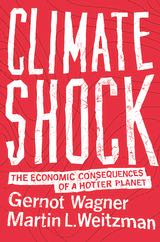 UNCERTAINTIES ATTEND THE PREDICTIONS OF CLIMATE SCIENCE, as the scientists themselves are careful to acknowledge. Reluctant policy makers use this uncertainty to support a “wait and see” response to climate change. Prominent American economists

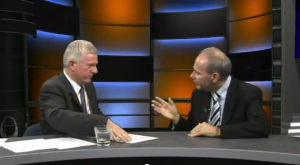



 Young mothers receiving a main benefit, at end of December 2009, 2013 and 2014


