

Herd of Elephants? – Negative Interest Rates as the New Reality
By Keith Rankin – a version of this article appeared also on TheDailyBlog.co.nz.
 IT’S TOO EASY TO RESPOND to a story about debt in a ‘woe is us’ kind of way. Debt is neither good nor bad. It simply is. It’s one half of a relationship; a relationship between debtors and creditors commonly mediated through a chaperone, such as a bank. Strictly, in modern financial times, it’s a relationship between a group of debtors (a debtor class) and a group of creditors (a saver class), usually intermediated by a profit-seeking business such as a bank.
One person, in response to my last week’s blog Young Debt, said what many presume: “The problem with debt is that, eventually, it has to be paid back”. This is not strictly true.
Conventionally debt has to be ‘serviced’, and that may involve it being paid back by individual debtors. But most creditors are not at all interested in being paid back. Certainly the saver class, as a class, has no interest in being paid back. Its raison d’être is to accumulate entitlements, to ‘make money’ instead of being paid back in stuff. When this happens – as it usually does – the goods and services foregone as debt service must be consumed by the very debtor class that forewent those goods and services. What is paid back by one debtor typically is consumed, not by the creditor, but by another debtor.
(A debt contract is a contract in which a creditor cedes an amount of stuff – goods and services – to a debtor in return for that debtor foregoing, as a lump sum or in instalments, a contracted amount of stuff in the future. If the future amount of stuff is greater than the present amount of stuff, then we can say that the rate of interest on this contract is positive. The debt is settled – repaid – only when the creditor completes delivery of the foregone stuff. Otherwise the liability is simply reshuffled within the debtor class; and that liability increases if the interest rate was positive.)
The more general meaning of debt service is to pay interest. But the debtor class doesn’t actually do that either, because the saver class exists to accumulate compound interest. Compound interest is what happens when creditors refuse to consume the goods and services that interest represents. Instead they cede it back to the debtor class.
Collectively the saver class believes it is entitled to receive, from the debtor class, goods and services valued at many times the world’s GDP. It’s a fiction that will practically never be a problem however, because by their very nature the saver class does not actually want ‘the bag’ (of stuff). No, it wants the money, unspent – the entitlement, unrealised – content for the debtor class to keep enjoying the bag and all its consumerist goodies. (Many of us will remember Selwyn Toogood and more recently John Hawkesby; host of the game show ‘The Money or the Bag?’)
The saver class relies totally on the debtor class having the stuff while it has the money for itself. The saver class makes its money through a combination of selling stuff to the debtor class and compounding interest against the debtor class. The debt of the debtor class is the wealth of the saver class. Liquidation of that debt represents a loss of saver ‘wealth’.
Interest is the price that debtors pay to savers when savers are scarce and wannabe borrowers are abundant. Economists have traditionally assumed the world has always been like that and always will be like that; scarce savers and abundant borrowers. Well, the relative scarcities have reversed; the world has become debt resistant. Many economists, shocked by the new reality that has dawned in 2015, have become transfixed. Few in this part of the world have noticed this herd of elephants stampeding towards our living rooms.
Interest is also the price that savers pay to debtors when wannabe borrowers are scarce and savers are abundant. That’s the underlying financial reality of the 2010s and possibly will be for the remainder of this century. Welcome to the world of negative interest rates. It’s explicit in Switzerland, Denmark and Sweden. In many other countries – the Eurozone and Japan – it’s explicitly zero but implicitly negative. Already, in 2015. In the OECD it’s mainly Australasia that’s still playing Canute.
Debt is not a sin. Debt is simply the complement of credit. In today’s brave new world, debt is an accommodation of saving that must be induced by an interest rate that clears the market. Under contemporary conditions, savers are having to pay debtors to spend on their behalf. Compound interest reverses; it unwinds. Absolutely a good thing. The conventional story of interest as a reward for thrift is in fact only half the story. Interest may also be a penalty for thrift. Interest is a payment that can go in either direction, depending on prevailing circumstances.
Negative interest rates are not quite as novel as many of us think. In the late 1970s and early 1980s we had interest rates well below inflation rates. That was the main reason for the neoliberal revolution of the 1980s. The saver class has a very strong sense of entitlement; an entitlement to receive a bounty from the debtor class. In the late 1970s and early 1980s, compound interest was unwinding; savers were effectively giving stuff to the debtor class.
The response of the saver class was threefold. First they joined the debtor class, borrowing to buy assets which they hoped would appreciate in value. It was a bit of a punt at the time. House prices and share prices were stagnating in the inflationary late-1970s. Second many savers took to more risky ‘investments’ in order to receive above zero ‘real’ returns on their savings. Thirdly they favoured monetary policies that obliged central banks to set interest rates above the rate of inflation. They introduced a specious argument for such policies; a claim that low interest rates were somehow inflationary. The gullible left even bought that argument. Look at Europe and the rest of the OECD now to see if low interest rates are inflationary. We now have deflation in the OECD such as few alive have ever witnessed.
Now that we have a substantially electronic monetary system, we can (indeed we must) manage our lives in a market economy with interest rates that properly reflect the abundance of saving and the resistance to debt. Scarce spenders need to be compensated by abundant savers.
There are other things that we can do to arrest the current pattern of most of the world’s income going to those who least want to spend it. (Indeed many such people have so much income that much of the spending that they do is obscene in the context of the needs of so many others.) We can use democratic processes to change income distribution rules that presently favour individually-held property over collectively stewarded property. However, unwinding the savings glut through negatively compounding interest rates needs be part of the mix.
Capitalism depends on the spending of the poor, the indebted, and the poor indebted. Yes, maybe there is another -ism out there to replace capitalism. Myself, I prefer an internal revolution within capitalism to the replacement of capitalism with some -ism that supplants the price mechanism as our principal means of allocating resources.
Negative ‘nominal’ interest rates – the emerging reality of our financial marketplace – represent the price mechanism at its heroic best. In the 1930s’ Great Depression the possibility of negative rates was thwarted by people hoarding cash in the bottom drawer rather than paying the banks to recycle their unspent money. Today there are ways to discount hoarded cash.
It is the saver class, not the working class, who will rebel against capitalism this century. In the 1980s the saver class revolted successfully, paying themselves interest at distorted prices which they themselves controlled. It is now up to the debtor classes to save capitalism for the downtrodden; to spend money they haven’t received. In capitalism, someone must have the bag.
—
]]>NewsRoom Digest: Top NZ News Items for April 17, 2015
 This edition of NewsRoom_Digest contains 6 media release snippets and 8 links of the day from Friday 17th April.
Top stories in the news cycle include the Government proposes to amend the Coroners Act to limit investigations into deaths of soldier overseas, a public health researcher says a $40m Government programme to tackle obesity is unlikely to have much impact, and the White House moves a step closer to signing the Trans Pacific Partnership.
SNIPPETS OF THE DAY
Labour: Battle Fatality Must Be Scrutinised: As New Zealand troops head to Iraq under a shroud of secrecy, the Government is pushing ahead with legislation to remove independent scrutiny of incidents where Kiwi soldiers are killed in hostile action overseas, Labour’s Defence spokesperson Phil Goff says. Changes proposed to the Coroners Act will prohibit a coroner from launching an inquiry into the death of a Defence Force member if it occurred during hostile action on operational service. “The Coroner will only be able to report on such a death if the Attorney-General, a politician, directs him or her to do so,” Phil Goff says.“Documents obtained by Labour reveal Defence Force boss Tim Keating was warned of major concerns around the changes in the Coroner’s Amendment Bill.
Call For Coordinated Housing Response: Chief Human Rights Commissioner David Rutherford today supports calls for all political parties to agree to a cross party accord to address the “very serious” issues facing New Zealand with respect to adequate housing. “What concerns me most are the many and varied housing issues in New Zealand which have no joined up, coordinated action plan to address them,” Mr Rutherford said. “We’re seeing housing issues being talked about as separate issues when in fact they need to be addressed as a whole.”
Minister Praises $120m Drug Bust: Police Minister Michael Woodhouse and Customs Minister Nicky Wagner today congratulated agencies for the latest successful drug-related operation targeting the production and supply of methamphetamine in Auckland. Operation Wand and Operation Sorrento recovered 123 kilograms of methamphetamine with an estimated street value of over $120 million in the Auckland region in late March. Nine individuals have been arrested and charged. “These operations were successfully executed due to the great work of Police districts and the Organised and Financial Crime Agency New Zealand (OFCANZ), and I commend their efforts,” Mr Woodhouse says.
NZ Dollar Surges Past RBNZ Forecast: The New Zealand dollar trade-weighted index has soared above the Reserve Bank’s projections to a nine-month high but traders and strategists say the bank has few options, other than jawboning, to drive the currency lower in the face of stand-out economic growth. The TWI touched 80.08 this morning, its highest level since July last year when it touched a record 82.03. Last month, the central bank forecast the TWI to average 76.7 in the second quarter. It was recently at 79.78.
NZ First: Make Use Of Surplus Military Vehicles: New Zealand First wants the 2015 Defence White Paper to look at options for the 35 Light Armoured Vehicles reportedly declared surplus by the National Government in 2010. The Party is eyeing these LAVs as a way to regenerate lost capabilities for the Army. “There is meant to be a Defence White Paper in 2015 and New Zealand First wants to use the White Paper process to regain Army capabilities that were lost under Labour and National,” says Ron Mark, New Zealand First Defence spokesperson. “Labour literally took the gas axe to direct fire support and mortar carriers while National has just shrugged its shoulders.
Revised Landing Fee Accepted By Com Com: Wellington International Airport’s revised landing fees are “just within” the Commerce Commission’s acceptable range of returns, the regulator said. The capital city airport, which is co-owned by Infratil and Wellington City Council, revised its landing fees after the commission previously found it was targeting excessive profits.The commission’s latest analysis estimates that Wellington Airport has set its prices targeting a return of 8.4 percent between June 1, 2014, and March 31, 2019, which is just within the upper limit of an acceptable range of 7.4 percent to 8.4 percent, the regulator said in a statement accompanying its draft report analysing the revised pricing.
LINKS OF THE DAY
MINISTER LAUNCHES NEW BIOSECURITY PROJECT: Primary Industries Minister Nathan Guy launched Biosecurity 2025 at The Future of the Heartland Forum in North Canterbury this afternoon. People with an interest in participating in the Biosecurity 2025 engagement can register their interest by emailing Biosecurity2025@mpi.govt.nz
More information will also be available at www.mpi.govt.nz
COM COM RELEASES WELLINGTON AIRPORT REPORT: The Commerce Commission has today released its draft report indicating Wellington Airport is now targeting returns for the period from 1 June 2014 to 31 March 2019 that fall within an estimated range of acceptable returns. For further information, including a copy of the draft report, see:http://www.comcom.govt.nz/regulated-industries/airports-information-disclosure-summary-and-analysis/.
A copy of Wellington Airport’s section 56G report from February 2013 can be found here:http://www.comcom.govt.nz/regulated-industries/airports/section-56g-reports/
NUMBER OF WELFARE DEPENDANTS DECREASE: Social Development Minister Anne Tolley says the latest benefit figures show a further year-on-year decline as the New Zealand economy improves and welfare reforms continue to support families. There were 284,260 people on benefit at the end of the March 2015 quarter, a drop of 11,060, or 3.7 per cent, compared to a year ago. The figures are the lowest since March 2009. “These numbers are extremely positive, and they continue the downward trend of the number of people on welfare,” says Mrs Tolley. The latest benefit data is available at:http://www.msd.govt.nz/about-msd-and-our-work/publications-resources/statistics/benefit/index.html
NEED FOR CROSS PARTY ACCORD ON HOUSING: Chief Human Rights Commissioner David Rutherford today supports calls for all political parties to agree to a cross party accord to address the “very serious” issues facing New Zealand with respect to adequate housing. “What concerns me most are the many and varied housing issues in New Zealand which have no joined up, coordinated action plan to address them,” Mr Rutherford said. “The human right to adequate housing is a binding legal obligation of the State of New Zealand. This means the government has a duty to protect the right of people in New Zealand to enjoy adequate housing and it has a responsibility to provide remedies. Download the report here:
http://www.hrc.co.nz/files/1214/2681/4255/Right_to_Housing_Flyer_FINAL__2.pdf
PACIFIC TSUNAMI WARNING SYSTEM TURNS 50:The warning system which provides coordinated tsunami threat information to countries throughout the Pacific marks its 50th anniversary next week. New Zealand will play a part in an International Tsunami Symposium in Hawaii on April 20 and 21 to commemorate the 50th anniversary of the Pacific Tsunami Warning and Mitigation System (PTWS), and a subsequent meeting of the Intergovernmental Coordination Group (ICG) of the PTWS from 22-24 April. More information on how to prepare for tsunamis is available online at:
www.getthru.govt.nz/disasters/tsunami
GALLIPOLI EXHIBITION OPEN: A ground-breaking national exhibition opens at Te Papa on 18 April, to mark the centenary of the First World War. “Gallipoli: The scale of our war combines the world of museums with the world-class creative artistry that Weta Workshop is renowned for, to immerse you in the sounds, sights and emotions of the war,” says Te Papa Chief Executive Rick Ellis. You can find out more about the exhibition at:
www.gallipoli.tepapa.govt.nz
And that’s our sampling of the day that was on Friday 17th April 2015.
Brought to EveningReport by Newsroom Digest.
–]]>
This edition of NewsRoom_Digest contains 6 media release snippets and 8 links of the day from Friday 17th April.
Top stories in the news cycle include the Government proposes to amend the Coroners Act to limit investigations into deaths of soldier overseas, a public health researcher says a $40m Government programme to tackle obesity is unlikely to have much impact, and the White House moves a step closer to signing the Trans Pacific Partnership.
SNIPPETS OF THE DAY
Labour: Battle Fatality Must Be Scrutinised: As New Zealand troops head to Iraq under a shroud of secrecy, the Government is pushing ahead with legislation to remove independent scrutiny of incidents where Kiwi soldiers are killed in hostile action overseas, Labour’s Defence spokesperson Phil Goff says. Changes proposed to the Coroners Act will prohibit a coroner from launching an inquiry into the death of a Defence Force member if it occurred during hostile action on operational service. “The Coroner will only be able to report on such a death if the Attorney-General, a politician, directs him or her to do so,” Phil Goff says.“Documents obtained by Labour reveal Defence Force boss Tim Keating was warned of major concerns around the changes in the Coroner’s Amendment Bill.
Call For Coordinated Housing Response: Chief Human Rights Commissioner David Rutherford today supports calls for all political parties to agree to a cross party accord to address the “very serious” issues facing New Zealand with respect to adequate housing. “What concerns me most are the many and varied housing issues in New Zealand which have no joined up, coordinated action plan to address them,” Mr Rutherford said. “We’re seeing housing issues being talked about as separate issues when in fact they need to be addressed as a whole.”
Minister Praises $120m Drug Bust: Police Minister Michael Woodhouse and Customs Minister Nicky Wagner today congratulated agencies for the latest successful drug-related operation targeting the production and supply of methamphetamine in Auckland. Operation Wand and Operation Sorrento recovered 123 kilograms of methamphetamine with an estimated street value of over $120 million in the Auckland region in late March. Nine individuals have been arrested and charged. “These operations were successfully executed due to the great work of Police districts and the Organised and Financial Crime Agency New Zealand (OFCANZ), and I commend their efforts,” Mr Woodhouse says.
NZ Dollar Surges Past RBNZ Forecast: The New Zealand dollar trade-weighted index has soared above the Reserve Bank’s projections to a nine-month high but traders and strategists say the bank has few options, other than jawboning, to drive the currency lower in the face of stand-out economic growth. The TWI touched 80.08 this morning, its highest level since July last year when it touched a record 82.03. Last month, the central bank forecast the TWI to average 76.7 in the second quarter. It was recently at 79.78.
NZ First: Make Use Of Surplus Military Vehicles: New Zealand First wants the 2015 Defence White Paper to look at options for the 35 Light Armoured Vehicles reportedly declared surplus by the National Government in 2010. The Party is eyeing these LAVs as a way to regenerate lost capabilities for the Army. “There is meant to be a Defence White Paper in 2015 and New Zealand First wants to use the White Paper process to regain Army capabilities that were lost under Labour and National,” says Ron Mark, New Zealand First Defence spokesperson. “Labour literally took the gas axe to direct fire support and mortar carriers while National has just shrugged its shoulders.
Revised Landing Fee Accepted By Com Com: Wellington International Airport’s revised landing fees are “just within” the Commerce Commission’s acceptable range of returns, the regulator said. The capital city airport, which is co-owned by Infratil and Wellington City Council, revised its landing fees after the commission previously found it was targeting excessive profits.The commission’s latest analysis estimates that Wellington Airport has set its prices targeting a return of 8.4 percent between June 1, 2014, and March 31, 2019, which is just within the upper limit of an acceptable range of 7.4 percent to 8.4 percent, the regulator said in a statement accompanying its draft report analysing the revised pricing.
LINKS OF THE DAY
MINISTER LAUNCHES NEW BIOSECURITY PROJECT: Primary Industries Minister Nathan Guy launched Biosecurity 2025 at The Future of the Heartland Forum in North Canterbury this afternoon. People with an interest in participating in the Biosecurity 2025 engagement can register their interest by emailing Biosecurity2025@mpi.govt.nz
More information will also be available at www.mpi.govt.nz
COM COM RELEASES WELLINGTON AIRPORT REPORT: The Commerce Commission has today released its draft report indicating Wellington Airport is now targeting returns for the period from 1 June 2014 to 31 March 2019 that fall within an estimated range of acceptable returns. For further information, including a copy of the draft report, see:http://www.comcom.govt.nz/regulated-industries/airports-information-disclosure-summary-and-analysis/.
A copy of Wellington Airport’s section 56G report from February 2013 can be found here:http://www.comcom.govt.nz/regulated-industries/airports/section-56g-reports/
NUMBER OF WELFARE DEPENDANTS DECREASE: Social Development Minister Anne Tolley says the latest benefit figures show a further year-on-year decline as the New Zealand economy improves and welfare reforms continue to support families. There were 284,260 people on benefit at the end of the March 2015 quarter, a drop of 11,060, or 3.7 per cent, compared to a year ago. The figures are the lowest since March 2009. “These numbers are extremely positive, and they continue the downward trend of the number of people on welfare,” says Mrs Tolley. The latest benefit data is available at:http://www.msd.govt.nz/about-msd-and-our-work/publications-resources/statistics/benefit/index.html
NEED FOR CROSS PARTY ACCORD ON HOUSING: Chief Human Rights Commissioner David Rutherford today supports calls for all political parties to agree to a cross party accord to address the “very serious” issues facing New Zealand with respect to adequate housing. “What concerns me most are the many and varied housing issues in New Zealand which have no joined up, coordinated action plan to address them,” Mr Rutherford said. “The human right to adequate housing is a binding legal obligation of the State of New Zealand. This means the government has a duty to protect the right of people in New Zealand to enjoy adequate housing and it has a responsibility to provide remedies. Download the report here:
http://www.hrc.co.nz/files/1214/2681/4255/Right_to_Housing_Flyer_FINAL__2.pdf
PACIFIC TSUNAMI WARNING SYSTEM TURNS 50:The warning system which provides coordinated tsunami threat information to countries throughout the Pacific marks its 50th anniversary next week. New Zealand will play a part in an International Tsunami Symposium in Hawaii on April 20 and 21 to commemorate the 50th anniversary of the Pacific Tsunami Warning and Mitigation System (PTWS), and a subsequent meeting of the Intergovernmental Coordination Group (ICG) of the PTWS from 22-24 April. More information on how to prepare for tsunamis is available online at:
www.getthru.govt.nz/disasters/tsunami
GALLIPOLI EXHIBITION OPEN: A ground-breaking national exhibition opens at Te Papa on 18 April, to mark the centenary of the First World War. “Gallipoli: The scale of our war combines the world of museums with the world-class creative artistry that Weta Workshop is renowned for, to immerse you in the sounds, sights and emotions of the war,” says Te Papa Chief Executive Rick Ellis. You can find out more about the exhibition at:
www.gallipoli.tepapa.govt.nz
And that’s our sampling of the day that was on Friday 17th April 2015.
Brought to EveningReport by Newsroom Digest.
–]]>
Obama’s Fast Track Bill a last-ditch move to rescue TPPA
Source: Professor Jane Kelsey.
[caption id="attachment_1844" align="alignleft" width="150"] Professor Jane Kelsey.[/caption]
‘With less than two months until the window is likely to close for President Obama to get a deal in the Trans-Pacific Partnership Agreement (TPPA) under his watch, the administration has put a bill before Congress to grant him “fast track” authority’, according to Professor Jane Kelsey who monitors the negotiations.
The controversial process of Fast Track, euphemistically called Trade Promotion Authority, would require Congress to vote yes or not to a final text and it time limits the debate to prevent filibustering.
According to Professor Kelsey a number of governments at the TPPA table have recently said they won’t reach a final deal unless Obama has Fast Track, including New Zealand.
‘Doing something this week was really do or die for the President, even though he doesn’t have the votes to get the bill through, especially in the House of Representatives’, Kelsey said.
The 110-page Bill is a generalised wish list of what the US wants from the TPPA, while protecting its domestic interests. Although the content has been heavily negotiated before being introduced, the negotiating objectives can be ignored.
‘What’s most significant, and the reason there will be a dog-fight, is Section 4 that says what powers Congress is giving up. It is little changed from an earlier Fast Track law that sank last year’, Kelsey said.
There were no House Democrats willing to co-sponsor the Bill. Powerful ranking Democrat on the House Ways and Means Committee Sander Levin described the negotiating objectives as ‘obsolete or woefully inadequate’ while putting ‘Congress in the back seat’.
Ironically, Obama is relying heavily on support from Republicans, but there is a substantial bloc of conservative Republicans who consider Obama to be an ‘imperial president’ and are loathe to grant him any more executive power through Fast Track. Republican leaders have said he would need 50 votes from the Democrats. The latest counts from Washington analysts such as Politico put him well short.
The New York Times predicts it will be one of the toughest legislative battles of Obama’s last 19 months in office.
US consumer group Public Citizen says there is no guarantee the Bill will even get to a vote, and might be withdrawn rather than fail. The three major attempts to get Fast Track in the past 25 years saw one pass by 27 votes in 1991 and another passed by 2 votes; the third failed.
Tabling the Bill now is meant to have a demonstration effect, ahead of the make or break ministerial meeting scheduled for late May. Obama hopes it will give the talks new momentum by convincing the eleven other countries to ignore the evidence and believe he can get it passed.
‘Let’s hope for New Zealand’s sake that Trade Minister Groser and Prime Minister Key actually stick by their statements and refuse to make any political trade-offs they know Congress can pick apart’, Kelsey said.
—
]]>New Zealand Report – NZ Spies Provided Bangladesh With Intelligence
[poll id=”10″]
- New Zealand Report – NZ Spies Provided Bangladesh With Intelligence – Recorded live on 17/04/15 – on FiveAA Australia’s breakfast show.
Hosts: Jane Reilly, Mark Aiston, and Mike Smithson.
Correspondent: Selwyn Manning.
Reference: NZHerald.co.nz.
NZ welcomes UNSC resolution on Yemen
Headline: NZ welcomes UNSC resolution on Yemen
Foreign Minister Murray McCully has welcomed the United Nations Security Council’s resolution on Yemen and called for the resumption of political dialogue between all parties involved in the conflict.
“We are deeply concerned by the situation in Yemen and the impact the conflict is having on civilians,” Mr McCully says.
“Without political dialogue, and the Houthis returning to the negotiating table, the crisis in Yemen will only continue to deepen.
“New Zealand recognises the legitimacy of President Hadi’s government and the interests of Yemen’s neighbours in maintaining regional security.
“Through our role on the United Nations Security Council we have supported a resolution put forward by the Gulf Cooperation Council which urges all parties to facilitate the delivery of aid, and calls for a return to talks.
“We commend the leadership shown by Jordan, as the current president of the Security Council, in passing this resolution.
“New Zealand will continue working with other Security Council members to find a political solution to the situation in Yemen and ensure the plight of civilians is addressed,” Mr McCully says.
– –
]]>
Tonight on Evening Report – April 16 2015
[caption id="attachment_3365" align="alignleft" width="300"] Auckland the backbone to New Zealand’s economy.[/caption]
Government’s ‘Market Will Correct It’ Ideology Exposed. Editorial by Selwyn Manning. THE RESERVE BANK OF NEW ZEALAND has issued a public statement backing a capital gains tax (CGT) as a way of correcting an over-heated Auckland housing market. It is the most persuasive indicator so far that the Reserve Bank’s preferences are out-of-step with current Government policy. Throughout 2014 … FULL ARTICLE
Radio: Across The Ditch: Hot Auckland Housing Market Risks Pulling Economy Down Around It
Auckland the backbone to New Zealand’s economy.[/caption]
Government’s ‘Market Will Correct It’ Ideology Exposed. Editorial by Selwyn Manning. THE RESERVE BANK OF NEW ZEALAND has issued a public statement backing a capital gains tax (CGT) as a way of correcting an over-heated Auckland housing market. It is the most persuasive indicator so far that the Reserve Bank’s preferences are out-of-step with current Government policy. Throughout 2014 … FULL ARTICLE
Radio: Across The Ditch: Hot Auckland Housing Market Risks Pulling Economy Down Around It

RADIO: FIVEAA AUSTRALIA & EVENING REPORT:Selwyn Manning and Peter Godfrey deliver their weekly bulletin, Across The Ditch. This week they discuss how the New Zealand Reserve Bank is speaking out backing a capital gains tax as a means of cooling down a heated Auckland property market. Peter raises the issue of domestic violence and discusses how Australia’s statistics show one victim of domestic violence is killed every three days. And the weather, both NZ and Australia feel the icy grip of winter approaching. FULL ARTICLE
INDONESIA: Norway’s PM appeals for halt to state executions

MIL OSI Analysis – Pacific Media Centre/Pacific Media Watch – INDONESIA: Norway’s PM appeals for halt to state executions – Report by Daniel Drageset.
Norwegian Prime Minister Erna Solberg has appealed to Indonesia’s President Joko Widodo to abolish the death sentence in the country.
On a state visit in Jakarta this week, Solberg discussed the upcoming executions of Australians Myuran Sukumaran and Andrew Chan.… FULL ARTICLE
Gareth Renowden on High Water – NZ climate comic anthology
 MIL OSI Analysis – Source: Hot Topic – By Gareth Renowden – Analysis published with permission of Hot-Topic.co.nz
]]>
MIL OSI Analysis – Source: Hot Topic – By Gareth Renowden – Analysis published with permission of Hot-Topic.co.nz
Scientists investigate how climate changes, politicians (should) decide what to do about it. Tough jobs.
Artists have just as difficult a job: to comment on the reality and unreality they see in society’s responses to the climate threat, and by doing so motivate us to create a liveable future.
In High Water, a new anthology of climate-inspired work by NZ comic artists, pulled together by Damon Keen and Faction Comics, that response ranges from the touching to the frightening, huge vistas seen through little frames — all presented in visually stunning stories drawn by NZ’s finest artists. FULL ARTICLE
Keith Rankin: Rent Now, Live Life, Buy Later Maybe
 By Keith Rankin – This article was first published this morning on Scoop.co.nz. THE
 MIL OSI – Source: United Nations – Despite impressive progress in raising school enrolment over the past decade, one in four children and young adolescents in the Middle East and North Africa (MENA) are either out of school or at risk of dropping out, according to the United Nations Children’s Fund (UNICEF).
“At a time of such change and turmoil, this region simply cannot afford to let 21 million children fall by the wayside,” Maria Calivis, Regional Director for UNICEF MENA, said today in a statement from Beirut. FULL ARTICLE
—
MIL OSI – Source: United Nations – Despite impressive progress in raising school enrolment over the past decade, one in four children and young adolescents in the Middle East and North Africa (MENA) are either out of school or at risk of dropping out, according to the United Nations Children’s Fund (UNICEF).
“At a time of such change and turmoil, this region simply cannot afford to let 21 million children fall by the wayside,” Maria Calivis, Regional Director for UNICEF MENA, said today in a statement from Beirut. FULL ARTICLE
—
By Keith Rankin – This article was first published this morning on Scoop.co.nz. THE
THE HAND-WRINGING about the Auckland property market continues to escalate; the headless chickens run amok through the corridors of power, and through the mainstream media.
There are two issues for policymakers. The Reserve Bank needs to ensure that our commercial banks are not too exposed to lending on inflated security. And the Government and Auckland Council together need to act to fix the residential rental market. FULL ARTICLE
OSI REPORTS:
PERRIAM label takes next step at iD Fashion Week
[caption id="attachment_3384" align="alignleft" width="300"] PERRIAM Woman Removable Chain Neck Top_photo by Camilla Rutherford.[/caption]
MIL OSI – Source: Scope Media – Kiwi fashion designer Christina Perriam is set to gain national and international recognition by showcasing her first-ever PERRIAM Woman Winter range on the catwalk at iD Fashion Week.After successfully launching her new luxury merino fashion label PERRIAM in October last year, Christina has since been accepted as one of the designers to enter the Capsule collection, as part of the renowned iD Fashion Week in Dunedin, which takes place from April 18-26, 2015. FULL ARTICLE
PERRIAM Woman Removable Chain Neck Top_photo by Camilla Rutherford.[/caption]
MIL OSI – Source: Scope Media – Kiwi fashion designer Christina Perriam is set to gain national and international recognition by showcasing her first-ever PERRIAM Woman Winter range on the catwalk at iD Fashion Week.After successfully launching her new luxury merino fashion label PERRIAM in October last year, Christina has since been accepted as one of the designers to enter the Capsule collection, as part of the renowned iD Fashion Week in Dunedin, which takes place from April 18-26, 2015. FULL ARTICLE
 PERRIAM Woman Removable Chain Neck Top_photo by Camilla Rutherford.[/caption]
MIL OSI – Source: Scope Media – Kiwi fashion designer Christina Perriam is set to gain national and international recognition by showcasing her first-ever PERRIAM Woman Winter range on the catwalk at iD Fashion Week.After successfully launching her new luxury merino fashion label PERRIAM in October last year, Christina has since been accepted as one of the designers to enter the Capsule collection, as part of the renowned iD Fashion Week in Dunedin, which takes place from April 18-26, 2015. FULL ARTICLE
PERRIAM Woman Removable Chain Neck Top_photo by Camilla Rutherford.[/caption]
MIL OSI – Source: Scope Media – Kiwi fashion designer Christina Perriam is set to gain national and international recognition by showcasing her first-ever PERRIAM Woman Winter range on the catwalk at iD Fashion Week.After successfully launching her new luxury merino fashion label PERRIAM in October last year, Christina has since been accepted as one of the designers to enter the Capsule collection, as part of the renowned iD Fashion Week in Dunedin, which takes place from April 18-26, 2015. FULL ARTICLE
Prime Minister to lead trade mission to Gulf States – Government
[caption id="attachment_2124" align="alignleft" width="150"] Prime Minister John Key.[/caption]
MIL OSI – Source: National Party – Prime Minister to lead trade mission to Gulf States Prime Minister John Key will lead an 18-member New Zealand business delegation to the United Arab Emirates, Saudi Arabia, and Kuwait from 26 April to 1 May. This will be the first visit by a New Zealand Prime Minister to Saudi Arabia. “The visit is an opportunity …FULL ARTICLE
Prime Minister John Key.[/caption]
MIL OSI – Source: National Party – Prime Minister to lead trade mission to Gulf States Prime Minister John Key will lead an 18-member New Zealand business delegation to the United Arab Emirates, Saudi Arabia, and Kuwait from 26 April to 1 May. This will be the first visit by a New Zealand Prime Minister to Saudi Arabia. “The visit is an opportunity …FULL ARTICLE
 Prime Minister John Key.[/caption]
MIL OSI – Source: National Party – Prime Minister to lead trade mission to Gulf States Prime Minister John Key will lead an 18-member New Zealand business delegation to the United Arab Emirates, Saudi Arabia, and Kuwait from 26 April to 1 May. This will be the first visit by a New Zealand Prime Minister to Saudi Arabia. “The visit is an opportunity …FULL ARTICLE
Prime Minister John Key.[/caption]
MIL OSI – Source: National Party – Prime Minister to lead trade mission to Gulf States Prime Minister John Key will lead an 18-member New Zealand business delegation to the United Arab Emirates, Saudi Arabia, and Kuwait from 26 April to 1 May. This will be the first visit by a New Zealand Prime Minister to Saudi Arabia. “The visit is an opportunity …FULL ARTICLE
Seasonal changes pose risks for farmers
MIL OSI – Source: WorkSafe New Zealand – Seasonal changes pose risks for farmers The recent cold snap is a timely reminder for farmers that we are heading into a high-risk … FULL ARTICLE
Offshore online racing and sports betting under spotlight – Government
MIL OSI – Source: New Zealand Government – Offshore online racing and sports betting under spotlight A working group has been appointed to shed some light on the growth of … FULL ARTICLE
Indonesia: West Papua to Be a Conservation Province
MIL OSI – Source: US Global Legal Monitor – Indonesia: West Papua to Be a Conservation Province Link to this article (Apr 15, 2015) The local government in West … FULL ARTICLE
Resources needed to get 21 million children into school in Middle East, North Africa – UNICEF
MIL OSI – Source: United Nations – Despite impressive progress in raising school enrolment over the past decade, one in four children and young adolescents in the Middle East and North Africa (MENA) are either out of school or at risk of dropping out, according to the United Nations Children’s Fund (UNICEF).Keith Rankin: Rent Now, Live Life, Buy Later Maybe
By Keith Rankin – This article was first published this morning on Scoop.co.nz.
THE HAND-WRINGING about the Auckland property market continues to escalate; the headless chickens run amok through the corridors of power, and through the mainstream media.
There are two issues for policymakers. The Reserve Bank needs to ensure that our commercial banks are not too exposed to lending on inflated security. And the Government and Auckland Council together need to act to fix the residential rental market.
Much of the bubble is foreign financed (directly), meaning that part of the Auckland bubble is fuelled by non-resident cash buyers. (‘Non-resident’ certainly includes New Zealanders resident overseas.) That is not an issue for the New Zealand banking system, though it may be an issue for global finance in that what is happening in Auckland represents a small part of a global bubble in real estate in select world cities.
The remaining part of the Auckland bubble is funded by New Zealand banks doing what banks do (lending to New Zealanders), but, in doing so, also acting as a conduit for foreign savings. The problem in New Zealand is one of banks having too many foreign liabilities on their books, and having too many ‘eggs in the property basket’ on the asset sides of their balance sheets.
The Reserve Bank is right to worry about these things (see yesterday’s news release Action needed to reduce housing imbalances). Unlike many other countries, New Zealand avoided a banking crisis in 2008. The finance companies then acted as a ‘crumple zone’, protecting the banks. New Zealand’s banks will be significantly more exposed during the next financial crisis than they were last time. (New Zealand has had three periods of banking crisis in the last 140 years: around 1880, early 1890s; late 1980s.)
We need policies that will strengthen the New Zealand economy across the global economic cycle, ensuring that New Zealand residents will be well-placed to buy, at reasonable prices, the so-called ‘investment’ properties when their owners tire of them. (The Auckland bubble is analogous to the coastal property bubble of the 2000s’ decade.)
In the meantime, Auckland needs to be a vibrant world city with a well-functioning rental market. On Radio New Zealand’s the Panel (31 May 2013) Neville Gibson noted:
“The key thing on the Reserve Bank’s plate is prices of Auckland’s housing … the discussion widened out … most countries do not have the same levels of home ownership or expectations of it as we do … economists [at an NZIER symposium] have pointed out that, far from being a progressive thing, home ownership is actually a regressive type of thing; once you’ve bought a house you don’t want change … the dynamics move into the centre of the city and we’ve seen all around the world in dynamic cities that people in the centre do not own … the unintended consequences of everyone having security in owning their own property is social stagnation … you look at the centre of Auckland … you see young people and that is what creates the dynamism in Auckland … none of these people own a property, they rent it … you can easily move, you’re very mobile.”
The Auckland isthmus has a huge number of properties that are not the permanent residences of their owners. (Many other properties in the isthmus are large and underoccupied by owners whose children have long since left home.) So present housing policy should be about making the best use of this housing stock to further build a vibrant central Auckland where young people can live, work and move, and where middle-income families can grow up in rental properties close to their parents’ places of work. (These middle income renting parents could be being encouraged to own rental properties outside of the isthmus; so please, policymakers, don’t make it more expensive for such New Zealanders to own a rental house!)
Properties in the isthmus that are not the principal residence of their owners fall into three categories: unfurnished rental properties currently being let; furnished properties that the owners (or relatives) may occupy some of the time; and empty properties that are being held purely for land speculation.
We need to know precisely how many residential properties (especially but not only in the isthmus that once defined Auckland City) fall into each category. And, to build a vibrant liveable city without homelessness, we need policies around all three types of property.
Unfurnished rental properties are great for both families and young people building lives with a commitment to living in Auckland. We need incentives to raise the quality and maintenance level of these properties, and to encourage their owners to invest as long-term landlords. If the owners have the mindset that these properties are simply assets that can be flicked on at a moment’s notice, then that is a huge problem that makes people averse to renting their homes; this attitude on the part of owners is what gives renting a bad name. Residential unfurnished investment houses need to be understood as long-term investments.
We need to accept that rich people in the world like to have multiple residences, that they can move themselves and family members into as and when their inclinations dictate. Here Auckland need’s to develop a vibrant rental market in short-medium term furnished housing that reflects both the accommodation needs of mobile renters unencumbered with chattels of their own, and the needs of absent owners who require their properties to be house-sat. Because each party is providing services for the other, rents for such properties need not be high.
Finally, we need laws that come down heavily on pure land-bankers; people who just sit on city land, often with derelict houses on that land, just waiting for the moment to realise for them an unearned (typically leveraged) capital gain. (Such laws should also be applied to undeveloped land on the fringes; residential land not built on, with owners instead looking to make a large speculative gain on such sections. Extending urban limits just increases the amount of such land available to speculators.)
New Zealand has a long history of land speculation, especially in the nineteenth century. One of the biggest episodes was the Canterbury bubble of the 1870s that burst in 1878, creating a bank crisis and a long economic crisis in its wake. While that may be a long time ago, we are not immune from it happening again. We may also note that Japan experienced one of the world’s most ridiculous speculative crises from 1987 to 1991, leading to a subsequent banking crisis. Many say Japan never recovered. While I am not one of those ‘many’, Japan quickly lost its former tag as an economic superpower to rival the United States. Now the Eurozone of Europe as a whole is suffering in the wake this century of huge speculative bubbles and banking crises along its southern and western periphery.
New Zealand policymakers cannot do much directly about overpriced land in Auckland. What they can do is manage the domestic economy in a countercyclical way, and pursue policies that facilitate a vibrant city with an abundant rental market.
—
]]>Prime Minister to lead trade mission to Gulf States – Government
MIL OSI – Source: National Party – Prime Minister to lead trade mission to Gulf States Prime Minister John Key will lead an 18-member New Zealand business delegation to the United Arab Emirates, Saudi Arabia, and Kuwait from 26 April to 1 May. This will be the first visit by a New Zealand Prime Minister to Saudi Arabia. “The visit is an opportunity to strengthen and grow trade and business links between the Gulf Cooperation Council (GCC) and New Zealand,” says Mr Key. It will also provide the opportunity to progress the conclusion of the NZ-GCC free trade agreement. “A key priority for me will be talking to key figures in the region about the importance of progressing New Zealand’s Free Trade Agreement with the GCC,” says Mr Key. The GCC is New Zealand’s fifth largest export destination with goods exports worth $1.9 billion in the year to December 2014. Exports of goods have grown by an average 10 percent per year over the last decade. “New Zealand has a lot to offer the Gulf region and a number of our businesses already have a strong presence in this market. My visit is aimed at opening doors and helping to further promote New Zealand companies,” says Mr Key. “It has always been my intention to travel to the Gulf as it is an important region and I’m pleased to be leading a strong business delegation on this visit,” says Mr Key. A range of meetings are scheduled with senior government leaders across the region. “These meetings provide an opportunity to discuss our economic relationship and also, given our seat on the UN Security Council, it’s timely to discuss the complex security issues facing the Middle East.” We have reinforced our commitment to this region in recent years with the opening of our embassy in Abu Dhabi, and the expansion of offices in Dubai and Riyadh. The United Arab Emirates and Kuwait have also recently opened embassies in New Zealand. The Prime Minister will be accompanied by New Zealand Trade Minister Tim Groser. –]]>
Seasonal changes pose risks for farmers
MIL OSI – Source: WorkSafe New Zealand – Seasonal changes pose risks for farmers The recent cold snap is a timely reminder for farmers that we are heading into a high-risk period for vehicle and machinery-related injuries. Snow, sleet and rain over the past few days have created challenging conditions for rural workers just as autumn begins. WorkSafe Agriculture Manger Al McCone says autumn sees lots of clean-up activity and farmers doing jobs that have been put off – just as conditions get worse. “The weather is getting colder and wetter while farmers’ get to the tasks that they don’t frequently do. It’s a timely reminder for farmers to think about the risks associated with those changes, with more jobs to do while the days get shorter,” McCone says. This period sees an increased use of farm vehicles and machinery. While quad-bikes are commonly associated with farm vehicle incidents, tractors and other machinery are also involved in a large number of injuries and deaths. “The stark fact is that nearly four out of five work-related deaths in agriculture happen as a result of machine or vehicle-related incidents. “A total of 10,000 people suffered vehicle/machinery-related injuries on farms in the last six years – this resulted in ACC claims of $60 million,” McCone says. Incidents can range from slips and falls to serious injury or loss of life, for instance crushing when a tractor rolls, being struck by a mobile plant or front loaders, or being caught in equipment such as an uncovered power take-off shaft. McCone says before beginning any job, stop and consider what you need to watch out for and how to complete it safely on that day, at that time – no matter how often you have done it before. “Injuries often happen when people are doing routine tasks they have done many times, especially when they are under time pressure. “That last job in the afternoon could turn out to be the last job – ever. “Farmers make important farming decisions every day – the amount of fertiliser to use, choice of bull, where to move stock. The decisions involving which vehicle to use, the time you need to allocate to a task, or how to involve the kids are even more important. They are the ones that cost lives,” says Al McCone. For more information on staying safe on your farm, go to www.saferfarms.org.nz –]]>
Offshore online racing and sports betting under spotlight – Government
MIL OSI – Source: New Zealand Government – Offshore online racing and sports betting under spotlight A working group has been appointed to shed some light on the growth of New Zealanders engaging in offshore online racing and sports betting, Racing Minister Nathan Guy announced today. “The TAB is operated by the New Zealand Racing Board and has a national monopoly on all racing and sports betting. The Racing Board is required by law to distribute all profits from this betting back to the racing industry, which relies on these distributions to survive. National Sporting Organisations also receive a percentage of sports betting turnover,” says Mr Guy. “When New Zealanders place their sports and racing bets with overseas betting operators online, they operate outside of our regulatory framework. This means that offshore organisations make money on New Zealand racing and sports without paying their fair share of tax, or making contributions back to the racing industry or sporting organisations that make the betting possible in the first place. “These New Zealanders are also operating outside the safety net of gambling harm mitigation that we have here,” says Mr Guy. Mr Guy says that this is the first real attempt to clarify the extent of the problem and work towards developing solutions. “The racing industry contributes about $1.6 billion to New Zealand’s GDP, is a major source of employment supporting over 17,000 full time jobs across the country, and has a particularly strong presence in our regions,” says Mr Guy. “Given the global trend towards online betting, this issue will continue to grow and needs to be addressed now. “The issues at hand are complex but we are not the only country dealing with this problem. There is now a growing body of international work on this matter the working group can reference,” says Mr Guy. The working group will commence this month and is due to report back with recommendations for the Minister later this year. The group will chaired by former Minister, Chris Tremain. Other members are: New Zealand Racing Board Chief Executive, John Allen; the Chair of Sport New Zealand, Sir Paul Collins; breeder, racehorse owner and the NZRB’s Thoroughbred representative, Greg McCarthy; and two Internal Affairs officials. “Overall, the group has a good depth of experience. Chris Tremain’s familiarity with gambling regulation as a former Minister of Internal Affairs and his experience throughout sporting circles will serve him well as Chair of the working group,” says Mr Guy. –]]>
Resources needed to get 21 million children into school in Middle East, North Africa – UNICEF
MIL OSI – Source: United Nations – Resources needed to get 21 million children into school in Middle East, North Africa – UNICEF 15 April 2015 Despite impressive progress in raising school enrolment over the past decade, one in four children and young adolescents in the Middle East and North Africa (MENA) are either out of school or at risk of dropping out, according to the United Nations Children’s Fund (UNICEF). “At a time of such change and turmoil, this region simply cannot afford to let 21 million children fall by the wayside,” Maria Calivis, Regional Director for UNICEF MENA, said today in a statement from Beirut. “These children must be given the opportunity to acquire the skills they need through education in order to play their part in the region’s transformation,” she added. According to a joint report released by UNICEF and the UN Educational, Scientific and Cultural Organization (UNESCO), a 40 per cent reduction in the number of out-of-school children in the MENA region over the past decade provided hope and opportunities for millions. Progress has, however, recently slowed due to a combination of poverty, discrimination, poor quality learning and conflict. Governments need urgently to scale up their efforts notably to prioritize the education needs of disadvantaged families. New policies are needed to scale up pre-primary education programmes, tackle student drop-out and gender discrimination, and help more children in conflict areas get access to learning. “We need targeted interventions to reach the families displaced by conflict, the girls forced to stay home and the children obliged to work,” said Silvia Montoya, Director of the UNESCO Institute for Statistics. For their part, donors must commit more funds to close disparity gaps that keep so many children out of the classroom, the report argues. According to the report, 12.3 million children and young adolescents in the Middle East and North Africa are out of school. In addition, according to recent calculations, over six million children are at risk of dropping out. A further three million children are out of school in Syria and Iraq, where conflict has destroyed large parts of the education system. As the violence expands, millions more are at risk of becoming a ‘lost generation’ deprived of the knowledge and skills needed to be successful adults. Several other countries around the region are experiencing armed conflicts or political turmoil that prevents children from learning. The report underlines why girls are not in school and how they are at particular risk of dropping out due to social attitudes, early marriage, and a lack of female teachers. On average, a girl in the MENA region is 25 per cent less likely to be in school than a boy. Meanwhile, among adolescents, high drop-out rates are fuelled by poor education standards and low quality school environments. The report comes at a crucial time as it will feed into the efforts of the international community on crafting the post-2015 education goals. The Middle East and North Africa (MENA) Out-of-School Children Initiative (OOSCI) is part of a global Initiative launched by UNICEF and the UNESCO Institute for Statistics in 2010. Its objective is to identify barriers that contribute to exclusion from education and analyse the existing strategies related to enhanced school participation. Nine countries are participating from the MENA region: Algeria, Djibouti, Egypt, Iraq, Jordan, Morocco, Sudan, Tunisia and Yemen. –]]>
Gareth Renowden on High Water – NZ climate comic anthology
MIL OSI Analysis – Source: Hot Topic – By Gareth Renowden – Analysis published with permission of Hot-Topic.co.nz
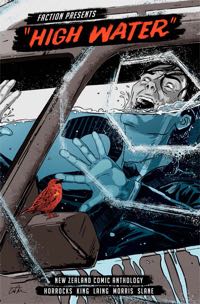 Scientists investigate how climate changes, politicians (should) decide what to do about it. Tough jobs.
Artists have just as difficult a job: to comment on the reality and unreality they see in society’s responses to the climate threat, and by doing so motivate us to create a liveable future.
In High Water, a new anthology of climate-inspired work by NZ comic artists, pulled together by Damon Keen and Faction Comics, that response ranges from the touching to the frightening, huge vistas seen through little frames — all presented in visually stunning stories drawn by NZ’s finest artists.
The book kicks off with a superb little story by Dylan Horrocks, Dear Hinewai:
Scientists investigate how climate changes, politicians (should) decide what to do about it. Tough jobs.
Artists have just as difficult a job: to comment on the reality and unreality they see in society’s responses to the climate threat, and by doing so motivate us to create a liveable future.
In High Water, a new anthology of climate-inspired work by NZ comic artists, pulled together by Damon Keen and Faction Comics, that response ranges from the touching to the frightening, huge vistas seen through little frames — all presented in visually stunning stories drawn by NZ’s finest artists.
The book kicks off with a superb little story by Dylan Horrocks, Dear Hinewai:
 I’m a great fan of Dylan’s work1 — his latest, Sam Zabel and the Magic Pen is a real tour de force — and here he draws beautiful and bittersweet postcards from a future where New Zealanders are exploring a radically altered planet by airship2.
There is a lot of good stuff in High Water, but I have some personal favourites: Damon Keen’s The Lotus Eaters, which takes us on a trip from modern day Auckland through a grim future to the arcadia on the other side of our civilisation reminds me of the comics I grew up with (think Eagle), while Cory Mathis’ My Wife, The Mastodon looks at climate change through the eyes of ice age humans encountering neanderthals (and sabre tooth tigers). Chris Slane’s wonderful Dialogo di Galileo is a powerful poke at climate denial, with a great twist in the last frames.
I’m a great fan of Dylan’s work1 — his latest, Sam Zabel and the Magic Pen is a real tour de force — and here he draws beautiful and bittersweet postcards from a future where New Zealanders are exploring a radically altered planet by airship2.
There is a lot of good stuff in High Water, but I have some personal favourites: Damon Keen’s The Lotus Eaters, which takes us on a trip from modern day Auckland through a grim future to the arcadia on the other side of our civilisation reminds me of the comics I grew up with (think Eagle), while Cory Mathis’ My Wife, The Mastodon looks at climate change through the eyes of ice age humans encountering neanderthals (and sabre tooth tigers). Chris Slane’s wonderful Dialogo di Galileo is a powerful poke at climate denial, with a great twist in the last frames.
 There’s an introduction by Lucy Lawless, in which she hits the nail rather more effectively on the head than our Prime Minister:
These eleven incredible artists have not stinted in imagining the gravest outcomes of man-made climate change. Perhaps a visual warning will work better than a written one, that requires imagination from a recalcitrant mind. Gorgeous work!
She’s right, you know. We need all hands to the pumps if we’re going to deal with the inundation coming our way, and High Water is a most welcome contribution.
To see more images from the anthology, and to get more background on the inspiration behind it, see this interview with editor Damon Keen. High Water, featuring the work of Dylan Horrocks, Sarah Laing, Katie O’Neill, Cory Mathis, Christian Pearce, Ned Wedlock, Toby Morris, Damon Keen, Chris Slane, Ross Murray and Jonathan King is being launched this evening in Auckland. Best wishes to all who sail in her… –]]>INDONESIA: Norway’s PM appeals for halt to state executions
MIL OSI Analysis – Pacific Media Centre/Pacific Media Watch – INDONESIA: Norway’s PM appeals for halt to state executions – Report by Daniel Drageset.
 President Joko Widodo … hard line on the death sentence with drug dealers. Image: Tempo
Thursday, April 16, 2015
Item: 9218
Daniel Drageset – OSLO (VG / Pacific Media Watch): Norwegian Prime Minister Erna Solberg has appealed to Indonesia’s President Joko Widodo to abolish the death sentence in the country. On a state visit in Jakarta this week, Solberg discussed the upcoming executions of Australians Myuran Sukumaran and Andrew Chan. “I asked explicitly that the upcoming executions will not be effectuated,” Solberg told the Norwegian newspaper VG. According to Solberg, Widodo answered that the death sentence was a “part of the Indonesian judicial system and there are challenges in relations to that”. The Norwegian Prime Minister emphasised, however, that the Indonesian authorities “seemed to listen”. “It is important to mobilise internal support to mobilise internal support in order to abolish the death sentence. “We as politicians must always point this out to politicians from Indonesia, but I think it is just as important what the civil society in Indonesia says,” Solberg said in the interview. Rehabilitation programme There has also been support for the Sukumaran and Chan from Norwegian philosopher and academic Ivar Schou. Schou, who has been heading to Norwegian educational centres in Bali, has established a rehabilitation programme in the Kerobokan prison on the Indonesian island, where Sukumaran and Chan were until recently imprisoned. “In Indonesia, one thinks primarily about how to punish [individuals], but hardly about how to rehabilitate. “I want to show that prisoners, who have been sentenced to death, also are normal human beings,” Schou said. Schou has a project where hundreds of students have been able to visit prisoners at Kerobokan prison. Norwegian student Espen Nordstrøm met Sukumaran about 20 times. “I had several conversations with him and I got to know the background for why he was imprisoned. “He said he was young, stupid and needed the money. He always seemed incredibly quiet and had a big smile,” Nordstrøm said. Norway is firmly against capital punishment, and is widely known for its liberal penal code and prison system. It has strong ties with Indonesia in various areas, including conservation, climate change and energy. Why Norway’s prison system is so successful
This work is licensed under a Creative Commons Attribution-NonCommercial 3.0 New Zealand Licence.
]]>Indonesia: West Papua to Be a Conservation Province
MIL OSI – Source: US Global Legal Monitor – Indonesia: West Papua to Be a Conservation Province
(Apr 15, 2015) The local government in West Papua, an Indonesian province located on the western end of the island of New Guinea, is planning a bylaw that would make the area a conservation province. The Governor, Abraham Atururi, stated that West Papua should have that status in order to better protect its natural resources. According to Nataniel Mandacan, the administrative secretary of the province, legislation “is being worked out before being submitted to the West Papua Legislative Council for deliberation.” (Bylaw Being Drafted to Designate West Papua a Conservation Province, JAKARTA POST (Apr. 6, 2015).)
A bylaw will provide legal protection for provincial conservation initiatives. Three nongovernmental organizations, Conservation International, the Nature Conservancy, and the World Wildlife Fund have already been assisting in conservation efforts by financing activities in three regions within the province; the financial support will last through 2017. (Id.)
Being a conservation province is a status under the Ministry of the Environment and Forestry of Indonesia. According to Balthasar Kambuaya, who was the Minister in 2013, the possibility that West Papua would be designated a conservation province was already being discussed at that time. (Desi Purnamawati, Provinsi Konservasi Tidak Hambat Pembangunan [Conservation Status Not an Obstacle to Development], ANTARA NEWS (Oct. 18, 2013).)
West Papua has abundant natural resources, including copper, fisheries, gold, and natural gas. It is also rich in forest lands and coral reefs. There is concern about both of these natural environments. In the forested region there has been degradation due to logging and to clearing for enterprises such as palm oil plantations. (David Adam Stott, Indonesian Colonisation, Resource Plunder and West Papuan Grievances, 9 ASIA-PACIFIC JOURNAL (Mar. 21, 2011).)
Conservation International has focused on preservation of the reefs. The organization’s website states it is “working to create and strengthen marine protected areas (MPAs) throughout Indonesia. By protecting Indonesia’s seas and coasts, we can help to ensure they remain a sustainable source of food and tourism revenue.” (Indonesia, Conservation International website (last visited Apr. 6, 2015).)
Search Legal News
Find legal news by topic, country, keyword, date, or author.
Global Legal Monitor RSS
Get the Global Legal Monitor delivered to your inbox. Sign up for RSS service.
The Global Legal Monitor is an online publication from the Law Library of Congress covering legal news and developments worldwide. It is updated frequently and draws on information from the Global Legal Information Network, official national legal publications, and reliable press sources. You can find previous news by searching the GLM.
—
]]>
PERRIAM label takes next step at iD Fashion Week
MIL OSI – Source: Scope Media – PERRIAM label takes next step at iD Fashion Week
[caption id="attachment_43894" align="aligncenter" width="565"] Model wears PERRIAM Woman Removable Chain Neck Top (Black only), $239. PERRIAM Woman Removable Chain Neck Top_photo by Camilla Rutherford[/caption]
Kiwi fashion designer Christina Perriam is set to gain national and international recognition by showcasing her first-ever PERRIAM Woman Winter range on the catwalk at iD Fashion Week.
After successfully launching her new luxury merino fashion label PERRIAM in October last year, Christina has since been accepted as one of the designers to enter the Capsule collection, as part of the renowned iD Fashion Week in Dunedin, which takes place from April 18-26, 2015.
It’s the next major step for the Wanaka-based designer’s new label – although it’s not the first time Christina, an experienced fashion designer, has been part of the prestigious event. The last time she featured at iD was under her previous label, Christina Perriam, in 2002.
The PERRIAM Woman Winter 2015 collection features structured lines and tailored fittings to create an edgy, fashion-forward look. While all garments will have touches of New Zealand-sourced merino wool, Christina is also using a range of other fabrics and textiles to diversify the collection.
For the first time, she’s incorporated merino leather into some of her garments. Rarely used in the fashion industry, Christina has embraced the natural pebbled character of the leather.
“It’s an amazing texture that you simply don’t find in deer pelts. When you look at a merino sheep, their skin is so wrinkly and that’s why the texture of the leather is really interesting,” Christina says.
Christina’s first PERRIAM range, Summer 2014-15, was received with critical acclaim at the brand launch at Bendigo Station last October, and the Winter collection is promising to be even better.
[caption id="attachment_43895" align="aligncenter" width="565"]
Model wears PERRIAM Woman Removable Chain Neck Top (Black only), $239. PERRIAM Woman Removable Chain Neck Top_photo by Camilla Rutherford[/caption]
Kiwi fashion designer Christina Perriam is set to gain national and international recognition by showcasing her first-ever PERRIAM Woman Winter range on the catwalk at iD Fashion Week.
After successfully launching her new luxury merino fashion label PERRIAM in October last year, Christina has since been accepted as one of the designers to enter the Capsule collection, as part of the renowned iD Fashion Week in Dunedin, which takes place from April 18-26, 2015.
It’s the next major step for the Wanaka-based designer’s new label – although it’s not the first time Christina, an experienced fashion designer, has been part of the prestigious event. The last time she featured at iD was under her previous label, Christina Perriam, in 2002.
The PERRIAM Woman Winter 2015 collection features structured lines and tailored fittings to create an edgy, fashion-forward look. While all garments will have touches of New Zealand-sourced merino wool, Christina is also using a range of other fabrics and textiles to diversify the collection.
For the first time, she’s incorporated merino leather into some of her garments. Rarely used in the fashion industry, Christina has embraced the natural pebbled character of the leather.
“It’s an amazing texture that you simply don’t find in deer pelts. When you look at a merino sheep, their skin is so wrinkly and that’s why the texture of the leather is really interesting,” Christina says.
Christina’s first PERRIAM range, Summer 2014-15, was received with critical acclaim at the brand launch at Bendigo Station last October, and the Winter collection is promising to be even better.
[caption id="attachment_43895" align="aligncenter" width="565"] Model wears PERRIAM Woman Tarras Polo Poncho (available in Black and Cinnamon), $429, over the Mid Town Rib Top (available in Almond/Black stripe and plains Grey Marl and Black), $189. PERRIAM Woman Tarras Polo Poncho_photo by Camilla Rutherford.[/caption]
“PERRIAM Woman Winter 2015 is dressier and more structured than the Summer collection. I’m going back to my roots, which is tailoring – whilst still acknowledging the essence of my brand, which is about lifestyle,” she explains.
The PERRIAM Woman Winter 2015 collection features 20 pieces that include touches of metallic gold, black on black, prints, panelled arms and pom-pom trims. Five outfits will be worn on the catwalk during iD Dunedin’s Fashion Show at Dunedin Railway Station on April 24 and 25.
Christina is also creating a special garment with deer leather as part of iD’s showcase with event sponsor New Zealand Light Leathers.
“I’m so excited to be returning to iD Fashion Week – this time as an experienced designer but with a fairly new label. It’s an honour to be part of such an important event on New Zealand’s fashion calendar and I can’t wait for our new range to be unveiled on the catwalk in front of national and international media, and of course our loyal PERRIAM supporters,” Christina adds.
Model wears PERRIAM Woman Tarras Polo Poncho (available in Black and Cinnamon), $429, over the Mid Town Rib Top (available in Almond/Black stripe and plains Grey Marl and Black), $189. PERRIAM Woman Tarras Polo Poncho_photo by Camilla Rutherford.[/caption]
“PERRIAM Woman Winter 2015 is dressier and more structured than the Summer collection. I’m going back to my roots, which is tailoring – whilst still acknowledging the essence of my brand, which is about lifestyle,” she explains.
The PERRIAM Woman Winter 2015 collection features 20 pieces that include touches of metallic gold, black on black, prints, panelled arms and pom-pom trims. Five outfits will be worn on the catwalk during iD Dunedin’s Fashion Show at Dunedin Railway Station on April 24 and 25.
Christina is also creating a special garment with deer leather as part of iD’s showcase with event sponsor New Zealand Light Leathers.
“I’m so excited to be returning to iD Fashion Week – this time as an experienced designer but with a fairly new label. It’s an honour to be part of such an important event on New Zealand’s fashion calendar and I can’t wait for our new range to be unveiled on the catwalk in front of national and international media, and of course our loyal PERRIAM supporters,” Christina adds.
About PERRIAM:
PERRIAM is a New Zealand-made merino clothing brand that embodies the comforting luxury inherent in the spirit of the high country. The heart of PERRIAM is Christina’s family and their farm, Bendigo Station in Central Otago – a place of rich history, pioneering spirit, enduring natural beauty and the home of the famous Shrek the Sheep. PERRIAM is about slow fashion, not fast fashion, but it is fashion-forward. PERRIAM celebrates the beauty amongst the busy-ness of life. The PERRIAM brand initially encompasses Woman and Little, with Sleep, Man and Home eventually being introduced. Little PERRIAM, designer merino clothing for babies and children, was launched in February 2015. Christina also has her eyes on a growth plan that includes PERRIAM retail stores.
–]]>Radio: Across The Ditch: Hot Auckland Housing Market Risks Pulling Economy Down Around It
[caption id="attachment_1205" align="alignleft" width="300"] Peter Godfrey and Selwyn Manning.[/caption]
RADIO: FIVEAA AUSTRALIA & EVENING REPORT: Selwyn Manning and Peter Godfrey deliver their weekly bulletin, Across The Ditch. This week they discuss how the New Zealand Reserve Bank is speaking out backing a capital gains tax as a means of cooling down a heated Auckland property market. Peter raises the issue of domestic violence and discusses how Australia’s statistics show one victim of domestic violence is killed every three days.
And the weather, both NZ and Australia feel the icy grip of winter approaching.
ITEM ONE:
This is a huge issue for New Zealand and a major challenge for the Government. Its ideology first ‘hands off the market’ approach is failing and the Cabinet appears reluctant to permit a pragmatic interventionist response to occur.
It is unprecedented that the Reserve Bank would speak out against Government policy, and advocate the opposition’s capital gains tax policy from the last election campaign… but that is what is now happening.
The Government has permitted a solution-vacuum to occur, and the NZ Reserve Bank is occupying the space.
(reference: State Of It: Capital gains tax mooted by New Zealand Reserve Bank)
THE RESERVE BANK OF NEW ZEALAND has issued a public statement backing a capital gains tax (CGT) as a way of correcting an over-heated Auckland housing market. It is the most persuasive indicator so far that the Reserve Bank’s preferences are out-of-step with current Government policy.
Throughout 2014 and early 2015 Finance Minister Bill English ruled out a capital gains tax as a prudent policy response to Auckland’s problematic housing market. During the 2014 General Election, the Prime Minister also insisted a CGT was not needed and Labour’s backing of it as a Reserve Bank tool was ridiculed.
But on Wednesday, in a speech to Rotorua’s Chamber of Commerce, the Reserve Bank’s deputy governor, Grant Spencer, laid bare the Reserve Bank’s thinking. Spencer suggested a CGT is now needed to ease investor demand that is currently, in tandem with other factors, driving Auckland house prices up at unsustainable rates. (Ref. LiveNews.co.nz)
Spencer underscored how attempts to cool the market, through increasing supply – medium to long term remedies that may lift the number of houses on the market, the unlocking of green fields land, and, an intention to break the back of local government bureaucracy through Resource Management Act reform – have proven to be problematic.
But Spencer’s message also suggests the Government must act on demand and roll out a response that is specifically designed to ease investor demand on Auckland’s current housing stock.
When reading Spencer’s Reserve Bank speech, it is clear, there now exists a significant risk to the New Zealand economy. The Government’s reticence to address investor/speculator demand – whether it be foreign in origin or domestic – has permitted paper values to climb beyond real value and beyond sustainable limits.
It reminds us of International Monetary Fund warnings that the New Zealand dollar was around 15 percent above true value and OECD cautions that Auckland’s house prices were bloated above comparative markets offshore.
The big risk is what the Reserve Bank calls disruptive correction, which is economic-speak for a broad-based implosion of New Zealand’s domestic economy caused by an imbalance between Auckland and out-of-Auckland housing values and the negative effect such an occurrence will have on our banking system.
The situation exposes the Government to accusations that it places its ideology (that the market will correct itself) ahead of a pragmatic solution.
ITEM TWO:
Peter raises the dire statistics relating to domestic violence in Australia, where a victim of domestic violence is killed every three days. They discuss the situation in New Zealand and how domestic violence crime occurs right across our societies, occurs in all communities rich or poor, in all ethnic groups, and across the urban centres and rural areas, and how the triggers of domestic violence are multiple and complex.
ITEM THREE:
Last week South Australia felt the advent of winter. This week, New Zealand is feeling winter’s icy breath!
It may only be early April but snow is already falling in the South Island and parts of the North Island’s central volcanic plateau.
Even in the North, in Auckland, the evenings seem dark, and the warm sunshine of last week seems a distant memory.
WeatherWatch head analyst Philip Duncan said temperatures would warm up over the next couple of days, with temperatures in the late teens to early 20s.
He told the NZ Herald Temperatures would continue to climb Thursday as the cold front moved off to the east. But temperatures would fall again as rain moved in from the south from Friday.
Across The Ditch broadcasts live on FiveAA.com.au and webcasts on EveningReport.nz.
–]]>
Peter Godfrey and Selwyn Manning.[/caption]
RADIO: FIVEAA AUSTRALIA & EVENING REPORT: Selwyn Manning and Peter Godfrey deliver their weekly bulletin, Across The Ditch. This week they discuss how the New Zealand Reserve Bank is speaking out backing a capital gains tax as a means of cooling down a heated Auckland property market. Peter raises the issue of domestic violence and discusses how Australia’s statistics show one victim of domestic violence is killed every three days.
And the weather, both NZ and Australia feel the icy grip of winter approaching.
ITEM ONE:
This is a huge issue for New Zealand and a major challenge for the Government. Its ideology first ‘hands off the market’ approach is failing and the Cabinet appears reluctant to permit a pragmatic interventionist response to occur.
It is unprecedented that the Reserve Bank would speak out against Government policy, and advocate the opposition’s capital gains tax policy from the last election campaign… but that is what is now happening.
The Government has permitted a solution-vacuum to occur, and the NZ Reserve Bank is occupying the space.
(reference: State Of It: Capital gains tax mooted by New Zealand Reserve Bank)
THE RESERVE BANK OF NEW ZEALAND has issued a public statement backing a capital gains tax (CGT) as a way of correcting an over-heated Auckland housing market. It is the most persuasive indicator so far that the Reserve Bank’s preferences are out-of-step with current Government policy.
Throughout 2014 and early 2015 Finance Minister Bill English ruled out a capital gains tax as a prudent policy response to Auckland’s problematic housing market. During the 2014 General Election, the Prime Minister also insisted a CGT was not needed and Labour’s backing of it as a Reserve Bank tool was ridiculed.
But on Wednesday, in a speech to Rotorua’s Chamber of Commerce, the Reserve Bank’s deputy governor, Grant Spencer, laid bare the Reserve Bank’s thinking. Spencer suggested a CGT is now needed to ease investor demand that is currently, in tandem with other factors, driving Auckland house prices up at unsustainable rates. (Ref. LiveNews.co.nz)
Spencer underscored how attempts to cool the market, through increasing supply – medium to long term remedies that may lift the number of houses on the market, the unlocking of green fields land, and, an intention to break the back of local government bureaucracy through Resource Management Act reform – have proven to be problematic.
But Spencer’s message also suggests the Government must act on demand and roll out a response that is specifically designed to ease investor demand on Auckland’s current housing stock.
When reading Spencer’s Reserve Bank speech, it is clear, there now exists a significant risk to the New Zealand economy. The Government’s reticence to address investor/speculator demand – whether it be foreign in origin or domestic – has permitted paper values to climb beyond real value and beyond sustainable limits.
It reminds us of International Monetary Fund warnings that the New Zealand dollar was around 15 percent above true value and OECD cautions that Auckland’s house prices were bloated above comparative markets offshore.
The big risk is what the Reserve Bank calls disruptive correction, which is economic-speak for a broad-based implosion of New Zealand’s domestic economy caused by an imbalance between Auckland and out-of-Auckland housing values and the negative effect such an occurrence will have on our banking system.
The situation exposes the Government to accusations that it places its ideology (that the market will correct itself) ahead of a pragmatic solution.
ITEM TWO:
Peter raises the dire statistics relating to domestic violence in Australia, where a victim of domestic violence is killed every three days. They discuss the situation in New Zealand and how domestic violence crime occurs right across our societies, occurs in all communities rich or poor, in all ethnic groups, and across the urban centres and rural areas, and how the triggers of domestic violence are multiple and complex.
ITEM THREE:
Last week South Australia felt the advent of winter. This week, New Zealand is feeling winter’s icy breath!
It may only be early April but snow is already falling in the South Island and parts of the North Island’s central volcanic plateau.
Even in the North, in Auckland, the evenings seem dark, and the warm sunshine of last week seems a distant memory.
WeatherWatch head analyst Philip Duncan said temperatures would warm up over the next couple of days, with temperatures in the late teens to early 20s.
He told the NZ Herald Temperatures would continue to climb Thursday as the cold front moved off to the east. But temperatures would fall again as rain moved in from the south from Friday.
Across The Ditch broadcasts live on FiveAA.com.au and webcasts on EveningReport.nz.
–]]>
NewsRoom Digest: Top NZ News Items for April 15, 2015
This edition of NewsRoom_Digest contains five media release snippets and six links of the day from Wednesday 15th April.
Top stories in the news cycle include a new report that urges a ban on importing materials containing asbestos, the Reserve Bank urging new policies to bring balance to the housing market, and the Government being accused of not being transparent about when New Zealand will commence troop deployments to Iraq.
SNIPPETS OF THE DAYRBNZ Calls For Housing Reform: The Reserve Bank today urged greater attention on housing market imbalances presenting an increasing risk to financial and economic stability, saying policy measures to address housing’s tax-preferred status, especially housing investment, need fresh consideration. In a speech to the Rotorua Chamber of Commerce, Reserve Bank Deputy Governor Grant Spencer said part of the trend “is no doubt being reinforced by the expectation of high rates of return based on untaxed capital gains.”
Speculation Of NZ/AUSD Parit: The New Zealand dollar jumped half a cent against the Australian dollar, moving above 99 Australian cents and sparking renewed speculation of parity, after weaker Chinese economic data weighed on the Australian dollar. The kiwi rose as high as 99.11 Australian cents, from 98.51 cents immediately before China released economic activity indicators for March, which were weaker than expected, at 2pm New Zealand time. It recently traded at 99.07 Australian cents.
Labour: McDonald’s Should Up Size Work Hours: Labour is calling on McDonald’s to have more respect for their workers and offer them more guaranteed work hours. McDonald’s is proposing to guarantee its workers 80 per cent of their rostered hours, Labour’s spokesperson for Labour Issues Iain Lees-Galloway says.“This offer has been dismissed as ‘a joke’ by the Unite Union representing them. “These people often work much less than their rostered hours so they still won’t have any certainty they can pay their rent and feed their families each week.
Green Party: Public Should Be Informed Of Deployment: New Zealanders deserve to know when our troops are being deployed to Iraq, said the Green party today. Reports out of Australia say that New Zealand troops will begin their deployment today. Australian Prime Minister Tony Abbott confirmed the deployment of Australian troops and has also disclosed when troops will be operational. “The New Zealand public have a right to know when our troops are in Iraq,” said Green Party Co-leader Dr Russel Norman. “It is unacceptable the Australian public are told when their troops go to war and the New Zealand public are not.
Work Talks For Disabled: Disability Issues Minister Nicky Wagner says her meeting with Australian counterpart Senator the Hon Mitch Fifield in Melbourne was an opportunity to discuss issues of common interest, including enabling disabled people to get into work and providing choice over disability support. Senator Fifield is Assistant Minister for Social Services, with responsibility for disability and ageing. “Both countries have a significant focus on improving employment outcomes for disabled people and providing disabled people with greater choice and control over the supports they receive,” Ms Wagner says.
LINKS OF THE DAY
RBNZ HOUSING SPEECH: Reserve Bank Deputy Governor Grant Spencer’s speech to the Rotorua Chamber of Commerces on house prices can be found at:http://www.rbnz.govt.nz/research_and_publications/speeches/2015/action-needed-to-reduce-housing-imbalances.pdfDATA ON SOCIAL HOUSING DEMAND RELEASED: Information about what social housing is needed and where has today been made available to housing providers for the first time says Social Housing Minister Paula Bennett. “The Ministry of Social Development’s (MSD) Purchasing Intentions information release is the first of its kind, and marks a milestone in the Government’s Social Housing Reform Programme,” says Mrs Bennett.A link to the Purchasing Intentions release is here: http://www.msd.govt.nz/irrs-purchasing-intentions/
GOVT INVESTS IN MAORI SCIENCE AND INNOVATION: Science and Innovation Minister Steven Joyce and Māori Development Minister Te Ururoa Flavell today announced the third annual investment in the Vision Mātauranga Science Fund, which was established to grow skills and capacity in science and innovation and support outcomes that benefit Māori and New Zealand. “A total of $1.9 million will be invested in 17 new programmes over the next two years,” Mr Joyce says. “This is in addition to the $2.4 million invested in 2013 and $1.8 million in 2014. More information is available at: http://www.msi.govt.nz/get-funded/research-organisations/vision-matauranga-capability-fund/
FOOD PRICES RISE: In March 2015, food prices rose 0.1 percent, Statistics New Zealand said today. This follows a 0.7 percent fall in February and a 1.3 percent rise in January. “Less discounting on items such as biscuits, yoghurt, and sauces contributed to higher grocery prices. This was countered by lower prices for fruit and vegetables,” prices manager Chris Pike said. Grocery food prices rose 1.2 percent, with higher prices across most of the subgroup. This was the highest monthly rise for grocery food prices since January 2013. Higher prices for meat, poultry, and fish (up 0.4 percent) were influenced by higher prices for beef, partly offset by lower prices for chicken and pork. For more information about these statistics: http://www.stats.govt.nz/browse_for_stats/economic_indicators/prices_indexes/FoodPriceIndex_HOTPMar15.aspx
ACC RISK RATINGS NOW ONLINE: ACC Minister Nikki Kaye has welcomed the publication of details about risk rating, which will see car owners pay much lower and fairer levies from 1 July. “Information is now available on ACC’s website, so car owners can see what levy they’ll pay for a specific vehicle. “A tool will also be available on the rightcar website in the near future, which will let you key in your registration number and see what levy you will pay.” More information about risk rating, including the new levy bands from 1 July, is available here: http://www.acc.co.nz/for-individuals/other-motorists/WPC137732
POSSUM HUNTING ALLOWED ON CONSERVATION LAND: Greater conservation and economic benefits will follow an agreement signed by the Department of Conservation (DOC) and New Zealand Fur Council (NZFC) today. DOC already works with individuals who wish to hunt and trap on conservation land, but this Memorandum of Understanding (MOU) with the collective voice of the possum fur industry will make it easier for Fur Council accredited hunters and trappers across the country to gain access to public conservation land for fur recovery operations. Read more at: http://www.doc.govt.nz/news/media-releases/2010/possums-eat-kea/And that’s our sampling of the day that was on Wednesday 15th April 2015.
Brought to EveningReport by Newsroom Digest. –]]>State Of It: Capital gains tax mooted by New Zealand Reserve Bank

Editorial by Selwyn Manning – Government’s ‘Market Will Correct It’ Ideology Exposed.
THE RESERVE BANK OF NEW ZEALAND has issued a public statement backing a capital gains tax (CGT) as a way of correcting an over-heated Auckland housing market. It is the most persuasive indicator so far that the Reserve Bank’s preferences are out-of-step with current Government policy.
Throughout 2014 and early 2015 Finance Minister Bill English ruled out a capital gains tax as a prudent policy response to Auckland’s problematic housing market. During the 2014 General Election, the Prime Minister also insisted a CGT was not needed and Labour’s backing of it as a Reserve Bank tool was ridiculed.
But today, in a speech to Rotorua’s Chamber of Commerce, the Reserve Bank’s deputy governor, Grant Spencer, laid bare the Reserve Bank’s thinking.
Spencer suggested a CGT is now needed to ease investor demand that is currently, in tandem with other factors, driving Auckland house prices up at unsustainable rates. (Ref. LiveNews.co.nz)Spencer underscored how attempts to cool the market, through increasing supply – medium to long term remedies that may lift the number of houses on the market, the unlocking of green fields land, and, an intention to break the back of local government bureaucracy through Resource Management Act reform – have proven to be problematic.
But Spencer’s message also suggests the Government must act on demand and roll out a response that is specifically designed to ease demand on Auckland’s current housing stock.
When reading Spencer’s Reserve Bank speech, it is clear, there now exists a significant risk to the New Zealand economy.
The Government’s reticence to address investor/speculator demand – whether it be foreign in origin or domestic – has permitted paper values to climb beyond real value and beyond sustainable limits. It reminds us of International Monetary Fund warnings that the New Zealand dollar was around 15 percent above true value and OECD cautions that Auckland’s house prices were bloated above comparative markets offshore.
Today, Grant Spencer said: “Irrespective of the mix of demand and supply-based factors, the longer the excess demand persists, the further prices will depart from their underlying fundamental determinants, and the greater the potential for a disruptive correction.”
That disruptive correction is economic-speak for a broad-based implosion of New Zealand’s domestic economy caused by an imbalance between Auckland and out-of-Auckland housing values and the negative effect such an occurrence will have on our banking system.
The situation exposes the Government to accusations that it places its ideology (that the market will correct itself) ahead of a pragmatic solution. The Government is also exposed to its lack of policy that connects to demand – or specifically investor demand.
The Government’s reticence to roll out a policy response to 2015’s economic environment is fast branding it (as one National Party contact suggested) a Cabinet that is tired, that resembles an end-of-the-run 12-year vintage government rather than the third-term reality.
The solution-vacuum has created an environment where investors, domestic or foreign, can make huge profits without attracting real and proportional taxation liability.
So what are the solutions to this reality check? In its 2015 Budget, the Government could address its demand-side policy vacuum by targeting a narrow but significant driver of housing demand – investors.
The Reserve Bank suggests a CGT is the best way to target this group – that targeting investors is preferable than implementing migration policies designed to restrict the purchasing power of immigrants. As Grant Spencer said today “there are practical difficulties in using migration policies to manage the housing cycle”.
It’s important to note here, Spencer’s comment does not rule out regulating against foreign-based investors (as the Australians do now – something Finance Minister Bill English indicated was on his peripheral vision), but suggests against easing back in migration, or applying time, location, and/or residency regulations against migrant investment. Spencer underscores a view that such a policy would, in isolation, no longer have the desired effect.
Rather, the Reserve Bank suggests the Government ought to plug the taxation-loop-hole that is currently being exploited. And that solution seems reasonable.
In short, the compelling logic of this debate urges the Government to put ideology aside, prevent investors from getting away with millions of dollars of untaxed profits – money that arguably is used to ratchet up Auckland prices in some sort of awful pyramid or Ponzi scheme, money (that once it is artificially acquired) is in part siphoned offshore leaving in its wake only risk and no-added-value to New Zealand economically.
Grant Spencer highlighted that policy responses to the problem, including increasing the supply of houses, and loan-to-value ratio restrictions (LVRs), have not and will not remove market pressures that push prices upward. Nor will these policies remove the risk of a collapse, or downward correction in house prices, occurring.
If you heed the Reserve Bank’s warning, then it is reasonable to argue that if the Government does not address the demand side of the problem, beyond the LVR (which penalises young New Zealanders while benefiting domestic and foreign investors), then the identifiable risks to the New Zealand economy and to our banking sector will intensify. The facts speak for themselves. Unprecedented demand is driving prices up. Investor demand is a dominant factor in the equation.
The market can no longer be left to correct itself. Intervention is required. Policy that opens greenfield land to fast-track construction in an attempt to increase supply is a medium and long-term remedy. It has failed to cool the intensifying demand for Auckland homes.
The Reserve Bank alludes to new apartment developments in Auckland as short-term remedies.
But again, this grouped together with legislation intended to liberalise Resource Management Act (RMA) compliance is problematic. Economically, for this strategy to have a broad beneficial impact, vast estates of prime high-value waterfront development will need to be fast-tracked.
This solution will clearly cause resistance among National Party’s constituents – a reality that will cause political inertia.
But then, the Auckland Council’s preference for apartment development along the city’s rail corridors will not cut it in measure to have a positive impact. Such remedies, in isolation, will fail to avert a looming economic crisis from occurring.
Today’s Reserve Bank statement indicates the risks born within this economic environment have intensified since the September 2014 General Election.
It’s a political dilemma for the Government.
The Reserve Bank warns that the longer these risks are left without remedy the “greater the potential for a disruptive correction”. Grant Spencer: “Since late 2014, housing market imbalances have become more accentuated, particularly in Auckland where the supply shortage is greatest, and house prices are particularly stretched, having increased by three times since the start of 2002.”
The Reserve Bank deputy governor said that with 60 percent of its lending in residential mortgages, the New Zealand banking system “could be put under severe pressure in such a downturn.
The resulting contraction in credit would amplify the impact to the domestic economy and financial system, making it more difficult to avoid a severe downturn”. For the record here are the salient quotes from Grant Spencer’s statement:
“The Reserve Bank would like to see fresh consideration of possible policy measures to address the tax-preferred status of housing, especially housing investment. “Investors are often setting the marginal market prices that are then applied to the full housing stock within a regional market. Indicators point to an increasing presence of investors in the Auckland market and this trend is no doubt being reinforced by the expectation of high rates of return based on untaxed capital gains.” Mr Spencer said that macro-prudential policy is a potential instrument to help restrain credit-based demand pressures and improve the resilience of bank balance sheets to a potential housing downturn. “The introduction of loan-to-value ratio restrictions (LVRs) in October 2013 helped to moderate housing market pressures despite strong net inward migration and the ongoing shortage of housing. The LVR restrictions have also improved the resilience of bank balance sheets. They will be removed or modified as market conditions allow. “Other macro-prudential options are being assessed, including in relation to investor lending. However, such tools are not a panacea – their impact is inevitably smaller than the main drivers of the current housing market imbalance.”
Conclusion: Now is the time for the Finance Minister and the Prime Minister to put ideology and political ‘gotcha moments’ aside and intervene, in the nation’s interest.
— Listen also to Selwyn Manning discussing this issue on FiveAA Australia.
Video: Al Jazeera news presenter (and former TV3 journalist) Kamahl Santamaria urges people to join the Save Campbell Live campaign
A personal plea from Al Jazeera news presenter (and former TV3 journalist) Kamahl Santamaria for people to join the campaign to #SaveCampbellLive. He urges you to share on your social media networks.]]>
NewsRoom Digest: Top NZ News Items for April 14, 2015
This edition of NewsRoom_Digest contains five media release snippets and four links of the day from Tuesday 14th April.
Top stories in the news cycle include the Prime Minister announces extra education and research and development funding for next month’s Budget, McDonald’s steps away from zero hour contracts as the Government is accused of dithering over the issue, and a multinational observer group declares Fiji’s election last year to be credible.
SNIPPETS OF THE DAY
Budget Will Including Funding For New Schools: Education Minister Hekia Parata and Associate Education Minister Nikki Kaye say next month’s Budget will provide $244 million of funding for new schools, additional classrooms and expansions to existing schools.The money will come from the remaining proceeds of the government’s share offer programme – channelled through the Future Investment Fund.
$80m For Research And Development: Innovative Kiwi businesses investing in research and development (R&D) will benefit from a boost in funding for Callaghan Innovation as part of Budget 2015, Science and Innovation Minister Steven Joyce announced today. The Government will invest another $80 million over four years in R&D growth grants, administered by Callaghan, to encourage more private sector research and development and grow New Zealand’s R&D ecosystem.
Labour: Need To Ban Zero Hour Contracts: It’s time Workplace Relations Minister Michael Woodhouse cut the weasel words and banned zero hour contracts, Labour Leader Andrew Little says. “Michael Woodhouse today acknowledged zero hour contracts are unfair. “However the minister is dithering, suggesting the law should be clarified. “There is no need to review legislation or overcomplicate the issue. Michael Woodhouse simply needs to outlaw these nasty practises now.
Competition Pushes Fuel Prices Down: Petrol stations have taken a big jump up in consumers’ esteem in the past year, with 68 percent of those polled in a survey undertaken in January saying they believe petrol station prices are competitive, up from 56 percent last year and 41 percent in August 2011, “on the back of lower petrol prices in recent months,” according to pollster UMR. The improving score for petrol stations is revealed in a poll commissioned annually for the past four years by the Electricity Authority, which seeks to measure competitiveness both within the electricity industry and also when compared to other sectors with similar characteristics.
Environment Ministry Gets New Chief Exec: State Services Commissioner Iain Rennie has today announced the appointment of Vicky Robertson as Secretary for the Environment and Chief Executive of the Ministry for the Environment (MfE). Ms Robertson is currently the Deputy Chief Executive and Chief Operating Officer at The Treasury, and was recently Acting Secretary and Chief Executive of The Treasury from November 2014 to March 2015. Her other roles have included the Treasury’s, leading a strategic and structural review of the United Nations Development Programme, and involvement in many interdepartmental strategic policy programmes; including the Social Housing Programme, establishment of KiwiSaver and the New Zealand National Retirement Savings Scheme.
LINKS OF THE DAY
COSTLY CANCERS: The cost of treating cancer in the New Zealand public health sector is more than $800 million annually – hundreds of millions higher than previous estimates, according to University of Otago research. Researchers from the University’s Department of Public Health, based in Wellington, have used a new method to calculate the total cost of treating cancer in the public sector, including costs by cancer type. They calculated that the total cost of treating cancer in the public health system was $880 million, which is 26 percent greater than the Ministry of Health estimate (of $526 million) for the same period (based on data collected between 2010 and 2011). For more go here: http://www.ncbi.nlm.nih.gov/pmc/articles/PMC4379114/BE FAIR, GIVE THEM A VOICE: New Zealand’s mainstream media need to make sure they include the voices of the very people they report on says the Human Rights Commission. Last night on Maori Television’s Native Affairs show the Commission launched “Talking About Ourselves” a scan of 2014 mainstream news items relating to race relations carried out by the company Mediamine. “The media play an influential role in how we understand or misunderstand each other and it’s a role that’s grown with the internet as well as our rapidly changing demographic,” said Race Relations Commissioner Dame Susan Devoy. To find out more please go to: http://bit.ly/HRCmedia
EDUCATING ANIMAL WELFARE LAWS: A series of workshops will begin this month to help dairy farmers understand animal welfare laws and work out their options for keeping on the right side of impending new regulations. The DairyNZ ‘Welfare Matters’ two-hour workshops kick off in Hawera in Taranaki on Wednesday 29 April, then go to Stratford and Waihi on 30 April. Longer, four-hour sessions on stock welfare will also get underway this month in Southland with one on 28 April in Winton and another on 30 April in Gore.
YOUNG FARMERS COMPETE: The final ANZ Young Farmer Contest Grand Finalist will be determined this weekend, Saturday 18 April at the Northern Regional Final held in Dargaville. “This contest season is shaping up to be very impressive, every year the calibre of contestants continues to impress,” says Terry Copeland, Chief Executive of New Zealand Young Farmers – organisers of the event. Further details and Evening Show tickets are available from: www.youngfarmercontest.co.nz
And that’s our sampling of the day that was on Tuesday 14th April 2015.
Brought to EveningReport by Newsroom Digest. –]]>Surgeons acknowledge public interest in how well they do their job
MIL OSI – Source: Royal Australasian College of Surgeons – Surgeons acknowledge public interest in how well they do their job Tuesday 14 April, 2015 The Royal Australasian College of Surgeons (RACS) is keen to engage in discussions on a framework for the public release of surgical data. A recent ruling from the Office of the Ombudsman stated that District Health Boards should be required to make data, relating to the performance of individual surgeons, publically available. The Medical Council of New Zealand has responded by releasing a discussion paper on the value that such data may provide. RACS Fellow and Chair of the New Zealand National Board, Mr Nigel Willis, says that the College acknowledges the public’s wish for more information. He says that surgical data however, must be presented in such a way that is both meaningful and useful. “Raw data can’t tell you how well a person performs surgery – there are many factors that affect the final result from a surgical procedure besides the skill of the surgeon,” Mr Willis said “There are many contributing factors such as the general health of the patient when they have an operation, the services available in that hospital and the knowledge and experience of the other health staff involved in that patient’s care. “Without context, surgical data has the potential to be misleading and harmful. You cannot separate a surgeon from the environment within which she or he works. “Any framework adopted must be tailored to suit New Zealand,” said Mr Willis. RACS is currently seeking comment from its surgeons and will soon be responding to the Medical Council of New Zealand on its recently released discussion paper on the value of performance outcome data. <strong>About the Royal Australasian College of Surgeons (RACS)</strong> RACS is the leading advocate for surgical standards, professionalism and surgical education in Australia and New Zealand. The College is a not-for-profit organisation that represents more than 7000 surgeons and 1300 surgical trainees and International Medical Graduates. RACS also supports healthcare and surgical education in the Asia-Pacific region and is a substantial funder of surgical research. There are nine surgical specialties in Australasia being: Cardiothoracic surgery, General surgery, Neurosurgery, Orthopaedic surgery, Otolaryngology Head-and-Neck surgery, Paediatric surgery, Plastic and Reconstructive surgery, Urology and Vascular surgery. <a href=”http://www.surgeons.org” target=”_blank”>www.surgeons.org</a> –]]>
New Nigeria Government urged to act swiftly and return abducted children from Boko Haram captivity
MIL OSI – Source: Africa Press Organization – Nigeria: One year on, UN and African experts call for decisive steps to bring back abducted children
 Nigeria: One year on, UN and African experts call for decisive steps to bring back abducted children
GENEVA, Switzerland, April 13, 2015/African Press Organization (APO)/ — A group of United Nations and African human rights experts* deplored the continued captivity of girls abducted one year ago in Chibok, and called on the Boko Haram armed group to immediately release them as well as the numerous other children who have since been captured in Nigeria.
“In the absence of progress in the past year, we urge the Nigerian Government to swiftly take all necessary measures to locate the children, ensure their safe return and recovery, and provide them with adequate assistance and protection,” the experts said speaking ahead of the abduction anniversary. “At the same time, Nigeria must hold the perpetrators accountable, while respecting international human rights norms and standards.”
On 14 April one year ago, 276 girls were abducted at gunpoint from their secondary school during a violent raid by Boko Haram in the village of Chibok, in northeastern Nigeria. In a public statement, the group’s leaders threatened to sell the girls and turn them into sexual slaves. To date, only 57 girls have reportedly managed to escape.
During the last year and a half, Boko Haram has systematically abducted hundreds of civilians, including school girls, women, religious minorities and ethnic groups, targeting in particular Christian communities. Many boys have also been taken and forcibly recruited by the armed group.
The reported kidnappings happened in villages and towns across Borno State such as Konduga in February 2014, where 20 girls were taken, Wala and Warabe in April and May 2014, where 19 girls and women were abducted, Gumsuri in December 2014, where up to a 100 girls and women disappeared, and Damasak in March 2015, where several hundred children are unaccounted for.
“We strongly condemn the reported use of abducted children as suicide bombers by Boko Haram, as well as the cold blooded assassinations of enslaved girls by retreating Boko Haram fighters,” the experts said, while noting with further dismay credible reports of forcibly enrolled child soldiers being used as cannon fodder.
“Abducted children, with many having been forced to convert, suffer horrifying abuse during their captivity ranging from forced labour to forced marriage, rape, slavery, trafficking, torture and killings,” they warned. “Forced marriages and subsequent rapes of girls as well as sexual slavery could amount to crimes against humanity.”
The UN and African human rights experts stressed that “Boko Haram must immediately stop these abhorrent and heinous crimes.”
“The current impunity that members of Boko Haram enjoy has emboldened them and given them a license to continue committing these unspeakable crimes, which result in systematic violations of human rights,” they said. “We urge the Nigerian authorities to strengthen efforts, consistent with human rights standards, to protect its people, including children.”
“We also urge African States and the international community to extend their support to the authorities and to strengthen their cooperation in order to adopt a global strategy for a durable solution for the protection of children and human rights in Nigeria,” they stated.
The experts added that greater protection must be given to schools and dormitories where children are at risk of attacks by Boko Haram, in order to ensure that children, in particular girls, can exercise their right to education.
“We call on the authorities to adopt the appropriate framework to establish assistance and rehabilitation programmes for all child victims who have managed to escape and assist them in seeking redress,” they said.
The group of international and regional human rights experts welcomed the peaceful outcome of the elections of 28 March and pressed the new authorities to act diligently and with determination for the release of all the abducted children, including the girls from Chibok. “All efforts should also be concentrated on preventing the escalation of religious and gender based violence,” they stressed.
(*) The experts: Ms. Maud de Boer-Buquicchio, Special Rapporteur on the sale of children, child prostitution and child pornography; Ms. Urmila Bhoola, Special Rapporteur on contemporary forms of slavery, including its causes and consequences; Ms. Rashida Manjoo, Special Rapporteur on violence against women, its causes and consequences; Ms. Maria Grazia Giammarinaro, Special Rapporteur on trafficking in persons, especially women and children; Ms. Emna Aouij, Chair-Rapporteur of the Working Group on the issue of discrimination against women in law and in practice; and Ms. Soyata Maiga, Special Rapporteur on Rights of Women in Africa of the African Commission on Human and People’s Rights.
– -]]>
Nigeria: One year on, UN and African experts call for decisive steps to bring back abducted children
GENEVA, Switzerland, April 13, 2015/African Press Organization (APO)/ — A group of United Nations and African human rights experts* deplored the continued captivity of girls abducted one year ago in Chibok, and called on the Boko Haram armed group to immediately release them as well as the numerous other children who have since been captured in Nigeria.
“In the absence of progress in the past year, we urge the Nigerian Government to swiftly take all necessary measures to locate the children, ensure their safe return and recovery, and provide them with adequate assistance and protection,” the experts said speaking ahead of the abduction anniversary. “At the same time, Nigeria must hold the perpetrators accountable, while respecting international human rights norms and standards.”
On 14 April one year ago, 276 girls were abducted at gunpoint from their secondary school during a violent raid by Boko Haram in the village of Chibok, in northeastern Nigeria. In a public statement, the group’s leaders threatened to sell the girls and turn them into sexual slaves. To date, only 57 girls have reportedly managed to escape.
During the last year and a half, Boko Haram has systematically abducted hundreds of civilians, including school girls, women, religious minorities and ethnic groups, targeting in particular Christian communities. Many boys have also been taken and forcibly recruited by the armed group.
The reported kidnappings happened in villages and towns across Borno State such as Konduga in February 2014, where 20 girls were taken, Wala and Warabe in April and May 2014, where 19 girls and women were abducted, Gumsuri in December 2014, where up to a 100 girls and women disappeared, and Damasak in March 2015, where several hundred children are unaccounted for.
“We strongly condemn the reported use of abducted children as suicide bombers by Boko Haram, as well as the cold blooded assassinations of enslaved girls by retreating Boko Haram fighters,” the experts said, while noting with further dismay credible reports of forcibly enrolled child soldiers being used as cannon fodder.
“Abducted children, with many having been forced to convert, suffer horrifying abuse during their captivity ranging from forced labour to forced marriage, rape, slavery, trafficking, torture and killings,” they warned. “Forced marriages and subsequent rapes of girls as well as sexual slavery could amount to crimes against humanity.”
The UN and African human rights experts stressed that “Boko Haram must immediately stop these abhorrent and heinous crimes.”
“The current impunity that members of Boko Haram enjoy has emboldened them and given them a license to continue committing these unspeakable crimes, which result in systematic violations of human rights,” they said. “We urge the Nigerian authorities to strengthen efforts, consistent with human rights standards, to protect its people, including children.”
“We also urge African States and the international community to extend their support to the authorities and to strengthen their cooperation in order to adopt a global strategy for a durable solution for the protection of children and human rights in Nigeria,” they stated.
The experts added that greater protection must be given to schools and dormitories where children are at risk of attacks by Boko Haram, in order to ensure that children, in particular girls, can exercise their right to education.
“We call on the authorities to adopt the appropriate framework to establish assistance and rehabilitation programmes for all child victims who have managed to escape and assist them in seeking redress,” they said.
The group of international and regional human rights experts welcomed the peaceful outcome of the elections of 28 March and pressed the new authorities to act diligently and with determination for the release of all the abducted children, including the girls from Chibok. “All efforts should also be concentrated on preventing the escalation of religious and gender based violence,” they stressed.
(*) The experts: Ms. Maud de Boer-Buquicchio, Special Rapporteur on the sale of children, child prostitution and child pornography; Ms. Urmila Bhoola, Special Rapporteur on contemporary forms of slavery, including its causes and consequences; Ms. Rashida Manjoo, Special Rapporteur on violence against women, its causes and consequences; Ms. Maria Grazia Giammarinaro, Special Rapporteur on trafficking in persons, especially women and children; Ms. Emna Aouij, Chair-Rapporteur of the Working Group on the issue of discrimination against women in law and in practice; and Ms. Soyata Maiga, Special Rapporteur on Rights of Women in Africa of the African Commission on Human and People’s Rights.
– -]]>
Doha: UN conference stresses grave need to combat wildlife crime
MIL OSI – Source: United Nations – UN conference stresses grave need to combat wildlife crime With wildlife and forest crimes on the rise, yielding enormous profits for criminal networks, United Nations high-level officials at a major anti-crime meeting under way in Doha, Qatar, stressed the gravity of the scourge, saying that it fuels violence, corrupts supply chains and undermines the rule of law. “Wildlife and forest crime…has the potential, not only to devastate the environment, but also to undermine the social, political and economic well-being of societies, while generating billions of dollars for criminal gangs and sustaining their illicit activities,” General Assembly President Sam Kutesa told a high-level event held as part of the 13th UN Congress on Crime Prevention and Criminal Justice. Wildlife and forest crime includes the taking, trading, importing, exporting, processing, possessing, obtaining and consumption of flora and fauna (animals, birds, fish, plants and trees) in contravention to national and international law. The impact of the crime is global, but wildlife and forest crime is particular acute in developing countries as under-resourced governments often lack the capacity to regulate the exploitation of their natural resources. In 2013 alone, some 20,000 African elephants were slaughtered. In the same year, more than 1,000 rhinos were killed on the continent. The total value of the illegal trade in wood-based products, usually from and within East Asia and the Pacific, is worth an estimated $17 billion. “We now, for the first time, have the opportunity to draw the attention of this Congress in its 60th year to the need to treat wildlife crime as a serious crime,” said the Secretary-General of the Convention on international trade in endangered species of wild fauna and flora (CITES), John Scanlon, also at the event. “It is because the scale and nature of illegal wildlife trade have changed over recent years and so must the global response. And it is responding but more clearly needs to be done,” he added. Mr. Scanlon said that illegal wildlife trade is not about local subsistence poaching. Today, the world is confronted by transnational organized criminal gangs, and in some cases, rebel militia and rogue elements of the military. They are driving industrial scale poaching and illegal trade for illicit offshore markets. “This has changed the dynamic of combating this highly destructive criminal activity in particular as it relates to some mega fauna, such as the African elephant and high value flora such as rosewood. But it also threatens many lesser known species, such as the pangolin”, he added. The Executive Director of the UN Office on Drugs and Crime (UNODC), Yury Fedotov, said inadequate legislative frameworks remain “far too commonplace.” Simply bringing wildlife crime cases to court is a challenge, he said, and this hard work is too easily undone when cases files are poorly prepared and investigations weak. “Even when criminal traffickers are successfully prosecuted, the sentences imposed are often inadequate – small fines, a few months’ imprisonment or conditional sentencing”, he stressed. All countries “must treat wildlife and forest crime as a serious criminal offence,” he added. “By guaranteeing a four-year sentence or more severe penalty, we can ensure that penalties are commensurate and can serve as a deterrent.” He said that there is a need to apply the techniques that are known to be effective in fighting organized crime networks generally: intelligence sharing and undercover operations, addressing corruption risks, going after the money and tracking illegal goods to their destinations. “Finally, we must make the development of alternative livelihoods a priority, to support the communities, in some countries, hurt most by this crime. In brief, a balanced approach, addressing supply and demand, in a spirit of shared responsibility, is needed”, he added. The UN Crime Congress opened Sunday and is expected to conclude on 19 April. –]]>
Five New Zealand films to screen at the Beijing International Film Festival
New Zealand films will be in the spotlight at the Beijing International Film Festival with What We Do In the Shadows, Housebound, Slow West, Mt. Zion and Giselle selected to screen in the Festival’s Panorama section. The festival runs from April 17th – 20th.
What We Do In The Shadows, a vampire mockumentary co-written and directed by Taika Waititi and Jemaine Clement, enjoyed success on the international film festival circuit after premiering at Sundance in 2014. The film was New Zealand’s number one NZ film at the local box office for 2014 taking over $2.5m, and is in its 8th week of theatrical release in the US, with a current box office of $2,7 million. Produced by Waititi, Chelsea Winstanley and Emanuel Michael the film received post production funding from the NZFC. Housebound, written and directed by Gerard Johnstone and produced by Luke Sharpe and Anthony Timpson, premiered at SXSW in 2014. The film was funded by the New Zealand Film Commission’s Escalator programme which supported emerging filmmakers wanting to make films with budgets of around $250 000. Housebound is being re-made by New Line with Johnstone, retained as executive producer. New Zealand/UK co-production, Slow West premiered in February at the Sundance Film Festival and received the World Cinema Jury Prize: Dramatic. Written and directed by Scottish bornJohn Maclean and produced for New Zealand by Rachel Gardner for See-Saw Films, Slow West is set at the end of the nineteenth century andfollows the journey across the American frontier of young Jay Cavendish who is searching for the woman he loves. Along the way, he is joined by Silas, a mysterious traveller, and hotly pursued by an outlaw. Filmed mainly on location in the MacKenzie country in New Zealand’s South Island, the film stars Michael Fassbender, Ben Mendelsohn and Kodi Smit-McPhee. Slow West was made with funding from the New Zealand Film Commission and Film 4. Mt. Zion topped the New Zealand box office in its opening weekend and took nearly $1.3million at New Zealand cinemas when it released in 2014. Written and directed by Te Arepa Kahi and produced by Quinton Hita, the film stars Stan Walker and Temuera Morrison (Once Were Warriors, River Queen, What Becomes of the Broken Hearted). Mt. Zion tells the story of Turei and his family. Turei’s dream is for his band to support Bob Marley on his 1979 tour. To follow his dream, Turei is forced to challenge his family’s traditions and values, especially those of his traditionalist father. Giselle is a collaboration between the New Zealand Film Commission (NZFC) and the Royal New Zealand Ballet (RNZB). Gillian Murphy, Prima Ballerina and star of the American Ballet Theatre, dances the role of Giselle with acclaimed Chinese/New Zealand dancer Qi Huan playing Albrecht, giving a performance which has gathered him critical acclaim around the world. The film was produced by Matthew Metcalfe and Ethan Stiefel, RNZB Artistic Director. Johan Kobborg, internationally acclaimed Principal Dancer of London’s Royal Ballet, co-choreographed the ballet. The 5th Beijing International Film Festival runs from 17th to 20th April and is held in cinemas around Beijing. Founded in 2011, the Beijing International Film Festival has become the biggest film industry event in mainland China and attracts large numbers of international directors, producers and studio heads. Notable guests in previous years have included Jim Cameron, Luc Besson and Wolfgang Peterson. With the explosion of the Chinese box office in the past decades, the festival provides a high-profile forum for those seeking to partner in co-productions with China. — ]]>Canterbury Police appeal for witnesses following home invasion in Aranui
Canterbury Police are keen to hear from anyone who may have been in the Basingstoke Street / Wimborne Crescent area of Christchurch at around 3am this morning (14 April 2015).
A 22 year old man was taken to Christchurch Hospital this morning with a suspected broken leg after three men entered his address and took a small amount of cash and a cell phone. The men were described as wearing balaclavas but the victim was unable to provide any further description. It is possible the three men left the scene together in one vehicle.
The victim is yet to be interviewed by Police as he is undergoing surgery today.
Anyone who saw any vehicles or a group of three men in the Basingstoke Street / Wimborne Crescent area around 3am this morning are asked to call Canterbury Police on 03 363 7400.
Information can also be provided anonymously by calling Crimestoppers on 0800 555 111.
—
]]>
Finance Minister Releases Details of NZ Govt Budget 2015
MIL OSI – Source: New Zealand Government – Budget 2015
 Budget 2015
- Seven new schools for 4,000 extra students in Auckland, Hamilton, Whakatane, Gisborne, Hastings, and Canterbury.
- Major expansions at four other schools in Auckland, Papamoa and Queenstown.
- An extra 241 classrooms at existing schools right across New Zealand.
Royal New Zealand Ballet remembers WW1 with four dance works
MIL OSI – Royal New Zealand Ballet – The Royal New Zealand Ballet remembers WW1 with four dance works

The RNZB is honoured to present Salute, four dance works to mark the centenary of World War 1. Following the world premiere in Wellington next month, the company will tour to six venues around New Zealand.
“This dynamic mixed bill includes: a twentieth century masterpiece by legendary Czech choreographer Jiří Kylián; two world premieres created for the company by NZ choreographers Andrew Simmons and Neil Ieremia (Black Grace); and the NZ premiere of a work by Johan Kobborg,” says RNZB Artistic Director Francesco Ventriglia.
“This powerful programme themed around war, loss and hope is our tribute to those men and women who sacrificed so much, many of whom were the same ages as our young dancers.”
The New Zealand Army Band will perform live, including a new commission by acclaimed NZ composer Gareth Farr, for three of the four dance works. The NZAB’s musicians will be touring with the RNZB dancers throughout the month long tour.
“We are thrilled to be working with the New Zealand Army Band and to be bringing live music to every venue. Watching the four works taking shape is very exciting, and profoundly moving. I really believe this programme will resonate with all New Zealanders.” says Amanda Skoog, RNZB’s Managing Director.
12 male dancers will perform award-winning Czech choreographer Jiří Kylián’s Soldier’s Mass. Considered one of the landmark dance works of the 20th century, this beautiful work was originally created for Nederlands Dans Theater in 1980. It was a sensation when it was first performed by the RNZB in 1998.
Christchurch born, Dresden-based Andrew Simmons (Through to You, A Song in the Dark, Of Days), a former RNZB dancer, creates his fifth commission for the company. This brand new work, Dear Horizon, features a specially commissioned score by Gareth Farr which has been written for the New Zealand Army Band and cellist Rolf Gjelsten (New Zealand String Quartet).
Neil Ieremia, founder of Black Grace, will create a new work for the RNZB named after the battle in which more New Zealanders were killed and wounded than any other, Passchendaele. It is inspired by music composed by former NZAB member Dwayne Bloomfield who was born and raised in Timaru.
Renowned dancer, choreographer and director, Johan Kobborg’s Salute is a light- hearted work about cadets who have not yet experienced the reality of war. The music for this piece has been specially arranged for the New Zealand Army Band. Kobborg’s Les Lutins charmed NZ audiences in 2014 and his and Ethan Stiefel’s Giselle (2012) will long be remembered.
Salute opens in Wellington on 22 May ahead of touring to Christchurch, Dunedin, Hamilton, Takapuna, Auckland, and will close in Napier on 25 June.
The Royal New Zealand Ballet gratefully acknowledges generous support from the many partners who have contributed to Salute: the Lottery Grants Board, New Zealand Defence Force, Qantas and the Goethe-Institut, together with the Ministry for Culture and Heritage, National Sponsor Vodafone and Pub Charity.
NOTES:
Salute: 22 May – 25 June
• Salute: Choreography: Johan Kobborg, Music: Hans Christian Lumbye performed by NZAB Design: Natalia Stewart
• New Work (World Premiere): Choreography: Andrew Simmons, Music: Gareth Farr, performed by NZAB and Cellist Rolf Gjelsten, Design: Tracy Grant Lord
• Soldiers’ Mass: Choreography & Design: Jiří Kylián, Music: Bohuslav Martinů
• Passchendaele (World Premiere): Choreography & Design: Neil Ieremia, Music: Dwayne Bloomfield performed by the NZAB
Wellington St James Theatre: Fri 22 May 7.30pm, Sat 23 May 1.30pm & 7.30pm, Sun 24 May 6.30pm. (Sat 23 May Post-matinee Q&A, Warm Up, Curtain Up 6.20pm)
Christchurch Isaac Theatre Royal: Thur 28 May 7.30pm, Fri 29 May 7.30pm, Sat 30 May 1.30pm & 7.30pm (Sat 30 May 1.30pm: Post-matinee Q&A)
Dunedin Regent Theatre: Wed 3 June 7.30pm (Warm Up, Curtain Up 6.20pm)
Hamilton Founders Theatre: Wed 10 June 7.30pm: (Warm Up, Curtain Up 6.20pm)
Takapuna Bruce Mason Centre: Sat 13 June 7.30pm, Sun 14 June 1.30pm (Fri 13 June: Warm Up, Curtain Up 6.20pm)
Auckland ASB Theatre: Wed 17 – Sat 20 June 7.30pm, (Fri 19 June 6.20pm: Warm Up, Curtain Up)
Napier Napier Municipal Theatre: Wed 24 June 7.30pm & Thur 25 June 6.30pm
Next season:
The Vodafone Season of A Midsummer Night’s Dream: 20 August – 20 September
In an unprecedented artistic coup, the Royal New Zealand Ballet is thrilled that Liam Scarlett, one of the most sought-after choreographers working today, will create A Midsummer Night’s Dream, for the company. Mendelssohn’s wonderful incidental music, Scarlett’s musical, witty choreography, displayed in designs by Tracy Grant Lord (Cinderella, Romeo and Juliet) and lighting by Kendall Smith (Giselle) will bring Shakespeare’s enchanted wood and vivid characters to fresh new life when it makes its world premiere in Wellington.
The Royal New Zealand Ballet – www.rnzb.org.nz
—
]]>The burgeoning cost of cancer in NZ higher than Health Ministry calculations – study
MIL OSI – Source: University of Otago – The burgeoning cost of cancer in NZ – study Professor Tony Blakely. The cost of treating cancer in the New Zealand public health sector is more than $800 million annually – hundreds of millions higher than previous estimates, according to University of Otago research. Researchers from the University’s Department of Public Health, based in Wellington, have used a new method to calculate the total cost of treating cancer in the public sector, including costs by cancer type. They calculated that the total cost of treating cancer in the public health system was $880 million, which is 26 percent greater than the Ministry of Health estimate (of $526 million) for the same period (based on data collected between 2010 and 2011). According to the research, the cancers that the most public health dollars are being spent on annually are: colon (15%); breast (14%); and prostate, non-Hodgkin lymphoma and leukaemia (each at 6%). The researchers found the cost varied greatly by cancer type. Melanoma is one of the cheapest cancers to treat at $8000 per diagnosed and treated case, whereas leukaemia, which costs on average $95,000 a case, is the most costly. The lead author of the study, Professor Tony Blakely, says while the amount of money spent per cancer case was about the same for women and men, there was a noticeable difference in terms of how much was spent based on patient age. “For example we spend more on 45-year-olds than we do on 85-year-olds. This suggests that the health system is working even harder to save younger lives through more actively pursuing such treatment options as surgery, chemotherapy and radiotherapy.” Professor Blakely says he supported the introduction of more preventative measures that targeted known cancer causes. “New Zealand has done a good job in many areas of cancer prevention by increasing tobacco control through taxes and law changes, and by increasing the tax on alcohol. The introduction of anti-cancer vaccines for human papilloma virus (HPV) and hepatitis B, and occupational health strategies such as banning asbestos imports, are other preventative measures that are helping in the reduce the cancer burden but much more could be done – especially in accelerating progress towards achieving the Government’s smokefree goal by 2025.” Professor Blakely says there is a need for a national bowel cancer screening programme, especially since such programmes have proved to be cost-effective internationally and because colon cancer was the most costly cancer type overall. Study co-author, Associate Professor Nick Wilson, from the University of Otago, Wellington, says it makes sense to introduce preventive measures that target New Zealand’s obesity epidemic because it would lower the cancer burden and help curb the country’s burgeoning healthcare bill. “There are things that can be easily done by taking the food industry to task on food labelling, portion size and advertising junk food to kids. Then there is the issue of taxing unhealthy food. Without a doubt the Government should be following other countries and looking at a tax on sugary drinks as a start. It would not only save in terms of obesity and cancer costs but help in the fight against diabetes – a particularly expensive disease.” Five researchers from the University of Otago, Wellington (UOW) and Professor Philip Clarke from The University of Melbourne were part of the research team. The study was published in the international journal Medical Care (April 2015 issue, for the full text visit: www.ncbi.nlm.nih.gov/pmc/articles/PMC4379114/). –]]>
Taxpayers Union Shocked At Key’s ‘Corporate Welfare’
MIL OSI – Source: Taxpayers Union – KEY’S PRE-BUDGET SPEECH: $80 MILLION MORE ON CORPORATE WELFARE The Taxpayers’ Union is shocked that the Government is wasting the last $80 million of the ‘Future Investment Fund’ on corporate welfare through Callaghan Innovation’s ‘R&D grants’.
“This is corporate welfare under the guise of ‘innovation’,” says Taxpayers’ Union Executive Director, Jordan Williams. “The fund was meant for health, education and infrastructure, not hand outs to private business.”
“Callaghan Innovation gives money to private businesses that pocket the returns. As Sam Morgan has previously pointed out, the main “R&D” component of the grants is the creation of a whole industry who write proposals so companies can cash in.”
“As examined in our report on corporate welfare, Monopoly Money, Government funded R&D grants have a long history of poor returns. We think it is shocking that the Government’s priority is corporate welfare over front line services.”
Monopoly Money is available for download here.
The New Zealand Taxpayers’ Union is an independent activist group, dedicated to being the voice for Kiwi taxpayers in the corridors of power. It’s here to fight government waste and make sure New Zealanders get value for money from their tax dollar. The Taxpayers’ Union operates a 24 hour media line for comment on taxpayer issues. Representatives are available on (04) 282 0302. High resolution images and logos are available on request or online at http://www.taxpayers.org.nz/resources –]]>Key Claims Economy Making Good Progress in Pre-Budget speech to Business NZ
MIL OSI – Source: New Zealand Government – Pre-Budget speech to Business New Zealand function – Prime Minister, John Key Good afternoon. It’s great to be with you today. I’d like to thank Business New Zealand for hosting this event. Like all New Zealanders, we have a shared interest in building a strong economy that provides opportunities for Kiwi families and businesses to get ahead here in their own country. We don’t always agree on everything – and that’s to be expected. But I do appreciate Business New Zealand’s pragmatic and positive attitude in engaging on important issues affecting businesses, their staff and their families. I also want to acknowledge the many Wellington business people here today. It’s good to see the Wellington economy is in good heart and that the business community here is feeling upbeat. The latest ANZ Regional Trends Survey shows Wellingtonians are confident. And business optimism in the capital is above the national average. This is translating into more jobs in and around the city at a time when the region is broadening its economic base away from its longstanding reliance on central government. Many Wellington companies are competing successfully on national and international stages in sectors as diverse as innovation, technology, tourism, film production and niche manufacturing. I welcome that. A vibrant Wellington business and economic scene is important for New Zealand. The Government is backing businesses right around New Zealand by ensuring we have competitive policy settings to encourage investment, new jobs and growth. That’s why I want to focus on the economy today. A strong, growing economy is how we create higher-paying jobs. It means wages can increase faster than inflation so New Zealanders are rewarded for their hard work. And a strong economy allows us to deliver better public services to those who need and rely on them. There is more to do, but we’re making good progress. New Zealand economy performing well In recent weeks we’ve seen the Kiwi dollar come close to parity with the Australian dollar for the first time in around 40 years. Until quite recently, this would have been unthinkable. We’ve also seen net migration between New Zealand and Australia shrink from an annual outflow of 36,700 two years ago to just 2,600 in the 12 months to February. This is the smallest net loss of people to Australia since March 1992 – a combination of fewer New Zealanders leaving and more returning home. So why are these things happening? The short answer is because the New Zealand economy is currently doing well. Last year, we were among the fastest growing developed economies in the world. We’re doing well both in absolute terms and also relative to countries we like to compare ourselves with – such as Australia. And the main reason New Zealand is doing well is the positive attitude of New Zealand households and businesses – backed by the Government’s careful and balanced economic programme. Faced by some significant challenges over recent years, New Zealanders knew what they had to do and they got on with it. The Government supported them by setting out a clear and consistent policy programme and sticking to it. Let me give you some examples of our progress. When we first came into office in late 2008, New Zealand’s economy had been in recession for nearly a year – well before the global financial crisis. Government spending had climbed 50 per cent in just five years. The Treasury told us that if we didn’t change course we faced never-ending deficits and net Government debt would exceed 60 per cent of GDP by the early 2020s. Some forecasters were talking about our unemployment rate coming close to 10 per cent. Average floating home mortgage rates were nearly 11 per cent and inflation had been above 5 per cent. Signs of good progress Now, let’s turn the clock forward six years. Our economy grew by 3.5 per cent in calendar 2014 – its best performance since September 2007. Annual core government spending is just 14 per cent higher now than when we came into office six years ago – including the considerable cost of the Canterbury earthquakes. And although we’ve been holding the purse strings quite tight, we’ve actually improved public services. We’re approaching surplus and net core Crown debt will peak at less than 27 per cent of GDP before falling. That’s less than half the 60 per cent of GDP expected by the early 2020s under the previous Government’s settings. Another 80,000 jobs were created in the past year and the unemployment rate is 5.7 per cent. While it’s still higher than we would like, it is below Australia’s 6.3 per cent and it’s forecast to fall below 5 per cent in the next couple of years. And our labour force participation rate – the proportion of the working age population in work or looking for work – is at a record 69.4 per cent. This is around five percentage points higher than in Australia and another sign of confidence among New Zealanders. Average floating mortgage rates are now just over 6.5 per cent. And average weekly wages rose by 2.5 per cent in the past year, comfortably ahead of inflation of less than 1 per cent. So our strong, growing economy, backed by the Government’s clear economic plan, is translating into real benefits for New Zealand households and businesses. Creating a confident, better performing economy However, a few years of good economic growth are not enough. I sought election as Prime Minister because I believed we had underperformed as a country for many years. My view was that if we adopted and maintained a consistent programme of sensible economic reform, New Zealand was capable of being one of the world’s best performing economies again. What we are seeing now are the first signs of that. We are seeing that if we back our traditionally strong industries and encourage new ones, we can create a confident country that is much better at meeting the aspirations of New Zealanders. We can become a country of opportunity that will encourage many more of our young people to bring up their families here instead of in Australia or further afield. And we can do all of this, despite the twin blows of the global financial crisis and the Canterbury earthquakes. I say we are just seeing the first signs of progress because a couple of good years are not enough to change our long-term wellbeing. To really improve future prosperity for our children and grandchildren, we need to continue the reforms that have served us well to date. We need many more years where we grow faster than other developed countries. And we need to remain wary of the risks and challenges in an uncertain and changing world. Whether it’s falling global commodity prices, a still fragile Europe, a weaker economic outlook for countries like Australia and China – there is plenty to keep economists awake at nights. Now is definitely not the time for New Zealand to rest on its laurels. Relentless focus on competitiveness So this Government will remain relentlessly focused on improving the competitiveness of our economy. We will continue to give businesses a platform to invest, grow and create jobs in the knowledge they will be backed by a clear and consistent government policy programme. We’ll do that by controlling our spending and taking pressure off interest rates and inflation. We’ll do that by maintaining competitive tax rates and delivering better results from public services. And we’ll do that by continuing with our wide-ranging reforms under the Business Growth Agenda. These reforms are all about providing a platform for growth and addressing the choke points of a growing economy. They are about investing many billions of dollars in necessary public infrastructure like roads and broadband. They are about providing better and more certain planning rules. They are about expanding access for our exporters in overseas markets. They are about encouraging investment right across New Zealand, improving the skills of our people, and encouraging innovation in our businesses. If we can get these reforms right, I am confident we can continue to outperform other countries well into the future. Programme’s next steps in Budget 2015 In just over five weeks, Bill English will deliver his seventh Budget. I’m sure you’ll agree that Bill and his economic team have done a great job in steering New Zealand out of the domestic recession and the global financial crisis. At the election last year, we received a strong mandate from voters to make further reforms that deliver better results for all New Zealanders. We’re particularly focused on breaking the cycle of material hardship among families with children – which I’ve made a government priority for this term. We are already providing significant support in this area. In Budget 2014, for example, the Government announced a half a billion dollar support package for families and children. A number of these and other important policies we promised before the election have been, or will soon be, implemented. For example, from 1 April paid parental leave increased by two weeks to 16 weeks, and it will rise by another two weeks from 1 April next year. The parental tax credit for lower-income families rose from $150 a week to $220 a week, and the entitlement increased from eight weeks to 10 weeks. Also from 1 April, the Government’s new HomeStart scheme took effect, which will help around 90,000 Kiwis into their first home over the next five years. And average ACC levies paid by employers and self-employed people fell to 90 cents per $100 of liable earnings, down from 95 cents. From 1 July, children under 13 will have access to free GP visits and free prescriptions. And the average ACC levy for a private motor vehicle will fall by around $130 a year. So we are delivering on the commitments we made in the run-up to the last election. They are possible only by us having a strong, growing economy, supported by responsible and predictable government policy. As I’ve said, our challenge over the next few years is to ensure the economy continues to outperform, year on year. Two of the most important ways we can achieve sustainable, long-term growth are through innovation and investing in the education of our young people. The Budget next month will set out further steps in both of these areas. Today I’m pleased to confirm some of those details. Investing in business innovation One of the unsung success stories of the last few years has been the resilience of our exporters in the face of a high Kiwi dollar. Up and down the country, there are hundreds of magnificent stories of smart Kiwi companies taking on and beating the world’s best. They are in fields as diverse as ICT, high-tech manufacturing, high quality food and beverages, agri-tech and education technology. Smart, innovative exporters are the key to a prosperous future for New Zealand. That’s why we’ve made innovation one of the six focus areas in our Business Growth Agenda and we’re backing that with significant extra government investment. We’ve boosted science and innovation funding significantly since 2008, despite tight financial times. Government investment in research and development will total $1.5 billion this year – a 70 per cent increase in eight years. But the really important challenge we have is to increase private sector investment in research and development, where New Zealand continues to lag behind some of the world’s leading economies. The Government’s main tool for lifting business research and development investment is Callaghan Innovation, and in particular its R&D grants. They are provided to New Zealand businesses developing world-leading, high-value products, to help stretch their own R & D expenditure further and faster. The Government has already committed to investing $566 million over four years in co-funding R&D for companies undertaking research and development in New Zealand. Budget 2015 will confirm the Government will invest another $80 million over four years in encouraging more private sector R&D. This funding is equivalent to a 14 per cent increase in Callaghan Innovation’s R&D co-funding budget and will get us closer to our overall target for research and development investment. It will be allocated to a range of qualifying businesses over the next 12 months on an objective independent basis. Recent recipients of these grants include Rocket Lab, an Auckland-based aerospace company that has developed technology for building rockets to carry satellites into space. It employs a growing team of highly skilled rocket scientists. Rocket Lab’s customers include Lockheed Martin, NASA and the US Airforce – all of which need fast, cost-effective methods of getting their payloads into space. Another grant recipient is Pultron Composites of Gisborne. Its research and development focus is in resin technology and engineering. Pultron, which employs around 100 FTEs, manufactures well over 100 specialised components and 80 cent of its production is exported. Its products are used in a wide range of global applications, including sail battens, fishing rods, ski poles, security fencing and electric fencing systems. These are precisely the kinds of businesses we want to succeed. And we need more of them. They create jobs. They build our exports. And they contribute to achieving that stronger New Zealand economy we all want. Education – a passport to the future Education is another important area that will receive extra support in the Budget next month. I know from my own experience that a good education can make a real difference in helping to realise personal potential. A good education benefits individuals, their families, their communities and the country. Hekia Parata describes education as a passport to the future. I agree with her. In the election campaign, we set out a comprehensive programme to provide modern school learning environments that meet the needs of 21st century students. We’ve invested significantly connecting schools to ultra-fast broadband. This means New Zealand teachers and students can access the best online resources from anywhere in the world. We’re building on this by making sure all schools are connected to the Network for Learning – a dedicated nationwide network providing educational content and resources to schools and students. The Government is also investing heavily in building new schools and modernising classrooms to meet school roll growth and to provide modern learning environments. Over the past six years, we’ve invested nearly $400 million to build 24 schools around New Zealand to accommodate rising rolls. These new schools are in addition to the $1.1 billion the Government will invest over 10 years rebuilding and repairing severely damaged schools in the greater Christchurch area, following the earthquakes. Budget to invest $244 million in schools Today I can confirm that the Budget next month will provide another $244 million over the next four years to meet growing school rolls and to improve the quality of learning environments. Four new state schools will be built and these are:
- Rototuna Senior High School in Hamilton.
- A primary school in Rolleston, near Christchurch.
- Two primary schools in Auckland – one at Kumeu and the other at Scott Point.
- Golden Sands School in Papamoa.
- Hingaia Peninsula School in Auckland.
- Shotover Primary in Queenstown.
- and Papamoa College in Papamoa.
Budget 2015: Govt to boost $80m for R&D funding
MIL OSI – Source: New Zealand Government – Budget 2015: $80m boost for R&D funding Innovative Kiwi businesses investing in research and development (R&D) will benefit from a boost in funding for Callaghan Innovation as part of Budget 2015, Science and Innovation Minister Steven Joyce announced today. The Government will invest another $80 million over four years in R&D growth grants, administered by Callaghan, to encourage more private sector research and development and grow New Zealand’s R&D ecosystem. Growth grants are aimed at bringing New Zealand’s levels of private R&D investment and innovation closer to those of our major trading partners. “The new funding is equivalent to a 14 percent increase in Callaghan Innovation’s total annual R&D grants budget and adds to the $566m committed over four years for R&D grants in Budget 2013,” Mr Joyce says. “New Zealand businesses have responded positively to this initiative, with 152 hi-tech companies so far awarded growth grants of up to $356 million. That will in turn support business spend on R&D of up to $1.5 billion over three years. “This is a crucial part of our efforts to boost levels of private R&D spend in New Zealand and lift innovation. A strong emphasis on R&D helps to diversify and strengthen the New Zealand economy and ensure New Zealand companies remain competitive internationally. “That in turn helps lift New Zealand’s export revenues, job numbers, and the incomes of Kiwi families.” A range of industries are demonstrating increased R&D activity, Mr Joyce says, with the top two industries by grant value in 2013/14 manufacturing at 54 percent, and information and communications technology at 23 percent. Growth grants meet 20 percent of the cost of an eligible firm’s R&D programme. To qualify, a business must commit to spending at least $300,000, and at least 1.5 percent of revenue, a year on R&D occurring in New Zealand. The growth grants are one of a suite of business innovation services provided through Callaghan Innovation, which include R&D Project Grants for smaller companies and those new to R&D, and R&D Student Grants that give graduates the opportunity to work in innovative companies. The Government’s total investment in science will amount to almost $1.5 billion in 2015/16 – a 70 percent increase in eight years. –]]>
Budget 2015: Govt Will invest $244 million in schools
MIL OSI – Source: New Zealand Government – Budget to invest $244 million in schools Education Minister Hekia Parata and Associate Education Minister Nikki Kaye say next month’s Budget will provide $244 million of funding for new schools, additional classrooms and expansions to existing schools. The money will come from the remaining proceeds of the government’s share offer programme – channelled through the Future Investment Fund. Ms Parata says the funding, spread over four years, demonstrates the government’s commitment to ensuring all kids can do their very best at school. It will be used to build seven new schools, expand four existing schools and add another 241 classrooms across the country. The investment includes the first phase of the government’s August 2014 commitment to invest $350 million in Auckland schools. It is on top of nearly $400 million spent over the past six years building 24 new schools around the country and the $1.1 billion budgeted for the rebuild and repair of schools in greater Christchurch. “This government has made the biggest investment ever in education, including the $359 million in Budget 2014 to raise educational achievement by lifting the quality of teaching and leadership in our schools,” says Ms Parata. “We’ve seen kids starting earlier, staying longer and leaving better qualified in the past six years. I am determined that all kids get the best education possible including those who have not fared so well in the past – Maori, Pasifika and kids from poorer homes. “This further funding will help meet roll growth as well as deliver school environments that meet the needs of kids in the 21st century,” says Ms Parata. The seven new schools are:
- two primary schools in Auckland at Kumeu and Scott Point
- Rototuna Senior High in Hamilton
- a primary school at Rolleston, near Christchurch
- three kura kaupapa Maori schools in Whakatane, Gisborne and Hastings.
NZ Super Fund files Portuguese legal proceedings in Oak Finance matter
MIL OSI – NZ Super Fund Files Portuguese Legal Proceedings in Oak Finance Matter Auckland, New Zealand: The New Zealand Superannuation Fund confirmed today that, as previously signalled, it has filed legal proceedings in the Portuguese courts against the Bank of Portugal. These proceedings, which were filed this morning New Zealand time, challenge the validity of a Bank of Portugal decision which purported to ‘clarify’ that the Oak Finance loan had not been transferred from Banco Espirito Santo to Novo Banco, with retroactive effect. These proceedings are in addition to the English debt recovery action launched in February against Novo Banco. The Fund is working together with other Oak Finance investors in both actions. Please note that further comments will be limited due to legal proceedings. Detailed information about the issue is available at https://www.nzsuperfund.co.nz/news-media –]]>
Zero excuses, end zero hour contracts now – Little
MIL OSI – Source: Labour Party – Zero excuses, end zero hour contracts now It’s time Workplace Relations Minister Michael Woodhouse cut the weasel words and banned zero hour contracts, Labour Leader Andrew Little says. “Michael Woodhouse today acknowledged zero hour contracts are unfair. “However the minister is dithering, suggesting the law should be clarified. “There is no need to review legislation or overcomplicate the issue. Michael Woodhouse simply needs to outlaw these nasty practises now. “This is nothing to do with casual employment. It’s about employers imposing obligations on workers to be at work but with no guarantee of work. That’s wrong whichever way you cut and dice it. “There is no need for zero hour contracts and the recent abolition of their use by fast food conglomerate Restaurant Brands has proved that. “Too many Kiwi workers in retail, hospitality, cleaning and caregiving remain on these contracts. “Zero hour contracts are wrong and have no place in New Zealand,” Andrew Little says. –]]>
In Brief: Global experts confirm NIWA’s finding on Oceania’s coldest ever temperature
MIL OSI – Source: NIWA – National Institute of Water and Atmospheric Research – Global experts confirm NIWA’s finding on Oceania’s coldest ever temperature A World Meteorological Organisation panel has confirmed a finding that a temperature of -25.6°C observed at Eweburn, Ranfurly in New Zealand on 17 July 1903 is the coldest temperature recorded for the Southwest Pacific Region.
—
]]>
Hillary Clinton’s Primary Presidential Campaign Video Watched by Millions
MIL OSI – Source: US Democratic Congressional Campaign Committee – Hillary Clinton’s Video Versus House Republican Agenda Millions of people have already viewed Hillary Clinton’s presidential announcement, “Getting Started,” since the video featuring hard-working families was posted yesterday. As voters watch the video and hear each of these Americans’ stories, they should know that House Republicans’ plan for the country would make it harder for virtually each of these individuals to achieve the dreams and goals they shared in the video. Whether on education, paycheck fairness or access to affordable health insurance, the House Republican agenda is diametrically opposed to the vision for hard-working families that the video outlines. “Hillary Clinton’s announcement video has clearly struck a chord with everyday Americans, and yet it couldn’t be at greater odds with the agenda House Republicans are pursuing,” said Meredith Kelly of the DCCC. “The video is just the first of what will surely be a study in contrasts throughout this election season – where Democrats up and down the ticket are standing up for everyday Americans, House Republicans are standing up for the wealthy elite and special interests.” See below for a side-by-side comparison of the video and the House Republican agenda:
| Video | House GOP Plan |
| “My daughter is about to start kindergarten next year and so we’re moving just so she can belong to a better school” | House GOP Budget Could Prevent Access To Head Start For More Than 157,000 Children. “More than doubles cuts to middle class investments starting in 2017. In 2017, the House Republican budget more than doubles its cuts to these investments, and the cuts grow even deeper after that. The budget hides these deep cuts in later years to mask their effects. But if non-defense discretionary funding were cut 12 percent below sequestration levels in 2016 – the cut the Republican budget would make in 2018 – it would mean the following compared to the President’s Budget: … More than 157,000 children would lose out on access to Head Start services.” [White House, Fact Sheet on FY16 GOP Budget, 3/17/15] |
| [in Spanish] “My brother and I are starting our first business” | House GOP Budget Cut Small Business Administration Budget By Over $1 Billion. “The Republican budget will have a broad impact on the federal government’s ability to support small firms. Over the ten year window, the Republican budget would decrease SBA’s budget by over $1 billion, and on average, by more than $100 million per year. The impact would be significant as it would have to cut capital, training, and procurement resources for small firms.” [FY 2016 Republican Budget: Short-Changing Small Businesses, March 2015]· SBA Counsels More Than 1 Million Small Business Owners, Supports More Than $35 Billion In Financing. “The Small Business Administration (SBA) provides loans, investment capital, training, and contracting opportunities to small firms across the U.S. The agency supports more than $35 billion in small business financing; facilitates access to over $80 billion in federal contracts; and counsels and trains over one million small business owners through a nationwide network of resource partners.” [FY 2016 Republican Budget: Short-Changing Small Businesses, March 2015] |
| “After five years of raising my children I am now going back to work” | 114th Congress: Zero Republicans Have Co-Sponsored The Paycheck Fairness Act. As of April 13, 2015, zero Republicans have co-sponsored the Paycheck Fairness Act. “The Paycheck Fairness Act would update and strengthen the Equal Pay Act of 1963 by closing loopholes in the law that have hindered its effectiveness in ending pay discrimination, and would eliminate certain unfair defenses for pay discrimination that are currently available to employers, prohibit retaliation against employees who discuss their salaries, and improve wage data collection.” The bill stalled in the House Committee on Education and Workforce. [HR 1619, introduced 3/25/15; The Leadership Conference, 3/27/15]FLASHBACK: Zero House Republicans Voted To Pass Paycheck Fairness Act On Three Separate Occasions. In 2013 and 2014, House Republicans voted three times against considering the Paycheck Fairness Act.· April 2014: Zero Republicans voted to consider the Paycheck Fairness Act. The previous question passed, 219-190. [H Res 544, Vote #169, 4/08/14] · May 2013: Zero Republicans voted to consider the Paycheck Fairness Act. The previous question passed, 230-198. [H Res 198, Vote #132, 5/07/13] · April 2013: Zero Republicans voted to consider the Paycheck Fairness Act. The previous question passed, 226-192. [H Res 146, Vote #97, 4/11/13] · Headline: “Paycheck Fairness Act Vote Blocked by House GOP.” [Huffington Post, 4/11/3] |
| “Every day we’re trying to get more ready and more prepared”“A baby boy – coming your way” | House Republicans Voted For A Full Repeal Of The ACA.In February 2015, House Republicans voted to repeal the ACA. “The House voted … to abolish the 2010 health care law in Congress’ first repeal vote of the year … The House has voted more than 50 times to roll back all or portions of the law.” The bill passed 239 to 186. [HR 596, Vote #58,2/3/15; CQ News, 2/03/15]· Vote Was Republicans 56thAttempt To Repeal Affordable Care Act. “In Tuesday’s repeal effort by House Republicans — their first of this Congress and their 56th overall — it became clear that they had succeeded at one thing: They had bored even themselves into a slumber.” [Washington Post, 2/03/15]· Repeal Could Deny Preventive Care Coverage, Including Prenatal Care, To 47 Million Women.“Beginning today, up to 47 million women may be eligible to get free access to preventive health care services as that provision of President Barack Obama’s Affordable Care Act goes into effect … Already covered under the law are other free preventive services for women recommended by the U.S. Preventive Services Task Force, a group of doctors that advise the government on treatment guidelines. These include mammograms every 1-2 years for women over 40, cervical cancer screenings and prenatal care.” [CBS News,8/01/12] NWLC: House GOP Budget Would Revoke Improved Coverage For Maternity Care And Preventative Services, Would Allow Insurers To Treat Being A Woman As A Preexisting Condition. “The Price budget would: . . . Repeal the Affordable Care Act (ACA), including the tax credits that 5.4 million women currently use to purchase health coverage, and the Medicaid eligibility expansion that provides health insurance to millions more. The budget plan would also revoke improved coverage for maternity care and preventive services, including birth control, and allow insurance companies to once again treat being a woman as a pre-existing condition.” [National Women’s Law Center, 3/18/15] |
| “Right now I’m applying for jobs – it’s a look into what the real world will look like after college” | House GOP Budget Caps Pell Grants For Ten Years As Tuition & Other Costs Increase. “The booklet also makes clear that the plan contains big cuts in Pell Grants, which help children from families with modest incomes afford college. Although Pell Grants already cover a much lower share of college costs than they used to, the plan would freeze the maximum grant level for ten years even as tuition and room and board costs continued to rise, and then cut Pell Grants in other ways as well.” [CBPP, 3/17/15] |
| “I’m getting married this summer to someone I really care about” | FLASHBACK: House Republican Leaders Approved Wasting $3 Million In Taxpayer Dollars To Defend DOMA.“House Republican leaders have signed on to spend up to $3 million to keep defending the Defense of Marriage Act in court, according to a copy of their newly revised legal contract obtained by The Huffington Post. […] On Jan. 4, Rep. Candice Miller (R-Mich.), who chairs the House Administration Committee, signed a revised contract with Bancroft LLC that increases the spending cap to $3 million to allow Bancroft attorneys to keep defending DOMA in various court cases. The revised contract also bears the signatures of Bancroft partner Paul Clement and Kerry Kircher, general counsel for the House of Representatives.” [Huffington Post, 1/15/13] |
| “I’m getting ready to retire soon” | Los Angeles Times: GOP Balances Budget By “Slashing Medicare And Other Safety Net Programs.” “House Republicans released a 2016 spending blueprint Tuesday that fulfills the GOP goal of balancing the budget within 10 years, but only by slashing Medicare and other safety net programs, while dramatically boosting military spending.” [LA Times, 3/17/15]House GOP Budget Turns Medicare Into A Voucher Program For Those Age 56 & Older. “The GOP-run Budget Committee estimates nearly $150 billion in savings by turning Medicare into a voucher program for anyone 56 years old or younger, an idea previously proposed by Rep. Paul Ryan (R-Wis.), the former Budget Committee chairman. Republicans say their ‘premium support program’ would help control Medicare costs. It would not be implemented before 2024.” [Politico, 3/17/15]House GOP Budget Cuts Medicare By $148 Billion. “Price’s budget would cut Medicare by $148 billion through 2025. Starting in 2024, Medicare beneficiaries would choose from a range of options, including traditional Medicare and private coverage. The government would issue fixed payments directly to the plan.” [Bloomberg, 3/17/15] RSC Budget Would Turn Medicare Into Voucher Program, Raise Eligibility Age. “Similar to Price’s plan, the RSC budget would reform Medicare by 2020 by converting it to a premium-support system that would offer a range of coverage options to people born in 1955 or after. The plan would gradually phase in an increase in the eligibility age for those born in 1960 or after and would raise it by two months each year until the eligibility age reaches 67.” [The Hill, 3/23/15] RSC Budget Would Raise Retirement Age To 70 & Impose Chained CPI. “For Social Security, the RSC blueprint would eventually raise the full retirement age to 70 and would impose chained consumer price index (CPI) for Social Security benefit calculations. The proposal, which Obama had offered in previous budgets and then dropped, would result in lower benefits.” [The Hill, 3/23/15] |
| “I’ve started a new career recently – this is a fifth generation company, which means a lot to me” | House GOP Budget Proposed System That Shields Offshore Corporate Income From Taxation. “Price’s budget says that a broad overhaul of the tax code — lowering rates for individuals, corporations and small businesses alike, while scrapping a range of tax preferences — will give a jolt to the economy. But Price only specifically proposes to repeal the Alternative Minimum Tax, and move toward a system that shields offshore corporate income from U.S. taxation.” [The Hill,3/17/15]House GOP Budget Would Cut Trade Adjustment Assistance Program By Nearly $1 Billion Over Ten Years.“The Republican budget would cut TAA by nearly $1 billion over the budget period, dramatically reducing the ability of small businesses to access the trained labor force they need to compete globally. Based on Department of Labor data, this budget reduction would cause nearly 14,700 workers to go out without the training and assistance they need to reenter the workforce.” [FY 2016 Republican Budget: Short-Changing Small Businesses, March 2015]· TAA Program Provides Aid To Business Owners & Workers Impacted By Outsourcing. “Another initiative that is helping small firms fill their employment needs is the Trade Adjustment Assistance (TAA) program. TAA provides aid to business owners and workers who have lost their jobs, or have seen diminished hours, wages, or work due to increased imports or shifts in production out of the U.S. Such retraining assistance is important as 33 percent of small business owners and chief executives surveyed by the Wall Street Journal and Vistage International, said they had unfilled job openings in 2014 because they could not identify qualified applicants.” [FY 2016 Republican Budget: Short-Changing Small Businesses, March 2015] RSC Budget Advocated Allowing Corporations To Defer Taxes On Foreign Operations. “The ability to defer United States taxes on their foreign operations, which some erroneously refer to as a ‘‘tax loophole,’’ cushions this disadvantage to a certain extent. Eliminating or restricting this provision (and others like it) would harm United States competitiveness.” [RSC Budget Proposal, 3/22/15] |
US Defense claims ISIS Loses Control of Once-dominated Iraq Territory
MIL OSI – Source: United States Department of Defense – ISIL Loses Control of Once-dominated Iraq Territory
By Terri Moon Cronk
DoD News, Defense Media Activity WASHINGTON, April 13, 2015 Some 25 percent to 30 percent of Iraqi territory has been taken back from Islamic State of Iraq and the Levant terrorist group control by coalition forces, Army Col. Steve Warren told reporters today.
Warren, a Pentagon spokesman, showed reporters a color-coded map of key populated sites in northern and central Iraq where ISIL was once the dominant force before Combined Joint Task Force Operation Inherent Resolve pushed the terrorists back.
Overall, he said, the map shows how “the combination of coalition air power and Iraqi ground forces are having an effect on the enemy’s ability to hold territory and to have freedom of maneuver,” he said.
“This equates to approximately 5,000 square miles to 6,000 square miles [of Iraq territory] since the peak of [ISIL] territorial influence in Iraq in August 2014,” Warren noted. “ISIL has lost large areas where it was once dominant.”
Essentially, he added, the ISIL front line has been pushed either west or south, depending on location, he said, in integral areas such as Erbil, Babil, Baghdad and the Kirkuk governances.
Coalition Maintains Pressure on ISIL
“Among other strategic infrastructure and sizeable towns where ISIL has lost territory are Mosul Dam, Zummar and the vicinity of Sinjar Mountain,” Warren said.
The corridor north of Tikrit has been “substantially retaken by friendly forces,” Warren said. With offensive pressure on ISIL, he said he expects Tikrit also will be cleared from ISIL “relatively soon.”
Beiji and a nearby oil refinery is still contested, and will continue to be the focus of airstrikes, he said.
While it is too early to say the tide of the battle is turning in Iraq, Iraqi security forces, along with coalition air power, “have unquestionably inflicted some damage on ISIL and have pushed ISIL back in a somewhat meaningful way,” Warren said.
(Follow Terri Moon Cronk on Twitter: @MoonCronkDoD)
–]]>
WASHINGTON, April 13, 2015 Some 25 percent to 30 percent of Iraqi territory has been taken back from Islamic State of Iraq and the Levant terrorist group control by coalition forces, Army Col. Steve Warren told reporters today.
Warren, a Pentagon spokesman, showed reporters a color-coded map of key populated sites in northern and central Iraq where ISIL was once the dominant force before Combined Joint Task Force Operation Inherent Resolve pushed the terrorists back.
Overall, he said, the map shows how “the combination of coalition air power and Iraqi ground forces are having an effect on the enemy’s ability to hold territory and to have freedom of maneuver,” he said.
“This equates to approximately 5,000 square miles to 6,000 square miles [of Iraq territory] since the peak of [ISIL] territorial influence in Iraq in August 2014,” Warren noted. “ISIL has lost large areas where it was once dominant.”
Essentially, he added, the ISIL front line has been pushed either west or south, depending on location, he said, in integral areas such as Erbil, Babil, Baghdad and the Kirkuk governances.
Coalition Maintains Pressure on ISIL
“Among other strategic infrastructure and sizeable towns where ISIL has lost territory are Mosul Dam, Zummar and the vicinity of Sinjar Mountain,” Warren said.
The corridor north of Tikrit has been “substantially retaken by friendly forces,” Warren said. With offensive pressure on ISIL, he said he expects Tikrit also will be cleared from ISIL “relatively soon.”
Beiji and a nearby oil refinery is still contested, and will continue to be the focus of airstrikes, he said.
While it is too early to say the tide of the battle is turning in Iraq, Iraqi security forces, along with coalition air power, “have unquestionably inflicted some damage on ISIL and have pushed ISIL back in a somewhat meaningful way,” Warren said.
(Follow Terri Moon Cronk on Twitter: @MoonCronkDoD)
–]]>
US, Vietnam navies practice new conduct rules
MIL OSI – Source: United States Navy Pacific Fleet – US, Vietnam navies practice new conduct rules (Thanh Nien News) Two US Navy ships Friday practiced new rules for maritime conduct with Vietnamese naval forces in the East Sea — the Vietnamese term for the South China Sea — to ensure safe communication when they meet again. Littoral combat ship USS Fort Worth and guided missile destroyer USS Fitzgerald practiced with Vietnamese ships the Code for Unplanned Encounters at Sea, or CUES, as they wrapped up a five-day exchange visit to Vietnam. Secretary of the US Navy Ray Mabus, who visited Vietnam on the occasion, underscored the first-ever visit by littoral combat ships (LCS) to Vietnam. “LCS is now a fixture in the 7th Fleet,” he said Thursday in a statement. “The opportunity for Fort Worth and Fitzgerald to get underway together with the Vietnam People’s Navy will build confidence and ensure safe communication when our ships meet again on the seas.” Ted Osius, the US ambassador to Vietnam, who accompanied Mabus to the central city of Da Nang, said: “I am immensely proud of how far our two navies have come since 2003, when we conducted our very first US Navy goodwill and friendship port call in Vietnam. “It took vision, hard work, and most of all, trust, to get us to this point. If we have learned anything over the past 20 years, it’s that nothing is impossible.” CUES was ratified unanimously by 25 Asia-Pacific countries at the 14th Western Pacific Naval Symposium in 2014. The set of protocols, designed to improve understanding and build confidence between navies, consists of standardized phrases for naval vessels and aircraft to use in unexpected encounters, with the aim of preventing any tensions from escalating into conflict. –]]>
