Page 1170

World politics explainer: the end of Apartheid

]]>

Source: The Conversation (Au and NZ) – By David Robinson, Lecturer of History, Edith Cowan University

This article is part of our series of explainers on key moments in the past 100 years of world political history. In it, our authors examine how and why an event unfolded, its impact at the time, and its relevance to politics today.


Racial divisions emerged in South Africa as early as the 1600s, due to Dutch settlement. It began with the Europeans maintaining segregation and hierarchy between themselves, their slaves (many from Asia), and local African populations.

Once the Cape of Good Hope was seized by the British during the Napoleonic period, race-based policies in the colony became increasingly formalised.

The 1806 Cape Articles of Capitulation, which secured the Dutch settlers’ surrender in exchange for the protection of their existing rights and privileges, bound the British to respect prior Dutch legislation and gave segregation an enduring place within the legal system of the South African colonies.

What happened?

Under British control during the 1800s, various laws were passed to limit the political, civil and economic rights of non-whites in South Africa.

This included denying them the right to vote, limiting their right to own land, and requiring the carrying of passes for movement within colonies.

Despite resistance to discriminatory laws in the first half of the 20th century by groups like the African National Congress (ANC), these laws persisted over the decades.

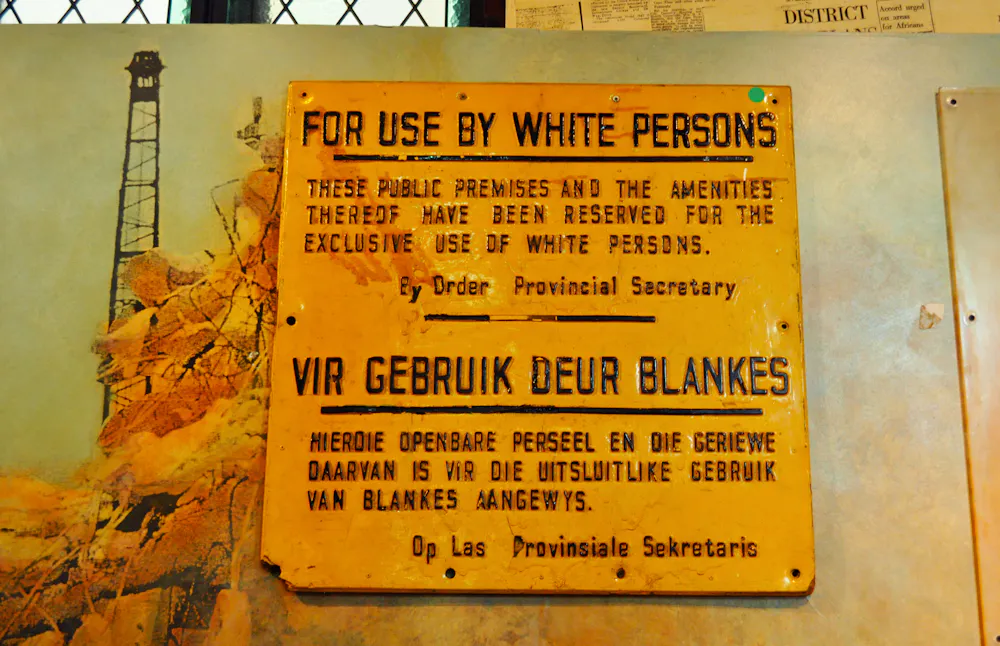
Signage in Durban reflecting apartheid values, 1989. Guinnog/Wikicommons, CC BY-SA

However, social change accelerated in South Africa during the second world war, with African labourers increasingly drawn to urban areas. This was due to industrial production increasing to service Europe’s wartime demands for minerals and local manufacturing replacing imports, empowering rebellious workers and ANC activists in the process.

The threat of social change was palpable, leading South Africa’s white population to elect the Afrikaner-dominated Herenigde Nasionale Party (National Party) in 1948, over the more progressive United Party.

The National Party, which then ruled South Africa until 1994, offered white South Africans a new programme of segregation called Apartheid – which translates to “separateness”, or “apart-hood”.

Apartheid was based on a series of laws and regulations that formalised identities, divisions, and differential rights within South Africa. The system classified all South Africans as “White”, “Coloured”, “Indian”, and “African” – with Africans classified into 10 tribal groups.

From 1950, the Population Registration Act and the Group Areas Act assigned all South African citizens a racial status, and determined in which physical areas of South Africa different races could live.

Future legislation would embed these regional divisions, and provide a façade of self-government for the African regions.

The 1949 Prohibition of Mixed Marriages Act and 1950 Immorality Act outlawed interracial romantic relationships, and by 1953 the Reservation of Separate Amenities Act and Bantu Education Act segregated all kinds of public spaces, services and amenities.

Sign erected during the apartheid era. Shutterstock

Racial policies also intermingled with rhetoric against communism. The 1950 Suppression of Communism Act was central to banning any party advocating a subversive ideology. Virtually any progressive opponent of the National Party regime could be defined as communist, particularly if they disrupted “racial harmony”, which severely limited anti-Apartheid activists’ ability to organise.

More generally, the government also maintained very socially conservative laws for all citizens regarding sexuality, reproductive health, and vices like gambling and alcohol.

The impact of and response to apartheid policies

In this context, the ANC youth wing (including a young lawyer by the name of Nelson Mandela) came to dominate the party and adopt a confrontational black nationalist programme. This group advocated strikes, boycotts and civil disobedience.

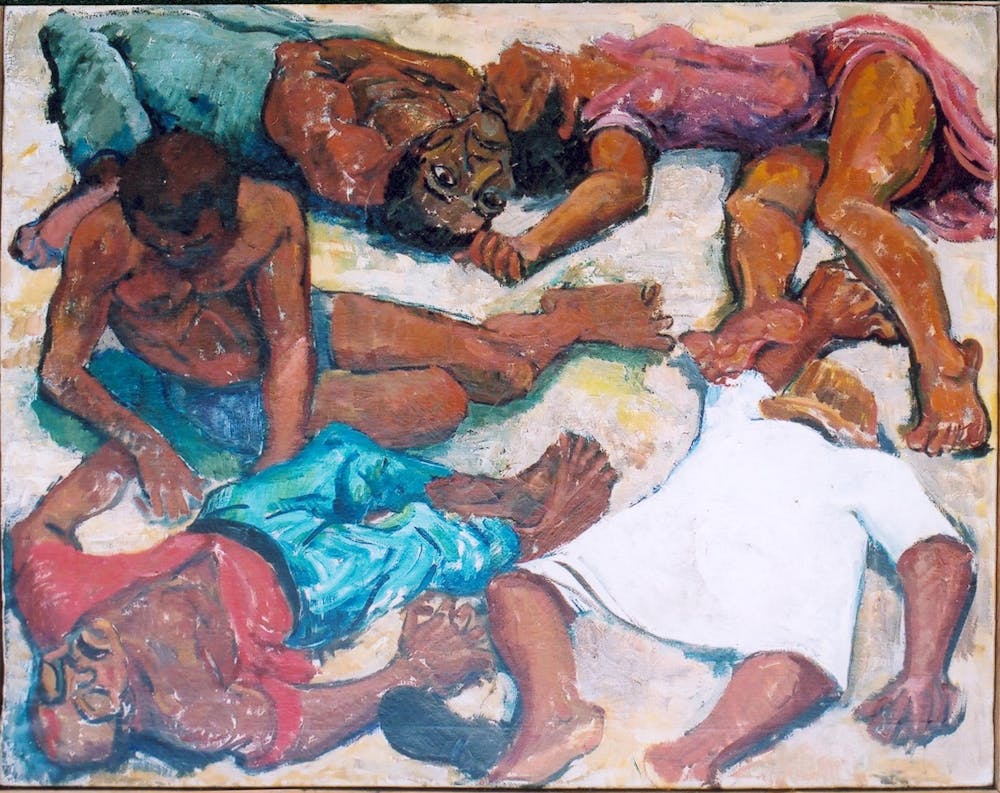
In March 1960, police attacked a demonstration against Apartheid’s racial pass system in the Sharpeville township. They killed 69 people, arrested over 18,000 more, and implemented a ban of the ANC and the smaller Pan-Africanist Congress.

Painting of the Sharpeville massacre in 1960. Godfrey Rubens/Wikicommons, CC BY-SA

This pushed resistance towards more radical, underground tactics. Following authorities’ further brutal treatment of a 1961 labour strike, the ANC launched armed struggle against Apartheid through a military wing: Umkhonto we Sizwe (MK). As a leader of MK, Nelson Mandela was arrested in 1962 and subsequently sentenced to life in jail.

Anti-Apartheid resistance dimmed during the 1960s due to the harsh repression of activist activities and the arrests of many anti-Apartheid leaders. But in the 1970s, it was revitalised by a growing Black Consciousness Movement.

The independence of nearby Angola and Mozambique from Portugal, and discriminatory education policies that led to the 1976 Soweto Uprising, were hopeful examples of change. By the 1980s, township rebellions, boycotts, union militancy, and growing political organisations pushed South Africa’s Botha government into a state of emergency, forcing dramatic concessions that escalated to negotiations with Mandela.

Despite the British and American governments classifying the ANC as a terrorist organisation during the 1980s, the growing international criticism of Apartheid, spurred by disruptive resistance in South Africa, and the undermining of the anti-Communist imperative due to the end of the Cold War, also moved those states to finally implement trade sanctions against Apartheid.

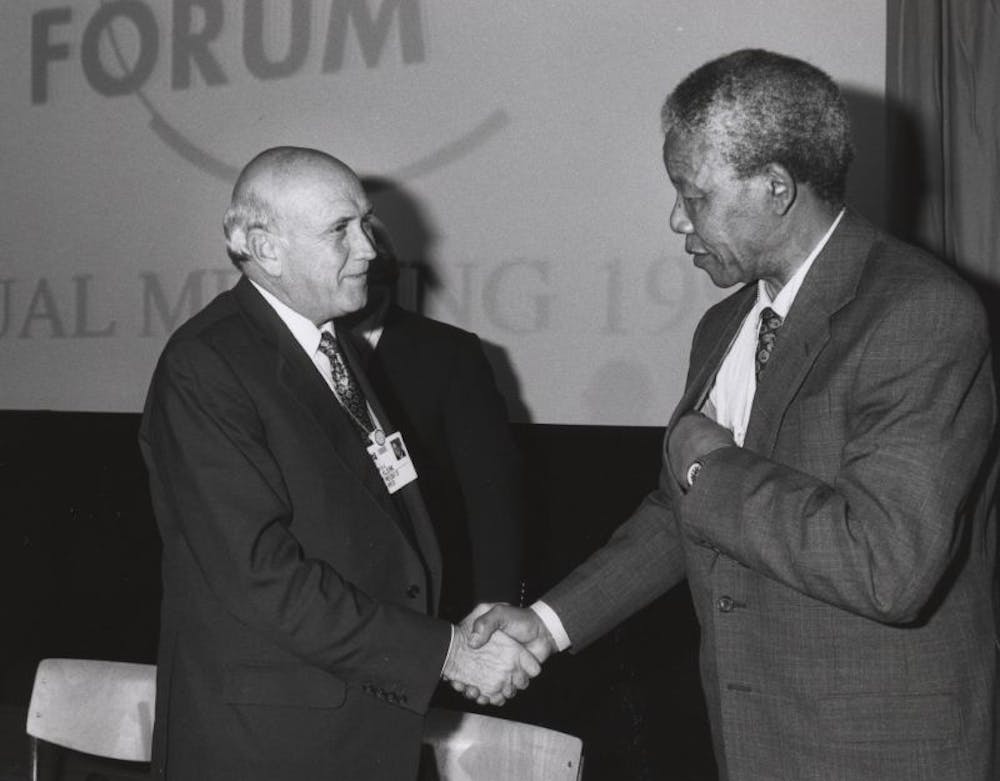
In 1990, President Frederik de Klerk freed Mandela and unbanned anti-Apartheid political parties, to allow negotiations for a path to majority-rule democracy.

Frederik de Klerk (left with Nelson Mandela, 1992. World Economic Forum/Wikicommons, CC BY-SA

Despite right-wing backlash and outbreaks of violence, the white minority did overwhelmingly approve negotiations for democratic transition. Mandela sought peaceful racial reconciliation, through a negotiated process of transition to free, inclusive elections, and the post-Apartheid operations of the Truth and Reconciliation Commission.

Receiving the 1993 Nobel Peace Prize and then winning South Africa’s 1994 elections, Mandela was thus personally integral to the peaceful transition from Apartheid to multiracial democracy.

Contemporary relevance

What legacy has the end of Apartheid thus left?

Globally, Mandela became an icon, associated with resistance, justice, and Christ-like self-sacrifice. The popular perception of Mandela and the anti-Apartheid movement, though acknowledging some elements of the struggle’s history, generally demonstrates a shallow understanding of what actually occurred.

These narratives predominantly fail to engage with Mandela’s leadership of military struggle, and the widespread militant, and violent, action that forced the Apartheid regime to negotiate. They often highlight international campaigns against Apartheid, but are mute on the strong military and financial support for Apartheid South Africa by western states throughout the Cold War.

While leaving a general message that opposition to injustice can win, the anti-Apartheid movement’s history encapsulated by Mandela is probably as well understood as the iconic image of Che Guevara printed on t-shirts.

Shutterstock

Regionally, the end of Apartheid ended much of Southern Africa’s conflict, and allowed black-ruled states to unite in far greater cooperation for social and economic development.

The intervention of South African troops (and mercenaries) throughout Africa was also greatly reduced. However, conflict has continued in many areas of Africa, as have operations of the African Union and increasingly the United States’ Africa Command.

Meanwhile, though still a regional hegemon, post-Apartheid South Africa failed to effectively support neighbouring democracies, allowing questionable regimes such as Mugabe’s ZANU-PF in Zimbabwe to persist without adequate intervention. Newly stable southern Africa was also increasingly open to trade and investment from China – their enhanced global reach and influence an unforeseen result of freedom in many developing countries.

Nationally, though entering power with principles seeking redistribution of wealth and a general raising of living standards, the ANC gradually embraced neoliberal policies that have only led to an increase in poverty and inequality in South Africa over the past two decades.

The ANC’s overwhelming dominance of government throughout this period – with an absolute majority – has stifled development of effective parliamentary democracy (though South African civil society remains vibrant and active). And corruption throughout the ANC and the South African state has become endemic. Though narratives of “white genocide” in South Africa are not supported by facts, although crime and racial enmity remain virulent in South African society. But, South Africa also persists as one of the world’s most multicultural and inclusive countries.

Despite its troubles, South Africa is a nation with an inspiring story of struggle – even though an accurate vision of the country’s past and present requires engagement with many complexities.

The South African example shines a light on sometimes unpleasant realities of history, as well as enduring aspects of human nature. For those who are willing to seek out the details and contemplate the contradictions, the end of Apartheid leaves a legacy of insight most valuable in our turbulent age.

ref. World politics explainer: the end of Apartheid – http://theconversation.com/world-politics-explainer-the-end-of-apartheid-101602]]>

Media Files: Guardian Australia’s Katharine Murphy and former MP David Feeney on the digital disruption of media and politics

]]>

Source: The Conversation (Au and NZ) – By Andrea Carson, Incoming Associate Professor at LaTrobe University. Former Lecturer, Political Science, School of Social and Political Sciences; Honorary Research Fellow, Centre for Advancing Journalism, University of Melbourne

Today on Media Files, a podcast about the major issues in the media, we’re taking a close look at the role of the news media in politics.

As the Wentworth by-election looms, we’re asking: is digital disruption changing the rules of journalism and politics in Australia?

It is easy to miss how disorienting it can be to work in the always-on-at-fire-hydrant-strength world of political journalism these days, as Guardian Australia’s political editor Katharine Murphy recounts in her recent essay-book On Disruption. Matthew Ricketson speaks with her to understand the media’s role (if any) in the political turmoil that cost Malcolm Turnbull the prime ministership, triggering this month’s hotly contested by-election.


Read more: Media Files: Spotlight’s Walter V. Robinson and the Newcastle Herald’s Chad Watson on covering clergy abuse – and the threats that followed


Long time Labor Member for Batman, David Feeney, announced his resignation early in 2018. DAVID CROSLING/AAP

One person who’s seen up close the sometimes difficult relationship between reporters and politicians is former federal Labor MP David Feeney.

Speaking to Andrea Carson about falling media trust and increased political polarisation, he asks: “In today’s Australia, where do you have a public conversation? Because there are so many different filter bubbles, there are no agreed facts… we are losing the capacity to build a consensus.”


Read more: Media Files: What does the Nine Fairfax merger mean for diversity and quality journalism?


Media Files is produced by a team of journalists and academics who have spent decades working in and reporting on the media industry. They’re passionate about sharing their understanding of the media landscape, especially how journalists operate, how media policy is changing, and how commercial manoeuvres and digital disruption are affecting the kinds of media and journalism we consume.

Media Files will be out every month, with occasional off-schedule episodes released when we’ve got fresh analysis we can’t wait to share with you. To make sure you don’t miss an episode, find us and subscribe on Apple Podcasts, in Pocket Casts or wherever you find your podcasts. And while you’re there, please rate and review us – it really helps others to find us.

You can find more podcast episodes from The Conversation here.


Recorded at the University of Melbourne’s Centre for Advancing Journalism. Producer: Andy Hazel.

Additional audio

Theme music by Susie Wilkins.

ref. Media Files: Guardian Australia’s Katharine Murphy and former MP David Feeney on the digital disruption of media and politics – http://theconversation.com/media-files-guardian-australias-katharine-murphy-and-former-mp-david-feeney-on-the-digital-disruption-of-media-and-politics-103243]]>

More ‘bright’ fast radio bursts revealed, but where do they all come from?

]]>

Source: The Conversation (Au and NZ) – By Ryan Shannon, Postdoctoral fellow, Swinburne University of Technology, Swinburne University of Technology

Fast radio bursts (FRBs) are one of the great astrophysical mysteries. They are brief, bright flashes of radio waves that last a few milliseconds. Despite happening frequently – thousands occur over the entire sky every day – only a couple dozen have ever been seen.

But we’ve found 20 more bursts, averaging one for every 14 days of observing, with the results published in Nature today.

There are two main reasons why astronomers like me are really excited by FRBs.


Read more: ASKAP telescope speeds up the hunt for new Fast Radio Bursts


First, they represent a new, very unusual, unexpected phenomenon. The bursts come from other galaxies, meaning incredible amounts of energy are required to produce them – some bursts contain more energy than our Sun produces in decades.

Second, FRBs have the potential to be a new tool that we can use to understand the structure of matter in the universe.

The key property of the bursts that could turn them into a valuable tool is their dispersion: shorter (bluer) wavelength radio waves arrive at the telescope before the longer (redder) ones.

This dispersion is the result the radio waves passing through hot gas (plasma), which slows down the radio waves by an amount that depends on the wavelength. The amount of dispersion tells us how much matter the bursts have travelled through, and until now it has been unclear where that matter is.

An FRB’s journey to Earth.

A fast radio burst leaves a distant galaxy (see the video above), travelling to Earth over billions of years and occasionally passing through clouds of gas in its path. Each time a cloud of gas is encountered, the different wavelengths that make up a burst are slowed by different amounts.

Timing the arrival of the different wavelengths at a radio telescope tells us how much material the burst has travelled through on its way to Earth and allows astronomers to to detect “missing” matter located in the space between galaxies.

Location, location, location

There are two places where this matter could be. It could be in the FRB host galaxy, in this case FRBs would be coming from relatively close galaxies.

The other, exciting possibility is that the dispersion is the result of matter in between galaxies. This matter, referred to as the cosmic web, is nearly impossible to study any other way.

Cosmic web simulation. Galaxies and clusters of galaxies reside on filaments, which are separated by almost empty regions called voids. Surrounding the filaments is diffuse gas that can be probed by fast radio bursts. NASA, ESA, and E Hallman (University of Colorado, Boulder)

Figuring out where it resides is another outstanding problem in astronomy. In this case, the FRBs would be coming from more distant objects.

Our collaboration decided the first step to solve the FRB mystery was to find more of them, and find them quickly.

To do this we decided to go wide and simultaneously stare at as much sky as possible. We used the Australian Square Kilometre Array Pathfinder (ASKAP), a radio telescope in regional Western Australia that consists of 36, 12-metre dish antennas.

Each antenna is equipped with phased array feeds – radio cameras that would enable searches 36 times wider than could be seen with older technology.

We further widened the searches by pointing the antennas in different directions like a fly’s eye. While these searches would be less sensitive than those that found bursts previously, mostly with the 64-metre Parkes radio telescope in New South Wales, we were relatively confident bright ones existed in sufficient numbers that we should find more.

To conduct the searches, we used six to nine of the ASKAP antennas, while the rest were used for other observing projects. Our first discovery came after just over three days of observing, as mentioned earlier in The Conversation.

It turns out that we were a bit lucky to find the first one as soon as we did. I was responsible for scheduling the observing, which could run 24/7, and searching the data.

It was an exciting time, and I was very happy to be on the front line and be the first one to spot a new burst. Over the course of the next year, we found the 19 additional bursts reported.

The ASKAP FRB sample. For each burst, the top panels show what the FRB signal looks like when averaged over all frequencies. The bottom panels show how the brightness of the burst changes with frequency. The bursts are vertical because they have been corrected for dispersion. Ryan Shannon and the CRAFT collaboration

Not the usual FRB

As the burst count started to rise, we noticed differences with the previously detected ones. The ASKAP bursts have less dispersion than the ones found at Parkes.

This, combined with the fact that the ASKAP bursts are much brighter, indicates that there is a correlation between burst brightness and dispersion. If all the dispersion was coming from within host galaxies, this would not be the case.

We were now able to confidently say that the bursts are experiencing the effects of the diffuse matter in the cosmic web. It also says that bursts are coming from vast distances – from galaxies half way across the universe.

A second key result of our survey is that none of the bursts repeated. As part of our searches, we observed the same regions of sky almost daily, and in total we had spent 12,000 hours (500 days) staring at the positions where we found FRBs.

This makes the bursts different than the best studied, known as FRB 121102 – aptly called “the repeater” – from which hundreds of pulses have been detected.

Are there two classes of FRBs? It can be scientifically fraught to subdivide phenomena such as FRBs into sub-classes when so few are known. But the differences between the repeater and the rest of the FRBs are starting to become too big to ignore.

On closer inspection

The next step for our project is to commission a mode for ASKAP that can be used to localise bursts.


Read more: How we found the source of the mystery signals at The Dish


Instead of using the fly’s eye approach, we’ll point all of the antennas in the same direction, search for bursts in real time, and then make an image of the sky for the millisecond the FRB emission was passing by Earth.

We’ll be able tie bursts to host galaxies and accurately measure their distances. By combining the distances with the dispersions we’ll be able to start making a 3D map of the cosmic web.

Keith Bannister, Jean-Pierre Macquart, and Ryan Shannon describe their work on fast radio bursts (FRBs) and the telescope used for their discovery. Credit: CSIRO.

ref. More ‘bright’ fast radio bursts revealed, but where do they all come from? – http://theconversation.com/more-bright-fast-radio-bursts-revealed-but-where-do-they-all-come-from-104488]]>

New research shows how Australia’s newsrooms are failing minority communities

]]>

Source: The Conversation (Au and NZ) – By Usha M. Rodrigues, Senior Lecturer in Journalism, Deakin University

Australians from culturally diverse backgrounds often feel frustrated about media coverage of news events and issues that portray them in a negative light. A new study analysing media coverage of issues related to multicultural Australia found that more than a third of stories reflected a negative view of minority communities.

Traditionally, so-called “hard news” stories are straight reports of “what happened”. This means they are reported in an objective and balanced manner, taking in diverse views on the issue.

Our study analysed 1,366 media articles, examining the sentiment towards minority communities in them. We found that over a third of hard news stories contained negative sentiments towards minority communities, while more than half of the editorials and commentary pieces portrayed minority communities in a negative light.

The sample included about 80% news stories, 4% features and 16% editorials and commentaries on selected events and issues during a six-month period.

It focused on six news topics with some level of public controversy around the issue of multicultural Australia. These included Section 18C of the Racial Discrimination Act; a discussion of Islam as a religion; US President Donald Trump’s refugee ban in January 2017; the Bourke Street attack in Melbourne’s central business district; youth gang crime, particularly in Melbourne; and the London terror attack on March 22, 2017.

The study collected articles from five mainstream online news sites: the ABC, the SBS, The Age, the Herald Sun and The Australian.


Read more: Australians born overseas prefer the online world for their news


In our analysis, we found only a quarter of the stories about minority communities incorporated another point of view in the story. For example, this could be a member of the relevant minority community group, a scholar who may be able to provide an alternative view or comment on the bigger picture, or a shadow minister.

Most of the stories analysed between September 2016 and March 2017 were based either on a reporter’s observations (41%) or included a government source (31%). Only about 26% of stories had a second source (a non-government source, an individual or expert).

Issues such as Section 18C and the controversy surrounding the former president of the Australian Human Rights Commission, Gillian Triggs, received extensive coverage in The Australian (211 stories compared to the next highest coverage of 82 stories in The Age).

Similarly, youth crime received above average coverage in the Herald Sun (46 stories compared to the next highest coverage of 22 stories in The Australian).

The Age published the highest number of stories (82) on the issue of Islam as a religion, and 13 news stories on youth crime in Melbourne.

Social media spikes on minority issues

A recent audience survey has shown that culturally diverse Australians are twice as likely to use social media and Internet sources to access news of interest.

Our study also looked at the tone of Twitter conversations on the same six events and issues during these six months. We examined about 239,000 tweets from over 29,000 accounts featuring the hashtags #trumpban, #bourkestreet, #humanrights, #refugees, #immigration, #muslim, #racism, #islam and #reclaimaustralia.

Although there was a low hum of conversation about #muslim, #muslims and #racism during the six-month period, Twitter conversations peaked with breaking news around these events and issues.

For example, there was spike in tweets including #refugees around October 30, 2016, when the mainstream media reported then Prime Minister Malcolm Turnbull saying that refugees and asylum seekers on Manus Island and Nauru would never come to Australia.

Again, the #refugees hashtag was trending around January 30 when Trump’s refugee ban story gained currency. And when the news broke that Triggs’ term would not be extended beyond the end of her contract in mid-2017, #humanrights peaked.

The study used automated sentiment detection software to evaluate how “positive”, “negative” or “neutral” the social media conversations were. Overall, the tenor of conversations for the 11 hashtags we followed was more negative than positive. About 30% of the tweets were neutral.

Lack of minority viewpoints

The two content analyses provide insights into the mainstream news coverage and social media conversations circulating in the Australian public sphere.

Journalists may believe they are merely reporting or commenting on controversial news stories impacting on multicultural Australia. But our study showed there is a lack of balance in these news stories, as nearly three-quarters of them fail to provide a point of view other than that of the journalist’s own observations and government sources.


Read more: Australian media are playing a dangerous game using racism as currency


We believe newsrooms in Australia need more diversity in their workforce to provide better representation of views and perspectives in their coverage. Given that 26% of Australians were born overseas and over 49% have a parent born overseas, our newsrooms and the coverage of events and issues in Australia need to reflect this diversity.

Australia’s news coverage remains largely monolithic, with events often covered according to how the white population perceives it. Similarly, culturally diverse communities see news as creating an “us” and “them” chasm in the broader community.

The quick fix is what journalists should already be doing when covering events and issues pertaining to minority communities. They should strive to give news stories more context and balance by including a variety of views, such as non-government sources and minority voices.

There also needs to be a concerted effort to change the makeup of Australia’s newsrooms so that the leadership and journalists reflect the cultural diversity in Australia.

ref. New research shows how Australia’s newsrooms are failing minority communities – http://theconversation.com/new-research-shows-how-australias-newsrooms-are-failing-minority-communities-104569]]>

You can’t ‘erase’ bad memories, but you can learn ways to cope with them

]]>

Source: The Conversation (Au and NZ) – By Carol Newall, Senior Lecturer in Early Childhood, Macquarie University

The film Eternal Sunshine of the Spotless Mind pitched an interesting premise: what if we could erase unwanted memories that lead to sadness, despair, depression, or anxiety? Might this someday be possible, and do we know enough about how distressing memories are formed, stored, and retrieved to make such a therapy possible?

Cognitive behaviour therapy (CBT) is a common treatment for anxiety disorders. The basic idea of CBT is to change the fear-eliciting thoughts that underlie a client’s anxiety.


Read more: Explainer: what is cognitive behaviour therapy?


Imagine the instance where a person has a dog phobia. They are likely to believe that “all dogs are dangerous”. During CBT, the client is gradually exposed to friendly dogs to cognitively reframe their thoughts or memories into something more realistic – such as the belief “most dogs are friendly”.

CBT is one of the most scientifically supported treatments for anxiety disorders. But unfortunately, a recent US study indicates that in around 50% of patients, old fear memories resurface four years after CBT or drug treatment. Put another way, the old fear memories seem impermeable to erasure through gold-standard therapy or drug treatment.

Eternal Sunshine of the Spotless Mind was an interesting thought experiment into whether it’s better for your well-being to erase painful memories. Focus Features/Anonymous Content/ This Is That Productions/IMDb

Why distressing memories are difficult to ‘erase’

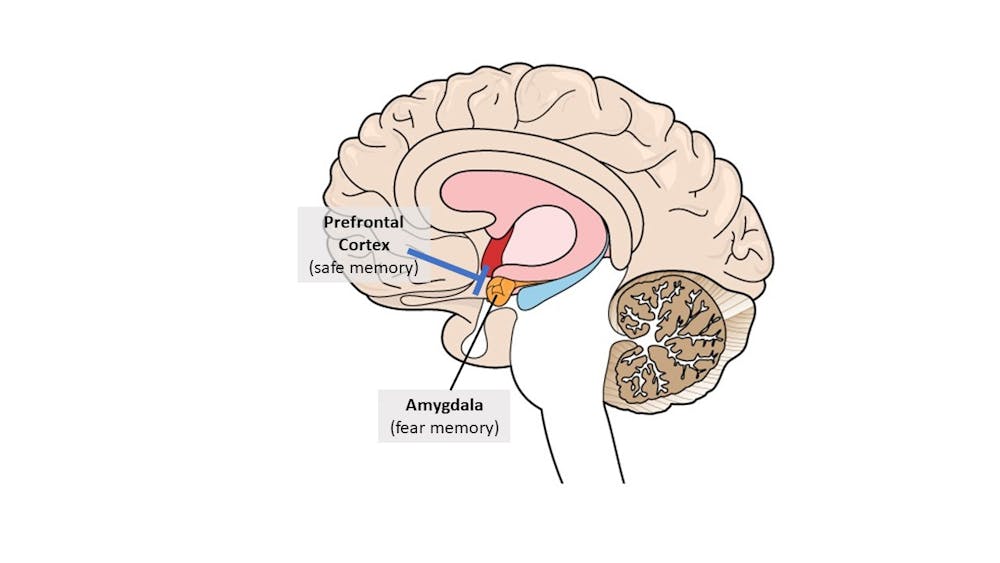
Fear memories are stored in an old part of the brain called the amygdala. The amygdala developed early in our evolutionary history because having a healthy dose of fear keeps us safe from dangerous situations that might reduce our chances of survival.


Read more: We’re capable of infinite memory, but where in the brain is it stored, and what parts help retrieve it?


Permanent storage of dangerous information is adaptive. While we might learn some things are safe sometimes (encountering a lion in a zoo) we also need to be aware they not safe in many other circumstances (meeting a lion in the wild).

This permanent storage of a fear memory explains why relapse occurs. During therapy, a new memory – say, “most dogs are friendly” – is formed. But this new safe memory is bound to a specific context (friendly dog in the therapy room). In that context, the rational part of the brain, the prefrontal cortex, puts a brake on the amygdala and tells it not to retrieve the old fear memory.

The prefrontal cortext can put a brake (blue line) on the amygdala, if it doesn’t want it to retrieve the old memory. from shutterstock.com

But what happens when a patient encounters a new context, such as a dog in a park? By default, the brain retrieves the fear memory that “all dogs are dangerous” in any context, except the one where the new safe memory occurred. That is, old fear memories can be renewed with any change in context.

This default has helped humans survive in dangerous environments throughout our evolutionary history. However, for anxious clients whose fear is unrealistic and excessive, this default to distressing memories is likely one important basis for the high rates of anxiety relapse.

So is it erasure ever possible?

There are a few instances that suggest “erasure” is sometimes possible. For example, relapse is not seen early in life with non-human animals. This may be because the brake signals from the prefrontal cortex to the amygdala mature late in development. As there are no brakes, perhaps erasure of fear memories occurs instead.

By extension, this suggests early intervention for anxiety disorder is important as children may be more resilient to relapse. However, the jury is still out on whether erasure of fear memories occurs at all in children and, if so, at what age.

It’s important to expose yourself to your fear in as many different contexts as possible. Marcus Benedix/Unsplash

So, given the high rate of relapse, is there a point to pursuing treatment at all? Absolutely! Having some respite from anxiety allows for significant moments of sunshine and improves quality of life, even if it is not eternal. In these moments, the typically anxious person might attend parties and make new friends or handle a stressful job interview successfully – things they would not have done because of excessive fear.


Read more: Memories of trauma are unique because of how brains and bodies respond to threat


One way to reduce the chances of relapse is to confront irrational fear at every opportunity and create new safe memories in many different contexts. Anticipating contextual factors that are trigger points for relapse, such as changing jobs or relationship break-ups, can also be adaptive. Strategies can then be used to manage the re-emergence of distressing thoughts and memories.

While erasure of negative memories may be the goal of the characters in Eternal Sunshine, the film also emphasises the importance of these memories. When processed rationally, stressful memories motivate us to make better decisions and become resilient. Being able look back on unpleasant memories without excessive distress allows us to move forward with greater wisdom and this is the ultimate goal for all therapeutic frameworks.

ref. You can’t ‘erase’ bad memories, but you can learn ways to cope with them – http://theconversation.com/you-cant-erase-bad-memories-but-you-can-learn-ways-to-cope-with-them-103161]]>

The informal water markets of Bangalore are a view of the future

]]>

Source: The Conversation (Au and NZ) – By Georgina Drew, Lecturer, University of Adelaide

Bangalore is home to some ten million people. It might also be the next city to experience “day zero”: when it runs out of ground water entirely.

But in settlements just outside the city centre, people already live without municipal water supplies. Our research found that families – largely women – must piece together drinking, cooking and washing water through a mixture of limited tap supply, communally bought canned water, and “water ATMs”.

It takes enormous time, energy and money to negotiate these water markets. Bangalore offers a glimpse of a possible future, as more cities around the world approach “day zero”.


Read more: ‘Day Zero’: From Cape Town to São Paulo, large cities are facing water shortages


Beyond municipal water

In settlements just outside the city centre, the reach of the official water board is limited. These areas are not serviced by the municipality’s supply of Kaveri River water. Low-income households, especially migrants, living in these neighbourhoods have to negotiate limited water sources that are available in a narrow window of time.

The Bangalore water board does supply a range of tanker water services. However, tanker water is typically used for washing, cleaning, and other household purposes, but not for cooking and drinking. Residents feel that this tanker water is “dirty” and complain that it causes sore throats and gastrointestinal problems when consumed directly.

A water tanker supplies water to a home in Bangalore. Shutterstock

To access drinkable water, some of the more fortunate areas have access to pipe connections where water flows once a week for an hour or so. However, the bore wells connected to these pipes are continually at risk of being depleted.


Read more: India’s colonial legacy almost caused Bangalore to run out of water


The “lineman” of a given neighbourhood is the one who decides which area will get water from these pipes, and at what hours. However, such decisions are limited by the availability of groundwater, which has to remain untouched periodically to create sufficient “recharge” of groundwater for adequate discharge. This limited supply forces the households to look for elsewhere for drinking and cooking water.

Some places have access to water kiosks or water “ATMs”. These water kiosks are also connected to groundwater sources and water filters. A household pays 5 Indian rupees (INR) for 20 litres of water.

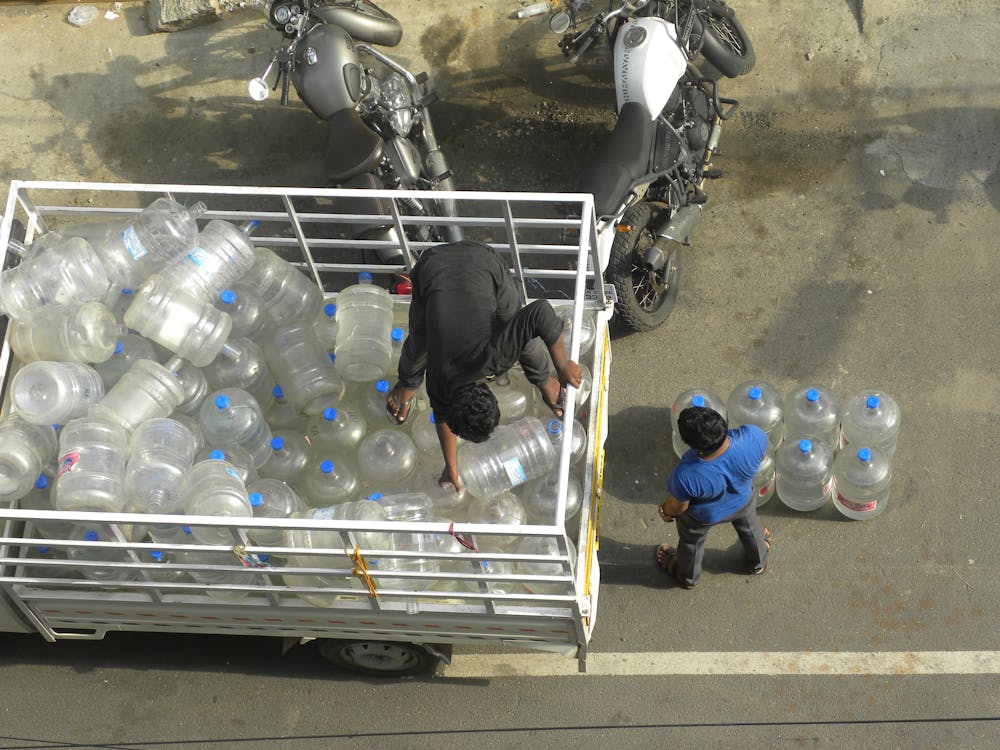
If kiosk water is limited or absent, residents have to depend on “canned” water for drinking and cooking purposes. One such plastic can of 20 litres costs between 25 to 35 INR depending on locality and frequency of purchase.

Men deliver water cans in Bangalore. Shutterstock

The more reputable brands cost as much as 70 INR, which is far beyond the reach of the poor. An average household of five members needs about three to five cans a week.

If a “can” delivery service refuses to deliver to households in one of these remote neighbourhoods, entrepreneurs arise to fill in the supply gap. Geetamma*, who runs a small eatery in one such neighbourhood, buys 20-litre cans in bulk and resells these to households with a small profit margin of 2 INR per can.

When municipally supplied or purchased tanker water is insufficient, households purchase water from private tankers. It is priced at 300-500 INR per tanker for 4,000-5,000 litres. Households collect the water in underground concrete tanks or in 200 litre plastic drums. In some neighbourhoods, residents collectively buy tanker water by pooling resources. The poorest migrants often resort to the collective option, or even to buying in smaller per-bucket quantities of 15 litres for 2 INR.

The range of ways that people access water in peri-urban Bangalore demonstrates that some transactions are formal, some are informal, and that others are a peculiar combination of both.

A huge cost

To secure water supplies from all these varied sources, people must spend a huge proportion of their income. A back-of-the-envelope calculation suggests that the monthly spend on water for a low-income household is between 5-8% of total income. Despite this relatively high rate of expenditure, such households are still far below the minimum target supply of 70 litres per person per day.

This limited water supply also comes at the cost of time. Based on our sampling of experiences in seven neighbourhoods of southeast Bangalore, adult women such as Manjula* typically spend between 3 and 5 hours a week working to secure water supplies – time that could be used to supplement household income.


Read more: What can other cities learn about water shortages from ‘Day Zero’?


The water markets in Bangalore rely heavily on interpersonal relationships and collective action. These communities have so far been resilient and resourceful, but the formal and informal systems are in a delicate balance. One big supply-side shock can at any time distort this equilibrium.

ref. The informal water markets of Bangalore are a view of the future – http://theconversation.com/the-informal-water-markets-of-bangalore-are-a-view-of-the-future-103684]]>

Why block subjects might not be best for university student learning

]]>

Source: The Conversation (Au and NZ) – By Jason M Lodge, Associate Professor of Educational Psychology, School of Education & Institute for Teaching and Learning Innovation, The University of Queensland

Block subjects is a model of teaching students one subject at a time over two to four weeks, rather than several subjects at a time over ten to 13 weeks in a semester.

For some, like Victoria University, the model is a stunning success. There are already tangible improvements in pass rates in the first year of implementation.

What’s less clear is what the long term implications of these approaches are for student learning. It may seem, on the surface, that focusing on shorter subjects one at a time is better than the traditional semester model. But research on effective learning shows learning over a long period and studying multiple subjects at a time is more effective.

Massed vs. spaced learning

Research on learning shows “massed” learning is inferior to “spaced” learning. In other words, when learning is spread out over a longer time-frame, the retention of and capacity for using the knowledge is better than when it’s blocked together.


Read more: Revising for exams – why cramming the night before rarely works


The best example of massed learning is cramming – as in “cramming” for an exam. Information might be adequately stored for a short time – enough to complete an exam – but it doesn’t stick as well as it would if it had been studied over a longer period.

Research consistently shows cramming, bingeing or otherwise learning for a short, focused period isn’t the most effective way to remember new information.

In addition to spacing study out, there are also benefits to mixing up study across different topics. This process of switching is called “interleaving” and it might also point to a benefit provided by studying multiple subjects at the same time.

Research shows ‘cramming’ for an exam is less effective than learning over a longer period of time. from www.shutterstock.com

The advantages of spaced practice and interleaving are shown in robust findings in the psychology laboratory. But basic research on learning in the brain and mind is difficult to make sense of in the real world. There are many complexities in university education that cannot be tested or controlled for in laboratory studies.

The evidence about what constitutes quality learning is difficult to see in the university classroom.

This makes it difficult to know if studying subjects in short blocks will lead to the same problems as cramming or not. Students might pass, might report greater levels of satisfaction but might not be able to remember and use what they have learned as effectively long-term.

The evidence problem

It isn’t clear whether block subjects are a form of cramming or not. So it’s not certain there are any long-term negative effects of this approach.

The recent national discussion about effective delivery of higher education has been dominated by economists, consultants and accounting firms. Economic indicators provide a crude but easy proxy and have been prioritised over quality learning in policy and practice. In the process, the link between indicators such as completion rates or student satisfaction and learning is being lost.

This means universities are making substantial changes without necessarily knowing what they mean for student learning. University students might be satisfied, complete their degrees and get a job. But there is a real risk they may not have the necessary knowledge and skills to thrive and adapt in the 21st Century.

Testing innovations

The role played by the now disestablished Office for Learning and Teaching (OLT) was critical for this kind of problem. The OLT provided a vital mechanism for testing out innovations such as the block model.

An OLT project could have examined under what conditions the model is most effective, for which students and how to get it to work best in different disciplines and year levels. While important, crude indicators such as pass rates and satisfaction are not enough to provide this kind of evidence base.

Innovations in student testing need to be rigorously examined to ensure they’re effective. from www.shutterstock.com

Sadly, the small investment in a mechanism for ensuring these kinds of questions could be answered was deemed too expensive for the federal government. It’s now difficult to systematically figure out whether approaches like the block model are good for learning in the long term and whether they’ll work elsewhere.

This lack of a mechanism for rigorously testing innovations also risks our global reputation for high quality higher education. Micro-credentials, artificial intelligence and other innovations are poised to have a substantial impact on higher education in the near future.


Read more: Six things Labor’s review of tertiary education should consider


There is currently no mechanism to fund rigorous, national studies into how Australian higher education can remain competitive in this rapidly evolving environment.

There is every likelihood the students who complete their studies in a block model are receiving quality instruction, leading to quality learning. The results at Victoria University certainly look promising. But it’s difficult to determine this until student learning and development are made the priorities over crude economic indicators.

ref. Why block subjects might not be best for university student learning – http://theconversation.com/why-block-subjects-might-not-be-best-for-university-student-learning-102909]]>

A fresh perspective on Tasmania, a terrible and beautiful place

]]>

Source: The Conversation (Au and NZ) – By Cassandra Pybus, Adjunct Professor in History, University of Tasmania

Book Review: Island Story: Tasmania in Object and Text.

The island of Tasmania lies suspended beneath Australia like a heart-shaped pendant of sapphire, emerald and tourmaline. Here is where the world runs out, crumbling into the vast expanse of the Southern Ocean.

Island Story: Tasmania in Object and Text offers us a fresh perspective on this terrible and beautiful place. Editors Ralph Crane and Danielle Wood invite the reader to discover Tasmania anew with their inspired juxtaposition of objects from the Tasmanian Museum and Art Gallery with texts as diverse as the objects. The pictures are arresting, the textual extracts are perfectly chosen and the design by Imogen Stubbs is gorgeous. Don’t be misled, this is no bland coffee table book.

As benefits such an ancient place, Island Story opens with the specimen of a hairy-legged cicada, an endemic species so ancient it was resident in the supercontinent of Pangea.


Read more: Friday essay: journey through the apocalypse


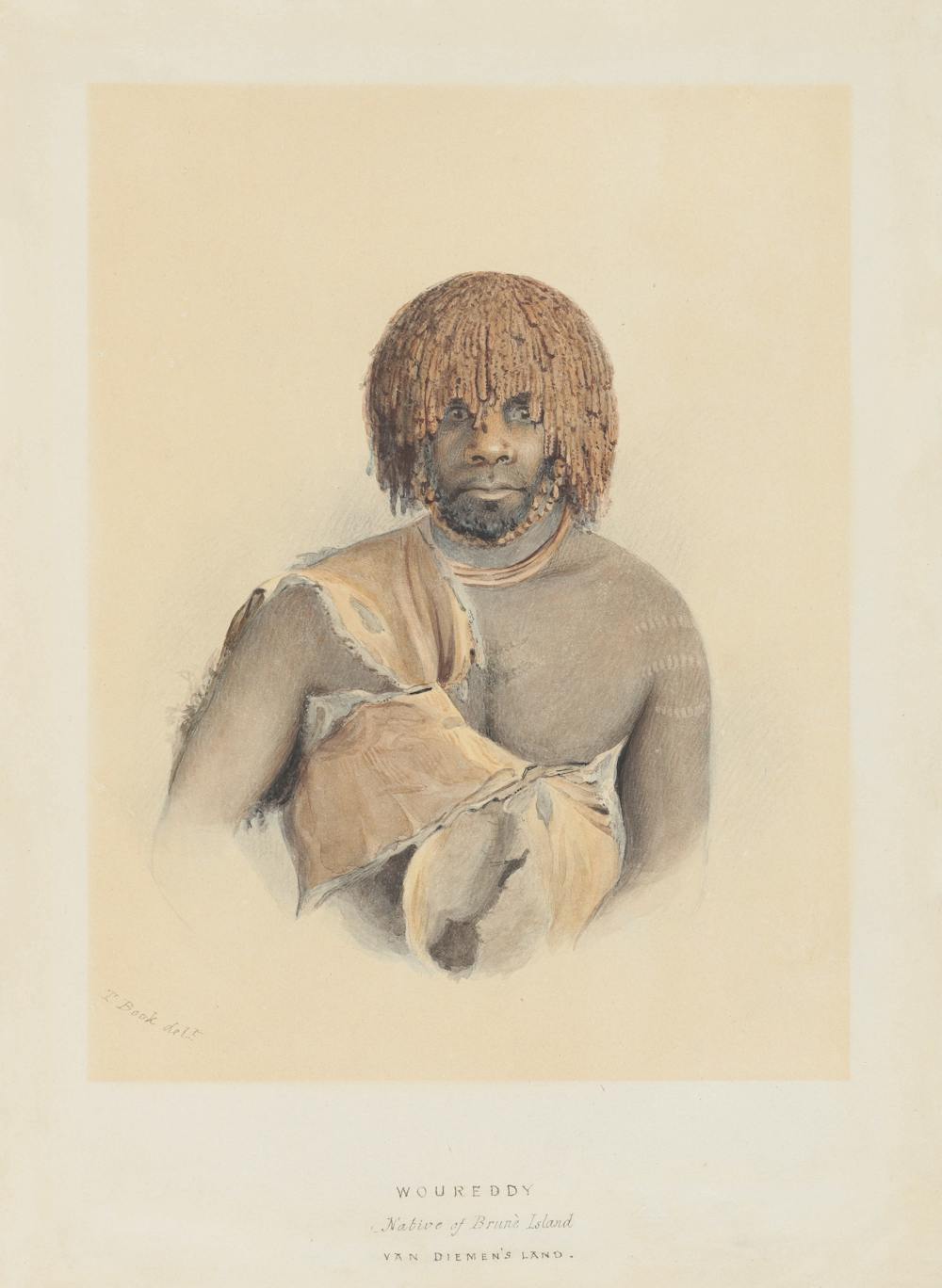
What follows is Thomas Bock’s 1837 portrait of Woureddy, cleverman and warrior of the original people of Tasmania, whose unbroken occupation of the island lasted 40,000 years until colonial invasion brought it to a dreadful end within the short span of Woureddy’s life.

Thomas Bock, Woureddy, Native of Bruny Island, Van Diemen’s Land. Watercolour, 1837 Courtesy Tasmanian Museum and Art Gallery

Paired with the portrait is the befuddled interpretation of Woureddy’s narrative of the beginning of the world by George Augustus Robinson, the self-proclaimed evangelical missionary primarily responsible for the removal of all the original owners of the land to distant Flinders Island in the Bass Strait.

Robinson’s grand achievement in “conciliating” the original people of Tasmania was celebrated in an 1840 painting by Benjamin Duterrau, reproduced with a paired text by Greg Lehmann that puts in words an implicit theme of Island Story that “the spectre of genocide must be confronted and its consequences owned”.

Connections

The organising principle for the book is “the human desire to see, make and enjoy connections between seemingly disparate things”. A travelling case from the 1920s belonging to the silent move actress Louise Lovely, paired with an extract from Marie Bjelke Petersen’s novel Jewelled Nights that became a movie in 1925 starring Ms Lovely, seems unexceptional, but turn the page and there is a news photograph of arrests at the gay law reform protests in 1988.

The apparent disparity is resolved with the paired biographic extract by the gay rights activist Rodney Croome recalling his bizarre quest to shake the hand of the abhorrent Sir Joh Bjelke Peterson, favourite nephew of Marie, because his was the last hand to touch this writer Croome so admired.


Read more: Churning the mud: Tasmania’s fertile ground for legal and social reform


In my desire to see and make connections I found the dominant trope of this book to be captivity: entirely apposite for a place that began its modern history as prison. Among the more mundane objects is a saw from the infamous prison at Macquarie Harbour paired with historian Hamish Maxwell Stewart’s account of the extreme misery that drove so many fatal escape attempts.

John Douglas’s saw, c. 1830s. Courtesy Tasmanian Museum and Art Gallery

Most chilling is the simple cambric and cotton hood with narrow eye slit for prisoners in the dreadful separate prison at Port Arthur. They had to pull it over their heads whenever they left their cell.

Convict Cowl, c. 1850. Courtesy Tasmanian Museum and Art Gallery

In the paired extract from a travelogue by Anthony Trollope, a man who endured 40 years of frightful punishment at Port Arthur after being transported for mutiny, a boy tells Trollope: “I have tried to escape – always to escape – as a bird does out of a cage”.

A delicate watercolour of three young Hobart ladies by the gentleman painter and convicted forger Thomas Wainwright is paired with his 1844 petition begging he be released from “vice in her most revolting and sordid phase” that constituted his seven years in captivity.

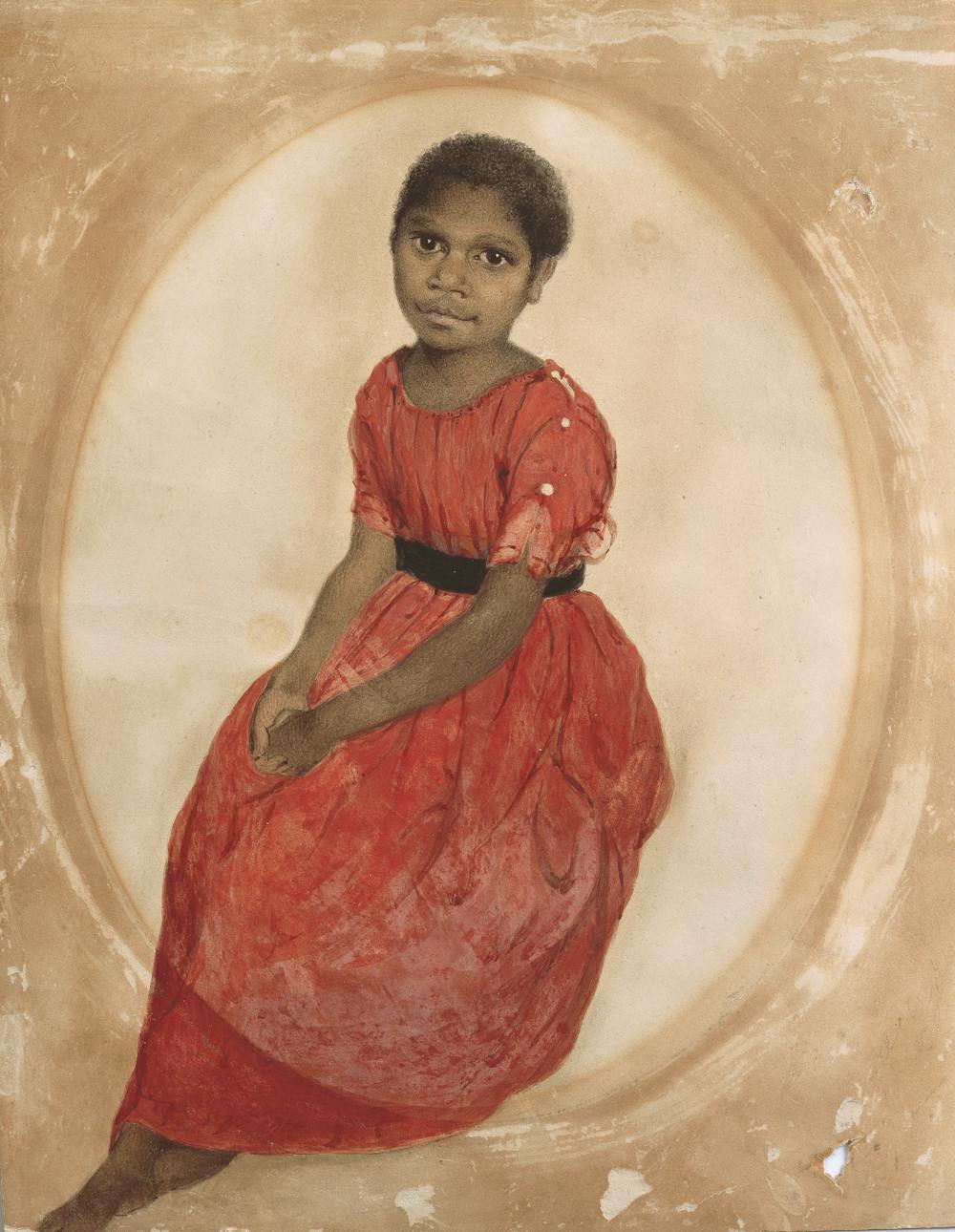
Thomas Bock, Mathinna, Watercolour, 1842. Courtesy Tasmanian Museum and Art Gallery

The painter Thomas Bock also spent years as a convict. In addition to his portrait of Woureddy, the book reproduces his exquisite 1842 portrait of Mathinna, the young girl taken from captivity at Wybalenna on Flinders Island and sent to live at government house as a sort of household pet.

A recent photograph of the chapel at Wybalenna is paired with the 1846 petition to Queen Victoria from several young men protesting their unjust treatment at Wybalenna.

One year after the petition, four dozen survivors were transferred to another place of captivity at a disused convict station at Oyster Cove south of Hobart. All of those taken to Oyster Cove died, except for Fanny who had married an ex-convict named William Smith and went to live on land she was granted in the Huon Valley. She is represented here in the wax cylinders that captured her singing in her own language in 1899.

As one might expect, the extinct Tasmanian Tiger has several outings in this book: as a skeleton, a skin carriage rug and an exquisite jawbone pincushion that won second prize in the handicraft section of the Glamorgan Show in 1900. There is no still from the famous film of the last thylacine in his iron cage, but there is a poignant poem by Cliff Forshaw about the creature’s desolate pacing.

Thylacine Skin Buggy Rug, c. 1903, photographed by Robert David Stephenson. Courtesy Tasmanian Museum and Art Gallery

Read more: Friday essay: on the trail of the London thylacines


There are numerous other images from the Zoology section: a specimen drawer of impaled butterflies, stuffed wattlebirds imprisoned in a glass cabinet and a wombat taken from the wild around 1796 and kept in a cage at Government house in Sydney then preserved in spirits and sent to England where the taxidermist mistakenly set the animal standing upright.

Then there is John Burns, the fighting lion born in captivity in the Sydney Zoo and for many years displayed in a huge cage in a circus to be tamed by Captain Humphries and his whip.

Known for his morose moods and fits of rage, John Burns would thrill the audience with his fierce fight for supremacy over Humphries. His body was sent to the taxidermist and displayed in the museum diorama as a tableau with a lioness and two cubs in 1901.

The fighting lion was long gone by my childhood. What I remember of the diorama, which remained until quite recently, was a tableau of an Aboriginal warrior with his wife and two children sitting around a fire. This tableau was made of resin, you understand.

ref. A fresh perspective on Tasmania, a terrible and beautiful place – http://theconversation.com/a-fresh-perspective-on-tasmania-a-terrible-and-beautiful-place-104248]]>

View from The Hill: Discrimination debate will distress many gay school students

]]>

Source: The Conversation (Au and NZ) – By Michelle Grattan, Professorial Fellow, University of Canberra

`The leak of part of the Ruddock report on religious freedom has come at a very bad time in the government’s battle to hold the crucial seat of Wentworth on October 20. But there are other, more serious concerns than the byelection in the debate that’s been opened.

Fairfax Media on Wednesday reported that religious schools would be guaranteed the right – under specified conditions – to decline to enrol gay students, in changes to anti-discrimination legislation recommended by the inquiry.

Wentworth had a very high vote for same-sex marriage in the plebiscite – almost 81% in favour compared with less than 58% for NSW as a whole. And the main threat to the Liberals’ grip on the seat is from Kerryn Phelps, a prominent (and gay) figure in the marriage equality campaign.

No wonder Liberal candidate Dave Sharma was quick to say he would be “opposed to any new measures that impose forms of discrimination on the basis of gender or sexual orientation, or anything else for that matter”.

Rightly or wrongly, sources sympathetic to, or close to, Malcolm Turnbull are copping blame for the leak – although second guessing the origins of leaks is a hazardous business and Turnbull is a fan of Sharma.

The government has been keeping the report under wraps since May, but now it can’t stop the argument from raging in the final days of Wentworth campaigning.

Scott Morrison immediately had the fire hose out. Asked “should religious schools be able to turn away students on the basis of their sexual orientation?” he said, “Well they already can. That is the existing law.” He kept hammering the point.

Attorney-General Christian Porter said there is no proposal for any new exemption. “The exemption that allows schools to make employment and student admission decisions in a way consistent with the tenets of their religion already exists for religious schools under the Commonwealth Sex Discrimination Act,” Porter said.

The government points out that the thrust of the Ruddock report’s recommendation is to constrain and codify things. The school would have to give primary consideration to the child’s best interests, and spell out its policy.

The report says: “To the extent that some jurisdictions do not currently allow religious schools to discriminate against students on the basis of sexual orientation, gender identity and gender characteristics, the panel sees no need to introduce such provisions.

“To the extent however that certain jurisdictions including the commonwealth do allow this type of discrimination, the panel believes the exceptions should be limited by the requirement that the discrimination be in accordance with a published policy which is grounded in the religious doctrines of the school”.

In sum, the report has recommended tightening the federal Sex Discrimination Act and similar legislation in the ACT, NSW and Western Australia; the other states do not have such provisions and would be unaffected.

But while the committee sees itself as recommending less scope for discrimination by religious bodies, just opening a discussion about the right to reject gay students could give cover for a resurrection of homophobic attitudes that campaigners and legislators have spent decades working to stamp out.

The government argues that, given the existing legislation, there’s nothing to see. What there is to hear, however, is a new debate about the rights and wrongs of discrimination against certain kids. This will be distressing and unsettling for many young people.

Some on the right downplay the issue by saying the only students in the frame are those who would be campaigning on gay issues. They overlook that this seems to contradict the right’s general line that we need more protections for freedom of speech. Or do they think there shouldn’t be such freedom in a religious school?

Before people say these are not government schools and so should have free rein, remember that they get big dollops of taxpayers’ money.

While it may be reasonable to allow them some exemptions based on faith issues, they should also conform to core community values.

It certainly is not in line with those values to think a school should be able to accept one boy while refusing admittance to his brother on the ground the second boy is gay and is willing to strongly defend his sexuality.

This debate will divide and discredit the Liberals unless it can be shut down quickly. Within the party it will split the moderates from the right, and cause division within the right too.

And, beyond the Liberals, it is now causing critics to focus on the existing legislation and say the discrimination against students that it permits should be scrapped.

More generally on religious freedom, the government will be embroiled in a row that it didn’t have to have over an issue it had no need to address.

Turnbull set up the Ruddock inquiry to placate the rightwingers upset over same-sex marriage.

It was a sop in search of a problem. Despite the claims of some, religious freedom is not under threat, a point apparently confirmed by the report.

The right brought down Turnbull regardless of his various attempts to pacify them, but Morrison is left with the legacy. Morrison himself has built expectations of action, suggesting recently there could be threats to religious freedom in the future and he favoured “preventative regulation and legislation”.

The issue is likely to become a quagmire for him. As for the report – that should be put out immediately.

ref. View from The Hill: Discrimination debate will distress many gay school students – http://theconversation.com/view-from-the-hill-discrimination-debate-will-distress-many-gay-school-students-104721]]>

Ruddock report constrains, not expands, federal religious exemptions

]]>

Source: The Conversation (Au and NZ) – By Liam Elphick, Lecturer, Law School, University of Western Australia

Media outlets today reported on leaked extracts of the much-awaited religious freedom inquiry report, which has yet to be released by the federal government.


Read more: Christians in Australia are not persecuted, and it is insulting to argue they are


The leaked recommendations give us a clear snapshot into what the review means for religious freedom and LGBT+ rights in Australia.

Despite much commentary to the contrary, the recommendations actually constrain rather than expand federal religious exemptions to LGBT+ protections.

The background

In the wake of the same-sex marriage postal survey, the government announced that an expert panel would examine whether Australian law adequately protects freedom of religion.

Chaired by retired parliamentarian Philip Ruddock, the panel was required to consider the intersections between the enjoyment of the freedom of religion and other human rights. It received an extraordinary response of over 16,000 submissions.

Freedom from religious discrimination

The central recommendation of the now-leaked sections of the Ruddock report is the introduction of a federal prohibition on religious discrimination.

This would mean that, for instance, it would be unlawful to fire someone because they are Muslim, or require a sabbath-observant Christian student to attend classes on a Sunday. The protection extends to absence of belief, so that a person should not be discriminated on the basis that they are atheist or agnostic.

Currently, federal laws prohibit discrimination on the basis of race, age, sex and other attributes, but not religion. Though most states protect religious belief, this federal protection would add appropriate coverage across Australia and fill any existing gaps.


Read more: The ‘gay wedding cake’ dilemma: when religious freedom and LGBTI rights intersect


Freedom to religiously discriminate

The other side of the coin, and the bulk of the report, relates to the right of religious bodies and individuals to discriminate against others – in particular, LGBT+ people.

Across Australia, it is unlawful to discriminate against a person because of their sexual orientation or gender identity. However, religious bodies, and at times religious individuals, have certain exemptions that allow them to discriminate against LGBT+ people.

There are several different types of religious exemptions, but the focus in the Ruddock report is on religious schools.

The report recommends that religious schools have the right to turn away LGBT+ students and teachers on the basis of the school’s religious beliefs. Much of the immediate reaction to the leaks incorrectly claimed that the recommendations would grant such a right for the first time.

Under section 38 of the federal Sex Discrimination Act, religious schools are already permitted to discriminate against teachers and students on the grounds of sexual orientation and gender identity if this is “in accordance with the doctrines…of a particular religion”. Religious schools can already refuse to hire gay teachers or accept transgender students.

The Ruddock report instead seeks to constrain this existing right to discriminate, by adding three limitations:

  1. The school must have a publicly available policy outlining its position in relation to the matter and explaining how the policy will be enforced

  2. The school must provide a copy of the policy in writing to all employees, prospective employees, students, prospective students, and the parents of all current and prospective students

  3. In relation to students, the school must have regard to the best interests of the child as the primary consideration in its conduct.

Though unconfirmed for now, it appears that the Ruddock report may further recommend that the exemption only apply in relation to new student enrolments or the hiring of teachers, rather than to existing students or teachers.

The report also suggests removing any state laws that allow teachers to be sacked if they enter into a same-sex marriage.

What about gay wedding cakes?

Much of the focus during last year’s same-sex marriage debate was on the “gay wedding cake” scenario, whereby a religious service provider wants to refuse service to a same-sex couple.

Much debate on religious freedom has so far focused on the Shutterstock

Currently, everyday business owners and individuals cannot discriminate against LGBT+ people on the basis of their religious faith, except under Victorian law. Many religious groups called for this right to be introduced in submissions to the Ruddock panel.

However, the Ruddock report rejects this idea, stating that allowing businesses to refuse service to LGBT+ people would “unnecessarily encroach on other human rights” and “may cause significant harm to vulnerable groups”.

The report also states that people who register as civil celebrants cannot opt out of solemnising a same-sex wedding.

These findings are important, as they affirm the indivisibility of human rights – religious freedom is not to be legally entrenched as superior to rights to equality and freedom from discrimination.

What about the states and territories?

It is important to note that the Ruddock recommendations mostly relate to federal discrimination law.

The states and territories each have their own discrimination laws that explicitly sit parallel and alongside, not under, the federal system.

Though some may argue otherwise, it is unlikely that any new federal laws would overrule existing state protections – unless the government goes beyond the Ruddock report and makes further changes.

As such, if a gay student wanted to bring a discrimination law claim against a religious school that refused them entry, they have two choices: go through the federal system, or go through the relevant state system.

Exemptions for religious schools exist in almost all states and territories, and are largely similar to the existing federal law. There are three jurisdictions where there are key differences.

In the Northern Territory and Queensland, the exemption only applies to teachers – not to students. The Tasmanian Anti-Discrimination Act is distinctive, because it does not permit religious schools to discriminate against either students or teachers on the basis of their LGBT+ status.

While it would be open to the Morrison government to selectively adopt the Ruddock recommendations and seek to broaden religious exemptions, a leaked portion of the Ruddock report noted that:

to the extent that some jurisdictions do not currently allow religious schools to discriminate against students on the basis of sexual orientation, gender identity and gender characteristics, the panel sees no need to introduce such provisions.

Weighing rights in the balance

One of the key challenges for human rights and discrimination law is to balance competing or conflicting rights claims. This is a task for parliament, should it seek to amend existing legislation or pass new laws in response to the Ruddock review’s recommendations.


Read more: Why Australia does not need a Religious Discrimination Act


In this context, an important question is whether the best interests of a child could ever be said to be advanced by a policy that would exclude them from an educational institution on the basis of their sexual orientation or gender identity.

Another question that many in the Australian community may raise is whether religious schools ought to be supported by public funding if they choose to discriminate against LGBT+ teachers or students.

We now wait to see how the government, and the parliament, respond to these questions.

ref. Ruddock report constrains, not expands, federal religious exemptions – http://theconversation.com/ruddock-report-constrains-not-expands-federal-religious-exemptions-96347]]>

Politics podcast: The battle for Wentworth

]]>

Source: The Conversation (Au and NZ) – By Michelle Grattan, Professorial Fellow, University of Canberra

The government’s majority is at stake in the October 20 Wentworth byelection, when the Liberals face voters still reeling from the loss of their member Malcolm Turnbull.

ABC election analyst Antony Green says there’s likely to be a 10 per cent swing “as a start” – the result of losing Turnbull’s personal vote and a generally more intense battle. He says “the only danger” to the Liberals not winning the seat is high profile independent Kerryn Phelps but she may have made it harder for herself by “mucking up her preference comments earlier”.

Liberal candidate Dave Sharma recognises the public’s disappointment and disillusionment with politicians and if elected is keen to “help improve the tone of the debate in Canberra”. He accepts “absolutely” the science of man-made or anthropogenic climate change and believes in Australia “keeping our international commitments” on Paris.

Labor’s Tim Murray is “quite confident” he will finish second on the primary vote (although the ALP’s best chance of ousting the Liberals is to run third and help elect Phelps with its preferences). On the issue of asylum seekers, which has dogged his party, Murray says a Labor government should press for New Zealand to take more than its original offer of an annual 150: “Taking 300 would go a long way to resolving the problem of children being held in detention”.

Phelps says she has received a lot of thanks for putting her hand up for Wentworth but has also been subject to “dirty tricks”. Despite her confusing messages on preferences, she’s confident she can come second if enough “disaffected Liberals and people who agree with my progressive policy agenda are prepared to put their support behind [me].”

ref. Politics podcast: The battle for Wentworth – http://theconversation.com/politics-podcast-the-battle-for-wentworth-104706]]>

To conserve West Papua, start with land rights and forget past mistakes

]]>

ANALYSIS:  By Bernadinus Steni and Daniel Nepstad

Large landscapes of intact tropical forests will figure prominently in global strategies to avert catastrophic climate change and conserve biodiversity.

In this context, the extensive forests of Papua and West Papua provinces in Indonesia are now becoming the focus of international conservation efforts. There are many inherent perils to this new boom in conservation in the provinces, which could repeat past mistakes that have deprived and dispossessed indigenous Papuans from their lands.

Here we briefly outline the challenges of conservation, development and the recognition of indigenous land rights in West Papua province*, based on our ongoing collaborative applied research projects in the province that began in 2013.

READ MORE: The denial of traditional land rights in West Papua

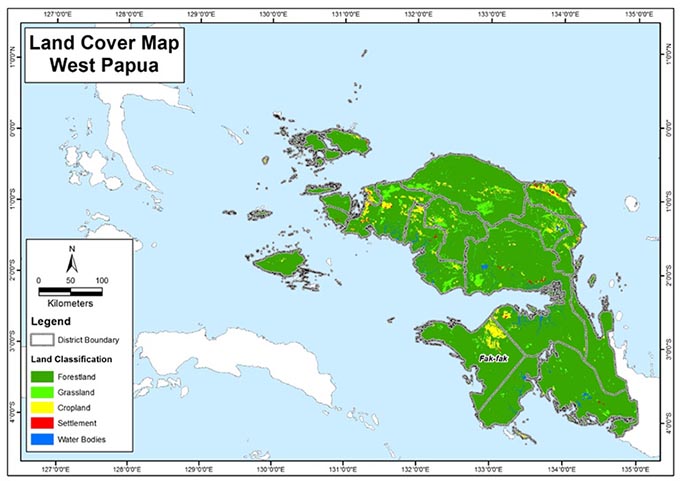
West Papua Province, located in the Bird’s Head region of Papua (New Guinea) with a total area of 9.7 million hectares, retains more than 90 percent of its forest cover (Figure 1).

West Papua Province was created in 2003 by splitting the province previously known as Papua into two provinces. As one of the youngest provinces in Indonesia, West Papua is under pressure to accelerate socio-economic development.

-Partners-

The poverty rate in West Papua is high, although declining. In 2016, one fourth of West Papuans (225,800 people) lived under the regional poverty line, defined as 475 thousand Indonesian rupiah (about US$31) per month (Badan Pusat Statistik, 2017).

The rural areas of West Papua, which are mostly populated by indigenous Papuans, are poorer than urban areas.

Extensive forests
Although lagging behind in its socio-economic development, West Papua is one of few provinces with extensive native forests.

The total forest cover in West Papua is approximately 90 percent of the total area, for a total of 8.9 million hectares. This figure includes all forest cover within both state forests and non-forest areas.

Figure 1: Land cover in West Papua province in 2016, based on data from the Ministry of Environment and Forestry. Map: Mongabay
Due to the biological diversity of the province as well its high proportion of forest cover, civil society organisations and international conservation organisations have advocated for the government to declare the province a conservation province.

The provincial government declared in 2015 that it would become a Conservation Province, and the supporting provincial regulation for the conservation province, now retitled as a “Sustainable Development Province”, has been drafted (Note 1).

There are many inherent dangers to the designation of West Papua as a conservation province. The province is rich in its natural environment but also has one of Indonesia’s highest rates of poverty.

Indonesian planning processes have historically not formally acknowledged customary ownership of land or zoned as forest areas.

By zoning areas as part of the forest estate, they fall under the jurisdiction of the Ministry of Environment and Forestry, with conservation areas managed by the central government. There are several types of conservation areas under Indonesian law, including national parks, wildlife sanctuaries and hunting parks.

People displaced
Within the core areas of national parks and also the entire area of wildlife sanctuaries, no land uses are permitted. The establishment of conservation areas in Indonesia has historically led to the significant displacement of indigenous peoples from the core areas, restricting their access to both land and livelihoods.

The provincial government of West Papua, with the support of the Papuan People’s Council (Majelis Rakyat Papua) and civil society organisations (Note 2), have developed a draft provincial regulation on the recognition of customary land rights.

The regulation builds on the momentum of the Indonesian constitutional court decision in 2012, 35/PUU-X/2012, which recognised the rights of indigenous groups to lands within the Indonesian forest estate.

At present, there is uncertainty about how the sustainable development and customary land rights draft regulations would affect one other, once implemented.

Finally, in parallel to these initiatives, the administration of President Joko Widodo, which came into office in 2015, has been focusing on reducing poverty in regional areas of Indonesia, with a particular focus on the Indonesian portion of the island of New Guinea.

The main element of his policy has been to increase spending on infrastructure development as well as driving agricultural development. Previously remote and inaccessible areas of Papua are now finally getting access to roads and electricity, increasing their access to markets and other opportunities.

Can these three policy initiatives — for conservation, development and the recognition of indigenous land rights — be balanced in a way that benefits both indigenous Papuans and the environment?

Balanced solution
From our research in West Papua, undertaken through various initiatives since 2013, we highlight several challenges to finding a balanced solution:

  • A systematic lack of spatial and socio-economic data on West Papuans, in particular their land ownership systems;
  • Limited markets and low prices for commodities or crops produced by Papuans coupled with missing downstream industries that could add value to these products; and
  • Spatial planning and land allocation processes that do not fully consider the rights and distribution of benefits to indigenous communities.

These challenges are all evident in the district of Fakfak, located in the central-western part of the province (Figure 1).

Fakfak District faces the Maluku Islands and historically, has long been integrated into the spice trade, especially for its local variety of nutmeg. Nutmeg and mace have been historically used worldwide for culinary purposes and can be processed further to produce essential oil and oleoresin.

Although Indonesia has been the center of nutmeg production for over a thousand years, the full potential of the nutmeg market remains untapped. One of the main undervalued nutmeg varieties is Papuan nutmeg (Myristica argentea Warb) or locally known as Pala Tomandin.

Papuan nutmeg is commercially grown in Fakfak and Kaimana districts in West Papua, with most of the production concentrated in Fakfak district. Nutmeg is cultivated in wild and semi-wild forests by indigenous farmers, in lands owned and managed under customary laws.

Diversified livelihoods
Despite being registered as a geographical indication in 2014 as Pala Tomandin, the demand and price for Papuan nutmeg remains low. Consequently, nutmeg farmers often have diversified livelihoods such as fishing and seaweed cultivation or farming other crops.

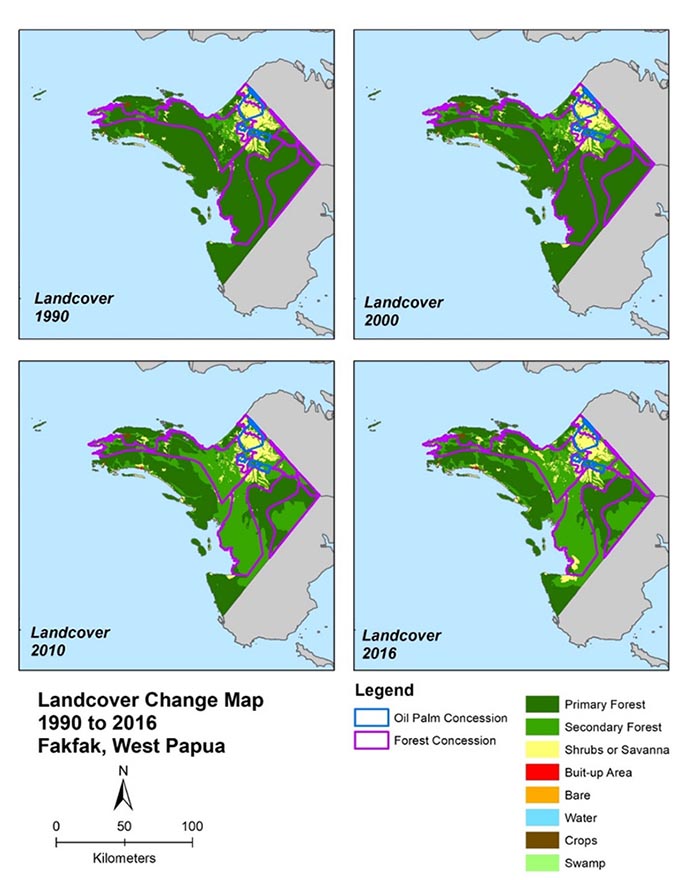
Deforestation has remained relatively limited in Fakfak District, although the period of 2010 to 2016 saw a spike in clearing related to forestry concessions and the allocation of an oil palm concession, according to data from the Ministry of Environment and Forestry (Figure 2).

Figure 2: Landcover change in Fakfak District from 1990 to 2016, showing the large area of secondary forest in forest concessions, created by logging operations. Map: Mongabay

Concessions, where logging companies not owned by local communities extract timber, remain the main driver of deforestation, which is a trend that has been increasing. Forest degradation, which is the conversion of primary forests to secondary forest, has primarily been driven by forestry concessions and spiked dramatically during the period of 2000 to 2010.

The rate of forest degradation declined significantly after this period, with the majority of degradation now occurring outside of forestry concessions. Currently, indigenous land owners receive compensation payments for timber harvested by the concessionaires, although the amount and distribution of benefits may vary.

From our case studies in Fakfak District, local people have described localised processes of demographic expansion and increasing financial pressures, such as the costs of paying for secondary and tertiary education for their children, as the causes of this expansion into primary forest areas.

The case of Fakfak district reveals the complexity of solving the intertwined challenges of poverty, indigenous land rights and conservation. Recognising indigenous land rights should be prioritized, to achieve both social justice and environmental conservation.

In the Amazon region, for example, formal recognition of indigenous territories inhibits deforestation just as much as conservation areas do. The recognition of land rights requires maps that delineate the boundaries of indigenous territories.

Social taboos
There are social taboos, however, in delineating these boundaries as historically boundaries between different tribes and clans were established through wars and conflict. Without proper and legitimate mediation processes in place, mapping customary boundaries has the potential to reignite these conflicts.

In the absence of conflict mediation mechanisms and institutions, there are other methods available for delineating indigenous land ownership. INOBU, together with AKAPE, a Fakfak based NGO, has trialed mapping lands based on land use instead of ownership rights, particularly focused on nutmeg forest gardens in Fakfak district.

Thus far, we have mapped 263 farmers with a total area of 792 hectares in 20 villages. These maps provide indicative maps of customary use of forest areas, which will later serve as the basis for discussion on ownership rights between clans and tribes, and with the government.

Recognising the land rights will not be sufficient to solve the problem of deforestation and forest degradation, although it will help. Improving the value and markets for locally important forest commodities is crucial.

In Fakfak, we have been working on improving the markets and value of Papuan nutmeg while strengthening alternative livelihoods in order to alleviate the economic pressures on indigenous Papuan households.

We have been engaging with nutmeg exporters to ensure that the product meets the standards required by international markets. We have also been working with an Indonesian cosmetics company to help develop local industries for processed nutmeg products.

All these interventions, in turn, should be counterbalanced by strengthening customary institutions for sustainably managing forest resources. Finally, a district level, multi-stakeholder platform will guide the sustainable production of nutmeg in Fakfak district.

Broader application
The lessons from Fakfak district can be applied more broadly to the province of West Papua. We propose that the recognition of the land and resource rights of indigenous Papuans should be the immediate priority of the provincial government, donors and conservation and development organisations.

Conservation should be viewed through the prism of strengthening customary systems and institutions, including village (kampung) administrations, for managing the environment rather than the expansion of protected areas.

The recognition of indigenous land and resource rights should not, however, extinguish their rights to develop in accordance with their own aspirations. Rather, indigenous groups should be supported through interventions that help them to develop profitable and sustainable industries, as well as support for accessing health and education.

An essential part of this should be developing economic alternatives for indigenous people that increase the value of standing, well-managed forests. Strict conservation, where necessary, should be supported through adequate financial and other incentives, with the benefits distributed equitably.

Prior to establishing or expanding conservation areas, governments should also assess the potential effects on indigenous peoples, including how it will contribute to, or impede, poverty reduction targets and the likelihood of future conflicts.

The Jokowi administration’s proposed investments in roads and electrification could help improve the economic viability of new community-based enterprises in West Papua if designed and implemented with the participation of local stakeholders, especially indigenous communities.

Participatory planning
Without effective participatory planning, investments like these can lead to a natural resource-grabbing free-for-all.

The goals of both social justice and conservation are best served by recognition of land rights plus the development of economic alternatives for forest communities that enhance their livelihoods by increasing the value of their forests.

First and foremost, West Papuan’s indigenous peoples need to have a prominent seat at the table as the future of the province is planned.

*West Papua generally refers to all of the western half of Papua New Guinea island administered by Indonesia. West Papua, as referred to in this article, also applies to the smaller western province of the island as opposed to the larger Papua province.  This article article is republished from Mongabay – “News and inspiration from nature’s frontline”. Bernadinus Steni is secretary of the Institut Inovasi Bumi and Daniel Nepstad is the executive director of Earth Innovation Institute.

Notes:
1. As part of the draft regulation for a Sustainable Development Province (Ranperdasus Provinsi Pembangunan Berkelanjutan), the government has established the following targets: 1. Local governments and stakeholders ensure that the use of clean, renewable energy reaches 50 percent with the period of 20 years from the enactment of this local regulation; 2. Local governments commit to reduce the rate of deforestation by 80 percent of the average rate of deforestation and degradation in 2009; 3. With a minimum period of 20 years from the enactment of this special autonomy regulation, as much as 50 percent of forests will be managed sustainably; 4. Local governments are obliged to protect a minimum of 80 percent of important habitats and 50 percent of every type of ecosystem; and for coastal and marine areas: Local governments are obliged to preserve a minimum of 30 percent of coastal areas and waters as Water Conservation Areas that include a minimum of 20 percent of the area as No Take Zones within a specific period considering ecological attributes.

2. Inovasi Bumi (INOBU) and Earth Innovation Institute, supported by the Norad-financed Forest, Farms and Finance Initiative, supported the drafting and initial consultations for the draft special autonomy regulation on the recognition of indigenous peoples (Ranperdasus Pengakuan Masyarakat Hukum Adat Papua di Provinsi Papua Barat). The regulation is the first step towards recognizing the land rights of indigenous peoples, as the existence of customary groups must be acknowledged first.

Acknowledgement:
John Watts (INOBU, EII), Silvia Irawan (INOBU, EII) and Triyoga Widiastomo (INOBU) contributed to this Commentary; funding was provided by NORAD and the David and Lucille Packard Foundation.

Print Friendly, PDF & Email

Article by AsiaPacificReport.nz

]]>

Japan’s Kasai nominated as Western Pacific’s next WHO regional director

]]>

Japan’s candidate, Dr Takeshi Kasai … elected in spite of strong Pacific campaign over the World Health Organisation (WHO) post for Western Pacific. Image: WHO

Pacific Media Centre Newsdesk

Japan’s candidate, Dr Takeshi Kasai, has been elected as the next World Health Organisation (WHO) Regional Director for the Western Pacific.

Health ministers and other senior officials from 30 countries voted yesterday during the 69th session of the WHO Regional Committee for the Western Pacific in Manila, Philippines.

Dr Kasai’s nomination will be submitted for appointment to the 114th session of the WHO executive board to take place in January 2019 in Geneva, Switzerland.

READ MORE: Tukuitonga goes into battle on behalf of Pacific

The new regional director will take office on 1 February for a term of five years. Regional directors may serve up to two terms.

Current regional director Dr Shin Young-soo, who has served since 2009, offered best wishes to his successor.

-Partners-

“I warmly congratulate and sincerely wish Dr Kasai the very best as the next regional director,” he said.

“When he takes the reins in February, he will inherit a strong and robust organisation, and the honour of working with a diverse group of countries joined by a formidable bond of solidarity and an unwavering commitment to delivering better health for all.”

New Zealand campaign
New Zealand campaigned in support of Dr Colin Tukuitonga for the position and he came second out of the four candidates in the running. The other chief candidates were from the Philippines and Malaysia.

If successful, Dr Tukuitonga would have been the first Regional Director from New Zealand and the first of Pacific descent.

Dr Tukuitonga was unanimously nominated by Pacific health ministers in 2017 as their candidate for the Regional Director position. New Zealand subsequently supported Dr Tukuitonga, who is a New Zealander of Niuean origin.

“Although we are disappointed with the result, we are pleased that we fought a good campaign and can hold our heads high,” said Associate Health Minister Jenny Salesa, who was in Manila to support New Zealand’s candidate in the election.

“The region has made its decision and they have chosen to elect the Japanese candidate. We wish him well in his new role and look forward to working with him in the future.”

Later this week, the regional committee will adopt action plans to address a variety of health issues affecting the region’s nearly 1.9 billion people. They include:

  • Fighting neglected tropical diseases;
  • Strengthening rehabilitation services;’
  • Improving hospital planning and management;
  • Harnessing e-health for improved service delivery; and
  • Strengthening legal frameworks for health in the Sustainable Development Goals.

The Regional Committee will also discuss progress on health security, infectious and noncommunicable diseases, and environmental health.

Print Friendly, PDF & Email

Article by AsiaPacificReport.nz

]]>

‘Just like home’. New survey finds most renters enjoy renting, although for many it’s expensive

]]>

Source: The Conversation (Au and NZ) – By Steven Rowley, Director, Australian Housing and Urban Research Institute, Curtin Research Centre, Curtin University

One in every four Australian households rents, and it’s not just those on low incomes.

A new nationally representative survey of 3,182 renters, funded by the Bankwest Curtin Economics Centre, finds that while 60% of renting households have a household incomes below A$78,000, 30% are on incomes of more than A$100,000.

Although many households on low incomes and those headed by single parents are undoubtedly struggling to meet rental costs, those on moderate or higher incomes are generally positive about the experience.

Many of us rent

Despite its reputation as a nation of homeowners, Australia has the 10th largest private rental sector in the 37 nations that make up the Organisation for Economic Cooperation and Development.


Comparison of international private rental sectors. OECD Housing tenure distribution 2014 or later. ABS Census data 2016

Six in ten renters do it because they can’t afford to do anything else. The rest rent by choice.

Most are happy with what they rent

Perceptions of dwelling quality are positive with only 6% reporting that their dwelling is in a poor or terrible condition. 81% report a good or excellent relationship with their landlord.

Add a property manager into the mix and this falls to a still respectable 69%. Fewer than than 5% of respondents reported a poor or terrible relationship.

Around half of respondents claim to have a good to full understanding of their rights as tenants.


Relationship with property manager or landlord. Bankwest Curtin Economics Centre 2018 Private Rental Sector Survey., Author provided

Overall, when asked whether their rental property felt like home, just over 60% reported it did, with less than 20% being negative about their experience.

The longer a tenant lives in a rental dwelling, the more it feels like home, highlighting the importance of security of tenure.

Generally, levels of satisfaction with the sector are high given the proportion of tenants who would rather be owners.


Satisfaction with the private rental sector by age group. Bankwest Curtin Economics Centre Private Rental Sector Survey

Security of tenure matters

Security of tenure is a major concern of private renters.

Two thirds of renters have been in their current property for less than three years. Almost 40% have rented four or more properties during their time as renters.

While two thirds of moves are by choice, around one third are forced with the primary reason being the owner selling the property.


Read more: Home ownership foundations are being shaken, and the impacts will be felt far and wide


Moves are stressful, expensive and disruptive, particularly for households with children. Around half of all renters say they would gladly choose to sign a lease longer than 12 months if given the option because it would offer greater security and a stronger sense of home.

As does discrimination

One in five renters report some form of discrimination when applying for rental properties.

Those households most likely to suffer from discrimination are single parents with children.

In September Victoria passed landmark leglislation intended to improve the rights of renters.


Read more: Life as an older renter, and what it tells us about the urgent need for tenancy reform


Some important issues addressed in the legislation are highlighted in the BankWest Curtin Economics Centre report which found the vast majority of respondents are on short-term leases (12 months or less).

NSW is following suit, although, disappointingly, it does not plan to outlaw no-grounds evictions.

And rent can be expensive

The typical proportion of gross income spent on rent is 28%, with almost half of all renters paying more than 30%, a figure that rises to 63% for renters over 55.

One in seven renters are paying more than 60% of their income in rent.

When asked the reasons for such high rental payments, almost six in ten report being forced to pay that much through a lack of available alternatives.

Commonwealth rent assistance was regarded as important or very important by nine out of ten of those receiving it.

What we could do to help

One of the best ways to make rent more affordable would be to reintroduce a subsidised rental scheme that offered a financial incentive for developers to invest in housing that would be leased to low-income households at below-market rents along the lines of the National Rental Affordability Scheme by Prime Minister Kevin Rudd in 2008.

It was wound up by his successor tony Abbott in 2014.

Workable build to rent schemes could also help boost supply and security of tenure, and the negative gearing and capital gains tax concessions tax available to mum and dad investors could be tied to the delivery of long–term, below market rental dwellings.

Our survey finds the private rental market is performing quite well for those on moderate to high incomes. But not for those on low incomes who will never access home ownership and need secure long term tenure.

ref. ‘Just like home’. New survey finds most renters enjoy renting, although for many it’s expensive – http://theconversation.com/just-like-home-new-survey-finds-most-renters-enjoy-renting-although-for-many-its-expensive-103890]]>

Cricket Australia’s culture sore: captains of the finance industry should take note

]]>

Source: The Conversation (Au and NZ) – By David R. Gallagher, Malcolm Broomhead Chair in Finance, The University of Queensland

Being captain of the Australian cricket team has been described as the nation’s most aspired-to job after the role of Prime Minister. Being chief executive of Cricket Australia (CA) can’t be too far behind?

Last week the board of Cricket Australia announced insider Kevin Roberts will take the job, replacing James Sutherland after 17-years at the helm.

Despite a “global search”, Roberts was always considered the front-runner. Chairman David Peever had stated a preference for an internal CA candidate. Roberts, a former first-class NSW cricketer and sports apparel company executive, was a Cricket Australia board director between 2012 and 2015. Then he was Cricket Australia’s executive general manager for strategy, people and member services. Earlier this year he became Cricket Australia’s chief operating officer.

Given the evidence of an unhealthy culture at cricket’s top echelons, it might be argued that appointing an insider does not augur well for Cricket Australia in coming to terms with the problem.


Read more: The day Australian cricket lost its integrity and a country reacted with shock and anger


Roberts’ performance will affect the reputation of the game in Australia, and the lucrative business it now is. It is a lesson for corporate Australia, particularly those companies whose own cultural problems have been exposed by the banking royal commission.

Winning at all costs

The ball-tampering scandal, in which the Australian cricket team’s senior players allegedly conspired to cheat in a match against South Africa, exposed a “win-at-all-costs” culture.

Along with sanctions against individual players, Cricket Australia responded by establishing an inquiry into the “cultural, organisational and/or governance issues” affecting Australia’s professional cricket teams. The inquiry’s findings have now been presented to the CA Board. It will be Roberts’ responsibility to act on them and to deliver.

We will have to wait to find out if the review on “culture” has spanned the entire organisation. It will need to have addressed selection processes, values, leadership and all the financial arrangements involving players, sponsors, and broadcasters.


Read more: Can the cricketers banned for ball tampering ever regain their hero status? It’s happened before


To move past the appalling shenanigans in South Africa, Cricket Australia needs to uphold the values of integrity, fairness and accountability. These are not just sporting principles. They should be important to all corporate cultures.

Unprecedented challenges

Roberts’ tenure begins in a period of unprecedented challenges for Australian cricket. The three major issues of the past year have been:

  • the ball-tampering scandal, exposing how low the team was prepared to go to win

  • a drawn-out pay dispute between Cricket Australia and the players

  • the commercial objective of maximising the “rivers of gold” from broadcast rights.

All three issues remind us that Cricket Australia, a company limited by guarantee, is a uniquely structured business – and a big one.

Based on financial statements over the past five years, it is awash with cash. CA averages surpluses in excess of A$100 million a year (before distributions to member state associations). At the end of the 2016/17 financial year CA had almost A$136 million in the bank.

Revenues from sponsors, media rights, spectators and other customers had grown by 60%, to A$338 million. Its new broadcast rights deal with Foxtel and the Seven Network is reported to be worth some A$1.2 billion over the next six years.

Who owns cricket?

Cricket Australia is a financial conglomerate with a monopoly it can only dream about. We should not be be too surprised this has engendered “profit-maximising” misbehaviour.

Its shareholders – the state member associations, who benefit from the rivers of gold – have little accountability to other stakeholders. Cricket fans have no say, except as consumers of the “cricket product”.

Now Cricket Australia urgently needs to consider what its values are, and how they can be meaningfully reflected in the culture and general conduct of the players and officials.

Key cultural reforms

How players are offered contracts, and the structure of contracts, needs review. The extent to which performance incentives have contributed to the “win at all costs” modus operandi, should be strongly investigated. There are clear parallels to what the banking royal commission has uncovered about the association between compensation practices and bad behaviour.

How the captain of the Australian team is selected also needs review. They should not be chosen because they are the best batsman and therefore the most marketable. They should be chosen for their ability to lead and show leadership, making the competitive and tactical decisions on the field and also adhering to all laws and acting at all times within the spirit of the game (i.e. culture).

Finally, the CA inquiry must, at long last, finally address sledging. Sledging in any form is a type of mental abuse. Mental abuse and bullying need to be called out for what they are: harmful to society and unacceptable to any workplace culture.


Read more: How cricket got its reputation for fair play


It is paramount that elite men’s cricket in Australia rediscovers its sense of fair play, professionalism, and becoming known once more as “the gentlemen’s game”.

In doing so, it might provide an example for business leaders to fix their own internal cultural problems.

ref. Cricket Australia’s culture sore: captains of the finance industry should take note – http://theconversation.com/cricket-australias-culture-sore-captains-of-the-finance-industry-should-take-note-104491]]>

Mobile apps might make you feel better about travelling alone, but they won’t necessarily make you safer

]]>

Source: The Conversation (Au and NZ) – By Anastasia Powell, Associate Professor and ARC DECRA Fellow, Criminology and Justice Studies, RMIT University

As I was writing this article, I was fortunate enough to be at a conference in Florence, Italy. Like a growing number of women who travel overseas, whether for work or leisure, many of the trips I’ve done in recent years have been alone. And as a digital criminologist (as well as a mobile app enthusiast), I’m certainly a convert to the practical usefulness of technologies for travel.

There are a wide variety of smartphone apps that certainly make travelling alone easier to navigate. Think offline maps, language translation, transport timetables, online ticket bookings, Uber, electronic banking, virtual private networks (VPNs, especially if using electronic banking on public Wi-Fi), and updating friends and family about one’s activities.

Then there are the more specific “safety” technologies. Some of them, like the Australian government’s Smart Traveller website, allow voyagers to register their intended whereabouts in case of a natural disaster or emergency. Travellers can also keep up to date with local risk and incident alerts, which can help you to steer clear if there is an incident in the city you’re headed to.

Others, like BSafe and Bugle, allow you to easily notify your emergency contacts if you feel unsafe, or do not arrive at your intended destination.

But while these apps might make you feel safer, it doesn’t necessarily follow that they make you safer in reality.

The bSafe app allows your loved ones to pinpoint your location when you activate the SOS button. BSafe

Read more: Safe in the City? Girls tell it like it is


How risky is solo travel for women?

In Australia, one in three women has experienced physical violence since the age of 15, and one in five has experienced sexual violence. Much of this violence takes place in private space. And the overwhelming majority of it is committed by men who are known to the woman victim. Often by an intimate partner, date, family member or acquaintance.

The rates and patterns of violence against women are similar in many countries globally. But there are some places where both violence generally, and violence against women, happen more frequently and where travellers might be at additional risk. For example, a 2013 report of the World Health Organisation found that women in Africa were almost twice as likely as women in Europe to experience violence.

Meanwhile the Australian government recommends avoiding any travel to some countries and regions within Africa, South America and the Middle East. India also features in research into countries which may be comparatively less safe for women travelling alone.

The author travelling in Tuscany, Italy last week. Author provided

But for many of the most common destinations of Australians travelling overseas, the rates and patterns of violence against women are similar to those at home. Some countries, such as Japan, have notoriously low rates of sexual violence. Although there are also well documented concerns over sexual harassment on the subway, and some claims of substantial under-reporting of sex crimes due to social taboos.

Yet the point remains that statistically speaking, unless you’re travelling to a high conflict zone or your travel is to seek refuge in another country, then as a woman it is not necessarily “riskier” for you to travel solo abroad.

This doesn’t mean that there is no risk, but generally speaking the risks of sexual assault or homicide from an unknown male perpetrator in a public place are low. Many women do experience street harassment, intimidation and fear from men in public, but this happens in Australia as well as abroad.


Read more: Why the ‘Hands Off’ campaign targeting sexual harassment on public transport misses the mark


‘Security theatre’

Women are experienced at different types of “safety work”. Many women take additional precautions to manage both their risk of violence, and their feelings of fear or safety, on a daily basis. From avoiding eye contact with unknown men in the street, to wearing headphones even without music playing, to sitting in the back seat of a taxi, to texting a friend when we are home safe.

While travelling solo, this safety work might also include: providing family or friends with our itinerary before we depart, regularly checking in our location on our social media, sending location updates or any changed plans back to family or friends back home, and following along on our navigation while taking a taxi.

Of course, some of these activities – which are certainly practical – can also be understood as managing fear, rather than necessarily keeping us safer. Some of them are directed only at raising the alarm should we go missing – that is presumably, after some harm has already befallen us.

We engage in a kind of “security theatre” – a term famously used to refer to some counter terrorism measures that actually do little to reduce the risk of a terrorist attack, but make the public less afraid. For women, our security theatre includes practices that make us feel safer and more empowered to enter into public spaces.


Read more: Have you ever wondered how much energy you put in to avoid being assaulted? It may shock you


The right amount of panic

As legal scholar Fiona Vera-Gray rightly points out, it seems impossible to know what “the right amount of panic” is. Women are regularly blamed if they fall victim to men’s violence for not being panicked enough – in other words, for taking too much risk. But if we are too panicked it will restrict our movements and participation in the world in ways that seriously undermine our freedoms.

To travel solo while female seems to require walking a tightrope of challenging gender stereotypes of women as inherently in danger and in need of protection, while also navigating a cascade of advice on how to keep safe.

Ultimately, of course, no mobile app is going to prevent a violent crime by a perpetrator who chooses to enact it. But if the convenience of an all-in-one navigating, translating and incident reporting device both makes solo travel easier – and makes you feel more safe and confident – then go on, get out there!

ref. Mobile apps might make you feel better about travelling alone, but they won’t necessarily make you safer – http://theconversation.com/mobile-apps-might-make-you-feel-better-about-travelling-alone-but-they-wont-necessarily-make-you-safer-104013]]>

Six things you can do to get boys reading more

]]>

Source: The Conversation (Au and NZ) – By Margaret Kristin Merga, Senior Lecturer in Education, Curtin University

The OECD consistently finds girls perform significantly better than boys in reading. This gap can also be observed across the Australian NAPLAN reading data.

Research suggests reading more can improve literacy outcomes across a range of indicators. But girls typically read more frequently than boys, and have a more positive attitude toward reading.


Read more: Research shows the importance of parents reading with children – even after children can read


Parents read more with their daughters. This sends a strong and early message that books are for girls, as well as equipping girls with a significant advantage. Recent research found even though boys read less frequently than girls, girls receive more encouragement to read from their parents.

So how can parents and educators help bridge the gap for boys’ literacy?

Stop telling boys they only like non-fiction

To improve boys’ literacy outcomes, parents and educators may look for ways to connect boys with reading. This had led to discussion about the importance of promoting so-called “boy-friendly” books that boys are supposedly “drawn to”, which are typically assumed to be non-fiction works, as it’s regularly contended that boys prefer to read non-fiction.

But this contention is not typically supported by recent quantitative research. For example, OECD and my own research suggests boys are more likely to choose to read fiction than non-fiction. Encouraging all boys to read non-fiction under the assumption this meets an imagined uniform preference can actually lead to negative outcomes.

You can model good behaviour for your child by reading for enjoyment in front of them. from www.shutterstock.com

Firstly, the reading of fiction is more consistently associated with literacy benefit than non-fiction in areas such as verbal ability and reading performance. When we tell boys non-fiction books are for them, this may steer them away from a more beneficial text type. This is counterproductive if we’re doing so in order to improve their literacy.

Secondly, recent research suggests non-fiction readers tend to read less frequently than fiction readers. So, if we want to increase boys’ reading frequency, engaging them in fiction may be more effective.

We may also be encouraged to steer boys toward comic books. While children can benefit from exposure to diverse text types, the reading of comic books, e-mails and social networking posts, newspapers, magazines and text-messages is not associated with the same level of literacy benefit.


Read more: Five tips to help you make the most of reading to your children


In addition, recent research supports the relationship between reading fiction and the development of pro-social characteristics such as empathy and perspective taking. So reading fiction can help students to meet the Personal and Social Capability in the Australian Curriculum, among other general capabilities. Instead of buying into stereotypes, we should aim to meet our children’s individual reading interests and encourage a reading diet that includes fiction.

Six strategies for connecting boys with books

Here are six strategies you can use to connect boys with books and increase their reading engagement:

  1. just as your interests and views are not identical to all those of the same age and gender, boys have diverse interests and tastes. These don’t necessarily stay static over time. To match them with reading material they’re really interested in, initiate regular discussions about reading for pleasure, in order to keep up with their interests

  2. schools should provide access to libraries during class time throughout the years of schooling. Girls may be more likely to visit a library in their free time than boys, and as children move through the years of schooling they may receive less access to libraries during class time, curtailing boys’ access to books. Access to books is essential to promote reading

  3. keep reading to and with boys for as long as possible, as many boys find it enjoyable and beneficial beyond the early years

  4. provide opportunities and expectations for silent reading at home and at school, despite competing demands on time

  5. keep paper books available. Boys who are daily readers are even less likely to choose to read on screens than girls. The assumption that boys prefer to read on screens is not supported by research

  6. promote reading as an enjoyable and acceptable pastime by being a great role model. Let your children or students see you read for pleasure.

Reading is for everyone. from www.shutterstock.com

As a final comment, the OECD note:

Although girls have higher mean reading performance, enjoy reading more and are more aware of effective strategies to summarise information than boys, the differences within genders are far greater than those between the genders.

So, parents and educators seeking to support the literacy attainment of young people through increased reading engagement should focus on meeting the needs of all disengaged and struggling learners, regardless of gender.

ref. Six things you can do to get boys reading more – http://theconversation.com/six-things-you-can-do-to-get-boys-reading-more-104140]]>

In their own words: internees tell of life in our German detainment camps

]]>

Source: The Conversation (Au and NZ) – By Catherine Moir, Lecturer in Germanic Studies, University of Sydney

On August 15 1918, a German steamship called the Lothringen reached Melbourne from Antwerp after 47 days at sea. Without access to telegraphy during their journey, the sailors had no idea that war had broken out between the German and British Empires. When the Lothringen docked here, a company of naval officers informed the Germans on board of the news.

Friedrich Meier, one of the sailors on board, recorded in his diary on 18 August 1914 that he and his comrades were “arrested, […] unsuspectingly, as prisoners of war.” Meier was removed to Langwarrin Internment Camp in Victoria, one of 11 “German Concentration Camps” around the country in which so-called enemy aliens were held during the war.

Locations of internment camps. National Archives of Australia

At first, only those born in countries with which Australia was at war were interned. Later, the policy was extended to include Australian-born descendants of enemy nations. Like Meier, those detained were very often civilians, thought to pose a threat purely on the basis of their heritage.

In total, around 7,000 people were interned in Australia during the first world war, including around 4,500 with German ancestry born or resident in Australia at the time war broke out. A new exhibition at the State Library NSW showcases the papers of German internees, one of six sets of holdings at the Library with UNESCO Memory of the World status.

Thanks to a collaborative translation project between the library and faculty and students from the University of Sydney’s Department of Germanic Studies, visitors to the exhibition can read internees’ stories in their own words.

Camp life

Though conditions varied between camps, life inside them was generally hard. A strict regime operated: “reveille” at 6.30 a.m., lights out at 10 p.m. Prisoners were required to submit to roll call twice a day, and to assemble for parade three times. In between, they might occupy themselves by reading, playing cards, or working, for instance, doing carpentry, like this internee in Holsworthy Camp.

Internee carpenter at work in Holsworthy Camp. State Library NSW

Visits from relatives were permitted, and correspondence was allowed, though letters could only be written in English. It was forbidden to keep a diary or any other written materials in German, or to write about political matters. A strict censorship system operated, with prisoners who spoke German or Croatian used to intercept potentially risky correspondence. Whatever was found, was confiscated, though the letters, diaries, and newspapers that remain demonstrate that much escaped the censors.

The Censor’s office at Holsworthy Camp. State Library NSW

The remaining records illustrate how internees tried to make the most of their time. A lively parallel society developed in the camps, with cafes and sports clubs, theatre groups and football leagues. One of our students has translated an article in Holsworthy’s Kamp Spiegel newspaper which details one league’s efforts to set up a proper pitch to play on.

The Kamp Spiegel was one of several German-language newspapers that circulated illicitly inside the camps. Advertisements in Die Welt am Montag, the Trial Bay camp weekly, spruik the wares of Andreas Meiers, the proprietor of Café Habsburg, the “first and biggest food stall in the camp”. The Habsburg opened “every Monday and Thursday” and served a “variety of foods” including the speciality “braised beef with potato dumplings”.

Another restaurant, “next to the roller-skating rink”, advertised itself as a “Newly fitted, spacious and comfortable established locale”, where one could play “billiards and snooker”, and eat the “finest pastries” and “excellent lunches and evening suppers”. The Café Artist Klause, meanwhile, was positioned “opposite the German theatre”.

Croatian internee employed as a translator in the Censor’s office at Holsworthy. State Library NSW

Treading the boards

The dramatic life of some inmates is revealed in the theatre criticism of the Kamp Spiegel. An anonymous reviewer writes encouragingly of his fellow detainees’ theatrical performances. In 1915 in Holsworthy camp, a theatre troupe, the Deutsche Theater Bühne, staged Hermann Sudermann’s 1905 play Stein unter Steinen (Stone among Stones). It tells the story of Jakob Biegler, a young and talented but hard-up stonemason’s apprentice who is sentenced to five years’ imprisonment for killing his landlord in a heated confrontation.

The camp critic tells us that Mr Diederich’s portrayal of Zarncke, the benevolent master stonemason who gives Jakob work, was “quite superb”. Meanwhile, “Mr. Himmelmann’s natural gift for acting” allowed him to play the role of Lore, Jakob’s common law partner, “deftly and realistically”.

The pride in the improvement of each performer and in the ability of “our little stage” to convey the impression of a stonemason’s workshop is touching when one considers that many of these men were themselves manual workers confined for no other reason than their German heritage.

Program cover of ‘Deutsches Theater Liverpool’ (DTL), the theatre troupe inside Liverpool Camp. State Library NSW

German internees had little choice but to try and make a life in the camps: after all, nobody knew how long the war would last. But life was far from rosy. Conditions were cramped and unsanitary: not cleaning up properly after using the toilet facilities carried a punishment of solitary confinement.

Other punishments included restriction to a meagre diet of watery oats, and restraint using leg chains or a body belt. Guards taunted prisoners about life on the outside, and worries about families and businesses drove some to suicide, or to attempt escape.

Poetic resistance

The illustrated poem ‘The Three Freedom-Seekers’ from Der Kamerad, June 1915. State Library NSW

Among the materials our student translators have unearthed is an illustrated poem from Der Kamerad (The Comrade), the handwritten weekly published by prisoners of Torrens Island Camp, South Australia, in June 1915. It recounts a failed escape attempt, though it isn’t clear from the context whether these particular events actually took place or whether the poet is trading on hearsay.

The author tells us that the poem is to be sung to the tune of the German folk song Es zogen drei Burschen wohl über den Rhein. In its original form, the song goes:

Three lads went a wandering over the Rhine,
A landlady welcomed them, gave them some wine.

In its modified form, the unnamed prisoner — who dedicates his poem to “The Three Freedom-Seekers” — writes:

It rained one evening with force so great,
The time in the camp was long after eight.
Three young lads, through the fence they did crawl,
The guards, they slept – who’d believe it at all?

The author continues by telling us that the “freedom-seekers” were caught and returned to the camp after 13 days, with “long hair and beards, many now turned grey” and concludes that “a moral can be learned” from this story: “Don’t run away from Torrens Island!”

Returning home?

After the war ended, these camps were closed. All internees were deported to Germany, regardless of whether they had any family ties there or had set foot on its shores.

In a mass letter of complaint, prisoners of Holsworthy camp “with wives, families or other dependants in Australia” pleaded to be released to their home on parole, or interned on house arrest with their loved ones. Over 1,000 people appealed deportation decisions, but only 306 were allowed to stay.

Like many others, Friedrich Meier was eventually also transported to Holsworthy to await deportation. In his final entry, he writes:

The majority of our camp is expected to depart on the 25th or 26th of month with the “Kursk” …, which is currently docked in Sydney.

Unlike so many other German internees, Meier, at least, was returning home.

A hundred years later, the first world war is still largely commemorated as a conflict in which members of the Australian and New Zealand Army Corps — ANZACs — fought with the British Empire against the German and Austrian aggressors.

But the full picture is much more complex. While some German Australians fought on the side of the British Empire against their ancestral country, others were interned in camps. Their papers reveal the complex history of Australia’s first world war in more detail than ever before.


The exhibition runs until March 2019. A public event will be held on the evening of 14 November 2018, revealing more findings from the translation project.

Acknowledgements: library curators Anna Corkhill and Margot Riley; student translators: Holly Anderson, Giulia Ara, Brigitta Bene, Alexander McDonald, Lauren O’Hara, Benjamin Walker, Ruby Watters. Images reproduced with permission of State Library New South Wales.

ref. In their own words: internees tell of life in our German detainment camps – http://theconversation.com/in-their-own-words-internees-tell-of-life-in-our-german-detainment-camps-103328]]>

The AFLW found instant success, but challenges remain for its long-term sustainability

]]>

Source: The Conversation (Au and NZ) – By Keith D. Parry, Senior Lecturer in Sport Management, University of Winchester

This has been a momentous year for women’s sport in Australia. For the first time, the country’s major sporting leagues had both male and female competitions following the introduction of the NRL Women’s Premiership – a tournament that builds on the success of the first-ever Women’s State of Origin competition.

Since 2015, new elite women’s competitions have been introduced in Australian football (AFLW), cricket (Women’s Big Bash League) and Rugby League, while the National Netball League emerged as a replacement to the ANZ Championship. The top-division women’s football competition, the W-League, has also grown in visibility, with a new deal to televise all of its matches.

A recent study highlighted increasing numbers of women’s sport fans, as well. It found that 84% of sport fans in Australia and seven other countries were interested in women’s sport. Among men, 51% said they were engaged in women’s sport.


Read more: The AFL’s gender diversity policy remains an apprehensive work in progress


While this is all good news for women’s sport, challenges remain. And with the AFLW about to enter its third season, it is a critical time for this league in particular.

The league’s success has clearly been seen as a threat to some. Former AFL player Mick Malthouse sparked outrage – and prompted AFLW star Moana Hope to storm out of a Grand Final luncheon – when he suggested the AFL was a “man’s game”. He went on later to say:

Let’s get the game into such a manner that it doesn’t expose the girls to the injuries that some of the men are copping, because we are built differently.

Lingering stereotypes and misogyny are one thing. But the AFLW also needs to address critical funding and visibility issues in order to ensure its long-term viability, including tackling big questions over whether to charge fans for tickets and how to pay players a living wage.

Maintaining fan interest

Attendance figures for the AFLW have been higher than was initially expected. When the league launched last year, the first four games drew more than 50,000 fans. A crowd of nearly 41,975 also turned out for a match between Fremantle and Collingwood earlier this year, setting a record for the largest stand-alone women’s sporting event in Australian history.

So far, the vast majority of AFLW games have been free to attend (except when scheduled before a men’s game in a double-header). Significantly, the fans at the Fremantle-Collingwood match paid a A$2 entry fee. Yet, the challenge of making the AFLW profitable in the long run remains.

The Fremantle-Collingwood AFLW match broke a record for fan attendance. AAP Image/Tony McDonough

The AFL has considered charging for tickets to all games – a major step that would certainly ensure the league’s sustainability. First, this would generate revenue to allow for greater wages for the players. It also places a value proposition on the sport and gives the league a greater degree of credibility.

The WBBL has taken this approach this season, charging fans A$10 to attend games in Sydney. Sydney Sixers general manger Jodie Hawkins said of the move:

The decision to ticket the WBBL is in line with the value we believe the elite matches deliver and our match-day experiences will reflect that.

Sponsorships and TV deals

With 41% of Australians indicating they are interested in women’s footy, according to a recent study, there is clearly a demand for the sport. But it is still difficult to turn this general fan interest into a financial commitment through purchasing both tickets and merchandise. This may be even more difficult with men.

Investment in marketing and TV coverage is key to changing this. Sponsors have been quick to support the AFLW, with many citing the image of the sport as a good fit for their brands. The lack of off-field scandals, compared to male players, is also appealing to sponsors.


Read more: Mark! Kick! Tackle! The reality of fast-tracking women into elite AFL


A number of new, high-profile sponsors came on board after the first season’s success. Existing AFL sponsors have also been keen to include sponsorship of the AFLW in new deals. However, the growth of all the new women’s leagues – from rugby league to cricket – means that competition for sponsors is as fierce as the action on the field.

Sponsorship deals are aided by television coverage of the sport and the AFLW has been a ratings success. But there’s a caveat: the initial two-year deal with Channel Seven and Foxtel saw the rights given away for free. The current AFLW broadcasting deal has been described as a “bargain-basement broadcast agreement”, but a renegotiated deal was delayed while the AFL decided on the structure of the 2019 season.

Increasing the visibility of women on the sidelines of AFLW matches is also important for the sport to grow.

Kelli Underwood is delivering excellent commentary on games – a much-needed shift in the culture of masculinity that has long dominated sports broadcasting. Underwood is also one of the hosts of a new AFL show, On The Mark, that is primarily fronted by women. Meanwhile, ABC Grandstand’s 50-50 gender split for its radio commentary teams has brought a rise in its ratings.

Having women represented on the commercial channels reaffirms that sport is something they can and do have valid opinions about. Yet, while inroads are being made, opportunities covering AFL remain few and far between for women overall.

The teams in the inaugural AFLW season. AFL

Paying a living wage

The AFLW is set to expand the number of teams in 2019 and then again the following year. Yet, controversially, the number of games each team will play this season will remain the same.

This is problematic in terms of offering players a decent wage. The AFLW season is short. Players were only contracted for 24 weeks in 2018. Given that the highest basic AFLW salary was just A$20,000 last season, it is unsurprising that many players are not full-time professionals.


Read more: Growth of women’s football has been a 100-year revolution – it didn’t happen overnight


AFLW players struggle to make a living from the sport. Many are forced to compete in a variety of leagues around the world during their off-seasons, or in a number of different sports. This situation needs to change so that women’s sport is valued and women can focus on being full-time, professional athletes.

Whether women’s sport will continue to grow in a highly competitive landscape is uncertain. But growing the commercial interests in the game and increasing its visibility will no doubt ensure the league’s future is sustainable and profitable. It is now time for fans and administrators to put their money where their mouths are and support women’s sport in meaningful ways.

ref. The AFLW found instant success, but challenges remain for its long-term sustainability – http://theconversation.com/the-aflw-found-instant-success-but-challenges-remain-for-its-long-term-sustainability-104406]]>

Australia moves to El Niño alert and the drought is likely to continue

]]>

Source: The Conversation (Au and NZ) – By Skie Tobin, Climatologist, Australian Bureau of Meteorology

The chances of an El Niño developing late in 2018 have increased and this week the Bureau moved to El Niño ALERT. This means that model outlooks and observations indicate there is approximately a 70% chance that El Niño will develop in the coming months. Current patterns in the Pacific are similar to the early stages of past El Niño, with warm water shifting east towards South America.

We’re also seeing indications a positive Indian Ocean Dipole (IOD) has likely started, in which warmer waters near Africa drag moisture away from Australia. El Niño and positive IOD events typically mean below-average spring rainfall in central and southern Australia, and a drier start to the wet season in Queensland and the Northern Territory.


Read more: Dipole: the ‘Indian Niño’ that has brought devastating drought to East Africa


The development of either would favour continued dry weather, and increase the likelihood that widespread drought relief will be delayed until 2019. Higher than average temperatures, heatwaves, and more severe bushfire weather are also more likely during El Niño and positive IOD events.

A dry year so far

September 2018 was a very dry month, adding to low rainfall seen across many parts of Australia so far this year. September 2018 was not only the driest September in 119 years of record for Australia, but it was also the second-driest for any month of the year (behind only April 1902).

Rainfall for the year to date has been exceptionally low over the mainland southeast, with much of the region experiencing totals in the lowest 10% of records for January–September. Many locations in eastern New South Wales, eastern Victoria, and southeast Queensland have received about 400 mm less rainfall than they usually would have by this time of the year.

Rainfall deciles for January to September 2018. Bureau of Meterology

Much of southern Australia has experienced a persistent rainfall decline spanning several decades, which is adding to drought stress by drying the landscape.

Southwest Western Australia has experienced significantly lower cool season (April to October) rainfall since the mid-1970s, compared to observations since 1900, while for the southeast the drop has been more recent, emerging in the mid-1990s. These rainfall declines have been linked to circulation changes in the southern hemisphere influenced by the increase in greenhouse gases.

These rainfall changes have also been accompanied by much larger reductions in streamflow, particularly in the southwest of Australia where high flows have become much less frequent.

April to October rainfall anomalies (mm) for southwestern (left) and southeastern (right) Australia, showing the decline in totals with respect to the 1961 to 1990 average. The main feature of the decline is significantly fewer wet years, meaning recovery from the dry years is patchy. Bureau of Meteorology

And it’s also been unusually warm

Low rainfall has also been accompanied by very high daytime temperatures so far this year. Of course, Australian temperatures are warming in line with global trends, but in individual years variations which are likely to be largely natural (such as droughts) may add to or subtract from the broader trends.


Read more: Is Australia’s current drought caused by climate change? It’s complicated


Historically, droughts have often brought hot conditions, and this has been borne out in 2018. Maximum temperatures for January to September were the warmest on record for the Murray–Darling Basin and New South Wales, with neighbouring regions also much warmer than average.

These extremely warm days, combined with extremely low rainfall, have caused an intense drying of the Australian landscape in 2018, resulting in an early start to the bushfire season in New South Wales and Victoria, where damaging fire were observed as early as late winter.

So how might the year end?

Like all Australians, the Bureau hopes farmers and those suffering through drought get the rainfall they need, but unfortunately, the outlook indicates dry conditions are likely to continue for some time.

Large parts of southern and eastern Australia are likely to see a drier than average end to the year, though odds favouring drier than average conditions tend to moderate as we head towards summer. Most of the country is likely to see a dry October, though local heavy falls can occur against a backdrop of broadly suppressed rainfall.

Chance of exceeding median rainfall between October to December 2018. Bureau of Meteorology

While some parts of New South Wales and southeastern Queensland have received very welcome rainfall in the first days of October, rainfall has been below average over much of over eastern Australia for so long (since early 2017) that this rainfall event hasn’t been enough to break the drought.


Read more: Recent Australian droughts may be the worst in 800 years


Looking at temperature, outlooks show a very high chance of warmer than average days and nights through to the end of 2018. Considering the year so far has already been very warm, this means 2018 has the potential to rank as another significant warm year. Seven of Australia’s ten warmest years have occurred since 2005, with just one cooler than average year in the last decade (2011), highlighting how warmer than average temperatures now dominate Australia’s climate.

Change of exceeding median maximum temperature between October to December 2018. Bureau of Meteorology

ref. Australia moves to El Niño alert and the drought is likely to continue – http://theconversation.com/australia-moves-to-el-nino-alert-and-the-drought-is-likely-to-continue-104636]]>

Five lifestyle changes to enhance your mood and mental health

]]>

Source: The Conversation (Au and NZ) – By Jerome Sarris, Professor; NHMRC Clinical Research Fellow; NICM Health Research Institute Deputy Director, Western Sydney University

When someone is diagnosed with a mental health disorder such as depression or anxiety, first line treatments usually include psychological therapies and medication. What’s not always discussed are the changeable lifestyle factors that influence our mental health.

Even those who don’t have a mental health condition may still be looking for ways to further improve their mood, reduce stress, and manage their day-to-day mental health.

It can be empowering to make positive life changes. While time restrictions and financial limitations may affect some people’s ability to make such changes, we all have the ability to make small meaningful changes.


Read more: Stroke, cancer and other chronic diseases more likely for those with poor mental health


Here are five lifestyle changes to get you started:

1. Improve your diet and start moving

Wholefoods such as leafy green vegetables, legumes, wholegrains, lean red meat and seafood, provide nutrients that are important for optimal brain function. These foods contain magnesium, folate, zinc and essential fatty acids.

Foods rich in polyphenols, such as berries, tea, dark chocolate, wine and certain herbs, also play an important role in brain function.


Read more: Health Check: seven nutrients important for mental health – and where to find them


In terms exercise, many types of fitness activities are potentially beneficial – from swimming, to jogging, to lifting weights, or playing sports. Even just getting the body moving by taking a brisk walk or doing active housework is a positive step.

Activities which also involve social interaction and exposure to nature can potentially increase mental well-being even further.

General exercise guidelines recommend getting at least 30 minutes of moderate activity on most days during the week (about 150 minutes total over the week). But even short bouts of activity can provide an immediate elevation of mood.

2. Reduce your vices

Managing problem-drinking or substance misuse is an obvious health recommendation. People with alcohol and drug problems have a greater likelihood than average of having a mental illness, and have far poorer health outcomes.

Some research has shown that a little alcohol consumption (in particular wine) may have beneficial effects on preventing depression. Other recent data, however, has revealed that light alcohol consumption does not provide any beneficial effects on brain function.

Stopping smoking is also an important step, as nicotine-addicted people are constantly at the mercy of a withdrawal-craving cycle, which profoundly affects mood. It may take time to address the initial symptoms of stopping nicotine, but the brain chemistry will adapt in time.

Quitting smoking is associated with better mood and reduced anxiety.

3. Prioritise rest and sleep

Sleep hygiene techniques aim to improve sleep quality and help treat insomnia. They including adjusting caffeine use, limiting exposure to the bed (regulating your sleep time and having a limited time to sleep), and making sure you get up at a similar time in the morning.


Read more: Health Check: five ways to get a better night’s sleep


Some people are genetically wired towards being more of a morning or evening person, so we need to ideally have some flexibility in this regard (especially with work schedules).

It’s also important not to force sleep – if you can’t get to sleep within around 20 minutes, it may be best to get up and focus the mind on an activity (with minimal light and stimulation) until you feel tired.

The other mainstay of better sleep is to reduce exposure to light – especially blue light from laptops and smartphones – prior to sleep. This will increase the secretion of melatonin, which helps you get to sleep.

Getting enough time for relaxation and leisure activities is important for regulating stress. Hobbies can also enhance mental health, particularly if they involve physical activity.

4. Get a dose of nature

When the sun is shining, many of us seem to feel happier. Adequate exposure to sunshine helps levels of the mood-maintaining chemical serotonin. It also boosts vitamin D levels, which also has an effect on mental health, and helps at the appropriate time to regulate our sleep-wake cycle.

The benefits of sun exposure need to be balanced with the risk of skin cancer, so take into account the recommendations for sun exposure based on the time of day/year and your skin colour.

You might also consider limiting your exposure to environmental toxins, chemicals and pollutants, including “noise” pollution, and cutting down on your mobile phone, computer and TV use if they’re excessive.

An antidote to this can be simply spending time in nature. Studies show time in the wilderness can improve self-esteem and mood. In some parts of Asia, spending time in a forest (known as forest bathing) is considered a mental health prescription.


Read more: Hug a tree – the evidence shows it really will make you feel better


A natural extension of spending time in flora is also the positive effect that animals have on us. Research suggests having a pet has many positive effects, and animal-assisted therapy (with horses, cats, dogs, and even dolphins) may also boost feelings of well-being.

5. Reach out when you need help

Positive lifestyle changes aren’t a replacement for medication or psychological therapy but, rather, as something people can undertake themselves on top of their treatment.

While many lifestyle changes can be positive, some changes (such as avoiding junk foods, alcohol, or giving up smoking) may be challenging if being used as a psychological crutch. They might need to be handled delicately, and with professional support.

Strict advice promoting abstinence, or a demanding diet or exercise regime, may cause added suffering, potentially provoking guilt if you can’t meet these expectations. So go easy on yourself.

That said, take a moment to reflect how you feel mentally after a nutritious wholefood meal, a good night’s sleep (free of alcohol), or a walk in nature with a friend. `

ref. Five lifestyle changes to enhance your mood and mental health – http://theconversation.com/five-lifestyle-changes-to-enhance-your-mood-and-mental-health-102650]]>

VP’s camp defers to Duterte over his health disclosure – ‘he knows his oath’

]]>

Health controversy: The camp of Vice President Leni Robredo in the Philippines says it respects the declaration of President Rodrigo Duterte that his recent medical tests came back negative. Image: Rappler montage

By Lian Buan in Manila

The camp of Vice President Leni Robredo is keen on pushing for the public disclosure of President Rodrigo Duterte’s state of health, saying they trust what the President says about the results of his medical tests.

“We respect his declaration,” Robredo’s spokesperson Barry Gutierrez said yesterday.

Duterte told his Cabinet members in a meeting on Monday night that his recent medical tests came back negative for cancer.

READ  MORE: President’s health – touchy subject for Duterte, public concern for constitution

Gutierrez said it was up to the President to decide when to disclose his state of health.

“The Vice-President understands that the President also took the oath, he understands the Constitution, and he should know his obligations under the Constitution with respect to disclosure on his true state of health,” Gutierrez said.

-Partners-

Gutierrez added in Filipino: “We are happy that the President is well. The VP has said that it’s clear nobody wants the President to be sick, we want him healthy, we want him working. So if he says it’s like that, then I suppose we must respect it.”

State of health
Duterte had revealed undergoing endoscopy or colonoscopy, where doctors found a “growth”. Duterte said he would inform the public if he had cancer.

The 1987 Constitution states that the President must disclose the state of his health if he has a “serious illness”.

Asked for his legal opinion, Solicitor-General Jose Calida dismissed the topic.

“That’s not the business of the Solicitor-General to find out the health of anybody,” Calida said yesterday, adding that “I’m not a busybody, I mind my own business.”

Section 8, Article VII, of the 1987 Constitution says the vice-president shall serve as the president “in case of death, permanent disability, removal from office, or resignation” of the latter. The VP will serve only the president’s unexpired term.

When Duterte revealed he had undergone colonoscopy, the President said he would not want Robredo to take over the presidency because “she is really weak”. The Vice-President responded, saying the President should just get to work instead of insulting her.

Draft rejected
On Monday, it was revealed that the draft constitution authored by House Speaker Gloria Arroyo skipped the Vice-President in the line of succession during the proposed transition to a federal system.

The Senate immediately shot down the House draft.

“To introduce an amendment, they need 3/4 vote in both the House and the Senate, and I’m confident we have enough right-thinking senators who will not follow that kind of proposal,” Gutierrez said.

The Robredo camp had earlier slammed the proposal and its basis as “outright ridiculous”.

Lian Buan is a journalist with the independent news website Rappler.

Print Friendly, PDF & Email

Article by AsiaPacificReport.nz

]]>

‘Most important years in history’ – last chance over climate, says UN report

]]>

Warming beyond 1.5C will unleash a frightening set of consequences and scientists say only a global transformation, beginning now, can avoid it. Climate Home News reviews the warnings in the latest Intergovernmental Panel on Climate Change research report released yesterday.

Only the remaking of the human world in a generation can now prevent serious, far reaching and once-avoidable climate change impacts, according to the global scientific community.

In a major report released yesterday, the UN’s climate science body found limiting warming to 1.5C, compared to 2C, would spare a vast sweep of people and life on earth from devastating impacts.

To hold warming to this limit, the scientists said unequivocally that carbon pollution must fall to “net zero” in around three decades: a huge and immediate transformation, for which governments have shown little inclination so far.

READ MORE: Global warming of 1.5C summary for policymakers

GLOBAL WARMING OF 1.5C -THE REPORTGLOBAL WARMING OF 1.5C -THE REPORT

“The next few years are probably the most important in our history,” said Debra Roberts, co-chair of the Intergovernmental Panel on Climate Change’s (IPCC) research into the impacts of warming.

-Partners-

The report from the IPCC is a compilation of existing scientific knowledge, distilled into a 33-page summary presented to governments. If and how policymakers respond to it will decide the future of vulnerable communities around the world.

“I have no doubt that historians will look back at these findings as one of the defining moments in the course of human affairs,” the lead climate negotiator for small island states Amjad Abdulla said. “I urge all civilised nations to take responsibility for it by dramatically increasing our efforts to cut the emissions responsible for the crisis.”

What happens in the next few months will impact ON the future of the Paris Agreement and the global climate

Abdulla is from the Maldives. It is estimated that half a billion people in countries like his rely on coral ecosystems for food and tourism. The difference between 1.5C and 2C is the difference between losing 70-90 percent of coral by 2100 and reefs disappearing completely, the report found.

Small island states
Small island states were part of a coalition that forced the Paris Agreement to consider both a 1.5C and 2C target. Monday’s report is a response to that dual goal. Science had not clearly defined what would happen at each mark, nor what measures would be necessary to stay at 1.5C.

As the report was finalised, the UN Secretary-General’s special representative on sustainable energy Rachel Kyte praised those governments. “They had the sense of urgency and moral clarity,” she said, adding that they knew “the lives that would hang in the balance between 2[C] and 1.5[C]”.

37 things you need to know about 1.5C global warming

At 2C, stresses on water supplies and agricultural land, as well as increased exposure to extreme heat and floods, will increase, risking poverty for hundreds of millions, the authors said.

Thousands of plant and animal species would see their liveable habitat cut by more than half. Tropical storms will dump more rain from the Philippines to the Caribbean.

“Everybody heard of what happened to Dominica last year,” Ruenna Hayes, a delegate to the IPCC from St Kitts and Nevis, told Climate Home News. “I cannot describe the level of absolute alarm that this caused not only me personally, but everybody I know.”

Around 65 people died when Hurricane Maria hit the Caribbean island in September 2017, destroying much of it.

In laying out what needs to be done, the report described a transformed world that will have to be built before babies born today are middle aged. In that world 70-85 percent of electricity will be produced by renewables.

More nuclear power
There will be more nuclear power than today. Gas, burned with carbon capture technology, will still decline steeply to supply just supply 8 percent of power. Coal plants will be no more. Electric cars will dominate and 35-65 percent of all transport will be low or no-emissions.

To pay for this transformation, the world will have invested almost a trillion dollars a year, every year to 2050.

Our relationship to land will be transformed. To stabilise the climate, governments will have deployed vast programmes for sucking carbon from the air. That will include protecting forests and planting new ones.

It may also include growing fuel to be burned, captured and buried beneath the earth. Farms will be the new oil fields. Food production will be squeezed. Profoundly difficult choices will be made between feeding the world and fuelling it.

The report is clear that this world avoids risks compared to one that warms to 2C, but swerves judgement on the likelihood of bringing it into being. That will be for governments, citizens and businesses, not scientists, to decide.

During the next 12 months, two meetings will be held at which governments will be asked to confront the challenge in this report: this year’s UN climate talks in Poland and at a special summit held by UN secretary general Antonio Guterres in September 2019.

The report’s authors were non-committal about the prospects. Jim Skea, a co-chair at the IPCC, said: “Limiting warming to 1.5C is possible within the laws of chemistry and physics but doing so would require unprecedented changes.”

Graphic from the IPCC’s special report on 1.5C.
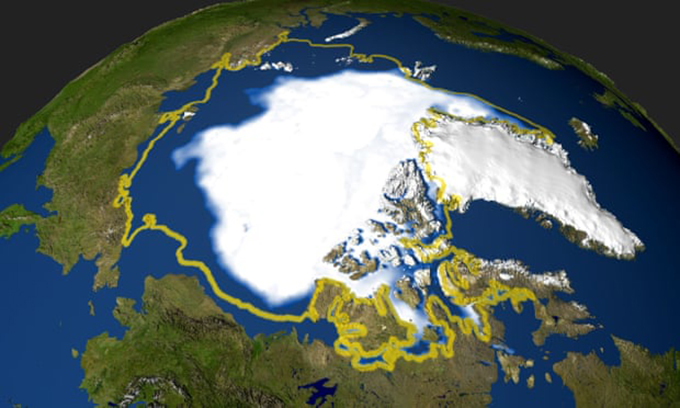
‘Monumental goal’
Peter Frumhoff, director of science and policy at the Union of Concerned Scientists (UCS) and a former lead author of the IPCC, said: “If this report doesn’t convince each and every nation that their prosperity and security requires making transformational scientific, technological, political, social and economic changes to reach this monumental goal of staving off some of the worst climate change impacts, then I don’t know what will.”

The scientist have offered a clear prescription: the only way to avoid breaching the 1.5C limit is for humanity to cut its CO2 emissions by 45 percent below 2010 levels by 2030 and reach “net-zero” by around 2050.

But global emissions are currently increasing, not falling.

The EU, one of the most climate progressive of all major economies, aims for a cut of around 30 percent by 2030 compared to its own 2010 pollution and 77-94 percent by 2050. It is currently reviewing both targets and says this report will inform the decisions.

If the EU sets a carbon neutral goal for 2050 it will join a growing group of governments seemingly in line with a mid-century end to carbon – including California (2045), Sweden (2045), UK (2050 target under consideration) and New Zealand (2050).

But a fundamental tenet of climate politics is that expectations on nations are defined by their development. If the richest, most progressive economies on earth set the bar at 2045-2050, where will China, India and Latin America end up? If the EU aims for 2050, the report concludes that Africa will need to have the same goal.

Some of the tools needed are available, they just need scaling up. Renewable deployment would need to be six times faster than it is today, said Adnan Z Amin, the director-general of the International Renewable Energy Agency. That was “technically feasible and economically attractive”, he added.

Innovation, social change
Other aspects of the challenge require innovation and social change.

But just when the world needs to go faster, the political headwinds in some nations are growing. Brazil, home to the world’s largest rainforest, looks increasingly likely to elect the climate sceptic Jair Bolsonaro as president.

The world’s second-largest emitter – the US – immediately distanced itself from the report, issuing a statement that said its approval of the summary “should not be understood as US endorsement of all of the findings and key messages”.

It said it still it intended to withdraw from the Paris Agreement.

The summary was adopted by all governments at a closed-door meeting between officials and scientists in Incheon, South Korea that finished on Saturday. The US sought and was granted various changes to the text. Sources said the interventions mostly helped to refine the report. But they also tracked key US interests – for example, a mention of nuclear energy was included.

Sources told CHN that Saudi Arabia fought hard to amend a passage that said investment in fossil fuel extraction would need to fall by 60 percent between 2015 and 2050. The clause does not appear in the final summary.

But still, according to three sources, the country has lodged a disclaimer with the report, which will not be made public for months. One delegate said it rejected “a very long list of paragraphs in the underlying report and the [summary]”.

Republished under a Creative Commons licence.

A Nasa satellite photo showing the retreating extent of sea ice in the Arctic. The latest IPCC climate change report says unprecedented action is needed to keep global temperature rises to 1.5C. Image: IPCC

Article by AsiaPacificReport.nz

]]>

Why you might be paying more for your airfare than the person seated next to you

]]>

Source: The Conversation (Au and NZ) – By Rob Nicholls, Senior lecturer in Business Law, UNSW

Price discrimination is legal in Australia where sellers will typically pick an opening price based on the likelihood that someone will pay it. We take a look at how you can get the best deal on airfares in the second part of a series exploring how technology is changing tourism.


Few things are more annoying than spending a large sum of money on a purchase, only to discover that someone else got the same thing for a lower price. This often happens with airfares. You go the same website, search the same airline, choose the same seat row and fare conditions, but you’re offered a different price depending on when and where you do it. Why?

Often it’s a result of price discrimination. This happens when a seller charges you what you’re willing to pay. Of course, it also needs to be at a level that the seller is willing to accept.

When it comes to airfares, there are two levels of price discrimination, both driven by algorithms. First, there is price discrimination by the airline. Airline pricing is typically dynamic. That is, the prices are higher for more popular flights. Then there are intermediary platforms, such as travel agents or price comparison websites, which can introduce a further level of price discrimination.


Read more: Longing for the ‘golden age’ of air travel? Be careful what you wish for


How it works

Websites create cookies that record interactions between a user and a website. Often there are other tags and beacons created. From these, the website provider can obtain information, such as the browser type and the kind of device being used. Flight sales providers use this information to determine the price offered to a customer.

For example, if the same user checks a website multiple times for a flight at a specific time and on a particular date, the provider might assume this is the only time and date the user is interested in. It might respond by increasing the price offered, since it knows the travel decision is made. Alternatively, it might reduce the price to lock in the customer.

Clearing cookies or using a search engine that does not share search history (such as Duck Duck Go) can reduce this effect.

Price discrimination is legal

In Australia, like in many countries, price discrimination is legal. Sellers will typically pick an opening price based on the likelihood that someone will pay it. You see this happen at garage sales. Indeed, perfect price discrimination may mean that no two people pay the same price for the same product or service.

There are a few different ways of thinking about this.

In one sense, this is just how markets operate. If both buyers and sellers operate in a self-interested manner, efficient outcomes arise that are better for everyone – it’s the “invisible hand”. Of course, this doesn’t prevent people from feeling ripped off.


Read more: Explainer: fuel hedging and its impact on airlines and airfares


The market can also provide intermediaries. Instead of paying the airline’s asking price, you could get an intermediary to buy the fare for you at a lower price. After all, you might not mind paying more than the minimum price available, provided that it’s less than you thought was reasonable to start off with. In airline searches, this is the type of service offered by businesses such as SkyScanner.

Limitations

There is a legal issue which limits the use of price discrimination – such as if a seller engages in actual discrimination. If a website discriminates against an identifiable group, for example by charging more to women with an Italian surname, it would risk being in breach of the Racial Discrimination Act.

Another limitation is the potential for social media backlash against the practice, which could lead to reputational harm. In the retail space, Amazon issued a statement denying that it engages in price discrimination, after angry customers found they had been charged different prices for the same product. Platforms engaged specifically in airline sales haven’t disclosed whether or not they engage in price discrimination, but they are likely at risk of similar customer backlash.


Read more: So when should you book that flight? The truth on airline prices


In the end, if you want to get a better deal on your airfare, the answer is still to shop around. And using comparison services, clearing cookies from you browser cache, and leaving as few breadcrumbs as possible is likely to yield the best deals.

ref. Why you might be paying more for your airfare than the person seated next to you – http://theconversation.com/why-you-might-be-paying-more-for-your-airfare-than-the-person-seated-next-to-you-100959]]>

As the High Court challenge to abortion clinic ‘safe access zones’ begins, there is much at stake

]]>

Source: The Conversation (Au and NZ) – By Tania Penovic, Senior Lecturer, Faculty of Law and Deputy Director, Castan Centre for Human Rights Law, Monash University

From October 9-11, the High Court of Australia will hear a challenge to the constitutional validity of Victorian and Tasmanian legalisation that provides for “safe access zones” around abortion clinics.

Safe access zones are sometimes called “bubble zones” because they create a bubble around abortion clinics. In Victoria and Tasmania, safe access zones are the area within a 150 metre radius of a clinic. Within these zones, certain conduct is prohibited, including the harassment of people accessing the clinic.

The purpose of safe access zones is to prevent patients, staff and others from being targeted by anti-abortion protesters. These laws are designed to protect the safety, well-being, privacy and dignity of people attending abortion clinics, and facilitate women’s access to health services without harassment and intimidation.


Read more: Explainer: what are abortion clinic safe-access zones and where do they exist in Australia?


Safe access zones now operate in Tasmania, Victoria, the ACT, the Northern Territory and New South Wales. A bill that establishes safe access zones is currently before the Queensland Parliament.

These laws do not prevent anti-abortion protesters from expressing their views. They can write to newspapers and politicians, and protest in other places. The only thing these laws prevent them from doing is protesting within a safe access zone.

Background to the cases

The laws that have been challenged in the High Court are those that operate in Victoria and Tasmania. The High Court will hear these two challenges together.

Kathleen Clubb is an active member of the US-founded anti-abortion group known as Helpers of God’s Precious Infants. Members of this group have protested outside East Melbourne’s Fertility Control Clinic six days a week for more than 20 years. In October 2017, Clubb was found guilty of “prohibited behaviour” within the safe access zone outside the Fertility Control Clinic. She was found to have engaged in communication about abortions which is reasonably likely to cause anxiety or distress.

Similarly, John Graham Preston was found guilty of engaging in prohibited conduct after protesting within the safe access zone outside Hobart’s Specialist Gynaecology Centre in July 2016.

Clubb and Preston are now challenging the constitutional validity of safe access zone legislation before the High Court. They argue that parts of the Victorian and Tasmanian safe access zone laws, respectively, are invalid on the basis that they violate the implied freedom of political communication under the Australian Constitution.

What is freedom of political communication?

Unlike the right to free speech under the US Constitution, the freedom of political communication under the Australian constitution is narrower. It only protects communication that is “political” – in other words, communication about political matters and representative government. Our High Court has taken a broad view of what amounts to political communication.

Further, unlike the US, freedom of political communication doesn’t act as a “trump card”, or an inviolable right. Laws can limit political communication in some circumstances, such as where the law is designed to protect public safety.

In the Clubb and Preston cases, the High Court will decide whether parts of the safe access zone laws limit political communication and if so, whether the limit is justified.

We argue that if the laws do limit political communication, they do so only to the extent necessary to protect the safety, privacy, well-being and dignity of patients and staff. Therefore, safe access zone laws permissibly limit political communication.

What is at stake?

The Victorian and Tasmanian laws protect people from unwelcome intrusions into their privacy by strangers who seek to interfere in deeply personal decisions.

In research undertaken over the past 18 months, we have looked at the impact of anti-abortion protests outside clinics and what has changed since safe access zones were established.

Anti-abortion protests outside clinics have included a range of unwelcome behaviour. This includes verbal abuse and the display of violent images. It has also included chasing women seeking access to clinics and barring access to clinic entrances.


Read more: Where Australian states are up to in decriminalising abortion


The impact of this behaviour is devastating for some patients and staff. We were told that the protesters created an undercurrent of anxiety and fear. Many women were extremely traumatised by the protests and needed additional medical care.

Health professionals told us that the protesters’ conduct has had an especially harmful effect on young women and those who had experienced sexual or physical violence. We have learned that protesters have deterred some women from seeking abortions and follow-up care.

Safe access zones have not stopped anti-abortion protests. These protests have continued outside safe access zones. But they have prevented the protesters from targeting individuals. If the laws are found to be constitutionally invalid, the targeting of women will resume.

The purpose of safe access zones is to protect the safety, privacy and dignity of people accessing clinics that provide lawful healthcare services. Because of the importance of their purpose we are hopeful the High Court will find these laws compatible with the Constitution.


The authors prepared written submissions in the Clubb proceeding on behalf of the Castan Centre for Human Rights Law seeking leave to appear as amicus curiae. The centre was granted leave with respect to those submissions.

ref. As the High Court challenge to abortion clinic ‘safe access zones’ begins, there is much at stake – http://theconversation.com/as-the-high-court-challenge-to-abortion-clinic-safe-access-zones-begins-there-is-much-at-stake-104315]]>

Why people with dementia don’t all behave the same

]]>

Source: The Conversation (Au and NZ) – By Lila Landowski, Neuroscientist, University of Tasmania

Dementia is the is the leading cause of death among Australian women and the third most common cause of death among men.

While dementia is not a normal part of ageing, the biggest risk factor for dementia is advancing age. Given ours is an ageing population, estimates suggest dementia cases are set to almost triple by 2050.

Many people associate dementia with memory loss, so it may come as a surprise that dementia is a killer. So, what does it do to the body to make this happen?


Read more: How Australians Die: cause #3 – dementia (Alzheimer’s)


The brain is our control centre

Everything we do is controlled by the brain. It generates the instructions that tell our body parts what to do, as well as facilitating our complex behaviours, such as personality and cognition (our ability to think, understand and do things).

When a person has dementia, neurons in various parts of their brain stop communicating properly, disconnect, and gradually die. We call this process neurodegeneration.

Dementia is caused by progressive neurodegenerative diseases. This means the disease starts in one part of our brain and spreads to other parts, affecting more and more functions in the body.

Certain causes of dementia will impact different parts of the brain, and the symptoms a person with dementia develops will depend on what part of their brain is affected.

Memory loss

In the early stages of dementia, a person may experience issues with memory, attention, or personality.

One of the most common things that occurs in dementia is memory loss. It may not be the first change that happens, but it’s often one of the first things people notice. Memory loss begins when neurons in a part of the brain called the hippocampus degenerate and die.

The hippocampus is a bit like a diary – it keeps track of what you do from minute-to-minute. This is why a person with dementia might have trouble keeping track of what they are doing, remembering where they are and how they got there, or forming new memories.

Memory loss can be confronting for sufferers of dementia and their families. From shutterstock.com

A person with dementia might also experience regressive memory loss, as the disease erodes the neurons storing long-term memories in various locations in the brain’s cortex. As more recent long-term memories are lost, this could mean their most vivid recollections might be from decades ago. This is why a person with dementia might feel like they are existing in another time.

As more parts of the brain succumb to disease, people with dementia will ultimately lose control of functions in the body such as speaking and swallowing, and may eventually fall into a coma.

Dementia doesn’t refer to one specific disease, but to a collection of similar symptoms. It can be caused by Alzheimer’s disease, Parkinson’s disease and many other diseases, or triggered by heart disease, stroke and head injuries. To make things more complex, people can have more than just one type of dementia.

Dementia affects people differently

There are different types of dementia. Each one is characterised by different patterns of symptoms, though every person with the same type of dementia won’t necessarily exhibit the same set of symptoms, especially early on. Just as our personalities can be incredibly diverse, the way dementia may affect personality and behaviour can be very different between individuals.

For example, a person with Alzheimer’s disease will have two main brain regions affected: the hippocampus and the entorhinal cortex. The entorhinal cortex is a specialised part of the brain that works together with the hippocampus to form long-term memories. Together, they take the input from all our senses to help orientate us in space and time, and also help us form declarative memories – things like facts and memories of events.


Read more: Six things you can do to reduce your risk of dementia


The changes in the brain of a person with another type of dementia, known as Lewy body dementia, are less established. But they include damage to a slightly different part of the hippocampus, and a loss of neurons that produce the neurotransmitters dopamine and acetylcholine. These neurons are especially important for various aspects of movement, visual perception, and cognition. Because of this, people with Lewy body dementia might experience hallucinations and difficulties with movement.

A person with frontotemporal dementia will experience degeneration that affects the frontal and temporal lobes of the brain, though the exact location can vary between people.


The frontal lobe, temporal lobe and hippocampus can all be affected by different types of dementia. The Conversation, CC BY-ND

The frontal lobe is the part of the brain responsible for our ability to make judgements and decisions, including interpreting what is socially acceptable. So a person with this type of dementia may act on their impulses or vocalise their opinions or thoughts without realising this may be inappropriate. You could say that the loss of behavioural filters means some people with dementia are expressing humanity and emotion in its most raw and true form.

The temporal lobe (which also contains the hippocampus), is the part of the brain that helps us process faces, sounds and scenes, as well as form memories.


Read more: Needless treatments: antipsychotic drugs are rarely effective in ‘calming’ dementia patients


Eventually, the disease will spread to other parts of the brain. For example, the neurons in the part of the brain involved in recognising faces (called the fusiform gyrus) may degenerate, resulting in the inability to recognise people. This can happen even when a person with dementia still remembers who you are. For this reason it can be helpful to reintroduce yourself when you talk to a person with dementia.

People with dementia deserve compassion. They don’t have control over their behavioural changes, but we have control over how we react to these changes. Through education and understanding, we can all play a part.

ref. Why people with dementia don’t all behave the same – http://theconversation.com/why-people-with-dementia-dont-all-behave-the-same-100960]]>

How your birth date influences how well you do in school, and later in life

]]>

Source: The Conversation (Au and NZ) – By Lionel Page, Professor in Economics, Queensland University of Technology

Whether you were born in December, January, August or September can have a significant and long-lasting impact on your life. Our new research shows your birthday month may also contribute to shaping your personality. In particular, we found people’s self-confidence can significantly differ because of their month of birth.

The reason isn’t your astrological sign, but rather the role your birth date plays in deciding when you enter school. Most countries specify when young children should start school using a cut-off date in the year.

For instance, in the UK the cut-off date is September 1. In federal nations such as Australia or the US, cut-off dates vary between states. Children who turn five by the cut-off date will start school, while children whose birthday is after the cut-off date will still be four and start school the following year.


Read more: Youngest in class twice as likely to take ADHD medication


The relative position of your birthday to the school cut-off date has one important consequence: it determines whether throughout primary and secondary school you are among the older, more mature, taller students in the class or not.

Relative age and career success

It’s well known that relative age at school can have a long lasting impact. A large body of research has shown, for example, students who were relatively old among their peers are more likely to become professional sports players. This pattern is evident across a wide range of sports in many different countries with different cut-off dates: soccer, ice hockey and AFL.

Famous footballers who were relatively old among their peers include for instance Pep Guardiola, the current manager of Manchester City.

In a previous study, we found US Congressmen are more likely to have been relatively old among their peers at school. from www.shutterstock.com

Studies have also found relatively old students do better at school. Even though the advantage tends to decrease over time, they are still slightly more likely to go to university. The long term impact on professional achievement doesn’t seem very large, but in some highly competitive environments, people who were relatively old at school are substantially over-represented.

This is the case among CEOs of large corporations. Previous research found this was also the case among leading US politicians.

The role of self-confidence

Our research suggests one of the main reasons for this “birthday effect” is the impact of relative age on self-confidence. Recent research shows children who enjoy being ranked relatively high compared to their peers have higher self-confidence. Being relatively old among your peers tends to place you higher in the distribution of achievement. Children who enjoy this throughout childhood can end up being more confident in their aptitude and carry this confidence with them later on.


Read more: When to send a child to school causes anxiety and confusion for parents


To test this idea, we conducted two studies. The first was with Australian school children in years eight to nine (13- to 15-year-olds) born one month apart from the school cut-off date.

We surveyed 661 children about their tendency to take risks and to feel confident. We found evidence some of the relatively old boys tended to be more competitive than their peers.

In the second study, we surveyed more than 1,000 Australian adults (24- to 60-year-olds) who were born on different sides of the cut-off date in their state. We found those who had been relatively old at school were more confident in their ability in a task involving simple mathematical calculations. They also indicated they were more willing to take risks in their lives than those who had been relatively young.

The main impact of the ‘birthday effect’ is on self-confidence. from www.shutterstock.com

Policies to mitigate the birthday effect

In a world where self-confidence and risk-taking is rewarded, these traits can give them an edge. Those who were relatively young may be at a disadvantage.

Understanding the somewhat unexpected effect of birth dates on personality traits is important. It can inform policies to mitigate the relative age effects.

For instance, it can help educators in their assessment and fostering of each child’s potential. In particular, it can help inform the design of curriculum and assessment programs to avoid the unintended penalty imposed on relatively young students who were born before the cut-off date rather than after it. It also means grouping children based on ability across age range may be a better solution than strict age-based classes.

ref. How your birth date influences how well you do in school, and later in life – http://theconversation.com/how-your-birth-date-influences-how-well-you-do-in-school-and-later-in-life-102401]]>

Labor’s pay policy merely hints at helping low paid workers rather than actually doing it

]]>

Source: The Conversation (Au and NZ) – By Eugene Schofield-Georgeson, Lecturer, UTS Law School, University of Technology Sydney

There is little dispute the pay packages for leading chief executives have reached gross and excessive proportions while the wages of poorly paid Australians have stagnated.

Pay ratios – a measure of disparity between the highest and median (representative) wages within a company – stand at around 100:1 in Australia’s largest firms. That’s up from 15:1 in the late 1970s.

This graph, from a study prepared by Labor assistant treasury spokesman Andrew Leigh and Melbourne University economist Mike Pottenger in 2013, shows the pay packet of BHP’s chief peaked at around 50 times average earnings in the early 1900s and then slid to just 10 times average earnings in the 1970s before soaring again to well over 100.


BHP chief executive remuneration as a multiple of average earnings, 1887 to 2012. Source: Pottenger and Leigh, 2013

Last week Leigh announced Labor’s response. In government Labor would require stock exchange listed firms with more than 250 employees to report the ratio of their chief executive’s pay to that of the median worker.

It is an idea adopted in the United States and in Britain, where it has been championed by Conservative Prime Minister Teresa May.

But a study of mine in the August edition of the Journal of Australian Political Economy finds no evidence such reports lift the pay of low or middle-ranking workers.

Reporting needn’t lift pay

Where reporting is not backed by laws requiring an increase in workers’ pay – and Labor’s present proposal isn’t – they simply encourage shareholders to take their chief executive’s pay and hand it to themselves.

My study found even where shareholders have voted to cut their chief executive’s remuneration (in some cases by as much as 32%) the funds freed have been passed on to shareholders rather than workers.

Numerous studies since the early 2000s have found about 60% of Australian shares and liquid wealth are held by the wealthiest 10% of Australians.

Accordingly, the only likely redistributive effect of pay disclosure laws of the type proposed by Labor will be to redistribute wealth among the already wealthy.


Read more: Australia should compare CEO and average worker pay like the US and UK


Pay disclosure laws can certainly serve an educative purpose by making public the size of shameful disparities. But as some British trade unionists have asked, “how do you shame people who are shameless?”.

In some form or other Australia, the US and Britain have already had pay disclosure laws for nearly a decade.

It’s an old idea

Australia’s Corporations Act requires listed companies to annually disclose the complete remuneration packages of all their directors and their five most highly paid executives. It gives shareholders the right to reject excessive remuneration packages.

Since the introduction of the provision in Australia, total chief executive pay has increased rather than fallen.

BHP chief executive Andrew Mackenzie, paid multiples of the typical BHP worker. Julian Smith/AAP

Other countries impose requirements

There are a number of measures Labor could take that would actually redistribute executive pay to lower paid workers.

One, proposed by UK Labour leader, Jeremy Corbyn and leading economist Anthony Atkinson would cap executive pay at 20 times the wage of a firm’s lowest paid worker and require equal pay for equal work.

It’s an idea Labor in Australia ruled-out on the ground that a scheme in the US that capped executive pay at US$1 million per annum failed because companies rewarded executives instead with stock options and bonuses.


Read more: CEO pay study shows how much Australians tolerate inequality


But as the UK think tank the High Pay Centre points out, that could readily be curbed simply by requiring companies to include all forms of remuneration (not just salary) in the calculation of the executive-to-worker pay ratio.

In countries such as in Spain and Germany workers are given an enforceable vote on what they perceive to be a fair ratio between CEO and worker pay. Where this practise exists at the Mondragon Corporation in Spain, the ratio between executive and worker pay is no higher than 9:1.


Read more: Viewpoints: should Australian companies set executive pay to a US benchmark?


Other measures include a pay ratio tax of the kind in force in Portland Oregon which imposes a 10% tax on the profits of companies whose pay ratios exceed 100:1 and the so-called Buffett rule proposed in the US which would impose a minimum 35% tax on incomes of more than US$300,000.

Another mechanism is compulsory company-wide profit-sharing of the kind that is required in French companies with more than 50 employees.

Australia could too, if it wanted

As Australian Labor’s announcement made clear, its new policy comes not from UK Labour or from innovative ideas being tried elsewhere, but from the policy handbook of the British Conservative government and Prime Minister Theresa May.

Overseas and Australian experience suggests that without specific action to redistribute executive pay, Labor’s policy will achieve little, merely suggesting redistribution instead of achieving it.

ref. Labor’s pay policy merely hints at helping low paid workers rather than actually doing it – http://theconversation.com/labors-pay-policy-merely-hints-at-helping-low-paid-workers-rather-than-actually-doing-it-104415]]>

Venom: an excellent superhero film, perhaps best not experienced in 4DX

]]>

Source: The Conversation (Au and NZ) – By Ari Mattes, Lecturer in Media Studies, University of Notre Dame Australia

The history of Hollywood is, in many ways, the history of cinematic gimmicks appearing at times when its media dominance was perceived as being under threat.

Take 3D, for example. Its key periods of popularity coincided with three of the most significant threats to Hollywood’s screen domination: the 1950s, after the emergence of television, the 1980s, after home video appeared, and the 2000s, in the wake of quick and cheap (or free) Internet streaming. Accompanying each of these periods have been prognostications of the disappearance of cinema as we know it, and certainty that 3D would come to permanently replace the old technology.

The latest gimmick is “4DX” – basically a 3D film with moving chairs and water spraying on you. It fits into a long continuum of attempts to extend the cinematic narrative into the space of the theatre by synchronising physical effects occurring in it with events depicted onscreen. (One of the most delightful examples of this accompanied the 1959 Vincent Price vehicle, The Tingler, when mechanisms were installed in select cinema seats that would “tingle” the viewer during periods of particular suspense and terror!)

I was fortunate, in that my 4DX experience involved an excellent film – Marvel’s latest, Venom – with the banality of the 4DX in many ways mitigated by the superiority of the film itself. Venom is one of the best I’ve seen this year: a tightly made, engrossing science-fiction film that, whilst set in the universe of Marvel, is effective as a stand alone work.

Tom Hardy, as the eponymous character, is compellingly hard-boiled, and Riz Ahmed is equally terrific as Carlton Drake, a villain with a touch of Elon Musk, who wants to cure the problems of Earth by escaping into space. The narrative, involving the fusing of human and alien organisms and the anthropologically threatening ramifications of this, has become a science-fiction staple. Venom – which at under two hours is not, as is the case with so many recent Marvel films, grossly overlong – has fun with the story’s generic qualities.

Tom Hardy and Riz Ahmed in Venom (2018). Avi Arad Productions, Columbia Pictures Corporation,Marvel Entertainment.

The intense action sequences are balanced by disarming humour; and the light touch of Michelle Williams, as Anne Weying, the ex-fiance of Venom who becomes his co-combatant in battle against Drake, neatly balances Hardy’s typically overbearing qualities.

Venom is the perfect vehicle for showcasing 4DX – short, sharp and violent. The most impressive aspect was the range (and violence) of motion of the seats, and, in a film replete with car chases, crashes, and several muscular fight sequences, there was ample opportunity for this to be demonstrated.

The experience was fun enough, akin to a theme park ride. (It reminded me of the Batman ride from Movie World in the 1990s). But I can’t really imagine this catching on as a popular way of watching films, even though the experiment of 4DX in Melbourne must have been successful enough to warrant giving it a run in Sydney.

The key reason for its basic ineffectiveness concerns a mistaken analogy on the part of its designers – the idea that including action in the physical realm of the theatre will somehow make the experience of watching the film more affective.

The opposite is, in fact, the case. The darkness of the movie cinema allows us to completely concentrate on the unfolding of the images on the screen, and their accompanying audio, without being distracted by our own corporeality. But our proximity to ourselves, our awareness of our own bodies, serves to sever the illusion that allows us to suspend our disbelief – that we are observers of a different, imaginary world.

Being reminded of our physical bodies in this world draws our attention to the technical apparatus that is usually so well concealed in the mass movie experience, and this demarcates a clear separation between the world of the theatre, as a physical space, and the world of illusion on the screen. Every time our chair violently thrusts from one side to the other, we become aware of our physical bodies and stop concentrating on Venom.

There is an even more basic reason why these attempts to connect the physical space of the theatre with the world of the screen have never superseded the basic pleasure of watching moving images – our own vision is in no way analogous to the vision of a camera. The way a camera looks at the world does not resemble the way a human does so, and film techniques like first person point of view shot​ have thus never really worked in their attempt to directly reproduce, on screen, the visual perspective of a human character.

Watching Venom in 4DX was at times, therefore, a little irritating. I wanted to concentrate on a (very good) movie, but was instead forced to concentrate on the act of watching itself, as I was sprayed with water and shaken around. Coupled with the odd effect of watching the film in 3D, the whole thing really just created a context in which it was harder to become absorbed in the narrative of the film than would usually be the case.

Still, the whole thing was kind of fun – like the ritual of donning 3D glasses – and it’s the kind of thing lots of people will probably try once, before the next gimmick replaces 4DX. It is good to know, in any case, that lean, mean action films like Venom can still be experienced in the most affectively immersive way possible – in a dark theatre seated in a comfortable chair without glasses blocking the screen from the viewer.

ref. Venom: an excellent superhero film, perhaps best not experienced in 4DX – http://theconversation.com/venom-an-excellent-superhero-film-perhaps-best-not-experienced-in-4dx-104557]]>

In Trustees, Belarus Free Theatre mercilessly demolishes Australia’s cultural debate

]]>

Source: The Conversation (Au and NZ) – By Sandra D’urso, Researcher, The Australian Centre, University of Melbourne

Review: Trustees, Melbourne International Arts Festival.


The Belarus Free Theatre, exiled from their home nation, have returned to Australia to collaborate with local theatre artists on a new political work, Trustees. The production begins with a hypothetical scenario in which the Australian government has placed a moratorium on public funding for the arts. While this scenario isn’t real, it cuts close to the bone after then-arts minister George Brandis gutted the Australia Council in 2015.

The production stages a public debate hosted by the (made up) Melbourne Trust Forum. It unfolds as part media reportage and part gameshow. The actors take on the roles of charismatic celebrity types, stalking the stage and encouraging the audience to register an online yes or no vote to the question “does government funding for the arts do more harm than good”? Several positions are thrashed out by the four celebrities who embody the spectrum of right-wing and left-wing commentary, in a parody of Australia’s own culture wars.

If not our poets and playwrights, argues one of the members of the trust forum, who or what forces will shape a cohesive and distinct Australian cultural identity today? As if such a thing were possible or even desirable. These arguments are not staged as earnest interventions, but rather as an absurd spectacle.

Natasha Herbert. Nicolai Khalezin

This staged debate becomes a decoy for exploring other structures of political disenfranchisement and privilege. For instance, can the debate over the arts be connected to Australia’s dehumanising treatment of refugees and asylum seekers? While a direct link is never explicitly made, it is certainly intimated.

The stage, which until this point has been modelled on a TV studio, with its bright lights and cues for audience applause, is then transformed into a boardroom. Here, the trustees of the Lone Pine Theatre Company gather to elect a new CEO and decide on a survival strategy amid the wreckage of a defunded arts sector. A proposal for a new form of theatre is floated: an immersive playground housed in a multi-storey building. It will host plot-lines and participatory experiences where jingoism might intermingle with a Kardashian style reality TV format: something to really make theatre profitable again.

The absurdity mounts. The trustees brainstorm underground levels where the violence of the Frontier Wars will be re-enacted in a kind of sexed-up colonial “Westworld”. The critique of arts funding driven by cynical interpretations of what counts as innovation and diversity in Australian theatre is certainly not lost here.

The boardroom table is not what it seems in this production. Nicolai Khalezin

The increasingly debauched suggestions of the trustees create a tension and sense of complicity in its audience. We laugh at the trustees’ rising absurdity and self-exploitation, yet recognise our role as consumers of their commodifiable identitities: a Palestinian man (Hazem Shammas), an Aboriginal woman (Tammy Anderson), a young Indian woman (Niharika Senapati), and as counter-point, two white characters (Daniel Schlusser and Natasha Herbert).

Then the mood shifts again, to great theatrical effect. Where in the earlier scene the audience was asked to take on the role of adjudicators in a failed debate on arts funding, we now became voyeurs. One of the trustees is to be elected as leader, and a choreographed leadership spill ensues where board members battle it out in a dirty power play.

Bridget Fiske’s movement direction comes to the fore here. Her stylised choreography captures the slow-burn horror of market-driven competitiveness in the arts. The tussle for power is expressed as a violent libidinised tango, intimating that power is not only synonymous with brute physical force but laced with sado-masochistic impulse.

As is to be expected, the white guy (Daniel Schlusser) wins. He mounts the boardroom table to give a terrifying victor’s speech with a recognisable reference to John Howard’s 2004 acceptance speech. The boardroom is suddenly transformed into a bizarre occultish space where the acceptable violence of Australian political and cultural life bleeds to the surface and the anti-racist platitudes of the liberal left are prodded and deflated.

Daniel Schlusser, as the victorious white guy, and Tammy Anderson. Nicolai Khalezin

It provides a surreal platform for the actors as they explore legacies of male anger and violence. The disturbing dynamics of white guilt are played out, political complacency is confessed, and theatrical traditions of exploitation of Indigenous women’s bodies are confronted head-on.

The production avoids the kind of earnestness that imbues much of political theatre. Is it didactic? Yes. But it also cuts through the turgid crust of fraught public debate over the arts and culture to create an atmosphere that verges on gothic horror. Unable to concede to the viewpoint that a distinction between left and right even exists, it asks us to imagine a post-political world. Here, freedom of speech no longer functions as the dignified ideal of democratic institution but is captive to hellish modes of spectacular, and mediatised, presentation.

It asks us to imagine that we live in an oppressive echo chamber that resembles one of the rings of Dante’s Inferno, a purgatorial space of ritualised punishments. The only way out of this impasse of opinion and apathy, it seems, is to invoke chaos.

On this front, Hazem Shammas’ powerful incantations towards the end of the production will leave you reeling. With a kind of terrifying conviction, he speaks the unspeakable into the void of Australia’s political sublimations, jolting us temporarily out of our sense of complacency: “Fuck the Australian dream”, he tells us, “fuck Allah, fuck Christ, fuck white validation, withdraw, stay safe, stay comfortable.”


Trustees is being staged as part of the Melbourne International Arts Festival until October 21.

ref. In Trustees, Belarus Free Theatre mercilessly demolishes Australia’s cultural debate – http://theconversation.com/in-trustees-belarus-free-theatre-mercilessly-demolishes-australias-cultural-debate-104559]]>

Tukuitonga goes into battle on behalf of Pacific for WHO position

]]>

Dr Colin Tukuitonga, a New Zealander of Niuean descent and proposed by New Zealand, was given resounding support for his nomination from Pacific countries. Image: AUT

By Sri Krishnamurthi

Health challenges in the Pacific Islands require acute and immediate attention from the World Health Organisation, says Dr Colin Tukuitonga, a New Zealander of Niuean descent whose nomination was proposed by New Zealand.

Dr Tukuitonga goes into battle this week for the position of WHO regional director for the Western Pacific, in a struggle which takes place on October 8-13 in Manila, Philippines.

He is up against three others – Dr Narimah Awin, proposed by Malaysia; Dr Takeshi Kasai, proposed by Japan; Dr Susan Mercado, proposed by the Philippines – at the nomination which will take place during the 69th session of the Regional Committee for the Western Pacific.

READ MORE: Background on the WHO issue

“I know what needs to be done,” he says emphatically.

“Without a doubt it is our turn, not just for climate change but other health challenges such as Non-communicable diseases (NCD) (diabetes and heart disease) child health, polio in Papua New Guinea, and the list goes on.”

-Partners-

He says it is a position that needs fresh thinking and new leadership in keeping with good governance rather than being bogged in the mire of bureaucracy.

Already Solomon Islands and Papua New Guinea have publicly indicated they will vote for Japan.

‘More of the same’
“Voting for Japan is a vote for more of the same. The candidate is a long-term staff member of WHO,” says Dr Tukuitonga.

“WHO Western Pacific Region (WPRO) needs change and transformation, lift impact, get value for money, improve transparency and accountability. The region needs diversity in leadership.”

Dr Tukuitonga is guarded against talk of the money-game buying votes in the process.

“Only in so far as offers made by Japan to small islands, such as a new airport extension in Solomon Islands,” he says, and quickly adds “New Zealand is meeting most of the costs of my campaign”.

His expectation is that all the Pacific Island countries will back him – at least when it comes to voting from the second round onwards. However, he expects that he has done all the work he could to convince countries to vote for him.

“It is hard to say which way countries will vote, but all Polynesia, plus Micronesia, plus Nauru and New Zealand, Australia, France and the United Kingdom have indicated support for me,” he says.

“Papua New Guinea, Solomon Islands, Vanuatu and Fiji have signalled support for Japan.
Papua New Guinea and Solomon Islands have made public statements supporting Japan.
We are told Vanuatu and Fiji also (supporting Japan), but it is not public.”

Nomination backed
It was only last year that the Pacific Island countries backed his nomination for the regional director’s position, and he is left wondering what the difference is now.

“They (Pacific Island Countries) approached me to stand back in October 2017. We can’t win without remaining united, where is the regionalism? Where’s the Pacific way?” he asks.

And Dr Tukuitonga answers the question himself.

“I suppose it’s an issue for Pacific leaders.

“Do we believe in our ability to influence global and regional affairs? Do we have the skills and talent as a region, rather than being viewed as passive, poor and dependent? Can we truly harness our collective power?

“Solomons benefited from RAMSI (Regional Assistance Mission to Solomon Islands), and now this! Where’s the solidarity? Is there a future for regionalism? Is regionalism a fact or a fallacy?” he asks.

In the meantime, Dr Tukuitonga must gird his loins for battle and at stake is the championing of the Western Pacific region.

Sri Krishnamurthi is a journalist and Postgraduate Diploma in Communication Studies student at Auckland University of Technology. He is attached to the University of the South Pacific’s Journalism Programme, filing for USP’s Wansolwara News and the AUT Pacific Media Centre’s Asia Pacific Report.

Print Friendly, PDF & Email

Article by AsiaPacificReport.nz

]]>

Stop worrying and trust the evidence: it’s very unlikely Roundup causes cancer

]]>

Source: The Conversation (Au and NZ) – By Ian Musgrave, Senior lecturer in Pharmacology, University of Adelaide

The common weed killer Roundup (glyphosate) is back in the news after a US court ruled it contributed to a man’s terminal cancer (non-Hodgkin lymphoma). Following the court’s order for manufacturer Monsanto to compensate the former school ground’s keeper US$289, more than 9,000 people are reportedly also suing the company.

In light of this, Cancer Council Australia is calling for Australia to review glyphosate’s safety. And tonight’s Four Corner’s report centres around Monsanto’s possible cover-up of the evidence for a link between glyphosate and cancer.

Juries don’t decide science, and this latest court case produced no new scientific data. Those who believe glyphosate causes cancer often refer to the 2015 report by the International Agency for Research on Cancer (IARC) that classified the herbicide as “probably carcinogenic to humans”.

IARC’s conclusion was arrived at using a narrower base of evidence than other recent peer-reviewed papers and governmental reviews. Australia’s regulator, the Australian Pesticides and Veterinary Medicines Authority (APVMA), reviewed the safety of glyphosate after IARC’s determination. It’s 2016 report concluded that

based on current risk assessment the label instructions on all glyphosate products – when followed – provides adequate protection for users.

The Agricultural Health Study, which followed more than 50,000 people in the US for over ten years, was published in 2018. This real world study in the populations with the highest exposure to glyphosate showed that if there is any risk of cancer from glyphosate preparations, it is exceedingly small.

It also showed that the risk of non-Hodgkin lymphoma is negligible. It is unclear to what extent this study was used in the recent court case.

What did the IARC and others find?
Glyphosate is one of the most used herbicides worldwide. It kills weeds by targeting a specific pathway (the shikimic acid pathway) that exists in plants and a type of bacteria (eubacteria), but not animals (or humans).

In terms of short-term exposure, glyphosate is less toxic than table salt. However, it’s chronic, or long-term, exposure to glyphosate that’s causing the controversy.

Pesticides and herbicides are periodically re-evaluated for their safety and several studies have done so for glyphosate. For instance, in 2015, Germany’s Federal Institute for Risk Assessment suggested glyphosate was neither mutagenic nor carcinogenic.

But then came the IARC’s surprising classification. And the subsequent 2015 review by the European Food Safety Authority, that concluded glyphosate was unlikely to pose a carcinogenic hazard, didn’t alleviate sceptics.

The key differences between the IARC’s and other reports revolve around the breadth of evidence considered, the weight of human studies, consideration of physiological plausibility and, most importantly, risk assessment. The IARC did not take into account the extent of exposure to glyphosate to establish its association with cancer, while the others did.


Read more: Council workers spraying the weed-killer glyphosate in playgrounds won’t hurt your children


Demonstrating the mechanism

Establishing whether a chemical can cause cancer in humans involves demonstrating a mechanism in which it can do so. Typical investigations examine if the chemical causes mutations in bacteria or damage to the DNA of mammalian cells.

The studies reviewed by IARC, and the other bodies mentioned, that looked at glyphosate’s ability to produce mutations in bacteria and to mammalian cells were negative. The weight of evidence also indicated glyphosate was unlikely to cause significant DNA damage.

Animal studies

Animal studies are typically conducted in rats or mice. The rodents are given oral doses of glyphosate for up to 89% of their life spans, at concentrations much higher than humans would be exposed to.

Studies examined by the European Food Safety Authority included nine rat studies where no cancers were seen. Out of five mouse studies, three showed no cancers even at the highest doses. One study showed tumours, but these were not dose dependent (suggesting random variation, not causation) and in one study tumours were seen at highest doses in males only.

Glyphosate works by disrupting a pathway that exists in plants but not animals or humans. from shutterstock.com

This led to the European Food Safety Authority’s overall conclusion that glyphosate was unlikely to be a carcinogenic hazard to humans.

The IARC evaluation included only six rat studies. In one study, cancer was seen but this wasn’t dose dependent (again suggesting random variation). They evaluated only two mouse studies, one of which was negative for cancer and that showed a statistically significant “trend” in males.

The IARC thus concluded there was sufficient evidence of carcinogenicity in animals but there was no consistency in tumour type (mouse vs rat) or location.


Read more: Are common garden chemicals a health risk?


Human studies

This is an enormous field so I can only briefly summarise the research. The European Food Safety Authority looked at 21 human studies and found no evidence for an association between cancer and glyphosate use. The IARC looked at 19 human trials and found no statistically significant evidence for an association with cancer. It did find three small studies that suggested an association with non-Hodgkin lymphoma (not statistically significant).

As already mentioned, the large Agricultural Health Study found no association between cancer and glyphosate in humans. And the 2016 review by Australia’s regulator concluded glyphosate was safe if used as directed.

It’s possible the animus towards Monsanto and genetically modified organisms may have influenced the recent juries’ decision far more than any science. However, these materials had no impact on the scientific findings.

ref. Stop worrying and trust the evidence: it’s very unlikely Roundup causes cancer – http://theconversation.com/stop-worrying-and-trust-the-evidence-its-very-unlikely-roundup-causes-cancer-104554]]>

Review: The new Doctor Who picks up the chase with a pace as she crosses the gender barrier

]]>

Source: The Conversation (Au and NZ) – By Martin White, Senior lecturer, University of Adelaide

Doctor Who is back on our TV screens with the first episode of the new series airing on the ABC here in Australia today, staring Jodie Whittaker as the first female regeneration of this particular Time Lord.

Anyone who has been watching the long-running BBC series over the past few years should not find a female Time Lord surprising.

The Doctor’s arch enemy The Master has most recently been brought to life as Missy, in a BAFTA-nominated performance by Michelle Gomez that easily ranks as my favourite incarnation of the evil Time Lord.


Read more: Science fact vs fiction in Star Wars and other sci-fi movies: relax, and enjoy the entertainment


We have also been shown an actual regeneration of a male Time Lord into a female body, when a character known as The General regenerated in the Series 9 episode Hell Bent.

The fact that a Time Lord can periodically regenerate into another body was itself only invented to allow the show to sidestep the failing health of William Hartnell, who played the first Doctor on TV.

Nevertheless, to deny that the decision to cast a woman as the Doctor is a historic moment is to understate the bravery of the new production team, led by Chris Chibnall (of Torchwood and Broadchurch fame), and of Whittaker in particular.

The new Doctor. BBC

A regeneration reboot

The latest episode, The Woman Who Fell to Earth, picked up where the 2017 Christmas special left off, but teasingly didn’t offer us a view of the new Doctor for several minutes.

Indeed, with its Northern England setting and outstanding shots of Yorkshire scenery, I could be forgiven for confusing it with an episode from the Dalziel and Pascoe boxset that I’m still working through.

We were soon on familiar ground, as Whittaker’s Doctor chased a mysterious, Predator-inspired alien through the streets of Sheffield. It is way too early to gauge where Whittaker fits in the pantheon of Doctors, but her hyperactive, clever and funny performance brought to mind a greatest hits package of Christopher Ecclestone (the Ninth Doctor) and David Tennant (the Tenth Doctor), with less of the darkness that has been favoured of late.

She delivered the requisite post-regeneration comedy with ease, and expertly portrayed a Doctor who knows everything and knows nothing at the same time. I predict great things as the season develops.

“Half an hour ago I was a white-haired Scotsman.”

The production changes

The Doctor’s gender was not the only thing that felt new. The show looked noticeably more fantastic than it has at any point in its history, aided by properly cinematic landscapes and an alien that still looked scary in close-up.

It also sounds better, with composer Segun Akinola’s score proving more contemporary and less obtrusive than the previous work of Murray Gold. I assume much of this was terrifying for children, and thank goodness for that!

But my favourite change in the show is in the writing. The new companions were fleshed out to such an extent that a particular shock late in the episode felt genuinely tragic, a feat that is particularly impressive for a script that also had to dump enough Who-lore to pull in new viewers.

In crafting a self-contained ensemble drama, there is evidence that Chibnall’s team will avoid the overly-intricate plotting of the outgoing Steven Moffat-led era.

My only complaint is that we were cruelly taunted with the demise of that laziest of plot devices – the sonic screwdriver – only to have it dramatically reinvented later in the episode.

Best of all, the show ended on a massive cliffhanger, the likes of which we have not seen since the classic era. Fans of the reboot have thus far been robbed of this experience, and I hope that we can expect more ludicrous finales as the weeks roll by.

The Doctor as a role model in science

The Doctor is a rare figure in popular culture, being a person devoted to solving problems with little more than curiosity and an immense scientific knowledge.

A couple of years ago, I was part of a group that toured Australian theatres in a Royal Institution of Australia production that explored whether that scientific gobbledegook has any basis in fact.

This allowed us to explain the science of time travel (yes, it is possible), regeneration (you do this roughly every seven years, with exceptions) and extra dimensions (yes, they are possible!) to an audience of more than 6,000 people who would never knowingly attend a science lecture.

Most importantly for the children in the audience, we were able to communicate both the excitement of scientific research, and the feasibility of becoming a professional scientist regardless of your background. This really is the closest you can get to being the Doctor without having a TARDIS.


Read more: Study of 1.6 million grades shows little gender difference in maths and science at school


In a country where over three times as many boys as girls study high school physics, and a 2014 survey revealed that some girls do not take physics because they think that boys are better with numbers, I find it hard not to see the selection of a female doctor as the greatest science communication opportunity of my lifetime.

In an age of binge watching, the coming generation will be awed by both the Doctor’s male and female incarnations. Can there be any better role model for budding young scientists?

The Doctor (Jodie Whittaker, centre) with (left to right) Grace (Sharon D. Clarke), Yasmin (Mandip Gill), Ryan (Tosin Cole) and Graham (Bradley Walsh). BBC

ref. Review: The new Doctor Who picks up the chase with a pace as she crosses the gender barrier – http://theconversation.com/review-the-new-doctor-who-picks-up-the-chase-with-a-pace-as-she-crosses-the-gender-barrier-104312]]>

Watt questions being and perception but could have gone further

]]>

Source: The Conversation (Au and NZ) – By Sarah Balkin, Lecturer, English and Theatre Studies, University of Melbourne

Review: Watt, Melbourne International Arts Festival.


It resembled a pot, it was almost a pot, but it was not a pot of which one could say, Pot, pot, and be comforted. It was in vain that it answered, with unexceptionable adequacy, all the purposes, and performed all the offices, of a pot, it was not a pot. And it was just this hairbreadth departure from the nature of a true pot that so excruciated Watt.

This passage from Watt, the novel Samuel Beckett wrote while hiding from the Gestapo during the second world war, describes the title character’s dawning certainty that a pot is not actually a pot. The instability goes beyond language to ontology, or the nature of being.

There is much to like in Barry McGovern’s adaptation of Watt, which presents selections from the text. McGovern is a seasoned performer who spoke Beckett’s repetitive prose beautifully. His quiet delivery brought out the novel’s deadpan qualities; the audience laughed often. And yet, I came away with the feeling that McGovern’s Watt was not quite a pot, which is to say, not quite Watt.

McGovern first adapted Watt for a production at Dublin’s Gate Theatre in 2010. In this Melbourne production, with his worn clothing, boots, braces, and pepper-coloured hat, he looked the part of a generic Beckett character.

This was not a bad thing per se, but it did contribute to my sense of seeing the ghost of a Beckett play. It is tempting to attribute this washed-out quality to the difficulty of adapting the novel to the stage. And yet, the problems instantiated by the novel’s narration are well suited to McGovern’s adaptation.

Beckett’s novel describes Watt’s journey to, within, and away from Mr Knott’s house, where Watt lives for some time as a servant. Upon leaving Mr Knott’s service, Watt travels to an institution, seemingly an asylum, where he tells his story to another inmate, Sam. But the story is told out of order, sometimes in unreadable language, and with fragmentary addenda appended by a fictional editor.

The narrator is not just unreliable, but impossible, or plural: though late in the novel the narrator identifies himself as Sam, who is reporting Watt’s story as Watt told it to him, neither Watt nor Sam were present at the beginning of the novel. These contradictions are not resolved; indeed, they constitute the novel.

McGovern sometimes was Watt while he narrated what happened to Watt. This was especially effective in two scenes. In the first, McGovern demonstrated the extraordinary way in which Watt walks:

Watt’s way of advancing due east, for example, was to turn his bust as far as possible towards the north and at the same time to fling out his right leg as far as possible towards the south, and then to turn his bust as far as possible towards the south and at the same time to fling out his left leg as far as possible towards the north.

McGovern spoke the lines while performing the motions, embodying Beckett’s comic repetition and the unexplained inefficiency with which Watt advances.

Worn clothing, boots, braces, and pepper-coloured hat – McGovern looked the part of a generic Beckett character. Pia Johnson

McGovern was likewise effective in a scene where Watt, resting in a ditch that anticipates the one in which Waiting for Godot’s Estragon sleeps, seems to hear “from afar, from without, yes, really it seemed from without, the voices, indifferent in quality, of a mixed choir.” A recorded choir sang the two verses Beckett supplies (though the music is not printed in all editions), including such lyrics as “Fifty two point two eight five seven one four” and “oh a bun a big fat bun.”

During the first choral verse I was unsure about the choice to include the recording, since it seemed to resolve definitely that the voices came “from without” — a point that Beckett leaves open. But as the second verse was sung, and as McGovern reacted with quiet but increasing perplexity to its nonsense, I changed my mind.

I was with Watt in that moment, but where was I? I could no longer say, in the world of the play, that the choir came from outside him; only that it seemed to, and that its lyrical improbability put pressure on this seeming. In moments such as these, McGovern enacted the instability of the novel’s form and perspective.

At other times McGovern spoke and performed as different figures from the story: as Arsene, the servant who leaves Mr Knott’s establishment as Watt arrives, or as a narrator (Sam in the novel, but nameless in the play) to whom Watt has told his story. Here too the shifts enacted the text’s instabilities in another medium. Who was speaking, and why were they telling us this story? We weren’t to know. In the audience’s laughter I felt an acceptance of skimming along the surface of things.

My dissatisfaction with McGovern’s Watt is not about what he included and excised, though one might object that he made it a bit too coherent. My frustration boils down to his treatment of the pot, one of the production’s few props. At the relevant moment, McGovern produced and unfolded a piece of paper with a picture of a pot on it. In so doing he made a point about representation: an image of a pot is not a pot. But I wanted him to make a point about existence — to produce a solid pot and make me question, or make me think he questioned, whether it was a pot.

Theatre is the perfect medium in which to make an audience see that a pot is not a pot. Stage pots may be real, may even be cooked in, but as props they are also fictional and fictionalizing. Making us feel this could have been a resonant counterpoint to the kinds of ghosting — Marvin Carlson’s term for theatrical elements that appear again and again — that attended McGovern, boots, braces, hat, and ditch.


Watt is being staged as part of the Melbourne International Arts Festival until October 13.

ref. Watt questions being and perception but could have gone further – http://theconversation.com/watt-questions-being-and-perception-but-could-have-gone-further-104555]]>