Page 1125

Women in STEM need your support – and Australia needs women in STEM

]]>

Source: The Conversation (Au and NZ) – By Lisa Harvey-Smith, Professor and Australian Government’s Women in STEM Ambassador, UNSW

In Australia, only 16% of STEM graduates (Higher Education and VET) are women, and 27% of the total STEM workforce is female.

So how can Australians support women in science, technology, engineering and maths (STEM)? Nominating and supporting them in applications for high profile opportunities, prizes and awards is a great place to start.


Read more: ‘Walking into a headwind’ – what it feels like for women building science careers


The economic imperative for greater female participation in STEM is overwhelming. According to PricewaterhouseCoopers, upskilling just 1% of the Australian workforce into STEM roles would add $57 billion to Australia’s gross domestic product over 20 years.

But increasing gender equity in STEM matters beyond just economics. As a society we have a moral duty to make sure that women can participate equally in the high‑growth areas of technologically-skilled jobs. We should not put up with a situation where half the population is ill‑equipped to take part in vast areas of employment as technology rapidly evolves.

In December 2018, I was appointed as the Australian Government’s Women in STEM Ambassador. My role is to advocate for gender equity in STEM, increase awareness of opportunities for women in STEM, build the visibility of women working in these fields and drive cultural and social change.

Self-belief is vital

Relatively low representation of women in STEM careers has many well documented causes.

One reason that makes its presence felt at an early age is lower self-efficacy (the belief in your ability to succeed) experienced by young women, compared to young men in mathematics and the physical sciences.


Read more: Study of 1.6 million grades shows little gender difference in maths and science at school


Publicly recognising female excellence and leadership in STEM can go some way towards addressing this issue.

Representation in public life can also provide a strong set of role models to young women and shine a light on career paths that may not feel achievable. Promotion of role models also helps retain women in STEM careers by defying gender stereotypes and reinforcing that successful STEM careers are possible.

Increasing visibility

What is being done to improve the visibility of female STEM role models? There are many exciting projects currently underway that provide a platform for women in STEM professions.

One is the ABC’s recent push to sign up more female subject-matter experts, given that only 26% of media mentions in relation to STEM stories in Australia are female..

The Australian Academy of Science’s upcoming STEM women database will offer a similar service, by collating information on verified female experts who can be contacted for academic, consulting or media projects.

Science and Technology Australia’s Superstars of STEM program is providing training and opportunities for 60 female STEM practitioners in the latest round of their program. This will hopefully propel many of them into the public eye, improving gender balance in the STEM media for future generations.


Read more: The hunt for the Superstars of STEM to engage more women in science


And the winner is…

Public awards and honours are another excellent avenue for celebrating female STEM talent. The most well-supported national awards provide media coverage, prize money and an increased platform for recipients to pursue projects for social benefit related to their area of expertise.

My 2016 award of the Eureka Prize for Promoting Understanding of Australian Science Research led to several exciting and unexpected career opportunities for me, including media and public speaking engagements that raised the profile of my science.

The Tall Poppy Awards also engage the public in celebrating scientific excellence and recognise its importance in forming public policy.

Arguably the highest-profile accolade is the Prime Minister’s Prizes for Science. With a total award fund of $750,000 given to outstanding scientists, innovators and science teachers, they have the biggest budget in the business. Winning a PM’s Prize is often life-changing, leading to new opportunities and greater impact for the recipient’s work.

Prize winner Sarah Chapman pictured with Prime Minister Tony Abbott in 2013. Prime Minister’s Prizes for Science

For example, Sarah Chapman won the 2013 PM’s Prize for Excellence in Science Teaching in Secondary Schools. Subsequently selected as a Queensland Government Science Champion, her innovative teaching strategies were featured on ABC’s Lateline.

In 2016, Chapman was awarded a Barbara Cail STEM Fellowship and travelled overseas to gather evidence of international best practice in STEM education. With fellow recipient Dr. Rebecca Vivian she released a report: Engaging the Future of STEM: A study of international best practice for promoting the participation of young people, particularly girls, in science, technology, engineering and maths (STEM), which has contributed to the formulation of national STEM engagement policy.

In 2017, Jenny Graves was the first solo female recipient of the Prime Minister’s Prize for Science.


Read more: X, Y and the genetics of sex: Professor Jenny Graves awarded the Prime Minister’s Prize for Science 2017


Nominate a woman

Awards are effective methods of recognition since they acknowledge and reward excellence in research, teaching and innovation and share the contemporary stories of STEM excellence with the public. By publicly recognising women’s achievements in science we reflect the collaborative and diverse nature of the field today and boost the careers of their winners.

Women are less likely to be nominated for awards and when they do win, they are likely to receive less prestigious awards with lower prize money.


Read more: Minding the gender gap in science prizes


This International Women’s Day, you can make a difference by nominating a deserving scientist, innovator or science teacher for recognition.

There are only four days left to nominate for the Prime Minister’s Prizes for Science: they close on 12 March 2019. The Tall Poppy Science Awards close on 10 April 2019, and the Eureka Prizes close 3 May 2019.

ref. Women in STEM need your support – and Australia needs women in STEM – http://theconversation.com/women-in-stem-need-your-support-and-australia-needs-women-in-stem-113054

#MeToo has changed the media landscape, but in Australia there is still much to be done

]]>

Source: The Conversation (Au and NZ) – By Bianca Fileborn, Lecturer in Criminology, University of Melbourne

Emerging in October 2017 in response to allegations of sexual assault perpetrated by Hollywood movie mogul Harvey Weinstein, #MeToo highlighted the potential for traditional and social media to work together to generate global interest in gender-based violence. Within 24 hours, survivors around the world had used the hashtag 12 million times.

Eighteen months later, #MeToo is showing few signs of slowing down. Stories continue to appear in world media about sexual harassment and assault. The accused are predominantly powerful men in the entertainment industry, with musician Ryan Adams providing a recent example.


Read more: What the Harvey Weinstein case tells us about sexual assault disclosure


More recently, we have seen the corporate world tapping into the potential of #MeToo to ask how men can do better to call out sexist attitudes and behaviours that condone violence against women. The one that caused the most debate was Gillette’s advertisement questioning whether this is the “best a man can be?”

The #MeToo movement has undoubtedly reverberated through our cultural and political landscape. It is hard to deny its impact.

What is less clear is whether it is changing how we discuss gender-based violence and gender equality, and whose experiences are able to be shared. This is especially so given the well-documented issues with media reporting on gender-based violence.

Mainstream media reporting on sexual violence

While sexual violence has received increased media attention in the wake of #MeToo, it is also important to interrogate how it is being talked about. Arguably, much of the #MeToo reporting reproduces problematic stereotypes and reinforces sexual violence as monstrous and removed from everyday life.

One analysis of journalists’ reporting on Harvey Weinstein in our forthcoming book on the #MeToo movement found that the media continued to reproduce stereotypes and problematic tropes of victim-blaming. They routinely ignore relevant reporting guidelines.

Media reporting on the divisive Aziz Ansari case has produced both problematic and heartening results.


Read more: Yes means yes: moving to a different model of consent for sexual interactions


Taking a look at Australian reporting on this case, it was clear some articles excuse pressure and coercion as simply “the reality of sex” for women. One article even stated that “relenting can often mean consenting”. This reproduces problematic understandings of sex and gender relations, in which men are naturally aggressive initiators of sex, and women the passive gatekeepers of sexual activity.

However, some articles provided more nuanced reporting that recognised “relenting is not consent” and that:

more commonplace circumstances of coercion … account for a decent proportion of people’s traumatic sexual experiences.

This kind of reporting helps to unpack the complexities of sexual violence. It highlights that there are also harms associated with more everyday “grey area” behaviours.

As journalist Jane Gilmore’s “Fixed It” series that rewrites media headlines demonstrates, there is still a serious issue with the language the media use to talk about sexual violence. However, some #MeToo reporting shows a promising start in shifting discourse around sexual violence, opening up space for nuance and diversity in survivors’ experiences.

Social media and survivors speaking out

The #MeToo movement has also been significant online, with millions of survivors sharing their experiences on social media. Indeed, simply writing “me too” has become a shortcut for referencing an experience of sexual harassment or assault for survivors without having to say what actually happened.

This collective disclosure is a powerful act and should not be dismissed. Disclosing online can act as a kind of informal justice.

Online disclosure also allows survivors to seek support and act in solidarity with each other. It can help survivors to recognise their own experiences and realise they are not alone.

Mass disclosure through #MeToo also demonstrates the “magnitude of the problem” of sexual violence.

However, it is difficult to know what, if anything, has changed in the absence of any systematic analysis of #MeToo social media activity in Australia. Emerging international research suggests some survivors joined in #MeToo to draw attention to the political and structural nature of sexual violence and to challenge a perceived silence around this violence.

LGBTQ+ survivors in this study indicated they spoke out to ensure the experiences of these communities were included in #MeToo and to shift how we talk about sexual violence.

This suggests that involvement in #MeToo goes beyond simply sharing stories. Some survivors are able to articulate and draw attention to the underlying causes of sexual violence.

Yet it is equally true that social media continue to be a site of harm for women and gender-diverse people. It is implicated in the perpetration of sexual violence and misogyny as much as it is also a space for survivors to “speak out” about their experiences.

It is unclear whether or how this potential for backlash and online violence might shape how survivors talk about their experiences online. But it certainly influences whether they choose to disclose online.

Australia’s notoriously strict defamation laws have also limited how survivors can talk about their experiences. For example, it has been difficult for Australian survivors to “name and shame” their perpetrators as part of #MeToo.

We also need to be wary of making overly positive interpretations of survivors’ speaking out online. While it can be positive, it is not necessarily progressive.

For instance, survivor speech (and responses to that speech) circulating on social media that “goes viral” or gets picked up by mainstream media can sometimes reinforce stereotypes of what “real” sexual violence is. This was evident in some public responses to the Aziz Ansari case.

In speaking out, survivors may also call for punitive, criminal justice responses that reinforce other systems of oppression and power.

Speaking out about experiences has long been a staple part of anti-rape activism. But after nearly four decades of mobilisation on the issue, it seems survivors are continually having to speak out. And it is often similar voices that are heard: usually those of white, middle-class, heterosexual, and cisgender women.

The #MeToo movement has faced critique for replicating these gendered and racial divisions, suggesting that the movement is limited in its potential to create space for all survivors to be seen and heard. As such, the ways sexual violence is discussed on social media continue to represent only a limited range of experiences.

Moving forward from #MeToo

The progress and outcomes of social movements are almost always uneven. In the case of #MeToo, while this was indeed a watershed moment, there is still much to be done.

In particular, it is clear that while #MeToo has generated some change in what types of sexual violence are being discussed in social and mainstream media, and how, these shifts have been patchy at best.

Better training for journalists and editors reporting on sexual violence is one avenue to pursue. Social media platforms must also take more responsibility for moderating online misogyny (and other forms of hate speech) that perpetuates myths and problematic attitudes about sexual violence.


Read more: Politics with Michelle Grattan: Anne Summers on #MeToo and women in politics


The #MeToo movement demonstrated how widespread sexual violence is in our communities. This shocked and outraged many people. But the work of effectively responding to and addressing the causes of these experiences remains – and is the most challenging piece of this project.


The National Sexual Assault, Family & Domestic Violence Counselling Line – 1800 RESPECT (1800 737 732) – is available 24 hours a day, seven days a week for any Australian who has experienced, or is at risk of, family and domestic violence and/or sexual assault.

ref. #MeToo has changed the media landscape, but in Australia there is still much to be done – http://theconversation.com/metoo-has-changed-the-media-landscape-but-in-australia-there-is-still-much-to-be-done-111612

No matter who wins the next election, managing the China relationship will be tricky – and vital

]]>

Source: The Conversation (Au and NZ) – By Tony Walker, Adjunct Professor, School of Communications, La Trobe University

This is part of a major series called Advancing Australia, in which leading academics examine the key issues facing Australia in the lead-up to the 2019 federal election and beyond. Read the other pieces in the series here.


China policy will not be a vote-shifting issue in the 2019 federal election. As usual, the economy and tax in particular will dominate this election.

But from a foreign policy standpoint there is no more important issue than achieving a reasonable balance between the United States, Australia’s security guardian, and China, its linchpin economic partner.

Getting the balance right and thus avoid being wedged between its security and economic interests represents what is arguably the most significant foreign policy challenge in Australian diplomatic history since Federation in 1901.

Mostly a unity ticket – but with some key differences

In 1972, the Whitlam Labor government ditched an anomalous attachment to Taiwan as China’s legitimate representative. Since then, China policy has, for the most part, been bipartisan.


Read more: Australia and China push the ‘reset’ button on an important relationship


Little separates Labor and the Coalition in a relationship that increasingly has been driven by economic ties. But there are nuanced differences.

Senior Coalition and Labor spokespeople have recently delivered addresses in Singapore that provide a useful insight into their thinking.

In January this year, Defence Minister Christopher Pyne spoke at the Fullerton Forum convened by the International Institute of Strategic Studies. A year ago, Labor’s foreign policy spokesperson, Penny Wong, addressed the Lee Kuan Yew School of Public Policy.

Both Pyne and Wong cautioned against allowing tensions between the US and China to divert Australia from pursuing its own interests, even if those interests do not accord with those of its security guarantor. Pyne said:

Unquestionably, rivalry between the US and China will be a feature of our international outlook in the foreseeable future. However, it is critical that US-China relations do not come to be defined in wholly adversarial terms.

In Wong’s case, she says simply that it remains “in the interests of all South East Asian nations that the US remains strategically engaged in the region”.

Where the two sides differ by degree lies in Wong’s assessment of risks to a “rules-based” international order posed by competition between an established and rising power.

She is gloomier than Pyne about the international outlook. She told her Singapore audience:

Whether or not you agree with President Trump’s view that the international rules-based system is not working, there is no disputing the international rules-based order is under its greatest period of stress since the end of the second world war.

Pyne was more sanguine. He said:

Cold War commentary fails to see a fundamental but defining difference, namely the world’s economies are far more closely integrated and mutually dependent than they were when the West contested the Soviet bloc.

How would a Labor government change the relationship?

Where this is leading is that a Labor government would probably make a more conspicuous effort to bolster regional partnerships with the ASEAN bloc and India as a hedge against tensions between the US and China.

Labor might also seek to give itself more flexibility in positioning Australia between its strategic ally, the US, and its dominant economic partner, China. This fine-tuning would need to be carried out subtly to avoid upsetting cornerstone security arrangements that have served the country well.

Wong uses the phrase “constructive internationalism” – borrowed from Labor’s former foreign minister, Gareth Evans, who coined it a quarter century ago – to define Australia’s national interests.

In the Evans formula, the phrase describes a policy that is motivated by values in pursuit of interests. “If interests describe the reasons for action, values describe the motives for action,” Wong told her Singapore audience.

Foreign Minister Marise Payne meets Chinese Foreign Minister Wang Yi in Beijing in November 2018. AAP/EPA/Thomas Peter

Where both sides of Australian politics converge is on the need to engage China, but not at the expense of disregarding Beijing’s flagrant attempts to assert its sovereignty in disputed waters of the South China Sea. Pyne put it like this:

There is no gain in stifling China’s growth and prosperity … We are not interested in containing China, but we are interested in engaging and encouraging China to exercise its power in ways that increase regional trust and confidence.

The building and militarisation of artificial features in the South China Sea, for instance, has not increased regional confidence in China’s strategic intentions.

This might be regarded as an understatement.

Labor’s position on China’s overreach in the South China Sea mirrors that of the Coalition. Wong said:

Should the Australian Labor Party form government, we will certainly be advocating resolution of territorial claims and the exploitation of fishing stocks and seabed resources through negotiations between claimants rather than through unilateral action such as the militarisation of artificial islands.


Read more: Australian-Chinese author’s detention raises important questions about China’s motivations


In his Fullerton lecture, Pyne raised the possibility of Australia joining “multilateral activities in the South China Sea to demonstrate they are international waters”.

In his reference to so-called FONOPs (freedom of navigating exercises), he stopped short of indicating whether Australia planned to join allies in sailing within 12 nautical miles of China’s militarised features in South China Sea waters. The Coalition has not ruled out this possibility.

What is unarguable is that, after a long period of US strategic dominance, Australia’s security environment is shifting dramatically. Neither major party can escape this reality.

Pyne made some telling points that reflect the extraordinary complexity and dimensions of a region in flux – one that fleetingly, we should remind ourselves, anticipated an American century.

That prospect disappeared in the blink of an eye as China’s spectacular economic rise, linked with an expansion of its military capabilities, shifted the regional power balance.

The challenges ahead

Pyne’s scorecard brings home the scope of the challenge facing the next government, Coalition or Labor, in getting middle-power settings right. Or, put another way, to avoid being crushed by bigger players.

The Indo-Pacific is home to eight of the ten most populous nations on earth. Half of the world’s population calls it home.

Twelve of the member states of the G20, including the three largest economies in the world, are Indo-Pacific nations. And nine of the world’s ten busiest seaports are in the Indo-Pacific, as are seven of the world’s ten largest standing armies.

In the latest Stockholm International Peace and Research Institute (SIPRI) survey of global military spending, Australia ranks 13th. This is ahead of Canada and behind Italy. Five Indo-Pacific nations spend more on defence – the US, China, India, Japan and South Korea.

China’s military expenditures are six times those of Australia’s defence allocation.

Where the Pyne and Wong speeches overlap is in their warnings of the risks of isolationism. This can be read as a rebuttal of Donald Trump’s “America First” policies. Pyne said:

We fall short of our economic potential when parties choose to withdraw behind walls and withdraw from mechanisms designed to make us stronger.

Australia envisages a region that is more closely integrated and where we all collectively reject isolationism. We must work together not apart.

Labor would endorse those sentiments. Wong makes it clear that, for the time being, she would regard the prospect of the US reverting to a more collaborative posture as remote.

No matter who forms the next government, Australian policymakers are dealing with an end of certainty in a region remaking itself. They will need to be flexible – and resourceful.

ref. No matter who wins the next election, managing the China relationship will be tricky – and vital – http://theconversation.com/no-matter-who-wins-the-next-election-managing-the-china-relationship-will-be-tricky-and-vital-110792

Research Check: do we need to worry about glyphosate in our beer and wine?

]]>

Source: The Conversation (Au and NZ) – By Ian Musgrave, Senior lecturer in Pharmacology, University of Adelaide

Glyphosate is back in the news again. The common weed killer, which has previously attracted controversy for its possible link to cancer, has been found in beer and wine.

Researchers in the US tested 15 different types of beer and five different types of wine, finding traces of the pesticide in 19 out of the 20 beverages.

So how much should we be worried? Hint: not at all. The amount detected was well below a level which could cause harm. And there are insufficient details in the methods section to feel confident about the results.


Read more: Stop worrying and trust the evidence: it’s very unlikely Roundup causes cancer


How was this study conducted?

One of the first things I do when evaluating a piece of research is to check the methods – so how the researchers went about collecting the data. What I found didn’t fill me with confidence.

The authors say they set up their experiment based on a technique called a mass spectroscopy method. This methodology has been used to measure the quantities of glyphosate in milk (but not alcoholic drinks). Mass spectroscopy is a very sensitive and specific method, and the authors quote the concentrations that can be reliably detected in milk with this approach.

But the method they actually used is called enzyme linked immunosorbent assay (ELISA). Importantly, you can’t use the concentrations that can be reliably detected with the mass spectroscopy to describe ELISA sensitivity. They’re not compatible.

Glyphosate is the pesticide which makes up many weed killers. From shutterstock.com

ELISA is sensitive, but typically not as sensitive as mass spectroscopy, which uses an entirely different physical method to measure glyphosate.

ELISA also has issues of cross contamination. Biological samples for glyphosate measurement, whether ELISA or mass spectroscopy, need careful sample preparation to avoid cross-reaction with any other materials in the sample such as the common amino acid glycine, which looks quite similar to glyphosate and is present in much higher quantities. But the authors didn’t give any detail about the sample preparation used.

These issues make it difficult to be confident in the results.

We’ve seen this before with claims of detection of glyphosate in breast milk, which could not be duplicated. So given the lack of detail around the methodologies used, we should be cautious about taking these figures at face value.

What did they find?

For the sake of argument, let’s accept the researchers’ values and take a look at what they mean.

The highest level of glyphosate they measured was 51.4 parts per billion in one wine (in most of the beverages they found much less). That’s equivalent to 0.0514 miligrams per litre (mg/L).

The authors cite California’s Office of Environmental Health Hazard’s proposed “No Significant Risk Level” for glyphosate consumption of 0.02 mg/kg body weight/day. The limits are based on body weight, so a heavier person can be exposed to more than a person who weighs less, taking into account body volume and metabolism.

This is much lower than the EU Food Safety Authorities’ and Australia’s regulatory allowable daily intake of 0.3 mg/kg body weight/day.

But again, for argument’s sake, let’s use the Californian proposed limits and look at the wine in which the researchers measured the highest amount of glyphosate. With those limits, an average Australian male weighing 86kg would need to drink 33 litres of this wine every day to reach the risk threshold. A 60kg person would need to drink 23 litres of this wine each day.


Read more: Drink, drank, drunk: what happens when we drink alcohol in four short videos


If you’re drinking 33 litres of wine a day you have much, much bigger problems than glyphosate.

Alcohol is a class 1 carcinogen. Those levels of alcohol consumption would give you a five times greater risk of head, neck and oesophageal cancer (and an increased risk of other cancers). The risk of glyphosate causing cancer is nowhere near these levels. The irony is palpable.

This isn’t even taking into account the likelihood of dying of alcohol poisoning by drinking at this level – which will get you well before any cancer.

And that’s using the highly conservative Californian limits. Using the internationally accepted limits, an average adult male would have to drink over 1,000 litres of wine a day to reach any level of risk.

So how should we interpret the results?

The report does not contain a balanced representation of the risks of glyphosate.

They cite the International Agency for Research on Cancer’s finding of glyphosate as class 2 (probably) carcinogenic (alcohol is class 1, a known carcinogen).

But they don’t mention the European Food Safety authority finding that glyphosate posed no risk of cancer, or the WHO Joint Meeting on Pesticide Residues report showing no significant cancer risk to consumers under normal exposure.

They cite a paper on glyphosate supposedly increasing the rate of breast cancer cell growth, but not the papers that find no such thing.

They don’t cite the most important study of human exposure, the Agricultural Health Study which is the largest and longest study of the effect of glyphosate use. This study found no significant increase in cancer in highly exposed users.


Read more: Research Check: can even moderate drinking cause brain damage?


The “report” claiming that there is glyphosate in wine and beer provides inadequate information to judge the accuracy of the claimed detection, and does not put the findings in context of exposure and risk.

Even taking their reported levels at face value, the risk from alcohol consumption vastly outweighs any theoretical risk from glyphosate. Their discussion does not fairly consider the evidence and is weighted towards casting doubt over the safety of glyphosate.

So you may enjoy your beer and wine (in moderation), without fear of glyphosate.

Blind peer review

This is a fair and accurate assessment of the study and its findings. That said, it is prudent for the scientific community to remain attentive to changes within the food supply and issues of potential risk to public health. Considering the increasing use of glyphosate by the food industry, we need continued diligence in this area. – Ben Desbrow


Research Checks interrogate newly published studies and how they’re reported in the media. The analysis is undertaken by one or more academics not involved with the study, and reviewed by another, to make sure it’s accurate.

ref. Research Check: do we need to worry about glyphosate in our beer and wine? – http://theconversation.com/research-check-do-we-need-to-worry-about-glyphosate-in-our-beer-and-wine-112771

Australia needs a national plan to face the growing threat of climate disasters

]]>

Source: The Conversation (Au and NZ) – By Robert Glasser, Honorary Associate Professor, Australian National University

We are entering a new era in the security of Australia, not because of terrorism, the rise of China, or even the cybersecurity threat, but because of climate change. If the world warms beyond 2℃, as seems increasingly likely, an era of disasters will be upon us, with profound implications for how we organise ourselves to protect Australian lives, property and economic interests, and our way of life.

The early warning of this era is arriving almost daily, in news reports from across the globe of record-breaking heatwaves, prolonged droughts, massive bushfires, torrential flooding, and record-setting storms.

In a new special report from the Australian Strategic Policy Institute, I argue that Australia is not facing up to the pace of these worsening threats. We need a national strategy to deal specifically with climate disaster preparedness.


Read more: Explainer: are natural disasters on the rise?


Even without climate change, the impact of these natural hazards is enormous. More than 500 Australians – roughly the same number who died in the Vietnam War – die each year from heat stress alone. The annual economic costs of natural disasters are projected to increase to A$39 billion by 2050. This is roughly equivalent to what the federal government spends each year on the Australian Defence Force.

Climate change will dramatically increase the frequency and severity of many of these hazards. The number of record hot days in Australia has doubled in the past 50 years, and heatwaves have become longer and hotter. Extreme fire weather days have increased in recent decades in many regions of Australia. Shorter and more intense rainstorms that trigger flash floods and urban flooding are also becoming more frequent, and sea level has been rising at an accelerated rate since 1993.

Australians are already exposed to a wide range of the hazards that climate change is amplifying. Almost 4 million of our people, and about 20% of our national economic output, are in areas with high or extreme risk of tropical cyclones. Meanwhile, 2.2 million people and 11% of economic activity are in places with high or extreme risk of bushfire.

Chronic crisis

As the frequency of extreme events increases, we are likely to see an increase in events happening at the same time in different parts of the country, or events following hard on the heels of previous ones. Communities may weather the first few setbacks but, in their weakened state, be ultimately overwhelmed.

Large parts of the country that are currently marginally viable for agriculture are increasingly likely to be in chronic crisis, from the compounding impacts of the steady rise of temperature, drought and bushfires.

The scale of those impacts will be unprecedented, and the patterns that the hazards take will change in ways that are difficult to predict. Australia’s fire season, for example, is already getting longer. Other research suggests that tropical cyclones are forming further from the Equator as the planet warms, putting new areas of eastern Australia in harm’s way.

This emerging era of disasters will increasingly stretch emergency services, undermine community resilience, and escalate economic costs and losses of life. Federal, state and local governments all need to start preparing now for the unprecedented scale of these emerging challenges.

Queensland as a case study

Queensland’s recent experience illustrates what could lie ahead for all of Australia. Late last year, a major drought severely affected the state. At that time, a senior manager involved in coordinating the state’s rebuilding efforts following Cyclone Debbie commented that his team was in the ironic situation of rebuilding from floods during a drought. The drought was making it difficult to find water to mix with gravel and to suppress the dust associated with rebuilding roads.

The drought intensified, contributing to an outbreak of more than 140 bushfires. This was followed and exacerbated by an extreme heatwave, with temperatures in the 40s that smashed records for the month of November. Bushfire conditions in parts of Queensland were classified as “catastrophic” for the first time since the rating scale was developed in 2009. More than a million hectares of bush and farmland were destroyed – the largest expanse of Queensland affected by fire since records began.

Just days later, Tropical Cyclone Owen approached the Queensland coast, threatening significant flooding and raising the risk of severe mudslides from the charred hillsides. Owen set an Australian record in dumping 681 millimetres of rain in just 24 hours – more than Melbourne usually receives in a year. It did not, however, diminish the drought gripping much of the state.

A few weeks later, record rains flooded more than 13.25 million hectares of Northern Queensland, killing hundreds of thousands of drought-stressed cattle. As two Queensland graziers wrote at the time: “Almost overnight we have transitioned from relative drought years to a flood disaster zone.”

From drought to deluge. AAP Image/Andrew Rankin

Time to prepare

We need to begin preparing now for this changing climate, by developing a national strategy that outlines exactly how we move on from business as usual and adopt a more responsible approach to climate disaster preparedness.

It makes no sense for the federal government to have two separate strategies (as it currently does) for disaster resilience and climate change adaptation. Given that 90% of major disasters worldwide are from climate-related hazards such as storms, droughts and floods, these two strategies should clearly be merged.

One of the prime objectives of the new strategy should be to scale up Australia’s efforts to prevent hazards from turning into disasters. Currently, the federal government spends 30 times more on rebuilding after disasters than it does on reducing the risks in the first place.


Read more: Properties under fire: why so many Australians are inadequately insured against disaster


Australia should be leading global calls for urgent climate action, not just because we’re so vulnerable to climate hazards, but also for traditional national security reasons. We are the wealthiest nation in a region full of less-developed countries that are hugely vulnerable to climate change. Shocks to their food security, economic interests and political stability will undermine our own national security.

No military alliance, deployment of troops or new weapon system will adequately protect Australia from this rapidly escalating threat. The only effective “forward defence” is to reduce greenhouse gases globally, including in Australia, as quickly as possible. Without far greater ambition on this front, the scale of the disasters that lie ahead will overwhelm even the most concerted efforts to strengthen the resilience of Australian communities.


This is an edited version of an article that originally appeared on The Strategist.

ref. Australia needs a national plan to face the growing threat of climate disasters – http://theconversation.com/australia-needs-a-national-plan-to-face-the-growing-threat-of-climate-disasters-113107

New home, new clothes: the old ones no longer fit once you move to the country

]]>

Source: The Conversation (Au and NZ) – By Rachael Wallis, Lecturer and Research Fellow, University of Southern Queensland

What happens if you decide to jump in, Escape to the Country-style, and flee the city rat race?

Well, for a start, your identity begins to change in response to the new place around you. This change happens inside you, but is also reflected in the objects you surround and clothe yourself with.


Read more: How moving house changes you


My recent research looked at the stories of two women who moved from the city to the country and published books about their experiences. Hilary Burden moved from London to rural Tasmania and wrote about it in A Story of Seven Summers. Margaret Roach, author of And I Shall Have Some Peace There, moved from New York City to rural upstate New York. The two women tell the story of their moves, but at the same time, they narrate a journey of changing identity that is shared with others through the clothes they wear.

In memoirs such as these, the authors interpret the events they write about, but so does the reader, who brings their own understandings to their imagined experience. This allows readers to imagine a new way of living too, through the pages of the book. Through this, they might imagine their own SeaChange.

Clothes are part of our identity

When people get dressed each day, they let others know who they are, or who they think they are, in an identity-sharing performance. The clothes the authors discuss in the pages of their memoirs effectively map how their identity changed and how they shared this change with the people around them by wearing different styles of clothes from the ones they wore before. These items combine to produce a narrative that lets others understand those around them more clearly.

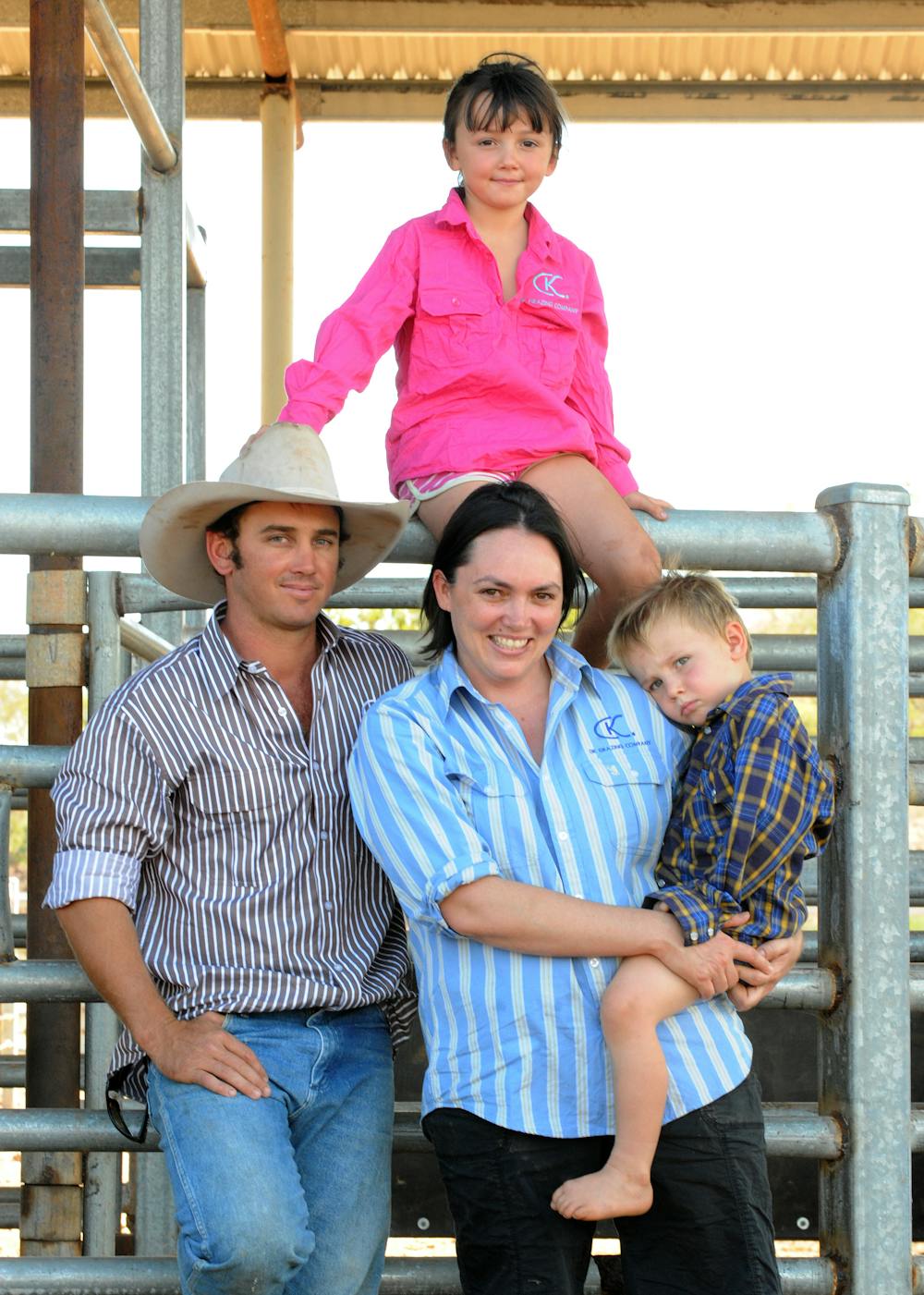
This Northern Territory family’s clothing is part of who they are. Dave Hunt/AAP

Most of the time people are not even aware that they are doing this. They just pick and choose the things they like from the vast array of options open to them.

Sometimes, however, it becomes clear that the clothes that once worked for a person just do not “fit” any more. This can happen in the process of life transformation, including moving from the city to the country the way these women did.

Roach had experienced a long and successful career at Martha Stewart Omnimedia. She knew how to dress for her professional role and had confidence in sharing her wealth and status through the expensive suits she bought. When she moved to the country, however, she could not dress in the same way. With her career behind her, she asked herself: “Who am I if I am not mroach@marthastewart dot com any longer?”

Unsure, and in pyjamas

This lack of clarity about her evolving identity is shown in the pyjamas she starts to wear during the day. Far from familiar terrain, and experiencing a state of flux and transition, Roach finds it simpler just to remain in her nightclothes and not have to figure out her new identity via the clothes she wears. Understanding this dilemma, Roach describes how her old way of living no longer fits her new self:

…like the wardrobe hanging in my closet, a vestige of a life left behind, it just doesn’t resemble me any longer.

She talks about how her clothes no longer fit, mentally or visually, with her new life in the country. With real insight, she writes:

The outside packaging … has to match what’s going on inside of me.

This understanding enables her to finally reconcile who she is to where she now lives. Once she negotiates this process, she is able to manage the transition of her clothing and visual identity to what works in her new country home.

Burden’s move across oceans starts a similar journey. She writes:

I knew I wanted to shed the stuff I associated with cities: suits … dressing up, being very important or busy or loud.

Country clothing is both more practical and an expression of identity. bernatets photo/Shutterstock

These had once enabled her to present and perform her class identity and status to others, but they no longer suited her work outside at a farmers’ market in rural Tasmania. Her clothes needed to fit the time and place she lived in, but she found they did not. These old clothes end up in garbage bags on a journey to the op shop, and Burden adapts to share her new identity through her clothes.

These memoirs offer a glimpse into lives and identities within the imaginative space they create, permitting identity to be shared through language and text. They show how moving to the country impacts identity, and how these people need to work through this process of change to adapt to their new life and feel comfortable in their new location.

Next time you contemplate moving to the country, just be sure to factor in the cost of a whole new wardrobe!

ref. New home, new clothes: the old ones no longer fit once you move to the country – http://theconversation.com/new-home-new-clothes-the-old-ones-no-longer-fit-once-you-move-to-the-country-112137

Gender equity. The way things are going, we won’t reach true parity until the 22nd century

]]>

Source: The Conversation (Au and NZ) – By Rebecca Cassells, Associate Professor, Bankwest Curtin Economics Centre, Curtin University

The good news this International Women’s Day is that women are now moving through the ranks into management roles faster than men.

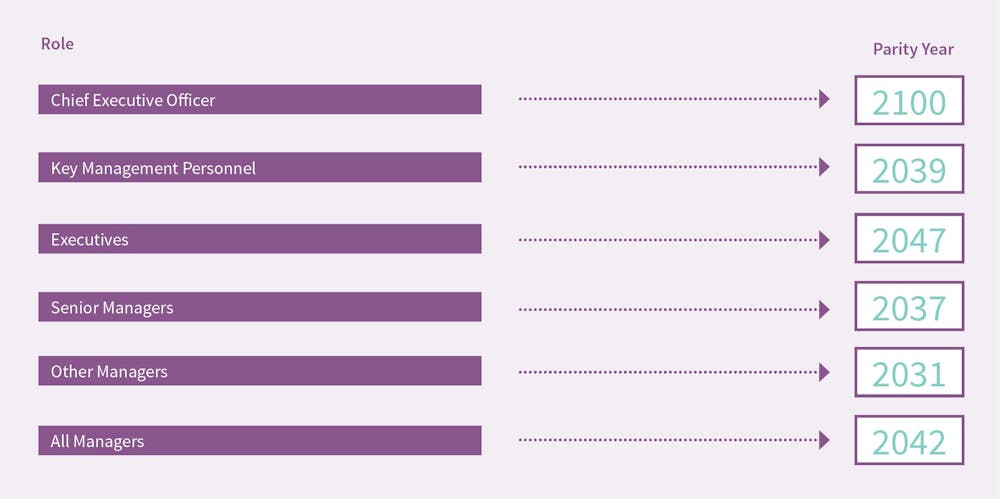
If things continue at this rate it will take just two more decades for women to hold the same number of full-time management positions as men.

For lower-level managers, it could happen even sooner, perhaps in just ten to eleven years.

But for the top spot of chief executive, we are unlikely to see women holding half the positions until 2100. That’s right: until the turn of the 22nd century, 80 years away.


Projected dates women should achieve parity with men

BCEC|WGEA Gender Equity Insights Series 2019: Breaking through the Glass Ceiling


The Bankwest Curtin Economics Centre has crunched five years of data collected by the Workplace Gender Equality Agency and discovered that while the glass ceiling that has prevented women from holding high-level jobs is receding, the ceiling governing salaries remains pretty much in place.

At every management level, in every industry, the spread of salaries available to male managers is much wider and higher than the spread available to female mangers.

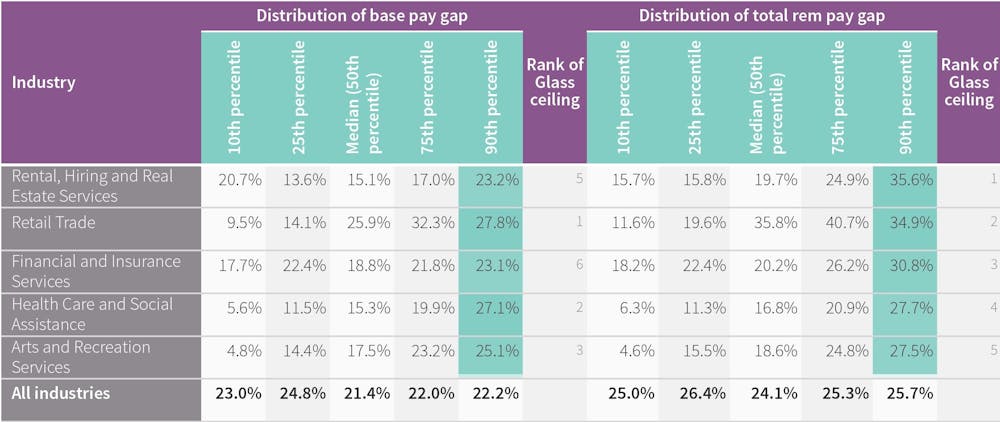
The top paid 10% of male mangers earn at least $600K in total salary, whereas the top paid 10% of female managers earn $436K, a difference of over $160K.

Which industry has the worst glass ceiling?

The real estate industry has the biggest difference, with the pay gap between the top male and female managers reaching nearly 36%. Access to commissions and bonuses is undoubtedly a key driver, as, when base salaries are compared the real estate industry has only the fifth widest gap, behind retailing, health care and social assistance, arts and recreation, and administrative and support services.

Retailing has the second widest gap when total remuneration is considered, with a difference of almost 35% between the top earning male and female managers. The next widest are in the finance and insurance industry, the health care and social assistance industry and arts and recreation.

So wide are the gaps that they themselves appear to be limiting the number of women in management.

Using statistical regression we estimate gender pay gaps within management combine to cut the proportion of women who are full-time managers by an average of 9.9 percentage points and the proportion of women who are part-time managers by 7.9 percentage points.


Managerial gender pay gaps by salary and industry, 2018

Managerial gender pay gaps by salary and industry, 2018. BCEC|WGEA Gender Equity Insights Series 2019: Breaking through the Glass Ceiling


What works best?

Further work using the Workplace Gender Equality Agency data gives the ability to uncover what works best in driving gender equity.

It’s clear leadership is key.

Having a female chief executive increases the proportion of managers who are female by an average of 8.6 percentage points.

Moving from all-male to gender-equal boards increases the proportion of full-time managers who are female by 7.3 percentage points and the proportion of part-time managers who are female by 13.7 percentage points.


Effects of company policies and characteristics on shares of female managers, 2018

BCEC|WGEA Gender Equity Insights Series 2019: Breaking through the Glass Ceiling


Policies that support women to combine work and family life are also critical to seeing women advance.

Combining them with accountability is important in making them work. We find flexible workplace policies are twice as effective at increasing the share of part-time managers if they are reinforced with reporting to the board.

Workplaces that offer employer-funded paid parental leave schemes covering 13 or more weeks halve the share of managers who resign during paid parental leave compared to those that offer access to only the Australian government scheme.

Workplaces that provide on-site childcare stem the loss of female managers during paid-parental leave by almost one fifth.


Read more: If we’re serious about supporting working families, here are three policies we need to enact now


The findings of our report, as with the findings of earlier reports in the series, show clearly that companies have at their disposal a range of specific actions they could take that would hasten the move toward gender equity in pay and progression. Leadership, female representation on boards and accountability are among them.

If companies want to attract and retain the best talent, they must start looking at the return they receive from their investments.

But some glass ceilings are proving harder to break than others, particularly when it comes to parity in pay and representation at the highest level.

Companies need to show a real commitment to change to make sure we don’t have to wait another 80 years before women are as likely to run companies as men.

ref. Gender equity. The way things are going, we won’t reach true parity until the 22nd century – http://theconversation.com/gender-equity-the-way-things-are-going-we-wont-reach-true-parity-until-the-22nd-century-112685

Overworked and underpaid: the revival of strikes in New Zealand

]]>

Source: The Conversation (Au and NZ) – By Toby Boraman, Lecturer in Politics, Massey University

Strikes were supposedly something of the alleged “bad old days” of the 1970s. But during the first year of Aotearoa New Zealand’s Labour-led government, a strike revival ensued. At least 70,000 people, if not more, walked out last year. Strikers included nurses, teachers, bus drivers, port workers, fast-food workers, retail workers, steel workers and public servants.

While official figures for 2018 have not been published yet, this represents the highest number of people involved in strikes since the late 1980s, and possibly the most working days not worked due to stoppages since 1992. For many strikers, it represents the first time they have participated in walkouts.

An unexpected strike wave?

According to some, this strike wave was not supposed to happen. Trade unions were thought to be too weak to strike.

One employment relations textbook asserted in 2009 that “strike action is seen increasingly as an inefficient and outdated strategy”. The Public Service Association (PSA) secretary Erin Polaczuk recently argued that as unions today have become more feminised and mature, they have increasingly avoided “stupid oppositional behaviour”.

Nevertheless, women have led the strike wave. Women made up the majority of participants in most strikes, and female union delegates were often at the forefront of disputes. Indeed, stoppages have mostly occurred in majority female occupations such as teaching, nursing and government sector work in general.


Read more: How to tackle NZ’s teacher shortage and better reflect student diversity


It is as difficult to predict strike waves as it is to predict recessions. This is because both are the result of many complex causes, including the unpredictable nature of human agency. This wave is no exception.

Political causes

Political factors help to partly explain the stoppages, but cannot be blamed solely for causing the unrest. In their classic 1974 study, Strikes in France, Edward Shorter and Charles Tilly argued somewhat controversially that greater political opportunities produce strike waves. This view concurs with the opposition National Party’s attempt to pin blame for the strikes on the new Labour-led government because that government has raised expectations that wages will increase.

But when compared to another political factor, rising expectations and greater political opportunities seem to be a minor cause. That variable is how successive Labour and National-led governments since 1984 have been wedded to a neoliberal practice of tight government spending. Even if Labour has somewhat loosened the government purse strings recently, it still strongly adheres to “fiscal responsibility” through its budget responsibility rules.

The level of government spending is a significant factor in causing the strikes simply because the government employs most workers who have gone on strike. Long-term neoliberal austerity has caused public sector workers’ wages to fall well behind those of most others.


Read more: Partially right: rejecting neoliberalism shouldn’t mean giving up on social liberalism


Economic causes

Economic factors (or political-economic factors) other than neoliberal cutbacks are also crucial. Academic research generally regards economic variables as pivotal. Economist Ganesh Nana has suggested that neoliberalism has suppressed wages for the vast majority of workers for a long time, leading to a low-wage economy.

Studies have found neoliberal politics and economics have mostly enriched those at the top at the expense of the rest of the population. According to Council of Trade Unions economist Bill Rosenberg, labour’s share of national income has declined from a peak of 71% in 1981 to 61% in 2016. At the same time living costs have risen, particularly in recent years due to rising accommodation costs. Hence it seems this is a “catch-up” strike wave to reverse decades of stagnant or declining real wages.

This corresponds with theories that strikes happen in “long waves”, with strike peaks emerging after periods of subdued activity. Scholars like Beverly Silver argue that increased exploitation and commodification of labour (such as under neoliberalism) can lead to a delayed, pendulum-swing counter-response. This rejoinder reflects shifting patterns of workplace bargaining power and class composition (such as the rise of white-collar labour and the “knowledge economy”).

Subjective causes

Political and economic factors, long term or short term, cannot explain all. The subjective side of strikes is also important.

If we listen to strikers, they commonly claim they are being underpaid and overworked. Working in underfunded and understaffed occupations produces unrelenting and unhealthy high-pressure jobs. Being lumbered with more work for less or stagnant pay (in real terms) has caused much underlying dissatisfaction over the long term. This discontent has finally bubbled to the surface in the form of strikes.

Research suggests strike waves sometimes occur simply because people see others striking. Sociologist Michael Biggs argues that “optimism escalates with participation”, making the unthinkable achievable. In short, successful strikes breed more strikes.

Some fear that the strike wave of 2018, which looks set to continue into 2019 due to several recent junior doctors’ strikes, will mean a return to the strike-prone decades of the 1970s and 1980s. A major strike wave is probably unlikely given, among many other factors, the legal restrictions that outlaw most forms of strikes, including strikes outside bargaining periods between unions and employers, political strikes, solidarity strikes and wildcat strikes. Unions represented only 17% of the waged workforce in 2017 and are concentrated in predominantly white-collar public sector unions that lack traditions of striking.

Finally, most recent strikes have been short-lived and have generally not occurred in economically strategic or vital industries. The strike wave would probably have far greater economic and political impact, for better or worse, if it spread to those working in key economic sectors, such as in the tourism, dairy and meat-processing industries, and in logistics and the financial sector. Yet it seems at this stage workers in most of these sectors are unlikely to strike, despite indications of a similar underlying discontent with wages and conditions.

ref. Overworked and underpaid: the revival of strikes in New Zealand – http://theconversation.com/overworked-and-underpaid-the-revival-of-strikes-in-new-zealand-111728

Friday essay: rebooting the idea of ‘civilisation’ for Australian soil

]]>

Source: The Conversation (Au and NZ) – By Stephen Muecke, Chair professor, University of Adelaide

This piece is republished with permission from GriffithReview 63: Writing the Country (Text), ed Ashley Hay.

At the same time as a headline in The Guardian announced: “Indigenous Australians most ancient civilisation on Earth, DNA study confirms”, we could also read that $3 billion had been left by healthcare tycoon Paul Ramsay to set up, under the direction of right-wing former prime ministers John Howard and Tony Abbott, a plan to install courses on “Western civilisation” in major Australian universities.

This contrast is confusing, but telling. Civilisation has nothing to do with science as such (DNA is indifferent to it), nor is it something a passing political initiative can uphold. But with a long view of Australian history, the concept of civilisation is caught precisely in this politically charged dichotomy: between an Indigenous civilisation and a recently arrived “Western” one.

It seems that the upholders of the latter would like the former to remain dubious and “ancient”, of little relevance to the future of the country. This essay is a personal reflection on the possibilities for a more reasonable hybrid definition of “civilisation” based on Australian soil.

What does the word mean? Well, it is city life, if you follow the etymology. From the Latin civis, we derive the group of words that includes “citizen” and “civil”. Outside of the walls of the city roamed the uncivilised, those speaking barbarian tongues. There is a prejudice about civilisation that is reinforced every time the Tigris and Euphrates are cited in accounts of world history as being the “cradle of civilisation”.

A young man jumps from the old Fallujah bridge into the Euphrates river in Iraq in 2011. There is a prejudice reinforced every time the Euphrates and Tigris are cited in accounts of world history as being the ‘cradle of civilisation’. Mohammed Jalil/EPA

Sometimes contesting “cradles” are noted in China, India or the Americas. But rarely mentioned are the oldest continually surviving “cultures”, those of Australia, because it is still hard, in the European tradition, to think of civilisation without cities. But perhaps the idea of building walls to keep others at bay is not such a civilised idea. Let’s consider what civilisation might mean in Australia today, starting with what The Guardian reported as the first civilisations of the country, since they stood the test of a very long period of time – without walls.

Valuing traditional law

I would like to define civilisation as planned, sustainable collective living. The usual definition of it as human society defined by “urban development, social stratification … and a perceived separation from and domination over the natural environment”, as given in Wikipedia, is crying out for revision because it ignores sustainability and relegates non-human life, “nature”, to a resource. Perhaps a new ecological perspective is what is needed as we endeavour to reset modernity, to reboot the idea of living in a civilised fashion within the limits of our earthbound existences.

Far from advocating that Australians today can learn from the wisdom of Indigenous traditions about living “in harmony with nature”, we shall have to rethink the very concept of a singular nature and be aware that it, too, was a colonial imposition on the hundreds of types of country that had in place highly managed, biodiverse ways of living.

So the first step in rebooting civilisation in Australia will be to start with the oldest heritage, in the very places where most Australians can’t see any heritage at all – places they call “remote” simply because they are a long way from cities. The distancing effect of calling them remote contributes to their fragility and degradation at the same time as it generates and invests all major values in the self-assurance of big city life.

But cities, too, are vulnerable, especially in the light of the environmental threats that demand we reset the parameters of civilised life. Tim Flannery, in his 2005 book The Weather Makers, speaks, as many do, about climate change as a threat to civilisation as we know it. He makes it clear he is talking about cities: “Very large cities lie at the heart of our global society, and our most valued institutions are found in them.”

It is a scale-based logic, because those cities under a 100,000 people are not likely to host a university and they need to be over a million to have an opera house. He speaks of the vulnerability to climate change of just this kind of civilisation, because infrastructure designed to deliver water or electricity to millions can be disrupted rapidly, while small towns are more likely to have manageable self-sufficiency.

What he doesn’t mention, as an Australian, are the civilisations that persisted here for many thousands of years. He could have thought of the way the word was used in that context by American anthropologist Lloyd Warner in his 1937 study of the Yolngu, A Black Civilisation. If the Yolngu have flourished for up to 50,000 years, while the kind of civilisation based on large cities could self-destruct after only a few hundred, perhaps it is time to recalibrate what we mean by civilisation.

Today, the Yolngu are among the more robust of Indigenous communities, with their celebrated artistic heritage, their annual Garma Festival, and their business and political skills. A Yolngu kid wanting higher education can head into university in Darwin or another major city, or decide to develop traditional knowledge further by sitting with Elders to eventually “graduate” as a law boss. Or both. Both are viable institutions, so let’s explore their differences for a moment, bearing in mind that one may be more vulnerable to climate change events.

A clan member of the Yolngu people prepares to perform the Bunggul traditional dance during the Garma Festival near Nhulunbuy, East Arnhem Land, last year. Mick Tsikas/AAP

Traditional law and culture is an institution, even if it is not housed in bricks and mortar, and doesn’t need a large annual budget. The Yolngu call it “wangarr”; it is “tjukurpa” in central Australia and “bugarrigarra” in the west Kimberley, where I have worked. People invest time and energy in it, organise each other in different roles and strive for collective outcomes that are highly valued. It includes the process of initiation through which people are literally “made”; in that sense you can’t be a “proper” Aboriginal person without going through the law.

But isn’t it hopelessly idealistic to give value to such traditional institutions, when clearly they can’t be configured in terms of economic progress? Today’s world is one in which everything can be given an economic value, and entities are defined by competition and inequality. Under this regime, traditional knowledge would have to be gathered up by a university or by native title law and turned into accountable knowledge of a more whitefella sort.

For the latter articulation, gaining native title gives communities (sorry, “bodies corporate”) the right to negotiate with mining companies and hence gain royalty or compensation income. That’s just the way things work, you might say. This is the real world, suck it up. And don’t even think about getting a real pay-to-learn university until your community has grown to 100,000.

A monocultural push

Such scaled economisation of the world – reducing everything to the same mechanisms for creating monetary value – is, unfortunately, a monocultural push that tends to destroy the plurality that is civilisation itself. How so? Well, civilisation, as it is defined by those who see it as a collective planning for better ways of living rather than as a dog fight, is one in which numerous religions can have adjacent temples, where scientific knowledge advances, where the law is impartial, the arts flourish and politicians prioritise our collective problems. For the sake of the argument, let’s call the opposite of this a primitive society. Primitives seek to dominate with their narrow agenda.

So if science sought, in the name of its own principles, to slap down the other institutions, debunk religion, dismiss the arts as merely subjective and so on, it would be primitive. People inhabiting a pluralist civilisation will assert the value of difference by saying things like, “Well, we do things this way, but we respect those other folk doing it their way.” You will notice that this is just the kind of wishy-washy relativist talk that the Ayn Rands of the world would denounce as weak liberalism.

For them, only competitive force gains real value; there are only winners and losers, patriots or enemies. Or that’s how they talk. If neoliberal ideology had succeeded in dominating the world, then public bars would be full of poker machines, corporations would be able to buy politicians, art schools would be shut down, the neutrality of the law would be impugned, churches would be profitable, scientific method questioned and Indigenous heritage sites declassified to clear the way for mining. Unthinkable! Thank goodness civilisation in Australia is more robust than that.

Our fragile civilisation

Australia has had some good moments. Once known as the lucky country, it profited from postwar agricultural and industrial development, which morphed into a mining boom until suddenly, very recently, it became stuck between two unsustainable delusions. The country doesn’t know where it came from or where it is going. It still falsely claims that its heritage is white (those more than 50,000-year-old civilisations count for nothing much except tourism revenue), and it is deluded into thinking that it can continue to profit from an ever-expanding global economy.

The Rio Tinto West Angelas iron ore mine in the Pilbara region of West Australia in 2014. Alan Porritt/AAP

Certainly, this situation has been developing for half a century, but it is the threat of environmental disasters that has suddenly introduced a weird reversal of time. We can’t rely on past form any more. Now it is an actually knowable climate-changed future that is crashing back onto the present with an argument that we must make sensible policy changes. It is this that has opened the fault lines of denial in what I want to call our “fragile civilisation”.

It is like we are stuck on an interminable intercontinental flight and the pilot announces that we will have to land, somewhere, and it is actually a nightmare. We can’t go back to pre-modern life before carbon-fuelled industrial acceleration, and the globe we thought could accommodate everyone’s economic growth is just not big enough to do that. We need to land somewhere else: on Earth perhaps, where we will be bound by Earth’s rules rather than fantasies of endless global expansion; or even escape to another planet.

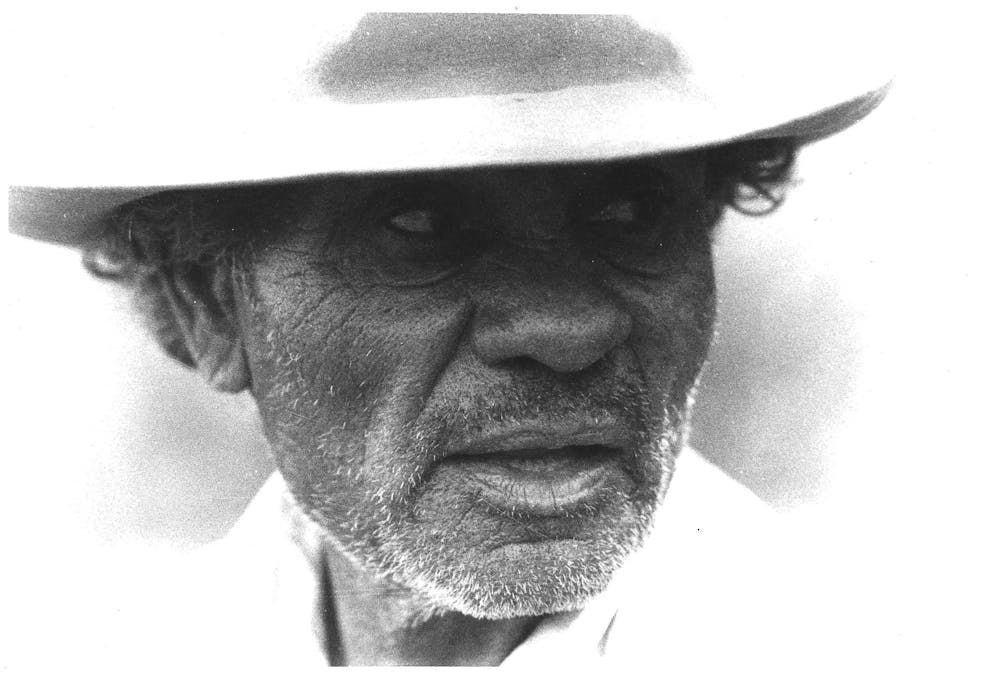
Two great thinkers have informed me as I composed this essay. It was Bruno Latour, the French philosopher of science, who told me the allegory of the nightmare plane trip with nowhere to land, and who once greeted me when I arrived in Paris with a friendly, “Welcome to civilisation!” His irony was alluding, at the time, to Tony Abbott’s infamous “absolute crap” line on climate science in 2009. The other great influence on me was Paddy Roe, a Goolarabooloo Elder from the west Kimberley who died in 2001.

Roe was born well before World War I and had seen his hometown, Broome, go through the throes of colonisation. Feudal pastoralism and the murderous pearling industry were to give way to resource extraction, but in the middle quiet period of the 20th century, when assimilation policy was the norm, he woke up to the fact that his cherished “bugarrigarra” (law and culture) was dying out. Looking for boys to go through the law, he saw them instead dressed up nicely on their way to church and school, where they learned to look down on the ways of the old people.

Paddy Roe photographed in 1979. Photo: Dieter Kirchner

Paddy Roe mobilised some other law bosses and they did what they could to revive positive interest in their heritage. They did this under the name of Goolarabooloo, which is an ancient name for “west coast cultures”. It was never a tribal or language name, but was created long ago to unify a string of communities that follow the songline of the ceremony used every season to sing the boys into men. When the people gather to perform the ritual they draw down on the sacred authority of the “bugarrigarra”, while also drawing in the totemic plants and animals as participants. As custodians, they are conscious that their job is to bring the country to life.


Read more: The case for Gularabulu by Paddy Roe


This Goolarabooloo society is thus more expansive than small tribal or language groupings. One could call it a cultural confederacy, a bit like the European Union. That concept was invented, after seeing the horrors that paranoid nationalism produced, to consolidate peace after the great European wars.

Perhaps it was with the same motive of keeping the peace that the Goolarabooloo ancestors came up with this unifying structure that made people come together to vitalise the country they loved with the gift of new young life: boys who would gain important knowledge as they turned into men.

Without this expansive and inclusive philosophy, internecine warfare may have been more common. Life would indeed have been less civilised.

Indigenous foundations

As the oversize aircraft of late modernity circles, looking for a place to land, Indigenous Australian civilisations are still there in their places. They have always known the overriding importance of caring for their own territories. They are willing to negotiate once again, and this time the stakes are on a planetary scale. But more locally, how can we reconcile Australia’s Indigenous heritage – our civilisational foundation, as I have argued – with the economic story that has brought huge benefits, but is now hitting a wall?

If we reinstall confidence in our public institutions, granting them their own dignity and autonomous power and not making them compete quite so much, then we will have perpetuated the plurality of ways of being in the world that many see as the basis for civilised life. These institutions reform themselves as a matter of course. Today they need more urgent reform to be adequate for the future crises of the Anthropocene, and each can incorporate the knowledge of the first civilisations in very useful ways.

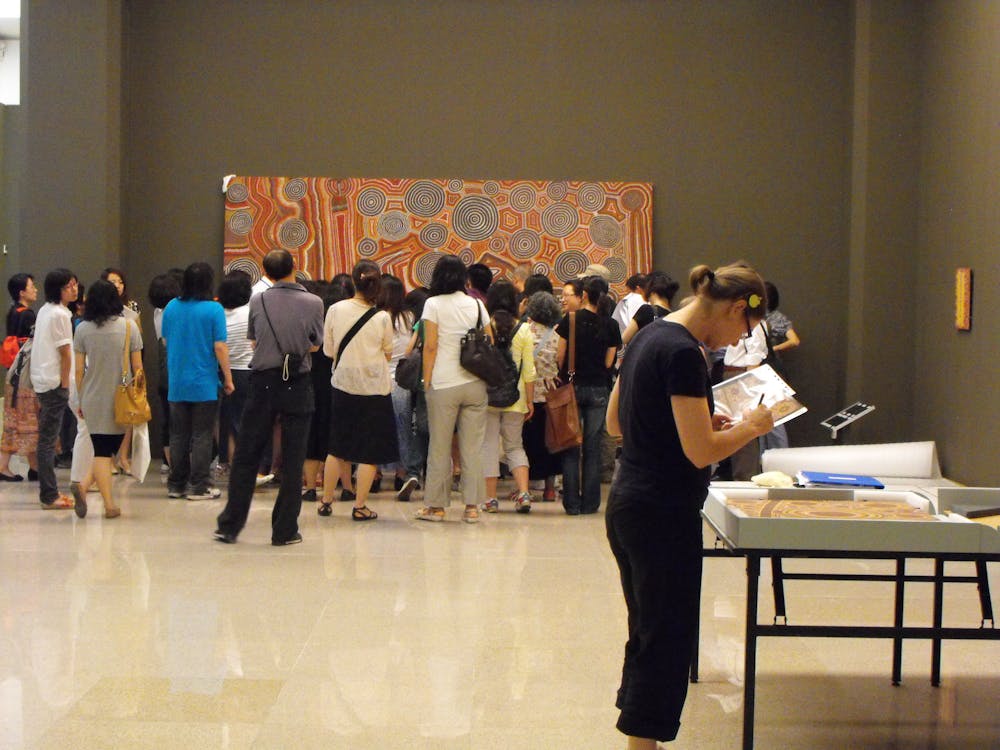
It is the essence of scientific knowledge to be testable and reliable over time, but there is more than one way of assuring this. Steve Salisbury, a palaeontologist from the University of Queensland, can produce a rebooted palaeontology that treats Indigenous people as colleagues and values mythological accounts of dinosaurs as knowledge that complements the discipline, not as mere belief. In the aesthetic field, we have already seen the revolution in painting that was the movement originating in Papunya.

People examine a painting in the exhibition, Papunya Painting: Out of the Australian Desert at the National Art Museum of China in 2010. Karen Fielding/National Museum of Australia

Art critic Robert Hughes called it the last great art movement of the 20th century, and it continues to inspire other art forms. It also created a valuable industry, spinning off into other economic benefits. Each major institution can thus be reset with the Indigenous foundations in place. Mabo was such a moment for Australian law.


Read more: Friday essay: how the Men’s Painting Room at Papunya transformed Australian art


In this way, the somewhat difficult concept of civilisation can be recuperated, not by rising to the defence of unlimited scientific and economic progress, nor by taking Enlightenment values as given, but by specifying how the institutions that negotiate such values can be reformed. I clearly don’t mean “reform” in the euphemistic sense used by conservatives bent on actually dismantling these institutions or selling them off. They are happy to see one set – economic institutions – as “naturally” dominating all the others.

One must be careful not to let the concept of “civilisation” be too easily returned to cultural or racial categories (as in “Islamic” or “Jewish” civilisation) that lead to Samuel Huntington-like clashes. Instead, the focus here is more usefully on the collective value of public institutions as defenders of civil behaviour and common resources, including the resources usually called “natural”.

Paddy Roe had a beautiful way of expressing the sovereignty of his Goolarabooloo country. He invited everyone in. He was delighted to teach people, show them places and sing the songs. He set up one of the first Indigenous heritage trails, the Lurujarri Trail, which his descendants have run for 30 years. It has invited hundreds of people to walk a songline along the beach north of Broome. As they walk they get a feeling for country (the local word for this is “liyan”) that may even be transformative for them, a bit like the curiously named “naturalisation” ceremonies that initiate the new citizens of a nation.

It is a curious name because the usual ceremony is simply about giving a person a new legal status. But I’d like to appropriate the term to drive home my conclusion. Naturalisation is not about getting closer to the nature of a country. No one is “close to nature”. No, not Indigenous people, even if wilderness advocates like to think so. We are all negotiating our way through the inevitable entanglements of nature and culture.

So to avoid the pitfalls of a notion of civilisation as forever transcending and dominating nature, with the pious hope of leaving barbarous instincts behind, we might have to take the ecological step of imagining future Australian citizens being “re-naturalised” in particular “countries”, a process in which the natural and the civilised are no longer in opposition. The controls of the modernist airliner have now been recalibrated. In order to land we shall have to be refitted, realistically, to the scale of what each territory is capable of sustaining.

With the Anthropocene, says Bruno Latour, we have made the “rather distressing discovery that humans have become a geological force”, one that is capable of destroying our planetary home. But he goes on to say it could become “an index of an entirely different composition: that of a possible civilisation”. This is a new kind of civilisation that he calls “earthbound”, meaning both tied to territory and heading towards it.

As Australia continues its work-in-progress that I have attempted to call our “hybrid civilisation”, we can weave into its composition the knowledge of country, and the love of country, that makes us all its privileged custodians.

ref. Friday essay: rebooting the idea of ‘civilisation’ for Australian soil – http://theconversation.com/friday-essay-rebooting-the-idea-of-civilisation-for-australian-soil-112682


Grattan on Friday: Josh Frydenberg has a great job at the worst time

]]>

Source: The Conversation (Au and NZ) – By Michelle Grattan, Professorial Fellow, University of Canberra

Josh Frydenberg is highly ambitious – in the fashionable jargon, you’d call him a “forward-leaning” politician. But even he must be surprised, reviewing the past 12 months, at where he is, given where he was.

Mid last year he was working up the National Energy Guarantee for the Turnbull government. By August that had imploded, decapitating the then prime minister but catapulting Frydenberg into the treasurership.

Great job. Just an unfortunate time to have it. Rather a parallel with the situation of Chris Bowen, appointed treasurer in the ill-fated second Rudd government, and now Frydenberg’s opposite number.

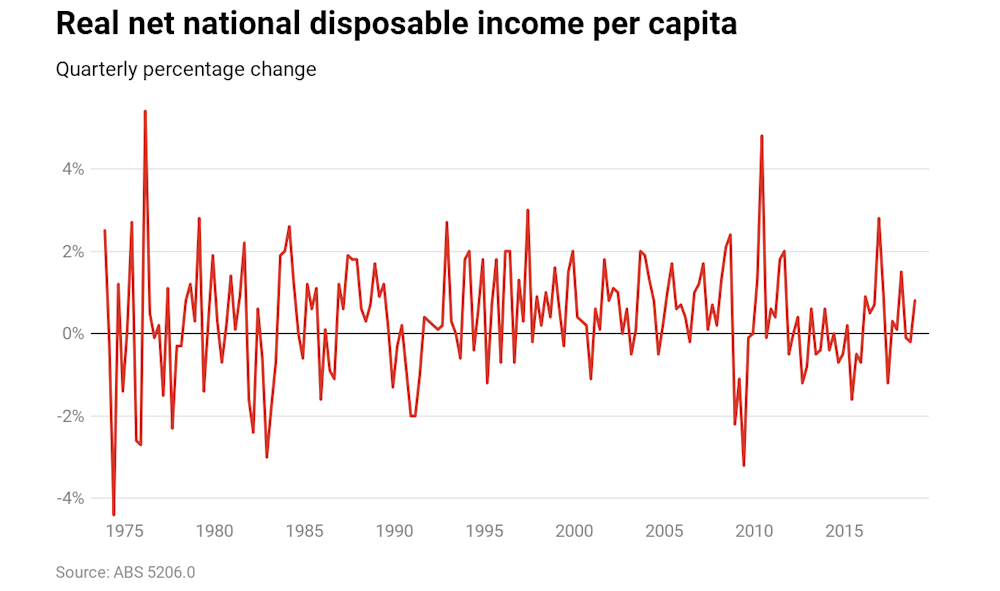
As Scott Morrison is trying to persuade people that voting Labor will land them in a recession (he is careful with the wording but that’s his thrust) Frydenberg this week had to counter the economic pointy-heads seizing on the latest national accounts as showing a “per capita recession”.

To put this notion in simple terms, the low December quarter growth rate (0.2%) when looked at against population, meant that on a per person basis growth has now gone backwards for two quarters.

The technical definition of “recession” is two quarters of negative growth.

It should be stressed that Australia is NOT in a recession. But you see the political risk for the government of these musings. No wonder Morrison dismissed the “per capita recession” term as a “made up” statistic.


Read more: Vital Signs: Australia’s sudden ultra-low economic growth ought not to have come as surprise


Leaving the “per capita” debate aside, with the government campaigning on its economic management, it is not good for it to have the latest numbers showing growth slowing to an annual rate of 2.3%, though Morrison tries to feed the economic challenges into his don’t-trust-Labor narrative.

The national accounts are the last big set of economic numbers before the April 2 budget. The Treasury boffins, under secretary Phil Gaetjens, are now putting them into the figuring as Morrison, Frydenberg and other members of cabinet’s expenditure review committee work on the policy measures in a budget that will be driven almost totally by the needs of the election to be held within weeks of its delivery.

Gaetjens and Frydenberg might reflect, incidentally, that this, the first budget for each of them as secretary and treasurer, is likely to be their last in these roles – if the opinion polls are right.

Labor has indicated it would probably sack Gaetjens (who was chief of staff to Morrison when he was treasurer). And a treasurer ousted in an election wouldn’t normally expect to get another bite at that job, though Bowen looks like he will be the exception.

The stakes could hardly be higher for Frydenberg’s maiden budget. It will needs a certain “wow” factor – a centrepiece, or *series of measures, to appeal to as many voters as it can reach. It has to avoid landmines (sometimes even small things can blow up) and dubious numbers; either could give the opposition grist for the scrutiny that will follow.

The political climate in the run up to the budget will be influenced by another election – on March 23 in NSW.

With the two sides in that state close in the opinion polling, uncertainly about what’s happening in the regions and an optional preferential voting system, there is a lot of uncertainty about what will happen there.

In a legislative assembly of 93, 47 is the number for a majority. If the Coalition loses six seats it will be forced into minority government. At present the Berejiklian government has 52 seats, Labor 34, Greens 3, the Shooters, Fishers and Farmers 1, and there are 3 Independents.

If there is a big swing in NSW, it will further rattle the federal Coalition before the budget. The only upside would be the Morrison government might hope NSW voters had got rid of some of their general angst in the first of the two visits they are making to the polls this year.

On the other hand, if the Berejiklian government did better than anticipated, that would give a morale boost to the Feds (whether justified or not).


Read more: Politics with Michelle Grattan: Ian McAllister on voters and issues in the coming election


Once budget week (which will include Bill Shorten’s reply on the Thursday night) is finished, the question will be whether Morrison announces the election immediately for May 11, or opts for a May 18 poll.

(There has been speculation he could go even later, to the extreme inconvenience of the Australian Electoral Commission, but that would seem pointless.)

As things stand, it is hard to see what the government would gain by delaying until May 18. With campaigning already in full swing, voters will be totally sick of it by budget time and surely will want the election over as soon as possible after that.

If the government did not call the election immediately budget week was finished, this would allow more Senate estimates hearings. That week contains two days of hearings; without a poll announcement, they would continue another week.

These interrogations of ministers and officials work to the advantage of an opposition. Remember how in 2016, Labor extracted the decade-long cost of the proposed company tax cuts (nearly $50 billion) which it used to effect in its campaign?

Whether the election is May 11 or 18, the campaign will be much about the budget, putting maximum pressure on Frydenberg, only months into the treasury job. Not least, colleagues will be able to look at his performance through the lens of his potential suitability for the job of opposition leader.


Read more: Event: your Q&A with Michelle Grattan in Melbourne


The week brought some extra pressure on the Treasurer, this time on the home front, with high-profile barrister and refugee advocate Julian Burnside declaring he will run for the Greens in Frydenberg’s seat of Kooyong. Burnside will be campaigning hard on climate change. A former member of the Liberal party, Oliver Yates, was already in the Kooyong field, with messages on climate and Liberal divisions.

In 2016, Frydenberg had about 58% of the primary vote with Labor and the Greens nearly equal (almost 20% and nearly 19% respectively).

Frydenberg’s primary vote would have to take a huge hit for him to be at any risk (and his record on the NEG has him on the right side of the climate debate). But the presence of Burnside will mean the Treasurer will have to put extra effort into his electorate just when he’ll be stretched to the maximum in the national campaign.

ref. Grattan on Friday: Josh Frydenberg has a great job at the worst time – http://theconversation.com/grattan-on-friday-josh-frydenberg-has-a-great-job-at-the-worst-time-113129

It’s not about him: leading lessons from Manchester United’s caretaker manager

]]>

Source: The Conversation (Au and NZ) – By Mazlan Maskor, PhD and Master of Organisational Psychology Candidate | Leadership Science, The University of Queensland

If you see a group of people and hear them chanting, “Ole’s at the wheel! Tell me how good does it feel!” you have found yourself among Manchester United supporters.

Manchester United (known as Man U, or just United) is one of the world’s best-known and most successful football clubs, a dominant force in English and European football for decades.

But two months ago it was looking like a tumbling, lethargic, vulnerable giant – in sixth position in the English Premier League, way behind arch-rivals Liverpool (in first place) and Chelsea (fourth).

Since then it has climbed to fourth in the Premier League and advanced to the quarter finals of both the FA Cup and the UEFA Champions League.

The major change: the sacking of team manager Jose Mourinho and his replacement with Ole Gunnar Solskjaer.

Manchester’s Diogo Dalot, left, and Scott McTominay, right, celebrate after defeating Paris Saint-Germain on March 6 in the UEFA Champions League. Ian Langsdon/EPA

United’s turnaround has been dubbed “The Solskjaer Effect”. It defies conventional wisdom about leadership.

Mourinho, a professional coach and manager since 2000, was considered one of the best in the business. Appointed to manage United in 2016, he was expected to deliver football glory. But his tenure was mired by controversy, conflict and poor performance.

Solskjaer’s appointment as caretaker manager came as a surprise. He has had a long association with United as a player, but was unproven as a manager of a big club.

What is it about Solskjaer that has brought United’s resurgence? It’s a story of successful “identity leadership”, rallying a disengaged group of underperforming players into a cohesive and effective unit.

Our glory is more important than my glory

An effective leader advances the group’s goals over personal goals.

Solskjaer has shown he understands what he needs to do for United to win games and trophies. As the Norwegian explained in one press conference, his job “is to help the players and make them grasp the opportunity now because they all want to be part of Man United”.

Jose Mourinho, a controversial figure at Manchester United. cristiano barni/ Shutterstock.com

“I’m going to be here to help them,” he said, “to help the team.”

The team’s impressive victories have seen him already surpass several records by going undefeated in his first 11 games in charge.

He has humbly played down these achievements. When pronounced the English Premier League’s manager of the month in January, he was quick to attribute the award to the contribution of his coaching staff and players.

This is a stark contrast from his predecessor. Mourinho was often divisive and adversarial. Among Mourinho’s less endearing moments was when he reportedly stormed out of a press conference in August 2018 demanding more respect for his individual success as a coach.


Read more: Is there a way back for José Mourinho? As a sport psychologist, I see a hard road ahead


True leaders always look to deflect the attention on them as individuals. They emphasise that they represent the group. They declare their commitment to serving, as Solskjaer has done, regardless of whether he gets hired permanently.

We are stronger together

An effective leader brings people together.

Solskjaer joined United at a time of turmoil and chaos. With positivity and exuberance, he has united the team with a collective cause. “I love working with good players,” he has said. “They are good people, the players. They want to learn. They want to improve.”

After the team’s first loss under his leadership, he called it a learning experience and avoided the blame game.

Manchester United players celebrating their 2-0 win against Chelsea in the FA Cup on February 18, 2019. Silvi Photo/Shutterstock.com

By showing confidence in his players, he has empowered them to perform.

This again has been a contrast to Mourinho, who alienated players by chastising them in public.

A true leader treats every person in their team as valuable, no matter what the person’s role. Solskjaer’s collaborative approach acknowledges that everyone contributes to the success of the group.

Which is to say, the group is greater than the sum of its parts.

Group values

An effective leader respects the identity of the group.

Solskjaer played for United for almost a decade, and was integral to the club’s golden era. He then spent a few years on the coaching staff. He knows what Manchester, the city, the club and the team, are about.

The way United is supposed to play, he says, is “exciting football” – using fast-paced and attacking tactics.

Mourinho, on the other hand, attempted to stamp his own brand of defensive football on the squad – a style of play described as stodgy and unstructured. In doing so, he disregarded the club’s identity and stymied the players’ natural strengths.

Overall, Solskjaer’s behaviour demonstrates the principles of identity leadership, a model of effective leadership supported by psychological science research.


Read more: Leaders only inspire when we feel part of their group


To be a great leader you don’t have to be most successful, intelligent, or even most competent person in the room. It is about how hard you work at managing a collective sense of “we” among the people in a group and respecting the values of this group.

Full disclosure: the author is a proud Manchester United supporter.

ref. It’s not about him: leading lessons from Manchester United’s caretaker manager – http://theconversation.com/its-not-about-him-leading-lessons-from-manchester-uniteds-caretaker-manager-112281

Indonesia deploys 600 crack soldiers to guard Trans-Papua highway

]]>
TNI soldiers in Wamena preparing to fly to Nduga where the attack against Istaka Karya workers and military engineers happened last December. Image: Iwan Adisaputra/Tempo/Antara

Pacific Media Centre Newsdesk

Six hundred crack Indonesian soldiers are being deployed this week to provide security for the construction of the Trans-Papua highway.

“This time about 600 troops are being deployed – 450 personnel from the Army’s Strategic Reserves Command (Green Berets) Raider Infantry Battalion and the remainder from the Zeni Combat Battalion (Yonzipur),” said Hasanuddin XIV regional military commander Major-General Surawahadi.

The general said this during a break in an event marking the deployment of the troops at the Soekarno-Hatta Peti Kemas port in Makassar, South Sulawesi, last Sunday, reports Tempo.

READ MORE: Human rights watchdog calls for police probe into ‘unclear’ Nduga killings

During the release of the elite troops, Surawahadi reminded them to carry out their duties to the best of their abilities in pursuing the mission to secure the controversial Trans-Papua highway bridge construction.

Work on the highway was temporarily halted after an attack on construction workers by “irresponsible rogue elements”.

-Partners-

In carrying out their mandate, Surawahadi reminded them that this was an “honourable and trusted duty” given to them by the state.

“You have been given a duty and responsibility that will not be light in safeguarding the Trans Papua construction, including security disturbances from armed separatist groups”, he said.

General Surawahadi added that this “heavy duty” would be light if it was performed devoutly, sincerely and with a full sense of responsibility.

He reminded the troops that they were professional army soldiers who had been trained and loyal and who held firmly to the Sapta Marga (military oath), the Sumpah Prajurit (soldiers oath) and the 8 Wajib TNI (TNI’s eight-point personnel duties) as guidelines in carrying out their duties.

“Discipline, loyalty, solidarity and always guarding your character are the hallmarks of skilled and professional soldiers,” added General Surawahadi.

Last December, 16 construction workers were shot and killed at the Trans Papua highway in Nduga following in an attack by the West Papua National Liberation Army (TBNPB) led by Egianus Kogoya.

Indonesian authorities described all Papuan pro-independence groups struggling for their indigenous homeland’s freedom as “separatists”.

Slightly abridged translation by James Balowski for the Indo-Left News Service. The original title of the article was “Jaga Pembangunan Trans Papua, TNI Kerahkan 600 Prajurit”.

Print Friendly, PDF & Email

Article by AsiaPacificReport.nz

Remember Blockbuster, Nirvana and pagers? The new Captain Marvel lives in the 1990s

]]>

Source: The Conversation (Au and NZ) – By Michael Milford, Professor, Queensland University of Technology

Captain Marvel flies into movie theatres from today, and apart from introducing a great new hero who combines the righteousness of Captain America and the humour of Thor: Ragnarok, it’s also a cultural reference bonanza for anyone who grew up as a child of the 1990s.

There are the obligatory references to the now-declining Blockbuster video store, a fantastic music soundtrack (Nirvana, Hole, TLC to name a few), and tech jokes galore.


Read more: Fingerprint and face scanners aren’t as secure as we think they are


We see the origin story of her character Carol Danvers/Captain Marvel, meet the Shield agents in the early days, and get set up with an interstellar conflict with some satisfying subversion of your typical expectations.

Blockbuster takes a beating, and perhaps a premonition of its future prospects. Marvel Studios.

So let’s go back to the ‘90s (like the movie’s website does) to some long-forgotten tech as well as some that has aged surprisingly well, and see how it all checks out, both scientifically and historically.

Don’t mess with this pilot.

Projecting holograms through a landline phone

Upon landing on Earth, Danvers raids a Radioshack shop and with a few deft modifications manages to set up a hologram communicator from a conventional wired phone.

The projection side of this feat would take some pretty impressive tweaking of 1990s technology (she appears to set everything up in a few minutes), but the bandwidth side of things can be analysed – that’s the amount of data needed for a hologram communication.

The bandwidth required for holograms varies widely, but figures of about 10Gbps are mentioned in the literature. There are also proposals to use 5G’s up to 10Gbps bandwidth to do holographic projections.

So if Danvers’ modifications have upped the bandwidth to modern day 5G standards, it’s feasible she could receive sufficient data to get a hologram up and running.

Verdict: A plausible projection.

Digital reading speed

There are lots of nostalgic tech moments in the movie – an internet connection dropping out, and the whole crew waiting around for a computer to read data from a CD.

Although done for humorous reasons, this depiction is entirely accurate, as anyone who lived through the 1990s can attest.

CD read speeds varied from hundreds of kilobytes (kB) per second to 6 megabytes (MB) per second. Even with the fastest disc drives of the time, it could take many seconds to read even a moderate-sized file, and minutes to read an entire CD’s worth of data (about 700MB).

Compare that to today – we have USB drives with capacities up to 1 terabyte, and read speeds of more than 400 megabytes per second.

Verdict: Painfully on point.

Fighters – not much has changed

In one of the secret hanger bases in the movie we get a shot of what looks remarkably like a Lockheed Martin F-22 Raptor fighter aircraft.

We get a sneak peak at an F-22 Raptor. Marvel Studios.

With the movie set in 1995, it’s somewhat plausible there could be a prototype F-22 at a secret base – the plane flew for the first time in 1997. Danvers is meanwhile seen to be flying F-16s at a normal aircraft base.

What’s also interesting is while on-board electronics and related technology have changed significantly, the core airframe tech has not advanced much over the past nearly quarter of a century – the F-22 is still considered to be one of the best aircraft around today.

Verdict: Fighter is fair.

Lifting fingerprints off sticky tape

To escape a fingerprint-tagged room, Nick Fury grabs a piece of plastic tape and runs it over where a staff member grabbed his ID card. He uses the fingerprint on the tape on the reader to unlock the door.

Lifting fingerprints. microgen/123rf.com

Grabbing fingerprints off a surface with tape can be done if the surface is prepared through a process called dusting. Dusting uses a fine powder to stick to the oily residue left by a fingerprint, which is then transferred to a piece of tape.

But Fury doesn’t appear to do any surface preparation, lifting the print directly off the ID card, which is pushing plausibility.

Verdict: Fury’s fingerprinting fail.

What do we know about non-carbon-based life?

All life on Earth is based on the element carbon. This is why when you burn either wood or meat, all you are left with is charcoal, which is mostly just pure carbon.

But when one of the alien Skrulls dies and the body examined, the doctor says it is definitely not carbon-based.

This is theoretically possible. We’ve known for a long time that life on other planets could also be based on other elements that are similar to carbon, for example silicon.

Even though carbon and silicon might look very different, chemically they are very similar regarding the kinds of chemical reactions that are needed to support life. This is because they are in the same column in the periodic table of elements.

But then the doctor says something strange, whatever the alien is made of, it’s not from the periodic table.

This is highly unlikely. All known matter in the universe exists on the periodic table, and the alien doesn’t seem to be made of any strange unknown substance like dark matter, just rubbery green flesh.

Verdict: Off the planet.

Paging the ‘90s

Nick Fury’s pager features quite prominently in this movie. Paging technology was all the rage back in the late 1980s and ’90s.

With today’s mobile and smart phones, texting (SMS and MMS), a huge range of messaging apps and always-on connectivity everywhere, you might think pagers would have gone the way of dial-up internet. But that’s not quite so.

Pagers have a much longer range than phones, are harder to hack, don’t store conversation histories (important for privacy and security), and are more reliable during natural disasters.

They are still used by many emergency services and medical personnel who need to be contactable in extreme emergencies even when all other power and communications might be down.

Verdict: Retro tech still comes to the rescue.

The verdict

She gets knocked down … and she gets up again. Marvel Studios.

The movie is a fun chance to be reminded of all the technology and culture of a quarter-century ago, and to think how much (and how little) has changed.


Read more: Virtual reality adds to tourism through touch, smell and real people’s experiences


The movie’s depiction of the 1990s is generally pretty spot-on – a fun way for a younger audience to be introduced to what life was like before smartphones and ubiquitous high-speed internet. The pain of removable media, unreliable and slow internet connections, and having to go to the store to get a movie is all captured humorously on film.

Marvel Studios

ref. Remember Blockbuster, Nirvana and pagers? The new Captain Marvel lives in the 1990s – http://theconversation.com/remember-blockbuster-nirvana-and-pagers-the-new-captain-marvel-lives-in-the-1990s-112617

Māori and Pasifika leaders report racism in government health advisory groups

]]>

Source: The Conversation (Au and NZ) – By Heather Came, Senior Lecturer, Auckland University of Technology

Māori and Pasifika populations in New Zealand experience poorer health than other New Zealanders. Some of this inequity is due to health policies and uneven access to health care.

The New Zealand government often appoints committees and advisory groups, connected to government agencies, in an effort to reduce inequities in health. In our research, we explored the experiences of Māori and Pasifika members on advisory boards in influencing policy development.

We interviewed Māori and Pasifika public health leaders, with a century of collective experience between them, and found that their knowledge was often devalued. They experienced tokenistic engagement and racism. Some indicated that it took considerable effort to establish credibility, be heard and make an impact.

Here are five ways we found that racism manifests in health advisory groups.


Read more: Aboriginal – Māori: how Indigenous health suffers on both sides of the ditch


1) Navigating the room

All participants acknowledged the strategic importance of advisory group work and the challenges of being a solitary or minority voice. They experienced not being heard, a lack of respect, and the absence of authentic consultation and support for Māori and Pasifika health. Several participants noted their contributions were often not recorded in minutes.

The leaders we interviewed developed their own strategies to navigate this challenge. They drew strength and solidarity from other minorities and spoke out or used official complaints channels when necessary. They were proactive in seeking better outcomes and used their seniority to ensure the group remained focused on reducing inequities of health.

2) The battle for evidence

Participants noted that Māori and Pasifika knowledge and research are considered less rigorous and perceived as anecdotal evidence. Government officials relied on research from overseas, usually North America and Europe, which was assumed to be “gold standard” and “best practice”, even though it might not have been tested locally.

The leaders observed how white participants in the advisory group assumed their knowledge was superior and were reluctant to examine the causes of health disparities in ways that would generate equitable health outcomes.

3) Working with government officials

Those interviewed for our research project found government officials had their own cultural and political biases. They were often subsumed in the “bureaucracy of government” and had to work within the politics of prevailing ministers. When combined with high staff turnover and a higher proportion of officials who are new migrants or not culturally competent or experts in the subject matter this led to the development of strategies that are likely to generate health inequity.

4) Suspicions of tokenism

Good policy building requires authentic engagement and functional relationships, yet this was not the experience of those we interviewed. They experienced being invited to advisory groups to create an impression of inclusiveness rather than having a substantive input into policy.

A specific example of this is engaging with Māori kaumatua (elders) as only a ceremonial presence. They are often there to open a meeting instead of being invited to bring their particular cultural expertise to ensure there is a stronger Māori voice.

5) Witnessing and experiencing racism

Most participants disclosed witnessing and experiencing behaviour consistent with racism – patterns and practices of disadvantage or marginalisation. Some named it “covert” or “sophisticated” racism.

Specific examples included a health equity champion who didn’t want anything to do with Māori health, and a proposed breast screening program that was going to target Māori women through a mosque, even though Māori make up a very small percentage of people attending mosques.

We consider that it is the government’s obligation to engage with Māori to fulfil obligations under the te Tiriti o Waitangi. But institutional racism within the policy process fails to create meaningful engagement and consultation.


Read more: Explainer: the significance of the Treaty of Waitangi


In our research we observed the determination of Māori and Pasifika leaders to remain focused on health outcomes and to engage with government. More work is needed, but the possible solutions we identified include cultural and anti-racism training for white policymakers.

ref. Māori and Pasifika leaders report racism in government health advisory groups – http://theconversation.com/maori-and-pasifika-leaders-report-racism-in-government-health-advisory-groups-112779

In Stephen Sewell’s charming Arbus and West, feminism boils to the surface

]]>

Source: The Conversation (Au and NZ) – By Sandra D’urso, Researcher, The Australian Centre, University of Melbourne

Review: Arbus and West, Melbourne Theatre Company


In the world premiere production of Arbus and West, playwright Stephen Sewell appears to be straying into unchartered territory. He is renowned for being a hard-hitting political writer, whose epic plays are almost always described as “dark”.

Here Sewell reimagines the real-life encounter between Hollywood icon Mae West and avant-garde photographer Diane Arbus. Key moments in the lives of these two fascinating 20th century artists provide the seductive scaffolding for the play.

It is far from documentary-like, however. The dialogue is charming and comedic, while the theme of women’s eviscerated position in society slowly boils and erupts to the surface.

The biographies of both Arbus and West are compelling fare. West is lauded as a trailblazing Hollywood performer, an activist and emblem of female sexual agency. Arbus is known for redefining the photographic gaze, focusing on human subjects who were considered pariahs and shunned by American society during the 1960s. In 1971, Arbus committed suicide.

West felt Arbus’s portrait of her was unflattering and in Sewell’s play never forgives her for it. But the play doesn’t rest entirely on fact. The women are at once real historical figures but also emblems of different artistic genres, political sensibilities, and strands of feminism.

Arbus and West each have compelling biographies. Jeff Busby

Arbus and West’s encounter is a mere snapshot in time, taking place over the course of an afternoon. The production transforms this small moment into a sweeping panorama, as though the event of their meeting transcended historical time altogether, delivering a dreamy interpretation of the human condition, and the position of women within it.

The drama takes place in West’s apartment, a monument to camp style, with its chandelier, white upholstered furniture, and multi-storeyed window bathing the space in an almost transcendental light.

Many scenes unfold as duologues between Arbus (Diana Glenn) and West (Melita Jurisic), but also between West and her live-in dresser and devoted assistant Ruby (Jennifer Vuletic).

The play begins with Ruby eagerly preparing to assist West with her costume changes during a stage performance. We hear but do not see West singing before an adoring audience – a master of ceremony refers to the size of her breasts as the fictional crowd roars.

The play is a series of duologues between Arbus and West, and between West and her assistant Ruby. Jeff Busby

A sense of creeping nostalgia sweeps over the stage, enhanced by the effect of West’s voice travelling across distant space and time. West retreats backstage when Ruby reluctantly delivers the news of Arbus’s suicide. She shrugs it off but is clearly affected.

The female gaze

The play then jumps back in time to where West is preparing for an interview and photoshoot with an unknown photographer. When the photographer named Arbus arrives, we discover she’s a woman. West doesn’t know how to be the object of a woman’s gaze. It is foreign, disconcerting, far too intimate and penetrating.

Quippy one-liners dominate the first act: “If you’re a photographer”, West says to Arbus, “I’m a monkey’s gynaecologist”.

Discussion about what is real and what is fantasy abound. Arbus seduces West with her poetic interpretation of life but repels her in equal measure. West and Ruby agree to unravel the mystery of Arbus: what does she want, why does she insist on capturing the truth, the ugly side of humanity?

By the end of the first act we see West in a state of rapture. She’s convinced that Arbus is an emissary come back from the dead to deliver her a message: that she’s been living a half-life from which she needs to “wake up”.

West unravels the message while spontaneously sharing an earth-shattering confession with Ruby, recalling the gruesome beheading of a childhood friend. The murderer was the girl’s father – his motive can only be described as Freudian. West has a dawning realisation: Arbus is a manifestation of the murdered girl.

Stephen Sewell’s play escapes definition as one particular genre. Jeff Busby

Jurisic as West is captivating in this moment, as she grapples with the truth and horror of the supressed memory. Sarah Goodes’ directorial hand is subtle, but shifts the mood convincingly with West delivering the details of the murder as a direct address to the audience.

Part of the pleasure in Sewell’s writing for this play is that the genre escapes us. Not a straight theatrical biopic, it verges on a supernatural crime thriller, a feeling greatly enhanced by the elements of production and the actors’ commanding performances.

But we already know who the dead person is (Arbus) and the circumstances surrounding the death: suicide. Here Sewell delivers a different kind of crime thriller that transcends the particulars of these characters’ lives. The silent villain is an enduring misogyny that sweeps across historical time like a nuclear explosion.

Towards the end of the play, Arbus whispers a secret into West’s ear. It is a galvanising moment, where the pair become conspirators. After much suspicion and argument, West finally acquiesces to Arbus’s desire to photograph her candidly.

It is as though the playwright is whispering to us. I can’t be sure of the message, but I suspect that Sewell has found a different way to be political with this play. He empathises with West’s realisation that being a woman is tantamount to living in a dream state, trapped in a condition of artifice and alienation from the world.

It is to enter a contractual agreement to live as though you were a species of living dead trapped beneath a crust of glamour. A narcotic existence, so seemingly pleasurable and sensual that the terror of it escapes all our notice.

I may be over-reaching here, but in the era of #MeToo in the Australian theatrical context there is something deeply hopeful about our most prominent playwrights developing a feminist politics in their work.


Arbus and West is playing at Arts Centre Melbourne until March 30.

ref. In Stephen Sewell’s charming Arbus and West, feminism boils to the surface – http://theconversation.com/in-stephen-sewells-charming-arbus-and-west-feminism-boils-to-the-surface-112950

Acting on gender-based violence must be a priority for the next federal government

]]>

Source: The Conversation (Au and NZ) – By Bianca Fileborn, Lecturer in Criminology, University of Melbourne

This is part of a major series called Advancing Australia, in which leading academics examine the key issues facing Australia in the lead-up to the 2019 federal election and beyond. Read the other pieces in the series here.


Gender-based violence (GBV) seems recently to have been almost constantly on the public radar. The global #MeToo movement prompted daily reporting on sexual violence (albeit with a focus often limited to glamorous Hollywood celebrities).

In Australia, high-profile cases such as that of Saxon Mullins sparked renewed debate on sexual consent and led to a New South Wales government inquiry.

The prominence afforded to GBV in recent public debate may give the impression that progress is being made – that it’s “on the agenda” and our institutional, social and cultural responses to this violence are improving. To a certain extent, this is true.


Read more: FactCheck: is domestic violence the leading preventable cause of death and illness for women aged 18 to 44?


A range of recent developments suggest our efforts to address GBV are increasingly robust and sophisticated. These include the Royal Commission into Family Violence in Victoria and the Andrews government commitment to implement all recommendations arising from this. In Queensland, there has been debate about whether the state’s archaic responses to sexual offences should be reviewed.

Australia has a longstanding (though not unproblematic) National Plan to Prevent Violence against Women and their Children. Several national organisations are dedicated to researching and preventing GBV. More recently, OurWatch has announced its Respect and Equality Program, a comprehensive, whole-of-institution approach to working with universities to prevent sexual violence on campus.

So far, so good?

At the same time, the evidence on GBV paints a grim picture.

Despite these aforementioned efforts, men continue to murder women in Australia at a rate of at least one woman a week. Names such as Eurydice Dixon, Aiia Maasarwe and Masa Vukotic remind us of this fact all too well.

However, we must remember that in the vast majority of cases, men kill women they know. Most recently, the ex-partner of dentist Preethi Reddy has been identified as a key suspect in her murder.

One in five women will experience sexual violence and one in two will experience sexual harassment in their lifetime.

Crime data suggest the reporting of sexual violence is increasing. This could be interpreted as a positive development. Given the vast under-reporting of sexual violence, survivors may be feeling more confident and able to report.

However, prosecution and conviction rates for adult sexual offences remain low. And the criminal justice system is still considered a largely negative experience for victim-survivors.

The National Community Attitudes Survey shows that attitudes towards GBV continue to be poor in a large minority of the population. Hostile reactions to the recent Gillette campaign suggest that at least some men (#notallmen) remain resistant to interrogating and changing norms of masculinity that underpin this violence.

Despite some undoubtedly positive developments, much more work remains to be done. GBV is a complex, multifaceted issue and there is no magic bullet that will solve such an ingrained issue. It is a stubborn problem that requires a sophisticated, well-resourced and sustained response.

Here are some of the issues politicians should be addressing in the lead-up to the federal election.

Service provision and funding

Front-line services providing support to victim-survivors continue to be vastly underfunded and unable to keep up with demand. For example, the last federal budget allocated A$18.2 million towards such services. This is a paltry amount when compared to the A$48.7 million dedicated to contentious plans to “commemorate” Captain Cook.

The Morrison government has since pledged to dedicate $328 million to addressing domestic violence should the Coalition be re-elected. While this is considerably more than the additional $60 million in funding announced by Labor to support women leaving violent relationships, both figures pale in comparison to the $1.9 billion in funding from the Andrews government in Victoria.

Given that GBV is estimated to cost the Australian economy A$22 billion per year, this level of (under)funding speaks volumes about the priority placed on supporting survivors and working with perpetrators.

Lack of access to support is particularly acute for certain groups who may be excluded from mainstream services, or who require more specialist support. For example, LGBT, culturally diverse and Indigenous victim-survivors often face a lack of inclusive services.

The national plan may make these issues worse. It has been criticised for paying “lip service” at best to the experiences and needs of these groups, which highlights the need for a truly intersectional approach to GBV.

Inquiries and recognition

Several national inquiries are under way or on the cards that relate to GBV.

The #MeToo movement brought to light (again) the issue of sexual harassment and violence in the workplace. Promisingly, this led to the launch of a National Inquiry into Sexual Harassment in Australian Workplaces. There is already good evidence to suggest that workplace harassment is rife, under-reported and has ongoing consequences, particularly for women.

It is also vital that we bring to light the experiences of under-recognised groups who sit outside the young, white, middle-class and heteronormative focus of much research, policy and practice in this field.

The recently announced Royal Commission into Aged Care has the potential to contribute towards achieving this. Its terms of reference include “all forms of abuse” against the elderly. Sexual and gender-based violence against older people remains largely hidden and poorly understood, often obscured under the lens of “elder abuse”.


Read more: Fleeing family violence to another country and taking your child is not ‘abduction’, but that’s how the law sees it


Calls for a royal commission into the disability sector are also well founded. People living with a disability face some of the highest rates of sexual and other violence. Despite the socially constructed vulnerability to sexual violence of people living with disabilities, there is a lack of attention to the specific support needs and prevention efforts required. Access to justice responses is limited.

Federal government support for a royal commission may go some way to addressing these issues. However, while such inquiries can be essential for bringing to light the nature and extent of GBV, on their own they are insufficient to generate change. We must also ensure recommendations are fully implemented and appropriately resourced.

Working towards primary prevention

Finally, we must ensure that efforts to prevent violence before it occurs continue to be supported, evaluated and resourced.

These efforts must be informed by a broad cultural and social approach if we are to eliminate GBV in all its forms. An expanded focus that includes other systems of oppression that underpin GBV, including heterosexism, racism, ableism and ageism, is required.

Evaluations of primary prevention campaigns and educational efforts show that these can and do lead to positive change.

To really bring about change, our approaches to prevention need to be holistic, multifaceted and consistently reinforced across different contexts.

ref. Acting on gender-based violence must be a priority for the next federal government – http://theconversation.com/acting-on-gender-based-violence-must-be-a-priority-for-the-next-federal-government-110765

The dingo is a true-blue, native Australian species

]]>

Source: The Conversation (Au and NZ) – By Bradley Smith, Senior Lecturer in Psychology, CQUniversity Australia

Of all Australia’s wildlife, one stands out as having an identity crisis: the dingo. But our recent article in the journal Zootaxa argues that dingoes should be regarded as a bona fide species on multiple fronts.

This isn’t just an issue of semantics. How someone refers to dingoes may reflect their values and interests, as much as the science.

How scientists refer to dingoes in print reflects their background and place of employment, and the Western Australian government recently made a controversial attempt to classify the dingo as “non-native fauna”.


Read more: Why the WA government is wrong to play identity politics with dingoes


How we define species – called taxonomy – affects our attitudes, and long-term goals for their conservation.

What is a dog?

Over many years, dingoes have been called many scientific names: Canis lupus dingo (a subspecies of the wolf), Canis familiaris (a domestic dog), and Canis dingo (its own species within the genus Canis). But these names have been applied inconsistently in both academic literature and government policy.

This inconsistency partially reflects the global arguments regarding the naming of canids. For those who adhere to the traditional “biological” species concept (in which a “species” is a group of organisms that can interbreed), one might consider the dingo (and all other canids that can interbreed, like wolves, coyotes, and black-backed jackals) to be part of a single, highly variable and widely distributed species.

Members of the Canis genus: wolf (Canis lupus), coyote (Canis latrans), Ethiopian wolf (Canis simensis), black-backed jackal (Canis mesomelas), dingo (Canis dingo), and a representative of the domestic dog (Canis familiaris).

But the “biological” species concept used to name species came about long before modern genetic tools, or even before many hybrid species were identified by their DNA (such as the “red wolf,” an ancient hybrid of grey wolves and coyotes found in the southeastern United States).

Few people would really argue that a chihuahua, a wolf, and a coyote are the same species. In reality there are many more comprehensive and logical ways to classify a species. In our latest paper we argue that a holistic approach to defining species is essential in the case of the dingo and other canids.

Our work shows conclusively that dingoes are distinct from wild canids and domestic dogs based on many different criteria.

Truly wild

The first criterion is that dingoes are wild animals, and live completely independent from humans. This is fundamentally different to domestic, feral, or wild dogs, which must live near human settlements and rely on humans for food and water in some way to survive.

Yes, the dingo might have arrived in Australia with humans, and we know that Aboriginal Australians have had a close relationship with dingoes following the latter’s arrival. But neither of these observations excludes dingoes from being wild.


Read more: Dingoes do bark: why most dingo facts you think you know are wrong


For example, a relationship with humans does not constitute the rigorous definitions of domestication. Consider the red fox (Vulpes vulpes), which was also introduced to Australia by people and are now free-ranging: they are also not considered to be domesticated. Neither are wild animals such as birds that we feed in our backyards domesticated simply because they are sometimes fed by us.

Ecological role

In fact, dingoes have been living wild and independently of humans for a very long time — they have a distinct and unique evolutionary past that diverged some 5 to 10 thousand years ago from other canids. This is more than enough time for the dingo to have evolved into a naturalised predator now integral to maintaining the health of many Australian ecosystems.


Read more: Dingo dinners: what’s on the menu for Australia’s top predator?


Dogs do not have the brain power or body adaptations to survive in the wild, and they cannot play the same ecological role as dingoes. From this ecological perspective alone, the two species are not interchangeable. Dingoes are Australia’s only large (between 15-20 kg), land-based predator, and as such play a vital role in Australia’s environment.

Shape and size

Viewed alone, the overall shape of the body and skull does not easily distinguish wild canids from dogs, mainly because of the sheer diversity among different breeds of domestic dogs.

But there are some important body differences between free-ranging dogs and dingoes, mainly in the skull region (as shown here and here).

Cranial 3-D reconstructions of a dingo (bottom) and a free-ranging dog (top), highlighting the differences in cranial morphology mentioned in the text.

Behaviour

Dingoes (and other truly wild canids) have some fundamentally unique behaviours that set them apart from dogs (although like shape, there are often exceptions among the artificial dog breeds). For example, dingoes have significantly different reproductive biology and care-giving strategies.

There are also differences in brain function, such as in the way the two species solve problems, and dingoes and dogs communicate differently with humans.


Read more: Why do dingoes attack people, and how can we prevent it?


Genetics

While dingoes and dogs obviously share an ancestral relationship, there is a lot of genetic data to support the distinction between dingoes and dogs.

While dingoes share ancestry with ancient Asian dogs from 10,000 years ago, the dingo has been geographically isolated from all other canids for many thousands of years, and genetic mixing has only been occurring recently, most probably driven by human intervention.

Since the 1990s, genetic markers have been in widespread use by land managers, conservation groups, and researchers to differentiate dingoes from domestic dogs.

A summary of the evolutionary relationships among wolves, dingoes and modern domestic dogs. Dingoes and other ancient lineages of dog such as New Guinea singing dogs form a distinct lineage separate from modern domestic dogs that have undergone successive generations of artificial selection.

What’s at stake?

Even acknowledging the dingo’s uncertain and distant past, lumping dingoes and dogs together is unjustified.

Labelling dingoes as “feral domestic dogs” or some other misnomer ignores their unique, long, and quintessentially wild history in Australia.


Read more: Why do some graziers want to retain, not kill, dingoes?


Inappropriate naming also has serious implications for their treatment. Any label less than “dingo” can be used to justify their legal persecution.

Further loss of dingoes could have serious, negative ecological consequences, including potentially placing other Australian native animals at increased risk of extinction.

ref. The dingo is a true-blue, native Australian species – http://theconversation.com/the-dingo-is-a-true-blue-native-australian-species-111538

Vital Signs: Australia’s sudden ultra-low economic growth ought not to have come as surprise

]]>

Source: The Conversation (Au and NZ) – By Richard Holden, Professor of Economics, UNSW

Australia’s big little economic lie was laid bare on Wednesday.

National accounts figures show that the Australian economy grew by just 0.2% in the last quarter of 2018. This disappointing result was below market expectations and official forecasts of 0.6%. It put annual growth for the year at just 2.3%.

But the shocking revelation was that Gross Domestic Product per person (a more relevant measure of living standards) actually slipped in the December quarter by 0.2%, on the back of a fall of 0.1% in the September quarter.

These are the first back-to-back quarters of negative GDP per capita growth in 13 years – since 2006.

We’re going backwards, for the first time in 13 years

The reason this is significant is that the Australian convention around what constitutes a recession is two back-to-back quarters of negative growth GDP growth.

Since more people in the economy mechanically increases overall GDP, you might think that measuring things on a per-person basis gives a better sense of whether we are better off or worse off.

And you would be right. Why then, do we talk so much about overall GDP?

One answer is that in a lot of advanced economies there isn’t very much population growth, so overall GDP is a good enough measure.

Population growth hides it

The more insidious answer in Australia is that, for a long time, our high population growth, fed by a high immigration rate, has masked a much less rosy picture of how we are doing. And neither side of politics has wanted to admit it.

At 1.6% a year, Australia’s population growth is roughly double the OECD average, which is perhaps why we hear politicians say things like “Australia continues to grow faster than all of the G7 nations except the United States,” as Treasurer Josh Frydenberg did this week.

The good news is that standard economic theory tells us that in the long run, immigration has very little impact on GDP per capita in either direction, unless it drives a shift in the population’s mix of skills.

But in the short term, it depresses GDP per capita because fixed capital such as buildings and machines has to be shared between more workers.


Read more: Solving the ‘population problem’ through policy


The business lobby doesn’t want us to focus on that because population provides more customers as well as more workers, allowing them to grow without growing domestic market share or exports.

Governments don’t want us to focus on it because adjusting for population growth makes GDP growth look small or, as at present, negative. Also, the tax revenue from the population growth is factored into the official budget forecasts – but the extra social spending needed isn’t always factored in.

Pro tip: watch for population growth as a fudge factor generating a return to surplus in next month’s budget.

There’s a better way of getting at the truth

That said, GDP itself – per capita or not – is not a great measure of the standard of living. That’s why in 2001, the Bureau of Statistics began also reporting real net national disposable income.

It is a measure with advantages over GDP. As the bureau points out, it takes account of changes in the prices of our exports relative to the prices of our imports – our terms of trade. If the prices of our exports were increasing much faster than the prices of our imports (as happened during the mining booms), our standard of living would climb and real net national disposable income would reflect it, where as gross domestic product would not, although it would reflect increased income from increased export volumes.

To get at living standards per person, which is what we are really interested in, the bureau also publishes real net national disposable income per capita.


The graph shows that so far the growth rate of real net national disposable income per capita hasn’t changed much, and that it has been negative for far fewer quarters than in the Coalition’s first term in office.

It bounces around with changes in the prices of imports and exports, and is generally climbing less than when export prices were really high.

A year of two halves?

The treasurer painted 2018 as a “year of two halves”.

The first half was great – the annualised GDP growth rate (what it would have been had it continued all year) was a very impressive 3.8%.

The second half was just 1%.

I’m not sure the change was that clear cut. As I wrote last September, there have been troubling signs for some time, despite the solid headline growth.

Household savings have been plummeting, real wage growth has been stagnant, housing prices have been falling in Sydney and Melbourne. Together they put significant pressure on household spending, which accounts for about 60% of GDP.

Those concerns are now mainstream. Good news on export prices has rescued tax receipts for the time being, and will probably also rescue real net national disposable income per capita.


Read more: Vital Signs: National accounts show past performance no guarantee of future results


But the fundamentals of the Australian economy are looking somewhat weak. Like the US and other advanced economies, we are living in an era of secular stagnation – a protracted period of much lower growth than we had come to expect.

And until we do something to tackle it, such as a major government investment in physical and social infrastructure, we will continue to faces anaemic wage growth, shaky consumer confidence, and mediocre economic growth per person.

ref. Vital Signs: Australia’s sudden ultra-low economic growth ought not to have come as surprise – http://theconversation.com/vital-signs-australias-sudden-ultra-low-economic-growth-ought-not-to-have-come-as-surprise-113026

National Redress Scheme for child sexual abuse protects institutions at the expense of justice for survivors

]]>

Source: The Conversation (Au and NZ) – By Kathleen Daly, Professor of Criminology and Criminal Justice, Griffith University

Australians can be proud of what the Royal Commission into Institutional Responses to Child Sexual Abuse accomplished, but they cannot be proud of the National Redress Scheme (NRS).

With the Joint Select Committee’s review of the NRS set to be released in the coming weeks, it’s important to look back on how the NRS emerged and the ways it strayed from the recommendations of the royal commission.

In September 2015, the royal commission released its report on redress and civil litigation. It proposed a redress scheme with three elements: a direct personal response, counselling and psychological care, and a monetary payment.


Read more: Royal commission report makes preventing institutional sexual abuse a national responsibility


And it set forth principles to guide redress, such as being “survivor-focused” by providing justice to survivors and not protecting the interests of institutions.

On June 19 2018, the NRS bill passed with bipartisan support in both houses of parliament, but it did not adhere to these principles, nor reflect the spirit of what the royal commission had recommended.

Protecting the interests of institutions ultimately prevailed over providing justice to survivors.

So how and why did this happen?

Creating a national scheme

Creating a national scheme was a complicated exercise. To do so, Australian states had to refer their legislative power for redress to the Commonwealth. Without state referral, non-Commonwealth institutions – both government and non-government – could not participate.

The Commonwealth began negotiating with the states in January 2016. In November that year, then Attorney-General George Brandis and then Minister for Social Services Christian Porter issued a press release announcing that a Commonwealth Redress Scheme (CRS) would be established.

The release said the maximum payment would be $150,000, not the $200,000 figure the royal commission had recommended.

That day, Porter held a press conference where he was asked to explain why the maximum was reduced. He said:

we have had intensive negotiations with the states and territories, and with churches and charities. And we were trying to design a monetary redress payment that offered appropriate recognition, but maximised our opportunity to get other organisations to opt-in to the scheme.

In October 2017, the CRS bill was introduced into parliament. The government’s strategy was to move the bill along while at the same time encouraging states and non-government institutions to opt-in to the scheme. If no states did so by July 1 2018, the scheme would be for survivors of abuse in Commonwealth institutions only.

That day, Porter was asked on ABC radio why people with convictions for sexual offences or other serious crimes were not eligible for the scheme. Porter explained that the decision was made in “deep consultation” with state attorneys-general who were of the “almost unanimous” view that to “give integrity and public confidence to the scheme”, there needed to be limitations for those who “had committed serious crimes, particularly sexual offences”.

The exclusion was a condition for the states to opt-in, and a “powerful reason why [the] decision was made”, according to Porter.

In the same interview, he dropped another bombshell: counselling and psychological care would be capped at $5,000 per person. No explanation was given. The royal commission did not recommend a criminal history exclusion nor a cap on counselling.

As the CRS bill moved through parliament, media stories and submissions to the Senate Community Affairs Legislation Committee focused on the reduced maximum payment, criminal history exclusion, and cap on counselling. Concerns were also raised that the scheme was for sexual abuse only, and that important scheme details were to be contained in delegated legislation, or what is also termed “the rules”. This meant the minister would announce them at a future date, and they would not be subject to parliamentary scrutiny or debate.

Two crucial elements in the delegated legislation were the Assessment Framework and the Direct Personal Response Framework. The Assessment Framework assesses both the monetary payment and monetary support for counselling and psychological care. The Direct Personal Response Framework outlines a limited number of ways a responsible institution may engage with a survivor, including an apology or statement of regret, and steps taken to prevent abuse in the future.

It was not until August 13 2018, two months after the passage of the NRS, that these frameworks were tabled by the minister. Both departed strongly from what the royal commission had recommended.

The shift from a Commonwealth to a national scheme occurred in May 2018, when a COAG intergovernmental agreement on the NRS was signed by New South Wales and the ACT. New South Wales introduced legislation referring the power to make laws about redress to the Commonwealth.

Later that month, the NRS bill was introduced into federal parliament. A Senate review in March had called attention to gaps between what the Royal Commission had recommended and what was in the CRS bill. The NRS bill maintained and, at times, widened these gaps.

The widening gaps between the royal commission and the NRS

We identified 17 contentious matters in the NRS bill.

Five matters that received considerable attention were the maximum monetary payment, criminal history exclusion, cap on counselling, assessment framework, and the eligibility of sexual abuse only.

But 12 others were just as consequential.

They related to government and institutional responsibilities (funder of last resort and institutional opt-in timeframe); application and payment requirements (single application, indexation of payment, acceptance period, deed of release, lack of external review); other eligibility criteria (no application from gaol, citizenship and residency, age limit); scheme reporting; and the direct personal response.

All 17 matters departed from what the royal commission recommended except three: the eligibility of sexual abuse only, indexation of payment, and no external review.

The pressure points for the departures were economic and political costs to government and non-government participants, and to a lesser degree, the convenience of the scheme operator.

As the NRS legislation moved toward passage in June 2018, many politicians said it was “imperfect”, but they would support it. Such support was often couched in pro-survivor rhetoric. For example, Senator Louise Pratt said:

Survivors have in some instances waited all their lives for justice, and they should not have to wait a minute longer.

In fact, politicians’ hands were tied: they could not change the bill because this would require renegotiating the framework of redress decided by members of the state and federal executive. Such delay would jeopardise the Commonwealth’s promised start date of July 1 2018.

We want to see a fair and effective redress scheme. To make that happen, elements in the current scheme will need to change.

But is there any hope for change? Perhaps.

A bipartisan Joint Select Committee (JSC) on the Oversight of the Implementation of Redress Related Recommendations of the Royal Commission into Institutional Responses to Child Sexual Abuse has been receiving submissions and holding hearings over the past five months.


Read more: Listen to abuse survivors and advocates to clear the way to a national redress scheme


The JSC has learned that survivors are having many problems applying to the scheme and understanding how best to present their case. Witnesses to the JSC and committee members themselves have expressed disbelief about the Assessment Framework: it privileges penetrative sexual abuse above all other types, and it caps the monetary support for counselling based on the type of abuse.

We provided evidence to the JSC of the many ways the NRS departs from the royal commission’s principles of redress.

We also provided evidence of how poorly the scheme compares with other world redress schemes in the ways it assesses the severity and impact of abuse, supports counselling, and excludes certain groups. Compared to numerous examples that the royal commission offered for the direct personal response, the NRS stuck to a bare minimum and severely weakened the power of this innovative redress element.

Will the JSC report, delivered in early April, produce findings that make politicians, the media, and the public take notice?

The timing is not optimal with a federal election looming and other matters taking greater precedence. Post-election, let’s hope that the failure of the NRS to provide justice to survivors receives the attention it deserves.

ref. National Redress Scheme for child sexual abuse protects institutions at the expense of justice for survivors – http://theconversation.com/national-redress-scheme-for-child-sexual-abuse-protects-institutions-at-the-expense-of-justice-for-survivors-112954

The National Redress Scheme for child sex abuse survivors protects institutions, not survivors

]]>

Source: The Conversation (Au and NZ) – By Kathleen Daly, Professor of Criminology and Criminal Justice, Griffith University

Australians can be proud of what the Royal Commission into Institutional Responses to Child Sexual Abuse accomplished, but they cannot be proud of the National Redress Scheme (NRS).

With the Joint Select Committee’s review of the NRS set to be released in the coming weeks, it’s important to look back on how the NRS emerged and the ways it strayed from the recommendations of the royal commission.

In September 2015, the royal commission released its report on redress and civil litigation. It proposed a redress scheme with three elements: a direct personal response, counselling and psychological care, and a monetary payment.


Read more: Royal commission report makes preventing institutional sexual abuse a national responsibility


And it set forth principles to guide redress, such as being “survivor-focused” by providing justice to survivors and not protecting the interests of institutions.

On June 19 2018, the NRS bill passed with bipartisan support in both houses of parliament, but it did not adhere to these principles, nor reflect the spirit of what the royal commission had recommended.

Protecting the interests of institutions ultimately prevailed over providing justice to survivors.

So how and why did this happen?

Creating a national scheme

Creating a national scheme was a complicated exercise. To do so, Australian states had to refer their legislative power for redress to the Commonwealth. Without state referral, non-Commonwealth institutions – both government and non-government – could not participate.

The Commonwealth began negotiating with the states in January 2016. In November that year, then Attorney-General George Brandis and then Minister for Social Services Christian Porter issued a press release announcing that a Commonwealth Redress Scheme (CRS) would be established.

The release said the maximum payment would be $150,000, not the $200,000 figure the royal commission had recommended.

That day, Porter held a press conference where he was asked to explain why the maximum was reduced. He said:

we have had intensive negotiations with the states and territories, and with churches and charities. And we were trying to design a monetary redress payment that offered appropriate recognition, but maximised our opportunity to get other organisations to opt-in to the scheme.

In October 2017, the CRS bill was introduced into parliament. The government’s strategy was to move the bill along while at the same time encouraging states and non-government institutions to opt-in to the scheme. If no states did so by July 1 2018, the scheme would be for survivors of abuse in Commonwealth institutions only.

That day, Porter was asked on ABC radio why people with convictions for sexual offences or other serious crimes were not eligible for the scheme. Porter explained that the decision was made in “deep consultation” with state attorneys-general who were of the “almost unanimous” view that to “give integrity and public confidence to the scheme”, there needed to be limitations for those who “had committed serious crimes, particularly sexual offences”.

The exclusion was a condition for the states to opt-in, and a “powerful reason why [the] decision was made”, according to Porter.

In the same interview, he dropped another bombshell: counselling and psychological care would be capped at $5,000 per person. No explanation was given. The royal commission did not recommend a criminal history exclusion nor a cap on counselling.

As the CRS bill moved through parliament, media stories and submissions to the Senate Community Affairs Legislation Committee focused on the reduced maximum payment, criminal history exclusion, and cap on counselling. Concerns were also raised that the scheme was for sexual abuse only, and that important scheme details were to be contained in delegated legislation, or what is also termed “the rules”. This meant the minister would announce them at a future date, and they would not be subject to parliamentary scrutiny or debate.

Two crucial elements in the delegated legislation were the Assessment Framework and the Direct Personal Response Framework. The Assessment Framework assesses both the monetary payment and monetary support for counselling and psychological care. The Direct Personal Response Framework outlines a limited number of ways a responsible institution may engage with a survivor, including an apology or statement of regret, and steps taken to prevent abuse in the future.

It was not until August 13 2018, two months after the passage of the NRS, that these frameworks were tabled by the minister. Both departed strongly from what the royal commission had recommended.

The shift from a Commonwealth to a national scheme occurred in May 2018, when a COAG intergovernmental agreement on the NRS was signed by New South Wales and the ACT. New South Wales introduced legislation referring the power to make laws about redress to the Commonwealth.

Later that month, the NRS bill was introduced into federal parliament. A Senate review in March had called attention to gaps between what the Royal Commission had recommended and what was in the CRS bill. The NRS bill maintained and, at times, widened these gaps.

The widening gaps between the royal commission and the NRS

We identified 17 contentious matters in the NRS bill.

Five matters that received considerable attention were the maximum monetary payment, criminal history exclusion, cap on counselling, assessment framework, and the eligibility of sexual abuse only.

But 12 others were just as consequential.

They related to government and institutional responsibilities (funder of last resort and institutional opt-in timeframe); application and payment requirements (single application, indexation of payment, acceptance period, deed of release, lack of external review); other eligibility criteria (no application from gaol, citizenship and residency, age limit); scheme reporting; and the direct personal response.

All 17 matters departed from what the royal commission recommended except three: the eligibility of sexual abuse only, indexation of payment, and no external review.

The pressure points for the departures were economic and political costs to government and non-government participants, and to a lesser degree, the convenience of the scheme operator.

As the NRS legislation moved toward passage in June 2018, many politicians said it was “imperfect”, but they would support it. Such support was often couched in pro-survivor rhetoric. For example, Senator Louise Pratt said:

Survivors have in some instances waited all their lives for justice, and they should not have to wait a minute longer.

In fact, politicians’ hands were tied: they could not change the bill because this would require renegotiating the framework of redress decided by members of the state and federal executive. Such delay would jeopardise the Commonwealth’s promised start date of July 1 2018.

We want to see a fair and effective redress scheme. To make that happen, elements in the current scheme will need to change.

But is there any hope for change? Perhaps.

A bipartisan Joint Select Committee (JSC) on the Oversight of the Implementation of Redress Related Recommendations of the Royal Commission into Institutional Responses to Child Sexual Abuse has been receiving submissions and holding hearings over the past five months.


Read more: Listen to abuse survivors and advocates to clear the way to a national redress scheme


The JSC has learned that survivors are having many problems applying to the scheme and understanding how best to present their case. Witnesses to the JSC and committee members themselves have expressed disbelief about the Assessment Framework: it privileges penetrative sexual abuse above all other types, and it caps the monetary support for counselling based on the type of abuse.

We provided evidence to the JSC of the many ways the NRS departs from the royal commission’s principles of redress.

We also provided evidence of how poorly the scheme compares with other world redress schemes in the ways it assesses the severity and impact of abuse, supports counselling, and excludes certain groups. Compared to numerous examples that the royal commission offered for the direct personal response, the NRS stuck to a bare minimum and severely weakened the power of this innovative redress element.

Will the JSC report, delivered in early April, produce findings that make politicians, the media, and the public take notice?

The timing is not optimal with a federal election looming and other matters taking greater precedence. Post-election, let’s hope that the failure of the NRS to provide justice to survivors receives the attention it deserves.

ref. The National Redress Scheme for child sex abuse survivors protects institutions, not survivors – http://theconversation.com/the-national-redress-scheme-for-child-sex-abuse-survivors-protects-institutions-not-survivors-112954

Don’t ban Michael Jackson’s music – talk about the accusations

]]>

Source: The Conversation (Au and NZ) – By Catherine Strong, Senior Lecturer, Music Industry, RMIT University

Many of New Zealand’s major commercial radio stations, and its public broadcaster, are no longer playing the music of Michael Jackson. This decision comes after the airing of the new documentary Leaving Neverland, in which two men, Wade Robson and James Safechuck, allege they were molested by the singer as children.

The NZ move, and a decision by Australia’s Nova Entertainment Group and some Canadian radio stations to stop playing Jackson’s music, come hot on the heels of the arrest of singer R. Kelly. This followed the airing of a documentary series in which numerous women told of their alleged abuse – mainly as underaged girls – at his hands. Kelly who has been charged with 10 counts of aggravated sexual abuse against four victims, denies the allegations, as do Jackson’s family.

Still, it is becoming increasingly apparent that abuse is woven into the very fabric of the music industries. Throughout the history of rock, pop and hip hop, we can find many examples of men abusing women, often in plain sight, and often excused as just part of a “sex drugs and rock n roll” lifestyle, or as a quirk of an artistic genius.


Read more: How do you remember a rock god? The complicated legacy of Chuck Berry


But is banning the music of artists accused of reprehensible behaviour the best course of action? Any why single out Jackson for this treatment, give the apparent scale of the problem?

Michael Jackson and Wade Robson in Leaving Neverland (2019) Amos Pictures

On the one hand, taking action to censure an alleged paedophile may be seen as desirable in a society that regards the sexual abuse of children as one of the worst types of crime.

There is a danger, though, that by simply banning exposure to the music of Jackson – and not other artists who have been documented as having slept with underaged groupies, or artists who have abused women in a variety of other ways, we have put a tiny band-aid over a gaping wound.


Read more: One year on, we should remember David Bowie as both genius and flawed human


Sexual abuse in the music industry is a systematic, ongoing problem that won’t be resolved by just hacking away at the canon.

A further problem with this kind of blanket radio ban is the question of who else gets silenced if the music is turned off. Music-making is a communal activity. Do the many other people who contributed to an album or song deserve to have their work thrown in the bin as well?

More importantly, however, is the question of what happens to the stories of the victims. If we stop listening to Michael Jackson, does that simply allow us to avoid something uncomfortable, to not have to think about those little boys and what they allege happened to them?

Spotify went down a similar path of limiting exposure to the music of Kelly (and other artists such as XXXTentacion) in 2018, when it briefly adopted a policy of not promoting problematic artists in top playlists (although it did not ban the artists altogether). After a backlash from the record companies of the artists involved, Spotify backed away from this position fairly quickly, opting instead to introduce a “mute” button, which allowed listeners to choose for themselves which artists they did not want to hear.

R. Kelly arrives for a child support hearing in Chicago on March 6. Tannen Maury/EPA

Jackson’s estate has described Leaving Neverland as “a rehash of dated and discredited allegations” and filed a lawsuit against it. His family have condemned the film, saying its creators were not interested in the truth.

Yet interestingly, the documentary form seems to be particularly effective at the moment in providing a platform for these artists’ accusers to be seen, heard, and believed. Accusations against Jackson are not new, but details about his alleged crimes were sparse in the early 2000s when he was taken to court. Having the gaps in this picture filled in by these men in their own words seems to have turned the tide of opinion – at least in some quarters – against the well-loved icon.

An aerial view of the Neverland Ranch in Santa Ynez near Santa Barbara, California, in 2003. Armando Aroriyo

As with Jackson, tales about Kelly have been circulating for years, but seeing the faces and hearing the voices of his accusers (and their sheer number) seems to have provided an added impetus for action to be taken.

Perhaps the best solution is to face this problem head on. Keep Michael Jackson on the radio – but never play him without reminding listeners of what he has been accused of. Do the same with other artists similarly accused, or found guilty of, a crime.

Creating an ongoing conversation that does not allow us to sidestep these issues – and showing offenders that their music will from now on be associated with their abuse – may allow us to find a way forward.

ref. Don’t ban Michael Jackson’s music – talk about the accusations – http://theconversation.com/dont-ban-michael-jacksons-music-talk-about-the-accusations-113109

Introducing gender lens investing. It’s more than pink-washing

]]>

Source: The Conversation (Au and NZ) – By Danielle Logue, Associate Professor in Innovation, Entrepreneurship and Strategy, University of Technology Sydney

Since mid-last year, Wall Street investors in sensitive industries have been insisting on so-called “Weinstein clauses”, that allow them to claw back their money if revelations of inappropriate behaviour damage the business.

It’s a mere part of something bigger, called gender lens investing, that goes way beyond the earlier concept of pink washing.

What is gender lens investing?

Gender lens investing incorporates an analysis of gender risks in investment decisions in the same way as an analysis of other risks.

The Wharton Business School identified 87 private equity, venture capital and debt funds that apply a gender lens, up from 58 in 2017.

The uptake is supported by conferences on “gender smart investing”, new gender-sensitive international development funds and an increasing numbers of investor gender training programs .

How does it work?

The non-profit Criterion Institute works with Australia’s Department of Foreign Affairs and Trade on impact investing programs in the Asia Pacific, a strategy established under former Australian Foreign Minister Julie Bishop.

In applying a gender lens it suggests asking:

  • What gender patterns are at play in the market that could impact both opportunity and risk of the investment? Are, for example, girls’ education rates or domestic violence rates an investment risk at the national or industry level, or at the organisational level in terms of absenteeism and presenteeism?

  • What is the gender (and diversity for that matter) composition of the people screening initial investment opportunities? Is there a risk that opportunities will be missed through too narrow a focus?

  • Do you have enough information? If not, do you need other partners or sources?

  • Do processes such as tight turnaround times lead to quick but poorly informed decisions, amplifying gender bias?

The gender data gap shows the dangers inherent in ignoring the specific requirements of females for sectors such as health, medical and scientific product design, development and testing. For example, there is a heightened risk of injury for women in car accidents due to seat belt design being based on the average male body shape and size.

The absence of a gender lens also means missed product opportunities.

For example, approximately US$1 billion has been invested in women’s health technology over the past three years, and “femtech” is estimated to grow into a US$50 billion industry by 2025.

Where is the new money flowing?

Increasingly, it is going to firms led and founded by women.

Research finds strong returns from lending firms led by women, with a recent report concluding that “women owned start-ups are a better bet”.

A survey of Australia’s top 10 venture capital funds found that of 448 investments made in the inception stage of firms, 35% had female co-founders in 2018, up from 26% in 2017.

Startup accelerator programs such as Springboard and SheStarts are also identifying and supporting firms with female founders.

Historically, the inequity has been stark, with estimates suggesting that companies with female founders have received only 4.4% of venture capital deals, and those companies have garnered only about 2% of all capital invested.

Bright signs have been the emergence of female owned VC firms that invest in women such as US firm Ellevest.

Where to now?

There has always been a moral case for gender lens investing, but research by us and others is increasingly finding a business case.

Gender analysis is pointing to risks and opportunities. Smart investors are paying attention.


Read more: Explainer: the rise of social impact investing


ref. Introducing gender lens investing. It’s more than pink-washing – http://theconversation.com/introducing-gender-lens-investing-its-more-than-pink-washing-112291

Daily Post: No pardons for Vanuatu politicians – no one is above the law

]]>
President Moses Obed Tallis accepts customary gifts from the Malvatumauri National Council of Chiefs. Image: Royson Willie/Vanuatu Daily Post

By Dan McGarry in Port Vila

To pardon those convicted of betraying the public trust does a disservice to Vanuatu.

It is disrespectful to the rule of law. It ignores the will of the people. It undermines the republic.

These men are convicted criminals. Yes, they are also fathers, family members, even high-ranking members of their community. But they did wrong. They undermined Parliament and government. They acted against the interests of their own people.

They broke the law.

READ MORE: Vanuatu president still ‘consulting’ over pardons

Make no mistake: If these men are pardoned, they will contest in 2020. Some may well be elected. If they are, there is every likelihood they will go back to their old ways.

-Partners-

They will win. And the country will lose.

President Baldwin Lonsdale wisely stated that no one is above the law. While he was alive, he ruled out any possibility of a pardon. If he were still in office today, there would be no discussion.

Other ways for mercy
There are other ways to show mercy. Those who are still in prison can have their sentences commuted. They can be forgiven under kastom. They can perform a sorry ceremony to the nation, with the President presiding.

The only reason to pardon these men is to let them get back into politics again. That would be a huge step back for the nation.

The President wants to show mercy, but his role, according to the Constitution, is to “symbolise the unity of the nation”. To pardon these people would create disunity. It would justify criminal behaviour.

It would undermine the authority of Chief Justice Vincent Lunabek and the rest of the judiciary.

A pardon doesn’t heal. It creates division. It divides the powerful from the weak.

A pardon says there are two kinds of justice: One for us, and one for them.

Forward, or backward?
The President would be wrong to pardon these men. And the Justice Minister is wrong to ask him to.

The only reason Don Ken isn’t seeking a pardon for himself is because he got immunity from the Public Prosecutor in exchange for his testimony against the others.

The President needs to think about how future generations will remember him. Will he be the man who shared Baldwin Lonsdale’s unwavering will to protect the nation?

Or will he be the man who bent to the will of others?

Will he take the country forward, or backward?

Dan McGarry is the media director of the Vanuatu Daily Post group. This editorial was published in the Post yesterday. The Pacific Media Centre republishes VDP articles with permission.

Print Friendly, PDF & Email

Article by AsiaPacificReport.nz

O’Neill sidelines UPNG interim council members, angry staff return to classes

]]>
NASA representatives, including Dr Linus Digim’Rina, talking to journalists at the University of Papua New Guinea yesterday. Image: Alan Robson/PMC

By Leiao Gerega in Port Moresby

Prime Minister Peter O’Neill has sidelined the University of Papua New Guinea interim council but has retained interim chancellor Jeffery Kennedy.

The decision yesterday appeased the disgruntled National Academic Staff Association (NASA) members who have agreed to return to classes today.

According to NASA working committee head, Dr Linus Digim’Rina, the ouster move was relayed by government Chief Secretary Isaac Lupari on behalf of O’Neill yesterday.

READ MORE: UPNG shutdown crisis – the facts behind the turmoil

The new university council would be “open to dialogue” among members of the UPNG staff, Higher Education Department and the interim university administration, Dr Digim’Rina said.

Those who were sidelined included pro chancellor Jerry Wemin and acting vice-chancellor Dr Kenneth Sumbuk.

-Partners-

University of PNG academic staff “stopped work” on Monday in protest against the recent appointments.

Dr Digim’Rina said last night when all parties decided on a new appointment process nominations would be submitted to the National Executive Council for approval.

“I can assure you that NASA and all UPNG staff (those taking voluntary action) will sustain pressure to make sure the process is completed as soon as possible,” he said.

The chief secretary told UPNG staff yesterday that O’Neill had taken note of staff grievances “to acknowledge the process of the appointment of the vice-chancellor”.

“It (the process) has followed the statute of the university…it has followed the guidelines on merit-based system where it has protected and safeguarded the appointment of vice-chancellors since 1965.

“And that process must be completed and consistent with the Higher Education Act,” Lupari said, adding that Professor Frank Griffin’s appointment as vice-chancellor would be subject to Cabinet approval.

NASA acting president Mark Kia said that according to the documents received from O’Neill and the Higher Education Minister Pila Niningi, the acting chancellor Kennedy would not be retained and the opportunity was now given to the UPNG community to suggest names for the position.

He said that because the process to appoint Dr Griffin was not completed in due time, yesterday’s decision instantly allowed the process to continue and documents would be filed next week for NEC endorsement.

The announcement of Kennedy’s retained position was, however, met with murmurs of disapproval from UPNG staff yesterday who had had to wait for almost five hours to hear O’Neill’s decision.

They were not happy that Kennedy had not been sidelined. Niningi told UPNG staff members that his “hurried decision” that had led to the “stop work” was due to “lack of communication” with the university.

He maintained that he wanted to see good governance and would make no apology.

The three issues raised by the UPNG staff members was for the government to appoint Dr Griffin vice-chancellor, reinstate the duly-appointed registrar, Dr Peter Petsul, and remove the current council.

Leiao Gerega is a reporter with the Post-Courier. The photographs are by a Pacific Media Centre correspondent.

Striking UPNG staff meet with Higher Education Minister Pila Niningi and Chief Secretary Isaac Lupari on campus yesterday. Image: Alan Robson/PMC

Print Friendly, PDF & Email

Article by AsiaPacificReport.nz

New Zealand’s proposed capital gains tax could nudge taxpayers to invest in art instead of property

]]>

Source: The Conversation (Au and NZ) – By Jonathan Barrett, Lecturer, Victoria University of Wellington

New Zealand’s Tax Working Group (TWG) released its final report last month, with the most significant recommendation to introduce a capital gains tax.

The key motivation for the Labour-led government in establishing the TWG was to investigate a fairer tax system. For reasons of simplicity, the TWG proposes broad exclusions from a capital gains tax, including a taxpayer’s primary home and all personal assets such as collectables and artworks.

I argue that this exclusion could nudge taxpayers towards investing in art.


Read more: Why a proposed capital gains tax could mean tax cuts for most New Zealanders


Taxing works of art

My research explores how the tax system can promote the arts and fair reward for artists. But I am concerned by the lack of principle or clear purpose underpinning the TWG’s collectables recommendation.

Few countries specifically privilege artworks for capital gains tax purposes. But in the United States, artworks have long qualified for roll-over relief, whereby a taxpayer can sell an artwork but not pay tax on any gain if they reinvest in art. This roll-over relief has been eliminated by Donald Trump’s tax reforms, but investments in special economic development areas offer similar deferral opportunities or even elimination of capital gains tax liability.

A more common approach internationally is to include artworks in a general category of personal assets that are excluded, provided they are held for at least a year. France excludes sales of artworks or other collectables from a capital gains tax if the sale price does not exceed €5000 (about A$8,000). Similarly, the United Kingdom only taxes collectables sold for more than £6,000 (about A$11,000) but excludes other personal assets. In contrast, Australia taxes the gains on collectables bought for more than A$500 but excludes gains on personal-use assets bought for no more than A$10,000.

The problem of categories

Once policymakers draw distinctions between types of assets for capital gains purposes, anomalies inevitably arise. The United Kingdom distinguishes between personal assets deemed to have a lifespan shorter or longer than 50 years. Stamps, for example, are deemed to have a lifespan of more than 50 years and therefore potentially attract capital gains tax, whereas antique clocks or watches are deemed to last fewer than 50 years and are not taxed.

Portrait of Omai, by Joshua Reynolds, depicts Omai, a Pacific Islander who travelled to England with the second expedition of Captain James Cook. From Wikimedia Commons, CC BY-SA
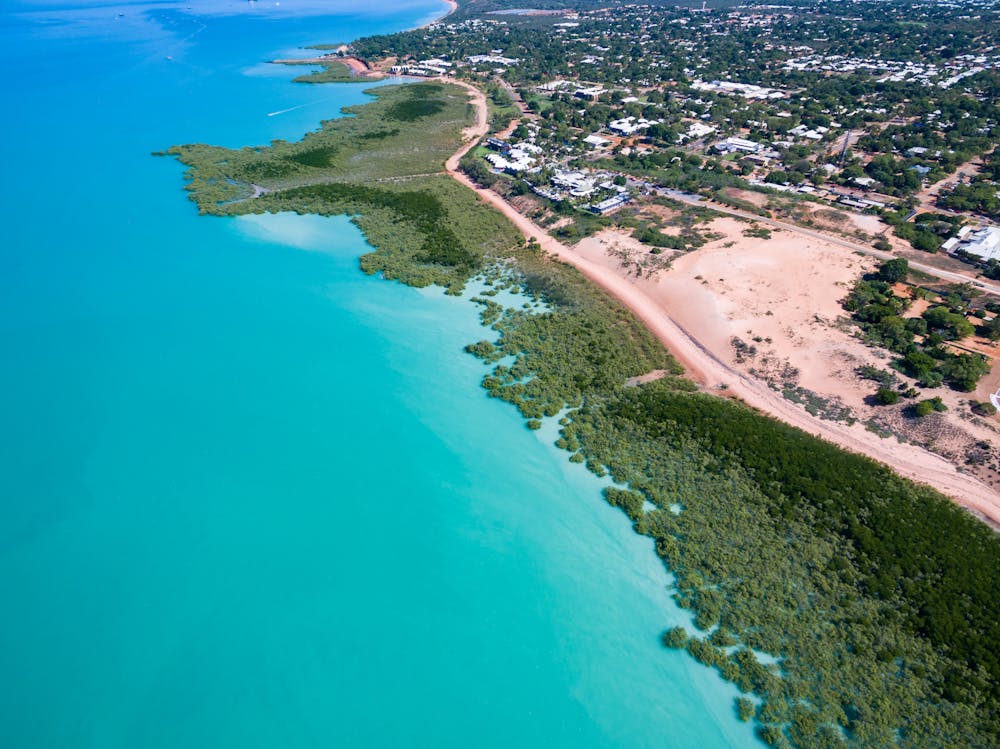
But since plant or machinery used in a business is deemed to have a lifespan of fewer than 50 years, the Court of Appeal famously ruled that Omai, a 250-year-old painting by Sir Joshua Reynolds, was plant that did not attract capital gains tax on disposal.

In Australia, personal-use assets include boats, furniture, electrical goods and household items. Collectables include paintings, sculptures, drawings, engravings and photographs. Disputably, personal-use assets are presumed to be wasting assets, whereas collectables are not.

Different types of assets may not fit neatly into either category: for example, furniture has a utilitarian function and eventually deteriorates but is commonly collected. It is a troubling thought that such policy distinctions may lead to a (presumably unintended) preference for the utilitarian over the aesthetic.


Read more: The economics of ridiculously expensive art


For the sake of simplicity, New Zealand’s TWG recommends excluding all personal assets, including collectables, from its proposed capital gains tax. Artists may incidentally benefit from such an exclusion. A wealthy person might choose to invest in artworks to hang on the walls of their tax-free principal residence. In Australia, the tax nudge is in favour of non-collectable personal-use assets.

An investor might even choose to invest in artworks rather than, say, listed shares. These investment decisions could have a beneficial trickle-down effect for living domestic artists, although purchasing works by internationally recognised artists with established track records may be a more attractive investment option.

Proposed exclusion for artworks

Capital gains tax is an inherently complex tax. The complexities are exacerbated once politically necessary exemptions are introduced. Every deviation from the fundamental principle that all receipts should be taxed diminishes equity. But equity is not the only generally accepted tax principle. Efficiency, neutrality, sustainability and simplicity, among other criteria, should also be considered.

With regard to personal assets, the TWG has elevated simplicity above other pertinent considerations. Consequently, wealthy people might continue to receive tax-free capital gains by investing in their principal residence and collectables. This possibility would be unfair, inefficient, non-neutral and unsustainable.

For more valuable artworks, a tax rebate could apply if an owner lends an artwork to a public gallery. from www.shutterstock.com, CC BY-SA

Promoting the arts in the public sphere and the economic well-being of artists is most effectively pursued through direct grants and subsidies, but a proportionate capital gains tax exclusion might also assist. For example, while roll-over relief in the United States generally benefited the art market, it may have been a disproportionate way of promoting public access to the arts or helping artists most in need.

A painting by an old master stored in a bank vault has no immediate social benefit.

So how might a tax exclusion benefit the arts and artists?

First, no distinction should be drawn, as Australia does, between personal-use and collectable assets, because a nudge towards personal-use assets may discourage investment in artworks.

Second, a cap on the value of excluded collectables, say NZ$10,000, might encourage purchases of less expensive artworks created by emerging local artists.

Third, for more valuable artworks a rebate might apply for public display. For example, if an owner lends an artwork to a public gallery for half the period they own it, a 50% rebate could apply. If the New Zealand government takes up the TWG recommendation for a capital gains tax, proposed exclusions could be modified to benefit the arts and artists. Australia might also usefully reconsider how it treats artworks for tax purposes.

ref. New Zealand’s proposed capital gains tax could nudge taxpayers to invest in art instead of property – http://theconversation.com/new-zealands-proposed-capital-gains-tax-could-nudge-taxpayers-to-invest-in-art-instead-of-property-112765

What pill is that? Cheap and easy pill testing could soon be in your own hands

]]>

Source: The Conversation (Au and NZ) – By Vassilis Kostakos, Professor of Human Computer Interaction, University of Melbourne

Almost nine out of ten Australians take some form of medication, according to a recent poll. Much of that will be in tablet form, either prescribed or bought over the counter.

But in the rush of daily life it can be easy to confuse or mix up pills, especially if you or someone you care for is taking several medications. So how can you be sure the pill you’re about to take is the correct one?

We’ve designed some technology that could help with this issue. Also, the tool might one day be suitable for pill testing at music festivals and other events where other pill drugs are available.


Read more: Your period tracking app could tell Facebook when you’re pregnant – an ‘algorithmic guardian’ could stop it


In our experiments we have demonstrated how off-the-shelf mobile hardware can be used to identify pills. Soon we expect this hardware may be built into most smartphones.

How does it work?

The enabling technology, known as near-infrared spectroscopy, is not new. What is new is that it has been miniaturised.

The technology works by shining infrared light onto the pill. The pill absorbs and reflects some of the light depending on its chemical composition.

By measuring the spectrum of the reflected light, we can obtain a unique signature for this pill. By cross-referencing this signature against a database on known pills or chemicals we can identify the pill.

Our prototype scans pills and displays the results to a paired smartphone. Smart Hospital Living Lab, Author provided

The technology does not damage the pill, since it simply shines infrared light for a couple of seconds.

It does not rely on the visual appearance of the pill at all. In our tests we could accurately differentiate between pills that look virtually identical.

Further accuracy improvements are expected soon. But at this stage we can say this technology allows for pill-testing to be done on the spot, using a mobile device. It’s no longer necessary to ship samples to a dedicated testing facility.

At the moment the technology has been tried on only about 60 pills that can be bought over the counter, such as painkillers, vitamins and other supplements. It could easily be extended to prescription medications.

We actually developed our prototype to be used on prescription and over-the-counter pills, as a way to make sure people are taking the correct medication. This work is being carried out as part of a broader Smart Hospital project to make hospitals safer and more efficient.

For example, medication errors occur when nurses give the incorrect pill to patients in a hospital, or when patients take the wrong pill at home. Our technology has been designed to reduce such errors due to mislabelling or lack of labels.

Which brings us to the debate on pill testing.

Checking ‘other’ pills

It’s become clear that our technology also has the potential to check other types of pills and could be used in scenarios such as people attending music festivals, on-the-spot police checks, or any other situation.

But there are some potential problems here. Our work has shown that environmental factors – such as ambient light – may affect the accuracy of the system, so it’s unlikely to be as accurate as in controlled lab settings.

Also, because our prototype works by cross-referencing to a database of known pills, it can be challenging for the system to identify home-made pills that may not exactly match the chemical composition in our database.

Still, there are a couple of ways to deal with this situation.

First, the system can provide a confidence rating, effectively saying that it has not seen a particular pill before, but it can report which pill it is most similar to.

Second, if we are interested in certain active chemical components in the pill, it can report which of those components are present in the pill, but not necessarily in what amounts.

The tech’s coming, ready or not

The technology for pill testing is changing quickly. Soon these changes will have an impact on the arguments used by the different sides of the pill-testing debate that has gripped Australia.

Our technology demonstrates the potential for making pill-testing a private matter, with no need for any taxpayer-funded testing at events. It is entirely conceivable that soon it will be possible to buy a pill-testing device that you can carry in your pocket and use where and when you choose.

Pill-testing proponents argue that it has the potential in its current form at festivals to be one last safeguard and source of advice before pills are consumed (or not).


Read more: Here’s why doctors are backing pill testing at music festivals across Australia


With the pill-testing technology maturing and being miniaturised even further, we expect within a few years to see widespread prototypes being used. While the hardware is quickly improving, the main challenge remains the analysis that we have developed to differentiate between pills.

We want to raise awareness about this technology and advise all camps in the pill-testing debate that they need to consider how to respond to this technology.

Pill-testing critics might need to consider ways to stop pill-testing given the availability of cheap testing devices – should such devices be banned?

Pill-testing supporters need to consider that pill-testing may soon be possible outside well-staffed festival tents. Therefore, there is a need for new interventions, as well as a consideration of who maintains the pill database: government, industry, NGOs, or perhaps some crowdsourced approach?

ref. What pill is that? Cheap and easy pill testing could soon be in your own hands – http://theconversation.com/what-pill-is-that-cheap-and-easy-pill-testing-could-soon-be-in-your-own-hands-112697

All about juries: why do we actually need them and can they get it ‘wrong’?

]]>

Source: The Conversation (Au and NZ) – By Jacqui Horan, Associate Professor, Monash University

There has been some debate over the recent conviction of George Pell, whose first trial ended with a hung jury, and the second a unanimous guilty verdict. People are questioning our justice system, the potential bias of the jury, and whether the initial hung verdict invalidates the second, unanimous one.

So, why should Australians trust 12 inexperienced people to sit in judgment on our most serious criminal trials, and get the verdict right?


Read more: How an appeal could uphold or overturn George Pell’s conviction


The importance of juries

Australian democracy is underpinned by citizen participation. Citizens have two mandatory obligations – voting and jury service.

Lay person participation in the legal system is considered central to a healthy democracy. Lawyers play a major role in making the laws in parliament. Judges then apply the laws. If juries weren’t used, lawyers would have a monopoly over the law. Lawyers have their own specialised language in which they communicate among themselves. Including juries in the legal system forces lawyers to use common language.

It’s the collective wisdom of 12 that makes a jury. Jurors bring to the trial 12 times more life experience than a judge. Psychological research has established that personal, subconscious biases can be identified and addressed in group discussion.

How do juries work?

Jurors are randomly selected from the Australian electoral roll. While each state or territory varies in its selection processes, they share some common steps. Randomly selected citizens will receive a summons to attend court. Once the jurors arrive at the courthouse, they wait to be randomly chosen to go to a specific courtroom as part of a jury panel.

Once in the courtroom, a potential juror’s name (or allocated number) may be pulled out of a box. That potential juror can then either

  • seek to be excused (because perhaps they know someone involved in the trial)

  • take a seat in the jury box, or

  • be removed from the jury by one of the parties to the case. This is known as the “peremptory challenge” process.

While it’s unusual for a prosecutor to “challenge” (deselect) a juror, some jurisdictions still allow for a defendant to “challenge” a juror based on the way they look and sometimes their name and occupation.

But a substantial body of US research has highlighted that, based on such limited information, the peremptory challenge process is no better than a guessing game, as it’s not possible for a defendant to know whether a citizen is going to be favourable to their defence just based on what they look like and their occupation.

Some Australian jurisdictions have reduced the number of challenges a defendant can use. The UK has done away with this process altogether as it interferes with the important perception that juries are fairly chosen and therefore represent the community.

A defendant has no way of knowing how a jury will vote based only on their age or occupation. from shutterstock.com

Several Australian studies confirm our juries reflect a cross-section of our community in terms of cultural mix, age and gender balance. Juries are more likely to be better educated than the ordinary member of the public. This may, in part, be a result of counsels’ preference for educated jurors when exercising their peremptory challenges.

What about outside influence?

Jurors are forbidden from having any prior intimate knowledge of the trial, from privately communicating with anyone involved in the trial and from doing their own research. Maintaining the impartiality of jurors has become problematic in the digital age.

Last century, courts used to successfully make orders to suppress potentially prejudicial information (such as prior convictions). But the far reach of the internet means such suppression orders no longer work as they can’t prevent publication on overseas websites or social media that is accessed locally.


Read more: We knew George Pell was guilty of child sex abuse. Why couldn’t we say it until now?


Jurors are told by the judge not to look at any media reports on their case. But jurors on trials of high profile defendants may not be able to avoid the barrage of negative pre-trial publicity. US research suggests jurors who are exposed to negative publicity are significantly more likely to judge the defendant guilty compared to subjects exposed to less pre-trial publicity.

New South Wales, Queensland, the ACT, South Australia and Western Australia allow a defendant to apply for trial by judge without a jury when prejudicial publicity is perceived to be significant. But there is no research that confirms a judge sitting alone without a jury is any better at resisting prejudicial publicity.


Read more: Trial by judge alone may not be the answer to giving high-profile defendants a fair hearing


How do they reach a verdict, and what is a hung jury?

A typical jury trial will take fewer than ten days. The jurors hear the evidence, listen to the arguments of both parties and are provided with instructions on the relevant law by the judge. It is then time to deliberate and decide whether the defendant is “guilty” or “not guilty” of the offences charged. No written reasons for the verdicts are required.

The vast majority of juries are able to reach their verdict unanimously. In some types of cases, agreement of 11 out of 12 jurors is an acceptable verdict. A hung jury occurs when a jury deliberates for several hours or days, but are unable to agree on a verdict. In the usual course, the same case will be presented to a new jury.

A 2000 study indicated hung juries occurred in a small number (3-8%) of Australian trials. This study identified that longer trials, and jury trials in more culturally diverse city courts, may be more likely to attract a hung jury.

An initial hung verdict does not invalidate a second, unanimous one – it more likely means some of the jurors from the first trial were also in agreement with the final verdict.

Do juries get it ‘right’?

Jury secrecy means we have no accurate way of knowing whether juries are getting it “right”. Australian jurors are forbidden from discussing their deliberations with anyone, including why they came to a decision.

A few overseas studies have asked trial judges what verdict they would have come to in jury trials. A comparison between what the judges said and the real jury verdict reveals a high level of agreement between the two.

While scientifically we cannot confirm that specific jury verdicts are “correct”, the jury system is necessary for Australia’s justice system.

ref. All about juries: why do we actually need them and can they get it ‘wrong’? – http://theconversation.com/all-about-juries-why-do-we-actually-need-them-and-can-they-get-it-wrong-112703

Eat your vegetables – studies show plant-based diets are good for immunity

]]>

Source: The Conversation (Au and NZ) – By Yasmine Probst, Senior lecturer, School of Medicine, University of Wollongong

The number of people in Australia who follow vegetarian or plant-based diets is growing rapidly. People might choose to be vegetarian for ethical, cultural or health-related reasons.

While not all vegetarians are necessarily following a healthy diet, research shows vegetarianism can have many benefits for health. One we’re learning more about is its potential to strengthen our immune systems.

We’re still working out what aspects of a vegetarian diet may be responsible for this – whether it’s the lack of meat or the emphasis on plant-based foods.

But we think the higher volume of foods including fruits, vegetables and legumes seen in vegetarian diets is likely to have a lot to do with any associated health benefits.


Read more: We asked five experts: is vegetarianism healthier?


What do vegetarians eat?

Vegetarian diets are comprised of combinations of fruit, vegetables, whole grains, nuts and seeds, legumes and, for some, dairy and eggs.

There are many types of vegetarian eating patterns, from vegan (no animal products) through to lacto-ovo (some animal products such as eggs and dairy). But each avoids eating meat.

There are also a few semi-vegetarian approaches which include eating small amounts of some meats. People who primarily follow a vegetarian diet but include fish are referred to as pescetarian, while those who occasionally eat other forms of meat are considered flexitarian.

Importantly, not all vegetarians follow a healthy and balanced diet. Many won’t eat the recommended daily servings of fruit and vegetables, and will consume too much junk food.

But studies show that balanced vegetarian eating patterns could be good for our immune system and the related response of the body.

Defending from attack

Our bodies are faced with daily challenges such as getting rid of toxic chemicals and defending against nasty viruses. The immune system is “switched on” in response to these attacks.

Having a healthy immune system is important, as it prevents us from becoming sick. A healthy immune system can be supported by a number of lifestyle factors including adequate sleep, healthy body weight and regular physical activity. It can also be substantially affected by the foods we eat and drink.

Some research has found following a vegetarian diet could improve our immune systems. From shutterstock.com

People following vegetarian diets tend to have lowered levels of white blood cells, our natural defender cells. This is the case for vegetarian diets including vegan, lacto-vegetarian and lacto-ovo vegetarian.

Having very low levels of these cells is not ideal as it can affect the body’s ability to fight infection. However, having just the right number of white cells within a healthy range may reduce your chances of getting sick.

An added shield of protection

As well as helping the immune system, vegetarian diets may also help our body with a related process called inflammation. Vegetarian diets have been shown to prevent inflammation due to the antioxidant components within the foods.

Inflammation occurs when the body releases cells to attack unwanted pathogens or respond to injury. It may result in redness to an area of the body or the release of certain chemicals inside our bodies. Inflammation is a protective measure that the body uses to stay as healthy as it can.


Read more: Five life lessons from your immune system


People who follow vegetarian diets have lower levels of some of these chemicals (called C-reactive protein and fibrinogen) compared to people following a non-vegetarian diet.

This means people maintaining a vegetarian diet long-term are at a lower risk of getting type 2 diabetes, heart disease or even some cancers. Each of these chronic diseases is associated with increased inflammation in the body. This is shown in blood tests by increased levels of C-reactive protein, as this is a signal of systemic inflammation.

The reason why vegetarians have lowered levels of inflammation remains to be fully understood.

We suspect the high amount of fruits, vegetables, whole grains, nuts and seeds are helping. These foods are full of important nutrients including fibres, vitamins, minerals and compounds called phytochemicals.

All of these nutrients have been shown to improve levels of inflammation in the long term and may influence the body’s immune response as an added bonus.

Should I switch to a vegetarian diet?

Going vegetarian may not be for everyone.

And it’s unwise to start a new eating pattern without understanding the potential impacts it can have on your health.

Vegetarian diets that are inappropriately balanced can lead to an increased risk of iron, zinc and vitamin B12 deficiencies. This can be detrimental to overall health, particularly if followed for extended periods of time.

The risks may be greater for certain groups of people who have added nutrient needs due to life stage, gender or for another health-related reason.

So vegetarian eating should always be undertaken carefully and under professional guidance, preferably that of a dietitian, to minimise these risks.


Read more: Love meat too much to be vegetarian? Go ‘flexitarian’


But importantly, only 5.1% of the Australian population eat the recommended amount of fruit and vegetables – five serves of vegetables and two serves of fruit each day.

So whether you’re vegetarian or not, focusing on incorporating more plant-based foods into your diet is worthwhile. We’re constantly learning more ways this is good for your health.

ref. Eat your vegetables – studies show plant-based diets are good for immunity – http://theconversation.com/eat-your-vegetables-studies-show-plant-based-diets-are-good-for-immunity-107964

Five gifs that explain how pumped hydro actually works

]]>

Source: The Conversation (Au and NZ) – By Roger Dargaville, Senior lecturer, Monash University

People have used moving water to create energy for thousands of years. Today, pumped hydro is the most common form of grid-connected energy storage in the world.

This technology is in the spotlight because it pairs so well with solar and wind renewable energy. During the day, when solar panels and wind farms may be generating their highest level of energy, people don’t need really need much electricity. Unless it is stored somewhere the energy is lost.


Read more: Snowy hydro scheme will be left high and dry unless we look after the mountains


Pumped hydro can cheaply and easily store the excess energy, releasing it again at night when demand rises.

Here’s how it all works:

How it works

Put as simply as possible, it involves pumping water to a reservoir at the top of a hill when energy is in plentiful supply, then letting it flow back down through a turbine to generate electricity when demand increases.

Like all storage systems, you get less energy out than you put in – in this case, generally around 80% of the original input – because you lose energy to friction in the pipes and turbine as well as in the generator. For comparison, lithium ion batteries are around 90-95% efficient, while hydrogen energy storage is less than 50% efficient

The benefit is we can store a lot of energy at the top of the hill and keep it there in a reservoir until we need the energy back again. Then it can be released through the pipes (this is called “penstock”) to generate electricity. This means pumped hydro can create a lot of additional electricity when demand is high (for example, during a heatwave).

The disadvantage of pumped hydro is you need to have two reservoirs separated by a significant elevation difference (more than 200m is typically required, more than 300m is ideal). So it doesn’t work where you don’t have hills. However, research has identified 22,000 potential sites in Australia.


Read more: Want energy storage? Here are 22,000 sites for pumped hydro across Australia


Pumped hydro is traditionally paired with relatively inflexible coal or nuclear power stations, using under-utilised electricity when demand is low (weekends and nighttime), then providing additional generation when demand increases during day and into the evening.

With the rapid increase in deployment of wind and solar, pumped hydro is again gaining interest. This is because the output of wind and solar plant is subject to the variability in the weather. For example, solar power plants generate the most electricity in the middle of the day, while demand for electricity is often highest in the evening. The wind might die down for hours or even days, then suddenly blow a gale. Pumped hydro can play a key role in smoothing out this variability.

If the electricity being produced by wind and solar plant is greater than demand, then the energy has to be curtailed (and is lost), unless we have a way to store it. Using this excess power to pump water up hill means the solar or wind energy is not wasted and the water can be held in reservoirs until demand rises in the evening.

There are lots of different kinds of energy storage technologies, each with their own advantages and disadvantages. For large-scale grid-connected systems where many hours of storage are required, pumped hydro is the most economically viable option.


Read more: Snowy Hydro gets a boost, but ‘seawater hydro’ could help South Australia


ref. Five gifs that explain how pumped hydro actually works – http://theconversation.com/five-gifs-that-explain-how-pumped-hydro-actually-works-112610

Rising seas allow coastal wetlands to store more carbon

]]>

Source: The Conversation (Au and NZ) – By Kerrylee Rogers, Associate Professor, University of Wollongong

Coastal wetlands don’t cover much global area but they punch well above their carbon weight by sequestering the most atmospheric carbon dioxide of all natural ecosystems.

Termed “blue carbon ecosystems” by virtue of their connection to the sea, the salty, oxygen-depleted soils in which wetlands grow are ideal for burying and storing organic carbon.

In our research, published today in Nature, we found that carbon storage by coastal wetlands is linked to sea-level rise. Our findings suggest as sea levels rise, these wetlands can help mitigate climate change.

Sea-level rise benefits coastal wetlands

We looked at how changing sea levels over the past few millennia has affected coastal wetlands (mostly mangroves and saltmarshes). We found they adapt to rising sea levels by increasing the height of their soil layers, capturing mineral sediment and accumulating dense root material. Much of this is carbon-rich material, which means rising sea levels prompt the wetlands to store even more carbon.

We investigated how saltmarshes have responded to variations in “relative sea level” over the past few millennia. (Relative sea level is the position of the water’s edge in relation to the land rather than the total volume of water within the ocean, which is called the eustatic sea level.)


Read more: Mangrove forests can rebound thanks to climate change – it’s an opportunity we must take


What does past sea-level rise tell us?

Global variation in the rate of sea-level rise over the past 6,000 years is largely related to the proximity of coastlines to ice sheets that extended over high northern latitudes during the last glacial period, some 26,000 years ago.

As ice sheets melted, northern continents slowly adjusted elevation in relation to the ocean due to flexure of the Earth’s mantle.

Karaaf Wetlands in Victoria, Australia. Boobook48/flickr, CC BY-NC-SA

For much of North America and Europe, this has resulted in a gradual rise in relative sea level over the past few thousand years. By contrast, the southern continents of Australia, South America and Africa were less affected by glacial ice sheets, and sea-level history on these coastlines more closely reflects ocean surface “eustatic” trends, which stabilised over this period.

Our analysis of carbon stored in more than 300 saltmarshes across six continents showed that coastlines subject to consistent relative sea-level rise over the past 6,000 years had, on average, two to four times more carbon in the upper 20cm of sediment, and five to nine times more carbon in the lower 50-100cm of sediment, compared with saltmarshes on coastlines where sea level was more stable over the same period.

In other words, on coastlines where sea level is rising, organic carbon is more efficiently buried as the wetland grows and carbon is stored safely below the surface.

Give wetlands more space

We propose that the difference in saltmarsh carbon storage in wetlands of the southern hemisphere and the North Atlantic is related to “accommodation space”: the space available for a wetland to store mineral and organic sediments.

Coastal wetlands live within the upper portion of the intertidal zone, roughly between mean sea level and the upper limit of high tide.

These tidal boundaries define where coastal wetlands can store mineral and organic material. As mineral and organic material accumulates within this zone it creates layers, raising the ground of the wetlands.

The coastal wetlands of Broome, Western Australia. Shutterstock

New accommodation space for storage of carbon is therefore created when the sea is rising, as has happened on many shorelines of the North Atlantic Ocean over the past 6,000 years.

To confirm this theory we analysed changes in carbon storage within a unique wetland that has experienced rapid relative sea-level rise over the past 30 years.


Read more: Without wetlands, what will protect the Great Barrier Reef?


When underground mine supports were removed from a coal mine under Lake Macquarie in southeastern Australia in the 1980s, the shoreline subsided a metre in a matter of months, causing a relative rise in sea level.

Following this the rate of mineral accumulation doubled, and the rate of organic accumulation increased fourfold, with much of the organic material being carbon. The result suggests that sea-level rise over the coming decades might transform our relatively low-carbon southern hemisphere marshes into carbon sequestration hot-spots.

How to help coastal wetlands

The coastlines of Africa, Australia, China and South America, where stable sea levels over the past few millennia have constrained accommodation space, contain about half of the world’s saltmarshes.

Saltmarsh on the shores of Westernport Bay in Victoria. Author provided

A doubling of carbon sequestration in these wetlands, we’ve estimated, could remove an extra 5 million tonnes of CO₂ from the atmosphere per year. However, this potential benefit is compromised by the ongoing clearance and reclamation of these wetlands.

Preserving coastal wetlands is critical. Some coastal areas around the world have been cut off from tides to lessen floods, but restoring this connection will promote coastal wetlands – which also reduce the effects of floods – and carbon capture, as well as increase biodiversity and fisheries production.


Read more: As communities rebuild after hurricanes, study shows wetlands can significantly reduce property damage


In some cases, planning for future wetland expansion will mean restricting coastal developments, however these decisions will provide returns in terms of avoided nuisance flooding as the sea rises.

Finally, the increased carbon storage will help mitigate climate change. Wetlands store flood water, buffer the coast from storms, cycle nutrients through the ecosystem and provided vital sea and land habitat. They are precious, and worth protecting.


The authors would like to acknowledge the contribution of their colleagues, Janine Adams, Lisa Schile-Beers and Colin Woodroffe.

ref. Rising seas allow coastal wetlands to store more carbon – http://theconversation.com/rising-seas-allow-coastal-wetlands-to-store-more-carbon-113020

Australia should start planning for universal tertiary education

]]>

Source: The Conversation (Au and NZ) – By Tim Pitman, Senior Research Fellow, Curtin University

Australia is often characterised as having a mass higher education system. In fact, it could be called near-universal. According to the 2016 Census, 56% of Australians aged 15 years and over – 9.6 million people – hold a post-school qualification, up from 46% in 2006.

Universal education does not mean every Australian should attain a higher education or tertiary qualification. It means every Australian should be given the opportunity to get one if they want.

The distinction between “mass” and “universal” is not just an academic one. Viewing higher and tertiary education as universal could help an incoming government better design policy. All Australians need to be prepared for, informed about and able to make a choice that is right for them about whether or not to pursue post-school education.

Needs-based funding of schools

If the government could do one thing to improve post-school education outcomes, it needs to happen in our primary and high schools. Prior academic achievement is one of the main predictors of higher education aspiration and success. In some studies it’s the main factor.

Needs-based funding puts more money into education. In particular, it puts more money into the schools and students who need it most.

The Gillard-led Labor government recognised the importance of this approach by adopting a needs-based school funding model. The Turnbull-led Coalition government reaffirmed this commitment, with the specific aim of helping under-achieving students focus on improvement.

Pay attention to the details of what Labor and the Coalition promise on needs-based funding this coming election. Alan Porritt/AAP

This coming election, look closely at what positions the Coalition and Labor take on needs-based school funding. Both have signed up in principle, but there should be a clear commitment on how much extra money will be provided. This is not the same as simply spending more money to maintain standards in an ever-expanding system.

There also needs to be a clear explanation of how that money will be spread around, to ensure those furthest behind get the resources they need to catch up.

It’s not university or TAFE

Too many Australians – and successive governments – think in terms of students having to make a choice between university or vocational studies or neither. Tertiary education policy shouldn’t be seen this way.

For many people, the false trichotomy of degree-or-trade-or-job is locked in way too early by social and family expectations, and curriculum choices. Greater flexibility in how lifelong education is understood and explained (in terms of pathways and options) needs to be developed at the policy level.

TAFE is a good option in its own right. from www.shutterstock.com

This isn’t about merging the vocational and higher education sectors. That is neither necessary nor desirable. All tertiary education providers play a part in delivering lifelong education opportunities.

What is needed is more cooperation between state and federal governments. They need to be able to coordinate on how these various organisations will be funded and how students will be financially supported.

In many cases, there are fewer financial barriers to doing a university degree than a vocational course. This can lead some students to make a choice that seems right for them, but over the long term doesn’t work out.

The good news is all the pieces are there – even if they don’t quite fit together yet. The Coalition government has made great strides in how students can access loans for vocational courses. But the VET fee cap means some vocational courses still result in the student having to cover the excess up front, which is not the case for higher education degrees.

For example, an Australian student studying a Diploma of Business in 2019 would have a loan cap of just over A$5,000. They would have to cover the rest of the cost of the course. Depending on the provider, this could be several thousand more.

If the same student chose to study a Bachelor of Business at a university, they would have access to a loan for the full amount, which would be more than A$30,000 for the entire degree.

The next government should work towards making sure everyone has the opportunity to attend university if they want. from www.shutterstock.com

Against this, students can be more sure they’re getting what they pay for from universities than from vocational education providers. The Tertiary Education Quality and Standards Agency is responsible for the registration and quality oversight of all higher education providers, public and private.

The vocational training sector could benefit from a similarly national and coordinated approach to quality assurance. Given there are more than 5,000 vocational providers, a more realistic approach might be to provide a similar oversight (or even expand TEQSA) to cover all courses offered by the public TAFES, to begin with.

Whoever forms the next government needs to finish the job of creating a more unified structure of financial support and pathway information. It should allow students to think first and foremost about what skills and knowledge are right for them and not about what the institution they’re going to or the degree they’re going to do is called.

Making Australian higher education look more like, well, Australia

The foundation of the Australian higher education system is built on two broad principles. The first is that they exist for the betterment of the nation. The second is that the doors of universities and other higher education institutions are open to everyone. This is actually written into the founding acts of our oldest universities.

The journey towards realising the second principle has been long, rocky and as yet uncompleted. Too many groups of students still remain under-represented. These include Aboriginal and Torres Strait Islander peoples, people with disability, those living in regional areas and those from lower socioeconomic backgrounds.

Progress has been made and much of the big policy picture has been painted. In particular, more institutions have been created to better meet demand, a demand-driven system of funding has been introduced so there is federal funding for each student place, and an income-contingent loan scheme has been provided to remove many of the upfront financial barriers to accessing university.

To make progress in the higher education sector, we also need to make progress in schools. Mick Tsikas/AAP

But finishing the picture requires a final push. Committing to a sustainable, needs-based funding of school education and harmonising the support structure for vocational and higher education would go a long way towards achieving this goal. It may be enough, but if not there is another thing that would work – quotas.

Quotas are contentious, as recent political debate shows. It’s likely the concern would be raised that quotas would ignore the very different institutional profiles that are in play. For example, a regionally based university is going to find it easier to recruit regional students than one in a CBD.

One solution would be to apply the quota at the sector level, rather than the institutional level. The government could then enforce the quotas in a number of ways. It could use performance-based funding to reward the universities doing the heavy lifting. Or it could allow the universities to virtually trade between themselves.

For example, a university with a below-average enrolment of regional students could “purchase” the excess from a university with an above-average enrolment. The students would not actually move institution, but the money would. This would mean the university with the extra enrolments would receive additional financial support to help with the costs associated with supporting these students.

ref. Australia should start planning for universal tertiary education – http://theconversation.com/australia-should-start-planning-for-universal-tertiary-education-110783

Vital conversations: older women have their say about the challenges of life in a city like Melbourne

]]>

Source: The Conversation (Au and NZ) – By Harriet Radermacher, Adjunct Lecturer, Department of General Practice, Monash University

Who decides what matters in the lives of voters? In the run-up to the 2018 Victorian state election, media focused on a few potential big issues of concern or interest. Newspapers featured pieces on the consequences of uncapped population growth in Victoria, particularly suburban housing sprawl and unaffordability. Public transport and the growing economic divide between communities also attracted media attention.

Against this background, and in light of concerns raised by previous research, we wanted to engage with older women and to hear more directly from them about their lives, their experiences and the challenges they face. Specifically, we asked, what matters to older women as they grow older, as the city’s population changes and urban development continues apace?


Read more: What do single, older women want? Their ‘own little space’ (and garden) to call home, for a start


The result of our research, Vital Conversations with Older Women Living in Greater Melbourne, is being launched today. It started with the assumption that there are common and interconnected factors in the lives of all women with potential impacts on their health and well-being. We understood that these factors take on different dimensions depending on age cohorts and ethnic and cultural backgrounds, as well as the health, social and economic circumstances of individual women.

Previously, Vital Signs 2017 provided a snapshot of Greater Melbourne across a whole range of domains for people of all ages. The report indicated older women living in Greater Melbourne face a range of challenges and, in some cases, extreme disadvantage.

For example, the number of older women couch surfing increased by 83% between 2012 and 2017. There was a 75% increase in older women sleeping in their cars and presenting at homelessness services. In addition, at least one in ten people aged over 60 experience isolation and loneliness.


Read more: Taking the pulse of a city: Melbourne’s Vital Signs


For all the attention given to problems associated with growing older, including the so-called financial burden of aged care to the public purse, older women have had very little opportunity to contribute their views. They need to be taken seriously about the things that matter to them, which are central to their health and well-being.

In all, 127 women participated in 18 facilitated group conversations. The groups were diverse. The women were between 50 and 91 years of age, lived across 22 local government areas and came from many different multicultural backgrounds.

What did the women have to say?

The conversations were designed to enable older women to voice their opinions and share their knowledge, experience and expertise across a range of domains. They were asked to talk about not only their own experiences but also their observations of friends and acquaintances.

Having meaningful and reciprocal connections with family and community was central to the women’s overall well-being. The emphasis on social inclusion and feelings of belonging was not surprising, given the huge shifts in the pace of society today. As the majority of the older women noted, people find themselves with less and less time for meaningful connections despite their obvious importance.

Most agreed a key challenge was to maintain their sense of social connectedness and meaningful engagement with the world around them in light of the city’s exponential neighbourhood development and urban growth. One woman observed that some found meaningful social connections in volunteering:

Volunteers actually get as much as the participants […] I have seen people like Mary who has finished work and what do you do? Your life changes and you need something to fill in that space, and I have seen them, lots of people who come here and that’s how they contribute, so they therefore support other people but they are actually being supported themselves.

Other challenges included:

  • changes to their health
  • family and generational change
  • ageism and abuse
  • access to information and technology
  • threats to their financial and housing security.

One woman noted:

I certainly think it’s hard to age well if you don’t have housing and some money. If you’ve got economic insecurity then your old age is going to be pretty crappy.


Read more: Generation Share: why more older Australians are living in share houses


There was also a sense of frustration about ongoing stereotypes about older women that lead to assumptions about their experiences and needs. In the words of one woman:

How can we change the perception that we are frail and need guidance with managing our lives!

Rather than being in need of help, the women expressed a desire for autonomy, choices and respect.

When provided with the opportunity, older women have the capacity to voice their opinions, knowledge and experience. They want to promote their ability to be active participants in family, community and wider society. Some already juggle multiple roles:

Being in my early 60s, I am now part of that ‘sandwich generation’ where I not only care for my grandchild but I also have the responsibility for my ageing parent. That creates logistic challenges sometimes!


Read more: When it comes to childcare, grandparents are the least stressful option for mum and dad


Voices of experience worth listening to

The wide-ranging conversations indicated that many older women want to be taken seriously through engagement in public life. They are ready to contribute their experiences and ideas to policy and planning.

Despite the challenging trajectory of the lives of many of the participants, this research clearly demonstrated their resilience and adaptation to changing life circumstances. Women described how they have integrated creative strategies in their everyday lives to deal with the transitions and challenges of growing older in Greater Melbourne. In having these conversations, the women revealed their vast reserves of personal resources and capacity to navigate these challenges.

Participants also reinforced the view that a proactive approach that includes engaging with older women from across all walks of life will ensure the sharing of relevant, innovative community initiatives and ideas. For the women who contributed to the Vital Conversations study, interesting ideas included creative housing models which forge relationships between land and housing developers and all levels of government, or private rental initiatives.

Inclusive research that listens to the perspectives of older women has the capacity to reveal the complexity behind the statistics. In doing so we gain a more comprehensive and nuanced picture of the lives of older women and the transitions they face in a dynamic city like Melbourne.


This article was co-authored by Susan Feldman, an independent researcher who produced the Vital Conversations report with Harriet Radermacher.

ref. Vital conversations: older women have their say about the challenges of life in a city like Melbourne – http://theconversation.com/vital-conversations-older-women-have-their-say-about-the-challenges-of-life-in-a-city-like-melbourne-112772

What if we’ve had gender the wrong way around? What if, for workplace parity, we focused on men?

]]>

Source: The Conversation (Au and NZ) – By Rachael Bolton, PhD student, Media and Communications, University of Sydney

Boosting workforce participation has been the gender catchcry for at least a decade.

Women are paid less than men? Increase female workforce participation! Want to boost the economy? Increase female workforce participation!

It can look like a simple and attractive solution.

After all, around one fifth of the wage gap is due to women taking career breaks to bear and care for young children.

And research suggests that reducing the wage gap by even half would increase Australia’s Gross Domestic Product by A$60 billion over 20 years.

But while a lot of focus is placed on getting women back into the workforce, my research indicates we might be better served by focusing policy on helping to balance the scales on the domestic end.

It takes two to be unequal

What if, instead of asking, “how can we reduce women’s time out of the workforce to reduce the pay gap?” we asked, “how can we improve male participation in domestic settings and childcare?”

Australian women undertake the lion’s share of unpaid domestic chores and 70% of unpaid childcare.

As part of my work on intersectional Australian masculinities, I have for the past two years been conducting a survey of Australian men exploring how they were taught to think of themselves and men in boyhood and how those expectations match society’s expectations today.

It also asks them to reflect on what makes a “good” man.

The preliminary results suggest that in boyhood many men were taught to hold in their emotions and exhibit mental and physical strength.

But the same men said they recognised they needed to display kindness, affection, emotional and physical availability and be a “good father” to measure up in the modern world.


Read more: The mystery of stay-at-home dads


They overwhelmingly described a “good” man as one who cares most of all for the needs of others, is honest and caring, and has positive interactions with women and children.

They said they wanted to spend more time at home and engaging with their children.

Yet despite this, the statistics show they are not taking the time they might.

Men aren’t yet doing what they say they want to do

Australia introduced its current paid parental leave scheme in 2011, providing up to 18 weeks paid leave at the rate of minimum wage for one parent.

In the years since, research has found that although the scheme is open to both men and women 99.4% of those taking the leave are mothers.

An additional two weeks leave, also paid at minimum wage, is offered to partners as dad and partner pay. Only about one third of men are using it. The proportion of men taking leave following the birth of a child remains unchanged.

Around half of Australian businesses offer employer-funded leave. However while between 92% and 96% of women avail themselves of it, only 5% to 8% of men do the same.

When calculated as a proportion of average previous earnings, Australia has one of the lowest paid parental leave entitlements for primary carers among members of the Organisation for Economic Co-operation and Development, and also one of the lowest entitlements for partner-only pay, and the lowest adoption of partner leave by eligible fathers.

Chicken and egg

So, what’s going wrong? It might in part be a “chicken and the egg” situation. If women earn less, it makes more financial sense for them to take the time off, which in turn means they earn less.

However, my research also shows that men still consider their role as “the provider” to be an important part of their role as men in modern Australia.

They agree less on what society wants from them today than they do about what they were once taught society wanted from them.

I suggest that this confusion forms an important cultural barrier to men making choices that would increase their role in the home and free them their sense of responsibility for the financial security of their families.


Read more: We can we reduce gender inequality in housework – here’s how


One reading of the data is that Australian men have similar anxieties to those reported by women for decades regarding the pressure to be all things to all people: to “have it all”.

If we helped men increase their participation in the home, we could simultaneously help them meet their desire to be closer to their children, redistribute some of the burden of domestic work, alleviate the barriers to women returning to work and give Australians of all genders more choice in the way they manage their families.


The data discussed in this article is part of an ongoing research project at The University of Sydney. If you would like to be a part of this research, you can take the survey at this link or contact Rachael Bolton at rachael.bolton@sydney.edu.au

ref. What if we’ve had gender the wrong way around? What if, for workplace parity, we focused on men? – http://theconversation.com/what-if-weve-had-gender-the-wrong-way-around-what-if-for-workplace-parity-we-focused-on-men-107142

Future budgets are going to have to spend more on welfare, which is fine. It’s spending on us

]]>

Source: The Conversation (Au and NZ) – By Peter Whiteford, Professor, Crawford School of Public Policy, Australian National University

This is part of a major series called Advancing Australia, in which leading academics examine the key issues facing Australia in the lead-up to the 2019 federal election and beyond. Read the other pieces in the series here.


Spending on social security and welfare accounts for more than a third of the Commonwealth budget.

Because of its size, it has been one of the main targets of proposed cuts in every Coalition government budget since 2014.

Despite this, social security and welfare spending has continued to grow. In fact the best way to describe the approach of the Coalition’s past five budgets is attempted rather than actual austerity, with the Senate rejecting or never considering repeated cuts. More than A$10 billion of these were served up again and again in budgets as so-called “zombie measures”.

Whoever wins government will continue to face pressure to further increase welfare and social security spending as the National Disability Insurance Scheme ramps up and a royal commission and demographic shifts build the case for more spending on aged care.

It is also widely recognised that Newstart, the main payment for unemployed Australians, is increasingly inadequate. It has slipped relative to pensions and wages each year because it is indexed to the slower-growing consumer price index. Payments for single parents are also inadequate, having been cut as a result of specific government decisions.

They say it’s us versus them…

The Coalition has responded with policy proposals that stigmatise recipients, such as drug-testing. It has introduced programs such as Online Compliance Intervention (“robodebt”) and ParentsNext that have arguably overreached in clawing back payments and imposing sanctions.

In 2014, the new Coalition government’s first budget speech classified people whose main source of income was support payments as “leaners not lifters”. In 2017, the human services minister described welfare dependency as the most pressing problem facing Australia’s social security system, likening it to “poison” for the unemployed.

And yet most of us are recipients at one time or another or have family members or friends who become recipients because of unemployment, ill health or family breakup.

… but we are them

During any fortnight, more than 5 million Australians, or roughly a quarter of the adult population, receive an income-tested social security payment. This includes an age pension, a disability support pension, Newstart, a carer’s payment, a parenting payment or one of seven other categories of income support.

Family tax benefits supplement the incomes of around another 855,000 families. And 900,000 or so families, many of them not receiving social security benefits or other family payments, are assisted with childcare costs.

As we look over longer periods, receipt of social security payments becomes ever more common.

The social services minister has used point-in-time administrative data to show that in 2018 the share of working-age Australians on welfare fell to 15.1%, “the lowest rate of welfare dependency in over 25 years”.

But the longitudinal Household, Income and Labour Dynamics in Australia (HILDA) Survey finds that over the course of an entire year (2016) about one-third of working-age households contained someone who received an income support payment for some of it.

The longer the time period, the more common becomes the receipt of payments.

Between 2001 and 2015 around 70% of working-age households included someone who received an income support payment at some point (not including the age pension or family payments).

It is one of the most important lessons of longitudinal surveys like HILDA – we, our family or friends are in this together.

While the likelihood of receiving support is greater than acknowledged, that support is less intense than is commonly believed. HILDA shows that 70% of working-age households received some social security benefits over a 15-year period. However, only around 1% of working-age households receive the bulk of their income (90%) from benefits for 10 years or more.

These were people with deep and persistent disadvantage. They were highly likely to be Indigenous Australians or people living in areas with limited job opportunities or people with long-standing disabilities or educational disadvantages.

As the 2016 HILDA report notes:

The welfare system does indeed provide temporary rather than long-term support for most recipients, and is potentially playing a very important safety net role.

The social security system is among the core institutions of contemporary Australian society. And it can be regarded as one of the main levers of not just social policy but economic policy. Australian governments have used the social security system to stimulate household spending during recessions or to avoid recessions — as happened during the global financial crisis.

An effective social security and welfare system is an essential underpinning of a modern economy, not least because security when people are in work requires security during periods when people are looking for work or outside the labour market.

Immediate priorities…

The first welfare priority for a new government has to be to increase the Newstart unemployment benefit. Opposition Leader Bill Shorten has promised that, if elected, Labor will do this via a “root-and-branch review”.

Crossbenchers Rebekha Sharkie and the departing Cathy McGowan want to go further. They have introduced a private member’s bill that would create an independent commission to examine the adequacy of all social security payments other than family payments and payments to veterans. The commission would make recommendations rather than set rates.

The review promised by Shorten and the ongoing commission proposed by crossbenchers need not be mutually exclusive. An immediate review could be used to increase payments in the short term, while an ongoing commission could examine longer-term priorities.

Another urgent priority should be to reform the employment services network. It operates more like a system of penalties than an employment service, requiring participants to apply for 20 jobs a month or go on Work for the Dole programs rather preparing them for work.

… and beyond

There is a case for going further. We are overdue for a comprehensive review of Australia’s social security system. This should be undertaken in an integrated fashion and include tax, family payments and payments for childcare and to support people who study and work.

Looking further ahead, the ageing of Australia’s population is going to force us to spend more on health and aged care.

Population ageing and increased life expectancy represent a fundamental challenge that will inevitably be met by collecting and distributing more of our economy in tax and benefits than at present.

ref. Future budgets are going to have to spend more on welfare, which is fine. It’s spending on us – http://theconversation.com/future-budgets-are-going-to-have-to-spend-more-on-welfare-which-is-fine-its-spending-on-us-111498

Reality check. Having a woman on your board needn’t make it diverse

]]>

Source: The Conversation (Au and NZ) – By Akshaya Kamalnath, Lecturer, Deakin University

More women on boards is seen as an important indicator of gender equality and board effectiveness.

The Australian government’s annual gender insights report, published last week, says greater female board membership helps drive more equitable pay across all levels of an organisation.

The Australian Institute of Company Directors (AICD) emphasises other benefits. Last month, when it published its latest gender diversity progress report, managing director Angus Armour noted diverse boards help prevent groupthink (when like-minded people make the mistake of agreeing with one another without considering alternate viewpoints), “leading to better outcomes for shareholders, consumers, employees and the community”.

All this might be true, but there’s a problem in thinking board gender statistics alone indicate significant progress on diversity if the women getting picked for boards generally belong to the same networks as the male directors.

Outsiders need not apply

Women now hold almost 30% of all board positions in Australia’s top 200 listed companies. Former AICD head Elizabeth Proust says that’s significant, because research “has shown this is the point at which you genuinely change the conversation around any table.”


Read more: ‘Network contagion’ is key to getting healthier numbers of women on company boards


But that’s not necessarily what the evidence from Australia’s banking royal commission shows.

Equal numbers of women and men on the boards of IOOF or Commonwealth Bank, for example, didn’t seem to lead to any better outcomes than at ANZ (37.5% of directors female), Westpac (33%) or NAB (30%).

Perhaps that’s because board membership is still an extremely exclusive club.

In 2018 just 220 new board appointments were made in the ASX200 (with 100 of them women). Social connections drive those appointments, according to researcher Sherene Smith. There are few “outsiders”.


Read more: Company boards are stacked with friends of friends so how can we expect change?


So whatever progress has been made in increasing board gender diversity, there remains a fundamental problem of a lack of equal opportunity in the board appointments process. The lack of outsiders means groupthink is still a problem, because people from similar backgrounds and social circles are less likely to have very different perspectives, or be prepared to challenge the group.

More than demographic balance

Mai Chen, of New Zealand’s Superdiversity Institute of Law, Policy and Business, talks about the difference between the type of diversity that promotes diverse thinking and ticking off achievement of mere “demographic balance”.

This is certainly not to say that increasing female representation on boards is pointless. As Peta Spender puts it, “the role that women play on the boards of ASX 200 companies is a measure of women’s democratic leadership”.

But for greater gender equality to really contribute to greater thought diversity, we have to think about all the other factors that might be just as important, such as ethnic, cultural and socio-economic backgrounds, work and life experiences, educational attainment, or even personality traits.

Gender is only one facet of diversity. Ideally a board should have members who are able to not only arrive at different solutions but also voice these solutions.

Different aspects of diversity may be relevant for different companies. A company with offshore businesses, for example, might require foreign directors. A tech company might need to have a director with expertise in machine learning.

Experiences, perspectives, preferences

Gender, of course, is relatively easy to measure. Diversity of thought less so.

But it’s not impossible. In New Zealand, consultancy Diversity of Thought assists organisations to assess their success in achieving a diversity of thought through questionnaires that cover experiences, perspectives and thought preferences.

Some examples of the questions used are:

  • “How would you describe your socio-economic status during your teenage years?” – to assess diversity in socio-economic experience

  • “When addressing a problem, do you prefer to find an entirely new solution?” – to assess creative thought preference).

In the longer run, investors, employees, customers and wider society can all benefit from companies taking a broader approach to board diversity that aims to get multiple viewpoints into corporate decision-making.

ref. Reality check. Having a woman on your board needn’t make it diverse – http://theconversation.com/reality-check-having-a-woman-on-your-board-neednt-make-it-diverse-103526

Hollywood may be able to afford #MeToo, but it’s a stretch for the Australian arts

]]>

Source: The Conversation (Au and NZ) – By Luke Hopper, Lecturer, Edith Cowan University

Sarah is an aspiring actor, recently graduated from a prestigious acting school. She lands her first contract with a major theatre company to work with a respected director. The play includes performance of a simulated rape scene. Over the weeks of rehearsal, Sarah finds it difficult to get out of the role and relax. She becomes increasingly angry at her boyfriend and finds she can’t keep the role separate from her life. She can’t sleep well. Yet she is encouraged by the director to “ride the wave of emotion”.

Sarah speaks to the stage manager who has been tasked with the new role of mental health first aid officer in the company. She is told to seek help from a psychologist – who she can’t afford. The director is frustrated by Sarah’s increasing disconnection with the play as she goes through the motions. She completes the season. Nine months later she has not received a single call-back from any auditions, still isn’t sleeping and is working in a café to pay the rent

Sarah’s story is a composite of actors’ responses from the 2015 Actors Wellbeing study and entirely emblematic of the state of affairs within Australia’s performing arts scene.

This industry is fraught with extreme financial pressures, a highly casualised workforce and endemic competition. The performing arts are also rife with preventable mental health issues, compromised physical health and addiction.

In short, this is no fertile garden for the #MeToo movement to gain root.


Read more: Out of character: how acting puts a mental strain on performers


The movement has undoubtedly opened up an important discourse, challenging the stigma of speaking out against exploitation and harassment in the arts and other industries. Live Performance Australia, Screen Producers Australia and the Media Entertainment & Arts Alliance, in a joint initiative, have released a new code of practice on discrimination, harassment, sexual harassment and bullying. This is a significant step.

However, the larger task remains to engineer a genuine culture shift at the grassroots of the arts; to adequately support artist wellbeing in a competitive and under-funded sector. Real culture change doesn’t come cheap. It takes money, time and resources and on that front, Australia is a long way from Hollywood.

In our competitive and underfunded sector, power relationships are ever present. It is simply too easy for an artist to not be selected for future contracts if they are perceived to have had mental or physical health issues in the past. Young artists have very strong motivation not to disclose such issues and risk succumbing to career-ending illness or injury.

Performing artists across Australia are thrust into the sector, usually with poor business acumen, only to chase intermittent and largely unsupported contracts. Serial unemployment in a chosen form of creative expression is considered the norm for the majority of those committed to an arts career, influenced in part by socioeconomic status and geographical location.

Performance in every sense of the word requires the combination of talent and commitment. This naturally places stress on the mind and the body. Regardless of artistic discipline, there is a growing body of evidence that paints a disturbing picture of the health issues associated with being an artist.

Eighty four per cent of Australian orchestral musicians have been reported to experience sustained, performance-limiting pain.

Many orchestral musicians experience sustained pain. Shutterstock

Psychological risk factors such as disordered eating, sleep and social support have been related to the high frequency of injury in dancers. Depression, substance abuse and suicide attempts were frequently reported in a 2014 survey of nearly 3000 Australians working across the spectrum of performing arts genres.

Artists are often unaware of the healthcare support available to them and rely on teachers and arts management for such advice. In turn, healthcare providers often aren’t aware of the demands of working as an artist and the severe effect incapacitation has on an artist’s identity and career.


Read more: Artists’ welfare: why it’s time to act


Major arts organisations with adequate funding are leading the way in recognising health issues in the arts. Community organisations such as the Australian Society for Performing Arts Healthcare and the Australian Alliance for Wellness in Entertainment are building awareness and a network of support for the arts community. But these organisations all work in the face of the larger underfunded and casualised arts sector.

While the industry is certainly supportive of #MeToo in the broader sense, real change will only occur through structural change at its core.

The benefits and possibilities of bespoke health support in the arts are exemplified by initiatives such as the UK-based National Institute for Dance Medicine and Science (funded by both the NHS and the community), which provides access to high quality, affordable, research-informed and dance specific health care.

Government and philanthropic funding to establish best practices in education and healthcare delivery is the next essential step in supporting the thousands of Australians whose profession and livelihoods are dedicated to arts.

ref. Hollywood may be able to afford #MeToo, but it’s a stretch for the Australian arts – http://theconversation.com/hollywood-may-be-able-to-afford-metoo-but-its-a-stretch-for-the-australian-arts-111842

We need more than a website to stop Australians paying exorbitant out-of-pocket health costs

]]>

Source: The Conversation (Au and NZ) – By Anthony Scott, Professor, University of Melbourne

In an attempt to crack down on specialists charging exorbitant fees, the Morrison government has pledged to create a website listing individual specialists’ fees.

The website is voluntary and doctors will post their own fees. Patients will be able to compare doctors whose fees are listed, and the searchable website will have a special focus on the high fees in gynaecology, obstetrics and cancer services.

The announcement, made on Saturday, follows the release of a ministerial advisory committee’s report on out-of-pocket costs, which the government has had since November.

But while the website is a good first step, transparency alone is unlikely to be enough to ensure Australians aren’t forgoing care because of high costs.


Read more: More visits to the doctor doesn’t mean better care – it’s time for a Medicare shake-up


What’s the problem?

A central problem is the lack of transparency around out-of-pocket costs. Patients are typically unaware of the full out-of-pocket costs they might incur at the time of referral and admission.

The Consumers Health Forum’s recent report found Australian consumers face higher than average out-of-pocket costs compared to most countries. This translates into people often avoiding visiting a GP or specialist and failing to fill scripts due to cost.

A report from the Grattan Institute using data from the Australian Bureau of Statistics shows many people already miss out on health care because of cost: 5% skip GP visits, 8% don’t go to a specialist, 8% don’t fill their prescription and 18% don’t go to the dentist. This will happen more if fees go up.

Those who avoid care because of cost are often those most in need, leading to concerns about equity of access. Delaying or foregoing care means when people do visit their doctor, their condition may be much worse than if they had presented earlier. This can affect long-term health outcomes and lead to higher costs over time.


Read more: Many Australians pay too much for health care – here’s what the government needs to do


“Value” is also about providing information on the various options for care, including the evidence base of the treatments offered, waiting times for various providers, and how the quality of care might vary between the options.

Consumers, with the help of GPs where necessary, should be able to assess these trade-offs to arrive at a decision that works best for them.

But patients know little about the quality of care provided when they are offered treatment or even whether they will really get better as a result.

Significant numbers of procedures and treatments performed on patients in Australia are considered “low value care” – when treatments have little effect on health outcomes, and may even cause harm. Recent estimates for New South Wales public hospitals suggest that between 11% and 20% of treatments involve low-value care.

These issues are being tackled through the Choosing Wisely campaign which is increasing awareness of tests and treatments that are of low value and may cause harm.

The Medicare Benefits Schedule Review Taskforce is also reviewing how these procedures are funded through Medicare.

This website will make specialist fees publicly available to consumers – but only if the specialists choose to list their fees. From shutterstock.com

Your right to know the costs of care

What are your rights as a patient in relation to the costs of medical treatment? At present, it seems consumers have very few.

There are no consistent enforceable guidelines on health-care providers to provide information on costs. Voluntary codes of practice are in place to encourage fee transparency but cannot be enforced.

The Commonwealth Ombudsman’s website provides guidelines on informed financial consent in health care. Unfortunately these place the onus to gather the relevant information on the costs of care on consumers:

You should ask your doctor, your health fund, and your hospital about any extra money you may have to pay out of your own pocket, commonly known as a “gap” payment.

Health professionals should be required to provide information that will assist consumers make informed decisions.

Why we need more than a website

Gathering information on specialists’ fees and making sense of it is an enormous burden to place on vulnerable patients. This is especially the case for the elderly and those with little education who are reluctant to appear to question their trusted doctor.

We don’t know how effective a website of usually charged fees will be and who will use it. It’s possible it will advantage the rich by increasing their access to information, while not increasing access for poorer consumers.

Published fees may also be used by other doctors to set fees, and could potentially increase fees, if they see their prices are lower than others.

The onus should be on clinicians, and the system, to give patients easily accessible and digestible information as part of the service they provide.


Read more: Specialists are free to set their fees, but there are ways to ensure patients don’t get ripped off


If health professionals cannot provide and interpret these costs to patients, we need to consider other trained workers – health “cost navigators” – who could advise patients as to how to decide on the best treatment for the best price.

The issues of out-of-pocket expenses are serious. They threaten the sustainability of our health system and adversely influence health. We need to ensure patients don’t face prohibitive costs that discourage them from treatment or force them into debilitating financial straits.

ref. We need more than a website to stop Australians paying exorbitant out-of-pocket health costs – http://theconversation.com/we-need-more-than-a-website-to-stop-australians-paying-exorbitant-out-of-pocket-health-costs-108740

Where did you grow up? How strontium in your teeth can help answer that question

]]>

Source: The Conversation (Au and NZ) – By Shaun Adams, Isotope Bioarchaeologist Research Fellow, Griffith University

To mark the International Year of the Periodic Table of Chemical Elements we’re taking a look at how researchers use some of the elements in their work.

Today’s it’s strontium, a chemical that can help fireworks burn red. It’s also an element that is naturally found in teeth and can be used as way to identify where somebody grew up.


Thousands of skeletal remains of Aboriginal people are kept in museums across Australia, North America and Europe.

Many Aboriginal people refer to these collections as ancestral remains. Although some have now been returned to their descendant communities, many more await return.

The challenge is knowing where to return them.

One estimate is that up to 25% of Aboriginal remains held in Australian institutions have no details of where they were taken from.


Read more: What teeth can tell about the lives and environments of ancient humans and Neanderthals


Our study, published today in the journal GeoArchaeology, aims to tackle the issue of repatriating such remains.

Our work uses the element strontium to determine specifically where somebody grew up. Strontium is an element in all rock and is transferred into body tissues.

Chemical help with the past

Strontium, named after Strontian, a small town in western Scotland, is described as a soft, silvery metal that burns in air and reacts with water.

For decades the ratio of two forms of strontium (the isotopes ⁸⁷Sr/⁸⁶Sr) have been measured in archaeological and palaeontological material. These have helped in answering questions that relate to the behaviour of past populations.

Perhaps the most famous study involved the 5,000-year-old ice man Otzi who was found in the European Alps. Strontium isotopes in Otzi’s teeth helped scientists determine where he was born in northern Italy, which added to our understanding of the mobility of ancient European populations during the Chalcolithic period – the Copper Age from about 3500BCE to 2300BCE.

Here in Australia, the strontium technique has had some use in a few cases, but in general is underutilised.

More than DNA

In a complementary project focusing on DNA, research has shown that genetic material can be used to help locate Aboriginal populations.

But the recovery of ancient DNA from many ancestral remains in Australia continues to prove challenging. Australia’s harsh environmental conditions lead to a poor state of preservation in many remains. This makes the recovery of biological material for DNA analyses difficult and in some cases not at all possible.

Using the isotope chemistry of tooth enamel and bone we can bypass these issues of preservation. The strontium-based process involves measuring a robust geochemical signature, not a biological one subject to decomposition.

Tooth enamel is the hardest substance in the human body and can hold evidence of the region where a person lived as a child. This makes it a suitable material to establish where a person was originally from. Bones are also useful as they help provide information about the burial site.

We use strontium isotopes to help with resolving the issue of provenance: the place where people belong.

The abundance of isotopes

The element strontium (chemical symbol, Sr) has an atomic number of 38 and four forms known as isotopes, ⁸⁴Sr, ⁸⁶Sr, ⁸⁷Sr and ⁸⁸Sr. Although these isotopes are stable, their natural abundance changes.

In particular, the amount of ⁸⁶Sr and ⁸⁷Sr in rock varies depending on the age of the rock and when it formed.

But strontium doesn’t just stay in rocks. When rocks break down, these isotopes end up in soil and water, where they are taken up by plants, animals and humans.

So for people it’s not simply a case of “you are what you eat”, but also “you are where you ate”. Our bodies become an isotope record of where we have been and what we have eaten.

One Elder from the advisory committee set up for this project, Gudjugudju, put it succinctly when he said that our ancestors carry the signature of their country in their bones and their teeth.

A new look at Far North Queensland

Before strontium isotopes in human teeth can be used to determine their place of origin we must first know how the element in the landscape changes.

We sampled strontium isotopes throughout Cape York to build a series of maps that can show where people may have grown up. These maps were developed and created in close consultation with an Aboriginal advisory committee representing several Cape York Aboriginal communities.

One of many new maps: Cape York strontium isotope results can be used to match human values to environmental signals in soil, plants and water. Shaun Adams et al. 2019, Author provided

Our results demonstrate that Australia’s ancient and diverse geology culminates in a wider range in strontium isotopes than found in overseas studies.

We also found that strontium isotope signatures were transferred relatively unaltered from the geology through the hydrology and finally biology, ie. from the land to water, animals and humans.

For Cape York, we now have a partially complete genomic map and a comprehensive isotopic map that Aboriginal groups can use as a tool to help determine the provenance of their ancestors.

… but there’s a catch

The Queensland Museum holds a large number of ancestral remains whose place of origin is still unknown. But current museum policy does not allow for invasive testing on ancestral remains without community consent.

This presents something of a “Catch 22”.

Aboriginal committees in other parts of the country have been thinking about how to return remains where there is no information on where they came from.

The Victorian Aboriginal Heritage Council, which is the peak Aboriginal advisory committee for Victoria, has developed a policy, Bringing the Ancestors Home, that identifies the need to develop an approach to more seamlessly see the repatriation of ancestral remains to descendant communities.


Read more: Poor health in Aboriginal children after European colonisation revealed in their skeletal remains


The Commonwealth National Advisory Committee for Indigenous Repatriation has developed a concept for a National Resting Place in Canberra for ancestral remains whose descendant communities can’t be identified.

Our research in Far North Queensland, combining isotopes and ancient DNA, provides a new way to help these communities repatriate their ancestors.

A collaboration between science and Aboriginal communities may represent the best way forward for resolving this complex social issue.


If you’re an academic researcher working with a particular element from the periodic table and have an interesting story to tell then why not get in touch.

ref. Where did you grow up? How strontium in your teeth can help answer that question – http://theconversation.com/where-did-you-grow-up-how-strontium-in-your-teeth-can-help-answer-that-question-112705

Where did you grow up? How strontium in your teeth can help answer that

]]>

Source: The Conversation (Au and NZ) – By Shaun Adams, Isotope Bioarchaeologist Research Fellow, Griffith University

To mark the International Year of the Periodic Table of Chemical Elements we’re taking a look at how researchers use some of the elements in their work.

Today’s it’s strontium, a chemical that can help fireworks burn red. It’s also an element that is naturally found in teeth and can be used as way to identify where somebody grew up.


Thousands of skeletal remains of Aboriginal people are kept in museums across Australia, North America and Europe.

Many Aboriginal people refer to these collections as ancestral remains. Although some have now been returned to their descendant communities, many more await return.

The challenge is knowing where to return them.

One estimate is that up to 25% of Aboriginal remains held in Australian institutions have no details of where they were taken from.


Read more: What teeth can tell about the lives and environments of ancient humans and Neanderthals


Our study, published today in the journal GeoArchaeology, aims to tackle the issue of repatriating such remains.

Our work uses the element strontium to determine specifically where somebody grew up. Strontium is an element in all rock and is transferred into body tissues.

Chemical help with the past

Strontium, named after Strontian, a small town in western Scotland, is described as a soft, silvery metal that burns in air and reacts with water.

For decades the ratio of two forms of strontium (the isotopes ⁸⁷Sr/⁸⁶Sr) have been measured in archaeological and palaeontological material. These have helped in answering questions that relate to the behaviour of past populations.

Perhaps the most famous study involved the 5,000-year-old ice man Otzi who was found in the European Alps. Strontium isotopes in Otzi’s teeth helped scientists determine where he was born in northern Italy, which added to our understanding of the mobility of ancient European populations during the Chalcolithic period – the Copper Age from about 3500BCE to 2300BCE.

Here in Australia, the strontium technique has had some use in a few cases, but in general is underutilised.

More than DNA

In a complementary project focusing on DNA, research has shown that genetic material can be used to help locate Aboriginal populations.

But the recovery of ancient DNA from many ancestral remains in Australia continues to prove challenging. Australia’s harsh environmental conditions lead to a poor state of preservation in many remains. This makes the recovery of biological material for DNA analyses difficult and in some cases not at all possible.

Using the isotope chemistry of tooth enamel and bone we can bypass these issues of preservation. The strontium-based process involves measuring a robust geochemical signature, not a biological one subject to decomposition.

Tooth enamel is the hardest substance in the human body and can hold evidence of the region where a person lived as a child. This makes it a suitable material to establish where a person was originally from. Bones are also useful as they help provide information about the burial site.

We use strontium isotopes to help with resolving the issue of provenance: the place where people belong.

The abundance of isotopes

The element strontium (chemical symbol, Sr) has an atomic number of 38 and four forms known as isotopes, ⁸⁴Sr, ⁸⁶Sr, ⁸⁷Sr and ⁸⁸Sr. Although these isotopes are stable, their natural abundance changes.

In particular, the amount of ⁸⁶Sr and ⁸⁷Sr in rock varies depending on the age of the rock and when it formed.

But strontium doesn’t just stay in rocks. When rocks break down, these isotopes end up in soil and water, where they are taken up by plants, animals and humans.

So for people it’s not simply a case of “you are what you eat”, but also “you are where you ate”. Our bodies become an isotope record of where we have been and what we have eaten.

One Elder from the advisory committee set up for this project, Gudjugudju, put it succinctly when he said that our ancestors carry the signature of their country in their bones and their teeth.

A new look at Far North Queensland

Before strontium isotopes in human teeth can be used to determine their place of origin we must first know how the element in the landscape changes.

We sampled strontium isotopes throughout Cape York to build a series of maps that can show where people may have grown up. These maps were developed and created in close consultation with an Aboriginal advisory committee representing several Cape York Aboriginal communities.

One of many new maps: Cape York strontium isotope results can be used to match human values to environmental signals in soil, plants and water. Shaun Adams et al. 2019, Author provided

Our results demonstrate that Australia’s ancient and diverse geology culminates in a wider range in strontium isotopes than found in overseas studies.

We also found that strontium isotope signatures were transferred relatively unaltered from the geology through the hydrology and finally biology, ie. from the land to water, animals and humans.

For Cape York, we now have a partially complete genomic map and a comprehensive isotopic map that Aboriginal groups can use as a tool to help determine the provenance of their ancestors.

… but there’s a catch

The Queensland Museum holds a large number of ancestral remains whose place of origin is still unknown. But current museum policy does not allow for invasive testing on ancestral remains without community consent.

This presents something of a “Catch 22”.

Aboriginal committees in other parts of the country have been thinking about how to return remains where there is no information on where they came from.

The Victorian Aboriginal Heritage Council, which is the peak Aboriginal advisory committee for Victoria, has developed a policy, Bringing the Ancestors Home, that identifies the need to develop an approach to more seamlessly see the repatriation of ancestral remains to descendant communities.


Read more: Poor health in Aboriginal children after European colonisation revealed in their skeletal remains


The Commonwealth National Advisory Committee for Indigenous Repatriation has developed a concept for a National Resting Place in Canberra for ancestral remains whose descendant communities can’t be identified.

Our research in Far North Queensland, combining isotopes and ancient DNA, provides a new way to help these communities repatriate their ancestors.

A collaboration between science and Aboriginal communities may represent the best way forward for resolving this complex social issue.

ref. Where did you grow up? How strontium in your teeth can help answer that – http://theconversation.com/where-did-you-grow-up-how-strontium-in-your-teeth-can-help-answer-that-112705