Page 1003

Rising cyclist death toll is mainly due to drivers, so change the road laws and culture

]]>

The Conversation (Au and NZ) – By Peter Chambers, Senior Lecturer in Criminology and Justice, RMIT University

Recent reporting paints a picture of surging road deaths and failing safety strategies for cyclists. The Australian Automobile Association’s Benchmarking report records 1,222 road deaths in the year ending June 2018. And cyclist deaths in particular remain stubbornly high, even as average speeds, which affect road deaths, continue to decline. If cars are much safer than 25 years ago, why are cyclist deaths increasing, from 25 the previous year to 45 this past year?

Of the untimely road deaths the AAA reports, 1,100 are due to how drivers were driving. In Australia, drivers are to blame for at least 79% of accidents with cyclists. And roughly 85% of reported cyclist casualty crashes involve another vehicle, not a bike or a pedestrian. Driver distraction accounts for roughly 25% of accidents.

These stats highlight a clear pattern of deadly harm: drivers hitting people, because of how they’re driving, is 90% of the problem on our roads.


Read more: Cars, bicycles and the fatal myth of equal reciprocity


What’s wrong with current safety strategies?

Calls are often made to install separation infrastructure and high-tech sensors in cars to fix the problem, as if the problem is cars and bikes mixing. These calls often follow the publication of reports or the deaths of cyclists in ways that make the news. Such claims are seldom met with critical scrutiny.

Although better infrastructure is needed and warranted, and high-tech sensors might reduce harm, people are still being needlessly killed. Mostly, that’s due to how people drive.

System-wide infrastructure and high-tech improvements are complex and take years or decades to complete. Installation has to be standardised and comprehensive to be truly effective. State-led infrastructure projects are often subject to budget blowouts. In crucial cases, the public has been left without the promised solution or service – regardless of whether it was publicly or privately led.

More deeply, calls for technical saviours are essentially wrongheaded because they disregard the root cause of the problems: driver behaviour – specifically, aggression and inattention. Separation of transport modes can’t fix aggression and inattention.

Indeed, separation contributes to irresponsibility by baking the assumption of danger and vulnerability into infrastructure. It works by diminishing the need for care and attention on the part of those responsible for the greatest harm: drivers.

This approach, we argue, reiterates a stigmatising, criminogenic understanding of bikes as inappropriate, unsafe and unwelcome on “our” roads. In this context, words are not weapons, but when they create aggressive drivers they do weaponise.


Read more: More people will cycle when everyone accepts cyclists’ right to be on the road


We need to focus on primary prevention

We’re clearly failing one another here. One way to begin responding better is by taking wisdom and insight from primary prevention approaches to male violence against women. This starts by acknowledging the root cause of systemic instances of deadly violence is banal, routine and excused and explained away because of its alignment with dominant cultural values.


Read more: Change the story: how the world’s first national framework can help prevent violence against women


The next step is to respond in ways that keep returning attention to the facts from best evidence. To repeat, whether you’re a driver, occupant, pedestrian or cyclist, roughly 90% of what causes death on Australia’s roads is driver behaviour.

For cyclists, the root cause of deadly harm is aggression and inattention. Drivers should be held to account and be pushed to change their behaviour and attitudes.

So what changes are needed?
Simple inexpensive changes in the law have been found to have dramatic effects on driver behaviour. These changes also work with existing infrastructure, technology, road conditions and our cultural expressions of human nature.

One change that’s in line with primary prevention and strong evidence of success is a move to a model of presumed liability for drivers. This would be a hard sell in light of current settings here, which support and excuse deadly violence by drivers because of the dominant motoring culture. But it’s proven to work in the Netherlands.


Read more: Cars overwhelmingly cause bike collisions, and the law should reflect that


Another welcome measure is a recent initiative to reduce urban speed limits to 30km/h. This has just been implemented in one of Melbourne’s inner urban areas without too much fuss. According to the research behind it, you’re twice as likely to survive being hit at 30km/h as at 40km/h.

Time will tell, but evidence suggests this change will reduce harm and improve traffic flows. As with moving to presumed liability, it does so without expensive infrastructure and unproven gizmos, while following the wisdom of primary prevention by putting the onus on the root cause rather than the victim.

Finally, we urge that this issue be considered as one of universal access to safe transport infrastructure. It’s not about “cars versus bikes”; it’s about the simple right to get where you’re going safely and sensibly. This shouldn’t be a privilege that’s extended only to those with the resources and bodies capable of driving.

In light of this, it’s crucial we note that cars are deadly, that 90% of the problem is driver behaviour, and that the motor car fails on its promise of delivering safe, efficient urban transport.


Read more: Contested spaces: ‘virtuous drivers, malicious cyclists’ mindset gets us nowhere


– Rising cyclist death toll is mainly due to drivers, so change the road laws and culture
– http://theconversation.com/rising-cyclist-death-toll-is-mainly-due-to-drivers-so-change-the-road-laws-and-culture-102567]]>

It’s hard to make money in aged care, and that’s part of the problem

]]>

The Conversation (Au and NZ) – By Rafal Chomik, Senior Research Fellow, ARC Centre of Excellence in Population Ageing Research (CEPAR), UNSW

Prime Minister Scott Morrison announced a Royal Commission into Aged Care Quality and Safety on Sunday, responding to concerns about the sector one day before an ABC Four Corners program which was to air them.

Aged care is where the challenges of population ageing are most apparent and where policy choices have direct impact on the lives of Australians.

So, it’s not surprising that the system is under increasing scrutiny. Various reviews have looked at different aspects of aged care since 2011 when major reforms were first ushered in, including into quality, public financing, workforce, and the overall progress of reforms.

The outcomes all point to similar conclusions. Responding to the needs of older, often vulnerable, Australians is an extremely complex business. But it is also one in which making money is tough. The danger is that a combination of cost pressures, profit incentives, and inadequate oversight encourage or force providers to cut corners.

How providers make money

Most funding for aged care comes from government. Direct government expenditure on the overall system was about A$17 billion in 2016-17, with A$12 billion going to residential care.

The users of residential care topped this up with A$4.5 billion of their own money, via regulated fees that are capped for users who pass a generous means test.


Read more: Essential reading to get your head around Australia’s aged care crisis


But costs of care are high. Providers spend more than A$11 billion on staff, yet those staff aren’t highly paid. This is in part because they are mainly females, who face an unremitting gender pay gap.

The pause that hurt

The Aged Care Financing Authority reports that profits are climbing over the long term but are precarious year-to-year.

The residential industry saw profits fall by 4% to 5% in 2016-17, partly because of a pause and then a scaling back of the indexation of government funding.

Although one quarter of residential care providers made losses in 2016-17, two thirds continued to record profits.

Bigger centres

The tighter funding was justified as a measure to drive efficiency, but it provided further impetus to the longer term trend of big providers to merging with or taking over the small ones. While the number of care places has climbed 8% in four years, the number of providers has shrunk 13%.

One reason why unprofitable providers remain in the market is because they are, by definition, not-for-profit. So the system relies heavily on good will. While still dominant, they have lost share to private, for-profit providers, some of which have the advantage of economies of scale or capital ownership structures that allow them to pay less tax.

While some of those listed on the Australian Securities Exchange saw drops in their share prices in recent years, the sharp declines when the Royal Commission was announced may reflect investor concern about the risk of greater scrutiny of the relationship between their profits and quality of care.

Uncertain quality

It will be open to the Royal Commission to examine how these trends are affecting the quality of care.

The government influences the quality of care in other ways that might attract the interest of the Royal Commission. It sets standards and helps design the incentives that discipline the market.

The standards cover indicators including management, the health and personal care of residents, resident lifestyle, and resident safety. They have been enforced by initial accreditation, subsequent re-accreditation, self-reporting, the examination of complaints and (until recently) pre-announced visits.

In 2017 the government announced a move to unannounced visits after evidence suggesting that some were “staged” in order to present the centre “in the best possible light”.

In July 2018 the government began charging for unannounced visits, raising what it expects to be A$10 million a year.

It’s hard to switch

Consumers can themselves apply market pressure on poor performers, and it is increasingly possible through a move to so-called consumer directed care, where care recipients or their carers are given a budget and the ability to decide how to spend it. If one provider turns out to deliver poor services, they can switch and spend their money elsewhere.

But the transaction cost of switching can be high. The process isn’t easy for users experiencing cognitive decline and there’s not always another centre or service to switch to.

Next steps

The Royal Commission will expose much. For providers, it will be an opportunity to examine their operations to ensure that efficiencies and profits don’t come at the cost of quality. For government, it will be a chance to examine how its funding mechanism, regulations, enforcement and market design are working out in practice.

– It’s hard to make money in aged care, and that’s part of the problem
– http://theconversation.com/its-hard-to-make-money-in-aged-care-and-thats-part-of-the-problem-103339]]>

The Beehive, a documentary in 1,344 versions, explores the unsolved murder of Juanita Nielsen

]]>

The Conversation (Au and NZ) – By Kim Munro, PhD candidate, RMIT University

Review: The Beehive, ACMI Melbourne


A conventional documentary presents a singular argument or perspective. But Zanny Begg throws out the conventions in her film, The Beehive, by presenting 1,344 possible versions of the narrative. This prompts us to question how knowledge is constructed.

The Beehive is about the unsolved murder of the 38 year-old Sydney newspaper publisher and anti housing-development campaigner Juanita Nielsen in 1975. Nielsen’s body has never been found, and the identity of her murderer has long been the subject of speculation. Although no one was convicted, it is widely believed that her activism against big-town corporate development was instrumental in her murder.

The title, The Beehive, alludes to both Nielsen’s hairdo and a recurring motif of bees and their communal ways of living and working throughout the film.

Although presented in a linear form (a 30-minute documentary), the narrative of The Beehive is non-linear. It is comprised of sequences from which the viewer attempts to make sense of the landscape of Kings Cross and Sydney in the 1970s and its relationship to current issues around housing affordability and development, violence against women, Indigenous history, trade unions, activism and sexuality. But how you piece together these events depends on which version or versions you happen upon during your visit.

The film includes interviews with activists and those that knew Nielsen at the time. They give background and context, although this is only ever partial. Twelve different Juanita Nielsens, played by a refreshingly racially diverse array of actors, reflect on her persona while also giving insight into the struggles that many women today face in finding affordable housing.

The Beehive also includes re-creations at the Carousel Club in the Cross, where the murder is believed to have happened; as well as poetic and metaphoric images of bees and the rooftop beekeeper.

Narrative by algorithm

The beginning and the ending of each version are more or less the same, but the sequences in between vary. These are shuffled by an algorithm which produces one of the 1,344 possible combinations. The Beehive rewards repeated viewing. Over three visits I saw nine different versions. Each time there was new material, presented in different contexts, and increasingly varied ways.

On my first visit, I entered the gallery where the film is being exhibited midway through an interview about housing development and affordability but the subsequent few versions I watched did not include this material. Instead, they were more heavily focused on the recreations at the Carousel Club, which seemed to assume a kind of preexisting knowledge and context.

In one of the versions I watched, an interview with sex worker activist Julie Bates situated Nielsen’s campaign among other important movements of the era and within a history of grass-roots activism in Sydney.

In another, a conversation between a local Aboriginal woman and Nielsen (here played by Pamela Rabe) foregrounded the history of violence against Indigenous women. And in another version, Nielsen’s former partner David Farrell gave a more personal account of her nonconformist lifestyle.

Det Sgt Nigel Warren (left) and the former partner of Juanita Nielsen, David Farrell, speak during a 2005 media conference to mark the 30th anniversary of her disappearance and presumed murder. AAP Image

Each of these configurations, and the way certain elements are highlighted, works to create a different perspective of Juanita and a different lens through which we view her murder.

The Beehive joins a collection of recent Australian documentary works focused on unsolved murders of women. These include the ABC podcast Trace, about the murder of bookshop owner Maria James, and The Australian’s The Teacher’s Pet, about the murder of Lyn Dawson. However, rather than presenting a journalistic investigation into Nielsen’s murder, Begg uses a range of strategies in her hybrid documentary.

By presenting 1,344 versions through a randomising instrument, devised by programmer Andy Nicholson, The Beehive dismantles the idea that documentaries can impart unequivocal knowledge about the world.

While The Beehive is the important story of an unsolved murder of someone who spoke truth to power and campaigned against gentrification and the erasure of community, the film’s form makes us do the cognitive work of connecting the pieces and finding patterns.

In presenting us with more versions than we will surely watch, and an awareness of material that we will not see, The Beehive highlights not only what can be known, but also what cannot.


The Beehive is showing at ACMI, Melbourne, until November 4.

– The Beehive, a documentary in 1,344 versions, explores the unsolved murder of Juanita Nielsen
– http://theconversation.com/the-beehive-a-documentary-in-1-344-versions-explores-the-unsolved-murder-of-juanita-nielsen-103156]]>

Australian tertiary education funding is not as low as it seems in OECD metrics

]]>

The Conversation (Au and NZ) – By Geoff Sharrock, Honorary Senior Fellow, Centre for Vocational and Educational Policy, University of Melbourne


This is a longer read. Enjoy!


In Paris each year, the Organisation for Economic Co-operation and Development (OECD) publishes its Education at a Glance report. And each year, local reporting highlights our incredibly low public spending on tertiary education.

In this narrative, the 2016 edition ranked Australia second-lowest in the OECD. The 2017 edition put us in the bottom four, well below countries such as Portugal and Mexico, and 40% below the OECD average.


Read more: Six things Labor’s review of tertiary education should consider


With claims such as these making headlines, few would guess Australian tertiary education is not that under-funded, comparatively speaking. New figures in the 2018 edition, released last week, confirm this.

Local trends since 2008

The top line in the chart below shows OECD estimates of total spending on Australian tertiary institutions as a share of GDP, over 2008-2015. This is the OECD’s “B2” metric for institutional revenue. It shows the level of income from all sources that flow to universities and other tertiary providers.


The line below is the OECD’s “B4” metric: total public spending on tertiary education as a whole, from a government point of view. This includes direct public grants to institutions, and also government loans or grants to students for tuition fees, living costs, and so on.

Australia compared with other tertiary systems

The chart below shows Australia’s total public spending rate in cash outlay terms, between 2010 and 2014.

Australia’s rate rose from 1.1% to 1.4% of GDP, as the OECD average rate slid from 1.4% to 1.3%. The slide reflects flat or falling rates elsewhere, notably in Ireland – which fell from 1.4% to 1.0% – as well as in Spain, Hungary, Portugal and others.


Comparing total spending on institutions

The chart below shows how, in most OECD countries, total rates for tertiary institutions (revenue from all sources, public or private) were flat or falling between 2010 and 2015. Again, Ireland’s rate fell sharply, in this case from 1.6% to 0.8% of GDP. Rates also fell in Finland, Portugal, Slovenia and others. As the OECD average slid to 1.5% of GDP, the Australian rate rose markedly, from 1.6% to 2.0%.


A government spin-doctor might say tertiary funding in Australia ranks “fourth-highest” in the OECD. But not really.

In part, Australia’s high rate reflects high private revenue from our high volume of international enrolments. As well, universities have had a domestic enrolment boom financed by uncapped government grants and loans (until 2017). Also, public loans in the now closed VET FEE-HELP scheme, which had been misused by unscrupulous providers, peaked in 2015.

Institutional resourcing: rises and falls over time

In the chart below, total spending on Australian tertiary institutions rose by 44% between 2010 and 2015. The OECD average rose 12%. In some countries (Portugal, Italy, Slovenia and others) total spending on institutions fell.

Per student, Australian institutional spending rose 20%. The OECD average rose 11%. In Ireland, Spain, Germany and others per student spending fell.


To compare institutional resource levels per student across systems in any given year, the OECD uses “purchasing power parity in US dollar” estimates to compare spending rates across diverse economies on like-for-like terms.

As seen in the chart below, Australia’s total rate of institutional spending per tertiary student in 2015 was US$23,300. The OECD average rate was US$15,700. For Spain it was US$12,600, and US$11,800 in Portugal, US$11,300 in Italy, US$10,200 in Slovenia, US$8,800 in Hungary, and US$4,100 in Greece.


How can we be “second-lowest”?

From the evidence so far, many might wonder how Australia’s funding could be lower than in most European countries. This is because local reports of “second lowest”, “bottom four” and “40% below average” rely on a single slice of data from the OECD’s data set which shows public spending on tertiary institutions.

This version of “public spending” excludes HELP loans, historically classed as a “private” source of revenue in this dataset. Using this classification, the 2016 report put our “public” rate at just 0.7% of GDP against an OECD average of 1.1%. The chart shows how, on this view, we seemed “second-lowest” in 2013, ahead of Japan.

But as the OECD has recognised, its metrics which show total spending on tertiary institutions don’t show the real public cost of student loans in the UK or Australia.

Last year, Australian higher education expert Simon Marginson estimated that the UK’s 2014 “public” and “private” spending rates in this dataset (0.6% public and 1.3% private) came closer to a 50:50 split once unrepaid student loans were taken into account.

And in Australia last year, the government reduced the estimated value of accrued student HELP debt substantially, from A$55 billion to A$36 billion. In these cases, OECD’s data understates public and overstates private spending.


As the chart above shows, these “public spending” figures on their own present only a partial picture. A further problem with the “second-lowest” tag is that the OECD’s 2016 report had no data to show for Luxembourg or Greece. And until last year’s OECD report the UK was reporting student loans as public while Australia’s were reported as private.

Other news in the 2018 report

The 2018 report reflects OECD efforts to separate apples and oranges where public loans are a major policy instrument. The UK’s revised “public” rate now sits below Australia’s, not at the OECD average. And the OECD’s updated metric for public/private spending now shows figures for “initial” government payments to institutions, including public loans for tuition.

This puts “final” government funding in context, by showing how different approaches to public financing play out for tertiary institutions.


GDP growth effects

Even then, the latest “11th-lowest” view of Australian public spending needs more context.

In metrics like these – local spending as a share of national income – high economic growth in Australia often skews comparisons with countries hit hard by the 2008 financial crisis, as in much of Europe. Over 2001-2015, Australian GDP grew by 50%. The OECD average was 28%, and the Euro area average was 14%.


Read more: OECD comparisons don’t prove our unis are underfunded


Consider Greece: over 2008-2015 it cut public funding for public universities by 58%. According to the European University Association public university funding in Italy, Spain and Hungary also fell, by 17%, 22% and 30% respectively.

So, even if their public spending rates at times look higher in OECD metrics, we can’t assume universities in these countries are better-funded.


Read more: OECD figures are not what they seem in higher education


In fact, while Australian rates in some OECD metrics have risen faster than most, in many cases our GDP grew faster as well. The chart below shows how some countries with flat or falling rates of public funding (such as Italy, Portugal, Spain and France) also had flat or falling GDP.


Australia is best served by better local knowledge

The Australian tertiary sector is better-financed than the OECD’s most popular (and most “damning”) statistics suggest. In reality, places such as Portugal do not invest more and our funding is not really 40% below the OECD average.

From government reporting and analyses by the Grattan Institute, the Mitchell Institute and others, we know Australian spending on tertiary education has risen rapidly over the years. Compared to many others, ours is a big system growth story. In the end, Australian policy and funding debates are better served by tracking domestic data, and more informed and transparent use of the most relevant OECD metrics.

– Australian tertiary education funding is not as low as it seems in OECD metrics
– http://theconversation.com/australian-tertiary-education-funding-is-not-as-low-as-it-seems-in-oecd-metrics-102710]]>

Poll wrap: Labor’s lead shrinks in federal Ipsos, but grows in Victorian Galaxy; Trump’s ratings slip

]]>

The Conversation (Au and NZ) – By Adrian Beaumont, Honorary Associate, School of Mathematics and Statistics, University of Melbourne

This week’s federal Ipsos poll for the Fairfax papers, conducted September 12-15 from a sample of 1,200, gave Labor a 53-47 lead, a two-point gain for the Coalition since mid-August. Primary votes were 34% Coalition (up one), 31% Labor (down four), 15% Greens (up two), 7% One Nation (steady) and 13% for all Others (up two). The respondent allocated preference figure was also 53-47 to Labor.

Newspoll and Essential last week respectively gave Labor 42% and 37% of the primary vote, with the Greens at 10% in both polls. At the 2016 election, Ipsos consistently had the Greens higher than other polls, and the election results were in line with the other polls, not Ipsos.


Read more: Final House results and a polling critique


Ipsos is the only Australian pollster that still uses live phone interviews (mobile and landline) for its polls. All other pollsters now use either robopolling, online methods, or a combination of the two. However, live phone polling cannot be the only explanation for the high Greens vote, as Newspoll and Ipsos’ predecessor in Fairfax, Nielsen, once used live phone polling without a persistently high Greens’ vote.

While Ipsos’ primary votes are weird, the two party vote is more volatile than other pollsters, but it usually tracks other polling well. There may have been a decline for Labor because voters are no longer focused on the chaotic events leading to Malcolm Turnbull’s ousting as PM.

The last Ipsos poll (55-45 to Labor) was released on August 20, and four days later, Turnbull was gone. While this poll was not the reason for Turnbull’s downfall, it may have been the “straw that broke the camel’s back”. Two ReachTEL polls taken in the week of Turnbull’s ousting gave Labor a 51-49 and a 53-47 lead, so the 55-45 Ipsos lead was probably an outlier.


Read more: Poll wrap: Coalition slumps to 55-45 deficit in Ipsos, and large swing to federal Labor in Queensland


Scott Morrison debuted in Ipsos with a 46% approve, 36% disapprove rating, for a net approval of +10. The August Ipsos gave Turnbull a net -2 approval, but the July poll gave him a net +17 approval. Shorten’s net approval rose seven points to -4. Morrison led Shorten by 47-37 as better PM (48-36 to Turnbull in August).

Wentworth candidate poll

We now know that Dave Sharma is the Liberal candidate for the October 20 Wentworth byelection, and that former AMA President Kerryn Phelps will stand as an independent. A ReachTEL poll conducted August 27 correctly listed Sharma as the Liberal candidate, and asked for two prominent independents, Phelps and Alex Greenwich; Greenwich is not running.


Read more: Poll wrap: Labor retains big Newspoll lead; savage anti-Liberal swing in Wagga Wagga; Wentworth is tied


The results in this ReachTEL poll were 34.6% for the Liberals’ Sharma, 20.3% for Labor’s Tim Murray, 11.8% for Phelps, 11.2% for Greenwich, 8.9% Greens and 13.3% for all Others.

This poll was taken on the Monday after Turnbull was ousted, and the Coalition’s polling could improve by the byelection date. Sharma could also lift his profile before the byelection.

Victorian Galaxy poll: 53-47 to Labor

The Victorian election will be held on November 24. A state Galaxy poll for the bus industry gave Labor a 53-47 lead, a two-point gain for Labor since an early August Galaxy for The Herald Sun. No fieldwork dates, sample size or primary votes have been released yet.

Going back to April, there have been three successive Victorian polls with Labor just ahead by 51-49 from Newspoll, ReachTEL and Galaxy. It is likely Labor’s larger lead in this poll was due to a backlash over the dumping of Turnbull. On my personal website, an analysis suggested that the Coalition under Morrison was vulnerable among the well-educated, the young and in Victoria.

40% approved of Premier Daniel Andrews and 42% disapproved for a net approval of -2. Just 25% approved of Opposition Leader Matthew Guy and 44% disapproved for a net approval of -19.

In July I wrote that, unless legislation to abolish the group voting ticket system for the Victorian upper house passed both chambers by September 20, group voting would be used at the state election.


Read more: Victorian ReachTEL poll: 51-49 to Labor, and time running out for upper house reform


With just three days until the final sitting date of parliament before the election, there is no proposal for upper house reform. It is very disappointing that a left-of-centre government has not even attempted to improve the upper house voting system.

Wagga Wagga final result: independent McGirr defeats Liberals 59.6-40.4

As I reported last week, a byelection in the NSW state seat of Wagga Wagga was held on September 8. The Liberals held Wagga Wagga continuously since 1957.

Primary votes were 25.5% Liberal (down 28.3% since the 2015 election), 25.4% for independent Joe McGirr, 23.7% Labor (down 4.4%), 10.6% for independent Paul Funnell (up 0.9%) and 9.9% Shooters. After preferences, McGirr defeated the Liberals by 59.6-40.4, a 22.5% swing against the Liberals. 47% of preferences from the other candidates flowed to McGirr, 15% to the Liberals and the rest exhausted under NSW’s optional preferential voting.

Trump’s approval rating falls from 42% to 40% since late August

In the FiveThirtyEight poll aggregate, Donald Trump’s approval rating has fallen from about 42% in late August to 40% now. Trump’s ratings are their lowest since February.

I wrote a detailed analysis on the November 6 US midterm elections for The Poll Bludger on Saturday. Trump’s ratings are highly correlated with Republican performance in the race for Congress, so worse ratings for Trump will result in larger Democratic leads in the race for Congress.

– Poll wrap: Labor’s lead shrinks in federal Ipsos, but grows in Victorian Galaxy; Trump’s ratings slip
– http://theconversation.com/poll-wrap-labors-lead-shrinks-in-federal-ipsos-but-grows-in-victorian-galaxy-trumps-ratings-slip-103320]]>

Twenty-five years after the Oslo Accords, the prospect of peace in the Middle East remains bleak

]]>

The Conversation (Au and NZ) – By Tony Walker, Adjunct Professor, School of Communications, La Trobe University

Looking back on events 25 years ago, when the Oslo Accords were struck on the White House lawn, it is hard to avoid a painful memory.

I was watching from a sickbed in Jerusalem when Bill Clinton stood between Israel’s Prime Minister Yitzhak Rabin and Palestinian leader Yasser Arafat for that famous handshake on the White House lawn.

At that moment, I was recovering from plastic surgery carried out by a skilled Israeli surgeon and necessitated by a bullet wound inflicted by the Israeli Defence Forces. (I had been caught in crossfire while covering a demonstration in the West Bank by stone-throwing Palestinian youths.)

That scar – like a tattoo – is a reminder of a time when it seemed just possible Arabs and Jews, Israelis and Palestinians could bring themselves to reach an historic compromise.

All these years later, prospects of real progress towards peace, or as American president Donald Trump puts it, the “deal of the century”, seems further away than ever.


Read more: Russia expands in the Middle East as America’s ‘honest broker’ role fades


As a correspondent in the Middle East for a decade (1984-1993) and as co-author of a biography of Arafat, I had an understandable interest in the outcome of the Oslo process.

In hours of conversations with members of the Palestine Liberation Organisation’s historical leadership, I had tracked the PLO’s faltering progression from outright rejection of Israel’s right to exist to acceptance implicit in the Oslo Accords.

Throughout that process of interviewing and cross-referencing with Israeli sources, I had hoped an honourable divorce could be achieved between decades-long adversaries. Like many, I was disappointed.

In 1993, the so-called Oslo Accords, negotiated in secret outside the Norwegian capital, resulted in mutual recognition of Israel and the PLO. This enabled the beginning of face-to-face peace negotiations.

A devastating event

Two years after the historic events at the White House, and by then correspondent in Beijing, I witnessed another episode of lasting and, as it turned out, tragic consequences for the Middle East.

On November 4, 1995, Rabin was assassinated while attending a political rally in Tel Aviv by a Jewish fanatic opposed to compromise with the Palestinians.

That devastating moment brought to power for the first time the current Israeli Prime Minister Benjamin Netanyahu. He has distinguished himself by his unwillingness to engage meaningfully with the Palestinians through four US administrations: those of Bill Clinton, George W Bush, Barack Obama, and now Trump.

Some argue the Palestinians and their enfeebled leadership bear significant responsibility for peace process paralysis. That viewpoint is valid, up to a point. But it is also the case that Netanyahu’s replacement of Rabin stifled momentum.

Under Trump, Netanyahu finds himself under no pressure to concede ground in negotiations, or even negotiate at all. Indeed, the administration seems intent on further marginalising a Palestinian national movement, even as settlement construction in the occupied areas continues apace.

US President Donald Trump, here with Israeli Prime Minister Benjamin Netanyahu, has promised the ‘deal of the century’ in the Middle East, but the details have not yet been made clear. AAP/ Olivier Douliery/pool

On the eve of the accords, there were 110,000 Jewish settlers in the West Bank and Gaza Strip. That number has grown to 430,000 today. In 2017, those numbers grew by 20% more than the average for previous years.

The Trump administration’s decision to move the American embassy to Jerusalem without making a distinction between Jewish West or Arab East Jerusalem could hardly have been more antagonistic.

By taking this action, and not making it clear that East Jerusalem as a future capital of a putative Palestinian state would not be compromised, the administration has thumbed its nose at legitimate Palestinian aspirations.

The administration’s follow-up moves to strip funding for the United Nations Works and Relief Agency (UNWRA) and assistance to Palestinian hospitals in East Jerusalem have further soured the atmosphere.

UNWRA is responsible for the livelihoods of thousands of Palestinian refugees in camps in the West Bank, Gaza, Jordan, Lebanon and Syria. These are the ongoing casualties of Israel’s 1948 War of Independence against the Arabs.

In this context, it is interesting to note that Jared Kushner, Trump’s son-in-law and Middle East envoy, has urged that refugee status be denied Palestinians and their offspring displaced by the war of 1948.

In that year, two-thirds, or about 750,000 residents of what had been Palestine under a British mandate became refugees.

Against this background and years of conflict between Israel and the Palestinians, including two major wars – the Six-Day War of 1967 and Yom Kippur War of 1973 – the two sides had in 1993 reached what was then described as an historic compromise.

Hopes dashed

What needs to be understood about Oslo is that its two documents, signed by Rabin and Arafat, did not go further than mutual recognition of Israel and the PLO in the first, and, in the second, a declaration of principles laying down an agenda for the negotiation of Palestinian self-government in the occupied territories.

What Oslo did not do was provide a detailed road-map for final status negotiations, which were to be completed within five years. This would deal with the vexed issues of refugees, Jerusalem, demilitarisation of the Palestinian areas in the event of a two-state settlement, and anything but an implied acknowledgement of territorial compromise, including land swaps, that would be needed to bring about a lasting agreement.

Writing in the Journal of Palestine Studies in 1994, Oxford professor Avi Shlaim described the White House handshake as:

one of the most momentous events in the 20th-century history of the Middle East. In one stunning move, the two leaders redrew the geopolitical map of the entire region.

Now emeritus professor, Shlaim’s own hopes, along with those of many others, that genuine compromise was possible, have been dashed.

Referring to the recent passage through the Knesset of a “basic law” that declares Israel to be “the nation-state of the Jewish people”, Shlaim recently observed:

This law stands in complete contradiction to the 1948 declaration of independence, which recognizes the full equality of all the state’s citizens ‘without distinction of religion, race or sex’… Netanyahu has radically reconfigured Israel as the nation-state of the Jewish people, rather than a Jewish and a democratic state. As long as the government that introduced this law stays in power, any voluntary agreement between Israel and the Palestinians will remain largely a pipe dream.

Martin Indyk, now en route to the Council on Foreign Relations from the Brookings Institution, shared Shlaim’s hopes of an “historic turning point’’ in the annals of the Arab-Israeli conflict.

As Clinton’s National Security Council adviser on the Middle East, Indyk was responsible for the 1993 arrangements on the White House South Lawn. He writes:

The handshake was meant to signify the moment when Israeli and Palestinian leaders decided to begin the process of ending their bloody conflict and resolving their differences at the negotiating table.

Two decades later, in 2014, the funeral rites were pronounced on the Oslo Process after then Secretary of State John Kerry had done all he could to revive it against Netanyahu’s obduracy. Oslo had, in any case, been on life support since Rabin’s assassination.


Read more: Fifty years on from the Six Day War, the prospects for Middle East peace remain dim


“Then,” in Indyk’s words, “along came Trump with “the Deal of the Century”. Indyk writes:

His plan has yet to be revealed but its purpose appears clear – to legitimize the status quo and call it peace. Trump has already attempted to arbitrate every one of the final status issues in Israel’s favor: no capital in East Jerusalem for the Palestinians; no ‘right of return’ for Palestinian refugees; no evacuation of outlying settlements; no ’67 lines; no end of occupation; and no Palestinian state… Over 25 years, in shifting roles from witness to midwife, to arbiter, the United States has sadly failed to help Israelis and Palestinians make peace, leaving them for the time being in what has essentially been a frozen conflict.

However, as history shows, “frozen conflicts” don’t remain frozen forever. They tend to erupt when least expected.

Twenty-five years ago, I shared a bloody hospital casualty station – not unlike a scene from M.A.S.H. – with more than a dozen wounded Palestinians. Some of them would not recover from terrible wounds inflicted by live ammunition.

I asked myself then, as I do now: what’s the point of it all?

– Twenty-five years after the Oslo Accords, the prospect of peace in the Middle East remains bleak
– http://theconversation.com/twenty-five-years-after-the-oslo-accords-the-prospect-of-peace-in-the-middle-east-remains-bleak-103222]]>

Reading the landscape: university publishing houses and the national creative estate

]]>

The Conversation (Au and NZ) – By Tony Hughes-D’Aeth, Associate Professor, English and Cultural Studies, University of Western Australia

Review: Reading the Landscape, a Celebration of Australian Writing (UQP).

It is actually quite difficult to imagine what Australian literature would look like without the University of Queensland Press (UQP). Since it was established in 1948, it has done as much as any Australian publisher to shape Australian creative writing. The title of this excellent anthology Reading the Landscape refers to this literary landscape rather than any thematic interest in Australia’s land.

Peter Carey. Heike Steinweg

Whether writers like David Malouf, Rodney Hall, Peter Carey, Doris Pilkington-Garimara and Alexis Wright would have become the writers they became without UQP is a moot point. One assumes, with the benefit of hindsight and the stratosphere they now inhabit, that they certainly would have. How could we not have Oscar and Lucinda, Remembering Babylon, Follow the Rabbit-Proof Fence and Carpentaria? How could they not exist? But the fact is that each of these writers, and dozens of others, were first published by UQP.

Against considerable economic pressures, UQP is one of a handful of Australian university presses that continue to produce quality scholarly publications for academic and general markets. While academic scholarship is considered the natural province of a university press, UQP is distinctive in having developed significant fiction and poetry lists from the late 1960s.

Recently, the University of Western Australia’s UWAP has followed UQP in developing fiction (and creative nonfiction) and poetry lists, and last year UWAP author Josephine Wilson won the Miles Franklin for her novel Extinctions. But UQP’s record of discovering, nurturing and supporting Australian writers, is really without peer in the other Australian university presses, and unique in world terms.

Reading the Landscape is a cross-section of living writers who currently publish with UQP or have in the past. At least three generations feature — those who debuted in the 1970s and 80s, those who appeared for the first time in the 90s and 2000s, and the current range of new writers.


Read more: Grief, loss, and a glimmer of hope: Josephine Wilson wins the 2017 Miles Franklin prize for Extinctions


Julie Koh. Hugh Stewart

In the first generation, we see not only Malouf, Carey and Hall, but important writers like Nicholas Jose, Peter Skrzynecki and Gabrielle Carey. In the next generation, there are writers like Lily Brett, Melissa Lucashenko, Larissa Behrendt, David Brooks, Venero Armanno and Samuel Wagan Watson. And finally, we have writers only recently to emerge such as Jaya Savige, Julie Koh and Ellen van Neerven.

Those familiar with some of those writers will be reminded, in this anthology, of just why they have been celebrated. Rodney Hall’s Glimpses of Lost Europe, for instance, is a charming reminder of his effortless brilliance. It begins in 1954 like this:

Dr Bródy – philosopher, philologist and metaphysician ­– was grateful to find work in Brisbane as an umbrella salesman.

And spins outwards from there. Various trends and movements suggest themselves from these contributions. One is the turn towards factual stories in the genre now known as creative non-fiction. Another is the rise of the young-adult genre as a powerful and lucrative publishing phenomenon.

One of the creative non-fiction highlights of this anthology is Patti Miller’s riveting account of her uncle’s hang-gliding accident. Icarus is the spellbinding story of a quiet and meticulous man who becomes, in his 60s, a devoted hang-gliding enthusiast, only to have his spine shattered by an accident while landing.

Spiky and lyrical, smouldering and rueful

I was also taken by the quality of the poetry by younger writers like Savige, van Neerven and Ali Alizadeh. Their respective poems were by turns spiky and lyrical, smouldering and rueful. The way that they mix politics and memory, urgency and metaphysics, affirms the continuing possibilities of poetic expression in what often seems like an increasingly prosaic age.

Perhaps most significant, though, is the rise of Indigenous writing visible in the contributions from acclaimed authors like Lucashenko, Behrendt, Wagan Watson and van Neerven (the last three each won the David Unaipon award).

Ellen van Neerven. Bridget Wood

The appearance of modern Indigenous writing is often dated to the publication by Jacaranda Press, another largely independent Brisbane press, of Kath Walker’s (Oodgeroo Noonuccal’s) We are Going in 1965. UQP published Kevin Gilbert’s People are Legends: Aboriginal Poems in 1978, and as Bernadette Brennan reminds us in her fine introduction to Reading the Landscape, the press contributed very significantly to the emerging study of Indigenous writing with seminal monographs on the subject by J.J. Healy and Adam Shoemaker.

Many of the key Indigenous writers to follow in the wake of Oodgeroo, Kevin Gilbert, and Jack Davis have come through UQP, although the WA presses Fremantle Press and Magabala Books have also been crucial. In van Neerven, in particular, one sees a worthy successor to Oodgeroo, as invidious as that comparison might seem. Oodgeroo’s trademark mixture of acerbic humour and gut-punching honesty shines through van Neerven’s verse, and her poem 18C is a fitting conclusion to the anthology.

Written in answer to the recent controversies that have surrounded the anti-vilification provision of Australia’s Racial Discrimination Act, the poem’s 18 stanzas thread in and out of the complexities of black life. The final stanza, and the book’s last words are these:

Courage is telling them what you think of that play, that script they try and write us in will no longer contain us, bring me a new coat of oppression, this one’s wearing thin.

– Reading the landscape: university publishing houses and the national creative estate
– http://theconversation.com/reading-the-landscape-university-publishing-houses-and-the-national-creative-estate-103327]]>

How PNG brought back polio and the key lessons learned

]]>

By Jamie Tahana, RNZ Pacific journalist

When Max Manape received the confirmation in Papua New Guinea his heart sank. A 22-month-old girl had been diagnosed with polio. She was paralysed.

A few days later, another confirmation came. A two-year-old boy had been taken to a clinic with weakness in his legs. Workers sent away for testing and he, too, was found to have polio. He’s undergoing physio treatment, but the virus is incurable.

“When the polio was identified, oh it was quite worrying,” Dr Manape sighed down the phone. “We thought we had eradicated it.”

READ MORE: A ‘lurking beast’: Polio casts shadow over PNG independence day

Dr Manape, who is the head of the Eastern Highlands Provincial Health Authority, has since received confirmation that four children in his province have polio.

In all, 12 children across Papua New Guinea have been diagnosed since it was rediscovered in July. The debilitating disease is in five provinces, including the capital, Port Moresby.

-Partners-

Polio, an incurable virus which causes paralysis in children, has been nearly eradicated from the face of the earth. Only three countries – Pakistan, Afghanistan and Nigeria – are still known to harbour wild polio virus, according to the Global Polio Eradication Initiative.

In 2017, only 22 cases of polio came to the attention of authorities worldwide. Papua New Guinea’s latest outbreak has already confirmed 12, and officials there say several more are likely to be found.

3 other countries
Syria, Somalia and Democratic Republic of Congo are the only other countries to have seen a return of polio in the past couple of years.

The government and health officials, in a series of statements and television appearances, have sought to allay fears, saying the outbreak can still be contained by the intensive isolation and vaccination campaign that is underway.

But as confirmed polio cases skip from province to province, many are asking how Papua New Guinea has become one of the few countries to buck the international trend of eradicating polio.

“Everyone’s asking that question,” said Luo Dapeng, the World Health Organisation’s representative in PNG. “I think there’s a multitude of reasons.”

Papua New Guinea, along with the rest of the Western Pacific, was declared free of polio in 2000. Its last confirmed case was in 1996, after decades of intensive vaccinations across the country – and the world.

“I think we got a bit more relaxed in terms of our vaccine programme,” said Dr Manape.

But that confidence was shattered in May when a 6-year-old boy from Lufa Mountain, a settlement in the northern city of Lae, became paralysed in his lower limbs.

Vaccine-derived form
Samples were sent to the United States for testing, and in June, fears were confirmed: Polio was back.

The Lae case is what is known as a vaccine-derived form of polio, where the weakened form of the virus used in vaccinations mutates and spreads. Samples of other children in Lufa Mountain confirmed they had the strain in their systems.

Often, one confirmed case of paralysis is considered a polio outbreak, as doctors assume hundreds of others would have been exposed to the virus.

Lufa Mountain, like much of Papua New Guinea, had the perfect conditions for an outbreak. Few children are immunised against polio, and the water supply and sanitation systems are largely non-existent.

Authorities suspect the outbreak started when the water supply was contaminated by faeces which contained the mutated virus.

Since then, the disease has skipped from Morobe province to neighbouring Madang. It’s spread up the rugged Highland interior to Enga and Eastern Highlands provinces. Last week, the first case was confirmed in the capital, Port Moresby.

The WHO in PNG speaking to the community in LaeSince the outbreak was confirmed in June, a massive education and vaccination drive has got underway. Here, officials from the World Health Organisation speak to a community in Lae, where the first case was found. Image: WHO/RNZ Pacific

Dr Manape said it was not yet known how the virus managed to skip up to Eastern Highlands from Lufa Mountain. He doesn’t even know if it’s from the same outbreak.

“It’s quite worrying,” he said. “We have low vaccine coverage in the province. When we detect polio, it’s quite worrying.”

Geographic spread
Dr Manape said there was a chance polio had been circulating in his province for some time. The four cases found in Eastern Highlands are geographically spread across the province, and a strain could have been there for “quite a while.” It was only once the case was confirmed in Lufa Mountain that they started testing in his region, he said.

“With poor sanitation and the poor water, we know that this could affect every community,” Dr Manape said. “We’re on our toes trying to get to communities, to mobilise health staff.”

David Mills, a doctor in Enga Province and the president of the Society of Rural and Remote Health, said now an outbreak had started, it would be difficult to contain.

“If you leave the door even just a little bit open it can kick it wide open,” he said. “Once you get one case, then one case is all it takes for it to spread like wildfire and then you’re sort of back to step one again.”

Since the outbreak was confirmed, an army of health professionals have swarmed the country, marching from village to village to vaccinate as many children as possible and contain the outbreak.

Polio has been confirmed in Enga province, prompting a large containment, monitoring and vaccination campaign. Here, a crowd gathers for vaccines. Polio has been confirmed in Enga province, prompting a large containment, monitoring and vaccination campaign. Here, a crowd gathers for vaccines. Image: WHO/RNZ Pacific

The World Health Organisation and the Department of Health have set up containment zones around affected communities, and embarked on mass vaccination campaigns across the provinces with polio.

In some of the provinces, Dr Dapeng said, coverage has already gone from as low as 30 percent to as high as 90 percent.

More than 50 deployed
More than 50 international polio workers have been deployed to the country, according to the World Health Organisation. A vaccination campaign will begin in Port Moresby at the end of the month, while a nationwide campaign will begin in October. Last week, health secretary Pascoe Kase said the immunisation programme would also be expanded to include all Papua New Guineans under the age of 15.

But while the response is being lauded, many are saying it could have been avoided entirely.

“To see this re-emerge is very disappointing,” said Dr Mills. “But perhaps not altogether surprising.”

“When you see these diseases re-emerge, it really is a sign that unfortunately the government has not really invested in these things.”

Polio’s return was years in the making.

In the late 20th century, vaccination programmes were well-funded and regular. Most villages would be visited by specialists who would traverse the country providing children with their three courses of droplets.

But since the eradication declaration in 2000, Dr Manape and Dr Mills both said, that programme has largely fallen by the wayside, replaced by a lackadaisical approach to vaccines. Not just for polio, but for other preventable diseases like measles and whooping cough, too.

Vaccine coverage down
In the past 18 years, nationwide polio vaccine coverage has fallen from about 80 percent to 30 percent. In some provinces, that rate is even lower.

While some children are vaccinated, they don’t receive their full doses, which also creates a danger. To be fully immunised, a child needs three courses of droplets. But Dr Manape said some children had only been receiving one course, which can spread the mutated virus while not fully vaccinating the child.

“The immunity of the population is very low,” said Dr Luo, of the World Health Organisation. “That’s why polio has come back.”

But the campaign is also the victim of the grand promises, failed visions, and savage cuts that have seen the country’s health system hurtle close to the edge of collapse.

In recent months, hospitals and clinics across the country have run out of basic medicines and supplies, the country almost ran out of the antiretrovirals used to treat those living with HIV/AIDS, and doctors have gone without pay for months.

Dr Luo acknowledged that the financial crisis, in part caused by a spending spree that started when the government was confident of a commodities boom that never came, may have had some role in the return of polio.

“PNG’s a commodity income country and they have been struggling to finance some of the health services,” he said.

Easy target for cuts
Dr Manape said it appeared vaccine programmes – especially ones for ailments like polio, thought to have been eradicated – were easy targets for savage cuts.

“Once we eliminated polio in 2000 we needed to maintain the immunisation coverage – that needs to be constant,” he said. “We do a lot of our planning and send the budgets. The government not funding its part of it has really pulled the cap for the polio to pop up.”

In June, health minister Sir Puka Temu told parliament 40 percent of the country’s remote aid posts, small clinics that treat isolated communities and provide vaccinations, had closed. He said many of those that remained had no electricity or running water.

Dr Mills said in some provinces – including those with polio – nearly all the aid posts had closed, which was “outrageous” in a country where 85 percent of the population lived in remote areas.

He said the government’s spending priorities had been in the wrong places for years, with millions of dollars – much of it donated or on loan from countries like Australia and China – had been pumped into hospitals in the big cities.

“What really needs to change is we need to reinvest in getting health workers living in these communities all the time and that’s really what collapsed in PNG,” said Dr Mills.

“You have to have those people there … so that any time they see a patient, or they see someone at the market they can say, ‘hey look come in for your vaccination tomorrow’.”

Lives changed forever
But after 18 years of cuts and neglect, polio is back, and the lives of 12 children have been forever changed.

Authorities are scrambling to contain the outbreak in a response that has been spearheaded by international agencies which has seen millions of dollars flood in.

Dr Mills said eradicating it again is possible, but the teams working across the country – including himself – have their work cut out for them.

“There’s no power supplies in most of the country and, of course, [that] challenge of keeping in place what we call a cold chain to make sure the vaccines stay cold the whole way to the patient, that’s an incredibly difficult task,” he said.

“You may have to travel a long distance just to vaccinate a couple of dozen children. That might involve flying out or walking a day or taking a motorboat ride up the river for a couple of days just to find small groups.”

“It takes will and effort to do it,” Dr Mills said.

Dr Luo said that will and effort was there, and he was confident the polio outbreak could be contained.

Know the strategy
“We know the strategy of how to do it. We know how to do surveillance. We know how to implement the intervention,” he said. “We will someday contain the outbreak.”

Medical workers are already looking beyond the containment effort, and are demanding assurances that the problems that led to polio returning will be fixed, and that vaccinations will be maintained.

“With the WHO resources and funding we’re having coverage of almost 100 percent,” said Dr Manape. “But for our normal routine, that funding was a big problem. What we are learning now is that we need more support from the government.”

Dr Mills said plenty of other countries with similar challenges to PNG had managed to stay on top of polio, and he hoped lessons would be learned.

“Let’s hope this provides the impetus to refocus our attention on these basic things.”

This article is republished under the Pacific Media Centre’s content partnership with Radio New Zealand.

Print Friendly, PDF & Email

Article by AsiaPacificReport.nz

]]>

Curious Kids: How do you know that we aren’t in virtual reality right now?

]]>

The Conversation (Au and NZ) – By Tim Dean, Honorary Associate in Philosophy, University of Sydney

This is an article from Curious Kids, a series for children. The Conversation is asking kids to send in questions they’d like an expert to answer. All questions are welcome – serious, weird or wacky! You might also like the podcast Imagine This, a co-production between ABC KIDS listen and The Conversation, based on Curious Kids.


How do you know that we aren’t in virtual reality right now? It could be so realistic that it feels like normal life. – Erin, 13, Strathfield.


Zhuangzi Dreaming of a Butterfly. By Shibata Zeshin, Wikimedia.

Have you ever had a dream where you thought everything around you was real, and then you wake up and realise it was all a dream? If so, how do you know you’re not dreaming right now?

The Chinese philosopher Zhaungzi had this very thought more than 2,000 years ago. He woke up from dreaming that he was a butterfly, but then couldn’t be sure that he wasn’t a butterfly dreaming he was a man.

It is easy to believe the world around us is real. But it’s possible that it’s a dream or a very complex computer simulation. Maybe we’re all plugged into a very powerful computer that is providing us with a virtual reality experience that makes us think we’re somewhere else.

If the simulation is really good and looks like the real world, we might not know we’re in a simulation.

So the short answer is we cannot ever be absolutely 100% certain we’re not in a computer simulation, or that we’re dreaming instead of being awake.

But while this might seem like a strange or disturbing thought, it actually makes no difference to the way we live.

If you have friends and family, and things you enjoy doing, it doesn’t really matter if they’re a part of a dream or a simulation, because you will still behave in the same way.

You’ll still be nice to your friends, you’ll still love your family (even if they might annoy you), you’ll still enjoy the taste of your favourite foods, and you’ll still hate getting up early in the morning.


Read more: Curious Kids: Why do our brains freak us out with scary dreams?


Hello, curious kids! Have you got a question you’d like an expert to answer? Ask an adult to send your question to curiouskids@theconversation.edu.au

CC BY-ND

Please tell us your name, age and which city you live in. We won’t be able to answer every question but we will do our best.

– Curious Kids: How do you know that we aren’t in virtual reality right now?
– http://theconversation.com/curious-kids-how-do-you-know-that-we-arent-in-virtual-reality-right-now-98832]]>

Young Australians’ prospects still come down to where they grow up

]]>

The Conversation (Au and NZ) – By Gerry Redmond, Associate Professor, College of Business, government & Law, Flinders University

Australia as a nation has never been richer. But it is now also more unequal than at any time since the early 1980s. This inequality takes many forms, not least between suburbs and neighbourhoods. And our research suggests the few celebrated examples of famous Australians who emerged from disadvantaged neighbourhoods are the exceptions to the rule for children who grow up in them.

The Dropping Off The Edge research program, started by the late Professor Tony Vinson in the early 2000s, identifies the most disadvantaged suburbs and local government areas in each state and territory. This shows that as few as 3% of communities bear a disproportional burden of disadvantage. They are characterised by low rates of education and employment, and high rates of disability, criminal convictions and poverty.


Read more: How the housing boom has driven rising inequality


Children growing up in these disadvantaged communities enjoy few opportunities for upwards social mobility when compared with peers in more affluent suburbs. And, significantly, the children of low-income families in better-off suburbs have higher aspirations and know what they need to do to achieve those.

Our recent research with young people in Sydney, Melbourne and Adelaide shows children in disadvantaged communities are not only more likely to live in poverty, but are also less likely to have access to sports clubs, libraries and other recreational and arts facilities, which those in more affluent suburbs appear to take for granted. Their schools are also less likely to offer extracurricular activities that enable young people to engage with others who live in different areas and have different life experiences.

Most young people see these activities as fun and a good way to connect with other young people. However, the implications for young people’s life chances of missing out on these activities stretch far beyond recreation.

‘Soft skills’ and social mobility

As Nobel Prize-winning economist James Heckman states:

Conscientiousness, perseverance, sociability and curiosity matter.

While these “soft skills” can be learned in the home and in the classroom, they are reinforced and embedded in structured out-of-school activities. Parents who recognise the long-term benefits of these activities often invest heavily in their children’s participation in them.

For young people in low-income families, access to these activities is made difficult by not being able to afford registration fees, uniforms and other equipment, or even the petrol for transport to the activities. For young people in low-income families living in disadvantaged suburbs, these challenges are multiplied.

Affluent suburbs tend to have good opportunity structures – a combination of physical facilities, institutional support and social networks that provide access to education, jobs and other valued opportunities. Poor suburbs often lack these opportunity structures.


Read more: Schools will teach ‘soft skills’ from 2017, but assessing them presents a challenge


While poor suburbs often abut more affluent suburbs with good opportunity structures, our research suggests young people in the disadvantaged suburbs do not often feel welcome there. As one girl told us when asked if she mixed with young people in the better-off neighbouring suburbs:

No, but if I did, I know it would be my fault.

Her worry is that if her interactions with better-off counterparts end in a conflict, she will be accused of something.

Young people in better-off suburbs, on the other hand, regarded their less well-off neighbours as in need of remediation. When one young man was asked if he went to the youth club in the neighbouring disadvantaged suburb where they offered a range of short workshops (for example; hip hop or graffiti skills), he replied:

Oh there, no! That’s for troubled kids.

These comments capture the social exclusion that keeps young people living in disadvantaged suburbs from connecting with young people in more affluent suburbs, or using facilities near them.

Neighbourhood overcomes lack of money

Not all poor kids live in poor suburbs. We talked with several young people living in low-income families in affluent suburbs who did take part in a range of recreational activities. Their parents struggled to pay registration fees, buy the right equipment and have petrol to take them to activities, but they were able to cobble together arrangements. Often the support of other parents helped with their children’s participation.

The contrast in outlook and aspirations between these young people and those living in the disadvantaged suburbs was notable. Most of the young people in the disadvantaged suburbs who we spoke with had low aspirations for their future careers. But most young people from low-income families in the more affluent suburbs aspired to university and knew what they needed to do to get there.

These differences in opportunities and aspirations underline how life chances are connected to young people’s community contexts as well as their individual and family situations. Young people’s perceptions of these contexts, the people they meet in their out-of-school lives and how they understand the possibilities of their own futures all have impacts on their capacity to take up opportunities.


Read more: Students’ own low expectations can reinforce their disadvantage


In order to have equal access to opportunities that improve life chances, young people in the most disadvantaged suburbs need to have access to and feel welcome in the same opportunity structures that are available to more advantaged young people. This demands investment in recreational facilities and a focus on a culture of inclusion in these facilities. Redressing this problem also requires policies that reduce inequalities more broadly, so that progressively fewer suburbs can be defined as “dropping off the edge”.

– Young Australians’ prospects still come down to where they grow up
– http://theconversation.com/young-australians-prospects-still-come-down-to-where-they-grow-up-102640]]>

An artist’s surreal view of Australia – created from satellite data captured 700km above Earth

]]>

The Conversation (Au and NZ) – By Grayson Cooke, Associate Professor, Deputy Head of School (Research), Southern Cross University

There are more than 4,800 satellites orbiting Earth. They bristle with sensors – trained towards Earth and into space – recording and transmitting many different wavelengths of electromagnetic radiation.

Governments and media corporations rely on the data these satellites collect. But artists use it too, as a new way to image and view the Earth.

I work with Geoscience Australia and the “Digital Earth Australia” platform to produce time-lapse images and video of Australian landforms using satellite data.

My Open Air project, produced through a collaboration with Australian painter Emma Walker and the music of The Necks, features macro-photography of Emma Walker’s paintings set against time-lapse satellite imagery of Australia.

Open Air will be launched in Canberra on September 20, 2018.

Trailer: Open Air – showing Lake Gairdner in South Australia with turquoise desert, red salt lakes and pink clouds (Grayson Cooke 2017).

Read more: Curious Kids: How do satellites get back to Earth?


Open access to satellite data

We see satellites as moving pin-pricks in the night sky, or occasionally – as with the recent return to Earth of the Chinese Tiangong space station – as streaks of light. And most us would have heard about satellite data being used for surveillance, for GPS tracking and for media broadcasting.

But artists can divert satellite data away from a purely instrumental approach. They can apply it to produce new ways of seeing, understanding and feeling the Earth.

Of course satellites are expensive to launch and maintain. The main players are either powerful corporate providers like Intelsat, enormous public sector agencies like NASA and the European Space Agency (ESA), or private sector startups with links to these groups.

Luckily, many of these agencies make their data freely available to the public.

The NASA/US Geological Survey Landsat program makes 40 years of Earth imaging data available through Earth Explorer. The ESA provides data from their Sentinel satellites to users of the Copernicus Open Access Hub.

In Australia, Geoscience Australia‘s Digital Earth Australia platform provides researchers and the public with access to Australian satellite data from a range of agencies.

Landsat 8 image acquired in Australia in May 2013 over Cambridge Gulf and the Ord River estuary in Western Australia. Visible light bands highlight the different types of water within the estuary. Shortwave and near infrared bands highlight the mangroves and vegetation on the land. Geoscience Australia, Author provided

Understanding and processing the data

Making satellite imaging data accessible, though, is not the same thing as making it usable. There is considerable technical know-how required to process satellite data.

The Landsat and Sentinel satellites are used by scientists and the private sector to monitor environmental change over time, using what is known as “remote sensing”. They travel in the low Earth orbit range, around 700km above the Earth and circle the Earth in around 90 minutes. After numerous orbits, they return to the exact same spot every 16 days.

Landsat and Sentinel satellites are equipped with sensors that record reflected electromagnetic radiation in a range of wavelengths. Some of these wavelengths fall within the visible light part of the spectrum (between 390-700 nanometers). In that sense, satellites image the Earth in a way comparable to a digital camera.

This image shows the percentage of time since 1987 that water was observed by the Landsat satellites on the floodplain around Burketown and Normanton in northern Queensland. The water frequency is shown in a colour scale from red to blue, with areas of persistent water observations shown in blue colouring, and areas of very infrequent water observation shown in red colouring. Geoscience Australia, Author provided

Read more: A sports car and a glitter ball are now in space – what does that say about us as humans?


But the satellites also record other wavelengths, particularly in the near and shortwave infrared range. Vegetation, water and geological formations reflect and absorb infrared light differently to visible light. Recording these wavelengths allows scientists to track, for instance, changes in vegetation density or surface water location that indicate drought, flood or fire.

A single satellite image is made up of numerous bands recording data in very specific wavelengths. Getting a full-colour image requires processing in a GIS application to combine them, and assign the bands to either red, green or blue in an output image.

Images collected over 12 months at the Gulf of Carpentaria – 2016. Grayson Cooke, Author provided

Bringing creativity to the data

This is where creativity can enter the picture. Being able to create false colour images that combine infrared and visible light in different ways allows me to produce beautifully surreal images of Australian landforms.

The image below shows the variance in environmental conditions over 12 months in 2016 at the Stirling Range National Park in WA.

A false colour image of Stirling Range National Park created by combining data relating to infrared and visible light. Grayson Cooke, Author provided

Because geoscientists need clear images of the earth’s surface to analyse, they filter clouds from the data. I chose to take the opposite approach, highlighting the incredible array of meteorological conditions experienced by the country.

Clouds passing over the Eyre Peninsula in 2016. Grayson Cooke, Author provided

There are many other artists working with satellite data. Clement Valla’s Postcards from Google Earth focuses on glitches in Google’s mapping algorithm, and bio-artist Suzanne Anker uses satellite imaging to produce extruded 3D environments in petri dishes.

Working with the Nevada Museum of Art, photographer Trevor Paglen will launch the Orbital Reflector satellite as an inflatable, visible sculpture, a prompt for wonder and reflection.

Artists place satellite data and usage in new contexts. They question surveillance practices and expose scientific tools and representations to new audiences outside science and the private sector.

The thousands of satellites winging their way around the Earth represent power and possibility, a chance to look again at the intersection between humankind and a changing planet.


“Open Air” will be officially launched at the National Film and Sound Archive in Canberra on September 20. It will also screen at the Spectra conference in Adelaide in October.

– An artist’s surreal view of Australia – created from satellite data captured 700km above Earth
– http://theconversation.com/an-artists-surreal-view-of-australia-created-from-satellite-data-captured-700km-above-earth-96718]]>

After a long struggle, the Uniting Church becomes the first to offer same-sex marriage

]]>

The Conversation (Au and NZ) – By Robyn J. Whitaker, Senior Lecturer in New Testament, Pilgrim Theological College, University of Divinity

From Friday, September 21, the Uniting Church (UCA) will be the first of the three major Australian Christian denominations to endorse same-sex marriage, and thus the first to offer gay and lesbian Christians the option of a church ceremony.

This move comes nine months after same-sex marriage was made legal in Australia, and as a result of a decision made at the Uniting Church’s national Assembly in July 2018.

It permits those being married in the UCA to choose between two authorised marriage liturgies – one that continues to use the traditional language of “husband and wife” and one that speaks of the union of “two people” and is therefore open to same-sex couples.

The choice also allows clergy, like myself, to exercise individual freedom of conscience. Ministers will not be compelled to marry a same-sex couple if it goes against their personal understanding of marriage. This freedom reflects the diversity of opinion on the matter while upholding a fundamental commitment of the UCA to maintain diversity in unity.


Read more: Same-sex marriage is legal, so why have churches been so slow to embrace it?


While a shock for some, for others this change has been painfully slow. It is the result of decades of conversation, education, resourcing, discernment, and debate that began in the early 1980s.

Throughout the 1980s and 90s, the UCA Assembly – the church’s national council responsible for policy and doctrine – actively encouraged conversations about sexuality and theology.

They produced Bible studies and other resources for congregations. They also commissioned doctrinal groups to examine the matter in response to growing requests for clarity on such matters from their regional bodies.

Notable among these resources was the 1997 Report “Uniting Sexuality and Faith”, which proposed the development of liturgies to bless same-sex couples.

At a national level, motions relating to sexuality were often on the Assembly’s agenda. In 1997, the big issue was whether LGBTIQ Christians could be full members of the UCA, with the implication that such members could then serve on leadership committees and have equal status within the church.

No decision was made at that time, in part because of the UCA’s commitment to Aboriginal and Islander Christians , who were unprepared to accept such a move towards inclusion. The Assembly advised continued respectful conversation.

In 2003, the issue was whether lesbian and gay Christians could be ordained as ministers in the Uniting Church. The reality was that several gay and lesbian clergy had been ordained, some of whom were out, and others who had kept their sexuality private.

As the Assembly itself has noted at times, homosexual people have always been involved in the church. The question is, how openly and what can the church say theologically about the diversity of human sexuality?

Ordination of openly gay clergy signified a shift away from the traditional view that anything other than a heterosexual orientation was sinful and towards a view that considers diverse sexualities part of God’s good creation.

Over 75% of that meeting supported the motion that sexuality was not, in itself, a barrier to ordination, making it the first Christian denomination to allow ordination of openly gay ministers.

At each of these stages, opponents claimed decisions that increased inclusion of LGBTIQ Christians would split the church or be its demise. While such data is notoriously difficult to track, there is little evidence great numbers have left over such decisions. Nor has the church been split.

Other Christian denominations around the world already allow same-sex marriages. from www.shutterstock.com

Critics of the UCA’s marriage change, both within and external to the UCA, have argued this decision sets the UCA at odds with worldwide Christianity. That is not quite accurate. While the majority of Christian institutions worldwide continue to limit marriage to the traditional arrangement of one man and one woman, several mainstream churches already marry same-sex couples.

Australia’s Uniting Church now stands with Canada’s United Church of Christ, the USA’s Episcopal Church, the Presbyterian Church in the United States (PCUSA), the Scottish Episcopal Church, the Lutheran Church of Sweden, and closer to home, the Methodist Church in New Zealand in marrying same-sex couples.

Many other churches are moving in this direction or offering blessing ceremonies for same-sex couples.

Unlike the aforementioned decisions, the 2018 Assembly vote about marriage was conducted behind closed doors in a private session. As historian, Dr Avril Hannah-Jones, points out in her recent article, one of the significant shifts that allowed the motion to go to a vote was a statement by the UCA’s Aboriginal and Islander Christian Congress that acknowledged a diversity of views in their own communities.

This meant they would not be moving to block such a change. In doing so, they embodied the “unity in diversity” that is almost a catch-cry of the UCA.


Read more: To Christians arguing ‘no’ on marriage equality: the Bible is not decisive


None of these decades-long decisions have been easy or without controversy or personal cost to many, something acknowledged by Dr Deidre Palmer, UCA President, in her pastoral letter.

But the outcome of that work can now be seen in a Christian denomination that could remarkably quickly respond to a change in the federal Marriage Act with a same-sex service of their own. Fundamental differences remain, certainly.

But I suspect the church that was birthed by bringing together three different denominations in the 1970s knows how to handle diversity and should be well equipped to live with the tension of differing views within its people.

Change of this nature is never easy for an institution and especially for the church where tradition is so highly valued. For some, same-sex marriage challenges their belief in a literalistic interpretation of the Bible, although the UCA’s own stance towards the Bible is one that takes the text seriously but not literally.

For others, this recent decision is a source of celebration and perhaps even symbolic, finally, of full equality in the church for gay and lesbian members.

– After a long struggle, the Uniting Church becomes the first to offer same-sex marriage
– http://theconversation.com/after-a-long-struggle-the-uniting-church-becomes-the-first-to-offer-same-sex-marriage-102842]]>

Daily low-dose aspirin doesn’t reduce heart-attack risk in healthy people

]]>

The Conversation (Au and NZ) – By John McNeil, Professor, Head of School of Public Health & Preventive Medicine, Monash University

Taking low-dose aspirin daily doesn’t preserve good health or delay the onset of disability or dementia in healthy older people. This was one finding from our seven-year study that included more than 19,000 older people from Australia and the US.

We also found daily low-dose aspirin does not prevent heart attack or stroke when taken by elderly people who hadn’t experienced either condition before. However it does increase the risk of major bleeding.

It has long been established that aspirin saves lives when taken by people after a cardiac event such as a heart attack. And it had been apparent since the 1990s there was a lack of adequate evidence to support the use of low-dose aspirin in healthy older people. Yet, many healthy older people continued being prescribed aspirin for this purpose.


Read more: How Australians Die: cause #1 – heart diseases and stroke


With the growing proportion of elderly people in our community, a major focus of preventive medicine is to maintain the independence of this age-group for as long as possible. This has increased the need to resolve whether aspirin in the healthy elderly actually prolongs their good health.

Published in the New England Journal of Medicine today, the ASPirin in Reducing Events in the Elderly (ASPREE) trial was the largest and most comprehensive clinical trial conducted in Australia. It compared the effects of aspirin and a placebo in people over the age of 70 without a medical condition that required aspirin.

Our findings mean millions of healthy people over the age of 70, and their doctors, will now know daily aspirin is not the answer to prolonging good health.

Why aspirin for prevention?

Aspirin was first synthesised in 1898. Since the 1960s it has been known that aspirin lowers the risk of heart attack and stroke among those who have had heart disease or stroke before. This is referred to as secondary prevention.


Read more: Weekly Dose: aspirin, the pain and fever reliever that prevents heart attacks, strokes and maybe cancer


This effect has been attributed to aspirin’s ability to prevent platelets from clumping together and obstructing blood vessels – sometimes referred to as “thinning the blood”.

It had been assumed this protective action could be extrapolated to people who were otherwise healthy to prevent a first heart attack or stroke (known as primary prevention). A number of early primary prevention trials in middle-aged people appeared to confirm this view.

However more recent trials, including the ASCEND trial in diabetes and the ARRIVE trial in younger high-risk individuals, have thrown doubt on this proposition.

Aspirin is known for its blood-thinning properties, which can also increase the risk of bleeding. from shutterstock.com

In older people, any effect of aspirin on reducing heart disease or stroke might be expected to be enhanced because of their higher underlying risk. But aspirin’s adverse effects (mainly bleeding) might also be increased as older people are at higher risk of bleeding.

The balance between risks and benefits in this age group was previously quite unclear. This was also recognised in various clinical guidelines for aspirin use, which specifically acknowledged the lack of evidence in people older than 70.

The ASPREE trial

A trial of aspirin in the elderly was first called for in the early 1990s. But since aspirin was off patent, there was little prospect of securing industry funding to support a large trial. But controversy arising around the use of aspirin for primary prevention in the mid 2000s led to Monash University receiving initial funding from the National Health and Medical Research Council.

Funding in Australia was only a part of that required to establish a trial the size and complexity of ASPREE. A grant from the US National Institute on Ageing (and subsequently from the US National Cancer Institute) made the study become feasible.

Another challenge was recruiting the necessary thousands of older volunteers who were healthy and living and often working in their community. Unlike most studies, we required participants who weren’t in hospital or sick.


Read more: Both statins and a Mediterranean-style diet can help ward off heart disease and stroke


This was addressed with the assistance of more than 2,000 GPs who collaborated with the research team supporting recruitment of their patients and overseeing their health. In Australia, 16 sites were established across south-eastern Australia, Tasmania, Victoria, the ACT and southern NSW, to localise study activity and host community events that kept our volunteers updated and involved.

ASPREE is the first major prevention trial to use disability-free survival as the primary health measure. Disability-free survival provides a single integrated measure of whether an intervention such as aspirin provides net benefit. The rationale is that there is little point for elderly people to be taking a preventive medication unless it preserves good health and unless benefits of the medication outweigh any adverse effects.

Large-scale preventive health studies like ASPREE will become increasingly important to help keep an ageing population fit, healthy, out of hospital and living independently. As new preventive opportunities arise they will typically require large clinical trials, and the structure of the Australian health system has proven an ideal setting for this type of study.

Other results from the ASPREE trial will continue to appear for some time. These will describe longer-term effects of daily low dose aspirin on issues such as dementia and cancer. It will also provide valuable information about other strategies to promote healthy ageing well into the future.

– Daily low-dose aspirin doesn’t reduce heart-attack risk in healthy people
– http://theconversation.com/daily-low-dose-aspirin-doesnt-reduce-heart-attack-risk-in-healthy-people-103226]]>

How better tests and legal deterrence could clean up the sticky mess left behind by fake honey row

]]>

The Conversation (Au and NZ) – By Samuel Becher, Associate Professor of Business Law, Victoria University of Wellington

Last week’s fake honey scandal, involving Australia’s largest honey producer Capilano, prompted calls for better purity tests and regulation of the industry.

Tests by Germany’s Quality Services International allegedly showed that some of Capilano’s product, marketed as 100% honey sourced from Australia and China, had been adulterated with cheaper syrups.


Read more: What is fake honey and why didn’t the official tests pick it up?


Trust and confidence

The honey and bee products industry is fast-growing, innovative and to a significant extent based on science.

For suppliers, especially those from less regulated markets, there is a strong economic incentive to engage in false or misleading marketing. After all, claims regarding exact ingredients, or health benefits and country of origin, are “credence qualities”. They are hard (if not impossible) for the average consumer to verify. At the same time, ensuring that products are known for their authenticity and integrity is essential for the industry’s reputation and growth.

The problem is widespread. Apart from Australia, recent examples of misconduct, including dubious labelling, can be found in Europe, New Zealand, the United States and China. In a globalised world, this presents some complex challenges.

Mislabelling and misleadingly marketing products can have weighty consequences. Fraudulent behaviour reduces consumers’ ability to make informed decisions, while undermining their trust and confidence. Consumer trust in the marketplace, however, is essential for the proper functioning of markets. More generally, trust is a fundamental component in modern societies.

Spilling the honey

From an economic perspective, the misconduct of one firm can have spillover effects on other companies. When consumers learn about misleading or deceptive behaviours, they may question the integrity of other players in that market.

The reduction of trust and confidence can prompt consumers to doubt firms’ statements and may lead some to stop buying the products. As a consequence, producers have to invest more resources to convince consumers that their statements are true and honest.

Misleading conduct can also increase regulation costs when higher or stricter standards are employed. The Capilano case, with its controversy around the adoption of more effective testing methods, illustrates this. Capilano’s product passed the official Australian test method, which scientists consider substandard by international comparison.

Following media coverage of this scandal, some have called for consumer organisations to step in and be more vigilant in monitoring this market. For instance, it has been reported that former competition watchdog chairman Allan Fels called on the Australian Competition and Consumer Commission to prioritise anything involving food adulteration. Consumer law, of course, can be used to punish misleading and deceptive labelling. However, using the legal system is not a panacea, and can be costly.

Furthermore, enforcement agencies – which operate with scarce resources – cannot enforce all laws all of the time. Hence, breaches of the law are not always detected. Even when they are, they are not always followed by legal enforcement.

How to solve a sticky problem

It is in the market’s best interest to promote informal and formal self-regulation. In New Zealand, the Mānuka Honey Appellation Society Inc has filed for a certification trademark for the term mānuka honey. Accordingly, traders in New Zealand would only be able to market their products as mānuka honey if they satisfy the standard and are certified as such.


Read more: Science or Snake Oil: is manuka honey really a ‘superfood’ for treating colds, allergies and infections?


Similarly, Comvita and UMF Honey have separately filed patent applications for marker compounds that can be used to identify true mānuka honey. Such standards should be clear and unified, so not to confuse consumers.

Offsetting the economic incentive to cheat is not a simple task. It requires combining social and moral incentives with legal deterrence. Clear rules and standards, honest industry norms, and encouragement and protection for whistle-blowers all help to prevent dishonest and distrustful behaviour. At the end of the day, we want to live in an ethical and trusting society, where we can simply enjoy our honey and know that it is what it claims to be on the packaging.

– How better tests and legal deterrence could clean up the sticky mess left behind by fake honey row
– http://theconversation.com/how-better-tests-and-legal-deterrence-could-clean-up-the-sticky-mess-left-behind-by-fake-honey-row-102973]]>

Why yet another visa for farm work makes no sense

]]>

The Conversation (Au and NZ) – By Stephen Howes, Director, Development Policy Centre, Crawford School of Public Policy, Australian National University

Rumours have circulated for months that the National Party and National Farmers Federation are pushing for a new so-called agricultural visa for temporary migrants. Now they have gained momentum, and reports indicate an announcement early next week.

Details are scarce, but it seems the visa will differ from the two existing visas for agricultural workers from the Pacific – the Seasonal Worker Program (SWP) and the Pacific Labour Scheme (PLS) – in being more flexible and also open to workers from across Asia.

The SWP allows workers to come to Australia from the Pacific or Timor Leste for up to six months to pick fruit and vegetables. It is growing rapidly: by almost 40% per year.

The newer PLS allows Pacific Island workers to come to regional Australia to work in any sector for up to three years. Only a year old, it too could grow rapidly.

No longer solely Pacific

Here are the three reasons why an additional extra agricultural visa is not just a bad idea, but one that makes no sense.

First, we don’t need one. Farmers can already hire SWP workers to meet their short-term needs (up to six months) and PLS workers for their long-term needs (up to three years). If there are problems with these schemes, the best approach would be to fix them.

Second, a new agricultural visa would reduce our leverage in the Pacific relative to China’s.

The one thing we can offer Pacific nations that China can’t is labour mobility. More than 10% of Tongans aged 20–45 travel to Australia or New Zealand each year for seasonal work.

If they were partly or largely replaced by workers from countries such as Indonesia and Vietnam, it would greatly antagonize our Pacific island neighbours, shred our credibility in the Pacific, and it would drive Pacific countries towards China.

Less closely regulated

Third, the new class of visa is being touted about as more flexible.

There’s a risk that’ll might mean fewer safeguards, and easier worker exploitation. The SWP is a well regulated, and has far fewer compliance problems than the unregulated backpacker scheme.

In practice, it probably won’t have a weaker set of standards to the two existing Pacific schemes, because to do so would be to treat workers from different countries differently, meaning the flexibility promised won’t be delivered.

If the National Party was serious about improving the access of Australian farmers to workers from overseas, it would be demanding reforms to the existing SWP and PLS. Those reforms could make the conditions more employer-friendly or add more countries to the list.

Those proposals could be publicly debated.

Creating a new extra agricultural visa makes no sense. It would not help farmers, and, from a strategic perspective would be a serious own goal.

– Why yet another visa for farm work makes no sense
– http://theconversation.com/why-yet-another-visa-for-farm-work-makes-no-sense-103228]]>

Spartacus: the rise and rise of an unlikely hero

]]>

The Conversation (Au and NZ) – By Alastair Blanshard, Paul Eliadis Chair of Classics and Ancient History Deputy Head of School, The University of Queensland

When the Australian Ballet premieres its new production of Khachaturian’s ballet Spartacus this week, it will be another moment in an extraordinary story of rehabilitation. Spartacus, a lowly barbarian slave whose rebellion ultimately proved a failure and whose followers died in the most ignominious of fashions, has become a modern symbol of the power of freedom and the dignity of humanity.

The contemporary popularity of Spartacus must be especially galling to the many Roman heroes of the Republic. These men paid a great price to defend the state at various times. Yet nobody remembers their names. The consul Lucius Junius Brutus was such a patriot that he sentenced his own sons to death when he discovered that they were guilty of treason. The Horatii brothers swore an oath to defend Rome as her champions. Only one came back alive.

The statue of Spartacus by Denis Foyatier, 1830, in the Louvre. Flickr/Carole Raddato, CC BY-SA

Gaius Mucius stuck his right hand into a blazing fire in order to demonstrate to the invading Etruscans just how brave and stoic the Romans were. It worked. The Etruscans sued for peace and Mucius was known for the rest of his life as “Lefty”. Yet today, these figures are almost entirely forgotten.

Talk about a figure standing alone on a bridge yelling, “You shall not pass”, and everybody thinks of Gandalf from Lord of the Rings, not Horatius Cocles who single-handedly defended the bridge across the Tiber from overwhelming forces keen to sack Rome.

Roman history is not lacking in acts of bravery or self-sacrifice. What makes the Spartacus story different is the status of the protagonist.

We know little about the precise background of Spartacus. Our sources have him coming from Thrace, roughly modern Bulgaria. One ancient text claims he had once fought in the Roman army before being imprisoned. All agree he had been reduced to slavery and had been condemned to fight as a gladiator.

Spartacus the rebel

These days we tend to over-glamourize the status of gladiators. To the Romans, gladiators were the lowest of the low. You might admire their skill with a sword, but you were never in any doubt about their depravity and lack of moral fibre. They were no match for a proper Roman citizen.


Read more: Roman gladiators were war prisoners and criminals, not sporting heroes


It was this over-confident belief in their natural superiority that would prove the downfall of many of the Roman commanders sent against Spartacus. When Spartacus and 70 or so of his comrades revolted and escaped from their gladiatorial school near Capua in 73 BC, everyone imagined the matter would soon be dealt with.

They underestimated the skill of their opponent. Spartacus would turn out to be a master of the art of the surprise attack. He tied vines together to make ropes and climbed down cliffs to launch attacks on his enemies from behind. He waited until the Romans were bathing before springing a raid on their encampment.

This success was so unexpected that the Romans began to wonder if there wasn’t something supernatural about it. Quickly stories began to circulate about how Spartacus had been marked out by portents and signs of divine favour. In a sign of desperation, the Romans revived the punishment of decimation, killing one in ten of the most cowardly troops, in order to show the others the price of failure.

Spartacus was also assisted by a tremendous influx of slaves and the rural poor who joined his rebellion. The figures are unreliable, but some put the size of his army of outcasts as high as 90,000 men.

Certainly, the damage they did was significant. For two years they ravaged the Italian countryside from North to South until finally the Roman general Marcus Licinius Crassus was able to defeat Spartacus and his army in open combat in 71 BC. Spartacus’ body was never recovered. Six thousand prisoners were crucified. Their bodies lined the road from Capua to Rome.

Russian artist Fyodor Bronnikov’s depiction of slaves crucified during Spartacus’ rebellion, 1878. Wikimedia

It had been a cruel war with acts of barbarism on both sides. Spartacus routinely killed the Roman prisoners he captured. Despite his entreaties, Spartacus’ army raped women, mutilated bodies, tortured captives, and burnt people alive in their houses. According to a late source, one of his commanders even staged a gladiatorial show using captives as gladiators. Those who had once been spectators were now the spectacle.

Strange legacy

It was the twin aspects of popular revolt and his status as a slave which ensured Spartacus’ rebellion did end up as just a footnote in the history books. In the 19th century, anti-slavery campaigners were quick to seize on this story and transform it into an epic tale of a noble slave fighting for freedom.

Romantic dramatisations of the Spartacus story such as Robert Montgomery Bird’s The Gladiator played to packed houses in the United States and helped to galvanise abolitionist sentiment.

The Spartacus story proved equally popular within communist circles who were attracted to the idea of his rebellion as precursor to their own popular working-class revolutions. Karl Marx was a fan. Rosa Luxemburg when she founded the German communist Party named it after Spartacus.

When the communist Howard Fast was imprisoned for contempt of Congress for refusing to answer questions put to him by the House Committee on Un-American Activities, he used his time in prison to write a novel about Spartacus and his revolution. The novel would later be transformed by Dalton Trumbo, himself a victim of anti-Red purges in Hollywood, into the script for the celebrated film Spartacus starring Kirk Douglas as the rebellious leader.

Kirk Douglas and Woody Strode in Spartacus (1960) IMDB

Given such communist credentials, it’s understandable Khachaturian’s ballet Spartacus became a popular work within Soviet Russia. The work won the Lenin prize for composition in 1954 and was a staple of the Bolshoi for many years.

Yet, the success of the ballet is not just the result of its ideological sympathies. It’s a ballet of powerful physicality. It makes tremendous demands of its male leads. Soldiers and gladiators clash. Slaves suffer. Violence and eroticism mingle. The ballet compels us to confront the very limits of muscle and sinew.

It exposes our humanity, our cruelty and nobility. It may take tremendous licence with historical events, but there is profound truth in its recognition that the appeal of Spartacus lies in the primal instinct of bodies to be free.


The Australian Ballet’s production of Spartacus begins in Melbourne on September 18.

– Spartacus: the rise and rise of an unlikely hero
– http://theconversation.com/spartacus-the-rise-and-rise-of-an-unlikely-hero-102646]]>

Typhoon Mangkhut devastates north of Philippines with at least 25 dead

]]>

Typhoon Mangkhut as seen from the foyer of the of the Mira de Polaris hotel about 15 km from the heart of San Nicolas. Video: Jeremaiah M. Opiniano/Cafe Pacific

By Jeremaiah M. Opiniano in San Nicolas, Ilocos Norte

Howling winds and heavy volumes of rainfall brought more than a third of the Philippines and its 103 million citizens to a standstill at the weekend with at least 25 people dead.

The width of this typhoon dubbed Mangkhut (local name: Ompong) —900 km in radius— hit communities far and near the eye of the storm, which passed by this province nearly noon yesterday.

Paved streets, mountain systems and agricultural plains here in this municipality are largely unsafe to walk due to the gusty winds and heavy rainfall.

READ MORE: Philippines death toll rises as Typhoon Mangkhut barrels towards China

San Nicolas is a microcosm of what hit the Philippines’ largest island of Luzon.

-Partners-

Mangkhut is perceived to be stronger than 2016’s third strongest typhoon worldwide: Haima (local name: Lawin). Lawin was tagged a “super typhoon” given recorded sustained winds of 225 kph (10-minute standard) and wind gusts of 315 kmh.

Ompong reached its highest sustained winds of 205 kph (just under the 220 kph minimum sustained winds to be tagged technically as a super typhoon), say Filipino meteorologists.

But Mangkut’s width was larger than Haima’s 800 km.

The relatively peaceful eye of Typhoon Mangkhut as experienced at some 15 km from the municipality of San Nicolas in Ilocos Norte province. The photo was taken from Mira de Polaris hotel in San Nicolas. Image: Jeremaiah Opiniano/PMC

Heavily-hit provinces
Heavily-hit provinces were in Luzon’s northern and north-western parts like the province of Cagayan (where its municipality of Baggao was where Mangkhut first made landfall at dawn yesterday).

Then Mangkhut passed by Ilocos Norte, driving a swathe of rain and gusty winds from 10 am to 12 noon.

About 11:45 am, the eye of the storm —the calm portion of the typhoon with no rain and wind for some 15 to 30 minutes — can be seen in neighbouring Batac City, 15 km from San Nicolas.

Nearby provinces Ilocos Sur, La Union, Pangasinan, Kalinga and Apayao felt the strong winds and rain.

However, television and radio reports showed that even provinces and communities that are at least 300 kms south of Cagayan and Ilocos Norte provinces felt the strength of Mangkhut’s rains and winds. That included the Philippines’ capital region, Metro Manila.

Reports are still being collected from across Luzon as to how many people died and are missing.

Estimated damages to crops and property will come after the storm leaves the Philippine Area of Responsibility (PAR) tomorrow morning.

Death, damage estimates
As in every natural disaster, the National Disaster Risk Reduction and Management Council (NDRMMC) collects reports from local governments and provides estimates of deaths and damages to property within a week from the disaster.

Haima or Lawin left 18 Filipinos dead and damaged some 3.74 billion pesos (US$77.6 million) in damages.

It is not that Filipinos, their municipal/city/provincial governments, and the national government led by President Rodrigo Duterte were unprepared for this kind of natural disasters.

The Philippines learned bitter lessons on disaster preparedness and risk reduction the hard way when the world’s strongest typhoon Haiyan (local name: Yolanda) rammed coastal and landlocked communities in central Philippines —the Visayas group of Islands.

Haiyan left some 7000-10,000 people dead and a global outpouring of support and disaster aid to the Philippines.

Here in San Nicolas, a small hotel named Mira de Polaris felt the impact of a shattered glass and a huge SUV tyre fall down from the four-storey building.

On Friday, hotel owners had to cut down two trees in the hotel’s facade.

“We might create more damage had we not cut down those trees,” said a male receptionist.

Wrath of Haima
This place also felt the wrath of Haima: the roof a Shell gas station near Mira de Polaris, in Valdez Ave, collapsed in 2016.

This petrol station is still referred to as the “Shell station” by local jeepney drivers, but its markings as a Shell outlet are not as visible as before Haima struck.

President Rodrigo Duterte deployed department secretaries from affected areas to become the faces of national government’s support to affected typhoon victims.

Opening his third year in the presidency after his state of the nation address (SONA) on July 23, Duterte’s officials proposed to Philippine Congress that a department or ministry of disaster resilience be created.

Jeremaiah Opiniano is assistant professor of the University of Santo Tomas (UST) journalism programme. He is also a PhD student (geography) at the University of Adelaide, South Australia.

A father carries his sick child after their ambulance was blocked by a toppled electric post in Baggao town, Cagayan, Philippines, yesterday. Image: Ted Aljibe/Rappler/AFP
Print Friendly, PDF & Email

Article by AsiaPacificReport.nz

]]>

Outrage over schoolgirl refusing to stand for anthem shows rise of aggressive nationalism

]]>

The Conversation (Au and NZ) – By Gwenda Tavan, Associate Professor, Politics and International Relations, La Trobe University

This week, nine-year-old Queensland school girl, Harper Nielsen, was threatened with suspension by her school for refusing to sing the Australian national anthem. The heated and at time preposterous reaction to the story adds fuel to a question that has been lingering in public debate for a while now: is Australian nationalism on the rise?

According to Nielsen and her parents, her refusal was intended as a gesture of solidarity with Indigenous Australians, whom she felt were marginalised and disrespected by a song that glorifies white Australia in its declaration that we “are young and free”.


Read more: The far-right’s creeping influence on Australian politics


While many people praised the young girl’s brave and principled stand, conservative Liberal politician Tony Abbott indirectly criticised her actions as impolite. Other self-described “patriotic” politicians went further, strongly attacking the character and motives of Nielsen and her parents.

Jarrod Bleijie, the Queensland shadow minister for Education, tweeted:

Senator Pauline Hanson advocated physical abuse as a suitable penalty for the young girl’s transgression: “It’s about who we are as a nation, it’s part of us … Here we have a kid who’s been brainwashed and I’ll tell you what, I’d give her a kick up the backside.”

The incident appears to confirm that in Australia, like many liberal democracies around the world, much-vaunted values of openness, tolerance and respect for diversity and freedom of opinion are in decline, while aggressive nationalism is increasing.

There are numerous other examples to support this view: the rise of far-right, populist, anti-immigration political parties and movements, the increasingly exclusionary and racist tones and language of “mainstream” political leaders both here and overseas, violent street clashes between right-wing nationalist and anti-racist forces.

This is capped off by shrill demands by politicians and sections of the media for unquestioning displays of loyalty to “nationalist” symbols and institutions including the flag, the national anthem and contentious national days like Australia Day and ANZAC Day.

Whether such incidents reflect an increase in the actual numbers of Australians embracing aggressive nationalism, or simply an intensification of feeling and behaviour amongst a select minority, is not clear at this point.

But ultimately, the issue of numbers is less important than the general mood such controversies convey. Right-wing xenophobes and nationalists are clearly feeling emboldened. Collectively, we must ask ourselves why this is the case and what should be done about it.

There is good reason for concern. History shows us how dangerous nationalist and racist sentiment is for the quality and character of liberal democracies. Assertions of the primacy, unity and superiority of the national group can easily slip into the denigration, marginalisation, oppression, expulsion and even decimation of individual and minority groups considered to be “other”.

Demands for unquestioning loyalty and conformity in the name of national unity and pride can undermine much vaunted liberal traditions of freedom of speech, thought and association.

White Australia is a country seemingly so inured to its own racist traditions that the systematic mistreatment of Indigenous people, refugees and asylum-seekers, though hotly debated in public forums, is tolerated by a large section of the population. Now that right-wing politicians feel empowered enough to publicly denigrate and threaten a nine-year-old child for her political views, perhaps more people will feel compelled to pay attention.

There is, of course, a discernible double standard at work in the claims that Nielsen should be “punished” for her views and should just “follow the rules.” These, after all, are the very same people who have demanded the right to express their views on all manner of issues, including “the right” to be bigots or deny equal treatment to others on the basis of religious belief. Free speech is fine, it seems, as long as it expresses a view social conservatives agree with.

History is also often the victim of nationalist mobilisations. By this I mean the tendency of “patriots” to select those aspects of the national story that “fit” the narrative of a timeless, unified, undifferentiated, organic community to which they are “loyal”. In the process, they edit out the bits that show how contested and contingent our national story really is.


Read more: Explainer: what is free speech?


The national anthem, Advance Australia Fair, is a case in point. Claims that not singing the anthem “disrespects our country and our veterans” assume the song holds deep historical, moral and sacred meaning. The truth is more prosaic.

Advance Australia Fair became our national anthem in 1974, following a competition launched by the Whitlam Labor Government and a public opinion poll by the Australian Bureau of Statistics to identify the relative popularity of three “unofficial” Australian songs: Advance Australia Fair, Waltzing Matilda and Song of Australia. Advance Australia Fair was the clear front-runner, but it is worth remembering that only just over half of respondents (51.4%) nominated it. In other words, nearly 50% of the population did not. So much for collective unity.

Indeed, it was not so long ago that those who showed loyalty to symbols of independent Australian identity such as the current national anthem were derided for their lack of patriotism. In 1943, when Minister for Information, Arthur Calwell, directed Advance Australia Fair be played in Australian cinemas as part of a broader effort to deepen nationalist sentiment and mobilise popular support for the war effort, conservatives criticised the move as disloyal to the British Empire.

Arthur Calwell tried to stir nationalist sentiment by ordering Advance Australia Fair to be played in cinemas. National Maritime Museum

Calwell was similarly derided when he introduced an independent Australian citizenship in the form of the Australian Nationality and Citizenship Act 1948. One Liberal MP in the House of Representatives argued the legislation would “be supported by every enemy of Great Britain and Australia”.

The public bullying of Harper Nielsen should concern us as yet another example of the dangers of unbridled nationalism, and the potential it has to undermine our cherished freedoms.

Nonetheless, the incident provides some cause for hope. It is heartening to see someone so young working thoughtfully through the issues, resisting the pressure of demands for unthinking, unblinking conformity to someone else’s ideal of what national belonging is all about, and reach her own conclusions.

Those who like the story Australians tell themselves of their inherent anti-authoritarianism, might even be tempted to say: “how very Australian” of her.

– Outrage over schoolgirl refusing to stand for anthem shows rise of aggressive nationalism
– http://theconversation.com/outrage-over-schoolgirl-refusing-to-stand-for-anthem-shows-rise-of-aggressive-nationalism-103160]]>

It’s hard to spread the idiot fruit

]]>

The Conversation (Au and NZ) – By Stuart Worboys, Laboratory and Technical Support Officer, Australian Tropical Herbarium, James Cook University

Sometimes, in rainforest research, the only way to go is up. Twenty years ago I chose the rare rainforest tree Idiospermum australiense as a research subject for my Master’s degree, and some months into the project I discovered it only produces flowers high in the canopy.


Read more: The mysterious Pilostyles is a plant within a plant


So, after a short course in single-rope technique, I found myself dangling 15 metres up in the rainforest canopy, surrounded by its sweetly fragrant, rose-like flowers. I followed the flowering process over a 24-hour period, taking photographs and catching potential pollinators. The tree is known locally as the “idiot fruit” (a loose translation of its scientific name) and there was I, dangling on a thin rope in its canopy, watching tiny insects. Oh, the irony.

The Conversation, CC BY

Intricate floral movements

Idiospermum australiense (also known as “ribbonwood”, or the “dinosaur tree”) makes for a fascinating and relatively approachable study subject. It is rare, with scattered populations covering a total of just 23 km². Known populations are mostly close to roads in very wet lowland tropical rainforests of Far North Queensland’s wet tropics.


Read more: Wollemi pines are dinosaur trees


My research sites were idyllic locations close to crystal clear streams, and the tedium of solo field work would occasionally be broken by the wollock-a-woo call of the colourful wompoo pigeon or a wandering curious cassowary.

The hours of observations high in the forest canopy revealed an intricate process of floral movements that allow the plant to control their insect pollinators and prevent self-pollination.

The flowers of Idiospermum start as small spherical buds. Over a period of two days, the numerous cream-coloured, petal-like structures (called “tepals”) unfurl. They emit a fragrance that is sweet and fruity, and attract large numbers of small beetles and thrips (minute insects with fringed wings).

At the centre of the flower, the stamens are covered by a ring of hard rigid tepals, and the stigma – the female part of the flower – is accessible to pollinators via an open crater. But on the third day, things start to change. The stamens move and block the crater, while the ring of hard rigid tepals lifts and the stamens release their pollen. Pollinators can now feast on a reward of messy, sticky pollen, but are prevented from moving that pollen onto the flower’s stigma, thus preventing self-pollination.

Fertilisation only occurs if a pollen-covered insect enters the central crater in a newly opened flower elsewhere. Meanwhile, the ageing flowers start to change colour, first to a pale pink, then slowly deepening to crimson. If pollination has occurred, the flower will develop into a fruit containing one, rarely two, seeds.

The rose-like flowers of Idiospermum are cream-coloured when they first open, and fade to a deep crimson red over their 10-14 day life. Wet Tropics Management Authority

The seeds themselves are remarkable. At up to 225 grams, they are probably the largest seed produced by any Australian plant (apart from the coconut). Unlike other rainforest plants with large fruits, they are not dispersed by cassowaries.

In fact, these enormous seeds have no known disperser: instead, they fall and germinate where they come to rest. The starchy reserves and protective poisons contained in the seed give the young seedling a great start in the dark and dangerous environment of the forest floor. But arguably, these seeds are the reason for the tree’s rarity. Their lack of a disperser, and reliance on a humid environment to prevent potentially fatal desiccation, may be the reason why their distribution is so restricted.

Refugees from deep time

Idiospermum occurs in just three widely separated populations, one in the Daintree, and two others 150km to the south, in the foothills of Queensland’s two highest mountains. They grow in “environmental refugia”: habitats, usually close to rain-attracting mountains, that have remained climatically stable for millions of years while the remainder of the continent has dried out. These refuges provide a safe and stable habitat for an extraordinary diversity of plants found nowhere else, including many that have been described as “primitive”.

“Primitive species” are modern species whose lineage branched off at a very early stage in the evolution of flowering plants, and who have retained primitive anatomical and genetic features that are similar to those seen in fossils of ancestral flowering plants.

The concentration of ancient flowering plant lineages within Queensland’s wet tropics makes the region internationally significant. With some 15 of the world’s 27 ancient plant families occurring within its 2 million hectares, it can be considered a living museum showcasing the evolution of the flowering plants.

The massive seeds, weighing up to 225 g, are probably the largest of any Australian plant (apart from the coconut). Photo Neil Hewitt, Cooper Creek Wilderness, Daintree Rainforest.

Among the flora of the wet tropics, Idiospermum is truly iconic. It is the only member of its family (the Calycanthaceae) in the southern hemisphere: its closest relatives grow in China and North America. Its attractive, fragrant flowers retain a set of features seen in fossils some 88 million years old.


Read more: The Lord Howe screw pine is a self-watering island giant


It occurs in beautiful lowland rainforest locations, where it can often be easily found due to the scattering of seeds around its base. Idiospermum provides a focus for the region’s flora – its beauty, its rarity, its relictual nature, and its significance on a world scale.

– It’s hard to spread the idiot fruit
– http://theconversation.com/its-hard-to-spread-the-idiot-fruit-102638]]>

PMC chair Camille Nakhid talks to TTT Live about ‘decolonising’ research

]]>

An international conference in the Caribbean this week focusing on critical thinking, interrogative discourse and rigorous research has featured the Pacific Media Centre chair.

Associate Professor Camille Nakhid, of AUT’s School of Social Sciences, who is also chair of the PMC advisory board, with one of her PhD students, Annabel Fernandez of Cuba, also appeared on the Trinidad and Tobago Television (TTT) programme Now.

On the theme of shifting from Eurocentric approaches to research to Caribbean ways of knowing, they discussed the use of Caribbean research methodology in her thesis.

Keynote speaker at the two-day conference on the Valsayn campus of the University of Trinidad and Tobago was Dr Kassie Freeman, senior adviser to the provost and senior research fellow at the Institute for Urban and Minority Education, Teachers College, Columbia University, New York.

She is also founding president and CEO of the African Diaspora Consortium (ADC), a global organisation with a mission to positively impact on economic, educational, and artistic opportunities and outcomes across the African diaspora, with a particular focus on populations dispersed during the transatlantic slave trade.

Conference website

Report by Pacific Media Centre ]]>

SODELPA’s Rabuka confident of winning power in Fiji election

]]>

By Sri Krishnamurthi of the Pacific Media Centre

Fiji’s Social Democratic Liberal Party (SODELPA) leader Sitiveni Rabuka is confident of winning government benches in the 2018 general election.

SODELPA, the largest opposition party from the 2014 election in Fiji, currently has 15 seats while FijiFirst has 32 and the National Federation Party has three in a 50-seat Parliament.

SODELPA was established in 2013 after the dissolution of its predecessor, the then ruling Soqosoqo ni Duavata ni Lewenivanua (SDL) party.

SPECIAL FIJI PRE-ELECTION SERIES

“I’m looking at, at least 28 seats, which gives us a majority. I have calculated on the basis of the 18 seats that we held. We won 18 seats but then lost three – two to debt and one to imprisonment,” said the enigmatic leader of SODELPA.

“They were replaced by the next three on the list, but those three only missed out by a few votes because of our total party vote.”

Rabuka, notorious for executing the Pacific’s first coup in 1987, says his party is all geared up for the election and ready to start campaigning.

-Partners-

“We are giving out the party message about consolidating the (indigenous) Fijian institutions – the iTaukei institutions and remembering the bible,” says the former prime minister.

“It is a long struggle.”

SODELPA leader Sitiveni Rabuka at the party office in Suva. Picture: SRI KRISHNAMURTHI

Coalition deal sought
As for strategy, he has tried to do his utmost to get the other parties around the table in a coalition deal to take on the ruling FjiFirst party.

“I tried to form a coalition before the elections but based on the views of their supporters, they preferred not to be seen holding hands with me, so they decided no, we’ll go it alone.”

Rabuka seemed to undergo a change in attitude in the years after his coup. He formed a partnership with the then National Federation Party leader, Jai Ram Reddy, to usher in the more equitable 1997 Constitution.

But ironically, their coalition suffered a humiliating defeat in the 1999 election to the Fiji Labour Party led group.

Rabuka made it clear that a grand coalition with FijiFirst, post-election, is not on the cards and will never be, as long as he remains leader of SODELPA.

“With FijiFirst, we have not considered that, and I will not consider it,” he says as a bottom line.

“We are diametrically opposed in our views,” he says with a stern gaze.

Record of service
And, why should people vote for SODELPA, which is looked suspiciously in some quarters as a nationalist party, unlike FijiFirst, which claims multiracialism as its manifesto?

“We believe we have the record of service, a leadership that listens to the people,” said Rabuka, who was prime minister of Fiji from 1992-1999.

“We have compassionate leadership, and we have the will to do what is right, with malice towards none.”

He has several planks on which to campaign this election, and he outlines them:

“We are going to campaign on social justice, looking after the marginalised, the weak in society; we will continue with the social programmes in the past and spread the national wealth as widely as possible,” he says, reciting his well-practised mantra.

He denies notions that SODELPA is perceived as an iTaukei (indigenous) party.

“Some view us as that, but it is not factual, as we have shown,” he says.

“We are just carrying on what started in the Deed of Cession (1874), where we promote civilisation and Christianity.

Good governance
“We increase industry and trade, and good governance in the interest of the natives, as well as the white population – those are words of the Deed of Cession.

“We continue in the same trend as continued in the colonial days; the Alliance days, the SVT days and the SDL days.”

He vehemently disagrees with the abolition of the Great Council of Chiefs (Bose Levu Vakaturaga), disbanded in March 2012 by current Prime Minister Voreqe Bainimarama.

“It was the wrong thing to do because the universal cry now is for indigenous institutions since the declaration on the rights of the indigenous peoples on December 13, 2007.

“The Great Council of Chiefs (GCC) should be re-established. They have no executive role, but they have a very important mediatory and advisory role.”

As for the claims that the GCC had always tried to be involved in the politics of Fiji, Rabuka admits there is some truth to that accusation.

“They have always tried that. I found that during my time, I had to stand my ground as prime minister and chief executive officer of the government of Fiji.

“I used to say, ‘you are advising me on indigenous matters, on matters of iTaukei, I listen, but I rule in the interest of the nation as a whole’.”

Rabuka has become a consummate politician, a long way from the days when he was third-in-command in the military in 1987, carrying out the orders of the then beaten Alliance government and staging a coup.

Sri Krishnamurthi is a journalist and Postgraduate Diploma in Communication Studies student at Auckland University of Technology. He is attached to the University of the South Pacific’s Journalism Programme, filing for USP’s Wansolwara News and the AUT Pacific Media Centre’s Asia Pacific Report.

Print Friendly, PDF & Email

Article by AsiaPacificReport.nz

]]>

Only independence will appease Bougainvilleans, says Moses

]]>

“No amount of greater powers or autonomy will appease the people – especially after the loss of over 15,000 lives during the 10-year Bougainville War.” Image: PNG Post-Courier

By Patrick Makis

The people of Bougainville will only accept independence from Papua New Guinea and nothing else, says concerned Bougainvillean and independence hardliner Gabriel Moses.

And no amount of greater powers or autonomy will appease the people – especially after the loss of over 15,000 lives during the 10-year Bougainville War.

Moses was speaking in reaction to comments made by Papua New Guinea’s Prime Minister, Peter O’Neill, this week, who reportedly said that the PNG Constitution did not permit the granting of independence to any province or region in the country.

“It is hard to compensate the 15,000 to 20,000 lives that were lost during the conflict even with K20 million or 100 pigs or even greater autonomy, free and just association or whatever.

“The only answer is to grant independence or sovereignty to the people of Bougainville after the referendum is conducted.

“The fact is that Bougainville already won independence through the blood that was shed during the crisis and referendum is just a process that will formalise the wishes of the people who I believe will overwhelmingly vote for independence from PNG.

-Partners-

“The three or four questions that are being suggested to be answered during the referendum are just to confuse the people especially those who are not educated enough to understand and interpret the questions,” Moses said referring to the questions yet to be decided by the Joint Supervisory Body for the referendum due next June 15.

Unlocking resources
He said Bougainville was ready for independence because of its vast natural resources and minerals and only independence would allow the people to unlock these resources for development under their own government and country.

“There is no economic value for Bougainville to remain under Papua New Guinea as PNG is a sinking ship and has nothing to offer Bougainville even though the Panguna mine, at one time, contributed largely to the development of the country through the national budget.

“PNG has continued to fail us in terms of providing sufficient funds to operate systems like the provincial government which it gave to us to prevent secession in the 1970s and now the autonomous government.

“What guarantee do we have that by continuing to remain as an autonomous region we will address our developmental needs as currently the ABG is cash-strapped and continues to be starved off funds legally owed to it under the peace agreement,” Moses said.

He called on all Bougainvilleans to vote for independence from PNG and prove to the world that there was overwhelming support for self-determination and independence.

“The people of Bougainville or Buka are ethnically and culturally connected to Solomon Islanders but were separated from their relatives by the British and German colonisers and included under PNG in the 1800s,” Moses said.

“So the fight for self determination dates back to the 19th century and PNG should realise by now that Bougainvilleans will stop at nothing to continue to push for their independence.”

Patrick Makis is a Papua New Guinean journalist who has worked with the PNG Department of Defence.

Print Friendly, PDF & Email

Article by AsiaPacificReport.nz

]]>

Learning te reo Māori a pathway to Aotearoa’s culture and history

]]>

Eden created an online series for Te Karere voicing the political views of youth. Video: AUT

By Michael Neilson, Māori affairs reporter of the New Zealand Herald

Advocates for boosting te reo levels in Aotearoa say it provides a gateway to greater cultural, historical and racial understanding.

Minister for Crown/Māori Relations Kelvin Davis says he would love to see all New Zealanders feeling comfortable in Māori spaces, with te reo Māori being the key.

“To go on marae and feel comfortable, engage in things like Waitangi Day, Kororneihana, and Rātana. It is only daunting when there is ignorance and lack of understanding about what is going on.”

Davis says Te Tiriti o Waitangi is a “bridge” connecting te ao Māori and Pākehā, with language, customs and culture on each side.

“Since 1840 who has crossed that bridge? Māori have crossed over, how many have come back the other way? Some people have, and we are really grateful for that, but it has been one-way traffic mainly.”

-Partners-

Due to that one-way traffic, and consequent ignorance of Māori language and culture, there is often tension. Learning te reo would help reduce the ignorance about Māori issues, and what it is to be Māori, Davis says.

Growing up in a monolingual household, Davis, of Ngāti Manu descent, said he felt “something was missing”.

‘Felt embarrassed’
“I felt embarrassed going on to our marae, not knowing what was being said.”

He took it up at high school, maintaining it through his adult life. He said he was about a “7.5 out of 10” in terms of fluency.

Speaking Māori gives confidence in who you are as Māori New Zealander, and leads on to other understanding of whakapapa, and history, Davis said.

“It is hard to engage in te ao Māori without knowing the language. You can know tikanga, customs, attitudes, but the cream on top is te reo.”

Head of Auckland University of Technology’s School of Language and Culture, Associate Professor Sharon Harvey, says learning a second language helps people understand different points of view.

“If New Zealand had embraced Māori earlier on we would be seeing the benefits of seeing things from different perspectives. Our determined rejection has not helped.”

Te reo Māori is closely linked to other Pacific languages.

Pacific access
“It gives access to Pacific languages like Tahitian, Cook Island Māori, and a little more distant to Tongan and Samoan.”

While New Zealand promotes itself as being bicultural, it has never extended that ambition to being bilingual, Dr Harvey says.

“I think Māori would say the intent of the Treaty was never for the language of this land to be lost, and replaced with a language from the other side of the world. We really can’t be bicultural unless we are bilingual.”

Green Party co-leader Marama Davidson says her grandmother had te reo “beaten” out of her. Image: Michael Craig/ New Zealand Herald

Green Party co-leader Marama Davidson says te reo is a “core” part of the future of race relations in Aotearoa.

Davidson’s grandmother had literally had the language beaten out of her, and it had taken three generations to get over the trauma.

“Her children didn’t learn, and neither did we, and now it has taken our children to finally reclaim it.

“Te reo is core to healing, core to the future of our race relations. It gives us something unique, to be proud of, together.”

Adult learning
Davidson (Ngāti Porou, Te Rarawa and Ngāpuhi) started learning te reo properly as an adult, and even made a decision to only speak te reo to one of her daughters – now 10 – since birth.

Te reo offers an insight to the Māori worldview, offering different perspectives, Davidson says.

“Things like there being no gender pronouns in te reo, in itself says something profound about accepting or rejecting narrow sexual identities.

“Another example is mokopuna, which literally means wellspring of descendants. Te reo offers the opportunity to understand those things.”

National’s Māori development spokesman Nuk Korako says te reo is like the country’s “flora and fauna”.

“It is like the kauri – it is unique, rooted in this country’s fabric. Why wouldn’t we want to learn te reo?”

Korako, of Ngai Tahu descent, grew up in a monolingual household, with parents part of the generation “not allowed to speak Māori”.

Te reo compulsory
He learned his reo at St Stephen’s College in Bombay, south of Auckland, where te reo was a compulsory subject.

“I remember on my first day there were guys from Tūhoe having a conversation in te reo. I had heard it on the marae growing up, but it was fascinating to hear it in a daily context.”

He says increasing cultural and history understanding would foster interest in te reo.

“One of the most important things with rangatahi in New Zealand, is that they have a really good understanding and grounding of Māori culture and history, because it then gives them that appreciation to the language of the culture.”

Te Taura Whiri (Māori Language Commission) chairwoman Professor Rawinia Higgins says learning te reo would give Kiwis a better understanding of who we are as a nation.

“It is our first language, so helps define who we are. It is also a defining feature of who we are in a global context.

“A significant feature of our national game is the haka, and that is in te reo. On the international stage people are interested in it for that unique element.”

Higgins, who is also Victoria University of Wellington’s Deputy Vice-Chancellor (Māori), says language and culture go hand in hand.

“With te reo, Te Tiriti comes into it as well. It helps open up a different perspective over some of our historical encounters, and move forward overall.”

This article is republished from the New Zealand Herald with permission.

Print Friendly, PDF & Email

Article by AsiaPacificReport.nz

]]>

Evictions versus holdouts. How to painlessly dissolve a strata title

]]>

The Conversation (Au and NZ) – By Duygu Yengin, Associate Professor of Economics, University of Adelaide

Should private citizens be allowed to force the sale of a neighbour’s property against his or her will?

Let’s ask the question another way: is it fair that just one neighbour, or maybe a small group of neighbours, should be able to block the sale or redevelopment of someone else’s property?

When it comes to collective strata sales, the answer isn’t obvious.


Read more: When developers come knocking: why strata law shake-up won’t deliver cheaper housing


Strata title is the most common form of apartment ownership in Australia. It gives each owner ‘title’ over their own unit and shared ownership of the shared space. Three million people live in them. In most states (except for NT and NSW), 100% of the owners have to agree in order to terminate a strata scheme and sell the block of units.

The need for achieving a unanimous decision makes it difficult for ageing buildings to be sold and redeveloped in order to increase urban density. Until 2016, only 1.1% of all the strata schemes in NSW had been terminated since 1961.

Economists, at least since 1838, have understood that attempts to assemble complementary resources can be plagued by the holdout problem.


Read more: Economic theories that have changed us: game theory


A new law, which commenced in NSW in 2016, intends to remedy it. Only 75% of the owners in a strata will have to agree in order to sell or redevelop a site. Early in 2018 the Land & Environment Court issued preliminary decisions in two cases in Sydney. It’s easy to see more will follow due to inherent problems with the solution.

What’s wrong with 75%?

First, the urban redevelopment benefits might not materialise. There’s no requirement for the properties developed to be replaced by properties with increased density.

Second, the legislation gives private citizens a power previously only available to the government: the power to compulsorily acquire someone else’s property. Given the cultural and legal importance of property rights in Western societies, violating those rights is a big step.

Third, the law says the terms of the settlement must be “just and equitable in all the circumstances”. This can be taken to mean the market value of the lot and other costs, such those of moving.

But market value is problematic. The market value of the entire block sold as one will often be much more than the sum of the market value of each unit sold individually. And the market value of an individual unit might be insufficient to purchase a replacement in the neighbourhood after the redevelopment takes place.


Read more: It’s not just the buildings, high-density neighbourhoods make life worse for the poor


The property might be an investment which, if sold, would be subject to capital gains tax. After payment of the tax, the owner might have insufficient funds to purchase a suitable replacement.

And existing owners are likely to value their property higher than the market, otherwise, the property would already have been sold.

A premium is justified, but how much?

The legislation doesn’t define the highly subjective concept, “just and equitable compensation”.

It provides no guidance as to how to separate the true subjective value to the owners from what they might be asking for just because they’re holding out to inflate their financial gains.

Our solution: reducing holdouts while protecting property rights

We believe it is. Most people didn’t want to see a single owner holding out on a development purely for personal financial gain. On the other hand, most don’t want to see a vulnerable resident removed from their home against their wishes.

The method we propose in a working paper coauthored with economists from Florida State University and University of California Santa Barbara assigns to each owner a right to a defined fractional share of any collective sales proceeds, equal to his or her proportion of the overall market value of the whole building, as assessed by the independent valuer (the shares add up to 100%). Then, each strata owner specifies the lowest price at which he or she is willing to sell.

How it would work

Consider an owner called Jo whose share is 10% and who nominates $1.2 million as the compensation she wants (this may well be more than the valuer’s estimate of the market price of Jo’s apartment). For Jo to receive $1.2 million, the whole building would have to sell for $12 million.

Thus Jo, by nominating her required compensation as $1.2 million has, in effect, set a reserve price of $12 million for the whole building. Every owner does the same, each setting the building’s reserve price. The highest of these building reserve prices becomes the actual reserve price and it is what matters: when it is met, every owner will get at least what they asked for.

Wouldn’t the owners all nominate unreasonable and untruthfully high prices? It turns out our scheme gives the owners a financial incentive to set a truthful price, that is to nominate the lowest prices at which they would voluntarily sell their individual properties. If they set a price too high they run the risk of the sale falling through and getting nothing.

How it could be used

It’s an idea that could be applied in other contexts. The sale of group water rights in the Murray Darling Basin is one.

For decisions to sell strata-titled units, the scheme would require the appointment of a neutral agent to receive the individual demands for compensation and to set the (secret) reserve necessary to ensure no collective sale is made unless all demands for compensation are met.

It would eliminate the incentive for holding out. Any collective sale that took place would be unanimous, satisfying the NSW law and also the laws of the states that require 100% agreement.

There’s nothing to stop it being adopted voluntarily, on a case by case basis, now, as an option that will get the best result for development and owners within the laws that we have got.

– Evictions versus holdouts. How to painlessly dissolve a strata title
– http://theconversation.com/evictions-versus-holdouts-how-to-painlessly-dissolve-a-strata-title-103091]]>

VIDEO: Michelle Grattan on the Liberal pick for Wentworth and Morrison’s bad week

]]>

The Conversation (Au and NZ) – By Michelle Grattan, Professorial Fellow, University of Canberra

Michelle Grattan speaks with University of Canberra Deputy Vice-Chancellor Nick Klomp about the week in politics. They discuss the party disunity over a Liberal candidate for the Wentworth byelection, and the problems in Scott Morrison’s first sitting week as prime minister, including Peter Dutton’s legal issues and allegations of bullying from female MPs.

– VIDEO: Michelle Grattan on the Liberal pick for Wentworth and Morrison’s bad week
– http://theconversation.com/video-michelle-grattan-on-the-liberal-pick-for-wentworth-and-morrisons-bad-week-103229]]>

New law won’t safeguard medicine supply – it’ll only ensure we know there’s a shortage

]]>

The Conversation (Au and NZ) – By Stephen Carter, Lecturer, Pharmacy Practice, University of Sydney

The Australian government this week passed legislation designed to safeguard access to prescription and essential non-prescription medicines, such as EpiPens, for Australian patients.

The legislation was prompted by a national shortage of EpiPens. They contain adrenaline, a lifesaving medicine needed when patients, such as a child with peanut allergy, have a severe allergic reaction. Despite the public being informed EpiPens would be back on the shelves within a month, the shortage has persisted for almost a year with very limited stocks being available.

In the past, pharmaceutical companies could voluntarily tell Australia’s drug regulator – the Therapeutic Goods Administration (TGA) – if they were expecting shortages of certain medications. But the new legislation mandates companies inform the TGA both of upcoming shortages and any decision to permanently discontinue supply of a medicine. Failure to notify the TGA could have the companies pay a penalty of up to A$210,000.

The new legislation will help prescribers, pharmacists and consumers manage the shortages that arise where companies know there will be shortages. This will improve the frequency of reporting and allow health professionals to think of alternative treatments to manage patients’ ailments, or allow for the importation of medicines from other manufacturers.

However, there is a limit to the effect of this policy. The new legislation is about notification, but it cannot stop medicine shortages altogether.


Read more: Peanut allergy treatment is on the horizon – but don’t drop the EpiPen yet


What is in the legislation?

Medicines covered by the legislation are all prescription medicines as well as nominated medicines that can be obtained without prescription, such as EpiPens and Ventolin inhalers.

The new legislation importantly provides a definition of a medicine shortage. This is when the supply of a medicine will not meet the demand of all patients in Australia who take or may take the medicine over the next six months.

Pharmaceutical companies must alert the TGA within two days if they know there’s going to be a shortage of medicine that could have a “critical”, meaning life-threatening, impact on a patient. Nominated critical medicines will be listed on a Medicines Watch List.

The new legislation was prompted by the recent EpiPen shortage. from shutterstock.com

For shortages of medicines that may have alternatives, or for which the impact would be less severe, the pharmaceutical company has ten days to report the shortage. If the company decides to remove a medicine from the market, they are required to give at least 6-12 months’ notice.

While this has benefits, there may be some unintended consequences. For instance, public notifications of shortages may increase short-term demand and unnecessary personal stockpiling. Notifications will also require extra work for pharmaceutical companies, who may be discouraged from working in Australia’s small market.

The TGA will presumably require extra resources and it is not clear how the Medicines Watch List will be maintained. It is also unclear who decides what medicines are categorised on the list as having a serious or life-threatening impact when unavailable. Finally, the legislation can’t help when shortages occur that are not the responsibility of the pharmaceutical company.

Why do medicines shortages happen?

We may expect developing countries to occasionally have trouble accessing medicines. But it may seem strange to some that a country like Australia would even need this new legislation. Yet, medicines shortages occur worldwide.

The TGA has acknowledged the issue for some time. In 2014, it created a website allowing prescribers, pharmacists and consumers to find out about medicines shortage and provide alerts of what is in short supply and when it is expected to return to the shelves. The site also provides advice for prescribers about alternatives that can be used for those medicines not readily available.


Read more: Why Australia’s medicine cabinet is almost bare


But the current alert website isn’t comprehensive. A 2017 survey found a total of 365 different medicine products were reported by pharmacists to be unavailable. But only 15% of these were listed on the TGA website at that time.

Medicines shortages occur for of a multitude of reasons. The medicines supply chain includes sourcing raw ingredients, manufacturing, transport to wholesalers, then pharmacy shelves and finally to consumers’ homes. Since Australia imports nearly all its medicines, shortages can occur because of global issues. Raw material shortages, changes in global ownership arrangements and even natural disasters can affect any part of the supply chain.

Medicine shortages can happen for a number of reasons. from shutterstock.com

Shortages can occur because of unsatisfactory quality of production or storage, especially during transport. Medicines must be stored in a temperature-controlled environment; some needing strictly controlled refrigerated temperatures. In a vast (and warming) country like Australia, this presents considerable challenges. All medicines have a shelf-life and many do not last long at all.

Economic factors also have a role. Modern industries, including the pharmaceutical sector, run on a “last minute” inventory system. Low inventories can also result from public policy. For example, it has been reported shortages for regular medicines increased following the 2012 price disclosure policy which has since dramatically lowered the prices of the majority of medicines subsidised on Australia’s Pharmaceutical Benefits Scheme (PBS).

Some medicines fall out-of-favour, become financially unviable and are discontinued. The new legislation will help us all plan for that.

What can I do?

To help guarantee supply, Australia currently has a National Medical Stockpile. This is a strategic reserve of drugs, vaccines, antidotes and other medicines for use in a public health emergency, which could arise from natural causes or terrorist activities. But this stockpile cannot include all important medicines.

Medicine shortages are a fact and both health providers and consumers have a role in managing the issue. The new notification scheme begins in early 2019. Currently, we recommend health providers maintain ready access to the existing TGA website and that they pro-actively discuss impending shortages with consumers.

Most shortages can be managed by sourcing alternatives. Consumers can help by placing requests for prescription medicines several days in advance of running out. This can allow pharmacists to work-around shortages.

Sometimes this might mean a consumer be asked to use a brand they are not currently using. In Australia, brand substitution can be offered if the TGA has approved that the alternative brand has the same effect. To help with timeliness, many pharmacies also offer prescription reminder services through mobile phone apps.


Read more: Health Check: how do generic medicines compare with the big brands?


– New law won’t safeguard medicine supply – it’ll only ensure we know there’s a shortage
– http://theconversation.com/new-law-wont-safeguard-medicine-supply-itll-only-ensure-we-know-theres-a-shortage-103100]]>

Indonesian Navy loses second ship in less than year off Papua

]]>

The Indonesian Navy’s fast missile boat KRI Rencong-622 ablaze before sinking while on patrol near Sorong in West Papua on Tuesday. Image: Basarnas/Antarafoto

By Robertus Wardi in Jakarta

One of the Indonesian Navy’s fast missile boats has caught fire and sank while on patrol near Sorong in West Papua, becoming the country’s second naval vessel to perish in the past nine months.

All crewmembers on board the missile-carrying KRI Rencong-622 survived.

The Navy has vowed to investigate the incident on Tuesday, which followed the sinking due to bad weather of KRI Sibarau-847 in the Strait of Malacca in December.

“We hope the result of the investigation will help us to prevent similar incidents in the future,” Indonesian Navy spokesman Rear-Admiral Gig Jonais Mozes Sipasulta said.

According to initial reports, the incident occurred at around 7 am on Tuesday when a fire broke out in the ship’s engine room after the gas turbine unexpectedly shut down.

The vessel was set to return to base in Sorong to replenish its supply of fresh water.

-Partners-

The fire soon spread to other compartments, including the ammunition room, prompting the ship’s commander to issue an order to abandon ship.

Chinese missiles
KRI Rencong-622
, built in in Masan, South Korea, in 1979, was one of Indonesia’s four Asheville-class gunboats.

It used to carry French-made MM-38 Exocet surface-to-surface missiles before switching to Chinese-made SACCADE C-802 missiles.

The patrol boat has been instrumental in Indonesia’s efforts to police illegal fishing since 2015. The ship used to intercept mainly Philippine and Taiwanese fishing boats entering and fishing illegally in Indonesian waters.

It formed part of the Indonesian Navy’s Third Fleet Command in Sorong and used to patrol the Banda Sea in the Maluku Islands and the Celebes Sea east of Sulawesi Island.

The government introduced a Rp 18.3 trillion (US$1.2 billion) budget in the House of Representative last week for the procurement of new ships and weaponry for the Navy next year.

The focus is on boosting Indonesia’s military capabilities in its eastern region and it includes beefing up the Sorong naval base, Air Marshal Hadiyan Sumintaatmadja, Secretary-General of the Ministry of Defence, told the national legislature last week.

Robertus Wardi is a Jakarta Post journalist.

Print Friendly, PDF & Email

Article by AsiaPacificReport.nz

]]>

Vital for life, heat and power – what you never knew about salt water

]]>

The Conversation (Au and NZ) – By Timothy Duignan, Postdoctoral Research Fellow in Energy Storage , The University of Queensland

Your tongue is a salt detector – it dissolves the solid salt crystals sprinkled on your chips to create an intense flavour sensation.

But salt is way more important than just being a food additive.


Read more: Kitchen Science: A salt on the senses


Salt water is literally the most common substance on the surface of Earth, and it’s really important – for life and for the planet.

Here are five things that will surprise you about plain old salt water.

1. Salt water carries the electrical signals that make life possible

Salt water is made when a solid salt, such as table salt (sodium chloride), is added to water and breaks apart into individual freely moving particles called ions. There are many kinds of salt water, depending on which ions are present.

These ions act just like a balloon that’s been rubbed against your hair. They carry an electrical charge, and allow salt water to conduct electricity.

Your body uses salt water to send the electrical signals that cause your heart to beat and your brain to think. To do this, the body has special molecules called ion pumps that move these ions around. Many diseases are caused when these ion pumps malfunction.

It also matters which ions carry these signals. For example, replacing sodium with its closest elemental relatives on the periodic table gives either a treatment for bipolar disease in the case of lithium, or a lethal injection ingredient in the case of potassium.

2. Salt water acts as a conveyor belt to carry heat around the planet

As made famous by the movie The Day After Tomorrow, Europe and North America are kept warm by the Gulf Stream, a massive current of warm water flowing north from the tropics.

The Gulf Stream is a huge flow of water north from the tropics.

This current is driven by changes in the saltiness of ocean water. As the polar ice caps freeze in winter, the surrounding ocean water becomes saltier. Saltier water is heavier and so it sinks to the sea floor, stirring the ocean and driving these currents.

As climate change melts the ice caps, these currents may be disrupted. This will upset the flow of heat and nutrients around the world in complex ways.

3. Salt water can be used to suck carbon dioxide out of the air

To prevent the worst effects of climate change we need to extract carbon dioxide (CO₂) from the air and store it on a huge scale. The ocean currently already does this, removing more than a quarter of all the CO₂ that humans put into the air.

CO₂ reacts with water to form ions that increase the ocean’s acidity – which is a major problem for animals that live in it.

But we could use this effect for our benefit. Deliberately exposing large volumes of air to water containing potassium ions (similar to salt water) can effectively capture CO₂ very cost-effectively. This could be done wherever power is cheap and there is somewhere to store the CO₂.

4. Building batteries that use salt water could solve energy storage problems

Wind farms and solar panels are very effective at capturing energy – but to address climate change we need new and cheaper ways to store energy.

Lithium ion batteries, the most commonly used technology, use lithium ions dissolved in a liquid to carry electricity back and forth between the positive and negative terminals of a battery. The liquid currently used is expensive, slows the charging of the battery, and can catch fire.

Replacing this liquid with salt water is a key goal of battery research – with expected benefits in cost and safety. These types of batteries are also easier to manufacture, important for meeting increasing battery demand.


Read more: Water-based battery a step up for renewable energy


5. But we still can’t predict even the simplest properties of salt water

Over the past century the importance of understanding salt water has been recognised – some of science’s greatest Nobel prizewinning minds have worked on this problem.

We’re still making exciting progress on this question today, in part by using powerful supercomputers and quantum mechanics to simulate how salt water behaves.

Unfortunately, our ability to predict the properties of salt water still has a long way to go. For example, extremely salty water can make a supersaturated solution which can be used to make hand warmers.

If this type of solution is left for long enough it will spontaneously form a solid salt, but our theoretical predictions for how long this will take are literally more than a quadrillion times too fast. The magnitude of this miscalculation tells us we’re missing something vital!

Heart-shaped hand warmers!

The study of simple salt water is a hard sell compared with more exciting science about black holes or curing cancer. But this doesn’t mean that it is any less important.

In fact, understanding salt water is vital for understanding our own bodies and our own planet. It may even be the key to saving them.

– Vital for life, heat and power – what you never knew about salt water
– http://theconversation.com/vital-for-life-heat-and-power-what-you-never-knew-about-salt-water-102764]]>

How Indigenous women have become targets in a domestic violence system intended to protect them

]]>

The Conversation (Au and NZ) – By Heather Douglas, Professor of Law, The University of Queensland

A domestic violence protection order is the most common legal response to domestic and family violence in Australia. Every year, Queensland courts issue about 25,000 orders to protect people from domestic violence.

But in a system originally intended to protect women from violence, our research shows that Aboriginal and Torres Strait Islander (ATSI) women are being swept up in domestic violence-related offences in disproportionate numbers compared with the overall population. Many are ending up in prison as a result.

How the domestic violence protection system works

To understand the problem, it first helps to define certain terms and how the domestic violence protection system works.

In Queensland, the “respondent” is the person who is issued with a domestic violence protection order and the “aggrieved” party is the person being protected by the order.

Most protection orders require respondents to stay away from the aggrieved or stop their violent behaviour toward the aggrieved. If the respondent breaches the conditions of the protection order, he or she can be charged with a criminal offence and possibly imprisoned.


Read more: How Aboriginal women with disabilities are set on a path into the criminal justice system


In our study, we examined Queensland court data on protection order applications and breaches for the year 2013-14. We found a dramatic over-representation of ATSI people – especially women – in the protection order system.

First, ATSI people make up just 4.2% of the Queensland population. Yet, our research found that ATSI people were respondents in 21% of domestic violence protection order applications.

We also found that police play a significant role in deciding who is issued with a protection order. In most applications in our study, police applied for the order on behalf of the aggrieved (79%). However, police were more likely to apply for a protection order if the aggrieved was an ATSI person (90%). When police are involved in this way, an order is much more likely to be made by the court.

In Queensland, ATSI people were also disproportionately charged with breaches of protection orders (34% of all charges) compared to their share of the population. And in the sentencing phase, 43% of ATSI people charged with breaches of protection orders were sent to prison.

Women are typically much less likely to be respondents in domestic violence cases and charged with breaches of a protection order. However, of the women imprisoned for breaches in our study, 69% of them were ATSI women.

The causes for violence in ATSI communities

The Queensland data tell a familiar story about the over-representation of ATSI people in the criminal justice system in Australia, especially the prison system. The reasons for this are largely linked with how Indigenous peoples were treated after colonisation – their loss of land, the removal of their children and the lack of recognition of their laws.

The breakup of kinship systems, destruction of ATSI culture, social and economic exclusion, homelessness and drug and alcohol abuse have followed for many. Studies show that discrimination against ATSI people is also rife, and discrimination by the police and magistrates remains a problem.


Read more: Three charts on: Australia’s booming prison population


In Queensland, ATSI women are not only disproportionately targeted for domestic violence offences, they are also more likely to be victims of domestic violence compared with other women.

In another study on domestic violence in ATSI communities, Dr Heather Nancarrow interviewed people who worked in the justice system (including ATSI individuals) and found interconnected reasons that might help explain this.

First, ATSI women may be more likely to be involved in fights with family members and living in a situation of “chaos”, with a lack of rules, lack of priority given to court orders and more generalised fear of police. Her research also suggests that police often apply for protection orders on behalf of ATSI people, even when the orders aren’t wanted.


Read more: FactCheck Q&A: are Indigenous Australians the most incarcerated people on Earth?


ATSI women are also less likely to have access to family protection services in remote areas, leading many to fight back as a means of self-defence in domestic violence incidents.

When these women fight back, they may not fit with stereotypical expectations of how a victim should behave: for example, vulnerable, blameless and weak. This might result in police applying for a protection order against them or charging them with breaching an order.

Many strategies have been put forth to address the over-representation of ATSI people in the justice system. Of urgent concern to us is the plight of ATSI women being incarcerated in ever-increasing numbers in a system originally introduced to protect women from violence.

– How Indigenous women have become targets in a domestic violence system intended to protect them
– http://theconversation.com/how-indigenous-women-have-become-targets-in-a-domestic-violence-system-intended-to-protect-them-102656]]>

Fiji youth open up about what they expect from this year’s election

]]>

By Sri Krishnamurthi in Suva

It’s wrong to think that the youth in Fiji are unaware of the forthcoming election. They are engaging through social media but want a bit more education on the electoral system in Fiji.

“A whole lot of young people are on social media and you can see a lot of campaigning going on via social media, especially by future women parliamentarians,” says Epeli Lalagavesi, a second-year student at the University of the South Pacific in Suva.

“It is creating awareness about them at the same time.

FIJI PRE-ELECTION SPECIAL REPORTS

“Digital is definitely the trend and that is happening right now. You see the likes of Lenora Qereqeretabua and Lynda Tabuya making use of the social media platforms to share their message. They are campaigning on these platforms.”

USP second-year student Epeli Lalagavesi discusses the forthcoming Fiji election. Image: Sri Krishnamurthi/PMC/Wansolwara

According to Lalagavesi, social media platforms allow the youth to interact and share their views on the election compared with traditional modes of getting the news.

“You don’t see a lot of discussion by young people because they feel in a physical environment they don’t have a say, but online is where they feel safe. That is their space to share and learn. That is where you have active participation,” Lalagavesi says.

-Partners-

Social media is a safe distance away from politicians, they feel they can engage with them instead of reading it in the third person (newspapers) hampered by media decrees.

Hushed tones
The conversations aren’t spoken in public but behind this wall is where their voices may be heard.

“The conversations are underground essentially,” says Lalagavesi in hushed tones.

“I feel as a young person, youth voices are not heard and this has been echoed since the previous election in 2014.

“I feel there needs to be more awareness of young peoples’ voices, not just during the election but after the election. I feel that after the election, youth are sometimes ignored and not thought of as part of the constituency.”

Lalagavesi says universities have a role to play in the political process instead of being subdued.

“To an extent, I feel the need for universities to also open up the discussion about the election, but it is sort of a no-go zone. We can’t discuss this because the university is not political. If you say something political, it be might be seen as an anti-government institution,” he said.

As a first-time voter, he thinks there isn’t enough education around the electoral system.

Not confident
“I don’t feel confident in voting. The way the whole system works – it’s like you are voting for a party and not the person,” he says, voicing his frustration.

“If I am voting for a certain person, and that person does not have a seat in Parliament then it is of no use. My vote becomes invalid unless I vote for the party.

“We definitely need a bit of education on the electoral system because it will allow us to see how the whole system works. I just know bits and pieces of how the system works. So, voter education awareness will help young voters like myself.”

First-time voter Dhruvkaran Nand hopes there will be more focus on people living with disabilities when a new government is elected. Image: Sri Krishnamurthi/PMC/Wansolwara

Another youth, Dhruvkaran Nand, thinks the great unknown about the elections is intriguing.

“It’s going to be a very interesting election and we are looking forward to that,” says Nand without elaborating.

“I’ll be voting for the first time. My expectation is for a government that comes into power to be accountable and transparent – this will help move the nation forward.

“I am also very interested in people with disabilities. I am looking forward to what the government has in place for people living with disabilities. Creating a disability-friendly environment is very important,” says the young man who is living with a disability.

Words of warning
He has words of warning for those relying on social media alone.

“Social media is a great tool if it is used wisely. If you look at it from a global perspective, countries like India and the US are using those platforms to run their campaigns so that is probably a good thing,” he says.

“But you cannot believe what is on social media unless you have verified the information from reliable sources.”

Other young people show just how much they need to be educated about the elections.

Naomi Saurara of Suva is not interested in the elections because of the uncertain date.

“Right now I have no idea about the election because the election date hasn’t been set,” the Fiji National University student says.

However, her friend Kirisitiana Kula is aware and has read several policies.

Better future
“I have read the policies and some of them are good. It is up to us which government we vote in but I’m not sure what is going to happen after the election,” she says pondering the future.

“It depends on what government the people vote for because if you want a better future then you will pick the right government to take over.

“The young should care about the election because they need to focus on their future and think of others too.”

For Krishneel Krishna, it’s a matter of looking at the best benefit.

“We have to vote for the party which gives us benefits for our education,” he said.

“I will stay in Fiji if the wages are good, but if the wages aren’t up to our expectation then that’s a different story.”

There are many choices to be made when it comes to engaging and participating in a country’s national election. But for these Fijian youths, weighing in on the election is a whole new experience, one they know will have an impact on their future.

Sri Krishnamurthi is a journalist and Postgraduate Diploma in Communication Studies student at Auckland University of Technology. He is attached to The University of the South Pacific’s Journalism Programme, filing for USP’s Wansolwara News and the AUT Pacific Media Centre’s Asia Pacific Report.

Eliki Drugunalevu and Krishneel Krishna exchange views about the impending election and what it means for youths in Fiji. Image: Sri Krishnamurthi/PMC/Wansolwara

Article by AsiaPacificReport.nz

]]>

Kupu: New app translates objects into te reo Māori

]]>

Te Rina Kowhai reports for Te Karere. Video: TVNZ

Pacific Media Watch Newsdesk

A new app developed by Spark and Google in conjunction with the Research Team of the Te Aka Māori – English, English – Māori Dictionary in Te Ipukarea ~The National Māori Language Institute, has taken New Zealand by storm this Māori Language Week, reports AUT News.

Kupu – an app that allows users to scan their surroundings, take photos of everyday objects and offers the te reo translation – has landed extensive media coverage since its launch on Monday and has been downloaded thousands of times.

Te Ipukarea director Professor Tania Ka’ai of Auckland University of Technology served as project lead and worked closely with Spark and Colenso BBDO, Spark’s Creative Team, to develop the resource from the time they requested to embed Te Aka in the app to its completion.

MĀORI LANGUAGE WEEK

For Professor Ka’ai, Kupu symbolises the legacy of her colleague, mentor and friend Professor John Moorfield, who died in March.

“Spark first approached John late last year,” Tania explained. “They needed a solid, reliable and comprehensive set of Māori words to integrate into the app – and saw John’s Te Aka Māori -English, English- Māori Dictionary as the best tool for the job.”

-Partners-

The team at Te Ipukarea sourced and provided a set of nouns and adjectives that underpin the app’s te reo lexicon. They also provided the audio versions of these words to ensure that Kupu users can hear the correct pronunciation.

“The team and I worked hard to get the best possible collection of words and phrases together in time for the app’s launch,” Professor Ka’ai said.

“One of John’s final projects was a Dictionary update and to help finish that off in time for the Kupu launch we spent five days in a recording studio with a native te reo speaker and recorded a further 6,500 new words. It was an exhausting, but necessary process.”

Now that Kupu is in the public sphere, Professor Ka’ai and her team are involved with reviewing feedback and fine-tuning any niggling issues.

“We’ve received so much positive feedback already,” Professor Ka’ai said. “Its incredibly gratifying to know that it has made people happy. Kupu really is for all New Zealanders – not just Māori – and I’m glad that the app is another step in normalising te reo in this country.”

And since the official launch at the start of Te Wiki o te Reo Māori / Māori Language Week Tania has been proud of the team’s efforts.

“It really is a proud moment for us, and I think John would have been proud of the final product too.”

Print Friendly, PDF & Email

Article by AsiaPacificReport.nz

]]>

Once upon a time … ‘sleeping beauties’ and the importance of storytelling in science

]]>

The Conversation (Au and NZ) – By Jennifer Byrne, Professor of Molecular Oncology, University of Sydney

I’m a regular biomedical scientist, although in one sense I’m perhaps a bit different, in that I really like the process of writing.

From speaking with colleagues and teaching postgraduate students about the process of scientific writing for more than ten years, I estimate that eight or nine of every ten biomedical researchers would say they don’t like writing.

Now, while I do like writing, that’s not to say I find it easy. When I’m in the thick of getting my thoughts onto the page, terms such as “bloodbath” and “fight to the death” flood my mind.


Read more: Bored reading science? Let’s change how scientists write


I have images of fighting a slippery dragon, trying to break its back. I feel as if I’m fighting my own ideas or whatever I’m trying to write, and there’s only one possible outcome: breaking these ideas down, whatever the cost.

And remember, I like writing, so imagine what it’s like for the majority of scientists who don’t.

To illustrate what can go wrong with the writing process, I’m going to refer to an old fairy tale: Sleeping Beauty.

A fairy tale

This is the story of a princess who was cursed to fall into a deep sleep, along with her family and everyone else living in the castle. They sleep for 100 years, and during this time a thick thorny forest grows up around the castle, shielding it from view.

One day, a prince who has heard about the sleeping beauty arrives on horseback, with a sword. With great difficulty, he cuts his way through the forest to eventually reach the castle. He finds the princess, wakes her up, and they presumably live happily ever after.

So what has this got to do with scientific writing? Well, scientific results and ideas can be viewed as something valuable, and yet they can be wrapped up in forests of words that lack structure and overuse complex language.


Read more: How not to write about science


Sometimes this just reflects a lack of training, but there can also be an assumption that scientific ideas deserve to be discovered by those who are clever enough.

This means readers are expected to hack their way through the word forest, if they’re really committed to understanding the results.

The only problem with this approach is that it doesn’t consider the sheer number of papers that scientists need to read. Most researchers and academics can’t keep up with their fields, so if a paper is hard to understand, or unclear, researchers may simply put it down and pick up the next one in the pile.

Expecting too much of the reader can lead to a paper sinking within the literature and effectively falling asleep.

The ‘sleeping beauties’ of science

In fact, a “sleeping beauty” is now a recognised type of academic paper. A sleeping beauty experiences what is also termed “delayed recognition”, sleeping within the literature for up to 100 years until another paper known as the “prince” recognises its value.

The sleeping beauty goes on to be highly cited and influential, sometimes in a different field. Researchers now study sleeping beauties and their princes, as a kind of extreme example of how science works – or doesn’t, depending on your perspective.

It’s generally assumed that sleeping beauties describe ideas that were ahead of their time. But I wonder whether some of these papers might have also been asleep in their forests of words.

After all, we only know about these scientific sleeping beauties through their awakening, in the same way that without the prince’s determination, the story of Sleeping Beauty may never have been told. It is very difficult to know how many other ideas may be lying dormant in the literature, wrapped in their forests of words.

What can we do about this? We need to recognise that to avoid the word forest, the research team needs to hack through their ideas and lay these out as clearly as possible.

This is really difficult, and learning how to do this takes years of practice and effort. As researchers and academics, we need to talk about this process and embrace it.

We expect that professional sportspeople will push themselves to the limit, and be supported to do this. Scientists are essentially intellectual athletes, so we need to talk about the virtue of pushing ourselves to the limit when writing, how to do this, and what kind of support we need.


Read more: Informed Aussies less likely to want a prostate cancer test


Many features of scientific life, such as crowded work environments, and generally measuring quantity over quality, do not favour the truly difficult process of hacking through our ideas so others can understand them.

It’s important to remember that in the story of Sleeping Beauty, many people fell asleep in the castle. Also, scientific papers are not just about their authors, but also about the public funds and the many supporting resources that make them possible.

We can’t afford the risk that our results and ideas fall asleep. Humanity doesn’t have the next 100 years to wait.

– Once upon a time … ‘sleeping beauties’ and the importance of storytelling in science
– http://theconversation.com/once-upon-a-time-sleeping-beauties-and-the-importance-of-storytelling-in-science-102497]]>

Gender diversity is more accepted in society, but using the pronoun ‘they’ still divides

]]>

The Conversation (Au and NZ) – By Son Vivienne, Post-Doctoral Research Fellow, RMIT University

In recent months, there has been much heated discussion about the way gender-neutral pronouns (they, them, theirs) are being introduced as alternatives to the more conventional “he” and “she” in offices, schools and public institutions.

Earlier this year, for instance, Qantas encouraged staff to adopt gender-inclusive language with customers, using the term “partner” instead of “husband” or “wife”.

The Victorian state government backed a similar initiative for public servants and launched a “They Day” campaign on the first Wednesday of each month to encourage awareness of gender-neutral pronouns.

And last year, the Australian Defence Force issued a guide with recommendations on how to appropriately address gender-diverse members of the force.

Some critics argue that these language changes are radical and politically motivated, and are being forced upon unwilling employees.

After the ADF launched its guide on gender-neutral language choices, The Telegraph claimed the organisation was banning the use of “him” and “her” – an assertion the ADF quickly dismissed.

Australian universities were also forced to defend the launch of similar guides for staff and students after another Telegraph story accused them of banning the words “mankind” and “manpower”.

There’s been vocal opposition to these moves from Liberal leaders, as well. The new deputy leader, Josh Frydenberg, dismissed “They Day” as “political correctness gone mad”, while Home Affairs Minister Peter Dutton decried “invading the minds of young people with this sort of garbage message.”

Increasing acceptance in society

Guides for respectful and inclusive language protocols are not new, nor are they aimed at erasing existing gender-specific pronouns.

The debate over gender-neutral language actually dates back to the mid-1980s, when ungendered job titles became more popular (for example, “firefighters” instead of “firemen”) and the pronouns “he/she” or “they” began appearing in texts instead of default “he” when the gender of the person being referred to is not known.

In recent years, the use of the pronoun “they” to refer specifically to non-binary people has become increasingly accepted by media outlets. The Washington Post, for example, updated its style guide in 2015 to include singular “they” for people who identify as neither male or female. The New York Times has introduced the new honorific Mx. And the Associated Press followed with its own change to the venerable AP Stylebook last year.

Not only does incorporating gender-neutral pronouns into the public sphere allow for more inclusivity, it can also bring standardisation to government functions, such as official documents and surveys (such as the census).

This enables more accurate self-identifications and brings greater visibility to previously unseen (and uncounted) groups of gender-diverse people.

The 2016 census was the first to allow an option for gender other than male or female on a special online form. The ABS provided the online form to a pilot group of 30,000 households to test their reactions. Gender-diverse people outside the pilot group were also able to access the form, but only if they sought it out on their own.

In total, 1,260 people in Australia were counted as gender diverse, but the ABS acknowledges this was probably lower than the actual figure due to fear of stigma and lack of widespread awareness over the new self-identifying option.

Still, the ABS found people in the pilot were over 50 times as likely as those outside the pilot to identify as gender diverse. Arguably, this suggests that simply offering the new option will provide an incentive for all gender-diverse people to choose how they are categorised and counted.

Higher counts in other surveys

Perhaps not surprisingly, there’s increasing acceptance of gender diversity among young people. In the US, a 2017 report by GLAAD indicated that 12% of Millennials (aged 18-35) identify as transgender or gender non-conforming – double the percentage of people in Generation X (people aged 35-51).

In 2016, research by the trend-forecasting Innovation group also found that 56% of American Gen Zers (aged 13-20) know someone who uses gender-neutral pronouns.

In our 2016 national survey of more than 1,200 young people aged 16-35, we found a proliferation of gender-diverse identities on online platforms like Tumblr, where discussion of gender non-conformity is the norm and the possibility of curating multiple identities is routine.

Overall, 20% of our participants identified as non-binary or chose to define their own gender identities as “other” than male or female.

Slowly adapting bureaucracy

Despite these changes, some workplaces, schools and social service providers have been slow to embrace change and provide exclusive spaces for gender-diverse people.

For example, bathrooms remain overwhelmingly binary and inflexible. Part of the problem are inconsistencies in the laws and policies at the state and national level and between organisational stakeholders. For example, sporting bodies such as AFL, NRL and Cricket Australia defer to individual venues to make decisions on gender-neutral spaces.

There are obstacles to accommodating gender diversity in official identification documents, as well. In Australia, we have a mix of approaches for gender registration, with passports and marriage certificates dealt with at the Commonwealth level, while birth certificates are issued by states and territories.

Gender-diverse people have been able to choose an “X” category in passports since 2013 (with supporting documentary evidence from a doctor or psychologist). But changing one’s gender on birth certificates is still only possible in ACT, NSW and SA. (It’s also currently being debated in Queensland.)

These difficulties in reconciling different forms of identification can act as barriers to employment, accessing medical treatment and higher education and travelling internationally.

Social change can be facilitated by making new categories available, whether that’s in architectural design (gender-neutral bathrooms) or digital infrastructures (non-binary options for official documents and surveys).

Using the pronoun “they” or allowing for more gender options in the public sphere isn’t political correctness gone awry. It’s just a small shift in the evolution of how we understand, categorise and define gender.

Most people inhabit multiple identities during their lives, such as daughter, student, professional and mother. The contradictions between some of these categories are evident in our online profiles – for example, we display a different version of ourselves on LinkedIn compared with Facebook or Instagram.

Gender is just another type of identity. We shouldn’t restrict this to binary terms, but rather embrace the diversity of all the perfectly valid “in-betweens”.

– Gender diversity is more accepted in society, but using the pronoun ‘they’ still divides
– http://theconversation.com/gender-diversity-is-more-accepted-in-society-but-using-the-pronoun-they-still-divides-101677]]>

Grattan on Friday: Wentworth preselectors’ rebuff to Morrison caps week of mayhem

]]>

The Conversation (Au and NZ) – By Michelle Grattan, Professorial Fellow, University of Canberra

In the early hours of Friday morning, the Liberal preselectors of Wentworth delivered their new prime minister a humiliating public slapdown.

In selecting Dave Sharma, 42, former Australian ambassador to Israel and now a partner in an accountancy firm, as the candidate for the October 20 byelection, the preselectors have on all accounts chosen the best candidate.

But Scott Morrison had made it known he wanted a woman, a preference that’s been embarrassingly rejected. Katherine O’Regan, who was supposed to come out the winner, ran fifth.

Moreover, on Thursday it was learned that John Howard and Malcolm Turnbull were both encouraging Sharma to stay in the contest. So the two former prime ministers managed to do over the current prime minister.

The Wentworth Liberals, whose local member and PM was cut down, have had their revenge. The question now is whether the electors will also take theirs. Sharma has the potential to be an excellent MP. But he lives way outside the electorate, so he’ll start with a disadvantage against the high profile Kerryn Phelps, who is set to run as an independent.

This week has recalled the worst of Labor’s days. Morrison’s attempt to move things on from the coup didn’t cut it, just like Julia Gillard found her wheels spinning when she tried to dig her government out of various bogs.

In a highly provocative move, Turnbull has been busy from New York lobbying to have cabinet minister Peter Dutton’s parliamentary eligibility referred the High Court, to determine whether an interest in a child care business through a trust could see him in breach of the constiution’s troublesome section 44.

Turnbull explained in a tweet:

The point I have made to @ScottMorrisonMP and other colleagues is that given the uncertainty around Peter Dutton’s eligibility, acknowledged by the Solicitor General, he should be referred to the High Court, as Barnaby was, to clarify the matter.

Morrison brushed this aside, saying the public didn’t want the “lawyer’s picnic” to continue. But wishing it away won’t resolve a legitimate question that needs to be answered.

Never mind that Turnbull can be accused of malice; that he wasn’t worried about Dutton’s situation months ago, or that his government voted against referral.

Post coup, we are in a new era. A spurned Turnbull is off the leash. So also is former Liberal deputy Julie Bishop who, when asked about her stance, was coy.

“If there’s a vote on that matter then I’ll make my mind up at that time, but of course we want clarity around the standing of all the members of parliament,” she said. Backbencher Bishop has been reborn as outspokenly independent.

An unhappy “ex” is dangerously liberated to cause trouble, whether they’re inside or outside parliament. Tony Abbott has been the model.

Former Nationals leader Barnaby Joyce was also freelancing, accusing Turnbull of “an active campaign to try and remove us as the government”.

Turnbull’s quitting parliament has already delivered a major blow to his successor by triggering the byelection that, at worst, could put Morrison into minority government.

The legal opinion that Turnbull commissioned from the Solicitor-General during the leadership crisis has left sufficient uncertainty about Dutton’s eligibility to enable Turnbull to pursue the man who moved against him.

As we saw in the citizenship cases, this High Court takes a narrow view of section 44. Dutton might be on solid ground – as he insists and the Solicitor General’s opinion supports. But doubt remains – as that opinion also concedes.

Labor is set to have a fresh try next week to refer Dutton to the court. The Herald Sun reports that two Liberals are considering voting with the opposition, a threat they’re making to push the government to take the matter into its own hands. The internal unease will be hard for Morrison to manage.

Bloodied by his unsuccessful power grab, Dutton is also still locked in an altercation with former Border Force chief Roman Quaedvlieg about ministerial interventions on visas.

Holes have been shot in Quaedvlieg’s claims. But Dutton went over the top when he used parliamentary privilege to accuse Quaedvlieg – sacked for helping his girlfriend get a job – of “grooming” a girl 30 years his junior. Even his colleagues did a double take at the term.

Dutton’s Canberra troubles can’t be helping him in his battle to hold his very marginal Queensland seat of Dickson, where GetUp has him in its sights.

All in all, Dutton is a marked man. If he survives to serve in the next parliament, it will be remarkable. That he remains in cabinet in this one is notable.

Normally someone who’d caused so much damage to the party and himself would now be on the backbench. But Dutton had hardly warmed a seat there, after the first challenge, then he was back in Home Affairs following the second one.

Here is a paradox: he is damaged goods, but too powerful to cast aside. Or rather, his right wing support base is too strong for him to be relegated.

If Morrison wasn’t able to keep the lid on the controversies around Dutton, he was a little more successful in containing the insurgency from some of the women over bullying and low female representation.

He headed off backbencher Lucy Gichuhi’s threat to name the bullies. “The Prime Minister has taken up the issue,” she tweeted after their meeting.

Morrison’s pitch to the women was that he’d work with them and the whips internally. It is believed some complaints about behaviour have been made to the whips. The Minister for Women, Kelly O’Dwyer, has proposed the Liberal party organisation should have an independent and confidential process to operate when concerns are raised.

The recent events have sparked a few calls in the party for quotas, but there is minimal chance of the Liberals following Labor down that path.

The Wentworth outcome, however, could produce another round in the war over gender representation.

All week the Liberals struggled to answer the key question: why was Turnbull deposed? It took Nationals leader Michael McCormack to give the brutal response on Thursday. McCormack identified three factors – ambition, Newspolls, and opportunity. “People take those opportunities and we’ve got a new prime minister,” he said.
And the view from the voters? As one Liberal MP says, they’ve got the baseball bats out.
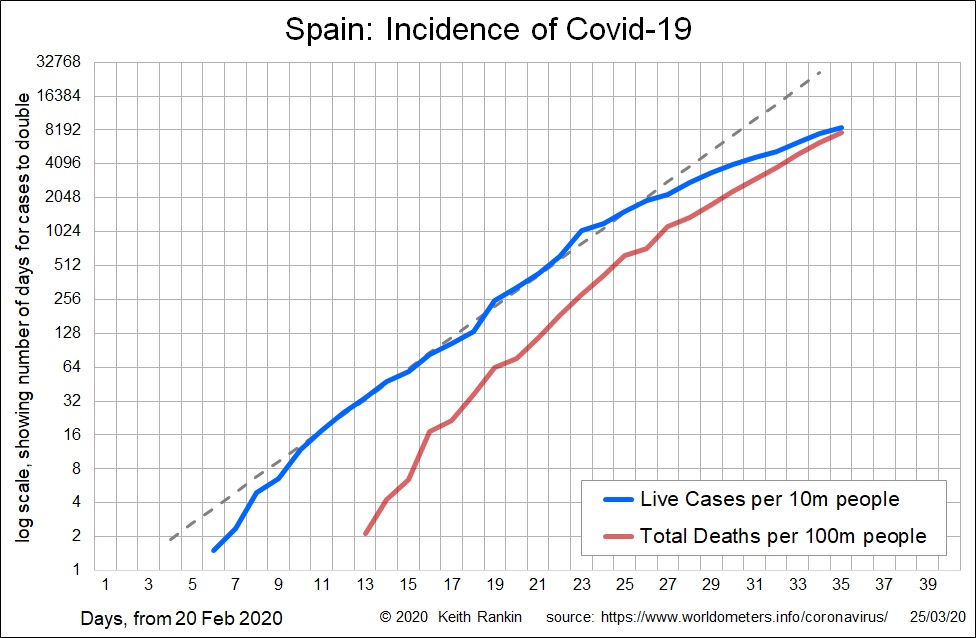
– Grattan on Friday: Wentworth preselectors’ rebuff to Morrison caps week of mayhem
– http://theconversation.com/grattan-on-friday-wentworth-preselectors-rebuff-to-morrison-caps-week-of-mayhem-103216]]>

Year 11 and 12 students in NSW will no longer learn about women’s contributions to physics

]]>

The Conversation (Au and NZ) – By Kathryn Ross, Researcher at Sydney University Physics Education Research Group, University of Sydney

The new Higher School Certificate (HSC) physics syllabus for NSW will contain no mention of the contributions of female physicists to the field. Not teaching students about their contributions to the field denies young women role models, and denies all students important knowledge about physics.

An education system which simultaneously claims to praise women in STEM, yet erases them from a physics syllabus cannot be seen as thorough. This needs to be fixed before long lasting damage is done to Australia’s next generation of scientists.


Read more: New study says the gender gap in science could take generations to fix


Physics has a multitude of female physicists to celebrate. These outstanding women could inspire passion in young female students, while providing all students with a broader perspective of the universe we all call home.

Complete deletion, really?

In 2018, NSW introduced a new HSC physics syllabus, which focuses on complex topics such as thermodynamics and quantum physics, and requires a more technical understanding of physics concepts. It focuses on the physics itself and its modern usage, rather than how we discovered and developed physics in the first place.

The outgoing syllabus includes more background and the history of the development of physics. The discoveries women have contributed to the field are taught in this syllabus, but it fails to identify a single woman by name in the 47 scientists mentioned 93 times.

The new syllabus has 25 scientists mentioned 56 times. But no women are referred to by name, nor are any contributions women have made to physics included.

This new syllabus focuses completely on male physicists and their work. Women have been and continue to be told physics is primarily a male endeavour.

You can’t be what you can’t see

Science is filled with interesting characters, insights and discoveries. Teaching about a scientist or their work celebrates their contributions, highlights their efforts and recognises how they influenced and developed knowledge.

The new syllabus fails to provide female role models. Role models are important because they foster pro-science aspirations and attitudes. This is true for both women and men, but young girls miss out if we only provide students with male role models.


Read more: The hunt for the Superstars of STEM to engage more women in science


This syllabus conveys the message that female physicists aren’t significant enough to mention. This is not only incorrect, but discouraging to female students. When we focus entirely on male scientists, we devalue women and their work in this field.

Remarkable female scientists

There are many examples of outstanding women that could have been included in the syllabus. Each have made major contributions to their field. Students would benefit greatly from learning about these women (plus many others) and their work in physics lessons. Here are four examples of bad-arse female physicists:

Ruby Payne-Scott was an Australian radio astronomer. Peter Hall/, CC BY-SA

Ruby Payne-Scott

Australia’s own Ruby Payne-Scott was one of the first radio astronomers in the world. Payne-Scott was at the forefront of radio astronomy in the 1940s. She developed techniques that have defined the field and her work made Australia the global leader it is today. Payne-Scott even discovered three types of radiation bursts coming from the sun.

Professor Marie Curie

Marie Curie is one of the most well-known female physicists. from www.shutterstock.com

Dual Nobel laureate, Professor Marie Curie started the field of radioactivity. Her work included the discovery of two new radioactive elements, which was only possible because of her impeccable experimental skills. Her research of radioactivity is still influencing physics. Her notebooks are still radioactive and will likely be for the next 1,500 years.

Dr Rosalind Franklin

Dr Rosalind Franklin’s unique approach to X-Ray crystallography was the first successful research delving into the structure of our cells. This helped us understand the double helix structure of DNA. Her work was revolutionary but has been attributed to Watson and Crick, who won the Nobel Prize for the discovery.

Dame Professor Jocelyn Bell-Burnell is an astrophysicist who discovered a new type of star. William Murphy/flickr, CC BY-SA

Dame Professor Jocelyn Bell-Burnell

Dame Professor Jocelyn Bell-Burnell discovered an entirely new type of star called pulsars on a radio telescope she essentially made herself while she was a PhD student. These rapidly rotating neutron stars changed what astronomers thought possible and is still an active area of research. Bell-Burnell originally called them LGM for Little Green Men as she did not want to rule out the fact the source could have come from alien life forms.


Read more: Gender inequalities in science won’t self-correct: it’s time for action


Teaching our students women have had and continue to have no role in physics is not only incorrect, it’s harmful. We need equal representation to normalise women in physics and encourage their engagement and further study. A syllabus that correctly represents people in the field of physics can help reduce unconscious bias and demonstrate to young women there’s a place for them in this field.

– Year 11 and 12 students in NSW will no longer learn about women’s contributions to physics
– http://theconversation.com/year-11-and-12-students-in-nsw-will-no-longer-learn-about-womens-contributions-to-physics-102988]]>

We need more flexible housing for 21st-century lives

]]>

The Conversation (Au and NZ) – By Kirsty Volz, PhD Candidate, The University of Queensland

The Great Australian Dream, underpinned by private home ownership, is a concept from the 19th and 20th centuries. Our housing stock was, and continues to be, designed and built for people who lived in previous centuries. The result is housing that discriminates and excludes, and that is becoming increasingly unaffordable. We need 21st-century housing that responds to the needs of 21st-century living.

The Australian Housing and Urban Research Institute (AHURI) report on 21st-century housing careers points to factors that are unique to 21st-century lives and which have direct impacts on housing. The greatest of these impacts is the risk society, a term originally defined by sociologist Ulrich Beck. As the AHURI report observes:

Change within economic and social structures has eroded the certainties of the previous Fordist or industrial society and resulted in a process of “individualisation” where individuals and households are increasingly confronted by the risks – and opportunities – of a rapidly changing social and economic environment.


Read more: Explainer: the financialisation of housing and what can be done about it


These risks come in many forms: limited opportunities for ongoing employment, an ageing population and the uncertainty of old age, or separation and divorce from a partner. All these factors can significantly alter housing circumstances.

Without digging too deeply into the literature on Australian housing in the 21st century, it seems obvious that workforce casualisation and the gig economy are incompatible with 30-year bank loans for a fixed asset such as a house. Existing approaches to housing, from apartments to detached dwellings, are too inflexible. Instead, we need options for housing that are more flexible and can accommodate the risks associated with 21st-century living.

This might go some way to explaining the popularity of the Tiny House Movement. Tiny houses provide the flexibility required in 21st-century lives. They are mobile, can be packed away and stored, and are assets that can be liquidated much more easily than a house.


Read more: Interest in tiny houses is growing, so who wants them and why?


However, small living is not for everyone. There are design-led solutions for flexible housing that don’t require people to move into cramped quarters.

So what does this housing look like?

Two examples of flexible housing can be found in Brisbane.

One Room Tower by Phorm architecture + design with Silvia Micheli and Antony Moulis. This image shows how the house fits into its street and context. Image: Christopher Frederick Jones, Author provided (No reuse) One Room Tower’s central location of services – a services core – provides maximum flexibility for this space. Image: Christopher Frederick Jones

One Room Tower (2017) in West End, designed by Phorm architecture + design with Silvia Micheli and Antony Moulis, is an addition to an existing inner-city house. Instead of adding to the house in the traditional manner, One Room Tower is a detached pavilion carefully designed with an open layout. The extra space can be adapted to provide many different uses to suit the needs of its inhabitants.

This innovative design, which provides much-needed flexibility, recently won a Queensland Architecture Award.

Another example is in the suburb of Clayfield. Two Pavilion House (2014) was designed by Kirsty Volz and David Toussaint. The house is split into two pavilions joined by a communal outdoor space and an internal courtyard.

This design provides flexible modes of occupation: it can be occupied as a single detached three-bedroom dwelling, or as a two-bedroom house with a self-contained bedsit. The result is a house that can be occupied by a multigenerational family, provide rental income, incorporate a home office, or a second living area.

Old next to new. Two Pavilion House, designed with 21st-century lives in mind, sits in an older suburb among 19th- and 20th-century houses. Image: Scott Burrows, Author provided (No reuse) An internal courtyard joins the two pavilions in Two Pavilion House. Image: Scott Burrows, Author provided (No reuse)

It’s not just room layouts that provide the flexibility in these houses. They require careful consideration in the design process to develop. Things to be considered include: the sequences of access (entering and leaving a house and/or room); the adjacencies of rooms, so as to maintain privacy, security and adequate fire separation; and the provision of services such as kitchens, bathrooms and laundries, some of which can be shared.

Both of these houses provide for flexible living arrangements while still complying with the requirements of building regulations.

One Room Tower and Two Pavilion House will both be open to the public on the weekend of October 13-14 as part of the Brisbane Open House event.

A regulatory rethink is needed too

A growing number of housing solutions are meeting the need for multigenerational housing, providing accommodation for ageing parents or adult children. Granny flats are a good example.

However, some of these solutions do not meet building regulations. It is a concern if these houses fail to provide adequate health and safety, fire separation, or security to protect belongings. Carefully designed, fit-for-purpose dwellings that safely provide options for multiple and varied occupancies are needed.

It is also time for some local authorities to re-evaluate regulations, and consider how these might safely match the need for flexible and adaptable accommodation.

Flexible, “loose fit” housing will provide greater diversity in accommodation. And, by doing so, it will be more inclusive of a broader cross-section of society – diverse housing for a diverse society.

Flexible housing also has the potential to be a design-led solution to housing affordability, by adapting housing to suit the needs of everyone in the risk society.

Existing housing stock is designed around the numbers of bedrooms and bathrooms that appeal to the market and so fails to be responsive to what people need from housing in the 21st century.

– We need more flexible housing for 21st-century lives
– http://theconversation.com/we-need-more-flexible-housing-for-21st-century-lives-102636]]>

Vital signs. When cutting interest rates might not help

]]>

The Conversation (Au and NZ) – By Richard Holden, Professor of Economics and PLuS Alliance Fellow, UNSW

There’s a meme around official interest rates since the financial crisis, and it goes like this. Central banks have already cut them to nearly zero (or actually zero) but advanced economies are still languishing. Therefore cutting them further won’t achieve much.

There are a number of problems with it. One is that it’s a nice illustration of the post hoc ergo propter hoc fallacy – “after this therefore because of this”. It ignores the counterfactual. Maybe we would have spent a decade in severe recession had it not been for the interest rate cuts.

But there might also be a grain of truth to the idea that cuts don’t do what they once did. It has led to a whole cottage industry exploring the “channels” through which cutting interest rates is meant to work.

Mortgage refinancing matters

One potentially important channel is through refinancing of mortgages. When interest rates drop it can be attractive for mortgage holders to refinance, take out some equity and spend it. This was a particularly big deal in the United States in both the run-up to, and the aftermath of, the financial crisis.

It has also been a big deal here, where refinancing is easy and for the last few decades many borrowers have had mortgage offset accounts.

A recent paper, now forthcoming at the Quarterly Journal of Economics (the highest-ranked journal among all the social sciences), examines the channel using data from across the United States.

The authors, from the University of Chicago, MIT and the Swiss National Bank, begin with the following fact. During the financial crisis there was a big drop in US house prices, but the drops were especially severe in places like Las Vegas and Phoenix. By contrast, in the previous (2001) recession house prices continued to grow across the country with little regional variation.

This means there were regional variations in embedded equity in one recession but not in the other.

Which means house prices matter

So far that’s just a mundane fact of US financial history. But the authors observe that to refinance a loan lenders typically insist on a minimum level of equity – a loan-to-value ratio – which gets recalculated.

That means they weren’t surprised to find that the sharp interest rate cuts in 2008 had the smallest effects in the most economically depressed parts of the country. Put another way, they had the smallest effects where they were needed the most.

Australia doesn’t have much negative equity, yet. But in one city (Sydney) prices are falling faster than elsewhere.

And negative gearing matters

A complication is that Australia allows “negative gearing”, the practice of renting out properties for a tax-effective loss and then selling them in an appreciating property market for a lightly taxed capital gain.

Rather than refinance for consumption, plenty of Australians have been refinancing to buy and negatively gear investment properties.


Read more: PolicyCheck: Negative gearing reform


But when prices fall that strategy no longer makes financial sense, pushing the buying of investment properties for negative gearing to a grinding halt.

This amplifies the fall in prices. In essence, negative gearing acts as a multiplier in the property market on the way up and on the way down. Right now, we are seeing the “down” in certain parts of Australia.

Which means it matters where you live

You’ve got to feel for central bankers, at least a little bit. Not only do they have to worry about employment, economic growth, the exchange rate and housing prices, they now also have to worry about how their interest rate decisions are affected by regional variations in the history of house prices.

Still, understanding the precise channels through which changes in interest rates affect real economic activity is crucial to determining good policy – and predicting what the Reserve Bank will do next.

– Vital signs. When cutting interest rates might not help
– http://theconversation.com/vital-signs-when-cutting-interest-rates-might-not-help-103095]]>

Friday essay: who owns a family’s story? Why it’s time to lift the Berndt field notes embargo

]]>

The Conversation (Au and NZ) – By Claire Smith, Professor of Archaeology, College of Humanities, Arts and Social Sciences, Flinders University

Imagine your grandfather was interviewed about his life, over many hours, some 80 years ago. Everything he says is written down, enough to fill more than 20 notebooks.

You’ve heard that those notebooks hold stories of your grandparents and their grandparents. Stories they would tell as they sat around a fire in the winter, by a river in summer. There are stories about the sports they played, the food they ate, their spirituality, how they celebrated important events. Stories about their songs, dances, artworks. Stories of the events that shaped them, many of which play out even now.

Then you learn that the wife of the person who wrote down your grandfather’s stories has locked the notebooks away. You and your family are not allowed to read them.

This is how it is for a number of Aboriginal people today, among them 81-year-old Vincent (Vince) Copley senior, co-author of this article.

Between 1939 and 1944, Vince Copley’s grandfather, Ngadjuri man Barney Waria, provided information about his people and culture to anthropologist-in-training Ronald Berndt. When Berndt died in 1990, 45 years and an illustrious career later, he’d published only one significant article about Barney Waria and the Ngadjuri people.

Four years after his death, Berndt’s wife and fellow anthropologist Catherine Berndt died. Her will, written in 1993 and following her husband’s wishes, stipulated a 30-year embargo on a subset of their extensive collection of papers. This embargo included the Barney Waria notebooks. As it stands, the embargoed material – stored in the Berndt Museum at the University of Western Australia – will not be accessible until 2024.

Vince Copley hopes to see these notebooks before he dies. He would like to be able to read them with his adult children, to give them a fuller picture of their Ngadjuri ancestry. He hopes they may trigger his own memories of his father’s side of the family.

Barney Waria. Author provided.

Barney Waria was born in 1873 at Orroroo, on Ngadjuri Country in the mid-north of South Australia. He died in 1948. As far as is known, he was the last initiated Ngadjuri man. Vince’s father Frederick Warrior – the name was anglicised at some stage – was the eldest son of Barney. He died in an accident in 1938 when he was 30 and Vince was a baby.

Between 1936 and 1944, Barney Waria worked with three anthropologists: Norman Tindale, Charles Mountford, and Ronald Berndt. Berndt was in his early 20s when he met Waria for the first time, around 1939.

Important cultural knowledge

One of Berndt’s 35 books.

Over his lifetime, Berndt published 35 books and many articles. When he met Waria, however, he was just starting his anthropology studies. They met either at Berndt’s father’s house at Rose Park or at Light Square, in the Adelaide city centre, a gathering place for Aboriginal people from many different language groups.

In either 1942 or 1944, Berndt took the older Aboriginal man to visit the Aboriginal collection at the South Australian Museum. As they walked past the exhibits, Waria pointed out artefacts that were familiar. Berndt writes that at one point, Waria stopped and opened his arms wide as if to embrace the gallery of objects. Waria said:

It’s wonderful that we can look at all these things and know their meanings, wonderful to think of the power and the songs and the ritual associated with them, to think about all that has gone. But what they were lives only in the minds of a few of us!

It’s not clear what to make of Waria’s words, as he would have intended them. Lament? Pragmatic acceptance of a new reality? Something else?

What is clear, however, is that Waria was conscious that important Aboriginal cultural knowledge was disappearing. It is our view that he chose to work with anthropologists as one way of preserving that knowledge for his descendents. Much of Waria’s knowledge was recorded in Ronald Berndt’s field notes.

In the late 1950s, the Berndts moved to Perth, taking up senior roles at the University of Western Australia. In 1976 they founded an anthropology museum to hold their extensive collection of material. In 1992, after Ronald’s death, it was renamed the Berndt Museum.

Why an embargo?

Anthropologist John Stanton is the literary executor of Ronald and Catherine Berndt’s estate. Now retired, he was the couple’s protégé, and worked with them for many years. He became a curator of the Berndt Museum, and then director from 1980 to 2013. He remains on the Committee of the Professor Ronald M. and Dr Catherine Berndt Research Foundation.

Stanton says that neither Catherine nor Ronald Berndt trusted Australian governments to support Aboriginal interests. Thus the embargo on Berndt’s notes – placed during the time of the Mabo case and the eventual 1992 ruling that recognised native title – was a result of their concern that their material could be misused by a government.

In the pre-Mabo era, the embargo on Berndt’s field notes would have been viewed as a purely personal decision. It would not have crossed people’s minds to consult with Aboriginal people. Also, Ngadjuri people had been removed from their lands as a result of colonisation. At that time they were not widely recognised as an identifiable language group.

Today, universities actively pursue decolonised approaches. At the very least, they work in partnership with Indigenous people. Often, their work supports Indigenous self-determination. Within the academy, it is increasingly accepted that field notes should be available to the descendants of the fieldworker’s Indigenous teachers.

Stanton has confirmed that the notebooks containing Barney Waria’s interviews have been read by people outside the Berndt Museum on only two occasions. Both times, access was subject to South Australia Supreme Court writs. The first was during the controversy over the Hindmarsh Island Bridge which concerned the Ngarrindjeri people. The second was by an anthropologist from the South Australian Native Title Service in response to a Ngadjuri native title claim in 2011.

At present, native title claims are the only avenue for Aboriginal people to try to access the embargoed material. However, this is a flawed process. Families seek to find as many of the missing pieces of their traditional languages and cultures as they can. These cultural reasons tend to get lost in complicated and often combative legal processes.

Ronald Berndt may have decided it was best to avoid these confrontations by imposing the embargo. However, the descendants of the people whose lives and culture he documented have much more at stake than he did.

Unfairly withheld

Vince Copley contacted Stanton in November 2017 – a colleague emailed on his behalf – because he’d heard a rumour that the embargo had been lifted. Stanton emailed back saying he’d retired and a new associate director, Dr Vanessa Russ, was in charge. He acknowledged the difficulties for families, saying he was sorry that “we have been so hamstrung by Catherine Berndt’s will.”

Vincent Copley senior, Redbanks Conversation Park, Burra. June 2018. Photo: C.J. Taylor, Flinders University.

In recent email correspondence, Russ, an academic, artist and Ngarinyin/Gija woman from the Kimberley, has confirmed that the embargo continues. The university, she says, accepted the donations made by Berndt in their entirety, to secure the material for future generations, and has been working to conserve and share these collections. “Unfortunately this has included an embargo on the field notebooks. We acknowledge that we would therefore be breaking the law if we contravened the terms of the Will by providing access before 2024, but that this has caused some distress to Elders.”

The university, she says, is striving to ensure that future consultation will take into account all individuals and communities who through their heirs and ancestors provided information to the Berndts, “in order to find the best process and procedure for future research and teaching with this material post 2024.”

Our position is that the Berndts were not solely the owners of the intellectual property in the field notes. It was jointed owned by Aboriginal Elders, such as Barney Waria. Consequently, the field notes are being unfairly withheld from their descendants.

Recently, we published an article arguing that Berndt’s field notes are joint intellectual property. They could not have been produced by either Berndt or Waria by himself. Both men contributed to this intellectual soup. One shared his specialist knowledge. The other recorded this knowledge in a notebook. It is likely that Barney Waria’s knowledge was recorded verbatim in Berndt’s field notes.

Moreover, there is a further injustice behind the current situation, of which many Indigenous people are acutely aware. Academics achieve careers and financial security on the basis of Indigenous cultural knowledge. However, the Indigenous teachers who impart that specialist knowledge, and their descendants, receive meagre pickings.

Where to from here?

The question of who owns this sort of material is slowly being resolved in this country. However, for people like Vince Copley senior and his family, a solution to the Berndt embargo seems an impossibly long way off.

What reasonable expectations did Barney Waria have when he decided to talk to Berndt? It is likely that these expectations were based on his previous experiences with Norman Tindale and Charles Mountford. Their notebooks are readily available in libraries and museums.

The current situation undermines trust between Indigenous people and anthropologists. If the knowledge you impart to a researcher is likely to be kept from your descendants, why share it? The Berndt example demonstrates that intellectual property can be appropriated as soon as it is written down.

It is time that the University of Western Australia re-assessed the legal basis for the embargo. For Vince Copley and other descendants of the people who shared their specialist knowledge with Berndt – whose stories and culture are locked away – time is running out.

– Friday essay: who owns a family’s story? Why it’s time to lift the Berndt field notes embargo
– http://theconversation.com/friday-essay-who-owns-a-familys-story-why-its-time-to-lift-the-berndt-field-notes-embargo-94652]]>

How much plastic does it take to kill a turtle? Typically just 14 pieces

]]>

The Conversation (Au and NZ) – By Britta Denise Hardesty, Principal Research Scientist, Oceans and Atmosphere Flagship, CSIRO

We know there is a lot of plastic in the ocean, and that turtles (and other endangered species) are eating it. It is not uncommon to find stranded dead turtles with guts full of plastic.

But we weren’t really sure whether plastic eaten by turtles actually kills them, or if they just happen to have plastic inside them when they die. Another way to look at it would be to ask: how much is too much plastic for turtles?

This is a really important question. Just because there’s a lot of plastic in the ocean, we can’t necessarily presume that animals are dying from eating it. Even if a few animals do, that doesn’t mean that every animal that eats plastic is going to die. If we can estimate how much plastic it takes to kill a turtle, we can start to answer the question of exactly how turtle populations are affected by eating plastic debris.


Read more: Eight million tonnes of plastic are going into the ocean each year


In our research, published today in Nature Scientific Reports, we looked at nearly 1,000 turtles that had died and washed up on beaches around Australia or were found in nets. About 260 of them we examined ourselves; the others were reported to the Queensland Turtle Stranding Database. We carefully investigated why the turtles died, and for the ones we examined, we counted how many pieces of plastic they had eaten.

Some turtles died of causes that were nothing to do with plastic. They may have been killed by a boat strike, or become entangled in fishing lines or derelict nets. Turtles have even been known to die after accidentally eating a blue-ringed octopus. Others definitely died from eating plastic, with the plastic either puncturing or blocking their gut.

One of the first meals eaten by this sea turtle post-hatchling turned out to be deadly. It died from consuming more than 20 tiny pieces of plastic, many of which were about the same size as a grain of rice. Kathy Townsend, Author provided

Some turtles that were killed by things like boat strikes or fishing nets nevertheless had large amounts of plastic in their guts, despite not having been killed by eating plastic. These turtles allow us to see how much plastic an animal can eat and still be alive and functioning.

The chart below sets out this idea. If an animal drowned in a fishing net, its chance of being killed by plastic is zero – and it falls in the lower left of the graph. If a turtle’s gut was blocked by a plastic bag, its chance of being killed by plastic is 100%, and it’s in the upper right.

The animals that were dead with plastic in their gut, but had other possible causes of death have a chance of death due to plastic somewhere between 0 and 100% – we just don’t know, and they can fall anywhere in the graph. Once we have all the animals in the plot, then we can ask whether we see an increase in the chance of death due to plastic as the amount of plastic in an animal goes up.

Conceptual framework for estimating the probability of death due to plastic debris ingestion. Figure provided by the authors.

We tested this idea using our turtle samples. We looked at the relationship between the likelihood of death due to plastic as determined by a turtle autopsy, and the number of pieces of plastic found inside the animals.

Unsurprisingly, we found that the more plastic pieces a turtle had inside it, the more likely it was to have been killed by plastic. We calculated that for an average-sized turtle (about 45cm long), eating 14 plastic items equates to a 50% chance of being fatal.


Read more: Pristine paradise to rubbish dump: the same Pacific island, 23 years apart


That’s not to say that a turtle can eat 13 pieces of plastic without harm. Even a single piece can potentially kill a turtle. Two of the turtles we studied had eaten just one piece of plastic, which was enough to kill them. In one case, the gut was punctured, and in the other, the soft plastic had clogged the turtle’s gut. Our analyses suggest that a turtle has a 22% chance of dying if it eats just one piece of plastic.

A green sea turtle that died after consuming 13 pieces of soft plastic and balloons, which blocked its gastrointestinal system. Kathy Townsend

A few other factors also affected the animals’ chance of being killed by plastic. Juveniles eat more debris than adults, and the rate also varies between different turtle species.

Now that we know how much is too much plastic, the next step is to apply this to global estimates of debris ingestion rates by turtles, and figure out just how much of a threat plastic is to endangered sea turtle populations.

– How much plastic does it take to kill a turtle? Typically just 14 pieces
– http://theconversation.com/how-much-plastic-does-it-take-to-kill-a-turtle-typically-just-14-pieces-100768]]>

- ADVERT -

MIL PODCASTS
Bookmark
| Follow | Subscribe Listen on Apple Podcasts

Foreign policy + Intel + Security

Subscribe | Follow | Bookmark
and join Buchanan & Manning LIVE Thursdays @ midday

MIL Public Webcast Service


- Advertisement -
- Advertisement -
- Advertisement -
- Advertisement -
- Advertisement -