Page 1001

John Pilger: ‘Hold the front page. The reporters are missing’

]]>

Report by Dr David Robie – Café Pacific. –

John Pilger … how “fearful ‘democracies’ regress behind a media facade of narcissistic spectacle”.
Image: Media Lens

By John Pilger
Foreword to Propaganda Blitz published today.*

The death of Robert Parry earlier this year felt like a farewell to the age of the reporter. Parry was “a trailblazer for independent journalism”, wrote Seymour Hersh, with whom he shared much in common.

Hersh revealed the My Lai massacre in Vietnam and the secret bombing of Cambodia, Parry exposed Iran-Contra, a drugs and gun-running conspiracy that led to the White House. In 2016, they separately produced compelling evidence that the Assad government in Syria had not used chemical weapons. They were not forgiven.

Driven from the “mainstream”, Hersh must publish his work outside the United States. Parry set up his own independent news website Consortium News, where, in a final piece following a stroke, he referred to journalism’s veneration of “approved opinions” while “unapproved evidence is brushed aside or disparaged regardless of its quality.”

Although journalism was always a loose extension of establishment power, something has changed in recent years. Dissent tolerated when I joined a national newspaper in Britain in the 1960s has regressed to a metaphoric underground as liberal capitalism moves towards a form of corporate dictatorship. This is a seismic shift, with journalists policing the new “groupthink”, as Parry called it, dispensing its myths and distractions, pursuing its enemies.

Witness the witch-hunts against refugees and immigrants, the willful abandonment by the “MeToo” zealots of our oldest freedom, presumption of innocence, the anti-Russia racism and anti-Brexit hysteria, the growing anti-China campaign and the suppression of a warning of world war.

With many if not most independent journalists barred or ejected from the “mainstream”, a corner of the Internet has become a vital source of disclosure and evidence-based analysis: true journalism. Sites such as wikileaks.org, consortiumnews.com, wsws.org, truthdig.com, globalresearch.org, counterpunch.org and informationclearinghouse.com are required reading for those trying to make sense of a world in which science and technology advance wondrously while political and economic life in the fearful “democracies” regress behind a media facade of narcissistic spectacle.

Remarkable Media Lens
In Britain, just one website offers consistently independent media criticism. This is the remarkable
Media Lens — remarkable partly because its founders and editors as well as its only writers, David Edwards and David Cromwell, since 2001 have concentrated their gaze not on the usual suspects, the Tory press, but the paragons of reputable liberal journalism: the BBC, The Guardian, Channel 4 News.

Their method is simple. Meticulous in their research, they are respectful and polite when they ask a journalist why he or she produced such a one-sided report, or failed to disclose essential facts or promoted discredited myths.

The replies they receive are often defensive, at times abusive; some are hysterical, as if they have pushed back a screen on a protected species.

I would say Media Lens has shattered a silence about corporate journalism. Like Noam Chomsky and Edward Herman in Manufacturing Consent, they represent a Fifth Estate that deconstructs and demystifies the media’s power.

What is especially interesting about them is that neither is a journalist. David Edwards was a teacher, David Cromwell is a former scientist. Yet, their understanding of the morality of journalism — a term rarely used; let’s call it true objectivity — is a bracing quality of their online Media Lens dispatches.

Propaganda Blitz … published today.
I think their work is heroic and I would place a copy of their just published book, Propaganda Blitz, in every journalism school that services the corporate system, as they all do.

Take the chapter, Dismantling the National Health Service, in which Edwards and Cromwell describe the critical part played by journalists in the crisis facing Britain’s pioneering health service.

‘Austerity’ construct
The NHS crisis is the product of a political and media construct known as “austerity”, with its deceitful, weasel language of “efficiency savings” (the BBC term for slashing public expenditure) and “hard choices” (the willful destruction of the premises of civilised life in modern Britain).

“Austerity” is an invention. Britain is a rich country with a debt owed by its crooked banks, not its people. The resources that would comfortably fund the National Health Service have been stolen in broad daylight by the few allowed to avoid and evade billions in taxes.

Using a vocabulary of corporate euphemisms, the publicly-funded Health Service is being deliberately run down by free market fanatics, to justify its selling-off. The Labour Party of Jeremy Corbyn may appear to oppose this, but does it? The answer is very likely no. Little of any of this is alluded to in the media, let alone explained.

Edwards and Cromwell have dissected the 2012 Health and Social Care Act, whose innocuous title belies its dire consequences. Unknown to most of the population, the Act ends the legal obligation of British governments to provide universal free health care: the bedrock on which the NHS was set up following the Second World War. Private companies can now insinuate themselves into the NHS, piece by piece.

Where, asks Edwards and Cromwell, was the BBC while this momentous Bill was making its way through Parliament? With a statutory commitment to “providing a breadth of view” and to properly inform the public of “matters of public policy”, the BBC never spelt out the threat posed to one of the nation’s most cherished institutions. A BBC headline said: “Bill which gives power to GPs passes.” This was pure state propaganda.

There is a striking similarity with the BBC’s coverage of Prime Minister Tony Blair’s lawless invasion of Iraq in 2003, which left a million dead and many more dispossessed. A study by Cardiff University, Wales, found that the BBC reflected the government line “overwhelmingly” while relegating reports of civilian suffering. A Media Tenor study placed the BBC at the bottom of a league of Western broadcasters in the time they gave to opponents of the invasion. The corporation’s much-vaunted “principle” of impartiality was never a consideration.

One of the most telling chapters in Propaganda Blitz describes the smear campaigns mounted by journalists against dissenters, political mavericks and whistleblowers. The Guardian’s campaign against the WikiLeaks founder Julian Assange is the most disturbing.

Assange abandoned
Assange, whose epic WikiLeaks disclosures brought fame, journalism prizes and largesse to The Guardian, was abandoned when he was no longer useful. He was then subjected to a vituperative – and cowardly — onslaught of a kind I have rarely known.

With not a penny going to WikiLeaks, a hyped Guardian book led to a lucrative Hollywood movie deal. The book’s authors, Luke Harding and David Leigh, gratuitously described Assange as a “damaged personality” and “callous”. They also disclosed the secret password he had given the paper in confidence, which was designed to protect a digital file containing the US embassy cables.

With Assange now trapped in the Ecuadorean embassy, Harding, standing among the police outside, gloated on his blog that “Scotland Yard may get the last laugh”.

The Guardian columnist Suzanne Moore wrote, “I bet Assange is stuffing himself full of flattened guinea pigs. He really is the most massive turd.”

Moore, who describes herself as a feminist, later complained that, after attacking Assange, she had suffered “vile abuse”. Edwards and Cromwell wrote to her: “That’s a real shame, sorry to hear that. But how would you describe calling someone ‘the most massive turd’? Vile abuse?”

Moore replied that no, she would not, adding, “I would advise you to stop being so bloody patronising.”

Her former Guardian colleague James Ball wrote, “It’s difficult to imagine what Ecuador’s London embassy smells like more than five and a half years after Julian Assange moved in.”

Slow-witted viciousness
Such slow-witted viciousness appeared in a newspaper described by its editor, Katharine Viner, as “thoughtful and progressive”.

What is the root of this vindictiveness? Is it jealousy, a perverse recognition that Assange has achieved more journalistic firsts than his snipers can claim in a lifetime? Is it that he refuses to be “one of us” and shames those who have long sold out the independence of journalism?

Journalism students should study this to understand that the source of “fake news” is not only trollism, or the likes of Fox news, or Donald Trump, but a journalism self-anointed with a false respectability: a liberal journalism that claims to challenge corrupt state power but, in reality, courts and protects it, and colludes with it. The amorality of the years of Tony Blair, whom The Guardian has failed to rehabilitate, is its echo.

“[It is] an age in which people yearn for new ideas and fresh alternatives,” wrote Katharine Viner. Her political writer Jonathan Freedland dismissed the yearning of young people who supported the modest policies of Labour leader Jeremy Corbyn as “a form of narcissism”.

“How did this man ….,” brayed The Guardian’s Zoe Williams, “get on the ballot in the first place?” A choir of the paper’s precocious windbags joined in, thereafter queuing to fall on their blunt swords when Corbyn came close to winning the 2017 general election in spite of the media.

Complex stories are reported to a cult-like formula of bias, hearsay and omission: Brexit, Venezuela, Russia, Syria. On Syria, only the investigations of a group of independent journalists have countered this, revealing the network of Anglo-American backing of jihadists in Syria, including those related to ISIS.

Supported by a “psyops” campaign funded by the British Foreign Office and the US Agency of International Aid, the aim is to hoodwink the Western public and speed the overthrow of the government in Damascus, regardless of the medieval alternative and the risk of war with Russia.

White Helmets appendages
The Syria Campaign, set up by a New York PR agency, Purpose, funds a group known as the White Helmets, who claim falsely to be “Syria Civil Defence” and are seen uncritically on TV news and social media, apparently rescuing the victims of bombing, which they film and edit themselves, though viewers are unlikely to be told this. George Clooney is a fan.

The White Helmets are appendages to the jihadists with whom they share addresses. Their media-smart uniforms and equipment are supplied by their Western paymasters. That their exploits are not questioned by major news organisations is an indication of how deep the influence of state-backed PR now runs in the media. As Robert Fisk noted recently, no “mainstream” reporter reports Syria, from Syria.

In what is known as a hatchet job, a Guardian reporter based in San Francisco, Olivia Solon, who has never visited Syria, was allowed to smear the substantiated investigative work of journalists Vanessa Beeley and Eva Bartlett on the White Helmets as “propagated online by a network of anti-imperialist activists, conspiracy theorists and trolls with the support of the Russian government”.

This abuse was published without permitting a single correction, let alone a right-of-reply. The Guardian Comment page was blocked, as Edwards and Cromwell document. I saw the list of questions Solon sent to Beeley, which reads like a McCarthyite charge sheet — “Have you ever been invited to North Korea?”

So much of the mainstream has descended to this level. Subjectivism is all; slogans and outrage are proof enough. What matters is the “perception”.

When he was US commander in Afghanistan, General David Petraeus declared what he called “a war of perception… conducted continuously using the news media”. What really mattered was not the facts but the way the story played in the United States. The undeclared enemy was, as always, an informed and critical public at home.

Nothing has changed. In the 1970s, I met Leni Riefenstahl, Hitler’s film-maker, whose propaganda mesmerised the German public.

She told me the “messages” of her films were dependent not on “orders from above”, but on the “submissive void” of an uninformed public.

“Did that include the liberal, educated bourgeoisie?” I asked.

“Everyone,” she said. “Propaganda always wins, if you allow it.”

* Note from the editors of Media Lens: This is a slightly amended version of the foreword to the new Media Lens book, Propaganda Blitz – How The Corporate Media Distort Reality, published today by Pluto Press. Warm thanks to John Pilger for contributing this superb piece to our book. Republished by Café Pacific under a Creative Commons licence.

This article was first published on Café Pacific.]]>

Fisherman kept in ‘abject’ conditions at sea repatriated from Fiji, says lawyer

]]>

NZ lawyer Karen Harding … social media video plea to captain of Taiwanese fishing boat helped “free” Indonesian fisherman in Fiji. Image: Karen Harding’s FB page

By Rahul Bhattarai

An allegedly “enslaved” Indonesian fisherman on board Yu Shun 88, a Taiwanese flagged tuna longliner, has now been repatriated from Fiji to his homeland, says an Auckland lawyer.

Barrister and solicitor Karen Harding alleged in a social media video message addressed to the skipper that the fishing boat was holding her client against his will in “abject” working conditions.

But with the help of an Indonesian government representative and a charity group known as Pacific Dialogue, the fisherman was repatriated to Indonesia last weekend.

READ MORE: From traffic law to human rights – how an Auckland woman is fighting for justice for 30 fishermen

Harding, a lawyer with a high profile in acting on drink and driving cases who has branched into human rights lawsuits, said the unnamed fisherman’s bed was infested with fleas, food was spoiled, and there was no fresh soap or water for showers.

The fishermen on the boat, which carries up to 17 people, were also forced to work for 18-20 hours a day, she claimed.

-Partners-

Harding said the captain had taken the passport, the seaman’s book and withheld pay as a security bond.

The fisherman wanted to go home due to “horrible working conditions” and many injuries.

A “flea-infested bed” on board the Yu Shun 88. Image: Lawyers

Wages withheld
One fisherman was so injured, he was “not even able to hold a chop stick,” Harding said.

“You are holding him against his will and your company is not paying him his wages and holding the wages back as security,” she alleged in the video message.

Her client got a job to work on a Taiwanese fishing vessel in Suva and “was promised, he was going to get US$450 (NZ$672) in wages and commission of US$400 (NZ$589) per month per docking,” Harding said.

Not paying them and holding wages as security was “creating forced labour”, Harding said.

“I liaised with the Indonesian government on Sunday … and liaised with the charity group known as Pacific Dialogue,” and the latter reported the matter to the embassy, Harding said.

The Indonesian government had been helpful in a timely dealing with this matter.

The Indonesian government had arranged for the representative of the Indonesian government to go to the agent’s office on the Suva wharf,” Harding said.

Seeking wages
Now that the fisherman was home, the problem was getting his wages for the time he had worked on the ship.

Out of NZ$1261 allegedly owed to him, he had only received $141 for four months of work. His contract had said that “if he didn’t complete the contract they weren’t going to pay his wages,” said Harding.

There are other fishermen on board the same ship, but because Harding was only dealing with one fisherman, the status of the others is unknown.

The same fisherman had also allegedly been subject to similar harsh conditions in New Zealand waters on board a Korean vessel.

The fisherman still had not been paid by the Oyang 77, for the period of 2009 January 22 to 2010 December 6.

“He effectively only got paid only one hour a day at the NZ minimum pay rate,” Harding said.

“And he worked 18 hours a day on average.”

No comment was available from the company’s involved.

The Yu Shun 88 is now headed towards Solomon Islands and is expected to spend another 12 months at sea with other fishermen on board.

The infected hand of one of the fishermen on board Yu Shun 88. Image: Lawyers
Print Friendly, PDF & Email

Article by AsiaPacificReport.nz

]]>

Philippine protesters stage anti-martial law demos as Duterte trust plummets

]]>

Protesters mark the 46th anniversary of the declaration of martial law under Philippines dictator Marcos with demonstrations against President Duterte. Video: Rappler

By Paterno Esmaquel II in Manila

Protesters have staged the most widespread barrage of protests yesterday against President Rodrigo Duterte, as Filipinos marked the 46th anniversary of the declaration of martial law under dictator Ferdinand Marcos.

A running list by Rappler shows rallies scheduled across 14 regions in the Philippines, including Metro Manila, and even overseas.

The protests come in the face of growing discontent under Duterte – prices of goods have been rising, thousands have died in a drug war that has failed to eradicate drugs, and critical voices such as Senator Antonio Trillanes IV and Australian nun Sister Patricia Fox face threats of either arrest or deportation.

READ MORE: Filipinos remember martial law: ‘Dictatorship is back’

Duterte’s public trust and satisfaction ratings also continue to fall.

-Partners-

Duterte – who earlier said the dictator’s daughter, Ilocos Norte Governor Imee Marcos, donated to his presidential campaign – wants the dictator’s son and namesake, former senator Ferdinand Marcos Jr, to be vice-president so that Marcos can succeed him.

Marcos has a pending protest against the election victory of Vice-President Leni Robredo, leader of the opposition.

Meanwhile, Marcos on Thursday evening, September 20, launched a new campaign to revise history through a “talk show” with former Senator Juan Ponce Enrile, architect and implementer of Martial Law as the elder Marcos’ defence minister.

‘No abuses’ claim
Marcos is selling the idea that no abuses happened under his father’s regime.

Protesters yesterday refused to take this sitting down.

An artist applies finishing touches on giant art heads of the late dictator Ferdinand Marcos and President Rodrigo Duterte for the 46th anniversary of Martial Law on September 21, 2018. Image: Darren Langit/Rappler

Roads lead to Luneta
In Metro Manila, all roads lead to the iconic Rizal Park, also known as Luneta, for a protest mounted by various groups. Groups marching from San Agustin Church, De La Salle University, University of Santo Tomas, Polytechnic University of the Philippines, and University of the Philippines Diliman, among other assembly points, gathered at Rizal Park to fight the return of a dictatorship.

The Catholic Church, which was instrumental in toppling Marcos in 1986, is one of the groups that helped mount the September 21 rallies.

A Mass for Dignity and Peace was held at San Agustin Church in Intramuros, Manila, yesterday afternoon, followed by a march to Luneta with other religious denominations.

Protesters march from San Agustin Church to Luneta. Video: Rappler

Those who marched to Luneta included people of different political colours, from priests and nuns to leftist groups to Duterte critics such as former chief justice Maria Lourdes Sereno.

Different though they were, protesters had a similar cry: Resist a creeping dictatorship.

Ousted chief justice Sereno speaks at anti-Martial Law rally. Video: Rappler

Sereno was one of the loudest voices in Luneta on Friday.

‘Fighting for justice’
In a raised pitch and with impassioned gestures, Sereno said onstage: “Naghirap kami sa martial law, kaya’t nilalabanan namin, at itinataguyod ang katarungan at katuwiran para hindi na maulit ‘yan. Kaya mga mamamayan, lalong lalo na mga bata: Uulitin po ba natin? Papayagan ba natin ang martial law uli?”

(We suffered during martial law. That’s why we’re fighting for and upholding justice and righteousness to avoid a repeat of that. My fellow citizens, especially children, will we permit martial law to happen again?)

Sereno – who for years kept the “dignified silence” of the Supreme Court until Duterte had her ousted – found herself leading a chant before a crowd on Friday: “Never again to Martial Law!”

Below the stage where speakers like Sereno spoke, a tired Judy Taguiwalo, who marched from Mendiola to Luneta, was seated on a monobloc chair as she granted an interview.

Taguiwalo was an activist whom Duterte named social welfare secretary, only to be rejected by the Commission on Appointments in August 2017.

Taguiwalo, who suffered during the Martial Law years, also said “never again to Martial Law.”

Nakulong ako sa panahon ng batas militar. Maraming namatay, na-torture,” she recalled. (I was imprisoned during the the period of military rule. Many people died and were tortured.)

Paterno Esmaquel II is a journalist with the online news website Rappler and these multimedia reports are drawn from the Rappler coverage.

Print Friendly, PDF & Email

Article by AsiaPacificReport.nz

]]>

Refugees, journalist detention in Nauru ‘overshadow Pacific issues’

]]>

Support was widespread for journalist Barbara Dreaver’s detention at the Pacific Islands Forum in Nauru earlier this month. But, reports Maxine Jacobs for Asia Pacific Journalism, some commentators argue journalists should abide by their host nation’s reporting regulations and the Nauru refugee crisis is not as important to Pacific nations as it is to New Zealand and Australia.

While controversy dogged Nauru’s detention of TVNZ Pacific correspondent Barbara Dreaver during the Pacific Islands Forum earlier this month, some critics question how the reporting “overshadowed” climate change and other critical Pacific issues.

New Zealand journalists have expressed their outrage against the holding of Dreaver during the summit, but Massey University’s Pasifika director Associate Professor Malakai Koloamatangi says reporting of important issues discussed at the forum was sidelined by attention focused on media freedom.

“Because of what happened to Barbara Dreaver, and the lack of access to refugees, it was kind of a distraction and it detracted from maybe covering the main business at the forum,” he says.

READ MORE: Barbara Dreaver: Mana counts in the Pacific

APJS NEWSFILE

Dr Koloamatangi says issues such as climate change, regional security, immigration and trade are significant concerns for the Pacific and the forum.

However, these issues had been “outmatched by the spotlight” on Dreaver and Nauru’s refugee camps.

-Partners-

“The refugee issue is probably not as important in the Pacific as it is in New Zealand and Australia, that’s really the reality of the situation.

People here and Australia have a lot of time to be concerned about the refugees in Nauru and Papua New Guinea, but unfortunately for Pacific Islanders themselves there are other pressing issues like poverty and domestic violence, third world diseases and so on that they are probably more concerned about.”

Detained, released and then reinstated TVNZ Pacific correspondent Barbara Dreaver … Nauru government “displeased” with NZ reporting on the refugee issue. Image: Barbara Dreaver/Twitter

Highly sensitive
Dr Koloamatangi says the refugee issue is a highly sensitive one for Nauru.

He says he does not condone limiting press freedom, but it is a sensitive and complicated issue which needs to be looked at from many points of view.

“All journalists need to be respectful of the laws and regulations of the countries where they work…but on the other hand you have people who have decided that this is the way they’re going to work, regardless of the fact that they will be punished by the law.

“Some of them have been to prison, so it’s a choice.

“Obviously when Barbara decided not to follow the directions given by the Nauruan government she was obviously taking a risk, and with risk come possibilities of penalties and punishment…but it’s what makes her the quality journalist that she is.”

Nauru issued a statement explaining Dreaver’s detention by police, saying her accreditation and access for the Pacific Islands Forum had been revoked due to a breach in visa terms, but was reinstated the next day.

Dreaver said the interview she held with a refugee was outside a restaurant, not inside a camp.

Detained three hours
However during the interview she said she was questioned by police and held at a police station for three hours for breaching her visa.

“I was under the impression, and I know, we were allowed to talk to refugees. I think it probably shows that things are a wee but sensitive here. In fact, a lot sensitive.”

Nauru’s statement said the government expected media to portray the detention of Dreaver as preventing press freedom.

“We have only asked for co-operation from the media in order to preserve public safety, and this is not unreasonable.”

Nauru President Baron Waqa said media attending the forum were not interested issues in the Pacific – only issues for their own nations and they should have had a stronger focus on the forum.

“How many leaders here? But we’re having to deal with these other issues which do not even touch on the concerns of the Pacific and the rest of the leaders. It disappoints us,” he said.

“Don’t tell me about refugees being an issue. How can it be an issue for Tonga, for Kiribati? No, it’s an issue for Australia and for all those refugee advocates out there.”

‘Selling news’
President Waqa said journalists were invited and came to Nauru to report on the forum but chose to report on other issues on the island.

He said the “media are impressing your will on us” and “sell our news”.

However, Radio New Zealand journalist Gia Garrick, who reported on the forum, rejected the President’s statement.

“Sell the stories? For money? Well, being part of [public broadcaster] RNZ I would completely refute that.

“It’s kind of a double standard from the President because on the first day he invited journalists to go and talk to refugees in the community, saying things along the lines of the refugees here live harmoniously, they live in the community, we’re not going to stop access to them, we invite you to talk to them and you’re more than welcome.”

A journalist who attended the forum provided Pacific Media Centre with the guidelines issued to journalists covering the event which states:

“You are only authorised to report on, or take photos or videos of, the PIF (Pacific Islands Forum). Any other subjects must be approved by the RON (Republic of Nauru).”

Mixed messages
Garrick said journalists were sent mixed messages from the get go because guidelines were vague and as the refugee situation was raised at the forum it was not clear what the restrictions were.

“There was no way a set of very vague visa guidelines and a direction from the media person was going to stop us from reporting the story.

“We still covered the forum as we would previous years, but there was also the matter of the refugees, the 900 refugees that they were keeping in detention centres on the island.”

New Zealand’s Ministry of Foreign Affairs (MFAT) supported Dreaver after her detention by Nauru police, stating in a release that her detention was unacceptable.

MFAT spokesperson Todd McClay said: “Freedom of the press is a fundamental part of any democracy and journalists must be free to tell important stories.”

Union E Tū, stood by the TVNZ Pacific correspondent, welcoming the support shown by MFAT, while challenging Australia for its alleged role in her detention.

“This is a story of huge public interest to audiences across the world and Barbara did not shy away from tackling it, even though it has always been clear authorities in both Nauru and Australia are not keen on a light being shone on the issue, E Tū said.

“While Barbara was detained by Nauru police, Australia too must take some responsibility for this attack on press freedom.”

Maxine Jacobs is a postgraduate student journalist on the Asia Pacific Journalism Studies course at AUT University.

Print Friendly, PDF & Email

Article by AsiaPacificReport.nz

]]>

NZ aid workers’ open letter condemns broadcaster for Pacific ‘leeches’ attack

]]>

By RNZ Pacific

OPINION: An open letter to broadcaster Heather du Plessis-Allan on behalf of New Zealanders who have worked, and those are who are still working, in development in Solomon Islands:

Heather du Plessis-Allan’s recent comments on [Newstalk ZB] that the Pacific are leeches on New Zealand is dangerously ignorant, insulting to Pacific Islanders working hard for their countries, and undermines New Zealand itself.

This open letter is supported by a group of New Zealanders who have worked and those are who are still working in development in the Solomon Islands and condemns Ms du Plessis-Allan’s remarks on Newstalk ZB as well as Newstalk ZB’s implicit support.

History has shown that the dehumanisation of a group of people by referring to them as a class of non-human animals liberates aggression and has far-reaching consequences in enabling one group of people to hurt the other group. Well-known examples of this have been shown in the calling of Tutsi people as “cockroaches”, Bosniaks and Croatians as “aliens”, and Jews as “rats and parasites”.

READ MORE: Tongan scholars lodge protests over broadcaster’s ‘leeches’ jibe

Journalism and broadcasting plays a crucial role in all countries as voices and opinions are distributed nationwide, and so the spread of hatred should have no place in this process. National broadcasters should know better.

-Partners-

Here in the Solomon Islands, we work alongside many hardworking people. We work across a range of sectors, including governance, justice, climate change, health, education, youth, tourism, infrastructure, and journalism.

We work with people from the country leader level down to the staff out on the field. While of course no country is without bad people here and there, they are always outnumbered by the many good people who are dedicated to the development of the country.

It would not be surprising to find that Solomon Islanders are vastly dedicated to their own development, equally if not more so, than those in New Zealand. We have no doubt that the Solomon Islands are not unique in the Pacific in this aspect.

‘Hellholes’ insult
To paint entire countries and regions as hellholes and leeches is an insult to the good people working hard to make a change.

Finally, as there are many exemplary New Zealanders who have dedicated many years working across the Pacific Islands to help build capacity and strengthen institutions, it follows that the remarks belittle our efforts. To say that Pacific Islanders are leeching off us is a gross misunderstanding of the situation and undermines the credibility of the work of New Zealanders in the field.

Heather du Plessis-Allan … the open letter writers in Solomon Islands say “the fraction of money that the NZ government spends here is well worth the returns we receive.” Image: RNZ Pacific

Foreign aid exists not simply as a charity, but it is well understood that helping our neighbours helps us in return. In turn, we have more trade partners, better prevention of epidemics, better regional and national security, improved international relations, and of course a better reputation for New Zealand. To say that the Pacific Islands don’t matter shows a lack of understanding. The fraction of money that the New Zealand government spends here is well worth the returns we receive.

We understand that everyone is entitled to their own opinion. We simply hope that the opinions are well-formed, evidence-based, and do not spread hatred due to gross generalisations and misinformation.

However, while her comments have certainly not gone unnoticed here in the Solomon Islands, the general reaction from Solomon Islanders indicates an understanding that the unfortunate actions of a few individuals do not represent an entire nation, let alone an entire region.

Solomon Islanders continue to hold New Zealand and New Zealanders in high regard and we New Zealanders working here are confident that this remains the case.

On behalf of:

Nid Satjipanon
Howard Lawry
Rosalind Lawry
Kate Haughey
Anna O’Keefe
Sophie Lewis-Smith
Elisabeth Degremont
Jack Thompson
Craig Hooper
Pip Stevenson
Catherine Hanson-Friend
Patrick Rose
Nicole Herron
Jackie Cronin

This article is republished under the Pacific Media Centre’s content partnership with Radio New Zealand.

Article by AsiaPacificReport.nz

]]>

Grass trees aren’t a grass (and they’re not trees)

]]>

The Conversation (Au and NZ) – By John Patykowski, Plant ecologist, Deakin University

Sign up to the Beating Around the Bush newsletter here, and suggest a plant we should cover at batb@theconversation.edu.au.


Grass trees (genus Xanthorrhoea) look like they were imagined by Dr Seuss. An unmistakable tuft of wiry, grass-like leaves atop a blackened, fire-charred trunk. Of all the wonderfully unique plants in Australia, surely grass trees rank among the most iconic.

The common name grass tree is a misnomer: Xanthorrhoea are not grasses, nor are they trees. Actually, they are distantly related to lilies. Xanthorrhoea translates to “yellow flow”, the genus named in reference to the ample resin produced at the bases of their leaves.

All 28 species of grass tree are native only to Australia. Xanthorrhoea started diversifying around 24-35 million years ago – shortly after the Eocene/Oligocene mass extinctions – so they have had quite some time to adapt to Australian conditions.

Wander through remnant heathland or dry sclerophyll forest, particularly throughout the eastern and south-western regions of Australia, and you’ll likely find a grass tree.

CC BY

Perfectly adapted to their environment

Xanthorrhoea are perfectly adapted to the Australian environment, and in turn, the environment has adapted to Xanthorrhoea. Let’s start the story from when a grass tree begins as a seed.

After germination, Xanthorrhoea seedlings develop roots that pull the growing tip of the plant up to 12cm below the soil surface, protecting the young plant from damage. These roots quickly bond with fungi that help supply water and minerals.

Once the tip of the young plant emerges above ground, it is protected from damage by moist, tightly packed leaf bases, although shoots may develop if it is damaged. The leaves of Xanthorrhoea are tough, but they lack prickles or spines to deter passing herbivores. Instead, they produce toxic chemicals with anaesthetising effects.

All Xanthorrhoea are perennial; some species are estimated to live for over 600 years. Most grow slowly (0.86 cm in height per year), but increase their rate of growth in response to season and rainfall. The most “tree-like” species grow “trunks” up to 6 metres tall, while trunkless species grow from subterranean stems. Grass trees don’t shed their old leaves. The bases of their leaves are packed tightly around their stem, and are held together by a strong, water-proof resin. As the old leaves accumulate, they form a thick bushy “skirt” around the trunk. This skirt is excellent habitat for native mammals. It’s also highly flammable. However, in a bushfire, the tightly-packed leaf bases shield the stem from heat, and allow grass trees to survive the passage of fire.

Fire burns the outside leaves but the centre survives. John Patykowski, Author provided

Xanthorrhoea can recover quickly after a fire thanks to reserves of starch stored in their stem. By examining the size of a grass tree’s skirt, we can estimate when a fire last occurred.

It can take over 20 years before a grass tree produces its first flowers. When they do flower it can be spectacular, producing a spike and scape up to four metres long advertising hundreds of nectar-rich, creamy-white flowers to all manner of fauna. Flowering is not dependent on fire, but it stimulates the process. The ability of grass trees to resprout after fire and quickly produce flowers makes them a vital life-line for fauna living in recently-burnt landscapes.

Grass trees provide food for birds, insects, and mammals, which feast on the nectar, pollen, and seeds. Beetle larvae living within the flower spikes are a delicacy for cockatoos. Invertebrates such as green carpenter bees build nests inside the hollowed out scapes of flowers. Small native mammals become more abundant where grass trees are found, for the dense, unburnt skirt of leaves around the trunk provides shelter and sites for nesting.

Indigenous use of grass trees

For Indigenous people living where grass trees grow, they were (and remain) a resource of great importance.

The resin secreted by the leaf-bases was used as an adhesive to attach tool heads to handles and could be used as a sealant for water containers. This valuable and versatile resin was an important item of trade.

The base of the flowering stem was used as the base of composite spear shafts, and when dried was used to generate fire by hand-drill friction. The flowers themselves could be soaked in water to dissolve the nectar, making a sweet drink that could be fermented to create a lightly alcoholic beverage.

When young, the leaves of subspecies Xanthorrhoea australis arise from an underground stem which is seasonally surrounded by sweet, succulent roots that can be eaten. The soft leaf bases also were eaten, and the seeds were collected and ground into flour. Edible insect larvae residing at the base of grass tree stems could be collected. Honey could be collected from flower stems containing the hives of carpenter bees.

European exploitation

European settlers were quick to clue onto the usefulness of the resin , using it in the production of medicines, as a glue and varnish, and burning it as incense in churches. It was even used as a coating on metal surfaces and telephone poles, and used in the production of wine, soap, perfume and gramophone records.

The versatile resin had been used in everything from medicine to gramophones. John Patykowski, Author provided

Resin can easily be collected from around the trunk of plants, but early settlers used more destructive methods, removing whole plants on an industrial scale. The resin was exported worldwide; during 1928-29, exported resin was valued at over £25,000 (equivalent to A$2 million today!).

We still have much to learn about grass trees. Current research indicates an extract from one subspecies can be used as a cheap, environmentally-friendly agent to synthesise silver nanoparticles that are useful for their antibacterial properties.

Threats to grass trees

Many of the oldest grass trees have been lost to land clearing, illegal collection, and changes to fire regimes. It’s vital we care for those remaining. Grass trees are particularly sensitive to Phytophthora cinnamomi, a widespread plant pathogen that is difficult to detect and control, and kills plants by restricting movement of water and nutrients through the vascular tissue.

Growing native plants can be a wonderful way to contribute to the conservation of genetic diversity, and attract native fauna into your garden. Grass trees certainly make an interesting conversation plant!


Read more: It’s hard to spread the idiot fruit


They can easily be grown at home, provided they’re sourced from a reputable supplier. The best way is to grow from seed, but patience is required as growth can be slow. Despite being relatively hardy, grass trees do not like being moved once large or established, so translocation of plants is not advised. In my opinion, the best way to see grass trees in their true splendour is to visit them in their natural habitat.

– Grass trees aren’t a grass (and they’re not trees)
– http://theconversation.com/grass-trees-arent-a-grass-and-theyre-not-trees-100531]]>

Boe climate and security pact big step forward, but lacks a gender drive

]]>

The major item on the agenda at last week’s Pacific Islands Forum was climate change. However, a gender gap appears to be at play within climate change itself. Jessica Marshall reports for Asia Pacific Journalism.

The content of the Boe Declaration, signed at the Pacific Islands Forum in Nauru earlier this month, is not widely known. However, a statement from New Zealand Prime Minister Jacinda Ardern suggests that it declares climate change as a security issue.

“The Boe Declaration acknowledges additional collective actions are required to address new and non-traditional challenges. Modern-day regional security challenges include climate change,” she said in a statement.

Both the Leaders Communique and the declaration itself affirm the fact that climate change is a real issue. However, it is discussion of gender in light of that is lacking.

READ MORE: Nauru 2018 and the new Boe on the block

APJS NEWSFILE

According to a report by Oxfam, men survived women 3 to 1 in the 2004 Boxing Day tsunami.

The United Nations Development Programme (UNDP) suggests that this was because women were trapped in their homes at the time of the disaster “while men were out in the open”.

-Partners-

The agency also suggest that a cultural or religious custom can restrict a woman’s ability to survive a natural disaster.

“. . . the clothes they wear and/or their responsibilities in caring for children could hamper their mobility in times of emergency,” a UNDP report says.

Caregivers and providers
Figures from the United Nations show that 80 percent of those displaced by climate change were women. This, they argue, is caused primarily by their roles as caregivers and providers of food.

London School of Economics research indicates that women and girls are definitively more vulnerable to the effects of climate change than their male counterparts.

In societies where women are considered to be lower on the metaphorical food chain, “natural disasters will kill . . . more women than men,” the report says.

The two researchers could find no biological reason why women would be at more risk than men.

Based on this research, and other research like it, many public figures have called for attention to be paid to the issue.

“More extreme weather events. . . will all result in less food. Less food will mean that women and children get less,” dystopian author Margaret Atwood told a London conference in June.

The author of books like The Handmaid’s Tale and Oryx and Crake said that climate change “. . . will also mean social unrest, which can lead to wars and civil wars . . . Women do badly in wars”.

Primarily burdened
When asked about the issue at an event at Georgetown University in February, former US Secretary of State Hillary Clinton said that “. . . women. . . will be . . . primarily burdened with the problems of climate change”.

Earlier this month, former NZ Prime Minister Helen Clark told a crowd of about 200 people at the National Council of Women (NCW) conference that the world was close to missing the opportunity to tend to the issue of climate change and women were most likely to be affected by it.

“Everything we know tells us that women are the most vulnerable in this,” she said. “If you look at the natural disasters caused by weather. . . more women die”.

According to Marshall Islands President Hilda Heine, President of the Marshall Islands, women are more affected by climate change than their male counterparts but are also “less likely to be empowered to cope”.

“Women aren’t making enough of the decisions, and the decisions aren’t yet doing enough for women,” she wrote in The Guardian.

The UNDP argues it is because of a woman’s place in the household that she is in prime position to affect change when it comes to this issue.

“. . . knowledge and capabilities [regarding reproduction, household and community roles] can and should be deployed for/in climate change mitigation, disaster relief and adaptation strategies,” the report says..

Feminist solution
“A feminist solution” is what former Irish President and UN Rights Commissioner Mary Robinson argued for in June.

She explained that “feminism doesn’t mean excluding men, it’s about being more inclusive of women and – in this case – acknowledging the role they can play in tackling climate change”.

She’s not the only, nor the first, to make such a suggestion.

A whole feminist environmental movement, known as ecofeminism, has sprung up over the decades since the 1970s.

At its most basic level, ecofeminism is exactly what it sounds like: It argues that there is a relationship between environmental damage – such as that done by climate change – and the oppression of women and their rights.

For example, in her 2014 book This Changes Everything, journalist Naomi Klein argues that it is hypocritical that the self-same lawmakers who claim to be “pro-life” are also the ones who push for whole industries surrounding drilling, fracking and mining to not only survive but thrive.

Business confidence
“If the Earth is indeed our mother, then far from the bountiful goddess of mythology, she is a mother facing many great fertility challenges,” she writes.

In New Zealand, leader of the opposition National Party Simon Bridges, who is opposed to the idea of removing abortion from the Crimes Act, is also vehemently opposed to the idea of stopping oil and gas exploration in the Taranaki region.

His concern is that “It will have an effect on business confidence,” he said back in April.

The truth of climate change, as with most global issues, is that there can be no one-size fits all solution.

For some, like Helen Clark, it requires long-term mass movements. For others, it requires being invited to the conversation.

Time will tell as to which one wins out.

Print Friendly, PDF & Email

Article by AsiaPacificReport.nz

]]>

Peter Grimes is a thrilling and moving staging of the great English opera

]]>

The Conversation (Au and NZ) – By Trevor Jones, Lecturer in Musical Theatre, Griffith University

Review: Peter Grimes, Brisbane Festival


Peter Grimes, one of the centrepiece events of this year’s Brisbane Festival, is a remarkable collaboration between the festival, Opera Queensland, Philip Bacon AM, the Queensland Performing Arts Centre and the Queensland Symphony Orchestra. In the words of the festival’s artistic director, David Berthold, “This kind of collegial cooperation is one of the great characteristics of Brisbane’s arts and cultural environment.”

It is the first time in 60 years that this opera has been performed in Brisbane. This much-anticipated presentation was to be headlined by an internationally acclaimed interpreter of the role, Australian tenor Stuart Skelton. Unfortunately, due to illness, Skelton was forced to withdraw from singing the second and third acts. Understudy Jeffrey Lloyd-Roberts, another internationally acclaimed performer of the role, sang from side-stage while Skelton performed the staging.

Although this was not always ideal for the audience’s suspension of disbelief, particularly for the final scene, the genius of Benjamin Britten’s music, performed with outstanding clarity by the orchestra and conductor Rory Macdonald, along with some excellent vocal performances led to a thrilling and memorable evening.


Read more: Friday essay: where is the Great Australian Opera?


Britten’s Peter Grimes premiered in 1945, when the composer was 31. It is considered the great English opera of the 20th century.

The central character is an outsider in a small fishing village community filled with many recognisable personalities. In the prologue, Grimes stands accused of killing his apprentice at sea. Although he is found not guilty, for the remainder of the opera he faces the wrath and rumours of the village, which ultimately leads to tragedy.

The work can be viewed as an examination of the individual versus the community and the sinister potential of the collective: “Now is gossip put on trial” (as the chorus sings at a pivotal moment). Britten and librettist Montagu Slater manage to draw a sympathetic character in Grimes, even though the audience witnesses him displaying brutal behaviour towards his friend and confidante, Ellen Orford (played by English soprano Sally Matthews), and new apprentice (Riley Brooker on opening night).

Some commentaries view Grimes’s “otherness” as an allegory for Britten’s own homosexuality (which was not decriminalised in the UK until 1967). Others have implied some characteristics of autism or, at least, a desire to be accepted without a full understanding of what is required by society.

Regardless of the subject matter, Britten’s music is astounding. His use of the orchestra to depict the sea as an extra character in the drama shows his mastery. Britten’s ability to set the English language to music with conversational lilt is unparalleled.

He also challenges some of the conventions of opera with a penultimate scene for the title character, Ellen Orford and Captain Balstrode (Mark Stone) that is largely unaccompanied until, finally, even the music disappears as the despair of the situation increases and the actors speak the final lines.

The Queensland Symphony Orchestra and conductor Rory Macdonald are heroic in their playing of this masterpiece. To single out a particular section would not suitably reflect the quality of playing that maestro Macdonald drew from the orchestra. Some highlights were the shimmering unison strings in the first sea interlude, a magnificently balanced and clear brass section throughout, and a gorgeous viola solo in the Passacaglia.

This semi-staged production by English director Daniel Slater, with an evocative lighting design by David Walters and set and costumes by Bill Haycock, uses simple but effective stage movement to clearly delineate the narrative and locations of the fishing village and Grimes’s hut. Notable details included Grimes’s return to the sea at the end of the opera, in the same way he entered; the thrilling call to arms of Hobson’s drum (played by Jud Arthur); and flaming torches combined with a crude effigy for the final hunt scene.

The biggest challenge of a concert presentation of an opera such as this, however, is maintaining the balance between the singers and orchestra. The large orchestration was written to be contained in an orchestra pit, so vocal lines were not always clearly heard over the accompaniment, particularly when the chorus was seated in the choir stalls behind the orchestra.

The 58-member chorus, immaculately prepared by chorus master Jillianne Stoll, provided some thrilling moments, though, including the chilling “Grimes” chords in the third act and the gorgeous rich, unison melody of “Oh hang at open doors the net” at the beginning of act one scene one.


Read more: Decoding the music masterpieces: Rossini’s William Tell, and its famous overture


In the first act Skelton delivered some impressive singing that clearly demonstrated why he is the leading interpreter of this role internationally. Grimes’s position as the outsider was clear from his first entrance and Skelton’s commitment to this character immediately evoked sympathy from the audience. Although some of the upper range was not entirely secure due to his illness, the incredible range of dynamics in his voice and extraordinary legato line provided some thrilling vocal moments.

Lloyd-Roberts, taking over the singing of the title role after interval, presented emotive singing and a strong vocal tone. Although diction sometimes required more clarity, his singing of Grimes’s act two scene two aria and final soliloquy were incredibly moving. Lloyd-Roberts also performed the role of Reverend Horace Adams and must be congratulated on this herculean achievement.

Matthews performed the role of Ellen Orford with beautiful tone and legato line throughout the vocal and dynamic range. At times there were slight concerns about projection and diction. However, her Embroidery Aria in the third act was a highlight, maintaining a lovely sense of English restraint both vocally and dramatically.

The male cast were particularly impressive throughout the performance. English baritone Mark Stone was a strong vocal and dramatic presence as Captain Balstrode. Australian singers Bradley Daley, Andrew Collis, Michael Honeyman and Jud Arthur all brought outstanding singing and clear diction to their roles.

Hayley Sugars’ Auntie was a clearly drawn character, but was not always clearly heard over the orchestration, while Nieces Katie Stenzel and Natalie Christie Peluso provided some amusing recognisable characterisations. The female quartet, with Auntie, the Nieces and Ellen, was a particularly poignant moment gloriously sung as these characters shifted from comedic to sympathetic. The women ask, “Do we smile or do we weep or wait quietly ‘til they sleep?”, discussing the fate of women in a male-dominated society often tinged with violence. It is tragic that this commentary is still relevant in the wake of the #metoo movement and disturbing national statistics on domestic violence.

So many of the themes explored in this work are still relevant today, particularly the importance of community and its potential to cause tragedy. The strong musical performances of this semi-staged presentation and the sheer power of Britten’s music remind us that “when horror breaks one heart, all hearts are broken”.


Peter Grimes is being staged as part of the Brisbane Festival until September 22.

– Peter Grimes is a thrilling and moving staging of the great English opera
– http://theconversation.com/peter-grimes-is-a-thrilling-and-moving-staging-of-the-great-english-opera-103681]]>

Is it time for Australia to be more open about research involving animals?

]]>

The Conversation (Au and NZ) – By Tyler Paytas, Research Fellow in Philosophy, Australian Catholic University

The use of animals in scientific research is a complex ethical issue, and these studies typically take place behind closed doors.

But since 2012, more than 120 of Britain’s universities, research institutions and pharmaceutical companies have signed a public pledge committing them to greater openness in their animal research programs.

The commmitment is called the Concordat on Openness on Animal Research – and there’s an argument to be made that a similar movement should be started in Australia.


Read more: The live export trade is unethical. It puts money ahead of animals’ pain


Pros and cons

Crucial advances in fields such as medicine and psychology have occurred through clinical trials and experiments involving animals. Experiments on living subjects are inherently risky, and many would argue that it is better to impose the initial risk on non-human animals and only move on to human subjects after there is more evidence of safety.

Proponents of this approach sometimes appeal to the (controversial) idea that human beings have a higher moral status due to greater rational capacities that are supposedly necessary for having rights.

On the other hand, there have been numerous instances of animals being forced to endure extreme suffering for the sake of trivial findings, such as the infamous 1972 learned helplessness experiments of Martin Seligman, in which dogs were given repeated painful shocks.

Even if it is necessary to conduct at least some trials on living subjects, it’s not unreasonable to suggest that human beings should be the ones to bear the burdens of their own scientific pursuits.

Such a position draws support from the ethical intuition that a given quantity of suffering endured by any one individual is of no more or less importance than the equal suffering of any other (regardless of race, gender, or species).

And, unlike human beings, non-human animals are incapable of consenting.

A history of hostility

As with most contentious ethical issues, the apparent reasonableness of each side’s concerns can lead to hostility. Animosity between researchers and animal welfare advocates can make it all the more difficult to resolve their disagreements.

Further, as activists become more vocal, scientists are motivated to be less open about their use of animals. This lack of transparency leaves the public less informed while fuelling distrust on the part of those who aim to protect animals’ interests.

It seems reasonable to aim for reduced hostility while searching for an arrangement that comes as close as possible to being morally tolerable for all parties to the debate.

A promising strategy along these lines has been implemented in the UK.


Read more: Animal research: is it a necessary evil?


Concordat on openness

The Concordat on Openness in Animal Research in the UK has led to substantial improvements in the way researchers engage with the public about their use of animals.

The pledge requires institutions to:

  • be clear about when, how and why they use animals in research
  • enhance communications with the media and public
  • be proactive in providing opportunities for the public to learn about animal research
  • report annually on their experiences and share their practices.

Some facilities even offer virtual lab tours.

Oxford University provides a virtual tour of some animal research facilities. Screen shot captured September 19, 2018.

Although openness is not enough to eliminate ethical concerns, it has the important benefit of preventing the public from assuming the worst when it comes to animal experiments. It also helps ensure that research institutions follow ethical guidelines.

For countries such as Australia that have strong regulations on animal research, it only makes sense to encourage a pledge of transparency similar to the UK Concordat.

It won’t be easy

Some researchers may not be eager to make such a pledge. One obvious interpretation of such reluctance would be that animals are being used in ways that are morally objectionable.

But hesitancy could also be motivated by concern that the public’s lack of understanding will obscure the potential benefits, and perhaps also make the treatment of animals seem more severe than it is.

However, this possibility is all the more reason for researchers to take the opportunity to explain themselves and educate the public.

Of course, doing so requires substantial time and effort. But these costs are outweighed by the potential improvements in relations among researchers and animal activists, as well as a more informed dialogue about these issues.

Many drugs used in humans were first tested in animal trials. from www.shutterstock.com

Secrecy only leads to more divisiveness and hostility, including possible direct action that can interfere with research. Lack of openness can also lead to a general lack of trust in scientific researchers among the general public, which is something that isn’t good for anyone.


Read more: Should lab-grown meat be labelled as meat when it’s available for sale?


Some animal activists might worry that a formal pledge of openness will be used as a shield in order to legitimise the use of animals in perpetuity. Perhaps the prevailing view will be that as long as researchers are transparent and follow regulations, there are no legitimate grounds for further protest.

However, given that animal experimentation is ongoing, the most promising route to reduce unnecessary suffering is to ensure openness. Rather than putting an end to the debate, transparency can carry it forward with more information and a higher degree of amicability. This would be an improved outcome for all parties involved, including the animals.

– Is it time for Australia to be more open about research involving animals?
– http://theconversation.com/is-it-time-for-australia-to-be-more-open-about-research-involving-animals-103439]]>

VIDEO: Michelle Grattan on strawberries, Sudmalis, schools, and the au pair affair

]]>

The Conversation (Au and NZ) – By Michelle Grattan, Professorial Fellow, University of Canberra

Michelle Grattan speaks with University of Canberra Vice-Chancellor Deep Saini about the week in politics. They discuss rushed legislation on strawberry contamination, the Liberals continued women problem with Ann Sudmalis’ announcement she won’t recontest her seat, the government’s new funding package on schools, and Peter Dutton’s Senate inquiry into the au pair affair.

– VIDEO: Michelle Grattan on strawberries, Sudmalis, schools, and the au pair affair
– http://theconversation.com/video-michelle-grattan-on-strawberries-sudmalis-schools-and-the-au-pair-affair-103685]]>

Super. If Labor really wanted to help women in retirement, it would do something else

]]>

The Conversation (Au and NZ) – By Brendan Coates, Fellow, Grattan Institute

When it comes to the gender gap in retirement incomes, symbolism appears to matter more than actually achieving something.

Labor’s plan to add super contributions to government-funded parental leave was heralded by Opposition Leader Bill Shorten this week as having a “big impact down the track”.

Our analysis shows it would not. The boost to the retirement incomes of middle-income women would be minuscule.

The biggest beneficiaries from the estimated A$250 million per year in extra payments would be wealthier women, and even for them the benefit wouldn’t be big.

Importantly, by taking the place of a program that could actually improve the living standards of low-income women in retirement, the policy might do more harm than good.

The gender gap in retirement incomes is real

Australia has a persistent gender gap in retirement savings and incomes.

Since women tend to earn less than men over their working lives, they accumulate fewer retirement savings and receive lower incomes in retirement.

This means that men’s superannuation balances at retirement are on average twice as large as women’s.


Read more: We won’t fix female super until we fix female pay, but Labor’s ideas are a start


Men also have much larger non-superannuation savings. Retired women, especially retired single women, are more likely than retired men to suffer poverty, housing stress and homelessness.

Labor’s plan is intended to boost the super balances of women who interrupt their careers to have children and are far more likely than men to work part-time to care for those children.

How much difference would Labors plan make?

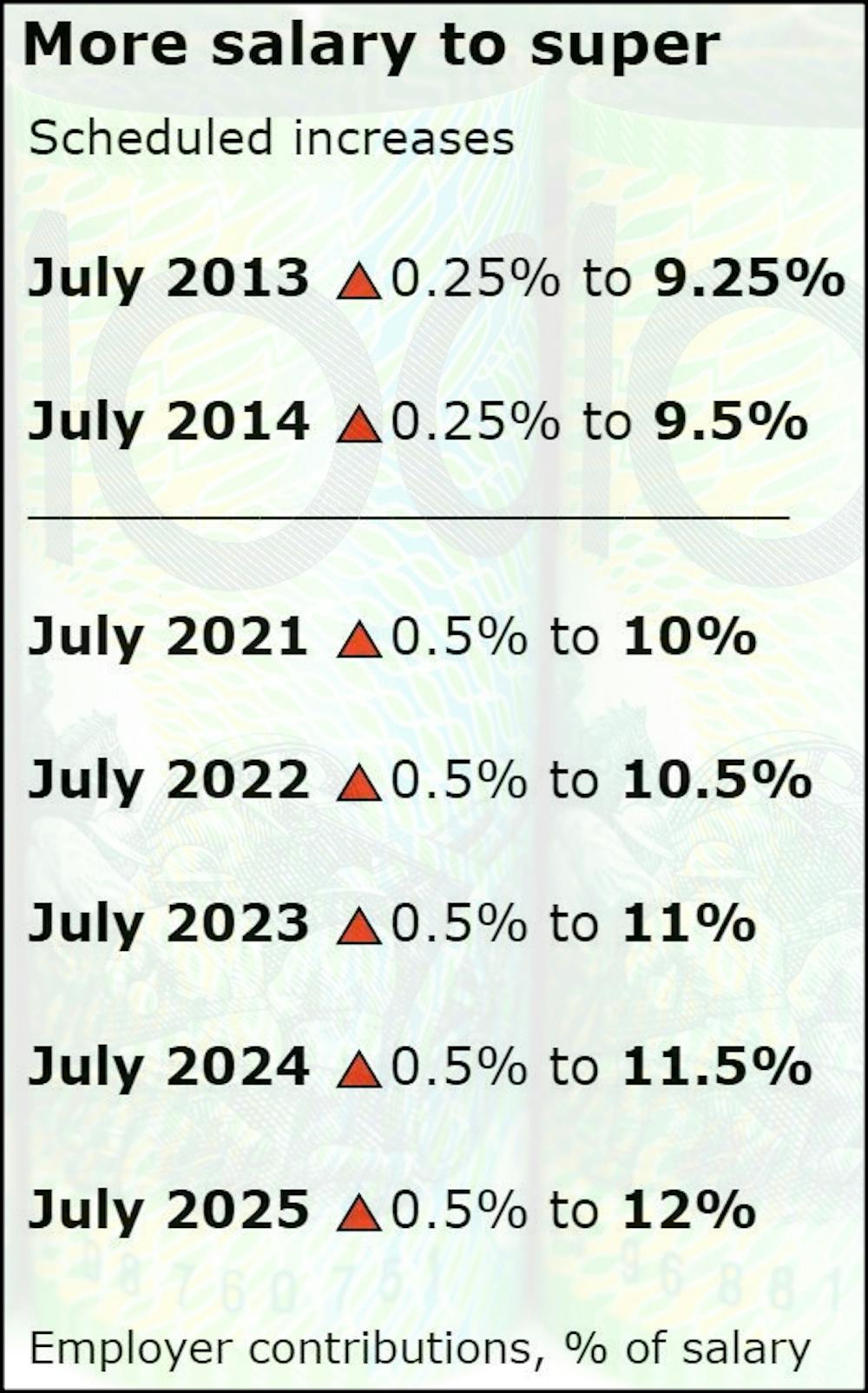
Paid parental leave is currently worth A$719.35 a week, or around A$12,950 over the full 18 weeks.

Paying super on it would add an extra A$1,554 to retirement savings for each 18-week block.

A woman who has two children would retire with an extra A$20,000 of super.

But if she is a middle earner, a lot of it would get clawed back by the Age Pension means test.

If she is a very low earner, or a very high earner, she would escape the clawback.

Low- and high-earning women who take two stints of paid parental leave would end up with retirement incomes up to 0.5% higher.

But middle earners would get incomes only 0.14% higher.

Expressed in dollars, a woman earning the median Australian income who took two stints of leave in her early 30s would get an extra A$73 a year – less than A$1.50 a week.

A low-earning woman (in the bottom fifth of all earners) would get an extra A$164 a year. A high-earning woman (in the top 10%) would get A$356 a year.
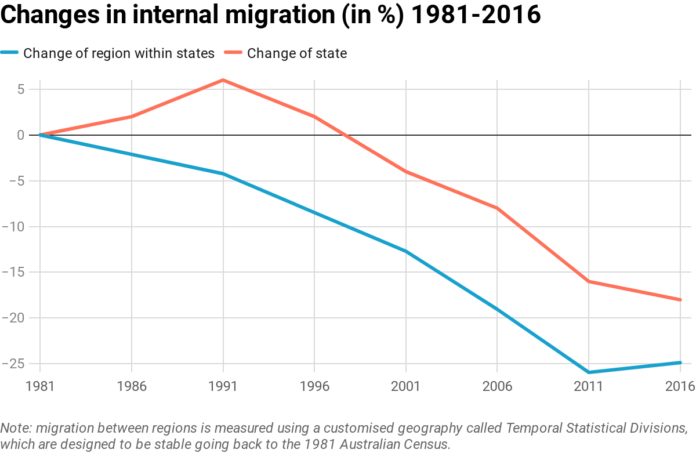
Of course every dollar of extra income in retirement will help low-income women at risk of poverty.

But is Labor’s policy really the best way to deliver it?

By itself it won’t do anything for women already struggling in retirement, or for older working women who’ve already had children.

Super is the wrong tool to help the women most at risk.

Boosting rent assistance would do more

A boost to Commonwealth rent assistance for pensioners – which would most benefit women who don’t own their own homes – would provide a much bigger improvement to their living standards per budgetary dollar.

The retired women at the greatest risk of poverty are those who rent. Very few retired home owners face poverty.

Boosting the maximum rate of Rent Assistance for pensioners by 15% – or roughly $500 a year for a single woman living alone – would do more than extra super contributions, and importantly would help people already aged and in poverty.

And because women live longer than men, it would do more for women than men.

The costs would be manageable. Boosting Rent Assistance by 15% would cost A$250 million a year – roughly the same as paying super on paid parental leave.

Paying super on paid parental leave would do little for most retirement incomes and would do nothing for the existing retirees and older women who need help now.

There are far more effective ways to help them, for about the same cost.

Labor has delivered symbolism instead of substance.

– Super. If Labor really wanted to help women in retirement, it would do something else
– http://theconversation.com/super-if-labor-really-wanted-to-help-women-in-retirement-it-would-do-something-else-103603]]>

Japanese development aid funding splits Pacific unity on key WHO post

]]>

Dr Colin Tukuitonga, a New Zealander of Niuean descent and proposed by New Zealand, was given resounding support for his nomination from Pacific countries. Image: AUT

The Western Pacific post for the World Health Organisation is a vitally important role for the region. However, reports Sri Krishnamurthi for Asia Pacific Journalism, the earlier unity over a strong Pacific candidate has slipped.

All the headlines at the recent Pacific Islands Forum in Nauru were political so the upcoming nomination for the election next month for the key role of World Health Organisation regional director for the Western Pacific went largely unnoticed.

The Pacific’s endorsement of Colin Tukuitonga, a New Zealander of Niuean descent and proposed by New Zealand, was resounding and support for his nomination from all countries had seemed to be a fait accompli.

He along with three others – Dr Narimah Awin, proposed by Malaysia; Dr Takeshi Kasai, proposed by Japan; Dr Susan Mercado, proposed by the Philippines – were then in the running for the nomination which will take place during the 69th session of the Regional Committee for the Western Pacific in Manila, Philippines, on October 8-13.

READ MORE: Building healthy communities on the Pacific

APJS NEWSFILE

“Yes, all health ministers agreed and endorsed me at the WHO Regional Committee Meeting held in Brisbane in October 2017.

“They agreed to have one candidate and five ministers approached me to stand,” Tukuitonga told Asia-Pacific Report.

-Partners-

At the forum in Nauru he learned that the endorsement from the Pacific Island states was not as united as first thought.

“Since then, we are aware that Papua New Guinea and Solomon Islands have expressed public support for the Japanese candidate [Dr Kasai],” he says.

Most of Pacific supportive
“We understand that this is in exchange for Japan paying for developments in country. We also understand that Vanuatu has made the same decision.”

“We understand that all other Pacific nations remain supportive, including New Zealand and Australia as well as other nations.”

The Director-General of the Secretariat of the Pacific Community says it is a positive for the role being at the PIF, it provided an opportunity to network with the leaders.

“All regional agencies – the council for regional organisations in the Pacific (CROP) decisions and priorities are influenced by forum leaders decisions. It is also a good opportunity to meet Pacific leaders and others.

“PIF presents a lot of opportunities to meet bilaterally with donors and those that are present. It also a critical forum”.

He does have a view on the 120 children in the detention camps on Nauru and their mental state but does not want to air it publicly.

But he is happy to voice his concerns about the health of Pacific people.

Diabetes, heart disease major problem
“Non-communicable diseases (NCD) such as diabetes and heart disease are the major cause of death and disease,” says the former chief executive of NZ’s Ministry for Pacific Island Affairs.

“NCDs are fuelled by poor diets, low levels of physical activity, high rates of smoking and high prevalence of obesity.

“In some Pacific nations, child health diseases remain high due to lack of clean water and sanitation. All Pacific health systems are fragile and underfunded leading to high preventable deaths and disabilities.

“Continuing high fertility rates putting pressure on government services in all Pacific countries. PNG also has high rates of HIV/AIDS, TB and malaria,” says Dr Tukuitonga.

Making matters worse for the people of the Pacific is the very realistic issue of climate change.

“A clear and present danger for all Island nations, threatening lives and livelihoods, we have five of the 15 countries most vulnerable to disasters are in Pacific,’’ he says.

“Climate change causes less dramatic impacts such as ocean acidification, causing coral bleaching and threatening the food chain and it provides 80 percent of the protein source for Pacific communities which come from fish and seafood.

Big deal
“Threats on food security is a big deal for the Pacific. Significant negative health impacts such as spread of mosquito-borne dengue fever and other diseases.

“Climate change aggravates existing problems, so preparedness is key for example, outbreaks post disaster is the result of existing organisms, not new organisms.”

He has worked for WHO before and finds it “challenging” but not a mission impossible.

Sri Krishnamurthi is a journalist and Postgraduate Diploma in Communication Studies student at Auckland University of Technology. He is attached to the University of the South Pacific’s Journalism Programme, filing for USP’s Wansolwara News and the AUT Pacific Media Centre’s Asia Pacific Report.

Print Friendly, PDF & Email

Article by AsiaPacificReport.nz

]]>

If privacy is increasing for My Health Record data, it should apply to all medical records

]]>

The Conversation (Au and NZ) – By Megan Prictor, Researcher in Law, University of Melbourne

In response to the public outcry against the potential for My Health Record data to be shared with police and other government agencies, Health Minister Greg Hunt recently announced moves to change the legislation.

The laws underpinning the My Health Record as well as records kept by GPs and private hospitals currently allow those records to be shared with the police, Centrelink, the Tax Office and other government departments if it’s “reasonably necessary” for a criminal investigation or to protect tax revenue.

If passed, the policy of the Digital Health Agency (which runs the My Health Record) not to release information without a court order will become law. This would mean the My Health Record has greater privacy protections than other medical records, which doesn’t make much sense.


Read more: Opting out of My Health Records? Here’s what you get with the status quo


Changing the law to increase privacy

Under the proposed new bill, state and federal government departments and agencies would have to apply for a court order to obtain information stored in the My Health Record.

The court would need to be satisfied that sharing the information is “reasonably necessary”, and that there is no other effective way for the person requesting it to access the information. The court would also need to weigh up whether the disclosure would “unreasonably interfere” with the person’s privacy.

If granted, a court order to release the information would require the Digital Health Agency to provide information from a person’s My Health Record without the person’s consent, and even if they objected.

If a warrant is issued for a person’s health records, the police can sift through them as they look for relevant information. They could uncover personally sensitive material that is not relevant to the current proceedings. Since the My Health Record allows the collection of information across health providers, there could be an increased risk of non-relevant information being disclosed.


Read more: Using My Health Record data for research could save lives, but we must ensure it’s ethical


But what about our other medical records?

Although we share all sorts of personal information online, we like to think of our medical records as sacrosanct. But the law underpinning My Health Record came from the wording of the Commonwealth Privacy Act 1988, which applies to all medical records held by GPs, specialists and private hospitals.

Under the Act, doctors don’t need to see a warrant before they’re allowed to share health information with enforcement agencies. The Privacy Act principles mean doctors only need a “reasonable belief” that sharing the information is “reasonably necessary” for the enforcement activity.

Although public hospital records do not fall under the Privacy Act, they are covered by state laws that have similar provisions. In Victoria, for instance, the Health Records Act 2001 permits disclosure if the record holder “reasonably believes” that the disclosure is “reasonably necessary” for a law enforcement function and it would not be a breach of confidence.

In practice, health care providers are trained on the utmost importance of protecting the patient’s privacy. Their systems of registration and accreditation mean they must follow a professional code of ethical conduct that includes observing confidentiality and privacy.

Although the law doesn’t require it, it is considered good practice for health professionals to insist on seeing a warrant before disclosing a patient’s health records.

In a 2014 case, the federal court considered whether a psychiatrist had breached the privacy of his patient. The psychiatrist had given some of his patient’s records to Queensland police in response to a warrant. The court said the existence of a warrant was evidence the doctor had acted appropriately.

In a 2015 case, it was decided a doctor had interfered with a patient’s privacy when disclosing the patient’s health information to police. In this case, there no was warrant and no formal criminal investigation.


Read more: What could a My Health Record data breach look like?


Unfortunately, there are recent examples of medical records being shared with government departments in worrying ways. In Australia, it has been alleged the immigration department tried, for political reasons, to obtain access to the medical records of people held in immigration detention.

In the UK, thousands of patient records were shared with the Home Office to trace immigration offenders. As a result, it was feared some people would become too frightened to seek medical care for themselves and children.

We can’t change the fact different laws at state and federal level apply to our paper and electronic medical records stored in different locations. But we can try to change these laws to be consistent in protecting our privacy.

If it’s so important to change the My Health Records Act to ensure our records can only be “unlocked” by a court order, the same should apply to the Privacy Act as well as state-based laws. Doing so might help to address public concerns about privacy and the My Health Record, and further inform decisions about opting out or staying in the system.

– If privacy is increasing for My Health Record data, it should apply to all medical records
– http://theconversation.com/if-privacy-is-increasing-for-my-health-record-data-it-should-apply-to-all-medical-records-102654]]>

New laws help juries understand why victims of sexual violence struggle to recall their assaults

]]>

The Conversation (Au and NZ) – By Cindy Grahame, PhD candidate, University of Newcastle

In June, the New South Wales parliament passed new laws to strengthen protection for children from sexual abuse and enact harsher sentences for their abusers.

The reformed laws were in response to the recommendations of the final report by the Royal Commission into Institutional Responses to Child Sexual Abuse, handed down in December 2017.

One of the most significant changes to the NSW laws is in the directions that judges are permitted to give to a jury – one that could impact how victims of sexual assault are viewed by juries.

In a meaningful shift, the amendment allows the trial judge to explain to the jury that it is common for both child and adult victims of sexual assault to forget the details of the trauma they have endured.


Read more: Rape, sexual assault and sexual harassment: what’s the difference?


The judge may also tell the jury it is common for there to be differences in the retelling of accounts of sexual assaults. The judge can explain that trauma affects people differently, including their recall of events. And this could result in differences between pre-court statements and what victims say during a trial.

The judge may also point out that both truthful and untruthful accounts of a sexual offence may contain differences.

It is up to jury members, therefore, to decide the relative importance of the differences in a complainant’s accounts when they are assessing his or her truthfulness and reliability.

However, there remains an important caveat to the revised laws: the new directions by the judges are entirely discretionary. This means that individual judges in individual sexual assault trials will decide whether to invoke the new provision.

The difficulties in prosecuting sexual assault cases

This provision is largely aimed at victims of childhood sexual abuse, as set out plainly in the act’s title . Royal Commission research found that victims of child sexual abuse often experience symptoms of post-traumatic stress disorder. This might include the inability to recall important aspects of the traumatic event.

These amendments may prove to be beneficial to women who are the victims of sexual offences, as well.


Read more: How music festivals can change the tune on sexual violence


Of sexual assaults of women reported to the police, prosecution rates remain stubbornly low: fewer than 50% of cases brought to court in NSW result in conviction. At the same time, reports of sexual assault in the state have increased by 12% in the last year, with women representing 82% of complainants. It is estimated that around 70% of all sexual assaults of women in NSW go unreported to the police.

Nationally, just 15% of alleged sexual assaults are reported to police, while only 11% of those incidents result in conviction.

There are complex reasons for this. Women report feelings of humiliation, denial and self-doubt following a sexual assault. They fear other people will disbelieve, shame and judge them. They also fear violations of their privacy throughout the legal process. Women who have pursued justice in the legal system describe it as arduous, combative and exhausting.

Precedent set in Victoria

New South Wales is not alone in its attempts to create more equitable trials for sexual abuse victims. In 2017, the Victorian parliament responded to an interim report by the Royal Commission into Institutional Responses to Child Sexual Abuse. This report found that in a sample study of sexual assault trials, defence lawyers raised inconsistencies in the complainant’s evidence in more than 90% of cases.

To address this, parliament amended the laws relating to the directions that judges are permitted to give to juries in sexual assault cases.


Read more: Hazing and sexual violence in Australian universities: we need to address men’s cultures


The Victorian law later became the basis for the NSW provision. However, unlike in NSW, the Victorian statute is mandatory: if judges determine there are inconsistencies that would call into question a complainant’s credibility or reliability, they must direct the jury that this can be consistent with trauma.

Though mandatory, the onus is till on the judge to identify when such directions are needed. There appears to be only one reported case where a judge has done this in Victoria since the law was amended.

These new laws are important steps in the right direction to encourage the reporting of sexual crimes to the police and help juries understand why victims sometimes fail to recall certain aspects of the traumas they’ve endured.

Ensuring a fair trial for all parties to a criminal case is a paramount concern. These new laws go further than previous procedural changes in levelling the field for complainants in sexual assault cases. However, their efficacy will necessarily be limited by giving individual judges the discretion when to act.

– New laws help juries understand why victims of sexual violence struggle to recall their assaults
– http://theconversation.com/new-laws-help-juries-understand-why-victims-of-sexual-violence-struggle-to-recall-their-assaults-103094]]>

Three charts on: why Catholic primary school parents can afford to pay more

]]>

The Conversation (Au and NZ) – By Peter Goss, School Education Program Director, Grattan Institute

Dan Tehan’s first major action as federal Education Minister was a deal for Catholic and independent schools. From a policy perspective, the pieces were already in place. Tehan’s predecessor, Simon Birmingham, had moved all schools onto a consistent funding formula. The National Schools Resourcing Board (NSRB) showed how to use household income to gauge how much parents could pay if they chose a non-government school.

The good news from yesterday’s announcement is the government accepted all the recommendations of the NSRB’s Chaney review of how socio-economic score is calculated. By 2029, funding for all non-government schools will be based on the same formula. In my view, this transition process is longer and much more expensive than needed but at least it gets us to the right spot.


Read more: Explaining Australia’s school funding debate: what’s at stake


The bad news is the new deal undercuts itself. Some A$1.2 billion has been set aside to keep school fees “affordable”, among other priorities. But the fund is only available to Catholic and independent schools. In other words, all schools are equal but some are more equal than others.

This A$1.2 billion slush fund seems to be a political fix to the main Catholic sticking point: the claim parents in advantaged Catholic primary schools can’t afford the increased fees implied by the Gonski/Chaney model.

New analysis shows parents at advantaged Catholic schools can afford to pay their way.

Few Catholic primary schools need big fee hikes

There are just over 1,200 Catholic primary schools across Australia. In 2016, all of them had fees below A$4,000.

Under the Gonski/Chaney model, the federal government would reduce funding to schools with high-income parents, meaning fees would need to rise. Fees would not need to rise at schools serving low- to middle-income families because their government funding would continue to grow.

Only about 160 Catholic primary schools (one in eight) would need fee hikes of at least A$2,500 to compensate for their reduced levels of government funding. By contrast, more than 800 (three in five) would need only minimal fee increases or even get more government funding.


Media stories typically focus on Catholic primary schools where fees might need to rise by $4,000 or more. These schools are outliers, but they underpinned the Catholic campaign against the government.

Yet under Chaney – when parental capacity to contribute is based on income rather than where parents live – just 36 schools (one in 30) fall into this category. And the reason their fees would rise so much is because the parents can afford it.
Some Catholic school parents can afford more

Affordability can be a slippery concept. It can also be remarkably simple. If Jane earns twice as much as Dick, she can afford twice the mortgage. Jane’s taxes will also take up more of her income than Dick’s. Earning more but paying a lower rate of tax would be regressive. But that’s exactly how Catholic primary school fees work.

The next chart shows the ratio of school fees to income, and how that ratio changes as households earn more.


In 2016, families on modest incomes (from A$30,000 to A$79,999) had to shell out 2.6% of their pre-tax income to afford one set of Catholic primary school fees. Families on incomes above A$300,000 paid just 1%.


Read more: Catholic schools aren’t all the same, and Gonski 2.0 reflects this


By contrast, school fees at independent primary schools tend to grow in line with household income.

If Catholic primary school fees rose in line with parents’ income, some Catholic schools could afford to charge much higher fees.

Catholic primary fees would still be relatively low

What would happen if Catholic primary school fees were a consistent 2.6% of median family income?

Fees would rise substantially at Catholic schools where incomes are high – to nearly A$8,500 at the small number of schools where the average family earns A$300,000. They would still be much lower than fees at independent schools with similar communities.


This means the fees implied by Gonski/Chaney are realistic.

First, the ten or so Catholic primary schools where family incomes are more than A$300,000 really can afford to charge fees of more than $8,000. After all, their families can afford it equally as much as a family on A$60,000 can afford fees of A$1,600, which is about what they already pay.

Second, this level of fees is still much lower than what independent school families already choose to pay. In fact, independent school families with incomes of A$120-180,000 already pay fees of about $8,200, about the same as the highest capacity to contribute expected under Gonski 2.0.

Some will argue, faced with fees of A$8,000, Catholic school families will send their children to the free government school down the road. That may well occur. But that is a matter of choice and value, not affordability.


Read more: Gonski 2.0: Is this the school funding plan we have been looking for? Finally, yes


Tens of thousands of families of modest means already pay 2.6% of their earnings towards a Catholic primary school education. If families earning four or five times more are unwilling to spend an equivalent fraction of their income, government should take it as a sign they don’t value the education on offer, not that a higher subsidy is needed.

These three charts show few Catholic primary schools need big fee hikes under a fair and needs-based funding model. The parents that would have to pay more can afford it. And their fees would still be less than half what independent-school parents typically pay.

Every government dollar should be spent where it will make most difference. The Coalition’s school funding fix is a good deal for Catholic and independent schools. It’s a bad deal for the rest of us.

– Three charts on: why Catholic primary school parents can afford to pay more
– http://theconversation.com/three-charts-on-why-catholic-primary-school-parents-can-afford-to-pay-more-102643]]>

What makes you a man or a woman? Geneticist Jenny Graves explains

]]>

The Conversation (Au and NZ) – By Jenny Graves, Distinguished Professor of Genetics, La Trobe University

This article is part of our occasional long read series Zoom Out, where authors explore key ideas in science and technology in the broader context of society and humanity.

Jenny Graves – 2017 recipient of the Prime Minister’s Prize for Science – explains how key genes active early in life transform the embryo into a woman or a man, and that genes active later control how sex is expressed in physiology and behaviour.


There are many cultural and social factors involved in making a baby into a man or a woman. But biologically speaking, sex starts when you’re just a tiny group of cells in your mother’s uterus.

We have a pretty good general idea of how “maleness” or “femaleness” develops in a human embryo, and how this is translated into the capacity to make eggs or sperm.

We’re also beginning to understand how many other genes contribute to the amazing variation in human sexual development, behaviour and identity.

The early flexibility in this system is fascinating. It reminds me of author Hugh Lofting’s iconic Pushmi-pullyu (“push-me-pull-you”), a two-headed character in the Doctor Dolittle stories, who is in a tizz to decide which way to go.


Read more: X, Y and the genetics of sex: Professor Jenny Graves awarded the Prime Minister’s Prize for Science 2017


Germ cells and gonads

Most cells in our bodies are destined to die. But set aside in an embryo are a few cells that retain their ability to become a whole person. These cells – called “primoridal germ cells” ultimately develop into sperm or eggs.

But they have a long journey to get there. About three weeks after conception, 50 primordial germ cells are set aside in membranes outside the embryo. They multiply and make an epic march into the embryo, moving right through the embryonic gut. These cells arrive in the embryonic gonads by six weeks.

Later they receive signals that direct them to become sperm (that are made in their billions throughout the life of a man), or to become the 20,000 eggs a girl is born with.

Eggs and sperm are unique in that each has half the number of chromosomes as other cells. People have two copies of the human genome in every body cell, one from mum and one from dad. Germ cells need to cut this back to a single genome which is a mixture of the two parents’ genes. This is accomplished by a clever type of cell division called “meiosis” in which the 46 chromosomes replicate once, but the cell divides twice.

Meiosis is the process of cell division that creates 23 chromosomes in eggs and sperm. from www.shutterstock.com

The organs in which all this happens are gonads: testes in men, ovaries in women.

Gonads start off as a ridge of cells on either side of the backbone-to-be at about five weeks after conception. This “genital ridge” starts off the same in all embryos.

But in embryos destined to be boys, the genital ridge receives a signal called the “testis determining factor” at ten weeks after conception. This signal kick-starts development of testes and suppresses ovarian development.

If it doesn’t get the testis signal, the genital ridge waits a few more weeks, and becomes an ovary.

Then factors from the testis or ovary push the germ cells one way or the other, into developing as either sperm or eggs.

The gonads don’t just make sperm or eggs. They also pump out hormones that affect the whole development of the embryo. The embryonic testis makes testosterone which directs male development, fashioning a penis and scrotum. Estrogen has the opposite effect – supporting the development of female genitalia, and priming the future breasts.

What and where is the signal that initiates testes?

We know the signal that leads to testis development comes from sex chromosomes.

The human genome is cut up into 23 long DNA molecules that we see as chromosomes under the microscope. All babies have 22 pairs of ordinary chromosomes (one set of 22 from mum, and one set from dad).

But boys and girls differ in the 23rd pair of chromosomes: girls have two copies of a medium-sized chromosome called the X. Boys have a single X and a tiny chromosome called the Y. The names have nothing to do with their shapes but reflect the mystery of their difference (“X” for unknown).

At meiosis in the testis, the X and Y chromosomes get segregated into different sperm – 50% of sperm will carry an X, 50% a Y. All eggs have a single X chromosome.

So on fertilisation, half the embryos start off with XX, and half with XY sex chromosomes.


Read more: Sex, genes, the Y chromosome and the future of men


We know that the Y bears the testis signal, because people with only a single X are female, and people with two X chromosomes and a Y are male.

So the signal must come from a gene on the Y chromosome. In 1990 the signal was pinpointed near the top of the Y chromosome. This section of the Y was present in males and absent in females who had only part of a Y chromosome.

A gene called SRY was identified in this little bit of Y. It was proved to be the “testis determining factor” by analysis of some girls who had a normal looking Y, but a mutant SRY, and by inserting SRY into an XX mouse embryo that developed as a male.

The presence of male genitals usually indicates that the child has a Y chromosome. from www.shutterstock.com

How does SRY work and what can go wrong?

Once the SRY gene was identified we all thought it would be just one or two steps between SRY and the activation of other genes that make a testis.

But it turns out there is a complex web of reactions controlled by at least 30 genes. Some promote testis development. Some promote ovary development. Some antagonise testis formation, others antagonise ovaries. It’s a real push-me-pull-you situation.

There are also genes (one example is DMRT1) that keep gonads on a clear pathway of development. If you knock such genes out, cells in the testis start behaving like ovary cells, or cells in the ovary start acting like testis.

But it doesn’t stop here. Remarkably, this one gene SRY, through its networks and hormonal influences, affects the activity of more than 6,500 genes (of our total 20,000) differently in men and women.

So males and females really are genetically very different both in the genes they have, and how active they are.


Read more: Differences between men and women are more than the sum of their genes


A mutation in any one of the 30 genes involved in the complex web of gonad-differentiating reactions can lead to sex reversal (XY females or XX males), or incomplete gonad differentiation. For instance, some females have a Y chromosome and an intact SRY gene, but lack the protein that receives signals from male hormones.

And some XY females are missing a bit of chromosome 4 that contains the gene DMRT1: you need two copies of this gene to be male, even with an SRY gene.

Other genes control sex characters

There are hundreds of genes needed to make sperm. Some lie on the Y chromosome near SRY, but others are on the X or scattered throughout the genome (but active only in males). The same is probably true of making eggs.

There are also many other genes involved in sexual differentiation, making organs like penises and breasts.

Some gene variants are involved in choice of sexual partner. There are probably hundreds of so-called “gay genes” that I have suggested are really “male-loving” genes, and there may also be hundreds of “female-loving” genes. These gene variants are common because in the other sex they express as especially male-loving females and female-loving males, who seem to mate earlier and have more children.


Read more: Born this way? An evolutionary view of ‘gay genes’


I think the same may be true of genes that affect gender identity. Gene variants that promote a strong male identity might not always go along with a Y chromosome, and genes that promote a female identity may be incongruously partnered with a male-determining Y. Transgender identity may be common because, like “gay genes’, such gene variants would be strongly selected in the other sex – women with a strong female identity and males with a strong male identity might mate more enthusiastically and have more offspring.

It is extraordinary that something so fundamental and critical for species survival as sex should be controlled by such a complicated and variable web of genes.

We have to thank evolution for providing us with such complexity, and learn to celebrate the fantastic variation that nature has ensured.


The winners of the 2018 Prime Minister’s Prizes for Science will be announced on October 17.

– What makes you a man or a woman? Geneticist Jenny Graves explains
– http://theconversation.com/what-makes-you-a-man-or-a-woman-geneticist-jenny-graves-explains-102983]]>

Quotas are not pretty but they work – Liberal women should insist on them

]]>

The Conversation (Au and NZ) – By Chris Wallace, ARC DECRA Fellow, Australian National University

It is an historic moment for Liberal Party women. Individual complaints of sexist bullying invariably end with the lone complainant being isolated and getting crunched.

But since the Liberal leadership spill, several women have spoken out and two MPs, Julia Banks and Ann Sudmalis, have foreshadowed their exit from parliamentary politics over it. This post-#LibSpill moment holds immense promise – but only if the collective momentum is seized and built upon.

From Prime Minister Scott Morrison down, Liberal Party men are pushing back against women pressing for cultural change within the party. They don’t want to share power for ideological reasons: conservative men like women to know their place, and that place is not in the House of Representatives or the Senate. This ethos is intensifying as fringe and evangelical Christians make ever deeper inroads into Liberal Party branches and preselection processes.

Respected Liberal women like former Liberal Party vice-president Tricia Worth and former Liberal senator Sue Boyce have poured scorn on the internal party mechanisms proposed so far to deal with the problem. They point out the implausibility, for example, of making a bullying complaint to Victorian Liberal Party president Michael Kroger who denies such bullying exists.


Read more: A ‘woman problem’? No, the Liberals have a ‘man problem’, and they need to fix it


Liberal Party women face an immediate choice. They can be cowed by the “quota girl” sledge of hostile male colleagues, and other unsupportive comments by these men’s female enablers such as NSW Liberal Senator Concetta Fierravanti-Wells.

Alternatively, Liberal women can organise to achieve structural change – the only kind that ever sticks – arguing that if it’s good enough for “quota boys” like Senator Abetz and Michael McCormack, quotas are all right by them too.

Practical politics runs on quotas. They are the tool of last resort when dominant powers refuse to share power fairly or could refuse to in the future. They work.

The most striking example of a quota in Australian politics is that underpinning Federation. The Australian colonies would not agree to federate without agreement to an upper house in which each state, even the smallest, was represented by the same number of senators as the biggest.

That’s why NSW, with a population of 7.9 million, and Tasmania, with a population of 524,000, both send 12 senators to Canberra every election. This makes the ranking Tasmanian Liberal Senator Eric Abetz arguably the biggest beneficiary of quotas currently in the federal parliament.

There are 76 senators. Would anyone seriously suggest that on merit Eric Abetz would make the list of the top 76 Australians elected as senators in Australia’s upper house if they were elected in a single nationwide ballot? The state-based quota system established at Federation ensures he gets there.

The next most striking example is the quota agreement that enables Australia’s two main conservative parties to form government in coalition, since each usually returns too few MPs at federal elections to govern in its own right.

The National Party’s price for supporting the Liberals in forming government is a quota of ministerial positions reserved for National Party MPs, along with the deputy prime ministership. This quota arrangement today underpins the cabinet position and deputy prime ministership of National Party leader Michael McCormack. Does anyone really believe that without this quota McCormack would have naturally risen to become Australia’s second most senior politician? Of course not.

The third most striking example of quotas in Australian politics is their use by the Australian Labor Party to normalise the presence of women in progressive parliamentary politics. Attempts to establish quotas in the early 1980s, backed by then Labor opposition leader Bill Hayden, foundered when ALP conference delegates, including many women, voted them down on factional lines. It was not until 1994 that an enforceable formula guaranteeing women preselection in one-third of winnable seats was established.


In her memoir Catching the Waves, Hawke Government cabinet minister Susan Ryan wrote:

These rules are bitterly resented by many men in the Party, and when they favour a woman from the wrong faction they upset some women as well.

Quotas are “a blunt tool”, Ryan readily conceded, but she supported them after experience showed nothing else could “change the gender balance among Labor members of parliament”. It worked. Labor now has a critical mass of women in caucus making a big contribution, their presence normalised and unremarked on except by misogynistic conservatives across the aisle.

People don’t have to like quotas. But no reasonable person can fail to accept that they are a regular part of political life, not the intrusive tool of progressive pinot noir drinkers pushing their own political barrows. Hundreds of examples beyond Australia’s shores could be cited, but here are just a few.

The United States has a quota of two senators from every state in its upper house, the inspiration for Australia’s state senate quotas. Conservative German chancellor Angela Merkel legislated board quotas for women when German business proved intractable in voluntarily improving board diversity. Singapore set racial quotas in public housing, reflecting the ethnic makeup of the country’s population, in the interests of racial harmony.


Quotas, in short, are management tools to ensure power-sharing where it would not otherwise occur in the interests of a greater good – and they’re used by progressives and conservatives alike. No-one could accuse Angela Merkel or the Singaporean government of being subversive left-wing entities. It has been estimated that half the countries in the world use some kind of gender quota in their electoral system and there is extensive evidence that they work.


Read more: View from The Hill: Morrison’s challenge with women goes beyond simple numbers


There is high level support from Labor for Liberal women to tackle the problem and succeed in the interests of improving Australia’s political culture overall. Labor Senate leader, Penny Wong, told parliament this week that the under-representation of women in the Liberal party room is “not only bad for women, and bad for the Liberal Party, it is bad for democracy”. She urged Liberals to walk the same difficult road to establishing quotas that so successfully fixed what had also been a chronic problem for Labor.

Failure to push on to embrace and establish quotas will see the current burst of bravery by Liberal women dissipate, and the male oligopoly in the Coalition party room become even more entrenched.

Advocates could impress on internal opponents that the only winner from the current extreme and worsening masculinist culture in the Liberal Party will be Labor, whose caucus since quotas for women in winnable seats were adopted has increasingly reflected the communities it represents – something voters very much like and ultimately reward.

– Quotas are not pretty but they work – Liberal women should insist on them
– http://theconversation.com/quotas-are-not-pretty-but-they-work-liberal-women-should-insist-on-them-103517]]>

Planned trade deal with Europe could keep medicine prices too high

]]>

The Conversation (Au and NZ) – By Belinda Townsend, Research Fellow, NHMRC Centre for Research Excellence in the Social Determinants of Health Equity, School of Regulation and Global Governance, Australian National University

The United States’ withdrawal from the Trans Pacific Partnership and the recent US-China tariff wars have flamed concerns that international trade is becoming unstable.

Trade talks between Australia and the European Union – Australia’s second-largest trading partner – launched in June this year to much fanfare. They’re being promoted as a way to overcome some of the international uncertainty around trade.

But negotiating with the EU means Australia faces pressure once again to extend monopoly protection for foreign pharmaceutical companies. This could mean taxpayers end up paying high prices for medicines for longer.

Extending patents

The EU appears to be asking Australia to agree to extend patent terms, at least for some drugs, although it’s not yet clear for how long. This could mean Australia, through the Pharmaceutical Benefits Scheme (PBS), pays for more expensive brand-name pharmaceuticals for longer periods before cheaper, generic versions become available.


Read more: Health Check: how do generic medicines compare with the big brands?


The EU’s push is driven by claims that its pharmaceutical firms need longer periods of monopoly in countries like Australia to recoup the costs of developing new drugs before a competitor enters the market.

But the argument doesn’t stand up to scrutiny. Two independent Australian reviews from 2013 and 2016 found no evidence monopolies needed to be extended to recoup development costs. In fact, the reviews found some evidence for reducing pharmaceutical monopolies in Australia.

Increasing costs

Evidence shows that extending monopolies can increase costs to taxpayers.

A 2011 study examined similar EU demands on Canada. It found generics would be delayed by 3.46 years on average, with an annual loss of C$811 million for every year of delayed generic entry. This would result in an additional C$2.8 billion in costs to taxpayers per year.

The EU demands for Australia include longer monopoly terms for medicines where clinical trials have been done with children. These demands would likely place further pressure on the costs of pharmaceuticals in Australia.

Reducing patent terms, in contrast, could elicit substantial savings.

An independent 2012-13 review of Australia’s pharmaceutical patent system found taxpayers would save A$244 million a year by reducing existing patent term extensions.

Data exclusivity

Another concerning EU proposal is for Australia to lengthen monopolies on clinical trial data, known as “data exclusivity”. This is a separate monopoly to a patent and can apply whether or not there is a valid patent on a medicine, and cannot be challenged in court.

During the period of data exclusivity, generic manufacturers can’t rely on the clinical trial data demonstrating the safety and efficacy of the original drug to gain marketing approval for their generic version.

The problem is that it is not only expensive for generic companies to duplicate the trials, it’s also unethical to conduct placebo trials when the outcome is known.

So the EU push for Australia to increase its current period of data exclusivity for medicines from five to eight years (plus an additional two to three years before generics can be placed on the market) will be particularly controversial.

The result is a likely delay to the market entry of generics.


Read more: How trade agreements are locking in a broken patent system


An Oxfam study in Jordan found data exclusivity contributed to “significant delays” in generic entry of 79% of medicines examined. These delays result in paying high prices for longer.

A US study found market exclusivity periods for just three drugs cost Medicaid US$1.5 billion in 2000–2004 alone.


Read more: Explainer: what are biologics and biosimilars?


High price for ‘biologics’ without ‘biosimilars’

“Biologics” are newer and often more expensive medicines produced through biological processes and include treatments for cancer and rheumatoid arthritis. The EU’s definition of medicinal products seems to include biologics so they would be subject to the same expanded monopoly protection.

The complexity of biologics and the way they are made means generics (exact copies) are not possible, but “biosimilars”, which have the same effects in the body, can often be made. Delays in access to less expensive biosimilars could mean a greater proportion of Australia’s health funding is siphoned off to buy costly medicines, leaving fewer resources for other key health needs.

Our study of the cost of biologic drugs in Australia found taxpayers spent more than A$2 billion through the PBS in the year 2015-2016 alone. We also found PBS spending on biologics could be reduced by as much as 24% through the timely availability of biosimilars.

Fortunately, Australia and remaining TPP parties agreed to suspend data exclusivity provisions in the final TPP negotiations after the US withdrew from the agreement.


Read more: Time for costly medicine monopolies to go from TPP trade talks


The task now is for Australia to hold out on extending pharmaceutical monopolies in trade talks with the EU. The economic evidence is on our side, and the stakes too high.

– Planned trade deal with Europe could keep medicine prices too high
– http://theconversation.com/planned-trade-deal-with-europe-could-keep-medicine-prices-too-high-102836]]>

The backflip over Sydney’s marine park is a defiance of science

]]>

The Conversation (Au and NZ) – By David Booth, Professor of Marine Ecology, University of Technology Sydney

The New South Wales government’s decision to back away from establishing no-fishing zones in waters around Sydney leaves significant question marks over the plan, which is open for public consultation until September 27.

Fisheries Minister Niall Blair explained the apparent backflip by saying he was “confident that fishing is not the key threat to the sustainability of our marine environment”, after receiving what he described as “robust” feedback from local communities and anglers.

The original plans for Sydney’s marine park. Click image to enlarge. NSW government

The originally proposed Sydney Marine Park comprised 17 “sanctuary zones” (totalling 2.4% of the area, including estuaries), 3 “conservation zones” totalling 2.6%, and 21 “special purpose zones”, which would allow (and in some cases protect) fishing.

Sanctuary zones allow no fishing; conservation zones allow taking of lobster and abalone (see below); and special purpose zones have a range of restrictions or allowances, not necessarily of any conservation benefit. For instance, four offshore artificial reefs are classed as special purpose zones.

The plans cover the waters around Sydney, stretching from Newcastle in the north to Wollongong in the south. Formally known as the Hawkesbury Shelf marine bioregion, it is the only bioregion wholly in NSW that does not have a marine park. This is despite Sydney’s magnificent array of underwater and coastal habitats, which are home to more fish species than the entire British Isles.


Read more: Recreational fishing in marine parks: you can’t be serious!


New zones and ranked threats

The original marine park proposal was far from ideal. A good marine park should have a string of closely connected sanctuary zones, but there was a large gap from southern Sydney to Wollongong where no sanctuary zones were proposed.

Instead, there was a new “conservation zone” to allow fishing for lobster and abalone. Yet lobster in particular are important to this ecosystem, because they protect kelp by preying on sea urchins.

Threats to the marine region around Sydney, as ranked in a NSW government report. Click image to enlarge. NSW government

The NSW government based its earlier proposal on a principle called TARA, short for “threat and risk assessment”, in which all perceived factors are ranked according to their environmental, social and economic outcomes.

While other major threats such as climate change and pollution are ranked highly, fishing doesn’t appear until number 18 on the government’s list (see page 8 here. One reason for this is that fishing is split into eight categories (such as “recreational fishing by boat – line and trap”), masking its overall impact. Even 4WDs on beaches are ranked as a greater threat to the environment than many types of fishing.

Premier Gladys Berejiklian’s press release about the marine park public consultation didn’t mention the environmental threat posed by fishing at all. Yet there is clear evidence that fishing directly harms fish stocks.

One recent study shows that stocks of inshore fish species have declined in Australia by 30% in a decade, except in sanctuary zones. Worldwide, sanctuary zones (also called no-take zones) have been shown to help fish grow larger and more abundant. And recent studies in NSW coastal waters have reiterated the benefits of no-take zones for species such as morwong, bream, and snapper.

Partial protection doesn’t work

The latest proposals, which would allow recreational but not commercial fishing, would be much less effective than full protection. One recent study suggested that partial protection is no better than no protection at all.

According to a NSW government estimate, recreational fishing removes more than 3 million fish, crustaceans and molluscs from NSW coastal waters every year. But marine parks are primarily about conservation, and this requires us to face some stark realities. With more than 8 million people likely to call Sydney home in the next 40 years, pressures on our coasts will only increase.

Sanctuary zones are one of the best available conservation tools to guard against these impacts. These zones have also been shown to make wildlife more resilient to climate change.

Even before the government’s decision to rescind the proposed sanctuary zones, the original plan for no-take zones to cover just 2.4% of the region was a severe compromise. By comparison, the Great Barrier Reef Marine Park has 30% sanctuary zone coverage, and the rest of NSW has 7-8%. International best practice recommends at least 20%, and even the Commonwealth Marine Reserves Management Plan offers 6% no-take coverage.

But now, with no sanctuary zones, Sydney’s proposed “marine park” is not worthy of the name.

Wrong priorities

A peculiar contradiction is that despite one-quarter of the listed threats being fishing-related, the NSW government’s marine estate management strategy includes an initiative to encourage fishing. Pollution is also a high-priority threat, and fishing is the largest source of subtidal debris.

Kelp and a tangle of discarded fishing line. John Turnbull

If local-level threats such as fishing and litter are not dealt with, resilience to climate change suffers as a result. We must tackle all threats – overfishing, pollution, climate change – and not shy away from one because it’s politically unpalatable.


Read more: Marine parks for fish and people: here’s how to do it


It is frustrating that the NSW government has opted to abolish these marine sanctuaries before the public consultation was complete. The wider public understands the value of sanctuary zones, as indicated in recent opinion polls showing clear support for the original plans among Sydneysiders – even many of those who fish.

Some fishers are now calling for sanctuary zones to be scrapped or wound back in other iconic NSW marine parks, such as Lord Howe Island and Solitary Islands. This move would be a defiance of the science. The evidence shows that sanctuary zones are essential for restoring and preserving our marine estate for future generations.

– The backflip over Sydney’s marine park is a defiance of science
– http://theconversation.com/the-backflip-over-sydneys-marine-park-is-a-defiance-of-science-102499]]>

Can e-scooters solve the ‘last mile’ problem? They’ll need to avoid the fate of dockless bikes

]]>

The Conversation (Au and NZ) – By Neil Sipe, Professor of Urban and Regional Planning, The University of Queensland

As urban planners, we have not been good at integrating land uses, such as homes, shops and offices, with our transport infrastructure. Thus many people find the nearest train or bus stop is too far too walk and too close to drive (even if they could be sure of finding parking). This has created what is commonly known as the “last mile” problem.

In some Australian cities, hilliness and hot summers add to this problem. The consequences for people’s work commute are obvious. In the end, many people find it’s simplest to drive to and from work.

Over the past 12 months, something new has been promoted as the solution to the last mile problem. Shared e-scooters are reportedly on their way to Australia. Powered by a rechargeable battery, these are dockless, have a range of 20-60 kilometres per charge and a top speed of 24 kilometres per hour.


Read more: Don’t ignore the mobility scooter. It may just be the future of transport


Electric scooters can travel up to 60km with a top speed of more than 20km/h. Juan Carlos Cardenas/EPA

Businesses on the move

The two main e-scooter companies, Lime and Bird, have attracted the most interest. Several other smaller companies have entered the e-scooter market this year, including Scoot, Skip and Spin.

While both are new ventures, Bird and Lime have raised considerable funding in a short time.

Bird, founded by a former Uber executive late last year, has a market valuation of US$2 billion after raising US$400 million in venture capital over the past four months. Bird has e-scooters in 74 US cities, Windsor (Canada), Tel Aviv and Paris, as well as on 22 university campuses.

Lime was founded in January 2017 as a bikeshare business, but has branched out to e-bikes and e-scooters in the past six months. It operates in 49 US cities and seven European cities, as well as on 20 university campuses, although e-scooters have not been deployed at all locations. A group of investors including Uber recently put US$335 million into Lime, which is valued at US$1.1 billion.

Some believe Uber will buy Lime as a step in its quest to build a multi-modal transport platform that provides car, bicycle and scooter sharing services.


Read more: Our new PM wants to ‘bust congestion’ – here are four ways he could do that


What’s the appeal of e-scooters?

Uber is interested in e-scooters and e-bicycles because many of its ridesharing trips are short ones that could be made by e-scooters.

If Uber could shift its short-distance passengers from cars to e-scooters, it would be able to use fewer drivers and reduce operating costs. The remaining drivers would be transporting passengers over longer distances for higher fares.

Shared e-scooters provide a number of advantages over shared e-bikes. The rider can stand up which, for office workers, means no wrinkling of clothes. The posture is also easier for women wearing skirts and dresses.

Scooters are also easier than bicycles to manoeuvre along narrow paths. In some places, e-scooters are not subject to helmet requirements (unlike bicycles).

How to avoid the fate of dockless bikes

E-scooters are not without some disadvantages. Because they are dockless, they tend to litter footpaths, parks and even rivers.

This is similar to the problems presented by dockless share bikes. A number of dockless bike share companies have been forced to withdraw services in Australia because of this.


Read more: Oh no, oBikes are leaving Melbourne! But this doesn’t mean bike sharing schemes are dead


E-scooters have run into problems in Valencia, Spain, where police have removed them for failing to comply with city council regulations. EPA/Kai Försterling

Many communities lack appropriate means of regulating them. The question of whether e-scooters should be allowed on footpaths or only on roads and bike paths remains unanswered. (Given that they have a top speed of 24km/h, e-scooters travelling on footpaths pose a safety concern.)

Lime and Bird have tried to deal with these problems. For example, Bird has committed to a Save our Sidewalks (SOS) pledge and has encouraged other e-scooter share companies to do the same. The pledge has three components:

  • daily pick-ups of e-scooters every evening and redeployment the next day
  • responsible growth in the number of scooters deployed based on actual usage
  • revenue sharing of US$1 per scooter per day with host cities for the purposes of building and maintaining bike lanes and promoting safe riding.

Adopting an Uber idea, Lime pays for people to collect and charge the scooters each night.

While we have no e-scooter share systems in Australia yet, both Lime and Bird are reportedly looking to launch here soon. How will they fare? Are Australian cities prepared for them?


Read more: Electric scooters on collision course with pedestrians and lawmakers


– Can e-scooters solve the ‘last mile’ problem? They’ll need to avoid the fate of dockless bikes
– http://theconversation.com/can-e-scooters-solve-the-last-mile-problem-theyll-need-to-avoid-the-fate-of-dockless-bikes-102633]]>

Vital signs: the GFC and me. Ten years on, what have we learned?

]]>

The Conversation (Au and NZ) – By Richard Holden, Professor of Economics and PLuS Alliance Fellow, UNSW

A little more than a decade on from the the collapse of Lehman Brothers, the largest bankruptcy in history, many of the world’s advanced economies are only now beginning to recover fully.

I was on the faculty at the University of Chicago at the time and, like many, followed the events of the 2008 US summer with a combination of interest and outright fear.

It is hard to describe how scary the two months around the Lehman bankruptcy were. Two anecdotes convey some of that fear, however.

The first was when I spoke to an economics official in the Obama administration who said: “Go get cash and bottled water. Automatic teller machines might not be working two days from now.”


Read more: Anniversary of Lehman’s collapse reminds us – booms are often followed by busts


The second reflects just how severely money markets froze up. Goldman Sachs – Wall Street’s most venerable firm – was largely on the good side of trades on credit default swaps, the instruments behind much of the crisis. Yet its stock price was utterly hammered. It wasn’t until legendary investor Warren Buffett sank US$5 billion into Goldman that confidence was restored.

On one day Goldman stock was down by a staggering nearly 50% in intra-day trading. It very nearly went the way of Lehman – all because of what amounted to a modern-day bank run.


Golden Sachs stock price: YahooFinanceChart.

The Obama administration responded with spending (including on tax rebates for households and firms), big interest rate cuts and measures to ensure banks had access to funds. Combined, these helped avoid a repeat of the Great Depression.

When Australia splashed cash

Australia, too, spent big: A$10 billion in October 2008 and a further A$42 billion in February 2009. More than half of the second sum, $A26 billion, went on infrastructure. Another $12.7 billion was spent on cash bonuses, including $900 for every Australian on less than $80,000.

And we cut interest rates, massively, and guaranteed bank deposits.

The International Monetary Fund, the Organisation for Economic Cooperation and Development, and most good economists think what we did was essential to ensure Australia avoided a severe downturn.

Prime Minister Kevin Rudd and his treasurer, Wayne Swan, deserve a lot of credit.

Yet there are those on the conservative side of politics who claim the stimulus spending was wasteful, not that helpful, and locked in an era of higher government spending.

Wasteful? Not really

As prime minister in 2016, Malcolm Turnbull encapsulated the view that the spending was a waste when he told the ABC’s Leigh Sales: “I think what shepherded Australia through the GFC successfully was the Chinese stimulus and the large amount of cash that John Howard left in the bank.”

Here’s what I think.

The Chinese stimulus helped, but China didn’t do it to help Australia. It did it to help itself, with a happy byproduct being continued demand for Australian resources.

Does Mr Turnbull really think the Chinese government was either mistaken (because stimulus spending doesn’t help) or benevolent (because it wanted to help Australia)? These are not terms normally associated with Beijing.

The “large amount of cash” left by the Howard government was indeed very important. It allowed the Rudd government to spend big without running up huge government debt. As the noted UC Berkeley economists Christina and David Romer have pointed out, using evidence from 24 advanced economies, fiscal and monetary policy “space” is important in ensuring the stimulus programs work.


Read more: Government spending explained in 10 charts; from Howard to Turnbull


So, yes, Howard’s debt-free budget was important, but only because it gave the government room to spend.

There is an important point here. Namely, that prudent fiscal management through ordinary times is essential in order to build up the firepower to respond in extraordinary times.

Australia still enjoys government debt to GDP that is low by OECD standards, but its growth has been very rapid even in post-crisis years because of the structural gap between government revenues and expenditures. Both sides of politics say they are committed to narrowing it. We shall see.

Space matters

“Space” to act with monetary policy (official interest rates) is also important.

It’s the basis for much of the talk about a “new monetary policy framework” that would lift interest rates from their present lows in Australia and overseas to around 5%. It’s a goal articulately and forcefully argued for by former US Treasury Secretary Larry Summers. Getting there would give central banks the firepower they might need.

These lessons have been learned to varying degrees, but are now thankfully at least part of the mainstream debate.

And regulation

One thing that everyone should have learned from the financial crisis in general, and Lehman in particular, is the need for effective regulation of financial institutions.

The combination of massive leverage, opaque financial instruments and radical interconnectedness of financial firms in the US was a disaster waiting to happen.

In many ways it still could be.

Republicans in the US want to dramatically roll back the Dodd-Frank Wall Street Reform and Consumer Protection Act introduced by President Obama in response to the financial crisis.

Although far from perfect, it helped de-risk the US financial system.

In Australia the failings of financial regulators play out every day at the Hayne Royal Commission, in excruciating detail.


Read more: Royal commission scandals are the result of poor financial regulation, not literacy


It entitles us to ask if Australian regulators can’t prevent outright theft by financial institutions, how equipped are they to prevent more complicated transactions that might put the financial system at risk?

The answer is: not very.

We’ve learned some things

A decade after Lehman it’s fair to say we have learned lessons.

We know how to use big and bold fiscal (spending) policy and monetary (interest rate) policy to create a virtuous circle of beliefs that can pull us out of a downturn.

And we know that we need to reload both fiscal and monetary policy in the good times so we are ready for the bad times.

But on financial regulation the US might be about to go backwards, and we never really went forwards.

– Vital signs: the GFC and me. Ten years on, what have we learned?
– http://theconversation.com/vital-signs-the-gfc-and-me-ten-years-on-what-have-we-learned-103514]]>

Curious Kids: Why does English have so many different spelling rules?

]]>

The Conversation (Au and NZ) – By Kate Burridge, Professor of Linguistics, Monash University

This is an article from Curious Kids, a series for children. The Conversation is asking kids to send in questions they’d like an expert to answer. All questions are welcome – serious, weird or wacky! You might also like the podcast Imagine This, a co-production between ABC KIDS listen and The Conversation, based on Curious Kids.


Why does English have so many different spelling rules? – Melania P, age 12, Strathfield.


English spelling has been evolving for over a thousand years and the muddle we’re in today is the fall-out of many different events that have taken place over this time.


Read more: Curious Kids: Why do Aussies have a different accent to Canadians, Americans, British people and New Zealanders?


A bad start

It was a rocky beginning for English spelling. Quite simply, the 23-letter Roman alphabet has never been adequate — even Old English (spoken 450-110) had 35 or so sounds, and our sound system is now even bigger.

More spelling problems came in when French scribes introduced new spelling conventions — their own of course, and not always helpful. Using “c” instead of “s” for words like city was messy because “c” also represented the “k” sound in words like cat.

William Caxton set up the first printing presses. Wikimedia Commons, CC BY

And then printing arrived in the 15th century — and with it more mess. William Caxton (who set up the presses in the first place) liked Dutch spellings and so established the “gh” in ghost and ghastly. Some printers were European and they introduced favourite spellings too from their own languages. Not terribly helpful either!

Those pesky silent letters

One of the biggest problems for English spelling has always been changes in pronunciation. Printing helped to stablise the spelling of words, but then some sounds changed their shape, and others even disappeared altogether. Think of those silent letters in words such as walk, through, write, right, sword, know, gnat — these were once pronounced.

If only the printer Caxton had been born a couple of centuries later, or if these sound changes had occurred a couple of centuries earlier, our spelling would be much truer to pronunciation.

And now comes another little wrinkle in this story – there’s a bunch of silent letters that were never actually pronounced. They appeared because of linguistic busybodies who wanted to make the language look more respectable. This caused some serious mess.

Take how we spell the word rhyme. When we swiped the word from French, it had a much more sensible look — rime. But this was changed to rhyme to give it a more classy classical look (like rhythm) – an interesting idea, but hardly helpful for someone trying to spell the word!

The 16th and 17th centuries saw many extra letters introduced in this way. Think of the “b” added to debt to make a link to Latin debitum. Now, the “b” might be justified in the word debit that we stole directly from Latin, but it was the French who gave us dette.

The “b” consonant was a mistake, and now we accuse poor old debt of having lost it through sloppy pronunciation!

Let’s make spelling more sensible

And so it is from this haphazard evolution that we end up with the spelling system we have.

But you know, there are in fact over 80% of words spelled according to regular patterns. So wholesale change is not what we want. However simple improvements could certainly be made without any major upheaval.

We could iron out inconsistencies such as humOUr versus humOrous. To introduce uniform -or spellings would be a painless reform (well, perhaps not painless, since many people are quite attached to the -our in words like humour)

We could also restore earlier spellings like rime and dette, and while we’re at it give psychology and philosophy a sensible look by spelling them sykology and filosofy.

So now, you can see the problem. No matter how silly spellings are, people get attached to them, and new spellings – even sensible ones – never seem to get a foot in the door.


Read more: Curious Kids: Who made the alphabet song?


Hello, curious kids! Have you got a question you’d like an expert to answer? Ask an adult to send your question to us. You can:

* Email your question to curiouskids@theconversation.edu.au
* Tell us on Twitter by tagging @ConversationEDU with the hashtag #curiouskids, or
* Tell us on Facebook

CC BY-ND

Please tell us your name, age and which city you live in. You can send an audio recording of your question too, if you want. Send as many questions as you like! We won’t be able to answer every question but we will do our best.

– Curious Kids: Why does English have so many different spelling rules?
– http://theconversation.com/curious-kids-why-does-english-have-so-many-different-spelling-rules-98831]]>

Grattan on Friday: Morrison aims to make agility his prime ministerial trademark

]]>

The Conversation (Au and NZ) – By Michelle Grattan, Professorial Fellow, University of Canberra

Strawberries and hay have provided unlikely lenses for an insight into how Scott Morrison will conduct his prime ministership from now to the election.

The needles-in-the-berries contamination has been alarming for consumers and devastating for the industry. Anyone involved deserves the full force of the quite heavy penalties available, and the public should be encouraged to eat (with due care) this delicious fruit.

But when the government rolls out the Prime Minister, the Attorney-General, the Home Affairs Minister, the Australian Federal Police chief and the Border Force Commissioner, and then rushes new legislation through parliament in a single day – well, you know a political point is being made.

A serious crime was turned into a national crisis. MPs donned aprons grabbed knives and started slicing.

The legislation naturally received bipartisan support, with little discussion of whether the changes are actually needed. Its extremely hasty passage was despite the fact it won’t apply retrospectively to this criminal action.

As the strawberry crisis gripped the parliament, we’re reminded how rapidly a government can escalate an issue. In this case, the worst that could be said is that it’s an over-reaction with a political vibe. But you don’t need much imagination to think how a similar drama could be concocted with darker motives.

As for the hay: this was an announcement of liberalised rules for carting fodder so more could be sent faster to drought-affected farmers. Normally you’d expect a ministerial press release. Morrison turned it into a prime ministerial occasion, on Thursday being photographed climbing into a truck somewhere outside Canberra.

Earlier in the week, he’d called a “drought summit” for next month. Dealing with the drought has been one of his central themes, from his first news conference, followed by his interview on Australia All Over, and his visit to see things on the ground in Queensland.

These examples – and the very important one of the weekend announcement of a royal commission into aged care – show Morrison’s style. He will pick up and run with whatever is around – issues he sees as resonating with ordinary people.

“Scott likes to move quickly”, says a colleague. He’s not – if he can help it – going to get caught having to respond to others’ agendas. The royal commission was announced a day before the ABC’s aged care expose.

Morrison is also clearing away irritants as rapidly as possible. Thursday’s $4.6 billion decade-long package for private schools drew a line under the damaging row between the government and the vociferous Catholic sector. Negotiations have been underway for some time, but the deal’s now landed.


Read more: Government unfurls $4.6 billion private schools package, calming Catholic critics


Morrison won’t get bogged down in process. When he recently dumped the commitment to increasing the pension age to 70, he acted before the full cabinet had ratified what was a significant policy shift.

The new PM is tactically quicker than Malcolm Turnbull, just as in his messaging he can cut through with greater sharpness. He’s more attuned to the emotional and knee-jerk drivers of today’s politics, in the age of the continuous news cycle and social media. Malcolm liked to mull over moves.

He is also freer to act than his predecessor, who was hemmed in by enemies as well as allies of convenience, like Peter Dutton, who turned into enemies.

For the Liberals, Morrison is the end of the pre-election leadership line, and that gives him a good deal of latitude to set his own course. He might be displeasing the hard right Liberals by not exiting the Paris climate agreement, but he’s able to stare them down or fob them off. They know he’s in the seat until the election.

Defining your opponent can be critical in our semi-presidential elections. “The Prime Minister is a blank canvass”, says one Labor man. “Both sides are trying to fill in the colours”.

Morrison’s brush strokes on his own portrait are designed to create the image of a leader tuned to the voters’ concerns, rather than the “Canberra bubble”. If sometimes this makes his look more like the mayor of Albury than the prime minister of Australia – well, he just hopes it works. Like the latecomer desperately working the room, he knows he has practically no time.

In his one departure from pragmatism during these first prime ministerial weeks, Morrison has flagged he’s willing to stir the hornets’ nest of religious freedom. Although unclear about the problem, he told Sky on Monday “there’s nothing wrong with a bit of preventative regulation and legislation”. Especially given the time constraints, it’s hard to see that battle is worth the likely costs.

To highlight Morrison’s agility and hyper-activity is not to overlook the government’s parlous situation, with a sour electorate, a still-shocked backbench, divisions in the ranks, all sorts of trouble over the “women problem”, and the uncertainty of the Wentworth byelection.


Read more: View from The Hill: Morrison’s challenge with women goes beyond simple numbers


It’s rather to say, the way the game’s being played has changed. Labor is alert to this, wondering, for instance, whether Morrison will appeal to some of its male “battler” type voters.

The PM said in question time on Thursday that Bill Shorten “isn’t looking as certain as he was two weeks ago.” Despite the political bonuses being handed almost daily to Labor, this is probably true. The opposition is still seeking to get its fix on its new opponent.

However Morrison goes over coming months, this week should give the Liberals cause to reflect that they had a lucky escape when Dutton failed to get the numbers in the coup he started.

The Senate inquiry into the au pair affair, which reported on Wednesday, was dominated by Labor and the Greens, so it was always set to produce a majority report very critical of Dutton. Even allowing for that, a couple of things are clear from the facts of the two cases the inquiry examined.

In assisting these women, Dutton did go above and beyond what would normally have been expected – all stops were pulled out. And he did mislead parliament when he denied any personal connections.

In the case of the woman who landed in Brisbane, he had a past acquaintanceship (via their mutual police service) with her prospective employer.


Read more: Dutton back in spotlight after split Senate report on au pair affair


But misleading parliament is no longer taken seriously. Morrison’s certainly not going to worry that his Home Affairs Minister – who has oversight of the independent agencies of the Australian Federal Police and ASIO – did not tell parliament the truth. Canberra bubble and all that.

Anyway, Morrison has a lot to thank Dutton for. After all, Dutton delivered him the prime ministership.

– Grattan on Friday: Morrison aims to make agility his prime ministerial trademark
– http://theconversation.com/grattan-on-friday-morrison-aims-to-make-agility-his-prime-ministerial-trademark-103626]]>

Vanuatu steps up UN bid for West Papua rights, new referendum

]]>

West Papua has been sidestepped by both the the Melanesian Spearhead Group and the Pacific Islands Forum. But, reports James Halpin of Asia Pacific Journalism, Vanuatu is undeterred as leading champion for the West Papuan cause and is pressing for United Nations support.

After the failure of the Pacific Islands Forum to move on the issue of West Papuan self-determination earlier this month, Vanuatu is now taking the issue to the United Nations next week

Vanuatu raised the plight of political prisoners charged with treason at a UN working group of arbitrary detention and involuntary disappearances, reports RNZ.

Ninety three West Papuans have been arrested this month for their involvement in peaceful protests.

READ MORE: Contrasting accounts of Indonesian genocide and betrayal in West Papua

APJS NEWSFILE

Simply peacefully raising the Morning Star flag representing an independent West Papua risks 15 years’ imprisonment.

Vanuatu has traditionally been the major supporter for West Papuan self-determination but has recently stepped up his diplomacy with the appointment of Lora Lini, daughter of the late founding prime minister Father Walter Lini, as special envoy for West Papua.

-Partners-

Port Vila wants West Papua to be added to the UN decolonisation list. Netherlands New Guinea had previously been on the UN decolonisation list but was annexed by Indonesia in 1969 in controversial circumstances.

The UN decolonisation list, or officially the United Nations List of Non-Self-Governing Territories, engages member states in charge of those territories to move towards granting self-determination.

Tokelau on list
Currently, Tokelau, which is a dependency of New Zealand, is on the decolonisation list.

Support from the Melanesian Spearhead Group bloc is divided with the Papua New Guinean government declaring this week it would not support Vanuatu, reports the PNG Post-Courier.

The Pacific Islands Forum has failed to bring change for the issue of self-determination and West Papua.

“I can’t say there’s been a huge amount of success,” says Marie Leadbeater, spokesperson of West Papua Action Auckland and author of a recent book See No Evil: New Zealand’s Betrayal of the People of West Papua.

Vanuatu brought a draft resolution for the UN to the Pacific Islands Forum in Nauru, reports the Vanuatu Daily Post.

The draft was labelled the “Realisation of the right of Papuan peoples’ self-determination in the former colony of the Netherlands New Guinea (West New Guinea)”.

However, the West Papua issue was not supported by other Pacific nations and was left off the outcomes document of the Forum, reports Asia Pacific Report.

Limited goals
The Forum has been a place to push for limited goals, such as fact-finding when it comes to West Papua.

Leadbeater says New Zealand following Vanuatu’s lead could be a “game changer”, but it is not willing to challenge Indonesian sovereignty.

Similarly, on the recent issue of returning the Chagos archipelago to Mauritius, New Zealand did not support the case to be considered by the International Criminal Court.

Leadbeater is critical of the Ardern government not shifting policy towards West Papua self-determination, “realistically, so far they haven’t.”

At a meeting in Nauru as part of the Forum, Foreign Minister Winston Peters said New Zealand recognised Indonesian sovereignty over West Papua.

Peters added that New Zealand would follow PNG’s lead as its nearest neighbour, reports the Vanuatu Daily Post.

“I think as a Polynesian, or Melanesian or Pacific concept, the first person I’d be consulting on an issue like that is the nearest neighbour to the issue that might be a problem, namely PNG.”

Support from NZ MPs
However, Leadbeater did identify a large number of NZ government MPs who would support West Papuan self-determination, including all of the Greens and high profile Labour MP Louisa Wall.

Associate Professor Stephen Hoadley of the University of Auckland says that since West Papua’s integration into Indonesia in 1969, the cards have been stacked against them.

“You have to go back to 1963. The UN urged Indonesia to hold an act of free association. Indonesia allegedly manipulated the vote.”

Indonesia claimed that Papuans were not advanced enough to deal with democracy and instituted a meeting of tribal elders.

“They handpicked tribal leaders. This vote was contested by local folk who accused Indonesia of manipulation, bribes, and intimidation.”

After the flawed vote, Indonesia instituted a policy of transmigration into West Papua where Javanese were moved from Java to colonise less populated provinces around Indonesia, including West Papua. This policy was ended by current president Joko Widodo in 2015.

However, discrimination against the indigenous Melanesians had become endemic. For example, the courts were stacked with Javanese judges and Javanese got favourable preference.

Little appetite for criticism
Because of examples such as this, an independence movement sprang up in 1963 called the Free Papua Movement.

In the realm of international relations there was no appetite to criticise Indonesia in the 1960s.

Indonesia was sidelined during the cold war and US mining multinationals hadn’t started drilling in the province yet, says Professor Hoadley.

But, things haven’t changed in the past 50 years.

Dr Hoadley says liberal Western countries such as the Australia, New Zealand, United States, and the United Kingdom are status quo powers.

“If you redraw one boundary, then all boundaries are up for change. Better to leave things as they are.”

A consensus among Western nations is that Indonesia has “things under control” and their transgressions against human rights in West Papua are not bad enough to consider attention, claims Dr Hoadley.

Success story
After the end of the Suharto regime in 1999, Indonesia was seen as a success story; a Muslim country that has adopted political parties, elections, and freedom of the press.

“The US thinking is that they’re on a good track and we shouldn’t criticise them too much,” he says.

Ominously, nothing has come of the Rohingya genocide and there is no foreseeable future for West Papuan self-determination unless outside international influence or domestic upheaval forces Indonesia to start the process of decolonising.

James Halpin is a student journalist on the Postgraduate Diploma in Communication Studies (Journalism) reporting on the Asia-Pacific Journalism course at AUT University.

West Papuan flag-raising at an undisclosed location. Image: Wenslaus OPM/FB
Print Friendly, PDF & Email

Article by AsiaPacificReport.nz

]]>

Compulsory Te Reo Māori debate fails to address key problems, say critics

]]>

Māori language week was celebrated last week and the key issue in the media was a debate on whether Te Reo Māori should be made compulsory in New Zealand schools. Mike Mohr of Asia Pacific Journalism reports.

Amid the debate over the issue of compulsory Te Reo Māori lessons in New Zealand schools that intensified last week, many arguments and opinions for and against were voiced.

Many New Zealanders support the idea of te reo being introduced more widely into schools, with overwhelming media coverage in support for compulsory Te Reo be implemented into the New Zealand core school curriculum by 2025.

But the question that has not yet been answered is whether it is possible or realistic, and the views of some who do not agree with the notion of compulsion have not yet been fully voiced.

READ MORE: Te Wiki o te Reo Māori 

APJS NEWSFILE

It is an ongoing debate that has divided many New Zealanders in support of its implementation and those opposed to Te Reo being made compulsory.

Figures in 2013 showcased a drop in the numbers of Te Reo speakers in New Zealand by 4 percent in 17 years.

-Partners-

Among those opposing compulsory Te Reo is Renata, a student teacher in her final year of study of bilingual primary teaching (Māori and mainstream). She believes that implementation will be complex.

Not enough teachers specialising in the subject area is her concern.

‘Lack of teachers’
“There is already a lack of teachers, where are we going to find the teachers,” she says.

She adds that there is a need to focus more on supporting current speakers and teachers in the subject instead on using compulsion because currently there is such a shortage in the number of teachers.

There are many challenges ahead if it is made compulsory, she believes.

“What’s stopping us implementing Te Reo without it becoming compulsory? Do we need to force Te reo upon people to make them understand the importance or is it already becoming a choice of importance at people’s own free will.”

Tapa, a student of Māori law studies, is opposed to the idea of compulsory te reo in New Zealand.

“I think te reo should not be made compulsory, I do not like the term compulsory,” says Tapa, citing the “immense resources” that will be needed.

“Kura (School) are not always producing high level reo users, most rangatahi (young people) won’t even reply in reo. I think spend the money improving existing structures to a higher level,” he says.

To roll out nationwide implementation of Te reo into the New Zealand school system would cost a lot of time, money and resources, training and maintenance where there is already a struggling system to deliver basic modalities.

More support
“I think, and my reasons are influenced by Dr Tīmoti Kāretu that existing speakers of Reo should be supported to improve what they know and brought up to a higher level.”

There is not a set dollar amount for how much the government spends each year on te reo, but the general conservative figure is more than $100 million a year.

“That funding and resources should be spent in avenues where reo is already active to get it to a higher level and used consistently instead of mass production of mediocre speakers.”

Tapa has a suggestion for those wanting to learn Te Reo: “I think if you want your kids to learn Te Reo, send them to kohanga, and enrol yourself in Reo courses, and embrace te ao Māori (Māori world)”.

Concern for the quality of teaching and for potential students not being provided the full philosophy of the Māori view point and cultural emulsification into te reo will not be achieved by just providing teachers that know the language.

“If any random teacher was given just the language to speed up the process of teaching children, then it has no wairua (spiritual connection) attached to it.”

Māori culture
Te reo Māori does not come alone, it comes with te ao māori (Māori world), whakaaro Māori, tikanga, kawa and many other aspects unique to Māori culture, language and beliefs.

All these will have an effect on each and every single one of these Te Reo meōna tikanga (Competence in speaking, writing, comprehension, structure and the application of Te Reo Māori me ona tikanga) is integrate to have reo, substance and identity.

“We don’t give that just to anyone, especially if it against their will and do not have respect for the culture let alone the language,” he says.

There is a bright light at the end of the tunnel as more and more people throughout the country are willing to make the effort to learn Te Reo.

“Statistics are showing that there has been a major influx of people all over New Zealand wanting to learn Te Reo Māori,” says Renata.

She believes that more resources and funding is needed to support current speakers and to support people who are passionate about wanting to learn Te Reo.

Importance realised
“People who want to learn and are now learning to recognise the reality of its importance,” she says.

Renata understands the amount of work that will be needed for it to be implemented is a huge up taking and everyone needs to do their part to preserve the language.

But, people need to choose for themselves and those who are passionate about learning Te reo need to be supported and encouraged with the proper resources made available to facilitate learning.

“It is up to us as an individual, as a whānau, and as an iwi to maintain that as tangata whenua, it is not the responsibility of others to bring back something that we as a collective need to learn ourselves and pursue,” Renata says.

Current arguments fall to the need for New Zealanders to learn more about Māori point of views and learning a second language will support cognitive development in young children in their development.

There seems to be a lot of agreement that having a second language should be promoted and encouraged for school children.

Fear over choice
A lot of the fear of many parents is not being able to be given a choice on the second language their young one will learn.

Not many people are denying the importance of Māori culture and language in New Zealand, and is the duty of New Zealanders under the treaty to treasure and maintain the language for future generations, say advocates.

But a realistic discussion and debate on how to implement it will be beneficial for all.

While there seems to be a lot of emotion when the topic is discussed, no real attempt is being made to justify to the wider public the need for Te Reo to be compulsory without logical arguments to appease the fear of wider New Zealand.

Mike Maatulimanu Mohr is a student journalist on the Postgraduate Diploma in Communication Studies (Journalism) reporting on the Asia-Pacific Journalism course at AUT University.

Print Friendly, PDF & Email

Article by AsiaPacificReport.nz

]]>

Aboriginal people lived in Australia’s desert interior 50,000 years ago, earlier than first thought

]]>

The Conversation (Au and NZ) – By Jo McDonald, Director, Centre for Rock Art Research + Management, University of Western Australia

New evidence shows that people have lived inland in Western Australia for more than 50,000 years. That’s 10,000 years earlier than previously known for Australian deserts.

The finding comes from archaeological work performed at the request of the traditional custodians of the land, and published today in PLOS One.

The research took place at the desert rock shelter site of Karnatukul (previously known as Serpent’s Glen), around 800 kilometres southeast of Exmouth – more than 1,000km from where the coastline would have been at this earlier time.


Read more: When did Aboriginal people first arrive in Australia?


It shows that people occupied the sandy deserts of interior Australia very soon after settling the north of the continent more than 50,000 years ago.

The paper reports some of the earliest evidence of people living in deserts, not just in Australia, but anywhere in the world.

Excavations old and new

Karnatukul was first investigated by archaeologists in the 1990s. At that time it became known as the oldest Western Desert site, occupied at least 25,000 years ago.

Our current excavation was undertaken to better understand more recent occupation evidence. We were trying to understand pigment art that was produced at the site during the past 1,000 years.

As well as finding rich evidence for a range of activities in recent times, our investigation doubled the earliest known occupation dates for this site.

Charcoal associated with artefacts was recovered in two squares dug beneath the site’s main rock art panel. Both squares returned similar archaeological sequences – both with their earliest radiocarbon determinations hovering close to the radiocarbon technical dating barrier which is 50,000 years.

Early tool shows technological innovation

More than 25,000 stone artefacts were recovered from the current excavations of Karnatukul, along with pigments, charcoal from many hearths, and a small amount of animal remains – a glimpse into the diet of the site’s occupants. Most of these remains date to the last millennium.

But one of our significant finds shows these early desert peoples were technological innovators. An early backed microlith – a pointed tool with one sharp edge blunted with small flakes, called backing – was found in deposits dated to around 43,000 years ago. Such tools are used as either a spear barb or for processing wood and other organic materials.

This tool is at least 15,000 years older than other known Australian examples. Other specimens have been recovered from the arid zone in South Australia, dated to around 24,000 years ago.

Microscopic analysis of residues and working edges on this tool reveal it was fastened by resin to a composite implement (such as to a wooden handle) and it broke in that haft, presumably while being used.

Backed artefact dated to 43,000 years ago showing evidence of use on its working edge. Jo McDonald, Author provided

These technological adaptations – backing and hafting – are much earlier than had been previously demonstrated in Australia.

These types of tools were produced in enormous quantities across most of southern and eastern Australia, in the recent past. Indeed, Karnatukul has a large collection (more than 50) of this tool type dating to the last millennium, when the site was used as a home base.

Adapting to a changed environment

It has been argued previously that these specialised tools became more common as a people responded to increased climatic volatility and less secure food resources, with an intensified El Niño–Southern Oscillation (ENSO) regime after 4,000 years ago.

These current findings support the notion that the First Australians adapted with ingenuity and flexibility as they quickly dispersed into every bioregion across the country.

For instance, evidence for the earliest ground-edged axe use in the world comes from the Kimberley.

The very early presence of people in the interior deserts of Australia, as well as their very early use of a backed microlith, changes how we understand the adaptive and technological sophistication of early Aboriginal peoples.

The arid zone has often been characterised as an extreme environment occupied only by transient dwellers. Several European explorers perished in their early attempts to explore and traverse Australia’s arid core.

Cultural connections to the land

The site is in the remote Carnarvon Ranges of the Western Desert. Known as Katjarra, these ranges are at the heart of Mungarlu Ngurrarankatja Rirraunkaja ngurra (country), in the Birriliburu Indigenous Protected Area (IPA). Located in the Little Sandy Desert, this remote IPA covers an area the size of Tasmania.

Katjarra is of very high cultural significance to its traditional custodians.

This archaeological evidence for the earliest desert peoples in Australia was found within 100m of the place where the Federal Court convened in 2008 for the Birriliburu Native Title Determination.

(Then) Justice Robert French at the Birriliburu Native Title determination in 2008 presenting senior custodians with a statement of the determination. Jo McDonald, Author provided

But the site is also only about 40km from the historic Canning Stock Route (CSR), a 1,800km track forged through the sandy deserts by Alfred Canning in 1906-07, reliant on numerous Aboriginal water sources, identified and named for for him by local Aboriginal people.

Location of Karnatukul, in the Carnarvon Ranges (Katjarra), near the Canning Stock Route. Jo McDonald

Because of the CSR, the Carnarvon Ranges have been at risk of unwitting damage from tourists – as modern desert crusaders travel this challenging and remote 4WD track. For example, many of the site’s surface grindstones – used for millennia to process seeds – have been collected and used by tourists to make camp fires, and there is graffiti where some travellers felt it necessary to add their names to rock features.

The Carnarvon Ranges are currently closed to unaccompanied tourists. The custodians have a responsibility for the safety of visitors on their country, intrinsically tied to the duty of ensuring that people do not unknowingly visit restricted and culturally powerful sites.

So the challenge now is how to protect this site of ancient occupation.


Read more: Time to honour a historical legend: 50 years since the discovery of Mungo Lady


The Birriliburu IPA has a management plan for this vast cultural and natural desert estate. Traditional Owners and younger rangers work in this IPA to care for country and to continue their long-held connections to this place.

Guided tours of this highly significant area with traditional custodians would ensure the protection of heritage places and visitors, as well as providing for sustainable tourism opportunities.

That way, people would still be able to experience a place that revolutionises our understanding of the first Australians who made one of the world’s driest continents their home.

Traditional custodians celebrate the Birriliburu determination in 2008. Jo McDonald, Author provided

– Aboriginal people lived in Australia’s desert interior 50,000 years ago, earlier than first thought
– http://theconversation.com/aboriginal-people-lived-in-australias-desert-interior-50-000-years-ago-earlier-than-first-thought-102111]]>

Desal plants might do less damage to marine environments than we thought

]]>

The Conversation (Au and NZ) – By Graeme Clark, Senior Research Associate in Ecology, UNSW

Millions of people all over the world rely on desalinated water. Closer to home, Australia has desalination plants in Melbourne, Adelaide, Perth, the Gold Coast, and many remote and regional locations.

But despite the growing size and number of desalination plants, the environmental impacts are little understood. Our six-year study, published recently in the journal Water Research, looked at the health the marine environment before, during and after the Sydney Desalination Plant was operating.


Read more: Fixing cities’ water crises could send our climate targets down the gurgler


Our research tested the effect of pumping and “diffusing” highly concentrated salt water (a byproduct of desalination) back into the ocean.

Contrary to our expectation that high salt levels would impact sea creatures, we found that ecological changes were largely confined to an area within 100m of the discharge point, and reduced shortly after the plant was turned off. We also found the changes were likely a result of strong currents created by the outfall jets, rather than high salinity.

Desalination is growing

We examined six underwater locations at about 25m depth over a six-year period during which the plant was under construction, then operating, and then idle. This let us rigorously monitor impacts to and recovery of marine life from the effects of pumping large volumes of hypersaline water back into the ocean. We tested for impacts and recovery at two distances (30m and 100m) from the outfall.

This study provides the first before-and-after test of ecological impacts of desalination brine on marine communities, and a rare insight into mechanisms behind the potential impacts of a growing form of human disturbance.

About 1% of the world’s population now depends on desalinated water for daily use, supplied by almost 20,000 desalination plants that produce more than 90 million cubic meters of water per day.

Increasingly frequent and severe water shortages are projected to accelerate the growth in desalination around the world. By 2025, more than 2.8 billion people in 48 countries are likely to experience water scarcity, with desalination expected to become an increasingly crucial water source for many coastal populations.

Effect of the diffusers

The diffusers that pump concentrated salt water into the ocean at a high velocity (to increase dilution) are so effective that salinity was almost at background levels within 100m of the outfall. However, the diffusion process increased the speed of currents close to the outfall.

This strong current affects species differently, depending on how they settle and feed. Marine species with strong swimming larvae, such as barnacles, can easily settle in high flow and then benefit from faster delivery of food particles. These animals increased in number and size near the outfall. In contrast, species with slow swimming larvae, such as tubeworms, lace corals and sponges, prefer settling and feeding in low current and became less abundant near the outfall.

Therefore, the high-pressure diffusers designed to reduce hypersalinity may have inadvertently caused impacts due to flow. However, these ecological changes may be less concerning than those caused by hypersalinity, as the currents were still within the range that marine communities experience naturally.

Our findings are important, because as drought conditions around the nation worsen and domestic water supplies are coming under strain, desalination is starting to ramp up in eastern and southern Australia.

For instance, water levels at Sydney’s primary dam at Warragamba have dropped to around 65% and the desalination plant is contracted to start supplying drinking water back into the system when dam levels fall below 60%. This plant can potentially double in capacity if needed.


Read more: Melbourne’s desalination plant is just one part of drought-proofing water supply


There is a rapid expansion of the use of desalination, with global capacity increasing by 57% between 2008 and 2013. Our results will help designers and researchers in this area ensure desalination plants minimise their effect on local coastal systems.

– Desal plants might do less damage to marine environments than we thought
– http://theconversation.com/desal-plants-might-do-less-damage-to-marine-environments-than-we-thought-103593]]>

The kīngitanga movement: 160 years of Māori monarchy

]]>

The Conversation (Au and NZ) – By Michael Belgrave, Professor History, Massey University

The current Māori king, Te Arikinui Kiingi Tūheitia, in 2012.Wikimedia Commons, CC BY-ND

New Zealand’s Māori king, Te Arikinui Kiingi Tūheitia, recently celebrated 160 years since the installation of the first Māori monarch, Pōtatau Te Wherowhero, at Ngāruawāhia on the Waikato River in 1858.

The movement to establish a Māori monarch, known as kīngitanga, emerged following colonisation to protect Māori land ownership and Māori constitutional autonomy. Since then, it has helped bring otherwise independent tribal communities together to protect their tribal identities and resources.


Read more: Strong sense of cultural identity drives boom in Māori business


Māori resistance

The fact that the movement survived to the present is remarkable in itself. George Grey, one of Queen Victoria’s most able consuls, famously declared in 1861:

I shall not fight against him with the sword, but I shall dig round him till he falls of his own accord.

When his digging failed, he dispatched an imperial army in 1863 to destroy King Pōtatau Tāwhiao, who had succeeded his father in 1860. Māori resistance was far more effective than the Europeans anticipated, but the king and his forces were pushed up the Waikato and Waipā rivers and around 900,000 acres of Māori land was confiscated.

Through war, confiscation, post-war poverty and continued land loss, the kīngitanga movement remained a focus for Māori resistance. In the 20th century, it provided the leadership to reach a number of settlements with the Crown, most significantly over confiscated Maori lands and the management of the Waikato River.

Origins of kīngitanga

The movement has its origins in the dramatic decades that followed the 1840 Treaty of Waitangi, which led to New Zealand becoming a British colony.

Determined to understand the European world, many Māori leaders rapidly adopted Christianity and literacy. From their appreciation of the Bible and European nationalism, leaders like Wiremu Tamihana promoted the election of a king as a way to protect Māori land ownership, retain constitutional authority over the Māori world and unite the country’s disparate, and often warring, tribal groups.

Europeans initially treated it as some form of childish imitation, but they underestimated the sophistication of the extended debates preceding Te Wherowhero’s election. The tribes that supported him agreed to give up authority over their land to prevent individual rangatira (chiefs) from selling plots and compromising the interests of others. This was unprecedented in Māori tradition. And it worked.

Supported largely by tribes descended from those arriving on the Tainui canoe (one of many which had initially colonised New Zealand), the movement effectively halted land sales by its supporters. It also began to be taken far more seriously in 1860, when some of its members joined Taranaki iwi (tribes) in resisting the military force used to complete a highly disputed land purchase. By July 1863, invasion was the colonial government’s preferred method to contain it.

Despite its losses, the kīngitanga was not defeated and certainly not destroyed. For 20 years following the final battle in April 1864 at Orakau, the king ruled an independent sovereign state in the centre of the North Island. There were no colonial police or military and no courts, roads, surveyors or schools. Europeans ventured into the King Country (Rohe Pōtae) at their own risk.

Main trunk line diplomacy

During the late 1870s, the colonial government needed access to the area to build the main trunk railway. This forced it into diplomatic negotiations with King Tāwhiao, as if he was an independent monarch.

He appealed to European public opinion, with a series of triumphal royal tours across the Waikato and Auckland. In 1884, he went to London to push the British government to recognise Māori grievances. He was the hit of the season there, entertained by the rich and the powerful, and a frequent visitor to the royal boxes of the London theatre.

However, in the end, despite his protests, he had to accept the opening up of the King Country, without achieving the return of the confiscated land.

Through these decades, colonial officials confidently predicted the kīngitanga’s collapse. But it proved surprisingly resilient. Tāwhiao transformed it into a peaceful resistance movement and made it a focus for supporting the material and spiritual needs of its followers.

A stamp printed around 1980 shows Princess Te Puea Herangi. from www.shutterstock.com, CC BY-ND

The movement faced hard times at the beginning of the 20th century, but was revitalised by Te Puea Herangi, who led the movement from behind the throne. She reached an accommodation with the government, and gave the movement new stability and confidence heading in the future.

During the first world war, the movement boycotted the war effort and resisted the conscription of its young men. After the war, a Royal Commission blamed Grey and his government for the land confiscations, and eventually parliament provided an annual compensation payment, but one that fell far short of even the limited recommendations of the commission.

After the second world war, the Tainui Māori Trust Board, set up to administer the settlement funds, gave the movement some degree of financial stability until the annual payments were made largely worthless by galloping inflation during the 1970s. By then, urbanisation and a Māori renaissance provided greater opportunities to promote Māori cultural revival, and once again negotiate a settlement with the government.

Success brings challenges

Waikato, the iwi (tribe) most affected by land confiscations, negotiated a Treaty of Waitangi settlement in 1995. Queen Elizabeth II also personally apologised for the way the iwi had been treated during the 1860s.

In the mid-19th century, Waikato had exported a substantial agricultural surplus to Australia and beyond through the port of Auckland. The NZ$170m settlement aimed to reinstate the tribe as an economic force south of Auckland, and it has been largely successful.

But Waikato were only one of the constituent iwi (tribes) of the kīngitanga. Separate settlements have been reached with other tribes, and will continue.

Success has brought its own challenges. After some initial hiccups, Waikato have dramatically increased their assets to over NZ$1.2 billion. But the kīngitanga has to reconcile its new corporate identity with the relative poverty and disadvantage of a substantial proportion of its members.

A corporate leadership, centred on the king, has created fears at the community level that local hapū (sub-tribal groups) interests may be sacrificed for larger business objectives.

Some of the salaries paid to leading administrators heighten such fears. Settlement resources can be used to reinvigorate the cultural life of a tribal group, but the funding cannot dramatically change the economic status of its members. There’s just not enough money. Nonetheless, having real resources creates novel problems for a movement that has been impoverished for most of its history.

Other tensions are not new. Despite uniting under a king, the constituent tribes remain fiercely independent. As these iwi develop their own strategies and build up their own capital, the role of the kīngitanga will change.

That it is here at all is a testament to its ability in the past to work through these tensions and to remake itself.

– The kīngitanga movement: 160 years of Māori monarchy
– http://theconversation.com/the-kingitanga-movement-160-years-of-maori-monarchy-102029]]>

En Masse is an arresting fusion of circus, dance and classical music

]]>

The Conversation (Au and NZ) – By Trevor Jones, Lecturer in Musical Theatre, Griffith University

Review: En Masse, Brisbane Festival


According to their artistic director, Yaron Lifschitz, Circa’s En Masse “speaks of fresh starts and old endings, of violence and tenderness, of groups and individuals, of destruction and abundant hope”. This world premiere, as part of the Brisbane Festival, presents these paradoxes to create a work that defies genre and challenges theatrical possibilities.

The first act, titled Endings, combines songs from Austrian composer Franz Schubert’s late song cycles Die Winterreise (The Winter’s Journey) and Schwanengesang (Swansong) with industrial and electronic compositions by Klara Lewis.


Read more: Decoding the music masterpieces: Schubert’s Winterreise


En Masse opens with a projected quote, “The crisis consists precisely in the fact that the old is dying and the new cannot be born” (from Italian philosopher Antonio Gramsci). The set of the first act is dominated by a large plastic scrim and, subsequently, a translucent plastic cube containing the performers. This cube deflates later in the piece creating a sense of entrapment and claustrophobia that the performers fight against.

The Schubert songs, including Ständchen, Gute Nacht and Der Doppelgänger, are performed with magnificent control and an astonishing range of dynamics by English tenor Robert Murray and pianist Tamara-Anna Cislowska. Murray’s soft singing is particularly ravishing.

He is dressed as a vagabond-type character who mostly observes the cataclysmic activity of the acrobats around him, although the occasional interaction with the other performers provides some very moving moments. There seem to be subtle references here to the Wanderer of Richard Wagner’s Ring Cycle and to the Winter’s Journey of Schubert’s protagonist and he becomes an outsider to the events around him.


Read more: Explainer: Wagner’s Ring Cycle, Der Ring des Nibelungen


At times, there is a slight disconnect between the frantic movements of the performers and the serenity of the Schubert songs, although this contrast also provides interesting theatrical conflict. Similarly, the contrast between Lewis’ industrial compositions and Schubert’s songs is effective but raises questions of cohesion.

The acrobatic movements of the first act feature extreme writhing, twitching and contortion as the performers fight the end of the world. The ensemble work ranges through duos, trios, solos and group pieces and is sometimes violent and shocking, while also quite tender in contrasting moments.

The incredible physical control of the Circa acrobats, and their ability to make bodies seem weightless, is breathtaking. A particularly notable moment was when a tower of three men slowly toppled forward into a flawless roll. This performance has all of the jaw-dropping features of outstanding circus performance. Yet the theatrical elements and integration of music and narrative transcend these thrills to create arresting physical theatre that sits somewhere between ballet, contemporary dance and circus.

Brisbane Festival

The second half, titled Beginnings, is absolutely the jewel in the crown of this programme. Russian composer Igor Stravinsky’s masterwork, The Rite of Spring, originally composed for Sergei Diaghilev’s controversial Ballet Russes in 1913, is presented here in a piano duet version, played by renowned pianists Tamara-Anna Cislowska and Michael Kieran Harvey.

The musical performance of this work alone is extraordinary, with both pianists drawing an enormous range of colours from the score, at once evoking many of the familiar orchestral sounds of the piece while also celebrating the full range of timbral possibilities from the pianos. Particularly impressive was Harvey playing this complex piece from memory, no doubt made even more complex by the separation of the pianists across the stage of the Playhouse.

This first-ever circus setting of The Rite of Spring opens with the quote, “There is no document of civilisation that is not at the same time a document of barbarism” (from German philosopher Walter Benjamin), and the movement certainly explores this theme. The entire ensemble of acrobats performs through most of the second half and a constant theme of rising and falling is evident in the staging, as well as images of circles and growth.

One particularly evocative image was a female performer ascending a “spiral staircase” of hands and bodies formed by the other performers, rising higher and higher as the music swelled. These acrobats constantly seem to defy gravity as the movements become progressively more frantic. Throughout this half, the music and movement is much more closely matched.

Comparisons could be drawn to Pina Bausch’s famous 1975 staging of Stravinsky’s masterpiece, although Lifschitz’ narrative diverges from the original while extending the possibilities of the range of movement possible in a work of this kind.

Special mention must also be made of the evocative lighting design by Yaron Lifschitz and Richard Clark and Libby McDonnell’s simple but effective costume design.

With En Masse, Circa have created a grand masterwork that challenges the boundaries of dance, theatre, music and circus to present a dystopian view of endings and beginnings.


En Masse is being staged as part of the Brisbane Festival until September 22.

– En Masse is an arresting fusion of circus, dance and classical music
– http://theconversation.com/en-masse-is-an-arresting-fusion-of-circus-dance-and-classical-music-103595]]>

We won’t fix female super until we fix female pay, but Labor’s ideas are a start

]]>

The Conversation (Au and NZ) – By Helen Hodgson, Associate Professor, Curtin Law School and Curtin Business School, Curtin University

Women retire with embarrassingly little super compared to men.

In 2015-16 the typical (median) Australian woman retired with A$36,000. The typical male had A$110,000.

When presented as averages, the difference is less stark because a small number of big superannuation accounts push up the average. In 2015-16 the average woman left with A$157,050 compared to A$270,710 for the average man.


On Wednesday the federal Labor Party announced four measures designed to help. In government it would:

  • pay superannuation on behalf of people receiving Commonwealth Parental Leave Pay, including dad and partner pay

  • phase in a requirement for employers to pay superannuation for workers earning less than A$450 a month

  • publish a gender impact statement examining any future changes to superannuation laws

  • make it easier for employers to pay extra super into the accounts of women.

The measures ought to be familiar. Each was recommended by the report of a 2016 Senate inquiry entitled A Husband Is Not a Retirement Plan.

In a response tabled last month, the government merely noted the first three and gave qualified support to the fourth: amending the Sex Discrimination Act to put beyond doubt employers’ ability to pay more into women’s super accounts than men’s.

Flawed by design

The measures attempt to address, but cannot overcome, super’s fundamental flaw. Because the system is based on the income workers get while working, and because women, on average, get less than men, they get less super than men.

They interrupt their careers to have children and are far more likely than men to work part-time to care for those children.

Super in maternity leave is a start

When the Productivity Commission recommended government-provided paid parental leave in 2009, it also recommended that super form part of that payment, although it suggested delaying that part of the measure for three years.


Read more: Paid parental leave plan ignores economics of well-functioning families


Three years on, nothing happened, although the then opposition leader, Tony Abbott, announced that super contributions would be paid with maternity leave in the 2013 iteration of his parental leave policy.

Paid parental leave is intended to compensate for the income parents lose in the months immediately after childbirth, so it is only fair that it should extend to all forms of income.

Extending super to low earners could help

At present employers are not required to pay super on wages of less than $450 a month. This is an outdated concession that goes back to the beginning of compulsory super in the early 1990s.

The labour market has changed significantly since then. Jobs have become less secure and many women hold down several part-time jobs to make ends meet.

It is true, as the Productivity Commission has pointed out, that small accounts are eroded through fees. Low earners moving from job to job often find themselves with many of them.


Read more: Superannuation is still mired in the same old issues, and no one is going to fix your nest egg but you


But technology is evolving to address the issue by allowing people to track and consolidate their accounts. The industry funds intend to automatically consolidate industry funds, unless members opt out.

Although the extra amounts a worker would receive if the A$450 per month floor was removed are small, over a lifetime of multiple jobs these payments could add up.

There is a risk that with very little underlying wage pressure, employers of low-wage workers would hand out even lower wage rises in order to find the money for the super payments. It would be up to the legislation, and the Fair Work Commission, to make sure that did not happen.

And sunlight could help

Labor’s third promise is transparency. The effect of budget proposals on women is not always obvious, as the Grattan Institute discovered in 2016 when it noted a measure introduced to help women and carers in fact benefited men with high incomes.

For three decades from 1984 to 2013 the Australian government published an annual Women’s Budget Statement to make explicit the effect of each budget on women.

The practice ended with the first Abbott budget in 2014. Since that time the National Foundation for Australian Women has been trying to fill the gap by publishing its own Gender Lens on the Budget.

As could top-ups for women

Labor’s final promise is to put beyond doubt the acceptability of employers paying higher rates of super to women than men. Some are already doing it. In an example cited by the Human Rights Commission as best practice, Rice Warner Actuaries has found a way to pay its female employees more than men without breaching anti-discrimination laws.

These sort of measures will help, so long as they don’t reduce the take-home pay of women without their consent.

But these measures are not enough

It is impossible to talk about super without talking about the excessive fees identified by the Productivity Commission and exposed in the Financial Services Royal Commission.

The federal government has announced legislation to protect low-balance accounts from excessive fees and insurance costs. When launching its policy package, Labor said it would work constructively in the same direction.

We also need to pay women more. Although the gender pay gap is narrowing, we won’t come anywhere near bridging the superannuation gap until we close the gap that lies behind it.

– We won’t fix female super until we fix female pay, but Labor’s ideas are a start
– http://theconversation.com/we-wont-fix-female-super-until-we-fix-female-pay-but-labors-ideas-are-a-start-103529]]>

We’ve had 20 aged care reviews in 20 years – will the royal commission be any different?

]]>

The Conversation (Au and NZ) – By Jane Phillips, Director of IMPACCT, Professor of Palliative Nursing, University of Technology Sydney

Prime Minister Scott Morrison’s Royal Commission into Aged Care Quality and Safety is one of more than 20 such inquiries into aged care stemming back to 1997. This latest inquiry, announced on Sunday, will no doubt highlight the systemic problems that have been previously reported.

The Australian aged care sector is one of the most highly regulated complex care environments. It would be fair to say the sector has been working on establishing an optimal care model for the past two decades that is more consumer focused.

Older Australians and their families need to know the facility they have chosen will provide safe, high quality, person-centred care that is grounded in respect, comfort and dignity. However, as revealed on Four Corners on Monday night, this is not always the case. Many stories that were shared reflect wider systems failures, which have been highlighted in the numerous inquiries that have preceded this royal commission.


Read more: Looking for a nursing home place for your parent with dementia? Here’s what to consider


What have previous reviews found?

The sector receives significant funding. In 2017, it received A$11.4 billion in government funding and generated A$21.5 billion in revenue, or A$263.92 per resident per day. It’s estimated care subsidies make up 70% of provider revenue.

The 2017, Aged Care Funding Instrument Review was prompted by the rapid growth in the aged care subsidy budget. Many residential aged care organisations continue to complain about the constraints on care funding that came about from this 2017 review, which limits their capacity to employ staff. Yet some of the 949 providers do manage to provide high quality care within the current funding envelope.

The bulk of care provided by Australia’s 366,000 aged care workers continues to be delivered by unskilled workers. These carers make up 75% of the workforce and have limited training. They are supervised by a small number of registered nurses.

This workforce structure belies the significant medical, nursing and social needs of older Australians living in residential aged care. These concerns were expressed during the senate inquiry held prior to the introduction of the 1997 Commonwealth Aged Care Act.

It was predicted that the removal of the registered nurse to resident ratio would lead to compromised care through deskilling and under-staffing, and that the accreditation process would do little to prevent this from occurring.

200,000 Australians currently live in residential aged care. alex boyd unsplash, CC BY

The sector has undergone significant reform since the 2011 Productivity Commission report Caring for Older Australians. In 2013, the “Living Longer Living Better” Act was introduced to address many of the recommendations in this report, including increased focus on consumer choice and control and additional funding to increase wages within the aged care sector.

In 2017, the Living Longer Living Better Act was also the subject of a review to assess progress of the first phase of reform and the pathway ahead.


Read more: Australia’s aged care residents are very sick, yet the government doesn’t prioritise medical care


In 2012, a new review – Australian Skills Quality Authority: The training for aged and community care in Australia – identified a number of aged care workforce training gaps. Namely, that carer training programs were too short and there was insufficient time for supervised practical experience to foster skill development.

Registered training organisations delivering high-quality training programs also faced unfair competition from those offering cheap and unrealistically short training programs. A range of compliance issues were identified that had an adverse impact on carer capabilities.

Since then, the 2017 Review of National Aged Care Quality Regulatory Processes has highlighted the need to improve the quality of care and strengthen institutional governance. Meanwhile, the 2017 Aged Care Workforce Strategy Taskforce was convened to address these gaps and to boost workforce supply in residential aged care.

Will the royal commission be any different?

There is no shortage of reviews into aged care, and they all provide rich data to draw on. Royal commissions are good at enabling people’s stories to be heard and evaluated. They are also good at eliciting a broader body of evidence and gaining political and public attention.


Read more: How our residential aged-care system doesn’t care about older people’s emotional needs


But recommendations from previous reviews into aged care have not always been acted on. This may be because they have been conducted to only look at one aspect of the sector, when in reality, aged care financing, regulation, quality of care and workforce planning are all necessary elements in providing high quality aged care.

It’s important this royal commission takes an in-depth examination of all elements underpinning quality care. It will also need to have the scope to make recommendations that go beyond changes to the regulation of safety and quality and the governance of the regulator.

The commission needs to be designed in such a way that consumer choice and control in aged care can be improved. Services need to meet individuals’ needs in a way that is affordable for consumers and sustainable for taxpayers.

And the commission’s terms of reference need to be carefully framed so the recommended reforms improve the quality of life and well-being of the 200,000 older Australians who currently live in residential aged care.

– We’ve had 20 aged care reviews in 20 years – will the royal commission be any different?
– http://theconversation.com/weve-had-20-aged-care-reviews-in-20-years-will-the-royal-commission-be-any-different-103347]]>

How the law failed three children and their families in the Bowraville murder case

]]>

The Conversation (Au and NZ) – By David Hamer, Professor of Evidence Law, University of Sydney

Last week, the NSW Court of Criminal Appeal added another chapter to a decades-long story of injustice for the Indigenous community of Bowraville.

The court ruled that a man should not be retried for the murders of two children, putting obstacles in the path of his prosecution for a third child murder.

Background of the case

Between September 1990 and January 1991, three Indigenous children – Colleen Walker, Evelyn Greenup and Clinton Speedy – disappeared from Bowraville township on the mid-north coast of NSW.

When the families reported the disappearances, local police suggested Colleen had gone “walkabout” and were slow to even file a missing person’s report on Evelyn.

After Clinton’s disappearance, an inexperienced detective was appointed to lead the investigation. In the following weeks, Clinton’s remains and then Evelyn’s remains were found nearby. Both had suffered penetrating injuries to their skulls. Colleen Walker’s body has never been found.


Read more: Truth to power: how podcasts are getting political


In time, a man was charged with the murders of Clinton and Evelyn, but potential evidence had been lost as a result of the delayed and flawed investigation. The man, known in court documents as XX, cannot be named for legal reasons.

The prosecution sought to have the two murder charges heard together, relying on similarities between them, and the improbability of XX being innocently implicated in both. However, the trial judge held that similar fact evidence was inadmissible and ordered separate trials.

XX was acquitted of Clinton’s murder in 1994. Despite a thorough police reinvestigation, he was also acquitted of Evelyn’s murder in 2006.

Double jeopardy exemption

NSW is among the states with laws preventing double jeopardy, which means further prosecutions of XX would be barred. But giving greater weight to the interests of victims and the community, exceptions to double jeopardy protection were introduced into the Crimes (Appeal and Review) Act 2001 (NSW) in 2006.

The families of the Bowraville children have also been unrelenting in their efforts to achieve justice. Their cause was boosted by a Four Corners investigation in 2004 and, later, Dan Box’s true-crime podcast, Bowraville, in 2016.

The double jeopardy reforms gave hope that the tragic Bowraville story could be given a just ending. However, for a prosecution application to succeed under the act, it would need “fresh and compelling evidence” of guilt.

In this case, the prosecution had no fresh DNA evidence and no late confession. The most compelling argument would rely on the unlikelihood that XX was innocently implicated in each murder.


Read more: We just Black matter: Australia’s indifference to Aboriginal lives and land


The trial judge rejected similar fact evidence in 1993, but admissibility was broadened in the Evidence Act 1995 (NSW). This raised the question whether evidence that was deemed inadmissible at the original trial, but later became admissible, would be viewed as “fresh evidence”. The NSW director of public prosecutions (DPP) and attorney-general thought not, and rejected police requests to apply to the court to have the acquittals overturned.

In 2014, a parliamentary committee recommended that consideration be given to “broadening” the double jeopardy exception “to enable a retrial where a change in the law renders evidence admissible at a later date”. The Greens then introduced a bill to achieve this, but parliament rejected it.

In December 2016, the attorney-general applied to the court for an order that XX face retrial for the murders of Clinton and Evelyn. But last week, the court rejected this on the grounds that the 1993 coincidence evidence was not fresh, even if it had become freshly admissible since then.

What the latest ruling means

This is quite a blow. Further retrial applications are barred under the law. Also, given XX’s acquittals for Clinton and Evelyn’s murders, double jeopardy protection prevents prosecutors from implicating XX in those murders in order to prove Colleen’s murder.

Parliament should have widened the double jeopardy exceptions in 2015. When the law makes compelling evidence freshly available to the court, this should be considered fresh evidence under double jeopardy reforms.

It is analogous to developments in forensic science making DNA evidence freshly available. There is no “floodgates” problem – this is the Australian first decision on an application for retrial under the double jeopardy reforms. And a similar double jeopardy exception in the UK has only generated a dozen or so applications in 15 years.

If, improbably, the prosecution were to make retrial applications to oppress acquitted defendants, the court could reject them as contrary to the “interests of justice”. The criminal justice system’s repeated failures in Bowraville are indefensible.

– How the law failed three children and their families in the Bowraville murder case
– http://theconversation.com/how-the-law-failed-three-children-and-their-families-in-the-bowraville-murder-case-103330]]>

Tongan scholars lodge protests over broadcaster’s Pacific ‘leeches’ jibe

]]>

Broadcaster Heather du Plessis-Allan … controversial attack on the Pacific Islands and Pacific Islanders. Image: Screenshot of Newstalk ZB

By Kalino Latu, editor of Kaniva News

Tongan community leaders and top scholars in New Zealand will complain to the Human Rights Commission against broadcaster Heather du Plessis-Allan’s outspoken comments against Pacific people.

The complaint will also be lodged with the Broadcasting Standards Authority of New Zealand and contact will be made with the Forum Secretariat of the Pacific Islands Forum as well as the United Nations Human Rights Council.

The action has been initiated by the executive director of Health Promotion Forum of New Zealand, Sione Tu’itahi, and came after Du Plessis-Allan commented after Prime Minister Jacinda Ardern’s statement she would visit Nauru during the Pacific Island Forum leaders’ meeting earlier this month.

READ MORE: Pushback against du Plessis-Allan’s Pacific ‘leeches’ comments encouraging

Du Plessis-Allan told her Newstalk ZB listeners: “The Pacific Islands don’t matter. They are nothing but leeches on us.”

She also referred to Nauru as a “hell hole”, and said it was not worth attending the Forum anyway because the Pacific Islands “don’t matter”.

-Partners-

Tu’itahi said it was unfortunate that some people did not use their roles in news media wisely and instead used them to thrash the weak and those who were voiceless.

He said they must do something to stop this kind of attitude.

If not, people like Du Plessis-Allan would think they were right and would continue to do it.

Dr Malakai Koloamatangi (from left), Dr Sūnia Foliaki, Sione Tu’itahi … critical of broadcaster Heather du Plessis-Allan’s “degrading” comments. Image: Kaniva News

‘Outrageous comments’
Tu’itahi was responding after Dr Malakai Koloamatangi of Massey University asked people to share a link to an opinion piece by Luamanuvao Dame Winnie Laban on Radio New Zealand.

Luamanuvao said: “When I first heard Heather du Plessis-Allan’s comments, I was reminded of Paul Holmes’ “cheeky darkie” rant about Kofi Annan and Robert Muldoon’s labelling Pacific Islanders as “overstayers”.

“Outrageous comments are the stock and trade of some broadcasters and politicians. So, it is good to hear that some New Zealanders know and understand Pacific history, value New Zealand’s relationship with the Pacific and Pacific peoples’ contribution to New Zealand, and are prepared to speak out when ill-informed comments are aired feeding bigotry and casual racism.”

Dr Koloamatangi has described du Plessi-Allan’s comments as discriminatory, degrading, disdainful and racist (fa’ahinga lau ngali filifilimānako, tukuhifo, siolalo mo laulanu).

Dr Sūnia Foliaki, also of Massey University, said: “Nauru a ‘Hell Hole’? Yeah, it’s  a hell hole after NZ farmers benefited from the phosphate dug up to leave those holes in Nauru.”

“A march to Newstalk ZB to ask du Plessis to give us a lecture on brain holes or other holes seeing we should ALL refer to her now as the Holes Expert?”

The Tongan petition is being supported by many Tongan academics, including Professor ‘Ōkusitino Māhina, Dr Viliami Puloka, Dr Paula Onoafe Lātū and others.

Broadcaster defiant
Despite nationwide outrage and calls for Du Plessis-Allan to make an apology or resign, she has remained defiant and stood by her comments, according to Radio New Zealand.

Du Plessis-Allan’s comments were posted on social media, prompting lots of angry reactions and some abusive and offensive putdowns of the broadcaster herself.

Du Plessis-Allan invited Privacy Commissioner John Edwards to appear on her show to debate the issue last Tuesday.

He declined and she hit out: “Go back to university and do some more training. You are not good enough.”

She said Edwards’ reaction was symptomatic of “intolerance on the political left”.

“They are like all deep-thinking and progressive but the moment someone says something that they don’t want to see the nuance in, they just take the broad brushstrokes of something.”

The Pacific Media Centre has a content sharing arrangement with Kaniva News.

Print Friendly, PDF & Email

Article by AsiaPacificReport.nz

]]>

Media power: why the full story of Murdoch, Stokes and the Liberal leadership spill needs to be told

]]>

The Conversation (Au and NZ) – By Denis Muller, Senior Research Fellow in the Centre for Advancing Journalism, University of Melbourne

The first German chancellor, Otto von Bismarck, said there were two sights the public should not see: the making of laws and the making of sausages. To this list of enduringly nauseating spectacles we should add one more: the political machinations of media moguls.

ABC political editor Andrew Probyn has skilfully violated this standard of public taste by laying out what look like very plausible entrails of the evident involvement of Rupert Murdoch and Kerry Stokes in the recent Liberal Party leadership spill.


Read more: How the right-wing media have given a megaphone to reactionary forces in the Liberal Party


It is impossible to independently verify Probyn’s account because he has been careful to mask his sources. But it is plausible partly because some elements are corroborated by separate reports in the Australian Financial Review and Sydney Morning Herald, partly because Probyn worked for both Murdoch and Stokes for lengthy periods and may be assumed to have good contacts in those places, and partly because there is circumstantial evidence to support some of what he says.

The Australian reports that Stokes has denied having communicated with Murdoch over Turnbull’s leadership. Interestingly, however, the newspaper does not quote its own proprietor on the matter, which is the obvious way to corroborate Stokes’s claim.

Murdoch, of course, is notorious for meddling in politics. In Australia, it can be traced back to his endorsement of Gough Whitlam at the 1972 election, his campaign against Whitlam in 1975, which was so virulent even his own journalists held a strike in protest, his support for John Howard in 1996, his somewhat ambivalent support for Kevin Rudd in 2007 and his full-frontal support for Tony Abbott in 2013.

Front page of the The Sun newspaper, April 11 1992. Wikicommons

These campaigns were all in support of the winning side, and much the same has been true of his equivalent campaigns in the UK and the US. After John Major led the British Conservative Party to victory in 1992, Murdoch’s London Sun newspaper proclaimed in a front-page banner headline: “It’s the Sun wot won it”.

All this has created a perception of Murdoch as political kingmaker, a perception that frightens the life out of politicians and thus confers great power on Murdoch.

But as two Australian scholars, Rodney Tiffen and David McKnight, have persuasively argued in their separate studies of Murdoch, while his media outlets routinely shred and humiliate their political targets, the evidence is that Murdoch observes which way the wind is blowing and then finds a rationale for endorsing the likely winner.

The Economist’s Bagehot column was on to this 15 years ago, as Tiffen records. Referring to the London Sun’s boasting of its political power, the column observed:

[T]hat probably says more about Mr Murdoch’s readiness to jump ship at the right time than about the Sun’s ability to influence the votes of its readers.

Even so, perceptions can swiftly harden into political reality.

According to Probyn, when Murdoch was seen to turn against Turnbull over the past couple of months, the alarm went off in the prime minister’s office.

This is where Stokes, chairman of Seven West Media, is said to have entered the picture.

He is a friend of Turnbull’s and they are said to have discussed the apparent campaign by the Murdoch media to oust the prime minister.

Stokes and Murdoch have a chequered history, to put it mildly. They have fought long, bitter and costly legal battles, but as Margaret Simons says in her biography of Stokes:

In the cosy club of media, neither love nor hate lasts forever. The only constants are power, money and self-interest.

So, according to accounts by Probyn and the Financial Review, Stokes rang Murdoch to ask what was going on and Murdoch is said to have told him: “Malcolm has got to go.”

But on the question of who should replace him, the moguls were all over the shop.

Murdoch’s Daily Telegraph was touting Peter Dutton. Three days later, when Turnbull spilled the leadership positions, Dutton nominated, lost, but lit the fuse for the ultimate detonation of the Turnbull prime ministership.

Stokes was opposed to Dutton for complex reasons, but didn’t seem to know who to go for instead. On the day before the leadership spill, his newspaper, The West Australian, was promoting Scott Morrison. The next day it was promoting Julie Bishop, a West Australian.

This shambolic confusion among the moguls is comforting in a perverse kind of way, because in the end neither of them was able to dictate the outcome.

Murdoch achieved one objective – the ousting of Turnbull – but Dutton, his preferred pick to replace him, is now clinging to political life by a single vote in the House of Representatives thanks to the hovering spectre of the Constitution’s section 44 (v), not to mention trouble with au pairs.

Stokes? Well, he is new to this kingmaking caper. He clearly did not want his friend Turnbull out, but when that became inevitable, he didn’t know where to turn. As my old editor at The Age, Creighton Burns, was fond of saying, he was caught between a shit and a shiver.

The net effect of their efforts has been to bring the Liberal-National government to the brink of disintegration within months of a general election.

This time, Murdoch may have indeed created a winner – Labor leader Bill Shorten – not by the traditional means of showering support on him, but by destroying his opponents, even though they happen to be Murdoch’s own ideological allies.

It is the latest chapter in a long and discreditable history of media proprietors using their power to advance their political ends, usually for commercial rather than ideological purposes.

Sir Frank and Kerry Packer did it; so did successive generations of Fairfaxes. In 1961 the Fairfaxes went so far as to virtually run Arthur Calwell’s campaign out of the company’s executive offices on the 14th floor of its newspaper mausoleum in Sydney’s Broadway. The Sydney Morning Herald’s journalists renamed it the Labor ward in honour of the exercise.

In Britain, the mould for the politically meddling modern newspaper proprietor was set by Alfred Harmsworth (Lord Northcliffe) in the early 20th century.

He and the other mighty British press baron of the time, Max Aitken (Lord Beaverbrook), were the inspiration, if that is the word, for Rudyard Kipling’s celebrated condemnation:

[The press exercises] power without responsibility: the prerogative of the harlot throughout the ages.

So Probyn has done Australian democracy a service by exposing the entrails of what looks like another abuse of media power, even if it makes for a nauseating public spectacle.

It also raises serious questions about media accountability.

Australia has never had a publicly trusted or effective system of media accountability. All attempts to create one have been howled down, the loudest and crudest voices belonging to Murdoch’s lieutenants.


Read more: Australian media are playing a dangerous game using racism as currency


There is already a crisis in people’s faith in democratic institutions. A new report by the Australian Museum of Democracy and the University of Canberra shows only 41% of Australians are satisfied with the way democracy is working. That is a dramatic plunge from the 86% recorded in 2007.

In this climate of disenchantment, it is not surprising there are now calls for a public inquiry into the way Murdoch and Stokes have evidently played a manipulative role in changing the prime minister.

– Media power: why the full story of Murdoch, Stokes and the Liberal leadership spill needs to be told
– http://theconversation.com/media-power-why-the-full-story-of-murdoch-stokes-and-the-liberal-leadership-spill-needs-to-be-told-103522]]>

Plea to Jokowi: Free all Maluku and West Papuan political prisoners

]]>

A study, conducted by Indonesia Law Reform Institute cofounder Anugrah Rizki Akbari, concludes that Indonesia has an “overcriminalisation” problem, with hundreds of harmless activities having been classified as crimes. Image: Shutterstock/Jakarta Post

OPINION: By Glenn Fredly in Jakarta

The remarks of renowned American philosopher John Dewey, “If you want to establish some conception of a society, go find out who is in jail”, has been quoted many times to elaborate on the state of freedom in many parts of the world, including Indonesia.

Indeed, reports about people being imprisoned, tortured or executed because of their views or faith are rife in the country.

Looking closely at prisons in Indonesia today, at least 20 people have been locked up for peacefully expressing their views about religion and politics, according to Amnesty International.

Eleven of them were charged with “blasphemy or defamation of religion” and the rest were peaceful pro-independence political activists.

Papua would probably quickly pop up in our minds when talking about the province with the highest number of imprisoned peaceful political activists. Indeed the easternmost province is home to an active armed pro-independence movement.

In western Indonesia, such “insurgence” ended after the government secured a peace agreement with the Free Aceh Movement in 2005.

-Partners-

List of punishers
However, Amnesty International has also identified the underdeveloped province of Maluku, which currently has no record of an armed pro-independence movement, on top of the list of punishers of peaceful political activists.

Eight people from Maluku are serving prison sentences for what the government calls makar (treason). They are Johan Teterissa, Ruben Saiya, Johanis Saiya, Jordan Saiya, John Markus, Romanus Batseran, Jonathan Riry and Pieter Yohanes.

The Benang Raja flag of Maluku … outlawed. Image: File

Their only offence is unfurling the Benang Raja flag, a symbol of the aspiration for Maluku’s independence, on June 29, 2007.

Johan Teterissa was leading a group of 22 activists who performed the traditional war dance cakalele in front of then-president Susilo Bambang Yudhoyono in the Maluku capital of Ambon, before they were all arrested for unfurling the flag.

If Indonesia respects rights to freedom of expression, they should not spend a single day in prison for such peaceful activity. Yet they were thrown behind bars for between 15 and 20 years. Johan was among those denied medical care while at least four of the activists have died in prison.

The Morning Star flag of West Papua … outlawed. Image: SIBC

Amnesty International considers Johan and all those arrested like him prisoners of conscience, who are jailed for peacefully exercising their rights to freedom of expression and assembly. Their arrests highlight the police’s failure to respect these rights.

Adding insult to injury, in March 2009, Johan and dozens of prisoners of conscience were transferred to prisons in Java, more than 2,500 kilometers away from their home. The isolation meant family visits were almost impossible, which is unnecessary, costly and cruel on prisoners and their families.

Maximum security prison
On November 28, 2016, I had a chance to visit Johan Teterissa at a maximum security prison in Nusakambangan, Central Java, with the help of Amnesty International and the Jakarta Legal Aid Institute as part of a campaign to release all prisoners of conscience in Indonesia.

As a Maluku native, I have been enjoying the fruits of freedom in Indonesia after the fall of Suharto in 1998 through my work as an artist. I have been able to freely express my thoughts through songs peacefully, but many in Maluku like Johan and other activists still lack this basic right to freely express political aspiration.

This is why I am calling on the government to release Johan and his friends and grant them amnesty.

Johan and his friends posed no threats to the president when unfurling the “forbidden” flag, but the government at that time considered the act treason. Their arrests clearly tarnish Indonesia’s image as a free country.

The administration of President Joko “Jokowi” Widodo must correct this mistake to restore Indonesia?s so-called freedoms.

Differences in political views must be clearly respected and expressing it peacefully in public never constitutes a crime. There was recent progress when all the prisoners from Maluku were transferred to a prison in the province, enabling easier access to visits for their families.

The transfer also means the administration is open enough to respect different political views.

Amnesty needed
However, relocating them to a Maluku prison is not enough. They must be granted amnesty. Through amnesty, the Jokowi administration could restore Indonesia’s image as a country where anyone can easily express their ideas freely through peaceful means without fearing criminal charges.

In early 2015, I had an opportunity to meet President Jokowi with other artists. I personally asked the President about the fate of political prisoners from Maluku and Papua. I was happy with his firm answer that he would free all political prisoners as soon as possible.

Shortly after, President Jokowi released and granted clemency to six Papuan political prisoners.

I am sure the transfer of the Maluku political activists is part of his plan to release and grant them amnesty. By doing so the President will rebuild trust and public confidence in the eastern part of Indonesia in the government.

I personally believe the peaceful call for independence derives from political frustration among activists in Maluku. One important fact is that Aboru, the village where Johan and other Maluku activists are from, is still very much underdeveloped and neglected by the central and local government.

The government must tackle the root causes instead of arresting them for peacefully expressing their political aspirations. The President must understand this background, so he would be convinced that granting amnesty is the right course of action to solve this case.

I am confident that President Jokowi will walk his talk to release and grant amnesty to all political prisoners in Papua and Maluku in the near future. So when he is asked “who is in jail?? he can confidently say Indonesia no longer has political prisoners there.

Glenn Fredly is a musician and campaigner for freedom of expression. This article was first published in The Jakarta Post.

Print Friendly, PDF & Email

Article by AsiaPacificReport.nz

]]>

‘Walking into a headwind’ – what it feels like for women building science careers

]]>

The Conversation (Au and NZ) – By Robyn Moore, Casual academic, School of Social Sciences, University of Tasmania

Australia’s parliament has a problem retaining experienced women. As a workplace, it’s not alone.

Women make up half of all science, technology, engineering, maths and medicine (STEMM) PhD candidates and early career researchers in Australia – but only 20% of senior leaders.

In other words, we have a problem not with women entering the STEMM pipeline, but rather what happens to them once they are there.

So why do women leave?

Our recent research suggests it’s because working in STEMM puts women in an ideological dilemma that is exhausting to confront, and feels impossible to change.


Read more: Gender inequalities in science won’t self-correct: it’s time for action


Investigating the real problem

We surveyed 61 women and conducted follow-up interviews with 25. This was part of our broader sociological research on leadership in STEMM.

The women were from an international group working in STEMM fields across both academia and industry, and were at a range of career points.

Our research shows the conflicting experiences that women confront in the STEMM sector:

  • women experience sexism and bias in their workplace
  • but women also strive to see their workplace as gender-neutral
  • when they do succeed, women use neoliberal “lean in” vocabulary to explain their own success
  • so when women fail in leadership, they blame themselves and not the culture.

We suggest this mix contributes to the loss of women from senior roles in STEMM.

Sexism and bias in the workplace

Women often have to deal with gender bias and sexism in male-dominated organisational cultures where they are made to feel as if they don’t belong. In Western cultures, scientists are primarily seen as men, and the traits of a good scientist tend to be associated with stereotypical masculine characteristics such as independence and assertiveness.

Women in our study talked about having to constantly battle to be seen as competent at work, compared to men. For instance, Dori said:

It can also be really discouraging sometimes, on the wrong day (laughs), to feel like you don’t belong or you don’t have a real cohort, or that the group interests don’t really represent what my interests are in the field … and it’s a constant battle to kind of feel like I deserve to be here and I have something to offer and this is the right place for me.

Natasha noted:

We all know that you have to do everything twice as well if you’re female.

In addition, women are often subject to inappropriate sexual behaviour, harassment and assault in the workplace.

One woman in our study described being sexually harassed by her PhD supervisor for years but was too scared to discuss her experiences with others in her workplace.

This approach implies that women in STEMM need to adapt to the existing sexist culture, or else their careers may suffer.

Striving to see the workplace as gender-neutral

When white men have been the dominant figures historically, people who don’t meet these norms (such as women and/or people of colour) must minimise their differences to fit in. This often means assimilating to the organisational culture rather than attempting to change it.

In the short term, it’s easier for women to see their workplaces as gender-neutral rather than point out gender bias.

As Marcia noted, recognising that the glass ceiling can be interpreted as “playing the gender card”:

I would have to say … until very recently … I was completely oblivious to gender. I don’t want to be seen as making excuses for my lack of progression.

Attributing success to ‘lean in’

The notion of women “leaning in” – to welcome opportunities to be assertive and behave like a leader – was proposed by Facebook chief executive Sheryl Sandberg in 2013.

But this approach comes with risk. Our study suggests that when women in STEMM do lean in to leadership, they are challenged for “acting like men”. One of our participants summed up this situation perfectly, asking:

How do you be a leader without being called bossy?

These are things that by themselves might not seem like such a big deal, but over a career can add up to the “glass ceiling” – the routine policies and practices that hinder women’s advancement.

Blaming themselves when they fail

Women also tend to look at their own individual characteristics to explain failure.
Esther and Miriam are both aged 50, and presented opposite sides of one argument:

That whole sense of agency, you being proactive, that self-reliance has been a huge boost in every aspect of my career.

Versus:

Women might not be quite so good at putting themselves forward when they should be.

Mia, aged 41, explained problems with career advancement being due to:

…women were perhaps not as geared up to deal with that at this point in time…

Responsibility for success or failure rests with individual women rather than organisational cultures. Solutions then become focused on “fixing the women” rather than organisational change.


Read more: Gender quotas and targets would speed up progress on gender equity in academia


There’s a headwind

Women leave science because the culture makes it difficult for them to be there. It’s the difference between going through your career with a headwind or tailwind.

The headwind in science is even stronger for women if they identify as part of multiple marginalised groups (such as women of colour and LBTIQ women).

However, the culture of science is premised on the idea that there are no barriers – that everybody is treated equally as long as they put in the effort. There’s a myth that if you work hard, you can achieve anything.

The factors we discussed severely limit women’s options. Leaving science is often a pragmatic choice. Indeed, recent research from Professionals Australia shows that almost one third of women employed in STEMM in Australia expect to leave their job within the next five years. This is an enormous loss of talent and expertise.


Read more: Take it from us: here’s what we need in an ambassador for women in science


This is not a problem of women or girls not being smart or capable or ambitious. In recognition of this, the Australian Academy of Sciences has launched a community consultation process linked with the Women in Science, Technology, Engineering and Mathematics (STEM) Decadal Plan.

Applying a sociological lens shows us that the solution is to focus our attention on fixing the system, not the women and girls.

– ‘Walking into a headwind’ – what it feels like for women building science careers
– http://theconversation.com/walking-into-a-headwind-what-it-feels-like-for-women-building-science-careers-102259]]>

- ADVERT -

MIL PODCASTS
Bookmark
| Follow | Subscribe Listen on Apple Podcasts

Foreign policy + Intel + Security

Subscribe | Follow | Bookmark
and join Buchanan & Manning LIVE Thursdays @ midday

MIL Public Webcast Service


- Advertisement -
- Advertisement -
- Advertisement -
- Advertisement -
- Advertisement -