What does the Sun’s core look like? Sophie, aged 8, Perth
What does the Sun’s core look like? This is a fantastic question Sophie, and one we will need to go on an adventure to answer!
We are about to take a journey to the centre of the Sun. The action begins about 148 million kilometres from our planet when we arrive at the Sun’s surface in our space ship.
It’s hot here at the surface, about 5,700 degrees Celsius, and the light is brilliant and blinding. As we look closer, the surface appears to bubble, just like boiling water. Some of the bubbles look darker than the others. The darker bubbles are slightly cooler than the rest, but every inch of the surface is still blisteringly hot.
We continue on our journey, diving through one of these giant bubbles on the surface, and head towards our first stop: the convective zone.
Surrounding us is a hot fluid called plasma, filled with bubbles by the constant movement of hot gases rising and cool gases falling. The bubbles are moving, growing and shrinking. Some are even popping as our space ship travels down further, rocking from side to side like a boat in a high sea.
After travelling down for 200,000 kilometres (that’s about 15 times the width of the whole Earth!) the rocking finally stops. We’ve made it to our second stop, the radiative zone.
This part of the Sun is very hot. It is now 2 million degrees outside our space ship. If we could see individual light particles, called photons, we’d see them bouncing between the tiny particles, called atoms, that make up the plasma.
These bounces forwards and backwards and from side to side make up a dance scientists call a “random walk”. It can take one photon hundreds of thousands of years to randomly walk its way out of this layer.
Our spaceship is going full speed ahead, so we move through it much more quickly.
The weight of all the plasma above us pressing down means the plasma around us is denser than gold, and the temperatures are soaring up towards 15 million degrees! We have almost reached the final stop on our tour, the Sun’s core.
Before we enter the core, we’re going to have to shrink down to the size of an atom. It is the only way we will get to see what is happening in here, because what we are trying to see in here is atoms, millions of times smaller than a grain of sand!
The core of the Sun is home to billions and billions of atoms of hydrogen, the lightest element in the universe. The immense pressure and heat pushes these atoms so close to one another that they squish together to create new, heavier atoms.
This is called nuclear fusion. The hydrogen atoms that get squished together form an entirely different substance called helium.
A hydrogen plasma in a fusion experiment at Lawrence Berkeley National Laboratory in the US glows with a pink colour.Marilyn Chung / Lawrence Berkeley National Laboratory
So now that we are in the core of the Sun, what does it actually look like? Not only is everything blindingly bright, but it just might have a pretty pink colour!
We can’t be entirely sure what the core would look like to human eyes, but we have seen in labs here on Earth that hydrogen plasma has a pink glow. So we can make an educated guess that hydrogen plasma in the core of the Sun would look about the same.
When atoms merge together, they release large amounts of energy in the form of light. The light works its way up through the core, into the radiative zone where it bounces around, until it finally makes it into the convective zone. Then the light travels up to the surface of the Sun through massive bubbles of plasma, and from the surface it is free to travel uninterrupted through the sky.
It’s time to leave the hottest place in our solar system and head back to Earth. Our journey has taken us 700,000 kilometres deep into the interior of the Sun, past the bubbles of the convective zone, through the billions of the light rays in the radiative zone and into the mysterious atom-fusing core.
As we land back on Earth and look towards the Sun in the sky, it’s almost like looking back in time. We know now the light we are seeing was created hundreds of thousands of years ago, in the hottest place in the Solar system!
After a lengthy delay due to the coronavirus pandemic, the legal case that constitutes the most significant threat to freedom of expression in this country will soon play out in the ACT Supreme Court.
This is the prosecution of Bernard Collaery, the former ACT attorney-general and lawyer for Witness K, the former ASIS officer turned whistleblower.
Both are charged under section 39 of the Intelligence Services Act 2001, which deems it a criminal offence for a person to communicate any information that was prepared by the Australian Secret Intelligence Service in pursuit of its functions.
After an ACT Supreme Court ruling last week, significant parts of the trial against Collaery will now be held in secret, but the argument put forward by the attorney-general that certain information in the case must be kept classified is extraordinarily weak.
Collaery’s attorney protested the move, saying
Open justice is an essential part of our legal system, the rights of defendants and of our democracy.
Background of the case
The prosecutions arose from the disclosure of information related to a covert ASIS spying operation – the bugging of the cabinet offices of Timor-Leste. The operation was authorised by Alexander Downer, then-foreign minister, in 2004.
Its purpose was secretly to obtain information about Timor-Leste’s negotiating strategy before the International Court of Justice (ICJ) in a case seeking to clarify the country’s maritime boundary with Australia. This was crucial to determining the countries’ competing claims to rich oil deposits in the Timor Sea. The case ended because Australia pre-emptively withdrew from the ICJ’s jurisdiction.
In 2013, Timor-Leste took its concerns about the Australian surveillance operation – and the legal and commercial disadvantage it had suffered – to the Permanent Court of Arbitration in The Hague. It briefed Collaery to represent its interests. Witness K was invited to give evidence.
The raid on Collaery’s premises yielded a copy of the full affidavit he had drafted summarising the case Timor-Leste was to present to the court. From a legal perspective, these raids were scandalous.
Witness K and Collaery were then notified they could be prosecuted for breaches of the Intelligence Services Act. But nothing happened until 2018, when Attorney-General Christian Porter decided the prosecutions should proceed.
Witness K gave notice last year that he would plead guilty, but Collaery decided to contest the charge.
There is a certain Alice in Wonderland quality about all this – everything has been turned upside down.
The two people who acted in the national interest by disclosing alleged unlawful activity by Australia’s intelligence service are the defendants in a criminal case. The government, which initiated the covert operation, has become the prosecutor. Something has gone very wrong.
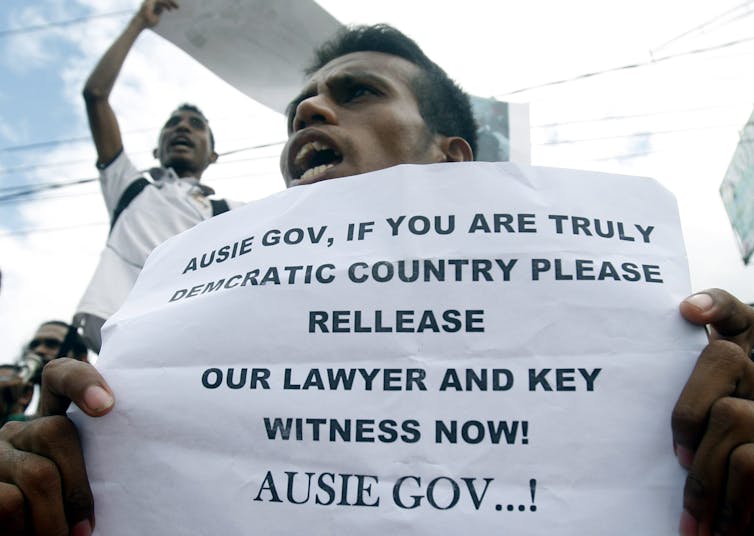
East Timorese protesters outside the Australian embassy in Dili in 2013.ANTONIO DASIPARU/EPA
Possible defences under the law
So, what are the legal issues that are likely to arise? The real problem for Witness K and Collaery is that section 39 of the Intelligence Services Act has no public interest defence, in other words, they can’t argue that disclosing the confidential information was done in the public interest, and hence, not against the law.
There are two other defences available, but neither fits easily with the facts of the case.
One allows information to be disclosed if it has already been communicated or made available to the public with the authority of the Commonwealth. The facts of this case are widely known in the public arena owing in part to interviews Collaery gave to journalists. The Commonwealth, however, did not provide permission for this disclosure.
Witness K requested IGIS permission to disclose information about the ASIS bugging operation for the purpose of giving evidence to the Permanent Court of Arbitration. He received permission, but the government then withdrew his passport to prevent him from travelling to The Hague.
Witness K and Collaery might have argued the disclosures were made in accordance with the Commonwealth Public Interest Disclosure Act, otherwise known as the Whistleblower Act.
At this stage, it is worth reflecting on the illegal activities in which the government may have engaged. It appears likely ASIS undertook an act of criminal trespass in Timor-Leste by planting surveillance devices in its cabinet room. As in every other democratic country, Timor-Leste’s cabinet deliberations are by law secret.
It is customary in international law – and spelled out explicitly in the UN Convention on the Jurisdictional Immunity of States – that nations and their property are immune from the domestic jurisdiction of other countries. So, Australia also transgressed international law by raiding the offices of Witness K and Collaery and confiscating documents that were clearly the property of the Timor-Leste government.
In addition, the law in Australia protects legal professional privilege, which guarantees that communications between a lawyer and client are confidential.
By, in effect, stealing Collaery’s extensive legal advice to the Timor-Leste government, ASIO violated this principle. Brandis, however, has said
No lawyer can invoke the principles of lawyer–client privilege to excuse participation, whether as principal or accessory, in offences against the Commonwealth.
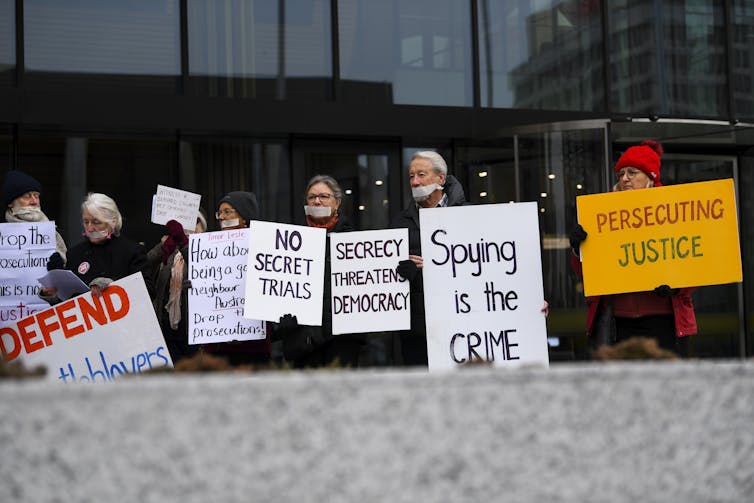
Supporters of Bernard Collaery and ‘Witness K’ stage a protest outside the ACT Supreme Court last August.LUKAS COCH/AAP
How the High Court could view the case
It is clear nothing permits the government to take actions that are contrary to Australian law or the law of another country.
The defendants could argue, then, that disclosing information for the sole purpose of exposing government illegality should not be prohibited by Section 39 of the Intelligence Services Act.
A conviction in these circumstances would be a travesty, particularly as it carries with it a maximum sentence of two years imprisonment. This is the penalty Collaery and K are facing.
Next, it ought to be remembered the High Court has read into the constitution an implied right to freedom of political communication.
It is quite likely the High Court will find the relevant provisions of the Intelligence Services Act are cast so broadly as to transgress this constitutionally guaranteed freedom. If so, the government’s case will fall apart.
Should these arguments be successful, Witness K and Collaery will emerge as the free speech heroes they are.
Even more importantly, the profoundly chilling effect the imprisonment of individuals of conscience would have on political and journalistic freedom in this country will have been avoided. Australian democracy will have repelled a grievous attack.
A cornerstone of containing the COVID-19 pandemic is widespread testing to identify cases and prevent new outbreaks emerging. This strategy is known as “test, trace and isolate”.
The standard test so far has been the swab test, in which a swab goes up your nose and to the back of your throat.
But an alternative method of specimen collection, using saliva, is being evaluated in Victoria and other parts of the world. It may have some benefits, even though it’s not as accurate.
Saliva testing can reduce risks for health workers
The gold standard for detecting SARS-CoV-2 (the coronavirus that causes COVID-19) is a polymerase chain reaction (PCR). This tests for the genetic material of the virus, and is performed most commonly on a swab taken from the nose and throat, or from sputum (mucus from the lungs) in unwell patients.
In Australia, more than 2.5 million of these tests have been carried out since the start of the pandemic, contributing significantly to the control of the virus.
Although a nasal and throat swab is the preferred specimen for detecting the virus, PCR testing on saliva has recently been suggested as an alternative method. Several studies demonstrate the feasibility of this approach, including one conducted at the Doherty Institute (where the lead author of this article works). It used the existing PCR test, but examined saliva instead of nasal samples.
it is easier and less uncomfortable to take saliva than a swab
it may reduce the risk to health-care workers if they do not need to collect the sample
it reduces the consumption of personal protective equipment (PPE) and swabs. This is particularly important in settings where these might be in short supply.
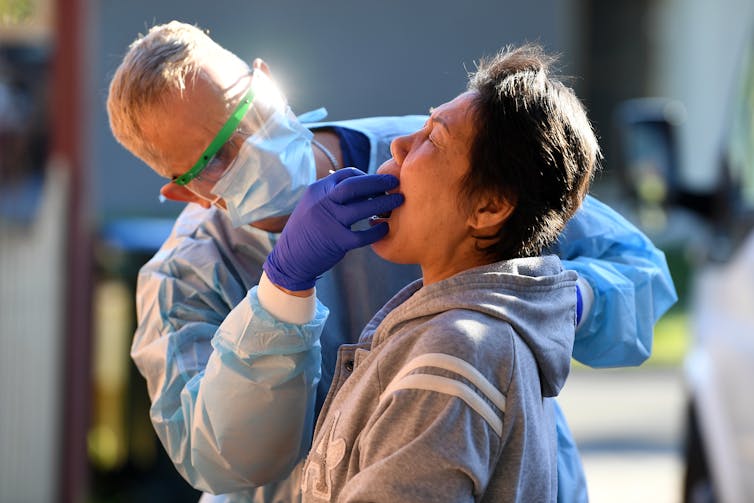
A ‘spit test’ might be more comfortable than a swab.Daniel Pockett/AAP
But it’s not as sensitive
However, a recent meta-analysis (not yet peer-reviewed) has shown detection from saliva is less sensitive than a nasal swab, with a lower concentration of virus in saliva compared to swabs. It’s important to remember, though, this data is preliminary and must be treated with caution.
Nonetheless, this means saliva testing is likely to miss some cases of COVID-19. This was also shown in our recent study, which compared saliva and nasal swabs in more than 600 adults presenting to a COVID-19 screening clinic.
Of 39 people who tested positive via nasal swab, 87% were positive on saliva. The amount of virus was less in saliva than in the nasal swab. This most likely explains why testing saliva missed the virus in the other 13% of cases.
The laboratory test itself is the same as the PCR tests conducted on nasal swabs, just using saliva as an alternative specimen type. However, Australian laboratories operate under strict quality frameworks. To use saliva as a diagnostic specimen, each laboratory must verify saliva specimens are acceptably accurate when compared to swabs. This is done by testing a bank of known positive and negative saliva specimens and comparing the results with swabs taken from the same patients.
When could saliva testing be used?
In theory, there are several settings where saliva testing could play a role in the diagnosis of COVID-19. These may include:
places with limited staff to collect swabs or where high numbers of tests are required
settings where swabs and PPE may be in critically short supply
some children and other people for whom a nasal swab is difficult.
The use of saliva testing at a population level has not been done anywhere in the world. However, a pilot study is under way in the United Kingdom to test 14,000 health workers. The US Food and Drug Administration recently issued an emergency approval for a diagnostic test that involves home-collected saliva samples.
In Australia, the Victorian government is also piloting the collection of saliva in limited circumstances, alongside traditional swabbing approaches. This is to evaluate whether saliva collection is a useful approach to further expanding the considerable swab-based community testing occurring in response to the current outbreaks in Melbourne.
Undoubtedly, saliva testing is less sensitive than a nasal swab for COVID-19 detection. But in the midst of a public health crisis, there is a strong argument that, in some instances, a test with moderately reduced sensitivity is better than no test at all.
The use of laboratory testing in these huge volumes as a public health strategy has not been tried for previous infectious diseases outbreaks. This has required a scaling up of laboratory capacity far beyond its usual purpose of diagnosing infection for clinical care. In the current absence of a vaccine, widespread testing for COVID-19 is likely to occur for the foreseeable future, with periods of intense testing required to respond to local outbreaks that will inevitably arise.
In addition to swab-free specimens like saliva, testing innovations include self-collected swabs (which has also been tested in Australia), and the use of batch testing of specimens. These approaches could complement established testing methods and may provide additional back-up for population-level screening to ensure testing is readily available to all who need it.
As you read this, health officials are busy finalising the government’s review of the health star rating system on packaged foods.
One of the issues the review is looking at is whether the system, which has been voluntary in Australia and New Zealand since its launch in 2014, should become mandatory.
This is something public health and consumer groups have called for, but the food industry has opposed.
Our new research, which looked at health star ratings of 20,000 packaged foods, shows why mandatory health stars on all packaged food is needed.
We found less than half of all eligible foods carried them, and those that did were skewed towards foods with higher ratings.
The health star system rates products from 0.5 to 5.0 stars to help guide consumers toward healthier choices when browsing the supermarket shelves. When comparing similar products, the general idea is the higher the star rating, the healthier the food.
The health star rating lets you compare similar packaged foods to make healthier choices (Australian Government Department of Health).
However, the government’s review is meant to address criticism the food industry has “gamed” the system by exploiting loopholes in scoring criteria to allow some products high in sugar and salt to still score relatively highly.
While much attention has been directed towards closing these loopholes, public health and consumer groups would also like to see mandatory labelling.
Here’s what we did and what we found
We looked at health stars on packaged food in Australia between 2014 and 2019. We used the FoodSwitch database, which contains information about the labelling and nutrition of packaged food.
Every year, FoodSwitch is updated by photographing labels of all packaged foods and beverages in four large supermarkets in metropolitan Sydney. That’s a total of about 20,000 unique products.
For each year in this study, we recorded whether a product was displaying a health star rating and its value.
Where a product was not showing stars on the pack, we calculated how that product would rate using available nutrition information and applying the government’s calculator.
This gave us an idea of what information manufacturers were not yet providing consumers.
We also looked at the manufacturer of each product, and flagged whether they were represented on the committee overseeing implementation of the health stars system.
Voluntary use remains disappointing
We found uptake of food star ratings has increased steadily over the past five years. But only about 41% of eligible products carried one.
Retailers Coles, Woolworths and Aldi labelled their own private label brands, accounting for about 56% of all health star ratings. Despite this leadership, these retailers were not involved in the implementation committee.
Perhaps unsurprisingly with voluntary labelling, health stars were more likely to appear on products with higher ratings. More than three-quarters of all stars were on products rated 3.0 or higher.
With a few exceptions, including McCain Foods, Coles and Woolworths, nearly all companies were more likely to show stars on their higher-scoring products.
We found significant differences between the average rating of products displaying the health star rating, and those made by the same manufacturer not showing a health star rating.
For example, Nestlé showed stars on its Uncle Toby’s breakfast cereals where they scored an average 3.9 stars. But the company did not provide the star logo on its confectionery range, which received an average 1.4 stars.
A voluntary system puts profits before health
Our results illustrate the limits of commercial goodwill in applying health stars voluntarily.
Selective use allows the food industry to market its products as healthy but denies consumers the chance to make meaningful comparisons between products.
In particular, the voluntary system limits consumers’ ability to identify and avoid less healthy foods.
With the government review set to be finalised in mid-July, our work supports arguments for an improved health star rating system to be made mandatory to ensure the system works for consumers, not just food companies.
Making health stars mandatory will take time. However, health officials must commit now to a concrete and public plan to proceed down this path by a specific date in the likely event that uptake remains patchy.
Over the same period the health stars system has been operating, Australian manufacturers have implemented new requirements for mandatory country of origin labelling.
If we’re willing to use regulation to provide consumers more information about where their food comes from, we should be doing the same to provide more information about how healthy their food is too.
As the global renewables transition accelerates, the future for coal regions has become a big worry. This raises an important question: can renewables create the right jobs in the right places to employ former coal workers?
According to our new research, the answer in many cases is “yes”. Renewable energy jobs provide a good match for existing coal jobs across a range of blue and white-collar occupations, including construction and project managers, engineers, electricians, site administrators and mechanical technicians.
But about one-third of coal workers, such as drillers and machine operators, cannot simply switch over to renewables jobs. So as our economy pivots to renewables, planning and investment is needed to help coal regions survive.
Some renewables jobs could be filled by coal workers.Tim Wimbourne/AAP
We surveyed more than 450 Australian renewable energy businesses, covering large scale wind, solar and hydro, rooftop solar and batteries. We wanted to find out how many people were employed, and in what jobs.
We then projected employment until 2035 using three scenarios for the future of the electricity market, developed by the Australian Energy Market Operator (AEMO).
Our results suggest renewable energy can be a major source of jobs in the next 15 years. But the trajectories are very different depending on government COVID-19 stimulus measures and wider energy policy.
Policy crossroads
We found the renewable energy sector currently employs about 26,000 people. Temporary construction and installation jobs now comprise 75% of the renewable energy labour market, but as the sector grows, this will change (more on that later).
Australia’s renewable energy target was reached last year, and has not been replaced. According to the Reserve Bank of Australia this caused renewables investment to fall by 50% last year compared to 2018. Under a “central” scenario where these policies continued, 11,000 renewable jobs would be lost by 2022.
Under the right policies, there could be an average of 35,000 renewables jobs annually in Australia until 2035.Michael Buholzer/Reuters
We then examined a “step change” scenario where Australian policy settings were in line with meeting the Paris climate agreement. This would create a jobs boom: renewable energy employment would grow to 45,000 by 2025 and average around 35,000 jobs each year to 2035. Up to two-thirds are in regional areas.
Under all scenarios, job growth is strongest in rooftop solar and wind. Most are in the construction and installation phase, comprising both ongoing and project-based jobs in trades, as well as technicians and labourers. But by 2035, as many as half of renewable energy jobs could be ongoing jobs in operation and maintenance.
Renewable energy jobs will be higher than our projections. We excluded employment areas such as building electricity transmission networks, bioenergy, professional services, renewable hydrogen, growth in minerals needed for renewable energy, and jobs in heavy industry such as “green” steel.
Renewables vs coal jobs
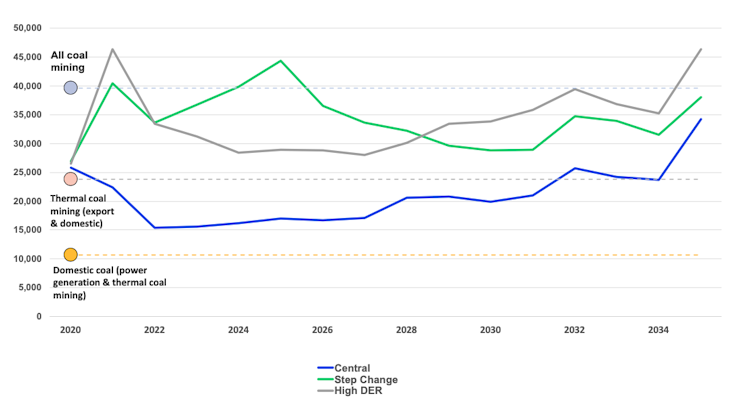
All up, coal mining in Australia employs about 40,000 people. As mentioned above, renewable energy jobs could grow to 45,000 by 2025 – and more once other sectors are included.
Australia’s renewable energy industry already employs considerably more people than the 10,500 working in the domestic coal sector – mostly thermal coal mining and power generation.
About 75% of coal mined in Australia is exported. About 24,000 people work in thermal coal mining for both domestic use and export – slightly fewer than the current renewable energy workforce.
Employment in renewable energy and coal.Author supplied
New renewables jobs in coal regions
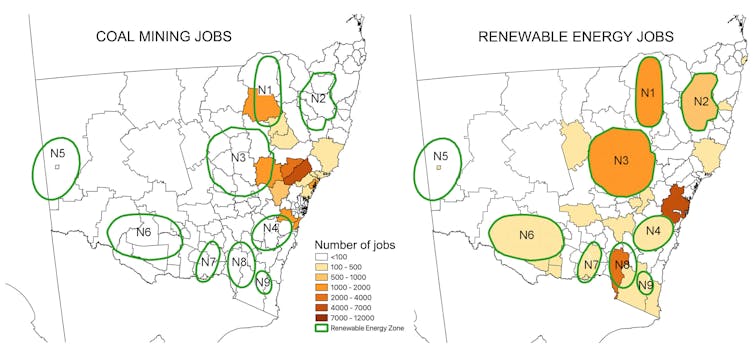
Around two-thirds of renewable energy jobs could be created in regional areas. These would be distributed more widely than coal sector jobs.
The leading coal mining states, NSW and Queensland, have the biggest share of renewable energy jobs under all scenarios.
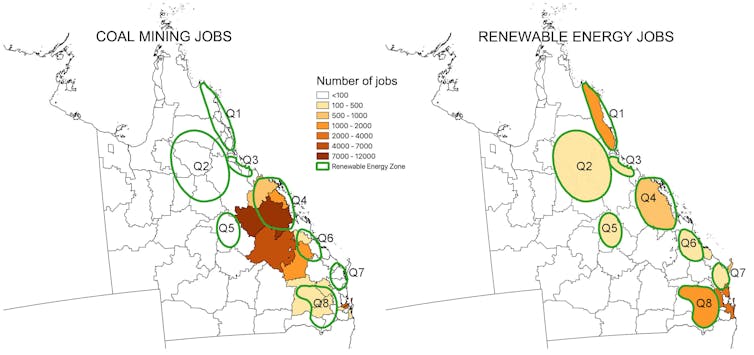
AEMO has identified “renewable energy zones” where most large-scale renewable energy is expected to be located. In both NSW and Queensland, some of these zones overlap with the coal workforce. In NSW, the Central West zone could also create employment in the Hunter region. In general, though, many renewable energy jobs will be located in other regions and the capital cities.
In terms of occupations, there is overlap between coal and renewable energy. These include construction and project managers, engineers, electricians, mechanical trades, office managers and contract administrators and drivers.
The timing and location of these renewables jobs will influence whether they can be a source of alternative jobs for coal workers. Re-training of coal workers would also be required.
But there is no direct job overlap for the semi-skilled machine operators such as drillers, which account for more than one-third of the coal workforce.
Renewable Energy Zones and coal mining employment in Queensland.Author suppliedRenewable energy zones and coal mining employment in NSW.Author supplied
Planning for the decline
Renewable energy can meaningfully help in the transition for coal regions. But it won’t replace all lost coal jobs, and planning and investment is needed to avoid social and economic harm.
Coal regions need industry development plans and investment to diversify their economies to other industries, including renewables. Almost half our coal workers are aged under 40, so Australia will not be able to follow Germany and Spain’s lead by relying on early retirement schemes.
At some point, demand for our coal exports will collapse – be it due to the falling cost of renewables, or policies to address climate change. If we don’t start preparing now, the consequences for coal communities will be dire.
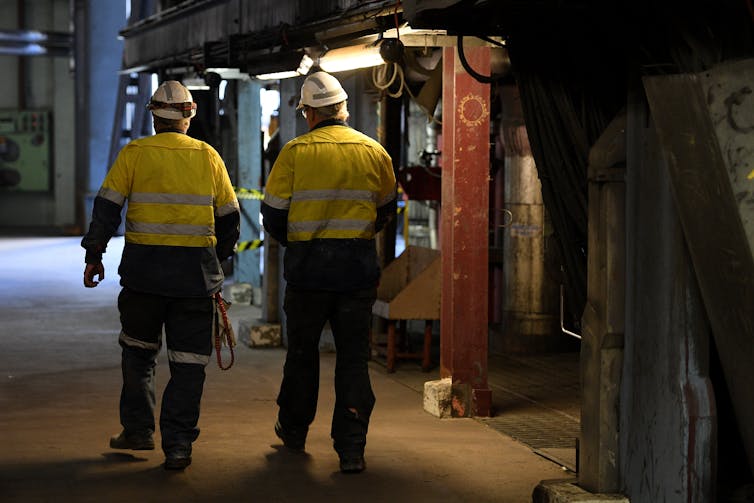
Some coal workers can be retrained to work in renewables, but others cannot.Dan Himbrechts/AAP
Source: The Conversation (Au and NZ) – By Joel Barnes, Research Associate, Australian Centre for Public History, University of Technology Sydney
The government’s recently proposed restructure of university fees would see students pay 113% more for many humanities subjects.
The package is not a case of “humanities vs STEM (science, technology, engineering and maths)”, as some initially saw it. Some arts degrees, like English and languages, would see higher Commonwealth contributions.
But a disproportionate portion of the de-funding burden would still fall on the humanities if the package is approved by the Senate – to the extent many arts degrees would become almost full-fee paying courses.
Since the 1980s, the humanities have been particularly vulnerable to funding cuts. This was driven by the hostility of conservative governments and critics who saw the humanities as generally antagonistic to their political interests.
Developments in this period set the parameters for much of the political discourse around the humanities since. And they made it possible for governments at various times to seek to defund or make funding for the humanities increasingly precarious.
From civilisation to diversity, and back again
Traditionally, the humanities were conservative in tone. There was an emphasis on the achievements of “civilisation”, a principally Western, masculine canon of literature, art, music and history.
At the opening of the Menzies Building for the humanities at Monash University in 1963, Sir Robert Menzies said:
[…] civilisation is in the heart and mind of people and the task of the humanist, the task of the people who teach and learn in a school of humanities is not to forget that history, for example, is no useless study, since a man who is ignorant of it will have no sense of proportion, no benefit of experience in dealing with new problems as they arise.
From about the mid-1960s, the humanities’ political centre of gravity began to shift gradually leftwards. Scholarship and teaching became more diverse, critical and feminist.
Eventually, a clear antagonism emerged between this new version of the humanities and the values of both older cultural conservatives and those pushing for deregulation and privatisation – “economic rationalists”, as they were then called – who had captured much of the public service in the 1980s.
The Menzies building at Monash University was opened by Robert Menzies in 1963 who saw the study of civilisation as vital to the humanities.Shutterstock
At the same time, research policy circles became increasingly instrumentalist – believing research must be practically “useful”. This generated a growing demand for taxpayer-funded research to demonstrate its contribution to the “national interest”.
Initially this development concerned the relationship between basic science and more practical, applied science and had little to do with the humanities.
But the changes in overall research philosophies came to impinge on the humanities, especially in the new emphasis on “relevance” in teaching and research imposed on universities through the “Dawkins Reforms” of the late 1980s.
These reforms saw the large-scale restructuring of higher education through the introduction of more corporate forms of management, merging of universities and the more technical Colleges of Advanced Education, creation of the Australian Research Council (ARC), and reintroduction of student fees through the HECS system.
Populism versus the humanities
In March 1987, the new instrumentalism and growing conservative alienation from the humanities came together in their crudest, most populist form.
The Liberal-National opposition’s Waste Watch Committee, a group run by the NSW Senator Michael Baume, launched an attack on 60 Australian Research Grants Scheme (ARGS) grants it declared to be “waste”.
The committee borrowed the tactics of US Democratic Senator for Wisconsin, William Proxmire, who since 1975 had issued a monthly “Golden Fleece Award” to instances of supposed waste of public funds. The committee pioneered, in Australia, the strategy of holding up research grants to public ridicule on the basis of titles that sounded funny or indulgent to non-experts.
‘Cash for absolute clap trap’Daily Telegraph front page, August 22 2016
The grants the committee opposed were mostly in the humanities, with a few in the social sciences. Its leading example was a project on “Motherhood in Ancient Rome”. It was no accident that a project on women’s history was singled out.
Unused to such attacks, academics and university administrators offered a lacklustre response that underestimated the capacity of such populism to damage the humanities’ public standing and funding base.
In the May 1987 “mini-budget” the Hawke government bowed to public pressure and cut A$1 million from the ARGS budget for 1987–88.
The Waste Watch Committee’s intervention set the template for subsequent populist attacks on the humanities – now a regular sport of the tabloid press.
The effects on funding of such public disparagement were evident again in 2004–5, when then education minister Brendan Nelson vetoed at least nine grants recommended by the ARC. Various researchers, and Herald-Sun columnist Andrew Bolt himself, surmised this move was in response to Bolt’s criticism.
Bolt had written of the grants:
In cultural studies, seven of the eight grants were also for peek-in-your-pants researchers fixated on gender or race, and Marxists got all the grants you might expect of priests who worship state power.
In October 2018 it was revealed former education minister Simon Birmingham had quietly vetoed a further eleven major research grants for mostly humanities projects totalling almost A$4.2 million.
This time there was no direct line to draw between a particular episode of populist criticism and the cuts, but there need not be.
It is not difficult to see several decades of populist condemnation of the humanities playing a similar role in the recent announcement of arts teaching cuts.
The good news for the humanities?
If this story contains any good news, it is that humanities scholars are now much better prepared than they once were to make the public case for the social and economic value of their disciplines.
The Australian government is planning to spend A$190 billion to support the economy in response to COVID-19, according to the latest Parliamentary Budget Office estimate.
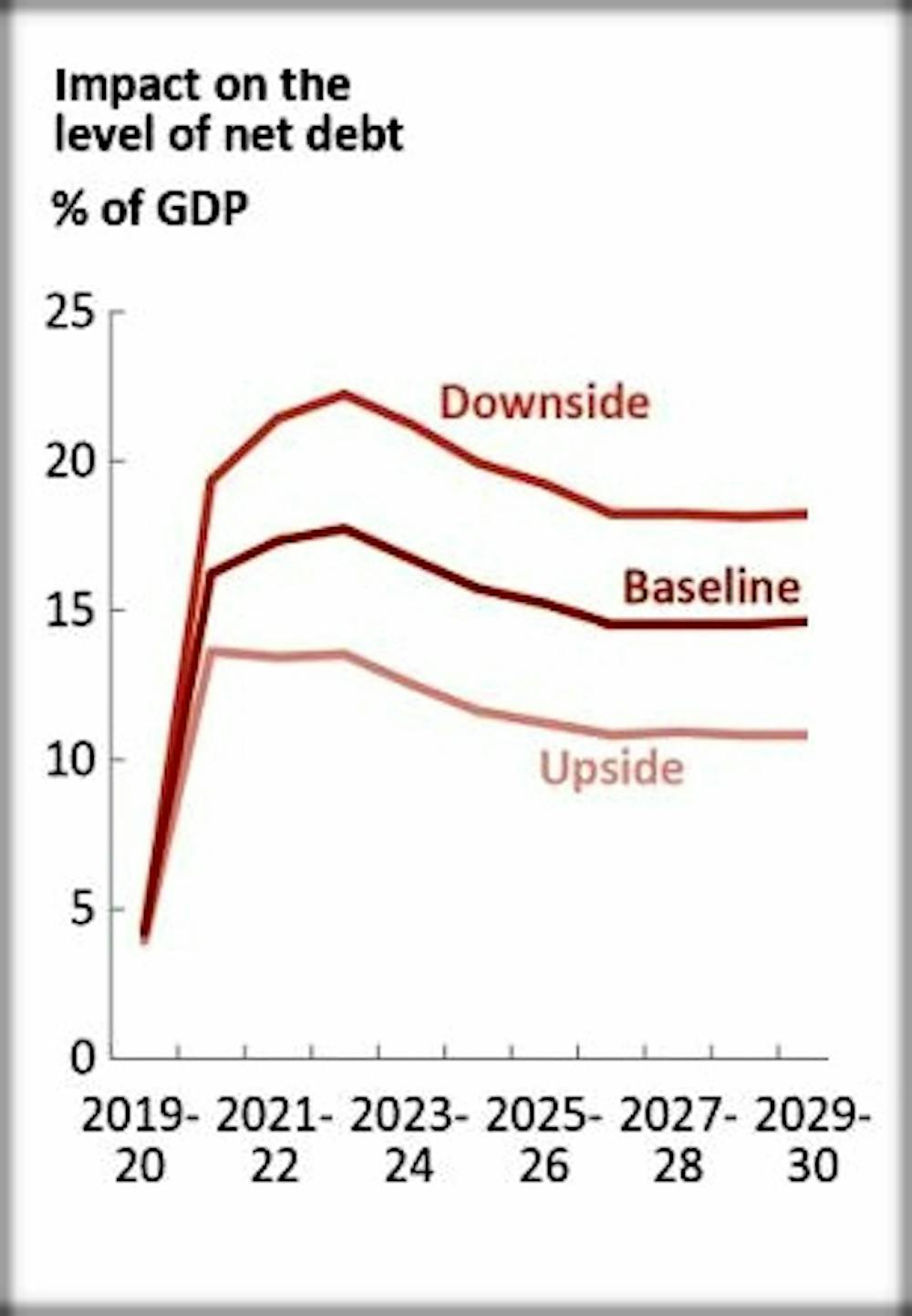
The total impact of COVID-19 on the government’s net debt, including both revenue impacts (down, because of less activity) and spending impacts (up because of spending to support the economy) amounts to between 11% and 18% of gross domestic product, or A$500 billion to A$620 billion.
The estimates are based on the three possible scenarios developed by the Reserve Bank: “downside”, “baseline” and “upside”. Each differ in their assumed timing of the relaxation of social distancing and other restrictions, and for how long uncertainty and diminished confidence weigh on households and business activity.
With similar blow-outs around the world, a view gaining ascendancy, including amongst commentators such as Alan Kohler, is that government debt doesn’t matter – provided the government owes the money to its central bank (in Australia’s case, the Reserve Bank) or the bank is prepared to buy the debt from the party the government borrowed the money from.
The view is an application of so-called modern monetary theory and the argument goes like this:
when the government runs a budget deficit, it borrows from the private sector (mainly financial institutions) by selling government bonds which are effectively IOUs offering to repay in a certain number of years and offering interest at a low bond rate until then
the Reserve Bank (along with other central banks) has been buying bonds from the private sector with money it creates, and says it is prepared to buy as many as are needed to keep the bond yield low, so that if it looks as if the bond rate will rise, much of the debt will ultimately be owed to the bank
when the bonds expire and it is time to repay the debt, the government can simply issue more bonds which the bank will ultimately buy if it has to in order to keep the bond rate low
if down the track all of the extra money in the banking system causes inflation, the process would be thrown into reverse: the government can the deficit, repay the Reserve Bank and others when loans fall due and cut the supply of money, slowing down inflation.
It sounds too good to be true, because it is.
There are a number reasons why deficits and debt do matter, even if the debt is effectively owed to the central bank and even if it has been created in a recession, or in anticipation of one – as is the case for the COVID-19 response.
Creating money carries risks
We know that governments with high debt face interest rate premiums from lenders. A European Union study found that a 10 percentage point increase in the government debt to GDP ratio increased the sovereign bond rate by 0.47 percentage points.
These higher risk premia flow on to private sector borrowers whose interest rates are set in relation to sovereign interest rates, so all households and businesses face higher rates. The result will be less investment and household spending than there would otherwise be.
An attempt by the central bank to negate the risk premium by buying more bonds would allow the government to issue even more bonds, increasing the risk of inflation which would itself put upward pressure on interest rates.
The experience of Latin American countries that relied on their central banks to create money is frightening. Argentina and Venezuela in particular experienced inflation rates of up to 50% and plummeting exchange rates.
The idea that, if and when inflation arrives, the Australian government could easily throw its spending and tax engines into reverse is fanciful. It is politically difficult to wind back government spending and raise taxes. To do so on a large scale might be impossible.
Modern Monetary theorists respond by pointing out that we have not yet seen inflation in Western countries that have pumped up their money supplies.
That’s true, but while the government has been running up debt, we have seen inflation of a sort in big increases in asset prices in housing and stock markets.
It has made us more vulnerable to financial shocks and priced many first home buyers out of the market.
Markets aren’t forgiving
Markets aren’t always forgiving.
And what if the foreign exchange market does not buy the modern monetary theory story?
Even the expectation of future inflation by the market, before it arrives, could lead to a depreciation of the Australian dollar which could itself create inflation which would make Australians poorer.
A final point: the Reserve Bank of Australia is independent from the government.
If confidence in this independence was eroded, we could see an increase in perceived risk of holding Australian financial assets. This in turn would cause higher interest rates and a lower Australian dollar.
In any case, the Reserve Bank might decide at some point that the risk of inflation or asset price inflation is unacceptable and refuse to buy more government bonds, or sell back to the private sector the bonds it’s bought.
This would mean the government debt was owed to the private sector once again. Financial markets might view it as more risky than debt owed to the bank, with negative consequences for interest rates and the exchange rate.
I am inclined to agree with the International Monetary Fund’s chief economist who said in relation to modern monetary theory before the COVID crisis that there was “no free lunch”.
Martin Wolf of the Financial Times said during the crisis that modern monetary theory was both right and wrong.
It was right, because there is no simple budget constraint. It was wrong, because it would prove impossible to manage the economy sensibly once politicians believed there was no simple budget constraint.
For all the things we don’t know about COVID-19 one thing is certain: our economic recovery will depend on boosting productivity. Everyone from the Reserve Bank of Australia governor Philip Lowe to Prime Minister Scott Morrison and Opposition Leader Anthony Albanese seem to agree on this.
The question, of course, is how to do it.
This could involve important but significant changes to our industrial relations system, company tax (reducing rates to be more internationally competitive) and the education system.
Important though such reforms are, they will be challenging politically.
One modest but easy-to-execute reform would be to finally get rid of one of the most inefficient and distorting taxes in our system: stamp duty, the tax state and territory governments charge on the sale of real estate, vehicles and a few other types of transactions. Stamp-duty on a A$750,000 owner-occupied property ranges from about A$22,000 in Queensland to about A$42,000 in Victoria.
The review, headed by CSIRO chairman and former Telstra chief executive David Thodey, joins a long line of reviews to observe that stamp duty discourages efficient property transactions.
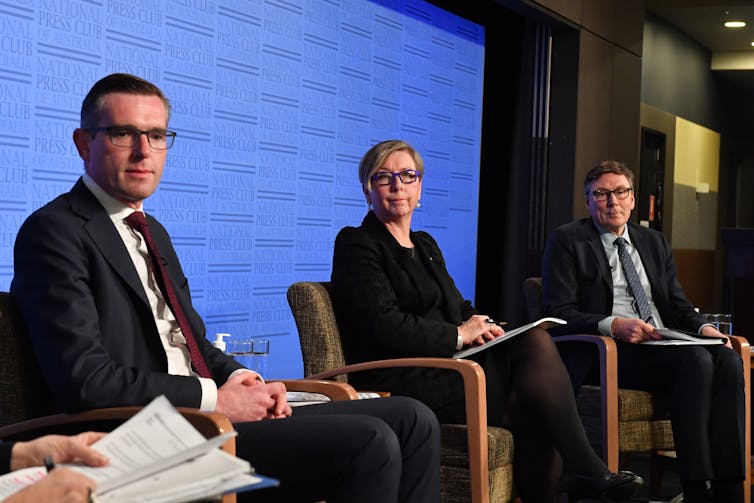
David Thodey, right, with NSW Treasurer Dominic Perrottet and Jane Halton, the head of Coalition for Epidemic Preparedness Innovation at the National Press Club in Canberra on July 1 2020.Mick Tsikas/AAP
People don’t move homes when it otherwise makes sense because of the massive tax cheque they have to pay to buy a new property. In particular it means older people hold on large family homes long after they need them.
There is, however, a simple fix to this. Allow buyers to elect to pay stamp duty (at the current rate) or pay land tax each year (at a lower rate, perhaps 1% a year).
If they elect to pay land tax, that property forever becomes a “land tax property”. Any future buyers will pay land tax. Australia’s system of property title makes this easy to track and enforce.
This “opt-in” system is discussed in the Thodey review.
It would effectively “grandfather” the land tax scheme, ensuring those who have paid stamp duty are not double-taxed. Because new buyers can choose to pay stamp duty or land tax, they cannot be worse off than under the current system. It’s up to them.
We can’t do anything about the past inefficiencies of the system. We can only fix the transactions of the future, as this scheme does. We can have grandfathering with the fairness it entails, while getting all of the efficiency benefits of land tax.
Dan Peled/AAP
Addressing concerns
State and territory governments might worry that moving from payments upfront to over time will hurt their revenue in the short term. They shouldn’t.
Ratings agencies like Standard and Poor’s or Moody’s understand a shift to land tax would be better for the economy. Whatever the short-run budgetary implications, government balance sheets won’t change in the longer run. Their credit ratings should be safe.
Also, they can always turn future land-tax revenue into more immediate revenue by “securitising” it, for example by selling government bonds it pays back with land tax revenue.
One legitimate concern is that a land tax might be more susceptible to politicians slowly increasing it over time, turning it into a kind of backdoor wealth tax. That would be a bold political move, but some might still be tempted given their politics and budgetary bottom line.
Competitive federalism, however, should lessen any such temptation. Any state or territory too far out of step with the others is likely see its more mobile residents vote with their feet.
Perhaps better still would be for state and territory governments to make this reform part of a grand bargain on their fiscal relation with the federal government. This could help them effectively commit not to raise land tax in return for their guaranteed share of revenue from the goods and services tax, for instance.
Improving productivity post-COVID-19 will be challenging. We need to take the easy wins when we find them. Moving from stamp duty to land tax ought to be a no-brainer.
The Baby-Sitters Club, the popular series by Ann M. Martin, defined my childhood. I collected the books until I was 11. I played it in the school yard (I was Dawn because I had long hair, not because I was at all “chill”). I watched the 1990 TV series (terrible) and the 1995 movie (great). I own (present tense) the board game.
I’m not alone. Kristy’s Great Idea was first published by Scholastic in 1986 and the series has since sold more than 180 million books. The winning formula was a 15-chapter novel written from the perspective of one of the four/five/six/seven/nine club members (there were a lot of changes in line-up over the 15-or-so years of production) with the occasional interjection from another club member in the form of a baby-sitting journal entry, complete with distinctive handwriting.
Each character is distinct, almost archetypal; they’re flawed yet loveable. And the target audience of seven year olds probably didn’t realise 13 is entirely too young to care for a family of children.
Like many book franchises of its era, Martin started the series, writing the first 35 novels, before it was handed over to ghostwriters – one of the BSC writers, Peter Lerangis, also wrote for Sweet Valley High.
The franchise has continued to expand since 1986, including the recent graphic novel versions of the first seven books, drawn by Raina Telgemeier and Gale Galligan.
A new Netflix series brings the BSC into 2020 in a way that ensures these essentials are still part of the narrative.
The set-up is the same: Kristy (Sophie Grace) has a brilliant idea while her mum, Elizabeth (Alicia Silverstone – I laughed out loud when Kristy realises her mum isn’t “clueless”), is scrambling to find a baby-sitter to look after her younger brother. Elizabeth is frustrated because no one answers their mobile phone, and she would have to pay $80 to join a website listing sitters. And as Kristy’s friend Claudia (Momona Tamada) observes, they “will then sell her personal information to, like, the Russians.”
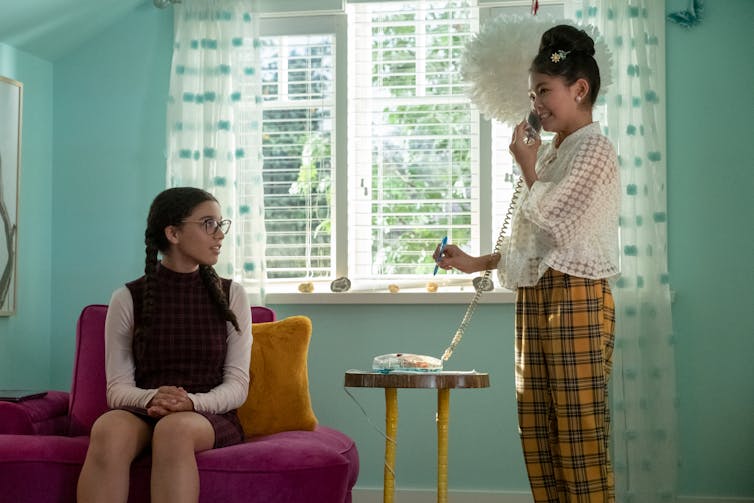
In Kristy’s club, the sitters will be in the same place at the same time and reachable on one phone number. They can’t pass out their own mobile numbers because, you know, they’re kids, so they decide to use an “olden times phone”. Luckily, Claudia has a private landline that came with her family’s high-speed internet package.
Flyers are essential because Facebook targeted advertising is far too expensive. Kristy and her best friend Mary Anne (Malia Baker) still need to communicate by flashing torches into each other’s windows when Mary Anne’s dad blocks outgoing calls from her mobile phone. Each episode’s title is even written in the distinctive typeface associated with each character.
For the seasoned fan/nostalgic millennial, it ticks a lot of boxes.
Girls to the front
Both the novels and the new series incorporate preoccupations stereotypically significant for pubescent girls: clothes and crushes and pizza, sure, but also interpersonal relationships, what it’s like to exist in the world in a female body, and balancing what others think of you with what you want to think of yourself.
What’s valuable about both series is these issues of girlhood aren’t relegated as insignificant but rather are validated by their inclusion.
The targeted marketing towards girls also brings up an important ambivalence in children’s literature, where books featuring boys are perceived as being for everyone but books featuring girls are for girls. Books like The Baby-Sitters Club are more likely to be considered light and insubstantial and less likely to be explored for their valuable contributions than books featuring tween boys.
It is important series featuring girls offer readers opportunities to see themselves reflected beyond restrictive stereotypes of femininity. By reflecting a range of characterisations and scenarios, assumptions girlhood is any less dynamic or complex than boyhood are undermined, showing readers female protagonists can be just as powerful as the boys. (Harriet Potter could have been great, just saying.)
The Baby-Sitters Club offers readers (and viewers) an expansive understanding of what it means to be a girl .Kailey Schwerman/Netflix
The Netflix series captures Martin’s characterisation while incorporating contemporary concerns.
Kristy knows how to lean in. She is full of brilliant ideas. The kid is smart and knows how to get what she wants. Her 1980s characterisation as a bossy, loudmouth tomboy is, however, a bit jarring in light of contemporary expectations of gender performance. “Bossy” is a gendered pejorative thrown at assertive girls. Likewise, “tomboy” suggests a deviation from more stereotypical feminine traits – those associated with quiet and emotional Mary Anne, “boy crazy” Stacey, or fashionista Claudia.
Kristy likes sports and she wears a lot of turtlenecks (which faithfully appear in the Netflix series – “normcore”, as Mary Anne describes), but the characteristic that truly defines her is simply that she talks. She speaks up and she’s unwilling to accept the disempowerment that tends to come along with her youth and gender.
In the first episode, Kristy is assigned an essay on “decorum” for speaking up in class, saying Thomas Jefferson should have said all people were created equal (instead of “all men”). She knows she’s expected to stay polite and quiet, but she’s unable to do so when she feels speaking out is necessary. Kristy’s agenda is explicitly feminist.
Kristy is, of course, white and middle class: these factors of identity were a given in the novels but are more politicised in the new series. The neoliberal feminism here is pretty patent. The series’ feminist concerns are about creating a kind of “empowered” girl with the right to do whatever she chooses, with a focus on economic equity. Think breaking glass ceilings, rather than overthrowing the patriarchy.
Socioeconomic status is an interesting element in both the books and television show, simultaneously important and disregarded. One reason Mary Anne, Claudia and Stacey join the club is to make money, but their need for money is relative. The club members are firmly positioned in a middle-class community. While there is the occasional mention of the Thomases finding things difficult because Elizabeth is a single mum with four kids, her marriage to the very wealthy Watson Brewer sorts things out.
The Netflix series does discuss the jarring nature of moving between tax brackets in such a sudden manoeuvre, but there’s little consequence – just the acknowledgement it will take some getting used to.
In the books, Kristy doesn’t “change” despite moving to the wealthy side of town – but continuing to wear a baseball cap doesn’t exactly mean having a millionaire as a parent has no effect. In Kristy and the Snobs, Kristy’s wealthy neighbours are initially portrayed as judgemental and nasty, suggesting whether or not you have money is linked to niceness, rather than privilege.
While Shannon ends up being a friend of Kristy (and a member of the BSC), her wealth is part of her characterisation – it contributes to how she sees the world. At first, she and her sisters suggest Kristy lives at “Mr Brewer’s house”, rather than acknowledging it is Kristy’s home. Shannon’s worst offence is being mean about Louie, Kristy’s elderly dog, because he looks a bit rough compared to her purebred Bernese mountain dog.
In the novels, when the characters who live in Kristy’s neighbourhood are described, their wealth is generally acknowledged, but some families are framed as “normal” and friendly (the Papadakises), while others are spoilt, rude and ostentatious (the Delaneys with their $400 cat and $2000 fountain in the front entrance).
Kristy’s new step-dad might be a millionaire, but that doesn’t mean she will change.Liane Hentscher/Netflix
Those who draw attention to their own wealth rather than downplaying it are presented in a mocking fashion. Ignoring your wealth is the expectation. The fact Kristy doesn’t change in response to her circumstances suggests class is static, and shows a lack of awareness of the effects of additional wealth on children’s experiences.
While novels for children don’t need to be explicitly political, the depoliticisation of factors like wealth (and race, as we’ll discuss) contributes to a kind of naïve and idealistic apathy.
We need diverse books
As children’s literature expert Rudine Sims Bishop says, representation of diverse characters in children’s literature is important to allow children to see themselves reflected in texts, as well as offer insights into points of similarity and difference between characters and themselves.
The books incorporate race in a culturally generic rather than specific way: characters aren’t necessarily white and different ethnicities are represented, but there’s no real consideration about what that might mean. Representation is superficial, or possibly tokenistic.
In the novels, Claudia is of Japanese descent and Jessi is Black, but their race is mostly a small detail of their characterisation, like how Dawn has two earrings in each ear or how Mallory hates boys (and gym). But as Jessi acknowledges in Jessi’s Secret Language, after describing herself as Black to the reader: “If we were white, I wouldn’t have to, because you would probably assume we were white. But when you’re a minority, things are different.”
There is an occasional focus on racism (in Hello, Mallory, Jessi moves to Stoneybrook and encounters explicitly racist reactions and comments from schoolmates and neighbours; in Keep Out, Claudia a family specifically requests the blonde, blue-eyed baby-sitters to care for the children) and it is clearly denounced, so the ethical stance of the novels is unambiguous. But apart from a handful of the novels, there is little acknowledgement of the ways being a person of colour in a small town in the pretty white state of Connecticut might be difficult.
Acknowledgement of experiences outside the default position of middle-class whiteness is beyond the scope of the books. Margaret Mackey, an expert on young readers, has written “shading, nuance, and ambiguity are not on the menu” in the series, and, despite ostensibly offering multiple narrative perspectives, each character’s voice is identical.
As such, while the inclusion of people of colour offers important representation, there’s a lack of discussion of the experience and complexities of being a person of colour. It’s the narrative equivalent of the comment “I don’t see race.”
A new complexity
Under showrunner Rachel Shukert (Glow) and executive producer and director Lucia Aniello (Broad City), the new TV series expands representation beyond the novels. Mary Anne is black and Dawn (Xochitl Gomez) is Latina. Dawn’s dad is gay. Mary Anne learns about gender identity and advocates for a young transgender girl she is baby-sitting.
The 2020 characters show a new complexity their 1986 counterparts did not.Liane Hentscher/Netflix
Intersectionality of girlhood and race is a more obvious concern of the new series, although only Claudia’s experience of her heritage is discussed in any detail in the first series.
Episode six, Claudia and Mean Janine, offers an exploration of her liminal experience of her Japanese-ness and American-ness, and her subsequent sense of belonging in both her family and culture. She learns of her grandmother Mimi being forced to live in an internment camp during the second world war, despite being an American citizen – a historical event Claudia was aware of, but not one she felt was related to her.
The novel of the same title focuses more on Claudia’s feelings of insecurity, but the episode touches on the complex experiences of children who feel part of the dominant culture but whose family background carries the trauma of racism, marginalisation and injustice.
Watching now, as an adult and parent, I see how these intergenerational relationships show up in other ways. Mary Anne’s dad (Marc Evan Jackson) is overprotective and anxious, stemming from Mary Anne’s mother’s death – he wants to be the perfect parent and he’s also afraid of losing her. Mary Anne’s insecurity, sensitivity and shyness seem to mirror Richard; she tries to regulate her own behaviours so she doesn’t trigger his fear.
Stacey (Shay Rudolph) misleads her new friends because her mother (Shauna Johannesen) makes her feel she should be hiding her diabetes. Stacey feels her parents are ashamed of her, but her mother only wants to protect her.
The series demonstrates well the way parents’ “good intentions” can be completely misunderstood by their kids, and clear communication is necessary for the results of the misunderstanding not to be damaging.
As Dawn says, “Parents are just older weirdos doing the best they can.”
Now, these girls show engagement with major political concerns in a way that reflects the increasing politics of young people today.
In the two-part finale, Dawn, an unabashed social justice warrior, seeks to change the mindsets of her fellow campers with her unique perspective during the morning announcements.
She encourages the campers to try out for the musical Paris Magic (about “a young woman time-travelling her way through the French Revolution” – the knowing cheesiness is charming) to “save the arts – and the world, which is due for a dose of radical empathy that only the arts can provide”.
She ultimately organises a protest to try to make things more financially equitable for all the campers (considered a mild inconvenience by her friends because of the scheduled performance of the aforementioned play).
And, look, she’s also a hippie and her mum has witch friends and they participate in women’s circles and there’s a lot of finger-snapping as kudos, so there’s a kind of ironic stereotype happening here. But Dawn’s social awareness and empathy offer a contrast to some of the more individualistic storylines. With her focus on the relationship between her external and internal world, her character is the most happy in who she is.
The Baby-Sitters Club books are simultaneously wonderful and problematic. It was a group of girls helping women look after children. It shows girls they can run a successful business. The baby-sitters know they can charge less than their adult competitors – in a female-dominated and thus significantly underpaid industry – so why not undercut the competition and secure the market?!
Maybe 13-year-olds shouldn’t run a business – but that doesn’t mean they can’t dream.Kailey Schwerman/Netflix
“You wouldn’t believe what some of these adult sitters charge. We could ask for half, and we’d be rich,” says Kristy. Let a 13-year-old girl look after your three children, go on! What could go wrong? They’ll all be just fine!
And they were fine. They always worked it out. They were creative and industrious and great sitters. These books, while encompassing a particular flawed brand of white feminism, offer significant representations of strong girls both speaking up and achieving.
So maybe my condescending tone here stems from the continuing dominant position girls are lacking and inferior, and I should stay focused on those reasons I loved the BSC so much as a kid.
These characters made it seem like you could be shy as hell or really bad at spelling or as whingey as Mallory (sorry, Mallory) and still be completely fine. And, when you’re in primary school, the idea that when you’re 13 you’ll not only have some agency but also be respected and trusted by adults is pretty compelling.
So maybe I’m just resentful because as an adult I have enough trouble looking after my own baby.
The family of pioneering New Zealand suffragist Kate Sheppard kept an important secret – one that possibly explains a lot about her life, her beliefs and her motivation.
The secret involved her father, Andrew Wilson Malcolm, and what happened to him after Kate was born. An extensive and painstaking quest by her great great niece Tessa Malcolm has revealed the truth about his fate.
Sadly, Tessa died in 2013 before publishing her decades-long research. I am now completing her work and hope to publish a new biography of Sheppard in 2023, the 130th anniversary of New Zealand becoming the first place in the world to give women the vote.
Solving the mystery of Andrew’s death deepens our understanding of Kate and her extraordinary life.
What happened to Kate Sheppard’s father?
Following family leads and with detailed searches of official and military records, wills and graves, Tessa finally established the truth: Andrew Malcolm died aged 42 of the delirium tremens (DTs) in New Mexico on January 26, 1862.
The DTs are a severe form of alcohol withdrawal and a horrible way to die. Symptoms include fever, seizures and hallucinations.
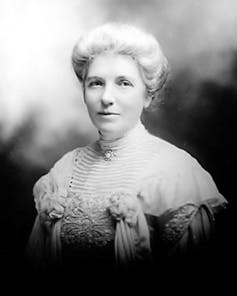
Kate Sheppard.
It had already been a long and difficult slog for Andrew. He was one of thousands of Scotsmen who served in overseas armies throughout the 19th century, motivated by a lust for adventure, sympathy for a cause, financial reward, a desire to emigrate or just to escape their lives at home.
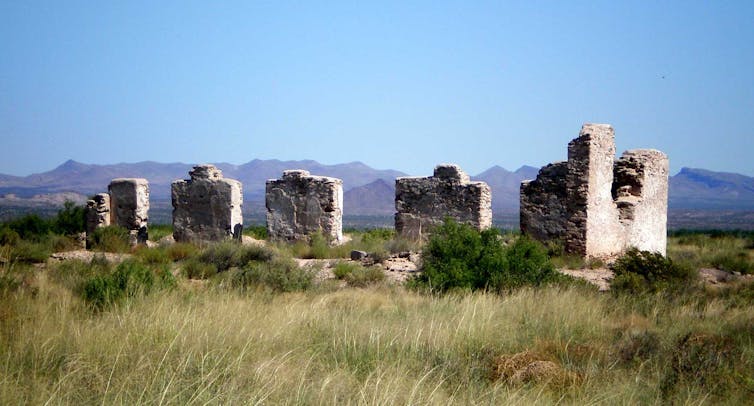
When he died he was months short of completing ten years service in the Union Army. His burial site at Fort Craig was recently looted, which led to the official exhumation and reburial of bodies, Andrew’s remains possibly among them.
So we now know the Scottish father of a leader in the New Zealand Women’s Christian Temperance Union (WCTU) died an alcoholic amid the horrors of the American Civil War. He had served and sacrificed his life on US soil, far from his wife and five children at home in the British Isles.
As is well known, after the family left Scotland and re-grouped in New Zealand, Kate went on to play a key role in the movement to grant women the vote.
The late Tessa Malcolm, great great niece of Kate Sheppard.Author provided
The peaceful campaign was closely aligned with the temperance movement. It argued that moral, enfranchised women were needed to clean up society by voting against the “demon drink”.
A New Zealand tour in 1885 by Mary Leavitt of the American WCTU was a catalyst for local organising. Sheppard became the secretary of the WCTU franchise department.
With her own family experience and connection with America, we can certainly speculate that for Kate temperance was more than a platform from which women could gain the vote. It’s highly probable that her quests for a sober society and votes for women were personally entwined.
A missing page from history
So why did Andrew’s death remain a secret? Stigma, a sense of shame, or just the natural desire for privacy could all be explanations.
In her 1992 biography of Kate Sheppard, Judith Devaliant dedicated only two pages to Kate’s life prior to her 1869 migration to New Zealand around the age of 21. Of Andrew she wrote: “His death has not been traced with any accuracy, although it is known that he died at an early age leaving his widow to cope with five young children.”
The biography is also vague about the details of his life. He was born in Dunfermline, Fifeshire, in 1819 and married Jemima Crawford Souter on Islay in the Hebrides in 1842. Documents describe his occupation variously as lawyer, banker, brewer’s clerk and legal clerk.
There is no mention of Andrew in either the New Zealand History Net or Book of New Zealand Women entries on Kate Sheppard. Until now, the focus is on Kate’s adult life and work, with family taking a back seat.
Even in her own 1993 entry on Kate in the Dictionary of New Zealand Biography Tessa simply wrote: “Her father died in 1862”. The implication was that Andrew had died in Scotland, although Dublin and Jamaica also appear in genealogical records.
Ruins of the officers’ quarters, Fort Craig, New Mexico, USA: last resting place of Kate Sheppard’s father.CC BY-SA
The search goes on
But Tessa was already aware of Andrew’s New Mexico fate by 1990, two years before Devaliant’s book was published. After following dead ends and disproving family rumours she had solved the puzzle of what really happened to the ancestor she referred to as the “bete noire” of her research.
Can we conclusively say that Kate Sheppard’s temperance and suffragist work was directly linked to knowledge of her father’s death? Or are we dealing with an irony of history, albeit a sad one?
As yet we can’t be sure. But Kate’s mother definitely knew the cause of Andrew’s death and we know she greatly influenced Kate. I believe it was also likely known by other senior (and also influential) family members, but kept quiet.
The fact the truth was hidden so well suggests a degree of deliberate concealment. By building on Tessa’s groundbreaking research I hope to reveal more of a remarkable story that connects Scotland, America and New Zealand to a global first for women.
Source: Council on Hemispheric Affairs – Analysis-Reportage
By John Perry From Masaya, Nicaragua
A report issued at the end of May repeats allegations of government repression in Nicaragua during violent protests in 2018. It was commissioned by the Inter-American Commission on Human Rights (IACHR), a body of the Organization of American States (OAS), and revives arguments that the Sandinista government is systematically violating human rights. It purports to provide new evidence, but in reality the facts are more complicated than the report suggests. They warrant careful examination to ensure that the international community is getting the full, unadulterated story.
In April 2018, violence erupted in Nicaragua as opposition groups began an unsuccessful attempt to force Daniel Ortega’s government out of office. One of the emblematic events of a traumatic three-month period was the so-called “March of the Mothers” on May 30. It is also one of the most contentious, and remains so to this day. The march took place in the capital, Managua, at the height of the opposition’s influence – many Nicaraguans then still believed false reports that hundreds of students had been killed by police in the preceding weeks, and they were yet to experience the worst of the violence linked to the roadblocks set up across the country by the opposition. Although the main march was largely peaceful, numerous violent clashes afterwards led to eight people being shot and killed with more than 90 injured, including 20 police officers.
Why, two years later, is this still important? The internal threat to Nicaragua’s elected Sandinista government may have abated, with opinion polls showing that most Nicaraguans reject any return to the violence and the damage to daily life brought by the opposition’s tactics in 2018. But the external threat remains severe: the US and its allies have imposed sanctions and continue to turn the screws on Nicaragua’s economy and its access to outside aid, even denying resources needed to fight the COVID-19 pandemic. The US is also increasingly able to isolate Nicaragua within the OAS, where it has more allies among the member nations after regime change in Bolivia and the installation of a fake “representative” from Venezuela. On June 24, there was yet another attempt to get member states to agree that Nicaragua is violating the OAS’s Democratic Charter. Although it was again unsuccessful, it inevitably leads to further investigations and threats of expulsion, which could provide the pretext for more direct US intervention. Nicaragua is falsely portrayed as a pariah state, while gross violations of democratic principles are overlooked elsewhere – for example in Honduras and Bolivia, whose current governments are strong US allies.
Focusing on human rights is a key way of putting pressure on Nicaragua, since evidence of supposed systematic violations encourages other countries to maintain sanctions or impose new ones (invariably, in the case of European governments and regional allies such as Canada, following in the footsteps of the US). Whatever measures are taken by the Nicaraguan government to reassert its commitment to human rights (e.g. amnesties for so-called “political” prisoners, welcoming back those who sought asylum in Costa Rica in 2018, permitting a virulently anti-government media to operate freely), are never enough to meet US expectations. The political opposition in Nicaragua is alive to this, continuously feeding the media with stories of alleged abuses.
In the IACHR, the OAS of course has its own mechanism “to promote and protect human rights.” It, too, has been totally unbalanced in its assessments of Nicaragua since the violence of 2018 and has regularly provided the OAS with biased reports. Among the worst of these was the work of a six-month mission by a group of “independent” experts which led to a 468-page report, produced for IACHR by GIEI-Nicaragua (Grupo Interdisciplinario de Expertos Independientes).[1] It looked specifically at alleged human rights violations in Nicaragua during the period April–May 2018, culminating with the “March of the Mothers.”
GIEI’s work was notable at the time for its almost exclusive focus on victims of violence allegedly committed by police, paying scant attention to or dismissing evidence that many Sandinistas, bystanders, and indeed police officers were killed or injured during those violent weeks. Many attempts were made by the government to persuade the GIEI investigating team to properly consider the evidence of opposition violence, including attacks on the police on May 30 2018.[2] Nevertheless the GIEI, reviewing events that day, implied that the injuries suffered by police might have been faked.
Their elaborate and detailed report perhaps had insufficient impact when it was published in December 2018, because GIEI was recalled recently to revisit some of the evidence, focusing on the “March of the Mothers,” and publishing a new report this year to coincide with the anniversary of that violent day two years ago. This time, the GIEI brought in expert consultants. The Argentine Forensic Anthropology Team (EAAF), from Buenos Aires, had worked previously in unraveling the history of the “dirty war” in Argentina and other projects. SITU Research, based in New York, had done videos reconstructing other violent events, including in Ukraine. However, rather than (as might be hoped) looking with fresh eyes and in greater depth at a confused and confusing sequence of violent incidents, the project continues the practice of highly selective use of the facts and incomplete reporting that characterized GIEI’s earlier work. What could have been a genuinely neutral attempt to “forensically” examine the events, turns instead into another propaganda exercise which concludes that the events were “part of the systematic repression of civilian demonstrations.” The rest of this article shows why this conclusion is justified.
“March of the Mothers” ends in violence
Most of the violence in Managua on May 30, 2018 occurred in the late afternoon, on the north side of the city centre, near to the newly built national baseball stadium. Several groups of protesters, instead of proceeding to the march’s agreed destination (the UCA – University of Central America) headed north towards the stadium. One of these groups approached along the Avenida Universitaria, where they began to fire at police using homemade mortars and, visual evidence suggests, might also have used conventional weapons. They then retreated slightly to set up two roadblocks. Around 45 minutes later, at 5:25pm that afternoon, three marchers —Jonathan Eduardo Morazán Meza, Francisco Javier Reyes Zapata and Daniel Josias Reyes Rivera—were shot and later died.
Rather than examine the general violence in the stadium area, the new “reconstruction” focuses solely on the incident including these three deaths. The presentation by SITU/EAAF[3] consists of a seven-minute video and two reports by firearms experts – one analyzing some of the gunshots and where they came from, and the other looking at the lethality or otherwise of the homemade weapons (mortars and bombs) used by the protesters. In addition, a website[4] built in 2018 by SITU/EAAF for the GIEI with maps, photographs and other videos, serves as an “archive” for the reconstruction.
Inevitably it is the seven-minute video which has received most attention. Because of its use of architectonic graphics to supplement and embellish the photographic material, it gives the appearance of a professional, “forensic” examination of the events surrounding the three deaths, although in fact it contains little or no new material. It begins by showing the march and its route, lending an air of authenticity by using phrases such as “videos support testimony that…” to describe completely undisputed facts such as that the march started peacefully. It then describes the making of the roadblocks on the Avenida Universitaria, the positions of the police which it links to the incident, the trajectory of the bullets, and how the three victims were carried away to hospital.
The new evidence is not in the video, but in the report of a US firearms expert called Michael Knox, submitted a year ago. Knox analyses the sounds of shooting captured on different videos filmed at the roadblocks. He concludes that the bulk of the gunfire aimed at the marchers comes from the north, parallel with the Avenida Universitaria and from a distance of 200-300 meters. He says there were also shots from “a few hundred meters distant” and “sounds of a firearm being discharged near the camera.” This “could be either a semiautomatic handgun or rifle,” and its shots are distinct from those of hand-held mortars which the demonstrators were also firing towards the police.
Knox’s report is clear, but it only examines where the shooters were positioned, making no assessment of who they were. SITU/EAAF, however, says Knox was “analyzing the weapons of police” and in their video claim to reveal that the shooters were armed police gathered precisely at the mid-point of the distance indicated by Knox as being the likely range of the shots: 250 meters from where the victims were standing. However, as the map and box below explain in more detail, the video is either in error or has been manipulated to show the police as being 250 meters from the victims when in fact they were considerably closer and, according to Knox’s evidence, could not have fired the shots that hit people at the roadblock. Knox was asked to comment on this anomaly by the writer of this article but replied, “I was not involved in the production of any maps, drawings, or measurements beyond the two camera-to-firearm distance measurements I calculated based on the audio signals from two of the recorded shots. I believe you will need to address your concerns with the folks at SITU Research.”[5]
Mistakes in the SITU-EAAF video and map showing the range of the gunshots
In the video the commentator says (at 03’10” in the English version) that police were stationed approximately 250 meters north of the roadblock where the demonstrators were taking cover. A photo shows the police “holding firearms,” although in fact the officer shown circled appears clearly to be holding a shotgun used to fire rubber bullets. Later, at 05’40”, the video has a map showing the position of these police officers (see screenshot), putting them halfway across a red band which marks radii of 200 meters and 300 meters respectively from the main roadblock (shown in blue). Their position appears to tie in exactly with the video’s assertion that they were 250 meters from the three victims, at the midpoint of the range of the gunfire as calculated by Knox.
(Photo credit: Screenshot from http://gieinicaragua-cartografia-violencia.org/)
The photograph of police at 03’10” in the video shows them to be at a road junction, correctly shown on the map. But this road junction is only about 175 meters (measured on Google Maps) from the position of the roadblock. A map of the same events shown on the “archive” website shows the police even closer to the roadblock. The reason that the red band shows them as being 250 meters from the victims is because it is incorrectly drawn: while supposedly it shows radii of 200-300 meters, in fact the radii measure only approximately 145-215 meters on the ground. This is verified by simple math using Google Maps.
For the red band to show true radii of 200-300 meters, it would have to be significantly larger in diameter and hence further from the roadblock. Drawn with the correct dimensions, it would no longer include the spot where the police motorcycles are shown clustered in the photo at 03’10” in the video.
If Knox is correct, the only way these police officers could have been the shooters is if they had retreated rapidly northwards in the two minutes before the shooting began, leaving the road where it bends and entering the property to the west of it to maintain the same line of fire.
Another possible explanation offered by Knox is that the deaths resulted from shots from further away, i.e. those “a few hundred meters distant.” The video commentator says at 05’11” that police agents were “reported” to be on the Lomas de Tiscapa (some 650 meters from the roadblock). However, this and other possible explanations are not examined by SITU/EAAF, nor is any proof offered that there were shooters in that location, much less that any such shooters were police officers. SITU/EAAF concluded that their analysis “strongly suggests that [the victims] were killed by police and/or parapolice forces firing at protesters.” But in fact the combination of Knox’s evidence and the photos shown in the video are, at best, inconclusive and at worst could indicate that it was someone else who was doing the shooting.
Use of firearms by opposition demonstrators is discounted
There is another notable gap between Knox’s evidence and the video, in a different respect. Knox’s evidence of “a firearm being discharged near the camera” is not pursued. Yet the GIEI’s own 468-page report, which included an examination of the same incident, had admitted “the presence of four armed persons among the demonstrators”[my emphasis].[6] That this earlier evidence seems to be confirmed by Knox is clearly crucial. Yet it is ignored by the GIEI report.
Picture the scene as it very likely developed that afternoon. A group of about a dozen police officers, sharing motorcycles and carrying weapons including shotguns for firing rubber bullets, face a roadblock 170 meters away, made from piles of ripped-up paving stones, which had shielded several hundred protesters for 45 minutes. Many protesters were firing mortars (as shown in the photograph below, a still from the video). Among these are also bomb-throwers and (according to Knox) at least one person armed with and shooting “either a semiautomatic handgun or rifle.” While the mortars are said to have a range of only 60 meters, the improvised shrapnel or incendiary material they typically launch can clearly do a lot of damage to anyone approaching within that distance. Their noise and smoke would also provide cover for any conventional gunfire (and indeed in one of the videos on the archive website, police appear to be crouching to shield themselves from such gunfire). In this confusing conflict, the evidence of what happened is far from clear and certainly does not support the GIEI conclusion that this was an “arbitrary and disproportionate use of force”[7] on the part of the government.
Wider events on March 30 2018 are ignored
A much bigger weakness of the SITU-EAAF video is that it completely ignores the wider context for the events, without which any interpretation of the incident that resulted in three deaths is meaningless. Many opposition leaders, in the weeks before May 30, had spoken openly of the need for lives to be lost in the interest of their cause;[8] they turned out to be prescient. On the same day, there was another large, pro-government demonstration taking place in Managua. While those attending the “March of the Mothers” arrived without incident, one of the caravans of vehicles bringing people to the Sandinista march that morning was halted and attacked by gunfire south of the city of Estelí, with one person among the Sandinista supporters killed and 22 injured (one of whom subsequently died of his injuries).[9]
Much later that day, after the demonstrations in Managua, two more Sandinista supporters – Kevin Antonio Coffin Reyes and Heriberto Maudiel Pérez Díaz – were both shot in the chest in a confrontation with opposition demonstrators only 600 meters to the north-west of the incidents the GIEI describes on the Avenida Universitaria, at a similar time in the late afternoon. GIEI, in their report [p.173], acknowledge that they died but accuse the police of “conspiring against the clarification of these two deaths,” simply because in their preliminary report the next day[10] the police bracketed them with other deaths and injuries that occurred around the same period of time.
The routes of the two marches were planned so as to keep them more than 2 kilometres apart, to avoid inevitable conflict if the two sides met. Until the time when the opposition march concluded, it had passed without violence. When they deviated from the planned route, the leaders of the group in the Avenida Universitaria must have known they were heading towards the police lines that had been put in place earlier in the day to prevent them from reaching further north. While the video implies they were the only group to break away from the main march, in fact various groups headed north to attack the police and to close in on Sandinista supporters.
(Photo credit: Screenshot from http://gieinicaragua-cartografia-violencia.org/)
In part they appeared to respond to rumors (fed by commentators from opposition Radio Corporación) that there were sharpshooters stationed in the national baseball stadium, which sits between Avenida Universitaria and Paseo Tiscapa to the east, and whose boundary appears in the SITU/EAAF “reconstruction.” This became the scene of most of the day’s violence. Examples are shown in a different video analysis made in 2019 by JuventudPresidente (a Sandinista-aligned group).[11] Clips from the stadium’s security cameras show the stadium building initially deserted except for its usual security guards. But as early as 4:10pm, a video clip shows fights between opposition groups taking place in front of the stadium. Soon, opposition members arrive from the Paseo Tiscapa, some carrying conventional firearms. None of these protesters are shot at from the stadium building, where supposedly the sharpshooters were hidden.
At about the same time, well before the incident examined by SITU/EAAF, demonstrators are filmed confronting police in the Avenida Universitaria, north of the point where roadblocks were built at 4:40pm. The different clips, some from opposition Radio Corporación, show how opposition groups were firing mortars or throwing Molotov cocktails but also that several had pistols or high caliber firearms. They gained temporary control of the whole stadium area, sacking the stadium offices and firing at police. Another video[12] even shows armed protesters firing at otheropposition marchers who respond with shouts of “we’re the same.”
Over the period between 4:30 and 5:30pm no less than 20 police officers were injured trying to retain control of the stadium area, many receiving serious gunshot wounds.[13] It is unconscionable that the so-called “forensic” analysis of the shooting of the three marchers at 5:25pm by SITU/EAAF ignores the wider violence in the same area. In doing so, it ignores plausible explanations either that the police fired the lethal shots but were themselves under attack, or that the lethal shots were “false flag” shots by opposition gunmen coming from the stadium area to the Avenida Universitaria. The deaths and injuries of police and demonstrators are listed in the preliminary police report on the following day, still available on the Policía Nacional website and of course accessible to SITU/EAAF.[14] The confused nature of the violence, and the fact that much of it was perpetrated by opposition marchers, was made clear in an eye-witness report published 24 hours after the events by Italian journalist Giorgio Trucchi.[15]
Why the new video has been released
Roll forward two years, to May 30, 2020, when the SITU/EAAF video is released. Local right-wing media report that “a video reconstruction shows how Daniel Ortega’s police killed at least three people” (100%Noticias) and that “new forensic evidence” shows the government was responsible for the “massacre” (Confidencial).[16] These reports contradict each other. 100% Noticias said that the three marchers whose deaths were examined were killed by paramilitaries stationed only 150 meters away from them; Confidencial, on the other hand, claimed the shots were fired “at least 300 metres” from the roadblock where the protesters were killed. As we saw, the confusion may well have resulted from the contradictions in the evidence from the “reconstruction” itself.
By publishing the video on the anniversary of the march, at an online event featuring mothers of the victims, GIEI clearly aims to revive its message that the Sandinista government is murdering innocent Nicaraguans who protest against it. This article has shown that the new evidence is incomplete, misleading, and does not support the conclusions reached. Fair-minded investigations of both violence by state actors and by demonstrators is critical to assessing accountability, but the investigations themselves appear to be so politicized as to undermine such an endeavor.
The SITU/EAAF video was reported internationally by several different media, including El País and BBC Mundo.[17] For both, it was clear where the blame must lie. El País emphasized the video’s “forensic” methods, saying that it “reconstructed the horror of the Daniel Ortega regime” while the BBC concluded that the analysis “appeared to leave no doubt” that police or auxiliary police were responsible for the deaths.
In reality, the SITU/EAAF video itself shows nothing new. As we have seen, the firearms analysis, which could have been released a year earlier, is much more revealing and supports none of the video’s categoric conclusions, repeated and amplified in the local and international media. The video clips and photos it uses were readily available, as are others that were never used. SITU/EAAF appear to have ignored or discounted any material that contradicted their preformed opinion. But their very slick video with its contrived “reconstruction” has done its job, which was to revive the argument that Daniel Ortega’s government is not only repressing the Nicaraguan people, but killing them.
This leaves one wondering why a body of such consequence as the IACHR did not take the time to conduct an objective analysis of the facts. Could it be that the once independent Commission has fallen to the same political bias as the rest of the OAS? Equally disturbing is how the international media, rather than inspecting the evidence, or calling for an authentically independent investigation, merely parroted the self-serving reporting of the Nicaraguan opposition press.
John Perry is a writer based in Nicaragua.
[Main photo: Pro-government marchers at Mother’s Day March in Managua, May 30, 2018. Photo credit: El 19 Digital]
End notes
[1] GIEI “Informe sobre los hechos de violencia ocurridos entre el 18 de abril y el 30 de mayo de 2018.”
[2] The government’s efforts to persuade the GIEI and IACHR to make a balanced assessment of events in Nicaragua were documented in a letter to the OAS from the Foreign Minister, Denis Moncada, on December 19, 2018, at the time when the GIEI report was published (http://www.tortillaconsal.com/tortilla/node/5152)
Just under two years ago, Anthony Albanese was expectantly awaiting the “Super Saturday” byelections. Of the five contests, the outcomes in two, Longman in Queensland and Braddon in Tasmania, would be critical for Bill Shorten’s future as opposition leader.
Albanese had been circling Shorten, whose unpopularity was seen as a potential drag on the ALP’s prospect of winning the 2019 election. Everyone knew what the game was. But Albanese could only have a chance of moving if Labor lost one or both seats.
It didn’t happen and Albanese’s ambition was thwarted. Shorten was a hero and his victory helped trigger Malcolm Turnbull’s downfall. But the following year Shorten lost the election.
Just maybe, Albanese would have won in 2019. It’s one of the “what ifs” of history.
Now Albanese finds himself in Shorten’s nail-biting situation. Saturday’s Eden-Monaro byelection is vital for his leadership. Unlike 2018, there’s not a pretender seriously circling. But if Labor lost this seat it holds on a margin of just under 1%, there’d be muttering and likely destabilisation, which usually ends badly for the incumbent.
As the campaign neared its end, NSW Nationals leader and deputy premier John Barilaro, who flirted with running for the seat, was less than helpful to the Coalition when he said, “The loss actually in this byelection is … that we’ve lost [former ALP member] Mike Kelly”.
Amen to that, Albanese might say. Kelly’s resignation (on health grounds) threw the opposition leader into an unwelcome high stakes contest.
If Labor retains Eden-Monaro, that will be a boost for Albanese but say nothing about his prospects for the next election. Nor will it necessarily increase his ability to cut through, an enormous struggle during COVID. Even the development of policy is difficult for Labor in the new world.
This week underscored how volatile things are, when 36 Melbourne suburbs were locked down, and Victorians became the guests other states didn’t want to receive.
Victorian premier Daniel Andrews has a heap of trouble: high case numbers; a scandal around the quarantine security; the complications of a selective shutdown.
Locking down people once was hard enough – having to do it a second time becomes even more difficult, especially when those in one suburb see themselves being treated differently from people in another close by.
One Age reader wrote, “As a single person with no immediate family and already working from home, a month in effective solitary confinement is utterly devastating. … Literally all my friends live five minutes away, but all in non-lockdown suburbs. The sense of isolation is total and overwhelming. We are not ‘all in this together’.”
The question now is whether the new wave can be confined to Victoria. The (unknown) answer will be relevant to the federal government’s next round of economic decisions, which are being considered now.
If this Saturday looms large for Albanese, July 23 is more important for Scott Morrison. A Liberal win in Eden-Monaro would be a sugar hit for the PM but it would do nothing to solve the huge problems his government is grappling with.
July 23 is when the government brings down its economic statement.
The statement will update the economic and budgetary numbers. It will also indicate what changes the government will make to JobKeeper – based on a Treasury review – and outline plans for after the scheduled late-September end of the six-month emergency JobKeeper and JobSeeker payments.
JobKeeper, a boon for businesses and workers, had certain design flaws, due in part to its hasty construction. Notably, some people receive more than they were paid before the crisis.
By late July the program will be due to run only two more months. It has been argued that alterations wouldn’t be worth the administrative effort. But if the scheme is to be extended for some businesses, it would be sensible to get it right quickly.
The government finds itself in a bind as it contemplates what to do post September, and indeed how much to put in the July statement.
Morrison and Treasurer Josh Frydenberg acknowledge there will be industries needing continuing assistance, including aviation, tourism, hospitality and parts of the entertainment industry. They also recognise business generally wants early certainty about the months after September.
If the July statement fails to provide enough detail about the next phase, that could damage confidence.
On the other hand, it’s risky to lock in initiatives for a future that might change dramatically in a couple of months, including on the health front. The government has to leave itself flexibility to adjust settings if necessary.
The government knows if support is removed too early, more businesses will collapse and even more people will be unemployed. But if it props up enterprises that haven’t a long term future, it will hamper the structural adjustment that will be part of this recession.
The July statement is expected to indicate where the JobSeeker rate (currently around double the pre-COVID level) will go after September.
There will be a fall but how far? It’s generally agreed the rate can’t “snap back” to the old much-criticised amount. But Morrison won’t contemplate any level he thinks could be a disincentive to people seeking work. One option would be to phase the reduction.
Morrison stressed this week just how complex decisions now being considered are, with multiple “moving parts”.
Once it navigates the July statement, the government’s attention will turn to the October budget.
It has raised expectations this will contain significant reforms, always easier to pledge than deliver.
But one reform we won’t see any time in the foreseeable future is a change to the GST, despite the present buzz around that tax.
The NSW government elevated the GST debate again this week with the release of a tax reform review, chaired by business figure David Thodey.
Among other proposals, the report recommends state governments in consultation with the federal government look at options to lift the GST rate and/or expand its base over the medium to longer term. This would facilitate moving away from “harmful taxes including inefficient state taxes”.
When treasurer in the Turnbull government, Morrison had ambitious plans to shake up the GST. After an analysis indicated it wasn’t worth doing, his aspiration came to nothing.
However rational GST reform might be, can anyone imagine the federal government having the stomach for a full-on debate about it as the country climbs out from under the virus? Or the public tolerating it? It would be a gift to Labor.
No wonder Frydenberg was quick to say the government has no plans to change it.
I have been thinking a lot lately of how many worlds there are contained in very small spaces and how every person is really one world to himself unconnected by anyone or any thing.
– Joy Hester, 1947
So said artist Joy Hester, in words that were no doubt a response to dramatic life events that have overshadowed attempts at a sustained critical appreciation of her art.
In 1947, Hester famously left her husband and young son, Sweeney (who was later adopted by Sunday and John Reed) for artist and poet Gray Smith. She was also diagnosed with advanced Hodgkin’s Disease which was at that stage an incurable cancer.
Yet, her statement is striking for the fact that Hester’s entire body of work, her modus operandi, can be understood as an exploration of human relationships, connections, in all their complexity. A major survey exhibition at Heide now acknowledges this.
Joy Hester: Remember Me was postponed due to coronavirus lockdown but Heide reopened this week.Heide
Defiant from the start
Born in 1920 to middle-class parents in Melbourne, Hester defied convention from the outset and found a creative and intellectual home in her association with the Victorians Arts Society and at the Contemporary Arts Society in 1938. She joined a group of artists such as Arthur Boyd, Sidney Nolan, John Percival, Danila Vassilieff and Albert Tucker, whom she married in 1941.
She also met the Reeds, patrons of the arts who opened their home “Heide” to their artistic circle. The couple would become her lifelong supporters, friends and benefactors.
Like most Australian artists of the 1940s and 1950s, Hester’s work was a reflection of the huge shifts in Australian culture as it emerged from the violence of war into a definite crisis of national identity.
Influenced by European modernism, particularly the experiments in formalism by Picasso, the German expressionists and surrealism, Hester also uses the body, particularly the head and eyes, as a site for formal experimentation.
Yet unlike other artists of the day, male or female, Hester develops her own visual vocabulary to explore the intensity of feelings and relationships in an intimate, confronting way.
The simplicity of her mark-making in her predominantly pen and ink drawings, appears to be at odds with the often unflinching rawness of the images, leaving the viewer with a sense of uneasiness as to what they are actually witnessing in the work.
Rather than being autobiographical, the characters in her drawings are often amorphous, unidentifiable as her short career (a span of only 20 years) progresses. Hester sought to capture a moment in time that could be easily “felt” by the viewer.
The female body
The fact Hester’s work was focused on the topography of emotions, as well as female bodily experience, no doubt added to its lukewarm reception from male critics in her lifetime.
As Heide senior curator Kendrah Morgan points out in the exhibition catalogue, she was one of the very few Australian women artists to
explore female sexuality and do so in a way that neither celebrates the female nude nor eroticism per se, but rather interrogates the sensory and emotional conditions of deep connection and physical intimacy.
Hester often worked in series, creating different variations on the same theme.
Images from Nazi concentration camps, the writings of Jean Cocteau as he battled his history of addiction, a preoccupation with death, and the effects of her own radiation treatment all found their way into series of often harrowing works of suffering and loss.
The series Faces (1947-1948), was described by critic Barrett Reid in 1966 as revealing aspects of human identity at its “most masked and vulnerable, most exposed, when totally given to powerful emotion”.
Face (With Yellow Background), Joy Hester, circa 1947.Heide Museum of Modern Art/Barrett Reid
Hester herself was disturbed by their intensity as she surveyed them on her wall referring to them as “frightening things” and almost immediately taking them down.
Searching for self
In the Love series (1947-49) we see the artist exploring the complexity of sexual relationships in terms of connection and separateness.
Much of Hester’s work concerns itself with the search for identity. This is unsurprising given the expectation of women at the time was in the roles of homemaker and mother.
Untitled (from the Love Series), Joy Hester, 1949.Heide Museum of Modern Art
The interconnectedness of being with another is presented in this series in the shared eyes or mouths or the blurred boundaries between heads. By the time Hester came to The Lovers series (1955-56) the blurred boundaries between couples has been replaced with a sense of separateness. The heightened emotions of the female figure are foregrounded and they seem to encompass both despair and euphoria.
A sense of intimacy is never far away from Hester’s unidealised images of children and maternity which appear throughout her work.
Some of her most stunning and poignant images are to be found in these works precisely because of the unvarnished way she presents the complexity of these fundamental relationships.
Girl, Joy Hester, 1957.National Gallery of Australia
The same is true of her many poems, often exhibited in tandem with one of her drawings. Rather than presenting worlds full of conflict and heightened emotional states, her poems are delightfully sensual and capture the immediate joy of love and the beauty of nature.
The Heide retrospective of Hester’s work marks the centenary of her birth. It comes at a time when audiences have a much greater sensitivity to her important place in the canon of Australian modernism and as a deeply nuanced artist of the human condition.
The show groups the work together in ways that underline and highlight their emotional impact and provide an important opportunity to connect with the artist and her stunning imagination.
I write this as a Papua New Guinean and a daughter of this nation.
I believe in the rights of women. I believe that the Constitution of the Independent State of Papua New Guinea, the Mama Lo, safeguards the place of women in our nation.
I understand the strengths and limitations of our cultures and customs. It is with this in mind that I must acknowledge, at the outset, the women of my homeland; the mothers, sisters and girls that make-up the silent majority that serve our families and communities on a daily basis.
As will be the case with many Papua New Guineans today, I too have followed with deep regret and great sadness the stories surrounding the brutal death of a young girl and mother – Ms Jenelyn Kennedy. Hers was a death so violent that it brought me to my knees.
And yet, hers is not a death of an extraordinary nature. Indeed, the frequency of cases like hers is why I have decided to pen this letter today. I believe that our society has reached a pivotal juncture where we must determine for ourselves if we, as a nation, will stand by and continue to tolerate these acts of horrendous violence or if we will take a stand and make a commitment towards real societal and behavioural change.
We need to dig deep into our hearts and minds and ask ourselves – how many more vicious and violent deaths need to happen in our homeland before we wake up to this serious social issue? How can we, as individuals and communities, stand up for and speak out on violence against women – violence in all forms.
How can we encourage women to speak up? How can we encourage men to speak up with no fear of retribution – of payback?
So blinded by complacency? Have we become so blinded by complacency, truly believing and trusting of the values that we as Christians share – love, respect, humility and generosity towards each other? These acts of violence and our related silence are demonstration of our disrespect and disingenuousness towards our Christian faith. It calls into question how our society values women and girls.
I firmly believe that women are the core of all societies – women birth life, they are the primary caregivers in all families, the conduit of societal teachings and values, the very core of all economies.
To look at our society today, I cannot help but ask: what kind of country are we building for the future generation when women and girls are tortured, abused and killed and where families know about abuse and torture and say nothing. This is exactly what is happening on a daily basis in our country.
In the most part, where we have failed is that my generation and the mothers and fathers of today have not guided our children, especially our sons, and instilled in them the values of caring, hard work and the honouring of family and community.
We have not instilled in our sons the primary values of respect. We make excuses and we go the extra mile for our sons whilst our daughters, from a very young age, carry burdens of responsibility.
When there is violence against women we settle the situation with compensation payments but we do little or nothing at all to help young families seek help and heal.
Laws are part of our solution to protect those who are assaulted and attacked but that is not enough. The responsibility rests with every citizen. Our behaviour and our attitude and how we fashion the society we want to live in will deliver this homeland of ours.
A duty and obligation We have a duty and obligation to invest in the future of our country and the only way we can be assured of a safe place, is to invest in our children.
We have many good and decent people who want the best for our society and our future. We have so many kind and generous people who help others and work to build a better home.
Indeed, power and money has bred a new culture of greed and entitlement in pockets of our society – people who walk all over others and are not accountable for what they do.
This is not right. Don’t let the death of this young woman Jenelyn and others who have died in such circumstance be in vain. Do your bit each day. Our shame is everybody’s shame and we carry this burden until we are rid of it.
This country – our nation of a thousand tribes – is made up of each one of us and we are each responsible for how we live and how we care and protect women and girls.
Papua New Guinea, we are better than this. We can be a strong and confident people, but it will take a whole of society effort for all of us to stand up and be counted. Carry our shame and be rid of the brutality and violence toward women. We can do this, all together.
Let’s speak up, speak out and be a form of strength in our communities as we advocate for change in our societies and homes. At the end of the day we must hold strong to the fact that the Kumul can only be magnificent and proud when both wings are strong – we need each other – this is all we have.
I was disappointed that the Green Party continues to reject a distributive Universal Basic Income (UBI) in favour of a redistributive and polarising Guaranteed Minimum Income (GMI) model. GMI is the antithesis of UBI. The essence of UBI, through flattening income tax, is the creation of a dividend – a return on collective capital – that is received by every economic citizen of a country. Universal Basic Income should represent progressive capitalism, not socialism.
(I plan to develop the concept of economic citizenship in this space next week. But the essence of the concept is that everyone over a certain age – most likely 18 – is an economic citizen of one and only one country; and that immigration can be understood as a transfer of economic citizenship. Many of the people discussed in my Foreign Lives Matter are in fact economic citizens of New Zealand.)
The essence of the Green policy is to extend New Zealand Superannuation to all working-age adults who are not ‘fulltime workers’. And the graduated income tax scale is steepened, not flattened as per the requirements of Universal Income Flat Tax. The Greens’ GMI is to be funded by redistributive income and wealth taxes.
The Green Party’s recently announced policy divides New Zealand’s working-age population into two distinct groups – a beneficiary group and a working group – and relies on heroic assumptions around the working group’s willingness to transfer huge amounts of income to the beneficiary group. And by replacing the present poverty trap with a ghetto trap. Precarious workers – who are a substantial minority of all workers, and who straddle the two abovementioned groups – would face even more impediments to having their needs addressed.
(The ‘ghetto trap’ referred to can be summarised as high EMTRs – effective marginal tax rates – faced by people who would normally wish to transition from the beneficiary group to the working group.)
This policy announcement confirms, in the minds of most people, that the Green Party is a socialist party – like the former New Labour Party that formed the core of the 1990s’ Alliance – unlike the progressive party that seceded from the Alliance in 1999.
Taxes and Behavioural Change
Taxes may be imposed for two distinct reasons. One reason is to raise public revenue. The other is to modify behaviour; to address ‘negative externalities’ in economist language. The Green Party has always been confused in this regard, seeking to tax bad behaviour in order to raise public revenue. The perfect behavioural modification tax raises zero revenue. When the taxed behaviour – such as vehicle speeding – ceases, then the tax raises zero revenue. Today the Green Party wishes to both raise revenue from asset speculation (what they call ‘wealth taxes’) and to eliminate asset speculation. If they wish past property speculators to become a stable future tax base, then they will need to find policies which will ensure that property prices remain unaffordably high.
The other obvious social change that would result from the implementation of the Green policy would be the reversal of fifty years of shifting from one-income to two-income families. In practice, this will mean a substantial shift of women from the labour force (from the ‘working group’ abovementioned) into beneficiary status.
The policy is generous to one-income families, and quite ungenerous to low-wage two-income families. Based on these incentives, we could expect working class mothers to exit the labour force, and to withdraw their children from childcare. Further, if the fathers are not earning much – or are in precarious employment – they would become dispensable as household providers.
I presume that Child Support would continue much as it does at present. That would mean that – where possible – benefits paid to single or repartnered parents would be funded in the first instance by non-caregiver parents. This would push low paid working non-caregiver parents into quitting their jobs – ie joining the ‘beneficiary group’ in order to avert bankruptcy.
In general, this policy does little for the present crisis of hardship faced by people in work, and could be expected to aggravate the existing disconnect between working class – who now largely vote National – and the beneficiary classes.
The Covid-19 Pandemic and Asset Prices
I suspect that most of the work on this Green policy was done pre-pandemic. The costings – heroic at best – are unlikely to make any sense in the present pandemic environment. During the current emergency, any policy to raise taxes is tone deaf. All initiatives in the emergency need to be funded by new money.
The asset valuations used to estimate revenues from wealth taxes are largely fictions, based on the assumption that demand for these assets remains high, and that selling of assets is restrained. Assets can only be correctly valued when those assets are realised (ie sold). The inflated ‘paper’ valuations are dependent on few realisations (sales) taking place. Any situation that prompts increased sales of financial assets would lead to substantial reductions in asset prices, unless those prices were to be propped up by a willingness of the Reserve Bank to bail out asset-holders by purchasing assets (ie printing money) at inflated prices. These fickle assets are by no means the “rainy day savings” that their owners can assuredly “fall back on in hard times” (quoting from the policy document). In unmitigated hard times, nobody has economic security.
Learn from the 1930s
The Great Depression of the 1930s brought to light the cruelty of a welfare system based on providing private charity only to the ‘deserving poor’. The result was a strong public groundswell in favour of universal benefits, and away from the intrusive processes of household means-testing and character evaluation.
The First Labour Government was elected in 1935 on the basis of promises to deliver a universal welfare state. This meant free education and hospital care. And it meant access to decent social security benefits with minimal intrusive bureaucracy. And it meant universal superannuation for persons over 65 who did not qualify for an age benefit; and the promise of a universal family benefit, payable to all mothers.
(It is important to note that, while Labour won the 1935 election in part on this promise, it also benefitted from a union with the monetary reformist ‘social credit’ movement – very strong in the provinces – and from a split in the then governing coalition; a split that lead to the formation of the Democratic Party. The Democratic Party played a spoiling role in the 1935 election, much as the New Zealand Party did in 1984.)
In practice politics post-1935 was not so simple. While a plan for universal welfare was formulated in 1936, Labour’s left-wing preferred a redistributive welfare state much as the Green Party want today. Labour’s right-wing – mesmerised by compound interest – wanted to establish actuarial (contribution-based) welfare funds; funds that promised to pay big future benefits to higher earning working men.
For most of the next three years, the Labour government’s factions tore at each other over which was the best way to dishonour their 1935 promise. In early 1938, it seemed very likely that Labour would lose, when all it had to do to win was to implement the reforms it promised in 1935. Labour’s position was rescued by its leader – Michael Joseph Savage – who belonged to neither faction, and had the ability to read the public mood. (It was Savage’s leadership at this moment which made him, in the evaluation of many, the New Zealander of the twentieth century.)
Savage went to the people with a policy on universal superannuation that united rather than divided the people. The 1938 result was the biggest electoral victory for a single party in New Zealand’s history. The universal superannuation began in 1940, initially at the modest amount of $20 per year, but with a formula to raise that amount annually, with the long-run aim that it would reach the level of the Age Benefit, and then combine with the age benefit.
(That convergence eventually happened, though the merging of the two benefits only occurred in 1976 under Robert Muldoon. Roger Douglas – a descendant of Labour’s actuarial school – abolished universal superannuation in 1974; Muldoon, again reading the public mood, reinstated it.)
The inchoate public mood is for a Universal Basic Income based on the Universal Income principles that I have outlined; an inclusive rights-based payment. The political problem is that five sets of gatekeepers keep the proposal off the immediate agenda. These gatekeepers include the ‘redistributive left’ and the actuarial ‘financial literacy’ right; essentially the same groups who opposed the 1938 reforms. They also include mainstream journalists (some of whom still do not get MMP, let alone UBI), career academics, and career bureaucrats; people whose careers are more enhanced by having problems than by resolving them.
(I recommend ‘The politics of social security: the 1938 Act and some later developments’ by Elizabeth Hanson, published in 1980 by Auckland University Press.)
Conclusion
The Green Party tax-welfare policy represents an example of orthodox redistributive western socialism. It is divisive left-wing politics. While the Green Party knows that such a policy will never be implemented, it nevertheless represents a gambit designed to put pressure on Labour to produce a ‘lite’ version of the same policy. (The Act Party has used use the same stratagem re National.)
There are alternative policies that unite people rather than divide them. In 2020 we need to focus on people’s basic economic rights, just as in the 1890s we focussed on people’s political rights.
Sydney newspaper the Daily Telegraph has lost its appeal against a defamation decision that awarded actor Geoffrey Rush almost A$3 million.
Last year, Rush was awarded a record $2.9 million after he sued Nationwide News, the publisher of the Daily Telegraph.
This was over allegations the newspaper published regarding Rush’s inappropriate behaviour with an unnamed fellow actor. The actor was later identified as Eryn Jean Norvill, who gave evidence in the case. Rush denied the claims.
In the original judgment, Justice Michael Wigney decided the defence of truth argued by Nationwide News had not been proven.
On Thursday, following an appeal from Nationwide News, the full court of the Federal Court once again found in favour of Rush.
Is this a surprise? What does this say about the way our legal system handles sexual harassment and defamation?
Two legal academics – UTS associate professor Karen O’Connell and Sydney University professor David Rolph – discuss the high-profile decision.
Karen O’Connell, specialist in sexual harassment and sex discrimination law
This outcome was not a surprise at all, it was exactly what was expected. There was no obvious reason to think there was a legal problem with Wigney’s decision last year.
Last year, there were issues raised by some of the comments made by Wigney, but these were not about the legal underpinnings of his judgement.
The criticism went much more to those subtle assessments of sexual harassment that pervade the law, as part of our culture of discounting or disbelieving what women say.
When Wigney suggested Norvill was “prone to exaggeration and embellishment” and “not an entirely credible witness”, this is something a lot of women have experienced when talking about sexual harassment.
There’s a clash between how people experience harassment in their daily lives and the way the law talks about it
Ultimately, criticism of the case last year centred on a deeply gendered discomfort about the way Norvill was treated as a witness.
And the degree to which the judge harshly criticised her credibility in ways that seemed to lack awareness of the way women experience and respond to harassment – but weren’t outside the boundaries of a reasonable decision in the law.
What will be the impact going forward?
It is important to note the Rush case was not about sexual harassment, it was about defamation.
It was Rush versus Nationwide News and Norvill was dragged into it as a reluctant witness, noting she never wanted the issues to be “dealt with by a court”.
But today’s decision is a reminder we don’t have good systems for dealing with sexual harassment. And the public debate still turns very quickly to the salacious and scandalous elements of it, while alleged victims lose control of their stories.
I know inappropriate behaviour has not been proved here, but what I’m talking about is the way someone can raise concerns about another person’s behaviour in a professional context, and it then escalates out of their control.
Eryn Jean Norvill has said there were ‘no winners’ in the Rush case.Peter Rae/AAP
This is a sorry case, everyone was harmed in this – there’s no good outcome.
On a more positive note, this has been handed down in the context of the allegations against former High Court judge Dyson Heydon – one of Austraia’s biggest sexual harassment stories. This is promising a fresh wave of action and culture change when it comes to our attitudes to these issues and is an encouraging development.
But what the Rush case shows going forward is we still don’t have appropriate responses to sexual harassment – either at the legal or social level.
David Rolph, specialist in media law
This was a comprehensive victory for Rush and a comprehensive defeat for Nationwide News, but I don’t think the judgment was entirely surprising.
The original case involved incredibly complex fact-finding, with multiple incidents, email exchanges and text messages. To interfere with the original findings of fact would have been difficult, as a lot of what was involved was very specific, involving decisions by the trial judge about the credibility of witnesses.
All the appeal court can do is review the transcript.
Legally, the issues here are not as difficult. You’ve got the issue of whether it was defamatory, and the issue of whether it was true.
Does this set a precedent in terms of damages?
In terms of the damages awarded, this is not a typical case. Most defamation cases are awarded damages of between $50,000 and $100,000.
We have seen a recent string of high profile cases being awarded large amounts of money – such as the 2017 Rebel Wilson case (although Wilson was later ordered to pay most of the damages back).
Rebel Wilson sued Bauer Media for defamation in 2017, who then appealed.Luis Ascui/ AAP
Interestingly, in the Rush case, the large sum for damages survived the appeal. Unlike Wilson, Rush was able to prove that he suffered economic loss as a result of the publications. The largest component of the damages awarded here – $1.9 million – was for the economic consequences Rush would suffer as a result of the articles.
Since 2005, damages for non-economic loss in defamation case have been capped in Australia (currently at less than $400,000), so this has perhaps prompted more claims for economic loss, as was the case with Rush.
Legal experts are watching to see what happens to this issue when further changes to Australia’s defamation laws are brought to Parliament later this year.
Remember what this case was actually about
It’s worth stressing this was a case about an actor versus a newspaper. It was not a case about giving a remedy for sexual harassment.
The subject matter of the Daily Telegraph articles was sexual harassment, but the legal issue in the case was the damage to Rush’s reputation and whether newspaper could prove what it had published was true.
A court dealing with a defamation case is not the best place to address the complex issue of sexual harassment.
Lastly, this case again shows that given the nature of Australia’s defamation laws, it’s still better to be a plaintiff than a defendant.
Tensions over border closures are in the news again, now states are gradually lifting travel restrictions to allexcept Victorians.
Prime Minister Scott Morrison says singling out Victorians is an overreaction to Melbourne’s coronavirus spike, urging the states “to get some perspective”.
Federal-state tensions over border closures and other pandemic quarantine measures are not new, and not limited to the COVID-19 pandemic.
Our new research shows such measures are entwined in our history and tied to Australia’s identity as a nation. We also show how our experiences during past pandemics guide the plans we now use, and alter, to control the coronavirus.
In early 1900, bubonic plague broke out just months before federation, introduced by infected rats on ships.
When a new vaccine was available, the New South Wales government planned to inoculate just front-line workers.
Journalists called for a broader inoculation campaign and the government soon faced a “melee” in which:
…men fought, women fainted and the offices [of the Board of Health] were damaged.
Patients and contacts were quarantined at the North Head Quarantine Station. Affected suburbs were quarantined and sanitation commenced.
The health board openly criticised the government for its handling of the quarantine measures, laying the groundwork for quarantine policy in the newly independent Australia.
Quarantine then became essential to a vision of Australia as an island nation where “island” stood for immunity and where non-Australians were viewed as “diseased”.
Public health is mentioned twice in the Australian constitution. Section 51(ix) gives parliament the power to quarantine, and section 69 requires states and territories to transfer quarantine services to the Commonwealth.
Ports then became centres of immigration, trade, biopolitics and biosecurity.
Spanish flu sparked border disputes too
In 1918, at the onset of the Spanish flu, quarantine policy included border closures, quarantine camps (for people stuck at borders) and school closures. These measures initially controlled widespread outbreaks in Australia.
However, Victoria quibbled over whether NSW had accurately diagnosed this as an influenza pandemic. Queensland closed its borders, despite only the Commonwealth having the legal powers to do so.
When World War I ended, many returning soldiers broke quarantine. Quarantine measures were not coordinated at the Commonwealth level; states and territories each went their own way.
Quarantine camps, like this one at Wallangarra in Queensland, were set up during the Spanish flu pandemic.Aussie~mobs/Public Domain/Flickr
There were different policies about state border closures, quarantine camps, mask wearing, school closures and public gatherings. Infection spread and hospitals were overwhelmed.
The legacy? The states and territories ceded quarantine control to the Commonwealth. And in 1921, the Commonwealth created its own health department.
The 1990s brought new threats
Over the next seven decades, Australia linked quarantine surveillance to national survival. It shifted from prioritising human health to biosecurity and protection of Australia’s flora, fauna and agriculture.
In 2003, severe acute respiratory syndrome (or SARS) emerged in China and Hong Kong. Australia responded by discouraging nonessential travel and started health screening incoming passengers.
The next threat, 2004 H5N1 Avian influenza, was a dry run for future responses. This resulted in the 2008 Australian Health Management Plan for Pandemic Influenza, which included border control and social isolation measures.
Which brings us to today
While lessons learned from past pandemics are with us today, we’ve seen changes to policy mid-pandemic. March saw the formation of the National Cabinet to endorse and coordinate actions across the nation.
Uncertainty over border control continues, especially surrounding the potential for cruise and live-export ships to import coronavirus infections.
Then there are border closures between states and territories, creating tensions and a potential high court challenge.
Border quibbles between states and territories will likely continue in this and future pandemics due to geographical, epidemiological and political differences.
Australia’s success during COVID-19 as a nation, is in part due to Australian quarantine policy being so closely tied to its island nature and learnings from previous pandemics.
Lessons learnt from handling COVID-19 will also strengthen future pandemic responses and hopefully will make them more coordinated.
On Tuesday, a year-long New South Wales parliamentary inquiry revealed the state’s koalas are on track for extinction in the wild by 2050, without urgent government intervention.
Habitat destruction and fragmentation for agriculture, urban development, mining and forestry has been the number one koala killer since European occupation of Australia. This is compounded by the unabated impacts of climate change, which leads to more extreme droughts, heatwaves and bushfires.
Koala populations in NSW were already declining before the 2019-2020 bushfires. The report doesn’t mince words, saying “huge swathes of koala habitat burned and at least 5,000 koalas perished”.
Thousands of koalas in Australia perished in the Black Summer fires.Reuters/Tracey Nearmy
The report, ambitiously, makes 42 recommendations, and all have merit. The fate of NSW koalas now relies on a huge commitment from the Berejiklian government to act on them. But past failures by a federal government inquiry into koalas suggest there’s little cause for optimism.
First, let’s look at the report’s key recommendations and how they might ensure the species’ survival in NSW.
Leadership needed at the local level
Real, on-ground koala conservation actions take place at the local level. “Local” is where councils give development approvals, sometimes to clear koala habitat. And it’s where communities and volunteers work on the front line to save and protect the species.
Recommendation 10 in the report addresses this, suggesting the NSW government provide additional funding and support to community groups so they can plant trees and regenerate bushland along koala and wildlife corridors.
Another two recommendations build on this: encouraging increased funding from the NSW government to local councils to support local conservation initiatives, and suggesting increased resources to support councils to conduct mapping.
Mapping, such as where koalas have been recorded and their habitat, is a critical component for local councils to develop comprehensive koala management plans.
Stop offsetting koala habitat
One recommendation suggests a review of the “biodiversity offsets scheme”, where generally developers must compensate for habitat loss by improving or establishing it elsewhere. It is embedded in the NSW Biodiversity Conservation Act 2016, and other state and territory governments commonly use offsets in various conservation policies.
But the report recommends prohibiting offsets for high quality koala habitat. Prohibiting offsets is important because when a vital part of koala habitat is cleared, it can no longer support the local koalas. Replacing this habitat somewhere else won’t save that particular population.
The NSW government must act urgently on the inquiries ambitious recommendations.AAP Image/Dan Himbrechts
Build the Great Koala National Park
It’s of paramount importance to increase the connected, healthy koala habitat in NSW, particularly after the bushfires.
One tool to achieve this is laid out in recommendation 41: to investigate establishing the Great Koala National Park. Spearheaded by the National Parks Association of NSW, this national park would see 175,000 hectares of publicly owned state forests added to existing protected areas.
It total, it would form a 315,000 hectare reserve in the Coffs Harbour hinterland dedicated to protecting koalas – an Australian first.
It would be a great day if such a park was established and replicated throughout the NSW and Queensland hinterlands. Research shows that in those regions, the future climate will remain suitable for koalas, and urbanisation, agriculture and mining are not currently present in these parks.
The Great Koala National Park.
But it’s worth noting Australia’s national parks are under increasing pressure from “adventure tourism”. Human recreation activities can fragment habitat and disturb wildlife, for example by constructing tracks and access roads through natural areas.
Humans must not be allowed to compromise dedicated koala conservation areas. Intrusive recreational activity is detrimental to the species, and can also reduce the chance quiet park visitors might spy a koala sitting high in a tree, sleepily munching on gum leaves.
This rule should apply both to existing national parks, and a new Great Koala National Park.
Failures of past inquiries
The tragic fate predicted for koalas in NSW depends on the state government’s willingness to act on the recommendations. Developing wordy, well-intentioned documents is simply not enough.
Habitat destruction is an existential threat to koalas.Shutterstock
After a 2012 Senate inquiry into the health and status of koalas, the species was officially listed as “vulnerable” under the EPBC Act. But since then, tree clearing and declines in koala numbers have continued at a furious pace across Queensland and NSW.
One of the shortcomings of the federal listing for the koala is in its Referral Guidelines, which recommends “proponents consider these guidelines when proposing actions within the modelled distribution of the koala”. In other words, informing the government about clearing koala habitat is only voluntary. And that’s not good enough.
The failure of the 2012 inquiry and the EPBC Act to protect koalas should serve as a wake-up call to the NSW government. It must start implementing the recommendations of the current inquiry without delay to ensure Australia’s internationally celebrated species doesn’t die out.
Koala conservation must take priority over land clearing, regardless of the demand for that land. That principle might seem simple, but so far it’s proved agonisingly difficult.
With three months before JobSeeker is due to end and calls for billions of dollars in extra spending, there is a growing debate about how Australia’s post-coronavirus economy will actually look.
While Scott Morrison has said Australia will need to lift economic growth by “more than one percentage point above trend” through to 2025, a 22-economist panel hosted by The Conversation forecast a bleaker result.
Growth one percentage point above trend would average almost 4% per year.
The Conversation’s economic panel forecast an annual growth averaging 2.4% over the next four years, much less than the long-term trend.
In this podcast, Michelle Grattan discusses the economic pathway ahead with two economists featured on the panel: Professor of Economics at the UNSW Business School Richard Holden, and Professor of Economics and Public Policy at the Australian National University Warwick McKibbin.
McKibbin argues for a major change to the national cabinet. “I think it would be very useful if the leader of the opposition was on that cabinet, and perhaps even a couple of the key ministerial portfolios from the opposition side, so that you truly have… both sides of the political spectrum represented.”
Making the body more inclusive, McKibbin says, would assist a bipartisan approach. “If you are going to go for the big bipartisan approach, which I think is fundamental to most of the problems we face, you have to do something like the national cabinet,” he said.
“It worked very effectively during the worst parts of the virus, it is breaking down now it appears, because Australians seem to think things are okay now. But I think you’ll see it re-emerge very shortly.”
Richard Holden warns an increase in taxation should not be contemplated to pay for some of the large spend the COVID crisis is requiring.
“I don’t think there will be an increase in taxation under this government, and I definitely don’t think there should be under any government,” he says.
“The coalition has made the debt and deficits mantra part of their political brand, and I understand that from a political perspective. And there’s nothing wrong with aspiring to balancing the budget over the economic cycle.”
“But when you’re in one of the largest economic crises in a hundred years, it is not the time to be penny-pinching and focusing on economic management credentials as measured by the budget bottom line in the short term.”
As of this morning, ten “hot spot” postcodes in Melbourne’s suburbs have gone back into Stage 3 coronavirus lockdown.
In these suburbs, stay-at-home restrictions will be enforced by police patrols, “booze bus”-style barriers and random checks in transport corridors. In what Premier Daniel Andrews described as “extraordinary steps”, people moving in and out of these suburbs will be asked by police to identify themselves and provide one of four valid reasons for being out. Otherwise, they could face fines.
It seems likely that ever-more restrictive public health measures will be adopted should the coronavirus outbreak continue to worsen. With measures to protect public health competing with individual rights in what appears to be a zero-sum game, there are legitimate questions about how far the government can go before it reaches the outer limits of the law.
These refusals aren’t explicitly linked to increased transmission rates, but some disgruntled residents in locked-down suburbs and others have called for compulsory testing.
Existing laws already enable compulsory testing, but they have not yet been used. The March declaration of a human biosecurity emergency under the Biosecurity Act empowers the health minister to issue directions considered necessary to prevent or control the spread of coronavirus.
Under the act, these powers must not be used in a manner that is more restrictive and intrusive than necessary. However, there are few other obvious limits on these powers.
Door-to-door testing is now under way in parts of suburban Melbourne.James Ross/AAP
The Victoria Public Health and Wellbeing Act 2008 gives the chief health officer the power to compel a person to take a test. To use this power, the officer must believe the person either
is infected with the infectious disease or has been exposed to the infectious disease in circumstances where a person is likely to contract the infectious disease.
Unlike the Commonwealth Biosecurity Act, this power seems constrained to being used as a measure of last resort. The act refers to the consideration of alternatives and a preference for the
measure which is the least restrictive of the rights of the person.
Such orders could be reviewed or challenged in the courts, but more practical challenges, including the need to have police present when conducting compulsory testing, may explain why this measure has not yet been used.
Quarantine restrictions
In the state of emergency currently in force in Victoria, the chief health officer also has the power to detain or restrict the movement of any person for as long as necessary to eliminate or reduce a serious risk to public health.
The hotel quarantine program relies on this power. While the chief health officer must review the need for the continued detention of people at least once every 24 hours, there are no other obvious limits on this power.
In practice, international travellers entering Victoria receive notices imposing a 14-day quarantine with permission to leave their hotel rooms only for medical care, where it is reasonably necessary for physical or mental health, on compassionate grounds, or if there is an emergency.
The quarantine program in Victoria has been a clear failure, due to the alleged breaches of public health protocols.
An independent inquiry into the program is being conducted by retired judge Jennifer Coate, and Corrections Victoria will take over supervision of the program from the private security contractors who had been running it.
It is possible the newly appointed authorities – with prior experience managing prisoners – may adopt a more restrictive approach.
People detained under the new regime may find it more difficult, for example, to get permission to leave their rooms for supervised outdoor exercise. If this approach is disproportionate to the health risk, and causes or contributes to a person’s ill health, court action may ensue.
Possible infringements on human rights
Public authorities responsible for the management of people in quarantine must balance their role mitigating public health risks with their duty to protect the human rights of those in their care and custody.
In a civil society, fundamental freedoms and individual liberties are highly valued, and intrusive powers should be used only where necessary. In a state of emergency, some limitations of rights may be necessary, but any such limitation must be necessary, justifiable, proportionate and time-bound.
Unless it is overridden by parliament, the Victorian Charter of Human Rights and Responsibilities Act 2006 continues to apply during a state of emergency. Although no charter rights are absolute, this act has been used successfully by people challenging the conditions of their detention.
Governments across Australia have extraordinary emergency powers at their disposal, and have been prepared to use many of them in response to the pandemic. Although the courts have considered the impact of coronavirus on existing laws and procedures – such as the right to protest in the face of social-distancing measures and increased risks to the health of prisoners – they have yet to scrutinise some of the key public health measures adopted.
Despite the deference of courts to public health measures in the face of a deadly infectious disease, there are limits, and it seems inevitable that some limits will eventually be reached.
Returning overseas travellers have been forced to quarantine in hotels since early in the pandemic.Scott Barbour/AAP
Questions over legitimacy
There are also limits to the effectiveness of these measures when people perceive them as unfair.
People obey laws and comply with rules when they see them as legitimate, not because they fear punishment. If the rules are unclear, or the process of developing them poorly explained, they may feel like postcode lottery to residents. This, in turn, could bring more dissatisfaction with lockdown measures and fail to effect behaviour change.
During times of emergency, it is critical powers with the potential to limit human rights and deprive people of liberty are properly communicated to the community and used with restraint.
This is not only important for the protection of individual rights, but also to prevent lasting damage to the rule of law. Ensuring that respect for human rights remains a central concern of government responses to the pandemic will build confidence and resilience in our communities and our institutions as we emerge from the crisis.
The newspaper had acknowledged that “demand” was a poor word choice and apologised for it to the Speaker.
Rattle noted that those two changes were made by the newspaper’s editor Jonathan Milne. However, she acknowledged that the rest of the report was accurate and therefore she could not impose a ban on the journalist involved.
Because the motion put forward did not implicate the editor, Rattle did issue a warning to Cook Islands News and said in future regardless of whether editorial changes to headlines and reports were made by the editor, the journalist would face scrutiny.
It’s excellent this virus has been found early, and raising the alarm quickly allows virologists to swing into action developing new specific tests for this particular flu virus.
But it’s important to understand that, as yet, there is no evidence of human-to-human transmission of this particular virus. And while antibody tests found swine workers in China have had it in the past, there’s no evidence yet that it’s particularly deadly.
China has a wonderful influenza surveillance system across all its provinces. They keep track of bird, human and swine flus because, as the researchers note in their paper, “systematic surveillance of influenza viruses in pigs is essential for early warning and preparedness for the next potential pandemic.”
In their influenza virus surveillance of pigs from 2011 to 2018, the researchers found what they called “a recently emerged genotype 4 (G4) reassortant Eurasian avian-like (EA) H1N1 virus.” In their paper, they call the virus G4 EA H1N1. It has been ticking over since 2013 and became the majority swine H1N1 virus in China in 2018.
In plain English, they discovered a new flu that’s a mix of our human H1N1 flu and an avian-based flu.
What’s interesting is antibody tests picked up that workers handling swine in these areas have been infected. Among those workers they tested, about 10% (35 people out of 338 tested) showed signs of having had the new G4 EA H1N1 virus in the past. People aged between 18 to 35 years old seemed more likely to have had it.
Of note, though, was that a small percentage of general household blood samples from people who were expected to have had little pig contact were also antibody positive (meaning they had the virus in the past).
Importantly, the researchers found no evidence yet of human-to-human transmission. They did find “efficient infectivity and aerosol transmission in ferrets” – meaning there’s evidence the new virus can spread by aerosol droplets from ferret to ferret (which we often use as surrogates for humans in flu studies). G4-infected ferrets became sick, lost weight and acquired lung damage, just like those infected with one of our seasonal human H1N1 flu strains.
They also found the virus can infect human airway cells. Most humans don’t already have antibodies to the G4 viruses meaning most people’s immune systems don’t have the necessary tools to prevent disease if they get infected by a G4 virus.
In summary, this virus has been around a few years, we know it can jump from pigs to humans and it ticks all the boxes to be what infectious disease scholars call a PPP — a potential pandemic pathogen.
If a human does get this new G4 EA H1N1 virus, how severe is it?
We don’t have much evidence to work with yet but it’s likely people who got these infections in the past didn’t find it too memorable. There’s not a huge amount of detail in the new paper but of the people the researchers sampled, none died from this virus.
There’s no sign this new virus has taken off or spread in the regions of China where it was found. China has excellent virus surveillance systems and right now we don’t need to panic.
The World Health Organisation has said it is keeping a close eye on these developments and “it also highlights that we cannot let down our guard on influenza”.
There’s no evidence the virus has transmitted between humans, yet. But the researchers say it’s possible.Zhong Min/EPA
People in my field — infectious disease research — are alert but not alarmed. New strains of flu do pop up from time to time and we need to be ready to respond when they do, watching carefully for signs of human-to-human transmission.
As far as I can tell, the specific tests we use for influenza in humans won’t identify this new G4 EA H1N1 virus, so we should design new tests and have them ready. Our general flu A screening test should work though.
In other words, we can tell if someone has what’s called “Influenza A” (one kind of flu virus we usually see in flu season) but that’s a catch-all term, and there are many strains of flu within that category. We don’t yet have a customised test to detect this new particular strain of flu identified in China. But we can make one quickly.
Being prepared at the laboratory level if we see strange upticks in influenza is essential and underscores the importance of pandemic planning, ongoing virus surveillance and comprehensive public health policies.
And as with all flus, our best defences are meticulous hand washing and keeping physical distance from others if you, or they, are at all unwell.
On Monday, online discussion platform Reddit permanently took down its largest community of Donald Trump supporters, r/The_Donald.
The community had more than 7,000 active users per day (although this has previously been much higher). The ban was on the grounds that some posts incited violence, and the community had engaged in harassment on other subreddits. It will have removed hundreds of thousands of posts, and millions of comments going back many years.
The “r/The_Donald” subreddit is a themed, online message board where users can submit, comment and vote on posts. The decision to ban it comes as several other platforms censure racist and violent material from Trump and his supporters.
Twitter recently fact-checked some of Trump’s posts, video live-streaming service Twitch has temporarily banned the president’s account, and Facebook is now losing advertisers over its unwillingness to moderate hateful material and disinformation, including from the president.
American company Reddit was founded in 2005.PAUL MILLER/AAP
According to the New York Times, Reddit also banned another 2,000 communities across the political spectrum alongside the pro-Trump community, including left-leaning groups.
But while some may celebrate these actions, the moves should be understood within the context of a largely deregulated information economy, in which “doing good” is mostly about “doing well”. In other words: making money.
Upon a close look, the removal of r/The_Donald exposes the inadequacies of market-based information governance. Even in cases where individual governance decisions benefit society, the information economy remains primarily motivated by profit.
Started in 2015, r/The_Donald was the largest and most controversial subreddit dedicated to supporting Trump. Before the ban, it had more than 790,000 subscribers and was at times one of the most popular subreddits on the platform.
In June last year, Reddit “quarantined” the subreddit over posts inciting violence. Several months later it purged most of the community’s volunteer moderators, arguing they weren’t upholding the platform’s policies, particularly through allowing banned content to stay up.
These shifts mirror changes in Reddit’s overall governance approach.
Historically, the platform has sold itself as a democratic space for free speech, with administrators resisting censorship in favour of a hands-off philosophy. However, like other platforms, Reddit now faces pressure from advertisers that don’t want their brands associated with political extremism.
But as digital marketing agency iCrossing’s chief media officer has previously argued:
What makes it (Reddit) attractive to consumers, which is the free and open ability to post, makes them scary to advertisers.
Walking a tightrope
For major social media platforms, content regulation is a delicate issue, teetering on a balance between value and liability.
Reddit’s laissez-faire approach and community-led model invites broad participation and has helped its user base grow. However, this also fosters content that’s distasteful, unseemly and potentially dangerous – creating brand associations many advertisers would rather avoid.
The r/The_Donald subreddit embodies this tension. Reddit’s gradual regulation of it, and eventual banning, indicates the value-liability balance has tipped towards the latter.
While there is reason to laud these regulatory shifts, they are products of political-economic realities, rather than social priorities. And they speak to a much broader issue of information policy in contemporary society.
Although social media platforms are central to civic discourse, they’re also products in a competitive market economy. As long as that market economy remains deregulated by governments, individual companies will have outsized power.
They may use their power for social good, but this decision will be market-based, and thus can change with the winds of financial promise.
Risks for Reddit, risks for the internet
Much of Reddit’s popularity has come from its status as the “wild west” of the internet.
The platform’s new approach may alienate its more dedicated user base. In trying to balance the ethos of free speech with increasing pressure to regulate, Reddit finds itself stuck between a rock and a hard place.
And as Reddit moves to moderate and ban hateful content, more extreme users are going elsewhere. Prior to the r/The_Donald subreddit’s banning, participants had already established their own external site and were encouraging others to move there.
Similarly, moderators on the quarantined r/MGTOW (an anti-feminist men’s rights subreddit) are now directing subscribers to a Discord channel – a community-based discussion app for private and public interaction.
Moderators of the quarantined r/TheRedPill (another anti-feminist men’s rights group) have been directing users to an external site for over a year.
Users leaving for external sites will reduce hateful content on Reddit, but will concentrate this hate elsewhere. And such sites are often far less regulated than larger platforms.
Conservatives increasingly complain digital platforms are anti-conservative. Reddit’s actions against r/The_Donald will likely increase calls for new, conservative-founded platforms.
Reddit’s move highlights the influence of economics in platform governance – and the vulnerabilities that arise from this.
Rather than individual moderation decisions, what’s needed is a broad regulatory framework that holds corporate bodies to account. We need to reconsider “safe harbour” laws that protect social media companies from legal liability.
More broadly, we need to recognise social media are entangled with civic society, and enact social policies that coincide with the weight of that responsibility.
Bhosip Kaiwi, the man accused of murder in the Papua New Guinean torture case, will be held at the Correctional Services Training College at Bomana to undergo 14 days of quarantine under the government’s covid-19 requirement, reports the PNG Post-Courier.
He will remain there until he is cleared before joining the general population at the Bomana jail.
He will be under the watchful eyes of prison warders.
On Tuesday, the man accused of killing the mother of his two children arrived under heavy police guard at the Waigani District Court as a large number of interested public and his dead partner’s family gathered outside to catch a glimpse of him.
Getting off the police vehicle, Kaiwi had his head covered with a white towel and was led into a waiting room at the courthouse by the NCD homicide and CID officers.
The angry crowd who watched the arrival called for the removal of the towel on his head.
“Rausim towel lo pes blo em!” (“remove the towel on his head”), “bai mipla paitim em!” (“let us belt him”), and “wanem kain man yah!” (who does he think he is) were some of the comments hurled at him as he was led into the courthouse.
Angry crowd outside court He sat in a waiting room for a few minutes, awaiting his turn to appear before Magistrate Tracey Ganai.
After reading his charges, Magistrate Ganai issued a remand warrant that Kaiwi be moved from the Boroko police station cell to Bomana until his second appearance on July 30.
After that he was led out again to an angry crowd calling for his head and was rushed into the police vehicles back to Boroko police station, where he waited for the warrant to allow him to be taken up to the CS quarantine site.
Correctional Services Commissioner Stephen Pokanis, when asked about reported threats against Kaiwi, said an assessment would be done and appropriate protection measures would be taken.
“Yes. The commanding officer and his officers will assess the situation, the threats and dangers, and where required, they will separate the detainee from other detainees.
“On a positive note, many detainees at Bomana are Godly people who will provide support to any person who is incarcerated at the institution,” Pokanis said.
Hong Kong protesters in New Zealand are worried they could be arrested if they return home because they have attended political demonstrations here.
Beijing’s new national security law, passed on Tuesday, criminalises secession, subversion and collusion with foreign forces, but will also effectively shut down protest action and freedom of speech.
There are fears the laws could be applied more broadly, due to article 38, which says people can be charged in or outside of Hong Kong, even if they are not permanent residents.
“It seems like to them, no matter where you are, no matter what your nationality is … if you ever step to Hong Kong, they can just arrest you,” an Auckland woman, who asked not to be named because she feared reprisals from Beijing, said.
She said despite her fears, she would continue to attend pro-independence rallies in Auckland.
Legal specialists say the national security law is so broadly worded it could be used to charge Hong Kong dissidents living overseas.
‘Stay out of Hong Kong’ George Washington University law professor Donald Clarke wrote in his blog: “If you’ve ever said anything that might offend the PRC or Hong Kong authorities, stay out of Hong Kong.”
Canada has warned its citizens in Hong Kong or travelling there they risk arbitrary detention and possible extradition to mainland China.
Another member of Auckland’s Hong Kong community said he was worried because he and others who had attended pro-independence protests have been filmed by Chinese diplomats in New Zealand.
“I wish there were more safeguards in terms of the government or the police taking more of an active interest in the threatening behaviour from foreign entities,” he said.
Foreign Minister Winston Peters is concerned the legislation was passed without proper consultation, and he said the government would be studying it and its rollout closely.
“This is a critical moment for fundamental human rights and freedoms protected in Hong Kong for generations,” he said.
Auckland University Asian studies professor Manying Ip said it was too early to tell how the law would be applied, but she said it was unlikely to damage the New Zealand-Hong Kong relationship.
This article is republished by the Pacific Media Centre under a partnership agreement with RNZ.
Source: The Conversation (Au and NZ) – By Jonathan Benjamin, Associate Professor in Maritime Archaeology, Flinders University and ARC Centre of Excellence for Australian Biodiversity and Heritage, Flinders University
For most of the human history of Australia, sea levels were much lower than they are today, and there was extra dry land where people lived.
Archaeologists could only speculate about how people used those now-submerged lands, and whether any traces remain today.
But in a study published today in PLOS ONE, we report the first submerged ancient Aboriginal archaeological sites found on the seabed, in waters off Western Australia.
The great flood
When people first arrived in Australia as early as 65,000 years ago, sea levels were around 80m lower than today.
Sea levels fluctuated but continued to fall as the global climate cooled. As the world plunged into the last ice age, which peaked around 20,000 years ago, sea levels dropped to 130m lower than they are now.
Between 18,000 and 8,000 years ago the world warmed up. Melting ice sheets caused sea levels to rise. Tasmania was cut off from the mainland around 11,000 years ago. New Guinea separated from Australia around 8,000 years ago.
The sea-level rise flooded 2.12 million square kilometres of land on the continental shelf surrounding Australia. Thousands of generations of people would have lived out their lives on these landscapes now under water.
These ancient cultural landscapes do not end at the waterline – they continue into the blue, onto what was once dry land.Jerem Leach, DHSC Project, Author provided
Landscapes under water
For the past four years a team of archaeologists, rock art specialists, geomorphologists, geologists, specialist pilots and scientific divers on the Australian Research Council-funded Deep History of Sea Country Project have collaborated with the Murujuga Aboriginal Corporation to find and record submerged archaeological sites off the Pilbara coast in WA.
Location of the finds in northwest Australia (left) and the Dampier Archipelago (right).Copernicus Sentinel Data and Geoscience Australia, Author provided
In the final phase of the research, our team of scientific divers carried out underwater archaeological surveys to physically examine, record and sample the seabed.
Archaeologists working in the shallow waters off Western Australia. Future generations of archaeologists must be willing to get wet!Jerem Leach, DHSC Project, Author provided
We discovered two underwater archaeological sites in the Dampier Archipelago.
The first, at Cape Bruguieres, comprises hundreds of stone artefacts – including mullers and grinding stones – on the seabed at depths down to 2.4m.
A selection of stone artefacts found on the seabed during fieldwork.John McCarthy and Chelsea Wiseman, Author provided
At the second site, in Flying Foam Passage, we discovered traces of human activity associated with a submerged freshwater spring, 14m below sea level, including at least one confirmed stone cutting tool made out of locally sourced material.
Environmental data and radiocarbon dates show these sites must have been older than 7,000 years when they were submerged by rising seas.
Our study shows archaeological sites exist on the seabed in Australia with items belonging to ancient peoples undisturbed for thousands of years.
In Murujuga (also known as the Burrup Peninsula) this adds substantially to the evidence we already have of human activity and rock art production in this important National Heritage Listed place.
A submerged stone tool associated with a freshwater spring now 14m under water.Hiro Yoshida and Katarina Jerbić, DHSC Project, Author provided
Underwater archaeology matters
The submerged stone tools discovered at Murujuga make us rethink what we know about the past.
Our knowledge of ancient times in Australia comes from archaeological sites on land and from Indigenous oral histories. But the first people to come to Australian shores were coastal people who voyaged in boats across the islands of eastern Indonesia.
The early peopling of Australia took place on land that is now under water. To fully understand key questions in human history, as ancient as they are, researchers must turn to both archaeology and marine science.
Archaeologist Chelsea Wiseman records a stone artefact covered in marine growth.Sam Wright, DHSC Project, Author provided
Protecting a priceless submerged heritage
Submerged archaeological sites are in danger of destruction by erosion and from development activities, such as oil and gas installations, pipelines, port developments, dredging, spoil dumping and industrialised fishing.
In Australia, the federal laws that protect underwater cultural heritage in Commonwealth waters have been modernised recently with the Historic Shipwrecks Act (1976) reviewed and re-badged as Australia’s Underwater Cultural Heritage Act (2018), which came into effect in July 2019.
This new Act fails to automatically protect all types of sites and it privileges protection of non-Indigenous submerged heritage. For example, all shipwrecks older than 75 years and sunken aircraft found in Australia’s Commonwealth waters are given automatic protection.
Other types of site, regardless of age and including Aboriginal and Torres Strait Islander sites, can be protected but only with ministerial approval.
There is scope for states and territories to protect submerged Indigenous heritage based on existing laws, but regulators have conventionally only managed the underwater heritage of more recent historical periods.
With our find confirming ancient Indigenous sites can be preserved under water, we need policy makers to reconsider approaches to protecting underwater cultural heritage in Australia.
We are confident many other submerged sites will be found in the years to come. These will challenge our current understandings and lead to a more complete account of our human past, so they need our protection now.
Deep History of Sea Country: Investigating the seabed in Western Australia.
Emerging infectious diseases, including COVID-19, usually come from non-human animals. However our understanding of most animals’ immune systems is sadly lacking as there’s a shortfall in research tools for species other than humans and mice.
Our research published today in Science Advances details cutting edge immunology tools we developed to understand cancer in Tasmanian devils. Importantly, these tools can be rapidly modified for use on any animal species.
Our work will help future wildlife conservation efforts, as well as preparedness against potential new diseases in humans.
The fall of the devil
Tasmanian devil populations have undergone a steep decline in recent decades, due to a lethal cancer called devil facial tumour disease (DFTD) first detected in 1996.
A decade after it was discovered, genetic analysis revealed DFT cells are transmitted between devils, usually when they bite each other during mating. A second type of transmissible devil facial tumour (DFT2) was detected in 2014, suggesting devils are prone to developing contagious cancers.
A Tasmanian devil with devil facial tumour disease.Save the Tasmanian Devil Program
In 2016, researchers reported some wild devils had natural immune responses against DFT1 cancers. A year later an experimental vaccine for the original devil facial tumour (DFT1) was tested in devils artificially inoculated with cancer cells.
While the vaccine didn’t protect them, in some cases subsequent treatments were able to induce tumour regression.
But despite the promising results, and other good news from the field, DFT1 continues to suppress devil populations across most of Tasmania. And DFT2 poses an additional threat.
In humans, there has been incredible progress in treatments targeting protein that regulate our immune system. These treatments work by stimulating the immune system to kill cancer cells.
Our team’s analyses of devil DNA showed these immune genes are also present in devils, meaning we may be able to develop similar treatments to stimulate the devil immune system.
But studying the DNA blueprint for devils takes us only so far. To build a strong house, you need to understand the blueprint and have the right tools. Proteins are the building blocks of life. So to build effective treatments and vaccines for devils we have to study the proteins in their immune system.
Until recently, there were few research tools available for this. And this problem was all too familiar to researchers studying immunology and disease in species other than humans, mice or rats.
Into the FAST lane
You could build a house with just a saw, hammer and nails – but a better and faster build requires a larger, more versatile toolbox.
In our new research, we’ve added more than a dozen tools to the toolbox for understanding tumours in Tasmanian devils. These are Fluorescent Adaptable Simple Theranostic proteins – or simply, FAST proteins.
The term “theranostic” merges therapeutic and diagnostic. FAST proteins can be used as a therapeutic drug to treat a disease, or as a diagnostic tool to determine its cause and better understand it.
A key feature of FAST proteins is they can be tagged with a fluorescent protein marker, and can be released from the cells that we engineered in the lab to make them.
This way, we can collect and observe how the proteins attach and interact with other proteins without needing to add a tag later in the process.
To understand this, imagine trying to use a tiny key in a tiny lock in the dark. It would be difficult, but much easier if both were tagged with a coloured light. In the context of the immune system, it’s easier to understand what we need to turn on or off if we can see where the proteins are.
By mapping how proteins within the devil’s immune system interact, we can find better ways to stimulate the immune system.
An overview of the FAST protein system. Fluorescent proteins and immune system proteins from different species can be rapidly swapped to make new FAST proteins.Andrew S. Flies/WildImmunity
The FAST system is also adaptable, meaning new targets can be cut-and-pasted into the system as they’re identified, like changing the bits on a drill. Therefore, it’s useful for studying the immune systems of other animals too, including humans.
Also, the system is simple enough that most people with basic cell culture and molecular biology experience could use it.
Cancer cells in humans and animals can travel via the bloodstream to spread, or “metastasise”, throughout the body. Identifying single tumour cells in blood can shed light on how cancer invades devils’ organs and kills them.
Using FAST tools, we discovered CD200 – a protein that inhibits anti-cancer responses in humans – is highly expressed in devils. With FAST tools, we were able to mix DFT2 cancer cells into devil blood and pick them out, despite there being about one cancer cell for every 1,000 blood cells.
CD200 is a powerful “off switch” for the immune system, so identifying this off switch allows us it can help us produce a vaccine that disables the switch.
A devil facial tumour 2 (DFT2) cell, with the cell nucleus shown in blue.Andrew S. Flies/WildImmunity
COVID-19 has once again brought emerging infectious diseases onto the global stage. The ability to rapidly develop immunology tools for new species means we can jump into action when a new virus jumps into humans.
Additionally, species are going extinct at an alarming rate, and wildlife disease is increasingly threatening conservation efforts.
Understanding how the immune systems of other animals fight diseases could provide a blueprint for developing vaccines and therapeutics to help them.
I recently wrote about Victoria’s surge in COVID-19 cases. On that day, Victoria recorded 11 new infections, after a few days of new cases in the high teens and low twenties.
I wondered then whether the situation could be brought quickly under control. Unfortunately, it has since got much worse.
On Wednesday, the state recorded 73 new cases, after 64 new cases on Tuesday and 75 the day before that. These numbers are approaching levels seen at the peak of Victoria’s initial outbreak in late March.
In response, the state government has reintroduced lockdown measures in hotspot postcodes.
Victoria is right on the precipice. Either the government’s measures will wrest back control, or unbridled community transmission could mean infection rates get totally out of hand.
The main issue here is public compliance. We can’t forget this is a public health emergency, the likes of which we haven’t seen in Australia for a century. We simply can’t have people refusing to take tests.
Victoria has actually had four “waves” of infection, although the subsequent waves were quite small and could probably be better described as wavelets.
There’s no formal definition of what constitutes a second wave, but a reasonable one might be “the return of an outbreak where the numbers of new daily cases reach a peak as high or higher than the original one”.
By that definition, Victoria has not yet had a second wave of COVID-19. The peak of the pandemic so far was 111 new cases, recorded on March 28.
However, the current resurgence is still a major concern, and at this stage we are unsure whether the daily tallies will go up or down from here.
Sadly, it’s still possible the new outbreak gets worse and the Victorian government loses control of the situation.
How could this have happened?
There have been several holes in Victoria’s approach so far.
As we know, all people entering Australia from overseas must go into a 14-day quarantine. But 14 days may not be long enough. A recent (not yet peer-reviewed) study looked at COVID-19’s incubation period based on 1,211 Chinese patients. It found that “based on the estimated incubation distribution in this study, about 10% of patients with COVID-19 would not develop symptoms until 14 days after infection”.
In other words, the 14-day quarantine does not guarantee all people are free of COVID-19 when they leave quarantine. It’s important to remember, though, that this data is preliminary and must be treated with caution.
Another possible threat involves locally acquired cases – close contacts of known cases. Although these people must self-quarantine, in Victoria they are not required to be tested unless they develop symptoms.
One study which reviewed cases from several countries concluded “more than 50% of positive individuals were asymptomatic at the time of testing”. It’s possible people connected to a known outbreak, but without symptoms, could pass the virus on after their self-isolation period. It would make sense to make testing mandatory for all close contacts of confirmed cases.
Of increasing concern is the proportion of Victoria’s cases that are still under investigation, meaning many of these might be community-acquired. The percentage of cases under investigation was 46% on June 28, and 58% on July 1.
In cases of community transmission, the individual does not know how or where they got infected. This makes contact-tracing and quarantining much more difficult. Increasing levels of community-acquired cases mean it’s possible public health authorities could completely lose control of the outbreak.
Further, the state government believes a large number of cases may have been caused by lapses in infection control measures in the hotel quarantine system.
As a result of genomic testing, the Chief Health Officer has today advised the government that a number of our cases through late May and early June can be linked to an infection control breach in the hotel quarantine program.
Genomic testing is a way to track cases using a special technique based on the virus’s genetic profile, rather than through human contact tracing.
The state government has ordered residents of ten Melbourne postcodes to stay at home until at least July 29. Residents are only allowed out to buy food or essential items, to work or study, to provide care or seek medical attention, or for exercise.
To fix the problem of cases in hotels potentially incubating for longer than 14 days, the Victorian government has introduced testing on day 11 of quarantine. Those who refuse to be tested have to stay in quarantine for an extra ten days after day 14. This regime means returned travellers will hopefully pose little risk of spreading infection.
The government has also organised a testing blitz with the help of the Australian Defence Force across the ten hotspot postcodes over ten days, aiming to test 10,000 residents a day. Andrews has pleaded with residents not to refuse testing.
Testing can now be done using saliva, which involves spitting into a plastic container. This test, developed by the Peter Doherty Institute for Infection and Immunity in Melbourne, is much more comfortable than the current nasal and throat swabs. But it is less sensitive, and is likely to miss 13% of positive cases, according to the Doherty Institute’s own research.
The government has also announced an investigation into how the virus escaped hotel quarantine. International flights have been diverted away from Melbourne for the next fortnight to reduce the load on hotel quarantines.
What else can be done?
These measures could very well be effective in containing the surge.
But in my opinion, testing in the hotspots should be made compulsory. This is a public health emergency, and authorities have the power to insist people be tested.
As mentioned, Andrews has already said anyone arriving from overseas who refused a test would be forced to stay in quarantine in hotels for ten extra days on top of the existing compulsory two weeks.
It’s possible similar consequences could apply to any test-refuser in a hotspot, but we don’t know exactly what the punishment would be if someone refused.
Testing can be mandatory — all of the state and territory chief health officers have powers under their public health acts that can make testing and other mechanisms mandatory — but it’s a last resort.
Finally, nasal and throat swabs should continue to be used, rather than the saliva tests that could easily produce false negatives. We can’t have a situation where infected people go about their daily lives, wrongly believing they are negative. This might breed community transmission cases, the most difficult cases for authorities to track.
On Tuesday, a year-long New South Wales parliamentary inquiry revealed the state’s koalas are on track for extinction in the wild by 2050, without urgent government intervention.
Habitat destruction and fragmentation for agriculture, urban development, mining and forestry has been the number one koala killer since European occupation of Australia. This is compounded by the unabated impacts of climate change, which leads to more extreme droughts, heatwaves and bushfires.
Koala populations in NSW were already declining before the 2019-2020 bushfires. The report doesn’t mince words, saying “huge swathes of koala habitat burned and at least 5,000 koalas perished”.
Thousands of koalas in Australia perished in the Black Summer fires.Reuters/Tracey Nearmy
The report, ambitiously, makes 42 recommendations, and all have merit. The fate of NSW koalas now relies on a huge commitment from the Berejiklian government to act on them. But past failures by a federal government inquiry into koalas suggest there’s little cause for optimism.
First, let’s look at the report’s key recommendations and how they might ensure the species’ survival in NSW.
Leadership needed at the local level
Real, on-ground koala conservation actions take place at the local level. “Local” is where councils give development approvals, sometimes to clear koala habitat. And it’s where communities and volunteers work on the front line to save and protect the species.
Recommendation 10 in the report addresses this, suggesting the NSW government provide additional funding and support to community groups so they can plant trees and regenerate bushland along koala and wildlife corridors.
Another two recommendations build on this: encouraging increased funding from the NSW government to local councils to support local conservation initiatives, and suggesting increased resources to support councils to conduct mapping.
Mapping, such as where koalas have been recorded and their habitat, is a critical component for local councils to develop comprehensive koala management plans.
Stop offsetting koala habitat
One recommendation suggests a review of the “biodiversity offsets scheme”, where generally developers must compensate for habitat loss by improving or establishing it elsewhere. It is embedded in the NSW Biodiversity Conservation Act 2016, and other state and territory governments commonly use offsets in various conservation policies.
But the report recommends prohibiting offsets for high quality koala habitat. Prohibiting offsets is important because when a vital part of koala habitat is cleared, it can no longer support the local koalas. Replacing this habitat somewhere else won’t save that particular population.
The NSW government must act urgently on the inquiries ambitious recommendations.AAP Image/Dan Himbrechts
Build the Great Koala National Park
It’s of paramount importance to increase the connected, healthy koala habitat in NSW, particularly after the bushfires.
One tool to achieve this is laid out in recommendation 41: to investigate establishing the Great Koala National Park. Spearheaded by the National Parks Association of NSW, this national park would see 175,000 hectares of publicly owned state forests added to existing protected areas.
It total, it would form a 315,000 hectare reserve in the Coffs Harbour hinterland dedicated to protecting koalas – an Australian first.
It would be a great day if such a park was established and replicated throughout the NSW and Queensland hinterlands. Research shows that in those regions, the future climate will remain suitable for koalas, and urbanisation, agriculture and mining are not currently present in these parks.
The Great Koala National Park.
But it’s worth noting Australia’s national parks are under increasing pressure from “adventure tourism”. Human recreation activities can fragment habitat and disturb wildlife, for example by constructing tracks and access roads through natural areas.
Humans must not be allowed to compromise dedicated koala conservation areas. Intrusive recreational activity is detrimental to the species, and can also reduce the chance quiet park visitors might spy a koala sitting high in a tree, sleepily munching on gum leaves.
This rule should apply both to existing national parks, and a new Great Koala National Park.
Failures of past inquiries
The tragic fate predicted for koalas in NSW depends on the state government’s willingness to act on the recommendations. Developing wordy, well-intentioned documents is simply not enough.
Habitat destruction is an existential threat to koalas.Shutterstock
After a 2012 Senate inquiry into the health and status of koalas, the species was officially listed as “vulnerable” under the EPBC Act. But since then, tree clearing and declines in koala numbers have continued at a furious pace across Queensland and NSW.
One of the shortcomings of the federal listing for the koala is in its Referral Guidelines, which recommends “proponents consider these guidelines when proposing actions within the modelled distribution of the koala”. In other words, informing the government about clearing koala habitat is only voluntary. And that’s not good enough.
The failure of the 2012 inquiry and the EPBC Act to protect koalas should serve as a wake-up call to the NSW government. It must start implementing the recommendations of the current inquiry without delay to ensure Australia’s internationally celebrated species doesn’t die out.
Koala conservation must take priority over land clearing, regardless of the demand for that land. That principle might seem simple, but so far it’s proved agonisingly difficult.
HESTA, the industry super fund for health and community workers, plans to dump its shares in thermal coal mining companies.
Beyond that, its Net Zero by 2050 program announced on Friday commits it to cutting the carbon emissions in its portfolio by one third by 2030, and to “net zero” by 2050.
UniSuper, the fund that controls most of the retirement savings in the higher education sector, is bigger, managing A$82.2 billion instead of $53.8 billion.
Like many superfunds, UniSuper does not fully disclose how it invests these funds. However, what it does report (and you can read its report on climate risk and its investments here) is troubling.
It invests 12% of its funds – one in every eight dollars – in companies involved in fossil fuels. Half of that, 6%, is invested “directly related to fossil fuel exploration and production business activities.”
6% of UniSuper funds in fossil fuels
UniSuper has responded to criticism of these investments of almost $10 billion and $5 billion by noting that three quarters of its investment portfolio has “set targets around emissions”.
It points to three investment options specifically designed for “members wanting to avoid fossil fuels”. They are Sustainable High Growth, Sustainable Balanced, and Global Environmental Opportunities.
Global Environmental Opportunities excludes Rio but includes companies with no obvious link to environmental opportunities such as the Citrix Systems server and software corporation.
UniSuper defends these investments by saying it pushes for climate action by engaging with the companies in which it invests. However, its responsible investment reports suggest it voted in favour of few if any climate change-related shareholder resolutions at Australian company meetings.
University staff have fewer choices than most
It would be tempting to suggest that if UniSuper members don’t like UniSuper’s investment choices they can leave.
But UniSuper is unusual among super funds. Most members are tied to it. Enterprise bargains have made membership of UniSuper compulsory for employers of institutions such as the University of Western Australia.
Other universities effectively bar employees from choosing other super funds without formal restrictions. UniSuper is the default fund into which new employees are automatically funnelled.
It runs one of Australia’s last remaining defined benefit schemes, in which retirement benefits are related to years of service and salary rather than the accumulation of funds invested, and in which the investment of funds is particularly opaque with regard to climate change.
This is troubling because all new university staff members are defaulted into the defined benefit stream and are unable to switch to the accumulation stream for the first two years.
But they’re not powerless
Research suggests consumer action works best when consumers act collectively. UniSuper’s rules make this difficult, but not impossible.
The social media campaign for UniSuper to divest from fossil fuel companies organised by the environment activist group Market Forces has amassed almost 12,000 signatures.
The more that UniSuper members sign up to it, the less room there will be for UniSuper to claim it is serving members interests.
And many UniSuper members are actually able to transfer their funds to other super funds (or at partially – it’s harder than for most funds). UniSuper provides a fact sheet explaining how to do it.
Investment decisions matter
The threats posed by climate change to investment returns and standards of living in retirement are real.
The umbrella organisation for the world’s central banks says climate change is likely to cause the largest economic dislocations ever seen and could bring about dramatic drops in the value of portfolios, including a 25% reduction in global GDP growth.
In 2019 the investment advisor Mercer modelled three climate change scenarios; average warming of 2°C, 3°C and 4°C on preindustrial levels, over three time frames – to 2030, 2050, and 2100.
It concluded that 2°C would have the least damaging effect on portfolios, and that fund managers, motivated by the economic and social interest of their beneficiaries, had the opportunity, “arguably the obligation”, to use their investments to help bring about this more economically-secure outcome.
We agree, there is no retirement on a dead planet.
Unprecedented border closures and the domestic lockdown have paralysed New Zealand’s $40.9 billion a year tourism industry. In the process, the vulnerability of the sector to external shocks and the tenuous nature of tourism employment have been exposed.
While New Zealand’s handling of the pandemic has been hailed as a global masterclass, and the prospect of travel bubbles promoted as a way to restart the tourism economy and save jobs, it is clear there is no quick fix.
The inherent dangers of reinfection from travel to and from countries with uncontrolled community transition, and the challenge of protecting New Zealand’s borders, mean international tourism is grounded for the time being.
Nevertheless, planning for recovery is underway. The United Nations World Tourism Organisation (UNWTO) wants to restore confidence and restart tourism without delay. The European Union recently opened its borders to travellers from certain countries, including New Zealand.
But the proposed trans-Tasman and Pacific bubbles will likely be among the first safe international travel zones in the world.
A Tasman-Pacific bubble is good for the planet
The economic benefits are obvious. A recent study using UNWTO data identified Australian tourists, who spend on average $7,490 on holidays, as the top spending tourists in the world. Of the 3.8 million international tourists who visited New Zealand in 2018, nearly 40% were from Australia.
By the end of 2019, Australian tourists had spent $NZ 2.5 billion in the New Zealand economy. Of course, that figure is offset by the $NZ 1.6 billion spent by Kiwis visiting Australia in 2019.
Simply wishing for a return to normal, however, is not enough. The tourism rebuild must negotiate a delicate balance between immediate recovery and long term sustainability. A new steady-state equilibrium that generates employment and income while driving down tourism carbon emissions is required.
Prior to the COVID-19 pandemic it was widely recognised that the global tourism system is economically and environmentally flawed. Our research has highlighted three main structural failures:
low value (caused by growth in arrivals combined with declining spending)
economic “leakage” (due to outbound tourism and the concentration of profit flowing to a few global players)
high carbon emissions (from high-carbon transport dependence, increasing distance of travel and falling average length of stay).
Reducing travel distances is key
In the case of a geographically distant destination like New Zealand, there is no ignoring the last of those problems, as a report by the New Zealand Parliamentary Commissioner for the Environment highlighted in late 2019.
The fact is, high carbon emissions are embedded in New Zealand’s tourism GDP. In the rebuild we must commit to measuring the carbon footprint of tourism, and actively manage forms of tourism that come with a disproportionately high carbon cost.
In practice, this will mean more tourism from the regional medium-haul markets that fall within the proposed Australia-New Zealand-Pacific travel bubble. Increasing reliance on Australian states rather than long-haul markets will result in a dramatic reduction in carbon emissions per dollar of tourism GDP.
Research published in 2010 showed that while Australian tourists made up 37% of international visitors to New Zealand they were responsible for 13% of air travel emissions. By contrast, visitors from Europe made up 18% of total visitors but 43% of emissions.
Fewer long haul arrivals, more Australian tourists, more domestic tourism and less outbound travel will dramatically reduce tourism carbon emissions.
COVID-19 has already kickstarted the domestic part of this equation. New Zealand hasn’t targeted local tourists since 1984’s iconic “Don’t leave town till you’ve seen the country” campaign. But the regions are now competing for the roughly 60% of all tourist dollars that New Zealanders spend in their own country each year.
The closure of international borders has also, for now, stopped the significant economic drain caused by outbound travel. In 2019 Kiwis spent nearly $5 billion travelling overseas.
Time to stop marketing long-haul tourism
Most trade (including tourism exports) comes from markets closest to us. It is much cheaper to trade with neighbours, and it is far more sustainable to have tourists arrive from closer rather than distant countries.
New tourism models have to be found that can reduce the sector’s emissions while maintaining as much as possible its income and employment benefits.
Tourism carbon analysis is likely to point towards the growing importance of long-stay visitors, such as international students, who already provide 23% of total international tourist spending in New Zealand.
Equally it will be necessary to “de-market” and reduce long-haul, high-carbon, short-duration, and low economic yield tourist arrivals. Passengers who arrive on enormous carbon intensive cruise ships – 9% of visitors but only 3% of tourism earnings – fall firmly into the least desirable category.
An Australia-New Zealand-Pacific travel bubble clearly fits the new model. The tourism rebuild must involve all measures being taken to create a high-value, low-leakage and low-emissions tourism future.
While the government is reportedly considering a revamp of both the JobSeeker and JobKeeper payments, we believe a much broader rethink is needed of the way we provide income support to people without a market income.
Instead of an unemployment payment – or the dole – we need a liveable income guarantee.
‘Snapback’ is not going to happen
It’s increasingly clear a “snapback” to the pre-pandemic way of doing things is not realistic.
Unemployment has jumped under coronavirus.Stefan Postles/AAP
The recent upsurge in coronavirus cases reminds us the new normal will see all sorts of economic and social activity constrained and subject to sudden lockdowns.
As a June Grattan Institute report has also shown, we need more fiscal stimulus, not a return to pre-pandemic fixations on debt and deficits.
Thousands of hardworking Australians, many of whom have never been unemployed before, will be thrown out of work – some of them for a long time.
We need a new unemployment system for a new reality
The system of unemployment benefits that was in place before COVID-19 worked on the assumption there were plenty of jobs for anyone capable of filling them.
Unemployment was therefore seen as reflecting personal defects – either unwillingness to work or, more charitably, a lack of particular skills needed for “job readiness”.
This assumption was clearly untrue, even before the pandemic. As the long history of booms, busts and economic crises have shown us, all workers are vulnerable to losing their job through no fault of their own.
There aren’t jobs for everyone
The failure of labour markets to provide full employment is also seen in the increasing levels of underemployment, particularly among young people.
Underemployed workers are, by definition, willing and able to work, and ineligible for unemployment benefits. But they are nonetheless unable to secure a full-time job.
Young people are increasingly underemployed.www.shutterstock.com
For an unacceptably high proportion of young people, the experience of the labour market has been one of stringing together part-time gigs, while trying unsuccessfully to start a career. Official measures of youth unemployment hit 16% in May. A further 25.8% of young Australians between 15 and 24 years old were underemployed.
We need to do something different
Even before coronavirus, there was a pressing need to reform the way we support unemployed people.
JobSeeker (or its predecessor, Newstart), had not been increased in real terms since 1994. Business, community groups and researchers were among the loud chorus pushing for an increase to the payment which, on average, is about A$45.50 a day.
But to respond to the post-pandemic era, we need to make more comprehensive changes to the way we support unemployed and underemployed Australians, that acknowledge the scarcity of jobs.
A liveable income guarantee
Moving forward, we should adopt the concept of a liveable income guarantee or living wage. The living wage is closely linked to the idea of participation – starting from the principle everyone has a right to a liveable income and a responsibility to contribute to society.
Ideas of this kind, under names including “universal basic income”, “guaranteed minimum income” and “participation income” have been discussed since the 1960s.
They have attracted more attention in recent years as the failure of the current economic system to deliver full employment and broad improvements in living standards has become more apparent.
How would a liveable income guarantee work?
Many people already productively contribute to society in different ways, such as caring, but their work is largely obscured by the narrow measure of formal employment.
The social security system only partially supports those unable to work due to age, disability, unemployment, or caring needs. And support for all of these categories has been cut back and subjected to conditionality under successive governments, operating on the ideology of market liberalism.
There are many possibilities of what contributions could be included and “paid for” under a liveable income guarantee. Most of them have some precedent, but have not been considered as part of a comprehensive program of social participation. The options include:
volunteering in support of organisations and causes
work on grant-funded community projects
support for beginning small businesses
ecological care projects
artistic and creative activity
full-time study.
All of these productive activities should be given the same terms, income and assets test as the pension.
Including supplements, a single pensioner currently receives up to $944.30 per fortnight. This is paid to the aged, people with disability and carers.
Without the Coronavirus Supplement, a single person on the JobSeeker Payment receives $574.50 a fortnight (including the Energy Supplement).
How to pay for a living wage
We estimate the annual cost of a policy along the lines suggested above would be less than $30 billion. About $10 billion a year would be needed to set all benefits equal to the age pension. The cost of expanded eligibility for the liveable income guarantee is harder to estimate, but unlikely to be more than $20 billion a year.
Most of this could be financed simply by forgoing the tax cuts for high income earners legislated by the Morrison government after it won the 2019 election.
The welfare system should be more like the tax system
When it comes to government checks on people’s participation in their chosen community activities, we need to look to the tax system.
Currently the welfare system imposes strict compliance rules to prevent cheating at the outset. By contrast, the tax system is operated on the basis of self-assessment.
The welfare system could operate more like the tax system when it comes to self-reporting.James Gourley/AAP
Looking ahead, we need to focus on cooperation rather than competition.
This means giving everyone the opportunity to contribute to society, whether or not they generate a market income. A liveable income guarantee will be a crucial step towards this goal.
This article was the product of discussion among a group that also included author Tim Dunlop, Western Sydney University emeritus professor Jane Goodall and QUT senior lecturer Dr Jenni Mays.
Aboriginal and Torres Strait Islander readers are advised this article contains references to deceased people.
In 2019, Dujuan Hoosan travelled from Garrwa country in the Northern Territory, to Geneva where he addressed the United Nations Human Rights Council.
As he sat by his father’s side, he stated the purpose of his visit:
I come here to speak with you because the Australian government is not listening. Adults never listen to kids like me, but we have important things to say.
Dujuan, in identifying himself as a “kid like me”, signalled to the world his disempowerment as an Aboriginal child by the Australian state.
As one of the youngest people ever to address the UN, as a powerful child healer in his own community and as the subject of the documentary film In My Blood It Runs, Dujuan is exceptional.
But as an Aboriginal child much loved by his family, alienated by the education system, and under the purview of child welfare and Northern Territory youth justice, Dujuan’s story is all too common.
The education system
At one point in the film, Dujuan’s teacher reads Eve Pownall’s The Australia Book, published in 1952. The cover features illustrations of imperial soldiers and a naked Aboriginal man and child. The teacher reads:
Now this one isn’t a story. It’s information, or non-fiction. It’s fact. The Australia Book. It’s about the history of our country. At Botany Bay, Cook landed for the first time in the new country […] On an island in Cape York he raised the English flag and he claimed for the English country the whole of this new land.
Throughout the film we witness the disjuncture between Dujuan’s sense of self as a strong Aboriginal child against his mounting disillusion with school.
He is increasingly forced to disengage rather than comply with an education system he experiences as inherently problematic. Like many Aboriginal children and young people – and by extension their families – Dujuan is disciplined for his non-compliance.
Dujuan becomes disengaged by a curriculum which he experiences as exclusionary of his worldview as an Aboriginal child.Maya Newell/In My Blood It Runs
Families are told if their kids don’t go to school, it is inevitable their children will end up in prison.
The criminal justice system
In this moment where Black Lives Matter gains global traction, it is vital we remember Aboriginal and Torres Strait Islander young people make up a significant proportion of people who are detained and die in prison and police custody.
In 2018, on any given night in Australia, Aboriginal young people made up nearly 3 in 5 young people in detention, despite constituting only 5% of the population under the age of 25.
In May 2019, all children and young people in detention in the Northern Territory were First Peoples.
In My Blood It Runs captures Indigenous children’s awareness of a racialised divide between rich and poor in the town of Alice Springs.Maya Newell/In My Blood it Runs
In my research, I have found the incarceration and deaths in custody of Aboriginal young people is overwhelmingly framed in policy and the media as “inevitable”.
This “inevitability” is directly tied to whether a young person is compliant with the demands of the school system – a system often experienced as violent and exclusionary.
In 2018, two Noongar teens aged 16 and 17 drowned in the Swan River attempting to escape police. The two young men were labelled truants, their failure to attend school implied as an underlying reason for their death.
Questioning narratives
Directed by Maya Newell, in collaboration with the Arrernte and Garrwa families it represents, In My Blood It Runs challenges the way Aboriginal young people’s educational disadvantage and engagement with the criminal justice system is understood as inevitable.
The film represents Dujuan’s life as full, complex and dignified. It counters the dehumanising way Indigenous young people are often depicted as statistics; as criminal and almost (if not already) as at-risk; as educationally deficient.
The film reveals the violence of the education and criminal justice systems. But it also shows how families navigate through, negotiate with, and refuse to comply with these systems.
Family is central to this story.Maya Newell/In My Blood It Runs
The punitive and assimilatory state intervention into the lives of Aboriginal young people is the problem – not Aboriginal young people themselves. The focus needs to shift from locking up our kids to supporting on-the-ground initiatives, keeping young people safe and families together.
In knowing the importance of a future where Aboriginal children and young people are free of state violence, Dujuan closed his address to the UN:
My film is for all Aboriginal kids. It is about our dreams, our hopes and our rights.
In My Blood It Runs is currently in select cinemas, and airs on Sunday, July 5 at 9.30pm on ABC and iView.
Eden-Monaro voters are calling for a compassionate and empathetic recovery process as Australia emerges from the pandemic.
In focus group research conducted this week, ahead of Saturday’s byelection, the vast majority of participants favoured increasing JobSeeker payments above the pre-COVID level, extending the JobKeeper wage subsidy scheme, and providing targeted help for areas hit hard by the summer fires and the impact of coronavirus.
More surprising, almost all participants were willing to pay more tax to assist the economic and social recovery effort. Many were concerned about leaving debt for future generations.
This was the second round of online research by the University of Canberra’s Mark Evans and Max Halupka. Two groups, with 10 and nine participants respectively, were held on Monday and Tuesday. All but three participants had taken part in the research’s first round. Drawn widely from the diverse electorate, participants included aligned and swinging voters.
Focus group research taps into voters’ attitudes rather than being predictive of the outcome.
Both Scott Morrison and Anthony Albanese have been very active in the seat as voting day nears, although over the campaign as a whole Albanese has been on the ground much more than the PM. But the Liberals have invested heavily in an effort to wrest the seat – which is on a margin of under 1% – from Labor and increase the government’s parliamentary majority.
There was only a marginal change in participants’ views on the key issues.
Top issues are: action on climate change, the federal government’s response to the bushfire crisis, job creation, better access to public health care, and addressing the high cost of living.
Climate change action continued to receive the greatest support when people were asked to nominate the one most important issue to them. Most participants saw a link between the bushfire crisis and the need for climate action.
People continued to be aggrieved at the Morrison government’s handling of the fire crisis, which they thought suffered from poor federal leadership, inadequate preparation and insufficient collaboration between federal and state government.
In the second round discussion, there was greater concern over economic recovery issues. “The economy looks weak so we will need good economic management and that tends to come from the Coalition,” a retired Coalition voter noted.
But there was some cynicism over the extra support the government has promised.
People saw Morrison’s announcement in Bega of a $86 million package for the forestry industry, wine producers and apple growers hit by the bushfires as “guilt money”. “It’s an obvious bribe – which might well work,” said a middle-aged hard Coalition supporter, while a female Greens voter described it as “a shameful example of logrolling”.
Most participants thought there would still be a bushfire backlash against the Coalition, despite Morrison’s announcement.
The government is hoping Morrison’s performance on the pandemic negates criticism of his handling of the fires.
Since their first discussion, people have cooled in their views of leaders’ management of the virus crisis. Morrison is now seen as the best performer, followed by NSW premier Gladys Berejiklian, a reversal from the first round.
Berejiklian’s poorer performance is attributed to general annoyance with the states and the perception they are acting “selfishly”. The vast majority of participants think Morrison “is handling the coronavirus outbreak competently and efficiently.” But people are worried by a second wave and cautious about re-opening too quickly.
Anthony Albanese is a distant third (the question about him was whether he was doing a good job holding the PM to account); his performance was rated more poorly in the second discussion compared with the first. He wasn’t impacting on the core political agenda: “he hasn’t got a plan,” said one participant.
The vast majority of participants, however, did not believe any party was offering a clear COVID-19 recovery plan and were surprised there hadn’t been a national conversation on the issue.
COVID-19 has constrained the usual forms of campaigning, and has led to a very high demand for postal votes. Participants perceived the Coalition had run a very traditional campaign using “old media”, while they thought Labor had run a “new media” campaign with more emphasis on social media platforms.
Both the major candidates are seen positively. Fiona Kotvojs (Liberal) was considered an “excellent” candidate even by Labor supporters. But several people suggested the intervention of senior Coalition figures in the campaign (Morrison and Payne) may have “reduced her community standing”. Labor’s Kristy McBain was considered a “really hard working” and a “very well liked” candidate by Coalition supporters.
But McBain was regarded as having run the better campaign.
When people were asked who they would vote for, the responses suggested a Labor victory and strong support for McBain. However there had been some attitudinal changes over the campaign.
There appeared to be a marginal increase in support for Cathy Griff (Greens) as the campaign neared its end and two independent candidates emerged from the woodwork – Narelle Storey (Christian Democratic Party) and Matthew Stadtmiller (Shooters, Fishers and Farmers) – during the discussion. That suggested the possibility certain soft Coalition voters might be exercising a protest vote against the government.
Some soft Coalition and Green voters might have moved to Labor and some soft Coalition voters to the Greens, but hard Coalition, Green and Labor voters looked to be remaining loyal.
Kotvojs’s well-resourced campaign appeared to be losing some momentum. But the participants continued to think the election – a straight Labor-Liberal battle despite a field of 14 candidates – would be very close.
This is a byelection where even seasoned watchers are wary of chancing their arm in advance of Saturday night.
Source: The Conversation (Au and NZ) – By Penny van Oosterzee, Adjunct Associate Professor James Cook University and University Fellow Charles Darwin University, James Cook University
Today marks the end of Australia’s commitments under the Kyoto climate deal as we move to its successor, the Paris Agreement. Emissions Reduction Minister Angus Taylor on Wednesday was quick to hail Australia’s success in smashing the Kyoto emissions targets. But let’s be clear: our record is nothing to boast about.
Taylor says Australia has beaten Kyoto by up to 430 million tonnes — or 80% of one year of national emissions. On that record, he said, “Australians can be confident that we’ll meet and beat our 2030 Paris target”.
The fact that Australia exceeded its Kyoto targets means it’s accrued so-called “carryover” carbon credits. It plans to use these to cover about half the emission reduction required under the Paris commitment by 2030.
But there’s been little scrutiny of why Australia met the Kyoto targets so easily. The reason dates back more than 20 years, when Australia demanded the Kyoto rules be skewed in its favour. Using those old credits to claim climate action today is cheating the system. Let’s look at why.
The Paris climate deal officially starts today.Daniel Munoz/Reuters
Australian scorns the spirit of Paris
The Kyoto Protocol was an international treaty negotiated in 1997. Industrialised nations collectively pledged to reduce greenhouse gas emissions by 5.2% below 1990 levels. The reductions were to be made between 2008 and 2012.
Any surplus emissions reduction in the first Kyoto period could be carried over to the second period, from 2013 to 2020. In the name of climate action, five developed countries – Denmark, Germany, the Netherlands, Sweden and the UK – voluntarily cancelled their surplus credits.
However, Australia held onto its credits. Now it wants to use them to meet its Paris target – reducing emissions by 26-28% below 2005 levels by 2030.
This is clearly not in the spirit of the Paris agreement. And importantly, the history of Kyoto shows Australia did not deserve to earn the credits in the first place.
Sneaky negotiations
Under Kyoto, each nation was assigned a target – measured against the nation’s specific baseline of emissions produced in 1990. During negotiations, Australia insisted on rules that worked in its favour.
Instead of reducing its emissions by 5.2%, it successfully demanded a lenient target that meant emissions in 2012 could be 8% more than they were in 1990.
Our negotiators argued we had special economic circumstances – that our dependence on fossil fuels and energy-intensive exports meant cutting emissions would be difficult. Australia threatened to walk away from the negotiations if its demand was not met.
Australia negotiated an advantageous deal under the UN Kyoto protocol.Alexandros Michailidis/Shutterstock
Australia then waited until the final moments of negotiations – when many delegates were exhausted and translators had gone home – to make another surprising demand. It would only sign up to Kyoto if its 1990 emissions baseline (the year future reductions would be measured against) included emissions produced from clearing forests.
Here’s the catch. Australia’s emissions from forest clearing in 1990 were substantial, totalling about a quarter of total emissions, or 131.5 million tonnes of carbon.
Forest clearing in Australia plummeted after 1990, when Queensland enacted tough new land clearing laws. So including deforestation emissions in Australia’s baseline meant we would never really struggle to meet – or as it turned out, beat – our targets. In fact, the rule effectively rewarded Australia for its mass deforestation in 1990.
This concession was granted, and became known as the Australia clause. It triggered international condemnation, including from the European environment spokesman who reportedly called it “wrong and immoral”.
Then prime minister John Howard declared the deal to be “splendid”.
John Howard was thrilled with Australia’s concessions under Kyoto.LYNDON MECHIELSEN/AAP
A new round of Kyoto negotiations took place in 2010, for the second commitment period. Under the Gillard Labor government, Australia agreed to an underwhelming 5% decrease in emissions between 2013 and 2020.
Australia insisted on using the deforestation clause again, despite international pressure to drop it. It meant Australia’s carbon budget in the second period was about 26% higher than it would have been without the concession.
Had forest clearing not been included in the 1990 baseline, Australia’s emissions in 2017 were 31.8% above 1990 levels.
Forest clearing in 1990 made it easy for Australia to beat Kyoto targets.Harley Kingston/Flickr
History repeats
At the Madrid climate talks last year, Australia reiterated its plans to use its surplus Kyoto credits under Paris. Without the accounting trick, Australia is not on track to meet its Paris targets.
Laurence Tubiana, a high-ranking architect of the Paris accord, expressed her disdain at the plan:
If you want this carryover, it is just cheating. Australia was willing in a way to destroy the whole system, because that is the way to destroy the whole Paris agreement.
Whether Australia will be allowed to use the surplus credits is another question, as the Paris rulebook is still being finalised.
Analysts say there is no legal basis for using the surplus credits, because Kyoto and Paris are separate treaties.
Australia appears the only country shameless enough to try the tactic. At Senate estimates last year, officials said they knew of no other nation planning to use carryover credits.
Protesters in Spain in January 2020, calling for global climate action.JJ Guillen Credit/EPA
Nothing to be proud of
Some hoped Australia’s recent bushfire disaster might be a positive turning point for climate policy. But the signs are not good. The Morrison government is talking up the role of gas in Australia’s energy transition, and has so far failed to seize the opportunity to recharge the economy through renewables investment.
Crowing on Wednesday about Australia’s over-achievement on Kyoto, Taylor said the result was “something all Australians can be proud of”.
But Australia abandoned its moral obligations under Kyoto. And by carrying our surplus credits into the Paris deal, we risk cementing our status as a global climate pariah.
Panic buying has returned to Australia in the wake of its second-biggest city experiencing a spike in COVID-19. The Victorian government has reimposed stay-at-home restrictions on 36 of Melbourne’s 321 suburbs in response.
Once again supermarket stores are being emptied of toilet paper and other consumables.
But this panic buying isn’t just in affected areas. It’s not even limited to Victoria. Empty supermarket shelves have been reported in Canberra, Mittagong in the New South Wales southern highlands, and Bathurst in the NSW central tablelands.
As a preventative measure Coles and Woolworths have reintroduced nationwide limits on the amount of toilet paper shoppers can buy. Coles is also limiting packets of pasta, rice and long-life milk nationally, while Woolworths has so far done so only for Victoria.
Prime Minister Scott Morrison has called the panic buying “ridiculous”, and previously dubbed it “unAustralian”.
But are admonishments helpful in stopping panic buying?
That depends on what motivates people to panic buy. The COVID-19 pandemic has given us the chance to ask.
What motivates panic buying?
We’ve surveyed more than 600 Australians, first in April then again in June, about their stockpiling behaviour, attitudes and feelings.
Our results show about 17% of shoppers admitted to panic buying in April. About 6% were continuing to stockpile two months later, joined by an equal number who did not buy in April and feared missing out again.
Panic buyers and stockpilers were more likely to be younger and under financial and personal stress. A number of personality traits were also significant predictors. Those less agreeable, more anxious and less able to cope with uncertainty were more likely to panic buy.
These findings suggest panic buyers are likely to feel a lack of control in their lives and worry more about COVID-19. Stocking up on items gives them a sense of security in one part of their lives. They are likely to be less cooperative and considerate of others.
Police ensure order as shoppers queue for toilet paper and other items at a Coles store in Sydney on March 20 2020, after the first wave of panic buying sparked more stockpiling and extreme supply shortages.James Gourley/AAP
Studying panic buying
We recruited our 600 participants via consumer-survey company Pure Profile, which ensured our sample was representative of the Australian population.
We asked if they had “stockpiled”, and how much, in response to COVID-19, as well as questions about their income, education attainment, attitudes and personality.
Participants indicated their agreement with more than 100 statements such as:
I am someone who is emotionally stable, not easily upset
I spend too much time following COVID-19 related news coverage
Obtaining food and basic household items has been a major source of stress.
The strongest predictor of “early” panic buying was low “agreeableness”.
Agreeableness describes how motivated people are to cooperate with and consider the feelings of others. It is typically expressed as polite and compassionate behaviour. We measured this trait by asking respondents to agree or disagree with statements such as “I am someone who is sometimes rude to people” and “I am someone who can be cold and uncaring”.
The second strongest predictor was high “neuroticism”.
Neuroticism describes a person’s experience of negative emotions such as worry, anxiety and uncertainty. Those with this trait tend to agree with statements such as “I often feel sad” or “I am temperamental and get emotional easily”.
High scorers experience negative emotions more intensely and more often. Our data shows that 22% of high scorers on neuroticism reported panic buying compared to 12% who scored low.
Our results also suggest these individuals are driven to stockpile to limit their need to go to the supermarket as much as fear of store supplies running out.
Financial stress
Stress also appears to be a significant factor. Panic buyers in our survey were significantly more likely to have been stood down or had their hours reduced due to COVID-19.
Those 32 and younger were about 40% more likely to have panic bought than those older. This is likely due to the economic impacts hitting younger workers hardest, as well as young families generally facing more financial and domestic strain.
Panic buyers also reported more time worrying about COVID-19, and more conflict in their household as a result of the pandemic.
Toilet paper prices at a convenience store in Redfern, Sydney on March 24 2020.Callum Godde/AAP
Fear of missing out
The fear of missing out was the main predictor of respondents stockpiling in June. More than half these “late” stockpilers did not do so in April. They were far more likely to agree with the statement “Difficulties in obtaining basic household has been a major source of stress” than the April panic buyers.
So while panic buying is indeed more common in “selfish” people, it might also serve as a coping mechanism. People who experience higher levels of instability and uncertainty – due to personality disposition and/or their life circumstances have been disrupted – are most likely to panic buy and stockpile.
Stockpiling gives such individuals some sense of control and reduces one source of potential stress in their lives – the possible difficulty to obtain essential food and household products.
With more outbreaks of panic buying predicted over the next 12 months as new COVID-19 hotspots emerge, we need more strategies than condemnation to address that behaviour.
The update boosts defence spending from A$195-$270 billion over the next decade, with a commitment to see it through, regardless of the proportion of GDP it may reflect in the economically challenging months ahead.
The update promises increases for the three services (navy, army, air force), a satellite constellation, a bolstered cyber capability and plans for increased engagement with the neighbourhood. The intention is to bolster the ADF’s reach, precision, speed, agility and resilience.
The extended reach and more robust capabilities are intended to catch up with recent upgrades in the militaries in our region (notably in the Chinese armed forces).
This update is also intended to complicate the plans of any adversary seeking to cause us harm. Diversifying our capabilities is key to avoiding being limited by a shortage of force options.
China’s military has been undergoing dramatic reforms in recent years.XINHUA NEWS AGENCY HANDOUT/EPA
China is the main motivator – but not the only one
China didn’t feature explicitly in the prime minister’s launch speech, but the dramatic growth in its military capabilities, coupled with an aggressive approach to cyber intrusions and its “wolf warrior diplomacy ”, is clearly a significant motivator for this surge in defence spending.
The plan makes clear, though, that other issues beyond great power rivalries are also contributing to the world’s sense of uncertainty, including threats to human security, pandemics and natural disasters.
Also implicit in the plan is the concern over heightened US introspection and waning relative influence, particularly in our region.
It is sometimes helpful to think of defence as being like a signposted home insurance policy and alarm system, designed to deter intruders and provide for potential calamity. The ADF capability, to date, has offered insufficient deterrence at a time when the prospect of (literal and metaphoric) fires and intrusions is growing.
The plan doubles down on regional engagement initiatives (a “neighbourhood watch” program, if you like). Key priorities here include better cooperation with maritime Southeast Asian states and the South Pacific, as well as other security partners further afield.
This will complement the work being undertaken as part of Australia’s Pacific “Step Up” policy and reflects the investment in regional military partnerships, such as the Indo-Pacific Endeavour. However, it does not yet go as far as a more comprehensive proposal for a grand compact for the Pacific.
There is an underlying purpose to the ADF update: to ensure what Australia does is seen as being in the shared interests of the region, helping to bolster regional stability and security in these uncertain times.
It also may demonstrate a heartening increase in resolve to confront challenges in our region and stand with our neighbours as we have done in the past, instead of being focused on security challenges in the far corners of the globe, where our influence is commensurately less.
Greater resilience and preparedness
The update’s workforce plan projects incremental personnel growth in the hundreds, not thousands. And the service chiefs appear content. With unemployment spiking due to the coronavirus and related economic downturn, their recruitment and retention problems have faded for now.
The plan acknowledges the prospect of further “black swan” events, such as bushfires and pandemics. The ADF, however, is only a boutique force and while its utility and adaptability is impressive, there is little spare capacity in the event of a spike in crises – even with more soldiers and other staff.
Resilience featured prominently in the update, as well, reflecting growing awareness of Australia’s vulnerability arising from an overdependence on supply lines from abroad, notably refined petroleum products.
Morrison said Australia needs to prepare for a world that is ‘poorer, more dangerous and more disorderly’.Lukas Coch/AAP
Deterrence is critically important
Critics may argue this update is a mistake and our words and actions may antagonise China – our largest trading partner.
But China is itself antagonising many countries, all of which have extensive trade ties with it. Even the Philippines, which has made concessions and reached out to China under President Rodrigo Duterte, has seen these efforts spurned. As a result, it has retained its ties with the United States.
It is not just us. We are not the ones being pushy or rude. In fact, looking around to the United Kingdom,Canada, Japan, South Korea, Europe, Southeast Asia and beyond, the pattern of assertive Chinese actions suggests we may have been a bit too polite so far.
It also points to the need to double down on consulting and collaborating with neighbours who are equally disconcerted by China’s belligerence and America’s evident retreat from global leadership. That seems to have been the point of much of the policy prescriptions in the Foreign Policy White Paper of 2017 – or what I call our Foreign Policy “Plan B”.
Meanwhile, China has built its robust, lethal and rapidly expanding military capability, structured to confront its very own trading partners.
Australia’s actions are not happening in a vacuum. Rather, Australia is appropriately and commensurately responding in an effort to bolster its own resilience and deterrence. After all, wars start when one side calculates the other’s ability to deter is insufficient and they feel confident of victory. Deterrence is critically important.
Source: The Conversation (Au and NZ) – By Penny van Oosterzee, Adjunct Associate Professor James Cook University and University Fellow Charles Darwin University, James Cook University
Today marks the end of the Kyoto climate deal and the start of its successor, the Paris Agreement. Emissions Reduction Minister Angus Taylor on Wednesday was quick to hail Australia’s success in smashing the Kyoto emissions targets. But let’s be clear: our record is nothing to boast about.
Taylor says Australia has beaten Kyoto by up to 430 million tonnes — or 80% of one year of national emissions. On that record, he said, “Australians can be confident that we’ll meet and beat our 2030 Paris target”.
The fact that Australia exceeded its Kyoto targets means it’s accrued so-called “carryover” carbon credits. It plans to use these to cover about half the emission reduction required under the Paris commitment by 2030.
But there’s been little scrutiny of why Australia met the Kyoto targets so easily. The reason dates back more than 20 years, when Australia demanded the Kyoto rules be skewed in its favour. Using those old credits to claim climate action today is cheating the system. Let’s look at why.
The Paris climate deal officially starts today.Daniel Munoz/Reuters
Australian scorns the spirit of Paris
The Kyoto Protocol was an international treaty negotiated in 1997. Industrialised nations collectively pledged to reduce greenhouse gas emissions by 5.2% below 1990 levels. The reductions were to be made between 2008 and 2012.
Any surplus emissions reduction in the first Kyoto period could be carried over to the second period, from 2013 to 2020. In the name of climate action, five developed countries – Denmark, Germany, the Netherlands, Sweden and the UK – voluntarily cancelled their surplus credits.
However, Australia held onto its credits. Now it wants to use them to meet its Paris target – reducing emissions by 26-28% below 2005 levels by 2030.
This is clearly not in the spirit of the Paris agreement. And importantly, the history of Kyoto shows Australia did not deserve to earn the credits in the first place.
Sneaky negotiations
Under Kyoto, each nation was assigned a target – measured against the nation’s specific baseline of emissions produced in 1990. During negotiations, Australia insisted on rules that worked in its favour.
Instead of reducing its emissions by 5.2%, it successfully demanded a lenient target that meant emissions in 2012 could be 8% more than they were in 1990.
Our negotiators argued we had special economic circumstances – that our dependence on fossil fuels and energy-intensive exports meant cutting emissions would be difficult. Australia threatened to walk away from the negotiations if its demand was not met.
Australia negotiated an advantageous deal under the UN Kyoto protocol.Alexandros Michailidis/Shutterstock
Australia then waited until the final moments of negotiations – when many delegates were exhausted and translators had gone home – to make another surprising demand. It would only sign up to Kyoto if its 1990 emissions baseline (the year future reductions would be measured against) included emissions produced from clearing forests.
Here’s the catch. Australia’s emissions from forest clearing in 1990 were substantial, totalling about a quarter of total emissions, or 131.5million tonnes of carbon.
Forest clearing in Australia plummeted after 1990, when Queensland enacted tough new land clearing laws. So including deforestation emissions in Australia’s baseline meant we would never really struggle to meet – or as it turned out, beat – our targets. In fact, the rule effectively rewarded Australia for its mass deforestation in 1990.
This concession was granted, and became known as the Australia clause. It triggered international condemnation, including from the European environment spokesman who reportedly called it “wrong and immoral”.
Then prime minister John Howard declared the deal to be “splendid”.
John Howard was thrilled with Australia’s concessions under Kyoto.LYNDON MECHIELSEN/AAP
A new round of Kyoto negotiations took place in 2010, for the second commitment period. Under the Gillard Labor government, Australia agreed to an underwhelming 5% decrease in emissions between 2013 and 2020.
Australia insisted on using the deforestation clause again, despite international pressure to drop it. It meant Australia’s carbon budget in the second period was about 26% higher than it would have been without the concession.
Had forest clearing not been included in the 1990 baseline, Australia’s emissions in 2017 were 31.8% above 1990 levels.
Forest clearing in 1990 made it easy for Australia to beat Kyoto targets.Harley Kingston/Flickr
History repeats
At the Madrid climate talks last year, Australia reiterated its plans to use its surplus Kyoto credits under Paris. Without the accounting trick, Australia is not on track to meet its Paris targets.
Laurence Tubiana, a high-ranking architect of the Paris accord, expressed her disdain at the plan:
If you want this carryover, it is just cheating. Australia was willing in a way to destroy the whole system, because that is the way to destroy the whole Paris agreement.
Whether Australia will be allowed to use the surplus credits is another question, as the Paris rulebook is still being finalised.
Analysts say there is no legal basis for using the surplus credits, because Kyoto and Paris are separate treaties.
Australia appears the only country shameless enough to try the tactic. At Senate estimates last year, officials said they knew of no other nation planning to use carryover credits.
Protesters in Spain in January 2020, calling for global climate action.JJ Guillen Credit/EPA
Nothing to be proud of
Some hoped Australia’s recent bushfire disaster might be a positive turning point for climate policy. But the signs are not good. The Morrison government is talking up the role of gas in Australia’s energy transition, and has so far failed to seize the opportunity to recharge the economy through renewables investment.
Crowing on Wednesday about Australia’s over-achievement on Kyoto, Taylor said the result was “something all Australians can be proud of”.
But Australia abandoned its moral obligations under Kyoto. And by carrying our surplus credits into the Paris deal, we risk cementing our status as a global climate pariah.