Source: The Conversation (Au and NZ) – By Craig Stevens, Associate Professor in Ocean Physics, National Institute of Water and Atmospheric Research
Jules Verne sent his fictional submarine, the Nautilus, to the South Pole through a hidden ocean beneath a thick ice cap. Written 40 years before any explorer had reached the pole, his story was nevertheless only half fiction.
There are indeed hidden ocean cavities around Antarctica, and our latest research explores how the ocean circulates underneath the continent’s ice shelves – large floating extensions of the ice on land that rise and fall with the tides.
These ice shelves buttress the continent’s massive land-based ice cap and play an important role in the assessment of future sea level rise. Our work sheds new light on how ocean currents contribute to melting in Antarctica, which is one of the largest uncertainties in climate model predictions.
The field camp on top of the Ross Ice Shelf.Craig Stevens, Author provided
The Ross Ice Shelf is the largest floating slab of ice on Earth, at 480,000 square kilometres. The ocean cavity it conceals extends 700km south from Antarctica’s coast and remains largely unexplored.
We know ice shelves mainly melt from below, washed by a warming ocean. But we have very little data available about how the water mixes underneath the ice. This is often overlooked in climate models, but our new measurements will help redress this.
The only other expedition to the ocean cavity underneath the central Ross Ice Shelf goes back to the 1970s and came back with intriguing results. Despite the limited technology of the time, it showed the ocean cavity was not a static bathtub. Instead, it found fine layering of water masses, with subtly different temperatures and salinities between the layers.
Other ocean studies have been conducted from the edges or from high above. They have provided insight into how the system works but to really understand it, we needed to take measurements directly from the ocean under hundreds of metres of ice.
The team used a hot-water jet to drill through the ice to the ocean below.Craig Stevens, Author provided
In 2017, we used a hot-water jet, modelled on a British Antarctic Surveydesign, to drill through 350 metres of ice to the ocean below. We were able to keep the hole liquid long enough to make detailed ocean measurements as well as leave instruments behind to continue monitoring ocean currents and temperature. These data are still coming in via satellite.
We found the hidden ocean acts like a massive estuary with comparatively warm (2℃) seawater coming in at the seabed to cycle close to the surface in a combination of meltwater and sub-glacial freshwater squeezed out from the ice sheet and Antarctica’s hidden rocky foundation.
The hundreds of metres of ice isolate the ocean cavity from the furious winds and freezing air temperatures of Antarctica. But nothing stops the tides. Our data suggest tides push the stratified ocean back and forth past undulations on the underside of the ice and mix parts of the ocean cavity.
Antarctica’s ice isolates the ocean cavity from furious winds and freezing air temperatures.Craig Stevens, Author provided
Future projections
This sort of discovery is the ultimate challenge for climate science. How do we represent processes that work at daily scales in models that make projections over centuries? Our data show the daily changes can add up, so finding a solution matters.
For example, data collected outside the ocean cavity and computer models suggest that any given parcel of water spends one to six years making its way through the cavity. Our new data indicate the lower end of the range is more likely and that we should not be thinking in terms of one grand circuit anyway.
The Ross is not the ice shelf in most danger from warming oceans. But its sheer size and its relationship with the neighbouring Ross Sea means it is a vital cog in the planetary ocean system.
The importance of these ice shelves for sea level rise over the next few centuries is very apparent. Research shows that if atmospheric warming exceeds 2℃, major Antarctic ice shelves would collapse and release ice flowing from the continent’s ice cap – lifting the sea level by up to 3 metres by 2300.
What is less well understood, but also potentially a massive agent for change, is the impact of meltwater on the global thermohaline circulation, an oceanic transport loop that sees the ocean cycle from the abyss off the coast of Antarctica to tropical surface waters every 1,000 years or so.
Antarctic ice shelves are like a pit stop in this loop and so what happens in Antarctica resonates globally. Faster melting ice shelves will change the ocean stratification, with repercussions for global ocean circulation – and one result of this appears to be greater climate variability.
The Greens have shaken up the election campaign with the announcement of their radical poverty and action plan to reform welfare provision and introduce a new wealth tax for millionaires. It’s a big-thinking, controversial policy and has generated a lot of disagreement over how radical it is, whether it could work, and what it might mean for the election.
For the best reporting on the announcement, see Henry Cooke’s Green Party’s $8b plan would guarantee income of $325 a week, and pay for it with a wealth tax on millionaires. This explains how the Greens’ wealth tax would apply a 1% levy on people who have net assets above $1m – exempting the first $1m – and this would rise to 2% for subsequent wealth over $2m. There would also be new higher marginal tax rate of 37% for earnings over $100,000 a year, and 42% for earnings over $150,000. The increased revenue would be used to pay a “guaranteed minimum income” welfare payment of $325 to all those not in full-time work (including students, unemployed, part-timers, retired).
Praise from the left
Leftwing blogger No Right Turn is incredibly happy with the policy, saying: “Its bold, its progressive, it would make us a better, more equal society” – see: The Greens’ opening bid is transformational change.
Although the blogger would prefer a land tax rather than a wealth tax, which he suggests is easier for the rich to evade, he says a lot of the quibbles with the policy – such as whether the rich will simply be able to avoid the tax – are unfounded, as these can be fixed in the implementation phrase. However, he’s disappointed that the Labour Party appear to oppose the policy, which he puts down to too many in the party owning investment properties and generally being a force for the status quo.
Leftwing commentator Chris Trotter is also deeply disappointed by Labour’s apparent opposition to the policy, and suggests it’s typical of the party’s general moderate orientation in a time that requires boldness – see: Labour will not win with a yeah-nah strategy.
Trotter believes the Greens’ new policy “has the capacity to get young, poor voters up off the couch and into the polling booths.” He foresees the party possibly rolling out a similarly radical suite of policies which might “offer the voters something pretty close to a complete re-prioritisation of all the activity that makes up the New Zealand economy”.
Fellow Daily Blog writer Martyn Bradbury, is also a big supporter of the new policy: “For the first time in 3 years, the Greens finally give a reason why New Zealander’s should vote for them, and I’m genuinely surprised and pleased. The middle class woke identity politics, which has been so toxically alienating for the Greens and is why they have been floundering in the Polls, has been sidelined in favour of genuine social justice in welfare and a real economic philosophy of taxing the rich” – see: Finally a reason to vote for the Greens!
Newsroom’s editor Tim Murphy also praises the Greens’ policy for its radicalism and vision, saying the party deserves praise for being “the first party to offer a big, detailed and transformative policy in response to the economic tornado that is Covid-19. This is what political parties should be doing, 80 or so days out from a general election in the context of a major economic downturn” – see: The Greens’ cunning plan. He adds, “The Greens have shown us a medium to longer-term response to the economic crisis that challenges current political limits.”
Here’s Murphy’s main point: “the value in the Greens going early and going hard with such a sweeping policy is that the party has offered a response to the biggest crisis since the Great Depression that offers change beyond an orthodox, vast Government stimulus and infrastructure build. The party will be betting New Zealanders shaken by the rapid and comprehensive threat to jobs, incomes and futures will be open to a new, collectivist and non-judgmental platform where Kiwis accept they need to pay more from any wealth they have above million and two million dollar limits to help their sisters and brothers. Is there a new normal in compassion and sharing the burden?”
Critiques from the left
How radical is the policy? Leftwing playwright and satirist Dave Armstrong is generally supportive of the new policy but warns against seeing it as some kind of socialist nirvana: “So when we look at the Greens’ ‘far Left’ wealth tax, we have to remember that it is a slightly Left-of-centre party big on the environment and with the Right-wing ‘realist’ faction of the party firmly in control. To pay the Greens’ wealth tax you have to own an asset worth more than a million dollars. Even then you only pay a small amount of tax based on the amount over a million. So all those residents of leafy Wellington suburbs, mine included, can relax – especially if you co-own a house. Even if you own a million-dollar house and a million-dollar company, you’ll more likely be paying your accountant more per year than the wealth tax” – see: Greens’ wealth tax will appeal to Labour’s Left-wingers.
Armstrong points out that not only will the wealth tax be “about as potent as a shandy in global terms”, the resulting increased welfare payments will still be inadequate: “For many of us, living on $325 a week would be incredibly difficult. It’s hardly largesse.”
The Greens, Armstrong argues, are actually in broad alignment with all the parliamentary parties, who largely agree on the basic taxation settings: “Our five parties have an unspoken consensus that corporate tax must stay low, that indirect taxes must rise and direct taxes must fall, that our crippling – for the poor – GST rate of 15 per cent must remain, and that corporate tax be modest.”
However, the Greens’ policy will be useful for Labour, Armstrong says, because it means that they will be able to “come up with a wishy-washy centrist scheme to address child poverty and inequality and when there are howls of outrage from the anti-beneficiary Right, Labour can say, ‘it’s very moderate – nowhere as radical as what the Greens were proposing’.”
Leftwing blogger Steven Cowan is dismissive of the new policy, largely because it amounts to a band aid rather than a solution for inequality and poverty, which is actually produced in the economic system rather than the welfare system. He complains that the Greens are only willing to treat “the symptoms of the disease itself” as a way of avoiding the necessity of fundamental economic transformation – see: Treating the symptom and not the disease.
Like Armstrong, Cowan argues that the Greens’ proposed $325 per week isn’t enough to live on, and in fact is much lower than what the current government has deemed is necessary for those who lost their jobs during the current recession (they get $490/week). And because the Greens haven’t so far pushed Labour to be transformative during the last three years, Cowan finds it hard to imagine them doing it in the next term – hence he sees the policy as dead in the water.
Critiques from Labour and the right
Prime Minister Jacinda Ardern has poured cold water on the Greens’ policy, saying the wealthiest New Zealanders would simply change how they structure their assets in order to pay much less tax than the Greens have calculated. She has complained that the Greens have included some “fairly heroic assumptions” in their calculations that the proposed new tax would raise $8bn – see 1News’ ‘Significant behaviour change’ needs to be factored into Green’s proposed wealth tax, says PM.
Here are Ardern’s main points: “Some of the assumptions around people’s change in behaviour, they aren’t necessarily factoring in a significant behaviour change which often tax amendments like this would drive… Also the fact that people would change the value of their assets in order to avoid tax, the fact that people will often move funds offshore and also I’m interested in the underlying modelling which is not necessarily something I’ve had access to.”
On the political right, others have made some similar arguments about the weaknesses of such a wealth tax. National-aligned blogger David Farrar says the wealthiest can afford to use accountants and lawyers to hide their wealth: “Of course the super wealthy will pay nothing. They will have all their assets in trusts. This asset tax will just affect the prudent retired person or small business owner who has managed to save some money, but don’t have fancy lawyers to hide everything in trusts” – see: Greens want to tax, tax, tax.
Evaluations of wealth taxes
For an in-depth and thoughtful examination of the general pros and cons of wealth taxes, it’s worth reading Henry Cooke’s The crucial feature of the Greens’ wealth tax that would exempt most family homes. He explains why such taxes are not commonly advocated for in New Zealand: “There is a reason we tax income more than wealth in this country. Taxing wealth is very hard – both politically and logistically. It’s fairly easy to clip the ticket on someone’s pay packet every week, but a lot more difficult to ascertain exactly what they own, what it’s worth, and whether the public morally thinks that worth should be taxed at some level.”
Cooke also outlines how the Greens’ version of a wealth tax is actually rather moderate, and says it is difficult to see how it would raise as much revenue as the Greens suggest. This is because the tax only applies to the marginal income above a very high threshold, and assets such as houses are divided in value between the various owners – with each owner getting a $1m exemption.
So, for example, even if a couple owned a $2.1m home and had no mortgage, they each would only pay $500 a year in the tax. And, in fact, such couples might have the potential to reduce this further by making their children co-owners of the home: “it isn’t clear what would happen to stop people just putting their kids on the title of their home, spreading the wealth around a family and avoiding the tax.”
Similarly, Thomas Coughlan has written about how a wealth tax fits within the broader tax system, again pointing to the complexities of introducing this type of taxation – see: Taxing wealth: a necessary step, or unachievable pipe dream? He argues the benefit of the current system – which relies heavily on tax on incomes, spending, and corporate profits – is its effectiveness: “This ensures high rates of compliance because there’s no great reward for the costly practice of stashing your income somewhere the taxman can’t get at it.”
Coughlan interviews Robin Oliver, formerly the IRD’s deputy commissioner of policy and a member of the Government’s tax working group, who argues that such a wealth tax will have problems with valuing assets. He says a land tax would be preferable: “A land tax would be relatively more easy to implement as land values were independently calculated for rating purposes.” Oliver says: “All we’ve really got in New Zealand in assets is land… What we have is land, what’s untaxed is land.”
The problem, Harman says, is that the Labour Party will have very little desire to implement such a policy, making it “more or less dead on arrival”. And with Jacinda Ardern being so opposed to implementing a capital gains tax, she is “hardly likely to agree to a capital gains’ tax’s lesser cousin, a wealth tax.”
The Greens could yet get their plan implemented according to Barry Soper, who points out that with NZ First likely to be out of the picture the Greens might have the ability to make the policy a bottom-line for post-election negotiations – something the Greens aren’t ruling out – see: Is the Greens’ poverty plan a flight of fantasy? Think again.
For this reason, Soper suggests Labour’s best bet is to totally rule out the Greens’ proposal, otherwise it will give National and NZ First a strong campaigning message: “Smiling all the way to the ballot box if that doesn’t happen will be National, which will be out selling what a Labour/Greens coalition could look like. And so too will be handbrake Peters, who’ll be out there reminding the electorate of what he stopped Labour from doing”.
Here’s du Plessis-Allan’s main point: “Labour clearly hasn’t learned from the capital gains tax fiasco last election. Remember how that played out? As soon as the PM promised a CGT, her polls started falling. This time, it might not be her policy, but if it’s coming from a party she is most likely going to need, it’s close enough for some voters. Unless she rules this out, there is the risk that this becomes capital gains tax 2.0.”
Source: The Conversation (Au and NZ) – By Dr Naomi Pfitzner, Postdoctoral Research fellow with the Monash Gender and Family Violence Prevention Centre, Monash University
During lockdown, we have seen an increase in demand for domestic violence services in Australia and around the world.
The United Nations recognised this problem in April, declaring a “shadow pandemic” of violence against women and girls.
But while we look at specific supports to victims, we cannot forget the people who work to help them.
Our research highlights how we risk losing the essential workers on the frontlines of our domestic violence response, as a result of overwhelming workloads and potential burn out.
Thousands of workers involved
While there is no national data on the Australian domestic violence workforce, in Victoria alone there are around 3,000 specialist practitioners and an additional 30,000 workers who provide core support for, or interventions to address, domestic and family violence.
These include workers from specialist domestic violence services, men’s behaviour change services as well as child and family services.
COVID-19 has seen domestic violence support being delivered from people’s homes.www.shutterstock.com
This included 166 workers in Victoria and 56 and 117 workers over two surveys in Queensland.
As shutdown commenced in March, many services moved to remote delivery, with 73% of specialist practitioners in Queensland reporting they now worked from home.
This change resulted in frontline workers providing crisis counselling and conducting risk assessments and planning with traumatised and abused women from their homes. Often they were doing this incredibly challenging work from their living rooms.
The ‘shadow pandemic’
According to our recent surveys, the incidence and severity of domestic violence has increased in Australia during the COVID-19 restrictions. Over 50% of workers in Victoria reported an increase in the frequency and severity of domestic violence. These findings were mirrored in Queensland, with 70% of practitioners observing an escalation in the violence experienced by women in May.
The pandemic conditions have also made providing support to victims more difficult and more complex. The lack of face-to-face services and the constant presence of perpetrators in victims’ homes limits workers’ ability to respond to violence. As one practitioner explained
You can’t see the hole in the wall, the bruise on her jaw, the fear in the kid’s eyes when dad’s name is mentioned.
Our Victorian and Queensland survey findings also showed during COVID-19, perpetrators have adapted their abusive behaviours, finding new opportunities to control and isolate their victims.
Frontline workers told us in some cases perpetrators are using the pandemic to force women into residing in homes with their abusers where there are children involved.
Perpetrators have also pressured women to wash their hands to the point they are experiencing cracks and bleeding, and have used the threat of COVID-19 infection to isolate women from friends, family and other supports.
Flow on effect to the workforce
Queensland domestic violence workers reported a decline in their mental well-being during April and May. More than 40% of practitioners surveyed in April said working during the pandemic was causing additional pressure and stress.
They tended to attribute this to their challenging work coming into their homes.
Frontline domestic violence workers say it has been difficult working from home during COVID-19.www.shutterstock.com
Queensland workers also revealed the transition to remote work alongside an increased demand for their services during COVID-19 has been harmful to their mental health.
I have already used a week of personal leave due to potential burn out. The impact on domestic violence workers needs to be considered by government.
Similar reports have emerged from Victorian workers. As one survey respondent explained
We are all working from home, which has been emotionally, extremely difficult. Having this work in my bedroom, my safe space, has been frankly awful and has wreaked havoc on my work/life balance and self-care routines. Most significantly of all, not being around my colleagues for support, guidance and debriefing has really been the worst.
Self-care strategies and well-being supports
Positively, some workers involved in the Queensland surveys talked about new self-care strategies developed during the lockdown. For example, many Queensland workers said their services had implemented regular online catch-ups and debriefing sessions to check in with staff and provide regular contact and support.
Other well-being supports shared in the Queensland surveys included dedicated counsellors to provide individual counselling services to workers and their families during the pandemic.
We need to protect these essential workers
Historically, there has been limited attention paid to the support needs of the domestic and family violence workforce, beyond a general emphasis on self-care in social work training.
Our research shows why this must change moving forward.
As Australia navigates the easing of restrictions in some locations, funding and resources must be increased to ensure the sector can meet the demands of the increasing number of women seeking help from violence.
Victoria and Queensland have already provided multi-million dollar emergency funding packages, to address increased demand on the sector and the scarcity of short-term accommodation for victims fleeing violence.
Equal investments are now needed to ensure the health and well-being of support workers now and into the future.
The specifics of what this entails should be decided in close consultation with the sector, but we note workers said they benefited from counselling for themselves and their families and flexible working conditions, including additional leave days.
Without dedicating the resources needed to support practitioners, we run the risk of seeing an exodus due to burn out in the coming months and years. As one practitioner warned
I feel like we are all in a bubble that is set to burst very soon, in terms of capacity. And when it does burst, I don’t know what it will look like but I know who will pay the ultimate price – victims.
If you or someone you know is impacted by sexual assault or family violence, call 1800RESPECT on 1800 737 732 or visit www.1800RESPECT.org.au. In an emergency, call 000.
This is the third of three articles based on newly released research on the impacts of a lack of local jobs on the rapidly growing Western Sydney region.
The problem of not enough jobs in Western Sydney has been in the public spotlight for half a century. At the same time, though, record immigration levels and cheap housing on new residential estates way out on the urban fringe have fuelled growth in the region’s labour force. Long-distance commuting by car is one consequence.
Our estimate in our newly released research reports is that by 2036, should nothing change, Western Sydney’s 1.5 million resident workers will confront a shortage of 325,000 jobs. This will mean a daily outflow from the region of over 560,000 workers. And that would be a planning disaster.
Centre for Western Sydney, Data: .id, Author provided
The good news is that governments are aware of the problem. Perhaps they have been sensitised by increasingly close election results in Western Sydney seats.
Governments are looking to three strategies to solve the problem – although none has yet generated a permanent job. A COVID-19 recession has arrived to make start-up even more difficult.
The first strategy is the Western Sydney Airport. A first runway is planned for 2026 and a second around mid-century.
The federal government and impact statements say a fully operational airport by 2063 will generate 88,000 airport jobs. It will also create 25,000 jobs on an adjoining business park and a further 29,000 jobs elsewhere around Western Sydney. If realised, these impressive numbers would make a major contribution to the region’s job needs – but not for a long time yet.
It’s a hugely ambitious project. Many have questioned both the idea of an aerotropolis and the possibility of one in Western Sydney yielding 200,000 permanent jobs.
The third strategy is the set of plans in the Greater Sydney Commission’s A Metropolis of Three Cities. The plans divide Western Sydney into two cities, the Central River City and the Western Parkland City, broadly the inner (and older) and outer (and newer) districts of the region.
Greater Sydney Commission’s ‘Three Cities’ strategy has commendable goals but is vague about where all the jobs will come from.Greater Sydney Commission
Commendably, the commission stresses the need to integrate population, housing and job targets into Sydney’s land-use planning. The commission aspires to the 30-minute city as a daily travel range for every Sydney household.
The commission estimates 817,000 extra jobs are needed from 2016-36 to accommodate metropolitan Sydney’s labour force growth. Western Sydney’s share of this total, according to Transport for NSW, is 49.6%, equal to 405,000 jobs.
The commission’s plans contain forecasts of job growth in each of the metropolitan area’s strategic centres. For the Central River City, centred on Parramatta, the commission nominates ten strategic centres and predicts a baseline growth of 71,400 jobs for 2016-36. For the Western Parkland City, the fringe suburbs plus the airport, the plan proposes only three strategic centres and predicts growth of only 24,000 jobs for 2016-36.
So, the total growth in jobs from 2016-36 assigned to Western Sydney’s strategic centres is 95,400. That leaves over 300,000 jobs to be found by 2036 from growth somewhere else in Western Sydney.
While the commission acknowledges the importance of the airport and aerotropolis for jobs in the Western Parkland City, it fails to attach job targets to these ventures. This makes sense, given the uncertainty about the level of jobs generation that will flow from these projects. And neither of these ventures is expected to become fully operational until after mid-century.
Work has begun on Western Sydney Airport, but the Greater Sydney Commission hasn’t attached job targets to its planning for the project.Joel Carrett/AAP
Absent airport-aerotropolis jobs, the commission nods in the direction of greenfields employment areas to provide more than 57,000 jobs over the next 30 years. A fancy science park to accompany a new residential estate at Luddenham is to deliver 12,000 jobs. But little detail is provided in either case.
So each of the three interventions carries risk. The airport is being constructed at a time of great volatility for air travel. There is a high degree of uncertainty about the nature and volume of air traffic in the longer term. In any case, the airport’s big benefits won’t come until the 2050s.
The spillover effects from the airport into an aerotropolis are untested and, like the airport, can only ramp-up around mid-century.
Then, to get 50,000 jobs from greenfields industrial areas in Western Sydney would mean a monumental shift from a pattern of transport and logistics investments with low job creation that have dominated equivalent sites over the past decade.
There’s not much here to give confidence that a Western Sydney planning disaster will be averted. The region’s chronic jobs deficit is central to the problem. More detailed planning, rigorous assessment and generous resourcing are all urgently needed.
The Centre for Western Sydney has released three reports on Western Sydney’s growing jobs deficit. You can read the reports here.
The covid-19 coronavirus pandemic has brought numerous challenges to the way journalists report and has limited the stories they’re able to tell, forcing many of them to drop coverage of issues like the environment in order to focus on the public health crisis.
But for Jakarta-based Kantor Berita Radio (KBR), the first independent national radio news agency in Indonesia, the pandemic was an opportunity to make its climate change coverage more relevant.
Using a mix of live radio talk shows and videos, innovative outreach and personal stories, KBR is helping raise awareness about climate change by looking at how it intersects with covid-19.
Before the coronavirus outbreak, the station had developed a project called “What’s In It For Me?” Supported by a grant from Internews’ Earth Journalism Network, the project was designed to explore the different ways climate change affects people’s daily lives.
The goal was to build public engagement through storytelling, in the hope of triggering a wider debate about climate issues between the public and policy-makers.
That plan could have been derailed when covid-19 took center stage, but KBR quickly moved to explore how concerns about the virus also related to climate change, producing content on topics such as energy use and forest fires that were both timely and relevant.
Three talk shows Between May and June, the station produced three talk shows.
“How to use energy wisely during the covid-19 pandemic.” (May 15) This show explored the links between energy consumption and climate change and discussed ways in which people could use energy more wisely at home to keep electricity bills down.
“Anticipating a water crisis in Indonesia.” (May 22) With all the hand washing required during a pandemic, water use has gone up, but access to clean and adequate water supplies remains a huge problem in many parts of the country. The discussion during this show revolved around the reasons for the scarcity as well as environmental justice issues, and allowed speakers to share solutions.
“Forest fires and the dry season in the midst of covid-19” (June 12) The third talk show, looked at how covid-19 heightens the challenge of combating Indonesia’s perennial land and forest fires and could exacerbate health problems related to the blazes. Speakers outlined the public health links between covid-19 and forest fires and discussed what’s being done and what more is needed to address the problem.
The key challenge for KBR has been ensuring the content is relevant to its audience. But Ardhi Rosyadi, an editor and producer at KBR, says they’ve tried to overcome this by bringing in diverse speakers – including experts, government officials, activists and community leaders – who can clearly explain the issues at both a national and local level.
“We believe that diversity of speakers is crucial because our audience is also diverse,” said Rosyadi. “Our radio talkshow is broadcasting in 34 provinces and each area is experiencing climate change in different ways. And for us, it’s important to make our audience feel connected with the topic, because we want them to feel that it’s also important and eventually take part and do something.”
Expanding to video, growing engagement The talk shows have all been broadcast live as part of KBR’s flagship program Ruang Publik, which means Public Space in Bahasa Indonesia. To reach new and younger audiences they have also converted them to podcasts that can be shared online and through mobile apps, such as Spotify.
KBR also worked to grow its audience by recording videos of its talk shows and streaming them live on Facebook. The pandemic has now motivated KBR to carry out its shows primarily through online videos, said Citra Parstuti, KBR’s editor-in-chief.
Content is prerecorded and rebroadcast on YouTube and other social media platforms, with most newsroom teams able to broadcast from home and production carried out in the studio.
Transition to YouTube KBR has already seen the fruits of its efforts. During a typical one-hour radio talk show they might get between three and six questions (sent through call-ins or text messages). The transition to YouTube has seen this number jump, with 30 questions/comments offered in the third show on June 12, said Parstuti.
“What can we do as society? Because last year, we experienced land burning for five months and it was devastating for us. It will be harder for us in the middle of [the] corona pandemic like now,” read a comment from a viewer on YouTube during that June 12 show.
“From the comments and questions that we received throughout the talk show, we have a sense that the audience understands that we are living in the midst of climate crisis, by looking at their own backyards,” Prastuti wrote in a recent report on the project.
“We believe that this is a good start to inform and educate public to understand climate crisis. Through our talk shows, we are showing that the impacts are real and happening now.”
In coordination with the talk shows, KBR also invites bloggers to listen to the live shows and then write blog posts as part of a writing competition drawing on insights and data shared during the discussion.
Prastuti said they have chosen to target the blogger community because bloggers have the ability to continue the conversation and share information in a more practical way on their own platforms and among their audience. The three winners selected have all been women.
“Our radio talk shows play an important role to give ‘ammunition’ to their writings and also lights further curiosity to dig out for more information,” Prastuti wrote in her report. “The writing competition is a way to find new champions who care, understand and can campaign on climate change issues.”
Short audio spots As a final effort to extend its content as widely as possible, KBR has taken some of the best quotes from speakers and created short audio spots that it broadcasts up to five times a day in the week following the talk shows.
KBR says it is an attempt to reach listeners after the broadcast is over in a shorter, more straightforward way.
The station’s creative new approaches are already brightening up climate change coverage, and it intends to broadcast more YouTube videos and plans to mainstream environmental topics into the station’s regular shows.
Eventually, KBR plans to host talks shows outside of the studio with live audiences, one that it hopes will have grown bigger despite, or perhaps because of, the pandemic.
The Pacific Media Centre is a partner of Internews’ Earth Environment Network.
Fiji’s health minister is trying to allay concerns about the health of more than 160 soldiers who returned from the Middle East at the weekend.
There has been community concern about their return from Sinai, particularly after it was revealed some of the locals who had been working with the troops have tested positive for covid-19.
But Health Minister Ifereimi Waqainabete said they were being held in strict quarantine and would be tested for the coronavirus.
“Because this is a big group – the numbers are big – they are using up two facilities I believe,” he said.
“But before they can finally go home, the soldiers will have to be tested again and they have to be covid-19 negative before they can be released to go home.”
Waqainabete said every measure was being taken to ensure there was no threat to the public.
The military said all steps had been taken by the government, as well as Australia – who flew the soldiers home – and the Multinational Force and Observer Mission to minimise the soldiers’ exposure.
The soldiers’ 12 month deployment had already been prolonged because of rapid border closures in March, which made a repatriation difficult.
They will be held in isolation for two weeks, and will be released to their families after then if they test negative for the coronavirus.
This article is republished by the Pacific Media Centre under a partnership agreement with RNZ.
Source: The Conversation (Au and NZ) – By Ritesh Chugh, Senior Lecturer/Discipline Lead – Information Systems and Analysis, CQUniversity Australia
Australia has ruled out abandoning the government’s COVIDSafe contact tracing app in favour of the rival “Gapple” model developed by Google and Apple, which is gaining widespread support around the world. Deputy Chief Medical Officer Nick Coatsworth told The Project the COVIDSafe app was “a great platform”.
In the two months since its launch, COVIDSafe has been downloaded just over 6.4 million times – well short of the government’s target of 40% of the Australian population.
Its adoption was plagued by privacy, security and backwards compatibility concerns, and further exacerbated by excessive battery consumption. And despite being described as a vital tool in the response to COVID-19, it is reportedly yet to identify a single infection that hadn’t already been tracked down by manual contact tracing.
It seems the app has failed to win the public’s trust. Software downloads are based on the perceptions of risk and anticipated benefits. In this scenario, the risks appear to outweigh the benefits, despite the dangers of a second coronavirus wave taking hold in our second most populous city.
COVID-19 cases in Melbourne continue to surge. But more broadly, the relatively low number of overall cases in Australia and the lack of adequate buy-in among the public make it difficult for COVIDSafe to make a meaningful contribution.
Is there another way?
Some 91% of Australians have a smartphone, whereas a rough calculation based on the 6.4 million downloads suggests only 28% have downloaded COVIDSafe.
For digital contact tracing to be effective, an uptake of around 60% of the population has been suggested – well beyond even the 40% target which COVIDSafe failed to hit.
The logic is straightforward: we need a system that 60% of people are willing and able to use. And such a system already exists.
Gapple is not an app itself, but a framework that provides Bluetooth-based functionality by which contact tracing can work. Crucially, it has several features that lend it more privacy than COVIDSafe.
In simple terms, it allows Android and iOS (Apple) devices to communicate with one another using existing apps from health authorities, using a contact-tracing system built into the phones’ operating systems.
The system offers an opt-in exposure notification system that can alert users if they have been in close promixity to someone diagnosed with COVID-19.
Gapple’s exposure notification system.
Gapple’s decentralised exposure notification system offers more privacy and security than many other contact-tracing technologies, because:
it does not collect or track device location
data is collected on the users’ phones rather than a centralised server
it does not share users’ identities with other people, Apple or Google
health authorities do not have direct access to the data
users can continue to use the public health authority’s app without opting into the Gapple exposure notifications, and can turn the notification system off if they change their mind.
The system meets many of the basic principles of the American Civil Liberties Union’s criteria for technology-assisted contact tracing. And its exposure notification settings appear in recent updates of both Android and iOS devices. But without an app that uses the Gapple framework, the exposure notification system cannot be used.
COVID-19 Exposure Notification System.
Gapple going global
Global support for the Gapple model is growing. The United Kingdom, many parts of the United States, Switzerland, Latvia, Italy, Canada and Germany are abandoning their native contact-tracing technologies in favour of a model that could achieve much more widespread adoption worldwide.
The ease of communication between different devices will also make Gapple a crucial part of international contact tracing once borders are reopened in the future, and people start to travel.
In this light, it is hard to see why Australia resisted the calls to ditch COVIDSafe and adopt the Gapple model.
Can Australians use Gapple anyway?
No, they can’t, because the Gapple model requires users to download a native app from their region’s public health authority which uses the Gapple exposure notification system. Australia’s decision means that won’t be happening here any time soon.
In grappling with the dilemma between citizens’ civil rights and curbing the growth of the fatal COVID-19 virus, the Gapple model is a trade-off to encourage higher uptake of contact-tracing technologies.
Ultimately, the Gapple model will be a step forward in the world’s fight against COVID-19, because it will encourage significant numbers of people to use it.
The decision to persist with the COVIDSafe app, rather than adopting an emerging global model, could have severe repercussions for Australians. For any digital contact-tracing technology to work effectively, a large number of people must use it, and COVIDSafe has fallen short of that basic requirement.
Australia’s 7th Community Pharmacy Agreement, which comes into force today and lasts five years, will see the government provide A$16 billion for dispensing subsidised medicines and A$1.15 billion for other services such as diabetes support.
If you are a consumer, the new deal is a reassuring continuation of essential existing subsidies. Prescription medications accessed under the Pharmaceutical Benefits Scheme (PBS) will still be available from your local chemist. There will be a bit more government support for some other services provided by pharmacies, especially to Indigenous people. There is continuing recognition of the need to locate a community pharmacy within reach of most people.
If you are a pharmacist, the agreement finally gives you a little recognition as a professional with years of training and high standards, as distinct from corporations with chains of chemist stores.
The Community Pharmacy Agreement is one of the building blocks of the Australian health system, which is notably fairer and more effective than that in the United States. The underpinning expectation is that the federal government will subsidise prescription medicines under the PBS. We all benefit if everyone can afford those treatments.
Markets are imperfect. In an unregulated environment we would see pharmacies clustering in areas of high population – just like fast food shops – and not serving other areas such as outer suburbs and rural Australia.
The succession of Community Pharmacy Agreements, authorised under the National Health Act, uses regulation to avert this kind of market failure. The rules mean you cannot set up a pharmacy to compete with another nearby pharmacy, apart from under exceptional circumstances, thus ensuring the commercial viability of each pharmacy.
Where’s the community?
The “community” label is sometimes misunderstood. It doesn’t mean your local chemist is run by volunteers, the local council, or the federal government. Instead, it means the pharmacy operates on a commercial basis for people in the community. It is distinct from dispensing of medications by hospitals, which typically restrict what they offer to current patients and have a different business model.
Each pharmacy serving the community must be supervised by a pharmacist – a health practitioner who has undergone extensive training and meets the relevant professional criteria. Pharmacists are supervised under the National Health Practitioner Regulation Law and associated Pharmacy Board.
The dispensing of medicine in community pharmacies needs to be supervised by pharmacists, although pharmacies can be owned by non-practitioners. The ongoing shift to corporate ownership is contentious, as pharmacies move away from being analagous to the “friendly family doctor” and towards a business model that emphasises selling jelly beans, “wellness” products and fluffy toys alongside medications. That model is not good for public health, and not necessarily good for the pharmacists themselves (more on this point later).
What’s the significance of the new agreement?
The agreement is important for three reasons.
First, and most importantly, it retains existing arrangements regarding distribution of pharmacies. Those arrangements have been criticised by entrepreneurs, often represented by the Pharmacy Guild, which is the equivalent of industry peak bodies such as the Minerals Council of Australia.
The latest version of the agreement provides for updating of government payments to wholesalers and retailers of prescription medications – in other words, continued subsidisation of products under the PBS and support for the pharmaceutical supply chain.
There is little point in subsidising payments by consumers if there are no supplies in the warehouses for distribution to the pharmacies. That is an issue of concern amid a pandemic. Streamlining of processes under the agreement will make it easier for pharmacies to receive payments to dispense medicines subsidised under the PBS and the Repatriation Pharmaceutical Benefits Scheme, which helps Australia’s veterans and predates the wider PBS.
There will be support for pharmacy services in regional, rural and remote areas, although past concerns about the viability of pharmacies in the bush mean it is uncertain whether this support will be sufficient.
Second, the agreement also provides support – mainly in the form of payments under the National Diabetes Services Scheme and the Dose Administration Aids program – for advice by pharmacists regarding ongoing testing by consumers with diabetes and assistance to seniors.
There is also increased funding of programs aimed at boosting Aboriginal and Torres Strait Islander peoples’ access to medicines.
Finally, the agreement belatedly and weakly acknowledges the Pharmaceutical Society of Australia.
The society’s involvement in the agreement is important because health services are not just about profit. Corporate imperatives to maximise the use of floor space by selling non-therapeutic products are potentially at odds with both professional practice and consumer benefit.
The latest agreement expands the existing remuneration to pharmacy owners for pharmacists to provide health advice. This is likely to be a useful supplement, rather than a major revenue source. In the coming years we can expect to see claims by health economists and calls for greater support.
The Pharmaceutical Society’s involvement is more broadly relevant because the latest agreement provides for remuneration of advising by professionals. Community pharmacists are a first port of call for many people with health issues. Problems with the interaction of multiple medications mean we need accessible professional expertise.
Rewarding such service to the community means pharmacists, self-employed or otherwise, can concentrate on health, not jellybeans and complementary products.
Source: The Conversation (Au and NZ) – By Justin A. Welbergen, President of the Australasian Bat Society | Associate Professor of Animal Ecology, Western Sydney University
On Saturday, Cairns Regional Council will disperse up to 8,000 endangered spectacled flying-foxes from their nationally important camp in central Cairns.
The camp is one of the last major strongholds of the species, harbouring, on average, 12% of Australia’s remaining spectacled flying-foxes. But after recent catastrophic declines in spectacled flying-fox numbers, moving them from their home further threatens the species survival.
Yet, the federal environment minister approved the dispersal last month under the Environment Protection and Biodiversity Conservation Act (EPBC Act) – Australia’s key environment legislation for protecting threatened species, and currently under a ten-year review.
This planned dispersal – which the council says is in the interests of the species – is set to conclude a long series of controversial management actions at the site. The EPBC Act failed to protect the species at every turn. The camp may now be non-viable for the flying-foxes.
Spectacled flying-foxes are important pollinators and seed dispersers in Australia’s Wet Tropics.Inigo Merriman
Decline of the rainforest specialist
Spectacled flying-foxes are critical for pollination and dispersing fruit in Australia’s Wet Tropics, and so underpin the natural values of this world heritage-listed region.
Today, the camp is not only home to a big portion of the species, but also around 2,000 pups each year. Flying-foxes are extremely mobile in the region, so the camp provides a roosting habitat for more than what’s present at any one time.
Endangered spectacled flying-foxes are set to be dispersed from their camp in Cairns CBD, one of the last strongholds of the species.Justin Welbergen
Why dispersals don’t work
The council is permitted to disperse the flying-foxes with deterrent measures, including pyrotechnics, intense lighting, acoustic devices and other non-lethal means.
The Conversation sought a response to this article from Cairns Regional Council. A spokesperson said:
Relocation measures will only occur between May and September – outside of the spectacled flying fox pup rearing season to avoid a disruption to the species’ breeding cycle.
The relocation activity will be undertaken by appropriately qualified and experienced individuals and non-lethal methods will be used.
The program is tailored to minimise any stress on the animals and causes no injury of any type.
Dispersals risk stressing the already disturbed animals, and causing injuries and even abortions and other fatalities. They also risk shifting the issues to other parts of our human communities, as the bats tend to end up settling in an unanticipated location after having been shuffled around town like a game of musical chairs.
Even in the often-cited example of the “successful” relocation of vulnerable grey-headed flying-foxes from the Melbourne Botanic Gardens in 2003, experts couldn’t direct the bats to their designated new camp.
Instead, the flying-foxes formed a permanent camp at Yarra Bend, one kilometre short of the intended destination, where they’re now subjected to renewed calls for culling or dispersal.
‘Fogging’ is one of several methods used to disperse flying-foxes from their camps.Australasian Bat Society
Poor management
Cairns Regional Council argues their decision to attempt to move the bats to the Cairns Central Swamp is in the long-term interest of their survival. A council spokesperson says:
Heat stress events, urban development and increased construction in close proximity to the Cairns City Library roost will continue to stress and adversely affect the spectacled flying fox population.
Also, the health of roost trees at the library site, and therefore the viability of the site as a spectacled flying fox roost, is diminishing.
Council believes relocation will mitigate human/flying fox conflict, enable the trees at the library to recover, and will likely reduce the high rates of pup mortality that have been recorded at the library colony.
But these animal welfare concerns arose from the accumulated impacts of the council’s poor management actions, or actions the council supported.
In 2014, the council was found guilty, under the Queensland Nature Conservation Act, of driving away spectacled flying-foxes and illegally pruning the habitat trees.
Over the past seven years, most roosting trees of the Cairns CBD camp were either removed or heavily pruned, resulting in the destruction of more than two-thirds of the available roosting habitat.Provided by authors
The Cairns camp was then subjected to a series of EPBC-approved roost tree removals in 2014, 2015, 2016 and 2017. Collectively these destroyed more than two-thirds of the available roosting habitat at the site.
This directly contradicts the specific EPBC Act referral guideline, which states actions to manage the flying-fox camps should not significantly impact the species.
And in 2015, Cairns Aquarium developers had to destroy trees home to hundreds of spectacled flying-foxes before they could start construction. That’s because under the EPBC Act, no building near or around the flying-foxes is permitted. In this case, the act’s well-intentioned protection measures caused far more harm than good.
Removals (X) of roost trees from the Cairns flying-fox camp between 2013 and 2020. The new white rectangular buildings visible in 2020 are high-rise hotel (centre) and Cairns aquarium (top) developmentsProvided by authors
Warnings fall on deaf ears
In the meantime, the national conservation status of the spectacled flying-fox moved too slowly from “vulnerable” to “endangered” in the listing process.
In 2017 the government’s own Threatened Species Scientific Committee advised listing the species as endangered, which would provide them with more protection.
But when the spectacled flying-fox was finally declared endangered in February 2019, they already qualified as critically endangered, according to official guidelines.
What’s more, the state government’s recovery plan for the spectacled flying-fox – in place since 2010 – has never been implemented.
Are there any solutions?
There are no solutions under the EPBC Act as it’s currently framed.
The tragic end to the story is that a dangerous precedent is being set for flying-fox management in Australia. Bat carers in Cairns are readying themselves for an influx of casualties from the dispersal.
Some bat carers have sadly reached the conclusion the dispersal is now the least-bad option for the bats after their stronghold suffered a death by a thousand cuts, leaving their home unviable.
Maree Kerr contributed to this article. She is a co-convenor of the Australasian Bat Society’s Flying-Fox Expert Group; an invited expert on the Cairns Regional Council’s Flying-fox Advisory Committee; President of Bats and Trees Society of Cairns; and is studying the role of education in public perceptions of flying-foxes at Griffith University
Evan Quartermain contributed to this article. He is Head of Programs at Humane Society International and a member of the IUCN World Commission on Protected Areas.
Climate Explained is a collaboration between The Conversation, Stuff and the New Zealand Science Media Centre to answer your questions about climate change.
If you have a question you’d like an expert to answer, please send it to climate.change@stuff.co.nz
Do you think the COVID-19 pandemic lockdown will slow or possibly reverse the effects of climate change (due to decreased air travel, cars, fossil fuels being emitted)?
The COVID-19 lockdown has affected the environment in a number of ways.
The first is a reduction in air travel and associated emissions. Globally, air travel accounts for around 12% of the transport sector’s greenhouse gas emissions and this was predicted to rise. An ongoing reduction in air travel would lead to lower greenhouse gas emissions.
The lockdown has also meant less travel by road, which has resulted in measurably lower vehicle emissions and cleaner air in New Zealand.
Worldwide, daily emissions of carbon dioxide had dropped by 17% by early April (compared with 2019 levels) and just under half of the reduction came from changes in land transport. The same study estimated the pandemic could reduce global emissions by between 4% (if the world returns to pre-pandemic conditions mid-year) and 7% (if restrictions remain in place until the end of 2020).
But even a 7% drop would mean emissions for 2020 will roughly be the same as in 2011. The long-term impact of the pandemic on climate change depends on the actions governments take as economies recover – they will influence the path of global carbon dioxide emissions for decades.
In New Zealand, the biggest reduction in emissions came from people not travelling as much, or at all. But as the lockdown lifted, these improvements seemed to be short term, with traffic volumes and the associated pollution now back at pre-COVID-19 levels.
There is significant uncertainty about all of the changes prompted by the pandemic lockdown, but international air travel is predicted to remain down in the short to medium term as the risk of inter-country transfer of COVID-19 remains high. For how long depends on the ability of other countries to effectively manage the virus or the availability of a vaccine.
Land transport is more within our control in New Zealand. How, and how much, we choose to travel will determine our greenhouse gas emissions. While many people are returning to their cars, there are some lockdown changes that could lead to longer-term emissions reductions.
Firstly, people now realise it is possible to work from home and may want to continue doing so in the future.
These measures are important and reduce greenhouse gas emissions, but they are not designed to reduce the number of people travelling, or the mode they use. Congestion is an ongoing issue in Auckland and is now estimated to cost more than NZ$1 billion per year.
Another challenge is the growing rate of obesity, with one in three New Zealanders now obese. This is at least partly a transport-related challenge. We know obesity rates are higher in places where more people travel by car. Increased use of public transport can reduce obesity – as well as making people happier.
How long-lasting the COVID-19 impact on emissions is depends on how much we want some of the temporary changes to continue. For example, COVID-19 showed more people walk and cycle if there are fewer cars, which supports evidence that safety is a big barrier to cycling and we need dedicated cycle ways to keep people away from traffic. We also know people are happy with a little inconvenience to have safer play-friendly streets.
Encouraging some of the lockdown behavioural changes could have additional benefits and reduce greenhouse gas emissions at the same time.
The government’s higher education funding changes aim to ensure graduates are “job-ready”. Students will be charged more for courses the government deems have poorer employment outcomes, to incentivise them into cheaper courses with supposedly better job prospects.
But these changes seem ignorant of the research surrounding future jobs, and the unpredictable nature of the market. Experts predict today’s graduates will have several different careers throughout their working life. A linear path from education to work makes little sense in a rapidly changing world.
Changes can also happen fairly quickly that affect the availability of jobs. We saw this in the collapse of IT jobs after the dot-com bubble burst in the 2000s, and the demise of Australia’s car manufacturing industry in the last decade.
Instead of lowering fees for some courses to make them more attractive, the government should ensure better links between study and employment and strengthen careers advice for students to make better choices.
Why cheaper courses won’t help with career choices
Higher education expert Andrew Norton writes 80% of students enrol in courses with a specific job in mind and only 10% based on subject interest. But he explains interests and job goals aren’t mutually exclusive.
He says when survey participants are given the choice of multiple answers for why they chose a course, interest in the field of study is the most popular – more than 90% of respondents say it’s important. While three quarters of respondents say they have a specific job in mind.
This fits with something called vocational interest profiles. This theory holds a person’s choice of occupation is influenced by their personality.
Research on vocational interest profiles found students with a stronger preference for jobs that involve working with people (such as in sales, police work or nursing) had a one in 50 chance of being enrolled in STEM (science, technology, engineering and maths) courses.
Students with a stronger preference for conventional type jobs (those that involve working with data, rules or procedures) had a one in two chance of being enrolled in a STEM course.
People’s career choices are often influenced by their character.Shutterstock
Based on the strong link between a person’s interests and their career, the government’s plan to influence this choice by changing the price of courses will likely have a limited effect.
The government, universities and industry must work together to help students understand how their knowledge, skills and other attributes can be applied in the labour market, and where the opportunities exist.
My research has found careers advisers are often employed as generalists, with workloads spread across career counselling, running workshops, developing curricula, designing programs and liaising with employers.
Employing more careers advisers will enable staff to specialise and deliver targeted support to more students.
To be effective, career education should be embedded in all university courses. It should provide opportunities for students to identify their knowledge, skills and other attributes and learn about the range of jobs and industries they can apply these.
It should also teach students how to identify and apply for jobs, and confidently articulate to an employer how they can contribute to the organisation.
Career education should be facilitated by qualified career development practitioners who can design career education programs in collaboration with academics and industry.
In addition to increased career education, the government needs to provide better labour market information so students can make informed decisions about identifying appropriate job opportunities.
A few resources are currently available, but they only give snippets of information and do not connect.
Two examples include:
Graduates in Agriculture and Environmental Studies from Charles Sturt University had a median salary of $60,000.Screenshot ComparEd
ComparED – a website for prospective students to compare courses and universities. The information is limited to graduate starting salaries, the proportion of graduates employed four months after course completion and graduates’ satisfaction with skill development achieved through the course.
This site could be improved by adding data, for each course, on the types of jobs and industries in which graduates find employment.
Job Outlook – a government website that provides labour market information such as average salary and predicted growth or decline in job vacancies.
It also has a handy Skills Match app which gives suggestions on jobs that use skills you have.
The app has limited value for graduates as it determines skills based on jobs you have already done. As an example, if a student has worked as a barista, Skills Match recommends similar jobs such as a kitchen hand or cleaner. It doesn’t ask what course you are studying or have completed, so it won’t recommend barrister if you’ve been studying law.
Together, a deliberate and well-resourced strategy to support university students’ career education and links with industry will be a more effective way to increase labour market productivity than price signals on university courses.
Review: The Body Electric, National Gallery of Australia
In 1992, the legendary American writer Kathy Acker said:
The students who come to my class are very closely related to all the evil girls who are very interested in their bodies and sex and pleasure.
“I learn a lot from them,” she revealed, “about how to have pleasure and how cool the female body is.”
Undoubtedly, the students who attended Acker’s classes at the San Francisco Art Institute were learning from her. They were learning from her radical openness to creating stories about sex, pornography, desire, pleasure, pain and violence – from a woman’s perspective.
When I visit The Body Electric at the National Gallery of Australia, I can feel Acker shadowing me. Her influence is ever present in a brilliantly curated exhibition by Shaune Lakin and Anne O’Hehir.
Two decades have passed since Acker’s death, but the eroticism she brought to art remains central to women artists.
Women’s experiences of the erotic
The Body Electric features ground-breaking photography and video from the 1960s, 70s and 80s alongside more recent work from Australian and international artists.
It is an intelligent and daring visual exploration of women’s erotic experiences from the domestic to the pornographic.
Jo Ann Callis’ Untitled (nude with towel) (1976) portrays an anonymous woman seated on the long arm of a living room sofa, presumably using it to masturbate.
Annie Sprinkle’s comically pornographic Pleasure Activist Playing Cards (1995) features porn stars posing as characters with wildly inventive names: “Horny Biker Shutterbug”, “The Mother Theresa of Female Ejaculation”.
Christine Godden mischievously reveals her belly button in a humble black and white self-portrait titled Self. Sunny Day in Winter (1974). Collier Schorr’s Ass and leaf (2015), a simple but subversive image, reveals a backside with stretch marks.
Such bodily traces rarely appear on the airbrushed bodies dominating visual culture.
The more powerful works question the ways women and sexuality have historically been – and continue to be – represented from the perspective of white hetereosexual men.
Pixy Liao. Some words are just between us from Experimental relationship, 2010, chromogenic photograph, 40.6 (h) x 50.8 (w) cm.Image courtesy of the artist
Head (1993), by Cheryl Donegan, mimics a woman performing oral sex in heterosexual pornography. Donegan simulates the “money shot” (the pornographic trope of ejaculation, usually into the woman’s mouth) with a green plastic bottle spewing milk.
Directly alongside Head is Female sensibility (1973), a recording of the artist Lynda Benglis kissing her friend and colleague, Marilyn Lenkowsky. The camera captures the thrill of their touch. In close detail we see Benglis use her tongue to searchingly caress the inside of her friend’s mouth.
But the work is more complicated than a kissing performance between two women: their eyes are not focused on each other, but instead follow a moving camera.
The camera – and therefore the viewer – becomes proxy for the “male gaze”: the positioning of women in visual media as sexual objects for the visual pleasure of heterosexual men.
By being in control of the camera, in charge of her representation, and in charge of her pleasure, Benglis actively resists this male gaze.
Viewing Benglis and Donegan’s videos simultaneously side-by-side is mesmerising, their collective power amplifying the critique of the male gaze at the heart of the exhibition.
When Acker talked of the “evil girls” who came to her class, she (like the artists in this exhibition) was rejoicing in them – while mocking outdated patriarchal standards that repress female representations of sexual pleasure.
The Body Electric visualises Acker’s legacy of the “female gaze” in art: a female perspective of sex, desire and pleasure beyond patriarchal limits of passivity and reproduction. The artists in this exhibition position women as powerful creators, acutely conscious of their sexual agency as women and as artists.
People can find the body disturbing, especially when it is a woman’s body performing in ways that challenges social expectations of the private and the public.
But what of fake bodies? In the far corner of the exhibition is an iconic Cindy Sherman work Untitled #255 (1992), featuring a mannequin doll equipped with anatomically detailed sexual parts.
The doll is crouched on her knees with a ready and waiting plastic orifice. Her pose reminded me of an instructional video I once watched on how to give birth.
All our stories begin at the site of the female body.
Source: Council on Hemispheric Affairs – Analysis-Reportage
Simone da Silva Ribeiro Gomes and Lara Sartorio Gonçalves From Rio de Janeiro, Brazil
It is a recurring debate. In 2011 journalist and activist Darcus Howe commented on the civil unrest that had happened in England in August of that year saying, “I don’t call it rioting. I call it an insurrection of the masses of the people. It is happening in Syria. It is happening in Clapham. It’s happening in Liverpool. It’s happening in Port of Spain, Trinidad, and that is the nature of the historical moment.” It is now June 2020 and that quote does not seem figurative as we observe a growing wave of protests, riots, and violence met with harsh repression and the criminalization of activism. But we must also remember that this is often how important rights and changes are won.
Behind every protest and riot there is invariably a Black man or a Latin American Indigenous person lying on the street of any given city in the Americas: in Rio de Janeiro, Brazil and New York, US in 2014; in Minnesota, US in 2015; in Santiago, Chile in 2017; in Tierralta, Colombia in 2019; in Rio de Janeiro, Brazil in 2020,[1] among thousands of others. The “No Justice, No Peace!” actions that have followed call attention to the killing of unarmed Black people in broad daylight by state agents (Abt, 2020). Then things invariably get complicated, with protests depicted as starting “largely peaceful, before taking a violent turn.” Outside of social movements and hegemonic narratives, what is violence, after all? Is it flaming objects?
Fire is commonly associated with riots, both in witness statements and in images of the events. The phrase “London is burning!” did not start with the 2011 riots, but with the anti-Catholic Gordon Riots of 1780 (Navickas, 2011). Social movements have historically experimented with violence, as illustrated by the suffragettes in 1918. While they are traditionally depicted as empowered young women holding placards, determined to win the right to vote and have a voice on equal terms with men, they also participated in numerous acts of violence, including explosions and bombs throughout the United Kingdom for several years prior to winning voting rights.[2]
We would like to draw attention to the magnetic attraction to fire in protests. It is no wonder, humans have been using fire for over 400.000 years. The human ability to control fire is linked to our ability to evolve as a species, as we have learned to use it to cook, forge tools, and stay warm. Among the many things that fire may depict are passion, desire, rebirth, resurrection, eternity, destruction, hope, and purification. People have written extensively about fire and its ability to nourish and protect, but also cause harm and kill. Along with water, air, and earth, it is considered one of the four elements essential to life.
The images of burning buildings, stores, and public sculptures seem to fascinate humanity. But they are often misunderstood, even among activists and social movement scholars. Direct actions[3] are often controversial. Public opinion has moral objections to civil disobedience, believing that violence is the sole prerogative of the State. Even the political Left sometimes creates a tight separation between spontaneous and organized actions. In this light, (literally) inflamed actions can be interpreted as a simulation of non-existent radicalism, if it is not accompanied by political strategy.
Therefore, what we propose is that burning should not be seen as an end in itself, but as a ritual with potential for communication and mobilization. Direct action has been recurrent in racial and food riots throughout the 20th and 21st centuries, most often used by those most directly targeted by the state and who, therefore, have less bureaucratic methods of response, since they are disconnected from the social compact. Fire, as a flaming symbol of a decaying world, is here understood to be a performative tactic that produces meaning and inflammatory reactions.
Several protests in Ramallah and Bethlehem (Palestine), and Rio de Janeiro. Photo-credit: Thayla Fernandes da Conceição and Lara Sartorio Gonçalves.
The current protests were sparked by the May 25, 2020 killing of George Floyd. An African American male, 46 years old, recently unemployed, father of a six-year-old girl,[4] was savagely killed by a white male police officer named Derek Chauvin. This tragic event resulted in people going out into the streets in the midst of the COVID-19 health crisis. It all started in Minneapolis, but by the following Sunday, protests had broken out in 75 cities across the US, and many more in Brazil, shedding light on the persistent racism in our societies, with at least four deaths and around 1,700 arrests.[5] A protest speech by #BlackLivesMatter activist Tamika Mallory went viral: : “We cannot look at this as an isolated incident. The reason why buildings are burning are not just for our brother George Floyd. They are burning down because people here in Minnesota are saying to people in New York, in California, people in Memphis, to people all across this nation: enough is enough.”[6]
By late May 2020 the protests had taken on a certain aesthetic which has historical precedent. By now many of us have seen, read about, and probably shared pictures of the Midwestern city of Minneapolis and its flaming buildings. Those images are indeed very powerful and are assumed to be effective. If buildings are burning, then people are fed up and the protests must be working, demands will be met and minorities’ voices will be heard–or so other social movements will say.
But this is not always how protests operate. Literature on protests considers them to be key components of democracy, an expression of ideals and principles that necessarily challenge dominant orthodoxies. In the past, the civil rights movement applied many different tactics, from bus boycotts to sit-ins to freedom-rides to community-wide protest campaigns (Tufecki, 2017). In the last few years, actions have been more performative, in both strategy and tactics (Butler, 2015). Visual activism has ranged from protest graffiti (Thomas 2018) to fine art photography in which the protester has some control over the framing (Hallas 2012). This form of struggle is broadly related to forms in political protests that emerged following the economic and financial crisis of 2008.
Also, they happen when people come together to react against inequality, injustice, exclusion, and other vulnerabilities. The aesthetics of protest primarily include humour, graffiti, slogans, art, symbols, slang, gestures, bodies, colors and other elements of performance that can be digitally shared across media platforms. All protest aesthetics are both performative and communicative (McGarry, Erhart, Eslen-Ziya, 2019).
Visuals matter. But so does what happens following the protests. These fire-related protests are frequently followed by looting, and looting sometimes causes a setback for the movement. George Rudé, Edward Thompson, and Eric Hobsbawm have documented riots from the 18th to 20th century in Europe, and found that looting, plunder, and fire were rather common. In Brazil, although historically disputed among the Left (Gorender, 1987), since the 1930s, and particularly in the state of Sao Paulo in the 1980s, direct actions appeared spontaneously as a form of struggle with heavy repercussions. Looting can illuminate a specific historical moment by exposing the contradictions, conflicts, and tensions in the political, economic, and social spheres.
Accordingly, literature about riots (Briggs, 2012, Ferreira, 2009, Kelley and Tuck, 2015, Bowden, 2014, Abt, 2019, Abu-Lughod, 2006) indicates that when objects and buildings are burned in protests, this invariably provokes curfews, a police backlash, (un)justified repression, and even the rise of the far Right. We will not focus on these repercussions, but on the link between burning objects and people not being able to breathe. We are experiencing the systematic suffocation of Black people, which did not start with Eric Garner´s murder in 2014, when his dying words were, “I can’t breathe.” This is part of the long history of populations being enslaved based on the color of their skin. The subjugation of the original peoples of the Americas and the Atlantic slave trade are a large part of this vivid memory, forcefully kept alive through police brutality.
The idea that everything must burn down in order to start a new world is not new, but the mere act of burning is emblematic of contemporary struggles. A sort of pyromania is an integral part of these contemporary riots–including the response that these images invoke among both social movement protesters in the streets and scholars. Fire is fascinating to the broad political spectrum: from right-wing groups ready to incriminate as soon as they see flames, to left-wing activists celebrating what they consider to be a victory.
George Floyd´s horrific death at the hand of a former US police officer not only shows the murder of a human being, but the domination of one enormous group of people by another. Black people account for 13% of the US population and 55.8%[7] of the Brazilian population,[8] but persistent racial inequalities have triggered anger and distrust of institutions in the Americas. It is not far from the truth that fire implies radicalism to a certain degree, but protesters and scholars’ hypotheses must take into account the changing patterns of protest. The global Left seems to think that Revolution is coming when they see images of burning cars and buildings, knowing that history repeats itself and people have had enough.
In a brief semiotic exercise, the study of signs and symbols and their use or interpretation, we gather from the images below that victory, revenge, and fatigue have fueled the last few weeks of protest in the Americas. But since the extraction of meaning is not a straightforward process, it is evident that the burning of objects may be interpreted as success by the participants and scholars, while they are also quite likely to be both the cause and effect of repression of further protests.
Fire is a handy resource in protests because it does not allow the insistent actions and voices of rioters to leave the landscape unscathed, as Thompson once said about “hunger rioters.” Because fire is also a specific way to destroy what exists, “a complete destruction, because the trail that the fire leaves is itself, the fire that passed through here” (ILHARCO, 2008: 150). It also finds its way into mass media, since it becomes impossible for state agents not to respond, leading to increased repression. And there are variations on how much repression they will unleash: President Donald Trump enraged many with his tweet, “When the looting starts, the shooting starts,” giving an historic endorsement of police violence,[9] and it is not far fetched to say, an endorsement of white supremacist shootings of rioters.[10]
Breathing is not optional
Achille Mbembe (2020) calls our attention to the day after COVID-19 and how it ought not come at the expense of the same people the economy was sacrificing prior to these protests. The day after will come but only if there is a reinvention, since it has become evident that we are surrounded by rings of fire. The philosopher states that before this virus, humanity was already threatened with suffocation and unable to choose the terms of death, given that entire segments of the world population, entire races, are condemned to a life of oppression. Mbembe calls for the universal right to breathe–not just biological breathing–but breathing as full enjoyment of the human experience.
The mesmerizing, dystopian scenario that the pandemic unleashed paved the way for the moment we now face: the curious observation that the apocalypse is nothing more than our everyday existence. The survival mode the vast majority of the world’s population has been living in is like holding one’s breath, waiting for death, or rather, its relief. As Walter Benjamin said in 1940, “The tradition of the oppressed teaches us that the ‘state of emergency’ in which we live is not the exception but the rule. We must attain a conception of history that is in keeping with this insight. Then we shall clearly realize that it is our task to bring about a real state of emergency, (…).”[11] It is no coincidence then that red images of insurrection make us feel heat. Fire. The moment when the burning present day makes us face our fears, and we panic at the prospect of losing what little we have, is also seductive. Just as heat is agitation, fire can function as an extension of creative acts: transformation.
To the end
Disruptive events can cut history time, as Hannah Arendt once said. A significant example is 9/11 in the US, for which there is a before and an after. The world afterwards is marked by asymmetry and significant changes in global war paradigms, as highlighted by Chamayou (2015). Counterinsurgency was the effort to control those who, through their demands, confronted States, fighting as sectors of the population with fundamental rights. An important change occurred after 9/11, when fighting terrorism replaced counterinsurgency, and the enemy came to be depicted as a dehumanized, generic “terrorist.”
Consider hellfire, which plays a role in constituted memory. To put it in divine terms, we find ourselves in a world divided between good and evil – a form of Manichaeism appropriate to a context of (permanent) war. We know it is irrational, but different notions of “otherness” have been developed to define the terrorist enemy. This is not just semantics, but a legal concept. Following the example of the United States, most countries have adopted anti-terrorism laws in the last few years. The dynamics of this, the way collectives, political organizations, social movements, and protesters have been framed, allows them to be the best next terrorists.
For example, this was the first reaction of Presidents Bolsonaro and Trump when referring to the recent #BlackLivesMatter protesters. Use of the fire aesthetic seductively plays into this discourse, as we have become accustomed to political imagery that associates fire with terror. Explaining the problem of political violence as the reaction of the oppressed is, thanks to the politics of fear, fertile ground for authoritarianism, social control and increased surveillance of the population.
The two sides in the protests were never evenly matched. The weapons and subsequent violence one side can mobilize easily overwhelms the power of the multitudes. The growing state security apparatus to control and repress protests is worrisome, quite often enhanced by drones,[12] which seem to “construct a bodiless force, a political body with no organs” (Chamayou, 2015). Drones have been increasingly used to monitor, repress and eliminate targets, while maintaining immunity since there is no logic of reciprocity in state violence.
Modern democracies, usually antagonistic to authoritarianism, are founded on inclusion of the masses in decision-making processes. This is supposed to coincide with the notion that fear of popular uprisings should guide the practice of political power. Indeed, the policy of fear, meaning fear of the most marginalized sectors of society, feeds into the aforementioned state of emergency. In the words of #BLM activist Tamika Mallory, “This is a coordinated activity happening across this nation. So we are in a state of emergency. We [as Black people] are dying in a state of emergency.”[13] In these terms, the description of what is said to be an emergency–be it the burning of buildings and police vehicles or other forms of reaction–is instilling fear in the powers that be, which in turn is freeing for the protesters.
Simone da Silva Ribeiro Gomes is Associate Professor of Sociology at Universidade Federal de Pelotas (UFPel), and an activist on popular education. Lara Sartorio Gonçalves is Phd Candidate in Sociology by Social and Political Studies Institute (IESP), of State University of Rio de Janeiro (UERJ).
Fred Mills and Jill Clark-Gollub assisted as editors of this article
[Main photo: protest in Rio de Janeiro, 2019. Credit: Thayla Fernandes da Conceição]
[3] “As “direct action” we understand actions which reject mediation instruments, that are not filtered by the institutions. They are situated in the field of civil disobedience and direct confrontation with the repressive forces of the State, […] involves damaging the private property of multinationals and other companies, looting of stores, graffiti on walls, breaking of shop windows and occupations of public spaces “. (SARTORIO, 2014).
[6] Available at https://www.facebook.com/164188247072662/posts/1871493659675437/?vh=e&d=n
[7] Following the trends of academic research on the theme of inequality, here we use Black to mean the sum of those who call themselves blacks and browns (RIOS, PEREIRA, RANGEL, 2017). Available from: http://cienciaecultura.bvs.br/scielo.php?script=sci_arttext&pid=S0009-67252017000100015
MCGARRY, Aidan, ERHART, Itir, ESLEN-ZIYA, Hande, et al (2019). Introduction: The Aesthetics of Global Protest: Visual Culture and Communication. In : The Aesthetics of Global Protest: Visual Culture and Communication. Amsterdam University Press. p. 15-35.
THOMPSON, Edward. (2016). The making of the English working class. Open Road Media.
TUFECKI, Zeynep (2017). Twitter and Tear Gas. Yale University Press.
Scott Morrison will deliver a stark warning that Australia faces an increasingly threatening regional outlook and announce a pivot in its defence posture towards the Indo-Pacific, when he releases the government’s 2020 Defence Strategy Update on Wednesday.
The Prime Minister will declare: “Even as we stare down the COVID pandemic at home, we need to also prepare for a post COVID world that is poorer, more dangerous and more disorderly”.
He will say the Indo-Pacific is the “epicentre” of increasing strategic competition, highlight “fractious” United States-China relations, and point to rising regional tensions over territorial claims, notably in the South China Sea.
Australia’s defence policy is being adjusted to concentrate on our immediate region, and to equip the Australian Defence Force (ADF) with greater capability for deterring threats, including by significant new investment in longer-range strike capabilities across air, sea and land.
Morrison will announce the government will buy the AGM-158C Long Range Anti-Ship Missile from the US Navy, costing about $800 million. This missile has a range of more than 370 kilometres and is a significant upgrade from the current Harpoon anti-ship missile.
The very blunt language and unvarnished tone of Morrison’s speech, released ahead of delivery, reflect the heightening regional uncertainty, as China’s power and assertiveness increase, and American policy is unpredictable.
The update comes as relations between Australia and China continue to deteriorate, with Australia pointing to cyber attacks from “a state-based” actor and China accusing Australia of spying on it.
In his speech Morrison says the 2016 Defence White Paper gave equal weighting across three areas: Australia and its northern approaches, Southeast Asia and the Pacific, and operations in support of the rules-based global order.
“In this update, the government has directed Defence to prioritise the ADF’s geographical focus on our immediate region – the area ranging from the north-east Indian Ocean, through maritime and mainland Southeast Asia to Papua New Guinea and the South West Pacific,” he says.
“With the Indo-Pacific experiencing fundamental shifts and increased threats, our commitment will deepen.
“Our defence forces will need to be prepared for any future, no matter how unlikely,” Morrison says.
“The government has set three new strategic objectives to guide all defence planning, including force structure, force generation, international engagement and operations,” he says. These are to
shape Australia’s strategic environment
deter actions against Australia’s interests
respond with credible military force, when required.
Morrison says maintaining a “largely defensive force” won’t be adequate to deter attacks against Australia or its interests in the challenging strategic environment the country faces.
The ADF’s deterrence capabilities must be strengthened.
It needs “capabilities that can hold potential adversaries’ forces and critical infrastructure at risk from a distance, thereby deterring an attack on Australia and helping to prevent war,” he says.
To meet the new circumstances, “Australia will invest in longer range strike weapons, cyber capabilities and area denial”.
“We will increase the Australian Defence Force’s ability to influence and deny operations directed against our interests — ones below the threshold of traditional armed conflict, in what experts call the ‘grey-zone’.
“This will involve boosting Defence’s special operations, intelligence and offensive cyber capabilities, as well as its presence operations, capacity-building efforts, and engagement activities.”
Outlining the worsening risks, Morrison says: “We have moved into a new and less benign strategic era – one in which the institutions and patterns of cooperation that have benefited our prosperity and security for decades are under increasing strain.
“The Indo-Pacific is the epicentre of rising strategic competition.
“Our region will not only shape our future – increasingly it is the focus of the dominant global contest of our age.
“Tensions over territorial claims are rising across the Indo-Pacific region – as we have seen recently on the disputed border between India and China, in the South China Sea, and in the East China Sea.
“The risk of miscalculation – and even conflict – is heightening.
“Regional military modernisation is occurring at an unprecedented rate.
“Capabilities and reach are expanding.
“Previous assumptions of enduring advantage and technological edge are no longer constants.
“Coercive activities are rife.
“Disinformation and foreign interference have been enabled by new and emerging technologies.
“Terrorism and the evil ideologies that underpin it remain a tenacious threat.
“And state sovereignty is under pressure — as are rules and norms, and the stability these help provide.
“Relations between China and the United States are fractious as they compete for political, economic and technological supremacy,” Morrison says.
He says “the largely benign security environment Australia has enjoyed – roughly from the fall of the Berlin Wall to the Global Financial Crisis – is gone.”
The government’s updated defence funding will see investment in capability grow to $270 billion over the next decade. This compares with the $195 billion decade-long commitment in the 2016 White Paper.
Australia’s sharpened regional focus would have the ADF forming even deeper links with regional armed forces.
“Our new strategic settings will also make us a better, more effective ally.”
However, in a message that Australia no longer is as keen to be drawn into situations further afield, Morrison says, “We remain prepared to make military contributions outside of our immediate region where it is in our national interest to do so, including in support of US-led coalitions.
“But we cannot allow consideration of such contingencies to drive our force structure to the detriment of ensuring we have credible capability to respond to any challenge in our immediate region.
“It is in our region that we must be most capable in the military contributions we make to partnerships, and to our ever-closer alliance with the United States.”
Anthony Albanese has promised a Labor government would reverse the Coalition’s $83.7 million cut to ABC funding, as he campaigns in the last days before the Eden-Monaro byelection on Saturday.
This would “save regional jobs, protect critical emergency broadcasting and support local news and content,” Albanese said in a statement with Kristy McBain, the ALP candidate for the Labor-held marginal NSW seat.
Labor believes the funding squeeze on the ABC resonates as an issue in the electorate, where the national broadcaster had a vital communications role during the bushfires.
Scott Morrison has denied ABC funding has been “cut”, because the cut takes the form of a pause in indexation.
Last week the ABC announced up to 250 jobs would go and programming changes would include scrapping to 7.45 am radio news bulletin.
Albanese said the ABC’s emergency coverage saved lives during the fires. The funding promise “builds on Labor’s pledge to improve broadcast coverage across Eden-Monaro with a focus on ABC local radio black spots, as well as power back-up for broadcasting transmission facilities so they work for longer during natural disasters”.
“This Saturday, the people of Eden-Monaro have the chance to send the government a message. Don’t cut ABC jobs, regional news or emergency broadcasting”.
The by-election is the first head-to-head test between Morrison and Albanese. It is particularly important for Albanese because a loss could destabilise his leadership.
The pandemic has seen a rise in people voting early and applying for postal votes.
ABC election analyst Antony Green reported that already in pre-polling “21.6% of the electorate had voted – 24,697 votes compared to 21,982 pre-poll votes in the same period at the 2019 election.
“There has also been a huge increase in postal vote applications, more than double those received in the 2019 election campaign, 16,391 so far versus a total of 7,428 in 2019. That’s 14.3% of the electorate having applied for a postal vote,” Green wrote on his blog.
Source: The Conversation (Au and NZ) – By Philip Russo, Associate Professor, Director Cabrini Monash University Department of Nursing Research, Monash University
Victorian Premier Daniel Andrews announced today that ten “hotspot” postcodes in the state will return to Stage 3 lockdown measures from 11:59pm on Wednesday night, in an effort to control a resurgence of COVID-19 in the state.
“These ‘hot zones’ will be required to return to Stage 3 Stay at Home restrictions – until at least 29 July,” the premier told reporters, adding that if you live in these locations, there will again only be four reasons to be out:
Shopping for food and supplies, care and caregiving, exercise, and study or work – if you can’t do it from home.
Here’s what that means in practice for people in those areas — and what this development tells us about the bigger picture.
On caregiving, the inference is people in these areas should only be leaving home to care for another person if it is somebody who truly needs care (although in previous lockdown announcements, authorities did ease their approach when it comes to seeing a boyfriend or girlfriend).
On exercise, it means no working out in big groups or in fitness classes.
And the message with work is if you can work from home, you must.
Andrews said today businesses that have recently begun to reopen, such as beauty parlours, gyms, libraries and swimming pools – will again be restricted. Dine-in is off the menu in these areas; it will be take-away or delivery only for cafes and restaurants.
“And regular police patrols, both in these zones and outside them, will make sure people are abiding by the restrictions,” he said.
Three key messages
From a public health perspective, there are three key messages infectious disease experts are very keen to get across.
The first is to stay home if you are unwell. This cannot be stressed enough. As the premier said:
We know close personal contact has been the source of the spread. That’s why we need local residents to do the right thing: assume you may be infectious – and act accordingly.
The number two priority is physical distancing — that means keeping more than 1.5 metres apart from other people (with whom you do not live) wherever possible.
And the third key message is: get tested. We know that, when asked, around a thousand Victorians have refused testing and this is really unhelpful. If you have any of the signs of COVID-19 — such as cough, fever, sore throat or any of the symptoms listed here — you should be getting tested.
Residents of these suburbs will have to work from home when possible.shutterstock.com
Infection control measures only work when they’re followed
Andrews said today a number of recent cases are “linked to an infection control breach in the hotel quarantine program”, the operation of which will be the subject of an inquiry led by a former judge.
A lot of these recent cases can be what’s called “genomically-related”. That means we can identify the source and then track the spread of the virus from case to case. In this case, it’s been reported it may have been a breach in infection control precautions at the quarantine hotels. Had those precautions (such as meticulous hand hygiene, physical distancing, and not working when symptomatic and isolating when unwell) been followed, then we likely wouldn’t be seeing this outbreak.
So it’s a good reminder that it’s one thing to have guidelines on infection control but they are useless if people aren’t following them.
A marathon, not a sprint
What’s encouraging is authorities have acted quickly and we have the testing and response infrastructure in place to manage surges if and when they occur.
A spike in COVID-19 cases in certain areas is worrying but not entirely unexpected. Public health experts have long expected cases may surge in pockets, and lockdown-style measures may have to be reintroduced and eased in response to local outbreaks.
Australia-wide, it’s reasonable to expect we will have clusters here and there along the way. We still have issues with people who are asymptomatic – people who feel fine but are still carrying and spreading the virus. And there will occasionally be breaches in recommendations and guidelines. It’s not ideal but it’s human nature.
These developments serve as a reminder we are still very much in a pandemic. This is a marathon, not a sprint and, in fact, we don’t know where we are in the marathon – we may not even be halfway yet.
We need to come to terms with the fact we will need to follow the basics of infection control for some time — to practise good hand hygiene, some degree of physical distancing, stay home if unwell and get tested if symptoms arise.
Victoria will lock down for a month 36 suburbs in ten Melbourne postcode areas, and Premier Daniel Andrews has asked Prime Minister Scott Morrison to stop for a fortnight flights bringing quarantine passengers into the city.
The drastic re-imposition of restrictions in identified hot spots comes as the state recorded 64 new cases, and a total of 233 new cases since Thursday. “Victoria is experiencing significant community transmission of coronavirus,” Andrews said. This community transmission was “unacceptably high”.
The “hot zones” are postcodes 3038, 3064, 3047, 3060, 3012, 3032, 3055, 3042, 3021, 3046, with the lockdown starting at 11.59 Wednesday night.
Andrews said he could not rule out other areas having to be locked down.
People in the lockdown areas won’t be able to leave home except to shop for food and supplies; receive or provide care; exercise; or study or work (if this can’t done from home).
“Wherever you can, you should do these things as close to home as you can. But if you do need to leave your postcode, those same restrictions … travel with you,” Andrews said.
Schools in the areas are expected to return after the holidays.
Families on vacation are not being required to come home prematurely, but people won’t be able to leave for holidays.
The same four reasons will be the only ones people can use to go into the lockdown areas.
Police will patrol the restrictions with random checks and on-the-spot fines will be imposed on people who breach them.
Businesses in the areas which were permitted to reopen recently will again be closed, with cafes and restaurants restricted to takeaways. Grants of $5,000 will be available for businesses that are hit.
Breaches in the supervision of quarantining have created major problems in Victoria, triggering rises in infection numbers.
“Clearly there has been a failure in the operation of this program,” Andrews said.
He said genomic testing had indicated a number of Victorian cases in late May and early June could be linked to a breach of infection control in the hotel quarantine program. A retired judge will be appointed to look into this.
“I’ve … asked the prime minister to divert flights to other cities for the next two weeks while we reset the program under the supervision of Corrections Victoria,” Andrews said. He has also asked Morrison for more federal personnel to help with the testing regime and community engagement.
The lockdown announcement came as Queensland Premier Annastacia Palaszczuk said Queenslanders should not go to Victoria and her state would be shut to Victorians when the Queensland border was opened as planned on July 10.
Anyone arriving from Victoria would have to quarantine for a fortnight in a hotel at their own cost. People from elsewhere would need to fill in a declaration saying they hadn’t been in Victoria during the previous fortnight.
Palaszczuk, who has been under concerted criticism from the federal government and NSW for Queensland’s closed border, hit back at critics, including Morrison.
“These border wars have got to stop,” she said.
“A national leader should have been able to bring all of the states and territories together,’’ she told a news conference.
Palaszczuk said she was sick of Queensland being signalled out for criticism as opposed to South Australia and Tasmania, which had also had shut borders.
“Perhaps if Victoria had been almost self-quarantined or quarantined, then the prime minister could have set a date for all the other states and territories once Victoria was under control.”
She said she had been silent a long time. “I will not be silenced for standing up for what I believe to be right, for the health advice that I am being provided.”
South Australia announced it would not reopen its border with Victoria on July 20 as earlier planned.
Victoria will lock down for a month 36 suburbs in ten Melbourne postcode areas, and Premier Daniel Andrews has asked Scott Morrison to stop for a fortnight flights bringing quarantine passengers into the city.
The drastic re-imposition of restrictions in identified hot spots comes as the state recorded 64 new cases, and a total of 233 new cases since Thursday. “Victoria is experiencing significant community transmission of coronavirus,” Andrews said. This community transmission was “unacceptably high”.
The “hot zones” are postcodes 3038, 3064, 3047, 3060, 3012, 3032, 3055, 3042, 3021, 3046, with the lockdown starting at 11.59 Wednesday night.
Andrews said he could not rule out other areas having to be locked down.
People in the lockdown areas won’t be able to leave home except to shop for food and supplies; receive or provide care; exercise; or study or work (if this can’t done from home).
“Wherever you can, you should do these things as close to home as you can. But if you do need to leave your postcode, those same restrictions … travel with you,” Andrews said.
Schools in the areas are expected to return after the holidays.
Families on vacation are not being required to come home prematurely, but people won’t be able to leave for holidays.
The same four reasons will be the only ones people can use to go into the lockdown areas.
Police will parole the restrictions with random checks and on-the-spot fines will be imposed on people who breach them.
Businesses in the areas which were permitted to reopen recently will again be closed, with cafes and restaurants restricted to takeaways. Grants of $5,000 will be available for businesses that are hit.
Breaches in the supervision of quarantining have created major problems in Victoria, triggering rises in infection numbers.
“Clearly there has been a failure in the operation of this program,” Andrews said.
He said genomic testing had indicated a number of Victorian cases in late May and early June could be linked to a breach of infection control in the hotel quarantine program. A retired judge will be appointed to look into this.
“I’ve … asked the Prime Minister to divert flights to other cities for the next two weeks while we reset the program under the supervision of Corrections Victoria,” Andrews said. He has also asked Morrison for more federal personnel to help with the testing regime and community engagement.
The lockdown announcement came as Queensland Premier Annastacia Palaszczuk said Queenslanders should not go to Victoria and her state would be shut to Victorians when the Queensland border was opened as planned on July 10.
Anyone arriving from Victoria would have to quarantine for a fortnight in a hotel at their own cost. People from elsewhere would need to fill in a declaration saying they hadn’t been in Victoria during the previous fortnight.
Palaszczuk, who has been under concerted criticism from the federal government and NSW for Queensland’s closed border, hit back at critics, including Morrison.
“Ttese border wars have got to stop,” she said.
“A national leader should have been able to bring all of the states and territories together,’’ she told a news conference.
Palaszczuk said she was sick of Queensland being signalled out for criticism as opposed to South Australia and Tasmania, which had also had shut borders.
“Perhaps if Victoria had been almost self-quarantined or quarantined, then the prime minister could have set a date for all the other states and territories once Victoria was under control.”
She said she had been silent a long time. “I will not be silenced for standing up for what I believe to be right, for the health advice that I am being provided.“
South Australia announced it would not reopen its border with Victoria on July 20 as earlier planned.
One year ago, the Victorian Voluntary Assisted Dying Act came into effect after a prolonged, intense and divisive public debate.
For some, it marked a major step forward for individual freedom in Victoria — an acknowledgement of the right of individuals to choose how they wished to live and die. For others, it signified a betrayal of some of the most fundamental moral precepts of our society and a reversal of the basic commitments of the medical profession.
A year later, what can we say about the impact of the legislation on Victorian life? We have been considering this question as part of our federally funded research project examining the impact and consequences of the Victorian Voluntary Assisted Dying legislation.
While it’s too soon to make a definitive judgement and it’s certainly not the case that the deep social wounds have healed, the Act appears to be functioning reasonably well, though some logistical and bureaucratic issues remain.
Meanwhile the coronavirus pandemic has complicated the picture as many patients seek advice on dying amid anxiety about contracting the disease.
How is it working?
The Act appears to be functioning tolerably well in that a series of “workable” arrangements have been put in place across a number of hospital and community settings. It’s not yet known how many Victorians have used the laws to end their lives. The number of people making inquiries (the first step along the way to assisted dying) was about 400 in this first year — double what had been anticipated.
But the Act has not opened the floodgates, unlike in Canada, where the number of people undertaking voluntary assisted dying were many times the anticipated number.
The Voluntary Assisted Dying Bill passed in the Victorian Legislative Council in November 2017, and came into effect on 19 June, 2019.David Crosling/AAP
The system of “care navigators” to assist patients and their families to negotiate the complex bureaucratic processes has been working well. They have served as an important point of contact for patients, their family members and carers.
Given the difficulties of finding doctors who have signed up to do the assisted dying training, the navigators have established a network of participating health professionals and provided education across various health settings.
They have also supported clinicians through the difficulties of training and the existential realities of a changing role for medical professionals.
The process takes time
Inbuilt safeguards mean progressing through the procedural steps takes time. It isn’t possible to say if these are functioning effectively, or if they are too stringent or too lax. More data are needed from the participants in the scheme on their experiences of the procedure.
There has been criticism of the bureaucratic requirements, which include a large amount of paperwork and multiple forms, taking weeks or even months to complete. Yet, some of these issues are inherent in the need for caution and there may be no way around them.
Ultimately, as the Parliament recognised from the beginning, a balance has to be struck between the right to access and the valid concerns of those who are more cautious.
Obstacles remain
Some logistical issues have arisen. There have been delays because of shortages of specialist doctors who have expressed willingness to participate and have completed the required training — especially in key specialties in some rural areas.
The responses of individual institutions have been variable. This was to be expected, because many health services were very clear about their opposition to voluntary assisted dying. Such services have sought to develop responses including involving broader health-care networks (such as those offered by care navigators) as patients have sought to exercise their rights under the law.
Some people have waited months for approval to access voluntary assisted dying laws.Shutterstock
One issue yet to be resolved involves a law which prohibits using an electronic carriage service to “directly or indirectly counsel or incite” someone to end their life. Some legal experts have interpreted it to mean practitioners can’t use telehealth for assisted dying counselling. But we dispute whether this legislation can be applied to Victoria in our paper soon to be published in the Journal of Law and Medicine.
Another issue relates to a section of the laws which mean practitioners are only allowed to discuss assisted dying if the patient explicitly raises it. This safeguard exists to ensure coercion of patients doesn’t occur — including by health workers. But some have suggested it works as a barrier to full and open communication including sensitive exploration of an expressed wish to die. This clause has been omitted from the Western Australian legislation which was approved in December last year.
Western Australia will be the second Australian state to introduce voluntary assisted dying laws. An assisted dying bill was introduced into WA Parliament in August, 2019, and passed in December. It’s expected to come into effect mid-2021.
Coronavirus complications
The COVID-19 pandemic has complicated the picture as a number of patients have sought advice on dying amid anxiety about contracting the disease.
Anecdotal evidence suggests additional fear from the pandemic has increased demand for assisted dying services. But simultaneously, many are avoiding hospitals where many of the assisted dying assessments are occurring because of the fear of contracting COVID-19. The impact of the coronavirus means it is difficult to compare Victoria’s experience of assisted dying with other parts of the world (some of which implemented assisted dying long before the pandemic).
Overall, while not problem free, there have been no major obstacles to the functioning of the Act itself.
But none of this, of course, resolves the underlying ethical differences that have characterised the debates about assisted dying and euthanasia in Australia for decades. However, the uneasy compromise in Victoria has at least allowed the debate to move on and possibly has enhanced mutual respect for the two opposing sides.
It remains to be seen whether there will be a deep, fundamental shift in attitudes to death and dying, concepts of death, the care of elderly and vulnerable people, and the goals and purposes of medicine.
Our greatest protection against an undermining of key values, however, will lie in continuing open and articulate debates about these subjects, based on rigorously collected data. It is critical these debates continue.
The announcement can be seen as a mix of the right stuff and political window dressing – deflecting attention away from Australia’s underlying weaknesses when it comes to cyber security.
What is the funding for?
Morrison’s cyber announcement includes a package of measures totalling $1.35 billion over ten years.
This includes funding to disrupt offshore cyber crime, intelligence sharing between government and industry, new research labs and more than 500 “cyber spy” jobs.
As Morrison explained
This … will mean that we can identify more cyber threats, disrupt more foreign cyber criminals, build more partnerships with industry and government and protect more Australians.
They key aim is to help the country’s cyber intelligence agency, the Australian Signals Directorate (ASD), to know as soon as possible who is attacking Australia, with what, and how the attack can best be stopped.
Australia’s cyber deficiencies
Australia certainly needs to do more to defend itself against cyber attacks.
Intelligence specialists like top public servant Nick Warner have been advocating for more attention for cyber threats for years.
Concerns about Australia’s cyber defences have been raised for years.www.shutterstock.com
The government is also acknowledging publicly that the threats are increasing.
Earlier this month, Morrison held an unusual press conference to announce that Australia was under cyber attack.
While he did not specify who by, government statements made plain it was the same malicious actor (a foreign government) using the same tools as an attack reported in May this year.
Related attacks on Australia using similar malware were also identified in May 2019.
This type of threat is called an “advanced persistent threat” because it is hard to get it out of a system, even if you know it is there.
All countries face enormous difficulties in cyber defence, and Australia is arguably among the top states in cyber security world-wide. Yet after a decade of incremental reforms, the government has been unable to organise all of its own departments to implement more than basic mitigation strategies.
New jobs in cyber security
The biggest slice of the $1.35 billion is a “$470 million investment to expand our cyber security workforce”.
This is by any measure an essential underpinning and is to be applauded.
The Morrison government wants to recruit more than 500 new ASD employees.www.shutterstock.com
But it is not yet clear how “new” these new jobs are.
The 2016 Defence White Paper announced a ten year workforce expansion of 1,700 jobs in intelligence and cyber security. This included a 900-person joint cyber unit in the Australian Defence Force, announced in 2017.
The newly mooted expansion for ASD will also need to be undertaken gradually. It will be impossible to find hundreds of additional staff with the right skills straight away.
The skills needed cut across many sub-disciplines of cyber operations, and must be fine-tuned across various roles. ASD has identified four career streams (analysis, systems architecture, operations and testing) but these do not reflect the diversity of talents needed.
It’s clear Australian universities do not currently train people at the advanced levels needed by ASD, so advanced on-the-job training is essential.
Political window dressing
The government is promoting its announcement as the “nation’s largest ever investment in cyber security”. But the seemingly generous $1.35 billion cyber initiative does not involve new money.
The package is also a pre-announcement of part of the government’s upcoming 2020 Cyber Security Strategy, expected within weeks.
This will update the 2016 strategy released under former prime minister Malcolm Turnbull and cyber elements of the 2016 Defence White Paper.
The new cyber strategy has been the subject of country-wide consultations through 2019, but few observers expect significant new funding injections.
The main exceptions which may receive a funding boost compared with 2016 are likely to be in education funding (as opposed to research), and community awareness.
With the release of the new cyber strategy understood to be imminent, it is unclear why the government chose this particular week to make the pre-announcement. It obviously will have kept some big news for the strategy release when it happens.
The federal government is expected to release a new cyber security strategy within weeks.www.shutterstock.com
The government’s claim that an additional $135 million per year is the “largest ever investment in cyber security” is true in a sense. But this is the case in many areas of government expenditure.
The government has obviously cut pre-planned expenses in some unrevealed areas of Defence.
Meanwhile, the issues this funding is supposed to address are so complex, that $1.35 billion over ten years can best be seen as an incremental response to a radical threat.
Australia needs to do much more
According to authoritative sources, including the federal government-funded AustCyber in 2019, there are a number of underlying deficiencies in Australia’s industrial and economic response to cyber security.
These can only be improved if federal government departments adopt stricter approaches, if state governments follow suit, and if the private sector makes appropriate adjustments.
Above all, the leading players need to shift their planning to better accommodate the organisational and management aspects of cyber security delivery.
Yes, we need to up our technical game, but our social response is also essential.
CEOs and departmental secretaries should be legally obliged to attest every year that they have sound cyber security practices and their entire organisations are properly trained.
Without better corporate management, Australia’s cyber defences will remain fragmented and inadequate.
Young Papua New Guinean mother-of-two Jenelyn Kennedy died from “head injury and bruised internal organs”, according to a doctor who examined her body.
Dr Seth Fose, the chief pathologist at the Port Moresby General Hospital, said the 19-year-old died from “blunt force trauma to the head and the body with a blunt instrument or object”.
Her body was left at the hospital by three men on Tuesday after she had undergone – alleged the babysitter who lived with her and her partner at a home at Korobosea – beatings for six days in a row.
Port Moresby police have charged her partner Bhosip Kaiwi with wilful murder. He has been in custody at the Boroko police station since last week and he appeared in the Waigani District Court today.
Jenelyn Kennedy’s body was left at the hospital on Tuesday by three men who arrived in a vehicle.
Grandfather Kennedy Karava said Jenelyn, who turned 19 on March 18, had been through five years of torture which they had been reporting to police.
In 2015, when she was in grade seven at the Eki Vaki Primary School, Karava said Jenelyn ran away with Kaiwi. They reported the matter to police as she was underage. They had two children.
Two doctors summoned Babysitter Racheal Ipang told of how Jenelyn had been beaten up for six straight days up to last Monday night when two doctors were summoned to treat her at home.
Ipang said after the doctors had left, she had heard Jenelyn being beaten again.
“Her screams stopped at around 3am [Tuesday]. I believe that was when she passed away.”
The postmortem report, however, stated that she had died about 2pm on Tuesday.
Ipang said another woman was brought into the house to be the “second wife”, but she ran away after being subjected to beatings too.
Kennedy family spokesman Thomas Opa said the family would not accept any form of compensation from whoever caused Jenelyn’s death. They would leave it up to the court to decide on the appropriate punishment.
Meanwhile, the National Doctors Association is investigating the involvement of two doctors who were called to the home at Korobosea to treat Jenelyn.
Association secretary Dr Sam Yockopua said: “They could be nurses or other cadres of health workers”.
“We are investigating that,” he said.
“And if found guilty, we can revoke membership and refer them to the Medical Board for further action.”
Remand warrant for Kaiwi PNG Post-Courier reports that Bhosip Kaiwi, the prime suspect in the killing of Jenelyn Kennedy, has appeared briefly before the Waigani District Court today facing a willful murder charge.
About 100 people gathered outside the courthouse this morning to catch a glimpse of the man who had shocked the nation with his alleged crimes.
Magistrate Tracey Ganai, after reading the charges, issued a remand warrant for Kaiwi to be moved from his Boroko police station cell to Bomana jail until his second court appearance due on July 30.
Kaiwi allegedly tortured and killed Kennedy, the mother of his two children, at his house in Korobosea, a northeast suburb of the capital Port Moresby.
Rebecca Kuku is a senior journalist with The National newspaper.
This is the second of three articles based on newly released research on the impacts of a lack of local jobs on the rapidly growing Western Sydney region.
After 2016 – but before COVID-19, it should be said – Western Sydney experienced a mini jobs boom. Growth came from the region’s extraordinary surge in population, driven by record levels of immigration.
Centre for Western Sydney, Author provided
The residential construction sector was flat-out. Also thriving were the population-serving sectors: health care and social assistance, education and training, retailing, and accommodation and food services.
Centre for Western Sydney, Data: National Economics (NIEIR), 2018, Author provided
By late 2019 the construction boom had ended, as it always does. Now, with a COVID-19 recession, the capacity of the population-serving sectors to maintain jobs, let alone stimulate job growth, is greatly reduced.
The mini jobs boom was good for Western Sydney’s long-suffering unskilled workers. Construction, for men, and for women the population-serving sectors – retailing and the domesticated side of the health, personal and child-care sectors – offered jobs without qualifications hurdles.
Centre for Western Sydney, Data: National Economics (NIEIR), 2018, Author provided
The COVID-19 recession, like the early 1990s recession, will hit those Western Sydney neighbourhoods with large concentrations of unskilled workers as hard as anywhere else in Australia.
Even before this recession, indeed at the height of Western Sydney’s 2016-18 jobs boom, employment access for these neighbourhoods was miserable. Using the Australian Bureau of Statistics’ (ABS) community-level statistical area, SA2, we find unemployment rates in 2018 were double and triple the metropolitan average.
Centre for Western Sydney, Author provided
In the Fairfield area, Fairfield City SA2 had 18.7% unemployment in 2018, Fairfield-East 16.0% and Fairfield-West 12.2%. In the Blacktown area, Bidwell-Hebersham-Emerton had 16.3% unemployment, Lethbridge Park-Tregear 12.9% and Mount Druitt-Whalan 11.3%. In the Cumberland local government area, Guilford-South Granville had 14.7% and Guilford West-Merrylands West 10.8%. In Liverpool, Ashcroft-Busby-Miller had 14.8% unemployment.
Western Sydney’s jobs deficit is having broad and unacceptable consequences. Significant numbers of households record no paid work for long periods of time. Unemployment in the 15-24 age group typically exceeds 25%.
About the same proportion of this age bracket has completely dropped out of education and the workforce, as our recent report on youth unemployment in Western Sydney explains.
These areas have among the highest levels of socio-economic disadvantage in Australia. Joblessness has become inter-generational. It’s a result of poor education and training qualifications, patchy job experience, immobility, too many others seeking the same jobs, round and round.
Away from the job-starved neighbourhoods, poor access to jobs strikes at Western Sydney households in relatively hidden ways, but we can see it in low rates of labour force participation.
For Australia, at the 2016 census, the male participation rate was 64.8% while the female rate was 8.9 points lower at 55.9%.
In outer Western Sydney, in the greenfields mortgage belt, participation rates are significantly higher than national averages. In Camden local government area, for example, the rate in 2016 was 70.1% while The Hills recorded 68.0%. These rates indicate young dual-income households are prepared to move to the outer suburbs for affordable housing, in exchange for the long commute.
In the old industrial districts of Western Sydney, however, participation rates are five or more percentage points below the national average. We see extremely low rates of female participation in three areas: Cumberland at 47.9%, Canterbury-Bankstown 47.7% and Fairfield with an extraordinarily low 43.2%. These rates compare poorly with female participation rates elsewhere in Sydney, such as Inner West at 65.5%, North Sydney 67.6%, Waverley 63.6% and Sutherland 61.5%. The difference in rates is arresting.
Disadvantage flows through generations
The obvious consequence of lower labour force participation is lower household income. Longer term, households with lower participation rates are likely to have lower retirement incomes. And the children in households where fewer adults are working tend to have impaired development and poor job prospects.
We can see, therefore, Western Sydney’s jobs deficit can crush a neighbourhood, packing it with intense, persistent poverty. It can also make things very tough in households scattered across other suburbs. Poor access to jobs reduces workforce participation, especially among women, for all sorts of reasons, but with outcomes not compatible with the idea of Sydney as the generous, wealth-generating Emerald City.
In a region that has a million workers but only 790,000 jobs, many workers migrate daily to other regions to find work. Others with less competitive CVs miss out completely. The consequences are grossly unfair. The COVID-19 recession will only make them worse.
The Centre for Western Sydney has released three reports on Western Sydney’s growing jobs deficit. You can read the reports here.
In a deadly game of Middle East cat and mouse, Israel Prime Minister Benjamin Netanyahu is continuing to weigh his options in pushing ahead with plans to extend Israeli sovereignty over territories occupied by Israel in the 1967 war.
This is a highly complex issue involving multiple calculations, diplomatic and otherwise.
Complicating things from Netanyahu’s standpoint are reservations expressed by coalition partner Benny Gantz, the alternative prime minister under a power-sharing arrangement that would see Gantz take over in less than 18 months.
Gantz has said that implementing annexation proposals are not “sacred” or urgent.
Washington is also reported to be cool on an idea that would endanger relations with America’s moderate Sunni allies across the Middle East, and risk unrest in neighbouring Jordan.
In all of this, the position of President Donald Trump remains an unpredictable element, particularly in an election year in which the votes of an evangelical base are critical to his survival. The evangelical movement is biblically committed to Israel.
In January, the Trump administration unveiled what it described as the “deal of the century”. This is the long-waited Middle East peace plan under which one-third of the West Bank would remain under permanent Israeli control.
Needless to say, the Palestinians rejected the so-called “deal of the century” outright.
A protest in Jordan against Israel’s plans to annex parts of the West Bank and Jordan Valley.ANDRE PAIN/EPA
Two approaches Netanyahu could choose
July 1 is the notional date on which Netanyahu could begin to unveil his proposals for what would, arguably, be the most contentious move of his lengthy premiership.
If Israel’s leader elects to annex a maximalist 30% of the West Bank and tighten Israel’s grip on the Jordan Valley, he will invite a strong diplomatic push-back internationally.
Another option would be for him to simply incorporate the major West Bank settlement blocs into Israel. This would amount to around 3% of West Bank territory. Such a move is described as a minimalist option.
Either way, Netanyahu would encounter widespread censure. Four of the five permanent members of the UN Security Council have spoken out against an extension of Israeli sovereignty over what is deemed Palestinian territory under international law.
UN officials led by Secretary General Antonio Guterres have been at the forefront of criticism of Israel’s proposed action.
On Monday, Michelle Bachelet, top UN official at the Human Rights Council could not have been more explicit in a prepared statement:
Annexation is illegal. Period. I am deeply concerned that even the most minimalist form of annexation would lead to increased violence and loss of life, as walls are erected, security forced deployed and the two populations brought into closer proximity.
Charges of a new form of apartheid
Whether Israel elects to follow maximalist or minimalist approaches to annexation, or something in between, the result would further complicate efforts to bring about a just peace between Israelis and Palestinians based on a land-for-peace formula.
The Middle East peace process may be a dead letter under present circumstances, given the unwillingness of both sides to negotiate in good faith.
However, this does not mean that negotiations on a two-state solution will be off the table indefinitely. Who knows what the future holds for the most vexed issue in international diplomacy?
What is irrefutable is that if annexation proceeds, thereby reinforcing a Swiss-cheese pockmarking of the West Bank between Palestinian towns and villages and Israeli settlements, Palestinians will find themselves living increasingly in what could be described as Bantustans, the homelands set up by the apartheid-era government in South Africa for the black population.
These enclaves would be cut off from each other, thus adding further to a Palestinian sense of grievance and dislocation under an Israeli occupation that has lasted for more than half a century.
Annexation would also invite allegations Israel was exercising a form of apartheid under which it controlled an Arab population without voting or other rights available to Israelis.
The charge of apartheid is being heard more frequently from Israeli’s critics. These criticisms would intensify if annexation proceeds, either on a minimalist or maximalist basis.
The Israeli settlement of Efrat in the West Bank.ABIR SULTAN/EPA
‘A diplomatic tsunami’
International support for Israel’s position on annexation is sparse and restricted for the most part to the US evangelical movement, pro-settlement advocates in the Jewish community in America and nationalist leaders like Hungary’s Viktor Orban.
The international media has been excoriating in its criticisms of Netanyahu’s annexation proposals.
In an editorial last month, the New York Times wrote,
The annexation would render the West Bank into a patchwork of simmering, unstable Bantustans, forever threatening a new intifada. […] It may de-stabilise Jordan, a country where Palestinians form the majority, and it could strain Israel’s new ties with Sunni Arab states.
Many Israelis may consider annexation a victory, but the destruction of Palestinian hopes for a just settlement with the Jewish state will store up bigger problems for the future. […] If the outside world allows Mr Netanyahu to go ahead with his plans, it will bear some responsibility for the consequences. It is time for a diplomatic tsunami.
Netanyahu’s perceived limited window
A diplomatic tsunami is yet to materialise in an environment in which the international community is overwhelmed by a health pandemic. However, this is not to say unilateral Israeli action would not have consequences for the Jewish state.
Among those consequences would likely be a step back in its efforts to establish better working relations with Sunni Arab states in the Persian Gulf threatened by Iran.
Peace treaties with Egypt and Jordan may be called into question.
Imposition of sanctions on Israel could not be excluded.
Unrest in the West Bank and the Gaza Strip may well erupt.
From the standpoint of a nationalist leader like Netanyahu, on the other hand, there may not be a more opportune moment to extend Israeli sovereignty over what pro-settlement Israelis refer to as Judea and Samaria as part of “Greater Israel”.
Weighing heavily in his calculations is a potentially limited window of opportunity to cement his legacy as the leader who imposed Israeli sovereignty over territory between the Mediterranean and the Jordan River.
Netanyahu would also be mindful of opinion polls in America that indicate Trump’s re-election prospects are hanging by a thread. Israel will not have a more sympathetic president in the White House than the incumbent.
Source: The Conversation (Au and NZ) – By Sanjaya Senanayake, Associate Professor of Medicine, Infectious Diseases Physician, Australian National University
It is now almost six months since the world became aware of COVID-19, and almost four months since the World Health Organisation declared a pandemic.
As the number of people infected with the SARS-CoV-2 coronavirus grows, so does our knowledge of how it spreads, how it affects the body, and the range of symptoms it causes.
Here are some of the unusual things we’ve learned about the coronavirus along the way.
Many inflammatory diseases, including infections, are associated with an increased risk of developing blood clots. However, COVID-19 is more strongly associated with blood clots than many other infections.
If blood clots are large enough, they can block the flow of blood through a blood vessel. This in turn leads to the part of the body the blood vessel supplies being starved of oxygen.
If this happens in a coronary artery, which supplies blood to your heart, it can cause a heart attack. In the lungs, it can cause a pulmonary embolism. In the brain, it can cause a stroke, which we have seen even in young people with COVID-19 but no other risk factors.
Critically ill COVID-19 patients in intensive care units (ICU) are particularly at risk of blood clots.
One study found 49% of patients were affected, mainly with clots to the lungs. Otherstudies found 20-30% of critically ill COVID-19 patients had blood clots.
These rates are much higher than we’d expect to see in patients admitted to ICU for other reasons.
Worryingly, clots occur in COVID-19 patients despite using standard preventative measures such as blood-thinning drugs.
In one study, it affected about about 5% of patients in hospital with COVID-19. But some people with only very mild disease say they they’ve suddenly lost their smell, before regaining it.
Anosmia has now been added to the list of possible COVID-19 symptoms.
Anyone who’s had a regular cold knows nasal congestion can affect your sense of smell. But COVID-19 is different. People can lose their smell without a runny or blocked nose.
Perhaps the virus latches onto receptors in the lining of the nose before entering the cells. We know these ACE2 receptors are how the virus enters other parts of the body, including the lungs.
Some people with COVID-19 who lose their sense of smell also report a reduction or loss of their sense of taste.
3. It can trigger serious inflammatory disease in kids
Another unusual feature is how little COVID-19 appears to have affected children, compared with many other respiratory infections.
However, doctors in Europe and the UK, who have seen larger numbers of COVID-19 in children, have noticed an unusual but serious inflammatory condition in children with the virus. This is known as “multisystem inflammatory syndrome in children”, or MIS-C.
In studies from the UK, Italy and France, most of the children with this serious condition likely had COVID-19 in the past.
Symptoms vary. But the main ones include fever, rash and gut symptoms (vomiting, abdominal pain and diarrhoea). Some children develop heart complications.
Researchers think it’s not the virus itself that is responsible for MIS-C. Instead, they think it’s the body’s immune response to the virus, perhaps long afterbeing infected.
4. It can travel from humans to animals and back again
At the start of the pandemic, we believed SARS-CoV-2 originated from animals before spreading into humans. However, we were unsure if the virus could travel back into animals, perhaps infecting our pets.
We now know humans can transmit COVID-19 to domestic or captive animals, such as dogs, cats and even tigers.
In the Netherlands, there have been outbreaks in animals at several mink farms. Researchers believe an infected worker introduced the virus to the farms. The mink developed viral pneumonia, which spread among the animals.
Sick mink then reportedly infected two people – the first documented case of animal-to-human transmission after the virus originated in China.
Since the mid-1980s, the Unsolved Mysteries television program has investigated thousands of weird and wonderful tales.
The popularity of the series over almost 35 years, more than 600 episodes, and five reboots, is testament to the high level of interest in narratives that don’t have a neat resolution. The latest incarnation – from Stranger Things executive producer Shawn Levy, an avid fan of the original – is coming to Netflix this week.
The question of why the format has such enduring appeal may not be a difficult one to solve.
Unsolved Mysteries has always had a dual nature, on the one hand dealing with real events such as murders and kidnappings and, on the other, delving into stories of alien abductions, ethereal hauntings and demonic visitations. One could argue the two categories are incongruous to each other, but underneath they share a powerful psychological bond.
The new series will continue looking for clues and viewer tips.
Believe it not
Humans have a strong propensity to believe in things that have, on face value, no immediate rational explanation.
In a 2014 survey conducted by Foxtel’s Syfy channel, 88% of Australians surveyed said they believed paranormal phenomena may well exist, with 50% believing in ghosts and spirits and 42% believing in UFOs and aliens.
Stephen Law, who researches the philosophy of religion, writes that scientists believe humans developed an internal hyperactive agency-detecting device (HADD) to ascribe intention and action to inanimate objects or things we can’t see. He writes we did this as a defence mechanism – that rustle in the bush could be a predator we can see or a ghost we can’t. Being alert to all these possibilities might feel like self-protection.
This propensity has also led to the belief in invisible agents, such as demons or gods, because they could have demonstrable effects on our lives.
Natural disasters were widely attributed to supernatural beings in human history, and still are in many cultures.
But HADD doesn’t account for other supernatural beliefs such as aliens, time travel, spontaneous combustion or a myriad mysteries people believe in and that are represented on Unsolved Mysteries.
The series theme song has been used in parodies since.
Hard wired
Unsolved Mysteries is heavily based on personal testimony. Interviews on the show have people describe experiences with aliens or ghosts in vivid detail.
The ability to ignore reason and continue our beliefs appears hard wired into our psyche. Social psychologists Jennifer Whitson and Adam Galinsky found people often attribute signs and patterns in processes happening around them when none actually exist. Doing so creates much-desired order in their minds when faced with random, or unnatural, situations.
Others have argued these interpretations are a result of biochemistry. Neuroscientists have demonstrated that when test subjects hear phrases with the word “God” in them, areas of the brain activate and trigger positive emotions. Belief in all manner of supernatural forces might provide believers with comparable emotional highs.
Developmental psychologist Bruce Hood says a process called “magical thinking” makes our brains attribute special beliefs to things because of emotional attachments. This may be a lucky charm or a bad omen.
Questionnable reenactments became a hallmark of the series.
Who dunnit?
Similarly, true crime stories tap into strong emotions and feelings about the dark side of human nature.
Psychologist Meg Arroll says we feel safe to enjoy re-enactments of real crimes (like the sometimes maligned ones on older seasons of Unsolved Mysteries) because doing so allows us to explore dark human possibilities at a safe distance. The thrilling nature of crime stories might also give us an adrenaline hit.
Women in particular appear drawn to true crime because it gives them tips on how to defend themselves against an attacker. It has been speculated viewers enjoy a sense of schadenfraude when they watch true crime stories, because they are relieved the events are not happening to them.
The popularity of shows like Unsolved Mysteries lies in their capacity to deliver positive emotional responses regardless of whether we are watching someone else fall victim to a deadly crime, an alien abduction or a ghost haunting.
Unsolved Mysteries reinforces the belief we can easily fall victim to a world full of horrors both real and supernatural. And we can see it all from the safety of the couch.
Source: The Conversation (Au and NZ) – By Elisa deCourcy, Australian Research Council DECRA Fellow 2020-2023, Research School of Humanities and the Arts, Australian National University, Australian National University
It is little wonder the life of Hemi Pomara has attracted the attention of writers and film makers. Kidnapped in the early 1840s, passed from person to person, displayed in London and ultimately abandoned, it is a story of indigenous survival and resilience for our times.
Hemi has already been the basis for the character James Pōneke in New Zealand author Tina Makereti’s 2018 novel The Imaginary Lives of James Pōneke. And last week, celebrated New Zealand director Taika Waititi announced his production company Piki Films is adapting the book for the big screen – one of three forthcoming projects about colonisation with “indigenous voices at the centre”.
Until now, though, we have only been able to see Hemi’s young face in an embellished watercolour portrait made by the impresario artist George French Angas, or in a stiff woodcut reproduced in the Illustrated London News.
Drawing on the research for our forthcoming book, Empire, Early Photography and Spectacle: the global career of showman daguerreotypist J.W. Newland (Routledge, November 2020), we can now add the discovery of a previously unknown photograph of Hemi Pomara posing in London in 1846.
This remarkable daguerreotype shows a wistful young man, far from home, wearing the traditional korowai (cloak) of his chiefly rank. It was almost certainly made by Antoine Claudet, one of the most important figures in the history of early photography.
All the evidence now suggests the image is not only the oldest surviving photograph of Hemi, but also most probably the oldest surviving photographic portrait of any Māori person. Until now, a portrait of Caroline and Sarah Barrett taken around 1853 was thought to be the oldest such image.
For decades this unique image has sat unattributed in the National Library of Australia. It is now time to connect it with the other portraits of Hemi, his biography and the wider conversation about indigenous lives during the imperial age.
‘Hemi Pomare’, 1846, cased, colour applied, quarter-plate daguerreotype, likely the oldest surviving photographic image of a Māori.National Library of Australia
A boy abroad
Hemi Pomara led an extraordinary life. Born around 1830, he was the grandson of the chief Pomara from the remote Chatham Islands off the east coast of New Zealand. After his family was murdered during his childhood by an invading Māori group, Hemi was seized by a British trader who brought him to Sydney in the early 1840s and placed him in an English boarding school.
The British itinerant artist, George French Angas had travelled through New Zealand for three months in 1844, completing sketches and watercolours and plundering cultural artefacts. His next stop was Sydney where he encountered Hemi and took “guardianship” of him while giving illustrated lectures across New South Wales and South Australia.
Angas painted Hemi for the expanded version of this lecture series, Illustrations of the Natives and Scenery of Australia and New Zealand together with 300 portraits from life of the principal Chiefs, with their Families.
In this full-length depiction, the young man appears doe-eyed and cheerful. Hemi’s juvenile form is almost entirely shrouded in a white, elaborately trimmed korowai befitting his chiefly ancestry.
The collar of a white shirt, the cuffs of white pants and neat black shoes peak out from the otherwise enveloping garment. Hemi is portrayed as an idealised colonial subject, civilised yet innocent, regal yet complacent.
Angas travelled back to London in early 1846, taking with him his collection of artworks, plundered artefacts – and Hemi Pomara.
Hemi appeared at the British and Foreign Institution, followed by a private audience with Queen Victoria and Prince Albert. From April 1846, he was put on display in his chiefly attire as a living tableau in front of Angas’s watercolours and alongside ethnographic material at the Egyptian Hall, London.
The Egyptian Hall “exhibition” was applauded by the London Spectator as the “most interesting” of the season, and Hemi’s portrait was engraved for the Illustrated London News. Here the slightly older-looking Hemi appears with darkly shaded skin and stands stiffly with a ceremonial staff, a large ornamental tiki around his neck and an upright, feathered headdress.
An idealised colonial subject: George French Angas, ‘Hemi, grandson of Pomara, Chief of the Chatham Islands’, 1844-1846, watercolour.Alexander Turnbull Library
A photographic pioneer
Hemi was also presented at a Royal Society meeting which, as The Times recorded on April 6, was attended by scores of people including Charles Dickens, Charles Darwin, and the pioneering London-based French daguerreotypist Antoine Claudet.
It was around this time Claudet probably made the quarter-plate daguerreotype, expertly tinted with colour, of Hemi Pomara in costume.
The daguerreotype was purchased in the 1960s by the pioneering Australian photo historian and advocate for the National Library of Australia’s photography collections, Eric Keast Burke. Although digitised, it has only been partially catalogued and has evaded attribution until now.
Unusually for photographic portraits of this period, Hemi is shown standing full-length, allowing him to model all the features of his korowai. He poses amidst the accoutrements of a metropolitan portrait studio. However, the horizontal line running across the middle of the portrait suggests the daguerreotype was taken against a panelled wall rather than a studio backdrop, possibly at the Royal Society meeting.
Hemi has grown since Angas’s watercolour but the trim at the hem of the korowai is recognisable as the same garment worn in the earlier painting. Its speckled underside also reveals it as the one in the Illustrated London News engraving.
Hemi wears a kuru pounamu (greenstone ear pendant) of considerable value and again indicative of his chiefly status. He holds a patu onewa (short-handled weapon) close to his body and a feathered headdress fans out from underneath his hair.
We closely examined the delicate image, the polished silver plate on which it was photographically formed, and the leatherette case in which it was placed. The daguerreotype has been expertly colour-tinted to accentuate the embroidered edge of the korowai, in the same deep crimson shade it was coloured in Angas’s watercolour.
The remainder of the korowai is subtly coloured with a tan tint. Hemi’s face and hands have a modest amount of skin tone colour applied. Very few practitioners outside Claudet’s studio would have tinted daguerreotypes to this level of realism during photography’s first decade.
Hallmarks stamped into the back of the plate show it was manufactured in England in the mid-1840s. The type of case and mat indicates it was unlikely to have been made by any other photographer in London at the time.
‘New Zealand Youth at Egyptian Hall, Piccadilly’, wood engraving, The Illustrated London News, 18 April 1846.
Survival and resilience
After his brief period as a London “celebrity” Hemi went to sea on the Caleb Angas. He was shipwrecked at Barbados, and on his return aboard the Eliza assaulted by the first mate, who was tried when the ship returned to London. Hemi was transferred into the “care” of Lieutenant Governor Edward John Eyre who chaperoned him back to New Zealand by early December 1846.
Hemi’s story is harder to trace through the historical record after his return to Auckland in early 1847. It’s possible he returned to London as an older married man with his wife and child, and sat for a later carte de visiteportrait. But the fact remains, by the age of eighteen he had already been the subject of a suite of colonial portraits made across media and continents.
With the recent urgent debates about how we remember our colonial past, and moves to reclaim indigenous histories, stories such as Hemi Pomara’s are enormously important. They make it clear that even at the height of colonial fetishisation, survival and cultural expression were possible and are still powerfully decipherable today.
For biographers, lives such as Hemi’s can only be excavated by deep and wide-ranging archival research. But much of Hemi’s story still evades official colonial records. As Taika Waititi’s film project suggests, the next layer of interpretation must be driven by indigenous voices.
The authors would like to acknowledge the late Roger Blackley (Victoria University, Wellington), Chanel Clarke (Curator of the Maori collections, Auckland War Memorial Museum), Nat Williams (former Treasures Curator, National Library of Australia), Dr Philip Jones (Senior Curator, South Australian Museum) and Professor Geoffrey Batchen (Professorial chair of History of Art, University of Oxford) for their invaluable help with their research.
Education Minister Dan Tehan recently announced changes to Commonwealth contributions for university courses. As part of the government’s “Job-ready graduates” package, many humanities subjects would become more expensive but students would pay less for courses where the government believes the jobs of the future will be. They include science, languages and teaching.
These proposed changes, still to be considered by the Senate, caused much outrage and criticism across the university sector. But the response from the school teaching community has been more muted. Maybe this is because education is flagged as a national priority – undergraduates who study teaching will have their HECS fees slashed by 45%.
Surely school teachers should be popping the champagne?
Not so fast
Teachers have never been more appreciated than during COVID-19. But neither expressions of support during a crisis, nor cheaper degrees, will overcome four deep structural challenges facing the profession:
Australia needs an expert teacher career path so top teachers don’t have to move away from teaching to keep developing, and can get paid what they are worth.
No policy can solve all of these problems. But the minister’s new policy solves none of them.
Where the reforms fall short
High achievers won’t suddenly decide to go into teaching because their HECS debt drops by a few thousand dollars. As we showed in a Grattan Institute 2019 report, high achievers are turned off teaching by the lack of career progression and the poor mid-career pay.
By their 40s and 50s, teachers earn about A$50,000 less than high-achieving peers who graduated with a maths degree, and A$100,000 less than those who took an economics, commerce or engineering degree.
Tehan argues financial incentives will encourage people into teaching, but no rational analysis could conclude decreasing HECS debt by $9,300 will compensate for forgoing $50,000 or more every year during your prime earnings years.
The proposed changes in financial incentives won’t overcome the shortage of science, maths or language teachers either. That’s because HECS fees are also slashed in those fields of study.
Some additional students might choose these subjects as a first degree, then move into teaching via a graduate degree. But if this is the plan, it’s pretty obscure, and runs headlong into the salary and career progression challenges already discussed.
Would-be humanities students, now facing $43,000 degrees, have the strongest incentives to choose the cheaper teaching degree instead. Many would be wonderful teachers.
But pushing these students towards an undergraduate education degree may exacerbate the historical imbalance between primary teachers (where supply exceeds demand) and secondary school teachers (demand exceeds supply).
That’s because students who do undergraduate education degrees are 50% more likely to choose primary school teaching than secondary teaching. By contrast, postgraduate teaching students are twice as likely to choose secondary teaching than primary.
At worst, the minister’s financial incentives risk attracting average or below-average students who want a cheap degree, even if they don’t really care that much about teaching.
Zero for two so far. What about disadvantaged and regional schools, and career progression?
Step one is to offer $10,000-a-year scholarships to high achievers. Cash-in-hand is dramatically more valuable to a young person than a drop in HECS fees which is on the never-never anyway.
Some of these scholarships could be used to encourage high performers to work in regional schools – complementing the extra support for regional students and universities in Tehan’s new package.
Scholarships would also give governments a finely targeted tool to match supply and demand to help get more specialist teachers in areas of need. The UK boosts scholarships for chemistry teachers when they need more chemistry teachers, and so on. And students respond, with 3% more applications for every £1,000 increase.
Step two is to create an expert teacher career path to lead teacher professional learning.
In this system, Instructional Specialists, located in every school and with up to 50% non-teaching time to support colleagues, would set the standard for good teaching and build teaching capacity in their school. And Master Teachers, working across schools, would be dedicated full-time to improving teaching and connecting schools to research.
Creating this clearly-defined career progression would remove some of the top reasons high achievers give for not choosing teaching – such lack of intellectual challenge and low earnings.
These proposals don’t require new federal money. Our 2020 report on top teachers showed existing Gonski 2.0 funding increases can fund the scholarships and the expert teacher career path.
Instead, the government has proposed an inflexible and centrally-planned change to funding university places, and dressed it up in the language of incentives.
They identify education as a national priority, but the cheaper fees plan won’t solve the challenges facing the profession, so what’s the point?
Chart 1: the production economy, pre-pandemic normal. Chart by Keith Rankin.
These charts tell a simple story about how the coronavirus pandemic could be a catalyst for the transition to a more sustainable economic future.
Chart 1: the production economy, pre-pandemic normal. Chart by Keith Rankin.
Looking at Chart 1, the gross domestic product (GDP) of the economy is shown as the combination of yellow and orange. (We note that these charts represent another aspect of pie economics; earlier pie charts showed the GDP by looking at its distribution rather than its composition.)
GDP is a measure of market production, not a measure of living standards. Nevertheless, we can picture living standards as the combination of yellow and purple; consumption and leisure. (Orange represents the production of capital goods – such as commercial buildings and machinery – which do not directly contribute to living standards, but which are necessary to maintain or increase economic productivity.)
Unemployment (coloured olive) represents labour made available at current market conditions, but not hired by employers or clients. Strictly, involuntary unemployment is measured by counting unutilised work-hours rather than unutilised people. Nevertheless, we generally measure unemployment as ‘people’, and we accept that normal ‘fully employed’ economies may have four percent of people unemployed. Such economies with ‘full employment’ also tend to have a number of unfilled jobs, but not jobs in the same places – or with the same skill specifications – as the unemployed people.
The absolute maximum capacity of the economy is represented by all four colours combined. But, in normal circumstances, living standards are maximised with a work-leisure balance; and not by replacing all leisure with work.
Some unemployment is practically unavoidable (eg four percent of the labour force), and means that unemployed people should have access to non-labour income. Further, the actual boundary between work and relaxation – essentially the yellow-purple boundary – is not necessarily the optimal boundary. For example, some people may prefer to reduce hours worked and take a proportional pay cut; the only reason that they do not do this is the rigidity of their employment contracts. (Some other people already working fulltime may wish to increase their hours for more pay, and reduce their leisure time; these people would like to give up some leisure so they can have more consumer goods.)
Chart 2: the production economy, pandemic emergency phase. Chart by Keith Rankin.
Looking at Chart 2, a pandemic has struck, causing emergency restrictions to be imposed, meaning that parts of the economy have to be suspended; that is, to go into ‘hibernation’. The result is reduced GDP and increased unemployment, labelled ‘hibernation’.
As the period of hibernation progresses, people reassess their choices – in particular, their work-leisure balance. The principal outcome of this personal reflection appears to have been that many people would prefer to work less for pay, and to simplify their lives; they are wanting to work less and are willing to earn less.
Chart 3: the production economy, pandemic reflective phase. Chart by Keith Rankin.
Looking at Chart 3, we see that about half of the new involuntary unemployment (‘hibernation’) has morphed into a preference for more relaxation time, combined with a willingness to adopt a less consumerist lifestyle.
Chart 4: the production economy, post-pandemic normal? Chart by Keith Rankin.
Looking at Chart 4, the pandemic is over, and the economy is free to become normal again. However, as a result of the pandemic the optimal work-leisure balance has changed, compared to Chart 1. (The optimal balance is the one that maximises happiness.)
The remaining hibernation unemployment in Chart 3 becomes employment in Chart 4, leaving only the regular four percent unemployment. Structurally, Chart 4 is just like Chart 1. The really important change is that, post-pandemic, the purple relaxation zone is much larger than it was before the pandemic.
The pandemic has given us a mechanism – a catalyst – that enables us to find our new normal balance. However, to properly achieve that new normal, fiscal and monetary policies will need to be responsive to these changing preferences. Businesses responding to changes in household preferences may be the easy part of the adjustment; getting policymakers to respond to these changes in household preferences may be harder. (That will be the subject of my next contribution to this important discussion.)
The care of duty supposed to be provided to the young Papua New Guinean mother Jenelyn Kennedy killed last week was not properly done and everybody involved failed her, says a leading resarcher and anti-violence advocate.
“This includes the police officers at the Family Sexual Violence Unit (FSVU), doctors, family, friends and neighbours, who all failed to save this young lady who faced five years of torture by her partner,” said Dr Fiona Hukula.
“Those doctors who were involved need to be held accountable as they breached their medical ethics.
“Most of the FSVU operate until 4pm and a lot of this violence happens at night,” she said.
“The justice system does not start from the courts, it starts once a complaint is registered at the police station and the referral pathways are not effectively carried out.
“Not every case reported is attended to by the police as the survivor is told to return when it is open for operation.
“As far as I know, those people who work at the FSVU are not in the police structure, which means that they take them from other areas of policing.”
Specialised police needed Dr Hukula said Papua New Guinea cannot have that kind of policing.
Gender-based violence police needed to be specialised – “be there at the counter all the time and be proactive in handling women”.
“For many women, they front up at the FSVU but do not return for some time due to continuous violence. So what the officer in FSVU should do is do a follow up and look for the survivor rather than waiting for her to return with more bruises or even result in death like the [last week’s] killing.
“The law is there, we need the systems and processes to effectively work for those suffering from violence.
“The child welfare system did not work for her, the police system did not work too, and so what has gone wrong here.
“Obviously in PNG, people with money and power get away with things,” she said.
Jenelyn Kennedy … died last week at 19 in a tragic gender-based violence case in Papua New Guinea. Image: EMTV News
Dr Hukula said the Family Support Centre headed by Tessie Tahiti Ranu needed more support as she was a champion because she dealt with survivors of violence and abuse, including children. Her kind of work needed a lot of support.
“We put a lot of money into law and justice response, we are not getting an outcome,” she said.
‘Start conversation at home’ “It is important to start this conversation in your own home.
“There are proper ways and processes to deal with anger apart from fighting. Everybody argues, and that is normal.
“However, what is not normal is fighting especially when beating up somebody up so badly which can result in death as such.”
EMTV News reports that the family has refused suggestions of compensation and have demanded justice.
They say the law, such as the Family Protection Act, the Criminal Code Act and the Lukautim Pikinini Act need to be sternly looked at and for enforcers and stakeholders to rise up and take action.
Partner charged with murder The National reports police had charged a man with wilful murder over the death of Jenelyn Kennedy, the 19-year-old mother of two last Tuesday.
A statement issued by divisional police commander for the National Capital District and Central, Assistant Commissioner Anthony Wagambie Jr, and Metropolitan Superintendent N’dranou Perou, said Bosip Kaiwi, Jenelyn’s partner, was facing a charge of wilful murder.
He was being detained at the Boroko police station and expected to appear in court yesterday.
Eva Wangihama of the Laity Commission said men should not use their masculinity to exert power over women.
She urged the government to educate men on proper conduct and ethical behaviour.
Marie Mondu, development secretary of the Catholic Bishops Conference, said: “Justice is not enough. We want all violence to end”
“It is alarming to see young women and girls brutally murdered by partners almost every month in PNG.”
Grace Auka-Salmangis a PNG Post-Courier reporter.
A “Justice for Jenelyn” support family in Bougainville. Image: The National
As 2020 began, Australia was stunned by the worst bushfires on record. Six months later we are weathering the coronavirus pandemic sweeping the globe.
This year, perhaps more than ever before, decision-makers, emergency services, health providers and threatened communities have needed fast, reliable information to understand what’s happening. And beyond that, they have needed high-powered modelling to get a sense of what is yet to come.
NCI Australia is home to Gadi, the most powerful supercomputer in the southern hemisphere, which can do in an hour what would take your average desktop PC around 35 years running flat out. The Pawsey centre hosts the Nimbus cloud, which is specially designed for data-intensive research work in cutting-edge fields such as space science.
Both centres operate around the clock every day of the year. Even without a crisis, they process unimaginable quantities of data to deliver analysis and forecasts for decision-makers across the nation. To take one example, NCI’s routine work for Digital Earth Australia helps to identify soil and coastal erosion, crop growth, water quality and changes to cities and regions.
Supercomputing behind the scenes
By their nature, high-performance research computers operate mostly behind the scenes. They provide infrastructure that is less visible but no less important than a ship or a telescope, and the expertise to help researchers use it.
When Australian government agencies need to make decisions to respond to a crisis like the bushfires or COVID-19, they draw on decades of Australian and international research backed by high-performance computing and data infrastructure.
Last summer, satellite images shocked the world with detailed and strangely beautiful views of swirls of bushfire smoke the size of global weather patterns. Our Kiwi colleagues woke to apocalyptic skies, tipped off beforehand by Australian and NZ collaborations with Japan’s Himawari-8 and -9 weather satellite mission.
The Sentinel Earth-observing satellites provided a rich stream of data about the Australian bushfires in close to real time.ESA / Copernicus, CC BY-NC-SA
Research satellites like the European Sentinel-3 with a wider global view continued to track the plume as it circled the planet. NCI Australia hosts a regional data hub to support Europe’s Copernicus Earth observation program.
Data-driven models running on supercomputers can provide earlier and more accurate warning of firestorms, floods, hailstorms, cyclones and other extremes. Better warnings give emergency services crucial hours that save lives and property.
Both national facilities are contributing resources to support researchers in Australia in the fight against COVID-19.
With the Gadi supercomputer, NCI is providing the equivalent of more than 4,500 years of computer time to support three research groups. Pawsey is providing access to more than 1,100 desktop’s worth of computing power on the newly deployed Nimbus cloud for researchers across five projects.
National infrastructure working at scale
The Australian Government’s National Collaborative Research Infrastructure Strategy (NCRIS) has invested A$70 million in each centre for upgrades to ensure the facilites can keep up with Australian research across all scientific domains. NCI’s Gadi supercomputer is about nine times more powerful than its predecessor, while the first phase of Pawsey’s upgrade has already delivered ten times more cloud storage and boosted network capabilities fivefold.
Reliable, collaborative facilities like NCI and Pawsey are essential to develop and improve immensely complex global and local models and prediction systems used by national and state governments.
The NCI and Pawsey systems support much more than climate and weather data and pandemic modelling. Other projects support gene sequencing, population mapping, transmission and containment modelling, and global economic predictions.
Scale, collaboration and speed
Scaling up our research computing capacity is important to meet the challenges of ever-growing amounts of research data. Collaboration makes it possible to access the best expertise. Speed is essential to meet the urgent demands of decision makers.
Supercomputers connected to massive data systems and supported by expert staff can yield crucial insights at scale, quickly enough to help our agencies identify and respond to crises. Faster processing also means researchers can identify and model trends that would otherwise go unnoticed, but which require early intervention.
Supercharging the relevant science can deliver real economic, environmental and public health outcomes. The need for informed crisis response does not look like it will go away any time soon.
The death penalty is not uncommon in China. Authorities continue to execute thousands of people each year, more than all other nations combined.
However, for Australian Karm Gilespie, convicted for drug-smuggling earlier this month, what is unusual is that his is a “politically sensitive” case and his time spent in detention – between arrest and sentence – has already been a lengthy 6.5 years.
Most legal cases in Chinese courts are relatively uncontroversial. However, in cases considered “political” or “politically sensitive”, the Communist Party has weaponised the legal system and judiciary to wage political warfare against those deemed a threat to the state. Gilespie’s case has certainly triggered party intervention.
China’s foreign ministry denies the death sentence is related to strained diplomatic relations with Australia. Spokesman Zhao Lijian maintains
the ruling was made by a Chinese court in accordance with the law.
But Gilespie’s appeal, the expected next step, will reveal much about China’s socialist rule of law, which may have ominous implications for Australia and other nations. A message is clearly being sent: we have leverage with cases like this, and we demand compliance.
Socialist system of law with Chinese characteristics
The term “socialist system of law with Chinese characteristics” was announced by the Communist Party in 2011 as a major milestone in the country’s history.
But what does this mean? The Chinese legal system is based on what the party calls the current “situation and realities” in China, with the law an expression of the will of the party and the people.
These “realities” include a rejection of political reform or any relaxation of party control. There are no multi-party elections, no diversified guiding political principles and no separation of powers. The party rules absolutely, with General Secretary Xi Jinping as its Stalinist helmsman.
The “situation” refers to the increasingly fraught and highly contested geopolitical rivalry between China and Western powers. With the US distracted with coronavirus and domestic issues, China has sought to advance its interests across the Indo-Pacific region.
Xi has assumed greater power than anyone since Mao. Under his rule, China has emerged as an assertive power seeking to reshape international legal, financial and trade frameworks to better reflect its own interests.
Domestically, the party has openly declared its supremacy over all key aspects of governmental functions.
Xi Jinping has steadily consolidated his power since coming into power.CARLOS GARCIA RAWLINS/Reuters
In such an environment, it’s no wonder China’s criminal justice system overwhelmingly favours the state. Most cases turn on confessions by suspects, who often have no access to defence lawyers until long after questioning (if ever). Prosecutors have an extraordinarily high conviction rate of over 99% in criminal cases.
Arrests are often announced after the prosecution has enough evidence to convict. Most criminal trials are administered by a collegial bench made up of one to three judges and three to five assessors selected by the state. Defendants are usually quickly convicted and sentenced.
Criminal defence lawyers must also deal with a powerful state authority that can undermine their work and even threaten their own personal safety.
Since 2007, courts sentencing criminals to death have required the Supreme People’s Court approval. But Communist Party policies carry at least equal weight, if not more, to the country’s laws and statutes, especially in cases of a “politically sensitive” nature.
Gilespie is now entitled to appeal his sentence. However, finding and cross-examining prosecution witnesses and obtaining new evidence to support his defence when so much time has elapsed could prove to be a monumental task, particularly in the current political climate.
Pattern emerging in cases involving foreigners
Gilespie, it bears repeating, has already been detained for 6.5 years. That, and his treatment in custody, makes his case more akin to being held as a political hostage.
Another case involving a Canadian, Robert Schellenberg, set an uncanny precedent. Schellenberg was detained for 15 months before his first trial in December 2018. Prosecutors argued he tried to smuggle 227 kilograms of methamphetamine from China to Australia, using plastic pellets hidden in rubber tires. Schellenberg denied all charges and claimed he was framed.
When Schellenberg appealed the sentence last year, the judges ruled it actually had been “too light” for a drug smuggling case and imposed a death sentence. His lawyer, Zhang Dongshuo, argued against this, as no new evidence had been presented to the court.
This month, two other Canadians, Michael Kovrig and Michael Spavor, were also formally charged with spying after spending 18 months in detention.
Schellenberg’s trial and the detention of the other two Canadians coincided with Canada’s arrest of Huawei executive Meng Wanzhou for extradition to the US. The US wants Meng to stand trial on charges linked to alleged violations of sanctions on Iran.
Now, this tactic is apparently being used to warn off less powerful nations from challenging any official Chinese narrative. For Canada, it was detaining a Huawei executive; for Australia, it was asking for an independent inquiry into the origins of COVID-19.
Upholding the death sentence of a foreign national would be a particularly vicious way to broadcast the current will of the Communist Party during this politically charged time. Better ways forward can be found.
From January 1, 2021, users will no longer be allowed to import nicotine-containing fluids for use in e-cigarettes, even if they have a prescription. The measures, which were initially set to come into force on July 1, 2020, are in addition to the existing domestic ban on sales of these products.
When quizzed last week on the new rules, Health Minister Greg Hunt claimed “people can still bring them in if they have a prescription from their doctor”. But this is not strictly the case.
What do the new rules actually say?
From January 1, e-cigarette users will not only need a prescription from their doctor, they will also need a doctor who is willing and able to import the products on their behalf. This will require the doctor to have a permit to import nicotine as an unauthorised therapeutic.
It is hard to imagine many doctors will to go to these lengths to provide access to nicotine so their patients can continue vaping. As these regulations have only just been announced, there are currently no medical professionals in Australia with these permits already in place.
With doctors already hesitant to prescribe nicotine for vaping (there are only nine GPs on the Australian Tobacco Health Reduction Association’s list of known prescribers), it is unlikely there will be any who are willing to add the additional burden of applying for permits and organising importation.
Vaping has helped many smokers quit cigarettes, and there are fears they may go back to smoking.Thomas Peter/AAP Image
So, come January 1, what are Australians who use nicotine-containing e-cigarette fluids going to do?
Option one: vapers go “cold turkey” and give up nicotine altogether. Many vapers use e-cigarettes because they were unable to quit smoking using any other method, including nicotine replacement therapy. One study found 18% of ex-smokers who had switched to e-cigarettes were still smoke-free at the one-year mark, compared with 9.9% of those who had switched to nicotine patches.
Option two: vapers ignore the new regulations and attempt to continue importing their e-cigarette fluids. Besides risking a A$222,000 fine if caught, there are significant risks to buying e-fluids on the black market. There will be no warning labels or instructions for safe usage; nicotine levels may be unknown or inconsistent; and samples might be cut with dangerous substances, as in the case of the bootleg cannabis vape refills contaminated with vitamin E acetate that killed 60 people and hospitalised a further 2,558 in the United States last year.
Option three: vapers go back to smoking cigarettes, as a legal and more easily accessible source of nicotine. Current estimates are that e-cigarette use is 95% less harmful than smoking. There are fears among the vaping community that this will be the default option for many users, despite the increased health risks of smoking over vaping. Vapers who are worried they may turn back to cigarettes should consider asking their GP to help them devise a plan to stay away from smoking.
Why is the government doing this anyway?
The government’s rationale is twofold. First, it points to the increase in nicotine poisonings associated with e-cigarette fluids in the past few years in Australia, including the death of a toddler in Victoria in 2018.
But these cases, including the toddler’s tragic death, involved highly concentrated imported nicotine-containing fluids, purchased from overseas because of the existing domestic ban. Cracking down on legitimate imports would arguably make it more likely, not less, that users may end up accessing illicit e-cigarette fluids with little or no safety labelling.
The government’s second argument is the increasing use of e-cigarettes among US school students aged 14-18. But while there has indeed been an increase in vaping, smoking has declined among these age groups, so it is likely a case of experimentation, rather than vaping being a gateway to smoking.
There is a crucial distinction to draw here: if the new rule change is intended to restrict youngsters’ access to vaping, it is unlikely to succeed. E-cigarettes and e-fluids without nicotine will still be available at any tobacconist or vape store. The only banned products will be nicotine-containing e-fluids.
The rule change may be framed partly as a preventative move to protect young people from vaping. But the people most likely to be affected are those who have successfully used e-cigarettes to quit smoking.
For that reason, it’s my view the new rules will do more harm than good. I would urge the government to consider regulating nicotine-containing products rather than banning them.
A regulated e-cigarette fluid market should consider: limiting the maximum concentration of nicotine to 24 milligrams per ml; childproof packaging for all products, with dropper-style tops to prevent accidental exposure through spillage; and appropriate warning labels and ingredient lists.
Our study, published today in the journal Nature Climate Change, provides the first mega-assessment on the progress of community-based adaptation in four Pacific Island countries: the Federated States of Micronesia, Fiji, Kiribati and Vanuatu.
Pacific Island nation communities have always been resilient, surviving on islands in the middle of oceans for more than 3,000 years. We can learn a lot from their adaptation methods, but climate change is an unprecedented challenge.
Effective adaptation is critical for ensuring Pacific Islanders continue living fulfilling lives in their homelands. For Australia’s part, we must ensure we’re supporting their diverse abilities and aspirations.
Damage caused by Tropical Cyclone Harold on Santo Island, Vanuatu.AAP Image/Supplied by Luke Ebbs/Save the Children
Expert commentary from 2019 highlighted that many adaptation responses in the Pacific have been short-sighted and, at times, even inadequate. The remains of failed seawalls, for example, litter the shorelines of many island countries, yet remain a popular adaptive solution. We cannot afford another few decades of this.
International climate aid commitments from rich western countries barely scratch the surface of what’s needed, yet it’s likely funding will dry up for regions like the Pacific as governments scramble together money for their own countries’ escalating adaptation costs.
This includes Australia, that has long been, and continues to be, the leading donor to the region. Our government contributed about 40% of total aid between 2011 and 2017 and yet refuses to take meaningful action on climate change.
Understanding what successful adaptation should look like in developing island states is urgent to ensure existing funding creates the best outcomes.
Constructing sea walls to protect low-lying Pacific islands from sea level rise is futile.AAP Image/Elise Scott
Success stories
Our findings are based on community perspectives. We documented what factors lead to success and failure and what “best practice” might really look like.
We asked locals about the appropriateness, effectiveness, equity, impact and sustainability of the adaptation initiatives, and used this feedback to determine their success.
The results were mixed. While our success stories illustrate what “best practice” involves, issues still emerged.
Our top two success stories centred on community efforts to protect local marine ecosystems in the Federated States of Micronesia and Vanuatu. Nearby communities rely on these ecosystems for food, income and for supporting cultural practice.
One initiative focused on establishing a marine park with protected areas while the other involved training in crown-of-thorns starfish control. As one person told us:
we think it’s great […] we see the results and know it’s our responsibility.
Initiatives that focus on both the community and the ecosystem support self-sufficiency, so the community can maintain the initiatives even after external bodies leave and funding ceases.
Pele Island, Vanuatu. Can you see coral in the water? The community initiative was aiming to protect this coral ecosystem from crown-of-thorns starfish.Karen McNamara, Author provided
In these two instances, the “community” was expanded to the whole island and to anyone who utilised local ecosystems, such as fishers and tourism operators.
Through this, benefits were accessible to all: “all men, all women, all pikinini [children],” we were told.
Standing the test of time
In Vanuatu, the locals deemed two initiatives on raising climate change awareness as successful, with new scientific knowledge complementing traditional knowledge.
And in the Federated States of Micronesia, locals rated two initiatives on providing tanks for water security highly. This initiative addressed the communities’ primary concerns around clean water, but also had impact beyond merely climate-related vulnerabilities.
This was a relatively simple solution that also improved financial security and minimised pollution because people no longer needed to travel to other islands to buy bottled water.
Aniwa, Vanuatu. A communal building in the village has a noticeboard, put up as part of one of the climate-awareness raising initiatives.Rachel Clissold, Author provided
But even among success stories, standing the test of time was a challenge.
For example, while these water security initiatives boosted short-term coping capacities, they weren’t flexible for coping with likely future changes in drought severity and duration.
Adaptation needs better future planning, especially by those who understand local processes best: the community.
Listening to locals
For an adaptation initiative to be successful, our research found it must include:
local approval and ownership
shared access and benefit for community members
integration of local context and livelihoods
big picture thinking and forward planning.
To achieve these, practitioners and researchers need to rethink community-based adaptation as more than being simply “based” in communities where ideas are imposed on them, but rather as something they wholly lead.
Communities must acknowledge and build on their strengths and traditional values, and drive their own adaptation agendas – even if this means questioning well-intentioned foreign agencies.
Being good neighbours
Pacific Islands are not passive, helpless victims, but they’ll still need help to deal with climate change.
Pacific Island leaders need more than kind words from Australian leaders.
If the road to hell is paved with good intentions, so too is the road to economic recovery if we don’t get it right.
The COVID-19 Recovery (Fast Track Consenting) Bill, currently rushing through the parliamentary process, certainly has noble aims. In simple terms, the new law is designed to green light a number of projects that would normally take much longer to be approved under the Resource Management Act.
In the process, its architects argue, it will boost employment and kickstart economic recovery.
The trick will be balancing those aims with the law’s other lofty ambition “to promote the sustainable management of natural and physical resources”. History shows this is not always the way it goes.
The past should guide us
Governments often pass laws with vast powers during emergencies to drive economic recovery. The law of unintended consequences can take a lot longer to repeal.
During the great depression in the 1930s, new laws to deal with mass unemployment were often degrading in practice. Unemployed people were sent far and wide from their homes to perform sometimes useless tasks.
In the late 1970s, the National government of Robert Muldoon tried to reduce the country’s dependence on imports with so-called “Think Big” projects. Special laws were passed to circumvent normal planning mechanisms and we are still dealing with their economic and environmental consequences.
The Clyde Dam, fast-tracked as part of the Think Big policy in the 1970s but with long-lasting problems.www.shutterstock.com
More recently, the Christchurch and Kaikoura earthquakes have pushed dozens of laws to one side. This resulted in citizens and communities struggling to be heard, be treated fairly and have their rights protected under the emergency recovery process.
We are now inviting the same risks with the proposed fast-track consenting law. It will be the most radical shake-up of environmental regulation in a generation.
Moreover, although the law has a two-year lifespan, there is a risk it could become permanent if a sympathetic government is elected. There is the additional risk it will give the green light to projects that in normal times would never proceed.
Pace versus public protections
The core of the proposed legislation is speed. This will be achieved by by-passing usual consenting process steps, including public consultation, hearing processes, and appeals to the Environment Court. Judicial review is still possible, but it’s not clear how far this will go.
Once passed, critical decisions on large-scale projects will be made by “expert consenting panels”. This is a radical proposition. Public participation sits at the heart of our democracy. To shrink from this rather than strengthen it at this time in our history is very risky.
If environmentally sustainable development is to have any real meaning, people and participation are key to making better decisions that take into account all relevant community interests.
But for the next two years our biggest environmental decisions will be made by panels consisting of a current or retired Environment Court judge (or person with similar experience), someone from the local authority and one other nominated by the relevant iwi authority in the project area.
Given what is at stake, however, there should also be an independent voice for the environment, separate from the others, the government and its agencies.
The Parliamentary Commissioner for the Environment would be ideal. While this may require some legislative rejigging, without an independent voice tasked only with speaking to environmental protection there is a risk of imbalance in the system.
Public representation was a victim of emergency rebuild laws after the 2011 Christchurch earthquake.www.shutterstock.com
Five ways to improve the law
According to the new legislation, these expert panels must “apply” the high level purpose and principles of the Resource Management Act and “act consistently” with the principles of the Treaty of Waitangi (and associated settlements). They must also “have regard” to relevant plans and to regional and national policy statements.
Cultural impact assessments will be mandatory and the law also requires the “actual and potential” environmental effects of a project should be assessed.
All of this is good, but it would be improved with five over-riding principles.
First, the decision makers should act in a precautionary manner. If there is significant uncertainty about a project’s environmental impact it should not proceed.
Second, while replacing damaged or destroyed ecosystems is an excellent principle, there should be clear “red lines” around certain irreplaceable places, landscapes, endangered species and ecosystems.
Third, the law should go beyond simply calling for the examination of environmental effects to requiring actual environmental impact assessments. This would mean wider questions – such as whether there are alternatives to a given project – can be addressed.
Fourth, the right to compensation should be entrenched for citizens or communities directly affected by any proposed development.
Finally, if public participation is to be suspended, the ability to witness and have access to all panel deliberations should be underlined. When we are largely excluded from such important decisions, full transparency is the least we should expect in return.
Climate scientists long thought Antarctica’s interior may not be very sensitive to warming, but our research, published today, shows a dramatic change.
Over the past 30 years, the South Pole has been one of the fastest changing places on Earth, warming more than three times more rapidly than the rest of the world.
My colleagues and I argue these warming trends are unlikely the result of natural climate variability alone. The effects of human-made climate change appear to have worked in tandem with the significant influence natural variability in the tropics has on Antarctica’s climate. Together they make the South Pole warming one of the strongest warming trends on Earth.
The Amundsen-Scott South Pole station is the Earth’s southern-most weather observatory.Craig Knott/NSF
The South Pole is not immune to warming
The South Pole lies within the coldest region on Earth: the Antarctic plateau. Average temperatures here range from -60℃ during winter to just -20℃ during summer.
Antarctica’s climate generally has a huge range in temperature over the course of a year, with strong regional contrasts. Most of West Antarctica and the Antarctic Peninsula were warming during the late 20th century. But the South Pole — in the remote and high-altitude continental interior — cooled until the 1980s.
Scientists have been tracking temperature at the Amundsen-Scott South Pole Station, Earth’s southernmost weather observatory, since 1957. It is one of the longest-running complete temperature records on the Antarctic continent.
Our analysis of weather station data from the South Pole shows it has warmed by 1.8℃ between 1989 and 2018, changing more rapidly since the start of the 2000s. Over the same period, the warming in West Antarctica suddenly stopped and the Antarctic Peninsula began cooling.
One of the reasons for the South Pole warming was stronger low-pressure systems and stormier weather east of the Antarctic Peninsula in the Weddell Sea. With clockwise flow around the low-pressure systems, this has been transporting warm, moist air onto the Antarctic plateau.
South Pole warming linked to the tropics
Our study also shows the ocean in the western tropical Pacific started warming rapidly at the same time as the South Pole. We found nearly 20% of the year-to-year temperature variations at the South Pole were linked to ocean temperatures in the tropical Pacific, and several of the warmest years at the South Pole in the past two decades happened when the western tropical Pacific ocean was also unusually warm.
To investigate this possible mechanism, we performed a climate model experiment and found this ocean warming produces an atmospheric wave pattern that extends across the South Pacific to Antarctica. This results in a stronger low-pressure system in the Weddell Sea.
Map of the Antarctic continent.National Science Foundation
We know from earlier studies that strong regional variations in temperature trends are partly due to Antarctica’s shape.
The East Antarctic Ice Sheet, bordered by the South Atlantic and Indian oceans, extends further north than the West Antarctic Ice Sheet, in the South Pacific. This causes two distinctly different weather patterns with different climate impacts.
More steady, westerly winds around East Antarctica keep the local climate relatively stable, while frequent intense storms in the high-latitude South Pacific transport warm, moist air to parts of West Antarctica.
Scientists have suggested these two different weather patterns, and the mechanisms driving their variability, are the likely reason for strong regional variability in Antarctica’s temperature trends.
Our analysis reveals extreme variations in South Pole temperatures can be explained in part by natural tropical variability.
To estimate the influence of human-induced climate change, we analysed more than 200 climate model simulations with observed greenhouse gas concentrations over the period between 1989 and 2018. These climate models show recent increases in greenhouse gases have possibly contributed around 1℃ of the total 1.8℃ of warming at the South Pole.
We also used the models to compare the recent warming rate to all possible 30-year South Pole temperature trends that would occur naturally without human influence. The observed warming exceeds 99.9% of all possible trends without human influence – and this means the recent warming is extremely unlikely under natural conditions, albeit not impossible. It appears the effects from tropical variability have worked together with increasing greenhouse gases, and the end result is one of the strongest warming trends on the planet.
The temperature variability at the South Pole is so extreme it masks anthropogenic effects.Keith Vanderlinde/NSF
These climate model simulations reveal the remarkable nature of South Pole temperature variations. The observed South Pole temperature, with measurements dating back to 1957, shows 30-year temperature swings ranging from more than 1℃ of cooling during the 20th century to more than 1.8℃ of warming in the past 30 years.
This means multi-decadal temperature swings are three times stronger than the estimated warming from human-caused climate change of around 1℃.
The temperature variability at the South Pole is so extreme it currently masks human-caused effects. The Antarctic interior is one of the few places left on Earth where human-caused warming cannot be precisely determined, which means it is a challenge to say whether, or for how long, the warming will continue.
But our study reveals extreme and abrupt climate shifts are part of the climate of Antarctica’s interior. These will likely continue into the future, working to either hide human-induced warming or intensify it when natural warming processes and the human greenhouse effect work in tandem.
Nearly all of the income tax focus in the context of “working from home” during COVID-19 has been on claiming “running expenses” – things like electricity, heating and internet/broadband fees.
These are pretty straightforward.
The Australian Tax Office released a temporary shortcut for claiming running expenses to make it easier: it’s 80 cents for each hour you work from home between March and July.
At the same time, it has made the brief comment that employees generally cannot claim “occupancy expenses” as deductions. Occupancy expenses are things like interest on housing loans, rent, council rates, building insurance and similar things.
These would be deductible if you were running a business from home, but generally should not be if you are merely working from home for an employer that normally provides you with a place to work.
Claim running expenses, not occupancy expenses
Occupancy expenses are usually far bigger than running expenses and their deductibility assumes considerable importance to government revenue, and to people who claim them.
And there’s something else about them.
The capital gains tax exemption for the gain on sale of the family home (the main residence) is linked to them; in particular to the deductibility of interest expenses.
If a taxpayer is entitled to deductions for interest on the home loan, she can lose a portion of her capital gains tax exemption.
In effect, the tax benefit from deductibility is offset or clawed back through denial of the full capital gains tax exemption later on.
Of course, if there is no immediate prospect of the sale of the home, then to many people the loss of the full capital gains tax exemption won’t be of much concern.
Try not to put capital gains into play
An interesting, perhaps strange, aspect of this part of the rules is a homeowner can lose part of their capital gains tax exemption even when they don’t have interest to deduct (such as when they have paid off their home loan).
The relevant rule poses the question: would you have got interest deductions if you still had a loan on the home? If the answer is yes, the homeowner loses part of the capital gains tax exemption, even though the home owner did not in fact obtain tax deductions for interest.
There is a perception among some taxpayers, and perhaps some tax practitioners, that taxpayers have choices in this area, that it will help to say: “I will not claim my deductions, and therefore I get to keep my capital gains tax exemption.”
In short, there is no choice given to taxpayers in the relevant substantive tax rules. If the tax office knows you have used your home to earn an income, it has every right to deny you some capital gains tax benefits if and when you sell later on.
Not claiming deductions might not help
Of course, how taxpayers (possibly with help of tax agent) fill in their tax returns is their choice; they can decide to depart from the law, assuming they know how it applies in their situation. In turn, whether ATO audit coverage is sufficient to pick up incorrect tax returns depends on a range of factors.
What could be a disastrous outcome for a taxpayer would be to forgo a deduction (when entitled to it), but later on sale, have the ATO apply the capital gains tax rule correctly and withdraw part of the capital gains tax exemption.
If the taxpayer was out of time to amend (or make) their deduction claim, they would suffer both ways. The other issue with occupancy expense deductions is that if there is “financial union” in the finances of spouses, the spouse entitled to occupancy expenses may only be entitled to 50% of the relevant expenses because the other 50% is incurred by the other spouse.
Regrettably, legal cases and the tax office itself have not dealt with this issue in a meaningful way.
There’s a high bar for occupancy expenses
The central question therefore becomes whether a worker’s situation of working at home could be sufficient to attract deductions for occupancy expenses.
The courts and the Administrative Appeals Tribunal (AAT) have set the bar very high. Let’s put aside for the moment the situation of the mere contemplative worker who needs little equipment to work, other than perhaps a laptop computer.
There are two requirements; both must be satisfied.
First, the room claimed for occupancy expenses must be used extensively and systematically for taxpayer’s work. Some cases have put this requirement in terms of near exclusive use for work such that the taxpayer and family have forgone domestic use of that room and/or that the room is not readily adaptable back to domestic use. Minimal domestic use (such as storing some clothes in room, thoroughfare to rest of home) will not preclude satisfying the usage requirement.
This usage requirement will be enough to deny deductions to many COVID-19 at-home workers because many are working in bedrooms, lounge rooms, dining rooms and so on.
Those who choose to “run the risk” of satisfying deductibility for occupancy expenses and thereby losing part of the capital gains tax exemption might consider retaining a significant degree of domestic use of the relevant room.
(Renters, not being owners, have no capital gains tax cost down the track so obtaining deductions for occupancy expenses would be a win with no accompanying loss.)
Assuming the usage requirement is met, the second criterion is the requirement that the home office is not just a mere convenient place to work. This has come to mean that the home office is needed as a place of necessity because the worker does not have anywhere else to carry out their work and/or the employer does not provide a work location.
A worker who has been lawfully directed, due to COVID-19, that they cannot work at the normal employer-provided premises must be taken to satisfy this second criterion; that working at home is a necessity and not for the mere convenience of the taxpayer.
It’s hard to claim a place for contemplation
What about the mere contemplative worker, the one who needs very little equipment or items to carry out their work, perhaps just a laptop computer and a range of hard-copy documents.
There is little to no guidance in the cases on this. However, it’s likely if a worker is a mere contemplative worker, that person cannot deduct occupancy expenses even if there is extensive use of a room.
The reasoning is likely to be that the worker could work in many places (such as a lounge room, public library, café) without compromising their quality of work.
The room in the home they are working in does not have that degree of necessity about it and/or working in that room might have a high degree of mere convenience. It is also likely that aspects of the “usage criterion” will be drawn on to help deny the deduction (such as that the room has not lost its domestic character).
In the end, a court or the Administrative Appeals Tribunal will have to rule on at least one COVID-19 case. It is hoped that the case(s) are roughly representative of workers more generally so serve as guidance.
As well, some authoritative ruling on the mere contemplative worker would be very welcome, even for a post-COVID-19 world.
Following a A$2 million funding injection from the federal government, the ABC and SBS have introduced an audio description service for audiences who are blind or vision impaired.
Audio description is a voice-over narration describing important visual elements, including facial expressions, actions, costumes or the weather. Up to 14 hours of audio described content will be available on each service per week, using existing audio narration from international productions and descriptions made locally.
More than 453,000 Australians live with blindness and vision impairment. This greatly impacts their ability to consume visual media like television and participate in cultural events such as sport, theatre, museums and galleries. Without audio description, a significant portion of the population is excluded from fully engaging with these activities.
The launch of audio description on Australia’s public broadcasters comes following almost 30 years of advocacy.
The trailer for Disney’s Frozen with audio description.
A long time coming
Audio description is far from new.
In 1929, in an attempt to attract new audiences to cinema when sound was introduced, an audio described screening of Bulldog Drummond was held in New York City.
In the 1940s, radio presenter Gerardo Esteban started narrating films for his listeners in Spain.
Audio description was available on television in the US in 1982, with PBS’ American Playhouse offering a simulcast audio description via radio. In the 1990s, audio description became available like closed captioning – turned on and off by the preference of the viewer.
As Australia began its plan to transition to digital television in 1993, advocate bodies for people who are blind or vision impaired called for the introduction of audio description when this service would be launched.
But while blind or vision impaired Australians were increasingly able to access audio description on DVDs, in cinemas, at cultural events and subscription video on demand, television lagged behind.
Audio description trials took place on the ABC in 2010, and on iView in 2015. No Australian broadcaster has introduced an ongoing service.
Cultural events, like the Wallace & Gromit and Friends exhibition at ACMI in 2017, are just one of the services in Australia which can be audio described.Kate Pardey/Description Victoria
Rosalie O’Neil of Sale, Victoria, is vision impaired and lives with severe osteoarthritis. She welcomes the introduction of audio description for a number of groups of people who live with disability or disadvantage:
TV is a low-cost, low-energy activity for me as sometimes I can’t see or walk around. Audio description opens up accessibility to people with low vision, blind[ness], seizures, autism, movement difficulties, learning difficulties and social difficulties.
The Department of Communications and the Arts held an audio description working group in 2017 to discuss options for introducing it on Australian free-to-air television.
The group identified three options: audio description on broadcast television, via on-demand platforms, or through a standalone app. It also encouraged broadcasters to introduce audio description without the implementation of legislation. But it is only now audiences like Roselie can access this feature on free-to-air television.
Beyond one community
Accessibility features that help people with disability have a long history of benefiting the mainstream population.
Closed captions were originally intended for people with hearing impairments and are now used by large portions of the audience. Electric toothbrushes were designed to help people with limited motor ability, but provide benefits beyond these users.
A short audio described clip from The Hunger Games.
In 2018, we conducted research into the potential benefits of audio description beyond the blind and vision impaired community.
We discovered audio description can also benefit sighted people in a variety of ways: from parents caring for children and multitasking around the home, to commuters who want to engage with television but cannot always look at the screen while travelling.
Work still to do
The introduction of audio description on the public broadcasters is cause for celebration, but Australia still falls well short of other countries.
In the UK, 10% of content on both free-to-air and subscription television channels must be audio described. In the United States, free-to-air stations in the top 60 TV markets, as well as paid services with over 50,000 subscribers, must provide seven hours a week of of audio-described programming.
Emma Bennison, CEO of Blind Citizens Australia, calls for the Australian television industry to go further. She says audio description must be “enshrined in legislation, in the same way captioning is for Australians who are Deaf or hard of hearing.”
The commercial stations have still not made public their plans for this service. Legislating audio description for all Australian broadcasters is the next logical step.
A boat rests on the shores of Fiji. Unsplash / Nicolas Weldingh).
Op-Ed by Armida Salsiah Alisjahbana – United Nations Under-Secretary-General and Executive Secretary of the UN Economic and Social Commission for Asia and the Pacific.
Developing countries of Asia and the Pacific are experiencing unbalanced tolls of the COVID-19 pandemic. Grim milestones in infections and deaths have left countless devastated. Yet, we must look at the economic and social impacts in small island developing States (SIDS), where setbacks are likely to undo years of development gains and push many people back into poverty.
Compared to other developing countries, SIDS in the Asia-Pacific region have done well in containing the spread of the virus. So far, available data indicates relatively few cases of infections, with 15 deaths in total in Maldives, Guam and Northern Mariana Islands. Yet while rapid border closures have contained the human cost of the virus, the economic and social impacts of the pandemic on SIDS will place the Sustainable Development Goals (SDG) even farther out of their reach. This is worrying as SIDS in Asia and the Pacific were only on track to reach SDG 9: Industry, Innovation and Infrastructure and SDG 12: Responsible Consumption and Production and as they had in fact regressed in SDG 8: Decent Work and Economic Growth, a crucial driver of inclusive development and key to reaching all SDGs.
One reason SIDS’ economies are severely impacted by the COVID-19 pandemic is their dependence on tourism. Tourism earnings exceed 50 per cent of GDP in Maldives and Palau and comprised 30 per cent of GDP in Samoa and Vanuatu in 2018. Measures to contain the COVID-19 pandemic, including restricting entrance to countries and halting international travel, will have a profound impact on the development of these economies in 2020 and beyond, with estimates of international tourist arrivals declining globally by 60-80 per cent in 2020. The pandemic has particularly affected the cruise ship industry, which plays an important role in many SIDS.
The severe impact of COVID-19 on these economies is also a result of heavy reliance on fisheries, which represent a main source of SIDS’ marine wealth and bring much-needed public revenues. The COVID-19 pandemic crisis will jeopardize these income streams as a result of a slowdown in fisheries activity. However, it is important to note that the COVID-19 pandemic may also create a small window for stocks to recover if it leads to a global slowdown of the commercial fishing industry.
Despite the tourism and fisheries sectors’ susceptibility to shocks, ESCAP’s latest report, the Asia-Pacific Countries with Special Needs Development Report: Leveraging Ocean Resources for the Sustainable Development of Small Island Developing States, emphasizes fisheries and tourism will remain drivers of sustainable development in small island developing States of Asia and the Pacific. They are among the most important sectors in their contribution to output and their importance for livelihoods. In the short term, addressing the consequences of the COVID19 pandemic must take priority, but the long-term global context will usher in an era supportive of tourism development in Asia-Pacific SIDS. This is due to an increasing demand from the emerging middle class of developing Asia and the ageing society in the developed countries on the Pacific Rim.
As part of post COVID-19 recovery, new foundations for sustainable tourism and fisheries in Asia-Pacific SIDS must be built. These sectors must not only have extensive links to local communities and economies, but also be resilient to external shocks. Enhancing economic resilience must focus on building both the necessary physical infrastructure and creating institutional response mechanisms. For example, a ‘green tax’ for tourists can generate revenues for environmental protection. Such fees serve as an additional benefit for local populations and regulate the impact of tourism on SIDS’ fragile natural environment. SIDS may consider innovative financing instruments like blue bonds and and debt for conservation swaps to expand their fiscal space. Open data sharing, and the collection, harmonization and use of fisheries data can be strengthened for integrated and nuanced analysis on the state of fish stocks.
Given the limited capacity of the health-care systems of many Asia-Pacific SIDS, shutting down access to many of these economies was a wise and necessary short-term policy choice. Opening ‘travel bubbles’ with countries where the virus has been brought under control is now important. In the longer term, the effective implementation of the 2030 Agenda for Sustainable Development must take priority. This entails ensuring sustainable use of existing ocean resources and developing sectors that provide productive employment, including specific types of tourism and fisheries.SIDS can do more to embrace the blue economy to foster sustainable development and greater regional cooperation is an important element for creating an enabling framework. Regional cooperation is especially important given the nature of fisheries as a common property resource and the remote locations of most Asia-Pacific SIDS.
The COVID-19 pandemic has provided a stark reminder of the price of weaknesses in health systems, social protection and public services. It also provides a historic opportunity to advocate for policy decisions that are pro-environment, pro-climate and pro-poor. Progress in our region’s SIDS through sustainable tourism and fisheries are vital components of a global roadmap for an inclusive and sustainable future.
Armida Salsiah Alisjahbana is United Nations Under-Secretary-General and Executive Secretary of the UN Economic and Social Commission for Asia and the Pacific.


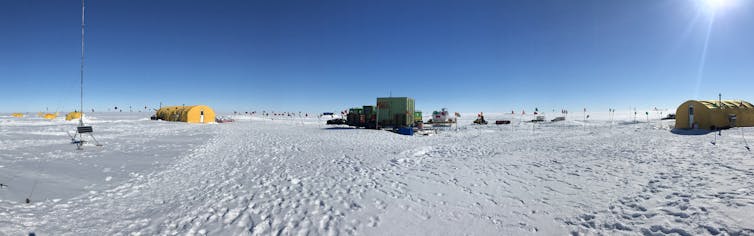
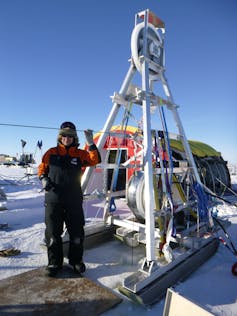
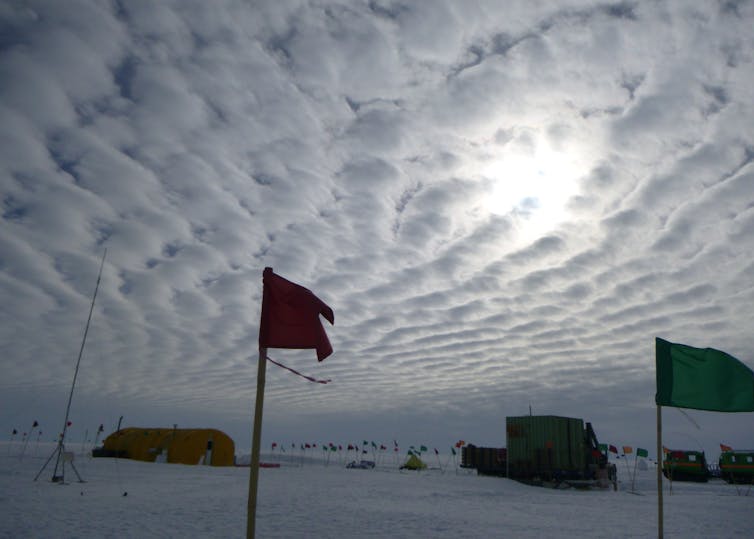


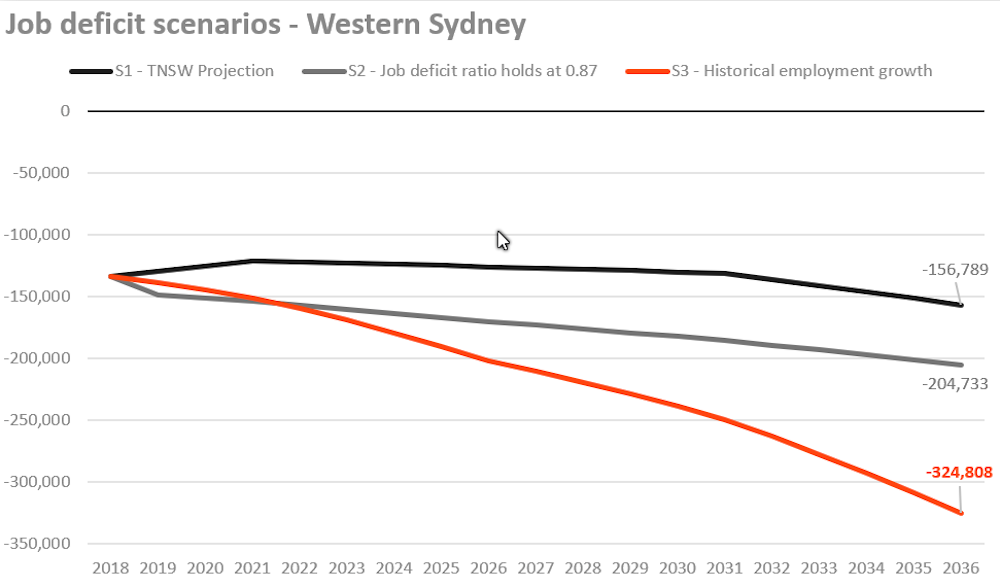
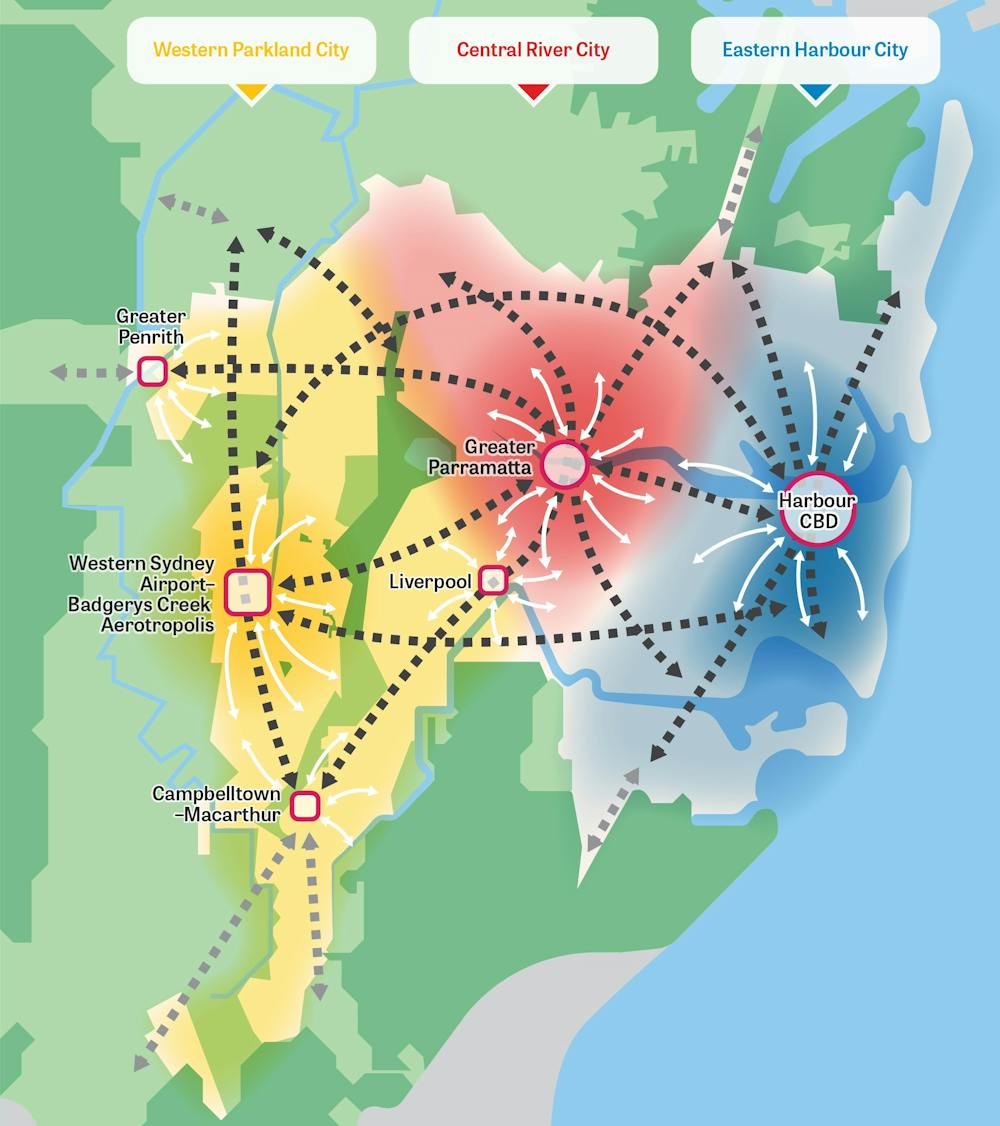
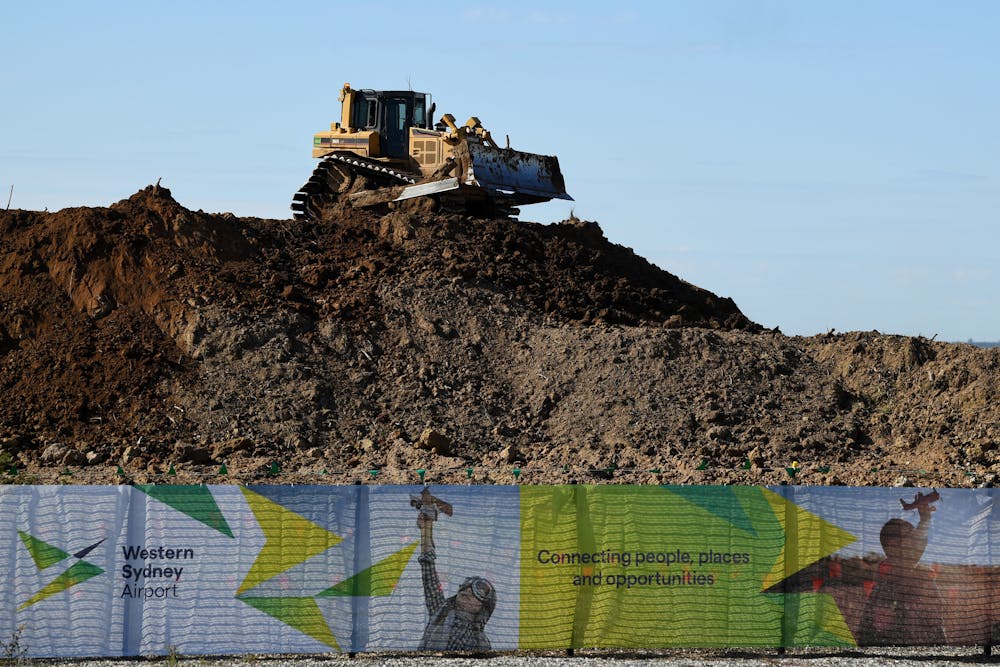







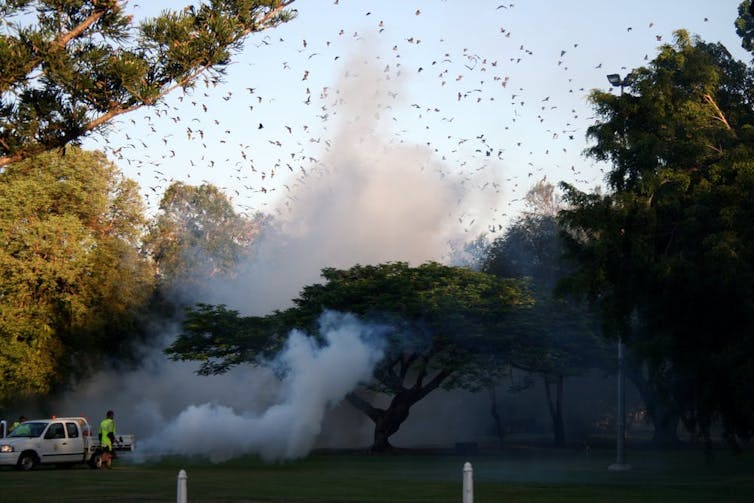
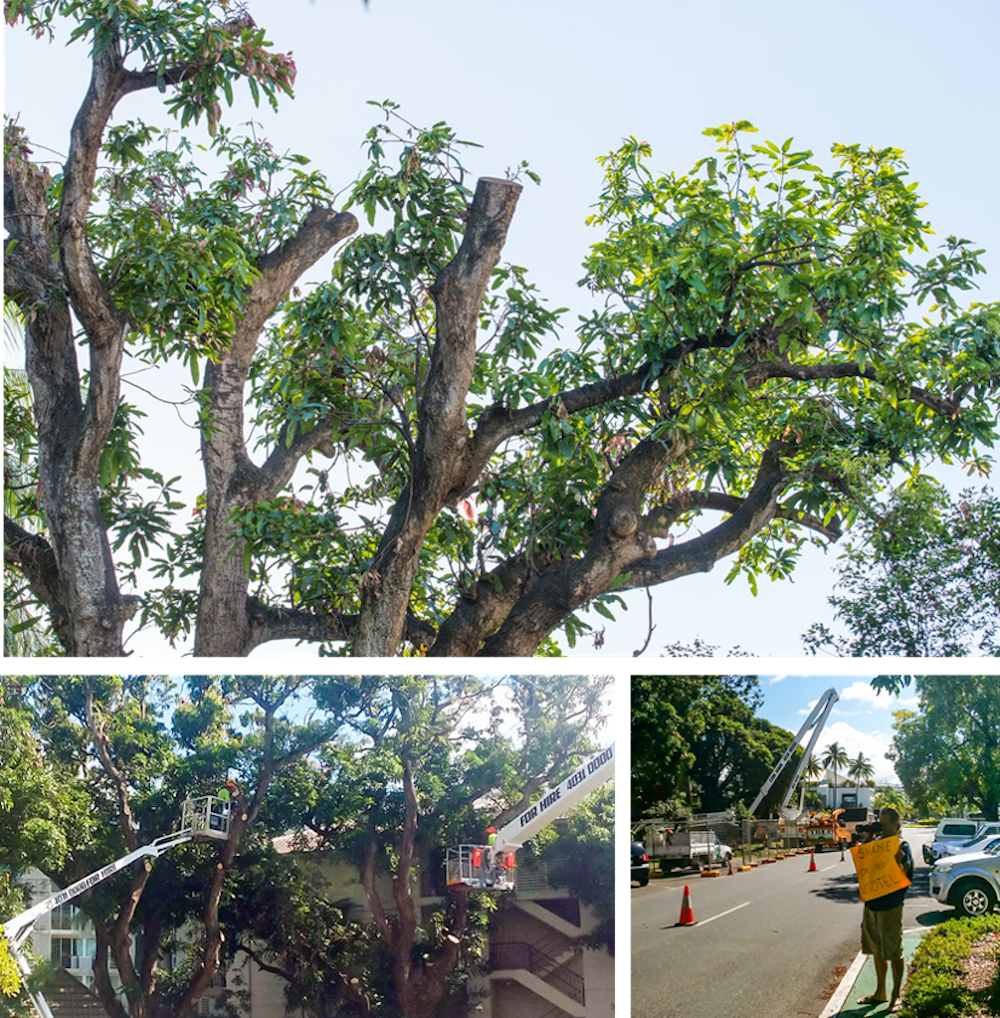
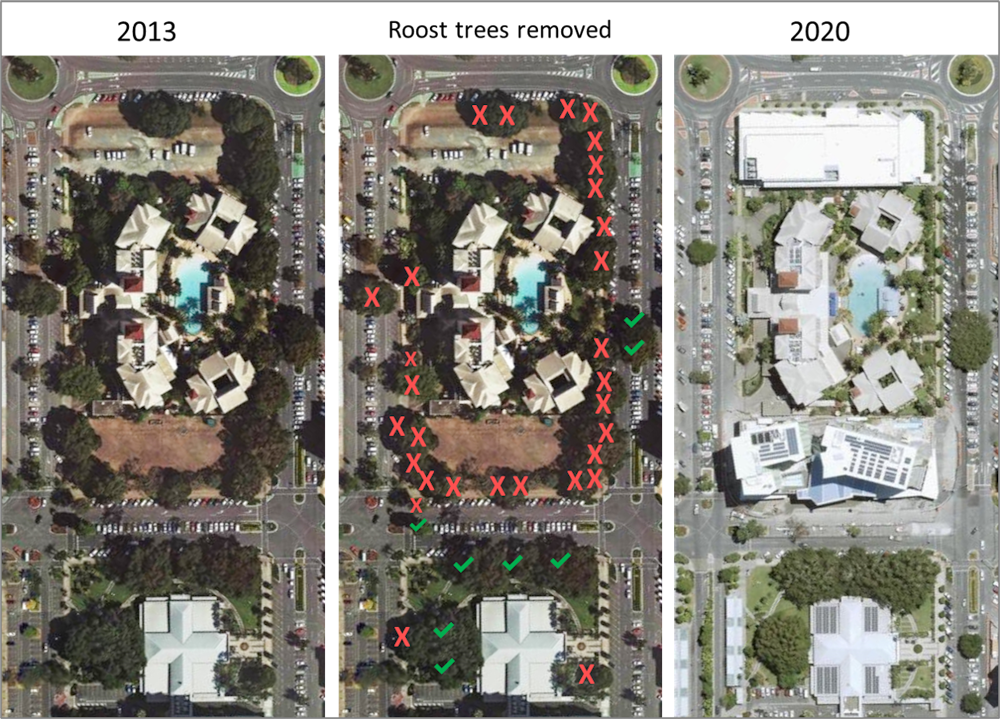









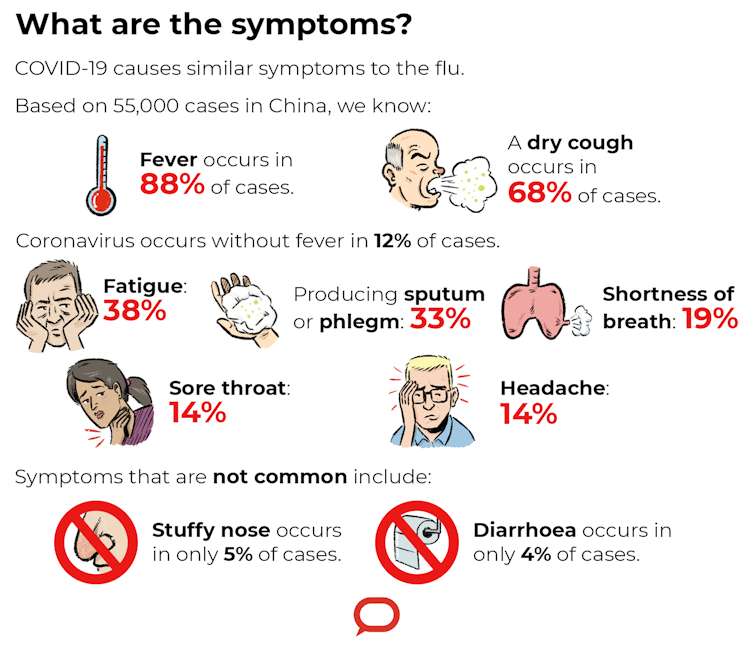

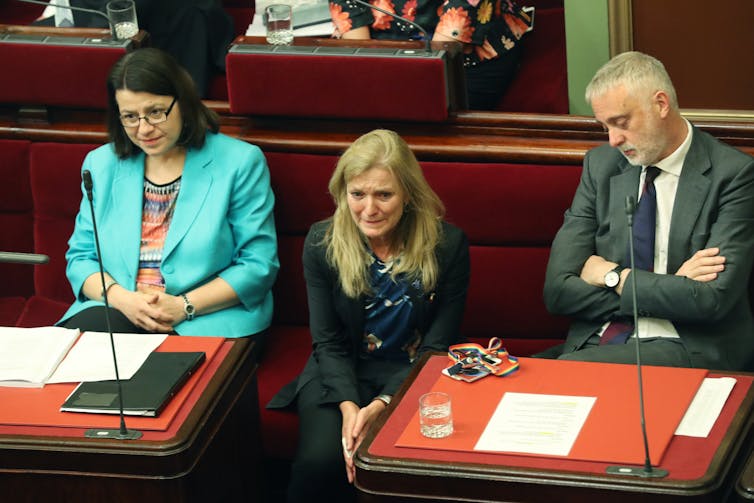
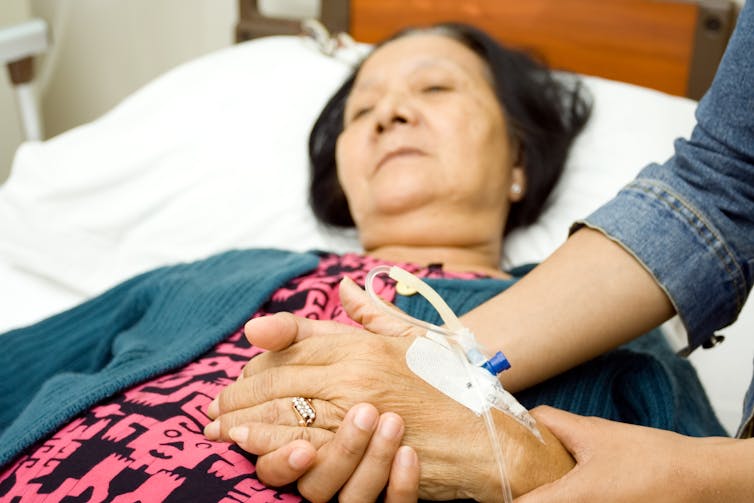
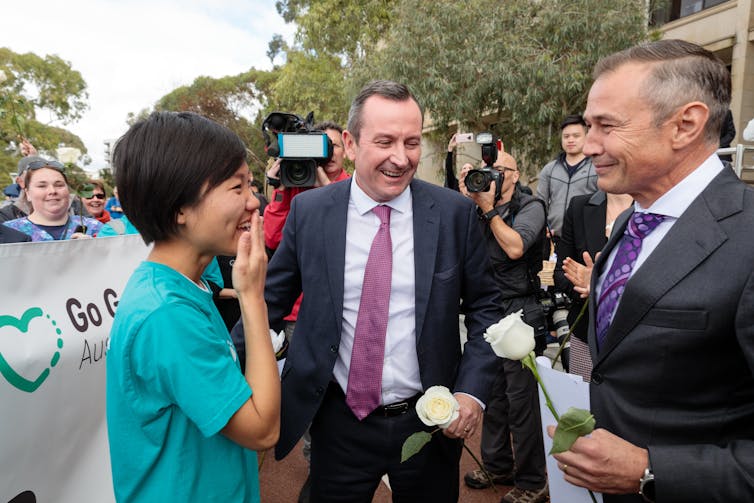



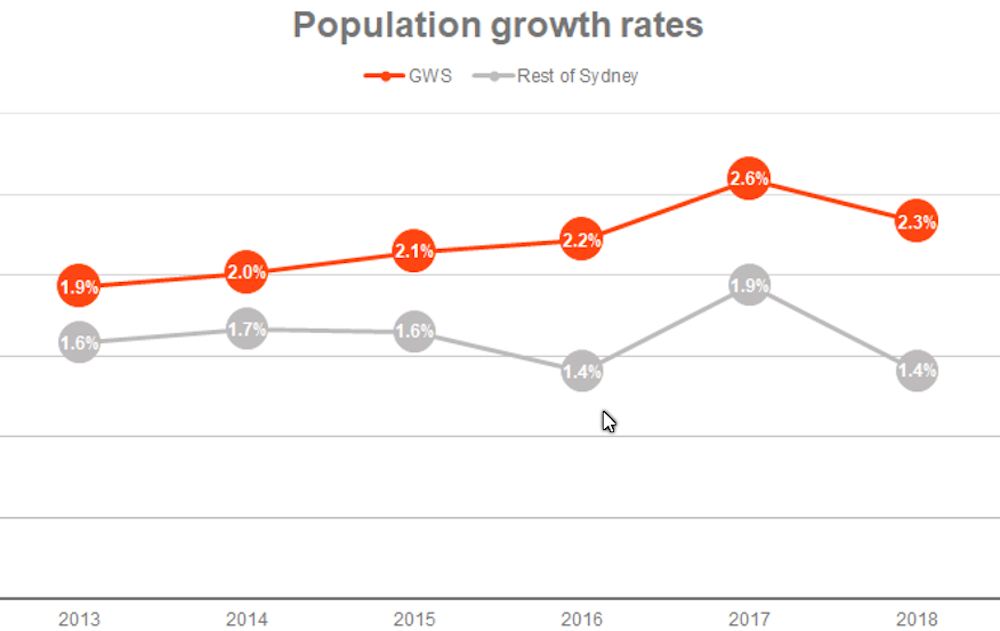

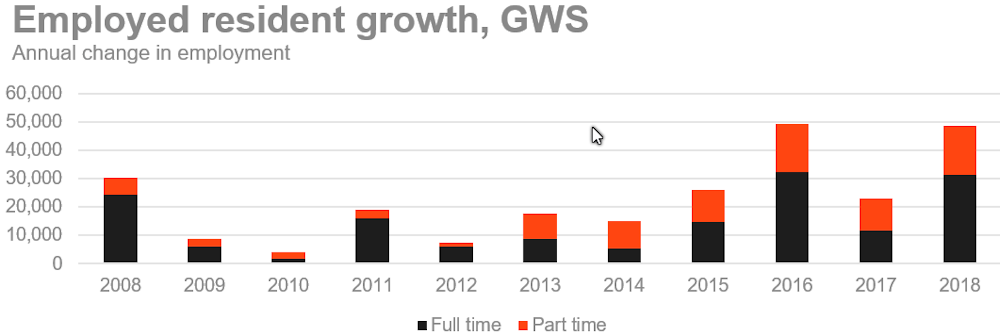
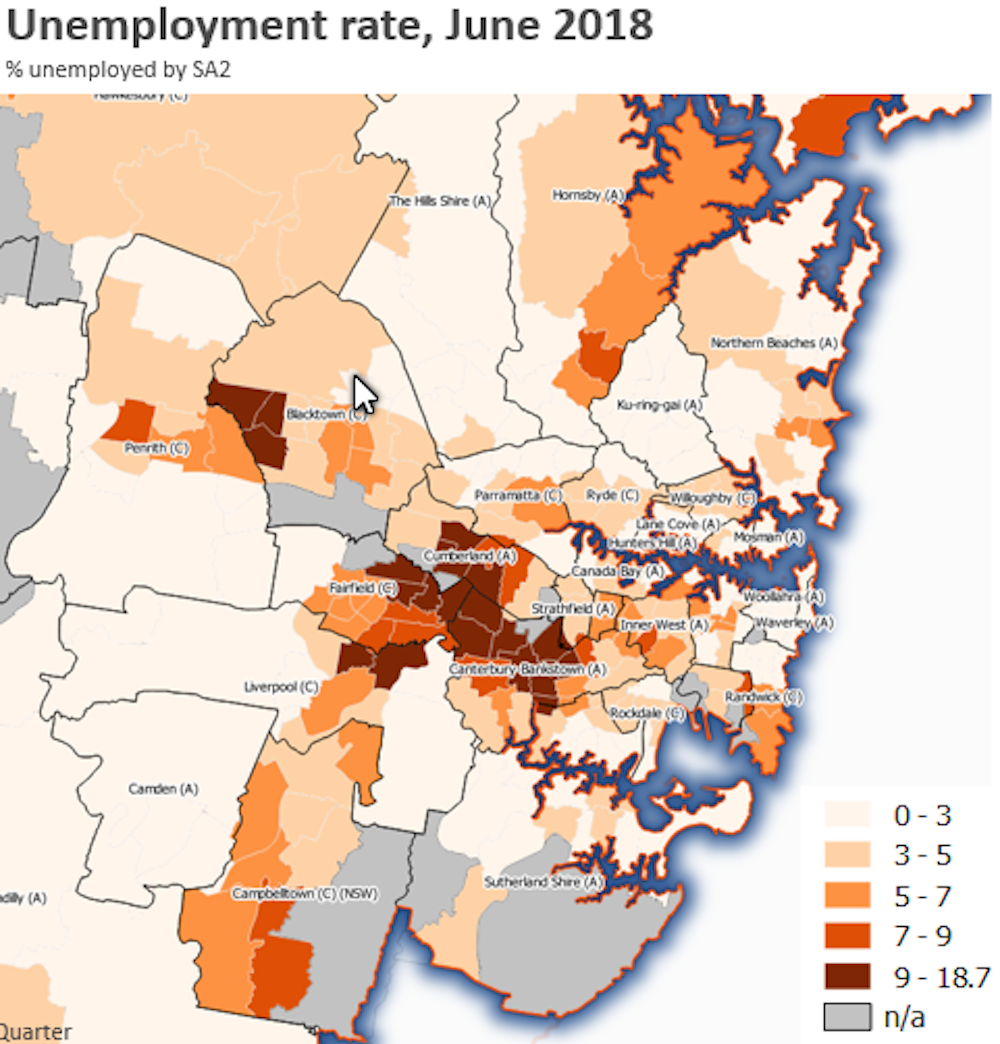
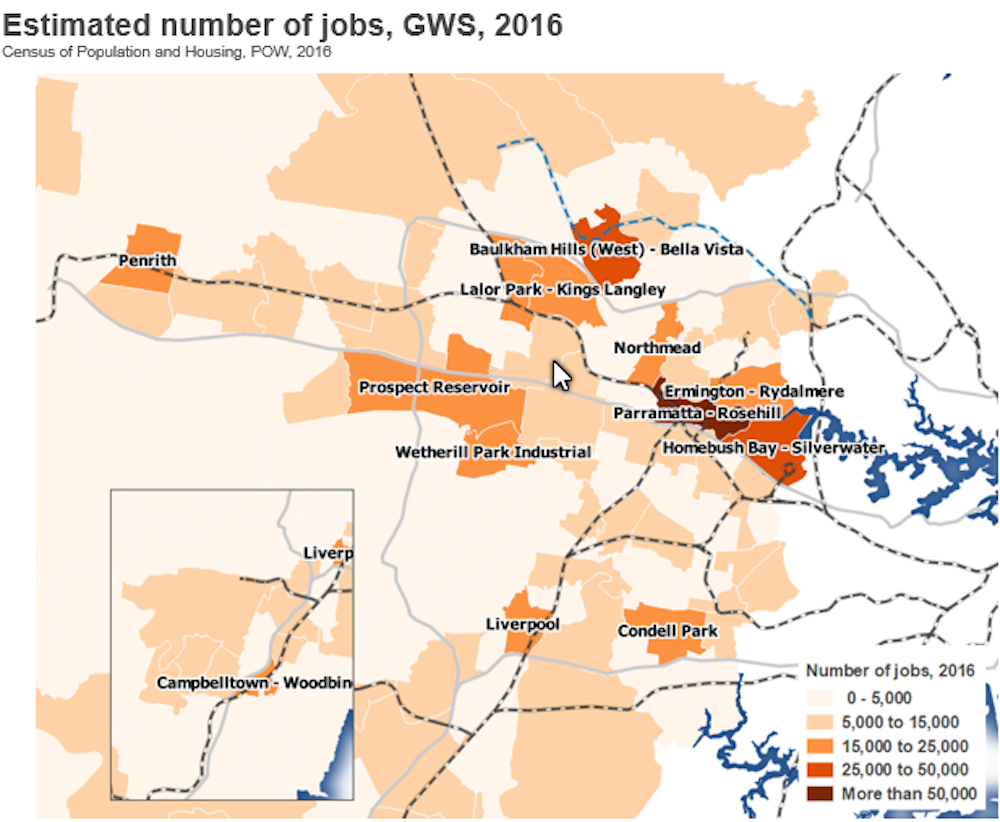






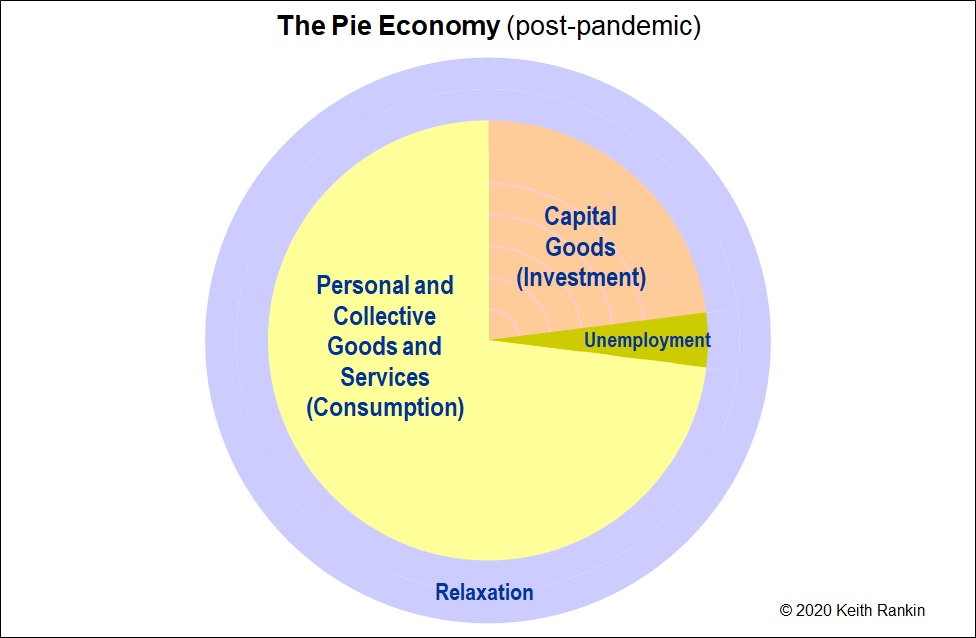

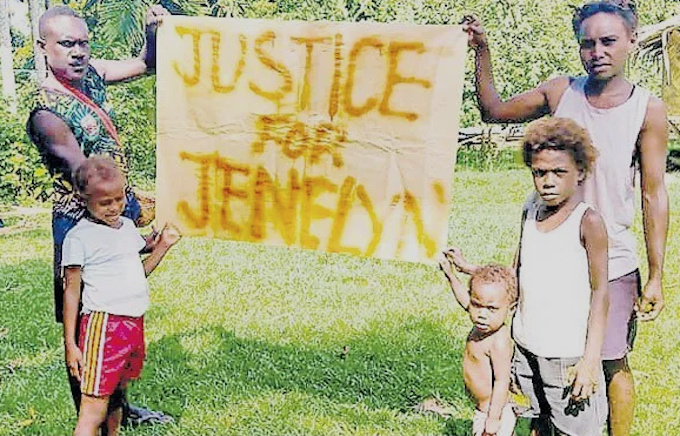
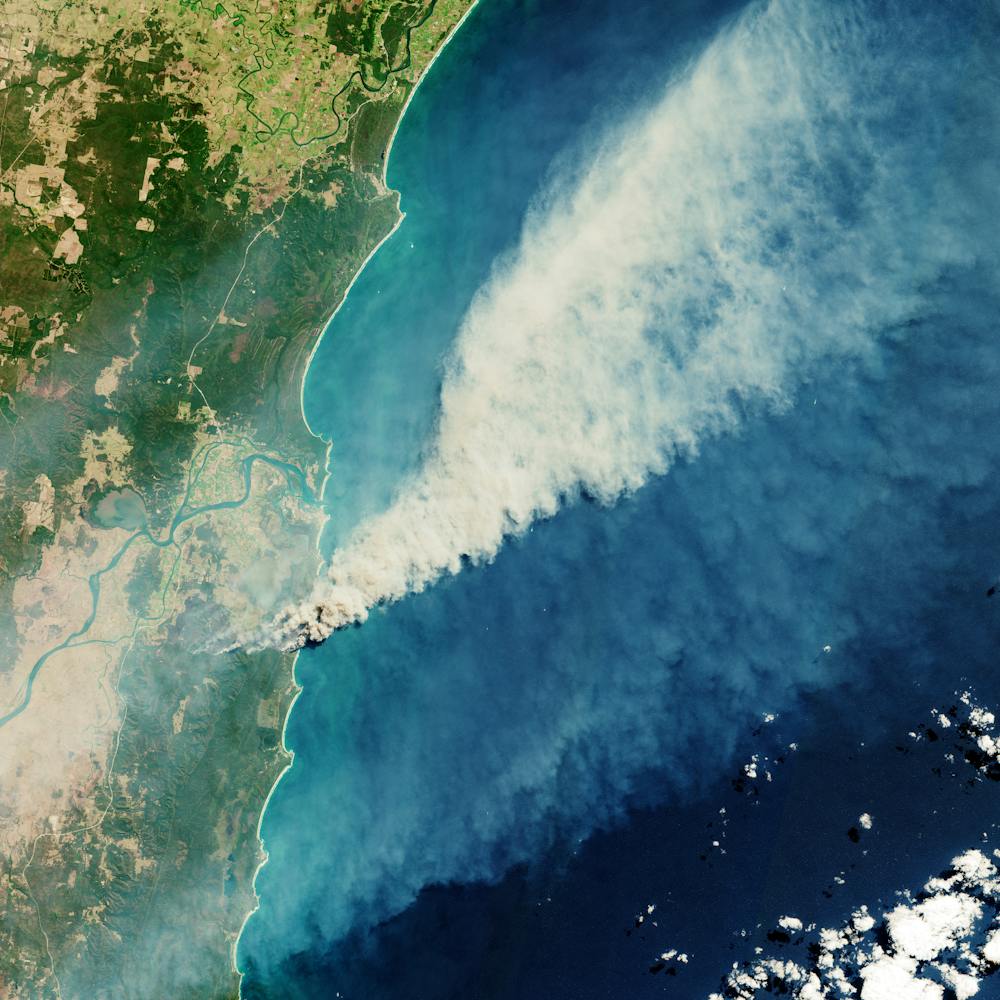
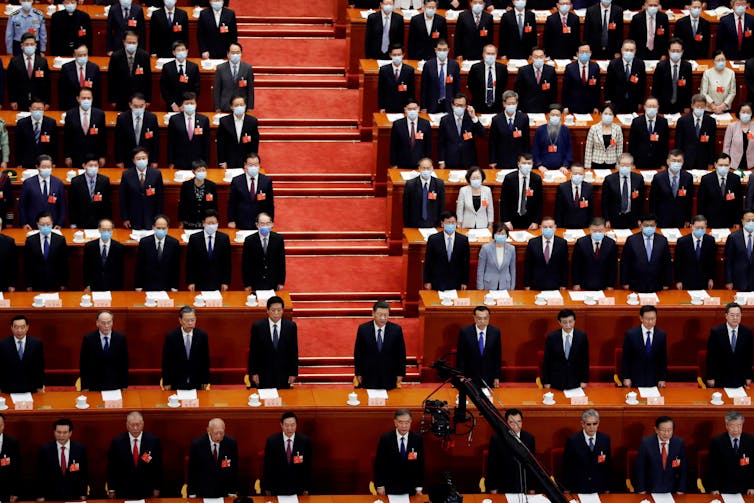


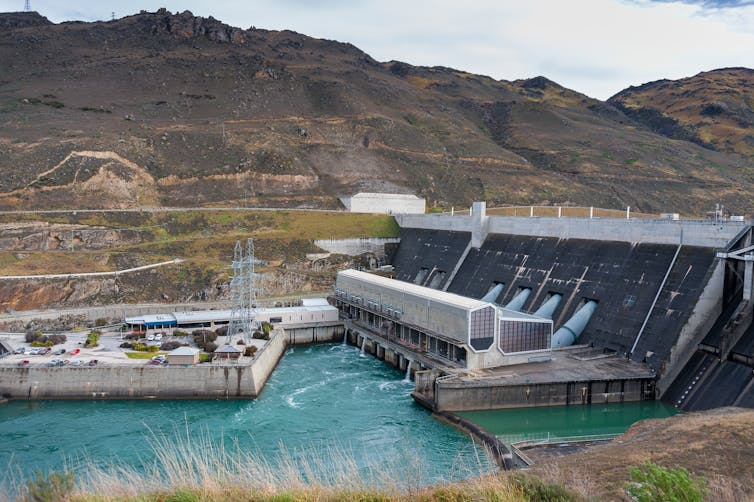
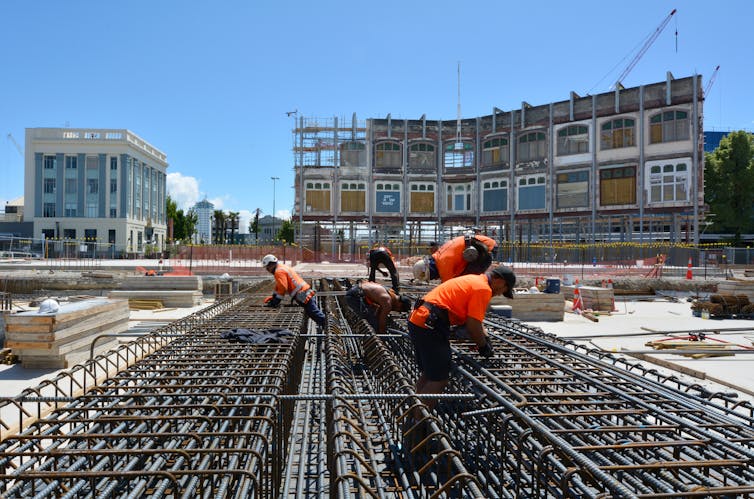

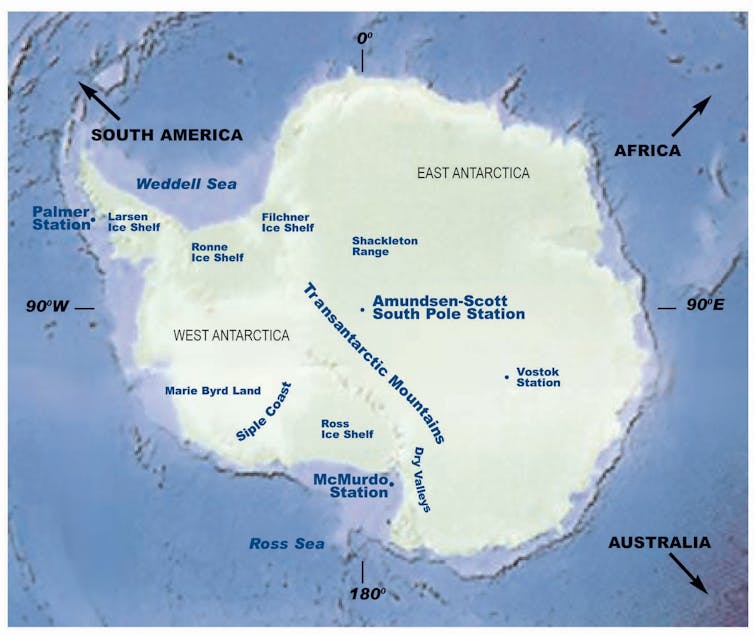

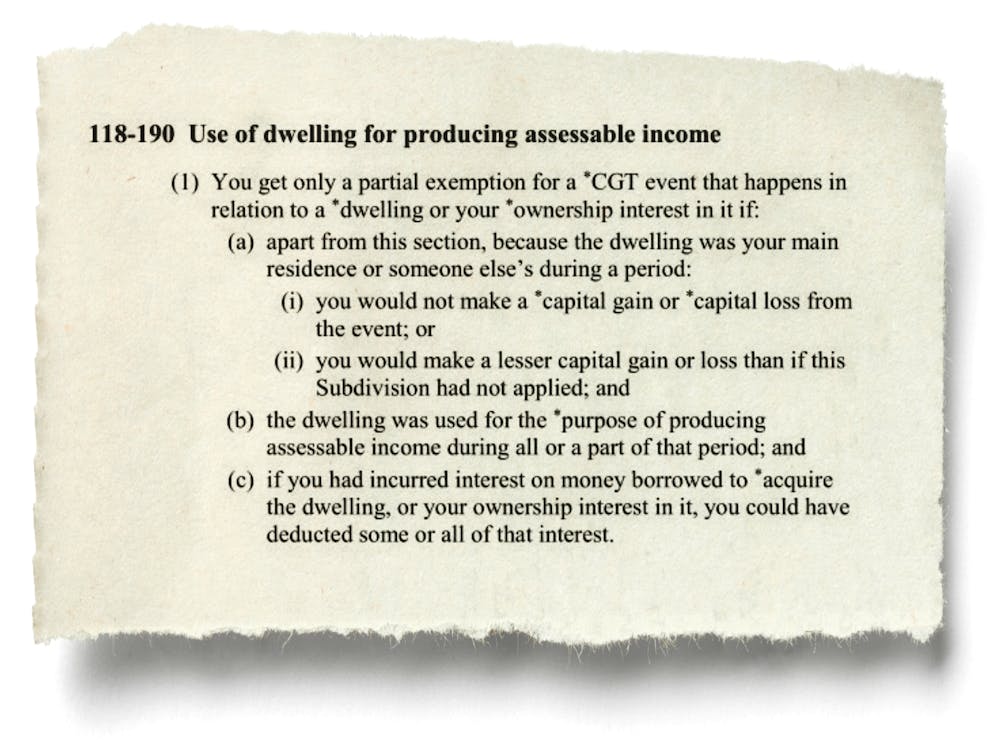



.jpg)