The leak of the confidential personal information of COVID-19 patients by Clutha-Southland MP Hamish Walker and influential party figure Michelle Boag has been highly embarrassing for the National Party.
In less than 24 hours their attack strategy has detonated in their own trenches and newly elected party leader Todd Muller has been scrambling to explain why.
New Zealand was only saved from an even more outrageous privacy breach because various media acted with proper restraint.
But while the political fates of Walker and Boag appear to be sealed, their legal exposure needs closer examination.
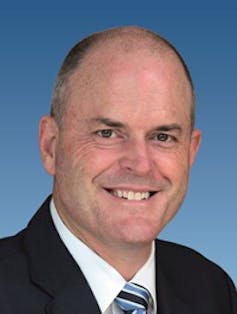
National Party leader Todd Muller: scrambling to explain.
They are both guilty by their own admission of a serious breach of privacy – but are they guilty of a breach of the law? Given the official inquiry being undertaken by Mike Heron QC, the legal implications of what has happened will undoubtedly come into sharper focus.
Privacy is about trust
The principles of personal privacy are very important. They allow citizens to control their own lives and they control the power others have over citizens.
A respect for privacy allows a system of trust to develop between citizens and governing authorities.
That trust is especially important when it comes to the confidentiality of medical records. While there is no shame in any illness, at a time of paranoia, abuse and intolerance, discretion and security are paramount.
This extends to public health management. People being tested for COVID-19 and receiving medical assistance must be assured it is private – even more so at a time when the power to gather and collect information is so strong.
The law is vague
Unfortunately, it’s not as clear in practice as it is in theory.
While privacy is important, it is not an unambiguous right of the type found in the New Zealand Bill of Rights. Rather, it sits between criminal law, civil law and other statutes such as the Privacy Act (currently being updated).
To help govern this area of information privacy there are generic rules and specific codes. The Health Information Privacy Code sets rules about the ways health information is collected, used, held and disclosed by health agencies.
These include ensuring information is not improperly disclosed. While there are some exceptions to the rule, the importance of information being used only for the purposes it was obtained, and not identifying individuals without their consent, is critical.
In theory, this all sounds good and should be sufficient for the Human Rights Tribunal to investigate a possible breach. The problem is that the Privacy Act – explicitly – does not apply to members of parliament in their official capacity.
What about whistle blowers?
One possible defence might be that an MP or other party was blowing the whistle on government incompetence.
The law in this area is designed to facilitate the investigation of serious wrongdoing. This covers alleged conduct by public officials that is grossly negligent or constitutes gross mismanagement.
Whether the Walker-Boag leak reaches such a standard is debatable. What is not debatable is the process set down in law for whistle blowers to follow. This includes first exhausting internal processes to resolve the problem. That would not appear to have happened in this case.
It’s also highly questionable whether it would have been necessary to reveal the private health information of citizens to prove the point.
However, MPs don’t require whistle-blowing protection when they are speaking in the House of Representatives as they have parliamentary privilege. Generally this means they can’t be brought before the courts for what they say, and the privacy of individual citizens can be pushed to one side.
In any event, Walker did not use parliament to release the information, so the point is moot.
The Privacy Commissioner needs more power
Where to from here? At the political level it will be for voters to use the ballot to express their opinion of what has just occurred.
But in terms of the law there are gaping holes that need to be fixed.
First, the right to privacy should be adopted unequivocally in law.
Second, greater powers should be given to the Privacy Commissioner to protect this right. When it is in the public interest, the commissioner should be able to instigate civil law actions for attempted or actual breaches of privacy.
Finally, members of parliament should only be allowed to override the privacy of fellow citizens when they are using parliamentary privilege.
At all other times they should be held accountable.
Gunnai-Kurnai and Gunditjmara woman Lidia Thorpe was recently elected by Greens party members to replace the former party leader, Richard Di Natale, as senator for Victoria.
Thorpe is the first Indigenous woman to represent the Greens in federal parliament. She brings a welcome diversity of experiences and perspectives. There is understandable interest in her views on Indigenous issues.
Since entering the Senate, Thorpe has renewed her public engagement with the reform proposals of the Uluru Statement from the Heart. The statement calls for the constitutional entrenchment and protection of
a First Nations Voice to Parliament to advise government on laws and policies that impact on Indigenous affairs
a Makarrata Commission to supervise processes of treaty-making and truth-telling.
Most First Nations representatives championing the Uluru Statement are focusing first on the co-design of the Voice to Parliament proposal with government. They see the Makarrata Commission and its goals as the next step in the sequence.
The Greens have endorsed the Uluru Statement, but Thorpe has a different take on what she believes should be priorities for Indigenous leaders. She argues a treaty should come first – not the Voice to Parliament.
However, a Voice to Parliament as a first step is a practical way forward, enabling First Nations to guide treaty-making processes. A change like this would be significant.
The path to Uluru
The Uluru Statement was the outcome of an extensive consultation process. It emerged from 13 regional dialogues and the subsequent First Nations National Constitutional Convention of 2017. This process was key to reaching a First Nations consensus embedded with elder and community authority.
Throughout that process, First Nations people affirmed the immediate need for practical and meaningful changes to Australia’s governance structure. The most immediate proposed change was for a representative First Nations political voice.
The Voice to Parliament would give First Nations people a say on the laws and policies that affect their affairs. This is essential given the history in Australia of forgetting, marginalising or silencing First Nations perspectives, which continues today.
The Uluru proposal would also entrench the Voice in the constitution to protect against the possibility of being extinguished. This was the fate of the Aboriginal and Torres Strait Islander Commission (ATSIC) – the only previous Indigenous representative agency with substantial program and policy responsibilities.
A majority of the 250 First Nations leaders at the convention agreed to the Uluru Statement. But that does not mean all Indigenous people agree with its proposals.
Thorpe was among a small group of delegates who walked out of the convention in protest. Other Indigenous people have also challenged the Voice proposal, preferring a treaty process.
Why follow the Uluru sequence of reform?
Yet, preserving the sequence proposed in the Uluru Statement respects the cultural authority of the reform process.
And diverging from a consensus outcome undermines the integrity of the consultative process that led to it. It can also devalue the standing of those elders who together designed the proposed reforms.
Following the Uluru sequence ensures the word “self” remains key to the concept of self-determination for Indigenous peoples.
To put this in global perspective, all people around the world are recognised by the UN as having the right to self-determination:
By virtue of that right they freely determine their political status and freely pursue their economic, social and cultural development.
Since 2009, Australia has affirmed its support for the UN Declaration on the Rights of Indigenous Peoples. This declaration does not create new human rights, but puts universal rights in the context of Indigenous peoples’ lives and aspirations.
Article 4, for instance, states
Indigenous peoples, in exercising their right to self-determination, have the right to autonomy or self-government in matters relating to their internal and local affairs, as well as ways and means for financing their autonomous functions.
And Article 5 says
Indigenous peoples have the right to maintain and strengthen their distinct political, legal, economic, social and cultural institutions, while retaining their right to participate fully, if they so choose, in the political, economic, social and cultural life of the State.
In the Australian context, First Nations people are not seeking to exercise self-determination by forming an independent nation state. They are, however, calling for respect for their never-ceded sovereignty.
This is a challenge for the Australian legal and political system, and for Australian society. It does not square neatly with the idea of a single political unit. It unsettles the assumption that a majoritarian democracy (in which a majority of voters decide the outcome of elections) can ensure equitable representation of citizens.
This takes us back to the idea of a Voice. The Voice to Parliament provides a platform for First Nations people to work in partnership with parliament. The Voice will challenge parliament to confront the hurdles preventing Indigenous people from exercising self-determination and other human rights.
One such hurdle – the over-policing and disproportionate incarceration of Indigenous people – is at the centre of the current protest movement.
We acknowledge Thorpe’s position that constitutional reform is a distraction from the main aim of achieving a reckoning through treaty.
We agree, as lawyers, that only treaty-making can fundamentally shift the foundations of a legal system built on dispossession and denial of First Nations sovereignty.
Where we diverge from Thorpe is in our view that the Voice to Parliament can be a pragmatic first step in the deeper reform process Australia needs.
A political voice and standing – if constitutionally entrenched – can bring many more First Nations voices into the political arena and progress the unsettling of the Australian legal system.
In May this year, we were convening a dream conference: 140 like-minded academics on a Greek island for three-and-a-half days to work on a topic we cared about – organising sustainably.
We recognised the contradiction of travelling to Crete to discuss sustainable organising. But it was a long tradition of the Organization Studies Summer Workshop — an annual workshop of organisation scholars — to be there. This year’s workshop focused on how businesses and other organisations could be reconfigured to operate in more ecologically-friendly and socially just ways.
So, we tried instead to make the conference itself sustainable by using a sustainable venue, serving only vegetarian meals, avoiding plastics and air conditioning, and encouraging carbon offsetting.
Mykonos, Greece, where the 14th Organization Studies Workshop was held.Facebook
Then the universe threw us a curveball in the form of COVID-19, which made us rethink sustainable organising. Despite a complete lack of experience, and no funding, we decided to move online. More than 100 participants, across 14 time zones, decided to experiment with us.
We grappled with a few decisions. How to deal with time zones? How to deal with tech issues? How to ensure the conference was not only intellectually fulfilling, but also contributed to the social interactions that deepened discussions, fostered collaborations, and that had always made the summer workshop so special?
And how to organise this in only a few weeks?
So here’s what we did.
Group discussions and Zoom rooms
We decided to shrink the conference into two-and-a-half days, spreading most sessions across the hours that worked for most participants’ time zones. But we also ensured there were at least some sessions for those outside the main time corridor.
We asked authors to post a 10-15 minute video of their presentation on YouTube a week before the conference, which people could watch in their own time.
Then we hosted 50-minute Zoom sessions of around 18-25 participants. Each presented comments on three papers (four to five minutes per paper, without using slides to avoid tech issues). The papers’ authors briefly responded, which led to an open discussion in the group.
In the first few sessions, session chairs often had to prompt discussions. But the interactions became quite lively.
It’s not a Greek island, but there are many benefits to virtual conferencing.Shutterstock
We left the rooms open after the 50 minutes and the informal conversations that make workshops so rich often continued.
We also included two keynote sessions. One was a plenary session for all (100+) conference participants, which included breakout discussions. And there were three social sessions, in which participants were randomly assigned to breakout rooms so they could enjoy conversations in small groups (two to five people), or join larger group conversations.
Digital benefits
While we missed the post-work drinks by the pool in Greece, we were pleasantly surprised to find the virtual conference had a number of benefits.
No travel not only reduced environmental impacts, but also the work-life impact, enabling some people to participate who otherwise may not have been able to, because of the time required.
Some participants told us that, for budgetary or family reasons, they were only able to attend the conference because it was virtual.
While conference fees will be needed in the future to offset organisational costs, virtual conferences will still be far less expensive than face-to-face, enabling broader participation.
The random assignment of people to breakout rooms for social hours ensured conversations among people who may not otherwise have interacted. It increased camaraderie during the virtual conference, leading to stimulating discussions.
The chat function during talks allowed participants to share resources and insights sparked by the talks immediately, which then could trigger additional insights among others. For example, the idea to start a Utopia Platform to share blogs, teaching and research resources was hatched on the chat during a keynote. We have since launched this platform.
The feedback from participants was extremely positive, though expectations were probably low.
We imagine a greater variety of conferencing formats going forward, including more regular but shorter virtual meetings, alternate years of physical meetings and mixed models with some virtual sessions and some remote participants.
Our COVID-19 induced experience showed us virtual conferencing is both practical and desirable as a means of organising sustainably and ensuring more democratic participation.
Source: The Conversation (Au and NZ) – By Marina Yue Zhang, Associate Professor of Innovation and Entrepreneurship, Swinburne University of Technology
Only 40% of students in China who previously intended to study overseas still plan to, while just under 50% of those who had studied overseas plan to return to their study after the borders reopen.
These are results from our unpublished survey of 1,012 students we conducted in China between June 5 and 15. We asked them whether they would continue with their plan to study abroad post COVID-19.
These findings are not surprising. Due to growing tensions between China and the West – even before COVID-19 – middle-class parents in China had become increasingly concerned about the safety of, and possible discrimination against, their children abroad, including in the US and Australia.
The pandemic seems to have accelerated this trend.
What students say about studying in Australia
Of the 1,012 students we surveyed, 404 had registered to study abroad in the next three years (in the US, UK, Australia, Canada, Japan, New Zealand and Singapore) and 608 had been studying overseas (including in Australia, US, UK, Canada, New Zealand and Japan) before COVID-19 .
In the questionnaire, we presented interviewees with considerations and asked them to nominate which ones would influence their decision about whether to study in Australia after COVID-19, as well as in other countries.
The first group (group A) includes 304 students who had studied in Australia but who were not able to return due to travel restrictions.
Of these, 50% were undergraduates, 42% graduates, 5% doctoral students, and 3% vocational education or high school students.
The second group (group B) includes students who had never studied abroad before but had registered their intention to in the next three years, including in Australia, before COVID-19.
The second group also answered Australia-specific questions.
Not many students in either group considered issues such as more expensive air travel, less freedom in China and online lectures as critical factors influencing their decision to study in Australia.
But the two groups reacted to some factors quite differently. The students who had studied in Australia before considered the following factors as more critical to their decision:
returnees with Australian degrees are not more competitive in China’s job market compared to graduates from top-tier universities in China
life is more convenient, safe and easier at home and I don’t want to go abroad to endure the hardship as a foreign student
improved political stability and economic prospects in China
less of a chance of landing a good job with an Australian degree in China
no need to go abroad if lectures are delivered online.
The group of students who hadn’t yet studied in Australia but planned to, considered the following factors as critical:
media reported cases of Chinese being “discriminated against” or “abused” in Australia
deterioration in Sino-Australia relations
not many outstanding returnees from Australia are visible in the media to represent the success of Australian education
Australian universities lowered the entry standard for foreign students due to COVID-19
Australian degrees are perceived to be less valuable compared to degrees from other English-speaking countries, especially the US and the UK, by HR personnel in China.
What the students said
Not surprisingly, both groups considered the Chinese government’s warnings against visiting, or studying in, Australia important. A decision to study and live abroad is often made by the whole family in China. Official voices weigh significantly in such decisions.
A student who had done some of her master degree in a Melbourne university said:
After the Chinese New Year, Australian borders were closed to Chinese students due to COVID-19. Direct travel was not allowed. So I travelled to Thailand and spent 14 days in a small hotel in Bangkok before I landed in Melbourne. I had to be self-quarantined for 14 days in my rented room.
Then I found all lectures were moved online and the situation of COVID-19 became serious in Melbourne. The PM urged international students to go home. My parents were so worried. They paid for an over-priced air ticket and a quarantine-hotel in Shanghai for me for 14 days before I could go back to my hometown.
When the [Chinese] government announced the travel and study warnings, I couldn’t convince my parents that things aren’t that bad in Australia. They listened to the government and believed the ‘official voices’ rather than their own daughter.
There have been cases (though isolated ones) of Asians or Chinese people being bullied in Australia due to COVID-19. Unfortunately, social media in China often distorts such cases and amplifies the (mis)perceptions. And the tensions between China and Australia have enhanced these negative perceptions.
Sending their children abroad was once a privilege for elites with intellectual, economic or political power in China. But this is now quite common among middle-class Chinese families.
Chinese families spend a large amount of money on their children’s education. Better opportunities (either in the host country or on returning home) after study abroad is an underlining reason Chinese families invest in their children.
Australia has attracted many Chinese students in recent decades. But if Chinese students with Australian degrees are less appreciated or less competitive compared to those who study in other countries or in local universities, families will look for other options.
A Chinese student who had been studying at a Sydney university told us:
We are the clients and the degrees are a commodity; we pay for our degrees. What if the commodity loses its value? The clients will surely walk away.
COVID-19 has had a negative impact on the number of Chinese students likely to study in Australia. But the downward trend started way before the pandemic.
Australian universities need to adjust their strategies for a future that will not only deliver value for Chinese students, but also strengthen a positive perception about this value.
The opposition National Party leader says he has written to the party’s board asking them to remove MP Hamish Walker from the party after it was revealed he leaked private health information to New Zealand media.
It was revealed yesterday that former National Party president Michelle Boag was responsible for leaking confidential covid-19 patients details to Hamish Walker, who then passed that information on to media.
Prior to that revelation, National Party leader Todd Muller described the leak as “loose, shabby and a reminder these guys can’t manage important things well”.
“The problem is when you’ve allowed a culture of sloppiness and clumsiness to take over and become pervasive, you know, really history suggests you need a new broom to be able to sort and set the tone from the top,” he said just a few days ago.
Minister of Health and State Services Chris Hipkins said he was disappointed about the leak and said it had “a ring of dirty politics about it”, but he did not want to prejudice the investigation.
Walker, who admitted the leak late yesterday afternoon, has already been stripped of his portfolios.
Muller told RNZ Morning Report there needed to be consequences and he has written to the party’s board asking it to remove Walker from the party.
“This behaviour is completely unacceptable,” Muller said.
Awaiting legal advice “Muller said he became aware that Walker was responsible for the leak on Monday and was awaiting legal advice before passing that information on.
He said he had not spoken to Boag about the issue and he was not sure what the arrangement between her and Walker was.
“It doesn’t support the values I bring to the role, and it doesn’t support the values of the National Party I know.”
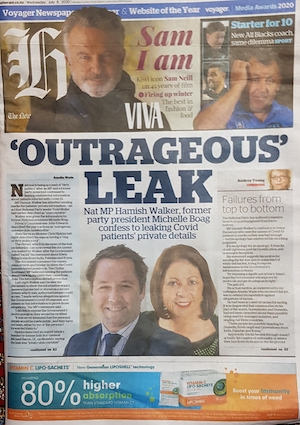
Today’s New Zealand Herald … opposition National Party leader Todd Muller “hugely angry” with own party’s involvement in the covid privacy breach. Image: PMC screenshot
“I am personally, hugely angry. This is not the politics who reflects who I am as a person. It does not reflect the National Party.
The board will meet to discuss the matter today.
“Ultimately it’s a board decision, but he’s shown some serious lapses of judgement. It’s totally inappropriate.”
Privacy Commissioner John Edwards agreed it was an appalling lack of judgement.
‘Using unwell individuals as pawns’ “It’s really difficult to justify using unwell individuals as pawns in that kind of game.”
Edwards said MPs were exempt from privacy legislation so it falls to the National Party leader and board to administer discipline.
Boag, however, may have breached the Privacy Act, he said.
“I will be thinking about what, if any, response we make to that… those decisions are yet to be made.”
Edwards said he was a little surprised the Auckland Helicopter Trust had access to the details.
“It’s not immediately obvious to me as to why they would need information about people under quarantine.
“I’m very interested in understanding the breadth of that distribution of the information.”
Up to National to deal with Quarantine Minister Megan Woods told Morning Report the matter was one for the National Party to deal with.
“We’ve been really clear, leaking of that information is really disappointing, these are New Zealanders who had returned home to be safe, they have a right to assume their data won’t be leaked to the media.”
Emergency services across the board are supplied the names of people who have covid-19, she said.
“That is because if emergency services need to come into contact with someone who has tested covid positive for whatever reason, be that an airlift or whatever, that they have that information and make sure their staff is protected.”
This article is republished by the Pacific Media Centre under a partnership agreement with RNZ.
Australia’s Victorian state government told returned travellers to quarantine for two weeks. Some broke the rules.
It then paid for them to stay in hotels with security guards. Some of the guards couldn’t keep their dicks in their pants. Some of the returned travellers broke the rules.
It then eased some restrictions, and asked people to maintain social distancing and not hold large gatherings. Some broke the rules.
While these rules were being broken a competent, terrifying enemy we thought we’d held back re-emerged.
Energised, it started to spread through a city whose people vastly underestimated its power.
The state government then gave suburbs slated for lockdowns a day’s notice.
Of course, some broke the rules. Residents moved to friends’ or relatives’ homes or used their loved ones’ homes to change their addresses on the Vicroads website.
The enemy snaked its way into inner suburbs The enemy was reinforced – it snaked its way to Ascot Vale, Maribyrnong, Travancore … it encroached onto the inner city suburbs of North Melbourne and Flemington where 3000 underprivileged people live in high rise towers in close quarters, many with underlying health conditions.
(The inadequacy of some of the public housing in Australia is an issue which, to our shame, should have been dealt with before the powder keg of covid-19 blew up our lives.)
These tower blocks are vertical “cruise ships” – their inhabitants are sitting ducks. Some of the towers are designated for elderly residents. If not stopped, the enemy will soon discover that this is like shooting fish in a barrel – easy, easy kills.
Premier Daniel Andrews can’t afford to take any more chances. If a day, or eight hours, or five hours, or one hour is given, some will break the rules.
Rush to the shops while unknowingly helping the enemy spread. Rush to change their address online. Rush to move elsewhere, helping the enemy spread its vicious wings.
During a pandemic, the rights of the individual take a back seat for the greater good. If they don’t, you get situations where the enemy rages uncontrolled, infecting at will, and handing out painful deaths, and leaving survivors with after effects whose extent we still don’t fully know about.
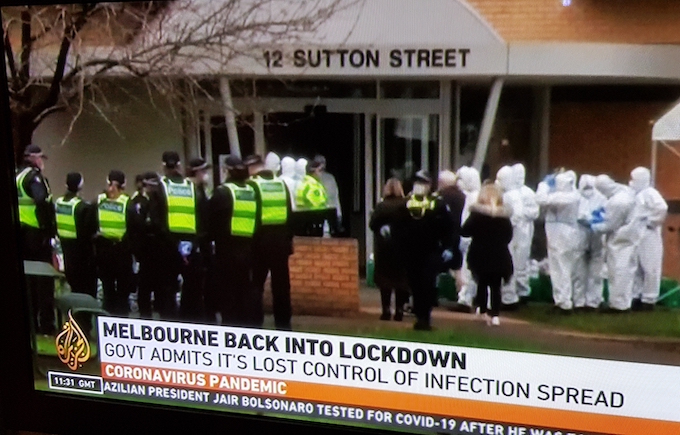
During a pandemic, the rights of the individual take a back seat for the greater good. Image: Al Jazeera screenshot/PMC
High density public housing In New York city, high density public housing bore the brunt of the enemy’s attacks.
In Singapore the second wave started in the packed homes of migrant workers, which also had to be locked down. Returned travellers are video-called more than once a day and visited more than once a day by immigration cops; step outside the apartment and it’s a prison sentence. (This is why Singapore can have nice things.)
When I look at this tower filled with elderly people metres from where I live, I think “there, but for the grace of Allah, go I” and I feel utter terror for them.
If the enemy is not contained, they’ll be pulling bodies out of here.
And across the state people will be baying for blood, asking why the government didn’t do something.
Dr Nasya Bahfen is a journalist and media academic living in Melbourne, Victoria. This is her personal view expressed on social media. The commentary has been republished by the Pacific Media Centre with permission.
Source: The Conversation (Au and NZ) – By Bjorn Sturmberg, Research Leader, Battery Storage & Grid Integration Program, Australian National University
Electric vehicles can help keep the air clean in our cities – as we’ve seen recently with the reduction of traffic through COVID-19 lockdowns – but they face two obstacles.
In the short term they’re still expensive. In the long term charging millions of vehicles from the electricity grid presents challenges.
I’m part of a new project, launched today, that tackles both of these obstacles head-on, and it could mean owners earn more money than they’re likely to pay for charging their electric vehicles.
Paid for battery power
The Realising Electric Vehicle-to-grid Services project (REVS) will see owners paid to plug their electric vehicles into the national electricity grid.
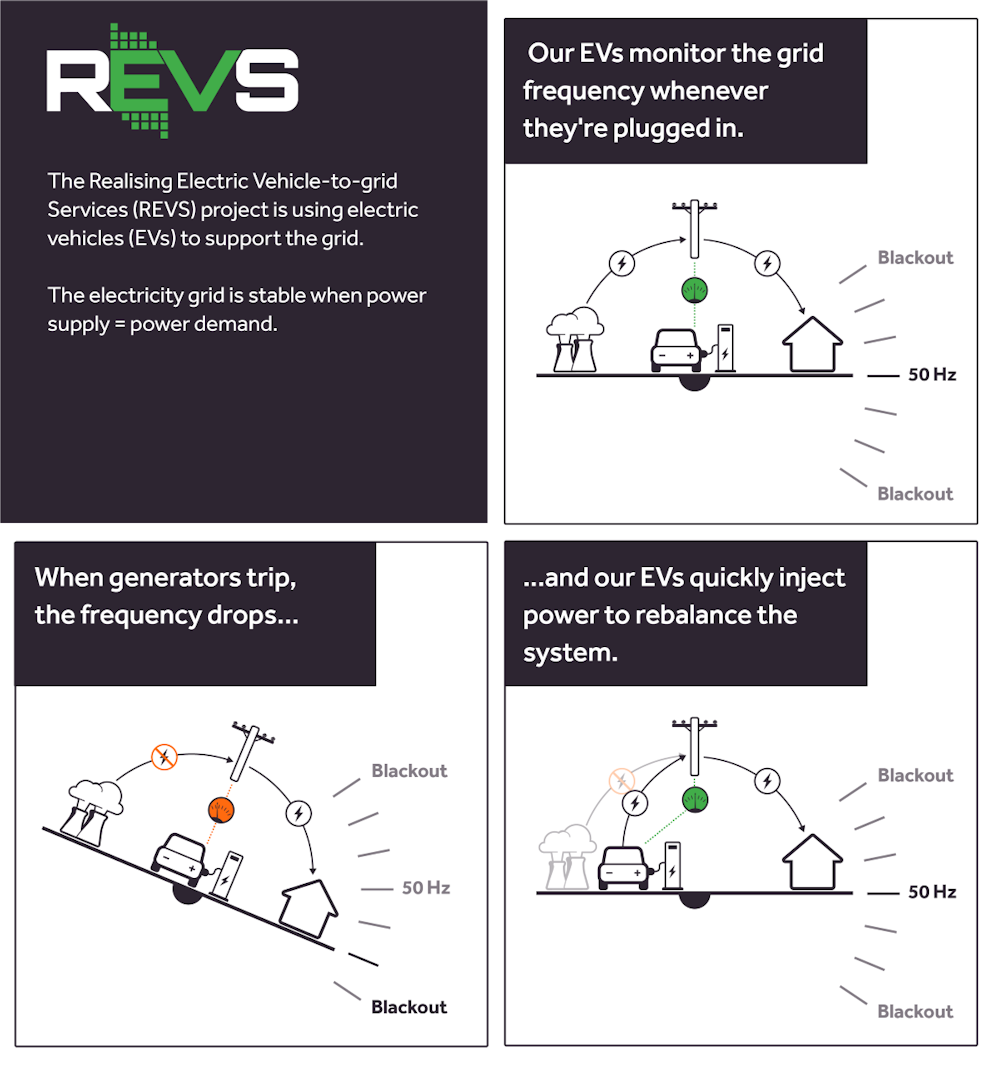
In exchange, the vehicles will allow the national grid operator to draw upon their batteries in the rare moments that the grid is on the brink of a blackout.
The REVS trial project uses vehicles from the ACT government fleet. This is a big step towards making these services available to all Australians because fleets make up more than half of all new car sales in Australia.
To understand the importance of this work we need to imagine electrifying all of Australia’s 19 million vehicles.
Every electric car has the potential to be a power source for the national grid.Shutterstock/mastersky
The need for charge
If all Australia’s vehicles were electric they would use more than 60 terrawatt hours of electricity a year. That’s around 35% of Australia’s annual electricity consumption.
Still more imposing is the amount of power these vehicles could draw if they all charged at once.
Let’s say, for argument’s sake, there were 1 million, 7.7 kilowatt home chargers in Australia. That’s roughly one in ten properties. If all these cars charged at once, they would add 25% to the national load.
The first step in meeting these challenges is to utilise the flexibility of electric vehicle charging.
In reality, we won’t all charge our electric vehicles at the same time, just like we don’t all go to fill up at the petrol station at the same time. Even if we all plug in our electric vehicles overnight, our charging stations will manage their charging schedules for us.
And electricity is widely available, unlike petrol. This means electric vehicles can be topped up frequently instead of requiring a big charge from empty to full.
While smart charging aims to reduce the stress on the grid, we can go further and use electric vehicles to support the grid in times of need.
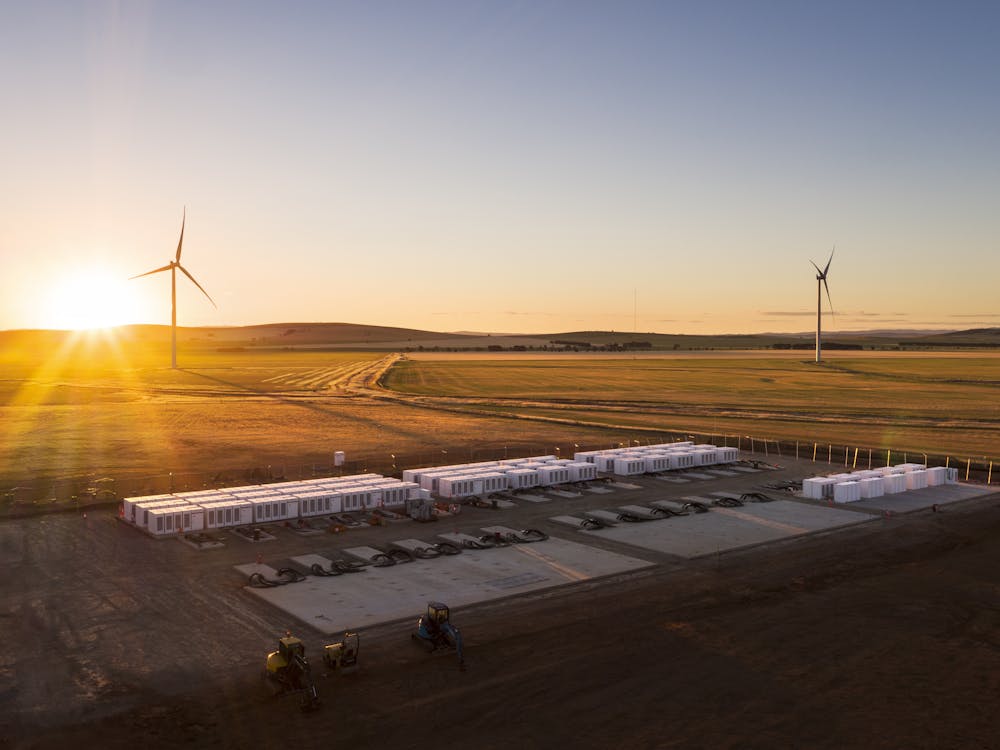
The opportunities for this are tremendous. The battery capacity of 19 million vehicles would likely exceed 1,800 gigawatt hours. That’s equivalent to more than 10,000 “Tesla big batteries”, such as those used to help power South Australia, or five of the new Snowy 2.0 hydro-electric projects.
South Australia’s Hornsdale Power Reserve uses Tesla’s big batteries.AAP/Hornsdale Power Reserve
The key to unlocking this opportunity is “vehicle-to-grid” technology, which enables electric vehicles not only to charge but also to discharge power back into the grid.
Vehicle-to-grid technology has been in development for decades. It’s now available commercially in the Nissan LEAF vehicle and Wallbox Quasar chargers.
The Nissan LEAF can plug in to power the grid.
The technology was demonstrated in overseas trials but questions remain about customer uptake.
How attractive will vehicle-to-grid services be for customers? What business models will be viable for manufacturers and service providers? Our REVS project is addressing these questions.
We’re deploying 50 vehicle-to-grid-enabled electric vehicles into the ACT government fleet, and one into the fleet of electricity retailer ActewAGL.
The national electricity market will pay these vehicle owners whenever the vehicles are plugged in.
In exchange, the vehicles will automatically inject power into the grid (or absorb it) when unexpected events push the grid towards a blackout.
REVS working to rebalance the grid after a generator trips.Bjorn Sturmberg, Author provided
This should be attractive to owners because the vehicles will only be called upon to provide power during contingencies that occur a few dozen times a year.
These contingencies are typically corrected within 15 minutes, so the effect on an electric vehicle’s battery capacity will be less than 5%. That means a vehicle won’t be left drained, without any power.
REVS is putting this scenario to the test, tracking the costs and benefits for every customer and service provider.
The REVS journey is just beginning but its destination is clear: unleashing vehicle-to-grid to drive accelerated electric vehicle uptake across Australia.
In an age of isolation, video sharing platform TikTok has emerged as a bonding force for many. But recent headlines allege the service, owned by Beijing-based company ByteDance, is feeding users’ data to the Chinese Communist Party.
Earlier this week, the Herald Sun reported that an unnamed federal MP was pushing for the app to be banned.
Following suit, Liberal senator Jim Molan said TikTok was being “used and abused” by the Chinese government, while Labor senator Jenny McAllister called on TikTok’s representatives to face the Select Committee on Foreign Interference Through Social Media.
TikTok has denied the accusations and rebuffed suggestions it should be banned in Australia.
But why is the federal government examining this app so closely? And could it really be a tool used by the Chinese government to spy on us?
Simply, users generate short videos that are shared in the app, with many celebrities also signing up. But although TikTok seems to offer carefree entertainment, is there a darker side?
Australian television presenter Andrew Probyn had an unexpected TikTok moment.
What information is collected?
When installed, TikTok asks users to grant several permissions, including the use of the camera, microphone and contact list. However, it may also collect location data, along with information from other apps on the device.
Last year, a proposed class action lawsuitfiled against TikTok in California claimed the company gathered users’ data, including phone numbers, emails, location, IP addresses, and social network contacts.
The lawsuit also stated TikTok concealed the transfer of data (including biometric data), and continued to harvest it even after the app was closed. This would mean when a user shoots a video and clicks the “next” button, the video could be automatically transferred to servers – without the user’s knowledge.
While TikTok’s headquarters are in Beijing, Australian general manager Lee Hunter recently claimed Australian users’ data was stored in Singapore.
A major challenge in sorting the truth from fiction lies in how we define “data”. While TikTok users’ details and videos may be stored in Singapore, there’s still potential for data to be extracted from this video content and the device and sent to China’s servers (although this hasn’t been proven to have happened).
Hypothetically, it would then be possible for Chinese authorities to use biometric data to identify people using facial recognition. It would also be possible to map rooms and locations by using “feature extraction” (a machine learning method) on videos.
This could then aid the creation of new, advanced deepfake videos potentially targeting specific people.
While this may seem far-fetched, there have already been preemptive TikTok bans within major organisations to ensure sensitive information isn’t leaked.
ByteDance claims its data is stored in servers in the US and Singapore:
Our data centers are located entirely outside of China, and none of our data is subject to Chinese law.
TikTok’s privacy policy is ambiguous. As of January, it states:
You should understand that no data storage system or transmission of data over the Internet or any other public network can be guaranteed to be 100% secure.
From a user privacy perspective, TikTok has access to a device’s location and a user’s personal information. Although TikTok’s servers may be located outside China, it’s very difficult (if not impossible) to confirm where this data could end up, or what it could be used for.
While the location of servers can be important, possession of data is more relevant. Once data is obtained, it can be used. If data is stored on a server in Australia, for instance, Australian jurisdiction applies. But once it is sent to another country, that country’s laws take precedent.
And if a TikTok user decides to delete their content from their device, or if there is a government-imposed ban, data can’t be retrospectively erased. Once information is transferred, it’s impossible to retract without the cooperation of the organisation or agency concerned (in this case, TikTok).
Can the government actually ban TikTok?
The fact is, enforcing an Australia-wide ban on TikTok isn’t a simple prospect. While the federal government could request the app’s removal from the Apple App Store and Google Play Store, it could only do this for Australian regions and marketplaces.
Users in Australia would still be able to download TikTok from another region’s store, or via a third-party source. Also, banning the app won’t automatically remove it from devices on which it is already installed.
Blocking access to TikTok’s servers would be done in conjunction with internet service providers (such as Telstra and Optus), as they can block access to apps and websites. But users could still use proxies or Virtual Private Networks (VPNs) to circumvent these controls.
And even if TikTok was banned, citizen data already handed over would remain stored, and could be accessed for the foreseeable future.
This article is a preview from Flora, Fauna, Fire, a multimedia project launching on Monday July 13. The project tracks the recovery of Australia’s native plants and animals after last summer’s bushfire tragedy. Sign up to The Conversation’s newsletter for updates.
Hidden in the Stirling Range national park in Western Australia – an area so diverse, so ecologically important, I’ve described it as a “coral reef out of water” – are Australia’s spectacular mountain bells.
When Western botanists encountered these predominantly bird-pollinated plants, they found them so intriguing and so unlike anything they knew (Britain has no bird pollination), they named them Darwinia after Charles Darwin’s grandfather, Erasmus Darwin.
These breathtaking native Australian flowers are now at grave risk from recent fires, with many species listed on the government’s provisional list of plants requiring urgent management intervention. The Stirling Ranges were ravaged by this summer’s fires, and three-quarters of this WA national park now experience fire cycles twice as frequent as species recovery rates.
If it sounds grim, that’s because it is. There’s hope yet for the mountain bell, though, thanks largely to the efforts of concerned community members.
Darwinia collina, the yellow mountain bell, is listed as endangered.A. T. Morphet, Author provided
Why are mountain bells so special?
With an astonishing range of colours, the Stirling Range mountain bells are the glamour plants in WA’s floral bouquet.
Standing up to 60cm tall, these glorious shrubs are a gardener’s dream. They have neat foliage and pendulous, bell-like flowers in colours ranging from yellow, to greens, to striking reds and multicoloured variegated blooms.
Darwinia has just 70 species – a modest number compared with some plant genera in Australia.
They occur in southeastern and southwestern Australia. Darwinia split from their ancestral lineage 16 million years ago with the southwest, including the Stirling Ranges – a cradle of the genus. The chance dispersal of seed to southeastern Australia meant the two nodes of diversity were separated by the Nullarbor and central desert, and evolved in splendid isolation. How these heavy-seeded plants managed such an epic journey across the Australian deserts remains a mystery.
Nectar-hungry Australian birds found the rewards in the rain-protected, bell-like flowers irresistible.
In what was a blink of evolutionary time, mountain bells capitalised on birds as a better system for pollination than offered by insects, and new species appeared across the peaks of the Stirlings.
Today, there are ten species of mountain bells. All but one are only found in the Stirling Ranges, often on single peaks or in highly restricted locations. And many feature on the provisional list of plants requiring urgent management.
Virtually each peak could have its very own mountain bell. I recall my first encounter with the mountain bells years ago. I’d spotted the delicate cherry-coloured blooms of Wittwer’s bell nestled in a small wooded hollow, midway along the main drive through the Stirlings. I eagerly sought out other mountain bell species and, soon enough, realised I had an untreatable case of “bell fever”.
A _Darwinia macrostegia or Mondurup Bell on Mondurup Peak.A.T Morphet, Author provided
A biodiversity hotspot at a crossroads
Traditional owners revered the Stirling Ranges as sacred land that had endured countless ice ages and climate ravages. But today, the Stirling Ranges are at a crossroads.
The discovery of dieback disease (Phytophthora cinnamomi) in 1974, as well as fires both prescribed and natural, have taken a heavy toll on the plants and animals in the park.
Last summer’s cataclysmic fires scorched half of the Stirling Ranges national park, and the danger the mountain bells now face is emblematic of the broader problem of biodiversity loss.
Many plants and animal species here may never recover. Yes, many Australian plants evolved to cope with bushfire – but not with how frequently these fires are reoccurring.
The Stirling Ranges national park is like no other, with an astonishing 1,500 plant species, eclipsing the flora of the British Isles.
Threats abound
Contemporary fire is now one of the single greatest threats to what remains of this extraordinary ecosystem.
The mountain bells need more than 15 years or more to rebuild their soil seed bank, as these plants are killed by even the mildest of fire.
We knew this was coming. Dire predictions by conservation scientists as early as 2015 warned the Stirling Ranges faced a biodiversity meltdown, and that mountain bells were particularly at risk of extinction.
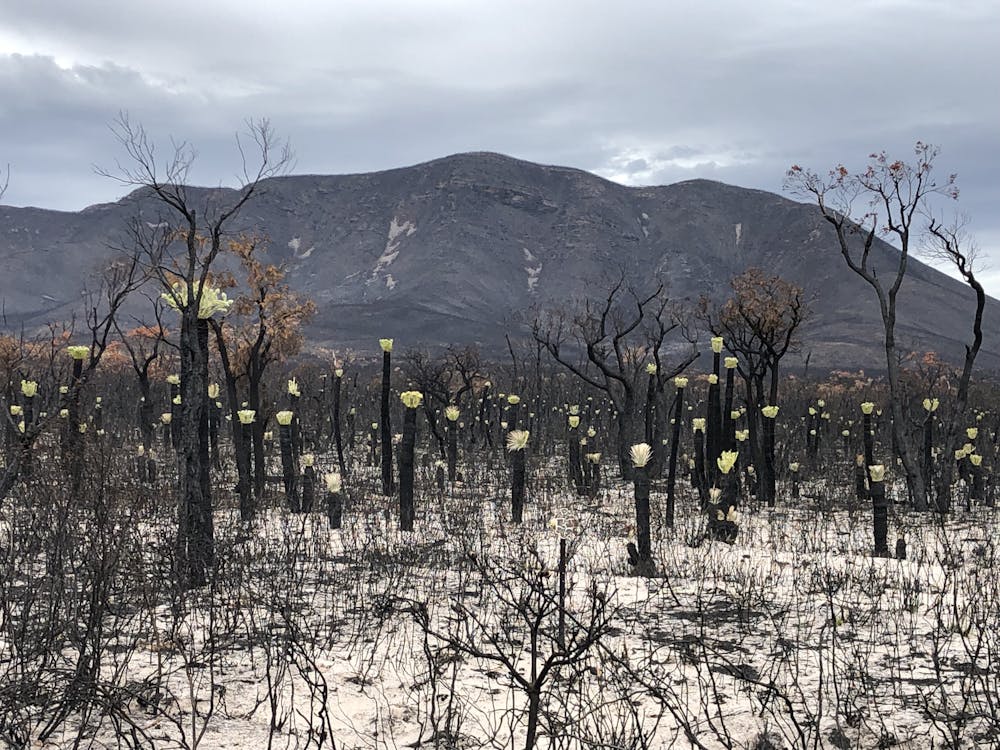
Though the fires have retreated, the once thriving populations of mountain bells are reduced to blackened stems. It is indescribably sad to see.
For some species, the 2020 bushfires came hot on the heels of an out-of-control prescribed burn in 2018, and few species can survive such short interval fire. Scientists are surveying the damage, to see if parts of the soil seed bank survived to grow the next generation of mountain bells. But it may be too late for some species. Time will tell.
The endemic grass tree Kingia australis absorbs ethylene gas from bushfire to initiate flowering within months.Keith Bradbury, Author provided
Community action
Is there a future for mountain bells? I like to think so. I have grown them in wildflower gardens from cuttings handed down from wildflower gardeners over decades. Through temperamental and often unpredictable to grow, mountain bells are remarkably easy to propagate.
A key part of saving our mountain bells is, I believe, intimately linked to the community of wildflower enthusiasts. These passionate, committed community members stand ready to help save the last bells.
The way we’ve done conservation in the past needs a reboot. For the mountain bells and many other threatened species to have a future, we need to embrace a new way of engaging with community volunteers and particularly our traditional owners.
Everyone I have spoken to is ready to roll up their sleeves and help our plants, and animals struggling to come out of the fires. Such an approach will need trust, training and support – but it may be our only hope.
Climate Explained is a collaboration between The Conversation, Stuff and the New Zealand Science Media Centre to answer your questions about climate change.
If you have a question you’d like an expert to answer, please send it to climate.change@stuff.co.nz
What was the climate and sea level like at times in Earth’s history when carbon dioxide in the atmosphere was at 400ppm?
The last time global carbon dioxide levels were consistently at or above 400 parts per million (ppm) was around four million years ago during a geological period known as the Pliocene Era (between 5.3 million and 2.6 million years ago). The world was about 3℃ warmer and sea levels were higher than today.
We know how much carbon dioxide the atmosphere contained in the past by studying ice cores from Greenland and Antarctica. As compacted snow gradually changes to ice, it traps air in bubbles that contain samples of the atmosphere at the time. We can sample ice cores to reconstruct past concentrations of carbon dioxide, but this record only takes us back about a million years.
Beyond a million years, we don’t have any direct measurements of the composition of ancient atmospheres, but we can use several methods to estimate past levels of carbon dioxide. One method uses the relationship between plant pores, known as stomata, that regulate gas exchange in and out of the plant. The density of these stomata is related to atmospheric carbon dioxide, and fossil plants are a good indicator of concentrations in the past.
Another technique is to examine sediment cores from the ocean floor. The sediments build up year after year as the bodies and shells of dead plankton and other organisms rain down on the seafloor. We can use isotopes (chemically identical atoms that differ only in atomic weight) of boron taken from the shells of the dead plankton to reconstruct changes in the acidity of seawater. From this we can work out the level of carbon dioxide in the ocean.
During colder periods in Earth’s history, ice caps and glaciers grow and sea levels drop. In the recent geological past, during the most recent ice age about 20,000 years ago, sea levels were at least 120 metres lower than they are today.
Recent research shows that west Antarctica is now melting.Elaine Hood/NSF
Sea-level changes are calculated from changes in isotopes of oxygen in the shells of marine organisms. For the Pliocene Era, research shows the sea-level change between cooler and warmer periods was around 30-40 metres and sea level was higher than today. Also during the Pliocene, we know the West Antarctic Ice Sheet was significantly smaller and global average temperatures were about 3℃ warmer than today. Summer temperatures in high northern latitudes were up to 14℃ warmer.
This may seem like a lot but modern observations show strong polar amplification of warming: a 1℃ increase at the equator may raise temperatures at the poles by 6-7℃. It is one of the reasons why Arctic sea ice is disappearing.
In the Australasian region, there was no Great Barrier Reef, but there may have been smaller reefs along the northeast coast of Australia. For New Zealand, the partial melting of the West Antarctic Ice Sheet is probably the most critical point.
One of the key features of New Zealand’s current climate is that Antarctica is cut off from global circulation during the winter because of the big temperature contrast between Antarctica and the Southern Ocean. When it comes back into circulation in springtime, New Zealand gets strong storms. Stormier winters and significantly warmer summers were likely in the mid-Pliocene because of a weaker polar vortex and a warmer Antarctica.
It will take more than a few years or decades of carbon dioxide concentrations at 400ppm to trigger a significant shrinking of the West Antarctic Ice Sheet. But recent studies show that West Antarctica is already melting.
Sea-level rise from a partial melting of West Antarctica could easily exceed a metre or more by 2100. In fact, if the whole of the West Antarctic melted it could raise sea levels by about 3.5 metres. Even smaller increases raise the risk of flooding in low-lying cities including Auckland, Christchurch and Wellington.
A target of 70% private and 30% public dwellings is an accepted standard for public housing renewal projects in several Australian states. This level of private ownership is said to be necessary to counter stigma and the supposed demotivating impacts of concentrated disadvantage. When we looked at the impact of applying this model to the planned Waterloo redevelopment in inner Sydney, the demographic projections were revealing.
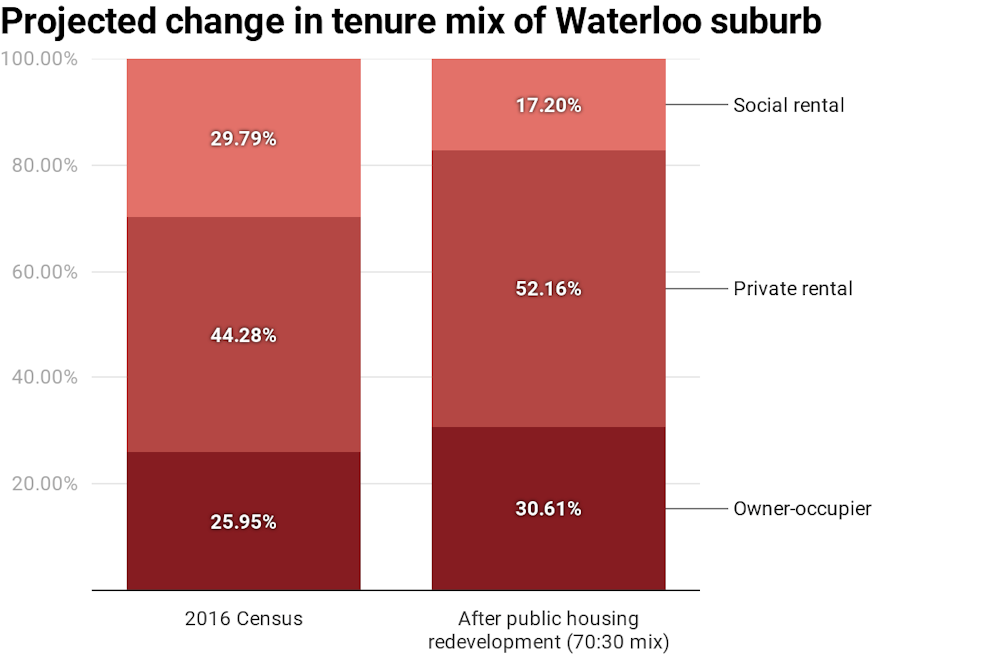
Our analysis shows the project would reduce the suburb’s proportion of social housing dwellings from 30% to about 17%. About 30% of households in the suburb would be owner-occupiers. Private renters might rise to more than 50% of households.
Why set social mix targets?
Social mix is often proposed as an antidote to a range of presumed problems associated with public housing estates. With the need for a social housing stimulus package receiving attention, and the Victorian government announcing a A$500 million program, it’s timely to revisit the mix of tenancies in estate redevelopments.
State housing authorities favour a mix of public and private residential tenures when they redevelop large public housing estates. Authorities can then sell the majority of new dwellings to private owners and investors.
As Kate Shaw, Janet McCalman and Deborah Warr have explained in The Conversation, the strategy doesn’t always work as promised. Drawing on extensive empirical research into mixed-tenure renewal neighbourhoods, the evidence shows simple mathematical “one size fits all” targets do not work. Decisions on the residential mix need to be sensitive to local settings and needs.
Nonetheless, an orthodoxy has emerged among some housing authorities that social housing tenants should make up 30% of households while 70% should be sold to owner-occupiers and investors.
In Waterloo, limitations of the fixed-ratio approach relate to the likely composition of the post-renewal resident population.
The Waterloo estate site now contains about 1,900 public housing units. The renewal plan proposes retaining this number in the context of a three-fold increase in dwellings with a 70:30 private-public tenure mix. This will result in a total of about 6,500 dwellings.
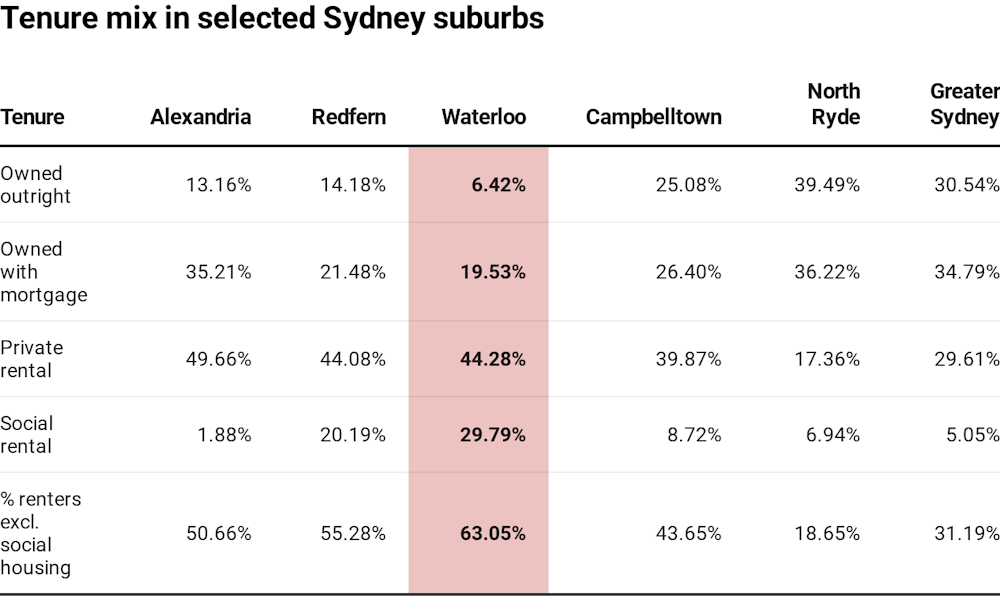
At the suburb or neighbourhood level, Waterloo had 6,151 dwellings in 2016. As the table below shows, almost exactly 30% of these were let to social housing tenants.
Data: ABS Census 2016, Author provided
The table also shows the large variation in tenure mix across five Sydney suburbs and the Greater Sydney area. Some 44% of all dwelling stock in Waterloo was already rented privately. That’s almost 50% more than the Sydney-wide average of just under 30%.
Importantly, 63% of private dwellings in Waterloo are privately rented – double the Greater Sydney proportion.
Located close to three universities and the CBD, Waterloo is dominated by investor-owned rental housing. Future occupation is likely to follow this pattern.
State housing authorities measure tenure mix within public housing estates. But the Australian Housing and Urban Research Institute recommends measuring tenure mix at the neighbourhood scale.
Adding 4,500 new private households, while maintaining current social housing numbers, will reduce the proportion of social housing in the suburb of Waterloo to about 17%.
Projecting the current rate of renters in private dwellings onto the proposed 70:30 renewal mix might be expected to result in 63% of new private dwellings being privately rented.
The suburb would then comprise 52% private renters. Less than one-third of residents would be owner-occupiers.
The chart below shows how applying the 70:30 target to redeveloping the public housing estate could actually reduce tenure diversity for Waterloo.
The need for more social and affordable housing in well-serviced, inner-urban areas is well recognised. Getting the residential tenure mix right through renewal is key.
In the only full-length book on social mix in Australia, Kathy Arthurson notes social disadvantage occurs in both public and private rental housing. She writes:
The omission of private rental from the social mix literature is problematic, as in Australia and elsewhere most poor renters are in private rental and not in public housing.
A key element of the case for limiting social housing to 30% in redevelopment projects is the belief that any more would scare off potential private buyers and reduce developer returns.
Another evaluation of the Kensington renewal project in Carlton, Victoria, found strong investor sales but fewer owner-occupiers than anticipated.
Key takeaways
Recent research in Melbourne and Sydney suggests the supposed benefits of social mix are based on owner-occupiers, not more transient private renters.
It also shows social mix renewals that apply a simplistic 70:30 target within a narrowly defined boundary around an “estate” risk seriously undervaluing large public housing assets.
When the United Kingdom completed its telecom supply chain review last year it gave a green light to Huawei by concluding that nationality-based bans did nothing to improve network security and could actually harm it by weakening competition. Executives at Huawei celebrated what they saw as a victory for evidence-based decision-making.
The decision also seemed to vindicate the many critics of Australia’s telecom sector security review, which the previous year reached exactly the opposite conclusion and decided to ban Huawei (and any other Chinese companies) from supplying equipment for use in Australia’s 5G mobile rollout.
Even the compromise that Prime Minister Boris Johnson’s government announced at the end of January 2020, to exclude Huawei from the “core” of the 5G network and from sensitive areas such as military installations, but to otherwise allow it to have an up to 35% market share, was an outcome the firm could live with.
Huawei’s last big hope had been the UK
The decision reportedly caused outrage in the Trump White House, and left a number of Conservative Party back-benchers seething.
It follows intense pressure from the US Department of Commerce which has announced plans to bar Huawei and its suppliers from using any American technology or software.
Britain’s National Cyber Security Centre has increased the pressure, urging that Huawei equipment be removed from the country’s networks on the grounds that the new US restrictions will force it to resort to “untrusted” technology solutions.
The Sydney Morning Herald reported on Monday that Huawei had “lost the anglosphere”.
Recent reports indicate that France, which had also opted for a compromise by restricting Huawei from the core of its network and from Paris, but allowing it in the rest of the country, is now considering a multi-year phase out of all Huawei equipment.
It may have lost the West
It remains to be seen how this plays out in a number of other key European countries, such as Belgium, where Huawei has more than 70% of the market in some areas, as well as Germany, which until now has been adamant it won’t ban Chinese suppliers.
The company faces something of a united front including each of the Five Eyes countries of Australia, Canada, New Zealand, the United Kingdom and the United States, as well as France and India, which has recently moved to ban a whole slew of Chinese mobile apps including TikTok.
In some ways, it seems surprising given the fact that nobody, least of all the American security hawks have been able to adduce any hard evidence that Huawei represents a greater security risk than any other major supplier.
In other ways, it is less surprising given the Trump administration’s increasingly confrontational approach and China’s increasingly assertive push-back. Its June 30 decision to impose a new security law on Hong Kong has only helped to further harden attitudes in the West, particularly the UK.
It was always going to be hard for Huawei to stay in Western markets.
It was hard to please two masters
Once it grew to the size it has enjoyed for about the last ten years, and once it took on the strategic importance that comes with being one of the world’s top suppliers of 5G network equipment, Huawei was inevitably going to find it difficult to please an increasingly nationalistic Chinese leadership while not alarming nervous governments in Western capitals.
Huawei has a massive domestic customer base.Sipa USA
In China it had to demonstrate unwavering loyalty to the goals of the Communist Party leadership. Outside China it had to argue that it had little or nothing to do with the Chinese State.
Operators love Huawei because it has consistently proven better than its competitors on price, tailored customer service and innovation. But it is governments that regulate telecommunications networks and that must take the big decisions on what companies will be admitted as suppliers.
For executives at Huawei there are no easy choices.
The size of its domestic market has given it the massive economies of scale it has needed to be competitive globally, so that it cannot jeopardise its position at home.
Its role in global markets has allowed it to innovate.
Most of its technological breakthroughs have been achieved through its many partnerships abroad. To walk away from these would weaken its market leadership.
Looking inwards didn’t help
Once the US-led campaign against Huawei began in earnest in 2018 it circled the wagons and centralised control of its external messaging and overseas representation in the hands of its longest-serving or most successful employees, all of whom were Chinese.
These were predominantly engineers by training and had no inclination to defend the company on any terms besides its track record as an equipment vendor and its cyber-security credentials (which from an industry perspective are pretty solid).
Even if it had done something different back then, nothing would have helped it overcome the contradictions of trying to appear to be a loyal corporate citizen in China while at the same time claiming to be just another normal private-sector company abroad.
The limited space it has to operate is becoming increasingly narrow to the point where in many markets it is no longer able to appear to be both.
Prepare for fragmentation
Another important point worth bearing in mind is that Huawei is not alone in seeing its market access curtailed because of its country of origin. This has also long been happening to Western companies in China.
In December it reportedly decided to phase out all foreign-owned software and hardware from Chinese government operated IT systems.
This means China has itself accepted the logic that the country of origin of a supplier matters for security and industry development.
It leaves us heading towards a world of increasing fragmentation and higher costs, with many arguing, in both China and the West, that this is the price we’ll have to pay for greater security.
Cancel culture — withdrawing support for public figures when they do or say something offensive — has become so widespread it was Macquarie Dictionary’s 2019 word of the year.
A practice where people come together to remove the offender’s cultural capital and “cancel” them, the phenomenon has intensified since the outbreak of COVID-19. With so many people staying at home there has been a rise in social media use, and with more time on social media there is more time for “cancellations”.
JK Rowling was cancelled for anti-trans remarks. Lana Del Rey, criticised as using anti-feminist lyrics, was cancelled after her response to these criticisms on Instagram. Popular YouTuber Jenna Marbles announced she was leaving the platform following criticism of early videos featuring offensive lyrics, gender stereotypes and blackface.
Fandom is deeply rooted in identity and values, and fans are likely to “cancel” people who violate norms of justice and moral responsibility. As fandoms represent community and comfort, fans are quick to denounce threats to these spaces.
Actors from the Harry Potter movies and spinoffs, including Daniel Radcliffe, Eddie Redmayne, Noma Dumezweni, and Emma Watson, have criticised Rowling’s remarks. Staff at her publisher Hachette are reportedly refusing to work on her newest book.
In 2018, the New York Times declared “everyone is cancelled”. It can take just one thing – seemingly nothing – for someone to be cancelled, argued the the story.
In many cases, cancel culture is criticised as mob mentality echoing the same principles of bullying. Cancel culture has become reactive instead of proactive: knee-jerk reactions and lashing out rather than progressive calls for accountability.
Our research shows fandoms can be spaces where people with shared interests build on visible collective identities and camaraderie. But fandoms can also be spaces of invisible emotional attachments: private “friendships” with real or imagined characters.
So, when the centre of a fandom is cancelled, the collective and personal identities and friendships can be challenged.
Cancelled fandoms
The unexpected departure (or self-cancellation) of vlogger Jenna Marbles (real name Jenna Mourey) from YouTube epitomises the dangers of cancel culture.
Many fans were left devastated when Mourey announced her departure. While some fans are very critical of her offensive early videos, featuring gender stereotypes and blackface, others saw her moving away from this content as a symbol of how much Mourey has grown.
In an impassioned video (which has now also been removed from YouTube), Mourey gave an authentic apology for videos from 2011 and 2012 which have not been public on her account for several years. She said:
[…] I just want to make sure the things I’m putting in the world aren’t hurting anyone […] so I need to be done with this channel, for now or for forever […]
The spirit of cancel culture — holding people accountable for their actions — is lost when being cancelled means there is no opportunity for change nor space for growth.
The practice is becoming more like activism as entertainment: where people join in because they find it fun, rather than because they believe it to be a worthy cause.
Towards a context culture
Instead of “cancelling” public figures, we believe it is time to create a context culture. Understanding context means denouncing historical mistakes while acknowledging potential for growth. People can learn from and outgrow their past, and should be given the space to do so.
A context culture does not mean giving public figures a free pass to say or do what they like; it’s not giving up on holding them accountable. It means opportunities to learn and change should not be shut down prematurely.
A context culture reduces the likelihood of mob mentality, and ensures criticism can be constructive.
Fandoms can outgrow people and brands who refuse to be accountable or demonstrate growth. Fans can rid their lives of toxicity by returning to the proactive internet activism form of the practice.
[…] YOU have the power. YOU control every Market. YOU choose what and who is trendy. Unfollow the people who tell you things that hurt your self esteem. Don’t let the debris of their damage spill out onto you. Unfollow people/brands that don’t make you feel powerful and happy and grateful for what you have. You’re the boss and none of them are shit without you […]
Fan communities can stay intact when the centre of their fandom has been outgrown. Fans can continue to build worthwhile real and imagined friendships, focusing on their own positivity and growth.
The original object of a fandom — be it a celebrity or an artistic product — can last beyond a cancellation.
As Daniel Radcliffe said, if something has resonated with you “it is sacred. […] Nobody can touch that”.
When the New Zealand government wanted a campaign to keep kids safe online, naturally it turned to a couple of naked porn actors to get the message across.
Actually the government turned to video advertising agency Motion Sickness, which in turn created Sue and Derek, who turn up naked at a boy’s house to talk to him about real relationships.
The ad went viral. With more than 22 million views worldwide, it has been praised for its use of humour to address tough issues. Experts have hailed its contribution to the debate about online harm.
It’s just the latest example of a unique advertising culture that makes up for in creativity what it lacks in deep pockets.
There’s more where that came from.
The “Keep it real online” campaign is far from the first time Kiwi advertising has used humour to broach controversial subjects. Film director Taika Waititi’s “Blazed” employed his signature comedic approach to tackle drugged driving.
Elsewhere, the drink-driving campaign “Legend” gave New Zealand the now iconic line, “You know I can’t eat your ghost chips.”
The “Pre-testie Bestie” campaign used authentic millennial humour and language to combat fetal alcohol spectrum disorder. It became YouTube’s most successful public awareness campaign in Australia and New Zealand.
What seems to set New Zealand apart is a combination of smaller budgets, tighter agency-client relationships and a unique sense of humour.
New Zealand advertising budgets are tiny compared to those in larger markets. This rules out epic shoots but puts more emphasis on creativity.
Celebrity endorsements are also rare since New Zealand doesn’t have many high-profile celebrities and advertisers can rarely afford international stars. The exception might be Prime Minister Jacinda Adern and her husband who made special appearances in a comic tourism pitch to “get NZ on the map”.
Rather than rely on endless repetition of an ad, New Zealand agencies would rather spend their smaller budgets on creating and crafting commercials that are engaging, memorable and shareable.
The “Keep it real” campaign is a great example of a good idea being shared organically and having a far larger reach than the modest media budget would have allowed on its own.
Getting intimate with clients
Like the budgets, New Zealand marketing teams are tiny compared to overseas. But, as with the budgets, this has benefits. Smaller teams mean fewer levels of approval and easier access to decision-makers.
Smaller, more intimate teams allow for more open discussions about concepts both within the client organisation and with advertising agencies. As “Keep it real” shows, small and agile teams can collaborate effectively and creatively to address controversial subject matter.
That campaign – which includes billboards, posters, print ads, social media and its own website – took only four weeks to create. This is even more impressive given the client was the government and several of its agencies, including Internal Affairs, the Ministry of Education and the police.
Kiwi comedy
Another important but intangible ingredient is the New Zealand sense of humour and the way it informs local culture. Laconic, understated and self-deprecating, it’s perhaps best summed up in the deadpan laughs of The Flight of the Conchords and the films of Taika Waititi, such as Boy and his vampire comedy, What We Do In The Shadows.
As comedian James Nokise put it, “Kiwi humour sort of comes from late-night chats round a table, either in the kitchen, pub, or garage … we’re small enough that we’ve managed to take the kind of intimate family humour and apply it to the whole country.”
This comic sensibility comes through in the country’s advertising. It’s ideal for discussing subjects some people find awkward or hard to tackle – such as talking to children about online pornography.
As the first comment under the “Keep it real” video on YouTube says, “Wow they never do anything like this in the United States lol.”
Creativity v COVID-19
The timing of the “Keep it real” campaign was also opportune. New Zealand had just entered strict lockdown and people were spending their days learning and working online. A little comic relief was very welcome.
Since then, advertising agencies have been finding creative ways to help local businesses – offering free media space, pay-what-you-want website design, strategic planning and even a way to sell bagels during a pandemic.
The country is now out of its COVID-19 lockdown and Kiwis are being encouraged to get out and support local businesses. Hopefully, this kind of nimble, ingenious and brave creativity will be an integral part of the economic recovery too.
Source: The Conversation (Au and NZ) – By Mary-Louise McLaws, Professor of Epidemiology Healthcare Infection and Infectious Diseases Control, UNSW
From midnight Wednesday, all of Metropolitan Melbourne and Mitchell Shire will return to Stage 3 lockdown for six weeks. There are only four reasons for residents to leave their homes: shopping for essentials, care-giving, exercise, and work and study if it can’t be done from home.
But it should have happened weeks ago.
It’s now time to consider measures aimed at stemming the spread among families, by admitting infected people to hospitals or other health facilities.
The problem with watching daily numbers is small numbers do not show a clear pattern until it’s too late. To choose a larger period to observe a pattern, epidemiologists usually use the length of time an average person takes to become infected (the incubation period). If you use 14 days (roughly twice the incubation period) this approach is a classic epidemiological method to tell if an outbreak is getting out of control.
Using this method, the two weeks up to June 18 suggested the spread was becoming out of control. From June 5 to June 18 the total number of cases was 102. Then the subsequent 14-day periods doubled to 224 cases and doubled again to 441 cases.
As these numbers show, controlling the outbreak becomes extremely difficult once this number hits 100.
The cumulative number of cases from the last 14 days in Victoria is now 1,048. This is similar to the numbers seen Australia-wide in late March, near the peak of Australia’s pandemic so far.
Victoria will likely see even greater increases in the next few days, especially as people who don’t realise they’re infected spread the virus further.
Ultimately, governments around the world face the tough choice of being proactive or reactive during the pandemic. Being proactive to small spikes might be perceived as being heavy-handed, especially economically. Victoria, so far, has been more reactive than proactive — but the time has come to consider different approaches.
Victoria recorded its highest ever daily increase on Tuesday with 191 new COVID-19 cases.James Ross/AAP Image
Admitting infected people to hospital
We know many people pick up the virus in their own homes from another family member, even if the infected individual isolates in one room. This is partially because indoor environments often have crowding and poor ventilation. It’s also quite difficult to practice good sanitation, cleaning high-touch surfaces properly with detergent or bleach.
The best option is to relocate an infected family member to reduce the risk of spread to the rest of the family. An option is to relocate them to hospitals or other suitable purpose-built health facilities. Victoria’s numbers will get worse unless infected individuals are relocated. This is a particular risk for crowded high-rise housing.
Victorians should also be wearing masks in all public places. Recent evidence suggests wearing masks reduces the risk of catching and spreading the virus. The World Health Organisation released updated guidelines on June 5 acknowledging masks can reduce transmission when physical distancing can’t be maintained or in places of high prevalence. Metropolitan Melbourne is now a place of high prevalence.
Ring-fencing is an effective control method when the pattern of infection is not the same across regions. Recently, China lifted lockdown of Wuhan and then ring-fenced hotspots to effectively repress a spike in case numbers.
As of July 1, hotspots in Melbourne were ring-fenced, which gave other regions with very low or zero cases a reprieve from unnecessary restrictions.
But we’ve since seen cases leaking out of these hotspots and rising rates of community transmission. This forced the government to apply a wider lockdown.
The first round of restrictions was lifted in May, but warning signs may have been missed since then.Michael Dodge/AAP Image
Further, ring-fencing is an effective control method when people’s needs — food, heating and internet access — are well looked after. If we get that wrong, we lose people’s collective good will and cooperation. The “hard lockdown” of public housing towers in Melbourne’s north and northwest hasn’t been done in a compassionate manner that meets people’s immediate needs, which erodes trust in the process.
It also lacks epidemiological sense. Forcing people into even closer quarters creates a pressure cooker environment where family outbreaks are even more likely.
A pandemic is a long term project, so it’s essential trust is built and maintained over time. Building trust is an investment in resilience that enables our community to continue to respond well during this extended outbreak.
All is not lost. To prevent the virus spreading further all Melburnians should wear a mask when in public places.
It’s widely hoped the lockdown will help to reduce case numbers but this must be done with compassion and ethics.
Victoria’s experience should be a lesson to governments everywhere that it’s crucial to act quickly and early when flareups occur. Don’t wait until the moment of crisis arrives.
It’s also time for the Victorian government to closely consider how to reduce transmission among families, and part of that may be housing infected people outside the home until they are well again.
The reimposition of stage 3 restrictions on metropolitan Melbourne is, as Victorian premier Daniel Andrews says, a matter of life or death. That’s also true for small businesses.
A further six weeks of stay-at-home orders for the city’s 5 million residents will kill off many small and medium sized businesses unless there are critical changes to federal and state government assistance policies.
Even with assistance many will not survive. But ensuring those that are viable are not lost is crucial to the recovery of both the Victorian and national economies.
Small businesses are the engine of economic growth. They are typically the first to innovate and respond to economic changes. The abnormal economic shock wrought by the necessary public health response to the COVID-19 pandemic means they have generally been hit hardest. Without policies and money to address their core needs, this second wave of restrictions will be a killer blow.
Three fundamentals
These fundamentals are absolute to the success of small business.
First, and most obviously, they need customers. Those providing essential local goods and services, such as groceries or health services, may cope. But those offering discretionary goods and services, such as hospitality, will suffer both from loss of foot traffic and suppressed consumer spending, as people save more in uncertain times.
Second, they need access to credit. This is much harder for small businesses to obtain than large businesses with assets. Small businesses are typically started by entrepreneurs who finance their endeavours with their own savings, through mortgaging their homes, or taking out personal loans.
They typically have extremely limited cash reserves to ride out tough times. Many juggle their bills from month to month to stay afloat.
Third, they rely on momentum. They grow by acquiring both customers and knowledge of their market. When repeat business stop, they lose that momentum. If they have to shed employees, they lose “business knowledge”, which sets them back even further in their recovery.
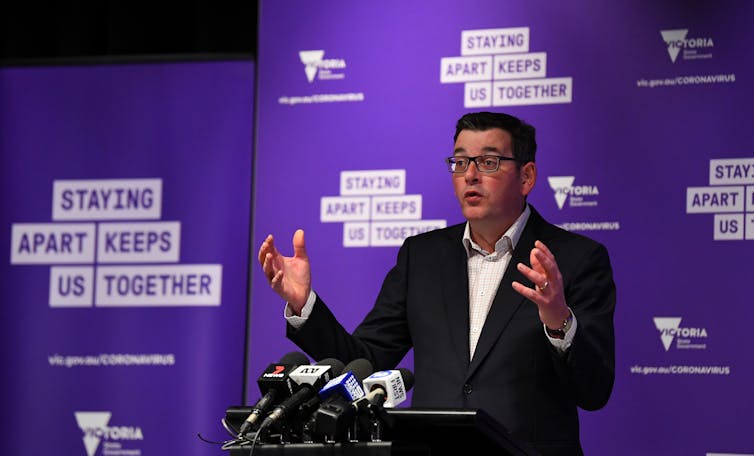
Victorian Premier Daniel Andrews speaks to media in Melbourne, Tuesday, July 7, 2020.James Ross/AAP
Calamitous damage
All economic slowdowns typically reduce demand, but this health/economic crisis has calamitously damaged all three aspects.
The federal government’s Job Keeper program and subsidies being provided through the Australian Taxation Ofice to boost business cash flow has enabled business to hold on to employees for now. But without customers or credit, even extending these measures beyond their scheduled September 30 end won’t be enough.
It’s my view it will take three to five years for consumer confidence and spending to return to pre-COVID levels. This assessment is based on past recessions where high unemployment prevailed compounded by the novel problem that health fears will suppress consumer confidence long after the coronavirus is contained and things return to “normal” (or at least a new normal).
The Melbourne outbreak of COVID-19 underlines there is no quick fix to the COVID-19 crisis. The only light at the end of tunnel is a possible a vaccine, which might take years, or never be found. The economy must therefore adjust. Not all businesses are viable. To continue indefinitely to pump public money into direct grants to prop them up is unsustainable.
To do so will lead to “perverse” consequences – providing windfalls to businesses that would have failed anyway – as many small business ventures do – while providing inadequate support to those that are important and would have survived but for the crisis.
A COVID-19 testing site at Northland Shopping Centre, the largest retail mall in Melbourne’s northern suburbs.James Ross/AAP
Three suggestions
Therefore I offer three suggestions.
First, continue JobKeeper and the tax office’s cashflow boost for as long as COVID-19 restrictions are in place. Businesses would need to apply for this on a month-by-month basis, and need to meet set criteria.
Second, the government should ensure easy access to low-interest loans for the next two to three years. Loans are more efficient than direct grants or subsidies. The fact the loans have to be repaid will encourage only those businesses with a good chance of being sustainable of seeking them.
Getting a loan is slow and hard for small businesses because banks scrutinise them due to the risk. Few small business have the skills to prepare the extensive documentation banks require. Banks will be motivated to lend faster and to more businesses if governments remove the risk by buying those loans.
To speed up the lending application process, there should also be subsidies to licensed financial advisers to prepare those applications.
Third, a system of subsidised vouchers for financial management advice from accountants and financial advisers (who are also mostly small businesses).
Financial services are critical for small businesses. In tough times it might be tempting to dispense with these services. But sound financial advice will be critical to business owners making the right decision – including whether they should be borrowing money to sustain their businesses or making the hard decision to cut their losses and move on.
Source: The Conversation (Au and NZ) – By C Raina MacIntyre, Professor of Global Biosecurity, NHMRC Principal Research Fellow, Head, Biosecurity Program, Kirby Institute, UNSW
After early success in suppressing COVID-19, we are facing a resurgence in Victoria, which is threatening disease control for the whole country.
Outbreaks in northwestern Melbourne, including in public housing tower blocks in inner Melbourne, and now in the twin border towns of Albury-Wodonga, signal a risk of losing our hard-won gains. These gains have already come at a heavy price to the economy and mental health, which is all the more reason to throw everything we can at this resurgence – including widespread use of face masks, as we have seen in other countries such as the United States and United Kingdom.
With 191 new cases announced on July 7, Victorian Premier Daniel Andrews has announced a return to stage 3 restrictions for six weeks from July 9 for metro Melbourne and Mitchell Shire. This means residents will be confined to their homes except for essential trips such as work, medical care, exercise or shopping for essentials. The evidence suggests both sick and healthy people wearing masks will help curb the spread of COVID-19 during this precarious time.
Australia is one of the few countries that has suppressed COVID-19 after a peak in disease incidence in late March. The current resurgence, unlike the peak in March which was largely travel-related, has arisen mostly from community transmission, which is a more serious concern.
Health authorities have a range of measures at their disposal, including expanded testing to find all new cases, diligent contact tracing, travel bans, border closures and quarantine of returning travellers. As members of the public, there are five main things we can do to stop the spread: get tested if we have symptoms, download the COVIDSafe App, practise physical distancing, wash our hands often, and wear a face mask.
Why masks help
The most extreme form of physical distancing is a lockdown, already enforced in Melbourne. Keeping at least 1.5 metres away from others also dramatically reduces the risk of COVID-19, even in crowded households. Victorians should think about wearing a mask, especially in indoor spaces like shops or public transport or in outdoor crowds. There may be epidemics developing in other states, so people at risk in those states should think about masks too.
There’s no doubt masks help stop the spread. A recent study commissioned by the World Health Organisation showed that face masks reduce the risk of infection with viruses such as SARS-CoV-2, the coronavirus that causes COVID-19, by 67% if a disposable surgical mask is used, and up to 95% if specialist N95 masks are worn, although these are not widely available to the public.
This study prompted the WHO to change its position to recommending community mask use. It had long advised masks should be worn only by sick people to stop them infecting others, although this was perhaps motivated in part by concerns over supplies.
Many countries, perhaps most notably the United States, initially adopted this advice but then began to encourage community-wide mask use when the epidemic began to get out of hand.
Why not in Australia?
Australia has not yet adopted community masking as a tool in the fight against COVID-19. The WHO issued a long list of dangers of mask wearing, including that masks give “a false sense of security, leading to potentially lower adherence to other critical preventive measures such as physical distancing and hand hygiene”.
There is no scientific evidence to support this – in fact, the evidence suggests the opposite. In an illustrative exercise, Italian researcher Massimo Marchiori found people stayed more than twice as far away from him when he wore a mask.
Not all masks are the same, however. For community use, the options are surgical masks and cloth masks. Surgical masks are single-use only and should not be re-used. If they are unavailable or too expensive, you can make an effective cloth version yourself if you follow a few key principles.
Cloth masks can vary widely depending on the material and design – a single or even double-layered mask or bandanna is likely not protective at all.
A cloth mask should have at least three or four layers, including a water-resistant outer layer, a fine weave and high thread count, and should be washed and worn fresh each day. It should fit snugly around your face, or air will flow through the gaps on the sides. A nylon stocking over the top can help.
Research shows a 12-layered cloth mask can be as good as a surgical mask, although you may not have the time or inclination to make a homemade version with 12 layers.
How to make an effective cloth mask.Shovon Bhattacharjee, Author provided
Given the possibility this coronavirus can also be spread by people without symptoms or even people who have already left the room, handwashing and physical distancing may not be enough. We need every tool at our disposal, and that includes masks.
Masks can be worn in public or indoors. Surgical masks worn at home can prevent the spread of the coronavirus to family members, which may be worth considering if you live with a health worker or someone else at high risk.
As Melbourne and Australia struggle to regain control of COVID-19, positive promotion of face masks, and simple how-to guides for making, as well as wearing and removing them could be a powerful addition to our armoury. A clear, consistent public health directive in relation to masks is needed now to help avoid longer lockdowns and more draconian measures, and enable safer community activities.
'Injustice anywhere is a threat to justice everywhere,' Black Lives Matter march, Auckland - June 14, 2020. Image by Selwyn Manning.
Analysis by Keith Rankin, 6 July 2020
Three Citizenships
The concept of ‘citizenship’ has both general and specific meanings.
Keith Rankin.
The most specific and familiar I call passport citizenship. A passport citizen of a country is a person holding a passport for that country, or with unambiguous entitlement to hold such a passport. More than anything a passport is a travel document, so passport citizenship largely defines a person’s travel rights.
A child can be a passport citizen. And it is possible for a person to hold multiple passport citizenships.
The second concept is political citizenship, which is essentially suffrage, the right to vote. Thus, political citizenship is a democratic concept. A ‘dependent child’ cannot be a political citizen, though the definition of ‘dependent child’ may differ in different countries. (For this discussion, a child is a non-adult; a person can only be an adult or a dependent child.) It is possible for a person to hold multiple political citizenship, even if a person holds just one passport citizenship. For example, an Australian-born adult resident in New Zealand – as a ‘permanent resident’ of New Zealand – is a political citizen of both Australia and New Zealand; many such people only carry Australian passports.
An ordinary adult resident of a non-democratic country is a passport citizen, but not a political citizen. In New Zealand, a person in prison for more than three years is not a current political citizen, but is a passport citizen (albeit with highly constrained travel rights!). Political citizenship confers political rights.
The third concept is economic citizenship. At present, while economic citizenship has no formal definition, it is a very important concept. In summary, economic citizenship confers economic rights; and an adult person without economic rights is either a slave or an Orwellian unperson. Economic citizenship is not a new phrase; the term was used, for example, during the later years (1933 to 1935) of the Great Depression in New Zealand. (Refer, Malcolm McKinnon, The Broken Decade, p.291.)
As with political rights, economic rights are held by adults. In New Zealand at present, different economic rights come at different ages: 16 the right to own property and to marry; 18 the right to a normal benefit and to drink alcoholic beverages; 20 the right to inherit property; 24 the right to a student allowance. 18 is probably the most important age determining adulthood, because that’s when a parent ceases to be able to claim Family Tax Credits, Child Support, or Sole Parent Support. While, for sometime in the future I am comfortable with 16 being the age that defines adulthood, overall 18 would appear to be the age that in New Zealand best defines adulthood at present. In particular, the age of adulthood represents the commencement of both political and economic rights, and personal responsibility.
The appropriate definition of economic citizenship is firstly that an economic citizen is an adult. Secondly, every adult in the world is by definition a current economic citizen of one and only one country.
Thus, once a person is determined to be an adult, the only matter of interest to a country’s bureaucracy is which country that person is an economic citizen of. Thus, an adult born in Paraguay but living in New Zealand would have either ‘Paraguay’ or ‘New Zealand’ listed in their economic citizenship box; not ‘yes’ or ‘no’.
Economic Citizenship
The concept of economic citizenship works best when all countries are on the same page. Thus, all adults in the world would have defined economic rights associated with the country of their economic citizenship. Of course, in a transitional world where the concept is new, it is inevitable that some countries will develop their economic rights ahead of other countries, just as some countries lagged in granting political rights. For example, Switzerland only granted women political citizenship in the 1970s.
Any adult living and working in New Zealand and only paying taxes in New Zealand clearly qualifies as an economic citizen of New Zealand. And they can only cease to be an economic citizen of New Zealand when they become an economic citizen of another country; thus, they do not cease to be economic citizens if they become unemployed. Further, adults who come to reside in New Zealand because their partners or ‘adult children’ are New Zealand economic residents become economic residents of New Zealand when they relinquish economic rights in their country of origin.
This means that many people who are passport citizens or political citizens of other countries are nevertheless economic citizens of New Zealand. And these people continue to be economic citizens of New Zealand, even when they visit their country of origin or any other country. Further, all economic citizens of New Zealand should have an equal and unqualified right to enter New Zealand. Any denial of the right of an economic citizen to be in New Zealand is the equivalent of deportation. (And we note that nobody should ever be deported to a country which is experiencing war, pestilence, or famine.) Any adult who has an agreed time limit on their economic citizenship – eg a term or condition on their visa – reverts to being an economic citizen of their country of origin, but only so long as they are able to re-acquire economic rights in their country of origin. (Inability to transfer economic rights could be a lack of transportation to that country, or pestilence in that country.)
Where a working visa expires and there is disagreement – eg a New Zealand economic citizen is stranded overseas, or where economic citizens in New Zealand are unable to undertake economic citizenship elsewhere – then they continue to be New Zealand economic citizens.
Where a person runs a business in another country but has residential rights in New Zealand (indeed may have a family resident in New Zealand), that person would normally be an economic citizen of the other country. That person’s partner, however, may be an economic citizen of New Zealand. A person can only be an economic citizen of one country at a time. Further, all dependent children of New Zealand economic citizens have the same residential rights as their parent(s).
There is a special case of ‘swallows’, or seasonal workers who regularly work in one country for a part of each year, and live in another country for the other part. Such people – and there are many Pacific-born people in New Zealand who are swallows – should be able to arrange seasonal transfers of economic citizenship. Thus, Tongan-born seasonal workers stranded in New Zealand should be classed as New Zealand economic citizens until they are able to resume Tongan economic citizenship.
The key principle of economic citizenship is that a person can only cease to be an economic citizen of one country if they can practically become an economic citizen of another country.
Economic citizenship gives a person economic rights in one country. Thus, in a civilised world, no adult human being can have no economic rights. (The economic rights of dependent children are implicit, through their parents’ duty of care to their children.) Economic rights can be transferred, but not extinguished.
Denizens
We may note that any person who is an economic citizen of the country they live in, but is not a political citizen, is thus a denizen. For example, most New Zealand born economic residents of Australia are denizens of Australia, and political citizens of New Zealand. While they pay taxes in Australia, they vote for parliamentarians in New Zealand.
Economic Rights – Duty of Care
The essential economic right is ‘duty of care’, including the right to a return on shared equity. I will formalise the latter right as the conceptual right to an economic dividend as a public property right. Economic citizens hold collective ownership of a country’s collective economic resources, including a share of their country’s share of global collective resources.
Thus, the most important economic right is one that no country has yet granted in a formal sense, but most countries do in an informal sense. This is the right to an economic dividend.
The most practical way to think through this is to note that all countries currently pay their economic citizens a formal weekly dividend of $0.00. Thus, we create the concept of a formal dividend as a conceptual placeholder. Next, we can think about how different countries exercise their duty of care towards their citizens and denizens.
On this, I will note the concept of ‘social security’ as synonymous with ‘duty of care’. There is an accepted understanding that all people who belong in a community have a right to some share of that community’s benefits. We may extend the word ‘community’ to society, where ‘society’ can be understood as a national community. We expect that an unemployed person in Norway has a higher material standard of living than an unemployed person in Ukraine, even though neither has a job. And we expect that a minimum wage worker in Norway has a higher standard of living than a minimum wage worker in Ukraine, despite the fact that both may be doing much the same job. In both cases, the Norwegians are receiving higher social dividends than the Ukrainians; even if in neither case their dividends are called ‘dividends’.
What happens is that unemployed Norwegians receive bigger welfare ‘transfers’ than unemployed Ukrainians. And Norwegian Workers receive higher wages (and income tax concessions that come with their wages) than do Ukrainian workers. Part of each Norwegian’s wage is in reality a payment that reflects productivity rather than effort. The main source of higher productivity in Norway is more capital – public capital and private capital – per person resident in Norway. Part of the wage of the Norwegian worker and the benefit of the Norwegian beneficiary is in reality a ‘public equity dividend’, reflecting the public capital contribution to productivity. Likewise, the Ukrainian worker and the Ukrainian beneficiary; it’s just that the Ukrainian dividend is much less than the Norwegian dividend.
In each country there may be people who miss out on these implicit dividends, because they have ‘fallen through the cracks’. A formal non-zero public equity dividend means that no economic citizen falls through the cracks. It’s mainly an accounting matter to formalise the public equity dividend, noting that for most people they already receive it as a part of something else. The reform process may be called ‘account and fill’ – properly accounting for those who do get it, and filling in the cracks for those who don’t.
Presently – in New Zealand and elsewhere – the formal weekly dividend is $0.00. Following an ‘account and fill’ reform, the formal weekly dividend will rise above $0.00. Once that is done, the important discussion about how big or small the dividend should be can then take place. I have suggested elsewhere that the most practical starting level in New Zealand is $175 per week, payable as an economic right to all economic citizens of New Zealand. (Refer to my Universal Income Flat Tax: the Mechanism that Makes the Necessary Possible.)
In modern political discourse, the biggest taboo of all is to discriminate against people based on the colour of their skin, or any other identity attribute. That is, so long as the person is a political or passport citizen of a country.
But it is open season to discriminate against economic citizens based on their immigration status. Governing attitudes make it a requirement to think of people who are not political citizens as foreigners, and that foreign lives are inconsequential. There is an ugly new nationalism building around the world, and I sadly note that New Zealand’s political leadership is contributing to that new nationalism. The message going out to economic citizens of New Zealand who are political citizens of South American nations is that they should ‘go home’ to countries that are currently the continental epicentre of a hugely consequential pandemic. (It is no better than the President of a foreign country a few years ago telling political citizens of African descent that they could ‘go back to where they came from’.)
New Zealand – like any other country – has a duty towards its economic citizens. It is not appropriate to narrow the definition of those to whom New Zealand has a duty of care towards, cynically allowing people to fall through the cracks. The cost of abstaining from that duty is much greater than the cost of meeting it. The cost is not in money; after all, money is a social technology. The cost is in lost care, in lost employment opportunities, in lives adrift. So long as New Zealand has access to food and labour, New Zealanders do not give up anything of substance in order to provide for all of those economic citizens ‘who are us’.
Further, New Zealand can provide support to others that might not be us, but who are close to us. What are we doing for our Pacific neighbours? Samoan lives matter. Fijian Lives matter. Tongan lives matter.
While New Zealand has no special obligation towards other countries – other than neighbours such as these – New Zealanders should not be asked to not care about foreign lives.
The Victorian government will lock down all metropolitan Melbourne for six weeks from Wednesday night, as a new wave of the coronavirus takes hold in the city.
The lockdown will also cover the Mitchell Shire, north of Melbourne, which includes the towns of Broadford, Seymour, Kilmore, Tallarook, Pyalong and Wallan.
Under the restrictions, people will only be able to leave their home to shop for essential goods and services, for care and compassionate reasons, exercise, and for work and study if it cannot be conducted from home.
The dramatic action comes as the Victoria-NSW border closes on Tuesday night, amid some chaos in Albury-Wodonga, and follows the lockdown of suburbs in 12 Melbourne postcode areas, and the “lock in” of 3,000 residents in nine community housing towers.
Regional Victoria, which is not so far hit by the virus, has been saved from the latest restrictions.
On the key issue of schools, students in years 11 and 12 at government schools will return next week, after the holidays, and so will students in year 10 who are taking VCE subjects (for that component of their learning).
Specialist schools will also reopen next week for normal face-to-face programs. There will be supervised school holiday activity provided for the children of parents in essential jobs.
For other students, the school holidays will be extended by a week.
The government will announce more decisions on schooling by early next week. Talks are being held with Catholic and independent schools to reach consistent arrangements.
Victorian health authorities have been surprised by the number of school children who have been detected with the virus.
The Victorian restrictions will be a major blow to the re-opening of the national economy, and will have to be factored into the federal government’s July 23 economic statement on the road ahead. The new hit to the Victorian economy may mean more patchwork arrangements in federal government assistance.
Premier Daniel Andrews told a news conference he had just spoken to Scott Morrison and “I am confident that the Prime Minister knows and understands that there will be different forms of hardship in different parts of the country, different industries, different sectors”.
Announcing the lockdown, Andrews warned: “There is simply no alternative other than thousands and thousands of cases and potentially more, many, many people in hospital and the inevitable tragedy that will come from that”.
He said the restrictions went no further than last time but “we’re in a more precarious, challenging and potentially tragic position now than we were some months ago.”
Andrew said he’d asked Morrison for another 260 members of the Australian Defence Force to help on the ground. They will support the police patrolling the perimeter of the metropolitan area where there will be spot checks of cars.
The premier said there now 772 active cases across the state. This included 69 cases linked to the towers.
He said the numbers were “unsustainably high” – it was impossible to have enough contact-tracing staff and other resources to continue to suppress the virus without more measures.
“We have to be realistic,” he said.
He said “I think a sense of complacency has crept into us as we let our frustrations get the better of us”.
He warned Melbournians they must stay in their main home, and not relocate to holiday homes. When people left their home for exercise they should not think of driving to regional Victoria for a bushwalk.
As the world continues to grapple with the coronavirus pandemic, one question that keeps coming up is whether COVID-19 can be transmitted through the air.
In fact, 239 scientists in 32 countries have written an open letter to the World Health Organisation (WHO) arguing there is mounting evidence the airborne route plays a role in the transmission of COVID-19.
Like a lot of issues to do with the pandemic, what seems to be a relatively straightforward question is deceptively complex. We actually don’t know the answer for sure.
Why do we need to understand the modes of transmission?
Understanding how COVID-19 is transmitted from one person to the next enables us to design effective public health interventions to minimise the risk of transmission.
For instance, we’re advised to keep 1.5 metres away from others because there’s consensus one of the main ways the virus spreads is via large droplets.
These “large” droplets are usually greater than 5 micrometres in size and are propelled from an infected person’s nose or mouth in their mucus and saliva when they sneeze, cough or talk.
Thanks to gravity, these large droplets don’t generally travel far before landing. If you position yourself more than 1.5 metres from someone who is infected, the expectation is you’ll be clear of the droplets’ path.
Similarly, understanding these large droplets can land on surfaces and that the virus can survive on these surfaces means we know we need to wash our hands to avoid transferring the virus to our mouth, nose or eyes.
Until now, the WHO has maintained these large droplets are the major source of COVID-19 transmission. But the authors of the open letter suggest they are underplaying the role of airborne transmission.
Airborne transmission and COVID-19
In its simplest interpretation, airborne transmission refers to the ability of a virus to be spread by droplets small enough to be suspended in the air. These droplets are less than 5 micrometres in size and generally called aerosols.
Whereas large droplets can only travel short distances, these smaller droplets, in theory, can be spread further, or can linger in a room even after an infected person has left.
COVID-19 spreads when an infectious person emits tiny virus-containing droplets.Shutterstock
Evidence supporting the notion that transmission of COVID-19 can occur via the airborne route takes several forms.
First, laboratory studies have demonstrated that SARS-CoV-2, the coronavirus that causes COVID-19, can be aerosolised, and can survive for up to four hours in this form.
Second, genetic material from SARS-CoV-2 has been detected in aerosols sampled at hospitals, including two hospitals in Wuhan, the Chinese city from which the pandemic emerged. But it’s important to note the presence of this genetic material doesn’t necessarily mean the virus is infectious in this form.
Perhaps the strongest evidence, however, comes through the various case reports of superspreading events. These are situations in which many people appear to have been infected with coronavirus in the absence of close contact.
One notable early example was from a choir practice in the United States where almost 50 people were infected even though they maintained physical distance. Two died.
Another example is an outbreak in Guangzhou, China, where ten people from three families contracted COVID-19 after dining in a restaurant. Non-infected people were not in close contact with any infected person, but those who became infected were in the direct line of one air conditioning unit.
The study of this outbreak is not yet peer-reviewed but is part of the evidence the authors of the open letter draw on.
What are the implications of airborne transmission?
Airborne transmission of this novel coronavirus is potentially a worry, because if it occurs often, it means the virus may be commonly transmitted in the absence of close contact.
It also raises the possibility the virus may travel on air currents, and even be transmitted through air conditioning.
This means social distancing may not always be effective, and in particular, crowded indoor areas with poor ventilation pose a major threat.
Good ventilation could lower the risk of airborne transmission in indoor spaces.Shutterstock
So where does this leave us?
The key question is not whether airborne transmission is theoretically possible; it certainly is. But rather, how significant is its role in the transmission of COVID-19?
If, for example, most transmission of SARS-CoV-2 happens via large droplets and the airborne route plays a role only occasionally, this has very different implications to a scenario where the airborne route is a significant mode of transmission.
Reassuringly, the interventions that have been implemented to limit spread of the virus, such as social distancing, have been largely successful so far in most of Australia. This suggests even if the virus can be spread by the airborne route, it’s not likely to be a major route of transmission.
Given what we know, the dilemma is whether to employ the precautionary principle and assume the airborne route plays an important role in disease transmission — and adjust infection control measures accordingly. This may take the form of encouraging wider use of masks and looking at increasing ventilation in enclosed spaces.
The other approach is to wait for more definitive evidence before changing the public health advice.
We will await with interest the WHO’s response to the open letter.
The Victorian government will lock down all metropolitan Melbourne for six weeks from Wednesday night, as a new wave of the coronavirus takes hold in the city.
The lockdown will also cover the Mitchell Shire, north of Melbourne, which includes the towns of Broadford, Seymour, Kilmore, Tallarook, Pyalong and Wallan.
Under the restrictions, people will only be able to leave their home to shop for essential goods and services, for care and compassionate reasons, exercise, and for work and study if it cannot be conducted from home.
The dramatic action comes as the Victoria-NSW border closes on Tuesday night, amid some chaos in Albury-Wodonga, and follows the lockdown of suburbs in 12 Melbourne postcode areas, and the “lock in” of 3,000 residents in nine community housing towers.
Regional Victoria, which is not so far hit by the virus, has been saved from the latest restrictions.
On the key issue of schools, students in years 11 and 12 at government schools will return next week, after the holidays, and so will students in year 10 who are taking VCE subjects (for that component of their learning).
Specialist schools will also reopen next week for normal face-to-face programs. There will be supervised school holiday activity provided for the children of parents in essential jobs.
For other students, the school holidays will be extended by a week.
The government will announce more decisions on schooling by early next week. Talks are being held with Catholic and independent schools to reach consistent arrangements.
Victorian health authorities have been surprised by the number of school children who have been detected with the virus.
The Victorian restrictions will be a major blow to the re-opening of the national economy, and will have to be factored into the federal government’s July 23 economic statement on the road ahead. The new hit to the Victorian economy may mean more patchwork arrangements in federal government assistance.
Premier Daniel Andrews told a news conference he had just spoken to Scott Morrison and “I am confident that the Prime Minister knows and understands that there will be different forms of hardship in different parts of the country, different industries, different sectors”.
Announcing the lockdown, Andrews warned: “There is simply no alternative other than thousands and thousands of cases and potentially more, many, many people in hospital and the inevitable tragedy that will come from that”.
He said the restrictions went no further than last time but “we’re in a more precarious, challenging and potentially tragic position now than we were some months ago.”
Andrew said he’d asked Morrison for another 260 members of the Australian Defence Force to help on the ground. They will support the police patrolling the perimeter of the metropolitan area where there will be spot checks of cars.
The premier said there now 772 active cases across the state. This included 69 cases linked to the towers.
He said the numbers were “unsustainably high” – it was impossible to have enough contact-tracing staff and other resources to continue to suppress the virus without more measures.
“We have to be realistic,” he said.
He said “I think a sense of complacency has crept into us as we let our frustrations get the better of us”.
He warned Melbournians they must stay in their main home, and not relocate to holiday homes. When people left their home for exercise they should not think of driving to regional Victoria for a bushwalk.
Source: The Conversation (Au and NZ) – By Philip Russo, Associate Professor, Director Cabrini Monash University Department of Nursing Research, Monash University
Metropolitan Melbourne and the shire of Mitchell will returned to Stage 3 stay-at-home restrictions as of midnight Wednesday, Premier Daniel Andrews has announced, after 191 new cases were recorded in the state overnight – its highest ever daily case total.
The lockdown means for the next six weeks, people in metropolitan Melbourne and the shire of Mitchell will only be able to leave home for one of four reasons:
food shopping
caregiving
exercise, and
to study or work (if you can’t do it at home).
Andrews said people cannot leave metropolitan Melbourne to get daily exercise (so, no bushwalks or fishing outside the city) and people must stay at their principal place of residence. That means no escaping to a holiday home.
School holidays will be extended for many students, although some — including students in year 11 and 12 or specialist schools — will return to school when the holidays end, he said. Children of essential workers will be able to attend supervised holiday programs.
At least nine Melbourne housing blocks are now in day four of a hard lockdown, under which they are not allowed to leave for any reason.
Today’s announcement comes as NSW Police and Australian Defence Force personnel gather to enforce the NSW-Victorian border closure announced earlier this week. Police have warned of “dire consequences” — including jail time or hefty fines — for those who those who try to cross without an exemption permit.
A return to citywide lockdown is unsettling, but the good news is we know restrictions work when we adhere to the recommendations.
We can bring COVID-19 case numbers down, as long as we follow the golden rules: meticulous hand washing, maintaining physical distancing, staying home when unwell and getting tested if you have any COVID-19 symptoms.
From a public health point of view, a return to lockdown for the whole of metropolitan Melbourne is the logical thing to do right now. It’s time to accept that moving in and out of various levels of restriction may just be a part of life as we know it in 2020, and likely 2021.
For many Victorians, this will feel frustratingly like a reset; back to square one. For the rest of Australia, it’s disquieting news — a reminder this situation could occur at any time in any other state or territory. None of us can be complacent.
It’s hard, but this is just how vigilant we have to be until a vaccine is found. We’re all keen to go back to “life as normal” but the reality is, life as normal doesn’t exist for 2020.
Restrictions will have to be scaled up and down as needed in response to local outbreaks. It’s not just a matter of doing lockdown once and then going back to “normal” after the numbers come back down.
We have to accept the fact that this is an abnormal year, and the lives we had planned for ourselves as of January 1 aren’t going to pan out like we’d hoped.
We know people are getting weary of this; we are too. To go back to step one is a dent in the armour and authorities will need to think carefully about how to manage frustration. But we all need to prepared to be agile and flexible in how we respond to case numbers.
At least nine housing towers in Melbourne have been placed in ‘hard lockdown’ for several days.JAMES ROSS/AAP
Severe lessons have been learned along the way, chiefly the reported breaches in infection control guidelines at the quarantine hotels. It shows that even if 99% of the system is working, a breakdown in one aspect of infection control is enough to cause a resurgence.
In a way, the high number of cases being detected is a sign that the detection and contact tracing system is working. That’s reassuring.
But flareups have been a feature of this pandemic all along. What’s important is how they’re managed, and a return to restrictions is a necessary evil.
And, as always, the key messages are about getting tested if unwell, washing hands properly, following the stay at home recommendations, not mixing with others and understanding that physical distancing is still our best defence.
Masks on their own are not enough to keep you safe, but people who live in lockdown “hot spot” suburbs in Victoria should probably consider wearing them in places where physical distancing can’t be maintained in those areas, such as supermarkets.
But for the rest of Australia outside those hotspots, public wearing of masks is not yet recommended.
The bottom line is we all have a role to play when it comes to stemming the spread of COVID-19 and reducing the chance we will need another lockdown in future.
Clearly, that hasn’t always happened in Victoria and we are now seeing the consequences.
When a recession hits, no group of workers is immune. But some are harder hit than others. The latest labour market figures are giving us a good idea of who is being hardest hit this time.
So far, this COVID-19 recession is hitting hardest workers with lower earnings. In fact, workers in occupations in the lowest 30% of weekly earnings account for 60% of the decrease in hours worked from February to May.
The link between a worker’s earnings and how they are being affected can be seen in the chart below. It shows changes in hours worked when workers are split into ten groups based on the average weekly earnings of their occupation.
It shows that whereas workers in the bottom tenth of earnings had total hours cut by 27%, workers in the top tenth had them cut by only 5%.
What is driving the changes is well understood. Government-mandated business closures and COVID-19 induced changes to consumer spending have cut the demand for labour, and the cuts has been concentrated in a small set of industries.
Young victims, low-paid victims
Compared to a year ago, employment in the accommodation and food services, arts and recreation services and retail trade industries has fallen by about 430,000 – accounting for two-thirds of all the jobs lost.
It follows that workers who were employed in those three industries have been hit the hardest. Many of them are low-paid, but what is also notable is that they are disproportionately young (aged 15 to 24 years) and female.
Young people account for one in two of the jobs lost in in accommodation and food services, arts and recreation services and retail trade.
This means the impact on young people in those three industries explains one third of the total decline in employment.
And female victims
In previous recessions the jobs that have been lost have been overwhelmingly male, many of them taken from the male strongholds of manufacturing and construction.
This chart tracks the job losses for men and women in what until now has been the typical recession. It’s the average of job losses in the 1970s, 1980s and 1990s recessions.
Average of 1970s, 1980s and 1990’s recessions.ABS 6202.0
On average the proportion of women in work hasn’t fallen by much and has bounced back quickly. By contract, the proportion of men in work has collapsed and recovered only slowly.
Not this time. Because women are over-represented in the hardest hit industries, they have been harder hit than men.
Prolific composer Ennio Morricone has died in Rome at the age of 91.
From his origins in Italian radio, Morricone became renowned internationally as a groundbreaking film composer. Composing over 500 film scores, he received five Academy Award nominations before being conferred an Honorary Academy Award in 2007 for his “contributions to the art of film music”.
In 2016, he finally won the Oscar for Best Original Score for Quentin Tarantino’s The Hateful Eight.
Pursuit of craft
Morricone was born in Rome in 1928 to Libera Ridolfi and Mario Morricone, a professional trumpeter.
During the American occupation of Rome in World War II, Ennio joined his father playing trumpet in variety and dance revue bands. He would later say his father’s “influence on me was fundamental”.
Italian composer-conductor Ennio Morricone at the piano.EPA/AMPAS
Morricone quickly realised his passion for composition. He studied under Italian composer Goffredo Petrassi (1904–2003), who instilled in Morricone an abiding “pursuit of a craft and creative morality”.
In 1952, Radio Audizioni Italiane hired Morricone as an arranger – bringing his own interpretation to compositions. In 1960, he started the unconventional experimentation which would define his career, taking inspirations from musique concrète (non-instrumental recordings) and using the sound of a can rolling along the street and mixing it into a percussion rhythm in an arrangement of Gianni Meccia’s Il Barattolo (The Can).
Citing the influence of avant-garde composer John Cage, Morricone wrote:
I am known for incorporating real-world sounds into my music, but it is always a natural inclusion that I use when it works easily and plays a role in connecting to people.
Space for composition
Among Morricone’s most loved cinema scores are those he composed over two decades for the Italian director Sergio Leone.
Leone and Morricone met as schoolboys, and began collaborating in 1964 with A Fistful of Dollars.
Leone, described Morricone, “wanted more from the musical score than other directors and he gave it more space.”
Their so-called “Spaghetti Westerns” left a lasting legacy on film music: the coyote calls, whistling, and twanging electric guitar of The Good, the Bad and the Ugly (1966); the searing melody in the Man with a Harmonica theme from Once Upon a Time in the West (1968); the elegant Deborah’s Theme from Once Upon a Time in America (1984), somewhere between aria and hymn.
His signature folk instrumentations (as evident in Bernardo Bertolucci’s The Tragedy of a Ridiculous Man in 1981) and lyrical melodies (heard in 1972’s For Love One Can Die) have their roots in opera and traditional Italian music. While the doors to Hollywood opened for Morricone, he always remained an Italian composer.
Morricone’s Oscar-winning score for The Hateful Eight was, in part, originally composed for John Carpenter’s sci-fi classic The Thing (1982). Carpenter rejected Morricone’s orchestral score, which would later became the basis of his score for Tarantino.
The soundtrack shifts between epic orchestral textures and unsettling discords, reminiscent of Giallo, a cinematic genre of horror, drama, mystery and thrillers derived from 1930-40s Italian crime novels.
The Giallo score aesthetic is also present in Morricone’s music for John Boorman’s Exorcist II: The Heretic (1977), in particular the famous Regan’s theme which shows his unusual use of strong vocal melodies in his underscore.
Vocals are also used to striking effect in many other films, notably, Once Upon a Time in the West, My Name is Nobody (1973), and The Mission (1986).
“Perhaps more than any other music, [The Mission] score represents me spiritually and technically,” said Morricone. In the film, he applied all his skills as an orchestrator: layering traditional music of the Guarani Indigenous people, medieval motet and Jesuit choral music.
It was nominated for an Oscar in 1987. Although considered the favourite, Morricone lost to Herbie Hancock and his score for ‘Round Midnight.
Beyond the screen
From 1964 to 1980, Morricone was a member of the Gruppo di Improvvisazione Nuova Consonanza, an improvisational music collective influenced by contemporary popular music and avant-garde composers such as Cage, Karlheinz Stockhausen, Pierre Boulez and La Monte Young.
Gruppo di Improvvisazione Nuova Consonanza in 1978. Morricone is third from the right.Wikimedia commons
Morricone also composed some 100 works for the concert hall.
Voci dal silenzio (Voices from the Silence) was composed in 2002 in response to the events of 9/11 in New York City. It premiered in 2007 at the United Nations General Assembly Hall to celebrate Ban Ki-Moon’s appointment as the UN’s General Secretary.
Missa Papae Francisci (Mass for Pope Francis) was commissioned to celebrate the 200th anniversary of the restoration of the Jesuit Order in 2014. Morricone’s Mass connected all of the threads of his output across his hundreds of compositions: “all the history of church music I studied at the Conservatorio, the soundtrack from The Mission and my own recognisable blending of sounds came together in this piece”, he said.
Tireless passion
His tireless passion and work ethic led to an extraordinary musical output across a long career. His musical range spanned popular music, free improvisation, haunting soundscapes for cinema and serious music for the concert hall.
With his wife Maria and his four children by his side, Morricone led a rich and fulfilling life in his beloved Italy. Of his music, he humbly wrote: “I would like to think that I have my own thread in the history of music, some sort of acceptance”.
Last week we learned woody vegetation in New South Wales is being cleared at more than double the rate of the previous decade – and agriculture was responsible for more than half the destruction.
Farming now covers 58% of Australia, or 385 million hectares, and accounts for 59% of water extracted.
It’s painfully clear nature is buckling under the weight of farming’s demands. In the past decade, the federal government has listed ten ecological communities as endangered, or critically endangered, as a result of farming development and practices.
So how can we accommodate the needs of both farming and nature? Research shows us how – but it means accepting land as a finite resource, and operating within its limits. In doing so, farmers will also reap benefits.
Grassy eucalypt woodlands used for cattle farming in subtropical Queensland.Tara Martin. Author provided.
Healthy grazing landscapes
In the 1990s, I worked as a research ecologist in the cattle country of sub-tropical Queensland. The prevailing culture valued agricultural development over conservation. Yet many of these producers lived on viable farms that supported a wealth of native plants and animals.
They made a living from the native grassy eucalypt woodlands, an ecosystem that extends from Cape York to Tasmania. In these healthy landscapes, vigorous pastures of tall perennial grasses protected the soil, enriched it with carbon and fed the cattle.
By 2006, 4.5 million hectares of box-gum grassy woodland – or 90% – in temperate Australia had been destroyed.
Aerial delivery of fertiliser, seed and herbicide transformed grassy woodlands in NSW.F. G. Swain. Author provided.
A template for sustainability
Back in Queensland in the 1990s, my colleagues and I devised a template for sustainable land use. Funded by the livestock industry and a now-defunct federal corporation, we worked with producers and government agencies to find the right balance between farm production and conserving natural resources.
Our research concluded that for farming to be sustainable, intensive land uses must be limited. Such intensive uses include crops and non-native pastures. They are “high input”, typically requiring fertilisers, herbicides and pesticides, and some form of cultivation. They return greater yields but kill native plants, and are prone to soil and nutrient runoff into waterways.
But our template was not adopted as conventional farming practice. In the past 20 years, Australia’s cropping area has increased by 18,200 square kilometres.
Farmers should conserve sufficient areas of landscape to support native plants and animals.Sue McIntyre, Author provided
Regenerating the land
Hearteningly, our research was recently revived in a multidisciplinary study of regenerative grazing on the grassy woodlands of NSW. The template was used to assess the ecological condition of participating farms.
The study examined differences in profitability between graziers who had adopted regenerative techniques such as low-input pasture management, and all other sheep, sheep-beef and mixed cropping-grazing farmers in their region.
It found regenerative grazing was often more profitable than other types of farming, especially in dry years. Regenerative farmers also experienced significantly higher than average well-being compared with other NSW farmers.
So what does our template involve? First, it identifies four types of land use relevant to farmed grassy woodland regions.
Second, it specifies the proportion of land that should be allocated to each use, in order to achieve landscape health (see pie chart below). The proportions can be applied to single farm, or entire districts or regions.
How to sustain production, natural resources and native flora and fauna on a landscape or farm.Sue McIntyre
Intensive land use involves activities that replace nearly all native species. If these activities occupy more than 30% of the landscape, there’s insufficient habitat to maintain many native species, especially plants.
At least 10% of land must be devoted to nature conservation. The remaining 60% of the land should involve low-intensity activity such as grazed native pasture and timber production. If managed well, these land uses can support human livelihoods and a diversity of native species.
Within that split of land use, total native woodland should be no less than 30%. This guarantees connected habitats for native plants and animals, enabling movement and breeding opportunities.
Retaining grassy woodland ensures habitat for native animals.Duncan McCaskill/Flickr
Respect the land’s limits
Australians ask a lot of our land. It must make space for our houses, businesses, and roads. It should support all species to prevent extinctions. And it must produce our food and fibre.
Global population growth demands a rapid rise in food production. But relying on intensive agriculture to achieve this is unsustainable. Aside from damaging the land, it increases greenhouse gas emissions though mechanisation, fertilisation, chemical use and tree clearing.
To meet the challenges of the future we must ensure farmed landscapes retain their ecological functions. In particular, maintaining biodiversity is key to climate adaptation. And as many of Australia’s plants and animals march towards extinction, the need to reverse biodiversity loss has never been greater.
Farmers can be profitable while maintaining and improving the ecological health of their land. It’s time to look harder at farming models that respect the limits of nature, and recognise that less can be more.
Chinese law professor Xu Zhangrun, who completed his PhD at the University of Melbourne, has become the latest high-profile critic of President Xi Jinping to be silenced for his views. It’s a clear sign the Communist Party leadership has decided to completely shut down any political criticism, even from academics.
Xu was detained in Beijing this week on spurious charges, more than a year after being suspended by Tsinghua University in Beijing and placed under “investigation” by the Chinese security apparatus.
According to witnesses, more than a dozen police officers, from both Beijing and the southwestern city of Chengdu, came in several cars to take Xu away from his residence in the suburbs of Beijing.
Xu’s wife should have received a certificate for retention, but for some reason the certificate has not been released to the public. According to a friend of Xu’s, the police told his wife he was detained for visiting prostitutes in Chengdu.
These kinds of ridiculous allegations against political dissidents are not uncommon in China. Whatever the excuse the Chinese authorities come up with to punish Xu, everyone knows he is in trouble because of his academic and political writings.
Xu’s detention clearly demonstrates the focus of Xi’s crackdown against dissent has expanded from activists to scholars. But it also reveals Xi’s profound sense of insecurity in the face of criticism from those within the Chinese Communist Party, the Chinese thinking public, civil society and foreign governments.
Who is Xu Zhangrun?
Xu was born in 1962 in a rural town in Anhui province, one of China’s poorest regions. He earned his Master’s degree in law in China and completed his PhD at the University of Melbourne. His PhD thesis, an exploration of the relationship between Chinese Confucian tradition and the law, was later published as a book.
Xu specialises in legal philosophy and constitutional theories, and has published several books in these areas. He had been a professor for more than 20 years at the prestigious Tsinghua University, which had been attended by Xi and other Communist Party leaders.
Xu is, however, best known for a series of major essays published since 2016, which provide an overview of Chinese modern history and the disasters caused by the Chinese Communist Party.
In these works, Xu makes scathing criticisms of Xi, the “people’s leader” in charge of the party, state and army, with lifetime tenure. He denounces Xi for turning to totalitarian rule since his rise to the top in 2012, blaming him for the political, economic and cultural regression of China.
He dissects the sheer folly, as well as the dangers, resulting from Xi’s restoration of a Mao-style, strongman autocracy in China.
As he writes in Imminent Fears,
It is feared that in one fell swoop China will be cast back to the terrifying days of Mao. Along with this constitutional revision [in March 2018 to abandon the term limits on the presidency] there is also a clamour surrounding the creation of new personality cult, something that in particular has provoked the Imminent Fears.
Xu also condemns Xi’s deplorable responses to the COVID-19 outbreak, including the initial cover-up at the start of the pandemic in Wuhan and the suppression of freedom of speech among those trying to sound alarms about the severity of the outbreak.
In Viral Alarm, which has been translated into English by sinologist Geremie Barme, Xu describes these government failures in unsparing terms:
It is a system that turns every natural disaster into an even greater man-made catastrophe. The coronavirus epidemic has revealed the rotten core of Chinese governance; the fragile and vacuous heart of the jittering edifice of the state has thereby been shown up as never before.
In his essays, Xu makes biting observations that are couched in an erudite and elegant style of prose, one that is both powerfully engaging and glories in its own literary brilliance.
Here’s another excerpt from Viral Alarm:
The bureaucratic and governance system of China that is now fully on display is one that values the mediocre, the dilatory, and the timid. The mess they have made in Hubei Province, and the grotesque posturing of the incompetents involved [in dealing with the coronavirus] have highlighted a universal problem. A similar political malaise infects every province and the rot goes right up to Beijing.
Why Xu was right to be worried
Xu’s is a global vision; it embraces the unfolding story of modern Chinese history covering a span of nearly two centuries.
In his essays, he reaffirms the vital value of democracy and constitutionalism and examines both the successes and limitations of the “reform and openness” policies of the past 40 years.
He also evaluates China’s current state and advocates for the country to pursue the path of ongoing transformation toward constitutional democracy.
Xu’s essays have been banned in China since 2018, but have circulated widely over the internet through private channels. They have led to heated discussions in China and received extensive international attention.
He knew he was in great danger by making these criticisms. Xi is known to have a particularly pusillanimous nature, and is always alert to slights and prepared to mete out punishment. He regards all outspoken criticism to be like a dagger aimed at his heart.
In Xu’s final essay, China as a Lone Ship, he called for a change in leadership – one which now seems virtually impossible.
Enough, the mouldy campaigns of deification and personality cult; enough, the monstrous lies and endless sufferings; enough the blood-sucking red dynasty and greedy party-state; enough, the absurd policies and practices in trying to put the clock back [to a more Mao-style leadership] over the past seven years; enough, the mountains of bodies and seas of blood resulting from the red tyranny over the past 70 years.
Lithium is used in everything from medication to mobile phone batteries, but where does it come from? We know it is mined here on Earth, but where it is created in the universe is less well understood.
We studied hundreds of thousands of stars like our own Sun and found they produce huge amounts of lithium late in their lives. This discovery, published today in Nature Astronomy, was not predicted by our best models of stars, indicating that some physical process must be missing from stellar theory.
A fragile element
Lithium is the third element in the periodic table, containing three protons in its atomic nucleus.Wikipedia
Lithium is a special element – it was the only metal produced in the Big Bang that created the universe 13.7 billion years ago. While other elements have been produced in copious amounts by stars since then, the amount of lithium has increased relatively little.
The source of even this small amount of lithium is still a matter of scientific debate. About half is thought to come from high-energy cosmic rays hitting heavier elements like carbon and oxygen in interstellar space and breaking them up into lighter atoms.
Astronomers regard lithium as fragile, easily destroyed in the hot interiors of stars. By analysing starlight astronomers can determine how much of the various elements, including lithium, they contain. Observations of lithium on the surface of stars has confirmed that it is gradually destroyed as stars get older.
However, there is one group of stars that is a notable exception to this rule of lithium destruction: the so-called “lithium-rich giants”. These stars, first discovered about 40 years ago, contain up to 1,000 times as much lithium as other giant stars.
Although not very common – only 1% of giant stars are very lithium-rich – just how they create their lithium remains a mystery.
One of the main problems astronomers have faced in identifying a way these stars could produce so much lithium was our lack of knowledge about exactly what type of red giant stars they were.
All Sun-like stars eventually become red giant stars when the have burned through all the hydrogen in their cores, becoming brighter and more red in colour. They expand their size by hundreds of times, often engulfing the planets orbiting them. (Don’t worry – the Sun won’t do this for another 5 billion years.)
When stars become giants they progress through three different giant phases (which all look quite similar in colour and brightness), so it is crucial to understand what phase lithium-rich stars are in when they produce lithium.
Of the many theories, one has now come to the fore. About ten years ago our group recognised that the lithium-rich giants were likely in the second giant phase (also known as the red clump stage). These giants burn helium in their cores for about 100 million years.
We now know for sure that the vast majority of very lithium-rich giants are red clump stars.
This Hubble Space Telescope image shows stars at various stages of their lives, from young blue-hot stars to older red giants. Our study focused on the lithium content of red giant stars.NASA, ESA, and T. Brown (STScI)
Investigating the red clump giants
In our new study, we used an Australian survey of one million stars called Galah and a European space telescope survey called Gaia to investigate the lithium-rich giants.
Our 200,000-strong sample of Sun-like stars (with mass and metallicity similar to the Sun) confirmed that lithium-rich stars are in the red clump phase.
We also detected the expected destruction of lithium in the “red giant branch” phase, which comes just before the red clump.
Sun-like stars become lithium factories later in life
Image of the Sun taken by the SOHO space telescope.NASA/SOHO
But something strange stood out – other stars in the red clump, although not extremely lithium-rich, contained much more lithium than stars in the late stage of the red giant branch. As the red clump phase comes directly after the red giant branch phase, we concluded the stars must be producing lithium when moving from one phase to the next.
Importantly, it appeared that all of the red clump stars contained more lithium than those in the red giant branch phase. This implies the Sun itself will manufacture lithium in the future, as our study focused on Sun-like stars.
In effect, by studying only the extremely lithium-rich stars, representing just 1% of giants, astronomers had been focusing on just the tip of the “lithium iceberg”. It now appears all red clump stars have been enriched with lithium, and the extremely lithium-rich stars are only the tail end of the distribution.
In our paper we show that, on average, the stars increase their lithium content by a factor of 40. The amount of lithium produced in just one of these stars would be enough to make electric car batteries for 20,000 trillion cars.
Not predicted by theory
How this lithium enrichment comes about is unknown. It is not predicted by our best models of stars. Clearly there is some physical process missing in stellar theory.
What we can say with our data is how often it occurs – it appears to happen to all Sun-like stars. We can also say when it occurs – some time between the end of the red giant branch phase and the beginning of the red clump phase.
Lithium is the third element in the periodic table.
For our next study we will attempt to constrain the timing of the lithium-production phase more precisely. This information will help stellar theorists, including those in our group, to determine what physical process is behind the lithium production.
Finally, since at least some of the newly created lithium will end up being blown off the star in stellar winds, it will also help us understand how much these stars enrich our galaxy with lithium, and, ultimately, planets like Earth.
The case for a more diverse and representative media should be clear by now – it’s been made time and time again.
But it’s instructive to take stock every now and then. Over the last month alone, we’ve seen a number of clear examples of why greater diversity in media matters:
At the heart of the issue – and why it remains recurrent – is an unresolved contradiction: Australia is a multicultural society, but our media tells a very different story.
Yet, in 2016, PriceWaterhouseCoopers released a now much-cited report that found 82.7% of the Australia’s media workers are monolingual and speak only English at home. Broadcast radio was even more homogeneous, with on-air talent being 75% male, white and over 35.
Because of the prevalence of media workers living in Sydney’s inner suburbs, PwC, an organisation not known for hyperbole (or, indeed, pop culture references), even compared them to those millennial stoners, the Bondi Hipsters.
The report concluded that a lack of diversity – in ethnicity, gender and age – is slowing the media industry’s growth.
Perhaps we shouldn’t be surprised: it’s not that long ago that Australia was an openly racist country. The last vestiges of the White Australia policy remained in place until the 1970s.
For many Australians, the memory of a largely white, monocultural country (which necessarily excludes Indigenous experience) forms part of the nostalgic fabric of their childhoods.
It’s arguably only natural – even understandable – those ideas and structures would manifest in our media, both in the make-up of the workforce and in the ways otherness is depicted.
In the book Racism, Ethnicity and the Media, published by UTS academics in 1994 but clearly still relevant today, the authors write:
From the perennial all-white suburban streets of Neighbours, to the marginalised and threatening images of urban Aborigines, to the eroticised representation of ‘foreign women’, the media ‘work’ on reality, constructing narratives which play a vital role in how we see ourselves and others.
In short, Australia’s racism is wired in.
Diversity at ABC, by the numbers
These days, Australian media organisations are beginning to take the challenge of diversity and representation seriously – some more than others.
The ABC and SBS publish regular diversity reports, and arguably, the very existence of these reports shows some progress is being made.
If we want our content to authentically reflect and appeal to all Australians, we need to ensure our people – both on-air and behind the scenes – are as diverse as the Australian community we serve.
The report highlights a range of initiatives at the ABC – including targeted hiring, working groups, mentoring and better auditing – that demonstrate its commitment to diversity.
It’s a cheery-looking document with, apparently, as many photos of the ABC’s diverse stars as could fit into 31 pages. (An unfortunate side-effect of concentrating so much diversity in one place is it inadvertently highlights how white the ABC normally is. It just doesn’t look like the ABC.)
Still, it’s good to have some stated values and accompanying statistics. In 2019, the report shows 2.7% of the ABC’s employees were Indigenous, 13.7% were from culturally and linguistically diverse (CALD) backgrounds and 5.3% had disabilities. Among CALD employees, 9.8% were in executive roles and 9.2% were in content-maker roles.
Are things then improving? In 2018, the ABC reported it had 13.5% employees from non-English speaking backgrounds (NESB, as they were called back then – a 0.2% improvement this year); 2.8% Indigenous employees (0.1% worse off this year), 8.7% NESB employees in executive roles (a 1.1% improvement this year) and 9.4% NESB employees in content-maker roles (a 0.2% slide this year).
Diversity and inclusion are long-standing challenges in Australia, and there is admittedly no quick fix. It requires sustained, multi-pronged initiatives that provide practical pathways for diverse journalists and storytellers to get into the industry and, once in, to get ahead.
These are some steps media organisations can take, though, to start to change their cultures:
provide media training for CALD journalists, storytellers and communities to enable them greater ownership and agency to tell their own stories, and greater employment opportunities in the industry
establish better networks between the media industry and CALD representative bodies to better represent CALD experience and to facilitate opportunities for emerging CALD journalists
expand support for emerging CALD student journalists with scholarships, mentorships, cadetships, internships and other opportunities to help them get a foot in the door and gain experience
hold more events to bring CALD students together with media industry practitioners to recruit more of them into the profession and provide pathways into employment
improve cultural literacy training programs and audits for diversity to better understand the gaps in institutional knowledge and the make-up of staff
actively seek out and hire CALD journalists and storytellers
and, perhaps most importantly, listen to culturally and linguistically diverse people on what the problems are and take seriously their ideas on how to fix them. Media executives, if you are reading this, you can start here.
Source: The Conversation (Au and NZ) – By Nicole Lee, Professor at the National Drug Research Institute (Melbourne) and Director at 360Edge, Curtin University
The “hard lockdown” of nine public housing towers in Melbourne has no doubt brought an array of challenges for the thousands of residents.
For people who regularly use drugs, this period could increase the risk of drug-related harms.
Recognising this, Victorian premier Daniel Andrews yesterday announced a series of support measures, including access to “wraparound mental health and drug and alcohol support”.
While the specifics are not yet entirely clear, it appears these measures will cater to people receiving alcohol and other drug treatment, to allow them to continue with this.
It’s also important these measures recognise that people who use drugs regularly, though not receiving treatment, may also need support during this time.
There’s a complex relationship between housing stress, financial and social disadvantage, and mental health problems, including alcohol and other drug issues. But there’s very little recent data on alcohol and other drug use among people living in public housing in Australia.
Around 38% of people in public housing experience significant mental health problems or other disability. Some of those will have alcohol and other drug problems.
People who are socially disadvantaged are actually less likely to use alcohol and other drugs (and more likely to be past users). But they may be at greater risk of problems associated with their use.
For example, the rate of risky alcohol and other drug use among people who are homeless or at risk of homelessness is higher than the Australian average.
People can become dependent on drugs like opioids.Shutterstock
Ensuring people with alcohol and other drug problems can access support has important benefits: from the individual, to improving public health, to economic returns. For every $1 spent on drug treatment we save $7 in other costs.
A smaller number who use regularly may become dependent. This means their body has adapted to the drug in their system and they now need it to function.
In lockdown, people may not have access to their usual drug supply. For people who are dependent, stopping suddenly can result in withdrawal.
As the drug leaves the system, withdrawal symptoms can range from uncomfortable to life-threatening.
How will the government’s measures help?
We know treatment is effective in helping people stop or reduce drug use. It also helps prevent relapse. So it’s important for people already in treatment to be able to continue to access support so they don’t return to problematic use.
Pharmacotherapy (like methadone and buprenorphine) prevents opioid withdrawal symptoms. It works in a similar way to nicotine patches for people trying to quit cigarettes. It also dramatically reduces the risk of death.
A range of measures were put in place in the early stages of the pandemic to ensure access to pharmacotherapy.
These include procedures to allow delivery of these treatments to people in their homes if they are in lockdown or quarantine (normally they would need to visit the pharmacy daily).
It’s important these measures continue to be available to those in the locked down social housing estates.
Withdrawal from drugs like opioids, benzodiazepines and alcohol can usually be managed safely at home using approved medicines under the care of experienced doctors and nurses.
The government has announced the establishment of two field emergency management units staffed by medical workers, GPs and nurses. A 30-bed urgent care clinic is also being set up in the area.
But people with risk factors, such as previously experiencing seizures during withdrawal, may require transfer to hospital. This must be factored into the government’s measures.
The government’s package also includes pharmacotherapy and medicines available on site. For people who are taking prescribed medicines, making sure they still have access to these prescriptions is essential.
People not currently in treatment
It’s important that people who are not already in treatment, especially those at risk of going into withdrawal, also have access to supports.
These include the option to start pharmacotherapy, access to other medicines they may need, doctors and nurses to support withdrawal, and counselling via telehealth. The government’s announcements so far don’t specifically address these measures.
With potentially less access to alcohol and other drugs during the pandemic, it’s also a good opportunity for people who want to cut back or stop altogether.
There were not enough alcohol and other drug treatment places to meet demand before COVID-19. Broadening access to treatment to meet the anticipated extra demand — both in the public housing towers and beyond — could have significant public health benefits.
People who are dependent on alcohol could experience withdrawal if they can’t get it during the lockdown.Shutterstock
After lockdown
When the time comes to leave lockdown, and access to alcohol and other drugs increases, this presents a greater risk of overdose and other harms. For people who have reduced their alcohol or other drug use, their body will have adapted to lower levels of the drug, so what was a normal dose before may now be too much.
When people go back to using opioids after withdrawal, there’s a higher rate of death because their tolerance to opioids has decreased. So we must make sure naloxone, a drug that counters the effects of an opioid overdose, is readily available at the end of the lockdown.
If you resume alcohol or other drug use after a period of reduced use or abstinence, it’s important to use a small amount to start with until you see how you’re affected.
Getting help
If you’d like to talk to someone about your alcohol or other drug use call the National Alcohol and Other Drug Hotline on 1800 250 015. It’s a free call from anywhere in Australia.
If you’re trying to manage your drinking, Hello Sunday Morning offers a free online community of more than 100,000 like-minded people.
You can also chat online with a counsellor at CounsellingOnline. Or talk to your GP about seeing a psychologist or counsellor — many are now offering non-contact telehealth sessions.
This article is a preview from Flora, Fauna, Fire, a multimedia project launching on Monday July 13. The project tracks the recovery of Australia’s native plants and animals after last summer’s bushfire tragedy. Sign up to The Conversation’s newsletter for updates.
Last summer’s catastrophic bushfires burnt about one quarter of New South Wales’ best koala habitat. On the state’s mid-north coast, an estimated 30% of koalas were killed.
Collecting the most accurate possible information about surviving koala populations, in both burnt and unburnt areas, will help save these precious few.
But at the moment, accurate information can be hard to come by. A NSW parliamentary inquiry into koala populations last week found that the fires, and general population decline, meant the current estimate of 36,000 koalas in the state was “outdated and unreliable”.
The report warned that without government intervention, wild koalas in NSW were on track for extinction by 2050. It recommended exploring the use of drones, among other detection methods, next fire season.
For the last year, we’ve been developing the use of heat-detecting drones to find koalas at night. This efficient method will save on costs. It will also help better assess koala numbers – a key step in saving the species.
Accurate koala counts are key to successful conservation efforts.IFAW
Promising results
Koalas camouflage well and are notoriously difficult to detect. Traditional methods such as scat surveys or spotlighting with head torches are often considered either too localised, or too labour intensive and costly to efficiently locate and count koalas.
We tested our new koala-locating technique in Port Stephens, NSW, in the winter of 2019. Fortunately, the bush we visited did not burn in the later summer fires. Our method, to be published as a study in the journal Australian Mammalogy, was more efficient and cost effective than traditional koala population survey techniques.
How much more efficient? Well, by searching forests at night on foot with spotlights we found, on average, about one koala every seven hours.
Flying the thermal drone at night in the same forests, we found an average of one koala every two hours. And this was in an area with a notoriously dispersed population.
This method could potentially be used to assess koala populations in fire-burnt areas over winter this year.
Koala night-time detection and daylight verification. On average, a koala is 17.1% brighter than the surrounding canopy.A. Roff/NSW DPIE
Drones have big potential
Victorian authorities used drones during the 2020 summer fires – while fires were still active – to assess the damage in remote areas. Scientists also used drones to help detection dogs find starving koalas in the weeks after fire.
Our work takes the use of drones further, by detecting koala heat signatures at night.
On several occasions we flew the drone back to a possible koala detection at first light and confirmed the thermal signatures were indeed koalas.
We travelled to potential koala habitat in the Port Stephens area. Using a drone with a thermal and a colour camera, we flew a lawnmower pattern (meaning back and forth, so no spots are missed) about 70 metres above the ground. We then checked the results in real-time on a handheld tablet.
We flew the drones mostly at night, as initial surveys suggested koalas were more likely to be detected in the early morning before sunrise. Each flight was around 22 minutes long and simultaneously captured thermal and colour video recordings.
During and immediately after each flight, we checked the footage for signs of koalas. If we saw a large infrared “blob” in the tree canopy, we paused the drone to capture GPS data and detailed images.
Real-life checks
To make sure these “blobs” really were koalas, we needed to lay eyes on the animals. We did this at first light in two ways: one, by physically walking to the suspected koala location to check with binoculars and two, by programming the drone to fly back over the potential koala detection during the day.
This allowed us to simultaneously collect thermal and very high-resolution colour images. It also meant we could verify night-time detections, even in difficult to reach places.
We learnt that koalas noticed the drone approaching but were not bothered by it.
The drone also detected wallabies, possums, grey-headed flying foxes and a number of birds, highlighting the future potential applications of the technology.
On ground observers sight drone detected koalas and identify tree species.A. Roff/NSW DPIE
How could this help in future?
Under climate change, increasingly frequent and severe fires are likely to drive animal population declines.
A thermal camera won’t be much help in a recently burned area that’s still hot. But our technique could be used to monitor fire-affected bushland in the weeks, months and years following bushfire – even in isolated refuges or difficult terrain.
Heat-detecting drones can help koalas after future fire seasons.Ben Beaden/AAP
In future fire seasons, our method may also be useful for wildlife rescue, localised population monitoring, pre-land use surveys (such as before development, logging or hazard reduction burning), and after rehabilitation to check on released koalas.
Australia has an opportunity to lead the innovative use of emerging technologies such as drones to help find koalas and other hard-to-detect wildlife.
Source: The Conversation (Au and NZ) – By Chris Turney, Professor of Earth Science and Climate Change, Director of the Changing Earth Research Centre and the Chronos 14Carbon-Cycle Facility at UNSW, and Node Director of the ARC Centre of Excellence for Australian Biodiversity and Heritage, UNSW
Evidence of minute amounts of marine life in an ancient Antarctic ice sheet helps explain a longstanding puzzle of why rising carbon dioxide (CO₂) levels stalled for hundreds of years as Earth warmed from the last ice age.
Our study shows there was an explosion in productivity of marine life at the surface of the Southern Ocean thousands of years ago.
And surprisingly, this marine life once played a part regulating the climate. Hence, this finding has big implications for future climate change projections.
Walking into the past
Our research took us on a four-hour flight from Chile to the Weddell Sea, at the extreme southern end of the Atlantic Ocean, to land on an ice runway at a frigid latitude of 79° south.
Our Ilyshion aircraft landed on the Union Glacier (Antarctic Logistics and Expeditions).Chris Turney, Author provided
The Weddell Sea is frequently choked with sea ice and has been hazardous to ships since the earliest explorers ventured south.
In 1914, the Anglo-Irish explorer Ernest Shackleton and his men became stuck here for two years, 1,000 kilometres from civilisation. They faced isolation, starvation, freezing temperatures, gangrene, wandering icebergs and the threat of cannibalism.
Surviving here is tough, as is undertaking science.
We spent three weeks in the nearby Patriot Hills, drilling through ice to collect samples.
Normally when scientists collect ice samples, they drill a deep core vertically down through the annual layers of snow and ice. We did something quite different: we went horizontal by drilling a series of shorter cores across the icescape.
That’s because the Patriot Hills is a fiercely wild place strafed by Weddell Sea cyclones that dump large snowfalls, followed by strong frigid winds (called katabatic winds) pouring off the polar plateau.
Those katabatic winds blowing hard.
As the winds blow throughout the year, they remove the surface ice in a process called sublimation. Older, deeper ice is drawn up to the surface. This means walking across the blue ice towards Patriot Hills is effectively like travelling back through time.
A walk across the blue ice is a walk back in time.Matthew Harris, Keele University, Author provided
The exposed ice reveals what was happening during the transition from the last ice age around 20,000 years ago into our present warmer world, known as the Holocene.
The Antarctic Cold Reversal
As Earth was warming, carbon dioxide levels in the atmosphere were rising rapidly from around 190 to 280 parts per million.
But the warming trend wasn’t all one way.
Starting around 14,600 years ago, there was a 2,000 year-long period of cooling in the Southern Hemisphere. This period is called the Antarctic Cold Reversal, and is where CO₂ levels stalled at around 240 parts per million.
Why that happened was the puzzle, but understanding it could be crucial for improving today’s climate change projections.
Finding life in the ice
Over three weeks we battled the winds and snow to make a detailed collection of ice samples spanning the end of the last ice age.
We collected sample of ice to study later in the lab.Chris Turney, Author provided
To our surprise, hidden in our ice samples were organic molecules – remnants of marine life thousands of years ago. They came from the cyclones off the Weddell Sea, which swept up organic molecules from the ocean surface and dumped them onshore to be preserved in the ice.
Antarctic ice, which forms from snowfall, usually only tells scientists about the climate. What’s exciting about finding evidence of lifẻ in ancient Antarctic ice is that, for the first time, we can reconstruct what was happening offshore in the Southern Ocean at the same time, thousands of years ago.
We found an unusual period, displaying high concentrations and a diverse range of marine microplankton. This increased ocean productivity coincided with the Antarctic Cold Reversal.
Melting sea ice in summer sustains marine life
Our climate modelling reveals the Antarctic Cold Reversal was a time of massive change in the amount of sea ice across the Southern Ocean.
Sea ice formed in winter melts in summer, and dumps nutrients into the ocean.Shutterstock
As the world lurched out of the last ice age, the summer warmth destroyed large amounts of sea ice that had formed through winter. When the sea ice melts, it releases valuable nutrients into the Southern Ocean, and fuelled the explosion in marine productivity we found in the ice on the continent.
This marine life caused more carbon dioxide to be drawn from the atmosphere as it photosynthesised, similar to the way plants use carbon dioxide. When the marine life die they sink to the floor, locking away the carbon. The amount of carbon dioxide absorbed in the ocean was sufficiently large to register around the world.
Marine life in the Southern Ocean still plays an important role in regulating the amount of atmospheric carbon dioxide.
But as the world warms with climate change, less sea ice will be formed in polar regions. This natural carbon sink of marine life will only weaken, increasing global temperatures further.
It’s a timely reminder that while the Antarctic may seem remote, it’s impact on our future climate is closer and more connected than we might think.
Treasurer Josh Frydenberg has spent billions trying to save us from recession. The winding down of JobKeeper scheduled for September means he’ll have to spend billions more.
It would be targeted because the GST doesn’t cover many of the goods people are already buying such as fresh food and medicines.
What it does cover is extra, less essential, spending on things such as clothes, tourism and restaurants – the exact kind of spending we need to stimulate.
Cutting income tax or cash splashes wouldn’t deliver as big a bang for the buck – much of the bonus would be saved, or spent in sectors that don’t require stimulus.
However the only way to get the GST discount would be to buy goods and services, many of them produced by workers who will need support.
It’d be direct money where it is needed
The benefit would also be progressive. Calculations by Peter Varela, an economist at the Australian National University, suggest that the poorest households pay the highest share of their income in GST.
Removing it would eliminate this burden, if temporarily, helping the poorest households the most.
Making it temporary would encourage Australians to spend right now.
A GST holiday that only lasted only six months would force households to consider bringing forward planned future purchases to the present, when they are needed, in the same way as the government’s six month extension of the instant asset write-off is meant to for businesses.
It’s been done elsewhere
The idea was considered by Australia’s treasury during the global financial crisis. Britain’s treasury did it, cutting its GST (called value added tax) from 17.5% to 15% for a year in a measure judged a success.
Britain is reported to be planning to do it again.
Germany has already done it. It has cut its value added tax from m 19% to 16% until the end of the year.
Australia baulked at the idea during the global financial crisis because it was considered too difficult to get the premiers to agree to it.
But it mightn’t be as difficult now. The COVID-19 response has generated a new surge in cooperation between state and federal leaders for the good of the nation.
A fly in the ointment would be who paid for it. The six month holiday might cost A$35 billion. While the states traditionally receive the GST revenue, in this instance the bill for the cut should be paid by the federal government.
It’s the federal government that is responsible for managing the national economy. State budgets, already hard hit, shouldn’t be further damaged.
Over to you Treasurer Frydenberg. Your economic statement is due on July 23. The budget is due on October 6. You could do worse than emulate Germany and the United Kingdom.
Spoiler alert: this story details how The War of the Worlds ends.
The latest screen adaption of H. G. Wells’ 1898 modern masterwork The War of the Worlds will hit our screens this week. Continuously in print since its first publication, the book is a literary gift that keeps on giving for producers and screenwriters. They recognise the story’s unerring capacity to find its mark with each generation.
Wells – who also wrote The Time Machine (1895) and The Invisible Man (1897) – helped pioneer the science fiction genre when he conceived this astonishing book. With an eyewitness narration that reads grippingly still, it tells of a Martian invasion of Earth.
The new War of the Worlds stars Gabriel Byrne (ZeroZeroZero), Elizabeth McGovern (Downton Abbey) and Daisy Edgar-Jones (Normal People).
Shock and awe
Set in London, Wells depicts a complacent world; of men “serene in their assurance” of their dominion over the planet. But humans get the shock of another reality when suddenly visited upon by blood-feeding and squid-like creatures possessed of “intellects vast and cool” that are “unsympathetic” to Earthlings whose planet they had long “regarded with envious eyes”.
An advance party arrives inside metal cylinders shot from giant cannons stationed on Mars. From the cylinders come dozens of Martians, each operating a three-legged metal “fighting-machine” that attacks London’s helpless population by means of a “heat ray”. From these “whatever is combustible flashes into flame”, metal liquifies, glass melts and water “explodes into steam”.
Fleeing like rats from a burning ship, panic spreads like a contagion. The narrator describes a breakdown of law and order, and undergoes something of a breakdown himself.
Upper-class women arm themselves as they cross the country, because traditional deference has gone up in smoke. The “social body” of organisation – police, army, government – suffers “swift liquefaction”.
The Martians, however, had become too intelligent for their own good. They had made the Red Planet disease-free but forgotten about germ theory. And so while laying waste to London, they inhale a bug; a simple bacteria “against which their systems were unprepared” and so suffered a “death that must have seemed to them as incomprehensible as any death could be”.
London will rise again. The world has been spared. Humanity gets lucky — this time.
In the new Anglo-French television series, La Guerre Des Mondes, the action takes place in both London and France. Martian devastation is given wider latitude.
One response is to consider our attraction to sci-fi. It sees the laws of science upended. Technology seems to make anything possible and to minds already accustomed to real technological transformation, sci-fi literature brings the now-thinkable future into the present.
But there’re less obvious elements to think about: themes that were important in 1898 and resonate still.
Invasion and imperialism
Wells’ book touched something existentially British during their Pax Britannica period of relative peace. Across the Channel, Europe seethed with diplomatic intrigue and tensions culminating in the first world war.
The new sci-fi genre connected to an older “invasion literature” genre; a long-standing British apprehension of the Continent, especially its renascent German threat. Wells hints at this when he writes that the arrival of the cylinders (before the Martians emerged from them) “did not [initially] make the sensation that an ultimatum to Germany would have done”.
Then there’s the imperialism angle. Was Wells tapping a source of late-Victorian shame at the true source of British wealth and power? Then, a quarter of the world map was coloured British Empire pink. London was the epicentre of modern imperialism — the coordination point for the suffering of millions and the plunder of their lands.
Moreover, Belgium, Germany, France, and also the USA, were engaged in the “scramble for colonies” in Africa and Asia. Under the veneer of sci-fi, Wells describes what it’s like to be a people facing a powerful invader.
A BBC version was set in Edwardian times.
Fear is the contagion
A very different perspective says something about our species and our idealised self-conception. In 1908 the Russian novelist and revolutionary Alexander Bogdanov, drew on WOTW for inspiration. In his novel Red Star protagonist Leonid travels to Mars to learn about communism from Martians who had made their own revolution and now lived in peace. Leonid despairs of the congenitally “unstable and fragile” nature of human relationships and looks to another planet for guidance.
The Earth-bound communist project of the 20th century ended badly, to say the least. But our human vulnerability to invasion, to tyranny, to economic catastrophe, and even to the bacteriological danger from microbes resistant to antibiotics, continues to haunt us.
The latest adaptation is set in our time with smartphones and the internet. Here again our 21st-century complacency is shattered, and our vulnerability laid bare.
Fear is a contagion in WOTW, and its Londoners show little heroism in the face of an alien invader.
Bacteria did in Wells’ Martians and might do for us too – unless drugs to overcome resistance are developed. Through sci-fi, we can explore our fear of the invisible foe.
Global warming might be our other enemy – the red skies of Australia’s last bushfire season fresh in our memory and reminiscent of Well’s novel.
Jeff Wayne created the progressive musical version of The War of the Worlds, featuring Justin Hayward (The Moody Blues), Chris Thompson (Manfred Mann’s Earth Band), Phil Lynott (Thin Lizzy), Julie Covington and David Essex.
The narrative provides a hugely enjoyable fantasy. But we need to think about what science fiction might be doing to our relationship with science fact, especially if we consume it as a tranquilliser to displace and sublimate our fears of invisible threats.
If we do, then the incomprehensibility felt by Wells’ Martians may add that little bit more to our discord regarding the sources and solutions to global warming. Humans got lucky in The War of the Worlds. They didn’t need to do anything to survive. We can’t count on luck to save us or our planet.
War of the Worlds double episode will premiere July 9 on SBS and continue weekly from July 16. Episodes will be available on SBS On Demand on the same day as broadcast.
Scott Morrison has repeatedly and vociferously championed keeping state borders open.
But on Monday, Morrison was forced to change course, agreeing, in a hook up with premiers Daniel Andrews and Gladys Berejiklian that the Victorian-NSW border should be closed.
In a somewhat Jesuitical distinction, Morrison said they had agreed “now is the time for Victoria to isolate itself from the rest of the country. What’s different here [is] this isn’t other states closing their borders to Victoria”.
Deputy Chief Medical Officer Michael Kidd said later “the Commonwealth accepts the need for this action in response to containing spread of the virus”.
But, Kidd said, the Australian Health Protection Principal Committee – the federal-state health advisory body so often invoked by Morrison – “was not involved in that decision”.
“The AHPCC does not provide advice on border closures,” Kidd added.
Even during the high stage of the pandemic, NSW and Victoria kept their border open, unlike Queensland, South Australia, Western Australia and Tasmania.
Monday’s decision to close the border from Tuesday night underlines that we are staring at a dangerous new phase in the evolution of the COVID crisis.
The latest Victorian tally of 127 new cases was a record for the state. Kidd said: “The situation in Melbourne has come as a jolt, not just for the people of Melbourne but people right across Australia who may have thought that this was all behind us. It is not.
“The outbreak in Victoria is a national issue. We are all at risk from a resurgence of COVID-19.”
If the Victorian situation can’t be brought under control quickly – and conditions in Melbourne are complicated, even chaotic – the country could face a new bleak outlook on the health front, with a substantial risk of the virus ticking up elsewhere, regardless of other states keeping out Victorians, and an even deeper than anticipated recession.
Borders have been a source of division among governments from early on.
In particular Queensland premier Annastacia Palaszczuk – now reopening her state’s borders from this Friday though excluding Victorians – found herself under attack from the federal government and also from NSW.
As well, both Queensland and WA face challenges from Clive Palmer in the High Court over the constitutionality of their border closures. There’s also another case being brought by Queensland tourism operators.
The High Court has sent the three cases to the federal court to look at certain aspects. The WA matter will be before that court on July 13 and 14.
The constitution provides for free trade and intercourse between the states. The key issue is “proportionality” – whether keeping a border closed is reasonable on health grounds at a particular point of time.
The Morrison government, consistent with the Prime Minister’s argument from the get go, is intervening in the cases to argue the borders should have been opened.
WA premier Mark McGowan on Monday was quick to use the Victorian development to call on Morrison to pull out, saying that in light of the Victoria-NSW closure “I’ve asked the Prime Minister to formally withdraw [federal government] support from Clive Palmer’s High Court challenge.
“It does not make sense for the federal government to be supporting a border closure between NSW and Victoria but on the other hand challenging Western Australia’s border in the High Court.
“Quite frankly, the legal challenge, and especially the Commonwealth involvement in it, has now become completely ridiculous.”
But the federal government is refusing to take a step back.
Attorney-General Christian Porter noted the challenges were not being brought by the Commonwealth, and said it was the right of any citizen to take legal action if they believed “their basic rights of freedom of interstate movement are being disproportionately taken from them”.
“The Commonwealth has intervened to put evidence and views on the situation … the Court would normally expect the Commonwealth to be involved, given the importance of the issues raised.”
Porter said the Commonwealth’s intervention was to provide its view on whether, constitutionally, border closures were permitted in certain circumstances and not others.
“Clearly the courts will be required to consider whether, in determining these specific cases, border restrictions were proportionate to the health crisis at specific points in time as Australia dealt with the immediate and longer-term impact of the COVID-19 pandemic.
“The Court would expect to hear from the Commonwealth on those types of significant constitutional questions.”
Whatever the legal logic, to be endorsing the Victorian closure but arguing against other states’ abundant caution may be a complicated proposition to defend in the court of public opinion.
Papua New Guinea’s police and courts must work closely with media for transparency to inform the public on the daily investigation and court processes taken over the death of young mother Jenelyn Kennedy late last month, a men’s gender justice advocate says.
Man Up group representative Ganjiki Wayne said Jenelyn’s death had shown a call for justice and the entire country would be behind her families and relatives as the justice process served the country, reports the PNG Post-Courier.
“Papua New Guinea is offended by this crime committed and police, courts and media must work together to tell the people that the investigation is complete,” Wayne said.
He said police must make daily briefings to media just like during the covid-19 coronavirus pandemic so the nation was aware of the process being taken.
“We need to know the evidence and witness process, we need to know the prosecution process,” he said.
“If there is a bail application file and processes on suspects, people need to know about it.”
He said the “PNG village” was much closer now and the community must be informed of every detail of her case being investigated.
“We don’t want Jenelyn’s death [investigation] to be incomplete or something happening to stop [the justice process],” he said.
Other cases of gender-based violence needed to be investigated also.
Victoria recorded its largest daily increase of 127 new COVID-19 cases on Monday, 16 more than the previous peak of 111 cases on March 28.
As I recently wrote, there’s no formal definition of what constitutes a second wave, but a reasonable one might be the return of an outbreak where the numbers of new daily cases reach a peak as high or higher than the original one.
By that definition, a second wave has arrived in Victoria. So why isn’t the state back in lockdown?
What can be done to bring the outbreak under control?
The current strategy of mass testing and information campaigns in hotspot areas, and quarantining whole tower blocks, may not be working. Regardless, cases are now appearing outside the hotspot areas, among people who were most likely infected before the latest measures were put in place.
The Victorian government must now seriously consider going back into statewide Stage 3 lockdown restrictions. Under these rules, there are only four reasons to leave your home: shopping for food and supplies, care and caregiving, exercise, and study and work if it can’t be done from home. And exemptions to quarantine rules should not be granted.
Targeting hotspot areas isn’t enough. Victoria must consider reintroducing Stage 3 lockdown restrictions.Daniel Pockett/AAP
Testing should no longer be a choice. People in 14-day quarantine should be tested on day 11, and if they refuse, made to go into another 14 days of quarantine. Breaking quarantine should be a serious offence.
Far better communication is needed to explain why these measures are essential, and health authorities should ensure their messaging also reaches those who do not speak English as a first language.
People should be encouraged to wear face masks whenever outside. There is increasingevidence they are effective in areas of high transmission.
Much more must be done to educate the public about panic buying. If necessary, Australian Defence Force personnel could be used to deliver food and essential supplies to those at high risk, and assist with logistics.
Some people living in border communities will be granted an exemption from this closure, including those whose nearest health provider or place of work is just across the border. Hopefully they will be closely monitored and regularly tested.
Finally, all other states and territories should rally to assist Victoria. It is in everyone’s interest to defeat this outbreak.
Where to from here?
At this stage, the situation is unclear. Daily cases could still rapidly increase, or we could have reached the peak and we might start seeing cases subside. However, the number of new cases each day isn’t necessarily the critical factor. More important is the daily number of new community-acquired infections. Because we have no idea where these people got infected, it makes controlling the situation very difficult.
Other cases are not a major threat as it’s possible to contain them with quarantine and contact tracing. If necessary, additional staff experienced at contact tracing can easily be brought in from other states.
The first epidemic wave was controlled by imposing severe restrictions. Unfortunately, history might have to repeat itself.
Source: The Conversation (Au and NZ) – By Nathan Kettlewell, Chancellor’s Postdoctoral Research Fellow, Economics Discipline Group, University of Technology Sydney
We live in a culture that values “experiences”. These are often promoted in the media, and by those selling them, as vital to enhancing our well-being.
We all know big life events like marriage, parenthood, job loss and the death of loved one can affect our well-being. But by how much and for how long?
We set out to measure the effect of major life events – 18 in total – on well-being. To do so we used a sample of about 14,000 Australian adults tracked over 16 years. Some of our results were expected. Others were surprising.
Overall, our results show good events like marriage improved some aspects of well-being, but bad events like health shocks had larger negative effects. For good and bad events, changes in well-being were temporary, usually disappearing by 3-4 years.
Here are some of our most interesting findings.
Happiness versus life satisfaction
Our study distinguished two different aspects of well-being: “happiness” and “life satisfaction”. Researchers often treat these as the same thing, but they are different.
Happiness is the positive aspect of our emotions. People’s self-reported happiness tends to be fairly stable in adulthood. It follows what psychologists call “set point theory” – people have a “normal” level of happiness to which they usually return over the long run.
Life satisfaction is driven more by one’s sense of accomplishment in life. A person can be satisfied, for example, because they have a good job and healthy family but still be unhappy.
Life events often affect happiness and life satisfaction in the same direction: things that make you happier tend to also improve your life satisfaction. But not always, and the size of the effects frequently differ.
In the case of having a child, the contrast is stark. Right after the birth, parents are more satisfied but less happy, possibly reflecting the demands of caring for a newborn (eg. sleep deprivation).
Changes are temporary
After almost all events (both good and bad), well-being tends to return to a personal set point. This process is known as the hedonic treadmill – as people adapt to their new circumstances, well-being returns to baseline. This has been found in other studies as well.
The good news is that even after very bad events, most people seem to eventually return to their set-point well-being level. Even after an extremely bad event such as the death of a spouse, people’s well-being generally recovers in two to three years. This doesn’t mean they don’t carry pain from the experience, but it does mean they can feel happy again.
Bad events affect us more
The detrimental effects of bad events on well-being outweigh the positive effect of good events. Negative effects also last longer. This is partly because most people are happy and satisfied in general, so there is more “room” to feel worse than better. In fact, we can’t confidently say there is any positive cumulative effect of good events on happiness at all. However, marriage, retirement, childbirth and financial gains all temporarily improve overall life satisfaction.
Our finding that “losses” hurt more than “gains” mirrors decades of behavioural economics research showing people are generally “loss averse” – going to more effort to avoid losses than to chase gains.
The bad events that have the largest total effects are death of a spouse or child, financial loss, injury, illness and separation.
Small, fleeting effects
Starting a new job, getting promoted, being fired and moving house are events that people often fixate on as either stressful or to be celebrated. But, on average, these don’t seem to affect well-being that much. Their effects are comparatively very small and generally fleeting.
This could be because of differences in the nature of these events for different people, or that they frequently occur. For example, being fired can be devastating. But for someone close to retirement who receives a large redundancy payment and moves to the coast, it might be a positive experience.
An important caveat to our study is that it reflects the average experiences of people. There are likely to be some people who experience long-lasting improvements in well-being after good events. There will also be people who experience sustained decreased well-being after bad events. In future work we hope to identify these different people and isolate the characteristics that predict what responses to different events will look like.
The things that matter
Our results caution against chasing happiness through positive experiences alone. The impact, if any, seems small and fleeting, as the hedonic treadmill drags us back to our own well-being set point.
Instead, we might do better by focusing on the things that protect us against feeling devastated by bad events. The most important factors are strong relationships, good health and managing exposure to financial losses.
In 2020 we might also take consolation from the fact that, although it will take time, our well-being can recover from even the worst circumstances.
The NSW-Victorian border will be closed as of midnight Tuesday this week, the NSW and Victorian premiers have announced, in an effort to limit the spread of COVID-19.
In a press conference on Monday morning, NSW Premier Gladys Berejiklian said people seeking an exemption to the temporary border closure will be able to apply through the Service NSW portal.
It’s good exemptions are available – but it’s crucial these options are not abused. The exemption option is there for people who really need it but please don’t treat it as a challenge.
We all have a shared responsibility to do all we can to limit the spread of COVID-19. That means staying home if unwell, practising physical distancing where warranted, washing hands diligently and getting tested if you have any COVID-19 symptoms.
Tomorrow midnight is when all Victorians will be prevented from coming across the border unless they have a permit […] The next 72 hours will be difficult, for some people who normally travel across the border for their daily lives will be restrained until we get the permit system in place and we hope that will happen in the next two days.
When asked about people who already had flights or train trips booked, Berejiklian said
There will always be exemptions due to hardship cases, people can apply for permits or exemptions. And so, for those reasons, we anticipate there will still be some flights and trains services available. There will also be NSW residents returning home […] we will be relying on them to self-isolate.
In the same press conference, NSW Police Commissioner Mick Fuller said:
it will be difficult, not impossible, but difficult to make that crossing. There will be delays whilst we work through who are essential workers.
Victorians in NSW would be allowed to return to Victoria, the ABC reports. A NSW government press release said “NSW residents returning from a Melbourne hotspot are already required to go into 14 days of self-isolation. This requirement will be extended to anyone returning from Victoria. This will be backed by heavy penalties and fines.”
There will be a facility for people who live on those border communities to be able to travel to and from for the purposes of work, the purposes of the essential health services they might need… [but holidays would] not be an acceptable reason.
Infectious diseases clinicians and researchers in my field realise this will be frustrating for many people, especially as it comes during school holidays. But the risk of cross border transmission is very real.
Please don’t treat the border closure as a challenge, or seek exemption unless you have a very good reason to do so. Many of us will miss out on much-anticipated family catch-ups and events; it is sad but necessary, unfortunately. Any cross-border movement increases risk and we all have a responsibility to do what we can to minimise it. It’s not even a law enforcement issue; it’s about doing what’s right.
Everyone feels frustrated but moving across the border right now really does magnify risk and we risk losing control.
It’s possible to have trivial or even no symptoms but still be capable of spreading COVID-19.
Don’t dismiss it as ‘just a cough’
Australians have a culture of soldiering on when sick and dismissing symptoms as “just a cough” or “just a runny nose”. We really need to change that mindset and make sure we get tested if we have any symptoms at all, and physically distance from others.
The key messages are to wash hands and if you’re at all unwell, cover your cough and face, stay home, self-isolate and get tested.
Testing in Australia is phenomenally available. We are so lucky to have such great testing facilities so easily accessible and we should avail ourselves of them.
The risk is if we don’t observe the border closures sensibly, minimise spread and test appropriately we will do excessive damage to the economy or lose control of the outbreak – or both.