Page 954

Single-use masks could be a coronavirus hazard if we don’t dispose of them properly

Source: The Conversation (Au and NZ) – By Saniyat Islam, Lecturer, Fashion Entrepreneurship, RMIT University

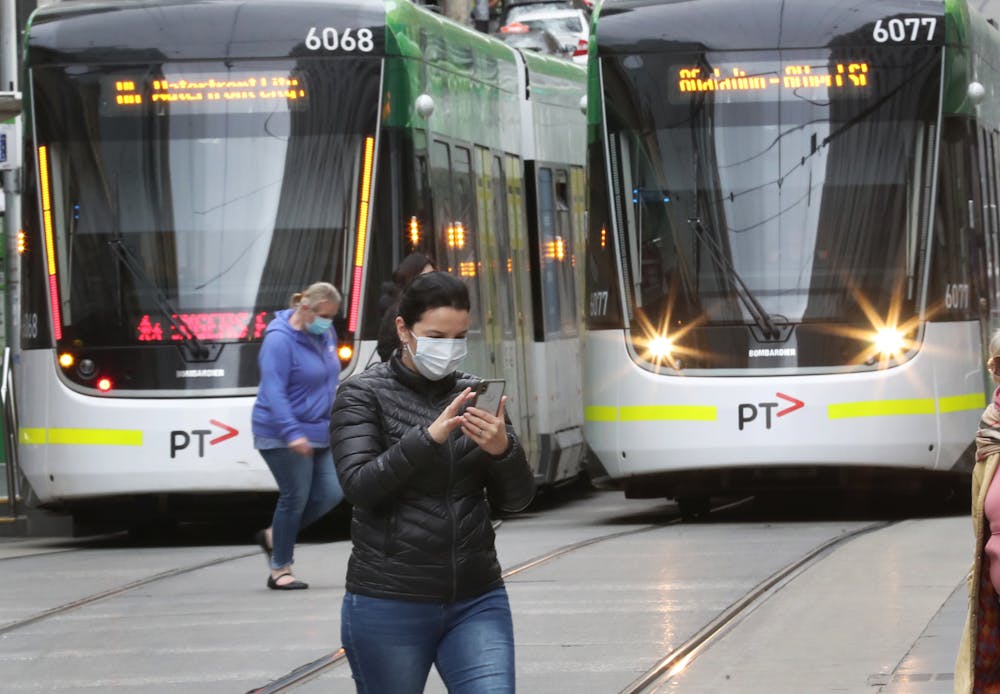
From midnight tomorrow, it will become mandatory for anyone in Melbourne and Mitchell Shire leaving their homes to wear a mask. Many people have already been wearing masks for some time in a bid to protect themselves and others from COVID-19.

Evidence has shown masks likely do reduce the spread of COVID-19, so wearing them is a good thing – particularly as Victoria continues to grapple with a second wave.

But one conversation we’re not having enough is around how to safely dispose of single-use masks. Disposing of used masks or gloves incorrectly could risk spreading the infection they’re designed to protect against.


Read more: Victorians, and anyone else at risk, should now be wearing face masks. Here’s how to make one


A convenient choice

While reusable cloth masks are an option if you’ve been able to buy one or even make one yourself, disposable, single-use surgical masks appear to be a popular choice. They provide protection and they’re cheap and convenient.

It’s estimated the global use and disposal of masks and gloves will amount to 129 billion face masks and 65 billion plastic gloves for every month of the COVID-19 pandemic.

The effect on the environment is an important but separate issue to the health risks we’re discussing here.

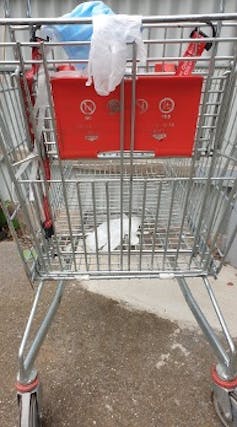
Alarmingly, from what we’ve observed, people are discarding masks in communal rubbish bins and even leaving them in empty shopping trolleys.

Incorrectly disposing of masks could create a risk of infection for others. Kate Kennedy, Author provided

People should know better than to leave used masks lying around. But they can’t be expected not to discard them in public bins when there’s no other option, and when they’re not given any advice on how to dispose of them properly.

Importantly, while there are clear guidelines on the disposal and separation of medical waste within health-care settings, guidelines for disposal of surgical masks in public settings are unclear.

The Victorian government simply advises they be disposed of “responsibly in the rubbish bin”, meaning they will be mixed with ordinary waste. This is in contrast to personal protective equipment (PPE) used in health-care settings, which is disposed of separately to regular waste, transported to sealed landfill, and in some cases incinerated.


Read more: Which face mask should I wear?


Why could this be a danger?

We don’t yet know a whole lot about the survival of SARS-CoV-2, the coronavirus that causes COVID-19, on textile materials.

One study published in the medical journal The Lancet found no infectious SARS-CoV-2 could be detected on textile materials after 48 hours.

A review study which looked at the survival of a range of pathogens on textiles found viruses could survive longer than 48 hours, though not as long as bacteria.

Masks have been mandated in Victoria. But we’re offered little guidance on how to dispose of them safely. Shutterstock

Although we need more research on this topic, it seems there is potential for cross-contamination, and therefore possibly COVID-19 infection, from disposed masks.

In all likelihood, other people, such as supermarket staff collecting trolleys, or waste handlers, will come into contact with discarded masks well within that 48 hour window.

In addition, if the discarded mask is carrying infectious particles, it may be possible for these to cross-contaminate the surfaces they come into contact with, such as shopping trolleys. And we know SARS-CoV-2 survives more readily on hard surfaces than porous ones, so this is a worry.


Read more: Are you wearing gloves or a mask to the shops? You might be doing it wrong


Who needs to act?

This issue is a potential biosecurity concern, and we need segregation of used masks from ordinary waste immediately. We urge attention from the Victorian government and local councils to act on this issue, including in the following ways:

  • create general awareness of this problem, potentially by including messaging around how to properly dispose of masks in directives on their use

  • install pop-up secured bins in public places such as shopping centres for used masks and gloves

  • workers collecting the waste should follow biohazard protocols similar to those used to manage waste collected from health-care settings.

What you can do

In the first instance, please don’t leave your used masks and gloves in a shopping trolley, or lying around anywhere else.

The safest thing to do is to put used masks and gloves into a plastic bag when you take them off, and seal it. Then, when you’re back at home, throw the bag away into a closed bin.

Hopefully we will have further directions on how to dispose of these items soon.


Read more: Is the airborne route a major source of coronavirus transmission?


ref. Single-use masks could be a coronavirus hazard if we don’t dispose of them properly – https://theconversation.com/single-use-masks-could-be-a-coronavirus-hazard-if-we-dont-dispose-of-them-properly-143007

JobSeeker supplement cut from $550 to $250 a fortnight after September

Source: The Conversation (Au and NZ) – By Michelle Grattan, Professorial Fellow, University of Canberra

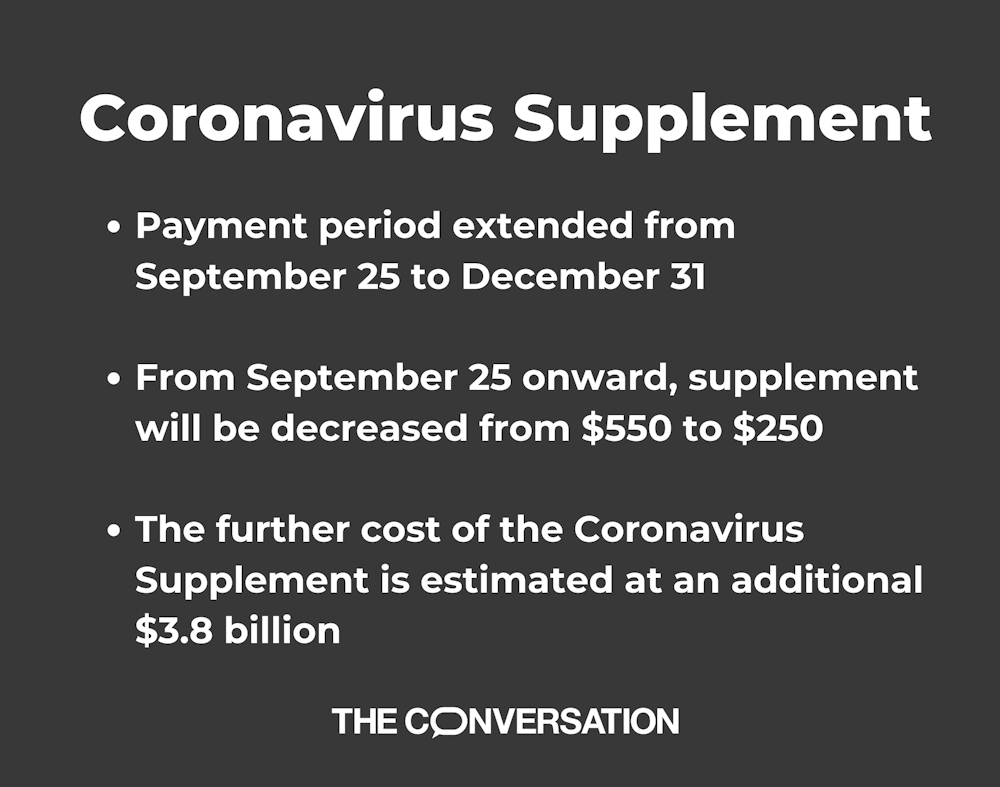
The unemployed will have their Coronavirus Supplement cut from $550 a fortnight to $250 after September, in an extension of the supplement that will run until December 31.

Those on JobKeeper will get $1,200 a fortnight from September 28 to January 3, with a lower rate of $750 if they worked less than 20 hours a week in February.

The full payment will fall to $1,000 a fortnight from early January, remaining until March 28. The second tier rate will fall to $650.

The present rate is $1,500 a fortnight for all recipients.

Under the changes, those on JobSeeker will be able to earn up to $300 a fortnight compared with the present $106 before their income support is tapered.

“We will make further decisions about JobSeeker closer to the end of the year or possibly even in the [October] budget,” Scott Morrison said.

He acknowledged some elevated support will be needed into the new year.

“We need to make those decisions closer to the time, to have a better understanding of where the economy is – remembering the JobSeeker arrangements have more impact on incentives on the labour market. JobKeeper does not have those same disincentives,” he said.

“But I want to be very clear – I am leaning heavily into the notion that we would anticipate, on what we know right now, that there obviously would need to be some continuation of the COVID supplement post-December.”

The revisions to JobKeeper and JobSeeker, announced by Morrison and Treasurer Josh Frydenberg, recognise a continuing financial floor is vital while starting to wean businesses and individuals off the present levels of payments as the economy transitions.

The revision comes amid great uncertainty given the second COVID wave in Victoria, with that state on Tuesday announcing a tally of 374 new COVID cases and three more deaths.

The government has not changed the basic JobSeeker (unemployment) rate, although Morrison, under questioning at his news conference, did not rule out this being done later.

The existing higher JobKeeper and Coronavirus Supplement rates will remain until late September.

Tougher eligibility conditions will mean businesses will have to show the required turnover reduction to remain in the JobKeeper scheme.

Employers will have to demonstrate the turnover falls (30% for businesses with turnover under $100 million, 50% for larger ones) in the June and September quarters to be eligible for the December quarter payment.

They will again need to reassess their eligibility for the March quarter payment, showing they have had the relevant falls in the June, September and December quarters.

Those on JobSeeker will have mutual obligation requirements reintroduced. From August 4 people will have to reconnect with employment services and undertake four job searches a month. They will be obliged to accept a job that has been offered though this process. There will be a higher rate of job search from the end of September.

The extension of JobKeeper will cost an estimated $16 billion on top of the earlier estimated $70 billion. The Coronavirus Supplement extension is costed at $3.8 billion.

The Australian Industry Group said the new two-tiered JobKeeper payment “is a sensible adoption of the New Zealand wage subsidy approach”

It would “go a long way to sharpening the work incentives that were dampened by the flat rate of JobKeeper in the initial phase.

“While the phase-down of the amount of the subsidy will put more pressure on businesses, it is a fiscally responsible move and will help businesses transition to a greater degree of self-reliance in these extreme economic circumstances.”

The St Vincent de Paul Society questioned the different timeframes for the extension of JobKeeper and JobSeeker, and the reintroduction of mutual obligation requirements for JobSeeker.

“At the end of the day, COVID affects everyone and both those payments should be in place till the end of March. It’s not clear why the JobSeeker arrangements have only been extended to December this year,” CEO Toby oConnor said.


Read more: Bowing out gracefully: how they’ll wind down and better target JobKeeper


ref. JobSeeker supplement cut from $550 to $250 a fortnight after September – https://theconversation.com/jobseeker-supplement-cut-from-550-to-250-a-fortnight-after-september-143086

What makes people switch to reusable cups? It’s not discounts, it’s what others do

Source: The Conversation (Au and NZ) – By Sukhbir Sandhu, Senior Lecturer in Sustainability and Ethics, University of South Australia

People are more likely to use re-usable coffee cups if they see others doing it, or if cafe owners charge extra for throwaway coffee cups, our research has found.

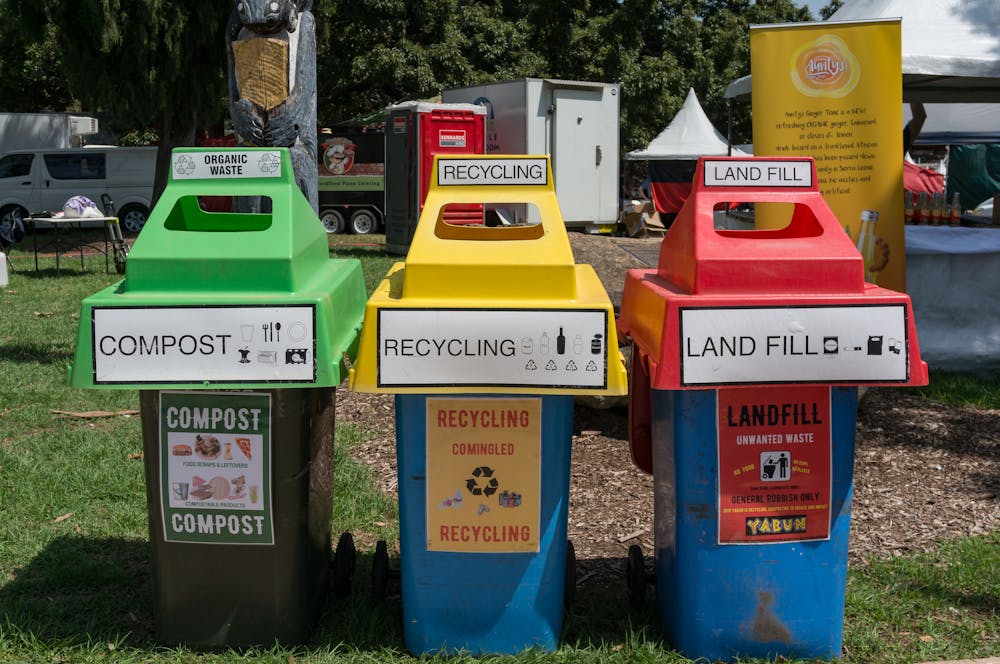
Our study also found people would be more likely to properly dispose of compostable cups if councils provided dedicated organic waste bins. Alternatively, councils could provide facilities allowing people to rinse compostable cups before putting them in a recycling bin.

The need to find ways to encourage Australians to quit throwaway coffee cups has never been more urgent. About 1 billion disposable coffee cups are thrown into landfill sites across Australia annually, because the polyethylene lining that makes them leak-proof also makes them unrecyclable.

The COVID-19 pandemic has reportedly driven a surge in throwaway cup use as many cafes refused reusable cups at the height of the pandemic.

In places where reusable cups are allowed, however, coffee drinkers, cafe owners and local governments can use insights from behavioural science to discourage use of throwaway cups.


Read more: The ‘recycling crisis’ may be here to stay


Coffee drinkers: show off your reusable cup

We interviewed consumers, café owners and policy makers in South Australia, and unobtrusively observed customer behaviour in cafes for around 50 hours.

One finding became very clear: people mimic each other. Customers we interviewed told us over and over that watching their colleagues bring in their reusable coffee cups (such as a KeepCup) made them change their habits. As one coffee drinker told us:

I started using a KeepCup because one of my other staff members was using a KeepCup and I was like, hmm, that’s very environmentally conscious of her.

As more consumers start using reusable coffee cups, the practice becomes ever more socially acceptable.

If others start seeing you use your reusable cup, they’re more likely to follow suit. Shutterstock

One of our interviewees told us she initially felt “scabby” bringing her reusable cup but as more consumers did so, she felt more confident:

At first, I would not walk across the road from work holding a cup coming here [to the cafe]. I’d just feel scabby. Because I would have been the minority. It probably was a bit less socially acceptable, but it’s probably more socially acceptable now because when I’m there I do see people walk in with their cups.

The best part is that you do not even have to nudge and preach to others (although you can if you like!).

So, coffee drinkers: if you want to make a difference, one of the easiest and best things you can do is to take your reusable coffee cup to the cafe.

You may not be aware of it, but the signalling effects are strong. Your colleagues will gradually notice and start bringing in their own reusable cups.

Cafe owners: discounts for reusable cup use don’t work

Many cafe owners offer discounts ranging from 10c – A$1 to customers who bring in their own reusable cups.

But our findings reveal these discounts are ineffective in changing consumer behaviour.

Billions of single use coffee cups end up in landfill every year. Shutterstock

A cafe owner we interviewed described how, despite providing a 20c discount for reusable cups, she didn’t think saving money motivated her customers:

The regulars were people who’d happily drop in a dollar tip into the jar kept on the counter. They were therefore not that concerned about 20c discount.

We know from previous behavioural psychology literature consumers are more likely to be what’s called “loss averse” as opposed to “gain seekers”. In other words, people hate paying extra for takeaway coffee cups more than they like getting a discount for bringing their reusable cups.

So, if you own a cafe, focus on making consumers pay extra for choosing takeaway coffee cups rather than offering discounts for reusable cup use. It’s more likely to motivate customers.

Policy makers: make proper disposal of compostable cups easy

Compostable cups can, in theory, be recycled. But they also end up in landfill because of a lack of appropriate bins and public waste infrastructure.

Customers often feel uncertain about how and where to dispose them. A council officer we interviewed stressed:

In the case of compostable cups, it is not solely a matter of ensuring that the cups end up in any bin, they must end up in the correct bin […] in order for compostable cups to be recycled, they must be placed in a bin dedicated to organic waste or, alternatively, rinsed and placed in a recycling bin.

Currently, however, most cities don’t have enough organic bins or facilities to allow people to rinse compostable cups before putting them in recycling bins.

Councils and city governments can address this by introducing organic waste bins as a part of the street waste infrastructure to reduce the number of compostable cups ending up in landfill.

Customers often feel uncertain about how and where to dispose of compostable cups. Shutterstock

Changing habits is hard but collectively, we can rewrite the waste story.

Three easy ways to do that are to bring your own reusable cup, charge extra for throwaway coffee cups and make it easy for people to recycle compostable cups.


Read more: Avoiding single-use plastic was becoming normal, until coronavirus. Here’s how we can return to good habits


ref. What makes people switch to reusable cups? It’s not discounts, it’s what others do – https://theconversation.com/what-makes-people-switch-to-reusable-cups-its-not-discounts-its-what-others-do-142254

Art for trying times: reading Richard Ford on a world undone by calamity

Source: The Conversation (Au and NZ) – By Peter McPhee, Emeritus professor, University of Melbourne

In this time of pandemic, our authors nominate a work they turn to for solace or perspective.

I’m one of those fortunate people for whom the direct experience of the COVID-19 pandemic has thus far been felt only through isolation from close friends and family and away from the pleasant routines of campus. Indirectly, however, it has been felt as a deep ultimatum from the earth about the interactions of its inhabitants.

Books are both solace and provocation at such a time. Reading Rachel Cusk’s latest collection, Coventry, prompted me to read her entire oeuvre in sequence, as I also did as I reread Richard Ford, and as I will now pursue with Patrick Modiano.

Why this urge to read a writer’s corpus in strict order? Was this my subconscious desire to restore order to a disordered world? Or just the depressing signs of a tidy mind? A linear imagination? Whatever the case, it has been satisfying.

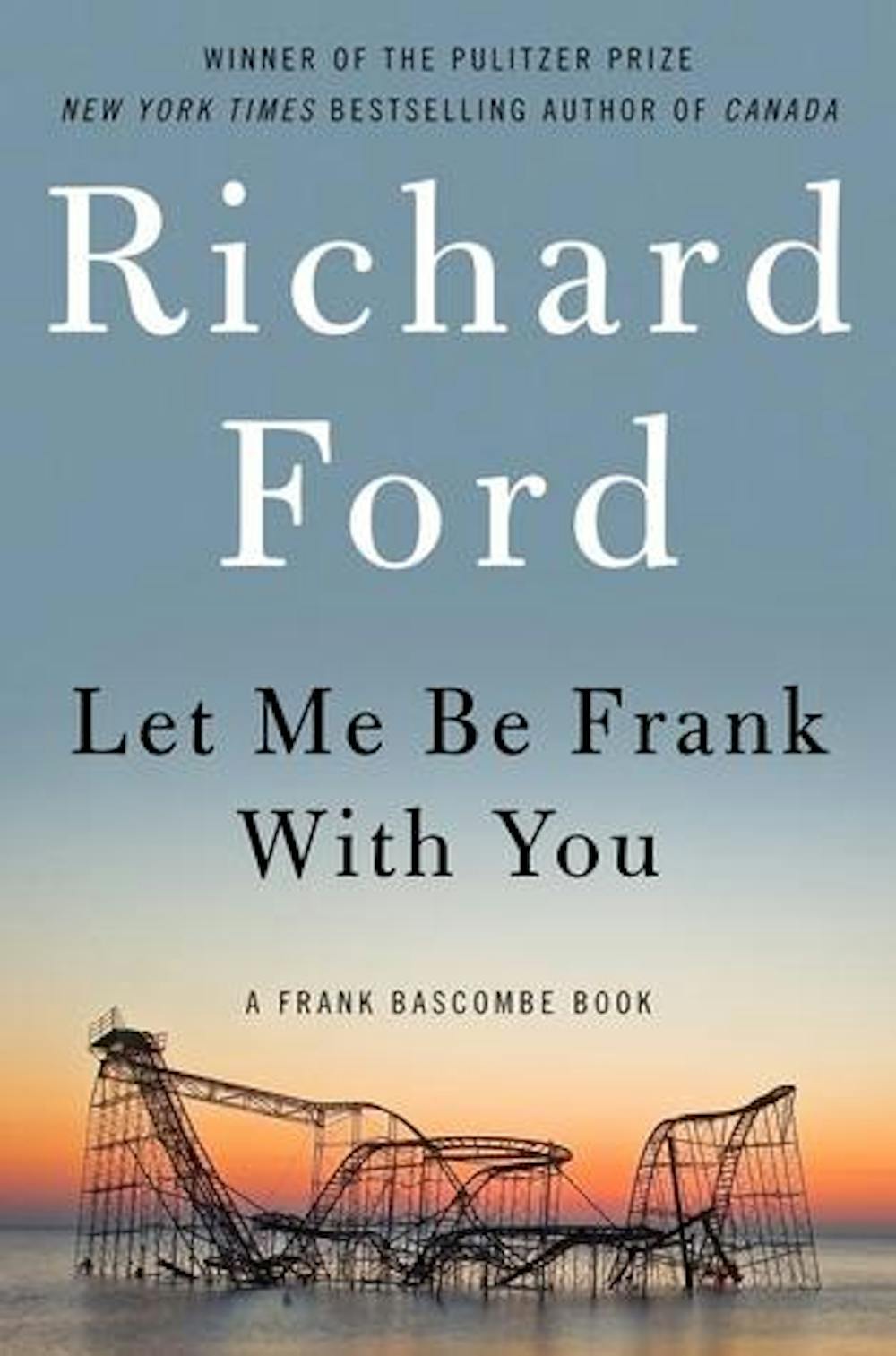
Ford’s prize-winning trilogy of Frank Bascombe novels – The Sportswriter (1986), Independence Day (1995) and The Lay of the Land (2006) – are a landmark in recent American literature, but it is his follow-up Let Me Be Frank With You (2014) that I have most relished returning to. The four interwoven “long stories” (Ford’s term) are his poignant, often hilarious, reckoning with environmental catastrophe and mortality.

Frank is now 68 and retired eight years from the real estate business he had run along the New Jersey Shore. He has moved inland to comfortable, white, “asininely Tea Party” Haddam with second wife Sally Caldwell. He travels to Newark weekly to greet “weary, puzzled” troops returning from Iraq and Afghanistan, and reads to the blind on his local radio station. His current choice for them is V.S. Naipaul’s The Enigma of Arrival: “they’re pissed off about the same things he’s pissed off about”.

Frank is dealing with his ageing body: he is recovering from prostate cancer and Sally keeps telling him to lift up his feet when he walks to avoid “the gramps shuffle”. Frank now listens to Aaron Copland and is trying to read The Tibetan Book of Living and Dying.

Frank deals routinely, if mostly affectionately, in ethnic and racist labels. He still calls black Americans “Negroes” but plainly prefers them to others of his compatriots: “It’s no wonder they hate us, I’d hate us, too”. Frank is a Democrat; he’s gratified that Obama likes Copland’s Fanfare.

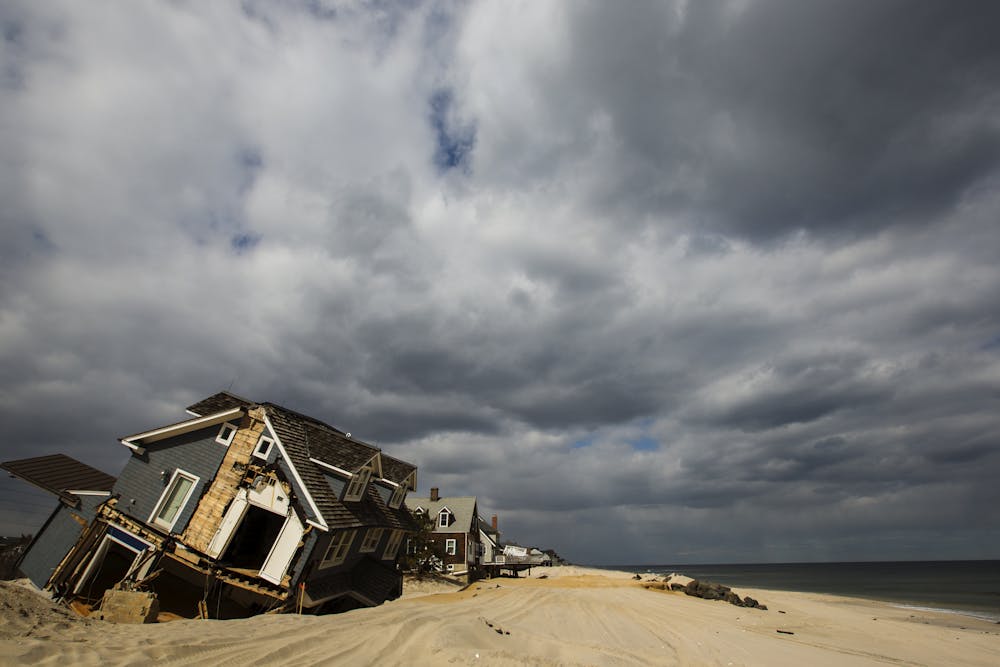
The four interwoven stories unfold across the fortnight before Christmas 2012 in the aftermath of Hurricane Sandy, which had hit the Jersey Shore on 29 October, shattering coastal buildings and killing scores of locals.

The presidential election has just been held: an Obama-Biden sign has been repurposed to read “WE’RE BACK. SO FUCK YOU, SANDY”. Other signs along the Shore warn “LOOTERS BEWARE!”. One, notes Frank, “merely says NOTHING BESIDES REMAINS (for victims with a liberal arts degree)”. His own former house on the shore has disintegrated.

A home destroyed in Mantoloking, New Jersey, by Hurricane Sandy. Lucas Jackson/Reuters

Frank is awe-struck: “There’s something to be said for a good no-nonsense hurricane, to bully life back into perspective” but admits his fear that “something bad is closing in – like the advance of a shadow across a square of playground grass where I happen to be standing”.

The people of the Jersey Shore have various explanations for the hurricane: his ex-wife believes it was a “bedrock agent”, others think it was somehow Obama’s doing to prevent people voting for Mitt Romney. No-one refers to climate change.

Richard Ford pictured in 2012. Laura Wilson/AAP

Richard Ford interprets and survives a world undone by calamity and death through the encounters Frank has with four individuals: a former client to whom Frank had sold his own house eight years earlier; a reserved, sad and gracious black woman who visits Frank’s new house where 40 years earlier her father had killed her mother, brother and himself; his ex-wife Ann, who has Parkinson’s and has moved to an aged-care facility “determined to rebrand ageing as a to-be-looked forward-to phenomenon”; and an old friend Eddie.

This novel is Ford at his finest. Sharp satire is captured in barbed turns of phrase. Unforgettable, somehow rootless, characters stud the stories. Ford combines the meticulous attention to domestic detail of contemporaries Philip Roth and John Updike with the “dirty realism” of Raymond Carver. His precise, gritty tone is perfect – and strangely consoling.

Ford’s ultimate consolation offered to us is expressed through a brief final encounter, an epiphany of decency through environmental calamity and personal despair. After all, “love isn’t a thing”, he notes, “but an endless series of single acts”.

ref. Art for trying times: reading Richard Ford on a world undone by calamity – https://theconversation.com/art-for-trying-times-reading-richard-ford-on-a-world-undone-by-calamity-142816

Bowing out gracefully: how they’ll wind down and better target JobKeeper

Source: The Conversation (Au and NZ) – By Steven Hamilton, Visiting Fellow, Tax and Transfer Policy Institute, Crawford School of Public Policy, Australian National University

The government’s revised JobKeeper scheme, announced today, fixes many of the flaws of the original design, providing support for businesses continuing to struggle as the economy recovers and for those thrust into renewed uncertainty amid isolated outbreaks and second waves.

Importantly, both JobKeeper (the A$1,500 per fortnight payment to hard-hit businesses for each worker they keep on the job) and the coronavirus supplement (the $500 per fortnight top-up to the JobSeeker unemployment benefit and a range of other payments) will continue as they are until they were due to expire in September, suggesting the government has decided the economy wasn’t strong enough for an early withdrawal.

Beyond that, they will continue at lower rates, for JobKeeper until the end of March, and for the coronavirus supplement until the end of the year.

The extended JobKeeper will be more modest, better targeted, and better in tune with the needs of the businesses receiving it. But it remains to be seen if even this withdrawal of fiscal stimulus will be too rapid for what looks to be a fragile economic recovery.

Rolling eligibility

The big change to JobKeeper will be a move to rolling eligibility. The original scheme was a one-shot game. You applied, indicated that you expected to lose 30% of your revenue (50% for big businesses) and got JobKeeper for the full six months.

Given many of the businesses that qualified (and over one half of all businesses covering about one third of all workers did) will have been impacted only mildly or for only a short time, many will have in fact profited handsomely from the design as it was.

To prevent this profiteering, the scheme should always have retested eligibility every month or quarter. As it is, all businesses report their actual and expected revenues to the Tax Office every month, but this doesn’t affect their payment.


Read more: JobKeeper is quick, dirty and effective: there was no time to make it perfect


From the end of September, organisations seeking JobKeeper will be required to reassess their eligibility with reference to their actual turnover in the June and September quarters of 2020. If they had a big enough decline, they will get to keep JobKeeper for the rest of the year.

If they want it beyond this year until the end of March 2021, they will need to reassess their eligibility based on their actual turnover in the previous three quarters.

Continuing into 2021

The original scheme was cobbled together in late March before the first wave of coronavirus had peaked, and before we knew how long it would last or what damage it would wreak. For much of the country, the fallout was more modest and shorter-lived than had been expected.

But the full-blown Victorian second wave and the ember attacks in New South Wales highlight the precarious nature of the recovery.

And with the virus still raging across much of the world, international borders may remain closed until mid-2021, which will devastate sectors of the economy such as tourism and education.

Moreover, withdrawing all the fiscal support at once — the so-called “fiscal cliff” — might have put our fledgling recovery at serious risk.


Read more: What’ll happen when the money’s snatched back? Our looming coronavirus support cliff


Extending JobKeeper by another six months but at a more modest level and with tighter targeting is prudent and pragmatic, and far better than driving off the fiscal cliff.

As businesses recover, they will organically drop out of the scheme, keeping support flowing to those worst-affected into 2021.

But this still represents a large withdrawal of stimulus from the economy, reducing the incomes of many workers at a time of great fragility.

The government should seriously consider introducing alternative support measures, like broad business tax relief and cash stimulus, to further support the recovery.

Two speeds

The original flat payment structure – paying eligible businesses $1,500 per fortnight for every worker, regardless of each workers’ earnings or work hours – was always a baffling design choice.

It meant that a quarter of the workers covered got more money than they had been earning before. Unrelated to hours worked, the $1,500 per fortnight payment made it hard to entice casual workers to work more hours.

The updated two-tier structure along the lines of New Zealand’s will offer $1,200 per fortnight for all eligible employees who were previously working 20 hours or more per week, and $750 per fortnight for employees who were previously working less than 20 hours a week.

After January 4, those payments will shrink to $1,000 per fortnight and $650 per fortnight.

Remaining flaws, but no dealbreakers

There is no doubt JobKeeper has propped up some businesses that were not viable even before the recession. When it comes, this “creative destruction” will be one of the few silver linings of the recession, something Australia has missed out on for three decades.

The lower payment rates will reduce but not eliminate support for zombie firms. This adds to the case for not extending the scheme beyond its new March end date, so long as by then viable businesses can stand on their own feet.


Read more: How to improve JobKeeper (hint: it would help not to pay businesses late)


An oddity is that after the changes the payments to people on the JobSeeker (Newstart) and other payments including Youth Allowance, Farm Household Allowance, Parenting Payment and Special Benefit will be higher than those under JobKeeper to people working up to 20 hours per week.

JobSeeker with the coronavirus supplement will fall from $1,100 to $800 a fortnight, while the JobKeeper payment for people working fewer than 20 hours a week will fall from $1,500 to $750.

On the face of it, it means that until December someone working up to 20 hours per week will get less money ($750 per fortnight) than someone out of a job and working zero hours ($800).


Read more: The compromise that might just boost the JobSeeker unemployment benefit


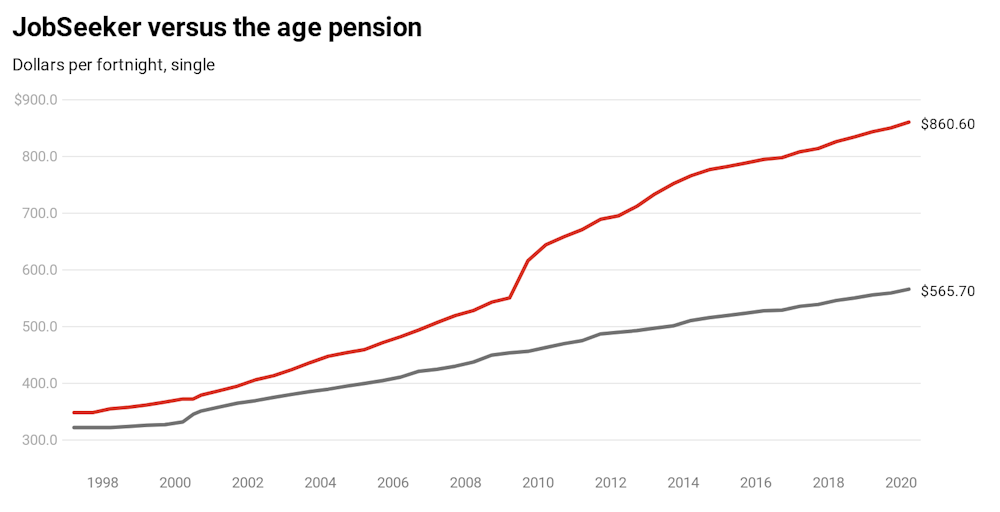
But it mightn’t last for long. Come Christmas, JobSeeker is set to be busted back to somewhere in the region of its present $565.70 per fortnight as the coronavirus supplement ends.

In his press conference, Prime Minister Scott Morrison held out hope of a permanent increase beyond then but offered no details. It was not a question the government was contemplating “at this point”.

ref. Bowing out gracefully: how they’ll wind down and better target JobKeeper – https://theconversation.com/bowing-out-gracefully-how-theyll-wind-down-and-better-target-jobkeeper-143011

There is no legal right to free quarantine — but there is a fair way to set the price

Source: The Conversation (Au and NZ) – By Alexander Gillespie, Professor of Law, University of Waikato

Welcome home – now here’s your invoice.

The debate over whether New Zealand should charge arriving Kiwis for quarantine has divided opinion, but one thing is clear: citizens and permanent residents have the right to return home.

However, like many other liberties, this right can be subject to reasonable limits, especially during times of global emergency.

But it’s a surprisingly difficult issue. Despite all the newly minted law around COVID-19, the question of financial liability for isolation is not covered.

The challenge for the next government will be to balance rights and costs in a way that is seen to be fair.

Quarantine costs will rise

Right now, the 2020 Public Health Act Response Act authorises quarantines and control of our air and maritime borders. In short, anyone returning to New Zealand may be subject to mandatory medical examination, testing and isolation or quarantining.

That is, of course, if they can make it home. With inbound numbers regulated due to quarantine and isolation capacity, the first hurdle for many would-be returnees is getting a flight.

From March 26 to July 6, 26,414 people have been quarantined or in managed isolation at 26 different sites. On the last day of that period there were just under 5,700 under control.


Read more: How New Zealand could keep eliminating coronavirus at its border for months to come, even as the global pandemic worsens


We’ve already spent NZ$81 million on such operations. Another nearly NZ$300 million has been budgeted for the rest of the year.

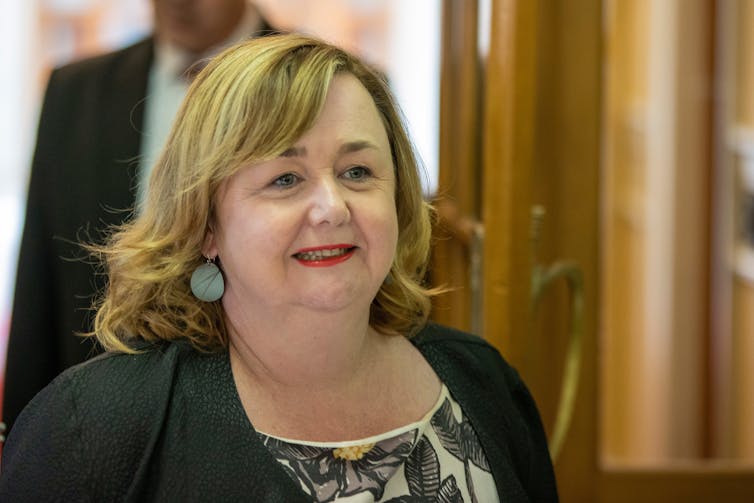
Border control minister Megan Woods: a ‘very complex’ issue. AAP

These costs will probably increase in 2021. Current trends suggest a growing, not diminishing, global pandemic. As the health and economic impacts of this wave crash over other countries, it’s likely many more Kiwis will want to return to their (hopefully) safe homeland.

Inevitably, then, quarantine standards (and costs) will grow too. The lessons from Victoria and our own experience of people abusing the system only reinforce the need for a fail-safe system.

Australia has also grappled with the question of who should pay and has concluded there is no federal right to free quarantine. Each state has the right to ask for a contribution to the cost of quarantine.

For New Zealand, there are two ways to think about this. One says free quarantine is a right and also a public good; if people have to pay for their isolation their right to return to New Zealand is threatened.


Read more: The sun is setting on unsustainable long-haul, short-stay tourism — regional travel bubbles are the future


The other says that returning is a free choice with a financial cost. Both major political parties want to charge returnees, with the National Party putting a figure of NZ$3,000 on a single adult’s quarantine.

How to balance those views?

Entitlement versus privilege

The government has already spent, or plans to spend, an incredible NZ$62.1 billion on fighting COVID-19. It can be argued, then, that the cost of isolating our fellow Kiwis is the same as the cost of keeping people in work, creating new jobs, building infrastructure and propping up critical sectors of the economy.

Quarantine is therefore an entitlement, like the right to paid parental or sick leave, and should be free.

The opposing argument is that it is fair to require those who took advantage of a liberty to travel and return to pay the associated costs. Within two weeks of their return they will reap all of the benefits of being home in a COVID-free country.

This isn’t what they would experience if they had stayed abroad. A New Zealander requiring isolation overseas could expect consular assistance, including advice and help contacting family and insurance providers. But they would not have their quarantine paid for.

Similarly, in New Zealand there is actually no legal right to have quarantine paid for by the government.


Read more: The law is clear – border testing is enforceable. So why did New Zealand’s quarantine system break down?


Under the Health Act it is possible to charge a reasonable cost for isolation and also to exempt someone from having to pay. Legally, the government can demand payment but also, it can waive it.

This suggests a middle ground needs to be found based on what is fair.

A reasonable way forward

Potentially, some people should pay more than others. Those who travelled overseas after the pandemic was declared and then sought to return, or those who are coming home for a holiday or short-term respite from the horrors overseas could pay the full amount.

The government could offer a range of quarantine hotels at different prices. Those returning broke to their homeland should be given discounted rates and zero- or low-interest loans to pay for quarantine.

Should those required to pay the full cost expect preferential treatment and better accommodation? Does this open the door for private providers to exploit a growing quarantine market?

These questions undoubtedly help explain why the minister responsible for managed isolation and quarantine, Megan Woods, says it is a “very complex” issue.

It seems fair, though, that although there is no right to free quarantine, the price of rejoining the “team of 5 million” should be charged according to a person’s ability to pay.

ref. There is no legal right to free quarantine — but there is a fair way to set the price – https://theconversation.com/there-is-no-legal-right-to-free-quarantine-but-there-is-a-fair-way-to-set-the-price-143082

An open letter to Australia’s Education Minister Dan Tehan — signed by 73 senior professors

Source: The Conversation (Au and NZ) – By Nicholas Evans, Professor, Linguistics, Australian National University

This open letter is written in response to the Australian government’s proposed reforms to the university sector, announced by Education Minister Dan Tehan on June 19, 2020. The so-called “job-ready graduates” package seeks to make courses in areas such as science, maths and teaching cheaper to encourage more students to get degrees in what the government sees to be job-growth areas. By contrast, fees for many humanities courses will more than double.


Read more: Fee cuts for nursing and teaching but big hikes for law and humanities in package expanding university places


Dear Minister,

We write regarding the recently proposed changes to Australian higher education funding. We welcome the much-needed intent to boost domestic student enrolments. But the complicated and inconsistent nature of the funding changes and the intent to identify “work-relevant qualifications” risk further undermining the nation’s fourth largest export industry at a time the Australian economy can ill afford it.

As laureate researchers spanning a wide range of disciplines in science, technology, engineering and mathematics (STEM), humanities, arts and social sciences (HASS) and other fields, we believe this proposal will bring severe negative national consequences for future university training. It is likely to have the unintentional effect of amplifying inequities in higher education, and will work against the very economic goals it is trying to achieve.

1. The proposal makes untenable assumptions about future growth in demand for training in particular backgrounds

Successive Australian governments have refrained from “picking winners” in industry, but here we see that approach applied to education precisely at a time when future needs are becoming more heterogeneous and unpredictable.

Bracketing the humanities and social sciences as a category deemed less useful for future employment flies in the face of what we see among leaders in both politics and business. More Liberal frontbenchers, for instance, have received an arts degree than studied economics.

Business leader Jennifer Westacott, Chief Executive of the Business Council of Australia, emphasises the importance of a humanities education and Deloitte Access Economics stresses its value in teaching students to ask innovative questions, think critically for themselves, explain what they think, form ethical constructs and communicate flexibly across a range of perspectives.


Read more: If the government listened to business leaders, they would encourage humanities education, not pull funds from it


The proposed changes reflect an outdated view of both HASS and STEM. Each is concerned with advancing our understanding of the world and providing the intellectual framework and critical thinking skills needed to acquire that understanding.

These will be critical for creating a flexible, responsive workforce in an increasingly diverse economy. In the face of our uncertainty about where future needs will lie, what we can be sure of is that interdisciplinary training will become ever more important.

2. Different pricing of subjects works against both social equity and quality teaching

It is unhealthy for a democratic and inclusive society to make some fields the province of those who can pay more for them.

Different pricing is unhealthy for every academic field: the best outcomes grow from an optimal match between disciplines and the talents and interests of those who want to study them, undistorted by arbitrary price signals.

3. The proposed policy is likely to prove rife with unintended consequences

Even within its own premises, many of the subjects it claims to promote (such as maths) will suffer severe cuts. Universities may be discouraged from offering such subjects, or boost their offerings in fields that are cheaper to teach, to cross-subsidise the more expensive courses.

The recently floated patch of an “integrity unit” to prevent this would simply increase regulatory burdens and consume resources better spent directly on education.

Complex sets of discipline categories greatly reduce the transparency and efficiency of the system. Energy will needlessly be diverted into defining subjects into or out of categories favoured or disfavoured by the funding model.

Universities need to be able to plan intelligently, delivering world-class education and training in an uncertain 21st century. Well-intended but counter-productive distortions in the funding model will not help.

The national economic impacts of these decisions have not been convincingly worked through.

A forward-looking policy of higher-education funding thus needs to do three things:

1. Avoid complex different policies

These will necessitate increased regulation, while failing to achieve either the diversion of student numbers that are sought, or the social and technological goal of better preparing our students for the future.

The simplest way to achieve this is to reinstate a flat HECS rate — a simple way to optimise the match between talent, interest and enrolment without distortions from family wealth, easy to administer, and immune from highly uncertain guesses about future trends.

2. Increase funding to universities in real terms

This will assure the growth in quality and capacity of one of Australia’s transformative success stories and its fourth greatest export. This should be a real increase, not funded from an arbitrary subset of future students at the outset of their careers in a time of great uncertainty.

We appreciate that the COVID-19 epidemic has put unprecedented pressures on the budget, but the need for greater support to our universities is more necessary than ever during this present time of huge financial stress, caused by the plummeting income of overseas students. Wise investment now will pay huge dividends later in the economic, scientific, social and cultural growth of the nation.

3. Integrate the systems for funding university and vocational education, which have long drifted apart

This will ensure every school-leaver has access to the level of training they need for a successful career. What is really needed is not a vocational approach to university education but a more systematic and thoughtful approach to vocational education.

In the modern economy, all kinds of work, including trades, require a broader range of skills than in the past, including communications and IT skills. We have much to learn here from the success of countries like Germany in integrating these two systems of higher education.

We urge this current piece of legislation be shelved in its current form, and replaced by one that has been drafted after proper consultation with a range of experts in the sector who are able to devise an optimal mechanism for building this vital part of our society’s future.

Yours sincerely,

Professor Nicholas Evans, School of Culture, History and Language, Australian National University

Professor Chris Turney, Faculty of Science, University of New South Wales

Professor Joy Damousi, President, Australian Academy of the Humanities

Christine Beveridge, School of Biological Sciences, University of Queensland

Professor John Quiggin, School of Economics, University of Queensland

Professor Matthew England, Climate Change Research Centre, The University of New South Wales

Professor Mathai Varghese, Mathematical Sciences, The University of Adelaide

Professor Sue O’Connor, Archaeology and Natural History, The Australian National

Professor Barry Brook, School of Biological Sciences, University of Tasmania

Professor Bostjan Kobe, School of Chemistry and Molecular Biosciences, University of Queensland

Professor Michael Bird, College of Science & Engineering, James Cook University

Professor Ben Andrews, Mathematical Sciences Institute, Australian National University

Professor Ian Reid, School of Computer Science, University of Adelaide

Professor Trevor J McDougall, School of Mathematics and Statistics, University of New South Wales

Professor Tamara Davis, School of Mathematics and Physics, University of Queensland

Professor Steven Sherwood, Climate Change Research Centre, University of New South Wales

Professor Peter Goodyear, Centre for Research on Learning and Innovation, The University of Sydney

Professor Madeleine JH van Oppen, Institute of Marine Science, The University of Melbourne

Professor Christopher Barner-Kowollik, School of Chemistry & Physics, Queensland University of Technology

Professor Hong Hao, Centre for Infrastructural Monitoring and Protection, Curtin University

Professor Paul S.C. Tacon, Griffith Centre for Social and Cultural Research, Griffith University

Professor Matthew Bailes, Centre for Astrophysics and Supercomputing, Swinburne University of Technology

Professor Warwick Anderson, Faculty of Arts and Social Sciences, University of Sydney

Professor Malcolm McCulloch, Oceans Institute, The University of Western Australia

Professor Lynette Russell, Monash Indigenous Studies Centre, Monash University

Professor Ping Koy Lam, Research School of Physics, The Australian National University

Professor Alexandra Y. Aikhenvald, College of Arts, Society & Education, James Cook University

Professor Chennupati Jagadish, Research School of Physics, Australian National University

Professor Margaret Jolly, School of Culture, History and Language, The Australian National University

Professor Justin Marshall, Queensland Brain Institute, University of Queensland

Professor Jason Mattingley, Queensland Brain Institute, The University of Queensland

Professor George Zhao, Faculty of Engineering, Architecture and Information Technology, The University of Queensland

Professor John Dryzek, Institute for Governance & Policy Analysis, University of Canberra

Professor Brad Sherman, School of Law, University of Queensland

Professor Richard G. Roberts, ARC Centre of Excellence for Australian Biodiversity and Heritage, University of Wollongong

Professor Geoffrey Ian McFadden, School of BioSciences, University of Melbourne, University of Melbourne

Professor Peter Taylor, ARC Centre of Excellence for Mathematical and Statistical Frontiers, The University of Melbourne

Professor Belinda Medlyn Hawkesbury, Hawkesbury Institute for the Environment, Western Sydney University

Professor Fedor Sukochev, School of Mathematics and Statistics, University of New South Wales

Professor Michelle Coote, Research School of Chemistry, Australian National University

Professor Michael Tobar, Department of Physics, The University of Western Australia

Professor Hilary Charlesworth, Melboure Law School, The University of Melbourne

Professor Mark Finnane, School of Humanities, Languages and Social Science, Griffith University

Professor Katherine Demuth, Faculty of Medicine, Macquarie University

Professor Jolanda Jetten, School of Psychology, The University of Queensland

Professor Jon Barnett, Faculty of Science, Melbourne University

Professor Matthew Spriggs, College of Arts and Social Sciences, The Australian National University

Professor Kate Smith-Miles, School of Mathematics and Statistics, The University of Melbourne

Professor Shizhang Qiao, School of Chemical Engineering and Advanced Materials, The University of Adelaide

Professor Peter Visscher, Institute for Molecular Bioscience, The University of Queensland

Professor Zheng-Xiang, Faculty of Science and Engineering, Curtin University

Professor Toby Walsh, School of Computer Science & Engineering, UNSW Sydney

Professor Martina Stenzel, ARC Training Centre for Chemical Industries, University of New South Wales

Professor David James, School of Life and Environmental Science, University of Sydney

Professor Ross Buckley, School of Law, University of New South Wales

Professor Alex Haslam, School of Psychology, University of Queensland

Professor Stuart Wyithe, School of Physics, University of Melbourne

Professor Sara Dolnicar, Faculty of Business, The University of Queensland

Professor Lesley Head, School of Geography, University of Melbourne

Professor Glenda Sluga, Department of History, University of Sydney

Professor Ann McGrath, School of History, Australian National University

Professor Bernard Degnan, School of Biological Sciences, University of Queensland

Professor Philip Boyd, Institute for Marine and Antarctic Studies, University of Tasmania

Professor Richard Shine, Department of Biological Sciences, Macquarie University

Professor Loeske Kruuk, Research School of Biology, Australian National University

Professor Kaarin Anstey, ARC Centre of Excellence in Population Ageing Research, UNSW

Professor Paul Mulvaney, School of Chemistry, University of Melbourne

Professor Lianzhou Wang, School of Chemical Engineering, The University of Queensland

Professor Peter Waterhouse, Centre for Agriculture and the Bioeconomy, Queensland University of Technology

Professor George Willis, Mathematical and Physical Science, University of Newcastle

Professor Barry Pogson, Research School of Biology, Australian National University

Professor EJ Rohling, Research School of Earth Sciences, Australian National University

Professor Enrico Valdinoci, Department of Mathematics and Statistics, University of Western Australia

ref. An open letter to Australia’s Education Minister Dan Tehan — signed by 73 senior professors – https://theconversation.com/an-open-letter-to-australias-education-minister-dan-tehan-signed-by-73-senior-professors-142989


COVID-19 is a disaster for mothers’ employment. And no, working from home is not the solution
Source: The Conversation (Au and NZ) – By Leah Ruppanner, Associate Professor in Sociology and Co-Director of The Policy Lab, University of Melbourne

When COVID-19 hit, some commentators hailed it as an opportunity to revolutionise gender roles in heterosexual couples.

But as public life froze overnight and homes became schools, daycare centres and offices, mothers have been placed under more pressure, not less.

Our new study on workers in the United States shows that in the first months of the pandemic, mothers noticeably reduced their employment, but fathers’ time at paid work was unchanged.


Read more: Why coronavirus may forever change the way we care within families


This is a finding with serious implications not just for the US, but for Australia, where women’s unemployment during COVID-19 is outpacing men’s.

Parents can have a hard time doing it all under normal circumstances. But during these extraordinary times, our research shows mothers’ employment is suffering.

Gender gap in employment grows

Our research uses recently released figures from the US Current Population Survey, a nationally representative dataset collected monthly by the federal government.

The data is collected at multiple time points, so we can see how employment changed for a consistent set of American parents from February to April 2020, during the height of state lockdowns.

Our analysis shows mothers with kids of all ages reduced their work time over the period.

Those with preschool children worked on average 1.8 hours less per week, while those with school-aged children reduced their weekly work time by 1.9 hours. Even those with high-school children — who are expected to be independently completing assignments while building TikTok empires — reduced their work time by 1.5 hours per week.

What happened to fathers’ work time? Nothing, really. Dads’ employment hours remained largely the same.

Only fathers of high-school aged kids reported spending less time in work (1.2 hours per day). Those with the youngest kids – whose demands are arguably the greatest – reported no significant change in their work time.

Our study did not look at why mothers were scaling back their work. But others show housework, childcare and homeschooling time have increased under COVID-19 and mums have picked up the slack.

These figures suggest mothers are experiencing conflict between their work and family commitments force them to cut back on work. In times of trouble, kids are more likely to go to their mum first and under coronavirus, Mum is trying to do it all under one roof.

Is working from home the answer?

We also specifically wanted to know how dual-earner parents, who both had jobs that could be done from home, were faring during the pandemic.

Here we found mothers working from home with preschool-aged children reduced their daily work time by 2.6 hours. Mothers with older kids did not show similar reductions, indicating work at home is more difficult to combine with caregiving of younger children.

But when it came to their male partners working from home? You guessed it: fathers’ work time remained unchanged.

Working from home appears to be more difficult for mothers of little children. www.shutterstock.com

Any parent who is working from home while caring for young children can tell you why it’s hard to be productive.

As media reports have also shown, it involves an endless stream of work and caregiving demands, each interrupting the other. Parents find it nearly impossible to focus fully on work or caregiving when both need doing simultaneously.

One of the best-known examples of this during the pandemic is children interrupting their parents’ video meetings – sometimes making global headlines in the process.


Read more: In praise of the office: let’s learn from COVID-19 and make the traditional workplace better


Philanthropist Melinda Gates suggests these work interruptions can humanise working parents.

But with reports some mothers are being penalised for caregiving during work hours – either being fired, forced out of work or having their hours cut – this “humanisation” may come at a huge cost.

As the pandemic wears on, these work and life demands won’t disappear and the consequences for working mothers are dire.

US mums are not the only ones

American mothers are not alone. A recent study found Canadian mums had been hit harder by COVID-19 than dads, with similar findings in New Zealand.

In Australia, we already know coronavirus has seen women lose jobs at faster rates than men. This was confirmed in the latest, grim unemployment figures, released in July. These showed women’s full-time employment dropped by 5.2% since February, compared to 3.8% for men.

Other studies, including Melbourne University’s Work and Care in the Time of COVID-19 survey are showing women’s time spent caring has also increased more than men’s during the pandemic.

In May, a joint Melbourne University Policy Lab and La Trobe University study also found women were less likely than men to have their hours and pay unchanged and were suffering from more sleep disturbance and greater fears about their retirement funds.

Lessons for the future of work

COVID-19 has wreaked havoc on work and family life. But as our study shows, it was mothers who picked up the pieces at the expense of their employment.

And it is not over.

While Australia was praised on the global stage for its effective early pandemic response, it now has one of the highest rising infection rates in the world.


Read more: We need a new childcare system that encourages women to work, not punishes them for it


As we continue to respond to COVID-19, now is the time to protect our protectors — to ensure mothers aren’t getting snowed under with the added unpaid work of caregiving.

This requires a collective effort from governments, employers and partners to ensure we all share in the care.

ref. COVID-19 is a disaster for mothers’ employment. And no, working from home is not the solution – https://theconversation.com/covid-19-is-a-disaster-for-mothers-employment-and-no-working-from-home-is-not-the-solution-142650

Two more covid-19 cases in Port Moresby with targeted testing

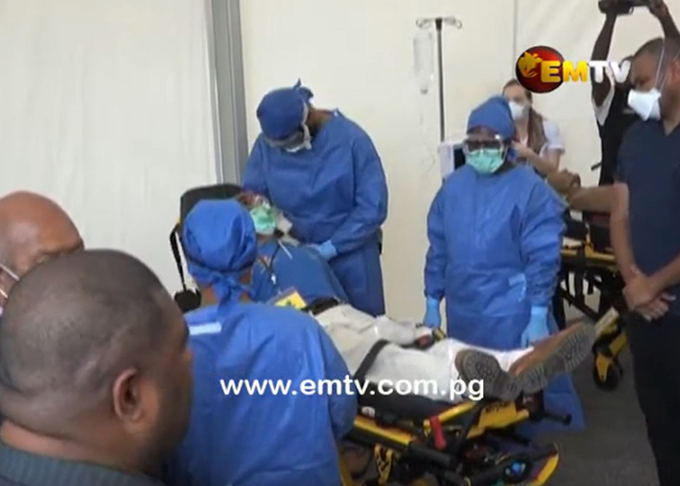
More coronavirus cases in Papua New Guinea. Video: EMTV News

By EMTV News

Papua New Guinea’s National Command Center has announced two new covid-19 cases in Port Moresby.

The 18th case is a 53-year-old man with no history of travel and who was experiencing fever, cough, shortness of breath and was tested via GeneXpert Testing.

The 19th case is a 39-year-old man who works as a medical officer.

READ MORE: Al Jazeera coronavirus live updates –  UK vaccine trials show early promise

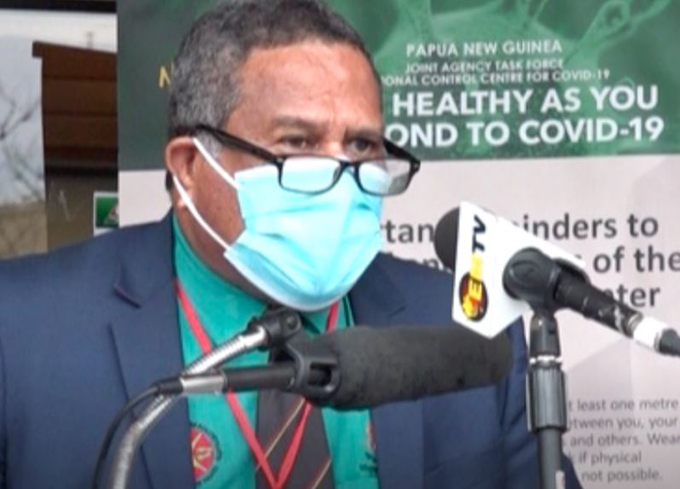
Deputy Pandemic Controller Dr Paison Dakulala said that targeted testing strategy had given more efficient use of resources, rather than a wide net testing.

The focus is on testing symptomatic patients and pre-triaging is the key.

Dr Dakulala stressed his concern over the fact that the last five positive cases had been health workers.

“We have symptomatic people in our communities who are not staying home, but being socially active,” he said.

Dr Paison Dakulala … need for more testing. Image: EMTV screenshot

Infecting others
Dakulala stated that those people going to work, schools, moving around and possibly infecting others needed to present themselves for testing.

The National Control Centre has been challenged to upscale testing throughout the country while taking stock of quantities of Universal Transport Medium’s available locally and throughout the world.

The levels of PPE are at an acceptable level and staff are undergoing refresher courses around Infection Protection Control.

Meanwhile, Controller David Manning said that these statistics were truly alarming.

He said the argument that the country was immune from covid-19 or blessed with protection against the virus could easily be dispelled with what the statistics had shown over the last 5 days.

“We have initiated 200 tests and of those tests specifically, we have identified 7 positive cases,” he said.

Manning stressing that these rates were even alarming against world standards.

“This brings the number of active cases being isolated by the NCD PHA team to 7.”

“The capacity at Rita Flynn Emergency Ward for isolation is 70, at the current rate of infection per day and using exponential modelling, this has the potential to be reached by the end of the month” said Manning.

There were now calls for all public health authorities to take ownership of their areas of responsiblity and ensure testing was conducted at clinics.

Covid-19 in PNG
Covid-19 in Papua New Guinea … two more cases. Image: EMTV screenshot
Print Friendly, PDF & Email

Article by AsiaPacificReport.nz

‘Genomic fingerprinting’ helps us trace coronavirus outbreaks. What is it and how does it work?

Source: The Conversation (Au and NZ) – By Rebecca Rockett, Virologist, University of Sydney

If you had told me in January that “genomics” would become a buzzword in 2020, I’d have thought you were crazy.

But the COVID-19 pandemic has brought medical science to the top of our nightly news bulletins. And now, it seems, everyone is talking about genomics.

During Australia’s first wave of COVID-19, genomic sequencing of the earliest Sydney clusters was crucial to identifying the difference between imported cases and local community transmissions.

And now with a second wave lapping at the New South Wales border, genomic sequencing traced the origin of the Crossroads Hotel cluster back to Victoria, just as Victorian scientists were able to trace the Melbourne outbreaks back to hotel quarantine cases.

Genomic sequencing offers us a key to unlocking the puzzle of local transmission of COVID-19.

But what is it and how does it work?


Read more: Australia’s coronavirus testing rates are some of the best in the world – compare our stats using this interactive


Mapping the COVID-19 ‘family tree’

Genomics is the study of the genetic materials within an organism — DNA (deoxyribonucleic acid) and RNA (ribonucleic acid).

Genomic sequencing effectively takes a “genetic fingerprint” of an organism and maps how the DNA or RNA inside it is ordered.

COVID-19 is an RNA virus, and by looking at the genetic sequence of different cases, we can detect minute differences in each new infection.

This allows us to create a genetic “family tree” to show which COVID-19 cases are closely related, and to identify and track clusters.

The more fingerprints we take, the easier it becomes to identify whether someone contracted COVID-19 from a known cluster or case.

SARS-CoV-2, the coronavirus that causes COVID-19, is an RNA virus. Shutterstock

Born in a tent: the COVID-19 genomic sequencing test

Late in January, travellers returning from overseas hotspots were showing symptoms of this new coronavirus — but the virus was so new we didn’t yet have a genomic sequencing test developed to prove where the virus was coming from.

On a family camping holiday north of Sydney over the Australia Day long weekend, I sat in a tent with my laptop, designing NSW’s first genomic sequencing test for COVID-19.

Meanwhile, my colleagues from the University of Sydney and NSW Health Pathology were working in the lab at Westmead Hospital testing and collating data to see whether it worked.


Read more: Cheap genome tests to predict future illness? Don’t hold your breath


From that point, we collected genetic material from positive COVID swab tests in NSW, and using the sequencing test we designed, we were able to generate genetic data from 209 COVID-19 cases.

Our study published recently in Nature Medicine reveals how we used genomic sequencing and mathematical modelling to give important insights into the “parentage” of cases and likely spread of the disease in NSW during the first ten weeks of COVID-19 in Australia.

Our secret weapon: rockmelons

Remember the rockmelon recall of 2018? Supermarkets across Australia pulled the fruits (otherwise known as cantaloupes) from shelves due to a deadly outbreak of listeria.

Genomic sequencing was used to help trace the source of that listeria outbreak, and over many years we’ve used it to trace other food poisoning outbreaks, as well as transmission of tuberculosis.


Read more: What is listeria and how does it spread in rockmelons?


When COVID-19 hit Australia we had to move quickly, so we began to adapt these tests to this new coronavirus — and it worked.

Very early on in our research we were able to discover cases which weren’t linked to a known cluster or case.

We identified that one-quarter of COVID-19 positive samples were local transmissions and were able to identify clusters such as those in nursing homes.

When positive cases of COVID-19 are identified, genomic sequencing can help us understand where they’ve come from. Daniel Pockett/AAP

Comparing our genomic sequences against an international database, we also identified which countries the virus in Australia was being imported from.

We reported genomic sequencing to NSW Health to supplement epidemiological information from contact tracing and inform and improve public health follow-up of COVID-19 cases.

This knowledge community transmission was occurring led to the closure of the country’s international borders, revision of testing policies, and other federal and state government measures designed to minimise further spread of the virus.

Sequencing is key as we continue the battle against COVID-19

We know genomic data from Australia’s first wave of coronavirus infections proved vital to understanding the trajectory of the disease, and it continues to help us crack the codes of the second wave’s clusters.

With an effective vaccine still many months away at best, and with a resurgence of infections in Australia, it’s critical we continue to invest in this research to advance our ability to contain the virus in the long-term.


Read more: 4 unusual things we’ve learned about the coronavirus since the start of the pandemic


ref. ‘Genomic fingerprinting’ helps us trace coronavirus outbreaks. What is it and how does it work? – https://theconversation.com/genomic-fingerprinting-helps-us-trace-coronavirus-outbreaks-what-is-it-and-how-does-it-work-142917

Yes, women outnumber men at university. But they still earn less after they leave

Source: The Conversation (Au and NZ) – By Julie Hare, Honorary Fellow, University of Melbourne

In his best-selling book, The Tipping Point: How Little Things Can Make a Big Difference, Canadian journalist Malcolm Gladwell describes a tipping point as “that magic moment when an idea, trend, or social behaviour crosses a threshold, tips, and spreads like wildfire”.

For women and their education, that point happened sometime in the 1970s. Perhaps it was triggered by Gough Whitlam’s nation modernisation, including making university free.

Whatever the tipping point, female enrolments went from one in three at the beginning of the 1970s to reaching parity just over a decade later. In 1987, for the first time, women made up the majority of enrolments — now, they make up 55.5%. This figure has been emulated across western democracies.


Read more: There are fewer males at university, so should they be an equity group?


But besides these gains being made in higher education, a fundamental unfairness remains: while women value education more highly, and see it as a strategy for economic security, men still outperform women after they graduate in terms of both salary and seniority.

Why women outnumber men at university

Much has been written about the feminisation of higher education; the issue of whether men should be considered an equity group has been raised many times over the years too.

While women in non-traditional disciplines such as STEM (science, technology, engineering and maths) are officially still an equity group in Australia, men are not, despite their under-representation in every discipline (with the exception of STEM).

For every 100 women enrolled in university in Australia, there are just 72 men. And once there, men are more likely to drop out. Government data shows while 65.5% of female students who enrolled in 2013 completed their degree within six years, the figure was only 60.3% for men.

Of course, the drivers behind the dramatic expansion of women’s attendance in higher education are a complex interplay of social, cultural and economic factors.


Read more: Isaac Newton invented calculus in self-isolation during the Great Plague. He didn’t have kids to look after


A potted history of the past five decades would point to the rise in feminism and its attendant changes in attitudes about women’s role in the home. It would include the contraceptive pill, which reduced the number of children women had while increasing the age at which they had them.

It would also address advances in technology which, to a degree, freed women from the drudgery of manual housework.

And it would include structural changes in the economy in the 1980s which saw a rapid decline in the number and types of unskilled jobs available to women. Secretaries and stenographers became occupations of a bygone era while nursing and teaching were professionalised requiring degrees as entry-level qualifications.

A recent study found the combination of reading proficiency at 15 years old and social attitudes towards women attending universities could predict gendered enrolment patterns five years later. Looking at 447,000 students across OECD countries the researchers found, unsurprisingly, more girls than boys enrolled in universities in nations

in which citizens had less discriminatory attitudes towards girls’ university education and in which girls performed well in reading.

And yet, women remain worse off

The feminisation of higher education is an important issue, given the well-documented personal and social benefits that come from a degree: higher salaries, better health outcomes, stronger levels of community engagement and lower levels of criminal behaviours, to name a few.

Male dominated careers, like construction, are still valued more highly than those occupied by women. Shutterstock

And yet, a 2019 Grattan Institute report found female university graduates are expected to earn 27% less than men – A$750,000 – over their career. The gender pay gap is down slightly from 30% a decade earlier.

So herein lies the dilemma: a stubborn gender pay gap and men moving up the career ladder more steeply than women, even in female-dominated sectors such as health care and education.

Why is it women fail to capitalise on their higher-level educational attainment relative to men?

The reasons are complex but solvable. One includes self-selecting segregation (half of all female commencements each year are in feminised, lower-paid sectors such as teaching nursing, childcare and humanities) while men outnumber women in two fields only — engineering and IT.

Then there’s the issue of built-in bias as to how certain careers are valued (childcare pays poorly but construction well); social expectations around child rearing; recruitment practices and self-perpetuating corporate cultures to name a new.

As COVID-19 has laid bare, there is strong undercurrent in our society of devaluing “women’s” work even though that work is essential to the successful running of an economy. It’s a bitter pill to swallow.

And there’s the fact more women leave full-time work to bring up children. While the number of women staying in the workforce has increased in recent years thanks to a universal paid-parental leave scheme, at the age of 35 80% of men are engaged in the workforce full-time compared to only 40% of women

It is not until their 50s that 50% of women are back in the workforce full time. And this is too late for most to accrue independent wealth to see them through their retirement years should their marriage go bust.

What that also means is there is a significant percentage of older women who are part-time, unemployed, or underemployed.

Interestingly, the government’s proposed changes to tuition fee subsidies (with STEM courses costing less than most in the humanities) have attracted media attention in part because they look set to benefit men while negatively impacting women.

Whether this an intentional form of policy bias to improve higher education participation among men is unlikely. However, it brings us back to the question of whether men should be considered an equity group.

The answer for the time being at least is a robust no. Firstly, men are not being squeezed out of university places just because there are more women — they are making choices based on the opportunities available to them.

And men have, by and large, access to more well-paying career paths that don’t require a university degree. Trades, for example, continue to be male dominated and maybe because of the gendered way in which our society values work, can be well-rewarded, unlike similar occupations for women.


Read more: If you have a low ATAR, you could earn more doing a VET course than a uni degree – if you’re a man


Women also have to contend with the gender pay gap, interrupted careers and fewer opportunities to enter leadership positions. Because they make the “choice” in a partnership to be the primary carer, women almost never make it up again financially when they go back into the workforce.

ref. Yes, women outnumber men at university. But they still earn less after they leave – https://theconversation.com/yes-women-outnumber-men-at-university-but-they-still-earn-less-after-they-leave-142714

Cars rule as coronavirus shakes up travel trends in our cities

Source: The Conversation (Au and NZ) – By Neil G Sipe, Honorary Professor of Planning, The University of Queensland

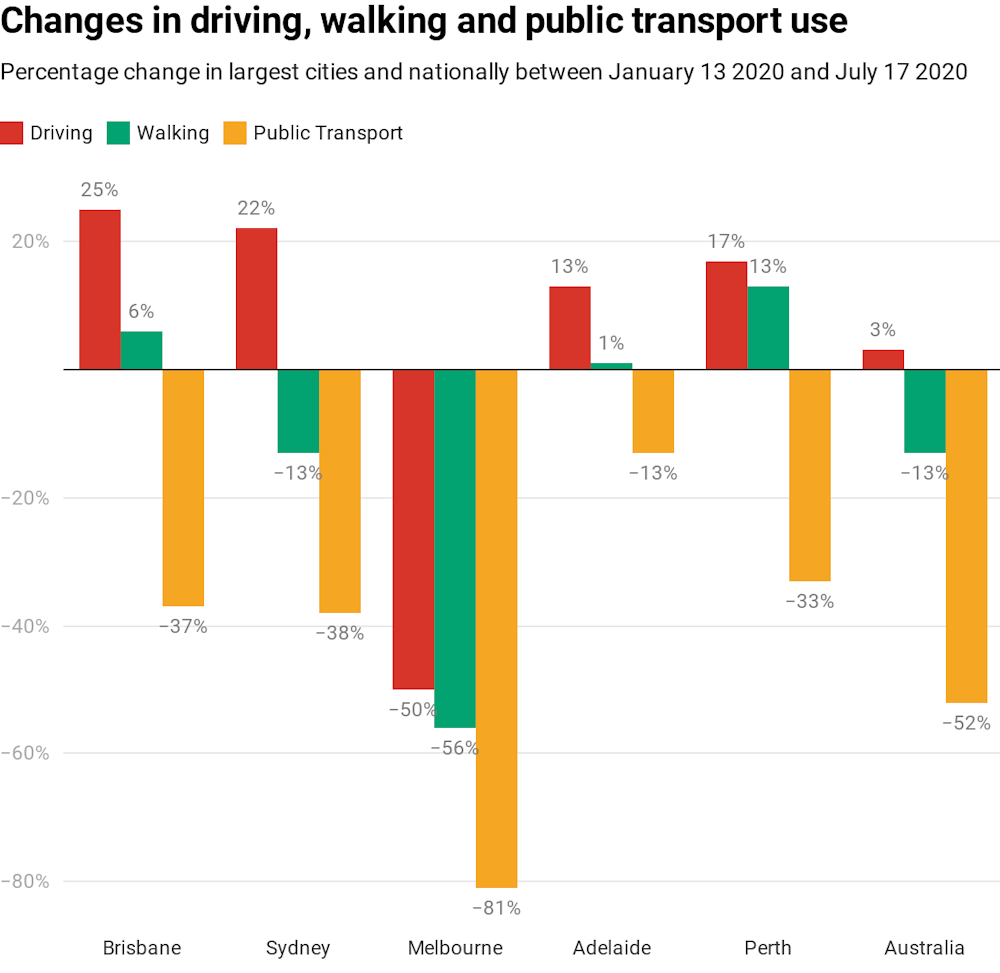
As with other parts of the global economy, COVID-19 has led to rapid changes in transport trends. The chart below shows overall trends for driving, walking and public transport for Australia as of July 17.

Australia-wide mobility trends for the six months from January to July 2020. Apple Mobility Trends

Unfortunately, the current lockdown of metropolitan Melbourne, which is at odds with trends in Australia’s other biggest cities, is skewing the national average. These data, provided by Apple Mobility Trends, are available for many cities, regions and countries around the world.

Updated daily, the data provide a measure of trends in transport use since early January 2020. The chart below summarises the changes since then in driving, walking and public transport for Brisbane, Sydney, Melbourne, Adelaide and Perth.

Data: Apple Mobility Trends

With the exception of Melbourne, driving has recovered and is now noticeably above pre-pandemic levels.


Read more: How to avoid cars clogging our cities during coronavirus recovery


Public transport use is still well below baseline levels. It is recovering – again except for Melbourne – but slowly. The exception is Adelaide where public transport is only slightly below the baseline.

Walking is doing better than public transport. Adelaide, Brisbane and Perth are slightly above the baseline, while Sydney is slightly below it. Melbourne is still down by about a half.

How badly did lockdowns affect travel?

The chart below shows the largest declines in driving, walking and public transport were recorded in the period April 4-11. Most of the lowest values coincided with Easter holidays. However, regardless of the holiday, this was the period when levels of transport use were lowest.

The declines are fairly consistent across the cities. For driving, the declines were around 70%. For walking, the declines ranged from 65% to 80%. Public transport recorded declines of 80-89%.

Data: Apple Mobility Trends

The recovery in driving is due, in part, to it being seen as having a lower risk of COVID-19 infection. People see public transport as the least safe because of the difficulties of social distancing on potentially crowded commutes.

A study in early March by an MIT economist amplified these fears by associating public transport in New York City with higher rates of COVID-19 infection. Unfortunately, the research had some significant flaws. Health experts have since indicated there is little evidence public transport has been the source of any COIVD-19 infections.


Read more: Coronavirus recovery: public transport is key to avoid repeating old and unsustainable mistakes


Neverthess, public transport agencies are in serious financial trouble. In the US, experts are warning that, without large federal subsidies, public transport services are facing drastic cuts, which will impact where people live and work. Such shifts pose a threat to the economic viability of cities.

What is known about other transport modes? While comprehensive datasets are not available, evidence is emerging of the impacts on ride, bike and scooter sharing.

Ride sharing

As with all other transport modes, the pandemic has had big impacts on ride sharing. However some ride-sharing companies, like Uber, have diversified in recent years into areas such as food and freight delivery. These have provided much-needed revenue during the ride-sharing downturn.

Market analysts are predicting ride sharing will recover and continue to grow. This is due to need for personal mobility combined with increasing urbanisation and falling car ownership.


Read more: Billions are pouring into mobility technology – will the transport revolution live up to the hype?


Bike sharing

Globally, transport officials are predicting a long-term surge in bicycle use. Cycling appears to be booming at the expense of public transport.

Beijing’s three largest bike share schemes reported a 150% increase in use in May. In New York City, volumes grew by 67%. Bike sales in the US almost doubled in March.

In response, many cities are providing more cycling infrastructure, with cities like Berlin and Bogota leading the way with “pop-up” bike lanes. New Zealand has become the first country to fund so-called “tactical urbanism”.


Read more: We can’t let coronavirus kill our cities. Here’s how we can save urban life


Melbourne has announced 12km of pop-up bike lanes and is fast-tracking an extra 40km of bike lanes over the next two years. Sydney has added 10km of pop-up cycleways. Use of some Brisbane bikeways has nearly doubled, leading to criticism of delays in providing pop-up lanes.

Six temporary pop-up cycleways were announced in May to improve access to the Sydney CBD. James Gourley/AAP

London intends to rapidly expand both cycling and walking infrastructure in anticipation of a ten-fold increase in bicycle use and a five-fold increase in pedestrians. This complements a £250 million (A$448 million) UK government program to reallocate more space for cyclists.

Paris plans to add 50km of pop-up and permanent bikeways in coming months. It’s also offering a €500 (A$818) subsidy to buy an electric bike and €50 to repair an existing bike.

Milan will add 35km of bikeways as part of its Strade Aperte Plan. The Italian government is providing a 70% subsidy capped at €500 for people to buy a new bicycle.

We will have to wait to see whether all this interest translates into longer-term mode change.

E-scooters

E-scooter use has declined, as has the value of e-scooter companies. Lime, one of the larger companies, was valued at US$2.4 billion (A$3.4 billion) last year but is down to US$510 million. Nevertheless, investor interest continues. Uber, Alphabet, GV and Bain and others put $US170 into Lime in May.

In Europe, ride-sharing company Bolt plans to expand its e-scooter and e-bike services to 45 cities in Europe and Africa this year. Another positive sign for this mode is that the UK, where e-scooters have not been street legal, has begun trials of rental e-scooters.

Britain has given the green light for trials of e-scooter rentals to help people get moving while maintaining physical distancing. Michael Sohn/AP/AAP

Read more: E-scooter legalisation: what you need to know


It is still too early to predict the long-term impacts of COVID-19 on transport. What the data show is that driving has recovered and is even exceeding pre-pandemic levels. Current trends suggest active mobility – cycling, scooters and walking – may gain mode share. Whether public transport can recover is questionable, unless a vaccine becomes available.

ref. Cars rule as coronavirus shakes up travel trends in our cities – https://theconversation.com/cars-rule-as-coronavirus-shakes-up-travel-trends-in-our-cities-142175

Here’s another reason not to boost compulsory super: it’ll ramp up debt

Source: The Conversation (Au and NZ) – By James Giesecke, Professor, Centre of Policy Studies and the Impact Project, Victoria University

The government receives the long-awaited report of its retirement incomes review on Friday.

Source: Australian Tax Office

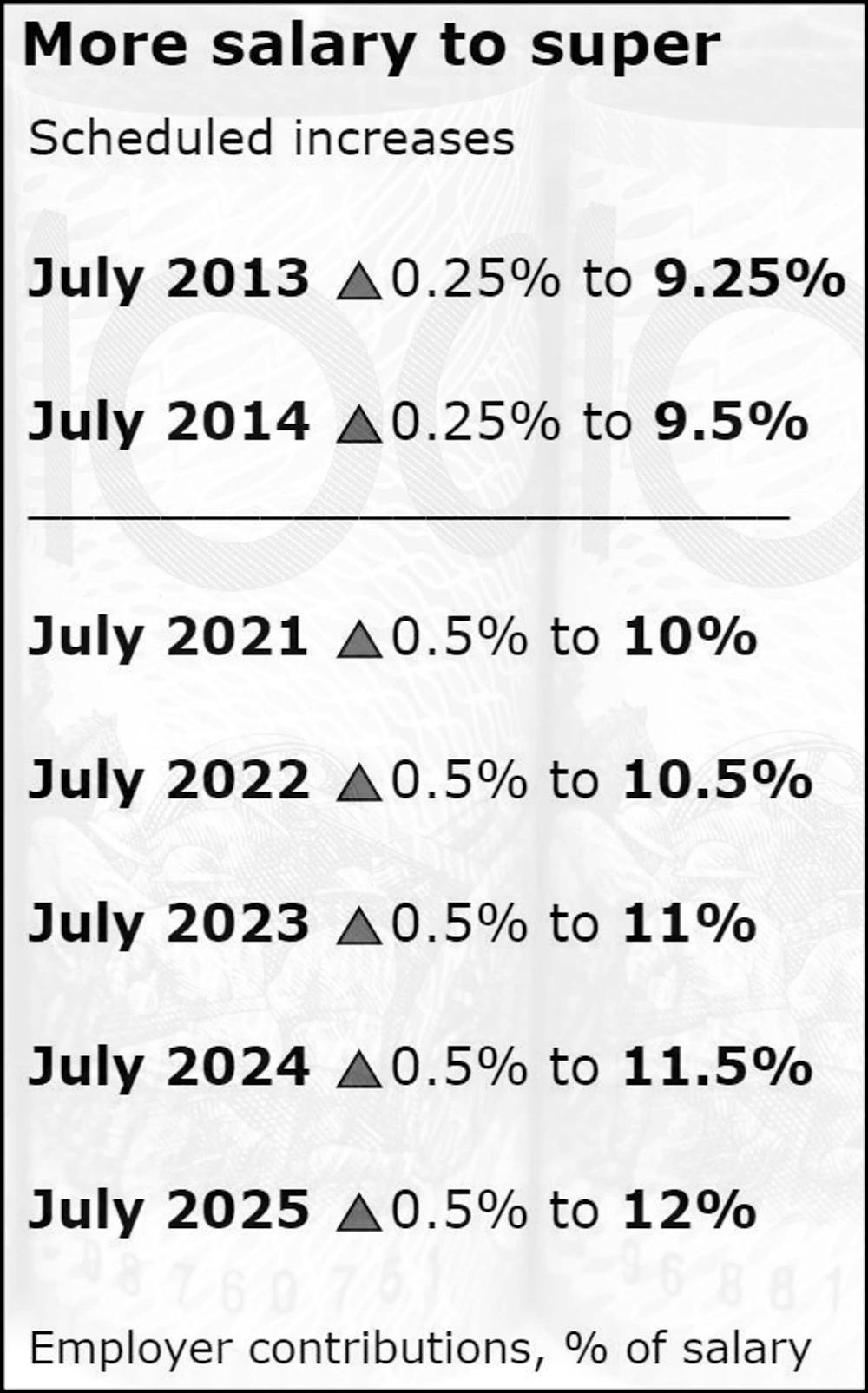
Key among the questions it has been asked to examine is whether to proceed with the legislated increases in employers’ compulsory super contributions from the present 9.5% of salary to 12%, in five annual steps of 0.5% of salary, starting next July.

In a study with colleagues from Victoria University’s Centre of Policy Studies published in the Journal of Policy Modeling we examined the effects of such an increase on financial stability.

We found it could have adverse impacts on two indicators of economy-wide debt: the ratio of private debt to income, and the ratio of debt to equity in housing finance.

These indicators matter for stability. High debt levels tend to amplify what would otherwise be manageable economic shocks.

Ultimately paid by households

How would an increase in compulsory super contributions increase debt?

The increase will ultimately be borne by households through a matching reduction in take-home pay. How long this takes will depend on how far in advance the planned increases have been announced and on broader labour market conditions.

Regardless, the end point will be that the extra superannuation will come from employees through lower take-home pay than they would have had.


Read more: Think superannuation comes from employers’ pockets? It comes from yours


Households will need to apportion the lower take-home pay than otherwise between lower spending than otherwise and lower other saving than otherwise.

How they do this will depend on how they save at the moment.

For households in which compulsory superannuation is the only or the main way in which they save, the increase in contributions will bring about extra saving. They will spend less than they would have.

For some, it’ll change the way they save

For households who are already saving more than is mandated through superannuation, the increase in contributions is more likely to lead them to cut other saving than it is to lead them to cut their spending.

For these households, total saving will be largely unchanged, but a greater proportion of it will be routed through super and a lower proportion through other types of saving.

These are the households who are likely to push up economy-wide debt.

To understand why, it is helpful to shift our focus to housing.

More borrowing, less equity

More debt, less equity. STEFAN POSTLES/AAP

A rise in compulsory super has little direct impact on demand for housing as shelter, whether by owner-occupiers or renters. But it does affect the way housing is financed.

In making decisions about where to allocate their saving outside of super, households show a preference for buying equity in housing.

In contrast, the super sector invests more heavily in market securities, including lending money to and buying shares in banks.

Shovelling more household savings into super and less into home equity will at the margin cut the amounts households are able to advance as deposits for homes and increase the amounts banks are able to lend them on top of those deposits.

The complex chain by which some savings that would have been home deposits end up financing the same homes via debt means a fair proportion of them is lost along the way in fees, expenses and profit margins.

Reasons for caution

Even in normal times, these would be reasons for caution about increasing compulsory super contributions. Of course, the times aren’t normal.

COVID-19 has had a dire impact on the labour market and broader economy. The recovery path is likely to be long and uncertain, with heightened risks of new economic shocks.

Before COVID-19, Australia had one of the world’s highest ratios of household debt to GDP. COVID-19 will exacerbate it by pushing down GDP.

An increase in compulsory super risks pushing up household debt further, further weakening economic stability.


Read more: 5 questions about superannuation the government’s new inquiry will need to ask


As noted earlier, for households with low saving rates the increase in compulsory super will be accommodated by lower spending than would have been expected.

During a recession this constitutes an additional risk to recovery.

It is also worth noting that while the legislated increase in compulsory contributions will ultimately be borne by workers through lower take-home pay than otherwise, in the short-run some of it might be borne by firms.

The risk there is that by pushing up short-run hiring costs, the increase in compulsory super will delay the labour market recovery.

ref. Here’s another reason not to boost compulsory super: it’ll ramp up debt – https://theconversation.com/heres-another-reason-not-to-boost-compulsory-super-itll-ramp-up-debt-142571

Art for trying times: Titian’s The Death of Actaeon and the capriciousness of fate

Source: The Conversation (Au and NZ) – By Alastair Blanshard, Paul Eliadis Chair of Classics and Ancient History Deputy Head of School, The University of Queensland

In this time of pandemic, our authors nominate a work they turn to for solace or perspective.


Why do bad things happen to good people? It is a question that seems particularly pertinent during times of pandemic. Disease is no respecter of virtue. It is just as likely to strike down saint as sinner. Yet even in more normal times, this is a problem we confront with depressing regularity. All too easily one thinks of lives cut too short, of acts of kindness and generosity that go unrewarded. The world can be a cold and bleak place. Why does this happen?

Every culture develops its own answer to this question. For the Greeks and Romans, their solution was that tragedy occurred because the gods were at best indifferent to mankind, at worst downright cruel.

When I’m feeling my most pessimistic, I often think of this world view and, in particular, one story that the Greeks told. It is a story perfectly captured in one of treasures of the National Gallery in London, Titian’s The Death of Actaeon.

The story of Actaeon was one of the most popular of Greco-Roman myths. Its most famous retelling was undertaken by the Roman poet Ovid in his epic Metamorphoses. Titian had little Latin, so he almost certainly read about the myth in one of the many translations and abridged versions of Ovid that circulated in the 16th century.

It is a myth that shows well the sadism of the gods. Actaeon committed no crime. It was only an unfortunate coincidence that, one day while hunting, he happened to stumble across the goddess Diana (Greek: Artemis) as she and her retinue of nymphs were bathing in a forest pool.

Diana, who prized her virginity above all else, did not take kindly to being caught naked by this stranger and so she organised a terrible punishment. With a wave of her hand, she transformed Actaeon into a stag. The hunter now became the prey. To magnify the cruelty, Actaeon was still fully conscious, a man trapped in the body of a beast. Tears trickled down his now furry cheeks.


Read more: Guide to the classics: Ovid’s Metamorphoses and reading rape


Instantly, Actaeon realised his danger. He had arrived with his pack of hunting dogs and they wasted no time turning upon their former master. The hounds seized his legs and dragged him to the ground. Their jaws bit deep into the shoulder, back, and throat. Actaeon died in agony torn apart by animals he had raised with such devotion.

The Death of Actaeon depicts a world of unfair savagery. Wikimedia Commons

Titian’s version of this tale shows the final moments of Actaeon’s life. It is an extraordinary painting from the end of Titian’s career. Most paintings of this story prefer to focus on the moment when Actaeon encounters the bathing Diana. Unable to resist the voyeuristic potential of the scene, they indulge in a riot of naked female flesh.

There is an earlier Titian of precisely this moment which he painted for Philip II of Spain. Yet in The Death of Actaeon the voyeurism is limited to one exposed nipple, a visual allusion to Actaeon’s crime. Diana dominates the foreground, but the line of her arm draws the viewer’s eye to the figures on the right of the painting. Here we see Actaeon caught in mid-transformation. He still retains his human form, but his head is now that of a stag.

This is enough for the hounds, who have overwhelmed Actaeon. Man, deer, and dogs merge into one muddy, muddled heap, a confusion of forms so jumbled that many have wondered if the painting is actually finished – but in its commotion it perfectly captures the vicious vitality of the act. Against this chaos, Diana stands off to the side ready to administer the coup de grâce, the only form of kindness she is prepared to give.

How could the Greeks and Romans bear to live in a world in which such unfair savagery received divine approval?

Unpredictable forces

The death of Actaeon is emblematic of so much injustice. The ancient Greeks and Romans may not have really had to worry about the correct etiquette for dealing with naked divinities, but they did need to worry about equally unpredictable forces. Theirs was a world stalked by famine, disease, war, and natural disaster.

Yet, it was in facing up to the capriciousness of fate that the ancients found meaning in the world. When Ovid introduces the story of Actaeon, he reminds his readers that no man should be regarded happy until he is dead. The treasures that we possess today can all too quickly and easily be taken away tomorrow. In this we see the true value of Actaeon’s story.

The lesson is not that the world is cruel, but rather that the gifts that we possess need to be cherished for the hard-won, against-the-odds, bounties that they are. It is the absences and deprivations that give value to our lives.

Only the person who has been hungry can truly know what it is to be full. The child born into wealth will never appreciate the riches that they enjoy.

Disasters are inevitable. They should not make us give up on life, but rather we should celebrate the preciousness of that life all the more. To do otherwise is to let the gods and Fate win, to let them turn us into beasts.

ref. Art for trying times: Titian’s The Death of Actaeon and the capriciousness of fate – https://theconversation.com/art-for-trying-times-titians-the-death-of-actaeon-and-the-capriciousness-of-fate-142815

Next phase of a pared-down JobKeeper will last until end of March

Source: The Conversation (Au and NZ) – By Michelle Grattan, Professorial Fellow, University of Canberra

The government on Tuesday will unveil a scaled-down, two-tiered JobKeeper program to commence after September and run until the end of March.

Prime Minister Scott Morrison and Treasurer Josh Frydenberg will also outline their plan to lower the $550 coronavirus supplement, which effectively doubled JobSeeker.

Eligibility for both payments will be tightened.

The changes follow a Treasury review of JobKeeper, which said it should continue but warned a redesign was needed to prevent it blunting the incentive to work, and to wean businesses off support as the economy improves.

But current levels for both the JobKeeper and the expanded JobSeeker payments will continue until their legislated end in late September, when originally they were meant to “snap back”.

The revised JobKeeper will have two payment tiers, to more accurately take account of those who before the pandemic worked fewer hours.

The present rate of JobKeeper, designed to maintain workers’ attachment to businesses, is a flat $1500 a fortnight, which has meant some people receive more than they earned previously.


Read more: Government to announce revamped wage subsidy amid huge COVID uncertainty


Treasury said its “overall assessment is that an extension to JobKeeper is needed, coupled with a fresh eligibility test” to make sure it was well targeted.

This test of businesses’ turnover decline should be based on “measured or actual turnover change rather than projected change when businesses first applied”.

Under the present arrangements, businesses with turnovers under $1 billion have been eligible for JobKeeper if they had an estimated fall in turnover of 30%; the fall for bigger businesses was 50%.

Tuesday’s announcement comes ahead of Thursday’s economic statement, which will update the fiscal outlook and show massive projected deficits.

Morrison said on Monday the government’s support should be seen in terms of “phases”. “How many phases there are it is very difficult to say because there are so many uncertainties associated with COVID-19,” he said.

He said businesses would have several months to adjust to the next phase.

Treasury in its report found JobKeeper had been targeted well so far. “The payment went to businesses that experienced an average decline in turnover in April of 37% against the same month a year previous”. This compared with a 4% decline for other businesses. There was no evidence of widespread business closures.

But “JobKeeper has a number of features that create adverse incentives which may become more pronounced over time as the economy recovers,” Treasury said.

“It distorts wage relativities between lower and higher paid jobs, it dampens incentives to work, it hampers labour mobility and the reallocation of workers to more productive roles, and it keeps businesses afloat that would not be viable without ongoing support,” the report said.

About a quarter of those receiving JobKeeper had an income rise compared to their February earnings in the same job. This averaged about $550 for those receiving increases.

“For many people, the impact of the Coronavirus and the introduction of JobKeeper has altered what they are paid, their working hours, or both. These changes have potentially blunted their incentives to work, or to take on additional hours of work. In addition, the introduction ofenhanced income support under JobSeeker may also be affecting incentives to work.”

Treasury identified two groups whose work incentives “may have been blunted”.

These were part-timers and casuals who were getting more than previously because of the flat rate of JobKeeper, and workers who had been stood down.

“Several industry stakeholders advised the review team of instances where part-time workers have been reluctant to do additional hours of work more commensurate with the JobKeeper payment, as well as instances where stood down workers have been reluctant to take on any work hours as businesses have begun to re-open in recent weeks. No quantitative evidence has been presented on either of these matters.”

While in present conditions the adverse impacts would be likely modest “they could rise over time. This is a key rationale for JobKeeper being a time-limited, rather than ongoing, program”, Treasury said.


Read more: Australians highly confident of government’s handling of coronavirus and economic recovery: new research


Treasury said while there would be merit in targeting the ongoing JobKeeper program to needy sectors, it was too early to nominate these, and define their boundaries.

Rather, reassessing eligibility in October based on actual decline in turnover “would target the most affected businesses and would reduce the proportion of the economy at risk of the adverse incentives of JobKeeper.

“It may also be appropriate at this juncture to consider reducing payments to wean off businesses from ongoing support”, Treasury said.

Any move to reduce payment for some workers should be aligned with any changes to JobSeeker support.

JobKeeper was taken up by more than 960,000 organisations and about 3.5 million individuals over April-May. By late June payments had totalled more than $20 billion over the four payment fortnights to May 24.

ref. Next phase of a pared-down JobKeeper will last until end of March – https://theconversation.com/next-phase-of-a-pared-down-jobkeeper-will-last-until-end-of-march-143037

Police chief to Manila democracy protesters – ‘Just do it online’

“We are requesting, if you can, just do it online. Because these are not ordinary times,” Gamboa said in a mix of English and Filipino.

In SONA protests, activist groups usually deliver a counterpoint to the president’s rendition of current events in his or her report to Congress.

The protests usually consist of marches and stage presentations, but General Gamboa warned that mass gatherings continue to be prohibited under quarantine rules.

The PNP did not mention how it will respond to street protests for this year’s SONA on July 27, but it has established a record of arresting demonstrators, even those who follow health protocols.

On June 26, Manila police arrested 20 LGBTQI+ activists during the annual Pride March. It has also arrested more than a dozen protesters in Cebu and in Laguna for holding programmes against the controversial Anti-Terror Law.

Article by AsiaPacificReport.nz

View from The Hill: Parliament not meeting, even remotely, sets a bad example

Source: The Conversation (Au and NZ) – By Michelle Grattan, Professorial Fellow, University of Canberra

Scott Morrison said on Monday that cancelling the fortnight parliamentary session that had been due to start August 4 was a “no brainer”, which is defined as something that “requires a minimum of thought”.

Surely the wisdom isn’t so obvious.

Morrison leaned heavily on the advice of Paul Kelly, Acting Chief Medical Officer in making what is a controversial call, quoting Kelly’s words.

Kelly argued that bringing “a high-risk group of individuals” to Canberra could place ACT residents “at unnecessary risk of infection”. Also, they could potentially infect other politicians and their staff.

Within days of the advice, ACT residents were already at risk – with about 80 in self-isolation after a breakout in the south coast town of Batemans Bay.

No doubt there would have been a degree of health danger in parliament meeting.

In terms of those posing risk, we are talking about Victorians and to a lesser extent those from NSW. Other states are safe.

Morrison said it would be neither feasible nor desirable to exclude parliamentarians “from a single state”.

But it would have been possible to limit numbers from Victoria (the situation in NSW is not as serious). In the earlier sittings during the pandemic, overall numbers were much reduced, and numbers in the chanber at any one time strictly controlled.

And couldn’t incoming MPs have been tested? That would not be an absolute guarantee they did not have COVID-19, but a substantial protection.

Morrison made the point, which is sound, that a face-to-face sitting is much better than trying to do things remotely. Labor agrees.

But many parents in Victoria are again struggling with the remote education of their children, when they wish they could send them off for face-to-face learning. They might think the parliament should also have a go at operating at a distance, even if it is very much a second best option.

It is not as impractical as it may sound, although it is unclear precisely how advanced the technology is, or could be made.

During the crisis Morrison has operated some party Coalition room meetings remotely, with audio rather than visual contact and people pressing a button if they wanted to ask a question.

Parliuamentary committees are running effective “virtual” meetings.

Morrison has emphasised the need for things to get back to normal as soon as feasible. We heard this endlessly in relation to schools, to say nothing of the issue of state borders (less about that at the moment).

Parliament surely should be setting an example. Or politicians may prefer to be cast in a more heroic mode, as “frontline” workers.

Morrison says the next sitting will now be August 24. But there is no guarantee because he also said Kelly had advised the risks posed by a sitting are unlikely to be resolved in the next month.

Hopefully the second COVID wave will be contained. But if it is not, and increases, will parliament be put on hold for even longer?

This would make a mockery of the system.

Labor has written to Speaker Tony Smith and Senate President Scott Ryan (both Victorians), proposing a working group be set up to develop “protocols that would enable parliament to sit in a safe manner, as scheduled”.

The opposition suggests the group should include Smith, Ryan, the chief medical officers of the Commonwealth and ACT, the leader of the House, the manager of opposition business, and their upper house counterparts.

The presiding officers have yet to respond. It’s a sensible suggestion.

Meanwhile Treasurer Josh Frydenberg, from the heart of Melbourne, will be in Canberra on Tuesday standing, properly distanced, with the Prime Minister to announce the detail of the new JobKeeper arrangements.

ref. View from The Hill: Parliament not meeting, even remotely, sets a bad example – https://theconversation.com/view-from-the-hill-parliament-not-meeting-even-remotely-sets-a-bad-example-143002

Environment Minister Sussan Ley is in a tearing hurry to embrace nature law reform – and that’s a worry

Source: The Conversation (Au and NZ) – By Peter Burnett, Honorary Associate Professor, ANU College of Law, Australian National University

The Morrison government on Monday released a long-awaited interim review into Australia’s federal environment law. The ten-year review found Australia’s natural environment is declining and under increasing threat. The current environmental trajectory is “unsustainable” and the law “ineffective”.

The report, by businessman Graeme Samuel, called for fundamental reform of the law, know as the Environmental Protection and Biodiversity Conservation (EPBC) Act. The Act, Samuel says:

[…] does not enable the Commonwealth to play its role in protecting and conserving environmental matters that are important for the nation. It is not fit to address current or future environmental challenges.

Samuel confirmed the health of Australia’s environment is in dire straits, and proposes many good ways to address this.

Worryingly though, Environment Minister Sussan Ley immediately seized on proposed reforms that seem to suit her government’s agenda – notably, streamlining the environmental approvals process – and will start working towards them. This is before the review has been finalised, and before public comment on the draft has been received.

This rushed response is very concerning. I was a federal environment official for 13 years, and from 2007 to 2012 was responsible for administering and reforming the Act. I know the huge undertaking involved in reform of the scale Samuel suggests. The stakes are far too high to risk squandering this once-a-decade reform opportunity for quick wins.

A dead koala outside Ipswich. Federal environment laws have failed to protect threatened species. Jim Dodrill/The Wilderness Society

Read more: Let there be no doubt: blame for our failing environment laws lies squarely at the feet of government


‘Fundamental reform’ needed: Samuel

The EPBC Act is designed to protect and conserve Australia’s most important environmental and heritage assets – most commonly, threatened plant and animal species.

Samuel’s diagnosis is on the money: the current trajectory of environmental decline is clearly unsustainable. And reform is long overdue – although unlike Samuel, I would put the blame less on the Act itself and more on government failings, such as a badly under-resourced federal environment department.

Samuel also hits the sweet spot in terms of a solution, at least in principle. National environmental standards, legally binding on the states and others, would switch the focus from the development approvals process to environmental outcomes. In essence, the Commonwealth would regulate the states for environmental results, rather than proponents for (mostly) process.


Read more: A major scorecard gives the health of Australia’s environment less than 1 out of 10


Samuel’s recommendation for a quantum shift to a “single source of truth” for environmental data and information is also welcome. Effective administration of the Act requires good information, but this has proven hard to deliver. For example the much-needed National Plan for Environmental Information, established in 2010, was never properly resourced and later abolished.

Importantly, Samuel also called for a new standard for “best practice Indigenous engagement”, ensuring traditional knowledge and views are fully valued in decision-making. The lack of protection of Indigenous cultural assets has been under scrutiny of late following Rio Tinto’s destruction of the ancient Indigenous site Juukan caves. Reform in this area is long overdue.

And notably, Samuel says environmental restoration is required to enable future development to be sustainable. Habitat, he says “needs to grow to be able to support both development and a healthy environment”.

Many in the public are concerned at the state of Australia’s environment. Dean Lewins/AAP

Streamlined approvals

Samuel pointed to duplication between the EPBC Act and state and territory regulations. He said efforts have been made to streamline these laws but they “have not gone far enough”. The result, he says, is “slow and cumbersome regulation” resulting in significant costs for business, with little environmental benefit.

This finding would have been music to the ears of the Morrison government. From the outset, the government framed Samuel’s review around a narrative of cutting the “green tape” that it believed unnecessarily held up development.

In June the government announced fast-tracked approvals for 15 major infrastructure projects in response to the COVID-19 economic slowdown. And on Monday, Ley indicated the government will prioritise the new national environmental standards, including further streamlining approval processes.


Read more: Environment laws have failed to tackle the extinction emergency. Here’s the proof


Here’s where the danger lies. The government wants to introduce legislation in August. Ley said “prototype” environmental standards proposed by Samuel will be introduced at the same time. This is well before Samuel’s final report, due in October.

I believe this timeframe is unwise, and wildly ambitious.

Even though Samuel proposes a two-stage process, with interim standards as the first step, these initial standards risk being too vague. And once they’re in place, states may resist moving to a stricter second stage.

To take one example, the prototype standards in Samuel’s report say approved development projects must not have unacceptable impacts on on matters of national environmental significance. He says more work is needed on the definition of “unacceptable”, adding this requires “granular and specific guidance”.

I believe this requires standards being tailored to different ecosystems across our wide and diverse landscapes, and being specific enough to usefully guide the assessment of any given project. This is an enormous task which cannot be rushed. And if Samuel’s prototype were adopted on an interim basis, states would be free, within some limits, to decide what is “unacceptable”.

It’s also worth noting that the national standards model will need significant financial resources. Samuel’s model would see the Commonwealth doing fewer individual project approvals and less on-ground compliance. However, it would enter a new and complex world of developing environmental standards.

The government has said little about improving the environment on the ground. Eric Vanderduys/BirdLife Australia

More haste, less speed

Samuel’s interim report will go out for public comment before the final report is delivered in October. Ley concedes further consultation is needed on some issues. But in other areas, the government is not willing to wait. After years of substantive policy inaction it seems the government wants to set a new land-speed record for environmental reform.

The government’s fixation with cutting “green tape” should not unduly colour its reform direction. By rushing efforts to streamline approvals, the government risks creating a jumbled process with, once again, poor environmental outcomes.

ref. Environment Minister Sussan Ley is in a tearing hurry to embrace nature law reform – and that’s a worry – https://theconversation.com/environment-minister-sussan-ley-is-in-a-tearing-hurry-to-embrace-nature-law-reform-and-thats-a-worry-141697

Environment Minister Sussan Ley is in a tearing hurry to embrace environment law reform – and that’s a worry

Source: The Conversation (Au and NZ) – By Peter Burnett, Honorary Associate Professor, ANU College of Law, Australian National University

The Morrison government on Monday released a long-awaited interim review into Australia’s federal environment law. The ten-year review found Australia’s natural environment is declining and under increasing threat. The current environmental trajectory is “unsustainable” and the law “ineffective”.

The report, by businessman Graeme Samuel, called for fundamental reform of the law, know as the Environmental Protection and Biodiversity Conservation (EPBC) Act. The Act, Samuel says:

[…] does not enable the Commonwealth to play its role in protecting and conserving environmental matters that are important for the nation. It is not fit to address current or future environmental challenges.

Samuel confirmed the health of Australia’s environment is in dire straits, and proposes many good ways to address this.

Worryingly though, Environment Minister Sussan Ley immediately seized on proposed reforms that seem to suit her government’s agenda – notably, streamlining the environmental approvals process – and will start working towards them. This is before the review has been finalised, and before public comment on the draft has been received.

This rushed response is very concerning. I was a federal environment official for 13 years, and from 2007 to 2012 was responsible for administering and reforming the Act. I know the huge undertaking involved in reform of the scale Samuel suggests. The stakes are far too high to risk squandering this once-a-decade reform opportunity for quick wins.

A dead koala outside Ipswich. Federal environment laws have failed to protect threatened species. Jim Dodrill/The Wilderness Society

Read more: Let there be no doubt: blame for our failing environment laws lies squarely at the feet of government


‘Fundamental reform’ needed: Samuel

The EPBC Act is designed to protect and conserve Australia’s most important environmental and heritage assets – most commonly, threatened plant and animal species.

Samuel’s diagnosis is on the money: the current trajectory of environmental decline is clearly unsustainable. And reform is long overdue – although unlike Samuel, I would put the blame less on the Act itself and more on government failings, such as a badly under-resourced federal environment department.

Samuel also hits the sweet spot in terms of a solution, at least in principle. National environmental standards, legally binding on the states and others, would switch the focus from the development approvals process to environmental outcomes. In essence, the Commonwealth would regulate the states for environmental results, rather than proponents for (mostly) process.


Read more: A major scorecard gives the health of Australia’s environment less than 1 out of 10


Samuel’s recommendation for a quantum shift to a “single source of truth” for environmental data and information is also welcome. Effective administration of the Act requires good information, but this has proven hard to deliver. For example the much-needed National Plan for Environmental Information, established in 2010, was never properly resourced and later abolished.

Importantly, Samuel also called for a new standard for “best practice Indigenous engagement”, ensuring traditional knowledge and views are fully valued in decision-making. The lack of protection of Indigenous cultural assets has been under scrutiny of late following Rio Tinto’s destruction of the ancient Indigenous site Juukan caves. Reform in this area is long overdue.

And notably, Samuel says environmental restoration is required to enable future development to be sustainable. Habitat, he says “needs to grow to be able to support both development and a healthy environment”.

Many in the public are concerned at the state of Australia’s environment. Dean Lewins/AAP

Streamlined approvals

Samuel pointed to duplication between the EPBC Act and state and territory regulations. He said efforts have been made to streamline these laws “but these efforts have not gone far enough”. The result, he says, is “slow and cumbersome regulation” resulting in significant costs for business, with little environmental benefit.

This finding would have been music to the ears of the Morrison government. From the outset, the government framed Samuel’s review around a narrative of cutting the “green tape” that it believed unnecessarily held up development.

In June the government announced fast-tracked approvals for 15 major infrastructure projects as Australia in response to the COVID-19 economic slowdown. And on Monday, Ley indicated the government will prioritise the new national environmental standards, including further streamlining approval processes.


Read more: Environment laws have failed to tackle the extinction emergency. Here’s the proof


Here’s where the danger lies. The government wants to introduce legislation in August. Ley said “prototype” environmental standards proposed by Samuel will be introduced at the same time. This is well before Samuel’s final report, due in October.

I believe this timeframe is unwise, and wildly ambitious.

Even though Samuel proposes a two-stage process, with interim standards as the first step, these initial standards risk being too vague. And once they’re in place, states may resist moving to a stricter second stage.

To take one example, the prototype standards in Samuel’s report say approved development projects must not have unacceptable impacts on on matters of national environmental significance. He says more work is needed on the definition of “unacceptable”, adding this requires “granular and specific guidance”.

I believe this requires standards being tailored to different ecosystems across our wide and diverse landscapes, and being specific enough to usefully guide the assessment of any given project. This is an enormous task which cannot be rushed. But if Samuel’s prototype were adopted on an interim basis, states would be free, within some limits, to decide what is “unacceptable”.

It’s also worth noting that the national standards model will need significant financial resources. Samuel’s model would see the Commonwealth doing fewer individual project approvals and less on-ground compliance. However, it would enter a new and complex world of developing environmental standards.

The government has said little about improving the environment on the ground. Eric Vanderduys/BirdLife Australia

More haste, less speed

Samuel’s interim report will go out for public comment before the final report is delivered in October. Ley concedes further consultation is needed on some issues. But in other areas, the government is not willing to wait. After years of substantive policy inaction it seems the government wants to set a new land-speed record for environmental reform.

The government’s fixation with cutting “green tape” should not unduly colour its reform direction. By rushing efforts to streamline approvals, the government risks creating a jumbled process with, once again, poor environmental outcomes.

ref. Environment Minister Sussan Ley is in a tearing hurry to embrace environment law reform – and that’s a worry – https://theconversation.com/environment-minister-sussan-ley-is-in-a-tearing-hurry-to-embrace-environment-law-reform-and-thats-a-worry-141697

$400 million in government funding for Hollywood, but only scraps for Australian film

Source: The Conversation (Au and NZ) – By Jo Caust, Associate Professor and Principal Fellow (Hon), School of Culture and Communication, University of Melbourne

On July 17, Prime Minister Scott Morrison announced an additional A$400 million to attract film and television productions to Australia until 2027.

In a press release, Morrison argued Australia is an attractive destination due to our relative success in managing COVID-19. The idea is that this financial expansion of the “location incentive” program will attract international filmmakers in production limbo to come to Australia.

What does the Australian film industry get out of this incentive? There is no doubt more film production here will ensure the employment of production staff, technical crews and support actors, many of whom have been badly economically affected by the stoppage in film making. As Morrison notes:

Behind these projects are thousands of workers that build and light the stages, that feed, house and cater for the huge cast and crew and that bring the productions to life. This is backing thousands of Australians who make their living working in front of the camera and behind the scenes in the creative economy.

The existing location offset provides a tax rebate of 16.5% of production expenses spent in Australia, while the location incentive – which this $400 million will go towards – provides grants of up to 13.5% of qualifying expenses.

This new input is predicted by the government to attract around $3 billion in foreign expenditure to Australia and up to 8,000 new jobs annually.

This is not a fund to make Australian films, but an incentive for foreign filmmakers to make films in Australia.


Read more: Queensland has saved a Hollywood blockbuster, but the local film industry is still missing out


Global incentives

Many countries offer similar incentives.

The UK offers up to a 25% cash rebate of qualifying expenditure; Ireland offers 32% tax credit on eligible production, post-production and/or VFX expenses for local and international cast and crew, and goods and services.

Singapore is even more generous, offering up to 50% of qualifying expenses. But as a condition of receiving the money, the filmmakers must portray Singapore in a “positive light”.

There are usually caveats: a minimum spend of the film’s budget in the country providing the incentive; a minimum employment of local practitioners on the crew; and in some cases a “cultural test”.

In the UK, productions can earn points towards this cultural test by filming in English, contributing to local employment, and creating films “reflecting British creativity, heritage and diversity”.

Aquaman holds a gold staff.
Aquaman was filmed on the Gold Coast. Warner Bros

Does Australia apply any similar conditions? The location tax offset requires the company be operating with an Australian Business Number, and have a minimum qualifying spend in Australia of $15 million, while the location incentive is for “eligible international footloose productions”, that is international films being produced in Australia.

Delights, and concerns

The Australian and New Zealand Screen Association — whose members include Universal, Walt Disney, Sony, Netflix, Warner Brothers and Paramount — commissioned a research report on Australian location incentives in 2018.

The report argued other countries have been more generous in their provision of location offsetting, thereby resulting in a loss of international production in Australia. The association is delighted about this latest announcement.

But how do local filmmakers feel about this funding? Screen Producers Australia, whose members include local producers and production businesses, has said this funding may help to support around 20% of the local workforce, but is concerned about the lack of support for Australian filmmakers making Australian films.

Very rich people stand in a very posh room.
The Great Gatsby was filmed in Sydney. Warner Bros

This new funding will certainly not help the production and development of locally made films and television. As Screen Producers Australia asserts, foreign made films and producers can now access more government funding in Australia than Australian made films and producers.

A sector in crisis

On June 24, the federal government announced new funding packages to support the “creative economy”. This included $50 million for a Temporary Interruption Fund to help film and television producers who are unable to access insurance due to COVID-19 to secure finance and restart production.


Read more: The arts needed a champion – it got a package to prop up the major players 100 days later


This $50 million is the only support the government has specifically targeted towards the local film sector under coronavirus. Nearly a month on, no details have been released on how filmmakers will be able to access this support.

Since April 2020, free-to-air and subscription television services have been exempt from the need to adhere to the Australian content stipulations, significantly reducing the amount of Australian television content produced into the foreseeable future.


Read more: Coronavirus TV ‘support’ package leaves screen writers and directors even less certain than before


This was further compounded by an announcement by the ABC in mid-June they would be reducing their commitment to local content production, given ongoing budget cuts.

The capacity of the Australian film and television sector to continue to make Australian stories that reflect our culture is seriously impacted.

While the government is showing support and generosity to foreign filmmakers and commercial television interests, it seems less inclined to demonstrate similar largesse to its own creators.

While some film workers are now likely to be employed, the sector overall will not be assisted. If our own stories are not being made for our audiences, the on-going loss to the nation will be significant.

ref. $400 million in government funding for Hollywood, but only scraps for Australian film – https://theconversation.com/400-million-in-government-funding-for-hollywood-but-only-scraps-for-australian-film-142979

After the crisis: what lessons can be drawn from the management of COVID-19 for the recovery process?

Source: The Conversation (Au and NZ) – By Mark Evans, Professor of Governance and Director of Democracy 2025 – bridging the trust divide at Old Parliament House, University of Canberra

Democratic Fundamentals podcast on “Political Trust in Times of Covid-19”

In this fourth episode of the Conversation-Democracy 2025 Podcast on “Political Trust in Times of Covid-19”, Michelle Grattan and Mark Evans explore the lessons that can be drawn from the management of COVID-19 for the recovery process with the ABC’s Norman Swan and Mark Kenny from the Australian Studies Institute at the Australian National University.

The discussion draws on the very latest findings from a comparative survey conducted by Democracy 2025 and Trustgov in May and June in Australia, Italy, the United Kingdom and the United States on political trust and democracy in times of Coronavirus.


Read more: Australians highly confident of government’s handling of coronavirus and economic recovery: new research


The survey investigates whether public attitudes towards democratic institutions and practices have changed during the pandemic. We also asked questions on compliance and resilience issues and whether the way we do democracy in Australia might change post COVID-19.

We observe that Australia can be considered a global leader in its response to the pandemic and assess whether the highest levels of public trust in federal government seen for a decade can hold in the recovery period.

You can find the first of three reports on the findings at Democracy 2025.

ref. After the crisis: what lessons can be drawn from the management of COVID-19 for the recovery process? – https://theconversation.com/after-the-crisis-what-lessons-can-be-drawn-from-the-management-of-covid-19-for-the-recovery-process-142987

Australians highly confident of government’s handling of coronavirus and economic recovery: new research

Source: The Conversation (Au and NZ) – By Mark Evans, Professor of Governance and Director of Democracy 2025 – bridging the trust divide at Old Parliament House, University of Canberra

Australians have exhibited high levels of trust in federal government during the coronavirus pandemic, a marked shift from most people’s views of government before the crisis began, new research shows.

Australians are also putting their trust in government at far higher rates than people in three other countries badly affected by the virus – the US, Italy and the UK.

The findings, published today in a new report, “Is Australia still the lucky country?”, are part of a broader comparative research collaboration between the Democracy 2025 initiative at the Museum of Australian Democracy and the TrustGov Project at the University of Southampton in the UK.

The research involved surveys of adults aged between 18 and 75 in all four countries in June to gauge whether public attitudes toward democratic institutions and practices had changed during the pandemic. We also asked about people’s compliance with coronavirus restrictions and their resilience to meet the challenge of the post-pandemic recovery.

The main proposition behind our research is that public trust is critical in times like this. Without it, the changes to public behaviour necessary to contain the spread of infection are slower and more resource-intensive.


Read more: Coronavirus spike: why getting people to follow restrictions is harder the second time around


Levels of trust higher for most institutions

Australians are now exhibiting much higher levels of political trust in federal government (from 25% in 2019 to 54% in our survey), and the Australian public service (from 38% in 2018 to 54% in our survey).

Compared to the other three countries in our research, Australia’s trust in government also comes out on top. In the UK, only 41% of participants had high trust in government, while in Italy it was at 40% and the US just 34%.


Confidence in key institutions

Percentage who say they have ‘a great deal’ or ‘quite a lot’ of confidence. (Note: the survey collect data on the Australian parliament as it didn’t convene during the period of data collection.) Democracy 2025/TrustGov survey; Author provided

Australians also have high levels of confidence in institutions related to defence and law and order, such as the army (78%), police (75%) and the courts (55%). Levels of trust are also high in the health services (77%), cultural institutions (70%) and universities (61%). Notably, Australians exhibit high levels of trust in scientists and experts (77%).

These figures were comparable with the other countries in the survey, with the notable exception of Americans’ confidence in the health services, which stood at just 48%.

Although Australians continue to have low levels of trust in social media (from 20% in 2018 to 19% in our survey), confidence is gaining in other forms of news dissemination, such as TV (from 32% in 2018 to 39%), radio (from 38% in 2018 to 41%) and newspapers (from 29% in 2018 to 37%).


Public trust in various media, scientists and experts

Public trust in various media, scientists and experts (by percentage). Democracy 2025/TrustGov survey; Author provided

How does Morrison compare with Trump and other leaders?

Prime Minister Scott Morrison is perceived to be performing strongly in his management of the crisis by a significant majority of Australians (69%).

Indeed, he possesses the strongest performance measures in comparison with Italy (52% had high confidence in Prime Minister Giuseppe Conte), the UK (37% for Prime Minister Boris Johnson) and the US (35% for President Donald Trump).

Morrison also scores highly when it comes to listening to experts, with 73% of Australians saying he does, compared to just 33% of Americans believing Trump does.


Public perceptions of leadership

Percentage of respondents in four countries who ‘agree’ or ‘strongly agree’ with statements about how their leader is handling COVID-19. Democracy 2025/TrustGov survey; Author provided

Interestingly, Morrison’s approval numbers are also far higher than the state premiers in Australia. Only 37% of our respondents on average think their state premier or chief minister is “handling the coronavirus situation well”. Tasmanians (52%) and Western Australians (49%) had the highest confidence in their leaders’ handling of the crisis.

This suggests that in Australia, the politics of national unity (the “rally around the flag” phenomenon) is strong in times of crisis, whereas people tend to view the leaders of states or territories as acting in their own self-interest.


Perceptions of the quality of state and territory leadership

Perceptions of the quality of state and territory leadership during COVID-19. Democracy 2025/TrustGov survey; Author provided

Compliance and resilience

Our findings also showed most Australians were complying with the key government measures to combat COVID-19, but were marginally less compliant than their counterparts in the UK. (Australians are relatively equal with Italians and Americans.)

Among the states and territories, Victorians have been the most compliant with anti-COVID-19 measures, while the ACT, Tasmania and the Northern Territory were the least compliant. This is in line with the low levels of reported cases in these jurisdictions and by the lower public perception of the risk of infection.

When it comes to resilience to meet the challenges of the post-pandemic recovery, we considered confidence in social, economic and political factors.

Although a majority of Australians (60%) expect COVID-19 to have a “high” or “very high” level of financial threat for them and their families, they are less worried than their counterparts in Italy, the UK and US about the threat COVID-19 poses “to the country” (33%), “to them personally” (19%), or “to their job or business” (29%).


Perceptions of the level of threat posed by COVID-19

Percentage of respondents who agree or strongly agree with the statements about the economic threat posed by coronavirus. Democracy 2025/TrustGov survey; Author provided.

About half of all Australians believe the economy will get worse in the next year (this is slightly higher than in the US but much lower than in the UK and Italy). In Australia, women, young people, Labor voters and those on lower incomes with lower levels of qualifications are the most pessimistic on all confidence measures.

However, Australians remain highly confident the country will bounce back from COVID-19, with most believing Australia is “more resilient than most other countries” (72%).


Perceptions of Australian resilience

Perceptions of Australian resilience compared to other countries. Democracy 2025/TrustGov survey; Author provided

We also assessed whether views about how democracy works should change as a result of the pandemic. An overwhelming majority of people said they wanted politicians to be more honest and fair (87%), be more decisive but accountable for their actions (82%) and be more collaborative and less adversarial (82%).

Staying lucky

Australia has been lucky in terms of its relative geographical isolation from international air passenger traffic during the pandemic.

But Australia has also benefited from effective governance – facilitated by strong political bipartisanship from Labor – and by atypical coordination of state and federal governments via the National Cabinet.

The big question now is whether Morrison can sustain strong levels of public trust in the recovery period.


Read more: A matter of trust: coronavirus shows again why we value expertise when it comes to our health


There are two positive lessons to be drawn from the government’s management of COVID-19 in this regard.

First, the Australian people expects their governments to continue to listen to the experts, as reflected in the high regard that Australians have for evidence-based decision-making observed in the survey.

Second, the focus on collaboration and bipartisanship has played well with an Australian public fed up with adversarial politics.

The critical insight then is clear: Australia needs to embrace this new style of politics – one that is cleaner, collaborative and evidence-based – to drive post-COVID-19 recovery and remain a lucky country.

ref. Australians highly confident of government’s handling of coronavirus and economic recovery: new research – https://theconversation.com/australians-highly-confident-of-governments-handling-of-coronavirus-and-economic-recovery-new-research-142904

Coalition’s lead increases in Newspoll; Biden maintains clear lead over Trump

Source: The Conversation (Au and NZ) – By Adrian Beaumont, Honorary Associate, School of Mathematics and Statistics, University of Melbourne

This week’s Newspoll, conducted July 15-18 from a sample of 1,850, gave the Coalition a 53-47 lead, a two-point gain for the Coalition since the previous Newspoll, three weeks ago. This is the Coalition’s largest lead since the first Newspoll of the current parliamentary term in July 2019.

Primary votes were 44% Coalition (up two), 34% Labor (down one), 10% Greens (down one) and 4% One Nation (up one). Figures from The Poll Bludger.

Scott Morrison’s ratings were steady at 68% satisfied, 27% dissatisfied (net +41). He maintains the highest net approval for a prime minister since Kevin Rudd in October 2009. Anthony Albanese’s net approval dropped one point to +1. Morrison led Albanese as better PM by 59-26 (58-26 three weeks ago).

In the past weeks, there has been a major surge in Victorian coronavirus cases, reaching a peak so far of 428 new cases on Friday. Newspoll last polled the premiers’ ratings three weeks ago, when Victoria’s new coronavirus crisis was beginning. That poll had Victorian Labor Premier Daniel Andrews dropping 18 points on net approval to +40.


Read more: Labor set to win Eden-Monaro; Andrews’s ratings fall in Victoria


In an Essential poll last week, state breakdowns had the Victorian government’s response to coronavirus slumping to a net +23 from +52 in late June. As the coronavirus situation in Victoria has worsened, voters appear to be blaming the state government far more than the federal government.

I have previously written that, with Morrison’s net approval at about +40 since late April, the Coalition should have been far further ahead than the 51-49 leads they previously held. The “national cabinet”, which involved Labor premiers, held the Coalition back.

But with Andrews being blamed for Victoria’s coronavirus crisis, the Coalition has increased its lead. As long as the virus does not become more widespread across Australia, the federal Coalition is likely to perform well in the polls.

Eden-Monaro byelection final result

Labor’s Kristy McBain won the July 4 Eden-Monaro byelection by a 50.4-49.6 margin over the Liberals’ Fiona Kotvojs; this was a swing of 0.4% to the Liberals since the 2019 election. Primary votes were 38.3% Liberal (up 1.3%), 35.9% Labor (down 3.3%), 6.4% Nationals (down 0.6%), 5.7% Greens (down 3.1%), 5.3% Shooters, Fishers and Farmers, and 2.3% Help End Marijuana Prohibition.

Biden maintains clear lead over Trump

This section is an updated version of an article I had published at The Poll Bludger on Thursday.

In the FiveThirtyEight poll aggregate, Donald Trump’s ratings with all polls are 40.5% approve, 55.5% disapprove (net -15.0%). With polls of registered or likely voters, Trump’s ratings are 41.1% approve, 55.4% disapprove (net -14.3%). Since my article three weeks ago, Trump has lost about one point on net approval. While Trump’s approval has continued to drop, his disapproval has fallen a point from a peak ten days ago.

The latest FiveThirtyEight national poll aggregate gives Joe Biden a 50.4% to 41.6% lead over Trump. Most polls at this stage give voting intentions based on registered voters, but Republican-supporting demographics have historically been more likely to vote, hence FiveThirtyEight adjusts registered voter polls a little in Trump’s favour. Three weeks ago, Biden’s lead was 9.6%.

Where there have been few recent polls of a state, FiveThirtyEight adjusts that state’s polls for the national trend. In the key states that are likely to decide the Electoral College, Biden remains well ahead. He leads by 9.0% in Michigan, 7.7% in Pennsylvania, 7.5% in Wisconsin and 6.8% in Florida.

If Biden wins all the states carried by Hillary Clinton in 2016 (232 Electoral Votes), he needs another 38 EVs to reach the 270 needed to win. If Biden wins Michigan, Pennsylvania and Wisconsin (46 total EVs), he wins the election with at least 278 EVs.

The issue for Biden is that the tipping-point state in the Electoral College is still about 1.5% better for Trump than the national polls. In 2016, the tipping-point state was 2.9% better for Trump than the national popular vote. If Trump were able to hold Biden’s national vote margin to under five points, and make bigger gains in the Midwestern swing states, he could still win the Electoral College.

Trump’s general behaviour offends well-educated voters, and they were always likely to vote for an alternative. To compensate, Trump needed the support of voters without high educational attainment. Had the coronavirus faded well before the November 3 election, and an economic rebound was on track, such an outcome would have been plausible.

However, the last few weeks have seen records set in numbers of daily cases, then exceeded a short time later. On four days since July 10, over 70,000 new US coronavirus cases were recorded.

Despite the surge in cases, daily coronavirus deaths had generally been decreasing until about two weeks ago. But it takes time for patients to go from showing symptoms to death, and it also takes time for states to process the paperwork. US daily coronavirus deaths are rising again, with just over 1,000 recorded last Wednesday. It is likely they will increase further.

With coronavirus such a huge crisis, the candidate seen as best able to handle it is likely to win, and at the moment, that’s Biden. In a terrible Quinnipiac poll for Trump, in which he trailed Biden by 15 and had a -24 net approval, Biden led on the coronavirus by 59-35, and Trump’s net approval of handling of coronavirus was -27. By 67-30, voters said they did not trust information about the coronavirus provided by Trump, while by 65-26 they trusted information provided by Dr Anthony Fauci. Picking a fight with Fauci appears to be dumb.

As I wrote recently, the June US jobs report was good, but there’s still a long way to go to reach employment levels that would normally be considered poor. The coronavirus surge is likely to derail any economic recovery.

In the battle for the Senate, the RealClearPolitics Senate map currently shows 47 seats where Republicans are ahead, 46 with Democrats leading and 7 toss-ups.

Polish and Croatian elections

Owing to lack of elections, last Wednesday’s article about the recent Polish and Croatian elections is the first I’ve published on my personal website since February. In the Polish presidential election, the candidate aligned with the economically left but socially conservative Law and Justice party won narrowly. In Croatia, the conservatives won easily in a disappointing result for the left.

ref. Coalition’s lead increases in Newspoll; Biden maintains clear lead over Trump – https://theconversation.com/coalitions-lead-increases-in-newspoll-biden-maintains-clear-lead-over-trump-142978

Do I need a referral for a COVID-19 test? What happens if you test positive? Your coronavirus questions answered

Source: The Conversation (Au and NZ) – By Trent Yarwood, Infectious Diseases Physician, Senior Lecturer, James Cook University and, The University of Queensland

As COVID-19 cases surge in Victoria and NSW, authorities have again urged anyone with symptoms, including cough, fever, or sore throat, to get tested. Most results should be available within a few days and people should self-isolate while they’re awaiting results.

Victorian Premier Daniel Andrews said today Victoria recorded 275 new COVID-19 cases. Mask-wearing whenever outside the home will be mandatory for residents of metropolitan Melbourne and Mitchell Shire from Wednesday at 11:59pm.

NSW Premier Gladys Berejiklian said there were 20 new cases in NSW today, and urged residents to avoid crowded places, consider wearing a mask when physical distancing wasn’t possible, and minimise any non-essential travel.

Here are the most important things to know about testing.


Read more: Got a COVID-19 test in Victoria and still haven’t got your results? Here’s what may be happening — and what to do


Do I need a referral to get a COVID-19 test?

For the vast majority of people, no — you don’t need a referral to get tested at dedicated public COVID-19 testing clinic.

However, you will need a pathology request form if you plan to get tested at a private pathology clinic.

COVID-19-testing clinics in NSW are listed here, and Victorian testing sites (including pop-up clinics) are listed here. The Victorian Department of Health and Human Services says on it website:

Please call ahead before visiting a testing site, unless you choose to be tested at a pop-up testing site.

Testing locations are listed on each state or territory’s health departments, including for Queensland, Western Australia, South Australia, Northern Territory and the Australian Capital Territory.

Start by seeing if there is a pop-up drive-through or walk-through clinic near you. Some public sector fever clinics have a booking system to reduce wait times but many of the pop-up testing drive-through sites will allow you just to show up in your car.

Do not walk unannounced into a private pathology clinic, hospital emergency department or into your GP’s surgery.

If you can’t get to a dedicated public COVID-19 testing clinic, call your GP and ask for a telehealth consult. The GP can organise a pathology request form to be sent electronically to a private pathology clinic and will advise you on how to get tested there.

While you’re waiting for your test results, it’s important to stay at home in case you are infectious.


Read more: Explainer: what’s the new coronavirus saliva test, and how does it work?


What happens if I test positive?

You will be notified if you’ve tested positive to COVID-19. If you were tested at a private clinic, you may receive a call from your GP who ordered the test, or from the public health team.

If you were tested at a public testing site like a drive-through clinic, a state government public health official will contact you. They will usually do the contact tracing at the same time.

Their job is to find out about anyone else you may have given the virus to while you’ve been infectious. They will usually ask where you’ve been and who you’ve seen in the last few days before you became ill.

There are national guidelines for management of coronavirus, but how they are implement is usually a state decision. Generally, the facility where you got the test will tell you how long you need to isolate for.

It’s important to ask as many questions as possible when you’re informed of your result.

The Conversation, CC BY-ND

How can I get tested? Is there a blood test?

Most tests will usually be done by a swab around the back of the throat and the nose. Some sites will either just swab your throat, or just your nose, but the gold standard at the moment is to swab both.

There’s also a new saliva test, which tests a sample you spit into a small container. It’s used in limited circumstances where it’s not possible to take a nasal swab, such as with young children resisting a swab.

The problem is saliva seems to have less of the virus in it than sputum (which is collected from the back of the nose and throat), so a saliva test result may not be as reliable.

There are currently two types of blood tests. One is an antibody test, which can measure whether you’ve already had the virus and recovered. But it’s not very useful because health authorities are more concerned about finding out who has the virus now, so they can do contact tracing.

Mask-wearing outside the home will be mandatory in metropolitan Melbourne and Mitchell Shire from Wednesday at 11:59pm. DAVID CROSLING/AAP

Researchers from Monash University announced recently they’ve able to detect positive COVID-19 cases using blood samples in about 20 minutes, and identify whether someone has contracted the virus.

However, it’s very new research and likely won’t be rolled out on a large scale very soon. The researchers said last week they’re seeking commercial and government support to upscale production.

Despite problems with new types of tests, in a pandemic it’s important to research and trial novel testing methods that can help us fight the virus.

The most important thing you can do to help stop the spread is to try to maintain physical distancing as much as you can. Wash your hands frequently, and if you develop any symptoms — even very minor ones — err on the side of getting tested.


Read more: Which face mask should I wear?


ref. Do I need a referral for a COVID-19 test? What happens if you test positive? Your coronavirus questions answered – https://theconversation.com/do-i-need-a-referral-for-a-covid-19-test-what-happens-if-you-test-positive-your-coronavirus-questions-answered-142982

Do I need a referral for a COVID test? What happens if you test positive? Your coronavirus questions answered

Source: The Conversation (Au and NZ) – By Trent Yarwood, Infectious Diseases Physician, Senior Lecturer, James Cook University and, The University of Queensland

As COVID-19 cases surge in Victoria and NSW, authorities have again urged anyone with symptoms, including cough, fever, or sore throat, to get tested. Most results should be available within a few days and people should self-isolate while they’re awaiting results.

Victorian Premier Daniel Andrews said today Victoria recorded 275 new COVID-19 cases. Mask-wearing whenever outside the home will be mandatory for residents of metropolitan Melbourne and Mitchell Shire from Wednesday at 11:59pm.

NSW Premier Gladys Berejiklian said there were 20 new cases in NSW today, and urged residents to avoid crowded places, consider wearing a mask when physical distancing wasn’t possible, and minimise any non-essential travel.

Here are the most important things to know about testing.


Read more: Got a COVID-19 test in Victoria and still haven’t got your results? Here’s what may be happening — and what to do


Do I need a referral to get a COVID test?

For the vast majority of people, no — you don’t need a referral to get tested at dedicated public COVID-19 testing clinic.

However, you will need a pathology request form if you plan to get tested at a private pathology clinic.

COVID-19-testing clinics in NSW are listed here, and Victorian testing sites (including pop-up clinics) are listed here. The Victorian Department of Health and Human Services says on it website:

Please call ahead before visiting a testing site, unless you choose to be tested at a pop-up testing site.

Testing locations are listed on each state or territory’s health departments, including for Queensland, Western Australia, South Australia, Northern Territory and the Australian Capital Territory.

Start by seeing if there is a pop-up drive-through or walk-through clinic near you. Some public sector fever clinics have a booking system to reduce wait times but many of the pop-up testing drive-through sites will allow you just to show up in your car.

Do not walk unannounced into a private pathology clinic, hospital emergency department or into your GP’s surgery.

If you can’t get to a dedicated public COVID-19 testing clinic, call your GP and ask for a telehealth consult. The GP can organise a pathology request form to be sent electronically to a private pathology clinic and will advise you on how to get tested there.

While you’re waiting for your test results, it’s important to stay at home in case you are infectious.


Read more: Explainer: what’s the new coronavirus saliva test, and how does it work?


What happens if I test positive?

You will be notified if you’ve tested positive to COVID-19. If you were tested at a private clinic, you may receive a call from your GP who ordered the test, or from the public health team.

If you were tested at a public testing site like a drive-through clinic, a state government public health official will contact you. They will usually do the contact tracing at the same time.

Their job is to find out about anyone else you may have given the virus to while you’ve been infectious. They will usually ask where you’ve been and who you’ve seen in the last few days before you became ill.

There are national guidelines for management of coronavirus, but how they are implement is usually a state decision. Generally, the facility where you got the test will tell you how long you need to isolate for.

It’s important to ask as many questions as possible when you’re informed of your result.

The Conversation, CC BY-ND

How can I get tested? Is there a blood test?

Most tests will usually be done by a swab around the back of the throat and the nose. Some sites will either just swab your throat, or just your nose, but the gold standard at the moment is to swab both.

There’s also a new saliva test, which tests a sample you spit into a small container. It’s used in limited circumstances where it’s not possible to take a nasal swab, such as with young children resisting a swab.

The problem is saliva seems to have less of the virus in it than sputum (which is collected from the back of the nose and throat), so a saliva test result may not be as reliable.

There are currently two types of blood tests. One is an antibody test, which can measure whether you’ve already had the virus and recovered. But it’s not very useful because health authorities are more concerned about finding out who has the virus now, so they can do contact tracing.

Mask-wearing outside the home will be mandatory in metropolitan Melbourne and Mitchell Shire from Wednesday at 11:59pm. DAVID CROSLING/AAP

Researchers from Monash University announced recently they’ve able to detect positive COVID-19 cases using blood samples in about 20 minutes, and identify whether someone has contracted the virus.

However, it’s very new research and likely won’t be rolled out on a large scale very soon. The researchers said last week they’re seeking commercial and government support to upscale production.

Despite problems with new types of tests, in a pandemic it’s important to research and trial novel testing methods that can help us fight the virus.

The most important thing you can do to help stop the spread is to try to maintain physical distancing as much as you can. Wash your hands frequently, and if you develop any symptoms — even very minor ones — err on the side of getting tested.


Read more: Which face mask should I wear?


ref. Do I need a referral for a COVID test? What happens if you test positive? Your coronavirus questions answered – https://theconversation.com/do-i-need-a-referral-for-a-covid-test-what-happens-if-you-test-positive-your-coronavirus-questions-answered-142982

PNG suffers first reported covid death – woman with breast cancer

Pacific Media Centre Newsdesk

A 48-year-old woman from Papua New Guinea’s Central Province who has died after a battle with stage 4 breast cancer has been identified as the 17th covid-19 case in the country.

This is the first covid-19 death recorded in PNG, reports the PNG Post-Courier.

The National Control Centre said last night that this case 17 is the 6th case identified in the last 5 days in Port Moresby, providing further evidence of community transmission in the capital city.

READ MORE: Al Jazeera coronavirus live updates – 600,000 dead as virus rebounds around the world

This case was identified during Port Moresby General Hospital’s routine swabbing of deaths of patients with respiratory symptoms.

The primary cause of death was multiple organ failure, which is reported to have spread through her lungs, liver and throughout her body. Her illness and death may have been complicated by covid-19.

“Throughout the world we have seen covid-19 attack patients that have had underlying medical conditions and while we cannot say this patient died of covid-19, it speaks to the science that is out there in the world and what we have been saying,” said Deputy Pandemic Controller Dr Paison Dakulala.

“Covid-19 doesn’t discriminate, it can attack the strongest or in this case the most vulnerable. It can even attack some of the smartest as is the case of doctors and health care workers around the world. We must all change the way we live, things will never be how they were before.”

‘Devastating to see’
Health Minister Jelta Wong also added: “Firstly, my condolences go out to the family of this lady. Almost every Papua New Guinean has lost a family member to cancer, and it is devastating to see that covid-19 infiltrated her system when it was at its weakest.

“But ladies and gentlemen, covid-19 is real and it is moving around our communities because we are simply being too complacent. The danger is that our people will think covid-19 exists at the Port Moresby General Hospital and if we stay away from there we will be ok. But that couldn’t be further from the truth,” he said.

“These last 6 positive cases were moving in and out of communities, attending church services, going to shopping centres, congregating at buai markets and using public transport.

“They could have been infected anywhere and God willing our contact tracing will discover that they haven’t infected others, but people aren’t listening.

“I also urge my colleagues in Parliament to be responsible with the messages you are sending to the general public. You are leaders. When you spread doubt among our people you weaken their resolve. We cannot afford to have our people drop their guards on covid-19.

“Our doctors and our scientists, our health workers, our military intelligence are working around the clock to keep us safe. Support their efforts, show them that their efforts are not in vain. You can campaign in 2022.

“Our children in their schools, and our people at work or in the community are experiencing change. I am happy to see wash basins, temperature checks and wearing of masks in public, but what are we doing when we go back home? Are we letting ourselves down?”

The 16th covid-19 case, a man who also works at the Central Public Health Laboratory in Port Moresby, was announced last Friday by Prime Minister James Marape.

Print Friendly, PDF & Email

Article by AsiaPacificReport.nz

National gambles on Collins crushing Ardern’s charisma in NZ election

ANALYSIS: By Grant Duncan, of Massey University

The starting gates in New Zealand’s September 19 election race are finally full. Labour’s Prime Minister Jacinda Ardern is the bookies’ favourite and the opposition took a long time to settle.

All the same, punters may still want to hedge their bets.

While the National Party’s internal disarray has made it look easy for Ardern, with a tough contender in new opposition leader Judith Collins the race for the prime-ministership could be more gruelling than the earlier odds suggested.

READ MORE: How New Zealand could keep eliminating coronavirus at its border for months to come, even as the global pandemic worsens

Yes, Ardern is now a globally celebrated figure. Her sheer charisma looked hard to beat even before the last election.

And, given her achievements since, it’s looking harder now. Under Ardern’s watch, the country has eliminated community transmission of covid-19 – at least for now.

Ardern’s highly visible leadership was reflected in opinion polls from April to June showing Labour over 50 percent, even as high as 59 percent.

But out of the ensuing panic in the National ranks has emerged a leader who, while polarising, might also be the party’s best chance of combating “the Jacinda effect”.

An ‘opposition from hell’
National’s problems can be traced back as far as its Pyrrhic victory at the last election. While it gained the most seats of any party, it couldn’t muster a coalition majority. The large caucus promised to be the “opposition from hell” – but ended up an opposition in hell instead.

NZ politician Todd Muller
Former opposition leader Todd Muller and the ‘strong team’ election slogan, on the National website the day he resigned. Source: https://www.national.org.nz/

Internal strife intensified as National dropped below 30 percent in some polls. Fearing for their seats, backbenchers scratched leader Simon Bridges and elevated the inexperienced Todd Muller, who quit just 53 days later after a shocking privacy scandal and a series of embarrassing gaffes.

National looked anything but the “strong team” their advertising wants voters to believe in.

Now desperate, the caucus wasted no time electing long-serving MP Collins as the fourth opposition leader Ardern has now faced. Let’s consider her odds.

Judith Collins
New opposition National Party leader Judith Collins … a seasoned politician who earned the nickname “Crusher Collins” with a hard line over boy-racers. Image: Dom Thomas/RNZ

Attack versus empathy
At 61, Judith Collins is a seasoned politician. First elected in 2002, she gained ministerial experience in John Key’s National-led government (2008–17).

She earned the nickname “Crusher Collins” when, as minister of police in 2009, she proposed punishing unrepentant boy-racers by destroying their souped-up vehicles in a car-crusher.

She appears to have embraced it, declaring on the day she became leader:

I am hoping that the National Party can crush the other lot when it comes to September 19.

She is strong and combative and unafraid to play attack dog. These may now be positive qualities in a centre-right female leader wanting to differentiate herself from Ardern’s empathy and kindness.

But Collins can be charming, too, though often with an edge. She was quick to compliment Ardern as an accomplished communicator – with a back-hander that “communication is not execution”.

This suggestion that Ardern is all appearance and little substance is part of the well-worn attack line National employs against a government it wants to brand as “failing to deliver”.

Competent but controversial
Collins herself has a track record as a very competent minister. When she took over as minister for accident compensation following major privacy bungles in 2012, for example, the portfolio was quickly out of the headlines and back on track.

National’s contentious election promise to privatise personal injury insurance was quietly abandoned too.

But Collins is no stranger to scandal, either.

Tainted by “dirty politics” during the Key years, stripped of her ministerial roles over allegations she undermined the then head of the Serious Fraud Office, she was later exonerated and rehabilitated by Key.

Collins is nothing if not a survivor.

The diversity problem
A politician’s past mistakes are rarely forgotten, but National’s core supporters appreciate the no-nonsense certitude Collins displays.

Her voting record on conscience bills reveals she is relatively liberal on social issues, including abortion and same-sex marriage, unlike her immediate predecessor Muller.

While Muller’s front bench was criticised for lacking any Māori MPs, Collins’ team includes two Māori men, ranked fourth and fifth.

But now there are fewer women: only two in the top 10 and six in the top 20. The day after Collins took the reins, two female front-benchers announced their decisions not to seek re-election.

As a conservative party that pitches to older folk, however, National wants to avoid looking “woke”. Collins says she won’t be “distracted” by gender and ethnicity, and will make appointments “utterly on merit”.

But her defensiveness about her own ethnicity has been, well, utterly cringe-worthy. National’s evident discomfort in confronting real-world discrimination and inequality will lose younger voters (and many older ones) to the Greens and Labour.

Who will go the distance?
So, after two leadership changes within two months, and only two months out from the election, Collins needs swiftly to discipline her team and prevent further damage.

She must also present a convincing economic plan at a time when big spending, budget deficits and borrowing for infrastructure are standard fiscal policies whether you’re left, right or centre.

Big asks, but these are extraordinary times and it’s unwise to make predictions. Labour’s rise in the polls was sudden and it could just as quickly fall, especially as economic pain becomes chronic, or if another coronavirus outbreak occurs.

Ardern’s kindness and political capital may sustain Labour through to a win. But Collins’ willpower could yet help National come from behind.The Conversation

Dr Grant Duncan is associate professor for the School of People, Environment and Planning, Massey University. This article is republished from The Conversation under a Creative Commons licence. Read the original article.

Print Friendly, PDF & Email

Article by AsiaPacificReport.nz

New Zealand’s White Island is likely to erupt violently again, but a new alert system could give hours of warning and save lives

Source: The Conversation (Au and NZ) – By David Dempsey, Senior Lecturer in Engineering Science, University of Auckland

Tourists visiting Whakaari/White Island on December 9 last year had no warning of its imminent violent eruption. The explosion of acidic steam and gases killed 21 people, and most survivors suffered critical injuries and severe burns.

The tragedy prompted us to develop an early alert system. Our research shows patterns of seismic activity before an eruption that make advance warning possible. Had our system been in place, it would have raised the alert 16 hours before the volcano’s deadly eruption.

Ash covers the ground after Mt Tongariro erupted overnight on August 7 2012. NZ Police

We were also motivated by the fact that several other New Zealand volcanoes pose similar threats. Explosions and surges at the popular visitor destination Waimangu geothermal area killed three people in 1903, an eruption at Raoul Island in 2006 killed one person, ballistics at Mt Ruapehu in 2007 caused serious injuries and tourists narrowly escaped two eruptions on a popular day walk in the Tongariro national park in 2012.

Our automated warning system provides real-time hazard information and a much greater level of safety to protect tourists and help operators determine when it is safe to visit volcanoes.


Read more: Why White Island erupted and why there was no warning


This image of the 2019 eruption of Whakaari White Island eruption was taken by a visitor. Michael Schade/AAP

A history of eruptions

New Zealand has a network of monitoring instruments that measure even the smallest earth movements continuously. This GeoNet network delivers high-rate data from volcanoes, including Whakaari, but it is not currently used as a real-time warning system for volcanic eruptions.

Although aligned with international best practice, GeoNet’s current Volcano Alert Level (VAL) system is updated too slowly, because it relies mainly on expert judgement and consensus. Nor does it estimate the probability of a future eruption — instead, it gives a backward view of the state of the volcano. All past eruptions at Whakaari occurred at alert levels 1 or 2 (unrest), and the level was then raised only after the event.

Our study uses machine learning algorithms and the past decade of continuous monitoring data. During this time there were five recorded eruptions at Whakaari, many similar to the 2019 event. Since 1826, there have been more than 30 eruptions at Whakaari. Not all were as violent as 2019, but because there is hot water and steam trapped in a hydrothermal area above a shallow layer of magma, we can expect destructive explosions every one to three years.

A memorial in Whakatane, following the White Island eruption in 2019. Jorge Silva/Reuters

Last year’s eruption was preceded by 17 hours of seismic warning. This began with a strong four-hour burst of seismic activity, which we think was fresh magmatic fluid rising up to add pressure to the gas and water trapped in the rock above.

This led to its eventual bursting, like a pressure cooker lid being blasted off. A similar signal was recorded 30 hours before an eruption in August 2013, and it was present (although less obvious) in two other eruptions in 2012.

Building an early warning system

We used sophisticated machine-learning algorithms to analyse the seismic data for undiscovered patterns in the lead-up to eruptions. The four-hour energy burst proved a signal that often heralded an imminent eruption.

We then used these pre-eruption patterns to teach a computer model to raise an alert and tested whether it could anticipate other eruptions it had not learned from. This model will continue to “learn by experience”. Each successive event we use to teach it improves its ability to forecast the future.

We have also studied how best to optimise when alerts are issued to make the most effective warning system. The main trade-off is between a system that is highly sensitive and raises lots of alerts versus one that sets the bar quite high, but also misses some eruptions.

We settled on a threshold that generates an alert each time the likelihood of an eruption exceeds 8.5%. This means that when an alert is raised – each lasting about five days – there is about a 1-in-12 chance an eruption will happen.

This system would have raised an alert for four of the last five major eruptions at Whakaari. It would have provided a 16-hour warning for the 2019 eruption. But these evaluations have been made with the benefit of hindsight: forecasting systems can only prove their worth on future data.

We think there is a good chance eruptions like the 2019 event or larger will be detected. The trade-off is that the alerts, if acted upon, would keep the island off-limits to visitors for about one month each year.


Read more: Call for clearer risk information for tourists following Whakaari/White Island tragedy


Where to from here

We have been operating the system for five months now, on a 24/7 basis, and are working with GNS Science on how best to integrate this to strengthen their existing protocols and provide more timely warnings at New Zealand volcanoes.

The Tongariro crossing is one of New Zealand’s most popular day walks and receives thousands of visitors each year. EPA

We plan to develop the system for New Zealand’s other active volcanoes, including Mt Tongariro and Mt Ruapehu, which receive tens of thousands of visitors each year. Eventually, this could be valuable for other volcanoes around the world, such as Mt Ontake in Japan, where a 2014 eruption killed 63 people.

Because of the immense public value of these kinds of early warning systems, we have made all our data and software available open-source.

Although most eruptions at Whakaari appear to be predictable, there are likely to be future events that defy warning. In 2016 there was an eruption that had no obvious seismic precursor and this would not have been anticipated by our warning system.

Eruptions at other volcanoes may be predictable using similar methods if there is enough data to train models. In any case, human operators, whether assisted or not by early warning systems, will continue to play an important role in safeguarding those living near or visiting volcanoes.

ref. New Zealand’s White Island is likely to erupt violently again, but a new alert system could give hours of warning and save lives – https://theconversation.com/new-zealands-white-island-is-likely-to-erupt-violently-again-but-a-new-alert-system-could-give-hours-of-warning-and-save-lives-142656

Two months from New Zealand’s election, National gambles on Judith Collins crushing Jacinda Ardern’s charisma

Source: The Conversation (Au and NZ) – By Grant Duncan, Associate Professor for the School of People, Environment and Planning, Massey University

The starting gates in New Zealand’s September 19 election race are finally full. Labour’s prime minister Jacinda Ardern is the bookies’ favourite and the opposition took a long time to settle.

All the same, punters may still want to hedge their bets.

While the National Party’s internal disarray has made it look easy for Ardern, with a tough contender in new opposition leader Judith Collins the race for the prime-ministership could be more gruelling than the earlier odds suggested.

Yes, Ardern is now a globally celebrated figure. Her sheer charisma looked hard to beat even before the last election.

And, given her achievements since, it’s looking harder now. Under Ardern’s watch, the country has eliminated community transmission of COVID-19 – at least for now.


Read more: How New Zealand could keep eliminating coronavirus at its border for months to come, even as the global pandemic worsens


Ardern’s highly visible leadership was reflected in opinion polls from April to June showing Labour over 50%, even as high as 59%.

But out of the ensuing panic in the National ranks has emerged a leader who, while polarising, might also be the party’s best chance of combating “the Jacinda effect”.

An ‘opposition from hell’

National’s problems can be traced back as far as its Pyrrhic victory at the last election. While it gained the most seats of any party, it couldn’t muster a coalition majority. The large caucus promised to be the “opposition from hell” – but ended up an opposition in hell instead.


Read more: Ahead of the New Zealand election, Todd Muller’s resignation is a National nightmare – and a sign of a toxic political culture


New Zealand politician Todd Muller pictured on his party's website.

Former opposition leader Todd Muller and the ‘strong team’ election slogan, on the National website the day he resigned. https://www.national.org.nz/

Internal strife intensified as National dropped below 30% in some polls. Fearing for their seats, backbenchers scratched leader Simon Bridges and elevated the inexperienced Todd Muller, who quit just 53 days later after a shocking privacy scandal and a series of embarrassing gaffes.

National looked anything but the “strong team” their advertising wants voters to believe in.

Now desperate, the caucus wasted no time electing long-serving MP Collins as the fourth opposition leader Ardern has now faced. Let’s consider her odds.

The new old guard: National leader Judith Collins with deputy leader Gerry Brownlee and fellow MPs. AAP

Attack versus empathy

At 61, Judith Collins is a seasoned politician. First elected in 2002, she gained ministerial experience in John Key’s National-led government (2008–17).

She earned the nickname “Crusher Collins” when, as minister of police in 2009, she proposed punishing unrepentant boy-racers by destroying their souped-up vehicles in a car-crusher.

She appears to have embraced it, declaring on the day she became leader:

I am hoping that the National Party can crush the other lot when it comes to September 19.

She is strong and combative and unafraid to play attack dog. These may now be positive qualities in a centre-right female leader wanting to differentiate herself from Ardern’s empathy and kindness.


Read more: The National Party COVID-19 leak shows why the law must change to protect New Zealand citizens


But Collins can be charming, too, though often with an edge. She was quick to compliment Ardern as an accomplished communicator – with a back-hander that “communication is not execution”.

This suggestion that Ardern is all appearance and little substance is part of the well-worn attack line National employs against a government it wants to brand as “failing to deliver”.

Competent but controversial

Collins herself has a track record as a very competent minister. When she took over as minister for accident compensation following major privacy bungles in 2012, for example, the portfolio was quickly out of the headlines and back on track.

National’s contentious election promise to privatise personal injury insurance was quietly abandoned too.

But Collins is no stranger to scandal, either.

Tainted by “dirty politics” during the Key years, stripped of her ministerial roles over allegations she undermined the then head of the Serious Fraud Office, she was later exonerated and rehabilitated by Key.

Collins is nothing if not a survivor.

The ‘Jacinda effect’: Prime Minister Ardern with Christchurch schoolchildren in June. AAP

The diversity problem

A politician’s past mistakes are rarely forgotten, but National’s core supporters appreciate the no-nonsense certitude Collins displays.

Her voting record on conscience bills reveals she is relatively liberal on social issues, including abortion and same-sex marriage, unlike her immediate predecessor Muller.

While Muller’s front bench was criticised for lacking any Māori MPs, Collins’ team includes two Māori men, ranked fourth and fifth.


Read more: An election like no other: with 100 days to go, can Jacinda Ardern maintain her extraordinary popularity?


But now there are fewer women: only two in the top 10 and six in the top 20. The day after Collins took the reins, two female front-benchers announced their decisions not to seek re-election.

As a conservative party that pitches to older folk, however, National wants to avoid looking “woke”. Collins says she won’t be “distracted” by gender and ethnicity, and will make appointments “utterly on merit”.

But her defensiveness about her own ethnicity has been, well, utterly cringe-worthy. National’s evident discomfort in confronting real-world discrimination and inequality will lose younger voters (and many older ones) to the Greens and Labour.

Who will go the distance?

So, after two leadership changes within two months, and only two months out from the election, Collins needs swiftly to discipline her team and prevent further damage.

She must also present a convincing economic plan at a time when big spending, budget deficits and borrowing for infrastructure are standard fiscal policies whether you’re left, right or centre.

Big asks, but these are extraordinary times and it’s unwise to make predictions. Labour’s rise in the polls was sudden and it could just as quickly fall, especially as economic pain becomes chronic, or if another coronavirus outbreak occurs.

Ardern’s kindness and political capital may sustain Labour through to a win. But Collins’ willpower could yet help National come from behind.

ref. Two months from New Zealand’s election, National gambles on Judith Collins crushing Jacinda Ardern’s charisma – https://theconversation.com/two-months-from-new-zealands-election-national-gambles-on-judith-collins-crushing-jacinda-arderns-charisma-142895

COVID-19 could see thousands of women miss out on having kids, creating a demographic disaster for Australia

Source: The Conversation (Au and NZ) – By Liz Allen, Demographer, ANU Centre for Social Research and Methods, Australian National University

COVID-19 lockdowns have led to suggestions there could be a “coronial” baby boom.

But while a baby boom as a side effect of the devastating pandemic sounds kind of nice, it is probably too good to be true.

What is more likely is that Australians will delay or forego having children because of coronavirus. This could be personally devastating for people and a demographic disaster for the country.

What are people really up to?

The pandemic has seen the birth of terms such as “corona thirst”, based on the assumption people are having more sex than usual due to all the extra time at home with nothing much to do.

A United States poll released in June signalled a COVID-induced sexual enlightenment, with 54% of surveyed couples reporting they were being more adventurous in bed.


Read more: The safest sex you’ll never have: how coronavirus is changing online dating


The ABC has also recently reported an increase in sales at adult stores and strong demand for dating apps. Meanwhile, last month, Chemist Warehouse pointed to a 30% spike in pregnancy test sales.

But despite all the hype, all signs point to fewer babies being born as a result of COVID-19, not more. For one thing, pregnancy test purchases are more likely to reflect women trying to avoid seeing a doctor in person, rather than a prelude to a boom.

We do not have the necessary ingredients for a boom

It takes more than sex (or more sex) to have a baby boom. The necessary ingredients include more people partnering and reduced contraception use among couples and we are not seeing evidence of either of these things.

The fact that gathering places like pubs and bars are either closed or restricted is limiting opportunities to meet people and interact in real life. Decreased rates of sexually transmitted infections point to a reduction in the formation of new relationships, regardless of the increased use of dating apps.

Social distancing and lockdown has made it difficult for people to meet new partners. James Gourley/AAP

And despite all the talk about adventurous sex, it’s also highly unlikely couples will suddenly decide to increase their intended family size.

For one thing, additional, forced time with loved ones tends to strain, not nurture, relationships. Rising domestic violence rates has also show the pandemic has been unsafe for too many others.


Read more: Love lockdown: the pandemic has put pressure on many relationships, but here’s how to tell if yours will survive


All the uncertainty and socioeconomic scarcity – including the inability to have basic needs, like toilet paper, met and record unemployment – also means even established, happy couples are likely to postpone having children.

It is important to note that birth rates dropped dramatically during the Great Depression, from an average of around three births per woman to about two – a substantial decline in terms of magnitude and the time it took to fall.

This offers the most comparable historical event to COVID-19, given the expectation of long-term economic doldrums due to the pandemic.

Headed for demographic disaster

Australia’s birth rate of 1.74 births per woman is already in decline, down from 2.02 in 2008. We can expect COVID-19 to exacerbate this trend.

This is a huge worry. Because, if we fall to or below a birth rate of 1.5, this is well below replacement level and places the future tax base at risk. Simply put, we won’t have enough people to work and pay taxes and fund all the roads, hospitals and welfare initiatives we need to function as a country.


Read more: Solving the ‘population problem’ through policy


This is a demographic disaster, leading to declining socioeconomic well-being. Future generations will have to cover the bill for far more than we have had to, meaning the Australia they inherit will be worse off.

Even more worryingly, once birth rates fall to around 1.5, they don’t tend to bounce back, because social norms around children and family become ingrained even if there are incentives to change.

While countries typically rely on increased immigration to balance demographic and workforce needs, this may not be possible in the same way, due to the pandemic.

The individual impact

For people who are hoping to have children in the near future, COVID-19 has presented new and no doubt stressful challenges.

Not only is it difficult to meet potential partners, but there have been extra constraints of accessing assisted reproductive technologies. Cancellation of elective surgery during the initial COVID-19 outbreak saw some IVF treatments postponed.

Melbourne’s worsening pandemic situation is now likely to cause further IVF delays.

Even with the resumption of IVF, prospective parents may have missed their chance to have a family or increase the size of the one they already have.

Demographic ripples

Not much is known about childlessness among men in Australia because the census doesn’t include this information and research typically focuses on women.

But we do know that at the 2016 Census, roughly 30% of women towards the end of their reproductive years aged between 30-44 years reported not having any children.


Read more: She won’t be right, mate: how the government shaped a blokey lockdown followed by a blokey recovery


Around half of these women would have been childfree by choice, if the distribution from a 2013 Australian qualitative study was applied.

This roughly translates to around a quarter of a million women being childless against their choice, due to not having a partner or requiring assisted reproductive technology (including same-sex attracted women).

The Household, Income and Labour Dynamics in Australia survey also tells us people don’t have as many children as they plan to at the best of times. The number of children adults intend to have typically reduces over time as people realise and experience the barriers confronted by parents trying to juggle paid work, family and life.

Families may not be able to expand as they planned, due to coronavirus. www.shutterstock.com

All these factors, combined with these raw numbers, conservatively suggests thousands of women will be left stranded in their childbearing years. While some of course may still have children down the track, for others, the window for childbearing will close sooner and more definitively because of COVID-19.

For some existing parents, they will not have as many additional children as they hoped for.

This is a heartbreaking individual outcome, as well as one that will send ripples into the nation’s future demography.

Demographic recovery

Post-coronavirus recovery requires comprehensive efforts to build and invest in the demographic capital of the nation, now and into the future.

This means we need to help families achieve their intended family size. The provision of accessible childcare, adequate support for the long-term unemployed and financial supports for people accessing IVF are just starters.

It’s going to be a rough road ahead. Sadly, for many Australians, it will be marked by significant personal heartache, with the ripple effects felt at a population level.

ref. COVID-19 could see thousands of women miss out on having kids, creating a demographic disaster for Australia – https://theconversation.com/covid-19-could-see-thousands-of-women-miss-out-on-having-kids-creating-a-demographic-disaster-for-australia-142174

Meet Moss, the detection dog helping Tassie devils find love

Source: The Conversation (Au and NZ) – By La Toya Jamieson, Wildlife Detection Dog Specialist, La Trobe University

Moss bounds happily through the bush showing the usual exuberance of a young labrador. Despite this looking like play, he is on a serious mission to help fight the extinction of some of our most critically endangered species.

Moss is a detection dog in training. Unlike other detection dogs, who might sniff out drugs or explosives, he’ll be finding some of Victoria’s smallest, best camouflaged and most elusive animals.


Read more: Sit! Seek! Fly! Scientists train dogs to sniff out endangered insects


These dogs use their exceptional olfactory senses to locate everything from koalas high in the trees, desert tortoises burrowed deep under soil and even whales — often more effectively than any human team could aspire to.

What makes Moss unique, however, is he’ll not only find endangered species in the wild, but will also be part of a larger team helping endangered species breed in captivity. These dogs will be the first in the world to do this, starting with a ground-breaking trial with Tasmanian devils.

Moss will eventually help find the tiny, cryptic Baw Baw Frog in the wild.

Why Moss needed a job

Wildlife detection dogs are a very rare type of dog — they are highly motivated, engaged and energetic, but also incredibly reliable and safe around the smallest of creatures.

And Moss is the first dog to join Zoos Victoria’s Detection Dog squad, a permanent group of highly trained dogs that will live at Healesville Sanctuary.


Read more: Is your dog happy? Ten common misconceptions about dog behaviour


Moss was adopted at 14 months old, after he somewhat “failed” at being a family pet. He is a hurricane of energy with an intelligent and playful mind. He’s thriving with a job to keep him occupied and new challenges for his busy brain.

One sign he was perfect for this program was his indifference to the free range chickens at his foster home. For obvious reasons, a dog who likes chasing chickens wouldn’t be a good candidate for protecting some of Australia’s rarest feathered treasures.

Moss will also help monitor incredibly well camouflaged plains-wanderers, which are nearly impossible to spot in the day.

Currently Moss is learning crucial foundational skills, and getting plenty of exposure to different environments. Equally important, he is developing a deep bond and trust with his handlers.

The detection dog-handler bond is crucial not only for his happiness, but also for working success and longevity. Research from 2018 found a strong bond between a handler and their dog dramatically improved the dog’s detection results and reduced signs of stress.

The Tasmanian devil’s advocate

Healesville Sanctuary breeds endangered Tasmanian Devils every year as part of an insurance program to support conservation and research. This program is crucial to help protect the devil following an estimated 80% decline in the wild due to a horrific transmissible cancer, Devil Facial Tumour Disease.


Read more: We developed tools to study cancer in Tasmanian devils. They could help fight disease in humans


But managing a predator that’s shy, nocturnal and prefers to be left alone can be tricky.

Wildlife, including Tasmanian devils, need a hands-off approach where possible, so they can maintain natural behaviours and thrive in their environment.

Tasmanian devils prefer to be left alone. Healesville Sanctuary, Author provided

In the wild, devils leave scats (faeces) at communal latrine sites and use scent for communication. Male devils can tell a female is ready to mate by smelling her scat. And we think dogs could be trained to detect this, too.

We aim to train dogs to detect an odour profile in the collected scat of female devils coming into their receptive (oestrus) periods, so we can introduce females and suitable males to breed at the optimal time. The odour profile will be further verified via laboratory analyses of hormones in the scats.


Read more: Koala-detecting dogs sniff out flaws in Australia’s threatened species protection


The project will also explore whether dogs can detect pregnancy and lactation in the devils.

Currently, the best way to determine if a female has young is to look in her pouch, but our preference is to remain at a distance during this important time while females settle into being new mums.

Moss with his trainer, Latoya. Moss is a ball of energy and thrives in the challenging environment of conservation detection. Healesville Sanctuary, Author provided

If the dogs are able to smell a scat sample (while never coming into contact with the devil) and identify that a female is lactating with small joeys in her pouch, we can support her – for example, by increasing her food – while keeping a comfortable distance.

A new partnership in conservation

The results from this devil breeding research could offer innovative new options for endangered species breeding programs around the world.

Wildlife detection in the field means we can more accurately monitor some of our most critically endangered species, and quickly assess the impact of catastrophic events such as bushfires.


Read more: Curious kids: How far away can dogs smell and hear?


Detection dogs are the perfect intermediary between people and wildlife — they can sniff out what we can’t and communicate with us as a team.

And over the next few years, the Detection Dog Squad will expand to five full-time canines. They will all be selected based on their personalities rather than specific breeds, so will likely come in all shapes and sizes.

Dogs may yet go from being man’s best friend to the devil’s best friend and beyond, all starting with a happy labrador named Moss.


This article is co-authored by Naomi Hodgens, Wildlife Detection Dog Officer at Zoos Victoria, and Dr Kim Miller, Life Sciences Manager, Conservation and Research, at Healesville Sanctuary, Zoos Victoria.

ref. Meet Moss, the detection dog helping Tassie devils find love – https://theconversation.com/meet-moss-the-detection-dog-helping-tassie-devils-find-love-142909

Reading during coronavirus: books can be triggering, but difficult texts teach us resilience, too

Source: The Conversation (Au and NZ) – By Kate Douglas, Professor, Flinders University

We teach English at university. Our weekly engagements include navigating unnerving plot twists, falling in and out of love with iconic characters, and evaluating the complexities of language and genre.

Reading challenges how we think. Each week, in English classes, we explore some of the most significant issues and representations affecting various historical periods and cultures.

In the first semester, our reading list included classic works of literature that deal with themes including mental illness and psychological as well as physical isolation: Charlotte Perkins-Gilman’s The Yellow Wallpaper, Virginia Woolf’s Mrs Dalloway, and Sylvia Plath’s The Bell Jar.

Then COVID-19 happened.

News reports began circulating on what professors were reading for refuge during the pandemic. An article in the New Yorker pondered why “anxious readers” might be soothed by Mrs Dalloway. This is a text that, in the past, has seen students request trigger warnings for its of “examination of suicidal tendencies” which “may trigger painful memories for students suffering from self-harm”.


Read more: When literature takes you by surprise: or, the case against trigger warnings


Our teaching suddenly moved online, which created an even more unsettling set of conditions. We were teaching literary texts representing various kinds of trauma to students coping with a range of new (or exacerbated) issues due to sudden loss of employment, social disconnection, anxiety and fear.

Would reading these difficult texts prove to be a solace for our students, a timely example of the social role of literary storytelling, or a trauma all of its own?

What are difficult texts?

Great stories move and they challenge. They draw attention to diverse social and cultural issues and to the transformative potential of empathy. But they can also be difficult and there are a range of reasons why.

The challenge might be intellectual. Or the text confronting on a psychological or emotional level.

A lot of literature is perceived as perpetuating racist stereotypes. Until quite recently, a good deal of canonical literature excluded the perspectives of women. This is something Woolf has written extensively about and that we can see at work in Mrs Dalloway. Part of her novel’s radicalism is its transgressive (for its era) narrowness of scope: a day in the life of a woman.

Sylvia Plath’s The Bell Jar explores mental illness, and could be triggering for some readers. Flickr/kristina, CC BY-ND

And of course, there are themes in literary texts that are in themselves inherently challenging or traumatic: war, racial violence, and misogyny are staples in Shakespeare’s plays.

In identifying difficult literature, the goal posts shift: what was confronting to past generations may not remain true for current readers. So too, what was acceptable to readers of a certain era may no longer be acceptable in the 21st century.

Universities have seen an escalation of interest in content and trigger warnings. Viewpoints have run at both ends of the extreme. Content warnings are either coddling the minds of the “snowflake generation”; or one step away from censorship. Others consider warnings as essential in protecting students from psychological harm.

As literature scholar Michelle Smith notes, it seems widely accepted a lecturer should give a warning before showing a graphic visual scene. However, the argument trigger warnings should accompany written literature that represents difficult or challenging subject matter has been met with more scepticism and opposition.

This places a great deal of responsibility on teachers to decide where to draw the line.

Teachers face the ambitious balance of wanting to protect our students from representations that might be too difficult and trigger unwanted emotional responses, alongside a desire to expose students to complex representations, and histories — for instance of inequality, discrimination, racism and sexism.


Read more: If you can read this headline, you can read a novel. Here’s how to ignore your phone and just do it


We use the term “trauma texts” to explore how new literary subjects and voices have emerged in the 21st century. Trauma texts reveal literature’s potential for direct and active political and cultural engagement. When we take these texts into the classroom, we ask students to accept difficulty into their lives (if they can), and to witness complex lives and histories in nuanced, critically engaged ways.

Teaching in the time of COVID has re-energised these ongoing debates. For instance, there is an opportunity to recognise (with renewed vigour) how a reader’s individual experience shapes how they approach a particular literary text. We have developed new understandings of how literary texts operate in moments of great cultural or social upheaval.

Virginia Woolf’s Mrs Dalloway is a radical text for its times. Flickr/Wolf Gang, CC BY-SA

Iso-lit reading during COVID

In our research and practice we have found many positive outcomes when we teach difficult texts in university English. Our students appreciate the texts we teach address recognisable real-world problems.

These books offer opportunities for readers to show empathy, witness injustice and reflect on the ethics of representation. They offer skills (critical reading and thinking, debate, negotiation) that are transferable to diverse work contexts. They come to understand the value of literature (broadly conceived), and the wide cultural and political influence it may have.

Research has shown reading difficult texts with students requires care, and an awareness of how to approach content and trigger warnings. As life narrative theorist Leigh Gilmore reminds us, when we bring trauma texts into the literary classroom, we should teach as if someone in the room has experienced trauma.

The classroom needs to be a safe space.

In teaching difficult texts, it is a reasonable expectation we provide information (in advance) to students regarding any difficult content. We need to open a dialogue between student and teacher and this needs to be maintained throughout the semester so we can offer ongoing support.


Read more: What my students taught me about reading: old books hold new insights for the digital generation


As well as empowering our students, this approach provides us with an opportunity to reflect, dynamically, on why we want to teach these texts.

In previous research we have argued that in English, we want to encourage students to confront new ideas and to be challenged by what they read. This is integral to the university experience. We are asking students to be generous readers who have the capacity to look inward and outward.

Now, more than ever we need tools to read and respond to human experiences of crisis and pain. Reading difficult literature is one way by which the eternal and ongoing responsibility of humanism can be fulfilled.

ref. Reading during coronavirus: books can be triggering, but difficult texts teach us resilience, too – https://theconversation.com/reading-during-coronavirus-books-can-be-triggering-but-difficult-texts-teach-us-resilience-too-141114

Why COVID-19 might not change our cities as much as we expect

Source: The Conversation (Au and NZ) – By Christian A. Nygaard, Associate Professor in Social Economics, Swinburne University of Technology

What will be the normal way of urban living when the COVID-19 crisis passes? What aspects will remain with us and what will disappear?

The coronavirus pandemic has thrust us into a moment of rapid change. Like all change, it is difficult to predict. But lessons from history provide us with two important insights.


Read more: Cities will endure, but urban design must adapt to coronavirus risks and fears


First, temporary change sometimes has remarkably little lasting effect.

Second, what looks like a lasting effect is often the acceleration of existing trends, rather than new, crisis-caused trends.

COVID-19 impacts provide an opportunity for our cities to shift to new ways of urban living. But only if we couple this opportunity with technology and deliberate collective action will sustained and equitable change happen.

What does history tell us?

Right now, COVID-19 impacts are front of mind. In thinking ahead, we might therefore overemphasise what a crisis will do to how we live in cities. To put it simply, history shows us that the ways we organise our cities are often resistant to abrupt change – even in response to catastrophic events.

In Japan, changes to population distribution as a result of the bombing of Hiroshima and Nagasaki in 1945 had disappeared by the early 1960s.

Changes to the population distribution of Hiroshima disappeared within two decades of the atom bomb being dropped on the city. zullf/Shutterstock

Almost 40% of Europe’s population died during the Black Death (1347-1352). Much of Europe’s urban hierarchy nevertheless returned to its pre-plague distribution over time.

Even the collapse of the urbanised Roman civilisation had little lasting effect on the urban hierarchy in France. It did lead, though, to a resetting of the urban network in England.

The reason for this urban inertia is that momentary change often does little to change the fundamentals of our cities. It doesn’t greatly change locational advantages, built environment legacy, property rights and land ownership.

London, for instance, has experienced slum clearance, Spanish flu, wartime bombing and the introduction of greenbelts and planning over the past 100 years. However, the location of the city’s rich and poor continues to be shaped by infrastructure investments in the Victorian era. And the Roman-period road layout has strongly influenced the street layout of central London today.

After all the upheavals London has endured through two millennia, the influence of the Roman road network can still be seen in the city today. Fremantleboy, Drallim/Wikimedia Commons, CC BY

At the same time, cities do of course change. In some cases dramatic events – like fires or earthquakes – are the enablers of change that is already underfoot. That is, business and policy coupling opportunity with technology and determination.


Read more: Why Hurricanes Harvey and Irma won’t lead to action on climate change


How are business practices responding to COVID-19

Businesses will not – and should not – be slow to couple opportunity, technology and determination to achieve particular outcomes.

For instance, working from home has overnight (temporarily) become endemic. Higher education institutions (temporarily setting aside the challenges for teaching) switched remarkably quickly to almost exclusively online platforms.

COVID-safe shopping has popularised some automation. Demand for “contactless” service delivery has advanced some smart and robot technology into common use.

Hotels in California are using robots to provide contactless room service. David Sherbrook/Cover Images/AAP

Some have argued that well before COVID-19 the Internet of Things (IoT), artificial intelligence (AI) and online platforms had catapulted us into the Fourth Industrial Revolution. It’s a world of work and cities that are digitally smart, dispersed and connected.


Read more: We’re at a fork in the road: do we choose neighbourhoods to live, work and play in?


Working from home, online teaching and automation couple opportunity (as a result of COVID-19) and technology (digital communication) with longer-term trends.

Between 2001 and today, the office space per worker in many knowledge-intensive jobs shrank from 25 square metres to just 8sqm in new developments. Flexible working arrangements and casualisation across a range of sectors enable businesses to manage wage bills when wage rates cannot be reduced.

Automation also reduces business wage bills and has long been touted as a way to increase productivity. According to a 2019 McKinsey report, automation may affect 25-46% of current jobs.

The “death of the office” has long been predicted. Rumours of its death are likely exaggerated this time too.

Face-to-face interaction between workers often increases productivity in service and knowledge-based industries. Research shows face-to-face contact enhances co-operative and pro-social behaviour.


Read more: The death of the open-plan office? Not quite, but a revolution is in the air


Similarly, research suggests concentrating workers and their skills in one location (agglomeration economies) can increase much-needed labour productivity. This is required to offset the shifting labour-force balance in an ageing society.

What’s the role of public policy?

Our cities today work better for some than for others. Sustained and equitable change requires public sector action and will.

Temporary measures during the pandemic have brought home just how viable telecommuting is for some jobs and how achievable online teaching modes can be.

This will leave winners and losers. Unlike change itself, the winners and losers are often far more predictable. Women, renters, lower-income and migrant-dominated jobs are more vulnerable.


Read more: Low-paid, young women: the grim truth about who this recession is hitting hardest


What is imperative, therefore, is that governments similarly couple technology and opportunity with a vision for cities that are environmentally sustainable and socially just. This sort of urban future requires economic innovation. Change is confronting us with an opportunity and necessity to redress entrenched privilege.

History tells us critical events such as COVID-19 often do little to change the fundamentals of our cities. An important step in envisioning different urban futures is to recognise it is people, businesses, institutions and political will that collectively make change.

ref. Why COVID-19 might not change our cities as much as we expect – https://theconversation.com/why-covid-19-might-not-change-our-cities-as-much-as-we-expect-142159

Progressive in theory, regressive in practice: that’s how we tax income from savings

Source: The Conversation (Au and NZ) – By Robert Breunig, Professor of Economics and Director, Tax and Transfer Policy Institute, Crawford School of Public Policy, Australian National University

We’re told Australia has a progressive tax system – the more you earn, the higher the rate.

And that’s certainly the case for earnings from wages. An Australian on A$35,000 sacrifices 21 cents out of each extra dollar they earn whereas an Australian on $90,000 sacrifices 39 cents.

That’s how it’s meant to be for income from savings, but in practice it isn’t.

Fresh calculations released this morning by the Tax and Transfer Policy Institute at the Australian National University show that low income Australians in the bottom tax bracket pay a higher marginal rate of tax on income from savings than high earners in the top tax bracket.

It is because of exemptions and special rates, and the alacrity with which high earners take advantage of them.

Super gives the most to the highest earners

The taxation of superannuation drives the results.

Super contributions are generally taxed at a flat rate of 15%. For low earners on an income tax rate of zero, 15% would constitute a considerable extra impost did the government not refund the difference with a tax offset that cuts the effective rate to zero.

High earners on the 47% marginal rate do much better. The tax rate of 15% offers substantial tax relief. For them, it is an effective rate of minus 32%.

Other tax concessions are directed at older Australians, who are often on higher incomes than younger Australians.

Highest bracket, lowest rate

Our calculation of the marginal effective annual tax rates actually paid on income from savings is published in a report entitled the taxation of savings in Australia: theory, current practice and future policy directions.

It shows that the marginal tax rate high earners pay on additional savings held over a twenty year period is 5.3% of income, on average, whereas for low earners in the bottom (zero) tax bracket it’s 12.2%.

Low earners in the second lowest tax bracket are paying 13.8%.


Marginal effective tax rates actually paid on income from savings, by bracket

Authors’ calculations using data from the Australian Survey of Income and Housing, 2019. TTPI Policy Report 01-2020

The way forward: a dual income tax system

Our report proposes taxing all types of saving at the same flat low rate.

This dual income tax system (a progressive rate for wages and salaries, a flat rate for income from savings) has been used in Norway, Finland, Sweden and Denmark since the early 1990s. Elements of it are used in Austria, Belgium, Italy, Greece and the Netherlands.

If the rate were 10%

• all interest payments would be taxed at 10%

• all dividends, both domestic and foreign, would be taxed at a rate of 10%

• all capital gains (including owner-occupied housing) would be taxed at 10%

• superannuation contributions would be made from after-tax income and then earnings in the accounts taxed at 10%

• rent and capital gains on investment properties would be taxed at 10%

• the imputed rent from owner-occupied housing (the benefit home owners get from not having to pay rent that is taxed) would be calcuated and taxed at a rate of 10%. An alternative would be to raise the same amount through a broad-based land tax.


Read more: Housing and tax: why is reform so hard?


Our calculations suggest that if the tax were applied broadly at a rate of 6.2%, it would raise as much as is raised now from taxes on income from savings. If income from owner-occupied housing were excluded, the rate would need to be 10.2%.

But there is no particular reason for the rate to be set to generate as much from savings income as it does now. It could be set to raise more, or to raise less.

The design and implementation of a dual income tax should be considered alongside broader changes to the tax and transfer system. In particular, it should be combined with removing opportunities to re-classify income for tax minimisation purposes. We outline some of the considerations in our report.


Read more: Tax-free super is intergenerational theft


In the meantime, as steps towards a flatter fairer system of taxing income from savings, the government could consider better targeting superannuation subsidies, replacing real estate stamp duty with land tax and including the family home in the means tests for pensions and other age-related benefits.

Our current approach to taxing income from savings is a mess at best and a serious driver of intergenerational inequality at worst. Some savings tax arrangements are progressive, taxing higher incomes more heavily, and some are regressive.

We want to encourage and reward savings. But we also need to remove the crazy incentives that impel ordinary Australians to take part in distorting and costly tax planning schemes.

Our report outlines a way forward, and steps to get there.

ref. Progressive in theory, regressive in practice: that’s how we tax income from savings – https://theconversation.com/progressive-in-theory-regressive-in-practice-thats-how-we-tax-income-from-savings-142823

The compromise that might just boost the JobSeeker unemployment benefit

Source: The Conversation (Au and NZ) – By Michael O’Neil, Executive Director, SA Centre for Economic Studies, University of Adelaide

The government is about to make an historic decision.

The JobSeeker unemployment benefit (previously called Newstart) has scarcely increased in real terms since 1994.

In that time general living standards, as measured by real gross domestic product per capita, have almost doubled, climbing 83%.

Other benefits such as the age pension have broadly kept pace with living standards. They climb in line with wages rather than the slower-growing consumer price index.

In dollar terms the single rate is now just A$565.70 per fortnight, close to the poverty line and well below the $860.60 paid to single pensioners. Back in the early 1990s it was close to the pension.

Source: Ben Phillips ANU, DSS

The Organisation for Economic Co-operation and Development said in 2010 Newstart had fallen so low as to call into question its effectiveness in “enabling someone to look for a suitable job”.

In March, as the scale of the looming job losses from coronavirus and the responses to it became clear, the government effectively doubled JobSeeker, boosting the $565.70 single payment and other lower payments by a $550 per fortnight coronavirus supplement in an acknowledgement that unemployed people “need to meet the costs of their groceries and other bills”.

The increase took effect from April 27, but was temporary, for six months after it received royal assent, meaning it is due to expire in late September.


Read more: What’ll happen when the money’s snatched back? Our looming coronavirus support cliff


The economic statement due on Thursday will provide an opportunity for the government to cushion the blow by either extending the life of supplement or permanently lifting JobSeeker.

It’ll also provide an opportunity for it to say no, allowing JobSeeker to collapse back to where it was.

An increase suggested to the recent Senate inquiry by the South Australian Centre for Economic Studies was $80 to $120 per week, enough to restore it to where it was relation to other benefits in the early 1990s.

Some Senators wedded to low JobSeeker

But the government will need to get over its seemingly ideological premise that the unemployed are in some way responsible for their own misfortune and are usually undeserving of the support needed to meet living costs.

This sentiment on display in the dissenting report by Coalition members of the Labor and Greens dominated inquiry which recommended JobSeeker be increased.

In explaining their position in April, after the the government had temporally doubled JobSeeker, Coalition Senators Wendy Askew and Hollie Hughes, argued that a permanent increase could carry with it “disincentive effects in respect of engagement with the workforce”.


Read more: When the Coronavirus Supplement stops, JobSeeker needs to increase by $185 a week


Put plainly, they were concerned that if JobSeeker was boosted to a reasonable level (as it has been, temporarily) people mightn’t want to work.

Yet the transcript of evidence given by treasury officials at the inquiry reveals the department has never been asked to examine that question.

Asked whether the treasury had ever done any modelling of an increase in the payment now known as JobSeeker, deputy secretary Jenny Wilkinson relied “no”. Asked again: “You’ve never done that?” she replied “no”.

Others have done the analysis.

The compromise that might just stick

Deloitte Access Economics believes an increase would boost the size of the economy and boost the number of people employed by 12,000.

A compromise that might be acceptable to members of the Coalition who oppose lifting JobSeeker but support “job-ready” training programs, might be an increase in the JobSeeker allowance of, say, $80 per week, split into two.

Half of the increase would be a cash increase without conditions, the other half would be provided for accredited training.

With conditions in place to ensure participation in bona fide training, the increase could drive the skills development both employers and the unemployed want.


Read more: The government is making ‘job-ready’ degrees cheaper for students – but cutting funding to the same courses


The training that would emerge would be market-driven, responding to the post-COVID-19 needs of employers and potential employees.

The Productivity Commission has implicitly endorsed such an approach, reporting in May that there was “a manifest capacity to better allocate the $6.1 billion in government spending on vocational education and training to improve outcomes”.

JobSeeker could help, both supporting Australians who are out of work and supporting them to get back into work.

ref. The compromise that might just boost the JobSeeker unemployment benefit – https://theconversation.com/the-compromise-that-might-just-boost-the-jobseeker-unemployment-benefit-142321

Queer young adult fiction isn’t all gloomy realism. Here are 5 uplifting books to get you started

Source: The Conversation (Au and NZ) – By Alex Henderson, PhD Candidate in Literary Studies and Creative Writing, University of Canberra

Early ventures in queer young adult (YA) fiction followed certain conventions: they tended to be set in the contemporary world and their narratives focused on coming out, bullying, heartbreak or fighting for acceptance. Most unfortunately, these stories also have a long history of ending in tragedy.

There is absolutely a place for stories that address the often harsh reality of being queer in a heteronormative world. However, this history has left many adolescents (and adults!) under the LGBTQIA+ umbrella calling out for stories that break this mould.

Over the last decade, there has not only been an increase in the number of queer YA books being published (including by major publishing houses), but also a welcome and notable shift in the kinds of stories these books tell. Now, we have not just contemporary realism, but sci-fi and fantasy. Not just tales of unrequited love, but sappy romantic comedies.

Not just narratives about hardship — but narratives about hope.

Queer representation in fiction can provide education, validation and affirmation to young people and help normalise queerness — for teenagers exploring their identities, but also for readers of all ages and orientations who want to experience different perspectives or learn to be better allies.

But these hopeful queer stories are also important precisely because they are fun. Sometimes you want the catharsis of reading about a gay teenager coming out. Sometimes you want the escapism of reading about a gay teenager saving the universe, going through a magic portal or having a big mushy rom-com moment.

As well as providing entertainment, these books are giving queer teenagers stories that promise a life outside of sadness and hardship.

Want to know more? Here are five recent queer YA novels to get you started.

Babs is invisible most of the time, so she’s thrilled her classmate Iris can see her. Iris grew from a seed in their parents’ back garden and routinely hangs out with fairies and dryads, so magic is part of ordinary life as far as they’re concerned.

This is a witchy and whimsical story about the power of friendship and self-love. The novel’s magical setting provides a safe, hopeful and happy world for its trans characters, as well as a deeply dreamy reading experience.

Nasir “Nax” Hall is going to be a hot-shot space pilot … at least, that was the plan, but he’s just failed his entrance exam. When a mysterious faction attacks the academy, Nax and a group of other intergalactic wash-ups become the only ones who can save the known universe.

The Disasters is pure fun, throwing you into a high-stakes outer-space adventure at warp speed.

The rag-tag crew of diverse teenagers have a rocky beginning but develop a fire-forged bond across the novel. It’s a delightful read.

Plus-sized, pink-haired and gay, Abby figures she’s “the funny friend” in someone else’s love story and will never be the star of her own. That is, until she starts her summer internship at a vintage fashion store and meets the artsy and enigmatic Jordi Perez.

This has everything you could want from a summer romance: it’s sweet as ice cream, with equal scoops of bright and breezy comedy and heartfelt drama.

Though there are ups and downs, Abby gets her happily ever after.

Jess is the daughter of superheroes. Naturally, the best way she could rebel is to take a part-time job with the local supervillains.

Lee embraces all the secret identity shenanigans and zap-pow action scenes you could want from a superhero story, but starring a cast of queer teenagers.

This book plays with the tropes lovingly and cleverly, and is the first in a very fun series.

Felix arrives at school one day to find the lobby full of photographs of him before he transitioned.

Determined to get revenge on the anonymous “artist”, he creates a fake online personality to get dirty secrets out of his classmates … and soon finds himself embroiled in Instagram subterfuge and in the middle of a strange digital love triangle.

Callender explores some harrowing issues but I include their book on this list because it addresses harsh realities and still comes out the other side as a story about hope.

Felix Ever After speaks to the past and future of queer YA: it doesn’t shy away from the struggles queer teens can face while also offering a picture-perfect happy ending.

ref. Queer young adult fiction isn’t all gloomy realism. Here are 5 uplifting books to get you started – https://theconversation.com/queer-young-adult-fiction-isnt-all-gloomy-realism-here-are-5-uplifting-books-to-get-you-started-141125

Bishops slam draconian security laws in Philippines, Hong Kong

By Nikko Dizon and Paterno R Esmaquel II in Manila

Filipinos and the people of Hong Kong are both in need of prayers over recently-passed security laws that threaten to undermine their basic freedoms and human rights, says the Catholic Bishops’ Conference of the Philippines (CBCP).

The bishops’ call came after they recently received a letter from Yangon Archbishop Charles Cardinal Maung Bo, president of the Federation of Asian Bishops’ Conferences, making an “ardent request for prayers” for the Hong Kong people following the passage of the new National Security Act.

In a pastoral letter signed on July 16 by its acting president, Caloocan Bishop Pablo Virgilio David, the CBCP said that after assuring the Yangon Archbishop they would join him in prayers for Hong Kong, they also asked him to pray for the Philippines “and explained why we are as seriously in need of prayers as the people of Hong Kong”.

READ MORE: Stars and supporters protest against ABS-CBD shutdown in democracy rally

“Like them, we are also alarmed about the recent signing into law of the Anti-Terror Act of 2020,” the CBCP said.

Bishop David, a vocal critic of the Duterte administration, is temporarily heading the CBCP while its president, Davao Archbishop Romulo Valles, is recovering from a stroke.

Bishop David’s statement is among the most stinging from the CBCP since Valles’ predecessor, Archbishop Socrates Villegas, stepped down in November 2017.

Fast-tracked anti-terror law
In its statement, the CBCP said it remains in “disbelief” over the manner of how the anti-terror law was passed under the Duterte administration – especially by how it was fast-tracked in Congress while Filipinos were grappling with the coronavirus pandemic and how lawmakers ignored the people’s protests against it.

“The dissenting voices were strong but they remained unheeded,” the CBCP said, adding that “the political pressure from above seemed to weigh more heavily on our legislators than the voices from below”.

The Filipino bishops noted how the people in government and their supporters have “dismissed” all the fears raised over the new law as “unfounded”.

“The assurance that they give sounds strangely parallel to that which the Chinese government gave to the people of Hong Kong: ‘Activism is not terrorism. You have no reason to be afraid if you are not terrorists.’

“We know full well that it is one thing to be actually involved in a crime and another thing to be merely suspected or accused of committing a crime,” the CBCP said.

At the very least, the CBCP said, several petitions have been filed with the Supreme Court challenging the validity of the Anti-Terrorism Law.

“Will the highest level of our judiciary assert its independence, or will they, too, succumb to political pressure?” they said.

Semblance of democracy
In their pastoral letter, the CBCP warned that the return of “warrantless detentions” through the anti-terror law was reminiscent of how the country gradually lost its democracy in 1972.

“While a semblance of democracy is still in place and our democratic institutions somehow continue to function, we are already like the proverbial frog swimming in a pot of slowly boiling water,” the CBCP said.

Fortunately, the bishops noted, there remain in the present government “people of  goodwill whose hearts are in the right places, and who remain objective and independent-minded.”

The CBCP hoped these government officials will not allow themselves to be intimidated or succumb to political pressure.

“They are an important element to the strengthening of our government institutions, and are an essential key to a stable and functional democratic system,” the bishops said.

The CBCP ended the pastoral letter with a prayer, part of which said:

“May the crisis brought about by the pandemic bring about conversion and a change of heart in all of us. May it teach us to rise above personal and political loyalties and make us redirect all our efforts towards the common good.”

Stars join the rally
Stars join the rally against the Philippine anti-terror law and the shutdown of the country’s largest television network, ABS-CBN. Image: Rappler

Stars and supporters protest over ABS-CBN shutdown
Meanwhile, enraged supporters and employees of shuttered media network ABS-CBN – including its biggest stars – took to the streets on Saturday, just over a week after the House of Representatives rejected its franchise renewal application, and days after the company announced a major retrenchment affecting more than 11,000 workers.

They held a noise barrage and a motorcade that passed through several cities before ending up at the ABS-CBN compound in Quezon City.

Actress and activist Angel Locsin was among the protesters. She was joined by her fiance, Neil Arce.

Print Friendly, PDF & Email

Article by AsiaPacificReport.nz

Government to announce revamped wage subsidy amid huge COVID uncertainty

Source: The Conversation (Au and NZ) – By Michelle Grattan, Professorial Fellow, University of Canberra

The government is set to continue a revamped and re-targeted wage subsidy when it delivers its Thursday economic statement amid massive uncertainty about the trajectory of COVID-19 in the two largest states.

Finance Minister Mathias Cormann on Sunday said JobKeeper would be extended but with changes.

“There will be some adjustments to the scheme to make sure it is appropriate for the next phase,” he said.

Thursday’s statement is being framed when it is unclear whether Victoria, under a new shutdown, will get on top of its second wave – Sunday’s tally was 363 cases for the previous 24 hours and three deaths – and things are at a tipping point in NSW, with 18 new cases.

Mask-wearing in public will be compulsory from midnight Wednesday in Melbourne and in the Mitchell Shire.

The NSW government announced late Sunday there will be further restrictions on entering NSW from Victoria. There will be a strict new border zone, tightened permit conditions and stronger enforcement powers.

The doubt about where the COVID-19 situation will go from here makes projecting the economic numbers extremely difficult.

Cormann told Sky businesses particularly severely hit by the crisis would need an extra period of support so they could hang onto their workers.

Towards the end of September – when the JobKeeper program was due to finish – it would be important to reassess which businesses should still be receiving the support, he said.

“In the first six months, irrespective of what happened to your turnover after you initially qualified, you were in.

“But as we go into this new period, there is a need to reassess whether that support is still needed for specific businesses.”

The government is trying to set a determinedly upbeat tone. “The situation now is better than what we feared would be the case now,” Cormann said.

He said the aid would not be specifically targeted to Victoria, but given the circumstances more businesses there would qualify.

The government is also dealing with the future of JobSeeker which was effectively doubled for the pandemic. It is expected to be lowered but not to the old level.

Cormann said: “The current enhanced JobSeeker arrangements come to an end at the end of September. We will, the same as with JobKeeper, in a responsible fashion, seek to phase this back into a more situation as normal.”

Scott Morrison announced at the weekend the parliamentary sitting fortnight that was due to start on August 4 will be cancelled.

He said Acting Chief Medical Officer Paul Kelly had advised there would be significant risk in having parliament sit then, given increased community transmission in Victoria and the trends in NSW. Kelly had advised the risks were “unlikely to be resolved in the next month,” Morrison said.

Morrison quoted Kelly as saying, “The entry of a high-risk group of individuals could jeopardise the health situation in the ACT and place residents at unnecessary risk of infection. In addition, the health risk to members and senators and their staff from other jurisdictions is a material concern.”

The next parliamentary sitting is now scheduled for Augusts 24.

Labor’s finance spokeswoman Katy Gallagher said parliament couldn’t continue to be cancelled every time there was an outbreak.

She said in light of businesses adapting, “it is going to require parliament to do the same thing”.

Meanwhile the Senate committee examining the government’s COVID responses, which she chairs, will convene extra hearings.

ref. Government to announce revamped wage subsidy amid huge COVID uncertainty – https://theconversation.com/government-to-announce-revamped-wage-subsidy-amid-huge-covid-uncertainty-142969