Paul G. Buchanan and Selwyn Manning present A View from Afar S03 E13 Foreign Policy Decisions Loom for Pacific Region.
A View from Afar
PODCAST: Buchanan + Manning: Foreign Policy Decisions Loom for Pacific Region
/
RSS Feed
Share
Link
Embed
A View from Afar – In this podcast, political scientist Paul Buchanan and Selwyn Manning analyse how the Pacific region has become the epicentre of foreign policy assertions from the region’s, and the world’s, powers.
This month has seen the United States President Joe Biden forward commit to increasing the USA’s presence in the Pacific. The announcement was pitched during a Whitehouse meeting in Washington DC with New Zealand’s Prime Minister Jacinda Ardern.
Meanwhile, at the same time, the People’s Republic of China’s foreign minister Wang Yi was on a whistle-stop series of meetings with Pacific regional leaders, seeking mutual agreements on investment, infrastructure development, and security.
And back in China, the PRC took exception to this element of the US-NZ joint statement where Biden and Ardern jointly stated: “… we note with concern the security agreement between the People’s Republic of China and the Solomon Islands. In particular, the United States and New Zealand share a concern that the establishment of a persistent military presence in the Pacific by a state that does not share our values or security interests would fundamentally alter the strategic balance of the region and pose national-security concerns to both our countries.”
That position compelled China’s spokesperson for its Ministry of Foreign Affairs, Zhao Lijian, to state: “We noted the relevant contents of the joint statement, which distorts and smears China’s normal cooperation with Pacific Island countries, deliberately hypes up the South China Sea issue, makes irresponsible remarks on and grossly interferes in China’s internal affairs including issues related to Taiwan, Xinjiang and Hong Kong. China is firmly opposed to this.”
New Zealand is now positioned squarely on the fault-line between two opposing global powers.
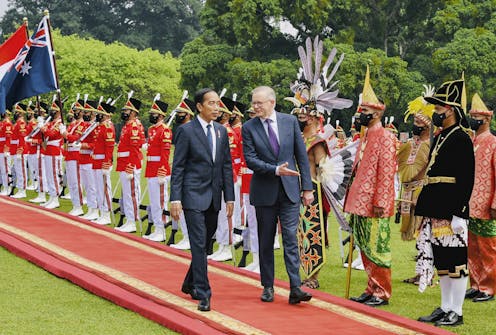
Now add into the foreign policy mix the election of a new Labor Government in Australia where Prime Minister Anthony Albanese was quickly sworn in alongside his cabinet and then whisked off to a QUAD security pact leaders’ summit, and, most recently has met with his Indonesian counterpart, President Joko Widodo, to discuss securing a more cooperative relationship between the two regional powers.
In this episode of A View from Afar Paul Buchanan and Selwyn Manning deep-dive into these events to determine what this all means and where the shifting sands of Pacific foreign policy is heading.
One this is for sure, the Pacific Islands Forum leaders’ summit this year will be important and interesting.
You can comment on this debate by clicking on one of these social media channels and interacting in the social media’s comment area. Here are the links:
Threat.Technology placed A View from Afar at 9th in its 20 Best Defence Security Podcasts of 2021 category. You can follow A View from Afar via our affiliate syndicators.
New Zealand Parliament Buildings, Wellington, New Zealand.
Analysis by Dr Bryce Edwards.
Political Roundup: The problem of “blindly following” the US against China
New Zealand may have finally jumped off its foreign policy tightrope act between China and the US. Last week, Prime Minister Jacinda Ardern effectively chose sides, leaping into the arms of the US, at the expense of the country’s crucial relationship with China.
That’s the growing consensus amongst observers of New Zealand’s foreign policy, following Ardern’s visit to the White House and her government’s strong stance against China’s increased diplomatic presence in the Pacific region.
Blindly following traditional allies
Observers are now questioning whether Ardern’s obsequence to American power will badly damage New Zealand’s national interests, and there is criticism that the Government is “blindly following” the US against the interests of both New Zealand and the Pacific.
There is no doubt that China believes Ardern is now siding with Washington over Beijing. China’s Ambassador to Wellington, Wan Xiaolong, has written a letter to Ardern accusing the Government of “blindly following others”, and suggesting she is making a big mistake in her attempts to reposition the country as a stronger diplomatic and military ally of the United States.
Former prime minister Helen Clark has also hit out using similar language, in a subtle yet sharp critique of how the country’s foreign policy is shifting under Ardern. Responding to Ardern’s closer ties with Washington, Clark says: “The key issue in maintaining the substance and perception of NZ foreign policy will be to ensure that NZ is making its own decisions based on its own values and interests and not blindly following others”.
Will Ardern integrate New Zealand into a more global NATO?
Clark’s comments were reported this week by political journalist Richard Harman. He also reports that Ardern is now planning to attend the next NATO summit in Madrid, which would be a strong provocation to China.
At a time when NATO appears to be expanding and is increasing a US-led global alliance against China and Russia, New Zealand’s increased involvement with this military alliance would be a further sign that Ardern has abandoned any vestiges of neutrality in favour of an alliance against China.
In his report Harman suggests that rather than just attending the summit to discuss the issue of Ukraine, Ardern could end up endorsing the expansion of NATO, or some version of it, into the Pacific region, in order to stave off China. As Harman writes, “If Ardern does do that, then New Zealand’s ‘independent’ foreign policy is likely to be tested, as it has not been since 1985.”
Criticisms of NZ siding with the US over China
This week the New Zealand Herald published an editorial that also bemoaned that “Ardern signed up to a joint statement that nailed New Zealand’s colours squarely to the US mast on security and strategic concerns.” The newspaper warned this shift was not necessarily in the interests of New Zealand or stability in the Pacific: “there is still value in the country treading a more careful, independent path on China than Australia does. New Zealand has been able to maintain a good relationship with Beijing and it is best to keep up a constructive dialogue”.
Leftwing political commentator Josie Pagani argued this week that Ardern was obviously heavied by the US into taking a more belligerent stance on China than the Government would normally take. She perceptively points out that, although the joint Ardern-Biden statement was focused on condemning China, when the Beehive put out their own version of the statement in a press release, the anti-China statements were absent.
In terms of how to deal with China, Pagani observes that, although countries like New Zealand and the US are always keen to lecture smaller countries about what they should be doing, in this case we should be the ones listening to the Pacific Islands: “instead of offering advice, we should be humble enough to learn from a region that has been figuring out how to navigate the superpower squeeze for longer than we have.”
Pagani, who has worked for a long time on Pacific and development aid, says we should be aware that the Pacific are actually being offered good deals from China, and so we shouldn’t be so dismissive. If anything, New Zealand should be partnering with Pacific countries in how they orientate to offers of help, instead of just “chest-thumping on China”.
In favour of partnerships in the Pacific
Waikato University’s Alexander Gillespie also says that the current reset in the Pacific comes in the context of New Zealand’s neglect of those countries, especially in terms of aid spending. He points out that this country spends much less than the agreed target of 0.7% of gross national income. In fact, New Zealand falls well short, with only 0.26%, well down on the high point reached of 0.52%. New Zealand needs to “put its money where its mouth is” instead of complaining about China giving assistance.
Gillespie argues in favour of partnerships and cooperation with China in the Pacific. He says: “Chinese influence in the Pacific is not necessarily something that must be ‘countered’. For the good of the region, countries should seek ways to work together, especially given that aid to the Pacific is often fragmented, volatile, unpredictable and opaque.”
If anything, Gillespie says New Zealand should be trying to ensure the “region is not militarised”. But this would mean taking on not just China, but also the US, Australia, and indeed reversing our own escalation of military spending on arms for the region.
It’s not just voices of the political left like Clark, Pagani and Gillespie that are critical of the Labour Government choosing to throw its lot in with the US against China. Former National prime minister John Key is the other high profile figure warning against the path that Ardern is taking New Zealand down.
Key told Newshub this week that Beijing will be present in the Pacific forever and it’s a “waste of time” trying to get them out. He said New Zealand should be “working with them instead.” Similarly, National’s foreign spokesperson Gerry Brownlee said that trade with China should be the “starting point” in navigating the issues in the Pacific.
Other experts with a strong knowledge of China are making pleas for the Government and the more hawkish commentators to calm down. For instance, New Zealander Warrick Cleine, who is the CEO of KPMG in Vietnam and Cambodia, says that it’s strange and disturbing to hear New Zealand commentators “beating the drums of war and the public being primed for conflict”.
Cleine says that his experience in Asia has led him to believe that there’s no need for the “level of alarmism in New Zealand”. He argues that the experience of other Asian countries is that a good relationship can be had with China, and independent foreign policy can be maintained.
Today Māori leader and commentator John Tamihere has also spoken out in favour of New Zealand taking a more independent stance in the US vs China tensions and he stands up for the right of Pacific nations to do deals with China without receiving criticisms. He says, “to beat up on the Chinese for doing business with sovereign nations is just racism”, and argues that the evidence doesn’t stake up for the New Zealand narrative about “the nasty Chinese and the nice Yanks and Aussies”.
Tamihere says that “it is about time we shaped our own foreign policy rather than being dragged along by others”, and by way of warning refers to Australia becoming “the 51st State of the USA”.
Sinophobia and drumbeats of war
There is definitely a rising drumbeat of war amongst many political commentators, as well as academic international relations specialists, who tend to gravitate towards support for the United States. Canterbury University’s Anne-Marie Brady believes China is trying to physically isolate New Zealand by dominating the Pacific Islands, and her view seems to be catching on with many others.
Bernard Hickey wrote this week on his Kaka website that New Zealand should be preparing for war against China: “My personal view is we should get as much US military presence as we possibly can on our shores, and also arm ourselves to the teeth with drones, missiles, maritime surveillance and strike forces to keep the EEZ safe from China’s fishing fleets. China is a truly dangerous, ugly and malign force in our world.”
The idea of New Zealand becoming something of a deputy sheriff to the United States in the Pacific is increasingly asserted in the media.
The need for engagement
New Zealand would be well advised to step up its engagement with countries in the Pacific and Asia. Currently, the Ardern administration appears overly concerned with visiting and communicating with the Anglo and European countries, and that’s a mistake.
Geoffrey Miller of the Democracy Project has called for more engagement with China, as “There is a very Cold War-style feeling at the moment. The only way to avoid that is by talking.” In addition, to reduce such “geo-polarisation” Miller says “I would have liked to see Mahuta invite [Foreign Minister] Wong Yi to New Zealand as part of his Pacific tour.”
Similarly, the Herald’s political editor Claire Trevett has suggested that Ardern now needs to travel to China to repair the damage done. And Today FM’s Rachel Smalley suggests that the PM must go to Beijing before any other cities outside New Zealand.
Smalley has asked why New Zealand is biting the hand that feeds, especially by signing up to the joint statement with the US that attacked China so strongly: “this statement was ill-thought-through by Ardern and her advisors. I think we’ve been played by the Americans. They have a very challenging relationship with China and they have used us, and our relationship with China, to point score. The Americans have nothing to lose from this, but we do, and potentially we have.”
Smalley, like others, suggests we should be very willing to criticise China for any problems that we might have with them, but we don’t do it as part of a pile-on instigated by their increasingly hostile rival superpower the US. She rightly suggests that we are now jeopardising a perfectly good $33bn trade relationship and our independent foreign policy just for some photo opportunities in the Oval Office. Hardly a worthwhile trade-off.
Source: The Conversation (Au and NZ) – By P. Daniel Lin, Senior Lecturer (UNSW) and Conjoint Associate Professor (Western Sydney University), UNSW Sydney
Shutterstock
Children diagnosed with neurodevelopmental disorders, such as autism, experience various types of challenges at school. This might be due to communication, and also relationships with other children.
Accumulating evidence indicates autistic children are more likely to be bullied.
We’ve just published a study which observed autism is the top risk factor for bullying exposure among all neurodevelopmental disorders.
And in a Canadian survey, 77% of children on the autism spectrum reported being bullied.
The risk is also substantially higher for children with other types of neurodevelopmental disorders, such as attention deficit hyperactivity disorder (ADHD), Tourette syndrome, and intellectual disability, when compared with non-neurodiverse children.
While the reasons for a higher risk of being bullied among children with neurodevelopmental disorders are complex, one potential reason is impaired communication skills. These can cause peer rejection and difficulties in establishing friendships.
Impulsive behaviours often associated with neurodevelopmental disorders can also result in difficulties fitting in, thereby increasing the risk of social exclusion and consequent bullying encounters, either as a victim or a perpetrator.
Bullying can lead to long-term psychological and physiological symptoms. Shutterstock
Bullying exposure can lead to not only longtime psychological symptoms such as depression and anxiety, but also physiological symptoms.
Data from the Longitudinal Study of Australian Children indicate the experience of being bullied can be associated with a four-fold increased risk of self-harm or suicidal thoughts among adolescents aged 14-15 years.
What our study found
Our new study found children on the autism spectrum are more likely to be bullied at high schools than primary schools (an opposite trend from non-autistic children). It’s possible that in high schools the differences due to autism are more pronounced and noticeable.
Our findings also suggest children on the autism spectrum who do not need special health care experience greater risk of being bullied than children on the autism spectrum with special health-care needs. This implies the need for supports for children with higher functioning autism might be underestimated.
Children on the autism spectrum living in areas with low socioeconomic resources were also more likely to be bullied than other children on the autism spectrum. This highlights the importance of more mental health supports and attention to social care needs for children from disadvantaged backgrounds.
What can schools do?
Currently, most evidence-based anti-bullying programs are delivered through the school’s universal behaviour management system. This means everyone receives the same standard information about bullying and no individual features related to victims or bullies are discussed.
In Australia, the Bully Zero bullying education program is delivered through a mix of online and face-to-face workshops. It aims to provide information about bullying including the different types, its impact, and resilience (or emotional intelligence). Bullying No Way provides professional resources for bullying prevention by educating students, families, and school staff.
In light of our new findings, we think neurodiversity and inclusiveness should be integrated into school-based anti-bullying programs. Additionally, there are other things schools should be doing to decrease the risk children on the autism spectrum will be bullied:
kids in schools should be taught neurodiversity is a difference, not an impairment
kids should be encouraged to use proper language that aligns with neurodiversity. For example, use respectful language such as “person on the autism spectrum” instead of “autistic person”
teach students about empathy in the context of neurodiversity. This includes understanding how a child on the autism spectrum may react to stress differently from other children, and avoiding describing the interests of a person on the autism spectrum as “restricted”
organise bullying prevention workshops at high schools, since older children on the autism spectrum are more likely to suffer from bullying than younger children on the autism spectrum
schools in socioeconomically disadvantaged areas need to ensure they have anti-bullying programs with a particular focus on neurodiversity.
Understanding of neurodevelopmental disorders can enhance inclusiveness and reduce stigma, which is essential to building anti-bullying environments.
And the risk modifiers identified can inform us of which groups (children on the autism spectrum who are older, with better functions, and living in disadvantaged neighborhoods) may need to be prioritised for specific supports.
The authors do not work for, consult, own shares in or receive funding from any company or organisation that would benefit from this article, and have disclosed no relevant affiliations beyond their academic appointment.
With electricity prices surging to previously unimaginable levels, state and federal energy ministers met yesterday to consider how to respond to Australia’s energy crisis.
The market is pricing electricity at over A$300 per megawatt hour, more than three times what it traded at the beginning of this year.
In yesterday’s meeting, ministers agreed on 11 actions for lowering gas bills and to ensure a crisis like this doesn’t happen again. Here we take a closer look at three key ones.
None will address prices immediately, so all consumers should look for the best deal on electricity through excellent comparison sites, such as the Energy Made Easy website.
Power bills are set to remain high for months to come. Wholesale electricity makes up one third of a typical household retail bill, and the Australian Energy Regulator recently approved household electricity price rises of up to 20%.
If wholesale prices stay at current levels, Australians will have to pay even more for their electricity during the second half of the year.
So what key measures have the ministers proposed to address this? First, the ministers will allow the market operator to purchase gas and hold it in reserve.
If done well, holding reserves to release in times of supply shortage could smooth out extreme prices. Holding reserves of gas won’t be costless, but the cost of that insurance may be worth it to taxpayers. It will be important to see the detail of how this will be implemented.
The second action is to develop a national plan for growth in renewables, hydrogen, and transmission.
Accelerating new renewables will be key to reducing our exposure to fuel prices. A new wind or solar project can provide energy for $50-80 per megawatt hour, compared to $300-500 per megawatt hour from fossil fuel plants today.
Having a clear plan is a good start, but ministers will need to work out how to deliver it. Expanding the national Renewable Energy Target would be a good first step.
This target, legislated by the Rudd government, currently requires roughly 20% of electricity to come from new renewable energy. This could be increased significantly.
Indeed, state targets in place now could be more efficiently delivered if they were amalgamated into a stronger national target. Ministers could also consider similar targets for green gas or hydrogen.
The renewable energy target in national legislation must be strengthened. Shutterstock
The third action is the most contested. Ministers have recommended implementing a capacity mechanism that would pay units to be available even if they’re not used, which may be similar to a capacity market. It’s not clear what this proposal will look like in detail or how this proposal would address the current crisis.
The communique doesn’t explicitly rule out coal. But there are reasons to be hopeful that what ministers have actually asked for is a capacity reserve, which will facilitate more renewables accompanied by modern technologies such as battery storage.
What is a capacity market and why should it exclude coal?
A traditional capacity market is designed to pay all power stations (including existing coal) for being available, even if they’re not used.
This sort of capacity market won’t build the type of capacity we urgently need. Our grid requires generation that can turn on and off quickly, adjusting to consumers’ increasing appetite for installing their own solar panels.
A traditional capacity market that pays inflexible capacity such as coal will delay investment in new flexible capacity such as hydro, batteries, and hydrogen-ready gas peakers. Coal is considered inflexible because it takes hours to ramp up to full production, whereas “flexible” capacity can ramp to full production in seconds or minutes.
Locking in existing inflexible generation can reduce the reliability of the grid, a risk now possible in Western Australia.
Paying coal power stations to stay around longer also exposes Australia to fuel price spikes as we’ve seen recently, as well as continued shortfalls of capacity. This is because, as federal Energy Minister Chris Bowen pointed out, the current crisis is due to an unexpected shortage of coal, not gas.
Paying coal power stations twice – once for their capacity, and again for their energy – means it’s harder to build new, flexible capacity. A capacity market like this wouldn’t have avoided our current crisis or reduced consumers’ bills: the cost of coal and gas would still be high.
Coal is also increasingly unreliable. Currently up to 25% of coal is offline for maintenance, and unplanned outages are rising. Ironically, some coal generators are simultaneously asking to be paid to close their power stations.
Governments also need to consider the very significant financial assistance already paid to coal-fired generators when the Clean Energy Future package was introduced in 2012 and repealed only two years later.
None of the over $5 billion in assistance provided to coal-fired generators was paid back to taxpayers. Asking consumers to pay again for these power stations to “stay in the market” via a capacity market payment doesn’t seem fair or equitable.
So what should ministers do?
Our current market already provides strong signals for investment in the right mix of capacity.
The market operator says there are around 1.2 gigawatts (GW) of new gas, 1.2 GW of battery, and 2.3 GW of hydro projects entering the market in coming years. Total new capacity entering the market is over 11 GW.
With electricity prices as high as they are, investors such as Snowy Hydro say it’s simply incorrect that the existing market doesn’t incentivise new storage such as batteries and pumped hydro.
However, a well designed “capacity reserve” would smooth out the market. New capacity, such as batteries and pumped hydro, could be brought into a “waiting room” and held until it’s needed.
2.3 gigawatts of hydro projects are projected to enter the market in coming years. Shutterstock
This could be implemented very quickly. The New South Wales roadmap provides a somewhat similar approach – underwriting new investments to ensure they’re built sooner rather than later.
Importantly, ministers make it clear in their communique that they’re only really wanting the mechanism to support new investment in fast-start zero emissions technologies. As such, it may be that the “capacity mechanism” they have in mind is actually more akin to the “capacity reserve” we have articulated here.
But for now, the best option to keep warm this winter without breaking the bank is to shop around for the best electricity deals.
Tim Nelson is an Associate Professor at Griffith University and the EGM, Energy Markets at Iberdrola Australia, that develops renewable projects and batteries.
Joel Gilmore is an Associate Professor at Griffith University and General Manager Energy Policy & Planning at Iberdrola Australia, that develops renewable projects and batteries.
At the May 21 federal election, Labor won 77 of the 151 House of Representatives seats (up eight since 2019 when adjusted for redistributions), the Coalition won 58 seats (down 18), the Greens four (up three) and all Others 12 (up seven).
The 2019 election result was Coalition 77 seats and Labor 68, but the ABC adjusts for Labor gaining a seat from the Coalition from redistributions. Craig Kelly’s defection from the Coalition to the UAP is not factored in, so Hughes is not a gain for the Coalition.
Near-final primary votes were 35.7% Coalition (down 5.7%), 32.6% Labor (down 0.8%), 12.2% Greens (up 1.8%), 5.0% One Nation (up 1.9%), 4.1% UAP (up 0.7%) and 5.3% for independents (up 1.9%). One Nation gained because they contested 149 of 151 House seats, up from 59 in 2019.
The ABC’s national two party estimate is currently at 51.9-48.1 to Labor, a 3.4% swing to Labor.
The House election result was very disproportionate. With just 32.6% of the primary vote, Labor won 51% of House seats. One Nation and the UAP did not come close to winning any seats despite a combined primary vote of 9.1%; neither party even made the final two in any seat.
Labor and the Greens combined won 81 of the 151 House seats (53.6% of seats). This is in good agreement with the national two party vote. While Labor’s primary vote was disappointing, parties of the left overall clearly won this election in both seats and votes.
I will have more to say on the House results when we know the exact national two party vote, which will occur when all seats that did not end up as Labor vs Coalition contests are recounted between these two parties.
How did the polls go?
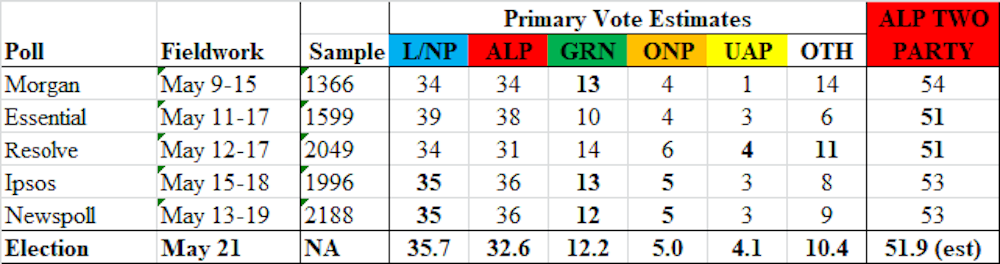
The table below shows the final national polls from all pollsters, and the election results using the ABC’s two party estimate. Poll estimates that were within 1% of the results are in bold.
Federal 2022 polls against election results.
Essential’s final poll had 7% undecided, but elections don’t allow undecided voters, so I’ve excluded undecided; this makes the primary votes for the major parties bigger than the 36% Coalition, 35% Labor reported, and so Essential’s miss is worse.
Morgan’s headline in their final poll was a Labor lead of 53-47 by 2019 preference flows, but analyst Kevin Bonham said it was actually 53.9-46.1 by this method, and this implies Morgan miscalculated. I am using 54 as Morgan’s two-party estimate.
Morgan and Resolve broke down their Others votes into votes for independents and other parties, but Essential, Newspoll and Ipsos did not. So I am using the figure for all Others in the table.
The election results primary vote gap between the Coalition and Labor was 3.1 points in the Coalition’s favour, but only Resolve got this gap correct. Essential had a one-point Coalition lead, but badly overstated the votes for both major parties. Morgan had a tie, but understated UAP and overstated Others. Newspoll and Ipsos both had Labor leading the Coalition by one point on primary votes.
Newspoll, Ipsos and Morgan all used 2019 preference flows for their headline figures. We will have a better idea of preference flows when we have a national two-party figure, but Labor performed better on preferences than in 2019.
The Newspoll and Ipsos errors on primary votes were thus moderated by an error the other way on preference flows. At the 2019 election, the preference flow error compounded the primary vote error.
While Resolve’s final poll understated both major parties and overstated the Greens, it was easily the best final poll, as it accurately predicted the three-point Coalition primary vote win. Newspoll, Ipsos and particularly Essential overstated the major parties.
The Resolve poll would look even better had they used 2019 preference flows as their headline figure (52-48 to Labor). They used respondent preferences as their headline (51-49 to Labor).
Seat polls were often very wrong
Seat polls in the seats targeted by teal independents usually overstated the independents’ votes, but the independents still won all of these seats. Worse errors occurred in seat polls in standard two party contests.
There were two polls of Gilmore that gave Labor a 56-44 and a 57-43 lead, but Gilmore was the closest seat with Labor winning by just 50.2-49.8. A poll of Eden-Monaro gave the Liberals a 51-49 lead (actual: 58.1-41.9 to Labor). A poll of Page gave the Nationals just a 51-49 lead (actual: 60.7-39.3 to Nationals).
In the last week, four WA seat polls were published which greatly understated Labor’s leads. In Swan, Labor led by 53-47 and in Pearce by 52-48. In Tangney, the Liberals led by 54-46 and in Hasluck by 55-45. Actual results: 59.0-41.0 to Labor in Swan, 59.0-41.0 in Pearce, 56.0-44.0 in Hasluck and 52.4-47.6 in Tangney.
There were some successes, with seat polls coming close to actual results in Parramatta, Lindsay, Reid and Higgins. But overall seat polls were hit and miss.
A special YouGov poll that predicted the result in all seats had Labor winning 80 of the 151 seats, the Coalition 63, the Greens one and Others seven. So Labor was three short of this projection, the Coalition five short, the Greens three above and Others five above.
Senate update: final WA Senate race could be close
The national Senate count is now at 88.8% of enrolled voters, only just behind the House count of 89.4%, which is very close to final turnout.
Using 2019 Senate preference flows, The Poll Bludger has created a spreadsheet to predict the Senate winners at this election. This will be a robust method if 2022 flows are not markedly different from those in 2019.
This spreadsheet was last updated on Saturday. In my previous article on the Senate on May 30, I listed the sixth and last seat in Victoria, Queensland and SA as in doubt.
Since that article, the Coalition has gained in SA, and is expected to win the last seat there, while One Nation should win in Queensland using 2019 preference flows. Victoria could be won by any of the Coalition, UAP or Labor, but most likely the Coalition.
In WA, the count is at 87.1% of enrolled, up from 66% previously. Labor now has 2.43 quotas, the Coalition 2.22, the Greens 0.99, One Nation 0.24 and Legalise Cannabis 0.23. The Coalition has made up enough ground that they could win if preferences from other parties flow strongly to them, though I think this is unlikely.
If the Coalition wins in Victoria and SA, One Nation in Queensland and Labor in WA, the results of this half-Senate election would be 16 of 40 seats for the Coalition, 15 Labor, six Greens, one One Nation, one Jacqui Lambie Network (JLN) and one David Pocock.
The Coalition would have 33 of the 76 total senators, Labor 26, the Greens 12, One Nation two, the JLN two and Pocock one. On legislation opposed by the Coalition, the easiest path to a majority (39 votes) for Labor would be the Greens and either Pocock or the JLN.
In my previous Senate article, I had thought button presses to distribute preferences could happen this week in the NT, ACT and Tasmania, but it looks like next week for them. The bigger states should come the following week. All members elected at this election must be officially declared by June 28.
Boris Johnson survives no-confidence vote among Conservative MPs
Early Tuesday morning AEST, UK Prime Minister Boris Johnson won a confidence vote among Conservative MPs by 211 to 148. I covered the build-up to this vote that was triggered Monday night AEST for The Poll Bludger. Also covered: the French legislative elections that will be held in two rounds on June 12 and 19.
Personal note
On a personal note, I’m excited to announce that after five years as a regular contributor I’ve recently joined The Conversation staff in the role of Election Analyst.
Source: The Conversation (Au and NZ) – By Carol Johnson, Emerita Professor, Department of Politics and International Relations, University of Adelaide
Sussan Ley, deputy leader of the Liberal Party and shadow minister for women, has been given a difficult task: bring women voters back to the Liberal Party. This will be no mean feat, given widespread acknowledgement they played a significant role in the Morrison government’s defeat.
Ley has assured women that “we hear you”. She has also promised to travel widely throughout Australia to listen to women.
Ley is a very appropriate choice for the task. She was shadow minister for women in 2007-8. She was also the responsible minister for women in the House of Representatives in the last government, given that the minister for women, Marise Payne, was in the Senate.
Ley identifies as a feminist. She has long argued the Liberals should seriously consider candidate quotas for women — a position that Liberal leader Peter Dutton opposes.
Ley is not a conventional Liberal woman politician. Born in Nigeria, she lived part of her early life in the Middle East, where her father worked for British intelligence. After the family migrated to Australia, she embraced punk culture in her youth. Ley also added an extra “s” to her first name after dabbling in numerology.
She went on to work as an air traffic controller, aerial stock musterer, shearer’s cook, farmer and for the Australian Tax Office. She holds a bachelor of economics, master of taxation law and master of accounting. She also holds a commercial pilot licence.
Ley is a good choice for shadow minister for women, but she needs to understand that issues of equality have a strong economic as well as social base. Mick Tsikas/AAP
Ley has argued her unconventional childhood not only facilitated her diverse career choices but also
helped me accept a lot of differences in people and cultures, and I think it’s also helped me become less stressed than I might otherwise be about things when they’re completely outside the square.
She may well need that capacity and flexibility when it comes to understanding the nature of the “woman problem” the Liberals face.
There are parts of the Liberals’ “woman problem” that Ley will understand. Unlike Scott Morrison, she would not need Jenny Morrison’s advice on how to respond to a woman who alleged they had been raped in Parliament House. Unlike Morrison, she is not influenced by the US religious right’s anti-transgender strategies that underlay his electorally disastrous endorsement of Warringah candidate Katherine Deves.
However, unfortunately for Ley, the Liberals’ “woman problem” has deeper roots than those more obvious manifestations. It also has roots in the contemporary Liberals’ economic ideology, particularly their embrace of free markets and reluctance for governments to intervene in the economy.
As I demonstrated in an academic article published earlier this year, the party’s “woman problem” is not due to the Liberals being hostile to gender equality. Recent Coalition governments have introduced some worthwhile gender equality measures, including in the area of domestic violence. The problem is in economic frameworks that limited their gender equality policy.
Liberals tend to believe the market is gender-neutral and could be relied on to improve women’s equality. Making the case that gender equality was good for business was seen as the key to ensuring better pay and conditions for women workers.
Consequently, the Morrison government rejected more interventionist equal pay measures such as those introduced by the previous Labor government. Policies targeted at key female-dominated industries were not introduced in the government’s pandemic budget measures because of beliefs the market would soon ensure women’s employment recovered.
Female-dominated industries were not given extra support during the pandemic because of the belief the market would eventually take care of it. Peter Rae/AAP
Similarly, the large number of women in precarious work wasn’t addressed because this wasn’t seen as a result of structural disadvantage in the labour market. Rather, it was argued many women choose to work in casual jobs. Implementing the Respect at Work report recommendation that employers have a “positive duty” to take reasonable steps to prevent sexual harassment was seen as an unnecessary intervention by government in the private sector.
No wonder many feminists criticised the government for having inadequate policies in regard to women.
Ley was among those who failed to understand the basis of criticisms being made. For example, Labor politicians complained the Morrison government hadn’t adequately supported female workers during the pandemic, including those in the childcare industry. Ley replied:
What you hear from the opposition is this long, ongoing, bleak, dreary narrative about entrenched disadvantage. And, you know, it’s just so last century.
She went on to highlight “the opportunities for women in the modern world” and the increased choices they would have.
Ley’s dismissal of the “entrenched disadvantage” of many women less fortunate than herself is definitely premature. The Australian government’s own Workplace Gender Equality Agency provides copious statistics on women’s continued unequal position.
Importantly, it wasn’t just Labor or the Greens that argued the Morrison government’s policies were inadequate in regard to women – so did the teal independents who defeated prominent Liberal politicians.
For example, Monique Ryan, who defeated Treasurer Josh Frydenberg, supported implementing all the Respect at Work recommendations. So did Zoe Daniel, who defeated Tim Wilson, and Allegra Spender, who defeated Dave Sharma. All three emphasised the importance of ensuring equal pay for women.
Ryan supported reforming the Fair Work Act to include an equal remuneration objective and stronger gender pay gap reporting provisions. The Liberals had opposed both measures.
The teals’ support for such measures owes more to social liberalism than neoliberalism. Social liberalism allows for a more active ethical role for government in furthering equal opportunity, while still supporting a strong private sector. Neoliberalism advocates restricting government intervention, particularly in the economy.
Social liberalism played an important role historically in the development of the Liberal Party. However, its influence has been sidelined as the party has become more conservative. So the teals held great appeal for moderate former Liberals who felt the party had lost its way.
Ley seems genuinely puzzled as to why so many women considered the Morrison’s government’s gender equality policies to be insufficient. The question is whether she can think sufficiently outside of the neoliberal square to hear what they are saying.
Carol Johnson has received funding from the Australian Research Council for research on gender equality policy.
By eating salads first, before proteins, and finishing the meal with starchy carbohydrates, she says blood glucose spikes will be flattened, which is better for you.
Scientifically speaking, does this make sense? It turns out, yes, partially.
A glucose spike occurs in your bloodstream about 30-60 minutes after you eat carbohydrate. Many things determine how high and how long the peak lasts. These include what you ate with or before the carbohydrate, how much fibre is in the carbohydrate, and your body’s ability to secrete, and use, the hormone insulin.
For people with certain medical conditions, any tactic to flatten the glucose peak is incredibly important. These conditions include:
diabetes
reactive hypoglycaemia (a particular type of recurring sugar crash)
postprandial hypotension (low blood pressure after eating) or
if you’ve had bariatric surgery.
That’s because high and prolonged glucose spikes have lasting and detrimental impacts on many hormones and proteins, including those that trigger inflammation. Inflammation is linked with a range of conditions including diabetes and heart disease.
Does eating different food types before carbs affect glucose spikes? Turns out, yes. This isn’t new evidence either.
Scientists have known for a long time that high-fibre foods, such as salads, slow gastric emptying (the rate at which food exits the stomach). So high-fibre foods slow the delivery of glucose and other nutrients to the small intestine for absorption into the blood.
Salads slow down the movement of food from your stomach into your small intestine. Shutterstock
Proteins and fats also slow gastric emptying. Protein has the extra advantage of stimulating a hormone called glucagon-like-peptide 1 (or GLP1). When protein from your food hits the cells in your intestines, this hormone is secreted, slowing gastric emptying even further. The hormone also affects the pancreas where it helps secretion of the hormone insulin that mops up the glucose in your blood.
In fact, drugs that mimic how GLP1 works (known as GLP1 receptor agonists) are a new and very effective class of medication for people with type 2 diabetes. They’re making a real difference to improve their blood sugar control.
Most of the scientific research on whether eating food in a particular order makes a difference to glucose spikes involves giving a fibre, fat or protein “preload” before the meal. Typically, the preload is a liquid and given around 30 minutes before the carbohydrate.
In one study, drinking a whey protein shake 30 minutes before (rather than with) a mashed potato meal was better at slowing gastric emptying. Either option was better at reducing the glucose spike than drinking water before the meal.
While this evidence shows eating protein before carbohydrates helps reduce glucose spikes, the evidence for eating other food groups separately, and in sequence, during an average meal is not so strong.
A steak takes longer than mash to churn into a size ready for the small intestine. Shutterstock
Inchauspé says fibre, fats, and proteins don’t mix in the stomach – they do. But nutrients don’t exit the stomach until they have been churned into a fine particle size.
Steak takes longer than mash to be churned into a fine particle. Given the additional fact that liquids empty faster than solids, and people tend to complete their entire dinner in around 15 minutes, is there any real evidence that eating a meal within a particular sequence will be more beneficial than eating the foods, as you like, and all mixed up on the plate?
Yes, but it is not very strong.
One small study tested five different meal sequences in 16 people without diabetes. Participants had to eat their meal within 15 minutes.
There was no overall difference in glucose spikes between groups that ate their vegetables before meat and rice versus the other sequences.
What’s the take-home message?
Watching those glucose spikes is particularly important if you have
diabetes or a handful of other medical conditions. If that’s the case, your treating doctor or dietitian will advise how to modify your meals or food intake to avoid glucose spikes. Food ordering may be part of that advice.
For the rest of us, don’t tie yourself up in knots trying to eat your meal in a particular order. But do consider removing sugary beverages, and adding fibre, proteins or fats to carbohydrates to slow gastric emptying and flatten glucose spikes.
Leonie Heilbronn currently receives funding from Medical Research Futures Fund and National Health and Medical Research Council, and Isagenix LLT.
It’s common to hear about large amounts of plastic waste floating around our oceans. But while the problem of plastic waste is growing globally, in Australia it’s going the other way.
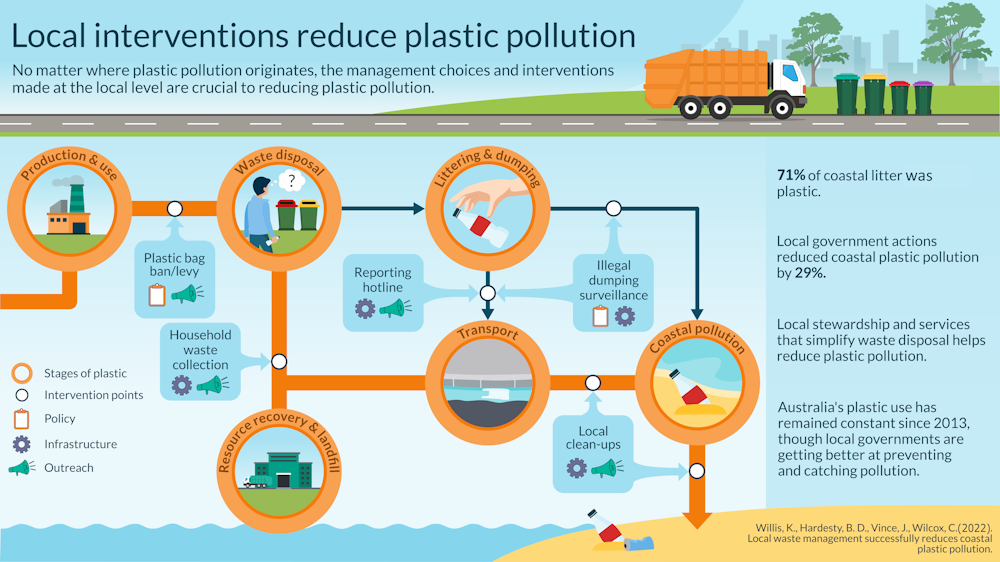
This is because most plastic rubbish we find on Australia’s beaches comes from us, not from other countries. Our new study shows local efforts in waste management have worked, reducing coastal litter by 29% over the last six years.
We found the greatest reductions in litter in the environment when it was simpler to access bins or when people were motivated through economic measures. In essence, these actions either save time or money for people trying to dispose of waste appropriately.
What doesn’t work? Awareness raising without tools or infrastructure to back it up. Messages and reminders don’t work if there are no options at hand.
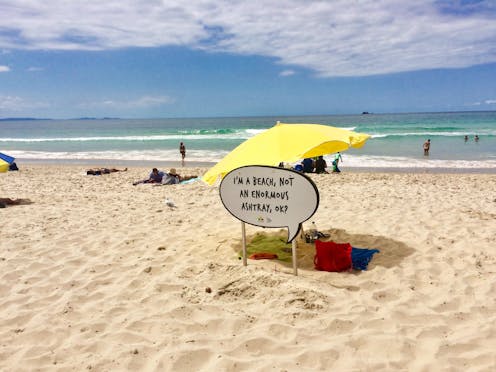
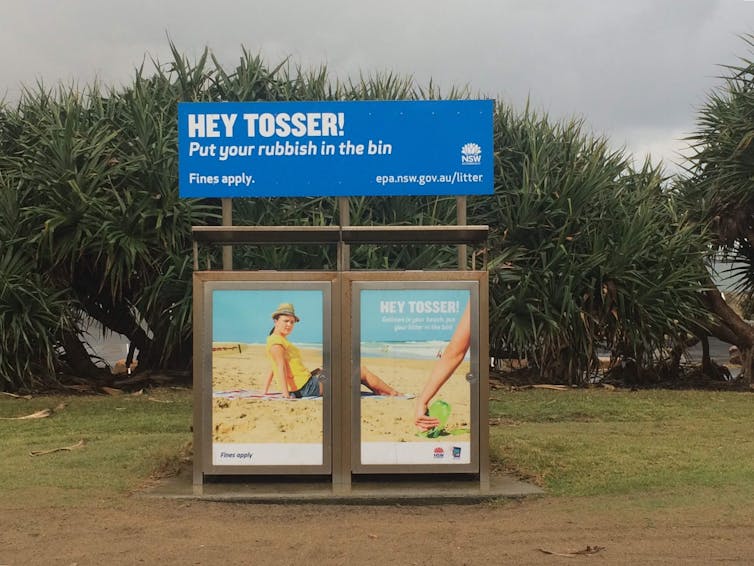
These type of local government actions encourage the public to dispose of waste properly through economic incentives. Kathryn Willis
Global issue, local solutions
Plastic pollution is a global crisis harming wildlife, economies and livelihoods. The recent signing of the Global Plastics Treaty has added momentum to the world’s efforts to cut the estimated 6-12 million tonnes of plastic waste entering our oceans every year.
But we still know little about practical ways of cutting the amount of plastic entering the environment outside of rhetorical campaigns to ban plastic.
To find out what works, we focused on local governments. Councils are well placed to tackle the problem, as they are typically at the coal face of waste management. Councils collect and dispose of our waste while also dealing with illegal dumping and litter.
We undertook 563 litter surveys across 183 beaches in 32 local governments. From this, we identified actions with the largest effect on reducing coastal litter. Then we used three established theories of human behaviour to try to understand what makes these local actions successful.
Local interventions reduce plastic pollution in the environment. Author supplied
In short, we found the most successful actions either saved time or money for people and local governments trying to dispose of waste in the right way.
We found that, in isolation, efforts to control plastic waste by targeting personal and social norms in the community did not reduce plastic litter on local beaches. This suggests a narrow focus on raising awareness will not work. But when awareness efforts are combined with tools and infrastructure, they become more effective.
Directly involving community members in clean-up activities like Clean Up Australia Day, or programs focusing on dumping and littering also helped keep our coastlines cleaner. Such programs encouraged people to watch for and report litterbug behaviour through hotlines.
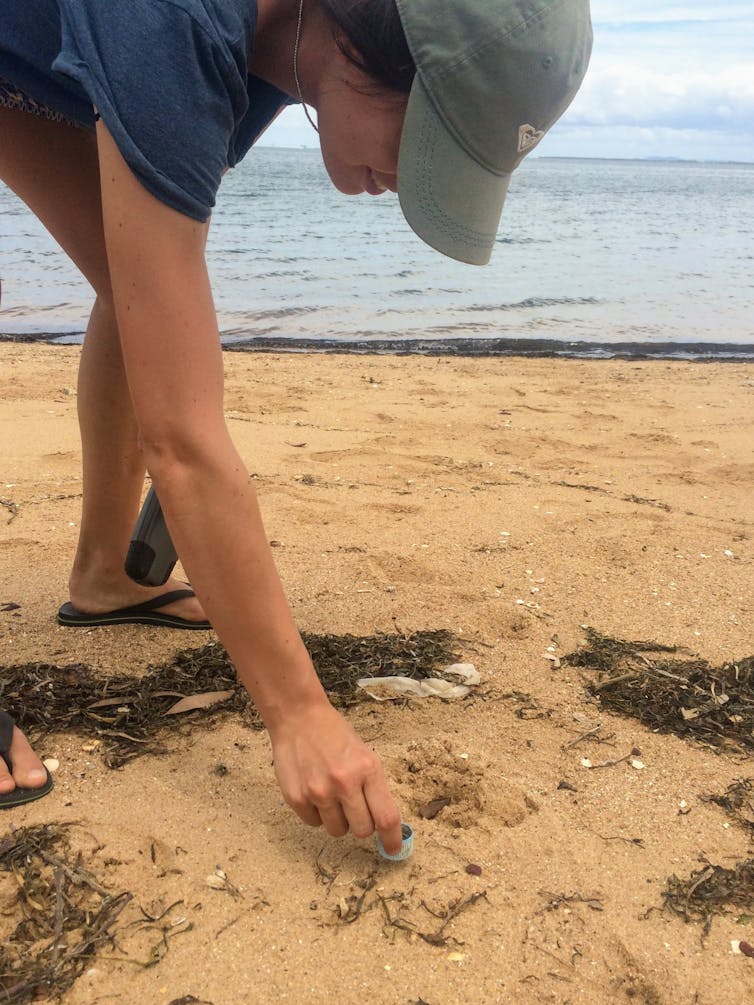
We found less plastic pollution in areas encouraging participation in clean-ups. Kathryn Willis
Changing how we think of plastic
To keep reducing waste around Australia, we need to transform our relationship with plastic. If we stop viewing plastic as a disposable commodity and start recognising its value, it will become something too good to throw away.
One of the biggest positive local government changes we saw was the shift towards collecting different streams of household waste and recycling. Local governments and the public are moving away from a collect and dump mindset to a reduce, sort and improve approach.
Many Australian households now have three or four bins to separate glass, green waste (often with food scraps) and paper from their general waste and mixed recycling. These bins not only make it easier for us to separate and discard our waste properly, but well-separated waste and recycling streams make it easier for local governments to produce revenue from rubbish.
With Australia’s recent ban on waste exports, better waste management holds clear benefits for people, communities, businesses and the environment.
Tackling litter-prone areas
Although litter is now declining along our beaches, we still have a long way to go. We’ve found high levels of plastic near our major cities and along remote coastlines, such as the west coast of Tasmania and the Gulf of Carpentaria. Pollution in remote areas is largely due to lost and discarded fishing gear washed up in remote areas.
By contrast, we can do a lot more to tackle hotspots closer to home, such as waterways and bushland near major population centres.
Common types of litter found along Australia’s coastline. Kathryn Willis
In Australia, we find more litter in socially and economically disadvantaged neighbourhoods as well as along our highways and in car parks and retail strips. By contrast, we find less in areas we associate with higher aesthetic and cultural values such as beaches and parks.
Interestingly, economically disadvantaged areas seem to benefit the most from container deposit schemes and other economic incentives. These incentives appear to shift the behaviour of litterers and create an incentive to collect containers left in the environment.
It is encouraging to know we are the main source of plastic on our beaches. We have the power to change what happens locally. We don’t have to wait for global-scale action on plastics.
On this front, Australia has changed quickly and for the better. Our local governments and environmental groups can guide us to make wise decisions on waste.
Britta Denise Hardesty receives funding from United Nations Environment, the Department of Agriculture, Water and the Environment, The Department of Foreign Affairs and Trade and Oak Family Foundation.
Chris Wilcox receives funding from Ocean Conservancy, PADI Aware, and CSIRO Oceans and Atmosphere. He also receives funding from Oak Family Foundation and PM Angell Foundation.
Joanna Vince receives funding from the CSIRO for plastics related work.
Kathryn Willis was supported by the School of Social Sciences, University of Tasmania
The federal election saw voters’ growing concern about Australia’s laggardly response to climate change finally addressed, with teal independents garnering seats in Liberal heartland and record votes for Greens candidates.
But what caused this seismic shift in Australia’s political landscape? And why now? We believe the rapid growth and diversification of Australia’s environmental movement since 2015 played an important role.
For example, almost a million Australians volunteered for an environmental charity in 2019, whether by planting trees, organising candidate forums or joining a climate strike.
Much of this work remains invisible and takes time, despite being punctuated by highly visible uprisings. And after many years, it may be finally precipitating the end of the climate wars.
Challenging stereotypes
Many Australians will already be familiar with iconic environmental campaigns such as the Franklin Blockade in Tasmania in the early 1980s, which was pivotal in the evolution of Australia’s environmental movement.
Behind these well-known protests is a diversifying and rapidly expanding environmental movement. In recent years, hundreds of new groups have appeared, and many are actively challenging the activist stereotype characterised by labels such as hippies, extremists, or zealots.
Many of these groups are using innovative methods to bring about change. Market Forces, for example, applies financial levers to challenge corporate support for the fossil fuel industry.
And Next Economy canvassed regional communities, discovering a strong desire for clear and well-resourced transition plans for a zero emissions economy.
Meanwhile, philanthropic organisations are increasingly prioritising funding for climate activism. Other organisations offer research services, resources, training and fellowships for people demanding social and environmental change.
Building consensus on climate action
Tactics we’ve seen activists use to demand climate action include the 2019 street blockades, die-ins and mass strikes by Extinction Rebellion and School Strike 4 Climate.
These actions put climate change onto the public agenda by generating widespread media attention. But they represent just a fraction of environmental movement activities.
Most environmental movement activity seeks to build consensus on climate change with those who share different values and worldviews.
Our extensive empirical analysis published last year found between 2010 and 2019, environmental groups advertised more than 24,000 events on Facebook alone, such as film screenings, seminars and clean-ups.
Many Australians have now felt impacts of the climate crisis. The 2019-2020 bushfires affected 80% of Australians whether directly or indirectly. Tens of thousands of people were displaced by the recent floods in New South Wales and Queensland.
The diversification of groups has also increased calls for climate action from conservative voices, which have been closely tied to climate scepticism in Australia.
But research from 2021 shows how amplifying these voices within the environmental movement can help normalise climate action within conservative ideology. Conservatives are also more likely to support messages delivered by other conservatives.
By championing the economic opportunities and food security benefits delivered by strong climate policy, Farmers for Climate Action have helped connect farmers’ identity to environmental stewardship, while preserving conservative values and outlooks.
The environmental movement is increasingly crossing into traditionally conservative areas. Shutterstock
More than one goal
For many groups, the election is only one way of creating change to adequately tackle climate change in Australia. They continue to take action in different ways.
Some, such as Australian Parents for Climate Action, are building community groups working on local issues. This includes installing solar panels and batteries in schools and early childhood centres.
Original Power, a community-focused Aboriginal organisation, seeks self-determination and recognition that Indigenous rights go hand in hand with climate crisis solutions.
And Better Futures is building an alliance of public and private sector leaders to showcase individual and collaborative climate action across industry sectors and communities.
While the Albanese government has set a stronger emissions reduction target and promises to inject more renewables into the grid, it insists on continuing to support the emissions-intensive gas industry.
This year’s election offers a chance for the federal government to chart a new way forward. Whether politicians grasp this opportunity remains to be seen.
Will the government heed the call that voters expect greater climate action? Will Labor forge a path beyond fossil fuels, one that doesn’t leave coal and gas communities behind? And how far will the Greens and teal independents push Labor to rise to the challenge?
The environmental movement is now tightly woven into communities across Australia and its demands are clear. It has achieved demonstrable impact and wields considerable power to affect change. Politicians ignore it at their peril.
Robyn Gulliver is affiliated with The Commons Social Change Library.
She also very gratefully acknowledges Charlie Wood’s insights and contributions to this article.
Source: The Conversation (Au and NZ) – By Angela Carbone, Professor and Associate Deputy Vice Chancellor Learning Teaching and Quality, RMIT University
Shutterstock
Women’s votes may have swayed the federal election result, but will a change in government move the culture towards one of empowering Australian women? In his victory speech, newly elected Prime Minister Anthony Albanese said: “Together we can make full and equal opportunity for women a national economic and social priority.” Can we? Will we?
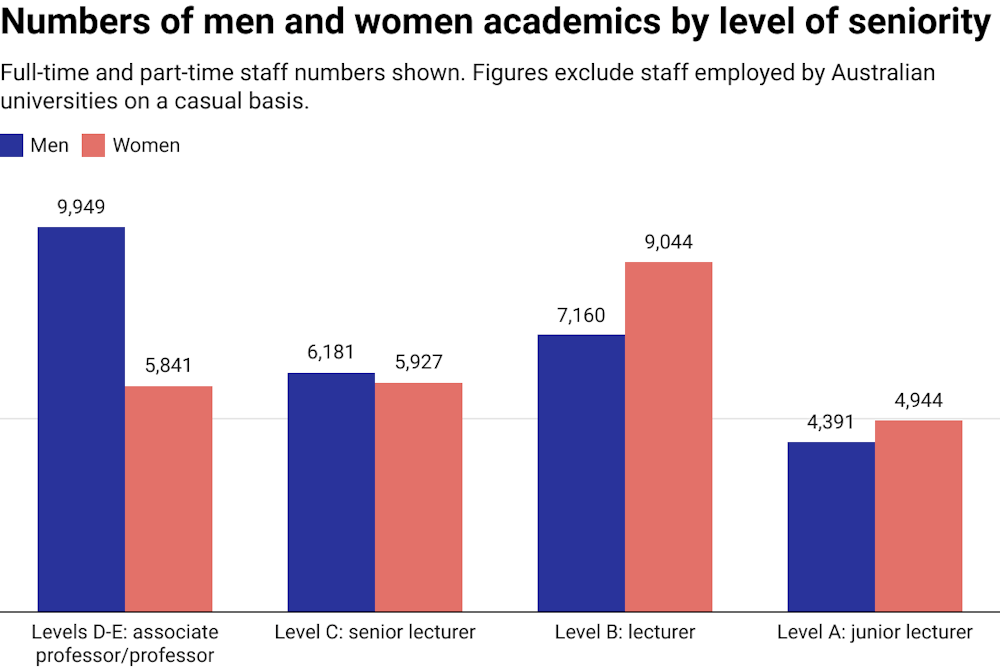
Despite the role of the women’s movement in the 2022 election, and the prime minister advocating that the time for change is now, evidence shows there is a lack of systemic mechanisms to empower women to become leaders. It’s clearly a problem in the academic institutions where our future leaders are made, as made clear by a recent special issue of the Journal of University Teaching and Learning Practice, Women and leadership in higher education learning and teaching.
Women like Grace Tame and Brittany Higgins have recently put the women’s movement on the national agenda. But for years we have talked about the actions needed to overcome gender disparities, with no measurable change across industries.
Indeed, Australia has slipped backwards in the World Economic Forum’s Global Gender Gap Index from 15th in 2006 to 50th in 2021. The WEF calculates, at the current rate of progress, it will take 135.6 years to achieve gender parity worldwide.
At a time of heightened awareness of how women are treated in workplaces across Australia, we need to talk about the gender disparity in the academic leadership of universities.
Women’s academic careers have been placed in a holding pattern for too long. While many women juggle many multiple responsibilities, men commonly have a clear run at their career goals.
Without awareness of and action on the systemic barriers in higher education, no change will occur to support female leaders of the future.
What are the barriers to female leadership?
Academia and government are still patriarchal institutions. The patronage of white men grooming and shifting leadership to other elite white men is overlooked as much as the extent of sexual harassment. The nepotism that results in a man being appointed to leadership because of their biological gender persists.
Rates of casualisation and fixed-term contracts are higher for female academics than for males, both globally and in Australia. We know female academics generally teach large first-year classes, which have excessive administrative duties. While women are left to look after the academic household, men can tend to the garden where things are more likely to grow and bloom (in this analogy, their research and leadership).
The COVID pandemic added to the barriers female academics must overcome. Increased carer responsibilities and home schooling during lockdowns resulted in lower research outputs and more criticism on student evaluations. As a result, women’s leadership opportunities and promotion prospects were further limited.
Only 10% of senior leaders in STEM fields are women. However, in organisations where one in ten senior leaders is a woman, nearly 50% of men think women are well represented. This highlights the ongoing unconscious bias in society today.
Despite initiatives to attract women into academic careers, professional support to advance their careers is lacking. Early-career female academics have less access to networks, a critical element for career progression, than their male counterparts.
There is a lack of structured mentoring opportunities to discuss strategies to overcome the nuanced barriers of the male-dominated environment. Female academics would benefit from sharing strategies for managing challenging situations, designing decision-making processes, applying leadership frameworks, showing resilience and planning for career advancement and leadership growth.
The lack of female voice, visibility and advocacy perpetuates the cycle of inadequate time for research activities and higher teaching, service and administrative loads. Systemic mechanisms must be put in place to empower women in higher education to become leaders.
This leads us to three key components for the newly elected government and universities to offer full and equal opportunities for academic women in leadership:
formalised leadership development programs specifically designed for all women in academia to developing their decision-making capability
established leadership mentoring schemes, which make women in leadership positions more visible and support female academics to overcome the individual nuances of the barriers they face
increased dialogue among women to create a community where barriers and opportunities can be addressed and explored.
Angela Carbone is co-Editor of the special journal Issue cited in this article.
Kerryn Butler-Henderson is Editor of the special journal issue cited in this article.
Source: The Conversation (Au and NZ) – By Guyonne Kalb, Professorial Research Fellow and Director of the Labour Economics and Social Policy Program, The University of Melbourne
Shutterstock
When a heterosexual relationship breaks down, women are at a much higher risk of falling into poverty than men – especially if they have children to care for.
Our new research LINK suggests that while a breakup, on average, reduces men’s disposable household income by 5%, on average women’s household income decreases by almost 30%.
We also found a woman’s most important defence against falling into poverty after a separation is having a stable job and income before the breakup.
This suggests policies aimed at better supporting women to be employed, like promoting equitable access to childcare and flexible work hours, are crucial to reducing the higher risk of poverty women are facing.
The study found that in the first year of separation the risk of being poor more than doubled for women. Shutterstock
Our study
In our study, we followed 947 women and 807 men who were legally married or in a de facto partnership before breaking up, and we looked at their income for up to five years after the split.
For comparison, we also analysed the incomes of 5,496 women and 5,369 men who were very similar to the separated couples before the split – but who stayed together.
We used a measure of household income that is adjusted (or “equivalised”) to reflect the needs of the household. This is because a larger household needs a higher income than a smaller household to sustain the same living standard.
Being in poverty was defined as having an equivalised household income below 50% of the median across the country.
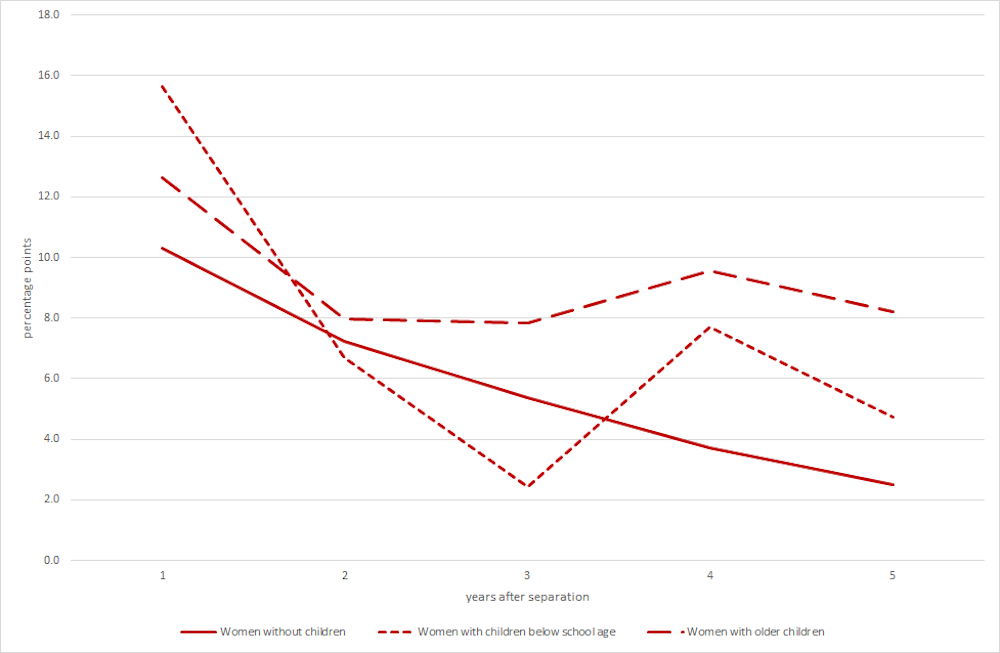
The study found that in the first year of separation the risk of being poor more than doubled for women (increasing from 9 to 22 percentage points). For men, the risk of poverty increased from 9 to 13 percentage points.
The least vulnerable were women who were employed before the break up and those with a tertiary education. The most vulnerable were women without a job before the break up, and older women with school-age children.
Impact of separation on women’s poverty rate by family composition, 1 to 5 years after separation. Household, Income and Labour Dynamics in Australia (HILDA )Survey, Waves 1 to 19; authors’ calculations.
We also found not having a job before the breakup left women in a “poverty trap” because being separated reduces these women’s chances of being employed, compared with the women who remained partnered.
This effect is especially large when the woman has children.
This is likely due to an unfortunate interplay between childcare costs and the income support system, in which the loss of support payments and the extra cost of childcare erode the increased income gained from having a job.
This makes employment unattainable for exactly the group that needs it most: those who have been plunged into poverty by a family breakdown.
A tale of two mothers
Imagine a mother who lives with her two preschool-aged children and her husband.
She takes up casual employment as a personal care assistant, and mostly works weekend shifts or occasional night shifts while leaving the children in her husband’s care. This provides relief to the previously tight family budget, and she will likely extend her hours further when the children are a bit older.
Compare this to a mother who now lives alone with her two children of the same age, after separating from her partner.
When she thinks of taking up employment again, also as a personal care assistant, she finds her wage reduces the parenting payment that is currently her primary source of income. What little is left afterwards hardly covers the cost of childcare for her two children while she is at work.
This interplay of the income support system and childcare costs means a financially viable employment option for a partnered mother can easily become out of reach for a separated mother.
It is important we remove policy hurdles standing in the way of women’s financial independence. Shutterstock
A poverty trap
When separation creates poverty and therefore an urgent need for employment, the current system actually makes it harder for mothers to attain employment. The result is a poverty trap that can be hard to escape.
And this trap looks worse for older women. Our analysis showed women with very young children who had no job before separation have usually been out of the labour force for only a relatively short time. This could be expected to make it relatively easier to return to employment.
But women with older children and no job at separation have typically been disconnected from the labour market for longer. As a result, their job prospects are likely to have declined, or they may have to accept a pay which is too low to overcome the hurdles created by childcare cost and lost income support.
This advantage of younger women over older women is also reflected in the poverty rates. While women with children under the age of five suffer the largest spike in poverty rates immediately following separation, this effect largely disappears within three to five years. In contrast, while for women with older children the increase in poverty risk is somewhat smaller, it is much more persistent over time.
So how do men fare after separation?
Are men better off after a breakup? The answer is yes and no. Men are also less well off after a relationship breakdown than before, but the decline is much less severe. Men’s incomes aren’t pushed below the poverty line as often.
One reason why men’s household income falls less than women’s is because they often live in smaller, and therefore cheaper, households after separation (since any children are more likely to remain with their mothers). Men may lose their partner’s income and have to pay child support, but fewer people need to be sustained by this reduced income.
However, it is important to note that while men’s income losses are smaller than women’s on average, both men and women lose out compared to their pre-separation household income.
That’s because two households simply need more resources than one – the most obvious being the need for two places to live instead of one.
If a household was already on a tight budget before the separation – even if not below the poverty line – it may be impossible to keep one or even both new households out of poverty without additional income sources.
Australia’s welfare system is ill-equipped
The income support system then is vital to fill that gap. However, the current rates of income support are below the poverty line. Combined with the barriers to employment that stem from higher childcare costs and reduced support payments, it means Australia’s welfare system is ill-equipped to prevent poverty after a family breakdown.
It is important we remove policy hurdles standing in the way of women’s financial independence – and that we also provide sufficient support when their income still falls short of preventing poverty.
Guyonne Kalb receives funding from the Australian Research Council, the National Health and Medical Research Council, the NSW Department of Communities and Justice, Perpetual Services PTY Limited, and the Paul Ramsay Foundation. This story is part of The Conversation’s Breaking the Cycle series, which is about escaping cycles of disadvantage. It is supported by a philanthropic grant from the Paul Ramsay Foundation.
Barbara Broadway receives funding from the Australian Research Council and the Paul Ramsey Foundation.
40 years ago this month saw the release of Steven Spielberg’s E.T. the Extra-Terrestrial – a film about a stranded alien, the boy called Elliott who discovers it and a bond of friendship that remains as magical and heartbreaking as it did back in 1982.
We think of Spielberg movies today as thrilling roller-coaster rides, full of sharks, dinosaurs and swashbuckling archaeologists. Yet for me, E.T. remains Spielberg’s most exhilarating work: a deep meditation on loneliness, friendship and growing up in small-town America.
Aided by John Williams’s Oscar-winning score and Henry Thomas and Drew Barrymore’s touching performances, E.T. feels both of its time and for all time. As Spielberg once said:
I think that E.T. is for the people we are, the people we have been and the people we want to be again.
After the breathless trio of Jaws (1975), Close Encounters of the Third Kind (1977) and Raiders of the Lost Ark (1981), Spielberg wanted to make a more intimate film about his isolated childhood in suburban Arizona as he came to terms with the divorce of his parents.
At the same time, he had commissioned a script about a suburban family terrorised by a group of aliens with one befriending the family’s son. The DNA of both stories would make their way into this film.
Like Spielberg, Elliott is a loner. He’s not playing sport, or going out with girls or getting into trouble. He is introverted and thoughtful. And in need of company.
One of Spielberg’s great underrated talents is his direction of children. Many of his films feature young children at their centre – think The BFG (2016), A.I. (2001) and War Horse (2011).
In E.T., Henry Thomas and Drew Barrymore as brother and sister Elliott and Gertie bring credibility and pathos to their roles, fitting seamlessly into the southern Californian ‘burb culture recreated so fondly by the director.
Spielberg’s grasp of childlike wonder is everywhere: notice how he shoots from the children’s eye level and shows adults only from the waist down.
For the first time in his career, Spielberg rejected storyboards and shot scenes chronologically, allowing Thomas and Barrymore time and space to improvise. The domestic and school scenes (hiding E.T. from the mother, tempting it into the house with Reese’s Pieces, freeing frogs destined for dissection) all feel more real because of this.
And what of our alien?
Before E.T., Hollywood saw aliens as hostile critters intent on planetary carnage. The recent extra-terrestrials in Alien (1979) and The Thing (1982) had caused havoc and trauma.
E.T. is different: partly modelled on the facial features of Albert Einstein, it is inquisitive, thoughtful, funny. In the delightful Halloween scene, Elliott throws a white sheet over it as a disguise, and E.T. suddenly spots a child dressed up as Yoda, excitedly repeating “Home! Home!”.
From this moment, Hollywood realised the marketing potential of “cute aliens”; whether Ewoks, Grogu or Toy Story’s “Little Green Men”. It is small wonder that Variety praised E.T. as the “best Disney film Disney never made”.
The alien plays another role too: it fills the void of the absent father.
Paternal lack and the strains it places on families is a familiar trope in Spielberg’s films, from Jurassic Park (1993) to Catch Me If You Can (2002) to Indiana Jones and the Last Crusade (1989).
All we know is that Elliott’s father is “in Mexico, with Sally”: left behind is a stressed mother and bickering siblings.
Some contend that E.T. is a modern-day fairy tale or a Christian parable. For others, it is an illustration of “Reaganite entertainment”, upholding the sanctity of the nuclear family but distrustful of bureaucratic interference and governmental surveillance.
E.T. earned US$800 million at the box office. Adjusted for inflation, four decades on, that is still the fourth highest grossing movie ever.
For some naysayers, its success was further evidence of the special effects-laden, high-concept spectacle film that was beginning to reign in mainstream film culture. But I think E.T. is much more than that: it is a movie with a heart. The special effects are minimal. What counts is the story, and the boy and his friend.
Spielberg’s films are to this day criticised as mawkish and overly sentimental, deliberately engineered to cynically manipulate our emotions. Not so in E.T.: the pleasure is genuine and the tears are earned.
E.T. became a pop culture phenomenon. The shot of Elliott and E.T. on a bike, flying across the moon, remains an iconic image. “Phone home” has become part of our lexicon. Its message of peaceful coexistence between creatures from different worlds today seems more appropriate than ever.
Aliens stranded on earth are a staple of contemporary cinema, from Under the Skin (2013) to The Iron Giant (1999). And Netflix’s current global hit Stranger Things contains a treasure trove of E.T.’s visual references.
Spielberg may have made bigger, louder films, and more historically profound ones, but E.T. endures as his best.
Ben McCann does not work for, consult, own shares in or receive funding from any company or organization that would benefit from this article, and has disclosed no relevant affiliations beyond their academic appointment.
The Australian Energy Market Operator will be given the power to procure and store gas for release in emergency situations.
This was one of a range of measures federal and state energy ministers decided at their Wednesday meeting to discuss the gas crisis.
The ministers also agreed to the preparation of a national transition plan for the bumpy road to a clean energy economy.
And work on a “capacity mechanism” is to be advanced as a priority. This mechanism would provide incentives for dispatchable power to improve reliability as the system moves to renewables.
It was not clear whether coal and gas would be excluded from the mechanism.
Federal energy minister Chris Bowen said the meeting, which included Labor, Liberal and Greens ministers, was marked by consensus and team work.
But he stressed there was “no silver bullet” for the current crisis. “We need more transmission, we need more renewables, we need more storage,” he said.
Gas reservation policy not discussed
The ministers only discussed initiatives involving federal and state governments. This ruled out consideration of an east coast reservation scheme, which would be a matter for the federal government alone.
The meeting received briefings from market regulators and operators on prices and volatility in the energy sector and potential actions that could be taken.
The ministers agreed their governments must be ready to implement further measures, but said they must be consistent with domestic and international commitments.
They expressed their trust in the energy market bodies who operate and regulate the system.
The Australian Energy Market Operator is to provide an urgent update on the east coast gas supply and demand situation, identifying any market constraints. It will advise the energy ministers’ July meeting on further actions needed.
That meeting will receive advice from the Australian Energy Market Commission on improving resilience in the system and better managing retailers’ failures.
The Australian Competition and Consumer Commission will also provide a report to the ministers.
Bowen told a news conference on Wednesday evening the meeting was never designed to solve all problems but it gave the regulators “more tools to do the work that is necessary”.
Treasurer Jim Chalmers earlier again ruled out a super-profits tax on gas producers benefitting from soaring international prices.
He also dismissed calls for Australia to consider developing nuclear energy, saying the economics didn’t stack up.
Michelle Grattan does not work for, consult, own shares in or receive funding from any company or organisation that would benefit from this article, and has disclosed no relevant affiliations beyond their academic appointment.
A View from Afar – In this podcast, political scientist Paul Buchanan and Selwyn Manning will analyse how the Pacific region has become the epicentre of foreign policy assertions from the region’s and the world’s powers.
This month has seen the United States President Joe Biden forward commit to increasing the USA’s presence in the Pacific. The announcement was pitched during a Whitehouse meeting in Washington DC with New Zealand’s Prime Minister Jacinda Ardern.
Meanwhile, at the same time, the People’s Republic of China’s foreign minister Wang Yi was on a whistle-stop series of meetings with Pacific regional leaders, seeking mutual agreements on investment, infrastructure development, and security.
And back in China, the PRC took exception to this element of the US-NZ joint statement where Biden and Ardern jointly stated: “… we note with concern the security agreement between the People’s Republic of China and the Solomon Islands. In particular, the United States and New Zealand share a concern that the establishment of a persistent military presence in the Pacific by a state that does not share our values or security interests would fundamentally alter the strategic balance of the region and pose national-security concerns to both our countries.”
That position compelled China’s spokesperson for its Ministry of Foreign Affairs, Zhao Lijian, to state: “We noted the relevant contents of the joint statement, which distorts and smears China’s normal cooperation with Pacific Island countries, deliberately hypes up the South China Sea issue, makes irresponsible remarks on and grossly interferes in China’s internal affairs including issues related to Taiwan, Xinjiang and Hong Kong. China is firmly opposed to this.”
New Zealand is now positioned squarely on the fault-line between two opposing global powers.
Now add into the foreign policy mix the election of a new Labor Government in Australia where Prime Minister Anthony Albanese was quickly sworn in alongside his cabinet and then whisked off to a QUAD security pact leaders’ summit, and, most recently has met with his Indonesian counterpart, President Joko Widodo, to discuss securing a more cooperative relationship between the two regional powers.
In this episode of A View from Afar Paul Buchanan and Selwyn Manning will deep-dive into these events to determine what this all means and where the shifting sands of Pacific foreign policy is heading.
One this is for sure, the Pacific Islands Forum leaders’ summit this year will be important and interesting.
Join Paul and Selwyn for this LIVE recording of this podcast while they consider these big issues, and remember any comments you make while live can be included in this programme.
You can comment on this debate by clicking on one of these social media channels and interacting in the social media’s comment area. Here are the links:
Threat.Technology placed A View from Afar at 9th in its 20 Best Defence Security Podcasts of 2021 category. You can follow A View from Afar via our affiliate syndicators.
Apple has joined the thriving “buy now, pay later” industry, with a customised service called Apple Pay Later. The service was announced earlier this week at the 2022 Worldwide Developers Conference, and will initially be launched in the United States later this year.
Pay Later will be built into the Apple Wallet and eligible for use on any purchase made through Apple Pay. Customers will be able to split the cost of a purchase into four equal payments, with zero interest and fees, spread over a period of four months.
To qualify, however, Apple will first do a soft credit check on users wanting to use the service. The technology behemoth claims it has designed the feature with “users’ financial health in mind”.
It’s likely Apple is trying to consolidate its foothold in the world of consumer finance, and increase its profitability. And consumers should be aware of the risks of using such a service.
Apple: the consumer darling
With the launch of Pay Later, Apple will be competing with many other similar fin-tech companies including PayPal, Block, Klarna and AfterPay – some of which saw their share prices fall following Apple’s announcement.
Apple will benefit from its huge market and brand power, with the capability to attract millions to its products and services. And with an acute focus on customer experience, Apple has managed to foster a community of evangelists. There’s no doubt the company is a consumer darling.
Moreover, Apple has established an ever-growing ecosystem in which users are encouraged to tap into Apple products and services as much, and as often, as possible – such as by making payments through their iPhone instead of a bank card.
The tech giant provides ways to integrate once-separate computing capabilities into a phone or wristwatch – while keeping the consumer’s experience in focus. Pay Later enhances this customer-centric experience further. It’s one more way users can integrate the tools they need within a single ecosystem.
Apple stands to make financial gains through Pay Later, thereby adding to its bottom line. Currently its reach in the retail world is evident, with iPhone-based payment services accepted by 85% of US retailers.
One 2021 survey found that about 26% of regular online shoppers in Australia used buy now, pay later services.
As Apple’s customers increasingly start to use the Pay Later service, it will gain from merchant fees. These are fees which retailers pay Apple in exchange for being able to offer customers Apple Pay. In addition, Apple will also gain valuable insight into consumers’ purchase behaviours, which will allow the company to predict future consumption and spending behaviour.
This relationship has been in place since 2019, with Goldman Sachs also acting as a partner for the Apple credit card (although Pay Later is not tied to the Apple credit card). This strategic partnership has helped Apple gain strong footing in the world of consumer finance.
Younger demographics (such as Gen Z and Millenials) and low-income households can be more vulnerable to the risks associated with using these services – and can rack up debt as a result.
Purchases through buy now, pay later schemes may also be driven by a desire to own the latest gadgets and luxury goods – a message pushed onto consumers through slick marketing. They can condition consumers to make purchases without feeling the pain of parting with cold, hard cash.
Buy now, pay later schemes can give consumers the satisfaction of buying expensive products – without feeling like they’re splitting from cold, hard cash. Shutterstock
From a consumer psychology perspective, these services encourages immediate gratification and put younger people on the consumption treadmill. In other words, they may continually spend more money on purchases than they can actually afford.
Missing payments on Pay Later would negatively impact an individual’s credit rating, which can then have adverse outcomes such as not qualifying for traditional loans or credit cards.
A focus on consumerist behaviour can also trigger an “ownership effect”. This is when people become attached to their purchases and are unlikely to return them, even if they can’t afford them.
Apple’s technology-driven and consumer-centric marketing gives it an edge over other buy now, pay later schemes. It claims the service is designed with consumers’ financial health in mind. But as is the case with any of these services, consumers ought to be aware of the risks and manage them carefully.
Rajat Roy ne travaille pas, ne conseille pas, ne possède pas de parts, ne reçoit pas de fonds d’une organisation qui pourrait tirer profit de cet article, et n’a déclaré aucune autre affiliation que son organisme de recherche.
Driving in the rain can be demanding. It gets harder to see, sudden stopping is difficult, and rain can cause a car to lose grip when braking. Rain after a dry spell can cause grease and oil build-up on roads to become slippery.
Add in everyday distractions such as screaming kids in the back seat and it’s no wonder crash risk increases in the rain.
During rainy conditions, most drivers tend to decrease their speed, drive cautiously and reduce overtaking.
However, some driver cohorts – including male drivers – may be at higher risk of a crash during rainy weather.
Here’s what the research evidence tells us.
Rainfall often reduces visibility, increases stopping distance, and can cause a road vehicle to lose grip when braking. Shutterstock
In general, the research suggests most people drive more safely when it rains.
However, some underestimate the danger, which can increase risk.
Most studies on driving behaviour involve surveys, driving simulations or researchers monitoring drivers on roads for a certain period of time.
There is very limited research on the question of driver behaviour in the rain so sometimes a mixed picture emerges – depending on which study you are looking at or how it was conducted.
One study of drivers in Iran found middle-aged drivers had a higher probability of being less cautious in rainy weather than young drivers. It’s possible having more driving experience may lead middle-aged drivers to perceive rainy weather as low risk compared to young drivers.
The same paper (on which I am a coauthor) found female drivers tend to be substantially more cautious than male drivers; they are less likely to speed and less likely to commit traffic offences when it rains.
The research also noted that, when it comes to driving in the rain, married people are less likely than single people to drive fast or commit traffic offences. Women are less likely to express aggressive behaviours such as horn honking when driving in rainy weather.
But depending on which study you look at, you might get a different finding about younger drivers in the rain.
Another study, this time in the US, found middle aged or older drivers (as compared to young drivers) were actually more likely to drive slower than the speed limit when it rained.
This study’s findings suggests young people are more likely to speed, which increases the likelihood and the severity of a crash.
Rain makes it hard to see, and that increases crash risk. Some researchers report errors associated with the improper use of windshield wipers or demister during rain.
Some people underestimate danger when driving in the rain and this can lead to more risky behaviour. Shutterstock
Designing measures to reduce risk
Understanding driver behaviour in rainy conditions is important, so authorities can develop appropriate measures to reduce risk.
These could include a lower speed limit during rain or signage warning people to think about how rain may change their driving behaviour.
We also need education for all drivers – but particularly driver cohorts that may be at higher relative risk, such as young male drivers – so people understand the risks around driving in bad weather.
Understanding driver behaviour in rainy conditions is important, so authorities can develop appropriate measures to reduce risk. Shutterstock
Technology can help, too. Car manufacturers could promote driver support technology like adaptive cruise control, which regulates the speed of a car to keep it a safe distance from the car in front.
At the end of the day, all drivers should stick to the basics when driving in rain.
Reduce your speed, turn on your headlights and maintain a three to five second gap between you and the car ahead.
Make sure you accelerate and brake gradually (instead of suddenly) and focus your full attention on driving.
It’s a tale as old as time. Around half of adolescents going through puberty will get their period.
In high-income countries, an adolescent’s first period (known as “menarche”) happens on average between ten and 14 years of age, with most occurring between 12 and 13 years.
Why then does this extremely common event still sometimes create shock, awkwardness or distress to parents and young people alike? In a world where gender equality and gender diversity are increasingly acknowledged and understood, it’s time to end period stigma – and where better to start than at home.
Questions, so many questions
In an analysis of 1,000 questions emailed to me when I was writing Dolly magazine’s Dolly Doctor column in 2004, questions about periods made up over 13% of all possible questions and topics. Typical questions included:
I’m 15 and havn’t gotten my periods yet. My sister who is two years younger then me has got hers Is there something wroung with me?
Every time i get my period it comes at different times (dates) and they are so confusing one day its heavy then its gone for two days and comes back for another 4 it is realy annoying and its sumtimes heavy and sumtimes light and it alwayz leaks onto my bed but im too scared to use tampons what can i use to stop it leaking?
Is having really bad Period Pains ‘Normal’? but these are not Normal period pains these are one’s that i can not get out of bed and i go through 4 pads a day is this BAD OR IS IT NORMAL????’
im confused, where do u put the tampon in?? and when u have sex is that the same hole? please help.
The questions continue today. A 2021 survey of more than 4,200 Australian 13 to 25-year-old girls and women found only around one third asked their mothers for advice about menstruation and menstrual pain. Less than a third consulted a doctor. Only around one in five learned from school about whether their experiences of menstruation were normal and about half turned to the internet for information and advice.
Menstrual stigma plays a large part in menstrual illiteracy and can have very real and harmful consequences for adolescents. These include exclusion from school, child marriage (because periods are considered a sign of sexual maturity) or loss of dignity for displaced people.
This problem is not confined to low- and middle-income countries. Attitudes to menstruation remain problematic in high-income countries too, where researchers have found menstrual pain is widely normalised and self-managed. This can thwart early detection of conditions including endometriosis.
The cultural meanings of menstruation and menarche can also contribute to distress and dysphoria among trans boys and non-binary adolescents.
The first period can be light and fleeting – a few painless brown-black streaks, rather than an obvious flow of blood lasting days. Focus on what your child might expect that FIRST time, and for a short time afterwards.
The menstrual cycle does not fully mature after menarche for one to two years, and periods can be irregular throughout that time. This doesn’t need to be a concern.
Tell them a period might feel a bit like wetting their pants, it might be painless or there might be cramps or low back pain.
2. Check out all the period products on offer together
Sit down and show your child period products that might be in the home already.
If there are none, there is no harm in buying a packet of disposable pads, a pair of period undies, and perhaps a box of mini tampons to look at, along with website images other options like reusable pads and menstrual cups (which can be a bigger investment).
Explain how to dispose of non-reusable used products and how to wash reusable products. Reassure them that tampons (and cups) are safe to use. Adolescents who swim, play sport, dance, do gymnastics or other activities may want to learn to use tampons or cups as soon as they get their first period.
First periods can range from a few brown streaks to a heavier blood flow. Shutterstock
3. Talk through how to manage tricky period situations
Even though the first (or first few) periods can be painless, they aren’t always. Explain most period pain can be managed effectively. Over-the-counter period pain tablets work best if taken at the first hint of a period.
Other tricky situations might involve leaks, being caught without period supplies when at school, out and about, or at sleepovers. If your child moves between homes, ask about how they manage periods at the other home and whether they want your help talking with the other parent.
This is a good chance to talk through tricky period situations. Shutterstock
4. Let them know about private and confidential help available
If your child does have any menstrual problems, there are effective ways to manage them that might involve medical assessment or intervention.
The era of “normalising” period pain, heavy bleeding and premenstrual syndrome should be long gone. Each young person has the right to health, no matter what! If your child experiences unease or distress related to gender and periods, help them source support.
5. Make a period toolkit together
A period toolkit ideally consists of information and practical stuff.
It’s also good to prepare a handy little case or pouch containing:
period pads or undies (or their preferred product)
spare undies
a couple of period pain tablets.
The awkwardness of adolescence will likely resonate with most of us. But wouldn’t it be wonderful if something as commonplace as getting one’s first period was not so tainted with stigma, shame or embarrassment?
Setting up good communication early will help ease young people into this stage of life and also create a dynamic where they can raise concerns with you along the way.
Getting a handy kit together is a good idea. Shutterstock
I am co-author of Welcome to Your Period and receive royalties from sales.
Source: The Conversation (Au and NZ) – By Averil Coxhead, Professor in Applied Linguistics and TESOL, Te Herenga Waka — Victoria University of Wellington
Shutterstock
The winter rugby season is well under way, with fields and sidelines ringing to the unique language of the game. Learning this vocabulary comes through playing and talking about the game, no matter if the players are in Taranaki, Twickenham, Tonga or Tokyo.
If you know the terms – back, penalty, intercept, front row, scrum, clean out, advantage line, ruck, offload, prop, loosies and so on – chances are you’re a rugby fan, a player, or both.
Now spare a thought for those players, coaches and administrators plying their trade in a foreign language country. They must be able to communicate at a technical level with other coaches, captains, referees, teammates and perhaps even media.
Rugby language is predominantly spoken. It’s mostly used at training sessions, during warm-ups and games, in dressing rooms, in television or radio commentary, in homes, workplaces and even at a pub after the game.
But learning a language through speaking it, especially in pressure-cooker situations such as training or a game, can be highly stressful. Knowing the difference between a “loosie” (loose forward) and a reference to the ball being “loose” may seem like Rugby 101 to aficionados, but games are played at speed and spoken language moves fast too.
One way to reduce that stress is to have a shared vocabulary of key words and phrases that everyone can learn and know in advance – and that was the aim of our research.
We set out to establish the words and phrases commonly used in rugby in English. The goal is to create technical word lists to help native and non-native English speakers alike prepare for playing, coaching and talking about rugby in foreign environments.
An international game: former All Black Aaron Cruden playing for the Kobelco Kobe Steelers in Japan. Getty Images
The rugby vocabulary
The game of rugby originated in England, so it stands to reason the first language of rugby is English. But since the game became professional in 1995, there has been a huge increase in the number of players and coaches moving between English-speaking countries and places like Japan and France, with their highly lucrative top competitions.
With a world cup every four years, and millions of people playing at various levels, rugby is a truly international sport – and it’s growing. A common rugby language should make mobility within the international game that much easier.
To create our rugby word list, we used recordings from actual rugby team interactions and television commentaries. From these we identified words that occurred more often in rugby than in general English.
Three experts with more than 50 years of combined rugby experience then checked the meanings of the words and confirmed the ones that are technical to rugby, such as “loosie”, “ruck”, “maul” and “prop”.
The same procedure was followed for phrases with technical meanings, such as “swing it away”, “clean out” and “advantage line”.
Language rules
The resulting “Rugby Word List” contains 252 technical words and 267 technical phrases. This vocabulary accounts for around 12% of all the words in our original rugby recordings, which means roughly one word in every ten is technical.
We found six words unique to rugby: scrum, lineout, ruck, loosehead, loosies and tighties (the five core forwards in a scrum).
A further 84 words are used in rugby but also have a general meaning in English – for example, “advantage”, “conversion”, “drill” and “try”. Because people can assume they know the word already, these can pose a challenge to learning. The rugby context requires an understanding of aspects of the game and the use of a technical English vocabulary.
The list also contains a large number of words used in rugby and in general English with the same meaning, like “referee”, “kick”, “field” and “replacement”.
The phrases were identified firstly through finding the core or root structure – that is, the word strings that occurred most often, such as “advantage line”, “knock on” and “the ball”.
The next step was to identify the words that occurred regularly before or after the core structures. For example, words that can appear before “the ball” include “over”, “off”, “onto” and “with”. For “advantage line”, the preceding word is often “over”, and “knocked on” often appears as “knocked on by”.
The translation game
The resulting list can be used by rugby players and coaches, but also by people new to the game.
Those planning to play or coach rugby in English or non-English-speaking countries can use the list as a way to structure their learning of these technical terms in the new language – be that French, Japanese or Spanish or English itself.
Specialised language courses for rugby players and coaches can be developed using the list to ensure they learn the vocabulary they’re most likely to encounter in rugby settings.
The list is being used as the basis for the development of an app, and is being translated into Japanese. This is a large undertaking requiring bilingual speakers with expert knowledge of the game, but we hope other languages will follow.
The resource will be useful for the ever increasing number of players wanting to play abroad, and should help establish a common language in an already international game.
Stuart Benson is a co-author and keen rugby player whose research formed the basis of the Rugby Word List.
Averil Coxhead does not work for, consult, own shares in or receive funding from any company or organisation that would benefit from this article, and has disclosed no relevant affiliations beyond their academic appointment.
If you spend any time among the cryptocurrency community you’ll come across the mantra “HODL”. Originally a typo for “hold” on a Bitcoin forum, it has become all-purpose advice to anyone looking at the day’s price fluctuations and thinking of selling their assets.
To HODL is to trust the process and keep your eyes on the long term. In Australia, we are mid-way through a process of creating rules for crypto assets that will provide some certainty for this growing industry.
Though it was begun by the previous government, it’s a bipartisan process and the new government can have faith in it. HODLing to the current course will protect consumers and give Australian businesses the certainty to keep innovating.
Clearing up the grey zone
More than a million Australians have invested in cryptocurrency. However, these assets currently exist in a regulatory grey zone.
Is a crypto asset a security, a derivative, a non-cash payment facility, a managed investment scheme – or something else? Lawyers will tell you, “it depends”.
This regulatory uncertainty is pushing businesses and talented individuals to go overseas. I have seen this myself in my work as a lawyer and an academic in an industry-engaged research centre.
a regulatory environment that is conducive to innovation and growth is essential for Australia to take advantage of the blockchain opportunities available – including international investment opportunities.
In October 2021, the committee handed down its final report with 12 bipartisan recommendations for changes to various rules around new financial technologies. If implemented, this will deliver regulatory certainty for crypto asset businesses. It will also provide a range of consumer protections.
In December 2021, then-Treasurer Josh Frydenberg endorsed or noted 11 of the 12 recommendations. The Department of Treasury, the Board of Taxation, and the Council of Financial Regulators were tasked with developing the various details.
In 2022, that work is already well underway. For instance, in March 2022 Treasury released its consultation paper on licensing and custody requirements for crypto asset secondary service providers. Feedback has landed in Treasury’s inbox over the past few weeks.
Stakeholders have engaged in this regulatory reform process in good faith.
The orderly process in Australia is in contrast to the messy state of affairs in the US. In 2021, the US Congress saw 35 separate and competing bills and resolutions introduced, dealing with various aspects of crypto regulation.
Some of those bills have bipartisan sponsorship, such as the one proposed by US Senators Kirsten Gillibrand (Democrat – New York) and Cynthia Lummis (Republican – Wyoming) released on Tuesday (Wednesday AEST). But there is still no mechanism to achieve consensus.
Regulations will help clean up scams and protect consumers
Labor did not take a comprehensive policy on cryptocurrency regulation to the recent federal election.
It is likely the regulations will be carried by the newly minted minister for financial services, Stephen Jones. Jones has warned in the past that cryptocurrency is a “massive loophole for money laundering” and likened investing in crypto assets to “swimming outside the flags.” Labor members of the senate committee have also expressed concern about cryptocurrency-based scams and the need for enhanced consumer protections.
First, licensing will be required for secondary service providers such as digital currency exchanges, cryptocurrency brokers, custody management businesses, and NFT market operators. This provides regulatory certainty to industry and provides consumers with a clear signal about who the legitimate operators are.
Importantly, limiting licensing to secondary providers ensures that primary developers can continue to build innovative crypto projects.
Second, licensed companies will have to follow new rules. Proposed rules include enhanced obligations to comply with anti-money laundering laws, along with requirements to prevent fraudulent scams and providing avenues for dispute resolution.
Third, licensing with come with liquidity requirements or an obligation to hold crypto assets held on trust for consumers. This aims to prevent the situation where a digital currency exchange goes bust – such as MyCryptoWallet in 2021 – and leaves consumers as unsecured creditors with no recourse.
Further, cybersecurity standards will guard against theft from digital currency exchanges – such as the BitMark hack in 2021.
No going back
There is certainly space for the Labor government to put its own stamp on the legislation. Further measures around consumer education targeted at preventing cryptocurrency-based scams, or better enabling consumers to obtain due diligence from licensed financial advisors, are possible additions.
But Australia cannot afford to go back to square one. That would only see innovation move offshore and consumers unprotected for longer.
Industry voices have said that they are ready to work with the new government. But the federal government needs to have the “diamond hands” confidence to HODL, allowing the current reform process to continue.
Aaron M. Lane is a Senior Lecturer in Law in the Graduate School of Business and Law and a Senior Research Fellow with the RMIT Blockchain Innovation Hub at RMIT University, and advises on cryptocurrency related matters as Special Counsel at Duxton Hill. He is currently a Visiting Scholar in residence with the Mercatus Center at George Mason University. He holds honorary affiliations with the University of Divinity and the UCL Centre for Blockchain Technologies.
When COVID forced school closures, many parents found themselves more involved than ever with their children’s learning. For someparents, it was hard work but broadly achievable. Many migrant parents, however, found themselves at a distinct disadvantage.
Parental engagement is strongly linked to student learning outcomes.
With learn-from-home likely to return the next time there is a pandemic or other emergency, it’s important we understand why many migrant families found this mode of education delivery so incredibly challenging – and how the system can be improved.
We interviewed 20 migrant parents from Afghanistan, Ethiopia, Eritrea, Iran, Somalia, Sudan, and South Sudan who told us about the complex challenges they faced during lockdowns.
Many of our interviewees told us limited English language proficiency made it hard to engage with their children’s learning. Understanding school and government messages was often a struggle. One parent said:
My daughter has a very native accent, and it is difficult for me to understand what she says […] Sometimes I do not understand what she wants or how I should help her. When I approached the school, they sent me English emails that I didn’t understand.
The pandemic also highlighted Australia’s digital divide; some participants struggled to set up their digital devices.
Limited parental digital literacy makes difficult to monitor student learning, especially in large families. Some parents told us they knew their kids only pretended they were on school tasks, while really watching YouTube or playing games.
Financial pressure and competing demands
Our interviewees also reported intense financial stress during lockdowns. As children stayed home for an extended period, grocery and utility bills soared. One parent told us:
You need to spend more. They eat more; they want to play in the bathtub. They watch TV; I have to use the vacuum cleaner and washing machine more often.
Parents had to also buy tablet devices and printers for children to participate in remote learning. Worrying their children were not doing schoolwork properly, some paid for tutoring and spent more on books.
Many parents worked full time during the pandemic and had limited time to educate their children. One participant reflected:
I have to work and be a teacher at the same time. It is not possible.
Another said:
I am a single mum with four kids from Year 1 to year 7. […] I have to deal with four different age groups, four schools, four classes, and four iPads. […] Sometimes, I need to cut my sleep hours, which again makes me wake up tired.
Some parents felt what was expected of them was too complex. Shutterstock
Uncertainty and withdrawal
Some parents eventually withdrew from their children’s education:
I have asked my children to do their duties on their own. […] In the case of my little son, I only know that he progresses through his course, can pass his units, and proceed to the next year, but I am not aware of his academic situation.
Reflecting on his inability to support his children’s learning during the lockdowns, one parent told us, “it’s out of my hands”.
Another told her child’s school:
Look, you need to provide me with simpler guidance. I’m not a teacher; provide me with a bit simpler communication; what they need to study, what they need to learn.
Almost all parents who participated in our study reported remote learning was exhausting.
One parent said:
You get tired of your children; you’re connected to them, that is good, but now it’s too much. I can’t wait until they get back to school.
Some parents worried about the potential strain of remote schooling on their relationships with their children.
One single mother, working full time while her child was home alone, told us:
I had to teach him while he was very impatient and expected me to know the answer for everything. When I was a little unsure about any subject, he got angry and miffed. So, I decided not to help him […] I told him: ‘Look, do whatever you can and leave the rest undone; when you get back to school, ask your teacher.’ I came to the conclusion that the bond and the relationships between a son and a mother are far more important than schooling and learning.
Others in the study also reiterated the importance of not putting too much pressure on already distressed children.
Some parents told us they knew their kids only pretended they were on school tasks, while really watching YouTube or playing games. Shutterstock
Emergency remote learning may return
Our research showed migrant parents faced myriad challenges during the remote learning period, with some only able to engage in a limited way with their children’s education.
Remote learning may very well return in future when the next disaster strikes, so it’s crucial we prepare for such disruption by improving equitable access to education delivered online and at home.
To achieve this, we must ensure:
all students have access to digital remote learning devices
disadvantaged families receive additional support (including financial and language support) during remote learning periods
all parents are well informed about their roles and responsibilities, and
school messages are easy to understand.
The authors would like to acknowledge the work of research team members Dr Hossein Shokouhi and Dr Ruth Arber.
Tebeje Molla works for Deakin University. He has received funding from the Australian Research Council, the National Centre for Student Equity in Higher Education, and Deakin’s Faculty of Arts and Education. Tebeje has published on refugee education and is a member of the Refugee Education Special Interest Group (www.refugee-education.org). This story is part of The Conversation’s Breaking the Cycle series, which is about escaping cycles of disadvantage. It is supported by a philanthropic grant from the Paul Ramsay Foundation.
Amin Zaini works for Deakin University, School of Education where he obtained his PhD. Amin is a lecturer, a unit chair, and a Chief Investigator, at Deakin, and has already received an internal grant to work on migrant and refugee families. His areas of expertise and interest involve Education, social justice, as well as the analysis of power relations in the society.
Review: Anything & Everything, Platform Arts, infinity ensemble for Rising.
Anything & Everything reminds me of a rite of passage we have all sailed through, in one way or another. That question we all ask: who am I?
The passage is quite different for the new generation. Anything & Everything, directed by Jackson Castiglione, is about the young people who navigate this question with social media embedded in their compass.
We are in a TV studio. Six amazing teenagers converse about how they look, who they are and what is expected of them while collaborating to film short videos of each other, constructing how they want to be seen by the world.
We see them throughout the hour simultaneously on stage and on a variety of screens. A production within a production. A play about identity construction, in which people learn to navigate the different layers of themselves.
You could ask how “real” these layers are.
Are the images on screen less real than what we see in real life (IRL)?
Does this reflection mean anything at all?
Or has it come to mean everything?
Are the selves we construct on screen more or less real than the selves we construct in real life? Rising/Sarah Walker
A metaphor repeatedly invoked throughout the show is the idea of having butterfly eyes – compound eyes of up to 17,000 lenses which, our cast says, could let them see everything all at once.
The performers ask each other what they would see if they could see themselves from all angles. One thinks about what it would mean to see herself from the back, rather than the front. Another speaks about how she could spy on everyone, knowing what they love and hate about themselves.
There is also an analogy between butterfly eyes and the digital technology we have today. One the one hand, technology gives us unprecedented power to see ourselves and others from many different perspectives, all at the same time. On the other, this power can be too much to handle – as one performer describes, it can be intimidating.
The pressure to perform online can sometimes be too much. Rising/Sarah Walker
At the heart of Anything & Everything is the question of how young people find themselves in multiple realities, rather than a single overarching personality.
None of our teen protagonists say they would like to label themselves with a coherent and unified identity. As Richard Jenkins, a professor of sociology, writes in his book about social identity, identity is not a thing, but a process.
It is fascinating to listen to these young people’s stories about how they navigate this process.
For older audiences, it might be a little surreal to realise how much social media channels such as TikTok and Instagram are now an essential part of these journeys.
Images on screen have often been perceived as a less authentic version of reality, with the potential for deception.
As screens become more ubiquitous, this perception is changing.
Throughout the show, the performers repeatedly discuss how they look and what they see, especially under the influence of digital technology. It is all about seeing. Visual culture has come to dominate our lives. The screens are all around us.
For these teenagers, the online/offline binary or hierarchy seems to no longer matter. They think of their images on screen as real as their physical bodies.
The screens are not lying to them.
The kids learn to negotiate when certain elements among these multiple realities appear contradictory.
There are touching moments when the cast reflect on the big issues in their lives. Rising/Sarah Walker
Am I different?
There are touching moments when the performers discuss how gender, racism and living with disabilities influence their sense of identity. Kids are not often expected to have a voice on these issues, and it might surprise some in the audience how much these young people can take in and reflect on.
Each story in the show speaks to the struggles we adults have been dealing with – often without talking to kids. We tend to think children should be protected from such problems.
It turns out they have their own stories: moving stories about fear, frustration, hope and courage. As the beautiful background music of the show says, “you don’t need to be afraid.” The kids are trying to be strong too, even without adults’ recognition.
Anything & Everything ends with an inspiring reflection from one of the ensemble members about identity as performance. Interestingly, they say the idea came to them from an infographic on Instagram.
Adults don’t always listen to teenagers – but it turns out they have a lot to say. Rising/Sarah Walker
Identifying as non-binary, they reveal how realising that everyone’s gender identity is a performance gave them the courage to choose their gender – rather than fit into a box.
But the show is about more than individual agency. It asks if social discourses can be changed, such as the way we raise our girls with certain unconscious assumptions and expectations.
In that sense, Anything & Everything leaves us rethinking about young people’s identities, as well as the technological and social forces that influence the process of discovering who we are.
Anything & Everything is at ACMI until June 12.
Thuy Tran does not work for, consult, own shares in or receive funding from any company or organisation that would benefit from this article, and has disclosed no relevant affiliations beyond their academic appointment.
Australian consumers’ choices on websites and apps are being manipulated through online designs taking advantage of their weaknesses. That’s according to research on consumers’ online experiences and the presentation of websites and apps, released today by the Consumer Policy Research Centre (CPRC).
The research gives examples of consumers being manipulated or deceived into unintentionally buying items, paying more, or giving up more personal data than they meant to.
Examples include situations where an online store automatically added items to consumers’ carts, and “Hotel California” techniques which make it easy to subscribe to a service, but much harder to unsubscribe.
According to the CPRC’s findings, 83% of Australians surveyed had experienced one or more negative consequences – including financial harm or feeling manipulated – as a result of these “dark patterns”.
Some misleading designs breach the Australian Consumer Law. However, not all designs that have unfair consequences will necessarily be captured under the law. The latest report adds to existing calls to amend consumer law by introducing a ban on unfair trading practices.
Experts and regulators around the world have highlighted concerning online design techniques in recent years, labelling them “dark patterns” or “deceptive design”.
These designs often take advantage of a consumer’s recognised behavioural biases. For instance, “default bias” is consumers’ bias in favour of leaving default choices in place to avoid making complex decisions. Businesses take advantage of this by pre-ticking boxes in favour of the business’s preferences, despite consumer interests.
The design of user interfaces intended to confuse users, make it
difficult for users to express their actual preferences, or manipulate
users into taking certain actions.
The CPRC study conducted a randomised sweep of websites and apps to identify deceptive design features.
Hidden costs: I bought what?
The CPRC found several examples of online stores automatically adding items to consumers’ shopping carts, such as insurance or service plans.
For example, in one case a consumer buying a washing machine from a major online retailer for A$1,059, may or may not have noticed a single-line item, “3 Year Care Plan For Home – $160”, in the final steps of their purchase.
In other cases, customers were presented with offers of a product care plan at several points in the checkout process. The CPRC says:
this design approach risks implying that […] a product care plan is required when most faults or problems are adequately covered by the consumer guarantees.
For products sold in Australia, consumer guarantees about the quality of products are provided free of charge under the Australian Consumer Law.
“Hotel California” or forced continuity
Another concerningly common pattern is the relative difficulty consumers experience when trying to unsubscribe from a service, compared with how easy it is to sign up. CPRC labels this “Hotel California”, after the famous line in the Eagles’ song: “You can check out any time you like, but you can never leave”.
Examples from the CPRC’s findings included attempting to cancel an Amazon Music Unlimited subscription, which required a consumer to navigate more than five screens. Similarly, cancelling an eBay Plus subscription required four additional steps after selecting “cancel membership”.
The CPRC argues it should be as easy to opt-out of a service as it is to opt-in. While extra steps may not seem disastrous in isolation, they can especially disadvantage those already experiencing vulnerabilities, such as sudden illness, loss of a loved one, or low digital literacy.
This is sometimes combined with another manipulative design technique called “confirmshaming”. With this, consumers are asked to confirm a statement that makes them feel shamed or foolish, such as if they want to “lose their benefits” or if they “refuse to support” a good cause.
Data grabs, colours and countdowns
The CPRC also found the majority of consumers surveyed (89%) had experienced being asked for more personal information than was needed to access the relevant product or service. This was achieved in various ways, including by:
pre-ticking the option to receive marketing communications
forcing the consumer to create a profile to browse or purchase a product, and
treating the mere use of a website as acceptance of data terms or conditions.
Other examples of manipulative design included highlighting the business’s preference in a colour known to entice consumers to agree or act (often green or blue), using a rapid countdown to create a false sense of urgency, and warning that a number of other customers are looking at a product.
Importantly, the research found consumers aged between 18 and 28 were more likely to suffer negative impacts from manipulative design, leading to substantial effects on their financial well-being and privacy. A significant proportion of consumers in this younger age bracket reported they:
accidentally bought something (12%)
spent more than they intended (33%)
disclosed more personal information than they wanted to (27%)
created an online account when they didn’t want to (37%), and
accidentally signed up to something (39%).
The research found young people in particular were vulnerable to manipulative techniques used by online businesses. Shutterstock
We need to upgrade business practices and consumer law
For businesses, using dark patterns to boost profit will likely lead to long-term losses in the form of consumer trust and loyalty. Almost one in three people surveyed said they stopped using a website or app (either temporarily or permanently) after experiencing dark patterns.
Misleading designs may also lead to penalties for businesses under the Australian Consumer Law. This happened last year when Google’s privacy settings were found likely to mislead consumers.
However, other designs that have unfair consequences might not fall foul of consumer laws, if they don’t meet certain criteria set out by the law.
The CPRC’s research adds to evidence in support of the Australian Competition & Consumer Commission’s existing recommendation that our consumer law should include an unfair practices prohibition, similar to those in the European Union and the United Kingdom.
Katharine Kemp receives funding from The Allens Hub for Technology, Law and Innovation. She is a Member of the Advisory Board of the Future of Finance Initiative in India, and the Australian Privacy Foundation.
Tracking mosquitoes in our backyards, such as Aedes notoscriptus, helps authorities work out future health risks.Cameron Webb (NSW Health Pathology), Author provided
There are already plenty of mosquitoes in Australia. They bring pest and public health risks to many parts of the country.
Now a new species of mosquito, Aedes shehzadae, has been discovered 90 years after the first (and only other observation) of it in Papua New Guinea – and it’s thanks to citizen science.
Mosquitoes and their health threats
Mosquitoes are simple creatures, but they pose complex health risks. The recent widespread arrival of Japanese encephalitis virus, which caused dozens of cases of disease and five deaths, is a reminder of the threat mosquitoes pose in Australia.
To address this threat, there are mosquito and mosquito-borne pathogen surveillance programs in states and territories around the country. Our borders are checked by the Department of Agriculture Water and Environment for the arrival of invasive mosquitoes with international travellers, their belongings, or freight.
These programs collect valuable information on local and invasive mosquitoes. But they can’t be everywhere – which is where citizen science can step in.
Water-filled potted plant saucers and other containers in the backyard can be a perfect place to find mosquitoes. Cameron Webb (NSW Health Pathology/University of Sydney)
We can learn more about mosquitoes, and their spread across the country, with the help of volunteer “citizen scientists”.
Individuals or groups can participate in projects such as Zika Mozzie Seeker or Mozzie Monitors. Mozzie Monitors has expanded in recent years to become the only national program, primarily focused around the annual Mozzie Month.
Citizen scientists can also upload photographs of mosquitoes to online platforms such as iNaturalist, which provides opportunities to observe the insects in nature. An analysis of more than 2,000 mosquito observations uploaded to iNaturalist revealed an astonishing 57 species observed across Australia.
And one of the most remarkable observations uploaded to iNaturalist in recent years has been a mysterious and distinctive mosquito, Aedes shehzadae.
Aedes shehzadae was first captured in Australia by photographer John Lenagan in 2021, while on the lookout for moths in the Kutini-Payamu National Park (Iron Range) in Queensland’s Cape York.
The photo kicked off a cascade of investigations into mosquito collections held in research institutes and museums across Australia. They even stretched as far as the Natural History Museum in London.
We and our colleagues have detailed the circumstances around this unique discovery in this month’s edition of the Journal of Vector Ecology.
Lenagan’s photo wasn’t just the first time Aedes shehzadae was observed in Australia – it was also only the second time this mosquito had ever been formally recorded. The discovery may have gone unnoticed, had the photograph not been uploaded to iNaturalist and sparked interest.
The first time a live specimen of Aedes shehzadae was observed in Australia, about 90 years after first being collected in the mountains of Papua New Guinea. John Lenagan/iNaturalist, Author provided
The only other specimen of this mosquito was collected in Papua New Guinea in 1934, almost 90 years ago. It was collected by a remarkable unpaid entomologist named Lucy Evelyn Cheesman, and stored in the Natural History Museum, until being formally described in 1972 by the Malaria Institute of Pakistan entomologist M. Qutubiddin (first name unconfirmed). He named the mosquito after his daughter.
Cheesman was a tenacious naturalist who collected around 70,000 specimens of insects, plants, and other animals for the Natural History Museum – many during expeditions to the South West Pacific.
We don’t know much about Aedes shehzadae. We’re not even sure whether it’s a new arrival in Australia, or if it had simply not been observed before. In all likelihood it won’t pose a significant threat to our backyards.
But that can’t be said for other exotic and invasive mosquitoes knocking on our door. Mosquitoes such as Aedes albopictus, or the “tiger mosquito”, could be a game-changer for mosquito-borne disease in Australia.
Much has been said about the potential for citizen science to help health authorities identify exotic and invasive mosquitoes. This has been the case in Europe. And these programs may well be instrumental in tracking newly arrived mosquitoes that have hitched a ride with travellers or freight to the backyards and bushland of Australia.
We’re used to female mosquitoes biting us for blood, but we’re less aware of the flowers they visit to help pollination. We also don’t know a lot about the animals that eat mosquitoes, so perhaps some photographs of them caught in spider webs would be useful too.
There’s no doubt participants in citizen science projects can contribute to our understanding of native and invasive species distribution in meaningful ways. If Aedes shehzadae is anything to go by, anyone with a camera and some curiosity can be the discoverer of a new species, or new mosquito arrival.
Cameron Webb and the Department of Medical Entomology, NSW Health Pathology, have been engaged by a wide range of insect repellent and insecticide manufacturers to provide testing of products and provide expert advice on mosquito biology. Cameron has also received funding from local, state and federal agencies to undertake research into mosquito-borne disease surveillance and management.
Craig Williams receives funding from the NH&MRC through the HEAL (Healthy Environments and Lives) project, and is a member of the National Arbovirus and Malaria Advisory Committee for the Commonwealth Department of Health.
Larissa Braz Sousa works for University of South Australia. She received funding from the Australian Technology Network (ATN-LATAM) Research Scholarship during her PhD research. She is also a co-founder of the not-for-profit Ferox australis.
Marlene Walter receives a scholarship funded by Melbourne Water.
The cost of the Australian biometric passport and the rigour involved in obtaining one can be traced to Australia’s participation in an international passport system that evolved over the past century.
The passport has an ancient lineage and is mentioned in the Bible.
Deriving from the French words passer and port, it allows the bearer to transit a port or to enter or leave a territory. It is essentially a document asking a foreign ruler to let the bearer pass through his or her country unhindered.
But passports were generally not necessary to move across borders in the 19th century.
They were certainly not required to move within the British Empire. In Australia, the passport’s first appearance was as a document – known as a “ticket of leave” – allowing paroled convicts to move internally within colonies.
A ‘ticket of leave’ passport issued to an Australian convict in the 1800s. Collections WA
Wartime changes
In the late 19th and early 20th centuries, the colonies (later the states) and the federal government issued passports to the relatively few Australians who travelled overseas and might need one to enter a non-British country.
The outbreak of the first world war made it crucial to monitor who was entering and leaving the country.
The British government soon made passports mandatory for people entering or leaving the British Isles. The Australian government followed suit, making passports mandatory and monopolising passport issuing under the War Precautions Act.
The Australian government, led by Billy Hughes, wanted to introduce conscription for overseas service. Making a passport compulsory for Australian travellers gave the government a tool to ensure men of age could not evade military service by heading overseas.
Boxer Les Darcy was vilified by some for not enlisting in the first world war and was denied a passport to go to the US to fight for the official world title. National Library of Australia
During the war, passport application interviews for Australian men became tantamount to an interrogation. One man certain he would be denied a passport was champion middleweight boxer Les Darcy. To evade conscription and travel to America to earn money for his family, he stowed away on a ship and entered the United States without a passport.
The passport system established in the first world war continued as a permanent system under the auspices of the League of Nations.
Australia gave its passport a legislative basis with the Passport Act 1920, which was revised in 1938 and again in 2005.
The passport system after the second world war
In the first half of the 20th century, passports were issued to British subjects or naturalised British subjects resident in Australia.
This “British” passport signified the bearer was a British subject who had available to him or her the diplomatic and consular network of the United Kingdom government.
After the second world war, the Chifley Labor government secured passage of the Nationality and Citizenship Act, which created the category of Australian citizen for the first time.
From 1948, passports attested to the bearer’s identity and that he or she was an Australian citizen (or British subject until the 1980s).
Australian citizens who requested a passport – by now a prerequisite for international travel – usually got one. Foreign countries would not admit you without one.
But there was no absolute right to an Australian passport. Australian law, as in most other countries, gave the government the right not to issue or to cancel passports in certain circumstances.
Communist war correspondent, Wilfred Burchett, was denied an Australian passport for many years. AP Photo
In the Cold War, many communists were denied passports. A celebrated instance was the communist war correspondent, Wilfred Burchett.
Burchett’s support for China and North Korea during the Korean War led some to accuse him of treason. The Australian government refused him a passport and he was forced to travel with a special class of travel document issued by the Cambodian and North Vietnamese governments (the laissez-passer).
The document was so large Burchett bound it in Moroccan leather. Despite not having a passport, the Australian government could not stop Burchett entering Australia. He eventually chartered a plane from Noumea, New Caledonia, to Brisbane and entered the country that way.
The growth of international air travel saw Australian passport issues soar by the late 1980s. By 2019-20 the Australian government was issuing 1,745,340 passports – over 7,000 each business day.
With increasing travel came problems of identity. In the 1970s and 1980s, drug traffickers exploited the Australian passport system to get passports issued under aliases. One drug lord, Terrence John Clark, was arrested in 1978 holding passports under five different names.
In 1983, the Stewart Royal Commission into Drug Trafficking made sweeping recommendations for the passport system to curtail the drug trade.
The Fraser government did not accept Stewart’s recommendation for a national system based on fingerprinting to verify identity. But it accepted other recommendations.
From the 1980s onward, it was no longer acceptable for travel agents to procure passports for travellers. It became mandatory for applicants to attend an interview at post offices. Photocopied birth certificates and citizenship documents could not be used in an application.
The September 11 terrorist attacks in 2001 brought more significant change. The United States flagged its visa issuing would be dependent on foreign countries developing biometric means to identify people.
Australia was at the forefront of this change. Since 2005, the Australian government has stored a digitised photograph of an applicant’s face in a national database and on a computer chip embedded in the passport.
These added security measures make the Australian passport costly to produce; it is now among the most expensive in the world.
David Lee receives funding from the Department of Foreign Affairs and Trade for a history of the Department of Trade.
In his election victory speech, Prime Minister Anthony Albanese pledged to “fix the crisis in aged care”.
One of the biggest challenges facing incoming aged care ministers Mark Butler and Anika Wells is addressing widespread staffing shortages.
But our latest research shows a mammoth effort will be needed to increase staffing across the sector. Only a fraction of aged care homes currently have staffing levels above new minimum ratios that will be mandatory from October next year.
What has Labor promised?
Following the revelations during the aged care royal commission and thousands of COVID deaths in aged care, much of the public’s attention has focused on the lack of adequate staffing.
Our recent report, based on a survey of 1,192 residential aged care homes and 55,821 home care packages, shows providers are struggling to improve staffing levels.
In the past year, total care time grew by only 1.9% across surveyed residential aged care homes.
The average care time (178 minutes per resident per day) is well short of the mandatory thresholds of both the previous and incoming governments.
To reach the 2023 target (set by the previous government) of 200 minutes, providers will have to increase total care staffing by roughly 12.4% by October next year.
When we considered the staffing requirements in combination, we found only 5% of surveyed homes had staffing levels that exceeded all three of the incoming 2023 ratios, and only 3% were above the 2024 thresholds proposed by Labor.
Concerningly, little has changed since our analysis of 2019 staffing levels.
In home care, care staffing time has continued to fall. On average, home care package clients received about 33 minutes of care per day, which is 32% lower than five years ago.
A perfect storm
Staffing shortages have been an issue in aged care for years. Providers have struggled to attract and retain workers, having to compete with other health and disability sectors that offer higher comparative award rates.
Workers are also put off by poor working conditions, limited career pathways and negative perceptions of the industry.
These long-term issues have have been compounded by COVID which severely disrupted the supply of aged care workers. Border lockdowns closed migration pathways, outbreaks forced staff into self-isolation, and health-care workers were diverted towards the pandemic response.
Working during the pandemic also placed substantial pressure on existing staff. A recent survey by the Australian Nursing and Midwifery Federation found 21% of aged care staff reported planning to leave their position within the next 12 months. A further 37% said they planned to quit the sector within the next one to five years.
The final pressure point is the rapid expansion of home care services. Compared to June 2017, there are 126,000 more people receiving support through home care packages.
Increasing the availability of home care is critical to clearing the current waiting list and enabling more senior Australians to receive support in their own homes.
However, the release of more packages has intensified competition for workers, with reports that providers are unable fill shifts to meet demand.
This perfect storm is unlikely to ease soon. In the next year, a further 57,876 new home care packages will be assigned to senior Australians, at the same time as residential care providers try to lift their staffing to meet the minimum requirements.
While setting minimum staffing requirements is a crucial first step, it will not improve staffing unless the more fundamental issues in attracting and retaining aged care workers are addressed.
One such issue is workers’ pay. It’s no surprise that on her first day as minister, Wells began work on the government’s submission to the Fair Work Commission in support of workers claim for a 25% increase in the award.
Another issue is the need for more training opportunities for aged care nurses in Australia.
Although border openings may allow for skilled migration to resume, COVID has increased demand for workers in all countries resulting in a global shortage of nurses.
Finally, working conditions need to improve to stop the high levels of staff turnover across the sector. Figures from the 2020 Aged Care Workforce Census reveal an annual attrition rate of 29%, meaning around one in three aged care workers leave their job each year.
Without meaningful improvements to working conditions in rostering, shift lengths and travel times, shortages of these vital workers who deliver care and support to senior Australians will persist.
The UTS Ageing Research Collaborative acknowledges the financial support from StewartBrown to assist with the establishment costs of producing this independent report.
Nicole Sutton is the Treasurer of the Palliative Care Association of N.S.W.
The UTS Ageing Research Collaborative acknowledges the financial support from StewartBrown to assist with the establishment costs of producing this independent report.
Yuku Baja Muliku Country, Archer Point, North QueenslandAuthor provided
Traditional Owners in Australia are the creators of millennia worth of traditional ecological knowledge – an understanding of how to live amid changing environmental conditions. Seasonal calendars are one of the forms of this knowledge best known by non-Indigenous Australians. But as the climate changes, these calendars are being disrupted.
How? Take the example of wattle trees that flower at a specific time of year. That previously indicated the start of the fishing season for particular species. Climate change is causing these plants to flower later. In response, Traditional Owners on Yuku Baja Muliku (YBM) Country near Cooktown are having to adapt their calendars and make new links.
That’s not all. The seasonal timing of cultural burning practices is changing in some areas. Changes to rainfall and temperature alter when high intensity (hot) burns and low intensity (cool) burns are undertaken.
Seasonal connections vital to Traditional Owners’ culture are decoupling.
To systematically document changes, co-author Larissa Hale and her community worked with western scientists to pioneer a Traditional Owner-centred approach to climate impacts on cultural values. This process, published last week, could also help Traditional Owners elsewhere to develop adaptive management for their Indigenous heritage.
A YBM Traditional Owner showing the wattle flower which used to be an indicator species for good fishing. Author provided
Climate change threatens First Nations – their perspectives must be heard
Australia’s First Nations people face many threats from climate change, ranging from impacts on food availability to health. For instance, rising seas are already flooding islands in the Torres Strait with devastating consequences.
The most recent Intergovernmental Panel on Climate Change report on impacts and adaption noted in the Australasia chapter that climate-related impacts on Aboriginal and Torres Strait Islander peoples, their country and cultures are “pervasive, complex and compounding.”
While it is important these impacts are recorded, the dominant source of the data is academic literature based on western science. Impacts and pressures Traditional Owners are seeing and managing on their country must be assessed and managed from their unique perspective.
Traditional Owners have survived and adapted to climatic shifts during their 60,000+ years in Australia. This includes sea-level rise that flooded the area that is now the Great Barrier Reef and extreme rainfall variability. As a result, they have developed a fine-tuned sense of nature’s variability over time.
YBM Traditional Owners and scientists surveying freshwater mussel populations on Annan River near Cooktown. Author provided
So what did we do?
Worried about the changes they were seeing on their Land and Sea Country around Archer Point in North Queensland, the YBM people worked with scientists from James Cook University to create a new way to assess impacts on cultural values.
To do this, we drew on the values-based, science-driven, and community-focused approach of the climate vulnerability index. It was the first time this index had been used to assess values of significance for Indigenous people.
YBM people responded to key prompts to assess changes to their values, including:
What did the value look like 100 years ago?
What does it look like now?
What do you expect it will look like in the climate future around 2050?
What management practices relate to that value and will they change?
We then discussed what issues have emerged from these climatic changes.
Using this process, we were able to single out issues directly affecting how YBM people live. For instance, traditional food sources can be affected by climate change. In the past, freshwater mussels in the Annan River were easy to access and collect. Extreme temperature events in the last 10 years have contributed to mass die-offs. Now mussels are much smaller in size and tend to be far fewer in number.
Freshwater mussels used to be more common. Author provided
Through the process we also documented that changes to rainfall and temperature have altered the time when some plant foods appear. This is particularly true for plants that depend upon cultural burns to flower or put up shoots. This in turn has meant that the timing of collecting and harvesting has changed.
The timing of when some bushfoods appear is changing. Author provided
These climate-linked changes challenge existing bodies of traditional knowledge, altering connections between different species, ecosystems and weather patterns across Land and Sea Country.
A key part of this process was developing a mutually beneficial partnership between traditional ecological knowledge holders and western scientists. It was critical to establish a relationship built on trust and respect.
Walking the country first – seeing rivers, mangroves, beaches, headlands, bush, wetlands, and looking out at Sea Country – helped researchers understand the perspectives of Traditional Owners. Honouring experience and knowledge (especially that held by Elders and Indigenous rangers) was important. Indigenous cultural and intellectual property protocols were recognised and respected throughout the assessment.
Respecting and working collaboratively with Traditional Owners as expert scientists in their own knowledge system was critical for success. Any effort to incorporate traditional ecological knowledge in climate change assessments must protect sensitive traditional knowledge.
As climate change will continue and accelerate, we must work together to minimise resulting impacts on the cultural heritage of First Nations peoples.
Karin Gerhardt is currently completing her PhD on a collaborative project with Yuku Baja Muliku Traditional Owners. She works for the Great Barrier Reef Foundation and has previously worked for the Great Barrier Reef Marine Park Authority.
Jon Day previously worked for the Great Barrier Reef Marine Park Authority between 1986 and 2014, and was one of the Directors at GBRMPA between 1998 and 2014. Together with Scott Heron, Jon developed the Climate Vulnerability Index (CVI) for World Heritage that has also been applied to assess climate impacts upon other heritage areas.
Larissa Hale is a Yuku Baja Muliku Jalunji Warra Traditional Owner and is currently the Managing Director for Yuku Baja Muliku Landowner & Reservers Ltd. Larissa Hale is currently serving her second term as a Local Government Cook Shire Counicllor.
Scott F. Heron has received funding from Australian Research Council and NASA ROSES Ecological Forecasting. Together with Jon Day, Scott developed the Climate Vulnerability Index (CVI) for World Heritage that has also been applied to assess climate impacts upon other heritage areas.
One of Labor’s key education pledges is A$50 million to encourage school leavers with an ATAR over 80 to study teaching. This is part of the new government’s plan to “fix teacher shortages”.
The teacher shortage in Australia has reached crisis levels. But this must be addressed by improving the working conditions for existing teachers, not by cash incentives to university students.
Thousands of vacancies
Teaching is no longer an attractive profession for many people. Survey after survey of teachers shows how the joy of working with children and for the community has been sucked out of schools. Many teachers feel increasingly stressed, disengaged, and undervalued in their work.
Teachers are leaving the profession in droves, blaming high stress and high workloads. Paul Miller/AAP
According to the NSW Teachers Federation, at the beginning of this school year, there were 2,300 vacant teacher positions in the state’s public schools. More than half of all 2,200 NSW public schools had at least one teaching post unfilled.
The problem is bigger in some areas than others. Almost 10% of Australian high school students will never be taught by a qualified maths teacher. Experienced science teachers are also high demand, and three out of four public schools don’t have a qualified music teacher.
Dropping enrolments
At the same time, enrolments in initial teacher education in NSW reduced by almost 30% from 2014 to 2019. If the downward trend in teacher education enrolments in NSW continues, it means a loss of thousands of teachers by 2030. This comes amid increased demand for teachers due to growing student numbers.
A 2021 Australian Institute for Teaching and School Leadership report found one in ten registered teachers were not currently employed in schools. There are many more qualified teachers who are not registered in the first place.
This is explained by the fact that in Queensland, for example, more than one-third of early career teachers quit teaching within the first five years in the career. Most of these qualified teachers start excited and depart exhausted. Most will never return to teaching unless the issues behind their departures are resolved.
State governments are currently developing teacher supply strategies, such as mid-career pathways into teaching, and like the federal government, attracting “best and the brightest” high school graduates to teach.
What is the root cause?
But attracting high-performing high school graduates into teaching, paying great teachers extra bonuses, or importing experts from other fields to teaching are expensive and mostly ineffective solutions.
Fixing the teacher shortage needs to get to the root cause – what the job is like. Erik Anderson/AAP
This is because the root cause of this current crisis is not a shortage of teachers:it’s the lack of adequate compensation and support for existing teachers. If we don’t understand why teaching is not an attractive career, current strategies and promises funded by the governments will not be enough to solve the crisis.
In the United States, the Learning Policy Institute recommends offering competitive compensation, better initial teacher education, and supporting existing workforce to address the issue of teacher shortages. These lessons can be applied in Australia, too.
What Jason Clare should do
The incoming Albanese government and new Education Minister Jason Clare have an opportunity to reset the discussion and the policy response to teachers shortages. This is what he should do:
1. Improve conditions for teachers
A recent Grattan Institute study reported 86% of all teachers feel they don’t have enough time for planning and collaboration at school.
In world’s leading education systems, teachers have time to prepare themselves better for teaching, and opportunities to work with colleagues to address challenges. International evidence shows the more teachers can collaborate with colleagues, the better they teach.
2. Prepare new teachers better for the job
As in medicine and other high professions, teachers need to see and practise good teaching while learning about the theory. Extensive work with mentor-teachers who can model effective practices needs must be a core part of modern teacher education. Australian medical doctors learn the core skills in university teaching hospitals. Why couldn’t teachers be prepared similarly?
3. Make teachers’ pay more competitive.
Many teachers step down after just a few years in teaching because of inadequate pay for a demanding and stressful job. Teacher pay is competitive with other professions at the start of their career, but this erodes by the mid-career point.
Teachers’ salaries must reflect better the demanding nature of teaching if we want to see smart young people choose teaching as a career and keep experienced teachers in schools.
It is estimated a 10-15% increase in teacher salaries is required to restore the attractiveness of teaching compared to other professions.
Teaching once was an attractive profession. Making it so again would probably bring some great teachers back to schools. This is the best way to help schools around the country to hit the brakes before more children suffer from absent teachers and school results continue to drop any further.
Pasi Sahlberg does not work for, consult, own shares in or receive funding from any company or organisation that would benefit from this article, and has disclosed no relevant affiliations beyond their academic appointment.
The Reserve Bank has lifted the cash rate for the second time in two months, this time by 0.50 points to 0.85%.
It won’t be the last such hike. Forecasters expect the cash rate to hit 2.5% by the end of next year. This would lift the typical variable mortgage rate to near 5%.
Cue the claims that the new generation of borrowers are entitled – they don’t know how good they’ve had it with such low rates.
But the refrain misses the full story. High house prices have changed the game, making it much harder for today’s borrowers.
It is true that even a mortgage rate of 5% is well below the peak of about 17% earlier generations paid at the start of the 1990s.
But the impact of those high rates on overall mortgage interest payments as a share of income was modest, because house prices were much lower then, and mortgages were much smaller.
Projection is for December 2023. It uses the average mortgage interest rate as at December 2021 and assumes household debt-to-income ratio is stable at December 2021 levels. RBA Tables E2 and F6; ABS National Accounts; Grattan analysis.
Typical house prices used to be about four times incomes. Now they’re more than eight times incomes, and more in Melbourne and Sydney.
This has meant that for any given mortgage rate, the share of income taken up by mortgage payments is much, much higher.
Each dot represents a 3-month period. Source: RBA Tables E2 and F6
If you have a small loan with a high rate, all you need is a cut in rates, some inflation and decent income growth, and your mortgage burden can fall sharply.
That’s how it was for borrowers in the 1990s. High rates stung, but not for long.
Borrowers in the 1990s who started out devoting more than 30% of their income to paying off a mortgage found themselves devoting just 12% by the time the loan was halfway through.
Assumes 80% LVR 25-year loan on average house price in year of borrowing, taken from Yates (201 1) for pre-2010, and ABS thereafter. No lenders mortgage insurance.
Income is gross disposable income from ABS National Accounts. Historical interest rates are rolling 3-year averages of standard variable rates (discounted from 2004).
Projected interest rates are average of past 10 years. Projected income growth is 3%. Sources: ABS National Accounts and Residential House Prices; RBA Table F6; Yates (2011); Grattan Analysis
It’s different if you’ve borrowed recently.
If you’ve taken out a big loan at today’s ultra-low interest rates, there’s only one way your mortgage payments can go – and that’s up.
5% would hurt like it didn’t used to
Even if mortgage rates stabilise at around 5% – which is implied by some of the things the Reserve Bank governor has said – and wages grow faster than they have for a decade, the mortgage burdens of millennials who’ve bought houses recently won’t much decline.
The extraordinary increase in house prices and debt means mortgage rates of 7% would be as painful to borrowers today as rates of 17% were decades ago.
It’s a common barb that newer generations are struggling with home ownership and housing costs because of profligate spending, on smashed avos and the like.
But millennials spend less of their incomes on “discretionary” items – such as alcohol, clothes and household services – than people of the same age did decades ago.
What millennials are spending much more on is housing, simply because houses are so much more expensive.
So as the Reserve Bank continues to increase rates, it’s important to keep in mind that comparisons between then and now miss the full story.
Skyrocketing house prices have changed the game. For millennials, even historically small increases in interest rates will hurt.
Grattan Institute began with contributions to its endowment of $15 million from each of the Federal and Victorian Governments, $4 million from BHP Billiton, and $1 million from NAB. In order to safeguard its independence, Grattan Institute’s board controls this endowment. The funds are invested and contribute to funding Grattan Institute’s activities. Grattan Institute also receives funding from corporates, foundations, and individuals to support its general activities, as disclosed on its website.
Joey Moloney ne travaille pas, ne conseille pas, ne possède pas de parts, ne reçoit pas de fonds d’une organisation qui pourrait tirer profit de cet article, et n’a déclaré aucune autre affiliation que son organisme de recherche.
Access to cannabis-based products for medical reasons is technically legal in New Zealand. But changes to the legislation in 2020 have failed to make this potentially life altering option a reality for many.
Researchers from the University of Otago and Victoria University are exploring the therapeutic use of cannabis in New Zealand through interviews with people who use it to alleviate pain and the symptoms of debilitating illnesses.
Listening to stories of painful, highly complex medical conditions, and the efforts people have made to control their pain with various opioid-based drugs that left them feeling like zombies, has been hard.
But hearing how using cannabis products changed people’s lives and meant they could cut down or, in some cases, completely stop the use of pain killers and other drugs with crippling side effects, has been very positive.
Often these stories involved the work of so-called “green fairies” who focus on producing quality health products and have caring relationships with their patients – but who grow the cannabis illegally.
The role of ‘green fairies’
Some green fairies also have a great deal of knowledge about the potency of their products, what different varieties of cannabis can be used for, and how to prepare and use cannabis products for various conditions.
Those patients who have taken part in the research project so far have talked about cannabis products as a “miracle” and a “life saver” – literally, as some were so overwhelmed by living a life with chronic pain that they sought to end it.
Parents whose children suffered from difficult and sometimes debilitating medical conditions said using cannabis products eased suffering and enabled their children to live “normal” lives.
Cannabis-based products can technically be prescribed by doctors but new research shows most people still access items from illegal sources. David Trood/Getty Images
Miracles at the margins
Yet all these stories – these “miracles” – exist on the margins, as cannabis products are often unattainable outside of the underground illicit market.
Green fairies provide access for patients under constant threat of prosecution themselves.
Ironically, many of those who now sit outside the legal system advocated for the Medicinal Cannabis Bill in 2018. Their success meant the introduction of legislation aimed at large, for-profit corporations with the resources to make products following strict guidelines and complex regulations, but which excludes smaller producers.
Cannabis was first made available in New Zealand for therapeutic purposes in 2010, albeit under strict guidelines.
It was not until 2017 that cannabidiol (CBD) products containing non-psychoactive cannabis compounds were able to be prescribed more widely by general practitioners (GPs) without the approval of either the minister or the Ministry of Health.
It took a further three years for products containing tetrahydrocannabinol (THC), the psychoactive cannabis compounds, to be prescribed by GPs without the approval of the government.
For people living with painful, chronic conditions, this was a long time to wait.
Available and accessible? Not quite
The Misuse of Drugs (Medicinal Cannabis) Amendment Act of 2018 and the 2020 Medicinal Cannabis Scheme (MCS), should mean medicinal cannabis products are available and accessible.
Sadly, this is not the case for a large number of people.
Problems include the cost of prescribed cannabis products and the reluctance of GPs to prescribe them, alongside the complex regulatory and compliance scheme accompanying the new law.
Only a small number of products have been approved under the 2020 scheme, mainly due to stringent standards and licence requirements that exclude small producers and growers.
Although the cost has reduced in the past few years, the price of products – around $200 per month regardless of whether they are CBD or THC based – is still too high for those on limited incomes.
Research conducted in 2019 found fewer than 5% of respondents got their cannabis products via a GP, with most still accessing cannabis via the underground market or being gifted it by family or friends.
Only 1.56% of interview respondents involved in the current research project access cannabis products through their GP, with several citing cost as a barrier.
GPs are reluctant to prescribe cannabis as an alternative to conventional medications given the lack of clinical studies into its efficacy – despite studies showing the majority of those who used some type of cannabis product therapeutically did so to ease chronic pain.
The issues involved in developing a more affordable and accessible scheme to enable therapeutic use of cannabis in New Zealand are complex, fraught with seemingly insurmountable barriers, as well as bound by bureaucracy.
However, cannabis-based products could be made available without the need for a GP’s prescriptions.
Some therapeutic cannabis products could also be reclassified as natural health products, allowing them to be purchased over the counter as has happened in the United States and Europe.
This approach could bring relief to thousands and give legitimacy to patients, growers and producers seeking to alleviate pain and suffering.
This would also allow clear labelling about dosage, CBD/THC content and warnings about incompatibility with other medications.
Patients would be able to access affordable products more easily and the need for GPs to prescribe products they may not be comfortable with is removed.
Recent legalisation on drug checking also means cannabis products could be tested to ensure some level of product safety.
Such alternative pathways urgently need to be developed, alongside clinical trials.
In the meantime, the bureaucratic processes around what is and isn’t acceptable under complex and onerous regulation grind slowly on, and those with severe and debilitating conditions risk criminalisation or financial hardship to use products that ease their suffering.
Fiona Hutton does not work for, consult, own shares in or receive funding from any company or organisation that would benefit from this article, and has disclosed no relevant affiliations beyond their academic appointment.
There are many angles from which we can celebrate Judy Garland’s 100th birthday on June 10.
We can see her as iconic interpreter of the Great American Songbook, mother of a showbiz dynasty, gay icon, a sad symbol of the excesses of Hollywood control or a classic movie star.
But one of the most interesting things about her is not her place as the star of individual movies, or as a persona, but as a co-creator of a specific style of movie musical.
When looking at Garland’s varied filmography, I am struck by how many “integrated” musicals she starred in. These are movies where the songs contribute to telling the story as opposed to being simply attractive diversions: the songs are integrated into the plot.
Somewhere Over the Rainbow is specific to the plot of The Wizard of Oz (1939). No other character could sing it, and Dorothy could only sing it when she does, early in the film before her journey to Oz.
Similarly, The Boy Next Door in Meet Me In St Louis (1944) only fits where it is in the film: an expression of the wonder of a new crush.
Music for music’s sake
The earliest movie musicals of the late 1920s were either adaptations of preexisting stage shows, or backstage dramas about the staging of musicals replete with elaborate production numbers that have nothing to do with the plot.
The most famous among these were from Warner Bros with numbers staged by Busby Berkeley.
As the genre developed in the 1930s, there was usually a mix of plot numbers and pure spectacle, such as in the Fred Astaire/Ginger Rogers musicals made by RKO.
A few of Garland’s musicals fit this style, but most of the best known ones are strikingly void of musical numbers that exist purely for their own sake.
The makers of films like The Wizard of Oz, Meet Me in St Louis and The Pirate (1948) seem to have responded to Garland’s particular acting talents, writing stories and music that suited her storytelling style.
In this, she had an influence on both the form and the content of the film musical genre.
Even in her backstage musicals – where songs usually happen as performance, as opposed to being in musically-enhanced reality mode – Garland’s songs have double meanings as both performances and as character milestones.
The most famous example from Garland’s later career is undoubtedly The Man That Got Away from A Star is Born (1954).
In the film, Garland’s character Esther is rehearsing with her band, but it is clear the character is feeling the specific meaning of the song composed by Harold Arlen and George Gershwin for Garland to sing in this film.
A fully rounded character
Take one of Garland’s less familiar films, 1943’s Girl Crazy.
This is not a great film by any means, but it has a stack of classic Gershwin songs and the most interesting plot of Garland’s pre-Meet Me In St Louis films (other than The Wizard of Oz, of course).
Garland plays the postmistress of a small college town somewhere in the American West, to which Mickey Rooney’s character has been banished for having too much non-academic fun at Yale.
Each of Garland’s numbers shows off a different side of her talent while still allowing her to stay entirely in character.
Her comedy duet with Rooney, Could You Use Me?, is a masterclass in under-acting. Even though Rooney is hamming it up at his usual 110%, Garland gives hyperactive Rooney a run for his money by keeping quite still. Focus remains on her even during Rooney’s verses.
In Embraceable You, Garland has fun charming the entire student body of the men’s college where her grandfather is dean. She also shows off her dancing talents in the number.
The melancholic ballad But Not For Me is Garland in her miserable mode, but numbers like this (there is one in almost every Garland musical) never come across as cloying or full of self-pity.
Instead, the subtlety of her portrayal of heartbreak means the audience’s hearts break right along with hers.
Finally, I Got Rhythm shows how powerful she was as an anchor for a huge production number, here a five-minute extravaganza complete with singers, dancers and Tommy Dorsey’s big band, brought to the college to celebrate the fact that it is staying open (and will now be coeducational!).
Unlike many such production numbers, which exist only to show off the performers, this serves as a fitting climax to the film: Garland has found her man, and who indeed could ask for anything more?
That even a relatively minor movie such as Girl Crazy lets Garland play a fully rounded character through her singing demonstrates her influence as a singing actress.
Her considerable talents pushed her collaborators to give her their best work, integrating song and story and pushing the movie musical genre to greater sophistication.
Gregory Camp does not work for, consult, own shares in or receive funding from any company or organisation that would benefit from this article, and has disclosed no relevant affiliations beyond their academic appointment.
The Reserve Bank has lifted the cash rate for the second time in two months, this time by 0.50 points to 0.85%.
It won’t be the last such hike. Forecasters expect the cash rate to hit 2.5% by the end of next year. This would lift the typical variable mortgage rate to near 5%.
Cue the claims that the new generation of borrowers are entitled – they don’t know how good they’ve had it with such low rates.
But the refrain misses the full story. High house prices have changed the game, making it much harder for today’s borrowers.
It is true that even a mortgage rate of 5% is well below the peak of about 17% earlier generations paid at the start of the 1990s.
But the impact of those high rates on overall mortgage interest payments as a share of income was modest, because house prices were much lower then, and mortgages were much smaller.
Projection is for December 2023. It uses the average mortgage interest rate as at December 2021 and assumes household debt-to-income ratio is stable at December 2021 levels. RBA Tables E2 and F6; ABS National Accounts; Grattan analysis.
Typical house prices used to be about four times incomes. Now they’re more than eight times incomes, and more in Melbourne and Sydney.
This has meant that for any given mortgage rate, the share of income taken up by mortgage payments is much, much higher.
Each dot represents a three-month period. Source: RBA Tables E2 and F6
If you have a small loan with a high rate, all you need is a cut in rates, some inflation and decent income growth, and your mortgage burden can fall sharply.
That’s how it was for borrowers in the 1990s. High rates stung, but not for long.
Borrowers in the 1990s who started out devoting more than 30% of their income to paying off a mortgage found themselves devoting just 12% by the time the loan was halfway through.
Assumes 80% LVR 25-year loan on average house price in year of borrowing, taken from Yates (201 1) for pre-2010, and ABS thereafter. No lenders mortgage insurance.
Income is gross disposable income from ABS National Accounts. Historical interest rates are rolling 3-year averages of standard variable rates (discounted from 2004).
Projected interest rates are an average of past 10 years. Projected income growth is 3%. Sources: ABS National Accounts and Residential House Prices; RBA Table F6; Yates (2011); Grattan Analysis
It’s different for someone who has borrowed recently.
If you have a big loan with today’s ultra-low interest rates, there’s only one way mortgage payments can go – and that’s up.
5% would hurt like it didn’t used to
Even if mortgage rates stabilise at around 5% – which is implied by some of the things the Reserve Bank governor has said – and wages grow faster than they have for a decade, the mortgage burdens of millennials who’ve bought houses recently won’t much decline.
The extraordinary increase in house prices and debt means mortgage rates of 7% would be as painful to borrowers today than rates of 17% were decades ago.
It’s a common barb that newer generations are struggling with home ownership and housing costs because of profligate spending, on smashed avos and the like.
But millennials spend less of their incomes on “discretionary” items – such as alcohol, clothes and household services – than people of the same age did decades ago.
What millennials are spending much more on is housing, simply because houses are so much more expensive.
So as the Reserve Bank continues to increase rates, it’s important to keep in mind that comparisons between then and now miss the full story.
Skyrocketing house prices have changed the game. For millennials, even historically small increases in interest rates will hurt.
Grattan Institute began with contributions to its endowment of $15 million from each of the Federal and Victorian Governments, $4 million from BHP Billiton, and $1 million from NAB. In order to safeguard its independence, Grattan Institute’s board controls this endowment. The funds are invested and contribute to funding Grattan Institute’s activities. Grattan Institute also receives funding from corporates, foundations, and individuals to support its general activities, as disclosed on its website.
Joey Moloney does not work for, consult, own shares in or receive funding from any company or organisation that would benefit from this article, and has disclosed no relevant affiliations beyond their academic appointment.
As well as her interviews with politicians and experts, Politics with Michelle Grattan includes “Word from The Hill”, where she discusses the news with members of The Conversation politics team.
While Anthony Albanese this week continued to receive a warm reception abroad, at home the new government faced more difficult news. In this podcast Michelle and politics + society editor Amanda Dunn canvass Tuesday’s 50 basis points rise in interest rates – the latest cost of living blow for many families – and Albanese’s trip to deepen Australia’s relationship with Indonesia. They also take a look at the new shadow ministry, announced by Peter Dutton and David Littleproud on Sunday.
Michelle Grattan does not work for, consult, own shares in or receive funding from any company or organisation that would benefit from this article, and has disclosed no relevant affiliations beyond their academic appointment.
We all have different preferences for when it’s the right time to bring out the winter blankets. And the thermostat’s setting often forms the basis of office arguments between women and men regarding the “correct” temperature for it to be set.
But is there any science backing up the widespread belief women “feel the cold” more than men?
Biological differences between men and women
At around the same body weight, women tend to have less muscle to generate heat. Women also have more fat between the skin and the muscles, so the skin feels colder, as it’s slightly further away from blood vessels.
Women also tend to have a lower metabolic rate than men, which reduces heat production capacity during cold exposure, making women more prone to feeling cold as the temperature drops.
The hormones oestrogen and progesterone, found in large quantities in women, contribute to the core body and skin temperatures.
Oestrogen dilates blood vessels at the extremities. This means more heat can be lost to the surrounding air. And progesterone can cause the vessels in the skin to constrict, meaning less blood will flow to some areas to keep the internal organs warmer, leaving women feeling cooler. This hormone balance changes throughout the month alongside the menstrual cycle.
The hormones also make women’s hands, feet and ears stay around three degrees Celsius cooler than men’s.
The core body temperature is highest in the week after ovulation, as progesterone levels increase. This means that around this time, women may be particularly sensitive to cooler outside temperatures.
Although the hands and feet are cooler, women do have warmer average core temperatures than men. This is likely the source of the saying “cold hands, warm heart”.
Women’s hands are around three degrees colder than men’s. Shutterstock
The phenomenon that some of us prefer warmer temperatures to others isn’t unique to humans. Studies on many species of birds and mammals report that males commonly congregate in cooler areas where there is shade, while females and offspring stay in warmer environments where there is sunlight.
Male bats prefer to rest at the cool, high peaks of mountains, whereas females remain in the warmer valleys.
Female mammals may have developed a preference for warmer climates to encourage them to rest with offspring during stages when the young are unable to regulate their own body temperature.
So the difference between heat-sensing mechanisms may provide an evolutionary advantage.
So how do we agree on the ideal temperature?
The “Scandinavian sleep method”, where couples sleep with separate blankets, is one way to overcome the differences in temperature preferences.
In the workplace, personal comfort systems are thermal systems that heat or cool and can be locally positioned in individual work stations such as desktops, chairs, or near the feet and legs. Examples include small desk fans, heated chairs and blankets, or footwarmers.
These systems provide individualised thermal comfort to meet personal needs without affecting others in the same space, and have been found to produce higher comfort satisfaction in the workplace.
They may also be an energy-efficient method to balance thermal comfort and health in office environments.
The authors do not work for, consult, own shares in or receive funding from any company or organisation that would benefit from this article, and have disclosed no relevant affiliations beyond their academic appointment.
By lifting its cash rate 0.5 points from 0.35% to 0.85%, the Reserve Bank has added about another $120 per month in payments for a A$500,000 mortgage.
If financial markets are to be believed, by the end of this year it will have added a total of $800 per month – and, by the end of next year, a total approaching $1,000 per month.
Those figures are for variable mortgages, but homeowners on fixed rates won’t escape them long. Those rates are typically fixed for up to three years.
Many of the fixed-rate mortgages were taken out during COVID at annual rates as low as 2%. When those fixed rates end (and many will end in the next year or so) those homeowners will find themselves paying 5% or 6% per year, shelling out as much as $3,000 per month instead of $2,000.
Unless financial markets are wrong. The good news is, I think they are.
The pricing of deals on the futures market factors in an increase in the Reserve Bank’s cash rate from 0.10% to 3.5% by June next year, enough to push up the standard variable mortgage rate from around 2.25% to 5.65%.
We couldn’t afford the rates the market expects
One reason for suspecting it won’t happen is that many homeowners simply couldn’t afford the extra $1,000 per month. Most of us don’t have that much cash lying around.
US President Richard Nixon had an economic adviser by the name of Herbert Stein with an uncommonly-developed sense of common sense. In his later years he wrote an advice column for Slate magazine.
To a reader wanting a cure for unrequited love, he wrote that the best solution was “requited love”. To a reader concerned about her inability to make small talk, he wrote that what people want most is a “good listener”.
In economics, Stein is best known for Stein’s Law, which says: “if something cannot go on forever, it will stop”.
Mortgage rates can’t keep climbing to the point where homeowners pay an extra $1,000 per month.
For new homeowners, it’s worse. The typical new mortgage taken out to buy a home in NSW has climbed to $700,000. In Victoria, it has climbed to $585,000. These people will be paying a good deal more than an extra $1,000 per month if the bets on repeated rate hikes made on the futures market come to pass.
The Reserve Bank says it lifted its cash rate from 0.35% to 0.85% today to withdraw the “extraordinary monetary support” put in place during the pandemic.
But the bank says from here on it will be guided by data, and, in a nod to homeowners concerned about continual rate hikes, said it expected inflation to climb just a bit more before declining back towards its target next year.
The bank will be guided by data
Financial markets don’t see it that way. They have priced in (in other words, bet money on) rate hikes in July, August, September, October, November, December, February, March, April and May.
But there are reasons to believe the bank is right about inflation.
It doesn’t seem that way with electricity prices set to climb 8-18% in NSW, 11% in Queensland, 5% in Victoria, and as much as 20% in South Australia. (The only jurisdiction without an increase in prospect is the Australian Capital Territory, which has 100% renewables and fixed long-term contracts.)
Fortunately for overall inflation, electricity accounts for less than 3% of the typical household budget. Gas accounts for less than 1%. Even low earners spend little more than 4% of their income on electricity.
While the price of vegetables is soaring (heads of lettuce are selling for $10), we spend less than 1.5% of our income on vegetables.
The best measure of overall price increases remains the official one of 5.1% for the year to March, calculated by the Bureau of Statistics.
It is a more alarming increase in inflation than Australians are used to. But what matters for the Reserve Bank is whether the 5.1% is set to turn down and head back towards the target of 2-3%, or climb further away from it.
Australia is almost uniquely disadvantaged among developed nations in getting a handle on what’s happening to inflation, being one of only two OECD members (the other is New Zealand) to compile its consumer price index quarterly, instead of monthly.
By the time Australia’s index is published, several of the measures in it are months old, and they don’t get updated for another three months.
Fortunately the Bureau of Statistics is gearing up to produce a monthly index. Meanwhile, in the United States – which is subject to the same international price pressures as Australia – most measures of inflation eased in April.
Wages growth, which the Reserve Bank said last month seemed to be “picking up”, remained dismal in the figures released a few weeks later – at just 2.4% in the year to March. That was well short of the 2.7% forecast in the budget for the year to June, and not enough to do anything to further fuel inflation.
Australia has a history of aggressive interest rate hikes to tame inflation.
In 1994, Reserve Bank Governor Bernie Fraser rammed up the cash rate from 4.75% to 7.5% in a matter of months. But that was when wage growth was well above inflation and the bank was trying to dampen “demands for wage increases” to prevent a wage-price spiral.
We don’t even have the beginnings of that yet. Unless the bank wants to needlessly impoverish Australians, and keep going until it pushes them out of work, it will increase rates cautiously from here on.
Peter Martin does not work for, consult, own shares in or receive funding from any company or organisation that would benefit from this article, and has disclosed no relevant affiliations beyond their academic appointment.
Indonesia may be the world’s fourth most populous nation – with more than 270 million people – but Australian news coverage of it typically involves three things: beef, boats and Bali.
Anthony Albanese’s visit to Indonesia in his third week as prime minister is an important sign the relationship can’t be defined by domestic concerns about asylum seekers, live cattle exports and drug smuggling.
Accompanied by Foreign Minister Penny Wong (who speaks Bahasa) and Science and Innovation Minister Ed Husic (whose Muslim faith was of interest to the Indonesian press), Albanese has made it clear Indonesia is of utmost diplomatic importance to Australia.
Albanese has followed a recent tradition of Australian prime ministers heading to Jakarta early, before London or Washington. His predecessor, Scott Morrison, visited Indonesia in September 2018 as his first port of call. So too did Malcolm Turnbull and Paul Keating.
Indonesia is perhaps the Australian continent’s first trading partner.
Evidence from the 1600s shows the indigenous fishers of Arnhem land traded sea cucumber and other goods with counterparts from Makassar – on the island now known as Sulawesi – which the Makassarese then sold to Chinese merchants. Makassar remains an important port, which Albanese visited after meeting Indonesia’s President Joko Widodo at his presidential palace.
Australia’s interest in close ties with Indonesia were established immediately after the second world war.
Future President Sukarno and Vice-President Mohammad Hatta issued their Proclamation of Indonesian Independence on August 17 1945, six weeks after the surrender of the occupying Japanese.
By November 1945, an Australian diplomatic mission headed by William MacMahon Ball was in Jakarta (then still called Batavia) to meet with them and other independence officials.
Economist Joe Isaac, who would go on to become deputy president of the Australian Industrial Relations Commission and deputy chancellor of Monash University, was part of the delegation. He later recalled the meetings with Sukarno:
Mac [MacMahon Ball] outlined the purpose of his mission […] and that Australia was sympathetic to the political aspirations of the Indonesians; and he canvassed Sukarno’s reaction to the despatch by the Australian Government of a boat load of medical supplies. No doubt thinking of the action of the Australian waterside workers (who refused to load Dutch ships hostile to Indonesian independence) Sukarno expressed gratitude for the support of the Australian people.
This support was a big deal at the time (the Netherlands only gave up attempts to reassert its colonial control in 1949). According to Isaac, the action of the waterside workers against Dutch ships as well as Australia’s support for Indonesian independence in the UN Security Council were instrumental in shaping a positive view of Australia in Indonesia.
A newspaper report from September 29 1945 about a rally in Sydney in support of Indonesian independence. Daily Telegraph/ivens.nl, CC BY
Recent economic assistance
Australia’s desire for close relations with Indonesia has been challenging – in particular over Indonesia’s annexation of West Papua in 1969 and of East Timor in 1975.
But in recent decades there have been some great occasions of economic co-operation.
During the Asian financial crisis of 1997-99, Australia went into bat for Indonesia against the International Monetary Fund (IMF) and the Clinton administration, which both wanted to impose severe fiscal austerity measures.
Australia favoured more expansionary policies – partly informed by Reserve Bank deputy governor Stephen Grenville, who had been a diplomat in Indonesia and understood the Indonesian economy.
The Australian view prevailed, and the Indonesian economy fared much better as a result, avoiding the pitfalls of the developing economies subject to the IMF prescription.
But in many ways Indonesia is still underdone as an economic partner – not just when compared with China and India, and our longstanding partners in Japan and South Korea, but also with southeast Asian neighbours Singapore and Thailand.
More Australian small and medium sized companies export goods to Fiji than Indonesia. And despite Indonesia’s massive population, just 250 Australian companies have a presence in Indonesia. This compares to more than 3,000 in China.
Indonesia hasn’t attracted manufacturers looking for low-cost opportunities like China, Vietnam and Bangladesh. Foreign companies have mainly gone there for its massive domestic consumer market, especially the urban middle class in cities like Jakarta, Yogyakarta and Surabaya.
So, there’s still a great potential for Australian trade and foreign investment to help build capacity way beyond boats, beef and Bali.
Tim Harcourt does not work for, consult, own shares in or receive funding from any company or organization that would benefit from this article, and has disclosed no relevant affiliations beyond their academic appointment.
Why did people think cannibalism was good for their health? The answer offers a glimpse into the zaniest crannies of European history, at a time when Europeans were obsessed with Egyptian mummies.
Driven first by the belief that ground-up and tinctured human remains could cure anything from bubonic plague to a headache, and then by the macabre ideas Victorian people had about after-dinner entertainment, the bandaged corpses of ancient Egyptians were the subject of fascination from the Middle Ages to the 19th century.
Mummy mania
Faith that mummies could cure illness drove people for centuries to ingest something that tasted awful.
Mumia, the product created from mummified bodies, was a medicinal substance consumed for centuries by rich and poor, available in apothecaries’ shops, and created from the remains of mummies brought from Egyptian tombs back to Europe.
By the 12th century apothecaries were using ground up mummies for their otherworldly medicinal properties. Mummies were a prescribed medicine for the next 500 years.
A jar used for storing mumia, a medicine made from the ground up remains of mummified humans. Wikimedia Commons, CC BY
In a world without antibiotics, physicians prescribed ground up skulls, bones and flesh to treat illnesses from headaches to reducing swelling or curing the plague.
Not everyone was convinced. Guy de la Fontaine, a royal doctor, doubted mumia was a useful medicine and saw forged mummies made from dead peasants in Alexandria in 1564. He realised people could be conned. They were not always consuming genuine ancient mummies.
But the forgeries illustrate an important point: there was constant demand for dead flesh to be used in medicine and the supply of real Egyptian mummies could not meet this.
Not all doctors thought dry, old mummies made the best medicine. Some doctors believed that fresh meat and blood had a vitality the long-dead lacked.
The claim that fresh was best convinced even the noblest of nobles. England’s King Charles II took medication made from human skulls after suffering a seizure, and, until 1909, physicians commonly used human skulls to treat neurological conditions.
For the royal and social elite, eating mummies seemed a royally appropriate medicine , as doctors claimed mumia was made from pharaohs. Royalty ate royalty.
Dinner, drinks, and a show
By the 19th century, people were no longer consuming mummies to cure illness but Victorians were hosting “unwrapping parties” where Egyptian corpses would be unwrapped for entertainment at private parties.
An Egyptian street mummy seller in 1875. Félix Bonfils/ Wikimedia
Victorians held private parties dedicated to unwrapping the remains of ancient Egyptian mummies.
Early unwrapping events had at least a veneer of medical respectability. In 1834 the surgeon Thomas Pettigrew unwrapped a mummy at the Royal College of Surgeons. In his time, autopsies and operations took place in public and this unwrapping was just another public medical event.
Soon, even the pretence of medical research was lost. By now mummies were no longer medicinal but thrilling. A dinner host who could entertain an audience while unwrapping was rich enough to own an actual mummy.
The thrill of seeing dried flesh and bones appearing as bandages came off meant people flocked to these unwrappings, whether in a private home or the theatre of a learned society. Strong drink meantaudiences were loud and appreciative.
Examination of a Mummy by Paul Dominique Philippoteaux c 1891. Wikimedia
The mummy’s curse
Mummy unwrapping parties ended as the 20th century began. The macabre thrills seemed in bad taste and the inevitable destruction of archaeological remains seemed regrettable.
Then the discovery of Tutankhamen’s tomb fuelled a craze that shaped art deco design in everything from the motifs of doors in the Chrysler Building to the shape of clocks designed by Cartier. The sudden death in 1923 of Lord Carnarvon, sponsor of the Tutankhamen expedition, was from natural causes but soon attributed to a new superstition – “the mummy’s curse”.
Howard Carter opens the innermost shrine of King Tutankhamen’s tomb. The New York Times photo archive/ Wikimedia
Modern mummies
In 2016 Egyptologist John J. Johnston hosted the first public unwrapping of a mummy since 1908. Part art, part science, and part show, Johnston created a an immersive recreation of what it was like to be present at a Victorian unwrapping.
It was as tasteless as possible, with everything from the Bangles’ Walk Like an Egyptian playing on loud speaker to the plying of attendees with straight gin.
The mummy was only an actor wrapped in bandages but the event was a heady sensory mix. The fact it took place at St Bart’s Hospital in London was a modern reminder that mummies cross many realms of experience from the medical to the macabre.
Egyptian conservators clean a female mummy dated to Pharaonic late period, (712-323 BC), in the conservation centre of Egypt’s Grand Museum. Amr Nabil/AP
Today, the black market of antiquity smuggling – including mummies – is worth about US$3 billion.
No serious archaeologist would unwrap a mummy and no physician suggest eating one. But the lure of the mummy remains strong. They are still for sale, still exploited, and still a commodity.
Marcus Harmes does not work for, consult, own shares in or receive funding from any company or organisation that would benefit from this article, and has disclosed no relevant affiliations beyond their academic appointment.
One of the rare complications of COVID in children is an inflammatory illness called paediatric inflammatory multisystem syndrome (PIMS-TS) that occurs in the weeks following the time of infection with SARS-CoV-2 (the virus that causes the disease). It’s also been called multisystem inflammatory syndrome in children (MIS-C).
Two years on from the first reported cases of this complication, about 120 children have been diagnosed with it in Australia. Paediatric inflammatory multisystem syndrome is being actively monitored by a paediatric hospital surveillance system in Australia, called PAEDS, that includes eight children’s hospitals.
PAEDS has estimated the syndrome affects roughly one in every 2,500 children who are infected with COVID. However, the rate may be lower following infection with the Delta or Omicron variant compared to the original strain.
What it looks like in kids
For most children, COVID infection is mild – even more so for the Omicron variant. It is very unlikely a child will need to be hospitalised due to infection.
However, a small number of children experience an inflammatory illness that usually begins within the first six weeks after COVID infection. We are not sure why, but the body “turns on” an inflammatory response and this inflammation occurs in several different parts (systems) of the body at once: the skin and eyes, gastro-intestinal tract, heart, lungs, kidneys, brain. These children nearly always require hospitalisation.
The inflammation can cause a variety of symptoms and often several signs are seen at the same time. These include:
fever – usually for more than three days
vomiting
diarrhoea
abdominal pain
headaches
conjunctivitis – red, watery eyes
rashes
lymphadenopathy – swollen lymph glands in the neck or other sites around the body
sore throat
cough.
The symptoms resemble another inflammatory condition in children called Kawasaki disease, to which multisystem inflammatory syndrome was compared early on. Unlike Kawasaki disease, which most often occurs in infants, this condition happens most often in school-aged children, involves gatrointestinal symptoms and shows slightly different changes on blood tests.
These symptoms might be seen in other illnesses too – so it’s important parents and doctors recognise when to seek specialist care.
Sore, red eyes can be a symptom of multisystem inflammatory syndrome in children. Shutterstock
If your child has a fever lasting more than three days in the two to six weeks after a COVID infection, especially if they also have a red eyes, rash and abdominal pain, it is possible the symptoms may be due to multisystem inflammatory syndrome.
In this situation, it is important to seek medical care for your child to understand what may be causing the symptoms. These symptoms can also be caused by other viruses or bacterial infections.
Blood tests will usually need to be done to look for markers of inflammation such as C-reactive protein. Blood tests also pick up changes in the blood cell counts (including low platelets and white cell counts) and mild increases in liver enzyme levels that all indicate inflammation. Doctors will also be watchful because inflamed blood can be more prone to form clots, seen in some cases.
Most children under investigation will also have a heart ultrasound to assess how well the heart is functioning and to look for a complication where there are changes (dilation) in the arteries of the heart. Changes in heart arteries occur in 8-24% of multisystem inflammatory syndrome cases.
As yet, we don’t know what predisposes some children to develop the condition following COVID infection. So we can’t predict which children might be at heightened risk.
Parents should watch for prolonged fever in kids who’ve recently had COVID. Unsplash, CC BY
Multisystem inflammatory sydrome can make children very unwell, and children with it will need to be cared for in hospital. The good news is we have anti-inflammatory treatments that are very effective in treating children with these symptoms. Doctors across Australia have been sharing their experiences and expertise in caring for children with the condition.
Children are treated with medications often used to treat Kawasaki disease, including steroids and intravenous immunoglobulin. These medications reduce the body’s excessive immune response, lowering fever and inflammation and allowing heart function to return to normal.
It’s also reassuring that almost all children will recover without complications – even if they are very unwell initially.
If your child has been diagnosed with multisystem inflammatory syndrome, you should wait until they have fully recovered, then discuss with your doctor whether to proceed with COVID vaccination if they have not already been vaccinated. Researchers are still investigating the risk of vaccination triggering another inflammatory event.
Preliminary data from the US Centers for Disease Control indicates two doses of the Pfizer COVID vaccine can protect children against developing multisystem inflammatory syndrome after COVID infection (roughly 80% protective in children aged 5-11 years and about 90% protective in adolescents 12-18 years old).
Paediatric inflammatory multisystem syndrome is a rare but potentially serious event following COVID infection. Doing our best to prevent infection through the use of vaccines and other public health measures remains vitally important to protect everyone in our society.
Nicholas Wood received funding from the NHMRC for a Career Development Fellowship. He holds a Churchill fellowship awarded in 2019.
Philip Britton receives funding from the National Health and Medical Research Council, the Medical Research Future Fund, the Royal Australasian College of Physicians and the Commonwealth Department of Health
Why did people think cannibalism was good for their health? The answer offers a glimpse into the zaniest crannies of European history, at a time when Europeans were obsessed with Egyptian mummies.
Driven first by the belief that ground-up and tinctured human remains could cure anything from bubonic plague to a headache, and then by the macabre ideas Victorian people had about after-dinner entertainment, the bandaged corpses of ancient Egyptians were the subject of fascination from the Middle Ages to the 19th century.
Mummy mania
Faith that mummies could cure illness drove people for centuries to ingest something that tasted awful.
Mumia, the product created from mummified bodies, was a medicinal substance consumed for centuries by rich and poor, available in apothecaries’ shops, and created from the remains of mummies brought from Egyptian tombs back to Europe.
By the 12th century apothecaries were using ground up mummies for their otherworldly medicinal properties. Mummies were a prescribed medicine for the next 500 years.
A jar used for storing mumia, a medicine made from the ground up remains of mummified humans. Wikimedia Commons, CC BY
In a world without antibiotics, physicians prescribed ground up skulls, bones and flesh to treat illnesses from headaches to reducing swelling or curing the plague.
Not everyone was convinced. Guy de la Fontaine, a royal doctor, doubted mumia was a useful medicine and saw forged mummies made from dead peasants in Alexandria in 1564. He realised people could be conned. They were not always consuming genuine ancient mummies.
But the forgeries illustrate an important point: there was constant demand for dead flesh to be used in medicine and the supply of real Egyptian mummies could not meet this.
Not all doctors thought dry, old mummies made the best medicine. Some doctors believed that fresh meat and blood had a vitality the long-dead lacked.
The claim that fresh was best convinced even the noblest of nobles. England’s King Charles II took medication made from human skulls after suffering a seizure, and, until 1909, physicians commonly used human skulls to treat neurological conditions.
For the royal and social elite, eating mummies seemed a royally appropriate medicine , as doctors claimed mumia was made from pharaohs. Royalty ate royalty.
Dinner, drinks, and a show
By the 19th century, people were no longer consuming mummies to cure illness but Victorians were hosting “unwrapping parties” where Egyptian corpses would be unwrapped for entertainment at private parties.
An Egyptian street mummy seller in 1875. Félix Bonfils/ Wikimedia
Victorians held private parties dedicated to unwrapping the remains of ancient Egyptian mummies.
Early unwrapping events had at least a veneer of medical respectability. In 1834 the surgeon Thomas Pettigrew unwrapped a mummy at the Royal College of Surgeons. In his time, autopsies and operations took place in public and this unwrapping was just another public medical event.
Soon, even the pretence of medical research was lost. By now mummies were no longer medicinal but thrilling. A dinner host who could entertain an audience while unwrapping was rich enough to own an actual mummy.
The thrill of seeing dried flesh and bones appearing as bandages came off meant people flocked to these unwrappings, whether in a private home or the theatre of a learned society. Strong drink meantaudiences were loud and appreciative.
Examination of a Mummy by Paul Dominique Philippoteaux c 1891. Wikimedia
The mummy’s curse
Mummy unwrapping parties ended as the 20th century began. The macabre thrills seemed in bad taste and the inevitable destruction of archaeological remains seemed regrettable.
Then the discovery of Tutankhamen’s tomb fuelled a craze that shaped art deco design in everything from the motifs of doors in the Chrysler Building to the shape of clocks designed by Cartier. The sudden death in 1923 of Lord Carnarvon, sponsor of the Tutankhamen expedition, was from natural causes but soon attributed to a new superstition – “the mummy’s curse”.
Howard Carter opens the innermost shrine of King Tutankhamen’s tomb. The New York Times photo archive/ Wikimedia
Modern mummies
In 2016 Egyptologist John J. Johnston hosted the first public unwrapping of a mummy since 1908. Part art, part science, and part show, Johnston created a an immersive recreation of what it was like to be present at a Victorian unwrapping.
It was as tasteless as possible, with everything from the Bangles’ Walk Like an Egyptian playing on loud speaker to the plying of attendees with straight gin.
The mummy was only an actor wrapped in bandages but the event was a heady sensory mix. The fact it took place at St Bart’s Hospital in London was a modern reminder that mummies cross many realms of experience from the medical to the macabre.
Egyptian conservators clean a female mummy dated to Pharaonic late period, (712-323 BC), in the conservation centre of Egypt’s Grand Museum. Amr Nabil/AP
Today, the black market of antiquity smuggling – including mummies – is worth about US$3 billion.
No serious archaeologist would unwrap a mummy and no physician suggest eating one. But the lure of the mummy remains strong. They are still for sale, still exploited, and still a commodity.
Marcus Harmes does not work for, consult, own shares in or receive funding from any company or organisation that would benefit from this article, and has disclosed no relevant affiliations beyond their academic appointment.
to ensure that inflation in Australia returns to the target over time
Some increase in interest rates is justified simply because with higher inflation, real interest rates are now negative. But the idea of returning to the old target range does not stand up to scrutiny.
Once the current spike in inflation is over, we need to reconsider both the target range and the whole idea of inflation targeting.
How much inflation are we aiming for now?
The Reserve Bank’s inflation target is consumer price inflation of 2-3%, on average, over time.
Yet for most of the past ten years that target has been missed, on the downside, as you can see below.
But, just recently, consumer price inflation has jumped to 5.1%, and the so-called “trimmed mean” measure of underlying inflation watched closely by the bank has jumped to 3.7%.
Recent inflation is partly a sign of success
While too much inflation can be a problem, it is important to remember that the jump is partly an unintended consequence of success.
Massive public spending offset the impact of COVID and lockdowns on household outcome, and set the stage for a rapid economic recovery.
This spending was necessary, but inevitably went to businesses that didn’t need it.
Further, the success of working from home meant many households suffered no reduction in income and were freed of the need to spend as much on travel and clothes, and things such as makeup that go with travelling to work.
As restrictions have eased, households and businesses have been keen to spend some of their accumulated savings, at a time when goods production has been disrupted, especially by the anti-COVID measures in China.
The result has been classic inflation of the kind where “too much money chases too few goods”.
It is very different from Australia’s last major episode of inflation, in the 1960s and 1970s, which was commonly seen as a “wage-price spiral” or “cost-push inflation”.
This isn’t wage-driven inflation
Cost-push inflation was generally seen as arising when powerful unions demanded large wage rises, which were passed on to consumers by corporations with monopoly power.
In the current environment, while monopoly power is still a problem, unions are a shadow of their former selves, with little power to extract out-sized increases.
The result is that wages, as measured by the Bureau of Statistics wage price index, grew by only 2.4% in the year to March, well behind inflation of 5.1%.
This has continued a long downward trend in the wage share of national income.
Despite the obvious absence of wage-push, many commentators are still working on the wage-price spiral model, and arguing against allowing wages to rise in line with inflation.
Such a policy would not only be unfair, it would be economically disastrous – similar to the austerity policies introduced in many countries in the wake of the global financial crisis, and earlier, when Britain returned to the gold standard in the wake of World War I, helping precipitate and deepen the great depression.
In the current context, real wage cuts brought about by less than full compensation for inflation would lead workers to quit and seek new jobs, worsening labour shortages.
It is striking that many of the same employer representatives who are saying wage increases are unaffordable are also complaining it’s hard to find workers.
The correct response to the huge expansion in the amount of money in the economy during the crisis is to accept a once-off increase in prices and wages, as well as incomes indexed to wages and prices, such as pensions.
For now, prices should flow through into wages
This would share the real costs of the pandemic spending more evenly across the community than if wage-earners were expected to bear the burden.
Later, we can return to the use of monetary policy, based on adjustments in the Reserve Bank cash rate, to maintain inflation at an acceptable level. But what should that level be?
For the past 30 years or so, the RBA has targeted an inflation rate of 2-3%, but the rationale for a rate that low was always weak, and has since broken down.
In the 1990s, the main argument for a low target rate of inflation was the need to break expectations created by decades of high inflation.
By contrast, the current inflationary episode is more like the brief inflationary bursts of the 1950s, which vanished once the drivers of inflation were removed.
Even during the heyday of inflation targeting, critics argued that low inflation in goods and services prices contributed to asset price instability, potentially giving rise to financial crises.
Many, including myself, have long preferred an inflation target of 4%. Now there’s a new argument for it.
In time, we will need a new target
A central concept in monetary policy is the neutral real rate of interest: that is, the interest rate adjusted for inflation at which monetary policy is neither expansionary nor contractionary.
Over the past twenty years the neutral real rate is believed to have fallen to close to zero, or possibly even less, meaning that if inflation is 2-3%, the neutral actual rate should be 2-3%.
But the nail is hard to hit. Actual rates of interest set by central banks tend to vary around the neutral rate, by as much as three percentage points either way.
This raises the prospect of the target cash rate going negative, and interest rates can’t usually go far below zero. We’ve seen this “zero lower bound” operating in Australia and elsewhere for years now.
So, if we are to continue with inflation targeting, and get it right, it will be necessary to raise the 2-3% inflation target.
Given the obvious political difficulties of doing this, it may be better to abandon inflation targeting altogether, as suggested for some time by myself and economists backed by former Senator Nick Zenophon.
It’s one of a number of ideas likely to be put to the independent review of the Reserve Bank promised by Treasurer Jim Chalmers during the election.
John Quiggin does not work for, consult, own shares in or receive funding from any company or organisation that would benefit from this article, and has disclosed no relevant affiliations beyond their academic appointment.
Migrants and overseas Filipinos in Aotearoa New Zealand today called on the governments of both Australia and New Zealand to halt all military and security aid to the Philippines in protest over last month’s “fraudulent” general election.
At simultaneous meetings in Auckland and Wellington, a new broad coalition of social justice and community campaigners endorsed a statement pledging: “Never forget, never again martial law!”
“Bongbong” Marcos Jr, the son of the late dictator Ferdinand Marcos Sr, was elected President in a landslide ballot on May 9 and will take office at the end of this month.
Philippine President-elect Bongbong Marcos Jr wooing voters at a campaign rally in Borongan, Eastern Samar. Image: Rappler/Bongbong FB
His father ruled the Philippines with draconian leadership — including 14 years of martial law — between 1965 and 1986 until he was ousted by a People Power uprising.
Marcos Jr – along with his mother Imelda – has long tried to thwart efforts to recover billions of dollars plundered during his father’s autocratic rule.
“Police and military forces should be investigated for their participation in red-tagging, illegal arrests on trumped up charges, extrajudicial killings, and all forms of human rights abuses,” the statement said.
“We call on the International Criminal Court to pursue investigation and trial of outgoing President Rodrigo Duterte for massive human rights breaches in its drug war and systematic attacks against political activists, human rights advocates and anti-corruption crusaders.”
Call for ‘transparent government’ The statement called for “transparent government” and for all public funds to be accounted for.
“We specifically call for realignment of the national budget in favour of covid aid, public health and social services instead of wasting billions for the National Task Force to End Local Communist Armed Conflict (NTF-ELCAC) and other government machineries that aim to suppress critics of its corruption and human rights abuses.”
The statement urged the “dismantling” of NTF-ELCAC.
Philippines Senate candidate Luke Espiritu … technology advances mean martial law by stealth. Image: David Robie/APR
The Supreme Court of the Philippines was called on to “act on the petitions lodged by various persons and groups regarding the disqualification of Ferdinand Marcos Jr to run for office due to his conviction” for tax evasion.
The statement called on the Department of Justice and Supreme Court to provide for immediate and unconditional release of the unjustly jailed Senator Leila de Lima — an outspoken critic of Duterte — “following the recantation of the testimonies of three key witnesses”, and also freedom for more than 700 political prisoners “languishing in jail on trumped-up charges”.
The gathered Filipino community also sought an official Day of Remembrance and Tribute for all the victims of Marcos dictatorship to mark the 50th year commemoration of the declaration of martial law on 21 September 2022.
‘Truth army’ to monitor social media “We call on all Filipinos to remain vigilant as a truth army, to tirelessly monitor and report social media platforms in serious breach of community standards, and to push for stronger laws in place for disinformation to be punished,” the statement said.
Filipinos in the two cities — Auckland and Wellington — pledged support for the Angat Buhay cause of defending Philippines “history, truth and democracy”.
Outgoing Vice-President and unsuccessful presidential candidate Leni Robredo – the only woman to contest the president’s office last month – on screen at today’s Auckland meeting. Image: David Robie/APR
Speakers included Filipino trade unionist Dennis Maga; Mikee Santos of Migrante Aotearoa; an unsuccessful Filipino Labour candidate in the 2020 NZ elections, Romy Udanga; and speaking by Zoom from Manila, Senate candidate Luke Espiritu, who said the new Marcos regime would be able to achieve virtual “martial law” without declaring it.
“All Marcos needs to do is suppress dissent, and he has all the sophisticated technology available to do this that his father never had,” Espiritu said.
Northland Kakampink coordinator Faye Bañares said the new Angat Buhay NGO should not take over the responsibility of providing for the poor in the community, although the aim is to help them.
“The NGO should push the Philippine government to face their responsibility and be transparent about what they do,” she said.
Many speakers told how shocked they were in the general election over a “massive breakdown of vote counting machines and voter disenfranchisement” and the “incredibly rapid count of COMELEC transparency servers” to award the “unbelievable final tally” of 31 million votes in favour of Ferdinand Marcos Jr as president and Rodrigo Duterte’s daughter Sara as vice-president.
Social media troll farms Denouncing the social media troll farms, the meeting critics said “all the worst lies, disinformation and red-tagging were committed against [outgoing vice-president] Leni Robredo, opposition candidates and parties who stood up against [Rodrigo] Duterte and the Marcos-Duterte tandem.”
In November 2021, the Philippines and New Zealand agreed to boost maritime security cooperation during the 6th Philippines-New Zealand Foreign Ministry Consultations hosted by the Philippines.
Both sides acknowledged the growing breadth and depth of Philippines-New Zealand bilateral cooperation, particularly in the areas of defence and security, health, trade and investments, development cooperation, people-to-people and cultural engagements.
The Philippines “defending democracy” public meeting in Glenfield, Auckland, today. Image: David Robie/APRFilipinos in the Wellington meeting make their pledge simultaneously with the Auckland group for “history, truth and democracy” in the Philippines. Image: Del Abcede/APRNorthland Kakampink coordinator Fe Bañares speaking at the Auckland meeting. Image: Del Abcede/APR