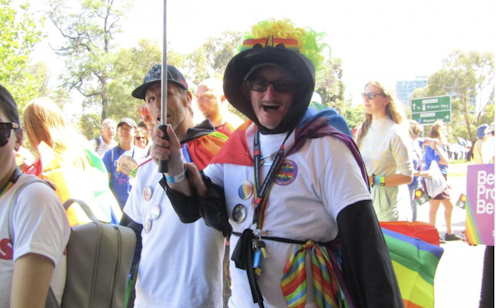
They are a group often overlooked, described as “invisible”, or perhaps assumed not to exist at all.
There is no reliable data that captures the number of LGBTQ+ Australians with intellectual disability. But in 2020, Australia’s largest national survey on the health and well-being of LGBTQ+ people found more than one-third (38.5%) of the 6,835 respondents had a disability or long-term health condition.
People with intellectual disability face additional barriers to access and participation in community, which means their voices are often missing from LGBTQ+ events, in government consultations, and in disability spaces.
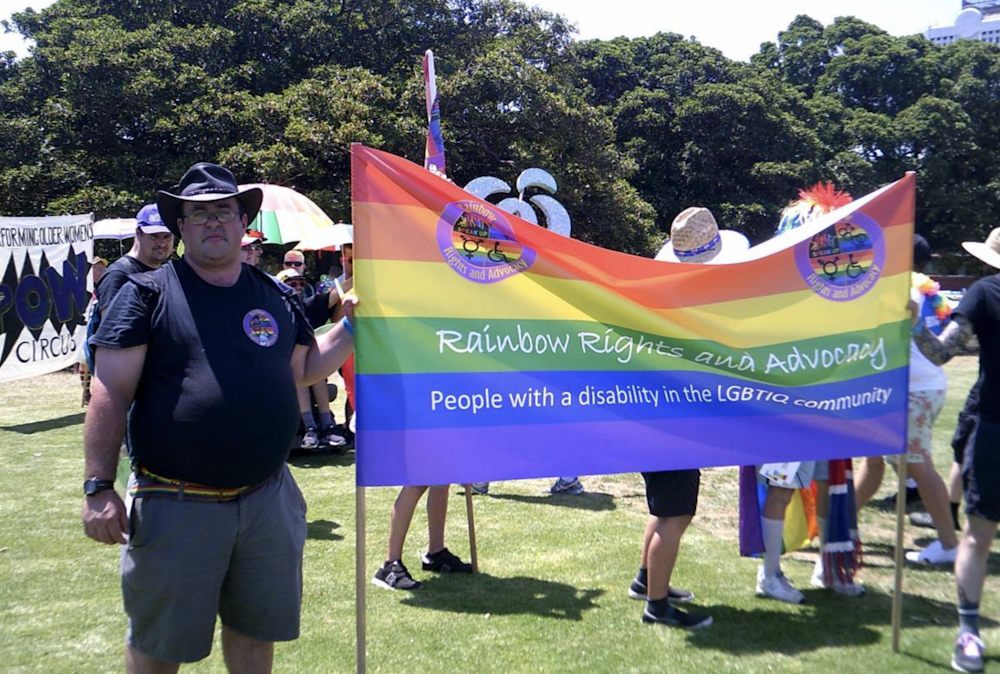
We partnered with Inclusion Melbourne and Rainbow Rights & Advocacy, an advocacy group of LGBTQ+ people with intellectual disability to hear about what mattered to them, and what they wanted other people to know.
‘Include us’
We spoke with dozens of LGBTQ+ people with intellectual disability over hundreds of hours.
We did this work alongside peer researchers: LGBTQ+ people with intellectual disability who facilitated the online group and individual sessions and co-created the research resources.
We asked how LGBTQ+ people with intellectual disability can be better supported to – in the words of one person – “say who you are”, and gathered their comments together into key statements.
Then we asked each person if they agreed with each key statement. It is our belief our study (to be published later this year) is the first in the world to include only people with intellectual disability and to co-design all stages of research.
Where all too often people with intellectual disability are seen as the ones in need of education, our approach was the reverse. We asked for their advice to share with those who need to listen: policymakers, service providers, families and their supporters.
‘What matters is hope, freedom and saying who you are’
This Pride month is about celebrating diversity. But we have some way still to go.
The stigma around intellectual disability and LGBTQ+ identities means people may choose not to come out to the people or support services that surround them.
And when people do come out they are not always acknowledged or believed. As one study participant told us:
They say [an intellectual disability means] you can’t know you’re a lesbian but I’m in my body and I know who I am and I know I like girls.
Everyone we spoke to agreed it was essential to respect their gender and sexuality as LGBTQ+ people with intellectual disability.
Abuse extended into people’s homes, where paid support workers had verbally abused them with homophobic slurs. One person in this situation told us:
[…] there was a long time where I didn’t feel like I was safe [at home].
‘We want good people around us who understand us’
After a long wait following the initial community consultations, the National Disability Insurance Authority (NDIA – the body that runs the NDIS) released its LGBTIQA+ Strategy in 2020. The people we spoke to agreed there is a need to improve organisational culture and attitudes across the NDIA, partners and providers.
People told us support workers needed more training to understand their rights and LGBTQ+ identity, and provide support in line with the quality standards required for NDIS service providers. These affirm that “the culture, diversity, values and beliefs of that participant are identified and sensitively responded to”.
‘I want to be part of the queer mob – be who I am, on Country’
Research has previously reported the only place Aboriginal and Torres Strait Islander people with disability do not experience inequality is within their own communities.
The Indigenous LGBTQ+ people with intellectual disability we spoke to told us how their spiritual connection and relationship to Country was an essential part of who they are. One participant, who identifies as a First Nations trans lesbian, shared her experience:
They call me sister and everything else, they don’t care if you’re trans gay or lesbian, it doesn’t matter what.
People talked about their need to access information, which helped shape our work in co-designing web-based resources for LGBTQ+ people with disabilities about donating blood, interactions with the police, their rights and more.
Lastly, we asked people what they would like to see in the future. One response was particularly poignant:
[…] being gay and free and no racism, be able to live peaceful.
The authors acknowledge our project partners Rainbow Rights & Advocacy and Inclusion Melbourne, and the members of our Advisory Group. We particularly thank our colleague and chief investigator Cameron Bloomfield.
Amie O’Shea receives funding from the National Disability Research Partnership and the Department of Social Services (Information, Linkages and Capacity Building program)
Diana Piantedosi is an Associate Research Fellow at Deakin University. Diana receives a Research Training Scholarship as a PhD Candidate at La Trobe University and is affiliated with Women with Disabilities Victoria (WDV).
We know literacy is important. Unfortunately, many Australian students move through the years of schooling without achieving the literacy they need for essential daily activities.
When we think about building literacy, we most likely think about the English learning area. But think back to your time at school. You’ll probably remember you needed good literacy skills in learning areas beyond English.
Your knowledge and skills across most learning areas were gained and measured through your literacy skills. For example, your ability to write an essay in history, produce a report in science and explain your working out in mathematics contributed to your grade. Research shows how students’ literacy skills influence their achievement in mathematics and science.
The Australian Curriculum positions literacy as a general capability to be taught in every learning area. Despite this, few Australian schools have whole-school literacy policies that include practical plans for building student literacy across learning areas. That’s the troubling conclusion from my analysis of Australian and UK school literacy policies for my upcoming book.
My earlier research also shows that many Australian secondary teachers do not believe their schools have a whole-school approach to supporting struggling literacy learners. This is concerning, as students who struggle with literacy won’t only struggle in English.
It’s not that the push to make every teacher a teacher of language and literacy is new. It has been discussed since the 1960s. However, there are questions about how closely Australian schools meet this expectation.
What kinds of literacies do we need?
Many literacies are needed to boost achievement beyond English. When we talk about whole-school literacy, we often refer to content area literacy and disciplinary literacy.
Content area literacy refers to the literacy knowledge, strategies and skills we use across the learning areas. For example, we don’t only need reading comprehension in English. It’s needed in every learning area that requires students to read.
Disciplinary literacy relates to the literacy knowledge, strategies and skills that we use to achieve learning purposes that are unique to a learning area. For example, writing a science report requires the correct scientific language, formatting, referencing and diagrams. It calls for specific literacy skills unique to science.
Whole-school literacy policies plan for all learning areas to include a focus on literacy achievement.
However, analysis of Australian schools’ literacy policies reveals many gaps in these policies. Part of the problem is an excessive focus on NAPLAN testing. There is also limited attention to making the most of literacy resources such as school libraries, especially by comparison with policies in the UK.
School literacy policies commonly fail to include:
A definition of literacy that considers both content area literacy and disciplinary literacy, as well as the wide range of literacies that the school seeks to develop in its students. This should not be limited to the narrow framing of literacy tested in NAPLAN.
Detailed and explicit literacy targets for building content area and disciplinary literacy, as well as meeting other goals such as increasing students’ information literacy. Targets are needed so the policy isn’t just aspirational; it actually drives change. There should also be detailed implementation planning that allocates literacy responsibilities across the school.
An explanation of how improvement in literacy will be measured to determine the effectiveness of the policy. Don’t just assess changes in high-stakes literacy-testing scores. Look at building literacy engagement. This relates to students’ attitudes toward and performance of practices such as reading for pleasure. Research has found a relationship between reading for enjoyment and reading comprehension, a key content area literacy skill.
Plans for identifying and supporting students who are struggling with literacy. These plans should cover all schooling years and learning areas. Include plans for professional development of teachers who lack confidence in supporting students’ complex literacy needs among the many competing demands of their role.
Consideration of how to make the most of the literacy resources within the school. These resources include but are not limited to the school library and its staff.
Attention to writing – the majority of Australian schools’ policies did not mention handwriting. Most of the UK policies did. Australian school policies also rarely mentioned typing. A whole-school literacy policy should include these skills, given their importance across the curriculum and the years of schooling.
COVID-related literacy issues – school policies may also need to include strategies to overcome any negative impacts of pandemic-related education interruption on students’ literacy learning.
In general, Australian school literacy policies are typically far shorter and less detailed than their UK equivalents. Australian schools and their students will benefit from more effective whole-school literacy planning.
Literacy is not just the responsibility of the English teacher. Every teacher is a literacy teacher.
Margaret Kristin Merga has received funding from the BUPA Health Foundation, the Ian Potter Foundation, the Copyright Agency Cultural Fund, Edith Cowan University and the Collier Foundation. She is the Patron of the Australian School Library Association and the Western Australian School Library Association. She also runs Merga Consulting, working with schools, Departments and professional associations to deliver parent seminars, staff professional development and planning advisory support.
New Zealand Parliament Buildings, Wellington, New Zealand.
Political Roundup: Why is New Zealand’s defence minister visiting South Korea?
By Geoffrey Miller
New Zealand’s defence minister, Peeni Henare, has had a very busy first half of the year.
In January, Henare was the face of New Zealand’s relief effort to Tonga, following the eruption of the Hunga Tonga–Hunga Ha’apai volcano.
Then, from March onwards, Henare was often involved in Jacinda Ardern’s announcements of military support for Ukraine.
The Government initially decided to supply only defensive (or ‘non-lethal’) equipment to Kyiv, which took the form of body armour, helmets and vests.
Cabinet initially declined a request by Henare for New Zealand to also supply ‘lethal aid’ weaponry to Ukraine – but that decision was suddenly reversed in early April.
Since Russia’s invasion of Ukraine on February 24, tensions between China and the West have also escalated in the Indo-Pacific. The increased focus on ‘hard security’ in New Zealand’s neighbourhood has only strengthened Henare’s role further.
The defence minister’s first trip outside New Zealand was to Fiji in late March. The outcome was a ‘Statement of Intent’ pledging stronger defence ties between Suva and Wellington. A week later, New Zealand foreign minister Nanaia Mahuta herself travelled to Fiji to sign a broader ‘Duavata Partnership’, which promised ‘a new level of expanded strategic cooperation’ between Suva and Wellington.
Given the subsequent debate over China’s interest in its own security arrangements with Pacific countries – especially Solomon Islands – a section of the Duavata Partnership that promises greater co-operation between Fiji and New Zealand on cybersecurity, defence and policing seems particularly significant.
The Pacific remains the focus during Henare’s current trip to Asia.
On Saturday, Henare spoke on a panel on ‘Climate Security and Green Defence’ at the Shangri-La Dialogue in Singapore. Of course, in the current geopolitical climate, nothing is ever as it seems – and Henare’s contribution mainly served as just another opportunity to stress the strategic importance of the Pacific region and justify New Zealand’s involvement.
If this needed to be underlined, Henare obliged with his opening remarks at the defence ministers’ summit, which included the line ‘our security and well-being are intrinsically bound to the peace and stability of our region’.
With his first in-person multilateral meeting under his belt, Henare now heads to Seoul for a three-day bilateral visit.
Much like Jacinda Ardern’s decision to brand her recent overseas trips as ‘trade missions’, the official reasoning given for Henare’s visit to South Korea probably understates its significance.
The Government says the main reason for Henare’s trip is to check on New Zealand troops deployed there and to acknowledge the contribution of the 6,000 New Zealand soldiers who served in the Korean War.
This of course an important and worthy reason for a visit – but it is far from the only one.
2022 marks the 60th anniversary of diplomatic ties between Wellington and Seoul – and bilateral relations may be about to step up a gear.
South Korea is New Zealand’s fifth-biggest export market, putting it behind only China, Australia, the US and Japan in importance.
This statistic alone makes it overdue for a visit by a senior New Zealand minister.
But there is more to it than that. Like New Zealand, South Korea is currently edging its foreign policy towards the West.
This is despite the fact that China is South Korea’s biggest export market and two-way trading partner – another parallel with New Zealand, which sends 33 per cent of its exports to China.
Seoul has also had another very particular reason to keep on good terms with Beijing – the influence it holds over unpredictable Pyongyang. Already this year, North Korea has undertaken a record-breaking number of missile tests – 31 in total – and appears to be more dangerous than ever.
Despite this, South Korea’s new President, Yoon Suk-yeol, is seeking to broaden his country’s foreign policy ambitions beyond the Korean peninsula, in a bid to become what he calls a ‘global pivotal state’.
Yoon, a conservative, narrowly won power in South Korea’s presidential election held in March. But there were signs of changes even in the last days of the five-year term of Yoon’s more liberal predecessor, Moon Jae-in.
When Russia invaded Ukraine in February, Moon initially tried to avoid placing its own sanctions on Russia – a stance also initially taken by New Zealand – before giving into pressure and joining the sanctions club a few days later.
The decision made South Korea one of only a handful of Asian economies to impose sanctions on Russia – two of the others are Singapore and Japan, which Ardern herself visited at the end of April.
The shift on sanctions made by Moon – who visited New Zealand in late 2018 – closely echoed New Zealand’s own new calculations. Jacinda Ardern was initially reluctant to impose sanctions to avoid setting a precedent that could irritate China. But as she faced pressure domestically and from Western partners, Ardern soon changed course and introduced the groundbreaking Russia Sanctions Act.
The similarities do not stop there.
Last month, Yoon hosted US President Joe Biden in Seoul and the pair issued a joint statement which cited several sensitive China-related issues – such as the South China Sea and the Taiwan Strait – as well as the North Korea threat.
Unlike New Zealand, South Korea is a staunch US ally – so it might seem remarkable that New Zealand’s own recent joint statement with the US – issued after Ardern met Biden in the White House – is even more hawkish and detailed when it comes to criticism of China.
This is a risk – Beijing has already verbally expressed disapproval at New Zealand’s apparent alignment with the US, and more substantive repercussions may yet emerge.
But for now, New Zealand and South Korea are forging broadly similar foreign policy paths that see them working more closely with other Western partners.
Neither country is a member of the ‘Quad’ grouping of China hawks – an arrangement involving Australia, India, Japan and the US – but both New Zealand and South Korea (along with Vietnam) have been part of a trialled ‘Quad Plus’ format that could always be revived and expanded.
Moreover, both New Zealand and South Korea are among just four countries from the Indo-Pacific – the others are Australia and Japan – to be invited to attend the North Atlantic Treaty Organization (NATO) leaders’ summit in Spain at the end of June.
Jacinda Ardern has yet to officially confirm her attendance at the Madrid meeting, but foreign minister Nanaia Mahuta already attended a NATO foreign ministers’ meeting virtually in April.
NATO is obviously keen to bring New Zealand and South Korea – which it calls Asia-Pacific partners – more closely into its orbit.
Both Seoul and Wellington have also been keen to sign up to a new economic pillar that the US is setting up to counter Chinese influence.
The Indo-Pacific Economic Framework (IPEF) is still somewhat nebulous when it comes to detail.
But Wendy Cutler, a former US diplomat and trade negotiator, suggests the IPEF’s ‘supply chain resilience’ component might be drawn on to counter a Chinese strategy that the US calls ‘economic coercion’.
The coercion label essentially refers to Beijing’s imposition of trade punishments on countries that get offside with its wider foreign policy aims.
Australia experienced the impact of trade linkage when China imposed punitive tariffs on Australian wine and barley exports in 2020, after then Prime Minister Scott Morrison called for an investigation into the origins of Covid-19.
Peeni Henare’s three-day mission to South Korea is no accident.
Seoul and Wellington might be 10,000 kilometres apart.
But when it comes to geopolitical strategy, New Zealand and South Korea are becoming closer by the day.
Geoffrey Miller is the Democracy Project’s international analyst and writes on current New Zealand foreign policy and related geopolitical issues. He has lived in Germany and the Middle East and is a learner of Arabic and Russian.
For a long time, policy makers and legislators seeking to address the problem of domestic and family violence have sought higher penalties and tougher laws. But when it comes to finding practical solutions to this complex problem, the voices of those with lived experience of the system have not always been heard.
A recent study I coauthored with Suryawan Rian
Yohanesh from Uniting Communities (an NGO focused on overcoming disadvantage) involved interviews with survivors of domestic and family violence about what changes they’d like to see.
Our interviewees told us they want changes giving them control over legal processes like intervention orders (sometimes called “Apprehended Violence Orders” or AVOs), which are legal orders designed to stop perpetrators of violence or abuse from being near or interacting with their partners or children.
Currently, if you want to obtain one of these orders, the police and prosecutor often lead the process. They generally decide whether it goes to court, what evidence is collected or used and what parameters that order has (such as whether the perpetrator can collect kids from school or access firearms). The abuse survivor can feel shut out of these decision-making processes.
Survivors also told us they need longer term support.
Survivors of violence, and those working to support survivors, want programs focused on getting the first response right every time. As one service provider said:
Being told that your abuse is ‘not serious enough’ or there is no abuse identified is one of the most damaging things that can happen. It can impact the relationship of trust going forward. It is therefore critical first responders are adequately trained in trauma-informed care and practice, and have training in best practice responses to domestic violence, so that the victims can also be referred to suitable support services.
If that first response (by police, for example) is dismissive or re-traumatising, it can leave survivors vulnerable to ongoing violence and harm, and distrustful of the legal system. As one survivor said:
I didn’t feel like I was taken seriously or believed. [I was] made to feel like I was being judged as hysterical, ridiculous and time wasting. This made me feel unsafe to approach police again which was fairly scary, because they were the place I was supposed to be able to count on to help, and I wasn’t sure where else I could go.
This type of response can be devastating for women and families already experiencing disadvantage or isolation, including First Nations women, culturally and linguistically diverse women, women with disabilities and women living in regional areas. Many of these groups already face myriad practical barriers when it comes to reporting violence.
Survivors of violence, and those working to support survivors, want to see programs that focus on getting the first response right, every time. Shutterstock
A mishandled first response can reinforce narcissistic or controlling behaviour by perpetrators, who use these experiences as evidence of their own power. To say, “See, I told you nobody would believe you.” One interviewee said:
The system that is being built to protect women from this type of abuse can be turned into a weapon in the hands of those men that are seeking to perpetuate control against their partner or their family.
Survivors said they want greater focus on perpetrator accountability by exposing the true impact of the violence on the lives of others, not just the aspects of the behaviour leading to criminal offences or breaches of the law.
This means engaging professionals to help the survivor confront the perpetrator with the broader health, financial and social impacts of their behaviour.
With this support team, the victim survivor could be encouraged to develop a strong recorded, accumulative evidence case. And these other professionals could be empowered to confront the defendant about the harm that he is causing to his partner, and in many cases also to his children.
These practices should be informed by cultural knowledge and supported by community leaders who can help improve awareness of the rights of women. The support team could also help identify pathways for safe repair of relationships, social connection and financial security.
Longer term support
Survivors also need longer term support packages, including opportunities to access tertiary education or training and specialist legal and financial services.
As one participant told us:
I’d really like to see some kind of focal point, resources for [domestic violence] survivors. To support people to rebuild their lives. Getting the universities and tertiary institutions to help with retraining and teaching, employment. Somewhere where people can break back in. Including social life, as well as financial security and employment.
Those with lived experience of domestic and family violence want perpetrators to be held to account – not just in the courtroom, but in their workplaces and their social networks.
They want to be put at the centre of the system, and be recognised as the powerful agents for change they are.
No legislation is good enough until people with lived experience have been consulted […] All these people with lived experience are not being heard. They are the ones that have the knowledge. Every time you don’t go to the coal face you miss the point.
Sarah Moulds receives occasional funding from the Law Foundation of South Australia Australia. She is the Director of the volunteer-based Rights Resource Network of South Australia and a member of the Law Society of South Australia.
This story is part of The Conversation’s Breaking the Cycle series, which is about escaping cycles of disadvantage. It is supported by a philanthropic grant from the Paul Ramsay Foundation.
A dead Peron’s tree frog (_Litoria peronii_)Ken Griffiths, Author provided
Last winter, thousands of dead and dying frogs were found across Australia. Instead of hunkering down and out of sight, frogs were spotted during the day in the open, on footpaths, highways and doorsteps – often in the blazing sun.
These frogs were often thin, slow moving, and with dark patches on their back or red bellies. They were seeking water in pet bowls or pot plants. And they usually died in a matter of hours.
A crash in frog populations could have very real consequences, particularly for already threatened frog species, and the importance of frogs in both freshwater and land systems means it can also impact entire ecosystems.
Thankfully, reports of sick or dead frogs slowed as the weather got warmer, and by the end of last year they had all but ceased. We hoped the awful spate of frog deaths was a one-off. But now, we fear it is happening again.
In the last few weeks, we’ve started getting scarily similar reports of sick and dead frogs from people across Australia.
From Warwick in southeast Queensland, we’ve received emails reporting green tree frogs (Litoria caerulea), discoloured and hunched up, sitting in the open, with the upsetting email:
We normally have these beautiful creatures hopping around our house but in the last week have only spotted two. Both were dead.
From Sydney’s North Shore, another report:
I have just found a dead Peron’s tree frog when raking up leaves in my garden.
And most recently, one of our colleagues stumbled across a big green tree frog in the middle of the day while bird-watching in western Sydney. The bright green frog was sitting in the sun on an asphalt path. In only a few hours, the frog was dead.
A big green tree frog sitting on a hot asphalt path. It died in a matter of hours. Nadiah Roslan, Author provided
How many frogs died last year?
Photos of sick frogs started popping up on social media feeds in May last year. This was not initially alarming, as sick, old or injured frogs are most likely to die in winter as their immune system slows down.
However, reports increased over late June and July, and we began to worry about just how many frogs were dying. Unfortunately, just as we began to worry, we were in lockdown, unable to venture out and investigate for ourselves.
So we asked the community for help. We asked for reports of sick or dead frogs, and then aligned members of the public with local veterinary clinics willing to take in these frogs for examination, care and diagnostic sample collection.
A dead, shrivelled green tree frog found by a member of the public. Suzanne Mcgovern, Author provided Another dead, discoloured green tree frog. Jayne Barrett, Author provided
This meant the welfare of frogs could be assured, and we could begin our scientific investigation into the cause once lockdown ended.
Reports came flooding in. Across Australia, a remarkable 1,600 people reported finding sick or dead frogs. Each report often described dozens of dead frogs, making the grim tally in the thousands.
Although most sick and dead frogs reported were green tree frogs, this is likely because this species tends to hang around houses and be spotted more. Frog species less tolerant of suburbia are far less likely to be seen.
Despite this, more than 40 species were reported, including threatened species such as the green and golden bell frog (Litoria aurea) and the giant barred frog (Mixophyes iteratus).
The true death count and full list of species impacted is likely to be orders of magnitude higher.
The green and golden bell frog, Litoria aurea Jodi Rowley, Author provided The giant barred frog, Mixophyes iteratus Jodi Rowley, Author provided
Why are the frogs dying?
We’ve been working with universities, government biosecurity and environment agencies to understand just what caused frogs to die last winter.
Our investigation has only been made possible due to the efforts of people across Australia reporting sick and dead frogs, taking sick frogs to veterinary clinics and freezing dead frogs for us to pick up and test ourselves.
In New South Wales alone, more than 350 people froze dead frogs for us to collect. Without this help, we would still be at square one with our investigation.
It’s a murder mystery, and there are so many possible suspects. We’ve been testing for parasitic, bacterial, viral and fungal pathogens. These tests include looking for pathogens known to kill frogs, and also looking for possible novel pathogens, which is by far the harder task. The potential role of toxins is also being assessed.
A dead green stream frog, Litoria phyllochroa Andrew Jennings, Author provided
Right from the very first frog deaths last year, our number one suspect has been the amphibian chytrid fungus (Batrachochytrium dendrobatidis). This pathogen is a known frog killer, responsible for causing frog population declines and species extinctions around the world, including in Australia.
The fungus attacks the skin of frogs, which is their Achilles heel – frogs use their skin to breathe, drink and control electrolytes. Deaths of frogs due to this pathogen are often at cooler temperatures.
Our testing has revealed the amphibian chytrid fungus is certainly involved in this mass death event. Most of the hundreds of dead frogs tested so far have tested positive for the pathogen.
But we aren’t yet sure if the fungus is acting alone, or even the primary cause of death. We continue to test for an array of other pathogens, toxins and other potential stressors.
A healthy green tree frog. Jodi Rowley, Author provided
The impacts on Australia’s frog species from such large scale deaths are unknown, but scientific surveys of frogs, combined with large scale citizen science data are underway.
Frogs are often extremely abundant, and play an important role in the flow of energy and nutrients, and in food webs. In places where amphibians have declined, the impacts are noticeable, with ripple effects across entire ecosystems as animals that rely on frogs for food start to disappear, too.
The 26 Australian frog species at greatest risk of extinction.
To help us understand the scale and cause of any frog deaths this winter, please send any reports of sick or dead frogs to the Australian Museum’s citizen science project FrogID via calls@frogid.net.au.
Please include your location and, if possible, photos of the frog(s).
To help us determine the impact of frog deaths on Australia’s frogs, and which species are likely to need our help the most, please download the free FrogID app and record calling frogs whenever you can.
Every recording will help us better understand and conserve Australia’s frogs.
Jodi Rowley is the Lead Scientist of the Australian Museum’s citizen science project, FrogID. She has received funding from the Department of Agriculture, Water and the Environment, Perth Zoo, the Australian Museum Foundation and other state, federal and philanthropic agencies.
Karrie Rose leads the Australian Registry of Wildlife Health, a collaboration between Taronga Conservation Society Australia and the University of Sydney. The Registry is funded by Taronga Conservation Society Australia, service agreements and project-based funding from state, commonwealth and philanthropic agencies.
As every historian knows, the frame you use to analyse the past affects the stories you tell about that past. Time is foremost among those frames.
Richard Flanagan wrote last month that the 2022 federal election result marked the end of the Howard Era. By that he meant the end of a pernicious kind of politics where institutions were not only hollowed out, but rubbished.
Wind the clock back further, and you start to see echoes of an earlier era, specifically one Labor governments presided over.
Once again, we are in the grip of an energy crisis. Russia’s invasion of Ukraine is doing what events in the Middle East did in the 1970s.
The 1973 oil crisis forced massive inflation upon the Whitlam government. By 1975 inflation was 15% and Australia was teetering on the edge of recession.
Unemployment, previously within a narrow band of 1-3%, jumped above 3% and then above 4% where it stayed for half a century.
Governing in crisis
In 1983 the Hawke Labor government came to office with inflation still at 11.5%, unemployment at 10.3% and Australia in the middle of a long-lasting recession.
Hawke’s treasurer Paul Keating would later say about his early period as treasurer that there was no obvious place to look for an answer to the economy’s problems.
This was especially so at a time when the West was embracing economic liberalism and turning decisions over to markets rather than governments.
But the Hawke government had one critical instrument at its disposal: centralised wage fixation.
Finding the bargain
Keating as a treasurer, and as a politician, understood bargains. You don’t get big change without giving something away.
The series of prices and incomes Accords that began in 1983 pulled back wage-driven inflation by a trade-off: workers would forgo wage rises in exchange for social programs and better retirement incomes.
That’s how modern superannuation began.
Today, inflation is 5.1% – hardly the stuff of 1973 or 1983, but way beyond the 1-2% we have had for most of the last decade.
Less to bargain with
The Albanese government comes to power intending to call an economic summit of business, union and community leaders. It’s an idea straight out of the Hawke government’s 1983 playbook.
In the industrial relations portfolio, minister Tony Burke has a mandate from his leader to pursue a Hawke-style Accord.
But it’s unclear where the policy levers for significant reform are.
Trade unions have neither the coverage nor bargaining power they did. In the early 1980s, almost 50% of employees were members of a union. Today, it’s 14%.
And we don’t have much centralised wage fixing. It was Keating who began the process of decentralising wages, moving away from a system of nationwide awards towards enterprise-by-enterprise bargaining.
It is difficult to see how a 1980s-style Accord-style could be struck in these circumstances. The genie bottle of private market forces has been unleashed.
George Megalogenis observed in his book The Longest Decade that deregulation, by definition, removed the government from economy
and yet Keating talked as if he were the maestro. But he didn’t conduct; rather, he gave the orchestra a licence to improvise.
And the Albanese lacks a mandate for serious reform. The election result shows the nation in favour of some light progressivism, but not up for major tax changes or redistribution.
Labor failed to gain office when it promised big changes in 2019. In the lead-up to the 2022 election, it agreed to pass so-called stage 3 tax reforms that will deliver the biggest benefits to those on the highest incomes.
Albanese’s ministers will need to be good communicators. They will need to explain that they can only do so much.
But when the time comes, as it inevitably will, for a discussion about significant economic reform, they will need to level with the electorate, like Hawke.
All the more need to be bold
Treasurer Jim Chalmers has given very clear signals about the parlous state of the books ahead of the budget in October. He’ll likely be delivering that budget after more interest rate rises from the Reserve Bank.
It has become fashionable to say this year’s election might have been a good one to lose. But ironically, this might also be a period of such significant turmoil that policymakers have no choice but to be bold, and to take people with them.
It was Albanese himself who said the nation is at a critical juncture.
The tools mightn’t be all he would want, but there is nothing like a crisis to force a reformer’s hand.
Emily Millane does not work for, consult, own shares in or receive funding from any company or organisation that would benefit from this article, and has disclosed no relevant affiliations beyond their academic appointment.
Political Roundup: NZ First’s court trial shows the need for political finance reform
Political scientist, Dr Bryce Edwards.
The New Zealand First donations scandal trial began in the High Court this week. And it’s already showing why the political finance laws in this country need a significant overhaul.
The trial is the outcome of a high-profile scandal that unfolded in the 2020 election year, when documents were made public showing that over years wealthy individuals and businesses had been making large donations to support the New Zealand First party, but these had not been disclosed to the public. It was revealed that the money had actually been funnelled into an entity that was legally separate to the party, called the New Zealand First Foundation.
The Serious Fraud Office (SFO) charged two men, who currently have name suppression, with offenses under the Crimes Act. The trial started in the High Court on Tuesday, and is expected to go for about six weeks. This landmark court case is throwing up three reasons we need urgent reform of the laws around donations to politicians.
Reform reason One: Vested interests donated to NZ First seeking private gain
The court case has only been going for a few days and already there has been a wealth of new evidence presented by the Crown prosecution detailing the donations that were made to the party. These totalled about $750,000, and generally came from businesspeople keen on New Zealand First protecting their interests in government.
Covering the court trial, journalists Tim Murphy and Matthew Scott report that: “Evidence before the High Court at Auckland this week showed two distinct groups were inspired to donate in bands of $10,000 or $15,000 and in totals of up to $50,000 to ensure their industries – horse racing and natural health products – had the benefit of NZ First’s policies in government.”
Many of the donors are upfront about their motivations for making the political donations. One horse racing enthusiast, Joan Egan, donated $15,000, and told prosecutors that it was “purely to help Winston Peters and his promise to look into the racing industry”. Four natural health businesspeople gave amounts ranging from $2500 to $12,500 in 2017, with one of the businessmen citing his decision to donate being due to the advice of a professional lobbyist.
Others gave much higher amounts. Murphy and Scott report that donors giving evidence to the trial include: “rich listers such as Waiheke’s Spencer Family, Andrew Bagnall, Kent Baigent, Sir Peter Vela, Tony Van Den Brink, Aaron Bhatnagar, Brendan Lindsay, Ian Ross and a clutch of stud farm owners and natural products business people.” About 40 donors have given evidence.
Such evidence can only reinforce the suspicion of many voters that wealthy individuals and companies give significant sums to politicians and parties to influence policy decisions or prevent change occurring.
Reform reason Two: NZF donors easily circumvented the electoral laws
To help guard against the undue influence of wealth, New Zealand has laws around political finance, especially in terms of donations to political parties. Large donations must be publicly declared by the parties, with some exceptions. The idea is that if the public is aware of these financial relationships, they will be on guard against politicians unduly acting in favour of their benefactors.
Under the Electoral Act an exemption is made for donations to political parties under the threshold of $15,000.01. And it has long been suspected that many wealthy donors break down their large donations into smaller figures under this threshold to circumvent the law and keep their financial contributions secret. Both Labour and National are involved in two other prosecutions this year where it has been alleged donations above the disclosure threshold have been broken down to circumvent electoral law.
There is an abundance of evidence of this practice in the current trial. Firstly, it appears that the fundraising Foundation was set up by New Zealand First to circumvent the requirement for public disclosure of the donations. Secondly, many donors have given striking evidence in the trial of their own attempts to get around the law and remain anonymous.
Again, Murphy and Scott have reported on this from the court: “some donors told investigators they had been determined that their donations should remain anonymous. Several sought legal advice or assurances from NZ First figures before splitting their totals of up to $50,000 into multiple donations just below the $15,000.01 threshold that would require their names to be declared to the Electoral Commission.”
Horse breeder Tony Van den Brink has given evidence about splitting up his $50,000 donation into smaller amounts donated from four of his different businesses, in order to circumvent disclosure. He explained: “I wanted it to be anonymous because I would rather not have the donation public.” Likewise, his son, Karl Van den Brink, stated: “we are a private family, a private business, and we did not want to be headlined as making donations to political parties”.
Businessperson, Andrew Bagnall donated about $50,000 split into four smaller donations, mostly from different legal trusts. He told the SFO: “I would not have donated anything from any of the [entities] that would have required public disclosure. I try to fly very much under the radar.”
Company director Ian Ross, also associated with the racing industry, broke his $50,000 donation into five $10,000 donations that came from five different business entities he owned.
The Rich Lister Spencer family of Waiheke Island also gave a $50,000 donation, made up of four separate $12,500 contributions from different family members. They also explained that they ensured the donations were under the legal threshold of $15,000 in order to protect their privacy.
The chief executive of Black Diamond Technology, Ron Woodrow, also explained to the SFO why he had made a donation of precisely $14,997 in 2016 (and was therefore just under the threshold for disclosure): “I remember some scandals about NZ First going back 10 years ago and was very concerned that they had their act together and were not going to allow the media to have access to this.”
According to the court reporting of Murphy and Scott, Woodrow had met for dinner with party leader Winston Peters and his adviser Api Dawson, and the latter assured Woodrow that in making the donation, “absolutely it will remain 100 percent confidential”.
Politicians and electoral law experts have normally assured the public that the law prevents large donations from being made without being declared to the public. However, having exemptions for donations made under $15,000 makes it easier to disguise much larger donations. Given the stark exposure of how blatant this practice has been, expect to see a demand that all donations – big or small – be subject to declaration.
Reform reason Three: The SFO have had to charge the defendants under the Crimes Act instead of the Electoral Act
Much of the evidence that has arisen out of the New Zealand First Foundation scandal and trial indicates that the Electoral Act has been breached. Large donations haven’t been disclosed to the public.
However, the SFO have not charged anyone associated with the Foundation or party with breaching the Electoral Act. It seems likely that the maximum penalties that can be imposed under this act are deemed too low, and so the SFO have used the Crimes Act instead. This raises the question of why the maximum penalties under the Electoral Act are so low. Alternatively, the SFO’s decision to use the Crimes Act might have been because it was too difficult to prove that the Electoral Act has been breached.
This is unfortunate, as the public need to have confidence that failure to disclose large donations will be prosecuted as political corruption, and it’s not yet clear that this is happening.
The allegation is essentially that the defendants have stolen money from the New Zealand First party, or more precisely, they have deceived donors into giving their financial contribution to the Foundation instead of the party. Such a conviction for this would not have the same democratic impact as a conviction under the Electoral Act. And as Peters has claimed, with some theoretical justification, his party has been exonerated by the SFO choosing not to prosecute any politician or office holder in New Zealand First.
The picture that is coming out of the trial is that a slush fund was operated by the defendants. Money came in from donations that were sought by New Zealand First MPs and office holders. The money was then allegedly spent by the Foundation to help the party win votes, despite very little of it having been declared as donations of any type – from the Foundation or the donors who gave the money originally.
But even if a prosecution is successful in this case, it will only result in the two people involved with the Foundation being convicted under the crimes act for fraud. Those outside of the Foundation, such as office holders in the party or the MPs that were involved in arranging the donations will be exonerated.
Why does all this matter?
Ultimately this is a question about how healthy New Zealand’s democracy is, and whether wealthy vested interests are easily able to get their way. And although New Zealand First is no longer in the current Labour Government, they campaigned for and succeeded in being in government during the 2017-2020 term when the fundraising which is the subject of this trial was in effect.
That wealthy interests were secretly donating large amounts of money both before and after the party was elected into office should raise questions of whether that Government led by Prime Minister Jacinda Ardern was corrupted in some of its decision-making. All sorts of Government decisions, from Capital Gains Tax through to fisheries policies could have been influenced by large donors. If so, then there are urgent questions about whether the current political donations regime is fit for purpose.
When this scandal first arose, another government Minister, James Shaw, said this about New Zealand First’s donations: “When you have a party taking large donations from, say, fisheries companies, and then issuing policy that is entirely aligned with those companies, the case for donations reform is pretty obvious”.
It is also important to point out that this current High Court trial has not come about through the monitoring and enforcement of the Electoral Commission. Instead, the prosecutions have been made as a result of a whistle-blower inside New Zealand First, who went to the media and the Police. Neither the Electoral Commission nor any of the audits discovered the problem with the NZ First Foundation’s fundraising.
This suggests that what we are currently seeing in the court case is merely the tip of the iceberg. There have probably been similar types of fundraising occurring in other political parties that we have no idea about because the equivalent whistle blowers simply haven’t come forward about them. Similarly, there is soon to be a trial involving donations made to National, which only came about as a consequence of Jami-Lee Ross’ fallout with his party’s leadership.
It’s therefore extremely timely that the Government is currently reforming political donation laws. Yet the signs are that the changes are likely to result in tinkering rather than an overhaul. This current court case suggests that much more than this is desperately required if public confidence is to be revived in how New Zealand politics works.
Further reading on the NZ First Foundation High Court trial
Source: Council on Hemispheric Affairs – Analysis-Reportage
By Dan Kovalik Pittsburgh
In his new memoir, Sacred Oath, former US Defense Secretary, Mark Esper, who served under President Donald Trump at the time of the arrest of Alex Saab in Cape Verde, effectively admits that the White House was quite aware of the fact that Saab was a diplomat at the time of his capture.
As Esper writes, “At Maduro’s direction, Saab was reportedly on special assignment to negotiate a deal with Iran for Venezuela to receive more fuel, food, and medical supplies. Saab was Maduro’s long standing point man when it came to crafting the economic deals and other transactions that were keeping the regime afloat.” Esper’s recognition that Alex Saab was “on special assignment” and negotiated economic deals for Venezuela is a tacit recognition of Saab’s diplomatic status. Moreover, it is highly unlikely that Esper was unaware of documentation from both Iranian and Venezuelan authorities that verifies Saab’s special envoy status at the time of his apprehension in Cape Verde.
The inconvenient fact is that Saab was a Venezuelan diplomat, and had been for some time, when his plane was forced to land in Cape Verde, as opposed to in Senegal or Morocco which the US prevailed upon not to allow Saab’s plane to land and refuel, and he was arrested by Cape Verde authorities. Saab was therefore entitled to diplomatic immunity as provided for by the Vienna Convention on Diplomatic Relations of 1961, and his arrest and continued detention to this day, in spite of this immunity, was and continues to be illegal under international law. So painfully aware of the illegality of their actions, and the dangers this of course may pose for Washington’s own diplomats if they were treated in the same fashion, that, as Esper makes clear, “the officials at State, Justice and the NSC [National Security Council] who were working on this case” were filled with trepidation (though Esper himself had no such qualms).
Still, the Trump Administration pushed on with the arrest, prosecution and extradition of Saab to the US (also despite the fact that there wasnoextradition treaty between the US and Cape Verde) because, Esper explains, “access to him could really help explain how Maduro and his regime worked. It was important to get custody of him. This could provide a real roadmap for the US government to unravel the Venezuelan government’s illicit plans and bring them to justice.” In other words, just as Saab and his many defenders have argued from the start, the arrest, detention and extradition has been politically motivated. Even more to the point, the treatment of Saab has been motivated by the desire of the US to understand Saab’s very diplomatic functions for Venezuela – that is, how he went about helping obtain food and medicine for Venezuela despite illegal US sanctions — again underscoring the illegality of this treatment under the Vienna Convention.
Lawyers working on Alex Saab’s case, including myself, have just filed information requests under the Freedom of Information Act (FOIA) with the White House, State Department, Department of Justice (DOJ), and the Treasury Department to provide further confirmation of what Esper admits and what Saab has claimed all along: that his treatment is illegal under the Vienna Convention, that the US government knew this from the start, and that it nonetheless pursued the arrest of Saab for wrongful purposes. We are hopeful, and indeed confident, that the information obtained will lead to the release of Alex Saab after two years of illegal detention.
Meanwhile, Mark Esper explains in his book that his dismissal from the Trump Administration was directly related to the tactical decisions Trump wanted to deploy to try to pursue Saab. Thus, Esper, who agreed with the decision to detain and extradite Saab, relates that he was fired by the Trump Administration over his disagreement with Trump’s tactical decision to send the USS Jacinto, a warship, to the coast of Cabo Verde to ensure Saab’s continued detention on the island nation until it was possible to extradite him (or, more accurately, kidnap him) to the United States. Esper, on the other hand, believed that DEA or other police action would be a more appropriate method of accomplishing the same end.
Trump ultimately went ahead with this decision, sending the warship to Cabo Verde in November of 2020, and anchoring it at a cost of over $50,000 a day.
It must be noted that Saab’s arrest, detention, and extradition have already been ruled illegal by a number of international bodies, including The Economic Community of West African States Court of Justice and the United Nations Human Rights Committee which actually issued an injunction requiring Saab’s release back in June of 2021.
It is long past time that the US government abide by international law and release Alex Saab after two years of tortuous and illegal detention.
Dan Kovalik teaches International Human Rights at the University of Pittsburgh School of Law, and is a COHA Senior Research Fellow
On May 30, Meta, Google and Twitter released their 2021 annual transparency reports, documenting their efforts to curb misinformation in Australia.
Despite their name, however, the reports offer a narrow view of the companies’ strategies to combat misinformation. They remain vague on the reasoning behind the strategies and how they are implemented. They therefore highlight the need for effective legislation to regulate Australia’s digital information ecosystem.
The transparency reports are published as part of the Digital Industry (DIGI) Group’s voluntary code of practice that Meta, Google and Twitter signed onto in 2021 (along with Adobe, Apple, Microsoft, Redbubble and TikTok).
The DIGI group and its code of practice were created after the Australian government’s request in 2019 that major digital platforms do more to address disinformation and content quality concerns.
What do the transparency reports say?
In Meta’s latest report, the company claims to have removed 180,000 pieces of content from Australian Facebook and Instagram pages or accounts for spreading health misinformation during 2021.
It also outlines several new products, such as Facebook’s Climate Science Information Centre, aimed at providing “Australians with authoritative information on climate change”. Meta describes initiatives including the funding of a national media literacy survey, and a commitment to fund training for Australian journalists on identifying misinformation.
Similarly, Twitter’s report details various policies it implements to identify false information and moderate its spread. These include:
alerting users when they engage with misleading tweets
directing users to authoritative information when they search for certain key words or hashtags, and
punitive measures such as tweet deletion, account locks and permanent suspension for violating company policies.
In the first half of 2021, Twitter suspended 7,851 Australian accounts and removed 51,394 posts from Australian accounts.
Google’s highlights that in 2021 it removed more than 90,000 YouTube videos from Australian IP addresses, including more than 5,000 videos with COVID-19 misinformation.
Google’s report further notes that more than 657,000 creatives were blocked from Australia-based advertisers, for violating the company’s “misrepresentation ads policies (misleading, clickbait, unacceptable business practices, etc)”.
Google’s Senior Manager for Government Affairs and Public Policy, Samantha Yorke, told The Conversation:
We recognise that misinformation, and the associated risks, will continue to evolve and we will reevaluate and adapt our measures and policies to protect people and the integrity of our services.
The underlying problem
In reading these reports, we should keep in mind that Meta, Twitter, and Google are essentially advertising businesses. Advertising accounts for about 97% of Meta’s revenue, 92% of Twitter’s revenue and 80% of Google’s.
They design their products to maximise user engagement, and extract detailed user data which is then used for targeted advertising.
Although they dominate and shape much of Australia’s public discourse, their core concern is not to enhance its quality and integrity. Rather, they hone their algorithms to amplify content that most effectively grabs users’ attention.
Having said that, let’s examine their transparency reports.
Who decides what ‘misinformation’ is?
Despite their apparent specificity, the reports leave out some important information. First, while each company emphasises efforts to identify and remove misleading content, they don’t reveal the exact criteria through which they do this – or how these criteria are applied in practice.
There are currently no acceptable, enforceable standards on identifying misinformation (DIGI’s code of practice is voluntary). This means each company can develop and use its own interpretation of the term “misinformation”.
Given they don’t disclose these criteria in their transparency reports, it’s impossible to gauge the actual scope of the mis/disinformation problem within each platform. It’s also hard to compare the severity across the platforms.
A Twitter spokesperson told The Conversation its policies regarding misinformation focused on four areas: synthetic and manipulated media, civic integrity, COVID misinformation, and crisis misinformation. But it’s not clear how the policies are applied in practice.
Meta and YouTube (which is owned by Google’s parent company Alphabet) are also vague in describing how they apply their misinformation policies.
Meta, the parent company of Facebook, earns the vast majority of its revenue through advertising. Shutterstock
There is little context
The reports also don’t provide enough quantitative context for their statements of content removal. While the companies do provide specific numbers of posts removed, or accounts acted against, it’s not clear what proportion of the overall activity these actions represent on each platform.
For example, it’s difficult to interpret the claim that 51,394 Australian posts were removed from Twitter in 2021 without knowing how many were hosted that year. We also don’t know what proportion of content was flagged in other countries, or how these numbers track over time.
And while the reports detail various features introduced to combat misleading information (such as directing users to authoritative sources), they don’t provide evidence as to their effectiveness in reducing harm.
What’s next?
Meta, Google and Twitter are some of the most powerful actors in the Australian information landscape. Their policies can affect the well-being of individuals and the country as a whole.
It’s crucial they operate on the basis of transparent and enforceable policies whose effectiveness can be easily assessed and independently verified.
In March, former prime minister Scott Morrison’s government announced that, if re-elected, it would introduce new laws to provide the Australian Communications and Media Authority “new regulatory powers to hold big tech companies to account for harmful content on their platforms”. It’s now up to Anthony Albanese’s government to carry this promise forward.
Local policymakers could take a lead from their counterparts in the European Union, who recently agreed on the parameters for the Digital Services Act. This act will force large technology companies to take greater responsibility for content that appears on their platforms.
Uri Gal does not work for, consult, own shares in or receive funding from any company or organisation that would benefit from this article, and has disclosed no relevant affiliations beyond their academic appointment.
Barnaby Joyce, old-style populist and controversy magnet, has gone from the Nationals leadership. In his place is Queenslander David Littleproud, a move that indicates a desire for at least the appearance of change in the party.
Joyce knew how to play the role of the folksy bush politician; one can almost hear the echoes of “Dad Rudd” when Barnaby talks. The problem was that in tandem with Scott Morrison’s distinctive “salesman” political style, it created a way of conducting political life that many found abrasive.
Although the Nationals did not lose any seats at the 2022 election, it is not surprising they chose to elect a new leader. It drew a line underneath the defeat of the Coalition and indicated a desire for a new beginning.
Ironically, the two-party-preferred swing against Joyce in New England (1.09%) was smaller than that against Littleproud in Maranoa (3.21%). Maranoa remains the safest seat for any party in Australia.
Whether it indicated “generational change” is another matter; Littleproud is nine years younger than Joyce. Curiously, Joyce lived for many years in St George, which is situated in Littleproud’s seat of Maranoa.
Nevertheless, in terms of political style, Littleproud is quite different from Joyce. While Joyce goes out of his way to project a somewhat boisterous “bush” image, Littleproud is more relaxed and comfortable – and hence less confrontational – than Joyce.
What is more difficult to gauge is whether Littleproud’s leadership also represents a change in political substance. Given the Albanese government is in its infancy and so is Littleproud’s leadership of the Nationals, all we have to go by are general statements as he seeks to establish himself as leader. Of those statements, three are interesting.
One is Littleproud’s strong declaration that the Coalition has to take its “medicine” following its election defeat. He also declared himself in favour of the idea of the “sensible centre”, a rhetorical term that has been around for some time and is evoked to prove that one is indeed sensible. This probably reflects nothing more than his desire for a new beginning.
The second is his general advocacy of nuclear power for the future, especially in the form of small-scale modular reactors, and his statement that popular attitudes to nuclear power have been shaped by Homer Simpson. Support for this mode of nuclear power also comes from new Liberal leader Peter Dutton.
This advocacy is essentially of the “we need to open a conversation about this”, which may be no more than floating a general idea to see how the public reacts. The problem with modular reactors, as Matt Canavan stated on Sky News, is the technology is still largely in development, although it is more developed than “green hydrogen”.
Canavan, a supporter of the nuclear conversation, also notes it could increase power costs. The problem with such “conversations” is they are vague and largely about a future that is some way off.
The third statement is about live sheep exports, something that is core business for Littleproud both in his role as shadow agriculture minister and as an advocate for rural interests. Littleproud strongly supports such exports, largely in terms of their economic benefit. This places him at odds with deputy Liberal leader Sussan Ley, who is opposed to such exports.
What this indicates is that Littleproud is perhaps most comfortable when supporting what he understands to be the interests of rural Australia.
Joyce also strongly supported live sheep exports, and he voiced his approval of nuclear power. It may be the case that in substance, if not in style, Littleproud has much in common with Joyce.
Littleproud may end up being more different from Barnaby Joyce in style rather than substance. Mick Tsikas/AAP
Of course, these are still early days. He might be a different style of leader to Joyce, but there are perennial matters for anyone who leads the National Party.
Given the uncertainties of Australia’s current economic situation, it is difficult to foresee how Littleproud’s policies will develop. One thing can safely be assumed: the National Party will continue to “look after” rural Australia to the best of its abilities.
This will surprise no-one. It is a sectional party and one should expect that when it changes leaders the style might change, but the focus of its activities and policies do not.
You wouldn’t expect fish and melanoma to be in the same headline – but they were last week. Researchers in the United States reported a higher risk of developing melanoma, a common type of potentially deadly skin cancer, in people who ate a relatively large amount of fish.
The researchers speculated their results may be due to levels of contaminants in some fish species – especially fatty fish. These contaminants include polychlorinated biphenyls (PCBs) – synthetic chemical pollutants used as equipment coolants and lubricants and as paint additives. PCBs are commonly found in the environment and can cause cancer in humans.
But a detailed look at the research shows the findings don’t necessarily mean we should all be cutting fish from our diets for fear of skin cancer.
The headline comes from a published study that followed more than 490,000 adults in the US for more than 15 years and checked cancer registry databases to see how many melanomas occurred within that same group of adults. Researchers classified melanomas as “in-situ” meaning on the skin surface, or “malignant” meaning they had spread deeper.
They also asked study participants about how much fish they usually ate using a reliable food-frequency questionnaire.
People in the study reported how often they ate fish and their portion sizes of fried fish or fish sticks, non-fried fish or seafood such as flounder, cod, shrimp, clams, crabs or lobster. They also reported how much and how often they ate canned tuna, including both water- and oil-packed tuna.
The average amount of fish those in the study ate varied from 20 grams or less per week (equivalent to the size of half a matchbox) up to about 300 grams a week.
Among the lowest fish eaters there were 510 cases of in-situ and 802 cases of malignant melanoma over the 15 years compared to 729 and 1102 respectively in the highest fish-eating group. This means the rates were 28% and 22% higher for both melanoma in-situ and malignant melanoma for those who ate the most fish compared to the least.
Looking at specific types of fish, there was a higher melanoma rate among people who ate more tuna and non-fried fish. Interestingly, there was no association with fried fish intake. While that appears counter-intuitive, it is likely due to the very small intakes of fried fish – ranging from less than one up to seven grams a day (equivalent to one heaped teaspoon).
Although the researchers adjusted their analyses for factors that could affect results – such as physical activity, smoking, family history of cancer and alcohol intake – the adjustment for daily UV exposure was only based on the average UV index for the suburb they lived in. This means there was no adjustment for UV exposure related to a person’s occupation. They also did not have information on the melanoma risk factors such mole count, hair colour, history of severe sunburn or individual sun-related behaviours.
Observation is not causation
This study does not prove eating fish causes melanoma. This is because it’s a “cohort study”, meaning people were observed over time to see whether they developed melanoma or not.
There was no intervention to feed them specific amounts of fish, which would not have been practical to do over 15 years anyway. Researchers did measure a range of behaviours at the beginning of the study (or “baseline”), such as dietary intake and physical activity levels. But these could have changed over time.
So the results are based on observation rather than cause and effect. This doesn’t mean observational results should be ignored, though.
Fish, especially fatty fish such as tuna, can contain contaminants such as mercury and PCBs. This could contribute to the findings that eating more fish is associated with a higher rate of both malignant melanoma and melanoma in-situ (skin cancer).
PCBs are readily absorbed into the body, accumulating in fat stores and staying there for years.
The role of contaminants that may be present in some fish needs to be considered further. A 2017 study of more than 20,000 Swedish women evaluated PCB exposure – potentially from fatty fish – and the incidence of melanoma.
After four and a half years of follow-up, researchers reported four times the risk of malignant melanoma for those women with the highest PCB exposure via their diet compared to the lowest.
However, this study also reported the intake of omega-3 fats found in fish and identified that among the women with highest intake there was an 80% lower risk if melanoma, even after they adjusted for levels of dietary PCB exposure. This could explain why a 2015 systematic review of case-control and cohort studies found higher fish intakes seemed to protect people from malignant melanoma of the skin in some, but not all, studies.
Regular monitoring of contaminants in fish sold here is conducted by Food Standards Australia New Zealand (FSANZ). It puts total contaminant exposure levels well below Australian and European permitted levels.
Further studies in other groups are needed that evaluate PCBs and exposure to other contaminants including dioxins, arsenic and mercury, while also adjusting for individual factors such as sun exposure, skin type and history of sunburn. Such research could help strengthen or refute the newly reported US findings.
Given the positive benefits of eating fish including for heart health and nutritional value, my advice to Australians would be to eat fish caught in Australian or New Zealand waters – and to heed sun-safe advice to minimise your risk of melanoma.
Clare Collins is a Laureate Professor in Nutrition and Dietetics at the University of Newcastle, NSW and a Hunter Medical Research Institute (HMRI) affiliated researcher. She is a National Health and Medical Research Council (NHMRC) Leadership Fellow and has received research grants from NHMRC, ARC, MRFF, HMRI, Diabetes Australia, Heart Foundation, Bill and Melinda Gates Foundation, nib foundation, Rijk Zwaan Australia, WA Dept. Health, Meat and Livestock Australia, and Greater Charitable Foundation. She has consulted to SHINE Australia, Novo Nordisk, Quality Bakers, the Sax Institute, Dietitians Australia and the ABC. She was a team member conducting systematic reviews to inform the 2013 Australian Dietary Guidelines update and the Heart Foundation evidence reviews on meat and dietary patterns.
The cartoon father of Bluey and her younger sister Bingo, Bandit is the much-loved dad dog at the heart of Australia’s favourite four-legged family. He balances the drudgery of housework with the creative escapades of his daughters, repurposing everyday objects and actions for imaginative play and engagement.
In a break from TV’s “bad dad” trope, Bandit has been worshipped as a “dad-idol”, even inspiring a Facebook group of 14,000 dedicated dads who identify as Bluey superfans.
Child psychologists have explained how Bandit inspired their approach to pretend play and improvisation. A new article published in The Journal of Paediatrics and Child Health lays out “what Bluey can teach us about parenting and grandparenting”.
But there is a darker side to this lovable character.
Bandit never strays far from the reductive stereotype of the Australian larrikin: the likeable roguish male stuck between childhood and adulthood whose disrespect of authority and rough-and-ready masculinity reflects Australia’s emotional attachment to the working-class underdog.
It is difficult to overstate the cultural power of larrikin ideology in Australia.
Generally regarded as a sign of authentic, rugged masculinity and anti-authoritarianism, the figure of the larrikin has been co-opted for car and beer adverts, international tourism, and even conservative politics.
Today, the image of the larrikin has been sanitised for public consumption; however, the history of larrikinism is firmly rooted in Australia’s colonial literature.
The original larrikins of the late 19th century were young urban mischief-makers who sometimes ventured into serious violence and crime.
At the turn of the century, these transgressive characters were endowed with hearts of gold in outback drama and literature. In some cases, they were domesticated, as was the case for Dad and Dave from Steele Rudd’s On Our Selection (1899).
Rudd established the family dynamic that would be replicated in a multitude of Australian dramas, from Kingswood Country (1980–84) to The Castle (1997) to Bluey: energetic and inexhaustible children, a long-suffering sensible wife and a larrikin father who knows how to play to an audience.
From this mythos, we see the birth of Bandit: the underdog who knocks authority, mocks pomposity, and regularly breaks the rules to get what he wants – even resorting to cheating when he can’t outsmart or outpace his children.
In one episode, Bandit holds Bluey back from the finish line so he can win an obstacle course. In another, he lauds victory over his younger brother, Stripe, taunting that “big brothers always beat little brothers” – a jibe Bluey imitates when she teases Bingo: “Big sisters always beat little sisters. That’s just the way it goes.”
Even Bandit’s name conjures up the small-time crimes of bushrangers, Australia’s revered outlaws who also achieved a type of perverse folk hero status.
Undoubtedly, Bandit’s larrikinism contributes to his likeability: he is an entertaining and engaged father who is heavily involved in his childrens’ lives.
Occasionally, however, we catch a glimpse of Bandit’s darker side, with his playful teasing of his young daughters sometimes devolving into bullying.
In one episode, Bandit agrees to open Bingo’s ice block before repeatedly licking her frozen sweet in front of her. Afterwards, Bandit apologises to his daughter for being “a bit mean”.
While the show itself restrains judgement, often it is Bandit’s wife Chilli who pulls him into line. When Bandit forgets to pack sunscreen and snacks for a swim at the pool, it is Chilli (the “boring” parent, in Bandit’s words) who saves the day.
Yet it is Bandit who is praised for his parenting prowess, while Chilli is figuratively and literally in the background. In fact, the creators of Bluey were recently accused of mother-shaming when they described Chilli as “falling a bit short” due to her status as a working mum.
The universal veneration of Bandit is perplexing since, in situations like at the pool, he comes across as a mildly incompetent caricature, lampooned as an overgrown child in need of regular supervision and training.
Bandit is also surprisingly conservative when it comes to gender values.
Bandit is a “traditional” man who wishes to be viewed as the head of the Heeler household. When he reluctantly submits to wearing make-up, he is subsequently mocked by his mates for doing so. He censors himself from engaging in full imaginative play when under the gaze of other men. He teases his wife on the pains of pregnancy and labour.
Taken individually, most of these moments are punchlines. But over the course of three series, Bluey creates a complex portrait of Australia’s favourite dad. Bandit is present and playful, but he is still a larrikin at heart. His continued popularity, despite his personal shortcomings, only speaks to the stereotype’s strength in contemporary Australian life.
The authors do not work for, consult, own shares in or receive funding from any company or organisation that would benefit from this article, and have disclosed no relevant affiliations beyond their academic appointment.
Review: Melbourne Winter Masterpieces exhibition 2022: The Picasso Century, NGV International.
The Picasso Century exhibition presents Picasso as we have never seen him before.
Pablo Picasso (1881-1973) is not presented as the lone genius creator – a mythology promoted by the artist himself – but as being at the centre of several creative hubs. He was surrounded by groups of brilliant creative men and women and his influence was a powerful presence for the whole 20th century.
In his life, Picasso rarely acknowledged his creative collaborators, this exhibition sets out to redress this omission.
The great French poet, critic and art collector Guillaume Apollinaire, wrote of his friend Picasso:
His insistence of the pursuit of beauty has changed everything in art […] The great revolution of the arts, which he has achieved almost unaided, was to make the world his new representation of it.
Leo Stein, another of Picasso’s friends and patrons, when writing on the rivalry between Picasso and Matisse observed:
Matisse saw himself in relation to others and Picasso stood apart, alone. He recognised others, of course, but as belonging to another system, there was no fusion.
Some people may not like the phallocentric persona of Picasso but he did effectively change the course of western art and, in the process, changed the way in which we see the world.
Picasso affected the art of his friends and contemporaries, as well as that of those who never met him.
Although Apollinaire described him as achieving a revolution in the arts “almost unaided” and for Stein “Picasso stood apart”, in reality Picasso also reflected the cultural and intellectual milieu that surrounded him.
This very ambitious multifaceted exhibition sets out to define “Picasso’s voice” during his long career through a selection of over 80 of his works, many quite major and never previously seen in this country. It also investigates his interactions with his surrounding cultural milieu.
The Picasso paintings, graphics, sculptures and ceramics are accompanied by about 100 works by more than 50 of his contemporaries to create a context through which his significance can be assessed.
Apart from Apollinaire, the contemporaries considered include Georges Braque, Salvador Dalí, Alberto Giacometti, André Masson, Juan Gris, Henri Matisse, Dorothea Tanning, Natalia Goncharova, Julio González, Wifredo Lam, Suzanne Valadon and Joan Miró.
A large, curious and little-known painting hanging near the entrance of the exhibition, Marie Laurencin’s Apollinaire and his friends (2nd version) (1909) from the Centre Pompidou.
The painting shows Apollinaire with Picasso looking over his shoulder and surrounded by a number of figures including Gertrude Stein, Fernande Olivier, Marguerite Gillot, Maurice Cremnitz as well as Laurencin herself in the foreground in a pale blue dress. Stein, on the left, appears in the role of one of the three inspirational graces or Muses.
Apollinaire admired this painting and had it positioned over the head of his bed for much of his life.
Picasso was to paint portraits of many in this grouping, including that of Apollinaire who was amongst the first to recognise the significance of cubism and collected Picasso’s work. Picasso was to refer to Apollinaire in jest as “the pope of cubism”.
Traversing artistic eras
In the exhibition, there are a number of iconic Picasso paintings, including his Portrait of a man (1902-03), a classic work from his so-called “blue period”.
It is a brooding and introspective image where the tone defined an epoch.
Dated a few year later is the memorable Mother and child oil painting from the summer of 1907 that already speaks of primitivism and the radical formal transformation evident in the Les Demoiselles d’Avignon (1907) that was to become a defining moment in the course of western art.
The exhibition has a number of significant cubist paintings, Picasso’s The violin (1914) and Georges Braque’s Woman with a guitar (1913) both from the collection of the Centre Pompidou.
Surrealism, at least in part a response to the violence of the 1930s, is particularly well represented in this exhibition with numerous examples from the artist and his contemporaries as well as a section on Picasso’s political engagement when, as a member of the communist party, he stood up to fascism and later to US imperialism in all of its guises.
This is a huge exhibition of over 180 pieces that explores neat niches, such as Picasso’s engagement with sculpture in the context of González and Giacometti, or his excursion into ceramics, as well as his mainstream developments.
Whereas in many exhibitions one despairs over padding with inferior and irrelevant pieces, here the works have been carefully selected and are frequently of exceptional calibre. For example, the wondrous Pierre Bonnard Self-portrait in the bathroom mirror (1939-45), or the Francis Bacon Picasso inspired painted heads.
The exhibition was curated over about a decade by Didier Ottinger, deputy director of the Musée national d’art moderne, Centre Pompidou, Paris and is a triumph of visual intelligence.
No matter how well you think you know Picasso and the collections of the Centre Pompidou and the Musée national Picasso-Paris, in this exhibition you are guaranteed to be surprised, amazed and delighted.
The Picasso Century is a remarkable exhibition that may change the way you will view Picasso.
The Picasso Century is on at the NGV International until October 9.
Sasha Grishin does not work for, consult, own shares in or receive funding from any company or organisation that would benefit from this article, and has disclosed no relevant affiliations beyond their academic appointment.
Cuba’s demographic information, though slow to become available, at least exists and appears to be reliable. A week ago, Cuba released its 2021 mortality data. The result is shown in the chart above. To place this into context, there is also a chart for Brazil, using the same scale.
For further context, for the 21 months from March 2020 to November 2021, Cuba lost nearly one in 200 of its population to Covid19, the vast majority of these from July to October 2021. Until December 2020, Cuba was in a similar situation to New Zealand, with negative Covid19 deaths.
Cuba is now making its own vaccines, and apparently they are good vaccines. Though I expect most Cubans were unvaccinated in 2021. But Cuba was by no means the only undervaccinated country in the world in 2021. And, in 2020 when no countries were vaccinated, few countries had death spikes like this one.
Cuba, while a poor country, has a sophisticated healthcare system and the same life expectancy as the United States. It looks very likely that attempts in Cuba to keep the country safe backfired; those very efforts almost certainly made the Cuban population vulnerable.
Brazil, which received much media attention, certainly had many more deaths in the first 14 months of the pandemic. But in the first 21 months, Brazil lost less than one in 300 of its people to the pandemic, only slightly worse than the United States. (For further comparison, Germany lost one in 860, and Sweden one in 970.)
So far, New Zealand’s recent excess deaths – especially March 2022 – have been similar to those in Cuba in January 2021. New Zealand is on track for a coming seasonal mortality peak similar to Brazil’s most recent covid peak (January 2022).
*******
Keith Rankin (keith at rankin dot nz), trained as an economic historian, is a retired lecturer in Economics and Statistics. He lives in Auckland, New Zealand.
If you use a tax adviser to complete your income tax return you’re not alone. Australians use tax advisers more than any other nation apart from Italy.
It’s easier, less stressful, gives you confidence the job is being done right and saves time.
But does it save you money? Our research says no – unless you’re one of Australia’s wealthiest individuals.
If you’re a typical wage earner, paying a tax adviser is likely to increase your final tax liabilities, even after you claim a tax deduction for the adviser’s fees.
In fact, after analysing 5 million individual tax returns over a four-year period, we’ve found tax advisers are more likely to act as “tax exploiters” for wealthy clients but “tax enforcers” for the rest of us.
For clients with annual taxable income more than A$180,000, whose financial affairs make tax rules complex or uncertain, tax advisers can help identify ways to save money. But for everyday wage earners they mostly ensure compliance with the tax rules.
Greater benefit for the wealthy
Our research is the first to explore this topic using the Australian Taxation Office’s ALife dataset. This comprises a randomly selected (and anonymised) sample of 10% of all Australian taxpayers (about 1.4 million observations each year).
Analysing this data shows professional tax advice is very useful for the very wealthy to reduce their tax liabilities. Plus they get a tax deduction on paying for that advice.
Tax advisers save time and stress for ordinary wage earners, but not money. Shutterstock
Those on the highest levels of supplementary income – that is, business income, rental income, personal services income and income from partnerships and trusts – undertake more aggressive tax avoidance than individuals on lower incomes.
The more spent on tax professional services – and thus the higher the deduction – the more likely aggressive tax-avoiding behaviour.
In effect, the tax deduction disproportionally helps the wealthy minimise their tax.
Should the deduction remain?
This raises an important question. Should the tax system provide generous tax deductions that only really benefit wealthy taxpayers in their efforts to pay as little tax as possible?
One solution would be do away with such tax deductibility altogether.
We propose, instead, a $3,000 cap on the amount that can be deducted for paying tax advisers. Currently there is no limit.
The Labor Party proposed such a reform in 2017, under Anthony Albanese’s predecessor Bill Shorten.
The Australia Institute supported this with research showing only those with incomes higher than $500,000 were likely to be affected by the $3,000 cap. The average (mean) deduction for tax advice was $378, and the median deduction just $165.
Prior to the 2019 election the Parliamentary Budget Office estimated the cap would save about $120 million a year, rising to $130 million a year in 2022-23. After Shorten’s election loss, however, the policy was dropped.
Maintaining integrity
Of course, there is always a danger with such reforms that taxpayers and their advisers will look for ways around the new rules.
Our previous research indicates tax advisers may look to get around the deductions cap by shifting the expense to other line items in an income tax return.
For example, instead of claiming tax advisory fees on a wealthy taxpayer’s personal tax return, they might allocate the fees to a related entity, such as a trust or company controlled by that individual.
But this is not an insurmountable issue. There are ways to prevent such manipulation through so-called “ring-fencing” rules.
Nothing needs to change for those of us who use a tax adviser for the convenience and certainty.
The authors do not work for, consult, own shares in or receive funding from any company or organisation that would benefit from this article, and have disclosed no relevant affiliations beyond their academic appointment.
University of Canberra Professorial Fellow Michelle Grattan and Emma Larouche, from the University of Canberra’s Media and Communications team, look at the first week of an Albanese government.
They discuss the latest interest rate hike, the energy crisis that’s part of the escalating cost of living, and the nuclear talk coming from Coalition figures. It’s been a hard week for the government – but one bright spot was Anthony Albanese’s trip to Indonesia.
Michelle Grattan does not work for, consult, own shares in or receive funding from any company or organisation that would benefit from this article, and has disclosed no relevant affiliations beyond their academic appointment.
Source: The Conversation (Au and NZ) – By Larissa Christensen, Senior Lecturer in Criminology & Justice | Co-leader of the Sexual Violence Research and Prevention Unit (SVRPU), University of the Sunshine Coast
Child sexual abuse material (previously known as child pornography) can be a confronting and uncomfortable topic.
Child sexual abuse material specifically refers to the possession, viewing, sharing, and creation of images or videos containing sexual or offensive material involving children.
But less publicised is another form of child sexual abuse material: virtual child sexual abuse material (VCSAM).
What’s virtual child sexual abuse material (VCSAM)?
VCSAM is sexual content depicting fictitious children in formats such as text, drawings, deepfakes, or computer-generated graphics. It’s also known as fictional child pornography, pseudo pornography, or fantasy images.
Recent technological advancements mean fictitious children can now be virtually indistinguishable from real children in child sexual abuse material.
Some offenders create VCSAM through a morphing technique which uses technology to transform real images into exploitative ones.
A non-sexual image of a real child could be visually altered to include sexual content. For example a child holding a toy altered to depict the child holding adult genitals.
Morphing can also happen in the reverse, where an image of an adult is morphed to look like a child – for example adult breasts are altered to look prepubescent.
Offenders can manipulate both real and fictitious images to produce VCSAM. John Williams RUS/Shutterstock
In this way, this allows offenders to effectively disguise a real act of child sexual abuse, potentially preventing law enforcement from bringing victims to safety.
It may also enable repeat offenders to avoid detection.
Online communities of other deviant but like-minded people may therefore provide offenders with a greater sense of belonging, social validation, and support. Such interactions may also, in turn, serve as positive reinforcement for their criminal behaviour.
Others may use this material to achieve sexual arousal.
It could be argued the material may also normalise the sexualisation of children.
In fact, professionals in child welfare and law enforcement seem to share the concern that VCSAM may “fuel the abuse” of children by framing the offenders’ criminal behaviour as acceptable.
It can be used to disguise the abuse of real children, as a gateway to “contact offending” against children (meaning abusing them in real life), and as a grooming technique.
Child welfare and law enforcement officials have sounded the alarm about the increasing creation and distribution of VCSAM for over a decade.
So while VCSAM remains illegal and offenders are frequently prosecuted, detecting – and ultimately preventing – these often obscure acts of abuse remains a challenge.
The authors do not work for, consult, own shares in or receive funding from any company or organisation that would benefit from this article, and have disclosed no relevant affiliations beyond their academic appointment.
They weigh around 15 grams, the same as a 50 cent coin. They devour vast quantities of insects. And they’re in real trouble.
Our new research has found the critically endangered southern bent-wing bat is continuing to decline. Its populations are centred on just three “maternity” caves in southeast South Australia and southwest Victoria, where the bats give birth and raise their young. At night, mothers leave their pups clustered in a “creche” on the cave ceiling while they head out to hunt for moths, including agricultural pest species. These beautiful bats have already lost 90% of the natural vegetation in their range due to land clearing. Now they face a drying climate.
Our research tracked thousands of these bats and found new mother bats and their young were not surviving well, especially in drought conditions. Our modelling shows they will be near extinct within 36 years, with declines of up to 97%. That’s just three generations of bat.
These bats are sensitive to disturbance and have a limited range. Emmi van Harten, Author provided
Why are these bats in such trouble?
Most cave-roosting bats are highly threatened in Australia, with 62% of species listed as threatened at a state or national level.
While we don’t often see them, bats make up one quarter of all Australian mammal species. They play vital roles in our ecosystems, with microbats like the southern bent-wing bat feeding on insects, including agricultural pests. Fruit bats like flying-foxes are important long-distance pollinators and seed dispersers. Despite this, Australian bats are under-studied and under-funded for research and conservation.
Bats themselves don’t make it easy. They can be incredibly difficult to study. While many Australians are familiar with our spectacular flying-foxes as they pass by at night, most of our 81 bat species are very small. They are also agile flyers, making them difficult to catch. It is particularly difficult to capture the same bats many times to study critical aspects of their biology such as survival rates.
With the help of a huge team of volunteers, we safely tagged almost 3,000 southern bent-wing bats with small microchips.
The tags let us detect these bats as they flew in and out of an important cave at Naracoorte Caves in South Australia. With this approach, we were able to gather millions of detections over a three and a half-year period, without having to catch the same bats again and again.
So what did we find? We found the lowest adult survival rates amongst female bats who had just given birth and were nursing pups compared to males and non-breeding females. Young bats recently independent from their mothers also had low survival rates.
We used these survival results to model future scenarios for the South Australian population and found predicted declines, with sharper drops during droughts. If these rates of decline continue across the total population, the species will be close to extinct within three generations.
The southern bent-wing bat in flight. Steve Bourne, Wikimedia Commons, CC BY
Droughts can have devastating effects on our wildlife, with the most damage done to our most threatened species. Worse, droughts take place against a backdrop of existing threats such as the widespread clearance of natural habitats.
As drought and bushfires worsen as the the climate changes, they can impact large proportions of the habitat remaining for some species. The Black Summer bushfires contributed to the listing of the closely-related eastern bent-wing bat as critically endangered in Victoria.
These threats pose particular risks for cave bats because their hunting range is limited by the locations of suitable caves. Although southern bent-wing bats are highly mobile and can fly more than 70km between caves in just a few hours, most bats gather at the three maternity caves for much of the year. This means food and water need to be available around these key sites to support the populations.
Unfortunately, 90% of natural vegetation in the southern bent-wing bat’s range has been cleared and most of the region’s wetlands have either been drained and converted to agricultural land, or are drying out due to a combination of groundwater extraction and a drying climate.
What needs to be done?
Australia’s recent extinctions have shown the need to act quickly. In response to these threats, the southern bent-wing bat now has a national recovery team of species experts, researchers, vets, land managers and representatives from government agencies, zoos and NGOs. This team is implementing the national recovery plan for this bat in a bid to prevent extinction and see it recover to a healthy population.
But we can’t leave it all to this group. We can help this and other endangered bats on these four fronts:
take action to help reduce the impacts of climate change, such as worsening droughts, megafires and heat events
help community efforts to restore natural landscapes by planting trees and native vegetation and restoring wetlands
avoid entering caves known to have bats in them, as the southern bent-wing bat and several other species are highly sensitive to disturbance
This year, we’ve had the welcome news that the eastern barred bandicoot has recovered significantly, from being listed as extinct in the wild on the Australian mainland to endangered.
This remarkable result shows sustained conservation effort can bring back even species teetering right on the edge of extinction. We can do the same for the southern bent-wing bat.
Emmi van Harten received funding from the Australian Government Research Training Program Scholarship, Australian Speleological Federation Karst Conservation Fund, Holsworth Wildlife Research Endowment, Lirabenda Endowment Fund and the South Australian Department of Environment and Water. She is Coordinator of the Southern Bent-wing Bat National Recovery Team through Zoos Victoria’s Department of Wildlife Conservation and Science.
Lindy Lumsden works for the Arthur Rylah Institute for Environmental Research, Department of Environment, Land, Water and Planning. She is the Chair of the Southern Bent-wing Bat National Recovery Team and Vice-President of the Australasian Bat Society.
Thomas Prowse receives funding from the ARC, NHMRC, and Commonwealth and State environment departments. He is a board member of The Wilderness Society South Australia.
Schools’ use of educational technologies (edtech) grew exponentially at the height of COVID lockdowns. A recent Human Rights Watch (HRW) report has exposed children’s rights violations by providers of edtech endorsed by governments in Australia and overseas.
The lockdowns have ended but edtech remains embedded in education. Children will have to navigate issues of data privacy in their learning and other activities.
So what can Australian governments and schools do to protect students? Both can take steps to ensure children’s digital rights are enabled and protected.
HRW reviewed 164 edtech products, including ten of the many apps and websites used in Australian schools. According to its report, New South Wales and Victorian education departments endorsed the use of six of these, including Zoom, Minecraft Education and Microsoft Teams.
The review found that, to varying degrees, these apps and websites harvested children’s personal, location or learning data to monitor, track or profile students. These practices ultimately violated children’s digital rights to privacy.
The use and commodification of data associated with our online activities may not seem particularly alarming. It is, after all, a transaction we routinely make. Yet, for children, rights to privacy and to protection from corporations that seek to maximise profits rather than act in the best interests of the child are fundamental.
Edtech commodifies children when their personal data is made available to the advertising technology industry, as the HRW report shows. When a child uses an app or website for learning, the resulting data can be collected, monitored, tracked, profiled and traded in data economies. These practices are intentionally opaque and highly profitable for technology corporations.
A further complication is that schools choose digital technologies on behalf of children and their families. Students often do not have a genuine choice when required to use apps and websites endorsed by schools or education departments. This means children do not have the agency to make informed decisions about their online learning.
What can the government do?
Australian law can be improved to better protect children’s privacy.
In 2019, the then Coalition government announced a review of the Australian Privacy Act 1988, with submissions closing in January this year. The act predates the development of the world wide web. It needs to be strengthened to account for personal data and data-driven economies.
The new Labor government should commit to continuing this important work. It should also develop a legislated Australian Children’s Code setting out principles governing the management of children’s data. The code to protect their digital rights must be enforceable and resourced.
Without legislation to protect children’s privacy, schools and education departments can still enable children’s rights to privacy. They can do so through considered selection of educational technologies and through everyday school practices and curriculum.
Education departments can draw on international standards, such as the UK Children’s Code, to:
inform technology procurement practices
better consider privacy risks when assessing educational technologies
develop policy and guidelines to support schools’ decision-making.
There will always be a need for schools and teachers to make critical decisions about which apps and websites they bring into the classroom. This is not to promote a “use it” or “do not use it” position. Rather, informed guidelines would support school assessments of risks and help develop practices that uphold children’s digital rights.
Assessing the risks is difficult due to the intentionally opaque designs of digital technologies. The development of assessments, policy and guidelines at a department level is necessary to support teachers to integrate edtech in ways that protect children’s privacy.
Nonetheless, there are some practical steps teachers and families can take. Examples include:
consider the purpose and advantage of using the chosen educational technology
review the privacy policy of each app or website, paying attention to what data it collects, for what purpose, and who the data are shared with (although these aren’t always clear or accurate, as the HRW report shows)
review privacy settings on apps
check websites using a privacy tool like Blacklight, used in the HRW review.
Education can also empower children to make informed choices about their data and privacy.
Current Australian school programs focus on digital safety and well-being. They aim to help students understand interpersonal online risks and harms. Examples of this approach are the newly revised Australian Curriculum’s digital literacy capability and the new Labor government’s promise of an eSmart Digital Licence+.
While understanding interpersonal online risks and harms are crucial for children’s well-being, this focus overlooks risks associated with the commodification of personal data. To enable children’s digital rights they must be given opportunities to understand and critically engage with digital economies, datafication and the associated impacts on their lives.
We’re still catching up to edtech
The HRW report has shone a spotlight on children’s right to digital and data privacy in schools. However, its findings may be just the tip of the iceberg in a largely unregulated industry. The report covered only a small proportion of the educational technologies being used in Australian schools.
Children have the right to engage with digital environments for learning and play, and to develop their autonomy and identity, without compromising their privacy.
The Australian government has the power to create laws to protect children’s digital rights. Together with education that empowers teachers and children to make informed decisions, these rights can be much better protected.
Tiffani Apps receives funding from Australian Research Council.
Karley Beckman receives funding from the Australian Research Council.
Sarah K. Howard receives funding from the Australian Research Council.
The new Labor government has promised to make a significant change in the life of Aboriginal and Torres Strait Islander Peoples, with a full commitment to the Uluru Statement from the Heart. But rather than waiting for a referendum to enshrine the Indigenous Voice to parliament, Labor should do it now.
The authors of the Uluru Statement have suggested May 2023 or January 2024 as likely dates for a referendum to be held. The Minister for Indigenous Affairs Linda Burney has stated it is a “goal” to have the referendum in the first term and will push ahead regardless of bipartisan support.
However an act of parliament could see Indigenous Voice implemented in the next few months. And with a majority in the lower house, Labor has the capacity to negotiate it through the upper house.
An Indigenous Voice to parliament and government does not require a referendum. This is only needed to make it a part of the Constitution.
The advantage of enacting a Voice now is Australians will be able to see how it works in practice and gain a better understanding of its value and importance.
The limitations of a referendum
Democratic literacy and trust is low in Australia, and of 44 referenda held since federation, only eight have passed.
If the process is rushed, failing to secure a “yes” majority would be incredibly traumatic for Indigenous Peoples. Many Indigenous people disagree their fate should be put to a popular vote at all, where it would be a majority of non-Indigenous people determining their rights.
This proposed referendum would not be like the plebiscite for same-sex marriage, where most people have an understanding of what marriage is and why same-sex couples might want to have recognition in a formal ceremony.
An Indigenous Voice is a new form of advice-giving to parliament and government that is hard to imagine without seeing it in action. But if it simply becomes a regular part of the political system – as a way to receive advice from Indigenous Peoples on Indigenous issues – there will no longer be confusion about the process.
At the state level, we already have some precedent for opening up ways for First Nations Peoples’ to have a voice in political processes, without a referendum.
The Victorian Aboriginal Assembly was created in December 2019 from an act of parliament for a democratically elected Aboriginal body to discuss Treaty. In effect, this has seen an Aboriginal body become part of a state’s decision-making relationships. The Assembly is successful without enshrinement and has progressed Treaty through the increased use of legislation. This includes the historic bill currently with the Victorian government to establish a separate and independent Treaty Authority to deal with disputes and oversee negotiations.
For example, the Guardian Essential Poll shows that while support is steadily growing, 47% of surveyed Australians still do not support the Voice being enshrined in the Constitution.
Australians should know going into a voting booth exactly what they’re getting in exchange for their support. The more clarity, the better.
In the 1999 referendum loss for a republic, even while urban areas voted in favour of it, former prime minister Bob Hawke said “it was clear that a majority of Australians wanted a republic but there was confusion about the model”.
If the Indigenous Voice were to be enacted now, this would indicate the new government is serious about healing relationships between Indigenous Peoples and other Australians.
It would ensure Australians are aware of what the model looks like and mean Aboriginal and Torres Strait Islanders would not have to wait for a referendum for their democratic rights.
This way, even if a referendum failed, the Indigenous Voice would still stand.
Dr Emma Lee has consulted on the National Co-Design Group for Indigenous Voice. Dr. Lee has also received funding from the Australian Research Council Grant DP200101394 Making policy reform work: a comparative analysis of social procurement.
With protections against COVID-19 transmission incomplete in early 2022, the government’s policy of keeping schools open through the Omicron outbreak has left communities exposed to widespread infection and disrupted learning.
With winter here, an action plan for schools is urgently needed to protect children, staff and their families from COVID-19 and other seasonal respiratory infections.
During term one, the Ministry of Education advised schools to reassure parents that transmission in school settings would be low. COVID-19 in children had been described in news reports as an “asymptomatic or mild illness” for most, with full recovery likely after a few weeks.
These assurances seemed overly optimistic. Children aged 5 to 11 only became eligible for their first vaccine dose two weeks before term began, key ventilation and monitoring equipment had not been delivered, child-sized respirator masks like the KF94 were not widely available, and younger school children were not required to wear masks.
Furthermore, the international evidence was clear that longer-term symptoms of COVID-19 infection such as long COVID were a real and rising concern, and that Omicron was spreading in school settings.
Putting school communities at risk
This decision to prioritise school attendance without also providing strong protections and transparent outbreak information has caused significant educational disruption. It has exposed students, staff and families to both immediate and longer-term risks, including long COVID in children and adults.
These disruptions raise serious concerns for the well-being of the country’s pandemic generation now and in the future.
Lack of government leadership has placed an unnecessarily heavy burden on school staff, who have had take on a pandemic management role in addition to their many existing commitments, and on Māori and Pasifika households who are more at risk of severe outcomes.
And, as the recent Human Rights Commission inquiry reports, immune-compromised or disabled people have been put at risk and adversely affected by the lack of support in education settings, including children being unable to attend school.
The current situation is unsustainable. Children with persisting symptoms from Omicron infection are already being seen. Teachers are reported to have higher rates of infection than the general population.
Teachers in the UK are reported to be leaving the profession, citing lack of protective measures in schools and the impact of long COVID on their capacity to work. These reports should be ringing alarm bells in New Zealand.
The change we need to see
Schools play a vital role in protecting the well-being of children, staff and families. An action plan would ensure the right resources and information are in place.
Even during the worst infectious disease outbreak in a century, this would mean children can thrive and learn, school staff are safe and supported, and the risk of bringing infections home to older and younger family members is as low as possible.
We have previously recommended a range of measures to uphold children’s right to health and education. A key point is that resources and support should follow children and whānau, rather than the reverse.
At the height of an outbreak, some children may be better off in school, others at home. The highly supportive, collective leadership in kōhanga reo shows how much is possible when the pandemic response is centred on people rather than on the school system.
The action plan for schools should provide protection from COVID infection and reinfection and from winter infections such as flu and respiratory syncytial virus (RSV). The plan should prioritise children’s well-being, including supporting mental health and access to learning.
A co-ordinated child data system should be established to close some critical knowledge gaps about direct and indirect impacts of the pandemic on children and their families. This knowledge will enable government, schools and whānau to use the best available science to protect children’s well-being.
Schools as role models
Sending a child into school during an outbreak requires a high level of trust from caregivers that the school environment will be safe. Families have been given repeated reassurances, but the rhetoric hasn’t been backed up with effective action.
Accurate and transparent communication is now needed to restore trust. Currently, school communities lack the information needed to make good risk assessments. For example, many are unaware of long-COVID risk or of reinfection occurring just weeks after an initial infection. And there is no systematised way to inform parents about local case numbers.
Schools should be models of science-informed best practice for their communities. They can empower students to contribute to the pandemic response by modelling key values, such as wearing a mask to protect others.
Building on the success of sun safety and hand washing messaging, schools can lead a transformative change in indoor air quality, with students as citizen scientists helping to monitor CO2 levels in classrooms.
This generation of children will experience recurring pandemics and epidemics during their lifetime. It’s vital they understand how effective public health measures can be.
The immediate focus for winter should be on a “vaccines plus” approach that aims to minimise infectious disease transmission in schools. Specific aims include:
Optimal indoor air quality: this includes heating, ventilation and filtration with real-time monitoring to guide action.
Routine (ideally mandated) mask use indoors: high-quality masks provide protection against emerging COVID variants and other respiratory infections, regardless of immune status.
High vaccination coverage: intensive health promotion from trusted community leaders to ensure families are well informed and to counter disinformation; and urgently addressing the high inequities in vaccine coverage.
Effective isolation and quarantine: supporting students and staff to stay at home if they are symptomatic, if they are close contacts of a COVID case or other infection, or if they need to shield whānau during a major outbreak.
Adequate sick leave and testing provision: for all school staff (teaching and non-teaching) to enable them to stay home while infectious and to support a full recovery, with aligned rapid testing strategies; these measures also apply during outbreaks of RSV, measles, meningococcal disease or influenza that are increasingly likely as border protections are removed.
An epidemic management contingency plan: the education system needs to explicitly plan for short circuit-breaker closures when case numbers reach defined thresholds, with a shift to high-quality remote teaching and additional community support as needed.
Monitoring and evaluation: data collection is needed to identify what is working well and what needs improvement, and to guide operational decisions such as intensifying ventilation if CO2 levels are above certain thresholds, or temporary closure if infections and absenteeism reach certain levels.
Timely information, communication and support: school communities need to see evidence that their well-being is paramount and the goal is not simply protecting the status quo.
Overall, the Ministry of Education’s approach needs to shift from insisting on in-person school attendance to supporting the well-being of children, staff and families wherever they are.
Prof Michael Baker, Dr Jennifer Summers, Dr Lucy Telfar Barnard, Dr Andrew Dickson, Dr Julie Bennett, Carmen Timu-Parata and Prof Nick Wilson all contributed to the recent University of Otago Public Health blog drawn on for this article.
Amanda Kvalsvig receives funding from the Health Research Council of New Zealand for infectious diseases research.
Humans are the only species to live in every environmental niche in the world – from the icesheets to the deserts, rainforests to savannahs. As individuals we are rather puny, but when we are socially connected, we are the most dominant species on the planet.
New evidence from stone tools in southern Africa shows these social connections were stronger and wider than we had thought among our ancestors who lived around 65,000 years ago, shortly before the large “out of Africa” migration in which they began to spread across the world.
Social connection and adaptation
The early humans weren’t always so connected. The first humans to leave Africa died out without this migratory success and without leaving any genetic trace among us today.
But for the ancestors of today’s people living outside of Africa, it was a different story. Within a few thousand years they had migrated into and adapted to every type of environmental zone across the planet.
Archaeologists think the development of social networks and the ability to share knowledge between different groups was the key to this success. But how do we observe these social networks in the deep past?
To address this question, archaeologists examine tools and other human-made objects that still survive today. We assume that the people who made those objects, like people today, were social creatures who made objects with cultural meanings.
Social connectivity 65,000 years ago
A small, common stone tool gave us an opportunity to test this idea in southern Africa, during a period known as the Howiesons Poort around 65,000 years ago. Archaeologists call these sharp, multipurpose tools “backed artefacts”, but you can think of them as a “stone Swiss Army knife”: the kind of useful tool you carry around to do various jobs you can’t do by hand.
These knives are not unique to Africa. They are found across the globe and come in many different shapes. This potential variety is what makes these small blades so useful to test the hypothesis that social connections existed more than 60,000 years ago.
Similar designs of ‘Stone Swiss Army knives’ have been found across southern Africa. Paloma de la Peña, Author provided
Across southern Africa, these blades could have been made in any number of different shapes in different places. However, around 65,000 years ago, it turns out they were made to a very similar template across thousands of kilometres and multiple environmental niches.
The fact they were all made to look so similar points to strong social connections between geographically distant groups across southern Africa at this time.
Importantly, this shows for the first time that social connections were in place in southern Africa just before the big “out of Africa” migration.
A useful tool in hard times
Previously it has been thought people made these blades in response to various environmental stresses, because just like the Swiss Army knife they are multi-functional and multi-use.
There is evidence the stone blades were often glued or bound to handles or shafts to make complex tools such as spears, knives, saws, scrapers and drills, and used as tips and barbs for arrows. They were used to process plant material, hide, feathers and fur.
While the making of the stone blade was not particularly difficult, the binding of the stone to the handle was, involving complex glue and adhesive recipes.
During the Howiesons Poort, these blades were produced in enormous numbers across southern Africa.
Data from Sibudu Cave in South Africa shows that their peak in production occurred during a very dry period, when there was less rain and vegetation. These tools were manufactured for thousands of years before the Howiesons Poort, but it is during this period of changing climatic conditions that we see a phenomenal increase in their production.
It is the multi-functionality and multi-use which makes this stone tool so flexible, a key advantage for hunting and gathering in uncertain or unstable environmental conditions.
A strong social network adapted to a changing climate
However, the production of this tool at this time cannot be seen as only a functional response to changing environmental conditions.
If their proliferation was simply a functional response to changing conditions, then we should see differences in different environmental niches. But what we see is similarity in production numbers and artefact shape across great distances and different environmental zones.
This means the increase in production should be seen as part of a socially mediated response to changing environmental conditions, with strengthening long-distance social ties facilitating access to scarce, perhaps unpredictable resources.
The similarity in the stone “Swiss Army knife” across southern Africa provides insight into the strength of social ties in this key period for human evolution. Their similarity suggests that it was the strength of this social network which allowed populations to prosper and adapt to changing climatic conditions.
These findings hold global implications for understanding how expanding social networks contributed to the expansion of modern humans out of Africa and into new environments across the globe.
The research was funded by the DST-NRF Centre of Excellence in Palaeosciences, University of the Witwatersrand, South Africa, Australian Museum Foundation and Tom Austin Brown Research, University of Sydney.
Source: The Conversation (Au and NZ) – By Stephen Duckett, Honorary Enterprise Professor, School of Population and Global Health, and Department of General Practice, The University of Melbourne
Mental health services are poorly targeted, outcomes are getting worse, and out-of-pocket payments are increasing. The new government faces a tough challenge in improving mental health.
Medicare spending and out-of-pocket mental health-care costs are increasing but those most needing care aren’t getting it: mental health services use goes up in better-off areas where mental health-care needs are lower. A new government needs to address this mental health triple-whammy of spending, costs and areas of need.
Middle-aged women on low incomes are struggling
Very high psychological distress is rising most steeply in the middle-aged; more than doubling for women aged 55–64 (3.5% to 7.2%) from 2001–2018.
Earning less is associated with much worse mental health. When we combine gender and income, we see that of men in the highest 20% income bracket, just 0.4% have very high psychological distress. The rate of this high level of distress is 28 times greater (11.9%) for women in the lowest 20% income bracket.
So, mental health services should be targeted to people with low incomes, particularly middle-aged women. But Medicare for mental health fails any reasonable test of universality that would mean equitable delivery of mental health care for all Australians.
Rather, it follows an “inverse care law” that sees those needing the most getting the least. Often, poorer individuals in mid-life and in poorer communities – who really need psychological, allied health and psychiatric services – only get a minimal level of GP treatment, sometimes so restricted in range that it makes mental health worse.
This mismatch between need and services follows from a market-driven service model.
Most Commonwealth government mental health-care support is through Medicare rebates – supporting services by GPs, psychiatrists and psychologists.
Medicare rebates are for services provided by individual clinicians, rather than oriented toward team-based care. A GP can unlock additional mental health support through a “mental health treatment plan”, or a psychiatrist referral, allowing Medicare rebates for visits to psychologists or other professionals.
But here’s the rub. These visits often require out-of-pocket payments of more than A$200 per year, with only about 40% of people having all their Medicare-subsidised psychologist services bulk-billed. And these plans are only [reviewed by their GP about half the time.
So Medicare support for psychiatrists and psychologists is inequitable and poorly targeted. Essentially, both psychologists and psychiatrists are out of reach for people on low incomes.
Taxpayers get better value for money when there is a closer alignment between spending and need. The first step in service redesign is agreeing on a destination.
The current expression of what the mental health system should look like, in operational terms rather than policy waffle, is the national mental health strategic planning framework. But this does not consistently guide planning and it needs revision. It should incorporate how social drivers of health, including relative disadvantage, affect community mental health-care needs.
The government also needs to decide whether it will direct more money into mental health; there was no pre-election commitment to this. Mental health needs – especially for people on low incomes – are not being met. Without extra money, redistribution of funding will be required. The current “haves” will argue vociferously against redistribution to the “have-nots”, causing political pain.
A fresh frame
Commonwealth responses to addressing mental health needs have been siloed and poorly integrated into broader health care. Labor’s pre-election Strengthening Medicare policy provides new context and the potential for a more integrated response to mental health needs.
In the next five to ten years, block payments to GPs for patients enrolled with their practice will supplement fee-for-service and performance payments. But where will mental health fit in? And what opportunities might enrolment present for improving access to integrated primary mental health care for everyone?
Enrolment-based funding will need to be risk-adjusted, with higher payments for patients with greater needs. Mental health status should be calculated as a health factor in the new formula. Then, general practices caring and supporting more people living with mental illness would attract higher funding.
Risk-adjustment also should be higher for people with social or economic drivers of poor mental health, such as unemployment. Then we need to figure out what services and support GPs would provide for the new enrolment payments.
A low payment, implying few extra services, would not drive the significant transformations needed in mental health-care provision. A higher payment, perhaps phased in, could help reshape mental health care. Existing funding for mental health-care plans could be collapsed into the enrolment payment. So could the cost of a psychologist and other services which these plans unlock.
A new funding model
Funding should allow allied health professional such as social workers and occupational therapists to use their discipline-specific skills. GPs would be able to employ psychologists and other providers directly or subcontract them. Primary health networks might also have a role here in accrediting services or developing service networks with GPs.
A new funding model, involving funding weighted for those in greatest need, and more closely integrated into general practice, could transform access to mental health services. It would be more equitable and seamless, leading to higher quality care for the same cost.
This story is part of The Conversation’s Breaking the Cycle series, which is about escaping cycles of disadvantage. It is supported by a philanthropic grant from the Paul Ramsay Foundation.
Graham Meadows is a member of the Australian Labor Party.
The idea of nuclear power in Australia has been hotly debated for decades. Most of this discussion has been unproductive, focusing on symbolism and identity politics rather than the realities of energy policy. For that reason alone, we should welcome the commitment by opposition party leaders David Littleproud and Peter Dutton to a mature conversation about nuclear power, free of political taboos.
Far and away the most important such taboo is the unwillingness of either Labor or the LNP to consider an effective price on carbon. A string of inquiries into nuclear power such as the 2006 Switkowski Review and the 2016 South Australian Royal Commission concluded nuclear power will never be commercially viable without a high price on carbon dioxide emissions.
The reasoning behind this conclusion is simple. Nuclear power directly competes with coal-fired electricity as a source of continuous 24-hour generation. But building nuclear plants is much more expensive than new coal-fired plants. In Australia, nuclear power would compete with existing coal plants, the construction costs of which were recovered long ago.
So nuclear power could only replace our ageing coal plants if its operating costs are lower. But as long as coal generators are permitted to dump their waste (carbon dioxide and particulate matter) into the atmosphere at no cost, nuclear power can’t compete, except in rare periods of ultra-high coal prices. As energy minister Chris Bowen pointed out yesterday, nuclear is “the most expensive form of energy.”
Without a carbon price, nuclear will struggle to find a place complementing renewables. Getty
Why is a carbon price fundamental to nuclear being able to compete?
Take the example of the most recent nuclear plant under construction in the developed world, the UK’s Hinkley Point C plant. In 2012, the plant’s owners negotiated a guaranteed price for power of around $A160 per megawatt hour, pegged to inflation. That’s extraordinarily expensive.
In Australia, the typical wholesale price for coal power in our National Electricity Market is typically $A40 to $A60, though it fluctuates and is currently very high. Even if the costs of nuclear power fall substantially, and the market price of coal remains high, there will still be a gap which won’t be bridged without a carbon price.
Despite their calls for a mature discussion, none of Australia’s prominent advocates of nuclear power have suggested accepting a carbon price in return for removing the Howard government’s ban on nuclear power. Indeed, when I proposed this grand bargain with the support of a number of conservative economists, the idea was ignored or dismissed out of hand by LNP members sitting on parliamentary inquiries.
Where does that leave us? Just as the ban had no practical effect, the current calls for its removal are purely symbolic given we have no carbon price to make the economics stack up. Rather, the Coalition’s sudden nuclear push represents just another round in the endless culture wars bedevilling Australian politics for decades.
If we had a carbon price, large scale nuclear would still not stack up
Let’s assume our leaders reach agreement on a carbon price. Would nuclear stack up then?
Certainly not in its traditional form. Large, centralised power plants based on 20th century designs are dead, as most pro- and anti-nuclear advocates would agree. That’s due to cost and difficulty of construction. For many years, the most promising candidate for a large 21st century nuclear plant has been the AP1000 reactor built by US company Westinghouse. Massive cost and schedule over-runs on two US projects sent Westinghouse broke, almost taking parent company Toshiba with it.
The UK’s Hinkley Point C nuclear power station is built to the European Power Reactor design. Getty
There are also the European Power Reactor and the APR1400 designed by Korean company KEPCO. The EPR, as it is now known, is the massively expensive design under construction at Hinkley Point. The same design has had disastrous cost overruns in other projects in France and Finland. Cost details on the APR1400 are harder to find, but there have been no new orders for a decade.
That leaves Chinese and Russian designs. Any prospect of Australia opting for one of these was almost certainly scotched by the Russian invasion of Ukraine. Finland, which unwisely went with Russian company Rosatom for its fifth nuclear plant, has pulled the plug, while the UK is trying to cut China out of its role in its new reactors.
What about the small reactors touted as the future?
The great hope for the future is “small modular reactors”. Here, small reactors of less than 100-megawatt capacity are built in factories and shipped to sites as needed (this is the “modular” bit). While many small reactor outfits have tried to latch on to the idea, US company NuScale is the only one worth considering.
Even given the smaller size, NuScale has hit major delays. In 2014, the company predicted the first project would be operating by 2023. That date has now been pushed out to 2030, though it hopes the first unit will be in place just before the end of this decade.
Small modular reactors like this mock-up from NuScale are much smaller than traditional nuclear plants. Wikimedia Commons, CC BY
Let’s suppose, though, that everything goes right for nuclear. Imagine NuScale reactors can arrive on time and on budget, that Australia has a carbon tax high enough to make nuclear competitive with coal, and cheaper alternatives of firmed renewables (battery-backed solar and wind) run into issues. How long would it take before we could actually generate nuclear power in Australia?
Work on the legislative framework and the regulatory authority could be done in advance. But it would be silly to spend large amounts if the design isn’t proven. That means that we couldn’t start design approvals, site selections – which would be controversial – and impact assessment until the early 2030s.
With a determined push and broad social consensus, construction might start in the late 2030s and start producing electricity some time in the 2040s. That could be worthwhile as a backup to our energy system, which by then will be based mainly on solar and wind.
But to get to this point two decades away, the very first requirement for a mature discussion of nuclear energy is accepting a carbon price.
Until we see that, the opposition is offering a fantasy, not an energy policy.
Visiting Jakarta this week, Prime Minister Anthony Albanese said Australia and Indonesia are linked not just by geography, but by choice.
Choosing to know Indonesia makes good sense for Australia. Not only is Indonesia our largest neighbour, it is a regional heavyweight and an emerging global power.
Indonesia has a fast-growing economy and a young population more than ten times that of Australia. Creativity and innovation are hot – like the bamboo bicycle our PM rode while meeting Indonesian President Jokowi.
Although using bamboo for bikes was common in the 19th century, they quickly went out of fashion in favour of metal. With the emergence of the green movement in Indonesia, bamboo was considered again. With its combination of durability and high flex, bamboo is great for bikes. These bikes are produced locally and aim to empower villages as sustainable producers.
Indonesia’s growing creativity in digital and social innovation does not just stop at bikes. There are all sorts of future opportunities for collaboration with young Australians in business, in caring for the environment and in creating popular culture.
Unfortunately, most young Australians may not benefit from such opportunities to work together with our largest neighbour because they have little chance to learn anything about Indonesia at school.
Only 755 students across Australia studied Indonesian language in year 12 in 2019. That’s 0.35% of year 12 students, or one in every 290. In comparison almost 4,000 students studied French that year.
A 2021 report, Indonesian Language Education in Australia: Patterns of Provision and Contending Ideologies, found:
“Currently, there is no national policy for language education, Asian or otherwise, no reporting requirements, and no centrally collected data. In effect, the data currently available about the teaching of languages including Indonesian is in a more parlous state than it was a decade ago. In the case of Studies of Asia, even less is currently known as there is no data collected on this aspect of education.”
Recent research on the state of Indonesian in our schools points to declining numbers as a result of xenophobia. This stems from limited understanding and negative perceptions of Indonesia among Australians.
We urgently need to rethink what we teach our young people about Indonesia.
In the 1970s Australia was a world leader in teaching Indonesian in schools and universities. There was a resurgence of interest in the mid-1990s, as a result of the federal Labor government’s investment in a national strategy for Asian languages and studies. Ever since then Indonesian language learning in schools and Indonesian studies in universities have been going backwards.
After a decade of neglect by the Coalition government, beyond the numbers of students studying Indonesian in year 12, we have no data on how many Australian students study Indonesian at school. This means we do not know how bad the situation is.
It’s not just about language. Integrating studies of Indonesia into history, geography, literature and the arts is possible in the Australian Curriculum through the cross-curriculum priority of Asia and Australia’s engagement with Asia. So it’s not a case of asking schools and teachers to add yet another new thing to the curriculum.
For example, for students of geography and science, Indonesia’s rich biodiversity means it is a “megadiverse” country. It’s home to 16-17% of the world’s reptile and bird species.
And Indonesia’s location on the Pacific Ring of Fire makes it a hotspot for volcanoes and earthquakes. Instead of learning about Mt Etna or Vesuvius, Australian children could be learning about Mt Tambora and Merapi.
We owe it to our young people to know Indonesia. Picture a better future where our scientists, engineers, artists and entrepreneurs can open the door to dynamic collaboration on climate change, sustainability, peace and prosperity in our part of the world.
What can the government do to build this relationship?
Here are three choices the new federal government could make right now to make this future a reality:
Expand the extraordinary possibilities of digitally connecting young Indonesians and Australians in years 8-10. They could work collaboratively on projects of mutual and global importance including democracy, sustainability, youth culture, technology, mental health and well-being. Engaging students will support studies of Indonesia and Indonesian language – especially at this point in schooling where most students drop out of studying Indonesian.
Convene an urgent national summit to generate solutions to the Indonesian language crisis in Australian schools. There hasn’t been national co-operation on languages education in schools for ten years.
Support school leaders to better understand the importance of Indonesia and Australia’s relationship. The commitment of school leaders is essential if studies of Indonesia and Indonesian language are to grow in our schools.
Australia and Indonesia can do and learn so much together to create a shared future. Let’s make the choice to do that now.
Jennifer Star works for the Asia Education Foundation. This article draws on ‘Why Indonesia Matters in Our Schools. A Rationale for Indonesian Language and Studies in Australian Education’ developed by Asia Education Foundation in 2021 with funding from the Australia Indonesia Institute.
Source: The Conversation (Au and NZ) – By Selwyn Cornish, Adjunct Associate Professor, Research School of Economics, Australian National University
Bianca de Marchi/AAP
Treasurer Jim Chalmers is about to commission an independent review of the Reserve Bank of Australia. Refreshingly, his election promise was bipartisan – both sides of politics want it.
What we don’t know yet is who will conduct the inquiry and what it will look at.
In something of a cultural cringe, 12 leading Australian economists have called for an international expert to conduct it – someone like a former governor of the Bank of England.
There is a lot to examine. But in our view, this does not include its record in hitting its inflation target, which has been near perfect and better than its peers.
In 1981 the Campbell inquiry into the financial system examined some aspects of the Reserve Bank’s structure and operations. But there has been no systematic review of its goals or the means of achieving them since the bank was established in 1960 – and arguably earlier, when the same goals were set out in the Commonwealth Bank Act of 1945.
The Reserve Bank and interest rates: Explained – Selwyn Cornish, ANU, April 2010.
Experiments, then inflation
Half a century ago Australia abandoned its fixed exchange rate with the British pound.
What followed was a long meandering journey, in which, in the words of the current Reserve Bank governor Philip Lowe, Australia experimented with almost every type of exchange rate regime until floating the dollar in 1983.
For a while, the bank bought and sold financial instruments to stabilise the supply of money in the economy, but money turned out to change shape when cornered, requiring ever-changing definitions and making it an imperfect instrument to control inflation.
Needing something else to target, in the mid-1980s the bank developed a much-lampooned “checklist” which included everything but the kitchen sink:
all the monetary aggregates; interest rates; the exchange rate; the external accounts; the current performance and outlook for the economy, including movements in asset prices, inflation, the outlook for inflation, and market expectations about inflation.
It turned out to be so comprehensive as to provide neither discipline or guidance.
When in 1990 New Zealand became the first country in the world to formally target the rate of inflation and the rate of inflation alone (at first targeting a rate of 0-2%) Australia and other nations including Canada took notice.
Australia’s Reserve Bank Governor Bernie Fraser and then head of research Ian Macfarlane tried, and failed, to get the Hawke government to announce an inflation target in 1990.
From 1992 Fraser began referring in speeches to his goal of keeping inflation near 2-3%, and by 1994 Keating government ministers began quoting the goal of 2-3% in speeches.
In 1996 Treasurer Peter Costello and Governor Ian Macfarlane signed a formal agreement acknowledging an objective of keeping underlying inflation between 2% and 3% on average over the economic cycle.
By adjusting how much it borrows, or lends, in the overnight interbank market the bank can influence the “cash rate” that banks charge each other and through it the general price of money, and hopefully, the rate of inflation.
Success, by numbers
On the numbers, this has been a success with the inflation target achieved.
Between March 1994 and the onset of COVID in the March quarter of 2000, inflation has averaged 2.48% – bang in the middle of the 2-3% target band.
As well, until the COVID shutdowns, Australia avoided recession, escaping both the 2001 “tech-wreck” recession that ravaged the United States and the 2008 “Great Recession” during the global financial crisis.
Under the Reserve Bank’s inflation-targeting regime unemployment has fallen to its lowest in almost fifty years.
This is a record at least as good as other central banks and better than most. A review is unlikely to much improve Australia’s economic performance.
But there’s a case for a review
The first RBA governor HC ‘Nugget’ Coombs. National Library of Australia
The first governor of the Reserve Bank, HC Coombs, wanted a review of the financial system every five years, an idea blocked by the treasury.
Yet there are things about the workings of the bank that need to be examined. One is the composition of the bank board.
Under former Treasurer Josh Frydenberg the board became majority female, and gained more independent members with economic expertise.
Until Peter Costello’s term as treasurer in the 1990s the board included a trade union leader.
There might be a case for bringing back union representation and adding social service representation to balance business interests.
There might be a case for releasing more information about the board’s deliberations, or for separating governance of its administration from the governance of monetary policy.
The Bank’s recruitment and promotion policies could be reviewed. Its preference for internal appointments preserves corporate memory but risks “groupthink”.
And there would be a case for examining the mechanics of its bond-buying program (“quantitative easing”) and its communications (“forward guidance”) during the COVID crisis. There’s already a review into whether it should issue a digital currency, a prospect about which it seems unkeen.
Almost no one wants to revert to a fixed exchange rate, but the inflation target and the method the bank has used to achieve it ought to be open for scrutiny.
Some argue the bank has kept interest rates too low forcing up house prices and widening inequality. Others argue it has kept rates too high, allowing needless unemployment.
It’s hard to argue it’s done too much wrong. In recent years there have been independent reviews of the US Federal Reserve, the Bank of Japan, the Bank of England and the European Central Bank.
It is notable they have often recommended moving toward the monetary policy framework used by the Reserve Bank of Australia.
I am the Reserve Bank of Australia’s Official Historian
John Hawkins is a former senior economist with the Reserve Bank and the Bank for International Settlements.
Source: The Conversation (Au and NZ) – By Craig Dalton, Lecturer in Musical Theatre, Western Australian Academy of Performing Arts, Edith Cowan University
The Australian cast of SIX: The Musical are currently performing in Adelaide.James D Morgan/Getty Images
With nine Broadway musicals currently playing on Australian stages – and a further three set to open or reopen in coming months – audiences could be forgiven for thinking “what pandemic?”
Most of the productions originated overseas in the past decade and are having their first staging for Australian audiences.
Two productions are even part of the 2022 Broadway season and made their Australian debuts before the outcome of the annual Tony Awards.
SIX: The Musical is a 75-minute, pop-fuelled concert that remixes and retells the stories of the six wives of Henry VIII. Girl from the North Country superimposes the music of Bob Dylan onto a fictional story of Depression-era America.
Alongside four other new productions, SIX and Girl from the North Country will vie for the title of Best Musical at the Tony Award ceremony to be held this Sunday night at Radio City Music Hall in New York.
Girl From The North Country started touring Australia in January, and is currently playing in Melbourne. Daniel Boud
Broadway’s night of nights
Broadway musicals frequently cite Tonys success in their marketing campaigns. A haul of nominations for new productions can help create awareness with Australian audiences.
But with COVID-19 disrupting the Broadway calendar and shifting award eligibility dates, some producers haven’t waited for validation at the Tonys.
SIX is already playing across the world and its 2018 pre-Broadway cast album has amassed over 100 million streams. Girl from the North Country has a firm closing date on Broadway after squeezing in a week-long extension, and will launch a US tour in 2023.
So what does a possible win in the top category mean for either Australian production?
Louise Withers, producer of SIX in Australia, tells me while a Tony win might provide new fodder for their marketing campaign, there’s no guarantee of increased profitability.
“We need local audiences to fall in love with shows, and to encourage others to see them, in order to hopefully be financially successful,” she says.
Hamilton won the Tony for Best Musical in 2016, and is now playing in Melbourne. Michael Cassel Group/Daniel Boud
Despite over 100 Tony nominations between them, of the productions currently on Australian stages, only Hamilton (2015) and Moulin Rouge! (2020) took home the Best Musical award in their year of nomination.
Once (2012) and The Phantom of the Opera (1986) also won the top award, but the current Australian productions are not replicas of the Broadway originals. Others, like Disney’s Frozen (2018) and Mary Poppins (2004) were resolutely overlooked by peers voting in the Tonys – but have demonstrated ongoing commercial viability since.
Accepting the 2020 award for Moulin Rouge!, Carmen Pavlovic, CEO of theatrical producer Global Creatures, observed that in light of COVID-19 disruption, all the shows of the past year – opened, closed, paused or reborn – were worthy of the title of “best”.
Pavlovic’s turn of phrase also hit on the fact that, awards aside, every Broadway opening represents a kind of success, marking the culmination of years of creative work and significant financial investment and risk.
In the case of SIX, the financial capitalisation for its Broadway opening was a meagre US$5 million (A$7 million). In comparison, Frozen reportedly cost US$30 million (A$42 million) and Broadway “turkey” Spiderman: Turn Off the Dark US$75 million (A$103 million).
The Broadway staging of Frozen, currently on stage in Adelaide, cost a reported A$42 million. Disney/Lisa Tomasetti
With a cast and band size smaller than most productions, SIX’s lower operating costs could mean a faster opportunity to recoup that investment. But Withers rejects the assumption that a smaller number of onstage human resources delivers producers enviable economies of scale.
When the previous government rolled out RISE funding to support the arts sector, the financial precarity of show business became evident.
To access the A$200 million fund, producers had to demonstrate their projects would be “substantially less likely to proceed” without additional financial support.
Big commercial players Global Creatures, Michael Cassel Group, Newtheatricals and the Gordon Frost Organisation secured a combined A$4.6 million to assist their productions.
Live Performance Australia data ranks musical theatre as the second largest category of live performance by revenue and attendance.
Despite a COVID-induced downturn in 2020, local composers and writers are buoyant, staging a quantity of new work this year – such as Dubbo Championship Wrestling at Hayes Theatre and The Deb at the Australian Theatre for Young People – matching the range and variety of the big players.
A new Australian musical, The Deb, recently played in Sydney. Australian Theatre for Young People/Tracey Schramm
Michael Cassel Group secured A$420,533 in RISE funding to deliver a development program for new musicals: two large-scale workshop productions and support for the creative development of a further four original works.
Global Creatures is moving ahead with a six-week workshop of Muriel’s Wedding – which premiered at the Sydney Theatre Company in 2017 – in New York.
When I ask if the next big musical will be Australian-born, Withers is sanguine, but noncommittal. She says that even with the incredible depth of talent in Australia, the power to back the next hit remains in the hands and wallets of audiences.
Craig Dalton is a proud member of both the NTEU and MEAA. He has worked for a range of theatrical producers including Disney Theatrical, Really Useful Group, Gordon Frost Organisation and Michael Cassel Group.
Newly elected Māori Pati president and columnist John Tamihere has launched a blistering criticism of New Zealand’s negative media attitude to Chinese trade and security overtures to the South Pacific, saying “it’s none of our business”.
Writing in The New Zealand Herald today, former Labour cabinet minister Tamihere argued that China had every right to “korero with our Pacific brothers and sisters” without being sneered at.
He said China had handed out a “master class in diplomacy” to Australia, NZ and the US.
An Asia Pacific Report last week noted China had no “colonial baggage in the Pacific” and was a developing country itself, having “made impressive leaps in development and poverty reduction”.
Tamihere, also chief executive of Whānau Ora and West Auckland Urban Māori organisation Te Whānau o Waipareira, said: “I just don’t like the stilted narrative that China is always the bad guy and I don’t buy it because I don’t see the evidence in it.”
He said he would “lower myself for a moment to acknowledge the media reports that China is allegedly buying voting support from the Pacific with military and security intentions in their backyard”.
However, “none of that matters because any sovereign nation has a right to determine its own foreign policy and its own destiny.
‘Pacific taken for granted’ “Meanwhile, [Pacific nations] have been taken for granted and mistreated by the rest of us.
“When was the last time the Americans, Australians and Kiwis entered into trade agreements with our Pacific neighbours?” he asked.
“When you treat people as second-class citizens in your so-called area of interest, why is it so bizarre that they enter into their own trade relationships like we did [with China] in 2008?
In a world first for any developed country, New Zealand entered into a free trade agreement with China that year and opened a competitive advantage.
“Why is it that those eight Pacific nations are currently being ‘manipulated’ [by China] yet we weren’t?
“So it’s okay for the US, Australian and Aotearoa to engage in free trade agreements with China but it’s not okay for the Pacific and Melanesian nations?”
Tamihere said “Aotearoa cannot be drafted without our sovereign consent into any play by Australia or the US”.
He added: “The Australians buying nuclear-powered American submarines demonstrates that they may as well be the 51st state of the USA. Gone is the Anzac brotherhood, it is a myth.
“It is about time we shaped our own foreign policy rather than being dragged along by others.”
Papua New Guinean police are investigating serious firearms offences allegedly involving five candidates contesting the election in the Highlands region.
The candidates in two different provinces are being investigated for the use of firearms at campaign rallies, for firing an unlicensed firearm, being in possession of a firearm and being in possession of a stolen vehicle.
The interest of police in the five candidates comes three weeks after the close of nomination in Southern and Western Highlands provinces.
Police fear that without proper manpower support, polling and counting in the two provinces will be the bloodiest with the high number of firearms being used and allegedly gathered by supporters of candidates.
The investigation comes after a two-week firearms amnesty ended on May 19.
Police Commissioner David Manning has issued instructions for all police personnel to arrest and charge anyone found to be be “manufacturing homemade guns, illegal ownership and possession of firearms, illegal possession and use of firearms, illegal possession of prohibited firearms and ownership and [in] possession of machine guns”.
However, a police source said the talks on arrests of those in possession of firearms would not occur without proper support of police.
‘What can police do?’ “Candidates are known to support their supporters with firearms but what can police do?” the source said.
“They can only arrest those they catch, the buy-back scheme of firearms and the recent firearms amendment will not stop the influx of firearms into the country, especially the Highlands region.”
Police Minister William Onglo has said: “Candidates need to lead by example, when you as a candidate don’t lead by example you show your supporters that they can do what they want.
“That needs to end, you want to be a leader and you are putting your hand up, this means whatever happens with your supporters you as their candidate must tell them what they are doing is wrong and if need be report them,” he said.
SHP police commander Chief Inspector Daniel Yangen said that with the instruction from Commissioner Manning and the amendments to the Firearms Act, if the candidates were found to be supplying and supporting the use of firearms in this election they will be charged by the SHP Election taskforce team.
“We see supporters moving around the province brandishing weapons but they hide their firearms, but when it comes to confrontations, suddenly firearms are brought out,” PPC Yangen said.
A high level group of observers in the 2017 National General Election made several recommendations on security to be looked at prior to the 2022 Election. However, these changes have not been made.
Miriam Zarrigais a PNG Post-Courier reporter. Republished with permission.
In Vanuatu, one key party in the government says it will boycott tomorrow’s planned session of Parliament.
That session is due to consider several constitutional amendments and the leader of the Reunification of Movements for Change party, former Prime Minister Charlot Salwai, said there had been no consultation with civil society.
Salwai’s party became part of the Bob Loughman coalition in November last year but he said chiefs and people in the villages needed to be consulted before the bill was introduced.
He said it was the people’s constitution and they had the right to have their say before approval by Parliament.
The planned changes include:
extending the parliamentary term from four to five years,
allowing cabinet to have 17 members — up from the current 13,
involving mayors in the selection process for the head of state, and
amendments that will allow a broader definition of who qualifies for citizenship.
This article is republished under a community partnership agreement with RNZ.
The global community needs to “be inspired” to defend the world’s oceans ahead of the second United Nations Oceans Conference in Lisbon at the end of the month, a Fijian policymaker says.
Fisheries Minister Semi Koroilavesau said the Pacific could not protect its greatest resource through advocacy and action on its own.
Safeguarding the ocean and its resources against future dangers “to make it truly sustainable” will require the “entire world” to show more commitment, Koroilavesau said.
A former Navy commander and a self-professed marine advocate, he believes Pacific people’s future will be secured if “we will take whatever actions we must take”.
There are “enormous challenges before us and we need to turn our hopes into genuine ambition” to boost ocean action in the Blue Pacific, he told participants attending the World Oceans Day celebrations in Suva on Wednesday.
“As stewards of the Ocean, our task is to lead, to be a beacon of Blue leadership that inspires the world to turn away from the model of development that harms our ocean and threatens to strip off our life given resources,” he said.
This year’s theme for the international day — marked annually on June 8 — is “Revitalisation: Collective Action for the Ocean”.
Collaboration called for Koroilavesau said it calls for “wider commitment” and urged stakeholders to collaborate to realise the changes necessary to protect the ocean.
“Our shared commitment towards collaboration will inspire and ignite actions that will certainly benefit us and our future generations,” he said, adding “the health and wellbeing of the Pacific Ocean and “the state of our climate are an interconnected system.”
The Pacific Ocean spans approximately 41 million square kilometres and is a fundamental part of the livelihoods and identity of the Pacific people.
Pacific Islands Forum Secretariat (PIFS) deputy director-general Dr Filimon Manoni said the ocean was at the heart of the region’s geography and its cultures.
“It’s all we have…[and] all we return to in times of need, either for daily sustenance, for economic development, and nation building aspirations,” Dr Manoni said.
“We are inextricably linked to the ocean in all aspects of our everyday life.”
The ocean is home to almost 80 percent of all life on Earth. But its state is in decline, as it faces a range of threats due to human activity.
Critical year for the ocean “Its health and ability to sustain life will only get worse as the world population grows and human activities increase,” the United Nations has said.
This year 2022, therefore, is regarded as a critical year for the ocean and an opportunity to reset the global ocean agenda at the Portugal conference.
This week, regional stakeholders gathered in Suva during the fourth Pacific Ocean Alliance (POA) meeting convened by the Office of the Pacific Ocean Commissioner (OPOC) to prepare for the UN conference.
The gathering was scheduled to align with the World Oceans Day to drive regional and global awareness of the region’s priorities for global ocean action, according to OPOC.
Over two days, the alliance aimed to identify the collective priorities for ocean action and approaches to drive global support.
Ocean’s Commissioner and Pacific Islands Forum Secretary-General Henry Puna said “much has evolved” since the last time the Alliance met in 2019, prior to the covid-19 pandemic.
Puna said the region now finds itself “in a much more contested and challenging environment…faced with heightened geostrategic competition” as it “navigates the impacts of a global pandemic”.
Ocean health still suffers “Yet the health of our ocean and indeed our planet continues to suffer as a result of climate change and other anthropogenic depressions,” he said.
“This challenging context will place significant pressure on our ability to realise our political and sustainable development aspirations.”
Several high-level ocean-related events have already been held this year with the Our Ocean Conference in Palau in April and the One Ocean Conference hosted by France in May.
Puna is expecting the conversations held during the POA meeting will strengthen the Pacific’s collective vision to conserve and sustainably use the world’s oceans and marine resources.
“I am hopeful that this gathering of the POA will provide an opportunity for us all to share our experiences and reflect on how we can work together, how we can collaborate and engage better, and how we can do more to ensure the health and survival of our ocean,” he said.
The UN Oceans Conference will be held from June 27 to July 1.
This article is republished under a community partnership agreement with RNZ.
By Thierry Lepani and Miriam Zarriga in Mt Hagen, Papua New Guinea
The ugly side of Papua New Guinean elections has shown its face in the Western Highlands capital Mt Hagen with unknown suspects sabotaging one of the busiest airports in the country to protest against the appointment of electoral officials.
Using the cover of darkness yesterday, the suspects poured oil on the Kagamuga International Airport tarmac to disrupt flights, prompting the provincial police commander to describe it as an “act of terrorism”.
Chief Superintendent Joe Puri said the incident showed what people were capable of when they were frustrated.
“However, it does not give anyone the right to hold the whole province to ransom,” he said.
“Three different factions of supporters of candidates are suspected of being involved in this latest sabotage of the airport.
“The persons responsible gained access through the back fence near the Mt Hagen golf course and got onto the tarmac where litres of engine oil was poured onto the tarmac.”
This started in protest over the appointment of the Hagen Open Returning Officer, with two factions contesting the appointment of the official in court.
Commercial flights cancelled Commercial flights were cancelled yesterday following a protest over the electoral official’s appointment.
The protesting locals wanted Willie Ropa to be reinstated as Returning Officer for the Hagen Open electorate.
Ropa’s appointment was disputed in court by Hagen MP William Duma, who challenged the decision of the Electoral Commission in light of two conflicting gazette notices over the appointment of two ROs for Hagen — Ropa and Amos Noifa.
This incident and others in just three weeks of campaigning and nominations should not be taken lightly, as the instances will only grow if nothing is done quickly by the authorities.
Just over the weekend, the Returning Officer for Kompiam-Ambum Open, Enga Province, was shot and had to be hospitalised.
Last week, the convoy of a sitting Member of Parliament (Okapa MP Saki Soloma) was stopped and attacked leading to several vehicles being torched and destroyed.
At the same time, former Nipa-Kutubu MP and now a candidate for Southern Highlands Provincial, Philemon Embel also narrowly escaped an assassination attempt on his life when his vehicle was shot at in the province.
While these incidents have taken place mainly in the Highlands region, it is no secret the syndrome of violence can quickly spread to other centres in the country.
Last month Police Commissioner David Manning called on the nation to help deliver a free, fair and safe election. Police are now maintaining a 24 hour presence around the airport.
Thierry Lepani and Miriam Zarrigaare PNG Post-Courier reporters. Republished with permission.
In a watershed moment, Pacific Islands Forum leaders have agreed on terms to prevent Micronesian countries from breaking up the leading regional body.
The row, which came to a head in February last year, centred around the selection of a candidate for the top job at the Forum, with Micronesia feeling snubbed when its candidate Gerald Zackios was overlooked for the former Cook Islands Prime Minister Henry Puna.
The high level political dialogue was held in-person in the Fiji capital Suva yesterday.
It was hosted by Fiji’s Prime Minister Voreqe Bainimarama, the current chair of the Forum and attended by the leaders of Palau, the Federated States of Micronesia, Samoa and the Cook Islands.
To outsiders looking in, the Forum row over an executive position might have looked a bit silly.
But it was about more than just a job title.
As the president of Palau Surangel Whipps Jr explains it, it was a feeling on the Micronesians part of being excluded from the day to day business of the Forum and by extension the region as a whole.
‘Let us look long term’ “Micronesia said the SG (Secretary-General) is supposed to be Micronesian. But what is more important is, let us look long term.”
And it is that long term vision that clinched the deal for the Micronesians in Suva.
They came in wanting Puna out and were offered to have the rotation of the top job by sub-region put into writing and become a permanent fixture of the Forum going forward.
“By the Forum agreeing that now we are going to put it in writing. It is going to be rotational we are going to be more inclusive at the head office, have deputies that represent the region, and sub-regional offices and the other the oceans commissioner all those add to being inclusive.”
Samoa’s Prime Minister Fiame Naomi Mataafa is new at the helm and was not part of the events that led up to the rift. But she said she was pleased to be part of the solution.
“We need to go through the process of all the members signing up, but those of us who are here, six of us, I think are representative of the three sub-regions and hopefully we will be able to implement what has been proposed and agreed to,” she said.
Clock still ticking This is a crucial detail. The clock is still ticking towards when the formal withdrawal processes initiated by the five disgruntled Micronesian states last year becomes official. RNZ Pacific understands the first of them matures at the end of this month.
That being said, it is still a huge break through and one Federated States of Micronesia President David Panuelo said he was grateful for.
“Because just a few days a go it could have been that we will walk away and break up the entire Pacific Family but the common ground that we have reached has kept us together,” he said.
Both Panuelo and Whipps Jr acknowledged the mediation of Pacific Islands Forum chair Voreqe Bainimarama and the Troika plus members and all other leaders involved in the political dialogue leading up to this juncture.
This article is republished under a community partnership agreement with RNZ.
It is easy to forget why Julian Assange has been on trial in England for, well, seemingly forever.
Didn’t he allegedly sexually assault two women in Sweden? Isn’t that why he holed up for years in the Ecuadorian embassy in London to avoid facing charges?
When the bobbies finally dragged him out of the embassy, didn’t his dishevelled appearance confirm all those stories about his lousy personal hygiene?
Didn’t he persuade Chelsea (formerly Bradley) Manning to hack into the United States military’s computers to reveal national security matters that endangered the lives of American soldiers and intelligence agents? He says he is a journalist, but hasn’t The New York Times made it clear he is just a “source” and not a publisher entitled to first amendment protection?
If you answered yes to any or all of these questions, you are not alone. But the answers are actually no. At very least, it’s more complicated than that.
To take one example, the reason Assange was dishevelled was that staff in the Ecuadorian embassy had confiscated his shaving gear three months before to ensure his appearance matched his stereotype when the arrest took place.
Julian Assange arrives at Westminster Magistrates Court in London, Britain, on April 11, 2019. His shaving gear had been confiscated. Image: The Conversation/EPA/Stringer
That is one of the findings of the United Nations Special Rapporteur on Torture, Nils Melzer, whose investigation of the case against Assange has been laid out in forensic detail in The Trial of Julian Assange.
What is the UN’s Special Rapporteur on Torture doing investigating the Assange case, you might ask? So did Melzer when Assange’s lawyers first approached him in 2018:
I had more important things to do: I had to take care of “real” torture victims!
Melzer returned to a report he was writing about overcoming prejudice and self-deception when dealing with official corruption. “Not until a few months later,” he writes, “would I realise the striking irony of this situation.”
Cover of The Trial of Julian Assange … “the continuation of diplomacy by other means”. Image: Verso
The 47 members of the UN Human Rights Council directly appoint special rapporteurs on torture. The position is unpaid — Melzer earns his living as a professor of international law — but they have diplomatic immunity and operate largely outside the UN’s hierarchies.
Among the many pleas for his attention, Melzer’s small office chooses between 100 and 200 each year to officially investigate. His conclusions and recommendations are not binding on states. He bleakly notes that in barely 10 percent of cases does he receive full co-operation from states and an adequate resolution.
He received nothing like full co-operation in investigating Assange’s case. He gathered around 10,000 pages of procedural files, but a lot of them came from leaks to journalists or from freedom-of-information requests.
Many pages had been redacted. Rephrasing Carl Von Clausewitz’s maxim, Melzer wrote his book as “the continuation of diplomacy by other means”.
What he finds is stark and disturbing:
The Assange case is the story of a man who is being persecuted and abused for exposing the dirty secrets of the powerful, including war crimes, torture and corruption. It is a story of deliberate judicial arbitrariness in Western democracies that are otherwise keen to present themselves as exemplary in the area of human rights.
It is the story of wilful collusion by intelligence services behind the back of national parliaments and the general public. It is a story of manipulated and manipulative reporting in the mainstream media for the purpose of deliberately isolating, demonizing, and destroying a particular individual. It is the story of a man who has been scapegoated by all of us for our own societal failures to address government corruption and state-sanctioned crimes.
Collateral murder The dirty secrets of the powerful are difficult to face, which is why we — and I don’t exclude myself — swallow neatly packaged slurs and diversions of the kind listed at the beginning of this article.
Melzer rightly takes us back to April 2010, four years after the Australian-born Assange had founded WikiLeaks, a small organisation set up to publish official documents that it had received, encrypted so as to protect whistle-blowers from official retribution.
Assange released video footage showing in horrifying detail how US soldiers in a helicopter had shot and killed Iraqi civilians and two Reuters journalists in 2007.
Apart from how the soldiers spoke — “Hahaha, I hit them”, “Nice”, “Good shot” — it looks like most of the victims were civilians and that the journalists’ cameras were mistaken for rifles. When one of the wounded men tried to crawl to safety, the helicopter crew, instead of allowing their comrades on the ground to take him prisoner, as required by the rules of war, seek permission to shoot him again.
As Melzer’s detailed description makes clear, the soldiers knew what they were doing:
“Come on, buddy,” the gunner comments, aiming the crosshairs at his helpless target. “All you gotta do is pick up a weapon.”
The soldiers’ request for authorisation to shoot is given. When the wounded man is carried to a nearby minibus, it is shot to pieces with the helicopter’s 30mm gun. The driver and two other rescuers are killed instantly. The driver’s two young children inside are seriously wounded.
US army command investigated the matter, concluding that the soldiers acted in accordance with the rules of war, even though they had not. Equally to the point, writes Melzer, the public would never have known a war crime had been committed without the release of what Assange called the “Collateral Murder” video.
The video footage was just one of hundreds of thousands of documents that WikiLeaks released last year in tranches known as the Afghan war logs, the Iraq war logs, and cablegate. They revealed numerous alleged war crimes and provided the raw material for a shadow history of the disastrous wars waged by the US and its allies, including Australia, in Aghanistan and Iraq.
Julian Assange in 2010. Image: The Conversation/ Stefan Wermuth/AP
Punished forever Melzer retraces what has happened to Assange since then, from the accusations of sexual assault in Sweden to Assange taking refuge in the Ecuadorian embassy in London in an attempt to avoid the possibility of extradition to the US if he returned to Sweden. His refuge led to him being jailed in the United Kingdom for breaching his bail conditions.
Sweden eventually dropped the sexual assault charges, but the US government ramped up its request to extradite Assange. He faces charges under the 1917 Espionage Act, which, if successful, could lead to a jail term of 175 years.
Two key points become increasingly clear as Melzer methodically works through the events.
The first is that there has been a carefully orchestrated plan by four countries — the United States, the United Kingdom, Sweden and, yes, Australia — to ensure Assange is punished forever for revealing state secrets.
Assange displaying his ankle security tag in 2011 at the house where he was required to stay by a British judge. Image: The Conversation/Kirsty Wigglesworth/AP
The second is that the conditions he has been subjected to, and will continue to be subjected to if the US’s extradition request is granted, have amounted to torture.
On the first point, how else are we to interpret the continual twists and turns over nearly a decade in the official positions taken by Sweden and the UK? Contrary to the obfuscating language of official communiques, all of these have closed down Assange’s options and denied him due process.
Melzer documents the thinness of the Swedish authorities’ case for charging Assange with sexual assault. That did not prevent them from keeping it open for many years. Nor was Assange as uncooperative with police as has been suggested. Swedish police kept changing their minds about where and whether to formally interview Assange because they knew the evidence was weak.
Melzer also takes pains to show how Swedish police also overrode the interests of the two women who had made the complaints against Assange.
It is distressing to read the conditions Assange has endured over several years. A change in the political leadership of Ecuador led to a change in his living conditions in the embassy, from cramped but bearable to virtual imprisonment.
Since being taken from the embassy to Belmarsh prison in 2019, Assange has spent much of his time in solitary confinement for 22 or 23 hours a day. He has been denied all but the most limited access to his legal team, let alone family and friends.
He was kept in a glass cage during his seemingly interminable extradition hearing, appeals over which could continue for several years more years, according to Melzer.
Julian Assange’s partner, Stella Morris, speaks to the media outside the High Court in London in January this year. Image: The Converstion/Alberto Pezzali/AP
Assange’s physical and mental health have suffered to the point where he has been put on suicide watch. Again, that seems to be the point, as Melzer writes:
The primary purpose of persecuting Assange is not – and never has been – to punish him personally, but to establish a generic precedent with a global deterrent effect on other journalist, publicists and activists.
So will the new Australian Prime Minister, Anthony Albanese, do any more than his three Coalition and two Labor predecessors to advocate for the interests of an Australian citizen? In December 2021, Guardian Australia reported Albanese saying he did “not see what purpose is served by the ongoing pursuit of Mr Assange” and that “enough is enough”.
Since being sworn in as prime minister, he has kept his cards close to his chest.
The actions of his predecessors suggest he won’t, even though Albanese has already said on several occasions since being elected that he wants to do politics differently.
Melzer, among others, would remind him of the words of former US president Jimmy Carter, who, contrary to other presidents, said he did not deplore the WikiLeaks revelations.
They just made public what was the truth. Most often, the revelation of truth, even if it’s unpleasant, is beneficial. […] I think that, almost invariably, the secrecy is designed to conceal improper activities.
Regional stability and security, and the China Economic and Security Deal were on the agenda today when some Pacific leaders met in Suva, Fiji, a Micronesian head of the Pacific’s regional political body says
Several Pacific Island heads of state, including at least three from the Micronesian states, have arrived in Fiji for two days of meetings called by Fijian Prime Minister Voreqe Bainimarama.
As chair of the Pacific Islands Forum(PIF), Bainimarama is positioned to call meetings of the Pacific Troika which includes current, incoming and immediate past chairs of the Forum.
This usually takes place ahead of the Pacific Forum Leaders Meeting which this year will take place in July.
The heads of the governments of Palau and the Federated States of Micronesia confirmed the Troika would meet with the Micronesian Presidents’ Summit (MPS) in the second of The Political Dialogue Mechanism, an initiative to allow for open conversation between PIF leaders.
When it last sat last year, the Political Dialogue Mechanism sought to address tensions within the PIF after the Micronesia President’s Summit threatened to pull out its membership of the forum, threatening regional stability for the first time.
The President of Federated States of Micronesia David Panuelo told RNZ Pacific in Suva, that the Micronesian leader’s main agenda was the tension over the way Micronesia was denied what long-standing regional tradition owed them, the seat of Secretary-General of the PIFS.
‘Nothing really being resolved’ “This is exactly why we’re here and talks are ongoing, and nothing is really being resolved but we’re actively discussing this. This is a very good trip for our Micronesian brothers. Meetings are ongoing and today we will continue to discuss how we can get the best in terms of uniting and promoting regionalism,” President Panuelo said.
“We’re all optimistic until, without ruling out any possibilities. I think we are optimistic. Let’s look forward to a successful conclusion of our ongoing meetings.”
Meanwhile, President of Palau Surangel Whipps Jr said the two-day meeting would be the first time since the pandemic that Pacific leaders could meet in person, which made it an “opportunity to invest” in good dialogue.
The Palauan president said Micronesian states had made clear their stance on the SG’s position and hoped the leader’s meeting would “come up with a solution where we can all walk away from it with good understanding and rebuilding of that trust.”
“Well, I’m optimistic because we’re here. And we have the opportunity to sit down and discuss and find the best way forward,” he said
Palau, which like most of the Micronesian states has diplomatic relations with Taiwan instead of China, hopes the Political Dialogue Mechanism would provide the space for Pacific leaders to “really share each other’s concerns and try to find a way forward where we can all be the winners.”
Micronesian states believe the Pacific Islands Forum as a political bloc was built on values of trust and mutual respect which needed rebuilding, implying the fragmentation created by tension over the SG’s position is further threatened by the emergence of China’s plan for its presence in the Pacific.
‘Regaining trust, respect’ “I think what’s most important is regaining that trust and mutual respect among the Micronesians and the rest of the forum. That’s what’s most important. How do we rebuild that? That’s the question and I think that’s what the discussion over the next few days is going to be about,” Whipps Jr said.
Micronesian leaders are concerned over the wording in China’s proposed Pacific Economic Security deal leaked ahead of Chinese Foreign Minister Wang Yi’s visit late last month.
“We are friends to everyone and enemies to none but we also lived through World War Two. When we see documents that say, you know, certain countries need to be taken or taken back, it brings us back to the time of where we were all involved in World War Two and we don’t want to relive that,” Whipps Jr said.
“We are peaceful countries and we want to live in peace and harmony. That’s the value of the forum. It’s the Pacific coming together and sharing the same values and I think we all want peace and prosperity in the region.”
Samoan Prime Minister Fiamē Naomi Mataʻafa has also arrived in Fiji for the meeting and the opening of a new Samoan High Commission in Suva.
Cook Islands Prime Minister Mark Brown is also in Fiji and opened a new high commission in the Fijian capital.
This article is republished under a community partnership agreement with RNZ.
Usually the speeches of treasury secretaries are relatively bland, echoes of their political masters. But an address this week from Steven Kennedy was something quite different.
One economist described it as “unplugged”. It gave not just a blunt assessment of the challenges the Australian economy has, but offered a bracing critique of what needs to be done.
Kennedy mightn’t be a household name, but people should remember that it was advice from him and his colleagues that steered an initially reluctant Morrison government to JobKeeper, which kept so many businesses and workers afloat during the pandemic.
The Kennedy speech may reflect the Albanese government’s view that it wants a public service that’s more independent in its advice.
On the other hand it might involve some cunning politics, because it was run past Treasurer Jim Chalmers (the usual protocol). Kennedy is saying things that it would be difficult for the treasurer to say.
Kennedy’s core fiscal messages can be boiled down to these imperatives. The budget needs to be brought under control, so we are in a position to respond to future shocks. This means spending must be contained. And the tax system should be made fit for purpose.
Anthony Albanese won office by making himself a small target. What Kennedy is advising, for the best of reasons, would make the government a big target.
Albanese said before the election he wanted to leave a legacy. You don’t leave a legacy by just managing government, or even by undertaking some limited reform.
The Hawke-Keating government left a major legacy. It did it by tackling robustly the issues that circumstances threw up to it. What it ended up doing far outstripped the program on which it was elected.
A dive into the detail of Kennedy’s speech shows the magnitude of his prescription.
Kennedy says post pandemic government spending will be higher than spending before COVID. Payments as a share of GDP are expected to average 26.4% in the coming decade, compared with 24.8% in the decades before the pandemic.
“Most of the additional structural spending is driven by spending on the National Disability Insurance Scheme (NDIS), aged care, defence, health and infrastructure. Further pressures exist in all these areas,” Kennedy says.
There are two ways to fund the country’s priorities – make structural savings and/or raise additional tax.
For the Albanese government, this is what the policy wonks call a “wicked problem”.
You’ll note that at every opportunity Chalmers says he and Finance Minister Katy Gallagher are working on savings for the October budget.
In the election campaign Labor talked about finding savings from “rorts” in the Morrison government’s spending. But the magnitude of the task will go well beyond redirecting funds from Morrison waste.
The coming budget, the first of the term, is the logical time for a really tough look at spending. But this is difficult in practical terms and politically hazardous.
The government needs to avoid breaking promises, which forfeits public trust.
Apart from that, containing spending in areas that at the same time demand more spending is very hard.
In aged care, what the government has promised doesn’t include the cost of its commitment to funding the increase in wages the Fair Work Commission will deliver for workers in the sector.
Then there’s the NDIS. It is heading for financial unsustainability. But any effort to reform it will be fraught, because some people will lose, or not be able to obtain, help to which they feel entitled. Labor’s policy is to “stop the unfair cuts to NDIS participants’ plans with an expert review mechanism”. Bill Shorten, with ministerial oversight, has an uneviable job ahead of him.
Politicians know the community is reluctant to tolerate having “losers” from reforms, even if the reforms are necessary and for the overall good. And the budget situation means “losers” can’t be compensated or paid off as readily as they’ve been in the past.
Kennedy’s message on the tax side is that over time inflation and real wages growth (if it comes!) will result in higher average personal tax rates.
“Unless other taxes or revenues increase, there is little prospect of having sufficient fiscal space to give this back to taxpayers in the form of tax cuts. This would see average personal tax rates increase towards record levels, increasing the fiscal burden on wage and salary earners.”
Ongoing review of the tax base and tax concessions will be important, Kennedy says.
True – but who is up for serious tax reform these days? Albanese’s election commitment was not to raise taxes, or have new ones. The only exception was to crack down on multinationals’ tax avoidance.
this week, says the current economic recovery “would also be a good time to reduce Australia’s heavy reliance on taxation of personal incomes, which adds to the vulnerability of public finances to an ageing population”.
It suggests, among other things, that “consideration should be given to increasing or broadening the base of the Goods and Services Tax”.
Hands up those politicians willing to launch into that battle.
Kennedy also had things to say about our low growth in productivity. He didn’t have time to get into the climate change and energy story.
Energy, a key part of the further rise in inflation we’ll see in coming months, is the current major (but by no means only) headache for the government.
The batch of measures from Wednesday’s federal and state energy ministers meeting was useful but will, as Energy Minister Chris Bowen conceded, provide no instant answer. The gas crisis will be painful in the short run; the vital transition to clean energy will be fraught over the medium term.
The Albanese government can (rightly) blame the former government for not adequately paving the way for the transition. Its record is a disgrace. But blame doesn’t solve the here-and-now problems, and in the public’s mind it has a limited shelf life.
Again, the government finds itself hostage to expectations. The causes of the current gas crisis are largely outside government control (although we should have been better prepared). But many people want the government to cushion them through it by subsidies, which would exacerbate the already serious budgetary problem.
And that brings us to the question of political capital. In its rhetoric the government is being careful with this capital. Chalmers talks inclusively when outlining economic issues – about having a “conversation” with Australians. Albanese highlights consensus. The planned September jobs summit is about involvement.
Nevertheless the problems the government faces in coming months are so substantial that it will be likely spending political capital, including with the October budget if it does a portion of what it should do.
Much of the reform Kennedy urges might have to wait until a second term (assuming there is one). But that raises an awkward question: does the government make itself a bigger target at the next election by flagging robust change?
As for the present: so far in the new government Albanese has had the easy ride, with his two overseas trips, while Chalmers and Bowen have had to convey quite grim news. Now it’s time for the Prime Minister to step up and be very visible on the economic issues.
Michelle Grattan does not work for, consult, own shares in or receive funding from any company or organisation that would benefit from this article, and has disclosed no relevant affiliations beyond their academic appointment.
Source: The Conversation (Au and NZ) – By Lisa M. Given, Director, Social Change Enabling Capability Platform & Professor of Information Sciences, RMIT University
Shutterstock
When the war broke out in the Ukraine early this year, journalists scrambled to gather stories and images from the archives to supplement information and images gathered on the ground. A similar scramble occurred when floods struck Queensland, as it often does when big stories break.
We saw the results on our screens, but what we didn’t see was the invisible yet critical work of librarians and archivists – the people who design, manage and facilitate access to the archival systems that house vital news resources.
This makes all the more surprising the news that the ABC plans to eliminate librarian and archivist positions and require its journalists to fill the gap. Journalists are expert investigators and storytellers, but their success in reporting stories rests on their ability to find source material quickly and effortlessly – a process in which librarians and archivists play a key role.
Timely access to source material is critical. Extra time spent looking for resources – not to mention uploading and describing new material – is time taken away from journalists’ other work.
The ABC’s information professionals are trained according to the requirements of the Australian Library and Information Association (ALIA). They are experienced in helping journalists access resources easily and quickly. They digitise and store resources methodically and apply the “metadata” – the detailed descriptive tags – necessary for efficient retrieval. This archival work is especially important at the ABC, a vital repository of Australian history and culture.
When information professionals do their jobs well, journalists and other researchers can readily find what they need and download material seamlessly.
Why does this matter?
Relying on untrained journalists to do the work of qualified information professionals – asking them to archive their own materials and apply metadata – means valuable material will be mislabelled, or not labelled at all. As ALIA and the Australian Society of Archivists put it in their joint response to the planned staff cuts:
The ability to find archival footage and reports which underpin everything from TV drama to news radio is deeply valued by other ABC professional staff, who do not have the professional skills to undertake this work themselves.
Without the librarians’ and archivists’ expertise to draw on, journalists will be hampered by less reliable and efficient metadata, wasting critical time for those working to deadline. Key resources needed to verify facts will be overlooked, undermining the trustworthiness of reporting.
Metadata are critical for finding materials in an ever-growing sea of new information. Although some metadata tags (the name of the creator of a work, for example, or the date the work was created) may be easy to assign, other tags require expert, trained judgement.
Consider a journalist who takes a photo of a building. When she archives this resource she must take care to note date, location and specifications. She will need to decide, for example, whether the location tag should be Australia, Victoria, Melbourne or Collingwood – or some combination of these terms. Librarians and archivists make these decisions to suit the needs of journalists and editors who might search for that image months, years or decades later.
More importantly, though, archivists and librarians need to assign these terms consistently. If all buildings are assigned generic city locations (such as “Melbourne”), future journalists will find it hard to locate images for stories about specific suburbs. Worse still, if journalists make different choices about how specific to be – with some assigning “Collingwood” while others assign “Australia” – future users of the system won’t easily be able to retrieve all images of buildings in the same location. If a busy journalist chooses not to identify the location at all – understandable in the midst of a busy newsroom – the image becomes lost in the system.
You must remember this: part of a Powerhouse Museum display of photos from the ABC archive to mark the broadcaster’s 75th anniversary. Jenni Carter for Sydney Living Museums
Over time, the problem compounds. As thousands of images, articles, recordings and other materials are added, people searching for material will be forced to search using multiple keywords, eating into their time for other journalistic work.
Research in information science demonstrates that people often take the simplest route, particularly when facing deadlines. So they may search for “Collingwood buildings” and – finding nothing – presume that no relevant images exist, without realising that only a “Melbourne” tag was assigned.
A vital part of our history
Journalists will also lose access to specialist advice to help them find the information they need for credible, reliable reporting. Although some journalists may turn elsewhere for this advice – staff in public or government libraries, for instance – research demonstrates that reporters and editors trained in digital searching practices are less likely to seek the advice of librarians and colleagues overall.
Information science researchers and practitioners across the GLAM sector – galleries, libraries, archives and museums – developed this expertise over many centuries.
Following the second world war, they spearheaded the development of complex automated systems designed to gather, catalogue, index, and present information to the public. This work underpins everyday practices, from searching Google to finding movies on Netflix.
Although the stereotypes of librarians and archivists remain (inappropriately) grounded in a presumption of work happening in dusty bookshelves and basement collections, these professionals are taking the lead in ensuring digital materials are accessible. As ALIA and ASA note, the ABC’s collections are “of national significance,” the value of which goes well beyond the work of just one news organisation.
Without complete, easily findable records, journalists can’t tell the whole story; their ability to quickly retrieve historic source material, to complete background work and conduct fact-checking, will be eroded, as will their ability to tell Australia’s stories with integrity.
Lisa M. Given receives funding from the Australian Research Council, including projects in partnership with the Australian Library and Information Association (ALIA) and the National State Libraries Association. She is a former President of the Association for Information Science and Technology.
Since the 1960s, “the pill” has been a popular choice of contraception for many women around the world. On February 1 1961, Australia became the second country in the world to enable access to the pill, thereby allowing women to have control over their fertility and separate sexual activity from reproduction, a major revolution.
The early pills caused many physical side effects such as nausea, vomiting and increased rates of blood clots – which were significant and concerning.
While newer generations of the pill have generally been improved in terms of physical side effects and safety overall, a neglected area of consideration is the impact of the pill on mood.
The hormones in the pill do affect the brain and mood
The relationship between the pill and mood is an important area to consider in view of the high prevalence of depression in Australian women, particularly those of reproductive age. Women are more likely to experience high or very high levels of psychological distress (19% of women compared with 12% of men), and reproductive-aged women (15-45 years) have high rates of depression.
We need to understand whether the pill could be to blame for some of this.
Laboratory neuroscience studies have shown oestrogen and progesterone, the “female hormones”, which most versions of the pill contain, greatly influence neurochemistry, brain function and the activity of neurotransmitters such as gamma-aminobutyric acid (GABA), serotonin and dopamine. This can cause depression, behaviour changes and disturbances in cognition.
Brain imaging studies have indicated oestrogen regulates the activation of brain regions implicated in emotional and cognitive processing such as the amygdala. Natural progesterone has been shown to have some anti-anxiety effects by acting on the GABA system.
Drawing conclusions from clinical trials on the pill and depression can be difficult. Unsplash/Sydney Sims, CC BY
Drawing conclusions from clinical trials on the pill and depression are hampered by the large number of different types of the pill and different hormones used, as well as the narrow definition of depression, that mainly refers to severe major depressive disorder. Depression can manifest as a spectrum of mood disorders, including mild and moderate depression that still impairs the enjoyment of life.
However, convincing findings come from a large Danish study, with data from more than a million women. It concluded the use of hormonal contraception, especially among adolescents, was associated with depression requiring antidepressant treatment. This strongly suggests depression is a potential adverse effect of hormonal contraceptive use.
Are any types worse than others?
Currently, the data suggest overall synthetic oestrogens appear to have a positive effect on depression, while the synthetic progesterones – called progestogens – have a varied effect including worsening depression (depending on the type and dose of progestogen). Most pills contain both hormones – for example, in a commonly used pill called Levlen.
Progestogen-only contraception, known as the “mini-pill”, seems to create a greater propensity for depressive disorders in vulnerable women. And users of the injectable progestogen contraceptive medroxyprogesterone acetate (brand name depo-provera) have more symptoms of depression than non-users.
It appears the addition of oestrogen in the hormone contraceptive improves mental health impacts, and the newer oral contraceptive pills containing the hormone estradiol (for example Diane 35) or estradiol valerate (for example Qlaira) may be less likely to cause mood changes.
The link between taking oral contraceptive pills and depression may be attributed to the amount and type of progestogen contained in oral contraceptive pills.
Our recent research showed a positive mental health response for some women taking a newer pill (called Zoely) containing a progestogen and a type of estradiol. This pill appeared to be better tolerated by women with a history of mood disorders.
Millions of women use hormone contraception without impact on their mental health. However, a significant number of women experience either first time depression or exacerbation of existing depression when taking particular types of hormone contraception.
It’s therefore important for women to take note of their individual responses to hormone contraception and discuss this with their doctor, who should be able to discuss suitable options. It’s not clear whether doctors are advising women of the risks and asking them to keep an eye out for these symptoms when they prescribe the pill.
As a community we all need to recognise and acknowledge hormones such as oestrogen, progesterone and their synthetic versions can have potent mental health effects.
Jayashri Kulkarni receives funding from NHMRC, Jansen, Servier pharmaceutical industries for clinical trials. This article received no funding and there are no conflicts to declare in relation to it
Over the next month, NASA will launch three rockets from the Arnhem Space Centre in the Northern Territory on the Dhupuma Plateau, near Nhulunbuy. The rockets are 13 metre “sounding” rockets that will not reach orbit but will take scientific observations.
The launches represent a number of firsts for the Australian space industry. They also represent a major step forward for commercial space operators, as well as signalling the opportunity for future joint projects between Australia and the United States.
The launches
The Arnhem Space Centre is owned and operated by a commercial operator, Equatorial Launch Australia. It is located on the land of the Gumatj people, who as the traditional custodians of the land, have been consulted as part of the launch approval process.
Gumatj Corporation chair Djawa Yunupingu told the ABC last year the launch plans are “a step towards the future for our people”.
This is the first time NASA has conducted a rocket launch from a commercial facility outside the US. This involves a significant logistical undertaking, with each rocket delivered to the launch site via barge.
More than 70 NASA personnel will travel to the NT to support the launch and the scientific program.
The rockets have been designed and built by NASA and will be used for scientific investigations into the physics of the Sun, astrophysics and the type of planetary science we can only conduct in the southern hemisphere. After the launches, NASA says it will clean up all material such as casing and payloads and return it to the US.
The NASA contract was first announced in 2019. However, COVID lockdowns and travel restrictions have delayed the launches until now.
What else is likely to be launched from this site?
Equatorial Launch Australia also plans to construct a larger launch facility, with three launch pads, accommodating larger rockets and payloads.
Several more launches are planned this year. The company is aiming to have 50 or more launches a year by 2024 and 2025.
What does this mean for the future of the Australian space industry?
The Arnhem Space Centre is one of three proposed commercial launch sites in Australia.
In September 2020 another operator, Southern Launch, conducted sub-orbital launches from its Koonibba Test Range in South Australia, which is operated with the Koonibba Community Aboriginal Corporation.
Southern Launch has also recently obtained a licence to operate its own commercial launch site, Whaler’s Way Orbital Launch Complex, on the Eyre Peninsula.
Gilmour Space Technologies has applied for a licence to undertake launches from Bowen in North Queensland. Its application is supported by the Queensland government and the Juru people, who are the traditional owners of the land. The company plans to build and launch its own rockets from this site.
Decades of disappointment
The development of an Australian launch capability will be a big step for the country’s space industry.
In 1967, Australia became the fourth nation in the world to launch a domestic-built satellite from its own territory. That satellite, the WRESAT, was launched from Woomera on an American Redstone rocket, and stayed in orbit until early 1968.
However, Australia lost interest in launching rockets when ELDO relocated to French Guiana.
In the early 1990s, an American company expressed interest in building a launch facility in Australia. However, those plans never materialised.
Onwards and upwards
In recent years, Australia’s interest in space science has been returning. However, even when the Australian Space Agency was created in 2018 there was some doubt over whether we would be able to carry out our own launches.
These latest developments make it clear we will. Prime Minister Anthony Albanese described the launches as a project to “bring together global and local industry to take Australia’s space sector into a new era”.
Australia has also signed the Artemis Accords, joining the Artemis program to return humans to the Moon and on to Mars. The Artemis Accords were developed by NASA as “a shared vision for principles, grounded in the Outer Space Treaty of 1967, to create a safe and transparent environment which facilitates exploration, science, and commercial activities for all of humanity to enjoy”.
Enrico Palermo, Head of the Australian Space Agency, said the Northern Territory launch would “further cement our reputation as a nation that global space players want to do business with”.
With new businesses and jobs at stake, this is an important move forward for Australia’s re-emergence as a serious space operator.
Melissa de Zwart is Deputy Chair of the Space Industry Association of Australia.
Farming inside city boundaries is on the rise as countries become more urbanised and people seek to connect with the source of their food and improve their sustainability.
But despite the productivity potential of home food gardens and the like, they are rarely analysed as serious farming systems. There’s little data, for example, on how much can be grown on an average suburban property.
As climate change threatens global food supplies, however, building sustainable urban food systems will be crucial.
Our research has examined how productive the average home vegetable garden really is, and how to get the most from your patch.
Home gardens are rarely analysed as serious farming systems. Shutterstock
Lawn with a side of salad?
Urban agriculture refers to growing produce and raising livestock inside a city’s boundary. In Australian cities, it might involve a home vegetable patch, community garden, backyard beehives, an edible rooftop garden on an apartment block, indoor hydroponics, a communal orchard and more.
Sometimes, especially in developing countries, urban farming can help address issues such as poverty, unemployment and food insecurity.
More broadly, it can increase access to healthy, fresh produce and lead to more sustainable food production. It can also help us save money and improve our well-being.
Societies have traditionally lent on urban farming during times of stress. So it’s no surprise the practice resurged during the COVID pandemic. In Australia, keeping edible gardens significantly helped people maintain mental health during lowdown, particularly those on low incomes.
But to what extent can we rely on our backyard gardens to meet all our fresh produce needs? Our research shows these three factors are key.
Gardening helped people get through COVID lockdowns, especially those on low-incomes. David Crosling/AAP
1. Give up some lawn
We looked at the potential for food production at about 40,000 residential properties in suburban Adelaide – mostly free-standing homes.
We calculated the amount of land required for a household of 2.5 people to grow the recommended five servings of vegetables per person each day. Then, using high-resolution aerial imagery to get a birds eye view of properties, we identified those with enough lawn area to make that happen.
Some 21m² of lawn is needed to produce the recommended vegetable intake. In a scenario where a garden is high-yielding, this would require converting 23% of lawn area on a typical block into a vegetable patch. Of the properties modelled, 93% had the room to a create 21m² garden from the total lawn space.
In a medium-yield garden, 72% of lawn on a typical block would need converting to produce enough vegetables to feed a household – equating to 67m².
We limited the research to in-ground veggie production and didn’t include fruit trees. So a property’s potential to grow food would be even higher if food gardens or fruit trees already exist, or other garden beds or paved areas could be converted.
Converting just 23% of lawn can provide enough room to grow your own vegetables. Dave Hunt/AAP
2. Up your gardening game
Research out of Adelaide, which surveyed about 30 home gardeners, found yields per square metre ranged from 0.24kg to 16.07kg per year. This suggests a high rate of variability in home garden productivity – notwithstanding the fact people grow different crops.
Not all of us have green thumbs and in some cases, your veggie patch might not yield as much as you hoped.
Perhaps you gave it too much or too little water. Maybe you didn’t have time to pull out weeds or harvest produce. Pests and fungus might have struck down your crop. You may have just planted the wrong seeds at the wrong time or just have poor soil.
Our research suggests low-yield gardens would need 1,407m² of converted lawn to meet the vegetable needs of a household. However, less than 0.5% of properties in the analysed Adelaide sites had so much land. So to reach self-sufficiency in urban agriculture environments, medium to high yields are preferred.
Skilled gardeners with high yields will need much less land. Given the space constraints in cities, upskilling gardeners is important to maximising production.
Your garden may not yield as much as you’d hoped. Shutterstock
3. Know what’s in your soil
Good soil is a key factor in productive gardens. It needs a good structure (one that allows water and air to enter and drain easily, while retaining enough moisture) an ample supply of plant nutrients and a rich microbial community.
In city areas, heavy metal contamination and pollution of soils can be a concern. We examined soils at 12 urban agricultural sites in Adelaide, and found in all cases that metal concentrations did not exceed health guidelines for residential areas – even at sites with an industrial history.
But this might not always be the case. An analysis of residential and community gardens in Melbourne, for example, showed some soils were contaminated at levels which could pose a human health hazard. This highlights the importance of testing urban soils before planting.
Proper management of inputs – particularly fertiliser – is also key. Our research has found urban gardeners can choose from a variety of organic waste-based fertilisers such as spent coffee grounds, food scraps or lawn clippings. But this abundance can lead to imbalances.
In Adelaide, for example, the widespread use of freely available horse manure led to excessive phosphorous levels in almost all of the 12 tested sites. This imbalance can depress plant growth and damage the broader environment.
Using too much manure on a garden can lead to excessive phosphorus levels. Shutterstock
Helping city gardens flourish
Urban agriculture has been identified as a A$4 billion economic growth opportunity for Australia. However, suburban blocks are trending towards smaller yards with less growing space.
Given the many benefits of urban farming, it’s time to think more seriously about maximising efficiency and scale.
Community gardens are well placed for knowledge-sharing. Research on 13 community gardens in Sydney revealed they were very high-yield – around twice as productive than the typical Australian commercial vegetable farm.
Funding for more community gardens, and other education opportunities for urban gardeners, would be a valuable investment in improving public health and sustainability.
This should be coupled with policy and planning decisions designed to increase the amount of urban farming space in our cities.
The authors do not work for, consult, own shares in or receive funding from any company or organisation that would benefit from this article, and have disclosed no relevant affiliations beyond their academic appointment.