Page 739

A litany of losses: a new project maps our abandoned arts events of 2020

Source: The Conversation (Au and NZ) – By Jo Caust, Associate Professor and Principal Fellow (Hon), School of Culture and Communication, University of Melbourne

There was a time when artists imagined and planned work for 2020. For some, years had gone into the planning. But, as we know, everything scheduled from the middle of March had to be cancelled. Some events may be scheduled again at another time; many will no longer happen.

A group of artists have put together a map of the abandoned artistic projects for 2020. Conceived by artist Anna Tregloan and named The Impossible Project, it is a treasury of lost work and a time capsule of what we missed out on this year due to the pandemic.

There are already over 150 shows and events listed. More projects are being added all the time.

The Impossible Project captures the enormous range of work by Australian artists that could have happened in every Australian city, in regional areas and overseas.

We see the breadth and depth of artistic activity across the country; the loss for audiences, artists, and communities. Select a title, and you see the artists involved, the venue, the dates, the expected audience numbers.

It is a sobering experience.

Screenshot of website
An imagined map lists more than 100 cancelled and postponed works. The Impossible Project

Those that will never be…

There is a re-imagined production of Thornton Wilder’s Our Town (projected audience: 5,000+), to be directed by Australian theatremaker Anne-Lousie Sarks in Basel, Switzerland. In planning since 2018, involving performers from countries across the world, the play was cancelled five days before its March premiere.

Patricia Cornelius’s Do Not Go Gentle… (projected audience: 8,000) was to be directed by Susie Dee in July at the Malthouse in Melbourne.

The play focuses on the experience of people in an aged care home; Shane Bourne was cast in the lead role. Given the experience of this year, the setting could not be more relevant. The play was presented in one sell-out season in 2009 – this 2020 production was more than 10 years in the making.

River Crossing (projected audience: 4,000) was to be a large-scale outdoor performance, where First Nations’ performer Con Colleano – an internationally famous tightrope walker – would cross the Wilson River in Lismore on a high-wire in August. SeedArts Australia has been planning the project since 2018.

Development sketches
Planning for River Crossing took years. The structure remains only sketches. SeedArts

The all-female Belloo Creative was the resident theatre company at Queensland Theatre for 2019-20. To premiere in 2020, Katherine Lyall-Watson wrote a re-imagined Phaedra (projected audience: 7,140). The play was set in the future, with war taking place between a seceded Queensland and the rest of the country – another strangely pertinent theme.

Matt Whittet’s new play Kindness (projected audience: 3,500) was to be directed by Lee Lewis at the Griffin Theatre. This loss feels particularly poignant, as the play looked at the experiences of community kindness – kindness we have all witnessed in 2020.

Whittet says he hopes it is only on hold:

Nothing is certain in the world at the moment, which means there’s no promises but always hope.

… and those that found a new life

The Impossible Project also finds silver linings.

Sydney performance and visual artist Rakini Devi had planned a project with Melbourne video artist Karl Ockelford. With border closures, they were unable to work together.

Instead, Devi developed a solo project examining the position of women from the Indian diaspora who experience violence, being “lockdowned” and various forms of misogyny.

Melbourne musical theatre company Watch This specialises in the work of Stephen Sondheim. It had planned an exhibition of design and creative work for shows spanning seven years of the company’s productions.

Scheduled to start in March at Northcote Town Hall, the exhibition was cancelled six days before opening. But the company was able to re-mount it as a digital documentary series, The Art of Making Art. Through this, Watch This has been able to expand its audience, with the series selected for Canada’s Social Distancing Festival.

Further loss

The Impossible Project documents shows that were meant to appear at the Sydney Opera House, Griffin Theatre, the Riverside Theatre and the Ensemble in Sydney; at Malthouse, the Recital Centre, the Arts Centre and Arts House in Melbourne; at La Boite, QPAC and Queensland Theatre in Brisbane.

There are touring shows scheduled for cities and regional centres. There are festivals – all now cancelled.

We have lost the audiences who haven’t been able to see work in a live venue; the time artists spent developing a new work, only to see it cancelled with no commitment to return; we will, inevitably, lose artists who will give up on the increasingly precarious dream of a creative life.

Promo image, a man falls through the sky.
Kindness was programmed at Sydney’s Griffin Theatre – its season was cancelled. Brett Boardman

When we talk about the impact of this year on the arts sector, we often focus on the economic losses. In April, the Grattan Institute estimated up to 75% of people employed in the creative and performing arts could lose their jobs. By May, I Lost My Gig had recorded the loss of income for Australian artists of more than A$340 million.

Shows began being cancelled in March. The Federal Government didn’t announce a support package until June. Last week it was revealed none of the $250 million package has been allocated (bar $48 million allowing Screen Australia to underwrite the insurance of films in production, which does not represent money spent).

Without support, more work will be lost.


Read more: Too little, too late, too confusing? The funding criteria for the arts COVID package is a mess


It is a mystery why the government does not take the cultural sector seriously, or value the arts, or see how it contributes to our society.

We are seeing the arts and humanities removed from our universities, artists left out in the cold during this terrible time, and no indication of a way forward.

This is a loss to Australia on a grand scale. The list of cancelled work in The Impossible Project is not one we want to see continue — but it is inevitable the list will grow.

ref. A litany of losses: a new project maps our abandoned arts events of 2020 – https://theconversation.com/a-litany-of-losses-a-new-project-maps-our-abandoned-arts-events-of-2020-148716

Book extract – The Palace Letters: the Queen, the governor-general, and the plot to dismiss Gough Whitlam

Source: The Conversation (Au and NZ) – By Jenny Hocking, Emeritus Professor, Monash University

This is an edited extract from The Palace Letters: The Queen, the governor-general, and the plot to dismiss Gough Whitlam by Jenny Hocking.


It was cold, mid-winter in Canberra, when I returned to the National Archives in mid-2019 searching for more documents, scouring through the accession records for Sir John Kerr’s papers, where, I told myself, even the most obscure files might turn up something important, something I had never imagined.

And then, quite suddenly, one of them did.

As I waited for the High Court to consider my application for special leave, a file containing letters between Kerr and the queen’s private secretary after Kerr had left office landed in my inbox.

I had requested this file, with the arresting title “Buckingham Palace”, eight years earlier, after which it had disappeared into the archival limbo of “withheld pending advice”.

It suddenly reappeared in a “decision on access” email, with no explanation for the eight-year delay, with its cache of letters providing a jaw-dropping account of royal intervention in Kerr’s autobiography, Matters for Judgment, which was soon to be released.

The crowd outside Parliament House on November 11 1975. Museum of Australian Democracy

The supportive exchanges between Kerr, Prince Charles and the queen and [her private secretary, Sir Martin] Charteris, which had been so welcome before the dismissal, soon became a major concern for the palace, which feared losing control of both the increasingly erratic Kerr and their letters.

As the outcry over the dismissal showed no sign of abating even a year later, including demonstrations and angry placards, and paint thrown at the vice-regal Rolls-Royce, pressure was building on Kerr to resign.

Under siege, he began to agitate for the release of the palace letters, which he felt would bolster support for his actions. This began with careless comments about the letters and “the attitude of the Palace” at the time of the dismissal to friends and colleagues.

The Palace Letters.

Word of Kerr’s indiscretion, his boasting of the queen’s approval of “the way that I am going about things”, soon reached the palace itself, to great alarm. It grew to a crescendo soon after Kerr’s resignation as governor-general took effect in December 1977, with his visit to the queen’s new private secretary, Sir Philip Moore, to plead his case for the release of the letters.

Kerr was intent on using the letters to garner support for his action in dismissing Whitlam if he possibly could – and what better place to do it than in his autobiography, which he was finalising in self-imposed exile in England? His book was being eagerly, and in some quarters nervously, awaited, since Kerr was loudly proclaiming that he would now report “the facts of the happenings of 1975 […] in the interests of truth”.

With publication looming, and with it the prospect that Kerr might reveal their secret discussions, the queen’s private secretary contacted Kerr directly and asked for a copy of his draft manuscript.

“Buckingham Palace has evinced an interest in the manuscript and all parts of it which touch directly upon the Queen’s position and the Palace’s position will need to be thought about,” Kerr wrote to his lawyers in Sydney. Kerr dutifully sent his manuscript to the queen’s private secretary, and it was soon “in safe keeping now at Buckingham Palace”.

Sir John Kerr agitated for the release of the palace letters. National Archives of Australia/AAP

“It will make fascinating reading,” Moore assured him, “I will get into [sic] touch with you again as soon as I have finished it.”

Moore’s brief comment on the book arrived three weeks later, and if you thought the historical dissembling about the dismissal must eventually reach a natural end, think again.

The queen’s private secretary thanked Kerr for excising any references to his discussions with Charteris about “the controversy”:

I am grateful to you for being so scrupulous in omitting any reference to the informal exchanges which you had with Martin Charteris. I know that you have throughout been anxious to keep The Queen out of the controversy and I much appreciate the way in which you have achieved this in the book.

Which shows Kerr to be as unreliable in print as he was in office.

Kerr could scarcely hide his delight at this royal approbation of his expurgated history:

I did my very best of course to omit any reference to the exchanges between Martin Charteris and myself. It is particularly gratifying to me to know that the result is satisfactory.

These letters not only confirm Kerr was in contact with Charteris regarding the dismissal, but they also reveal that the palace and Kerr then agreed to keep these “exchanges” hidden by omitting any mention of them in Kerr’s “autobiography”.

Matters for Judgment duly contained no mention of his “informal exchanges” with Charteris, nor any details of Charteris’s “illuminating observations” and “advice to me on dismissal” that Kerr had noted in his journal.

Despite Kerr’s claims his book would present “the truth” and “facts” about the events of November 1975, it was a tawdry exercise in historical distortion by omission – a royal whitewash of history.

Most shocking in this latest revelation of ongoing royal intrigue was the clear example it provided of the mechanism through which the secrecy that drove the dismissal – the collusion of Kerr with others, and his deception of the prime minister – continued in the construction of its history. It shows the involvement of the palace in the construction of a flawed and filtered history about one of the most contentious episodes in Australia’s history.

It was a shameful episode in that shared history, the details of which were still emerging.


Read more: ‘Palace letters’ reveal the palace’s fingerprints on the dismissal of the Whitlam government


ref. Book extract – The Palace Letters: the Queen, the governor-general, and the plot to dismiss Gough Whitlam – https://theconversation.com/book-extract-the-palace-letters-the-queen-the-governor-general-and-the-plot-to-dismiss-gough-whitlam-148439

One quarter of Australian 11-12 year olds don’t have the literacy and numeracy skills they need

Source: The Conversation (Au and NZ) – By Sergio Macklin, Deputy Lead of Education Policy, Mitchell Institute, Victoria University

Children from disadvantaged backgrounds, very remote areas, and Indigenous Australians are up to two times more likely to start school developmentally vulnerable than the national average.

In 2018, 21.7% of Australian five year olds (70,308 children) were not developmentally ready when they started school. And in Year 7, nearly 25% of students (72,419) didn’t have the required numeracy and literacy skills.

Our report, Educational Opportunity in Australia 2020, is the first to examine Australia’s performance against the goals set out in the Alice Springs (Mparntwe) Declaration, a national statement agreed to by Australian education ministers in 2019.

The statement aims for a quality education system for all young people, that supports them to be creative and confident individuals, successful learners and active and informed members of the community.

But our report finds students’ location and family circumstances continue to play a strong role in determining outcomes from school entry to adulthood.

While this crisis in educational inequality isn’t new, it’s likely to get a lot worse, as COVID-19 increases levels of student vulnerability and remote learning widens gaps in achievement.

Disadvantaged children missing out as school progresses

The Alice Springs declaration sets two ambitious goals:

  • the Australian education system promotes excellence and equity. In part, this is about ensuring all young Australians have access to high-quality education, inclusive and free from any form of discrimination

  • all young Australians become confident and creative individuals, successful lifelong learners, and active and informed members of the community. This includes all children having a sense of self-worth, self-awareness and personal identity that enables them to manage their emotional, mental, cultural, spiritual and physical well-being.

The declaration was signed last year, and builds on previous ones signed in Hobart, Adelaide and Melbourne over three decades. It recognises the role education plays in preparing young people to contribute meaningfully to social, economic and cultural life.


Read more: The Melbourne Declaration on Educational Goals for Young Australians: what it is and why it needs updating


Our report uses the best available data to paint a comprehensive picture of Australia’s performance against the above important goals.

It shows the gap in academic learning as well as other key areas, such as creativity and confidence, is clear from school entry and usually grows over time.

Analysis in our report tracked students’ learning from when they started school in 2009 to when they were in Year 5 in 2014. It showed that in literacy and numeracy for instance, the gap between the proportion of children from the most disadvantaged and advantaged families meeting relevant standards grew from 20.6 percentage points at school entry to 27.2 percentage points in Year 5.


The report also shows too many students in the senior years of school are not developing key skills. In 2018, 27.8% of 15 year olds (88,314) didn’t meet or exceed the international benchmark standards in maths, reading and science.

While some students receive the support they need to catch up to their peers, many don’t.

A lot of young people are also not developing the qualities needed to confidently adapt to challenges in adulthood and contribute to their communities.

The report shows that in 2017, 28.1% (110,410) of 23 year olds were not confident in themselves or the future and 29.9% were not adaptable to change and open to new ideas. It shows 38.1% (145,056) of 23 year olds were not actively engaged in their community and 33.2% were not keeping informed about current affairs.

Additionally, many young Australians are not being well prepared and supported to find and secure meaningful employment. Overall, according to the 2016 census, nearly 30% of 24 year olds (112,695) weren’t in full-time education, training or work.

Around half of all 24 year old Indigenous Australians, and one in three of the most disadvantaged Australians, were not engaged in any work or education, compared to 15% nationally.


This failure to address educational inequality reproduces and amplifies existing poverty across generations. It saps productivity, undermines social cohesion and costs governments and communities billions of dollars.

On an individual level, it hampers young people’s search for secure employment and is connected to poorer health and lower quality of life.

What should we do?

There are no quick ways to fix educational inequality, but there are several key improvements that will make a difference.

Closing gaps in participation and lifting the quality of early childhood education services — particularly in disadvantaged communities where services tend to be lower quality — should be one of our highest priorities. Early childhood education is critical to giving every child the best possible start. Evidence shows preschool raises children’s chances of being developmentally ready for school in key areas by around 12 percentage points.


Read more: Preschool benefits all children, but not all children get it. Here’s what the government can do about that


Despite efforts through the Gonski reforms, there is still significant room to improve how Australia targets funding and support to schools with the highest level of need. We need to address the imbalance in resources between advantaged and disadvantaged Australian schools, which is the worst in the OECD.

This is not just about money, but building strong leadership and teaching capability in every school. High quality teaching is proven to be critical to improving student outcomes. We also need to support high quality use of data and assessment to tailor teaching to students’ needs, provide feedback and measure progress.


Read more: How to get quality teachers in disadvantaged schools – and keep them there


Government projections show 90% of employment growth in the next four years will require education beyond school. This means we must prepare young people for an economy requiring higher levels of skill than ever. We need to rethink existing models of tertiary education to make it accessible to all students.

Addressing educational inequality is as much about what happens outside the classroom as inside. Nurturing every child’s development and well-being is best achieved through a partnership between schools, families, communities and other support services.

Australia cannot afford education systems that fail so many students. That’s not just in economic terms – because the cost of lost opportunity is even greater down the track – but also in human terms. We know the social and health costs of disengaging in education are significant.

ref. One quarter of Australian 11-12 year olds don’t have the literacy and numeracy skills they need – https://theconversation.com/one-quarter-of-australian-11-12-year-olds-dont-have-the-literacy-and-numeracy-skills-they-need-148912

Why this Queensland election is different — states are back at the forefront of political attention

Source: The Conversation (Au and NZ) – By Graeme Orr, Professor of Law, The University of Queensland

On October 31, Queensland will become Australia’s first state to go to the polls during the pandemic.

Normally, state elections pass amiably. They matter to the MPs, ministers and senior public servants concerned. But aside from what the tea leaves might imply for national electoral politics, they cast few ripples.

This year is different. State governments matter now, in ways they have not for decades.

Expect a Labor victory

This does not mean the Queensland election will produce any shocks. On the contrary. The pandemic has been good for incumbents.

Leaders, Australia-wide, are enjoying high approval ratings during the pandemic. During the tumult of the first wave, a Liberal National Brisbane City Council was returned with not a single ward changing hands.

In the past two months, Labor governments have been re-elected in the Northern Territory and Australian Capital Territory.


Read more: Blunders aside, most Australians believe state premiers have been effective leaders during pandemic


The Palaszczuk government will, I bet, be similarly returned. Whether it deserves to, after five quiet years and given a challenging economic climate, is another matter. But it has one trump card: north of the Tweed, barely one person in a million has died of COVID-19.

This puts Queensland in a select group of democratic jurisdictions of any significant size. Only Taiwan and East Timor have done better on that metric, and they are more communal and less individualistic than Queenslanders.

There has been a fundamental shift

Why then is 2020 different? In all the focus on statistics — health, economic and electoral — we’ve paid little attention to a fundamental shift. State governments, long relegated to second or third order by our escalating focus on international and national politics, have soared back to prominence.

Alex Ellinghausen (Pool)/AAP
States have important powers and have had to use them during the pandemic.

This reminds us that we live within a federal system of government, and this affects our daily lives. Not just in the lofty and indirect sense — how the Commonwealth carves up GST amongst the states, for example — but in an everyday sense.

The cause of all this should be obvious. States have what constitutional lawyers call the “policing power”. Not only can they police individuals under criminal law, they can also make movement and gathering orders.


Read more: Have our governments become too powerful during COVID-19?


States also have the power to license (or limit) businesses and other organised activities. In the pandemic, those powers have been front and centre of the public health response.

Previously, we had come to see state borders as fusty lines from colonial times. Yet right now, the sorest issue in Australian politics involves those lines being taken seriously.

The High Court, at the behest of Clive Palmer, may yet unwind such controls. But it will be years before we return to conceiving of state borders as merely lines on a map.

More than just service providers

Pre-COVID, states had come to be seen as mere service providers, akin to local government in the UK with their local health boards and educational authorities.

Constitutional lawyers have a term for this — “vertical fiscal imbalance”. The federal government collects about 80% of tax revenue, so it can play puppeteer, in everything from education to roads.


Read more: Budget explainer: the federal-state battle for funding


It is not that money is unimportant in the pandemic. Indeed, money has reinforced the Commonwealth government’s focus on macroeconomics and social security during COVID-19. Meanwhile, its other great leitmotif is national security.

So, we came to see the states as service deliverers and the federal government as holding the purse strings and looking after defence. This is even reflected in a more “blokey” politics at national level and a more nurturing one at state level, where female leaders are much more common.

Since a post-industrial Labor Party emerged 40 years ago, Labor has held office almost 60% of the time at state and territory level. Whereas the conservative Coalition has held office 56% of the time at national level.

Premiers Mark McGowan, Daniel Andrews and Steven Marshall hold a press conference with Prime Minister Scott Morrison
States have traditionally been viewed as the service deliverers, with the federal government holding most of the money. Mark McCormack/AAP

However, the “social-democratic states”/“conservative nation” contrast can be taken too far. Palaszczuk has positioned herself as a resolute Border Queen. This invokes the ghosts of parochial predecessors, like Peter Beattie and Joh Bjelke-Petersen, as much as it appeals to the trope of the mother figure, worrying about her constituents’ health.

The states are back

In short, the states are back at the forefront. While this may wane as we transcend the pandemic, it will also recur as other natural disasters become more common, thanks to global warming.

NSW Premier Gladys Berejiklian at a press conference with Queensland Premier Annastacia Palaszczuk
States and their leaders have taken centre stage during COVID-19. Mark McCormack/AAP

Alongside the rebound in the role of the states, national attention has also fallen on the style of leadership that is more common at state level.

Palaszczuk, like her NSW counterpart Gladys Berejiklian, is ideologically centrist but presents a velvet glove over an iron fist.

That style may yet infuse national politics. That will depend on whether a communal spirit, of pulling together, survives from the pandemic to counterbalance interest group warfare.

Meanwhile, Queensland is about to decide whether to endorse Palaszczuk’s leadership, or embrace a different one.


Read more: Remember Quexit? 5 reasons you should not take your eyes off the Queensland election


ref. Why this Queensland election is different — states are back at the forefront of political attention – https://theconversation.com/why-this-queensland-election-is-different-states-are-back-at-the-forefront-of-political-attention-148260

New polling shows 79% of Aussies care about climate change. So why doesn’t the government listen?

Source: The Conversation (Au and NZ) – By Rebecca Colvin, Lecturer, Crawford School of Public Policy, Australian National University

We will remember 2020 as a year of crisis. COVID-19 hit Australia just as we were beginning to make sense of the horror bushfires and smoke of last summer, a sinister illustration of global warming’s threats.

Since then, the news media has given centre stage to COVID-19 and its cascading impacts on society, shifting climate change to a relatively minor role in our narrative of this year’s crises. So, have Australians forgotten about the urgency of climate change?

No. Polling released today by The Australia Institute shows climate change and its impacts remain a prominent concern to Australians, even amid the upheaval and uncertainty wrought by COVID-19.

Helicopter dumping water over bushfires
The majority of Australians (57%) experienced some form of direct impact from last summer’s bushfires or smoke. Shutterstock

82% of Aussies worry about climate-driven bushfires

The Climate of the Nation report has tracked Australian attitudes to climate change for more than a decade.

This year, it polled 1,998 Australians aged 18 and over, and found the vast majority (79%) hold views in line with the best available scientific evidence. That is, four in five Australians agree climate change is occurring. This is the highest result since 2012.

An even greater majority, 82%, is worried climate change will result in more bushfires, up from 76% in last year’s report. This is perhaps unsurprising, given the record-breaking fires of last summer and the threat of longer and more ferocious fire seasons.

The bushfire royal commission is due to release its report today, and will likely highlight climate change as an amplifier of bushfire risk. This was foreshadowed in the commission’s interim observations in August.


Read more: New UN report outlines ‘urgent, transformational’ change needed to hold global warming to 1.5°C


The report also showed Australians believe the post-pandemic economic recovery is not a time to further entrench fossil fuels. Only 12% of Australians want to see Australia’s economic recovery led by investment in gas, a plan the Morrison government is set on carrying out.

In contrast, a majority (59%) would like to see the recovery driven by renewables.

Australia: an international laggard

The level of scientific consensus on climate change is remarkable. Urgent action on climate change is recommended by scientists and desired by the overwhelming majority of the public. Yet, Australia remains an international laggard in this area.

The Climate Change Performance Index evaluates 57 countries plus the European Union, which together are responsible for more than 90% of global emissions. This year, Australia ranked last on climate policy.

The reasons include Australia’s absence from the UN Climate Action Summit in 2019, and withdrawal of contributions to international climate funding programs.

Scott Morrison holds a lump of coal
Australia’s inaction on climate change has made the country an international laggard. AAP Image/Lukas Coch

For many years, denial, delay and division over climate change was the norm in Australian politics. This is still the case among some media and political elites, and is no more pronounced than in debates over the future of coal in the domestic energy mix and for export.


Read more: China just stunned the world with its step-up on climate action – and the implications for Australia may be huge


Our energy sources play a big role in our overall contribution to climate change, with electricity generation contributing 32.7% of Australia’s emissions.

For everyday Australians, the solution is clear. The Climate of the Nation report shows the vast majority (83%) want to see coal-fired power stations phased out. Some 65% want the Australian government to stop new coal mines from being developed.

Toxic politics limit constructive conversations

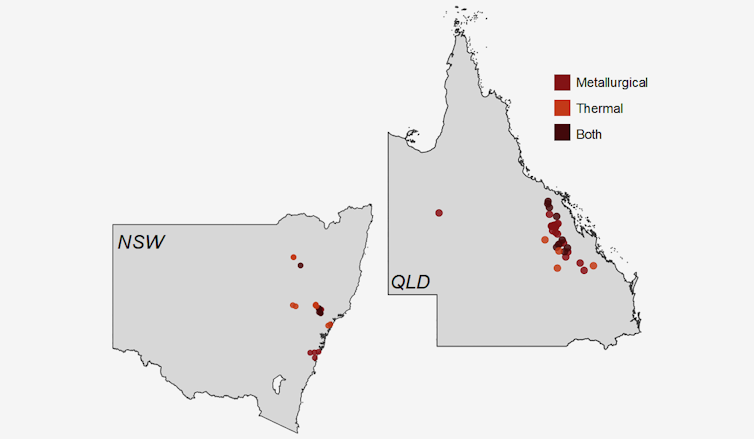
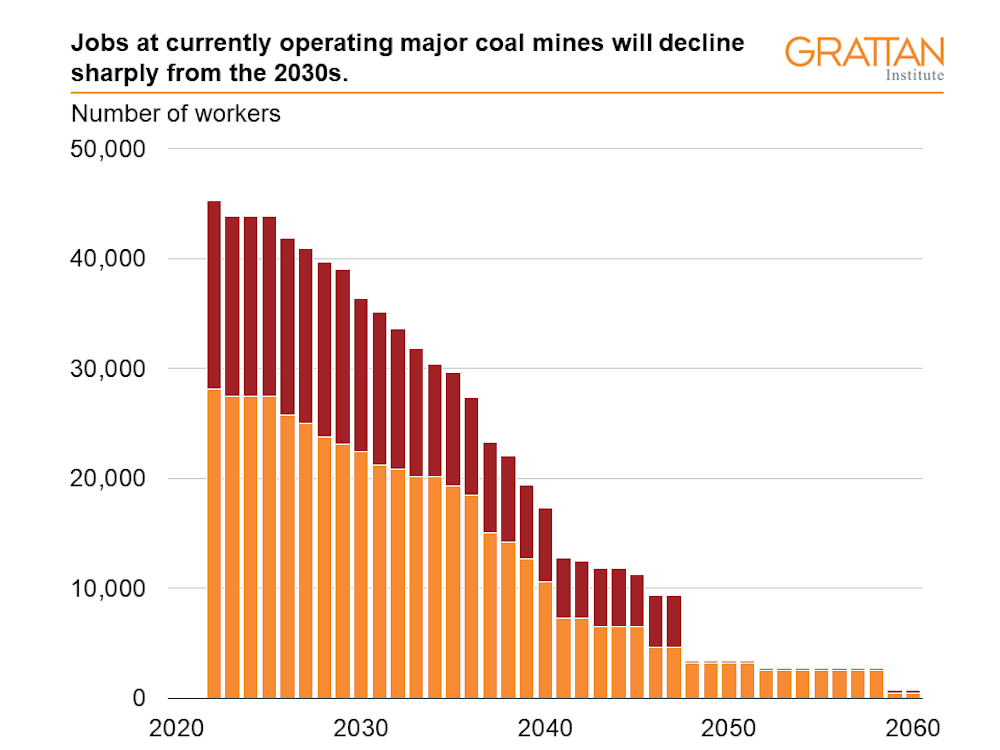
For many, particularly those living in Australia’s coal production regions, the prospect of shifting from coal to renewables raises legitimate concerns about their futures.

However, the ability for people and policy to engage constructively with concerns over jobs and climate is limited by toxic politics.

An important culprit is the pervasive “us versus themnarrative that dominates political and media discourse. The narrative repeatedly – but erroneously – signals to people in coal production regions that the rest of the country doesn’t care about them.


Read more: Our social identity shapes how we feel about the Adani mine – and it makes the energy wars worse


Coal production is also pitted against climate action in the “climate versus jobs” debate. But the polling shows such binaries are false: most Australians do care what happens in coal production regions. In fact, three-quarters of Australians want governments to plans and manage an orderly shift from coal to renewables.

The Australian people, by a large majority, care for those living in coal production communities and want to secure a safe climate.

68% of Aussies support an ambitious climate target

Australians recognise our country can make a disproportionately large and positive contribution to international efforts to mitigate climate change.

Students at a rally holding a sign against gas.
Most Australians want to see a renewables-led economic recovery from COVID-19. AAP Image/Dean Lewins

Seventy-one percent want Australia to be a global leader in finding solutions to climate change, while 77% recognise tackling climate change can create opportunities for new jobs and investment in clean energy.

While all Australian states and territories have committed to net-zero emissions by 2050 or sooner, the federal government has not. But, once again, a majority of people would like to see otherwise: 68% support a net-zero by 2050 target for Australia. This is four percentage points higher than last year.

If we don’t implement meaningful and ambitious climate policy, Australia risks becoming even more of a climate outlier in the international community than we already are.

The Climate of the Nation results clearly shows this goes against the will of the Australian people. Australia has a voting base that will support and reward ambitious climate action. Now is the time for political leaders to reflect this in the nation’s climate policy.


Read more: Under Biden, the US would no longer be a climate pariah – and that leaves Scott Morrison exposed


ref. New polling shows 79% of Aussies care about climate change. So why doesn’t the government listen? – https://theconversation.com/new-polling-shows-79-of-aussies-care-about-climate-change-so-why-doesnt-the-government-listen-148726

Industry cadetships: a good but small step to tap the talents of women in STEM

Source: The Conversation (Au and NZ) – By Pi-Shen Seet, Professor of Entrepreneurship and Innovation, Edith Cowan University

An overarching criticism of the recent federal budget is that it overlooked the workers hit hardest by the COVID-19 pandemic, namely women. However, the budget includes one promising, albeit small, initiative that focuses on this group. The government announced a cadetship program to help women to upskill in science, technology, engineering and mathematics (STEM), or to build a STEM career.

As part of the JobMaker scheme, the budget allocates A$25 million over five years to create pathways to STEM careers for up to 500 women through industry-sponsored, advanced apprenticeship-style courses. Collaborations between employers and VET providers and/or universities will deliver these “sandwiched programs” combining study and work. Women will be able to get career experience and a salary while obtaining an industry-relevant, advanced diploma in a STEM field.


Read more: High-viz, narrow vision: the budget overlooks the hardest hit in favour of the hardest hats


This scheme should help increase female participation in STEM-related learning and careers. Because more women than men enrol in higher-level VET qualifications – diplomas or advanced diplomas – it’s expected to be attractive to them.

Why is the gender gap in STEM such a problem?

To be competitive in a world increasingly driven and underpinned by technology, Australia must invest in STEM skills to meet evolving industry workforce needs. STEM jobs are growing nearly twice as fast as non-STEM jobs and the trend is set to continue.


Read more: Jobs are changing, and fast. Here’s what the VET sector (and employers) need to do to keep up


It’s notable that people in STEM occupations hold more qualifications than those in non-STEM occupations. However, difficulties in recruitment for STEM jobs suggest a looming national shortage of qualifications and technical skills. Low female aspiration for, and participation in, STEM education and careers compound this problem.

In 2016, VET qualifications at diploma level or above were most common among women in the areas of commerce, hospitality and human welfare. Numbers in STEM areas such as engineering and IT were very low. Even women with certificate III/IV qualifications in engineering were more likely to work in sales and services than as technicians.

In short, Australia loses female talent at every stage of the STEM pipeline.


Read more: How to keep more women in science, technology, engineering and mathematics (STEM)


Female robotics engineer leans on the table as she works with blueprints, documents and tablet computer to program robot arm movements.
Women with engineering qualifications are more likely to work in sales and services than as technicians. Gorodenkoff/Shutterstock

As the recent documentary The Leadership shows, it’s a lost economic opportunity, as well as a serious issue of gender inequity, socioeconomic disadvantage and insecurity. Women are missing out on the many career opportunities in rapidly growing sectors underpinned by STEM, particularly in the digital economy. It’s also a huge waste of talent.

It’s estimated upskilling just 1% of the workforce into STEM roles would add A$57 billion to Australia’s GDP over 20 years.


Read more: There may not be enough skilled workers in Australia’s pipeline for a post-COVID-19 recovery


So what has Australia been doing about it?

Despite many attempts to increase female STEM participation over the years, only in the past few years have structured and co-ordinated plans been drafted.

The Women in STEM Decadal Plan was released in 2019. The Advancing Women in STEM 2020 Action Plan followed this year.

The first Women in STEM Ambassador, Professor Lisa Harvey-Smith, was appointed in 2018. The ambassador works to promote systemic changes that will produce a STEM sector that is diverse, inclusive and contributes to the nation’s competitiveness.

In spite of these efforts, a snapshot of Australia’s STEM workforce reveals women account for 21% of those who completed post-secondary STEM education and only 16% of the STEM-qualified (VET and university) workforce. Australia’s VET STEM-qualified workforce is overwhelmingly concentrated at the certificate level (1-4), with only 19% at the diploma/advanced diploma level. Significantly, only 8% of this VET STEM-qualified workforce is female.

In addition, a pay gap exists. Full-time female workers earn less on average if working in engineering, science and IT fields.


Read more: Women in STEM need your support – and Australia needs women in STEM


Young female farmer use AR glasses to fix a machine with digital screen
Even if women are working in STEM fields, they are still paid less on average than their male peers. Zapp2Photo/Shutterstock

Challenges dwarf responses to date

The newly announced cadetships represent a small investment compared to the scale of the challenges to be overcome.

In 2016, women in the workforce with VET STEM qualifications numbered 95,300. Of these, about 35,200 (37%) held a diploma or advanced diploma, a greater proportion than for men. While the addition of 500 female VET advanced diploma holders by 2025 is an improvement, the number is small. This may reflect capacity constraints in higher education and industry.

The cadetship program focuses on the front end of the talent pipeline, namely attracting women into STEM and providing the requisite qualification and skill base. It is unlikely to address the equally important and long-standing problem of retaining women in STEM careers.

The Women in STEM cadetships are budgeted to receive more than three times as much funding as the advanced apprenticeships in digital technologies (Industry 4.0) pilot.

However, there have been indications some educational providers may interpret the program’s scope to include medical and health sciences (or STEMM). These are outside the STEM areas that traditionally struggle to attract women.

In the longer term, unless women upgrade beyond the level of advanced diploma and build deep competencies in technologies relevant to the Fourth Industrial Revolution, they will be unable to satisfy industry needs. Industries will then lack the talent needed to meet the challenges of disruptive technologies.


Read more: If you’re preparing students for 21st century jobs, you’re behind the times


Image of woman in hardhat pushing icon of media screen
The Fourth Industrial Revolution means STEM-trained women will be needed to meet industry needs. Sergey Nivens/Shutterstock

The 500 women cadets may also face competition from the products of other initiatives, in particular the government’s A$1.2 billion wage subsidy for 100,000 apprentices.

Overall, the government deserves credit for experimenting with a scheme that involves closer collaboration between industry and education providers to tackle market failure in managing talent. Rapid technological development and major uncertainty have added to the urgency of this challenge. This scheme is a first step in solving the complex problem of attracting women into industries requiring STEM talent and thereby easing skills shortages.

ref. Industry cadetships: a good but small step to tap the talents of women in STEM – https://theconversation.com/industry-cadetships-a-good-but-small-step-to-tap-the-talents-of-women-in-stem-148170

Will I or won’t I? Scientists still haven’t figured out free will, but they’re having fun trying

Source: The Conversation (Au and NZ) – By Stefan Bode, Postdoctoral Research Fellow Decision Neuroscience Laboratory, University of Melbourne

Social media algorithms, artificial intelligence, and our own genetics are among the factors influencing us beyond our awareness. This raises an ancient question: do we have control over our own lives? This article is part of The Conversation’s series on the science of free will.


In 1983, American physiologist Benjamin Libet conducted an experiment that became a landmark in the field of cognitive sciences. It got psychologists, neuroscientists, and philosophers either very excited or very concerned.

The study itself was simple. Participants were connected to an apparatus that measured their brain and muscle activity, and were asked to do two basic things. First, they had to flex their wrist whenever they felt like doing so.

Second, they had to note the time when they first became aware of their intention to flex their wrist. They did this by remembering the position of a revolving dot on a clock face. The brain activity Libet was interested in was the “readiness potential”, which is known to ramp up before movements are executed.

Libet then compared the three measures in time: the muscle movement, the brain activity, and the reported time of the conscious intention to move. He found both the reported intention to move and the brain activity came before the actual movement, so no surprises there. But crucially, he also found brain activity preceded the reported intention to move by around half a second.

This seemed to suggest participants’ brains had already “decided” to move, half a second before they felt consciously aware of it.

In Libet’s experiments, participants had to remember where the dot was at the time they made the conscious decision to flex their wrist. Tesseract2/Wikimedia Commons, CC BY-SA

Had neuroscience just solved the free will problem?

Some researchers have since argued that the intuitive idea that we have a consciousness (or a “self”) that is distinct from our brains — and that can cause things in the real world — might be wrong. Really being the “author” of our actions seemed to suggest, at least for many people, that an “I” is making the decisions, not the brain. However, only brains (or neurons) can really cause us to do things, so should we be surprised to find that an intention is a consequence rather than the origin of brain activity?

Others were less convinced of Libet’s study and have attacked it from all possible angles. For example, it has been questioned whether flexing the wrist is really a decision, as there is no alternative action, and whether we can really judge the moment of our intention so precisely. Perhaps, sceptics suggested, the findings could be a lot of fuss about nothing.

But Libet’s findings have been successfully replicated. By using other neuroimaging methods such as functional magnetic resonance imaging (fMRI) in combination with clever new analysis techniques, it has been shown that the outcome of decisions between two alternatives can be predicted [several seconds before the reported conscious intention].

Even Libet himself did not seem comfortable claiming our “will” does not matter at all. What if we could still say “no” to what the brain wants to do? This would at least give us a “free won’t”. To test this, one study asked participants to play a game against a computer that was trained to predict their intentions from their brain activity. The research found participants could cancel their actions if the computer found out quickly what they intended to do, at least up to around 200 milliseconds before the action, after which it was too late.

But is the decision not to do something really so different from a decision to do something?

It depends what you mean by free

Another way to look at Libet’s study is to recognise it might not be as closely related to the “free will” problem as initially thought. We might be mistaken in what we think a truly free decision is. We often think “free will” means: could I have chosen otherwise? In theory, the answer might be no — being transported back in time, and placed into exactly the same circumstances, the outcome of our decision might necessarily be exactly the same. But maybe that doesn’t matter, because what we really mean is: was there no external factor that forced my decision, and did I freely choose to do it? And the answer to that might still be yes.

If you are worried about “free will” just because sometimes there are external factors present that influence us, think about this: there are also always factors inside of us that influence us, from which we can never fully escape — our previous decisions, our memories, desires, wishes and goals, all of which are represented in the brain.

Some people might still maintain that only if nothing influences our decision at all can we be really free. But then there is really no good reason to choose either way, and the outcome might just be due to the random activity of neurons that happen to be active at the time of decision-making. And this means our decisions would also be random rather than “willed”, and that would seem even less free to us.

There are always things influencing us that are beyond our control. Victoriano Izquierdo/Unsplash, CC BY

Most of our decisions require planning because they are more complex than the “spontaneous” decisions investigated in Libet-style studies, like whether to buy a car, or get married, which are what we really care about. And interestingly, we don’t tend to question whether we have free will when making such complex decisions, even though they require a lot more brain activity.

If the emerging brain activity reflects the decision process rather than the outcome, we might not even have a philosophical contradiction on our hands. It matters a lot what we call “the decision” — is it the moment we reach an outcome, or the entire process that leads to reaching it? Brain activity in Libet-style studies might simply reflect the latter, and that suddenly does not sound so mysterious anymore.

Where to from here?

While Libet’s classic study might not have solved the problem of free will, it made a lot of clever people think hard. Generations of students have argued long nights over beer and pizza whether they have free will or not, and researchers have conducted increasingly innovative studies to follow in Libet’s footsteps.

Exciting questions have arisen, such as which brain processes lead to the formation of a voluntary action, how we perceive agency, what freedom of will means for being responsible for our actions, and how we change our mind after making an initial decision.

Researchers had to acknowledge they might not be able to provide a definite answer to the big philosophical question. But the field of cognitive neuroscience and voluntary decisions is more alive, interesting and sophisticated than ever before, thanks to the bold attempts by Libet and his successors to tackle this philosophical problem using science.

ref. Will I or won’t I? Scientists still haven’t figured out free will, but they’re having fun trying – https://theconversation.com/will-i-or-wont-i-scientists-still-havent-figured-out-free-will-but-theyre-having-fun-trying-132085

Cervical, breast, heart, bowel: here’s what women should be getting screened regularly

Source: The Conversation (Au and NZ) – By Jenny Doust, Clinical Professorial Research Fellow, The University of Queensland

Throughout the COVID-19 pandemic, many have felt anxious about going to the GP and other health facilities, believing these places have had a greater risk of transmission. A lot of us have also had to juggle work, childcare and home-based education.

So it’s not surprising the number of women attending for preventive health checks dropped alarmingly. For example, 145,000 fewer breast cancer screenings were done between January and June this year than in the same period in 2018. It’s important, however, not to let the pandemic lead to avoidable poor health.

Here are some of the main health checks the the Royal Australian College of General Practitioners (RACGP) recommends for women. These checks are advised for women at average risk, but women who have a strong family history of any of these conditions should ask with their GP if they should start screening earlier or seek different types of testing.

Cervical cancer screening

The National Cervical Screening Program recommends cervical cancer screening every five years for women aged between 25 and 74.

In December 2017, a new test was introduced for cervical cancer screening in Australia, and the testing interval changed from two years to five years. The change in testing interval was recommended because the new test is able to detect changes earlier. This means fewer women are tested each month, with the decline starting from December 2019.

Even accounting for this, the number of women tested in April and May 2020 fell sharply. There was some recovery in June, although rates in Victoria remain low. It used to be common practice to do a pelvic examination at the same time as a cervical screening test to look for problems in the uterus and ovaries, but this is no longer recommended due to its poor accuracy.

Number of Medicare claims for routine cervical screening tests in Australia 2019-20. MBS Statistics Online

Breast cancer screening

Breast Screen Australia recommends an x-ray of the breasts, called a mammogram, every two years for women aged 50-74. Breast screening services were paused in April, but are now open again in all states, including Victoria.

Evidence for the benefits and harms of breast screening has been highly contested, so it’s important women make an informed choice. Cancer Australia states that for every 1,000 women screened for 25 years from the age of 50, around eight will avoid dying of breast cancer. On the other hand, eight women in every 1,000 diagnosed by screening will be treated unnecessarily (usually with surgery) for cancers that would never otherwise have been diagnosed.

Screening works by finding a cancer before a woman has any symptoms, but it also finds cancers that grow very slowly or even regress, and that would never have caused symptoms. More sensitive tests, such as MRI, find more of these “overdiagnosed cancers” than other tests.

Breast cancer survival has improved significantly in the past few decades, but most of this seems to be due to improvements in treatment rather than improvements in screening.

Ovarian cancer

Unfortunately, there is no method for early detection of ovarian cancer and the symptoms can be vague, often leading to late diagnosis.

The most common symptoms are abdominal bloating, abdominal or pelvic pain, appetite loss, feeling full quickly, indigestion, urinary frequency or urgency, constipation, unexplained weight loss or gain, and unexplained fatigue.

Women who have any of these symptoms for more than a few weeks should see their GP.

Sexually transmitted disease

About 1 in 20 women in their 20s will have a chlamydia infection and 1 in 200 will have gonorrhoea. These increase the risk of pelvic inflammatory disease and infertility. HIV, Hepatitis B and syphilis are less common, but important to detect early.

There is no formal screening program but the RACGP encourages sexually active women younger than 30 to have regular testing, especially if there has been a change in sexual partner.

Cardiovascular disease and diabetes

The leading causes of death in women in Australia are dementia, heart attacks, strokes, and lung cancer. The risks of these can be reduced with good preventive health.

A health worker taking an elderly patient's blood pressure
Women shouldn’t forget to get their blood pressure and cholesterol regularly checked. Shutterstock

The RACGP recommends women have their blood pressure checked every two years from age 18, cholesterol every five years from age 45, and checks for diabetes and kidney disease when at risk (for example if you have a family history). GPs recommend a general health check for those aged 45 to 49, or a heart health check for those over 45, or Aboriginal or Torres Strait Islander people over 30.

Treating high blood pressure and cholesterol and reducing smoking rates has prompted a massive decline in Australian heart disease deaths since their peak in the 1960s. However, women are less likely to have all risk factors for heart disease checked, and younger women are less likely to be put on blood pressure or cholesterol-lowering medication than men with the same risk level.

Bowel cancer

Bowel cancer screening is recommended by the National Bowel Cancer Screening Program for all Australians every two years between ages 50 to 75. This is done by a stool sample test, using a kit mailed by the National Bowel Cancer Screening Program and returned by post. This screening reduces deaths from bowel cancer by 16%.

GPs have worked hard to ensure their patients’ safety during the COVID-19 pandemic. But it’s also important the recommended preventive health checks are not delayed unnecessarily.

ref. Cervical, breast, heart, bowel: here’s what women should be getting screened regularly – https://theconversation.com/cervical-breast-heart-bowel-heres-what-women-should-be-getting-screened-regularly-148575

Blink and you’ll miss it: what the budget did for working mums

Source: The Conversation (Au and NZ) – By Miranda Stewart, Professor, University of Melbourne

Working mothers get something in the budget, but not much, and not for long.

Before the budget the second earner in a couple with young children (usually the mother) lost almost all of the income she made working for the second, third, forth and fifth days per week.

It might be why many mothers work only one or two days per week.

After the budget tax cuts and one-year extension of the low and middle income tax offset that mother will lose slightly less on the third, forth and fifth days.

Our calculations of what will be lost prepared with former Department of Social Services analyst David Plunkett take into account the extra earnings for each extra day worked, the extra childcare costs at the average fee net of subsidy, the extra income tax charged, the imposition of the Medicare levy after the second or third day of paid work, and the family tax benefits lost.

We find that before the budget a second earner on the median female wage of $190 per day with a partner on the median male wage and two children in long day care, lost a hefty 47% of what she earned on the first day per week.

On subsequent days her losses almost doubled.


Read more: Mothers have little to show for extra days of work under new tax changes


She lost 82% of what she earned on second day, 78% of what she earned on the third day, 81% of what she earned on the forth day and an extraordinary 89% of what she earned on the fifth day.

After the budget tax changes, her losses for the first and second days remain unchanged, and her losses for the third, forth and fifth day change little, slipping to 76%, 81% and 83%.


Percentage of additional earnings lost to taxes, transfers and child care costs
Second earner, before and after budget tax cuts and offset extension

Median wage family, Partner 1 @ $1275 per week; Partner 2 @ $190 per day. 2 children (2, 3); childcare $10.40 per hour. Calculations by David Plunkett

The bulk of the modest easing in the penalty for working comes from the extension of low and middle income tax offset.

But the budget extended it for only one year, meaning that after one year the high effective marginal tax rates will spring back to near where they were.

The high penalty makes it less surprising that the proportion of Australian women working full-time has climbed little in four decades.


Proportion of women employed

Women aged 15 years and over, February 1978 to September 2020. ABS Labour Force, original data

Expressed in terms of dollars kept by such a worker we find that on the first day she will keep $100.33 of her $190.

On the second day she will keep only $35.65, and by the fifth day only $31.38.


Net gain per day worked by second earner on $190, median female wage

Median wage family, Partner 1 @ $1275 per week; Partner 2 @ $190 per day. 2 children (2, 3); childcare $10.40 per hour. Calculations by David Plunkett

Examining the position of a much-higher earning second worker on the average female wage of $293.82 per day with partner on the average male wage, we find that on the first day she will keep $148.41 and by the fifth day only $48.25.


Net gain per day worked by second earner on $293.82, average female wage

Average wage family, Partner 1 @ $1780.70 per week; Partner 2 @ $293.82 per day. 2 children (2, 3); childcare $10.40 per hour. Calculations by David Plunkett

Single parents face extremely high effective tax rates, even though government policy is meant to encourage them to enter the paid workforce.

A single parent on the average female wage of $76,000 actually goes backwards on Day 4 as she loses her parenting payment, wiping out altogether the benefit of moving from three to five days a week.

The tax changes announced in the budget don’t solve the problem.


Net gain per day worked by single parent on $293.82, average female wage

Single parent on average female wage of $293.82 per day. 2 children (2, 3); childcare $10.40 per hour. Calculations by David Plunkett

The Minister for Education says out-of-pocket childcare costs are less than $5 per hour per child for the parents of three quarters of children in care, and less than $2 per hour per child for parents of the remaining one quarter.

But set against the hourly wages of second earners and accompanied by the withdrawal of benefits, the costs are substantial – so much so that only 45% of children under the age of five are cared for in childcare centres.

Different families cope in different ways

Facing high effective marginal tax rates of 80% when the statutory marginal tax rate (including the Medicare levy) is meant to top out at 47%, different families cope in different ways.

In some, the mum goes back to work full time and the dad stays at home or works part time, sometimes facing workplace discrimination.

Others rely on grandparents.

In many more, the mother doesn’t work. Fewer than two thirds of mothers with children aged under five are in paid work, compared with 95% of dads.


Read more: New modelling finds investing in childcare and aged care almost pays for itself


Of those who are in paid work, 60% are part-time, compared to only 7% fathers.

When their children get to school, half of these mothers continue to work part-time, and many stay part-time as children grow older.

Yet women account for half of our population and more than half of our University graduates.

Labor promises more, but not enough

Those staying out of the paid workforce lose income, human capital, skills, superannuation, and a connection to the labour market.

Without economic independence they are poorer and more vulnerable to domestic violence.

In his budget reply speech opposition leader Anthony Albanese promised to remove the annual cap on the childcare subsidy, to subsidise up to 90% instead of 85% of the hourly fee and to withdraw the subsidy more gradually as incomes climb.

These measures would help, but they don’t go far enough.


Read more: Forget flowers and chocolates for Mother’s Day: keep free childcare going instead


What would really help is free childcare for children under five and free before-school and after-school care for children up to age 12.

For a short time, the COVID response showed us what could be done.

There’s a precedent for free childcare

For three months from March childcare become free, eliminating much of the financial penalty for work.

If we kept it free and got rid of the exceptionally high penalties for working we could more properly use the skills of women, those women and their families could enjoy more financially secure lives and we might even nudge up the birth rate.

It has fallen to 1.69 children per woman, below replacement. For far too many women, having children and returning to work isn’t paying.

ref. Blink and you’ll miss it: what the budget did for working mums – https://theconversation.com/blink-and-youll-miss-it-what-the-budget-did-for-working-mums-148264

Total Recall at 30: why this brutal action film remains a classic

Source: The Conversation (Au and NZ) – By Ari Mattes, Lecturer in Communications and Media, University of Notre Dame Australia

People often roll their eyes when they hear about a major Hollywood studio re-releasing a film from its back catalogue to cinemas. Director’s cuts, “reduxes” and remastered prints can seem like cynical corporate moves, re-commodifying a long dead vision of the world.

But in the case of Paul Verhoeven’s Total Recall — a masterpiece of late 20th century Hollywood cinema, being re-released on its 30th anniversary — this cynicism is unwarranted.

As someone born in the 1980s, who was too young to watch this extremely violent film on its cinematic release, I am excited by the prospect of finally being able to see it on the big screen.

Not to mention several of its iconic images: Arnold Schwarzenegger pulling a giant tracking device out of his nose, eyeballs popping out of faces on Mars and the infamous, three-breasted prostitute.

A noirish, pulp narrative

Total Recall marks a rare confluence of extraordinary talents and technologies. The source material is excellent. Phillip K. Dick’s twist-laden, science fiction narrative, interweaving speculation about potential future technologies with the social and psychological interrogation of the present world, is adapted for the screen brilliantly (and wittily) by a group of writers including genre maestro Dan O’Bannon (Dark Star, Alien, Dead and Buried).

Its noirish, pulp narrative, involving double (or triple?) agent Doug Quaid (Arnold Schwarzenegger) following clues to his true identity, is embedded in a rousing sub-plot structured around conflict between the haves and have nots.

The setting — Mars, colonised for its minerals — is beautifully rendered with the expressionistic exterior backdrops reminiscent of the cover illustrations of 1950s pulp sci-fi novels.


Read more: Buried lakes of salty water on Mars may provide conditions for life


Typical of Verhoeven’s films, this is complemented by a detailed, fully developed background media ecology, involving fake advertisements, products, and communications technologies. Added to the mix are the superb cinematography of Oscar nominee (and regular Verhoeven collaborator) Jost Vacano, and editing by Frank J. Urioste, another Oscar nominee.

And of course, Total Recall features the most memorable (and idiosyncratic) action man of the era in the lead role. With his impossibly muscular body, cartoonish, chiselled features and distinctive Austrian accent, Schwarzenegger brings a delightful over-the-top quality to otherwise straitlaced macho roles.

Schwarzenneger: at his acting peak. © 1990 Columbia/TriStar Pictures

He will probably never be more suited to a role than he was to The Terminator — his intonation and signature wooden delivery are perfectly robotic. But Total Recall captures him at the peak of his acting career, before he became swept up in his own myth, with pointlessly self-referential performances (such as that in The Last Action Hero).


Read more: Why do fans love Schwarzenegger? His terrible one-liners, of course


Schwarzenegger is joined in Total Recall by brilliant character actors Ronny Cox (as main baddie, corporate psychopath Cohaagen) and Michael Ironside (Cohaagen’s vicious right arm, Richter). Sharon Stone, in a relatively low-key role, is amusing as Quaid’s secret agent wife.

Sharon Stone and Rachel Ticotin. © 1990 Columbia/TriStar Pictures

It is all brought together under the eye of a master filmmaker. As usual, Verhoeven skilfully endows epic pulp scenarios and settings with an intensity reminiscent of the most viscerally immersive kinds of body-genre cinema (a term coined by film studies professor Linda Williams to describe films that aim chiefly to elicit a physiological reaction on the part of the viewer).

Technological detachment

At the same time, Verhoeven’s images have a kind of technological detachment. His camera floats around, swiftly moving between bodies and things, capturing action with a clinical vision.

In this way, Verhoeven’s images — and films — are relentlessly unsentimental. In his universe, countless bystanders are killed in a bloody, vicious fashion without any lingering lament or consequence. His signature cinematic move (present, of course, in Total Recall) involves characters being lethally pierced by long, sharp objects.

Under the studious eye of Verhoeven’s camera, people appear insect-like. This point was made literal in his 1997 film Starship Troopers (about interplanetary war between humans and giant humanoid insects) when the separation between insect and human becomes more a matter of politics than anything else.

Total Recall, like most Verhoeven films, combines a sense of youthful adventure with explosive moments of violence, underscored by a wry (slightly clownish) sensibility.

Verhoeven won’t win any awards from The World Association of Liberal Humanists, but his films make for fascinating, and viscerally engrossing, viewing. As a biographical aside, it’s worth noting Verhoeven grew up in the Netherlands during the second world war, experiencing the perennial violence of the period — bombs, burning houses, masses of dead bodies — with a small boy’s sense of horror and excitement.

A rare big-budget spectacle

Total Recall is an increasingly rare, big-budget, Hollywood spectacle. Hard-edged and brutal, it is far removed from the “family-friendly” blockbuster film popularised by the Spielberg-Lucas complex in the 1970s (characterised by a wan, often uninteresting, palatability).

With its economical, fast-paced narrative embedded in a spectacular and detailed cinematic world, Total Recall is an example of pulp fodder magnificently realised by one of Europe’s leading auteurs.


Read more: Strippers on film: battlers, showgirls and hustlers


Testament to Verhoeven’s seamless transition from the Dutch arthouse (Spetters, The Fourth Man) to big budget Hollywood (Robocop, Basic Instinct and the much maligned but remarkably entertaining, Showgirls), Total Recall remains one of the most thrilling action films of its time.

A 4K, Ultra High Definition™ version of Total Recall can be seen at select cinemas.

ref. Total Recall at 30: why this brutal action film remains a classic – https://theconversation.com/total-recall-at-30-why-this-brutal-action-film-remains-a-classic-146755

New MP Ibrahim Omer’s election highlights the challenges refugees from Africa face in New Zealand

Source: The Conversation (Au and NZ) – By Samuel Judah Seomeng, Postgraduate student, Te Herenga Waka — Victoria University of Wellington

The election of Labour candidate Ibrahim Omer on October 17 makes him New Zealand’s first African MP and one of only two former refugees to sit in the New Zealand parliament.

Omer originally fled Eritrea for Sudan as a teenager, before being accepted by New Zealand. That experience makes him “the real deal”, according to the Labour Party. His election supports the story that, no matter your background, you can join the New Zealand community and become a leader.

The reality for many former refugees from Africa, however, shows this is not easy. There are major structural and societal obstacles, including experiences of racism, and a lack of ongoing support and trauma care.

My research suggests these experiences are shared by many. Between 2018 and 2020 members of the Luo community in Wellington, a diverse group mostly from Uganda and South Sudan, shared their stories. Like Omer, many had fled their countries to escape war, torture, rape and persecution.

Also like Omer, many spent several years in refugee camps before they found refuge in New Zealand. These camps are not easy places — violence is common and food rations are limited, with children in particular at risk of malnutrition. People regularly disappear and die, families are often separated and it may be years before they are reunited, if they ever are.

The refugee experience

New Zealand is one of only 37 countries to commit to the regular resettlement of refugees. Capped at 1,500 per year, New Zealand’s program has taken over 35,000 refugees since the second world war.

But the support offered is limited. After six weeks at the Mangere Refugee Resettlement Centre in Auckland, people are sent to settlement areas across New Zealand. Ongoing help is left primarily to volunteer agencies and is patchy at best.

Interviewees reported feeling lost, confused and unsure of their rights and options. Most concerning was the treatment they reported from professional health-care providers, as well as a general sense of exclusion from New Zealand society.


Read more: Why equal health access and outcomes should be a priority for Ardern’s new government


Health and well-being are viewed as vital to successful immigrant integration and overall community health. New Zealand recognises this in the five strategic priorities of its Refugee Resettlement Strategy.

The majority of participants, however, reported experiencing racism from health-care providers. One person was told his skin was too dark for diagnosis, and his skin complaint remained untreated.

People struggled with health-care professionals lacking cultural awareness or sensitivity to the lasting consequences of being a refugee. One commented:

For us Africans, most doctors don’t know what is culturally appropriate and what’s not, and […] no one is interested to ask us before we are given treatment.

The need for cultural competency

The Medical Council of New Zealand acknowledges that cultural competency is a key factor in reducing health inequity. Current accreditation training for doctors includes aspects of cultural safety training. But this varies across district health boards (DHBs) and focuses on Māori and Pasifika communities. There is no training in the specific issues faced by former refugees.

Priority is also given to physical health. While important, this is often not the most significant issue for former refugees. They often suffer from depression and other mental illnesses, as well as alcohol dependency and drug use due to ongoing stress.


Read more: WHO reform: a call for an early-warning protocol for infectious diseases


Many suffer from family breakdown. The causes of this are complicated, but my research found they were compounded by social exclusion from vital sources of support, including health care.

Post-migration experiences have been shown to have a significant impact on people’s ability to recover from traumas suffered before migration. A UK study in 2018 found racial discrimination and harassment of ethnic minorities indirectly affected health outcomes due to exclusion from vital support systems such as education, employment and housing.

buildings with people in front of them
The newly rebuilt Mangere Refugee Resettlement Centre in Auckland: what happens once arrivals have finished their six weeks here? GettyImages

The way forward

A 2010 report by the World Health Organisation noted that migrants and ethnic minorities across Europe often suffer social exclusion, resulting in poorer health outcomes. Institutional racism in the health-care system has long been recognised as a factor in health inequities in New Zealand. In the context of a rapidly diversifying population, confronting this becomes more urgent.


Read more: COVID-19 is predicted to make child poverty worse. Should NZ’s next government make temporary safety nets permanent?


Omer has promised to tackle issues facing immigrants, and there are many ways the refugee experience could be improved. These include:

  • state commitment to regular support beyond the initial six weeks

  • mandatory training for all health-care professionals in cultural safety and holistic approaches to health and well-being

  • specific training on the known social and health challenges faced by refugees.

The participants in this research want to feel at home in New Zealand. They are grateful to have found refuge, and all have worked hard to adapt to life here. They are care workers, community leaders, IT specialists. Their children go to school and university here and look forward to playing an active role in society.

Taking steps to provide ongoing support for refugees arriving in New Zealand is one way to make their hoped-for futures viable.

ref. New MP Ibrahim Omer’s election highlights the challenges refugees from Africa face in New Zealand – https://theconversation.com/new-mp-ibrahim-omers-election-highlights-the-challenges-refugees-from-africa-face-in-new-zealand-148621

Facebook is tilting the political playing field more than ever, and it’s no accident

Source: The Conversation (Au and NZ) – By Michael Brand, Adjunct A/Prof of Data Science and Artificial Intelligence, Monash University

As the US presidential election polling day draws close, it’s worth recapping what we know about how Facebook has been used to influence election results.

The platform is optimised for boosting politically conservative voices calling for fascism, separatism and xenophobia. It’s also these voices that tend to generate the most clicks.

In recent years, Facebook has on several occasions been made to choose between keeping to its community standards or taking a path that avoids the ire of conservatives. Too many times, it has chosen the latter.

The result has been an onslaught of divisive rhetoric that continues to flood the platform and drive political polarisation in society.

How democracy can be subverted online

According to The New York Times, earlier this year US intelligence officials warned Russia was interfering in the 2020 presidential campaign, with the goal of seeing President Donald Trump re-elected.

Trump supporters at a rally
Public rallies continue to play a huge part in President Trump’s campaigning efforts. Evan Vucci/AP

This was corroborated by findings from the US Brennan Centre for Justice. A research team led by journalism and communications professor Young Mie Kim identified a range of Facebook troll accounts deliberately sowing division “by targeting both the left and right, with posts to foment outrage, fear and hostility”.

Most were linked to Russia’s Internet Research Agency (IRA), the company also behind a 2016 US election influence campaign. Kim wrote the troll accounts seemed to discourage certain people from voting, with a focus on swing states.

Earlier this month, Facebook announced a ban (across both Facebook and Instagram, which Facebook owns) on groups and pages devoted to the far-right conspiracy group QAnon. It also removed a network of fake accounts linked to a conservative US political youth group, for violating rules against “coordinated inauthentic behavior”.

However, despite Facebook’s repeated promises to clamp down harder on such behaviour — and occasional efforts to actually do so — the company has been widely criticised for doing far too little to curb the spread of disinformation, misinformation and election meddling.

According to a University of Oxford study, 70 countries (including Australia) practised either foreign or domestic election meddling in 2019. This was up from 48 in 2018 and 28 in 2017. The study said Facebook was “the platform of choice” for this.

The Conversation approached Facebook for comment regarding the platform’s use by political actors to influence elections, including past US elections. A Facebook spokesperson said:

We’ve hired experts, built teams with experience across different areas, and created new products, policies and partnerships to ensure we’re ready for the unique challenges of the US election.

When Facebook favoured one side

Facebook has drawn widespread criticism for its failure to remove posts that clearly violate its policies on hate speech, including posts by Trump himself.

The company openly exempts politicians from its fact-checking program and knowingly hosts misleading content from politicians, under its “newsworthiness exception”.

When Facebook tried to clamp down on misinformation in the aftermath of the 2016 presidential elections, ex-Republican staffer turned Facebook executive Joel Kaplan argued doing so would disproportionately target conservatives, the Washington Post reported.

The Conversation asked Facebook whether Kaplan’s past political affiliations indicated a potential for conservative bias in his current role. The question wasn’t answered.

Facebook’s board also now features a major Trump donor and vocal supporter, Peter Thiel. Facebook’s chief executive Mark Zuckerberg has himself been accused of getting “too close” to Trump.

Moreover, when the US Federal Trade Commission investigated Facebook’s role in the Cambridge Analytica scandal, it was Republican votes that saved the company from facing antitrust litigation.

A Facebook 'Elections USA' sign
Following the Cambridge Analytica scandal, much of the public’s wrath was directed at Russian actors, rather than Facebook. John Minchillo/AP

Overall, Facebook’s model has shifted towards increasing polarisation. Incendiary and misinformation-laden posts tend to generate clicks.

As Zuckerberg himself notes, “when left unchecked, people on the platform engage disproportionately” with such content.

Over the years, conservatives have accused Facebook of anti-conservative bias, for which the company faced financial penalties by the Republican Party. This is despite research indicating no such bias exists on the platform.

Fanning the flames

Facebook’s addictive news feed rewards us for simply skimming headlines, conditioning us to react viscerally.

Its sharing features have been found to promote falsehoods. They can trick users into attributing news to their friends, causing them to assign trust to unreliable news sources. This provides a breeding ground for conspiracies.


Read more: Netflix’s The Social Dilemma highlights the problem with social media, but what’s the solution?


Studies have also shown social media to be an ideal environment for campaigns aimed at creating mistrust, which explains the increasing erosion of trust in science and expertise.

Worst of all are Facebook’s “echo chambers”, which convince people that only their own opinions are mainstream. This encourages hostile “us versus them” dialogue, which leads to polarisation. This pattern suppresses valuable democratic debate and has been described as an existential threat to democracy itself.

Meanwhile, Facebook’s staff hasn’t been shy about skewing liberal, even suggesting in 2016 that Facebook work to prevent Trump’s election. Around 2017, they proposed a feature called “Common Ground”, which would have encouraged users with different political beliefs to interact in less hostile ways.

Kaplan opposed the proposition, according to The Wall Street Journal, due to fears it could trigger claims of bias against conservatives. The project was eventually shelved in 2018.

Facebook’s track record isn’t good news for those who want to live in a healthy democratic state. Polarisation certainly doesn’t lead to effective political discourse.

While several blog posts from the company outline measures being taken to supposedly protect the integrity of the 2020 US presidential elections, it remains to be seen what this means in reality.


Read more: Seeing is believing: how media mythbusting can actually make false beliefs stronger


ref. Facebook is tilting the political playing field more than ever, and it’s no accident – https://theconversation.com/facebook-is-tilting-the-political-playing-field-more-than-ever-and-its-no-accident-148314

Momentum vs underdog status: this time the advantage is with Joe Biden

Source: The Conversation (Au and NZ) – By Lionel Page, Professor in Economics, University of Technology Sydney

Polls highly favour Joe Biden to win the US presidential election.

These polls are not just abstract information. By telling prospective voters who is the most likely to win, can they influence the result of the election by playing a role in the voters’ decision? The evidence says yes, and it most likely favours Biden.

In theory, you could imagine two possible effects of polls. First, a momentum effect. Second, an underdog effect.

A momentum effect could benefit the candidate either leading or gaining in the polls. It can motivate their supporters to vote (the bandwagon effect) and demotivate the supporters of the other candidate (the discouragement effect).


CNN’s ‘Poll of Polls’ as October 22 2020.

An underdog effect, on the other hand, could penalise the leading candidate. This is because supporters think it’s a done deal and don’t mobilise to vote (resting on their laurels) or because the supporters of the trailing candidate are motivated by the idea of losing (a back-to-the-wall effect).

These different effects tap into some of our intuitive psychology. It is therefore hard to know the net effect of polls.

Some evidence points to the possibility of an underdog effect when a party is just behind. This was the case in 2016, when Trump edged out Hillary Clinton in key states despite her lead in national polls. But the overwhelming message from the relevant research is that positive polls increase a candidate’s chance of winning.

Momentum effect: it helps to be ahead

In laboratory experiments recreating elections in controlled settings, California Institute of Technology economist Marina Agranov and colleagues found polls “lead to more participation by the expected majority and generate more landslide elections”.

A similar effect has been observed in real elections.

Using polling and voting data from French elections, my colleagues and I have looked at how those yet to vote were influenced by early exit polls giving a fairly precise prediction of the result.

France has the longest election day in the world, due to its overseas territories in the Pacific. When the first exit poll is released at 8pm in Paris, for example, it is just 9am in Tahiti, where people are still to decide if they will vote and for whom.

We found that knowledge of polls pointing to a certain outcome meant voters in such territories were less likely to vote. In particular, they were less likely to vote for the losing candidate. It led to a momentum effect for the leading candidate in mainland France, tending to increase their share of the vote in territories voting later.

A similar momentum effect has been discerned in Britain. Before 1918, general elections were held over a two-week period. The side ahead in the first days of the election tended to benefit from an increasing advantage, which peaked on about the eighth day of voting.

The West Coast effect

In the United States the possibility of such an effect of early information has been discussed as the “West Coast effect”, whereby voters in California and other western US states can be influenced by early results from the east coast, three hours ahead.

This issue became very salient in 1980 when NBC released an early prediction at 8pm New York time that Republican presidential candidate Ronald Reagan would beat Democratic incumbent Jimmy Carter.

Ronald Reagan declares victory over incumbent Jimmy Carter on election night, November 5 1980. AP

The polls were still open in many western states at the time. Research found this early call had a discouraging effect on prospective Democrat voters, making them less likely to vote.

Given this converging evidence, it is no surprise partisan organisations tend to use favourable polls to push a winning narrative to their support base.

As a consequence of polls’ possible strategic effect, polling companies are tightly regulated in modern democracies. Polling companies do not tend to produce polls that skew results for partisan reasons. Whatever errors occur tend to be due to flaws in polling methodology, rather than being deliberate.


Read more: How might the campaign’s endgame be disrupted? Here are five scenarios, drawn from the history of election polling


Manipulating betting markets

However, people who want to influence the public narrative about who is winning can influence something: betting markets.

These are used to estimate the candidates’ winning chances. On these markets, people can put their money where their mouth is, and bet on the candidate they think will win.


Betting market predictions, October 27 2020
Betting market predictions, October 27 2020. www.electionbettingodds.com

But what if someone is willing to put a lot of money on a candidate they want to win, in a bid to skew the market predictions?

There is an incentive to manipulate betting markets’ prices, to influence voters by suggesting a candidate’s prospects are better than they actually are.

Research and experiments have shown that, in theory, such markets can be manipulated to move prices in one direction.

To do so in the real world would likely require spending many millions of dollars, But given the huge amounts spent in US campaigns, such expenditure is feasible.


Read more: Vital Signs: for the best election predictions, look to the betting markets, not the opinion polls


Trump’s chances overrated

In 2020, Trump’s chances have been surprisingly high in betting markets given the polls. What does research say about this fact?

In past research, I have found political betting markets tend to be biased toward 50%. That is, they tend to say the race is closer to 50/50 than it is. This bias is larger than on other types of betting markets (such as sports) – and would be expected if manipulators try to influence the prices.

I estimate the 35% chance these betting markets are giving to a Trump win may be skewing the results by 15 percentage points – meaning Trump more accurately has a 20% chance of victory.

For more accurate predictions, therefore, you are better looking at those from professional forecasters, such as Five Thirty Eight and The Economist. In these forecasts Trump has only 5-12% chance of winning. Importantly, Biden’s advantage appears much firmer than what Clinton had in 2016.


Forecast from The Economist: Winning chances of each candidate.

But even these predictions may be overestimated. As pointed out by one of the best forecasters in the US, Columbia University statistician Andrew Gelman, professional forecasters have an interest in hedging their bets to preserve their reputation. Importantly, the evidence suggest

These low forecasts have a striking implication. Putting money on Biden now is a relatively safe bet. It may also help move the betting market predictions in Biden’s favour.

ref. Momentum vs underdog status: this time the advantage is with Joe Biden – https://theconversation.com/momentum-vs-underdog-status-this-time-the-advantage-is-with-joe-biden-148631

Who will Muslim Americans vote for in the US elections?

Source: The Conversation (Au and NZ) – By Mehmet Ozalp, Associate Professor in Islamic Studies, Director of The Centre for Islamic Studies and Civilisation and Executive Member of Public and Contextual Theology, Charles Sturt University

Muslims are a small minority in the United States, but they may have a significant influence on the US elections. Muslim Americans, however, are often torn between the anti-Muslim rhetoric and xenophobia of President Donald Trump and the perception that Democrats undermine public morality on social issues.

According to a 2017 estimate by Pew Research Center, 3.45 million Muslims reside in the US, which is 1.1% of the total population. While this may seem small, Pew estimates Muslims will surpass the Jewish population by 2040 to become the second-largest religious bloc after Christians.

Muslim Americans mainly live in large cities. About 58% were born overseas. Another 18% were born in America to one or more parents who are first-generation migrants. About a quarter (24%) of Muslim Americans are considered native to the US.

Muslim Americans are one of the most ethnically and racially diverse groups in the United States. A large segment (41%) of Muslims identify as white, almost one-third (28%) are Asian (including South Asian), one-fifth (20%) are Black and about 8% are Hispanic.

Muslim voters face a conundrum on policies

The demographic diversity of Muslim Americans translates to a unique profile when it comes to policies. On moral and social issues, Muslims are closer to the conservative Republican Party, but on matters of cultural and religious diversity they are more in tune with the more liberal Democratic Party.

According to a congressional electoral survey, 18% of Muslim Americans identified themselves as conservative, 51% as moderate and the remaining 31% as liberal.

The same survey found 88% of Muslims support tighter controls on guns compared to 96% for Democrat voters as a whole.

A March 2020 poll by the Institute for Social Policy and Understanding (ISPU) showed 65% of Muslims support the Black Lives Matter movement, the highest support of all religious groups in US.

The same poll found almost half of Muslim voters supported alliances with religious liberty advocates. Muslim Americans also expect to be treated with respect and be accepted as part and parcel of American nation. The Democratic Party is more likely to meet this expectation.

Like the rest of the population, Muslim Americans expect to be treated with respect by the country’s leaders. Shutterstock

On the other hand, Muslim Americans do not support LGBTQ activism (55%) and are more likely than Jews and Catholics to support alliances with opponents of abortion. Muslims also see Trump as a better prospect for the economy.

So, Muslims view Republicans as hostile to Muslims on racial grounds, but see Democrats as hostile to Islamic morality and family values.

Such a position causes electoral dissonance in Muslim voters. This conundrum is partly responsible for the lower electoral registration and turnout among Muslim Americans.

As of March 2020, 78% of Muslims eligible for voting were registered to vote. Of those who are registered, 81% said they would show up on the election day. This is significantly lower than for other religious groups, such as evangelicals (92%) and Catholics (91%).


Read more: Trump has changed America by making everything about politics, and politics all about himself


Shifting patterns in Muslim voting

Over the past 20 years, Muslim Americans’ party preferences have shifted markedly. Prior to the terrorist attacks of September 11 2001, an estimated 80% of non-African-American Muslims were Republican voters, while the majority of African-American Muslims voted for the Democratic candidate Al Gore.

This voting pattern changed in the post-September 11 era, when George W. Bush’s administration and the Republican Party spearheaded the “war on terror”.

The rhetoric of the war on terror, intrusive surveillance of Muslims under the Patriot Act and military campaigns in Afghanistan and Iraq have created a noticeable anti-Muslim atmosphere in the US. Muslims perceived the war on terror to be a war on Islam and Muslims. As a consequence, the Muslim American vote for Bush plummeted to a mere 7% in the 2004 elections.

A significant shift by Muslim voters to the Democrats culminated in the support for Barack Obama in the 2008 elections. The same trend continued with Muslims overwhelmingly voting for Democrats in the 2016 elections, with 82% of votes going to Hillary Clinton. By 2018, Muslim support for the Republican Party was only 10%.

The March 2020 ISPU poll, however, found Muslim American voter support for Trump had increased to 30%, as Muslim voters believed Trump to be a good manager of the economy and unwilling to take part in Middle East wars.

Interestingly, the same ISPU poll showed 31% of white Muslims supported Trump as opposed to 8% of Black and Arab Muslims and 6% of Asian Muslims.

Muslim American support for the Republican Party plummeted after the ‘war on terror’ began. Shutterstock

It is unclear if Trump’s poor handling of the pandemic has caused a decline in Muslim support for Trump. But two other actions of his still concern Muslim voters.

The first is the 2017 Executive Order 13769 that banned Muslims from seven countries – Iraq, Syria, Sudan, Iran, Yemen, Libya and Somalia – from entering the United States on grounds that these states were supporting terrorism. The order also indefinitely suspended entry to the US for all Syrian refugees.

The executive order came to be known as the “Muslim ban” and was criticised for targeting Muslims “because of their faith”. The ban had a huge impact on the freedom of travel for many Muslim Americans who were not citizens.

The second was the 2018 move of the US embassy in Israel to Jerusalem, in effect recognising Jerusalem as a Jewish capital. This infuriated Palestinians and Muslims around the world.

Yet Joe Biden is not a default choice for Muslim voters either. Muslim Americans expect Biden to make promises to review the “the watchlist” if elected. This is the US government’s terrorist screening database, which contains the names of individuals barred from boarding commercial flights. Many Muslims feel the policy unfairly targets innocent Muslims. While George Bush introduced the policy, it was extensively applied under the Obama-Biden administration.

Avoidance by both candidates of Middle East issues in the current campaign and in the presidential debates is another concerning factor for Muslim voters. They have been left unclear where the candidates stand on important foreign policy matters.

These concerns are likely to lead to a significant “Biden or no vote” or choice of a third-party candidate among Muslims voters.

This is important as the Muslim turnout could determine the outcomes in the marginal swing states of Florida, Ohio, Virginia and particularly Michigan. The estimated Muslim population in Michigan is 3%. This margin is enough to determine the result for the state where Trump edged Hillary Clinton by 0.23% of the vote in 2016.

A large Muslim turnout and support for Joe Biden may be enough to switch the colour of swing states such as Michigan to blue and hand the White House to the Democrats in the 2020 presidential election.


Read more: What might a Trump presidency mean for Muslims and the Muslim world?


ref. Who will Muslim Americans vote for in the US elections? – https://theconversation.com/who-will-muslim-americans-vote-for-in-the-us-elections-146854

Evening Report LIVE: Tech Now with Sarah Putt and Selwyn Manning – Consumer Rights + Google in DoJ’s Sights + iPhone12

Hello I’m Selwyn Manning and you are watching Tech Now.

Tonight, we are joined by technology commentator Sarah Putt to discuss some of the week’s big tech issues, including:

A new Telecommunications Commissioner started in June. And the commissioner has a big focus on telco consumer rights. We’ll talk to Sarah to see what this means for you and me.

Also, the US Government looks intent at reigning in the BIG TECH giants and is positioning to regulate the global giant Google. What is the US Justice Department’s case against Google about? And, will the new Labour-led Government also go after Google, Facebook, and other big tech platforms to capture revenue they siphon out of New Zealand?

And there’s an expensive new gadget on the way that could very easily exhaust your Christmas spending budget. The new Apple iPhone 12 will be available in November. Its selling angle is that iPhone 12 will be 5G ready. But is that just a marketing edge? Sarah has gone through the detail so we don’t have to.

INTERACTION: Remember, if you are joining us LIVE via social media (SEE LINKS BELOW), you can make comments and even put Sarah on the spot with a few questions. We will be able to see your interaction, and include this in the LIVE show.

You can interact with the LIVE programme by joining these social media channels. Here are the links:

And, you can see video-on-demand of this show, and earlier episodes too, by checking out EveningReport.nz

The programme is the latest effort by EveningReport as it rolls out its public service webcasting programmes, produced by ER’s parent company Multimedia Investments Ltd.

Could a test really detect if someone is a COVID-19 ‘superspreader’?

Source: The Conversation (Au and NZ) – By Lara Herrero, Research Leader in Virology and Infectious Disease, Griffith University

Last week we heard Queensland-based biotech company Microbio had developed a test that could, according to media reports, tell whether someone is a COVID-19 superspreader.

While this may sound like an exciting prospect, there are a few questions to answer before we know what role this test might have in managing the spread of COVID-19.

First, what is a superspreader?

It’s important to understand there’s no scientific definition of a “superspreader”.

In the context of COVID-19, the term “superspreader” has been used to describe someone who can spread the virus and cause infection in many people with minimal contact.

There are many factors thought to contribute to what makes someone a superspreader. The most talked about is infectious viral load. Put simply, this is the amount of live infectious virus a person carries.

Current thinking is that people with a higher infectious viral load are more likely to infect others, but it may not be that simple.

An illustration of SARS-CoV-2, the coronavirus that causes COVID-19.
SARS-CoV-2 is the coronavirus that causes COVID-19. Shutterstock

When a person has a COVID-19 test, the health-care worker uses a swab to collect samples from the back of the person’s nose and throat. These are the areas where the virus likes to live. The swab is then sent to a pathology lab which tests for the presence of viral genomic material.

The test returns as a positive (that is, the virus has been detected) or negative (virus not detected). There’s no indication of how much virus is present, or whether it’s replicating.


Read more: Coronavirus: superspreading events could help make COVID-19 endemic


So, back to the new test

Microbio says the newly developed InfectID-COVID-19-R test can detect “replication-competent virus”. This essentially means the test would detect the amount of active live virus a person is carrying. Researchers believe the patient is most likely to be infectious when the virus is replicating.

Like current COVID-19 tests, the test requires a sample of viral genetic material from a patient swab. The genetic material is “extracted” from the swab (termed RNA extraction). The resulting sample is put through a machine to detect an important part of the virus genome which indicates whether the virus is alive and replicating.

InfectID-COVID-19-R claims to accurately detect a virus concentration as low as 1,500 TCID50 per millilitre with 99% specificity. (TCID50 stands for tissue culture infectious dose 50% — it’s currently the accepted standard to quantify the amount of infectious SARS-CoV-2.)

This equation may be tricky to grasp, but the important part to understand is that below this threshold, the person has a lower amount of replicating virus than the test can guarantee to detect. They can’t say for certain the person has no replicating virus.

If a person records a result above the threshold, that tells scientists the virus is alive and replicating.

The suggestion is the test will be able to quantify the amount of replicating virus present in the swab. But exactly what that means — and how the test will achieve this — is uncertain.


Read more: A few superspreaders transmit the majority of coronavirus cases


Microbio’s media release is tight-lipped on a few key aspects of this test. We still don’t have answers to some questions, including:

  • what part of the virus genome it is detecting, and how is this different to our current diagnostic tests?

  • how does detecting this part of the virus ensure detection of replicating or “live” virus?

  • how will the test results be presented? For example, will the test provide a reference range and guide on how to interpret the result?

  • how can they prove that if a test comes back below the limit of detection for replicating virus that the person is not infectious?

In response to queries from The Conversation, Microbio’s chief scientific officer Flavia Huygens said the new test “targets the part of the virus’ genome that is present while it is replicating inside the human cell”, and that this target is different to existing COVID-19 tests. She added: “Our test detects the portion of the virus genome that is only present whilst the virus is replicating and hence is indicative that the virus is “live.”

Huygens also said the test has built-in references and guides for clinical laboratories to interpret the results.

It’s early days yet

Without more detail, it’s too early to tell just how useful this test will be.

Certainly, we need to know whether a low replicating viral load means a person is not infectious before using this test to make any decisions around quarantine. Research is still ongoing in this area.

A lecture theatre full of people.
It may be more accurate to describe ‘superspreading events’. Shutterstock

The test hasn’t yet been approved for use. It has been independently validated by 360 biolabs, a clinical trial laboratory accredited by the Australian National Association of Testing Authorities. Huygens told The Conversation that Microbio is planning further validation of its test using patient samples.

More than a question of viral load

Currently we have no way to know who may be a superspreader. While this test might give us a measure of a person’s replicating viral load, this is only one piece of the puzzle.

As is the case for any virus, spreading SARS-CoV-2 requires more than just high viral load. It requires the right environmental conditions (for example, indoors and lower humidity), proximity to an infected person, and time (more time exposed means more chance of infection).

Therefore it’s more accurate to refer to “superspreading events” rather than to particular people as “superspreaders” more generally. Superspreading events are situations in which one person, aided by the ideal conditions, infects a large number of others.

With this in mind, limiting the time you spend in confined spaces (and wearing a mask if you can’t avoid a closed space), washing your hands and keeping your distance will be your best protection against COVID-19.


Read more: Why do some COVID-19 tests come back with a ‘weak positive’, and why does it matter?


ref. Could a test really detect if someone is a COVID-19 ‘superspreader’? – https://theconversation.com/could-a-test-really-detect-if-someone-is-a-covid-19-superspreader-148627

Climate explained: did atomic bomb tests damage our upper atmosphere?

Source: The Conversation (Au and NZ) – By Brett Carter, Senior lecturer, RMIT University

CC BY-ND

Climate Explained is a collaboration between The Conversation, Stuff and the New Zealand Science Media Centre to answer your questions about climate change.

If you have a question you’d like an expert to answer, please send it to climate.change@stuff.co.nz


I recently read an article stating the atomic bomb testing in the Pacific destroyed so much of the upper atmosphere that the US could no longer bounce communications off the atmosphere and had to deploy artificial satellites for communication. Is this true? And just how much damage did they do?

The article the question refers to doesn’t mention satellites, so let’s focus on the atmospheric damage part of the question. Indeed, surface and atmospheric (high-altitude) detonations of nuclear weapons can have short-term and long-term effects.

One short-term effect was a temporary blackout of long-distance high-frequency (HF) radio communication over the surrounding area. But this radio communication blackout was not a result of the nuclear explosions destroying the ionosphere.


Read more: Climate explained: Sunspots do affect our weather, a bit, but not as much as other things


On the contrary, the nuclear detonations temporarily increased the natural level of ionisation in the upper atmosphere.

The ionosphere and radio communication

The Earth’s ionosphere is a natural layer of charged particles at approximately 80-1,000km altitude. This ionised portion of the Earth’s upper atmosphere largely owes its existence to solar radiation, which strips electrons from neutral atoms and molecules.

The ionosphere consists of three major layers, known as D, E and F layers. The lower D and E layers typically exist only during daylight hours, while the highest F layer always exists.

A graphic showing the various layers of the ionosphere.
The ionosphere showing the approximate levels of the D, E and F layers. The D and E layers are much weaker at night time. The two yellow arrows show example ray paths of high-frequency radio waves from transmitters at ground level. Encounters with the D layer will result in some absorption. The Conversation, CC BY-ND

These layers have distinct characteristics. The E and F layers are very reflective to HF radio waves. The D layer, on the other hand, is more like a sponge and absorbs HF waves.

In long-distance HF radio communications, the radio waves are bounced back and forth between the ionosphere and the Earth’s surface. This means you don’t need to establish a line of sight for HF radio communication.

Many applications, such as emergency services and aircraft/maritime surveillance, rely on this mode of HF radio propagation.

But this radio communication scheme only works well when there is a reflective E or F layer, and when the absorbing D layer is not dominant.

During regular daytime hours, the D layer often becomes a nuisance because it weakens radio wave intensity in the lower HF spectrum. However, by changing to higher frequencies you can regain broken communication links.

The D layer may become even more dominant when intense X-ray emissions from solar flares or energetic particles are impacting the atmosphere. The absorbing D layer then breaks any HF communication links that traverse it.

Bomb blasts and the ionosphere

Nuclear detonations also produce X-ray radiation, which leads to additional ionisation in all layers of the ionosphere. This makes the F layer more reflective to HF radio waves, but, alas, the D layer also becomes more absorptive.

This makes it difficult to bounce radio waves off the ionosphere for long-distance communication soon after a nuclear explosion, even though the ionosphere stays intact.

Beyond additional ionisation, shock waves from nuclear detonations produce waves and ripples in the upper atmosphere called “atmospheric gravity waves” (AGWs).

These waves travel in all directions, even reaching the ionosphere where they cause what are known as “travelling ionospheric disturbances” (TIDs), which can be observed for thousands of kilometres.

Other atmospheric disturbances

Bomb blasts are not the only things that cause disturbances in the atmosphere.

In September 1979, there were reports of bright flashes of light off the South African coast, igniting theories South Africa had nuclear weapon capabilities.

Analysis of ionospheric data from the Arecibo Observatory, in Puerto Rico, confirmed the presence of waves in the ionosphere that corroborated the theory of an atmospheric detonation. But whether the detonation was artificial or natural could not be determined.

The reason for the ambiguity is that meteor explosions and nuclear detonations in the atmosphere both generate AGWs with similar characteristics.

Atmospheric Gravity Waves (AGW) and Travelling Ionospheric Disturbances (TID)
Common sources of atmospheric gravity waves (AGW) that could cause travelling ionospheric disturbances (TID). Rezy Pradipta, Author provided

The 2013 Chelyabinsk meteor explosion in Russia generated waves in the ionosphere that were detected all across Europe, and as far away as the United Kingdom.

Volcanic eruptions, such at the 1980 Mount St Helens eruption in the US, and large earthquakes, such as the 2011 Tohoku earthquake in Japan, are other examples of energetic processes at the ground impacting the upper atmosphere.

Waves observed in the ionosphere above Japan during the 2011 Tohoku earthquake.

Another well-known source of ionospheric disturbances is the geomagnetic storm, typically caused by coronal mass ejections from the Sun or solar wind disturbances impacting Earth’s magnetosphere.

Satellites as backup

In summary, nuclear detonations can impact the upper atmosphere in many ways, as do many other non-nuclear terrestrial and solar events that carry enormous energy. But the damage (so to speak) isn’t permanent.


Read more: Climate explained: how volcanoes influence climate and how their emissions compare to what we produce


Did the impact of these nuclear tests on the ionosphere specifically lead to the immediate launch of communications satellites? Not directly, because the impacts were temporary.

But in the Cold War setting, the potential for adversaries to even briefly interrupt over-the-horizon communications would certainly have been a motivating factor in developing communications satellites as backup.

ref. Climate explained: did atomic bomb tests damage our upper atmosphere? – https://theconversation.com/climate-explained-did-atomic-bomb-tests-damage-our-upper-atmosphere-146760

Review: Louise Milligan’s Witness is a devastating critique of the criminal trial process

Source: The Conversation (Au and NZ) – By Ben Mathews, Professor, School of Law, Queensland University of Technology

Book review: Witness, by Louise Milligan (Hachette).

Louise Milligan’s new book, Witness, is an excoriating critique of the failures of the criminal justice system in sexual assault trials.

Informed by Milligan’s two decades of experience as an investigative journalist, including her specialist work as a court reporter and her sustained coverage of the trials of George Pell, her analysis is enriched by in-depth interviews with prosecutors, defence counsel, solicitors, judges and academics.

Witness is both a gripping revelation of rarely-heard experts’ opinions about the realities and flaws of criminal procedure, and a devastating critique of the system.

The book is further inspired by detailed consideration of the experience of complainants in two high-profile cases, which Milligan had previously covered in Sydney and Melbourne.

These include Saxon Mullins, a young woman who was the complainant in a rape case that involved two trials, two appeals, and judicial errors. Her experience influenced a Law Reform Commission inquiry into the law of consent. She is now working with criminologists and advocates to develop minimum standards in rape laws to better define consent.


Read more: Australian law doesn’t go far enough to legislate affirmative consent. NSW now has a chance to get it right


Also examined in detail is the case of former St Kevin’s student Paris Street, who allowed Milligan to reproduce a letter he wrote about his experience of being cross-examined at the age of 15.

Witness is informed, too, by Milligan’s own experience of being cross-examined as a witness in the 2018 committal hearing of Cardinal George Pell. Here Milligan displays courage in divulging the personal toll taken.

“You don’t sleep the night before that first day in court …” she writes. “You vomit … Your mind spins … You cry …”

Her visceral description of the attempted destruction of her own character and credibility in cross-examination testifies to the brutality of many witnesses’ encounters with the criminal trial process.


Read more: Media Files: Investigative reporter Louise Milligan on Cardinal Pell and redactions in the Royal Commission’s report


Victims’ trauma

Witness recognises that for many complainants, their experience of the criminal justice system is traumatic. Through multiple case studies of cross-examination, centring mostly on cases in Victoria and NSW, Milligan demonstrates the best known dimension of this brutality, laying bare the chasm between complainants’ expectations of the system, and the reality of its operation.

Complainants, she shows, are stunned to realise the trial process is not about establishing truth. Often, they feel they are on trial.

Witness book cover

Milligan recognises this experience is only partly due to the adversarial criminal justice system being centred neither on the complainant, nor on truth. Our system enables prosecution by the state: the complainant is simply a witness, subject to rules of evidence and procedure.

Core doctrines protecting the accused exist to prevent state abuse of power. This systemic environment is overlaid by features of sexual assault trials, which often turn on the complainant’s credibility and word against that of the accused.


Read more: Pell decision: why sexual offence trials often result in acquittal, even with credible witnesses


Milligan’s book is balanced. Neither she, nor her interviewees object to principles of presumed innocence until proven guilty, or the standard of proof. She accepts counsel’s obligation to strongly defend their client, but focuses on the professional ethic of choice in how this is achieved.

Crucially, Witness emphasises that many defence counsel do treat complainants with dignity and respect, and still defend their client admirably.

But at the book’s core is a justified sense of outrage at those who choose to treat complainants and witnesses with a hostility causing its own trauma; a special kind of systemic abuse.

Tactical shifts and empathy deficits

The interviews in Witness trace fascinating shifts in professional culture. Milligan identifies a change in defence cross-examination tactics from the outright aggression of the past. One interviewee admits “there was a time when you’d just try and eviscerate [the complainant]. And I don’t think juries are impressed by that now.”

Still, Milligan finds much room for improvement. Several defence counsel reveal they changed their approach — not because they have greater understanding about the nature of sexual assault and trauma, or empathy for the complainant, but because it was no longer effective for their client.

Others, still reliant on aggression, rationalise their approach as simply doing their job, to “ask the hard questions”. However, Milligan suggests this is simply a disingenuous cloak for cruelty, starkly contrasting it with defence counsel who do a brilliant job without brutalising victims.

Elsewhere in Witness, she charts the historic male dominance of the legal profession and the limits this places on the capacity for change.

A judge outside the Melbourne County Court.
Witness looks at how generations of gender discrimination still shape the legal profession and the running of trials. Shutterstock

A particularly striking dimension of Witness is its revelation that the adversarial system is brutal for legal practitioners, too.

Milligan’s interviews elicit numerous admissions of excessive drinking to cope with the stress, including the trauma of having to try to break down complainants.

One lawyer describes this activity as requiring “a complete separation of self”.

Milligan’s experience

Milligan’s account of her own cross-examination in the Pell committal by Robert Richter QC is exhaustive and compelling. Reflecting on the experience, she repeatedly references the Evidence Act s 41, which imposes a duty on the court to disallow improper questions and improper questioning, including questions that are intimidating or humiliating, or are asked in an insulting way.

Yet, it is clear she felt insufficiently protected by this section of the Act, and by other laws giving the court control over how witnesses should be questioned.

Virtually every question was asked, she writes, in a belittling or insulting way. By the end of the day, she “had never felt more alone”, despite all her experience, preparation, and team of lawyers. What hope do complainants have, she asks, who lack these resources, and were already traumatised?

Milligan, centre, walking between two men in suits.
Milligan leaving the Magistrates Court in Melbourne, where she appeared as a witness, March 27, 2018. AAP Image/Luis Ascui

An argument for change

Witness eloquently affirms how the criminal justice system is maladapted to meet the needs of complainants.

The system is broken. For sex crimes, rates of complaints, prosecutions, and convictions are persistently low.


Read more: Queensland rape law ‘loophole’ could remain after review ignores concerns about rape myths and consent


Knowing the brutal experience awaiting them, victims often do not complain, or withdraw from proceeding, undermining the rule of law. Because these are qualitatively different kinds of cases, leaders in the field have long argued that sexual assault trials require more fundamental changes.

Yet, even without more radical change, Witness insists a minimum acceptable standard of professional practice – treating witnesses with dignity and respect – is required and achievable, without compromising fair trial rights.

Protections against humiliating treatment of witnesses need to be properly enforced by judges and prosecutors. As one QC admits to Milligan, reforms about judicial directions and improper questioning “don’t mean anything if the prosecutor doesn’t intervene and the judge or magistrate isn’t in control of the courtroom”.

Milligan also suggests complainants would benefit from an expert advisor to assist them in navigating the system, and to protect against unduly intimidatory tactics.

This suggestion is supported by many of her interviewees, including both prosecutors and defence counsel.

Having interviewed so many witnesses, having borne witness to these trials, and having been a witness herself, Milligan is uniquely placed to reflect on the process.

She challenges legal practitioners to be part of the problem, or part of the solution. With Witness, a triumph of intellect and empathy, Milligan has chosen to be part of the solution.

ref. Review: Louise Milligan’s Witness is a devastating critique of the criminal trial process – https://theconversation.com/review-louise-milligans-witness-is-a-devastating-critique-of-the-criminal-trial-process-148334

Super-charged: Australia’s biggest renewables project will change the energy game

Source: The Conversation (Au and NZ) – By John Mathews, Professor Emeritus, Macquarie Business School, Macquarie University

Australia doesn’t yet export renewable energy. But the writing is on the wall: demand for Australia’s fossil fuel exports is likely to dwindle soon, and we must replace it at massive scale.

The proposed Asian Australian Renewable Energy Hub (AREH) will be a huge step forward. It would eventually comprise 26,000 megawatts (MW) of wind and solar energy, generated in Western Australia’s Pilbara region. Once complete, it would be Australia’s biggest renewable energy development, and potentially the largest of its type in the world.

Late last week, the federal government granted AREH “major project” status, meaning it will be fast-tracked through the approvals process. And in another significant step, the WA government this month gave environmental approval for the project’s first stage.

The mega-venture still faces sizeable challenges. But it promises to be a game-changer for Australia’s lucrative energy export business and will reshape the local renewables sector.

Map showing proposed location of the Asian Renewable Energy Hub.
Map showing proposed location of the Asian Renewable Energy Hub. AREH

Writing on the wall

Australia’s coal and gas exports have been growing for decades, and in 2019-20 reached almost A$110 billion. Much of this energy has fuelled Asia’s rapid growth. However, in recent weeks, two of Australia’s largest Asian energy markets announced big moves away from fossil fuels.

China adopted a target of net-zero greenhouse emissions by 2060. Japan will retire its fleet of old coal-fired generation by 2030, and will introduce legally binding targets to reach net-zero emissions by 2050.

There are signs other Asian nations are also moving. Singapore has weak climate targets, but on Monday inked a deal with Australia to cooperate on low-emissions technologies.

Night scene in Japan
Japan wants to decarbonise its economy by using hydrogen. Shutterstock

Export evolution

The Asian Renewable Energy Hub (AREH) would be built across 6,500 square kilometres in the East Pilbara. The first stage involves a 10,000MW wind farm plus 5,000MW of solar generation – which the federal government says would make it the world’s largest wind and solar electricity plant.

The first stage would be capable of generating 100 terawatt-hours of renewable electricity each year. That equates to about 40% of Australia’s total electricity generation in 2019. AREH recently expanded its longer term plans to 26,000MW.

The project is backed by a consortium of global renewables developers. Most energy from AREH will be used to produce green hydrogen and ammonia to be used both domestically, and for shipping to export markets. Some energy from AREH will also be exported as electricity, carried by an undersea electrical cable.

Another Australian project is also seeking to export renewable power to Asia. The 10-gigawatt Sun Cable project, backed by tech entrepreneur Mike Cannon-Brookes, involves a solar farm across 15,000 hectares near Tennant Creek, in the Northern Territory. Power generated will supply Darwin and be exported to Singapore via a 3,800km electrical cable along the sea floor.


Read more: It might sound ‘batshit insane’ but Australia could soon export sunshine to Asia via a 3,800km cable


The export markets for both AREH and Sun Cable are there. For example, both South Korea and Japan have indicated strong interest in Australia’s green hydrogen to decarbonise their economies and secure energy supplies.

But we should not underestimate the obstacles standing in the way of the projects. Both will require massive investment. Sun Cable, for example, will cost an estimated A$20 billion to build. The Asian Renewable Energy Hub will reportedly require as much as A$50 billion.

The projects are also at the cutting edge of technology, in terms of the assembly of the solar array, the wind turbines and batteries. Transport of hydrogen by ship is still at the pilot stage, and commercially unproven. And the projects must navigate complex approvals and regulatory processes, in both Australia and Asia.

But the projects have good strategic leadership, and a clear mission to put Australian green energy exports on the map.

Red sand and tussocks of grass
Australia’s Pilbara region would be home to Australia’s biggest renewables development. Shutterstock

Shifting winds

Together, the AREH and Sun Cable projects do not yet make a trend. But they clearly indicate a shift in mindset on the part of investors.

The projects promise enormous clean development opportunities for Australia’s north, and will create thousands of jobs in Australia – especially in high-tech manufacturing. As we look to rebuild the economy after the COVID-19 pandemic, such stimulus will be key. All up, AREH is expected to support more than 20,000 jobs during a decade of construction, and 3,000 jobs when fully operating.

To make smart policies and investments, the federal government must have a clear view of the future global economy. Patterns of energy consumption in Asia are shifting away from fossil fuels, and Australia’s exports must move with them.


Read more: China just stunned the world with its step-up on climate action – and the implications for Australia may be huge


ref. Super-charged: Australia’s biggest renewables project will change the energy game – https://theconversation.com/super-charged-australias-biggest-renewables-project-will-change-the-energy-game-148348

Dear Australia, your sympathy helps, but you can’t quite understand Melbourne’s lockdown experience

Source: The Conversation (Au and NZ) – By Kate Brady, Research Fellow – Community Resilience, University of Melbourne

The joy Melburnians feel about coming out of lockdown is palpable, but another thread is also emerging: if you don’t live in Melbourne and haven’t experienced what we’ve experienced, you can’t actually understand what we’ve been through.

COVID has affected all Australians, but these last few months have been different for us.

Research on collective trauma and community recovery after disaster and upheaval tells us this is common in groups that have faced terrible or challenging experiences together.

If you’re in Melbourne, there are many ways to help yourself and those near you as we emerge from this gruelling period. If you’re outside Melbourne, you can and should support your Melbourne mates — but there are a few things to avoid.

Was Melbourne lockdown really a case of collective trauma?

Collective trauma events are not just disasters; they also have community-wide effects, and challenge people’s understanding of the way the world works.

Collective trauma events are typically thought of as tragedies such as the Lindt Cafe siege in 2014, the Christchurch Mosque shootings in 2019 or the events at Dream World in 2016. But I’d argue the strain of the last months in Melbourne have been experienced as a type of collective trauma event.

This view is informed by my research into disaster recovery, my work as a senior practitioner at Australian Red Cross, workplace seminars I have conducted during the pandemic, and my own experience living in Melbourne through this.

Collective trauma can have direct and indirect impacts. In the pandemic, direct impacts might be bereavement, the effect on your health, employment, education and access to services. Indirect impacts can be much harder to get your head around. They include changes to your worldview, your relationships, and how you see yourself.

For example in pre-pandemic times you may have been in a very equal relationship where domestic duties were evenly shared — but in lockdown, maybe one partner shouldered a bigger burden of childcare and housework, or was under more pressure at work. These stressors can throw the relationship out of whack and have a long term impact.

People who lived alone during lockdown may have watched their relationships change and might wonder if things can go back to how they were.


Read more: Collective trauma is real, and could hamper Australian communities’ bushfire recovery


In the first wave, there was a sense of “if we just batten down the hatches and get on with it, we will get through this.”

In the second wave, people in Victoria were confronted with a realisation that much in life is outside our control and recovery may not be linear. Instead of thinking “we just need to get through this part and then we’ll get back to how things were”, there was an unsettling day-to-day challenge of thinking, “What if this keeps happening? What if we can’t stop it? What if this changes the way I thought the world worked?”

Empty Melbourne streets outside the State Library of Victoria
Melbourne went back into coronavirus lockdown on July 9, and has only emerged this week. Residents have watched the rest of the country enjoy months of relative freedom. James Ross/AAP

So you had this disconnect where people outside Victoria kept saying “You’ll get through this! Once you’re on the other side things will be normal!” but, for many of us, those well-meaning cheers of encouragement didn’t line up with our actual experience.

Of course, people in other parts of the country who have been shaken in similar ways, and the restrictions Melburnians have experienced recently are faced by some people all the time. But in Melbourne, the relentlessness has been difficult to escape.

Getting support from others who lived it

We know from research that if a community has been through a challenging experience together — whether that’s bushfire, flood or some local horrific event — getting support from others who experienced it is crucial.

In my work with the Red Cross, we try to encourage people to connect with others after disasters. Just coming together to talk about what happened gives people the opportunity to feel a sense of hope, to normalise their experience and to be able to talk in a “shorthand” with others who will understand, because they went through it too. It’s a relief.

But all the things we’d normally suggest in the early stages of disaster are systemically dismantled by COVID. People have tried to stay connected online but it’s not the same. It’s tiring. It’s been harder to draw on normal points of support, which is crucial to recovery.

If you’re in Melbourne, recognise that we’ve all been through something huge and exhausting. Everyone is going to be in a different place. Try and be as patient and kind as you can with yourself and the people around you.

Dos and don’ts for people outside Melbourne

The research on collective trauma tells us if you haven’t been through the event, you’ll never quite understand. That doesn’t mean people outside Melbourne haven’t had their own experience, or can’t help.

Think about any upsetting personal experience you’ve had, such as miscarriage, divorce or the death of a parent. When someone who hasn’t experienced that specific trauma says “I know how you feel”, you might have felt misunderstood and even resentful or rageful.

You might think, “Not only do I need to explain myself and my feelings to this person — which in itself is exhausting and upsetting — I also have to find the energy to explain why what they said was wrong, even though I know they meant well”.

So over the next few weeks and months, don’t say “I know exactly how you feel” to your Melbourne friends and family. Unless you actually have been through the same thing in another setting, you don’t know how they feel. This experience was very specific.

Instead, ask “What has this been like for you?” and listen to what the person is saying. Say, “That sounds difficult. Tell me why, because I haven’t been in that situation”.

All of metropolitan Melbourne was placed under nightly curfew for nearly two months. Erik Anderson/AAP

Staying open and empathetic

Research in this field talks a lot about the five mass trauma intervention principles, which are about promoting:

1) a sense of safety

2) a sense of calm

3) a sense of self-efficacy and community efficacy (belief in one’s community or one’s own ability to do something well)

4) connectedness

5) hope.

The lovely thing about these principles is they can be applied in many situations, whether that’s holding a press conference, consoling a friend or socialising with colleagues.

Good leaders promote these five things in times of crisis.

When we talk to each other as friends, try to keep those five principles in mind. Be open and empathetic in your listening.

Don’t be scared to talk to each other about how you’re feeling, and don’t be scared to ask your Melbourne friends about what happened.

But recognise that if you haven’t been through it, a good place to start could be “I can’t imagine what that was like. How can I help?”

ref. Dear Australia, your sympathy helps, but you can’t quite understand Melbourne’s lockdown experience – https://theconversation.com/dear-australia-your-sympathy-helps-but-you-cant-quite-understand-melbournes-lockdown-experience-148900

Stay out of cabinet – be independent, former MP tells Greens

By RNZ News

Former Green Party MP Keith Locke says his contemporaries should stay out of the New Zealand cabinet in order to remain critical of Labour while also working constructively with it.

Any cabinet positions offered to the Greens by Labour would be a favour, not a necessity, and likely require the smaller party to soften its criticism.

The two parties are meeting again today to thrash out areas they can co-operate on in government.

With Labour holding an election night majority, the Greens are not needed in a formal coalition arrangement.

The parties met twice last week in the prime minister’s office and will do so again later today, with Prime Minister Jacinda Ardern expecting to complete talks this week.

Locke told Morning Report: “I think the Greens have to recognise that people voted for them because they like the Green vision and policies but also where possible to advance the progressive agenda with Labour.

“I think the best way forward on that… what we need really is a co-operation agreement whereby the Labour and the Greens work together to progress certain agreed issues and bills.

“The agreement could provide for easy Green access to Labour ministers, harmonious working relationships between the two parties on select committees, etc.”

He thought the Greens should avoid cabinet positions if possible.

“Because Labour has a complete majority, they would be granted as a favour not a necessity. The Green Party would not have any leverage and there would be an implicit understanding that the Green caucus would soften its criticism of the Labour government.”

The Greens should push for change using the Parliamentary positions they already have, he said.

“Take for example Ricardo Menendez-March fresh from Auckland Action Against Poverty. I think he could really provoke more change in the welfare area by speaking out, linking up with the lobby unions, using Parliament as a platform, and linking up with the [welfare] minister.

“If it is Carmel Sepuloni, in the past [she] hasn’t been able to achieve much change because she hasn’t been given the budget … but pressure from the Green Party inside and outside Parliament might have an effect.

“The Greens have produced many changes over the years.”

But he said it was a “completely new situation now” with a confidence and supply agreement “completely irrelevant”.

“The Greens in any case should reserve the right to abstain or vote against the budget,” he said.

“Change can be made and it’s important that the Greens be an independent and critical voice working co-operatively and challenging from outside the cabinet.”

This article is republished by the Pacific Media Centre under a partnership agreement with RNZ.

Print Friendly, PDF & Email

Article by AsiaPacificReport.nz

Op-Ed: The United Nations, 75 years young – Engaging youth social entrepreneurs to accelerate the SDGs

Armida Salsiah Alisjahbana is the United Nations Under-Secretary-General and Executive Secretary of the Economic and Social Commission for Asia and the Pacific (ESCAP).

Opinion by Armida Salsiah Alisjahbana.

Armida Salsiah Alisjahbana is the United Nations Under-Secretary-General and Executive Secretary of the Economic and Social Commission for Asia and the Pacific (ESCAP).

This year, the United Nations is marking its 75th anniversary – a milestone of extraordinary economic and social progress in Asia and the Pacific. While the Organization enjoys a lifespan almost equal to the world’s improved average life expectancy, the future lies with those who have recently embarked on theirs: our young people.

As they continue breaking ground with entrepreneurial spirit to address defining issues of our time like climate change, technology and inequality, our investments in them will win the battle for sustainability.

Young entrepreneurs have been a source of innovation and economic dynamism, creating jobs and providing livelihoods to millions. To achieve and accelerate action on the Sustainable Development Goals (SDGs), we urgently need their expertise and voices on creating solutions to social and environmental challenges, as well as economic opportunities.

Yet, they have needed no prompting: the social entrepreneurship movement has emerged in Asia and the Pacific in response to pressing issues, including COVID-19. Spearheaded by the region’s young people with a strong sense of social justice, social entrepreneurs are providing innovative, market-based solutions that break the mold of traditional models focused on economic growth. But we must do more to truly realize the transformative potential of young social entrepreneurs.

First, we need to ensure that the next generation of business leaders think about social purpose as well as profit. To achieve this, education will be critical. Governments play a key role, like the Government of Pakistan’s Centre for Social Entrepreneurship. The Centre’s mission is to support students and young entrepreneurs identify innovative business solutions to urgent problems related to the SDGs.

Second, we need to scale up innovative financing solutions. It is encouraging to see governments embracing impact investing as a policy tool to provide much-needed finance to young social entrepreneurs. As an example, ESCAP supported the Government of Malaysia to launch the Social Impact Exchange. The Exchange mirrors a traditional stock exchange and links social purpose organisations to impact investors.

ESCAP and its partner the UN Capital Development Fund (UNCDF) are also supporting organizations like iFarmer in Bangladesh. The joint effort has supported iFarmer in creating a digital app to establish a profit-sharing model between urban investors and rural women farm entrepreneurs that involves the purchase and management of livestock. After successful livestock management (raising and selling cattle), the investor and woman entrepreneur share the profits, while iFarmer receives support through a management fee.

Third, as we are living in the Fourth Industrial Revolution, digitally savvy young social entrepreneurs hold much promise. While Fourth Industrial Revolution technologies pose challenges to the economy – most notably relating to jobs and the future of work – they also have the potential to spur mass entrepreneurship and new ways of doing business. ESCAP is currently supporting FinTech start-ups like Aeloi Technologies to develop digital finance and green solutions for women entrepreneurs. Aeloi’s goal is to make impact funding for women microentrepreneurs accountable and accessible using digital tokens, providing an assured digital link between funders and carbon offset providers. They work specifically with the electric minibus sector in Kathmandu, Nepal. Their system helps ensure that each $1 of investment is used towards building renewable energy powered transportation by providing real-time climate and social impact tracking.

The United Nation’s 75th anniversary comes at the critical juncture of a new decade to accelerate the SDGs and recover from an unprecedented crisis. The need for innovative solutions and stronger cooperation across all stakeholders, particularly the youth, is clear.

In this context, the UN family’s anniversary event in Asia and the Pacific will bring together young social innovators and entrepreneurs from across the region whose ideas, platforms and businesses have made an impact. These innovators will discuss how technology and innovative solutions of today can be scaled up to build back better towards more inclusive, resilience and green economies and societies.

We stand ready to support these young people and their innovative solutions for tackling inequality and promoting inclusion, economic empowerment of women and girls and moving towards decarbonization and tackling air pollution. In many ways, it is they who are carrying the mantle of the 2030 Agenda for Sustainable Development.

—————-

Armida Salsiah Alisjahbana is the United Nations Under-Secretary-General and Executive Secretary of the UN Economic and Social Commission for Asia and the Pacific.

What would a Biden presidency mean for Australia?

Source: The Conversation (Au and NZ) – By Tony Walker, Adjunct Professor, School of Communications, La Trobe University

American presidential elections do not, as a rule, change the calculus much for Australian foreign policy. Elections come and go, American presidents complete their terms and business continues more or less as normal.

Even Richard Nixon’s resignation in 1974 due to Watergate caused not much more than a ripple in what had been a difficult relationship between Washington and Canberra during the Whitlam era.

Gough Whitlam and his ministers had criticised US bombing campaigns in Hanoi and the North Vietnamese port city of Haiphong.

Importantly from Australia’s perspective, Gerald Ford continued Nixon’s engagement with China. This led to the normalisation of relations under Jimmy Carter in 1978.

While it would be foolish to predict the outcome of presidential elections whose results have confounded pollsters in the recent past, odds favour a change of an administration.

President Donald Trump’s blunders in the management of a pandemic are weighing heavily on both his electoral prospects and those of the Republican Party.

So, with all the caveats attached, it is reasonable to speculate about implications for Australia of a change of administration.


Read more: Trump can’t delay the election, but he can try to delegitimise it


An end to Trump’s “America First” era and its replacement by a traditionalist American foreign policy under Joe Biden, which emphasises friendships and alliances, will create new opportunities.

Importantly, a less abrasive international environment, in which America seeks to rebuild confidence in its global leadership, should be to Australia’s advantage.

An end to the abrasive, ‘America first’ foreign policy of the Trump administration would benefit Australia. AAP/AP/Manuel Balce Ceneta

Not least of the benefits would be an opportunity for Canberra to reset its relations with Beijing. This is a long-overdue project whose fulfilment has been complicated by Australia’s identification with Washington’s erratic policies coupled with Sinophobic attitudes in Canberra.

None of this is to suggest Australia should drop its legitimate criticisms of China: its human rights abuses; its cyber intrusions; its intellectual property theft; its attempts to interfere in Australian domestic politics; its flagrant disregard for criticisms of its activities in the South China Sea; its unprincipled reneging on its “one country two systems” agreements on Hong Kong, and a host of other issues.


Read more: Hopes of an improvement in Australia-China relations dashed as Beijing ups the ante


Indeed, you could argue Canberra needs to be more forthright in its dealings with China in pursuit of a more distinctive foreign policy.

Early in his tenure, Prime Minister Scott Morrison showed glimmers of promise in this regard. But this proved short-lived.

In an Asialink speech in the lead-up to the 2019 Osaka G20 summit, Morrison sketched out a role for Australia in seeking to defuse tensions in the region and provide some space for itself in its foreign policy. He said:

We should not just sit back and passively await our fate in the wake of a major power contest.

The speech was regarded at the time as promising a nuanced Morrison foreign policy. But since then the Australia has not ventured far from America’s coattails.

Indeed, it might be said to have cleaved even more closely to the US alliance as China’s rise has unsettled the region.

This returns us to implications of a potential Biden administration for Australia.

It would be naive to assume tensions between Washington and Beijing will dissipate under a Biden presidency. Such is the range of issues bedevilling Sino-US relations that some rancour will persist.

Much has changed in the four years since Biden served as vice president under Barack Obama. China is richer, bigger, stronger, more assertive and seemingly more ideological. It is certainly more nationalistic.

In Xi Jinping, it has a leader who is more conspicuously and ruthlessly committed to restoring China’s greatness than his predecessors.

Gone are the days when discussion about China revolved around hopes it would become a responsible international stakeholder willing to accommodate itself to an America-dominated global order. Now the issue is whether China’s assertiveness can be hedged to avoid open conflict.


Read more: Beware the ‘cauldron of paranoia’ as China and the US slide towards a new kind of cold war


If elected, Biden will need to settle on a new formula for dealing with China that provides certainty for an anxious global community. Whether this proves possible remains to be seen.

It should also be noted that Biden’s foreign policy advisory team includes hawkish elements that will resist yielding ground to China. Biden himself has referred to China’s leader Xi as a “thug”, along with Russia’s Vladimir Putin and North Korea’s Kim Jong-un.

On the other hand, Biden’s foreign policy realists are not burdened by an “America First” mindset. His team can be expected to take an expansive view of American foreign policy on issues like climate change, arms control and rebuilding a global trading system battered by years of neglect.

A Democrat administration would re-enter the Paris Agreement on climate change. It could also be expected to review Trump’s decision to disengage from the Trans Pacific Partnership trading bloc and it might seek to renegotiate a nuclear deal with Iran.

These would be positive developments from an Australian standpoint.

Unquestionably, re-ordering China policy will be at the top of Biden’s foreign policy priorities, and separate from the absolute domestic imperative of bringing a COVID-19 pandemic under control.

Australia should take advantage of the opportunity to explore possibilities of a less counterproductive relationship with its principal trading partner.

ref. What would a Biden presidency mean for Australia? – https://theconversation.com/what-would-a-biden-presidency-mean-for-australia-148516

Our minds may be wandering more during the pandemic — and this can be a good thing

Source: The Conversation (Au and NZ) – By Jennifer Windt, Senior Research Fellow, Monash University

Many feel the coronavirus pandemic has changed not just our everyday lives, but also our inner mental lives. There has been talk of a mental health pandemic, but also of lockdown brain fog when we are awake, as well as reports of more frequent, vivid, and bizarre dreams when we are asleep.

We tend to think of our waking and dream lives as separate. But it is striking how deeply they are linked.

Spontaneous thought, or mind wandering, occupies up to 50% of wakefulness. Our thoughts and attention frequently drift away from what we are doing and what is happening in our immediate surroundings, with one thought following another along an associative trajectory.

Spontaneous thoughts and experiences are also pervasive in sleep. The clearest example is dreaming, which has been described as an intensified form of the mind wandering that happens when we are awake.

Considering dreaming and mind wandering together suggests the fluctuations in spontaneous experience, the natural ebb and flow of attention and somewhat erratic trajectory of thoughts continue throughout waking and sleep.

In normal circumstances, we mostly remain oblivious to the fact our minds have wandered. Most people also only rarely remember their dreams, but when awakened in the sleep laboratory can report multiple dreams per night. Like mind wandering, dreaming is also largely (with the exception of certain lucid dreams) beyond our control.

However, attention to our inner lives may be amplified at a time when control over our everyday lives is elusive.

Paying attention to your dreams when you first wake up in the morning drastically increases dream recall. And attempting to harness our thoughts and attention throughout the day can actually make us more aware of our failures, including lapses in attention. If you have been paying more attention to your spontaneous thoughts during the pandemic, you might have become more aware of what was were there all along.

Melbourne under lockdown: attention to our inner lives may be amplified at a time when control over our everyday lives is elusive. shutterstock

Read more: Unravelling the mysteries of sleep: how the brain ‘sees’ dreams


Changes in spontaneous thought — for better or worse

If you have been sleeping more during lockdown, you are probably experiencing more early morning REM sleep. Because REM sleep is typically associated with the most vivid and complex dreams, this might lead to an increase in actual dreaming.

If you have also ditched your alarm clock, you are probably awakening directly from REM sleep, which further increases dream recall.

The pandemic has also changed what we daydream and dream about. Waking concerns about the pandemic seem paralleled by more frequent nightmares and dreams about topics such as social distancing, contagion, or personal protective equipment.


Read more: What dreams may come: why you’re having more vivid dreams during the pandemic


Some changes to our spontaneous mental lives can indicate something is amiss. Anxiety and stress are linked to increased repetitive thoughts and rumination; trouble focusing, disturbed sleep, nightmares, and unpleasant dreams, all of which seem to have increased during the pandemic.

There are reports of increased nightmares during the pandemic. shutterstock

These repetitive, sticky and non-progressive thoughts contrast with the free, meandering movement that characterises most dreams and mind wandering.

Spontaneous thought might be beneficial

The restlessness of our minds might also have a silver lining. Mind wandering certainly does compromise how well we perform tasks demanding attention. But because of their associative nature, dreams and mind wandering can also help make new connections and see familiar topics in a new light. When our minds wander, our thoughts are often drawn to the future and personal concerns.

Similarly, dreams have the tendency to weave disparate waking experiences and concerns into new and sometimes bizarre narratives. You might encounter a dream character who is a mixture of different people you have been close to at different times in your life.

Or your initially pleasant dream of visiting friends in a faraway city might morph into a nightmare about getting infected, putting your family at risk, and being pursued by the police because you are breaching lockdown.

Spontaneous thoughts in waking and sleep might help process memories and guide future planning and decision making, for example by enabling us to imagine alternative courses of action; they can also be a source of insight and creativity.

Such thoughts may also contribute to coping and emotional processing. Future-oriented mind wandering is often positive, whereas past-oriented mind wandering tends to be associated with negative moods and emotions.

A great escape

Being in the here and now is often lauded as a virtue we should aim to cultivate through mindfulness. But sometimes, distraction can be useful: Mind wandering can provide a welcome break from boring tasks, allowing us to return with refreshed attention.

Other times, distraction might just be pleasant. In our dreams, we experience alternative realities; we can travel freely and, because dreams are rich in social interactions, we can interact with people we are separated from in waking life.

Given the monotony, restrictions, and social isolation many of us are experiencing, the unruliness and unboundedness of our minds might sometimes be a great escape.

If you are interested in joining a study on mind wandering and dreaming, please email spontaneous.experiences.sr@gmail.com.

ref. Our minds may be wandering more during the pandemic — and this can be a good thing – https://theconversation.com/our-minds-may-be-wandering-more-during-the-pandemic-and-this-can-be-a-good-thing-145764

Cool discovery: new studies confirm Moon has icy poles

Source: The Conversation (Au and NZ) – By Andrew Dempster, Director, Australian Centre for Space Engineering Research; Professor, School of Electrical Engineering and Telecommunications, UNSW

Water is more abundant on the Moon than we might have suspected, according to two papers published today in Nature Astronomy that confirm the presence of ice on and near the lunar surface.

It’s a boost for the prospect of extracting water from the Moon, which can help support humans, or be converted to rocket fuel, although the situation is far from simple.

The first paper, led by Casey Honiball of the University of Hawai’i, offers confirmation of the suspected discovery of water on the Moon. In previous studies, researchers had examined frequencies of absorbed radiation and identified the presence of chemicals called hydroxyl ions on the Moon.

Hydroxyl ions (OH-) are part of the water molecule H₂0, meaning water ice was a likely, but not definite, source of the hydroxyls detected. But as hydroxyl ions are found in many other compounds too, it was impossible to be sure.

The new research used a new technique and has shown that a significant proportion of those hydroxyls are indeed found within water ice molecules, possibly bound or suspended in the Moon’s surface rocks. More research is needed to deduce the precise details, but the presence of molecular water is big news.

The second paper, led by Paul Hayne of the University of Colorado, notes there are likely to be more “cold traps” containing water ice than previously estimated.

A “cold trap” is a place in permanent shadow, where ice can survive because it never receives direct sunlight, and where the temperature stays sufficiently low. Elsewhere, sunlight warms the ice, causing it to “sublime”: the Moon’s low atmospheric pressure means solid ice directly transforms into water vapour, which may refreeze somewhere else.

The study showed that at high latitudes, there were potentially very high numbers of these cold traps (possibly billions), some as small as 1cm across.

Images of locations of water on the Moon
Images revealing shadows on the lunar surface, at a range of different scales. Hayne et al./Nature Astronomy

Read more: Blowin’ in the (solar) wind: how the moon got its water


How much water is on the Moon? Current estimates, based on the previous detection of hydroxyls, range from 100 million tonnes to the more recent 2.9 billion tonnes. According to the new estimate, up to 30% of some areas of the lunar surface could be ice in cold traps.

Even using the conservative price for water offered by launch company ELA of $US3,000 per kg for delivery to low Earth orbit, the water on the Moon could be worth billions of dollars a year, because water can be split into hydrogen and oxygen and used as rocket fuel. Some of our research shows how a business case can be made at low Earth orbit.

The importance of the new findings is there is now far more certainty that the water is there, and there are more widespread opportunities to find it.

Good news for ice miners?

It’s a timely discovery, because there has been a lot of activity recently, including in Australia, developing projects to extract water on the Moon. In the past two weeks alone, NASA has let a contract for an ice-mining drill, and announced the launch aboard NASA’s Space launch System (SLS), designed for deep space missions, of three small satellites looking for water. Meanwhile, the European and Chinese space agencies have announced missions to explore the lunar south pole for water.

Australia is in this game because of the Australian Space Agency’s A$150 million commitment to the Moon to Mars program. Australia also this month signed the Artemis Accords, a series of bilateral agreements between the United States and other partners to develop a legal framework for space resources.


Read more: Artemis Accords: why many countries are refusing to sign Moon exploration agreement


That may sound like great news but Australia is also a signatory of the Moon Agreement, the UN’s approach to peaceful uses of the Moon and other bodies. Some say this is inconsistent with the Artemis Accords. We have called for the Australian Space Agency to provide clarity on this issue, and hosted events to discuss it (including a solid 1.5-hour debate).

Yet Australia is now a signatory to both agreements, with no explanation as to how that is possible under international law. We need the Australian Space Agency to provide clarity about its interpretation of both instruments, as soon as possible. The urgency for this action is pressing — we are now much more certain there is water to extract on the Moon, and that the barriers to entry have been lowered. Australian companies are building capability in space resources and they need certainty to allow those businesses to grow.

ref. Cool discovery: new studies confirm Moon has icy poles – https://theconversation.com/cool-discovery-new-studies-confirm-moon-has-icy-poles-148639

Reimagining the laser: new ideas from quantum theory could herald a revolution

Source: The Conversation (Au and NZ) – By Howard Wiseman, Director, Centre for Quantum Dynamics, Griffith University

Lasers were created 60 years ago this year, when three different laser devices were unveiled by independent laboratories in the United States. A few years later, one of these inventors called the unusual light sources “a solution seeking a problem”. Today, the laser has been applied to countless problems in science, medicine and everyday technologies, with a market of more than US$11 billion per year.

A crucial difference between lasers and traditional sources of light is the “temporal coherence” of the light beam, or just coherence. The coherence of a beam can be measured by a number C, which takes into account the fact light is both a wave and a particle.


Read more: Explainer: what is wave-particle duality


From even before lasers were created, physicists thought they knew exactly how coherent a laser could be. Now, two new studies (one by myself and colleagues in Australia, the other by a team of American physicists) have shown C can be much greater than was previously thought possible.

How coherent can a laser get?

The coherence C is roughly the number of photons (particles of light) emitted consecutively into the beam with the same phase (all waving together). For typical lasers, C is very large. Billions of photons are emitted into the beam, all waving together.

This high degree of coherence is what makes lasers suitable for high-precision applications. For example, in many quantum computers, we will need a highly coherent beam of light at a specific frequency to control a large number of qubits over a long period of time. Future quantum computers may need light sources with even greater coherence.


Read more: Explainer: quantum computation and communication technology


Physicists have long thought the maximum possible coherence of a laser was governed by an iron rule known as the Schawlow-Townes limit. It is named after the two American physicists who derived it theoretically in 1958 and went on to win Nobel prizes for their laser research. They stated that the coherence C of the beam cannot be greater than the square of N, the number of energy-excitations inside the laser itself. (These excitations could be photons, or they could be atoms in an excited state, for example.)
Laser beams contain huge numbers of photons all waving together. Peng Jiajie / Wikimedia Commons, CC BY

Raising the limit

Now, however, two theory papers have appeared that overturn the Schawlow-Townes limit by reimagining the laser. Basically, Schawlow and Townes made assumptions about how energy is added to the laser (gain) and how it is released to form the beam (loss).

The assumptions made sense at the time, and still apply to lasers built today, but they are not required by quantum mechanics. With the amazing advances that have occurred in quantum technology in the past decade or so, our imagination need not be limited by standard assumptions.

The first paper, published this week in Nature Physics, is by my group at Griffith University and a collaborator at Macquarie University. We introduced a new model, which differs from a standard laser in both gain and loss processes, for which the coherence C is as big as N to the fourth power.

In a laser containing as many photons as a regular laser, this would allow C to be much bigger than before. Moreover, we show a laser of this kind could in principle be built using the technology of superconducting qubits and circuits which is used in the currently most successful quantum computers.


Read more: Why are scientists so excited about a recently claimed quantum computing milestone?


The second paper, by a team at the University of Pittsburgh, has not yet been published in a peer-reviewed journal but recently appeared on the physics preprint archive. These authors use a somewhat different approach, and end up with a model in which C increases like N to the third power. This group also propose building their laser using superconducting devices.

It is important to note that, in both cases, the laser would not produce a beam of visible light, but rather microwaves. But, as the authors of this second paper note explicitly, this is exactly the type of source required for superconducting quantum computing.

Can we get even higher?

The standard limit is that C is proportional to N ², the Pittsburgh group achieved C proportional to N ³, and our model has C proportional to N ⁴. Could some other model achieve an even higher coherence?

No, at least not if the laser beam has the ideal coherence properties we expect from a laser beam. This is another of the results proven in our Nature Physics paper. Coherence proportional to the fourth power of the number of photons is the best that quantum mechanics allows, and we believe it is physically achievable.

An ultimate achievable limit that surpasses what is achievable with standard methods, is known as a Heisenberg limit. This is because it is related to Heisenberg’s uncertainty principle.


Read more: Explainer: Heisenberg’s Uncertainty Principle


A Heisenberg-limited laser, as we call it, would not be just a revolution in the design and performance of lasers. It also requires a fundamental rethinking of what a laser is: not restricted to the current kinds of devices, but any device which turns inputs with little coherence into an output of very high coherence.

It is the nature of revolutions that it is impossible to tell whether they will succeed when they begin. But if this one does, and standard lasers are supplanted by Heisenberg-limited lasers, at least in some applications, then these two papers will be remembered as the first shots.

ref. Reimagining the laser: new ideas from quantum theory could herald a revolution – https://theconversation.com/reimagining-the-laser-new-ideas-from-quantum-theory-could-herald-a-revolution-147436

Wage theft and casual work are built into university business models

Source: The Conversation (Au and NZ) – By Damien Cahill, Associate Professor, Department of Political Economy, University of Sydney

The COVID crisis has exposed the destructive consequences of an over-reliance on casual labour across the economy. Australian universities provide one of the clearest examples of this. For the past two decades, universities have leaned into international student fees on the revenue side and casual workers on the expense side.

This approach effectively shifted the risks of the international student fee market onto insecurely employed staff with few entitlements or employment rights. Since the pandemic caused international student fee revenue to dry up, thousands of casual university staff have lost their jobs.


Read more: More than 70% of academics at some universities are casuals. They’re losing work and are cut out of JobKeeper


This is a devastating consequence of the business model of universities intersecting with the federal government’s ideological aversion to universities accessing JobKeeper.

On top of this, the associated problem of wage theft is widespread. In a newly released National Tertiary Education Union (NTEU) survey of 2,174 professional and academic staff at every university except Charles Darwin, almost four in five academic respondents claimed one or other form of underpayment.

University managers have been keen to deny the extent of casualisation. They point to figures showing casuals comprise only a small proportion of their workforce on a full-time equivalent (FTE) basis. Universities are only required to report their staffing figures to the Education Department on an FTE basis. This underestimates the actual headcount of casual staff.

The NTEU estimates the proportion of casual employees in Australian public universities is about 45%.

This estimate closely matches the data universities provide to the Workplace Gender Equality Agency. It’s the only government agency that requires all Australian universities to report their total staff numbers by employment category. The agency’s data show the proportion of casual staff is as high as 58% at some universities.


Read more: Casual academics aren’t going anywhere, so what can universities do to ensure learning isn’t affected?


Casual work and wage theft go together

University managers typically downplay the problem of wage theft. In a recent submission to the Senate Inquiry into Unlawful Underpayment of Employees’ Remuneration, the Australian Higher Education Industrial Association (AHEIA), an employer group representing universities, claimed wage theft is not a systemic issue in Australian universities.

Yet we now know that in NSW alone seven of the 11 public universities have indicated they are being, or have recently been, audited for underpayment of staff – Sydney, UNSW, Western Sydney, Newcastle, Wollongong, Charles Sturt and New England. Other Australian universities accused of underpayment include Melbourne, Monash and RMIT in Victoria, the University of Queensland, and UWA and Murdoch in Western Australia.

This is an indication of the scale of the problem. And well-paid vice chancellors value casuals for more than just being able to end their employment at a moment’s notice. Casuals can be paid less than they are owed. Wage theft, normally associated with the hospitality industry, has become rife within universities.


Read more: Shocking yet not surprising: wage theft has become a culturally accepted part of business


How are casuals underpaid?

There are several common forms of underpayment for casual workers.

The first is a semantic sleight of hand where managers classify teaching work in a way that attracts a lower rate of pay. For example, tutorials are regularly classified as “demonstrations”, meaning the casual is paid less for the same type of work.

Last year at Macquarie University the NTEU negotiated about A$50,000 in back payments for casual staff whose tutorials had been reclassified as “small group teaching activities” with a lower rate of pay. Similarly, at the University of Western Australia, tutorials have been classified as “information sessions” that attract a lower rate of pay.

Young male tutor talks with class
One form of wage theft is when tutorials are reclassified so the hourly rate of pay is lower. Shutterstock

Another frequent source of underpayment is a failure to pay casuals their full entitlements. For example, casual workers are entitled to be paid for a minimum number of hours per engagement, but university payroll systems, which only look at time sheets, might ignore this. This is why auditors have been called into Sydney University where casual workers might have been underpaid as much as A$30 million over six years.

But perhaps the most common and insidious form of wage theft is requiring casuals to work for no pay. Typically, key tasks simply aren’t part of a casual worker’s contract, yet are expected to be completed. This could be consultation with students, class preparation, familiarisation with labyrinthine policies, or being required to complete marking within unrealistic timeframes.

At the University of Melbourne, the Fair Work Ombudsman is investigating underpayments in relation to casual marking based on the improper use of piece rates, rather than payment for the hours worked. About A$1 million has already been paid out. The NTEU is also in dispute with RMIT management over a similar issue.

Exhausted female academic rests head on pile of assignments
At some universities, underpayments for the hours academic staff spend marking run into millions of dollars. DJ Taylor/Shutterstock

Why has the problem become so entrenched?

Because of their insecure employment and fear of losing work, casuals are often reluctant to raise underpayments with their supervisors.


Read more: Dependent and vulnerable: the experiences of academics on casual and insecure contracts


A recent survey at UNSW found 42% of casuals reported doing unpaid work. A survey at Sydney Uni reported 82% of casuals working unpaid hours.

Much of the work casual staff do is not actually casual in nature. It is regular, ongoing and stable over time. Student enrolments, for example, which drive teaching work, are quite steady year on year.

The solution is simple: end the over-reliance of universities on casuals. Just a few months ago, such a proposal would have sounded outlandish. But unprecedented times demand new solutions.

Moving casual university work into salaried positions with greater security and employment rights would be good for staff, good for students and good for the broader community.

ref. Wage theft and casual work are built into university business models – https://theconversation.com/wage-theft-and-casual-work-are-built-into-university-business-models-147555

Bryan Bruce: Labour Day … eroded by neoliberalism and selfishness

COMMENTARY: By Bryan Bruce

Today is Labour Day in New Zealand – the public holiday set aside to celebrate the rights of workers and in particular the right to an eight-hour working day.

The great irony is that like many New Zealanders I am working today because I’m a contractor and not an employee with rights to holiday pay.

There was a time when all the shops and businesses were closed on Labour Day and parades were held to celebrate the dignity of working people and their battle against exploitation – a day when we trumpeted the 40-hour week, equality of opportunity and the family values that once made us proud to be Kiwis.

READ MORE: Fighting for the eight-hour working day

So what went wrong? What happened to that New Zealand I grew up in where the weekend really did mark the end of the working week?

Answer – the economics and politics of selfishness.

In 1984 – the Labour Party introduced the economic theory of neoliberalism we’ve been living under ever since. A theory that says the state shouldn’t interfere with the financial marketplace, that workers are a “resource” not our friends and neighbours, and the public utilities we all paid for with our taxes could be relabled as “assets” and sold off to the highest bidder.

An ideology that saw National undermine collective bargaining with the (now defunct) Employment Contracts Act that took us down the path of a low wage economy in which a lot of us are working longer and harder for less.

Economic errors
Thirty six years on, Labour now says it has seen the error of its economic ways, but it has really only been the advent of covid-19 that has forced them to realise that governments ought to be active in the marketplace because trickle down theory where pampering the rich will somehow help the poor doesn’t work.

Certainly if Labour continue to refuse to implement the recommendations of their own tax reform working group then I’m not optimistic the many are going to start benefitting from our economy again instead of a wealthy few.

And … I don’t expect to see a return to the 40-hour week anytime soon.

Damn it. ?

If you ARE getting a break today – great! Have a good one!

Bryan Bruce is an independent filmmaker and journalist. The Pacific Media Centre is publishing a series of occasional commentaries by him with permission.

Print Friendly, PDF & Email

Article by AsiaPacificReport.nz

Today marks the official end of the second wave in Victoria, as old freedoms return

Source: The Conversation (Au and NZ) – By Hassan Vally, Associate Professor, La Trobe University

Victorian Premier Daniel Andrews today announced the most significant easing of Melbourne’s coronavirus restrictions since the state went into “stage 3” lockdown on July 9.

From 11.59pm on Tuesday night, retail, restaurants, cafes and bars will finally be able to open up in Melbourne. Gatherings of up to ten people outdoors are now allowed from any number of households, and the four reasons to leave your home have been abolished. Outdoor contact sport for under-18s returns, as does outdoor non-contact sport for all ages.

Residents will have to wait until Tuesday for confirmation on how many visitors they’ll be allowed in their homes, as Andrews reiterated that indoor gatherings represent the highest risk of transmission. But he ruled out a “bubble” approach, which I think is smart — if the rules are too complicated they become harder to follow.

The 25km travel limit and the “ring of steel” between Melbourne and regional Victoria will be removed from midnight on November 8. Gyms and fitness centres will also reopen from that date.

Second wave defeated

Although we’ve been through a rollercoaster of emotions over the past 36 hours, the recording of zero new COVID-19 cases today and the further relaxing of restrictions marks the official end of the second wave in Victoria.

By working together, after the peak of more than 700 new cases a day in early August, Victorians have brought virus transmission under control, and now squashed it completely. For this, all Victorians should be commended.

This is a significant achievement — our equivalent of overcoming a ten-goal deficit at half-time in the grand final and starting the final quarter with a slender lead. Although the work is not done, and we’re exhausted, we should celebrate what we have been able to achieve.


Read more: Of all the places that have seen off a second coronavirus wave, only Vietnam and Hong Kong have done as well as Victorians


Cluster-busting is key

Of course, we cannot ignore what happened in the northern suburbs of Melbourne this past week. The timing of this cluster was unfortunate, and the resulting postponement of the announcement of the relaxing of restrictions yesterday was, for many of us, devastating. But to frame it as a positive, if there was any lingering uncertainty about our capacity to respond to clusters, this should now be laid to rest.

A sign saying 'COVID-19 test this way'.
Testing and tracing must continue. Erik Anderson/AAP

The incident provided the perfect opportunity to show how effectively we can handle clusters. By targeting contacts of known cases as well as contacts of contacts, we’ve shown that, rather than crude geographic lockdowns, we can control transmission of the virus by bringing lockdowns to where the cases are.

This is what best-practice public health looks like, and the government should be commended for continuing to refine and improve the public health response to these clusters. We should now be able to place our trust in the public health response.

With relaxed restrictions comes personal responsibility

But it’s important to be aware these newly regained freedoms come with obligations. As prescribed restrictions ease, the pendulum swings towards individuals taking responsibility for managing their risks, rather than government telling you what you can and can’t do.

As Andrews said, “this virus isn’t going away”. So it’s expected that we continue all of the behaviours we’ve come to know, such as regular and frequent hand-washing, practising physical distancing, avoiding large crowds, and wearing masks when you leave the house.

Victorian Premier Daniel Andrews at a press conference
Easing restrictions doesn’t mean an end to COVID-safe behaviours. Erik Anderson/AAP

And most important of all, make sure you get tested as soon as possible if you develop even the slightest of symptoms.

Victorians have shown how responsible they are, it’s time to reward them with the trust they’ve earned.


Read more: Where did Victoria go so wrong with contact tracing and have they fixed it?


ref. Today marks the official end of the second wave in Victoria, as old freedoms return – https://theconversation.com/today-marks-the-official-end-of-the-second-wave-in-victoria-as-old-freedoms-return-148626

Finally at zero new cases, Victoria is on top of the world after unprecedented lockdown effort

Source: The Conversation (Au and NZ) – By Stephen Duckett, Director, Health Program, Grattan Institute

If the past few months have been like a long-haul flight, Victorians are now standing in the aisles waiting for the cabin door to open, a little groggy and disoriented but relieved.

They have every right to be. No other place in the world has tamed a second wave this large. Few have even come close.


Read more: Of all the places that have seen off a second coronavirus wave, only Vietnam and Hong Kong have done as well as Victorians


It’s not a competition

Comparing different countries’ fights against COVID-19 is not a straightforward exercise, given differences in demography, geography, health system capability, and government strategy.

Perhaps most importantly, not every country has tried to get down to zero, or near zero, community transmission. This may not have been a realistic goal for countries with less border control than Australia.

Also, as Victorians understand acutely, the virus is unpredictable. Today, as the crisis accelerates in Europe and elsewhere, Victoria’s “zero new cases” are the envy of the world. But there can be no certainty about where things will be in a few months’ time.

All of this is to say that a favourable international comparison should not encourage complacency. But it is nevertheless true that Victoria’s efforts are notable on the world stage. The state’s success has warded off a significant human toll and further economic damage. As a result, Australia has a much better chance of returning to an approximation of “normal life” in the new year.

Victorians should be proud of these efforts, and the starkly different outcomes in countries that were in a similar position should reassure them that the efforts were worthwhile.

Surfing the second wave: Victoria, Singapore, then daylight

On August 5, Victoria’s seven-day average of daily new cases reached 533, the worst numbers seen anywhere in Australia.

Several other countries had similar numbers around that time, including Canada, Japan, Singapore, and most of Europe. They had taken different paths to get there; for Europe, these numbers represented a low ebb, not a peak. But the trajectories after this period diverged even more dramatically.

As the chart below shows, case numbers in several European countries began to accelerate steeply and are now much worse than ever. In contrast, Japan, Denmark, Sweden, Norway, Singapore, and Australia have so far kept case numbers at a moderate level.

A chart shows that from a similar position to Victoria, many countries lost control entirely.
Grattan Institute, Author provided

But as this next chart shows, there is significant divergence even among these relatively stable countries. Sweden appears on track to replicate the sharp acceleration seen elsewhere in Europe. In Denmark and Japan, case numbers remain at a moderate level but are not trending towards zero. Only Victoria and Singapore, which peaked at around 300, have returned to single digits.

A chart shows that among places where numbers have remained low, Victoria and Singapore are outliers.
Grattan Institute, Author provided

By suppressing their second waves, Victoria and Singapore are well placed to join a small club of countries that have sustained zero or near-zero cases, including New Zealand, Thailand, Vietnam, China, and the rest of Australia. The dividend for these countries has been economic, not just health-related, as the chart below shows.

A chart shows that countries with the worst death tolls have had the worst economic outcomes.
Grattan Institute, Author provided

Victoria’s lockdown has been long and difficult, but it now occupies a rare and envious position. As Victorians await new freedoms on the next step towards COVID-normal, they should feel a sense of accomplishment.


Read more: Set ground rules and keep it intimate: 10 tips for hosting a COVID-safe wedding


ref. Finally at zero new cases, Victoria is on top of the world after unprecedented lockdown effort – https://theconversation.com/finally-at-zero-new-cases-victoria-is-on-top-of-the-world-after-unprecedented-lockdown-effort-148808

As the government drags its heels, a better model for a federal integrity commission has emerged

Source: The Conversation (Au and NZ) – By Yee-Fui Ng, Senior Lecturer, Faculty of Law, Monash University

Independent MP Helen Haines has just introduced a bill into parliament that seeks to establish a robust new federal integrity commission.

This is a consensus bill that involved consultation with legal academics, panels of retired judges, civil society stakeholders, ethicists and MPs.

Without the government’s support, it is unlikely to pass. But it is a move designed to force the government’s hand.

Although the government has agreed to establish a Commonwealth Integrity Commission, it has been dragging its heels on the issue. An exposure draft of the government’s CIC bill was sent to the attorney-general in December, but it has yet to be publicly released.

The government has said the bill’s release was delayed due to the immediate priority of responding to the pandemic.

However, the need for a federal integrity commission is just as important as ever, with the government now plagued by multiple scandals involving the misuse of federal funds, such as the Western Sydney airport deal, the ASIC chair’s tax advice bill, the Angus Taylor water buyback scheme and the “sports rorts” affair.

Bridget McKenzie was forced to resign after the sports rorts affair. Mick Tsikas/AAP

A strong — and independent — integrity commission would be able to investigate such issues thoroughly. It shouldn’t be left to the government to monitor itself any longer.


Read more: Government’s Commonwealth Integrity Commission will not stamp out public sector corruption — here’s why


What makes this proposal worth considering

Overall, the bill proposes a robust commission with strong powers, coupled with checks and balances to ensure it does not abuse its powers.

Perhaps most significantly, the proposed integrity commission would have the power to conduct public hearings if it believes it’s in the public interest, balancing the seriousness of allegations with any unfair prejudice to a person’s reputation or unfair exposure of a person’s private life.

This is a proportionate model that enhances public trust through public hearings, but also takes into account legitimate concerns about damage to an individual’s reputation.

By contrast, the government’s proposed CIC would not have the power to conduct public hearings.

The AFP is investigating possible criminal offences linked to the $30 million land deal for the new Sydney airport. Mick Tsikas/AAP

Haines’s proposed commission would also have the power to make findings of fact and recommendations in a public report. It could refer matters involving criminality to law enforcement authorities.

The commissioner would be a statutory office holder who is independent of government. He or she would be supported by several assistant commissioners to allow for internal checks and balances.

And the body would include a whistleblower protection commissioner, which is particularly necessary given how weak Australia’s whistleblower laws are considered to be.


Read more: From Richard Boyle and Witness K to media raids: it’s time whistleblowers had better protection


Importantly, the bill would provide for external accountability mechanisms to “watch the watchdog” via parliament and the courts.

Specifically, there would be oversight by a parliamentary joint committee to ensure the body’s compliance with the law, due process and other standards. Its decisions would also be subject to judicial review.

The commission’s funding would need approval by the joint parliamentary committee, as well, which provides some financial protection. This is important as the NSW Independent Commission Against Corruption (ICAC) has had its budget severely cut following its explosive revelations of corruption in government.

Haines’ bill also proposes a corruption prevention program for the Commonwealth public sector. This is a positive, pro-integrity function that monitors major corruption risks across all sectors.

The NSW ICAC is currently investigating former MP Daryl Maguire’s alleged misuse of public office for personal gain. ICAC handout

Why the government’s model has been criticised

The government’s CIC model is a watered-down version of Haines’s proposed body. It has been criticised for a few reasons.

The first is that it would fail to achieve its main aim of exposing corruption in the public sector.

The bar for investigation is too high, requiring a reasonable suspicion of corruption amounting to a criminal offence before an inquiry can even begin. This is a difficult hurdle to clear.

The Morrison government has been criticised for postponing its proposed integrity commission. Mick Tsikas/AAP

Lessons from the state anti-corruption commissions show evidence of corruption is typically unveiled through investigations themselves (based on credible allegations), rather than before an investigation begins.

Another major criticism is the proposed CIC will not have the power to hold public hearings.

Public hearings ensure proceedings are not cloaked in secrecy. They also increase public trust. Widespread corruption has been uncovered through such hearings in the past, such as the Fitzgerald inquiry in the 1980s into corruption in the Queensland police force. This led to the resignations and imprisonments of various former ministers and officials.


Read more: Grattan on Friday: Morrison’s promised integrity commission can’t hide behind COVID much longer – can it?


The time to act is now

All states now have an anti-corruption commission and the federal government is lagging behind.

A bill is now before parliament that puts forward a strong, yet proportionate, vision for an integrity commission with robust powers and both internal and external accountability mechanisms.

It has been developed through a strong consultative process with legal experts, academics and civil society.

In short, it is a better model than what the government has proposed. It is now time for the government to move forward to promote political integrity — without any further delay.

ref. As the government drags its heels, a better model for a federal integrity commission has emerged – https://theconversation.com/as-the-government-drags-its-heels-a-better-model-for-a-federal-integrity-commission-has-emerged-148796

Dobell Biennial showcases drawing today as we consider its future in the real world

Source: The Conversation (Au and NZ) – By Ari Chand, Lecturer in Visual Communication Design and Creative Industries, University of Newcastle

Review: Real Worlds: Dobell Australian Drawing Biennial 2020, Art Gallery of NSW, Sydney

Why do drawers draw?

Drawing is historically connected to creative practice, but also truth and accuracy. It helps materialise story and culture, perhaps because it’s often the fastest way to get an idea down on paper. But drawing can also be slow, meditative and reflective. When the artist is in the flow state, a drawing can take hours and hours to resolve itself.

The 2020 Dobell Australian Drawing Biennial is an insightful window into the active compulsion of drawers. With the theme of Real Worlds, this wonderful array of work turns our minds back to representational forms of drawing and the way in which the medium envelops our connection to self, place, and country.

The works provide pause to consider the visual narrative and what the future of drawing might look like given new technologies — but less government support — at the tertiary level.

Real versus abstract

Sir William Dobell won the Archibald Prize for portraiture three times but his day job as a draughtsman is often referred to. Perhaps this is an attempt to legitimise his skills. Since the controversy of his 1943 Archibald prize — an image of fellow artist Joshua Smith derided by some vocal critics as caricature — his work has always made us question what is drawing today?

The Dobell Biennial, which ran from 1993—2012 alongside the Archibald as a prize worth A$30,000 before being reinvented as a curated exhibition, continues the conversation. The Dobell Drawing Prize, now hosted by the National Art School, was won last year by Justine Varga for a work entitled Photogenic Drawing (2018).

Real Worlds exhibits a tight selection showcasing the ideologies and technical skills of eight artists.

pencil drawing of fern undergrowth
Becc Ország Fantasy of virtue / All things and nothing 2018. © Becc Ország/AGNSW

Curator Anne Ryan points provides a litmus test of drawing now. The eight artists featured are Martin Bell, Matt Coyle, Nathan Hawkes, Danie Mellor, Peter Mungkuri, Becc Ország, Jack Stahel and Helen Wright.


Read more: Great time to try: learning to draw


Traditional boundaries

On the whole, they use tried and true methods.

The work of Ország requires us to evaluate the role of observation and composition. Her work expresses our longing for a Utopian pre-technological society.

Stahel’s drawings and made things to draw show how boundaries can be crossed between scientific thought and visual beauty.

The drawings ‘reflect our capacity to imagine something better and different’ says Dobell Biennial curator Anne Ryan.

Mellor’s work connect us to ecology, history and Dreaming narratives while Bell’s impressively sized, interwoven type, line drawing and nostalgic drawn-on-paper tapestry recalls the 80s.

Mungkuri’s large layerings of Country in ink captivate and pull the viewer into a mesmerising cartography. Coyle wants you to dream alongside him, while Hawkes provides a splash of colour. Finally, Wright’s drawings tap into human fears of excess consumption.

The sheer scale of the works is striking and the time involved is impressive. Each artist shows us the deeply cognitive nature of their practice.

Black and white fern drawing in bold lines
Peter Munkari’s Punu Ngura (Country with trees) 3 (2019). Peter Munkari/AGNSW

Learning to draw and think

The skill and technique of drawing has been diminished in schools and university curricula.

People aren’t sitting around drawing all day like they once did, (slowly thinking), and new funding models for the arts suggest they won’t anytime soon.


Read more: The government’s funding changes are meddling with the purpose of universities


The newly formed Drawing Education Network seeks to understand the potential of drawing across all forms of education and to counter this shortsightedness.

As noted at a recent event, the dynamic of drawing within universities has dramatically shifted over the last 20–50 years. We might be losing a generation of learning for “job ready” visualisation skills — despite operating in a visual era.

Keynote Presentation ‘un-thinking Drawing and un-drawing thinking’ with Stuart Medley and discussion with Alan Male.

Yet drawing continues to be widely utilised across journalism and reportage, education and knowledge transference, persuasive advertising and marketing, strategic planning, and narrative fictions and entertainments.

The future of drawing lies in its ability to persist throughout time, notes University of Newcastle creative industries head Paul Egglestone:

Drawing continues seemingly unfazed — even energised — responding to and feeding off copious new ways to make images — electronically and mechanically — on film, video and computers. Images are being made today we can legitimately call drawing that would not have been possible or even imaginable at one time.


Read more: Why is teaching kids to draw not a more important part of the curriculum?


Following the Art Gallery of NSW exhibition, Real Worlds: Dobell Australian Drawing Biennial 2020 will tour regionally to Lismore Regional Gallery (27 February–25 April 2021) and Museum of Art and Culture Lake Macquarie, yapang (8 May–18 July 2021).

ref. Dobell Biennial showcases drawing today as we consider its future in the real world – https://theconversation.com/dobell-biennial-showcases-drawing-today-as-we-consider-its-future-in-the-real-world-146837

‘I still cannot get over it’: 75 years after Japan atomic bombs, a nuclear weapons ban treaty is finally realised

Source: The Conversation (Au and NZ) – By Gwyn McClelland, Lecturer, Japanese Studies, University of New England

The UN Treaty on the Prohibition of Nuclear Weapons will finally come into force after the 50th country (Honduras) ratified it over the weekend. The treaty will make the development, testing, stockpiling and use of nuclear weapons illegal for those countries that have signed it.

This is an extraordinary achievement for those who have suffered the most from these weapons — including the hibakusha (survivors) of the bombings of Hiroshima and Nagasaki and the islanders who lived through nuclear weapons testing in the Pacific.

Since 1956, the hibakusha in Japan, South Korea, Brazil and elsewhere have been some of the most strident campaigners against the use of these weapons. Among them is a group of Japanese Catholics from Nagasaki whom I interviewed as part of my research collecting the oral histories of atomic bomb survivors.

A 92-year-old hibakusha of the atomic bombing of Nagasaki in 1945 and a brother in a Catholic order, Ozaki Tōmei, explained the significance of the treaty to survivors like him. He was orphaned from the bombing at 17 and never found his mother’s body.

The Germans made tools for war including poisonous gas, which was [eventually] banned […] However, when the USA made an atomic weapon, then they … wanted to try it out. It was a war […] they were human.

And so this is why we say we have to eliminate nuclear weapons […] They said they did it to end the war, but for the people who were struck, it was horrific […] there was no need to use it.

Lanterns with messages of peace are lit on the 75th anniversary of the Nagasaki bombing. DAI KUROKAWA/EPA

Treaty does not have support of nuclear powers

The treaty was adopted at the United Nations in 2017 by a vote of 122 nations in favour, one against and one abstention.

Sixty-nine nations, however, have not signed it, including all of the nuclear powers such as the US, UK, Russia, China, France, India, Pakistan and North Korea, as well as NATO member states (apart from the Netherlands who voted against), Japan and Australia.

Since the treaty was adopted, it needed ratification by 50 countries to come into force. This will now happen in 90 days.

Shacks made from scraps of debris from buildings that were leveled in the aftermath of the atomic bomb that was dropped over Nagasaki. AP

The campaign for the treaty has relied heavily on civil society and organisations such as the Nobel Peace Prize-winning International Campaign Against Nuclear Weapons (ICAN).

And from the beginning, it has exposed political fault lines. The United States has been particularly outspoken in its opposition to the treaty, warning last week the treaty “turns back the clock on verification and disarmament and is dangerous” to the 50-year-old Nuclear Nonproliferation Treaty (NPT).


Read more: World politics explainer: The atomic bombings of Hiroshima and Nagasaki


The NPT sought to prevent the spread of nuclear arms beyond the five original weapons powers (the US, Russia, China, UK and France). It has been signed by 190 countries, including those five nations.

The head of ICAN, Beatrice Fihn, says the new treaty banning nuclear weapons merely builds on the nonproliferation treaty.

There’s no way you can undermine the nonproliferation treaty by banning nuclear weapons. It’s the end goal of the nonproliferation treaty.

States like Japan and Australia have opposed the treaty on the grounds their security is boosted by the US stockpile of nuclear weapons. Japan’s former prime minister, Shinzo Abe, has said the treaty

was created without taking into account the realities of security.

Survivors of the Hiroshima atomic bomb await emergency medical treatment. AP

The efforts of hibakusha in advocating for a treaty

Making the bomb illegal turns an old US justification for the weapon on its head. Harry Stimson, the former US war secretary, argued in 1947 the bombings of Hiroshima and Nagasaki were necessary to compel the Japanese to surrender at the end of the second world war.

The atomic bomb was more than a weapon of terrible destruction; it was a psychological weapon.

The damage from the bombings was colossal. It is unknown how many people were killed, but estimates range from 110,000 (the US army’s toll) to 210,000 (the figure accepted by ICAN and others).


Read more: Ban the bomb: 70 years on, the nuclear threat looms as large as ever


At the forefront of the campaign to support the nuclear weapons ban treaty have been the voices of hibakusha who experienced the carnage firsthand.

Another Catholic hibakusha, Nakamura Kazutoshi, told me the stockpiling of nuclear weapons enables states to carry out genocide.

In war, we are at a level below animals. Among monkeys, or chimpanzees, there are no animals who would carry out a genocide.

Nakamura Kazutoshi. Author provided

A third hibakusha, 90-year-old Jōji Fukahori, told me about how he lost his mother and three younger siblings in the Nagasaki bombing.

His younger brother, Kōji, died an excruciating death around a week after the bombing, walking in the hot ash with no shoes and complaining to his brother, “I’m so hot!”

At the site where Fukahori’s brother was exposed, the temperature was about 1,000 degrees Celsius. Fukahori said,

You would have thought everyone would have turned into charcoal.

For Fukahori, the lasting effects of radiation exposure is a major reason why nuclear weapons must be banned. He continued:

the terror of radiation has to be fully communicated … The atomic bomb is unacceptable. I still cannot get over it.

Since 2009, Fukahori has been speaking out at the Nagasaki Atomic Bomb Museum and on the Peace Boat, a non-governmental organisation that organises cruises where passengers learn about the consequences of using nuclear weapons from hibakusha.

Jōji Fukahori telling his story.

Pressure building on Japan

The Japanese government is now under mounting pressure to ratify the treaty. Major Japanese financial institutions and companies have said they will no longer fund the production of nuclear weapons and nearly a third of all local assemblies have adopted proposals calling on the government to act.

The government, however, has been unmoved. In August, Abe gave a speech at a memorial service in Nagasaki, in which he suggested the effects of the bombings had been overcome.

Seventy-five years ago today, Nagasaki was reduced to ashes, with not a single tree or blade of grass remaining. Yet through the efforts of its citizens, it achieved reconstruction beautifully as we see today. Mindful of this, we again feel strongly that there is no trial that cannot be overcome and feel acutely how precious peace is.

Visitors pray for the atomic bomb victims at the Hiroshima Peace Memorial Park. Koji Ueda/AP

A Japanese atomic researcher, who knows how Fukahori and other hibakusha have not been able to move on, told me Abe’s words don’t go far enough:

Rather than placing a ‘full-stop’ at the end of damages such as this, we have a necessity to make our claim that the damages are not finished.

The nuclear weapons ban treaty offers a moment of hope for all the hibakusha of Hiroshima and Nagasaki still with us after 75 years. It is certainly their hope the ratification of the treaty now moves us one step closer to a world free of nuclear war.


Read more: Instead of congratulating ICAN on its Nobel Peace Prize, Australia is resisting efforts to ban the bomb


ref. ‘I still cannot get over it’: 75 years after Japan atomic bombs, a nuclear weapons ban treaty is finally realised – https://theconversation.com/i-still-cannot-get-over-it-75-years-after-japan-atomic-bombs-a-nuclear-weapons-ban-treaty-is-finally-realised-147851

For the first time, Closing the Gap has a higher education target – here’s how to achieve it

Source: The Conversation (Au and NZ) – By Ian Anderson. Palawa, Deputy Vice-Chancellor Student and University Experience, Australian National University

The new National Agreement on Closing the Gap has a higher education target for the first time.

It’s also the first time an agreement between governments on Indigenous issues was negotiated and signed by Indigenous Australians. The Coalition of Aboriginal Peak Organisations represented Indigenous Australians.


Read more: We have 16 new Closing the Gap targets. Will governments now do what’s needed to meet them?


Endorsed by the National Cabinet on July 30 this year, the ten-year agreement replaces the 2008 National Indigenous Reform Agreement.

To reach the higher education target, universities and vocational education providers must overcome the educational and social barriers Indigenous students face. Higher education providers can also have an impact on all the agreement’s target areas as well as the reform agenda set out in the agreement.

What is the target?

The higher education target is for 70% of Indigenous Australians between 25 and 34 years of age to have a tertiary qualification by 2031.

In 2016, 42.3% of Indigenous Australians in this age group had tertiary qualifications at the target’s required level. The proportion had more than doubled from 18.9% in 2001. By contrast, however, 72% of non-Indigenous Australians had such qualifications in 2016.

Chart showing proportions of Indigenous and non-Indigenous Australians with tertiary qualifications
Data: Australian Census of Population and Housing, 2001-2016, Closing the Gap, CC BY

The target includes all university qualifications and those in vocational education above Certificate III level. Tertiary qualifications at these levels prepare Indigenous Australians for jobs.

Helping students take the next step

Year 12 completions are one factor with an impact on tertiary outcomes. It is encouraging to see growing numbers of Indigenous students completing high school. In 2020 this target was on track.

However, schools need to ensure Indigenous students who complete Year 12 are academically equipped for further university education and/or vocational training. More focus is needed on educational attainment in schools. Options for Indigenous students can also be broadened, including stronger pathways in secondary school mathematics and science.

Many Indigenous students are the first in their family to enter higher education. To support their journey, universities and vocational education providers need to develop long-term relationships with schools and Indigenous communities.


Read more: After coronavirus, universities must collaborate with communities to support social transition


What higher education providers can do

Indigenous university enrolments continue to grow. In fact, Indigenous enrolments increased by about 100% over the decade from 1996.

Chart showing increases in Indigenous and non-Indigenous commencing student enrolments
Source: AIHW analysis of Department of Higher Education Statistics Collection, Author provided

However, Indigenous attrition rates continue to be high. This is a key issue that demands attention.

Chart showing Indigenous and non-Indigenous higher education attrition rates
Source: AIHW analysis of Department of Higher Education Statistics Collection, Author provided

A number of things can be done to improve university completions and lower attrition rates. Targeted education support is sometimes needed for Indigenous students who have gaps in their earlier education. Universities should also continue to provide appropriate social and cultural support.

The university sector has already taken some important steps to address these issues. It’s important to maintain the momentum for reform, particularly while we respond to the challenges posed by COVID-19.

Indigenous students are enrolled in vocational education at a higher rate than their non-Indigenous peers. However, enrolments tend to drop off significantly above Certificate III level. There is, however, some evidence this pattern is changing.

Educational strategies to improve literacy and numeracy will improve progression to higher levels of vocational education. Strong regional links between employers and vocational education will help ensure training lines up with jobs.

Leading change in other ways

Higher education providers also can contribute across all priorities in the Closing the Gap agenda. The new agreement has 16 targets. The targets cover: health, early childhood and child protection, education, housing, employment, community safety, language and land.

Higher education providers can better equip all their students to engage with these priorities over their professional lives. Embedding Indigenous knowledge in curricula is a key to this. So too is research undertaken to investigate Indigenous disadvantage and identify strategies to improve the quality and impact of Indigenous services.


Read more: How a university can embed Indigenous knowledge into the curriculum and why it matters


The agreement has a particular focus on Indigenous-led initiatives.

An important reform is shared decision-making between governments and Indigenous Australians. The agreement also outlines reforms to strengthen the Indigenous community-controlled services sector. Finally, there is a focus on Indigenous-led evaluation and data management.

To that end, it is important that universities and vocational education providers think about how they can lead change. They should consider how they invest in Indigenous leaders within the sector. They should also consider the quality of the Indigenous partnerships they develop.

The National Agreement on Closing the Gap presents some new challenges for higher education providers. The first is to focus on improving educational outcomes for Indigenous Australians. However, these providers have a broader contribution to make; their role in producing the knowledge and workforce for change is equally important.

ref. For the first time, Closing the Gap has a higher education target – here’s how to achieve it – https://theconversation.com/for-the-first-time-closing-the-gap-has-a-higher-education-target-heres-how-to-achieve-it-147984

Queensland is making election history with two women leaders, so why is the campaign focused on men?

Source: The Conversation (Au and NZ) – By Susan Harris Rimmer, Professor and Director of the Policy Innovation Hub, Griffith Business School, Griffith University

The Queensland election is a history-making poll. For the first time in a state or federal election, two women are going head-to-head.

Does this mean gender equality issues are finally writ large across an election campaign?

Sadly, neither Labor’s Annastacia Palaszczuk, nor the Liberal National Party’s Deb Frecklington appear to be interested in highlighting the needs and perspectives of women ahead of election day on October 31.

Women making political history in Queensland

Labor goes into this election with a remarkably strong — and rare — record of female ministers in recent years.

In 2009, Anna Bligh became the first woman in Australia to win an election as premier. Six years later, Palaszczuk was the first woman to lead an opposition into government.

She also had the first female dominated-cabinet in Australian history – with eight out of the 14 ministers being women in 2015. After the most recent reshuffle this year, eight of Palaszczuk’s 18-member cabinet were women.


Read more: As the Queensland campaign passes the halfway mark, the election is still Labor’s to lose


For the Queensland LNP, Frecklington is making history as their first female leader. But she is one of just five women in the LNP’s 23-member shadow ministry.

Despite these achievements, the proportion of women running in the 2020 election isn’t substantially different to the past. Across all 597 candidates, only 219, or 37%, are women. This is up from 32% in the 2017 election.

So, overall, progress is is being made, but slowly.

Hard hats and hi-vis

And just because both leaders are women, this does not mean “women’s issues” or even a focus on female perspectives is featuring prominently in the campaign. On the contrary.

Queensland Premier Annastacia Palaszczuk
Premier Annastacia Palaszczuk campaigning at a sand supplier. Dave Hunt/AAP

COVID-19 has hurt women’s work more than men’s, leading to a so-called “pink recession”. Women are more likely to be in part-time, casual or insecure work, and to work in industries most affected by lockdowns or economic downturn, such as retail and hospitality, tourism, human services, creative arts and universities.

Despite this, the leaders are making male-dominated industries the focus of their campaigns.

Both Palaszczuk and Frecklington have made frequent appearances in hi-vis vests and hard hats, talking up policies around infrastructure, roads and other developments to boost the state’s economy.

LNP leader Deb Frecklington
LNP leader Deb Frecklington visiting a steel fabricator. Dave Hunt/AAP

While hi-vis may be convenient shorthand for “jobs”, it’s lazy politics. And it doesn’t make sense in this particular election, given the extent to which women have been affected by COVID-19.

What gender issues are featuring in the campaign?

There are some exceptions to the hard hat focus, however, and these are notable ones – even if they are not generating significant attention on the campaign trail.

The ALP has pledged free sanitary pads and tampons for 120 schools “most in need”. This would make Queensland only the second state, after Victoria, to offer a program like this.

On Thursday, the LNP said it would spend A$70 million to improve before and after school care and a further A$10 million to subsidise childcare training courses.

Both major parties are also taking significant domestic violence policies to the polls.

Following the murder of Brisbane woman Hannah Clarke and her three children in February, the LNP announced a package including laws against coercive control and emergency accommodation grants.


Read more: Australia is not ready to criminalise coercive control — here’s why


Earlier this month, the Palaszczuk government also pledged to do more to tackle coercive control, including training programs for first responders and a community awareness campaign, although has stopped short of specifically promising new laws.

Abortion law concerns

In disturbing news for women’s advocates, Frecklington has also committed to a review of the state’s abortion laws in her first term of government, with a focus on the gestational limit for terminations.

The anti-abortion lobby are backing the LNP and Moggill LNP candidate Christian Rowan has reportedly given assurances to Christian groups about repealing hard-won abortion laws.

While it seems Frecklington is attempting to distance herself from the debate — saying it is not a “priority” — it is a worrying proposal for women specifically and the state more generally.

Are the leaders feminists?

Gender issues also got some attention in the second week of the campaign, after the leaders were questioned about their views on feminism. It wasn’t exactly a Helen Reddy “hear me roar” moment.

Asked whether she would describe herself as a feminist, Palaszczuk said, “if a feminist is about believing in equality, absolutely”.

Frecklington was even more noncommittal.

I identify as a female who wants to get Queensland working again.

Undermined from within

In Australian politics, we are used to women politicians being undermined by the media, opposition and even their own parties.

During this campaign, we have seen little media undermining on gender, perhaps because both leaders are women and their gender is not seen as a point of difference.

But we have seen further demonstration of female leaders being attacked from within.


Read more: Fundraising questions have interrupted the Queensland LNP’s election campaign. What does the law say?


In the early stages of the campaign, the ABC reported Frecklington had been referred to the Electoral Commission of Queensland by her own party over fundraising concerns. The LNP denies this, and Frecklington denies any wrongdoing.

The episode has not dominated the campaign since it was reported in mid-October. But it will only serve to make her leadership more precarious, should the LNP lose on October 31.

Not that it was particularly secure to begin with. This follows intense speculation about a leadership spill ahead of the election campaign.

So far, women appear to back the ALP

In the meantime, the major parties need women’s votes to win. The latest Roy Morgan Poll for Queensland shows the key to the ALP’s slim lead in week three of the campaign comes via its support from women.

Woman wearing a mask, lining up to vote.
Women may be the deciding factor in the state election. Darren England/AAP

Women favour the ALP 53.5% over LNP 46.5% on a two-party preferred basis, while men more narrowly favour the LNP 51.5% to 48.5% (overall, the ALP has its nose in front, 51% to 49%).

Women’s perspectives may not be dominating the campaign but they may be being crucial when it comes to the result.

Regardless of the election outcome, we can be sure that without either leader stepping up more strongly for women — and being supported by their parties to do so — this election will also be a historic lost opportunity.

ref. Queensland is making election history with two women leaders, so why is the campaign focused on men? – https://theconversation.com/queensland-is-making-election-history-with-two-women-leaders-so-why-is-the-campaign-focused-on-men-148261

Of all the places that have seen off a second coronavirus wave, only Vietnam and Hong Kong have done as well as Victorians

Source: The Conversation (Au and NZ) – By Michael Toole, Professor of International Health, Burnet Institute

Of the 215 nations and territories that have reported COVID-19 cases, 120 have experienced clear second waves or late first waves that began in July or later. That’s according to the Worldometer global database, which sources data from national ministries of health and the World Health Organisation.

Of these 120, only six have definitively emerged from their second wave: Australia, South Korea, Japan, Hong Kong, Vietnam and Singapore. I am not including New Zealand, as the series of clusters that arose in Auckland in mid-August never evolved into a clear second wave.

Ultimately, Victoria has performed extremely well by international standards. Only Vietnam and Hong Kong have enjoyed comparable success in quashing the second wave. Victorians’ sacrifice during lockdown has left Australia well placed to sustain very low numbers of cases through the coming summer.

A grim global context

Any comparison between Australia and other countries takes place amid a grim global context. The worldwide tally of cumulative cases is adding one million new cases every three or four days. On Wednesday, of the 100 countries with the highest total reported cases, just seven reported fewer than 50 new cases: Australia, China, Nigeria, Singapore, Ivory Coast, Zambia and Senegal. The same day, France and the United Kingdom each reported more than 26,000 new cases, and 20 European countries posted all-time daily record numbers.

Some European countries, such as the Czech Republic, Poland and Georgia, are now reporting daily case numbers 25-30 times higher than during their first waves.


Read more: Lockdown, relax, repeat: how cities across the globe are going back to coronavirus restrictions


Europe and North America face enormous challenges to control their outbreaks as winter looms and pandemic fatigue sets in. But already there are signs of decisive measures including a national lockdown in Ireland — very similar to Melbourne’s — and night curfews in Paris, seven other French cities, Brussels, Athens and Rome. Their current struggles stand in stark contrast to Australia’s situation.

Israel’s second wave came early

Which countries offer the most instructive comparison with Australia? Let’s start with Israel, one of the first countries to experience a second wave far more severe than the first.

Israel was also a founding member of the long-forgotten First Movers Group, comprising Austria, Denmark, Norway, Greece, the Czech Republic, Israel, Singapore, Australia and New Zealand. Each member nation implemented restrictions early in the pandemic, and held a virtual summit in May to share tips about controlling the virus. Since then, every member except New Zealand has experienced a major second wave.

People sitting on a bus with masks in Israel
Israel is yet to emerge from its second wave of COVID-19. ABIR SULTAN/EPA/AAP

Israel’s second wave was largely caused by transmission among high school and middle school students, and an uncoordinated exit from the first lockdown. By the end of May, citizens were allowed to go to shopping centres and community gatherings, despite a growing resurgence of cases. During the Israeli summer there was minimal enforcement of face mask use, and moderate restrictions were reimposed on July 17.

Cases continued to surge, prompting a second lockdown introduced on September 18. This included restricting people’s movement to within 1km from their homes. The mishandling of the first wave had eroded public trust in the government, and morale was seemingly bleak during what was the first national lockdown in the world in response to a second wave. While cases have declined in the past few weeks the country has not yet emerged, with daily new case numbers still between 800 and 1,100.

National lockdowns not essential for success

Four of the five Asian countries that have emerged from their second wave demonstrate that lockdowns aren’t an all-or-nothing choice. There are intermediate options, but they only work if certain conditions are met. These include effective testing, contact tracing and isolation capacities; a culture of wearing masks and following public health directives; electronic contact tracing; and selective local restrictions such as closing bars, restaurants and places of worship.

People wearing facemasks in Tokyo, Japan
Japan and South Korea have had success controlling their second waves without blanket lockdowns, but neither are out of the woods yet. Eugene Hoshiko/AP/AAP

Vietnam was one of the first countries to contain its first wave and did not record a single death until July. Measures included early border closures, aggressive testing and tracing, and enforced quarantine of all cases and their contacts. This may not be an option in less authoritarian countries. Vietnam did have a national lockdown for a two-week period in April.

Clear communication with the public was a crucial element of Vietnam’s response. The government used a range of creative ways to spread messages about symptoms, prevention and testing sites, including via state media outlets, social media, text messages and, famously, a viral song about the importance of handwashing.

Vietnam’s viral video.

After 99 days of zero daily cases, Vietnam’s first community transmission case was reported in Da Nang on July 25. It started with a man who tested positive without any travel history, and it’s still unclear how he contracted the virus.

By September 4, Vietnam’s health ministry had confirmed 632 new cases and 35 deaths. As during the first wave, blanket testing was conducted in Da Nang, transport in and out of the city was cancelled, and bars and restaurants closed. The same local measures were implemented in certain neighbourhoods in Hanoi when new cases were identified. The country has not reported any community transmission since early September.


Read more: Europe’s second wave is worse than the first. What went so wrong, and what can it learn from countries like Vietnam?


Besides enforced quarantine, Japan, Hong Kong and South Korea have mostly followed the same strategy as Vietnam and haven’t imposed blanket lockdowns. After two months of near zero daily cases, South Korea experienced a series of spikes linked to bars, nightclubs and karaoke venues, with a major surge in August linked to a large church. The response has been characterised by robust decentralised testing, contact tracing and isolation, and a registration system at entertainment venues based on QR codes. However, the country is not yet out of the woods, reporting 50-90 cases a day.

Likewise, Japan continues to report 400-700 cases a day. But Hong Kong is approaching the same level as Victoria, reporting between five and 18 cases a day.

A man sitting on a bench in Singapore, wearing a face mask
Singapore has a population comparable to Victoria’s, but has reported nearly 60,000 cases compared to Victoria’s 20,000. WALLACE WOON/EPA/AAP

Singapore is a very different case. It has by far the highest per capita number of cases in Asia. With a population of just 5.8 million, the country has reported 57,921 cases — more than twice the number of Australia (which has more than four times the population).

Between mid-April and mid-June, Singapore experienced a massive spike in cases mostly among overseas migrant workers. On June 19, the country eased restrictions opening restaurants and gyms. In the seven subsequent weeks leading up to August 8, Singapore reported 13,096 new cases or 267 per day. Cases have subsequently declined to single digits, comparable to Victoria.

ref. Of all the places that have seen off a second coronavirus wave, only Vietnam and Hong Kong have done as well as Victorians – https://theconversation.com/of-all-the-places-that-have-seen-off-a-second-coronavirus-wave-only-vietnam-and-hong-kong-have-done-as-well-as-victorians-148520

Distress, depression and drug use: young people fear for their future after the bushfires

Source: The Conversation (Au and NZ) – By Amy Lykins, Associate Professor, University of New England

This week, the bushfire royal commission is due to hand down its findings. Already, the commission’s officials have warned the status quo is “no longer enough to defend us from the impact of global warming”.

Australia’s young people appear to know this all too well. Preliminary findings from our recent research show many young people are worried about the future. And those directly exposed to the Black Summer bushfires suffered mental health problems long after the flames went out.

Young people with direct exposure to the bushfires reported significantly higher levels of depression and anxiety, and more drug and alcohol use, than those not directly exposed.

It’s clear that along with the other catastrophic potential harm caused by climate change, the mental health of young people is at risk. We must find effective ways to help young people cope with climate change anxiety.

A sky looks red due to bushfire smoke.
Young people affected by the Black Summer bushfires of 2019-2020 have continued to suffer mental health problems long after the fires went out. AAP Image/Supplied by Twitter, @brendanh_au

Concern about the future

Our yet-to-be published study was conducted between early March and early June this year. It involved 740 young people in New South Wales between the ages of 16 and 25 completing a series of standardised questionnaires about their current emotional state, and their concerns about climate change.

Our early findings were presented at the International Association of People-Environment Studies (IAPS) conference online earlier this year.

Some 57% of respondents lived in metropolitan areas and 43% in rural or regional areas. About 78.3% were female, about 20.4% male and around 1% preferred not to say.

Overall, just over 18% of the respondents had been directly exposed to the bushfires over the past year. About the same percentage had been directly exposed to drought in that period, and more than 83% were directly exposed to bushfire smoke.

Our preliminary results showed respondents with direct exposure to the Black Summer bushfires reported significantly higher levels of depression, anxiety, stress, adjustment disorder symptoms, and drug and alcohol use than those not directly exposed to these bushfires.

A banner reads: Sorry kids, we burned your inheritance
Many of the respondents were clearly concerned about the future. Shutterstock

Many young people were clearly concerned about the future. One 16 year old female respondent from a rural/regional area told us:

From day to day, if it crosses my mind I do get a bit distressed […] knowing that not enough is being done to stop or slow down the effects of climate change is what makes me very distressed as our future and future generations are going to have to deal with this problem.

Another 24 year old female respondent from a rural/regional area said:

It makes me feel incredibly sad. Sad when I think about the animals it will effect [sic]. Sad when I think about the world my son is growing up in. Sad to think that so many people out there do not believe it is real and don’t care how their actions effect [sic] the planet, and all of us. Sad that the people in the position to do something about it, won’t.

Young people directly exposed to drought also showed higher levels of anxiety and stress than non-exposed youth.

‘I feel like climate change is here now’

Those with direct exposure to bushfires were more likely than non-exposed young people to believe climate change was:

  • going to affect them or people they knew
  • likely to affect areas near where they lived
  • likely to affect them in the nearer future.

Both groups were equally likely — and highly likely — to believe that the environment is fragile and easily damaged by human activity, and that serious damage from human activity is already occurring and could soon have catastrophic consequences for both nature and humans.

One 23 year old female respondent from a metropolitan area told us:

I feel like climate change is here now and is just getting worse and worse as time goes on.

One 19 year old male respondent from a metropolitan area said:

I feel scared because of what will happen to my future kids, that they may not have a good future because I feel that this planet won’t last any longer because of our wasteful activities.

When asked how climate change makes them feel, answers varied. Some were not at all concerned (with a minority questioning whether it was even happening). Others reported feeling scared, worried, anxious, sad, angry, nervous, concerned for themselves and/or future generations, depressed, terrified, confused, and helpless.

One 16 year old female respondent in a metropolitan area told us:

I feel quite angry because the people who should be doing something about it aren’t because it won’t affect them in the future but it will affect me.

Though they were slightly more upbeat about their own futures and the future of humanity, a significant proportion expressed qualified or no hope, with consistent criticisms about humanity’s selfishness and lack of willpower to make needed behavioural changes.

One 21 year old female respondent from a metropolitan area said she felt:

a bit dissappointed [sic], people have the chance to help and take action, but they just don’t care. I feel sad as the planet will eventually react to the damage we have done, and by then, it will be too late.

A young woman in a mask looks down.
Many participants listed COVID-19 as an extra stressor in their life. Shutterstock

Extra stressors

Many participants listed COVID-19 as an extra stressor in their life. One 18 year old female said:

Slightly unrelated but after seeing all of the impacts on a lot of people during the COVID-19 pandemic, all of my hope for humanity is gone.

A 25 year old woman told us:

Due to the fact of this COVID stuff, we are not going to be able to do a lot of activitys (sic) that we did before this virus shit happen (sic).

A 16 year old male said:

At present with how people have reacted over the COVID-19 virus there is no hope for humanity. Everyone has become selfish and entitled.

Irrespective of bushfire exposure, respondents reported experiencing moderate levels of depression, moderate to severe anxiety and mild stress. They also reported drug and alcohol use at levels that, according to the UNCOPE substance use screening tool, suggested cause for concern.

What does this mean?

We are still analysing the data we collected, but our preliminary results strongly suggest climate change is linked to how hopeful young people feel about the future.

We are already locked into a significant degree of warming — the only questions are just how bad will it get and how quickly.

Young people need better access to mental health services and support. It’s clear we must find effective ways to help young people build psychological resilience to bushfires, and other challenges climate change will bring.

University of New England researchers Suzanne Cosh, Melissa Parsons, Belinda Craig and Clara Murray contributed to this research. Don Hine from the University of Canterbury in New Zealand was also a contributor.

ref. Distress, depression and drug use: young people fear for their future after the bushfires – https://theconversation.com/distress-depression-and-drug-use-young-people-fear-for-their-future-after-the-bushfires-146320

How creative use of technology may have helped save schooling during the pandemic

Source: The Conversation (Au and NZ) – By Neil Selwyn, Distinguished Research Professor, Monash University

It is estimated around half the world’s students’ schools remain shut down. All told, this has been a potentially damaging disruption to the education of a generation.

But one of the few positive outcomes from this experience is an opportunity to rethink how digital technologies can be used to support teaching and learning in schools.

Our collective experiences of remote schooling offer a fleeting opportunity for schools to think more imaginatively about what “digital education” might look like in the future.

This is not to echo the hype (currently being pushed by many education reformers and IT industry actors) that COVID will prove a tipping-point after which schools will be pushed fully into digital education.

On the contrary, the past six months of hastily implemented emergency remote schooling tell us little about how school systems might go fully virtual, or operate on a “blended” (part online, part face-to-face) basis. Any expectations of profiting from the complete digital reform of education is well wide of the mark.

Instead, the most compelling technology-related lessons to take from the pandemic involve the informal, improvised, scrappy digital practices that have helped teachers, students and parents get through school at home.

Technology during the pandemic

All over the world, school shutdowns have seen teachers, students and families get together to achieve great things with relatively simple technologies. This includes the surprising rise of TikTok as a source of informal learning content. Previously the domain of young content creators, remote schooling saw teachers of all ages turn to the video platform to share bite-size (up to one minute) chunks of teaching, give inspirational feedback, set learning challenges or simply show students and parents how they were coping.

TikTok also been used as a place for educational organisations, public figures and celebrity scientists to produce bespoke learning content, as well as allowing teachers to put together materials for a wider audience.

Even principals have used it to keep in contact with their school — making 60-second video addresses, motivational speeches and other alternatives to the traditional school assembly speech.

Classes in some countries have been run through WhatsApp, primarily because this was one platform most students and families had access to, and were used to using in their everyday lives.

Elsewhere, teachers have set up virtual BitMoji classrooms featuring colourful backdrops and cartoon avatars of themselves. These spaces act as a friendly online version of their familiar classroom space for students to check in and find out what they should be learning, access resources and temporarily feel they were back at school.


Read more: TikTok can be good for your kids if you follow a few tips to stay safe


Some teachers have worked out creative ways of Zoom-based teaching. These stretch beyond the streamed lecture format and include live demonstrations, experiments, and live music and pottery workshops.

Social media, apps and games have proven convenient places for teachers to share insights into their classroom practice, while students can quickly show teachers and classmates what they have been working on.

These informal uses of digital media have played an important role in boosting students, teachers and parents with a bit of human contact, and additional motivation to connect and learn.

So, what now?

All this will come as little surprise to long-term advocates of popular forms of digital media in education. There is a sound evidence base for the educational benefits of such technology.

For example, a decade’s worth of studies has developed a robust framework (and many examples) of how students and educators can make the most of personal digital media inside and outside the classroom. These include allowing students to participate in online fan-fiction writing communities, digital journalism, music production and podcasting.

The past ten years has also seen a rise in e-sports — where teams of young people compete in video games.

This stresses the interplay between digital media, learning driven by students’ interests and passions, and online communities of peers. Informal digital media can be a boon for otherwise marginalised and disadvantaged youth and allowing students to find supportive communities of like-minded peers regardless of their local circumstances.

Australia continues to be one of the few countries in the world where classroom use of smartphones is banned by some governments. Some of the most popular social media platforms, content creation apps, and open sites such as YouTube remain filtered and blocked in many schools too.


Read more: Banning mobile phones in schools: beneficial or risky? Here’s what the evidence says


At the same time, official forms of school technology are increasingly criticised for being boring, overly-standardised, and largely serving institutional imperatives, rather than pitched toward the interests of students and teachers.

Concerns are growing over the limited educational benefits of personalised learning systems, as well as the data and privacy implications of school platforms and systems such as Google Classroom.

The past six months have seen many schools forced to make the best of whatever technologies were immediately to hand. Previously reticent teachers now have first-hand experience of making use of unfamiliar technologies. Many parents are now on board with the educational potential of social media and games. Most importantly, students have been given a taste of what they can achieve with “their” own technology.

With US schools now exploring the benefits of establishing official TikTok creation clubs to enhance their video-making skills, it might be time for Australian educators to follow suit. Let’s take the opportunity to re-establish schools as places where teachers, students and families can work together to creatively learn with the devices and apps most familiar to their everyday lives.

ref. How creative use of technology may have helped save schooling during the pandemic – https://theconversation.com/how-creative-use-of-technology-may-have-helped-save-schooling-during-the-pandemic-146488

- ADVERT -

MIL PODCASTS
Bookmark
| Follow | Subscribe Listen on Apple Podcasts

Foreign policy + Intel + Security

Subscribe | Follow | Bookmark
and join Buchanan & Manning LIVE Thursdays @ midday

MIL Public Webcast Service


- Advertisement -
- Advertisement -
- Advertisement -
- Advertisement -
- Advertisement -