Page 1113

Explainer: trial of alleged perpetrator of Christchurch mosque shootings

]]>

Source: The Conversation (Au and NZ) – By Kris Gledhill, Professor of Law, Auckland University of Technology

The vicious targeting of the Muslim community in the Christchurch terror attacks has already had swift consequences.

Gun law reform is underway, as is an investigation of laws relating to crimes motivated by bigotry. The government has also announced a Royal Commission of Inquiry into why the attack was not identified and prevented.


Read more: Why NZ needs to follow weapons ban with broad review of security laws


At the centre of these various waves is the trial of the alleged perpetrator, accused (to date) of 50 murders and 39 attempted murders. The identities of the attempted murder victims are suppressed at the moment.

Right to fair trial

The accused, who The Conversation has chosen not to name, remains in custody at New Zealand’s highest security prison in Auckland. He has a right to a fair trial based on a presumption of innocence. The trial will be before a High Court judge and a jury of 12, who have to make decisions based on the evidence presented and found admissible in law. Discussions of the merits of the charges in the media or by politicians are to be avoided because of the risk of polluting the court verdict.

During his first court appearance at the Christchurch District Court on the day after the attacks, the accused was named. New Zealand allows defendants to have their names suppressed in various circumstances, but this accused did not seek that protection. Whether or not to name the accused is now a choice of each journalist or media organisation.


Read more: Christchurch attacks provide a new ethics lesson for professional media


New Zealand also allows photography and recording in court, subject to judicial control. A video of the accused with his face blurred was released from the first hearing, but Justice Cameron Mander declined applications to film and record the second hearing at the High Court in Christchurch last week.

Murder charges carry life sentence

At the second, procedural hearing, the accused did not appear in person but via an audio-visual link from prison. Until then, it was thought he would represent himself, but he has now hired two lawyers.

The main order made by Justice Mander was a request for medical reports under the Criminal Procedure (Mentally Impaired Persons) Act 2003. Such reports are designed to investigate whether a defendant might have been insane at the time of the offending or whether he has a current mental disorder that prevents him following a trial. They are commonly ordered for serious charges.

The prosecution may consider additional charges. The most obvious would be breaches of the Arms Act 1983 or the Terrorism Suppression Act 2002. Since murder charges carry a life sentence, the prosecution will no doubt weigh up whether additional charges add anything of value.

A terrorism charge, which also carries a life sentence, would require proof of motivation of the accused, which would allow evidence of ideology before the court. Murder and attempted murder charges focus on the narrower question of an intention to kill, and the only evidence allowed would be relevant to the identification of the accused as the perpetrator and his intention, not his motivation.

The only defence to a murder charge is self-defence from an ongoing attack by others.

Speedy trial unlikely

Before the next hearing, expected in June, the prosecution will be compiling evidence and disclosing that to the defence lawyers. This allows them to consider arguing about the admissibility or otherwise of evidence, which may affect when they can advise on the plea. In a complex case, several pre-trial issues are likely to arise and require a judicial ruling.

The length of the trial will depend on whether any charges are contested, how many facts are accepted by both the prosecution and defence, and the number of witnesses that have to be called to give evidence and be cross examined.

While a speedy trial is an accepted component of a fair trial, that is not a regular feature for trials of any complexity. Even if this case is given priority, if it involves trial (which it will unless there is a guilty plea to the charges brought), it is likely to be many months before it happens.

Trial open to public

Another question is where the trial should take place. So far, the courts in Christchurch have been involved, but cases have been transferred in the past because of difficulties of finding a local jury without a link to someone involved in the case.

The trial will be public. Judges have powers to require some evidence be heard without the public present, but media are allowed in those hearings unless there is a national security issue. Judges can also impose controls on the reporting of evidence, including to protect the interests of victims.

One of several verdicts may follow in any trial. An acquittal follows if there is inadequate evidence of guilt beyond a reasonable doubt. If the medical evidence allows it, a verdict of not guilty by reason of insanity may follow. Similarly, if there is evidence that shows a defendant is not fit to stand trial, the court then considers whether he committed the acts.

The fourth possible verdict, which is proper only if the evidence satisfies the jury beyond a reasonable doubt that the accused committed the offence with the necessary intent, is a verdict of guilty. Such a verdict on a murder charge invariably leads to a sentence of life imprisonment. A judge can order that the sentence has to be served without the prospect of parole.

Prisoners from overseas, including from Australia, usually serve their sentence and are deported at the end of it. New Zealand does not have standing arrangements for prisoners to be transferred to their country of origin to serve their sentence (nor for New Zealanders to return to serve their overseas sentence). But governments can make other arrangements in special circumstances.

ref. Explainer: trial of alleged perpetrator of Christchurch mosque shootings – http://theconversation.com/explainer-trial-of-alleged-perpetrator-of-christchurch-mosque-shootings-115041

New report charts future of the family law system

]]>

Source: The Conversation (Au and NZ) – By Patrick Parkinson, Academic Dean and Head of TC Beirne School of Law, The University of Queensland

After years of uncertainty about the future of the family law system, the next government now has a clear roadmap for how to amend the law, and improve the system of justice, for all those unfortunate enough to go through a relationship breakdown.

The Australian Law Reform Commission’s (ALRC) report, published on April 10, is the result of 18 months of work, initially under the leadership of Professor Helen Rhoades. The President of the ALRC, the Honourable Justice Sarah Derrington, led the project in its later stages.

The final report makes recommendations that are considerably different from the proposals put forward in its discussion paper in October 2018. That paper presented an ambitious reform agenda focused upon the provision, at taxpayer expense, of many new services, such as “one-stop-shop” centres to help people access relevant programs.


Read more: In the Family Court, children say they want the process explained and their views heard. It’s time we listened


While many of these were worthy ideas, a taxpayer dollar can only be spent once, and the discussion paper did not adequately set out a rationale for the new spending initiatives, or prioritise between them. The final report nonetheless builds upon some of the sensible proposals for reform to the law the paper put forward, such as the simplification of the law concerning parenting after separation.

It also makes a radical new suggestion that the federal family courts be abolished. Instead, it recommends cases be heard by state and territory courts that can make orders under state child protection and family violence laws, as well as under the Family Law Act 1975.

Reducing cost and anguish

The best way to evaluate the ALRC’s recommendations is to ask how well they work to reduce the cost and anguish for people going through a family breakup. One of the ALRC’s guiding principles was that the law be:

…clear, coherent, and enforceable so as to enable families to resolve the issues arising after separation […] in a just, timely, and cost-effective manner…

Overall, it offers a coherent package of reforms. Proposals for simplification of the law are part of this.


Read more: Sperm donation is testing what it means to be a legal parent, all the way to the High Court


Parenting after separation

The law on parenting after separation has long been criticised as overly complex. The ALRC recommends reducing the number of matters that a judge must consider when deciding what is in the best interests of a child whose parents cannot agree about post-separation parenting.

The ALRC’s recommendations are likely to be criticised for abandoning the reforms introduced in 2006 that sought to encourage parents and judges to consider the option of shared care – or even an equal time arrangement.

The government would be wise to deal with these recommendations sensitively and in a manner that does not reignite the “gender wars”. The fact is that only a small proportion of parents are able to make a shared care arrangement work for the benefit of the children. They have to live close enough together, for a start.


Read more: Separated parents and the family law system: what does the evidence say?


The important principle, currently contained in the Family Law Act, is that the law should encourage the maximum involvement of both parents in children’s lives which is consistent with the children’s best interests. That principle needs to be retained in the Act. Sometimes, due to abuse, neglect, mental illness or other factors, it is not safe for children to have much involvement from one of the parents; but this is a minority of cases.

Children, vulnerable to long-term harm from their parents’ breakup, do best if they can keep a close relationship with both of their parents.

Dividing property after separation

Another important reform is to set out some basic rules and principles concerning the division of property after separation. Currently, so much depends on the discretion of the judge; and the principles on which that discretion is exercised are very unclear. This is especially the case when it comes to inheritances, and property owned before the marriage began.

The ALRC makes various proposals to simplify the law. It avoids some of the harder issues, such as pre-marital assets, but a reforming government could and should tackle them. These issues are dealt with very sensibly in other countries, which can provide models for Australia.

Access to justice

The Commission makes other reform proposals that may sound technical, such as how orders for costs should be made, or when arbitration could be used. Together, these proposals could do a lot to reduce the cost of access to justice, and to deter bad behaviour by some litigants and a minority of family lawyers.

The ALRC’s report offers a clear and coherent way forward for the government. It is worthy of the most careful consideration by all politicians concerned about improving the system.

ref. New report charts future of the family law system – http://theconversation.com/new-report-charts-future-of-the-family-law-system-115238

Observing the invisible: the long journey to the first image of a black hole

]]>

Source: The Conversation (Au and NZ) – By Alister Graham, Professor of Astronomy, Swinburne University of Technology

The first picture of a supermassive black hole at the centre of a galaxy shows how we have, in a sense, observed the invisible.

The ghostly image is a radio intensity map of the glowing plasma behind, and therefore silhouetting, the black hole’s “event horizon” — the spherical cloak of invisibility around a black hole from which not even light can escape.

The radio “photograph” was obtained by an international collaboration involving more than 200 scientists and engineers who linked some of the world’s most capable radio telescopes to effectively see the supermassive black hole in the galaxy known as M87.


Read more: First black hole photo confirms Einstein’s theory of relativity


So how on Earth did we get to this point?

From ‘dark stars’

It was the English astronomer John Michell who in 1783 first formulated the idea of “dark stars” so incredibly dense that their gravity would be impossible to run from — even if you happened to be a photon able to move at the speed of light.

Things have come a long way since that pioneering insight.

In January this year, astronomers published an image of the emission coming from the radio source known as Sagittarius A*, the region immediately surrounding the supermassive black hole at the centre of our galaxy.

Impressively, that image had detail on scales down to just nine times the size of the black hole’s event horizon.

Now, the Event Horizon Telescope (EHT) has succeeded in resolving the event horizon around the supermassive black hole in M87, a relatively nearby galaxy from which light takes 55 million light years to reach us, due to its distance.

Astronomical figures

Astronomical objects come with astronomical figures, and this target is no exception.

M87’s black hole has a mass that is 6.5 billion times that of our Sun, which itself is one-third of a million times the mass of the Earth. Its event horizon has a radius of roughly 20 billion kilometres, more than three times the distance Pluto is from our Sun.

It is, however, far away, and the incredible engineering feat required to see such a target is akin to trying to observe an object 1mm in size from a distance of 13,000km.

This Nobel Prize-worthy result is, of course, no accidental discovery, but a measurement built on generations of insight and breakthrough.

Predictions without observation

In the early 1900s, considerable progress occurred after Albert Einstein developed his theories of relativity. These enduring equations link space and time, and dictate the motion of matter which in turn dictates the gravitational fields and waves within spacetime.

Soon after, in 1916, astronomers Karl Schwarzschild and Johannes Droste independently realised that Einstein’s equations gave rise to solutions containing a “mathematical singularity”, an indivisible point of zero volume and infinite mass.

Studying the evolution of stars in the 1920s and 1930s, nuclear physicists reached the seemingly unavoidable conclusion that if massive enough, certain stars would end their lives in a catastrophic gravitational collapse resulting in a singularity and the creation of a “frozen star”.

This term reflected the bizarre relative nature of time in Einstein’s theory. At the event horizon, the infamous boundary of no return surrounding such a collapsed star, time will appear to freeze for an external observer.

While advances in the field of quantum mechanics replaced the notion of a singularity with an equally bewildering but finite quantum dot, the actual surface, and interior, of black holes remains an active area of research today.
While our galaxy may contain millions of John Michell’s stellar-mass black holes — of which we know the whereabouts of a dozen or so — their event horizons are too small to observe.

For example, if our Sun were to collapse down to a black hole, the radius of its event horizon would be just 3km. But the collision of stellar-mass black holes in other galaxies was famously detected using gravitational waves.

Looking for something supermassive

The EHT’s targets are therefore related to the supermassive black holes located at the centres of galaxies. The term black hole actually only came into use in the mid- to late 1960s when astronomers began to suspect that truly massive “dark stars” powered the highly active nuclei of certain galaxies.

Numerous theories abound for the formation of these particularly massive black holes. Despite the name, black holes are objects, rather than holes in the fabric of spacetime.

In 1972, Robert Sanders and Thomas Lowinger calculated that a dense mass equal to about one million solar masses resides at the centre of our galaxy.

By 1978, Wallace Sargent and colleagues had determined that a dense mass five billion times the mass of our Sun lies at the centre of the nearby galaxy M87.

But these masses, slightly revised since then, might have simply been a dense swarm of planets and dead stars.

In 1995, the existence of black holes was confirmed observationally by Makoto Miyoshi and colleagues. Using radio interferometry, they detected a mass at the centre of the galaxy M106, within a volume so small that it could only be, or soon would become, a black hole.


Read more: Sizes matters for black hole formation, but there’s something missing in the middle ground


Today, around 130 such supermassive black holes at the centres of nearby galaxies have had their masses directly measured from the orbital velocities and distances of stars and gas circling the black holes, but not yet on a death spiral into the central gravitational compactor.

Despite the increased sample, our Milky Way and M87 still have the largest event horizons as seen from Earth, which is why the international team pursued these two targets.

The shadowy silhouette of the black hole in M87 is indeed an astonishing scientific image. While black holes can apparently stop time, it should be acknowledged that the predictive power of science, when coupled with human imagination, ingenuity, and determination, is also a remarkable force of nature.

ref. Observing the invisible: the long journey to the first image of a black hole – http://theconversation.com/observing-the-invisible-the-long-journey-to-the-first-image-of-a-black-hole-115064

As election 2019 kicks off, the only certainty is a cranky and mistrustful electorate

]]>

Source: The Conversation (Au and NZ) – By Frank Bongiorno, Professor of History, ANU College of Arts and Social Sciences, Australian National University

The choice for voters at the 2019 federal election, called by Scott Morrison on Sunday for 18 May, will in an important respect be exactly the same as every other election held since 1910. Voters get to choose which of two sides next gets to run the country.

Beyond that basic similarity, Australian federal elections fall into two types: those in which the government is returned, and those in which the government is defeated.

The former is much more common. Governments have been returned at general elections 31 times since federation, compared with just a dozen changes of government (I’ve included the peculiar case of the dismissal in 1975 as a change of government, although it technically was not). When an opposition challenges a government at the polls, it’s battling the weight of history.


Read more: A Shorten government could shift the country on important issues and show a little spunk


Those elections that see a change in government are often thought of as the most significant. Paul Keating has been credited with saying that if you change the government, you change the country. But it’s also true that you can change the country by returning a government.

In 2016, electors changed the country when they refused to give Malcolm Turnbull the ringing endorsement he craved. Instead, they offered the slimmest of majorities, thereby delivering him more completely into the hands of his party’s right wing and the National Party. His prime ministership never recovered and he was toppled before the end of his term.

In 1987, Australian voters also changed the country by returning the Hawke government. In doing so, they postponed a Howard prime ministership by almost a decade, and ensured policies that were still contentious in 1987 – such as Medicare – would survive the opposition of the free-marketeers in the Liberal Party. The combination of economic rationalism and social protection that the Hawke government had pursued since 1983 would survive because electors decided they were unwilling to support a more bracing conservatism.

The return of Keating in 1993 had similar effects. The rejection of the Liberals’ Fightback! manifesto did not end the possibility of a goods and services tax. But it did ensure that when the Coalition returned to office in 1996, it was reconciled to universal health insurance and a social safety net, however reluctantly. When Howard sought to move beyond the informal compact with voters he established in 1996 by introducing radical industrial relations reform via WorkChoices, he was promptly despatched.

Another way of classifying elections might be to divide them between contests in which the parties seem to be offering distinct alternatives, and those in which they converge even as they rip each other apart in an attempt to manufacture difference.

This is a fuzzy distinction that often requires a closer knowledge of policy than most voters possess. It is also the case that Australia’s system of compulsory voting motivates parties to appeal to the centre instead of making more extreme pitches to mobilise their “base”, as we see in the United States.

That process of convergence is easy enough to observe at this election. Bernard Keane has recently pointed out that, in its economic policy, the Morrison government “has been more Labor than Liberal”, adding: “Take the name off the cover, and you’d be hard pressed to work out just which side of politics had produced it.”

Keane has a point, of course, but there are also policy differences: on taxation, on negative gearing, and on franking credits for retirees. The Labor Party is worrying over intergenerational inequality, and issues such as housing affordability and wages, in the ways the Coalition is not. And there are significant differences over energy and the environment.

The point here is that the times have changed since the heyday of neoliberalism under Hawke, Keating and Howard. Voters have made it clear they want governments to do something about inequality, and they are unable to accept that the operations of the market and the interests of the public amount to the same thing.

In this respect, the 2019 contest may well be thought of as Australia’s first post-GFC election. Of course, this is not literally so: we’ve had three. But in another sense, it seems to me to be true; the GFC has now caught up with us. That was not the case while the China boom continued, and while enough people believed the mining lobby when it told them any government proposing to kill the goose that laid the iron-ore egg was unfit for office.


Read more: The end of uncertainty? How the 2019 federal election might bring stability at last to Australian politics


A temporary rise in commodity prices has provided the basis of a spending free-for-all in which both government and opposition have joined, each aimed at buying an election victory. But no one seriously imagines that any temporary budget improvement represents a long-run trend in Australia’s economic circumstances. In line with global developments, for the foreseeable future we are likely to experience lower rates of economic growth than those to which we have been accustomed.

Australian voters are also now much more preoccupied with how the neoliberal consensus of the 1990s and early 2000s, whatever it has achieved in the past, now works against their interests. They are concerned about their flat wages and rising cost of living. They demand that governments make the wealthy contribute a fair share to meeting the tax burden. They are impatient with what they see as the greed and amorality of big business and big government. And they are less tolerant than a generation ago of rising inequality.

But above all, they really dislike politicians. This is not new – it was there even in colonial times – but it is potent and growing. The Australian National University’s Australian Election Study revealed that the 1996 and 2007 elections – each of which saw a change of government – coincided with a rise in political trust and satisfaction with democracy. The 2013 change-of-government election did not. At the 2016 election, trust fell to alarming proportions.

It may well be that this number – which Antony Green’s hardworking computer will not spit out on election night – is really the one to watch once the dust settles on the 2019 election.

ref. As election 2019 kicks off, the only certainty is a cranky and mistrustful electorate – http://theconversation.com/as-election-2019-kicks-off-the-only-certainty-is-a-cranky-and-mistrustful-electorate-113659

Morrison visits Governor-General for a May 18 election

]]>

Source: The Conversation (Au and NZ) – By Michelle Grattan, Professorial Fellow, University of Canberra

Scott Morrison has called the election for May 18.

After returning from Melbourne to Canberra late Wednesday night, Morrison visited the Governor-General Peter Cosgrove at 7 am on Thursday.

Following the redistribution, the government goes into the election with a notional 73 seats; Labor has 72. The winner needs 76 for a majority in the new House of Representatives, which has 151 members, one more than formerly.

The election is also for half the Senate.

Labor starts the campaign as favourite, having had a long-term consistent lead in the polls.

The campaign itself – which will be interrupted by Easter and Anzac Day – will be absolutely vital for the Coalition’s chance of clinging onto power, given it is starting from behind.

This week’s Newspoll has Labor leading 52-48% on the two-party vote. The government got a small bounce in that poll after a well-received budget last week.

The key battleground states will be Victoria – where the removal of Malcolm Turnbull went down badly and the government has a number of seats at risk – and Queensland, with its many Coalition marginal seats. Western Australia will also be important.

The Coalition will rely heavily on scare campaigns against Labor policies on negative gearing, changes to franking credit arrangements, and climate change, as well as painting the ALP as a high-taxing party.

The extensive use of social media will be a feature of this campaign.

Late Wednesday Morrison posted a video featuring his family, “My vision for Australia”, defining the election as about Australia’s direction over the next decade.

“The real question is, is what country do you want to live in for the next 10 years,” he says in the video, referring to “the choices my girls will have”.

“See, the decisions you make in one term of government last for a decade or more. So it isn’t just about the next three years – it is about, what does the next decade look like?”.

“You change the government, you change the course of the country – and it takes a long time to get it back on track”.

The formal start of the campaign follows a post-budget week in which the government took advantage of incumbency with extensive publicly-funded advertising of its programs.

The government has also made a large number of last-minute appointments to a range of government boards and public institutions, the last of them on Wednesday night. Shadow treasurer Chris Bowen said on Wednesday Labor would examine these appointments and reserved the right to reject them.

Once the election is called the government goes into caretaker mode in which the convention is that major decisions are not taken nor appointments made.

May 18 was the last date for the Australian Electoral Commission to conveniently complete counting before the July 1 start of the new Senate’s term – although earlier there was speculation that the date might be pushed out by Morrison to May 25.

This election sees a number of high profile independents running in heartland Liberal seats.

Former Prime Minister Tony Abbott is under intense pressure from Zali Steggall in his Sydney electorate of Warringah.

In the Victorian seat of Flinders, Julia Banks, the member for Chisholm who defected from the Liberals to join the crossbench last year, is challenging Health Minister Greg Hunt. Labor is given a strong chance in the seat.

ref. Morrison visits Governor-General for a May 18 election – http://theconversation.com/morrison-visits-governor-general-for-a-may-18-election-115290

Federal election 2019: state of the states

]]>

Source: The Conversation (Au and NZ) – By Nick Economou, Senior Lecturer, School of Political and Social Inquiry, Monash University

We now know that the next federal election will take place on May 18. To guide you through the campaign, our “state of the states” series takes stock of the key issues, seats and policies affecting the vote in each of Australia’s states.

We’ll check in with our expert political analysts around the country every week of the campaign for updates on how it is playing out.


Victoria

Nick Economou, Senior Lecturer in the School of Political and Social Inquiry at Monash University

For the first time in many contests, Victoria is shaping up as a crucial battleground in the 2019 federal election.

Normally there are few marginal seats in Victoria that involve a contest between Labor and the Liberal Party. In recent times, there’s been more interest in Labor’s battle with the Greens in the inner-city seat of Melbourne, and the election of the independent Cathy McGowan in the rural seat of Indi (McGowan will not be re-contesting this seat in 2019).

If the Victorian state election held in November 2018 is any guide, the historical pattern where few marginal seats change hands will be broken. Labor could be on the verge of a landslide in Victoria.

Even before a vote has been cast, the 2018 federal redistribution has already created a new Labor seat in Melbourne’s suburban north-west – to be called “Fraser” – and the previously Liberal seat of Dunkley is now notionally Labor.

If the anti-Liberal swing that occurred in the state election was replicated in the federal contest, other Liberal seats would also fall. In the 2016 federal election, Labor won a two party vote of 51.8%. In the 2018 state election, Labor’s statewide two party vote was 57.3% – a difference of 5.5 percentage points.

If we see a similar swing in the federal election, Labor would gain Chisholm, LaTrobe, Casey and McEwen, with Deakin and possibly Flinders also being won.

There was more bad news for the Coalition out of the 2018 state election. The state district of Mildura in Victoria’s rural far north-west, previously held by the National Party, was won by independent Ali Cupper. Mildura comprises about half of the federal seat of Mallee, whose sitting member, Andrew Broad, has since resigned over an internet sex scandal. This formerly safe National seat is now clearly vulnerable – particularly to a high profile local independent.

In the half-senate election, meanwhile, arguably the most significant contest will involve the Derryn Hinch Justice Party. In all likelihood, Labor will win two seats, the Greens will secure one seat, and the joint Liberal-National ticket ought to secure two seats. The final seat will be battled over by the Coalition and a host of minor parties, of which the Hinch party will be the most prominent. Indeed, Derryn Hinch himself is up for re-election and this may well be reason enough for the Hinch Justice Party to prevail.

New South Wales

Chris Aulich, Adjunct Professor at the University of Canberra

Most political analysts argue that the forthcoming federal election will be won or lost in Queensland. While there may be more marginal seats in contention in that state, there are a number of ongoing issues which play out both nationally and in NSW which might influence the election result.

The first is the tension between conservative and moderate Liberals. This tension underpins the challenge by independent Liberal Zali Steggall to former PM Tony Abbott in the Sydney seat of Warringah. The contest also highlights election funding. Steggall is receiving support from Get Up!, which has targeted “hard right” Liberals Abbott and Dutton. Abbott holds his seat by 11%, but in 2016 this result was achieved against challenges from Labor and the Greens and not such a strong, local candidate from the right.

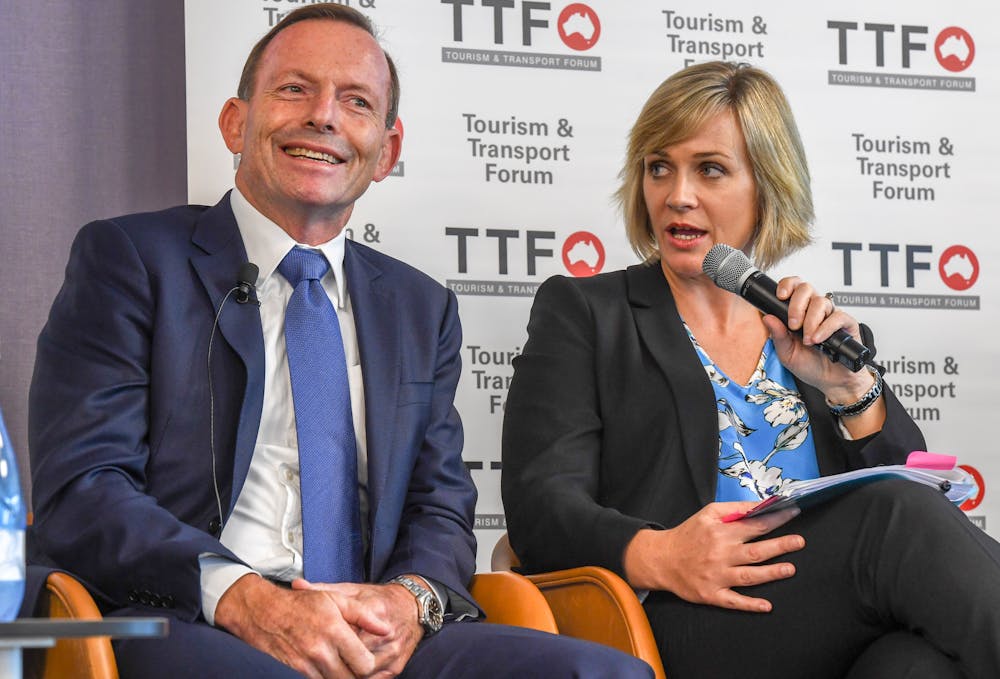
Independent Zali Steggall is challenging former prime minister Tony Abbott in the Sydney seat of Warringah. AAP/PETER RAE

A second issue relates to the poor performance of the Nationals in the recent NSW elections, when many traditional National voters switched their votes to independents or to the Shooters, Fishers and Farmers party. This suggests that the regional seat of Cowper might now become more marginal, especially since the Nationals’ Luke Hartsuyker is not recontesting. Independent Rob Oakeshott is trying for a second time to win, although he will need a swing of more than 4.6%.

Third, many voters have been angered by the overthrow of sitting prime ministers and in Malcolm Turnbull’s seat of Wentworth showed this anger by preferring independent Liberal Kerryn Phelps over the endorsed Liberal candidate, Dave Sharma. Much interest now focuses on whether Phelps’ vote will evaporate as anger wanes. Sharma is a strong candidate but Phelps has made a significant contribution to parliament, especially in sponsoring the “medevac” legislation.

There are few marginal seats in NSW that might be exposed by a swing away from the government, but in Gilmore, retiring Liberal Ann Sudmalis won in 2016 by just 1,503 votes. Prime Minister Scott Morrison has intervened by making a “captain’s call” in nominating former Labor President Warren Mundine, so this seat is likely to be close. Other marginal seats in NSW include Robertson and Banks held by the government by less than 2%, and the Labor-held seat of Paterson.

Queensland

Maxine Newlands, Senior Lecturer in Political Science at James Cook University

Queensland is a Liberal National stronghold. At the last federal election, the Coalition picked up 21 of 30 Queensland seats. The Australian Labor Party picked up eight seats, and Katter’s Australian Party was re-elected in the seat of Kennedy. Labor’s win over the Coalition in Herbert in North Queensland gave them their only Queensland seat outside of the state’s metropolitan area.

Queensland’s population is concentrated along the southeast corridor that stretches from Brisbane to Ipswich and Toowoomba, so funding allocations are a divisive issue in regional and rural Queensland. The concentration of much of the state’s infrastructure into one corner has seen the minor parties – Katter’s Australian Party and Clive Palmer’s United Australia Party – set up offices in Townsville CBD in recent years. The message is clear, vote for them and they will look after the North’s interest.

With Labor hanging onto Herbert by a mere 37 votes, the candidate with local interests will be key. The first woman to hold Herbert, incumbent Cathy O’Toole, is a born and bred Townsvillian. She will face the Coalition’s Philip Thompson – last year’s Queensland Young Australian of the year. While the two locals battle it out, the minor parties will be the ones to watch.

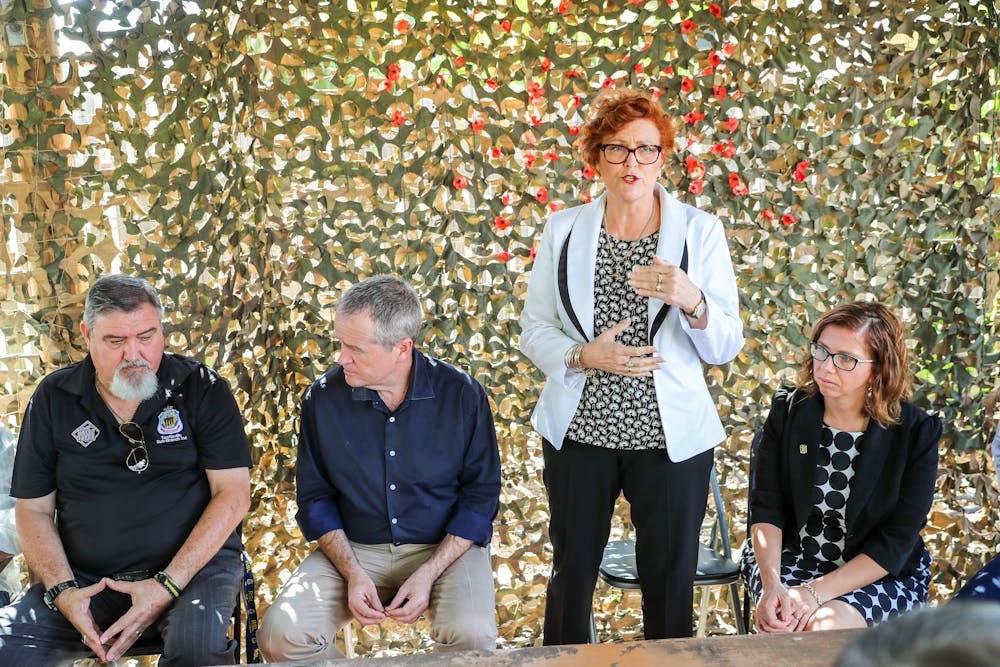
Labor Member for Herbert Cathy O’Toole speaking at an event with opposition leader Bill Shorten. AAP/MICHAEL CHAMBERS

Katter’s Australian Party, Palmer’s United Australia Party, and Pauline Hanson’s One Nation will be in a three-way battle for preference votes. One Nation benefited from Clive Palmer’s absence from the 2016 election, picking up a 13% swing in the northern suburb of Bluewater (in the seat of Herbert). This year the spoils will need to be split.

For the Greens, the Adani coalmine and Great Barrier Reef will be key issues. National and local support from Stop Adani and GetUp! Australia’s campaign will take a local concerns to the national level. GetUp! also have their sight on another seat: the minister for home affairs Peter Dutton’s electorate of Dickson.

Dutton has a stronger majority than Herbert’s Cathy O’Toole, but he too is a high profile scalp. Unlike O’Toole, Dutton has held the seat for nearly two decades. Over the past 18 years, the Coalition under Dutton has seen their majority dwindle with a margin of just 1.7% in 2016. With a 5.1% swing away from the Coalition in favour of Labor at the last election, Labor candidate Ali France will be a strong contender.

Whatever happens on polling day, Queenslanders will probably stay with form, and vote with the Coalition. Whether the Coalition will secure more than 21 seats will depend on its local focus on jobs, the environment and who can close the divide between the metropolitan south and the rest of Queensland.

Western Australia

Ian Cook, Senior Lecturer of Australian Politics at Murdoch University

Until budget night, the GST issue in Western Australia looked as if it had gone away – finally. West Australian folk are as sick of it as everyone else.

Scott Morrison’s government committed to a GST top-up for Western Australia and introduced a floor into the system that will mean that Western Australians won’t be punished as much for not having poker machines outside casinos. Last night’s budget and a A$1 billion dollar shortfall for Western Australia means that the issue might come back.

The point about the ongoing resentment toward the GST split is that it was, and is, a manifestation of the perennial complaint of West Australians: that, apart from the income generated from resources, no one in Canberra cares about Western Australia.

While the GST short-fall affects all states, Labor will work hard to get WA voters to believe that the latest GST problem is another sign that the Liberals don’t care about us. That’s federal politicking in Western Australia.

And Canberra has really cared lately. Opposition Leader, Bill Shorten, brought his shadow cabinet to Western Australia two weeks ago to reassure us that a Labor government would really care, and will spend billions on infrastructure and other projects in the state. Last week Scott Morrison came to announce that a Liberal-National government would spend another A$1.6 billion on roads and rail in addition the A$4.7 billion WA got for its GST top-up.

Western Australia Treasurer Ben Wyatt, like everyone else, sees the recent visits and promises and the budget as signs that the major parties are very interested in Western Australian seats. Well, some seats. For the Liberals it’s Cowan and Perth. For Labor it’s Hasluck, Pearce, Swan, Stirling and Canning.

Pearce is particularly interesting because it is Western Australia star Liberal, Christian Porter’s, seat. But there’s always the matter of Durack and O’Connor being held by the Liberals when they should be National Party seats. They’re huge regional seats that the Nationals hoped to win (Durack) or win back (O’Connor) in the last election but didn’t.

South Australia

Rob Manwaring, Senior Lecturer in Politics and Public Policy at Flinders University

South Australia is rarely a game-changer in Australian federal elections, but there are some key clashes taking place in the state. While the issue of who forms government might not be decided in the driest state in the country, a few electoral contests will tell us a good deal about the state of the parties, and the mood of the electorate.

The most marginal seat in SA is Boothby, with conservative Liberal Nicolle Flint sitting on a nominal lead of 2.8%. If the voters are keen to punish the Liberals, then Flint may not be able to capitalise on first term incumbency. Critically, GetUp! have targeted Flint, and will be hopeful after their success in Tasmania last time round.

There are other key seats, far less marginal than Boothby, that could also tell us something about the extent of voter dissatisfaction with the Morrison government. In the seat of Sturt, currently held by the ubiquitous, but now retiring Christopher Pyne, the Liberals only have a nominal margin of 5.8%. Pyne has not left the preselected James Stevens much time to gain name recognition in the constituency. Stevens is SA Premier Steven Marshall’s former chief of staff.

In other circumstances, the Liberals might hope to claw back the seat of Mayo – currently held by the Centre Alliance’s Rebekha Sharkie. Sharkie was caught up in the citizenship crisis, and beat Georgina Downer in a byelection. Downer is back again, drawing on some significant support, and will hope that she can make better inroads than her byelection effort.

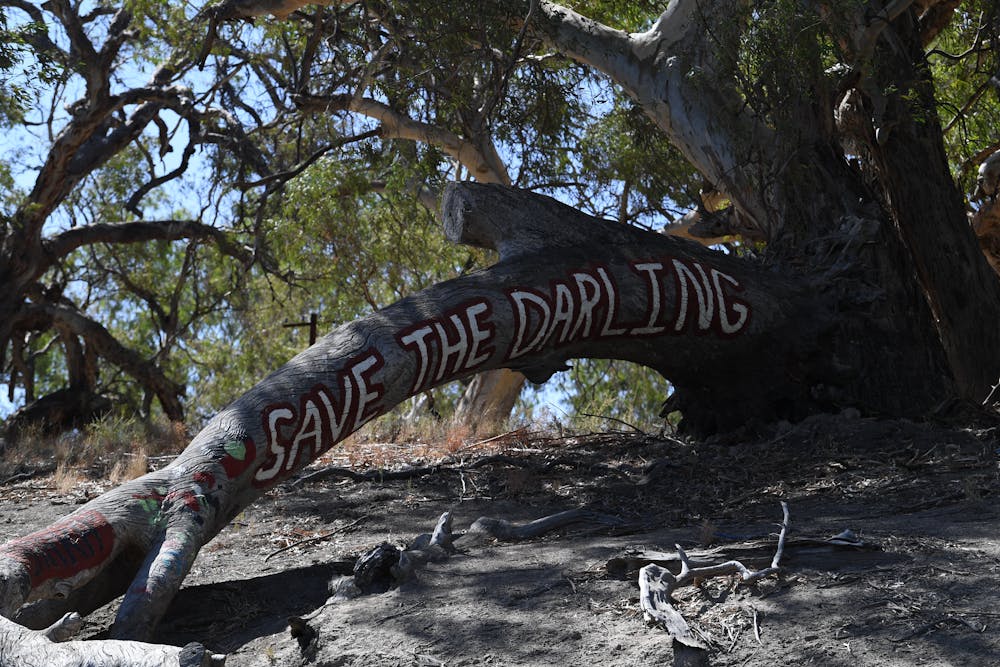
Economically, South Australians will be concerned that the state is treading water. Energy, climate breakdown, cost of living concerns, and also the dead fish of the Menindee are key issues preoccupying the SA electorate.

Given the Liberal leadership crisis, the voters may well be unforgiving.

Tasmania

Richard Eccleston, Professor of Political Science and Director of the Institute for the Study of Social Change at the University of Tasmania

Michael Lester, researcher and PhD student at the Institute for the Study of Social Change.

Tasmania has emerged as an electoral battleground in the early “faux” election campaign. There have been multiple visits by Coalition and Labor frontbenchers with a long list of project funding announcements and promises.

And the reason for that is clear. Labor holds four of the state’s five House of Representative seats, but only one is classified as “safe” following an electoral redistribution in 2017. The other seat – the Hobart-based seat of Clark (formerly Denison) – is held by popular independent Andrew Wilkie.

For each seat to change hands after the redistribution, Bass nominally would require a swing of 5.4%, Braddon just 1.7% (although there has since been a byelection in that seat), and Lyons, 3.8%. Franklin, currently held by Shadow Minister for Ageing and Mental Health Julie Collins, would require a swing of 10.7% and is considered a safe Labor seat, even in these volatile times.

An opinion poll on federal voting intentions conducted by local pollster EMRS last December put Labor on 40% statewide, up from 37.9% at the 2016 election. The Liberals were down from 35.4% to 33%, and the Greens were on 11%.

This Tasmanian poll, combined with the fact that the Coalition continue to trail Labor nationally, suggests that the Liberals have little chance of regaining any of the three seats (Bass, Braddon and Lyons) they lost to Labor back in 2016. The lack of major new announcements for Tasmania in the budget also suggests that government strategists are more focused on holding ground on the mainland than winning back lost territory in Tasmania.

But, as we will explain in our seat-by seat coverage over the course of the campaign, the Liberals have endorsed new candidates in these three key seats. All Tasmanian politics is local, so personalities matter. Whether these fresh faces are enough to cause an upset or two come May remains to be seen.

ref. Federal election 2019: state of the states – http://theconversation.com/federal-election-2019-state-of-the-states-114982


NZ’s gun law change: ‘One of the most important pieces of legislation’

New Zealand Prime Minister Jacinda Ardern.
Evening Report
Evening Report
NZ’s gun law change: ‘One of the most important pieces of legislation’
Loading
/

By John Gerritsen of RNZ News

National Party MPs crossed the floor of New Zealand’s Parliament to congratulate Prime Minister Jacinda Ardern, and Police Minister Stuart Nash, after MPs voted near-unanimously to approve the government’s gun ban last night.

Senior police officers and members of Nash’s staff were among the few people in the public gallery to witness the vote on the Arms (Prohibited Firearms, Magazines, and Parts) Amendment Bill, which outlaws military-style semi-automatics, magazines and parts that can be used to assemble prohibited firearms.

The bill, prompted by the massacre of 50 people in two Christchurch mosques on March 15 using semi-automatic weapons and high-capacity magazines, was passed by 119 votes to one, just over a week after it was introduced.

LISTEN TO RNZ MORNING REPORT

The legislation is expected to be approved by the Governor-General today.

The prime minister began the debate over the final reading of the bill by telling MPs their vote would make the country safer.

-Partners-

She told them that by voting near-unanimously in favour of the bill they were doing the right thing for the victims of the March 15 massacre.

“We are ultimately here because 50 people died and they do not have a voice. We in this house are their voice and today Mr Speaker we have used that voice wisely,” Ardern said.

Balancing rights
Labour Party MP Michael Wood chaired the select committee that considered the Arms Amendment Bill.

He acknowledged the gun owners who would be affected by the change in law but told Parliament it had to balance the competing rights of citizens.

“Every time we legislate in this house, we balance the rights of different citizens and different groups within our communities and on this occasion we say that the right of all New Zealanders to live peacefully and free from the terror that inflicted our country on the 15th of March is a more important right than the right to own these weapons.”

Police Minister Stuart Nash told RNZ Morning Report the law change was game-changing.

“New Zealand will be a safer place once this is implemented and once we get these guns out of our communities,” Nash said.

He said it wasn’t going to happen overnight, but that this was a start.

Those who own illegal firearms were given an amnesty until September 30 to hand over the weapons to police.

Illegal guns
Nash said if anyone is found to be in possession of one of the illegal firearms after that date they could face up to five years in jail.

“I like to think the vast majority of Kiwis are good law-abiding citizens and both the prime minister and myself have made this very clear that we’re not penalising these gun owners, but we have changed the law and as a consequence of that they are now holding something which is illegal.”

Nash said there are a number of ways to check that illegal firearms were being handed in, including checking gun dealers’ records.

“Gun dealers have to hold five years worth of data. We can take a look at their records and we can determine where guns have been sold, who they’ve been sold to and we can follow through on that.”

He said they all military-style semi-automatic weapon had to be registered and he can go through those to make sure they’re all handed in.

Last night several MPs noted that Parliament had failed to pass tougher gun laws in the past.

Mark Patterson from New Zealand First said police and others had repeatedly tried to restrict semi-automatic rifles before and previous parliaments had failed to agree to gun law changes.

‘Too timid’
“This is not the time to point fingers but certainly for anyone who questions the process, how much process do you need? We have been too timid, we have paid the price,” Mr Patterson said.

National MP Andrew Bailey said the bill was a moment for Parliament to act in unity and he hoped it would send the right message to the families of the 50 victims.

“To the families of our missing 50 and those who were injured, I trust you will look at us as an institution and say we delivered here today.”

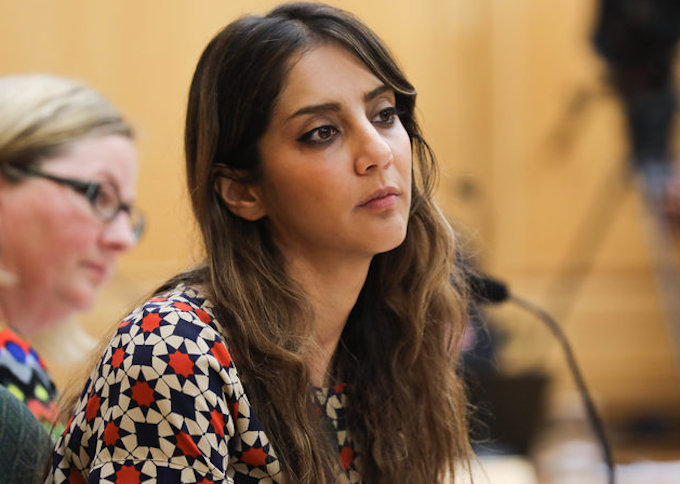
Green MP Golriz Ghahraman … “We live not only with ongoing grief but also with very real fear.” Image: Photo: Daniela Maoate-Cox/RNZ/VNP

Green Party MP Golriz Ghahraman said Parliament must pass the bill because communities directly affected by the attacks such as Christchurch people and Muslim and refugee groups were afraid of further violence.

“We live not only with ongoing grief but also with very real fear,” she said.

“As we walk our kids to school, as we catch a bus late at night, as we gather in our community hubs, we now live with the fear of mass violence and this house recognises that and the job of making New Zealand safe.”

‘Marker in sand’
Judith Collins from the National Party said she was proud of Parliament and the legislation would have a lasting effect on New Zealand society.

“This is one of the most important pieces of legislation we will pass this Parliament because it’s not only about keeping people safe, it’s about putting a marker in the sand for our New Zealand culture.”

The only dissenting voice was ACT’s David Seymour who said rushing the bill through Parliament was political theatre.

“I am in support of changing our gun laws, but it is impossible for anyone of good conscience to support this bill, the way it’s been brought about and the problems with it that will make our society more dangerous than we had on 15 March,” he said.

This article is republished under the Pacific Media Centre’s content partnership with Radio New Zealand.

Print Friendly, PDF & Email

Article by AsiaPacificReport.nz

How much evidence is enough to declare a new species of human from a Philippines cave site?

]]>

Source: The Conversation (Au and NZ) – By Darren Curnoe, Associate Professor and Chief Investigator, ARC Centre of Excellence for Australian Biodiversity and Heritage, University of New South Wales, UNSW

The announcement of a new species of ancient human (more correctly hominin) from the Philippines, reported today in Nature, will cause a lot of head-shaking among anthropologists and archaeologists.

Some will greet the publication with wild enthusiasm, believing it confirms their own views about our evolutionary past. Others will howl angrily, believing the declaration goes way too far with too little evidence.

Me, I sit somewhere in the middle of this spectrum of opinions. I’ve long promoted a pluralist view of human evolution and do see the hominin fossil record as strongly suggesting high species diversity.


Read more: Fresh clues to the life and times of the Denisovans, a little-known ancient group of humans


There is no reason to expect human evolution to have been any different to the evolution of other animals where, for example, among our close primate relatives, diversity was and often continues to be the rule.

At the same time, each and every new discovery has to stack up and must be judged on its merits, on the basis of the evidence presented. We can’t just accept the interpretation of a new discovery because it suits our strongly held views.

But we need also to keep a cool head, because the naming of any new species is still a scientific hypothesis, ripe for testing and far from set in stone, even if published in the esteemed pages of a journal like Nature.

The Philippine find

So, just what have they found? It’s dubbed Homo luzonensis, after the Philippines’ main island of Luzon, where it was recovered during excavations of Callao Cave in 2007, 2011 and 2015.

This new hominin is represented by a handful of heavily worn adult teeth from one or two individuals, one foot and two toe bones, two finger bones, and the fragment of the shaft of a juvenile thigh bone.

Proximal foot phalanx of a Homo luzonensis individual known as CCH4, showing the longitudinal curvature of the bone. Callao Cave Archaeology Project (Florent Détroit)

Its anatomy is argued to be a peculiar mix of features normally found in living humans, Homo erectus, the Hobbit (Homo floresiensis) and Australopithecus.

The similarities to Australopithecus are especially intriguing when one ponders for a moment on just who the australopiths actually were. A famous example is “Lucy” who belonged to Australopithecus afarensis living in the Great Rift Valley of East Africa. Another is Australopithecus sediba, from a cave in South Africa and found just a decade ago.

These and the many other Australopithecus species (and there are at least six described) lived only in sub-Saharan Africa, between about 2 million and 5 million years ago.

Members of Australopithecus were among the earliest hominins who gave rise to the human genus Homo. This makes them one of our own evolutionary ancestors. Yet, despite their definite bipedalism, they also seem to have spent much of their time climbing in trees, perhaps feeding, sleeping and escaping predators.

They were typically around 30-50kg, stood 1-1.5 metres tall, and had brain sizes around one-third the size of our own. They may have produced and used crude stone tools, but the evidence remains unclear. In a sense, they would have looked a lot like chimpanzees but with smaller faces and front teeth and with upright bodies.

Is it a new species?

The statistical comparisons made in the newly published research, led by Florent Détroit of the Musée de l’Homme, highlight a rather odd assortment of features in Homo luzonensis.

But the all-important type (or holotype) specimen, referred to as fossil CCH6, comprises just a few teeth from the upper jaw, all of which are rather heavily worn down or broken.

Right upper teeth of the individual CCH6. Callao Cave Archaeology Project (Florent Détroit)

There’s not a lot of anatomy preserved here, and this leaves me feeling the case for this new species is a little flimsy.

How astonishing would it be that something resembling Australopithecus would have survived a long, long, way from the African Rift Valley as recently as 50,000 years ago?

Well, as it turns out, this is precisely the situation with the diminutive Homo floresiensis from Flores in eastern Indonesia, most recently dated between 60,000 and 100,000 years old.

Again, while the Hobbit might have prepared us philosophically for yet more radical discoveries, the case for Homo luzonensis needs to be judged solely on its merits.

I think I’d prefer to leave the fossil in what Kenyan archaeologist and anthropologist Louis Leakey used to call the “suspense account” until we have a lot more evidence.

Dating the fossil finds

The thing that bugs me the most about the new research is the seemingly poor understanding of the age of Homo luzonensis. There’s not much new evidence presented here about the dating of the site or the fossils themselves, and the work that has been done previously needs to be interpreted with a good deal of caution.

The method used to date the actual fossils (called Uranium-series or U/Th Dating) can be notoriously unreliable when dating bones and teeth, and frankly, some of my colleagues simply don’t accept that it’s up to the task.


Read more: Poor health in Aboriginal children after European colonisation revealed in their skeletal remains


This is because bones and teeth can lose old uranium or take up new uranium when buried in sediments, like those contained in a cave, and there’s no way of really knowing if this has happened in the past. The method assumes that uranium was taken up just once in the past and then decayed giving us a radioactive clock but this is probably not the case in reality.

It would be usual practice to check the dating of a site with different methods and using various materials (charcoal, sediment, bone, cave flowstone, and so on) and there’s no explanation provided why this hasn’t been done for Callao Cave and Homo luzonensis, or if it has, how the crosschecks compared?

I think the best we can say is that the fossils would seem to be older than 50,000 years, but just how much older is anyone’s guess. They could be 55,000 years old or 550,000 years old, and this would make a very real difference in terms of their importance and place in human evolution.

Still, if Détroit and his team are right about Homo luzonensis, the new discovery would add to a growing picture of extinct human diversity in Southeast Asia, which we simply couldn’t have imagined a decade or two ago.

ref. How much evidence is enough to declare a new species of human from a Philippines cave site? – http://theconversation.com/how-much-evidence-is-enough-to-declare-a-new-species-of-human-from-a-philippines-cave-site-115139

India’s elections will be the largest in world history

]]>

Source: The Conversation (Au and NZ) – By Erin Watson-Lynn, Head of Programs, Perth USAsia Centre, University of Western Australia

The world’s largest democratic election is set to take place in India. Voting will take place in seven phases from April 11 to May 19, and the result will be announced May 23.

An extraordinary 900 million people are eligible to vote, 130 million for the first time. Not only is it the “largest democratic exercise” in history, it is among world’s most expensive. In 2014, the Lok Sabha (lower house) elections cost the Election Commission of India half a billion US dollars.

Several key issues are emerging in this election that will prove decisive in voter decision-making behaviour. Unsurprisingly, economic development is front and centre. Despite having one of the world’s highest economic growth rates, growth slowed to 6.4% in the final quarter of 2018, down from a peak of 8.2% in mid-2018.

Unemployment rates are at their highest since the 1970s, as the economy struggles to create jobs for rural migrants moving to cities and a large youth cohort now entering the labour market. Unemployment and inflation, which directly affect household incomes, are widely seen as the biggest concerns for Indians in the lead up to the election.


Read more: India’s WhatsApp election: political parties risk undermining democracy with technology


The spread of “fake news” and misinformation is also an important electoral complication. WhatsApp in India is tackling the spread of misinformation through a verification centre called Checkpoint. Indian users of the Facebook owned social networking service, of which there is 200 million, can send pictures, messages, and videos to be fact-checked.

This comes as Facebook removed hundreds of pages that shared misleading content about India and Pakistan following a suicide bombing in Kashmir. How to deal with these increasing tensions between India and Pakistan are a key feature of the political campaign.

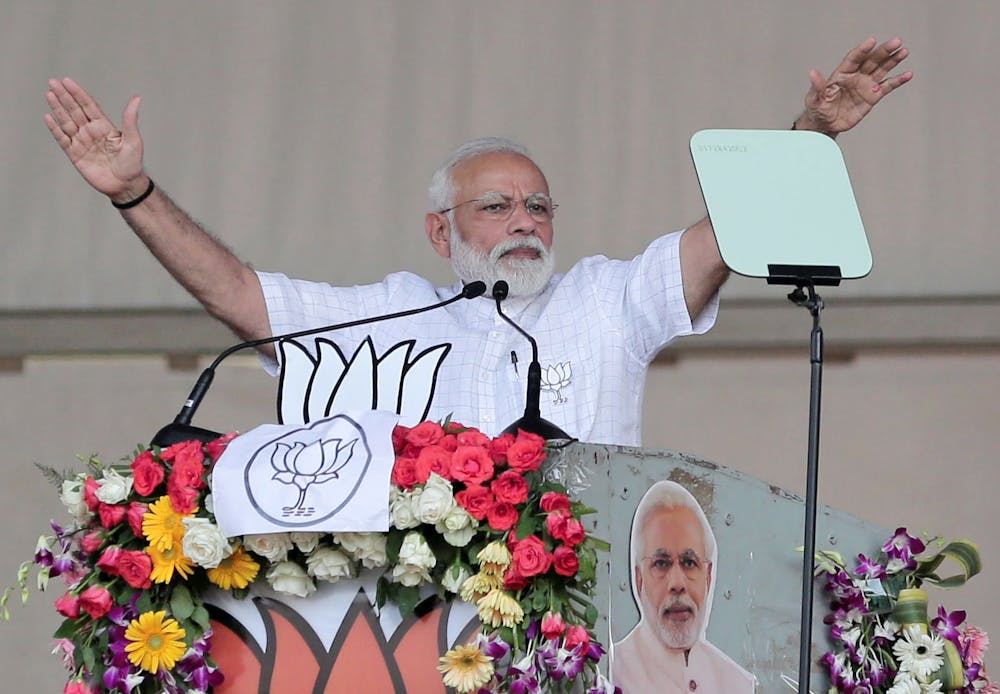
Indian Prime Minister Narendra Modi delivers a speech during a mass election campaign. PIYAL ADHIKARY/AAP

How India’s electoral system works

India has a Westminster system of government, a legacy of the British Raj. In the Lok Sabha (lower house) there are 543 seats up for grabs. An additional two seats for the Anglo-Indian community are nominated by the president. These 545 seats will form the 17th Lok Sabha. The Prime Minister is selected from the members of the largest party or coalition.

There is no direct election for the Rajya Sabha (upper house). Rather, the current 233 Rajya Sabha members are elected by the Legislative Assembly in each of the states and the two union territories, with an additional 12 members nominated by the president. The Rajya Sabha may have up to 250 members, but it doesn’t reach this quota at present.


Read more: Kashmir: India and Pakistan’s escalating conflict will benefit Narendra Modi ahead of elections


Narendra Modi versus Rahul Gandhi

There are two distinct personalities leading the major parties in this election. Both have taken advantage of the Representation of the People Act 1951 during their career, which allows candidates to contest an election from two seats – what the Wall Street Journal calls the “political equivalent of spread betting”.

Current Prime Minister Narendra Modi leads the Bharatiya Janata Party (BJP) – a Hindu nationalist party. Modi won both of the seats he nominated for in the 2014 elections, Vadodara in his home state of Gujarat, and Varanasi in Uttar Pradesh. He chose the seat of Varanasi and will recontest this seat in 2019. It is unknown whether he will contest a second seat, but there is speculation he might in the south of the country.

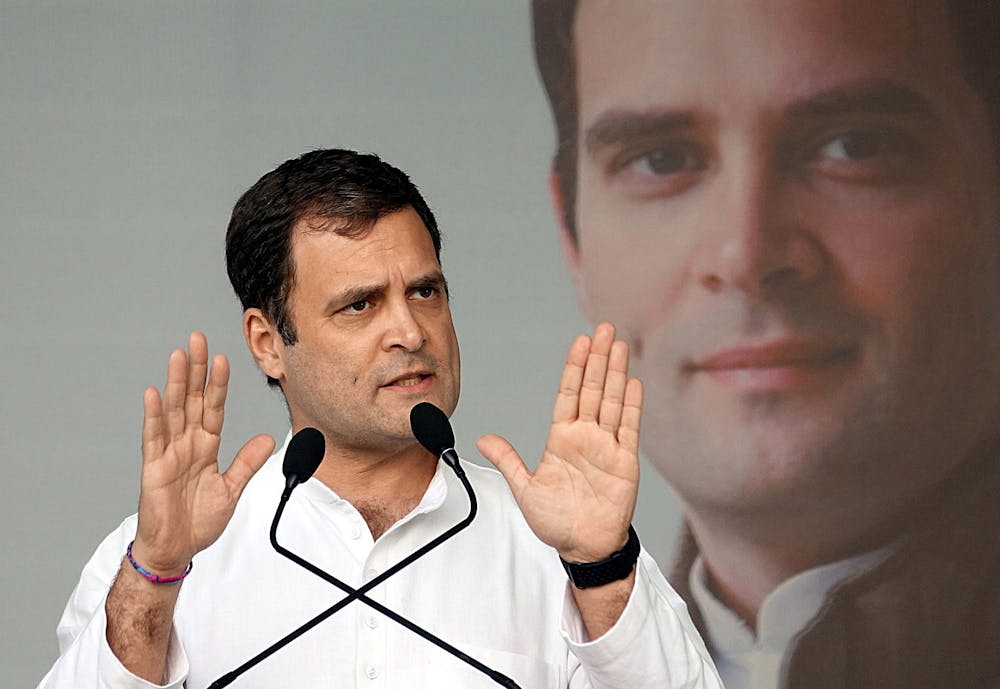
Leader of the opposition, Rahul Gandhi, leads the secular Indian National Congress (Congress). Gandhi has already declared that he will contest two seats in 2019, Amethi in Uttar Pradesh, as well as Wayanad in the southern state of Kerala.

Gandhi is latest generation of Nehru-Gandhi political dynasty, which has played a decisive role in Indian politics since independence in 1947. In keeping with family tradition, Gandhi recently appointed his sister Priyanka Gandhi as the All India Congress Committee secretary responsible for Uttar Pradesh. The All India Congress Committee is responsible for the Congress’ decision making.

Rahul Gandhi speaks during a political rally that was held in March. SANJAY BAID/AAP

Uttar Pradesh is the primary battleground

It’s no coincidence that both Modi and Gandhi will contest seats in Uttar Pradesh. Commentators often describe Uttar Pradesh as “the battleground state” of Indian elections. With a population size of roughly 230 million people, Uttar Pradesh sends more members to the Lok Sabha than any other state; it holds 80 seats, followed by Maharashtra (48), West Bengal (42) and Bihar (40).

The BJP won the 2014 election with an absolute majority in the Lok Sabha. The only time a party won by a larger majority was in 1984 following Indira Gandhi’s assassination, when Rajiv Gandhi led the Congress to win 78% of seats. But an absolute majority is more of an anomaly than the norm in recent Indian electoral history.


Read more: India: government continues to suppress citizens’ right to information ahead of election


This means that in 2019, both the major parties are courting and negotiating with minor parties. Reports on the status of party alliances have the BJP performing strongly with the National Democratic Alliance (NDA), while Congress is struggling to build their opposition coalition.

It’s hard to predict whether Modi or Gandhi will emerge victorious in the election. Opinion polls are presently split. Modi and the BJP benefit from the advantages of incumbency, but recent deterioration in economic performance poses an opportunity for opposition parties.

Although it’s shaping up more like elections of the past, where the result will depend on negotiating party alliances, the 2019 Lok Sabha elections will still go down in history as the world’s biggest election.

ref. India’s elections will be the largest in world history – http://theconversation.com/indias-elections-will-be-the-largest-in-world-history-114968

Prescription monitoring is here, but we need to tread carefully to avoid unintended harms

]]>

Source: The Conversation (Au and NZ) – By Suzanne Nielsen, Associate Professor and Deputy Director, Monash Addiction Research Centre, Monash University

Drug-related deaths in Australia have almost doubled over the past ten years, in large part because of the increased use of opioids. In 2016, middle aged people using combinations of prescription drugs were the most likely to die a drug-related death.

Prescription monitoring aims to tackle this issue by allowing health professionals who are prescribing or dispensing high-risk medicines to see a patient’s prescription history.

This may help a doctor to make decisions about a patient’s care, or a pharmacist to decide if they should dispense certain medicines to a patient; with the aim of reducing harm.


Read more: Making more drugs available ‘over the counter’ would be a win for the public and the health care system


But as a new prescription monitoring program, SafeScript, is rolled out across Victoria, we need to tread cautiously for a couple of reasons.

First, our health professionals and systems will need to be properly equipped to deal with the volume of people who will be identified by this program as needing support.

And second, evidence from the United States tells us restricting access to prescription drugs may drive people towards using illicit drugs instead.

What is SafeScript?

Right now SafeScript is optional for doctors and pharmacists to sign up to, but it will become mandatory in April 2020.

The system automatically captures a range of high-risk medicines, such as strong pain medicines, and medicines for anxiety and sleep. These medicines are generally those commonly implicated in drug-related deaths.

Tasmanian health-care providers have had access to voluntary prescription monitoring since 2012. But SafeScript will be the first mandatory real-time prescription monitoring system in Australia.

Pharmacists can also use the SafeScript software. From shutterstock.com

When a health-care professional goes to prescribe or dispense a listed high-risk medicine, they will see a green, amber or red pop-up notification.

They will be alerted to risk factors such as a patient taking higher doses of medicines, risky combinations of medicines, or where a person may be seeing multiple prescribers for the same or similar medicines. In rare cases, they may be seeking more medicines than they need for themselves so they can supply them to others.

The software links the health-care providers to additional information including the patient’s prescription history. From there, it’s up to the health-care professional to use that information to inform their clinical decisions.


Read more: Fixing pain management could help us solve the opioid crisis


Anecdotal reports from health-care providers using the system suggest they are finding the information useful. After a six month trial starting in western Victoria, the system has already identified a few thousand “at risk” patients.

But the system is still in its very early stages, so we don’t yet have information about longer term, or patient specific outcomes, such as whether prescription drug-related harms are decreasing, or whether patients are receiving appropriate care when risks are identified.

What are the concerns?

Although the system identifies certain risky behaviours, it’s up to the health-care professional to assess whether the patient requires treatment for a substance use disorder, or if it is safe for a patient to continue to supply a high-risk medicine to them.

Typically, GPs and pharmacists are not confident talking about sensitive topics like substance use.

To address this, a number of voluntary training sessions are being run across the state to upskill health-care providers in having these difficult conversations.

A telephone hotline has also been established for GPs to seek clinical advice regarding patient care.

A doctor may choose to prescribe drug treatments, such as buprenorphine, for dependence to strong pain medicines. They may also decide to refer the patient to a pain service, or a drug treatment service.

But where there are likely to be a greater volume of patients referred to these services, there are also significant concerns around access.

When SafeScript identifies a patient who may be at risk, it’s up to the health professional to decide what to do. From shutterstock.com

In Australia, there is a need to double the capacity of alcohol and drug treatment services to meet current needs. This means if a referral is made, there may be delays in accessing care.

Referral to a pain service may be more appropriate for some patients, though waiting lists for these services can also delay access to care.

Further, in regional and rural areas where prescription drug problems are often higher, treatment access may be more limited.


Read more: How we can reduce dependency on opioid painkillers in rural and regional Australia


Could there be harms associated with prescription monitoring?

International experience and research with prescription monitoring has been inconclusive. A recent large review could not determine whether prescription monitoring programs decreased or increased fatal or non-fatal drug overdoses.

The review did however identify three studies in the United States that showed heroin overdoses increased after the implementation of prescription monitoring.


Read more: Not everyone who takes painkillers for fun is an addict; some have just found a different way to cope


We don’t know if we’ll see the same patterns in an Australian setting. But restrictions on access to prescription drugs may mean some people shift to using illicitly sourced drugs, and this could increase harms.

With the implementation of prescription monitoring, we need to increase capacity of both evidence-based treatment and harm reduction services. We know that drug treatment capacity does not meet current needs – and these needs are about to grow.

ref. Prescription monitoring is here, but we need to tread carefully to avoid unintended harms – http://theconversation.com/prescription-monitoring-is-here-but-we-need-to-tread-carefully-to-avoid-unintended-harms-114969

There’s a lot of bad news in the UN Global Environment Outlook, but a sustainable future is still possible

]]>

Source: The Conversation (Au and NZ) – By Pedro Fidelman, Senior research fellow, The University of Queensland

The Sixth Global Environment Outlook (GEO-6), the most comprehensive environmental assessment produced by the UN in five years, brought us both good and bad news.

The environment has continued to deteriorate since the first GEO-6 report in 1997, with potentially irreversible impacts if not effectively addressed. But pathways to significant change do exist, and a sustainable future is still possible.

Launched in March at the fourth session of the United Nations Environment Assembly in Nairobi, the 700-page report involved nearly 200 global experts who collaborated over 18 months.


Read more: Climate action is the key to Australia achieving the Sustainable Development Goals


It covers, in detail, a range of topics, including air, biodiversity, oceans and coasts, land and freshwater, climate change, human health and energy.

And it assessed the state of the global environment, the effectiveness of policy responses, and possible pathways to achieve the environmental goals of the 2030 Agenda for Sustainable Development.

The good news

There is a fair bit of negative information in the GEO-6, which unfortunately reflects the overall state of environmental affairs globally. But it is not all doom and gloom, the GEO-6 has many positive, solution-oriented messages too.

The GEO-6 advises that pathways and approaches to systemic change exist, which must be scaled up quickly to steer the planet towards more sustainable futures.


Read more: Shorten’s climate policy would hit more big polluters harder and set electric car target


The considerable connections between environmental, social and economic policies can inform multiple goals. So policies addressing entire systems – such as food, energy and waste – are more likely to have beneficial impact.

For instance, reducing our use of fossil fuels leads to health benefits by decreasing outdoor air pollution responsible for premature deaths. And efforts to eliminate hunger (such as changes in agriculture production) can help address climate change, biodiversity loss, land degradation and chemical pollution.

With the window for action closing quickly, given the unprecedented rate of global environmental change, the GEO-6 is calling for more ambitious and innovative policy.

We need significant change leading us to decarbonisation, a circular economy, sustainable agriculture and food systems, and better adapting socio-economic systems to climate change.

The bad news

The GEO-6 warns the overall condition of the global environment continues to deteriorate, driven mainly by population growth, urbanisation, economic development, technological change and climate change.

Here’s what we’re dealing with:

  • air pollution currently causes an estimated 6 to 7 million premature deaths annually
  • we might be witnessing the sixth mass species extinction in the planet’s history
  • 8 million tons of plastic enters the ocean every year as a result of mismanagement of domestic waste in coastal areas
  • warming ocean waters are leading to mass mortality of coral reefs across the world’s tropics
  • 29% of all lands are degradation hotspots
  • pathogen-polluted drinking water and inadequate sanitation cause approximately 1.4 million human deaths annually, with many millions more becoming ill.

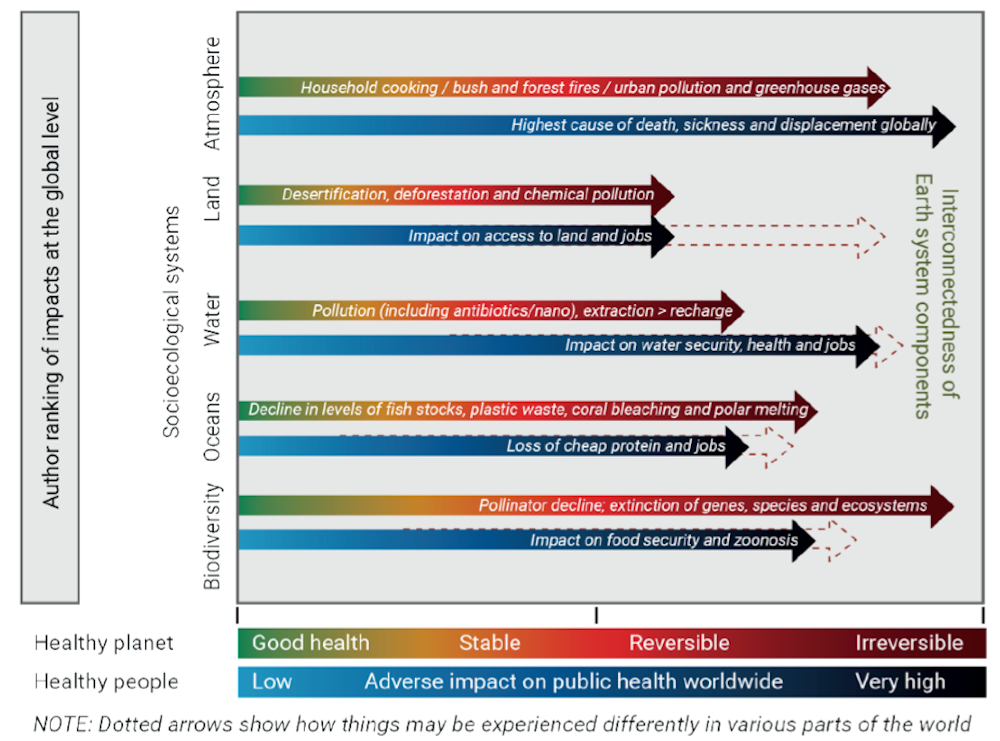
UNEP graph on the relationship between planetary health and human health. Author provided (No reuse)

These and other issues reported in the GEO-6 will lead to ongoing and potentially irreversible impacts if they are not addressed effectively, and immediately.

Typically, environmental policy efforts are based on individual issues, like air pollution, or industry sectors. But this approach doesn’t address the complexity of contemporary environmental problems that require system-oriented efforts at large scales.

Under current policy scenarios, the environmental dimension of the Sustainable Development Goals, as well as other goals like the Paris Agreement, are unlikely to be achieved.

The GEO-6 calls for urgent, inclusive and sustained action by governments, business and society proportionate to the scale and pace of global environmental change.

What it means for Australia

In Australia, positive action is taking place at state and local levels of government, where support for more ambitious emissions targets is generally stronger than at the Australian government level.

And many sectors of society and business are shifting towards more sustainable practices. The booming uptake of rooftop solar and the development of large-scale renewable projects illustrates such a shift.

But when it comes to sustainable development policies at the national level, Australia lags behind most of the developed world, particularly in relation to energy and climate change policy.


Read more: Should Australia recognise the human right to a healthy environment?


We don’t yet have long-term certainty for support of the uptake of electric cars, the transition to renewables, the adoption of fuel efficiency standards, and limiting emissions from the manufacturing and resources industry.

Effective strategies to curb land clearing remains to be seen, and only recently Australia has incorporated principles of circular economy into the National Waste Policy.

These do not help Australia meet its agreed commitments under the UN 2030 Agenda for Sustainable Development and associated Sustainable Development Goals.

With long-term environmental, socio-economic and political stability at stake, it is time for commitment, leadership and robust policies that can last beyond the three-year electoral cycle.

ref. There’s a lot of bad news in the UN Global Environment Outlook, but a sustainable future is still possible – http://theconversation.com/theres-a-lot-of-bad-news-in-the-un-global-environment-outlook-but-a-sustainable-future-is-still-possible-115137

Both major parties are finally talking about the importance of preschool – here’s why it matters

]]>

Source: The Conversation (Au and NZ) – By Jen Jackson, Education Policy Lead, Mitchell Institute, Victoria University

Early childhood education and care barely rated a mention in the lead-up to the 2016 federal election. But the mood has changed in Canberra.

In the lead-up to the May election, Labor has pledged $A1.75 billion to extend the current subsidy for four-year-olds to attend preschool to three-year-olds. This goes a bit further than the Coalition, which has pledged another year of funding for four-year-olds to attend preschool only.

There is mounting evidence that two years of quality preschool sets up a child for success throughout their education journey and life. A wealth of international research shows children who attend high-quality early childhood programs not only perform better in learning, but also in skills such as social competence, vocabulary and self-control. And these benefits are greatest for children from disadvantaged backgrounds.

This is backed by research into early brain development, which shows the importance of laying foundations for learning early in life, while children’s brains are most malleable. Economist James Heckman famously showed that investing in early learning and development has greater return on investment than addressing issues in later years.

Of course, investment in schools remains important to ensure early advantages don’t fade out over time, but a good start matters to maximise learning. Despite progress in early childhood reforms, Australia still doesn’t provide an adequate dose of quality early childhood education and care to all children. This election is a chance to focus policy attention back onto the benefits of early learning.


Read more: Research shows there are benefits from getting more three-year-olds into preschool


Why two years matters

Just over 90% of Australian children are participating in preschool in the year before school – when they are four years old. Now the challenge is to extend preschool participation to three-year-old children, so support for learning begins even earlier.

In Australia, a major 2017 review identified that funding two years of preschool would be the most effective early childhood reform the country could make.

Early childhood education is about more than just building blocks. Markus Spiske/Unsplash

In the United Kingdom, a large study that began in 1997 assessed more than 3,000 children at the age of three and followed them all the way up to 16. It found two or three years of quality preschool placed children nearly eight months ahead in their literacy at entry to school, compared to children with no preschool. At the age of 16, more months spent in preschool was associated with higher grades in English and maths.

But this isn’t just about reading and writing. Quality preschools run play-based learning programs in which children are encouraged to discover and explore. These play experiences provide opportunities for children to develop essential skills such as co-operation, concentration, problem-solving and self-control.

This sets up children for the more structured learning environments they will encounter in school.

Some Australian policymakers are acting on this evidence. Victoria, NSW and the ACT have committed to subsidising universal access to three-year-old preschool, coming into effect over the next decade. Interestingly, both Labor and Liberal governments have introduced these policies, indicating clear potential for cross-party support for two years of preschool.


Read more: Why Swedish early learning is so much better than Australia’s


Don’t forget the quality

For early childhood services to make a difference to children’s learning, they need to be high-quality. The key to this is interactions between educators and children – in which educators extend children’s thinking and language, and explore ideas together.

Interactions must also be warm and responsive. An Australian study that tracked 2,500 children found those who had attended early childhood services with strong emotional engagement did better at school than children who attended early childhood services where relationships were weaker.

Quality also includes programs that provide opportunities for children to explore in the natural environment, sensory play (like playdough or water), spaces for calm reflection, and activities that challenge children’s physical and cognitive development. Research shows experiencing such environments in early childhood services can deliver a range of cognitive, social and behaviour development benefits.

Quality early childhood programs should include opportunities for sensory play. from shutterstock.com

Australia’s National Quality Standard aims for early childhood services to achieve a consistent level of quality. But significant challenges remain in lifting standards throughout the sector. The Australian study of 2,500 children found the quality of support available for children’s learning remains especially low in low-income communities.

The major parties differ in their response to this challenge. The Coalition supported the National Quality Framework in principle, but is now pursuing savings in the costs of investment in early childhood sector reform. Labor has pledged to reinstate funding for the framework as part of its two years of preschool package.

Workforce challenges

Much of the quality of preschool depends on the ability of the almost 200,000 educators who work in Australian early childhood services to plan and deliver effective play-based learning programs and strong relationships with children and families.

Commitments to two years of preschool places have increased pressure on the supply of highly skilled early childhood educators. In response, both Victoria and NSW have committed to reducing tuition fees for students studying early childhood education. This is a great start, but a concerted national approach to workforce development is needed.

Professional development for existing educators is also among the major workforce development challenges across Australia.

Educators’ pay and conditions remain a significant issue in achieving a workforce of the scale and quality the early childhood policy agenda demands. Considerable work remains to break the link between educators’ pay and the costs of early childhood services that are passed on to families. This link currently means difficulties remunerating educators are greatest in Australia’s lowest-income communities – where skilled educators are needed the most.


Read more: Why Australia should invest in paying early childhood educators a liveable wage


One in five Australian children are not developmentally on track when they start school, with a widening gap between the most and least advantaged communities. Australia cannot afford to have that gap widen further.

Part of Australia’s commitment needs to be secure, ongoing funding for quality service provision, as we have for schools. We’re certainly not at that point yet, but as we head into a federal election campaign, we are much closer to bipartisan support for early learning than ever before.

ref. Both major parties are finally talking about the importance of preschool – here’s why it matters – http://theconversation.com/both-major-parties-are-finally-talking-about-the-importance-of-preschool-heres-why-it-matters-114974

Dog whistles, regional visas and wage theft – immigration policy is again an election issue

]]>

Source: The Conversation (Au and NZ) – By Jock Collins, Professor of Social Economics, UTS Business School, University of Technology Sydney

This article is part of a series examining the Coalition government’s record on key issues while in power and what Labor is promising if it wins the 2019 federal election.


Immigration policy will be a major issue in the 2019 federal election. We know this because immigration has featured significantly at every Australian election since the 2001 “children overboard” election.

David Marr and Marian Wilkinson argued in their 2003 book, Dark Victory, that willingness to play the race card in relation to boat people was a decisive factor in John Howard’s election victory. For Tony Abbott, “Stop the boats” was a major campaign theme when the Coalition won back government in the 2013 election. The current prime minister, Scott Morrison, rose to prominence as Abbott’s unyielding immigration minister who stopped the boats.


Read more: Australian politics explainer: the MV Tampa and the transformation of asylum-seeker policy


While the events of Christchurch may have cramped the opportunity for the Coalition to run hard on fear, promising to be tough on borders and tough on (Muslim) terrorism, the dog-whistle politics on the issue of refugees and asylum seekers will be there for those wanting to hear it.

For Labor these policy issues have been difficult. It was Kevin Rudd who as PM declared that those arriving by boat would never be settled in Australia, irrespective of the validity of their claims for protection under the UN Refugee Convention. Labor supported efforts to get children out of detention on Manus Island, but doesn’t want to give the conservatives too much space to convincingly advance a “Labor weak on border security” line.

Humanitarian intake is growing

The Coalition governments of Abbott, Turnbull and Morrison have in fact increased Australia’s annual humanitarian intake significantly. The number has risen from just over 13,750 to more than 18,000 – though the government has not loudly broadcast this fact.

In addition, Abbott in 2015 announced a one-off intake of 12,000 Syrian conflict refugees. Most of them arrived in 2017, effectively doubling the annual refugee intake in that year.

Australia – and the refugees – coped well, demonstrating the nation’s capacity to significantly increase refugee intakes. Our research with newly arrived Syrian, Iraqi and Afghan refugee families suggests they are settling well in Australia, receiving a warm welcome from locals in the cities and regional centres. Employment and family reunification are their key worries.


Read more: Refugees are integrating just fine in regional Australia


Labor’s shadow immigration minister, Shayne Neumann, has flagged a new temporary sponsored visa for the parents of migrants. Unlike the current visa, it does not have a cap and it might assist refugees to get their parents to Australia.

Labor has announced it will increase the annual humanitarian intake of refugees to 27,000 by 2025. It will also abolish Temporary Protection Visas (TPVs). These visas provide boat arrivals who are found to be refugees the right to stay for only three years with work and study rights and access to Centrelink payments. As Labor argues, this places them “in a permanent state of limbo”.

The Coalition parties have not announced their policy intentions in relation to humanitarian intakes or the rights of asylum seekers, including those who arrived by boat.

At a time when Home Affairs Minister Peter Dutton scans the horizon for new boat arrivals, record number of asylum seekers are arriving by plane under tourist visas. In 2013-14, there were 18,718 asylum applications, including 9,072 boat arrivals. This had increased to 27,931 asylum applications, with no boat arrivals, by 2017-18.

Department of Home Affairs

Each year the Australia government sets the permanent immigration targets. Until recently this was set at 190,00. In practice just 162,000 immigrants have been admitted over the past year or so.

A token cut and 2 new visas

In this context Prime Minister Morrison’s announcement that the permanent immigration target will be cut to 160,000 is really no change in immigration policy. There is nothing to see here if you dismiss the need to be loudly anti-immigration in the current populist political climate.


Read more: Government’s population plan is more about maximising ‘win-wins’ than cutting numbers


The announcement is linked to congestion-busting in the major cities of Sydney and Melbourne. It is accompanied by the introduction of two new visa pathways – the Skilled Work Regional (Provisional) Visa and the Skilled Employer Sponsored Regional (Provisional) Visa – for skilled migrants to live and work in regional areas for five years.

These visas offer the carrot of permanent residency at the end of three years to attract new immigrants to regional Australia. In addition, the budget announced that scholarships to the tune of $94 million over four years would be available to domestic and international students who study there.


Read more: Settling migrants in regional areas will need more than a visa to succeed


Temporary migrants exploited

Most immigration policy debates centre on permanent immigration intakes, particularly of humanitarian immigrants and asylum seekers. Yet annual temporary migrant intakes – international students, working holidaymakers and temporary skilled workers – are three times greater than the permanent intake. Over 800,000 temporary migrants were in Australia in June 2018.

One key policy issue is the exploitation of temporary migrant workers. The Turnbull government abolished the 457 temporary skilled migration visa because of increasing reports of abuse and exploitation by employers.

One recent survey of 4,332 temporary migrant workers found “increasing evidence of widespread exploitation of temporary migrant workers, including wage theft”. Half of all temporary migrant workers may be underpaid. About one in three international students and backpackers earned $12 an hour or less – about half the minimum wage.

This issue goes not just to the ethics of maintaining a temporary migration program largely premised on migrant worker exploitation. It also resonates with Labor’s campaign for a living wage and the restoration of penalty rates for workers in response to the low rate of real wage growth in Australia, which constrains consumer demand.


Read more: Ultra low wage growth isn’t accidental. It is the intended outcome of government policies


The 2019-20 federal budget allocated extra funding to the Fair Work Ombudsman to bolster enforcement action against employers who exploit vulnerable workers and announced the National Labour Hire Registration Scheme to target rogue operators in the labour hire industry. However, the research suggests wage theft is widespread in the small business sector, a key target for tax relief in the budget. It is an area of immigration policy that requires considerably more resources and punch.

ref. Dog whistles, regional visas and wage theft – immigration policy is again an election issue – http://theconversation.com/dog-whistles-regional-visas-and-wage-theft-immigration-policy-is-again-an-election-issue-113557

Artificial intelligence may take your job, so political leaders need to start doing theirs

]]>

Source: The Conversation (Au and NZ) – By Alan Montague, Senior Lecturer/Program Director, masters program in human resources management, RMIT University

Over the next decade up to 40% of jobs could be replaced by automation. That’s according to a forecast from the Committee for the Economic Development of Australia.

Risk of job automation by country. In New Zealand, for instance, the median worker has 39% chance of their job being automated. OECD Social, Employment and Migration Working Paper No. 202

Other estimates are less dire. A report from the Organisation for Economic Cooperation and Development says only 14% of jobs across its member nations are “highly automatable”, though another 32% are likely to change significantly.

Despite this uncertainty about the exact number of human jobs that will disappear, it is certain the impacts of automation driven by artificial intelligence (AI) are potentially profound.

If the new jobs that emerge as a result are fewer and less rewarding than those lost, we face a period of social dislocation.

Yet there is little evidence of any strategic planning and forward thinking by Australia’s federal and state governments to minimise the potential downside. The recent federal budget, for example, was silent on this issue.

It is analogous to the lack of a strategic plan on climate change.


Read more: Your questions answered on artificial intelligence


Our concern about the policy vacuum is based on an extensive search on government websites, the media and budget speeches, which disturbingly yielded very little.

We think AI should be an election issue, because there is virtually no job that won’t be affected by AI-driven automation. Being ready for this technological and social revolution should be at the heart of any government’s economic and educational reform agenda.

Workers that never rest

The activities at which AI is expected to outperform humans by 2030 include translating languages, writing high-school essays and driving trucks. By mid-century it is expected AI could be capable of writing a bestselling books or performing surgery.

Researchers believe there is a 50% chance AI will outperform humans in all tasks in 45 years and that almost all current human jobs can be automated in 120 years.

Robotic farmhands in agriculture. www.shutterstock.com

The World Economic Forum may argue that AI and automation “is about empowering people, not the rise of the machines” but there are good reasons to think some people will lose out.


Read more: Careful how you treat today’s AI: it might take revenge in the future


Machines have many attractions to employers. They do not need rest, holidays or take sick leave. They will never complain about overtime or join a union.

A report published last month by management consultancy McKinsey Australia suggests, if proactive measures are not taken, the unemployment rate could increase by 2.5 percentage points, based on up to 46% of jobs being automated by 2030.


The industries likely to experience the greatest disruption are retail, administration and government, health and social assistance, construction, manufacturing, and accommodation and food services. Australia Statistics, McKinsey Global Institute (MGI), ONED, BLS, Oxford Economics


Inequality will also increase, the report says. To what extent depends on “how much Australia steps up its efforts to retrain and redeploy its surplus service, administrative and manual workers”. Without large-scale retraining, Australia’s Gini coefficient (the standard measure of income inequality) could increase from 0.32 to 0.41.

Questions for policymakers

The stakes are high. Employment is so much more than just an income. A decent job provides purpose and dignity. It enables security, health and well-being. Joblessness hurts the individual, families and the wider community. If fewer people have work, and more people get paid less, the federal government will have to contend with falling income-tax revenue and rising welfare spending.

With intensifying global competition and rapid technological change, all governments need to be strategic. They need long-term policies to help business and workers gain the knowledge, skills and abilities needed to seize the opportunities and mitigate the threats.


Read more: Artificial intelligence can now emulate human behaviors – soon it will be dangerously good


There are three key questions for policy makers:

  • To what extent will AI-driven automation increase unemployment and underemployment?

  • How can governments and employers take advantage of AI and create the jobs of the future?

  • How can government, employers and educators equip employees and graduates with the skills to have jobs alongside robots, instead of competing with them?

The growth in AI and machine learning need not pose a threat to jobs and our standard of living, but without a strategic and shared effort, we will repeat the mistakes of previous technological revolutions, which imposed a terrible price on some in the name of progress.


The authors of this article are working towards a book, The Fourth Industrial Revolution: Implications for Managers in the Asia Pacific, due to be published in September. It will include chapters from colleagues in Taiwan, China, India, Mauritius, Singapore, Indonesia, Thailand and Malaysia. For the Australian chapter we need more information from leaders and managers in industry about the impact of AI and the preparation and planning that is, or is not, occurring. We invite you to complete a short survey as part of this study. You can do so confidentially here.

ref. Artificial intelligence may take your job, so political leaders need to start doing theirs – http://theconversation.com/artificial-intelligence-may-take-your-job-so-political-leaders-need-to-start-doing-theirs-103764

Here’s why well-intentioned vegan protesters are getting it wrong

]]>

Source: The Conversation (Au and NZ) – By Tani Khara, PhD student in Sustainability, University of Technology Sydney

Protests from animal-rights activists around the country have drawn a swift national backlash. The Prime Minister has condemned the animal-rights protesters as “shameful”, “un-Australian” and, memorably, “green-collar criminals”.

It’s clear the protesters have touched a nerve, attracting derisive comments from both social media and mainstream outlets. While public inconvenience and disrupting understandably creates annoyance, this does not necessarily explain the strong reaction from Australians.


Read more: Animal rights activists in Melbourne: green-collar criminals or civil ‘disobedients’?


It is worth looking at other factors which may have also prompted negativity towards the protests, and why questions about our meat consumption can feel particularly uncomfortable.

The meat paradox

Its clear from the widespread reaction to abuse in the live export industry that many Australians value animal welfare. Millions of Australian households also include much-loved pets, and less-cruel farm products like free-range eggs are growing in popularity.

At the same time, Australians eat vast amounts of meat. It is also clear that, whatever one’s views towards farming, it is very hard to guarantee the meat on one’s plate was killed in a “humane” manner.


Read more: Three charts on: Australia’s declining taste for beef and growing appetite for chicken


The contradiction between enjoying meat but disliking the harm done to animals to produce it is called the “meat paradox”.

Widespread annoyance at the vegan protests goes beyond the traffic disruption. Ellen Smith/AAP

One way of reducing this dissonance is mentally disengaging from the origins of meat. If animals are not assigned a moral status, then slaughtering them no longer becomes a moral dilemma, and eating meat, therefore, is not morally problematic.

Another way we cope with simultaneously liking (or loving) some animals but eating others is to create categories. That is, cows, sheep and pigs are for eating but dogs, cats and horses are not. In this mental map, farm animals tend to be viewed as commodities rather than individual sentient beings.

We are also far more likely to feel empathy towards species we’re familiar with and can relate to. Pets have an advantage here, as they are often selectively bred for expressive affection towards people.


Read more: Why do vegans have such bad reputations?


Shock gets attention, not action

All of this together means strident campaigning for animal rights can provoke a strong and emotive backlash. Furthermore, it’s not at all certain this headline-grabbing approach improves animal welfare.

Shock tactics can effectively attract attention and (compared to less emotive messages) are more likely to be noticed, but they do not necessarily prompt action.

Although disturbing scenarios of animals undergoing cruelty and confinement might be eye-catching, these, alone, are not effective in changing attitudes or behaviours.

Communicating an achievable, positive alternative is important. David Crosling/AAP

People have a limit to how many issues we can worry about at once and as worry about one risk increases, concerns for the others may lessen. Exposure to messages about animal cruelty can also create feelings of pain and loneliness and may also, paradoxically, result in avoidance to take any further action.

Instead, it is important to create a compelling positive alternative. In this case, this might involve showing farm animals free from any confinement and abuse, thereby communicating a vision to aspire to.

This might explain the success of Animals Australia’s “Make it Possible” campaign which offered its audiences a vision of hope by depicting a farm animal who broke free from the shackles of captivity. Results from this campaign revealed a drop in demand for factory-farmed products and a rise in ethical product purchases.


Read more: Should veganism receive the same legal protection as a religion?


In addition, it is important to make behaviour change easier by making the alternatives more accessible – which, in this instance, may involve giving people information and access to consumption alternatives – as sustainable behaviour change is more likely to occur when it is perceived as relatively easy.


Read more: It’s complicated: Australia’s relationship with eating meat


This might also explain why reducetarianism or flexitarianism – reducing meat rather than cutting it out entirely – appears to be gaining traction. In my as-yet unpublished research on what Australians eat, one person told me:

when the Titanic sank, you don’t say ‘oh I don’t have room for everyone, throw everyone overboard, out of lifeboats!’ You do what you can.

I guess that’s the philosophy of reducetarianism, eating one bit of chicken a month is better than a person who eats it twice a day.


Read more: How restaurants are wooing ‘flexitarians’


Australians can be empathetic towards animals. There’s also a slow – but growing – understanding of how the livestock sector is influencing climate change.

But research shows our immediate needs and demands – to feed our family, to eat familiar food, even getting to work on time – often take precedence over larger and far less visible moral and environmental questions.

Understanding and empathising with the barriers, needs and habits of people who do and don’t eat meat may go some way in bridging the chasm towards a more sustainable future.

ref. Here’s why well-intentioned vegan protesters are getting it wrong – http://theconversation.com/heres-why-well-intentioned-vegan-protesters-are-getting-it-wrong-115224

Housing with buyer protection and no serious faults – is that too much to ask of builders and regulators?

]]>

Source: The Conversation (Au and NZ) – By Geoff Hanmer, Adjunct Lecturer in Architecture, UNSW

Regulation of the Australian building industry is broken, according to the Shergold-Weir report to the Building Ministers’ Forum (BMF).

[…] we have concluded that [the] nature and extent [of problems] are significant and concerning. The problems have led to diminishing public confidence that the building and construction industry can deliver compliant, safe buildings which will perform to the expected standards over the long term.

You can say that again.

Just one of the issues identified in the report, combustible cladding, could affect over 1,000 buildings across Australia. An unknown proportion of these are tall (four storey and above) residential strata buildings. Fears of rectification costs are starting to have severe impacts on the apartment market.

The cost of replacing combustible panels at the Lacrosse Apartments in Melbourne, which caught fire in 2014, will be at least A$5.7 million, plus A$6 million or so in consequential damages. The total cost of replacing combustible panels across Australia is unknown at this point, but is likely to run to billions of dollars.


Read more: Lacrosse fire ruling sends shudders through building industry consultants and governments


The Shergold-Weir report identifies a catalogue of other problems, including water leaks, structurally unsound roof construction and poorly constructed fire-resisting elements. Faults appear to be widespread.

A 2012 study by UNSW City Futures surveyed 1,020 strata owners across New South Wales and found 72% of respondents (85% in buildings built since 2000) knew of at least one significant defect in their complex. Fixing these problems will cost billions more.

Regulatory failures are not only “diminishing public confidence”, they have a direct impact on the hip pockets of many Australians who own a residential apartment. In short, building defects resulting from lax regulation are a multi-billion dollar disaster.

How could authorities let this happen?

A web of regulations and standards enacted by governments cover construction in Australia, but this regulation is centred on the National Construction Code (NCC). The Australian Building Codes Board (ABCB), a body controlled by the Building Ministers’ Forum, manages the NCC. The ABCB board comprises appointed representatives from the Commonwealth plus all the states and territories and a few industry groups.

It is such a complicated system that it is hard to identify any government, organisation or person that is directly responsible for its performance.


Read more: Australia has a new National Construction Code, but it’s still not good enough


The NCC is supposed to create “benefits to society that outweigh costs” but it appears the ABCB may have been more focused on the need to “consider the competitive effects of regulation” and “not be unnecessarily restrictive” (Introduction to NCC Volume 1).

The BMF’s February 8 communique, issued after the fire in the Neo200 building in Melbourne, is straight out of the Yes Minister playbook:

Ministers agreed in principle to a national ban on the unsafe use of combustible ACPs (aluminium composite panels) in new construction, subject to a cost/benefit analysis being undertaken on the proposed ban, including impacts on the supply chain, potential impacts on the building industry, any unintended consequences, and a proposed timeline for implementation. Ministers will further consider this at their next meeting [in May this year].

This suggests the ministers are more concerned about possible impacts on the panel suppliers and the building industry than the consumer. The earliest a ban can take effect is in May. In the meantime, anecdotal evidence suggests buildings are still being clad in combustible ACP.

Thanks to the journalist Michael Bleby, we know governments and the ABCB failed to act in 2010 when presented with evidence that combustible ACP was not only a danger, but was also being widely used on tall residential buildings.

Bleby quoted ABCB general manager Neil Savery as saying neither his organisation, nor any of the states, was aware that builders were using the product incorrectly.

We also know that panel manufacturers, including the Australian supplier of Alucobond, actively lobbied building ministers. At the July 2011 BMF meeting, the ACT representative effectively vetoed an ABCB proposal to issue an advisory note on the use of combustible ACP.

We are entitled to ask why the ABCB and its staff, or the downstream regulators and their staff, did not know about serious fire problems with ACP that the technical press identified as long ago as 2000. The answer will be of particular interest to residents of tall apartment buildings clad in these panels, all of whom are now living with an active threat to their safety.


Read more: Cladding fire risks have been known for years. Lives depend on acting now, with no more delays


Consumers are owed better protection

While both Labor and Coalition governments have worked to improve consumer protection for people buying consumer goods, their record on housing, particularly apartments, is awful. While a consumer can be reasonably sure of getting restitution if they buy a faulty fridge, no such certainty exists if they buy a faulty house or apartment.

At the moment, the NCC does not have any focus on providing protection for buyers of houses or apartments. There are few requirements for the durability of components and astonishingly weak requirements for waterproofing. Under the NCC and its attached Australian Standards, particularly AS 4654.1 and 2-2012, a waterproof membrane could last, in practice, five minutes or 50 years.

Given the magnitude of the economic loss, it would be appropriate for the BMF and ABCB board to publicly admit they have failed. Since their appointments in November 2017 and January 2013 respectively, neither ABCB chair John Fahey nor Savery as general manager has remedied the situation. The Shergold-Weir report has not been implemented and the combustible cladding issues remain unresolved. It would be reasonable for Fahey to step down and for Savery to consider his future.

The next federal government should consider what further action should be taken, particularly in relation to individuals on the BMF and within the ABCB involved in the 2010-2011 decision not to issue the proposed advisory note on the use of ACP. Since the ABCB does not publish minutes and none of its deliberations are in the public domain no one knows what actually happened or who did what.

The new board should consider moving residential apartment buildings (Class 2 buildings in the NCC classification) from Volume 1 of the NCC to Volume 2, which controls detached and semi-detached housing. Volume 2 should then have as its overriding objective the protection of consumers.

The downstream regulators should focus on requiring builders to deliver residential buildings with no serious faults and providing simple mechanisms for redress if they don’t.

Surely this is not too much to ask.


This article has been updated to correct a reference to NCC volumes 1 and 2 – the latter controls detached and semi-detached housing.

ref. Housing with buyer protection and no serious faults – is that too much to ask of builders and regulators? – http://theconversation.com/housing-with-buyer-protection-and-no-serious-faults-is-that-too-much-to-ask-of-builders-and-regulators-113115

Arts and culture under the Coalition: a lurch between aggression and apathy

]]>

Source: The Conversation (Au and NZ) – By Julian Meyrick, Professor of Creative Arts, Flinders University

This article is part of a series examining the Coalition government’s record on key issues while in power and what Labor is promising if it wins the 2019 federal election.


What happens when an opposition party wins power? In theory, it adopts a more statesmanlike demeanour. If it doesn’t, it stays perennially narky, unwilling to accept others’ ideas, yet incapable of generating a positive way forward itself.

The alternate aggression and apathy of the Coalition in arts and culture since the 2013 election suggests it never abandoned its oppositional ways. Taking office just after Creative Australia, the national cultural policy Labor released too late to have much practical effect, the way was clear to reclaim the portfolio as one of bipartisan concern.

This had happened under Prime Minister John Howard, who responded to the game-changing influence of Paul Keating’s Creative Nation policy not by rejecting it, but by extruding its ambitions through traditional Menzies values.

Instead, the last six years has seen a combination of ministerial whim and purposeless economising. There has been an absence of strong policy initiatives, neglect of smaller arts organisations, and an undermining of trust in arm’s length agencies, notably the Australia Council for the Arts and the ABC.

ABC staff hold a meeting outside their offices in Sydney in 2018. There has been an undermining of trust in the ABC over the last six years. Joel Carrett/AAP


Read more: Australian governments have a long history of trying to manipulate the ABC – and it’s unlikely to stop now


The first Coalition arts minister, George Brandis, was an artistic conservative with a poor grasp of the sector’s industrial complexities. Mitch Fifield, the current minister, is an economic conservative with little time for its cultural complexities. The emergence of tech giants like Netflix and Amazon has changed the landscape of the arts, introducing a proliferation of new competitors for Australian creators – but the government has failed to keep up with these developments.

There has also been a resurgent populist politics with a nasty, xenophobic edge to it. As a mechanism for social inclusion, arts and culture appear to have passed the Coalition by entirely.

A space where nothing happens

All the government’s major cultural policy events have been regrettable ones: the spat over the 2014 Sydney Biennale, which saw Brandis threaten artists if they didn’t accept corporate sponsorship; the 2015 raid on the Australia Council’s budget to establish an ill-defined National Programme for Excellence in the Arts (NPEA); and a Senate Inquiry into the arts cuts with an unprecedented 1,719 submissions.

Then, with the accession of Fifield as minister, the rebranding of the NPEA as the Catalyst Fund, the dissolution of this body too, and the return to the Australia Council of most (but not all) of the money taken from it 18 months previously.

Since 2016 arts and culture has been a space where nothing happens, by design. The low rate of government investment in the sector has continued unabated. In 2011-12, total federal cultural expenditure was A$2.355 billion; in 2012-13 A$2.361 billion; in 2015-16 A$2.29 billion; and in 2016-17 it was A$2.384 billion.

Figures for 2014-15 are hard to find, because in 2014 the Australian Bureau of Statistics canned its Culture, Sport and Recreation accounts in response to funding cuts. The burden of collecting cultural data then fell on the Meeting of Cultural Ministers Statistical Advisory Group – which had its federal administrative support removed in 2012.

Against this, the Coalition can point to recent investment in cultural infrastructure through the Public Service Modernisation Fund, and a A$8.2 million tip-in for collecting institutions. The National Gallery of Australia has received A$63.8 million to ensure, in the words of one arts bureaucrat, “the new Director doesn’t have a leaky roof and can buy the next Blue Poles”. Given the Efficiency Dividends scalped from galleries and museums in the past, however, this counts as little more than one step forward after two steps back.

The 2019 Coalition budget extends the ad hocism, with A$30.9 million for an Australian Music Industry Package, and sprinkled support for select cultural bodies, including the Bundanon Trust, the property Arthur Boyd bequeathed to the nation (that just happens to be in the Liberals’ most marginal NSW seat).

There is no return of money to the Australia Council or the Regional Arts Fund. In the words of Artshub’s Richard Watts the budget “demonstrates the Morrison government’s lack of interest and understanding of the sector”.


Read more: Missing in action: a vision for the arts in the 2019 budget


Most serious of all has been the damage done to the reputation and operation of the Australia Council and the ABC. Intentionally or not, both were harmed under the Coalition. Given their crucial role as protectors of our national culture, the consequences go beyond the immediate storms in which they were embroiled.

Labor’s challenge

The main challenge facing an incoming Labor government is recognised in its pre-election manifesto A Fair Go for Australia: which parts of creative Australia remain applicable and which need upgrading? The arts and culture section juggles two sets of priorities. On the one hand, there is standard blah about “contribut[ing] to innovation and lift[ing] productivity”. On the other, there is new awareness of the urgent need to promote cultural diversity and connection in an age of democracy deficit.

These pronouncements are of the broader kind. Yet there are two specifics Labor might consider. First, ending efficiency dividends for arts and culture, which are not efficient and a dividend only if the public goods so targeted are not impaired.

Second, restoring federal support for the Statistical Advisory Group and the ABS’s Culture, Sport and Recreation accounts. I have been an outspoken critic of the datafication of cultural policy, but fit-for-purpose facts and figures are essential to meaningful evaluation.

Both resources are important for ensuring our next national cultural policy is truly cultural, national and bipartisan.

ref. Arts and culture under the Coalition: a lurch between aggression and apathy – http://theconversation.com/arts-and-culture-under-the-coalition-a-lurch-between-aggression-and-apathy-114434

The Coalition’s record on social policy: big on promises, short on follow-through

]]>

Source: The Conversation (Au and NZ) – By Anja Hilkemeijer, Lecturer in Law, University of Tasmania

This article is part of a series examining the Coalition government’s record on key issues while in power and what Labor is promising if it wins the 2019 federal election.


Religious freedom

Anja Hilkemeijer, Law Lecturer, University of Tasmania; and Amy Maguire, Associate Professor, University of Newcastle Law School

In December 2017, joyous scenes accompanied the long-awaited enactment of marriage equality in Australia. This joy was soon replaced by outrage, however, when the community learned of the extent to which religious schools may legally discriminate against students and staff on the basis of their gender identity or sexual orientation.

In response, Prime Minister Scott Morrison announced last October that parliament would swiftly act to disallow religious schools to expel students on the basis of their sexuality.


Read more: Talk of same-sex marriage impinging on religious freedom is misconceived: here’s why


However, action on removing the special exemptions in the Sex Discrimination Act 1984 (SDA) for religious schools quickly stalled. Following a number of private members’ bills, a range of amendments and two Senate inquiries, it became clear the Coalition government wanted religious schools to retain some special exemptions.

Prime Minister Scott Morrison wanted a Religious Discrimination Act passed before the general election, but momentum has slowed. Dan Himbrechts/AAP

In a Senate committee report in February, Coalition senators insisted the matter of religious school exemptions from the SDA be referred to the Australian Law Reform Commission.

To date, no referral has been made. And given the few parliament sitting days scheduled before the federal election, it appears this issue will fall to the next parliament to resolve.

The Coalition has also announced a number of initiatives to boost protections of religious freedom following the release of the long-awaited Ruddock Religious Freedom Review in December.


Read more: Why Australia needs a Religious Discrimination Act


Contrary to the panel’s recommendation, Morrison said the government would appoint a religious freedom commissioner to the Australian Human Rights Commission. He also said he wanted to pass a Religious Discrimination Act before the next federal election, but the government has not provided any details on what form such a statute might take.

While the Liberal Party’s election policies have yet to be released, it is safe to assume the Coalition would seek to implement all the proposals announced in response to the Ruddock report if re-elected.

What about Labor?

If Labor wins the May election, it will feel pressure to follow through on removing exemptions for religious schools in the SDA, as it has committed to doing.

Labor has also indicated it supports enacting a federal law to prohibit discrimination on the basis of religious beliefs, but it needs to see the details of such a proposal before committing to it.


Freedom of speech

Katharine Gelber, Professor of Politics and Public Policy, The University of Queensland

Freedom of speech has become a prominent topic in public debate in recent years. One trigger was the 2017 marriage equality survey. During the campaign, the Australian Christian Lobby argued that marriage equality would “take away” people’s right to free speech and former Prime Minister Tony Abbott insisted that a “no” vote was essential, “if you’re worried about religious freedom and freedom of speech”.

A second trigger was the 2017 parliamentary inquiry into freedom of speech, which raised the question of whether the wording of the racial vilification provision in federal law (Section 18C) should be changed, and whether the procedures under which complaints are dealt with by the Australian Human Rights Commission should be altered. Subsequent attempts to change the text of Section 18C were unsuccessful.


Read more: Free speech: would removing Section 18C really give us the right to be bigots?


What has received far less media attention, though, are the multiple ways in which the Coalition has undermined free speech while in government. The Coalition appears to be a friend of free speech only when it suits them.

The list includes extensive laws that restrict free speech far more than is necessary for legitimate national security purposes.

These include counter-terrorism laws prohibiting the unauthorised disclosure of information that does not have a public interest exemption. Another new law ostensibly designed to prevent foreign interference in Australian affairs exposes journalists and charities to risk of prosecution.

In addition, the Coalition included secrecy provisions in the 2015 Border Force Act intended to prevent people who work in offshore detention centres from disclosing information. The legislation was so draconian, the UN special rapporteur on the human rights of migrants cancelled a planned visit to Australia in September 2015 on the grounds it would prevent him from doing his work. Eventually, in the face of a High Court challenge in 2017, the government removed the provisions.

What about Labor?

Labor’s position on free speech is less clearly stated. On the one hand, it has a record of support for national security laws that restrict free speech. However, Labor takes a different stance from the Coalition on anti-vilification laws, which it defends as narrow, valid restrictions that prevent racism, bigotry and discrimination.

Perhaps the biggest shift in public discourse around free speech has been the degree to which politicians from One Nation, Katter’s Australian Party and the United Australia Party, as well as some from the Coalition, have been emboldened to promote harmful stereotypes of migrants, asylum seekers, LBGTQI and other marginalised groups.

Indeed, in some quarters, political rhetoric has become so caustic that it has separated informed public debate from evidence and reasoning, and undermined core democratic institutions.

If Labor wins the election, its biggest challenge will be to provide the leadership to shift public discourse away from this and facilitate a political culture that embraces diversity and provides free speech to as many people as possible.


Social security and welfare

Peter Whiteford, Professor, Crawford School of Public Policy, Australian National University

Social security and welfare remains the largest component of government spending. In the latest budget released by the Coalition government, spending is projected to increase from A$180 billion in 2019-20 to just over A$200 billion in 2022-23. This represents a slight fall, however, from 36.0% of total spending to 35.8%.

Compared to previous budgets, there are no major proposed cutbacks in assistance. The Coalition government has attempted to slash funding for social security and welfare in its past six budgets, with little success.

A campaigner for an anti-poverty group in Adelaide. Tracey Nearmy/AAP

There are some welcome initiatives set out in the budget, including a commitment of A$328 million over four years to the National Plan to Reduce Violence Against Women and Their Children, and a commitment of A$527.9 million over five years to establish the Royal Commission into Violence, Abuse, Neglect and Exploitation of People with Disability.


Read more: Future budgets are going to have to spend more on welfare, which is fine. It’s spending on us


But the budget also extended the government’s Cashless Debit Card trials, which have courted controversy. The Australian Council of Social Service has argued the card curtails people’s freedoms and hasn’t resulted in any positive effects. This followed an Australian National Audit Office report, which concluded that the card had major flaws and it was difficult to see where social harm had been reduced due to a “lack of robustness in data collection.”

The Coalition government has attempted to play up its social security and welfare successes in recent years, pointing to the fact that the proportion of the working-age population receiving income support is at its lowest level since the early 1980s.

But this appears to be the result of fewer people applying for benefits rather than people moving off benefits more rapidly, as has been claimed. It also reflects a somewhat stronger labour market in recent years and changes introduced to the Parenting Payment Single and Disability Support Pension programs under the Rudd/Gillard governments.

What about Labor?

Whoever wins the next election will face pressure to further increase welfare and social security spending as the National Disability Insurance Scheme ramps up and the Aged Care Royal Commission releases its findings. The recent report by the Parliamentary Budget Office projects that real spending on aged care will increase by around A$16 billion over the next decade as a result of Australia’s rapidly ageing population.

Newstart, the main payment for unemployed Australians, is also increasingly being seen as inadequate. It has slipped relative to pensions and wages each year because it is indexed to the slower-growing consumer price index.

Labor has promised that, if elected, it will use a “root and branch review” to look at lifting the rate of the Newstart unemployment benefit. However, it is not just Newstart that is inadequate, but support for single parents and families with children, which has been cut by both major parties over the last 15 years.

ref. The Coalition’s record on social policy: big on promises, short on follow-through – http://theconversation.com/the-coalitions-record-on-social-policy-big-on-promises-short-on-follow-through-114611

NZ journalists arrested in Fiji now free but no new era of press freedom

]]>
Fiji Prime Minister Voreqe Bainimarama talks to Newsroom’s Melanie Reid … “it shouldn’t be assumed that he was declaring a new-found interest in freedom of the press.” Image: Newsroom screenshot/PMC

ANALYSIS: By Dr Dominic O’Sullivan

It is not unusual for Fiji to intimidate and imprison journalists.

Journalists provide checks on government, parliament and business, which threatens the country’s authoritarian politics and the limited democracy its Constitution imagines.

What is unusual is Prime Minister Voreqe Bainimarama’s decisive intervention in favour of three New Zealand journalists, who were arrested last week as they investigated environmental degradation by a Chinese property developer building a new resort.

Since the journalists’ release, Fiji’s Department of Environment has revoked the project’s approval.

READ MORE: New Zealand’s Pacific reset: strategic anxieties about rising China

Media a government ‘ally’ – sometimes

-Partners-

The team’s earlier work had, in fact, prompted Fijian authorities to lay criminal charges against the company, Freesoul Real Estate Development.

Bainimarama insisted that there was no criminal inquiry in respect of the journalists and that they should be released. But it shouldn’t be assumed that he was declaring a new-found interest in freedom of the press.

Nor should one accept the police commissioner’s assurance that the journalists were arrested by “a small group of rogue officers”.

It is more likely that they just didn’t understand why the usual restrictions on press freedoms didn’t apply in this case. As Bainimarama told Parliament the following day:

It should be made clear: the news media has been an ally in accountability, helping to expose the [property development] company’s illegal environmental destruction.

Diplomatic sensitivities and Bainimarama’s genuine and long-held concern for environmental protection are at play in the apology that, according to New Zealand Foreign Minister Winston Peters, “seems” genuine.

Media restrictions affirmed day before arrests
Bainimarama took power by military force in 2006. Under international pressure to restore democratic government, elections were held in 2014 and 2018 under a Constitution Bainimarama approved after rejecting a proposal drafted by an expert international panel in 2013.

On Tuesday last week – the day before the New Zealanders’ arrests – the Fiji Parliamentary Reporters’ Handbook was published in Suva. The handbook, launched in the presence of New Zealand’s deputy high commissioner and prepared with the support of Australian Aid and the UN Development Programme, contextualised and affirmed the constitutional impediment to a free press.

There is scope in the Constitution to:

limit … the rights and freedoms [of the press] … in the interests of national security, public safety, public order, public morality, public health or the orderly conduct of elections.

Japan was also present at the launch. Like New Zealand and Australia, Japan is interested in promoting democracy and fundamental human freedoms, but also determined to restrict China’s growing influence in the region. Diplomacy requires complex compromise.

As Australia’s deputy High Commissioner Anna Dorney rather hopefully observed, democracy requires a media that:

… plays a critical role in society, providing crucial information that educates, enlightens and enriches the public to help inform the civil discourse crucial to a successful society.

The New Zealand journalists were arrested the following day.

Bainimarama’s diplomatic dilemma
Bainimarama faces a diplomatic dilemma. Fiji’s economy needs Chinese investment but not Chinese developers’ environmental degradation.

Bainimarama is well regarded in international forums for his environmental policy leadership. Climate change is a centre piece in Fijian foreign policy. In 2018, six of the prime minister’s 14 foreign policy speeches dealt with the issue.

New Zealand’s “Pacific reset” foreign policy makes it an ally to Fiji in climate change policy. In other respects, the relationship is not so strong.

New Zealand, like Australia, had demanded Fiji’s suspension from the Commonwealth and the Pacific Islands’ Forum in 2009, three years after Bainimarama’s coup. Fiji has been re-admitted to both. International observers concluded that its general election in 2018 was transparent and credible. While elections are essential, Fiji shows that they are not all a functioning democracy requires.

Fiji’s regional isolation encouraged its “Look North” foreign policy. Its relationships with China and Russia developed. Russia has provided Fiji with military equipment in return for its support at the UN on its disputes with Georgia and Ukraine. From New Zealand’s perspective, these disputes posed a risk to international security.

But it is on China that the Fijian economy depends heavily and whose influence most concerns Australia and New Zealand. The Pacific reset policy addresses this concern explicitly:

The Pacific’s strategic environment is becoming increasingly contested and complicated, and New Zealand’s relative influence in the region is consequently declining.

New Zealand’s relative influence in Fiji is low in part because because it insists on “transparent, accountable, inclusive and democratic government systems” across the region. These features of democratic government enable coherent environmental policy, which is where Fiji and New Zealand recognise scope for significant cooperation. Climate change and disaster risk management are Pacific reset priorities.

We seek to assist Pacific Island countries in achieving effective global action on climate change and in adapting to and mitigating its effects … New Zealand has an influential role to play in leading debate about appropriate policy responses.

Fiji is a small state, with great strategic significance in the Pacific. The New Zealand journalists’ prompt release on prime ministerial intervention shows why.

Dr Dominic O’Sullivan is associate professor of political science, Charles Sturt University, Bathurst, in New South Wales, Australia. This article was first published by The Conversation and is republished here by the Pacific Media Centre under a Creative Commons licence.

Print Friendly, PDF & Email

Article by AsiaPacificReport.nz

Labor will prioritise an NBN ‘digital inclusion drive’ – here’s what it should focus on

]]>

Source: The Conversation (Au and NZ) – By Julian Thomas, Professor of Media and Communications; Director, Social Change Enabling Capability Platform, RMIT University

The national broadband network (NBN) has been a major issue in federal election campaigns for close to a decade.

And the 2019 version of the NBN bears little resemblance to the futuristic, egalitarian earlier editions.

Despite years of controversy, cost over-runs, and delays, the coalition government says our $50 billion national network is finally nearing completion.

But Labor’s Shadow Communications Minister Michelle Rowland has set out some different priorities should her party achieve government in the coming election. One of these is a “digital inclusion drive”, aimed at improving access to the internet for older Australians and low-income households.


Read more: Three charts on: the NBN and Australia’s digital divide


In addition, Labor is making no immediate commitment to replacing copper connections with fibre.

Instead, if elected, it will fund service and reliability fixes for those on the copper NBN, and impose service guarantees for small businesses and consumers. It will examine what has happened to the economics of the network, looking at its cash flow, pricing, capital structure, and future options for network upgrades.

Labor’s policy will disappoint those hoping for a fast-tracked return to that party’s original (2009) vision of high-speed fibre for (almost) everyone. But its 2019 plan is an important acknowledgement that network infrastructure is only one part of the NBN story.

Affordability and digital inclusion

The Australian Digital Inclusion Index (ADII) provides data on the affordability of internet services for Australians since 2014. It shows that recent, modest improvements seen by some households have been matched by declines in affordability for a number of Australia’s more digitally excluded groups.

The results for low-income households, single parents, people outside the labour force, Indigenous Australians, and people with a disability remain poor.

The good news for Australian consumers is that the pricing of mobile services has improved, reflecting competitive pressures and the reduced cost of delivery as a consequence of investment by network owners.

But when we look at fixed broadband services — the kinds of connections used by most households — recent price increases by NBN have led to a decline in the number of low-cost plans on the market. This change post-dates the most recent ADII report (2018), and the effects are beginning to work their way into the market.


Read more: Digital inclusion in Tasmania has improved in line with NBN rollout – will the other states follow?


Communications costs matter

Communications services have a knock-on effect in many other areas of life and work.

Access to high-speed broadband can reduce the costs of using other services considerably. This makes critical activities like banking, seeking government information, looking for work, or studying much easier.

But when we speak of the cost savings linked with online services, we need also to bear in mind the flip-side of those savings: the much higher costs borne by those, often less well-off, citizens who must access services offline.

If an individual on a low income lacks electronic access to banking or government information, the cost of commuting to do these things in person can be prohibitive — and especially so for Australians living in remote or regional areas.

For children at school and adults in education or training, a lack of access to the internet means many will fall behind their peers, as access to educational materials and online content becomes a core part of the modern education experience. This has implications for Australia’s ability to take advantage of the next wave of digital transformation.


Read more: Australia’s digital divide is not going away


Expensive for everyone

The costs of inequitable internet access are directly felt by many families, but the broader costs are borne by society.

And so digital exclusion now has the potential to be a drag on Australia’s economic growth and productive potential for decades to come.

For individuals, conducting activities offline may be time-consuming and expensive. But that’s also true for the government. It’s estimated that even taking half of government services online would save around A$20 billion.

Aside from the costs of lower productivity, economic growth and tax receipts, inequitable access means that the material savings from automated services may never be realised.

Affordable access to broadband also supports the cost effective delivery of core government and other services – such as health – to regional and remote locations.

Although addressing inequitable access will involve costs in the short term, effective policy measures to improve affordability are likely to generate considerable national benefits.


Read more: Infographic: Budget 2019 at a glance


How to improve affordability

At this stage Labor is not saying what it might do to improve internet affordability for low-income households.

The idea of writing down the NBN has been widely discussed. It does, however, have serious implications: it will be very costly to taxpayers.

It will also limit the ability of the NBN to invest in future network upgrades and threaten the economics of uniform national pricing, the NBN’s key promise of equity for regional and remote Australia.

That could mean a return to the pre-NBN communications landscape, with regional and remote Australia relying on increasingly obsolete communications infrastructure while metropolitan Australia moves ahead.


Read more: Shorten uses budget reply speech to reframe the economic debate


A direct increase in cash payments is likely to improve living standards materially for those in poverty, but more money for low income households doesn’t necessarily mean that broadband will be within their reach.

The creation of a concession at a retail level would make the telecommunications companies responsible for selling products at a cheaper rate, which in an era of reduced margins appears unlikely to occur.

Also, a series of retail concessions can lead to consumer confusion, as the scope of each scheme and the discounts on offer vary wildly. We’ve seen these problems in the energy sector.

Another option is to create a wholesale concession, a measure that has been promoted by consumer advocates. This would involve the government paying NBN to put a wholesale product into the market that retailers could purchase and retail to low income households.

A nationally uniform concessional service would allow retailers to compete in offering affordable services to low-income households, boost NBN take-up and consequently its revenue and financial viability.


Read more: Government advertising may be legal, but it’s corrupting our electoral process


Focus on inclusion

While the introduction of a concessional arrangement would involve government picking up a part of the tab for service delivery, it offers sizeable benefits.

By ensuring NBN access for low-income households, the government avoids forgoing a large proportion of the savings that should accrued from the digital transformation of government services (and the benefits to be gained from improving services).

It would also prevent a lower take-up of NBN services and revenues. Without such an arrangement, questions will continue to be raised about the financial viability of NBN, its repayment of outstanding debt to government and whether there needs to be a write-down.

The take up of broadband has historically seen improvements in average household income, productivity, and the creation of new kinds of work and services.

In order to maximise the benefits of the current wave of digital change, we’ll need a broader public debate, that goes beyond the relative merits of fibre and 5G.

Policy will need to address the challenge of affordability, invest in digital literacy, and ensure that all Australians can access the services that they need.

While there are many improvements that can and should be made to our national network infrastructure, a focus on the larger problem of digital inclusion is both welcome, and overdue.

ref. Labor will prioritise an NBN ‘digital inclusion drive’ – here’s what it should focus on – http://theconversation.com/labor-will-prioritise-an-nbn-digital-inclusion-drive-heres-what-it-should-focus-on-115135

We’ve found a quicker way to multiply really big numbers

]]>

Source: The Conversation (Au and NZ) – By David Harvey, Associate professor in mathematics, UNSW

Multiplication of two numbers is easy, right?

At primary school we learn how to do long multiplication like this:

The long way to multiplication. David Harvey

Methods similar to this go back thousands of years, at least to the ancient Sumerians and Egyptians.

But is this really the best way to multiply two big numbers together?


Read more: Six images reveal how we ‘see’ data and capture invisible science


In long multiplication, we have to multiply every digit of the first number by every digit of the second number. If the two numbers each have N digits, that’s N2 (or N x N) multiplications altogether. In the example above, N is 3, and we had to do 32 = 9 multiplications.

Around 1956, the famous Soviet mathematician Andrey Kolmogorov conjectured that this is the best possible way to multiply two numbers together.

In other words, no matter how you arrange your calculations, the amount of work you have to do will be proportional to at least N2. Twice as many digits means four times as much work.

Kolmogorov felt that if a short cut was possible, surely it would have already been discovered. After all, people have been multiplying numbers for thousands of years.

This is a superb example of the logical fallacy known as “the argument from ignorance”.

A quicker way

Just a few years later, Kolmogorov’s conjecture was shown to be spectacularly wrong.

In 1960, Anatoly Karatsuba, a 23-year-old mathematics student in Russia, discovered a sneaky algebraic trick that reduces the number of multiplications needed.

For example, to multiply four-digit numbers, instead of needing 42 = 16 multiplications, Karatsuba’s method gets away with only nine. When using his method, twice as many digits means only three times as much work.

This stacks up to an impressive advantage as the numbers get bigger. For numbers with a thousand digits, Karatsuba’s method needs about 17 times fewer multiplications than long multiplication.

But why on earth would anyone want to multiply such big numbers together?

In fact, there are a tremendous number of applications. One of the most visible and economically significant is in cryptography.

Big numbers in real life

Every time you engage in encrypted communication on the internet — for example, access your banking website or perform a web search — your device performs a head-spinning number of multiplications, involving numbers with hundreds or even thousands of digits.

Very likely your device uses Karatsuba’s trick for this arithmetic. This is all part of the amazing software ecosystem that keeps our web pages loading as snappily as possible.

For some more esoteric applications, mathematicians have to deal with even larger numbers, with millions, billions or even trillions of digits. For such enormous numbers, even Karatsuba’s algorithm is too slow.

A real breakthrough came in 1971 with the work of the German mathematicians Arnold Schönhage and Volker Strassen. They explained how to use the recently published fast Fourier transform (FFT) to multiply huge numbers efficiently. Their method is routinely used by mathematicians today to handle numbers in the billions of digits.

The FFT is one of the most important algorithms of the 20th century. One application familiar in daily life is digital audio: whenever you listen to MP3s, music streaming services or digital radio, FFTs handle the audio decoding behind the scenes.

An even quicker way?

In their 1971 paper, Schönhage and Strassen also made a striking conjecture. To explain, I’ll have to get a bit technical for a moment.

The first half of their conjecture is that it should be possible to multiply N-digit numbers using a number of basic operations that is proportional to at most N log (N) (that’s N times the natural logarithm of N).

Their own algorithm did not quite reach this target; they were too slow by a factor of log (log N) (the logarithm of the logarithm of N). Nevertheless, their intuition led them to suspect that they were missing something, and that N log (N) should be feasible.

In the decades since 1971, a few researchers have found improvements to Schönhage and Strassen’s algorithm. Notably, an algorithm designed by Martin Fürer in 2007 came agonisingly close to the elusive N log (N).

The second (and much more difficult) part of their conjecture is that N log (N) should be the fundamental speed limit — that no possible multiplication algorithm could do better than this.

Sound familiar?

Have we reached the limit?

A few weeks ago, Joris van der Hoeven and I posted a research paper describing a new multiplication algorithm that finally reaches the N log (N) holy grail, thus settling the “easy” part of the Schönhage–Strassen conjecture.

The paper has not yet been peer-reviewed, so some caution is warranted. It is standard practice in mathematics to disseminate research results before they have undergone peer review.

Instead of using one-dimensional FFTs — the staple of all work on this problem since 1971 — our algorithm relies on multidimensional FFTs. These gadgets are nothing new: the widely-used JPEG image format depends on 2-dimensional FFTs, and 3-dimensional FFTs have many applications in physics and engineering.

In our paper, we use FFTs with 1,729 dimensions. This is tricky to visualise, but mathematically no more troublesome than the 2-dimensional case.

Really, really big numbers

The new algorithm is not really practical in its current form, because the proof given in our paper only works for ludicrously large numbers. Even if each digit was written on a hydrogen atom, there would not be nearly enough room available in the observable universe to write them down.


Read more: Why do we need to know about prime numbers with millions of digits?


On the other hand, we are hopeful that with further refinements, the algorithm might become practical for numbers with merely billions or trillions of digits. If so, it may well become an indispensable tool in the computational mathematician’s arsenal.

If the full Schönhage–Strassen conjecture is correct, then from a theoretical point of view, the new algorithm is the end of the road – it is not possible to do any better.

Personally, I would be very surprised if the conjecture turned out to be wrong. But we shouldn’t forget what happened to Kolmogorov. Mathematics can sometimes throw up surprises.

ref. We’ve found a quicker way to multiply really big numbers – http://theconversation.com/weve-found-a-quicker-way-to-multiply-really-big-numbers-114923

Government advertising may be legal, but it’s corrupting our electoral process

]]>

Source: The Conversation (Au and NZ) – By Joo-Cheong Tham, Professor, Melbourne Law School, University of Melbourne

The Coalition government’s use of taxpayer money for political advertising – as much as A$136 million since January, according to Labor figures – is far from an aberration in Australia. It is part of a sordid history in which public resources have routinely been abused for electoral advantage.

For example, the Coalition governments of Tony Abbott and Malcolm Turnbull spent at least A$84.5 million on four major advertising campaigns to promote their policies and initiatives with voters. The ALP governments of Kevin Rudd and Julia Gillard spent A$20 million on advertising to promote the Gonski school funding changes and another A$70 million on a carbon tax campaign. Going further back, the Coalition government under John Howard spent A$100 million on its WorkChoices and GST campaigns.


Read more: The difference between government advertising and political advertising


This is also a history in which hypocrisy is not hard to find.

When in opposition, Rudd condemned partisan government advertising as “a cancer on our democracy”. His government, however, exempted its A$38 million ad campaign on the mining super profits tax from the government guidelines put in place two years earlier.

In 2010, while an opposition MP, Scott Morrison decried such spending as “outrageous”. In 2019, his government may be presiding over the most expensive pre-election government advertising blitz in recent history.

Few restrictions on government advertising

All of this is perfectly legal.

The High Court in Combet v Commonwealth made clear that legislation authorising government spending (appropriation statutes) imposes virtually no legal control over spending for government advertising, because of its broad wording.

In the absence of effective statutory regulations, there are government guidelines that prohibit overtly partisan advertising with government funds, such as “negative” ads and advertising that mentions party slogans and names of political parties, candidates, ministers and parliamentarians.

These guidelines nevertheless provide ample room for promotion of government policies under the guise of information campaigns – what Justice Michael McHugh in Combet described as “feelgood” advertisements. They permit advertising campaigns such as the Coalition government’s “Building a better tax system for hardworking Australians” (which essentially promotes the government’s tax cuts) and “Small business, big future” (which burnishes its “small business” credentials).

The government advertising campaign spruiking its tax reform measures.

Crucially, the guidelines fail to address the proximity of such taxpayer-funded advertising campaigns to federal elections. They fail to recognise what is obvious – the closer we get to the elections, the stronger the governing party’s impulse to seek re-election, the greater the likelihood that “information” campaigns become the vehicle for reinforcing positive images of the incumbent party.

This risk is clearly recognised by the caretaker conventions, which mandate that once the “caretaker” period begins with the dissolution of the House of Representatives:

…campaigns that highlight the role of particular Ministers or address issues that are a matter of contention between the parties are normally discontinued, to avoid the use of Commonwealth resources in a manner to advantage a particular party

The conventions further state:

Agencies should avoid active distribution of material during the caretaker period if it promotes Government policies or emphasises the achievements of the Government or a Minister

The problem with these conventions, however, is that they kick in too late. By the time the House of Representatives is dissolved prior to an election, the major parties’ campaigns have usually been in high gear for months.


Read more: Eight ways to clean up money in Australian politics


A form of institutional corruption

A pseudo-notion of fairness tends to operate in the minds of incumbent political parties when it comes to taxpayer-funded advertising.

When she was prime minister, Gillard defended her use of government advertising by pointing that the Howard government had spent more. And now, the Morrison government has sought to deflect criticisms of its current campaign by drawing attention to ALP’s use of government advertising when it was last in power.

Our children are taught to be better than this – two wrongs do not make a right.

Indeed, government advertising for electioneering is a form of corruption. Corruption can be understood as the use of power for improper gain. It includes individual corruption where the improper gain is personal (for instance, bribery) but also what philosopher, Dennis Thompson, has described as institutional corruption, where the use of power results in a political gain.

Government advertising to reinforce positive impressions of the incumbent party is a form of institutional corruption – it is the use of public funds for the illegitimate purpose of electioneering. Its illegitimacy stems from the fact that it undermines the democratic ideal of fair elections by providing the incumbent party with an undue advantage.


Read more: Election explainer: what are the rules governing political advertising?


It is an instance of what the High Court in McCloy v NSW considered “war-chest” corruption – a form of corruption that arises when “the power of money … pose(s) a threat to the electoral process itself”.

A longer government advertising ban?

I propose a ban on federal government advertising in the period leading up to federal elections.

Such bans are already in place in NSW, which prohibits government advertising during roughly two months before state elections, and the ACT, which bans government advertising 37 days before territory elections. To take into account the longer campaign period at the federal level, a federal ban should operate for at least three months before each federal election.

The absence of fixed terms in the federal parliament is not a barrier to adopting such a ban. With an average of two and a half years between federal elections, a three-month ban of sorts could take effect from two years and three months after the previous election until polling day of the next election.

By dealing with government advertising for electioneering, this ban will improve the integrity of federal elections.

ref. Government advertising may be legal, but it’s corrupting our electoral process – http://theconversation.com/government-advertising-may-be-legal-but-its-corrupting-our-electoral-process-115061

We wrote the report for the minister on fish deaths in the lower Darling – here’s why it could happen again

]]>

Source: The Conversation (Au and NZ) – By Robert Vertessy, Enterprise Professor, University of Melbourne

Over the recent summer, three significant fish death events occurred in the lower Darling River near Menindee, New South Wales. Species involved included Murray Cod, Silver Perch, Golden Perch and Bony Herring, with deaths estimated to be in the range of hundreds of thousands to over a million fish. These events were a serious ecological shock to the lower Darling region.

Our report for the Minister for Agriculture and Water Resources examines the causes of these events and recommend actions to mitigate the potential for repeat events in the future.

The final report has just been released, summarising what we found and what we recommend.

Causes of the fish deaths

High-flow events in the Darling River in 2012 and 2016 filled the Menindee Lakes and offered opportunities for substantial fish breeding, further aided by the targeted use of environmental water.

The result was very large numbers of fish in the lakes, river channels and weir pools around Menindee. After the lake-filling rains of late 2016, two very dry years ensued, resulting in very low inflows into the Barwon-Darling river.

As the supply of water dried up, the river became a series of disconnected and shrinking pools. As the extremely hot and dry conditions in late 2018 took hold, the large population of fish around Menindee became concentrated within weir pools.

Hot weather, low rainfall and low flows provided ideal conditions for algal blooms and thermal stratification in the weir pools, resulting in very low oxygen concentrations within the bottom waters.

With the large fish population now isolated to the oxygenated surface waters of the pools, all that was needed for the fatal blow was a trigger for the water profile to mix. Such a trigger arrived on three separate occasions, with changes in the weather that brought sudden drops in temperature and increased wind that caused sudden turnover of the low-oxygen bottom waters.

Summary of the multiple causes of the 2018-19 fish death events in the lower Darling river.

With the fish already stressed by high temperatures, they were now unable to gain enough oxygen from the water to breathe, and a very large number of them died. As we write, the situation in the lower Darling remains dire, and there is a risk of further fish deaths if there are no significant inflows to the river.

Fish deaths caused by these sorts of turnover events are not uncommon, but the conditions outlined above made these events unusually dramatic.

So, how did such adverse conditions arise in the lower Darling river and how might we avoid their reoccurrence? We’ve examined four influencing factors: climate, water management, lake operations, and fish mobility.

Key influencing factors

We found that the fish death events in the lower Darling were preceded and affected by exceptional climatic conditions.

Inflows to the water storages in the northern Basin over 2017-18 were the second lowest for any two-year period on record. Most of the Murray-Darling Basin experienced its hottest summer on record, exemplified by the town of Bourke breaking a new heatwave record for NSW, with 21 consecutive days with a maximum temperature above 40℃.

We concluded that climate change amplified these conditions and will likely result in more severe droughts in the future.

Changes in the water access arrangements in the Barwon–Darling River, made just prior to the commencement of the Basin Plan in 2012, exacerbated the effects of the drought. These changes enhanced the ability of irrigators to access water during low flow periods, meaning fewer flow pulses make it down the river to periodically reconnect and replenish isolated waterholes that provide permanent refuge habitats for fish during drought.

We conclude that the Lake Menindee scheme had been operated according to established protocols, and was appropriately conservative given the emerging drought conditions. But low connectivity in the lower Darling resulted in poor water quality and restricted mobility for fish.

Recommended policy and management actions

Given the right mix of policy and management actions, Basin governments can significantly reduce the risks of further fish death events and promote the recovery of affected fish populations.

The Basin Plan is delivering positive environmental outcomes and more benefits will accrue once the plan is fully implemented. But more needs to be done to enhance river connectivity and protect low flows, first flushes and environmental flow releases in the Barwon-Darling river.

Initiatives to improve river conditions will require cooperation between government, traditional owners and local communities. Dean Lewins/AAP

Drought resilience in the lower Darling can be enhanced by reconfiguring the Lake Menindee Water Savings Project, modifying the current Menindee Lakes operating rules and purchasing high security water entitlements from horticultural enterprises in the region.

In Australia, water entitlements are the rights to a share of the available water resource in any season. Irrigators get less (or no) water in dry (or extremely dry) years.

A high-security water entitlement is one with a high chance of receiving the full water allocation. In some systems, although not all, this is expected to happen 95 per cent of the time. And these high-security entitlements are the most valuable and sought after.

Fish mobility can be enhanced by removing barriers to movement and adding fish passageways.

It would be beneficial for environmental water holders to place more of their focus on sustaining fish populations through drought sequences.

The river models that governments use to plan water sharing need to be updated more regularly to accurately represent the state of Basin development, configured to run on a whole-of-basin basis, and improved to more faithfully represent low flow conditions.

There are large gaps in water quality monitoring, metering of water extractions and basic hydro-ecologic knowledge that should be filled.

Risk assessments need to be undertaken to identify likely fish death event hot spots and inform future emergency response plans.

All of these initiatives need to be complemented by more sophisticated and reliable assessments of the impacts of climate change on water security across the Basin.

Governments must accelerate action

Responding to the lower Darling fish deaths in a prompt and substantial manner provides governments an opportunity to redress some of the broader concerns around the management of the Basin.

To do so, Basin governments must increase their political, bureaucratic and budgetary support for high value reforms and programs, particularly in the northern Basin.

All of our recommendations can be implemented within the current macro-settings of the Basin Plan and do not require a revisiting of the challenging socio-political process required to define Sustainable Diversion Limits (SDLs).

Successful implementation will require a commitment to authentic collaboration between governments, traditional owners, local communities, and sustained input from the science community.


The authors would like to acknowledge the contribution of Daren Barma, Director of Barma Water Consulting, to this article.

A version of this article has been published in Pursuit.

ref. We wrote the report for the minister on fish deaths in the lower Darling – here’s why it could happen again – http://theconversation.com/we-wrote-the-report-for-the-minister-on-fish-deaths-in-the-lower-darling-heres-why-it-could-happen-again-115063

Housing with no serious faults and buyer protection – is that too much to ask of builders and regulators?

]]>

Source: The Conversation (Au and NZ) – By Geoff Hanmer, Adjunct Lecturer in Architecture, UNSW

Regulation of the Australian building industry is broken, according to the Shergold-Weir report to the Building Ministers’ Forum (BMF).

[…] we have concluded that [the] nature and extent [of problems] are significant and concerning. The problems have led to diminishing public confidence that the building and construction industry can deliver compliant, safe buildings which will perform to the expected standards over the long term.

You can say that again.

Just one of the issues identified in the report, combustible cladding, could affect over 1,000 buildings across Australia. An unknown proportion of these are tall (four storey and above) residential strata buildings. Fears of rectification costs are starting to have severe impacts on the apartment market.

The cost of replacing combustible panels at the Lacrosse Apartments in Melbourne, which caught fire in 2014, will be at least A$5.7 million, plus A$6 million or so in consequential damages. The total cost of replacing combustible panels across Australia is unknown at this point, but is likely to run to billions of dollars.


Read more: Lacrosse fire ruling sends shudders through building industry consultants and governments


The Shergold-Weir report identifies a catalogue of other problems, including water leaks, structurally unsound roof construction and poorly constructed fire-resisting elements. Faults appear to be widespread.

A 2012 study by UNSW City Futures surveyed 1,020 strata owners across New South Wales and found 72% of respondents (85% in buildings built since 2000) knew of at least one significant defect in their complex. Fixing these problems will cost billions more.

Regulatory failures are not only “diminishing public confidence”, they have a direct impact on the hip pockets of many Australians who own a residential apartment. In short, building defects resulting from lax regulation are a multi-billion dollar disaster.

How could authorities let this happen?

A web of regulations and standards enacted by governments cover construction in Australia, but this regulation is centred on the National Construction Code (NCC). The Australian Building Codes Board (ABCB), a body controlled by the Building Ministers’ Forum, manages the NCC. The ABCB board comprises appointed representatives from the Commonwealth plus all the states and territories and a few industry groups.

It is such a complicated system that it is hard to identify any government, organisation or person that is directly responsible for its performance.


Read more: Australia has a new National Construction Code, but it’s still not good enough


The NCC is supposed to create “benefits to society that outweigh costs” but it appears the ABCB may have been more focused on the need to “consider the competitive effects of regulation” and “not be unnecessarily restrictive”. (Introduction to the NCC Volume 1; ABCB)

The BMF’s February 8 communique, issued after the fire in the Neo200 building in Melbourne, is straight out of the Yes Minister playbook:

Ministers agreed in principle to a national ban on the unsafe use of combustible ACPs (aluminium composite panels) in new construction, subject to a cost/benefit analysis being undertaken on the proposed ban, including impacts on the supply chain, potential impacts on the building industry, any unintended consequences, and a proposed timeline for implementation. Ministers will further consider this at their next meeting [in May this year].

This suggests the ministers are more concerned about possible impacts on the panel suppliers and the building industry than the consumer. The earliest a ban can take effect is in May. In the meantime, anecdotal evidence suggests buildings are still being clad in combustible ACP.

Thanks to the journalist Michael Bleby, we know governments and the ABCB failed to act in 2010 when presented with evidence that combustible ACP was not only a danger, but was also being widely used on tall residential buildings.

Bleby quoted ABCB general manager Neil Savery as saying neither his organisation, nor any of the states, was aware that builders were using the product incorrectly.

We also know that panel manufacturers, including the Australian supplier of Alucobond, actively lobbied building ministers. At the July 2011 BMF meeting, the ACT representative effectively vetoed an ABCB proposal to issue an advisory note on the use of combustible ACP.

We are entitled to ask why the ABCB and its staff, or the downstream regulators and their staff, did not know about serious fire problems with ACP that the technical press identified as long ago as 2000. The answer will be of particular interest to residents of tall apartment buildings clad in these panels, all of whom are now living with an active threat to their safety.


Read more: Cladding fire risks have been known for years. Lives depend on acting now, with no more delays


Consumers are owed better protection

While both Labor and Coalition governments have worked to improve consumer protection for people buying consumer goods, their record on housing, particularly apartments, is awful. While a consumer can be reasonably sure of getting restitution if they buy a faulty fridge, no such certainty exists if they buy a faulty house or apartment.

At the moment, the NCC does not have any focus on providing protection for buyers of houses or apartments. There are few requirements for the durability of components and astonishingly weak requirements for waterproofing. Under the NCC and its attached Australian Standards, particularly AS 4654.1 and 2-2012, a waterproof membrane could last, in practice, five minutes or 50 years.

Given the magnitude of the economic loss, it would be appropriate for the BMF and ABCB board to publicly admit they have failed. Since their appointments in November 2017 and January 2013 respectively, neither ABCB chair John Fahey nor Savery as general manager has remedied the situation. The Shergold-Weir report has not been implemented and the combustible cladding issues remain unresolved. It would be reasonable for Fahey to step down and for Savery to consider his future.

The next federal government should consider what further action should be taken, particularly in relation to individuals on the BMF and within the ABCB involved in the 2010-2011 decision not to issue the proposed advisory note on the use of ACP. Since the ABCB does not publish minutes and none of its deliberations are in the public domain no one knows what actually happened or who did what.

The new board should consider moving residential apartment buildings (Class 2 buildings in the NCC classification) from Volume 2 of the NCC to Volume 1, which controls detached and semi-detached housing. Volume 1 should then have as its overriding objective the protection of consumers.

The downstream regulators should focus on requiring builders to deliver residential buildings with no serious faults and providing simple mechanisms for redress if they don’t.

Surely this is not too much to ask.

ref. Housing with no serious faults and buyer protection – is that too much to ask of builders and regulators? – http://theconversation.com/housing-with-no-serious-faults-and-buyer-protection-is-that-too-much-to-ask-of-builders-and-regulators-113115

Adventurous identities: intersex soldiers and cross-dressing women at war

]]>

Source: The Conversation (Au and NZ) – By Olivia Murphy, Postdoctoral research fellow in English, University of Sydney

A documentary from the Smithsonian Institute, examining new DNA and physical anthropology evidence, suggests the famous cavalry officer Casimir Pulaski (1745-1779) might have been a woman, or intersex.

Pulaski is a hero of the struggles for Polish and American independence. He is credited with saving George Washington’s life in battle and with establishing the first American cavalry force. According to the documentary, DNA testing has confirmed a female-appearing skeleton is indeed Pulaski’s. This new evidence is the first hint that Pulaski – who seems to have lived as male from childhood – was anything other than a cisgendered man.

We may never know if Pulaski was intersex (that is, his body didn’t fit neatly into either male or female categories) and did not question his gender. Or if he was, in fact, born female but chose to live as a man.

In either case, Pulaski would be the most senior military officer we know of to have female anatomical characteristics before the late 20th century. But he certainly wouldn’t have been the only one on the battlefield.

The history of intersex men and women is one that requires more research. The lives of intersex people have often been made invisible throughout history. I hope that when more evidence comes to light Pulaski can be claimed as an inspirational intersex hero.

We know quite a bit, however, about women dressing as men and joining the military in the 18th and 19th centuries. There were famous women such as the British marine Hannah Snell (c.1723-1792) who, disguising herself as James Gray, signed up to fight in Scotland against the Jacobite invasion of 1745. Snell was later wounded trying to capture a French colony in India.

After revealing her gender, she was granted a pension by the king and made a living performing military exercises on stage. She also briefly kept a pub called “The Female Warrior”.

A portrait of Hannah Snell, circa 1750. Wikimedia Commons

In contrast to Snell’s self-promoting confidence, the Anglo-Irish military physician James Barry (c.1789-1865) kept the secret of his female birth all his life. Dressing as a man, Barry completed medical studies in Edinburgh and went on to have a long and distinguished career. Only after Barry’s death was his sex discovered.

“William Brown” was the name taken by a black woman from Edinburgh who served aboard HMS Queen Charlotte from 1804 until after 1816, through the end of the Napoleonic Wars. She exhibited “all the traits of a British tar (slang for a sailor) and takes her grog with her messmates”, according to a contemporary report.

The discovery of Brown’s sex by her crew doesn’t seem to have interrupted her career: she re-enlisted on the same ship after news broke that she was female.

Then there is the story of Jeanne Baré, who was not a soldier, but became the first woman known to have circumnavigated the globe (1766-69). She dressed in men’s clothes to work as an assistant to Philibert Comerçon (she may also have been Commerçon’s mistress), who was the botanist to French admiral and explorer Louis Antoine de Bougainville.

Portrait of Jeanne Barret (1740-1807) by Cristoforo Dall’Acqua (1734-1787). Wikimedia Commons

Baré was found out when the ships made it to Tahiti. While she had passed as a man with the crew, her disguise didn’t fool the Tahitians, who pointed her out to Bougainville.

Why would women disguise themselves as men and join the army and navy? One major reason was that men were paid far better than women. For a working-class woman, despite the dangers of a military or naval career, the money might have looked too good to pass up.

There were prohibitions against women wearing men’s clothing in the period, but prosecutions were relatively rare. The army and the navy were desperate for recruits and tended not to inquire too closely. As Snell’s career shows, being brazen about one’s cross-dressing adventures might be a ticket to a comfortable life.

Young women might also be inspired by the many popular ballads narrating the military and naval careers of cross-dressing women. One, The Ballad of Jack Monroe, exists in several surviving versions:

She went into the tailor shop
And dressed in men’s array,
And went into a vessel
To convey herself away.

For women as well as men, joining the army or navy might be a rare opportunity to see the world. For an adventurous spirit, living in disguise may have added to the excitement.

But for many of these cross-dressing adventurers, there must have been one further reason: they just felt more comfortable, more like themselves, fighting and living not only alongside men, but as men.

ref. Adventurous identities: intersex soldiers and cross-dressing women at war – http://theconversation.com/adventurous-identities-intersex-soldiers-and-cross-dressing-women-at-war-115126

Dawn Raids – Pasifika ‘liberated’ to talk about painful past

]]>
Educate to Liberate curators Pauline Smith and Ari Edgecombe … a window on the police and immigration crackdown on illegal “overstayers” in the 1970s. Image: Michael Andrew/PMW

By Michael Andrew

An exhibition about the infamous Dawn Raids” in the 1970s has opened in South Auckland, providing a window into a painful chapter of New Zealand’s history.

Called Educate to Liberate, the exhibition showcases art projects, memorabilia and photographs of a time when the police were racial profiling and harassing Pacific Islanders in a government-approved campaign.

Curator Pauline Smith told Pacific Media Watch the exhibition raises awareness and invites people to come forward to share their stories.

WATCH TAGATA PASIFIKA: Polynesian Panthers on the Dawn Raids

“It gives people permission to talk about it. It’s still very painful and shameful for a lot of people,” she said.

The Dawn Raids were part of a police and immigration crackdown on illegal “overstayers” in the 1970s. Pacific Islanders were specifically targeted while overstayers of European origin were overlooked.

-Partners-

Police entered homes in the early hours, demanding to see passports and proof of residency. They often physically removed residents for deportation.

Smith said the raids created a lot of shame among Pacific people, many of whom are reluctant to talk about it due to social stigma.

However, some have opened up about their experiences.

South Island raids
“We had this girl in Invercargill who had a story about how they were dawn raided and the uncle was escorted on to the plane by police, so they looked like criminals.”

Social services then came and put her brother and sister in state care.

“She said her brother never recovered properly.”

Educate to Liberate was exhibited in the Southland Museum and Art Gallery, Niho o te Taniwha in Invercargill last year after the release of Smith’s award-winning children’s book, Dawn Raids.

Co-curator Ari Edgecombe of the Southland Museum said there were many sad stories of the Invercargill Dawn Raids, despite a common misconception they were not carried out in the South Island.

“That’s one of the reasons why we’re asking people to share their voice if they want to,” he said.

“We just figured that this might be the time for healing.”

Polynesian Panthers
The exhibition’s Auckland opening in Fresh Gallery Ōtara last weekend featured talks from Tigilau Ness, Will ‘Ilolahia and Reverend Alec Toleafoa of the Polynesian Panthers, an activist group formed in the 1970s in response to the raids and police discrimination.

The Polynesian Panthers were formed to resist police discrimination. Image: Michael Andrew/PMW
Pacific people were being “systematically targeted” for random street checks in a police initiative called Operation Pot Black.

The Panthers distributed a legal pamphlet to Pacific communities allowing people to know their rights when being harassed by police. A copy of the pamphlet is on display at the exhibition.

They also carried out their own dawn raids on the houses of North Shore MP George Gair and the Minister of Immigration, Bill Birch, turning up at 3am with loudspeakers and spotlights and demanding to see their passports.

The police raids stopped shortly after.

Former chair of the Panthers Will ‘Ilolahia said he and other members of the group served prison sentences for their struggles with the police.

“Some of us were feeling so strong about it that we were prepared to go and do time.”

Institutional racism
A “change consultant” now, ‘Ilolahia and other Panther members visit schools and talk to students about the need to stand up for what is right.

While he said that there have been improvements in the treatment of Pacific people, institutional racism still exists in New Zealand.

“Racism is still here, basically because the system is monocultural in it’s outlook.”

He said there was a need for all New Zealanders to start recognising themselves as migrants.

“Aotearoa is a country of migrants. We’re all migrants.”

“But we’ve got a pretty good place here. That’s why we fought for it.”

The Educate to Liberate exhibition opened at the Fresh Gallery Ōtara on April 6 and runs until May 25.

Michael Andrew is the Pacific Media Centre’s Pacific Media Watch freedom project contributing editor.

A replica of a 1970s living room in a Pacific family home. Image: Michael Andrew/PMW

Print Friendly, PDF & Email

Article by AsiaPacificReport.nz

View from The Hill: Dutton suffers reflux after tasty Chinese meal

]]>

Source: The Conversation (Au and NZ) – By Michelle Grattan, Professorial Fellow, University of Canberra

The fallout from the extraordinary revelations about Peter Dutton’s contacts with Chinese Communist Party-aligned billionaire Huang Xiangmo is a potent brew, its ingredients the issue of foreign interference and the legacy of last year’s leadership challenge.

A tale full of spooky overtones, mates, ironies, and payback.

Monday’s Four Corners-Age-Sydney Morning Herald investigation reported that Dutton, immigration minister at the time, in 2015 approved a private citizenship ceremony for Huang’s family, who were due to travel overseas.

Dutton justifies the special treatment as being in response to a request from then-Labor senator Sam Dastyari.

That would be the same Dastyari who in December in 2017 announced he would resign from the Senate after revelations that he had promoted Chinese interests, including at a notorious news conference where he stood beside Huang.

(Dutton is generous in responding to personal representations – he, it will be remembered, was the minister who provided a quick rescue services for a couple of stranded au pairs.)

Four Corners reported that in 2016 – when Huang was anxious to get his own citizenship – lobbyist Santo Santoro, a former Howard government minister and close to Dutton, arranged a lunch between the businessman and the minister at Master Ken’s (upmarket) restaurant in Sydney’s Chinatown.

Dutton denies the lunch was about Huang’s citizenship bid. “He didn’t make representations to me in relation to these matters,” Dutton said on Tuesday, also stressing he’d received no donation (Huang over several years donated, to both sides of politics, between $2 million and $3 million.)

Huang didn’t get his citizenship and last year his permanent residency was cancelled. The officials charged with examining his background and activities judged him unsuitable to be one of us.

The Australian Financial Review reported that, in relation to the cancellation of his residency, ASIO had found he was “amenable to conducting acts of foreign interference”. Cancellation of a permanent resident’s visa is a decision taken by the immigration minister or a senior official within the Home Affairs department, which is responsible for immigration and citizenship matters. By this time, David Coleman had oversight of immigration.

Scott Morrison, desperate to smother what is on most criteria a damaging story coming almost on the eve of the election being called, insists on Tuesday there was nothing to see in Dutton’s conduct.

“I’ve spoken with Peter Dutton about this and there are no issues here that trouble me at all. I mean there’s no suggestion that Peter, in any way, shape or form, has a sought or been provided with any benefit here.

“The individual we’re talking about had his visa cancelled while he was out of the country, by Peter Dutton’s department. So if the object was foreign interference, well, the exact opposite is what has occurred.”

But the issue is not whether Dutton himself got a benefit.

The issues are that Huang’s family received favourable treatment via the minister’s office, and that Huang, in hiring Santoro, “bought” himself valuable access to a minister. That Huang came to grief later is not the point.

“The suggestion that somehow I’ve provided anything to this individual is just a nonsense,” Dutton says. He’d met with him “because he was a significant leader within the Chinese community”.

Duuton underestimates himself. He notes that Huang “was interested obviously in politics and other issues of the day”. Of course he was – and access to a minister over a relaxed and tasty Chinese meal yields information and insights.

Malcolm Turnbull had emerged early on Tuesday declaring Dutton had “a lot to explain” and setting up the challenge for Morrison. “Scott Morrison is the Prime Minister and you can’t wave this off and say it is all part of gossip and the bubble.

“This is the national security of Australia. Remember the furore that arose against Sam Dastyari ?

“All the same issues have arisen again and this has to be addressed at the highest level of security, priority, urgency by the Prime Minister,” Turnbull said.

“The buck stops with him. I know what it is like to be Prime Minister and, ultimately, you are responsible. So Scott Morrison has to deal with this Peter Dutton issue”.

Predictably, Turnbull didn’t influence Morrison but he did ensure a bad day became even worse for the government.

Turnbull is not an objective voice when it comes to Dutton, who instigated the events that ended in the political demise of the former PM.

But Turnbull’s credentials on combatting foreign interference are beyond question. His government introduced the legislation to counter what has become a very serious problem.

On Monday Duncan Lewis, head of ASIO, told a Senate estimates hearing “the threat from foreign interference and foreign espionage in Australia is running at […] an unprecedented level.”

No doubt if he knew then what he learned later, Dutton would not have given Huang the benefits of valuable face time.

But by 2016 politicians, and especially a minister, should have been alert to foreign interference.

In 2015 Lewis briefed the top officials of the main parties about the risks from foreign donations, and reportedly named donors ASIO believed were acting on the Chinese government’s behalf.

Did Dutton make any effort to check Huang out with ASIO before agreeing to lunch?

Most pertinently, the lunch highlights the insidious power of the lobbying industry in today’s Canberra.

Four Corners had Santoro on tape saying (speaking to an unidentified person, not Huang): “One of my best friends is Peter Dutton. He is the most honest politician that I have ever come across, but he tries to be helpful.[…] I can go to somebody in the minister’s office and say ‘can you have a close look at this’”.

According to Four Corners, Santoro charges at least $20,000 for access to Dutton’s office.

Dutton says: “There are lobbyists who are registered on both sides of parliament, people that operate as lobbyists. Their transactions and how they conduct their business is an issue for them”.

Actually, how they conduct themselves and how ministers respond are matters for the democratic system.

That you can write Santoro a cheque and expect to be fast-tracked to the minister’s office (whether that ends in a successful outcome or not) isn’t the way the system should desirably work.

We do have a federal register of lobbyists. But we don’t have enough information about their operations – until they find themselves in the spotlight.

Journalist Primrose Riordan tweeted on Tuesday that Santoro had “just updated his listing on the foreign influence register to include a heap of Chinese companies”.

At the very least, the Dutton affair suggests we need a lot more transparency about what in recent years has become a sunrise industry of politics, and a lucrative occupation for spent politicians.

ref. View from The Hill: Dutton suffers reflux after tasty Chinese meal – http://theconversation.com/view-from-the-hill-dutton-suffers-reflux-after-tasty-chinese-meal-115150

Vicki Laveau-Harvie’s remarkable, uncomfortable memoir wins the 2019 Stella Prize

]]>

Source: The Conversation (Au and NZ) – By Camilla Nelson, Associate Professor in Media, University of Notre Dame Australia

Vicki Laveau-Harvie’s memoir of a “monstrous” mother has won the 2019 Stella Prize. The Erratics tells the story of Vicki’s return home to a prairie house in the sparse wintry landscapes of Alberta, Canada, where she grew up. Once there, the narrator faces family relationships that are strained to the point of breaking.

This is Laveau-Harvie’s debut work – making her the second first-time writer to win in the prize’s seven year history. The book’s road to the Stella Prize is an impressive one: first released by a now-defunct independent publisher, it was reissued by a major publishing house, after being longlisted for the Prize.

Vicki Laveau-Harvie’s debut memoir explores family relationships on the edge. Stella Prize

When the book begins, its narrator has been absent from her family for 18 years. Her mother is clearly unwell, and Vicki believes she should be declared legally “incompetent” against her wishes.

Vicki is convinced that her mother is attempting to kill her father, by starving him to death, keeping him on a diet of spinach, bok choy and kale. Her father defers to his wife, often against all reason, and indeed safety.

This book shatters social expectations that a mother is all-loving, all-knowing, and all-caring, by setting them against the bleak reality of what one mother is. It explodes culturally sanctioned ideas about what a mother ought to be, feel and do. It does so with a rare – often dark, and deeply unsettling – honesty.

The writing style is taught, elegant and clinically restrained. The narrator is almost numb.

The judges said:

Set against the bitter cold of a Canadian winter, Vicki Laveau-Harvie’s The Erratics mines the psychological damage wrought on a nuclear family by a monstrous personality. Despite the dark subject matter, this book has a smile at its core, and Laveau-Harvie shows constant wit when depicting some harrowing times.


Read more: Six books that shock, delve deeply and destroy pieties: your guide to the 2019 Stella Prize shortlist


There are many uneasy truths in this book. It’s occasionally difficult to feel empathy for the narrator, with her myriad blind spots, and the way her desires too often lead her to fashion the world according to her own needs – seen in her failure to understand the psychiatrist’s serious hesitation to commit her mother to a locked ward unless she is genuinely a threat to herself or to others. In her too easy belief that her father’s carer is a “gold-digger”. And in the many judgments that are delivered down the telephone line from half a world away, after she returns to Sydney.

“I would very much like to mean ‘we’, my sister and me,” she writes about the question of who will be caring for her aged parents. “But I’m leaving, my sanity always dependent on living somewhere remote […] My sister and her partner will shoulder almost all of what needs doing.”

There is grief, though, when news breaks that her mother’s medical team have decided she requires constant care in a mental health ward. Vicki writes:

I think of everything my mother will never see again, the view over the foothills to the Rockies from the windows of her house, the animals in the duck light, fawns gambolling unsteadily, coyotes pausing to give you the slightest of nods before loping across the lawns […]

And yet, it is difficult reading to the end: grief expressed from faraway Sydney feels disparaging of her caregiving sister’s nervously exhausted relief at, in the narrator’s words, the “wicked witch being dead”.

This is a remarkable book. It is also a deeply uncomfortable one. And that – I suspect – is precisely the point. Where the rest of us would rather deal in easy platitudes, this book is deeply honest.

ref. Vicki Laveau-Harvie’s remarkable, uncomfortable memoir wins the 2019 Stella Prize – http://theconversation.com/vicki-laveau-harvies-remarkable-uncomfortable-memoir-wins-the-2019-stella-prize-115120

Children continue to be exposed to contaminated air in Port Pirie

]]>

Source: The Conversation (Au and NZ) – By Mark Patrick Taylor, Professor of Environmental Science, Macquarie University

Current smelting emissions from the Nyrstar smelter in the South Australian city of Port Pirie continue to pose a clear risk of harm to local children, our research has found.

Port Pirie has been a world-leading centre for lead and zinc smelting and processing since 1889, exposing the adjoining community to dangerous lead contamination for more than a century.


Read more: Lead poisoning of Port Pirie children: a long history of looking the other way


A new study led by Macquarie University examined blood lead and emergency department presentation data collected by South Australia Health. It also examined lead in air and sulfur dioxide data collected by the South Australian Environment Protection Authority to quantify health outcomes due to smelter emissions in Port Pirie.

In 2017, almost half of Port Pirie’s children under five years old had unacceptably high blood lead levels. Heightened blood lead levels in children can result in developmental problems and behavioural disorders.

Meanwhile, Port Pirie residents visited emergency departments for respiratory conditions at more than twice the rate of residents elsewhere in South Australia. Children under ten make up 11% of the Port Pirie population, yet they represent 30% of emergency department respiratory cases.

Emergency department presentations for respiratory illness might include asthma, bronchitis, and upper respiratory tract infections.

Based on our results, which are in turn based on government data, we would argue that protection of public health and the environment must be made a higher priority than the present focus on economic opportunities.

Half of children in Port Pirie exceed the maximum acceptable blood lead levels, according to Australian standards. David Mariuz/AAP

Lead in children’s blood

The maximum acceptable blood lead level in Australia is five micrograms per decilitre (µg/dL).

Lead in blood, even at low levels, has a range of adverse health impacts, including reducing IQ, lowering academic achievement, and socio-behavioural problems.

In 2018, the percentage of Port Pirie children under five exceeding the Australian intervention blood level of 5 µg/dL rose to 50.5%, compared with 47.4% in 2017. Mean blood lead concentrations rose in all children to 4.8 µg/dL.

Blood lead levels in children aged two, who are considered the most sensitive indicator of lead exposure trends in the city, rose to an average of 5.8 µg/dL in 2018.

A recent University of Adelaide study looked at children from Port Pirie and the New South Wales town of Broken Hill. It calculated that 13.5 IQ points were lost when a child’s blood lead level increased from 1 to 10 µg/dL.

Therefore, the estimate of loss for Port Pirie children with an average blood lead level is around 6 to 8 IQ points. To put this in perspective, the average IQ is around 100.

Multiple studies of the long-term effects of lead exposure show its adverse effects do not improve with age. In one New Zealand study, children who had high lead exposures reported lower cognitive function and socioeconomic status at age 38 than those who didn’t.


Read more: Pregnant women and parents misled about dangers of living with lead pollution


Monitoring lead levels

Elevated concentrations of air lead results in the deposition of lead-rich dust, which Port Pirie children are seemingly unable to avoid.

The smelter company, Nyrstar, monitors lead levels in the air daily. In 2017, the average lead in air measured across all four of Port Pirie’s EPA monitors was more than double the Australian standard, at 1.13 µg/m³.

In 2018, the smelter only met the Australian standard by closing part of its operations for several weeks.

Our study shows Port Pirie’s lead in air concentrations need to be 80% less than the current Australian standard of 0.5 µg/m³, at no more than 0.11 µg/m³.

Children under five would be better protected at this level, as it would help their blood levels remain below the maximum acceptable Australian blood lead level. However, to protect two-year-old children, lead in air concentrations need to be even lower at 0.082 µg/m³.

Therefore, application of the current Australian lead in air standard of 0.5 µg/m³ at Port Pirie fails to adequately protect children from adverse exposures.

Sulfur dioxide and respiratory health

Sulfur dioxide is a well-known health risk for respiratory diseases. Surprisingly, our study is the first to examine its impact on respiratory health in Port Pirie despite it being a known problem in the city for decades.

Our research found elevated levels of sulfur dioxide in Port Pirie, and increased rates of emergency department respiratory presentations.

Port Pirie residents visited an emergency department with respiratory symptoms at a higher rate than the rest of South Australia, with children being disproportionately affected.

Port Pirie residents rates of Emergency Department presentations for respiratory symptoms are more than double those for the rest of South Australia.

The Australian standard for sulfur dioxide is 0.2 parts per million averaged over one hour. This value has been exceeded 896 times since 2003.

Remarkably, there is currently no legal requirement in Nyrstar’s environmental licence for it to meet a particular air standard for sulfur dioxide in Port Pirie.

Even our national standards may be too generous as the sulfur dioxide levels recommended by the World Health Organisation are even lower than those set by the Australian standards.

As a minimum, to better protect the residents of Port Pirie, the Australian standards for sulfur dioxide must be enforced.

A matter of politics

No other city in Australia experiences air quality like Port Pirie. The city’s population has the worst combined outcomes for sulfur dioxide exposure and blood lead in Australia.

Established public health programs in Port Pirie have aimed to reduce blood lead in Port Pirie’s children. Playgrounds are washed and residents advised to wash their hands, surfaces and food. But previous research has found that playground washing results in only short-lived exposure reduction and effective treatment requires elimination of smelter emissions.


Read more: Toxic chemicals and pollutants affect kids’ brain development


Of the political and government agency decision-makers, we ask: why did you not intervene sooner to prevent vulnerable members of the population from being be exposed to toxic substances that are known to cause serious short- and long-term health problems? Would you be comfortable with bringing up your family in such an environment, where damaging but preventable toxic exposures are inescapable?

We anticipate the outcomes of the approximately A$660 million Nyrstar smelter transformation project with interest.

In a statement to The Conversation, Nyrstar noted it was undergoing the most significant transformation of the Port Pirie smelter in its history, and was committed to reducing emissions as a result:

That is the focus of the company and its entire workforce and Nyrstar has been working closely with the community through the decommissioning process. When complete it will be among the world’s most advanced facilities of its kind; full ramp up and stable low emissions should be achieved by the end of 2019. – Nyrstar

The most recent air quality, particularly sulfur dioxide levels, suggests there have been improvements, but there’s a still a long way to go. Importantly, these improvements do not help those already exposed.

This Nyrstar investment, supported by the SA government, includes a smelter refit with modern, clean technology and is expected to yield measurable benefits in health outcomes.

However, in the refit “transition” period since 2014, lead in air quality has got markedly worse, not better.

ref. Children continue to be exposed to contaminated air in Port Pirie – http://theconversation.com/children-continue-to-be-exposed-to-contaminated-air-in-port-pirie-113484

The Coalition’s report card on health includes some passes and quite a few fails

]]>

Source: The Conversation (Au and NZ) – By Stephen Duckett, Director, Health Program, Grattan Institute

This article is part of a series examining the Coalition government’s record on key issues while in power and what Labor is promising if it wins the 2019 federal election.


The Turnbull/Morrison government has a mixed record, at best, on health.

The 2019 budget cash splash includes more promises on health but these will not come into effect until after the election. So they are just promises, not actions that have changed the health system.


Read more: Budget 2019 boosts aged care and mental health, and modernises Medicare: health experts respond


In 2016-17, the Commonwealth government spent A$74.5 billion on health care, mostly on:

  • grants to the states for public hospitals (29% of total spending)
  • medical specialists and diagnostic tests (18%)
  • general practice (14%)
  • the Pharmaceutical Benefits Scheme (14%)
  • support for private health insurance (8%).

Here’s the report card on the Coalition’s performance since the 2016 election.

1. Grants to the states for public hospitals

Public hospital funding has been a failure for this government.

The Coalition’s 2013 election promise to keep the Labor policy on hospital funding growth was not repeated at the 2016 election. The Commonwealth now funds only 45% of the costs of growth, not 50% as previously promised.

This funding gap – Labor calls it a cut – left the government exposed during last year’s by-elections to charges that it was short-changing local hospitals.


Read more: Public hospital blame game – here’s how we got into this funding mess


The claim appeared to gain traction with voters, so we should expect to see a re-run of this tactic in this election. This started with Bill Shorten highlighting the issue in his budget reply speech, promising to “put back every single dollar that the Liberals have cut from public schools and public hospitals”.

The Coalition now funds only 45% of hospital funding growth, down from 50%. hxdbzxy/Shutterstock

Despite bribes and threats, the federal government has failed to negotiate hospital funding agreements with Victoria and Queensland, together covering 46% of the population. As a result, those states are at risk of being left in a funding limbo when the current arrangements expire on June 30, 2020.

2. Specialist medical services and diagnostics

A key challenge for policy on specialist medical services is out-of-pocket costs. General practitioner bulk-billing rates are good, but patients are angry about the out-of-pocket costs they face when they go to a specialist.

The government response has been a committee, a report, and a promise of transparency or, more accurately, a promise to encourage voluntary fee transparency.


Read more: We need more than a website to stop Australians paying exorbitant out-of-pocket health costs


Increased transparency is all well and good, but it puts the burden of reducing out-of-pocket costs on consumers, who generally do not have enough information to make informed choices. The complication rates of different specialists, and other measures of quality, are not yet routinely available to patients, or even GPs.

This area should be marked as a policy fail.

Promises about diagnostic testing before the 2016 election were of two kinds: more reviews and more machines that go ping, the latter dropped into marginal electorates as part of the cargo cult which appears endemic during election campaigns.

Left unaddressed is the need to reform the pathology market to recognise that pathology provision (such as blood and tissue tests) is a big business and needs to be treated as such, by procuring via tenders rather than fee-for-service.

Blood testing is big business. Romanets/Shutterstock

The government has also failed to end the over-use of diagnostic tests. This could have been done by reducing payments for tests which have been shown to add little value and encouraging more evidence-based diagnosis. Another fail.

A third key area of specialist provision, mental health, is a mess. Before the 2016 election, the Coalition promised to “strengthen mental health services”.

The latest Panglossian national status report on mental health gives no hint of the underlying problems of poor access, misdirected funding, lack of teamwork, and appalling rates of suicide in Indigenous communities. Yet another fail.


Read more: Why are we losing so many Indigenous children to suicide?


3. General practice and primary care

The much-vaunted Turnbull-era Primary Health Care Homes Trial – once the vanguard of a primary care revolution and core to the government’s policy announcement’s before the 2016 election – has disappeared from the radar.

In its place, announced in this year’s budget, is a new capitation-type payment for general practitioners.

Although the details are still to be fleshed out, this will probably allow general practitioners to introduce remote consultations – such as advice by email for those who want it – and have practice staff reach out to people with chronic illness to track how they are going to reduce future problems.


Read more: More visits to the doctor doesn’t mean better care – it’s time for a Medicare shake-up


This is a good move, and reflects recommendations from a review of general practice items as part of the broader Medicare Benefits Schedule Review.

Other important recommendations from the general practice review seem to be languishing, and there is no sense that overdue primary care reforms are being tackled in a serious and systematic way.

Overall, however, the government has been moving in the right direction in this area, albeit slowly and with false starts. A solid pass.

4. Pharmaceutical benefits

Before the 2016 election, federal health minister Greg Hunt signed agreements promising to talk to and work with all components of the pharmaceutical supply chain.

This has been a success story. New drugs are now listed in line with recommendations from the Pharmaceutical Benefits Advisory Committee, ending the delays and political interference of yesteryear.

Labor has promised to do the same.

Policy pass: drugs are now being listed without delay. iviewfinder/Shutterstock

Pharmaceutical prices have come down, so the prices paid by Pharmaceutical Benefits Scheme (PBS) for drugs are now closer to international best practice. But anti-competitive restrictions on pharmacy location remain, to the benefit of pharmacy owners.

Nevertheless, a strong pass.

5. The private market

The private health market is supposed to be an area of strength for a Coalition government. On April 1 this year, this government introduced changes to private health insurance:

  • standardising product definitions
  • allowing deductions to encourage young people to take out insurance
  • removing many natural therapies (for which there is no evidence that they work) from the subsidised extras packages.

Read more: Premiums up, rebates down, and a new tiered system – what the private health insurance changes mean


These changes are unlikely to have much impact on private health insurance coverage, which has been declining in recent years.

Overall, no harm has been done, but unfortunately most of the fundamental problems of the private markets have not been confronted. Borderline achievement.

6. Everything else

Barely a week goes by when Hunt is not announcing yet another funding initiative. He has two big slush funds from which to dispense goodies: the Medical Research Future Fund and the Community Health and Hospitals Fund.

The criteria for distributing money from these funds is opaque; it is difficult to discern any strategic vision informing the way the largesse is being spread.

Health minister Greg Hunt makes frequent health funding announcements. AAP/Penny Stephens

There was a veritable cornucopia of policies announced before the last election, from glucose monitoring to treatment of rare teen cancers.

All were worthy, and most were designed to placate vocal sectoral interests. Most have been implemented, but few will change the fundamentals of the health system or improve integration of the system’s many disparate elements.

Scattered like programmatic confetti, each of these funding dollops will yield a minor benefit, but together they will lead to more funding silos, less policy integration, and more confusion about the roles of the Commonwealth government and the states.

What’s more, they will give more heart to vested interests, and undermine rational national health policy.

What Labor has promised so far?

Health is an area of comparative advantage for Labor – voters tend to trust Labor more than the Coalition on Medicare.

Not surprisingly, Labor capitalises on that, and opposition leader Bill Shorten made health policy a key element of his budget reply speech.

Last month Labor promised to lift the freeze on Medicare rebates for general practice consultations, a promise matched by the Coalition in the Budget.

Opposition leader Bill Shorten has made Medicare a focus of his pre-election campaigning. Ellen Smith/AAP

Labor has also set out a longer-term vision for reform of the health system, including a proposal for an ongoing “reform commission”.

The centrepiece and most expensive was a massive “cancer plan” commitment to address out-of-pocket costs for people with cancer. This includes expanded Medicare rebates for MRI scans for cancer patients, a new rebate for bulk-billed visits to oncologists, and a guarantee that all new drugs recommended for listing on the PBS will be listed.


Read more: Labor’s cancer package would cut the cost of care, but beware of unintended side effects


ref. The Coalition’s report card on health includes some passes and quite a few fails – http://theconversation.com/the-coalitions-report-card-on-health-includes-some-passes-and-quite-a-few-fails-113734

More hospitals will not cure Australia’s ailing health-care system. There’s a more efficient way

]]>

Source: The Conversation (Au and NZ) – By Steven Bond-Smith, Research Fellow, Bankwest-Curtin Economics Centre, Curtin University

The federal government has just promised to increase spending on public hospitals from A$21.7 billion in 2018 to A$26.2 billion by 2023. Expect more hospital promises in coming weeks. There is a long history of parties at both state and federal level pledging new hospitals during election campaigns.

Building new hospitals may at first seem sensible, especially as the population grows. But it will not cure the health system’s most pressing ailment. Instead, our research shows it’s more effective to focus health policy on people and prevention.

A problem of demand

It is true that hospitals in Australia aren’t keeping up with demand. Though supply of beds has increased, the population is growing while also ageing. This is increasing demand for all health-care services, including hospital beds.

The following graph shows the change in the number of beds per 1,000 people in all states and territories since 2006. Only in the Australian Capital Territory has the ratio improved.


Available hospital beds per 1000 population, by region, public hospitals (including psychiatric). Bankwest Curtin Economic Centre | AIHA (various years), Australian hospital statistics, Health Services Series; AIHW (various years), hospital resources’ Australian hospital statistics, Health services series.


State and federal governments thus feel a lot of pressure to spend more on hospitals. In 2016-2017 it was $69 billion Australia-wide – $2 billion more than the previous year. The following graph shows expenditure on public hospitals by state over the past two decades.

Public hospital spending in each state since 1996. Australian Institute of Health and Welfare, CC BY

Queensland shows the greatest growth over the past two decades. In Western Australia, where we did our research, the proportion of government health budgets spent on public hospitals rose from 26% to 31%.

Preventive measures

We looked at why the hospital care is growing faster than the overall health sector, and what can be done about this.

Our conclusion: there needs to be more focus on the “unsexy” parts of the health-care system that treat people before they get sick enough to need a hospital. Prevention is cheaper and more effective than cure.


Read more: More visits to the doctor doesn’t mean better care – it’s time for a Medicare shake-up


For example, it is estimated that A$9 million invested in anti-smoking campaigns between 1997 and 2007 saved A$740 million on smoking-related illnesses like lung cancer.

Yet our breakdown of health spending in Western Australia shows just 1.7% is spent on preventive measures – called “public health spending”. Australia-wide the average percentage is even less, according to research from La Trobe University and the Australian Preventative Partnership Centre.


Breakdown of health care spending in WA. Bankwest Curtin Economics Centre | Authors’ calculations from AIHW health expenditure database.


Early medical attention is another way to reduce the need for hospitals. In analysing data from around Western Australia between 2009 and 2016, we generally found that increasing visits to general practitioners reduced the incidence of avoidable deaths (deaths that could have been avoided with better treatment or prevention).

People-centred approach

Limited prevention and early detection comes back to the way we fund health care. Australia’s health system is funded using a “hospital-centred” rather than “people-centred” approach.

This means hospitals are funded by the number of patients cared for and the type of procedures done. Hospital and GPs are funded separately. There is no incentive to cooperate and keep people out of hospitals.

A people-centred approach, on the other hand, would give funds based on patients’ health outcomes, rather than their particular treatments. GPs would be paid to manage patients, with the goal of keeping them out of hospital.

This system would particularly help people living in remote and rural regions, including Indigenous Australians, who are disadvantaged by the relative lack of resources being spent on local and preventive health.

The Canterbury model

The Canterbury region in New Zealand. English Wiki

The best example of such a people-centred system is New Zealand’s Canterbury model – named after the Canterbury region on New Zealand’s South Island (which includes Christchurch).

Instead of separate budgets for GPs and hospitals, Canterbury created a “one system, one budget” approach. This led to new programs that weren’t possible under the old system. An example is Healthpathways, which brought together GPs and specialists to decide on treatement programs for individual patients.

In working to make hospitals the last resort, more time and resources have gone to GPs. There are now more 24-hour clinics, for example, making it easier to get treated by a local doctor when needed.


Read more: Infographic: a snapshot of hospitals in Australia


A study of the Canterbury system showed that between 2007 and 2014 the number of people being hospitalised declined from 6.59 to 5.83 per 1,000. While an 11% decline may not seem huge, it represents a significant financial saving, given the high cost of hospitalisation.

Canterbury shows what can be achieved by rethinking how health care funding works. Australia has the opportunity to reimagine its health care system in a similar way.

New hospitals get a lot of attention. Politicians can point to them as concrete evidence they’re doing something to help. But emphasising hospitals as the most important part of the health system comes at a cost, and will only get more so as the population ages.

It’s time to discuss alternatives. Putting more resources into prevention and people is the right medicine for our future health needs.

ref. More hospitals will not cure Australia’s ailing health-care system. There’s a more efficient way – http://theconversation.com/more-hospitals-will-not-cure-australias-ailing-health-care-system-theres-a-more-efficient-way-111084

From Australia to Africa, fences are stopping Earth’s great animal migrations

]]>

Source: The Conversation (Au and NZ) – By Bill Laurance, Distinguished Research Professor and Australian Laureate, James Cook University

For time immemorial, many wildlife species have survived by undertaking heroic long-distance migrations. But many of these great migrations are collapsing right before our eyes.

Perhaps the biggest peril to migrations is so common that we often fail to notice them: fences. Australia has the longest fences on Earth. The 5,600-kilometre “Dingo Fence” separates southeastern Australia from the rest of the country, whereas the “Rabbit-Proof Fence” stretches for almost 3,300 kilometres across Western Australia.

Emus attempting to cross the Rabbit-Proof Fence in Western Australia. Western Australia Department of Agriculture & Food

Both of these enormous fences were intended to repel rabbits and other “vermin” such emus, kangaroos and dingoes that were considered threats to crops or livestock. Built over a century ago, their environmental impacts were poorly understood or disregarded at the time.

Since construction these fences have caused recurring ecosystem catastrophes, such as mass die-offs of emus and other species trying to find food and water in a land notorious for the unpredictability of its rainfall, vegetation growth and fruit production.

Fatal fences

The same thing is happening across much of the planet. While a nemesis for larger wildlife, nobody knows how many fences exist today or where they’re located. A study that mapped all the fences in southern Alberta, Canada, found there were 16 times more fences than paved roads.

Scientists are waking up to the peril of fences, realising that from an environmental perspective they’re grossly understudied — “largely overlooked and essentially invisible,” according to a recent global review.

A zebra noses a fence in Kenya. Duncan Kimuyu

In Africa, home to some of the most spectacular wildlife migrations, scientists found that of 14 large-mammal species known to migrate en masse, five migrations were already extinct. Proliferating fences, along with habitat loss and wildlife poaching, has sent ecosystems such as the Greater Mara in Kenya crashing into ecological turmoil.

And a 2009 audit of Earth’s greatest terrestrial-mammal movements showed that of 24 large species that once migrated in their hundreds to thousands, six migrations have vanished entirely.

Many remaining migrations are mere shards of their former glory. For instance, Indochina once had mass migrations of elephants and other large mammals, big cats, monkeys and birds — often called the “Serengeti of Southeast Asia”.

Elephants and Banteng graze in Kuri Buri National Park in Thailand, vestiges of a once-massive fauna that migrated annually across Indochina. Pattarapong/iStock

The thundering herds of American bison – some numbering up to 4 million animals – which once dominated the plains of North America have all but vanished today.

How to save mass migration

There are two main ways to destroy mass migrations: killing the animals outright by hunting and over-harvesting, or stopping the animals from accessing food or water, typically by fencing them out or clearing and fragmenting their habitat.

As the human footprint rapidly expands, scary things for wildlife are happening all over. Research that one of us (Bill Laurance) led revealed that 33 African “development corridors” would, if completed, exceed 50,000 kilometres in length and crisscross the continent, chopping its ecosystems into scores of smaller pieces.

Cost-benefit assessment for 33 massive ‘development corridors’ that are proposed or under construction in Sub-Saharan Africa. William Laurance

Beyond this, over 2,000 parks and protected areas in Africa would be degraded or cut apart by the massive developments.

Migrations are vulnerable even in the seas. Recent research shows that growing shipping traffic is an increasing danger to migratory great whales, basking sharks, and giant whale-sharks – all highly vulnerable to collisions with fast-moving ships, as well as disruption of their sensitive hearing and vocal communications by shipping noise and sonar, and pollutants from vessels.

But the inspiring news is that, if you remove barriers such as fences, animal migrations can spontaneously resume – like a phoenix rising from the ashes.

A Red-Billed Oxpecker, which feeds on skin parasites of African mammals. Fernando Quevedo de Oliveira/Alamy Stock Photo

In 2004, a fence that had blocked a former zebra migration in Botswana was removed. By 2007 it was one of the longest animal-migration routes in the world.

And a few places on Earth are still free from fencing and fragmentation. The world-famous Seregeti ecosystem of Tanzania is an iconic example. In war-torn South Sudan, a spectacular mass migration of a million antelope — known as white-eared kob — is still intact because there are no fences.

And caribou still migrate in great herds across large expanses of northern Canada and Alaska.

Alarming news for Botswana

Collapsing migrations are a global concern, but right now conservationists are most worried about Botswana.

This mega-diverse nation in southern Africa is considering profoundly changing its wildlife management by expanding fences and cutting off wildlife migrations not considered beneficial to the country’s current priorities.

This would be a shocking decision, because Botswana’s wildlife conservation is almost entirely dependent on its mass migrations.

For wildebeest, zebra, eland, impala, kob, hartebeest, springbok and many other large migrants, isolation is a killer – destroying their capacity to track the shifting patterns of greening vegetation and water availability they need to survive.

And it’s not just grazing and browsing animals that are affected: entire suites of large and small predators, scavengers, commensal and migratory bird species, grazing-adapted plants and other species are integrally tied to these great migrations.

Lions attacking an Angolan Giraffe, one facet of Botswana’s complex migratory ecosystems. Michael Cohen

Botswana is already sliced into 17 giant “islands” by fences, erected in colonial times to protect the livestock of European farmers from foot-and-mouth disease.

But foot-and-mouth disease is far more likely to be spread by cattle, not wildlife. Fence-free strategies for managing disease risk also have have great potential.

And nature tourism in Botswana is a large, vibrant, and growing part of the national economy. Ecotourists will continue to favour the nation so long as it maintains untrammelled areas and spectacular animal migrations.

Botswana is expected to have over 40,000 tourism-related jobs by 2028, showing their key importance to the national economy. Travel & Tourism Economic Impact: Botswana 2018

But you can kiss a lot of those tourism revenues goodbye if Botswana shatters its great migrations – killing off the spectacular living panoramas that are a magnet for the world’s nature lovers.

If we can avoid fencing and bulldozing critical parts of the Earth, we could hugely increase the chances that our most vibrant wildlife and ecosystems have a fighting chance to survive.

ref. From Australia to Africa, fences are stopping Earth’s great animal migrations – http://theconversation.com/from-australia-to-africa-fences-are-stopping-earths-great-animal-migrations-114586

Post-budget poll wrap: Coalition gets a bounce in Newspoll, but not in Ipsos or Essential

]]>

Source: The Conversation (Au and NZ) – By Adrian Beaumont, Honorary Associate, School of Mathematics and Statistics, University of Melbourne

Six weeks before an expected May 18 election, this week’s Newspoll, conducted April 4-7 from a sample of 1,800, gave Labor a 52-48 lead. That’s a two-point gain for the Coalition since the last Newspoll, conducted four weeks ago, owing to the NSW election and the budget. This Newspoll has the narrowest Labor lead since Scott Morrison replaced Malcolm Turnbull.

An Ipsos poll for Nine newspapers, conducted April 3-6 from a sample of 1,200, gave Labor a 53-47 lead, a two-point gain for Labor since mid-February. While Ipsos was better for Labor, the February Ipsos was the infamous 51-49 after the Medevac bill passed.


Read more: Poll wrap: Labor’s lead narrows to just 51-49 in Ipsos, but is it an outlier?


Primary votes in Newspoll were 38% Coalition (up two), 37% Labor (down two), 9% Greens (steady) and 6% One Nation (down one). In Ipsos, primary votes were 37% Coalition (down one), 34% Labor (up one), 13% Greens (steady) and 5% One Nation (steady). Rounding probably assisted the Coalition on two party in February, and assisted Labor this time. As usual, the Greens vote in Ipsos is too high, and Labor’s too low.

Respondent allocated preferences in Ipsos were also 53-47 to Labor, and there has been no difference between respondent and previous election methods in Ipsos since Morrison replaced Turnbull. Under Turnbull, respondent preferences were usually better for the Coalition.

In Newspoll, 45% were satisfied with Morrison’s performance (up two), and 43% were dissatisfied (down two), for a net approval of +2, Morrison’s best since October. Bill Shorten’s net approval rose one point to -14, his best since January. Morrison led Shorten by 46-35 as better PM (43-36 four weeks ago).

In Ipsos, Morrison’s approval and disapproval were both down a point, to 48% and 39% respectively. Shorten’s net approval fell three points to -15. Morrison led Shorten by 46-35 as better PM (48-38 in February).

There are three questions Newspoll has asked after every budget since 1988: whether the budget was good or bad for the economy, good or bad for you personally, and whether the opposition would have delivered a better budget.

44% thought the budget good for the economy and just 18% bad; the +26 net score is the best for a budget since 2008. 34% thought they would be better off, and 19% worse off; the net +15 score is the best since 2007. In better news for Labor, by 45-37 voters thought Labor would not have delivered a better budget; this -8 score is the third best for Labor under a Coalition government, just one point less than in 2014 and 2018.


Read more: Infographic: Budget 2019 at a glance


In Ipsos, by 41-29 voters thought the budget was fair, the +12 net is the best since 2015. 38% thought they would be better off and 24% worse off, the +14 net is the same as in 2018. By 42-25, voters thought Labor had better policies on climate change than the Coalition.

The 2018 budget was also well received, and the Coalition had its best polling of the current term during the period surrounding that budget. Six of the eight Newspolls conducted from late April 2018 to August gave Labor just a 51-49 lead, before the Coalition crashed to a 56-44 deficit after Turnbull’s ousting.

While last week appealed to the Coalition’s perceived strength on overall economic management, wage growth and climate change, which are perceived as weaknesses for the Coalition, are likely to be important during the election campaign. Attacks on Labor’s economic policies, such as their plan to abolish franking credit cash refunds, give the Coalition its best chance to win.

After revelations that One Nation solicited donations from the US National Rifle Association, some would have expected their vote to crash, but it has held up well.

In economic news, on March 21 the ABS announced that 4,600 jobs were added in February, well down from the over 39,000 added in January. While the unemployment rate decreased 0.1% to 4.9%, this was a result of lower workforce participation.

The Westpac March consumer confidence index, taken in the week the weak GDP report was released, fell 4.8 points from February to 98.8. House prices have continued to fall.

Essential: 52-48 to Labor

This week’s Essential poll, conducted April 4-7 from a sample of 1,069, gave Labor a 52-48 lead, unchanged from last fortnight. Primary votes were 38% Coalition (down one), 35% Labor (down one), 11% Greens (up one) and 5% One Nation (down two). Essential has tended to be worse for Labor than Newspoll since Morrison became PM.

By 51-27, voters approved of the budget; the +24 net is higher than the +16 net in 2018 or +8 net in 2017. Over 75% agreed with the infrastructure spending program and tax rebates for workers earning up to $90,000. By 26-20, voters thought the budget was good for them personally, a reversal from last fortnight’s pre-budget poll, when voters thought the budget would be bad for them personally by 34-19.

The Coalition was trusted over Labor to manage the economy overall by 44-29, but Labor was ahead by 45-31 on managing the economy in the interests of working people.

I wrote on my personal website about last fortnight’s Essential poll that gave Labor a 52-48 lead. Questions about views of world leaders had Theresa May’s ratings tanking since these questions were last asked in July 2018.

In pre-budget polling, a YouGov Galaxy poll for the News Ltd tabloids gave Labor a 53-47 lead. State breakdowns of primary votes suggested that the NSW election defeat had an impact on federal Labor’s NSW vote.

NSW election upper house late counting

With 68% of enrolled voters in the NSW upper house check counted, the Coalition has 7.9 quotas, Labor 6.5, the Greens 2.1, One Nation 1.5, the Shooters 1.1, the Christian Democrats 0.5, the Liberal Democrats 0.5, Keep Sydney Open 0.4 and Animal Justice 0.4.

Out of the 21 seats up for election, eight Coalition, six Labor, two Greens, one One Nation and one Shooter are certain to win. By also using the now complete initial count, analyst Kevin Bonham currently thinks two seats will go to Labor and One Nation, and the final seat is in doubt between the Liberal Democrats, Christian Democrats, Keep Sydney Open and Animal Justice.


Read more: Coalition wins a third term in NSW with few seats changing hands


European leaders’ summit on April 10 to decide on Brexit

On April 12, the UK is currently scheduled to leave the European Union, with or without a deal. With no deal likely by then, an April 10 European leaders’ summit will decide whether to grant the UK a long extension to Brexit.

I wrote about this summit for The Poll Bludger on April 6, and on March 30, I wrote about the 58-vote Commons defeat of Theresa May’s Brexit deal.

ref. Post-budget poll wrap: Coalition gets a bounce in Newspoll, but not in Ipsos or Essential – http://theconversation.com/post-budget-poll-wrap-coalition-gets-a-bounce-in-newspoll-but-not-in-ipsos-or-essential-114010

The ABC didn’t receive a reprieve in the budget. It’s still facing staggering cuts

]]>

Source: The Conversation (Au and NZ) – By Alexandra Wake, Program Manager, Journalism, RMIT University

Despite some reprieve in the 2019 federal budget, the ABC is still in dire financial straits. More job losses and a reduction in services remain on the agenda.

The Coalition government has provided another three years of tied funding of A$43.7 million specifically for the national broadcaster’s “enhanced news-gathering” program. This program supports local news (particularly regional and outer-suburban news gathering), national reporting teams and state-based digital news.

But this funding doesn’t address the broadcaster’s need for more stability in its operational funding.

In July, the ABC will start to feel the full impact of a three-year, A$83.8 million indexation freeze on its funding, which was contained in the 2018 budget. So devastating is the size of that cut – and the ones prior to that – that ABC managers are almost completely focused on money, undermining their capacity to be strategic about the future.

There is no provision in the 2019 budget to restore the funding lost over the past six years and certainly no boost to cater for the dynamic and changing media environment.

Audiences who value what the ABC does now – and what it needs to be doing to support Australian democracy into the future – should take a closer look at the numbers, the way the money has been allocated and the impact of that.


Read more: ABC inquiry finds board knew of trouble between Milne and Guthrie, but did nothing


Accumulated losses to ABC are staggering

To illustrate the need for more secure operational funding for the ABC, one of the authors of this article, Michael Ward, conducted research on just how much the broadcaster stands to lose in the aggregate over the course of an eight-year period. Ward used a number of public financial sources to build the table below, including ABC portfolio budget statements and ABC answers to Senate Questions on Notice

One of the difficulties in looking at budgets is the way forward estimates work. As the figures in the table show, the past six budgets have included measures to reduce, remove or freeze (indexation) ABC funding, without adding any new funding initiatives.

This has resulted in an accumulated reduction in available funding of A$393 million over a five-year period, starting from May 2014. According to current budget forecasts, this also means the ABC stands to lose A$783 million in funding by 2022, unless steps are taken to remedy the situation.

The Coalition government and others would argue, however, the ABC actually received a reprieve in this year’s budget with committed funding for “enhanced news gathering” because it treats as “new” the renewal of tied fixed-term funding as it expires.

The “enhanced news gathering” and digital delivery funding was first enacted by the former Labor government in 2013. Although “enhanced news gathering” funding has been renewed twice by the Coalition government since then, including in this year’s budget, the amount allocated for the program was slashed in 2016.

So, while it appears that the current budget announcement is good news for the ABC, the reality is, it is simply a continuation of what should be seen as core business.


Read more: ABC budget cuts will hit media innovation


One way governments of all ilks have tried to control the ABC – and to win voters over – is by providing tied funding to specific programs like this. One of the earliest examples of tied funding was a National Interest Initiative by the Howard government in 2001, and later the Rudd government’s Children’s Channel and Drama Funding Initiative of 2009. These were seen as core to the ABC’s work, and were eventually made part of the ABC’s ongoing budget.

The problem, of course, is that voters do not understand the impact of the cessation of limited-term, tied funding programs.

We argue that tied funding is also contrary to the principles of independent public broadcasting because it effectively forces the broadcaster to prioritise its activities and programs at the current government’s whim. It also inhibits longer-term effective financial planning by the ABC.

Tied funding used by all parties

If elected, the ALP has committed to restore the A$83.8 million indexation freeze for the ABC included in last year’s budget. It has also promised an additional A$15 million for specific projects to restore short wave radio to the Northern Territory and add more local and regional content, emergency broadcasting and a news literacy program aimed at combating misinformation campaigns online.

Labor has also pledged “funding stability for the ABC over the next budget cycle”, though this has not come with a guaranteed boost in funding.

These commitments are important, but the freeze is just the tip of a funding iceberg that the ABC has been dealing with for the past six years. The continuation of a tied funding approach doesn’t address the underlying budget problem. More needs to be done.


Read more: Cut here: reshaping the ABC


The Journalism Education and Research Association of Australia, a group that represents journalism academics in Australia, drew on Ward’s research at the recent Senate hearing into allegations of political interference of the ABC to call for more secure operational funding for the broadcaster.

JERAA argued that the ABC has been cowed by repeated parliamentary inquiries, funding cuts and efficiency reviews. These have had a severe impact on the broadcaster’s ability to perform its important role for the Australian people, which includes production of excellent public affairs reporting, local programming, international news, children’s programming and services on a range of current and emerging platforms.

Tied funding stops the ABC from meeting the core components of its legislated obligations, particularly digital content delivery, where the cost of success – increased take up of services – carries an extra financial burden, unlike analogue broadcasting.

Unless the ABC has ongoing stability of funding and ideally an increase that allows it to keep innovating, it won’t be able to maintain relevance in this fast-moving, globalised media world, nor will it be able to continue as a watchdog on people in power, particularly governments.

ref. The ABC didn’t receive a reprieve in the budget. It’s still facing staggering cuts – http://theconversation.com/the-abc-didnt-receive-a-reprieve-in-the-budget-its-still-facing-staggering-cuts-114922

Squid team finds high species diversity off Kermadec Islands, part of stalled marine reserve proposal

]]>

Source: The Conversation (Au and NZ) – By Kat Bolstad, Senior Lecturer, Auckland University of Technology

Squids and octopuses could be considered the “parrots of the ocean”. Some are smart, and many have complex behaviours. And, of course, they have strange, bird-like beaks.

They are the subject of ancient myths and legends about sea monsters, but they do not live for decades. In fact, their high intelligence and short lifespan represent an unusual paradox.

In our latest research we have discovered several new species that have never been reported from New Zealand waters. Our study almost doubles the known diversity for the Kermadec region, north of New Zealand, which is part of the proposed, but stalled, Kermadec–Rangitāhua ocean sanctuary.


Read more: Why we’re watching the giant Australian cuttlefish


More than we bargained for

Collectively, squids and octopuses are known as cephalopods, because their limbs attach directly to their head (cephalus). Our team studies cephalopods in our part of the world – the waters between Antarctica and the most northern reaches of New Zealand, the Kermadec Islands – as well as further afield.

Our first inkling of an impressive regional diversity came as we began to open boxes of frozen cephalopod samples at the National Institute for Water and Atmospheric Research (NIWA). These animals had been collected during a deep-sea survey voyage to the Kermadec Islands to better understand the region’s marine biodiversity. Members of the AUT Lab for Cephalopod Ecology and Systematics (ALCES), also known as the “squid lab”, had come to identify and examine them.

As we gently defrosted each specimen, we marvelled at their perfect suckers, iridescent eyes, and shining light organs. We noticed that many species were rare among New Zealand collections. There were some familiar faces, but also some we had only rarely or never encountered before in our local waters. Some were known from neighbouring regions; others, we suspected, might be entirely new to science.

We examined them, photographed each one, took small samples of muscle tissue for DNA analysis, and preserved them for additional work in the future. Then we set about systematically comparing our observations with what had previously been reported in New Zealand waters. And we were in for a surprise.

Doubling known diversity

Among the 150 cephalopod specimens that were collected, we identified 43 species, including 13 species that had not been previously found anywhere in New Zealand waters. Three entire orders – the taxonomic rank above family, which is the level at which, for example, egg-laying mammals split off from all other living mammals – had not been reported from this region: “Bobtail squids” (sepiolids), “comb-fin squids” (genus Chtenopteryx, order Bathyteuthoidea), and myopsid squids (coastal squids with eyes covered by a cornea).

We extracted DNA and obtained sequences for the species that had been seen for the first time in New Zealand waters. This allows us to compare them with individuals from other regions of the world. These included the strange tubercle-covered “glass” (cranchiid) squid Cranchia scabra, and the little “ram’s horn squid” Spirula spirula.

Examples of squid specimens collected recently from the Kermadec Islands Ridge: A) Histioteuthis miranda, B) Heteroteuthis sp. ‘KER’ (likely new to science), C) Chtenopteryx sp. ‘KER1’ (likely new to science), D) Leachia sp. (likely new to science), E) Pyroteuthis serrata, F) Enoploteuthis semilineata. Scale bars: 5mm. Images by Rob Stewart/Keren Spong, CC BY-ND

Five species appear likely new to science, across a number of families with colourful common names such as “strawberry” and “fire” squids (Histioteuthidae and Pyroteuthidae, respectively). These individuals were genetically distinct from all other specimens that had been previously identified and sequenced (by us or others). Their physical appearances will now need to be compared in detail with other similar-looking species in order to fully evaluate their taxonomic status.

In total, 28 of the species we encountered had not previously been reported in the Kermadecs. This brings the total number of species in the region to at least 70. Of these, half are not known to occur elsewhere in New Zealand waters.

Kermadec–Rangitāhua Ocean Sanctuary

The Kermadec Islands, north-north-east of New Zealand, represent a diverse and nearly pristine environment. The region includes (among other habitats) a chain of seamounts and the second-deepest ocean trench in the world.

Currently, the Kermadec Islands region is on a tentative list of UNESCO World Heritage Sites. A small proportion of the area is already protected by an existing marine reserve, which extends 12 nautical miles around each of five islands and pinnacles.

This map shows New Zealand’s Exclusive Economic Zone (EEZ) in light grey, the existing Kermadec Islands marine reserve in dark grey, and the proposed Kermadec–Rangitāhua Ocean Sanctuary outlined in black. Heather Braid, Kat Bolstad, CC BY-ND

The proposed Kermadec–Rangitāhua Ocean Sanctuary would extend the protection to 200 nautical miles and protect 15% of New Zealand’s ocean environment. It would be among the world’s largest marine protected areas.


Read more: More than 1,200 scientists urge rethink on Australia’s marine park plans


We strongly support the establishment of the proposed sanctuary, especially since most of the cephalopod taxa newly reported by this research are deep-sea species whose habitat is not protected by the existing marine reserve.

Although the creation of the sanctuary is supported by most political parties, New Zealand First, which is part of the government coalition, opposes it. So does the fishing industry because fishing would be banned. It is possible that the sanctuary might be created with a lower level of protection than originally proposed (with some fishing still permitted), but the government has reached an impasse.

If the Kermadec–Rangitāhua ocean sanctuary were to be established, it would protect habitats that are used by over half of the known squid and octopus biodiversity in New Zealand waters, including 34 species that have so far only been reported from the Kermadec region.

ref. Squid team finds high species diversity off Kermadec Islands, part of stalled marine reserve proposal – http://theconversation.com/squid-team-finds-high-species-diversity-off-kermadec-islands-part-of-stalled-marine-reserve-proposal-110893

Animal rights activists in Melbourne: green-collar criminals or civil ‘disobedients’?

]]>

Source: The Conversation (Au and NZ) – By Piero Moraro, Lecturer in Criminal Justice, Charles Sturt University

Thirty-nine people were arrested yesterday in Melbourne over an animal rights protest that blocked a major intersection. The protest caused chaos for commuters during the morning peak hour, and politicians and the media were quick to condemn the act.

The prime minister denounced the “shameful, un-Australian” conduct of “green-collared criminals”. The opposition leader commented that protesters should thank farmers, rather than attack them. And some people on social media ridiculed and abused those engaged in the protest.

Yet Australia, like most liberal regimes, should allow citizens to protest as part of their right to free speech. Civil disobedience has traditionally played a positive role in democratic societies. Indeed, the label “civil” is meant to signal something praiseworthy in the protest.

Civil disobedience isn’t the same as non-violence

Civil disobedience is traditionally identified with the non-violent campaigns of Mahatma Gandhi and Martin Luther King junior. But as I explain in my book on this subject, this has had the unwelcome result of suggesting that “civil” means “non-violent”.

After 39 activists were arrested, Superintendent David Clayton explained yesterday that Victoria Police:

…respect the right of people to protest peacefully.

This statement suggests the Melbourne protest was not peaceful, despite the fact protesters were holding placards that read:

This is a peaceful protest.

What many found despicable in this protest was the disruption of public traffic. They think the right to protest does not imply the right to cause others to remain stranded on their way to work. From this standpoint, the activists’ disruptive conduct constituted an act of violence and, as such, was incompatible with the principles of civil disobedience.

The danger of neutralising dissent

But this reasoning is misguided and dangerous. It’s dangerous because it risks neutralising the potential of civil disobedience as a form of dissent. When the government claims that only non-disruptive protests are “civil”, it’s also implying that those who seek to go beyond mere symbolic actions, and to have some impact on others through their protest, are censored as “criminal” and uncivil.

Sociologist Herbert Marcuse captured this risk with the notion of “repressive tolerance”. He argues that a government may successfully neutralise dissent by persuading citizens that there are “good” and “bad” ways of protesting. The good ones are those that cause no disruption, the bad ones are those that do – and citizens should engage in the good ones only.

But it is no coincidence that protests that cause no disruption are also the least likely to have an impact on public opinion and therefore force the government to take action.

This is exactly what occurred in Melbourne yesterday. After many non-disruptive protests that led to no answer from the government, the activists resorted to a disruptive act to force society to face the moral issue of animal treatment in the food industry. This was necessary to ensure their view, for once, was not ignored by the public.

What civil disobedience is and isn’t

I describe civil disobedience as an act of communication (albeit illegal). It is a way for citizens to “persuade” others of the necessity of changing a law, policy of practice. Its civility lies in the fact it shows respect and consideration for those it addresses.

But this need not be done in strictly non-violent ways. For example, in some cases forcing others to face our opinion (even against their will) is not uncivil, insofar as they remain free to decide whether to endorse or reject our view.

The conduct becomes uncivil when it seeks to “coerce” others to accept one’s view – for example, via threats. This is why terrorism is inherently uncivil.

Many people defended Edward Snowden’s whistleblowing as a form of civil disobedience, since he claimed to have leaked classified documents to the public “so what affects all of us can be discussed by all of us in the light of day”.

The same could be said of the Melbourne protest. One of the protesters explained:

All we want is for people to watch the documentary and understand what goes on in Australian abattoirs.

The protesters sought to persuade others to take action to promote animal welfare, not coerce them.

Of course, these activists resorted to an illegal act to carry out their protest, and for that reason they may be answerable to the law. Yet, I would argue, as civil “disobedients”, they should be treated with more leniency in comparison to standard lawbreakers.

Not all peaceful protest is civil

There is another important reason why we should resist the idea of civility as synonymous with non-violence. When right-wing groups decide to organise a peaceful protest in support of their racist views, their action may certainly be described as “non-violent”, insofar as it causes neither injury no disruption to others.

But this protest could never be considered “civil”, despite its non-disruptive nature, because at its heart lies an inherent disrespect for some segments of society.

Claiming that some people are less worthy than others, simply because they belong to a certain race or religion, is inherently uncivil. Those who engage in protest, even non-violent ones, to advance those claims should appropriately be condemned as uncivil disobedients.

ref. Animal rights activists in Melbourne: green-collar criminals or civil ‘disobedients’? – http://theconversation.com/animal-rights-activists-in-melbourne-green-collar-criminals-or-civil-disobedients-115119