Page 726

Climate change is resulting in profound, immediate and worsening health impacts, over 120 researchers say

Source: The Conversation (Au and NZ) – By Celia McMichael, Senior Lecturer in Geography, University of Melbourne

Climate change is resulting in profound, immediate and worsening health impacts, and no country is immune, a major new report from more than 120 researchers has declared.

This year’s annual report of The Lancet Countdown on Health and Climate Change, released today, presents the latest data on health impacts from a changing climate.

Among its results, the report found there were 296,000 heat-related premature deaths in people over 65 years in 2018 (a 54% increase in the last two decades), and that global yield potential for major crops declined by 1.8–5.6% between 1981 and 2019.

We are part of the Lancet Countdown sub-working group focusing on human migration in a warming world. We estimate that, based on current population data, 145 million people face potential inundation with global mean sea-level rise of one metre. This jumps to 565 million people with a five metre sea-level rise.


Read more: Coronavirus is a wake-up call: our war with the environment is leading to pandemics


Unless urgent action is taken, the health consequences of climate change will worsen. A globally coordinated effort tackling COVID-19 and climate change in unison is vital, and will mean a triple win: better public health, a more sustainable economy and environmental protection.

Drought, fires and excessive heat

The 2020 report brings together research from a range of fields, including climate science, geography, economics and public health. It focuses on 43 global indicators, such as altered geographic spread of infectious disease, health benefits of low-carbon diets, net carbon pricing, climate migration and heat-related deaths.

The Lancet Countdown on Health and Climate Change: 2020 report.

The five hottest years on record have occurred since 2015, and 2020 is on track to be the first or second hottest year on record.

The 2020 Lancet Countdown report found extreme heat continues to rise in every region in the world and particularly affects the elderly, especially those in Japan, northern India, eastern China and central Europe. It is also a big problem for those with pre-existing health conditions and outdoor workers in the agricultural and construction sectors.


Read more: The world endured 2 extra heatwave days per decade since 1950 – but the worst is yet to come


While attributing heat-related deaths to climate change isn’t straightforward, rising temperatures and humidity will mean we can expect heat-related deaths to increase further.

Climate change is also an important contributing factor to drought. The report found that in 2019 excess drought affected over twice the global land surface area, compared with the 1950-2005 baseline.

Drought and health are intertwined. Drought can cause dwindling drinking water supplies, reduced livestock and crop productivity, and an increased risk of bushfire.

Mental health is also at risk, as Australian research from earlier this year confirmed. This looked at the declining mental health of drought-affected farmers in the Murray-Darling Basin over 14 years.

Smoke and fire in the understory of a eucalyptus forest
More than 445 deaths were attributed to the smoke from the Black Summer bushfires. Shutterstock

Further, the Lancet Countdown report found that between 2015 and 2019, the number of people exposed to bushfires increased in 128 countries, compared with a 2001-2004 baseline.


Read more: Climate change is bringing a new world of bushfires


Climate change worsens risk factors for more frequent and intense bushfires. We need only look to last summer’s unprecedented bushfires in Australia as a stark illustration. The number of people exposed to the bushfires was amplified by expanding settlements and inadequate risk reduction measures.

Sea level rise, human migration and health

As the world warms and the sea rises, millions of people will be exposed to coastal changes, including inundation and erosion.

Sea-level rise has direct and indirect consequences for human health. In some places, water and soil quality and supply will be compromised due to the intrusion of saltwater. Flooding and wave power will damage infrastructure, including drinking water and sanitation services. And disease vector ecology will also change, such as higher mosquito densities in coastal habitats, potentially causing greater transmission of infectious diseases like dengue or malaria.

However, people and communities may adapt by moving away. In Fiji, for example, at least four communities have relocated in response to coastal changes. The Fijian government notes planned relocation will be a last resort only when other adaptation options are exhausted.


Read more: Climate change forced these Fijian communities to move – and with 80 more at risk, here’s what they learned


Relocation might also lead to health threats . This includes physical health consequences from altered diets, as fishing and subsistence agriculture may be disrupted. There are also mental health impacts from people losing their attachments and connections to their places of belonging.

But sometimes, migration responses to climate change can have health benefits. Moving from vulnerable coastlines might reduce exposure to environmental hazards such as flooding, be an impetus to seek healthier livelihoods and lifestyles, and improve access to health services.

A sea wall in Kiribati
In places like Kiribati, sea walls are used to try to help stave off sea level rise. AAP Image/Elise Scott

Our estimation of the number of people facing potential inundation is based on projections of global mean sea-level rise and on current population data.

In a high emissions scenario with warming of 4.5℃, seas could rise by one metre by 2100 relative to 1986–2005. This would see 145 million people face potential inundation.

A collapse of the Western Antarctic Ice Sheet could cause five to six metres of sea level rise. Under this extreme scenario, 565 million people may be inundated.


Read more: How many people will migrate due to rising sea levels? Our best guesses aren’t good enough


It is important to note, however, that uncertainties constrain our ability to forecast migration numbers due to sea-level rise. These uncertainties include future environmental and demographic factors and potential adaptation (and maladaptation) responses, such as living with water or coastal fortification.

So is there any good news?

The 2020 Lancet Countdown report notes improvements in some instances, as some sectors and countries take bold steps to respond to climate change.

We are seeing, for example, health benefits emerging from the transition to clean energy. Deaths from air pollution attributed to coal-fired power have declined from 440,000 in 2015 to 400,000 in 2018, despite overall population increases.

Aerial view of win turbines over a green field.
Last week Tasmania declared it’s officially running entirely on renewable energy. AAP Image/Supplied by Granville Harbour Wind Farm

But more must be done: we need sustained greenhouse gas emission cuts, increased greenhouse gas absorption and proactive adaptation actions. Yet global efforts to address climate change still fall short of the commitments made in the Paris Agreement five years ago.

We cannot afford to focus attention on the COVID-19 pandemic at the expense of climate action.

If responses to the economic impacts of COVID-19 align with an effective response to climate change, we’ll see immense benefits for human health, with cleaner air, healthier diets and more liveable cities.

ref. Climate change is resulting in profound, immediate and worsening health impacts, over 120 researchers say – https://theconversation.com/climate-change-is-resulting-in-profound-immediate-and-worsening-health-impacts-over-120-researchers-say-151027

6 unis had Hindi programs. Soon there could be only 1, and that’s not in Australia’s best interests

Source: The Conversation (Au and NZ) – By Christopher L. Diamond, Lecturer in Hindi, Australian National University

La Trobe University is in talks to discontinue its Hindi program, along with Greek and Indonesian. In the mid-1990s, six Australian universities taught Hindi. If La Trobe ends its program, Australia will be left with just one university (ANU in Canberra) that teaches Hindi.

This would be a significant setback for Hindi in Australia. The decision reflects a COVID-induced budget crunch at La Trobe, but also a long-term decline in the study of Asian languages in Australia.

Good relations with India are vital

Hindi’s decline may seem strange, since it’s the official language of India, with more than half-a-billion speakers. Australians have a growing interest in India and connections between Australian and Indian universities are increasing.


Read more: Hindi: India’s new English


Given the current tensions with China, Australia’s relationship with India – and other large Asian nations – has never been more important.

Even before the feud with China, the benefits of improving the Australia-India relationship were widely acknowledged. Australia and India have converging geostrategic interests. There is tremendous potential for mutual benefit by enhancing economic, social and cultural ties.

Here in Australia, the Indian diaspora is large, numbering around 660,000, and growing fast.

Chart showing top 10 countries of birth for overseas-born Australian residents for 2009-19
Chart: The Conversation. Data: ABS Migration, Australia 2020, CC BY

In the 2016 census, Hindi was among the fastest-growing languages in Australia. A closely related language, Punjabi, was the fastest-growing.

Community enthusiasm for Hindi is reflected in more than 2,400 community members signing a petition to save the La Trobe program.

Language helps bridge diplomatic gaps

In 2018, University of Queensland chancellor Peter Varghese, a former senior diplomat and public servant, released his government-commissioned India Economic Strategy to 2035. This report sought to guide Australia’s engagement with India for years to come.

Varghese noted Australia has struggled to match its enthusiasm for India with substantive engagement. Efforts to establish connections often fall short due to failures of mutual understanding.

The report argues “people-to-people” links between Australia and India will be as important as political linkages. They will help shape perceptions and foster mutual understanding in ways political delegations could never do.

Varghese was not alone. The Victoria government’s 2019 India Strategy made its first priority to “celebrate and strengthen our personal connections”.

Most recently, the 2020 joint statement on a Comprehensive Strategic Partnership between Australia and India, signed by their prime ministers, Scott Morrison and Narendra Modi, gives people-to-people connections a prominent place in “enriching all aspects of bilateral ties”.


Read more: Australia and India: some way to go yet


Government talk of “people-to-people connection” has not been followed up with support for this goal. In particular, support for language programs has languished.

Classes foster people-to-people connections

Language education cultivates people-to-people connections. These personal connections start from the very first day of a language class.

Hindi classrooms in Australia have immediate positive effects for Australian students and society. Students are immersed in a complex of perspectives that reflect life in all parts of South Asia and in global diaspora communities.

Family waves Indian and Australian flags in an Australia Day parade.
Members of the Indian diaspora in Australia are invaluable for strengthening the human connections between the countries. David Crosling/AAP

Hindi language teachers capitalise on the bicultural experiences of students with South Asian heritage. These students are already experts in negotiating a relationship between Indian and Australian cultures. These skills make our students the best ambassadors for Australia in the “nooks” of Indian life that evade official state actors.

Equal contributors to our classrooms are non-heritage students who enrol in tertiary-level Hindi courses because of their personal interest in South Asia. Together, heritage and non-heritage students negotiate learning Hindi and understanding Indian culture. They form lasting friendships that deepen the ways in which Australians of many different backgrounds understand each other.

Cultivating culturally literate Indian-Australian and non-Indian-Australian speakers of Hindi depends on providing a learning environment that is found only in university classrooms.


Read more: Get ready to learn Hindi: education in the Asian century


La Trobe’s proposal, by halving the national university-level Hindi teaching capacity, would also undermine our capacity for building human connections between India and Australia.

A blow to the local Hindi ecosystem

University-level Hindi programs form part of larger language ecosystems. They depend on thriving primary and high school programs. This ensures a supply of Hindi students and educators at all levels.

In Melbourne, a Hindi language ecosystem was just starting to take root. Two schools, Rangebrook Primary and The Grange College, now offer Hindi as their main language other than English. A number of energetic informal networks and societies focus on Hindi language and literature.

La Trobe’s Hindi conferences and events have been an important focal point for these groups over a number of years.


Read more: What languages should children be learning to get ahead?


The loss of the La Trobe program is thus not only a blow to students wishing to study Hindi at a university level, but also to this entire emerging Hindi language ecosystem.

While dynamic and engaging curriculums are needed to ensure sustainable Hindi programs at Australian universities, they are not enough on their own. There must also be sustained government support for establishing Hindi ecosystems in clusters around these universities.

One of us made this point in a co-authored policy brief published in 2018. It echoes commentary by others on the decline of Hindi education in Australia since the mid-1990s. Current events in Australia and in the Indo-Pacific should make it clear why we need to reverse this trend.

ref. 6 unis had Hindi programs. Soon there could be only 1, and that’s not in Australia’s best interests – https://theconversation.com/6-unis-had-hindi-programs-soon-there-could-be-only-1-and-thats-not-in-australias-best-interests-151096

Film review: Thomas Banks’ Quest for Love tackles life as a gay man with disability

Source: The Conversation (Au and NZ) – By Amie O’Shea, Lecturer, Disability & Inclusion, Deakin University

Review: Thomas Banks’ Quest for Love, directed by Pip Kelly

In Thomas Banks’ Quest for Love, Banks — a writer and comedian with cerebral palsy — addresses the additional taboos experienced by people with disability with diverse sexual identities.

The son of sheep farmers in regional Victoria, Banks came out as gay to his parents aged 16 and made this film because he wanted “to make people understand what it’s like to have a disability, but also be gay too”.

Banks is not alone. In Australia’s largest national survey on the health and well-being of LGBTIQ people, more than a third of respondents identified as having a disability or a long-term health condition.

Many of Banks’ experiences shown in the film are echoed in my recent research with LGBTIQA+ people with disability in Victoria. They include having movements and mobility mistaken for drunkenness and managing disability disclosure in an online dating environment. Yet he remains determined.

Disability and sex

Sexuality is intrinsic to being human. Taboos around sexual identity and sexual expression form one of the barriers faced by people with disability. As disability advocate and writer Anne Finger has put it:

Sexuality is often the source of our deepest oppression; it is also often the source of our deepest pain. It’s easier for us to talk about — and formulate strategies for changing — discrimination in employment, education, and housing than to talk about our exclusion from sexuality and reproduction.

The current state of sex education and information provision for people with disability in Australia is deficient.

When available at all, it typically focuses on the “nuts and bolts” of sexuality without creating space for the nuance and exploration of the human experience.

The NDIS has led to a number of changes and improvements in the lives of people with disability in Australia, but the exclusion of sexuality continues.

In his own voice

Banks and I are both part of the Geelong LGBTIQ community. His part raunchy, part cheeky “oooh” is a kind of audible signature that alerts the room to his presence.

Although — or perhaps because — Banks has a speech impairment as a result of cerebral palsy, he is a master communicator. He capitalises on his diverse communication as an artistic strength. In the film, when he dials a wrong number, Banks patiently uses a variety of techniques to help the person on the call understand what he is saying. Eventually, he politely announces he will be hanging up.

Banks looks at himself in a mirror
Banks, pictured here, is a master communicator, yet the film uses a voice-over actor to read his first-person narration. Thomas Banks’ Quest for Love/Dan Schist

So it’s rather jarring to hear voice-over actor Lachlan Tetloe-Stuart, who doesn’t have a speech impairment, read Banks’ first-person narration.

When Banks speaks on camera, his speech is subtitled because it can be difficult to understand. At other times, the use of the narrator is confusing. The audience misses the authenticity in Banks’ communication, and the opportunity to connect more directly with his experience. His story becomes mediated through another person.

The audience is presumed incapable of making the effort to read captions or invest effort in the act of listening.


Read more: In our own voices: 5 Australian books about living with disability


Unafraid to be seen

In earlier research, I spoke with a lesbian with intellectual disability who described a 2009 kiss between two female characters as “one of my favourite parts” of the TV soap Home and Away.

But a 2016 report from Screen Australia confirms the notable under-representation of LGBTQI characters (5%) and characters with an identifiable disability (4%). We clearly need to do better.

On the topic of inclusion and representation, Banks is not afraid to provoke. At one point he is seen interviewing guests at the Logie Awards red carpet, asking them why people with disability are not featured in mainstream Australian media — and certainly not allowed to be sexual.

When one celebrity humorously responds to his question by assuming he is straight, the point is neatly made that a non-normative sexual expression is inconceivable to many.

Twice in the film Banks is shown in a passionate kiss with another man. He makes visible that which is rarely seen: people with disability experiencing sexual pleasure.

Banks has developed his own way of connecting and communicating with audiences.

Read more: Creating and being seen: new projects focus on the rights of artists with disabilities


In a magnificent demonstration of how strongly language can influence perceptions, Banks introduces us to his “personal assistant”. In choosing not to use the language of “carer” or “support worker”, Banks has positioned their relationship as one we associate with success, and away from ideas of “help”.

Thomas Banks’ Quest for Love speaks to the experiences of so many in the disability and LGBTIQ communities in the search for pride and self-acceptance in a world which seeks to diminish us.

He ends the film telling us:

I am me and I don’t give a shit about what people think about me. […] I know I will never become like you, but this is who I am.


Thomas Banks’ Quest for Love is out now on Stan.

ref. Film review: Thomas Banks’ Quest for Love tackles life as a gay man with disability – https://theconversation.com/film-review-thomas-banks-quest-for-love-tackles-life-as-a-gay-man-with-disability-150060

Why can politicians so easily dodge accountability for their mistakes? The troubling answer: because they can

Source: The Conversation (Au and NZ) – By Chris Aulich, Adjunct Professor at the University of Canberra, University of Canberra

In recent days, the issue of government accountability was brought into sharp focus — again — when NSW Premier Gladys Berejiklian admitted that community grants awarded primarily to councils in Coalition seats ahead of the 2019 state election was pork barrelling.

In defence, she said the practice of pork barrelling was “rightly or wrongly” normal and wasn’t illegal, and that governments of all colours engage in election spending in order “to curry favour” with the electorate.

When the premier of NSW uses as a standard of integrity that pork barrelling is “not against the law”, she shows contempt for democratic conventions and a U-turn from the views she expressed in February 2019 when introducing measures to strengthen integrity in government.

These measures included a revised code of conduct for ministers and a stern reminder to politicians that they “always remain accountable to the community”.

Ministers were once held to a higher standard

In the 1960s, the eminent scholar Roger Wettenhall argued ministers were accountable for all that occurred within their departments.

This was a recognition that even if ministerial action was not directly responsible for errors, ministers were nonetheless accountable for them. In the most serious cases, there was an expectation that ministers should resign, though in reality, few ever did.


Read more: As the government drags its heels, a better model for a federal integrity commission has emerged


Ministers are not just accountable for significant errors made within their departments, but also for behaviours deemed contrary to their ministerial code of conduct. Again, conventions hold that ministers should resign if their actions are deemed dishonest, were intended to mislead parliament or the public, or brought the government into disrepute.

Many ministers have resigned over improprieties in the past. For instance, Immigration Minister Mick Young stood aside over the “Paddington Bear” issue, Jim Cairns resigned over improperly seeking overseas loans, Jamie Briggs stepped down over his “personal behaviour” and Michael MacKellar resigned over importing a colour television.

Briggs resigned as a minister in the Turnbull government.
Briggs resigned as a minister in the Turnbull government over an incident in a Hong Kong bar involving a female public servant. MICK TSIKAS/AAP

How ministers today have dealt with scandal

But fast forward to today, and neither Richard Colbeck nor Stuart Robert have resigned over major blunders within their ministries related to aged care and the “robodebt” scandal, respectively.

This begs the question why Prime Minister Scott Morrison did not deem it sufficiently important to exact accountability from his ministers for their major mistakes, especially when these two cases cost more than a billion dollars of public funds.

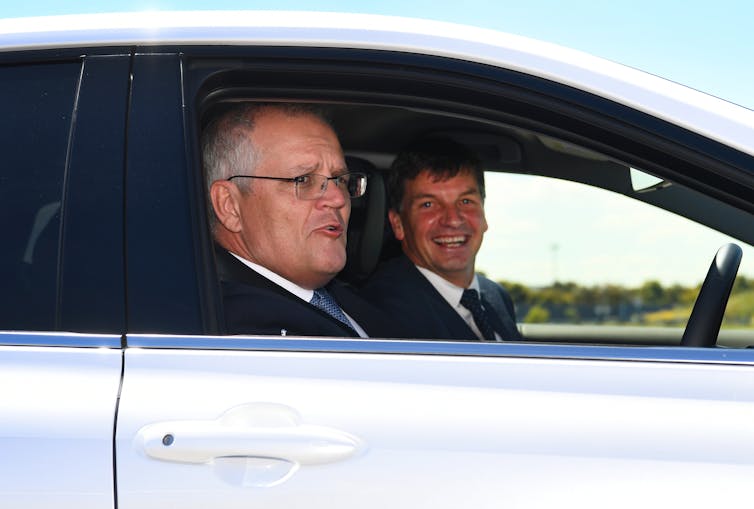
It also remains unclear why minister Angus Taylor, who sent a letter to the lord mayor of Sydney making false accusations about the Sydney City Council’s travel expenses, was not asked to resign.

Taylor was forced to apologise for the letter.
Taylor was forced to apologise after the figures in his letter were proved incorrect. He says he now considers the matter ‘finalised’. MICK TSIKAS/AAP

Similarly, the personal conduct of ministers Alan Tudge and Christian Porter has come under scrutiny thanks to an ABC Four Corners investigation, but has been dismissed by Morrison on the basis their alleged actions occurred during the watch of the previous prime minister.

And on numerous occasions, the travel allowances for ministers and MPs have been challenged, without serious repercussions. The current federal ministerial code of conduct spells out clearly that such indiscretions are not acceptable.


Read more: What’s in the ‘public interest’? Why the ABC is right to cover allegations of inappropriate ministerial conduct


This brings us back to the issue of pork barrelling. At the federal level, minister Bridget McKenzie did resign this year over the “sports rorts” affair. The code of conduct provides that ministers allocate the funds available to them in “the public interest”. McKenzie’s view that the public interest was the same as her party’s interest was unacceptable.

This scandal has parallels with an earlier “sports rorts affair” that cost Labor minister Ros Kelly her position in 1994, as well as with the current NSW local government grants scheme with its shredded papers.

Rather than accept their accountability like McKenzie and Kelly, Berejiklian is maintaining that pork barrelling is common practice — an opinion that might well be contested by parliament and the community.

McKenzie resigned from Morrison’s ministry.
McKenzie resigned from Morrison’s ministry in February over her role in the sports rorts affair. MICK TSIKAS/AAP

Have politicians been emboldened by their COVID successes?

Why, then, are so many current politicians willing to dodge taking accountability for their actions? The easy answer is because they can.

After all, the government conventions around accountability have no legal force. They have merely been “honoured” by politicians as part of our democratic culture – as sociologist Edgar Schein suggests, it is “the way we do things around here”.


Read more: The long history of political corruption in NSW — and the downfall of MPs, ministers and premiers


It seems current politicians are re-setting this democratic culture and the conventions that go along with it. Modern politicians are now very savvy in managing the press, and deft at reframing issues to their advantage.

Berejiklian gave a master class in this when she was confronted with accusations of failing to disclose an intimate relationship with disgraced former MP Daryl Maguire.

She reframed the issue as a personal one, in which she had been swept along by a romantic attachment. She argues, probably correctly, that she did nothing that was illegal. However, her actions were highly questionable from an ethical point of view.

Berejiklian has been under intense media scrutiny.
Berejiklian has been under intense scrutiny since revealing her relationship with Maguire in October. DEAN LEWINS/AAP

Perhaps our current federal and NSW leaders have been emboldened by their successes in responding to the pandemic and are counting on this to defuse criticisms of their actions. They likely believe that issues of accountability — at least in the public mind — might pale in relation to the “big” issues of bushfires and COVID-19.

As such, ignoring accountability is seen as merely a small peccadillo.

Independents may be the key

In the broader context, voters have shown they are more willing to elect local independents, such as Helen Haines, Rebekha Sharkie and Zali Steggall at the federal level and Roy Butler, Joe McGirr and Helen Dalton in NSW, who are not seen to be in the mould of other politicians.

There is clearly a move towards candidates who place a very high value on conventional values, such as representation and integrity. And it is these members who may act as circuit breakers to stop the further corrosion of democratic conventions in our governments.

Simon Longstaff, executive director of The Ethics Centre, summed this up well when he noted

we want politicians who see engagement in public life as a vocation and not just a game. We want politicians who will speak the truth – even when it harms them to do so. We want politicians who respect us as citizens and not just as voters.

If the major parties continue to ignore accountability, perhaps the election of independents and minor parties will provide the stimulus for truth to power.

ref. Why can politicians so easily dodge accountability for their mistakes? The troubling answer: because they can – https://theconversation.com/why-can-politicians-so-easily-dodge-accountability-for-their-mistakes-the-troubling-answer-because-they-can-150839

Feeling sore after exercise? Here’s what science suggests helps (and what doesn’t)

Source: The Conversation (Au and NZ) – By Andrea Mosler, Post-Doctoral Research Fellow, Sport and Exercise Medicine Research Centre, La Trobe University

Have you been hitting the gym again with COVID restrictions easing? Or getting back into running, cycling, or playing team sports?

As many of you might’ve experienced, the inevitable muscle soreness that comes after a break can be a tough barrier to overcome.

Here’s what causes this muscle soreness, and how best to manage it.

What is muscle soreness and why does it occur?

Some muscle soreness after a workout is normal. But it can be debilitating and deter you from further exercise. The scientific term used to describe these aches is delayed onset muscle soreness, or DOMS, which results from mechanical disruption of the muscle fibres, often called “microtears”.

This damage causes swelling and inflammation in the muscle fibres, and the release of substances that sensitise the nerves within the muscle, producing pain when the muscle contracts or is stretched.

This pain usually peaks 24-72 hours after exercise. The type of exercise that causes the most muscle soreness is “eccentric” exercise, which is where force is generated by the muscle as it lengthens — think about walking downhill or the lowering phase of a bicep curl.

Athletic man suffering from shoulder pain
Soreness in the days after exercise is normal, and actually results in stronger muscles. Shutterstock

There’s good news about this pain though. When the muscle cell recovers from this “microtrauma”, it gets stronger and can produce that force again without the same damage occurring. So although this strengthening process is initially painful, it’s essential for our body to adapt to our new training regime.

The inflammatory component of this process is necessary for the muscle tissue to strengthen and adapt, therefore the repeated use of anti-inflammatory medication to manage the associated pain could be detrimental to the training effect.

Will recovery gadgets put me out of my misery? Not necessarily

Before we even think about recovery from exercise, you first need to remember to start slow and progress gradually. The body adapts to physical load, so if this has been minimal during lockdown, your muscles, tendons and joints will need time to get used to resuming physical activity. And don’t forget to warm up by getting your heart rate up and the blood flowing to the muscles before every session, even if it’s a social game of touch footy!


Read more: Heading back to the gym? Here’s how to avoid injury after coronavirus isolation


Even if you do start slow, you may still suffer muscle soreness and you might want to know how to reduce it. There are heaps of new recovery gadgets and technologies these days that purport to help. But the jury is still out on some of these methods.

Some studies do show a benefit. There have been analyses and reviews on some of the more common recovery strategies including ice baths, massage, foam rollers and compression garments. These reviews tend to support their use as effective short-term post-exercise recovery strategies.

So, if you have the time or money — go for it! Make sure your ice baths are not too cold though, somewhere around 10-15℃ for ten minutes is probably about right.

And a word of caution on ice baths, don’t become too reliant on them in the long term, especially if you are a strength athlete. Emerging research has shown they may have a negative effect on your muscles, blunting some of the repair and rebuilding processes following resistance training.

A man floating in a float tank
New recovery methods and gadgets are marketed everywhere, but most of them require further research. Shutterstock

But the efficacy of other recovery strategies remain unclear. Techniques like recovery boots or sleeves, float tanks and cryotherapy chambers are newer on the recovery scene. While there have been some promising findings, more studies are required before we can make an accurate judgement.

However, these recovery gadgets all seem to have one thing in common: they make you “feel” better. While the research doesn’t always show physical benefits for these techniques or gadgets, often using them will result in perceived lower levels of muscle soreness, pain and fatigue.

Is this just a placebo effect? Possibly, but the placebo effect is still a very powerful one — so if you believe a product will help you feel better, it probably will, on some level at least.

The ‘big rocks’ of recovery

Some of the above techniques could be classified as the “one-percenters” of recovery. But to properly recover, we need to focus on the “big rocks” of recovery. These include adequate sleep and optimal nutrition.

Sleep is one of the best recovery strategies we have, because this is when most of the muscle repair and recovery takes place. Ensuring a regular sleep routine and aiming for around eight hours of sleep per night is a good idea.

An elderly lady in bed sleeping
Ultimately, adequate sleep and optimal nutrition are the best ways to recover after exercise. Shutterstock

When it comes to nutrition, the exact strategy will vary from person to person and you should always seek out nutrition advice from a qualified professional, but remember the three R’s:

  • refuel (replacing carbohydrates after exercise)

  • rebuild (protein intake will aid in the muscle repair and rebuilding)

  • rehydrate (keep your fluid intake up, especially in these summer months!).

Enjoy your newfound freedom when returning to sport and exercise, but remember to focus on a slow return, and to make sure you’re eating and sleeping healthily before spending your hard-earned cash on the hyped-up recovery tools you may see athletes using on instagram.

ref. Feeling sore after exercise? Here’s what science suggests helps (and what doesn’t) – https://theconversation.com/feeling-sore-after-exercise-heres-what-science-suggests-helps-and-what-doesnt-150277

PODCAST: Iran Assassination & China V Australia Examples of a Deterioration of International Relations

A View from Afar
A View from Afar
PODCAST: Iran Assassination & China V Australia Examples of a Deterioration of International Relations
Loading
/

PODCAST: Paul G. Buchanan and Selwyn Manning present A View from Afar.

Listen on Apple Podcasts
This week we discuss:

How around the world, in international relations, we see examples of strategic hedging, miscalculation, escalation, reputation, and face-saving.

Two of the most current examples of this are happening in the Middle East – after the killing of Iran’s leading nuclear scientist, and, in Australia – as the Peoples Republic of China towers above the US-leaning Indo-Pacific regional power after claiming Australia propagates anti-China sentiment.

* What states are behind the Iran assassination? Who benefits from this killing? How should Iran respond?

* Why is China destabilising Australia’s economic and security interests? What is China’s end game?

* Will this dangerous posturing ease in late January when US President-elect Joe Biden takes up office in the White House?

Eliminating most homelessness is achievable. It starts with prevention and ‘housing first’

Source: The Conversation (Au and NZ) – By Angela Spinney, Lecturer/Research Fellow in Housing and Urban Studies, Swinburne University of Technology

The stereotype of a homeless person – those living in tents or sleeping in parks or doorways – is just the visible tip of the much larger crisis of homelessness in Australia.

For every one of about 8,000 “rough sleepers” there about 14 others staying in temporary accommodation or with others in severely crowded dwellings. That’s a total of more than 116,000 homeless Australians, according to Australian Bureau of Statistics census data.

About 60% are under the age of 35, though the number of homeless aged 55 and older has been steadily increasing. About a quarter are women and children fleeing domestic violence.


CC BY-SA

The causes of homelessness are complex. The sterotype is that it involves mental illness and substance addiction. But the more common denominators are poverty, unemployment and a lack of affordable adequate housing.

Whatever the cause, research by myself and colleagues for the Australian Housing and Urban Research Institute proposes a path forward to reduce, and even eliminate, homelessness in Australia.

To do so requires moving away from treating the problem in an uncoordinated manner at the point of crisis and investing in an integrated system that prioritises prevention, fast rehousing and an adequate supply of affordable long-term housing.


Read more: Homelessness soars in our biggest cities, driven by rising inequality since 2001


A historical legacy

Australia’s existing approach to dealing with homelessness is the legacy of a response originating in the 19th century, long before the advent of the modern welfare state, relying on charitable institutions to pick up the pieces of an economic system failing to care for the most vulnerable.

This has resulted in a somewhat chaotic system of small-scale and often disconnected services that are funded to only put a band-aid on the problem. It is mainly oriented towards crisis responses, with limited resources devoted to responding to homelessness once it has occurred, often only providing temporary relief from homelessness.

Federal, state and territory governments provide about A$250 million a year in funding to the 1,500 not-for-profit “specialist homelessness services” – organisations such as Launch Housing and Vincent Care – to provide support services and short-term accommodation in refuges, hostels, motels and caravan parks.

But this is insufficient to achieve the aim of even providing temporary accommodation to all those in need. Homeless services turn away almost 60% of those who ask for help. People instead have to rely on the kindness of family and friends, or sleep in their cars or on the street, while they wait to receive assistance. There is no statutory duty to provide assistance to homeless people in Australia.

The status quo is an expensive and unsatisfactory approach. We can do much better.


Read more: If we realised the true cost of homelessness, we’d fix it overnight


Housing comes first

An emerging trend internationally is to reorient homelessness service systems away from a largely crisis response and towards prevention and long-term solutions.

The key is a “Housing First” approach, investing resources into first getting people into long-term accommodation, and then providing support to address the reasons they found themselves homeless in the first place.

Once housing is secured, relevant support workers can then support clients with particular needs, from preparing for employment, drug and alcohol rehabilitation, negotiating the legal system arising from domestic and family violence, and psychiatric or psychological counselling.

Evidence to the superiority of the “Housing First” approach comes from Norway. Over the past 12 years the number of homeless Norwegians has fallen by more than 35%. This compares with Australia’s approach, which in the past 20 years has managed to only marginally reduce the number of rough sleepers while other categories of homelessness have continued to rise.

We need an integrated strategy

A clear deficiency in Australia’s approach to homelessness has been the lack of any integrated national strategy and leadership. This means funding arrangements in states and territories are piecemeal and inadequate.

The first step in moving to a “Housing First” approach is coordinated federal and state funding for an adequate supply of affordable and social housing.


Chart showing number of social housing dwellings completed each year in Australia from 1969-2018
Australian Bureau of Statistics, Author provided

As we outline in our new report Ending homelessness in Australia: A redesigned homelessness service system, an integrated national strategy would also include an enhanced role for universal welfare services such as primary health services, schools and colleges to assist people at risk of homelessness.

They would have a duty to prevent homelessness when possible, assisting clients to maintain their existing housing or to access new housing. Where this is not possible, they would refer clients to specialist housing services for assistance finding crisis accommodation, and then long-term housing.

In this system, providing crisis accommodation would be the solution of last resort.

That affordable housing is the first step in solving homelessness may seem startlingly obvious. But, counterintuitively, that’s not the premise of how the current system works.


Read more: Victoria’s $5.4bn Big Housing Build: it is big, but the social housing challenge is even bigger


We cannot stress enough how much an adequate planned supply of long-term affordable and social housing that is appropriate, secure and safe is vital to any successful attempt to end homelessness.

ref. Eliminating most homelessness is achievable. It starts with prevention and ‘housing first’ – https://theconversation.com/eliminating-most-homelessness-is-achievable-it-starts-with-prevention-and-housing-first-151182

By declaring a climate emergency NZ’s Ardern needs to inspire hope, not fear

ANALYSIS: By David Hall, Auckland University of Technology; Raven Cretney, University of Waikato; and Sylvia Nissen

There is no question that we must act, and act fast, on climate change. This week’s climate emergency declaration by the New Zealand government acknowledges the urgency of the climate crisis and the need to collectively confront it.

But a declaration is not the same as action. Prime Minister Jacinda Ardern has been frank that the declaration is a symbolic gesture: “It’s what we invest in and it’s the laws that we pass that make the big difference.”

In saying this, she echoes the sentiments of some local councils during the first wave of climate emergency declarations in mid-2019.

For all that, it is wrong to imagine a declaration will make no difference at all. Language has power. Words like “emergency” have an impact in the real world, especially when endorsed by political leaders.

Political language frames how we interact with one another and the planet, and how we imagine our collective future. In that respect, the consequences of such emergency declarations — with their attendant sense of panic and fear — remain unsettlingly vague.

What does ’emergency’ mean?
On one hand, a declaration is a way for campaigners to hold the government to account. For the young people in the School Strike 4 Climate movement who made an emergency declaration a key demand, it may prove a moment of inspiration and empowerment.

If it is taken as a sign that social movements can effect political change, reset the agenda and compel governments to listen, the declaration could embolden efforts to hold the government to its word — and to implement the laws and investments that will deliver emission reductions and adaptation to climate risks.

On the other hand, the politics of emergency come with baggage, established in precedent and law, by which ordinary political processes are suspended to expand state power.

Jacinda Ardern with school children
Prime Minister Jacinda Ardern meeting Strike 4 Climate students in Christchurch, 2019. Image: The Conversation/GettyImages

An unsettling legacy
It is important to recognise that this notion of emergency politics, like the idea of climate emergency declarations, was imported to Aotearoa New Zealand. It is another example of New Zealand’s “fast follower” approach to climate policy.

The low-emissions transition has accelerated under Ardern, but largely by way of policy transfer from the UK and EU, not by homegrown innovation. The climate emergency concept made a parallel journey via social movements such as Extinction Rebellion.

Yet the state’s emergency footing, where ends justify extraordinary means, is inherently problematic in the context of recent colonial history. Legislation such as the Public Works Act , for example, empowered the Crown to compulsorily acquire land for infrastructure development — land often owned by Māori.

A climate emergency might only be symbolic, but its language carries this legacy of alienation and disenfranchisement. Moreover, it risks reviving those imperialist tendencies, by treating processes of consultation and consent as impediments to urgent action.

Where does democracy fit?
Emergency is also risky to democracy, especially when the crisis is not temporary but long-lasting, as the climate crisis is. Although many climate campaigners prioritise justice and equity as essential to the low-emissions transition, others treat democracy as a barrier to climate action rather than a vehicle for it.

The emergency response to the Christchurch earthquakes is a case in point. Limiting civic participation in the rebuild led to public ambivalence over the results, which were too often determined by the interests of the state rather than the aspirations of local communities.

Of course, it isn’t inevitable any tyrannical urges will be unleashed. Arguably, the meaning of climate emergency is still to be determined. From one angle, it is a blank page, an empty signifier, which means nothing in particular.

But the flipside is that the term has a surplus of meaning — that is, it means many things to many people. Some of these meanings are not easily dismissed, including those that conflict with justice.

The long emergency
Campaigners for a climate emergency will continue to use this language to ratchet up ambition, but they should be aware of these tensions. If a climate emergency is to be compatible with other ideals like democracy and decolonisation, then it must be fought for on those terms.

For example, the School Strike 4 Climate demands a climate emergency declaration must “uphold our democratic values and obligations under Te Tiriti o Waitangi”.

If climate change is an emergency, it is a “long emergency”. It has taken decades, even centuries, to create — and will take comparable timeframes to undo. It requires us to reimagine the structures of our societies, cities, economies and our politics.

If Aotearoa New Zealand is to shift from being a follower to a leader or pioneer in climate governance, it must involve local knowledge, especially Māori knowledge and leadership, to respond in ways that reflect our local circumstances.

If action is to be sustained over years and decades, it requires behaviour that springs from hope, not fear.The Conversation

By Dr David Hall, a senior researcher in politics, Auckland University of Technology; Dr Raven Cretney, a postdoctoral fellow, University of Waikato; and Dr Sylvia Nissen, a senior lecturer in Environmental Policy, Lincoln University. This article is republished from The Conversation under a Creative Commons licence. Read the original article.

Print Friendly, PDF & Email

Article by AsiaPacificReport.nz

VIDEO: Paul G. Buchanan + Selwyn Manning Discuss: Iran & Australia Targets of a Deterioration of International Relations

VIDEO: Paul G. Buchanan and Selwyn Manning present A View from Afar.

This week we discuss:

How around the world, in international relations, we see examples of strategic hedging, miscalculation, escalation, reputation, and face-saving.

Two of the most current examples of this are happening in the Middle East – after the killing of Iran’s leading nuclear scientist, and, in Australia – as the Peoples Republic of China towers above the US-leaning Indo-Pacific regional power after claiming Australia propagates anti-China sentiment.

* What states are behind the Iran assassination? Who benefits from this killing? How should Iran respond?

* Why is China destabilising Australia’s economic and security interests? What is China’s end game?

* Will this dangerous posturing ease in late January when US President-elect Joe Biden takes up office in the White House?

INTERACTION: Remember, if you are joining us LIVE via social media (SEE LINKS BELOW), you can make comments and include questions. We will be able to see your interaction, and include this in the LIVE show.

You can interact with the LIVE programme by joining these social media channels. Here are the links:

And, you can see video-on-demand of this show, and earlier episodes too, by checking out EveningReport.nz

Freaky ‘frankenprawns’: ancient deep sea monsters called radiodonts had incredible vision that likely drove an evolutionary arms race

Source: The Conversation (Au and NZ) – By John Paterson, Professor of Earth Sciences, University of New England

Deep sea animals can be the stuff of nightmares.

Many inhabit the ocean’s twilight zone (down to 1,000 metres depth), where sunlight has virtually disappeared, and have adapted their vision to this dark alien world. Evolution gave them large, complex eyes to see in dim light — examples include the Vampire Squid, Sloane’s Viperfish, and various predatory crustaceans.

But how far back in prehistoric time do these scary, sharp-eyed creatures go?

Our study, published today in Science Advances, looked at radiodonts (meaning “radiating teeth”) — a type of ancient arthropod (animals with jointed legs but no backbone).

We found they developed sophisticated eyes more than 500 million years ago, and some were adapted to the dim light of deep water.

Our study provides new information about the evolution of the earliest marine animal ecosystems.

In particular, it supports the idea that vision played a crucial role during the Cambrian Explosion, a pivotal phase in history when most major animal groups (including the oldest fish) first appeared during a rapid burst of evolution.

Once complex visual systems arose, animals could better sense their surroundings. That may have fuelled an evolutionary arms race between predators and prey. Once established, vision became a driving force in evolution and helped shape the biodiversity and ecological interactions we see today.

Radiodonts face off. These bizarre animals from the Cambrian Period (over 500 million years ago) have some of the largest and most lens-rich compound eyes to have ever existed. Katrina Kenny, Author provided

Read more: Life quickly finds a way: the surprisingly swift end to evolution’s big bang


A brief guide to radiodonts

Radiodonts are weird animals. Now extinct, they once dominated the oceans, especially during the Cambrian Period (541 million to 485 million years ago).

Some of the first radiodont fossils discovered more than a century ago were isolated body parts, and initial attempts at reconstructions resulted in some “Frankenstein’s monsters”.

But over the past few decades many new discoveries — including whole radiodont bodies — have given a clearer picture of their anatomy, diversity and possible lifestyles. Nevertheless, complete radiodonts still look like something from science fiction!

There are many species of radiodonts and they share a similar body layout.

The head has a pair of large, segmented appendages for capturing prey, a circular mouth with serrated teeth, and a pair of eyes. The rest of the body looks rather like that of a squid.

It might sound like a chimera of different animal parts, but the jointed appendages and compound eyes allow us to classify radiodonts as arthropods, which include insects, spiders and crabs.

An isolated head appendage of _Anomalocaris_ _canadensis_
An isolated head appendage of Anomalocaris canadensis from the Burgess Shale of Canada. John Paterson

Over the past decade, new radiodont fossils have revealed a surprising variety of forms and enhanced our understanding of how they lived and especially how they fed.

One genus of radiodont, Anomalocaris, has long been considered an apex predator, akin to the modern great white shark. It had a large body, more than 50 centimetres long, and very strong, spiny head appendages it used for catching prey. It swam by undulating flaps on the sides of its body.

However, other radiodonts were gentle giants, such as the two-metre-long genus Aegirocassis, which used its appendages for filtering plankton.

All the better to see you with

Despite the recent surge in knowledge about these awesome arthropods, little was known about the optics of radiodont eyes. In 2011, we published two papers in the journal Nature on fossil compound eyes from the 513-million-year-old Emu Bay Shale on Kangaroo Island, South Australia.

The first paper documented isolated eye specimens (up to 1 cm in diameter) that could not then be assigned to a known arthropod species. The second paper reported the stalked eyes of Anomalocaris in spectacular detail.

Since then, we have amassed a much larger collection of eyes from the Emu Bay Shale, shedding new light on radiodont vision.

Importantly, our new study identifies the owner of the eyes from our first 2011 paper: ‘Anomalocarisbriggsi — the inverted commas indicate that it represents a new genus yet to be formally named.

We discovered much larger specimens of these eyes (up to 4 cm in diameter). They possess a distinctive “acute zone” — enlarged lenses in the centre of the eye’s surface that enhance light capture and resolution.

An artist's reconstruction of '_Anomalocaris_' _briggsi_.
An artist’s reconstruction of ‘Anomalocarisbriggsi swimming within the twilight zone. Katrina Kenny, Author provided

Radiodont eyes are also extremely sensitive. A single eye of Anomalocaris aff. canadensis — “aff.” meaning “affinity”, as it is closely related to this Canadian species — with more than 24,000 lenses, is rivalled only by certain insects such as dragonflies. These make it a highly visual, shallow-water predator, capturing prey with appendages bearing barbed spines.

The large lenses of ‘Anomalocarisbriggsi suggest it could see in very dim light at depth, similar to amphipod crustaceans, a type of prawn-like creature that exists today. The frilly spines on its appendages filtered plankton that it detected by looking upwards.

The eye of '_Anomalocaris_' _briggsi_.
The eye of ‘Anomalocarisbriggsi. Left: complete fossil eye (scale bar is 5 mm); middle: close-up of lenses (scale bar is 0.5 mm); right: artist’s reconstruction showing the ‘acute zone’ of enlarged lenses, allowing it to see in dim light. John Paterson

The compound eyes of the two radiodonts from the Emu Bay Shale are outliers among arthropods, living or extinct. Their sheer size places them among the largest arthropod eyes ever.


Read more: Final frontiers: the deep sea


ref. Freaky ‘frankenprawns’: ancient deep sea monsters called radiodonts had incredible vision that likely drove an evolutionary arms race – https://theconversation.com/freaky-frankenprawns-ancient-deep-sea-monsters-called-radiodonts-had-incredible-vision-that-likely-drove-an-evolutionary-arms-race-146104

The floor is lava: after 1.5 billion years in flux, here’s how a new, stronger crust set the stage for life on Earth

Source: The Conversation (Au and NZ) – By Fabio A Capitanio, Lecturer in Geophysics, Monash University

Our planet is unique in the Solar system. It’s the only one with active plate tectonics, ocean basins, continents and, as far as we know, life. But Earth in its current form is 4.5 billion years in the making; it’s starkly different to what it was in a much earlier era.

Details about how, when and why the planet’s early history unfolded as it did have largely eluded scientists, mainly because of the sparsity of preserved rocks from this geological period.

Our research, published today in Nature, reveals Earth’s earliest continents were entities in flux. They disappeared and reappeared over 1.5 billion years before finally gaining form.

Early Earth: a strange new world

The first 1.5 billion years of Earth’s history were a tumultuous period that set the stage for the rest of the planet’s journey. Several key events took place, including the formation of the first continents, the emergence of land and the development of the early atmosphere and oceans.

All of these events were the result of the changing dynamics of Earth’s interior. They were also catalysts to the first appearances of primitive life.

Zircon crystal
This almost 4.4 billion-year-old zircon crystal, retrieved from Western Australia’s Pilbara region, is one of the oldest rock fragment ever found. In reality it’s smaller than the head of a pin. Author provided

The preserved record of Earth’s first 500 million years is limited to just a few tiny crystals of the mineral zircon. Over the next billion or so years, kilometre-long (and larger) fragments of rock were generated and preserved. These would go on to forge the cores of major continents.

Scientists know about the properties of rocks and the chemical reactions that must occur for their constituent minerals to be made. Based on this, we know early Earth boasted very high temperatures, hundreds of degrees hotter than today’s.


Read more: Earth’s rock-solid connections between Canada and Australia contain clues about the origin of life


An epic metamorphosis

Earth’s crust today is made of thick, buoyant continental crust that stands proud above the sea. Meanwhile, below the oceans are thin but dense oceanic crusts.

The planet is also broken into a series of plates that move around in a process called “continental drift”. In some places, these plates drift apart and in other they converge to form mighty mountains.

This dynamic movement of Earth’s tectonic plates is the mechanism by which heat from its interior is released into space. This results in volcanic activity focused mainly at the plate boundaries. A good example is the Ring of Fire — a path along the Pacific Ocean where volcanic eruptions and earthquakes are frequent.

To unravel the processes that operated on early Earth, we developed computer models to replicate its once much hotter conditions. These conditions were driven by large amounts of internal “primordial heat”. This is the heat left over from when Earth first formed.

Diagram of Earth's structure
Today, Earth has a silica-rich continental crust above sea level and a thin (but dense) silica-poor crust in the ocean. Shutterstock

Our modelling shows the release of primordial heat during Earth’s early stages (which was three to four times hotter than today’s) caused extensive melting in the upper mantle. This is the mostly solid region below the crust, between 10km and 100km deep.

This internal melting created magma which, through a plumbing system, was thrust out as lava onto the crust. The shallow mantle left behind, dry and rigid, became welded to the crust and formed the first continents.

The pulse of first life

Our research revealed a lag between the formation of Earth’s first crust and the development of the mantle keels at the base of the first continents.

The first formed crust, which was present between 4.5 billion and 4 billion years ago, was weak and prone to destruction. It progressively became stronger over the next billion years to form the core of modern continents.

This process was crucial to continents becoming stable. When magma was purged from Earth’s interior, rigid rafts formed in the mantle beneath the new crust, shielding it from further destruction.

Bands in rock representing early continental activity.
Pictured is banded igneous rock built up from multiple layers of magma. This rock is from Western Australia’s Pilbara Region. Author provided

Moreover, the rise of these rigid continents ultimately led to weathering and erosion, which is when rocks and minerals break down or dissolve over long periods to eventually be carried away and deposited as sediment.

Early erosion would have changed the composition of Earth’s atmosphere. It would have also provided nutrients to the oceans, seeding the development of life.

From our observations, we conclude the breaking of Earth’s early crust was necessary to make way for a sturdier replacement. And had this not happened, we would not have the continents, nor life, as we know it.


Read more: Magnetism of Himalayan rocks reveals the mountains’ complex tectonic history


ref. The floor is lava: after 1.5 billion years in flux, here’s how a new, stronger crust set the stage for life on Earth – https://theconversation.com/the-floor-is-lava-after-1-5-billion-years-in-flux-heres-how-a-new-stronger-crust-set-the-stage-for-life-on-earth-151276

Victoria’s hotel quarantine overhaul is a step in the right direction, but issues remain

Source: The Conversation (Au and NZ) – By Peta-Anne Zimmerman, Senior Lecturer/Program Advisor Griffith Graduate Infection Prevention and Control Program, Griffith University

On Monday the Victorian government announced an overhaul of the state’s hotel quarantine program. The government has introduced a new oversight agency, COVID-19 Quarantine Victoria, and crafted a “reset” of rules and regulations in the hotel quarantine process.

This robust suite of interventions, based on nationwide experience, aims to prevent transmission of COVID-19 to the Victorian community primarily from returning international travellers who have a high risk of infection.

From an infection prevention and control standpoint, the new system definitely has some improvements. But there are still issues yet to be resolved, and some unknowns that haven’t been made clear to the public.

No more private security

One of the most obvious changes, and possibly the most controversial, is Victoria Police taking the lead on security and management. They will be assisted by the Australian Defence Force (ADF), in a bid to avoid a repeat of the previous program’s high-profile breaches.

Corrections Commissioner Emma Cassar will lead the new agency, and will report to police minister Lisa Neville, who will have overall responsibility for the new system.

But we are concerned this could be perceived to be an armed security detail, with a custodial approach rather than a public health focus. Experience has shown this can be detrimental. Gaining community trust, rather than appearing to take a punitive approach, is vital. Recent events in Adelaide highlight the crucial importance of people being able to cooperate with contact tracers without fear of the ramifications.

Infection control must be handled by experts

The government has repeatedly said the new system will have stronger infection prevention and control protocols, with rigorous training and evaluation. Failure to comply with infection prevention and control resulted in numerous incidences of transmission in hotel quarantine in the past.

Reinforcing these procedures can only be a good thing, as long as the expertise is sourced from recognised experts, and supported by advice from other specialities such as public health and occupational hygiene.


Read more: Aged-care facilities need accredited infection control experts. Who are they, and what will they do?


Staff ‘bubbles’ and daily testing

The new system will also feature “staff bubbles”. Having a group of staff who consistently work together on the same shifts, with no crossover with staff on other shifts, aims to minimise the number of people an infected person can be in contact with.

This approach has been used in a range of industries, and has been recommended by occupational hygiene experts throughout the COVID-19 response.

The addition of the current active simulation exercises, which stress-test Victoria’s strategy, can only be a positive.

Victoria Police Minister Lisa Neville
Victoria Police Minister Lisa Neville will have overall responsibility for Victoria’s new hotel quarantine system. James Ross/AAP

Daily COVID testing of staff and weekly testing of their household contacts is another big change. Daily testing of staff has some merit, although the suggested changes and restrictions being placed on their household contacts such as increased testing and limitations on where they can work is concerning.

There are significant privacy concerns with the new “contact tracing in advance” system, which will identify staff and all their significant contacts, such as members of their households and other frequent contacts, in advance. These contacts will have to provide information on their places of work, schooling and so on. In the event a staff member contracts COVID, part of the legwork is already done.

But while undoubtedly useful for contact tracing, privacy breaches from government IT systems are not uncommon.

Also troubling is the suggestion that recruitment may exclude those with contacts who work in other high-risk industries, such as aged care. This measure could potentially put existing staff out of work. COVID-19 Quarantine Victoria suggests that other places to live may be found if workers live with an at-risk contact, which has human rights implications and doesn’t take into account family or carer responsibilities.

The hotel quarantine overhaul will also see staff exclusively employed or contracted by COVID-19 Quarantine Victoria, with cleaners and others only working at one site. This will mean more secure work for some, which is a positive, and may reduce the risk of transmission between workplaces. Indeed, insecure and casual employment has been a common theme in the spread of COVID-19.

But we don’t yet know exactly how this will work. For example, it’s not clear whether this also applies to the police, who may have casual jobs on the side.


Read more: Mapping COVID-19 spread in Melbourne shows link to job types and ability to stay home


Regional quarantine not necessarily better

Some experts have raised the possibility of having quarantine facilities in regional areas, to reduce the risk of breaches in dense urban areas.

The Northern Territory’s quarantine program for returned travellers at Howard Springs has shown that this approach can work, but there are potential issues.

Such a facility needs a sustainable workforce who aren’t travelling between locations. There is little point in moving quarantine outside of cities only to have the workforce commute from cities or elsewhere, with the associated transmission risks this brings.

Also, extensive health care would need to be provided for returned travellers. Returnees could have many chronic and acute health-care needs that may strain local health services. A proliferation of sites like Howard Springs would test the capabilities of AUSMAT (multi-disciplinary medical assistance teams deployed during crises) and the state and territory health services that support them, particularly as we head into the storm and bushfire season.

As with anything during COVID-19, only time will tell how successful this new strategy will be. The Victorian government is certainly showing a capacity for reflection, and a determination to do better. But there is only so much preparation we can do when facing the greatest variable and challenge in any outbreak response: human nature.


Read more: AUSMAT teams start work in aged care homes today. But what does this ‘SAS of the medical world’ actually do?


ref. Victoria’s hotel quarantine overhaul is a step in the right direction, but issues remain – https://theconversation.com/victorias-hotel-quarantine-overhaul-is-a-step-in-the-right-direction-but-issues-remain-151101

‘Severely threatened and deteriorating’: global authority on nature lists the Great Barrier Reef as critical

Source: The Conversation (Au and NZ) – By Jon C. Day, PSM, Post-career PhD candidate, ARC Centre of Excellence for Coral Reef Studies, James Cook University

The Great Barrier Reef is now in “critical” condition and the health of four other Australian World Heritage properties has worsened, according to a sobering report just released by the International Union for Conservation of Nature (IUCN).

The IUCN is the global authority on nature. Its third outlook report marks the first time the IUCN has declared an Australian property as critical, which means its values are severely threatened and deteriorating. The health of the Blue Mountains, Gondwana Rainforests, Shark Bay and the Ningaloo Coast has also been downgraded.


Read more: We just spent two weeks surveying the Great Barrier Reef. What we saw was an utter tragedy


The assessment, while chastening, is not surprising. The Great Barrier Reef has endured three mass coral bleaching events in five years, and last summer’s bushfires caused untold damage in the Blue Mountains and Gondwana Rainforests (not to mention the current fires at the reef’s Fraser Island).

Climate change remains the key issue for World Heritage places, not just in Australia but globally. In fact, the IUCN assessment found climate change threatens 11 of Australia’s 16 properties. This raises further questions over our national climate response.

World Heritage: the best of the best

The latest report builds on previous reports from 2014 and 2017, and shows the status and trends of World Heritage properties identified for their outstanding natural values. As the report states:

our ability to conserve these sites is thus a litmus test for the broader success of conservation worldwide.

To qualify for World Heritage listing for natural values, a place must meet one or more of four criteria: exceptional beauty, geology, ecological processes, and species and habitats.

Some properties are also recognised for cultural values and, if they have both, they’re referred to as “mixed”. Across the world there are 252 natural and mixed World Heritage properties, of which 16 are in Australia.

The IUCN is the official advisor on nature to UNESCO’s World Heritage Committee. The IUCN Outlook report involves assessments by hundreds of international experts, who examine the conservation prospects of all natural and mixed World Heritage properties. It focuses on their natural values, the threats to these values and the effectiveness of actions to protect them.

Wildfire in the Blue Mountains, May 2018
The status of the Blue Mountains has been downgraded from ‘good with some concerns’ to ‘significant concern’. Nabil Zainol Abidin, Author provided (No reuse)

Threats to our iconic places

Climate change is now the most prevalent threat to natural World Heritage sites, and to many cultural sites.

Overall, the report assessed climate change as a high or a very high threat in 83 out of 252 global properties (33%). This rate is double in Australia, with climate change listed as a threat to 69% (11 of 16) of Australian properties.

And when considering the four natural criteria individually, climate change is the greatest threat to each. This is likely to get worse in future, as climate change is expected to affect more than three times the number of properties impacted by any other threat.

For many properties, the deteriorated conservation outlook is the result of accumulated threats. Impacts of climate change, like coral bleaching and bushfires, are often exacerbated by other threats. For example, the federal government’s 2019 Outlook Report for the Great Barrier Reef listed 45 threats including climate change. This included poor water quality from land-based runoff, coastal development and fishing.

Aerial view of seagrass meadows and headlands in Shark Bay
Seagrass meadows and headlands in the World Heritage-listed Shark Bay Conservation Area, now rated as ‘good with some concerns’. Shutterstock

At the time of writing, the website which provides the full rationale behind the IUCN outlook was not yet publicly available. However the threats facing the five downgraded Australian sites are well documented.

These include marine heatwaves, which lead to coral bleaching in the Great Barrier Reef and Ningaloo. In Shark Bay, marine heatwaves also cause seagrass — critical habitat for a vast diversity of species — to die-off. Poor water quality, such as from urban and agricultural run-off, is another big threat to the Great Barrier Reef.


Read more: ‘Bright white skeletons’: some Western Australian reefs have the lowest coral cover on record


More frequent and intense bushfires are a problem for the Blue Mountains, Shark Bay, and Gondwana Rainforests. These ancient rainforests, along with Ningaloo and Shark Bay, also face threats of invasive species, diseases and storms.

Punching below our weight

While there have been some successes globally, the threats facing our heritage places are escalating.

Since the 2017 assessment, of the 252 properties analysed globally, 16 (6%) have deteriorated and only eight (3%) showed improvement. Notably, Australia is punching below its weight, with 31% of properties having deteriorated (5 of 16) and zero with improvement.


Read more: Prepare for hotter days, says the State of the Climate 2020 report for Australia


All of Australia’s World Heritage properties are recognised as having “highly effective” or “mostly effective” protection and management activities.

But the deterioration of the Great Barrier Reef, the Blue Mountains, Gondwana Rainforests, Shark Bay and Ningaloo Coast casts doubt on whether these actions are an effective response to threats, especially climate change.

A whale shark
Western Australia’s Ningaloo Coast, now downgraded to ‘good with some concerns’, is famous for its vast diversity of wildlife, including whale sharks. Shutterstock

Australia’s climate response has been widely criticised, most recently by Christiana Figueres, the former chief of the UN Climate Framework. In a keynote to open the Australian Emissions Reductions Summit yesterday, Figueres said:

I have been pretty vocal about my frustration for so many years of the completely unstable, volatile, unpredictable stand and position on climate change in Australia.

“Meeting and beating” Australia’s 2030 emissions targets has been the Morrison government’s catch-cry. But the target lacks ambition and the government hasn’t ruled out using Kyoto carry-over credits to help meet it. The government has also refused to commit to a target of net-zero emissions by mid century, in contrast to the policies of many of our international peers.

Management of non-climate stressors is, and will remain, essential to halt the decline of the values of our properties. But Australia must adopt more ambitious climate goals to avoid losing those values that make our heritage places special, preserving them for future generations.


Read more: NSW has joined China, South Korea and Japan as climate leaders. Now it’s time for the rest of Australia to follow


ref. ‘Severely threatened and deteriorating’: global authority on nature lists the Great Barrier Reef as critical – https://theconversation.com/severely-threatened-and-deteriorating-global-authority-on-nature-lists-the-great-barrier-reef-as-critical-151275

‘Unjustifiable’: new report shows how the nation’s gas expansion puts Australians in harm’s way

Source: The Conversation (Au and NZ) – By Tim Baxter, Fellow – Melbourne Law School; Senior Researcher – Climate Council; Associate – Australian-German Climate and Energy College, University of Melbourne

Australia’s latest emissions data, released this week, contained one particularly startling, and unjustifiable, fact. Against all odds, in a year when emissions fell in almost every sector, Australia’s export gas industry still managed to do more climate damage.

A new Climate Council report released today, to which I contributed, sheds more light on the problem of Australia’s expanding gas industry.

It reveals in alarming detail how gas emissions are cancelling out the gains won by Australia’s renewables boom. It also shows how gas emissions are almost certainly under-reported, and uncovers the misleading claims underpinning the Morrison government’s gas-led economic recovery.

This is clearly an unsustainable state of affairs. Australia has this year been in the grip of a climate crisis: unprecedented drought, the Black Summer bushfires and another mass bleaching of the Great Barrier Reef. The gas industry escalates this risk and puts more Australians in harm’s way.

The Jeeralang gas power station
The Jeeralang gas power station in Victoria. The gas industry is cancelling out gains won by renewables. Climate Council

Gas: bucking the trend

As is now well known, COVID-19 restrictions helped trigger a fall in carbon dioxide emissions globally.

In Australia, emissions from transport dropped by 24% compared with April–June last year, as people stayed out of cars and planes.

Emissions from electricity dropped by around 5% in the quarter, compared with the corresponding quarter last year. This was mostly due to continued wind and solar expansion; demand for electricity dropped only marginally.

Overall, industrial demand for electricity was roughly the same as last year. Meanwhile, although office blocks and shopping centres were shuttered, power was needed in the domestic sector to heat homes and charge iPads for homeschooling.

Overall, almost every sector, including gas, also produced fewer emissions in the June quarter than in the same period the year before. Across the economy, emissions for the quarter were 7% lower than the same period last year. This result is represented in the graph below.

While emissions from the gas sector declined in the lockdown months, the sector’s poor emissions performance over the full 12 months to June meant it managed to increase its emissions over the year – one of the few sectors to do so.

Bar chart showing Australia's quarterly emissions since mid-2013.
Australia’s quarterly emissions since the 2013 election, highlighting the most recent quarter in orange. Author supplied. Data source: Department of Industry, Science, Energy and Resources

How did gas get this bad?

Australia became the world’s largest exporter of liquefied gas in 2019. Our report shows almost three-quarters of gas extracted in Australia in 2019 was compressed and processed to send overseas, as shown below.

Remarkably, on top of this, in 2019 the Australian gas export industry was itself the second-largest user of gas in Australia for the first time. More than a quarter of gas consumed in Australia was used to liquefy and chill gas for export overseas.

So the Australian gas export industry uses or exports nearly 80% of the gas it extracts each year – four times the amount needed to service the country’s own needs. Clearly claims of a shortfall in domestic gas supplies, such as those used to justify the recent Narrabri Gas Project approval, are bogus.

Proportional representation of Australian gas use
Chart showing 72% of Australia’s gas is exported and 7.5% is used by the gas export industry to process exports. Climate Council

A worse problem than we thought

The reports shows rising gas emissions are cancelling out gains made by Australia’s record build of solar and wind generation capacity. Between 2005 and 2018, emissions from the electricity sector fell by 15 million tonnes per year. Emissions from the gas sector increased by 25 million tonnes per year in the same period.

Our report also highlights serious problems with official estimates of gas emissions along the supply chain. These estimates are based on decades-old research designed for the US gas industry.


Read more: Climate explained: methane is short-lived in the atmosphere but leaves long-term damage


Australia is also underestimating the harm caused by gas emissions. Methods used by the federal government to quantify the relative impact of methane are incomplete and ignore recent scientific advances. If methane’s effect was considered completely, this would further increase the assessed impact of the gas industry on Australia’s emissions.

Underpinning all this, the international gas market is in crisis as a result of a global oversupply. The drastic increase in Australia’s gas exports in recent years has left us dangerously exposed to international boom-and-bust market cycles, and subsequent job losses and power price volatility.

Most of Australia’s gas is expensive to produce compared to international competitors. The centrepiece of the federal government’s gas-led recovery, a stretch goal of A$4 per gigajoule for gas, has been described by the extraction industry’s own lobbyists as a “myth”. And several Australian export plants were recently declared by banking giant HSBC as “at risk”.

Cost curve highlighting the breakeven points for Queensland's APLNG, GLNG and QCLNG gas export facilities above projected gas market futures prices on the Japanese and European markets
Australia’s three east coast gas export facilities were recently declared ‘at risk’ by HSBC. Climate Council

Seizing the opportunity

Fossil fuel extraction and consumption in Australia makes up 80% of our annual emissions. But as the Climate Council report shows, this figure is likely a gross underestimate. And of course, it does not account for the additional emissions produced when Australia’s gas exports are burned overseas.

COVID created a temporary blip in global emissions. If we don’t use it as an opportunity to consider a planet without coal, oil and gas consumption, the climate gains will amount to nothing.

ref. ‘Unjustifiable’: new report shows how the nation’s gas expansion puts Australians in harm’s way – https://theconversation.com/unjustifiable-new-report-shows-how-the-nations-gas-expansion-puts-australians-in-harms-way-151199

How unis can use student housing to solve international student quarantine issues

Source: The Conversation (Au and NZ) – By Christopher Ziguras, Professor of Global Studies, RMIT University

The arrival at Darwin airport on Monday of 63 students from China, Hong Kong, Japan, Vietnam and Indonesia on a charter flight from Singapore ended an eight-month hiatus in international student arrivals in Australia. They are now in the Howard Springs quarantine facility.


Read more: 5 ways Australia can get ahead in attracting and retaining Chinese international students


Quarantine capacity is a major issue, given the numbers of international students. Using student accommodation to quarantine newly arrived students is a way to increase this capacity. Our research, released today, shows this could be important for solving the quarantine issue.

But shouldn’t Australians get priority?

Over the years we have become accustomed to hundreds of thousands of young learners crossing our borders. In airport arrival halls incoming international students rubbed shoulders with Australian students returning from exchanges, study tours and internships. In departure lounges departing international students, with perhaps some hints of an Australian twang in their accents, mingled with Australian students setting off on their big adventures.

Jacqui Lambie speaking
Senator Jacqui Lambie is among those opposed to international students returning now. Mick Tsikas/AAP

Despite student mobility being a normal feature of modern Australia, it was inevitable “Australians first” critics would deride the arrivals. Tasmanian Senator Jacquie Lambie said she found the student quarantine program “sickening”.

The Department of Home Affairs said the students arriving in Darwin were in addition to the government’s returning passenger caps. And that is the way it should be. Just as international students do not displace any local students from university places, it is important their arrival does not delay the return of Australian citizens and permanent residents.

All Australian states are considering plans to create secure corridors for students to return for the 2021 academic year. Universities, schools and colleges across the country are planning for their return, albeit with some online learning continuing to allow for social distancing on campus. The Commonwealth has sadly remained lukewarm on the states’ proposals to date.


Read more: COVID to halve international student numbers in Australia by mid-2021 – it’s not just unis that will feel their loss


Student housing provides an answer

The investment in purpose-built student accommodation over the past decade has been enormous.

View of Urbanest student accommodation in Sydney
Large developments, such as Urbanest in Sydney, have expanded student housing capacity in Australia’s capital city CBDs to nearly 67,000 beds. Tony Ng/Shutterstock

Our research identified nearly 67,000 beds in this form of accommodation in Australia’s capital city CBDs alone. The Student Accommodation Association estimates there are over 95,000 beds Australia-wide. Major developments are due to open soon that will swell those numbers.

As well as dramatic increases in scale, the character of this purpose-built accommodation has changed significantly. Older student dormitories are relatively small and closely affiliated with universities, religious orders and other not-for-profit organisations. The newer commercial developments are large-scale properties, usually in city centres.

View of Scape tower in Melbourne
The Scape tower in Melbourne has 754 student apartments over 45 levels. woolver/Shutterstock

According to City of Melbourne data, between 2011 and 2018 the average height of purpose-built student accommodation increased from five storeys to 24. The average number of beds increased from 82 to 579! The largest planning application for a new property in Melbourne comprised 901 beds across 49 storeys, while the tallest building is 63 storeys with 740 beds.

A large proportion of these beds are now sitting empty. These facilities provide an ideal means for developing parallel pathways for these students to return to Australia without using existing channels for repatriating Australians. Whole buildings with hundreds of beds could easily be dedicated to housing the international students waiting to begin or resume their studies here.

view of Unilodge student accommodation near ANU in Canberra
Purpose-built student accommodation, such as this property in Canberra, has the capacity and facilities to quarantine returning international students. EQRoy/Shutterstock

How would student quarantine work?

The design of these buildings varies considerably. Authorities would be able to choose from many different bedroom and communal space configurations.

At first, it is likely quarantine authorities will want students to be kept in isolation for 14 days, so student apartments with their own kitchenettes and bathrooms are likely to be chosen. Over time, as confidence builds and systems to manage risks are refined, small clusters may be possible, using buildings in which several rooms share a kitchen and living space.

In either model, student accommodation properties are better suited to quarantine than hotels. They already provide pastoral care, security and staff attuned to the needs of newly arrived young people as a matter of course.

They should have no trouble implementing rigorous quarantine requirements to ensure no further outbreaks are caused by contagion through support staff, as has occurred in other contexts in Melbourne and Adelaide. Staff would have minimal contact with student residents. Meals could be left at the door, and rubbish collected at the door.

Staff and education providers could deliver support services by phone and video. Many universities are already providing daily exercise classes and arranging virtual meet-ups. These programs could easily be tailored to students in quarantine.

We have learned much this year about how to reduce the risk of transmission from incoming travellers. We know contact between quarantine workers and the broader community poses a serious risk. Thus, most staff working in student quarantine facilities would likely live on site. The scale of the newer properties makes this easy to implement.

Hotel Quarintine Inquiry chair Jennifer Coate listens to evidence
One lesson from Victoria’s Hotel Quarantine Inquiry is the desirability of housing staff onsite. James Ross/AAP

Risks can be further reduced by arranging direct flights from a city with few cases to an Australian city where the students are transported directly to one facility, thereby avoiding flight transfers in busy hub airports. Testing would be required prior to departure and again before leaving quarantine. Staff would be tested regularly.

Students and education providers cover costs

These arrangements need place no burden on the Australian community. The Darwin model, in which students pay for their flights and the university covers quarantine costs, seems like a reasonable split.


Read more: Australian universities could lose $19 billion in the next 3 years. Our economy will suffer with them


Curiously, Charles Darwin University was not the first Australian university to organise charter flights and dedicated quarantine arrangements for students. In September, RMIT chartered a flight from Melbourne to Vietnam to return 270 people, including many students from RMIT’s Vietnam campus who had been on exchange in Melbourne when the virus hit, as well as RMIT staff and business partners. A second RMIT charter flight from Melbourne landed in Da Nang on November 28.

Australia’s international education sector has the capacity to manage such logistics. Our universities have extensive experience in moving tens of thousands of students around the world every year. Our accommodation providers have huge capacity in new facilities specifically designed for students.

Expanding parallel pathways for students to return to Australia need not interfere at all with the return of Australians.

ref. How unis can use student housing to solve international student quarantine issues – https://theconversation.com/how-unis-can-use-student-housing-to-solve-international-student-quarantine-issues-150180

Why Australian cities need post-COVID vision, not free parking

Source: The Conversation (Au and NZ) – By Rebecca Clements, Postdoctoral Research Associate, Faculty of Architecture, Building and Planning, University of Sydney

Many Australian cities have fallen back on offering free car parking to attract visitors back to the CBD after the pandemic. In contrast, cities around the world are basing their recovery strategies on bold and evidence-based urban transformations.


Read more: How COVID all but killed the Australian CBD


In August, Adelaide City councillors voted for incentives for people to drive and park within the CBD, including a controversial “driver’s month” promotion. In Perth, free parking in the CBD during the holidays is expected to cost A$700,000.

In Victoria, the state hit hardest by the pandemic, the City of Geelong has announced a range of free CBD parking policies estimated to cost several million dollars. Melbourne City Council has endorsed free on-street parking via a voucher system estimated to cost $1.6 million in lost revenue. It’s also seeking to reduce the state-based congestion levy on off-street parking by 25%.

The move to increase car traffic into the central city is perhaps most surprising in the case of Melbourne. Planners have called it a “1960s solution” and a “lost opportunity”. Free parking and other incentives for car travel are at odds with the city’s recent Transport Strategy 2030, which seeks to prioritise walking, cycling and public transport.

Parking incentives don’t work

These car-led approaches to a hoped-for economic recovery were rushed out ahead of new evidence and modelling. This approach also goes against decades of available evidence on the detrimental impacts of conventional urban parking policies in Australia and internationally.

Free parking – pursued and mandated in many cities since the mid-20th century – has a nasty habit of building in unnecessary car use through narrowly targeted subsidies to car users, which directly undermine other transport modes. Parking researcher Liz Taylor recently explained the historical myths and troubled relationships between retail and parking we risk perpetuating.


Read more: The elephant in the planning scheme: how cities still work around the dominance of parking space


COVID has changed cities, and we must adjust

Cheap parking has poor prospects for attracting enough visitors to offset the changes the pandemic has brought to Australian CBDs. CBDs rely heavily on daily office workers – who are now largely working from home – and on large residential populations, including international students and tourists to whom borders are now closed.

In Melbourne, daily journeys into the city are down 90%. Only 8% of office towers are occupied.

Even so, car traffic is now at roughly 90% of its pre-COVID levels. Cars are already back, but that does not translate to people in CBDs – and road capacity means the city can’t manage many more cars.

Chart showing use of cars, public transport and walking in Melbourne from January to the end of November
Apple mobility data for Melbourne show car travel is back to almost pre-pandemic levels. Apple Mobility Trends, CC BY

Similarly, Australian CBD retail landscapes have been drastically altered. Experts predict many lasting changes, including retail “localism” in the suburbs.


Read more: The suburbs are the future of post-COVID retail


Parking hasn’t played any role in these changes. Instead, major economic shifts and political decisions have forced and enabled changes in work and lifestyle.

Many CBD workers simply won’t have to come back. CBDs previously didn’t need to be pleasant to be full of people – many were forced to be there. That has changed, and so the city must change too – from a destination of default to a destination of choice.

The adjustment can create better cities

Encouraging cars back into the hearts of cities isn’t just a bad recovery strategy. It could be a huge missed opportunity to create more attractive, high-amenity cities.

Around the world, many cities are welcoming the chance to use parking and streets differently, farewelling the daily car commute to embrace something better.

In Paris, Mayor Anne Hidalgo’s visionary “15-minute city” plan aims to replace 60,000 surface parking spaces with green pedestrianised streets, safe dedicated cycling networks and “children streets” near schools. The plan actively turns away from car dominance.

Barcelona’s mayor has announced a massive green revamp of the central city. Its already successful Superblock model, based on large-scale pedestrianisation, will be super-sized. Intersections and parking are being turned into parks and plazas.


Read more: Superblocks are transforming Barcelona. They might work in Australian cities too


London is creating hundreds of low-traffic neighbourhoods (LTNs), as is car-dependent Brussels. LTNs are based on transforming streets with quality cycling and pedestrian infrastructure, closing some streets to car traffic and otherwise instituting low speeds. Oslo’s “Vision Zero” strategy demonstrates the power of these measures to transform cities.

As these cities are finding, street reclamation projects can succeed quickly, and local businesses and neighbourhoods of all income levels benefit. However, leaders need to “hold their nerve” through the complex period of change.

New ways of seeing cities

Australian cities are changing with COVID too. Melbourne in particular has been forced to radically rethink streets as public space at a metropolitan scale. Through innovative co-operation between retailers and local councils, hundreds of parklets have emerged across the city.

These spaces offer sensible, creative and exciting ways for people to re-embrace dining out after lockdown. The enthusiastic reception is already causing many retailers to forget about parking and call for permanent changes.

The City of Melbourne has issued 1,300 outdoor dining permits and transformed 200 on-street parking spaces. This raises the the question of whether free parking is the best use of its precious public space and funds.

Diners sit within a green parklet on Lygon Street in Melbourne, having fun on reclaimed street space.
A parklet on reclaimed street space on Lygon Street, Melbourne. Liz Taylor (own photo)

While systematic study of parking is often scarce, far stronger evidence supports the economic value of space for active transport, green space and outdoor dining. Our future cities can be places where people “will see the street belongs to them”.

Street space can feel like the exclusive (and hostile) realm of cars, but it is simply public land that is currently (mis)allocated to cars. Perceptions are beginning to change, allowing city residents to reimagine what streets might offer beyond moving and storing cars.

The race is on to invite people back to our cities. But a return to streets full of cars, narrow sidewalks crowded with pedestrians, and parking problems that never go away simply isn’t much of an invitation.

When urbanist Brent Toderian asked people to post photos showing #TheBeautyofCities, the hundreds of submissions featured green streets full of people walking, cycling and having fun, not car parking and traffic.

ref. Why Australian cities need post-COVID vision, not free parking – https://theconversation.com/why-australian-cities-need-post-covid-vision-not-free-parking-150380

In our own voices: 5 Australian books about living with disability

Source: The Conversation (Au and NZ) – By Jessica White, UQ Amplify Associate Lecturer, The University of Queensland

Fiction and non-fiction works about disability and Deafness are often hampered by stereotypical representations. A disability is frequently presented as something to “overcome”, or used to characterise someone (ever notice all those evil characters portrayed as disfigured?).

These representations obscure the joys, frustrations and creativity of living with disability and Deafness.

Dutch author Corinne Duyvis started the #OwnVoices movement on Twitter because she was frustrated that calls for diversity within the publishing industry did not extend to diverse authors. Originating in discussions of young adult fiction, #OwnVoices aims to highlight books written by authors who share a marginalised identity with the protagonist.

Life writing also provides firsthand accounts of disability and Deafness, showing what it is like to navigate a world designed for able-bodied people. In addition, these books help people with disability and Deafness learn more about their condition, and create community.

Australia has an established literary tradition of writing about disability. Here are five books by Australian disabled writers that reveal insights into their lives and conditions.


Read more: Creating and being seen: new projects focus on the rights of artists with disabilities


1. Alan Marshall’s Hammers Over the Anvil (1975)

Hammers Over the Anvil book cover

Many readers will be familiar with Marshall’s I Can Jump Puddles (1955), the first book in his series about growing up and living with polio in rural Australia.

Where that book is a cheerful and somewhat sanitised account of living with a disability, Hammers Over the Anvil (1975), the fourth and final book in Marshall’s series, is more realistic.

Marshall’s publisher refused to publish the book, thinking it would tarnish his image. Despite — or perhaps because of — his brutal treatment, Marshall shows a keen sympathy for disenfranchised people and also for animals.

2. Donna Williams’ Nobody Nowhere: The Extraordinary Autobiography of an Autistic Girl (1991)

Nobody Nowhere book cover

Donna Williams was not diagnosed with autism until she was an adult; prior to that she was thought to be deaf and psychotic.

Her story begins at age three and is thick with sensory details, which both delight and overwhelm Williams. She recounts interactions with hostile people — including her own mother, who wanted to admit Williams to an institution.

This book was the first full-length, published account by a person with autism in Australia. It became an international bestseller, spending 15 weeks on the New York Times bestseller list, and was translated into 20 languages.

3. Gayle Kennedy’s Me, Antman & Fleabag (2007)

Me, Antman & Fleabag book cover

In this book, Gayle Kennedy, of the Wongaibon people of south west New South Wales, uses a series of engaging vignettes to describe her life as a First Nations woman who had polio.

Kennedy was sent away for treatment. When she returned, her parents seemed like strangers; it took a while to readjust. Though the subject matter sounds heavy, this humorous and accessible work is rich with stories about the importance of family (including dogs!) and the impact of racism.

It is also an important book because it chronicles some of the experiences of First Nations people with disability. It won the David Unaipon award in 2006.

4. Andy Jackson’s Music Our Bodies Can’t Hold (2017)

Music Our Bodies Can’t Hold book cover

Poet Andy Jackson, who has a condition called Marfan Syndrome that affects the body’s connective tissue, began performing poetry to give himself more control over representations of his body.

His collection consists of biographical poems of people with Marfan Syndrome, some of whom he interviewed, and historical figures who are thought to have had the condition, including Abraham Lincoln, the ancient Egyptian pharaoh Akhenaten, Mary Queen of Scots, composer Sergei Rachmaninoff and blues guitarist Robert Johnson.

Poetry, with its focus on voice, is strongly connected to the way that bodies express themselves, often in unique ways. As Jackson writes at the end of his poem Jess:

now look at this photo and tell me

you still want sameness.

5. Carly Findlay (ed), Growing Up Disabled in Australia, 2021

Growing up Disabled book cover

The final book on my list is one I haven’t read yet – but I cannot wait until I can. Edited by Carly Findley, who has ichthyosis, this collection to be released early next year, will highlight the range of childhoods experienced by people with disability in Australia.

We will be able to read about how young people manage ableism and the (sometimes) soreness of not fitting in, and interviews with prominent Australians such as Senator Jordon Steele-John and Paralympian Isis Holt.

I lost most of my hearing when I was four, and when I was growing up I didn’t read a single book that featured a character who was Deaf. Books like Growing Up Disabled will help young Deaf and disabled people recognise themselves in Australian literature.


Read more: The Shadow Whose Prey the Hunter Becomes review: Back to Back Theatre’s exciting reframing of disability


In my own hybrid memoir, Hearing Maud, I weave together my experiences of Deafness with those of Maud Praed, the Deaf daughter of 19th century expatriate Australian novelist Rosa Praed.

Maud and I were born 100 years apart, and although our lives went in radically different directions many of our circumstances are the same — especially the expectation that we conform to a hearing world. My disability is often invisible, and I wanted to explain the relentless and exhausting attention that is needed for me to function. Deafness is far more complex than simply not hearing.

There are thousands more examples of the ways authors can write about living with disability. The International Day of People with Disability is a great time to start reading.


Read more: On screen and on stage, disability continues to be depicted in outdated, cliched ways


ref. In our own voices: 5 Australian books about living with disability – https://theconversation.com/in-our-own-voices-5-australian-books-about-living-with-disability-150543

Pacific journalism, media and diversity researchers tackle challenges ahead

Pacific Media Centre Newsdesk

Pacific journalism and media researchers have gathered “live” in Auckland and “virtually” from Australia, Indonesia, and the region to showcase their projects and initiatives – and they spoke of the key challenges ahead.

Presentations at the AUT Pacific Media Centre-organised event yesterday included cross-cultural documentaries, an industry panel on “transition”, Pasifika “brown table” initiatives, a forthcoming Asia-Pacific conference, and an Internews project on climate and coronavirus reportage.

The showcase, hosted by MC John Pulu of Tagata Pasifika, also launched the latest edition of Pacific Journalism Review, which is themed on a range of climate crisis and pandemic papers.

The recent new fields of research (FoR) classifications adopted by the Australian and New Zealand Standard Research Classification (ANZSRC) were described by Sydney journalism professor and author Dr Chris Nash as “a huge victory”.

Speaking by video link, Dr Nash, a retired foundation journalism professor and author of the ground-breaking book What is Journalism? The Art and Politics of a Rupture, told the symposium: “We have retained our positive in creative arts and there is a whole new field of journalism that fits within indigenous studies FoR codes”.

“This is a huge opportunity for journalism in universities in many ways,” he said.
While as a former journalist and documentary maker he had come to research through cultural studies, he had realised that “in the end it had become a bit of a strait jacket”.

Journalism research advocates
He cited journalism research advocates such as the late James Carey of the United States who argued that “journalism had to break out of that”.

However, it was not going to be easy “by a long shot” given the contest over positions, money and income that flowed from the large numbers of journalism students in universities.

Dr Nash said the opportunity was there for journalism to “branch out and be its own self”.

Chris Nash
Professor Chris Nash … regards the new research classification codes as a “huge victory” for journalism. Image: PMC

He praised the latest edition of Pacific Journalism Review and the role of founding editor David Robie, designer Del Abcede and associate editors Philip Cass, Wendy Bacon, Nicole Gooch and Khairiah Rahman.

“It’s a fantastic achievement to take the journal to the position it is in now – two consecutive editions of over 300 pages is a massive, massive achievement.”

He said this gave the journal a firm foundation to go forward.

Stepping down as editor
It was announced that founding editor Professor David Robie, who started the journal at the University of Papua New Guinea in 1994, had decided to step down from the role and associate editor Dr Philip Cass was taking over.

Dr Robie is also retiring from the PMC at the end of the year, although he will retain an advisory role on the journal, and colleagues paid tribute to both his work and the contribution of Del Abcede to the university.

Camille Nakhid
Pacific Media Centre Advisory Board chair Associate Professor Camille Nakhid … welcomed the participants. Image: PMC

Pacific Media Centre advisory board chair Associate Professor Camille Nakhid and board member Khairiah Rahman praised his contribution to the media research and publication landscape and for building up the centre from scratch in 2007.

The announcement of his retirement had caught them by surprise and was “bittersweet as it celebrates and farewells our dear friend, colleague and mentor”, said Rahman.

Following news of Dr Robie’s retirement, tributes had “poured in from PMC’s immediate networks”, among them:

Dr Shailendra Singh, Senior Lecturer and coordinator of journalism at the University of the South Pacific, in Suva, Fiji: “Credits David for introducing him to academia 19 years ago along with his three colleagues, and the major impact that David has made through his mentorship in Pacific journalism.”

Nicole Gooch from the University of Technology in Sydney: “Describes David as ‘a giant of journalism and journalism education in the region’ for having built ‘a solid pathway for future journalists whilst leaving a huge, indelible mark on the journalism-social-political landscape through David’s astonishing work’.

Professor Wendy Bacon, an Australian academic, investigative journalist, and political activist: “She congratulates David and … Del, for her amazing contribution without which many projects would not have been possible.”

‘Fearless, unwavering hero’
“For many of us, David is the fearless, unwavering hero that speaks truth to power,” added Rahman.

Deputy Dean Professor Fiona Peterson launched the PJR by untying the edition ribbon and incoming editor Dr Philip Cass, who was born in Papua New Guinea and has contributed to the journal since the beginning, discussed the challenges ahead.

He has the full support of Dr Robie and the other core editorial board members.

The industry panel featured journalists who had recently made the transition from media schools to journalism with successful careers and, in one case, a postgraduate student from a developing nation in crisis who carried the weight of expectations of his indigenous community.

PMC panel
The panel on “PMC voices – diversity and equity in media practice and education.” Image: PMC

Corazon Miller, a political reporter of Newshub Nation, spoke of her dual Filipino-New Zealand heritage and her change from a nursing career into journalism that took her to BBC World News and other opportunities; Blessen Tom, an Indian-New Zealand video producer talked of how his 2018 documentary work on a PMC Bearing Witness project prepared him for work with TVNZ Fair Go; and West Papuan postgraduate student Laurens Ikinia discussed the challenges he faced in a region facing repression and real dangers.

AUT documentary maker and lecturer Jim Marbrook and Fetaui Iosefo of Auckland University reflected on their collaboration over the 2020 NZ International Film Festival’s featured documentary Loimata: The Sweetest Tears and their “returning” narratives in their current projects.

Lecturer Dr Janet Tupou discussed her Tongan community work and affiliations and new strategies about diversity at AUT, including a “brown table” to encourage research collaboration.

Khairiah Rahman
Communication Studies senior lecturer and PMC board member Khairiah Rahman … an Asia-Pacific push with a conference at AUT next year. Image: PMC

Strong Asian connection
Khairiah Rahman spoke the university’s collaboration with the Taipei-based Asian Congress for Media and Communication (ACMC) conference next year on November 25-27.

The conference had originally been scheduled for last month, but New Zealand’s covid-19 lockdowns and global uncertainties forced the postponement.

Rahman is also spearheading a seven-year collaboration with the Centre for Southeast Asian Social Studies at Gadjah Mada University (UGM) in Yogyakarta, Indonesia. AUT and UGM have published collaborative research on climate change and have a partnership between the two journals PJR and Ikat: The Indonesian Journal of Southeast Asian Studies.

A group of West Papuan students also participated in the symposium and staff, students and media people staged a separate Morning Star flag ceremony during the event.

PMC Symposium
Some of the participants at the PMC symposium in Auckland. Image: PMC
Print Friendly, PDF & Email

Article by AsiaPacificReport.nz

Politics with Michelle Grattan: Asia-Pacific expert Bates Gill on China’s endgame

Source: The Conversation (Au and NZ) – By Michelle Grattan, Professorial Fellow, University of Canberra

Chinese official Lijian Zhao’s tweeting an image depicting an Australian soldier holding a knife against a child’s throat and the subsequent angry exchanges is the latest incident in an exceptionally poor year for Australian-Chinese relations.

Tensions deepened after Australia’s call for an inquiry into the origins of the coronavirus, and the Chinese have hit Australian exports, most recently with punitive tariffs on wine. Diplomacy is of the mega variety; Australian ministers can’t get their calls returned.

Bates Gill is Professor of Asia-Pacific Security Studies at Macquarie University, and has published extensively on Chinese domestic and international affairs. His coming book will focus on the goals driving Chinese foreign policy under Xi Jinping.


Read more: What’s behind China’s bullying of Australia? It sees a soft target — and an essential one


Gill predicts Chinese military capability, while limited to the areas closest to its shore, will be more assertive in the next five years.

He says the list of 14 Chinese grievances, recently reported, gives an indication of what China thinks the ideal relationship with Australia would be.

“It would mean keeping our heads down, not criticising the nature and actions of the regime in Beijing and just generally being more accommodating and friendly towards China’s steady rise and ambitions.”

“That’s what they want out of Australia.”

While it’s often said one Australian export China would find hard to hit – because it depends on the supply – is iron ore, Gill sounds a caution.

“Something in the range of 60 or 70%, I believe, of Chinese iron ore imports come from our shores, but they are looking [for] – and there are – other sources out there.”

“We would be naive to think that Beijing and its iron ore importers are not looking and … trying to figure out ways to become less dependent on what they see and understand to be a relationship which is not going in a positive direction. ”

Listen on Apple Podcasts

Stitcher Listen on TuneIn

Listen on RadioPublic

Additional audio

A List of Ways to Die, Lee Rosevere, from Free Music Archive.

ref. Politics with Michelle Grattan: Asia-Pacific expert Bates Gill on China’s endgame – https://theconversation.com/politics-with-michelle-grattan-asia-pacific-expert-bates-gill-on-chinas-endgame-151292

It isn’t right to say we are out of recession, as these six graphs demonstrate

Source: The Conversation (Au and NZ) – By Peter Martin, Visiting Fellow, Crawford School of Public Policy, Australian National University

It’d be wrong to say that we are out of recession, although that’s how the graph of Wednesday’s GDP numbers makes it look.

Gross domestic product (the measure of everything produced and earned and spent) fell 7% between the March and June quarters after slipping 0.3% between the December and March quarters, and then rebounded 3.3% between the June and September quarters.

It was the biggest bounce since 1976, after the biggest fall on record.


Quarterly percentage change in gross domestic product

ABS National Accounts

But it hasn’t anything like got us back to where we were.

When the levels rather than the changes in GDP are graphed, it is clear that, as Treasurer Josh Frydenberg put it, we have “a lot of ground to make up”.


Quarterly real gross domestic product

ABS National Accounts

At first sight the graph of quarterly gross domestic product looks odd. Surely if GDP fell 7% and then rebounded by half that much it should have got back half its losses.

But 3.3% of a small number is much less than 7% of a bigger number. We’ve regained only two fifths of what we lost.


Read more: 6 things to watch for as Australia crawls out of recession


And we’ve lost more than that. Had the economy grown as the Reserve Bank forecast before the coronavirus crisis, we would have spent and earned A$509 billion in the September quarter instead of $476 billion.

It’s consumer spending that’s bounced

What drove the bounce was a rebound in consumer spending after months in which we were confined to quarters, and here the news is better than it seems.


Quarterly change in household final consumption expenditure

ABS Australian National Accounts

Nationwide, household spending jumped 7.9% after falling 12.5%, but excluding locked-down Victoria (which will have its own delayed bounceback) household spending in the rest of the country rebounded 11% after falling 12%.

And it bounced back in exactly the places it collapsed while we were locked down; in services such as tourism and hospitality.


Household spending by category

National, percentage change between June quarter and September quarter. Australian Treasury

Victoria’s economy literally went backwards.

Spending in Victoria continued to fall while spending everywhere else bounced back.

In only one category, home alcohol consumption, did spending in Victoria advance while spending in other places retreated.


State and territory final demand, September quarter

ABS Australian National Accounts

Consumers financed the extra spending by saving less, but even so, Australia’s household saving ratio remained alarmingly high.

In the June quarter Australian households saved a record (upwardly revised) 22.1% of what they earned. In the September quarter that fell to 18.9%, which is still far too high.

In good times, less-worried Australians save less than half that.


Household saving ratio

ABS Australian National Accounts

Frydenberg put the best spin he could on the extraordinarily high amount of saving by saying it would provide “ongoing support for the economic recovery in the new year as confidence continues to build”.

Australia was as well positioned to recover as “any nation on earth”. Over the past year its economy has contracted less than Britain, France, Germany and Japan.

Exports, business investment continue to fall

Much of that success is due to Australia’s achievement in getting on top of the virus and the success of JobKeeper in keeping Australians in work until conditions improved. The Reserve Bank believes it saved 700,000 jobs.

Working against that has been the forth consecutive quarterly fall in export income (something set to worsen unless relations with China improve) and the sixth consecutive fall in business investment.

In a quarter when consumer spending recovered, non-mining business investment fell a further 3% on top of a fall of 8.6% in the previous quarter.

The US National Bureau of Economic Research defines a recession as

a significant decline in economic activity spread across the economy, lasting more than a few months, normally visible in real GDP, real income, employment, industrial production and wholesale-retail sales

On that basis Australia is still in one. Employment, income and production remain well down on where it was a year ago. GDP is down 3.8% on where it was a year ago.

Reserve Bank Governor Philip Lowe. MICK TSIKAS/AAP

Speaking as the national accounts were being released, Reserve Bank Governor Philip Lowe said he expected Australia’s unemployment rate to remain above 6% for the next two years.

Annual wage growth would remain less than 2%

It was possible the economy could do better.

His forecasts assume no widespread vaccination against coronavirus until late next year. They also assume international travel restrictions until 2022.

But it was also possible things could be worse.

Just three months ago that many were hailing a robust bounce-back in Europe.

Now, Europe’s economy is expected to sink again in the December quarter as member states struggle to contain the virus.

Australia was on a different path, but there was “no guarantee we will remain so”.

ref. It isn’t right to say we are out of recession, as these six graphs demonstrate – https://theconversation.com/it-isnt-right-to-say-we-are-out-of-recession-as-these-six-graphs-demonstrate-151210

4 things about female orgasms researchers actually study

Source: The Conversation (Au and NZ) – By Jane Chalmers, Senior Lecturer in Pain Sciences, University of South Australia

Cardi B’s song WAP and the Netflix show Sex Education place female orgasms on centre stage in popular culture.

But female orgasms are also the subject of serious academic research.

Here’s a snapshot of what research tells us about female orgasms, what we don’t know, and what researchers want to find out.


Read more: From reproducers to ‘flutters’ to ‘sluts’: tracing attitudes to women’s pleasure in Australia


1. When women orgasm, what actually happens?

When women orgasm, their pelvic floor muscles contract rhythmically and involuntarily. These contractions are thought to help move blood out of erect tissues of the clitoris and vulva, allowing them to return to their usual flaccid (floppy) state.

During sexual arousal and orgasm, women’s heart rate, respiration rate and blood pressure also rise.


Read more: ‘Is it normal for girls to masturbate?’


Levels of oxytocin, known as the “love hormone”, increase during sexual arousal and are thought to peak during orgasm.

The areas of the brain associated with dopamine, the “happy hormone”, are activated in men and women.

And in women, other areas of the brain are activated further during sexual arousal and peak with orgasm. These include those associated with emotions, the integration of sensory information and emotions, higher-level thinking, and motor areas associated with pelvic floor muscles.

The “right angular gyrus” part of the brain may also be linked with an altered state of consciousness some women say they experience when they orgasm.


Read more: Health Check: does the ‘G-spot’ exist?


What is trickier to determine is how the body and brain relate. We know the frequency and intensity of female orgasms depends on a range of complex psychosocial factors, including a woman’s sexual desires, self-esteem, openness of sexual communication with their partner, and general mental health.

2. Not all women orgasm. Is that a problem?

Orgasms are not a big deal for all women, and that’s completely normal.

And 21% of Australian women aged 20-64 say they cannot climax. From a simplistic biological viewpoint, anorgasmia (the inability to orgasm despite adequate sexual stimulation) is also not a problem. However, women with anorgasmia often report shame, inadequacy, anxiety, distress and detachment surrounding intercourse and orgasm.

These negative emotions might be related to the long history of suppression, and now celebration, of women’s sexual pleasure.

For many women, orgasms represent empowerment. Understandably, then, anorgasmia can leave women feeling as though there is something wrong with them. Some might fake orgasm, which around two-thirds report doing. This is usually to make them feel better about themselves, or to make their partners feel better.

Many women say they fake their orgasms, as portrayed in the classic movie When Harry Met Sally.

More than 80% of women won’t orgasm from vaginal stimulation alone. So if anorgasmia is a problem, trying different types of stimulation might help, particularly clitoral stimulation.

When anorgasmia leads to negative feelings or gets in the way of forming or sustaining healthy sexual relationships, it becomes a problem. But certain websites, “sextech” (technology that aims to enhance female sexual experiences), and dedicated health professionals can help.

3. Can you over-orgasm?

No! While a survey run by an online dating site suggests 77% of women have had multiple orgasms, academic research suggests the figure is much lower, at around 14%.

Some women who have multiple orgasms report their second orgasm as the strongest, but ones after that become less intense.

Just make sure you have enough lubrication to last the distance, as prolonged stimulation without sufficient lubrication can lead to pain.

Around 50% of women in one study said they use vibrators to reach orgasm (or multiple orgasms). Some people say vibrators can decrease the sensitivity of the clitoris, making it harder for women to orgasm through clitoral stimulation that doesn’t involve vibration. However, most research finds any desensitisation is mild and transitory.

4. What use is it anyway?

Evolutionists tend to take three views on why the female orgasm has evolved: to increase the success of reproduction; to enhance pair-bonding between women and their sexual partner; or the one I consider the most likely, is that women’s orgasms do not serve any evolutionary purpose at all. They are simply a by-product of evolution, existing because the male and female genitals develop in a similar way as embryos, and only begin to differentiate at about six weeks’ gestation.

Just because women’s orgasms do not serve an evolutionary purpose, that doesn’t mean they aren’t important. Women’s orgasms are important because for many women, they contribute to healthy relationships and their sexual well-being.


Read more: Oh, oh, oh! The clitoris certainly gives pleasure. But does it also help women conceive?


What’s left to find out?

For a long time, we’ve assumed details about the female orgasm based on its male counterpart. And it’s only since 2011 that we’ve been able to map what happens in women’s brains during sexual stimulation. So there’s plenty about the female brain during orgasm we haven’t yet explored.

We’ve only recently learned about the true size and function of the clitoris. We’re also still debating whether the G-spot exists.

Women’s sexuality, desires, likes and dislikes are also incredibly varied. And in this article, we’ve only talked about, and included research with, cis-gendered females, people whose gender identity and expression matches the sex they were assigned at birth.

So we also need more research with gender-diverse people to better understand the complexity and diversity of orgasm and sexuality.

Whether science can explain all these differences in the complexity of the human being remains to be seen.

ref. 4 things about female orgasms researchers actually study – https://theconversation.com/4-things-about-female-orgasms-researchers-actually-study-151015

West Papuan leaders declare first steps for world’s first ‘green state’

Pacific Media Watch Newsdesk

West Papuan leaders have begun forming a “provisional government” in defiance of a crackdown by Indonesian security forces and have pledged that the Melanesian region will establish the world’s first “green state”.

West Papuan civil society and political movements have opposed Indonesian colonisation of the region since 1962 and the announcement of this government-in-waiting yesterday – West Papua’s independence flag day – and push for a referendum has raised the stakes.

The United Liberation Movement for West Papua (ULMWP) aims to mobilise the people of West Papua to achieve the referendum on independence.

Following this the ULMWP intends to take control of the territory and organise democratic elections.

“Indonesian repression currently renders elections impossible,” said the ULMWP in a statement.

“Today, we honour and recognise all our forefathers who fought and died for us by finally establishing a united government-in-waiting,” declared Benny Wenda, named interim president of the provisional government.

“Embodying the spirit of the people of West Papua, we are ready to run our country. As laid out in our Provisional Constitution, a future republic of West Papua will be the world’s first green state, and a beacon of human rights – the opposite of decades of bloody Indonesian colonisation.

“Another step for ‘free West Papua’

“Today, we take another step towards our dream of a free, independent and liberated West Papua.”

The ULMWP statement said the rest of the cabinet would be announced in future months, and an Unilateral Declaration of Independence (UDI) is expected “at an appropriate time”.

The announcement is a direct rejection of Jakarta’s attempts to extend “special autonomy” provisions in West Papua.

First imposed in 2001, the Special Autonomy status will expire at the end of the year, and is the target of a mass petition sponsored by 102 civil society organisations across West Papua.

Thirty-six people were arrested in Manokwari and Sorong on Friday after raising the banned Morning Star flag.

West Papua flag raising
West Papuan flag-raising in Auckland. Image: Jim Marbrook/PMC

Flag-raising protests were raised yesterday at several locations in New Zealand – including on the steps of Parliament and at a symposium at Auckland University of Technology – as part of a global protest.

West Papuans worldwide mark independence day on December 1, the anniversary of the region’s declaration of independence from Dutch colonial rule in 1961 and the raising of its now-banned Morning Star flag.

On Monday, the UN Office of Human Right spokesperson Ravina Shamdasani on Papua and West Papua said: “We are disturbed by escalating violence over the past weeks and months in the Indonesian provinces of Papua and West Papua and the increased risk of renewed tension and violence.”

She said in a statement that in one incident on November 22, a 17-year-old was shot dead and another 17-year-old injured in an alleged police shootout, with the bodies found at the Limbaga Mountain, Gome District.

Earlier, in September and October 2020 there had been “a disturbing series of killings” of at least six individuals, including activists and church workers.

At least two members of the security forces were also killed in clashes.

The UN office has called for an inquiry into the violence.

“The new provisional constitution centres on environmental protections, social justice, gender equality and religious freedom, and protects the rights of Indonesian migrants living in West Papua,” said the ULMWP statement.

“The constitution establishes a governance structure, including the form

West Papua’s Benny Wenda (left) with a former PMC journalist, Henry Yamo, at the Pacific Media Centre on his last visit to New Zealand in 2013. Image: Del Abcede/PMC

ation of a Congress, Senate and judicial branch.

“The government is supported by all liberation groups inside West Papua, representing the overwhelming majority of the people.”

The ULMWP delivered the West Papuan People’s Petition, signed by 70 percent of West Papuans, to the UN High Commissioner for Human Rights in 2019.

Print Friendly, PDF & Email

Article by AsiaPacificReport.nz

What’s behind China’s bullying of Australia? It sees a soft target — and an essential one

Source: The Conversation (Au and NZ) – By Chongyi Feng, Associate Professor in China Studies, University of Technology Sydney

As the diplomatic fallout continues over the digitally altered war crimes tweet sent by China’s Foreign Ministry spokesman, Zhao Lijian, earlier this week, it’s important to note this inflammatory and offensive post is not an isolated case.

Zhao and other Chinese officials and diplomats have made many outrageous attacks on Australia and the US in recent years. Zhao himself was probably best known before this week’s tweet for his official promotion of a conspiracy theory that the US military was responsible for bringing the coronavirus to China.

Hu Xijin, the editor in chief of the Global Times, an official newspaper of the Chinese Communist Party, is another vocal critic of Australia.

Four years ago, the newspaper published a scathing editorial directed at Australia after Canberra said China must abide by an international tribunal ruling on the South China Sea. It called Australia a “paper cat” with an “inglorious” history, and said, “If Australia steps into the South China Sea waters, it will be an ideal target for China to warn and strike.”

Why nationalism is such a powerful force in China

These unrestrained attacks and repeated humiliations of Australia look bizarre, but they are engineered to suit a couple of specific purposes for the totalitarian regime in China: one domestic, the other global.

Domestically, this more aggressive posturing toward the world, known as “wolf warrior diplomacy”, is a key function of President Xi Jinping’s dictatorship, which is based almost exclusively on Chinese nationalism cultivated by the Communist Party.

Just like former leader Mao Zedong, Xi has consolidated his power, in part, due to the cult of personality that has developed around his rule. Xi’s image is everywhere in China and he’s even promoted his own ideology called “Xi Jinping Thought” in a similar vein to “Mao Zedong Thought” (and his famous Little Red Book).

Mao’s power was built on the twin ideologies of communism and Chinese nationalism. Today, however, communism is a waning force in China.

And though Xi and his followers still use the ideals of Marxism and “Xi Jinping Thought” for political purposes — such as purging rivals and dissidents — they rely heavily on Chinese nationalism to maintain the legitimacy of their rule in the eyes of the public.

Nationalism is a powerful force in today’s China. It’s seen in everything from Xi’s persistent calls for the “great rejuvenation of the Chinese nation” to Beijing’s increasingly strident anti-American and anti-foreign sentiments.

Xi Jinping's image is ever-present in today's China.

Xi Jinping’s image is ever-present in today’s China. ALEX PLAVEVSKI/EPA

Xi rose to the top with a mediocre career, but has been dressed up magically as a strongman with great talent and unyielding will — an image that has become indispensable for the stability and cohesion of the regime.

In order to develop Xi’s strongman image and impose submission on the entire nation, the Communist Party propaganda machine has even resumed the titles used by Mao and other great dictators, such as “helmsman” and “people’s leader”. Loyalty to the country, the party and the leader has been made identical once again.

Still, there is rising resentment among some Chinese to Xi’s rule and the country faces enormous political, economic and social challenges. As such, Xi lives with a profound sense of insecurity. And his arbitrary rule and desire for absolute control make everyone else feel insecure.


Read more: Xi Jinping’s grip on power is absolute, but there are new threats to his ‘Chinese dream’


It’s against this backdrop that “wolf warrior diplomacy” has taken rise. Those who are seen as being tough against any real or potential enemies designated by the great leader are rewarded for their loyalty.

This is why Zhao Lijian isn’t punished for his inflammatory rhetoric against Australia, the US and other adversaries; rather, he’s become a star because of it.

Zhao Lijian at a daily press briefing
Zhao Lijian has built his career on ‘wolf warrior’-style diplomacy. Andy Wong/AP

Beijing sees an essential and soft target

And on the global stage, China has long promoted its economic and political system as a legitimate alternative to the US-led, rules-based international order.

As such, it has increasingly expanded its influence diplomatically and militarily in recent years and set up the Belt and Road Initiative to create a new global economic and infrastructure network with China at the centre.

As part of this grand strategy, China has taken aim at countries like Australia that dare to challenge it to force their submission.

Australia is perceived by the Communist Party as both an essential target for its close alliance with the US and a soft target for its economic dependence on China. In short, Beijing can attack Canberra without facing many repercussions — and set an example for the rest of the world.


Read more: Australia can repair its relationship with China, here are 3 ways to start


The “wolf warriors” in the party have made frequent references to Australia being nothing but a pawn or lapdog of the US — an obvious attempt to drive a wedge between the two countries.

With nearly half of all Australian goods exports now going to China, Beijing has also tried to use this economic reliance to its advantage to force Canberra to modify its tone and behaviour.

China has recently targeted Australian wine
China slapped a huge tariff on Australian wine in recent weeks. ALEX PLAVEVSKI/EPA

Showing the determination of the Communist Party regime to rein Australia in, the Chinese embassy in Canberra last month handed over a dossier of “14 grievances” to several Australian news outlets and demanded the Morrison government reverse Australia’s position on key policies.

These included criticising human rights abuses in Hong Kong and Xinjiang, calling for an independent investigation into the origins of COVID-19 and banning Huawei from the country’s 5G network.


Read more: Behind China’s newly aggressive diplomacy: ‘wolf warriors’ ready to fight back


The Communist Party state will not recognise how its quest for regional domination and expansionist policies threaten its neighbours, nor will it understand how its oppressive policies against its own citizens are a cause of legitimate concern for the world.

It will also not accept the reality of a strong Australia fighting back against Chinese bullying and interference to safeguard its sovereignty, core values and institutional integrity.

Beijing is flexing its muscles to ensure the submission of Australia and break up an Australia-US alliance based on national interests and shared values. But this is a gross miscalculation that will likely bring about the opposite result.

ref. What’s behind China’s bullying of Australia? It sees a soft target — and an essential one – https://theconversation.com/whats-behind-chinas-bullying-of-australia-it-sees-a-soft-target-and-an-essential-one-151273

Is it wrong to make a film about the Port Arthur massacre? A trauma expert’s perspective

Source: The Conversation (Au and NZ) – By Richard Bryant, Professor & Director of Traumatic Stress Clinic, UNSW

A film being made about the 1996 Port Arthur massacre, which claimed 35 lives, has been criticised by Tasmanian politicians, survivors of the mass shooting, the local community and police.

The film, to air next year on Stan, is directed by Justin Kurzel who made a 2011 film about the Snowtown murders. Titled NITRAM (the name of the Port Arthur killer spelt backwards), it is being filmed in Victoria and will look at “the events leading up to one of the darkest chapters in Australian history”.

Although it is almost 25 years since the massacre, many have argued dramatising the event in a film is insensitive to those who lost loved ones, were personally injured, or witnessed the horror of that day — and could severely affect their mental health.

People who are deeply affected by exposure to traumatic events can develop debilitating psychological conditions, such as post-traumatic stress disorder (PTSD). Others who suffer the loss of a loved one, especially when it happens in traumatic circumstances, can develop prolonged grief disorder, a persistent grief reaction that does not ease over time.

Both conditions are characterised by distressing memories that can be triggered by reminders of the trauma. It is reasonable to think most Australians would find watching a reconstruction of the massacre, or even a film about events that led gunman Martin Bryant to behave the way he did, disturbing.

Family and community members laid 35 floral tributes during the 20th anniversary commemoration service at Port Arthur. AAP Image/Getty Pool, Robert Cianflone

However, a film about the shootings is likely to be very distressing for those people directly impacted by the massacre, particularly those who still have PTSD or strong grief responses.

We need to remember that PTSD and severe grief can last for decades in some people, as we have seen in many war veterans. Of course, those people directly affected by the massacre can choose to not see the film. However, they will probably be unwittingly exposed to advertising, media coverage and conversations about it, which can all trigger trauma memories.


Read more: Explainer: what is post-traumatic stress disorder?


Intentionally triggering trauma

But is triggering trauma memories necessarily a bad thing? We know from many studies of both PTSD and grief that the best treatments available are psychological interventions that involve re-living the trauma memory in a therapeutic setting.

In this safe and controlled environment, the person can master their emotions and understand the experience better. Thus in therapy, we intentionally trigger trauma memories.

Film still
Justin Kurzel, who is directing this new film, also directed the controversial Snowtown, about the murders of 12 people in Adelaide’s north. Madman Films

This is done in a very different way, however, to the experience of seeing a film. Whereas a film involves a single exposure, in therapy this process is highly personalised, is imagined for at least 30 minutes in a way that engages one’s emotions, and is repeated frequently so the person learns that the memory is no longer distressing.

In this sense, it is unlikely that seeing a film about the massacre would be therapeutic for someone with PTSD.

However, it could be constructive if it prompted a person to seek evidence-based therapy to address their PTSD or grief reactions. We know that most people with PTSD or prolonged grief do not receive this treatment.

Memory reconsolidation

The other psychological mechanism that is important in discussing the merits and potential pitfalls of such a film is termed “memory reconsolidation”.

Each time we recall a memory, it becomes malleable or flexible in our brain. This occurs because of plasticity in our brains, which causes the memory to become unstable and then gradually stabilise again in the following hours. This is important because it means the memory is susceptible to modification during that time.


Read more: Forgetting Martin Bryant: what to remember when we talk about Port Arthur


Administering pharmacological or psychological interventions during the period of memory instability has been shown to “update” the memory. This process suggests a film about the Port Arthur shootings has the potential to not only trigger memories but also contribute to how these memories are reconsolidated — and in turn how a person may feel about the event.

How the film is made

This leads to an important issue about the content of this film. The key question may not be whether it should be made but rather how it is made.

Much criticism of the film, which will reportedly star Judy Davis, Anthony LaPaglia and American actor Caleb Landry Jones, has been around its possible impact on survivors and the community.

Justin Kurzel
Kurzel and the creative team would do well to consult trauma experts and the survivors of the event. EPA/Franck Robichon

Without minimising the merits of this argument, our knowledge about trauma memories suggests the main challenge for the film’s producers is that it be made with sensitivity to those directly affected by the shootings, and does not aggravate any psychological distress.

If a film depicts much graphic violence or idealises or excuses the shooter’s actions, it could compound the traumatic nature of people’s memories. This could be detrimental to someone whose memories of the event are triggered by the film.

The producers would do well to consult with those directly affected by the shootings, as well as mental health experts, to ensure the film minimises exacerbating psychological distress.

ref. Is it wrong to make a film about the Port Arthur massacre? A trauma expert’s perspective – https://theconversation.com/is-it-wrong-to-make-a-film-about-the-port-arthur-massacre-a-trauma-experts-perspective-151277

‘What I had to say mattered’ — how can we provide justice for sexual assault victims beyond criminal trials?

Source: The Conversation (Au and NZ) – By Bernadette McSherry, Foundation Director, Melbourne Social Equity Institute and Professor of Law, University of Melbourne

Louise Milligan’s new book, Witness, reports how traumatic the criminal justice system can be for victim-survivors of sexual assault.

This is not the first time we have heard how official responses to sexual violence can cause harm.

As the child abuse royal commission pointed out,

the criminal justice system is unlikely ever to provide an easy or straightforward experience for a complainant.

The Victorian Law Reform Commission is currently looking at how to improve responses to sexual offences. As part of this, it is seeking submissions on whether there are other ways — beyond criminal trials — to better meet the needs of people who have experienced sexual harms.

The limits of criminal trials

Criminal trials may hold offenders to account and officially acknowledge and denounce sexual harm. However, they are far from perfect.

While research suggests victim-survivors want to be heard, believed and vindicated, going to court means they are cross-examined on their version of events. The truthfulness of their account is publicly challenged in cases where the defendant offers a different story.

Victim-survivors report being re-traumatised by the trial process, as their explanation of what happened is tested in court.

Young woman looking out a window.
Sexual assault trials can re-traumatise victims. www.shutterstock.com

Even when an alleged offender is convicted, some victim-survivors still do not feel justice has been done. They may have their own questions for the offender that remain unanswered.

Some of the problems with the criminal justice system can, and should, be addressed through reform. Other problems may be unavoidable in an adversarial system.

Restorative justice

Research indicates victim-survivors want a range of things when seeking “justice”. These include telling their story in full, having it heard and believed, holding the perpetrator to account and preventing further harm.

Given trials may not achieve all of these goals, some experts have argued victim-survivors should be able to choose from a “menu” of justice options.


Read more: Review: Louise Milligan’s Witness is a devastating critique of the criminal trial process


With this in mind, restorative justice is one option being explored by the Victorian Law Reform Commission.

Restorative justice initiatives are separate to criminal trials but can operate at the same time and don’t necessarily replace criminal justice proceedings.

In general, restorative justice will see the people affected by a crime — both victims and perpetrators — brought together. They will discuss the impact of the crime and how to repair the harm it caused.

Restorative justice programs already exist in relation to a range of harms. For example, Victoria and the Australian Capital Territory now use it for family violence.

The ACT and New Zealand also offer facilitated meetings between a person who has been sexually harmed, the person who caused the harm and their support people.

Doing justice differently

In Victoria, a restorative justice program — independent of the courts — previously operated through a community service. Victim-survivors of sexual assault were referred to the program or contacted the service themselves.

The facilitator — a specially trained sexual assault counsellor — met with them and discussed their motivations, the process and likely outcomes. If the case was suitable, the facilitator contacted the person alleged to be responsible and invited them to be involved.

After a series of preparatory meetings, a supported meeting with the victim, the person responsible and other friends and family took place.

Young woman in counselling session.
Restorative justice programs do not have the same legal rules as a court. www.shutterstock.com

Restorative justice processes may give victim-survivors an opportunity to tell their story without being limited by legal rules and get back a sense of control in their lives.

In an evaluation of the Victorian program, one survivor said it made her feel as though,

what I had to say mattered and that everyone was listening to me and taking it in and considering it.

But the approach is not without its critics. There are concerns it may provide another opportunity for perpetrators to manipulate and harm their victims. Indeed, in the same evaluation report, victim-survivors recognised that restorative justice processes could be re-traumatising.

As one interviewee noted,

I think you just need to be careful at what stage in the victim’s recovery you’re going to do that, if at all.

Implementing restorative processes

Whether restorative processes should be one of the justice options available to victim-survivors remains a matter of debate. There are also important questions around what model could be used.

These include whether restorative justice outcomes should influence criminal sentences, what standards and training need to be put in place and are there cases where it is not appropriate?

Academics also emphasise the need for more research with victim-survivors, to better understand the benefits and limits of different programs.

Listening to experiences

Legal categories such as “rape” and “sexual assault” play an important role in naming behaviour and organising community responses. However, these terms cover a wide range of experiences. Victim-survivors may have different ideas about what justice and accountability might mean.

The challenge for law reform inquiries is to look beyond categories and engage with the real lives of those who experience such harm.


Read more: NSW law reform report misses chance to institute ‘yes means yes’ in sexual consent cases


For this reason, the Victorian Law Reform Commission is also examining other options that could make the justice system safer for victim-survivors, such as victim-survivor advocates and alternative ways of reporting sexual harm.

The key question in the Victorian inquiry is, what will really improve the justice system’s response to sexual offences? It is only through learning more about victim-survivors’ experiences that this question might be answered.

Submissions to the inquiry close on December 23. The Commission is due to report to the Victorian government by August 2021.

ref. ‘What I had to say mattered’ — how can we provide justice for sexual assault victims beyond criminal trials? – https://theconversation.com/what-i-had-to-say-mattered-how-can-we-provide-justice-for-sexual-assault-victims-beyond-criminal-trials-150075

‘WTF?’: newly discovered ghostly circles in the sky can’t be explained by current theories, and astronomers are excited

Source: The Conversation (Au and NZ) – By Ray Norris, Professor, School of Science, Western Sydney University

In September 2019, my colleague Anna Kapinska gave a presentation showing interesting objects she’d found while browsing our new radio astronomical data. She had started noticing very weird shapes she couldn’t fit easily to any known type of object.

Among them, labelled by Anna as WTF?, was a picture of a ghostly circle of radio emission, hanging out in space like a cosmic smoke-ring. None of us had ever seen anything like it before, and we had no idea what it was. A few days later, our colleague Emil Lenc found a second one, even more spooky than Anna’s.

The ghostly ORC1 (blue/green fuzz), on a backdrop of the galaxies at optical wavelengths. There’s an orange galaxy at the centre of the ORC, but we don’t know whether it’s part of the ORC, or just a chance coincidence. Image by Bärbel Koribalski, based on ASKAP data, with the optical image from the [Dark Energy Survey](https://www.darkenergysurvey.org), Author provided

Anna and Emil had been examining the new images from our pilot observations for the Evolutionary Map of the Universe (EMU) project, made with CSIRO’s revolutionary new Australian Square Kilometre Array Pathfinder (ASKAP) telescope.

EMU plans to boldly probe parts of the Universe where no telescope has gone before. It can do so because ASKAP can survey large swathes of the sky very quickly, probing to a depth previously only reached in tiny areas of sky, and being especially sensitive to faint, diffuse objects like these.

I predicted a couple of years ago this exploration of the unknown would probably make unexpected discoveries, which I called WTFs. But none of us expected to discover something so unexpected, so quickly. Because of the enormous data volumes, I expected the discoveries would be made using machine learning. But these discoveries were made with good old-fashioned eyeballing.


Read more: Expect the unexpected from the big-data boom in radio astronomy


Hunting ORCs

Our team searched the rest of the data by eye, and we found a few more of the mysterious round blobs. We dubbed them ORCs, which stands for “odd radio circles”. But the big question, of course, is: “what are they?”

At first we suspected an imaging artefact, perhaps generated by a software error. But we soon confirmed they are real, using other radio telescopes. We still have no idea how big or far away they are. They could be objects in our galaxy, perhaps a few light-years across, or they could be far away in the Universe and maybe millions of light years across.

When we look in images taken with optical telescopes at the position of ORCs, we see nothing. The rings of radio emission are probably caused by clouds of electrons, but why don’t we see anything in visible wavelengths of light? We don’t know, but finding a puzzle like this is the dream of every astronomer.


Read more: The Australian Square Kilometre Array Pathfinder finally hits the big-data highway


We know what they’re not

We have ruled out several possibilities for what ORCs might be.

Could they be supernova remnants, the clouds of debris left behind when a star in our galaxy explodes? No. They are far from most of the stars in the Milky Way and there are too many of them.

Could they be the rings of radio emission sometimes seen in galaxies undergoing intense bursts of star formation? Again, no. We don’t see any underlying galaxy that would be hosting the star formation.

Could they be the giant lobes of radio emission we see in radio galaxies, caused by jets of electrons squirting out from the environs of a supermassive black hole? Not likely, because the ORCs are very distinctly circular, unlike the tangled clouds we see in radio galaxies.

Could they be Einstein rings, in which radio waves from a distant galaxy are being bent into a circle by the gravitational field of a cluster of galaxies? Still no. ORCs are too symmetrical, and we don’t see a cluster at their centre.

A genuine mystery

In our paper about ORCs, which is forthcoming in the Publications of the Astronomical Society of Australia, we run through all the possibilities and conclude these enigmatic blobs don’t look like anything we already know about.

So we need to explore things that might exist but haven’t yet been observed, such as a vast shockwave from some explosion in a distant galaxy. Such explosions may have something to do with fast radio bursts, or the neutron star and black hole collisions that generate gravitational waves.


Read more: How we closed in on the location of a fast radio burst in a galaxy far, far away


Or perhaps they are something else entirely. Two Russian scientists have even suggested ORCs might be the “throats” of wormholes in spacetime.

From the handful we’ve found so far, we estimate there are about 1,000 ORCs in the sky. My colleague Bärbel Koribalski notes the search is now on, with telescopes around the world, to find more ORCs and understand their cause.

It’s a tricky job, because ORCS are very faint and difficult to find. Our team is brainstorming all these ideas and more, hoping for the eureka moment when one of us, or perhaps someone else, suddenly has the flash of inspiration that solves the puzzle.

It’s an exciting time for us. Most astronomical research is aimed at refining our knowledge of the Universe, or testing theories. Very rarely do we get the challenge of stumbling across a new type of object which nobody has seen before, and trying to figure out what it is.

Is it a completely new phenomenon, or something we already know about but viewed in a weird way? And if it really is completely new, how does that change our understanding of the Universe? Watch this space!

ref. ‘WTF?’: newly discovered ghostly circles in the sky can’t be explained by current theories, and astronomers are excited – https://theconversation.com/wtf-newly-discovered-ghostly-circles-in-the-sky-cant-be-explained-by-current-theories-and-astronomers-are-excited-142812

Former PNG PM O’Neill to stand trial over Israeli generators purchase

By RNZ Pacific

Papua New Guinea’s former Prime Minister, Peter O’Neill, has been committed to stand trial for charges of misappropriation and official corruption

A Waigani Committal Court magistrate Tracey Ganaii yesterday found there was sufficient evidence on the two charges.

They relate to the state purchase of two generators from Israel seven years ago when O’Neill was prime minister.

Police allege that O’Neill directed payments for the purchase without proper procurement and tender processes, or parliamentary approval.

O’Neill told media outside court that he welcomed the chance to defend the case.

“There was no personal benefit on my part in this case. But there is a suggestion by some of the witnesses that it was official corruption and misappropriation of unbudgeted items. But we have not presented our evidence in court, which we will do in the National Court.”

O’Neill previously defended the US$14 million purchase of the generators as being a necessary step to addressing chronic electricity blackouts experienced in PNG’s main cities of Port Moresby and Lae.

PNG’s parliamentary opposition filed a police complaint about the purchase in early 2014.

The former prime minister insisted that the decision was approved by his cabinet, the National Executive Council.

“Largely, this is a NEC-endorsed decision. The purchase was endorsed by NEC.

“The court thought that there has been differences of timing, and there was sufficiency of that to bring the matter up to the National Court, and we look forward to defending it there.”

This article is republished by the Pacific Media Centre under a partnership agreement with RNZ.

Print Friendly, PDF & Email

Article by AsiaPacificReport.nz
Home Alone at 30: how one case of parental neglect led to (hilariously) painful outcomes

Source: The Conversation (Au and NZ) – By Daryl Sparkes, Senior Lecturer (Media Studies and Production), University of Southern Queensland

What was filmmaker John Hughes thinking when he made Home Alone?

His previous films were either about awkward teens finding their way in the world (The Breakfast Club, Ferris Bueller’s Day Off etc), or awkward adults finding their way in the world (Uncle Buck, Planes, Trains and Automobiles). Plus a franchise featuring both groups (National Lampoon’s Vacation).

But Home Alone (1990), enjoying a 30th-anniversary re-release in Australian cinemas this week, plays differently. Eight-year-old Kevin McCallister (Macaulay Culkin) is punished and forced to sleep in the attic. There, he wishes his family never existed.

The next morning he wakes to find himself the only occupant of his house — forgotten by the rest of his family as they head to Paris for Christmas.

There are no self conscious teens grappling with coming-of-age issues and no irresponsible and naïve adults belatedly learning life lessons in this film. Instead we get super cute Kevin pretending to be the “man of the house”.

A false sense of cuteness

Hughes obviously knew he had lightning in a bottle with Culkin, who had co-starred in Uncle Buck the year before.

Although only nine at the time of filming, Culkin is a strong, extroverted actor with great comic timing and a lively, energetic performance. He delivers his lines thoughtfully and can turn on the emotion when he needs to. He carries the film single-handedly. All other characters are really just plot devices for Kevin’s mischievousness — or his introspection.

But if Kevin is “home alone”, where is the drama? Hughes introduces a secondary plot of two burglars trying to break into the house. This is where the film takes an uncharacteristic turn for the macabre.


Read more: Home alone feeling scrooged? These Christmas movies deserve some love, actually


What has been one of Hughes’ usual saccharine romps involving dysfunctional people learning to deal with family life becomes a sadistic and bruising experience akin to a PG-rated Texas Chainsaw Massacre.

The film lures you into its cutesy first two acts – Kevin walking around in his dad’s shoes; shopping at the supermarket; the famous aftershave scene where he evokes Edvard Munch’s The Scream – before Kevin unleashes a bloody onslaught of booby traps and tortures expected of an Arnold Schwarzenegger action movie.

A dark psychology

Hughes knows his cinema history. You can see the influence of Buster Keaton or Charlie Chaplin in Home Alone, setting up one sight gag after another. But here, each gets increasingly violent.

Hughes demonstrated fine comic writing skills with John Candy and Steve Martin in Planes, Trains and Automobiles and with Candy again in Uncle Buck. Both films are laden with slapstick. But their jokes are the result of stupidity on behalf of the adult characters. The hurt is to themselves, and mostly superficial.

Kevin’s tricks, however, involve BB gun shots to the face and genitals, scorching metal searing flesh, nails inserted into feet and the use of flame throwers.


Read more: How far can you go to lawfully protect yourself in a home invasion?


At the end of the film Kevin doesn’t need the pandering of his mother — he needs a serious psychological assessment.

It is almost like watching a short film within a much larger one. It seems Hughes started out writing a script with the same central idea of most of his films: that even though families bicker and often harass each other, familial love is the unbreakable core of life.

But then he went dark. Really dark.

Kevin holds paint cans over the banister.
It’s all fun and games until someone gets hurt. Disney

Home Alone feels like it was written by Hughes for the first hour — then Quentin Tarantino, with its ultra violence. It then lapses back into Hughes-with-extra-schmaltz for the last 20 minutes.

We need to talk

How one uber-violent kid’s movie is frequently ranked among the best Christmas movies of all time defies description. It was by far Hughes’ greatest commercial success.

I’m not sure exactly what messages child audiences are picking up through all of this. I doubt they would be healthy, but that is probably better left to a psychologist to parse. Still, this screen duality of cutesiness/darkness appears to have been experienced by Culkin himself in real life.

Kevin movies between buildings on a flying fox.
Don’t try this at home. Disney

Culkin’s parents carefully fostered the “America’s darling” persona throughout his young career. In his teens, Culkin became emancipated from them, taking control of his finances. (He later claimed his father had been psychologically and physically abusive). Career-wise, Culkin basically disappeared after 1994’s Richie Rich. The typical descent into drugs and alcohol followed. Now 40, he says he is substance free and has described himself as essentially “retired” from acting.

Home Alone spurred four sequels, but only Home Alone 2 (1992) features Culkin again. It’s basically the same movie as the original, set in a different place, complete with torture scenes on the same burglar characters.

Disney has announced plans to reboot the Home Alone series. It may not be a bad move on their part. But could they ever find another child actor who epitomised “cute” as much as Culkin did?

Home Alone is in cinemas from December 3.

ref. Home Alone at 30: how one case of parental neglect led to (hilariously) painful outcomes – https://theconversation.com/home-alone-at-30-how-one-case-of-parental-neglect-led-to-hilariously-painful-outcomes-150534

‘Nobody checked on us’: what people with disability told us about their experiences of disasters and emergencies

Source: The Conversation (Au and NZ) – By Michelle Villeneuve, Associate Professor, University of Sydney

Australians with disability are disproportionately affected by disasters such as fire, floods, cyclones and heatwaves. Yet we rarely hear their perspectives and insights on what’s needed to ensure they’re not left stranded when disaster strikes.

So in 2019 we hosted seven community engagement forums in four Queensland communities to find out more about the experiences of people with disability in emergencies. The 190 participants included 66 people with disability. Our research was published this week in the International Journal of Disaster Risk Reduction.

Out of the 66 people with disability we spoke to, only a handful had taken emergency preparedness steps such as:

  • documenting instructions for support workers in an emergency
  • holding household emergency meetings
  • planning evacuation routes.

Australia has no nationally consistent standards to ensure access and inclusion of people with disability in disaster risk reduction. Too often, people with disabilities are left out of the conversation until it’s too late.

Our study participants with disability called for “disability-specific” training and tools (including funding) to help them build emergency preparedness plans.

Researchers talk with Queensland community members to understand the experience of people with disability in emergencies.
Australia has no nationally consistent standards to ensure access and inclusion of people with disability in disaster risk reduction. Images provided by the Disability Inclusive and Disaster Resilient Queensland Project.

Preparedness builds confidence – but most ‘don’t have a plan’

For people with disability, having an emergency preparedness plan can help build confidence. One person observed:

I noticed that that person felt very confident about how things would progress if there was an emergency because she knew what she would take from her apartment. She had a circle of support around her who understood what her support needs were, and I just picked up on a really strong sense of security and confidence, actually, because it was probably the most fleshed-out plan that I heard.

Another said:

They’ve set themselves up as being self-sufficient, and they had basically emergency kits done up […] They basically had a DEB, a disability emergency bag, done up with the missing pieces. Now they’re prepared for it.

However, most participants with disability reported they “don’t have a plan”, acknowledging emergency plans are “in our heads”. Their plans tend not to have been formalised, communicated to others, or practised to see if they work.

Researchers talk with Queensland community members to understand the experience of people with disability in emergencies.
Most participants with disability reported they ‘don’t have a plan’. Images provided by the Disability Inclusive and Disaster Resilient Queensland Project.

Research shows people with disability are two to four times more likely to die or be injured in a disaster than the general population.

They experience higher risk of injury and loss of property, and greater difficulty with evacuation and sheltering. They generally require more intensive health and social services during and after disasters.

Stigma and discrimination marginalise people with disability from mainstream social, economic and cultural participation. Distressing examples from our study in Queensland reinforced this. One person told us:

That [person] … he’s in a wheelchair. He’s got a unit in [area of town]. Don’t have family, he was under water. His carer was gone; and then we heard that he was there. So, they went over there, and they found him in the water sitting in his [wheel]chair by himself.

Another said:

That was our problem because we went five days, it’s just myself and my brother who has a learning disability, we were in the house for five days. Nobody checked on us.

Then the next person [I spoke to] didn’t feel any sense of community whatsoever. Felt totally isolated through the flood. Doesn’t live in town. Lives on acreage. Had challenges. Carers couldn’t get to him to look after him and the family. Immediate family had disabilities as well. And it would’ve been lovely if somebody had cared.

Researchers talk with Queensland community members to understand the experience of people with disability in emergencies.
Research shows people with disability are more likely to die or be injured in a disaster. Images provided by the Disability Inclusive and Disaster Resilient Queensland Project.

Excluded from community engagement

Despite facing disproportionate risk in emergencies, people with disability are often excluded from community engagement activities aimed at boosting self-reliance in a disaster.

A UN survey on disability and disasters found the majority of respondents with disability (85.57%) from 137 countries had not participated in community-level disaster risk reduction.

Only 20% were able to evacuate effectively, rising to 38% when appropriate information was available.

What did people with disability recommend?

First, people with disability want access to the same information others receive. As one interviewee said:

We do a lot of education. I just don’t think it’s tailored to people with disabilities, for sure it’s not.

Another said:

The other thing, which is an eye-opener for me as well, is that you tend to put disability in one group. But I spoke to three different people who had three different disabilities, and you realise that the communication has to be targeted. Because those three people required completely different things. And the information they got was not in a mode which they could use.

The Disability Inclusive Disaster Risk Reduction Framework and Toolkit provides direction for government and emergency services to get started on creating resources in formats people with disability can use.

Second, people with disability want “disability-specific” tools and training, to help them develop a personal emergency preparedness plan.

We worked with the Queenslanders with Disability Network to co-design the Person-Centred Emergency Preparedness Workbook.

The workbook is a four-step conversation guide that helps people with disability to:

  1. identify their strengths and support needs in everyday life
  2. know their level of emergency preparedness and learn about their disaster risk
  3. plan for how they will manage their support needs in an emergency
  4. communicate the plan with the people in their support network and address gaps through collaboration.

Are you an Australian resident living with disability or chronic health condition? The University of Sydney is carrying out a project supporting people with disability to prepare for, respond to and recover from an emergency event such as pandemic, bushfire, flood etc. The researchers are keen to know how prepared you are for an emergency, what you can do for yourself and what supports you need in an emergency. Complete an online survey here. If you prefer a telephone survey, please email your name and contact number to kcha8811@uni.sydney.edu.au


This article was co-authored by Michelle Moss, Director of Policy and Strategic Engagement at the Queenslanders with Disability Network.

ref. ‘Nobody checked on us’: what people with disability told us about their experiences of disasters and emergencies – https://theconversation.com/nobody-checked-on-us-what-people-with-disability-told-us-about-their-experiences-of-disasters-and-emergencies-151198

6 things to watch for as Australia crawls out of recession

Source: The Conversation (Au and NZ) – By Janine Dixon, Economist at Centre of Policy Studies, Victoria University

Our economy has grown in the September quarter (the three months to September) after two quarters of going backwards.

Using the literal meaning of recession, we are no longer in one – economic output (the things we produce and consume) is no longer be going backwards.

But things won’t be like they were. Even a rebound in gross domestic product of 3.3% (the biggest in 40 years) doesn’t make up for the 7% we lost in the previous quarter, meaning we’ll remain worse off than we were at the start of the year and much worse off than we would have been had the pandemic not happened.

Here are six things to expect as the economy recovers:

1. Consumer spending will recover first, but might need help

Consumer spending will to return to normal first, as forecast in the budget.

(Don’t be fooled by the forecast decline of 1.5% for 2020-21 compared to 2019-20. From where we stood in the June quarter 2020 – an enormous decline of 12% on the March quarter – this is a massive recovery.)

So far the signs are promising, but in part this might be because the stimulus payments are still flowing, keeping household disposable income above pre-COVID levels.


Read more: Top economists want JobSeeker boosted by $100+ per week and tied to wages


The coronavirus supplement that tops up JobKeeper and other benefits (originally A$225 per week) winds down to $75 per week after Christmas and expires on March 31.

JobKeeper, originally $1,500 per fortnight, became harder to get in October and will wind down to $1,000 per fortnight in January and $650 for part-time workers, before expiring on March 31.

Victoria has funded tutors to assist students left behind. fizkes/Shutterstock

Treasury expects wage growth to be slower than price growth for the next two years, so a household-led recovery is by no means guaranteed.

If the recovery stalls in the household sector, activities such as hospitality, retail and arts and entertainment will suffer a second blow and unemployment will remain high.

After the year we’ve had, the household sector could be forgiven for losing confidence.

The government should consider extending the coronavirus supplement payments, and be ready for further one-off stimulus payments if required.

Unlike the imminent income tax cuts, these measures are temporary and can be discontinued as soon as they are no longer required.

Governments can also stimulate demand directly. Victoria has announced an additional 4000 tutors to assist school students left behind after an interrupted year. Other areas in which governments could usefully create meaningful jobs include the care sector and the arts.

2. Overseas demand won’t assist in the recovery

Exports face headwinds and are unlikely to recover over the next 18 months.

The International Monetary Fund expects the global economy to shrink by 4.4% in 2020 after growing 2.8% in 2019, a turnaround of more than 7%.

This will be apparent in all of Australia’s major customers including China and will depress demand for exports.


Read more: Budget 2020: promising tax breaks, but relying on hope


More importantly, travel bans have come close to eliminating “exports” of tourism and education, which together account for almost one fifth of Australian export income.

This income will remain weak until international travel properly restarts.

3. We will lose four years population growth

Before the crisis, the 2019 mid-year budget update predicted Australia’s population would grow from 25.6 million to 28.4 million by June 2026.

Births and immigration will remain low for years. KieferPix/Shutterstock

This year’s budget says we won’t get there until June 2030, a full four years later.

Even after travel resumes, net overseas migration is expected to remain lower than before due to economic uncertainty and weak labour market conditions.

Businesses will find it more difficult to get the staff they need through skilled migration, crating a greater role for higher education and vocational education.

By 2024 migration is assumed to return to normal, yet population growth will continue to be slow. This is because the birth rate is projected to be lower than usual for the remainder of the decade.

4. Business investment will be weaker, and different

2020 has been a difficult year, but it’s also been the year we’ve learnt to do things differently.

We have learnt about on-line shopping, working from home, telehealth and on-line entertainment, and we will continue to make use of what we have learnt after the pandemic is over.

These changes could drive the next genuine wave of productivity growth.


Read more: COVID-19 has changed the future of retail: there’s plenty more automation in store


Bricks-and-mortar retail, commercial office space, roads, bridges and railways are all investments that facilitate the meeting and movement of people.

With new technologies and a smaller population that is learning to keep things local, these old-world investments won’t be as generate the same returns as they once might have.

Where we might see the investment dollars being spent is on home improvements, while government investment dollars could be spent on improving local amenities such as parks and community centres.

5. We’ll need to get more people into paid work

A year ago, 66% of Australia’s adult population was participating in the labour market, either by being employed or looking for work.

During the crisis the participation rate dipped below 63%.

Australia’s economy could place more emphasis on caring. Toa55/Shutterstock

It has since returned to 65.8%, a touch above where the budget expects it will stay. Other countries including Canada, Britain, New Zealand and Germany do better than us.

There’s room to get more unpaid carers (many of them women) into the paid workforce.

More than 900,000 people who perform significant unpaid caring work say they would like more paid employment.

In my work for the National Foundation for Australian Women, I found the net budgetary cost of increasing caring services was modest, mainly because it brought about a strong increase in the tax-paying workforce.

6. One last dark cloud: the terms of trade

The terms of trade measure what we can buy for each unit of what we sell; how many imports we can buy for each unit we export.

The budget forecasts a fall of almost 11% in 2021-22 as a result of lower prices for iron ore.

Taking a long view, this may be nothing more than a correction, but it is as big a fall in a single year as we experienced in the dog days after the end of mining boom when the terms of trade declined for four consecutive years, and we experienced four years without real growth in income growth per capita.


Read more: An all-out trade war with China would cost Australia 6% of GDP


Population, participation and productivity are the “three P’s” that drive economic growth in the long run, but in the short run a big decline in the terms of trade poses a real risk to a household-led economic recovery.

Where to from here

In an effort to avoid more economic pain, the government has rightly abandoned fiscal restraint in the most recent budget.

Much of its recovery strategy (perhaps too much) is built around income tax cuts and investment incentives.

I see a need for a greater emphasis on temporary measures aimed at supporting household spending, given the role it will have to play in unwinding the recession.


Read more: Modelling finds investing in childcare and aged care almost pays for itself


In the longer term, there is a case for paring back some of the larger income tax cuts to expand child care, aged care and disability care; measures that would support low-paid workers, boost labour force participation, and improve the standard of living for many Australians.

ref. 6 things to watch for as Australia crawls out of recession – https://theconversation.com/6-things-to-watch-for-as-australia-crawls-out-of-recession-148797

Why New Zealand is ideally placed to broker a truce between China and the Five Eyes alliance

Source: The Conversation (Au and NZ) – By Alexander Gillespie, Professor of Law, University of Waikato

With tension escalating between China and members of the Five Eyes security alliance, most recently over a Chinese tweet that used a doctored image to attack Australia, New Zealand is arguably in a prime position to broker a kind of truce.

Someone needs to take the initiative. Right now, things are deteriorating, as the trade stand-off with Australia demonstrates.

With China having already reacted to Five Eyes criticism of its Hong Kong policies by threatening that “their eyes will be plucked out”, the situation is combustible: a large, tinder-dry pile of disputes, with both sides flicking matches of angry rhetoric at each other.

On one side we have the Five Eyes allies — America, Britain, Canada, Australia and New Zealand. In the minds of many in the West, this is a family of nations in which peoples, culture and values are tightly interwoven.

On the other side is China, with which New Zealand has had an official relationship since the turn of the 20th century. While the two countries fought on the same side in the second world war, once China became communist their paths diverged. They were on opposite sides in the Korean and Vietnam wars.

These days, of course, New Zealand and China are friends and important trading partners. Deepening cultural, scientific, environmental and social exchanges support their economic relationship.

New Zealand in the middle

When it comes to its security interests, New Zealand is potentially more attractive to China than the other Five Eyes nations — particularly for its independent foreign policy (including becoming nuclear-free in the 1980s) and the absence of any specific disputes between the two nations.

This balanced position offers New Zealand a unique opportunity to become the catalyst for positive change. To do so will require a short-term feel-good factor and some longer-term goals — starting with a couple of invitations.


Read more: With foreign policy largely missing from NZ’s election campaign, what global challenges face the next government?


Prime Minister Jacinda Ardern has already issued an invitation to President-elect Joe Biden to visit New Zealand. She should now do the same for the paramount leader of China, Xi Jinping.

Such invitations in the past have been about building confidence and trust — often by focusing on something valuable and symbolic nations already share in common. Historically, for instance, Richard Nixon and Leonid Brezhnev bridged the divide in 1973 by committing to joint conservation initiatives.

two birds in flight

Feathered diplomacy: could the bar-tailed godwit offer common ground for a China-Five eyes summit? www.shutterstock.com

A bird in the hand?

Taking that example, then, what better symbol for New Zealand, the US and China than the bar-tailed godwit, or kuaka? The bird holds the world record for migration, flying between parts of North America, China, Australia and its furthermost destination, New Zealand (depending on its subspecies).

New Zealand could host an international gathering to discuss a dedicated flyway agreement, with rigorous conservation goals, in which all countries jointly strive to protect the birds and their habitats.


Read more: A Biden presidency might be better for NZ, but the big foreign policy challenges won’t disappear with Trump


Of course, the real purpose of such a meeting would be to create an environment where the US and China could talk about the key issues that threaten everyone. For precedent, recall Ronald Reagan and Mikhail Gorbachev at Geneva in 1985, when the two leaders met in a neutral location and took the first steps towards building a working relationship that ultimately led to the end of the Cold War.

For such a plan to work, all sides will need a secure venue to communicate directly, without publicly inflaming matters in the international media. To start the ball rolling, New Zealand should offer to host this ground-breaking, face-to-face gathering as the ideally placed mediator.

Reducing tension the goal

Although there are many things for China and the Five Eyes partners to resolve, the immediate priority must be to secure peace and reduce tensions. The precedent here is what George Bush senior and Boris Yeltsin finally did in 1992, building on the positive achievements their predecessors had created.

Then, when the trust was solid and the time was right, nuclear control and disarmament treaties were concluded, making the world safer.


Read more: What Australia can learn from New Zealand: a new perspective on that tricky trans-Tasman relationship


New Zealand’s objective should be nothing less than trying to copy the precedents that ended the first Cold War with the Soviet Union. The objective would be a series of interlinked, equitable agreements.

These would cover nuclear arms control (especially at the regional level, with a starting focus on particular platforms such as intermediate-range nuclear missiles); limits on the amount, build-up and location of conventional weapons; and confidence-building measures (such as open skies verification agreements).

It would also be necessary to create new rules for military training exercises, mutual observers, and strict protocols to avoid accidental clashes.

None of this is easy or quick, but it is better than standing by while the situation worsens. Rather than be passive hostages to fortune, New Zealand should act. Invite Biden, invite Xi, look at the godwits — and start talking long-term peace, security and stability.

ref. Why New Zealand is ideally placed to broker a truce between China and the Five Eyes alliance – https://theconversation.com/why-new-zealand-is-ideally-placed-to-broker-a-truce-between-china-and-the-five-eyes-alliance-151195

COVID has left Australia’s biomedical research sector gasping for air

Source: The Conversation (Au and NZ) – By Gina Ravenscroft, Research Fellow, University of Western Australia

While COVID-19 has highlighted the value of medical research, it has unfortunately also seriously disrupted it. Lack of funding is driving members of Australia’s once-vibrant virology research community out of the sector, and forcing early-career researchers to turn to fundraising or philanthropy amid intense competition for federal government grants.

This disruption disproportionately affects early- and mid-career researchers (EMCRs) and laboratory-based scientists, especially women (who typically also shoulder the bulk of caring and home-schooling responsibilities).

In Australia, national funding of medical research happens mainly via the National Health and Medical Research Council. Over the past ten years there has been near stagnant investment, leading to a decline in funding in real terms. In 2019, the average success rates across the main NHMRC Ideas and Investigator Grant schemes was just 11.9%.

NHMRC salary support 2003-17. Australian Society for Medical Research

Stagnant investment, plummeting morale

Morale in the sector has plummeted and we have lost talented researchers to the United States, Europe and Asia, prompting leading universities to warn of a brain drain.

Eureka Prize-winning cancer biologist Darren Saunders and clinical geneticist Luke Hesson are leaving science altogether. The full-time medical research workforce declined by 20% between 2012 and 2017.

How did we get here?

In 2018, following extensive consultation, the NHMRC funding scheme was overhauled with major objectives to encourage innovation across the sector, reduce the burden on applicants and reviewers, and improve success rates of EMCRs.

In the first two years of this new scheme, the success rates for EMCR Investigator Grants (EL1-2) was just 11.7% (250 of 2,133 applications).


Read more: The NHMRC program grant overhaul: will it change the medical research landscape in Australia?


Schemes specifically designed to develop emerging talent are also receiving dwindling support. In 2017 the NHMRC awarded 181 “early career and career development fellowships”; by 2020 that figure had fallen to 122.

The 2019 success rate for NHMRC Ideas Grants scheme (which sustains fundamental research, including on vaccines) in Australia was only 11.1%, despite almost three times as many applications being ranked as “fundable” by expert peer reviewers.

Onus on universities

With such low success rates, it has fallen to universities to prop up their research departments and laboratories.

If these trends continue, Australia stands to lose an entire generation of medical researchers. This prompted the Association of Australian Medical Research Institutes in August to call for the government to fund 300 new fellowships for EMCRs through the federal budget.

AAMRI president Jonathan Carapetis said the lack of grants and fellowships has forced EMCRs to rely on philanthropy or fundraising to support their research, adding:

…due to the economic downturn resulting from COVID-19 the holes in this imperfect system have turned into chasms. These are the researchers who have finished their PhDs, are testing hypotheses on what causes different diseases, developing new treatments and vaccines… Our EMCRs are tomorrow’s scientific leaders, and without action to support them we will lose them.

This call, however, was not heeded in the recent federal budget, which contained no new money for biomedical research.

Treasurer Josh Frydenberg delivers the federal budget in 2020.
Researchers called for more funding to be allocated in the 2020 federal budget. AAP/Mick Tsikas

Funding the future?

The federal government’s Medical Research Future Fund (MRFF) was established in 2015 and began dispensing funds in 2017. As the MRFF website explains, the government uses some of the net interest from the A$20 billion fund to pay for medical research. This year it will disperse around A$650 million.

The MRFF represented a major and very welcome funding boost to Australia’s health and medical research sector.

But the combined NHMRC and MRFF budget still only represents 0.53% of the total health expenditure in the federal budget.

This is a fraction of the 3% of health expenditure that would bring Australia’s health and medical research spending into line with other OECD countries. An increase to 3% of health expenditure would generate A$58 billion in health and economic benefits, according to a Deloitte Access Economics report commissioned by the Australian Society for Medical Research.

The MRFF has recently come under scrutiny as it emerged during Senate estimates that up to 65% of funds were distributed without peer review.

What’s more, researchers who narrowly missed out on the incredibly competitive NHMRC Investigator funding cannot apply to the MRFF unless they are a clinical researcher, meaning fundamental biomedical researchers engaged in translational research, but without a medical degree, miss out.

Without investment, advances are not possible

In the post-COVID era, a robust health and medical research sector is essential to lead the discoveries and innovations that will fuel our long-term economic recovery.

The National Association of Research Fellows (a peak body representing biomedical researchers; the authors of this article are on the NARF Executive) is calling for:

  • at least a doubling of federal funds into the Australian health and medical research sector

  • transparent, 360-degree oversight of the targeted calls for expression of interest and allocation of funds from the MRFF with involvement of NHMRC peer review.

  • strictly equal support for clinical and fundamental biomedical research.

This investment would position Australia as an international leader in health and medical research. Without better support for the sector, advances in patient treatment and care are simply not possible.


Read more: More than 10,000 job losses, billions in lost revenue: coronavirus will hit Australia’s research capacity harder than the GFC


ref. COVID has left Australia’s biomedical research sector gasping for air – https://theconversation.com/covid-has-left-australias-biomedical-research-sector-gasping-for-air-145022

What will Australia’s COVID vaccination program look like? 4 key questions answered

Source: The Conversation (Au and NZ) – By Allen Cheng, Professor in Infectious Diseases Epidemiology, Monash University

The Pfizer/BioNTech, Moderna and AstraZeneca/University of Oxford groups have all recently announced their COVID vaccine candidates have demonstrated high levels of efficacy in phase 3 trials. These developments have focused attention on how a COVID vaccine might be rolled out in Australia.

It’s important to emphasise these trials have not yet been completed, and we only have a few headline results. But the information we do have is promising, and pending scrutiny from the Therapeutic Goods Administration (TGA), it’s looking increasingly hopeful we’ll have several COVID vaccines available in Australia during 2021.

To make this happen, a lot goes on behind the scenes. Australia’s national strategy for the delivery of a COVID vaccine encompasses the whole process: from research and development, to purchase and manufacturing, to international partnerships, to regulation and safety, to administration and monitoring.

Here’s a summary of some of the things you might be wondering about how this all works.

1. Which vaccines will we get?

Currently, there are more than 200 vaccine candidates around the world, 48 of which are in clinical trials.

To ensure Australians will have access to COVID-19 vaccines, the federal government has established agreements with suppliers of four of the most promising vaccine candidates. The vaccines have been carefully assessed on advice from a Science and Industry Technical Advisory Group.

So far, the vaccines we’ve signed up to include the AstraZeneca/University of Oxford vaccine, the CSL/University of Queensland vaccine, the Novavax vaccine, and the Pfizer/BioNTech vaccine.


Read more: What do we know about the Novavax and Pfizer COVID vaccines that Australia just signed up for?


These agreements will only progress should the vaccines prove safe and effective, as assessed by the TGA, which will look at the quality of the vaccine, the degree of protection it offers, and its safety.

In addition to the four pre-purchase agreements, the federal government has signed up to the global vaccine initiative COVAX, which supports vaccines for all participating countries and grants us access to a range of additional leading candidates.

A gloved hand puts cotton wool over the vaccination site on a person's arm.
Trials are ongoing, but we may soon have an approved COVID-19 vaccine. Shutterstock

2. Once we get a vaccine, who will receive it first?

The intent is that a vaccine will eventually be available for anyone who wants to be vaccinated. But it’s likely the initial supply will be limited, so we’ll need to make decisions around which groups will receive the vaccine first.

This will depend on the characteristics of the available vaccines as well as principles we use to define priority populations. These include using vaccines in those who will benefit the most, ensuring equitable access, and reciprocity (the obligation to those who bear additional risks as part of the COVID-19 response).

Australia’s COVID-19 vaccination policy sets out target groups including people who are at higher risk of severe disease and death from COVID-19 (especially older people), those at greater risk of exposure and transmission (health-care and aged-care workers) and other essential workers required to maintain the functioning of society (such as police).

The exact priority order may depend on whether the vaccine works as well in older people, whether it protects against infection (and therefore transmission) or only severe disease, and where infections are occurring when vaccines become available.

3. How will people get it?

We’re likely to need a range of vaccination providers and sites to ensure timely access for the population.

Distribution may be complicated by different storage requirements — for example, the Pfizer vaccine needs to be stored at -70℃. While this might sound like a major hurdle, the Ebola vaccine required similar storage conditions and was successfully delivered in West Africa. But this is something we need to take into account.


Read more: 5 ways we can prepare the public to accept a COVID-19 vaccine (saying it will be ‘mandatory’ isn’t one)


People involved in vaccine distribution and administration will need additional training in the specifics of these new vaccines. This workforce will be crucial to a successful COVID-19 vaccine program, particularly if we need to set up additional clinics.

As it’s likely we’ll need two vaccine doses, keeping records on who has received a vaccine so reminders can be sent for the second dose will be important.

A health-care worker stands outdoors, adjusting her mask.
Health-care workers may be among the priority groups to receive a COVID-19 vaccine. Shutterstock

4. How will we know if it’s safe?

Current clinical trials are including up to 30,00040,000 participants, of which roughly half receive the vaccine.

Studies of this size are sufficient to identify common adverse events (like a sore arm or fever, which we’re seeing reported in some patients). But to pick up serious but very rare side effects, ongoing monitoring of vaccine safety will be important.

Existing national and state-based surveillance programs will monitor the safety of COVID-19 vaccines. For example, the AusVaxSafety system sends text messages to those who have received vaccines to check on side effects, and SAFEVAC is a network of experts who assess reports of adverse events and can provide clinical advice.

Using the Australian Immunisation Register to record COVID vaccinations will also be crucial to monitoring safety and effectiveness.


Read more: From adenoviruses to RNA: the pros and cons of different COVID vaccine technologies


Finally, we’ll need to communicate with the public about what we know, as well as the uncertainties, as a vaccine is rolled out. This involves identifying which groups need information, developing and disseminating evidence-based resources, and supporting health-care providers to facilitate discussions with patients. We’ll also need strategies to manage negative messaging and misinformation.

Although we provide millions of doses of the influenza vaccine each year, the COVID-19 immunisation program will be more complex than any other in Australian history. Considerable work is being done in preparation for the moment an effective and safe vaccine becomes available.

ref. What will Australia’s COVID vaccination program look like? 4 key questions answered – https://theconversation.com/what-will-australias-covid-vaccination-program-look-like-4-key-questions-answered-150748

Why there’s a lot more to love about jacarandas than just their purple flowers

Source: The Conversation (Au and NZ) – By Gregory Moore, Doctor of Botany, University of Melbourne

Every spring, streets across Australia turn purple with the delicate, falling flowers of jacarandas. This year, they’ll likely be flowering over Christmas.

The colour of the flowers is often debated – is it indigo, blue or purple? Well, it’s all of them and more as the colour ranges from deeper to lighter shades depending on the specimen, soils and season.


Read more: Spring is here and wattles are out in bloom: a love letter to our iconic flowers


Jacaranda is so well known to Australians and so well loved, that many of us think of them as a native. But the genus Jacaranda is actually native to South America, and the most common variety in Australia, Jacaranda mimosifolia, may be from an Argentine source.

For this reason, and others, there are many who don’t share the jacaranda love.

Jacarandas flowering near a statue in Buenos Aires.
Jacarandas are native to South America, but are celebrated all over the world for their stunning flowers. Shutterstock

Festivals and local lore

Jacaranda festivals are a highlight of the year in many towns across Australia, including in Grafton, Applecross, Goodna, Camden, Woodville and Ipswich, to name a few.

The trees are even part of local lore at the University of Queensland, with students knowing of “purple panic” as they associate end of year exams with flowering.

California, Texas, Florida, southern Italy, Malta, Portugal, Spain and India boast stunning populations of jacaranda, too. I have seen them in Pretoria, South Africa’s capital, which is renowned for them, and in Gaborone, the capital of marvellous Botswana.

This is testament to how widely Jacaranda mimosifolia has been planted around the world. This is because, despite being a little frost sensitive, the tree is quite hardy when it’s young and copes with a wide range of soil and climatic conditions. And in hot climates, the trees provide an appealing, dappled shade — the flowers are a bonus.

Aerial shot of purple jacaranda canopies among green canopies.
Jacarandas grow across Pretoria and Johannesburg, and have been declared an invasive weed. Shutterstock

And yet, jacaranda is classified as threatened or vulnerable in its natural habitat. This is because the land it once and still occupies in South America is being rapidly converted for agricultural use.

It’s not all about the flowers

Jacaranda mimosifolia is known to attract some birds and insects such as the African honey bee and local and native honey-eaters. The species belongs to the family Bignoniaceae, and its members are largely distributed in tropical regions.

The Bignoniaceae family contains woody species alongside jacaranda, but many other members are “lianes”, the climbers you might associate with Tarzan swinging through the jungle.


Read more: Tree ferns are older than dinosaurs. And that’s not even the most interesting thing about them


Jacarandas also have both soft and brittle wood and large, pod-like fruits which turn brown as they dry out.

These pods become almost woody and can rattle in the wind. This can be a bit disconcerting at first, but in mild wind it makes a soothing sound – a bit like a natural wind chime. And as Christmas approaches, some people gather the pods, decorate them and use them as ornaments.

Dried brown jacaranda pods hanging from a branch
When dry, you can decorate jacaranda pods and turn them into Christmas ornaments. Shutterstock

While the twigs and branches of the jacaranda break easily with an almost explosive crack, large pieces of wood can be used for wood turning, especially for bowls and handles. The brittleness of the wood also leaves jacaranda vulnerable to damage during strong winds, but usually only smaller branches and twigs are affected.

So what’s not to love? A lot, actually

Jacaranda has been declared an invasive weed in South Africa and parts of Australia, with the fine seeds within the woody fruits very easy to germinate. In Africa, it has proved very difficult to eradicate and can only be planted with official permission.

Its roots can be quite extensive and, depending on soil type, may damage paths and fences. This strong root system is one of the reasons jacaranda outcompetes local species, such as native grasses and wattles, and why very few other species can grow under it. In such situations, it can form dense seedling thickets.

Purple jacaranda flowers covering the ground.
When it rains, jacaranda flowers that have fallen to the ground can become slippery and dangerous. Shutterstock

When it sheds its fine, feathery leaves, they have an amazing capacity to get into every nook and cranny, under roofs and into ceilings. While the living tree is fire retardant, I have seen how the leaves can form thick, tinder-dry mats which can be a fire hazard, and can completely fill or block gutters and drains, causing major damage to homes after heavy rain.

What’s more, their beautiful flowers are almost filmy when they shed, and if you add a little rain they can become very slippery.

What does the future hold?

Whether you love them or hate them, the future for Jacaranda mimosifolia in urban Australia is bright, as it’s one of the species likely to do well under climate change as it grows well in warmer and drier places.

But in rural and regional Australia, greater care must be taken in places where it has the potential to become weedy.

Jacaranda tree by Sydney Harbour
Jacarandas are sure to be part of urban Australian for decades to come. Shutterstock

Perhaps the nursery industry will come up with fruitless or seedless varieties to resolve the problem, as it has with white cedar (Melia azedarach), whose fruits are so hard they represented a tripping hazard in cities.

Fruitless or seedless varieties of jacaranda would eliminate its potential weediness, ensuring it grows only where desired.

Regardless, we are likely to see the purple haze of jacarandas in flower over the Australian summer heat for many decades to come.


Read more: White cedar is a rare bird: a winter deciduous Australian tree


ref. Why there’s a lot more to love about jacarandas than just their purple flowers – https://theconversation.com/why-theres-a-lot-more-to-love-about-jacarandas-than-just-their-purple-flowers-150851

A year without NAPLAN has given us a chance to re-evaluate how we gauge school quality

Source: The Conversation (Au and NZ) – By Ilana Finefter-Rosenbluh, Lecturer, Faculty of Education, Monash University

This has been a year of schools closing and a rapid switch to online learning. It’s also been a year with no NAPLAN. The cancellation of the National Assessment Program – Literacy and Numeracy due to COVID marked the first interruption of the annual testing cycle since 2008.

NAPLAN is a standardised test, conducted yearly for students across the country in Years 3, 5, 7 and 9. It has been used by teachers, schools, education authorities, governments and the broader community to see how children are progressing against national standards in literacy and numeracy — and over time.

After the changes COVID brought to education, policymakers have an opportunity to rethink our national “high-stakes” testing system that focuses on literacy and numeracy skills. It often leads teachers to “teach to the test”, rather than ensuring students leave school with a well-rounded set of skills.

NAPLAN scores are used to gauge the quality of schools. But the overemphasis on only literacy and numeracy scores stands in the way of providing a more holistic education. We need a system that delivers confident citizens and creative problem solvers. And that means re-evaluating what we mean by a good quality school.

A history of NAPLAN and My School

Over a decade ago, Australian leaders envisioned a national system that assesses school quality. In 2010, led by Education Minister Julia Gillard, the Australian Curriculum, Assessment and Reporting Authority (ACARA) launched the My School website.

The move was influenced by countries such as the US and UK, which employ formal and non-formal school rankings to show the quality of schools. My School did this by reporting NAPLAN data, accompanied by up-to-date information such as schools’ missions and finances.

Julia Gillard still stands behind her controversial decision, while acknowledging the system’s serious problems. These include its overemphasis on the test, rather than a focus on the processes of learning and inquiry.

Julia Gillard with a student sitting the NAPLAN test.
Julia Gillard still stands behind her decision to introduce NAPLAN and My School. AAP/ALAN PORRITT

Research shows the “teach to the test” approach can narrow the curriculum focus and make it harder to cater for students’ various needs. It can limit opportunities for students to engage with the materials in ways that develop their learning and critical thinking skills.


Read more: Too many adjectives, not enough ideas: how NAPLAN forces us to teach bad writing


A change to the My School website

While educators lamented the negative impacts of NAPLAN, parents have constantly complained the My School system left them confused, feeling as if they were sitting in a test themselves. The Council of Australian Governments (COAG) commissioned a review of NAPLAN.

The very long review process consisted of public submissions, focus groups and interviews with stakeholders, parents and unions. The resulting report showed a relatively unified confusion around the purpose of NAPLAN and My School.

It also showed concerns about displaying test scores alongside the school’s socioeconomic index. This amplified the fact students in the most disadvantaged areas were substantially more likely to score below the national minimum standard for each of the test’s three domains than those in more advantaged areas.


Read more: Not all parents use NAPLAN testing in the same way – and it may be related to their background


ACARA simplified the website, noting the changes agreed to by education ministers after the review’s report came out.

Before, it compared a school’s NAPLAN result against the average result of 60 similar schools. Now, a school’s results are benchmarked against the average NAPLAN score of all students across the country with a similar background.

The website seeks to provide a greater focus on student progress (using NAPLAN results), rather than on statistical comparisons. So, before entering My School, the user must accept a list of terms, which acknowledge:

the content on this site about the performance of a school on any indicator including the National Assessment Program ─ Literacy and Numeracy (NAPLAN) tests is only one aspect of the information that should be taken into consideration when looking at a school’s profile.

This statement is followed by another about the importance of speaking to “teachers and principals to get an understanding of what each school offers”. Both of these suggest there has to be more to a national system to provide meaningful information that supports transparency and accountability of Australian schools.

This notion is clearly reflected in other Australian education policies, including in the report from the Review to Achieve Educational Excellence in Australian Schools (also known as Gonski 2.0). The report urges the education system to be more creative in the curriculum, assessment and reporting.

How can the system be improved?

It would be foolish to say there is an easy silver bullet assessment solution. But it may be worthwhile to consider some international initiatives.

All 50 US states have established educational measurement systems based on standardised testing. These have been heavily criticised for hurting schools and students. Criticisms include concerns over widespread cheating issues and schools’ inflating test scores to create the illusion of improved equity and school quality.


Read more: What makes a school good? It’s about more than just test results


US scholars lamented the nation’s “testing charade” and its measuring too little about schools and too much about families and neighbourhoods. They sought to look beyond a single test, suggesting a novel assessment framework that paints a more nuanced picture of schooling.

The framework explores what many would agree are crucial aspects of education. Aside from literacy and numeracy scores, they include:

  • student-teacher relationships

  • physical and emotional safety

  • a sense of belonging

  • student engagement and achievement

  • problem solving

  • relationships between the family and school

  • cultural responsiveness

  • social and emotional health

  • community involvement.

These are measured through the use of tools such as administrative data and student and teacher surveys. One such alternative system can be found, among others, in Massachusetts, US.

Research on pilots of such a framework show a less deterministic relationship between school quality and students’ socio-economic status.

Standardised tests can be useful for educators and policymakers who seek to track some student progress and allocate resources. But these tools are limited in what they tell us and can be misleading.

Creating a new schooling framework that has a less deterministic relationship between school quality and students’ socio-economic status will be challenging. But it is possible and worthwhile in the long run.

ref. A year without NAPLAN has given us a chance to re-evaluate how we gauge school quality – https://theconversation.com/a-year-without-naplan-has-given-us-a-chance-to-re-evaluate-how-we-gauge-school-quality-138603

How Australian vice-chancellors’ pay came to average $1 million and why it’s a problem

Source: The Conversation (Au and NZ) – By Julie Rowlands, Associate Professor in Education Leadership, Deakin University

Australia and the UK experience regular annual outrage over vice-chancellors’ pay. This is unsurprising – in Australia their average pay at the 37 public universities topped A$1 million in 2019. Those at prestigious Group of Eight universities were paid more than A$1.2 million on average.

Vice-chancellors’ pay has soared over recent decades (although most accepted pay cuts this year as part of COVID-related savings). In 1975, our research suggests, vice-chancellors at elite Australian research-intensive universities received about 2.9 times the pay of regular lecturers on Level B – the second-lowest and most numerous academic grade. By 2018 they were earning 16 times as much.

Chart showing increasing ratio of vice-chancellor to lecturer pay
Chart: The Conversation. Data: Boden & Rowlands, 2020, Author provided

Similar, but less extreme, trends are evident in the UK. In 2018-19 vice-chancellors received nearly £350,000 (A$635,000) on average.

Figures are just starting to be published showing the ratio of VC-to-staff average pay at each UK institution. Of the 20 highest-paid vice-chancellors in 2017-18, London Business School had the highest ratio at 12.8 times average staff pay, with the 20th-placed University of Reading having a ratio of 9.2.

Table showing average pay of UK vice-chancellors and academics by year
Source: Boden & Rowlands (2020). Adapted from Gschwandtner and McManus (2018), Author provided

These trends prompt questions about what is going on. Universities are public institutions funded primarily by fee-paying students and taxpayers. As such, it is important to consider whether students and the public are getting value for money from these salaries. If not, we need to understand how salaries have been inflated and find ways to keep them in check.

When universities are challenged about these salary packages, they say vice-chancellors run complex “businesses” in competitive global markets, and their salaries reflect the work done and results achieved. Of course, these are demanding roles, but econometric research demonstrates little, if any, relationship between vice-chancellors’ pay and their actual performance.

Brian Schmidt speaking at the National Press Club
An exception to the rule, Australian National University’s Brian Schmidt is a Nobel laureate and vice-chancellor of one of the country’s most prestigious universities, but was the second-lowest-paid on about $650,000 in 2019. Mick Tsikas/AAP

What is driving these increases?

Econometricians also looked at what might be driving these pay hikes. They concluded that benchmarking and salary tournaments play a role.

Benchmarking is a technical exercise whereby universities pick comparator organisations and pitch senior staff salaries at similar levels. This tends to generate a race to the top – pay rises in one university ripple through the others.

In salary tournaments, pay levels reflect the hierarchy of organisational roles. So, if universities hire highly paid marketing or communications staff, it drives up pay levels for those above (but not below) them.

An issue of governance

Benchmarking and pay tournaments explain the mechanics of how this is happening, but not why salary resources are allocated in this way. To unpick that, we explored the governance structures of universities.

Over the past 30 years, Australian and British universities have been marketised, emulating private-sector for-profit organisations. Core to that process has been the transition of vice-chancellors from being “first among equals” in academic communities to entrepreneurial chief executive officers of quasi-corporations.

In real market businesses, CEOs hold a lot of power, including the power to enrich themselves at the cost of the dividends paid to shareholders. In the dominant agency form of governance used in business, shareholders are cast as principals and executives as their agents.

Shareholders try to assert control by rewarding executives through salaries related to performance, creating an alignment of financial interests. Executives get paid more than their work is worth, but less than the cost shareholders would incur in more closely monitoring them – and executives are freed up to act entrepreneurially.

Problematically, universities are quasi-market not-for-profit organisations. As such, they don’t have controlling owners/shareholders. They do have governing councils, which are legally recognised as principals.

The problem is council members don’t have the same financial self-interest as shareholders – the vice-chancellor’s pay does not reduce their own profits. They might even prefer to pay their vice-chancellor over the odds because it makes their university look more prestigious. It also makes it less likely they’ll leave, saving them the bother of appointing a new one.

What can be done about the problem?

Governments could act as de facto principals because universities are public bodies of which they control the purse strings. But, in Australia and the UK, governments have opted for a hands-off approach, urging universities to behave like free-market organisations and not “interfering” in their internal affairs.

It hasn’t always been like this. From 1976 to 1986, the Australian government set recommended maximum salaries for vice-chancellors. Universities were penalised financially if these guidelines were breached.

This approach was abandoned as marketisation set in. Salaries have skyrocketed since.

As a result of this flawed governance framework, universities usually allow vice-chancellors to be members of, or at least attend, the remuneration committees that set their pay. When challenged, they maintain the vice-chancellor “leaves the room” when their pay is decided. The corporate world would not tolerate such practices.

It’s clear there is a governance dynamic that is driving the pay escalation. And when salaries are not justifiable by performance, they can be said to constitute rent – an economic concept that means extracting an unjustified level of resource from an organisation as a result of ownership or control.

Publicity around increased disclosure has so far done little to rein in salary increases.

Government being a proactive principal worked before in Australia. This suggests governments could, for instance, require maximum fixed ratios between vice-chancellors’ remuneration and average academic salaries. This would require considerable political will, but there is little evidence of an appetite for that.

ref. How Australian vice-chancellors’ pay came to average $1 million and why it’s a problem – https://theconversation.com/how-australian-vice-chancellors-pay-came-to-average-1-million-and-why-its-a-problem-150829

What did COVID do to rental markets? Rents fell as owners switched from Airbnb

Source: The Conversation (Au and NZ) – By Caitlin Buckle, Research Associate in Housing Studies, University of Sydney

COVID-related travel restrictions and the sudden drop in tourism provided an ideal natural experiment to examine the impact of shifts in the supply of short-term rental accommodation. Our research, released today, found even modest reductions in Airbnb listings, as owners switched to longer-term rentals, increased supply of these properties. The result was lower local rents.

The COVID-19 pandemic caused various upheavals, with obvious impacts on health and employment, as well as a big drop in international migration. The impacts of these changes on rental markets are extremely difficult to track, particularly the impacts on people on the margins of the rental housing system. We investigated these impacts by analysing online listings on common online platforms for share/low-rent housing and short-stay accommodation.


Read more: As coronavirus hits holiday lettings, a shift to longer rentals could help many of us


Listings data show images, prices and descriptions of rental housing. These data provide an insight into this largely hidden sector of the housing market.

Of particular concern are people who:

What happened to these rentals?

Online platforms have transformed the ways in which people search for and advertise housing, so offer unique insights into the market.

We looked at listings of share housing and lower-cost rentals on Flatmates.com.au, Gumtree.com.au and Realestate.com.au between April and May 2020. We also looked at short-stay rentals on Airbnb.

Our primary focus was on Sydney, where Australia’s rental affordability pressures are most extreme.

We found demand for, and supply of, risky rental accommodation in Sydney continued during the pandemic.

In snapshots taken during lockdown restrictions in Sydney in April and May 2020, there were:

  • 402 advertisements for rooms or granny flats on Gumtree.com.au in May

  • 4,731 share accommodation listings on Flatmates.com.au in April

  • 2,923 people seeking accommodation via Flatmates.com.au in April.

Screenshot from Flatmates website
Demand for and supply of shared accommodation on online platforms like Flatmates continued during the pandemic. Flatmates

Read more: COVID spurred action on rough sleepers but greater homelessness challenges lie ahead


Which renters are most at risk?

Of additional concern are older people in risky rentals who are more at risk of severe COVID-19 symptoms. More than 6,400 renters over the age of 60 lived in share (“group”) households in Sydney at the time of the 2016 census. It was estimated over 4,600 were homeless.

People working in public-facing roles such as healthcare workers, and in food and accommodation services are also at risk of virus transmission. Many of them live in unsuitable rental housing due to the low-paid and transient nature of their work.

According to the 2016 census, over 8,400 healthcare and social assistance workers were living in rented group households in Sydney. Over 1,800 were estimated to be homeless. One Flatmates.com listing clearly expressed the difficulties healthcare workers’ face when seeking a share rental during the pandemic:

For those who think I might have COVID just because I’m a nurse, I can assure you that I don’t have COVID!!! 😛 (Flatmates “person” listing, April 2020)

The difficulties lower-income renters face in Australia’s major cities reflect a chronic undersupply of social and affordable housing. Pre-pandemic studies suggested the rise of short-term accommodation platforms such as Airbnb added to these pressures by draining properties from the permanent rental supply.


Read more: As demand for crisis housing soars, surely we can tap into COVID-19 vacancies


What happened to short-term rental housing?

We looked at Airbnb listings in Sydney and Hobart between March and April 2020. Using Inside Airbnb data, we found the number of whole homes listed on Airbnb for more than 60 days a year decreased by 22% in Hobart and 14% in Sydney in that time.

Airbnb home page for Sydney
There were significant falls in home listings on Airbnb in Sydney and Hobart after the pandemic hit. Airbnb

Vacancy rates, rental bonds data and Flatmates.com.au listings suggest these decreases occurred because Airbnb owners converted their properties into permanent rentals.

This translated to better outcomes for local renters. Even modest reductions in Airbnb listings were associated with increased permanent rental supply and lower local rents.

Median rents decreased in the June quarter in nine selected Sydney local government areas (LGAs) and Hobart’s four main LGAs. Rents fell by 2-9% in both cities.

Hobart was a particularly interesting case study because of its large penetration of Airbnb. The Airbnb market in Hobart City LGA is about 11% of the total private rental market. It experienced a much smaller drop in rental demand than Sydney because of its smaller number of temporary overseas migrants.

The drop in rents was directly proportional to the size of the Airbnb market in each LGA. Hobart City with an Airbnb density of 11% had a decrease in median rents of 9%. Glenorchy with an Airbnb density of 1% had only a 2% decrease in median rents.


Read more: Ever wondered how many Airbnbs Australia has and where they all are? We have the answers


How to improve life for renters on the margins

Our study contributes to a growing body of evidence on ways to improve the housing circumstances of lower-income renters and people at risk of homelessness.

Government action, such as increased JobSeeker and JobKeeper payments during the pandemic, has helped people to continue to pay rent and avoid resorting to precarious rental situations. However, even with these increases low-income renters can struggle to pay rent in unaffordable markets.

Obviously, increasing the supply of social and affordable housing would reduce dependence on the precarious and marginal rental market.

Similarly, a permanent increase in income-support payments such as JobSeeker and/or Commonwealth Rent Assistance would enable more households to get adequate housing without extreme financial stress.


Read more: $1 billion per year (or less) could halve rental housing stress


Higher regulation of the private rental sector would increase security for tenants and improve accommodation standards. We could look to New Zealand’s “healthy homes” framework for inspiration.

Finally, to preserve permanent housing supply in high-demand markets, states should impose controls on short-term Airbnb-style rentals.

These steps are critical to provide safe and secure accommodation for those on the margins of housing markets as part of Australia’s post-pandemic recovery.

ref. What did COVID do to rental markets? Rents fell as owners switched from Airbnb – https://theconversation.com/what-did-covid-do-to-rental-markets-rents-fell-as-owners-switched-from-airbnb-151095

Not all blackened landscapes are bad. We must learn to love the right kind

Source: The Conversation (Au and NZ) – By Claire Smith, Professor of Archaeology, College of Humanities, Arts and Social Sciences, Flinders University

The devastation wrought by last summer’s unprecedented bushfires created blackened landscapes across Australia. New life is sprouting, but with fires burning again in New South Wales and Queensland we have once more seen burnt land and smoke plumes.

The findings of the Royal Commission into National Natural Disaster Arrangements are a reminder that we need to change our approach to bushfire management. One way of doing so is by rethinking the notion of a blackened landscape, embracing the positive qualities of contained fires.

Learning to love blackened earth will not be easy. It involves a fundamental change in aesthetic values — thinking through prejudices often attached to the colours of black and white.

‘Nice and clean’

When we were conducting fieldwork with Phyllis Wiynjorroc, the senior traditional owner at Barunga, Northern Territory, in 2005 we came across some country that had been burnt off by traditional firing.

Phyllis commented that it was “nice and clean”. To her eyes, a blackened landscape is pristine and beautiful.


Read more: Our land is burning, and western science does not have all the answers


Such landscapes are valued in many parts of the world. A darkened land can be valued because it is rich in humus. Amazonian Dark Darths, for instance, (also known as Indian black earth) are known for their fertility.

In sub-Saharan Africa, meanwhile, local people strategically enrich nutrient-poor soils to produce highly productive African Dark Earth.

Phyllis Wiynjorroc with her grandchildren Teagan and Joel at Barunga, Northern Territory. Claire Smith, Author provided

As others have observed, Indigenous wisdom could help prevent Australian bushfires. Aboriginal cultural burning is low-intensity. Fires burn in a mosaic pattern (like a chessboard), allowing animals to move between areas. Afterwards, the burnt hollows of trees provide homes for selected animal species and some plants regenerate.

Aboriginal people, anthropologists and archaeologists have called for a return to cultural burning practices. Authorities also conduct controlled burning, with debatable sucess. We need more research on these aspects of Indigenous and Western science.


Read more: Strength from perpetual grief: how Aboriginal people experience the bushfire crisis


Concepts of colour

We see colour not only through a cultural lens but also through our own embodiment. A white-skinned tourist once told us that the landscape after a reduction burn looked black and dirty. She was so repulsed that she planned to make representations to politicians to ban such burns. This contrasts to the aesthetics of Aboriginal land management practices.

Non-Indigenous people typically connect the colour black with danger and bad things, while white is associated with purity and good things. This is obviously not the case for Aboriginal people.


Read more: Languages don’t all have the same number of terms for colors – scientists have a new theory why


Many Indigenous people (including the Aboriginal author of this article) find phrases like “Black Saturday” offensive. If the recent bushfire season had been dubbed “Australia’s White Devil”, it might have been similarly offensive to non-Indigenous people.

The challenge ahead will be to rethink our assumptions and create new, positive ways to think about the black colours of a burnt landscape.

Aesthetics and identity

An Australian identity for the 21st century will need to embrace new understandings of our landscapes. One artist who grappled with the aesthetics of bushfire landscapes was Fred Williams (1927-1982). His celebrated bushfire series was prompted by a fire that stopped 100 metres short of his home in February 1968. This experience fundamentally altered Williams’ vision of the Australian landscape.

Fred Williams. After bushfire (1) 1968 gouache 57.0 x 76.6 cm (image and sheet) National Gallery of Victoria, Melbourne Purchased through The Art Foundation of Victoria with the assistance of the H. J. Heinz II Charitable and Family Trust, Governor, and the Utah Foundation, Fellow, 1980 (AC9-1980) © Estate of Fred Williams

His groundbreaking artistic response was a detailed and repeated focus on burnt land that helped reshape Australian perceptions of bushfire. As writer John Schauble has noted, the series contains depictions of “the fire itself, the burnt landscape, those dealing with a single burning tree and the fern diptych”.

Williams, he has written, “examines not just the forest as a whole, but the minutiae of its rebirth, depicting individual plants as well as sweeping landscapes”.

Like Williams, we will have to alter our appreciation of what an Australian environment looks like.

Where there is smoke …

Rethinking our cultural appreciation of fire as we explore links between bushfires and climate change, will also require a reappraisal of smoke.

As David Bowman states in Australian Rainforests: Islands of Green in a Land of Fire, “Living in the bush means learning to live with fire”. The gum tree naturally drops leaves and small branches. It annually sheds bark. Throughout Australia, this provides the fuel that makes fires and smoke almost inevitable.

There are many kinds of smoke. There is the unwelcome smoke of last fire season, which clouded Australian cities and towns, lapped the globe, and was visible from space.

Ngarrindjeri Elder, Major Sumner, conducting an Australian Aboriginal smoking ceremony, part of the repatriation of ancestral human remains from the United Kingdom. 19 May, 2009. Flickr, CC BY

Then there is smoke from contained fires. Smoking ceremonies have been a part of Aboriginal cultural practices for centuries, if not millennia. Ngarrindjeri Elder, Major Sumner, uses smoke as part of the ceremonies associated with the repatriation of human remains. Smoke may be used in Welcome to Country ceremonies and at the opening of Aboriginal Studies Centres.

On Phyllis Wiynjorroc’s lands, Aboriginal women use smoke from burning selected leaves to protect newborn babies. Research has shown that traditional smoking techniques can produce smoke with significant antimicrobial effects.

Noticing

Monitoring when the landscape around us is blackened through the right kind of burning will help us become more aware of (and comfortable with) regular burning practices. We will also notice when such burning is needed.

After the bushfires on Kangaroo Island, South Australia, in February and cultural burning at Barunga, Northern Territory. Amanda Whitrod & Claire Smith, Author provided (No reuse)

How we interpret colour is culturally conditioned and often unconscious. Negative connotations of the colour black have long been challenged.

Clearly, there is more than one form of blackened landscape. But if we can learn to love the right kind, we might be able to limit our experience of the other.

ref. Not all blackened landscapes are bad. We must learn to love the right kind – https://theconversation.com/not-all-blackened-landscapes-are-bad-we-must-learn-to-love-the-right-kind-129547

- ADVERT -

MIL PODCASTS
Bookmark
| Follow | Subscribe Listen on Apple Podcasts

Foreign policy + Intel + Security

Subscribe | Follow | Bookmark
and join Buchanan & Manning LIVE Thursdays @ midday

MIL Public Webcast Service


- Advertisement -
- Advertisement -
- Advertisement -
- Advertisement -
- Advertisement -