Can bushfire smoke reduce the concentration of ozone in the stratosphere? A decade ago, we might have been sceptical. But there’s a growing body of research showing a clear link.
Last year, MIT expert Susan Solomon and colleagues published a groundbreaking study showing the 900,000 tonnes of bushfire smoke and particles emitted during Australia’s 2019–20 Black Summer did, in fact, thin out the ozone umbrella that protects us.
Ozone floats around 20–25 kilometres above our heads, acting like airborne sunscreen. Its concentration is tiny – up to 15 parts per million – but it is highly effective at blocking damaging ultraviolet-B rays from the sun. Without this layer, many plants would die, while humans and other animals would be afflicted with skin cancers.
The Black Summer fires burned so much forest and scrub across the country they produced massive pyrocumulus clouds. The fires were making their own weather, sending plumes of smoke into the higher reaches of our atmosphere, where smoke particles interacted with ozone. That single Australian summer of fire took out 1% of the atmosphere’s ozone – damage that will take a decade to fix.
Now, Solomon’s researchers have found out how smoke actually does it. In their new research, they detail the chemistry involved. This research is important, as we enter what’s been dubbed the Pyrocene – the age of fire – with bushfires already growing in size and intensity as the world heats up.
So how does smoke break ozone?
Australians became all too familiar with the sight and smell of bushfire smoke over the Black Summer. But what’s in it?
Particles in bushfire smoke are carbonaceous, consisting of burnt and partly burnt vegetable material alongside sulfates – compounds which can be pumped into the atmosphere by volcanoes, fossil fuel burning, or bushfires.
The problem is, these carbonaceous particles bind well to substances like hydrogen chloride which comes from the chemical compounds found in living plants. Other compounds with chlorine are also involved in the smoke, such as the reactive chlorine nitrate and hypochlorous acid.
The tiny smoke particles act as transport, carrying these substances containing chlorine up higher and higher to the stratosphere. Once there, chlorine sets about destroying ozone, molecule by molecule. Each chlorine atom can take apart hundreds of ozone molecules, meaning a small amount can have a disproportionate impact.
To find this out, Solomon and her colleagues relied heavily on models of the atmospheric chemistry. Their results agreed well with experimental observations made by satellite. So, although the chemical interactions have not been fully shown, the overall picture is probably correct.
You might remember it was chlorine atoms at the heart of our fears about the hole in the ozone layer. Almost 50 years ago, scientists discovered our protective ozone layer was thinning – and connected it to the chlorine-dense chlorofluorocarbons (CFCs) used in spray cans and refrigerators.
In 2022, the ozone hole over Antarctica was the lowest it’s ever been. But that could change. Joshua Stevens/NASA Earth Observatory, CC BY
The area of greatest loss was dubbed the “ozone hole”, which still appears over Antarctica each year in spring in smaller form.
The way we responded to the loss of stratospheric ozone is remarkable, in retrospect. In 1987, nations agreed to the Montreal Protocol, banning CFC manufacture and use. It worked, and concentrations of ozone are now recovering by around 1% a year. That figure is about what was lost during the Black Summer.
What does this mean for the future?
It means the ozone layer will be slowly degraded by wildfire smoke. Fires burn in both northern and southern hemispheres, and their smoke is swept around the globe by natural processes. That means we’re likely to see falling ozone concentrations in new places rather than just around the South Pole. Affected areas would include the mid-latitudes around the equator, where billions of people live.
Ozone does replenish itself. It’s continuously formed and destroyed in the stratosphere. The net balance of these competing processes has – until now – been a steady but small concentration of ozone. This layer makes life possible by absorbing the worst of the ultraviolet light pouring down from the sun and giving us a measure of protection from skin-damaging radiation.
Tiny concentrations of ozone in the stratosphere play a remarkable role in protecting life on earth. Shutterstock
A hotter world is one with more fire in it, affecting areas like Siberian tundra, Californian mountains and Kenyan grasslands.
This research is yet another warning about the perils of unmitigated climate change. Bushfire smoke could undo the good work of the Montreal Protocol.
In retrospect, achieving this protocol seems relatively straightforward: ban one class of chemicals. To stop bushfire smoke eating away at our ozone umbrella means reversing climate change. And that is something we are struggling to do.
Source: The Conversation (Au and NZ) – By Gavin R. Slemp, Associate Professor, Centre for Wellbeing Science, Melbourne Graduate School of Education, The University of Melbourne
Shutterstock
About three quarters of Australian teachers experience substantial stress in a typical work week, according to a 2021 survey. Another 2019 Australian study showed more than half suffer from anxiety, and about one in five meet the criteria for moderate to severe depression.
Teachers in Australia and around the world are under-resourced and burning out, reinforcing the urgent need for policy initiatives to improve their working conditions. But can anything else be done?
Our research shows one way teachers may be able to take more control over their wellbeing at work is by “job crafting”.
Job crafting is about making noticeable changes to your job to make it more engaging and meaningful. These are changes you make yourself of your own initiative and they can be small or large. The idea is employees “craft” their jobs so it more closely aligns with what they value and how they perceive themselves.
Job crafting emerged in management research in 2001, and has since been studied in a range of occupations. There are at least three different ways employees can craft their work:
Task crafting is about changing the number, scope, sequence, or types of tasks in a job
Relational crafting is about making changes to how you relate to people at work
Cognitive crafting refers to changing how you interpret or think about your work.
Studies show job crafting is associated with employee wellbeing, engagement and performance. Studies also show when employees are trained to use job crafting strategies, they show increased performance and work engagement.
In 2022, we conducted 46 in-depth interviews with teachers across all levels in Australia about how they used job crafting. Teachers told us they used job crafting in multiple ways, including by modifying the tasks they did with students and by involving other teachers in their classes.
One primary school teacher spoke about how he combined his hobby of playing cards with his maths lessons.
I bring a lot of those card games into class with the kids and we find the maths in the games […] I think they can definitely sense my passion for the games and that makes them more excited. I’ve had quite a few parents say, ‘My child now loves maths because of the way you play the games,’ which is really nice.
Another primary school teacher spoke of how they emphasised their love of reading in their teaching – and sought out new ways to read with their students through collaborating with other teachers.
Just because I love reading books, after lunch we might read a book, or go to another [teacher’s] class and read a book with their kids, and [that teacher] will come to mine. It means I get to meet new kids and they’ve got someone different in front of them, and my kids also have someone different in front of them.
For some teachers, job crafting involved having other teachers’ read to their students. Shutterstock
A secondary teacher gave us another example of how they work with colleagues during the day, to change classroom dynamics:
I love saying to the other teachers, ‘Hey, do you want to drop into my class because I think you’ll like it’ or ‘This kid misses you, he hasn’t seen you in ages, do you want to come swing by?’ It’s so nice to have other adults in the room […] And [for] teachers that you have really good relationships with, you can then model what a healthy relationship looks like to the kids.
‘Helping human beings’
Other teachers spoke of how they used cognitive crafting by expanding their ideas of what they consider to be the role of a teacher. As one primary teacher noted:
I see myself as helping human beings grow rather than teaching academic knowledge.
A secondary teacher also talked of the importance of thinking beyond the daily “grind” of their job:
I think teachers can, especially when they’ve been teaching for a while, kind of get into a bit of a grind. And it’s just they see teaching as delivering content. But I don’t see it that way. To me, teaching is all about building relationships with my students and using the content as a vehicle to build those relationships and to hopefully get them to where they need to be in later life.
Cognitive strategies such as this are key to connecting the job to a larger purpose. This gives work more meaning, which is essential for employee wellbeing.
What helps job crafting?
Our interviewees also spoke of the things that helped and hindered their job crafting.
They told us having too many time pressures and administrative burdens made it difficult to try new approaches. They also said a lack of time, rigid systems, and a lack of autonomy within their schools made it difficult to be creative. One secondary teacher noted:
If you’ve been teaching for a while, or even if you’re a grad teacher, you spend a lot of time, you know, just surviving. Then to have the energy to think about changing things, even if it is for the better, it’s difficult.
Teachers said they needed time to think and plan in order to job craft. Unseen Studio/ Unsplash
Teachers said they needed time to reflect on their work. They also said they needed school leaders to support their ideas, so they felt safe and free to take risks, which research shows is important for job crafting.
One primary teacher noted how many teachers are fearful of being judged at work.
We preach mistakes being okay and risk-taking with our kids, but we don’t really with our staff. We like our staff to be neat and ordered and to tick the right boxes […]. So I think that whole idea of taking risks and challenging educational philosophies would allow people to be more curious in that space.
Job crafting works, but we need to do more
Our research shows teachers are using job crafting to make their jobs more manageable, more enjoyable and more effective.
They also told us the overall school environment can either support these different approaches – or make it too difficult to try.
While job crafting has significant potential to help teachers in stressful jobs, it is important to note that improving teacher wellbeing is a shared responsibility. And it is up to schools, government and the broader community to better support the important work teachers do.
Kelsey J. Lewis contributed to the research in this piece.
Gavin R. Slemp has previously participated in a research project that was partially funded by the Victorian Department of Education and Training’s Strengthening Teachers Initiative.
Dianne Vella-Brodrick and Jacqui Francis do not work for, consult, own shares in or receive funding from any company or organisation that would benefit from this article, and have disclosed no relevant affiliations beyond their academic appointment.
It has been a difficult time for senior public servants recently — at least it has been for those willing to express their political views publicly.
One has been sacked, another offered his resignation, and yet another has been questioned by a parliamentary select committee.
In an election year perhaps we can expect heightened sensitivities around the principle of public sector neutrality. Especially so, given those in the spotlight are all ministerial appointees to crown entity boards, not career officials.
These appointments blur the supposedly clear boundary between elected office-holders and professional public servants.
The case of Rob Campbell, former chair of Te Whatu Ora/Health NZ and the Environmental Protection Authority, seems the most clear-cut. His LinkedIn post likening the National Party’s Three Waters policy to a “thin disguise for the dog whistle on co-governance” was one thing.
But his refusal to accept he had done anything wrong was a bridge too far for the powers that be.
Things have gone better for former Labour MP Steve Maharey, who offered his resignation as chair of Pharmac, ACC and Education New Zealand for publishing what could be read as politically partial views. The government has said he will not lose his jobs.
And another former Labour MP, Ruth Dyson, now deputy chair of the Earthquake Commission and Fire and Emergency New Zealand, is also under scrutiny for apparently partisan Twitter comments. It is safe to say the the nation’s newsrooms are now trawling the social media accounts of all senior civil servants and appointees.
Public Service Commissioner provides advice on Pharmac chair after political comments https://t.co/5nG96MadTe
Faceless bureaucrats? On the face of it, the standards of conduct for people employed in the state sector — especially at senior levels — are clear. They are expected to act with neutrality and impartiality, and not to take sides with political parties — even (or especially) if they have a past association with one.
They should be able to continue to serve after a change of government. New Zealand doesn’t follow the American model where an incoming president appoints about 4000 civil servants. Instead, we rely on non-partisan professionals whose tenure isn’t tied to elections.
But these tensions and sensitivities about what people can and can’t say also exist in private enterprise. Any director or chief executive would be unwise to publish private opinions about political or economic affairs that might harm the reputation of the company.
Even a bottom-rung employee can face the sack for commenting online about their employer. Free speech comes with conditions attached, especially so for the public service.
One counter argument is that public servants’ impartiality is only a pretence anyway. And, as one commentator put it recently, “we should expect them to speak the truth to us, as they see it”. Indeed, we should criticise those who fail to do so, and not care if it upsets politicians.
That would be a major culture change for our Westminster-style system. But New Zealand has had prominent public servants who were admired as outspoken public intellectuals. The question is, where is the line and how do we define the terms?
Public intellectuals One historical figure who rose high within the public service but expressed political views was Edward Tregear (1846–1931). He was already a prominent intellectual when appointed the first Secretary of the Labour Department by the Liberal government in 1891.
He drove pioneering labour and social reforms, but was often outspoken and found himself at odds with the government following the death of the prime minister, Richard Seddon, in 1906. He retired in 1910.
Clarence Beeby (1902–98) was a prominent psychologist and researcher with a strong commitment to public education and human rights when he was appointed Director of Education by Peter Fraser in 1940.
Former Director of Education Clarence Beeby in the 1940s . . . identified with Labour’s educational reforms and his scholarship was recognised internationally. Image: The Conversation
Labour’s educational reforms came to be identified with Beeby as much as with Fraser, which would have annoyed the prime minister. Beeby continued under the subsequent National government, however. Overall, his scholarship had wide influence and was recognised internationally.
The economist Bill Sutch (1907–75) worked under ministers of finance in the 1930s while also actively engaging in public life. He published two important books on New Zealand in the early 1940s (Poverty and Progress, and The Search for Security).
This independence caused some friction with Fraser, but Sutch worked for New Zealand at the United Nations. In 1958, he became permanent Secretary for the Department of Industries and Commerce.
The new rules Campbell’s online comments and Maharey’s op-ed columns probably are not at the same level of sustained achievement as those three exemplary civil servants’ publications. But they do raise important questions.
Are today’s ministers and the Public Services Commissioner too precious about political opinions? And are opposition MPs going to be hoist with their own petard once they’re in office?
Since the State Sector Act 1988, our system has tried to draw a clear line between ministers, who set high-level policy and have to justify it publicly, and public servants, who advise ministers and implement their decisions.
Public servants should provide ministers with free and frank advice, but publishing personal opinions is not on.
There is always a grey area, however. Campbell breached the code of conduct, but was sacking him in proportion with the offence? Those in a position to decide thought that it was.
Given the public controversy, Maharey did the right thing to pre-emptively offer his resignation. What distinguishes him from Campbell is that he recognised the awkward political problem.
But is it so big a problem that heads should roll? Is the country better or worse off for its intolerance of intellectual and political independence of thought in the state sector?
Whatever the answer, under present arrangements we we will not see public servants like Tregear, Beeby or Sutch again. But Campbell and Maharey can write what they like in retirement.
Treasurer Jim Chalmers sparked a political row when he announced a tax hike on superannuation concessions for accounts with balances over $3 million, from 15% to 30%, to begin in 2025. Polling indicates the move has broad support from the public, although any change to super is always controversial. Opposition leader Peter Dutton has promised the change would be reversed by a Coalition government.
Mike Callaghan, a former treasury official, chaired the Retirement Income Review that was handed to the Morrison government in 2020.
Callaghan sees the Chalmers’ change to super as “an important step”.
“I think one of the most encouraging things is the fact that this issue regarding equity and sustainability of superannuation, and the measure, has taken place now because it’s a very controversial topic […] The fact that we have seen movement is very encouraging.”
“There’s a lot more that needs to be done in terms of improving the equity and sustainability of the retirement income system and superannuation in particular.
“The unfortunate thing is, given the controversy around it, it might kerb enthusiasm […] towards some more significant changes for some time. That could be the downside of this.”
The superannuation tax concessions are skewed heavily towards higher income earners. Observers have noted that superannuation has become an inheritance vehicle in many cases. Ageing Australians are passing their assets to family rather than using the “nest egg” for their retirement. Callaghan sees this as a “significant issue”.
“It’s fine if people want to leave an inheritance to their children, but what we’re seeing now is that’s not generally a conscious decision of people. We’re seeing across the system now, people not drawing [superannuation savings] down to use them for the intended purpose, which was to support the standard of living in retirement.
“The problem is […] that people don’t know what to do to make the best use of the assets they have in retirement. A lot of it is ignorance, a lot of it is confusion, a lot of it is that having a savings mentality has been drummed into them. Build up your nest egg. Don’t spend your nest egg.”
People need advice to navigate the system “and they’re not getting the advice. The biggest deficiency we’ve seen that’s leading to this outcome, I think, is that people don’t get advice. I think it’s about only 10% of retirees actually get advice entering retirement.
“They need a positive push that they do need advice. When you see the surveys of why people don’t get advice, they say ‘it’s too costly’ and they say, ‘but I don’t have that big financial asset, so I’m not one that has that need for financial advice’. There’s the other one of lack of trust.”
Home ownership is a major factor in what life will be like for retirees. “If you own your own house, you don’t have to pay rent and you have a substantial asset […] that you can draw on to support your retirement.”
But Callaghan doesn’t think younger people should be able to access their super for a house deposit. “While [having a home is] important, solving the problem of helping first home owners get into housing is not going to be solved by tweaks to the superannuation system. It’s not going to achieve its objective at all, as many people say, it’s likely to just add extra pressure to house prices and there is a cost, this very significant cost to the individual of letting them access superannuation.”
Michelle Grattan does not work for, consult, own shares in or receive funding from any company or organisation that would benefit from this article, and has disclosed no relevant affiliations beyond their academic appointment.
Former Fiji Prime Minister Voreqe Bainimarama has resigned from Parliament just two weeks after copping a three-year suspension for making seditious comments.
Bainimarama, who was the opposition leader, made the announcement via a five-minute video on Facebook today.
He said his suspension on February 17 was “unwarranted and most certainly unjustified”.
“I did not swear nor did I make any racist or divisive comments,” he said.
“In fact, the so-called offensive words could have been objected to by points of order as provided for under the Standing Orders. However, the decision has been made by Parliament through a vote and I have complied with the decision.”
But the former coup leader-turned-PM, who was in charge of the country for almost 16 years before losing the 2022 Elections in December, said he would remain the leader of FijiFirst which was “the largest single political party in Parliament”.
“I want to assure all our supporters and all Fijians that you will be seeing more of me on the ground as I engage with you to listen to your needs, wants and concerns,” he said.
Guiding FijiFirst MPs He said he would be guiding the FijiFirst MPs with his former attorney-general Aiyaz Sayed-Khaiyum.
“So they can continue to fight inside Parliament while we will engage more actively outside Parliament with our FijiFirst supporters and the growing number of unsatisfied Fijians who are now questioning their decision to vote for parties that seem to be not delivering on their promises.”
Bainimarama’s suspension also means that the opposition’s numbers in Parliament will go down to 25. However, he will be replaced by the next ranked FijiFirst candidate from the 14 December election.
“From FijiFirst’s perspective and also for the nearly 43 percent of voters in the 2022 General Elections, it is important that we maintain at all times our 26 seats in Parliament,” Bainimarama said.
He said his party would prevent the incumbent coalition government “from running roughshod over our Constitution, breaches of which are taking place almost on a daily basis, and to highlight the lack of adherence to basic fundamentals of due process and procedural fairness”.
Bainimarama has confirmed that FijiFirst will nominate former defence minister and disaster management minister Inia Seruiratu as the new opposition leader when Parliament sits for its next session at the end of the month.
This article is republished under a community partnership agreement with RNZ.
A group of “pink shoes” women in Aotearoa New Zealand campaigning for gender equality in the Catholic Church took their message with a display of well-worn shoes to St Patrick’s Cathedral plaza in Auckland today on International Women’s Day.
“Women from all over the country have sent their worn out shoes with their stories of service to the Catholic Church, only to find that the doors to full equality in all areas of the ministry and leadership remain firmly closed,” said an explanatory flyer handed out by supporters.
Pink shoes in St Patrick’s Cathedral plaza, Auckland, today. Image: David Robie/APR
“A vibrant church requires a synodal structure in which all members share full equality by right of their baptism.”
The organisers, Be The Change, say: “We are interested in your story. You are invited to email or write to us telling of your experience with the church. You do not have to be a practising Catholic to participate.”
‘Pink Shoes into the Vatican’ campaign stories. Video: Be The Change
Last week, the Queensland government accepted in principle recommendations from a 2022 inquiry into the rights of donor-conceived people.
Donor conception is a technique to facilitate pregnancy using donated sperm and/or eggs.
Queensland is among the least progressive jurisdictions in Australia on donor conception. To date, it has no legislation governing donor conception, despite a senate inquiry recommending in 2011 that jurisdictions which didn’t yet have a statutory scheme in place should establish one “as a matter of priority”.
The government’s response to the inquiry indicated it supports allowing donor-conceived people to know the identity of their donor and siblings once they turn 18, regardless of when they were born.
In 2016, Victoria passed legislation enabling donor-conceived people to access identifying information about their donor. South Australia is also currently considering amendments to improve the operation of its donor conception register, and Western Australia is developing new legislation following a 2019 independent review.
Here’s why the Queensland government should move to implement the recommendations of the inquiry as soon as practicable.
Changing attitudes
Donor conception has been practised in Australia since at least the 1940s. Historically, doctors promised donors anonymity and encouraged parents to keep their treatment a secret.
But attitudes have changed. We now know anonymity isn’t in the best interests of donor-conceived people. Best practice is to allow donor-conceived people to have identifying information about their donors, regardless of when they were born.
Identifying information includes the donor’s full name, and is in addition to non-identifying information already provided such as cultural background, occupation and physical features. Many donors now also support this.
Since 2004, ethical guidelines by Australia’s peak medical and health research body have prohibited the anonymous donation of sperm and eggs. However, these guidelines don’t have the legal force of legislation and don’t have an impact on those conceived before 2004.
Research with donor-conceived people, and evidence provided to parliamentary inquiries, has shown fertility clinics are often unable and/or unwilling to provide accurate information. This might include, for example, denying donor-conceived people access to donor conception records even when donors have consented, and giving incorrect information about siblings.
Over the years, many donor conception records have been modified or destroyed. This has often occurred to protect anonymity, but is also due to questionable past practices such as sperm mixing, donors’ identities not being verified, and recruitment of medical students in exchange for course credits.
5 reasons for urgent reform
Establishing a centralised, government-held register would bring Queensland in line with other jurisdictions that already recognise the rights of donor-conceived people. This includes Victoria, South Australia, NSW (for those born after 2010), and Western Australia (for those born after 2004).
There are five reasons legislating this as soon as possible in Queensland is essential.
Legislation needs to respond to technological advances. Donor-conceived people are already able to identify donors through informal channels following the rapid growth of direct-to-consumer DNA testing, coupled with social media. But DNA data is highly sensitive and donor-conceived people should have official pathways to information that don’t require them to exchange their personal data for information to large corporations.
Many donor-conceived people want to meet their donor and donor siblings. In everyday conversations, we often discuss our families, genetics, and resemblance. It’s unsurprising that donor-conceived people are interested in knowing about their genetic heritage to understand themselves and their cultural background. Knowing who one’s siblings are is also important to avoid sexual relationships.
Dealing with health issues often requires knowledge of one’s genetic heritage. If a donor-conceived person learns of a genetic condition, they may want to notify their donor and siblings.
Many donors want to find out about, and meet, their donor-conceived (adult) children. Many donors make themselves identifiable to their donor-conceived children. Reasons may include believing the donor-conceived person is entitled to information about their identity, wanting to provide avenues to seek information, or curiosity about how many people were conceived following their donation and their identities.
Some people have concerns about removing anonymity. But the conditions of anonymity promised by doctors were never legally binding. This legislation is retrospectively being applied to a period when there was no legislation.
Another concern is that it could jeopardise the number of people willing to donate sperm or eggs. But research suggests shifts from anonymous to identifiable donation aren’t detrimental to donor numbers. Rather, the type of people who donate changes. For example, this may encourage more donors in their 30s rather than late teens or early 20s.
Donor-conceived people have long been speakingout to agitate for reform in donor conception.
This reform is the result of decades of advocacy, and represents a key moment to enshrine donor-conceived people’s rights in legislation.
If this article raises issues for you and you need support, please contact Donor Conceived Australia.
Giselle Newton received funding under the Australian government’s Research Training Program. Giselle holds an appointment as Adjunct Associate Lecturer at the Centre for Social Research in Health at UNSW Sydney. Giselle is a donor-conceived woman and is a member of Donor Conceived Australia. Giselle contributed to the Inquiry into Matters Relating to Donor Conception Information 2022 (QLD).
Caitlin Macmillan has received Australian Government’s Research Training Program funding. Caitlin contributed to the Inquiry into Matters Relating to Donor Conception Information 2022 (Qld) and the Inquiry into Assisted Reproductive Treatment Practices in Victoria 2020 (Vic.)
Katharine Gelber has received funding from the Australian Research Council and the Academy of Social Sciences in Australia. She contributed to the Inquiry into Matters Relating to Donor Conception Information 2022 (Qld).
The court case against federal independent parliamentarian Monique Ryan by her former chief of staff Sally Rugg will, according to Rugg’s lawyers, open the door to legal action “by every Australian worker experiencing exploitation because of a contractual obligation to perform undefined ‘reasonable additional’ hours”.
Given the pecularities of the case, that’s unlikely. But the case will put the spotlight on an important, but rarely tested, question of what “reasonable” overtime means.
Rugg is seeking compensation in the Federal Court for “adverse action” by Ryan against her for refusing to work more than 70 hours a week. Ryan denies Rugg’s allegations. So far, it’s a classic battle of claim and counter-claim.
The outcome will turn on what “reasonable” means (as well as matters of evidence and credibility). There is no simple definition of this in Australian workplace law, even though it is pivotal to what the Fair Work Act says about working overtime.
Nor are there many tribunal or court decisions setting precedents to guide the Federal Court’s ruling.
What the Fair Work Act says
Under Section 62 of the Fair Work Act, an employer must not request or require a full-time employee to work longer than 38 hours a week, “unless the additional hours are reasonable”.
An employee may refuse to work additional hours “if the request is unreasonable”. This is essentially what Rugg says she sought to do.
What determines whether a request is reasonable or unreasonable? Section 62 sets out ten (non-exhaustive) factors that must be taken into account:
any risk to employee health and safety from working the additional hours
the employee’s personal circumstances, including family responsibilities
the needs of the workplace or enterprise in which the employee is employed
whether the employee is entitled to receive overtime payments, penalty rates or other compensation for, or a level of remuneration that reflects an expectation of, working additional hours
any notice given by the employer of any request or requirement to work the additional hours
any notice given by the employee of his or her intention to refuse to work the additional hours
the usual patterns of work in the industry, or the part of an industry, in which the employee works
the nature of the employee’s role, and the employee’s level of responsibility
whether the additional hours accord with averaging terms that are applicable under an award or enterprise agreement or agreed with the individual employee
any other relevant matter.
These considerations apply to all workers, regardless of their salary level or whether they are covered by awards or other industrial instruments.
This claim for compensation was brought by the meatworkers’ union on behalf of Samuel Boateng, a migrant from Ghana who was employed as a knife-hand and labourer by Dick Stone Meats in Sydney.
Boateng’s contract required him to work 50 “ordinary hours” a week (2am to 11.30am on weekdays, and 2am to 7am on Saturdays) plus “reasonable additional hours” as requested.
The union argued the contract contravened both the Meat Industry Award 2010 and the Fair Work Act. Justice Anna Katzmann agreed. She ruled it was possible for an employee to agree to ordinary work hours above 38 hours, but the onus was still on the employer to ensure those additional hours were reasonable.
She affirmed that:
What is reasonable in any given case depends on an evaluation of the particular circumstances of both the employee and the employer having regard to all relevant matters including those matters mandated for consideration in section 62.
In Boateng’s case, Katzmann concluded the requirement to work 12 hours more than the 38-hour standard was, in the overall circumstances, unreasonable. Three factors were given particular weight:
the health and safety risks associated with lengthy shifts in a role requiring the use of knives
the fact the employee did not hold a managerial or supervisory role that might warrant additional hours
the fact the employee was not being paid overtime rates in accordance with the award.
Further, while the 50-hour week aligned with the employer’s operational needs, this did not necessarily make the additional hours reasonable from the employee’s perspective.
Rugg’s case is different
The outcome in the Boateng case has limited application to a dispute involving a white-collar worker working long hours on high wages.
As Ryan’s chief of staff, Rugg was in a managerial role. Her base salary was $136,000, with a “top-up” allowance of about $30,000 for “reasonable additional hours” (but no overtime payments).
That said, the case does confirm general principles. What is “reasonable” involves a balancing of various factors, including the needs or circumstances of each party. The “weighting” given to different indicators might also vary depending on the individual job. There is no magic touchstone.
Much will turn on matters of degree. Factors that will weigh in Rugg’s favour are the amount of work hours required relative to her income, and her personal circumstances including her family responsibilities. Health and safety risks are likely to feature also.
Factors Ryan’s lawyers will seek to highlight are the nature of her employment, level of responsibility, and established patterns and standards of work within the industry – provided these can be verified.
The distinctive nature of Rugg’s position and demands means any judgement will have limited application to “regular” employees.
Nonetheless, the case will be significant in offering some rare (and much-needed) guidance both for employers and employees on what “reasonable additional work hours” means.
Giuseppe Carabetta does not work for, consult, own shares in or receive funding from any company or organisation that would benefit from this article, and has disclosed no relevant affiliations beyond their academic appointment.
Keith Rankin, trained as an economic historian, is a retired lecturer in Economics and Statistics. He lives in Auckland, New Zealand.
I let the data stand on its own, largely without interpretation. The most important findings to explain are the reasons why Sweden weathered the Covid19 pandemic so well, and why East Asian countries fared so poorly. These facts run counter to the mainstream narrative; a narrative which has presumed that the truth is the precise opposite of what the recently available data shows. East Asian countries relied very heavily on government mandates and the compulsory wearing of facemasks for extended time periods. Sweden, on the other hand, came to be known for adopting one of the least interventionist public health policies during this early-2020s’ pandemic.
This is the main issue that needs to be explained. The demographic data, of course throws up other issues as well – including the high death tolls in the USA and the remainder of the Americas, and the lower toll in Eastern Europe than might have been expected given earlier health data. Demographic imbalances may be contributing to countries’ different experiences; imbalances relating to diverse and changing birth rates and economic migration, in addition to life expectancy issues.
Interpretation
To answer a question such as the main query posed here, we need data, at least one hypothesis, and at least one counterfactual. We also need a contestable academic environment, whereby multiple interpretations can be freely posited and reasonably argued.
We have an important set of data in my report in Evening Report.
The hypothesis that I posit is that pandemic-related mortality in general has been lowest in societies which have good balances with respect to pathogenic exposure and hygiene, that imbalances lead to reduced levels of general immunity and/or raised levels of morbidity, and that societies with high levels of general morbidity will have more excess deaths during an event such as a pandemic; indeed, during any catastrophic event.
It is possible to have too little (as well as too much) exposure to environmental pathogens. In these situations, there are two types of risk – which statisticians, prosaically, call Type 1 and Type 2 – and the reduction of one type of risk in itself raises the other type of risk. The recently oft-said phrase ‘an abundance of caution’ is an example of attempts to reduce Type 1 risk.
In teaching statistics, it is commonplace to use a criminal courtroom setting to explain these risks. A ‘risk-averse’ approach (ie an ‘abundance of caution approach’) is to acquit an accused person if there is any doubt whatsoever about the person’s guilt of the crime in question. The expression ‘beyond reasonable doubt’ expresses balance; the expression ‘beyond all doubt’ expresses an abundance of caution.
It is easy to see that, minimising the risk of an innocent person being convicted also increases the risk of a guilty person not being convicted (and thereby being ‘free’ to commit further crimes); this is the ‘Type 2’ risk. Reduced risk to the defendant means an enhanced risk to society. ‘An abundance of caution’ simultaneously means ‘a scarcity of caution’; more caution with respect to pathogen exposure means less caution re general immunity deficiency. (The quality of the evidence – eg the data – minimises both types of risk; it also minimises the quality of interpretative reasoning in relation to that evidence.) In pandemics, a good practical compromise is to adopt ‘Type 1’ caution for a brief period of acute danger associated with an unknown threat, and to as soon as possible to revert to a normal ‘balanced caution’ approach.
The most straightforward counterfactuals are purely demographic. And comparative. This is why we need much better, and more comprehensive, demographic information. Demography is the statistical analysis of births, deaths, and migrations. The most important demographic variable is a person’s ‘age’. While race/ethnicity/ancestry, sex/gender, and (to a lesser extent) religion are also demographic attributes, ‘age’ is more important to understanding outcomes (noting that the most important demographic ‘outcome’ is death). Age is the most important predictor of a person’s likelihood of dying; after that, it is socio-economic and lifestyle attributes such as income, housing, education, happiness (leading a meaningful life) and access to healthcare services which determine the likelihood of both mature and premature death.
In the context of Covid19 pandemic mortality, the counterfactual is what levels of mortality would have occurred had there been no Covid19 and hence no pandemic. The usual ways to establish such a pandemic counterfactual is to evaluate and project normal patterns of mortality in the previous few years; if necessary making comparative-country adjustments for any abnormal events in those prior years. And then to use those normal data to predict an ‘alternative present’; in essence, this process of forecasting the immediate past is a valuable use of forecasting techniques.
The next process is, if possible, to compare your (affected) place (eg country) with some other place (or places) which were unaffected (or lesser affected) by the phenomenon you are seeking to evaluate. Some countries are better comparators than others. While Australia – with its many cultural and economic similarities – is the most widely used comparator for New Zealand, Scandinavian countries are also widely used.
With a pandemic, no country is unaffected. But countries pursuing different public health policies become useful comparators; they help to answer the question as to what would have happened had one country followed another country’s policy. Thus, Sweden’s experience can be built into a counterfactual for New Zealand, because Sweden’s policies were different in both substance and in style. Australia is less useful because its pandemic public policies were very similar to New Zealand’s.
So, a simple counterfactual for New Zealand would be to project 2015‑2018 mortality data into the 2019‑2022 period. The documented excess of deaths compared to that counterfactual represents an estimate of New Zealand’s ‘quantity of life’ pandemic outcome. Then, repeating the exercise for Sweden yields a comparable quantity of life outcome for that country. The country with the smaller percentage excess of deaths probably pursued the better set of policies, noting that two quite different policy approaches could yield similar outcomes.
A well-reasoned counterfactual is an essential part of any interpretation of historical facts. In a scientific process, for which the reasoned use of counterfactuals is an example, a counterfactual is commonly called a ‘control’. It was widely noted (eg in the book The Herd) in 2020 and 2021 that Sweden potentially contributed substantially to the scientific understanding of the Covid19 pandemic, by providing demographers and epidemiologists with a control. So far, however, I have seen little evidence that Sweden’s value as a control – as an important policy counterfactual – has been well-utilised.
The quality of demographic information throughout the world is rather poor. While New Zealand is better than most countries, getting good information about the ages of the population (and where people of different ages live) is difficult. Indeed, until a few years ago, demographic information about immigrants and emigrants was collected somewhat casually as an accessory to tourist data. (Indeed, re yesterday’s ‘compulsory’ population census, the government’s target was only ninety percent compliance; meaning it is regarded as acceptable to ignore the 500,000 ‘harder to reach’ people in this country.) Travellers were assessed as immigrants – rather than visitors – based on their stated intentions on arrival, and not on the actual outcomes of their travel. Many of the people who die in New Zealand are not born in New Zealand, and vice versa.
This makes it hard to create good projections of what mortality in any country, let alone the world, would have been from 2020 in the absence of the Covid19 pandemic. Nevertheless, indications are that, in the absence of the pandemic, New Zealand would have had a higher increase in mortality (maybe a four percent increase from 2015‑2018 to 2019‑2022) than most other countries in the world would have had. This finding relates in particular to New Zealand’s particular pattern of aging, noting some substantial variations in birth rates in the years from 1930 to 1960; and, also variations in the age distribution of older foreign-born New Zealanders.
There are other indications, based on the use of the United States as a comparator country, that some of the increases in morbidity occurring in the USA before 2020 were also occurring in New Zealand; for example, reasons around income inequality, housing, and mental health. The pandemic in USA was substantially more severe than in Sweden, with New Zealand falling in between.
Evaluation of the Hypothesis
In New Zealand, an excessive emphasis on hygiene – including the mandated wearing of facemasks in many public settings – most likely contributed to a loss of general immunity to infectious diseases. New Zealand, by in large, followed the East Asian public health policy model.
This loss of general immunity was countered by a comprehensive, though belated, Covid19 vaccination programme. Vaccination immunity almost certainly contributed to low excess mortality in the period from October 2021 to March 2022. But specific immunity (whether arising from infection or vaccination) to coronavirus diseases – which include around ten percent of ‘common colds’ – and influenzas has always been known to be short-lasting. So general immunity that arises from lifestyle factors remains an important protector of life; general immunity is enhanced by balanced diets (avoiding excesses of foods that create morbidity, such as alcohol, sugar, some fats, and salt) and some ongoing exposure to a range of less-dangerous pathogens.
People living in West European urban environments probably have had closer than most other people to ideal levels of balanced nutrition and general immunity. So these countries have generally had the least pandemic mortality, and (if my hypothesis is correct) probably have the best outlook for the next few years with respect to deaths arising from respiratory infections. People living in Eastern Europe, especially in the European Union, seem to have regained high levels of general immunity, though they bore a high cost in 2021; and membership of the European Union gives them lifestyle options not available in many other countries.
My hypothesis, if correct, suggests that excess deaths will continue in East Asia for another year or so, due to compromised general immunity arising from excessive hygiene. And, in the Americas, increased morbidity seems to be a growing socio-economic problem, making those populations particularly vulnerable to respiratory pandemics. Both of these regions will experience increased levels of morbidity arising from the after-effects of Covid19 infections.
Africa and South Asia are hard to evaluate due to lack of data. But, for Africa at least, indications are that Covid19 excess deaths have been less than in the Americas, and maybe even comparable to Western Europe. Lifestyle morbidity remains less in Africa as a whole than in the Americas. And general immunity levels in Africa have always been high; it is a continent widely associated with ongoing pathogenic exposures. The critical factor for Africa in the coming years will be nutrition. South Asia most likely the same, though with complications arising from substantial air and water pollution.
New Zealand and Australia? Harder to predict, based on my hypothesis, because both countries contain elements of the East Asian, American and Western European experiences. I just hope that New Zealanders are able to get their pre-winter boosters in time. There is every reason to anticipate a dangerous new outbreak of Covid19 in the early winter, much as occurred in Western Europe in the three months to mid-January 2023.
To get to the truth we need reasoned argument, scientific argument. The pandemic has touched on our lives sufficiently to deserve mainstream media attention be given to contestable analysis of its impact; and to question politicised narratives of the form ‘the science says this’ when in fact science is a contestable and argumentative process.
————-
Keith Rankin (keith at rankin dot nz), trained as an economic historian, is a retired lecturer in Economics and Statistics. He lives in Auckland, New Zealand.
The court case against federal independent parliamentarian Monique Ryan by her former chief of staff Sally Rugg will, according to Rugg’s lawyers, open the door to legal action “by every Australian worker experiencing exploitation because of a contractual obligation to perform undefined ‘reasonable additional’ hours”.
Given the pecularities of the case, that’s unlikely. But the case will put the spotlight on an important, but rarely tested, question of what “reasonable” overtime means.
Rugg is seeking compensation in the Federal Court for “adverse action” by Ryan against her for refusing to work more than 70 hours a week. Ryan denies Rugg’s allegations. So far, it’s a classic battle of claim and counter-claim.
The outcome will turn on what “reasonable” means (as well as matters of evidence and credibility). There is no simple definition of this in Australian workplace law, even though it is pivotal to what the Fair Work Act says about working overtime.
Nor are there many tribunal or court decisions setting precedents to guide the Federal Court’s ruling.
What the Fair Work Act says
Under Section 62 of the Fair Work Act, an employer must not request or require a full-time employee to work longer than 38 hours a week, “unless the additional hours are reasonable”.
An employee may refuse to work additional hours “if the request is unreasonable”. This is essentially what Rugg says she sought to do.
What determines whether a request is reasonable or unreasonable? Section 62 sets out ten (non-exhaustive) factors that must be taken into account:
any risk to employee health and safety from working the additional hours
the employee’s personal circumstances, including family responsibilities
the needs of the workplace or enterprise in which the employee is employed
whether the employee is entitled to receive overtime payments, penalty rates or other compensation for, or a level of remuneration that reflects an expectation of, working additional hours
any notice given by the employer of any request or requirement to work the additional hours
any notice given by the employee of his or her intention to refuse to work the additional hours
the usual patterns of work in the industry, or the part of an industry, in which the employee works
the nature of the employee’s role, and the employee’s level of responsibility
whether the additional hours accord with averaging terms that are applicable under an award or enterprise agreement or agreed with the individual employee
any other relevant matter.
These considerations apply to all workers, regardless of their salary level or whether they are covered by awards or other industrial instruments.
This claim for compensation was brought by the meatworkers’ union on behalf of Samuel Boateng, a migrant from Ghana who was employed as a knife-hand and labourer by Dick Stone Meats in Sydney.
Boateng’s contract required him to work 50 “ordinary hours” a week (2am to 11.30am on weekdays, and 2am to 7am on Saturdays) plus “reasonable additional hours” as requested.
The union argued the contract contravened both the Meat Industry Award 2010 and the Fair Work Act. Justice Anna Katzmann agreed. She ruled it was possible for an employee to agree to ordinary work hours above 38 hours, but the onus was still on the employer to ensure those additional hours were reasonable.
She affirmed that:
What is reasonable in any given case depends on an evaluation of the particular circumstances of both the employee and the employer having regard to all relevant matters including those matters mandated for consideration in section 62.
In Boateng’s case, Katzmann concluded the requirement to work 12 hours more than the 38-hour standard was, in the overall circumstances, unreasonable. Three factors were given particular weight:
the health and safety risks associated with lengthy shifts in a role requiring the use of knives
the fact the employee did not hold a managerial or supervisory role that might warrant additional hours
the fact the employee was not being paid overtime rates in accordance with the award.
Further, while the 50-hour week aligned with the employer’s operational needs, this did not necessarily make the additional hours reasonable from the employee’s perspective.
Rugg’s case is different
The outcome in the Boateng case has limited application to a dispute involving a white-collar worker working long hours on high wages.
As Ryan’s chief of staff, Rugg was in a managerial role. Her base salary was $136,000, with a “top-up” allowance of about $30,000 for “reasonable additional hours” (but no overtime payments).
That said, the case does confirm general principles. What is “reasonable” involves a balancing of various factors, including the needs or circumstances of each party. The “weighting” given to different indicators might also vary depending on the individual job. There is no magic touchstone.
Much will turn on matters of degree. Factors that will weigh in Rugg’s favour are the amount of work hours required relative to her income, and her personal circumstances including her family responsibilities. Health and safety risks are likely to feature also.
Factors Ryan’s lawyers will seek to highlight are the nature of her employment, level of responsibility, and established patterns and standards of work within the industry – provided these can be verified.
The distinctive nature of Rugg’s position and demands means any judgement will have limited application to “regular” employees.
Nonetheless, the case will be significant in offering some rare (and much-needed) guidance both for employers and employees on what “reasonable additional work hours” means.
Giuseppe Carabetta does not work for, consult, own shares in or receive funding from any company or organisation that would benefit from this article, and has disclosed no relevant affiliations beyond their academic appointment.
Over the millions of years crocodiles and their relatives have roamed our planet, they have evolved robust immune systems to help combat the potentially harmful microbes in the swamps and waterways they call home.
Our study, recently published in Nature Communications, takes a closer look at antimicrobial proteins called defensins, found in saltwater crocodiles. These proteins play a key role in the reptiles’ first line of defence against infectious disease.
As the threat of antibiotic-resistant microbes grows, so does our need for new and effective treatments. Could the defensins of these beasts hold the answers to help create a new wave of life-saving therapeutics?
What are defensins?
Defensins are small proteins produced by all plants and animals. In plants, defensins are usually made in the flowers and leaves, whereas animal defensins are made by white blood cells and in mucous membranes (for example in the lungs and intestines). Their role is to protect the host by killing infectious organisms.
The most common way defensins kill these pathogens is by attaching themselves to the outer membrane – the layer that holds the cell together. Once there, defensins create holes in the membrane, causing the cell contents to leak out, killing the cell in the process.
What’s special about crocodile defensins?
Despite living in dirty water, crocodiles rarely develop infections even though they often get wounded while hunting and fighting for territory. This suggests crocodiles have a potent immune system. We wanted to better understand how their defensins have adapted over time to protect them in these harsh environments.
By searching through the genome of the saltwater crocodile, we found that one particular defensin, named CpoBD13, was effective at killing the fungus Candida albicans – the leading cause of human fungal infections worldwide. Although some plant and animal defensins have previously been shown to target Candida albicans, the mechanism behind CpoBD13’s antifungal activity is what makes it unique.
That’s because CpoBD13 can self-regulate its activity based on the pH of the surrounding environment. At neutral pH (for example, in the blood) the defensin is inactive. However, when it reaches a site of infection which has a lower, acidic pH, the defensin is activated and can help clear the infection. This is the first time this mechanism has been observed in a defensin.
Our team discovered this mechanism by revealing the structure of CpoBD13 using a process called X-ray crystallography. This involves “shooting” lab-grown protein crystals with high-powered X-rays, which we were able to do at the Australian Synchrotron.
Saltwater crocodiles can live in pretty murky waters. Atosan/Shutterstock
Are fungi really a threat to human health?
In comparison to bacterial and viral infections, fungal infections are often not seen as serious. After all, pandemics throughout human history have only ever been caused by the former. Indeed, fungi are most commonly known in the general public for causing athlete’s foot and toenail infections – hardly life-threating conditions.
But fungi can pose severe problems to human health, particularly in people with impaired immune systems. Globally, approximately 1.5 million deaths per year are attributed to fungal infections.
Our current arsenal of antifungals is limited to only a handful of drugs. Furthermore, we haven’t had a new class of antifungal treatments since the early 2000s. To make matters even worse, overuse of the antifungal medicines we do have has led to some drug-resistant fungal strains.
Rising global temperatures have also made once cooler regions more hospitable to pathogenic fungi. Climate change has even been linked with the emergence of new drug-resistant species, such as Candida auris.
In the hunt for new medicines, our study and those like it are important for finding potential future antibiotics. By characterising the defensins of crocodiles, we have provided the groundwork needed to develop CpoBD13 into an effective antifungal. However, undertaking clinic trials is a long and costly process. From the initial discovery, it can take between five and 20 years to get a new drug approved.
Currently, protein-based treatments can sometimes unintentionally harm a person’s healthy cells. By using our knowledge of the crocodile’s defensins, we could potentially engineer other proteins to take on CpoBD13’s pH-sensing mechanism. Thus, they would only “turn on” upon reaching the infection.
Although there is much work to do before we see crocodile defensins in the clinic, we hope to one day harness the unique primal power of the crocodile’s immune system to aid in the global fight against infectious disease.
Mark Hulett receives funding from the Australian Research Council, National Health and Medical Research Council, Medical Research Future Fund.
Scott Williams does not work for, consult, own shares in or receive funding from any company or organisation that would benefit from this article, and has disclosed no relevant affiliations beyond their academic appointment.
This fortnight, Australia’s parliament is considering an amendment to the safeguard mechanism, which is the main way we’ve tried to cut emissions over the last nine years. As you may already know, it hasn’t done what it was meant to do.
The mechanism was meant to force our largest greenhouse gas polluters to buy carbon credits if they emitted over a baseline. But almost no one ever paid, as the baselines were set very high. That’s why Labor wants to tighten up Australia’s overly flexible carbon trading scheme as part of this bill.
But to pass it, the government needs support from most of the crossbench, which is unlikely, or from the Greens, given the Coalition has refused to support it. Australia’s third largest party has offered to “support the bill tomorrow” – if the Albanese government agrees to stop all new coal and gas projects.
Labor won’t agree to this. But it will need to negotiate to have any chance of success.
Are the Greens grandstanding, as some commentators have suggested? Hardly: they’re negotiating hard to try to get the best outcome for the climate.
The trouble with negotiating strong carbon market rules
If the Greens were in power, they might choose a different approach. But they are limited by what Labor is offering: the ability to improve the rules of Australia’s carbon market.
In 2023, our methods of driving down emissions are still limited. Labor has decided to focus on improving the safeguard mechanism, which is a baseline-and-credit carbon offset scheme first legislated by the Abbott Coalition government in 2014.
Because of very loose baselines given to the 215 major emitters covered by the scheme, emissions actually grew. The previous government also bought carbon credits through the flawed Emissions Reduction Fund.
What Labor proposes is to make the mechanism function more like the carbon market set up by the Rudd/Gillard Labor governments over a decade ago.
How? By adding rules to allow new flexibility options for crediting and trading of carbon rights. The current safeguard bill also adds a “reserve” carbon budget for new fossil fuel projects, which would allow them to be built.
In sum, though, climate change minister Chris Bowen’s proposed amendments are still too flexible.
If Labor gets its amendments through unchanged, big industrial emitters will likely be able to avoid actually having to reduce how much carbon dioxide and methane they can pump into the skies through loose baselines and unlimited offsets.
Is ‘no new coal and gas’ viable?
Since the early 2000s, the environment movement have campaigned for “no new coal”. As the gas industry surged in the 2010s, environmentalists called for limits on fracking and exports.
It’s entirely reasonable for the Greens to push the government to come clean about plans for emissions-intensive industries. Mining workers want to know what the future will hold. Labor voters are also wondering.
The Greens want a managed transition plan out of thermal coal by 2030 and coking coal (used for steelmaking) by 2040, with packages to help workers change jobs. They want Australia to be the first major fossil fuel exporter to limit production.
That’s what they want. But what can they get, given carbon-pricing mechanisms like the safeguard mechanism leave these decisions to the market?
This week, the Greens and the Coalition are forcing the government to release its modelling of the future of emissions-intensive industries.
How big does the government expect fossil fuel production facilities to be in the future? How much will big emitters rely on offsetting rather than reductions at the source?
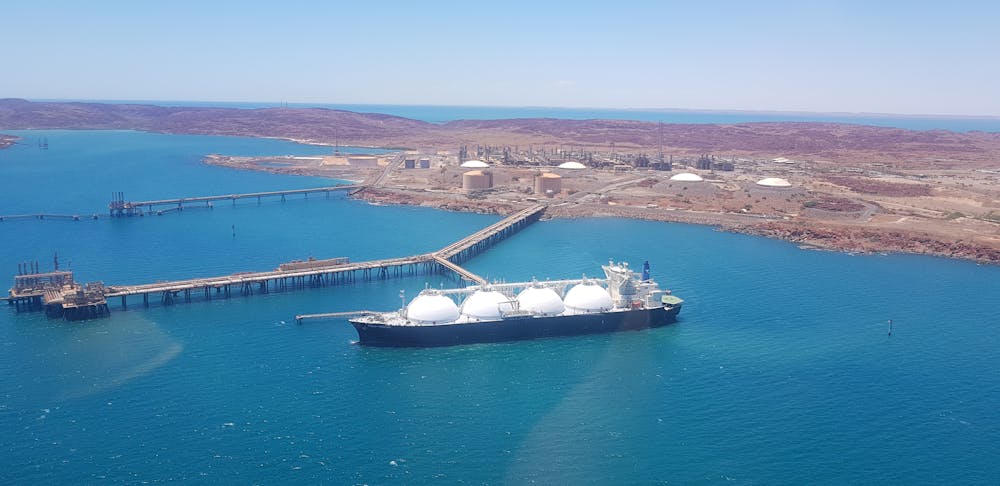
In the last 15 years, Australia’s gas exports have skyrocketed. Shutterstock
Trading offset reform for no new coal and gas?
Crossbencher David Pocock is pushing for reforms on carbon offsets. But the Greens have offered to “put aside” their concerns about offsets if Labor moves to ban new fossil fuel projects.
If the Greens were successful in strengthening safeguard rules to introduce a zero-carbon limit on all new coal and gas mines, new fossil fuel projects would have to find carbon offsets for 100% of their emissions each year. But if Labor keeps refusing this approach, compromise may have to come elsewhere.
Labor might seek to group Pocock and the 12 Green senators together to negotiate limits on permissible carbon offsets. If so, the Greens would end up where they were in 2009–11, trying to ensure carbon market rules minimise use of offsets.
What are the most likely deals we could see?
We could see four other compromises. In order of likelihood, they are:
Pausing new coal and gas mine approvals until environmental laws are stronger
Making federal environmental laws stronger is arguably a clearer way to reducing fossil fuel expansion. Why? These laws overlay state planning laws which keep churning out new mining licences. The Greens will want influence here.
The ‘climate trigger’
The Greens want to create a climate trigger modelled on the “water trigger” negotiated by former independent MP Tony Windsor.
A climate trigger, if it got up, would mean future projects would be assessed on greenhouse impact. But it wouldn’t be the same as a direct ban on new coal and gas. The Greens have a climate trigger bill before parliament, which would permit the climate change minister to reject large mines.
Replacing offsets
Offsets are often rubbery. But there are other ways to finance carbon cuts. A decarbonisation fund could permit democratic decision-making about carbon and biodiversity improvements.
Given carbon offset credits have political risks for the government and corporations, there’s merit to returning to fixed carbon pricing.
Negotiate with the states about fossil fuel industry transition
Labor could offer to negotiate with the states about managing the path away from coal and gas. Talking about what we have to do to stay in our carbon budget could foster parliamentary good faith and end finger pointing.
Climate wars – or real progress?
The Greens have a long history of pushing back against weak climate policy. Labor, in turn, has a history of criticising what they see as doctrinaire refusal. But when the cameras are off, these two parties have managed to achieve compromise and progress. It’s happened before, and it will most likely happen again.
Rebecca Pearse receives funding from the Australian Research Council and the National Recovery and Resilience Agency.
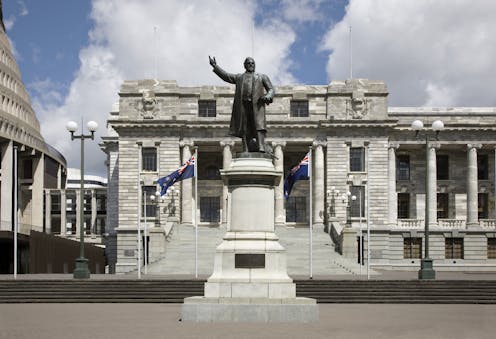
It’s been a difficult time for senior public servants recently – at least it has been for those willing to express their political views publicly. One has been sacked, another offered his resignation, and yet another has been questioned by a parliamentary select committee.
In an election year perhaps we can expect heightened sensitivities around the principle of public sector neutrality. Especially so, given those in the spotlight are all ministerial appointees to crown entity boards, not career officials.
These appointments blur the supposedly clear boundary between elected office-holders and professional public servants.
The case of Rob Campbell, former chair of Te Whatu Ora/Health NZ and the Environmental Protection Authority, seems the most clear-cut. His LinkedIn post likening the National Party’s Three Waters policy to a “thin disguise for the dog whistle on co-governance” was one thing. But his refusal to accept he’d done anything wrong was a bridge too far for the powers that be.
Things have gone better for former Labour MP Steve Maharey, who offered his resignation as chair of Pharmac, ACC and Education New Zealand for publishing what could be read as politically partial views. The government has said he will not lose his jobs.
And another former Labour MP, Ruth Dyson, now deputy chair of the Earthquake Commission and Fire and Emergency New Zealand, is also under scrutiny for apparently partisan Twitter comments. It’s safe to say the the nation’s newsrooms are now trawling the social media accounts of all senior civil servants and appointees.
Faceless bureaucrats?
On the face of it, the standards of conduct for people employed in the state sector – especially at senior levels – are clear. They’re expected to act with neutrality and impartiality, and not to take sides with political parties – even (or especially) if they have a past association with one.
They should be able to continue to serve after a change of government. New Zealand doesn’t follow the American model where an incoming president appoints about 4,000 civil servants. Instead, we rely on non-partisan professionals whose tenure isn’t tied to elections.
But these tensions and sensitivities about what people can and can’t say also exist in private enterprise. Any director or chief executive would be unwise to publish private opinions about political or economic affairs that might harm the reputation of the company.
Even a bottom-rung employee can face the sack for commenting online about their employer. Free speech comes with conditions attached, especially so for the public service.
One counter argument is that public servants’ impartiality is only a pretence anyway. And, as one commentator put it recently, “we should expect them to speak the truth to us, as they see it”. Indeed, we should criticise those who fail to do so, and not care if it upsets politicians.
That would be a major culture change for our Westminster-style system. But New Zealand has had prominent public servants who were admired as outspoken public intellectuals. The question is, where is the line and how do we define the terms?
Public intellectuals
One historical figure who rose high within the public service but expressed political views was Edward Tregear (1846–1931). He was already a prominent intellectual when appointed the first secretary of the Labour Department by the Liberal government in 1891.
He drove pioneering labour and social reforms, but was often outspoken and found himself at odds with the government following the death of the prime minister, Richard Seddon, in 1906. He retired in 1910.
Clarence Beeby (1902–98) was a prominent psychologist and researcher with a strong commitment to public education and human rights when he was appointed director of education by Peter Fraser in 1940.
Clarence Beeby.
Labour’s educational reforms came to be identified with Beeby as much as with Fraser, which would have annoyed the prime minister. Beeby continued under the subsequent National government, however. Overall, his scholarship had wide influence and was recognised internationally.
The economist Bill Sutch (1907–75) worked under ministers of finance in the 1930s while also actively engaging in public life. He published two important books on New Zealand in the early 1940s (Poverty and Progress, and The Search for Security).
This independence caused some friction with Fraser, but Sutch worked for New Zealand at the United Nations. In 1958, he became permanent secretary for the Department of Industries and Commerce.
Campbell’s online comments and Maharey’s op-ed columns probably aren’t at the same level of sustained achievement as those three exemplary civil servants’ publications. But they do raise important questions. Are today’s ministers and the public services commissioner too precious about political opinions? And are opposition MPs going to be hoist with their own petard once they’re in office?
Since the State Sector Act 1988, our system has tried to draw a clear line between ministers, who set high-level policy and have to justify it publicly, and public servants, who advise ministers and implement their decisions. Public servants should provide ministers with free and frank advice, but publishing personal opinions isn’t on.
There’s always a grey area, however. Campbell breached the code of conduct, but was sacking him in proportion with the offence? Those in a position to decide thought that it was.
Given the public controversy, Maharey did the right thing to pre-emptively offer his resignation. What distinguishes him from Campbell is that he recognised the awkward political problem.
But is it so big a problem that heads should roll? Is the country better or worse off for its intolerance of intellectual and political independence of thought in the state sector?
Whatever the answer, under present arrangements we won’t see public servants like Tregear, Beeby or Sutch again. But Campbell and Maharey can write what they like in retirement.
Grant Duncan does not work for, consult, own shares in or receive funding from any company or organisation that would benefit from this article, and has disclosed no relevant affiliations beyond their academic appointment.
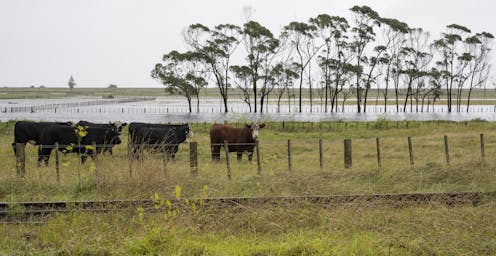
With potable water and wastewater systems damaged and land covered in silt, there is another consequence that may yet appear – diseases, or more specifically, zoonoses that spread between animals and people.
Floods and their aftermath are a time of higher risk for disease spread. While we do not have much data specific to New Zealand, due partly to the difficulty of diagnosing and reporting diseases during times of crisis, we can use information from overseas to predict which diseases may flare up after floods.
First, the tummy bugs
The first group of diseases for which we expect to see a rise in case numbers soon after floods is gastroenteritis caused by water-borne pathogens. GPs in Auckland are reporting an increase in cases since the Auckland anniversary weekend floods.
Many pathogens survive in the gastrointestinal tract of animals and are released in their feces. Rain and floods facilitate their transmission by providing an environment through which they sometimes enter the food chain or water supply.
In 2016, Hawke’s Bay experienced a campylobacteriosis outbreak transmitted through the urban water supply that affected more than 6,000 people. The outbreak occurred just after heavy rain, which likely caused water contaminated with sheep feces to enter a bore.
Salmonellosis cases are also likely to rise during summer floods, aided by higher temperatures. The risk is particularly high as cases in dairy cattle have been steadily increasing during the past eight years.
Local branches of Te Whatu Ora Health New Zealand in affected areas have been proactive in communicating these risks and prevention measures, including the importance of wearing protective gear during the cleanup.
Then, leptospirosis
About a week to a month after floods, rodent-born disease outbreaks can start to appear.
Floods disturb the habitat of rodents, including rats, and they can be attracted to food waste around people’s homes. This was regularly observed after floods in Queensland last year and in Auckland earlier this year.
In New Zealand, our main concern is the bacterial disease leptospirosis. Brown rats carry one of the variants, livestock several others, and, once the bacteria are shed in the animals’ urine, they can survive in water and soil for several days. This ability to survive in flood water means the risk of infection is increased for all variants, including those traditionally associated with ruminants and pigs.
Public health advice on how to prevent catching leptospirosis from infected animals. Te Whatu Ora ‐ Te Matau a Māui Hawke’s Bay, CC BY-ND
The clinical signs of leptospirosis can vary a lot and it is important people seek medical attention when they feel unwell as it can be treated with antibiotics. People can get infected through contact with urine or a contaminated environment, via the mouth or nose or uncovered skin cuts.
New Zealand is likely (at least for now) safe from the final group of diseases emerging after floods: vector-borne diseases.
We don’t have the disease-carrying insects or viruses known to cause outbreaks, but our Fijian neighbours and many other countries often report dengue outbreaks after floods.
Climate change is making it easier for both the insect carriers and viruses to establish in New Zealand, so we should not ignore this as a potential future threat.
Vaccination, early detection and treatment of livestock, which act as a reservoir for many of the pathogens above, are effective ways of protecting humans.
Cattle can be vaccinated against three variants of bacteria causing leptospirosis and four types of Salmonella. But vaccination does not cover all the strains and is more difficult in the current situation when fencing has been destroyed and some communities can only access veterinary medicine by helicopter.
The use of personal protective equipment and good hand hygiene for any outdoor activity that involves contact with animals or flood water and soil is the best way to prevent diseases. Rodent control, including rapid disposal of food waste, is also more important than ever.
It is important people seek medical care rapidly, both for themselves and their animals when they are unwell. This is how they can access appropriate treatment, but also how surveillance can happen, so New Zealand starts learning its own lessons on health risks associated with floods.
Our cities, population structures, farming systems and wildlife species are different from overseas, so having local data is crucial. This will help during the next heavy rain and floods – and there is no doubt there will be many more.
We would like to acknowledge the contribution by Masood Sujau.
Emilie Vallee receives funding from The Wellcome Trust for the project CliZod – Digital Technology Development Award in Climate Sensitive Infectious Disease Modelling number 226044/Z/22/Z. She works at the Tāwharau Ora School of Veterinary Science at Massey University.
Barry Borman, Deborah Read, and Masako Wada do not work for, consult, own shares in or receive funding from any company or organisation that would benefit from this article, and have disclosed no relevant affiliations beyond their academic appointment.
Federal Treasurer Jim Chalmers has attracted controversy by proposing to update 30-year-old superannuation laws with a definition of the purpose of superannuation as being to fund a dignified retirement. There is a clear lesson here for other reforms to make policy objectives clear, even when they seem obvious. One important example is Environment Minister Tanya Plibersek’s Nature Positive Plan.
Plibersek’s department began consulting last week on new National Environmental Standards. She will table these later in the year, along with a bill to replace Australia’s most significant environmental law, the Environment Protection and Biodiversity Conservation (EPBC) Act.
The standards will be the “beating heart” of the reforms. They will set out in some detail just what has to be protected and the circumstances in which development can be approved. It is essential these standards rest on solid foundations, including a clear statement of purpose.
You may be surprised to hear mandatory standards are new territory for environmental laws regulating development. Existing federal and state laws are mostly built around regulatory process and ministerial discretion. Typically, they tell ministers to consider ill-defined principles like “ecologically sustainable development”, but lack any real “bottom line”.
This leads to “black box” decision-making, in which decisions are unpredictable beforehand and opaque afterwards. This lack of transparency does little for the environment, which continues to deteriorate due to increasing pressures from climate change, habitat loss, invasive species, pollution and resource extraction.
Plibersek faces some tough calls in developing the standards. If strong and clear, they will protect nature and make it harder to get developments approved. But if the standards lack a clear statement of purpose and carry over rubbery phrases and weak offset requirements, then it will be business as usual, freshly wrapped.
For these new standards, we must get the basics right. One basic is to gather enough environmental information to make properly informed decisions.
The government is acting on this need with its plan to set up an independent environment protection agency (EPA), including a dedicated data division. However, it has yet to put serious money on the table. Making up for lost decades of patchy data gathering will be expensive and time-consuming.
Another one of the basics is to properly define ecologically sustainable development (ESD) as the foundation of environmental policy. The existing words on ESD in the EPBC Act are hard to divine. They trace their roots to the early 1990s and reflect the state of knowledge, and the compromises, of that era.
In fact, the EPBC Act does not even attempt to define “ecologically sustainable development”. Instead, it requires the environment minister to take into account five “principles of ecologically sustainable development”.
This disaggregation is part of the problem. Among other things, it forces the minister, in deciding whether to approve the clearing of koala habitat, for example, to consider an obscure principle that “improved valuation, pricing and incentive mechanisms should be promoted”.
This is a high-level policy principle advocating “market-based instruments”, such as a carbon price. It does not belong in a decision about clearing native vegetation.
I am now a researcher but in a former life (2007-12) was responsible for the administration of the EPBC Act. I have gone back over several hundred statutory EPBC Act “recommendation reports”. In these reports, environment officials provide formal advice to the minister about whether to approve a development.
I found very few instances where ESD principles made a substantive difference to the advice. It’s not surprising, given the obtuse approach of the legislation to ecologically sustainable development.
That is not to say we should abandon ecologically sustainable development. Properly defined, it can provide an overarching statement as to what environmental laws are designed to achieve and what development can be approved.
In the broad, ecologically sustainable development should mean keeping the environment healthy, so future generations can enjoy the same quality of life as we do. It would follow that development should not harm anything essential to a healthy environment.
It is important that we not simply roll the current principles into the National Environmental Standards without reflection.
One of the principles, the precautionary principle, can stand alone. It’s about risk management, to be applied when environmental knowledge is limited, which is often. It means, in context, that if a development risks serious or irreversible environmental damage, don’t approve it.
With that done, the central intent of ecologically sustainable development can be met by having the standards require that each decision maintain the diversity of life and the integrity of ecosystems affected by development. Ecological advice would be needed on how to do this in each case.
The gist of such a rule is to keep nature in good working order. That means maintaining viable populations of species and the essentials of ecosystems – their composition, structure and function.
The other three ESD principles deal with policy integration, intergenerational equity and market-based instruments. These principles are important but do not belong in the standards. They should be rehoused in a major policy statement, such as an environmental white paper.
It is often said with regulatory reforms such as the Nature Positive Plan that the devil is in the detail. That can be true, but in this case the devil is more in the basics. Get the basics right, and the rest is just detail.
Peter Burnett held a number of senior leadership positions in the federal Department of Environment from 2000 to 2013. From 2007-12, his responsibilities included administration of the EPBC Act.
The stories of people with disability rarely make it onto Australian screens. This isn’t surprising when we look at the ways disabled people are treated in the Australian screen industry.
Workers with disability in the screen industry commonly face stigma, stereotyping, exclusion, bullying and harassment.
As one producer with disability told us:
For me the number one barrier has probably been stigma – people assuming that it’s going to be more difficult to have you working on the production.
However, experience of disability can have positive impacts on work. Disabled filmmakers make valuable contributors to Australian screen production and culture.
As another producer told us:
We solve problems better than anyone; we do it every minute every day, living in a world not made for us. Can you imagine the asset this is on your creative team?
Workers with disability contribute to all parts of the industry, in production, distribution and exhibition. Disabled people work as writers, producers, directors, performers and crew.
Despite the diversity of their experiences, roles and talents, screen workers with disability commonly encounter similar discrimination in the workplace.
Disabled people working in the Australian screen industry are paid much less. Among our survey respondents, most screen workers with disability (58%) are paid less than $800 per week, while most workers without disability (57%) are paid more than $1,250 per week.
Compared to screen workers without disability, workers with disability are more likely to be on short-term and casual contracts, to be working without pay, and to be unemployed.
Employers are frequently inflexible when it comes to alternate models of working. Shutterstock
Many screen workers with disability report a widespread lack of understanding about accessibility in the industry.
We spoke to one producer who uses a wheelchair. He found the physical barriers he faced were not noticed by his employer and he was expected to “overcome” these barriers. “It hampers your ability to work effectively,” he said.
Many respondents reported difficulties talking about access requirements at work. Employers are frequently inflexible when presented with options such as working from home or using different technologies.
Despite these barriers, many respondents said the screen industry benefits from the skills they have because of their experience of disability.
Nearly half of respondents with disability (47%) say their disability status impacts their screen work positively.
One screenwriter without disability said:
employers often see just the costs/difficulties, and not the benefits of having disabled writers in rooms or involved in projects.
Screen workers with disability told us they bring unique skills and perspectives that stem from navigating inaccessible environments. They demonstrate creative thinking, problem-solving, teamwork and empathy.
Ade Djajamihardja is a disability activist and founder of A2K Media, a production company that prioritises disability pride in their purpose, identity and activity. He works as a producer with “unapologetic acceptance” of his own disability status and that of his collaborators.
This means respecting the skills and talents workers with disability bring, and providing access requirements without resistance and judgement. This allows employers to fulfil their legal responsibilities and allows workers with disability to do their jobs effectively.
Screen workers with disability are crucial to telling authentic stories about disability, helping represent the diversity of our community. The disabled respondents to our survey noted they often see characters with disability on screen created and performed by people without disability, which stand out because they are inaccurate and stereotyped.
One screenwriter told us:
I think the more #ownstories that we can have in screen media the better. Things like insisting on [disability] representation in writing teams is a really good step in the right direction.
The screen industry’s future
Far from building an industry full of the most skilled people, the Australian screen industry excludes and marginalises people with disability.
One producer sees potential in the screen industry becoming more welcoming to disabled people:
I work in the creative industries. We need to be better at creatively working through these sorts of issues.
The people we surveyed suggested many ways to improve inclusion in Australia’s screen industry. They highlight easier access to reasonable adjustments, clear lines of communication and responsibility in workplaces, and targeted funding for creatives with disability.
Most importantly, survey respondents repeatedly call for greater understanding of disability issues. People with disability would like it to be normal to talk about accessibility in the workplace.
The vast majority of Australian children are up-to-date with their vaccines. But vaccination rates have dipped slightly over the past few years.
Fewer health checks, reduced access to routine health care during lockdowns, and fear of COVID have been the main reasons.
If that’s been the situation for your family, you can still catch up. Here’s how to check which vaccines are due for your children and how to organise appointments.
If you are unsure which vaccines are given at different ages:
look up the vaccine schedule, officially called the National Immunisation Program Schedule. This lists the recommended free vaccines at various ages
download a vaccine scheduling app. Some states have an app you can download to create a personal vaccine schedule for your children, with reminders of what’s due and when
chat to your GP. The next time you see a GP (for any reason), you can ask about vaccines and which ones are due.
You can also call the Australian Immunisation Register (1800 653 809) and ask for your child’s immunisation history statement to be sent to you. This can take up to 14 days to arrive in the post.
If your child is over the age of 14, they can get their immunisation history statements themselves.
Some teenagers can access their own immunisation records. Shutterstock
If you’re not eligible for Medicare, you can still get your immunisation history statement online through myGov.
In very rare cases, a vaccine may have been given but not recorded on the Australian Immunisation Register.
If you think this may be the case, check your child’s baby health book, as information may have been recorded there. You may also need to check with the GP who gave the vaccine.
Catch-up vaccinations are free. But we understand that families who speak a language other than English can face challenges navigating the health system, including accessing vaccines.
If this applies to your family, or someone you know, you or they can use an interpreter to talk to the GP about catch-up vaccinations.
This is a free phone service, covering more than 150 different languages. Call 131 450.
If you have multiple children, the GP or practice nurse will tell you how many appointments you will need to ensure your children are up-to-date with their vaccines.
Here are some tips to help things run smoothly:
bring an extra adult (if possible) to sit outside the clinic with children not being immunised. This reduces the risk of distractions in the clinic
try to ring ahead to let the GP surgery know they need catch-up vaccines. This allows the team time to work out a catch-up schedule
if you have records of vaccines given overseas speak to the surgery about dropping records in before the appointment. Again, this will allow the nurse to work out the catch-up schedule before you arrive
in some situations, you may be able to have slightly longer gaps between vaccines to reduce the number of visits needed. This will depend on the situation. The GP or practice nurse will be able to determine if this is possible based on what vaccines are needed.
Beyond the vaccines on the National Immunisation Program, some children are also recommended a flu and COVID shot, depending on their age.
Children aged 6 months and older are also recommended to receive a yearly influenza vaccine (free for kids 6 months to under 5 years). If they are older than 10 years, they can get this flu vaccine at either a GP clinic or pharmacy.
COVID vaccination is currently recommended for children aged 6 months up to 5 years only if children have special medical or other needs, including a very weak immune system, disability, or complex or multiple health conditions.
Most children aged 5-17 years are recommended to have two doses of a COVID vaccine.
If your child has not received a COVID vaccine and you want some help deciding, there’s online help depending on the age of your child.
For more information about vaccines and catch-up vaccination, call the National Immunisation Information Line on 1800 671 811. For specific medical advice, see your health-care provider.
Holly Seale is an investigator on research studies funded by NHMRC and has previously received funding for investigator driven research from NHMRC and NSW Ministry of Health, as well as from Sanofi Pasteur, Moderna and Seqirus.
Abela Mahimbo has previously received funding from GSK for investigator driven research.
Jane E Frawley does not work for, consult, own shares in or receive funding from any company or organisation that would benefit from this article, and has disclosed no relevant affiliations beyond their academic appointment.
New Zealand Parliament Buildings, Wellington, New Zealand.
New Zealand Politics Daily is a collation of the most prominent issues being discussed in New Zealand. It is edited by Dr Bryce Edwards of The Democracy Project.
Tens of thousands of ni-Vanuatu children could be experiencing “stress and trauma” after the double cyclones that tore through the island nation last week, say educators.
With widespread damages to infrastructure, many children have lost their homes, had their schools damaged, and neighbourhoods hit hard by tropical cyclones Judy and Kevin.
Port Vila International School teacher Cassidy Jackson-Caroll told RNZ Pacific it was important to prioritise school-aged children’s wellbeing during these times.
Jackson-Caroll said that requires all stakeholders to move quickly and restore a sense of normalcy and enable children to return to school.
“It is quite important [for schools to open],” she said, while noting the large-scale devastation caused by the twin cyclones.
“One thing I thought is the kids want to see their friends. They have spent a lot of time time at home tucked up with their families, which is very important [during cyclones]. But they also need a little relief to see that their friends are okay.”
She said no electricity and no running water is an issue across the country which means schools remain affected.
But she is hoping the situation will improve by next week and those children who can return to school will be able do so.
“I think it is important even if it is half days or two or three days a week for some kids that is enough because some are going to be traumatiSed,” she said, adding Port Vila International School will have a “soft opening” on Wednesday.
“Sometimes they might just need to see their friends and go and play some soccer or just have a hug. They just need to laugh away from the anxiety and stress and trauma that they might have at home,” she added.
The aftermath of tropical cyclones Judy and Kevin in Vanuatu. Image: VBTC/RNZ Pacific
Schools, health centres ‘damaged’ UNICEF estimates up to 58,000 children have been impacted and those in the worst affected provinces of Tafea and Shefa needing urgent assistance.
The UN agency’s Pacific representative Jonathan Veitch said “with power still out in many places, and boats and planes grounded or damaged, we still don’t have enough information on the impact of children in the outer islands of Tafea.”
“We know that schools and health centres have been damaged throughout the country.”
“UNICEF Pacific, in partnership with the government, has begun to support the children and families most affected,” he added.
Preliminary reports indicate that almost the entire population has been affected.
World Vision Vanuatu country director Kendra Derouseau said they are expecting similar destruction to Tafea province that occured following Cyclone Pam in 2015.
“We know that most homes will be partly or completely destroyed,” Derouseau said.
Food sources scarce “The vast majority of the population in Tafea are subsistence agricultural farmers so food sources will be scarce and water sources will be contaminated.”
She confirmed that there were about 2000 people still in evacuation centres on Efate.
“People tend to sleep in the evacuation centres, leave vulnerable individuals and a carer in the centres during the day, and then go back to their homes to try and build and repair and then come back to sleep at night.”
But Derouseau said the number of people in evacuation centres were decreasing as people felt safe to go back to their home.
Meanwhile, New Zealand has sent relief supplies including water containers, kits for temporary shelters, and family hygiene kits and an initial financial contribution of NZ$150,000.
Foreign Affairs Minister Nanaia Mahuta said the government was working closely with Vanuatu to support this response, together with France and Australia.
New Zealand aid to Vanuatu post-cyclones Judy and Kevin. Image: Hilaire Bule/RNZ Pacific
My father has been losing sleep the past weeks over the thought of his jeepneys being forced off the road as the Philippines government implements its controversial “jeepney modernisation” programme.
He has been a jeepney operator for the past 32 years, sustaining our family’s needs. We have relied on these iconic utility vehicles to provide food on the table, even up to now when us siblings have long graduated and found decent jobs.
At age 69, Papa believes he can still manage his four jeeps with the help of my mom. “Kahit papaano, nakakatulong pa rin ito sa pang-araw-araw natin,” (“Somehow, it still helps us in our daily life),” he would often tell us.
But the past weeks have been uncertain for our family with the looming government plan to phase out jeepneys, which were once touted as the Philippines’ “Kings of the Road”.
Iconic and colourful jeepneys in a Manila street. Image: The Philippine Daily Inquirer
We never thought that such a day would arrive, or why a “jeep-less” Philippine society was even considered in the first place.
Buying a P2.4 million (NZ$70,000) minibus is definitely not an option for Papa; his jeeps’ income are just enough to sustain the family’s daily needs.
“Saan ako kukuha ng pera? Uutang? Maintenance pa lang niyan, lugi na ako” (Where do I get the money? Debt? That’s just maintenance, I’m at a loss), he says. Even so, no bank would provide him such loan at his age.
Selling his beloved workhorses is not ideal, too. The modernisation programme has driven down the prices of jeepneys, with some selling it as junk for a measly P20,000 (NZ$600).
Letting go of them is essentially killing his livelihood, and that of the six drivers who work with him.
US military jeeps left over from the Second World War were the basis for the modern jeepney — a cheap and popular mode of transport — and they became an iconic global symbol of the Philippines. The name itself is an adaptation of “jeep”.
Jhoanna Ballaranis a Philippine journalist. This commentary was first published on her Instagram page @jhoannaballaran
Al Jazeera’s report on Monday’s protest jeepney strike.
Through a vast network of nerve fibres, electrical signals are constantly travelling across the brain. This complicated activity is what ultimately gives rise to our thoughts, emotions and behaviours – but also possibly to mental health and neurological problems when things go wrong.
Brain stimulation is an emerging treatment for such disorders. Stimulating a region of your brain with electrical or magnetic pulses will trigger a cascade of signals through your network of nerve connections.
However, at the moment, scientists are not quite sure how these cascades travel to impact the activity of your brain as a whole – an important missing piece that limits the benefits of brain stimulation therapies.
In our latest research, published in Neuron today, we discovered the spread of brain stimulation can be predicted using the mathematics of networks.
Tracking electrical signals in the brain
Studying communication in the human brain is hard. This is because electrical signals move very fast, at the scale of thousandths of a second, between one part of the brain and another.
To make matters more complicated, signals are communicated via an incredibly complex network of nerve fibres that interlinks all brain regions. These issues make it difficult for scientists to even observe signals travelling through the brain.
However, under very special and controlled circumstances, we can use invasive electrodes to precisely track the propagation of brain signals. Invasive electrodes are instruments that are surgically inserted into the brains of consenting patients.
It is important to stress this type of invasive procedure can only be done in very special circumstances, when the primary goal is to help patients. In our case, patients were people with severe epilepsy. When epilepsy patients do not respond to medication, they can opt to use electrodes to help doctors find out more about what might be happening in their brains.
The electrodes provide a way to gently stimulate a brain area with an electrical pulse, and, at the same time, record the patient’s brain activity. We used data from electrodes placed in different positions of the brain to track the communication of electrical pulses from one region to another.
As a last ingredient for our study, we used MRI scans to reconstruct the network of nerve fibres of the human brain, known as the connectome. This gave us a model of the physical wiring through which electrical signals are communicated in the brain.
There are three steps in constructing a model of the connectome. First, we consider the human brain’s anatomy. Then, we use MRI scans to create a 3D model of all nerve connection fibres. Lastly, we reconstruct the brain’s wiring network and use it to understand communication between brain regions. Left: Wikimedia Commons. Centre and right: author provided.
The mathematics of network communication
So, how are signals communicated via the complex wiring of the connectome?
A simple possibility is signals travel via the most direct paths in the connectome. In network terms, this would mean that an electrical pulse goes from one region to another via the shortest path of intermediate regions between them.
Another idea is that signals spread via network diffusion. To understand this, think about how water would flow down a network of pipes.
Each time the water reaches a junction in the network, the flow is split along diverging paths. More junctions along the water’s journey means more splits, and the flow along any given path becomes weaker. However, if some of the diverging paths meet again downstream, the strength of the flow increases again. In this analogy, all connections (pipes) in the network contribute to shaping signal (water) flow, not only the ones along the most direct path.
What we found
These two types of network communication – shortest paths versus diffusive flow – are two competing hypotheses to explain how electrical signals cascade through the wiring of the connectome after brain stimulation. Today, scientists are not sure which hypothesis best matches what happens in the brain.
Our study is one of the first to try to settle this debate. To do this, we asked whether shortest paths or diffusion best predict electrical signal propagation, as measured by the electrodes in the brains of the patients.
After analysing the data, we found evidence supporting the diffusive flow hypothesis. This means that many more nerve connections – compared to just the ones travelling along shortest paths – shape how brain stimulation cascades down the connectome.
This is important information for scientists, as it helps us understand how the physical wiring of nerve connections contributes to brain activity and function.
Our study is one of the first of its kind and more work is necessary to confirm what we found. We hope that progress in our understanding of brain communication will also help clinical scientists to design better brain stimulation treatments for mental health problems.
Brain stimulation can help to “restore” the malfunctioning communication between brain regions. For example, non-invasive stimulation (done outside the skull and without the need for surgery) is a treatment for major depressive disorder available in Australia.
In our future research, we will investigate if the discoveries reported here can be used to improve the therapeutic benefit of such brain stimulation treatments.
Caio Seguin has received funding from the University of Melbourne.
Andrew Zalesky receives funding from the Rebecca L. Cooper Foundation, the NHMRC and the ARC.
The current housing crisis has renewed debates about how to regulate short-term rental platforms such as Airbnb. The international research on the impact of these rentals is clear: when landlords “host” tourists rather than residents, housing supply is depleted, rents rise and neighbourhoods change.
Given Australia’s dire shortage of rental housing, restricting short-term rentals seems like a no-brainer. New research published this week showed the share of rental properties under $400 per week has fallen to 15% in most capital cities – half of what it was a year ago.
We’ve long studied these issues, watching as major cities around the world – from New York to Berlin to Barcelona – have enacted strong laws designed to protect local housing supply and neighbourhoods.
But do they even work? And would controlling short-term rentals solve Australia’s long-term rental crisis?
What some cities are trying
Amsterdam, San Francisco and London set limits of 30-90 nights per year that an entire home can be booked on a platform like Airbnb. Beyond this time, planning permission is needed to change the use of the property.
New Orleans has zoning laws that restrict holiday rentals to certain locations. Scotland has recently introduced similar laws requiring permission for short-term lets in certain “planning control areas”.
Numerous cities, including Boston, Amsterdam and Toronto, impose tourist taxes as a disincentive to short-term rental operators and to even the playing field with hotels. Revenue is then used to offset the impacts of lost permanent rental accommodation.
Paris has gone a step further, requiring short-term rental operators to “compensate” for lost rental supply in the city by purchasing and converting commercial floor space for residential use. The goal is to return housing to the market.
Enforcing regulations has been an ongoing battle, with data on short-term rental activity closely guarded by rental platforms.
Some platforms, such as Airbnb, now ensure hosts comply with local rules through their booking systems, although these cooperative actions typically occur after protracted legal battles.
Many local authorities have established dedicated compliance units to enforce regulations, often acting on neighbour complaints. New Orleans, for instance, uses highly visible code enforcement teams and even threats to cut off the electricity.
Planning laws are overseen by state governments in Australia. They have been much slower to act on short-term rentals than localities overseas.
New South Wales, for example, has moved to standardise regulations for short-term rentals following lengthy consultation processes and inquiries. These rules generally permit short-term rentals of whole homes without special approval, but limit bookings to 180 nights per year in metropolitan Sydney. Other areas can apply to impose the same conditions.
This is intended to preserve rental housing, but it is unlikely to do so given owners could book their properties for every weekend, as well as the Christmas holidays, before approaching the 180-night cap.
This is why Byron Bay, where housing is scarce for local residents and workers, has sought to impose a tighter cap of 90 nights, aside from designated areas with a concentration of second homes.
Byron Bay has one of the highest concentrations of short-term rental properties in the country. Rents in the area fell in 2020 as short-term properties pivoted to the long-term rental market when the borders were shut due to COVID.
However, this didn’t last long. With more people moving to Byron during the pandemic and the return of the short-term rental market, weekly rents rose from $555 in June 2020 to $800 by September 2022. The shortage of long-term rentals is one of the reasons Byron’s businesses have struggled to find staff.
Western Australia has proposed capping short-term rentals at 60 days annually without local planning approval. Beyond that, local planning rules apply.
In Margaret River, for instance, holiday home owners need to renew their planning permission annually to provide short-stay accommodation. This might be withheld if there have been complaints about the property.
Again, the primary focus is to protect established long-term rental housing supply. Ironically, the lack of permanent rental supply is putting pressure on the region’s tourism operators, whose employees are unable to find housing in the area. Meanwhile, caravan parks – meant for holidaymakers – are accommodating the homeless.
Tasmania has sought to enable local councils to develop and enforce their own regulations, although this might require new legislation.
In short, regulating short-term rentals to prevent further loss of rental supply is critical, but governments are moving slowly and enforcement is difficult.
Given holiday homes will remain an important part of tourism infrastructure in regional areas, could we make use of them in more strategic ways? For instance, during natural disasters or housing crises?
An estimated 65,000 people were temporarily displaced during the 2019-20 bushfires that ravaged the east coast. Some 3,100 houses were also destroyed, leaving around 8,000 people in urgent need of accommodation.
Similarly, over 14,000 homes were damaged in NSW by last year’s floods, and more than 5,000 were left uninhabitable.
A year later, many people in NSW continue to live in inadequate accommodation. Government-issued temporary homes, such as campervans and “pods”, are in woefully short supply.
Housing generally takes a long time to build, making it difficult to respond to such short-term increases in demand.
More strategic and creative use of the short-term rental stock might be the answer. We have seen some gestures by Airbnb and other platforms to support people displaced by disasters, but these responses have largely been ad hoc and uncoordinated.
When disaster zones are declared, Commonwealth and state governments could mandate and coordinate access to short-term rental accommodations for displaced residents and relief workers.
We could even extend such declarations during housing crises like the one we’re experiencing now, as the mayor of Eurobodalla on the NSW south coast has suggested. This would give governments time to deliver longer-term housing solutions in areas of heavy demand.
In comparison to much of the international regulation of the short-term rental market, Australia is very “light touch”. The overarching aim is to encourage the tourism economy.
While this might have been appropriate five years ago when the rental market was in better shape, and long-term housing demand focused on inner city areas, the current crisis demands a new approach. Regulations must be tailored to the conditions of local housing markets, rather than the one-size-fits-all approach that exists today.
More broadly, large-scale protections for renters, increased rental subsidies for low-income households and more construction of social housing is what’s really needed to solve Australia’s housing crisis. Preserving existing housing supply – and making better use of short-term accommodation during times of need – would also make an immediate difference for renters around the nation.
However, going on the history of housing regulation in Australia, renters should not hold out too many hopes for politicians to provide any real assistance.
Nicole Gurran receives funding from the Australian Research Council and the Australian Housing and Urban Research Institute (AHURI).
Peter Phibbs receives funding from Shelter Tasmania to undertake research on short term rentals in Tasmania.
There are 3,088 women imprisoned in Australia on any given day, representing 7.5% of the prison population. Aboriginal and Torres Strait Islander women are over-represented in these numbers.
Australia spends $4.44 billion on prisons. Despite this, reproductive health care equivalent to that in the community is often not available where women are being detained.
Reproductive health care must be delivered in appropriate ways to those who require it. Aboriginal and Torres Strait Islander people require culturally safe health care, free from racism. There must also be inclusive care for non-binary and transgender people.
In addition to menstrual items, underwear also needs to be available for people in prison. A 2019 consultation by the Queensland Human Rights Commission reported one woman’s experience of being detained in a Brisbane watch-house. The woman had to stick a menstrual pad to her tracksuit, because she was not given underwear. “There was blood everywhere,” the woman’s cellmate recalled. “They eventually gave her an incontinence nappy, and a clean pair of pants.”
The ACT Inspector of Correctional Services conducted a review into the Alexander Maconochie Centre, a prison in Canberra. The review investigated the use of force during a strip search on an Aboriginal woman. The woman had become distressed after being advised she was not allowed to attend her grandmother’s funeral and participate in Sorry Business. She was menstruating at the time, and was a victim-survivor of sexual assault.
The woman described her experience:
At this time I was menstruating heavily due to all the blood thinning medication I take on a daily basis. Here I ask you to remember that I am a rape victim. So you can only imagine the horror, the screams, the degrading feeling, the absolute fear and shame I was experiencing [during the strip search].
On another issue at the same prison, the ACT office recommended “condoms, water-based lubricants and dental dams be made freely available in the units so detainees can access them without having to make a request to staff”.
In its prison review, the inspector had been told detained people in the Alexander Maconochie Centre wanting to practice safe sex were “making do” by “cutting open latex gloves”.
Access to terminations and care following miscarriages
The United Nations Special Rapporteur on Torture has stated “denial of legally available health services such as abortion and post-abortion care” amounts to “mistreatment of women seeking reproductive health services”. Forcing people to continue their pregnancy is a form of sexual and gender-based violence.
The European Committee for the Prevention of Torture has affirmed that respect for a detained “woman’s right to bodily integrity” requires they have the same access to the “morning after pill and/or other forms of abortion at later stages of a pregnancy” as “women who are free.”
It is also crucial for people who miscarry to be provided with the appropriate mental health and physical care.
Increased transparency and oversight is needed to ascertain whether minimum standards for reproductive health care are being met in Australian prisons. However, accounts from women in prison have indicated access to even basic healthcare is often a challenge.
Birth and separation
In Australia, there have been instances of an Aboriginal woman giving birth alone in a locked prison cell while staff observed through the hatch. Another example featured attempts to remove a baby from their Aboriginal mother against medical advice due to insufficient capacity at the prison. And an Aboriginal woman was denied the right to bond with her newborn and breastfeed them.
We need more transparency in prisons, so we can fix these issues
Implementation of the UN Optional Protocol to the Convention against Torture and other Cruel, Inhuman or Degrading Treatment or Punishment could bring attention to what is happening in Australian prisons.
This protocol calls for regular visits to places of detention by independent bodies to prevent ill-treatment of detained people, including denial of reproductive health care.
But in January Australia missed its implementation deadline. Australia is currently at risk of being added to the UN list of non-compliant countries. Australian commonwealth, state and territory governments have some work to do before this tool can be effectively used to prevent mistreatment of incarcerated women.
And while shining a light in the dark corners of prisons is essential, there are concrete steps governments can take now to improve reproductive health care and provide community-equivalent care.
Andreea Lachsz is currently contracted to the ACT government as the ACT National Preventive Mechanism (NPM) Coordination Director. The opinions expressed herein are those of the author and do not necessarily reflect those of ACT government, ACT NPM or any extant policy.
You might not realise this when you flick your switch at home, but Australian electricity generators are forever locked in a bidding war. They compete for the right to supply electricity on the spot market. The cheapest bids win and electricity from those generators is supplied, or “dispatched”, to the grid in five-minute intervals.
This means that every five minutes, the electricity grid is rebalanced to ensure supply meets demand. Too little supply causes blackouts; too much causes tripping (and more blackouts).
But until recently, the price paid for wholesale electricity (the settlement price) on the Australian National Electricity Market (NEM) was averaged over six five-minute intervals (30 minutes). (Australia is unusual in this regard. Many grids elsewhere such as in Europe operate forward or day-ahead markets, where supply is planned in advance.)
That worked fine in the early days, but when supply started to fluctuate more wildly with the advent of intermittent renewable energy, so did the bidding war. Some generators starting gaming the system, pushing prices sky-high. Retailers complained.
So when the NEM finally introduced five-minute settlement in October 2021, it was a big deal. There was a great deal of excitement. Most commentators expected wholesale electricity prices to settle down, coal to lose market share, and batteries to boom. That’s mainly because the new system would be more efficient, rewarding cheap, nimble and flexible generators including batteries.
But what actually happened? Our analysis reveals the average spot price went up, not down, in Tasmania, Queensland, and New South Wales. Black coal-fired generators made more money on the spot market, not less. Flexible generators, especially batteries, did well too. (In the other NEM states, South Australia and Victoria, there was no significant change).
We argue further changes are needed to achieve the desired effects. These include increasing competition in the market (reducing the power of the three biggest electricity generators), building the infrastructure needed to support a green grid, and investing in more flexible and fuel-efficient technologies.
The National Electricity Market is transitioning fast to renewable energy generation to meet Australia’s 2030 emissions reduction target. DisobeyArt from www.shutterstock.com
The NEM opened in 1998. The market adopted a 30-minute settlement rule at the time, because five-minute settlement would have pushed the limits of metering and data-processing capabilities.
But as the share of renewable energy grew, it became increasingly apparent that more flexible technology would be needed to cope with intermittent solar and wind power.
Energy retailers became frustrated by this gaming behaviour in particular, and complained to the authorities, prompting the rule change. Previously, coal and gas generators could send dispatch prices through the roof in one interval, so that when prices were averaged over the 30 minutes, it made the final trading price high. One way of doing this was to create artificial scarcity of supply, by withdrawing generation to raise spot prices.
When a price spike occurred, generators would then pile in by offering a lower price for the remainder of the 30-minute settlement period.
Five-minute settlement aimed to resolve these issues and better support the integration of wind and solar power into the electricity grid, ultimately making electricity more affordable for customers.
The new rule would also encourage investment in faster response technologies such as batteries.
Our study adds to the understanding of early effects of this regulatory change in the NEM. This will support the transition to clean energy generation, and inform policy for future electricity markets that offer stability, security and lower prices. We also propose courses of action to facilitate more effective adaptation to the rule change.
When five-minute settlement came in on October 1 2021, there was no substantial immediate effect.
However, within the first eight months of the change, the market started to adjust. We found that five-minute settlement led to an average spot price increase (not decrease) in Tasmania, Queensland and New South Wales.
That’s because generators no longer had a financial incentive to rebid at a very low price after a price spike, as they had done in a 30-minute trading interval. That was a strategy that caused significant fluctuation in the spot price.
Promisingly, the implementation of five-minute settlement had no measurable impact on the intensity of electricity price fluctuations. That suggests the new rule may have been effective in maintaining price stability.
So, in these early stages of the rule change, wholesale electricity customers are actually paying more, but the price has been more stable.
The impact on retail prices remains uncertain. The retailers’ costs of buying electricity and managing price risks are one component of what costumers pay in their energy bills. In 2020–21, it accounted for about a third of their bill. So if these effects persist, there is a possibility these higher prices will be passed on to consumers as well.
We also found that variable and flexible generators, especially batteries, took advantage of their flexibility to capture more revenue from the spot market. Gas generators’ revenue barely changed, but that could be because less flexible gas generators are lumped in together with highly flexible gas generators.
Surprisingly, the revenue earned by black coal-fired generators also increased. We suspect generators changed their operations and bidding strategies to align with the five-minute settlement rule. However, revenue for coal-fired generators is still likely to fall over the medium to long term.
AGL Macquarie, which includes the Liddell and Bayswater power stations shown here, is one of the largest electricity producers in Australia. Mark Baker/AP
Three ways to improve five-minute settlement
It will take time to see the full effect of the rule change on the wholesale and retail electricity markets. However, we think the following changes are needed to fully realise the benefits of five-minute settlement:
Market concentration. The NEM is a concentrated market. The three largest generators, AGL Energy, Origin Energy and Energy Australia, hold a substantial market share. Together, they supply about 80% of the generated energy. Policies that promote competition are key to realising the benefits of five-minute settlement.
Supporting infrastructure. Five-minute settlement is expected to increase the operational cost of generating coal-fired power. That’s because ageing power plants would need to be upgraded to be able to compete during periods of fluctuating demand. Renewable generators, on the other hand, have extremely low operating costs, largely due to having no fuel costs. Coal-fired generators are likely to lose revenue and leave the market much earlier than expected. Firming and flexible demand technologies such as energy storage systems (pumped hydro, batteries or solar thermal) can effectively respond to the new market conditions and fill the gap.
Fuel-efficient and flexible technologies. Technologies such as batteries, pumped hydro and aero-derivative gas turbines operate more effectively in a five-minute settlement design. The recent rise in gas prices also necessitates investment in flexible and fuel-efficient technologies, such as reciprocating gas engines.
Without policies to address these three areas, we believe five-minute settlement is unlikely to offer substantial benefits to the market.
The authors do not work for, consult, own shares in or receive funding from any company or organization that would benefit from this article, and have disclosed no relevant affiliations beyond their academic appointment.
Source: The Conversation (Au and NZ) – By Martina Linnenluecke, Professor of Environmental Finance at UTS Business School, University of Technology Sydney
Shutterstock
As the cost of living soars, many Australian households are turning to rooftop solar to cut their energy costs. A Pulse of the Nation survey last month showed about 29% of Australians have installed or are considering installing solar panels on their homes.
The same survey shows one in five Australians can’t afford to adequately heat or cool their homes. Many are also unable to install energy-saving options such as solar panels or insulation because of the upfront costs or because they are renters who cannot make changes to the dwelling. Among those who are financially stressed, earn less than A$50,000 or are between the ages of 18 and 34, a large majority do not intend to install energy-saving options, largely because they cannot afford them.
Renewable energy is not just critical for saving on energy bills, but also for mitigating climate change and fostering sustainable development. However, the reality is access to solar power is not equitable for all Australians. Our new research shows without better government support, many people will miss out on its benefits.
What does equity in rooftop solar uptake look like?
Our research focuses on how to make access to rooftop solar more equitable.
It is important to distinguish between equity and equality. Equality means every household will be given the same resources or opportunities. For example, every household would receive the same subsidy to install solar panels.
Equity refers to fairness. The idea of equity recognises not all households start from the same place. Instead, adjustments to imbalances might be required.
In the context of solar adoption, equity would mean every Australian can benefit from solar power. Any subsidies or other support would be adjusted based on individual circumstances.
To better understand how it affects the adoption of solar panels, we looked at several aspects of inequity. These include financial situation, renting status, gender, education and ethnicity.
For our study, we collected 167 studies worldwide on household solar panel adoption to determine what we know about how it’s affected by these aspects of inequity.
Our findings show there is very limited in-depth data and research on this issue in Australia. Australian studies on residential solar uptake account for 20 (12%) of the 167 studies.
Research in Australia tends to focus on equity related to income. Of the 20 Australian studies, six find a positive link between income and solar panel adoption, four find a negative link, five show inconclusive results and five omit income altogether.
These mixed results can be explained, in part, by the fact that a range of factors impact whether a household can afford solar power. For example, a somewhat higher household income does not automatically mean that a household has less bill stress and enough accumulated wealth to afford the upfront cost of installing solar power.
Few studies offer a deeper analysis of variables such as education or ethnicity. For Australia, only five studies looked at education and only one at ethnicity. There is a lack of data on solar uptake among Aboriginal and Torres Strait Islander people.
This limited research does not allow for definite conclusions about how these variables impact rooftop solar uptake.
Energy-saving installations in investment properties have also received limited attention. Many Australian renters report their dwellings have extremely poor insulation. This leads to hot indoor temperatures in summer and cold conditions in winter.
Renters typically have limited ways to fix these problems. The only available options for many renters are air conditioning and portable heaters powered by traditional energy sources, which increases electricity bills.
Policies that could improve equity in rooftop solar access include:
direct financial support for low-income households that otherwise could not afford solar power
a variety of other financial incentives such as solar rebates
community solar programs that allow households to share the benefits.
Some programs are in place to help home owners on low incomes to install solar systems. For example, New South Wales has a “Solar for low-income households” program. Eligible individuals can get a free 3-kilowatt solar system in return for giving up the Low-Income Household Rebate for ten years. South Australia had a “Switch for Solar” trial, for which applications closed on August 31 2022.
However, to access these schemes Australians must first overcome one difficult hurdle: home ownership.
The Australian government has promised new policy approaches. Its Powering Australia Plan pledged $102.2 million for community solar banks. These are community-owned projects to improve access for those currently locked out of solar power. Households can lease or buy a plot in these solar banks, instead of using their own rooftops.
Households can lease or buy a plot in a community solar bank, instead of using their own rooftops. Shutterstock
The success of such projects will depend on whether they are accessible to and affordable for everyone.
More data collection is needed to identify priorities for policy action on energy equity. This can include a new Household Energy Consumption Survey (the Australian Bureau of Statistics conducted such a survey until a decade ago), broader analysis by researchers to consider equity dimensions, and collaboration between researchers and policymakers to trial new policies.
Martina Linnenluecke receives funding from the Australian Research Council (ARC).
Rohan Best has received past funding from the Economic Research Institute for ASEAN and East Asia.
Mauricio Marrone does not work for, consult, own shares in or receive funding from any company or organization that would benefit from this article, and has disclosed no relevant affiliations beyond their academic appointment.
When we talk about “school transitions”, we generally refer to three specific points: starting primary school, starting secondary school, and moving from secondary school to further education or work.
However, school transitions occur every year, and the lack of a smooth transition, particularly if it occurs outside the expected “big years”, sometimes takes both students and their parents by surprise.
The transitions from the first year of school to Year 1, and from Year 7 to Year 8, may be particularly fraught.
Year 1: when school ‘gets real’
In many Australian states, the first year of school (called kindergarten, prep, transition, reception, or pre-primary, depending on your state) is regarded as a transition year from preschool or kinder to primary school.
For example, in Queensland and Victoria, play-based learning is an important feature. This means there is an emphasis on activities including manipulative tasks such as jigsaw puzzles, games with rules, sharing and cooperation, and physical activities.
By Year 1, students will spend less time on play-based learning, with more expectations around their independence at school. Erik Anderson/AAP
But Year 1 is regarded as a year when school “gets real” – regardless of what state you’re in.
Year 1 has an increased emphasis on academic learning as well as higher expectations around independence and self-regulation. For example, students are expected to cope independently with less adult supervision when going to the toilet and eating lunch, as well as a structured classroom routine. They are also expected to follow school rules, focus and listen in class, complete work to a schedule, and arrive to class on time.
Even for children who seem ready, the jump from the first year of school to Year 1 is a big one.
The ‘Year 8 dip’
The “Year 8 dip” refers to a drop in motivation and performance that often occurs between the first and second years of secondary school.
In Australia, there is also evidence of a “Year 9 dip”, in which “girls often withdraw or get anxious and boys muck up”.
A 2015 New South Wales study, for example, found drops in student engagement during the middle years of high school, with big drops from Year 7 to Year 8, and further drops from Year 8 to Year 9.
A 2014 Gallup poll found 75% of Year 5 students surveyed reported being engaged in school but only 58% were engaged in Year 8.
Year 8 and Year 9 are often seen as the least important years of secondary school. Year 7 is new and Years 10 and up are focused on exams and what students will do after they finish school. Year 8, in contrast, has no obvious purpose.
One study found students perceived they had lower levels of teacher support in Year 8 (and even lower in Year 9). Teachers confirmed this perception, agreeing they provided less support to students in Years 8 and 9.
But there is also an element of school becoming more challenging and more work. For example, Year 7 maths is largely repetition of primary school to catch everyone up and consolidate knowledge. This may lead some students to believe they don’t need to put in as much effort. When they get to Year 8, they are in for a rude shock.
Finally, Year 8 students are no longer the youngest in the school, and are conscious of “growing up”. At 13 and 14, peer groups become more important, perhaps shifting the importance of school downwards. And hormones are at their peak, affecting students’ mood and impulse control.
What can parents do to help?
There are many things you can do to help a child if they are finding the transition to Year 1 or Year 8 bumpier than expected.
Moving into Year 1
Speak positively with your child about the changes they might be experiencing in Year 1, while acknowledging and discussing any concerns they may have. For example, you might say something like:
It seems that you are a bit nervous about Year 1 because there are many new things to learn and some are a bit difficult. When I started a new job where I had to learn to do many new things, I also had the same feeling.
Another example could be:
It seems that you find reading a bit difficult. You are not as good at reading yet as you want to be. But if we read more together, this will help.
Strengthen your child’s independence and planning skills as they move into Year 1. For example, have them pack their own school bag. Discuss setting up a daily routine, such as when to get up, play and snack times, and when to go to bed.
Read regularly with your child to strengthen their language skills, to prepare them for the increased focus on academic learning in Year 1.
If you have concerns about your child’s progress or how they are settling in, talk to their teacher.
Tell your child about times when you have dealt with a change in your life. Ketut Subiyanto/Pexels
Going from Year 7 to Year 8
Be enthusiastic about Year 8 (and Year 9) when you talk with your child. Combat the narrative that these years “don’t really matter”. Even though peer opinion is increasingly important, we know parents’ opinions still matter to young people.
Be prepared for a possible drop in enthusiasm or work habits as your child moves into and through Year 8. Spot and address any concerning behaviours early; for example, wagging school or withdrawing from friends. Seek academic or mental health support if needed.
Recognise the increasing maturity of your Year 8 student – provide them with opportunities to have a greater voice in decisions about school or other issues. For example, let them lead a discussion around what electives they take in Year 9, or rules around electronic device use or bed times.
Nina Van Dyke is an Associate Professor and Principal Research Fellow at the Mitchell Institute at Victoria University. She recently received funding from the Alannah & Madeline Foundation to conduct research on cyberbullying in schools. Prior to that, she has conducted education and health-related research for a variety of organisations, and has received funding from government departments and not-for-profit organisations to conduct education and health-related research.
Cynthia Leung is an adjunct professor at the Mitchell Institute at Victoria University who receive funding from Minderoo’s Thrive by Five initiative to undertake research into early childhood education and care.
Protest was dangerous in feminism’s formative years.
The suffragettes in the United Kingdom initially began by trying to persuade and educate to win women the right to vote.
When that didn’t work they became frustrated – and, by 1903, radical.
By the 1910s, they adopted militant tactics, with women on hunger strikes being force-fed in prison.
It climaxed in 1913 when Emily Wilding Davidson, holding the suffragette flag, stepped in front of the horse of King George V at the Epsom Derby.
Her funeral, reportedly watched by 50,000 people, gave a global profile to the women’s right-to-vote campaign.
But while protest was very dangerous for first-wave feminists, subsequent Western activists often adopted pranks.
There is an adage that feminists and women aren’t funny. However, the history of activism reveals humour as a successful strategy for change.
Here are four great contemporary feminist pranks that demonstrate the power of humour for advocacy.
1. A chain reaction
On March 31 1965, feminist activists Rosalie Bogner and Merle Thornton walked into Brisbane’s Regatta hotel, chaining themselves to the foot rail of the front bar.
They were protesting the exclusion of women from Queensland public bars.
The police were called, smashed the padlock, and told them to leave. They refused.
After some bemused and sympathetic men gave them glasses of beer, the officer gave up, telling the women to have “a good time” and “don’t drink too much”.
They inspired women nationally to do the same. Laws had changed across Australia by the early 1970s.
According to historian Kay Saunders, it was the “beginning of second-wave feminism” in Australia.
In 1985, the New York activist group Guerrilla Girls began their quest to counter the art world’s sexism, racism and inequality. They used gorilla masks to remain anonymous and emphasise that the message was paramount, not the activist.
Guerrilla Girls famously erected posters and placed stickers protesting the lack of women in art galleries, asking “Do women have to be naked to get into the Met Museum?”
Humour and statistics enhanced awareness, got people involved, and illuminated issues such as how few women of colour have their work exhibited.
Since the Guerrilla Girls began four decades ago, their messages have continued to spread and hold institutions accountable. They have expanded their mission to important causes such as poverty and war, while continuing to change the art world’s attitudes and to merging art and politics.
But the gender imbalance in art galleries is still a global issue. This is currently being countered with initiatives such as the National Gallery of Australia’s Know My Name campaign and efforts to write women back into art history.
In 1993 the Barbie Liberation Organization undertook a Christmas prank, swapping the voice boxes of 50 Barbie and G.I. Joe dolls.
G.I. Joe now said “I love to shop with you” or “Let’s plan our dream wedding”. Barbie hollered “Dead men tell no lies” or “Attack!”.
With an aim to teach children about stereotypes, the spectacle made a huge media splash for the cause.
The tactic is known as “shop-dropping”. The activist bought, altered and then dropped the dolls back on the shelves.
The organisation arranged for children to comment to the media on gender stereotyping, and the press reported there were hundreds of dolls instead of just 50.
Although impact is hard to measure, the prank created unprecedented media attention leading to the visibility of the organisation’s issues based video. It questioned the status quo regarding what girls can do and should think, promoting social change in exposing how toys shape ideology.
It revealed the impact of gender stereotypes and their insidious sexism; the way war toys are role models; and the need for playthings to be more inclusive and diverse.
Mattel, the company that makes Barbie, did not react, but later released toys indicating it had received the message. These include the Inspiring Women series featuring the likes of Eleanor Roosevelt, Ella Fitzgerald and Jane Goodall.
At the 2016 Australian Film Institute’s premier event, the AACTA Awards, protesters from Women in Film and Television NSW blocked the red carpet dressed as sausages and chanting “end the sausage party”.
The event was livestreamed on Facebook after security gave them access, thinking they were part of the event.
The women were protesting for a quota system to improve the number of women working in the film and television industries.
They wanted to highlight a lack of feature film judging transparency, the low proportion of nominations for women, and how few films were directed and driven by female creatives.
Only 20% of Australian-funded feature films have a female director. AACTA does not fund films and it is therefore the broader industry that urgently needs to lift female participation.
Since the sausage prank, AACTA entry forms also ask about the diversity of the filmmakers, triggering producers to reflect on inclusion in their films.
AACTA has also changed its eligibility rules, engaging with Women in Film and Television to expand eligibility beyond just films that received a theatrical release.
This reduced barriers to entry; opportunities for women and diverse filmmakers are more frequently in independent or low-budget sectors, which don’t always attain release in commercial cinemas. This change in eligibility was reported as allowing greater inclusion and diversity.
Recognition across society has come from a long line of feminist pranksters. But slow progress means there is still a long way to go to achieve equality and equity.
Lisa French does not work for, consult, own shares in or receive funding from any company or organisation that would benefit from this article, and has disclosed no relevant affiliations beyond their academic appointment.
Gender equity continues to be a significant problem in business globally. We all know the story: the gender pay gap is a persistent issue and female-dominated industries tend to be lower paid.
Female representation in senior leadership and board positions remains low in many countries, particularly in Aotearoa New Zealand. Women comprise only 28.5% of director positions across all NZX-listed companies and just 23.7% at companies outside of the NZX’s top 50.
Change is slow despite the well-established evidence showing the merits of improving gender equity for businesses – including better firm performance – and excellent initiatives such as Mind The Gap.
But there is a way to support companies that have made the change towards greater gender equity – and encourage others to do the same: we can invest with a “gender lens”.
The aim of investing with a gender lens is not only to make a financial return but also to improve the lives of women by providing capital to those companies doing well on gender issues.
Gender lens investing goes beyond counting female representation at board level. It encompasses the number of female managers, leaders and employees as well as the existence of policies or products provided by a company to address the gender pay gap and other inequities faced by their female employees. It also encourages investing in women-owned enterprises.
In essence, investing with a gender lens means identifying and investing in those companies that are empowering their female employees and embracing diversity. This might seem simple. But there are no investment portfolios or funds investing in companies that do right by women.
One explanation for this gap is that identifying gender-friendly companies is not easy. And this is where rating agencies have a role to play.
The role and power of rating agencies
Over the past three decades there has been a fundamental shift towards investing for not only financial returns but also for social outcomes – so called Responsible Investing (RI).
The growth in RI has spawned an industry dedicated to defining and measuring a company’s non-financial contributions across a range of areas, specifically across the environmental, social and governance (ESG) pillars.
The rating agencies build scores by collecting data on issues within each of the ESG pillars – for instance, the environmental pillar comprises data on carbon emissions, land use and water, among other measures – and then converts this into an overall score.
Fund managers, especially those managing RI funds, use these scores to inform investment decisions. What, then, are the comparable measures for gender lens investing?
While some rating agencies have created measures to identify companies suitable for a gender lens portfolio – for example, Sustainalytics has a gender equality index – others have very little on gender at all. Some rating agencies seem to base gender equity performance on the number of women on a company’s board or its in-house policies on diversity and discrimination.
In short, there is little-to-no substantive information available to allow investing with a gender lens. And why is that?
Well, rating agency MSCI states it collects information on “financially relevant ESG risks and opportunities”. Sustainalytics requires an issue to have a “substantial impact on the economic value of a company”. These agencies require an issue to affect financial performance.
Under its “social” pillar, for example, MSCI considers water usage, arguing companies in high-water-use industries face operation disruptions, higher regulation and higher costs for water, which can reduce returns and increase risk.
The absence of data related to gender implies women-friendly policies are not viewed as affecting the performance or risk of companies.
A gender lens to the rescue?
But with a bit of a push, rating agencies can help make gender equity transparent. They have the research capability and access to company data that everyday investors do not. This can help investors make informed decisions about what to invest in.
Pressure from investors can also force companies to address equity issues. When that happens, the public metrics of company performance on gender issues become a lever around which companies can be encouraged to change.
Investors themselves may also find great personal satisfaction in being able to make gender-aware decisions if they could easily apply a gender lens when deciding where to invest.
It is time for potential investors to start demanding data be collected. Once that happens, rating agencies will send a message to companies that gender equity matters. As long as investors stay silent, progress will remain slow.
Ayesha Scott receives funding from Te Ara Ahunga Ora (Retirement Commission).
Aaron Gilbert receives funding from Te Ara Ahunga Ora (The Retirement Commission).
Candice Harris does not work for, consult, own shares in or receive funding from any company or organisation that would benefit from this article, and has disclosed no relevant affiliations beyond their academic appointment.
Recent media attention has drawn global focus on an escalating number of Iranian schoolgirls falling ill over the past few months because of suspected chemical attacks. Accounts differ, but many reports cite more than 1,000 cases of poisoning at schools across Iran. At least 58 schools in ten provinces across the country have been affected.
The first known cases were reported in the city of Qom in November. There has been an escalation of reported cases, with 26 schools affected in a wave of attacks last week. The students have reported respiratory problems, nausea, dizziness and fatigue, with several girls hospitalised. Parents have been keeping their daughters home from school to protect them from these attacks.
Escalating public unrest and international attention has led Iran’s Supreme Leader Ayatollah Ali Khamenei to publicly denounce the attacks as a “major and unforgivable crime”, promising an investigation and swift punishment for those responsible.
This follows months of contradictory statements from government officials, the arrest of a journalist investigating the issue earlier this week, and the reported use of tear gas to disperse an organised demonstration about the poisonings in Tehran on Sunday.
Many consider the attacks a direct response to the ongoing protests in Iran since the death of Mahsa Amini in September. Students, mostly university students but also schoolgirls, have been at the forefront of those protests.
To date, there has been no direct evidence about who is responsible for the poisonings, and continued uncertainty about how they are carried out. Part of the difficulty in collecting information is the extreme limits imposed on press freedom in Iran. There have been calls from the international community for the United Nations to conduct an independent investigation.
There are some claims that question whether there has in fact been any chemical attacks at all. Instead, they speculate that this is in fact evidence of a mass psychogenic illness.
This would not be unprecedented – in an investigation of alleged poisonings of schoolgirls in Afghanistan between 2012-16, the UN concluded it was most likely a result of mass psychogenic illness, after finding no trace of chemical gas or poison.
However, the reality is that poisonous substances can degrade rapidly, especially nitrogen dioxide, which one government probe in Iran has indicated may be the cause. There have also been unconfirmed witness reports of suspicious objects being thrown into schoolyards.
Global threats to girls’ education
Another reason that the deliberate poisonings of the Iranian schoolgirls is so credible is that it is far from unusual. While education, including girls’ education, is highly respected in Iran, schoolgirls globally are all too often the object of attacks.
A report conducted by the Global Coalition to Protect Education from Attack looked at attacks on girls’ education between 2014 and 2018 in regions of conflict and instability. It found that schoolgirls and female teachers have been directly targeted in at least 18 countries, including Afghanistan, Cameroon, the Central African Republic, Colombia, the Democratic Republic of Congo, Egypt, India, Iraq, Libya, Mali, Myanmar, Nigeria, Pakistan, the Philippines, South Sudan, Syria, Venezuela, and Yemen.
The nature of attacks is wide and varied, including the bombing of girls’ schools and abduction of girls. Teachers and students have been attacked either en route to school or while there. There have also been reports of sexual violence and sometimes forced marriage of both girls and their female teachers.
One of the most infamous cases of violence directed at girls for “daring” to attend school remains Malala Yousafzai being shot in the head in 2012 in Pakistan. There are also less direct forms of attacks, including the repurposing and shutting down of girls’ schools as a lower priority than boys’ education, threats to keep girls away from school, and the imposition and violent enforcement of restrictive dress codes.
One of the most infamous attacks against a girl simply for attending school was against Malala Yousafzai in 2012. Nelson Antoine/AP/AAP
Attacks on schools have escalated sharply in recent decades, but this escalation has been particularly acute in relation to schools dedicated to girls. All too often, these attacks occur with impunity.
The impact of attacks on education for girls
Even if the effects of the poisonings on the Iranian schoolgirls have so far not shown any evidence of serious impacts on their health, there are still long-term psychological effects of being the target of a systematic and gendered attack, and unknown long-term physical consequences.
Girls deprived of an education are more likely to be vulnerable to child or forced marriages, usually also resulting in reduced reproductive and sexual autonomy. There is also increased risk of domestic violence and a life of poverty. Attacks on schools have also been linked to an increased likelihood of girls being forced into recruitment to armed groups and becoming victims of human and sexual trafficking.
More generally, the violation of the right to education, and systemic gender discrimination results in girls and women having fewer opportunities to participate meaningfully in political, cultural, and social life. This loss affects not just individual girls and women, but society generally.
Unfortunately, there is no simple fix to such attacks on girls’ education. While the investigation and prosecution of those responsible in Iran is an important step for accountability, it does not address the underlying problems.
Girls’ education under attack is always going to be part of broader contexts of systemic and widespread discrimination against women, and systems of oppression that reinforce stereotypical attitudes towards girls and women.
But protecting the right of girls to an education should be the cornerstone of any efforts towards gender equality. Such blatant and horrific attacks on girls in schools, as in Iran, should act as a clarion call for urgent change.
Shireen Daft does not work for, consult, own shares in or receive funding from any company or organisation that would benefit from this article, and has disclosed no relevant affiliations beyond their academic appointment.
Tuesday’s tenth successive Reserve Bank interest rate hike is the culmination of a process that has added $1,080 to the monthly cost of payments on a $600,000 variable mortgage.
I’ve calculated this increase in payments – which amounts to $12,960 per year – by comparing payments on the National Australia Bank’s base variable mortgage rate before the Reserve Bank started its series of hikes in May 2022 with payments after the NAB lifts its rates in accordance with Tuesday’s decision.
Before the Reserve Bank started hiking in May 2022, the NAB rate was 2.19%. After nine Reserve Bank hikes, ahead of Tuesday’s meeting, it was 5.24%.
It will soon be 5.49%, meaning the monthly payment on a 25-year $600,000 NAB base variable mortgage will have climbed from $2,600 to $3,680.
And Tuesday’s statement from the Reserve Bank indicates there’s more to come.
But an end to these rate rises is within sight – possibly as soon as mid-September.
Bank on at least 1 more rate rise
The best guide to what the Reserve Bank has in mind is usually the first few words of the final paragraph of its statement.
Last time, in February, those words referred to further interest rate “increases”, making it clear the bank expected more than one.
This time, there’s no plural. The sentence refers merely to “further tightening”, which could mean as little as one more increase, and not necessarily next month.
The statement, like the last, says rate hikes work “with a lag, and that the full effect of the cumulative increase in interest rates is yet to be felt in mortgage payments”. That’s a reference to the large number of borrowers who are about to be hit with higher payments as they come off low fixed rates.
And, unlike the last statement, this one says inflation may have peaked.
So there are reasons for easing off, but also – as I’ll explain shortly – important institutional forces propelling Governor Philip Lowe to keep going.
Reasons for easing off on further rate hikes
The whole point of the dramatic interest rate hikes has been to make sure Australia’s sudden reemergence of high inflation is only temporary.
Inflation hit 7.8% in December, well outside the Reserve Bank’s 2-3% target zone and the most since 1990.
The good news is to the extent that inflation comes from overseas in the prices for fuel and other imports, it seems to be easing.
US inflation has been falling for seven months now, from a high of 9.1% in June to 6.4% in January. UK inflation has been falling for three months, from 10.1% to 9.1%.
To the extent that inflation is driven by a surge in spending at home, that surge has stopped. Retail spending has been flat (unchanged) for four months notwithstanding a growing population and growing prices.
We’re winding back spending
This means what’s bought per person is falling, as would be expected if we were tightening our belts in response to higher interest rates and higher prices.
In February consumer confidence, as measured by Westpac and the Melbourne Institute, dived to its lowest point since the 2020 COVID recession.
Asked whether now was a good time to buy a major household item, only 17% of Australians surveyed said yes. Twice as many – 39% – said no.
Last week’s national accounts showed gross domestic product, the official measure of everything earned, bought and sold in the economy, climbing only 0.5% in the three months to December.
But buried in the fine print was something worse. Were it not for a fall in imports in the December quarter, GDP would have gone backwards.
It is one of the truly-bizarre mathematical oddities of the way the GDP is calculated that a fall in imports boosts measured GDP, even though it is a sign we are tightening our belts.
And we’ve been having to tighten our belts. Wage figures released since February’s board meeting show growth of just 3.3% in the year to December, way below the increase in prices, and way below the entrenched growth of 5% the governor has said would concern him.
One of the reasons wages aren’t yet climbing particularly fast is that (unusually) wage earners expect inflation to fall. Throughout most of its life, the Melbourne Institute survey of inflation expectations has pointed to higher inflation than was actually experienced. At the moment it is pointing to lower inflation.
Nevertheless, the RBA board “remains alert to the risk of a prices-wages spiral” according to Tuesday’s statement. This implies it isn’t yet reassured by the official figures and that it’s liaison program with 600 or so business operators has identified increases yet to come.
6 months left to leave a legacy
That’s the economics, which points to taking things gently on rate rises from here on. But as I mentioned, there’s something else at play that might propel Governor Lowe to keep going a little further.
Governor Lowe’s five-year term expires on September 17. As his predecessor did, he would like to hand over the bank in good order.
That means having clearly broken the back of runaway inflation. It might mean going harder for longer on interest rate rises than he otherwise would to get things in order. It’s what his predecessor did for him in August 2016.
Glenn Stevens cut interest rates one last time before he left office to make sure Lowe didn’t take over the bank having to do it himself. Lowe left rates unchanged for almost three years. He had been handed the keys to a car in working order.
Seen this way, Lowe’s determination to be sure inflation is on the way down before leaving office is a matter of etiquette. He has six months left to get his house in order.
It’s a consideration that might mean more mortgage rate pain than would have been the case had Lowe not been near the end of his term.
Peter Martin does not work for, consult, own shares in or receive funding from any company or organisation that would benefit from this article, and has disclosed no relevant affiliations beyond their academic appointment.
As well as her interviews with politicians and experts, Politics with Michelle Grattan includes “Word from The Hill”, where she discusses the news with members of The Conversation’s politics team.
In this podcast Michelle and politics + society editor Amanda Dunn discuss the tenth interest rate rise and Jim Chalmers’ response, the polling reaction to the superannuation tax hike, Anthony Albanese’s visit to India (where cricket is on the program), and the latest development in the extraordinary fight between teal independent Monique Ryan and her now former staffer Sally Rugg.
Michelle Grattan does not work for, consult, own shares in or receive funding from any company or organisation that would benefit from this article, and has disclosed no relevant affiliations beyond their academic appointment.
Several teachers from a Papua New Guinean school in Porgera, Enga province, are now being investigated by police after they allegedly instigated the torture, burning and interrogation of four women over sorcery accusations on the campus.
The four women who worked as cleaners at the school were attacked after one of the teachers died suddenly last week.
According to Enga police commander acting Superintendent George Kakas, the women had been seen chatting with the teacher last week before he collapsed an hour after being seen with the women.
PPC Kakas said the women were then forced into the home of the deceased teacher and interrogated for 11 hours by the colleagues of the deceased and his relatives.
“Last week the teacher collapsed. He was believed to have conversed in a casual meeting with women earlier on in the day and collapsed in the afternoon,” Superintendent Kakas said.
“Relatives and some teachers and public servants accused the four women of practising sorcery and taking out the deceased’s heart.
“They were taken into the teacher’s house and brutally tortured with bush knives, axes and iron rods from about 5pm that evening until 4am the next day when they were rescued by security force members consisting of Porgera police and PNG Defence Force soldiers.
Relatives barred police “When police tried to have a look at the body of the deceased, his relatives refused to let police near the body, saying that ‘the glasman was seeing the body and that the teacher was still alive’.
Glasmen are men who claim to be able to identify and accuse women of sorcery.
“I commend the work of the police station commander Porgera, Inspector Martin Kelei, who led the team to the teacher’s house after a tip-off and rescued [the tortured women].
“They were all driven safely to Wabag hospital where they are now undergoing treatment. I immediately instructed my OIC CID Wabag to do a postmortem on the body.
“The next day they confirmed the teacher died of a massive heart attack.”
Superintendent Kakas said: “There you have it. It’s a confirmed heart attack, and the ladies were falsely accused, tortured and nearly killed.
“We know the identities of the key instigators of the torture of the four women and are working to apprehend them.
“I will make it my personal business to ensure these perpetrators are arrested and charged.
I have an investigation team working on that through my OIC [officer in charge] sorcery accusation-related violence unit here in Wabag.”
Republished from the PNG Post-Courier with permission.
Tuesday’s tenth successive Reserve Bank interest rate hike is the culmination of a process that has added $1,080 to the monthly cost of payments on a $600,000 variable mortgage.
I’ve calculated this increase in payments – which amounts to $12,960 per year – by comparing payments on the National Australia Bank’s base variable mortgage rate before the Reserve Bank started its series of hikes in May 2022 with payments after the NAB lifts its rates in accordance with Tuesday’s decision.
Before the Reserve Bank started hiking in May 2022, the NAB rate was 2.19%. After nine Reserve Bank hikes, ahead of Tuesday’s meeting, it was 5.24%.
It will soon be 5.49%, meaning the monthly payment on a 25-year $600,000 NAB base variable mortgage will have climbed from $2,600 to $3,680.
And Tuesday’s statement from the Reserve Bank indicates there’s more to come.
But an end to these rate rises is within sight – possibly as soon as mid-September.
Bank on at least 1 more rate rise
The best guide to what the Reserve Bank has in mind is usually the first few words of the final paragraph of its statement.
Last time, in February, those words referred to further interest rate “increases”, making it clear the bank expected more than one.
This time, there’s no plural. The sentence refers merely to “further tightening”, which could mean as little as one more increase, and not necessarily next month.
The statement, like the last, says rate hikes work “with a lag, and that the full effect of the cumulative increase in interest rates is yet to be felt in mortgage payments”. That’s a reference to the large number of borrowers who are about to be hit with higher payments as they come off low fixed rates.
And, unlike the last statement, this one says inflation may have peaked.
So there are reasons for easing off, but also – as I’ll explain shortly – important institutional forces propelling Governor Philip Lowe to keep going.
Reasons for easing off on further rate hikes
The whole point of the dramatic interest rate hikes has been to make sure Australia’s sudden reemergence of high inflation is only temporary.
Inflation hit 7.8% in December, well outside the Reserve Bank’s 2-3% target zone and the most since 1990.
The good news is to the extent that inflation comes from overseas in the prices for fuel and other imports, it seems to be easing.
US inflation has been falling for seven months now, from a high of 9.1% in June to 6.4% in January. UK inflation has been falling for three months, from 10.1% to 9.1%.
To the extent that inflation is driven by a surge in spending at home, that surge has stopped. Retail spending has been flat (unchanged) for four months notwithstanding a growing population and growing prices.
We’re winding back spending
This means what’s bought per person is falling, as would be expected if we were tightening our belts in response to higher interest rates and higher prices.
In February consumer confidence, as measured by Westpac and the Melbourne Institute, dived to its lowest point since the 2020 COVID recession.
Asked whether now was a good time to buy a major household item, only 17% of Australians surveyed said yes. Twice as many – 39% – said no.
Last week’s national accounts showed gross domestic product, the official measure of everything earned, bought and sold in the economy, climbing only 0.5% in the three months to December.
But buried in the fine print was something worse. Were it not for a fall in imports in the December quarter, GDP would have gone backwards.
It is one of the truly-bizarre mathematical oddities of the way the GDP is calculated that a fall in imports boosts measured GDP, even though it is a sign we are tightening our belts.
And we’ve been having to tighten our belts. Wage figures released since February’s board meeting show growth of just 3.3% in the year to December, way below the increase in prices, and way below the entrenched growth of 5% the governor has said would concern him.
One of the reasons wages aren’t yet climbing particularly fast is that (unusually) wage earners expect inflation to fall. Throughout most of its life, the Melbourne Institute survey of inflation expectations has pointed to higher inflation than was actually experienced. At the moment it is pointing to lower inflation.
Nevertheless, the RBA board “remains alert to the risk of a prices-wages spiral” according to Tuesday’s statement. This implies it isn’t yet reassured by the official figures and that it’s liaison program with 600 or so business operators has identified increases yet to come.
6 months left to leave a legacy
That’s the economics, which points to taking things gently on rate rises from here on. But as I mentioned, there’s something else at play that might propel Governor Lowe to keep going a little further.
Governor Lowe’s five-year term expires on September 17. As his predecessor did, he would like to hand over the bank in good order.
That means having clearly broken the back of runaway inflation. It might mean going harder for longer on interest rate rises than he otherwise would to get things in order. It’s what his predecessor did for him in August 2016.
Glenn Stevens cut interest rates one last time before he left office to make sure Lowe didn’t take over the bank having to do it himself. Lowe left rates unchanged for almost three years. He had been handed the keys to a car in working order.
Seen this way, Lowe’s determination to be sure inflation is on the way down before leaving office is a matter of etiquette. He has six months left to get his house in order.
It’s a consideration that might mean more mortgage rate pain than would have been the case had Lowe not been near the end of his term.
Peter Martin does not work for, consult, own shares in or receive funding from any company or organisation that would benefit from this article, and has disclosed no relevant affiliations beyond their academic appointment.
Source: The Conversation (Au and NZ) – By Sarah Lothian, Lecturer and Academic Barrister, Australian National Centre for Ocean Resources and Security, University of Wollongong, University of Wollongong
Shutterstock
Delegates gave a jubilant cheer at United Nations Headquarters in New York on Saturday night, as nations reached an agreement on ways to protect marine life in the high seas and the international seabed area.
It has been a long time coming, debated for almost two decades. It took nine years of discussions by an Informal Working Group, four sessions of a Preparatory Committee, five meetings of an Intergovernmental Conference and a 36-hour marathon final push to reach agreement.
So why was it so hard to achieve? And what does it do?
In short, the Biodiversity Beyond National Jurisdiction agreement paves the way for the establishment of more high seas marine protected areas. Only 1% of the high seas are currently fully protected, so the new agreement is a vital step towards achieving the recently adopted Kunming-Montreal biodiversity pact, which pledges to protect 30% of terrestrial and marine habitats by 2030.
In turn, the designation of more high seas marine protected areas could assist in curbing fishing activities in these waters. At present, distant water fleets can scoop up almost everything that swims or scuttles thousands of kilometres from their home country. As the high seas are also teeming with marine life, the new agreement also ensures this genetic wealth is shared fairly and equitably among the international community.
It’s not too much to say this agreement marks a significant turning point in the protection of our deep oceans.
Distant water fishing fleets can take a major toll on high seas marine life. Shutterstock
Where are we talking about?
Nations have rights to marine resources out to 200 nautical miles (370 kilometres) from their coastline. After that? It’s almost completely unregulated, much like the Wild West. It’s a huge area, representing over 60% of our oceans.
But this agreement doesn’t just cover what lives in the high seas water column. It also covers the seabed, ocean floor and subsoil beyond a coastal country’s continental shelf.
Major discoveries on the ocean floor have dispelled the long perceived myth that the deep seabed is a barren desert and featureless plain. One important breakthrough has been the discovery of hydrothermal vents and their rich biological community. These seabed habitats, have been labelled one of the richest nurseries of life on Earth and harbour unique organisms of particular interest to science and industry alike. These organisms may offer a limitless catalogue of medical, pharmaceutical and industrial applications. They may even hold the cure for cancer.
Isolation is no longer protection
Due to their remote nature, the high seas were long considered protected from human impact. But only 13% of the ocean is now classified as marine wilderness, completely free from human disturbance, with most being located in the high seas.
International law, as it stands, is not up to the task of protecting this region. Regulations and rules are haphazard, with some regions and resources (like marine genetic resources) not protected at all. Enforcement is weak, and cooperation lacking, as I have found in my research.
Without adequate regulation, the high seas are being heavily exploited with 34% of all fished species now overfished. Illegal, unregulated and unreported fishing is also a serious problem on the high seas.
There is also growing interest in deep-sea mineral resources. The International Seabed Authority has entered into contracts with companies to mine deep-seabed areas, but the long term impacts of this mining activity are difficult to predict and its effects could have irreversible consequences for marine ecosystems. Marine pollution is also a growing problem with approximately 6.4 million tonnes of litter entering our oceans every year.
What solutions does this agreement offer?
Under this agreement, the door is open to establish marine parks and sanctuaries covering key areas of the high seas. Fishing could be banned or heavily restricted in these areas along with other activities that could have a detrimental impact on marine life.
You might have expected fishing to be a key reason for the long delay in getting this agreement across the line. However, one of the main stumbling blocks was how to share the genetic wealth of the high seas. Under the agreement, all countries will have to share benefits – financial and otherwise – from efforts to harness the benefits to be derived from these resources. Think of the possible new cancer treatments coming from compounds in sponges and starfish.
Why was this a challenge? It was difficult to find common ground on how to share benefits from this genetic wealth, with a clear divide between developed and developing nations. But it was achieved and now data, samples and research advances will need to be shared with the world.
What’s next?
Reaching agreement has been achieved. To make it legally binding, it must be adopted and ratified by countries. Will the world’s nations sign up? We’ll need as close to universal participation as possible to make this work. The first part is done. But getting States to sign on, ratify and follow the agreement is likely to be a harder task.
Sarah Lothian does not work for, consult, own shares in or receive funding from any company or organisation that would benefit from this article, and has disclosed no relevant affiliations beyond their academic appointment.
When it comes to gold, how pure is pure? And how does anybody know?
As recent revelations about the Perth Mint have shown, gold buyers and sellers take purity very seriously. Questions have been raised over impurities found in some A$9 billion worth of gold sold to the Shanghai Gold Exchange.
While the gold reportedly met the industry standard for 99.99% (or “4N”) purity, it failed to meet extra agreed specifications for the level of silver.
The question of testing the purity of gold has been a live one for thousands of years, with increasingly precise methods being devised. But despite these techniques, most of the time the gold industry still runs on trust and reputation.
A eureka moment
The ancient Greek mathematician Archimedes is said to have struck upon one way to test the purity of gold while getting into the bath.
The story goes that the king of Syracuse had asked the mathematician to determine whether a golden crown was made of the pure metal, or whether impurities had been mixed in by a dishonest goldsmith.
After thinking on the problem, Archimedes took a bath, and noticed that the level of the water rose when he stepped in. He leapt out immediately and ran into the street, crying “eureka!” (or “I’ve found it!”).
He had realised that submerging the crown in water would let him determine its volume, and hence its density. Because gold is denser than most other metals, this can be used to measure the crown’s purity.
There are debates about the historical accuracy of the tale, and the exact mechanism of the test he would have used, but the gist is in keeping with the principles Archimedes laid out in his treatise On Floating Bodies.
Fire and fluorescence
Despite the ingenuity of Archimedes’ method, it is not in use today. Some of the most common methods used in the modern gold industry are the fire assay, X-ray fluorescence, and inductively coupled plasma mass spectrometry (or ICP-MS).
The fire assay is the traditional method used in the hallmarking industry (to certify gold in jewellery as 9 carat or 18 carat, for example), and also often used in gold mines to test the quality of ore.
This is a destructive method, so it wouldn’t have worked for Archimedes. You take a small amount of metal from the item you’re testing, mix it up with various chemicals, and melt it down in a furnace or crucible.
The process is designed to remove everything except gold. So if you weigh the sample you put in and the gold you get out, you can figure out how pure the sample was.
However, the fire assay only tests for the amount of gold – it won’t tell you what else is in the sample.
Another common test (this one is non-destructive) involves X-ray fluorescence. You fire X-rays at the item you want to test, which excites the atoms in your sample and makes them spit out X-rays of different wavelengths. Analysing these wavelengths can tell you what’s in the sample. The machine will give you a readout telling you the amount of gold, silver, copper and so on.
The gold standard
To get real precision, there are several different, more elaborate tests you could try. In Australia, the “gold standard” would be what’s called inductively coupled plasma mass spectrometry (ICP-MS).
This process effectively vaporises a sample and then weighs the different atoms in it. It can tell you the composition of a sample with an accuracy of parts per billion.
It’s an expensive, bespoke process, though. You wouldn’t use it for jewellery. It’s mainly used by scientists, or mining companies that want to determine the exact composition of a sample.
You would typically only use this kind of testing if you had a great need for exactness, or a reason to be suspicious of a sample.
The importance of trust
In practice, these tests are not typically used by people buying gold. The gold industry largely runs on trust.
If a reputable seller tells you they’re giving you gold that is 99.99% pure, you generally believe them. You don’t test every coin or every bar.
For whatever reason (perhaps their extra conditions about silver content), the Shanghai Gold Exchange didn’t take the Perth Mint’s word about the purity of the gold it delivered.
Now the Perth Mint may have a trust problem. And when trust is broken, it’s not easily restored.
Michael Cortie does not work for, consult, own shares in or receive funding from any company or organisation that would benefit from this article, and has disclosed no relevant affiliations beyond their academic appointment.
If there’s any lesson from the past three years of supermarket shortages, it’s that it pays to stock up on a few favourite items at all times (if you’ve got room in your pantry or freezer) and to be flexible in your choices of products and brands.
But they are worth repeating, as Australia faces another potential post-COVID supermarket shortage – this time of any groceries that require refrigerated transport (frozen food, meat, dairy and fresh fruit and vegetables) following the collapse of Australia’s largest cold-chain refrigeration transport company.
Scott’s Refrigerated Logistics – with more than 1,500 employees, 500 trucks, 1,000 trailers and warehouses in Sydney, Melbourne, Brisbane, Adelaide and Perth – was placed into administration on February 27.
Administrator KordaMentha has been unable to find anyone to buy the stricken business from Anchorage Capital Partners, a private-equity company that bought Scott’s in 2020 for A$75 million.
Without a buyer, the company will be liquidated, with its assets sold off piecemeal. KordaMentha has warned of a “genuine risk of an uncontrolled wind down”, leading to supermarket supply shortages.
This will likely mean sporadic shortages and restocking delays. But sensationalist headlines that a “supermarket disaster looms” are overblown. As long as we don’t make things worse, shortages should be short-lived – an inconvenience, but not a disaster.
Why did Scott’s Refrigerated Logistics fail?
Why has Scott’s failed, despite being Australia’s biggest cold transport trucking company? Part of the reason, at least, was probably due to being “Australia’s only truly dedicated national temperature-controlled supply chain network”.
The past few years have been difficult for trucking companies – and even more so for cold-transport trucking.
Moving goods around the world from one port to another is relatively simple. The cost of transporting an item thousands of kilometres across oceans typically adds just a few cents per unit to costs. It’s when those goods get loaded onto trucks – first to be transported from the dock to a warehouse, then to a distribution centre or store, then to the end consumer’s home – that the costs mount.
There is traffic and limits to operating hours. There are different trucks instead of standardised containers. Routes change all the time, as orders are updated daily. So-called “last-mile delivery”, from the final distribution hub to the home, is the most complicated and expensive leg, generally accounting for at least half of logistics costs.
These costs are compounded when items need to be kept cold or frozen. Refrigeration equipment is expensive to buy and maintain. Temperature controls must work seamlessly. If the refrigeration breaks down, the cargo must be quickly transferred to another vehicle.
Refrigerated trucks must keep their engines running all the time. Shutterstock
Refrigerated warehouses and vehicles use more energy. Warehouses are coping with more heat as average temperatures rise with climate change. Vehicles must run their engines to keep their cargo cold. So increases in both fuel and electricity prices over the past year will have eroded the bottom line.
Along with these issues are the challenges facing all transport companies, such as finding drivers. There is a global shortage of truck drivers, intensified by the pandemic, which has forced employers to offer higher wages to recruit workers.
Then there is the highly concentrated nature of Australia’s grocery retail sector, with Coles and Woolworths controlling about 65% of the market (and Aldi another 10%). This puts any company in the food supply chain at a disadvantage when it comes to negotiating contracts.
Assurances from Coles and Aldi in recent days that they have contingency plans to replace the services provided by Scott’s is indicative of this power imbalance.
So what does the risk of an “uncontrolled wind down” of Scott’s businesses mean for shoppers?
You may see gaps in the fresh food, dairy, meat and frozen food aisles similar to those in early 2022, then driven by COVID-related absenteeism among transport, distribution and shop workers. These shortages should be short-lived, as other businesses pick up the slack and supply is mended.
Thankfully, the industry has learned a few lessons from the past. Supply chain orthodoxy has moved a bit more from just-in-time to just-in-case.
Hopefully, also, most customers have learned from the past, and won’t be shocked by empty shelves. Panicky stockpiling behaviour will only makes shortages worse. Many of us (who can afford it) now also keep stocks at home in anticipation of rainy days.
In the longer term, though, you should expect to pay higher grocery prices.
Contingency plans as those put in place by Coles and Aldi are costly, and the sustainability of the food distribution systems would indicate that supermarkets will need to pay more for refrigerated transport next time contracts are negotiated. These extra costs will most likely be transferred to you, the customer.
We have not yet turned the corner around supply chain issues. This is unlikely to be the last struggle that affects supplies. Occasional empty shelves in your local supermarket are the “new normal”, at least for now.
But, all in all, we are a better position to cope with these shocks than three years ago. So don’t panic.
Flavio Macau is affiliated with the Australasian Supply Chain Institute (ASCI).
Review: Andy Warhol and Photography: A Social Media, Art Gallery of South Australia.
Andy Warhol is well known for his slick pop art imagery which fetches staggering amounts at auction. His Shot Sage Blue Marilyn sold in 2022 for US$195 million.
But there is a little-explored side to Warhol-the-photographer, whom curator Julie Robinson explores in a brilliant new exhibition.
Here, Warhol emerges as a compulsive photographer whose images range from snapshot polaroids of the everyday, to portraits of the rich and famous, to Warhol himself in various self-portraits.
His camera was the iPhone of today, obsessively putting out images well before the phrases “social media” and “selfie” were invented.
Gerard Malanga, born Bronx, New York, United States, 1943, Andy Warhol, 1971, New York, gelatin-silver photograph, 33.7 x 22.6 (image), 35.6 x 27.8 cm (sheet); National Gallery of Australia, Canberra, Purchased 1973.
Warhol began using a polaroid camera in 1957 to record himself and his friends. He was a leading magazine illustrator in New York and he moved to using the camera as a source for imagery in commissions such as a photo spread for Harper’s Bazaar in 1963, and a cover image for Time Magazine in 1965 – both on display in the exhibition.
Photography for Warhol was a key part of his working method, even though some of his images have a snapshot quality.
I think anybody can take a good picture. My idea of a good picture is one that’s in focus and of a famous person doing something unfamous.
By 1961 he was using his photo-based imagery for his pop art silkscreens in his Campbell’s Soup Can series. His polaroid photographs continued to be the basis for many silkscreens, such as his exuberant Mick Jagger series (1975), co-signed by each.
His Ladies and gentlemen (1975) captured Black and Latino trans and drag queens. The models were sourced from the Gilded Grape bar, a nearby haunt of Factory photographers.
Installation view: Andy Warhol and Photography: A Social Media featuring Andy Warhol’s Ladies and gentlemen, Art Gallery of South Australia, Adelaide; photo: Saul Steed.
A stunning set of photographs on show come from his time in the 1970s and ‘80s producing gelatin-silver photo portraits of the celebrity figures based on initial Big Shot Polaroid images.
The dazzling array, which includes David Hockney, Henry Kissinger embracing Elizabeth Taylor, Liza Minnelli and Joseph Beuys, come from a mix of polished and in-situ photoshoots.
Late in his relatively short life, Warhol began stitching photographs together. Empire State Building (1982), showing multiples of the same image in grid formation, signals this new direction.
The Factory
This isn’t just an exhibition of Warhol, but also of his collaborators and contemporaries. The exhibition begins recreating the famous silver-lined Factory, the studio of Warhol and fellow photographers from 1964-68.
The Factory is remembered now as a site of legendary photographs and experimental films.
Warhol’s loosely scripted and silent experimental films on show from this time include the touchingly intimate Haircut (1964) and the delightfully chaotic Camp (1965). The “actors” were all, in fact, friends and acquaintances.
You sense the intensity of life there. Billy Name, the Factory’s archivist, said
it was almost as if the Factory became a big box camera – you’d walk in, expose yourself and develop yourself.
In this exhibition, Warhol’s photographs sit alongside photographs from Name, Steve Schapiro, Brigid Berlin and Robert Mapplethorpe.
Robert Mapplethorpe, born Queens, New York, United States 1946, died Boston, Massachusetts, United States 1989, Andy Warhol, 1986, New York, gelatin-silver photograph, 61.0 x 51.0 cm; Purchased 1989, National Gallery of Australia, Canberra.
Warhol himself is the subject in some photographs. Warhol would hand the camera around to other photographers like Jill Krementz who would capture him on film.
She is the photographer of Andy and Hitchcock, but the image is credited to Warhol, as often happened.
Other polaroids on show include Warhol’s homoerotic male torsos (1977), and the kissing series by Warhol’s collaborator Christopher Makos for a Valentine’s Day issue of Interview magazine, including Andy kissing John Lennon (1978).
This is a large exhibition of 250-plus exhibits, including marked-up contact sheets, photobooth strip images, various cameras including the polaroid camera, issues of Interview magazine featuring Warhol’s photographs, and a video of his last exhibition in London in 1986 (he died unexpectedly in February 1987).
The final painting on show from that exhibition is Warhol’s camouflage-covered Self-portrait no. 9 (1986), an image that could be a composite of the many photographic portraits such as Makos’s Andy Warhol in American Flag, Madrid (1983).
The many portrayals of Warhol himself add flesh to his reputation as self-seeking, but they also penetrate the mask he so successfully cultivated. The Altered Image by Makos shows Warhol with a blond wig and wearing female make-up.
Makos recalled Warhol saying “I want to be pretty, just like everyone else”.
This exhibition is a wholly immersive time capsule capturing life in New York for Warhol and his circle in the 1960s, ’70s and early ’80s. It shows just how astounding Warhol’s output was as a photographer, and how photography underpinned his entire oeuvre.
As Makos observed at the opening, he had seen many a Warhol exhibition, but never one that captured this side of Warhol – and so perfectly too.
It is well worth a trip to Adelaide. It is not a touring exhibition and brings together key work from international and national collections.
The only inexplicable aspect is the lack of an exhibition catalogue, from a gallery with a reputation for producing prize-winning catalogues. Exhibitions are, by their nature, ephemeral events; the record lies in the catalogue.
For a groundbreaking one like this, presenting a new side to Warhol and his collaborative photographic practice, a record is needed.
Andy Warhol and Photography: A Social Media is at the Art Gallery of South Australia until May 14.
As many as 15 children under the age of five in Central Papua have reportedly died of measles.
Parish Priest of Christ the Redeemer Church in Timeepa, Yeskiel Belau, told Jubi News he estimated the number to be higher because there were areas that had not been checked.
The data obtained by the church stated as many as 83 children in his ministry area alone had had measles, he said.
“In the parish centre, there are five kombas (base communities). The 15 children who died were only from the five commanders. Excluding the Toubai, Degadai, Megai Dua, Abaugi, and Dioudimi Stations.
“If the number is added, it will surely explode,” he said.
Timeepa Health Center head Yoki Butu said his party was conducting post-handover services for the measles and rubella (MR) vaccine by the Acting Dogiyai Regent, Petrus Agapa, to prevent measles in Dogiyai District.
His party immediately administered drugs to the targeted babies, he said.
“Our immunisation coverage has been carried out, in my service area there are only four villages and we have done that,” Yoki said.
Regarding the death of the 15 toddlers, Jubi News reported Yoki said the measles case was not only in the Dogiyai area but was currently the concern of all parties because it had become an “extraordinary event” in Central Papua Province.
“So let’s join hands to break the chain of transmission,” he said.
Measles is a serious viral infection, which can spread to others via coughing and sneezing.
Samoan baby admitted to hospital In Samoa, an 11-month-old baby has been admitted to hospital suspected of measles.
Director-General of Health Aiono Dr Alec Ekeroma told TV1 Samoa the infant was showing symptoms of measles and had been isolated to await results of blood samples sent to New Zealand.
He confirmed two other patients were tested recently and returned negative results.
The Ministry of Health were continuing the mumps measles and rubella (MMR) vaccination push around the country, according to Aiono.
“We’ve approved the payment of staff overtime to allow for them to work Saturday,” he said.
It had been three weeks since the MMR immunisation campaign started and they had reached 85 percent of babies with the first dosage, Aiono said.
The second dosage was only at 45 percent coverage, and Aiono urged parents to push for their children to be fully vaccinated with both doses.
“We hope to reach 80 percent coverage with the second dose by June,” he said.
Meanwhile, the latest test results are expected next week.
This article is republished under a community partnership agreement with RNZ.
New Zealand Prime Minister Chris Hipkins’ decision to “reprioritise” future transport budgets — away from walking, cycling and public transport — in order to pay for Cyclone Gabrielle road reconstruction is short-sighted amid the climate crisis, says Greenpeace.
“Robbing money from climate mitigation initiatives like walking and cycling, which reduce emissions, in order to fix up climate-related storm damage makes no sense,” said Greenpeace campaigner Christine Rose in a statement.
“This shouldn’t be an either-or situation. Yes, we need to get access back for cyclone-hit areas.
“But why would you finance that by cancelling plans for a transport system that cuts climate emissions that otherwise intensify the storms?”
Transport Minister Michael Wood had announced plans to prioritise climate change in the Government Policy Statement review, which sets the high level direction for spending over the next five years.
However, less than a day later, after Monday’s Cabinet meeting, Prime Minister Hipkins stepped away from this commitment.
Transport pollution Hipkins argued that the response to Cyclone Gabrielle required reprioritisation to repair bridges and roads rather than to support public transport, walking and cycling.
Transport is New Zealand’s second biggest climate polluter after the agriculture industry.
“Cyclone Gabrielle was a tragic reminder that the climate crisis is here,” Rose said.
“The government must pull all the stops to prevent storms like this from getting worse in future. And that means putting a brake on climate pollution.
“This is the time the government should instead be accelerating climate solutions like clean transport options. By distancing himself from [former Prime Minister] Jacinda Ardern’s commitment to climate change, Hipkins is aligning himself with reactionary pro-road lobbies.”
The Greenpeace statement said damage to roads, bridges and infrastructure showed how vulnerable the transport network was to climate change. Building more roads was not a long-term solution.
“It’s time to reinvent our transport system so it prioritises people and freight, not cars, and mitigates climate change as well as adapting to the new climate reality,” Rose said.
She said that if Hipkins claimed there was no money to pay for reconstruction — perhaps he should consider the fact that the biggest climate polluter, Fonterra — was paying nothing for its methane emissions.
“If the government doesn’t take the lead during the climate crisis, to allocate spending for climate solutions, then it’s the wrong government for our times.”
Emissions still in the mix, says Hipkins RNZ News reports that Prime Minister Hipkins said the decision to refocus transport spending would not compromise action on climate change.
Hipkins said that while Cabinet had not considered a final transport policy statement yet, with weather having so much adverse impact on the country over the last month it was essential there needed to be “a weighting” on what the transport priorities needed to be.
He disagreed there was an irony to changing the policy at this time in response to weather disasters that were being blamed on climate change.
The government has hit the brakes on making emissions reductions its top transport priority, saying Cyclone Gabrielle has changed everything.
Under a policy to make emissions reduction the “overarching focus” of its next three-yearly transport plan, the government wanted to reallocate some of the money normally spent on road maintenance — that tallies nearly $2 billion a year — towards bus and bike lanes.
But now the focus has switched to an emergency style plan to repair roads devastated in Cyclone Gabrielle and other recent storms.
Both National and the Greens have criticised the government’s reversal.
National has called it a “chaotic backpedal” while the Green Party has urged the government not to defer climate change spending.
Source: The Conversation (Au and NZ) – By Jinhyun Cho, Senior Lecturer in Translation and Interpreting at Macquarie University, Macquarie University
Netflix
The Korean reality survival show Physical: 100 has become a global hit, topping Netflix’s non-English lineup in just a week following its premier on January 24 2023.
The name of the show says it all: 100 contestants with superb physiques participate in a variety of challenges to win 300 million Korean won, equivalent to A$335,000.
There are several reasons behind the success of the show. First, the idea of finding the fittest body through a series of gruelling real-life challenges is unprecedented.
Second, the show is reminiscent of another Korean entertainment success, Squid Game. From the studio settings to the ways the challenges operate, Physical: 100 has obviously been inspired by its fictional blockbuster predecessor. Third, the sheer scale of the challenges – such as moving a 1.5-tonne ship – is just mindboggling.
There is one element that is rarely talked about, despite its pivotal contribution to the success of the show: translation.
Without translation, the show would never have been able to reach a global audience. The same goes for all the Korean dramas, movies and shows that have gained huge popularity around the world. Translation is central to tectonic shifts in global cultural consumption, which has been traditionally led by the West.
In Physical: 100, a group of Korea’s strongest people compete in a series of elaborate and gruelling challenges, to see who has the ‘ideal’ body type. Netflix
The rise of Korean culture as a gamechanger
For decades, people in the East have looked to the West (mostly the United States and Europe) as a source of cultural consumption. Korea was no exception.
Local movies were once looked down upon by Korean people, who considered Western counterparts more advanced. It was not until the late 1990s that the Korean movie industry began to thrive, thanks largely to systematic government support.
Netflix’s Squid Game was an unprecedented success around the world. Netflix
Another contributor to the global popularity of Korean culture is the ascendance of Korean pop culture, better known as K-pop. This new genre of visually packed musical performance has benefited enormously from YouTube and has produced global household names such as BTS and Black Pink. As of 2021, the number of K-culture fans was estimated at more than 150 million.
Who translates Korean cultural products?
The rise of Korean culture has witnessed a rapid growth of a dedicated global fandom and, interestingly, fan-led translation. Initiated by BTS fans, an enormous community also known as “Army”, fandom translation basically covers everything relating to their favourite artists. From YouTube videos and lyrics to news articles, fans from around the world who are proficient in the Korean language voluntarily translate it all into other languages and share them through social media.
Paid translation work is in demand too. Iyuno SDI, for example, provides translation services in more than 100 languages to global media companies such as Netflix, Disney and Amazon. It is, however, not always humans who translate: AI-enabled machine translation (XL8) does much of the work. Draft translation done by machines is then reviewed and edited by more than 30,000 freelance translators across the world.
Despite the growth of the translation industry, working conditions for translators are often problematic, as many translators are short of time to complete work and underpaid. Through this mass production process, cultural consideration may sometimes get lost, as happened in Physical: 100.
Translation challenges in Physical: 100
If you’ve watched the show, you will remember Choo Sung-Hoon, a celebrity mixed martial arts (MMA) fighter. After Choo won his first one-on-one match against another MMA fighter, Shin Dong-Kook, Shin bowed deeply before Choo, with his head touching the ground. Is this standard practice among MMA fighters? No, the answer lies in the Korean term, sunbae-nim, which Shin used consistently to refer to Choo, but was not translated in the show.
Sunbae-nim refers to a person who is older or more experienced in a workplace, school, military unit or social context. Virtually all Koreans would know several people whom they consider as sunbae-nim.
Shin clearly idolises Choo, who is older and has been a big gun in the MMA field for almost two decades. It is therefore only natural for Shin to call Choo sunbae-nim, a term intended to deliver the amount of respect that Shin held for Choo. As there is no exact English equivalent, however, the term was often replaced in the subtitles by Choo’s given name, “Sung-Hoon”.
This might have given the wrong impression when Shin suggested to Choo that they have an MMA match, rather than playing the ball game prescribed in the show. Here is what Shin said (in the English subtitles) when he made the suggestion:
It would be rude of me to challenge a respected senior just to play with a ball.
“Respected senior” here refers to dae-sunbaenim (literally “great sunbaenim”) yet it sounds odd and unnatural. My suggestion? “It wouldn’t do justice to your distinguished MMA career if we just played with a ball.”
As someone who specialises in English-Korean translation, I believe it would be best to retain these original expressions. In this digital era, information is at one’s fingertips and is easy to look up. Just as “señor” or “monsieur” need no translation, Korean titles should be respected on their own terms.
When we recognise translation as a mutual process of engaging with an audience, a cultural shift from the West to the East may be achieved in a genuine sense.
Jinhyun Cho does not work for, consult, own shares in or receive funding from any company or organisation that would benefit from this article, and has disclosed no relevant affiliations beyond their academic appointment.