In solidarity with West Papua, the Pacific Conference of Churches (PCC) has called for a boycott of all Indonesian products and programmess by the Indonesian government.
The Fiji-based PCC said this should be done until Indonesia facilitated a visit by the United Nations High Commissioner for Human Rights to investigate alleged human rights abuses in West Papua, which included torture, extrajudicial killings, and systemic police and military violence.
General secretary Reverend James Bhagwan said the call for a boycott came in response to the lack of political will by the Indonesian government to honour its commitment to the visit, which had been made four years ago.
“Our Pacific church leaders are deeply concerned that the urge by our Pacific Island states through the Pacific Islands Forum has been ignored,” he said.
“We are also concerned that Indonesia is using ‘cheque-book diplomacy’ to silence some Pacific states on this issue. Our only option in the face of this to apply our own financial pressure to this cause.
“We know that the Pacific is a market for Indonesian products and we hope that this mobilisation of consumers will show that Pacific people stand in solidarity with our sisters and brothers of Tanah Papua.”
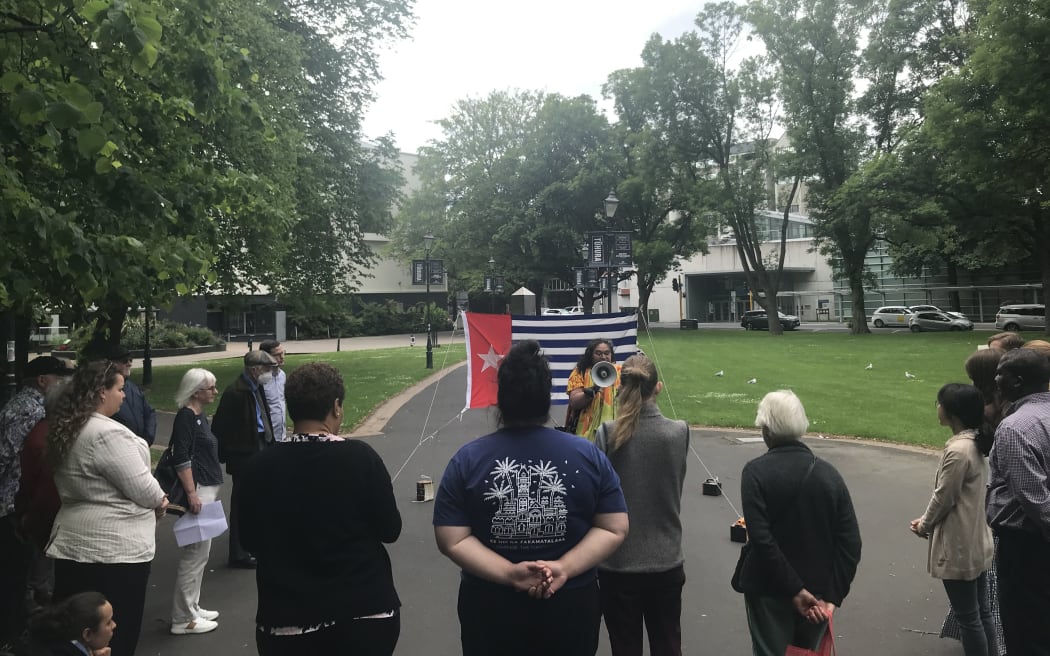
On Thursday, the Fiji Women’s Crisis Centre (FWCC) held a flag-raising ceremony to mark 61 years since the Morning Star, the West Papuan national flag, was first raised.
Women, girls suffered FWCC coordinator Shamima Ali said as part of the 16 Days of Activism campaign, FWCC remembered the people of West Papua, particularly women and girls, who suffered due to the increased militarisation of the province by the Indonesian government.
“We also remember those women, girls, men and children who have died and those who are still suffering from state violence perpetrated on them and the violence and struggle within their own religious, cultural and societal settings,” she said.
Ali said Pacific islanders should not be quiet about the issue.
“Fiji has been too silent on the issue of West Papua and the ignorance needs to stop,” she said.
“Keeping quiet is not the answer when our own people are suffering.”
Shayal Deviis a Fiji Times reporter. Republished with permission.
Three months after their extradition from Thailand to face bribery and money laundering charges in the United States, two naturalised Marshallese citizens pleaded guilty on Friday in a New York court to conspiring to violate the US Foreign Corrupt Practices Act (FCPA) in connection with a multi-year scheme to bribe government officials in the Marshall Islands to pass legislation to establish a special investment zone in this western Pacific nation.
Cary Yan and Gina Zhou had been charged with three counts each of violating the FCPA and two counts of money laundering.
They pleaded guilty to one count of conspiring to violate the FCPA and the US Attorney’s Office for the Southern District of New York dismissed the other four charges. They are naturalised Marshall Islands citizens originally from the People’s Republic of China.
“As they have now admitted, the defendants sought to undermine the democratic processes of the Republic of the Marshall Islands through bribery in order to advance their own financial interests,” US Attorney Damian Williams said in a statement.
“I commend the career prosecutors of this Office and our law enforcement partners for bringing this corruption to light and ensuring that justice is done.”
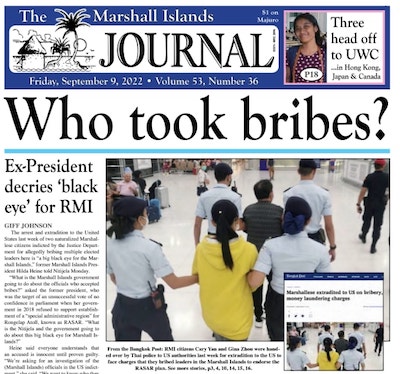
The Marshall Islands Journal’s page one when the story broke in early September about Cary Yan and Gina Zhou being extradited to the US to face bribery and money laundering charges related to the Marshall Islands. Image: Marshall Islands Journal/RNZ Pacific
Yan, 51, and Zhou, 35, are awaiting sentencing. They have been held without bail pending final disposition of the case.
Yan faces a maximum five-year term in prison and a fine of up to US$200,000, while Zhou faces a maximum prison term of three years and 10 months and a fine of up to US$150,000, according to the plea agreement between their defence attorneys and the SDNY prosecutors.
“Beginning at least in 2016, Yan and Zhou began communicating and meeting with Marshall Islands officials in both New York City and the Marshall Islands concerning the development of a semi-autonomous region within a part of the Marshall Islands known as the Rongelap Atoll,” said the US indictment that was unsealed on September 2 on Yan and Zhou’s arrival in New York following extradition from Thailand.
‘Attracting investors’ “The creation of the proposed semi-autonomous region was intended by Yan, Zhou, and those associated with them to obtain business by, among other things, allowing Yan and Zhou to attract investors to participate in economic and social development projects that Yan, Zhou, and others promised would occur in the semi-autonomous region.”
Their aim was to establish the Rongelap Atoll Special Administrative Region (RASAR). But because it ran afoul of the Marshall Islands constitution and required exemption from multiple Marshall Islands legal oversight and enforcement provisions, President Hilda Heine’s administration refused to introduce the proposed RASAR legislation to Nitijela (parliament) for consideration in 2018.
Yan and leading Marshall Islands officials had officially launched the RASAR plan in Hong Kong in April 2018, but never met legal requirements to move the plan forward in the Marshall Islands.
Starting in early 2018 and “continuing until at least on or about November 1, 2018, Yan and Zhou offered and provided a series of cash bribes and other incentives to obtain the support of Marshall Islands legislators for the RASAR bill,” said the US indictment.
Heine’s administration held off the attempt to push RASAR legislation into parliament in late 2018 and survived an attempt to unseat Heine through a vote of no confidence in November.
After the national election a year later, when Nitijela reconvened in January 2020, Heine lost the presidency to David Kabua.
Shortly after the new government took office in 2020, “Yan and Zhou began emailing and meeting with certain Marshall Islands officials to continue their plan to create the RASAR,” said US prosecutors.
Law consideration “In or about late February 2020, the Marshall Islands legislature began considering a resolution that would endorse the concept of the RASAR, a preliminary step that would allow the legislature to enact the more detailed RASAR Bill at a later date.”
US prosecutors said that in early March, “Yan and Zhou met with a close relative of a member of the Marshall Islands legislature in the Marshall Islands.
During the meeting, Yan and Zhou gave the relative $7000 in cash to pass on to the official, specifying that this money would be used to induce and influence other Marshall Islands legislators to support the RASAR Resolution.
“Yan and Zhou further stated, in sum, that they knew that the official needed more than $7000 for this purpose and that (they) would soon obtain additional cash for the official.”
US prosecutors said that at this meeting in early March 2020, Yan and Zhou “also discussed having previously brought larger sums of cash into the Marshall Islands through the United States and that they planned to do so again in the future”.
By the third week of March 2020, the Nitijela passed the RASAR Resolution “with the support of legislators to whom Zhou and Yan had provided bribes and other incentives,” said the prosecutors.
This article is republished under a community partnership agreement with RNZ.
Taking regular medicines is common, and it’s not unusual for people to miss an occasional dose or take it outside the regular time window. Forgetting to do something is normal, but in the case of medicines, forgetting to take them at the prescribed time can have negative health effects.
By one estimate, about half the population of people taking regular medicines don’t take them as prescribed. Is this a breakdown in communication? A lack of understanding of their importance? Forgetfulness?
Largely, reasons for not taking medicines as prescribed can be organised into two types: intentional and unintentional.
Unintentional is when a patient intends to follow the prescribed regimen but doesn’t due to factors outside their control, including forgetfulness, difficulties understanding dosing instructions, or cost.
But for some, a patient consciously decides not to follow the prescribed regimen. This could be due to side effects, or not believing in the necessity of the medicine.
Medication-taking is complex because each person is unique and the challenges to each person’s medication-taking can vary quite significantly. The most effective strategy is one that also considers why a person isn’t taking their medicine. What are some of the support strategies available, and are they actually helpful?
Pill boxes
The most commonly used methods to support medication adherance are organisational strategies such as days-of-the-week pill containers.
Pill containers labelled Monday to Friday can be filled at home. towfiqu barbhuiya/unsplash, CC BY
These are functional if a patient has to take many different medications.
But they’re not always suitable – if the user does not fill the container correctly or doesn’t remember to collect the prefilled pack (called a Webster-pak, blister pack or dosette box) from the pharmacy, this simple intervention quickly becomes ineffective.
The pharmacy can also make up dosette boxes, with medications for different times of day. Shutterstock
Some medicines can’t be packed because their stability is compromised with repacking, and patients with reduced eyesight or dexterity can struggle to use these containers.
So while they are an effective prompt, simple reminder cues such as days-of-the-week pill containers may not be ideal for everyone.
Alarms
Pre-set alarms are another commonly used reminder method.
However, this strategy is not infallible, and the literature shows many patients miss medication doses when out of routine because they turn their alarm off subconsciously when occupied with another task.
Reminder alarms only seem to be effective when they are interactive or personalised.
Automated pill dispensers are handy for those with memory issues, but they’re not cheap. Shutterstock
For example, in a handy combination of both methods above, you can now buy automated pill dispensers with alarms that go off at predetermined times and only stop when the medication is removed.
These can be especially handy for those with memory issues such as dementia. However, they are not cheap, costing a few hundred dollars each, and so will not be accessible for everyone.
Mobile apps
The latest Apple iOS update allows you to track your medications and schedule reminders.
Medication reminder apps were first developed to support older adults and people with chronic diseases required to manage multiple medicines.
But they’ve now been embraced as a suitable support for anyone wishing to independently manage their own medicines, including those on short-term medicines such as antibiotics.
Smart phone apps can help with medication reminders. Shutterstock
They provide simple, practical health-specific information as well as supporting medication-taking through automation.
Although the platforms differ slightly, the general premise is a patient independently inputs their medication-taking and prescription refill schedule, and the app then generates automatic reminders for the patient.
The only downside is like any notification, they can be easily dismissed or overlooked.
Habit stacking
When our day changes, for example if we go out for brunch and we usually take our medicines with breakfast, or an unexpected visitor arrives at the usual 11am pre-lunch tablet time, often we forget our medications. This is where “habit stacking” may be beneficial.
Although habit stacking is a relatively new approach to fostering medication taking, habit formation has been repeatedly shown to effectively support wellbeing. Linking medication-taking to a behaviour that does not change from day to day, such as cleaning your teeth, or removing shoes when entering the house, can help you to remember medications.
Some more habit stacking examples to support medication taking may include:
• hygiene routine – shower, shave, swallow
• after dinner unwind – cuppa and meds
• morning mantra as you leave the house – keys, phone, wallet, meds.
What else can we do?
We are all unique, so to make sure we actually take our medicines we need to find what works for us, and consider why we weren’t actually taking them in the first place.
Reminders, gadgets, habit stacking, or a combination may help. We need strategies that can adapt to the unexpected.
Amelia Cossart does not work for, consult, own shares in or receive funding from any company or organisation that would benefit from this article, and has disclosed no relevant affiliations beyond their academic appointment.
Source: The Conversation (Au and NZ) – By Cathryn Trott, Research Fellow in Radio Astronomy, SKA-Low Chief Operations Scientist, Curtin University
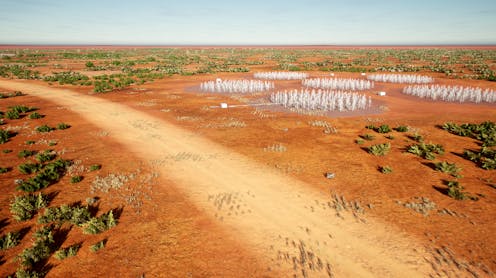
Artist’s impression of some of the SKA-Low antenna stations.DISR
Construction of the world’s biggest radio astronomy facility, the SKA Observatory, begins today. The observatory is a global project 30 years in the making.
With two huge two telescopes, one in Australia and the other in South Africa, the project will see further into the history of the Universe than ever before.
Astronomers like me will use the telescopes to trace hydrogen over cosmic time and make precise measurements of gravity in extreme environments. What’s more, we hope to uncover the existence of complex molecules in planet-forming clouds around distant stars, which could be the early signs of life elsewhere in the Universe.
I have been involved in the SKA and its precursor telescopes for the past ten years, and as the chief operations scientist of the Australian telescope since July. I am helping to build the team of scientists, engineers and technicians who will construct and operate the telescope, along with undertaking science to map primordial hydrogen in the infant universe.
What is the SKA Observatory?
The SKA Observatory is an intergovernmental organisation with dozens of countries involved. The observatory is much more than the two physical telescopes, with headquarters in the UK and collaborators around the world harnessing advanced computers and software to tailor the telescope signals to the precise science being undertaken.
The telescope in South Africa (called SKA-Mid) will use 197 radio dishes to observe middle-frequency radio waves from 350 MHz to more than 15 GHz. It will study the extreme environments of neutron stars, organic molecules around newly forming planets, and the structure of the Universe on the largest scales.
The Australian telescope (SKA-Low), in Western Australia, will observe lower frequencies with 512 stations of radio antennas spread out over a 74-kilometre span of outback.
The site is located within Inyarrimanha Ilgari Bundara, the CSIRO Murchison Radio-astronomy Observatory. This name, which means “sharing sky and stars”, was given to the observatory by the Wajarri Yamaji, the traditional owners and native title holders of the observatory site.
Tuning in to the Universe
After decades of planning, developing precursor telescopes and testing, today we are holding a ceremony to mark the start of on-site construction. We expect both telescopes will be fully operational late this decade.
Each of the 512 stations of SKA-Low is made up of 256 wide-band dipole antennas, spread over a diameter of 35 metres. The signals from these Christmas-tree-shaped antennas in each station are electronically combined to point to different parts of the sky, forming a single view.
An artist’s impression of a station of radio antennas. Each station has 256 antennas,
and the SKA-Low telescope will have 512 stations. DISR
These antennas are designed to tune in to low radio frequencies of 50 to 350 MHz. At these frequencies, the radio waves are very long – comparable to the height of a person – which means more familiar-looking dishes are an inefficient way to catch them. Instead the dipole antennas operate much like TV antennas, with the radio waves from the Universe exciting electrons within their metal arms.
Collectively, the 131,072 dipoles in the completed array will provide the deepest and widest view of the Universe to date.
Peering into the cosmic dawn
They will allow us to see out and back to the very beginning of the Universe, when the first stars and galaxies formed.
This key period, more than 13 billion years in our past, is termed the “cosmic dawn”: when stars and galaxies began to form, lighting up the cosmos for the first time.
The cosmic dawn marks the end of the cosmic dark ages, a period after the Big Bang when the Universe had cooled down through expansion. All that remained was the ubiquitous background glow of the early Universe light, and a cosmos filled with dark matter and neutral atoms of hydrogen and helium.
The light from the first stars transformed the Universe, tearing apart the electrons and protons in neutral hydrogen atoms. The Universe went from dark and neutral to bright and ionised.
The SKA Observatory will map this fog of neutral hydrogen at low radio frequencies, which will allow scientists to explore the births and deaths of the earliest stars and galaxies. Exploration of this key period is the final missing piece in our understanding of the life story of the Universe.
Unimagined mysteries
Closer to home, the low-frequency telescope will time the revolutions of pulsars. These rapidly spinning neutron stars, which fire out sweeping beams of radiation like lighthouses, are the Universe’s ultra-precise clocks.
Changes to the ticking of these clocks can indicate the passage of gravitational waves through the Universe, allowing us to map these deformations of spacetime with radio waves.
It will also help us to understand the Sun, our own star, and the space environment that we on Earth live within.
These are the things we expect to find with the SKA Observatory. But the unexpected discoveries will most likely be the most exciting. With an observatory of this size and power, we are bound to uncover as-yet-unimagined mysteries of the Universe.
Cathryn Trott receives funding from the Australian Research Council, and is employed by SKAO and Curtin University.
Review: Médée, directed by Justin Way and conducted by Erin Helyard, Pinchgut Opera
Known for specialising in baroque opera and historically informed music interpretations, Pinchgut Opera always programs pieces that not only delight with luscious baroque instruments and beautiful voices but bring forth characters and themes that speak to modern audiences.
Médée, by Thomas Corneille and Marc-Antoine Charpentier, is a masterpiece of French baroque opera, first performed in 1693 at the Académie Royale de Musique.
The story explores themes of justice, loyalty, migration and family annihilation with pertinent relevance for an audience of the 21st century still suffering the consequences of the COVID pandemic.
The voice of Médée
Médée is based on the ancient Greek tragedy Medea by Euripides (431 BC).
Knowing that her husband, the power-thirsty and spineless Jason (Michael Petruccelli), will betray her, Médée (Catherine Carby) attempts diplomacy. She is forced to enact justice by usurping her status and breaching the constricting social and political norms. In doing so, she breaks one of society’s greatest taboos: she kills her children.
In this production, the two sons are part of the action and their bodies are brought on stage covered in blood.
Corneille’s libretto emphasises the political manoeuvring at the Corinthian court to respond to the sensibilities of the French court of Louis XIV. Power tactics are used by everyone to gain advantage during a crisis.
Catherine Carby gives us a formidable female character. Cassandra Hannagan
In the Pinchgut production, the setting of the opera transports the imminent threat and negotiations at the Corinthian court to the 20th century with the respective civic and military connotations.
The strong voice of Médée dominates this story and resounds on the Australian operatic stage as a rare representation of a formidable female character who uses diplomacy and power to stand up for herself in a male-dominated world.
Conducted by Erin Helyard, the Orchestra of the Antipodes play Charpentier’s music with elegance and restraint. It renders the melodious richness of orchestral colour and instrumentation with finesse. The choir enchants with the uniformity and depth of their sound. The beautiful solo voices of the cast leave the listener gasping for more.
The minimalist grey columns and walls of the set allow for effective contrast of costumes, movement and lighting and projection to play their role in the visual storytelling.
Costumes, movement, lighting and projection all play their role in the visual storytelling. Cassandra Hannagan
A supersized bust dominates the stage and remains malleable throughout, referencing the gradual disintegration of the Corinthian court and the humiliation the male characters suffer in this story.
Médée’s music is more often mournful and pleading than furious and destructive. Carby portrays well the inner turmoil of the character with a silky mezzo-soprano voice that soars over the tricky waves of Charpentier’s phrases and offers a variety of tonal qualities to express the emotional states of Médée’s complex character. Her touching rendition moves the audience with pity.
Carby is less successful in expressing physically the power of the sorceress or the sexual attraction her character feels for Jason, which is not helped by a reliance on the symbolism of costumes over bodily eloquence.
In this production, Médée is presented as a crone – white haired and having lost her physical allure, juxtaposed against the younger princess Créuse (Cathy-Di Zhang), stunning in a royal purple dress.
It is only in pursuit of Créuse that Petrucelli’s Jason shows virility and arduous persuasion. Zhang’s Créuse is sexy and cunning, negotiating well the political manoeuvres of the court.
Zhang’s Créuse is sexy and cunning, negotiating well the political manoeuvres of the court. Cassandra Hannagan
Adrian Tamburini’s Créon looks younger than Petrucelli’s Jason to be a father of Créuse, but he does his best to convey the authority and arrogance of the King by relying on his rich bass-baritone, crisp diction and good acting.
Andrew Finden is most convincing as Oronte with attention to text emphasis and strong commitment to the character.
Maia Andrews stands out among the secondary roles with a voluptuous voice and portrayal of the Italian entertainer.
Louis Hurley’s singing and acting deliver a compelling Arcas and La Vengeance.
Elevating the soul
If the purpose of art is to elevate the soul, provide an opportunity for contemplation and even salvation, then Médée’s performance delivers.
The music is elegant and noble, transporting the listener away from the crude noise of the modern world to a state of aesthetic pleasure and satisfaction.
The tragedy of Médée encourages reflection on justice and reciprocity and asks us to look within. Are we like Jason and Médée obsessed by our desires? Do we love too much someone who does not deserve it? Do we feel so vulnerable that violence is the only way to protect ourselves? How do we accept those that are different and more powerful than us? Do we have the courage to live on the edge and stand up for our ideals and consequently face the music – and do we condone or support those that do?
Pinchgut’s production of Médée is an opportunity not to be missed to enjoy baroque opera performed at the highest standards by expert baroque musicians and singers. The choice of an opera based on Greek tragedy provides intellectual stimulation to consider the human condition, loyalty and justice in the world we live today.
Médée is at City Recital Hall, Sydney, until December 7.
Daniela Kaleva does not work for, consult, own shares in or receive funding from any company or organization that would benefit from this article, and has disclosed no relevant affiliations beyond their academic appointment.
Source: The Conversation (Au and NZ) – By Adrian Beaumont, Election Analyst (Psephologist) at The Conversation; and Honorary Associate, School of Mathematics and Statistics, The University of Melbourne
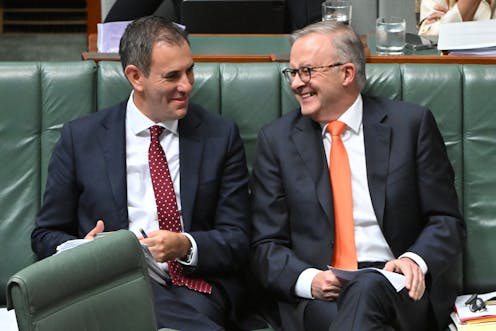
Mick Tsikas/AAP
A federal Newspoll, conducted November 30 to December 3 from a sample of 1,508, gave Labor a 55-45 lead, unchanged from the post-budget Newspoll in late October. Primary votes were 39% Labor (up one), 35% Coalition (steady), 11% Greens (steady), 6% One Nation (steady), 1% UAP (steady) and 8% for all Others (down one).
Prime Minister Anthony Albanese was at 62% satisfied (up three) and 29% dissatisfied (down four), for a net approval of +33, up seven points. Opposition Leader Peter Dutton was down two points on net approval to -9. Albanese led Dutton by 59-24 as better PM (54-27 previously). Newspoll figures are from The Poll Bludger.
In all polls conducted since the May election, Labor has had a big lead, with one exception. Last week’s Morgan poll only gave Labor a 52.5-47.5 lead, and Morgan’s polls have generally been better for the Coalition this term than other polls. In the past, Morgan polls nearly always skewed to Labor.
Labor and Albanese have had a long honeymoon since the election, but so did Kevin Rudd after the 2007 election, and he did not even lead Labor to the 2010 election. Honeymoon polling is not predictive of the next election’s result.
Essential: first voting intentions has Labor leading by 51.4-43.1
In last week’s Essential poll, conducted in the days before November 29 from a sample of 1,042, the Guardian reported that Labor led by 51.4-43.1 with 5.5% undecided in the first time Essential has polled voting intentions since the May election.
If undecided were excluded, Labor would lead by 54.4-45.6. Primary votes were 33% Labor, 31% Coalition, 13% Greens, 17% for all Others and 6% undecided.
Essential asked respondents to rate leaders from 0 to 10, then 0-3 ratings were counted as negative, 4-6 as neutral and 7-10 as positive. Albanese’s ratings were 46-23 positive (45-20 in early November), while Dutton’s were 33-28 negative (32-29 previously).
By 46-9, respondents thought Australia’s relationship with China would be better after Labor won the May election, with 44% opting for no different.
On the AUKUS submarine partnership, 44% (down one since September 2021) thought it would make Australia more secure, 39% (up three) said it would not affect our security and 16% (down three) that it would make us less secure.
By 55-11, voters agreed that “the media is too biased to one side of politics”. Greens voters were most likely to agree (63%), but so did Coalition voters (57%), Labor voters (51%) and Other voters (61%). By 47-21, voters agreed that “I feel well-informed about federal politics”.
Morgan poll: 52.5-47.5 to Labor
In last week’s Morgan weekly federal poll, Labor’s lead dropped to 52.5-47.5 (53.5-46.5 the previous week). This poll was taken November 21-27.
The passage of these reforms highlights the importance of two Senate results at the May election: Pocock’s win in the ACT was the first time either territory’s two senators had not split 1-1 between the major parties. And Labor won three of Western Australia’s six senators that were up for election, with the Greens winning one, for a 4-2 left-right split.
These two results gave Labor, the Greens and Pocock a combined 39 of the 76 senators, enough to pass legislation opposed by all others.
Victorian upper house: is Transport Matters really winning a seat from second last?
The ABC calculator currently shows Rod Barton, the lead candidate of Transport Matters in Northeastern Metro region, defeating the Greens to win the fifth and final seat in this region despite being second last on just 0.2% or 0.01 quotas.
In the initial count, Barton was last behind the New Democrats, but correction of an error at a booth put the New Democrats behind Barton, and he receives their preferences starting the spiral that puts him ahead of the Greens at the final count. Labor preferences go to Barton ahead of the Greens.
However, the calculator assumes all votes are above the line. In fact, only 377 of the 649 New Democrats’ votes are above the line, so only these votes will be automatically transferred to Barton when the New ?Democrats are excluded. So Barton will have only 1,153 votes after this, not the 1,425 the calculator gives him.
That will put Barton 199 votes behind Sustainable Australia, the next party that gives him their preferences, not the 73 ahead the calculator shows. Barton will be knocked out early and the Greens will win the final Northeastern Metro seat.
In the lower house, the ABC is calling 52 of 88 seats for Labor, 27 for the Coalition, four Greens and five still undecided. A late Greens surge in Northcote has reduced Labor’s lead to 50.2-49.8 after the Greens conceded when Labor led by 51.2-48.8.
Labor will very likely win Preston, is just ahead in Bass, just behind in Pakenham, and the Coalition will likely win Narracan when the deferred election is held.
Overall lower house late counting has helped the Greens and hurt the Coalition. With 85.7% of enrolled voters counted, the ABC’s statewide two party estimate is 54.8-45.2 to Labor, with Labor on 37.0% of the primary vote, the Coalition 34.4% and the Greens 11.5%.
Georgia Senate runoff and US midterm poll performance
I covered the United States Georgia Senate runoff for The Poll Bludger; polls now suggest a narrow win for Democrat Raphael Warnock on Wednesday AEDT. US polls for the midterm elections understated Democrats in key Senate contests, in contrast to polls in recent major national elections that have understated the right.
I also covered the November 19 Malaysian election, at which Anwar Ibrahim became PM in a hung parliament. Labour maintains a huge lead in United Kingdom national polls, and had a big swing in its favour at a byelection.
Adrian Beaumont does not work for, consult, own shares in or receive funding from any company or organisation that would benefit from this article, and has disclosed no relevant affiliations beyond their academic appointment.
Marine sponges were thought to be more resilient to ocean warming than other organisms. But earlier this year, New Zealand recorded the largest-ever sponge bleaching event off its southern coastline.
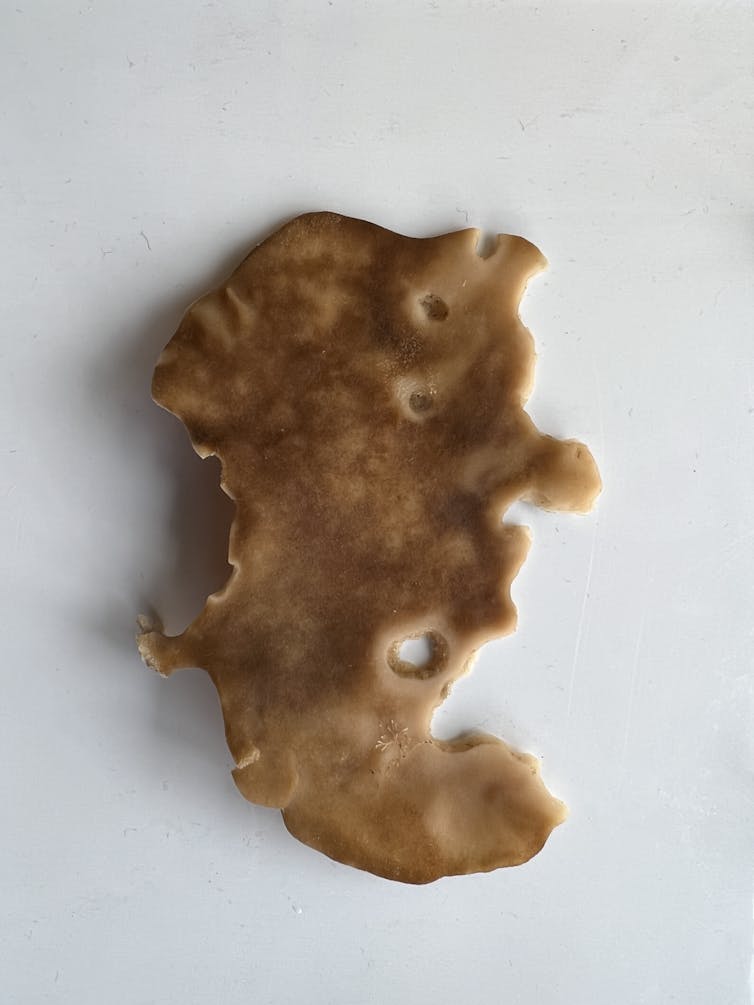
While only one species, the cup sponge Cymbastella lamellata, was affected, a prolonged marine heatwave turned millions of the normally dark brown sponges bright white.
Ocean warming during a heatwave has bleached millions of cup sponges bone white. Author provided, CC BY-SA
Subsequently, we reported tissue loss, decay and death of other sponge species across the northern coastline of New Zealand, with an estimated impact on hundreds of thousands of specimens. In contrast, we didn’t observe any bleaching or tissue loss in central areas of New Zealand’s coastline, despite extensive surveys.
Our latest research shows the most severe impacts on sponges occurred in areas where the marine heatwave was most intense. The loss of sponges may have major repercussions for the whole ecosystem.
Why should we care about sponges?
Sponges are among the most ancient and abundant animals on rocky reefs across the world. In New Zealand, they occupy up to 70% of the available seafloor, particularly in so-called mesophotic ecosystems at depths of 30-150m.
They serve a number of important ecological functions. They filter large quantities of water, capturing small food particles and moving carbon from the water column to the seafloor where it can be eaten by bottom-dwelling invertebrates. These invertebrates in turn are consumed by organisms further up the food chain, including commercially and culturally important fish species.
Sponges also add three-dimensional complexity to the sea floor, which provides habitat for a range of other species such as crabs, shrimps and starfish.
Typical sponge reefs from Northland, New Zealand. Author provided, CC BY-SA
Sponge bleaching, tissue loss and decay
Like corals, sponges contain symbiotic organisms thought to be critical to their survival. Cymbastella lamellata is unusual in that it hosts dense populations of diatoms, small single-celled photosynthetic plants that give the sponge its brown colour.
These diatoms live within the sponge tissue, exchanging food for protection. When the sponge bleaches, it expels the diatoms, leaving the sponge skeleton exposed.
Tissue loss occurs when sponges are stressed and either have to invest more energy into cell repair or when their food source is depleted and they reabsorb their own tissue to reduce body volume and reallocate resources.
Tissue decay or necrosis on the other hand is generally associated with changes in the microbial communities living within sponges and growth of pathogenic bacteria.
Bleaching, tissue loss and decay in sponges have all previously been associated with heat stress, but didn’t necessarily result in sponge death. In other places where such impacts have been observed, they were much more localised, compared to what we saw in New Zealand.
The impact of marine heat waves
Marine heatwaves are defined as unusual periods of warming that last for five consecutive days or longer. Some can last from weeks to several months and extend over hundreds or thousands of kilometres of coastline.
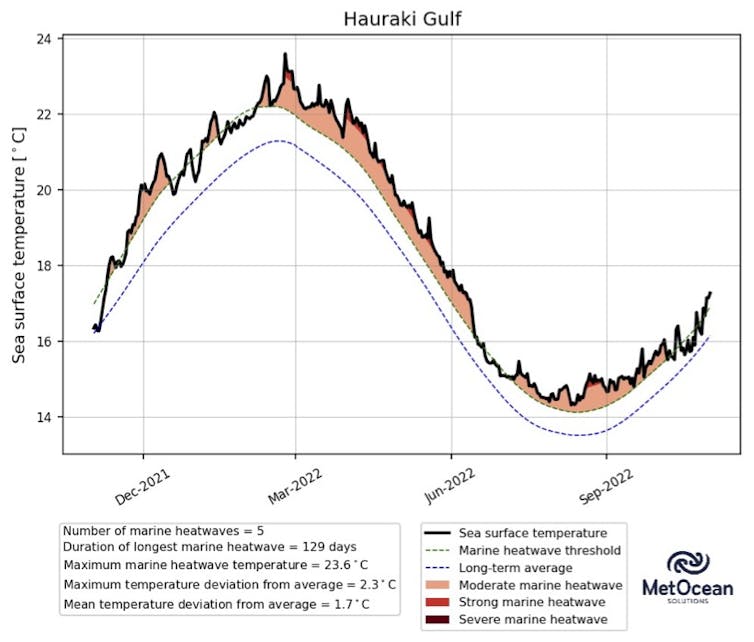
The sponge bleaching and tissue loss or decay in New Zealand matched the duration and intensity of marine heatwaves to the north and south of New Zealand during the summer of 2021/2022. The Hauraki Gulf, where sponge necrosis and decay was reported, was in a continuous marine heatwave for 29 weeks from November 2021 to the end of May 2022, with a maximum intensity of 3.77℃ above normal.
Sea surface temperature in the Hauraki Gulf over the past 12 months (thin line). Red shading appears when temperatures are above the marine heatwave threshold. Moana Project, CC BY-SA
In Fiordland, a prolonged marine heatwave developed in early February 2022 and persisted for more than 16 weeks into May, with a maximum intensity of 4.85℃ above normal temperatures. In contrast, the Wellington and Marlborough Sounds regions experienced only short (weeks) marine heatwaves with a lower intensity and we did not observe any impacts on sponges.
These extreme heat events can result from a combination of changes in the heat exchange between the air and the sea, wind patterns and ocean currents. Their likelihood is also influenced by large-scale climate patterns such as the El Niño Southern Oscillation (ENSO).
What the future may hold
Most global research on climate change impacts has focused on experimental studies exposing organism to temperatures predicted for 2100, often 2-4℃ higher than current temperatures. But the occurrence of marine heatwaves means organisms are already experiencing these temperatures, sometimes for several weeks or months. By 2100, marine heatwaves will become even more extreme.
For bleached Cymbastella, recent anecdotal reports suggest many sponges have recovered their colour, which is good news. However, observations immediately after the bleaching indicate many sponges were being eaten by fish, possibly because their symbionts may provide chemical defences against predation.
For bleached corals, studies have shown impacts on spawning success for many years after the event, likely because their energy reserves have been depleted.
We don’t yet know if this is the case for sponges. For sponges with decayed tissue the outlook is even less clear, as many probably died.
This sponge (Cymbastella lamellata) has been partially eaten. Author provided, CC BY-SA
Sponges are not the only species to be affected by marine heatwaves New Zealand experienced in 2021/2022. There were reports of seaweed die-offs and changes to normal distribution patterns of tuna and other ecologically and commercially important fish species.
Marine heatwaves should be front of mind when thinking about climate impacts. They are happening now, not in 50 years, and we don’t know enough yet to determine if sponges may be the canary in the coal mine.
This is especially important because New Zealand’s northern coastlines are already experiencing almost continuous marine heatwave conditions, with the ongoing event forecast to extend into the coming summer.
James Bell receives funding from the George Mason Trust, Victoria University of Wellington, The Fiordland Lobster company and The Leslie Hutchins Foundation
Nick Shears receives funding from Ministry of Business, Innovation and Employment – Sustainable Seas, New Zealand Department of Conservation, Waikato Regional Council, Foundation North – GIFT and Live Ocean Foundation.
Robert Smith receives funding from the New Zealand Ministry of Business Innovation and Employment.
Source: The Conversation (Au and NZ) – By David Smith, Associate Professor in American Politics and Foreign Policy, US Studies Centre, University of Sydney
Butch Dill/AP/AAP
Ron DeSantis’s re-election as governor of Florida was one of the few bright spots for Republicans in an otherwise disappointing 2022 midterm election. DeSantis originally won the governorship by less than half a percentage point in 2018. in 2022, he defeated his Democratic opponent (and former Republican governor) Charlie Crist by more than 19% of the vote.
For the first time in years, Donald Trump may have a serious challenger to his domination of the Republican Party. Donors, media figures and other conservative elites are flocking to DeSantis.
The contrasts with Trump are obvious. DeSantis won re-election while Trump lost, and many Republicans hold Trump responsible for their losses this year. DeSantis’s allies also point to his policy victories, something largely missing from Trump’s presidency.
But winning a Republican primary requires winning over large numbers of evangelical Christians, and for them the calculus of victory is more complex than “check out the scoreboard”. Trump has always promised them a victory much bigger than legislative triumphs or even election wins. While DeSantis represents the orthodox conservative Christian uses of political power, Trump appeals to those who believe that only an apocalypse can save America.
The Kingdom of God
One of the most important Christian narratives is triumph over death, embodied in the resurrection of Jesus Christ and promised one day to all God’s people. Death is not just beaten, but humiliated. In the New Testament book of 1 Corinthians, the Apostle Paul taunts “O death, where is thy sting? O grave, where is thy victory?”
There will be other reversals of earthly fortune, because God’s grace does not follow established social convention. In the parable of the vineyard workers, Jesus tells his followers that in the Kingdom of God “the last shall be first, and the first last”.
This passage has historically inspired enslaved and oppressed peoples to find a message of liberation in the gospels. But it has also encouraged relatively well-off people to imagine themselves as the persecuted “last” who will one day be first by God’s grace.
For orthodox Christians (referring not to Eastern Orthodox churches, but all adherents to core Christian creeds), politicians are not supposed to promise the Kingdom of God. The state and the Kingdom of God are separate realms, as Jesus himselfexplains. Nonetheless, political power has had important uses for Christians ever since Emperor Constantine made Christianity the state religion of the Roman Empire.
The Kingdom of DeSantis
Ron DeSantis exemplifies the orthodox American use of political power for conservative Christian ends. While he uses the updated language of fighting “wokeness”, DeSantis has used the governor’s office to pursue a time-honoured culture war agenda in Florida, reasserting the primacy of traditional family structures and gender roles and keeping children away from material that may conflict with their parents’ beliefs. DeSantis’s message of victory on election night was “Florida is where woke goes to die”.
DeSantis learnt from Trump that evangelical Christians don’t care much about the personal piety of their candidates. They want fighters, not Sunday school teachers. He taps into the idea that secular authorities are persecuting Christians in America, an old claim that has also been a centrepiece of Trump’s appeal to evangelicals.
But there are limits to how much DeSantis can emulate Trump. While DeSantis sounds like a politician with a law degree, Trump sounds like a tent revival prophet. Rather than rearguard culture war actions, Trump promises the redemption of America.
The Kingdom of Trump
In his first presidential run, Trump was notable for his scathing “American carnage” speeches about the fallen state of the nation. It was rare to hear an American politician talk his country down like that, but it appealed to Christians who thought that even their own leaders didn’t understand how bad things were.
Trump’s vows to restore America’s glory and punish its enemies without mercy resonate with evangelicals, who long for a day of reckoning when everyone will be held to account. As president, Trump always hinted that bigger things were around the corner. In the words of Kimberley Guilfoyle at the Republican National Convention, “the best is yet to come!”.
In contrast, Trump warned that if Joe Biden won the 2020 election, “there will be no God” in America.
Even Trump’s “stolen election” claims fit a death and resurrection narrative. Remembering his remarkable 2016 victory in defiance of the polls, Trump’s most ardent supporters expect him to ultimately triumph, one way or another, despite the appearance of defeat in 2020.
For many Pentecostals and Charismatics, Trump was such a radical break from political norms that he represented the fulfilment of biblical prophecy. They likened him to biblical figures like Cyrus the Great, a pagan king who was nevertheless chosen to save God’s people.
This apocalyptic style does not appeal to all conservative evangelicals, but in 2016 more orthodox-minded Christians couldn’t unite around a single candidate in opposition to Trump. Now, after six years of Trump influencing evangelical subculture and bringing previously marginal views to the centre of it, any challenger to Trump seeking evangelical votes faces a daunting task.
Any presidential candidate trying to wrest evangelical votes from Donald Trump faces a daunting task. Lynne Sladky/AP/AAP
How abortion could make or destroy the 2024 Republican candidate
The most complicated issue in any contest between Trump and DeSantis could be abortion.
In 2016, Trump promised to appoint Supreme Court justices who would overturn Roe v Wade, the framework that had kept abortion legal in all states for nearly five decades. The Dobbs decision in 2022 overturning Roe was a direct consequence of Trump’s three appointments.
Trump’s supporters can point to the fulfilment of this longstanding conservative dream as far more significant than anything DeSantis has achieved, and Trump quickly claimed credit for it. But he reportedly also worried that Republican legislators were going too far for voters with abortion bans, and that the issue could hurt him politically in 2024.
He was right to worry. The abortion issue is widelyrecognised as one of the main reasons Republicans did so poorly in the midterm elections.
Before the Dobbs decision, DeSantis signed a law prohibiting abortion after 15 weeks in Florida, with no exemptions for cases of rape or incest. The law survived a legal challenge and DeSantis suspended a state attorney who refused the enforce the law.
After Dobbs, which allows for even more extensive abortion bans, DeSantis said Florida would “expand pro-life protections” but has so far declined to say what these would be. Some Florida Republicans may push for tougher restrictions after making big gains in the state legislature at the midterms.
Both Trump and DeSantis would have difficult decisions to make about whether to try to outflank each other on the abortion issue, or to distance themselves from Republican extremism. Abortion bans are increasingly unpopular even in the Republican Party, but these are among the most prized goals of religious activists who vote in Republican primaries.
Primary contests are highly unpredictable, and there is little current polling on how evangelical Christians compare the two most likely candidates. Trump secured 81% of the white evangelical vote in the 2020 election, but a contest with DeSantis could open deep divides among evangelical conservatives – at least until the winner faces a Democrat.
David Smith does not work for, consult, own shares in or receive funding from any company or organization that would benefit from this article, and has disclosed no relevant affiliations beyond their academic appointment.
Source: The Conversation (Au and NZ) – By Hal Pawson, Professor of Housing Research and Policy, and Associate Director, City Futures Research Centre, UNSW Sydney
The numbers of people who are homeless have risen sharply across Australia, with soaring housing costs emerging as the biggest driver of the increase. The Australian Homelessness Monitor 2022, released today, reports that the average monthly number of people using homelessness services increased by 8% in the four years to 2021-22. That’s double the population growth rate over that period.
In the first major homelessness analysis spanning the COVID crisis years, we also show numbers have been rising in some parts of the country at rates far above the national trend. The problem has been growing especially rapidly in non-metropolitan areas. This trend is consistent with the boom in regional housing prices and, more especially, rents sparked by the pandemic.
The homelessness that has long been a sad feature of our biggest cities has clearly spread to regional and rural Australia.
Many other patterns in the changing scale and nature of homelessness in Australia are ongoing trends that pre-date the 2020-21 public health emergency. This period appears to have had relatively little effect on these trajectories, which include a growing proportion of older adults, as well as First Nations peoples and those affected by mental ill-health.
As the chart below shows, unaffordable housing is playing an increasing role in people becoming homeless.
Social housing programs are welcome but overdue
The pandemic triggered significant and welcome commitments to social housing programs by the new federal government and some state governments. The recent federal budget confirmed funding for 20,000 new social housing dwellings over five years.
Together, these new programs will – at least temporarily – halt the long-term decline in social housing capacity. The sector’s share of the nation’s housing stock has been shrinking for most of the past 25 years.
By our reckoning, the government programs should deliver a net increase of about 9,000 social rental dwellings in 2024. This will be the first year for decades in which enough dwellings will be built to maintain the sector’s share of Australia’s occupied housing stock.
But sustaining this achievement will require more funding beyond the current commitments. Otherwise, the decline will resume.
Affordability is the big issue, but some need other help
As a recent Productivity Commission report acknowledged, homelessness is primarily a housing problem. In its words, “fundamentally, homelessness is a result of not being able to afford housing”.
While other reasons do contribute to some people becoming homeless, most people experiencing homelessness have no long-term need for personal support. And many who do have high support needs can access and keep tenancies when suitable affordable housing is available.
At the same time, the most disadvantaged rough sleepers may require a great deal of help to overcome their problems. The widely acclaimed “housing first” model successfully does this. As other recent research emphasises, for many chronic rough sleepers helped into secure housing, withdrawing such support – even after three years – markedly increases their risk of becoming homeless again.
Australian governments need to better recognise the case for expanding the supply of permanent supportive housing. This involves integrating long-term affordable housing with ongoing support services where required.
Only a few such projects operate in Australia. There is no general framework to fund them, especially the support services.
Lengthy rough sleeping is typically a symptom of societal failure. All too often, for those affected, this failure starts from infancy.
The Productivity Commission report advocated a “high-needs-based [social] housing subsidy to ensure housing is affordable and tenancies can be sustained”. Logically, since this is essentially a social work (not social security) responsibility, it is the states and territories, and not the Commonwealth, that should bear the cost.
This may sound like a big ask for underfunded governments. But state and territory budgets stand to benefit from avoiding the costs that recurrent and chronic homelessness imposes on departments such as health and justice. As our previous research shows, we spend enormous amounts of public money responding to the consequences of leaving people in a state of chronic homelessness.
A model for funding permanent supportive housing needs to be developed. Ideally, this process should involve all Australian governments, perhaps as part of discussions to advance the National Housing and Homelessness Plan. Federal Labor pledged this project will take shape in 2023.
More broadly, these deliberations must be underpinned by recognition that our current ways of developing, operating and commodifying housing produce homelessness. A plan to end homelessness requires a plan to overhaul our housing system so it produces enough suitable and affordable housing for all Australians.
Australians are getting older, sicker, and harder to treat. This isn’t news to GPs, who say they are overwhelmed with demand and frustrated with a rigid system that doesn’t support them.
To improve general practice, the Albanese government has set aside almost a billion dollars and convened a Strengthening Medicare Taskforce to advise how to spend it. Many people argue recruiting more GPs is the best path forward.
But as a new Grattan Institute report shows, Australia has plenty of GPs – although they’re not always in the right areas. What we lack are supporting clinicians to help GPs respond to a growing tide of chronic disease.
One reason many GPs feel overwhelmed is because their patients are getting sicker. More patients have multiple conditions that need to be managed by their GP, and the proportion with more than one chronic condition has been estimated at nearly half.
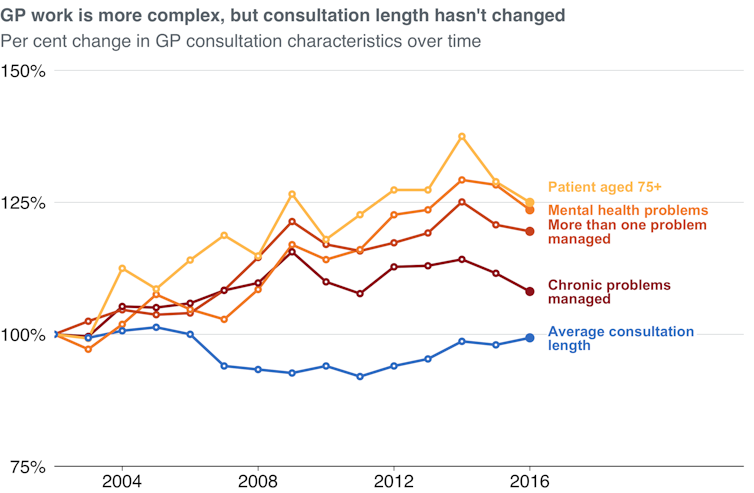
Managing these patients is more complex and takes more time, but Medicare does not reward GPs for longer consultations. Average consultation length has been stuck at between 14 and 15 minutes since 2002, despite the increasing complexity of patients’ needs.
Patients’ needs are becoming more complex. BEACH survey results, Britt et al. (2010) and Britt et al. (2015), Author provided
Australia has many GPs
To help general practices meet this demand, peak bodies have called for more GPs, and to attract them to the specialty through higher pay.
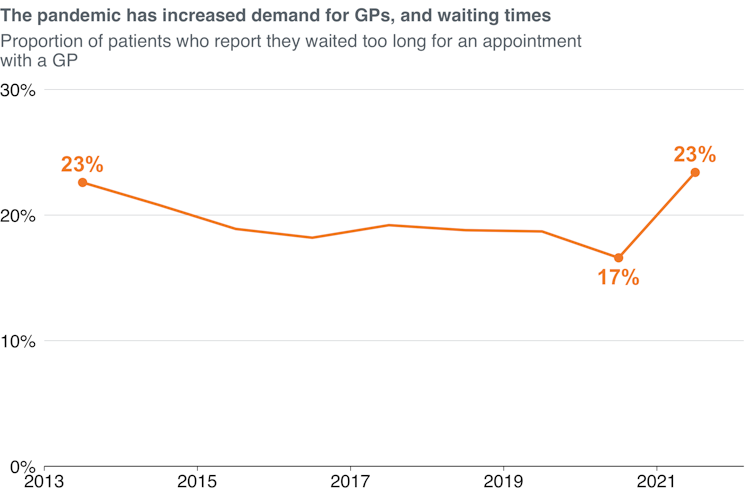
It’s true that many places in Australia, particularly some rural areas, don’t have enough GPs. And the pandemic has led to a surge in demand everywhere, with wait times spiking after years of steady decline.
Wait times have spiked. ABS patient experiences survey (2022), Author provided
But at a national level, almost all the indicators suggest GP supply is stronger than ever. As our report shows, Australia has more GPs per person than ever before, more GPs than most wealthy countries, and record numbers of GPs in training.
GPs need more support
While the supply of GPs has grown, more GPs alone can’t manage the rising tide of chronic disease, or the growing pressure on many general practices. Instead, we need to make general practice a team sport.
Team-based care is increasingly used in general practice overseas. But compared with similar countries, Australian GPs have little support.
About three-quarters of clinical staff in Australian general practice are GPs, with nurses making up almost all the remaining quarter. And those nurses don’t get to help as much as they want, with three-quarters saying they face barriers to using all their skills.
Other countries have different types of workers that Australia lacks. Germany has about 400,000 medical assistants, providing administrative and clinical support in general practice, while Australia has only about 100. England has about one supporting clinician for every GP, three times as many as Australia. In the United States, nurse practitioners and physician assistants deliver about 11% of all medical services outside hospitals. In Australia they would deliver less than 0.1%.
Evidence overwhelmingly confirms these and many other clinicians can share parts of a GP’s load with the same safety and quality of care. Studies suggest well-implemented team care can improve quality of care, patient safety and health outcomes, as well as reducing demand on hospitals.
It also makes GPs’ jobs more manageable, impactful and satisfying. By sharing simpler care with other team members, GPs can spend more time working with more complex patients.
It also creates time for other types of work: planning, improving care, maintaining oversight of the team’s care, and consulting with other specialists. While a GP’s clinical work will be more complex, they will also have more time to do other vital aspects of their role.
Emerging trials in many states (such as the pharmacist-prescribing trials in Queensland, New South Wales and Victoria) have also made it clear task-sharing is happening – with GPs, or without them.
Unlike these trials, our recommendations focus on bringing new workforces into general practice, not taking care out.
GPs might think this sounds like a fantasy that would never work for them. That’s because for most clinics, it will only be possible if there are fundamental changes to how the system is run.
The first barrier is funding. General practices lose revenue if they have anyone other than a GP deliver care. Medicare does not fund practice pharmacists, physiotherapists, practice nurses, nurse practitioners or Indigenous health workers to work to their full skill level.
Other workforces, such as physician assistants, community paramedics and medical assistants, are not funded to provide care at all.
General practices should be able to opt into a new funding model which, as well as paying GPs for each appointment, gives them a budget for ongoing care of each patient. This would enable GPs to expand their team, and give them funding even when another team member is providing care. Most wealthy countries use this kind of funding model.
The second barrier is regulation. An independent commission should advise government on how different roles should be regulated, to make sure workers can safely use all their skills.
Finally, taking away barriers isn’t enough. As other countries have found, change needs financial support.
The federal government should use Strengthening Medicare funding to roll out 1,000 new nurses, physiotherapists, mental health clinicians, pharmacists and other allied health workers in the highest-need communities, to work in general practices alongside GPs, providing fee-free care.
The shift to team-based general practice won’t be easy. It will require changes in how practices are designed and operate, and enough funding, time and training for teams to work well together. This should be recognised with more funding and sustained expert support.
Although it will be hard, the payoff will be worth it. GPs will be free to choose a model with more support and more sustainable workloads. Government will be able to reduce the biggest gaps in access and outcomes. And patients will have more time with their general practice team, quicker access when they need it, and better care.
The authors do not work for, consult, own shares in or receive funding from any company or organization that would benefit from this article, and have disclosed no relevant affiliations beyond their academic appointment.
About half of Australia’s biggest listed companies have plans to reach net-zero greenhouse gas emissions, our new analysis has found.
We assessed the climate change commitments of 187 companies out of 200 listed on the Australian Stock Exchange – the ASX200. Together, these 187 companies produce 32% of Australia’s operational emissions – that is, emissions produced directly from a business’ operations or from the use of its energy products.
The net-zero plans represent a significant step for climate change action in Australia.
Property developer Lendlease, for example, aims to achieve absolute zero carbon by 2040. Fortescue Metals Group, meanwhile, plans to reach net-zero emissions along its entire value chain by 2040.
But more must be done by Australian companies.
Importantly, the net-zero plans we identified typically don’t include all emissions associated with a business’ operations, such as fossil fuel burned by customers. And much of the action promised will come too late to avert catastrophic global warming.
Comparing commitments
Meeting the Paris Agreement goal of limiting global warming to 1.5℃ is imperative if we’re to avoid the worst effects of climate change.
So, we set out to examine whether the net-zero corporate commitments of some of Australia’s biggest companies were in line with the crucial 1.5℃ goal, as well as three best practice principles:
a net-zero commitment by or before 2050
at least one appropriate and ambitious short or medium-term target
address scope 3 emissions.
Most technology solutions required to decarbonise lower-emitting sectors are already available. Shutterstock
We collected data in March and in November this year on the 187 ASX200 companies with operations in Australia. Our data coverage doesn’t extend beyond Australia’s borders.
We examined three types of emissions:
Scope 1: those directly generated by a company’s operations, such as a steel manufacturer burning fuel on site in its blast furnace
Scope 2: indirect emissions occurring from energy purchased and used by a company
Scope 3: indirect emissions along the wider value-chain, which includes the raw materials required to make a product, transporting it, and emissions caused by others using the product.
From the March data, we found 84 of the 187 ASX200 companies had net-zero targets for scope 1 and 2 emissions. Some 96% of these emissions were covered by the targets. And 68% of these were covered by 1.5℃-aligned targets.
Of the 187 companies assessed, 100 had no net-zero commitment. But many of these were in relatively low-emitting sectors, such as communications, and hotels and restaurants.
Most technology solutions required to decarbonise these sectors are already commercially viable, such as switching to renewables and increasing energy efficiency. But without action, emissions from these sectors are expected to rise.
Scope 3 emissions can be trickier to measure and address because a company has less visibility and influence over their suppliers and customers. Only 92 of the companies we assessed disclosed any scope 3 data. Of these, 21 companies had a net-zero target and only 16 were 1.5℃-aligned.
This means 71% of reported scope 3 emissions were not covered by net-zero commitments. Given scope 3 emissions typically comprise more than two-thirds of an organisation’s emissions overall, this is significant.
We similarly noted a lack of short (2022-2025) and medium-term (2026-2039) commitments. This means a lot of the promised action would come too late this decade to keep the goal of 1.5℃ alive.
Only 57 companies assessed had any interim emissions reduction targets for scope 1 and 2 emissions, and only 33 had 1.5℃-aligned interim targets.
This implies the ASX200 is overspending its carbon budget by 36%. A carbon budget is how much carbon can still be released into the atmosphere before we exceed a global warming threshold, in this case 1.5℃.
We tracked the progress of these companies up until last month – and saw notable momentum compared to the March data.
As at November, 23 of Australia’s largest companies had all emissions under 1.5℃-aligned, net-zero targets. This represents a 44% increase since March.
There was a 40% increase in scope 3 net-zero targets, all of which were 1.5℃-aligned. And 20-30% more companies had interim targets.
For example, Origin Energy is responsible for approximately 10% of the ASX200 reported scope 3 emissions. It now aims to reach net-zero across all emissions scopes by 2050.
Overall, this means 62% of emissions reported by the companies studied are covered by some sort of net-zero target, up from 56% of reported emissions in March.
The resulting estimated carbon budget overspend for scope 1 and 2 emissions is 24%. This is a significant reduction from 36% in March.
We need strong commitments from everyone
The momentum in the last six months demonstrates increasing corporate confidence, willingness, and an understanding of what’s required to reach net-zero emissions.
But 38% of reported ASX200 emissions are not yet covered by net-zero commitments. And it’s fair to assume that more emissions have not been disclosed.
Australian companies stand to benefit from the transition to clean energy, thanks to the continent’s wealth of natural resources, like sun, wind, and critical minerals. There’s much opportunity for companies to dial up their ambition, particularly in the energy sector where solutions are readily available today.
The costs of not acting strongly are tangible. The analysis highlights the importance of transparent reporting to track progress and hold companies accountable.
If Australia’s leading corporations don’t fully disclose their emissions, they risk exposing themselves to hardening consumer, investor and regulator expectations. For example, scope 3 emissions are the largest source of emissions, yet they’re the least reported.
To avoid accusations of greenwashing, companies must go beyond setting targets. Any commitment needs to be backed up by a robust strategy, followed by demonstrable action and investment to give us confidence that it can be met.
This is the crucial decade for climate action. The recent momentum towards 1.5℃ shown by Australia’s leading corporations provides evidence they recognise the importance of this goal, and can see a path to get there.
Hopefully, the momentum translates to tangible progress, where Australia’s largest and most influential companies bring their peers and value chains along with them to a low-emissions future.
Tom Wainwright is part of Climateworks Centre which receives funding from philanthropy and project-based income from federal, state and local government and private sector organisations. Climateworks Centre receives funding from several philanthropic foundations, and project-specific financial support from a range of private and public entities.
Coral Bravo is part of Climateworks Centre which receives funding from philanthropy and project-based income from federal, state and local government and private sector organisations. Climateworks Centre receives funding from several philanthropic foundations, and project-specific financial support from a range of private and public entities.
An increasing number of Australian children are going to private high schools, new research shows.
The latest Household, Income and Labour Dynamics in Australia (HILDA) Annual Statistical Report has found an increasing number of students going to public schools over non-government (Catholic and other private) schools for the primary years.
But once students get to high school, the trend is significantly reversed.
Primary school enrolments
The HILDA survey tells the story of the same group of Australians over the course of their lives. Starting in 2001, the survey now tracks more than 17,500 people in 9,500 households. In years 2012, 2016 and 2020, it collected information regarding each child in the household attending school.
The just-released data from 2020 of the HILDA survey found the majority of Australian school kids go to a public primary school and that proportion is growing. Almost 67% of primary school children were enrolled in government schools in 2012. This grew to almost 73% by 2020.
At the same time, there was a dip in primary school enrolments for Catholic and other private schools. Catholic enrolments went from 19.4% to 15.1%, while other private enrolments dropped from nearly 12.7% to 10.9%.
However, by high school, a different trend can be seen.
Private school enrolments
In 2012, 63.4% of high school children were enrolled in government schools. This dropped to 57.2% by 2020.
Catholic enrolments in high school also dipped from 20.9% to 17.8%. But other private schools saw a significant increase: from 13.5% in 2012 to 22.9% in 2020. This is a jump of almost 70%.
The fees for non-government schools are significant, and on the whole are increasing. In 2012, the average fee for a Catholic primary school was A$2,024 per year. For other private schools it was $6,621.
In high school it was $5,477 for Catholic students and $12,407 for other private schools.
By, 2020, fees had increased by 28.5% for Catholic primary school students and 24.5% for Catholic high school students. For other private school students, fees had actually dropped by 4.5% in primary schools, while high school fees had increased slightly by 5.3%.
Private schooling and academic success
While there are many options for schools in Australia, where you live and your financial resources will affect what is available to you.
So, why do so many families pay for private schools, particularly for high school?
High marks and successful university entrance results are obvious reasons. However, research in Australia and worldwide shows the exam scores of children who attended private schools are no different to those in public schools, after accounting for socio-economic background.
That is, the academic achievement of expensive private schools might say more about the families (and their incomes and education levels) who send their children to those schools, rather than anything particularly unique to the school’s teaching and learning.
So, what are the reasons for this increase?
While our 2020 study did not specifically ask parents about their school choices, we did ask them about the levels of satisfaction with their children’s school experience and other various education outcomes.
We found parents of students who attended private schools (both at primary and high-school levels) self-rated the quality of education higher than Catholic or public school parents. For high school parents this was 8.4 in 2020, compared to 7.9 (Catholic) and 7.5 (government).
They were also more likely to declare their their children’s overall achievement as “excellent” or “above average” (65.1%, compared to
51.7% in Catholic schools and 47.3% in government schools).
Meanwhile, 71.9% of private school parents expected their children to go to university, compared to 67% of Catholic school parents and 47.8% of government school parents.
This suggests parents are sending their children to private schools because they think it will give them a better education.
Bullying and behaviour
There is also a chance that they believe their child will face less social and behavioural issues at private schools. Parents of public school students were more likely to say their child had been bullied at both primary and high school.
In primary school, 23.4% of public school parents said their child had been bullied, compared to 19.2% for Catholic parents and 15.4% for other private school parents.
In high school, 20% of public school parents reported bullying compared to 11.5% for the Catholic system and 15.6% for other private schools.
Moreover, in high school, 20.9% of public school parents said they had been contacted by the school for “poor behaviour”, compared to 13.1% for Catholic school parents and 15.3% for other private school parents.
Different attitudes for different stages of school?
Results from the HILDA survey seem to indicate parents may have different motivations around school choice for the primary and secondary years.
For primary school, parents may want to send the children to a local (free) public school because they are understandably not as focused on exam results and career prospects.
But for high school, they may think the extra financial investment is worth it and want a certain type of culture or value system for their teenagers to grow up and study in. Their ideas about academic excellence, citizenship and friendship networks may become more important to try and ensure their children’s desired success in life.
But given access to free, good-quality education is a fundamental right in Australia, these figures are a concern. Parents should not have to pay to get (what they believe is) a better education. And any family, regardless of their income or where they live, should be able to access quality education for their children.
Esperanza Vera-Toscano is employed in the HILDA Survey project which is funded by the Australian Government Department of Social Services.
Data from the HILDA (Household, Income and Labour Dynamics in Australia) Survey released on Monday show the proportion of Australians working “most hours” from home jumped from around 6% before the pandemic to 21% in 2020. Unpublished data available to researchers shows a further jump to 24% in 2021.
While the rise was most pronounced in Victoria (which was in lockdown when the 2020 survey was conducted) there were big increases in all states except Tasmania.
Working from home increased in every industry but agriculture. It increased the most in industries dominated by office jobs.
Easier to work at home, or harder?
The 2020 survey asked those who had increased their hours working at home whether their ability to do their jobs was “much better”, “a little better”, “about the same”, “a little worse”, or “much worse”.
There are arguments in each direction. On one hand, working from home can give workers greater control of their time, making it easier to balance work and non-work activities. And at-home workers often report fewer meetings and interruptions, meaning work at home can be less stressful.
On the other hand, working from home can blur boundaries between work and non-work time, pushing work into unsocial hours. And it can mean workers spend more time isolated, without the opportunity to interact with colleagues.
What the survey found was that the proportion of these workers who reported negative effects on their ability to do their job (42%) far outweighed the proportion who reported positive effects (24%).
Another way of looking at the result is to say that given that one-third of those working more at home reported little change in their ability to do the job, more than half found things no worse.
Although the number reporting negative effects outnumbering the number reporting positive effects might seem surprising, it is less surprising given that many of the people who suddenly had to work from home in 2020 lacked dedicated workspaces and had to share space with other household members working at home and children forced to learn remotely.
In non-pandemic times, when working from home is voluntary and home workspaces are better set up, assessments are likely to be more positive.
Women feel better off, men not much
The 2020 HILDA Survey found minimal effects of working from home on job satisfaction. But preliminary unpublished research we have undertaken on data from the 2021 survey paints a different picture – one divided on gender lines.
Women appreciated finding it easier to balance work and family responsibilities. Shutterstock
Focusing on people employed in both 2019 and 2021, and controlling for worker characteristics, we find a significant positive association between changes in the extent of working from home and changes in job satisfaction among women, but not men.
Furthermore, the improvement among women is concentrated on women with children.
The largest increase is found for those who work two days in the workplace and three days at home.
For mothers who shifted to the two-day/three-day arrangement, average job satisfaction increased by around 0.9 of a point on the scale of zero to ten, which amounted to a 12% improvement.
The findings suggest the main benefit for workers from working from home arises from the improved ability to combine work and family responsibilities – something that matters to women more than men as they continue to shoulder the bulk of home and care work.
Greater opportunities to work from home should thus lead to the greater involvement of mothers in paid work. This is a good thing. But there is at least one potential problem.
Working from home can be a trap
It is well-established that the workers visibly present in a workplace are more likely to be promoted and get extra responsibilities than the workers who are not.
If women become less visibly present at a faster rate than men, their efforts are less likely to be recognised and they are more likely to be excluded from tasks and roles that enhance their promotion prospects.
Unless attitudes change, this downside of working from home is likely to become more apparent for women.
Mark Wooden is Director of the HILDA Survey project which is funded by the Australian Government Department of Social Services. He also receives funding from the US National Institutes of Health which is supporting a research grant on the effects of COVID-19 and COVID-19 mitigation policies.
Esperanza Vera-Toscano is employed in HILDA Survey project which is funded by the Australian Government Department of Social Services. She also works on the project funded by the US National Institutes of Health on the effects of COVID-19 and COVID-19 mitigation policies.
Inga Lass does not work for, consult, own shares in or receive funding from any company or organization that would benefit from this article, and has disclosed no relevant affiliations beyond their academic appointment.
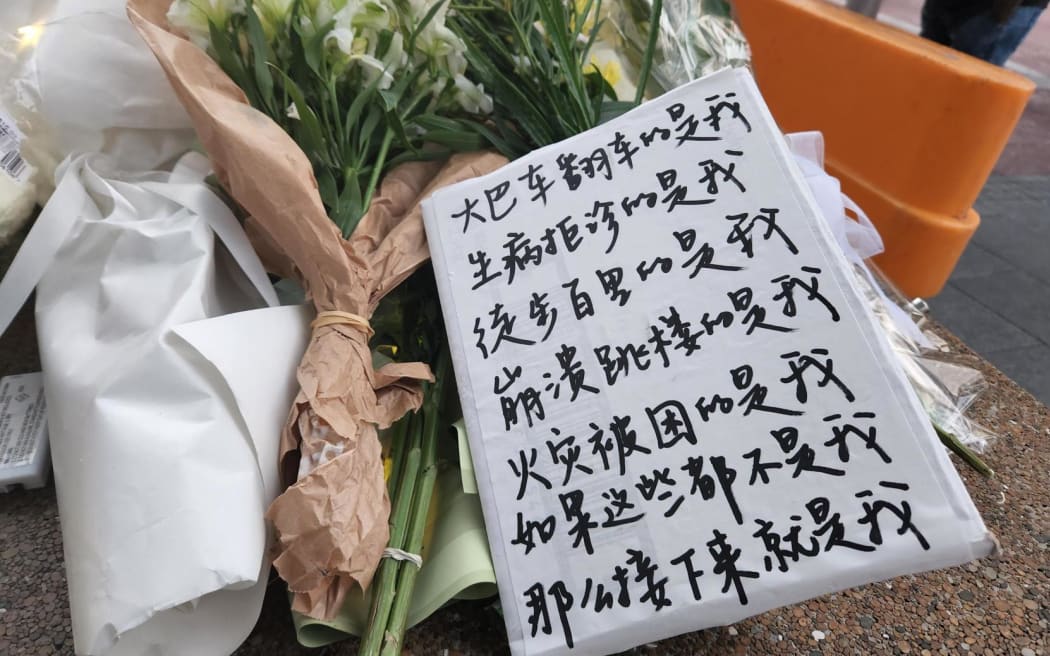
More than 200 people from Aotearoa New Zealand’s Chinese community gathered for a vigil at Auckland’s Aotea Square last night to mourn the lives lost under China’s stringent covid-19 lockdowns and to call for an end to the country’s “Zero Covid” policy.
The unprecedented display of defiance by a crowd mainly made up of Chinese Kiwis from the mainland came after a lockdown building fire in Urumqi, Xinjiang, last week that killed 10 people.
The Urumqi fire has sparked nationwide protests across China and among overseas Chinese, with vigils and protests building up in major cities including New York, Melbourne, Sydney, Hong Kong and Tokyo.
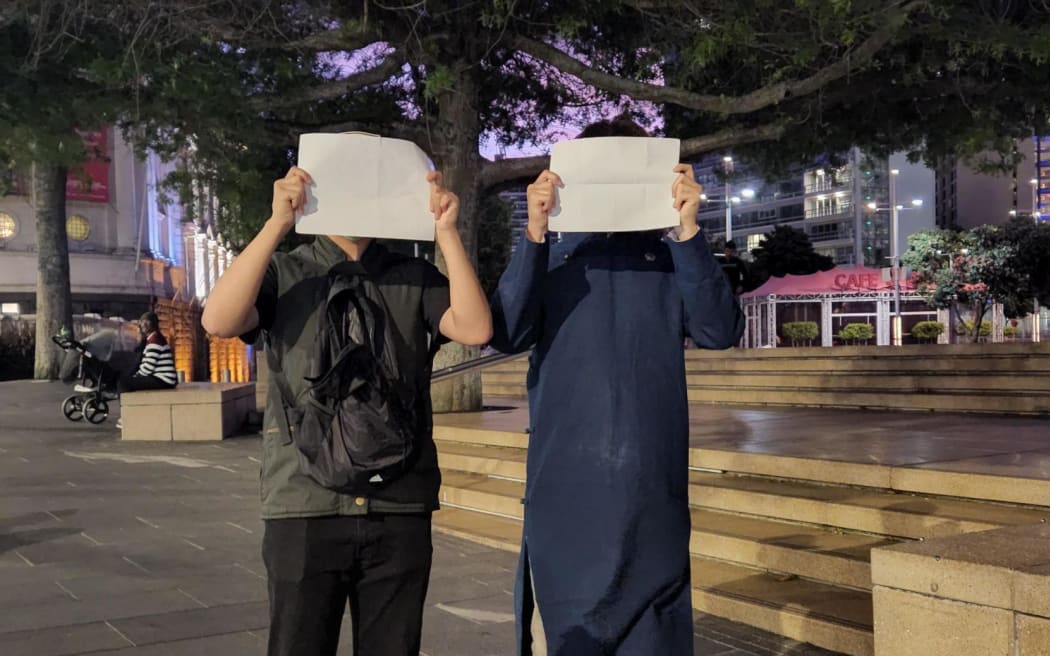
More than 100 people at the event held up blank pieces of A4 paper as a symbol of defiance against China’s censorship of dissent, and chanted in Mandarin: “We don’t want leaders, we want votes — we don’t want dictatorship, we want citizens”.
“Without freedom, I’d rather die.
“Xi Jin Ping, step down, CCP step down.”
A similar vigil for the Urumqi fire victims was also held in Wellington last night.
Step up after seeing suffering In an emotional speech, one of the organisers of the Auckland vigil said despite having no previous experience participating in social movements, she had decided to step up after seeing the recent tragedies of Chinese people suffering under the lockdowns.
“There were a series of suicides in Hohhot where I come from, I felt at that time that I can no longer say everything is fine — we can say that for New Zealand, but my family and friends are in China, so I can no longer be silent,” she said.
Members of the Uyghur Muslim community from Xinjiang — where the Urumqi fire happened — also attended, showing solidarity and protesting against human rights violations against Uyghurs.
Chinese protesters in Auckland’s Aotea Square hold white A4 paper as a symbol of defiance against censorship by the Chinese government. Image: Lucy Xia/RNZ
The protesters also called for the release of protesters arrested in China.
Like her, many at the gathering were first-time protesters emboldened by the recent protests in China.
Another protester said he was also inspired by the man on Sitong Bridge.
‘He gave us courage’ “He gave us a lot of courage. He was a person at the bottom of society, who did what he knew was forbidden, he sacrificed himself to awaken the Chinese people’s desire for a democratic society,” he said.
An international student who had just graduated from high school said she wanted to contribute to ending China’s lockdowns.
“If the protests could work and make all the cities stop the lockdown, I was so happy to come to come here today, hear everyone share their stories and using the A4 paper to show our anger.”
Another said he hoped the protests in China and abroad instilled a sense of what it meant to be a responsible citizen for Chinese people.
“If people want to live with dignity in a fair society, there needs to be a civil society,” he said.
‘Softer’ solidarity Meanwhile, some at the gathering chose a softer way of showing solidarity with the victims of the Urumqi fire.
Chrysanthemums were laid and candles were lit in solidarity with the victims of the Urumqi fire. Image: Lucy Xia/RNZ
Chrysanthemums were laid and candles were lit, and a school aged child accompanied by his parents played “Do you hear the people sing” on his flute.
One attendee told RNZ he was glad that the people who gathered could find something in common regardless of where they were on the political spectrum.
“Some people want to see a revolution in China, others just want something small like for their residential area to come out of lockdown earlier, so that people can freely buy groceries,” he said.
“But people can easily find a common denominator, and that’s hoping things will move forward a little bit, and let friends and family living in China be safer and freer.”
This message in Mandarin reads: “I am the person who died in the bus that flipped, I am the sick person denied treatment, I am the person who walked a hundred miles, I am the person who jumped from a building out of desperation, I am the person trapped in the building fire. If these people are not me, then the next victim will be me.” Image: Lucy Xia/RNZ
This article is republished under a community partnership agreement with RNZ.
A year after re-opening its borders, Fiji has recorded an injection of F$805 million into its economy from international visitor arrivals between April and August.
After shutting its borders for almost two years at the height of the covid-19 pandemic, Fiji has welcomed 520,000 tourists to its shores in the past 12 months.
Tourism Fiji chief executive Brent Hill said the steady increase in international visitors is promising for an economy where tourism is its largest asset, previously accounting for 40 percent of the country’s GDP.
“It’s been wonderful to welcome back international visitors for the last 12 months and to see a steady increase in numbers as the world gets used to travelling again.
“The recovery trajectory for visitor arrivals has exceeded our expectations, and the impact can be seen in our economy with tourists buzzing in resorts, towns, and villages as people experience the true Fiji,” Hill said.
Tourism Fiji chief executive Brent Hill . . . “The recovery trajectory for visitor arrivals has exceeded our expectations.” Image: Michelle Cheer/Tourism Fiji/RNZ Pacific
Success in structure Last year, Fiji was one of few Pacific nations to open its doors to tourists with minimal restrictions. What may have seemed like a bold decision at the height of the pandemic has today paid off for a nation that heavily relies on tourism as its highest income earner.
The successful rebound is attributed to the covid-safe measures implemented by the industry prioritising vaccination and the Care Fiji Commitment programme, Tourism Fiji’s New Zealand regional director Sonya Lawson said.
Lawson said while tourists were eager to travel again, security and well-being remained a priority for travellers.
“The programme implemented by Tourism Fiji was a standard of best practice protocols and standards, and certified tourism operators as having rigorous measures in place to manage covid-19 was reassuring,” she said.
“This really provided confidence to travellers, tourism provider providers and locals alike, and that was a key factor in the initial stages, and from there, the confidence has just continued.”
New Zealanders flocking to Fiji Tourism Fiji said bookings from New Zealand in October this year exceeded pre-pandemic levels at 103 percent of the same period in 2019.
July welcomed over 25,000 New Zealanders which is 91 percent of 2019 levels; in August, that hit 87 percent, and September achieved 95 percent before exceeding Kiwi visitor numbers by October.
Hill said similar to New Zealanders, the resilience of the Fijian people, hospitality, and a commitment to welcoming back visitors is why Fiji has been successful in standing out as a destination.
“We look forward to a bigger and better 2023 focusing on sustainable, authentic tourism.”
New Zealand is Fiji’s second largest international visitor market, now accounting for 26 percent of total visitors – an increase of 3 percent from the 2019 figures.
Lawson added that New Zealand’s visitor arrivals into Fiji had also increased as it previously used to sit at around 23 percent.
There was a 4 percent increase in visitors from Auckland, and 2 percent rises from both Wellington and Christchurch in July this year compared to 2019. This coincided with the phased re-opening of New Zealand borders when Kiwis could travel freely without MIQ.
“Many hotels and resorts have recorded growth in their number of Kiwi visitors — New Zealand is now the second largest market for Six Senses Fiji (resort), having been fourth in previous years,” she added.
Tourism Fiji has recorded tourists travelling around the country with more extended stays. Image: Facebook/Fiji govt/RNZ Pacific
New trends for tourists Leisure and spending also took a turn from pre-pandemic activities. Tourism Fiji recorded tourists travelling around the country with more extended stays.
“For New Zealanders, Denarau, Coral Coast, and Nadi are generally a fan favourite, but we’ve noticed high demands for other regions like the Yasawa Islands and the northern parts of Fiji where there are unique experiences. New Zealanders who have been to Fiji more than once are now discovering other regions to discover,” Lawson said.
“We also previously noticed an average stay of around five nights, but in the last eight months this has increased to around nine nights. We’ve also seen that the spending has increased by an average of 12 percent per day per visitor.
“So we’re putting a lot of this down to the fact that people are embracing travel, have missed the ability to travel, and are taking longer to enjoy a holiday in Fiji.”
Lawson explained that Fiji noticed an increase in ‘multi-generational travel’ where extended families travel together and reconnect in Fiji.
Tourism Fiji has set an ambitious goal of 3 million extra visitor arrivals by 2024, and they believe they are trekking to achieve this target.
“At this stage, Fiji has exceeded all of our expectations for this year, and we’re delighted with how Fiji has resumed and bounced back this year,” said Lawson.
This article is republished under a community partnership agreement with RNZ.
The French flag and the Kanak independence ensign . . . flown together since 2011. Image: 123rf/RNZ Pacific
The territorial government of New Caledonia debated the introduction of an official regional flag in 2008, as required by the Nouméa Accord.
In July 2010, the New Caledonian Congress voted in favour of flying both flags together.
The move was controversial with an anti-independence group calling it unrepresentative of the population.
The New Caledonian delegation to the Pacific Games used the combined flags for the first time in 2011.
Thus, the debate over a permanent flag is ongoing amid hopes it can promote a “common destiny” for ethnic Kanaks and ethnic French residents in New Caledonia.
According to electoral law, French political parties are not allowed to use the tricolour in their material in order to not convey the notion that they represent the state.
In the 2021 referendum campaign, the pro-independence parties were able to use the Kanak flag which prompted the anti-independence camp to counter with a demand to be allowed to use the French flag.
This article is republished under a community partnership agreement with RNZ.
If you’ve been watching the World Cup, you might have marvelled at the physical fitness and skill of these elite players.
How can they run and run and run for so long? What makes them so good at speedy changes of direction? Biomechanically, is there a certain body type that is perfect for football?
Of course, much of the brilliant play is down to natural talent combined with years of very hard training and practise. But there are certainly some physical features that help a lot when it comes to being able to play football at this level.
There’s no one single perfect body type for this sport; much depends on what position you play.
A central defender, for example, might benefit from a bit of extra height so they can defend against aerial balls in the box.
Midfielders, on the other hand, head the ball less often but need a lot of agility and to run astonishing distances in the game – most will cover more than 10 kilometres, with sprints and direction changes common. That’s where having lighter body mass really helps, and that means not being too tall. When you are tall – even if you are skinny – you weigh more, so being very tall can be a disadvantage for these players.
And being shorter means that our centre of mass is lower, so we have more stability and better balance. That makes technical skills with the ball easier to perform and it makes swiftly changing direction easier too.
There is one fairly consistent physical feature across footballers, which seems to be similar across male and female players: an ability to run and run.
They need to have a big engine, so they are physiologically strong in terms of heart and lungs. In a running test, these players will show up with a very high VO₂ max (a measure of the maximum amount of oxygen your body can use while exercising).
They will also have a high lactate threshold, which means their bodies can cope with high intensity effort for long periods of time.
All this adds up to what we call good repeat sprint ability. That means they can run, then recover, then run, then recover, and so on and so on. Don’t forget, they do spend some time standing or walking, so it’s the repeated effort to go from low intensity to maximum intensity over and over that necessitates this big engine.
Lighter upper body, strong lower body
Football players in general are not stocky like, say, rugby players. But while the upper body tends to be fairly light (which saves on mass and helps with speed), they do generally have quite big, strong legs.
That’s because changing direction rapidly – and to accelerate and decelerate almost instantly – takes quite a lot of force. You need muscly legs to do that.
Having a large upper body, on the other hand, would be mostly downside with little upside. There’s no significant requirement for upper body strength in this sport, so if want to increase speed and endurance, you need to maintain a lighter upper body mass. They are not training to get really big in the upper body.
They also generally have very low body fat levels as they need a lighter body mass to run, jump and accelerate.
What about the goalkeeper?
One position that does benefit greatly from height is the goalkeeper. The Australian goalkeeper, Mark Schwarzer, used his 1.95 metres frame to great advantage. And most elite goalkeepers stand taller than 1.85 metres.
The job of the ‘keeper is to leap vertically and laterally. Having long legs can help the ‘keeper to jump higher and further because they can push off over a larger distance during the jump. And having long arms helps with reach to tip or catch the ball. So being tall can be a real advantage.
All in all, these players are well built to produce elite performances at the highest levels of the game. While years of hard training has surely contributed to their success, they might also thank their parents for the genes they received too.
Anthony Blazevich does not work for, consult, own shares in or receive funding from any company or organisation that would benefit from this article, and has disclosed no relevant affiliations beyond their academic appointment.
The Albanese government proposes to ditch the “Yes/No” case pamphlets that are ordinarily posted to voters before a referendum. Is this a good idea, and what, if anything, should replace it?
What changes are proposed?
Under the existing law, after a proposed constitutional amendment is passed by parliament, a majority of MPs who voted for it may prepare a written Yes case of up to 2,000 words. If any members voted against it in parliament, they can prepare the official No case.
Before the referendum, the electoral commissioner sends a pamphlet in the mail to every voter. This includes the Yes case and the No case (if one has been provided) as well as a copy of the proposed changes to be made to the Constitution. This is the only official information given to voters to help them decide how to vote in the referendum.
The Commonwealth government is currently prohibited from otherwise spending money on the presentation of arguments for or against a referendum proposal.
In its Referendum (Machinery Provisions) Amendment Bill 2022, the Albanese government intends to “disapply” the relevant section so it ceases to operate until the next general election. The effect would be that there would be no official Yes/No case distributed to voters for any referendum held in this term of parliament, and no legal restriction on government spending on the referendum campaign.
Attorney-General Billy Hughes had a rather naive idea of how the Yes/No case pamphlets might be used. Australian War Memorial
The Yes/No case pamphlet was first required by a law enacted in 1912. It was introduced due to a concern that the previous referendum had failed because the voters were inadequately informed.
Opposition Leader Alfred Deakin, who had opposed the previous referendum, was nonetheless supportive of introducing better public education on referendums. He argued:
It is our duty, when we ask the electors to vote for or against momentous proposals of this kind, to give them the best material we have in order that they may form an independent judgment.
The attorney-general of the day, Billy Hughes, had a rather naïve expectation of how the Yes/No case would be used. He said:
Honourable Members may put their case before the public, provided that it is put in an impersonal, reasonable, and judicial way. There is to be no imputation of motives. In short, the argument is to be one which appeals to the reason rather than to the emotions and party sentiments.
This is not how things have turned out. In fact, the Yes/No case, because it is prepared by political partisans, is often misleading and emotive, particularly on the No side.
The No case and the aviation referendum
A good example is the 1937 referendum on giving the Commonwealth parliament power to legislate on aviation. When the Constitution was first being written, the Wright brothers had not yet flown a plane. So there was nothing in it about making laws to govern aviation in Australia.
The consequence was that federal laws applied to flights in and out of Australia and some interstate flights, but not to planes flying within a state. This was inefficient and potentially dangerous, so a referendum was held to give the Commonwealth full power over aviation in 1937. Despite it logically being the type of thing that should be dealt with on a national basis, the referendum was lost.
The No case had argued the expansion of aviation would compete with and ruin the state railway systems. It would make railway workers unemployed and bankrupt country towns. The price of food would sky-rocket, because the cost of freight would be higher and the finances of every state government would be endangered.
These claims were highly exaggerated and had nothing to do with whether the Commonwealth or the states should regulate aviation. But it was enough to make some people worried and so vote No.
It is, of course, difficult to attribute referendum outcomes to the inflammatory and misleading content of the Yes/No cases, as most people don’t read them. But some will, and the official nature of the document will give its contents greater credence than they deserve.
In contrast, in New South Wales the practice has been to have public servants, not politicians, write the pamphlet that is sent to voters prior to a referendum. The public servants are required to do so in a factually accurate and impartial manner. Before publishing the pamphlet, they send it to acknowledged experts for vetting to ensure it is accurate and a fair explanation of the issues.
The success rate of New South Wales referendums is much higher than that at the Commonwealth level. If you count state-wide referendums to amend the New South Wales Constitution where voters were given a binary Yes/No choice, then the success rate is 85%. This can be compared with the Commonwealth success rate of 18%. While other factors will also have been in play, providing voters with informative and accurate material rather than inflammatory and misleading material is likely to have helped at the state level.
What replaces the Yes/No case?
While the Yes/No case in its current form has not proved the reasonable and informative tool that was intended by Hughes, a question remains as to what should replace it. If there is no officially sanctioned information, then this just leaves open a free-for-all on social media with even more misleading material circulating. There surely needs to be at least one source of authoritative information to which people can turn.
The government has said it proposes to fund educational campaigns to promote voters’ understanding of referendums and the referendum proposal. Attorney-General Mark Dreyfus has stated the bill will “enable funding of educational initiatives to counter misinformation”.
The difficulty facing the government will be working out how this can be done in a way that maintains public confidence and is not seen to be partisan in nature.
The intention behind this change is a worthy one. The Yes/No case has long been recognised as a failed experiment. But the successful execution of the government’s educative proposals will be difficult and need great care.
Anne Twomey has received funding from the Australian Research Council and been a consultant to Parliaments, Governments and inter-governmental bodies. She is a director of Constitution Education Fund Australia (CEFA) which engages in constitutional education initiatives. It is possible that CEFA or its materials might be used in any education campaign. Anne Twomey also has her own constitutional education YouTube channel, Constitutional Clarion.
Keith Rankin, trained as an economic historian, is a retired lecturer in Economics and Statistics. He lives in Auckland, New Zealand.
Analysis by Keith Rankin.
Keith Rankin, trained as an economic historian, is a retired lecturer in Economics and Statistics. He lives in Auckland, New Zealand.
Economics is a profound and important discipline. But its practice is prone to self-censorship, and still reflects in large part its (Victorian era) glory days and the sensibilities of that era. The father and mother of today’s textbook economics were Alfred Marshall and Mary Paley who published The Economics of Industry in 1879. While not Marshall’s most accomplished work, it was their 1870s’ circumspection of the workshops and factories of the English Midlands from which Marshall formulated the key assumptions around labour and capital which eventually made him the ‘father of economics’.
Thus, labourers are workers who make – or help make – standardised consumer commodities, any of which could be generalised as ‘widgets’. Capitalists are the proprietors of such businesses; men and women who seek to maximise the profits on their (or their shareholders’) invested capital, with their businesses operating in an environment with many competitors. These Marshallian businesses are essentially servants of the multitude of consumers; servants of the households who provided the demand that gave businesses their profit-making opportunities.
The whole process is driven by ‘consumer sovereignty’ – the principle that consumers know best what they want (and how much of things they want) – and also by a certain egalitarianism. Marshall adopted a tacit understanding that income distribution would not be too unequal, while also accepting that there should be richer people to supply capital and poorer people to supply labour.
(We may note that, by the principle of consumer sovereignty, an economy may include a significant amount of consumption of illegal goods and services. However, it is generally accepted that, for goods or services to be made illegal, they are demerit goods [harmful to at least one of the contracting parties] or they convey harms to non-contracting ‘third parties’. As a demerit good, market failure may mean a power imbalance between buyer and seller. While regulations to prohibit or disincentivise certain consumables might enhance ‘economic efficiency’, they could also have unintended adverse consequences [as we saw in the 1920s’ ‘prohibition era’.)
Productivity would increase if, for a given amount of inputs (resources and materials), more outputs (goods) could be produced. Under conditions of increasing productivity, prices would naturally fall, thereby raising living standards, and enabling consumers to buy more than before. The competitive system would be efficient, in that changes in consumer ‘tastes’ and in the availability of materials would adjust market prices, ensuring an efficient ‘reallocation of resources’. (Businesses themselves had to accept these market prices.)
Labour did not necessarily mean being formally employed, for wages, by someone else. Many labourers would ‘work on their own account’, but could not accrue enough capital to be classed as capitalists. Indeed such self-employed workers would keep certain monopolising forces, such as trade unionisation, in check.
In this Marshallian world, ‘labour’ became a byword for decency and dignity. The Victorian idea of the ‘dignity’ of labour became an essential attribute of the political landscape in New Zealand; and this moral elevation of labour contracts was re-formalised from the early 1990s.
The Sex Industry and left-wing Politics
It’s not hard to see how the sex industry – in the 1880s and in the 2020s (and all decades in between) – might fit this Marshallian competitive model; though it did not fit the ‘decency and dignity’ narrative.
On the demand side, people desire ‘sex’, just as they desire widgets. On the supply side there is a mix of mainly small operators: capitalist brothels employing workers and/or leasing space to owner-operators; self-employed home-based sex-workers; and streetworkers. There were self-employed home-workers in the English textile industries, and many other industries, in the 1870s. Streetworkers were not common in the male-dominated manufacturing trades, but were common in many service trades (eg boot polishing), and in the provision of street foods, the precursor of takeaways.
A sex-worker could never be as reputable as a widget-maker; that was assured by the mores of Victorian morality. ‘Prostitution’ had an ambiguous legal status in England (and New Zealand) in 1880, though it was ubiquitous. It is legal in Aotearoa New Zealand today. Sex-workers today are expected to pay taxes just as any other worker should; and, as employees, have the same terms and conditions under law as any other employee.
Prostitution was legalised in New Zealand in 2003, with the Prostitution Reform Act. This was passed as a private member’s bill during the tenure of the Helen Clark Labour-led government. Although much of the groundwork was done in the late 1990s under the watch of the then National-led Government, it was the left-wing parliamentarians who eventually proved to be more collegial in facilitating the passage of the bill into law.
Yet, if the episode of Borgen referred to in my How do Left-Wing Elites Make their Money? is anything to go by, in the 2010s there was a left-wing push in Scandinavia (of all places) to recriminalise prostitution. This suggests a more general change in left-wing politics worldwide since 2000; a change that has increased the authoritarian element of left-wing politics, at the expense of the left’s libertarian aspect. (Both right-wing and left-wing politics have always had tensions between their authoritarian and their libertarian elements. The tension on the left is particularly prevalent at present with respect to issues around drugs, where there are simultaneous movements to decriminalise presently illicit drugs while criminalising aspects of the legal drug trades: alcohol, tobacco and vapes.)
The Scandinavian dilemma is coloured by the issue of people-trafficking which is substantially more urgent in Europe than in New Zealand. There, this issue gives an opportunity for left-wing authoritarians to conflate the overlapping yet distinct issues of people-trafficking and sex-working. Opposition to people-trafficking created a political opportunity to criminalise prostitution. (In New Zealand the nearest equivalent example of conflationary politics is to muddy the overlapping issues of ethnicity and socio-economic disadvantage.)
Since legalisation the industry has been substantially ignored in New Zealand. In particular, we know little about how the sex-industry has been affected by the Covid19 pandemic; it has received much less attention than other components of the much-affected hospitality industry. It is an industry in New Zealand with equal status under law, but remains far from an industry with equal dignity for its workers. Aotearoans indignify the sex-industry by largely ignoring it.
Productivity and Economic Growth
The appropriate way for an economist (and bearing in mind that Marshallian economics is built on liberal values) is to treat all legal industries equally. So it is as appropriate to discuss the productivity of sex-workers as it is to contemplate the productivity of widget-makers.
Before doing so, we remind ourselves that productivity is a central concept in the understanding of living standards, and in the economic analysis of economic growth; with growth still widely seen as a necessary component for economic success.
It’s easy to understand productivity with respect to widgets. Productivity increases when there is an increase in the output of widgets per person employed in the widget-making industry. (Or it could mean the same number of workers making higher-quality widgets.) If there’s an increase in the demand for widgets, then that increase may be able to be satisfied through productivity gains, without employing more widget-makers. Or, if there’s not an increase in demand, then the widget industry can fuel economic growth by releasing workers into other goods’ or services’ industries.
Can we say the same about prostitution? If sex-workers can perform more sex-acts (or the same number of higher quality sex acts) at no extra cost, then the industry can grow without needing more workers!? Or, if the demand for sex-acts is not growing, then maybe the sex-industry could take advantage of its productivity gains to release workers; maybe redundant sex-workers could retrain as widget producers?
(Here we face a particular dilemma, in that under-capitalised self-employed prostitutes may follow a different dynamic to brothel managers. People working on own account – people with few if any alternatives – may move into a service industry despite a fall in demand; that is, not only because of a rise in demand. Such supply-side growth of [mainly service] industries does not feature in Marshallian textbook economics. But it is ubiquitous in impoverished societies; it happens in fact if not in theory.)
Presumably brothels can raise their productivity when demand is increasing, by becoming bigger, and gaining economies of scale from reducing the number of back-office staff relative to frontline workers. And, when demand is low, it probably means that brothel prostitutes are experiencing too-much idle time, a signal in any service industry that the firm should shed staff.
One of the problems with economic growth theory is that workers might be released from a high-productivity sector into a low-productivity sector. In the service sector, the addition of one worker may add nothing to the output of that sector. Indeed we have typically looked to the personal services sector to absorb labour when unemployment is seen as too high. (Indeed, the establishment of Uber meant that the growth in the supply of taxi services grew much faster than the demand for such services.)
(When redundant seamstresses become sex-workers, if they can apply their skills to their new occupation then average productivity might increase in both trades, while average productivity falls in the economy as a whole. [This is, in essence, the same paradox as that famously stated by Robert Muldoon with respect to labour migration from New Zealand to Australia.])
We have to face the fact that, if consumer demand for legal sexual services increases, then the expansion of the sex industry is desirable, in principle. (The proviso, of course, is that there may be demerit market failure; in the form of, say, sexually transmitted diseases or worker exploitation. If so, it’s an argument for regulation rather than banning the sale of sexual services.)
Should productivity analysis be applied to the sex industry? And, if not, where does it leave ‘productivity’ as an objective of economic policy? (Similar arguments about productivity may be made about hairdressing. And retail work, given that both the sex industry and the retail industry involve a degree of marketing; in reality they [and many others] are in part about the creation of demand, and not just about the satisfaction of pre-existing demand.)
To get a good understanding of the strengths and weaknesses of an academic disciple such as economics, we should be able to gain insights by using the (legal) sex-industry as an example. In today’s very tight labour market, we should be seeing a reallocation of labour from low-wage occupations with low labour productivity to occupations with high labour productivity. Profits and wages should be higher in high-productivity occupations. Are we seeing fewer workers and higher wages in the sex industry? Possibly we are. Is the sex-industry subject to the same labour shortages that we see elsewhere?
Welfare and Dignity
Is there more dignity in some labour than other labour? Surely a job is a job? If the Ministry of Social Development (MSD) – or, as it may be in some countries, the Department Of Labour and Employment – has the aim of getting people off the dole and into work, then any job or occupation should be OK, so long as it is legal.
The social reality however is that some jobs do convey more dignity than others; though sex-workers are possibly not the only money-makers who might have a poor public relations image. (We might note that, in David Graeber’s conceptual framework, sex-worker jobs are not “bullshit jobs”; although many other jobs are.)
The way out is to recognise that there is a dignity in life, and that contributions to the greater good are diverse; and that only some of those contributions may come through paid work. It is unbecoming of government authorities to place as much emphasis as they do on the ‘paid work’ aspect of people’s lives.
That’s why everyone should have access to a democratic dividend, an income payment made to all adults – including the caregivers of children (mainly parents). And that further incomes should arise from the workings of a free market; from a market subject only to regulation or proscription when harm is being done to third parties, or when there is a power imbalance between the contracting parties. (We may treat ‘the natural environment’ as a collective of third parties; indeed the Whanganui River has the legal status of a human third party.)
A democratic dividend is essential to the working of a dignified labour market. As well as ensuring that all adults have ‘skin in the game’ – ie have economic interests which align with the common good – a democratic dividend is a worker’s first defence against exploitation.
People need basic economic rights, including the freedom to ply their trade and to change it. In addition, there is always a place for charity, for systemic kindness towards people with particular welfare needs; and for minimal judgemental unkindness. Dignity arises from an unselfish life, not from a career.
*******
Keith Rankin (keith at rankin dot nz), trained as an economic historian, is a retired lecturer in Economics and Statistics. He lives in Auckland, New Zealand.
ACT Director of Public Prosecutions (DPP) Shane Drumgold today announced that the charges against Bruce Lehrmann, the man accused of raping Brittany Higgins at Parliament House in 2019, have been withdrawn.
An earlier jury had been dismissed resulting in a mistrial, after an academic research paper relating to sexual assault was found in the jury room. Jurors are forbidden from doing their own research, as each case must be decided only on the evidence presented in court. A retrial had been ordered by the court to begin in February.
Decisions to prosecute
There are two tests the DPP must consider in determining whether or not to prosecute a case.
First, based on the evidence, are there reasonable prospects of conviction? In the Lehrmann case, the DPP has determined – and maintains – there are reasonable prospects for a conviction for the charge of sexual intercourse without consent – an offence other states call rape.
If this first test is met, the DPP must then determine whether proceeding with prosecution is in the public interest. It is this second test the DPP referred to when announcing the decision not to proceed with the retrial.
This “public interest test” is complex, and there are countless factors to be considered in making a determination. It is, for example, certainly in the public interest to pursue sexual offences, given the prevalence of sexual violence in the community.
However, this cannot be the only basis on which the decision is made. The DPP specifically referred to a section of the ACT Prosecution Policy (which outlines these tests) that states consideration should be given to “the actual or potential harm occasioned to any person as a result of the alleged offence”. He continued that this required him to consider the harm that could be caused to a survivor in pursuing prosecution.
Speaking specifically about Brittany Higgins, he said he had received independent evidence from two medical professionals, which made it clear the “ongoing trauma associated with this prosecution presents a significant and unacceptable risk to the life of the complainant”.
The risk to Higgins’ life means prosecution is not in the public interest.
Courtroom trauma
This decision would not have been made lightly, and almost certainly, would have been made in consultation with Higgins. Her friend released a statement on her behalf calling the last few years “difficult and unrelenting”. Higgins is seeking mental health treatment in hospital.
Today’s decision brings into public view the effect on complainants of reporting and pursuing sexual violence cases. The justice system caused more harm to a person who was reporting a crime within their rights.
During the first trial, the defence consistently shifted focus away from the actions of the accused, onto those of Higgins – a typical tactic in rape trials. The prosecution, for its part, encouraged the jury to centre its attention on Lehrmann – on the inconsistencies in his own statements and whether he was reckless to the issue of consent.
This is not new. Decades of research confirms victim-survivors experience the justice system as retraumatising. This is, at least in part, because of the role rape myths play in criminal rape trials.
Rape myths refer to widely held, hard-to-change and incorrect views about rape, survivors, and those who commit the crime. They inform society’s response to sexual violence – including that of the criminal justice system.
Victim-survivors are asked about what they did to resist an assault, whether they flirted with the accused, drank alcohol, had previously consented to sex with the accused or another person, or whether they might have a “motive” to lie about rape.
This is exactly what law reform is focused on changing, including through the introduction of affirmative consent standards that require active communication of willingness to engage in a sexual act.
But this questioning is designed to encourage the jury to draw on rape myths, including about the truthfulness of rape allegations, based on the premise that such allegations are easily made and difficult to defend.
In reality, the opposite is true – most people who experience rape never report to the police. And for those who do, convictions are rare.
For Higgins, the experience extended far beyond the courtroom, to a “trial by media”.
Over the course of the trial, including multiple days of intrusive cross-examination about her every action in the days, weeks and months before and after the night in question, the media relentlessly reported on her every word. And, of course, photographers were on hand to capture a snap of her as she left each evening.
The media focus was on Higgins. Defence assertions likening Higgins to a “con artist”, calling her “unreliable”, and statements characterising her evidence as “lies” have been featured across news headlines. But statements by legal counsel are not evidence, nor are the questions put to any witness during a trial. Yet they were repeated in the media, often uncritically.
This type of reporting lends legitimacy to rape myths, particularly the notion that a rape trial is “her word against his”. This isn’t true in a case that started with a witness list of 58 names.
This is also hardly in line with the principles of due process. For Lehrmann, inappropriate media reporting, prompted by Lisa Wilkinson’s ill-considered Logies acceptance speech and equally ill-advised reporting of the speech in the days that followed, threatened his right to the presumption of innocence. This forced a delay of the trial to protect his rights.
For Higgins though, apparently no such rights apply. Instead, a criminal justice system that is not fit for purpose and a media storm more interested in the scandal, both bolstered by a community that readily consumed and regurgitated sexist victim-blaming narratives, saw the charges dropped.
Ignoring sexual violence in the media isn’t the answer – change rarely comes out of darkness. But we do need to respect the dignity and privacy of victim-survivors.
The spectacle of the Lehrmann case doesn’t just affect those involved. The impacts will be felt far beyond.
For the one in five women and one in 20 men in Australia who experience sexual violence in their lifetime, this view into the criminal justice system and into the reporting of sexual violence has sent a clear message – in Australia, it’s the survivors on trial.
Jeanne Dielman, 23, quai du Commerce, 1080 Bruxelles – Chantal Akerman’s 1975 hypnotic study of a mother performing domestic chores in microscopic detail – has just been crowned the “greatest film of all time” in Sight and Sound’s prestigious poll.
It is only the fourth film to have topped the list since polling began, and the first directed by a woman.
The full list of 100 films was published today, with the top ten:
Singin’ in the Rain (Stanley Donen and Gene Kelly, 1952)
If you are looking for a crash-course in film history, this is not a bad place to start.
How did we get here?
Once a decade since 1952, the British Film Institute’s magazine Sight and Sound has polled filmmakers, critics, curators and programmers from around the world, asking them to name their ten best films ever made.
In the film world, this is the list that counts.
It is collated by the industry itself, its rankings are a barometer of changing movie-going tastes, and the ten year wait between each announcement cements its reputation.
Polling began in June this year and everyone is sworn to secrecy. Mike Williams, the editor of Sight and Sound, has spoken about the magazine’s “credibility, authority, and an international reputation that’s second to none”.
The first winner in 1952 was Vittorio de Sica’s Bicycle Thieves (1948), the masterpiece of Italian neorealism. In the five polls from 1962 to 2002, the winner remained the same: Citizen Kane, Orson Welles’ 1941 debut.
Kane’s status as the “greatest” was consistently reinforced by directors and critics who admired Welles’ authorial single-mindedness, his chutzpah and his daring dismantling of Hollywood’s rules about storytelling and visual composition.
Citizen Kane was finally dethroned in 2012 by Vertigo, Alfred Hitchcock’s 1958 twisted tale of obsession and betrayal.
Vertigo’s gradual rise up the list (it first appeared in 1982, and finished only 34 votes behind Kane in 2002) reflected cinema’s ongoing recognition of Hitchcock as an artist. As the critic Roger Ebert wrote at the time, “The king is dead. Long live the king.”
As a film historian, it is fascinating to track the performances of some of cinema’s most beloved and esteemed films.
Casablanca (1942), The Wizard of Oz (1939), Gone With the Wind (1939) and It’s A Wonderful Life (1946) – for some, the apex of Hollywood’s expertise – have never made it anywhere near the top of the list.
The poll’s reluctance to embrace popular genres like musicals, comedies and westerns is reflected in the fact that only Singin’ in the Rain (1952), The General (1926) and The Searchers (1956) have ever appeared in the top ten.
But Hollywood has never dominated the list. To Sight and Sound’s credit, this is a global poll, with voices, opinions and perspectives canvassed from across the world cinema ecosystem. In 2012, a total of 2,045 different films received at least one mention.
The list is always eclectic and international. The Rules of the Game (1939, France) has appeared in every poll until this year, along with the likes of Tokyo Story (1953, Japan), L’Avventura (1960, Italy) and Man with a Movie Camera (1929, Russia).
So what does the new poll tell us?
In 2022, there are more contributors than ever before – 1,600 industry insiders, up from 846 back in 2012.
Apart from the new winner, this broader church has not shifted the results in any meaningful way. Vertigo, Citizen Kane and Tokyo Story are still ranked two, three and four.
But a generational shift is taking place. New critics have emerged over the past decade and this is reflected in their choices: the masterpieces by Wong Kar-Wai, Kubrick and Lynch have all moved up in the rankings.
The new poll has also skewed towards “newer” films for the first time. In 2012, there were no films on the list made in the preceding decade. This year’s list includes Portrait of a Lady on Fire (2019), Moonlight (2016), Parasite (2019) and Get Out (2017), alongside other relatively new additions The Gleaners and I (2000), Spirited Away (2001) and Tropical Malady (2004).
What is even more exciting is a direct challenge to what might be seen as the film industry’s herd mentality.
For years, the same films have been reconfirmed as the only ones worth talking about. The 2022 poll smashes open this echo chamber, recognising not just Akerman, but also Claire Denis, whose majestic Beau Travail (1999) makes its first appearance at number seven and Agnès Varda’s Cléo from 5 to 7 (1962) at 14.
Francophone female directors, it seems, are currently at the vanguard of great cinema.
But what will happen in 2032? Will Jeanne Dielman stand the test of time? Is there a film that hasn’t been made yet that will make an appearance in the top ten? Unlikely, given that there is usually at least a 20-year lag between a film’s release and its appearance on the list.
With this year’s list, we learned it takes time for a film to enter the critical consciousness and to reveal its stylistic intricacies or narrative pleasures.
We have just been reminded that the classics will always appear on polls and lists because, well, they are classic. They display craft, precision, elegance and emotional depth. They resonate down the decades, and they are the films that many of us – from world-famous directors to armchair critics – turn to again and again.
In the meantime, go and watch Jeanne Dielman, 23, quai du Commerce, 1080 Bruxelles and see what all the fuss is about.
Ben McCann does not work for, consult, own shares in or receive funding from any company or organisation that would benefit from this article, and has disclosed no relevant affiliations beyond their academic appointment.
In 2017, scientists described a new species of great apes – the Tapanuli orangutan. The species, found in the Batang Toru ecosystem of North Sumatara, Indonesia was listed as critically endangered soon after.
The population of the species has declined by 83% over the past 75 years, largely due to hunting and habitat loss. Just 800 Tapanuli orangutans remain – and their last known habitat is threatened by a slew of infrastructure projects.
Chief among them is the Chinese-funded Batang Toru hydropower dam, which threatens to fragment and submerge a large chunk of the orangutan’s habitat. The project is just one of a staggering 49 hydropower dams China is funding: mostly across Southeast Asia, but also in Africa and Latin America.
In new research, my colleagues and I show the substantial risk to biodiversity posed by the sheer number of Chinese-funded dams. And yet, environmental regulation of these projects has serious flaws.
China is funding 49 overseas hydropower dams, including on Pakistan’s Indus River, pictured. www.diamerbhasha.com
Big dams, big risks
Hydropower is expected to be an important part of the global renewable energy transition. But the technology brings environmental risks. Dams disrupt the flow of rivers, altering species’ habitat. And dam reservoirs inundate and fragment habitats on land.
Traditionally, financing of hydropower projects in low-income countries was the preserve of Western-backed multilateral development banks. China has now emerged as the biggest international financier of hydropower under its overseas infrastructure investment program, the Belt and Road Initiative.
Yet little is known about the scale of China’s hydropower financing or the biodiversity risks it brings. Whether adequate safeguards are applied to the projects by Chinese and host country regulators is also poorly understood. Our research attempted to remedy this.
We found China is funding 49 hydropower dams in 18 countries including Myanmar, Laos and Pakistan.
The dams are likely to impede the flow of 14 free-flowing rivers, imperilling the species they harbour. The first dam on a free-flowing river is akin to the proverbial “first cut” of a road into an intact forest ecosystem, causing disproportionate harms to biodiversity.
We also found Chinese-funded dams overlap with the geographic ranges of 12 critically endangered freshwater fish species, including the iconic Mekong Giant Catfish and the world’s largest carp species, the Giant Barb. The dams exacerbate the threats to these species and may push them closer to extinction.
Almost 135 square kilometres of critical habitat on land is also likely to be inundated and fragmented by the dams and their reservoirs.
Chinese-funded dams overlap with the geographic ranges of the critically endangered Mekong Giant Catfish. Zeb Hogan/EPA
Lax environmental rules
Despite the biodiversity risks, we found serious gaps in the environmental rules applied to Chinese-funded dams.
A previous analysis found six Chinese state-owned banks – which together contribute most financing for Belt and Road projects – had no safeguard standards to limit biodiversity damage.
Complementing this analysis, our investigation found Chinese regulators also did not require hydropower projects to mitigate environmental damage. Some regulator policies, however, contained non-binding guidelines.
A number of Chinese government policies defer to host country laws on environmental protection. But our investigation found in most countries where the dams are being built, regulation to limit environmental harms was absent or still developing.
This poor governance leaves species and ecosystems in these countries vulnerable to environmental damage from dams.
A spotlight on Sumatra
The Batang Toru dam aims to bolster North Sumatra’s energy supplies. Its proponents say the dam uses environmentally-friendly technology that requires only a small area to be flooded.
Two multilateral development banks, however, distanced themselves from the project after concerns were raised about potential impact on the Tapanuli orangutan. The Chinese state-owned Bank of China also withdrew its finance offer after international protests. Chinese financier SDIC Power Holdings then stepped in to fund it.
Habitat destruction has confined the few remaining Tapanuli orangutans to a fragmented 1,400 square kilometre tract of rainforest in North Sumatra. Scientists say the Batang Toru dam further threatens this habitat.
Constructing the dam requires digging a tunnel in an area where most Tapanuli orangutans live. Experts also say the project will permanently isolate sub-populations of the species, increasing the risk of extinction.
The case illustrates the potential destruction hydropower projects can cause in the absence of appropriate planning and safeguards.
The Batang Toru dam aims to bolster North Sumatra’s energy supplies. Pictured: a house on a riverbank near the project. EPA/DEDI SINUHAJI
Need for holistic planning
The sheer number of Chinese-funded dams presents significant biodiversity risks. It also presents an opportunity.
China is funding several hydropower projects in single river basins. This puts it in an advantageous position to carry out “basin-scale planning”.
This involves making decisions about dams not based solely on an individual project, but by considering it in the context of other projects within the basin, as well as in the broader context of communities and the environment.
This type of planning also means dams can be configured to have the least impact on critically endangered species, and other irreplaceable and vulnerable biodiversity elements.
Such “system scale” planning is a key recommendation of international initiatives such as the World Commission on Dams and the European Union’s Water Framework Directive.
It also involves determining whether a proposed dam is the best way to meet energy needs, or if alternatives – such as wind or solar – could do so with lower environmental risks.
In the case of the Batang Toru dam, a 2020 report by a leading international consulting firm found the dam would not “materially improve access to nor the regularity of power supply” in North Sumatra, which in fact had a power surplus.
Given the huge damage dams can cause to biodiversity, it is crucial that only those dams that are really needed get built – and any associated damage is minimised.
The many Chinese-funded dams on the horizon must undergo rigorous vetting if serious biodiversity damage is to be averted.
Divya Narain does not work for, consult, own shares in or receive funding from any company or organisation that would benefit from this article, and has disclosed no relevant affiliations beyond their academic appointment.
On 30 June 2022, the Indonesian Parliament in Jakarta passed legislation to split West Papua into three more pieces.
The Papuan people’s unifying name for their independence struggle — “West Papua” — is now being shattered by Jakarta’s draconian policies. Under this new legislation, the two existing provinces have been divided into five, which include South Papua, Central Papua, and Highland Papua.
Indonesia’s Vice-President, Ma’ruf Amin said while addressing an audience at the Special Autonomy Law Change in Jayapura, Papua’s capital, on Tuesday, 29 November 2022, “right now, we are building Papua better”, reported the Indonesian news agency Antara.
“Changes to special autonomy are a natural thing and are in the process of the national policy cycle to make things even better,” continued the Vice-President.
The day is significant and historic because it was on 19 October 1961 that the first New Guinea Council, known as Nieuw Guinea Raad, named West Papua as the name of a new modern nation-state — the Papuan Independent State was founded.
It was before Papua New Guinea (PNG) gained independence in 1975 from Australia.
Papuans were subjected to all kinds of abuse and violations due to how this island of New Guinea was named and described in colonial literature.
Foreign reinventions Foreign powers continue to dissect West Papua, renaming it, creating new identities, and reinventing new definitions by making it merely an outpost of foreign imperialism in the periphery where abundant food and minerals are extracted and stolen, without penalty or consequence.
Papuans do not appear to give up their sacred ancestral land without a fight.
The name “West Papua”, however, remains a burning flame in the hearts of all living beings who yearn for freedom and justice. The name was chosen 61 years ago because of this reason. This is the name of a newborn nation-state.
After Indonesia invaded West Papua on May 1, 1963, the name West Papua was changed to Irian Jaya. West Papua had been called The Netherlands New Guinea up to the point of the first New Guinea Council in 1961.
The year 2000 marked another significant period in the history of West Papua. The former Indonesian president, Abdurrahman Wahid — famously known as Gusdur — renamed it from Irian Jaya to Papua, a move that etched a special place in the hearts of Papuans for Gusdur.
In 2003, not only did West Papua’s name change. But West Papua was split in half — Papua and West Papua. This fragmentation was achieved by Megawati Sukarnoputri, daughter of the first Indonesian president, Sukarno, the man responsible for 60 years of Papuan bloodshed.
She violated a provision of the Special Autonomy Law 2001, which was based on the idea that Papua remain a single territory. As prescribed by law, any division would need to be approved by the Papuan provincial legislature and local Papuan cultural assembly.
Tragic turning point They were institutions set up by Jakarta itself to safeguard Papuan people, language, and culture.
One significant aspect of the first Special Autonomy Law was, any new policy introduced by the central government in relation to changing, adjusting, or creating a new identity of the region (West Papua) must be approved by the Papuan People’s Assembly (MRP). But this has never happened to date.
The year 2022 marks another tragic turning point in the fate of West Papua. West Papua is being divided again this year under President Joko “Jokowi” Widodo, in the same manner that Jakarta did 20 years ago.
It is common for Jakarta elites to act inconsistently with their own laws when dealing with West Papua. Jakarta violated both the UN Charter and the New York Agreement, which they themselves agreed to and signed.
For example, chapters 11 (XI), 12 (XII), and 13 (XIII) of the UN Charter governing decolonisation and Papua’s right to self-determination, as specified in the New York Agreement’s Articles 18 (XVII), 19 (XIX), 20 (XX), 21 (XXI), and 22 (XXII) have not been followed. The words, texts and practices all contradict each other — demonstrating possible psychological disturbance — traumatising Papuans by being administered by such a pathological entity.
The disdain and demeaning behaviour shown by Indonesian governments towards Papuans in West Papua over the past 60 years are unforgivable and stained permanently in the soul of every living being in West Papua and New Guinea island.
“Right now, we are building Papua better,” declared Indonesia’s Vice-President, a narcissistic utterance from the highest office of the country, and this illustrates Jakarta’s complete disconnect from West Papua.
Morning Star flag-waving images from West Papua Day 2022. Images: Papua Voulken
What led to this tragic situation? West Papua has endured a lot for more than half a century, having been renamed and re-described numerous times by foreign invaders, from “IIha de papo” and “o’ Papuas” to “Isla de Oro”, or “Island of Gold”, to New Guinea, and New Guinea to Netherlands, English and German Papua and New Guinea. From this emerged Papua New Guinea, West Papua and Irian Jaya, and from Irian Jaya to Papua and West Papua.
As a result of renaming and colonial descriptions of Papuans as unintelligent pygmies, cannibals, and pagan savages; people without value, different foreign colonial intruders were able to enter West Papua and exploit and treat the Papuan people and their land, in accordance with the myth they created based on these names.
In addition to fostering a racist mindset, this depiction misrepresented reality as it was experienced and understood by Papuans over thousands of years.
The Jakarta settler colonial government continues to engage with West Papua with these profoundly misconstrued ideas. Hence the total disregard for what Papuans want or feel regarding their fate is a result of colonial renaming and accounts.
Now the eastern half remains under one name: Papua New Guinea. Jakarta’s settler colonial rulers just created five more settler provinces on the Western side of the island: South Papua Province, Central Papua Province, and Central Highlands Papua Province.
All these new settler colonial provinces are in the heart of New Guinea. Looking at West Papua’s history, we see so many marks and bruises of abuse and torture on her sacred body. In the future, West Papua is likely to suffer yet another grim fate of more torture with such dishonest words from Indonesia’s Vice-President.
Another sacred day Today, December 1, marks yet another sacred day where we hold West Papua in our hearts and rally to her defence as her enemy marches to cut her into pieces on the settler colonial’s bed of Procrustes.
Let us remember and give glory to West Papua with the following words:
West Papua is an ancient and original particle, an atom of light and hope. It is a story about survival, resistance, betrayal, destruction, genocide, and survival against the odds. It is the last frontier where humanity’s greatness and wickedness are tested, where tragedy, aspiration, and hope are revealed. Papua is an innocent sacrificial lamb, a peace broker among the planet’s monsters, but no one knows her story — hidden deep beneath the earth – supporting sacred treaties between savages and warlords. West Papua is the home of the last original magic, the magic of nature. West Papua is the home of our original ancestors, the archaic Autochthons, the spiritual ancestors of our dream-time spiritual warriors — the pioneers of nature — the first voyageur across dangerous seas and land — the first agriculturalist — the most authentic, the original — we are the past and we are the future. West Papua is the original dream that has yet to be realised — a dream in the process of restoration to its original glory. This is where West Papua is now. You cut me into pieces millions of times in millions of years, I will rebuild West Papua with these pieces a million times over again.
Happy West Papua Independence Day!
Yamin Kogoya is a West Papuan academic who has a Master of Applied Anthropology and Participatory Development from the Australian National University and who contributes to Asia Pacific Report. From the Lani tribe in the Papuan Highlands, he is currently living in Brisbane, Queensland, Australia.
The plan for a second trial of Bruce Lehrmann has been dropped after expert medical advice warned it posed a “significant and unacceptable risk” to Brittany Higgins’ life.
The ACT Director of Public Prosecutions, Shane Drumgold, announced the decision in a statement at 10am Friday. He also condemned in the strongest terms the attacks Higgins has had to endure.
She is currently in hospital.
Higgins, a former Liberal staffer, alleged Lehrmann, then a fellow staffer, raped her in the office of then defence industry minister Linda Reynolds in 2019. The pair had returned to the parliament house office after a night out drinking. Lehrmann denied the allegation.
The latest development follows the abandonment of an earlier trial after it was found a juror had done their own research, against the explicit and repeated instructions of the judge. Another trial had been due to start early in the new year.
Drumgold said in his statement there were two considerations under ACT policy in deciding whether to continue a prosecution: whether there was a reasonable prospect of a conviction and, if so, if it were in the public interest to proceed.
In June he had “formed a clear view that there was a reasonable prospect of conviction and this is a view that I still hold to date”, he said.
But under the public interest test he had to consider “the harm that could be occasioned to a party, particularly a complainant, from an ongoing prosecution”.
He had now received “compelling evidence from two independent medical experts that the ongoing trauma associated with this prosecution presents a significant and unacceptable risk to the life” of Higgins.
“The evidence makes it clear that this is not limited to the harm of giving evidence in a witness box, rather applies whether or not the complainant is required to enter a witness box during a retrial.
“Whilst the pursuit of justice is essential for both my office and for the community in general, the safety of a complainant in a sexual assault matter must be paramount,” Drumgold said.
“In light of the compelling independent medical opinion and balancing all factors, I have made the difficult decision that it is no longer in the public interest to pursue a prosecution at the risk of the complainant’s life.”
This had left him with no option but not to proceed with a retrial.
Drumgold also delivered an exceptionally strong condemnation of the treatment to which Higgins had been subjected.
“During the investigation and trial as a sexual assault complainant, Ms Higgins has faced a level of personal attack that I have not seen in over 20 years of doing this work.
“She has done so with bravery, grace and dignity and it is my hope that this will now stop and Ms Higgins will be allowed to heal.”
Michelle Grattan does not work for, consult, own shares in or receive funding from any company or organisation that would benefit from this article, and has disclosed no relevant affiliations beyond their academic appointment.
Everyone has seen lightning and marvelled at its power. But despite its frequency – about 8.6 million lightning strikes occur worldwide every day – why lightning proceeds in a series of steps from the thundercloud to the earth below has remained a mystery.
There are a few textbooks on lightning, but none have explained how these “zigzags” (called steps) form, and how lightning can travel over kilometres. My new research provides an explanation.
The intense electrical fields in thunderclouds excite electrons to have enough energy to create what are known as “singlet delta oxygen molecules”. These molecules and electrons build up to create a short, highly conducting step, which lights up intensely for a millionth of a second.
At the end of the step, there is a pause as the build-up happens again, followed by another bright, flashing leap. The process is repeated again and again.
An increase in extreme weather events means lightning protection is increasingly important. Knowing how a lightning strike is initiated means we can work out how to better protect buildings, aeroplanes and people. Also, while the use of environmentally friendly composite materials in aircraft is improving fuel efficiency, these materials increase the risk of lightning damage, so we need to look at additional protection.
An increase in atmospheric moisture and warmth is fuelling more intense storms. Shutterstock
What leads up to a lightning strike?
Lightning strikes happen when thunderclouds with an electric potential of millions of volts are connected to the earth. A current of thousands of amps flows between the ground and the sky, with a temperature of tens of thousands of degrees.
Photographs of lightning reveal a host of details not observed by the naked eye. Usually there are four or five faint “leaders” coming from the cloud. These are branched and zigzag on an irregular path towards the earth.
The first of these leaders to reach the earth initiates the lightning strike. The other leaders are then extinguished.
Fifty years ago, high-speed photography revealed still more complexity. The leaders progress downwards from the cloud in “steps” about 50 metres long. Each step becomes bright for a millionth of a second, but then there is almost complete darkness. After a further 50 millionths of a second another step forms, at the end of the preceding step, but the previous steps remain dark.
Why are there such steps? What is happening in the dark periods between steps? How can the steps be electrically connected to the cloud with no visible connection?
The answers to these questions lie in understanding what happens when an energetic electron hits an oxygen molecule. If the electron has enough energy, it excites the molecule into the singlet delta state. This is a “metastable” state, which means it is not perfectly stable – but it usually doesn’t fall into a lower energy state for 45 minutes or so.
Oxygen in this singlet delta state detaches electrons (required for electricity to flow) from negative oxygen ions. These ions are then replaced almost immediately by electrons (which carry a negative charge) again attaching to oxygen molecules. When more than 1% of the oxygen in the air is in the metastable state, the air can conduct electricity.
So the lightning steps occur as enough of the metastable states are created to detach a significant number of electrons. During the dark part of a step, the density of metastable states and electrons is increasing. After 50 millionths of a second, the step can conduct electricity – and the electrical potential at the tip of the step increases to approximately that of the cloud, and produces a further step.
The excited molecules created in previous steps form a column all the way to the cloud. The whole column is then electrically conducting, with no requirement of an electric field and little emission of light.
Protecting people and property
The understanding of lightning formation is important for the design of protection for buildings, aircraft and also people. While it is rare for lightning to hit people, buildings are hit many times – especially tall and isolated ones.
When lightning hits a tree, sap inside the tree boils and the resulting steam creates pressure, splitting open the trunk. Similarly, when lightning hits the corner of a building, water from rain that has seeped into the concrete boils. The pressure blasts off the whole corner of the building, creating the risk of deadly collapses.
By causing water inside structures to boil, a lightning strike can blast apart trees and buildings. Shutterstock
A lightning rod invented by Benjamin Franklin in 1752 is basically a thick fencing wire attached to the top of a building and connected to the ground. It is designed to attract lightning and earth the electric charge. By directing the flow through the wire, it saves the building from being damaged.
These Franklin rods are required for tall buildings and churches today, but the uncertain factor is how many are needed on each structure.
Furthermore, hundreds of structures are not protected, including shelter sheds in parks. These structures are often made from highly conductive galvanized iron, which itself attracts lightning, and supported by wooden posts.
The new version of Standards Australia for lightning protection recommends such shelters be earthed.
Dr John Lowke was a member of the Standards Australia committee that recommended the change to lightning protection standards.
NASA astronaut Winston E. Scott on an EVA in 1996.NASA JSC
The European Space Agency made history last week with the announcement of the first “parastronaut”, 41-year-old UK citizen John McFall.
He is the first candidate selected for the Parastronaut Feasibility project, described by ESA as a “serious, dedicated and honest attempt to clear the path to space for a professional astronaut with a physical disability”.
McFall, a former Paralympic sprinter, had his right leg amputated after a motorcycle accident at age 19.
Most of us are familiar with images of gruelling astronaut selection tests and training from movies such as The Right Stuff. ESA seeks to answer the practical question of what changes to training and equipment need to be made for a physically disabled person to travel to space.
How are astronauts selected?
NASA first selected astronauts, the Mercury Seven, in 1959. Recruitment was limited to male military test pilots less than 40 years old, in excellent physical and mental health, and less than 1.8m tall (the Mercury capsule was tiny).
Today, NASA uses a similar basic eligibility screening. Applicants must have 20/20 vision (corrective lenses and laser eye surgery are okay) with blood pressure under 140/90 when seated and a height between 1.49 and 1.93m (to fit available spacesuits).
However, this is the easy part. Candidates endure several rounds of interviews and testing, and if lucky enough to be selected will need to pass the long-duration flight astronaut physical. It’s a gruelling week-long test of physical abilities necessary for space, such as agility and hand-eye coordination, as well as tolerance of extreme pressure and inertial (rotating) environments.
This is followed by a two-year training period mastering complex space hardware and software, performing simulated EVAs (spacewalks) in Houston’s Neutral Buoyancy Laboratory, and experiencing weightlessness during parabolic flight.
Although I have described the NASA process here, similar programs are used across space agencies. Determining what adaptations to training are required to allow participation by physically disabled candidates will be one outcome of the parastronaut project.
Astronaut diversity is improving
Culturally, astronaut selection criteria have slowly evolved since the first all-male, all-military cohorts. The first female (and civilian) in space, Soviet cosmonaut Valentina Tereshkova, flew on the Vostok 6 capsule in 1963.
It was another 15 years before NASA selected female astronauts, and a further five before Sally Ride became the first US woman in space aboard the shuttle Challenger in 1983. The first NASA astronaut of colour, Guion “Guy” Bluford, flew in the same year.
The 2021 NASA astronaut class of ten candidates, Group 23, included four women and several candidates from culturally diverse backgrounds.
It would appear that diversity in astronaut selection has lagged behind society, and ESA has made a bold step with the parastronaut project.
Levelling the playing field
ESA has initially focused on candidates with a lower-limb disability. Astronauts primarily use their upper body to get around in weightlessness, and a lower-limb disability is unlikely to impair movement. In this respect, zero-g presents a level playing field.
British doctor and Paralympian John McFall is a member of the ESA Astronaut Class of 2022. ESA – P. Sebirot
Issues are likely to arise when operating existing space hardware. The parastronaut study aims to determine what modifications to launch vehicles, spacesuits and other space systems would be necessary to allow a physically disabled astronaut to live and work in space.
There is precedent for an astronaut with a progressively disabling condition flying in space. NASA astronaut Rich Clifford was diagnosed with Parkinson’s disease in 1994 after noticing a lack of movement in his right arm when walking, shortly before his third scheduled shuttle flight.
NASA not only allowed him to launch aboard Atlantis in 1996 for his final mission, but scheduled Clifford for a six-hour EVA on the exterior of the Mir space station.
Although his experience was largely positive, Clifford did note he had difficulty donning his spacesuit due to limited motion of his right arm. The human-machine interface may present the biggest challenge for future parastronauts.
Space is still risky and extreme
In November 2021 we passed the milestone of 600 humans having gone to space. Compare that to the 674 million passengers who flew on US airlines in 2021 alone.
If we could travel back in time to when only 600 people had flown in aeroplanes, we would find the risk of flying considerably higher than today. This is where we are with spaceflight.
It remains a high-risk venture to an extreme environment with significant physical and mental challenges. We are still a long way from anyone being able to travel to space, although hopefully we won’t have to wait until billions of people have launched to reach a level of safety comparable to modern commercial aviation.
Our knowledge of the physical, mental and operational risks associated with spaceflight is still incomplete. Of the 600+ space travellers to date, only 70 have been female, and an understanding of gender difference in space health is only just beginning to emerge.
How would a physical disability affect an astronaut’s performance in space? We don’t know, but ESA is taking the first step in finding out. It would appear that space truly is the last frontier.
Steven Moore has received research funding from NASA and ESA.
The recent Who Gets to Tell Australian Stories? report on diversity in Australian newsrooms revealed some grim, but unsurprising figures. The report found most television news and current affairs presenters on major Australian free-to-air networks are Anglo-Celtic. So too were most senior network news editors.
One part of this problem is a lack of representation of Asian people in Australian mainstream newsrooms.
Despite (or perhaps because of) this, ethnic media outlets have proved indispensable to Australia’s media landscape. For example, the first two years of the pandemic showed the crucial role ethnic media outlets can play keeping Australians informed in a crisis.
So what now? How can ethnic media be supported to continue to inform Australians, and how might mainstream media need to change to better serve these communities? Drawing on ourresearch on Chinese and Sri Lankan communities in Australia, here are some possible paths ahead.
Our interviews with older Chinese and Sri Lankan migrants in Melbourne revealed nearly all had more than one digital device. Nearly all used social media to connect with friends and family in Australia and abroad.
Most didn’t get news and information from mainstream media outlets, with the exception of SBS’s in-language radio programs. But many didn’t know these programs also distribute news content on Facebook (in Sinhala and Chinese), WeChat (in Mandarin) and Telegram (in Cantonese). Our participants instead frequently accessed news from community Facebook groups, WhatsApp groups and WeChat news accounts.
Many older Chinese migrants in Australia get their news from WeChat. Shutterstock
During the early part of the pandemic, many actively sought news and health information about COVID through traditional and digital news platforms. But our participants reported it was ethnic community media that played a central role keeping these Australians informed. These included media outlets such as Today Media and YeeYi Australia on WeChat, and Sri Lankan online community news media outlets such as Pahana and Aus News Lanka on Facebook.
All our Sri Lankan interviewees spoke fluent English and used Facebook, but felt Australian mainstream media did not satisfy their news needs. Instead, they preferred media sources attuned to their cultural contexts, which often included narrative and storytelling forms of reportage.
The ABC and The Australian have started to offer news services in Chinese (ABC also has Indonesian and Pidgin). But they tend to distribute these daily news updates via Facebook and Twitter. None of our Chinese participants used these platforms. Both ABC and The Australian have WeChat accounts but they are not updated daily. Only SBS Mandarin uses WeChat to provide daily updates about news and current affairs.
A greater role
COVID serves as an example of the role ethnic media outlets can play in keeping Australians informed but it is far from the only challenge facing Australia.
Victoria’s recent flooding crisis, for example, saw culturally and linguistically diverse communities negatively impacted by the absence of good systems to communicate important information quickly.
In future, perhaps governments and other authorities could engage Chinese and Sri Lankan community and ethnic media organisations to produce and disseminate disaster materials in language. A lack of engagement with ethnic media risks fuelling distrust of Australian authorities and creates the conditions under which misinformation can flourish.
Government and disaster authorities could consider creating registers of locally-based ethnic language media outlets (both digital and non-digital). These outlets could be briefed and called upon to spread important information when disaster strikes.
Governments could also consider funding training for staff working in ethnic media. Training could cover issues such as ethics, journalism codes of conduct, Australian media law, and ways to collaborate with their colleagues working in mainstream media.
There’s a role to play for mainstream media too. These organisations and their journalists should consult closely with migrant cultural associations to enable culturally inclusive coverage and the distribution of content that’s relevant to these communities.
Finally, governments should have a systematic approach to collaborating with ethnic language media to provide accurate, timely and culturally and linguistically accessible content to diverse communities during major public incidents.
Wilfred Yang Wang is affiliated with Victorian Multicultural Commission, Knox Multicultural Advisory Committee and Centre for Holistic Health. This article is part of The Conversation’s Breaking the Cycle series, which is supported by a philanthropic grant from the Paul Ramsay Foundation.
Shashini Gamage has done consultancy work at the Australia Awards.
The recent claim by Kim Jong Un that North Korea plans to develop the world’s most powerful nuclear force may well have been more bravado than credible threat. But that doesn’t mean it can be ignored.
The best guess is that North Korea now has sufficient fissile material to build 45 to 55 nuclear weapons, three decades after beginning its program. The warheads would mostly have yields of around 10 to 20 kilotons, similar to the 15 kiloton bomb that destroyed Hiroshima in 1945.
But North Korea has the capacity to make devices ten times bigger. Its missile delivery systems are also advancing in leaps and bounds. The technological advance is matched in rhetoric and increasingly reckless acts, including test-firing missiles over Japan in violation of all international norms, provoking terror and risking accidental war.
The question now is how best to bring the pariah nation into the orbit of arms control negotiations and international dialogue. However remote the chances of that, the alternative risks a regional nuclear arms race.
A history of failure
The current impasse can be traced back to 1991 and the end of the Cold War. As part of its efforts to create a viable arms control treaty with the Soviet Union, the United States removed all nuclear weapons from South Korea.
This seemed sensible at the time, especially since North Korea had pledged itself to the cornerstone Treaty on the Non-Proliferation of Nuclear Weapons (NPT) in 1985. This commits member states to arms control and reduction, with independent observers to monitor compliance.
The faith was misplaced. From 1993, North Korea went on to trick or fool every US president and most of the international community for the next 30 years, quitting the NPT in 2003 and detonating its first nuclear explosion in 2006.
This so upset the global balance of power that all members of the UN Security Council agreed that North Korea had to stop developing nuclear warheads and associated missile delivery systems. Nine rounds of sanctions since 2006 have attempted to enforce this, to no avail.
Former US president Donald Trump was the last to try, inviting Kim Jong Un to open the North Korean economy and even pledging to end the joint military exercises in the south that aggravated him so much. Kim promised to “denuclearise” and then did nothing.
Influence of Russia and China
By the end of this decade, North Korea could have 200 devices, en route to Kim Jong Un’s vision of becoming a nuclear superpower. This would still be a lot fewer than those stockpiled by the US and Russia, which possess 90% of all nuclear weapons. But it would put North Korea on or above current estimates for Israel (90), India (160) or Pakistan (165), and into the middle league with Britain (225), France (“under 300”) and China (350).
The ideal solution would be for North Korea to sign the 2017 Treaty on the Prohibition of Nuclear Weapons – but we need to realistic. None of the other existing nuclear powers are signatories, and we now live in an age of nuclear upgrades and expansion.
The war in Ukraine has changed everything, its main lesson seemingly being that weapons of mass destruction are still strategically useful. Indeed, the Ukrainians are paying a price for having given up their nuclear stockpile in 1994 after Russia promised not to threaten or use force against Ukraine’s territorial integrity or political independence.
Even if additional sanctions might work, both Russia and China have only recently vetoed an attempt to impose tighter sanctions on North Korea over its missile launches. To underline their position, they also recently conducted military exercises inside the South Korean air defence zone.
All this raises a critical question: should the existing, ineffective sanctions be dropped in an effort to calm relations with North Korea and find a way forward? After all, there are precedents for eventual acceptance that countries have joined the nuclear club.
The US relented and dropped sanctions against India and Pakistan in 1999, despite both having never accepted the NPT. Nor has Israel, which has never even faced sanctions.
But for such a strategy to work, North Korea, India, Pakistan and Israel would need to become signatories to the NPT and its associated protocols. History suggests this isn’t a plausible option.
Three decades of non-compliance with international obligations by North Korea have not engendered trust or a willingness by surrounding countries to submit to a nuclear neighbour. More likely is a regional nuclear arms race, as happened when India got the bomb and Pakistan had to keep up, or when Israel triggered Iran’s nuclear ambitions.
South Korea, Japan and possibly even Taiwan are likely to follow suit, either asking to host US ballistic missiles or pursuing independent nuclear strategies – especially if they feel the US won’t defend them after the next presidential election.
None of this makes the world safer.
Alexander Gillespie does not work for, consult, own shares in or receive funding from any company or organisation that would benefit from this article, and has disclosed no relevant affiliations beyond their academic appointment.
At the end of last week, the committee published its concluding observations, which provide guidance to Australia on both preventing torture and ill-treatment, and strengthening accountability mechanisms.
It noted work still lies ahead for Australia, particularly in relation to the continued over-incarceration of Aboriginal and Torres Strait Islander people, deaths in custody and raising the age of criminal responsibility.
any act by which severe pain or suffering, whether physical or mental, is intentionally inflicted on a person for […] obtaining […] information or a confession, punishing […] or intimidating or coercing […] or for any reason based on discrimination […] where the pain or suffering is inflicted by or at the instigation of or with the consent or acquiescence of a public official.
Torture is much broader than those practices which often spring to mind, such as testimonials of waterboarding that have come out of Guantanamo Bay.
Importantly, while the committee does consider torture, it also considers cruel, inhuman or degrading treatment or punishment, also prohibited under the convention.
First Nations deaths in custody
The committee noted the increase in deaths in custody, linked to increasing incarceration rates. It was particularly concerned that Australia should address the over-incarceration of Aboriginal and Torres Strait Islander people. The Australian delegation itself acknowledged “transformational change is required to reverse the trend” of ever-increasing incarceration rates.
Causes of death included “use of force, lack of health care and suicide”. The committee recommended all deaths in custody be “promptly, effectively and impartially investigated by an independent entity”. It also suggested reviews of current prison healthcare and prevention strategies for suicide and self-harm.
Improving conditions and treatment in places of detention
Australia appeared before the committee in the same week the Four Corners report Locking Up Kids was released. The report, examining the treatment of children in youth prisons, received national attention.
The UN committee was concerned about the use of solitary confinement, and reports children “are frequently subjected to verbal abuse and racist remarks, [and] restrained in ways that are potentially dangerous”. It called for prompt investigation of “all cases of abuse and ill-treatment of children in detention” and adequate sanctions for perpetrators.
The committee concluded Australia should raise the minimum age of criminal responsibility from ten years old, something First Nations groups such as Change the Record have been campaigning on for years.
It also emphasised the need to alleviate the overcrowding of detention facilities, and said keeping someone in pre-trial detention (prior to them being found guilty of an offence) should only be used “in exceptional circumstances and for limited periods”.
The committee made detailed recommendations about current practices in Australia, including:
medical services should be improved, as they are inadequate in many places. It referred to reports that prisons “lack the appropriate capacity, resources and infrastructure to manage serious mental health conditions”
the use of spit hoods “in all circumstances across all jurisdictions” must end
solitary confinement must be used “only in exceptional cases as a last resort for as short a time as possible,” and never for children
strip searches must not be performed routinely and must be conducted “in a manner that respects […] dignity”
restraints must be “used only as a last resort” to prevent harm to the individual or others. Use of force (including restraints) should not be used as a “means of coercion or to discipline children”
tasers must be used “exclusively in extreme and limited situations”, “where there is a real and immediate threat to life or risk of serious injury”.
The committee said it “deeply regrets” the UN Subcommittee on Prevention of Torture had to suspend its Australia visit due to “insufficient cooperation” from Australia in providing access to sites and other means of cooperation.
The subcommittee has since invited Australia “to provide all necessary assurances to the Subcommittee in order for it to be able to resume its visit as soon as possible”.
With the committee’s concluding observations, Australia has been provided expert guidance on how to strengthen its compliance with the convention against torture. The road map has been drawn. All that’s left now is to follow it.
Andreea Lachsz is currently contracted to the ACT government as the ACT National Preventive Mechanism (NPM) Coordination Director. The opinions expressed herein are those of the author and do not necessarily reflect those of ACT government, ACT NPM or any extant policy.
Source: The Conversation (Au and NZ) – By Ben White, Professor of End-of-Life Law and Regulation, Australian Centre for Health Law Research, Queensland University of Technology
Voluntary assisted dying will soon be an option for the Australian Capital Territory and Northern Territory, now the Senate has just passed a landmark bill.
This could see the territories join all six Australian states, which already have voluntary assisted dying legislation.
After extensive consultation, the ACT will introduce its voluntary assisted dying legislation, with debate expected in late 2023 or early 2024. The NT government has stated it has no plans to follow suit, at least during this parliamentary term.
Although the territories are now the only Australian jurisdictions without voluntary assisted dying laws, they once led reform in this area.
The ACT was the first Australian jurisdiction to attempt to legalise assisted dying, although its 1993 Voluntary and Natural Death Bill failed to pass.
Shortly after, in 1995, the NT parliament passed the Rights of the Terminally Ill Act – the first operational voluntary assisted dying law, not only in Australia, but in the world.
However, it was the passing of this law that prompted the Commonwealth to remove the territories’ power to legislate in this field.
In 1997, the NT’s act was overturned by the Commonwealth parliament through the Euthanasia Laws Act, introduced by then Liberal backbencher Kevin Andrews. This act also aimed to prevent the territories passing such laws in the future.
The Commonwealth was only able to do this for the territories – not the states – because the Constitution gives the Commonwealth unlimited power to make laws “for the government of any territory”.
Nine previous bills aiming to restore territory rights on this issue have been introduced into the Commonwealth parliament, but all had failed, until now.
The ACT and NT can learn from the states
If the ACT and NT choose to legalise voluntary assisted dying, they must consider the evidence and data from states where voluntary assisted dying is operational. There is also an opportunity to select the best aspects from each state law.
For instance, for all states except Queensland, for a person to access voluntary assisted dying, they must be expected to die within six months (within 12 months for neurodegenerative conditions).
Given challenges with delays in getting through the system, the 12-month period adopted by Queensland, or not imposing a specific time limit until death, may allow more time for terminally ill people to navigate access.
Similarly, all states require a person to live in the state for 12 months before requesting assistance to die. Now voluntary assisted dying is lawful throughout most of Australia, there is little need for this requirement.
The territories also may wish to allow eligible people to choose how the medication is administered – they can take it themselves or a health professional can administer it. This choice is permitted in NSW, whereas other states make self-administration the default method.
With territories now permitted to decide this matter for themselves, there is a real prospect for them to have access to voluntary assisted dying in the foreseeable future.
Katherine Waller, Project Coordinator, Australian Centre for Health Law Research, Queensland University of Technology, coauthored this article.
Ben White receives funding from the Australian Research Council, the National Health and Medical Research Council and Commonwealth and State Governments for research and training about the law, policy and practice relating to end-of-life care. In relation to voluntary assisted dying, he (with colleagues) has been engaged by the Victorian, Western Australian and Queensland Governments to design and provide the legislatively-mandated training for doctors involved in voluntary assisted dying in those States. He (with Lindy Willmott) has also developed a model Bill for voluntary assisted dying for parliaments to consider. Ben White is a recipient of an Australian Research Council Future Fellowship (project number FT190100410: Enhancing End-of-Life Decision-Making: Optimal Regulation of Voluntary Assisted Dying) funded by the Australian Government.
Katrine Del Villar has been involved in designing the legislatively-mandated training provided by the Western Australian and Queensland Governments for health practitioners involved in voluntary assisted dying.
Lindy Willmott receives or has received funding from the Australian Research Council, the National Health and Medical Research Council and Commonwealth and State Governments for research and training about the law, policy and practice relating to end-of-life care. In relation to voluntary assisted dying, she (with colleagues) has been engaged by the Victorian, Western Australian and Queensland Governments to design and provide the legislatively-mandated training for doctors involved in voluntary assisted dying in those States. She (with Ben White) has also developed a model Bill for voluntary assisted dying for parliaments to consider. Lindy Willmott has also been appointed to the Queensland Voluntary Assisted Dying Review Board. She is a former Board member of Palliative Care Australia.
Political Roundup: Clawing back $7bn of corporate welfare
Political scientist, Dr Bryce Edwards.
The taxpayer is short of billions of dollars that were overpaid to businesses during Covid according to Christchurch philanthropists Grant and Marilyn Nelson. They are taking legal action against state agencies to push them to recoup up to $7bn that was wrongly paid out to wealthy employers who didn’t need it or use it for its intended purpose.
A Judicial Review is being sought in the Wellington High Court against the Auditor General, who has decided not to force businesses to repay the billions of dollars.
Forcing MSD to recoup the billions that went to ineligible corporate recipients
Auditor-General John Ryan has previously been highly critical of the Ministry of Social Development (MSD), which administered the $18bn scheme for employers, for its inadequate post-payment checks of recipients. But, controversially, the Auditor-General has not insisted that the government agency recover potentially billions that were overpaid.
The Nelsons argue that the Auditor General has the power to force MSD to collect billions in overpayments to businesses that didn’t need the subsidies during Covid. Many businesses took the payments but then went on to make very high profits. The Nelsons believe the government has the legal ability to make these businesses repay the subsidies that they didn’t need.
Grant Nelson points out that $5bn was overpaid simply because the Covid lockdown was shorter than the period of time the payments covered. In addition, he calculates that about $2b was incorrectly obtained or retained by a large number of businesses.
The Judicial Review is therefore aimed at forcing the MSD to go back to every wage subsidy scheme recipient to insist that they prove their eligibility or repay the money, in line with the post-payment obligations that were originally required. Nelson says, “If they can prove that they are entitled to the wage subsidy, they can retain part or all of it. Otherwise, the money should be repaid.”
Nelson makes a useful comparison with the Government’s cost of living payments, in which the Auditor-General took a much stronger stance on the need for IRD to identify ineligible recipients and make them repay the money. He says: “We’re really just wanting him to do something similar with the wage subsidies because vastly more money is involved”.
A huge transfer of wealth to the wealthy
We are currently witnessing much of the impact of the Government’s Covid spending policies – on inflation in general as well as the inflation of the value of assets owned by the wealthy. As financial journalist Bernard Hickey has written, “New Zealand’s economic response to Covid was among the worst in the world in terms of widening wealth inequality and the wasteful use of taxpayer funds”. Hickey calculates that asset owners have had their wealth inflated by about $1 trillion dollars during Covid. In contrast, the poor have got poorer. And in fact, beneficiaries have had to borrow $400 million from MSD.
The $18bn spent on the wage subsidy scheme – as part of the overall $74bn of extra Covid government spending – was borrowed by the Government, and now has to be paid back by taxpayers. As Nelson points, out, “If these billions of dollars are not repaid [by ineligible businesses], taxpayers will each have to contribute thousands of dollars through their taxes to help repay the debt that was incurred in making these wage subsidy payments”.
The $7bn is money that the Government can’t spend on other necessary projects. With growing poverty and a looming recession, the Labour Government will be forced to neglect those with the greatest need. Nelson says: “There are people out there who are doing it really tough and some wage subsidy repayments could be used to help those who are in greatest need.”
In general, New Zealanders are facing all sorts of crises – many of which relate to Government Covid spending – increasing inequality, a housing affordability crisis, poverty, and now a cost of living crisis. Unfortunately, the poor and working class population is having to pay the price for the mistakes of Labour, who were warned of the dangers of the way they were spending money during Covid.
The Government justified the scale and speed of the wage subsidy rollout by pointing to the unprecedented situation during the first lockdown, and the unknown economic impacts at that time. The primary aim was to prevent mass redundancies due to the lockdown and restrictions. That problem is no more, and hence clawing back the billions that were unnecessarily distributed won’t now lead to job losses.
Business rorts not being policed
In October it was reported that the IRD was concerned that foreign multinationals operating in New Zealand had been transferring the wage subsidy scheme payments out of the country in their dividend and profit payments to their owners. The IRD wrote letters to 436 multinationals “setting out the expectation that all of the government’s wage subsidy assistance should remain within the New Zealand economy”.
It was reported at the time that “IR’s move to recover tax from firms related to the wage subsidy highlights the possibility not all wage subsidy money was used how it was intended.”
There is also an ongoing analysis of the role that the wage subsidy scheme played in distorting markets in the New Zealand economy. For example, Auckland University macroeconomic professor Robert MacCulloch points to the negative role it played in the plasterboard market, leading to damaging shortages of gib board. Fletcher Building received $68m in wage subsidy payments, and MacCulloch says this “crushed competition”, since the company had 90 per cent of the plasterboard market, allowing anti-competitive practices to occur.
There have been plenty of other stories of businesses bolstered by the wealth from the wage subsidy scheme and other Covid-related profits being able to buy rival companies and reduce competition. However, neither Treasury nor MBIE have been doing any work in this area to identify these impacts. MacCulloch is reported as complaining that government agencies are “just not doing their job”.
It’s hard not to compare MSD’s light-handed approach with employers and the wage subsidy to the experience of beneficiaries who are overpaid (usually without their knowledge) and often find themselves saddled with debt despite their extremely low income.
There can be little argument that the pandemic in general, and the Government’s largesse in particular, has exacerbated inequality and the wealth gap. Both major parties are making sympathetic noises about the economic pain ordinary people are feeling as a result of the pandemic. Neither Labour nor National seem to have any actual will to force state agencies to materially reduce that pain at the expense of the wealthy who profited unfairly from our collective generosity.
Disclosure: Bryce Edwards is the director of the Democracy Project, which is the recipient of Victoria University of Wellington research funding, which comes from Grant and Marilyn Nelson’s Gama Foundation.
Source: The Conversation (Au and NZ) – By Sarah Loughran, Director Radiation Research and Advice (ARPANSA), and Adjunct Associate Professor (UOW), University of Wollongong
frantic00/Shutterstock
As summer approaches, we need to start remembering to slip on sun-protective clothing, slop on sunscreen, slap on a hat, seek shade where possible, and slide on sunglasses.
When it comes to sunscreen, we all know we need to wear it to protect against the harmful effects of ultraviolet (UV) radiation, which can cause skin cancer.
But what about the sun protection factor, known as the SPF rating, we see on our sunscreen bottles? It indicates the level of protection – but is it always what it says it is, and how is it actually tested?
In Australia, we can be comfortable knowing these products are tightly regulated to ensure they are safe and meet their claimed SPF rating, according to current SPF testing methods.
However, problems arise when it comes to how sunscreens are tested for their SPF rating. Most people would not be aware that the SPF value on their sunscreen bottles is determined by testing on humans.
Ultimately, this means we are risking people’s health to test how effective our sunscreens are – and we urgently need to change this.
How is sunscreen SPF tested?
Once a sunscreen formulation has been developed by a manufacturer it needs to go through testing to ensure it only contains approved ingredients, and ultimately, that it does what it says it does.
Currently, testing sunscreens on humans is the approved international standard to rate the UV protection level of a sunscreen. This testing involves volunteers wearing strictly defined amounts of sunscreen and being exposed to artificial solar UV radiation.
Performance is measured by determining the time it takes for erythema or redness to occur. This is, basically, sunburn; based on this, an SPF rating is assigned.
Why is human testing of SPF a problem?
If sunscreens only contain approved ingredients we know are safe, is it really a problem they are tested on humans?
Further, testing is only done on a small number of people (a minimum of ten people is required in Australia). This is great for exposing as few people as possible to harmful UV radiation to determine a product’s SPF rating – but not so great when it comes to inclusiveness.
Testing such a small number of people is not representative. It does not include all skin types and leads to real challenges in achieving reproducible results across different laboratories testing the same product.
The testing itself is also very expensive. This adds to the already high cost of buying sunscreens, and potentially limits manufacturers from developing new and better products.
These, along with many other issues, highlight the urgency for non-human (in vitro) testing methods of a sunscreen’s effectiveness to be developed.
Human-free SPF testing technology is in development
While efforts have been made to develop non-human testing methods, there remain several challenges. These include the materials used to simulate human skin (also known as substrates), difficulties in applying the sunscreen to these substrates, reproducibility of results, and ensuring that results are the same as what we see with human testing.
Reliable in vitro testing methods will mean in the future, sunscreen manufacturers would be able to quickly make and test new and better sunscreens, without being limited by the time and cost constraints involved with human testing.
So the next time you buy a bottle of sunscreen, look to purchase the highest-rated sunscreen of SPF 50+ – and know that work is underway on getting that rating classified in a more ethical way.
Sarah Loughran receives funding from The National Health and Medical Research Council of Australia (NHMRC). She is the Director of Radiation Research and Advice at the Australian Radiation Protection and Nuclear Safety Agency (ARPANSA). She is is also currently a member of the Scientific Expert Group at the International Commission on Non-Ionizing Radiation Protection (ICNIRP).
Sylvia Urban receives funding from the Australian Research Council (ARC). She is a Professor in Chemistry and together with other colleagues in the School of Science, RMIT University, she is funded by the Australian Radiation Protection and Nuclear Safety Agency (ARPANSA) on this project. She is also a Fellow of the Royal Australian Chemical Institute (FRACI), a member of the American Society of Chemistry (ACS) and a Senior Fellow of the Higher Education Academy (SFHEA).
Amid the scale and sweep of the list of decisions made by the Whitlam government in their first week in office, most people remember the big changes: freeing all draft resisters from prison, or official recognition of Communist China.
The removal of the sales tax on the contraceptive pill, and adding it to the Pharmaceutical Benefits Scheme, which came into effect on December 9 1972, is easily overlooked. Yet this reform was both symbolic and materially important. It signalled to Australian women that their new government would be much more responsive to their demands for reproductive rights and freedoms, and ushered in a wave of feminist reforms under the Whitlam government.
The popularity of the pill
The introduction of the contraceptive pill in January 1961 had brought the topic of contraception into the open in Australia. It was hailed as a reliable and convenient way for married couples to plan their families.
The pill also made an important contribution to the changing sexual climate of the late 1960s. By removing the fear of pregnancy, the pill helped to change women’s attitude towards sex. Concerns about side-effects, cost and availability deterred some women from taking it, but by the early 1970s, one in every four Australian women had a prescription.
However, many doctors refused to prescribe the pill to single women, and it remained out of reach to many working class women due to its cost. At the time, Australia had banned the advertising of contraceptives, and the sales taxes and tariffs applied to contraceptives added to their expense. As the Women’s Electoral Lobby liked to point out, the 27% sales tax on the pill was the same as that applied to mink coats.
Growing calls for reproductive rights
An early contraceptive pill from about 1963. The introduction of the pill changed Australian women’s lives. National Museum of Australia
Given many women’s difficulties obtaining the pill, it is unsurprising that access to abortion became a significant political issue in the 1960s. The Abortion Law Reform Association (ALRA) was formed in 1967, and by 1971 it had branches across Australia.
The laws criminalising abortion were state-based, and these laws were liberalised in Victoria in 1969 and NSW in 1971. This liberalisation did not grant women the “right” to abortion, but clarified the conditions under which a doctor could perform an abortion lawfully.
Under the liberalised law, a doctor could perform an abortion legally when they believed that it was “necessary to preserve a woman from serious danger to her life or to her physical or mental health”.
These reforms were focused on doctors’ rights, rather than women’s. But at the same time, the women’s liberation movement was demanding bodily autonomy and reproductive freedom for women. They wanted abortion on request, free birth control, and free childcare, arguing that women could only fully participate in society as equal citizens if they had control over their fertility. Contraception was a fundamental feminist issue.
Whitlam, WEL and reproductive rights
As part of his reshaping of the Labor party to make it electable and modern, Whitlam extended the ALP’s language of equal opportunity beyond class to encompass migrants, women and Indigenous Australians.
While Labor’s 1972 election platform only addressed women’s specific needs in relation to childcare, Whitlam was a vocal supporter of women’s access to affordable contraception and abortion, as was his wife, Margaret.
Yet it was the Women’s Electoral Lobby that was perhaps most crucial in reshaping Labor policy on women’s issues. Formed in March 1972 by abortion law reform campaigner Beatrice Faust, WEL wanted to place women’s concerns on the political agenda by surveying all candidates in the 1972 election on issues women believed were important. One-third of those questions were on contraception and sex education.
Apart from the candidate survey, which generated huge publicity in the lead up to the 1972 election, WEL also engaged in lobbying, and made a submission to a 1972 tariff inquiry calling for a reduction in tariffs on contraceptives. As Marian Sawer notes in her history of WEL, this put family planning issues on the ALP’s agenda. Within a week of WEL’s submission, the shadow health minister, Bill Hayden, said a Labor government would remove the sales tax on contraceptives and support the development of a network of family planning clinics.
This early action made the contraceptive pill cheaper; the Whitlam government’s subsequent actions made contraception more widely available. The government made numerous grants to family planning organisations, and between 1973 and 1974, around 100 family planning clinics opened throughout Australia.
These clinics were important for several reasons: they took away some of the stigma of having to approach your doctor for a prescription for the pill, especially for young single women, and the location of clinics in working class areas helped increase uptake of the pill among working class women.
This early decision on the pill was the first of the Whitlam government’s reforms on reproductive rights. The government made an unsuccessful attempt to reform the law on abortion in the ACT. However, while it failed to change the law, it did create the Royal Commission on Human Relationships, a far-reaching inquiry into sexuality, gender and family life. In the words of Elizabeth Reid, the Whitlam government’s advisor to women’s affairs (the first position of that kind in the world), the commission helped foster a “revolutionary consciousness” that she saw as vital to driving structural and cultural change.
It inquired into why women had abortions and planned their families, recommending new laws and practices to respond to changing times. The government also funded women’s refuges and women’s health centres, which helped share new knowledge about contraception. It expanded the provision of childcare, and, through Reid, started the long, slow process of making Australian governments more responsive to women’s needs. It is an ongoing journey.
In his book The Whitlam Government, Whitlam remarked that
the many and diverse achievements of the Government did much to correct an alarming history within the Labor Party of ignorance and inactivity on women’s issues.
His government recognised women as independent political subjects with roles to play beyond motherhood. It also recognised the central principle of second wave feminism: namely, that women needed bodily autonomy and control over their fertility before they could participate in society on their own terms.
The decision was also an important signal to the women’s movement: an assurance that they took women’s concerns seriously, and that the rights of women were important to the Labor party as they built an expanded coalition of voters.
The removal of sales tax on the pill was fitting recognition of women’s new political engagement, and the beginning of a productive relationship between the government and the women’s movement.
On the 50th anniversary of this symbolic and important decision, it’s worth remembering what governments and activists can achieve when they work together to improve the lives of Australian women.
Michelle Arrow receives funding from the Australian Research Council. She has worked as a campaign volunteer for the Australian Labor Party.
Source: The Conversation (Au and NZ) – By Liam Byrne, Honorary Fellow, School of Historical and Philosophical Studies, The University of Melbourne
David Crosling/AAP
On December 2 1972, after 23 years in opposition, Gough Whitlam led the Labor party back to government. What followed was three tumultuous years of crisis and transformation, after which Australia would never be the same again.
In our own era, when many have lost faith in the ability of the parliamentary system to deliver transformative reform, there is much the modern ALP can learn from Whitlam’s example.
But the simple nostalgia-driven narratives of that time often elide the serious mistakes Whitlam made, and the dangers inherent in seeking fundamental change.
Whitlam’s ambitious program
By the time Whitlam was elected as party leader in 1967, Australia had transformed beyond recognition in the almost two decades since Labor had been in power.
Whitlam’s drive to modernise the party had earned him no small number of enemies within Labor’s ranks, but his endeavours reflected the reality that if the party did not change, it would be consigned to irrelevancy. It needed to demonstrate its “contemporary relevance”. Condemning those in the Victorian party who were determined to cling to the certainties of the past, Whitlam delivered one of his most cutting jibes: “Certainly, the impotent are pure”.
Whitlam drew on a network of intellectuals and policy heavyweights to devise a far-reaching vision of Australia’s future, and a concrete plan to realise it. This was the famed “Program”, a promise of new opportunities and modernisation, that was the basis of Whitlam’s electoral appeal.
The Program was a compelling vision of the type of country Australia could become if it embraced the possibilities of the future. It expanded Labor’s electoral appeal beyond its traditional base to the rapidly expanding ranks of professional and white-collar workers. In his famed 1972 campaign speech, Whitlam posited that the poll would be a choice between “the habits and fears of the past, and the demands and opportunities of the future”.
After the election, Whitlam wasted no time implementing the Program. He and his deputy, Lance Barnard, were sworn into a multitude of ministries (none secretly) until the full ministry could be appointed. This “duumvirate” sprung into action, ending conscription, removing Australian troops from Vietnam, and diplomatically recognising China.
Whitlam was determined to drag Australia into the future. But he was ill-prepared to deal with the seismic economic changes that were to come. Post-war politics was shaped by the elongated boom that delivered consistent growth and full employment. When the boom became bust in 1973/4 – an international phenomenon – Whitlam’s program came under serious threat. It was premised on the assumption of continuing growth. There was no Plan B.
Whitlam’s new deputy and treasurer Jim Cairns was steeped in personal controversy after a high-profile affair with his secretary, and was not politically equipped to grapple with the realities of the new era of “stagflation”: low growth, high inflation, and high unemployment.
The government pursued quixotic schemes to fund major investment projects, which led to the loan affair scandal, where attempts had been made to borrow money from international lenders, subverting usual borrowing practices and in contravention of the Australian Constitution.
The Whitlam government was losing control. This was made worse by the Coalition’s intransigent blocking of its agenda in the Senate, and the manoeuvrings that led to the dismissal in November 1975. In the December election that year, Whitlam’s Labor was categorically rejected.
Whitlam left a difficult legacy for Labor. His government’s reforms fundamentally transformed Australia for the better, but at a high cost for the party. Subsequent Labor administrations have had to question how best to balance ambition and pragmatism.
Lessons for the current Labor government
The Albanese Labor government is no different.
Whitlam floundered due to presumptions the economic framework would continue to function much as it had over the preceding decades. Once the boom was disrupted, so was Whitlam’s strategy for delivering opportunity.
The current economic shocks mean Albanese has had to confront from the outset difficult questions of how to ameliorate social inequality within the frameworks of acceptable fiscal orthodoxy.
In this difficult economic environment, the current government has managed to successfully negotiate substantive bills through the parliament to satisfy electoral pledges. But it is notable that much of what it has achieved, such as climate reduction legislation, has addressed inaction inherited from the previous government.
What Albanese’s Labor lacks is a coherent and compelling vision of the future it wants to use government to create.
And this is the danger the party faces. In a country where a quarter of the population admits to having to skip meals due to cost of living pressures, it is clear greater change than is on the agenda is required to once more capture the ethos of opportunity and equality that underpinned the Whitlam agenda.
It is quite shocking that so much of what Whitlam said, and strove to achieve, remains relevant today – 50 years on. Albanese’s Labor has so far confronted the effects of inaction it has inherited, but what is its grand vision? What is its belief in the type of Australia we can become? How will it use the power of government to actively create a new society?
A society where at the very basic level, amid such national wealth, nobody should be skipping meals to make it through the week.
While Labor has learned important lessons from the Whitlam years on competent administration, it too can learn about the significance of vision. The necessity of a program for change that brings distinct policies together into a unified conceptualisation of the politically possible that is able to regenerate a sense of enthusiasm and hope for the country’s future.
Whether this will be a government that grasps the possibilities of the future, and takes the ambitious action required to bring it into being, remains to be seen.
Liam Byrne is a member of the Australian Labor Party. Liam works as the Historian of the Australian Council of Trade Unions, but writes in a personal capacity.
Source: The Conversation (Au and NZ) – By Lidia Morawska, Professor, Science and Engineering Faculty; Director, International Laboratory for Air Quality and Health (WHO CC for Air Quality and Health); Director – Australia, Australia – China Centre for Air Quality Science and Management (ACC-AQSM), Queensland University of Technology
IsraelAndrade/Unsplash
At the end of the third year of the pandemic, we are no longer surprised to hear we’re in a new wave of infection. It’s fuelled by new sub-variants of the virus that may evade immunity from both vaccination and previous infections.
Authorities recommend control measures, but they are “voluntary”. They include wearing a mask, vaccination, testing if you have symptoms and staying home if you test positive, and ventilation. Ventilation is often the last measure listed – as if it’s an afterthought.
While vaccines are highly effective in reducing the risk of death and serious illness, they are generally not effective in preventing transmission. Wearing a mask reduces the risk of both spreading and acquiring an infection but only when worn properly.
The best way to reduce the risk of transmission is to reduce the concentration of airborne virus that is available to be inhaled and can therefore cause infection.
Adequate ventilation of air in indoor spaces is the key to achieving this goal and should be at the top of the list of control measures. Ventilation reduces the risks for everyone, regardless of other individual actions.
Let’s imagine there’s an infected person in the room we’re sitting in. Imagine we can see the cloud of air they exhale, as if it were laced with a coloured marker, for example, pink.
Imagine how it spreads across the room, eventually reaching and engulfing us. We inhale the “pink” air. If the person speaks or sings, the “pink” of the cloud is much more intense: the concentration of emissions is much higher.
Now imagine that in that cloud we also see some tiny dark green beads: lots of them. These are viruses and bacteria that are emitted by the infected person. They reach us and we inhale them.
Now let’s imagine we inhale enough of the “green beads”, and we are infected with COVID. Or influenza. Or a cold virus.
Wes Mountain/The Conversation
We can increase ventilation, either by opening the window, or by activating the mechanical ventilation system – basically using any means to get the contaminated air out of the room.
We will soon see that the “pink” of the cloud emitted by our roommate fades or even disappears. Ventilation efficiently removes emissions from the room, and we no longer inhale them.
How can we ensure good ventilation?
We need sufficient and effective ventilation in our buildings. Sufficient means enough of it, and effective means it’s everywhere within the space, so air doesn’t flow from person to person, transmitting viruses or bacteria between people.
Each building is different, and flexible ventilation systems – to ensure sufficient and effective ventilation – will depend on the building’s purpose.
To be effective, ventilation airflow rates must be controlled by the number of occupants in the space and their activity; the technologies to achieve this exist and are already in use.
Depending on the level of ventilation, we might be sharing air all the time. CDC/Pexels
Many buildings already have good ventilation, as assessed by monitors of air flows and carbon dioxide (CO₂) in the building’s heating, ventilation, and air condition (HVAC) systems.
But there are even more buildings where ventilation is inadequate and no one measures it.
Ventilation isn’t often measured because, in the absence of legislation mandating ventilation requirements and indoor air quality, no one is responsible for it.
Although the situation varies between different government portfolios and different states, in general, very little has been done to assess or improve ventilation.
Viral respiratory infections have long been a major cause of illness and death in Australia. In just one year (2017), influenza and pneumonia accounted for 4,269 deaths. They were the ninth leading cause of death in 2017, moving from eleventh place in 2016.
The economic burden from all lower respiratory infections in Australia was greater than A$1.6 billion in 2018-19.
Opening a window increases ventilation – but it’s not always possible at work and in public spaces. Alistair Macrobert/Unsplash
If only half these infections could be prevented by better ventilation removing the viruses from the air and thus limiting the spread, tens of thousands of people would remain healthy, and millions of dollars saved in Australia every year.
Rather than asking whether we can afford it, we need to ask whether we can afford the impact and cost of infections if we don’t implement effective ventilation in our buildings.
But how much would it actually cost to improve ventilation?
The cost to society of prevention through better designed buildings and gradual improvement of ventilation in existing buildings is much lower than the cost of infections. According to some estimates, this would amount to only 1% of initial construction costs.
But better building designs and improvements won’t be done voluntarily because the money for them doesn’t come out of the same pocket as the money to cover the health-care costs for infected people, or other costs, such as lost productivity or absenteeism due to illness.
As we argued previously in The Conversation, we need a national regulatory group for clean indoor air. Establishing such a group will require cooperation across various areas of government, with the goal of explicitly including protection against indoor air hazards in relevant Australian legislation.
However, the complexity of this public health problem seems to scare the authorities, which prefer to pretend it’s a minor issue.
Clearly, we have a long way to go to change this mindset. But it all starts with raising the awareness of each individual, then legislating indoor air quality standards to remove the “green beads” from the air that end up in our lungs.
Lidia Morawska receives funding from the NHMRC and ARC. She is Vice-Chancellor Fellow, Global Centre for Clean Air Research (GCARE), University of Surrey, UK.
Guy B. Marks does not work for, consult, own shares in or receive funding from any company or organisation that would benefit from this article, and has disclosed no relevant affiliations beyond their academic appointment.
Source: The Conversation (Au and NZ) – By Deanna Kemp, Professor and Director, Centre for Social Responsibility in Mining, The University of Queensland
An Indigenous person in Indonesia protests against a copper and gold mine.Charles Dharapak/AP
Vast quantities of minerals are needed to accelerate the transition to a clean energy future. Minerals and metals are essential for wind turbines, solar panels, and batteries for electric vehicles. But Indigenous peoples have raised concerns about more mining on their lands and territories.
A new study led by authors John Owen and Deanna Kemp, published today, supports First Nations peoples’ concerns. We identified 5,097 mining projects involving about 30 minerals needed in the energy transition. Some 54% are located on or near Indigenous peoples’ lands.
These lands are valuable ecologically and culturally. Their soils, and land cover such as forests, store carbon which helps to regulate the planet’s climate. Typically, the lands are also intrinsic to Indigenous peoples’ identity and way of life.
Energy transition minerals are essential to tackling climate change. But First Nations people must have a genuine say in where and how they’re extracted.
Traditional lands are intrinsic to Indigenous peoples’ identity and way of life. Pictured: a ceremonial dance in northeast Arnhem Land earlier this year. Aaron Bunch/AAP
When minerals and communities collide
The International Energy Agency projects lithium demand for electric vehicle batteries will grow 40 times on current levels by 2040. Our study found 85% of the world’s lithium reserves and resources overlap with Indigenous peoples’ lands.
Demand for nickel and manganese is projected to grow 20-25 times. We found 75% of manganese and 57% of nickel reserves and resources also overlap with these lands.
Copper and iron ore are essential for power generation, as well as its transport, storage and use. Some scenarios predict an increase in copper demand of more than 250% by 2050. We found 66% of the world’s copper and 44% of iron reserves and resources overlap with Indigenous peoples lands globally.
Overall, across the 5,097 projects in our study, 54% are on or near Indigenous peoples’ lands. And almost one-third are on or near lands over which Indigenous peoples are recognised as having control or influence for conservation purposes.
Many mines in the study were on or near Indigenous lands. Pictured: local officials inspect a copper mine in Pakistan. Naseem James/AP
Free, prior and informed consent
Last year, Indigenous groups and from around the world signed a declaration calling on climate negotiators at the COP26 United Nations Climate Change Conference to commit to sourcing transition minerals more responsibly.
They also called on governments and corporations to obtain the “free, prior and informed consent” of Indigenous peoples in decisions that affect them.
This type of consent is enshrined in the United Nations Declaration on the Rights of Indigenous Peoples. It means Indigenous peoples should be able to accept or reject mining on their traditional lands, and to negotiate conditions such as protecting natural and cultural heritage.
Mining has hugely complex repercussions and can cause severe harms to societies, the environment and human rights. Consultation and consent processes take time. Companies and governments seeking to extract resources in haste are likely to fail to meaningfully engage with communities.
If new mining projects are fast-tracked, there is a huge risk of corners being cut. Without proper consultation and legal protections, the future supply of transition minerals could put Indigenous peoples’ lands at greater risk.
Indigenous peoples should be able to accept or reject mining on their traditional lands. Andre Penner/AP
Weak laws must be strengthened
Australia has a shocking track record in protecting Indigenous heritage and obtaining consent.
In May 2020, Rio Tinto destroyed 46,000 year old Aboriginal rock shelters to mine iron ore, against the wishes of traditional owners, the Puutu Kunti Kurrama and Pinikura peoples.
The traditional owners said the destruction was a tragedy for their people, all Australians and humanity. Alarmingly, the destruction was legal.
Last week, responding to a federal parliamentary inquiry into the Juukan Gorge incident, Environment Minister Tanya Plibersek said the destruction of the rock shelters was “completely wrong”. She acknowledged the massive power imbalance when traditional owners negotiated with mining companies, and the lack of resources they can draw on.
Plibersek said legal reform is urgently needed to stop such destruction happening again. In this vein, the Commonwealth has signed an agreement with the First Nations Heritage Protection Alliance to co-design new cultural heritage laws.
Initiatives such as Dhawura Ngilan (Remembering Country) set a collective vision for best-practice heritage standards and legislation. Companies and investors should apply these protocols while our laws catch up.
In the meantime, other heritage sites in Western Australia are threatened by existing deveopment approvals. And the new Aboriginal Cultural Act still vests the minister with ultimate power to decide the fate of Aboriginal heritage.
Indigenous leaders remain deeply concerned that tragic incidents such as Juukan Gorge could happen again.
The Juukan Gorge destruction was a tragedy for traditional owners, all Australians and humanity. Richard Wainwright/AAP
What does the future hold?
To avoid a dual climate and cultural catastrophe, First Nations groups in Australia and elsewhere are joining forces and making their voices heard on the world stage.
At this year’s COP27 climate conference, the International Indigenous Peoples Forum on Climate Change hosted an Indigenous pavilion in the “blue zone”, where advocates gather to network and discuss important issues. Such global First Nations solidarity is becoming vital in the fight against climate change and achieving a just energy transition.
Indigenous peoples must also have access to the latest data and information – including what future mineral wealth lies on their lands. This is one practical step towards addressing power imbalances.
Solutions to the climate crisis must be found, and energy transition minerals are an important part of the puzzle. However, First Nations aspirations for maintaining the natural and cultural integrity of their lands and territories, and participating in decisions about mining, must be at the forefront.
Deanna is chief investigator of an ARC Linkage grant on public-private inquiries in mining; member of the International Council of Mining and Metals (expert review panel; and trustee and member of the international advisory council for the Institute of Human Rights and Business. She is Director of the Centre for Social Responsibility in Mining at The University of Queensland.
John Owen is a co-investigator of an ARC Linkage grant on public-private inquiries in mining. He is an Honorary Professor with the Centre for Social Responsibility in Mining at the University of Queensland and Visiting Professor with the Centre for Development Support at the University of the Free State.
Kado Muir is a traditional owner and native title holder in the deserts of Western Australia. He is chair of the National Native Council and co-chair of the First Nations Heritage Protection Alliance. Kado is a two way knowledge practitioner as custodian of Ngalia cultural heritage and traditional ecological knowledge merged with his anthropological training he is a leading Australian ethnoecologist.
The decision about whether to send a child to school “early” or “hold them back” can be a tortuous one for families who have a child born in the first half of the year.
So a recent New South Wales proposal that all children should start school in the year they turn six may seem very helpful for parents, taking the guesswork out.
But if we are going to have stricter rules around when children start school, we need to make sure it does not harm those from disadvantaged backgrounds.
A plan to raise the starting age
NSW Education Minister Sarah Mitchell recently suggested all children should start school the year they turn six.
The NSW proposal is geared at reducing large age gaps between students in the same year. Joel Carrett/AAP
Currently, children in NSW can start school the year they turn five if their birthday is before July 31, and must be enrolled before they turn six.
This means that a kindergarten class (the first year of school in NSW) may have children aged from four and a half to six years. This large age span, combined with developmental differences within any age group of young children, present many challenges for teachers and schools.
Cut-offs in other states differ, which only adds to the confusion. In the Australian Capital Territory and Victoria it is April 30, in South Australia it is May 1, in Queensland and the Northern Territory it is June 30.
In Tasmania, a child who has turned five on or by January 1 must start their first year of schooling.
‘Hold them back’
As researchers in early childhood education we want to caution against simply raising the school starting age or creating blanket rules.
It has become popular for parents of boys in particular to “hold them back,” so they start school in the year they turn six. But this is not an option for many families.
Research from Australia and overseas shows families living in high-income areas are more likely to hold their children back.
We also know families living in low-income areas are more likely to send their children to school sooner rather than later. Not only is access to early childhood education in their area a problem, it means they no longer have to pay costly childcare fees.
So a decision about whether or not a child is “ready” is largely related to the household budget.
A fifth of children start school behind
Federal education department data shows more than 20% of children start school developmentally vulnerable. This means they are behind in milestones such as language and cognitive, emotional or social development. Only 54.8% are regarded as “developmentally on track”.
We know children who start school developmentally behind are likely to be from socio-economically disadvantaged areas.
This disparity needs to be addressed if we want children to start school on a level playing field, whatever their age.
The importance of early learning
This is why good quality, affordable, and accessible early childhood education is so important. But again here, access is not equal.
But most Australian states only fund one year, although NSW and Victoria have recently announced plans for two. The ACT is also moving towards two years for all children.
Currently, “childcare deserts” – where there are more than three children for each available place – are more likely to be in low-income and rural and regional areas. Services in these areas are also more likely to be operating below minimum quality standards than more advantaged areas.
We also know that children living in areas of disadvantage are less likely to go to preschool (called kinder in Victoria).
Play versus ‘ready for school’
Why is preschool so important? High-quality, play-based early childhood education lays down foundations that give children the best chance of educational success.
Play is children’s natural way of learning. It’s what builds the positive dispositions we all need in our professional and personal lives – curiosity, flexibility, problem-solving, confidence and resilience.
Play-based learning helps prepare children for school by building their confidence and independence as learners. Shutterstock
Play provides children with a space to explore, discover and build relationships. It helps them develop their motor skills, language, emotional regulation, and social skills.
But this can be overshadowed by a focus on “school readinesss”. This leads to prioritising a narrow range of skills like learning letters and numbers, rather than building children’s confidence and independence.
A good idea that needs more support
So, school at six is good idea, but it needs to be supported by free, high-quality, play-based early childhood education that is available to all children.
And this will require significant investment from governments.
Marianne Fenech receives funding from the Australian Research Council and the NSW Department of Education.
Amanda Niland does not work for, consult, own shares in or receive funding from any company or organisation that would benefit from this article, and has disclosed no relevant affiliations beyond their academic appointment.
After leading the Australian Labor Party to its first federal election victory in 23 years, Gough Whitlam wasted no time.
The Tuesday after his election on December 2 1972, he formed an interim two-man cabinet – a duumvirate – with his deputy Lance Barnard, and set about changing the nation.
Modestly, he took only 13 portfolios, while Barnard got 14. The pair governed the country for two weeks until the results of the election were formally declared and a full ministry sworn in. None of this, however, was secret.
The Whitlam government’s enthusiasm for reform has left a lasting legacy. It introduced universal health insurance. It made tertiary education free. It lifted pensions. It abolished conscription. It established diplomatic relations with China. It began the process to recognise Indigenous land rights.
But it is also generally remembered for poor economic management. Many would regard this perception as the main reason Labor, having won a second election in May 1974, was trounced in December 1975.
Whitlam himself admitted his “preoccupations and predilections lay beyond the narrower field of economic theory”.
Certainly the Whitlam government’s economic performance was far from perfect. But it deserves a better reputation than it has. Fifty years on, we can now see how much the circumstances of the time coloured perceptions.
Economic growth
Campaigning in 1972, Whitlam scoffed at the 3% annual economic growth achieved under the incumbent McMahon government. He aspired to achieving 6-7%. But he ended up actually achieving less than 3%.
We can now see this wasn’t the failure it seemed at the time. The growth rates of the 1950s and 1960s were atypical, and set unrealistic expectations. Since federation, in fact, average annual economic growth has been 3%.
A time of crisis
Like two other Labor governments – that of James Scullin in 1929 and Kevin Rudd in 2007 – Whitlam had the bad luck of taking office just before a large global economic downturn.
This was precipitated by the 1973 oil crisis, when Saudi Arabia and other OPEC nations refused to sell oil to the United States and nations that supported Israel in the Yom Kippur war.
Global oil prices tripled, supercharging inflation and weakening economic activity, creating the conditions for “stagflation” (inflation with stagnating growth).
Inflation
Inflation peaked at almost 18% during the Whitlam years. It had been higher – almost 24% in 1951, under the Menzies government – and it had started climbing before Whitlam was elected. This was also due partly to global factors and partly to the McMahon government spending big to curry favour with voters.
Unlike the Hawke-Keating government, which kept union demands for higher wages in check in exchange for “social wage” improvements, Whitlam failed to convince the unions to curb their wage demands. This made stagnation worse.
But his government did take steps to fight inflation. It revalued the Australian dollar and raised interest rates. It established a Prices Justification Tribunal to discourage large companies from raising prices.
By the end of its term inflation was declining – though it was not until after the Reserve Bank adopted inflation targeting in the early 1990s that it was really back under control.
Employment
The unemployment rate rose – but perceptions of the severity of that rise were also coloured by comparisons with the historically low rates of the 1950s and 1960s.
At the end of 1975 the unemployment rate was 4.6% – less than the 5% long-term average.
Budget spending
Spending under the Whitlam government rose to its highest share of GDP since World War II. At the time, the opposition attributed this to waste and extravagance.
But no government since has returned spending levels to pre-Whitlam levels. This suggests the higher spending has mostly gone to things that are popular with the public.
The budget balance moved into deficit. This was unsurprising as the economy slowed under the impact of the oil shock.
This deficit no longer stands out, given those incurred in subsequent economic crises – the early-1990s recession, the global financial crisis of 2008, and the COVID-19 recession. It’s also worth remembering that some of the subsequent surpluses reflected the sale of public assets such as Telstra.
The start of economic reform
In some ways, the Whitlam government represents the start of the economic reform process that peaked during the Hawke-Keating years (1983-96).
Whitlam was sceptical of protectionism and started cutting tariffs. This was partly to reduce inflation by lowering import prices, but there was also a long-term goal to develop a more efficient economy.
His government implemented a new Trade Practices Act and reformed government entities such as tthe Post-Master General’s Department, which was replaced by the more commercially focused Telecom Australia and Australia Post.
The Whitlam government’s economic performance was certainly not perfect. But it deserves a better reputation than it has.
John Hawkins does not work for, consult, own shares in or receive funding from any company or organisation that would benefit from this article, and has disclosed no relevant affiliations beyond their academic appointment.
Reports of threats by Indonesia against “Free West Papua” activists have come to light on the anniversary of the first raising of West Papua’s emblem of independence.
“The security level is increased, they send direct threats, phone calls or SMS and in the past three days many of our West Papuan activists have [had] phone messages, propaganda messages,” says Canberra-based Free West Papua activist and musician Ronny Ato Buai Kareni.
December 1, 2022, marks 61 years since the first raising of West Papua’s symbol of independence, the Morning Star flag.
“The Morning Star flag brings a lot of emotions, it is about honouring those who have fought and died, assassinated in the name of that Morning Star flag. It is also a symbol of resistance and hope that West Papua will be free one day,” Kareni said.
In previous years, the Indonesian military and police have responded with increased violent oppression around this day, arresting and killing those they perceive as pro-independence activists in West Papua, a spokesperson from Peace Movement Aotearoa said.
The flag has been raised in solidarity with freeing West Papua from occupation by Indonesia, at events around the world.
“Seeing the young Papuans coming out today, it’s heartening,” Kareni said.
Events have been held across the Pacific, Aotearoa and Australia.
Sina Brown-Davis speaks at the Ōtepoti Free West Papua event. Image: RNZ Pacific
Decolonisation MOU signed A memorandum of understanding has been signed by youth and elders fighting for decolonisation in the Pacific.
“We wanted to strengthen, renew efforts, that vision that was already established in the 1970s, 1980s,” Kareni said.
Kareni presented the Morning Star flag to Hilda Halkyard-Harawira, known by the next generation of activists as “Aunty Hilda”, at the Nuclear Connections Across Oceania conference.
“As renewed strength between young and old and to continue the legacies of the Pacific solidarity and more so in the indigenous solidarity of the national liberation struggles,” Kareni said.
Halkyard-Harawira was a co-organiser for the first Te Hui Oranga o Te Moana Nui a Kiwa in 1982.
Decades on, she is still fighting for freedom from colonisation.
“We have failed because of our mad allegiance to the Indonesian government who are illegal occupiers of West Papua,” Halkyard-Harawira said.
Ōtepoti Declaration on oppression A call for coordinated action for campaigns that impact the human rights, sovereignty, wellbeing and prosperity of Pacific peoples across the region has been made by the Indigenous Caucus of the Nuclear Connections Across Oceania Conference.
“We remain steadfast in our continuing solidarity with our sisters and brothers in West Papua, who are surviving from and resisting against the Indonesian genocidal regime, injustice and oppression.
Australia has only a year or less to get itself ready to vote on one of the most significant constitutional referendums in its history – to insert an Indigenous Voice into the constitution.
And it has to be said that, despite years of discussion, we are as yet in a poor place to give the Voice its best chance of life.
The government is still dodging around how precise it will be with detail of the model before the vote.
The conservative side of politics is fragmenting, with the Nationals (not themselves united) declaring their opposition on Monday.
Some Indigenous leaders are turning on each other.
This is a vote that is too important to be let fail. Yet you would be an optimist – despite the good support it is getting in the opinion polls – if at the moment you rated its prospects at 50-50.
Those prospects will only be maximised if the Voice can be sold in positive terms that unify the nation to the extent possible. As a change that gives First Nations people a formal say in policy in a way that improves it. A change that helps with the Closing the Gap outcomes that are falling short (including adults in prison, children in out-of-home care, and suicides), as shown in the latest report released this week.
If the debate becomes dominated by the negative aspects of identity politics, votes will be lost.
Indigenous leader Noel Pearson said in his first 2022 Boyer lecture, titled “Rcognition”: “Mutual recognition will enable us to acknowledge three stories: the Ancient Indigenous Heritage which is Australia’s foundation, the British institutions built upon it, and the adorning gift of multicultural migration.
“These three stories will make us one: Australians.
“Constitutional recognition of Indigenous Australians is not a project of identity politics, it is Australia’s longest-standing and unresolved project for justice, unity and inclusion.”
Prime Minister Anthony Albanese told the ABC on Wednesday the vote will be in the second half of next year, with two questions put: to recognise First Nations people in the Constitution, and to enshrine “a representative body of Indigenous people who are able to be consulted about matters that directly affect them”. He has already released draft wording.
The government rejects criticism that there is inadequate detail on the shape of the Voice. It’s right in one sense – there are hundreds of pages of detail on the record, notably in a report prepared for the former government by leading Indigenous figures Marcia Langton and Tom Calma.
But we do not know the exact model the government will embrace. Pressed on this, Albanese said the way the Voice will work “will be determined by legislation once the constitution is amended”. This won’t be adequate for many undecided voters.
Frank Brennan, a Jesuit priest and academic, brings a lawyer’s eyes and a long record on Indigenous issues to the Voice debate.
In a speech in Melbourne last week, Brennan laid out “difficult, practical and complex questions that need to be addressed”. These were: “Can we design a Voice which does not divide the nation? Can we design a Voice which doesn’t mean you’re going off to the High Court every second day? Can we design a Voice which doesn’t clog up the system of government?”
Brennan’s questions give some indication why we need reassuring detail from the government before the vote.
It is unfortunate, though inevitable, that there is division among Indigenous leaders over the Voice.
The Nationals’ opposition has been led by their new Indigenous senator, Jacinta Price from the Northern Territory, a long-time critic. Price, a former deputy mayor of Alice Springs, objects to one section of the community being carved out. Some other Indigenous critics object on the grounds they believe a treaty should have priority.
Pearson is a powerful and eloquent advocate and orator, who over the years has dealt with both sides of politics. But his attack on Price, whom he essentially labelled a puppet of right-wing think tanks, is both disrespectful and unhelpful.
Influential Indigenous figures, like politicians, have an obligation to keep the tone of this debate as measured as they can.
Peter Dutton has the Liberal Party in a holding position, saying it doesn’t have enough information on which to determine a stance.
This is true but also a fig leaf. Dutton is in a no-win situation, with a divided party. The conservatives want to be on the “no” side and they are being encouraged by John Howard. The progressive Liberals want to back the “yes” case. If the party allowed Liberals to make their own choices, that would leave some dissatisfied too.
Whatever the Liberals decide, the bottom line is the yes case won’t get bipartisan support, meaning it will have to defy history to be successful.
Under changes to the Referendum Act the government introduced in parliament on Thursday, new rules are being set for the actual conduct of the referendum.
The government won’t directly fund “yes” and “no” campaigns, saying the referendum “should be organised and funded by the Australian community”. Households won’t get the usual pamphlet outlining the yes and no cases. We’ve moved to the digital age, the government says.
But the legislation will “allow the Commonwealth to fund educational campaigns to promote voters’ understanding of referendums and the referendum proposal”. Critics will see this as a way of funding the yes campaign while not having to provide money for the other side.
It was the Whitlam government – elected 50 years ago on Friday – that established the first national elected Indigenous body.
On November 23 1973, Gough Whitlam delivered a national broadcast, in which he said that the following day “a most important election” would take place. “Nothing like it has been held before.” All Aboriginal people were entitled to vote for the National Aboriginal Consultative Committee (NACC), he said. The government wanted this body “to be a forum for the expression of Aboriginal opinion”.
The story of NACC and its successors carries a warning – relations between these bodies and governments seldom run smoothly.
If the Voice is established, its constitutional status will mean it can’t be scrapped by a later government. But its detail will be approved by parliament and subject to change by another parliament. There are also other ways a government can emasculate a body to which it is hostile.
That makes it imperative to get as much common ground as possible on the Voice, even under the umbrella of divided views on whether we should have it. This provides another argument for the pre-referendum release of fine print.
It’s vital that, if the Voice is passed, its structure and modus operandi give it the best chance of becoming a strong and lasting institution.
The ultimate test of the Voice would be that it was effectively delivering for Indigenous people in two or three decades, whatever the complexion of the government at the time.
Michelle Grattan does not work for, consult, own shares in or receive funding from any company or organisation that would benefit from this article, and has disclosed no relevant affiliations beyond their academic appointment.