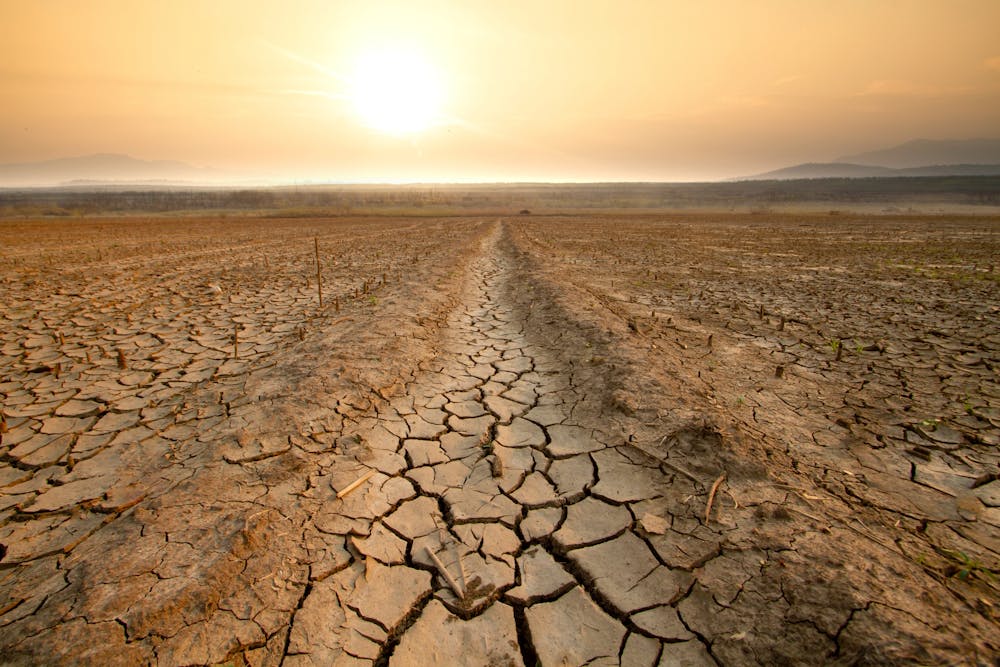
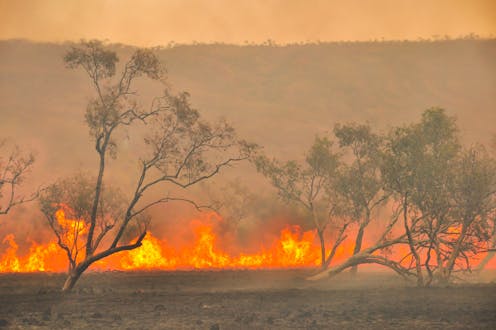
Rural communities feel the impact of drought much more than urban residents. Our new research looks at the link between drought and suicide rates in one of Australia’s biggest farming areas, the Murray-Darling Basin.
Drawing on monthly data from 2006 to 2016, our findings were alarming. We found, for instance, that one more month of extreme drought in the previous 12 months was strongly associated with a 32% increase in monthly suicide rates.
Climate change is predicted to bring more heat and longer, more extreme droughts. More effective approaches will be needed to prevent suicides in affected regions.
Research overseas found suicide rates rise with higher average temperatures. In Australia, a study found some evidence linking drought and suicide in New South Wales. However, a Victorian study found no significant association.
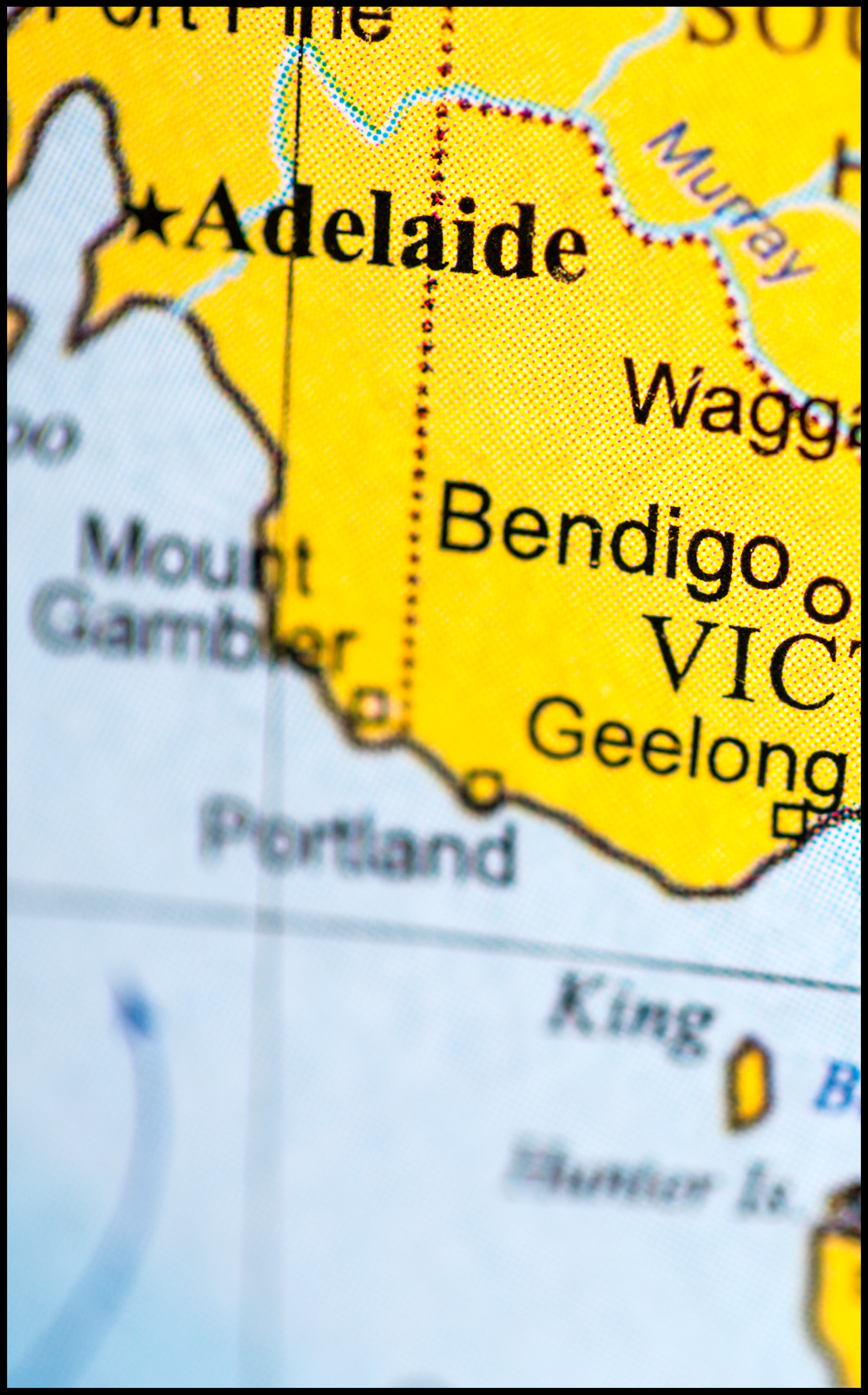
Our study looked at the Murray-Darling Basin. The region went through one of the worst droughts on record, the Millennium Drought, over the past couple of decades.
We analysed local area monthly data from 2006-16. We wanted to see whether worsening drought and heat were linked to higher monthly suicide rates, by examining differing types of droughts (moderate to extreme).
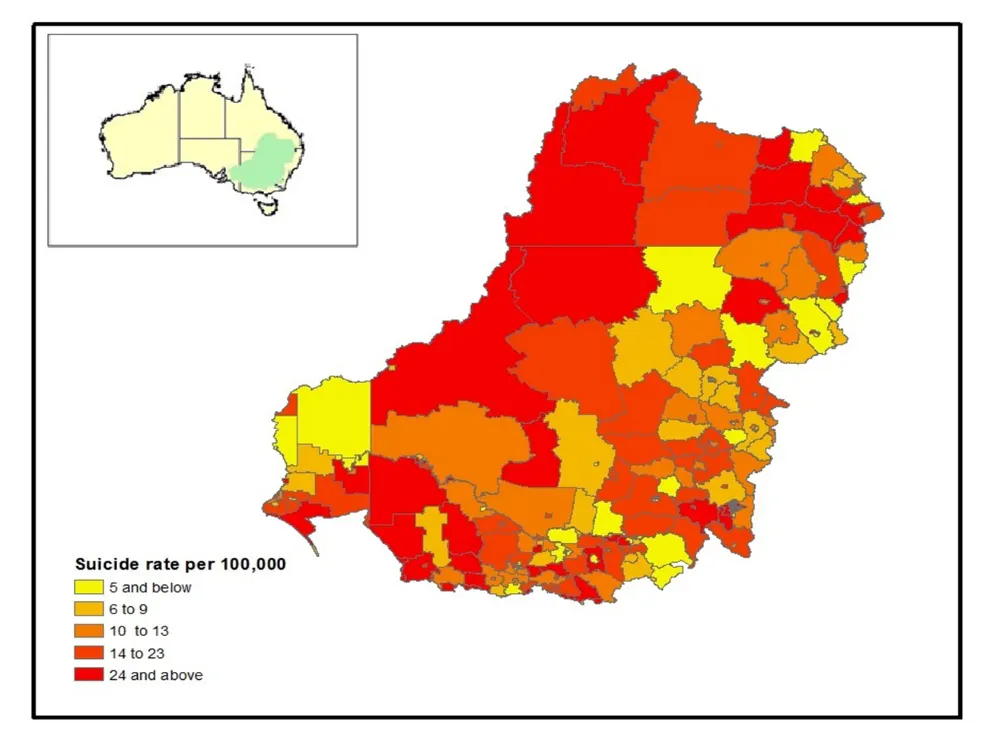
The map below shows the average suicide rate for 2006-2016 in local areas across the basin. Male suicide rates were over three times female rates.
We sought to control for as many local area characteristics as possible. Our modelling included unemployment, income, education, proportion of farmers, proportion of Indigenous people, health professionals, green space and various climate and drought variables. We modelled suicide rates for different age and gender sub-groups.
Key findings include:
one more month of extreme drought in the previous 12 months was strongly associated with the total suicide rate increasing by 32%
one more month of moderate drought in the previous 12 months was very weakly associated with a 2% increase in the suicide rate
a 1℃ increase in average monthly maximum temperature in the previous 12 months was associated with up to an 8% increase in the suicide rate
in males and younger age groups, suicide rates are more strongly associated with extreme drought and higher temperatures
a higher proportion of farmers in a local area was associated with an increased suicide rate
a higher proportion of First Nations people in a local area was also associated with higher suicide rates
more green space was significantly associated with moderating impacts of both extreme drought and temperature on suicide rates
an increase in average annual household income moderated the relationship between higher temperature and suicide.
Our results suggest the association between moderate drought and suicide rates is significant but the effect was small. As the drought becomes extreme, suicide rates increase significantly.
Given drought’s impact on farm production and finances, mental health will clearly get worse in rural areas if the impacts of climate change are not better managed.
Mental health interventions to prevent suicide in rural areas are different from what’s needed in urban areas. Areas in the basin with higher percentages of farmers and First Nations people were hot spots. These areas may need special intervention.
Many have emphasised the need for a systems approach to suicide prevention. Actions need to be multifaceted and co-ordinated as well as possible. One intervention or approach is not enough.
The relationship between drought and financial hardship seems to be key in farming areas. This points to the need for other forms of income on the farm, including from native vegetation and carbon credits. Work can also be done to promote drought preparedness, increase appropriate regional economic, social development and environmental policies and – where necessary – help people leave farming.
If this article has raised issues for you, or if you’re concerned about someone you know, call Lifeline on 13 11 14.
Sarah Ann Wheeler has received funding from the Australian Research Council; GRDC; Wine Australia; MDBA; CRC Food Waste; CSIRO; Goyder Institute; SA Department of Environment and Water; ACCC; NT Department of Environment, Parks and Water Security; NSW Health; Commonwealth Department of Agriculture and Water; Meat and Livestock Australia; ACIAR; RIRDC; UNECE; NCCARF; National Water Commission; and the Government of Netherlands.
Alec Zuo receives funding from the Australian Research Council, GRDC, ACCC, NSW Health, Department of Agriculture, Fisheries and Forestry, ACIAR, NCCARF, and the National Water Commission.
Ying Xu does not work for, consult, own shares in or receive funding from any company or organisation that would benefit from this article, and has disclosed no relevant affiliations beyond their academic appointment.
Source: The Conversation (Au and NZ) – By Andrew Lensen, Senior Lecturer in Artificial Intelligence | Pūkenga Matua, Te Herenga Waka — Victoria University of Wellington
As the 2023 election campaign enters its final days, there is an elephant in the room that politicians seem keen to ignore: the rise of Artificial Intelligence (AI) and what it will mean for New Zealand’s economy, politics and society.
Developments over the past year, such as ChatGPT and Midjourney, have AI experts worried about the deeper consequences of these digital tools.
And they’re not alone. Global market research firm Ipsos found 63% of New Zealanders were nervous about AI, even though only 35% understand where it’s being used.
As a society, we rely on the government to take the lead on important issues like this. But there has been barely a peep on the topic from those seeking election this year. That relative silence should concern everyone.
The AI future is geting closer
During a recent election debate, the leaders of both major political parties were asked if AI was a threat to humanity. Labour’s Chris Hipkins said “potentially”, while National’s Christopher Luxon said “there are good and bad parts”.
The leaders were also asked about a potential tax on AI to support workers who will eventually lose their jobs to this kind of technology. Hipkins said he was “not sure how to do that”, and Luxon said he thought “we are a long way from that”.
But we’re not.
In May 2023, 4,000 jobs were lost to AI in the United States alone. Global business consulting firm McKinsey has said 12 million American workers will need to switch jobs by 2030 as a consequence of generative AI – artificial intelligence capable of generating text, images and other media.
But AI will have wider societal implications than its impact on jobs. Over the past two decades, social media has contributed to a rise in misinformation, disinformation and political polarisation. New and more human-like AI bots – software programmed to complete repetitive tasks automatically – will make these threats even more pervasive, and more difficult to combat.
The use of AI in health, government, employment and other contexts has the potential to reinforce existing biases and prejudices, leading to inequitable outcomes.
This is especially true in Aotearoa, where AI models trained on Westernised data are ignorant of Māori tikanga and data sovereignty. AI is also putting minority languages at risk by defaulting to English
New Zealand is falling behind
The New Zealand government has been enthusiastic in using AI across the public service – from optimal scheduling of public hospital beds to helping decide whether an offender should be released from prison. But local lawmakers have been falling behind the rest of the world when it comes to regulating the technology.
The European Union’s AI Act is expected to pass into law by the end of 2023. This legislation is complex, but at its core it will classify AI tools into different categories of risk (from banned uses to no risk), with corresponding legislative requirements for deployment and monitoring.
Canada has announced a voluntary code of conduct with six core principles for organisations to follow when developing safe and responsible generative AI systems.
Even in the US – considered the centre of AI innovation – individual states are passing laws addressing the perceived threats of AI. At the federal level, the senate judiciary has held hearings on the regulation of AI.
There may be (small) signs of progress at home. In July, the office of the Prime Minister’s Chief Science Adviser released an article about New Zealand’s current response to AI and the challenges around regulation.
Labour’s recently released election manifesto mentions AI twice in its 74 pages, with a promise of a “just transition” for AI-affected workers. But the manifesto doesn’t describe what this transition would look like.
National’s “Boosting the Tech Sector” policy document states that a new “minister of technology” will ensure AI is used “safely and ethically” – without detailing what this means or how it will be enforced.
The Green Party’s digital policy provides overarching principles for regulating digital technology, such as social responsibility (reducing inequality) and honouring Te Tiriti. Again, however, the policy does not specifically address AI.
The other parties do not appear to have readily available technology policies on their websites.
Leaders need to go further on AI
Clearly, there is a way to go on policy development. New Zealand needs stronger data privacy laws recognising data is a taonga (treasure), and which require informed consent for use in AI training and processing.
And there needs to be regulation on what is and isn’t allowed to be automated with AI. For example, should the government automate benefit eligibility decisions or should the justice system use AI for low-level sentencing?
Economically, how can the profits of AI applications that use local data be kept within New Zealand? In the absence of a clear, homegrown AI strategy, Aotearoa will miss out on the opportunity to foster AI that benefits everyone.
Without active government regulation, New Zealanders and their political system could be vulnerable to manipulation by malign foreign interests.
The country needs to invest in its workforce to meet the changes being wrought by AI, and embrace Māori-drivenAI research that establishes New Zealand as a creator of technologies that work for its people, not against them.
Andrew Lensen does not work for, consult, own shares in or receive funding from any company or organisation that would benefit from this article, and has disclosed no relevant affiliations beyond their academic appointment.
Pacific Media Network (PMN) has continued its transition into the “Moanaverse” with a new digital home for its news and media
PMN said in a statement it was pleased to reveal its new website that “ensures the future of Pacific storytelling, radio and news media continues to connect with its growing online audience”.
Pacific communities were at the heart of the new website www.pmn.co.nz, said CEO Don Mann.
“PMN’s new digital platform is all about serving the Pacific community. The stories we share deserve an online space that upholds the mana and respect of Pacific people,” he said.
“We have an obligation to provide a digital home that best serves the interests of the Pacific community.”
The redesigned site makes it easier to discover its brands — Niu FM, 531pi, PMN News — and its 10 language programmes all in one place.
Included in the refresh was a branding approach that seeks to connect and be relevant with an increasingly digitally savvy Pacific youth audience.
The project was completed within a year and was led by web agency Daylight Group, the team behind award winning site The Spinoff.
“We liken our online space to a digital version of a kupega or upega: a net that seeks to contain Pacific knowledge that sustains us and to share this koloa across the Moanaverse,” Mann said.
The main colour tapa black is an intentional neutral backdrop that “holds the vibrancy of our islands”.
The site is said by PMN to be mobile-friendly, optimising the display for any screen size so content can be accessed “on the go”.
The Indonesian People’s Front for West Papua (FRI-WP) and the Papuan Student Alliance (AMP) have denounced the Rome Agreement of 30 September 1962 as “illegal” during protest speeches marking the 61st anniversary last Saturday.
The groups gathered at several places throughout Indonesia to hold peaceful protests and speeches.
The protesters held a public discussion and protest in Yogyakarta, Lombok, West Nusa Tenggara, Ternate, East Java and North Maluku.
Some protesters were met by hardliner groups of Indonesians who claimed they were supported and protected by the Indonesian police.
The Facebook page of AMP reports that peaceful demonstrations were also scheduled for September 30 in Kupan city but were obstructed by Garuda reactionaries, known as ORMAS (Civic Organisation Group) and police officers.
Some conversations were extremely racist, indicating that both the police and state are still maintaining a policy of racism.
Protests such as these are not unusual. Papuan students and their Indonesian supporters do this annually in order to draw attention to Indonesia’s illegal occupation of West Papua, which violates international law and the UN Charters on self-determination and decolonisation.
This time, the protest was over the Rome Agreement.
In 2021, an attempt to stage a protest in front of the US Embassy in central Jakarta was also made, but 17 AMP Papuan students were arrested.
What the protests are against These protests across Indonesia may be dismissed by mainstream media as insignificant. But for Papuans, they are actually most significant.
The theme is protesting against what Papuans see as the “genesis” of a betrayal with lies, deceit, and manipulation by powerful international actors that sealed Papua’s fate with Indonesia.
This set a stage of gross human rights violations and exploitation of West Papua’s natural resources, which has been going on since these agreements were signed.
They were treaties, agreements, discussions, and decisions concerning West Papua’s future made by state and multinational actors without Papuan input — ultimately leading to West Papua’s “destruction”.
According to the AMP, the agreement between the Netherlands, Indonesia, the United Nations (UN) and the United States was manipulated to gain control over Papua, reports Suara Kalbar.
The AMP Papuan students and their Indonesian solidarity groups stated that the September 1962 Rome Agreement, followed by the signing of the New York Agreement on August 15, 1962, was reached without the involvement of any representatives of the Papuan people.
The protesters’ highlighted these flaws of the Rome Agreement that:
The Act of Free Choice to be delayed or cancelled;
“Musyawarah” (a form of Indonesian consensus building) be used rather than one-person-one-vote;
The UN report to the UNGA be accepted without debate;
Indonesia would rule West Papua for 25 years after 1963;
The US could exploit natural resources in partnership with Indonesian state companies; and
The US would underwrite an Asian Development Bank grant for US$30 million and guarantee World Bank funds for a transmigration programme beginning in 1977.
The agreement signed by Indonesia, the Netherlands and the United States was a very controversial with 29 articles stipulating the New York agreement, which regulates 3 things, where articles 14-21 regulate self-determination based on the international practice of one person one vote; and articles 12 and 13 governing the transfer of the administration from the United Nations Temporary Executive (UNTEA) to Indonesia.
Thus, this agreement allowed Indonesia’s claim to the land of Papua, which had been carried out after the transfer of control of West Papua from Dutch to Indonesia through UNTEA on 1 May 1963.
West Papua ‘conditioned’ The student protesters argued that prior to 1963 Indonesia had already conditioned West Papua by conducting military operations and suppressing the pro-independence movement, reports Koran Kejora.
Ironically, the protesters say, even before the process of self-determination was carried out on 7 April 1967, Freeport, the state-owned “mining company of American imperialism”, had signed its first contract with Indonesia.
This meant that West Papua had already been claimed by Indonesia through Freeport’s first contract two years before the Act of Free Choice was conducted, reportsKoran Kehora.
The Act of Free Choice itself “was a sham”, only 1025 out of 809,337 Papuans with the right to vote had been quarantined or voted, and only 175 of them voiced their opinion, protesters said.
Despite its undemocratic nature, terror, intimidation, manipulation, and gross human rights violations, with the implementation of the Act of Free Choice, Indonesia legitimised its illegal claim to West Papua.
Igin Kogoya, a coordinator for AMP and Indonesian supporters in Malang, said in a media release that Indonesia did not carry out the agreement in accordance with the New York Agreement, reports Jubi.
Instead, Indonesia uses a variety of military operations to condition the region and suppress the independence movement of West Papuans.
“Therefore, before the self-determination process was carried out in 1969, Freeport, the imperialist state-owned mining company of the United States, signed its first contract of work with the Indonesian government illegally on 7 April 1967.”
Early Freeport mine deal Naldo Wasiage of AMP Lombok and Benjos of FRI-WP Lombok claimed colonial Indonesia had made claims to the West Papua region with Freeport’s first contract two years before the Act of Free Choice was passed.
Today, Indonesia’s reform, terror, intimidation, and incarceration, as well as the shootings and murders of Papuans, still occurring.
The human rights of the Papuan people are insignificant and hold no value for Indonesia.
The Military Operation Area was implemented throughout West Papua before and after the illegal Act of Free Choice. This clearly demonstrates that Indonesia’s desire to colonise West Papua until the present.
When asked about the Rome Agreement, Andrew Johnson, an Australian who has been researching international documents and treaties related to West Papua’s “betrayal”, said:
In order to invest billions of dollars in looting West Papua, Freeport would need assurances that Indonesia would be able to deliver access to the region. A Rome Agreement-type document would provide this assurance.
Victor Yeimo: Unveiling the atrocities After being released from the Indonesian legal system and prison on 23 September 2023, Victor Yeimo addressed thousands of Papuans in Waena Jayapura by saying:
The Papuan people have long suffered under a dehumanising paradigm, which denies our inalienable rights to be human in our own land.
Yeimo said that the Papuan people in West Papua were systematically excluded from any decision-making processes that shaped their own future.
Jakarta’s oppressive control led to arbitrary policies and laws imposed on West Papuans, disregarding their voices and aspirations. This exclusion highlighted the colonisers’ desire to maintain control and dominance, he said.
The ratification of Special Autonomy, Volume II, serves as an example of Jakarta’s deception. The Papuan People’s Council (MRP), entrusted with representing the special autonomy law, was sidelined, rendering their role meaningless.
Jakarta’s military intervention further emphasised the denial of Papuan rights.
The expansion of five new autonomous provinces in West Papua deepens the marginalisation of indigenous Papuans. This move reinforces the grip of Indonesian colonialism, eroding the cultural identity of the Papuan people.
Jakarta’s tactics, supported by state intelligence and collaboration with local elites, legitimised its oppressive control, Yeimo said.
The state intelligence agency (BIN) in Jakarta manipulated conflict between Papuan groups and tribes to perpetuate hostility and division. By sowing seeds of discord, the colonisers sought to weaken the collective strength of the Papuan people and divert their attention away from their own oppressive actions.
Under Indonesian colonial rule, property, wealth and position held little significance for the Papuan people, Yeimo said.
Relying on hollow promises and pseudo-offers from the oppressors would never lead to justice, welfare, or peace. It was time to reject the deceptive allure of colonialism and focus on reclaiming autonomy and dignity, Yeimo told his people.
Embracing nationalistic ideals was crucial in the Papuan struggle for liberation. Indigenous Papuans must question their own participation in Indonesian colonialism.
Working for the colonisers as bureaucratic elites or bourgeois elites does not uphold their humanity or dignity. It is time to reclaim their autonomy and fight for their freedom.
Yamin Kogoya is a West Papuan academic who has a Master of Applied Anthropology and Participatory Development from the Australian National University and who contributes to Asia Pacific Report. From the Lani tribe in the Papuan Highlands, he is currently living in Brisbane, Queensland, Australia.
A general view of Wadi Gharandal riverine wetland, along the Jordan Rift Valley, showing palm trees concentrated at the centre of the wadi near the active spring.Mahmoud Abbas
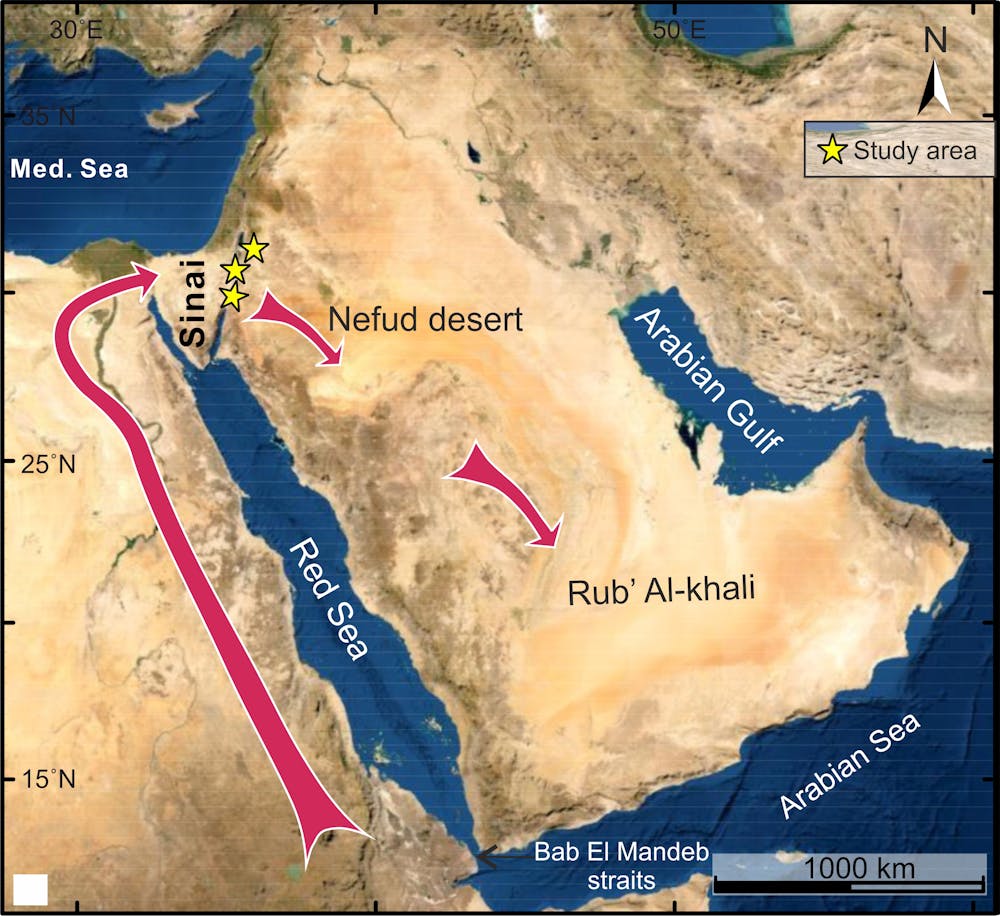
Our species, Homo sapiens, migrated out of Africa multiple times – reaching the Levant and Arabia between 130,000 and 70,000 years ago, as exemplified by human fossils and archaeological sites found at various locations.
Little is known, however, about the pathways of these migrations. In a study published today in Science Advances, we find the now inhospitable and hyper-arid zone of the southern Jordan Rift Valley was frequently lush and well-watered in the past.
Our evidence suggests this valley had a riverine and wetland zone that would have provided ideal passage for hunter-gatherers as they moved out of Africa and deep into the Levant and Arabia.
Wandering out of Africa
Researchers hypothesise humans migrating out of Africa would have used platforms in the eastern Sahara, the Nile River Valley, or the margins of the western Red Sea.
From there, these small bands of hunter-gatherers would have passed into the Sinai – a land bridge connecting Africa with the rest of Asia – following migrating animals and hunting a variety of them for sustenance.
For many of these hunter-gatherers, the next stop on the journey would have been the southern portion of the Jordan Rift Valley. This valley is situated in a strategic zone, with the Dead Sea to the north and the Gulf of Aqaba in the south.
Our field work was concentrated on three sites. The first two were Wadi Gharandal and an area near the village of Gregra – both in the valley itself. The third site, Wadi Hasa, is located in the more elevated areas of the Jordan plateau.
“Wadi” is an Arabic word describing a temporary riverbed that only contains water during heavy rains.
We researched three sites, including two wadis and an area near a village called Gregra. Mahmoud Abbas
When Arabia was a verdant land
Our goal was to reconstruct the region’s past environmental settings by accurately dating various sections of sediment. We used a technique called luminescence dating to estimate how long sediment grains had been shielded from sunlight, thereby allowing us to calculate how old they were.
Our findings from sedimentary sections ranging 5 to 12 metres in thickness showed ecosystem fluctuations over time, including cycles of dry and humid environments. We also found evidence for the presence of ancient rivers and wetlands.
Luminescence dating showed the sedimentary environments formed between 125,000 and 43,000 years ago, suggesting there had been multiple wet intervals.
At Wadi Gharandal, our team recovered three stone tools associated with a wetland environment. Two of these were made using the Levallois method – a characteristic manufacturing technique known to have been used by both Neanderthals and Homo sapiens. We dated the tools to 84,000 years ago.
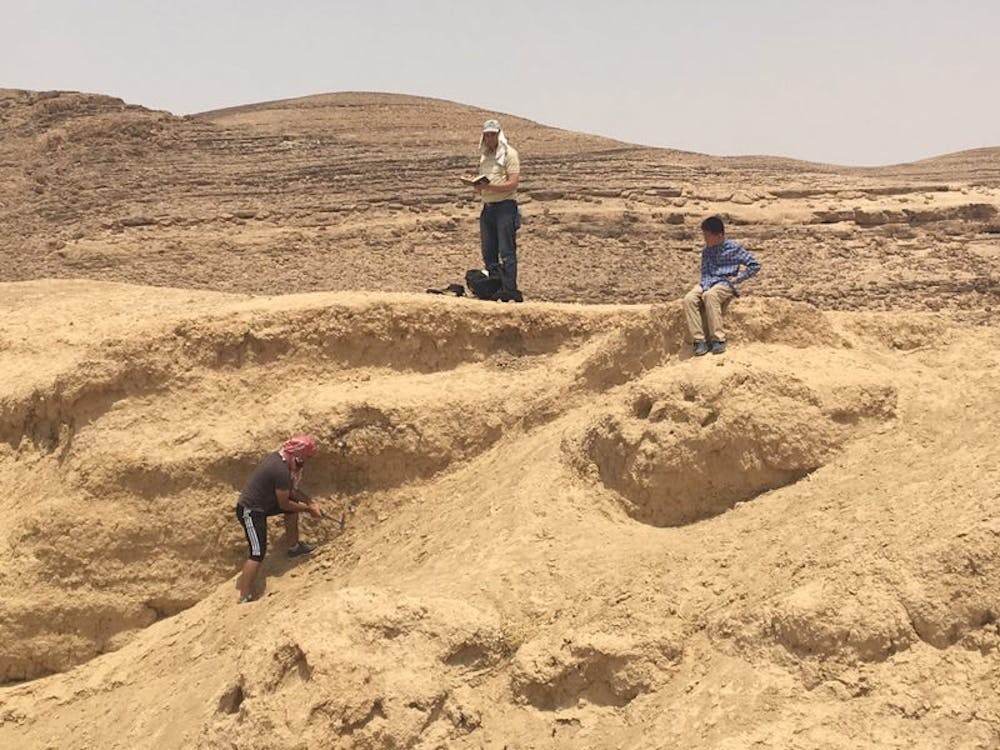
We collected samples for luminescence dating from the Wadi Hasa area in West Jordan. Pictured are Mahmoud Abbas, Mohammed Alqudah and Yuansen Lai. Zhongping Lai/Shantou University
Collectively, our fieldwork in the Jordan Rift Valley demonstrates the valley once functioned as a 360-kilometre-long freshwater corridor that helped funnel humans northward into Western Asia and southward into the Arabian Peninsula.
Further evidence for a northward expansion comes from the famous Skhul and Qafzeh cave sites in Israel. Fossils of Homo sapiens and Levallois stone tools have been found here.
Towards the south, fieldwork in northern Saudi Arabia has also demonstrated a network of rivers and lakes was once present in the region. This allowed humans to penetrate a green Nefud Desert replete with savannahs and grassland.
In the heart of the Nefud, the lakeside site of Al Wusta has produced a human fossil and Levallois stone tools dating to 85,000 years ago. These dates coincide with the 84,000-year-old Levallois stone tools found at Wadi Gharandal.
Our findings from the Jordan Rift Valley indicate there were multiple early human migrations from Africa, and into Asia, during favourable conditions. This opposes the theory of a single, rapid wave of human movement out of Africa 60,000 years ago.
Our results also suggest, together with the Levantine and Arabian evidence, that hunter-gatherers used inland river and wetland systems as they crossed South-West Asia. This contradicts a popular model suggesting they mainly used coastal routes as super-highways.
Although ancient DNA evidence indicates Homo sapiens interbred with Neanderthals and Denisovans multiple times as they spread into Asia, on-the-ground evidence for these encounters has generally been lacking. Our findings provide further evidence this area served as the ground for these encounters.
Yet numerous questions remain unanswered. Large swathes of territory in South-West Asia have not yet been surveyed or dated – and few fossils of our ancestors have been found to shore up arguments about how early humans really dispersed.
We’ll need to closely investigate more long-neglected areas such as the Jordan Rift Valley to accurately portray how humankind’s voyage out of Africa unfolded.
Zhongping Lai receives funding from the China Natural Science Foundation.
Mahmoud Abbas and Michael Petraglia do not work for, consult, own shares in or receive funding from any company or organisation that would benefit from this article, and have disclosed no relevant affiliations beyond their academic appointment.
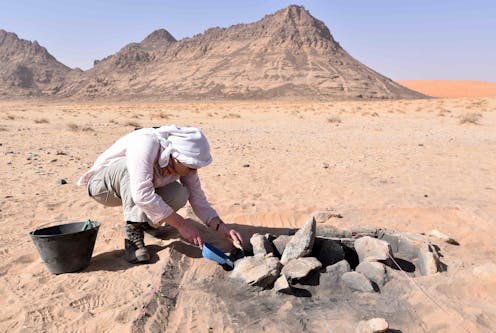
About 7,000 years ago, a small group of people sat around a fire, next to a small lake in what is now the Nefud Desert of northern Saudi Arabia.
We found some of the tools they left behind – and on close inspection of the tools, we discovered these Stone Age herders were busy grinding animal bones, wild plants and pigments while their meat was cooking.
Our results are published in a new paper in PLOS ONE.
Herders and artists
Our earlier research has shown that between 10,000 and 6,000 years ago much of Arabia was far wetter and greener than it is today.
Grasslands spread, and trees and shrubs grew near water sources. Lakes formed and provided water. Herders lived around these lakes and led their cattle, sheep and goats to the best pastures.
These Stone Age herders were also skilled artists. They carved thousands of images into rock surfaces on cliffs and boulders, documenting their daily lives.
The rock art shows Stone Age people hunting gazelles, wild donkeys and ibex, and it also shows their most precious possession: their cattle.
Stone Age camp sites
Archaeological sites from this period consist of collections of small fireplaces. The herders seem to have been extremely mobile, moving around the landscape with their herds, searching for pasture and water.
On these routes they made small camps near lakes, returning to the same places again and again as the years passed and the seasons turned.
A few years ago, we discovered one such camp at Jebel Oraf, near the Jubbah Oasis, in the Nefud Desert of Northern Saudi Arabia.
On the shores of a small, ancient lake, we discovered 170 small fireplaces. We excavated 17 of these fireplaces and radiocarbon dating showed that most of them are between 7,200 and 6,800 years old.
A grinding stone reassembled from fragments appears to have had two holes for carrying with a rope or cord. Ceri Shipton, CC BY
What surprised us was that the small camps were full of grinding tools. Most of them had been broken into smaller pieces, and then placed on top of the fire. Some had had holes drilled into them to attach a rope to help carry them.
Although people were moving a lot, they took heavy grinding stones weighing up to three kilograms with them. It’s not clear how the grinding stones were transported – either they were carried by people or perhaps they were strapped to their cattle. Regardless, these grinding tools seem to have been very important to them.
Today the Jubbah Oasis is extremely arid and for archaeologists that means organic remains don’t survive. This made it very difficult to find out what the purpose of these grindstones was.
There are no plant remains in the archaeological sites, and animal bones only survive in small fragments. So, we turned to microscopic analysis in order to help determine the function of the grinding tools.
Microscopic traces
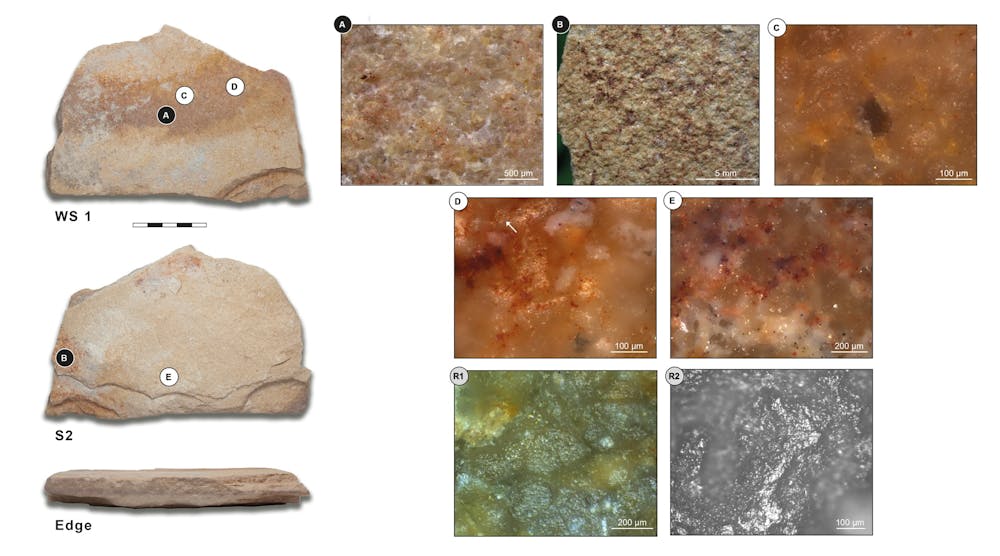
In experiments we find that grinding different materials, such as bone, pigment, or plants, leaves distinctive microscopic marks on the surface of the grinding tools. These marks, including striations, fractures, rounding of individual quartz grains and different types of polish, can be seen with a microscope.
We looked at the Stone Age grinding tools to identify similar traces, and from them to determine what materials were ground.
Our microscopic study showed the grindstones were used for a range of different purposes.
Some were used to process bones. We know the fires were used to cook the meat of cattle, sheep and goats, and of game such as oryx and ostrich.
A stone grinding tool showing microscopic traces of plant and pigment processing. Giulio Lucarini, CC BY
We think the herders broke open animal bones to get to the marrow. Bone marrow is high in fat, and this would have helped them to get extra nutrition.
Our analysis also showed they ground plants. None of the actual plant remains have survived, so we don’t know if they ground wild plants to make simple breads, or if they pounded plant fibres to make baskets or rope.
Both would have been important for their lifestyle. They moved a lot and bread would have been easy to preserve and carry around. Baskets and rope would have been used for storage and transport and also to construct simple, transportable shelters.
The grinding tools also showed pigment was processed. Red shale, a rock found in nearby mountains, can be used like a crayon or ground into red powder and mixed into paint.
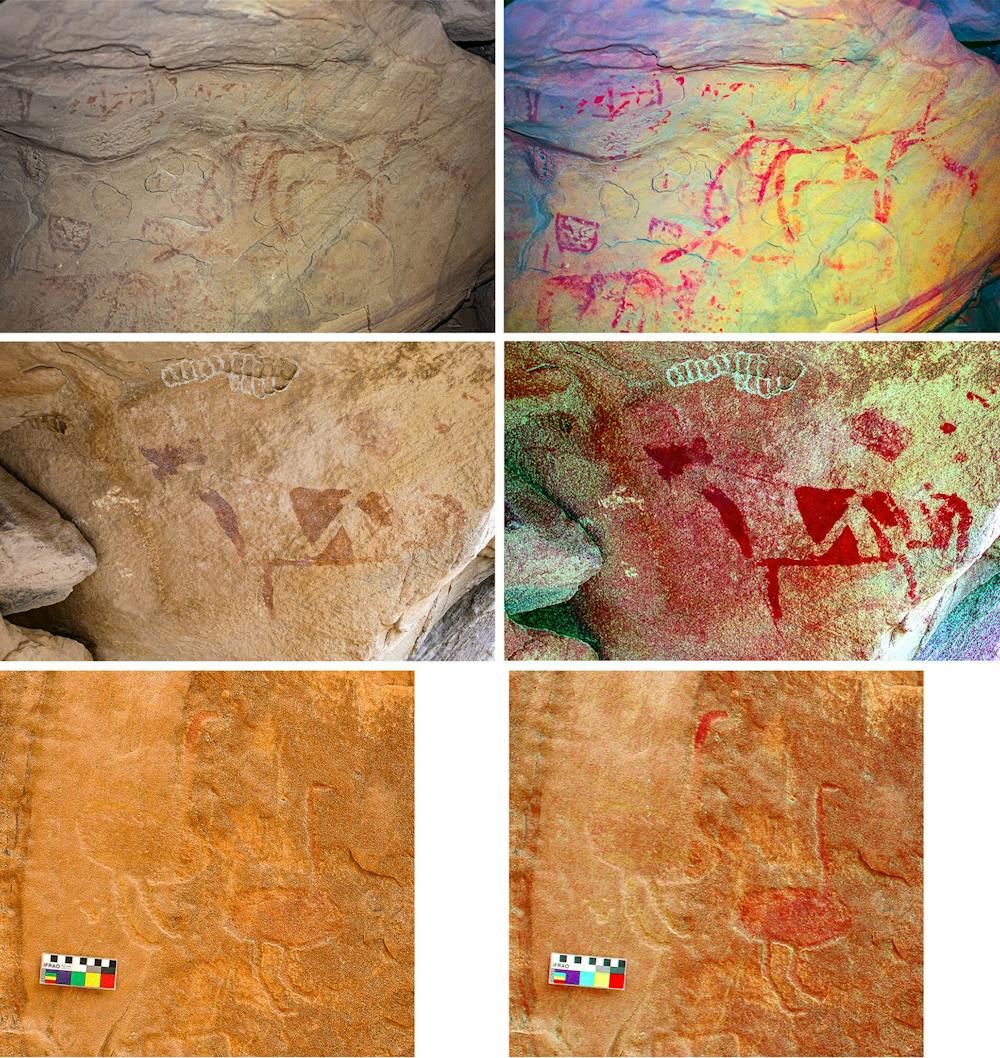
Painted rock art from northern Saudi Arabia hints at the importance of pigment processing. Maria Guagnin, CC BY
Painted rock art doesn’t often survive. Over the centuries it is washed off by rain and wind.
Only one painted rock art site from the Neolithic survives near Jebel Oraf. It shows cattle with beautiful long horns.
The grinding stones are now evidence that painted art may once have been a lot more widespread.
Valuable tools
Our analysis of the grinding marks also showed the tools were often used for different materials over time. They were clearly valuable and used as much as possible.
At the end they were broken into smaller pieces. In some cases we were able to piece back together up to 12 fragments. We’re still not sure why the discarded tools were placed on the fire – perhaps they used them to cook or to dry their meat.
Grinding stones appear to have been an important tool for mobile herders 7,000 years ago. Although they would have been hard to carry, these tools allowed Stone Age herders to produce food resources and plant materials that were vital to their highly mobile lives.
The authors do not work for, consult, own shares in or receive funding from any company or organisation that would benefit from this article, and have disclosed no relevant affiliations beyond their academic appointment.
As campaigning in the referendum on an Indigenous Voice to Parliament continues, “no” campaigners have repeatedly argued against what they call “the Voice of division”.
The results of our exclusive opinion poll suggest something to the contrary: most prospective “no” voters see the country as already divided, while “yes” voters are more likely to see it as united.
As part of an Australian Laureate Fellowship project, we commissioned a series of questions to explore whether Australian voters saw their country as divided, against the backdrop of the current referendum campaigns. These questions were added to the regular Essential opinion poll in its September 5 poll.
Polling on Voice voting intention itself shows polarisation on the issue. In the week our questions were asked, Essential showed an overall split of 42% of respondents likely to vote “yes” and 48% likely to vote “no”, with 10% undecided. (The “yes” vote has regained some ground in more recent polling.)
But when we asked respondents “How unified or divided you think Australian society is?”, their perceptions differed vastly between “yes” and “no” supporters.
Of those who see the country as unified, 58% intend to vote “yes”, while only 34% intend to vote “no”. Those who see division have almost exactly opposite intentions: 59% plan to vote “no” and 34% plan to vote “yes”.
Voting intention
Very unified + quite unified
Neither unified nor divided
Quite divided + very divided
Intend to vote yes
58%
38%
34%
Intend to vote no
34%
46%
59%
Unsure
8%
16%
8%
Perceptions of unity and division in Australian society and referendum voting intentions
These results are remarkable, and contradict the “no” campaign rhetoric that it is the Voice to Parliament proposal itself that divides us. Instead, they show only a part of the Australian population believes the country is divided – and those voters overwhelmingly support the “no” campaign.
Who sees Australia as divided – and why?
Away from the Voice campaign, though, our poll results show societal division in Australia remains relatively mild overall. Of all the respondents we polled, 27% saw Australia as very or quite unified, and 42% as quite or very divided – which leaves 31% of voters who take a neutral point of view.
Very unified
Quite unified
Neither unified nor divided
Quite divided
Very divided
Very unified + quite unified
Quite divided + very divided
Percent of respondents
5%
22%
31%
33%
9%
27%
42%
Overall perceptions of unity and division in Australian society
This compares favourably with countries such as the United States, where polarisation, especially between political camps, now pervades virtually all aspects of society. Australians may have their disagreements, but only 9% of us see the country as very divided.
It also means “no” voters believe Australia to be considerably more divided, and “yes” voters believe the country to be substantially more unified, than Australians do on average.
These perceptions vary among different demographics. Younger participants see more unity in Australia. In contrast, voters over 55 see more division.
Employment status also plays a role: those in paid employment see considerably more unity than those without employment. This is especially true of retirees – who are also likely to be older, of course. Similarly, residents of capital cities see more unity than those outside them.
Age
Residence
Employment
18-34
35-54
55+
Capital
Non-capital
In paid employment
Not in paid employment
Retired
Very unified + Quite unified
32%
31%
20%
30%
21%
33%
18%
19%
Neither unified nor divided
33%
30%
30%
31%
31%
28%
39%
30%
Quite divided + Very divided
35%
39%
51%
39%
48%
39%
42%
50%
Demographic effects on perceptions of unity and division in Australian society
A ‘no’ campaign that appeals to perceptions of division
Our poll results show the main appeal of the “no” campaign’s rhetoric of “the Voice of division” is not to Australians who want to prevent deep political division in the country before it can take root.
Rather, it has attracted a substantial share of voters who think the country is already divided – and whose perceptions of polarisation are considerably greater than everyone else’s. In this sense, rather than offering a voice for unity, the “no” campaign is giving voice to division.
Conversely, the “yes” campaign has yet to convince a sufficiently large group of voters that the Voice offers a pathway towards greater unity – even if those who intend to vote “yes” on October 14 are already much more inclined to see the country as united.
This content was commissioned by Queensland University of Technology and completed by Essential Research. The survey was conducted online from August 30 to September 3 2023 and is based on 1,151 respondents sourced from online research panels.
The target population is all Australian residents aged 18 and over. Demographic quotas were applied to fieldwork and results are weighted. Full details of the methodology can be found here.
This research was conducted in accordance with the Australian Polling Council code of conduct. The council aims to advance the quality and understanding of public opinion polling in Australia.
Axel Bruns receives funding from the Australian Research Council through Laureate Fellowship FL210100051 Dynamics of Partisanship and Polarisation in Online Public Debate, Discovery project DP200101317 Evaluating the Challenge of ‘Fake News’ and Other Malinformation, and the Australian Research Council Centre of Excellence for Automated Decision-Making and Society (ADM+S).
Samantha Vilkins receives funding from the Australian Research Council through Laureate Fellowship FL210100051 Dynamics of Partisanship and Polarisation in Online Public Debate.
Tariq Choucair receives funding from the Australian Research Council through Laureate Fellowship FL210100051 Dynamics of Partisanship and Polarisation in Online Public Debate.
Source: The Conversation (Au and NZ) – By Louise Birrell, Researcher at The Matilda Centre for Research in Mental Health and Substance Use, University of Sydney
Unsplash
Moody, withdrawn, down. These words are often used by parents of teens. And young people may say they feel so “depressed” about upcoming exams, or that the world is “just so depressing” these days.
But how do you know if your teen is experiencing what health professionals call “major depression”? And when should you seek help?
First, let’s understand what is meant by this term. Major depression is characterised by persistent low mood and/or irritability and loss of interest or pleasure in usual activities for at least two weeks. It also includes physical symptoms, such as sleep disturbance and fatigue, and cognitive symptoms, such as negative thoughts about themselves and the future, difficulty concentrating or making decisions.
Major depression is more than brief sadness, or an expected reaction to loss or a stressful event.
While the diagnosis is the same for adolescents and adults, teens may be more likely to present with irritability and mood changes rather than the low mood typical of adults.
Increasing over time
There is evidence depression is increasing among young people, with an international study in 2021 estimating 25% of children and adolescents experienced elevated depression symptoms – double pre-pandemic levels. While Australia was not included in this study, a recent Australian study showed psychological distress have spiked in Australian millennials (born between the early 1980s and late 1990s) and Gen-Z Australians (born late 1990s to early 2010s).
While the cause of this increase is unclear, it is likely due to multiple factors, such as financial pressures, social isolation, and climate change, and made worse by the COVID pandemic.
Given the understandable distress experienced by many young people, how can parents or carers know when to seek help?
Begin by talking to your child. Let them know you have noticed some changes and you are concerned about them. If your child opens up about their difficulties, listen carefully and validate their feelings. Being able to talk about difficulties, and knowing support is there if they need may be enough for some teens.
Try not to dismiss a teen’s feelings or punish irritable behaviour. It can be tempting to remind them of positives or offer solutions – but this can often backfire, leaving them feeling misunderstood. While it might be difficult or uncomfortable to talk openly with your teen about their mental health, it is often a huge relief for them.
Professional help may be needed if they are highly distressed, or if their difficulties are having a significant impact on their usual activities and relationships (this may include withdrawing from many activities, avoiding school, or avoiding friends and family most of the time).
Start with a GP
The good news is, effective treatments are available.
The first step to finding appropriate treatment will likely be supporting your teen to see a GP. Again, simply talking through their concerns with the doctor may be very helpful. Your young person might prefer to discuss this with the GP without you.
Teens can also go directly to an organisation like Headspace, which provides information, support and services to young people aged 12 to 25 and their families and friends via centres across Australia.
A recent review on recognising and managing teen depression examined clinical practice guidelines from Canada, Australia, the United Kingdom, the United States and New Zealand found a comprehensive treatment approach is typically used.
Treatment can include:
education about depression and its treatment
lifestyle interventions (such as improving sleep, diet and exercise)
psychological therapy (often focused on understanding and changing unhelpful thinking patterns)
prescription of antidepressants when needed.
Whether to start a teen on antidepressant medication can be a difficult decision. It should be a collaborative decision involving the teen, their parents and health professionals.
Like all medication, antidepressants have side effects and potential risks. They are typically used in cases of severe depression, or if psychological treatments have been unsuccessful. Suicidal thoughts or behaviour are a possible side effect of antidepressants for a small proportion of adolescents and should be carefully monitored. However, untreated depression is also a risk factor for suicide, so the potential benefits and risks of antidepressant use by teens needs to be carefully considered.
Assessing risk
Suicidal thoughts and self-harm are common in depression but can be effectively treated.
Suicide risk assessment is a critical part of any treatment for depression, and should include the development of a safety plan with the teen and their parents or carers. Safety plans can be very helpful in times of distress, listing helpful coping strategies and contact details for family, friends and health professionals.
If you are concerned your teen might be at risk of suicide, take it seriously. Ask them direct questions, such as “Are you thinking about suicide?”. Get professional support as soon as possible and take the young person to the nearest emergency department or call 000 if you are worried about their immediate safety. You can also contact Kids Helpline 24 hours a day 1800 55 1800.
Importantly, look after yourself. Supporting a teen with depression can take a toll and lead to significant tension in a household.
Find someone (other than your child) you can confide in. Make sure you’re getting rest, nutrition and exercise. Seek professional support if you find yourself struggling. Taking care of yourself means you are better equipped to support your child.
If this article has raised issues for you, or if you’re concerned about someone you know, call Lifeline on 13 11 14 or Kids Helpline on 1800 55 1800.
Louise Birrell receives funding from the National Health and Medical Research Council, the Australian government and Australian Rotary Health.
Andrew Baillie is employed by the University of Sydney in a position half funded by Sydney Local Health District and he receives funding from the National Health and Medical Research Council and the Medical Research Future Fund.
Maree Teesson is Chair of Australia’s Mental Health Think Tank which is funded by the BHP Foundation. She is Director of The Matilda Centre, The University of Sydney. She is chair of the Million Minds Mission. She receives funding from the National Health and Medical Research Council, the Australian Government, BHP Foundation, Paul Ramsay Foundation and other research organisations. She is co-director of OurFutures Institute a not-for-profit company established to distribute evidence resources to education organisations.
Erin Kelly does not work for, consult, own shares in or receive funding from any company or organization that would benefit from this article, and has disclosed no relevant affiliations beyond their academic appointment.
Source: The Conversation (Au and NZ) – By Alan Finkel, Chair of ARC Centre of Excellence for Quantum Biotechnology, The University of Queensland
This article is part of a series by The Conversation, Getting to Zero, examining Australia’s energy transition.
Just over a year since US President Joe Biden signed the Inflation Reduction Act (IRA) into law, it’s becoming clear this strangely named piece of legislation could have a powerful impact in spurring the global transition to net zero emissions by 2050.
But the vast amount of investment unleashed by the IRA has raised tensions with some of the United States’ closest allies, and creates risks, as well as opportunities, for Australia’s transition to clean energy sources.
In his 2020 presidential campaign, Biden promised to commit the US to net zero by 2050, and to spend US$2 trillion to get there – the biggest investment in manufacturing since World War II. Biden is delivering on those promises.
Passage of the IRA, in August 2022, ensured a swathe of green technologies would benefit from tax credits, loans, customer rebates and other incentives.
The original announcement estimated that uncapped subsidies over ten years would be US$369 billion, but Goldman Sachs Research now estimates that total subsidies could reach US$1.2 trillion and attract US$3 trillion investment by industry. That’s trillion, not billion.
The IRA is all carrot, no stick. It contains no carbon taxes or emissions trading schemes. Instead, tax credits for capital expenditure and production costs encourage companies to invest in solar, wind, hydrogen, batteries, electric vehicles and other zero emissions technologies.
This approach is shifting the debate on the best way to reach net zero emissions. To free-market economists who ask why government should invest in private sector industries, the answer is that the green energy transition is not natural. Renewable energy would never have advanced without Germany subsidising solar and Denmark subsidising wind.
Subsidies and mandates are also crucial in explaining why, last year, Chinese vehicle manufacturers produced 64% of the global total of 10.5 million electric vehicle sales, and deployed about half of the global capacity additions in solar and wind power.
The IRA is America’s response. More than climate policy, it is industrial policy, replete with made-in-America provisions. Companies are more likely to obtain tax credits if they employ unionised labour, train apprentices and set up shop in states that are transitioning out of fossil fuels.
Consumers will earn a $7,500 federal tax credit on an electric car only if that car is assembled and at least half the battery made in America. Similarly, wind and solar projects will earn tax credits only if half of their manufactured components are made in America.
These policies were made with China in mind. Both main US parties agree the US must reduce its dependence on sourcing minerals and products from China, and move towards a new form of “strategic economic nationalism”.
Yet while America’s strongest allies are also alarmed by the challenge from China, they are disturbed by aspects of the IRA. They fear that to benefit from its subsidies, their own clean energy companies might pack up shop and establish plants in the US.
The European Union, for example, has praised the IRA’s overall approach, but fiercely criticised its made-in-America provisions. French President Emmanuel Macron called the Act “super aggressive” toward European companies. European leaders say the IRA violates trade rules by discriminating against imported products, and could “trigger a harmful global subsidy race to the bottom on key technologies and inputs for the green transition.”
Yet even as it criticises the US, the EU has responded to the IRA by relaxing its rules and allowing individual states to provide direct support to clean energy companies to stop them taking their projects to the US.
Canada, worried about investment flowing south to benefit from the IRA even though its free trade agreement with the US should give its companies access to the subsidies, has also announced tax credits and programs to boost clean energy production. Japan and South Korea have announced similar programs.
Why the IRA challenges Australia
In Australia, before the IRA was legislated, the Morrison government provided a A$1.25 billion loan to Iluka Resources to fund construction of an integrated rare-earths refinery in Western Australia. The refinery will produce separated rare earth oxide products that are used in permanent magnets in electric vehicles, clean energy generation and defence.
But Australia risks being left behind in the race to build clean energy industries. The US could so heavily subsidise green hydrogen production that our own planned industry – seen as a foundation of our aspiration to be a clean energy superpower – will be uncompetitive, leading our aspiring manufacturers to set up shop in the US.
The IRA, however, brings Australia many potential benefits. The US wants to source the raw and refined materials it needs from countries, such as Australia, with which it has a free trade agreement. To respond to this interest, Australian industry, transport and mining must have access to low-emissions electricity.
The US will be an essential market for our rare earths such as neodymium, praseodymium, dysprosium and terbium, used to make the powerful permanent magnets in wind turbines and electric car motors. Australia can also build new industrial processes and supply chains so that we earn more from decarbonised metallic iron, aluminium and nitrogenous fertiliser. We can ship our renewable energy in the form of hydrogen and ammonia.
In this race, Australia’s friendship with the US and volatile relationship with China could be decisive. The IRA does not spell out the concept of friend-shoring but nevertheless it seeks “to onshore and friend-shore the electric vehicle supply chain, to capture the benefits of a new supply chain and reduce entanglement with China,” according to the US Centre for Strategic and International Studies.
The IRA denies electric vehicle tax credits when any component or critical mineral in the vehicle is sourced from China or any “foreign entity of concern.”
A clean energy trade war is just one of the potential obstacles that could prevent the full benefits of the IRA being realised. Many communities in the US and Australia are resisting the installation of new transmission lines, wind farms and other clean energy infrastructure, and these objections are often on environmental grounds – the so-called Greens’ Dilemma. And a win for Donald Trump in next year’s presidential election could reverse American climate policy.
Yet on balance, the IRA can only be good for getting to net zero. It brings the US in from the climate wilderness to be a leader in emissions reduction, helping to drive new technologies and lower costs that will benefit not only America but the world.
Alan Finkel is chair of the Hysata Advisory Council and an investor in the company. He is a member of the Rio Tinto Innovation Advisory Council.
The famous Sycamore Gap tree was felled last week, prompting global expressions of sorrow, anger and horror. For some, the reaction was puzzling. Wasn’t it just a single tree in northern England? But for many, the tree felt profoundly important. Its loss felt like a form of grief.
Trees tell us something important about ourselves and who we are in the world. That is, they contribute to ontological security – our sense of trust that the world and our selves are stable and predictable.
Trees – especially those celebrated like England’s sycamore or Tasmania’s 350-year-old El Grande mountain ash – feel like they are stable and unchanging in a world where change is constant. Their loss can destabilise us.
What makes a tree iconic?
Individual trees can become important to us for many reasons.
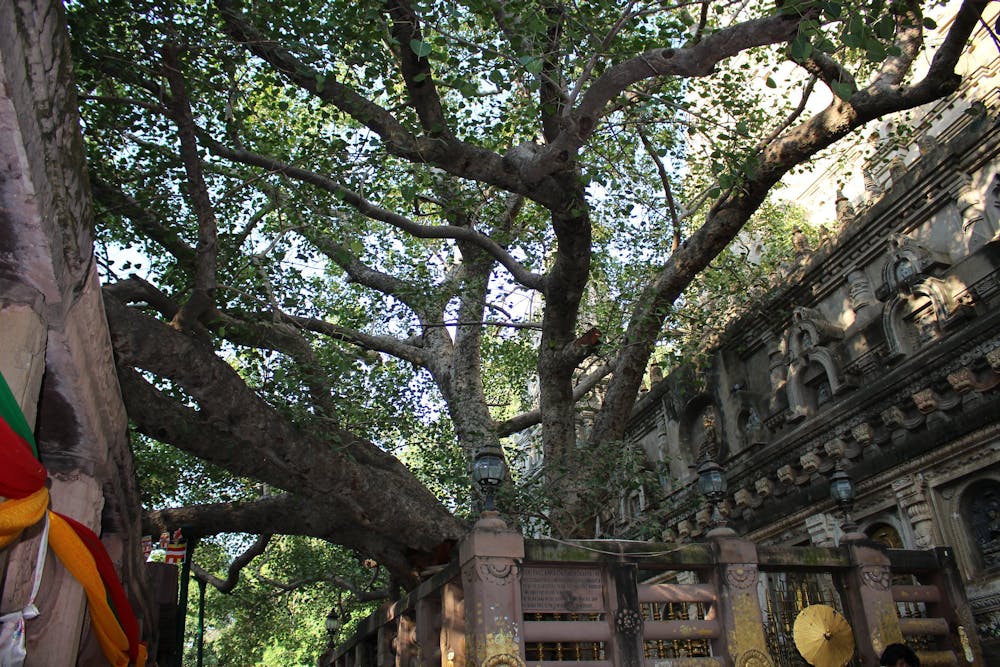
When the wandering ascetic Siddhartha Gautama sat at the foot of a sacred fig around 500 BCE, he achieved the enlightenment which would, a few centuries later, lead to his fame as the Buddha. This sacred fig would become known as the Bodhi Tree. One of its descendants attracts millions of pilgrims every year.
This sacred fig in India’s Mahabodhi Temple is believed to be the descendant of the fig the Buddha sat beneath. Globe Trotting/Flickr, CC BY-NC-ND
Sometimes a tree becomes iconic because of its association with pop culture. U2’s hit 1987 album The Joshua Tree has inspired fans to seek out the tree on the cover in the United States’ arid southwest – a potentially dangerous trip.
Other trees become famous because they’re exceptional in some way. The location of the world’s tallest tree – a 115-metre high redwood known as Hyperion – is kept secret for its protection.
Niger’s Tree of Ténéré was known as the world’s most isolated, eking out an existence in the Sahara before the lonely acacia was accidentally knocked down by a truck driver in 1973. Its site is marked by a sculpture.
In 2003, the mountain ash known as El Grande – then the world’s largest flowering plant – was accidentally killed in a burn conducted by Forestry Tasmania. The death of the enormous tree – 87 metres tall, with a 19 metre girth – drew “national and international” media attention.
This year, vandals damaged a birthing tree sacred to the local Djab Wurrung people amidst conflicts about proposed road works in western Victoria.
And in 2006, someone poisoned Queensland’s Tree of Knowledge – a 200-year-old ghost gum famous for its connection to the birth of trade unionism in Australia. Under its limbs, shearers organised and marched for better conditions. The dead tree has been preserved in a memorial.
To sustain it, we seek out feelings of safety, trust, and reassurance by engaging with comfortable and familiar objects, beings and people around us – especially those important to our self-identity.
When there is an abrupt change, it challenges us. If your favourite tree in your street or garden dies, you mourn it – and what it gave you. But we mourn at a distance too – the Sycamore Gap tree was world-famous, even if you never saw it in real life.
In my research, I have explored how Tasmanian forests – including iconic landscapes and individual trees – can give us that sense of security we all seek in ourselves.
As one interviewee, Leon, told me:
These places should be left alone, because in 10,000 years they could still be there. Obviously I won’t be, we won’t be, but perhaps [the forest will be].
Temporality matters here. That is, we know what to expect by looking to the past and imagining what the future could be. Trees – especially ancient ones – act as a living link between the past, present, and future.
As my interviewee Catherine said:
You lie under an old myrtle and you just go, ‘wow – so what have you seen in your lifetime?’ Shitloads more than me.
That’s why the loss of the Sycamore Gap tree has upset seemingly the entire United Kingdom. The tree was famous for its appearance: a solitary tree in a photogenic dip in the landscape.
Its loss means a different future for those who knew it. It’s as if you were reading a book you know – but someone changed the ending.
We respond very differently when humans do the damage compared to natural processes. In one study, UK homeowners found it harder to accept their house being burgled than for it to be flooded, seeing flooding as more natural and thus less of a blow to their sense of security.
This is partly why the sycamore’s death hurt. It didn’t fall in a storm. It was cut down deliberately – something that wasn’t supposed to happen.
The sycamore was just a tree. But it was also not just a tree – it was far more, for many of us. It’s more than okay to talk about what this does to us – about how the loss of this thread of connection makes us grieve.
Yes, we have lost the Sycamore Gap tree, just as we lost El Grande and many others. It is useful to talk about this – and to remember the many other beautiful and important trees that live on.
Rebecca Banham received funding from an Australian Government Research Training Program Scholarship, which funded the research associated with this article.
There’s talk of bringing back Australia’s Commonwealth Employment Service.
The Community and Public Sector Union has launched a campaign, the parliament has begun an inquiry into the appropriateness of the present system of outsourcing employment services, and the government’s employment white paper has been deeply critical of the system we have at the moment.
The Commonwealth Employment Service was itself the result of Australia’s first employment white paper in 1945, which wanted a service designed, in its words:
to bring to the notice of men and women seeking employment the full range of opportunities, and in particular to find employment offering scope for their abilities
to enable employers to draw upon suitable labour throughout the Commonwealth
to provide assistance where necessary to enable employees to move to where employment is available.
It staffed offices throughout the country in which workers wanting to be matched with jobs would thumb through index cards and seek advice from expert job matchers.
National Archives of Australia
The service closed in 1998 when the Howard government decided to outsource it to private job providers who would be paid for performance.
It hasn’t worked as planned.
The September 2023 white paper says it is seen as “highly transactional and poorly tailored to the diverse and complex needs of people who use it”.
Services were thought to:
do little to support job seekers and build their capabilities, with one stakeholder arguing that national employment services had failed to keep those people at the highest risk of disadvantage connected with labour markets, let alone in paid employment.
Treasurer Jim Chalmers has told The Conversation’s Michelle Grattan he wants to reform the system and he will be using the insights of the parliamentary committee.
But my PhD research into Australia’s employment services suggests putting things back to how they were would be a bad idea, for two reasons.
First, it would require commitment from the Commonwealth and resources that have been lacking for decades. The government used to be able to do more.
Bringing back the Commonwealth Employment Service would require placing a new Commonwealth agency office in every major town and centre across the country – akin to expecting someone who was emaciated to train for the Olympics.
These days the government is too incapacitated to manage even basic functions without support from expensive consultants, let alone to manage an expansion.
Its incapacity is evident every time there’s a national crisis. The only agency it can reliably call on is the defence force because there’s little else left.
Back at the time of the 2009 Black Saturday bushfires, social workers and counsellors from Centrelink and the Commonwealth Rehabilitation Service were rapidly redeployed and played crucial roles.
The Commonwealth Rehabilitation Service was abolished in the Coalition’s first 2014 budget and the remaining social workers in Centrelink are overwhelmed.
The Commonwealth can now barely manage contracts
In the early stages of outsourcing, the Department of Employment still had staff with Commonwealth Employment Service experience and were able to manage the outsourcing contracts well – they understood how complicated labour markets were at the local level.
But these days it’s unlikely there’s anyone is left within the department with direct experience with the service, or even any kind of service.
Each of the previous reviews of employment services over the last 20 years (at least five by my count) has entertained the fantasy that a special blend of incentives can be created to get outsourced providers to do the right thing.
Not only has the Commonwealth’s capacity to deliver services dwindled, its ability also to effectively purchase services has diminished them as well.
The Commonwealth links programs to payments
The other reason not to reestablish a Commonwealth Employment Service is that these days the government links the provision of services to the payment of benefits, through what it calls “mutual obligations”.
Providers complain they’ve got to divert staff away from liaising with potential employers to managing compliance.
Oblivious to the irony, when I appeared before the parliamentary inquiry, federal politicians told me about the effectiveness of some local and state government initiatives, asking why they were successful.
They are successful because they focus on matching employers and employees rather than linking obligations to benefits.
State, territory and local governments around the country have long realised the Commonwealth is unable to properly focus on getting people jobs and have taken matters into their own hands, usually at a fraction of the cost.
States do things better
States know about conditions on the ground. Shutterstock
Unemployed workers are voting with their feet and turning to these locally run services, sometimes risking suspension of their Centrelink payments because they have failed to turn up to meetings with their official employment provider.
Imagine the possibilities if the Commonwealth were to hand over to the states and local government the northwards of $3 billion it blows each year on its often useless and sometimes harmful programs.
States and territories could then develop really superior services, like Switzerland, where employment services are developed and delivered at the level of individual cantons (states). It means what works in Geneva doesn’t have to be imposed on Zurich, producing better outcomes.
The Commonwealth will never be good at providing services while it is obsessed with controlling the welfare budget, and it is responsible for the welfare budget. The states don’t have that problem and do have an immediate on-the-ground interest in getting their citizens into jobs.
David O’Halloran is not a member but provides volunteer support to the Australian Unemployed Workers Union
Australian cinema has often struggled to authentically portray the cultural lives of Middle Eastern Australians. Stereotypical stories frequently sidestep the intricacies of social bonds, as well as the cultural differences in domestic life and familial attachment.
Noora Niasari’s Shayda refreshingly challenges this trend.
Shayda is a powerful debut feature for the Iranian-Australian filmmaker, in a worldly film which marks a profound shift in Australian storytelling and Australian cinema.
The film avoids common Australian film tropes, steering clear of clichéd Aussie humour, traditional Australian archetypes like pristine beaches, the gothic outback and heroic male personas. Additionally, it refrains from marginalising the Middle Eastern characters.
It presents an unflinching portrayal of domestic violence and the grim reality of an Iranian woman trapped in an oppressive marriage.
Zar Amir Ebrahimi delivers a remarkable performance, embodying Shayda’s vulnerability, strength and inner turmoil, immersing the audience in her world of yearning and pain.
Hushed conversations and mounting tension
Shayda is living in Australia, in an unspecified city, with her husband, Hossein (Osamah Sami), and their six-year-old daughter, Mona (Selina Zahednia). She had previously tried to divorce her husband in Iran; now she seeks refuge in a women’s shelter in Australia.
Beautifully directed domestic scenes between mother and daughter show Shayda striving to provide Mona with some stability. But when a judge grants visitation rights to Hossein he re-enters their lives, reigniting Shayda’s fears he may attempt to take Mona back to Iran.
From the moment the film begins, a looming threat of child abduction keeps us on edge. This tension only intensifies with each seemingly ordinary scene, such as Mona having McDonald’s with her father in a suburban food court. His sly attempts to gather information about his wife betray his deep love for his child.
Shayda strives to provide Mona with some stability. Jane Zhang/Madman Entertainment
The women’s shelter is run by the formidable and compassionate Joyce, played masterfully by Leah Purcell. A particularly poignant scene unfolds as Joyce helps Shayda complete her divorce forms in English with the aid of an interpreter. Through this bilingual exchange, we gain insight into the extent of her husband’s violence. Such scenes are rich with information, unravelling gradually through hushed conversations and mounting tension.
Shame and loss
We slowly learn about Shayda and Hossein’s journey from Tehran to Australia for education. However, Hossein’s connections prevent Shayda from pursuing her own studies, with her study visa mysteriously halted.
Now, Hossein wants his family back together. He promises Shayda more freedom. But his desire for reconciliation is driven more by jealousy and shame than love.
Shame is the underlying theme of the film. Both Shayda and Hossein are ensnared by cultural and religious expectations. While Hossein blindly adheres to the social contract of a violent patriarchy, Shayda courageously defies societal norms.
Hossein’s desire for reconciliation is driven more by jealousy and shame than love. Jane Zhang/Madman Entertainment
During a phone call with her mother in Tehran, Shayda learns of the shame her family endures due to her defiant actions.
The film also delves into themes of loss, both of one’s homeland and familial ties left behind.
One of the film’s most compelling aspects is its timeliness. Shayda serves as a testament to the enduring strength of Iranian women fighting for their basic rights, resonating powerfully against the backdrop of the ongoing women’s revolution in Iran.
The film abounds with details that enrich the narrative. Moments like mother and daughter playfully performing television aerobics eloquently convey Shayda’s deep connection with her daughter.
As Nowruz, the Persian New Year, approaches, Shayda tries to celebrate with her daughter and her friends while confronting the prospect of new romance and unrestricted freedoms. The palpable chemistry between Shayda and her Iranian-Canadian love interest, Farhad (Mojean Aria), unfolds against the backdrop of cultural disparities and the violence of Hossein, which threatens to sever their connection.
The film beautifully captures the essence of Nowruz as a symbol of hope and rejuvenation. Jane Zhang/Madman Entertainment
A haircut scene holds profound significance as Shayda chops off her hair in a desperate bid for freedom, symbolising a new beginning and the arrival of Nowruz. Shayda’s gift to Mona of a goldfish becomes a symbol of hope. The sprouting of seeds on the window sill and the preparation of Persian food and sweets reflect the migrants’ connection to their homelands. These scenes beautifully capture the essence of Nowruz.
The film subtly unveils the harsh reality of domestic violence amid migration and cultural difference through minimal dialogue and nuanced storytelling. Drawing from the filmmaker’s personal experiences, Niasari’s sensitive direction reveals layers of Shayda’s character and story, making her both relatable and magnetic.
Sherwin Akbarzadeh’s cinematography is breathtaking, juxtaposing the suburban Australian landscape with the sombre tones of a dimly lit domestic interior. Subtle hints of colour and closeup shots of household objects immerse us in the daily life within the women’s shelter.
The supporting cast delivers robust performances, infusing the narrative with authenticity and emotion.
For those tempted to leave the cinema before the credits roll, don’t. The inclusion of scenes from the director’s home videos, featuring a young girl who appears to be the director herself dancing in the living room of the women’s shelter while her mother talks candidly to the camera, reinforces the film’s intensity with the affecting resonances of a documentary.
Niasari’s dedication to her mother and all the courageous women of Iran permeates every frame of this film.
Cherine Fahd does not work for, consult, own shares in or receive funding from any company or organization that would benefit from this article, and has disclosed no relevant affiliations beyond their academic appointment.
Palestine Solidarity Network Aotearoa (PSNA) supporters are livid Labour is refusing to recognise the state of Palestine a full 104 years after the first Palestinian calls for an independent state.
It’s a disgraceful decision, both unprincipled and cowardly.
Deputy Prime Minister Grant Robertson confirmed this decision when answering questions here:
Q – ??? about the Palestinian Representative in Australia to present his credentials here. That was announced formally.
Grant Robertson – There is a formal Foreign Policy part of the manifesto. We’re sticking with the long standing bi-partisan approach to a two-state solution in the Middle East and what we are doing is working with the Palestinian representative on closer discussions but that doesn’t make a change to a formal recognition. It just means that we open that dialogue up.
Q – So no formal recognition?
GR – Not until there is a state to recognise. But we have long stood for a two-state solution and what we have said is that we want to have more open and regular dialogue with Palestinian Representatives.
Labour implied in their manifesto release this week that they would recognise the state of Palestine although the wording was unclear and ambiguous. What is clear now is that the slippery wording was deliberately meant to mean all things to all people.
The disingenuous wording in the Labour manifesto says:
Labour is committed to an enduring and just two-state solution to the Israeli-Palestinian conflict, based on the right of Israel to live in peace within secure borders internationally recognised and agreed by the parties, and reflecting the legitimate aspirations of the Palestinian people to also live in peace and security within their own state.
A re-elected Labour government will:
Invite the Head of the General Delegation of Palestine to present their credentials as an Ambassador to New Zealand.
One hundred and thirty eight other countries have recognised Palestine as a state and haven’t had the “problem” of recognition that Grant Robertson has manufactured for Labour.
It seems Labour has once more buckled to pressure from a tiny pro-Israel lobby group within the party. They are allowing these anti-Palestinian racists to veto any meaningful steps to support the Palestinian struggle for human rights.
It’s an indelible stain on Labour’s integrity.
Background to the 104 years After 1918, when the Ottoman Empire collapsed at the end of the First World War, each of the countries of that empire gained independence — except Palestine. The first Palestine National Congress was held in 1919 and called for independence from Britain which held the League of Nations mandate for Palestine.
Britain, however, refused independence and in the 104 years since, Western countries, including New Zealand, have colluded with Britain, then Israel and the US, to deny a Palestinian state or even equal rights for Palestinians who are citizens of Israel.
Western countries turned a blind eye to Israel’s ethnic cleansing of hundreds of thousands of Palestinians in 1947–49 and look the other way today as Palestinians continue to be driven out of their homes and off their land by Israeli settlers, backed up by the Israeli military.
John Minto is national chair of the Palestine Solidarity Network Aotearoa (PSNA). Republished from The Daily Blog with permission.
If re-elected, Labour would invite Palestinian ambassador to Canberra to present credentials here. pic.twitter.com/UvzyOTd96T
Home Affairs Minister Clare O’Neil has railed against the exploitation of Australia’s migration system, saying it has been “used to perpetrate some of the worst crimes to humanity, sexual slavery and human trafficking”.
After releasing a long-awaited review into the country’s immigration and visa system, conducted by former Victoria Police commissioner Christine Nixon, O’Neil pledged to take immediate action against the offences revealed in the report.
The government has committed to spending an additional $50 million to create a new division in the Department of Home Affairs to increase immigration compliance resources by 43% this financial year.
This is in addition to legislation it has already introduced to strengthen employer compliance measures to protect temporary migrants from exploitation.
But the Nixon review goes further, with more than 30 recommendations. The government agreed with many of the recommendations in its response. Responses on other points are still pending.
This is a strong review and it’s quite considered. Importantly, it has placed the compliance dimension into the visa processing system instead of keeping it mainly within Australian Border Force.
Among its recommendations, the Nixon review called for strengthening the compliance and investigative powers of the Office of the Migration Agents Registration Authority to address misconduct by registered migration agents. It also called for an increase in the financial penalties for misconduct related to migration advice.
The government agreed with both recommendations in its response.
Compared with other countries’ laws on illegal migration assistance, Australia has longer terms of imprisonment for offenders, but its financial penalties are much lower, the review said. It noted:
[Registered migration agents] may perceive that engaging in such illegal activity is low risk, and high reward.
The migration agent sector is not highly regulated. Registered migration agents are not trained at the same level as solicitors, yet they are giving sophisticated advice in a very complex area of public policy with high stake outcomes.
As such, any further regulation of this sector is a good thing and giving the Office of the Migration Agents Registration Authority stronger powers would be important.
There are different ways to improve the system, such as greater oversight, more compliance checks and harsher penalties, increasing the periods of training for migration agents, and the use of disciplinary panels. In serious cases, the criminal law should also be used, if appropriate.
Some kind of financial risk for engaging in the behaviour seen in the Traffickedseries by the Nine news outlets is a potentially strong punishment, if it is enforced appropriately.
The review also said overseas migration agents are currently not required to be registered with the Office of the Migration Agents Registration Authority to provide immigration advice, which it recommended changing.
A ban on temporary migrants in the sex industry?
The review noted that temporary workers are at the greatest risk of employer abuse and exploitation, particularly those who are trafficked to Australia to work in the sex industry.
Among its recommendations, the review said the government should look at how other countries address the heightened risk of exploitation in the sex industry. Canada, for instance, has implemented a ban on any temporary migrants working in this sector.
The review recommended a similar ban in Australia, as well as increased penalties for those found to be hiring temporary migrants for the sex industry, saying:
The prohibition of temporary migrants working in the sex industry would send a strong and clear message that the Australian government has no tolerance for the exploitation of temporary migrants.
The government disagreed with both of these recommendations in its response, saying a ban might not be in accordance with Australia’s international rights obligations.
Sexual exploitation has distinctive dimensions – it sometimes involves sexual assault and sexual harassment, combined with underpayment and other types of abuse, such as racism.
One reading of this particular Nixon recommendation is that it is puritanical. Why focus on the sex industry and not other sectors? Is this because these victims are viewed as being more worthy of protection, or is this a more serious form of exploitation because sex is more likely to be involved?
Some advocates in the sex industry, such as the Scarlet Alliance), believe a full ban would not stop exploitation in the sex industry, it would just drive it further underground. It may also make it harder for victims to speak out, especially in cases of modern slavery.
Further, in some states, such as NSW, there are quite progressive laws around the regulation of sex work compared to other countries. So, this regulation would create a distinction between Australians and permanent residents who engage in “safer” sex work and those on temporary visas.
This could result in a split in the industry between work that is appropriately regulated and quite well protected and that which is essentially unlawful.
In short, while sexual exploitation of temporary migrants is egregious, upsetting and worrisome, it needs to be addressed in ways that do not create perverse incentives or worsen exploitation risks.
Reducing backlogs in visa processing
The Nixon review also focused on the lengthy processing times for some visa subclasses, which it said cumulatively could last up to a decade.
There’s a clear link between government under-funding, visa processing backlogs and compliance issues. The backlogs create an incentive to engage in fraudulent asylum claims because claimants have appeal rights for longer periods of time.
In this way, a bridging visa that is issued pending an Administrative Appeals Tribunal (AAT) decision can act like a quasi-work visa. During this time, short-term migrants with limited opportunities for visa extensions or work are open to labour market exploitation.
So, cracking down on backlogs in appeal processes to avoid visa extensions where they are not appropriate is a broader part of the exploitation puzzle. This seems to be a part of the government’s agenda.
The review again recommended looking overseas and examining whether Canada’s approach to refugee claims – in particular, its more streamlined ineligibility assessment process – could be replicated here. (The government agreed with this recommendation.)
However, Canada’s approach to the bulk processing of certain claims, including with the use of artificial intelligence, has raised concerns around procedural fairness and led to litigation. Avoiding such pitfalls would need to be considered by the Australian government.
Finally, better funding of the Administrative Appeals Tribunal is another big part of reducing the misuse of appeals processes for fraudulent claims.
The Nixon review and the government’s response have been described by Immigration Minister Andrew Giles as “a generational investment in immigration compliance”. This appears to be an accurate assessment. Naturally, building an evidence base and cultural capacity to implement these changes will be an important part of the next step.
Anna Boucher does not work for, consult, own shares in or receive funding from any company or organization that would benefit from this article, and has disclosed no relevant affiliations beyond their academic appointment.
Papua New Guinea’s Police Commissioner David Manning has warned protesters against “domestic terrorism” — when their actions place the safety and security of other people at risk.
Commissioner Manning made the comments after Koiari landowners in Central Province shut down the water and hydroelectricity supply to Port Moresby, and blocked the access road into the strategic Sirinumu Dam.
“Police are proceeding with caution to engage with those involved in the shutdown of water and power generation facilities to ensure there is no further damage and to have services restored,” he said.
PNG Police Commissioner David Manning . . . “It is not for police to be involved in resolving the politics of an issue, it is our role to protect public safety and security.” Image: PNG Post-Courier
“We are aware that discussions are underway at the political level, and information on progress in these discussions are part of our considerations in this security matter.
“It is not for police to be involved in resolving the politics of an issue, it is our role to protect public safety and security,” Manning said.
He said the intentional disruption to essential services was a criminal activity, and this was the basis for a police response.
Police vow to act “Cutting power and water supply to hospitals, schools, business and the broader population is basically an act of domestic terrorism,” Commissioner Manning said.
“No individual has the right to deprive fellow citizens of access to essential services in order to elevate their grievances.
“I appreciate that the landowners of Koiari have grievances that they are seeking to rectify, but causing harm and distress to other people is not the way to resolve this issue.
“The next steps for police in resolving the issue is to prepare to intervene and remove obstructions and restore services.”
“This is pending the outcome of discussions between the parties that we naturally hope will be successful and negate the need for police intervention.”
A pair of Chinese scam artists wanted to turn a radiation-soaked Pacific atoll into a future metropolis. They ended up in an American jail instead.
How they got there is an untold tale of international bribery and grifting that stretched to the very heart of the United Nations.
The stakes could scarcely have been higher for Hilda Heine, the former president of the Marshall Islands.
A new OCCRP investigation reveals details of how Chinese-born fraudsters Cary Yan and Gina Zhou paid more than US$1 million to UN diplomats to gain access to its headquarters in New York, before embarking on a controversial plan to set up an autonomous zone near an important US military facility in the Pacific Ocean.
For years, Hilda Heine’s remote archipelago nation of just 40,000 people was best known to the world for Cold War nuclear testing that left scores of its islands poisoned.
Sitting in the centre of the Pacific Ocean, the country was a strategic but forgotten US ally.
But the arrival of a couple of mysterious strangers threatened to change all that. With buckets of cash at their disposal, the Chinese pair, Cary Yan and Gina Zhou, had grand plans that could have thrust the Marshall Islands into the growing rivalry between China and the West, and perhaps fracture the country itself.
Public controversy First proposed in 2017, while Heine was still president, Yan and Zhou’s idea raised public controversy.
With backing from foreign investors, the couple planned to rehabilitate one irradiated atoll, Rongelap, and turn it into a futuristic “digital special administrative region.”
The new city of artificial islands would include an aviation logistics center, wellness resorts, a gaming and entertainment zone, and foreign embassies.
Thanks in part to the liberal payment of bribes, Yan and Zhou had managed to gain the support of some of the Marshall Islands’ most powerful politicians. They then lobbied for a draft bill that would have given the proposed zone, known as the Rongelap Atoll Special Administrative Region (RASAR), its own separate courts and immigration laws.
Heine was opposed. The whole thing reeked of a Chinese effort to gain influence over the strategically located Marshall Islands, she told OCCRP.
A map of Rongelap Atoll in the Marshall Islands. Image: Credit: Edin Pasovic/James O’Brien/OCCRP
The plan was unconstitutional and would have created a virtually “independent country” within the Marshall Islands’ borders, she said.
The new Chinese investor-backed zone would also have occupied a geographically sensitive spot just 200 km of open water away from Kwajalein Atoll, where the US Army runs facilities that test intercontinental ballistic missiles and track foreign rocket launches.
Became a target But when President Heine argued against the draft law, she became a target herself. In November 2018, pro-RASAR politicians backed by Yan and Zhou pushed a no-confidence motion to remove her from power.
She survived by one vote.
Even then, the president said she had no idea who this influential duo really were. Although they seemed to be Chinese, they carried Marshall Islands passports, which gave them visa free access to the United States. Nobody seemed to know how they had obtained them.
World Organisation of Governance and Competitiveness representatives Gina Zhou (left) and Cary Yan (center) at a restaurant in New York. Image: OCCRP
“We looked and looked and we couldn’t find when and how they got [the passports],” Heine said. “We didn’t know what their connections were or if they had any connections with the Chinese government.
“But of course we were suspicious.”
The plan came to an abrupt end in November 2020, when Yan and Zhou were arrested in Thailand on a US warrant. After being extradited to face trial in New York, they pleaded guilty to a single count of conspiracy to bribe Marshallese officials.
Both were sentenced earlier this year. Zhou was deported to the Marshall Islands shortly after her sentencing, while Yan is due for release this November.
But although the federal case led to a brief burst of media attention, it left key questions unanswered.
Who really were Yan and Zhou? Who helped them in their audacious scheme? Were they simply crooks? Or were they also working to advance the interests of the Chinese government?
OCCRP spent nearly a year trying to find answers, conducting interviews around the world and poring through thousands of pages of documents.
What reporters uncovered was a story more bizarre — and with far broader implications — than first expected.
Aubrey Belford, Kevin G. Hall and Martin Youngare investigative writers for the Organised Crime and Corruption Reporting Project (OCCRP). Republished with permission.
Source: The Conversation (Au and NZ) – By Kaighin McColl, Assistant Professor of Earth and Planetary Sciences and Environmental Science and Engineering, Harvard University
For generations, Australians have been fascinated with the idea of turning our inland deserts green with lush vegetation.
Both sides of politics have supported proposals to irrigate the country’s centre by turning northern rivers inland. Proponents have argued water lost to evaporation would rise through the atmosphere and fall back as rain, spreading the benefits throughout the desert. But this claim has hardly ever been tested.
Our recently published research shows irrigating Australia’s deserts would not increase rainfall, contrary to a century of claims otherwise.
This provides a new argument against irrigating Australia’s deserts, in addition to critiques on economic and environmental grounds.
What is the Bradfield Scheme? Featuring Griffith University’s Professor Fran Sheldon.
Proposals to irrigate the country’s centre by diverting water inland date back to at least the 1930s. The person most widely credited with the idea is John Bradfield, the civil engineer who designed the Sydney Harbour Bridge. He proposed a series of dams and tunnels that would transport water from northern Queensland to Kati Thanda-Lake Eyre.
Variants of the original scheme have been proposed as recently as 2020. The Queensland Liberal National Party campaigned on a policy to build a Bradfield-like scheme in the last state election.
An aerial view of the Queensland LNP’s ‘new Bradfield scheme’ (Liberal National Party of Queensland, October 2020)
Despite our fascination with it, the Bradfield scheme has well-documented problems. It is not cost-effective and would likely be a disaster for the environment. These findings have been confirmed repeatedly by multiplereviews, as recently as 2022.
Yet the idea resurfaces over and over again and the debate around it remains active and ongoing.
Crossbencher Bob Katter, the federal member for Kennedy in Queensland, is a prominent supporter of the scheme. He rejected the critical findings of a recent CSIRO review that found the scheme and others like it were not economically viable.
Would the Bradfield scheme increase rainfall in central Australia? Given all the debate about the scheme, this question has received surprisingly littleattention.
This irrigation water would augment the average rainfall of the district from 10 to 20 inches per annum […] Sceptics and croakers say the water will evaporate or seep away […] [but] it will not go far.
To test Bradfield’s claim, we turned to climate models. In a collaboration between scientists at the University of Melbourne, Harvard University, National Taiwan University and the Australian Bureau of Meteorology, we simulated two worlds: one with a Bradfield-like scheme and one without it.
In our model of the Bradfield-like scheme, we permanently filled the region around Kati Thanda-Lake Eyre with water. That differs a bit from Bradfield’s original scheme but captures the basic idea. If anything, it is more extreme than Bradfield’s scheme. If Bradfield is right, we would expect our scheme’s effects on rainfall to be even larger.
Our simulations showed no significant increase in rainfall. This may sound surprising but can be explained with basic physical arguments.
Why no rain?
Rain forms when moist air rises. As it rises, temperatures drop, water condenses from vapour to liquid and clouds form.
Hot air rises, so high temperatures near the surface can promote rainfall. But in our simulations, irrigating the surface led to evaporative cooling of the air. The colder air did not rise as much, and rainfall was suppressed.
Where does all that extra water go? In our simulations, the water evaporated and was blown all over the Australian continent by wind. The additional water ended up being spread thinly over a large area. When it did eventually rain out, the effect on local rainfall was tiny.
Climate models aren’t perfect and have known weaknesses in simulating rainfall. But the basic explanation for the small change in rainfall can be understood without appealing to climate models.
Could irrigating a larger region, or a different part of the country, change the results? Maybe, and we are looking into it. But the Bradfield scheme is already not cost effective. Making the scheme larger or moving it away from natural flow paths would only make this problem worse.
Previous reviews of the Bradfield scheme have mainly focused on the economics of the scheme. Australian economist Ross Garnaut’s report in December 2022 is the most recent to find the scheme is economically unviable.
Our study provides a new argument against the Bradfield scheme, separate to economic arguments.
The idea of transforming our dry continent is seductive. But our study shows no plausible engineering scheme would be capable of making it rain enough to do so.
Kaighin McColl receives funding from the National Science Foundation, NASA, the Sloan Foundation, the Sahara Project, and Harvard University.
Dongryeol Ryu does not work for, consult, own shares in or receive funding from any company or organisation that would benefit from this article, and has disclosed no relevant affiliations beyond their academic appointment.
US House Speaker Kevin McCarthy has been ousted – by his own Republican Party – from the second-most important post in the American government.
It was the first time in US history a speaker had been voted out in this way. As speaker of the House of Representatives, McCarthy was the most powerful single individual in the legislative branch, able to directly impact government policies from national security to infrastructure investments.
In the next few days, the House of Representatives will attempt to elect a new speaker. All other business is postponed until the speakership is resolved. This process is likely to be lengthy, awkward and difficult to watch.
The next few days will be a not-very-subtle reminder to the world that American politics remain divided and divisive.
The root causes of McCarthy’s exit are many – naked ambition, personal animus, the narrow majority of House Republicans, the confidence of the far-right wing of the Republican Party, Democrats’ willingness to step aside during the Republican turmoil and the apparently unending appeal of performative politics in the US.
The immediate author of McCarthy’s removal is his chief antagonist, Representative Matt Gaetz of Florida, who called for the vote to “vacate the chair”. Gaetz is a right-wing, Trump loyalist, political performer who has become a notorious disrupter in the US government.
Gaetz has been under scrutiny himself after it was reported two years ago that the US Department of Justice was investigating him for alleged sex trafficking. The case was closed earlier this year, without any charges being brought.
No one is talking about those allegations today. Most political operatives expect Gaetz to use his new-found “success” in the House to run for governor of Florida in 2026 when the current governor and Republican presidential candidate, Ron DeSantis, is due to leave office due to term limits.
Will the chaos hurt Republicans?
The chaos that is now roiling the House follows several weeks of brinkmanship over the budget, with a government shutdown narrowly avoided over the weekend.
Add to the mix a Republican presidential front runner (Donald Trump) facing 91 charges over four criminal cases and a multitude of court appearances over the next few months, and the political dysfunction in the United States may only get more intense.
President Joe Biden and the Democrats in Congress likely enjoy seeing their opponents slaughter each other. And indeed, the disarray among Republicans may help Democrats stay unified despite their own internal tensions.
Republicans, however, have not always suffered at the ballot box following congressional melees. After a GOP-led government shutdown during the Obama administration in 2013, Republicans won control of the Senate in 2014.
Also, Biden isn’t getting any younger and it is not entirely clear he can handle the full-time job of American commander-in-chief until 2028. There are plenty of competent Gen-X Democrats – the governors of California, Michigan and Pennsylvania leap to mind – who may not stay quiet as Biden’s age becomes more of an issue in the lead-up to next year’s election.
If one of these ambitious youngsters decides to throw their hat in the ring, the Democrats may show the world their own version of chaos.
Foreign capitals no doubt see this turmoil and question the long-term reliability of Washington. Is it a harbinger of Trump’s return to the White House? Maybe so. Or just as likely – the Republican chaos turns off the swing voters in American suburbs and they become more willing to vote for Biden, the ageing incumbent.
In other words, American voters remain divided right down the middle.
Lester Munson receives funding from and is a Non-Resident Fellow at the United States Studies Centre. He is affiliated with BGR Group, a government relations firm in Washington, D.C. He is also adjunct faculty at Johns Hopkins University.
The Royal Commission into Violence, Abuse, Neglect and Exploitation of People with Disability has shared its final report. In this series, we unpack what the commission’s 222 recommendations could mean for a more inclusive Australia.
There were more than 200 recommendations for federal and state governments to consider within the Royal Commission into Violence, Abuse, Neglect and Exploitation of People with Disability’s final report, released on Friday.
A great deal of focus has been on housing, employment and education. However, the very first recommendation is for a new disability rights act. This recommendation, if adopted, may have the greatest impact of all.
Here’s why it’s needed.
Conventions, rights and Australian law
Australia is a signatory to the seven core International Human Rights treaties and has ratified them all (meaning we’ve voluntarily accepted legal obligations under international law). Once it ratifies a treaty, Australia is obliged to ensure its domestic laws comply with it.
However there has been ongoing criticism of Australia for not fully abiding by the international treaties we have signed.
The difference between discrimination and rights
The Disability Discrimination Act is a reactive law. It comes into force when discrimination is already allegedly happening. The problem with this form of “formal equity” is it can reinforce inequity, even as it seeks to address it. It’s focus is not achieving equal outcomes or opportunities.
In its final report, the disability royal commission affirmed a commitment to make the Convention on the Rights of Persons with Disabilities a reality in Australian law.
A disability rights act would enshrine in law the ability to make proactive, positive actions to ensure inclusion, support and long term structural changes. A rights act would additionally support First Nation peoples with disability giving them additional protection that is culturally sensitive, as stated in the Royal Commission Report.
One major challenge to breaking down barriers to inclusion and equity is the phrase “reasonable accommodation”, which is outlined in the Convention on the Rights of Persons with Disabilities as:
necessary and appropriate modification and adjustments not imposing a disproportionate or undue burden […] to ensure to persons with disabilities the enjoyment or exercise on an equal basis with others of all human rights and fundamental freedoms […]
These are often termed “reasonable adjustments”.
But are the changes to ensure inclusion “reasonable”? How can we tell?
This interpretation has been criticised because reasonable adjustment is intended to mean what is reasonable for the person faced with the barrier. But it’s usually interpreted as meaning what’s reasonable for the provider – say, a school, employer, accommodation or service organisation.
A new disability rights act would change the burden of proof. If a business, school system or care provide did not offer inclusive supports and adjustment, they would need to prove it was an undue burden on them. The commission said:
As presently drafted, the [Disability Discrimination Act] creates little incentive for employers, schools, service providers and other duty-holders to take active measures to prevent disability discrimination.
Commissioners said one of the main deficiencies of the disability discrimination act is that:
the protection of a person’s rights depends on that person being prepared to make and pursue a complaint […] to have the knowledge and personal resources to pursue the claim, including the risk of an adverse costs order should the matter reach court.
Under current policies and practices, people with a disability are not sufficiently involved with decision making and the development of laws and policies. This is contrary to the Convention on the Rights of Persons with Disabilities.
A disability rights act would enshrine the requirement for people with a disability to be at the centre of any changes being made.
There also needs to be agreement across all sectors as to what constitutes disability for a rights act to be implemented. There are still today, those that question the diagnosis of attention deficit hyperactivity disorder (ADHD) and systems that conflate indicators between disabilites. If there isn’t a consistent definition, people and organisations can ignore or redefine disability based on their opinion, not community consensus or law.
A disability rights act would create a societal climate of positive action, to remove barriers before complaint, and for all aspects of society to promote meaningful equality and actively eliminate discrimination.
In the true spirit of inclusion, it could change societal attitudes and put supporting people with a disability at the core of all processes, rather than an afterthought – whether in the employment, education, housing, sport or legal sectors. It would break the vicious circle of disadvantage and exclusion.
In their final education recommendations, a key division emerged among the commissioners. Indeed this split also exists within the education sector.
Three of the commissioners said all children with a disability should be taught in mainstream settings and segregated settings should be closed. In this way, the streaming of exclusion that often leads to a lifetime of isolation from wider society could be disrupted.
A disability rights act would ensure segregated settings and potential educational deficiencies (whether in specialist or mainstream schools) would be challenged by a social model of disability rather than an archaic medical model, which focuses on specific diagnoses. It would empower us to break from the current failing systems and change the lens through which we see each other.
Creating a disability rights act would mean that if mainstream schools are not suitable for many children with a disability, then we would change the schools and the systems – not remove “certain” children.
David Roy does not work for, consult, own shares in or receive funding from any company or organisation that would benefit from this article, and has disclosed no relevant affiliations beyond their academic appointment.
Recently, several mammals have been reported to “glow” under ultraviolet (UV) light, including our beloved platypus. But no one knew how common it was among mammals until now.
Our research, published in Royal Society Open Science today, found this glow – known as fluorescence – is extremely common. Almost every mammal we studied showed some form of fluorescence.
We also examined the glow to determine if it was really fluorescence and not some other phenomenon. Then, we tested if the fluorescence we observed in museum specimens was natural and not caused by preservation methods.
We also searched for links between the type and degree of fluorescence and the lifestyle of each species, to gain insights on whether there are any benefits to glowing under UV if you’re a mammal.
Nightclub lights
Nightclub visitors will be familiar with white clothes, or perhaps their gin and tonic, glowing blue under UV light. This is a great example of fluorescence – when the energy from UV light, which is a form of electromagnetic radiation invisible to humans, is absorbed by certain chemicals.
These chemicals then emit visible light, which is lower-energy electromagnetic radiation. In the case of gin and tonic, this is due to the presence of the quinine molecule in the tonic water.
In the case of animals, this can be due to proteins or pigments in their scales, skin or fur. Fluorescence is quite common among animals. It has been reported for birds, reptiles, amphibians, fish, corals, molluscs and most famously scorpions and other arthropods.
However, it has been described less frequently in mammals, although recent studies have provided several examples. We already knew that bones and teeth glow with fluorescence, as do white human hair and nails. Some rodents have a pink glow under UV light and platypuses glow blue-green.
The reason a gin and tonic looks fluorescent under UV lighting is thanks to the quinine in the tonic. Wikimedia Commons, CC BY
How often do mammals glow?
Our team came together because we were curious about fluorescence in mammals. We wanted to know if the glow reported recently for various species was really fluorescence, and how widespread this phenomenon was. We obtained preserved and frozen specimens from museums and wildlife parks to study.
We started with the platypus to see if we could replicate the previously reported fluorescence. We photographed preserved and frozen platypus specimens under UV light and observed a fluorescent (although rather faint) glow.
To make sure it was fluorescence and not some other effect that looked like it, we used a technique called fluorescence spectroscopy.
This involved shining various sources of light at the samples and recording the specific “fingerprints” of the resulting glow, known as an emission spectrum. This way, we could confirm what we saw was indeed fluorescence.
We repeated this process for other mammals and found clear evidence of fluorescence in the white fur, spines and even skin and nails of koalas, Tasmanian devils, short-beaked echidnas, southern hairy-nosed wombats, quendas (bandicoots), greater bilbies and even cats.
Both fresh-frozen and chemically treated museum specimens were fluorescent. This meant it wasn’t preservation chemicals such as borax or arsenic causing the fluorescence. So, we concluded this was a real biological phenomenon.
Mammals in dazzling lights
Using specimens from the Western Australian Museum’s collection, we took the experiment to the next stage. We recorded every species of mammal that was fluorescent when we exposed the specimens to UV light.
As a result, we found 125 fluorescent species of mammal, representing all known orders. Fluorescence is clearly common and widely distributed among mammals.
In particular, we noticed that white and light-coloured fur is fluorescent, with dark pigmentation preventing fluorescence. For example, a zebra’s white stripes fluoresced while the dark stripes didn’t.
We then used our dataset to test if fluorescence might be more common in nocturnal species. To do this, we correlated the total area of fluorescence with ecological traits such as nocturnality, diet and locomotion.
Nocturnal mammals were indeed more fluorescent, while aquatic species were less fluorescent than those that burrowed, lived in trees, or on land.
Based on our results, we think fluorescence is very common in mammals. In fact, it is likely the default status of hair unless it is heavily pigmented. This doesn’t mean fluorescence has a biological function – it may just be an artefact of the structural properties of unpigmented hair.
However, we suggest florescence may be important for brightening pale-coloured parts of animals that are used as visual signals. This could improve their visibility, especially in poor light – just like the fluorescent optical brighteners that are added to white paper and clothing.
Kenny Travouillon received funding from the Australian Biological Resources Study and is an adjunct at Curtin University.
Christine Elizabeth Cooper receives funding from the Australian Research Council.
Jemmy Bouzin receives funding from the Government of Seychelles.
Linette Umbrello receives funding from the Australian Biological Resources Study and is a Research Associate at the Western Australian Museum.
Simon Lewis does not work for, consult, own shares in or receive funding from any company or organisation that would benefit from this article, and has disclosed no relevant affiliations beyond their academic appointment.
Source: The Conversation (Au and NZ) – By Rebecca Strating, Director, La Trobe Asia and Associate Professor, La Trobe University, La Trobe University
In late September, American rap legend MC Hammer made a spectacular intervention into Australia’s upcoming referendum to establish a Voice to Parliament for First Nations people. In a tweet, he urged Australians to “repair the breach”.
Hammer’s tweet garnered some 1.1 million views, 1,300 retweets and 5,700 likes. It also triggered a wave of online criticisms from “no” supporters. Some accused him of being a “one-hit wonder” with no place in the debate.
While Hammer seemed to enter the fray on his own accord, Labor’s recruitment of retired American basketballer Shaquille O’Neal to the campaign in support of the Voice to Parliament last year drew similarly mixed reactions.
While it is not yet clear whether these endorsements from overseas celebrities help or hinder the “yes” campaign, there are bigger questions here about the extent of global attention on the referendum and whether the result will affect Australia’s international reputation.
International attention on the vote
On October 14, Australians will vote whether to amend the Constitution to establish a new advisory body for Aboriginal and Torres Strait Islander people called the Voice to Parliament. The new body would provide advice and make representations to parliament and the government on any issues relating to First Nations people. If the referendum passes, the body’s powers would be set by federal parliament.
The Voice model has been fiercely debated in Australia. Supporters say it will help remedy a litany of failed policies in health care, employment and education for First Nations people, while opponents claim it is divisive.
Using data from Meltwater, a global media monitoring company, we have identified more than 1.7 million mentions of the Voice to Parliament referendum in traditional and social media globally over the last three months. Much of this has been generated in Australia, where the Voice has been mentioned 887,000 times.
Once we exclude content generated in Australia and unknown locations, the number of mentions drops to around 148,000 in the last three months.
International attention on the Voice for Parliament referendum peaked on August 30 when Prime Minister Anthony Albanese announced the voting date. Global news outlets such as the BBC, Time and Financial Times produced explainers for their audiences.
More recently, global reporting has interrogated the “backlash” against the referendum, as well as the spread of disinformation online, as polls have suggested declining support nationwide.
Which countries are the most interested?
Most news and social media mentions of the Voice were generated in “Anglosphere” countries, such as the United States, United Kingdom and Canada. Meltwater data had the US well out in front with over 63,000 mentions of the Voice in the last three months, with the UK second at just over 16,000. New Zealand is also following the debate, with more than 2,000 mentions, as well as politicians in the Pacific.
Launches and rallies in support of the “yes” campaign have also been held in the US and UK, receiving online attention:
But the Meltwater data is restricted to English, and can only reveal so much about how much attention people in other countries are paying to the Voice referendum.
And while there are public reports on Australian attitudes to other countries, there is much less research on how people in other countries think about Australians.
Previous research by Professor Simon Jackman shows a general sense of ambivalence towards Australia’s national character among people in Japan, South Korea, China, Indonesia and the US. The lack of research on Australia’s reputation in other countries will make it difficult to assess the impact of the Voice result.
What does seem likely, however, is that a “no” result will be weaponised by other countries against Australia. While the Global Times, a leading Chinese English-language news outlet, has been relatively quiet on the Voice so far, it has a history of using strategic narratives to blunt criticisms of China’s human rights record.
For example, China has cited the gaps in health, life expectancy and incarceration rates between Indigenous and non-Indigenous Australians as a way to criticise Australia’s “systematic discrimination and oppression” of First Nations people in international forums such as the UN Human Rights Council.
The Global Times has also reported on the effects of colonialism on First Nations people, the deaths of First Nations people in custody and the destruction of cultural sites such as Juukan Gorge.
The groundwork for using strategic narratives around the Voice has already been laid. Albert Zhang and Danielle Cave from the Australian Strategic Policy Institute have tracked how inauthentic social media accounts that are likely linked to the Chinese Communist Party have sought to amplify “division over the Indigenous voice referendum”. This is also a central message being used by the “no” campaign to argue against the Voice.
A “no” result will make countering these hostile narratives more difficult. In addition, it would likely compromise Australia’s moral authority when it seeks to advocate or pressure other states on human rights issues.
The referendum result could also affect Australia’s ability to employ a foreign policy approach that seeks to “elevate” Indigenous people and issues.
In 2021, Australia’s Department of Foreign Affairs and Trade released an Indigenous Diplomacy Agenda committed to reconciliation in Australia and supporting Indigenous rights globally.
At the time, DFAT Secretary Frances Adamson cast First Nations people as key to how Australia defines and expresses itself globally. She argued a foreign service that properly represents the diversity of Australia has “a genuine competitive advantage”.
Foreign Minister Penny Wong has also sought to centre and value First Nations people in Australia’s modern identity and diplomacy, including in international speeches. To the UN General Assembly last week, she said Australia draws “on the knowledge of First Peoples carrying forward the oldest continuing culture on earth”.
As a result, a “yes” vote could provide Australian diplomats with “the momentum” to embed a First Nations foreign policy into their practice. A “no” vote, meanwhile, will make it more difficult to establish Australia as a credible leader on Indigenous and human rights issues, particularly in its relations with neighbours in Asia and the Pacific.
How to position the Voice internationally may become a problem for the government as polling has shown dwindling support for the measure.
When questioned by CNN’s Christiane Amanpour about what the low support for the Voice means for Australia’s commitment to Indigenous people, Wong responded:
referenda are hard to win in Australia because of the nature of how our voting [works], of what is required to change the Constitution. But, you know, we remain hopeful.
This points to the government’s careful international messaging as the success of the referendum – which the Labor government supports – becomes less certain.
If the “no” vote succeeds, as polling suggests is likely, it will be interesting to observe how other governments and people around the world respond to the result (if at all) and how the Australian government will seek to manage any international fallout.
Rebecca Strating receives funding from a La Trobe University Synergy grant for this project. She is a recipient of external grant funding, including from the governments of Australia, United States, United Kingdom, the Philippines and Taiwan.
Andrea Carson receives funding from a La Trobe University Synergy grant for this project and from the Australian Research Council for a Discovery project on media and political trust.
Simon Jackman is a past recipient of grants from the National Science Foundation (USA) and was one of the principal investigators of the Australian Election Survey (funded by the Australian Research Council).
Last month, That 70s Show actor Danny Masterson was found guilty of raping two women in the early 2000s. However, the jury could not reach a verdict on a third allegation of rape involving Masterson’s former girlfriend. The case, along with countless others, points to the challenges in understanding and responding to cases of intimate partner sexual violence.
It was evident in our research that consent became complicated and blurred in conjunction with broader patterns of coercive control. Victim survivors often described reluctantly agreeing to sexual behaviours in order to placate an otherwise violent partner, or as a mechanism for preventing other forms of abuse from occurring or escalating.
Australian statistics estimate that more than a third of sexual assaults occur within the context of family and domestic violence.
Yet, these rates are likely to be an underestimation, as intimate partner sexual violence can be difficult to recognise and disclose. This may, in part, be due to the enduring rape myth that “real rape” only occurs between strangers in a dark alleyway.
Some victim survivors in our study described not knowing how to put their experience into words. They felt they needed a safe and trusted space, and a rapport built with a specialist worker before they could feel comfortable talking about sexual harm.
For others, it was not until months or years later, when they were out of an abusive relationship, that they realised the extent of sexual harm and its ongoing impact on their life and future relationships.
Our study, along with previous research, has found a range of harms caused by intimate partner sexual violence.
These include:
physical injuries
mental health impacts (for example, depression, anxiety, Post Traumatic Stress Disorder [PTSD], suicidal ideation)
physical reactions to trauma (such as eating and sleeping disorders, obsessive compulsiveness)
relationship difficulties (for example, the loss of social support and reluctance to enter new intimate and sexual relationships).
As one victim survivor in our study explained,
I am four years out now and I’m still not healed from it. I’ve been diagnosed with PTSD […] emotionally, he’s destroyed me.
Responding to intimate partner sexual violence
Research indicates limitations in current service responses to intimate partner sexual violence. For example, sexual assaults involving strangers are much more likely to proceed through the criminal justice system compared to sexual assaults perpetrated by acquaintances and intimate partners.
When it comes to support systems, our report highlights several areas in need of improvement. Firstly, Victorian victim survivors and stakeholders explained that family violence systems are often designed to focus on the immediate and short-term needs of victim survivors, such as housing. While this is extremely important, it often means that long-term needs, such as therapeutic support for sexual harm, are not met.
Second, many people who work in the sector described current gaps in their knowledge and confidence in responding to intimate partner sexual violence, highlighting a need for further training. Specialist sexual assault counsellors were frequently perceived as the gold standard for responding to sexual harm, yet it was repeatedly made clear they were often stretched to capacity.
Most participants agreed that further training for other frontline workers (such as health workers, family violence workers, police, justice, and legal workers) could help bridge the gap until victim survivors received specialised support. Therefore, cross-sector training was considered important, while upholding the importance of specialised sexual assault work.
Trauma-informed practice was consistently recommended. This included believing victim survivors, allowing time to listen to their story in full, and not judging or labelling their experiences.
Stakeholders also recommended broaching the topic of sexual harm gently and conversationally, with carefully chosen language. This would mean, for example, replacing terms such as rape, sexual assault and coercive control with simpler, softer language that actually explains the nature of harm more clearly.
Finally, our report indicates that resources are urgently needed to reduce waitlists and increase the capacity for specialist sexual violence counselling services for victim survivors of intimate partner sexual violence.
As one of our victim survivor participants said:
It took me time to open up […] So that I could completely heal from within. It’s their [the counsellor’s] support, that has helped me to change the trajectory of my life.
If this article has raised issues for you, or if you’re concerned about someone you know, call 1800RESPECT on 1800 737 732. In immediate danger, call 000.
Dr. Gemma Hamilton receives funding from the Australian Research Council and Family Safety Victoria.
Anastasia Powell receives funding from the Australian Research Council, Criminology Research Council, Australia’s National Research Organisation for Women’s Safety (ANROWS), and Family Safety Victoria. Anastasia is also a director of Our Watch (Australia’s national organisation for the prevention of violence against women), and a member of the National Women’s Safety Alliance (NWSA).
Georgina Heydon receives funding from federal and state governments for research into sexual violence responses.
Alexandra Ridgway does not work for, consult, own shares in or receive funding from any company or organisation that would benefit from this article, and has disclosed no relevant affiliations beyond their academic appointment.
Bushfires currently burning in Victoria, New South Wales and Tasmania bring into sharp focus the fire risks Australian families face over the coming summer months.
Although babies don’t understand the nature of emergencies such as bushfires, floods and cyclones, they and their mothers are impacted.
During natural disasters, electricity, clean water and food supplies may be interrupted, and gastroenteritis is common. At these times, breastfeeding provides babies with safe food, water, and protection from infection, as well as a feeling of comfort and safety.
But mothers can find it difficult to breastfeed during emergencies, and may believe stress affects their milk supply. Some end up stopping even though they didn’t plan to and even though during a disaster is a particularly bad time to wean.
The good news is stress doesn’t reduce milk supply, and while breastfeeding during an emergency carries added challenges, mothers can and do breastfeed through even the worst of disasters.
Demand and supply
During pregnancy, hormones develop the milk-making structures inside women’s breasts. After birth, the breasts automatically make milk to feed the baby, but over time they change to a demand and supply way of working.
This means that when the baby feeds and milk is removed from the breasts, the breasts make more milk. The more frequently milk is removed from the breasts, the more milk will be made.
Babies drink the milk made in the breasts with the help of a hormone called oxytocin. When babies suckle, oxytocin tells the muscle-like cells that surround the small structures where milk is made and stored to contract. This squeezes the milk towards the nipple where the baby can drink it.
Oxytocin is sometimes called the “love hormone” because it’s also produced when you feel lovingly towards someone.
During emergencies, babies are often more unsettled, want to be held more, feed more frequently, may be fussy at the breast, and wake more overnight. All of this is a normal response to the disruption of an emergency.
Although stress won’t hamper a mother’s milk supply, it can temporarily reduce oxytocin release, slowing the flow of milk. This is another reason a baby may be unsettled during feeding.
Some challenges
Emergencies like bushfires and floods are difficult for everyone, but can be especially challenging for parents of babies and toddlers.
For breastfeeding mothers, the busyness of an emergency and a lack of privacy may mean they miss their baby’s cues or delay breastfeeding. Less frequent breastfeeds can reduce milk supply.
Another factor that can affect milk supply is dehydration. Mothers may not drink enough water during an emergency because they’re focused on looking after their children, water is limited, or they are restricting water intake because there are no toilets.
How can I keep breastfeeding through an emergency?
Expect your baby to breastfeed more often than usual during an emergency. They may breastfeed for comfort as well as food. Keeping your baby close, breastfeeding frequently, and drinking enough water will protect your milk supply.
Know the signs that your baby is getting enough milk. If they have at least five heavily wet nappies in 24 hours, their wee is pale (not dark) in colour, and their poo is runny if they are only breastfed or soft if they are also eating solid foods, you can be confident your baby is getting enough breastmilk.
You can encourage the release of oxytocin and the flow of milk when you breastfeed by looking at your baby and thinking about how much you love them. This can also help you feel less stressed.
You can be reassured that if your milk supply has decreased because of less frequent breastfeeding or dehydration this can be easily reversed by feeding more often and drinking water. If you stopped breastfeeding because of an emergency, it’s possible to start again if you want to.
If you are concerned about your milk supply, seek help from a health worker. The free national breastfeeding helpline is available 24/7 and is a good place to find support.
Author provided
Preparing for an emergency
Make an emergency plan that includes packing an evacuation kit, leaving early and evacuating to a relative or friend’s home rather than an evacuation centre if possible. Ensure your evacuation kit includes a baby sling to keep your baby safe and close, and some water and snacks for you.
If you are exclusively expressing milk, learn how to hand express and cup feed (even very young babies can be fed using a cup). Store some paper cups so you have all you need if you are without power and water for washing.
Anything emergency responders can do to reduce the burden of the emergency on mothers, such as prioritising them for services and offering them private spaces in evacuation centres, will help them to care for and breastfeed their babies. A free e-learning module for emergency responders on disaster support for babies, toddlers and their caregivers is available here.
Karleen Gribble is Project Lead on the Australian Breastfeeding Association’s Community Protection for Infants and Young Children in Bushfire Emergencies Project and is an Australian Breastfeeding Association Scientific Advisor, Educator and Counsellor. Karleen is also on the steering committee of the international interagency collaboration the Infant and Young Child Feeding in Emergencies Core Group and has been involved in the development of international guidance and training on infant and young child feeding in emergencies for over a decade. She is a member of the Public Health Association of Australia.
Michelle Hamrosi is the Community Engagement Officer on the Australian Breastfeeding Association’s Community Protection for Infants and Young Children in Bushfire Emergencies Project. Michelle is also a General Practitioner and an International Board Certified Lactation Consultant, as well as a Clinical Lecturer for the Australian National University’s Rural Medical School. Michelle volunteers as an ABA Breastfeeding Counsellor and Group Leader for the Australian Breastfeeding Association Eurobodalla Group. She is also a member of Doctors for the Environment, Climate and Health Alliance and Australian Parents for Climate Action.
Nina Chad is the Infant and Young Child Feeding Consultant for the Department of Nutrition and Food Safety at the World Health Organization. She has been a volunteer breastfeeding counsellor for the Australian Breastfeeding Association for more than 20 years.
Scientists say severe climate change is now the greatest threat to humanity. Extreme weather is expected to upend lives and livelihoods, intensifying wildfires and pushing ecosystems towards collapse as ocean heatwaves savage coral reefs. The threats are far-reaching and widespread.
So what effect would you expect this to have on the economy in coming decades? It may surprise you, but most economic models predict climate change will just be a blip, with a minor impact on gross domestic product (GDP).
Heating the planet beyond 3℃ is extraordinarily dangerous. The last time Earth was that warm was three million years ago, when there was almost no ice and seas were 20 metres higher. But economic models predict even this level of heat to have very mild impacts on global GDP per capita by century’s end. Most predict a hit of around 1% to 7%, while the most pessimistic modelling suggests GDP shrinking by 23%.
In these models, some countries are completely unaffected by climate change. Others even benefit. For most countries, the damage is small enough to be offset by technological growth. Australia’s recent Intergenerational Report suggests something similar.
This, it is becoming abundantly clear, is a failure of the modelling. To make these models, economists reach into the past to model damage from weather. But severe climate change would be a global shock that is wholly outside our experience. Inevitably, models can’t come close to capturing the upheavals climate change could cause in markets fundamental to human life, such as agriculture.
If many grain-producing regions are hit by drought at once, trading to escape food shortages stops working. Shutterstock
Economic models aren’t capturing the reality
When the Intergenerational Report came out in August, it pictured what Australia would look like in 2063.
What would unchecked climate change mean for the economy? The report estimated what it would do to labour productivity – Australia’s GDP would be lower by between A$135 and $423 billion. Over 40 years, that figure is actually vanishingly small, implying an average yearly effect of around 0.3% of today’s GDP.
The report stressed that a number of impacts of severe climate change were not modelled. Even so, it appears the damages that were included weren’t likely to be major economic concerns.
So why the disconnect between climate scientists and economists?
Most economic models in this area rely on a fundamental premise – that we can gain useful insight into future damage by looking at how economies have been hit by earlier weather shocks.
But there’s a fundamental limitation here. Historically, weather shocks tended to be local or regional. Even if there’s intense drought in, say, India, harvests will still be good elsewhere. And, for economists, that means you can potentially trade your way out of danger.
There is some truth to it. Almost every country – including Australia – uses international trade to cushion themselves from weather shocks. Even in regular years, large parts of the globe rely on imported food.
Here’s how it works. During the intense 2018–2020 drought in eastern Australia, wheat production across the country roughly halved compared to 2017.
In New South Wales and Queensland, the production of all grains fell below consumption levels. That forced these states to import grain, largely from Western Australia where the drought was not as severe.
But what would have happened if Australia’s western and eastern grain regions were hit by severe drought at the same time? Prices would rise significantly. Wholesalers would look to import grains from overseas.
But climate change makes it more and more likely that several parts of the world could be in severe drought at the same time. As Australian researchers have found, climate change could indeed lead to crop failures across multiple regions at once. If that happened, food prices would surge to unprecedented levels.
You can see the early warning signs already. When there are food production shortfalls, the first thing exporters tend to do is stop exporting to try to keep down domestic prices. India did exactly this earlier this year because of damage to their crops from extreme weather. At a stroke, the world’s largest rice exporter stopped half their exports – and made it harder for other countries to trade their way out of food shortages. Top soy and corn producer Argentina had less to export this year too due to severe drought.
Already, the world’s surging growth in farm productivity has slowed to the lowest rate in 60 years. Yet the risk of global food insecurity is not captured in economic models of climate change.
Global shocks are greater than the sum of their parts
National security experts and the United Nations have warned climate change makes wars more likely, as countries fight over water, food or land. Climate change also threatens crop yields and damage to homes and infrastructure from extreme weather and sea level rise.
When economists model how economies perform in the future, they often have to simplify by ignoring certain risks or variables. The Intergenerational Report did just this by focusing on the climate impact on labour productivity and crop yields.
But these kinds of damage can overlap and make others worse. Because our global economy is so tightly interwoven, what happens elsewhere affects us here in many ways, as we saw during the early COVID years and the global financial crisis.
We need better economic models of climate damage
So why, in 2023, are we still not properly accounting for the real risks? It’s hard, but it is possible. My research – as well as that of other other economists – is working towards building global weather shocks into modelling of what climate change will do to individual economies, which should radically change economic predictions.
In the meantime, when you see economic modelling suggesting climate change won’t do much, you should treat it with serious scepticism. Look at what is being modelled – and everything left out.
The impact of climate change on natural systems is well understood. We don’t know nearly as much about what it will do to human systems. We must hope the world decarbonises before we find out the hard way.
Timothy Neal does not work for, consult, own shares in or receive funding from any company or organisation that would benefit from this article, and has disclosed no relevant affiliations beyond their academic appointment.
Hrafntinna (Obsidian), 2021, Jónsi. Courtesy of the artist and Tanya Bonakdar Gallery, New York/Los Angeles. Photo Credit: Mona/Jesse Hunniford Image Courtesy Museum of Old and New Art, Hobart, Tasmania, Australia.
In the darkness, a rumble. A sonorous boom. Deep within the subterranean caverns of MONA, a volcano stirs. This is Hrafntinna (Obsidian), an immersive installation by Icelandic artist and musician Jónsi.
While living in Los Angeles in 2021, pandemic restrictions prevented Jónsi (frontman of Sigur Rós) from experiencing firsthand the eruption of Fagradalsfjall, 40 km from his hometown of Reykjavik, Iceland.
Dormant for nearly 800 years, the volcano became a symbol of isolation for the artist, provoking a sense of disconnection with his homeland.
Inspired by this event, Hrafntinna (Obsidian) employs sensory triggers, sound and scent as vehicles for longing and connection across time and geographical distance.
Stepping into the blackened space, we wait for a burst of light to linger long enough to guide our path into the centre of the room, where a circular wooden bench awaits. A dim, round light, like an open crater above, provides the only illumination. Its brightness and hue subtly shift in synchronicity with the sound – flickering and flashing during moments of intensity.
An almost 360-degree installation of nearly 200 speakers offers true immersion into a sonic structure of choral harmonies, ethereal and reverent, accompanied by machinic vibrations of tectonic shifts, and simmering pops and hisses.
The bench vibrates with the low frequencies of a hidden subwoofer, transmitting the sound into our bones. A smoky scent settles upon us. It is the earthen aroma of fossilised amber, extracted from ancient tree resin that has been buried for millennia.
The installation is deeply affecting, with eyes open or closed.
Hrafntinna (Obsidian), 2021, Jónsi. Courtesy of the artist and Tanya Bonakdar Gallery, New York/Los Angeles. Photo Credit: Mona/Jesse Hunniford Image Courtesy Museum of Old and New Art, Hobart, Tasmania, Australia
Obsidian emerges from a growing wave of sensory-based works that signals a shift away from ocularcentrism (a prioritising of what we can see) within contemporary art and visual culture.
Rather than maintaining the primacy of sight, these works decentre the visual experience, instead creating affective encounters through sonic, tactile and olfactory elements.
Sight is often considered synonymous with our human objective reality. Understanding sensory experiences opens up the possibility of contemporary art that is firmly posthumanist.
As Jónsi’s Obsidian shows (whether intentionally or incidentally), experiential and sensory works create new opportunities for understanding or knowing, and new possibilities for art to facilitate empathetic connections across great distances – and beyond the human.
Hrafntinna (Obsidian), 2021, Jónsi. Courtesy of the artist and Tanya Bonakdar Gallery, New York/Los Angeles. Photo Credit: Mona/Jesse Hunniford Image Courtesy Museum of Old and New Art, Hobart, Tasmania, Australia
Through surround sound installation and vibration, Jónsi creates what composer Trevor Wishart might call a “virtual acoustic space” in which we can create an internal landscape. Here, we are deep inside the belly of a far away volcano, which neither the artist nor we have seen.
As I sit and feel the resonance of the work in my body, I am reminded of historian Donna Haraway’s notion of “intimacy without proximity” as a “practice of caring without the neediness of touching”.
While Jónsi may have been motivated by a feeling of longing, perhaps, through the making process, he did (in some loopy material way) pull himself closer to the source of his desire.
Transcending thresholds of time and place
The smoky aroma combined with the sound is transporting – not only across distance, but through time.
The scent of fossilised amber conjures an ancient memory from the earth. The low frequency sounds evoke transcendence from human timescales into deep, geological time.
In a more intimately embodied way, this sense of primal knowing is also carried through the choral sections of the piece. When I spoke to Jónsi, he described the voice as “the very first instrument we had”:
it touches on something deep within us all, without us knowing why. It makes us feel, somehow, something primitive.
Sensorial triggers may transport us, but here, they are facilitated by raw emotion – through the yearning expressly conjured by exquisite vocal melodies, and by the throbbing bass rumbling of geological discontent.
Jónsi. Photo Credit: Mona/Jesse Hunniford Image Courtesy Museum of Old and New Art, Hobart, Tasmania, Australia
I stay in the space for two cycles of Obsidian’s 20-minute sound piece. The second time through, I lie down to feel the vibrations more intensely.
Looking up at the glowing light above me, I experience a shifting perspective, moving between looking into and out of the volcano’s interior. As the light extinguishes, I am brought to my body’s own interior, and an underlying, subtle feeling of familiarity.
During our interview, Jónsi commented on the similarities between Tasmania and Iceland: places where cities are surrounded by “intense, beautiful, and brutal nature”. Perhaps this plays a part in my sense of already-knowing. I recognise the relationship and have felt the same longing.
As a multi-sensory, immersive installation, Hrafntinna (Obsidian) is a transporting experience, but it is also a grounding one. In the dark, it shines a light on our inherent, embodied connection to place, and to the world.
Hrafntinna (Obsidian) is at MONA, Hobart, until April 1 2024.
Hannah Foley does not work for, consult, own shares in or receive funding from any company or organisation that would benefit from this article, and has disclosed no relevant affiliations beyond their academic appointment.
Andrew Hoggard’s resignation in May as president of Federated Farmers, followed swiftly by his appearance high on the ACT Party’s candidate list, might have seemed seem like just another of the election’s minor subplots.
But this abrupt change of political hats represents the latest step in a 20-year journey that has seen one of the oldest and most powerful political alliances in New Zealand history begin to break.
For the first time in more than a century, farmers are not all in the same political paddock.
Farming has long defied gravity as an electoral force in New Zealand. Despite comprising less than 5% of the population, farmers have achieved an extraordinary level of political power.
This has had less to do with the kind of agrarian populism of the 19th and 20th centuries that has fascinated political scientists, than with careful alliance-building and a unity of purpose: “We are all in this together.”
But that can no longer be said of the farming sector, which is undergoing a transformation with significant implications for New Zealand’s broader political landscape.
The end of farmer power
For most of the 20th century, pastoral farming was the most important economic sector in New Zealand. Farmers solidified their influence by capturing both the formal mechanisms of government – through a close alliance with the National Party, and indirectly through important quasi-governmental organisations like the Wool Board.
Under the old “first past the post” voting system, rural electorates held significant power due to left-leaning votes being concentrated in urban electorates. This meant the farming vote in key marginal rural seats could swing elections in favour of the National Party.
This became a conduit to power. Farmers progressed through farming organisations and boards to become rural MPs, cabinet ministers and even prime ministers. Between the 1920s and 1960s, around half the ministers in various cabinets were farmers. Of the past seven prime ministers, four grew up on farms.
No other country has seen such access to power granted to farmers. Nor are there many countries where the political and economic interests of farming became so seamlessly aligned with the perceived interests of the whole nation.
Four things have progressively weakened this old alliance, moving farming from being powerfully situated in the political centre to becoming a fractured site of increasingly divisive rural populism:
the economic blow of losing exclusive access to the British market for farm products in 1973
the neoliberal reform of the economy in the 1980s, with the disestablishment of the producer boards that had given farmers so much indirect access to government
the arrival of the mixed member proportional (MMP) voting system, which immediately erased the disproportionately powerful electoral voice of a small number of rural voters
and the shifting environmental expectations of pastoral farming in New Zealand.
The rising environmental challenge in farming has three times been met by classic old alliance strategies. In 2003, the alliance mounted the so-called “fart tax” protests to denounce investment in research identifying methane from livestock as a major greenhouse gas problem.
In 2009, the Land and Water Forum was formed to respond to growing criticism of dairy farming’s impact on freshwater systems. This time, the alliance had new elements – being required to sit alongside leading Māori land users who were emerging from the Treaty of Waitangi settlement process.
Finally, the Labour government in 2017 assembled He Waka Eke Noa, the “primary sector climate action partnership”, as a concerted attempt to negotiate greenhouse gas emissions in farming.
Both the Land and Water Forum, and He Waka Eke Noa, partially succeeded in their key mission, and made tentative progress on developing new governance frameworks for environmentally managing farming.
However, the farming leadership of both groups – Federated Farmers, export organisations and farmer politicians – began to sense any progress was also leading to a significant loss of support for those actions among their farming base.
Many other rural sectors like kiwifruit, wine and merino wool had already moved successfully into new styles of environmental management.
But many pastoral farmers, particularly older ones in the hill country or highly indebted dairy farmers, began to see new environmental measures as a threat, rather than as an opportunity for New Zealand to retool farming for the 21st century.
Groundswell and political realignment
The Groundswell movement emerged from provincial New Zealand in 2021 to challenge the consensus-based world of the old alliance. It was partly emboldened by the radical tactics farmers in the Netherlands were using against government and European Union measures to manage agricultural nitrates.
Those colourful and angry protests were shared online among farmers around the world, and Dutch farmers began to feature as heroes in culture wars against perceived government overreach.
For people focused specifically on the urgent need to develop new policy frameworks, Groundswell can seem confusing. That’s because its actual proposals to address greenhouse emissions are not dissimilar to those of Federated Farmers and many other farming participants in He Waka Eke Noa.
But the key difference is Groundswell’s style of political engagement. It wants to radically break with the old political and institutional relationships it believes have betrayed the interests of grassroots farmers.
That pressure saw Beef and Lamb NZ chair Andrew Morrison – an important player in the He Waka Eke Noa discussions – lose his position to a candidate backed by Groundswell and Southland Federated Farmers. Other key actors in He Waka Eke Noa began to withdraw, either under pressure from Groundswell or (like Andrew Hoggard) to pursue a more radical political path.
This battle within the farming sector has now spilled into realignments in wider electoral politics.
The National Party initially supported a bipartisan approach to mitigating agricultural greenhouse gas emissions. But under pressure from increasing support for ACT in rural New Zealand, it has backed away from collaborating.
The old rural alliance has lost its natural political home within the National Party. ACT is openly campaigning against current agricultural emissions pricing policies, claiming the government has tried to “sacrifice [farmers] to the climate gods”.
Given how MMP works, the fracturing of the old alliance may not alter the overall electoral map. But there are still important consequences of a more radical style of politics taking root among some farmers.
Any diminishing of those old alliance relationships will reduce the political reach of farmers. The alliance worked very well to amplify the political power of pastoral farming. Without that, it could become just another noisy lobby group.
Pragmatists within farming leadership and in export organisations understand the future of foreign markets. There may well be a reckoning if the actions of a radicalised and aggrieved group of pastoral farmers compromise the ability of agricultural export industries to meet new environmental demands.
Ultimately, consumers will have their say. Supermarkets in the UK, Europe and elsewhere won’t be listening to protests about “government overreach” and “unworkable environmental regulations” when sourcing food products with a better carbon footprint. They’ll just buy from elsewhere.
The old farming alliance may have been less than transparent and viewed as conservative by many urban New Zealanders. But it was nonetheless a powerful mechanism for engaging with rural New Zealand. It was still the best mechanism for meaningful change in the sector.
He Waka Eke Noa collapsed because the farming and political leadership couldn’t carry enough of the pastoral farming world forward into the new environmental reality.
Those chafing at change might imagine they are trying to preserve an older world in which farmers were revered and privileged. Ironically, they may actually be undermining the alliance of relationships that underpinned that prior happy state.
Hugh Campbell has received funding from MBIE, MPI, the Marsden Fund, the Sustainable Land Management Fund, and Our Land and Water, to undertake research on the social dynamics of farming in New Zealand. He is a member of the Green Party and has contributed to its rural and agricultural policy development.
When the Black Summer bushfires swept across eastern Australia in 2019–20, thousands of animal species lived in the path of these megafires.
You’d be forgiven for thinking water-dwelling animals like platypuses were spared. Surely animals living in rivers and streams would be safe?
But our new research, published today in Biological Conservation, reveals platypuses are disappearing from waterways after fire.
We took water samples from streams and rivers across south-eastern Australia to test for platypus DNA. We found platypuses were less likely to be found in burnt catchment areas, six months after fire. But the species returned after 18 months. We hope our findings will support conservation actions in the event of future bushfires.
Platypuses are much loved and unique to Australia. As monotremes, they lay eggs. They’re one of only five species of mammals that does – the other four are echidnas.
They have webbed feet for swimming. And they have electroreceptors in their bills to help them find food in rivers and streams.
But they can be hard to find. It’s difficult to determine whether there’s a platypus living in a particular waterway.
Monitoring allows us to detect changes in populations or communities. There may be gradual changes over time, or rapid responses to a big disturbance, such as a fire. Quick, efficient methods are vital for surveying species that occupy large areas.
DNA detective work
Platypuses are found in waterways throughout the east coast of Australia, from Cooktown in northern Queensland to Tasmania.
Little is known about how platypuses and other aquatic or semi-aquatic animals respond to fire. Ideally we would have good data on species before and after a fire, to draw comparisons. But that is rare.
Other research shows aquatic invertebrates (animals with no backbones) and fish can be harmed by bushfire, especially when rain follows fire.
Bushfires burn and kill the vegetation that stabilises the soil around rivers or streams. When rain follows fire, a lot of ash, soil and other debris can be washed into waterways. The water chemistry might change or there might be big increases in sediment, which makes the river or stream inhospitable for invertebrates and fish.
As platypuses feed on aquatic invertebrates such as yabbies, these flow on effects of fire could also impact them.
Platypus feed on invertebrates, which find debris- and sediment-filled waterways inhospitable. Shutterstock
Just as people leave traces behind as they move through the environment (such as fingerprints, hair and skin cells), so do animals. These traces contain genetic material that can be analysed to identify the likely source.
We used this “environmental DNA” to detect where platypuses were present across the study area.
We sampled 118 rivers and creeks across Victoria, New South Wales and the Australian Capital Territory a year before the Black Summer fires, for a project on platypus distribution. This was fortuitous, because it provided a baseline for us to determine the effects of the unprecedented fires.
We took more environmental DNA samples from the same 118 sites at six months after the megafires, and also 12–18 months post-fire, giving us three data points for the same rivers and creeks.
The sampling sites were spread across burnt and unburnt areas, giving us unaffected (control) sites to use as a comparison.
Six months after the megafires, platypuses were less likely to be living at sites that experienced fire. But the difference between burnt and unburnt sites was negligible after 18 months.
The combination of severe fire and rainfall minimised the chance of finding platypuses living at a site.
Watersheds are areas of land that drain rainwater into local streams and creeks. We used the watershed of each site to calculate the area over which rain would drain to a site.
We also looked at what proportion of the watershed was burnt at high severity, as we thought this would increase the chance of destabilised soils and ash being washed into the waterways. We classified high severity fire as fire which removed all of the leaves from trees and burnt grasslands or pasture.
From our work, we predicted that sites where the watershed had at least 25% of its area burnt at high severity, and also experienced high rainfall, had a less than 10% chance of platypuses occupying those sites.
The ash and debris from bushfires can get washed into nearby waterways, affecting the water chemistry and wildlife habitat. Shutterstock
Our work adds to our understanding of how just one species could be harmed by the climate crisis.
We need these types of systematic surveys to provide baselines and monitor how populations and communities are changing. Monitoring will also help us respond more efficiently to major disturbances like the Black Summer bushfires, where, for many species, there wasn’t enough data to inform the initial emergency conservation response.
We would like to acknowledge Josh Griffiths, Reid Tingley and Luke Collins for their invaluable contribution to this work and Jaana Dielenberg for early discussions about this article.
Emily McColl-Gausden receives funding from San Diego Zoo Wildlife Alliance, The University of Melbourne and the Ecological Society of Australia.
Andrew Weeks is a Director at EnviroDNA, a company that offers eDNA based services to industry. He receives funding from San Diego Zoo Wildlife Alliance and the Australian Research Council.
Defence ministers from several Asian and Pacific states are scheduled to meet in New Caledonia for two days during the first week of December, French Armed Forces in New Caledonia (FANC) commander General Yann Latil announced at the weekend.
He added that French Defence Minister Sebastien Lecornu was also scheduled to attend.
The high-level meeting would also see the attendance of other defence ministers, including Australia’s Richard Marles, who has met Lecornu on several occasions over the past few months.
In October 2022, a previous regional meeting took place in Tonga and it included defence ministers from the host country and also from Australia, New Zealand, France, Chile, Fiji and Papua New Guinea.
Hosting the meeting in New Caledonia by France is widely regarded as in line with the French Indo-Pacific strategy to reaffirm its presence in the region through its three overseas territories of New Caledonia, French Polynesia and Wallis and Futuna.
In this context, New Caledonia is perceived as the hub of French presence in the Pacific.
During his recent visit in New Caledonia in late July, French President Emmanuel Macron announced a budget increase for the Pacific base and plans to set up a “Pacific Military Academy Military” in Nouméa to train soldiers from neighbouring Pacific island states under the principle of “partnership”.
The number of soldiers permanently posted in New Caledonia is also scheduled to increase from the current 1350 to more than 2000 by the end of 2023, General Latil told French media.
Last week, French and Japanese armed forces also concluded for the first time a three-week joint terrestrial exercise that took place in New Caledonia.
It involved about 350 French soldiers and and about 50 Japanese troops.
“This is a new step in strengthening our ties with Japan, which shares France’s vision of a free and open Indo-Pacific,” General Latil said.
This article is republished under a community partnership agreement with RNZ.
Australia’s emissions need to decline “on a much steeper trajectory” if it is to meet its declared commitment of a 43% reduction by 2030 and net zero by 2050, the Organisation of Economic Co-operation and Development says.
In its report on Australia, released as part of its Going For Growth update on Tuesday, the OECD recommends Australia develop
a national, integrated long-term emissions reduction strategy with clear goals and corresponding policy settings to achieve climate targets.
The OECD also suggests broadening the scope of Australia’s so-called Safeguard Mechanism, which at present regulates the emissions of Australia’s 215 biggest polluting facilities.
It awards Australia a score on carbon pricing well below the OECD average and even further below that of the top OECD performers.
It says the share of renewables in Australia’s energy supply averaged only 7.7% between 2019 and 2021, compared to an average of 22.1% for OECD members, and 55.5% for the top performers.
The OECD is a forum of 38 mainly high-income countries, including Australia, that describe themselves as committed to democracy and market economies.
The report is critical of Australia’s performance on a number of other fronts, including income support for the unemployed, job market flexibility and the recognition of trade qualifications.
It says Australia’s JobSeeker unemployment benefit remains among the lowest in the OECD and below the relative poverty line when compared to the wages available from work.
The Albanese government has increased the rate of JobSeeker in the May budget. The report recommends the government consider “further increasing” it.
Declining productivity, declining competitiveness
The OECD finds signs of “reduced competitive intensity” in product markets, as well as falling labour mobility. “Productivity growth has also slowed down.” It says about one in five workers needs a licence to do their work, raising economic costs, and calls for automatic mutual recognition of licenses across states.
Access to fast broadband is low compared to other developed countries, and the take-up of digital technologies by businesses can be improved, the report says.
The OECD also draws attention the “large” gaps in economic and wellbeing measures between Indigenous and other Australians. It recommends the government “embed the Productivity Commission Indigenous Evaluation Strategy in the policy design and evaluation process of all Australian government agencies”.
Workforce transformation needed for 2050 target
Meanwhile, a report prepared by Jobs and Skills Australia entitled The Clean Energy Generation: workforce needs for a net zero economy says the government’s 2050 net-zero emissions target will require a transformation in the workforce that is “substantial but not unprecedented”.
“Like the post-war industrial transformation and the digital transformation of the late twentieth century, a new generation of workers will be required, both from existing energy sectors and through new pathways into clean energy. New jobs, skills, qualifications, training pathways, technologies and industries will emerge over the next 30 years,” the report says.
“Australia will need to consider the full range of levers across the education, training, migration, procurement, and workplace relations systems to ensure a sustainable and equitable path
towards net zero.”
Treasurer’s response to OECD
Treasurer Jim Chalmers said the Albanese government was acting on the areas identified in the OECD report.
Its policies were “focused on maximising the opportunities of the energy transformation, embracing digitalisation and new technology and investing in our people and their skills so that we can build a more productive, prosperous and dynamic economy”.
“We’re securing faster progress towards decarbonisation through our safeguard mechanism, over $40 billion of investment in the energy transformation, our sustainable finance strategy, and establishing a new Net Zero authority to train workers and prepare communities for new opportunities here,” Chalmers said.
Michelle Grattan does not work for, consult, own shares in or receive funding from any company or organisation that would benefit from this article, and has disclosed no relevant affiliations beyond their academic appointment.
If the Reserve Bank does push up interest rates again, the most likely next date is its next board meeting, on Melbourne Cup Tuesday.
The November 7 meeting is especially important because it is one of four each year in which the board has the full set of quarterly staff forecasts before it, as well as the latest detailed quarterly breakdown of inflation.
For the moment, in its first meeting with the new governor Michele Bullock in the chair, the board decided on Tuesday to keep rates on hold, pointing to “uncertainty surrounding the economic outlook”.
It’s uncertain about what’s happening to China’s economy; it’s uncertain about the lagged effect of the 12 increases to date; and it’s suddenly less certain about inflation.
When the board last met, the official figures showed inflation falling. Not now. And not only in Australia.
Inflation has kicked back up
After sliding throughout the Western world, inflation edged up in the US and Canada in July and August, and in Australia in August.
In the US, annual inflation plummeted from a peak of 9.1% to 3% before edging back up to 3.7%.
In Australia, the monthly measure of annual inflation dived from 8.4% to 4.9% before edging up to 5.2%.
This means inflation is moving further away from, rather than closer to, the Reserve Bank’s 2-3% target band.
The bank had been expecting it to keep falling to 4.1% by the end of this year, then to fall further to 3.3% – within spitting distance of its target – by the end of next year.
So what will Michele Bullock and her board do next time?
The first thing to consider (and they considered it in the first meeting under Michele Bullock on Tuesday) is what’s caused the uptick in inflation.
Petrol is fuelling inflation
Statistically, all of the uptick in inflation (yes, all of the uptick) was caused by an increase in one price – what the Bureau of Statistics calls automotive fuel, and what the rest of us call petrol and diesel.
Had that price not soared an astounding 9.1% in one single month, August, the inflation rate for August would have remained steady at 4.9%.
Absent automotive fuel, in recent months annual increases in the prices of food, clothes and electricity (yes, electricity) have fallen. In the last two months, the monthly increase in rents has inched down, suggesting that, as painful as high rent increases have been, they’ll eventually subside.
The second thing to consider is whether an uptick in inflation, resulting from an increase in the price of one commodity, is reason enough to return to pushing up interest rates.
Suddenly, petrol’s $2.20 per litre or more
Oil prices have shot up because in July one of the biggest producers, Saudi Arabia, began cutting production in what its energy minister said was “a bid to stabilise” the market.
Russia has joined in. The result – bolstered by a much lower Australian dollar – has been soaring prices. We’ve even seen new records set in some places, including Brisbane’s record unleaded price of $2.38.
Melbourne’s average price exceeded $2.20 a few weeks back and is still above $2.10.
Last year, when rocketing petrol and diesel prices were part of a widespread surge in inflation after Russia invaded Ukraine (and Australia temporally cut fuel excise to wind them back), what the Reserve Bank should do was clear: push up interest rates to take the heat out of consumer spending.
But it’s different now. Rising inflation isn’t widespread, and spending per consumer is collapsing.
In August, retail spending grew just 0.2%, at a time of rapid population growth and still rapid price growth. Over the year to August, total retail spending climbed just 1.5% at a time when the population grew 2.2% and prices climbed more than 5%.
It means we are winding back spending, big time. And here’s the thing about the latest increase in petrol prices: it will wind back spending on things other than petrol even further.
Petrol could be fuelling ‘disinflation’
AMP chief economist Shane Oliver thinks the latest petrol price rises could be disinflationary. That’s right, “disinflationary”.
Just as a tax increase reduces the free money households have to spend and makes it harder for them to push up prices, an increase in the price of a purchase that’s near compulsory cuts the amount we have to spend on other things.
Offsetting this is the reality that petrol and diesel prices have risen. In time, those higher prices will feed through into higher prices for just about everything that is moved by trucks.
But the two – higher input prices and less price pressure from consumers – should to some extent offset each other, which is a reason for the Reserve Bank board to at least consider taking the latest uptick in inflation in its stride.
The announcement after Tuesday’s meeting postponed this consideration. By deciding to hold rates steady, the board said it could take “further time to assess the impact of the increase in interest rates to date and the economic outlook”.
The Reserve Bank board’s view about whether to treat what’s happening to petrol as inflationary or disinflationary (or neutral) will play an outsized role in the decision it makes about interest rates on November 7.
Peter Martin does not work for, consult, own shares in or receive funding from any company or organisation that would benefit from this article, and has disclosed no relevant affiliations beyond their academic appointment.
Source: The Conversation (Au and NZ) – By Jack Francis Kelly, Honorary Research Fellow, School of the Built Environment, University of Technology Sydney
The Royal Commission into Violence, Abuse, Neglect and Exploitation of People with Disability has shared its final report. In this series, we unpack what the commission’s 222 recommendations could mean for a more inclusive Australia.
The report makes 222 recommendations to improve laws, policies and practices for a more just and inclusive society. They include a new disability rights act, including access to remedies when people experience human rights breaches.
The final report recommends disability service providers offer redress to people with disability who experience harm while receiving their services. This could include “apologies, compensation, reimbursement of fees, credits for services and other practical remedies or supports”.
However, there are no recommendations that governments should also offer apologies or redress. In addition, a call for governments and disability services to look back and repair the harm caused by century-long policies of segregation and institutionalisation is missing from the final report.
What do ‘institutionalisation’ and ‘segregation’ mean?
Institutionalisation involves grouping people with disability together – such as in residential, educational or work settings – and segregating them (keeping them separate) from people without disability.
All people with disability have the human right to live independently in the community regardless of how high their support needs are. This means providing access to services and support so people with disability can exercise choice and control over their lives and make all decisions concerning their lives.
In 20th century Australia, people with disability were institutionalised in many large residential settings. They were subjected to
physical and sexual violence
medical neglect
use of restrictive practices (such as sedation, locking people in a room or restraining them in a bed or chair)
sterilisation (such as women having their tubes tied)
and unpaid work.
Eventually, Australian government policies prompted the gradual closure of many large residential settings.
Shutting down institutions has not put an end to injustices. Follow-up processes have not been established to recognise and redress the experiences of people who lived there.
Today, many people – especially those with intellectual disability – live in group homes where segregation, social isolation, violence and lack of choice in their daily lives are a common reality.
Harms such as sterilisation, restrictive practices and below-minimum wages continue.
The disability royal commission heard how group homes replicate the harm of large residential settings, with operators failing to prevent violence and avoiding accountability.
People with disability have called for an end to segregation in housing and other aspects of their lives.
Reparations are actions to recognise and respond to systemic wrongs. They might involve compensation, restitution (such as returning money or property) or rehabilitation (health or legal services). Reparations can seek satisfaction (with apologies and memorials) and guarantees something won’t happen again via law reform or human rights education.
Co-author Jack Kelly describes the ongoing effects of institutionalisation:
People with disability were not seen as part of local communities when they lived in institutions. This has to change and still takes time. I think it is really important that we address the history of what has been going on and say; ‘Sorry that we didn’t look after your loved ones’ and ‘Sorry we didn’t value you as a person’. It is time to work with people with disability towards a national apology from the government.
Jack’s statement resonates with broader calls by the disability community for reparations.
In 2021, the Council for Intellectual Disability demanded withdrawal of an application for tourist re-zoning of Peat Island (the site of a disability institution for 99 years) and for memorialisation and truth-telling.
Our research explored what people with intellectual disability want the public to know about large residential settings.
We found people with intellectual disability support the wider community learning more of what was experienced in these places. Sharing this history is an important step towards repairing past wrongs, ending institutionalisation, segregation and exclusion, and realising equality and inclusion.
People with disability, including those with intellectual disability, must lead reparation design and development.
The disability royal commission has highlighted systemic violence, abuse, neglect and exploitation in today’s Australia. These criminal practices reinforce a century-long history of injustice from institutionalisation.
Now is the time to act to ensure this does not continue. Reparations are one way to do this.
Jack Kelly has contributed to projects that have been funded by the National Disability Insurance Agency (NDIA).
Linda Steele has received funding from Women with Disabilities Australia, Council for Intellectual Disability, Dementia Australia Research Foundation, Australian Association of Gerontology, and Royal Commission into Violence, Abuse, Neglect and Exploitation. She is on the board of management of Intellectual Disability Rights Service.
Phillippa Carnemolla has received funding for previous projects from the National Disability Insurance Agency, National Disability Services and The Achieve Foundation. She is a Director for the Centre for Universal Design Australia.
Emerging from one of Australia’s most enduring and significant theatrical partnerships between director Susie Dee and playwright Patricia Cornelius, My Sister Jill is a contemporary homage to George Johnston’s classic 1964 Australian novel My Brother Jack.
Both these works are set in post-war suburban Australia in the 1960s. But instead of the longing for the classic values of an older Australia that valorise war heroism and stoic masculinity, My Sister Jill centres the perspectives of those impacted by this narrative.
Parents Jack (Ian Bliss), a war veteran and prisoner of war from Changi on the Thai-Burma railway, and Martha (Maude Davey) have five children. Jill (Lucy Goleby), the eldest daughter, is intelligent and fierce. Johnnie (James O’Connell) frequently experiences his father’s violent ire as he is deemed “soft”. Door (Benjamin Nichol) and Mouse (Zachary Pidd) are twin brothers with mental telepathy and a joyful desire to be physically close at all times.
Christine (Angourie Rice), the youngest, plays the narrator. She seeks to connect with and understand her father through his stories of the horrors of war, sometimes biting off more than she can chew when the tales become deeply bleak and disturbing.
In a blistering post-war social and cultural commentary, My Sister Jill disrupts ideas of colonial glory with a troubling depiction of family violence, PTSD, homophobia and the ruinous intergenerational impacts of patriarchal oppression on everyone.
The volatility of trauma
The show is set in and around the family’s weatherboard home, and the set design by Marg Horwell features a beautifully restored 1953 FX Holden on stage.
It is a pared back, familiar landscape of dry yellow light, lino tiles, fading wallpaper and porch chairs, and the site of a cultural identity permeated by patriarchal violence from the perspective of White Australian culture.
As the story progresses, the children grow up under the volatility of their father’s trauma. They are frustrated by their mother’s fear and inaction. We witness Jack’s anger and violence toward his wife and children, his alcoholism and failure to hold down a job, his nightmarish memories and the anti-therapeutic 1960s attitude towards mental health. In one scene we watch Martha diligently “change the subject” to bring Jack back from the emotional edge as his memories of war threaten to overwhelm him.
The set is a pared back, familiar landscape. Sarah Walker/MTC
Jack’s story about surviving a torpedoing of a Japanese freighter by clinging to a raft while covered in thick black oil is taken from aspects of Cornelius’ own father’s life. The harrowing details of this particular scene as Jack recalls this moment of survival to Christine are profound and unsettling.
On stage, Christine is deeply impacted by this story, its retelling taking her into an imagined reality too frightening to contemplate. War is hell, the play reminds us, an indiscriminate false moral vacuum full of deep harm. Any notion of national pride that persists constitutes a dangerous narrative that whitewashes the violence of colonisation in our own backyards and homes.
Throughout the play, Jill emerges as a resistor to her father, incapable of holding back her fury at his behaviour.
Jill carefully looks after Johnnie when he returns to bed with urine-soaked pyjamas after being beaten. We see her refusing to wait inside the freezing cold FX Holden with the others when Jack leaves his family for hours outside the pub. Ultimately Jill is unable to “cut her father some slack”, as her mother suggests. She continually confronts her father, is forced to leave school and find work and ultimately moves out of home and becomes an organiser of anti-war demonstrations.
Christine travels from undying support of the wonderful father hero and a desire to head to war herself, to becoming the only child left in the family home. At this point, as she describes her father yelling at her mother all day long, she begins to echo her sister Jill’s intolerance of her dad and we see the full circle impact of intergenerational trauma.
We see the full circle impact of intergenerational trauma. Sarah Walker/MTC
Christine reunites with Jill as a young adult, about to head to university, the first of the family to attend. Jill is proud of her, and promises she, too, will attend university one day. We are reminded of what has been lost for Jill. Christine speaks to the audience one of the last lines in the play “She will, won’t she, My Sister Jill? She will. Will she?”
Wrapped up in this moment is the idealism and false promise of the late 1960s Australia.
My Sister Jill raises the spectre of the question about what has changed in Australian culture since that time and what harmful narratives we continue to deny – or are we now able to collectively address?
One can only hope the answer to Christine’s question “will she?” is, like the answer to other questions aimed at addressing the ongoing impact of colonial violence on our national culture, a huge resounding yes.
My Sister Jill is at the Melbourne Theatre Company until October 28.
Sarah Austin does not work for, consult, own shares in or receive funding from any company or organisation that would benefit from this article, and has disclosed no relevant affiliations beyond their academic appointment.
In its 2017 final report, the Royal Commission into Institutional Responses to Child Sexual Abuse identified that there was no large-scale national early intervention service in Australia for people worried about their sexual thoughts or behaviours in relation to children. Among the Commission’s final recommendations was the implementation of such a service to help stop people from committing such abuse.
In September 2022, Stop it Now! Australia
was launched, an anonymous service for people worried about their own or someone else’s sexual thoughts and behaviours in relation to children. The aim of the service is to provide help to callers in order to keep children safe from abuse.
The program, operated by Jesuit Social Services’ The Men’s Project, includes a phoneline and live chat service, as well as a website containing self-help resources. It is modelled on Stop it Now! services that have worked effectively overseas for decades, including in the United Kingdom and Ireland.
Research demonstrates there can be a ten-year gap between someone first realising they have sexual thoughts about children, and first coming to the attention of police. Stop it Now! aims to intervene during that gap.
The need for an evidence-based service such as this is clear. Research shows one in three girls and one in five boys in Australia are victims of child sexual abuse. Over the 2021-22 financial year, the Australian Centre to Counter Child Exploitation reported it received more than 36,000 reports of child sexual exploitation, with each report containing images and videos of children being sexually abused or exploited.
We know that working with potential perpetrators is challenging and confronting work. But real and lasting progress in decreasing child sexual abuse will only occur when we work with (potential) perpetrators to prevent harm. Stop it Now! is built on the assumption that as a community, we cannot simply shun (potential) perpetrators and hope they go away, or leave them in the hands of police. We need to work with these individuals to prevent child sexual abuse occurring in the first place.
Collaborating with victim-survivor groups such as Bravehearts is a key part of the Stop it Now! Australia operation. Our research with victim-survivors shows they are supportive of Stop it Now! Australia as long as certain conditions are met, such as loud public health messaging about child sexual abuse being illegal and wrong. They felt that if the service saves just one child from sexual abuse, it is worthwhile.
Stop it Now! Australia’s phoneline is staffed by experienced practitioners who engage callers to explore their concerns, address any immediate child protection considerations, provide information and discuss next steps. The aim is that at the end of every call, an individual leaves with actions they can take, such as implementing child protection measures, undertaking psychoeducation, or accessing self-help modules.
We have built relationships with Google, Apple, the E-safety Commission, Helplinks and Australian Centre to Counter Child Exploitation to develop innovative approaches to reaching potential offenders, such as warnings with contact details for Stop it Now! Australia when a user searches for child sexual abuse material online.
Stop it Now! Australia aims to intervene in potential child abuse before it actually happens. Shutterstock
The service also takes referrals from Victoria Police, Queensland Police and Western Australia Police. A Queensland Police officer who has actively referred to the service describes having the service as a referral option for (potential) perpetrators as “an enormous relief”, as the time that police become involved presents a high risk of perpetrators taking their own lives.
While Stop it Now! Australia is new, the model isn’t. Stop it Now! UK and Ireland, which collaborated closely with the Australian team ahead of the local service, has operated for more than 20 years. Close to half the calls the UK and Ireland service receives (47%) are from adults worried about their own thoughts and behaviours in relation to children.
Over its first year, Stop it Now! Australia has received more than 200 calls and live chats and its website has been accessed by over 12,000 people. The service was established with funding by a Westpac Safer Children, Safer Communities grant. The relatively small amount of funding for such a large endeavour, and the fact it has not received any government funding to date, means its hours are very limited. Currently, Stop it Now! Australia’s phoneline is only open for 14 hours a week between Mondays and Thursdays.
Early intervention is key
Close to 70% of adult callers to the Australian service, who have self-identified concerns about their own sexual thoughts or behaviours, are unknown to police. This indicates the service is reaching people before they come to the attention of authorities, and in this way is providing early intervention.
People often ask us why someone would call the service – during our first year of operation, we’ve heard from callers who feel like they have nowhere else to go. They talk about struggling with problem thoughts or behaviours for years and wanting to change, but not knowing how. Simply, Stop it Now! Australia offers an anonymous space for individuals to manage and change their thoughts or behaviours, and this helps prevent child sexual abuse.
Stop it Now! Australia is currently being evaluated by the University of Melbourne, and the preliminary findings indicate the service is having its intended effect of reducing risk factors and increasing protective factors for people concerned about their own thoughts and behaviours.
Additionally, the service is supporting friends and family and potential perpetrators to keep children safe. One family member said:
[The clinicians being] non-judgmental and trauma-informed makes me feel safer to be able to talk about difficult subjects and at the same time know that they’re not negotiating on children’s safety.
The service’s limited opening hours has been identified as a barrier for some people being able to access the program. Jesuit Social Services has been exploring a Stop it Now! Australia service since publishing a scoping study in 2019. The National Strategy to Prevent and Respond to Child Sexual Abuse, handed down in September 2021, recommended an offender prevention service for adults who have sexual thoughts about children or young people and look forward to this type of work being federally funded in the near future.
Fundamentally, Stop it Now! Australia is focused on putting the responsibility for child sexual abuse prevention on adults and (potential) perpetrators. By supporting individuals who are concerned about themselves or another adult to seek guidance to make behaviour changes and build an offence-free life, we can keep children safer from child sexual abuse.
This article was co-authored with Georgia Naldrett, Stop it Now! Australia manager.
Gemma McKibbin receives funding from the Australian Research Council, the Daniel Morcombe Foundation, the National Centre for Action on Child Sexual Abuse, Jesuit Social Services and MacKillop Family Services.
Jacqueline Kuruppu receives funding from Jesuit Social Services and the National Centre for Action on Child Sexual Abuse.
Source: The Conversation (Au and NZ) – By Adrian Beaumont, Election Analyst (Psephologist) at The Conversation; and Honorary Associate, School of Mathematics and Statistics, The University of Melbourne
The referendum on the Indigenous Voice to parliament will be held on October 14. A national Essential poll, conducted September 27 to October 1 from a sample of 1,125, gave “no” to the Voice a 49–43 lead, a narrowing from a 51–41 “no” lead a fortnight ago.
This is the first time since June that “yes” has gained ground between two separate polls by the same pollster. On voter strength, 42% were hard “no” (steady), 30% hard “yes” (up two), 13% soft “yes” (up one) and 7% soft “no” (down one).
The graph below has been updated with additional results from Freshwater and Morgan (see below) as well as Essential. The Essential and Morgan polls are the best pollsters for “yes”, but it is still behind with these polls. “Yes” is much further behind with other polls, including a 20-point deficit in last week’s Newspoll.
There was a large difference between Resolve and Essential’s Voice polls in June, when Essential gave “yes” a 60–40 lead but Resolve had “no” ahead by 51–49. I thought that Resolve was more likely to be right, and this opinion hasn’t changed.
In other Essential questions on the Voice, 42% of those who were “no” or undecided said their main reason for voting “no” was that the Voice would divide Australia in the constitution on the basis of race, 26% said there is not enough detail, 18% said it won’t make a difference to the lives of ordinary Indigenous Australians and 14% said it will give Indigenous Australians rights that other Australians don’t have.
By 49–26, respondents expected the referendum to be defeated.
Labor recovers in Essential voting intentions
In Essential’s two party estimate that includes undecided, Labor led by 50–45, after reaching a low for this term of 49–45 last fortnight. Primary votes were 33% Labor (up two), 32% Coalition (steady), 14% Greens (up one), 6% One Nation (down two), 2% UAP (steady), 7% for all Others (down one) and 5% undecided (down one).
The gains for Labor and the Greens on primary votes suggest that respondent preferences were better for the Coalition and cost Labor a larger lead.
Respondents were asked to look back at the response to COVID. By 42–30, they gave the federal government a good rating. Western Australia was the best state government with a 59% good rating, while South Australia and New South Wales were tied at 50% good. Queensland was 42% good, with Victoria trailing on 39% good.
By 62–11, voters agreed that the recently announced COVID inquiry should examine actions by all levels of government during the pandemic. On the death toll of around 23,800, 46% thought we had done well to keep it that low, 38% thought it was too high and 16% thought COVID was overstated and didn’t believe the numbers.
By 40–37, voters in this national poll thought Daniel Andrews had made a poor contribution to Victoria rather than a good one.
Freshwater poll: Labor only ahead by 51–49
A Freshwater poll for The Financial Review, conducted September 22–24 from a sample of 1,003, gave Labor just a 51–49 lead, a one-point gain for the Coalition since May. Primary votes were 37% Coalition (steady), 33% Labor (down one), 13% Greens (up one) and 17% for all Others (steady).
The two most recent Freshwater polls have favoured the Coalition relative to other recent polls, with last week’s Newspoll giving Labor a 54–46 lead.
Albanese’s ratings were 41% unfavourable and 38% favourable for a net approval of -3, down eight points since May. Dutton’s net approval improved two points to -10. Albanese led Dutton by 46–37 as preferred PM, down from 51–33 in May.
The Liberals led Labor by 38–29 on economic management and by 32–30 on cost of living.
On the Voice referendum, “no” led by 50–33 (50–35 in a Freshwater poll in early September). With undecided excluded, “no” led by 60–40.
Morgan poll has best result for ‘yes’ since August
A national Morgan poll, conducted September 18–24 from a sample of 1,511, gave “no” just a 44–39 lead. While this is a reversal of the 46–36 “yes” lead in the previous Morgan Voice poll in May, it’s the best result for “yes” from any pollster since an early August Essential poll gave “no” a four-point lead.
This poll was conducted using online methods, whereas previous Morgan Voice polls used SMS. The pollster expects a bigger win for “no” than the 53–47 “no” lead after excluding undecided voters as undecided are expected to break for “no”.
Morgan’s weekly federal poll last week gave Labor a 54–46 lead, unchanged on the previous week. This poll was conducted September 18–24 from a sample of 1,393. Primary votes were 35% Coalition, 32.5% Labor, 14% Greens and 18.5% for all Others.
Jacinta Allan replaces Daniel Andrews as Victorian Premier
Daniel Andrews resigned as Victorian Labor Premier and Member for Mulgrave on September 27. Former deputy Premier Jacinta Allan was elected Labor leader and premier unopposed at a September 27 Labor caucus, and former Public Transport Minister Ben Carroll deputy premier.
Had the leadership been contested, a postal ballot of the Labor membership would have been required, and this was expected to take at least a month. Allan was in Andrews’ left faction, while Carroll is on the right.
A byelection will be required in Mulgrave, which Andrews won by a 60.2–39.8 margin against the Liberals in 2022. An independent, Ian Cook, beat the Liberals but lost to Andrews by 60.8–39.2.
Andrews became Victorian premier after winning the November 2014 state election. In his nearly nine years in power, he did nothing to reform the Victorian upper house’s electoral system. The Victorian upper house is the only parliamentary chamber in Australia that still uses the group voting ticket system for its elections.
Adrian Beaumont does not work for, consult, own shares in or receive funding from any company or organisation that would benefit from this article, and has disclosed no relevant affiliations beyond their academic appointment.
Director Latifah Anum Siregar of the Democracy Alliance for Papua (ALDP) has emphasised the importance of raising awareness about human rights violations in Papua during a discussion at the launch of five Jubi Documentary films.
The event took place at the St. Nicholaus Ambassador of Peace Study House in Jayapura City last Wednesday.
Jubi Documentary released five new films about Papua at the end of last month — When the Microphone Turns On; Pepera 1969: Democratic Integration?; Black Pearl of the Field General; My Name is Pengungsi; and Voices from the Grime Valley.
They were launched in three cities at once in Jayapura, Yogyakarta, and Jakarta.
Siregar said these documentaries were not meant for mere entertainment but should serve as a platform for everyone, especially young students, to speak out against human rights violations in Papua.
Former football giant Persipura captain Fernando Fairyo, who was also present at the launch event, said how emotionally impactful the documentary Black Pearl of the Field General was for him.
He shed tears while watching the film, which highlighted the history of Persipura’s journey and invoked mixed emotions of joy and sadness.
Creative funding search Fairyo said there was a need for Persipura to focus on strengthening the team, and he urged creative management to find funds beyond sponsorship from PT Freeport Indonesia and Bank Papua.
The five documentaries were produced over two years by Jubi Documentary, a branch of Jubi media based in Jayapura City. These films share a common theme of humanity and the repercussions of human rights violations in Papua.
Watchdoc, an audio-visual production house founded by Andhy Panca Kurniawan and Dandhy Dwi Laksono in 2009, supervised the production of the films.
Watchdoc is renowned for its social justice-themed documentaries and received the 2021 Ramon Magsaysay Award in the “Emergent Leadership” category.
Voices from the Grime Valley, directed by Angela Flassy, explores the social consequences of forest clearing for oil palm plantations in Keerom Regency and Jayapura Regency, both located in Papua Province.
Black Pearl of the Field General, directed by Maurids Yansip, narrates the story of the Persipura football team as a symbol of pride and identity for Papuans, its achievements, and its current struggle to regain a spot in League 1.
The launch event included discussions with the filmmakers and experts, providing a platform for in-depth exploration of the documentary topics.
In new research, my colleagues and I determined how much energy minibus-sized dinosaurs called Maiasaura used while growing to adulthood.
Our results, published in the journal Paleobiology, show Maiasaura was capable of taking in huge amounts of energy and nutrients and using them for rapid growth and levels of activity comparable to those of modern mammals.
How bones heal and grow
Living an active lifestyle can leave traces in the skeleton. Locomotion and weight-bearing activity cause stresses and strains that result in microfractures in the bones. If these tiny cracks build up, the outcome can be a catastrophic fracture.
Fortunately, the leg bones of dinosaurs – like those of birds, mammals and varanid lizards such as the Komodo dragon – repair themselves in a process known as bone remodelling.
This occurs by blood capillaries growing through old bone, which is dissolved and replaced by new bone. Under the microscope, the new bone can be seen as column-like structures called “secondary osteons”.
Many palaeontologists have looked for and found these secondary osteons in dinosaur bones as evidence for the bone remodelling that is characteristic of warm-blooded animals.
However, little attention has been given to the bones of juvenile dinosaurs, in which primary bone is being laid down in a process called bone modelling.
The main impediment to this research is the shortage of collections of bones from a single dinosaur species at different stages of growth.
‘Good mother reptile’
Possibly the best growth series of dinosaur bones in the world comes from the fossil beds of the Two Medicine Formation in the US state of Montana.
Fossils from this formation have yielded much information about the eggs, hatchlings and early lives of a dinosaur named Maiasaura (meaning “good mother reptile”).
This herbivorous hadrosaur apparently tended her eggs and raised her offspring for more than a year after hatching.
Maiasaura tended their eggs and raised offspring for more than a year after they hatched. N. Tamura, CC BY-NC-ND
Young Maiasaura grew astonishingly fast, reaching 200-400 kilograms by their second year, and over 3,000kg by their teens.
In comparison, cold-blooded saltwater crocodiles today weigh only about 6kg at the age of two, and reach adulthood at between ten and 16 years old, when females weigh about 34kg and males about 115kg.
Such high growth rates in Maiasaura involved rapid lengthening and thickening of their long bones, and the process doubtlessly required much oxygen and nutrients from the blood.
The shafts of long bones of the leg, such as the femur (thigh bone) and tibia (shin bone), are supplied with blood by the principal nutrient artery, which enters the bone through a hole (called a foramen) that is visible on the surface.
How to measure blood flow from bones
A decade ago, I wondered whether the size of the foramen could be an indirect measurement of the rate of blood flow to a bone.
This turned out to be true, and since then the “foramen technique” has been used on fossils to estimate blood flow rate and hence how much energy and nutrients were used in the bones of adult dinosaurs.
A fossilised Maiasaura shin bone, showing the foramen – the hole which allows an artery to supply blood to the bone. Photos by Heath Caldwell of a specimen in the Museum of the Rockies., CC BY
To apply the foramen technique to the fast-growing juvenile Maiasaura, I teamed up with Heath Caldwell, a student at Montana State University, who searched for the tiny foramina among the fossil collection at the Museum of the Rockies in Bozeman, Montana.
Holly Woodward of Oklahoma State University had previously determined the ages of the animals when they died. Qiaohui Hu at Adelaide University used the best techniques for measuring foramen size and relating it to nutrient artery size.
Rapid growth doesn’t come cheap
Our work produced clear results. Blood flow rates calculated from foramen size were similar in one-year-old dinosaurs weighing between 189kg and 455kg and in six- to 11-year-old adults weighing between 1,680kg and 3,200kg.
In other words, a one-year-old had about four times as much blood flowing to each gram of its shinbone as a full-grown adult did. The flow rate per gram in the femur of a two kilogram hatchling Maiasaura was 15 times higher than that of the adults.
These differences reveal how much more energy and nutrients it took to build bones in the early rapid growth stages of a Maiasaura’s life than it did to maintain the bones in adulthood.
The size of the foramen in adults was also comparable to those in mammals alive today, and much larger than in most modern reptiles. These findings support the view that dinosaurs were not cold-blooded and sluggish, but warm-blooded, very active, fast-growing animals that dominated the Mesozoic landscape.
Roger S. Seymour receives funding from The Australian Research Council.
For saltwater people of Australia’s east and west coasts, humpback whales hold important lore in the form of stories.
For the Yuin people of the east coast, this story is one of a binding promise between whales (Gurawal) and people, as our old mentor and Elder, Uncle Max Harrison taught us.
The ancestors of the whales lived on Country with our old people. One day, Gurawal went to the Elders and asked to be allowed to live in Gadu, the ocean. The Elders agreed on the condition that Gurawal would hold the lore of the ocean, returning it to the land when required, just as the people would hold the lore of the land.
When Gadu rose up and covered significant parts of Country – when Bass Strait flooded and Tasmania became an island – Yuin people were confused and fearful. But, as Gadu engulfed the plains and swept up toward the mountains, Gurawul came to their aid, blowing bubbles to show a clear path. In this way, Gurawul led the people to safety on the higher grounds of Country, keeping the promise that had been made to the Elders.
This species and its story are of special significance to Yuin people. It’s similar to how dingoes are held in high regard for many mobs who consider them to be spiritual relatives. That’s why those mobs have called for an end to the routine killing of dingoes.
But to date, the ability to list species of cultural significance is not possible under Australian law. It’s time for that to change.
Humpback migration paths are part of an ancient and sacred songline. Shutterstock
Why should we recognise culturally significant species?
Last month, Australia marked Threatened Species Day by adding 48 more species to the list threatened with extinction. The government has pointed to these listings as a commitment to ensuring there are no more extinctions.
It’s important to acknowledge the clear threats to our native species and plan for their protection and survival. Extinctions make a poorer world for us and for future generations.
However, as three Indigenous ecologists, we argue this approach of affording species greater protection only when they become threatened, falls short of our cultural obligation to care for Country when applied to species of cultural significance.
As Traditional Custodians we have a complex relationship with Country which extends to kinship with plants, animals and ecological communities.
This binds us to follow lore through reciprocal care. Furthermore, additional responsibilities for some species require greater recognition of their significance. Waiting for these species to decline in order to show them care represents a failure to uphold lore.
Humpback numbers are recovering after industrial whaling of the species ended in 1963. As a result, they have been taken off the list of threatened species. But that doesn’t mean they aren’t at risk.
Humpback whales have migrated along Australia’s coastlines for millennia. Shutterstock
For instance, ghost nets and ship strikes can hurt or kill whales. And when gas companies use seismic blasting to find gas reservoirs under the sea bed, the soundwaves can disrupt how whales communicate or migrate. This can mean whales are unable to follow their ancient songlines or migratory paths, teach their young and share their songs.
For the Yuin people, like many saltwater peoples, whales are Elders of the sea and their loss to human misconduct cannot be tolerated. The loss of an Elder of the sea reduces the collective memory of Gurawul and their ability to hold the lore of the ocean.
If we allocate funding and research based only on whether a species is threatened or not, we risk losing the tangible and intangible elements of cultural heritage and the First Nations knowledge of a species.
Right now, Australia’s government is reforming our biodiversity laws – widely seen as not fit for purpose. First Nations heritage protection laws are also likely to be updated.
That means we have a singular chance to embed species of cultural significance into law. We cannot let this opportunity slip past.
Our research calls for the ability to recognise culturally significant entities in law, which could include species, ecosystems, seascapes and landscapes.
If Traditional Custodians can formally list entities of cultural significance, we could improve their care and ensure ongoing connection with them for future generations.
For saltwater people like the Yuin, the importance of the ocean and its inhabitants was laid down in lore. Shutterstock
Laws are the start
Changes to legislation alone will not guarantee greater consideration of Indigenous Knowledge and the value of species.
For instance, Canada’s Species of Risk act has a mandated requirement to consult Indigenous peoples. But less than half of its recovery and management plans include Indigenous Knowledge and values. So while tailored legislation sets a clear mandate, it’s just the first step.
Another step is to realign policy and practice to make possible traditional management of culturally significant species. This could achieve much, even without a change to the laws.
For this to work, the management of culturally significant entities must be guided by Traditional Custodians.
Will we Australians – known lovers of the ocean – take up the challenge of caring for the entities that live in Gadu Country, under the guidance of Traditional Custodians?
The Labour Government was elected with 50 per cent of the vote three years ago, but current opinion polls show their vote could halve in this year’s election, which would be one of the biggest plunges in political history.
Most polls have Labour on about 26 per cent. And the downward trajectory is clear – 1News has reported Labour dropping seven times in a row in their poll. And it’s not just the polls showing Labour is in serious trouble. The Australian TAB takes bets on the New Zealand election, and for each $1 dollar bet they are currently paying out $4.50 for a Labour win, and only $1.18 for a National win.
Newshub political editor Jenna Lynch has predicted “absolute carnage and political armageddon” for Labour – pointing out the party risks losing senior MPs like David Parker, Willie Jackson, Adrian Rurawhe, and Ayesha Verrall. And if things go really badly, even Finance Minister Grant Robertson could be chucked out.
Labour could be headed for an even bigger defeat than in 1931 when Gordon Coates’ governing Reform Party plunged to just 26.6 per cent.
So why has Labour gone from such highs to such lows so quickly? The answer to this question will be discussed for a long time after 14 October, but we are already seeing some early explanations for why Labour has become so unpopular.
1) Labour’s handling of Covid
Labour won its 50 per cent vote in 2020 in response to its successful handling of the first wave of Covid. The public was extremely grateful that Jacinda Ardern’s government prioritised protecting public health until vaccines became widely available, and ensured workers and businesses were supported. But subsequent Covid waves made it into the country, and various aspects of Labour’s management of Covid were found wanting.
Last week former Cabinet Minister Peter Dunne said the main damage to Labour’s re-election prospects can be traced back to the middle of 2021 when Covid hit the country: “the government’s perceived slowness in winding back pandemic restrictions, alongside the mounting cost-of-living crisis brought about rising levels of public discontent. Compounding that was the second Auckland lockdown, which Ardern promised would be ‘short and sharp’, but which went on for over four months.”
Labour’s Covid story is now seen by many as negative rather than positive, and the Government is barely mentioning it in their re-election campaign. As Stuff political editor Luke Malpass has reported, “Voters just don’t seem to want to hear about it any more. They don’t want the Government crowing about how good it was – because it doesn’t feel that way now. And all the privations and disruption seem best forgotten.”
2) Failure to deliver the promised transformation, or even the basics
Labour came to power in 2017 promising transformational reform. They were largely judged to have failed to deliver on their promises after their first term, and it was only their handling of Covid in 2020 that saved Labour from being turfed out that year. Since then, the narrative that Labour hasn’t delivered has only grown stronger.
Labour’s flagship KiwiBuild programme, with its promise of 100,000 affordable new houses, still exists but has become something of a joke. Auckland’s Light Rail project was supposed to be complete by 2021, but hasn’t even begun, typifying Labour’s general weakness on infrastructure.
In the Listener last week, Duncan Garner argued Labour over-promised and leaned on slogans and gimmicks such as KiwiBuild and, as a result, the Government’s record of achievement is very slight.
Unsurprisingly, Labour is not running its election campaign based on what it has achieved. Malpass notes: “It’s remarkable that a Government of six years doesn’t appear to be running much on its record.”
Crucially, it also means the public are far less inclined to believe Labour’s latest promises. As TVNZ’s Jack Tame says: “what good are new promises if a government didn’t deliver on its previous ones?”
He has pointed to all the areas Labour has failed to deliver on – especially housing, mental health, and child poverty. In all these areas, Labour can point to progress, but there’s too much evidence of things going backwards. Even on climate change, some progress has been made, but ultimately “the most difficult emission reductions decisions have been deferred to future governments”, including how to deal with New Zealand’s largest gas-emitting industry.
Billions have been poured into the mental health system, but there’s a lack of clarity on where it’s all gone and why it hasn’t fixed the crisis. As the Mental Health Foundation says, the promised transformation hasn’t occurred, and “Things are overall getting worse, not better.”
Tame says, “there is no escaping the transformational void” under Labour, and its current campaign is a pale version of what got them into government in 2017.
In September, the research company Ipsos asked the public to rate the Government’s performance out of ten – with the result being 4.5/10, down from 7.2/10 three years ago. On all the issues voters consider most important at the moment, survey respondents rate Labour as inferior to National in terms of competence. This includes Health, Education and Housing – areas which Labour have traditionally dominated.
3) It’s the economy, stupid
Many voters will essentially ask themselves whether life has materially improved or worsened since Labour took power in 2017. Unfortunately for the Government, on many measures it seems to have worsened, particularly with record high inflation and interests rates. The housing crisis, in particular, has worsened significantly since Labour came to power, meaning people are struggling more than ever to pay skyrocketing rent or buy their first home.
Political journalist Henry Cooke sums it up like this: “New Zealanders are rightly upset about their falling real incomes, with high food costs in our uncompetitive grocery sector, high rents in major cities, and high interest rates for those who bought houses while they were severely overvalued… In New Zealand the government is not so squarely seen as the source of everyone’s economic pain, but it is hardly seen as the solution either”.
A common complaint is Labour has spent too much money, and has too little to show for it. Duncan Garner writes in last week’s Listener that “$48b more is spent annually than in 2017. What do we have to show for it? New motorways, trains, light rail and hospitals? No chance.”
Even on the left there is a feeling that the $48b extra spend per year under Labour – and especially the extra $60bn that was spent due to Covid – could have been targeted at transformational change, but has been frittered away on pet projects and more bureaucracy.
Some of this money has been put into expensive structural changes – centralising healthcare (Te Whatu Ora) and polytechnics (Te Pūkenga), but these have become lightning rods for discontent.
4) Broken New Zealand
For the last fourteen years polling companies have asked the public about whether New Zealand is headed in the right or wrong direction, and until recently the majority have always given a positive response. According to polling in 2020 over two-thirds of the population thought the country was headed in the right direction, with few dissenting. By 2023 this has entirely reversed – the vast majority of those polled believe New Zealand is on the wrong track.
A big part of this discontent is with key public services, which are increasingly criticised as dysfunctional, overly-bureaucratic, and under-performing. Stuff’s Luke Malpass reported that dissatisfaction with government services appears to be skyrocketing. According to a Curia survey, voters say public services have got worse since 2020 in the following key areas: Health (70 per cent say it’s worse), Criminal Justice (64 per cent), Education (57 per cent), Transport (47 per cent), and Welfare (37 per cent).
The term “polycrisis” is being used to describe the inter-connected nature of the various crises in the country. It all adds to a sense of anger and frustration with the status quo, creating a mood for change that Chris Hipkins’ government is struggling to turn around.
According to the Listener’s Danyl McLauchlan, Hipkins hasn’t been able to connect with voter dissatisfaction: “he never spoke to the very sour mood of the nation after three years of post-covid disappointment, high prices and political failure.” McLauchlan says that when this year’s Budget came out, voters could see that Labour had no plan or vision for how to fix all the problems in New Zealand: “I suspect they wanted Hipkins to signal that he had a plan to send it in the right direction. A diagnosis of our problems and a plan to solve them. The budget and now the campaign have revealed that there’s no such scheme.”
5) Failure on tax reform
New Zealanders are particularly dissatisfied with the tax system. Experts and the wider public are in agreement about the need for change – it’s only the Labour Government that seems wedded to the status quo, ruling out change. Survey after survey shows the public is open to significant reform of taxes, including introducing capital gains and particularly wealth taxes.
The Labour Government came to power promising tax reform and especially to investigate a capital gains tax. However, Jacinda Ardern went on to rule out a capital gains tax from being implemented under her watch. Under Chris Hipkins, Labour once again ruled out any new progressive taxes.
Some in the Labour Party wanted a wealth tax brought in, and Revenue Minister David Parker worked on a tax that could’ve been implemented this year, only to be overruled by the more conservative Hipkins. A Newshub Reid-Research poll recently asked voters whether he was right to rule this out – with 47 per cent disagreeing with Hipkins’ decision, and only 39 per cent agreeing.
6) Perception that Labour is arrogant and out-of-touch
Winning 50 per cent of the vote in 2020 was both a blessing and a curse for Labour. It meant that Labour had the largest number of MPs any party has ever had, and the ability to push through reform. Labour has been judged to have squandered that historic opportunity, falling into complacency and arrogance.
Labour ministers felt they could implement unsignalled projects – from Three Waters to a social insurance scheme – without the pressure to take the public along with them. As Duncan Garner said last week, “The majority vote meant no one was acting as a gatekeeper.”
Labour is perceived as out of touch with the public, which always leads to electoral death. Recently, Newshub’s Reid-Research poll asked voters whether they thought the Government was concerned with the issues that matter to Kiwis, and only 29.8 per cent thought they were, with the majority – 62.1 per cent – saying the Government isn’t.
7) Lack of clarity about what Labour believe in
Labour’s popularity declined significantly while Ardern was leader, which led her to hand over to Hipkins. Hipkins was initially able to restore a strong degree of public support, mostly through jettisoning many of the pet projects of the Ardern era. He took the party back up to about 38 per cent support after his “policy bonfire”, which signalled to the public that Labour was re-orientating to more traditional concerns.
The problem was Hipkins wasn’t willing or able to replace the jettisoned policies with anything, and it made it look like the party had no vision or plan for fixing the big problems in New Zealand. Instead, it started to look opportunistic. Leftwing political commentator Chris Trotter reflected: “My view is that Hipkins ‘policy bonfire’ was a mistake for Labour as it’s looking now like the Party has burnt down its own house by abandoning its principles. Hipkins has deserted the party’s core support base in his lust for power.”
Peter Dunne explained last week that: “when it became clear that the bonfire was simply about getting unpopular policies off the table, without replacing them with more popular alternatives, the freefall in Labour’s support resumed. The various policy announcements Hipkins has made during the election campaign have simply raised the retort that why is Labour only promoting these policies now, when it has had the best part of six years in office to have implemented them.”
Policies like GST off fresh fruit and vegetables looked cynical, which was reflected in opinion polls showing the public was largely unmoved by the new policy. As Herald political editor Claire Trevett explained, “the GST policy was seen as an attempt to offer something that looked more generous than it was, purely for the sake of votes.”
Labour’s justice policy announcements show how the party has swung between two radically different approaches in a way that lacks authenticity. In the campaign Labour has been banging the law and order drum – something political commentator Janet Wilson describes as “hypocritical” because they are shedding “what they stand for in a hasty grab for the centre vote.” By promising a crackdown on youth offenders and ram-raiders, Labour has simply appeared to be “National-lite” – and failing to convince liberals or conservatives.
In emulating National on many policies, Labour has allowed its opponents to set the agenda. Financial journalist Bernard Hickey has characterised Chris Hipkins’ pitch to voters as: “Labour’s version of tweaking the status quo in Aotearoa’s political economy is better than National’s.”
8) Labour’s focus on woke politics instead of working class politics
Under Jacinda Ardern’s leadership, Labour morphed more into a more middle-class-orientated party than ever before. Instead of focusing on the issues that working class voters care most about – such as living standards and public services, Labour became more associated with social issues, gender, ethnicity, and what some call “woke” politics. Social justice rather than economic justice became the characteristic of this Labour Government.
On taking over, Hipkins promised to ditch the more liberal focus and go with a “bread and butter” agenda. But despite the rhetoric, Hipkins was never able to deliver on this.
Josie Pagani argued this week that Labour has continued to pander to higher socio-economic voters with many of its policies. The example she uses is Labour’s environmental policies: “You see the symptoms in Labour’s priorities designed to please wealthier, urban, middle classes more than their working-class supporters, from subsidising heat pumps and EVs to planetary-scale ‘light rail’.”
This shift away from policies that might help Labour’s traditional working class constituency went hand in hand with enabling the “professional managerial class”, especially within the state sector. A big part of Labour’s approach has been to grow the bureaucracy and give more power to consultants. As Duncan Garner has explained, “The recession was biting, cost of living had already increased and yet still Labour insisted on setting up the hugely costly Health NZ and Māori Health Authority. We employed consultants not nurses.”
Others in the professional managerial class, from lobbyists to law firms, have been looked after well by Labour. Transport projects were entrusted to consultants to carry out. For example, Michael Wood sunk $50m into an Auckland Harbour cycle bridge that was never built. Likewise, $140m was spent on consultants for the Auckland Light Rail project, which still isn’t anywhere near getting off the ground.
A number of controversial government department scandals also created a perception of extravagance and profligacy. Most recently, spending by the Ministry for Pacific Peoples hit the headlines with its $40,000 farewell for its outgoing chief executive who was shifting to another government department.
9) Labour’s radical reinterpretation of the Treaty
Labour’s most radical and unpopular agenda during the last three years has been its adoption of co-governance in public services and especially the Three Waters reforms. The Treaty of Waitangi has been radically reinterpreted, and new bi-cultural governance policies have been advanced as a result, which have been perceived as separatist.
This approach was very different to that taken in Labour’s first term. Back in 2018 both Jacinda Ardern and Grant Robertson stated an intention to work with a traditional social democratic orientation that would deliver to Māori as part of a universalistic strategy to lift the fortunes of everyone in need, rather than specifically targeting Māori. Ardern strongly emphasised the need to deal with the long list of social ills that have disproportionately impacted Māori, but said that race-based methods were not the best way of doing so.
However this universal approach was out of favour with Labour’s Māori caucus. After the 2020 election when it came to the much-needed reform of water infrastructure, an attempt was made to do so in a way that would empower iwi leaders.
Chris Trotter has recently explained how Three Waters prevailed within the Government: “The Māori Caucus wanted it because Iwi leaders wanted it, and if they didn’t get it, they might start knocking on Te Pāti Māori’s door. No one else in the Labour caucus proper felt strongly enough about the issue to organise any kind of serious resistance. So, Hipkins allowed Three Waters to be tweaked and re-named, and hoped that the public would be satisfied with a ludicrous name change. They weren’t.”
Very little of this approach has been debated or communicated with the public, leading to suspicions that it’s being implemented by fiat in an elitist and undemocratic way because the public won’t agree with it. And ultimately the public hasn’t felt convinced by it all.
Public surveys show unhappiness with co-governance. Stuff reports that the recent Freshwater poll has 48 per cent of people agreeing with the statement that there “should be a referendum on Māori co-governance, to end the confusion and let every New Zealander have a say”. Only 17 per cent disagreed with the referendum.
Similarly, when asked if there should be more co-governance with Māori in government decision-making, 45 per cent disagreed, and only 28 per cent agreed. And in terms of the state’s use of te reo Māori, 49 per cent said that government departments should be known by their English, not their Māori name (and only 26 per cent disagreed).
10) Integrity scandals
When the history of Labour’s 2023 poll dive is written in the future, much is likely to be made of the fact that four Cabinet ministers were lost in controversial circumstances in quick succession after Hipkins took over as PM. The loss of Stuart Nash, Michael Wood, Meka Whaitiri and Kiri Allan will be seen as the final nail in the coffin of the Sixth Labour Government.
Three out of the four ministers left due to integrity failures. Nash went after he committed a string of integrity violations, the last being breaking Cabinet Responsibility rules by passing on confidential information to political donors. Wood left after his continued inability to deal with conflicts of interest over his share portfolio ownership. And Allan spectacularly resigned when she was charged after crashing her ministerial car into a parked ute. Being the first Cabinet minister to be arrested in New Zealand history, was a damning indictment, especially for a Minister of Justice during a period of heightened concern about law and order.
After these scandals Labour’s popularity fell decisively, pushing the party below 30 per cent in the polls. Earlier scandals didn’t cause too much damage, but according to Danyl McLauchlan, once Wood and Allen left in spectacular disgrace, it was “a slow decline that turned into a dramatic loss of public support.”
Taken together, the departure of five ministers in the same number of months, gave the impression of a government in crisis. Nothing in the election campaign has turned around that reputation.
Labour needs honest soul-searching about its defeat
The Labour government of 2017 to 2023 have achieved plenty of good things, and during this election campaign they’ve had a chance to highlight their achievements. There will still be at least a quarter of the electorate who will vote for them. But half of Labour’s 2020 supporters are obviously less than impressed. For too many, Labour’s achievements are overshadowed by the factors raised above.
After 14 October there must be some honest soul-searching about what went wrong. There will be some temptation to put the blame on Covid or ill economic winds. Those factors are part of the story of Labour’s decline, but if Labour doesn’t look at some of the more difficult factors in their fall from favour, they could face a very long road back to power.
However, these lauded advances in our basic understanding of the world often have very real, practical consequences for society.
To take just a few examples, Nobel-winning physics has given us portable computers, efficient LED lighting, climate modelling and radiation treatment of cancer.
Thin magnets and portable computers
In 2007, the physics Nobel was awarded jointly to Peter Grünberg and Albert Fert for the discovery of “giant magnetoresistance”.
In the late 1980s, Grünberg and Fert (and their research groups) were independently studying very thin layers of magnets. They both noticed that electricity flowed through the layers differently depending on the direction of the magnetic fields.
These teams were looking to understand fundamental properties of very thin magnets. However, their findings led to something we now take for granted: portable computers.
The ‘giant magnetoresistance’ effect won its discoverers the 2007 Nobel Prize in Physics – and made portable hard drives possible. Shutterstock
At the time, most computers stored information on a hard disk drive made of a magnetic material. To read the information from the drive, a very small and very accurate magnetic field sensor is needed.
The discovery of giant magnetoresistance allowed for the development of far more sensitive sensors, which in turn made hard disk drives and computers smaller. (Today, magnetic hard disk drives are being overtaken by even smaller solid state drives.)
In short, we would not have laptops without the discovery that won the 2007 Nobel Prize in Physics.
The effect of this research – like that of so much fundamental research – was completely unanticipated.
A light bulb moment
Sometimes, however, physics research does have a practical goal all along. One such example is the quest for energy-efficient lighting.
Old-fashioned incandescent light bulbs are highly inefficient. Because they work by heating a wire until it glows, they waste a lot of energy as heat. In fact, less than 10% of the energy they consume goes to producing light.
In the 1980s, scientists realised light emitting diodes, or LEDs – small electronic components that emit light of a specific colour – would make more efficient light sources. But there was a problem. Although red and green LEDs had been developed in the middle of the twentieth century, nobody knew how to make a blue LED.
LEDs are thin sandwiches of materials that respond to electricity in a very particular way. When an electron moves from one energy level to another inside the material, it emits light of a specific colour.
All three colours of light (red, green and blue) would be needed to produce the kind of white light people want in their homes and workplaces.
The invention of blue LEDs made it possible to create white light far more efficiently than with incandescent bulbs. Shutterstock
In the early 1990s, in the culmination of almost 30 years of work by many groups, the missing blue LEDs were found. In 2014, Isamu Akasaki, Hiroshi Amano and Shuji Nakamura received the physics Nobel for the discovery.
The layers of material chosen to make up the sandwich, plus the quality of each layer, had to be refined in order to make the first blue LED. Since the initial discovery, materials scientists have continued to improve the design and manufacture to make blue LEDs more efficient.
Lighting accounts for up to 20% of total electricity consumption. LEDs use roughly one sixth as much energy as incandescent light bulbs. They also last much longer, with a lifetime of around 25,000 hours.
Climate models, radiation and beyond
Environmental endeavours are probably not what springs to mind when you think of the Nobel Prize in Physics. Yet another example also comes to mind, the study of a chaotic and complex system with great importance to us all: Earth’s climate.
Half of the 2021 Nobel Prize in Physics was given to Syukuro Manabe and Klaus Hasselmann, scientists who developed early models for Earth’s weather and climate. Their work also linked global warming to human activity.
Marie Curie was awarded the Nobel Prize in Physics in 1903 for her work on radioactivity. Wikimedia
Of the 222 people awarded the physics Nobel since 1901, only three have been women. The most famous of those three is perhaps Marie Curie, who took home one quarter of the prize in 1903.
Curie’s work on understanding how atoms can decay into other kinds of atoms, producing nuclear radiation, profoundly changed life in the twentieth century.
The study of nuclear radiation led to the development of nuclear weapons, but also to radiation treatment for cancer. And further, it has led to carbon dating to determine the age of artefacts, allowing us to better understand ancient civilisations.
So when we find out who is awarded the 2023 Nobel Prize in Physics, no matter what it’s for – and prospects include research on quantum computing, “slow light” and “self-assembling matter” – we can be sure of one thing. The awarded research will likely end up affecting our lives in extraordinary ways that may not at first be apparent.
Karen Livesey does not work for, consult, own shares in or receive funding from any company or organization that would benefit from this article, and has disclosed no relevant affiliations beyond their academic appointment.
Source: The Conversation (Au and NZ) – By Graham Dwyer, Course Director, Centre for Social Impact, Swinburne University of Technology, Swinburne University of Technology
Shutterstock
Last year, campers had to evacuate because of floods. This year, they’re evacuating because of fire. Over Victoria’s long weekend, campers and residents in Gippsland had to flee fast-moving fires, driven by high winds.
The megafires of the 2019–2020 Black Summer came off the back of an earlier El Niño climate cycle. Now, after three years of rain and floods, El Niño is arriving on Australian shores again. With it comes fire weather – hot, dry and windy.
Last week, emergency management minister Murray Watt moved to reassure an anxious country. “Australia is much better prepared for this season than we were heading into Black Summer,” he said, speaking after a national summit on disaster preparedness.
Yes, authorities are better prepared. But by and large, we as individuals are not. Far too often, Australians think it’s the job of the authorities to be ready, which breeds a false sense of security.
This fire season may pack a punch
The Black Summer bushfires of the 2019–20 summer were a stark reminder of how fire prone Australia is. But they were more than that – they were not normal. Around 20% of all of our forests went up in flame.
2019 was the hottest and driest year on record for Australia. But 2023 may break that record, as climate records topple around the world and extreme weather events multiply. This year is likely to be the hottest on record globally, and next year the record may well fall again.
Sustained rain from three successive La Niña years has driven widespread vegetation growth across Australia’s 125 million hectares of forest, bush and grasslands. Over the coming weeks, many areas could dry out quickly and become tinder for bushfires.
Australia’s wet-dry climate cycles have one benefit – during wet years, fire authorities get a reprieve. That lets governments, emergency services and the community coordinate, plan and prepare for bushfire seasons ahead.
That’s why Minister Watt can accurately claim Australia is better prepared. The capacity and capability of our emergency services to predict the spread of fires and issue timely warnings to communities is better than it has ever been. In planning and preparedness for natural hazards such as bushfires and floods, we have seen better integration between government, emergency services, civil and private sector organisations.
Planned burning is still a challenge. It’s tough to find the right weather conditions to burn off fuel loads at low intensity, without risking the blaze spreading or threatening property.
But these burns are done much more strategically these days. Rather than simply aim to hit a target of hectares burned, authorities are now focused on burning fuel in areas where it could endanger lives and damage critical infrastructure during bushfire season.
These advances give us good reason for confidence. But not for complacency.
Why? Decades of bushfires have shown even the best preparation can be found wanting on days of severe bushfire danger when firestorms can develop quickly and behave unpredictably.
For Australia to be ready, you need to be ready
While megafires happen – and draw the most headlines – most bushfires are local rather than national events.
That means we must prepare at a local level.
If you’re faced with a bushfire threat, you have only two options.
You can stay and defend your property – as long as you are physically and mentally prepared, have adequate firefighting resources, and your property is prepared and defensible.
Or you can leave early, which means making a judgement call about the best time to go in a calm manner. That doesn’t mean panic – if there is time, it can be possible to do things like clear fuels from around the home and dampen the surrounds to give your house a better chance of surviving undefended.
Which should you choose? It depends, in part, on where you live and your personal circumstances. Remember too that most Australians will never experience a bushfire firsthand.
Every community has a different risk profile and people and communities vary considerably in their levels of preparedness and planning.
If a fire does start and head towards your house, you could be taken entirely by surprise if you have no bushfire plan.
To be clear, this is arguably the largest gap in Australia’s fire preparedness.
Which way out? Planning ahead could save your life. Shutterstock
Planning is easy – if done ahead
The question of whether Australia is ready for the fire season should be reframed. The better question is: are Australians ready?
The good news is, it’s easier than you think to make a fire plan. As a household, it might take just 10 minutes. Your state or territory government has a website showing you how:
Why plan ahead? Because it is vastly better to have a clear plan at your fingertips rather than frantically trying to figure out where your loved ones are, whether it’s too late to leave and whether you could realistically fight the fire – when the fire is on your doorstep. Faced by the reality of fire, many of us can freeze.
What firefighters want us to learn is that the critical decisions and actions which save lives and property in a bushfire are taken by us and our communities, not by politicians or agencies.
John Schauble contributed significantly to this article. He has worked extensively in bushfire policy and research at state level and has volunteered for over 40 years as a firefighter.
Graham Dwyer receives funding from Natural Hazards Research Australia and the Australian Research Council.