Easter is the time for chocolate. The shops are full of fantastically packaged and shiny chocolates in all shapes and sizes, making trips to the supermarket with children more challenging than ever.
Meanwhile kids are receiving chocolate eggs at every turn from friends, relatives and the Easter Bunny (or bilby).
But this can also make it very tricky for parents to manage their kids’ chocolate intake.
There are potential health benefits of chocolate. Cocoa beans are rich in fat, vitamins, minerals and phenolic compounds (or phytochemicals) which have been shown to reduce blood pressure.
But these phenolic compounds taste so bitter they make raw cocoa almost inedible. And this is where food processing steps in.
Sugar, milk fat and other ingredients are added to make milk chocolate – the amount of cocoa used is small. By the time you get to “white chocolate” there is no cocoa at all.
If there is a benefit, it comes from very dark, bitter chocolate with a high proportion of cocoa (and phytochemicals), which children tend not to like. Dark chocolate sometimes gives adults a “mood boost” as it contains caffeine.
Dark chocolate is higher in bitter phytochemicals, which children do not tend to enjoy. Sigmund/ Unsplash, CC BY
How much chocolate should kids eat?
All types of chocolate are classed as “discretionary” foods, the same as biscuits, cake and sugary drinks. This means they should be considered as treats.
As a rough guide, kids aged two to three years should not have more than one serve per day of discretionary foods and for older kids up to three serves per day. Translating this into “chocolate”, a serve of chocolate would be 25–30g. An average hollow chocolate Easter egg weighs in at around 100g.
But it is OK for children to have some chocolate as a treat. Kids are not going to go sugar crazy if they enjoy eating their bunny or have some extra chocolate over the Easter break.
If children eat only chocolate through the day, this could lead to a sugar crash and leave kids hungry and cranky at bedtime. So make sure you fill them up with real food before letting them at the chocolate eggs.
Babies should not be offered chocolate as it will sensitise them to overly sweet flavours. But those more than six months old can join in the fun with a “real egg” hard boiled.
When planning treats for your kids, there are a few things you can do to manage the chocolate:
if you are buying eggs and bunnies, compare the weight of products to help you choose a suitable serving size for your child’s age
use small, individually wrapped eggs in your egg hunt. Smaller pre-wrapped portions help parents manage consumption over time without nagging and demonising chocolate as a “bad food”
ask family members to buy an alternative gift such as a book or game to reduce the sheer quantity of chocolates entering the house at Easter
remember bunnies eat carrots too! Offer savoury snacks before the chocolate to help fill them up with essential nutrients before they have their treats.
Clare Dix receives funding from a Department of Health and Aged Care Preventative Health grant.
Helen Truby has received funding from the Commonwealth Department of Health: Public Health and Chronic Disease program for the Grow and Go Toolbox, the Medical Research Future Fund, National Health and Medical Research Council, The Victorian Cancer Agency and the AJ Logan Trust.
Stella Boyd-Ford recives funding for employment from a Department of Health and Aged Care Preventative Health grant.
Even in a stubborn cost-of-living crisis, it seems there’s one luxury most Australians won’t sacrifice – their daily cup of coffee.
Coffee sales have largely remained stable, even as financial pressures have bitten over the past few years.
So too have prices. Though many of us became upset when prices began to creep up last year, they’ve since largely settled in the range between $4.00 and $5.50 for a basic drink.
But this could soon have to change. By international standards, Australian coffee prices are low.
No one wants to pay more for essentials, least of all right now. But our independent cafes are struggling.
By not valuing coffee properly, we risk losing the internationally renowned coffee culture we’ve worked so hard to create, and the phenomenal quality of cup we enjoy.
Coffee is relatively cheap in Australia
Our recent survey of Australian capital cities found the average price of a small takeaway flat white at speciality venues is A$4.78.
In London, a small flat white costs about A$6.96. Singapore, $8.42. In Athens, as much as $9.95.
The cafe business is getting harder
Over the past few decades, coffee prices haven’t kept pace with input costs. In the early 2000s, after wages, food costs, utilities and rent, many cafes earned healthy profit margins as high as 20%.
For an independent owner operating a cafe with the average turnover of A$300,000, this would amount to a meagre A$22,800 annual net profit after all the bills are paid.
What goes into a cup?
Just looking at the cost of raw inputs – milk, beans, a cup and a lid – might make the margin seem lucrative. But they don’t paint the whole picture.
Over the past few years, renting the building, keeping the lights on and paying staff have all become much bigger factors in the equation for coffee shop owners, and many of these pressures aren’t easing.
1. Green coffee price
Increasingly subject to the effects of climate change, the baseline commodity price of green (unroasted) coffee is going up.
Arabica – the higher quality bean you’re most likely drinking at specialty cafes – is a more expensive raw product. Despite levelling off from post-pandemic highs, its price is still trending up. In 2018, it sold for US$2.93 per kilogram, which is projected to increase to US$4.38 dollars in 2025.
Robusta coffee is cheaper, and is the type typically used to make instant coffee. But serious drought in Vietnam has just pushed the price of robusta to an all-time high, putting pressure on the cost of coffee more broadly.
2. Milk prices
The price of fresh milk has risen by more than 20% over the past two years, and remains at a peak. This has put sustained cost pressure on the production of our most popular drink orders: cappuccinos and flat whites.
3. Wages and utilities
Over the past year, Australian wages have grown at their fastest rate since 2009, which is welcome news for cafe staff, but tough on operators in a sector with low margins.
Electricity prices remain elevated after significant inflation, but could begin to fall mid-year.
Specialty vs. commodity coffee: why price expectations create an industry divide
One of the key factors keeping prices low in Australia is consumer expectation.
For many people coffee is a fundamental part of everyday life, a marker of livability. Unlike wine or other alcohol, coffee is not considered a luxury or even a treat, where one might expect to pay a little more, or reduce consumption when times are economically tough. We anchor on familiar prices.
Because of this, it really hurts cafe owners to put their prices up. In touch with their customer base almost every day, they’re acutely aware of how much inflation can hurt.
But in Australia, a huge proportion of coffee companies are also passionate about creating a world-class product by only using “specialty coffee”. Ranked at least 80 on a quality scale, specialty beans cost significant more than commodity grade, but their production offers better working conditions for farmers and encourages more sustainable growing practices.
Although not commensurate with the wine industry, there are similarities. Single origin, high quality beans are often sourced from one farm and demand higher prices than commodity grade coffee, where cheaper sourced beans are often combined in a blend.
Running a specialty cafe can also mean roasting your own beans, which requires a big investment in expertise and equipment.
It’s an obvious example of doing the right thing by your suppliers and customers. But specialty cafes face much higher operating costs, and when they’re next to a commodity-grade competitor, customers are typically unwillingly to pay the difference.
Approach price rises with curiosity, not defensiveness
When cafe owners put up their prices, we often rush to accuse them of selfishness or profiteering. But they’re often just trying to survive.
Given the quality of our coffee and its global reputation, it shouldn’t surprise us if we’re soon asked to pay a little bit more for our daily brew.
If we are, we should afford the people who create one of our most important “third spaces” kindness and curiosity as to why.
Emma Felton does not work for, consult, own shares in or receive funding from any company or organisation that would benefit from this article, and has disclosed no relevant affiliations beyond their academic appointment.
Months after COVID vaccines were introduced in 2021, governments and private organisations mandated them for various groups. Health and aged care workers were among the first to need two doses to keep their jobs.
State and territory governments subsequently implemented employment and public space mandates which required people to show proof of vaccination to enter hospitality venues and events. A constellation of private companies also required vaccines for their workers or patrons.
Vaccine mandates receive considerable attention when they’re introduced. For COVID vaccine mandates, policymakers offered reasoning including protecting the vulnerable, safeguarding health systems, and making it possible to open state borders and lift internal restrictions. Experts and the public sometimes debated the merits of these policies, but the reasons behind them were relatively clear.
By contrast, the removal of vaccine mandates often appears haphazard. Less is known about how or why it happens, or how it should be done.
However, mandate removal may have just as much of an influence on people’s future attitudes and behaviour as mandate imposition. As New South Wales considers removing its COVID vaccine mandate for health-care workers, it’s pertinent to explore how to abolish a vaccine mandate in the right way.
Why do mandates end?
Many COVID vaccine mandates terminated when state governments stopped classifying the pandemic as an emergency. The mandates which remained in place covered workers in high-risk settings, but even some of these have since ended.
Queensland and Western Australia removed their COVID vaccine requirements for health workers in 2023, and this week NSW announced it’s considering doing the same.
This is good news. Governments should treat vaccine mandates like other health policies and review them regularly in the context of changing evidence. Some criteria governments should think about when implementing or removing vaccine mandates include:
Disease burden in the community
Governments should consider the rate of severe illness and availability of treatment options and hospital resources. In the case of COVID, the general population has developed high levels of hybrid immunity from vaccination and infection.
Health-care workers are more likely to be exposed to disease, and they may transmit it to patients who are at high risk of serious outcomes. This is why NSW and some other states require staff in health or aged care to get flu vaccines each year.
Vaccine effectiveness
It matters how well the mandated vaccine prevents severe disease in people who are vaccinated, which COVID vaccines do well. But whether they reduce transmission to others is also relevant. Importantly, COVID vaccination reduces but does not prevent disease transmission. Outside an emergency situation, this weakens the argument for mandating vaccination.
Another good reason to revisit NSW’s current two-dose mandate for health workers is the fact it’s obviously outdated. Although some other states and territories have required one booster, this did not have to be regular or recent.
Having received two or three doses of the vaccine, often much earlier in the pandemic, is unlikely to offer protection against infection today. Most people – vaccinated or not – have now also developed some immunity through infection.
Since these policies don’t reflect current evidence or recommendations, leaving them in place could actually be damaging. It may erode trust and confidence in the health system and government, both for health-care workers and the public.
Health-care workers in a number of Australian jurisdictions need to be vaccinated against COVID. Rawpixel.com/Shutterstock
So how should we repeal mandates responsibly?
While it’s important to review these policies in changing contexts, there’s a risk vaccine or mandate opponents will use this opportunity to claim mandates were never necessary.
No COVID decisions were perfect, and we should evaluate pandemic decision-making across a range of measures. But the circumstances and justifications for introducing mandates were very different from today. This distinction should be kept in mind when communicating changes in mandate policy.
For NSW and any other jurisdictions considering removing mandates, first, they should consult meaningfully with the community to drive decision-making and communication. This includes engaging with those who are subject to the mandate and those indirectly affected by it.
We applaud NSW Health for consulting with health workforce stakeholders. However, they haven’t described consulting with patients or vulnerable groups, who may worry mandate removal exposes them to untenable risk from their health-care providers. It’s important to prepare a communication strategy for this group, too.
Transparency is key to maintaining trust in public health officials. When a decision is made to alter or remove a mandate, we recommend transparently explaining the decision and the data that informed it. For communicating about mandate removal, spokespeople could provide clear, simple data that compares the burden of disease or immunity rates at the time of implementation versus now.
It’s also crucial any announcement about mandate removal makes clear that vaccination is still recommended. NSW Chief Health Officer Kerry Chant framed the early messaging well, saying NSW Health would continue to strongly recommend employees stay up-to-date with their COVID vaccinations.
Finally, governments should provide clear and accessible legal and health guidance to private companies. These employers may still have mandatory vaccination policies in place, and need support on how best to consider or announce their removal.
The abolition of COVID vaccine mandates is an important milestone in our journey out of the pandemic. At the same time, it means governments need to ensure high voluntary vaccine uptake.
This requires funding, efficient service delivery, support for health-care workers who administer vaccines, and persuasive public health campaigns. When governments manage mandate removal well, they make it easier for themselves to continue to protect the public against disease.
Katie Attwell is a specialist advisor to the Australian Technical Advisory Group on Immunisation. She is a past recipient of a Discovery Early Career Researcher Award funded by the Australian Research Council of the Australian Government (DE19000158). She leads the “Coronavax” project, which is funded by the Government of Western Australia. She leads “MandEval: Effectiveness and Consequences of Australia’s COVID-19 Vaccine Mandates” funded by the Medical Research Future Fund of the Australian Government. All funds were paid to her institution. Funders are not involved in the conceptualization, design, data collection, analysis, decision to publish, or preparation of manuscripts.
Jessica Kaufman receives funding from the Australian government and the Victorian state government. She is the deputy chair of the Collaboration on Social Science and Immunisation.
For decades, the pursuit of quantum computing has struggled with the need for extremely low temperatures, mere fractions of a degree above absolute zero (0 Kelvin or –273.15°C). That’s because the quantum phenomena that grant quantum computers their unique computational abilities can only be harnessed by isolating them from the warmth of the familiar classical world we inhabit.
A single quantum bit or “qubit”, the equivalent of the binary “zero or one” bit at the heart of classical computing, requires a large refrigeration apparatus to function. However, in many areas where we expect quantum computers to deliver breakthroughs – such as in designing new materials or medicines – we will need large numbers of qubits or even whole quantum computers working in parallel.
Quantum computers that can manage errors and self-correct, essential for reliable computations, are anticipated to be gargantuan in scale. Companies like Google, IBM and PsiQuantum are preparing for a future of entire warehouses filled with cooling systems and consuming vast amounts of power to run a single quantum computer.
But if quantum computers could function at even slightly higher temperatures, they could be much easier to operate – and much more widely available. In new research published in Nature, our team has shown a certain kind of qubit – the spins of individual electrons – can operate at temperatures around 1K, far hotter than earlier examples.
The cold, hard facts
Cooling systems become less efficient at lower temperatures. To make it worse, the systems we use today to control the qubits are intertwining messes of wires reminiscent of ENIAC and other huge computers of the 1940s. These systems increase heating and create physical bottlenecks to making qubits work together.
The more qubits we try to cram in, the more difficult the problem becomes. At a certain point the wiring problem becomes insurmountable.
After that, the control systems need to be built into the same chips as the qubits. However, these integrated electronics use even more power – and dissipate more heat – than the big mess of wires.
A warm turn
Our new research may offer a way forward. We have demonstrated that a particular kind of qubit – one made with a quantum dot printed with metal electrodes on silicon, using technology much like that used in existing microchip production – can operate at temperatures around 1K.
This is only one degree above absolute zero, so it’s still extremely cold. However, it’s significantly warmer than previously thought possible. This breakthrough could condense the sprawling refrigeration infrastructure into a more manageable, single system. It would drastically reduce operational costs and power consumption.
The necessity for such technological advancements isn’t merely academic. The stakes are high in fields like drug design, where quantum computing promises to revolutionise how we understand and interact with molecular structures.
The research and development expenses in these industries, running into billions of dollars, underscore the potential cost savings and efficiency gains from more accessible quantum computing technologies.
A slow burn
“Hotter” qubits offer new possibilities, but they will also introduce new challenges in error correction and control. Higher temperatures may well mean an increase in the rate of measurement errors, which will create further difficulties in keeping the computer functional.
It is still early days in the development of quantum computers. Quantum computers may one day be as ubiquitous as today’s silicon chips, but the path to that future will be filled with technical hurdles.
Our recent progress in operating qubits at higher temperatures is as a key step towards making the requirements of the system simpler.
It offers hope that quantum computing may break free from the confines of specialised labs into the broader scientific community, industry and commercial data centres.
Andrew Dzurak works at Diraq. Through Diraq, he receives funding from Australian Research Council (ARC), UNSW Sydney, US Army Research Office (ARO), the US Air Force Office of Scientific Research (AFOSR) and the Australian Government, among other organisations.
Andre Saraiva works at Diraq. Through Diraq, he receives funding from Australian Research Council (ARC), UNSW Sydney, US Army Research Office (ARO), the US Air Force Office of Scientific Research (AFOSR) and the Australian Government, among other organisations.
Source: The Conversation (Au and NZ) – By Adrian Beaumont, Election Analyst (Psephologist) at The Conversation; and Honorary Associate, School of Mathematics and Statistics, The University of Melbourne
A national Essential poll, conducted March 20–24 from a sample of 1,150, gave the Coalition a 50–44 lead including undecided, a reversal of a 48–47 Labor lead last fortnight. Primary votes were 36% Coalition (up one), 29% Labor (down three), 13% Greens (steady), 7% One Nation (down one), 3% UAP (up one), 7% for all Others (down one) and 6% undecided (up one).
Excluding undecided, this poll would be 53–47 to the Coalition. It is easily the worst poll of this term for Labor. Weak flows to Labor on respondent allocated preferences partly explain this result, with analyst Kevin Bonham’s estimate using 2022 election preference flows at about a 50.5–49.5 Coalition lead.
Essential’s poll was probably too favourable for the Coalition this week, but Newspoll gave Labor its second worst result this term: a 51–49 lead. In this week’s four federal polls, only Resolve had an improvement for Labor since the last time they did a poll.
Respondents were asked to give a rating of 0 to 10 for Anthony Albanese and Peter Dutton, then ratings of 0–3 were counted as negative, 4–6 as neutral and 7–10 as positive. Albanese was at 35–32 negative (35–33 in February), while Dutton was at 34–31 negative (33–32 previously).
On addressing climate change, 38% (up two since October) thought Australia was doing enough, 35% (down three) said we are not doing enough and 18% (up one) that we are doing too much. During Coalition governments, not doing enough had a large lead.
Among those who have social media, 29% thought it had a negative impact on their lives and 20% a positive impact. By 45–23, respondents supported a ban on TikTok in Australia. On regulation of social media companies, 57% thought they should be regulated more, 34% the current regulation is about right and 9% wanted them regulated less.
Resolve poll: Labor gains after preferences, but Albanese slides
In a federal Resolve poll for Nine newspapers, conducted March 21–24 from a sample of 1,610, the Coalition had 35% of the primary vote (down two since February), Labor 32% (down two), the Greens 13% (up two), One Nation 5% (down one), the UAP 2% (up one), independents 11% (up two) and others 2% (down two).
Resolve does not give a two party estimate until near elections, but an estimate based on 2022 preference flows would give Labor about a 53.5–46.5 lead, a one-point gain for Labor since February. Resolve has been easily the pollster most favourable to Labor.
Albanese’s net approval was down five points to -11, with 49% giving him a poor rating and 38% a good one. Dutton’s net approval improved two points to -9. Albanese led as preferred PM by 40–30 (39–32 in February).
The Liberals led Labor on economic management by 37–25 (38–27 in February). On keeping the cost of living low, the Liberals led by 28–22 (30–26 in February).
In a question on efficiency standards for vehicles, we are not told how the new vehicle efficiency standard is defined for poll respondents. This means we don’t know what the 41–22 opposed to this standard were asked.
Morgan poll and additional Newspoll question
A national Morgan poll, conducted March 18–24 from a sample of 1,633, had a 50–50 tie, a 1.5-point gain for the Coalition since the previous week. Primary votes were 38% Coalition (up one), 31.5% Labor (steady), 14% Greens (up 1.5), 4.5% One Nation (down one), 7.5% independents (down 1.5) and 4.5% others (steady).
As with Essential, respondent allocated preferences were weak for Labor in Morgan. An estimate based on 2022 election preference flows would give Labor about a 52–48 lead.
I covered the previous Newspoll on Monday. In an additional question, 51% were in favour of changing the term of the federal house of representatives from the current three-year term to a four-year fixed term, while 37% were against.
Changing the terms of the house would require a referendum, and support usually slumps as a referendum approaches. A bare majority in favour currently is not a good position for referendum success.
Labor gains Dunstan at SA byelection and Tasmania
A byelection occurred last Saturday in former South Australian Liberal premier’s seat of Dunstan, which he won by a narrow 50.5–49.5 margin at the 2022 election. Labor gained it by 50.8–49.2, a 1.4% swing to Labor. This is a government gain from an opposition at a byelection.
Primary votes were 43.5% Liberals (down 3.2%), 32.1% Labor (down 3.0%), 19.1% Greens (up 5.5%) and 3.2% Animal Justice (new). Counting of election day polling booths on Saturday night had given Labor a 54.0–46.0 lead, but declaration votes counted after election day gave the Liberals a 54.0–46.0 lead. Labor won because there were more votes cast on election day.
In Tasmania, the Hare-Clark distribution of preferences won’t start until after the deadline for receipt of postals next Tuesday. I expect this to be completed by the end of next week. Then we will know the identity of the 35 Tasmanian lower house members. I covered how the Hare-Clark system works in the article on last Saturday’s election.
Victorian Resolve poll: Labor well down but still leads
A Victorian state Resolve poll for The Age, conducted with the federal February and March Resolve polls from a sample of 1,107, gave the Coalition 35% of the primary vote (up four since December), Labor 33% (down four), the Greens 13% (up two), independents 12% (down two) and others 7% (up one).
No two party estimate was provided by Resolve, but analyst Kevin Bonham estimated 53–47 to Labor using 2022 election preference flows, a 3.5-point gain for the Coalition since December. No mention is made of preferences in The Age’s article.
In June 2023, the Coalition’s primary vote was 26% with Labor on 41% in this poll, so the Coalition has recovered much ground. This Resolve poll is similar to a mid-March Redbridge poll that gave Labor a 54–46 lead.
Labor premier Jacinta Allan led the Liberals’ John Pesutto by 34–25 as preferred premier (34–22 in December). By 44–14, respondents thought Victoria’s outlook would get worse in the next 12 months, rather than improve. By 34–19, the said their personal situation would get worse rather than better.
“Voters overwhelmingly blamed the state government over their federal counterparts and private electricity providers” for the February electricity blackouts, and more than 75% favoured spending money to bury power lines.
Adrian Beaumont does not work for, consult, own shares in or receive funding from any company or organisation that would benefit from this article, and has disclosed no relevant affiliations beyond their academic appointment.
Source: The Conversation (Au and NZ) – By Nicholas Khoo, Associate Professor of International Politics and Principal Research Fellow, Institute for Indo-Paciifc Affairs (Christchurch), University of Otago
Highlights of the visit included the signing of a new defence and security agreement, and the formal appointment of British firm BAE and Australian government-owned company ASC to build submarines under the “pillar one” component of AUKUS.
The visit was an important reminder that Australia’s 2021 decision to initiate AUKUS was one of the most important developments for New Zealand’s foreign policy since the breakdown of the ANZUS alliance in the mid-1980s.
Membership in AUKUS “pillar two” would represent a valuable contribution to New Zealand’s security, the ANZAC alliance and regional security.
What is an independent foreign policy?
AUKUS’ growing strategic significance has two implications for New Zealand.
First, it highlights the imperative for greater clarity in our foreign policy discourse, beginning with the concept of New Zealand’s “independent foreign policy” and Australia’s role in it.
Former prime minister Helen Clark and former National Party leader Don Brash recently stated their opposition to New Zealand’s participation in AUKUS, citing the incompatibility between membership and maintaining our independent foreign policy.
This is curious logic. There are certainly questions that need to be answered before making a decision on AUKUS pillar two – not least if we can actually afford membership, and whether there is domestic support from the electorate.
But the danger posed by AUKUS to an independent foreign policy is not one of them.
Quite the opposite, in fact. If the concept of an independent foreign policy means anything, it surely must mean New Zealand retains the ability to make foreign policy decisions based on its national interests.
Former prime minister Helen Clark has urged New Zealand’s political leaders to stay out of the AUKUS partnership. Fiona Goodall/Getty Images
Time to define independence
Close alliances and partnerships with other states are clearly compatible with both foreign policy independence and New Zealand’s national interests. After all, few alliances in contemporary world politics have been as enduring or as close as the ANZAC alliance.
There is therefore no persuasive reason to preemptively rule out New Zealand’s AUKUS membership — as AUKUS critics appear to have done.
Equally significantly, the AUKUS critics’ commentary undervalues Australia’s role in New Zealand’s foreign policy. We need to correct this blind spot.
Like it or not, New Zealand’s decision on AUKUS pillar two will invariably be seen by Canberra as a signal of its commitment to the ANZAC alliance. How can it not be?
New Zealand’s limited response to the unprecedented sanctions policy imposed on Australia by China since 2020 might be viewed in some quarters as necessary pragmatism, but it has come at the cost of alliance solidarity.
Do AUKUS critics view our reticence in that instance as an example of the effective functioning of an independent foreign policy? It would be instructive to know the answer.
Foreign policy needs to be strategic
Second, a fit-for-purpose foreign policy cannot be indifferent to strategic context. We are a long way from the historically benign era that existed from the end of the Cold War to the onset of US-China strategic competition in 2017.
The onus is therefore on AUKUS critics to explain how exactly they propose to provide for New Zealand’s national security if it is not through AUKUS. If New Zealand does not invest in AUKUS, what exactly is the critics’ vision for the ANZAC alliance?
Given the persistent budgetary challenges New Zealand faces, how does passing up on the pillar two technology aspect of AUKUS increase security?
The share of New Zealand’s total trade with the states that are either AUKUS members or have expressed an interest in joining – Canada, Japan and South Korea – surpasses our trade with China. How much does New Zealand value its credibility with these partners?
Are we expected to believe the AUKUS critics’ preference for taking policy actions that diverge substantially from those partners will serve New Zealand well in the new era of great power rivalry?
AUKUS gives New Zealand agency
AUKUS critics appear to share former defence minister Andrew Little’s sober and accurate 2023 assessment that “we do not live in a benign strategic environment”.
But their critique of AUKUS suggests that they have not rigorously thought through the implications of Little ‘s statement.
Don Brash recently asked why New Zealand would join AUKUS in any form. The answer is clear.
New Zealand can either take a proactive approach to security and help shape the regional environment through AUKUS membership and a rebooted ANZAC alliance. Or it can adopt a reactive high-risk foreign policy that places New Zealand’s fortunes in the hands of fate.
Nicholas Khoo has received research funding from the Australian National University, Columbia University, and the Asia New Zealand Foundation in Wellington. He is a non-resident principal research fellow with the Institute of Indo-Pacific Affairs in Christchurch.
A nasty quarrel arose in the 11th century over what kind of bread should be used in holy communion.
The view in Constantinople was the bread for the eucharist must be sourdough. But in Rome, an unleavened wafer had been used for longer than anyone could remember and the Vatican argued unleavened bread was more authentic.
It might sound like a storm in a chalice, but it mattered a lot because church authority seemed to be at stake.
Neither side could back down, and the grand fracas – known as the “azyme controversy of 1054” – became so divisive that it led, among other quibbles, to the schism of east and west. Today, the sourdough loaf in the Orthodox liturgy is cut up and mixed with wine, while the Catholic church still uses a small circular wafer.
Scholars have difficulty accounting for this unfortunate brawl. Was it politically motivated, or just an escalation of insults among bickering headstrong men that’s best forgotten?
But rather than reading the controversy as a case study in antagonism, it occurred to me the historical record is useful in illuminating medieval attitudes to bread and fermentation.
Christ’s sacrifice
The Byzantine Greeks had a gut reaction to the Latin wafer or matzo (azymon). They were disgusted by the idea of an inflexible board representing the Saviour. The Lord’s body had to be figured in a more flesh-like genuine bread.
They accused the Latin wafer of being like the clay of a brick; the Latin unleavened bread as being “dead” (nekron). Even in the 8th century, John of Damascus described this characterless wafer as “insipid” (moron).
Much of the debate concerned doctrine.
The Byzantines thought the Latins didn’t really understand the point of the sacrament, because their unleavened bread was a throw-back to Jewish practice. The Byzantines said they must not Judaicise (ioudaïzein) the holiest rite, which is all about Christ’s sacrifice that Jews don’t recognise.
The Adoration of the Eucharist, early 1460s, Willem Vrelant (Flemish, died 1481, active 1454– 1481). Getty Museum
Aside from these dogmatic arguments, an important part of the Greek revulsion against the wafer was aesthetic. The leaven in the sourdough process was identified with life and warmth and the bread itself – though technically sour – is endowed with sweetness (hedytes).
The Latin church retorted the fermentation of the dough introduces an impurity into the angelic substance of the eucharist. After all, they said, the process of sourdough must be a bit like rot or putrefaction.
It seemed to them the original unadulterated ingredients of wheat and flour are sullied by (the then) unknown alien substance that eventually results in degradation and spoiling (vitiatio).
Observing the yeast
Behind this disagreeable theological dispute between eastern and western churches, we gain precious insight into how the premodern mind understood fermentation, and especially what distinguishes it from rot and decay.
The debate brings out intuitions that anticipate the findings of Louis Pasteur 800 years later, who understood the action of yeasts as an additive process rather than a form of decay.
Actually, the positive interpretation of yeast begins with Jesus himself. In a Biblical verse quoted repeatedly during the squabble, Jesus compares heaven to sourdough:
The kingdom of heaven is like unto leaven (zyme), which a woman took, and hid in three measures of meal, till the whole was leavened.
As the Byzantines argued, Jesus wouldn’t have proposed this analogy if he thought the leaven was some form of corruption that takes over and damages the food.
The Adoration of the Magi, about 1240, unknown artist. Getty Museum
His parable envisages good things (think divine love) spreading miraculously in the holy environment, in the same way the lump of dough is enriched by the discrete amounts of leaven that end up permeating it.
The Byzantines and Pasteur would agree with Jesus. Following Pasteur, we identify the wild yeast in sourdough as lactobacillus – but there was no microscope in the middle ages and a scientific approach could only be based on what could be seen, which is marvellously enigmatic.
The Latin view rejected the homely Greek interpretation. Their Vulgate Bible mistranslates a line of Paul, saying “a little leaven spoils (corrumpit) the whole lump”, instead of “a little leaven leaveneth (zymoi) the whole lump”.
A belligerent Cardinal Humbert dismissed the analogy of heaven and leaven, scoffing that Jesus also compares heaven to a seed of mustard.
Mold for a Eulogia (Blessing) Bread, 600s-900s. Byzantium, Palestine, Byzantine period. The Cleveland Museum of Art
Humbert argued the yeast in the leaven has to come from somewhere: its origins belong with similar yeasts in beer, and these in turn are related to the scum of foul organic matter.
Humbert also reminds us of what happens when you leave the leavened dough for too long: it goes off and becomes inedible.
Today we might say that the Latins came to the wrong biochemical conclusions, but in many ways their approach was more empirical and scientific. Observing how leavened dough easily becomes foul, they reasoned that fermentation must involve impurities.
For those of us who haven’t looked at a microscope since high school, the Byzantine polemic in general helps us understand how we still imagine microbiological processes without being able to see or name the various bacteria and enzymes at work.
Bread baked by the author, embossed with a bread-stamp from a monastery in Greece. Robert Nelson
Even after peak sourdough during the lockdowns, sourdough strikes me as mysterious as a process and seductive in its results, with a tough texture and pleasantly sour taste arising from unseen bugs.
And though our secular bakers are remote from the passionate theology of Byzantine clerics, we know deep down that sourdough is heavenly and the most charismatic of breads.
Robert Nelson does not work for, consult, own shares in or receive funding from any company or organisation that would benefit from this article, and has disclosed no relevant affiliations beyond their academic appointment.
In some parts of Australia, coastal dunes are retreating from the ocean at an alarming rate, as waves carve up the beach and wind blows the sand inland. But coastal communities are largely oblivious to the changes.
Our new research documents the retreat, revealing an accelerating rate of change along Australia’s longest coastal dunefield, in South Australia. These beaches are being reshaped in the geological blink of an eye.
Our South Australian study site, the Younghusband Peninsula, is the longest coastal dune system in Australia. It extends some 190km from the Murray River mouth at Goolwa to Kingston in the state’s southeast.
The dune study area in South Australia was half a mile southeast of 42 Mile Crossing. Patrick Hesp
The shoreline of the central region of the peninsula, near 42 Mile Crossing in the Coorong National Park, started eroding in the early 1980s.
Our new research has found the shoreline has eroded about 100 metres since that time, at an average rate of 1.9m per year. Recently this has become much faster and is now up to 3.3 metres a year. That’s equivalent to losing a tennis court from the front of your house every seven years.
Meanwhile, the dunes are marching inland at an incredible rate of 10 metres a year.
This is an extraordinary rate of change. If the shoreline erosion trend continues, it will dramatically change the national park dune system.
Dune sands may also invade the iconic Coorong Lagoon, impacting the Ramsar-listed wetland of international significance. Sand could slowly fill the lagoon, transforming the environment and reducing the habitat available for fish, waterbirds and other wildlife.
Contrasting aerial imagery from 1978, 1995, 2005, 2008, 2013 and 2019, showing erosion of the shoreline and formation of new sand dunes. Marcio DaSilva using images from Google Earth
Our research also examined how the shoreline has changed over the past 80 years, using aerial photography and satellite imagery, and when the dunes on the Younghusband Peninsula formed, using various dating methods, historical aerial photography from 1945, and satellite imagery. We found they are forming at a very rapid rate.
This new field of coastal dunes developed in just over a decade. The landward edge of the dunefield has moved inland more than 100 metres in eight years.
Three factors may be causing the shoreline erosion and subsequent dune evolution. Offshore reefs that would have protected the coastline have been breaking down. Sea level has been slowly rising since 1920, so higher waves may be reaching the shore. And wave energy has been increasing in the Southern Ocean in the past ten years.
Shaping coastal dunes
Large dune systems are formed by sediment transported by waves from the ocean and the surfzone (where waves break). Once waves deposit the sand on the beach, the wind transports it landwards, creating dunes.
Where large amounts of sediment are delivered to a beach and blown inland, “transgressive” dunes may form. We also examined what drives the development of a transgressive dunefield.
Our research shows there are various factors involved, including:
high sediment supply from the nearshore and beach system
rising sea level acting as a marine bulldozer that pushes sediments shorewards
wave scarping (creating steep, precipitous sand cliffs that are then prone to collapse) followed by wind erosion of dunes at the back of the beach
climate change resulting in lower rainfall, stronger winds, and a lowering of the water table, which all affect plant growth.
Our continuing observations and fieldwork show beach erosion and scarping now extends for several kilometres northwest and southeast of the area near 42 Mile Crossing.
Underlying older dunes are being cannibalised by the wind. As the scarp slope retreats, it supplies sediment that continues building up the dunes and transporting sand landwards across the older dunefield.
Drone footage shows wave action is forming steep sand cliffs (~12m high). The new sand dunes are cannibalising and migrating over the older vegetated dunes. Patrick Hesp
Drone footage shows how wave erosion of the shoreline combined with wind-driven erosion can trigger the creation of a transgressive dunefield.
Our research shows many of the standard assumptions about the development rates and timescales of dunefield evolution may be wrong. If erosion at this site continues to extend north and south, massive changes to the dunefield system, coastal habitats and possibly the Coorong Lagoon may occur.
Such shoreline erosion and dunefield changes suggest what may happen in future to many Australian beach and dune systems as sea levels continue to rise with climate change.
Flinders University Professor Patrick Hesp talks about his research into coastal dunes.
Patrick Hesp receives funding from Australian Research Council
Marcio D. DaSilva does not work for, consult, own shares in or receive funding from any company or organisation that would benefit from this article, and has disclosed no relevant affiliations beyond their academic appointment.
With an impressive 60% of the US smartphone market, Apple is undeniably big, but not a clear monopoly.
Yet, years of innovation by Apple have effectively given the company its own exclusive tech ecosystem. Now, the US Department of Justice (DOJ) has alleged this ecosystem is harming competition and innovation through Apple’s unique market power.
The department’s lawsuit will face a few big hurdles. Perhaps chief among them: many of the “anti-competitive” systems Apple has built are the very things that enable the bold innovation they’re famous for.
The charges
Apple is the latest modern major US tech firm to face investigation into alleged anti-competitive behaviour by the US government.
The DOJ explains its lawsuit through five consumer-relatable examples of where Apple’s iPhone ecosystem stifles competition:
The department blames Apple’s closed tech ecosystem for a lack of US competitors to ‘super apps’ like WeChat. Allmy/Shutterstock
the inability to give “super apps” like WeChat full functionality on iPhone
restrictions on game streaming apps
a functionality divide between “blue bubble” and “green bubble” friends on iMessage
poor connectivity between non-Apple smartwatches and iPhones
digital wallet technology that locks out third parties.
In the US and other jurisdictions, the tech giant has already taken steps to address some of these concerns.
However, the DOJ stresses these complaints aren’t exclusive or exhaustive. They’re examples to show where Apple’s “closed” ecosystem locks customers into what Apple has built.
One problem for the DOJ is that the tech world has been left to private design for 30 years. Enjoying strong growth and innovation has meant relying on private infrastructure.
Having the most disruptive ideas might draw consumer attention, but vast infrastructures keep them as customers (for example, OpenAI’s partnership with Microsoft).
Our research group considers how digital innovations come to shape the “infrastructures” that guide our increasingly digital lives.
Despite its long insistence on ‘lightning’ connectors, Apple had a major hand in developing USB-C technology. Ivan_Shenets/Shutterstock
The DOJ’s core argument is that Apple’s business model has now shifted from leading innovation to gatekeeping its cultural-technical infrastructures.
Such shifts are not necessarily planned evils. Infrastructure can lead to further infrastructure with novel benefits: it is no accident internet fibre cables follow old rail lines on land and telegraph cables undersea.
Over time, though, a combination of cultural-technical infrastructures built up by a powerful company can monopolise a market. To know that story’s end game, think Boeing.
Defining Apple’s monopoly
Another problem for the DOJ is it will be hard to define the market that Apple allegedly monopolises or attempts to. Use of the 1890 Sherman Anti-Trust Act on firms requires such a definition.
It makes sense the department is using this act against Google, which controls more than 90% of the search market. But Apple’s market share is far lower – not even a majority of mobile phone sales worldwide.
To get around this, the department argues the market that Apple does have is unique. Apple is famously good at creating its own markets – rehashing familiar things (hard drives and MP3 files) to make novel products (iPods) that “just work” for consumers and suppliers.
Apple’s competitive edge is creating the exclusive platforms it’s now being pursued for.
As many will remember, before the iPhone, browsing the internet on a phone wasn’t a thing. Before iTunes, digital music was a pain or illegal.
For millions of Apple fans across the US, the DOJ’s logic is a hard sell.
A highly trusted middleman
Notably repeated in this lawsuit is the need for “disintermediation”, which means removing the “middlemen” who take a cut between customers and suppliers.
The DOJ alleges Apple acts as such a middleman by imposing on consumer choice – whether by restricting Apple’s interoperability with other products, or charging a 30% fee (the so-called Apple Tax) to do business on Apple’s platforms.
The challenge is that in a world of bad actors on the internet (evil or incompetent), people actually seem to love Apple’s capacity to intermediate.
The company’s strict control of its apps, products and services enables growth across its platforms and has given it a reputation for being an exceptional “middleman” for privacy, usability and other consumer concerns.
Apple Wallet securely completes transactions without sharing credit card details with a merchant. Kaspars Grinvalds/Shutterstock
The department’s claim this practice creates an “additional point of failure for privacy and security” is incoherent.
An extensive history of cybercrime incidents around the world shows that for consumers, credit card companies and merchants, holding customer data becomes a liability, as well as an asset.
During the pandemic, Apple’s trusted ability to intermediate also fostered the success of “Exposure Notification”, a privacy-preserving contact tracing system that kept personal exposure data away from governments and other parties.
But in other areas, the department argues that Apple has leveraged this reputation in self-serving ways.
Fortnite developer Epic Games’ ongoing stoush with Apple over policies to charge 30% on in-app purchases is one key example.
Epic Games sued Apple after being kicked off the App Store for adding a direct billing mechanism. mundissima/Shutterstock
Many developers would likely have followed Epic in trying to get their customers cash out of Apple’s grasp, if not for fear of retribution from Apple.
Yet, Epic Games largely lost to Apple in US courts, and this year the Supreme Court refused to hear the appeals. This loss may have compelled the DOJ to act.
Even the success of this lawsuit won’t necessarily bring about useful change at Apple or for the consumer.
In Europe, the tech giant has already demonstrated an expert capacity for “malicious compliance” – after meeting the European Union’s new Digital Markets Act policy in such bad faith that its solution barely works and is now being re-investigated.
Overall, it’s not that Apple is necessarily, well, a “bad apple”, but that “Apple vs USA” allows us to think different about what really drives innovation in modern tech.
Luke Heemsbergen does not work for, consult, own shares in or receive funding from any company or organisation that would benefit from this article, and has disclosed no relevant affiliations beyond their academic appointment.
Nuclear explosions on a neutron star feed its jets. Danielle Futselaar and Nathalie Degenaar, Anton Pannekoek Institute, University of Amsterdam, CC BY-SA
How fast can a neutron star drive powerful jets into space? The answer, it turns out, is about one-third the speed of light, as our team has just revealed in a new study published in Nature.
Energetic cosmic beams known as jets are seen throughout our universe. They are launched when material – mainly dust and gas – falls in towards any dense central object, such as a neutron star (an extremely dense remnant of a once-massive star) or a black hole.
The jets carry away some of the gravitational energy released by the infalling gas, recycling it back into the surroundings on far larger scales.
The most powerful jets in the universe come from the biggest black holes at the centres of galaxies. The energy output of these jets can affect the evolution of an entire galaxy, or even a galaxy cluster. This makes jets a critical, yet intriguing, component of our universe.
Although jets are common, we still don’t fully understand how they are launched. Measuring the jets from a neutron star has now given us valuable information.
Jets from black holes tend to be bright, and have been well studied. However, the jets from neutron stars are typically much fainter, and much less is known about them.
This presents a problem, since we can learn a lot by comparing the jets launched by different celestial objects. Neutron stars are extremely dense stellar corpses – cosmic cinders the size of a city, yet containing the mass of a star. We can think of them as enormous atomic nuclei, each about 20 kilometres across.
In contrast to black holes, neutron stars have both a solid surface and a magnetic field, and gas falling onto them releases less gravitational energy. All of these properties will have an effect on how their jets are launched, making studies of neutron star jets particularly valuable.
One key clue to how jets are launched comes from their speeds. If we can determine how jet speeds vary with the mass or spin of the neutron star, that would provide a powerful test of theoretical predictions. But it is extremely challenging to measure jet speeds accurately enough for such a test.
When we measure speeds on Earth, we time an object between two points. This could be a 100-metre sprinter running down the track, or a point-to-point speed camera tracking a car.
What has made this measurement so difficult in the past is that jets are steady flows. This means there is no single starting point for our timer. But we were able to identify a short-lived signal at X-ray wavelengths that we could use as our “starting gun”.
Being so dense, neutron stars can “steal” matter from a nearby orbiting companion star. While some of that gas is launched outwards as jets, most of it ends up falling onto the neutron star. As the material piles up, it gets hotter and denser.
When enough material has built up, it triggers a thermonuclear explosion. A runaway nuclear fusion reaction occurs and rapidly spreads to engulf the entire star. The fusion lasts for a few seconds to minutes, causing a short-lived burst of X-rays.
One step closer to solving a mystery
We thought this thermonuclear explosion would disrupt the neutron star’s jets. So, we used CSIRO’s Australia Telescope Compact Array to stare at the jets for three days at radio wavelengths to try and catch the disruption. At the same time, we used the European Space Agency’s Integral telescope to look at the X-rays from the system.
To our surprise, we found the jets got brighter after every pulse of X-rays. Instead of disrupting the jets, the thermonuclear explosions seemed to power them up. And this pattern was repeated ten times in one neutron star system, and then again in a second system.
We can explain this surprising result if the X-ray pulse causes gas swirling around the neutron star to fall inwards more quickly. This, in turn, provides more energy and material to divert into the jets.
Most importantly, however, we can use the X-ray burst to indicate the launch time of the jets. We timed how long they took to move outwards to where they became visible at two different radio wavelengths. These start and finish points provided us with our cosmic speed camera.
Interestingly, the jet speed we measured was close to the “escape speed” from a neutron star. On Earth, this escape speed is 11.2 kilometres per second – what rockets need to achieve to break free of Earth’s gravity. For a neutron star, that value is around half the speed of light.
Our work has introduced a new technique for measuring neutron star jet speeds. Our next steps will be to see how the jet speed changes for neutron stars with different masses and rotation rates. That will allow us to directly test theoretical models, taking us one step closer to figuring out how such powerful cosmic jets are launched.
James Miller-Jones receives funding from the Australian Research Council and the Western Australian State Government.
Earlier this week, independent MP Andrew Wilkie accused the AFL of conducting “off the books” illicit drug testing to identify players using substances of abuse, then inappropriately withdrawing them from matches under false pretences.
His comments created a media storm, largely because he inferred a nefarious cover-up.
However, Wilkie may not understand how and why Australian sports are pressured into taking a responsibility for protecting athletes, which the World Anti-Doping Agency (WADA) and Sports Integrity Australia (SIA) fail to do in regards to illicit drugs.
What is WADA’s position on illicit drugs?
Australia is a signatory to the WADA Code, which monitors performance integrity in respect of doping. This includes substances banned at all times, such as anabolic steroids and EPO, as well as substances banned only in competition, notably cannabis, heroin, ecstasy, and cocaine.
The latter are deemed “substances of abuse” and are associated with so-called recreational use in society.
Scientists do not consider these to be performance-enhancing – if anything they compromise exercise and endurance.
However, according to WADA, these drugs contravene two pillars (Section 4.3) of the anti-doping code: they are understood to be a “threat to athletes’ health” and their use contrary to the “spirit of sport”.
Despite this position, WADA, and by extension SIA, does not monitor substances of abuse outside of competition; it is only interested in their use on match day.
Indeed, WADA’s unwillingness to test for illicit substances out of competition (which it could do from the same urine sample that tests for performance-enhancing drugs) means sports are left to manage the risk of athletes engaging with substances of abuse and testing positive on match day.
The AFL’s illicit drugs policy has come under fire in recent days.
Why does the AFL have an illicit drug policy?
Since 2005, the AFL has operated an illicit drug policy with a core goal of monitoring substance abuse behaviour to minimise the risk of WADA’s match-day violations.
To do so, it pays a drug testing company to act on its behalf and report back to the league, which then communicates with club doctors.
With three “strikes”, the emphasis is on rehabilitation rather than punishment, though a player with a second or third strike will be named publicly, fined, and miss games.
The illicit drug policy is made possible because the AFL Players Association – like their equivalents in the NRL, cricket, and so on – have voluntarily consented to the process, provided it is driven by a medical model that protects players’ privacy up to the second strike, at which point there are consequences for repeat misconduct.
However, the confidential, medical nature of the illicit drug policy has triggered many critics, who are eager to learn which athletes have a substance abuse problem, especially when such information can be used to trigger media eyeballs or political capital.
Has the illicit drug policy helped athletes with substance abuse issues avoid the risk of positive tests on match day?
All we have to work with are raw numbers. There are some 800 players in the AFL men’s competition. In recent years, Sam Murray (Collingwood, 2018), Sam Gilbert (St Kilda, 2020) and Joel Smith (Melbourne, 2023) have been served with anti-doping violations for the presence of cocaine on match day.
Murray was given a four-year ban, but after appealing that the drug was not intended for match day, the penalty was reduced to 18 months.
Gilbert was not on the Saints’ playing list at the time of the infringement, but copped a two-year ban to end his career. Murray never played in the AFL again. Smith’s case is yet to be heard.
Can the AFL’s illicit drugs policy be improved?
A review into the policy is already been under way, but it seems unlikely the underlying foundation – a medical model – will change.
Just as importantly, the AFL’s role in working with drug testers to identify players at risk – and suspend them from play when it’s believed they could contravene anti-doping rules – is bound to continue.
However, the mechanism by which players are withdrawn from games might be finessed.
Athletes are unavailable for various reasons such as injury, illness, or personal circumstances.
The Wilkie speech to parliament suggested “faking” of injuries by players to “keep coaches in the dark” about why a player was unavailable for selection.
The AFL Doctors Association (AFLDA) disputed that claim, reiterating its commitment to truth and confidentiality in medical practice.
However, that still begs the question of what a player says to a coach about their inability to be available for selection. The AFLDA notes patients have the liberty to ask doctors to share information about their status and treatment with coaches, but without player permission, confidentiality remains.
Given athletes are part of this culture of substance abuse, it is no wonder that the AFL, and other Australian sports, are trying, even if inelegantly, to manage the risk of WADA punishments from match-day violations.
Daryl Adair does not work for, consult, own shares in or receive funding from any company or organisation that would benefit from this article, and has disclosed no relevant affiliations beyond their academic appointment.
The federal government has bowed to pressure from the car industry, announcing it will relax proposed emissions rules for utes and vans and delay enforcement of the new standards by six months.
The legislation was introduced to parliament on Wednesday. The government says the new rules give Australian motorists a greater choice of electric vehicle models and insists the policy is “good for the environment”.
But on the latter point, the government is mistaken. The amended rules will slow the reduction in emissions from Australia’s polluting road transport sector. And they reflect domestic and international trends that, taken together, increase the risk Australia, and the world, will fail to achieve net-zero emissions by 2050.
Vehicle emissions standards set a limit on grams of CO₂ that can be emitted for each kilometre driven, averaged across all new cars sold. Carmakers failing to meet the standards will incur financial penalties.
The federal government released its initial version of proposed vehicle emissions standards in February.
Under the changes announced this week, some 4WD wagons – such as the Toyota LandCruiser and Nissan Patrol – will be reclassified from “passenger car” to “light commercial vehicle”. The change means less stringent emissions standards will apply to those models.
In a statement, the government justified the change by saying some off-road wagons have a similar chassis and towing capacity to vehicles in the light-commercial category, and so should be subject to the same standards.
The government will also give more favourable treatment to heavier vehicles. And manufacturers will not be penalised under the scheme until July 2025 – six months later than the government originally proposed.
The global picture
The government’s decision to weaken the standards is a response to pressure from the domestic vehicle industry, and a concession to the Opposition which falsely claims the new standards are a “ute tax”.
But the watering-down also reflects a broader international trend in which the legacy vehicle industry is backing away from its earliercommitments to a rapid transition to electric vehicles.
For example, in the United States Ford and GM have both cut back production of some models, reportedly due to lower-than-expected consumer demand.
Also in the US, carmakers this month secured a relaxation of the Biden administration’s fuel efficiency targets for new vehicle sales.
US politicians are also pushing for increased tariff protection from imports, already taxed at 27.5%. This would make US producers even more competitive against big Chinese electric vehicle brands such as BYD.
Toyota, the world’s largest car maker, has gone all-in on hybrid electric vehicles, beginning with the highly successful Prius. But as the global market has shifted to fully electric cars, Toyota has fought against further tightening of standards.
US carmakers secured a relaxation on fuel efficiency targets. Shutterstock
Pressures in Australia
Australia no longer has a domestic car manufacturing industry. But global carmakers continue to exert powerful influence through the Federated Chamber of Automotive Industries, Australia’s peak industry body for manufacturers and importers of passenger and light-commercial vehicles. The chamber has consistently lobbied against effective climate action.
The government’s agreement to weaken standards also reflects the prevailing assumption, apparently shared by both major parties, that tradespeople comprise the majority of the “working class” voters for whom they are vying.
But it’s an out-of-date assumption. In the 1980s, the occupations fitting a broad interpretation this term (trades and technical workers, machinery operators and labourers) accounted for 40% of all employed workers, and a majority of full-time non-managerial workers.
But today, only 28% of workers fit this description. Workers with professional qualifications, such as teachers and nurses, outnumber trades and technical workers two to one. But their concerns are frequently dismissed by some politicians as those of a woke, inner-city minority.
Utes are changing
The shift from substance to symbol in regards to the working class is mirrored in the transformation of utes themselves.
Until relatively recently – and as the name implies – utes were utilitarian vehicles designed for the practical tasks of carrying a farming couple “to church on Sundays and the pigs to market on Mondays”. But over time, this has been replaced by various forms of cosplay.
Utes have been tricked out with sports bars and fancy wheels, metallic paint and so on. More recently, the traditional ute has been replaced by US-style pickups, typically sold in dual-cab configurations.
Most models of the market-leading Ford Ranger don’t even offer a single-cab version, though such versions are sold overseas.
These vehicles are massive, but many have far less carrying capacity than a traditional ute. For example, the Ram 1500 has a tub length of 1.7 metres, compared to about 2.4 metres for the tray of a standard single-cab ute.
Unless the growth in the size of passenger vehicles is stopped and reversed, Australia’s task of meeting our net-zero target will be even more difficult.
It’s unlikely the two big parties will act on this issue any time soon. But as climate change worsens, the need to wean ourselves from monster cars and internal-combustion engines will demand the attention of our political leaders.
John Quiggin is a former Member of the Climate Change Authority, which recommended fuel efficiency standards in 2014
In his latest book, Jewish Life in Medieval Spain, Jonathan Ray focuses on the tumult of the 14th century in Spain – a time of the plague, civil strife and war between the two largest kingdoms, Aragon and Castile, with frequent attacks against Jews. This culminated in riots in 1391, which resulted in deaths, destruction of property, rapes and forced conversions.
Ray describes an appeal the Jewish community made to the Spanish king in 1354, describing the hatred they faced:
[…]the people made the earth tremble with their cries of: “all this is happening because of the sins of Jacob [later renamed Israel]. Let us destroy this nation! Let us kill them!”
Treating Jews as scapegoats during times of hardship is an ongoing feature of Jewish history. Some 100,000 Jews were murdered in eastern Europe as part of the struggles following the 1917 Russian Revolution. These attacks were followed by the tragedy of the Holocaust.
Jews were also targeted in riots in the Middle East and North Africa during the second world war. During the Farhud of 1941, for example, a violent mob attacked the Jews of Baghdad, killing up to 180 people, raping women and looting properties.
An awareness of this ongoing history of persecution is important to understand the trauma of the October 7 attack by Hamas in southern Israel, during which 1,200 people were killed (and some sexually assaulted) and around 240 people abducted. It was a watershed moment for Israelis, as well as the Jewish diaspora.
It also helps to understand the Jewish perspective on some of the rhetoric heard at global protests against Israel’s subsequent war in Gaza – and more broadly against Zionism – since October 7. To many, this equates to antisemitism.
Much ink has been spilt on the issue of whether protests against Zionism, or anti-Zionism, are inherently antisemitic.
Certainly, within the academic realm, anti-Zionism does not necessarily conflate with antisemitism. As Michelle Goldberg recently wrote, anti-Zionism can emerge from those who believe in the potential for Israelis and Palestinians to live together in the same state, or from well-intentioned concerns for Palestinian suffering, among other reasons.
However, when the real-life impact of anti-Zionism results in cries advocating for the killing of Jews, then it can only be understood as antisemitism. As is any criticism of Zionism or Israel that crosses the line into blatant racism or discrimination, demands to de-platform or exclude Zionists, the resurfacing of tropes and conspiracy theories about Jewish people, or the questioning of Israel’s right to exist as a state.
On October 9, just two days after Israel’s declaration of war against Hamas, a pro-Palestinian rally took place in Sydney with clear parallels to 1354.
While the police may quibble as to whether the protesters’ chants were “gas the Jews” or “where’s the Jews”, for Jewish people, the intent was the same.
The crowd at another rally at the Victoria parliament chanted “Khaybar, Khaybar, the armies of Muhammed are coming”. This refers to attacks by the Muslim army against the Jewish tribe in Arabia in 628, when Jews were subjugated, expelled or slaughtered.
These hateful messages coincided with an unprecedented upsurge of antisemitism in Australia – an increase of 738% since October 7, according to the Executive Council of Australian Jewry. These acts included vile graffiti messages, the boycotting of Jewish businesses deemed “Zionist”, verbal abuse (including death threats), physical abuse and attacks on social media.
This rising antisemitism – as well as the lack of empathy and support many Jewish people felt in Australia following the October 7 attack – is what led to the formation of the Jewish creatives and academics WhatsApp group.
Its members were later shocked at the leaking of their chat with personal details and photos, as well as the threats and abuse some experienced. As Jewish historian David Slucki stressed, such doxxing has no justification.
Some have argued the release of the chat messages was whistleblowing because the group was trying to suppress pro-Palestinian voices. To Jewish members, however, this argument evokes ancient tropes of secret Jewish cabals. It also suggests that being Zionist automatically means one is anti-Palestinian. Such assumptions foster antisemitism, the clear outcome of the leak.
For example, the ongoing idea of Jews having “tentacles” that reach far and wide to control people was recently resurrected by Jenny Leong, a Greens MP for Newtown (who later apologised).
Where Zionism comes from and how it’s evolved
To understand what anti-Zionism is, one needs first to understand what Zionism means.
The word “Zion” stems from the bible. It refers to a mountain in Jerusalem where King David, one of the most revered figures in Jewish history who conquered Jerusalem in the 10th century, is believed to be buried.
Over millennia, “Zion” has come to refer to Jerusalem itself, as well as the Land of Israel. Zionism is also the Jewish national self-determination movement, which emerged in the 19th century to create a Jewish state in the Jews’ ancestral homeland, Israel. This goal was achieved in 1948.
Before 1948, there were Jews who opposed the Zionist movement for different reasons. The ultra-Orthodox believed Jews had to wait for the coming of the Messiah and creation of a theocratic state. Secular socialists, meanwhile, believed Jews needed to fight for full equality and self-determination in their own countries.
As he discusses in his autobiography, Jewish journalist Michael Gawenda grew up with such an anti-Zionist viewpoint, but gradually shifted his views on Israel. Then, he says, the world changed on October 7. As he suggests in a recent article, some of those criticising Israel on the left today see the state as “the bastard child of an evil ideology”. He writes:
The Hamas pogrom and its aftermath — the explosion of antisemitism and Jew hatred [around the world] — reminded Jews like me that in Jewish history, what may have seemed to be a golden age for Jews can end suddenly, violently, inexplicably and with devastating and sometimes murderous consequences.
In a recent survey, 77% of Australian Jewry identified as Zionist and 86% agreed the existence of Israel was essential for the future of the Jewish people.
Many anti-Zionists today, particularly among the progressive left, however, believe Israel was “born in sin” as a racist, settler-colonial state. In their view, Zionists are pursuing ethnic cleansing, expulsions, theft, apartheid and genocide against the Palestinians.
These beliefs were also propagated by the Soviets from the early 1960s as part of their efforts to win over the Arab world.
It is important to stress that criticising the Israeli government’s actions towards the Palestinians is not inherently anti-Zionist. This includes legitimate criticism of Israel’s conduct of the war in Gaza and the government’s failure to set out clear plans for the aftermath of the war.
For example, US Senator Chuck Schumer, who is Jewish, recently strongly criticised the actions of Benjamin Netanyahu’s government. Schumer is one of the most pro-Israel senators in US history. He cannot be considered an anti-Zionist.
Excerpt from Schumer’s speech in Congress on March 14.
Conflicting definitions on antisemitism
In recent years, efforts have been made to define antisemitism to show how it intersects with attitudes towards Israel and to draw clearer lines explaining when anti-Zionism becomes antisemitism.
This culminated in the International Holocaust Remembrance Alliance’s adoption of a working definition of antisemitism in 2016. While stressing that legitimate criticism of Israel is not antisemitism, seven of its 11 examples of antisemitic behaviour relate to Israel. These include:
denying the Jewish people their right to self-determination, for example, by claiming the existence of a state of Israel is a racist endeavour
drawing comparisons of contemporary Israeli policy to that of the Nazis
holding Jews collectively responsible for actions of the state of Israel.
To date, 38 nations have accepted this definition of antisemitism, including Australia in 2021.
Some scholars, including those who would consider themselves anti-Zionists, however, have rejected the definition and developed and signed another, known as the Jerusalem Declaration on Antisemitism.
A small minority of Jews who oppose Israel’s existence as a Zionist state adhere to this definition. For other Jews it is seen as more accurate because it is less prescriptive than the IHRA definition and also seeks to “clarify when criticism of (or hostility to) Israel or Zionism crosses the line into antisemitism and when it does not”.
For instance, it says criticising or opposing Zionism “as a form of nationalism” is not antisemitic, while “denying the right of Jews in the state of Israel to exist and flourish” would be.
As Jewish historian Derek Penslar explains in terms of why he signed it:
There are a great many people in the world who bear no animus against Jews but who are troubled by Israel’s treatment of Palestinians and want it to change. Such critics include Jews who are deeply attached to Zionism as an ideal and Israel as the fulfilment of that ideal.
Without an historical lens, it’s not possible to fully understand the complex interconnections between anti-Zionism and antisemitism today.
Instead of the polarising pro-Palestinian and anti-Zionist narratives we are currently seeing, our aim should be to work towards understanding each other’s pain and learning to listen to each other with respect, even if we choose to agree to disagree. We seem to have a long way to go to achieve this goal.
Suzanne Rutland has received an Australian Research Council grant for her research on the Australian Jewry and funding from the Pratt Foundation, as well as an Australian Prime Ministers Centre (APMC) fellowship for her research on Soviet Jewry and Australia. She is also involved with numerous NGOs, including the Australian Jewish Historical Society (patron), the Australian Association for Jewish Studies (past president and committee member), and the Australian government’s expert delegation to the International Holocaust Remembrance Alliance. In addition, she is a board member of the Freilich Project for the Study of Bigotry at ANU; she is on an academic advisory committee at the Sydney Jewish Museum; she has joined the Australian Academic Alliance Against Antisemitism; and she is an Australian board member for Boys Town Jerusalem. These roles are all undertaken in an honorary capacity. She is also writing the history of the Executive Council of Australian Jewry in an honorary capacity.
Earlier this month, the New South Wales government announced it would roll out programs for gifted students in every public school in the state.
This comes amid concerns gifted school students are not achieving their potential.
A previous review in 2019 estimated that 10% of the state’s students were gifted but that up to 40% of those students were not meeting their potential. Other studies have suggested about 50% of gifted students are underachieving.
Our new research found teachers tend to focus their tailored approaches toward helping students performing below standard, rather than their gifted peers. Our study also looks at how gifted students can be better supported at school.
What does ‘gifted’ mean?
There are lots of different ways to be gifted and different definitions of a gifted child.
Gifted students are generally understood to have natural abilities well above their peers of the same age. This roughly puts them in the top 10% of their age group.
Many Australian school systems, such as NSW and Victoria, base their understanding of gifted students on the work of Canadian educational psychologist Françoys Gagné.
Gagné says giftedness occurs across various domains, from intellectual to physical, creative and social-emotional.
Signs a child may be gifted include reading or manipulating numbers before they start school, being very knowledgeable about topics of interest, and making connections easily. Gifted students can also have an acute interest in social justice, a mature sense of humour and enjoy hypothesising. Or they may show advanced skill in the arts or sporting activities.
A student is seen as underachieving when there’s a significant mismatch between their ability and their performance in assessments.
Our research
Our research was a scoping review looking at 38 studies from 2000 to 2022. It examined what teachers and schools have done to meet the needs of high-achieving students. A scoping review is a study that maps out all the available evidence on a topic.
The review included studies from around the world, including Australia, the United States, England, the Netherlands, Canada, Germany, New Zealand and Singapore.
It found while teachers try to meet all students’ needs, their tailored efforts tend to be geared towards supporting students who are not meeting basic standards.
This means gifted student may not get sufficient help at school to support their own particular needs. Instead, they may be directed simply to work on their own or take on “class helper” roles if they finish their tasks early.
How can gifted students be supported?
Teachers of course need to have the time, resources and school support to get to know each individual student and to offer appropriate programs.
Provided teachers have these things, our study identified multiple teaching approaches that can have a positive impact on gifted students. They can be used in both primary and secondary schools.
The emphasis is on collaborating with students, tailoring content for individual students and being flexible. Some specific approaches include:
exploring a topic in greater depth or breadth with a student
assigning tasks that specifically tap into a student’s interests
giving open-ended tasks that allow for problem-solving
giving students a choice in how a topic should be investigated
having students work through the curriculum at a faster pace
skipping content if a student has already mastered it
encouraging students to explore topics across different disciplines (for example, studying a novel as a piece of literature, from a historical perspective and as a basis on which to explore a health issue raised in the text)
providing access to role models and experts to extend learning.
There are other reasons students can underachieve
It is also important to note there are other reasons why gifted students may not meet their potential.
There may be issues with a student’s confidence at school or motivation. Or they may have attitudes towards teachers or school that negatively impact their learning.
Very narrow definitions of “gifted” may also mean students are not picked up as high-achieving if they don’t perform above expected in certain assessments.
If parents think their child is showing signs of being gifted they should contact their child’s teacher or school to talk about specific support.
Maria Nicholas provides professional learning courses on behalf of Deakin University for the Victorian Department of Education on the teaching of high-ability school students.
Andrew Skourdoumbis provides professional learning courses on behalf of Deakin University for the Victorian Department of Education on the teaching of high-ability school students.
Ondine Bradbury provides professional learning courses on behalf of Deakin University for the Victorian Department of Education on the teaching of high-ability school students.
In a world first, we heard last week that US surgeons had transplanted a kidney from a gene-edited pig into a living human. News reports said the procedure was a breakthrough in xenotransplantation – when an organ, cells or tissues are transplanted from one species to another.
The world’s first transplant of a gene-edited pig kidney into a live human was announced last week.
Champions of xenotransplantation regard it as the solution to organ shortages across the world. In December 2023, 1,445 people in Australia were on the waiting list for donor kidneys. In the United States, more than 89,000 are waiting for kidneys.
One biotech CEO says gene-edited pigs promise “an unlimited supply of transplantable organs”.
Not, everyone, though, is convinced transplanting animal organs into humans is really the answer to organ shortages, or even if it’s right to use organs from other animals this way.
There are two critical barriers to the procedure’s success: organ rejection and the transmission of animal viruses to recipients.
But in the past decade, a new platform and technique known as CRISPR/Cas9 – often shortened to CRISPR – has promised to mitigate these issues.
CRISPR gene editing takes advantage of a system already found in nature. CRISPR’s “genetic scissors” evolved in bacteria and other microbes to help them fend off viruses. Their cellular machinery allows them to integrate and ultimately destroy viral DNA by cutting it.
In 2012, two teams of scientists discovered how to harness this bacterial immune system. This is made up of repeating arrays of DNA and associated proteins, known as “Cas” (CRISPR-associated) proteins.
When they used a particular Cas protein (Cas9) with a “guide RNA” made up of a singular molecule, they found they could program the CRISPR/Cas9 complex to break and repair DNA at precise locations as they desired. The system could even “knock in” new genes at the repair site.
In 2020, the two scientists leading these teams were awarded a Nobel prize for their work.
In the case of the latest xenotransplantation, CRISPR technology was used to edit 69 genes in the donor pig to inactivate viral genes, “humanise” the pig with human genes, and knock out harmful pig genes.
While CRISPR editing has brought new hope to the possibility of xenotransplantation, even recent trials show great caution is still warranted.
In 2022 and 2023, two patients with terminal heart diseases, who were ineligible for traditional heart transplants, were granted regulatory permission to receive a gene-edited pig heart. These pig hearts had ten genome edits to make them more suitable for transplanting into humans. However, both patients died within several weeks of the procedures.
Earlier this month, we heard a team of surgeons in China transplanted a gene-edited pig liver into a clinically dead man (with family consent). The liver functioned well up until the ten-day limit of the trial.
The gene-edited pig kidney was transplanted into a relatively young, living, legally competent and consenting adult.
The total number of gene edits edits made to the donor pig is very high. The researchers report making 69 edits to inactivate viral genes, “humanise” the pig with human genes, and to knockout harmful pig genes.
Clearly, the race to transform these organs into viable products for transplantation is ramping up.
Only a few months ago, CRISPR gene editing made its debut in mainstream medicine.
In November, drug regulators in the United Kingdom and US approved the world’s first CRISPR-based genome-editing therapy for human use – a treatment for life-threatening forms of sickle-cell disease.
The treatment, known as Casgevy, uses CRISPR/Cas-9 to edit the patient’s own blood (bone-marrow) stem cells. By disrupting the unhealthy gene that gives red blood cells their “sickle” shape, the aim is to produce red blood cells with a healthy spherical shape.
Although the treatment uses the patient’s own cells, the same underlying principle applies to recent clinical xenotransplants: unsuitable cellular materials may be edited to make them therapeutically beneficial in the patient.
Medicine and gene technology regulators are increasingly asked to approve new experimental trials using gene editing and CRISPR.
However, neither xenotransplantation nor the therapeutic applications of this technology lead to changes to the genome that can be inherited.
For this to occur, CRISPR edits would need to be applied to the cells at the earliest stages of their life, such as to early-stage embryonic cells in vitro (in the lab).
In Australia, intentionally creating heritable alterations to the human genome is a criminal offence carrying 15 years’ imprisonment.
Even without creating inheritable gene changes, however, xenotransplantation using CRISPR is in its infancy.
For all the promise of the headlines, there is not yet one example of a stable xenotransplantation in a living human lasting beyond seven months.
While authorisation for this recent US transplant has been granted under the so-called “compassionate use” exemption, conventional clinical trials of pig-human xenotransplantation have yet to commence.
But the prospect of such trials would likely require significant improvements in current outcomes to gain regulatory approval in the US or elsewhere.
By the same token, regulatory approval of any “off-the-shelf” xenotransplantation organs, including gene-edited kidneys, would seem some way off.
Christopher Rudge was a member of a research team that designed and convened an Australian citizens’ jury on genome editing in 2021-22. This was funded by the Medical Research Future Fund.
The 5th-century Maskell panel showing Jesus in a loincloth.British Museum, CC BY-NC-SA
When Jesus is shown on the cross, he is almost always depicted wearing a loincloth around his waist. We now know, however, this has more to do with artistic convention than historical accuracy.
Featuring a loincloth goes back to the first Christian images of the crucifixion. Early examples include the Maskell ivory panel from early 5th-century Rome, and the depiction carved into the doors of the Santa Sabina basilica in Rome, built between 422 and 432 CE.
Door panel from the Santa Sabina basilica in Rome. Wikimedia Commons, CC BY-NC-SA
The Santa Sabina depiction shows Jesus crucified alongside the two thieves. But even though their wooden crosses are not shown, the artists have taken care to give each figure a loincloth.
The loincloth adornment has become so firmly fixed since the 5th century that most people take it for granted. However, the historical evidence shows it is not something victims of crucifixion would have been permitted.
The naked truth
There are five sources of evidence indicating Jesus was crucified naked.
First, all four New Testament gospels record he was stripped of his clothing at the cross. John includes the detail that Jesus was stripped not only of his outer garment but also his undergarment – his chiton, or tunic.
There is no mention of a loincloth in any of these accounts. Early readers would not have needed to be told Jesus was fully naked. They would have understood what crucifixion involved.
In support of this, early Christian writers make reference to Jesus’ nakedness. For example, Melito of Sardis, a 2nd-century bishop in what is now Turkey, writes:
The Sovereign has been made unrecognisable by his naked body, and is not even allowed a garment to keep him from view. That is why the luminaries turned away, and the day was darkened, so that he might hide the one stripped bare upon the tree.
In the 4th century, the theologian and philosopher Augustine compared Jesus with Noah, after Noah became drunk and fell asleep naked.
Non-Christian depictions of the cross
The second piece of evidence is a bloodstone amulet from the late 2nd or early 3rd century, often referred to as the Pereire gem (named after a former owner). It shows a bearded and fully naked male figure on the cross, surrounded by inscriptions that include “Son, Father, Jesus Christ”.
The Pereire gem depicts a naked Jesus on the cross. British Museum, CC BY-NC-SA
It is believed this gemstone was a magical amulet from the Eastern Mediterranean (Syria or Turkey). Its origins are likely non-Christian, since Christians were warned against magical images.
The image is probably the earliest representation of Jesus on the cross, and predates by about 200 years the Christian 5th-century depictions of the crucifixion featuring a loincloth.
Third, the Puteoli graffito, dated to the Trajan-Hadrian period of the Roman Empire (98–138 CE), is the earliest image so far discovered for any Roman crucifixion. It was unearthed in 1959 on the wall of an inn in Puteoli near Naples.
It shows a crucified figure pictured from behind. The horizontal stripes across the body suggest the figure has been whipped while naked, and then crucified fully naked.
Fourth, Dionysius of Halicarnassus (writing in the 1st century BCE) records the execution of a slave who was marched to the place of execution naked. Dionysius does not specify that the execution was a crucifixion, but “slaves’ punishment” was a common euphemism for crucifixion. The passage is often cited as historical evidence for the Roman practice of naked crucifixions.
The Puteoli graffito is visible on the wall 15 seconds into the video.
Shame and humiliation
Finally, both Christian and Roman writings describe crucifixion in terms of supreme shame, not just extreme pain. The forced naked exposure of the victim would have been a powerful way to promote such shame and humiliation. Permitting a loincloth would undermine this.
The intense shame associated with crucifixion is also a likely reason why Christian artists did not show Jesus on the cross until the 5th century.
When they finally began to show the scene, about a century after the emperor Constantine abolished crucifixions, they always gave Jesus a loincloth to reduce the shame and violence of the act.
So, there is no clear historical evidence in favour of loincloths at crucifixions. But there is firm evidence from Christian and non-Christian sources indicating victims were naked.
The practice of including a loincloth was an understandable response to a form of execution intended to deny the victim any dignity. For those interested in the history of crucifixion and how it was seen at the time, the loincloth needs to be seen as an artistic convention to soften the public shame of the cross.
David Tombs does not work for, consult, own shares in or receive funding from any company or organisation that would benefit from this article, and has disclosed no relevant affiliations beyond their academic appointment.
When you think about a red object, you might picture a red carpet, or the massive ruby in the Queen’s crown. Indeed, Western monarchies and marketing from brands such as Christian Louboutin have cemented our association of the colour red with power and wealth.
But what if I told you this connection has been pervasive across time and cultures? In fact, the red pigment has fascinated humans for millennia.
Prickly pear blood
The vibrant red we often see in cosmetics, food and drinks is actually derived from a tiny insect called the cochineal, which lives on prickly pear cacti and today is harvested mainly from Peru and the Canary Islands. The cochineal’s ubiquitous crimson dye is also known as Carmine, Natural Red or E120.
The links between red and esteem and power can be traced back to the Inca civilisation that flourished in the Andean region of South America from around 1400 to 1533.
Red carries profound symbolism in Inca mythology, intertwined with the legendary story of Mama Huaco – the inaugural warrior queen – who was often envisioned as emerging in a resplendent red dress.
The historical journey of the cochineal mirrors the journeys of several other global staples – such as potatoes, chilli and tomatoes – thatoriginated from pre-Columbian Mexico and South America.
A close up view of cochineals (Dactylopius coccus) on a prickly pear cactus. Shutterstock
The cochineal insect was brought to Europe by Spanish conquistadors in the 15th century, and held a worth akin to gold and silver. It strengthened Spain’s economic influence, provided support for the Spanish empire’s expansion, and stimulated global trade.
Cultivation and harvest were carried out by the Indigenous Mesoamerican peoples living under Spanish rule, who had already been doing this for centuries. They were paid in pennies while their labour allowed Spain to maintain its monopoly on the valuable red dye.
The king’s shoes
Before the conquistadors began the cochineal trade, achieving a rich red hue was a challenge, which meant European nobility had to use purple and blue instead.
But by the 1460s, the cochineal gained such popularity in Europe that it superseded Tyrian purple as the traditional colour of the cardinals of the Roman Catholic Church. This red was unmatched in vibrancy. Its depth and rarity eventually made it among the most expensive dyes of the time.
It became a prominent feature in European Baroque art – characterised by its intensity and drama. And its widespread uptake by European royalty further solidified its connection with power and wealth.
The Return of the Prodigal Son by Dutch Master Rembrandt is a famous example of a dramatic baroque work. Wikimedia
In France, King Louis XIV’s (1638-1715) penchant for red was evident in his lavish décor choices, which included 435 red beds in his palace at Versailles. He displayed red in the soles of his shoes. He even instituted a law in 1673 restricting the coveted red heels to aristocrats who were granted permission by the monarch himself, effectively making them a hallmark of royal favour.
Spiritual significance
The colour red holds significant spiritual symbolism across various religions. In Judeo-Christian traditions, an intriguing connection exists between the Hebrew word for “man” (Adam), “red” and “blood”, all stemming from a common etymological root.
According to Biblical accounts, Adam, the first man, was formed from the Earth – and the colour red could symbolise the richness of the soil or clay from which Adam was created. This interplay of language and symbolism underscores a profound interconnectedness between red and spiritual belief systems.
This spiritual significance reverberates across cultures. In Hindu tradition, red is imbued with sacred meaning symbolising fertility, purity and prosperity. In Chinese culture, it is considered auspicious, and signifies joy and prosperity.
In Hinduism, red represents love and prosperity, which is reflected in the bindi – a small red dot applied between the eyebrows. Shutterstock
In terms of visibility, red has the longest wavelength. This might help explain our longstanding cross-cultural attraction to it: studies show it stimulates excitement and energy when viewed, which can cause physical effects such as an increased heart rate. It has even been shown to increase our appetite.
Psychologically, red seems to have more influence on humans compared with other colours in the spectrum. In an experiment at the 2004 Athens Olympics, athletes across four contact sports were randomly clad in either red or blue. Those who wore red were more often victorious.
Another study of English football teams over a 55-year period found wearing red shirts was associated with greater success on the field. That’s because red is linked to a heightened sense of determination and endurance, which can translate to better focus. From this angle, red seems to be the colour of champions.
The “red carpet” tradition itself is thousands of years old. The first known reference to it comes from the ancient Greek play Agamemnon, written in 458 BCE, in which a red path (said to be reserved for the gods) is laid out for King Agamemnon by his wife as he returns from the Trojan war. The twist is that Clytemnestra seeks to lead him to his death:
Let all the ground be red / Where those feet pass; and Justice, dark of yore, / Home light him to the hearth he looks not for.
This symbol has since morphed into the celebrity red carpet, graced by pop culture “royalty”.
Meanwhile, red also has also garnered some alarming associations in our everyday vernacular, with “red pills”, “red flags” and “seeing red” being just a few examples.
This potent symbol continues to have diverse interpretations, representing not only achievement, but also the power – and sometimes the dangers – that come with it.
Besides its links to spirituality and nobility, red is also used to convey more sinister meanings. Shutterstock
Panizza Allmark does not work for, consult, own shares in or receive funding from any company or organisation that would benefit from this article, and has disclosed no relevant affiliations beyond their academic appointment.
The UN Security Council passed a resolution demanding an immediate ceasefire in Gaza on Monday — and for the first time since the beginning of the Israeli military’s genocide of Palestinians, the United States abstained rather than vetoing it.
Security Council resolutions are legally binding, despite the Biden administration claiming that they are not.
But it is up to the Palestine solidarity movement to ensure the US government enforces it.
The resolution demands an immediate ceasefire that leads to a “lasting” and “sustainable” ceasefire, demands the “immediate and unconditional release of all hostages,” and emphasises “expand[ing] the flow of humanitarian assistance.”
The resolution also contains several weaknesses, reflected in its intentionally vague, watered-down language, which obscures member states’ responsibilities to enforce the ceasefire.
Concerningly, the resolution only demands a ceasefire “for the month of Ramadan,” which ends in two weeks. US diplomats also lobbied for concessions until the last minute, leading to replacing the call for a“permanent ceasefire” with the much weaker “lasting ceasefire.”
The resolution demands the release of all hostages, but it fails to explicitly name the tens of thousands of Palestinians held illegally in Israeli detention and subject to systematic abuse, instead referring ambiguously to both parties complying with “their obligations under international law in relation to all persons they detain.”
Essential clause ‘buried’ And although the resolution does “reiterate its demand for the lifting of all barriers to provision of humanitarian aid at scale” — in a clear message to the Israeli government — this essential clause is buried at the end of a longer sentence that merely emphasises the need to expand the flow of humanitarian aid.
As JVP international advisor Phyllis Bennis puts it, “in UN diplo-speak… ‘emphasising’ something ain’t even close to ‘demanding’ that it happen.”
Nevertheless, the US’s decision to abstain on the vote has inflamed tensions with Israeli Prime Minister Benjamin Netanyahu, who immediately announced that he had cancelled a high-level Israeli delegation bound for Washington.
President Biden had explicitly requested the meeting to raise concerns about Israel’s potential ground invasion of Rafah, Gaza’s southernmost city where nearly 1.5 million Palestinians are currently sheltering.
Biden has insisted on a plan to evacuate civilians, however impossible that may be, and has called the planned ground invasion a “red line.”
That a ceasefire resolution was finally achieved is in large part due to the massive pressure being exerted by the Palestine solidarity movement. It is a reminder that pressure works, and that now is not the time to let up.
That it took this long, however, shows us how far we have to go.
US vetoed four times The US vetoed four previous UNSC ceasefire resolutions while the Israeli military slaughtered tens of thousands of Palestinian men, women, and children, even after the World Court found South Africa’s claim that Israel was committing genocide to be “plausible.”
Gaza is now a shell of its former self, its entire landscape rendered unrecognisable by the Israeli military’s months-long genocidal onslaught.
Over 32,000 Palestinians have been killed. Full-blown famine is imminent, and half of Gaza’s entire population — 1.1 million people — are facing starvation.
Yet the Biden administration remains intent on continuing to arm the Israeli military.
Immediately following the passage of the resolution, US Ambassador Linda Thomas-Greenfield was already undermining it by claiming that UN Security Council resolutions are not legally binding.
This is patently false — and it tells us that the Biden administration is fully prepared to skirt any and all responsibility to enforce this resolution, which would necessitate cutting off the flow of US weapons to the Israeli military.
$3.8 billion for Israeli military Last week, Biden signed off on a spending bill that would provide $3.8 billion in funding to the Israeli military.
The bill will also ban funding to the United Nations Relief and Works Agency for Palestinian Refugees (UNRWA) through March 2025.
Meanwhile, the US military continues to conduct aid airdrops in Gaza — a public relations manoeuvre intended to diffuse pressure on the US government.
These aid drops will not prevent a famine, and they do not absolve the United States government of its complicity in this genocide. They are also dangerous, expensive, and inefficient.
A New Zealand investigative journalist and author says the US spy system hosted by the Government Communications Security Bureau (GCSB) appears to be a controversial intelligence system used in global capture-kill operations.
“The IGIS report said the GCSB decision to host a foreign system from 2012-2020 was ‘improper’ and that the GCSB ‘could not be sure the tasking of the capability was always in accordance with… New Zealand law’,” he wrote.
“The Inspector-General said: ‘I have found some of the GCSB’s explanations about how the capability operated and was tasked to be incongruous with information in GCSB records at the time’,” Hager wrote.
But the Inspector-General could not reveal details of the system to the public because they were “highly classified”.
“The name and function of the foreign spy spying equipment, the identity of the ‘foreign partner agency’ and the location of the ‘GCSB facility’ where foreign equipment was hosted all remained secret,” Hager wrote.
Hager argued that the mystery spy equipment appeared strongly to be a top secret US surveillance system that had been installed at the GCSB’s Waihopai base at the same time as the equipment in the IGIS investigation was installed at a “GCSB facility”.
25 years of investigations
Hager has worked as an investigative journalist for the past 25 years, and has been a New Zealand member of the International Consortium of Investigative Journalists for 20 of those years.
In 2018, he was part of a reference group established by the Inspector-General of Intelligence and Security.
Hager wrote that the top secret NSA spy equipment had the ghostly codename “APPARITION” and fitted with all the details presented in the IGIS report.
“APPARITION was owned by and controlled by the US National Security Agency — the world’s largest intelligence gathering agency and head of the Five Eyes intelligence alliance that includes the GCSB,” he wrote.
According to Hager, the NSA internal report, written after the launch of the APPARITION system in 2008, said that it “builds on the success of the GHOSTHUNTER prototype . . . a tool that enabled a significant number of capture-kill operations against terrorists”.
“Capture-kill operations involve lethal attacks on targeted people using drones, bombs and special forces raids,” wrote Hager.
“Human rights organisations have documented numerous deaths of civilians during capture-kill operations — many of them ‘algorithmically targeted’ by electronic surveillance systems such as APPARITION.
‘Extra-judicial killings’
“They are also criticised as being ‘extra-judicial killings’.”
For decades, protesters had been calling for the GCSB’s iconic radomes at Waihopai Valley spy base in rural Marlborough to be dismantled, saying that when that intelligence was shared with Five Eyes partners — the United States, the United Kingdom, Canada and Australia — it made New Zealand complicit in the military campaigns of those countries, among other criticisms.
However, Anti-Bases Campaign (ABC) organiser Murray Horton said at the time of news of the domes’ redundancy in 2021 was nothing to celebrate, since the base itself would continue to operate at the site, “albeit without its most conspicuous physical features that stick out like dogs’ balls”.
Repeated cases of Indonesian military (TNI) soldiers torturing civilians in Papua have been evident, as seen in the viral video depicting the torture of civilians in the Puncak Regency allegedly done by soldiers of Raider 300/Brajawijaya Infantry Battalion.
There is a pressing need for stringent law enforcement and the evaluation of the deployment of TNI troops from outside Papua to the region.
Frits Ramandey, the head of the Papua Office of the National Commission on Human Rights (Komnas HAM Papua), said that since 2020, Komnas HAM Papua had handled several cases of alleged torture by TNI soldiers against civilians.
“This [case of torture against civilians] is not the first to occur in Papua,” said Ramandey said this week.
Ramandey cited the case of the torture and murder of Pastor Yeremia Zanambani in Intan Jaya Regency in September 2020.
He also mentioned cases of violence against people with disabilities in Merauke in July 2021.
Torture of children In 2022, Komnas HAM Papua also dealt with cases of civilian torture in Mappi regency, as well as the torture of seven children in the Puncak regency.
In Mimika regency, four Nduga residents were murdered and mutilated, and three children were tortured in Keerom regency.
Ramandey said that the cases handled by Komnas HAM indicated that the torture experienced by civilians was extremely brutal, inhumane, and violated human rights.
According to Ramandey, similar methods of torture used by the military were employed during Indonesia’s New Order regime.
Head of the Representative Office of Komnas HAM Papua, Frits Ramandey (centre), with colleagues presenting the statement about the latest allegations of Indonesian military torture in Jayapura City, Papua, last weekend. Image: Jubi/Theo Kelen
“They tend to repeatedly commit torture. [The modus operandi] used [is reminiscent of] the New Order regime, using drums, tying up individuals, rendering them helpless, allowing perpetrators to freely carry out torture,” he said.
Ramandey emphasised that such torture only perpetuated the cycle of violence in Papua.
Human rights training He insisted that TNI soldiers deployed in Papua must receive proper training on human rights. Additionally, soldiers involved in torture cases must be prosecuted.
“Otherwise, the cycle of violence will continue because [the torture that occurs] will breed hatred, resentment, and anger,” said Ramandey.
Ramandey called for an evaluation of the deployment of TNI troops from outside Papua to the region.
According to Ramandey, TNI troops from outside Papua would be better placed under the control of the local Military Area Command (Kodam) instead of the current practice of under the Operational Control of the Joint Defence Region Command (Kogabwilhan) III.
He believed that the Papua conflict could only be resolved through peaceful dialogue. He urged the state to create space for such peaceful dialogue, including humanitarian dialogue advocated by Komnas HAM in 2023.
Repetition due to impunity In a written statement last weekend, the director of Amnesty International Indonesia, Usman Hamid, said that the right of every individual to be free from torture was part of internationally recognised norms.
Usman said that Article 7 of the International Covenant on Civil and Political Rights (ICCPR) and General Comment No. 20 on Article 7 of the ICCPR had affirmed that no one could be subjected to practices of torture/cruel, inhuman, or degrading treatment or punishment under any circumstances.
“No one in this world, including in Papua, should be treated inhumanely and have their dignity degraded, let alone resulting in loss of life,” wrote Usman.
Usman criticised the practice of impunity towards suspected perpetrators of various past cases, which had led to repeated cases of torture of civilians by TNI soldiers.
“These actions keep repeating because there has been no punishment for members who have been proven to have committed crimes such as kidnapping, torture, and even loss of life,” he said.
According to Jubi’s records, TNI soldiers are suspected of repeatedly being involved in the torture of civilians in Papua.
On February 22, 2022, TNI soldiers allegedly assaulted seven children in Sinak District, Puncak Regency, after a soldier from 521/Dadaha Yodha Infantry Battalion 521, Second Pvt. Kristian Sandi Alviando, lost his SS2 weapon at PT Modern hangar, Tapulunik Sinak Airport.
The seven children subjected to torture were Deson Murib, Makilon Tabuni, Pingki Wanimbo, Waiten Murib, Aton Murib, Elison Murib, and Murtal Kulua. Makilon Tabuni later died.
Killed and mutilated On August 22, 2022, a number of TNI soldiers allegedly killed and mutilated four residents of Nduga in Settlement Unit 1, Mimika Baru District, Mimika Regency.
The four victims of murder and mutilation were Arnold Lokbere, Irian Nirigi, Lemaniel Nirigi, and Atis Tini.
On August 28, 2022, soldiers from Raider 600/Modang Infantry Battalion allegedly apprehended and assaulted four intoxicated individuals in Mappi Regency, South Papua Province.
The four individuals arrested for drunkenness were Amsal Pius Yimsimem, Korbinus Yamin, Lodefius Tikamtahae, and Saferius Yame.
Komnas HAM Papua said that these four individuals also experienced abuse resulting in injuries all over their bodies.
On August 30, 2022, soldiers stationed at Bade Post, Edera District, Mappi Regency, allegedly committed assault resulting in the death of Bruno Amenim Kimko and severe injuries to Yohanis Kanggun.
A total of 18 soldiers from Raider 600/Modang Infantry Battalion were suspects in the case.
On October 27, 2022, three children in Keerom Regency, Rahmat Paisei, 15; Bastian Bate, 13; and Laurents Kaung, 11; were allegedly abused by TNI soldiers at a military post in Arso II District, Arso, Keerom Regency, Papua.
These three children were reportedly abused using chains, wire rolls, and hoses, requiring hospital treatment.
On February 22, 2023, TNI soldiers at Lantamal X1 Ilwayap Post allegedly assaulted Albertus Kaize and Daniel Kaize. Albertus Kaize died as a result.
Republished with permission from Jubi/West Papua Daily.
In 2023, Anthony Albanese was shooting for the moon, his eyes on the Voice referendum. On one view, he looked like the idealist reflecting his left-wing roots.
In 2024, we’re seeing a pragmatic, determined, managerial prime minister, busy attempting to reinforce the anchors of the ship of state and to clear its decks ahead of the May 14 budget. But this week, some rough weather hit the boat.
At a Labor national conference less than a decade ago Albanese opposed the ALP embracing turning back boats carrying asylum seekers. This week, his government tried to rush through legislation to give it power to deport non-citizens who refuse to cooperate with their removal (by, for example, not signing an application for a passport).
Also this week, the government watered down its proposed vehicle efficiency measure in an effort to defuse opposition attacks that it is a “new car and ute tax”.
On another front, Albanese last week took the extraordinary course of declaring the government won’t proceed with legislation on religious discrimination without bipartisan support.
Taken together, these actions show a PM wanting to chart a course firmly focused on an election that is at most just over a year away.
Preoccupied as it was with the Voice referendum for much of last year, the government was late to appreciate the extent to which voters were becoming overwhelmingly concerned with the cost of living.
It’s not making that mistake now.
Last year it also didn’t anticipate a possible threat to its immigration detention regime. It was ambushed by the High Court’s judgement in November prohibiting the indefinite incarceration of immigration detainees.
As a result of that decision, about 150 people were released, the Coalition sparked a fear campaign about ex-criminals roaming the streets, and the government played catch-up with emergency legislation including for preventative detention.
But it always has the refugee lawyers on its heels and so, for example, to avoid court rebuffs to legislation already passed, it has been withdrawing its requirement for individuals to wear ankle bracelets.
The government didn’t want to be caught out a second time by the High Court, which has another seminal case coming, with a hearing in April. It relates to an Iranian man who’s refusing to cooperate with attempts to deport him; Iran won’t take back involuntary removals.
The government has better prospects of winning this case. But it wants to shore up its defences, both to convince the court, and in the event the worst happens.
This week’s bill would prohibit non-citizens the government is trying to remove from refusing to cooperate. The penalty would be a mandatory year’s jail, with a maximum sentence of five years. Countries that refuse to accept involuntary returnees would also be subject to sanctions – their citizens (with some exceptions) could not get visas to come to Australia.
One can imagine what Labor would have said if a Coalition government had thrown up such a bill with no notice.
The government gambled the opposition would have little option but to pass the bill. But on Wednesday the Coalition called its bluff.
In a rare alliance of Coalition, Greens and crossbenchers, the Senate has referred the bill to a committee inquiry. This is due to report on May 7, meaning the legislation can’t be passed before the budget session (or the High Court hearing).
Worse for the government, the heat intensified on Home Affairs Minister Clare O’Neil, after a report that she had bawled out her departmental secretary, Stephanie Foster, over Foster making public, in the context of a Senate hearing, a document about detainees’ criminal backgrounds.
On the same day the immigration legislation was unveiled, Energy Minister Chris Bowen and Transport Minister Catherine King walked back the government’s vehicle efficiency standards policy.
Initially the government had released three options for this new (and overdue) policy, declaring its preferred option would see Australia in line with the United States.
Then a few things happened. The Coalition went into full attack. The US recalibrated its own position, under pressure from its auto industry. The Greens, unhappy about another government policy, indicated they wouldn’t wave through the government’s option.
The Albanese office maintained oversight of negotiations with the industry, and agreed to take meetings with senior stakeholders from the car companies and industry bodies, to build confidence in the consultation process.
The retreat on emissions standards is modest, although the opposition will campaign against the standards regardless.
While the battle over the immigration bill and the retreat on emission reduction standards were playing out in public, behind closed doors Attorney-General Mark Dreyfus was briefing his opposition counterpart Michaelia Cash, the Greens and crossbenchers about the proposed religious discrimination draft legislation.
The government has given Cash the draft legislation, on a confidential basis. The Greens and some crossbenchers were angry they were not provided with it.
From what’s been said so far, the proposed religious discrimination legislation would scrap the present provisions of the Sex Discrimination Act, which allow religious schools to discriminate on grounds of sexuality and gender identifications against both students and teachers.
This would be replaced in new legislation by a prohibition of any discrimination against students. Schools would be able to preference people sharing their faith and values in hiring, but not discriminate in firing.
In addition, there would be an explicit protection to safeguard people against discrimination on the basis of their faith.
The Senate forced the government into an inquiry on the immigration legislation, but Albanese has said he won’t have an inquiry into the religious freedom legislation.
Albanese’s conditional stand on this legislation is driven by his not wanting a divisive debate in the run up to the election. He has been seared enough by the Voice issue.
On religious discrimination, he is wedged between LGBTQ+ advocates and various faith groups. The situation is further complicated by the Greens saying they would be willing to work with the government on the legislation. If the attempt to get bipartisanship – Labor-Coalition agreement – falls apart, both sides can blame each other. Most voters will have their minds on more urgent concerns.
The final days of the autumn parliamentary sitting have run off course for the government, with the delay of the immigration legislation. The uncertainty hanging over the religious freedom legislation is unhelpful. Despite Albanese’s efforts, the seas are still choppy.
Michelle Grattan does not work for, consult, own shares in or receive funding from any company or organisation that would benefit from this article, and has disclosed no relevant affiliations beyond their academic appointment.
Since the review of the National Disability Insurance Scheme (NDIS) released its recommendations in December, there has been a series of Town Hall events to discuss them around the country – but no actual changes. Today the government introduced a new bill to make way for NDIS reform.
Disability minister Bill Shorten said “legislation and rule changes are the key to unlocking a trustworthy and sustainable NDIS and will enable the government to drive change”.
What changes does the bill suggest? And what do people with disability need to know about what might happen next?
Although the NDIS Review set out a five-year timeframe for reform, many of the items within this bill are needed to modify the NDIS Act and to allow for those changes to take place. One big motivator for action is the government’s commitment to moderate cost growth of the NDIS – rather than see it grow to more than one million participants and cost up to A$100 billion a year by 2032.
Some in the disability community have expressed concern about legislation being introduced without co-design with them. Reports suggest disability advocates who did see the bill before its introduction were subject to non-disclosure agreements. The government says co-design will take place over an 18-month period to flesh out the changes.
Although states and territories asked the government to delay introducing this legislation because of concerns over foundational supports, the bill does not mention them. It is mostly focused on the scheme and the work of the National Disability Insurance Agency (NDIA) that administers it.
What changes are outlined in the legislation?
There are a large number of changes outlined in the bill and there will be a lot to unpack in coming weeks. Broadly these focus on:
how people access the scheme and plans are created
how participants can spend funds
how the NDIA can step in if they have concerns funds are not being spent effectively
the powers of the NDIS Quality and Safeguards Commission.
The first big change is in how people will be assessed for entry to the scheme.
At the moment the scheme lists impairments that are likely to give people access to the scheme, for example permanent blindness or severe intellectual disability.
The review argued this was unfair because people may have a similar level of need as a result of a condition that isn’t listed. They have had to provide more evidence, which can be difficult to obtain and expensive. It has also meant access has been driven via diagnosis rather than the impact on function and daily activities.
The changes outlined in the bill will move the NDIS towards a needs-based assessment.
This will be supported by the use of functional assessment tools, removing some need for individuals to collect evidence from medical professionals.
“Your needs assessment will look at your support needs as a whole,” Shorten said. “And we won’t distinguish between primary and secondary disabilities any longer.”
Many of the tools needed for this process do not yet exist. But some in the community are wary given the controversy over proposals to introduce Independent Assessments a few years back. Those plans were shelved after significant backlash suggested they could become dehumanising and traumatising.
The bill also outlines changes to how individuals can spend their plans.
At the moment plans are made up of a number of categories of funding and line items that set out how plans should be spent. The NDIS Review noted this process is often confusing for individuals and limits how they can spend funds. The changes will allow participants to spend funding allocations in more flexible ways.
However, holidays, groceries, payment of utility bills, online gambling, perfume, cosmetics, standard household appliances and whitegoods will not qualify as NDIS supports. Participants will only be able to spend funding on those things identified as an NDIS support and which a participant requires as a result of their impairment.
The bill would give the NDIA more power over how participants manage plans. These powers will be used if the NDIA have concerns that an individual is not able to use their plan effectively or someone else might be trying to exploit or coerce them to use their funds in a way that isn’t consistent with their best interests.
The Quality and Safeguards Commission has previously been criticised for insufficient action. The review suggested a new model of regulation that would be scaled according to the level of participant risk. A taskforce examining provider and worker registration will report back some time in the middle of this year. So there are no changes to provider registration in this bill.
There is an expansion of the commission’s compliance and enforcement powers. They will be able to scale up efforts and restrict employment of a support worker when they have been banned by an approved quality auditor.
These won’t be the last changes we will see to the NDIS legislation in the near future.
The government has already indicated it is likely there will need to be further changes following engagement with the disability community.
Co-design requires trust and the government will be hoping that releasing this legislation without significant engagement with the disability community hasn’t damaged relationships too badly.
Helen Dickinson receives funding from ARC, NHMRC and CYDA
Two of the global Freedom Flotilla ships are being prepared in Turkey and almost ready for the upcoming humanitarian mission to Gaza.
It is expected that the flotilla will include a New Zealand medical team.
Kia Ora Gaza is a member of the international Freedom Flotilla Coalition — a grassroots solidarity movement of different campaigns and activists across the world who are working together to end the “illegal and inhumane” Israeli blockade of the Gaza Strip.
“With the genocide of Palestinians in Gaza and the increased violence against all Palestinians living under Israeli oppression and occupation, our work is now more important than ever,” said Roger Fowler, a founder and facilitator of Kia Ora Gaza.
Since forming in 2010, Kia Ora Gaza has successfully participated in six non-violent direct challenges to the Israeli siege of Gaza:
Lifeline to Gaza land convoy (2010)
Miles of Smiles land convoy (2012)
Research visit (2012)
Freedom Flotilla 3 to Gaza (2015)
Women’s Boat to Gaza (2016)
Right to a Just Future for Palestine (2018)
“This year we are again joining with the Freedom Flotilla Coalition and the Save Gaza Campaign and planning three separate actions that will deliver much needed humanitarian aid to Palestinians in the Gaza Strip,” said Fowler.
“We’ll also be challenging the illegal Israeli blockade and siege of the enclave.”
“Where our governments fail, we sail” . . . a message from a Canadian member of the Freedom Flotilla. Image: Kia Ora Gaza
Source: The Conversation (Au and NZ) – By Jane McAdam, Scientia Professor and Director of the Kaldor Centre for International Refugee Law, UNSW Sydney
The Albanese government came to power with a promise to be “strong on borders without being weak on humanity”.
But there was little humanity in parliament yesterday as the government tried to force through some of the most draconian migration laws this country has seen in decades. The draft legislation was distributed to MPs and introduced in the lower house for debate just hours later.
Today, the senate stopped the bill in its tracks, referring it to a committee instead of passing it just before a parliamentary break.
In a radical departure from the existing framework, the government is seeking to further criminalise the migration system. The consequences could be disastrous.
The Migration Amendment (Removal and Other Measures) Bill proposes amendments to the Migration Act to deal with situations where non-citizens subject to removal are not cooperating with government authorities, or where their own government refuses to take them back.
It is widely understood to be a response to the High Court’s ruling in November 2023 that found indefinite immigration detention to be unlawful.
It’s also considered an attempt to pre-empt further litigation scheduled in the High Court. The case of an Iranian man refusing to cooperate in his deportation is due before the court next month.
However, the amendments introduced in the bill go far beyond addressing this issue. They have wide-ranging impacts for how non-citizens are treated in Australia, and indeed for Australia’s relationship with governments around the world.
As such, it is particularly concerning the government tried to rush the bill through parliament without the opportunity for proper scrutiny or review. While a senate committee hearing is a welcome development, it won’t fix everything.
Criminalising non-cooperation
The bill gives the minister new powers to compel people who have exhausted their options to stay in Australia to cooperate and take steps towards their own removal. This would apply not only to people affected by the High Court’s ruling last year, but also to certain bridging visa holders.
Extraordinarily, it would also apply to “any other non-citizens” the minister might seek to designate through the migration regulations.
The powers include directing individuals to sign and submit documents to facilitate their departure, attend appointments, and provide any other information as required. In the case of families, if the parents are affected non-citizens, they can be directed to help facilitate the removal of their children, irrespective of whether it is in the child’s best interests.
Anyone who fails to comply with these directions without a “reasonable excuse” will face a mandatory jail term of between one and five years, a A$93,900 fine, or both. The fact that someone faces a real risk of persecution or other serious harm will not be considered a reasonable excuse.
These are extraordinary provisions without precedent in Australia. Even in the context of terrorism offences, a failure to comply with a direction does not result in mandatory imprisonment.
The closest comparisons are offences under various state laws concerning failure to disclose identity, which may be punished by up to 12 months’ imprisonment. In some states, reportable offenders, such as child sex offenders, who fail to produce electronic devices when directed by police, may face up to five years in prison.
However, in all these cases, these are maximum sentences, not a mandatory minimum sentence. As the Law Council of Australia President put it: “In effect, this Bill will implement mandatory sentencing”.
Concerns for fast-track asylum seekers
Section 199D of the bill attempts to ensure that the new powers are not used to remove individuals to a country where they would face a real risk of persecution or other serious harm.
But there is a risk the bill could still lead to people who do have protection claims being forced to return to countries where their life or freedom is threatened. There are particular concerns for people assessed under Australia’s fast-track asylum processes.
The Labor party has acknowledged these processes have not been “fair, thorough and robust”, meaning people with genuine refugee claims may have been denied protection.
Others could also be at risk of removal contrary to Australia’s protection obligations if their personal circumstances or the situation in their home country has changed since their original protection claim was determined.
The Refugee Council of Australia has warned about these risks and shared its concerns that “those who do have strong claims, but have not had a fair hearing or review, will be sent back to real harm.”
Countries can be blacklisted
The bill also gives the minister a new power to “blacklist” entire countries and prevent their citizens from applying for Australian visas.
This is a discretionary power that requires little consultation and is unlikely to be subject to administrative or judicial review. The only limitations on this power are that the minister first consults with the prime minister and minister for foreign affairs. The immigration minister must also detail why they think it is in the national interest to make such a decision.
The travel bans are intended to force targeted countries to cooperate and accept the return of their own nationals. But in practice, they will prevent people who may wish to work, study in or visit Australia from leaving – through no fault of their own.
Travel bans could also have unintended consequences. Diplomatic relations between countries may sour following such decisions, and countries may opt to retaliate in other ways, whether through trade, tourism or other matters of international concern.
The issue of international cooperation concerning the return of nationals to their home country is a diplomatic one that should be negotiated in good faith between political leaders. It is quite likely that inducements rather than threats would work better.
Other countries may also simply be unmoved to take any further steps to facilitate returns, or may even welcome their citizens not being able to visit Australia. It is important to remember that not all countries wish for their citizenry to be able to leave.
Walking the walk
At a time when the immigration minister has emphasised the “importance of lived experience in shaping national and international dialogue and policy” and claimed that the “government walk the walk on meaningful participation for refugees”, it is disappointing to see attempts to rush this bill through parliament without any consultation with refugee communities and other stakeholders, and very limited scrutiny.
The Albanese government is continuing the tradition of governments before it by attempting to ram legislation through parliament that severely curtails human rights and is disproportionate to its stated objectives. Both the government and the opposition have a vested interest in passing laws that further expand the minister’s discretionary powers, which are already ill-suited to a liberal democracy.
But the changes will have far-reaching consequences for both our migration program and our foreign policy objectives, and demand further democratic scrutiny.
Jane McAdam receives funding from the Australian Research Council. She is a member of the expert sub-committee of the Ministerial Advisory Council on Skilled Migration.
Daniel Ghezelbash receives funding from the Australian Research Council and the NSW Government. He is a member of the management committee of Refugee Advice and Casework Services and Wallumatta Legal, and a Special Counsel at the National Justice Project.
Madeline Gleeson and Tristan Harley do not work for, consult, own shares in or receive funding from any company or organisation that would benefit from this article, and have disclosed no relevant affiliations beyond their academic appointment.
When the container ship MV Dali, 300 metres long and massing around 100,000 tonnes, lost power and slammed into one of the support piers of the Francis Scott Key Bridge in Baltimore, the bridge collapsed in moments. Six people are presumed dead, several others injured, and the city and region are expecting a months-long logistical nightmare in the absence of a crucial transport link.
It was a shocking event, not only for the public but for bridge engineers like me. We work very hard to ensure bridges are safe, and overall the probability of being injured or worse in a bridge collapse remains even lower than the chance of being struck by lightning.
However, the images from Baltimore are a reminder that safety can’t be taken for granted. We need to remain vigilant.
So why did this bridge collapse? And, just as importantly, how might we make other bridges more safe against such collapse?
A 20th century bridge meets a 21st century ship
The Francis Scott Key Bridge was built through the mid 1970s and opened in 1977. The main structure over the navigation channel is a “continuous truss bridge” in three sections or spans.
The bridge rests on four supports, two of which sit each side of the navigable waterway. It is these two piers that are critical to protect against ship impacts.
And indeed, there were two layers of protection: a so-called “dolphin” structure made from concrete, and a fender. The dolphins are in the water about 100 metres upstream and downstream of the piers. They are intended to be sacrificed in the event of a wayward ship, absorbing its energy and being deformed in the process but keeping the ship from hitting the bridge itself.
Francis Scott Key Bridge in Baltimore, showing the pier struck by the cargo ship and the sections of bridge which collapsed as a result. F Vasconcellos / Wikimedia, CC BY-SA
The fender is the last layer of protection. It is a structure made of timber and reinforced concrete placed around the main piers. Again, it is intended to absorb the energy of any impact.
Fenders are not intended to absorb impacts from very large vessels. And so when the MV Dali, weighing more than 100,000 tonnes, made it past the protective dolphins, it was simply far too massive for the fender to withstand.
Video recordings show a cloud of dust appearing just before the bridge collapsed, which may well have been the fender disintegrating as it was crushed by the ship.
Once the massive ship had made it past both the dolphin and the fender, the pier – one of the bridge’s four main supports – was simply incapable of resisting the impact. Given the size of the vessel and its likely speed of around 8 knots (15 kilometres per hour), the impact force would have been around 20,000 tonnes.
Bridges are getting safer
This was not the first time a ship hit the Francis Scott Bridge. There was another collision in 1980, damaging a fender badly enough that it had to be replaced.
Around the world, 35 major bridge collapses resulting in fatalities were caused by collisions between 1960 and 2015, according to a 2018 report from the World Association for Waterborne Transport Infrastructure. Collisions between ships and bridges in the 1970s and early 1980s led to a significant improvement in the design rules for protecting bridges from impact.
Guidelines like this have played a crucial role in improved bridge safety. IABSE
Further impacts in the 1970s and early 1980s instigated significant improvements in the design rules for impact.
In Australia, the Australian Standard for Bridge Design (published in 2017) requires designers to think about the biggest vessel likely to come along in the next 100 years, and what would happen if it were heading for any bridge pier at full speed. Designers need to consider the result of both head-on collisions and side-on, glancing blows. As a result, many newer bridges protect their piers with entire human-made islands.
Of course, these improvements came too late to influence the design of the Francis Scott Key Bridge itself.
Lessons from disaster
So what are the lessons apparent at this early stage?
First, it’s clear the protection measures in place for this bridge were not enough to handle this ship impact. Today’s cargo ships are much bigger than those of the 1970s, and it seems likely the Francis Scott Key Bridge was not designed with a collision like this in mind.
So one lesson is that we need to consider how the vessels near our bridges are changing. This means we cannot just accept the structure as it was built, but ensure the protection measures around our bridges are evolving alongside the ships around them.
Second, and more generally, we must remain vigilant in managing our bridges. I’ve written previously about the current level of safety of Australian bridges, but also about how we can do better.
This tragic event only emphasises the need to spend more on maintaining our ageing infrastructure. This is the only way to ensure it remains safe and functional for the demands we put on it today.
Colin Caprani receives funding from the Department of Transport (Victoria) and the Level Crossing Removal Project. He is also Chair of the Confidential Reporting Scheme for Safer Structures – Australasia, Chair of the Australian Regional Group of the Institution of Structural Engineers, and Australian National Delegate for the International Association for Bridge and Structural Engineering.
Aptly named, this is the next generation of an Earth observation satellite program from which Australia has benefited for over 40 years.
The commitment means we will make a critical contribution to global Earth observation efforts with our cutting-edge data management. In essence, we will be the custodians of data downloaded from new Landsat satellites – a major role.
Earth observation satellites provide the world with more than half of all climate change data – and some of that data can come from nowhere else but space. They also provide over 90% of weather data, which the Bureau of Meteorology uses to give us our daily forecasts.
In Australia, Earth observation data is also critical for supporting agriculture, fisheries, mining, land and water policies, bushfire response, and national security needs. In 2020, the economic benefits of Earth observation data were estimated at over A$2.4 billion.
Arrernte artwork by Roseanne Kemarre Ellis, Caterpillar Tracks, on a satellite antenna at the Alice Springs Ground Station. USGS
Furthermore, such data brings immense benefits to First Nations people, particularly in northern Australia. Indigenous rangers use Earth observation data to augment their traditional land and water management practices.
Importantly, Geoscience Australia and CSIRO work closely with the Centre for Appropriate Technology, an Indigenous business in Alice Springs. This business owns a satellite dish that receives data from Landsat and other Earth observation satellites.
Landsat is a program led by NASA and the US Geological Survey. For more than 50 years it has provided the “longest continuous space-based record of Earth’s land in existence”.
This means since 1972 we’ve had continuous data on ice melts, weather and temperature changes, and changes in the planet’s landscapes and freshwater sources.
Australia has been a Landsat beneficiary and partner since the early 1970s. Just earlier this year, emergency services in Queensland facing Cyclone Kirilly depended on Landsat data to help mitigate potential flooding. Geoscience Australia has also used Landsat data gathered over decades to map changes in Australia’s shorelines.
And during the Black Summer megafires of 2019–20, the worst bushfire season New South Wales has ever recorded, Landsat images were critical in predicting where the bushfires would be worst, and assisting in real-time response.
The new agreement places us at the centre of data management for the next generation of Landsat.
There have been nine Landsat satellites since 1972, of which eight are operational today. Landsat Next will add three more satellites to this, with new capabilities. As a result, we will get more data more often, and at a higher resolution.
Landsat Next will significantly improve image resolution of some of the original satellites. This means, for example, that 40% more detail can be captured for agricultural sowing, irrigation and harvesting needs.
The current Landsat satellites cover 11 spectral bands. These are wavelengths of light captured by satellite sensors, ranging from visible light which we can see with the naked eye to invisible wavelengths like infrared and ultraviolet.
Landsat Next will increase this to up to 26 bands, which makes it possible to track water quality at much greater accuracy. This is helpful, for example, in detecting harmful algal blooms.
Landsat satellites also sense thermal bands. This is a measurement of surface temperatures so we can understand soil health and water levels, and track bushfires.
Landsat Next will improve the resolution of temperature measurements, providing improved climate change data and more accurate information for farmers and sustainable urban planning.
The new commitment builds on what Australia already does, and is really good at – the ground and data segments of Earth observation satellite systems. In fact, we are a world leader in Earth observation data management.
We have excellent geography for collecting data from the satellites via large satellite dishes in Alice Springs. We also have a longstanding tradition of being the data custodians and stewards for our US and European partners.
The Landsat Next agreement fulfils one aspect of the planned National Space Mission for Earth Observation (NSMEO) which was cancelled last year due to major budget cuts. This was a disappointment to many people in Australia, and to our international partners.
This new commitment to Landsat Next puts in place part of what we were already planning to do through the NSMEO, and will make us a more important partner in global Earth observation infrastructure.
With our unique geography, Australia is a heavy user of Earth observation data, and this agreement means we can be bigger contributors, as well.
Cassandra Steer receives funding from Geoscience Australia and the Department of Defence. In the past she has received funding from the Australian Space Agency, DFAT, the Canadian Department of National Defence, the US Department of State, and the US Department of Defense.
For decades, autism research has focused on behavioural, cognitive, social and communication difficulties. These studies highlighted how autistic people face issues with everyday tasks that allistic (meaning non-autistic) people do not. Some difficulties may include recognising emotions or social cues.
Generally, when you think of noise, you probably think of auditory noise, the ups and downs in the amplitude of sound frequencies we hear.
A similar thing happens in the brain with random fluctuations in neural activity. This is called neural noise.
This noise is always present, and comes on top of any brain activity caused by things we see, hear, smell and touch. This means that in the brain, an identical stimulus that is presented multiple times won’t cause exactly the same activity. Sometimes the brain is more active, sometimes less. In fact, even the response to a single stimulus or event will fluctuate continuously.
Neural noise in autism
There are many sources of neural noise in the brain. These include how the neurons become excited and calm again, changes in attention and arousal levels, and biochemical processes at the cellular level, among others. An allistic brain has mechanisms to manage and use this noise. For instance, cells in the hippocampus (the brain’s memory system) can make use of neural noise to enhance memory encoding and recall.
Evidence for high neural noise in autism can be seen in electroencephalography (EEG) recordings, where increased levels of neural fluctuations were observed in autistic children. This means their neural activity is less predictable, showing a wider range of activity (higher ups and downs) in response to the same stimulus.
In simple terms, if we imagine the EEG responses like a sound wave, we would expect to see small ups and downs (amplitude) in allistic brains each time they encounter a stimulus. But autistic brains seem to show bigger ups and downs, demonstrating greater amplitude of neural noise.
The diagnosis of autism has a long clinical history. A shift from the medical to a more social model has also seen advocacy for it to be reframed as a difference, rather than a disorder or deficit. This change has also entered autism research. Neuroaffirming research can examine the uniqueness and strengths of neurodivergence.
Psychology and perception researcher David Simmons and colleagues at the University of Glasgow were the first to suggest that while high neural noise is generally a disadvantage in autism, it can sometimes provide benefits due to a phenomenon called stochastic resonance. This is where optimal amounts of noise can enhance performance. In line with this theory, high neural noise in the autistic brain might enhance performance for some cognitive tasks.
Our 2023 research explores this idea. We recruited participants from the general population and investigated their performance on letter-detection tasks. At the same time, we measured their level of autistic traits.
We performed two letter-detection experiments (one in a lab and one online) where participants had to identify a letter when displayed among background visual static of various intensities.
By using the static, we added additional visual noise to the neural noise already present in our participants’ brains. We hypothesised the visual noise would push participants with low internal brain noise (or low autistic traits) to perform better (as suggested by previous research on stochastic resonance). The more interesting prediction was that noise would not help individuals who already had a lot of brain noise (that is, those with high autistic traits), because their own neural noise already ensured optimal performance.
Indeed, one of our experiments showed people with high neural noise (high autistic traits) did not benefit from additional noise. Moreover, they showed superior performance (greater accuracy) relative to people with low neural noise when the added visual static was low. This suggests their own neural noise already caused a natural stochastic resonance effect, resulting in better performance.
It is important to note we did not include clinically diagnosed autistic participants, but overall, we showed the theory of enhanced performance due to stochastic resonance in autism has merits.
Autistic people face ignorance, prejudice and discrimination that can harm wellbeing. Poor mental and physical health, reduced social connections and increased “camouflaging” of autistic traits are some of the negative impacts that autistic people face.
So, research underlining and investigating the strengths inherent in autism can help reduce stigma, allow autistic people to be themselves and acknowledge autistic people do not require “fixing”.
The autistic brain is different. It comes with limitations, but it also has its strengths.
Jeroen van Boxtel receives funding from Australian Government through an Australian Research Council Discovery Project (project number DP220100406), the ACT government.
Jovana Acevska and Pratik Raul do not work for, consult, own shares in or receive funding from any company or organisation that would benefit from this article, and have disclosed no relevant affiliations beyond their academic appointment.
In the Southern Ocean about 4,000 kilometres from Perth lies a truly extraordinary place. Known as the Heard Island and McDonald islands, they are among the most remote places on Earth: a haven for marine life amid the vast ocean, virtually undisturbed by human pressures.
But as our report released today reveals, this special place in Australia’s territory is at risk. In particular, climate change is warming the waters around the islands, threatening a host of marine life.
More than 20 years ago, a marine reserve was declared over the islands and parts of the surrounding waters. At the time, it was a significant step forward in environmental protection. But since then, science has progressed and the threats have worsened.
Our report reviewed these protections and found they are no longer adequate. The marine reserve surrounding the Heard and McDonald islands must urgently be expanded.
Spotlight on the reserve system
The Heard and McDonald islands are just a tiny tip of the Kerguelen Plateau – a huge underwater mass rising high above the surrounding ocean basins.
The plateau intercepts the Antarctic Circumpolar Current, the strongest current system in the world. When the current hits the plateau, deep, nutrient-rich waters are pushed to the surface. This supports a food chain ranging from tiny plankton to fish, invertebrates, seabirds and marine mammals such as elephant seals and sperm whales.
On Heard Island, Mawson’s Peak is officially Australia’s highest mountain. It is 2,745 metres high and forms the summit of an active volcano known as Big Ben. Heard Island and McDonald Islands also host valuable fisheries for Patagonian toothfish and mackerel icefish.
The marine reserve around the islands was declared in 2002 and extended in 2014. It now covers 17% of what is known as the “exclusive economic zone” – the area of the sea in which a nation (in this case, Australia) has exclusive rights to resources such as fish and minerals.
The original reserve was primarily designed for waters shallower than 1,000m, because in 2002 little was known about the area’s deeper waters. A review of the reserve system is due this year.
Our report draws on more than 20 years’ of research conducted since the reserve was first declared. It highlights new scientific understanding of the region and the need to expand its protection.
Climate pressures on the plateau
Climate change poses wicked threats for the Heard and McDonald islands and surrounding marine environment.
We found the shelf area is becoming warmer. This potentially threatens species adapted to cold polar waters, such as the mackerel icefish. This species lives in shallow water and is an important food source for fur seals and other predators.
No other sub-antarctic shelf exists to the south of Heard Island, which means the region is a vital animal habitat. Maintaining the islands’ biodiversity in the face of climate change is best achieved by extending the existing marine reserve to cover more shallow waters, as well as protecting currently unprotected deeper waters.
The Patagonian toothfish is a top predator species that connects different parts of the food web. Commercial fishing in the islands’ economic zone targets toothfish using “bottom longlines” which are weighted to the seafloor at depths down to 2,000m. The footprint of fishing operations has expanded over the past 30 years.
Our report suggests protecting spawning grounds of toothfish will reduce risks to this species and help ensure the fishery does not deplete fish stock.
Fishing is managed in such a way to eliminate the accidental catching (or by-catch) of seabirds. But there is still significant by-catch of a number of non-target fish species, especially skates.
Keeping fishing out of some areas can reduce pressure on vulnerable species. Important areas for achieving this are in the deeper waters to the southeast of Heard Island.
Our analysis reveals an updated understanding of the marine ecosystems surrounding Heard and McDonald islands.
Scientists now know more about where marine mammals and birds forage – particularly in the important period when parents are feeding their young. We found some species that breed on Heard Island, including king penguins and fur seals, rely on areas not protected by the marine reserve during these times.
Our analysis also reveals a complex mosaic of productive habitats in shallow water, and less productive habitats in deeper water. This in turn affects the distribution of animal species.
Increased protection for the areas in the west, south, and southeast of the economic zone will be needed to protect animals in these habitats.
Bird activity behind a research vessel near the Kerguelen Plateau. Paul Tixier
Looking ahead
The current marine reserve covering Heard and McDonald islands is not sufficient. It should cover deeper water ecosystems and provide protection for foraging areas of resident seals, penguins and albatross.
Protecting spawning grounds of toothfish and areas important to cold-adapted species, such as mackerel icefish, will help ensure these species have the best chance against continuing warming of the ocean.
Extending the protections would help Australia meet its domestic policy and international agreements. For example, the federal government has committed to protecting at least 30% of ocean ecosystems by 2030.
It would also ensure our marine protected areas are nationally representative – a key national objective Australia has committed to.
By extending adequate protection of Heard and McDonald islands, Australia has the chance to show global leadership in conserving this precious natural asset in the Southern Ocean.
The report underpinning this article was part-funded by Pew Charitable Trusts and the Australian Marine Conservation Society.
Late last week, a boat crammed with Rohingya refugees fleeing a squalid camp in Bangladesh capsized off the coast of Indonesia. Around 75 people were rescued, including nine children, but more than 70 are missing and presumed dead.
This tragedy isn’t an isolated incident. The number of Rohingya people trying to escape refugee camps by boat has skyrocketed in recent months.
According to the UN High Commissioner for Refugees, 1,783 Rohingya refugees boarded boats from Bangladesh from January to October 1, 2023. Since then, around 3,100 people have embarked on these treacherous journeys – an increase of nearly 74%.
Since January 2023, around 490 Rohingya have been reported dead or missing, including 280 since October 1.
Their attempts to reach countries like Malaysia and most recently Indonesia are being met with refusals and pushbacks, leaving many Rohingya stranded at sea and vulnerable to exploitation, trafficking and even death.
Why are so many Rohingya trying to flee in recent months? And how should the international community respond to this increasingly desperate humanitarian crisis?
In a new article recently submitted for peer review, we (two Australian academics and six anonymous Rohingya activists) describe the “push factors” that have been identified in community-based research in the camps, which are forcing many people to board boats to try to reach safety.
Living with constant tension
The nearly 1 million Rohingya refugees now living in Bangladesh are survivors of a massive Myanmar military operation in 2017 aimed at driving them from their homes in western Rakhine state.
Even before they were forced across the border, the Rohingya people had been subjected to decades of discrimination, denial of citizenship, exclusion from schools and work, restrictions on freedom of movement and violence from authorities.
Now, trapped in limbo in the refugee camps in Cox’s Bazaar, Bangladesh, they are experiencing many of the same things.
In 2019, we conducted on-the-ground interviews with 27 Rohingya community experts living in Cox’s Bazaar, including teachers, mothers, religious leaders, spiritual healers, youths and activists. We wanted to know how Rohingya people understand and describe the psychological impacts of genocide and displacement.
This understanding is important because most mental health services are based on Western terminology like “depression”, “anxiety” or “stress”. But these may not properly fit the Rohingya experience. Instead, we found the English word “tension” (in Rohingya, sinta) was used by many refugees, which conveys feelings of worry, concern and anxiety and captures the experience of being stateless.
As two anonymous adolescent Rohingya women described it to us:
There is no opportunity to do anything, all we do is stay inside.
Tension is loss. We’ve lost land, children, husband, that’s why we feel tension.
Tension is neck pain. Tension is throat, shoulders and head pain.
After conducting our interviews, we then developed a pictorial model of “tension”, as Rohingya is an oral language. The model (below) showed how being “opportunity-less” – from lack of work, education or freedom of movement – sits at the centre of tension.
Our interview subjects told us lack of opportunity leads to thinking too much, pain in the body and conflict in the family, between families and with the Bangladeshi community.
Author provided
Why the situation has become even more dire
The six Rohingya activists who helped us to conduct this research have since described to us how these sources of tension have worsened since 2019.
Like so many in their communities, they have personally experienced arbitrary arrest, fabricated legal cases and imprisonment by the Bangladeshi authorities.
After dark, the “night government” (armed groups) roam the camps, kidnapping and demanding ransoms from families, threatening people in their homes, trafficking drugs and killing anyone who tries to speak up. Women and girls are targeted for assault and trafficking.
The camps are also fenced off, like open-air prisons. This means the refugees are trapped when fires break out, which happens frequently. In January, a huge fire spread quickly in the congested encampments, destroying some 800 shelters and leaving 7,000 people homeless.
And with civil war raging inside Myanmar across the border, some Rohingya in Bangladesh have even been killed by stray mortar shells.
Bangladesh, one of the most densely populated and poorest countries in the world, cannot address these push factors in the camps without support. International aid for the Rohingya, meanwhile, continues to rapidly decline.
What Australia and regional partners should do
What can – and should – the international community do to find a durable solution to this problem?
As a well-resourced regional partner, Australia can play a much bigger humanitarian role not focused solely on punishing people smugglers or the refugees themselves through boat turnbacks.
When people are faced with such dire conditions, they will move, no matter the cost. As recent refugee boat arrivals in Australia and Indonesia demonstrate, boat turnbacks and arrests fail to address the root causes of forced migration. They do not “stop the boats”.
Here are our recommendations for what Australia, New Zealand and their regional partners should do instead to help the Rohingya people:
1. Exert diplomatic pressure on the Myanmar junta to recognise Rohingya citizenship and facilitate a peaceful resolution to the ongoing conflict in Rakhine state so the refugees can return home.
2. Address the shortfall in funding to humanitarian organisations working in Bangladesh to address the immediate needs of Rohingya refugees, including food, shelter, health care, proper education and psychosocial support. Invest in the resilience of refugees.
3. Increase pressure on Bangladesh to improve conditions in the refugee camps and provide livelihood opportunities for Rohingya refugees. This includes advocating for policies that allow refugees to work legally and contribute to the local economy.
4. Prioritise resettlement opportunities for Rohingya refugees in third countries, especially those who have been displaced since the 1990s. Resettlement offers a durable solution for those in need of international protection, providing them with the opportunity to rebuild their lives in safety and with dignity.
The authors do not work for, consult, own shares in or receive funding from any company or organisation that would benefit from this article, and have disclosed no relevant affiliations beyond their academic appointment.
South Auckland was a hub of indigenous pride as the Auckland Polyfest 2024 revealed a vibrant celebration of cultural diversity, youth empowerment, and the enduring legacy of Pasifika heritage.
From the rhythmic beats of Cook Islands drums to the grace and elegance of Siva Samoa, the festival brought together over 200 teams from 69 schools across Aotearoa.
Polyfest, now in its 49th year, continues to captivate audiences as one of the largest Pacific festivals in Aotearoa.
What began in 1976 as a modest gathering to encourage pride in cultural identities has evolved into a monumental event, attracting up to 100,000 visitors annually.
Held at the Manukau Sports Bowl, secondary school students from across New Zealand share traditional dance forms and compete on six stages over four days.
Five stages are dedicated to the Cook Islands, New Zealand Māori, Niue, Samoa and Tonga.
A sixth “diversity” stage encourages representation and involvement of students from all other ethnicities, ranging from Fijian, Kiribati and Tuvaluan, through to Chinese, Filipino, Indian and South Korean.
‘Rite of passage’ For festival director Terri Leo-Mauu, Polyfest represents more than just a showcase of talent — it’s a platform for youth to connect with their cultural heritage and celebrate their identities.
Auckland Polyfest 2024 – a vibrant showcase. Video: RNZ
“It’s important for them to carry on the tradition, a rite of passage almost,” Leo-Mauu said.
“It’s also important to them because they get to belong to something, they get to meet friends along the way and get to share this journey with other people.”
Samoa stage performers at the Auckland Polyfest 2024. Image: RNZ Pacific/Tiana Haxton
The sentiment is echoed by participants like Allen Palemia and Abigail Ikiua, who serve as youth leaders for their respective cultural teams.
For Palemia, leading Aorere College’s Samoan team, Polyfest is a chance to express cultural pride and forge lifelong connections.
“Polyfest is great . . . it is one of the ways we can express our culture and further connect and appreciate it.”
Aorere College team leaders at the Auckland Polyfest 2024. Image: RNZ Pacific/Tiana Haxton
Similarly, Ikiua, a team lead for the Niue team, sees Polyfest as a platform for cultural revival and self-discovery.
Reconnecting culture “I think Polyfest is a good place for people to reconnect to their culture more, and just a way for people to find out who they are and embrace it more.”
Niue stage performers at the Auckland Polyfest 2024. Image: RNZ Pacific/Tiana Haxton
Connection to their indigenous heritage plays a huge role in the identities of the young ones themselves.
Fati Timaio from Massey High School is representing Tuvalu, the third smallest country in the world.
He shared how proud he is to be recognised as Tuvaluan when he performs.
“It’s important to me cus like when people ask me oh what’s your nationality? and you say Tuvaluan they will only know cus you told them aye but like when you come to Polyfest and perform, they know, they will look at you and say oohh he’s Tuvaluan . . . you know what I mean.”
Massey High School’s Tuvalu group performing at ASB Polyfest 2024. Image: RNZ Pacific/Tiana Haxton
Festival goers say this celebration of cultural identities from te moana nui o kiva and beyond is reinvigorating the young ones of Aotearoa.
The caliber of performances was astronomical, an indication of what to expect at next year’s event, which will also be the 50th anniversary of Polyfest.
50 years event The 50 year’s celebrations next year are expected to be even bigger and better following the announcement of a $60,000 funding boost by the Minister for Pacific Peoples, Dr Shane Reti.
Reti said the government’s sponsorship of the festival recognises the value and role languages play in building confidence for Pacific youth.
An additional $60,0000 funding boost will also be given to the festival in 2030 to mark its 55th year.
Samoa stage performers at the Auckland Polyfest 2024. Image: RNZ Pacific/Tiana Haxton
With the 50th anniversary of Polyfest on the horizon, the future of the festival looks brighter than ever, promising even greater opportunities for cultural exchange, community engagement, and youth empowerment.
Festival organisers are expecting participant figures to surpass pre-covid numbers at next year’s event.
The pre-pandemic record saw 280 groups from 75 schools involved.
Cook Islands performers at the Auckland Polyfest 2024. Image: RNZ Pacific/Tiana Haxton
Much of the discussions since have centred on the ministry’s NZ$65 million budget overrun as well as how the media announcement was made via Facebook. But parents leading the charge against funding cuts have also spoken out about the role respite care plays in their everyday lives.
Last year, the government paid for the equivalent of 4.9 million support hours. During the same period, 120,000 people accessed disability support services that included equipment and vehicle and housing modifications.
According to Minister for Disability Issues Penny Simmonds, the funding reset will take entitlements back to where they were before COVID. Labour has claimed this move will take the sector back 20 years.
Whether it is four years or 20 years, the government moves highlight just how fragile the position of families is when they rely on government support for their disabled children. But the current news cycle also puts a spotlight on how far the community has come in the last seven decades.
Out of sight, out of mind
In the mid-20th century, it was believed a disabled child pointed to faulty family genetics or even potential immorality. Disabled children and adults were usually hidden away in institutions. Their existence was often kept secret, even from siblings.
But in 1949, a group of New Zealand parents founded the Intellectually Handicapped Children’s Parents’ Association. These parents were fighting for facilities and support to keep their disabled children in their local communities. The main option at the time was institutional care.
The government set up the Consultative Committee on Intellectually Handicapped Children. In 1953, the committee recommended expanding what they referred to as the “mental deficiency colonies”. The committee recommended sending children as young as five to these institutions.
The committee decided permanent respite from the “burden” of caring for their children was best for families. Authorities assured the parents their children would be cared for and be “with their own kind”.
However, the current Royal Commission on Abuse in Care puts paid to those claims, with multiple survivors sharing testimonies about neglect and abuse in these institutions.
After two decades, the Royal Commission into Hospital and Related Services in the 1970s halted the unabated growth of these institutions. But it wasn’t until 2006 when the last one, Kimberley near Levin, was closed after protest led by disabled people.
The Disabled Persons’ Community Welfare Act (1975) provided some support. However it was still less than the support provided by the recently established Accident Compensation Corporation for those who were those disabled through an accident.
Deinstitutionalisation accompanied the growth of the disability rights movement with demands for autonomy and agency for disabled people. Inclusion rather than segregation became an aspiration and expectation for disabled people and families.
From NASCs to Enabling Good Lives
In 1993 disability support was moved from the purview of social welfare to health. The government introduced the Needs Assessment and Service Coordination (NASCs) system with narrow eligibility for those with intellectual, physical or sensory (vision, hearing) impairments. Autism was not eligible until 2014 and many neurodivergent conditions are still not covered.
“Carer relief” provided a minimal amount of money for out of home care, if suitable carers could be found.
The 2000s was a busy time for the disability community with the first minister and an Office for Disability Issues, a disability strategy and a carers’ strategy.
But families were still not paid for their carer roles – placing immense pressure on household budgets. After multiple legal challenges to the status quo, restricted provision for family funding was introduced.
In 2011, disabled people and their allies developed the person-centred principles of the Enabling Good Lives framework.
During COVID, families were allowed more support and flexibility in how funding was spent. In July 2022, the community finally got its own ministry, Whaikaha.
24/7 care and the need for respite
Care can include constant planning and managing daily routines including medical interventions and personal cares, feeding, lifting and transferring, remaining alert through wakeful nights, and to children whose behavioural responses can be unpredictable. Care includes trying to avoid situations of sensory overload, constant washing and cleaning, fighting for school access and against other barriers, finding and employing carers, learning new communication technologies and fighting for appropriate equipment.
There may also be also hostility or indifference from those who don’t understand. Families with disabled children are often also supporting other siblings and keeping a sometimes fragile family unit together with precarious finances. This care is often for the lifetime of the disabled person.
Respite funding offers carers a break from their caring routines, but also for disabled people to have a break from families.
Just as in 1949, parents want to care for their much loved children but the support and respite required varies from family to family as each disabled person is unique. Respite must be flexible, funded and timely. But now that flexibility has suddenly “paused”.
The Intellectually Handicapped Children’s Parents’ Association is 75 years old this year. Despite much advocacy, few gains are really entrenched in a way that can’t be taken away. Instead, support is fragile. The assumption endures that only “natural” supports – family and, in particular, mothers – are required for disabled children.
Those earlier battling parents would recognise today’s battling parents. Disabled children and adults are again second class citizens. But what this debacle has shown is that the “disability sector” in all its diversity, is united, strong and vocal.
Hilary Stace has received funding in the past from the Health Research Council and from the IHC Foundation. Stace is also an occasional volunteer for the NZ Labour Party
Source: The Conversation (Au and NZ) – By Magnus Moglia, Associate Professor in Systems Science and Sustainable Urbanism, Swinburne University of Technology
Recent revelations about poor air quality at Melbourne’s Southern Cross Station probably came as no surprise for passengers who have experienced such conditions.
Train platforms, bus terminal and nearby areas have recorded alarmingly poor air quality. In some parts of the station, nitrogen dioxide levels were more than 90 times the World Health Organization’s (WHO) recommended limit. At such levels, considered much higher than medically acceptable, human health is at risk.
Poor air quality in train stations is a concern in many major cities, including Sydney, New York and Boston in the US, and London and Edinburgh in the UK. In some Sydney stations and tunnels, air pollution was up to five times worse than the WHO’s recommended limit.
Poor air quality is a result of fumes from diesel engines, restricted airflow, station design and the wear of train components. These emissions include tiny airborne particles. This fine particulate matter can cause illness and disease. Passengers, workers and nearby residents may all be affected.
Solutions already exist. Investing in technology, alternative fuels, electrification and better management of stations can improve air quality and reduce the health risks. As with COVID, people can also reduce their exposure by wearing suitable face masks, such as P2 and N95 masks.
International studies show poor air quality is common in enclosed train and bus stations. Data for most stations from many cities show levels of fine particulate matter exceeded WHO guidelines.
In Sao Paolo, Brazil, a study found “time spent inside a bus terminal can result in an intolerable health risk for commuters”.
A Danish study identified much higherpollution levels of pollutants in and around diesel trains than for electric trains. Inside the diesel trains, levels of ultrafine particulate matter were 35 times higher, black carbon six times higher, nitrogen oxides (NOx) eight times higher, PM2.5 (particles with a diameter of 2.5 micrometres or less, so they can enter the bloodstream) twice as high and benzo(a)pyrene six times higher.
But aren’t trains a more sustainable form of transport?
In terms of sustainability and general urban air quality, trains help reduce emissions and air pollution when compared to cars and trucks in Australia. Trains transport people more efficiently, with a much smaller land, energy and emissions footprint.
The health impacts of air pollution are usually lower for train commuters than those who commute by car. However, the impacts on train commuters depend on location, the fuel used (diesel or electric) and the extent of their exposure to highly polluted air in enclosed and underground stations.
Rail operators can do many things to help passengers breath more easily. These involve both trains and station management.
Train-side interventions include the use of cleaner fuels, more efficient engines and filtering systems, and shifting from diesel to electric trains.
Station-side solutions include exhaust fans, station design and real-time monitoring of air quality. Optimising schedules and operations can reduce train engine idling time. Loading and unloading facilities can be relocated away from congested areas.
Swinburne University of Technology (2024), CC BY-SA
Alternative fuels
Train operators have trialled the use of biofuels, typically blended with mineral diesel. Biodiesel and renewable diesel are made from renewable resources and burn cleaner. Biofuels can cut greenhouse gas emissions by up to 86%.
Biodiesel costs nearly the same as mineral diesel, but renewable diesel costs more.
Exhaust after-treatment systems on diesel engines are a low-cost option. Filters can capture most soot particles. Selective catalytic reduction technology uses a chemical reaction to reduce NOx emissions.
Improving ventilation and air flow within stations can also help limit pollution.
Another option is diesel-hybrid train fleet conversion. Electric traction modules and energy-storage systems recover energy when the train brakes and store it in a battery for later use.
These systems can operate the train when the diesel engines are shut down, for example during boarding. Energy savings can be up to 6,000kWh/day.
The South Australian government has retrofitted trains with these systems. They can cut fuel use by up to 20% and carbon dioxide emissions by 2,400 tonnes a year on the Adelaide Metro.
South Australia has retrofitted Adelaide trains with hybrid-diesel technology.
Being lighter and more efficient, electric trains are also cheaper to make, maintain and run than diesel trains (with average savings of 20%, 33% and 45% respectively).
Estimating health impacts in Australia is difficult due to limited data, but international evidence provides guidance.
Compared to travel on roads, commuters on trains and metros typically have less exposure to air pollution, except for black carbon. Long-term exposure to black carbon typically increases mortality rates even at low levels of ambient air pollution.
At exposure levels close to what is often found in cities, excess lifetime lung cancer mortality is 0.3 per 1,000. For train staff, Danish research estimates black-carbon exposure results in an extra 16 lung cancer deaths per 1,000 individuals over a lifetime (assuming an eight-hour working day). For working conditions over ten years, a six-fold increase in black carbon lifts this rate to 1.9 per 1,000. A ten-fold increase takes it to 3.2 extra deaths per 1,000.
Researchers discuss the link between air pollution and lung cancer.
Leadership is needed to protect people and the planet
Some solutions are easy to apply immediately. Others require planning and foresight.
The impacts on rail costs and operations should be balanced against the importance of protecting the health of commuters and staff, as well as cutting emissions.
Active monitoring and transparent reporting of air quality promote public trust. They’re also needed to assess the effectiveness of solutions.
Shifting towards a cleaner rail system is an opportunity for operators and regulators to show vision and leadership by supporting trains as one of the best alternatives to cars and trucks.
Magnus Moglia receives funding from the iMOVE Australia Cooperative Research Centre, Transport for New South Wales, Queensland Department of Transport and Main Roads, Victorian Department of Transport and Planning, Department of Infrastructure, Transport, Regional Development, Communications and the Arts, Sydney Water, Sustainability Victoria, AHURI, and ACIAR. He is affiliated with Regen Melbourne.
Christian A. Nygaard receives funding from the iMOVE Australia Cooperative Research Centre, Transport for New South Wales, Queensland Department of Transport and Main Roads, Victorian Department of Transport and Planning, Department of Infrastructure, Transport, Regional Development, Communications and the Arts, Sustainability Victoria, Australian Housing and Urban Research Institute, and the Community Housing Industry Association
Hadi Ghaderi receives funding from the iMOVE Cooperative Research Centre, Transport for New South Wales, Queensland Department of Transport and Main Roads, Victorian Department of Transport and Planning, Department of Infrastructure, Transport, Regional Development, Communications and the Arts, IVECO Trucks Australia limited, Innovative Manufacturing Cooperative Research Centre, Victoria Department of Education and Training, Bondi Laboratories, Australian Meat Processor Corporation, MotorOne Group, 460degrees and Passel.
Hussein Dia receives funding from the Australian Research Council, the iMOVE Australia Cooperative Research Centre, Transport for New South Wales, Queensland Department of Transport and Main Roads, Victorian Department of Transport and Planning, Department of Infrastructure, Transport, Regional Development, Communications and the Arts, and Beam Mobility Holdings.
For this article, Hussein acknowledges the input of Mr Ali Matin, PhD candidate from Swinburne University of Technology, for the work he completed in collating the data and development of diagrams and visuals.
Aboriginal and Torres Strait Islander readers are advised this article contains the name of someone who has died.
In the late 1970s, the south bank of the Brisbane river was a hectic construction zone, the new and permanent home of the Queensland Art Gallery. At this same time, Judy Watson’s fledgling career as a visual artist was also beginning.
It is fitting that Watson’s expansive survey show, mudunama kundana wandaraba jarribirri (“tomorrow the tree grows stronger”, taken from a poem by Watson’s son Otis Carmichael), is staged in the Queensland Art Gallery building, which this year celebrates its 42nd birthday.
Contemporary photographs of the Robin Gibson-designed building on opening day in 1982 show a stark, sun-soaked edifice with small spindly trees on a sparse verge overlooking the river. The history of Watson’s considerable creative practice through the decades align with the gallery building.
Like the gallery, Watson is as much a part of the cultural fabric of Brisbane’s visual arts scene from the late 20th century into the new millennium. Her work is held in many public and private collections, both in Australia and internationally, most notably in the Museum of Modern Art in New York and the Tate Gallery in London.
Originally trained as a printmaker, Watson is now truly a multimedia artist. The 130 artworks within this survey show include prints, drawings, paintings, video and installations spanning her career between 1981 to 2023.
Born in 1959 in Mundubbera and raised in Brisbane’s outer-suburban Acacia Ridge, Watson undertook her initial visual art training in Toowoomba before leaving Queensland to work and study interstate, and then overseas.
Watson’s matrilineal family is from Waanyi country in north-west Queensland, and this bloodline is a principal driving force of her art practice.
In this exhibition works are arranged into thematic categories; identity, ecology, feminism, and Watson’s investigations into historical and social archives.
Challenging notions of Indigenous aesthetic perspectives, Watson has spoken in the past about bringing hidden histories to light through delving into archives (“rattling the bones of the museum”, as she puts it).
One such work is 40 pairs of blackfellow’s ears, lawn hill station (2008) which sees 40 pairs of cast beeswax ears nailed to the gallery wall, echoing the 19th century grisly punishment and murder of the Waanyi peoples by a brutal cattle station boss.
A more contemporary event, the demise of Palm Island man Cameron Mulrunji Doomadgee is also explored in memory bones (2007), a print work which Watson describes for her is “internal grieving” where white rib-like forms float above a blood-like splatter of red ochre.
In the 1990s, Watson won the Moet and Chandon travelling fellowship, the second Indigenous artist to do so, after fellow Queenslander Gordon Bennett. Unlike Bennett, whose “in ya face” work was overtly socio-political, Watson’s approach is more subtle.
In the Louise Martin-Chew’s 2009 book about Judy Watson, Blood Language, Watson described how her work aims to seduce the viewer through its beauty. Powerful messages of Indigenous dislocation, Stolen Generations, and disenfranchisement lie beneath.
There are monumental works that fill the gallery walls. In canyon (1997) we see a two-storey high thin vertical canvas with a snaking skein of yellow ochre. In two halves with bailer shell (2002), the shells used to bail water out of a canoe, are rendered in thin white lines over a sumptuous ocean-blue.
The deep pigments within Watson’s works – particularly the indigo blues and ochres – are intense and beguiling. Printed or digital reproductions do not do them justice: these works must be seen in the flesh.
Several sculptural works broaden Watson’s practice, with walama (2000) a large installation of bronze termite mounds and upside-down dillybags, and her wonderful toe row (2016), a cast bronze fishing net permanently installed outside the gallery.
Over the course of four decades, those spindly trees bordering the Queensland Art Gallery now tower over the riverbank, offering welcome shade to visitors and forging a connection between the gallery and the river.
Like those mighty trees, Watson’s career has grown in a similar manner in that time: strong, resolute and uncompromising. This survey exhibition offers a counterpoint to the online world of glib fast-art purveyors that feed the insatiable appetite of social media consumers.
Watson is an artist of the highest integrity, a living legend of Australian art, her people, and country. Tomorrow the Watson tree will indeed continue to grow stronger.
mudunama kundana wandaraba jarribirri: Judy Watson is at the Queensland Art Gallery until August 11.
Alasdair Macintyre does not work for, consult, own shares in or receive funding from any company or organisation that would benefit from this article, and has disclosed no relevant affiliations beyond their academic appointment.
More Australians than ever are vaping, according to recently released data.
The National Drug Strategy Household Survey shows the proportion of Australians aged 14 and over who, in 2022–2023, said they currently vaped was 7%. In 2019 it was just 2.5%. Users are most likely to be aged 18-24.
As we learn more about the potential harms of vaping, many will be keen to quit.
But because vapes have only been widespread in recent years, there is limited evidence on how to go about quitting. With the addictive nature of nicotine-containing vapes, it can also be hard to stop vaping on your own.
Could apps be the answer? The vast majority of young people have a smartphone. And we know apps have helped people quit smoking. So why not use apps to help people quit vaping?
The highest rated app overall was the iOS app Quit smoking. Stop vaping app. This had 19 out of 21 features known to help people change behaviour.
The highest rated app for Android devices was Quit Tracker: Stop Smoking, with 15 behaviour change features.
The highest rated app for both Android and iOS users was the QuitSure Quit Smoking Smartly app. This had 15 behaviour change features for iOS users and 14 for Android users.
This ‘Quit smoking. Stop vaping app’ had the most features known to help people change behaviour.
There are key app features to look for in an app that could help you change your behaviour. These features also apply to apps helping people to quit alcohol, or to take more exercise, for instance. These features include:
full customisability, allowing individuals to tailor the app to their needs
goal setting, allowing individuals to create their own goals, monitor their progress, then update them over time. This is more likely to lead to positive behaviour change
external help, allowing users to access more help or advice, directly from the app
apps that are easy to use or navigate, so users are more likely to stick with the app.
But not all apps we assessed scored highly on these. On average, apps only had about nine out of 21 behaviour change features. And only 12 of the 30 apps included a goal-setting feature.
The overall quality of the apps was moderate – scoring about three out of five. While apps were easy to use and navigate, we found they were not always transparent in who funded or developed them.
Earlier research shows quit smoking apps rate higher for their potential to change behaviour than ones to quit vaping.
In one study, researchers found more than half of users of one quit smoking app were still not smoking after a month.
So app developers could look at quit smoking apps to identify strategies and features to develop or update quit vaping apps.
App developers need to create apps with comprehensive goal-setting features. These apps need to be trialled or tested by the developer, users or an external party. This is important as, to our knowledge, no publicly available app has undergone such testing.
As many young people vape to relieve stress or anxiety, future apps could provide extra features, such as meditation, cognitive behaviour therapy and relaxation.
Apps need to align with current guidelines on how to quit vaping, so evidence-based messaging is consistent. Unfortunately, information and guidelines on quitting vaping are in their infancy and vary across different countries or jurisdictions.
Developers also need to ensure they disclose who owns and paid for the app. Is it a commercial company, a research group, a government agency, or a not-for-profit? We found it difficult to tell during our analysis.
Last of all, quit vaping apps need to be updated and improved over time, to iron out bugs, make improvements as the evidence changes, and to respond to changes in how users behave.
In an ideal world, we’d see partnerships between app developers, people who vape, researchers and experts in health behaviour change to develop and update quit vaping apps – ones with the highest chance of actually shifting people’s behaviour.
We wish to thank Lilian Chan, Rebecca Cerio, Sandra Rickards, Phillipa Hastings, Kate Reakes and Tracey O’Brien from Cancer Institute NSW for their assistance with this research.
Fiona McKay has previously received funding from Cancer Institute NSW (which funded this study) and VicHealth.
Matthew Dunn has previously received funding from Cancer Institute NSW and VicHealth, and currently receives funding from VicHealth.
Alongside my career path from a PhD in computer science, work as a nurse and ambulance officer and now a university lecturer in nursing, I have become progressively Deafblind.
As a result, I have personal experience navigating New Zealand’s health system, both as an employee and patient living with dual sensory loss.
My experiences provide me with a unique perspective on how important it is to integrate technology well into healthcare practices. Currently, accessibility is often lacking or insufficient, both for staff and patients.
My work focuses on bridging the gap between technology and nursing to make digital health accessible. A broader review of existing research confirms this need: accessibility is often an afterthought in software development, and digital health solutions are designed in a way that makes them inaccessible.
Accessibility must be part of early software design
One in four New Zealanders lives with a disability. Despite this significant portion of the population, digital solutions often overlook their needs.
The YourRide taxi booking app’s launch last year has created difficulties for total mobility scheme card holders, with some struggling to access their taxi service equitably. With 89,000 individuals relying on the scheme in 2022, it is essential that they have equity in access to taxi transportation.
The app does not cater for total mobility card holders and a national taxi company is making them call by phone to confirm their status. This is further complicated by a malfunctioning text-as-taxi-approaches system, leaving those without app access no way of knowing how far away the taxi is without phoning the company.
This system has led to delays, multiple phone calls and missed appointments. Had the app been designed with total mobility card holders from the beginning, these issues could have been avoided.
While major companies like Apple and Microsoft have proprietary accessibility libraries, their usage is not widespread and considerably variable. Some accessibility test tools exist for web-based applications, but their implementation varies. And not all digital health solutions are web-based and guidelines for native applications are scarce.
It is important to integrate accessibility in the design phase of any project. One of the recommendations of a Digital Health Leadership Summit held in 2023 was that New Zealand should adopt a national strategy for accessibility in digital health, moving away from the fragmented approach.
Community engagement and collaboration are crucial to informing design in digital health and enhancing data collection and analysis. Projects such as Hira, which put in place the foundations for initiatives such as My Health Record, foster inclusivity, user-centred design, legislative compliance and equitable resource access.
Considering accessibility in the design phase and upholding ethical standards in digital health is essential. Flexible and adaptable solutions that cater to diverse access needs are necessary, along with clear information, navigation and personalisation to meet the specific requirements of individuals with disabilities.
… a lack of recognition, across all government portfolio areas, that disability is a whole-of-government responsibility.
The UN also stressed that legislative and policy frameworks on disability should align with the Treaty of Waitangi to ensure active involvement in decision making and consultation with Māori with disabilities. It recommended a national strategy to increase awareness and promote respect for the rights and dignity of people with disabilities.
The discrepancy between recommendations and reality may be related to employment. Only 44% of people with disabilities are employed, compared with 69% of those without disabilities. This disparity in employment rates suggests a need for greater inclusivity and support for individuals with disabilities in the workforce.
In healthcare, staff with access needs appear to be undeserved.
My first experience of this was when I worked as a nurse. I had disclosed my disability and was using a magnifying glass to check drug vials when giving medications. I had made no errors.
But the charge nurse nevertheless told me she no longer wanted me to use a magnifying glass as it decreased the public’s trust. If I had been quicker off the mark, I could have asked how a magnifying glass differs from reading glasses.
Her attitude raises important considerations regarding the perception of disability within healthcare environments. Her request to restrict the use of a tool that allowed error-free medication checks highlights a potential lack of understanding or sensitivity towards the needs of individuals with disabilities.
Last year, a German survey using sign language found that a lack of understanding of disability needs meant that deaf people were choosing not to engage with the healthcare system.
A similar survey in New Zealand could provide valuable insights into the barriers deaf people face. It could compare the effectiveness of digital versus face-to-face consultations and exploring the use of digital solutions such as closed captions in tele-health consultations.
Rooted in the medical model of health which historically focused on deficits and impairments, the prevailing attitudes towards disability have often been shaped by societal norms that prioritise able-bodiedness. This has led to the marginalisation and stigmatisation of individuals with disabilities, who were seen as a deviation from the norm.
The legacy of these historical perceptions continues to linger. Despite advancements in understanding and awareness, an undercurrent of discrimination and exclusion prevails. This is reflected in the limited access to resources, opportunities and support systems available to individuals with disabilities.
People with disabilities have a long history of distrust in the health and disability systems in New Zealand. Improving education and training, building trust and promoting effective data sharing are essential for enhancing their care and experiences.
My goal is to advocate for this change. I want to ensure that digital health tools are designed with an equity lens, where disability, just like culture and gender, is given due consideration. This isn’t just about technology. It’s about reshaping our society’s approach to health, disability and inclusivity.
Sally Britnell is affiliated with Health Informatics New Zealand as a Board Member, DeafBlind Association New Zealand as a Board Member and is employed by Auckland University of Technology.
The High Court in London has granted Julian Assange leave to appeal the UK Home Secretary’s order that he be extradited to the United States on charges of computer misuse, and multiple charges under its Espionage Act.
However, the favourable judgement has a sting in its tail – the US can stop the appeal if it submits adequate assurances on the treatment of Assange, including guaranteeing freedom of expression.
The two-judge panel rejected some of the grounds argued by Assange’s legal team and accepted others. They have allowed the US government and the home secretary until April 16 to provide any assurances in relation to the accepted grounds of appeal. Without assurances, leave to appeal will be granted. If assurances are filed with the court, the court will hold another hearing on May 20.
The court rejected the following grounds of appeal:
that extradition would be incompatible with the US–UK extradition treaty (this essentially addresses the claim that charges are for political offences)
that extradition is barred because it involves prosecution for a political opinion
that extradition is incompatible with Article 6 (right to a fair trial) or Article 7 (ban on retroactive criminal law) of the European Convention on Human Rights (ECHR)
that extradition is incompatible with Article 2 (right to life) or Article 3 (prohibition on torture or inhuman or degrading treatment) of the ECHR.
The grounds provisionally accepted by the court are:
that extradition is incompatible with Article 10 (freedom of expression) of the ECHR
that the UK Extradition Act prohibits extradition in cases where the accused might be prejudiced on grounds of nationality
that there is inadequate protection of the principle of speciality (that a person can only be charged with offences listed in the extradition request) and against the death penalty.
The grounds of appeal are in some ways surprising, given the District Court judgement of 2021 decided that extradition should not be allowed on the basis that it would be oppressive.
In the leave to appeal hearing, it seems the court was persuaded by arguments that Assange is being charged for actions that are normal journalistic activities. The European Court of Human Rights has never found that extradition would violate freedom of expression, so this case could be a major development in the law under the ECHR.
The issue of prejudice on the grounds of nationality appears to relate to claims that Assange, as a non-national of the US, would not be able to rely on First Amendment protections of freedom of expression.
The court has asked for new assurances because the grounds of appeal are outside the assurances the US government gave in 2021, which responded to the District Court judgement.
Today’s judgement opens the door to a full appeal. Dates for hearing will be set, but the appeal will probably be heard later this year. If the appeal succeeds, the extradition process would be over. At that point, Assange would be released from Belmarsh prison and probably deported to Australia.
If the appeal fails, he could seek leave to appeal to the UK Supreme Court. If leave is denied or a further appeal fails, he would at that stage have exhausted all possible remedies in the UK.
US Marshals will likely seek to remove Assange to the United States as soon as possible after he exhausts his UK recourses. To prevent that, his legal team will make an application to the European Court of Human Rights. Assange’s lawyers applied to the European Court of Human Rights in 2022, but the application was declared inadmissible without published reasons on December 13 2022, probably because he had not yet exhausted potential remedies in the UK.
Once Assange has exhausted his last possible recourse before the British courts, an application to the European Court of Human Rights would probably be declared admissible. The application will be accompanied by a request for urgent interim measures to obtain an order prohibiting the UK from extraditing Assange until the European Court has decided on his case.
Interim measures are usually only granted in cases involving the right to life or the prohibition on torture or inhuman or degrading treatment. The District Court judgement in 2021 found he should not be extradited because it would be oppressive. The facts underlying that finding, that the likely prison conditions in the US increased the risk that Assange could attempt suicide, could support a claim under the European Convention on Human Rights that extradition would violate his right to be free from inhuman or degrading treatment or punishment.
Last week, reports surfaced that the US government would consider offering Assange a plea bargain that would see him released from prison based on the time he has already served in Belmarsh.
Assange’s American lawyers stated at that time that they had not been contacted by the US government, and no one associated with Assange has made further comment.
With the prospect of legal proceedings continuing for months or years to come, a plea bargain may begin to look like a reasonable outcome for everyone concerned.
Holly Cullen has been a volunteer for the Australian Labor Party.
Sepik villagers hit by Papua New Guinea’s earthquake flooding are desperate for clean water, says local volunteer Charles Marlow
“Since the flood, the main Sepik River we have been drinking from is not safe anymore, evidence of faeces is seen floating on the water,” Marlow told the PNG Post-Courier.
“When the earthquake struck on Monday, most tanks of most houses in the Sepik River area burst.
“Right now, I can say people are going hungry, food has become scarce and we no longer have access to safer water source to drink from,” Marlow said in an interview.
“I live in Pagwi area. Today I went by boat to three nearby villages and returned. I spoke to the people and did my own assessment on the situation as a volunteer.
“People are in desperate need of food and drinking water.
“They cannot harvest sago or food from the gardens, everything has been destroyed by the high tide from the main Sepik River which has covered the nearby inlands where sago and other garden produce are harvested from.
Houses collapsed “From Pagwi, I went to Savanaut then to Yenjimangua and Naurange villages.
“In Yenjimangua seven houses collapsed and in Niaurange eight houses altogether sank into the water.
“No casualty from the earthquake was reported from those three villages but there are deaths I heard in other villages I did not visit,” he said.
East Sepik Provincial Administrator Samson Torovi said the 28 local level governments in areas affected by flood have been allocated relief funding as of yesterday.
“The LLG presidents of our 28 local level governments have resolved to use the K200,000 (about NZ$88,000) provincial support to immediately supply food stuff, canvas and relief supplies to our people,” Torovi said.
“The East Sepik Provincial Disaster Management team will draw down on its internal revenue allocation of K200,000 in this year’s budget to commence mobilisation of relief work at the provincial level.”
Phoebe Gwangilo is a PNG Post-Courier reporter. Republished with with permission.
Who’d want to go back to the days before Uber? The days in which you could never be certain you could get a taxi, the days of long wait times trying to order one on the phone, and the days in which you would never know for sure how your driver would treat you.
So much has Uber improved the experience of getting a ride (young people rely on it in a way their parents were never able to rely on taxis) that it might seem incomprehensible Uber has just agreed to pay almost A$272 million to stop a class action against it going to court.
The $271.8 million settlement is the fifth-largest in Australia, eclipsed only by two for Victoria’s 2009 Black Saturday bushfires, one for Queeensland’s 2011 floods and one for Johnson & Johnson for defective pelvic mesh implants.
So what exactly did Uber do wrong – or at least be so unwilling to defend it was prepared to pay a quarter of a billion dollars not to have aired in court?
The statement of claim presented on behalf of 8,000 taxi drivers and licence holders to the Supreme Court of Victoria paints a picture of an organisation prepared to break the law in order to build a large base of customers it could use to lobby to change the law to make what it had been doing legal.
‘Greyballing’ and ghost cars
The statement of claim points to internal Uber documents that indicate Uber knew in advance of its 2014 launch that its so-called UberX drivers were not licensed to operate commercial passenger vehicles, and that the fines were small.
Its aim was to quickly get to 2,000 trips per week in both Melbourne and Sydney, to ensure it had “as many people as possible to support UberX leading up to what will inevitably be a regulatory fight in both cities”.
Uber told drivers it would pay their fines, and in Victoria paid $1,732 at a time.
The class action said where inspectors tried to collect evidence, Uber engaged in a practice known as “greyballing” in which the apps of selected users get shown a fake view of ghost cars that won’t stop for them.
The claim said Uber also used “blackout geofences” that made it impossible to hire Ubers near the buildings used by enforcement officers and regulators.
Case settled at the last moment
By settling just before the case went to court, Uber managed to avoid these claims being tested, and also managed to avoid the court airing the trove of documents leaked two years ago in which one international Uber executive joked he and his colleagues had become “pirates” and another conceded: “we’re just f***ing illegal.”
Uber succeeded in getting each state’s laws changed, at a cost of devaluing to near zero taxi licences reported to have been worth as much as $500,000 each.
But in its defence (and I may as well defend Uber because it decided not to in court) most taxi drivers never paid anything like $500,000.
And taxis provided a pretty poor service. That’s because the number in each state was limited, which helped ensure drivers had work, but worked against customers in two ways – it ensured there weren’t enough taxis available at busy times, and by pushing up the price of licences it pushed up the price of fares.
Taxis served cities poorly
In a landmark 2012 report, Customers First, two years before the arrival of Uber, former competition chief Allan Fels recommended Victoria issue licences without limit, charging a simple fee of about $20,000 per year for anyone who wanted one.
It’s this recommendation, adopted by Victoria, and publicised in other Australian states, that began devaluing licences before the arrival of Uber.
And the Fels report found most of the owners of licences weren’t drivers.
Most were passive investors, some of whom had done well by punting that the value of their licences would rise, and all of whom should have taken into account the possibility the value could fall.
Uber has gone mainstream
Now that Uber has won the right to do what was illegal (and settled a class action that would have exposed how it did it), it has lifted its prices to something closer to taxi fares and allowed customers to book taxis from its platform.
It has become mainstream in other ways. In Australia, it has entered into an agreement with the Transport Workers’ Union on employment, and in the US it wants to work with transport authorities to replace lightly used bus services.
The path Uber has forged – becoming an outlaw, building public support for a change in the law, then becoming entrenched – has become something of a model for new firms in all sorts of other industries, from online gambling, to cryptocurrency trading to footpath scooters.
Uber has shown it works. In this case, the class action has shown that ultimately there can be a cost, but it took a long time and it wasn’t at all certain until the last moment that Uber would buckle.
Peter Martin is Economics Editor of The Conversation.
The involvement in Tonga’s government by King Tupou VI is a return to the “dark ages” for the kingdom, a long time journalist, author and advocate campaigning for democracy.
The King last month withdrew his support for the ministers holding two portfolios.
Tonga’s Prime Minister Hu’akavameiliku Siaosi Sovaleni has reportedly stepped down from his defence portfolio, with Foreign Affairs Minister Fekita ‘Utoikamanu reportedly doing the same.
Sources in Nuku’alofa have told RNZ Pacific the decision to resign comes following a meeting between Hu’akavameiliku and a cabinet team held with King Tupou VI earlier this month.
Democracy advocate and journalist Kalafi Moala, who is editor of Talanoa ‘o Tonga and the RNZ Pacific correspondent, said the King’s decision to withdraw support is a retrograde step.
“The reform in 2010 was that he [the King] would get out of trying to run the government or to appoint government,” he said.
‘Very bad move’ “And with this King, to me, this is a very, very bad move, and there is a lot of public unhappiness about it.”
Hu’akavameiliku has reportedly sent a proposal to the King, recommending that Crown Prince Tupouto’a ‘Ulukalala, a senior official at the Ministry of Foreign Affairs, be appointed Minister of Defence and Foreign Affairs.
An official announcement is expected to be made after a Privy Council meeting that will be chaired by the King on Thursday.
This article is republished under a community partnership agreement with RNZ.
On Monday evening Australia’s state premiers and territory chief ministers got together and called on the federal government to delay or amend draft laws to overhaul the National Disability Insurance Scheme (NDIS). The laws are to determine how states provide “foundational supports”, a key recommendation of the NDIS Review.
So why are the details proving controversial now? And does the backlash mean NDIS reforms might fall over at the first hurdle?
Creating other avenues of support
Last year’s NDIS Review was tasked, among other things, with considering the financial sustainability of the scheme.
The review argued there is no single issue driving the growing cost pressure of the NDIS. But the lack of accessible and inclusive mainstream services for people with disability was pushing them into the NDIS. This means more people are on the scheme than was originally intended.
We have seen particular growth in the number of young people with autism and developmental delay entering the NDIS. One in ten boys aged between five and seven have an NDIS plan when starting school.
While this could indicate the original scheme estimates were not correct, it’s likely a significant proportion of demand is being driven by a lack of other available supports through mainstream services.
Supports the states used to provide
The NDIS was never intended to provide services to all people with disability and about 86% of disabled Australians do not have NDIS plans. Those without NDIS plans access the same mainstream services as the rest of the population – be they schools, health services or public transport.
But mainstream services are not always accessible to people with disability. Research from the University of Melbourne in 2022 shows the vast majority of Australians with disability who don’t have NDIS plans can’t access the services and supports they need. When this happens people have to go without or pay for additional supports such as taxis, mobility equipment or domestic assistance themselves.
Since the establishment of the NDIS over a decade ago, states and territories have pulled back from providing some services for people with disability.
Home and community care programs to support people under 65 years of age with less intensive disability needs, for example, are inconsistent and underfunded in many places. So if a person with disability needs help with some shopping or cleaning, their only option for support may well be to apply to join the NDIS.
The NDIS’s current system is disconnected and has a support gap. NDIS Review, CC BY-SA
Are these reforms a surprise?
The NDIS Review acknowledges the scale of reform outlined in its recommendations are significant and should be transitioned to over a five-year period. But many of the changes that will take place within the NDIS are dependent on having foundational services in place outside the scheme. Foundational supports are a key priority in the reform process.
The development of a foundational supports strategy should not have taken states and territories by surprise. The day before the NDIS Review was launched in December, National Cabinet reached its decision to share foundational support costs equally between the Commonwealth and states and territories. And at the end of January, the Commonwealth committed A$11.6 million over two years to support the development and implementation of the foundational supports strategy.
Although fresh reports say state and territory leaders fear “uncosted” foundational supports, premiers were reportedly given an indication of additional costs at the December National Cabinet meeting.
Since then, state and territory governments will have been working to determine exactly what foundational services are needed in their jurisdictions and how many people might want to access these. Given the NDIS Review recommended better and more detailed data collection, many of these governments likely don’t have good enough data to easily understand what the demand for these services might be and therefore what they might cost.
While states and territories appear to have signed up to the general direction of reform, the latest reports suggest premiers are concerned at the speed and the scale of the changes. In a context of tight state budgets there are likely also fears of extra budgetary pressures from developing new systems of support.
Getting a system of foundational supports in place is essential not only for the sustainability of the NDIS but also for all those disabled Australians who are currently going without necessary supports to live their lives. As a signatory to the United Nations Convention on the Rights of Persons with Disability, Australia has a commitment to protect the rights of people with disabilities and ensure their full inclusion in society.
The NDIS is one part of realising this commitment, but it will not be able to achieve this on its own. If they can’t access mainstream services, disabled people are shut out from participation in aspects of daily life we should all be able to take for granted.
Disability advocates argue delaying tactics from states and territories are unacceptable and reform needs to happen now. The federal government seems committed to the top recommendation of the NDIS Review. It remains to be seen whether the states and territories are ready to move at the same pace.
Helen Dickinson receives funding from ARC, NHMRC and CYDA.




















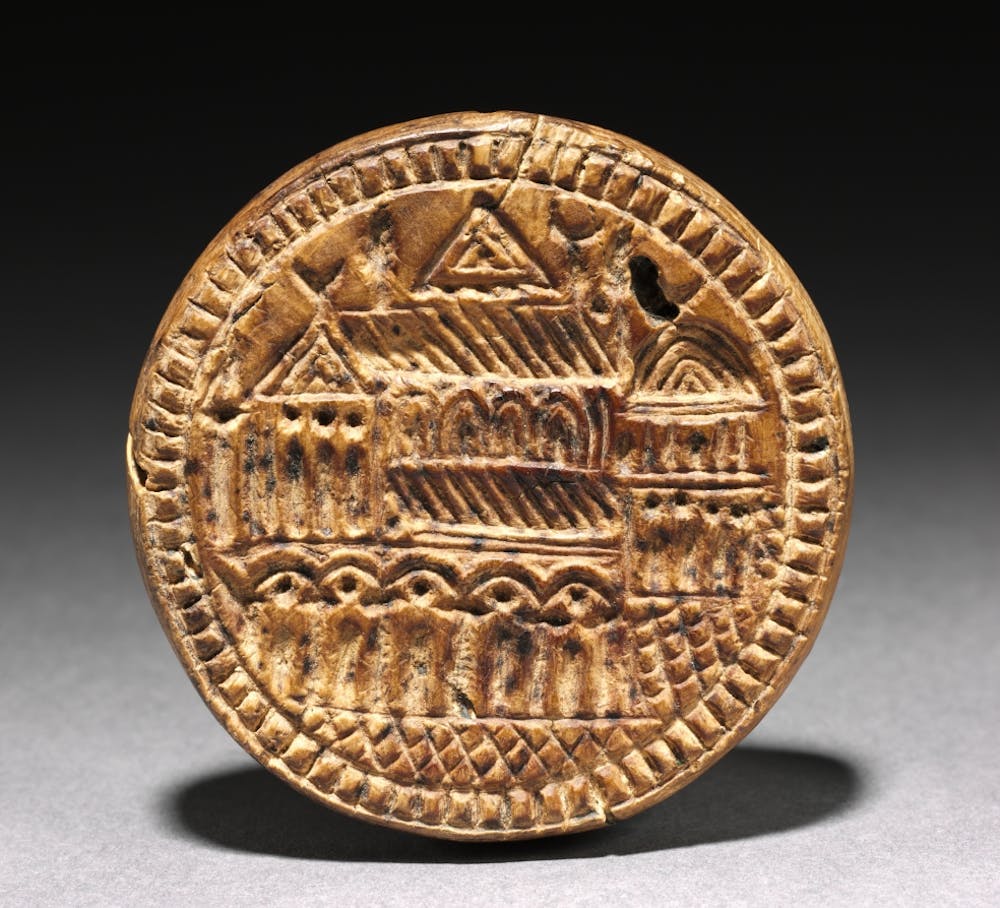



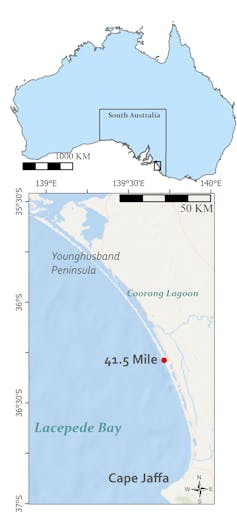











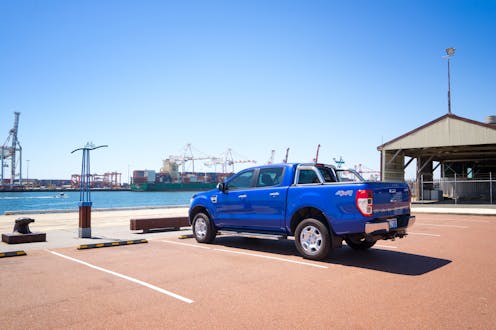























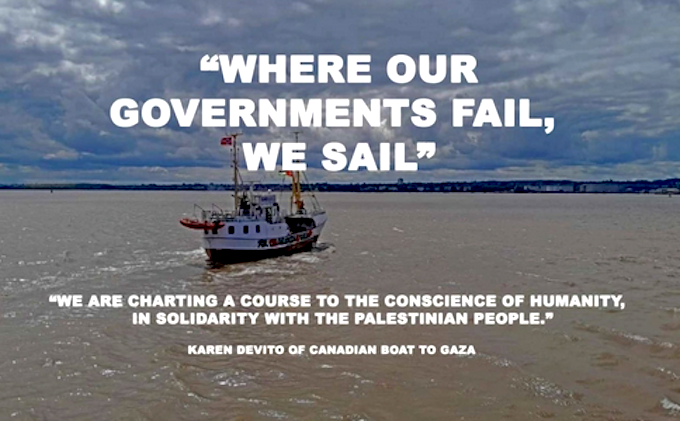

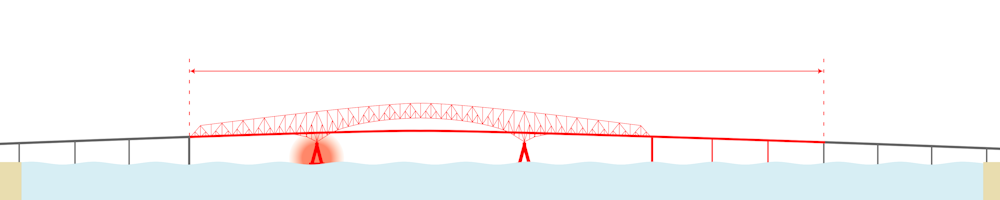




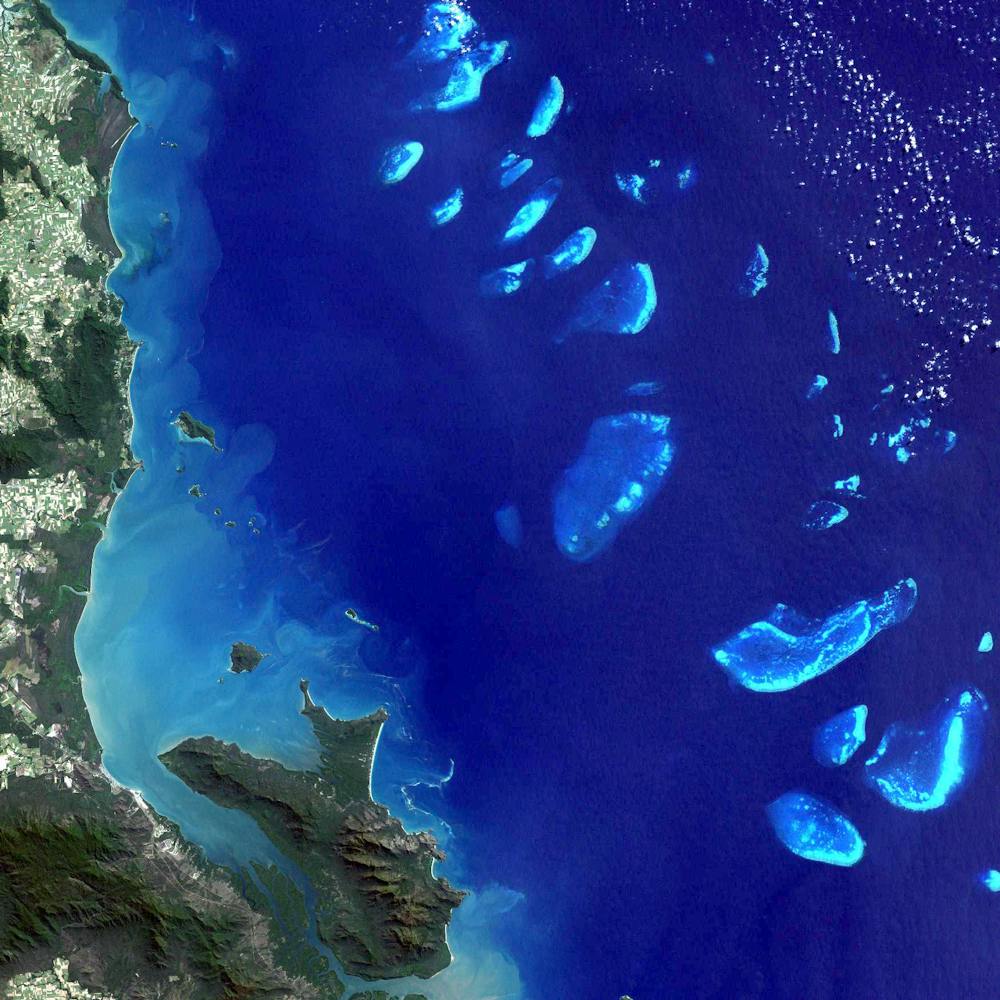



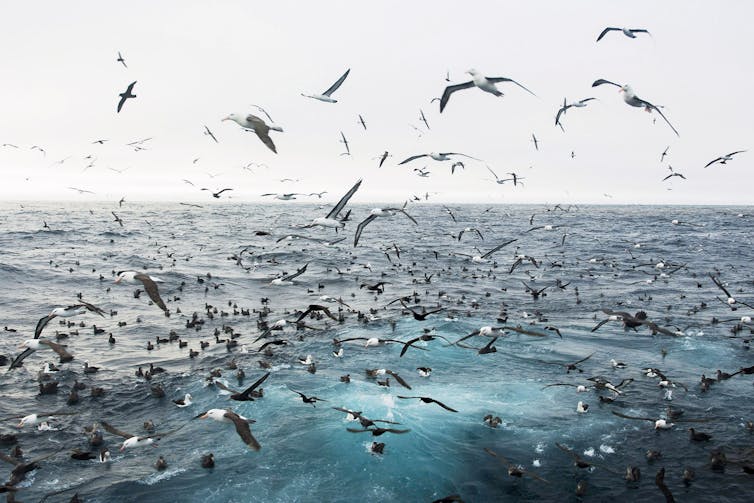

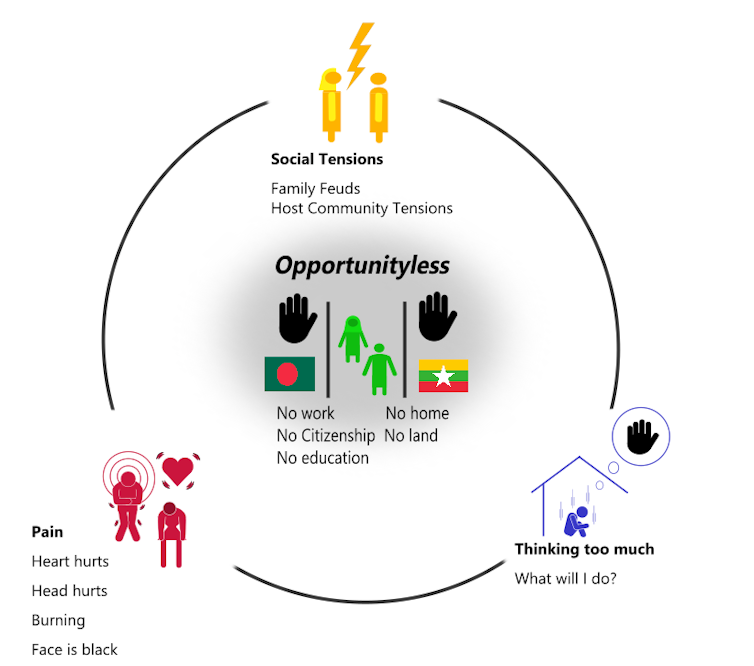









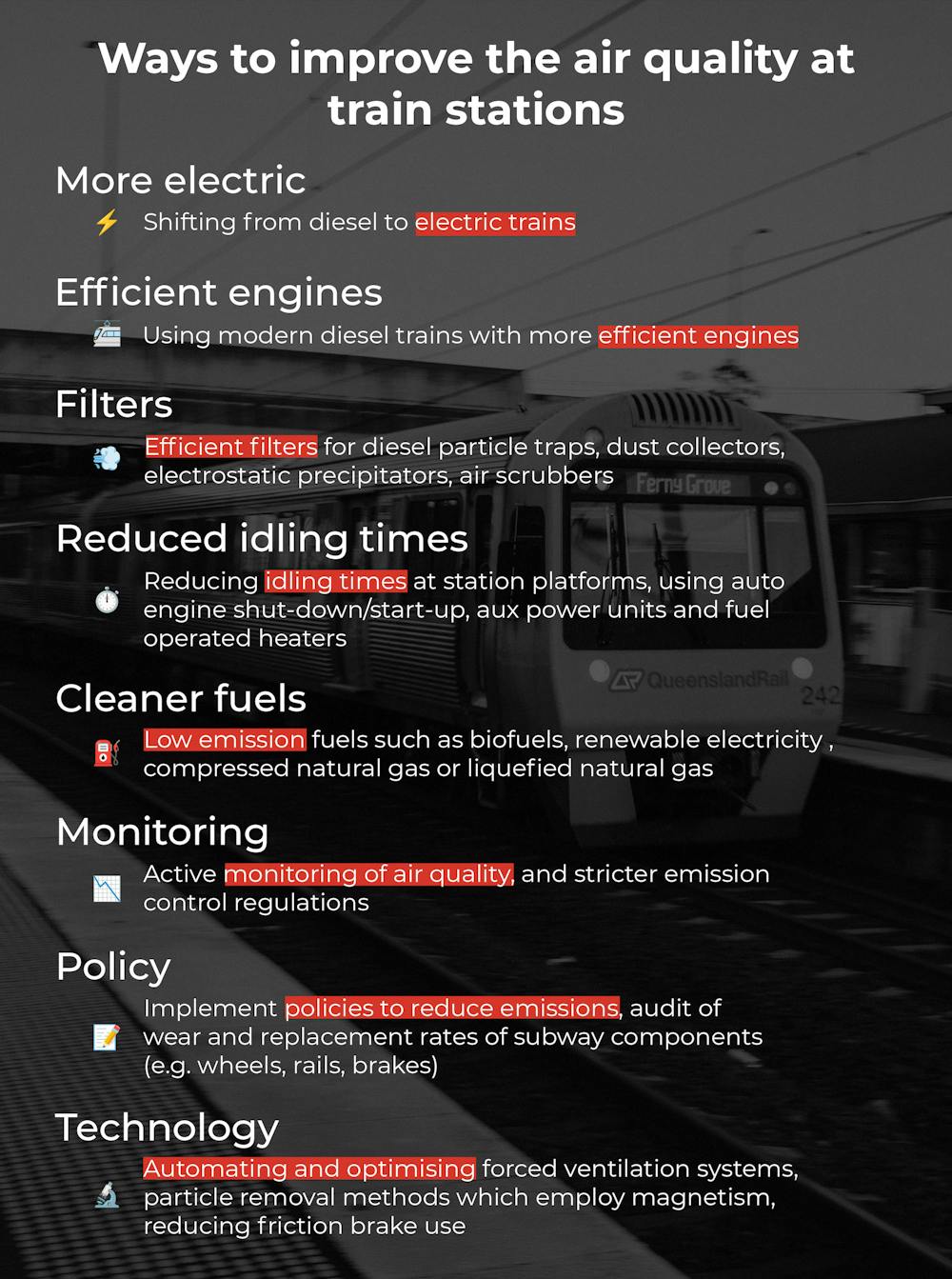









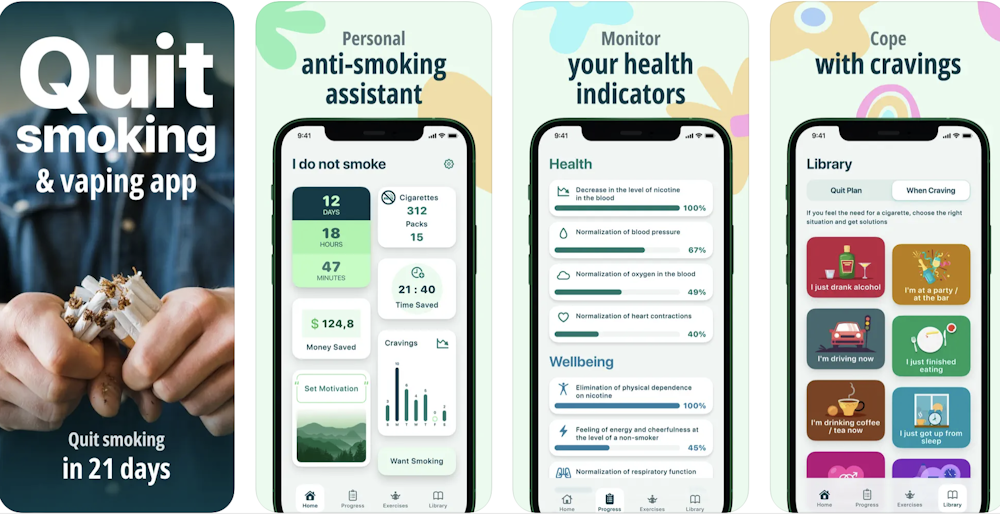






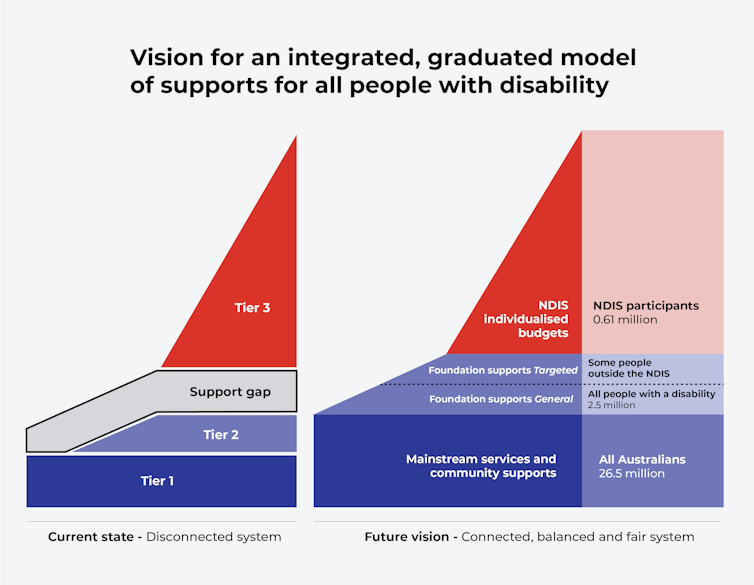


_detail.jpg)
#/media/File:Rembrandt_Harmensz_van_Rijn_-_Return_of_the_Prodigal_Son_-_Google_Art_Project.jpg)
