Page 1309

media release – Law students help fight miscarriages of justice

MIL OSI –

 Law students help fight miscarriages of justice

March 5, 2015

University of Canterbury law students are involved in a number of legal fights, the university’s Dean of Law, Associate Professor Chris Gallavin says. 

The Canterbury students are helping fight against miscarriages in New Zealand, with the prospect of them making a difference in the community, he says. Associate Professor Gallavin is part of a team established in 2013 to examine public interest cases in both criminal and civil jurisdictions.

“We are very proud that two of our finest students have worked tirelessly on the Teina Pora appeal for the last six months of 2014,” Associate Professor Gallavin says.

“They played a significant role in the defence team completing important research and opinions on aspects of both the law of evidence and criminal procedure. We here at Canterbury are endeavouring to bring real world experiences into the classroom giving academic credit and ultimately a life changing experience to students who are keen and eager to put their education to use as part of their LLB studies.

“Teina Pora was this week a free man after the Privy Council quashed his convictions for the 1992 rape and murder of Auckland woman Susan Burdett. This is a great victory for justice and I hope now that attention will focus on finding out who did kill Susan Burdett. That is very important for the Burdett family and it is important for our community. No one wins in miscarriage cases.”

“The Teina Pora case is not the only case in which Canterbury law students are involved. Our students are also at the centre of the team examining the Mikaere Oketopa (Michael October) case and will be working on the Peter Ellis file and the Tamihere case.

“A team of experts has been formed and it is a privilege and a pleasure for our students to work under the guidance of these experts in uncovering defects in cases that have potentially led to the wrong person being convicted and families of victims receiving little to no closure.

“The team includes barristers, private investigators and scientists and is called the New Zealand Public Interest Project (NZPIP) and in the absence of a criminal cases review panel for New Zealand we are hopeful that we might play a small part in setting the record straight for those unjustly convicted of serious offending.

“We are looking to formally launch NZPIP this year and while we are a little nervous about the number of criminal and civil cases that might be referred to us for review. We are keen to do our best in our little corner,” Associate Professor Gallavin says.

]]>

media release – Are New Zealand women on equal job footing with men?

MIL OSI –

Are New Zealand women on equal job footing with men?

March 5, 2015

Today many consider that women in New Zealand and in other industrialised countries are competing on equal footing with men on the job market.

However, University of Canterbury business and economics associate professor Annick Masselot says this is not quite true.

“The gender pay gap is still at 10 percent and women are still over-represented in segregated traditional gendered professions that are underpaid and undervalued such as care work, cleaning and cooking.”

Associate Professor Masselot will give the university’s first What if Wednesday public lecture of the year on campus next week (March 11). See here for a preview YouTube clip: .

“About 35 percent of New Zealand women work part-time because they also need to do housework and care for children and other dependents. Even though New Zealand men participate in domestic work more than men in other industrialised countries, women in New Zealand do more than double the unpaid house-work and care.

“Women continue to disproportionately experience the double burden of paid work on the labour market and unpaid work at home. New Zealand women outperform men in education. Two-thirds of university graduates are women and research shows that women are ambitious, yet only 12 percent of company directors on the New Zealand Stock Exchange top 100 listed companies in 2013 are women.

“Only 19 percent of partners in Auckland’s top legal firms are female, despite there being more women than men legal graduates since 1993.”

Associate Professor Masselot will raise issues such as work-life balance and legal rights relating to equal treatment between women and men. She says New Zealand’s legal rights to balance work and life are of a reasonable standard when compared to other developed countries.

However, like in other countries, the legal protections, based on an outdated male breadwinner-female caregiver social norm, are inadequate and, even when relevant, are under-enforced or simply ignored.

“Cultural stereotypes are still very much alive across New Zealand and women are still perceived as the main carers and therefore not primarily as workers with full employment rights.

“New Zealand women face high levels of discrimination because many employers still consider that women should first and foremost be carers for children or other dependents and that they are only secondarily interested in paid work. Discrimination takes place before women have children. This leads to unequal pay and gender segregated labour market.”


]]>

Manning on the Snowden Revelations: Has The NSA Constructed The Perfect PPP?

Former intelligence analyst and whistleblower, Edward Snowden – speaking live to those gathered at the Auckland Town Hall on Monday September 17, 2014. Investigation by Selwyn Manning (updated). THE PRIME MINISTER JOHN KEY’s admission in September 2014 that whistleblower Edward Snowden “may well be right” that our data-communications may be accessible through XKeyscore raises further questions of whether the Prime Minister has told the ‘whole truth’ or whether he is simply out of his depth on global intelligence operations. The New Zealand Herald reported in September 2014:

Prime Minister John Key acknowledged today that NSA whistleblower Edward Snowden’s claim that New Zealanders’ data is accessible through the controversial XKeyscore system “may well be right”.
However, the Prime Minister then maintained that information will not have been gathered under any Government Communications Security Bureau (GCSB) mass surveillance programme as the agency doesn’t have that capability. (Ref. NZHerald). That statement is clearly polls apart from the revelations published in a cooperative effort by investigative journalist Nicky Hager, the New Zealand Herald’s David Fisher, and the Sunday Star Times (pending publication). The contradictory statements raise questions as to whether the Prime Minister has been outplayed by the deep state, the true masters of the great game? If not, then it suggests John Key is attempting to prevent New Zealanders from knowing what his government is permitting in our name. Whatever the truth is, the issue drives home the need for New Zealanders to fast become familiar with what the United States-based spy agency does, its reach around the world, how it sets up sites in countries like ours, and importantly what the National Security Agency (NSA), has already admitted to. Is New Zealand merely a pawn in a US-led system designed to protect the superpower’s economic and foreign policy interests? The Snowden Revelations suggest this is so. Has the NSA a facility in New Zealand as whistleblower Edward Snowden suggests? To consider this we need to realise that the agency has many difference faces. Let’s consider: how does the NSA operate? How does it use privately owned businesses, corporations, to do its work abroad? How does it partner up with such players to construct what is simply a spy network of privately owner profitable cells and government agencies all feeding back to the mothership Stateside? Is this the ultimate version of a public-private-partnership (PPP)? And, is this how it masks, in part, its operation around the globe?
*******
The NSA’s PPP arrangements permit the state-aligned entity to avoid laws, regulations and statutory controls on what it, and other Five Eyes members like the GCSB, can and cannot do. Palantir Companies like Palantir International, conceived deep within California’s Silicon Valley, has become a giant among the technology companies that have made millions and millions of dollars networking with governments and the world’s largest spy agencies – the Central Intelligence Agency (CIA) and the NSA among them. Palantir Technologies New Zealand Ltd is operating in New Zealand. Now, we do not at this juncture suggest Palantir is operating in New Zealand at the behest of the NSA, but we can confirm that it registered as a company here in 2012, its official office is listed in the Government companies office register as being with legal firm Simpson Grierson, 88 Shortland St, Auckland; that it has a headquarters in Wellington; it recruited for interns at Victoria University as recently as May 19 this year; it actively employed data analysis and computer engineers at locations in New Zealand, has invested around $12 million into New Zealand information communication technology (ICT) start-ups, and certainly specialises in highly efficient deep data analysis on a global-scale. Palantir states on the New Zealand section of its global corporate website: “We are composed of technical people doing technical work, software engineers who establish natural rapport before discussing solutions and pounding the keyboard, analysts who can tweak servers, and communicators who listen. Our goal is to implement our platform where people need it, without a surplus of jargon. We don’t do business as usual; we do business as Palantir.” So what is this business it speaks of? Well the Wall Street Journal describes one of its products, Palantir Gotham, as: Palantir Gotham is used by counter-terrorism analysts at offices in the United States Intelligence Community and United States Department of Defense, fraud investigators at the Recovery Accountability and Transparency Board, and cyber analysts at Information Warfare Monitor (responsible for the GhostNet [a Chinese cyber attack network] and the Shadow Network investigation). Palantir Metropolis is used by hedge funds, banks, and financial services firms. (Ref. WSJ). WSJ wrote in the early stages of Palantir’s rise:
Palantir’s software has helped root out terrorist financing networks, revealed new trends in roadside bomb attacks, and uncovered details of Syrian suicide bombing networks in Iraq, according to current and former U.S. officials familiar with the events. It has also foiled a Pakistani suicide bombing plot on Western targets and discovered a spy infiltration of an allied government. It is now being used by the Central Intelligence Agency, the Pentagon and the Federal Bureau of Investigation. Yet Palantir — which takes its name from the “seeing stones” in the “Lord of the Rings” series — remains an outlier among government security contractors.
Only yesterday (September 15, 2014 US timezone) Palantir was cited in the Silicon Valley Business Journal as adding US$50 million to its corporate spy war-chest. Palantir Technologies disclosed on Friday that it has raised $50 million more in a funding round that now totals about $444 million. The secretive Palo Alto Big Data analytics company led by Alex Karp didn’t disclose where the funding came from in its filing with the Securities and Exchange Commission. The company was already one of the most heavily funded startups in Silicon Valley. It raised a total of $829 million before this latest funding. (Ref. SVBJ). The report noted: Palantir’s backers include the CIA’s In-Q-Tel venture fund and, the company’s co-founder Peter Thiel’s Founders Fund. The report listed among its customer’s the US “government intelligence agencies such as the National Security Agency”. All of this material is easily accessed via the internet. It would be helpful if New Zealand’s Prime Minister John Key revealed what exactly Palantir Technologies New Zealand Ltd is doing here, particularly as the company states in its recruitment material that it is working with government to deploy its platform. What platform is this? Why is this company so intent on establishing itself here? It would also be worthwhile for all those interested in investigating Edward Snowden’s claim – that the NSA has operations in at least two locations, one in Auckland (perhaps located near the Southern Cross cable underground hub on Auckland’s North Shore, that feeds large capacity to the Albany IT sector) and another north of the city – to consider the PPP tactic. Companies like Palantir have the expertise and the track-record of getting results for their clients For example, Palantir’s corporate website states: “DATA FUSION 
PLATFORMS Back-end infrastructure for integrating, managing, and securing data of any kind, from any source, at massive scale.” (Ref. Palantir.com). In 2012, shortly after it established in New Zealand, Palantir was actively recruiting for IT specialists. For example:
Palantir is looking for a brilliant, technical mind to help deploy our Government platform in New Zealand. We need someone to take a step back, look at who we are interacting with, and what those interactions mean across the organisation.
It offered insight into what it does, stating: We currently offer a suite of software applications for integrating, visualizing and analyzing the world’s information. We support many kinds of data including structured, unstructured, relational, temporal and geospatial. (Ref. LinkedIn). Describing its operation, Palantir wrote it is: “broadly deployed in the intelligence, defense, law enforcement and financial communities, and are spreading rapidly by word of mouth into applications in other industries and realms of impact.” Palantir clearly has an overt presence here in New Zealand. And nothing suggests its operation is anything other than lawful. The above references are cited in the public interest simply to illustrate how state spy agencies contract and outsource to the private/corporate sector, and how the private/corporate sector accumulates vast profits in what is a very lucrative field.
*******
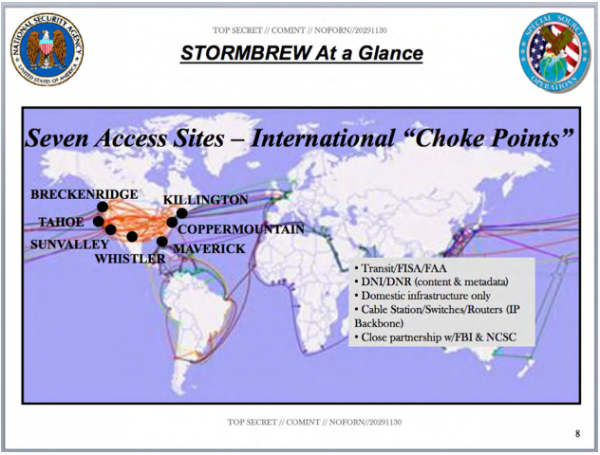
WHAT WE DO KNOW: What we do know is contained within a cache of significant information sourced from the NSA itself – made public thanks to Edward Snowden and investigative reporter Glenn Greenwald. The NSA’s own documents show that over the past five years the NSA has developed vast networks of “partnerships” with the corporate sector. Let’s consider a sample. Identified as Fairview, the NSA has developed what it states as: Key corporate partner[s] with access to international cables, routers, and switches. It describes a US-based arrangement an example: “The partner operates in the U.S. But has access to information that transits the nation and through its corporate relationships provide unique access to other telecoms and ISPs. Aggressively involved in shaping traffic to run signals of interest past our monitors.” (Ref. NoPlaceToHide Greenwald/Snowden doc: Page 104. US-990 Fairview). The NSA goes on to describe how it used corporate elements to help mask its operations. The documents show how the sensor sites around the world are not necessarily run by the NSA, nor does it have a sign above the data-centre door heralding ‘This is the collection office of the NSA’. Rather, the sensor sites appear to be a mix of state owned infrastructure, and privately owned enterprise. But let’s be clear: the NSA is the benefactor of the data that is collected… the recipient of your communications, and can use it as it wishes, whether the acquiring of the data is legal or not. For example: STORMBREW. [caption id="attachment_52543" align="alignleft" width="565"]StormBrew. StormBrew.[/caption] STORMBREW: Location, Auckland, NZ. (Ref. NoPlaceToHide Greenwald/Snowden doc: Page 107).
    The jargon: DNI/DNR = CONTENT AND METADATA; DOMESTIC INFRASTRUCTURE ONLY; CABLE STATION/SWITCHES/ROUTERS/IP BACKBONE); CLOSE PARTNERSHIP WITH FBI & NCSC.
The UPSTREAM element of STORMBREW is described by the NSA as a “collection of communications on fiber cables and infrastructure as data flows past” and is used by the following platforms that are specific to regions around the world: Fairview, Stormbrew, Blarney, Oakstar). Understanding the protocol references is also vital when we attempt to understand what is being done in our name. DNI and DRN are important distinctly different references.
    DNI Selectors = 9 US based service providers (PRISM). Worldwide sources (UPSTREAM). DNR Selectors = Worldwide sources.
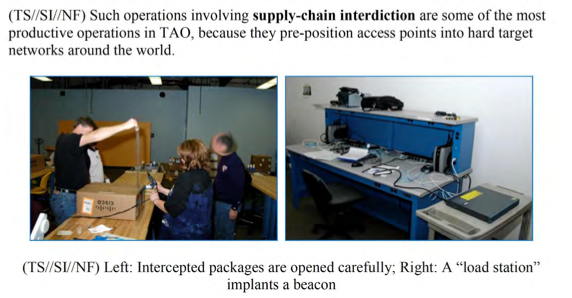
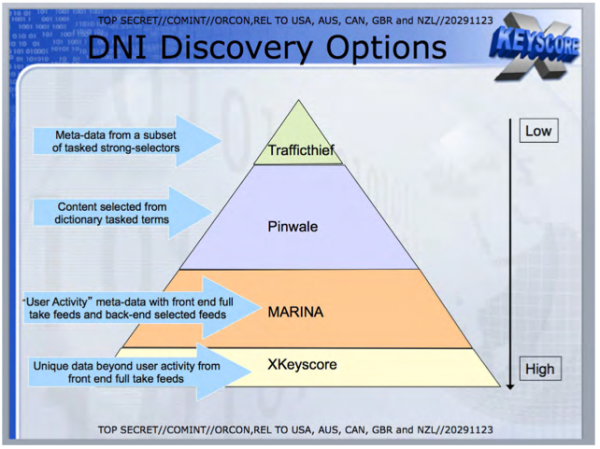
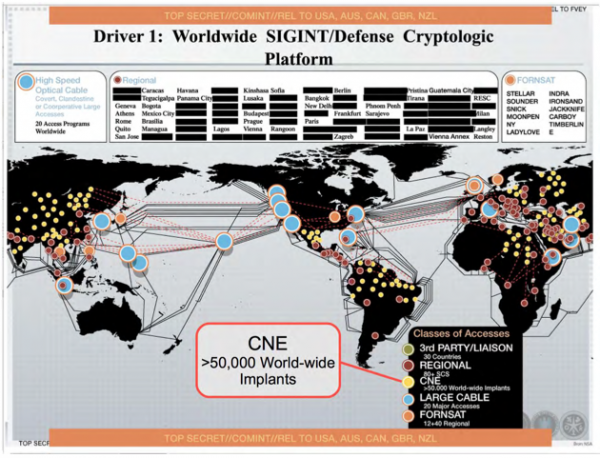
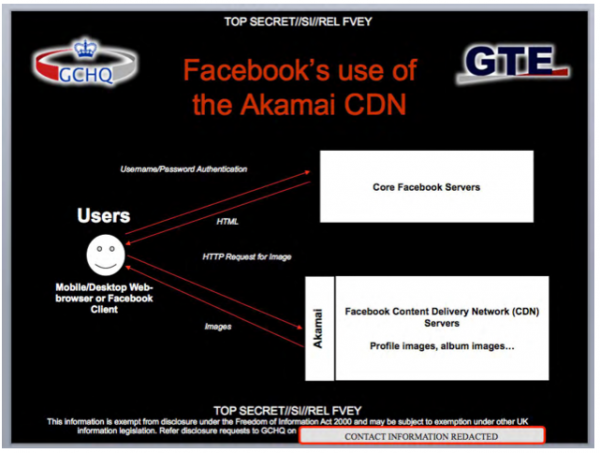
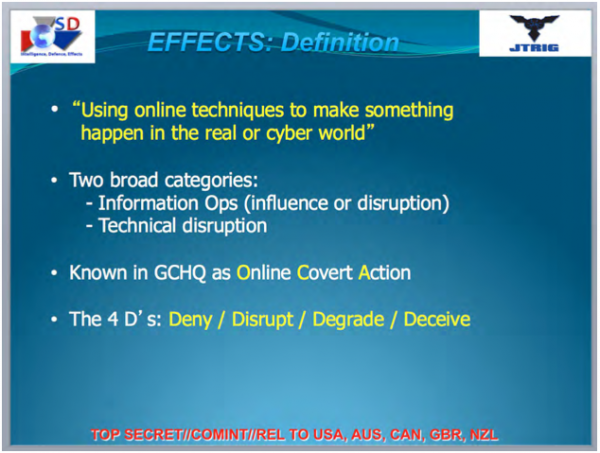
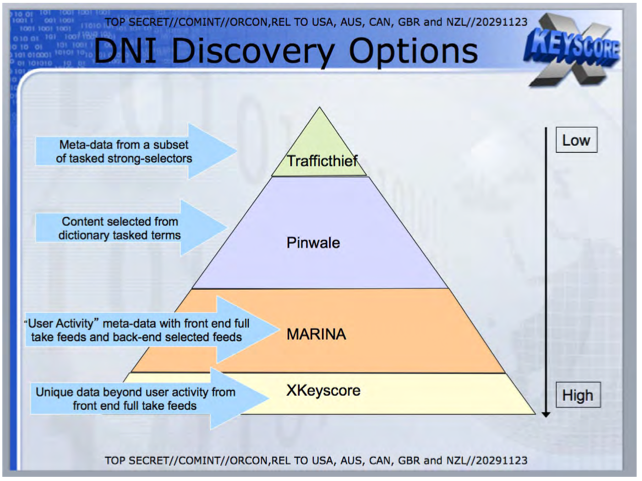
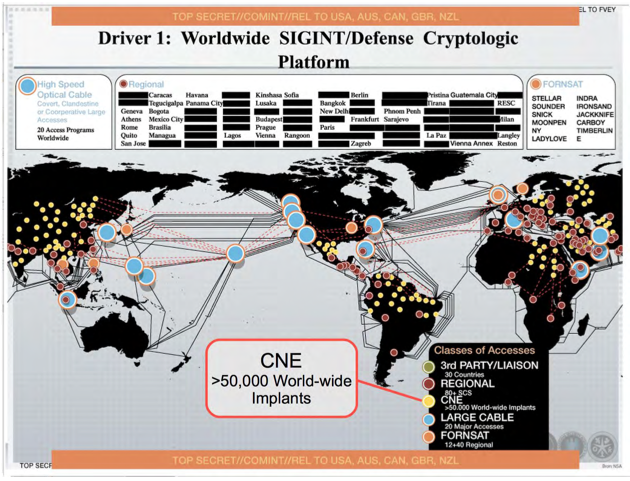
Both DNI and DNR provide realtime collection (surveillance), while PRISM also provides access to stored communications available via search within the PRISM platform. Both DNI and DNR provide access to VOIP (voice over internet protocol). Upstream provides direct relationship with worldwide communications providers, while PRISM connects that relationship via the FBI, a method to navigate through the USA’s own privacy laws. This is where it gets interesting. The above technology protocols fit with what was inserted into the New Zealand GCSB and TICS amendment bills, legislation that became law in 2013. (Ref. see my special investigation, TDB, Manning, August 18 2013). The legislation empowered the state to command ISPs and Telcos to insert GCSB-controlled hardware into their networks. Also, the legislation made it mandatory for ISPs and Telcos to inform the GCSB of, and enable the GCSB to test, any new technology (hardware or software) that may provide a degree of encryption that potentially pulled a curtain closed on the spies, rendering GCSB sniffer and filter window technologies unable to monitor our data and communications. For those still skeptical about whether New Zealand has capability to monitor/filter through the use of technology huge data-flows to and from New Zealand, consider this: New Zealand’s Department of Internal Affairs already does sniffs and filters data in its attempts to warn off people who accidentally, or otherwise, access objectionable and disturbing material on the internet. Online users who do stumble on such material are presented with a Department of Internal Affairs page that displays on their computer screen stating that they have been blocked from accessing a website. The message states the reasons for DIA to have blocked access. The move is obviously in the public good and has generally been supported by the public. So sniffer capability is already in evidence. Storage or management of huge amounts of data, for the purpose of surveillance, is another matter. [caption id="attachment_52531" align="alignleft" width="572"]The pre-positioning access-points into hard-target networks worldwide. The pre-positioning access-points into hard-target networks worldwide. (Ref. NoPlaceToHide Greenwald/Snowden doc: Slide, Page 149).[/caption] WHAT’S ALL THIS ABOUT METADATA THEN? Metadata is the tip of the surveillance iceberg. As Edward Snowden said on Monday night, metadata is an analyst’s dream as it doesn’t lie. It shows who a person talked to, the time, the location, the duration. It can easily be cross referenced and applied layer upon layer. It can be visually analysed, geospatial analysis can be used to identify patterns of connections between disparate groups, cells, networks, individuals. This data is powerful. Back to Xkeyscore. XKeyScore acquires your information via DNI Upstream sensor sites (which Snowden referred to as being located in Auckland and Northland) and pre-positioned access points at ISPs (a capability that the GCSB and TICS legislation made lawful and asserted a requirement obligation on the country’s ISPs). The principle of mass surveillance is a matter of definition. What governments define as surveillance is often quite different to how you or I may define the word. But for the purpose of this piece, surveillance – whether it be technology-driven dragnet ‘indiscriminate’ surveillance, or human analyst driven search surveillance – it is one of the same. It involves four elements: Trafficthief (metadata), Pinwale, MARINA, and the big foundation of the four: XKeyScore. [caption id="attachment_52532" align="alignleft" width="565"]DNI Discovery Options. DNI Discovery Options. (Ref. NoPlaceToHide Greenwald/Snowden doc: slide – DNI Discovery Options Page 160).[/caption] Remember too that with the help of Microsoft, the NSA stated in the source documents that it can easily crack high encryption. It also is able to decipher voice over internet protocol (VOIP) data calls on Skype (something that initially proved tricky). THE INTERACTION BETWEEN GOVERNMENT BODIES: Another important aspect to realise is how the NSA shares, cooperates, and utilizes the multiple jurisdictions permitted within separate departments of government. Crossover and sharing of information is one thing, but sharing capability is the foundation of the relationship between intelligence agencies and the major estates of government. We realised this to a degree in 2013 when it became known that the New Zealand GCSB was acting unlawfully when assisting the New Zealand Police to surveil Kim Dotcom. It also came to pass that 88 other New Zealand citizens or residents had also been unlawfully surveilled, although the circumstances of those offences were never revealed. Let’s consider SIGINT (or signals intelligence). SIGINT developed as a primary tool of defence and military when acquiring intelligence on an enemy. But the NSA documents reveal SIGINT is vital to its ‘indiscriminate’ surveillance operations against the citizenry. Here in New Zealand, until recent times, the GCSB’s primary skill was signals-based. The relationship between defence SIGINT activity and the NSA’s surveillance of the world’s citizens may also give some clarity as to whether the NSA does have a sensor site in Auckland and Northland. New Zealand Defence facilities are located here. And New Zealand Defence has an intelligence unit intelligence THE SIGINT DEFENCE CRYPTOLOGIC PLATFORM: [caption id="attachment_52533" align="alignleft" width="565"]SIGINT-defence Cryptologic Platform. SIGINT-defence Cryptologic Platform. (Ref. CNE access at 50,000 locations worldwide including Auckland, New Zealand. Ref. NoPlaceToHide Greenwald/Snowden doc: Page 117).[/caption] We know from the NSA’s own documents that the National Security Agency/Central Security Service shares “technological developments, cryptologic capabilities, software and resources for state-of-the-art collection, processing and analytical efforts, and IA capabilities.” The intelligence exchange with Canada for example “covers national and transnational targets. No Consolidated Cryptologic Program (CCP) money is allocated to CSEC (Canada’s Communications Security Establishment Canada), but NSA at times pays R&D and technology costs on shared projects with CSEC.” It has long been a question that remains unanswered as to whether New Zealand has received money to assist its spying for the Five Eyes Intelligence Agency. The Canadian experience suggests that at least in part, New Zealand has. Some may ask, why would sovereign states like New Zealand, with a history of independent foreign policy give so much control away to a foreign superpower? So what does the Five Eyes Intelligence Agency offer? Well, the NSA states the answer as: “… resources for advanced collection, processing and analysis” and open sharing of information/intelligence gathered via “covert sites at the request of NSA”. In return, the Five Eyes member states provide the NSA “unique geographic access to areas unavailable to the U.S.”. (Ref. NoPlaceToHide Greenwald/Snowden doc: Page 121). The NSA documents also state “comprehensive cooperation” is provided to ‘first tier’ member states Australia, Canada, New Zealand and the United Kingdom. While “focused cooperation” is exchanged with Austria, Belgium, Czech Republic, Denmark, Germany, Greece, Hungary and 13 other nations. GEOGRAPHICAL REGIONAL SIGNIFICANCE: China-NZ-FTAWhile the United States is able to reach and breach information on a global scale, its partners of the Five Eyes Intelligence Agency are valuable in part due to their location and geopolitical idiosyncrasies. Each has a unique opportunity capability. The NSA documents show that Australia’s location and interactivity with Indonesia assists the NSA to target “high priority targets” inside Indonesia. While it is yet to be clear what New Zealand provides the NSA in terms of international trading partner intelligence, New Zealand’s relationship and trading status with the People’s Republic of China provides a specific and unique trade-led environment that others, including the USA, do not share. Also, New Zealand’s capital city Wellington is the location of a significant French diplo-contingent. The French Embassy in Wellington is the fourth largest of France’s foreign affairs posts and interconnects with France’s territories in Polynesia and French Polynesia. This includes its need to assist in the transit of its military hardware in the wider Pacific basin. New Zealand’s external offshore signals surveillance, via the GCSB base at Waihopai, is now well known. What is not so well appreciated is that the GCSB’s patch is east of Australia’s east coast, northward and eastward then out into Polynesia and French Polynesia. It would seem likely that China aside, France’s interests in the Pacific are the target of New Zealand Government spying. France-under-Surveillance SO WHAT HAPPENS TO ALL THIS INFORMATION? So where does this intelligence all end up? What kind of personal information is gathered? The NSA documents show us that virtually everything is acquired. Internet surfing, webmail (Yahoo, Hotmail, Gmail etc), Facebook, Myspace etc, internet searching (Google, Bing, Wikipedia etc), online mapping (Google Maps, Mapquest etc). Xkeyscore and a number of other platforms collect all forms of communications. To cite the NSA: “Communications, day to day activities, contacts and social networks, photographs, videos, personal information (e.g. addresses, phone, email addresses), location and travel information.” Facebook, Myspace, Bebo, and now Kik, Instagram, Twitter and a host of other social media platforms provide the NSA “A very rich source of information on targets: personal details, pattern of life, connections and associates, media,” the NSA documents state. And social media friends… if you think Facebook’s lockdown security settings provide you with privacy, think again. The NSA’s ‘Passive’ system enables this global system: “the opportunity to collect this information by exploiting inherent weaknesses in Facebook’s security model.” [caption id="attachment_52536" align="alignleft" width="565"]Facebook Surveillance. Facebook Surveillance.[/caption] Also, at the time the NSA documents were acquired, the Five Eyes alliance was advancing its capability to track and monitor communications passengers of aircraft. The UK’s GCHQ was leading this breakthrough technology. This new system referred to as Thieving Magpie hacks into any GSM and GPRS calls and data communications emitting form onboard aircraft. It is able to probe such communications every two seconds, while the aircraft is flying anywhere in the world. In 2013 the NSA documents noted that “many airlines are offering on-board mobile phone services, particularly for long haul and business class (list is growing).” Thieving Magpie was anticipated to provide XKeyScore “global coverage” via its Southwinds platform at some stage in 2014. This technology announcement was provided to all Five Eyes member agencies, including New Zealand’s GCSB. Of course, the New Zealand National-led Government has not informed its citizenry of any of this information. The GCSB was informed that once Thieving Magpie’s global capability is achieved it will be “available to FVEY (Five Eyes) users” via a simple to use “light weight web page”. THE SINISTER SIDE OF OUR SPYS’ METHODS: data-security-risk-774449 Disturbingly, the NSA documents indicate how the use of sinister manipulation can destroy the reputations of Five Eyes targets, the NSA documents also describe how “radicalizers appear to be particularly vulnerable in the area of authority when their private and public behaviors are not consistent. It lists four behaviors to look out for when surveilling a target, to identify the:


  • “Viewing sexually explicit material online or using sexually explicit persuasive language when communicating with inexperienced young girls;
  • Using a portion of the donations they are receiving from the susceptible pool to defray their own personal expenses;
  • Charging an exorbitant amount of money for their speaking fees and being singularly attracted by opportunities to increase their status; or
  • Being know to base their public messaging on questionable sources or using language that is contradictory in nature, leaving them open to credibility challenges.”
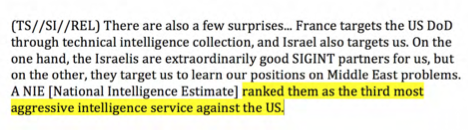
It is important to note here that the term radicalizer, does not mean criminal, but rather refers to a person who has become a target, whose political thinking does not knit well with those of the governments connected to the Five Eyes intelligence agency. This method of attack the messenger, or ‘radicalizer’ as is defined by Britain’s GCHQ in the briefing documents, conveys a four-point-plan of character assassination: Deny, Disrupt, Degrade, Deceive. Known as ‘The Four Ds’. How the Four Ds are used are detailed:
  • “Set up a honey-trap
  • Change their photos on social networking sites
  • Write a blog purporting to be one of their victims
  • Email/text their colleagues, neighbors, friends etc.”
[caption id="attachment_52537" align="alignleft" width="565"]Effects-Definition. Effects-Definition.[/caption] This information was presented by the NSA to New Zealand’s GCSB officers are a training/briefing session. The NSA officer briefing the Five Eyes spies added: “Honey-trap; a great option. Very successful when it works. Get someone to go somewhere on the internet, or a physical location to be met by a ‘friendly face’. JTRIG has the ability to ‘shape’ the environment on occasions.” The officer adds that changing a person’s photograph on a social media profile page is effective in driving up paranoia: “Can take paranoia to a whole new level.” And the officer suggests email and txt operations can assist the state’s spies to gain credibility with online groups and infiltration of the same. The above methods will no doubt ‘ring a few bells’ and cause some unease for New Zealanders who have become privy to the inner workings of Dirty Politics, as practiced by members of the National Party and their attack merchants in the blogosphere and media. And in case the connection still seems value, here is a direct quote from the NSA briefing to the New Zealand GCSB: “Issues of trust and reputation are important when considering the validity and appeal of the message. It stands to reason that exploiting vulnerabilities of character, credibility, or both, of the radicalizer and his message could be enhanced by an understanding of the vehicles he uses to disseminate his message to the susceptible pool of people and where he is vulnerable in terms of access.” If the messenger or target ‘radicalizer’ needs to be shut down, the NSA advice is to “Bombard their phone with text messages, bombard their phone with calls, delete their online presence, block up their fax machine.” If a computer or site or network needs to be taken down, the officer also said: “Send them a virus: Ambassadors reception – encrypt itself, delete all emails, encrypt all files, make the screen shake, no more log on. Conduct a denial of service attack on their computer…” According to the NSA documents, ‘Effects Operations’ save time and money when compared to “traditional law enforcement”. And in a section titled: DISRUPTION Operational Playbook, it breaks it down into easy-to-follow terminology:
  • Infiltration Operation&lt
  • Ruse Operation
  • Set Piece Operation
  • False Flag Operation
  • False Rescue Operation
  • Disruption Operation
  • Sting Operation.
Remember all of the above methods do not require the targets to be terrorists, sympathisers, or criminals, but rather ‘radicalizers’ which in New Zealand’s context appears to mean opposition politics, civil society spokespersons, academics, activists, and independently minded and branded journalists (investigative or otherwise). CONCLUSION: It is clear that paranoia and fear are being underlined as effective methods to be used to destroy those who voice opposition to the expressed orthodoxy or policies advanced by Five Eyes governments. Being informed is being forewarned. This investigative report is syndicated by MIL OSI and was first published on LiveNews.co.nz –]]>

Brook Barrington Appointed Head of New Zealand Foreign Affairs and Trade

MIL OSI – Source: New Zealand State Services Commission – Press Release/Statement Headline: Secretary of Foreign Affairs and Trade Appointed: Secretary of Foreign Affairs and Trade Appointed [caption id="attachment_689" align="alignleft" width="296"]Dr Brook Barrington. Dr Brook Barrington.[/caption]State Services Commissioner Iain Rennie has today announced the appointment of Brook Barrington as Chief Executive and Secretary of Foreign Affairs and Trade, Ministry of Foreign Affairs and Trade (MFAT). Mr Barrington is a senior public servant.  His career includes 20 years in MFAT working on foreign policy and international trade issues, including as Ambassador to Thailand.  More recently he has been Deputy Secretary at the Ministry of Defence, and for the last three years has been a Deputy Chief Executive at the Ministry of Justice. “I am very pleased to appoint Brook Barrington to this important role,” Mr Rennie said. “Brook has significant experience in diplomacy, international negotiations and trade as a former Ambassador and long serving diplomat, as well as experience in senior leadership roles in other sectors of the Public Service,” he said. “MFAT has an important and unique role in representing New Zealand and promoting our interests overseas as well as providing assistance to New Zealanders in other countries when they need it”. “Public agencies working together as a single ‘system’ focused on ongoing improvement to the services we provide New Zealanders is a major priority for the Public Service,” said Mr Rennie. “I am confident Brook will be able to draw on his networks and experience across the Public Service to work as a team with other chief executives and ensure MFAT’s work is well integrated and aligned”. Mr Barrington has been appointed for a five year term commencing on 23 March 2015. Craig Hawke will be Acting Chief Executive until Mr Barrington takes up the role. The Chief Executive and Secretary of Foreign Affairs and Trade is responsible for a network of 57 posts in 50 countries. MFAT has 103 accreditations to other countries and 74 Honorary Consuls. ENDS BIOGRAPHY OF BROOK BARRINGTON Mr Barrington joined MFAT in 1990 and held a variety of roles both within New Zealand and offshore.  He left MFAT in 2009 to take leadership positions in the wider public sector. The first part of Mr Barrington’s career in MFAT was spent advancing New Zealand’s trade policy interests.  He worked across government and the private sector, and had postings to Canberra and Brussels.  The later part of his time in MFAT was more focused on political and security issues, including as Foreign Policy Advisor in the Department of the Prime Minister and Cabinet (DPMC) and as Ambassador to Thailand for three years. From 2009 until 2012 he was Deputy Secretary, Policy and Planning in the Ministry of Defence, where he led the development of the 2010 Defence White Paper. Mr Barrington has recently held two Deputy Chief Executive (DCE) roles at the Ministry of Justice. He was initially the DCE Sector (2012-2014) with a particular focus on improving alignment and governance across the justice sector (Ministry of Justice, NZ Police and Department of Corrections). During 2014 he moved to the DCE role responsible for the overall management of the day-to-day operations of the Ministry of Justice, ensuring the Ministry has the strategy, governance, engagement and capability to deliver its core services effectively and efficiently. Mr Barrington holds a PhD in history from the University of Auckland. –]]>

Australia Government: Building Partner Capacity in Iraq

MIL OSI – Source: Australia Government Ministerial Statements – Press Release/Statement:

Headline: Building Partner Capacity in Iraq

Joint Statement: THE HON. TONY ABBOTT MP, Prime Minister, and, THE HON. KEVIN ANDREWS MP, Minister for Defence.

The Government has decided to commence the preparation and training of a force to contribute to the international Building Partner Capacity (BPC) mission in Iraq.

This decision marks the next phase of Australia’s contribution to the international coalition to disrupt, degrade and ultimately defeat ISIL, or Daesh, and follows requests for our participation from the Iraqi and United States Governments.

Working together, the Iraqi security forces and their coalition partners have stemmed Daesh’s onslaught. Now Iraq’s security forces require international training support to conduct effective offensive operations against Daesh and ultimately to take responsibility for their country’s security.

The Australian BPC force would be based at Taji, northwest of Baghdad, and the mission is expected to commence in May 2015.

The Australian contribution would include around 300 ADF personnel centred on a training team. The force would also comprise a substantial force protection element along with command and support elements.

This initial step of preparing the BPC force will enable the Australian Defence Force to commence planning, preparation and administration for the mission.

Australia’s participation in this mission would build on the active contributions of our Air Task Group and Special Operations Task Group to international efforts to counter Daesh in Iraq.

The Government will keep under review the size and nature of Australia’s commitment in Iraq, taking into account the increasing focus of coalition efforts on building the capacity of Iraq’s security forces. 

The Australian BPC force would work closely with personnel from the New Zealand Defence Force who will be involved in the international BPC mission, which also includes forces from the United States, Spain, Italy, Germany, Denmark and the Netherlands.

The decision to prepare for the BPC mission underlines Australia’s commitment to supporting stability in Iraq and the Middle East and helping to stop the spread of violent extremism to Australia and our own region.

This decision is in Australia’s national interest.

Recent attacks in Australia and elsewhere around the world show that no country is immune from the threat of terrorism.

3 March 2015

]]>

New Zealand just a ‘minnow’ in the TPPA

MIL OSI –

Source: Association of Salaried Medical Specialists – ASMS – Press Release/Statement:

Headline: New Zealand just a ‘minnow’ in the TPPA

TPPA2

The Trans Pacific Partnership Agreement (TPPA) will increase the power of global corporations, and be a bit like the Sky City convention centre deal on “super steroids”, Professor Jane Kelson told a Dunedin audience.  She described New Zealand as a “minnow” in the controversial deal.  The full Otago Daily Times article can be read here.

Meanwhile, Jane Kelsey will be providing an update on the TPPA in Wellington, Wednesday 4 March at 5.30pm at Connolly Hall, Guildford Terrce. She will be joined by Simon Terry from SustainabilityNZ, Hadyn Edmonds of Consumer NZ, and Dr Gay Keating, who was a signatory to a recent letter to the Lancet expressing concerns about the TPPA.

A national day of action is also planned for Saturday 7 March.   People are gathering at 15 locations around New Zealand to express concern – more information is available at http://www.itsourfuture.org.nz/7-march/.  Details of the Wellington event can be found here.

– –

]]>

Kiwis tied to zero-hour contracts speak out

MIL OSI –

Source: Unite Union New Zealand – Press Release/Statement:

Headline: Kiwis tied to zero-hour contracts speak out

3
Mar

More employees on zero-hour contracts have contacted Campbell Live complaining of how their employers can’t even promise them half a shift.

Employers say the contracts allow them flexibility, but for the employee it means turning up for a shift, even if that shift is only an hour long.

As the union gets into negotiations this week with fast food companies, Campbell Live wanted to ask how many employees are on zero-hour contracts, and how does that number impact on New Zealand’s low unemployment rate?

Watch the video for the full report from Anna Burns-Francis.Video- Kiwis tied to Zero Hour Contracts

Read more: http://www.3news.co.nz/tvshows/campbelllive/kiwis-tied-to-zero-hour-contracts-speak-out-2015030220#ixzz3TH6eU8fm

– –

]]>

$905k to grow tomorrow’s business leaders

MIL OSI –

Source: New Zealand Government – Press Release/Statement:

Headline: $905k to grow tomorrow’s business leaders

Young people across New Zealand will receive a boost to develop their entrepreneurial skills and knowledge, after Youth Minister Nikki Kaye today announced $905,000 funding under the Youth Enterprise Fund.

“Eight organisations will receive funding to help deliver a range of business enterprise initiatives to a diverse range of youth, including young people not in education and from disadvantaged communities.

“This will see around 3,000 extra young people receive the chance to develop their entrepreneurial ability.

“The Young Enterprise Trust will receive the largest funding of over $600,000, to extend the reach of their successful Young Enterprise Scheme.

“This scheme encourages school students to come up with ideas for a company or product, and then receive coaching from local business people on how to develop their ideas and turn them into reality.

“Some schools need greater support to provide the scheme to their students, especially in communities that don’t have the necessary breadth of local business expertise to draw on.

“Based on a successful pilot in Pacific communities, the extra funding will help Young Enterprise Trust employ roaming, specialist teachers to support more schools to introduce, improve and grow business enterprise in the classroom.

“Young people today are growing up in a complex, challenging and fast-changing world, and it’s important we help them develop skills such as leadership, problem solving and innovation to succeed in the future.

“This is what the Youth Enterprise Fund is all about. I recently announced $835,000 of funding for social enterprise initiatives under the fund, and look forward to announcing technology related funding in the near future.”

See more information about the Youth Enterprise Fund here.

Notes for editors:

The successful recipients of business enterprise funding under the Youth Enterprise Fund are:

  • Young Enterprise Trust – $612,000 towards supporting schools and teachers nationwide to grow business and enterprise education in the classroom
  • Te Awamutu and Raglan Chambers of Commerce – $35,000 to help support young people with established or identifiable skills in Te Awamutu/Raglan to set up their own business
  • EBAT Charitable Trust – $20,000 to help run pilot programmes in Eastern Bay of Plenty to identify and develop young people with entrepreneurial skills and talent
  • Crosspower Ministries Trust – $25,000 to help deliver projects in Otara that offer entrepreneurial and small business skills to young people
  • Victoria Link Ltd – $80,000 to help build business acumen and awareness amongst Māori and Pacific students in Wellington
  • ARCO Workshops Ltd – $51,000 to help run enterprise training for disadvantaged youth in Kaikohe
  • Vaer Consulting Ltd – $20,000 to help teach start-up thinking to young people in Wellington
  • Foundation for Youth Development – $62,000 towards enterprise and investment literacy programmes for Year 11 and 12 students in Auckland, Waikato and Christchurch.

– –

]]>

Ministers must answer questions on IRD blowout

MIL OSI –

Source: New Zealand Labour Party – Press Release/Statement:

Headline: Ministers must answer questions on IRD blowout

The current and previous Revenue Ministers must front up and explain how the child support system had a budget blowout from $30 million to $210 million in just four years, says Labour’s Revenue spokesperson Clayton Cosgrove.

“Peter Dunne was Revenue Minister for eight years. He oversaw the introduction of the new system. Yet both he and the new minister Todd McClay have been silent on the cost blowout.

“The ministers have a responsibility to explain this debacle to the public. The two of them must come out of hiding and answer basic questions:

  • Why did the budget blow out from $30m to 210m?
  • Is the cost of the revised proposal of $163m justified?
  • Does the Treasury support spending $163m on what is little more than tinkering with the child support system?
  • What are the implications for the IRD’s business transformation project where IT costs are already estimated at $1.5b?
  • Did the Revenue ministers monitor this project, ask the right questions and when did they know that costs were spiralling out of control?
  • Or were they asleep at the wheel?

“The revised proposal is four times the cost of fixing Novopay and rivals the INCIS police computer disaster the last time National was in office.

“Former Deputy Commissioner of Inland Revenue Robert Oliver said he baulked at the original $30m cost. Perhaps he is the person the ministers should be listening to,” says Clayton Cosgrove.

]]>

iPredict Update: Ireland To Back Same-Sex Marriage

MIL OSI –

 iPredict Update: Ireland To Back Same-Sex Marriage

IPREDICT LTD

NEW ZEALAND WEEKLY ECONOMIC & POLITICAL UPDATE

Tuesday 3 March 2015

www.ipredict.co.nz 


IRELAND EXPECTED TO VOTE FOR SAME-SEX MARRIAGE

Voters in Ireland are overwhelmingly expected to vote to allow same-sex marriage in a referendum on 22 May, according to the combined wisdom of the 8000+ registered traders on New Zealand’s predictions market, iPredict.   Elsewhere in Europe, the UK Conservatives have lost ground to smaller parties over the last week putting the 7 May election on a knife-edge.  In New Zealand, more than 20 Queensland fruit flies are now expected to be found as part of the current outbreak but there has been no change in economic forecastsJohn Key and National have made a small gain over the last week.   National’s Mark Osborne is overwhelmingly expected to win the Northland by-election ahead of NZ First’s Winston Peters, although with less than 50% of the vote.  Labour’s Willow-Jean Prime has 0% probability of winning the seat.  The Liberal/National Coalition is favoured ahead of Labor in New South Wales.  Tony Abbott looks safe as Australian Prime Minister until midyear but is still expected to be replaced by Malcolm Turnbull before the next federal election.

New Zealand Politics:

·       National’s Mark Osborne expected to win Northland by-election (88% probability) but to fall short of 50% of the vote (only 29% probability of winning more than 50%)

·       Only an 11% probability the byelection will be won by a party other than National or Labour, and a 0% probability it will be won by Labour

·       Kevin Hague overwhelmingly favoured to be next Green Party co-leader (94% probability, down from 95% last week)

·       John Key is expected to remain National leader until at least the end of 2016 (79% probability, down from 80% last week) and has a 50% probability of remaining National leader until at least the end of 2017 (up from 49% last week)

·       Steven Joyce remains favourite to become National Party leader if a vacancy arises (28%, down from 29% last week), followed by Paula Bennett (28%, up from 26%) and Amy Adams (12%, steady)

·       Stocks on Andrew Little’s longevity as leader of the Labour Party will be launched in the near future

·       Judith Collins expected to be appointed to Cabinet before next election (60% probability, steady compared with last week)

·       Next election expected in 2017 (92% probability, steady compared with last week)

·       Forecast party vote shares at next election:

o   National                              45.2% (steady compared with last week)

o   Labour                                32.1% (steady)

o   Greens                               11.0% (down from 11.1%)

o   NZ First                                6.9% (steady)

o   Others                                  4.8% (up from 4.7%)

·       National expected to win 2017 General Election (57% probability, up from 55% last week)

·       Wellington councils not expected to be amalgamated by end of 2015 (only 43% probability they will be, steady compared with last week)

New Zealand Economics:

·       More than 20 Queensland fruitflies expected to be found in New Zealand as part of current outbreak (55% probability)

·       New Zealand dollar expected to reach parity with Australian dollar by the end of 2015 (69% probability, down from 75% last week) but not before July 2015 (30% probability, down from 53% last week)

·       Quarterly GDP growth expected to be:

o   0.7% in the March quarter (steady compared with last week)

o   1.1% in the June quarter (steady)

o   1.1% in the September quarter (steady)

o   1.1% in the December quarter (steady)

·       Annual growth expected to be 4.0% in the 2015 calendar year (steady compared with last week)

·       Unemployment expected to be:

o   5.4% in the March quarter (steady compared with last week)

o   5.3% in the June quarter (steady)

o   5.2% in the September quarter (steady)

o   5.3% in the December quarter (steady)

·       Current account deficit expected to be 3.5% of GDP in the December quarter (steady compared with last week) and 3.4% in the March quarter (steady)

·       Annual inflation expected to be:

o   0.3% to end of March 2015 quarter (steady compared with last week)

o   0.6% to end of June 2015 quarter (steady)

o   0.8% to end of September 2015 quarter (steady)

o   1.0% to end of December 2015 quarter (steady)

·       Official Cash Rate priced to be:

o   3.495% on 12 March (steady compared with last week)

o   3.488% on 30 April (steady)

o   3.447% on 11 June (down from 3.450%)

o   3.421% on 23 July (down from 3.424%)

o   3.384% on 10 September (down from 3.386%)

o   3.365% on 29 October (down from 3.367%)

o   3.360% on 10 December 2015 (down from 3.372%)

o   This implies the OCR is more likely than not to be cut on 29 October (steady compared with last week)

o   OCR stocks out to June 2016 will be launched in the near future

·       Only 18% probability of a fiscal surplus in 2014/15 (up from 17% last week)

·       Fiscal balance expected to be:

o   -0.18% of GDP in 2014/15 (down from -0.17% last week)

o   0.81% of GDP in 2015/16 (down from 0.85%)

o   1.98% of GDP in 2016/17 (steady)

o   2.38% of GDP in 2017/18 (steady)

·       There is a 63% probability Fonterra’s payout in 2015/16 will be above $6.00 (before retentions) up from 55% last week

Foreign Affairs/Constitution:

·       Next UK Parliament expected to consist of:

o   Labour                                           38.1% of seats in the House of Commons (up from 37.1% last week)

o   Conservatives                               34.1% of seats in the House of Commons (down from 37.9%)

o   Nationalist parties                             6.8% of seats (up from 6.6%)

o   UKIP and similar                               6.4% of seats (up from 5.7%)

o   Liberal Democrats                             5.5% of seats (up from 4.9%)

o   Unionist parties                                 2.3% of seats (up from 2.1%)

o   Green and similar                              2.2% of seats (up from 1.9%)

o   Independents and Speaker       2.1% of seats (up from 1.9%)

o   All others                                          2.3% of seats (up from 2.0%)

·       David Cameron expected to be prime minister after next UK election but with just 52% probability, down from 57% last week

·       Boris Johnson expected to be elected to UK House of Commons this year (92% probability, steady)

·       Socialist Workers’ Party expected to defeat People’s Party in next Spanish election (60% probability, steady compared with last week)

·       All Eurozone countries, including Greece, expected to remain in Euro in 2015 (only 12% probability of an announcement of a departure this year, down from 13% last week)

·       New South Wales Liberal/National Coalition expected to win most seats in NSW state election (80% probability)

·       Tony Abbott is expected to remain leader of the Australian Liberal Party until 1 July 2015 (only 38% probability of departing before then, up from 23% last week) but be replaced by Malcolm Turnbull as leader of the Australian Liberal Party by nomination day (60% probability Turnbull will be leader on that day, down from 69% last week)

·       Bill Shorten expected to be Labor leader at next Australian federal election (90% probability)

·       Liberals now marginally ahead of Labor for next Australian Federal election in 2016 (52% probability of Liberal win, up from 50% last week)

·       Hillary Clinton is favoured to be the Democratic Party’s nominee for US president in 2016 and to be elected to that office (47% probability, down from 48% last week).  Jeb Bush has a 39% probability of being the Republican nominee (steady compared with last week) followed by Scott Walker (22% probability, up from 20% last week)

·       There is only a 31% probability New Zealand will sign the Trans-Pacific Partnership this year (steady compared with last week), and the Trans-Pacific Partnership is not expected to be ratified by the US Congress before 1 July 2017 (only 31% probability it will be, steady compared with last week)

·       Helen Clark’s prospects of being the next UN Secretary General are 23% (down from 25% last week)

·       There is an 11% probability New Zealand will become a republic by 2020 (down from 13% last week)

·       Ireland to vote in favour of same-sex marriage before July 2015 (92% probability)

Notes:

·       iPredict Ltd is owned by Victoria University of Wellington.  Details on the company and its stocks can be found at www.ipredict.co.nz.

·       The weekly economic and political update is prepared by Exceltium Ltd on a pro bono basis and is based on a snapshot taken at a random time each week.  This week’s was taken at 12.51 pm today. 

pdf icon 150303-1251-Economic-and-Political-Update-FINAL.pdf

]]>

Association calls for Police Officers to routinely have Tasers on their belts

MIL OSI – Source: New Zealand Police Association – Press Release/Statement

Headline: Association calls for Police Officers to routinely have Tasers on their belts

NZPA | Mon March 2nd, 2015

“The time has come for Police Officers to be equipped with Tasers on their belt when they are attending calls for service, as the seemingly weekly serious attacks on Police Officers continue with today’s attack on a Police officer at the Foxton WINZ office,” Police Association President Greg O’Connor said today.

“It is no longer good enough for the Police hierarchy and politicians to say that, in general, assaults on Police are down when serious assaults continue to rise at this rate,” said Mr O’Connor.

“Once again a Police Officer attending a routine piece of policing has been seriously injured in a situation where he has been ill-equipped – not having either a Taser or a firearm on his person or in his vehicle.”

Mr O’Connor went on to say, “while there continues to be a public debate about the general arming of police, there is no doubt that sensible New Zealanders can understand the need for a Taser, when officers are called to confront violent offenders like the man in Foxton today.

“Beyond the leafy suburbs in New Zealand where policy is made and directed at, there exists a violent environment Police Officers operate in every day,” said Mr O’Connor.

“Police Officers must have the tools to defend themselves and the public in violent incidents that arise out of routine policing.”

Back to listing

]]>

Oysters ahead: Bluff season begins

MIL OSI –

Source: NIWA – National Institute of Water and Atmospheric Research – Press Release/Statement:

Headline: Oysters ahead: Bluff season begins

Each March, oyster lovers descend on the catch of Bluff’s best bivalves – a seasonal delicacy from one of the last remaining wild oyster fisheries on the planet.

The Bluff oyster season opens on Sunday, March 1 and runs until August 31, or earlier if the annual harvest limit is reached.

The science of providing the information that helps manage the fishery has been part of NIWA’s research work since 2000. This research programme is funded by the Ministry for Primary Industries, the Bluff Oyster Management Company, and Seafood Innovations LTD. The research is undertaken collaboratively and includes wide ranging programmes such as improving fishing technology and methods, understanding the oyster fishery, the ecosystem from which it is fished and the key drivers of oyster production.

Crucial to the research is keeping tabs on the health of the fishery through a survey carried out before each season. The survey estimates the size of the oyster population and levels of bonamia – a disease that kills oysters, though it’s harmless to humans.

These surveys are undertaken in February and, together with a spat monitoring programme, provide up-to-date information on the status of the fishery and its likely future status to inform harvest limits for the coming season. These limits are reviewed in-season based on the oyster skippers’ information from the first few weeks of fishing and the final results of the pre-season survey.

NIWA coastal fisheries scientist Keith Michael leads research on the fishery and says bonamia has devastated wild fisheries all over the world.  It’s important work that affects not only the price and availability of Bluff oysters, but the livelihood of the fishing families and the businesses that support the industry.

Keith says the annual survey provides vital information for management. “Although little can be done to change the outcomes for the fishery, our science provides a ‘weather forecast’ that allows the oyster industry to prepare for a good or not-so-good seasons, and the ability to explain changes in the fishery with evidence from this research, he says.

Research is undertaken as part of a strategic research plan developed with the Bluff Oyster Management Company, the Ministry for Primary Industries, customary and recreational fishers to   provide the key information required to better manage the fishery and fishing.

Keith says that the oyster population size has declined from 2014, mainly as a result of disease. “Bonamia killed 200 million legal-sized oysters in early 2014 while the oyster fishery harvested 13 million oysters,” he says. “Early indications for the 2015 season suggest fisher catch rates will be similar to the 2014 season.”

Graeme Wright, a spokesman for the Bluff Oyster Management Company, says: “Based on the science information we have from NIWA, the 2015 oyster season will start with a more conservative catch limit than 2014 and we will review the catch limit in-season.”

The Bluff Oyster Management Company represents all the fishery stakeholders, and Graeme Wright says the cooperative nature of the industry is its strong point.

“There has been a real emphasis in the past 20 years to involve the fishermen who work these beds plus everybody involved – customary and recreational groups, commercial fishermen and scientific researchers – and I think it’s at a stage where everybody believes we’re managing the fishery, in the interests of everybody, for the future,” Graeme says.

“The key to the future of the fishery is information and the quality of information that NIWA gives us offers the fishery some certainty and security going into the future.”

OYSTERS AHEAD: Bluff season begins from NIWA on Vimeo.

More information:

Cameron Williamson
NIWA Senior Media Advisor
027 839 0730

– –

]]>

Nominations open for Māori Business Leaders Awards

MIL OSI –

Source: University Of Auckland – Press Release/Statement:

Headline: Nominations open for Māori Business Leaders Awards

Nominations are now invited from individuals, groups or organisations for the Aotearoa New Zealand Māori Business Leaders Awards, which recognise and celebrate outstanding Māori excellence and success in business.

The awards, hosted by the University of Auckland Business School, are New Zealand’s premier Māori business awards event, and nominations close on 20 March.

Business School Dean Professor Greg Whittred says the awards recognise individuals and organisations for their contributions to the advancement of Māori enterprise in New Zealand and around the world.

Held for more than ten years, the awards have grown in size and stature, and the prizegiving reception attracts politicians, Māori business and community leaders, iwi organisations, government agencies, Māori Business School alumni, Business School partners and friends, family and business associates of the award winners, and current Māori students and faculty members.

Previous individual winners include computer animator Ian Taylor, businessman Chris Mace and banker Sir Ralph Norris; and previous organisation award winners include Nelson-based Māori incorporation Wakatū and South Island iwi Ngāi Tahu.

“In a new development, a steering committee has been established to review the award categories, agree selection criteria, seek nominations, evaluate candidates and select award winners,” Professor Whittred says.

“The steering committee is comprised of successful and respected people from across the Māori world and representatives from the Business School.”

The awards categories this year are:

For individuals

  • Outstanding Māori Business Leaders Award
  • Emerging Māori Business Leaders Award
  • Māori Woman Business Leaders Award
  • Dame Mira Szászy Māori Alumni Award

For organisations

  • Outstanding Māori Business Leadership Award

Professor Whittred says the new categories reflect the growing breadth and depth of Māori excellence and success in business. Finalists will be revealed and award winners announced at a reception on 1 May in Auckland.

Further information on the awards, including the composition of the steering committee, the awards criteria, and a nomination form, is avalable on the awards website www.auckland.ac.nz/maoribusinessleadersawards.

]]>

Mobile phones not causing increase in brain tumours

MIL OSI –

Source: University Of Auckland – Press Release/Statement:

Headline: Mobile phones not causing increase in brain tumours

The risk of brain tumours has not changed significantly with increased mobile phone use, according to new research from the University of Auckland.

In a paper just published in the Australia and New Zealand Journal of Public Health, on the trends in primary brain cancer incidence in New Zealand between 1995 and 2010, research led by cancer epidemiologist, Professor Mark Elwood, showed no general increase in brain tumours.

Professor Elwood says there have been concerns about whether the use of mobile phones could lead to an increase in the frequency of brain tumours.

“Several major international studies have suggested either no risk or a slightly increased risk in high users, while some others have suggested substantial risks,” he says.  

His team examined the frequency (yearly incidence) of brain cancers, both in total and in those sub-types highlighted in some other studies, in New Zealand from 1995 to 2010, using data from the New Zealand national cancer registry.

“There has been no general increase,” says Professor Elwood. “In fact, for the wide age range 10 to 69 years, there has been a decrease of about one percent per year.”

“This adds to the evidence against there being a substantial increased risk in mobile phone users. This is consistent with most, but not all, similar studies done in other countries,” he says. 

Professor Elwood says these studies together suggest that previous reports of large increases in risk in mobile phone users are likely to be incorrect.

“But a study of this type cannot exclude a small risk, or one limited to a certain subtype of cancers, or a risk only arising after more than about 15 years of phone use,” he says. 

“We have no explanation for the decrease in brain cancers in New Zealand,” says Professor Elwood.  “In people aged over 70 years, there was an increase in some types of brain cancer.  This has been seen in other countries and is likely to relate to improved diagnosis.”

The research team included research student, Stella Kim, research fellow Sally Ioannides and Professor Elwood who is a professor in the cancer epidemiology section of the Department of Epidemiology and Biostatistics at the School of Population Health, University of Auckland.

For media enquiries email s.phillips@auckland.ac.nz

]]>

University writer shortlisted for International Short Story Award

MIL OSI –

Source: University Of Auckland – Press Release/Statement:

Headline: University writer shortlisted for International Short Story Award

University of Auckland lecturer and award-winning fiction writer Paula Morris has made the shortlist of six for the 2015 Sunday Times EFG Short Story Award, the world’s richest prize for a single short story.

Paula’s story, False River, was announced as one of the 19 short stories on this year’s long list in February. In an international line-up of writers, she is the only author from the Southern Hemisphere in contention for the award.

The other five on the shortlist are Elizabeth McCracken, Scott O’Connor, and Yiyun Li, from America; Rebecca John from England and Canadian Madeleine Thien.

Well-known actors will perform the shortlisted stories at two reading evenings at Foyles, Charing Cross Road, London on April 22 and 23.

The winner will be announced on April 24 at a gala dinner at the Stationers’ Hall in London.

The award — now in its sixth year, and worth £30,000 to the winner — has always attracted an impressive list of names. Previous winners and shortlisted writers have included the Pulitzer prize winners Adam Johnson, Junot Diaz and Elizabeth Strout, the double Man Booker-winner Hilary Mantel, and fellow New Zealander CK Stead. 

“I’m thrilled to be shortlisted alongside such excellent fiction writers,” Paula says. She was informed of the shortlisting last week, but announcements were embargoed until Sunday. “I’ve just arrived back in New Zealand from the UK, and now I have to return in April for the various events. It’s especially exciting to have the story performed in public by an actor.”

False River is set in Louisiana, and draws on some of Paula’s experiences ten years ago as a Hurricane Katrina evacuee.

Like two of the other writers on the shortlist – Elizabeth McCracken and Yiyun Li – Paula is a graduate of the prestigious Iowa Writers’ Workshop in the US. She recently returned to Auckland after teaching at the University of Iowa, Tulane University in New Orleans and the University of Sheffield in the UK, and is the new convenor of the University of Auckland’s Master in Creative Writing (MCW) course.

Paula’s novel Rangatira (2011) won the fiction categories at the 2012 New Zealand Post Book Awards and the Nga Kupu Ora Maori Book Awards. Her short story collection, Forbidden Cities, was a regional finalist for the 2009 Commonwealth Prize, and her stories have been published and broadcast in New Zealand, the UK and the US.

Contact

Anna Kellett, Media Relations Adviser

Email: anna.kellett@auckland.ac.nz

]]>

Prime Minister to slash Remuneration Authority’s power

MIL OSI –

Source: National Party – Press Release/Statement:

Headline: MPs’ remuneration to be changed

Prime Minister John Key today announced an overhaul of the Remuneration Authority Act, tying MP salaries to those of the wider public sector, which will be passed under urgency.

Mr Key says the decision was made after the Remuneration Authority’s latest determination which saw the total remuneration received by MPs increased by about 3.5 per cent.

“That increase was neither necessary nor justified at a time when inflation is at 0.8 per cent,” says Mr Key.

“While the decision was made independently of MPs, they should not be receiving increases which are disproportionate to the wider public sector.”

Mr Key says the Remuneration Authority referred specifically to the criteria contained in the Remuneration Authority Act 1977 as the reason for the increases, therefore a law change was necessary.

The change will take away the Authority’s discretion when setting MP pay. The sole criteria will now be the average public sector pay increase for the previous year.

Mr Key says the decision to remove the Authority’s discretion was not taken lightly, given that it changed a practice going back several decades.

“However, it is clear that changing the criteria upon which that rate is set is the only way to ensure the Authority will start handing down more modest pay increases.”

The new legislation will be backdated to 1 July 2014, meaning the pay increase outlined in the latest determination will not be awarded.

Based on the most recent data, total remuneration will instead increase by something in the range of 1 – 2 per cent, reflecting average wage growth in the public sector.

Ministers anticipate more detailed advice from officials on the measure to be used, which will be set out in the legislation, likely to be introduced in the next sitting session.

]]>

Serious assault accused in Court

Headline: Serious assault accused in Court

Auckland City

A 34 year-old man will make a first appearance in the Auckland District Court today to face charges in relation to an alleged home invasion incident in Eden Terrace’s Karaka St on December 2, 2014, during which time a woman was seriously assaulted in her home.

The man is accused of burglary and wounding with intent to cause injury. 

Issued by Noreen Hegarty

Auckland City Police communications manager

]]>

Canadian soldiers depart for Operation REASSURANCE in Eastern and Central Europe

MIL OSI – Source: Government of Canada – MIL OSI National News – Press Release/Statement

Headline: Canadian soldiers depart for Operation REASSURANCE in Eastern and Central Europe

OTTAWA — Media are invited to a photo opportunity when approximately 125 soldiers from 3rd Battalion, The Royal Canadian Regiment (3 RCR), depart Petawawa, Ontario, on March 2, 2015, for a deployment as part of Operation REASSURANCE.

Cheryl Gallant, Member of Parliament for Renfrew-Nipissing-Pembroke, will attend the event to wish the troops well on their deployment.

The 3 RCR contingent is a part of 2 Canadian Mechanized Brigade Group, based in Garrison Petawawa, Ontario. Operation REASSURANCE refers to the military activities undertaken by the Canadian Armed Forces to support NATO reassurance measures through the provision of military capabilities for training, exercises, demonstrations and assigned NATO tasks.

WHAT:           Departure of soldiers for a deployment on Operation REASSURANCE.
WHEN:           Monday, March 2, 2015, at 9 h 30 (EST).
WHERE:        Garrison Petawawa

– 30 –

Notes to editor / news director:

Media must pre-register. The rendezvous point will be at the front gate at 9h15 a.m. and media will be escorted onto Garrison.

Contacts

Lieutenant J-F Carpentier
2 Canadian Mechanized Brigade Group Public Affairs Officer
Phone: 613-687-5511 Ext 6351
Cell: 613-633-7896
Email: jean-francois.carpentier@forces.gc.ca

Media Relations
Department of National Defence
Phone: 613-996-2353
Toll-Free: 1-866-377-0811

Email: mlo-blm@forces.gc.ca

–]]>

Labour’s mistake on US bombing in Iraq

Headline: Labour’s mistake on US bombing in Iraq It was good to see two of National’s allies, the Maori Party and United Future, coming out against New Zealand’s military contribution to the US-led coalition in Iraq. Interestingly, United Future’s Peter Dunne took a stronger antiwar stand than Labour in Tuesday’s parliamentary debate.

Unlike Labour’s Andrew Little, who is supporting US air strikes in Iraq, Dunne highlighted the problems with Western military intervention, arguing that “when one looks at the history of engagement in the Middle East, over a long period of time… one constant has been that external intervention has inevitably produced failure. “ The “consequence [of military intervention] has been an ingrained and increasing sense of disillusionment and bitterness that gives rise to the next form of expression we might regard as extremist and unacceptable, and which we recognise today as ISIL. So we can go on doing what we have done. We can go on repeating the mistakes of the past. We might feel good that we are making a contribution, but we will not be fundamentally changing anything.”

Later in the debate Green co-leader Russel Norman made a similar point, that “after half a century of Western military adventures in the Middle East, many, if not most, New Zealanders now know that it has only made things worse.”

If Andrew Little studied the history of US bombing missions in the Middle East he would have to admit that Dunne and Norman are right.

For example, Libya is now a total mess – just four years after US, British and French planes came to the aid of the anti-Gaddafi forces. Yes, Gaddafi fell but what message did the rebel factions take from the victory? That military power is everything. Now the armed rebel factions (including IS) have filled the political vacuum and are fighting among themselves. The result has been a social and economic catastrophe for the Libyan people. In 2011 peace was never given a chance, even though the African Union was deeply involved in negotiations for an orderly transition from the Gaddafi regime to more democratic Libya. America, Britain and France ignored the African Union initiative and began the disastrous bombing.

As in Iraq today, the bombing of Libya was explained as urgent and necessary to prevent a massacre. We were told that Gaddafi’s forces were at the gates of Benghazi. No one doubts that the battle for Benghazi could have been bloody, but the overall result of the bombing that year was more people dying, right across Libya. The killing has continued, in one form or another, to the present. The nation is now fractured in a manner that is going to be difficult to rectify.

Similar fratricidal killing followed the US bombing of Iraq in 2003, with the more extreme Shia and Sunni militias attacking each other’s communities. The more recent US bombing against IS targets is probably increasing communal revenge attacks, from both IS and the Shia militias. Such communal hostility is also helping IS recruit Sunni youth.

In his speech to Parliament Andrew Little recognized that IS recruited from the “dispossessed” and the “marginalised”. Unfortunately the number of marginalised and dispossessed youth is growing as US bombing destroys oil installations and other economic infrastructure in the Sunni heartland.

US bombing has also increased the flow of IS recruits from Western countries, some of whom seem to have been radicalised by the suffocating attention paid to them by intelligence agencies. In the highly publicized case of Mohammed Emwazi (“Jihadi John”) the effort to stop him leaving Britain seems to have made him keener to leave. He earlier told the human rights group CAGE the he felt like “a person imprisoned and controlled by security service men, stopping me from living my new life in my birthplace and my country Kuwait.”  The increased surveillance powers granted to Western intelligence agencies can be counter-productive.

– –

]]>

Plunket needs your hugs!

Headline: Plunket needs your hugs!

Next week (2-8 March) is Plunket’s Annual ‘Bear Hug’ Appeal and Plunket volunteers are getting out and about to raise funds for local and regional services for children and their families.

Plunket has been welcomed into the homes of New Zealand families for over 100 years – giving New Zealand parents the support they need to nurture healthy, happy kiwi babies. 

To keep Plunket services going, volunteers are once again fundraising in a range of ways across the country – from taking to the streets with Plunket mascot ‘Big Blue’ for a street collection, through to Teddy Bear picnics where people can make a gold coin donation while joining in the fun.

“Each year, the New Zealand community help us continue to provide support to local families when they need it most by supporting our Bear Hug Appeal in March – we’re grateful to everyone who donates, and to all the volunteers who fundraise for us,” said Plunket’s New Zealand President Andree Talbot.

“We’re heavily reliant on the funds raised during our appeal. While Plunket’s free home and clinic visits are government funded, we rely on community fundraising to provide all our other support services.

“When you make a donation it helps fund your local Plunket services such as parent support groups, playgroups, car seat services, parenting education programmes, toy libraries and much more.

“Plunket’s volunteers work with Plunket staff to ensure every family in the community has access to the Plunket services they need.

“Plunket is a kiwi icon, as much a part of our culture as hokey pokey and pavlova! Nine out of 10 New Zealanders are ‘Plunket babies’. We want to be around for another 100 years but to do that we need community support”.

Find out more at plunket.org.nz or go to your local BNZ to donate.

For more information contact:

Jen Riches | Plunket Media Manager | 021 405 842 | jen.riches@plunket.org.nz

About Plunket

For over a century Plunket has supported New Zealand parents to nurture healthy, happy kiwi babies. 

Plunket is a not-for-profit organisation and is New Zealand’s largest provider of services to support the health and development of children under five. 

Plunket is dedicated to working with parents and communities to ensure that New Zealand children get the best start in life. Plunket’s services help families nationwide, through over 300 branches, mobile clinics and a free phone service PlunketLine, available 24 hours a day, 7 days a week (0800 933 922).

Plunket services are available free to families in New Zealand with children aged 0 to 5. As registered nurses with a postgraduate qualification, Plunket nurses are able to offer high standards of expertise and a range of services to families.

For more information visit plunket.org.nz

About BNZ – Principal Sponsor

Bank of New Zealand is proud to work hand in hand with Plunket to bring young New Zealand families support when they need it most.

BNZ is proud to have been a part of New Zealand since 1861 and looks forward to supporting another organisation that has been integral to our country’s upbringing.

Tags: Donation Appeal 0 Comments Posted by Jen Riches on 27 February 2015

– –

]]>

Lower dairy prices continue to push down terms of trade

Headline: Lower dairy prices continue to push down terms of trade

The merchandise (goods) terms of trade fell 1.9 percent in the December 2014 quarter, due to export prices falling and import prices rising, Statistics New Zealand said today. This is the second consecutive fall in the terms of trade, following six increases in a row.

Seasonally adjusted export volumes rose 1.5 percent, while the price of exported goods fell 1.8 percent, both led by dairy.  Excluding dairy, export prices rose about 4.9 percent. Higher meat and forestry prices partly offset the fall in dairy prices.

“Dairy prices fell 15 percent in the December quarter,” prices manager Chris Pike said. “They are now 28 percent below a recent peak in the March 2014 quarter, and are at their lowest level since early 2013.”

Seasonally adjusted dairy values fell 9.6 percent, while seasonally adjusted volumes rose 2.7 percent.

Meat prices rose 12 percent, influenced by higher prices for beef. Beef prices rose 23 percent to reach their highest level since the series began in 1971. Seasonally adjusted meat volumes rose 4.2 percent and values rose 15 percent.

Forestry prices rose 8.4 percent, influenced by higher prices for pine logs. Seasonally adjusted forestry volumes rose 7.4 percent and values rose 13 percent.

Seasonally adjusted import volumes rose 1.6 percent, led by intermediate goods. Imported goods prices were up 0.2 percent. There were several upward contributors, influenced by the lower New Zealand dollar, particularly against the US dollar. Offsetting these increases was a 10 percent fall in the price of petroleum and petroleum products.  

The price and volume indexes for exports and imports of goods are compiled mainly from overseas merchandise trade data.

Ends

For media enquiries contact: Chris Pike, Wellington 04 931 4600, info@stats.govt.nz

Authorised by Teresa Dickinson, Acting Government Statistician, 2 March 2015

– –

]]>

Hokianga Artist in Residence

Headline: Hokianga Artist in Residence

Apply now to be the 2015 Hokianga artist in residence.

This ten week residency offers free accommodation, a small supplementary fee and space to create in an inspiring environment. It’s open to practising artists for whom the environment plays a significant part in their new work.

The residency will take place at Rawene Art Park, set in four acres of park-like grounds with stunning harbour views.

It includes accommodation in a studio unit with kitchenette and ensuite bathroom plus use of all facilities including artist’s studio at no cost plus $200 per week to supplement living expenses.

Applications close 16 March, 2015.

For more information and application forms contact Linda Blincko creativeinitiativestrust@gmail.com 

]]>

Statement by the President on the Murder of Boris Nemtsov

MIL OSI – Source: United States White House statements – Press Release/Statement: Headline: Statement by the President on the Murder of Boris Nemtsov The White House Office of the Press Secretary For Immediate Release February 27, 2015 [caption id="attachment_582" align="alignleft" width="300"]US president, Barack Obama. Image: White House. US president, Barack Obama. Image: White House.[/caption]The United States condemns the brutal murder of Boris Nemtsov, and we call upon the Russian government to conduct a prompt, impartial, and transparent investigation into the circumstances of his murder and ensure that those responsible for this vicious killing are brought to justice.   Nemtsov was a tireless advocate for his country, seeking for his fellow Russian citizens the rights to which all people are entitled.   I admired Nemtsov’s courageous dedication to the struggle against corruption in Russia and appreciated his willingness to share his candid views with me when we met in Moscow in 2009.  We offer our sincere condolences to Boris Efimovich’s family, and to the Russian people, who have lost one of the most dedicated and eloquent defenders of their rights.

]]>

OSCE PA President expresses outrage, calls for justice following murder of Boris Nemtsov

MIL OSI –

Source: Organization for Security and Co-operation in Europe – OSCE – Press Release/Statement:

Headline: OSCE PA President expresses outrage, calls for justice following murder of Boris Nemtsov

COPENHAGEN, 28 February 2015 – OSCE Parliamentary Assembly President Ilkka Kanerva (MP, Finland) today issued the following statement on the murder of Russian opposition leader and former First Deputy Prime Minister Boris Nemtsov on Friday night in Moscow:

“I am outraged and appalled at the news of Boris Nemtsov’s murder. On behalf of the parliamentarians of the OSCE, I call on Russian authorities to uncover the truth behind this killing and bring its planners and perpetrators to justice. I sincerely hope that a swift and comprehensive investigation will dispel fears that Mr. Nemtsov was targeted for his political views and outspokenness in criticizing the Russian government, including its recent actions in Ukraine, as well as corruption in the country. 

“Boris Nemtsov will be remembered as a passionate man who fought for what he believed was best for Russia and its people, knowing full well the dangers that came with his work. I express my condolences to his family, friends and supporters.”

– –

]]>

Kaspersky Internet Security Wins AV-Test’s Best Performance Award 2014

MIL OSI –

Source: Kaspersky Lab – Press Release/Statement:

Headline: Kaspersky Internet Security Wins AV-Test’s Best Performance Award 2014

27 Feb 2015
Comparative Tests, Product news

AV-Test, an independent research company, has collated the results of its 2014 tests and given Kaspersky Internet Security the Best Performance Award for its minimal impact on system performance.

Throughout the past year, AV-Test experts regularly tested the impact of security products on computer performance. In all the assessments of products for home users, Kaspersky Internet Security proved its superiority. With the solution running and Kaspersky Internet Security’s reliable protection in place, researchers did not encounter any decrease in PC performance when opening web pages, downloading applications from the Internet, copying data or installing software.

With a new version of Kaspersky Internet Security released in summer 2014, both versions were tested during the year and were found to perform equally well. The AV-Test experts also noted the solution’s high scores in the Protection and Usability category tests.

“Kaspersky Lab Internet Security is an absolutely reliable product that consistently met our high test requirements throughout the entire year of 2014,” commented Andreas Marx, CEO AV-Test GmbH.

“In a constantly changing threat landscape, Kaspersky Lab keeps the ‘combat-readiness’ of its solutions at a high level. Most importantly, this is achieved by improving protection technologies rather than increasing the load on the computer’s resources,” said Timur Biyachuev, Director of Anti-Malware research, Kaspersky Lab.

Kaspersky Internet Security was not the only Kaspersky Lab product to be recognized by AV-Test on the basis of tests carried out during 2014. In August 2014, the Kaspersky Virus Removal Tool was named winner of the Best Repair 2014 category for its effectiveness in cleaning up infected systems. Kaspersky Lab is the only company to win awards in two different AV-Test Award categories in 2014.

image

]]>

World Cup Cricket: Police happy with behaviour at blockbuster match

MIL OSI –

Source: New Zealand Police – Press Release/Statement:

Headline: Police happy with behaviour at blockbuster match

Saturday, 28 February 2015 – 8:55pm

Auckland City Police are pleased with the behaviour of the crowd at today’s blockbuster ICC Cricket World Cup 2015 match between New Zealand and Australia at Eden Park.  More than 40,000 fans enjoyed the family-friendly atmosphere of the venue and only one arrest was made.

Auckland City Police Operational Commander for the ICC Cricket World Cup 2015 Inspector Peter Gibson says that the event was a great demonstration of the world-class events that Auckland hosts.

“Overall the event ran smoothly and while there was some congestion experienced with moving the crowd in and out of the stadium before and after the game, from a Police perspective it can be considered a success,” he says. 

The arrest made was for a behaviour offence. 

“Only 21 people were evicted from the stadium for various reasons including intoxication and inappropriate behaviour.  However we feel that the majority of the crowd was there to enjoy the game, and enjoy the game they did.

“The nailbiting result for the Blackcaps just added to the festivities of the day.

“We hope that today’s experience is exemplary of the next three ICC Cricket World Cup games that take place in Auckland.”

]]>

Wild Giant Panda Population Increases Nearly 17%

MIL OSI –

Source: World Wildlife Fund – Press Release/Statement:

Headline: Wild Giant Panda Population Increases Nearly 17%

The number of wild giant pandas has increased nearly 17% over the last decade, according to a new survey conducted by the Chinese government.

Figures released today by the Chinese government show that the global population of wild giant pandas has reached 1,864 – up from 1,596 when their numbers were last surveyed in 2003.

A symbol of wildlife conservation, giant pandas are only found in China’s Sichuan, Shaanxi and Gansu provinces.

“The rise in the population of wild giant pandas is a victory for conservation and definitely one to celebrate,” said Ginette Hemley, Senior Vice President of Wildlife Conservation, World Wildlife Fund (WWF).

“This increase in the population of wild giant pandas is a testament to the commitment made by the Chinese government for the last 30-plus years to wild panda conservation,” Hemley said. “WWF is grateful to have had the opportunity to partner with the Chinese government to contribute to panda conservation efforts.”

According to the Fourth National Giant Panda Survey, 1246 wild giant pandas live within nature reserves, accounting for 66.8% of the total wild population size and 53.8% of the total habitat area. There are currently 67 panda nature reserves in China, an increase of 27 since the last survey.

The report found the total area inhabited by wild giant pandas in China now equals 6,370,000 acres, an expansion of 11.8% since 2003.

Despite a positive trend in the number of wild giant pandas, the species still faces challenges. 46% of panda habitat and 33.2% of the population live outside of protected nature reserves. Habitat fragmentation – the separation of wildlife populations by physical barriers – is increasingly noticeable with about 12% individuals facing higher risks to their survival.

Though there appears to be a decline in traditional threats to pandas such as poaching, large-scale infrastructure projects like mining, hydro-power, and supporting roads and railroads are becoming more severe and were referenced in the survey for the first time.

WWF supports the government of China’s work by establishing panda nature reserves and a conservation network that integrates those reserves with forests farms and corridors of forest that allow pandas to find food and meet mates. The organization’s work ensures the legal protection of a large percentage of panda habitat and an improvement in how conservation efforts are carried out. WWF was also involved with the survey produced.

Xiaohai Liu, Executive Program Director, WWF-China said, “The survey result demonstrates the effectiveness of nature reserves in boosting wild giant panda numbers.”

– –

]]>

Joint Statement by Prime Ministers Hon Tony Abbott and Rt Hon John Key

Headline: Joint Statement by Prime Ministers Hon Tony Abbott and Rt Hon John Key

Prime Minister the Hon Tony Abbott MP and Prime Minister the Rt Hon John Key met in Auckland on 28 February 2015 for the annual Australia-New Zealand Leaders’ Meeting.

Prime Minister Key warmly welcomed Prime Minister Abbott and Mrs Abbott to New Zealand. The visit has enabled wide-ranging and substantive discussion that has underlined the strength, value, diversity and warmth of our trans-Tasman relationship.

Prime Minister Key also acknowledged the visits of Foreign Minister Julie Bishop, Trade and Investment Minister Andrew Robb, Health and Sports Minister Sussan Ley and Parliamentary Secretary Paul Fletcher, as well as a senior Australian trade delegation. This diverse range of Australian Government and business representation underlines the depth and breadth of links between the two nations.

This year marks 100 years since the first official visit by an Australian Prime Minister to New Zealand. On 23 December 1914 Prime Minister Andrew Fisher left Australia on the liner Makura to Auckland, New Zealand. He stayed in New Zealand for almost two months. Prime Minister Fisher met with the New Zealand Prime Minister, William F. Massey, to discuss trade and wartime cooperation between the two countries, including the arrangement that would later become known as ANZAC. 

Anzacs: One Hundred Years On

This year we mark the Centenary of the Gallipoli campaign.  We will pay tribute to the men and women of our two nations who have served, and continue to serve our countries with honour and sacrifice. 

Prime Minister Abbott confirmed that he will attend the dedication of the Australian Memorial in New Zealand’s National War Memorial Park in Wellington on 20 April 2015. 

Both Prime Ministers announced their intention to travel to Turkey in April to attend the Centenary Gallipoli commemorations. 

The Prime Ministers reaffirmed their wish to ensure Australia and New Zealand’s unique shared heritage and Anzac legacy is used as a catalyst for further cooperation, peace-building and the promotion of democracy, human rights and the rule of law into the future. 

Security and Defence Cooperation

The Prime Ministers reaffirmed their commitment to Australia and New Zealand’s ongoing defence and security cooperation.  They reiterated their commitment to working together to counter domestic, regional and international security threats. 

The Prime Ministers agreed that the security environment in 2015, with the activities of Da’esh/the Islamic State of Iraq and the Levant (ISIL), requires countries to work together, share resources and expertise, and leverage off each other’s connections and networks.  Prime Minister Key acknowledged Australia’s ongoing contribution – an Air Task Group and an Advise and Assist mission – to the international coalition effort to assist the Government of Iraq to degrade and ultimately defeat Da’esh. Prime Minister Abbott welcomed the New Zealand Government’s decision to commit Defence Force personnel to a coalition Building Partner Capacity mission to train the Iraqi Security Forces at the Taji Military Complex near Baghdad. He said discussion with Prime Minister Key had informed Australia’s consideration of what further assistance it would provide Iraq. 

Australia and New Zealand continue to work together to combat home-grown terrorism through engagement and cooperation between law enforcement and intelligence agencies. Both countries are investing new funding in countering terrorism and both have passed legislation to strengthen our intelligence communities and strengthen our borders.  Prime Ministers Key and Abbott noted the particular value at this time of the close consultation on these issues made possible through the Australia-New Zealand Counter-Terrorism Committee.

The two leaders noted their shared concern that some Australians and New Zealanders are attempting to join terrorist organisations in Syria and Iraq.  They expressed their determination to implement effective measures to counter the threat of foreign terrorist fighters to domestic safety and security, including in accordance with UN Security Council Resolution 2178.

The Prime Ministers discussed their deep concern about the violence and dire humanitarian situation in Syria and Iraq.  They noted the serious impact of this humanitarian crisis on the wider region.   They called on all parties to the Syrian conflict to allow unhindered access for the delivery of humanitarian assistance to those in need, in accordance with UN Security Council Resolutions 2139, 2165 and 2191.

The two leaders highlighted Australia’s and New Zealand’s close collaboration on cyber security, which helps to protect both countries against cyber-attack, and coordination of efforts to build the cyber capacity of other nations in our region.

Emergency Response Cooperation

The Prime Ministers welcomed the joint training and exercises that had taken place in 2014 between Australian and New Zealand defence forces, as well as other security personnel such as police, intelligence officers, fire fighters and medical practitioners to ensure a high degree of interoperability and understanding between the two countries.  Such readiness enabled the swift deployment of personnel across the Tasman, and beyond in the event of an emergency or threat.  Australia and New Zealand were pleased to be able to work together in the global response effort to Ebola.  Later today, the Prime Ministers will call on the New Zealand Rural Fire Service to express their thanks for the work the rural fire fighters have done in both countries.       

Trade and Economic Cooperation

Prime Minister Key congratulated Prime Minister Abbott on Australia’s successful presidency of the G20 in 2014. New Zealand appreciated the opportunity to participate in and contribute to the G20 and B20 meetings as Australia’s guest and share perspectives on trade and future economic challenges.

After meeting with leading business figures, including at the business-led Australia-New Zealand Leadership Forum, which this year marks its tenth anniversary, the Prime Ministers underlined the critical role that the business community plays in driving higher growth and expanding trade.   

The Prime Ministers recognised the strength and importance of the trade and economic relationship between their two countries, underpinned by the Australia New Zealand Closer Economic Relations Trade Agreement (CER) and maintained through the ambitious Single Economic Market (SEM) agenda.

The Prime Ministers acknowledged continued progress in the implementation of the recommendations of the 2012 joint report of the Australian and New Zealand Productivity Commissions; progress on the alignment of qualifications frameworks with the goal of enhancing the mobility of students and skilled labour between the two countries; and cooperation towards the mutual recognition of online identity credentials so as to enable trusted online identities to be accepted in both countries for accessing government services online.

The Prime Ministers noted that reviews will take place in 2015 of the Trans-Tasman Mutual Recognition Arrangement, which is an important mechanism for regulatory coordination and a key plank of CER, and the five-year-old Double Taxation Agreement.

Prime Minister Key noted New Zealand’s interest, given the integrated state of the two countries’ economies, in domestic reviews which are currently under way in Australia, particularly the review of Australia’s tax system which will also consider the issue of trans-Tasman mutual recognition of imputation credits.

The Prime Ministers agreed on ongoing cooperation in areas such as infrastructure planning and science and research collaboration.

Regional and International Trade

The Prime Ministers reaffirmed their shared goal of greater trade a nd economic integration in the Asia-Pacific region, and their continued commitment to working together as they engage in regional markets.

As members of the Asia Pacific Economic Cooperation forum (APEC), Australia and New Zealand recently reaffirmed a commitment to a Free Trade Area of the Asia-Pacific (FTAAP) encompassing all 21 APEC members, and agreed to launch a collective strategic study on its realisation.

The Prime Ministers are committed to concluding the Trans Pacific Partnership (TPP) negotiations in 2015. They reiterated their expectation for an outcome that delivers a high quality, comprehensive, 21st century agreement, as reaffirmed at their meeting in Beijing last year.

Both countries are also committed to progressing the Regional Comprehensive Economic Partnership (RCEP) negotiations alongside ASEAN, China, India, Japan and Korea. The Prime Ministers agreed they will continue to push for a modern, comprehensive, high quality agreement which significantly builds on the Agreement Establishing the ASEAN – Australia-New Zealand Free Trade Area (AANZFTA). The Prime Ministers welcomed the positive headway over the past year in the PACER Plus negotiations.

The Prime Ministers welcomed developments in 2014 including the agreement on taking forward the WTO Trade Facilitation Agreement.  Both Prime Ministers hope that substantive progress would be made in 2015 to enable satisfactory resolution of outstanding issues in the WTO Doha Round negotiations particularly in agriculture issues, non-agriculture market access and services.

Co-Hosting Cricket World Cup 2015

Cooperation and friendly competition are hallmarks of the Australia-New Zealand relationship.  As one of the most viewed sporting events globally, and the flagship event of the international cricketing calendar, co-hosting the Cricket World Cup has presented an excellent opportunity to showcase our two countries to the world.  The Prime Ministers said they looked forward to attending the Australia-New Zealand game at Eden Park.

Other Ongoing Trans-Tasman Cooperation:

Noting the importance of ensuring that travel across the Tasman is as seamless and efficient as possible; both Prime Ministers encouraged the progress and success of SmartGate which continues to smooth trans-Tasman travel for Australian and New Zealand passport-holders. Prime Minister Abbott confirmed Australia is set to introduce 63 next generation eGates (SmartGate) for departures at its eight international airports from mid-2015.

The Prime Ministers welcomed agreement on an information-sharing arrangement between Australia and New Zealand for the recovery of student loans, which should become operational in the second half of 2016.  Draft legislation is currently before the Australian Parliament to extend access to Australian student loans under the Higher Education Loan Program to long-term New Zealand residents in Australia under terms announced in 2013.

Australia and New Zealand are working together to share criminal history information for a variety of purposes, including to enable agencies from both countries, with the consent of the individual involved, to request criminal history checks for employment purposes. To this end, the Prime Ministers acknowledged the signing of a Memorandum of Understanding which will enable agencies to make informed decisions about an individual’s suitability for employment, registration and training. Prime Ministers Key and Abbott welcomed the development of a formal arrangement to share more information about trans-Tasman deportations, so that appropriate due diligence and risk management procedures can be put in place.

Both Prime Ministers welcomed efforts made on both sides of the Tasman to provide clear and coordinated whole-of-government advice to New Zealand Special Category Visa holders living in Australia and underlined the importance of New Zealanders being aware of their rights and responsibilities before moving to Australia.

Regional and International Cooperation

Australia and New Zealand continue to value and prioritise their close engagement with the Pacific.  Both countries work in close partnership in Pacific development, including disaster risk management, to further our shared objectives for a more secure and prosperous Pacific region.  

Prime Minister Key expressed his thanks for the strong support Australia had given New Zealand during its United Nations Security Council campaign.  

New Zealand is committed to building on the significant contribution made by Australia during its term, 2013-2014, including by ensuring that the voice of small island states and the Pacific region is heard in the Council over the two years of its membership, 2015-2016. Prime Minister Key acknowledged the leadership role Australia had played on the Council over its term and said that New Zealand was aiming to continue in Australia’s footsteps.   

The Prime Ministers welcomed the democratic election held in Fiji in 2014.  Both countries were now actively focused on reengaging with Fiji and encouraging it back into the regional institutions to which it has historically made such an important and valued contribution to.   

Australia and New Zealand are key partners in supporting the Bougainville Peace Agreement, including assisting Papua New Guinea and the Autonomous Bougainville Government to ensure the referendum on Bougainville’s future status, scheduled to occur between 2015 and 2020, is free and fair and takes place peacefully.

The Prime Ministers reaffirmed the pre-eminence of the Pacific Islands Forum and thanked Palau for its work as Chair of the Forum. Australia and New Zealand are committed to working with their Pacific neighbours over year ahead, including the implementation of the Framework for Pacific Regionalism.  Both Prime Ministers are looking forward to visiting Papua New Guinea for the next Forum Leaders’ Meeting in September.

Australia and New Zealand noted preparations under way for Papua New Guinea’s hosting of APEC in 2018 and reaffirmed their commitment to supporting Papua New Guinea hosting a successful summit.

The Prime Ministers welcomed engagement between their foreign services on the co-location of diplomatic missions, including the successful placement of a senior New Zealand diplomat in Australia’s diplomatic mission in Ghana.

Prime Ministers Abbott and Key welcomed cooperation between their countries combating people smuggling, drug trafficking and illegal, unreported and unregulated fishing in the Pacific.  The Prime Ministers welcomed work under way to develop a joint information campaign to deter people smuggling targeting Australia and New Zealand and reaffirmed their ongoing cooperation with regional partners through the Bali Process. 

Prime Minister Key noted that New Zealand intercepted three vessels fishing illegally in the Southern Ocean in January this year and is now committed to putting these vessels out of business and doing what it can to penalise the owners and operators.  Prime Ministers agreed the interception highlights the need for ongoing cooperation and vigilance to protect the Southern Ocean from IUU activities.  Australia and New Zealand will also continue to work closely and cooperatively in pursuit of the establishment of marine protected areas in the Ross Sea region and East Antarctica and stand together against lethal whaling in the Southern Ocean.

]]>

Australia and New Zealand sign MoU for criminal history checks

Headline: Australia and New Zealand sign MoU for criminal history checks

Communities on both sides of the Tasman will benefit following the expansion of a criminal history checking service to vet individuals for employment, training and registration purposes.

Under a new Memorandum of Understanding (MoU), approved New Zealand agencies will be able to make requests, through New Zealand Police, for Australia-wide criminal history checks from CrimTrac. Similarly, approved Australian agencies will be able to request criminal history information from New Zealand Police. 

Australian Minister for Justice, Michael Keenan, along with New Zealand’s Minister of Justice, Amy Adams, and Minister of Police, Michael Woodhouse, have signed the MoU.  The MoU finalises commitments made at the Australia-New Zealand joint-Cabinet meeting in February 2014.

The MOU builds on a trial between Queensland and New Zealand to exchange criminal history information for vetting purposes and expands the new arrangements to all eligible agencies in New Zealand and all Australian States and Territories.

“This service will help eligible agencies in both countries make informed decisions about an individual’s suitability for employment, registration and training,” Mr Keenan said. “This provides an important tool for protecting the community from people who may pose a risk.”

“Criminal history exchange forms part of a wider programme of work on reciprocal information sharing to support better border control and law enforcement.  It is important we have the proper processes in place to support increasing numbers of people travelling between our countries,” Mr Adams said.

The MoU contains provisions to protect individuals’ privacy, such as ensuring measures are put in place to protect personal information from unauthorised disclosure, alteration or access.  Information will be exchanged in accordance with domestic legislative requirements including New Zealand’s ‘clean slate’ laws and Australia’s ‘spent convictions’ legislation.

As with existing criminal record checking arrangements, approved agencies will only be able to check someone’s criminal history if they have the informed consent of the individual involved.

– –

]]>

Police investigating suspected arson

MIL OSI –

Source: New Zealand Police – Press Release/Statement:

Headline: Police investigating suspected arson

Saturday, 28 February 2015 – 10:48am

Manawatu CIB is currently investigating a suspected arson that occurred at a residential address in Ormond Street, Woodville, at approximately 1am today.

Police and a fire investigator are currently examining the property which has been extensively damaged.

The address became the scene of a homicide inquiry on 4 January, 2015 after 49-year-old James Whatuira, was found dead at the address.

Detective Sergeant Johnny Oram of the Manawatu CIB says: “Whilst a link between Mr Whatuira’s death and the suspected arson is not established at this time, Police consider this to be a strong possibility.”

“We want to speak to anyone that has any information about this suspected arson, including reports of any suspicious behaviour witnessed in the area during the early hours of this morning.”

Anyone with information is encouraged to contact Detective Sergeant Oram on (06) 213 9613. Alternatively, any information can also be provided anonymously to the organisation, Crimestoppers, on 0800 555 111.

ENDS

]]>

VISTA ENTERTAINMENT GROUP LAUNCHES VISTA FOUNDATION

Headline: VISTA ENTERTAINMENT GROUP LAUNCHES VISTA FOUNDATION

AUCKLAND, NEW ZEALAND: Vista Group (VGL) is pleased to announce the launch of the Vista Foundation and its inaugural programme, the Vista Film Marketing Programme, in partnership with the New Zealand Film Commission (NZFC).

The Vista Foundation’s aim is to help filmmakers learn the business side of film marketing.

Vista Group Chief Executive Murray Holdaway says the Foundation is dedicated to growing and developing aspiring filmmakers. The Vista Foundation has received establishment funding from the founding shareholders of Vista Group and Vista Group itself has the intention to continue funding support in future years.

“At Vista Entertainment we are passionate about the New Zealand film industry and want to help the next generation of feature filmmakers launch their careers. Being a professional filmmaker is about great writing and directing skills, about design and production but it’s also about marketing and promotion, about maximizing the return on investment in the film being produced,” says Holdaway.

Roger Donaldson, producer and director of New Zealand classics Smash Palace, Sleeping Dogs and The World’s Fastest Indian as well as numerous Hollywood blockbusters such as The Bounty, Cocktail and No Way Out, will be the Patron of the Foundation.

“When we made Sleeping Dogs, there was no Film Commission and we simply made it up as we went along. When I look back at that film, I am amazed at what we created, but I also wish I knew then what I know now. Filmmakers need to know how to seek out financing, how licensing and distribution works, how to speak to particular audiences as well as how to tell a good story. The Foundation will help them develop those skills and I am honoured to be asked to be the inaugural Patron.” says Donaldson.

Vista is working with the NZFC to deliver on the Foundation’s promise. The NZFC, set up by the New Zealand government to foster film production in New Zealand, supports the Foundation and the two will work together on the Film Marketing Programme.

NZFC CEO Dave Gibson says the role the Foundation will play is an important one that currently isn’t being addressed.

“The Film Marketing Programme has been created with input from industry stalwart, John Barnett, and will involve presentations and panel discussions from Kiwis working in the international marketplace already. This is a long-term initiative that we are pleased to be partnering on with the Vista Foundation. The Foundation’s desire to be involved with the upskilling of the film industry in such a practical way is welcomed by the NZFC.”  

Up to four filmmaking teams will be nominated by the NZFC for the programme, which will be held annually as a series of two day workshops over a three month period. 

]]>

Winston Peters Announces His Campaign for Northland By-election

MIL OSI –

Source: New Zealand First – Press Release/Statement:

Headline: Northland By-election Media Conference

Many months ago, we learned of alarming circumstances in the Northland electorate which would inevitably lead to a by-election.

This information was known to a number of others and at a much earlier date, even well before the 2014 September 20 election.

As it emerges there is to be a by-election in Northland on the 28th March.

Since this has become public knowledge we have received many requests from a wide number of people, right across the political spectrum, for us to stand in this by-election.

The economy and communities of Northland are well known to me. I was born there, worked on family farms there, was educated there, was chosen to represent  sports teams there, as well as having an interest and a home in the electorate all of my life.

Standing in a by-election is not an easy decision to make but I have had a long-held concern for Northland’s forgotten people and its overlooked economies. A study of all facets of the electorate suggests that it has been marginalised and cinderallarised, along with many other provinces in New Zealand. Regional development is stagnating there.

None of this is the fault of Northlanders, but in what has been aptly described by many economists as New Zealand’s  two-tier economy, Northland has been relegated at the bottom of the second tier.

This is not how Northland used to be, where it was once was one of the jewels in this country, in many more ways than one. Northland should be the Florida of New Zealand.

That is why, having consulted with my colleagues and party, as well as many in the Northland electorate, we have decided to respond to their call and to put it all on the line for Northland.

We will be asking Northlanders to put Northland first so that Wellington gets the message, loud and clear, and begins paying real attention to their serious needs.

We stand for our country’s flag, its values and for a united country, where all benefit in economic progress, and where the interests of our people are paramount and our first priority.

Northland needs a real voice that is able to hit the ground running and ensure that for the coming years no one will ignore what Northland thinks and wants.

Victory here won’t change the government but it will change the way they think.

We start as the underdog but this is a chance in a lifetime for the Northland people, and we have every confidence that they will answer the call.

Our campaign starts today.

Thank You

Winston Peters

– –

]]>

Man charged with cultivating cannabis as part of an ongoing prevention operation in Canterbury

MIL OSI –

Source: New Zealand Police – Press Release/Statement:

Headline: Man charged with cultivating cannabis as part of an ongoing prevention operation in Canterbury

Friday, 27 February 2015 – 7:14pm

Canterbury Police based in Ashburton executed a search warrant at a property in Hinds, Mid Canterbury, today (27 February 2015) as part of an ongoing prevention operation, Operation Jasmine, to disrupt the cultivation and supply of cannabis in Canterbury. 

A 50 year old employed man was arrested following the discovery of a well established hydroponic cannabis growing operation located during the search.

He has been bailed to appear in Ashburton District Court on Monday 16 March 2015 charged with Cultivating Cannabis.

Police investigations are continuing.

Canterbury Police are committed to working with the community to disrupt the supply chain and reduce the demand for cannabis in the District.

It only takes one call to Police or Crimestoppers to prevent criminals selling drugs in your community.

If you have information about drug cultivation, manufacture or supply in Canterbury, please contact Ashburton Police station on 03 307 8400 or Canterbury District Headquarters on 03 363 7400.

Information can also be provided anonymously by calling Crimestoppers on 0800 555 111.

ENDS

Issued by:  Lisa-Marie Brooks, District Communications Manager, Canterbury Police District.  Mobile:  021 942 404

]]>

Harmeet Sooden Ex-Hostage Returning to Iraq amid Current Crisis

MIL OSI – Source: Harmeet Sooden – Press Release/Statement: Headline: Ex-Hostage Returning to Iraq amid Current Crisis AUCKLAND, NEW ZEALAND – Harmeet Singh Sooden is travelling to Iraq in the coming weeks to work with Christian Peacemaker Teams (CPT) on a short-term assignment. He will join a CPT project that is supporting local bodies managing the humanitarian crisis in Iraqi Kurdistan, arising from the large influx of Syrian refugees and internally displaced persons fleeing the current fighting. [caption id="attachment_481" align="alignleft" width="300"]Peace activist, Harmeet Sooden. Peace activist, Harmeet Sooden.[/caption] In 2005, while participating in an international CPT delegation, Mr Sooden and three colleagues were kidnapped in Baghdad and held for almost four months. Mr Sooden says the rise of ISIS and the ensuing crisis remind him of his own ordeal: “Seeing the hostages in orange jumpsuits brings back memories of Tom.” Tom Fox, one of the three held with Mr Sooden, was executed on 9 March 2006. Mr Sooden and the remaining hostages, Canadian James Loney and Briton Norman Kember, were freed two weeks later. According to the US Government, indications are that al-Qaeda in Iraq (AQI), the direct forerunner of ISIS, was responsible for the CPT kidnapping. Mr Sooden is concerned about the Government’s decision to deploy the NZDF to train the Iraqi armed forces in fighting ISIS as part of the US-led coalition. He says, “US policies over the past few decades have had a devastating impact on Iraqi society, particularly the 1991 Gulf War and US/UK-initiated UN sanctions that followed. ISIS itself has its immediate origins in the conditions created in large part by the US and its allies, beginning with the illegal 2003 US-led invasion of Iraq.” Amnesty International has recently accused the Iraqi Government and government-backed militias of committing war crimes. According to the organisation Iraq Body Count (IBC), “[t]he rise of [ISIS] as a major force in the conflict, as well as the military responses by the Iraqi Government and the re-entry of US and Coalition air forces into the conflict, have all contributed to the elevated death tolls”. Mr Sooden says, “Our country should place the welfare of the Iraqi people as a whole ahead of its own national interests, and not take part in a military campaign that is increasing the level of violence in the region. The Government has not provided an adequate justification for an NZDF presence in Iraq.” Mr Sooden believes NZ should withdraw entirely from the US-led coalition. “A law-abiding state, in particular a UN Security Council member, would ask the UN Security Council to mandate the appropriate measures to address the threat ISIS poses to international peace and security,” says Mr Sooden, “while pursuing UN-mandated avenues such as blocking support for ISIS’s war-fighting capabilities, increasing humanitarian aid, and engaging in good faith diplomacy to resolve the conflict.” CPT is an international NGO composed of trained human rights workers who protect human rights and promote conflict resolution in conflict zones around the world. CPT has had a presence in Iraq since October 2002 at the behest of local NGOs – first in Baghdad and then, from 2006, in the Kurdish north. It is a small but important part of a large non-violent movement in Iraq. Investigative journalist Seymour Hersh, who helped to expose the Abu Ghraib torture and prisoner abuse scandal in 2004, has acknowledged the work of CPT: “[M]ost of the things that I ended up writing about in Abu Ghraib, most of the general concepts, they knew a great deal about earlier.” CPT’s work with detainees has also been commended by the International Committee of the Red Cross and United Nations Assistance Mission to Iraq (UNAMI). Questions and Answers

  • Q: Why are you going back to Iraq, given you were taken hostage there?
  • Q: What do you hope to accomplish?
  • Q: Aren’t you afraid at all about going back?
  • Q: The New Zealand Government advises citizens against all travel to Iraq – isn’t it too dangerous to go to Iraq?
  • Q: What does your family think of you going to Iraq?
  • Q: What are your concerns about NZ’s military involvement in Iraq?
  • Q: What, then, do you think are NZ’s reasons for military involvement in Iraq?
  • Q: Realistically, what do you think NZ should be doing?
  • Q: What do New Zealanders think about the deployment?
  • Q: What can New Zealanders do to support alternatives?
  • Q: Some might say you are ‘anti-New Zealand’ – how do you feel about that?
  • Q: What does CPT do?
  • Q: Is CPT a Christian missionary organisation?
  • Q: Won’t your actions endanger the lives of troops who might have to free you if you get kidnapped?
  • Q: How do you see your kidnapping now, almost 10 years later?
  • Q: Who kidnapped you?
  • Q: How were you freed from captivity?
  • Q: What is your background?

Q: Why are you going back to Iraq, given you were taken hostage there?

A: In part, my motivation comes from my personal history, having friends and family who have lost much to war. My great-grandfather was a soldier in the British Indian Army and died in Mesopotamia in 1916 during WWI. We lost a great many relatives to ethnic cleansing in the first Indo-Pakistani war, and my parents were married in the middle of the third Indo-Pakistani war. When I was a child growing up in Zambia, South African forces would often conduct commando raids in Zambian territory, killing innocent civilians. A friend of mine survived the 9-11 attacks, and a classmate, Maher Arar, was a victim of the US’s extraordinary rendition programme and tortured. In part, my motivation comes from a personal sense of moral responsibility for the consequences of my past actions. I used to work for Cubic Defence New Zealand, a US-owned defence contractor that supplies infantry training and simulation equipment to the armed forces of various countries. Many of these countries are major human rights violators and currently engaged in the conflict in Iraq. As an NZ citizen, I also feel I have some responsibility for the actions of my country. NZ foreign policy, especially when aligned with US foreign policy, can adversely affect millions of people throughout the world and greatly increase the chance of large-scale conflict. I think NZ foreign policy has been especially harmful to the people of Iraq as a whole. Working with an NGO like Christian Peacemaker Teams (CPT) gives me the chance to use my resources and abilities to address the harmful aspects of NZ foreign policy and persuade our Government to reflect our values overseas by publicising those harmful aspects.

Q: What do you hope to accomplish?

A: I will be working on a CPT project that supports a network of local NGOs, government bodies and communities working to ameliorate the effects of the humanitarian crisis and worsening economic situation on Iraqi Kurds, Syrian refugees and internally displaced persons in Iraqi Kurdistan. CPT seeks to give particular attention to the needs of women and children, build networks and diffuse community tensions. The specific areas where I can contribute are: needs assessment, documenting the human rights situation, and research. In NZ, I hope to raise public awareness about what measures NZ could take that would likely serve the interests of the people in the region.

Q: Aren’t you afraid at all about going back?

A: Even though this will be my third time in Iraq with CPT (the second time since the kidnapping), the decision to volunteer wasn’t easy. The kidnapping was a profoundly painful experience. The risk of being kidnapped or killed in Iraqi Kurdistan is low. Even so, I can’t avoid feeling some apprehension as the conflict unfolds. But I have to do what feels right when my country goes to war again, knowing that its actions might make life worse for people in Iraq.

Q: The New Zealand Government advises citizens against all travel to Iraq – isn’t it too dangerous to go to Iraq?

A: CPT’s Iraq project is based in the semi-autonomous region of Iraq under the control of the Kurdistan Regional Government (KRG), referred to as Iraqi Kurdistan. Currently, the security situation in this area is better than the rest of Iraq, especially for foreigners. However, Iraqi Kurdistan is vulnerable to the effects of both internal tensions and regional instability. Insurgent groups led by ISIS continue to launch offensives into Kurdish territory. While there is currently no evidence of ISIS kidnapping cells in Iraqi Kurdistan and the number of Kurds joining ISIS is very low,1 there have been bombings in urban centres, which ISIS has claimed responsibility for.2 Border areas with Turkey and Iran continue to be volatile. CPT workers are trained to carry out human rights work under such conditions, with the highest regard for professionalism and safety. CPT in Iraq has stringent security protocols in place, and continues to monitor and assess the security situation in collaboration with its Kurdish partner organisations. To date, no CPT personnel have been kidnapped in areas under KRG control. At present, it is unclear whether the NZDF deployment to Iraq will increase the security risk for NZers working in Iraqi Kurdistan.

Q: What does your family think of you going to Iraq?

A: My friends and family are naturally concerned for my wellbeing, but understand and my respect my decision.

Q: What are your concerns about NZ’s military involvement in Iraq?

A: I am not opposed to the use of force, on principle. I support NZ Government policy that is likely to help the people in the region, but I am opposed to policy that is likely to end up harming them. UK, then US policies of the past 100 years have had a detrimental effect on Iraqi society. The illegal US-led invasion of Iraq in 2003, and ensuing occupation – supported in part by New Zealand3,4 – incited the sectarian conflict that is now destabilising Iraq and spreading throughout the region. ISIS itself has its origins in the conditions created in large part by the US and its allies. NZ has bolstered its contribution to the US-led coalition through a commitment to deploy the NZDF to Iraq to train the Iraqi army in fighting ISIS, signalling an official shift from a non-military NZ role to a military one. As part of this mission, a number of NZDF personnel are to work alongside Australian forces.5  The coalition’s military operations are lawful so long as they remain within the remit of the Iraqi Government – a government that is increasingly at risk of becoming more polarised along sectarian lines.6 Many of the major contributors to the coalition have poor human rights records and some have been implicated in serious human rights violations in Iraq that continue to the present. The Australian Special Forces, for example, have been working directly with the Iraqi Counter-Terrorism Service (CTS), a CIA-supported “elite Iraqi security force accused of killing prisoners and other human rights violations,”7,8 including “torturing detainees with impunity”9 at a secret detention facility in Baghdad. Amnesty International has accused the Iraqi Government and government-backed militias of committing war crimes,10 a concern shared by the UN.11 They have been implicated in ethnic cleansing in areas reclaimed from ISIS12 and establishing ‘killing zones’ around Baghdad.13 Furthermore the new government of Iraq appears to be becoming less inclusive than its predecessors. US-organised airstrikes in Iraq are also resulting in civilian deaths,14 which are potential war crimes.15 The organisation Iraq Body Count (IBC) has concluded, “The rise of [ISIS] as a major force in the conflict, as well as the military responses by the Iraqi Government and the re-entry of US and Coalition air forces into the conflict, have all contributed to the elevated death tolls”16 in Iraq for the year 2014. The US-led coalition’s “sledgehammer” strategy is likely to exacerbate sectarian tensions and further entrench ISIS in parts of Iraqi society. Under such circumstances, NZ’s actions, including military training, could very well contribute to the increase in the level of violence in the region and worsening of the humanitarian crisis. The military support role NZ’s intelligence services are playing in the region remains secret, and therefore beyond public scrutiny.

Q: What, then, do you think are NZ’s reasons for military involvement in Iraq?

A: Contrary to the Government’s public pronouncements, policy documents indicate its rationale for military intervention derives mainly from NZ’s national security interests, not necessarily what is in the best interests of the people of Iraq and Syria, or even New Zealanders. NZ has a long history of a military presence in the Middle East, a region of global strategic importance. NZ’s policy towards the Middle East is primarily focused on the “stability of the region”, in other words the security of NZ’s “significant economic and trading interests in the region and access to energy supplies and petrochemicals at affordable prices”. NZ has wider foreign policy goals of preserving the global economic and political order, upon which the West relies. Thus, NZ also seeks to strengthen its “international linkages…with like-minded states” and maintain its “security credentials”. NZ’s international partnerships “amplify New Zealand’s reach and influence”, but “also bring with them expectations [of] being willing to play [a] part to advance shared security objectives.” Accordingly, NZ and the “like-minded states” are unwilling to see an independent force develop in the Middle East that has regional influence and control over substantial oil reserves. As ISIS largely operates outside the purview of the US- managed global system, it poses a threat to the national security interests of NZ and “like-minded states”. Contributing to international military operations is one instrument of foreign policy that NZ employs to maintain and enhance its national security interests. From an NZ perspective, “[t]he success of most major international military coalitions…depend on US involvement”, because the US is world’s foremost military and economic power. The NZ Government would likely have determined the military component of the US-led coalition as being suited to mitigating the security threat posed by ISIS while ensuring suitably “like-minded” regimes emerge in the region. It would also have determined that, through its limited military contribution, it could best pursue NZ’s national security interests.

Q: Realistically, what do you think NZ should be doing?

A: The Government has not provided an adequate explanation of how an NZDF deployment of any kind to Iraq would be beneficial for the people of Iraq as a whole. If NZ were serious about addressing the security and humanitarian crisis facing the people of the region, it would work independently of a US-led coalition – effectively a military coalition – that prioritises the indiscriminate use of force. As a “responsible international citizen” and member of the UN Security Council (UNSC), NZ should appeal to the UNSC to declare ISIS a threat to international peace and security, and mandate the appropriate response, including the military option. A UNSC resolution to that effect may lead to a more reasonable response to the ISIS threat through an inclusive UN-organised effort, in effect tempering the “sledgehammer” approach of the US and its allies. NZ should take a forthright stand in opposing US-backed crimes, while acting in a manner consistent with existing UNSC resolutions and international law by: blocking support for ISIS’s war-fighting capability; increasing humanitarian aid to NGOs working in the region; and supporting good faith multilateral diplomatic initiatives to address the root causes of the conflict. The head of the United Nations Assistance Mission in Iraq (UNAMI) has stated “there is ‘general agreement,’ not just in the UN but in Iraq as well, that the security element of dealing with [ISIS] is [just] one part of the solution…to the problems facing the country”, but “an inclusive political process [is] vital to finding comprehensive solutions”.17 Though far from ideal, this range of alternative measures is far more likely to serve the interests of the populations of the region.

Q: What do New Zealanders think about the deployment?

A: A 3News poll suggests NZers are divided over “sending Kiwi troops in a non- combat training role to Iraq to help the fight against”18 ISIS. 50% of respondents agreed, 45% disagreed and the rest did not know. 73% believed committing troops would put New Zealand at greater risk of a terrorist attack. Recent polls have similar results.19 Parliament is also divided on the issue.20 The Government has withheld virtually all official information relating to the deployment, mainly on the grounds of protecting NZ’s national security and international relations. Even so, I think most NZers would oppose the deployment and support the alternatives if those facts already in the public domain were made available to them.

Q: What can New Zealanders do to support alternatives?

A: I would encourage NZers to draw their own conclusions from the facts and make their views known to the Government. This act alone could persuade the Government to limit the duration of the deployment and implement alternatives.

Q: Some might say you are ‘anti-New Zealand’ – how do you feel about that?

A: I’m trying to fulfil my obligations as a citizen of this country and uphold the values that make it a good place to live. Espousing democratic principles sometimes demands adopting a position that is critical of state policy.

Q: What does CPT do?

A: CPT is an international NGO that was established in 1988 to protect human rights and promote conflict resolution in conflict zones around the world. It is composed of approximately 230 trained human rights workers and has a larger number of affiliates. CPT has had a presence in Iraq since October 2002 at the behest of local NGOs – first in Baghdad and then, following our kidnapping, in the Kurdish north. It is a small but important part of a large non-violent movement in Iraq. CPT’s work with detainees has been commended by organisations it liaises with, including the United Nations Assistance Mission to Iraq (UNAMI) and the International Committee of the Red Cross.21 Seymour Hersh, a noted investigative journalist, who helped expose the Abu Ghraib torture and prisoner abuse scandal in 2004, has acknowledged the work of CPT in his articles.22 In an interview during our captivity, he said, “[M]ost of the things that I ended up writing about in Abu Ghraib, most of the general concepts, they knew a great deal about earlier.”23 Currently, CPT has four main projects in Iraqi Kurdistan: addressing the impact of the humanitarian crisis on Syrian refugees, internally displaced persons and Iraqi Kurds; addressing the impact of foreign energy corporations on Kurdish communities; providing training in non-violent conflict resolution to local human rights groups; and general human rights advocacy.

Q: Is CPT a Christian missionary organisation?

A: No, CPT is a human rights organisation and does not proselytise. It has its historical roots in the peace churches of North America. Not all of its members are Christian. I have secular beliefs, for example.

Q: Won’t your actions endanger the lives of troops who might have to free you if you get kidnapped?

A: As a matter of policy, CPT makes it explicitly clear it does not sanction the use of armed force or payment of ransom in the event of a kidnapping. This policy is in place to ensure further lives are not put at risk, including the lives of soldiers. However, CPT has no direct control over the actions of state entities like the military and intelligence services.

Q: How do you see your kidnapping now, almost 10 years later?

A: In retrospect, I think one of the few significant aspects of the kidnapping came from it garnering international attention. The Coalition Forces, media and the anti- war movement all sought to portray the hostage crisis on their own terms to influence Western public opinion on the occupation of Iraq. However, it’s impossible to gauge whether as a result public opinion shifted slightly towards or away from supporting the policies of the Coalition Forces that were harming the people of Iraq.

Q: Who kidnapped you?

A: At the time, a group calling itself the Swords of Righteousness Brigade claimed responsibility for our kidnapping. Very little information about the kidnapping has been publicised by the Coalition Forces. However, recently released documents from US Central Command indicate that the Swords of Righteousness Brigade may either have been a subordinate cell of al-Qaeda in Iraq (AQI) or closely linked to it.24 Several AQI figures are believed to have played a role in our kidnapping and the kidnappings of journalist Jill Carroll and aid worker Margaret Hassan.25,26,27 AQI is the direct forerunner of ISIS.28

Q: How were you freed from captivity?

A: According to British Foreign Secretary Jack Straw, we were “released as a result of a multinational force operation”.29 The operation reportedly involved Task Force Black, a US-UK Special Forces unit primarily tasked to kill or capture high- value enemy targets. The circumstances surrounding our release have not been disclosed by the Coalition Forces and remain classified, mainly on the grounds of protecting national security. I have no verifiable information relating to our release other than what I saw personally. Task Force Black has been implicated in human rights abuses at secret detention facilities, such as Camp Nama30 and H1.31 According to a recent BBC report, intelligence relating to our case “was likely obtained by using some of the tactics condemned by the [US] Senate committee”32 in its report on the CIA’s use of torture. Disbanded in 2009, Task Force Black is rumoured to have been reconstituted in response to the ISIS threat.33

Q: What is your background?

A: I’m a dual Canadian-New Zealand citizen, originally from Zambia. I’m a licensed professional engineer. I currently work as a technical writer for an NZ software company in the healthcare sector. I’m also a member of CPT and affiliated with a number of human rights organisations in NZ and abroad.
      1 “ISIS recruitment in Kurdistan all dried up”, Rudaw, 7 November 2014.
 
      2 “ISIS claims suicide bombings in Iraq’s Erbil”, al Arabiya, 21 November 2014.
 
      3 “Oral Question: 12. Iraq—Te Kaha Deployment”, House of Representatives, 25 February 2003. 4 Nicky Hager, “In the line of fire”, Sunday Star-Times, 14 December 2003.
 
      5 “Anzac force nice ‘symbolism’ but not realistic – PM”, TVNZ, 27 February 2015.
 
      6 “Sunnis may exit Iraq parliament after sheik’s slaying”, Washington Post, 14 February 2015.
 
      7 “Australian special forces work with Iraqi security group accused of killing prisoners, torture”, Sydney Morning Herald, 10 January 2015.
 
      8 “Special Report: Iraqi forces, images testify to atrocities in new fighting”, Reuters, 20 March 2014.
 
      9 “Iraq: Secret Jail Uncovered in Baghdad”, Human Rights Watch, 1 February 2011.
 
      10 “Iraq: Evidence of war crimes by government-backed Shi’a militias”, Amnesty International, 14 October 2014. 11 “UN reports serious human rights violations, potential war crimes in Iraq”, Office of the High Commissioner for Human Rights, United Nations, 18 July 2014.
 
      12 “Shiite Militia Drives Back Islamic State, but Divides Much of Iraq”, New York Times, 7 February 2015.
 
      13 “Special Report: Inside Iraq’s ‘killing zones’”, Reuters, 17 December 172014.
 
      14 “U.S.-led strikes have killed 865 people in Syria, 50 civilians: monitor”, Reuters, 12 November 2014. 15 “In shift, U.S. military says it is investigating credible civilian casualty reports in Iraq and Syria”, Washington Post, 6 January 2015.
 
      16 “Iraq 2014: Civilian deaths almost doubling year on year”, Iraq Body Count, 1 January 2015.
 
      17 “Iraq: UN envoy sees inclusive political process as critical to resolving crisis”, UN News Centre, 20 November 2014.
 
      18 “Poll: NZers divided over IS military action”, 3News, 2 February 2015.
 
      19 “Troop deployment to Iraq narrowly gets public support – poll”, TVNZ, 23 February 2015.
 
      20 “Isis mission: Parliament deeply divided”, New Zealand Herald, 26 February 2015.
 
      21 For examples of CPT’s work with UNAMI and ICRC, refer to: Peggy Faw Gish, Walking Through Fire: Iraqis’ Struggle for Justice and Reconciliation, Cascade Books (2013).
 
      22 Seymour Hersh, “Chain of Command”, New Yorker, 17 May 2004.
 
      23 “Video Broadcast of Kidnapped Members of Christian Peacemaker Teams that Helped Expose Abu Ghraib Prisoner Abuse Scandal”, Democracy Now!, 30 November 2005.
 
      24 See Appendix.
 
      25 “A Jill Carroll captor killed, says US military”, Christian Science Monitor, 4 May 2007.
 
      26 “al-Qaida in Iraq Propagandist Killed”, Washington Post, 3 May 2007.
 
      27 “Coalition Forces Capture Two Key al-Qaida Leaders in Baghdad”, American Forces Press Service, 25 August 2008.
 
      28 “The War between ISIS and al-Qaeda for Supremacy of the Global Jihadist Movement”, Washington Institute for Near East Policy, June 2014.
 
      29 “Ordeal over for kidnapped student”, New Zealand Herald, 24 March 2006.
 
      30 “Camp Nama: British personnel reveal horrors of secret US base in Baghdad”, Guardian, 1 April 2013.
 
      31 “RAF helicopter death revelation leads to secret Iraq detention camp”, Guardian, 7 February 2012.
 
      32 “CIA interrogation report: Just what did the UK know?”, BBC, 18 December 2014.
 
    33 “SAS and US special forces forming hunter killer unit to ‘smash Islamic State’”, Mirror, 23 August 2014.
Appendix: HS-Appendix 1 HS Appendix 2 HS Appendix 3 HS Appendix 4 HS Appendix 5 –]]>

Switzerland targets 50% reduction in greenhouse gas emissions by 2030

MIL OSI –

Source: Switzerland – Federal Administration – Press Release/Statement:

Headline: Switzerland targets 50% reduction in greenhouse gas emissions by 2030

A new international climate agreement which will involve all States from 2020 is due to be concluded at the climate conference to be held in Paris in December 2015. All Member States of the United Nations Framework Convention on Climate Change are required to state their commitments for the post-2020 period in advance of the Paris summit.

This objective of a 50% reduction in emissions reflects Switzerland’s responsibility for climate warming and the potential cost of emissions reduction measures in Switzerland and abroad over the 2020-2030 period. Switzerland, which is responsible for 0.1% of global greenhouse gas emissions and, based on the structure of its economy, has a low level of emissions (6.4 tonnes per capita per year), should be able to avail of emissions reduction measures abroad to reduce the cost of emissions reduction measures during the period 2020-2030 (see Box 1). The fulfilment of part of the targeted reduction abroad will also enable the spreading of domestic measures over a longer period to account for capacities within the economy.

Switzerland’s target for 2020-2030 is also compatible with the pathway defined by climate experts to keep climate warming below two degrees between now and the end of the century (see Box 2).

At national level, a draft revision of the CO2 Act will be submitted for consultation in mid-2016.  

Greater commitment for the climate

Thanks to the measures already implemented at national level, Switzerland emits less greenhouse gases today than in 1990 despite the fact that gross national product increased by 36% over the intervening period. Switzerland fulfilled its emissions reduction target for the first commitment period under the Kyoto Protocol (2008-2012).  

This commitment has been increased for the period 2013-2020. The CO2 Act prescribes a reduction in greenhouse gas emissions of 20% by 2020 to be achieved through domestic measures. The instruments established to fulfil this target include the CO2 tax on heating fuel, the reduction in CO2 emissions from new cars, the obligation for fuel importers to compensate for some of the CO2 emitted by transport and the Buildings Programme.  

Box 1: A clear, transparent and understandable commitment

According to the decisions adopted by the climate conference in Lima, the commitment to be announced by the States for the post-2020 period must be clear, transparent and understandable. Switzerland has provided information under each of the seven key points identified in Lima which ensure the clarity of its commitment:   

Reference point for the calculation of emissions reductions: 1990

Period for implementation: up to 2030

Scope of the commitment: sectors covered are energy, industrial processes and product use, agriculture, land-use, land-use change and forestry, waste; the reductions cover seven greenhouse gases: CO2, methane, nitrous oxide, HFCs (hydrofluorocarbons), PFCs (perfluorocarbons), SF6 (sulphur hexafluoride), NF3 (nitrogen trifluoride), that is the gases already covered by the current legislation.

Processes: a draft revision of the CO2 Act will be submitted for consultation in mid-2016; the proposed measures will mainly aim to reinforce existing measures.

Assumption and methodology: Switzerland’s commitment is based on the existence of emissions certificates which meet high quality criteria and are sufficient in quantity. The effect of forests will be taken into account. The methodology for non-forest land remains to be developed.

Adequacy of the commitment
Three criteria are taken into account:

Historical and current responsibility for climate change: Switzerland is responsible for 0.1% of global greenhouse gas emissions today. Its level of responsibility is low.

Capacity to contribute to solving the climate problem: thanks inter alia to its high per capita GNP, Switzerland’s capacity to contribute to solving the climate problem is high.

Cost-effectiveness of emissions reduction measures: due to its mainly carbon-free energy production and lack of heavy industry, the cost of reduction measures in Switzerland is high in the short term.

Contribution to the objective of the Convention (increase in temperature of less than two degrees): the reduction target of -50% relative to 1990 levels is compatible with the recommendations of the IPCC of -40 to -70% below 2010 levels by 2050. 

Box 2 Objective in the context of the two degree pathway

According to the objectives defined by the Federal Council for 2030 and 2050, i.e. -50% relative to 1990 and -70 to -85% by 2050, per capita annual emissions must reach 3 tonnes of CO2 equivalents per year in 2030, and between 1 and 2 tonnes of CO2 by 2050. Hence Switzerland’s targets lie within the ambitious average of the climate experts’ (IPPC) recommendations for 2050. This emissions development is also in line with the Federal Council’s long-term objective of reducing per capita emissions to one or one-and-a-half tonnes.   

Address for enquiries:

DETEC Press and Information Service + 41 (0)58 462 55 11
FOEN Media Section + 41 (0)58 462 90 00

Publisher:

The Federal Council
Internet: http://www.admin.ch/br/index.html?lang=en
General Secretariat of the Federal Department of Environment, Transport, Energy and Communications; General Secretariat DETEC
Internet: http://www.uvek.admin.ch/index.html?lang=en
Federal Office for the Environment FOEN
Internet: http://www.bafu.admin.ch/en

]]>

Six months after ceasefire, children of Gaza are trapped in trauma

MIL OSI –

Source: UNICEF – Press Release/Statement:

Headline: Six months after ceasefire, children of Gaza are trapped in trauma


In the State of Palestine, children continue to recover from the violence that engulfed Gaza during July and August 2014.

 Download this video

By Catherine Weibel

After losing their father and their home during the most recent conflict, two young girls in Gaza struggle to come to terms with the past and look to a brighter future.

GAZA, State of Palestine, 26 February 2015 – It has been six months since a precarious truce ended another devastating bout of violence in Gaza. For children like Samar and Rosol Barakat, the scars left by 51 days of hostilities last summer are as raw as ever.

During the conflict, the two girls, their parents and three other siblings fled their flat under heavy shelling. The family took refuge in a United Nations–run school. One night, the classroom in which they slept was hit by an artillery shell. Their father was killed, and their mother seriously injured. Both girls were wounded by shrapnel.

Homes destroyed

Samar, who is 11 years old, and Rosol, who is 6, could not go back to their home at the al-Nada residential towers, which had been destroyed. They moved in with their grandfather, among 12 people squeezed into a tiny and derelict two-bedroom flat in Beit Lahiya.

The family were among 100,000 Palestinians in Gaza, half of them children, who had their homes either partially or totally destroyed during last summer’s conflict and remain displaced.

“My children have lost everything, and they need everything,” says Samar and Rosol’s mother, Neveen. “I have to be both their mother and their father now.” Because of her injuries, Neveen has a disability and needs help to take care of herself.

No safe place

Samar and Rosol continue to suffer profound distress. Neveen constantly comforts her daughters as the two girls struggle to cope with the loss of their father.

It was months before Rosol agreed to wear her school uniform and return to school. When asked whether she likes her teacher, she freezes, becomes withdrawn and, after a few minutes, starts sobbing.

“My children were injured in a school,” says Neveen. “They saw people injured with missing hands or legs, with wounded faces and eyes. They saw her father killed. They no longer see school as a safe place.”

Some improvement

A psychosocial counsellor working for UNICEF partner Palestinian Centre for Democracy and Conflict Resolution (PCDCR) follows the progress of Rosol and her older sister Samar.

Samar has shown some signs of improvement. In the aftermath of the conflict, she had temper tantrums and refused to do her homework. After a number of sessions with the counsellor, she has become calmer.

Sometimes, Samar goes with her grandfather to see what is left of her former home, now reduced to rubble. While she has come closer to accepting the situation, she still finds it difficult to focus on her studies, and her learning achievements have dropped.

“At school, everything has changed, because of what happened to us. Our father was killed, my mom, my siblings and I were injured, and we no longer have a home,” Samar says.

Need for continuing support

Like many children in Gaza, Samar and Rosol need both psychosocial and educational support to resume their lives. The involvement of schools is critical in supporting students through the emotional and physical challenges they face. At least 281 schools were damaged in the coastal enclave, however, and many have yet to be repaired. Adding to the difficulty of the situation, teachers themselves suffer from distress.

So far, UNICEF has provided nearly 35,000 children and more than 7,000 caregivers with psychosocial support, and 12,000 public school teachers with additional coping skills to support children. UNICEF is also helping to repair public schools and provide school uniforms and shoes to children, after an initial back-to-school campaign in September that supported 230,000 children with school supplies. These efforts have helped improve students’ lives, but the situation remains precarious.

“There is no future for anyone in Gaza, men, women or children,” Ali, Neveen’s father, says. “A lot of promises have been made on the reconstruction of Gaza. We hope there is implementation at last, so my daughter can be treated and recover from her wounds, and so people who lost their homes like she did have a place to live and a better life.

“My grandchildren deserve to lead a good life,” he says. “Like all children in the world.”

<!– POSSIBLE DELETION – PC Positions list Start

Pages list End –><!– DELETE – for UNICEF people/Cl/generic content page

–><!–

–><!– DELETE after final check – for Module/Cl/Image and Text Page (level 2) START

for Module/Cl/Image and Text Page (level 2) END –><!–

–>
<!– Updated 26 February 2015 –><!–

–><!–

–><!–

–>

]]>

Tasmania sets benchmark by extending fracking ban

MIL OSI –

Source: Australian Green Party – Press Release/Statement:

Headline: Tasmania sets benchmark by extending fracking ban

The Liberal Tasmanian Government yesterday extended their fracking ban for another five years, setting a clear benchmark for parties contesting the upcoming Gippsland South by-election.

Victorian Greens leader Greg Barber welcomed the Tasmanian Government’s policy, saying “it is now time for Victorian Opposition leader Matt Guy to do the same.”

“The Nationals support for farmers’ right to veto gas exploration on their land is a step in the right direction, but a permanent ban is vital.

“The Greens will be closely watching the Liberal and National announcements on this issue,” Mr Barber said.

* http://www.premier.tas.gov.au/releases/fracking

]]>

Syria’s war continues ‘unabated and with total impunity,’ Security Council told

MIL OSI – Source: United Nations – Press Release/Statement: Headline: Syria’s war continues ‘unabated and with total impunity,’ Security Council told 26 February 2015 – In a briefing to the Security Council on the humanitarian situation in Syria, two senior United Nations relief officials warned today that as the conflict enters its fifth year, the violence and brutality continue unabated and with total impunity. Assistant Secretary-General for Humanitarian Affairs and Deputy Emergency Relief Coordinator, Kyung-Wha Kang told the 15-member body that parties to the conflict continue to kill civilians and target critical infrastructure which condemn people to unnecessary suffering. Ms. Kang delivered remarks on behalf of Under Secretary-General and Emergency Relief Coordinator, Valery Amos. Joining Ms. Kang was António Guterres, UN High Commissioner for Refugees (UNHCR). “Every month we report on the same violations. The numbers change, but the pattern remains the same. The parties to the conflict continue to act with impunity: killing and abducting civilians; denying access; removing vital supplies from convoys. This pattern must be broken,” Ms. Kang stressed. Over 2 million people in Aleppo and Dar’a Governorates have been affected by wilful denial of water and electricity by parties to the conflict this month. Of the 212,000 people who are besieged, in conditions that deteriorate every day, only 304 were reached with food in January. In other areas where conditions deteriorate every day, parties to the conflict severely restrict access to those in need. In Raqqa and Deir ez Zor, the Islamic State of Iraq and the Levant (ISIL) has closed down the offices of several aid organisations, including the Syrian Arab Red Crescent. “Some 600,000 people have not received food assistance in these governorates since last December. The sick or wounded often have nowhere safe to get treatment,” said Ms. Kang. The World Health Organisation (WHO) has succeeded in sending life-saving medicine and medical supplies from Damascus to rural Aleppo for some 65,000 treatments but many of the surgical items including midwifery and reproductive kits were removed by Government security personnel at one of the checkpoints. The Council must do everything in its power to hold parties accountable and ensure that aid is delivered to people in need. Humanitarian organizations operating in besieged Syria and in neighbouring countries continue to reach millions of people every month. In January, some 3.4 million people were reached with food assistance while hundreds of thousands were also reached with medicines, household items and other supplies. “But it is not enough. More effort must be made to deescalate the violence, protect and enable humanitarian organisations to give more support,” the Special Coordinator said, emphasising the need to secure the freeze in fighting in some parties of Aleppo so that humanitarian agencies can deliver food, remove debris and get children back into school. Ms. Kang said she was extremely concerned that two UN Office for Coordination of Humanitarian Affairs (OCHA) staff has been asked to leave the country without any reason given. “This will hinder our work tremendously,” she said, urging the Government to reverse its decision. OCHA’s response cannot keep up with the needs of Syria’s people because there is simply not enough funding. By the end of last year, the Syria Humanitarian Assistance Response Plan for 2014 was just 48 per cent funded. Lack of funding has already forced the World Food Programme (WFP) to reduce rations by 30 per cent. And for every million dollars that WHO cannot raise in Syria, some 227,000 people lose vital health services. And unless urgent funding is received before May 2015, a million children will not be able to access education. Ms. Kang said she looked forward to the next pledging conference to be held on 31 March in Kuwait, expressing hope that the funds acquired there will make a difference on the ground. Echoing that sentiment, UNHCR head António Guterres, said that the Kuwait III conference will play a determining role in stabilizing the situation in the refugee hosting countries because international support has been far from keeping pace with the magnitude of needs. The Syrian refugee crisis has overwhelmed existing response capacities with 3.8 million registered in neighbouring countries. In Lebanon and Jordan, these populations have grown exponentially and Turkey is now the biggest refugee-hosting country in the world. “The continued growth in displacement is staggering. And the nature of the refugee crisis is changing. As the level of despair rises, the available protection space shrinks, we are approaching a dangerous turning point,” Mr. Guterres warned. Refugee resources are depleted and living conditions are drastically deteriorating. Host communities are severely overstretched. And the refugee influx has heavily impacted the economies and societies of Lebanon, Jordan and Northern Iraq in particular, overwhelming resources. Almost two million Syrian refugees under 18 years of age risk becoming a lost generation and many of the over 100,000 refugee children born in exile could become stateless under Syrian law. If not addressed properly, this crisis-in-the-making will have huge consequences for the region. Mr. Guterres also expressed concern over those risking their lives to find protection in Europe and called for flexible visa policies, expanded family reunification, academic scholarships and private sponsor schemes. – –]]>

Otago researcher wins prestigious Harkness Fellowship

MIL OSI –

Source: University of Otago – Press Release/Statement:

Headline: Otago researcher wins prestigious Harkness Fellowship

Friday, 27 February 2015 11:51am

Jennifer Moore imageDr Jennifer Moore

Dr Jennifer Moore from Otago’s Law Faculty, and the Department of Preventive and Social Medicine, has won a prestigious Harkness Fellowship in Healthcare Policy and Practice.

As the recipient of the Commonwealth Fund-endowed Fellowship, Dr Moore will spend one year in the US researching alternatives to medical malpractice, starting in August 2015.

“I am thrilled to be the New Zealand 2015-2016 Harkness Fellow in Health Care Policy and Practice. It is an honour to receive such a prestigious fellowship. The Commonwealth Fund and the Harkness programme have an outstanding reputation. Like the Commonwealth Fund, I’m committed to using high-quality research to improve health systems,” says Dr Moore.

Her multi-disciplinary research will aim to inform the design of communication-and-resolution programmes (CRPs) in the US. Such CRPs seek to identify and disclose medical injuries, improve quality of care, and offer apology and compensation.

“The core of the research is the impact of compensation on the doctor-patient relationship. I will collect data in New Zealand and the United States to investigate the factors that harm or help the doctor-patient relationship after a medical injury,” says Dr Moore.

“There is speculation and anecdotal evidence that recent ACC medical injury case law in New Zealand is discouraging doctors from assisting their patients to make claims with ACC. This will be the first empirical health law study in New Zealand to investigate that. So the findings will be useful for ACC policymakers, providers and injured patients here too. The results of the study will contribute to health policy and law reform both here and in the United States.”

Dr Moore says it is perfect timing to perform this research because the Obama administration has shown a keen interest in CRPs. This year, the United States Agency for Healthcare Research and Quality stated that they plan to continue developing CRPs, including an implementation toolkit and training modules. One major aim is for the research findings to inform these toolkits and modules, and the overall design of CRPs.

Dr Moore adds: “I have always wanted to work with the preeminent health law and policy scholars in the United States. My proposed US mentors, Professor Michelle Mello and Professor David Studdert, are unquestionably two of the leading empirical and theoretical scholars in my proposed area of research. My proposed home-country mentors, Dr Marie Bismark and Professor Peter Crampton, are both Harkness alumni with outstanding track records in health policy research.

“I’m delighted that I have received the Harkness Fellowship at this time. I have been following President Obama’s recent health reforms and waiting for the appropriate time to undertake my study. The time has arrived, and I cannot wait to begin the work!”

Dr Jennifer Moore
Faculty of Law
University of Otago
Email: jennifer.moore@otago.ac.nz

A list of Otago experts available for media comment is available elsewhere on this website.

Electronic addresses (including email accounts, instant messaging services, or telephone accounts) published on this page are for the sole purpose of contact with the individuals concerned, in their capacity as officers, employees or students of the University of Otago, or their respective organisation. Publication of any such electronic address is not to be taken as consent to receive unsolicited commercial electronic messages by the address holder.

]]>