Page 1182

Dismissed under Mussolini, later Nobel prize winner – the importance of scientist Rita Levi-Montalcini

]]>

The Conversation (Au and NZ) – By Peter C. Doherty, Laureate Professor, The Peter Doherty Institute for Infection and Immunity

Peter Doherty was invited to deliver the 2015 Rita Levi-Montalcini Lecture at BergamoScienza, an Italian science festival.

In this extract from his new book The Incidental Tourist, Peter explains how Rita was a true hero of 20th century science.


Rita Levi-Montalcini (1909–2012) grew up in Turin, a two-hour drive from Bergamo, Italy.

While we never met, my early background in brain pathology (she was a developmental neurobiologist) and the fact that she was a prominent public advocate for science (and supporter of BergamoScienza) meant that I was well aware of her.

Levi-Montalcini was a co-recipient (with Vanderbilt University’s Stanley Cohen) of the 1986 Nobel Prize in Physiology or Medicine, and was also appointed by the president of Italy as Senator for Life (from 2001) in the upper house of the national Parlamento della Republica Italiana.

There is no doubt that Levi-Montalcini spoke out strongly for the value of looking at public policy through the prism of actual evidence – although, as with any scientist who deals directly with politicians, there must have been a high level of mutual incomprehension.

Even so, given that many of the profound changes in our world are driven by science and technology, along with the ethical challenges that new knowledge raises for both policy and the law, finding some mechanism for getting at least a small measure of scientific understanding into politics does seem like a reasonable idea.


Read more: Australia needs boldness and bravery from Karen Andrews, the new minister for industry, science and technology


At least until recently, Britain appointed leading scientists (including Sydney Boys High School/University of Sydney-educated Bob May and Geelong Grammar/University of Melbourne-trained Alec Broers) to the House of Lords.

Few professional scientists will take up the challenge of seeking elected office, although Germany’s Angela Merkel, a physics PhD, is a notable exception.

There were also three PhD physicists, Rush Holt, Bill Foster and Vernon Ehlers, in the 110th (2007–09) US Congress.

Qualifying first as an MD, Levi-Montalcini was dismissed from her assistant professorship in anatomy at the University of Turin when Benito Mussolini’s National Fascist Party passed a 1938 law banning all Jews from academic appointments.

Having some family resources, and maybe as a result of good luck and a move from Turin to Florence, she and her twin sister Paola (a well-known artist) avoided the fate of being transported to Auschwitz.

Fellow Turin scientist and author, the industrial chemist Primo Levi, did not, and he describes in If This is a Man how he survived that ordeal due to his technology skills.


Read more: 70 years on, Primo Levi’s If This is A Man is still a powerful reminder of what it means to be human


Continuing to do investigative work in a laboratory set up in her bedroom, Levi-Montalcini spent much of the second world war focused on the factors that determine nerve growth in chick embryos. Even in wartime, it was possible to get hold of fertilised hens’ eggs!

In my field, a great deal of important virology and immunology research was done initially with chick embryos (especially by Sir Macfarlane Burnet, as I described in Sentinel Chickens: What birds tell us about our health and our world). But I was only peripherally aware of Levi-Montalcini’s work with developing chicks until, seeking to acknowledge her achievements at the beginning of my Bergamo lecture, I looked into her career more closely.

As often happens when I read about the lives and contributions of leading biologists of an earlier era, I find a record of dedication and intellectual clarity based on simple, elegant experimentation and insight. She was continuing a great Italian tradition.

The science of embryology began in the 17th century when, working in Bologna, Marcello Malpighi described the progression he saw when he examined chick embryos at different stages of development.


Read more: I’ve always wondered: can two chickens hatch out of a double-yolk egg?


Early vertebrate evolution followed common pathways for birds and for us and, even in an era where human dissection was forbidden, the all-controlling Church of Rome could hardly object to cracking open hens’ eggs.

Remarkably, some religious fundamentalists believe that embryology, in the words of US Republican Congressman (2007–15) Paul Broun, “lies straight from the pit of hell”!

Given that such research just describes what’s actually there, it’s hard to comprehend a mindset that finds the most obvious realities of biology to be obnoxious. Remarkably, Broun is a medical doctor!

After the liberation of northern Italy in April 1945, Levi-Montalcini volunteered her medical services to help the allies in Florence.

She then moved to the United States to continue her focus on nerve growth in the research group led by eminent émigré German/Jewish developmental biologist Viktor Hamburger at the Washington University of St Louis. There she also began her professional association with biochemist Stan Cohen, her co-Nobel Prizewinner.

Appointed as full professor at Washington University in 1958, Levi-Montalcini was, by 1961, directing the Research Centre for Neurobiology in Rome.

Thereafter, while continuing her US collaborations, she saw out her research career in Italy.

– Dismissed under Mussolini, later Nobel prize winner – the importance of scientist Rita Levi-Montalcini
– http://theconversation.com/dismissed-under-mussolini-later-nobel-prize-winner-the-importance-of-scientist-rita-levi-montalcini-102334]]>

World politics explainer: The Great War (WWI)

]]>

The Conversation (Au and NZ) – By Romain Fathi, Lecturer, History, Flinders University

This is the first in a series of explainers on key moments in the past 100 years of world political history. In it, our authors examine how and why an event unfolded, its impact at the time, and its relevance to politics today.


In October 1918, a young man was temporarily blinded on the Western Front and evacuated to hospital. For four long years, he had served in the German Army alongside 11 million men.

Whether his blindness came from a gas attack or a sudden bout of nerves is still being debated. But it is clear that, like hundreds of millions of people at the time, his wartime experience shaped the rest of his life.

This was during the first world war – the foundational event of the violent 20th century – and that young man was Adolf Hitler.

What happened?

Sparked in the Balkans as a result of European nationalism and imperial rivalries, the first world war raged from July 1914 to November 1918. It pitted the 48 million soldiers of the Allies – led by the French, British and Russian empires – against the 26 million soldiers of the Central Powers – led by the German, Austro-Hungarian and Ottoman empires, who lost the war.

It was a truly global conflict fought on battlefields across the world, but also on the home front – in people’s living rooms, fields and factories.


Read more: Flies, filth and bully beef: life at Gallipoli in 1915


The impact of the Great War

Over four long years, the world collapsed in what was then the largest industrial war ever fought. The conflict left over 10 million soldiers and 6 million civilians dead.

A wounded soldier. BIU Santé (Paris)

Over 20 million men were wounded – both physically and mentally – rendering them unable to resume civilian life. What’s more, the war facilitated the spreading of the Spanish flu pandemic, which killed at least 50 million people in 1918-19.

And for what?

The Allies’ “victory” in 1918 did not result in a safer and better world, and the first world war failed to become the “war to end all wars”.

Conflict raged on in the Middle East and colonial outposts right through the 1920s. For many, war did not stop with the Armistice of November 11, 1918.

In fact, given the scale of devastation across Europe, it is not clear who won what.

“Winners” and “losers” alike lost population, resources and infrastructure. Yes, there were marginal gains here and there for some, but most countries came out of the bloodshed crippled financially. Some were politically crippled, too.

Perhaps one clear winner did emerge from the conflict, however: the United States.

The US sold materials and lent money to the Allies during the war and, as a result, amassed gold reserves that underpinned its post-war global economic dominance, while other countries were gripped in an inflationary spiral.

To a lesser extent, Japan, too, benefited from the conflict. Fighting on the same side as the Allies fuelled the country’s militarisation and imperial ambitions in Asia.

Another outcome of the war was the disintegration of the centuries-old Austro-Hungarian, Russian and Ottoman empires, alongside the more recently-formed German empire, forever transforming the world’s political landscape.

The first world war also prompted the Russian Revolution, which further altered the course of the 20th century.

The “winners” were not immune from turbulence, either. France and Britain were confronted to various challenges in the colonies that had supported them throughout the conflict, in Africa or in India for instance. Local populations demanded more autonomy and at times even rebelled against their colonial masters.

The new world that emerged from this global conflict was one filled with hope, but riven by unrest, revolutions and ethnic conflicts.

A series of peace treaties, the most memorable one being the Treaty of Versailles of June 1919, endeavoured to secure and build a global peace, laying the basis for new international institutions such as the League of Nations. Its role was to prevent future wars through conflict resolution and diplomacy. But the treaty also required the demilitarisation of Germany, demanded that Germany acknowledge its responsibility for causing the war, and inflicted severe war reparations on the country.

President Woodrow Wilson at Versailles, 1919. BNF France

The end of the fighting also brought more challenges. Tens of millions of soldiers were demobilised and returned home, prompting issues related to public health, unemployment and domestic violence. Hitler, for example, returned to Munich with no family, no career prospects and no place to stay. He would resent the Treaty of Versailles his whole life, and claim that Germany was not defeated on the battlefield, but stabbed in the back by internal enemies – the Jews, the left and the republicans.

But let it not be said that the first world war caused the second, nor that it made Hitler who he subsequently became. In the late 1920s, Germany was doing pretty well under the Weimar Republic – so well that this period was dubbed “the Golden Age”. Pacifism was a strong bipartisan force in 1930s France, Britain and Belgium. Another future was entirely possible.

Contemporary relevance

Yet, in the inter-wars years, the repercussions of the first world war remained omnipresent.

Old empires had left a vacuum for new states like Poland, Yugoslavia and Czechoslovakia to form, and the borders of those new states were soon contested.

Even the 1929 financial crash was partly related to the first world war. This was because states accumulated debt to finance the conflict, and their debt increased even more as they continued borrowing to pay war reparations after the war had ended. This contributed to global inflation and financial insecurity, two factors of the 1929 crash. The first world war – or rather, its consequences – seemed endless.

And it is those consequences which undeniably created some of the conditions which set the second global conflict ablaze. Not least through armament, such as tanks, military aviation, submarines, chemical weapons – all of which became weapons of choice during the first world war and played a crucial role in the second.

But the second world war had its own intrinsic causes not directly related to the first world war. These included the development of new totalitarian ideologies, mass media, anti-Semitism, and the failures of the League of Nations as well as liberal democracies to oppose dangerous regimes.

Interestingly, some historical actors and historians believe that the two world wars cannot be separated, and form, in fact, a Thirty Years’ War.

Injured WWI soldiers in a battlefield trench, 1915-1918. Shutterstock

Certainly, the repercussions of the first world war are still being felt today. Intergenerational grief and family history spurs hundreds of thousands of people to engage in digital commemorations or commemorative tourism at former battlefields.

The land, too, remains deeply affected. In Belgium and France, for instance, war-time explosive devices continue to kill people, and will still be found for hundreds of years to come.

In some places, the soil is so contaminated by chemical agents from the first world war that nothing has grown there since.

Finally, much of the geopolitical struggles of modern times date back to the first world war. The Middle East is a case in point. Decisions taken during and after the war laid the basis for ongoing conflicts due to contested boundaries and spheres of influences in the region.

The end of the war was not the victory the Allies claimed it was. But politicians and military leaders had to justify the dead and the enormous sacrifices they had demanded from their people. Thinking back, the most chilling part of the vain bloodbath is that the citizens of the belligerent nations did support the war and its sacrifices for years, some until the breaking point of revolt.

The first world war was a turning point in history as it irremediably altered political, economic, social and cultural life around the globe. First world war studies remain one of the most active fields of historical research today precisely because of the relevance of the conflict throughout the 20th and 21st centuries.

Understanding the first world war is thus an exercise in comprehending the depth of human commitment to destruction, violence and resilience at a scale never experienced before 1914. But it also reminds us of the fragility of peace, and of our duty as citizens to remain vigilant of nationalism.

– World politics explainer: The Great War (WWI)
– http://theconversation.com/world-politics-explainer-the-great-war-wwi-100462]]>

Five of the scariest antibiotic-resistant bacteria in the past five years

]]>

The Conversation (Au and NZ) – By Laura Christine McCaughey, Research Fellow in Microbiology, University of Technology Sydney

Nearly one million people die every year from bacterial infections that cannot be treated with common antibiotics. This is frightening because right now we don’t have any alternatives to these antibiotics.

Antibiotic resistance occurs when bacteria change in a way that prevents the antibiotic from working. Changes in bacteria, known as resistance mechanisms, come in different forms and can be shared between different bacteria, spreading the problem.

Antibiotic resistance risks returning us to an age where even simple cuts and scrapes can become deadly. For a glimpse of what could be commonplace in our future, here are five of the scariest antibiotic resistant bacteria from the last five years.


Read more: We know _why_ bacteria become resistant to antibiotics, but _how_ does this actually happen?


1. Extensively drug-resistant Salmonella typhi

This highly contagious bacterium causes typhoid fever, a life-threatening infection that affects about 21 million people around the world every year. About 1% of those affected, or 223,000 people, will die.

In November 2016, a strain of Salmonella typhi emerged in Pakistan. It was resistant to five antibiotics, leaving only one oral antibiotic (azithromycin) able to treat it. Since then there have been 858 reported cases of this infection, resulting in four deaths in just one Pakistani province.

Worryingly, this strain of Salmonella typhi had changed from being multidrug-resistant (resistant to at least three classes of antibiotic) to extensively drug-resistant (resistant to all but two classes of antibiotic) in a single step. It achieved this by acquiring a piece of DNA, called a plasmid, which already contained all the new resistance genes it needed.

Even more concerning is that this strain is now only one step away from being untreatable with all available antibiotics by finding another plasmid with the resistance genes for the last two classes of antibiotic that can kill it.

2. Extensively drug-resistant Mycobacterium tuberculosis

Mycobacterium tuberculosis is the world’s leading infectious killer, causing more than 1.7 million deaths every year. One of the reasons this bacteria is so deadly is its ability to hide inside our cells. This means that to treat tuberculosis infection, people are required to take four different antibiotics continuously for six months.

An increasing number of infections are becoming resistant to antibiotics. From shutterstock.com

It’s estimated up to 13% of all new tuberculosis cases are multidrug-resistant, with Europe, including Russia, seeing the highest number of these cases. This is alarming, as multidrug-resistant infections require treatment courses that are much longer (generally 18 to 24 months) and use antibiotics that are expensive and can be bad for the kidneys and other organs.

It’s now been found that 6% of these cases are actually extensively drug-resistant (resistant to all but two classes of antibiotic). With a treatment success rate of only 30%, the global spread of extensively drug-resistant tuberculosis to more than 123 countries is extremely concerning.

3. Pandrug-resistant Klebsiella pneumoniae

Klebsiella pneumoniae is a common bacterium found in the skin, intestines and soil. It causes a range of potentially deadly infections in people with compromised immune systems. As this bacterium is particularly prevalent in hospitals, it’s one of the most critical drug-resistant threats to public health.

In 2013 there were 8,000 reports of multidrug-resistant Klebsiella pneumoniae in the United States alone, with a death rate of 50% for people with bloodstream infections.

In 2016 a strain of Klebsiella pneumoniae was identified in the United States that was resistant to all 26 commonly available antibiotics (known as pandrug-resistant). The patient infected by this bacteria died due to a lack of alternative treatments.

This is not an isolated case; other bacteria are also becoming pandrug-resistant.


Read more: Antibiotic resistance? Sorry, not my problem


4. Pandrug-resistant Pseudomonas aeruginosa

Like Klebsiella pneumoniae, Pseudomonas aeruginosa is a commonly found bacterium that causes infections in people with compromised immune systems. Like Klebsiella pneumoniae, it’s particularly prevalent in hospitals.

In the United States, there are an estimated 51,000 health care-associated Pseudomonas aeruginosa infections each year, with around 400 causing death. In the past five years, 29 cases of pandrug-resistant Pseudomonas aeruginosa infection have been reported in hospitals in England.

People with weaker immune systems are more susceptible to infection. From shutterstock.com

Pseudomonas aeruginosa infection is also the leading cause of death for people with cystic fibrosis. In 2013, more than 42% of cystic fibrosis patients with chronic Pseudomonas aeruginosa infection were treated with colistin, the “last line of defence” antibiotic. This is because most of these infections were resistant to every other antibiotic available.

5. Extensively drug-resistant Neisseria gonorrhoeae

There are an estimated 78 million global cases of Neisseria gonorrhoeae, which causes gonorrhoea, a sexually transmitted infection affecting men and women. Although usually not deadly, serious and permanent health problems including infertility can result if the disease goes untreated.

Around one-third of all Neisseria gonorrhoeae infections are resistant to at least one antibiotic. More worryingly, a new extensively drug-resistant “super gonorrhoeae”, resistant to all but one antibiotic, has been discovered.

Two of the first reported cases of this superbug were in Australia. This is cause for concern, as extensively drug-resistant Neisseria gonorrhoeae can spread quickly through a population if people have multiple partners. In rare cases, untreated gonorrhoea can enter the bloodstream, causing septic shock and death.


Read more: When the drugs don’t work: how we can turn the tide of antimicrobial resistance


Could future outbreaks be worse?

Yes. Bacteria have the ability to pass antibiotic resistance genes to other bacteria and can develop the resistance themselves. So it’s likely a bacteria resistant to all but one antibiotic will develop resistance to that final one over time.

The good news is we can reduce the likelihood of this happening if we use antibiotics appropriately and invest in the research and development of new antibiotics, vaccines and diagnostic tools.

– Five of the scariest antibiotic-resistant bacteria in the past five years
– http://theconversation.com/five-of-the-scariest-antibiotic-resistant-bacteria-in-the-past-five-years-100654]]>

FactCheck: have the Trump tax cuts led to lower unemployment and higher wages?

]]>

The Conversation (Au and NZ) – By Fabrizio Carmignani, Professor, Griffith Business School, Griffith University

The evidence on the ground is very clear. The Trump tax cuts have led to stronger investment, stronger growth, lower unemployment rate and higher wages.

– Minister for Finance Mathias Cormann, interview on RN Breakfast, August 13, 2018

After two years of debate and months of intense negotiation, the government’s proposal to cut the corporate tax rate from 30% to 25% for companies with turnover of more than A$50 million was voted down in the Senate.

But while the government’s attempts to pass tax cuts in Australia were not fruitful, tax reform remains a significant international issue.

In arguing for a tax reduction for big business, Minister for Finance Mathias Cormann pointed to economic outcomes in the United States, where corporate tax rates were cut from 35% to 21% in January this year.

“If you look at the economic data in the US in the second quarter, of course post the Trump tax cuts, the US is recording in excess of 4% growth on an annualised basis, the unemployment rate now has a ‘three’ in front of it, and wages growth is the strongest it’s been in a very long time,” Cormann said.

“Massive, massive capital investment has been returned to the United States.”

Is that right? And if yes, are the tax cuts to thank? Let’s take a closer look.

Checking the source

In response to The Conversation’s request for sources and comment, a spokesperson for Cormann provided GDP and capital investment data from the US Bureau of Economic Analysis, employment data from the US Bureau of Labor Statistics, a Bloomberg article, and a January 2018 World Economic Outlook from the International Monetary Fund.

You can read the full response from Cormann’s office here.


Verdict

Minister for Finance Mathias Cormann’s statement that corporate tax cuts in the US had “led to stronger investment, stronger growth, lower unemployment rate and higher wages” is not supported by evidence.

Cormann pointed to US economic data from the second quarter of 2018 (shortly after the US corporate tax cuts were enacted) to support his statement.

Cormann correctly quoted the figures about GDP growth and the unemployment rate. His statement on wage growth is debatable, and there are qualifications to be made about his interpretation of the capital investment data.

But the simple observation that some US economic indicators improved in the second quarter of 2018 does not imply that those improvements were caused by the tax cuts.

Even if causation could be established, one quarter of data tells us very little about the effect of tax reform. It takes time for companies and workers to adjust to changed taxation environments. These adjustments happen progressively over time, and this can lead to significant differences in the short term and long term responses.

It’s worth noting that the improvement in economic conditions in the US started in mid-2016, around 18 months before the tax reform.


The fundamental issues with the claim

Can we really look to US economic data from the second quarter of 2018 to support (or for that matter, reject) the argument that corporate tax cuts would benefit Australia?

My answer is no, for two reasons.

There is not evidence of causation

The simple observation that some US economic indicators improved in the second quarter of 2018 (after the introduction of the corporate tax cuts) does not imply that those improvements were caused by the tax cuts.

Several other factors will determine economic dynamics in any given quarter. A sophisticated statistical analysis based on a longer string of data after the second quarter of 2018 would be needed to determine the causal contribution of corporate tax cuts.

The assessment of causality is further complicated by the fact that there is a lag effect of corporate tax cuts on the economy.

It takes time for companies and workers to adjust to changed taxation environments. These adjustments happen progressively over time, and this can lead to significant differences in the short term and long term responses.

It’s also important to note that the improvement in US economic conditions started in mid-2016, around 18 months before the tax reform.

One quarter of data is not enough

Even if we neglected the causality issue, data from the second quarter of 2018 only gives us a limited idea of the very short term effects of the corporate tax cuts.

When it comes to tax reform, long term effects are what really matters. The important difference between short term and long term effects is evident from the preliminary economic projections published by the International Monetary Fund (IMF) in August 2018.

According to the authors of the IMF working paper, the US corporate tax cuts are projected to have a modest impact on long term growth, but will also cause an increase in the US federal debt to GDP ratio by approximately five percentage points by 2023.

Therefore, the corporate tax cuts may, in the end, fail to sustain long term growth, and make it harder to reduce government deficits and debt.

Rather than focusing on what happened in the second quarter of 2018 in the US, those debating corporate tax cuts should look at the economic theory and evidence drawn from countries where tax reforms have been implemented for a longer period of time (for example, Canada and Germany).

In general, this body of research does not provide any solid theoretical or empirical evidence backing the argument that corporate tax cuts will lead to a more prosperous economy.

A closer look at the economic figures

As outlined above, we cannot say that the Trump tax cuts “led to” the economic outcomes quoted by Cormann. But we can take a look at the numbers, for interest’s sake.

Cormann pointed to four macroeconomic benchmarks:

US GDP growth

Cormann said the US is “recording in excess of 4% growth on an annualised basis”.

Based on GDP data from US Bureau of Economic Analysis, and with the growth rate calculated as annualised change over the previous quarter, Cormann was correct: GDP growth hit 4.1% in the second quarter of 2018.

The GDP growth rate can also be calculated as the change compared to the same quarter of the previous year.

On that measure, the growth rate was 2.8%, compared to 2.1% in the second quarter of 2017, following a steady increase from 1.3% in the second quarter of 2016.


US unemployment rate

In July 2018, the US unemployment rate was 3.9%, as Cormann correctly stated.

The chart below shows both the employment rate at the end of each quarter (for example, June 2018 for the second quarter of 2018) and the average rate across the three months in each quarter.


US wages growth

To support his statement about US wages growth, Cormann pointed to a Bloomberg article which drew on data from the US Bureau of Labour and Statistics Employment Cost Index. In the second quarter of 2018, this particular index did record its highest growth since mid-2008.

However, measures of “wages” differ depending on which parts of employees’ salaries are included, and which are excluded.

Another, and perhaps more useful, definition of wages is employees’ average hourly earnings, also reported in the table.

The picture emerging from this measure quite different. These figures show that employees’ average hourly earnings actually fell in the year to the second quarter of 2018.

This doesn’t support the conclusion that wage growth in the second quarter of 2018 was the “strongest it’s been in a very long time”.


US capital investment

We can measure capital investment by looking at Nonresidential Gross Private Domestic Investment data, sourced from the US Bureau of Economic Analysis. These figures show a pick up in investment in the first and, to a lesser extent, second quarters of 2018.

These figures are not, however, necessarily evidence of “massive capital investment” being “returned” to the US, as Cormann stated.

The figures Cormann quoted in his response to The Conversation measure capital expenditure on commercial real estate, factories, tools and machineries in the US – not where the investment comes from.

The term “nonresidential” doesn’t refer to foreign investment, but to investments in commercial (rather than residential) assets.

The chart below, based on data from US Bureau of Economic analysis, shows there was an increase in capital investment in the first quarter of 2018 (when the tax cuts were implemented).

Again, this follows a trend of increases in capital investment, with peaks and troughs, since the first quarter of 2016.


The continuation of an existing trend

Overall, the data paint a rather favourable picture for the US in the second quarter of 2018.

However, it also seems that these macroeconomic indicators began to improve in mid-2016. This is particularly the case for GDP growth and unemployment.

Therefore, the positive outlook for the US in the second quarter seems to be the continuation of a positive cyclical phase that started before the enactment of the corporate tax cuts. – Fabrizio Carmignani

Blind review

I concur with the verdict.

Senator Cormann’s assertion that the growth in business investment and wages and the decline in unemployment observed in the US over the first half of this year can be attributed, either wholly or in part, to the Trump administration’s corporate tax cuts is not supported by the evidence.

As this FactCheck points out, all of these trends were under way well before the corporate tax cuts took effect, and one or two quarters worth of data is not sufficient to establish that the tax cuts have made any significant or sustained change to those trends.

I disagree that average hourly earnings is a ‘better’ measure of US wages growth than the employment cost index (for the same reasons that most Australian economists regard the ABS wage price index as a better measure of Australian wages growth than average weekly earnings).

But that doesn’t undermine the conclusion that the gradual upward trend in US wages growth was well established before the Trump administration’s corporate tax cuts came into effect, and owes far more to the gradual tightening in the US labour market (which has been underway for a long time before those tax cuts came into effect) than it does to those tax cuts.

Indeed, over the first two quarters of 2018, the employment cost index rose by just 0.1 of a percentage point more than it did over the first two quarters of 2017, which is hardly compelling evidence of a significant impact of the corporate tax cuts.

It is worth noting that one-fifth of the 21% annualised rate of growth in US real private non-residential fixed investment over the first half of this year was due to a 156% (annualised) increase in investment in “mining exploration, shafts and wells”.

This category that accounts for less than 4% of the level of private non-residential fixed investment, and the spurt in this category of business investment would have owed far more to the rise in oil prices since the middle of last year than it would have to the cut in corporate tax rates.

Finally, it is also worth noting that the one component of the Trump administration’s corporate tax reforms which the IMF and others have acknowledged would likely have some temporary positive impact on business investment – the immediate expensing for tax purposes of capital expenditures incurred before 2023 (what we in Australia call an ‘instant asset write off’) – isn’t part of the measures which Senator Cormann had been asking the Senate to pass. –Saul Eslake


The Conversation FactCheck is accredited by the International Fact-Checking Network.

The Conversation’s FactCheck unit was the first fact-checking team in Australia and one of the first worldwide to be accredited by the International Fact-Checking Network, an alliance of fact-checkers hosted at the Poynter Institute in the US. Read more here.

Have you seen a “fact” worth checking? The Conversation’s FactCheck asks academic experts to test claims and see how true they are. We then ask a second academic to review an anonymous copy of the article. You can request a check at checkit@theconversation.edu.au. Please include the statement you would like us to check, the date it was made, and a link if possible.

– FactCheck: have the Trump tax cuts led to lower unemployment and higher wages?
– http://theconversation.com/factcheck-have-the-trump-tax-cuts-led-to-lower-unemployment-and-higher-wages-101460]]>


Why splitting the energy and climate portfolios makes sense

]]>

The Conversation (Au and NZ) – By Mike Young, Reseach Chair, Water and Environmental Policy, University of Adelaide

Scott Morrison has an honours degree in economic geography, and it shows. On Thursday the prime minister split apart the ministerial responsibilities for energy and climate, which were previously part of a united portfolio under Josh Frydenberg.

The new federal environment minister Melissa Price is now responsible for climate policy, whereas the incoming energy minister Angus Taylor has been described by Morrison as the “minister for getting energy prices down.”


Read more: Better than the alternative. What the market thought of ScoMo


Splitting the energy and environment portfolios may seem like a step backwards, given the significant greenhouse emissions produced by the electricity sector and other energy industries. But by separating two significant areas, Morrison is following good economic practice: creating a “dynamically efficient” economy.

You’ve got to be dynamic

The first Nobel Prize in Economics was awarded to Jan Tinbergen and Ragnar Frisch for their contributions to the development of dynamically efficient economies.

Tinbergen’s Nobel Prize-winning advice was simple: if you want your nation to prosper, use separate policy instruments to achieve separate policy objectives.

Better still, put responsibility for climate and electricity in separate departments and charge each with responsibility for the delivery of each outcome as cheaply and efficiently as possible.


Read more: The too hard basket: a short history of Australia’s aborted climate policies


Price’s new challenge is to come up with the best greenhouse gas reduction program she can. Rather than putting lots of money into subsidies, fiddling with renewable energy targets and embracing expensive schemes such as Snowy Hydro 2.0, she is relatively free to design a dynamic, economy-wide scheme that can be described confidently as being robust enough to serve Australia well in the centuries to come.

Sharing it around

One of the best options available to Price is to set up a nationwide “climate-sharing” system. We already have this system for water – for example, the water-trading system that operates through much of the Murray Darling Basin.

To set up a sharing system, essentially the government would have to issue shares to each significant greenhouse gas emitting company, in proportion to its recent emissions. A large power station, for example, might be given ten million shares.

Every year emissions permits can be issued in proportion to the number of shares held, and the company would then need to decide whether or not it had enough permits – just like a standard emissions trading system. There are, however, two differences between an emissions trading system and a climate sharing system.

Bottom-up investment and a community return

First, shares tend to be very valuable and, as has been shown repeatedly with water, can be used to fund investments in emissions-reduction technologies. Once these have been made, shares can be sold to pay for the change.

Second – and overcoming the common objection to rewarding polluters by giving them valuable shares – a community return can be introduced. This would require all shareholders to surrender a percentage of their shares every year.

Companies can decide either to let these shares go or to buy them back. In practice, this would operate much like a carbon tax – but it is determined on the industry’s rather than the government’s assessment of the long-term cost of dealing with climate change in the most innovative way possible.

The question then is what to do with the resulting annual return. One option (arguably the best available) is to share this equally between federal, state and local governments in proportion to recent emissions. Those communities most affected by the need to reduce emissions would then be given the resources necessary to plan for and build an alternative future. The annual reduction of each shareholding by 1-2% would be sufficient to do this.

Real stability

Sharing systems already increase wealth, drive innovation and stimulate investment in our fisheries and rivers. We may still fight over the details of the water markets, but the foundations of these systems as a way to manage uncertainty are rock solid. Why not do the same with climate?

Well-designed sharing systems give local communities and local businesses a stake in a game that otherwise is played out largely in political arenas.

Whenever such a system is put in place, two markets quickly emerge. The market for shares is used to protect investments, fund innovation and empower local communities. The market for permits enables each power station to search for the most efficient way to meet ever-changing demand and supply conditions.

As is the case for water, the number of permits to be issued per share could be flexibly managed by a board of stakeholders.

How fast we move towards the Paris emissions target (and whatever targets follow) can be worked out adaptively as we go. If the cost of compliance goes up, more permits per share can be issued. If the development of non-polluting sources of energy continue apace, the cost of meeting our Paris commitments many not be as great as many think.


Read more: New coal doesn’t stack up – just look at Queensland’s renewable energy numbers


Implementation

Pragmatically, Price could start by issuing shares to the electricity sector. But once feasibility has been proven, this could quickly expand to iron ore, cement and other stationary industries. Having done this, the logical next step would be to include transport and other sectors.

Early on in the roll-out of a climate sharing scheme, farmers could be offered the opportunity to sell carbon-sequestration permits into the scheme. Once they see the value of climate shares, however, I would not be surprised if many farmers start arguing for full inclusion in the scheme.

(Farmers, by the way, would be likely to recommend setting up a central register and making it possible to mortgage climate shares.)

Then, and as has happened with water, the banks can be get involved in helping to fund a transition to a low-carbon economy while creating jobs and driving innovation.

– Why splitting the energy and climate portfolios makes sense
– http://theconversation.com/why-splitting-the-energy-and-climate-portfolios-makes-sense-102480]]>

A new project shows combining childcare and aged care has social and economic benefits

]]>

The Conversation (Au and NZ) – By Anneke Fitzgerald, Professor, Griffith University

What happens when you bring a group of older residents to mix with young children in childcare? Clapping hands and singing songs is just one way they spend the morning together. These interactions are made possible by intergenerational care programs that have gained popularity in Australia in recent years.

Intergenerational care programs provide older adults and children aged three to five with care and social support in the same setting, for short periods of time. This has mutual benefits.

The widespread implementation of intergenerational care programs has the potential to solve many of today’s economic challenges associated with child and aged care, while enhancing the educational and social benefits in encouraging relationship building between generations.

Intergenerational care programs in Australia

Although intergenerational care programs are popular in the US and UK, they’re in their infancy in Australia.

Intergenerational care gives older participants an improved sense of life purpose. Griffith University

Given changing economic, demographic and social pressures in Australia, there’s an increased need for quality and cost-effective care arrangements for both older people and young children.

There’s an anticipated rise in demand for formal care services associated with an ageing population in Australia. This is further compounded by an increase in people not having children, shifts in perceptions of family obligations for caring, rising divorce rates and rising female employment rates.

Accompanying the unprecedented demand for formal aged care services is the limited supply of such care. Finding appropriate care for both older people and young children in Australia is often difficult and unsuitable for the person in need of care or their carer.

The increase in demand for formal care services and the shortage of supply of such care highlights the need for alternative models. This includes models such as intergenerational care. But current intergenerational programs in Australia tend to operate in residential aged care facilities, lack a formalised program based on educational teaching strategies, and don’t keep track of or evaluate participant outcomes.

The Griffith University Intergenerational Care Project

The Griffith University Intergenerational Care Project focuses on trialling two models of care:

  1. a shared campus model where an aged care centre is located in the same place as a childcare centre

  2. a visiting campus model where childcare and aged care centres are located separately and one group travels to visit the other.

Both younger and older participants in the Intergenerational Care Project have expressed excitement and joy at being able to interact with each other. Griffith University

The psychological and social benefits of intergenerational care programs are well recognised. Griffith University’s Intergenerational Care Project is investigating the educational, workforce and economic benefits intergenerational care programs can bring to Australia.

This research is now well underway and is being conducted across four locations within Queensland and NSW. It’s conducted with older adults living with dementia and children aged three to five years.

In this program, older people and children meet for one hour each week over 16 weeks. They partake in shared activities designed to enhance engagement between generations.

Preliminary results suggest the reception of the program has been positive. Both younger and older participants expressed excitement and joy at being able to interact with each other.

Benefits of intergenerational care

Intergenerational care programs give children the opportunity to learn from and connect with an older generation, improve children’s behaviour and attitude towards older people, and enhance the overall well-being of both young and old participants.


Read more: Combining daycare for children and elderly people benefits all generations


For older participants, intergenerational care programs allow them to pass on their knowledge and interact with young children in a meaningful way. As a result, they feel an improved sense of life meaning and enhanced self-worth.

Broader benefits

Community perceptions of older adults and ageing also tend to shift from negative to positive. This is especially important because older people want to be treated as valued members in society. Intergenerational care programs enhance the quality of relationships between ageing people and children, and challenge ageist stereotypes.

Intergenerational care programs create a strong opportunity to address ageism in society from an early age and challenge people’s assumptions about the contributions of people living with dementia or experiencing other forms of cognitive decline.

This is particularly important in Australia. It’s projected by 2050 about one million people will be living with a dementia-related illness. This represents an increase of 254% since 2011.

There are also economic and wider social benefits of intergenerational care. Griffith University

Delivering intergenerational programs in one location is also attractive because of anticipated cost savings. Both aged care and childcare organisations can decrease total running costs by sharing resources such as skilled labour, learning materials, and buildings.

Our preliminary workforce interview findings suggest intergenerational care is a career path that interests staff. It also suggests creating a training qualification to enable this career path may address workforce shortages in both child care and aged care.


Read more: What happened when we introduced four-year-olds to an old people’s home


Intergenerational care programs offer an effective alternative model of care in Australia in the face of increasing economic, demographic and social pressures. An extensive rollout of such programs has the potential to give families access to more, higher quality childcare, and helps older people feel like valued members of society.

– A new project shows combining childcare and aged care has social and economic benefits
– http://theconversation.com/a-new-project-shows-combining-childcare-and-aged-care-has-social-and-economic-benefits-99837]]>

Look up Australia, cable cars could ease our traffic woes

]]>

The Conversation (Au and NZ) – By Wendy Shaw, Associate Professor, UNSW

Sections of cities all over the world are being demolished to meet increasing demand for transport infrastructure. The process of building new roads, harbour crossings, metro systems and light rail lines seems unending. Large-scale construction includes loss of public space, housing and backyards.

Historic suburbs, such as Sydney’s Haberfield, have suffered. And then there’s the issue of cost blow-outs and traffic gridlock. There are rumblings, too, about environmental impacts and equity of access. But there is actually one public transport option that can mitigate many of these concerns: cable cars.


Read more: We hardly ever trust big transport announcements – here’s how politicians get it right


Cable cars now grace many urban skylines, including some of the world’s most populous, congested and poorest cities, such as Colombia’s city of Medellin, but also the US city of Portland. These cities have integrated cable cars with existing transport networks. The newer versions are cheap, quick to build and solar generating. Perhaps it’s time for Australia to start looking skyward for solutions.

What are cable cars?

Cable cars are also known as aerial trams, gondolas, wires or ropeways. They are well known at ski resorts, but some cities are now including them as a form of public transportation. A pioneering example is the Colombian Medellin Cable, built in 2004. This was the first in the world to be fully integrated into the urban public transport system.

The Medellin Cable has been credited with helping reduce the high crime rate in the Colombian city. Ryan Anderton/Flickr, CC BY

Medellin triggers images of modern-day gangsters (including the drug baron Pablo Escobar) and high murder rates. But in 2016, the city won the Lee Kuan Yew World City Prize for extreme reduction in violent crime. This was attributed to a multi-targeted approach to sustainable urban redevelopment, with a focus on accessible transport.

The cable car was the main feature of this transport system. This has improved the lives of many in the poorer parts of the city by providing transport out of impoverished areas to employment and other opportunities.

The Mexicable in Mexico’s city Ecatepec in Morelos, opened in 2016. The journey, which spans 4.8 kilometres, used to take over an hour on the roads below. Now up to 30,000 passengers a day travel along the route of 17 minutes. It is solar powered and cost just A$US72 million to build.

With a limit of ten people per car, commuters feel safer. One explained:

bandits go after buses but leave the cable cars alone.

Cable cars are equipped with high-tech surveillance security, including cameras.

Another commuter, a woman this time, told Al Jazeera:

most of all I like the feeling of security … when travelling by bus I never know what my children would experience.

There are many other recent examples of urban transit cable cars including the Portland Arial Tram in the United States, built in 2007. Each of the tram’s two cabins has the capacity to hold 79 people.

The aerial tram travels a journey of just over 1km and cost US$57 million to construct. In comparison, a 1.6km stretch of an urban four-lane freeway costs US$60-$300 million. Cable cars require less land, less infrastructure and are quick to build.

There is also the Telepherique de Brest in France, completed in 2017. There are plans for an 11km cable car for Santo Domingo in the Dominican Republic and a 10km span for Istanbul, Turkey.

The Telepherique de Brest was completed in 2017. Wikimedia Commons

Australia could be next

According to Stephen Graham, a cities professor at the UK’s Newcastle University, city planning has traditionally tended to occupy a horizontal plane and adopt a flat perspective.

A geographer at University College London, Andrew Harris, considers this horizontal thinking as somewhat ironic, given that the 21st century’s urban age “has stimulated and necessitated three-dimensional urban growth with the construction of new overhead and underground infrastructure…”

We need to think three-dimensionally, and look skyward as well as underground. While the cable car industry is currently in a selling frenzy in cities all over the world, Australian cities have not engaged with this form of urban public transport.


Read more: Our new PM wants to ‘bust congestion’ – here are four ways he could do that


Cable cars in Australia are mostly found in the ski fields or as tourist attractions. Those in the planning stages also follow the tourism model (such as for the Mount Wellington Cable Car in Hobart) rather than contribute to mass transit.

Cable cars are not constrained by the urban landscape and require minimal land or property acquisition. They are capable of providing mobility where other technologies are unworkable at street-level. Many are built over existing main roads and provide a direct public transport option to sitting in traffic. Most modern examples are user-friendly and easily accessible. The Mexicable has wheelchair access at every station.

Just think how Australian cities might be transformed. Imagine highly congested urban transport routes with an aerial tram moving almost silently, high above. This is the reality for an increasing number of urban commuters, globally.

– Look up Australia, cable cars could ease our traffic woes
– http://theconversation.com/look-up-australia-cable-cars-could-ease-our-traffic-woes-101829]]>

The great movie scenes: Sofia Coppola’s Marie Antoinette

]]>

The Conversation (Au and NZ) – By Bruce Isaacs, Senior Lecturer in Film Studies, University of Sydney

What makes a film a classic? In this column, film scholar Bruce Isaacs looks at a classic film and analyses its brilliance.


Marie Antoinette, 2006.

Sofia Coppola’s 2006 film Marie Antoinette divided both critics and audience alike with its playful depiction of historical events. Many critics felt that by choosing to depict history on film, Coppola had a responsibility to be faithful to that history.


Read more: Sofia Coppola emerges from her father’s shadow with Cannes triumph for The Beguiled


While some of the harshest critics accused the film of abusing historical facts, Coppola’s Marie Antoinette is a sophisticated recreation of the past through the impressionistic lens of the present. The film has a lot to say about how we experience the past, and how that past is relevant to us today.


See also:

The great movie scenes: Hitchcock’s Vertigo
The great movie scenes: Antonioni’s The Passenger
The great movie scenes: Eternal Sunshine of the Spotless Mind
The great movie scenes: Steven Spielberg’s Jaws
The great movie scenes: Hitchcock’s Psycho
The great movie scenes: The Godfather
The great movie scenes: Stanley Kubrick’s 2001: A Space Odyssey

– The great movie scenes: Sofia Coppola’s Marie Antoinette
– http://theconversation.com/the-great-movie-scenes-sofia-coppolas-marie-antoinette-101893]]>

Sedition, coup-era media law and nerves keep lid on Fiji press

]]>

With the date for this year’s second Fiji general election since the 2006 coup yet to be announced, one of the questions is will there be a free media for the campaign? Sri Krishnamurthi in Suva talks to some media commentators who are not optimistic.

The frenzy of the forthcoming elections is just starting to hit Fiji, even though the date has yet to be announced, but the elephant in the room is whether the media is going to be free of government interference.

“No, definitely not. The combination of threats [such as those faced by Hank Art – who as publisher of The Fiji Times recently beat sedition charges] and self-censorship have become
severe,” says New Zealand journalist Michael Field, a veteran of 30 years reporting on the Pacific.

“I believe the Fiji media is fearful of the [Voreqe] Bainimarama government and its ability to hit at media in ways that are expensive and worrying. This ranges from the simple banning of government ads in The Fiji Times to the various sedition issues.

READ MORE: Coups, globalisation and Fiji’s reset structures of ‘democracy’

FIJI ELECTIONS 2018

“Being free and independent is too expensive for what are small companies compared with the size of the state.”

Dr Shailendra Singh, coordinator of journalism at the University of the South Pacific, questions whether Fiji is ready for a free media.

-Partners-

“Whether Western notions of free, unrestrained media are suitable for a developing, fragile, ethnically-tense country is a moot point,” he says.

“Media have been known to inflame situations, just as governments have been known to use stability and security as pretexts to curtail media scrutiny and criticism. Finding the right balance can be elusive,“ Dr Singh says.

‘Power of the pen’
When Sitiveni Rabuka staged the first two coups in 1987, he admittedly was unaware of the “power of the pen”.

“Personally, I had nothing to hide from the media” he said on reflection in 2005 about his coups.

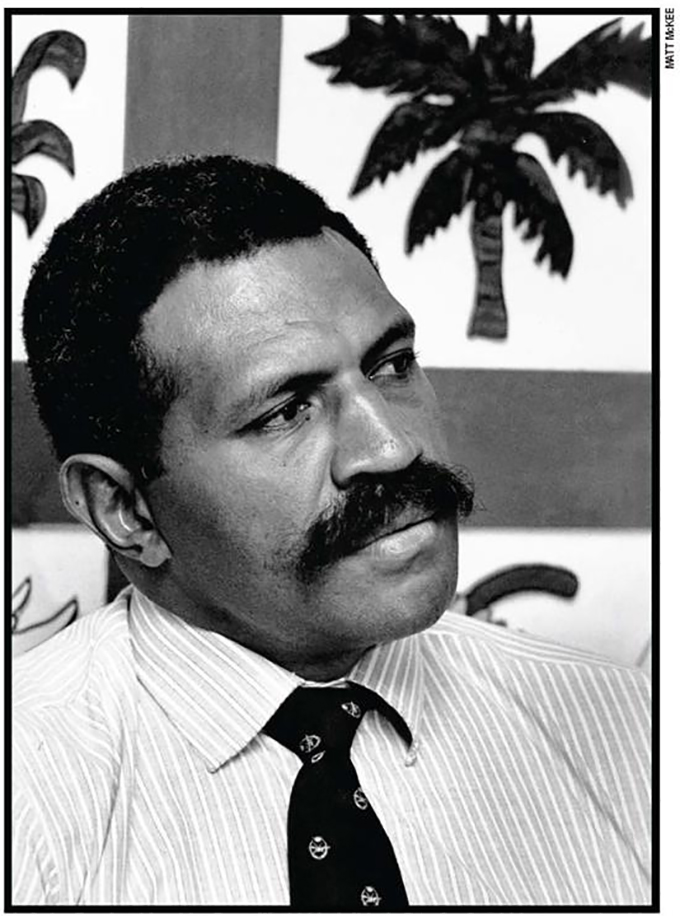
The 1987 Fiji military coups leader Sitiveni Rabuka as he was back then. Image: Matthew McKee/Pacific Journalism Review

However, subsequent governments did not see the media as a poodle to be toyed with; instead the perception of the industry was that of a rottweiler itching to bite.

“I think it is more likely that the media regulations arose from those who saw the influence of the media, particularly in the [Mahendra] Chaudhry government [overthrown in the third coup in 2000] – and earlier in the lively free-ranging days when the media really was free and independent,” says Field, who was banned from Fiji in 2007.

“The Bainimarama government is clever enough to realise that they might not last with a free media.”

Fiji has flirted with having both a regulated media and self-censorship since the first of its four coups in 1987.

“True. But the government baulked, fearful of the public reaction and international fallout,” says Dr Singh.

‘Media always fragile’
“What that tells us is that media freedom in Fiji has always been fragile. It was only a matter of time.

“Media in Fiji are free to report as they see fit but serious mistakes are punishable by various existing laws such as defamation and contempt which are sufficient, so journalists are quite cautious.

“No one wants to be dragged through the courts like in the recent Fiji Times sedition case. The three-year lawsuit would have been financially, physically, psychologically draining. The Fiji Times escaped by the skin of its teeth.

“Free media is in the beholder’s eyes in some respects. Government feels media is free enough. Media, on the other hand, feel caged. Finding the right balance can be elusive.”

Ricardo Morris, a former journalist and current affairs magazine editor in Fiji, explains the impact of the Media Industry Development Decree (MIDD) which was imposed in 2010 and five years later became law.

“The decree became an act in 2015. The Media Authority (MIDA) doesn’t have to do much anymore because [chairman – Ashwin] Raj simply has to make comment or criticise a media company for some perceived slight and everyone retreats,” says Morris.

Watching Our Words: Perceptions of Self-Censorship and Media Freedom in Fiji

Morris researched and authored a 2017 report on self-censorship in Fiji on a Reuters Foundation scholarship.

“There is talk regionally and internationally about how the media Act is hanging over the media’s head. However, Raj usually says, ‘we have never brought prosecution against a media company under the media decree’ and he is right.

‘Always that danger’
“But there is always that danger.

“They’ll usually issue statements, and in the past there has been public shaming, so now you don’t really need to bring cases against the media because they are too afraid to do something that might jeopardise their position or if they do get charged they will get charged under some other criminal law as in the case of The Fiji Times now – they are charged under the Crimes Act, a case that has now gone to appeal. That’s a distinction.”

Dr Singh says it is for that reason he does not see a relaxation of the media laws.

“The media situation is not going to change – that I can say with some confidence. The laws are going to remain the same for some time yet.

“Government, which has the power to change the legislation, has not said anything. One assumes the government is happy with the way things are, so why change? If this government is returned with a strong mandate, it may feel confident enough to change the laws.

“Or it may see a stronger mandate as a vindication of its media law. The opposition National Federation Party (NFP) has said it will abolish the decree if it forms government. “

Which provisions of MIDD do those involved find most objectionable and would like to see removed?

‘Protect their own backs’
“Fines and jail terms against reporters/journalists were removed but this is meaningless unless the same is done for publishers/editors, obviously because the latter have control over journalists and will censor them to protect their own backs.

“Clear definition of what constitutes inciting communal antagonism,” says Dr Singh.

As Field says, it is simple case of economies of scale when it come to the media.

“This ranges from the simple banning of government ads in The Fiji Times, to the various sedition issues. Being free and independent is too expensive for what are small companies compared with the size of the state,” he says.

Hence the media has become a cowered and beaten animal in Fiji.

“It has become tame and fearful, it is under the control of the government and its handlers. Many journalists in Fiji, with an eye to junkets and scholarships, prefer to follow the Information Ministry line and just write up press statements,” says Field.

“I don’t think there has been a true debate in Fiji over what a free media should be … the debate has always been defined by the men with the guns.”

Sedition charges
Sedition charges were filed against The Fiji Times, three of its executives, and one opinion columnist. The columnist (Josaia Waqabaca) accused Muslims of historic crimes including invading foreign lands, rape, and murder.

“Sedition is not a crime in most countries, it’s called free speech. The content of the letter with its anti-Muslim sentiment is widely held by many. By suppressing it you do not make it go away,” says Field.

“I believe the final verdict was reached because the open absurdity of the charge, and its contents, could not be sustained, and even the imported judge did not want to be seen signing on to it.”

As Morris puts it: “We haven’t really heard the debate about the sedition law, a lot of the countries with similar histories have abandoned the sedition law because there is a fine line between freedom of expression and sedition.

“But now because of The Fiji Times, my perception is the general public err on the side of caution and will not say anything that will be deemed seditious.”

MIDD sits above the media like an axe waiting to fall, and the threat of it falling is why the media cannot expect freedom in the 2018 general elections or anytime soon.

Sri Krishnamurthi is a journalist and Postgraduate Diploma in Communication Studies at Auckland University of Technology student contributing to the Pacific Media Centre’s Asia Pacific Report.

Print Friendly, PDF & Email

Article by AsiaPacificReport.nz

]]>

How Australia can fix the market for plasma and save millions

]]>

The Conversation (Au and NZ) – By Robert Solnim, Professor of Economics, University of Sydney

Australia’s demand for plasma, a component of blood that transports nutrients, is rapidly outpacing domestic supply. This means enormous quantities of plasma must be imported from overseas, where donors are paid for donating.

Two factors can help explain the shortfall. First, the Australian Red Cross Blood Service has a monopoly to collect all blood products in Australia. Second, Australia’s donors receive no financial compensation.

These two factors limit the domestic supply of plasma, is unjust for Australian donors and makes domestic collections financially burdensome.

Australia needs a competitive market that pays plasma donors. This would address the injustice to Australian donors and potentially save taxpayers over A$200M annually.


Read more: Explainer: what’s actually in our blood?


Plasma is used for people suffering from burns, shock and other medical emergencies and its components are used to treat rare chronic conditions.

In contrast to whole blood which can only be stored for a maximum of six weeks, plasma donations are highly processed, and can be stored for a year or longer.

Donating plasma takes up to one and a half hours, including around 45 minutes “needle-in” time. During this time, blood cycles through equipment that separates plasma from other blood parts, which are returned to the donor.

For and against compensating donors

In one of the classic texts on social policy, Richard Titmuss claimed paying donors would reduce blood supply and safety.

Titmuss argued compensation would reduce donations by eroding the spirit of volunteerism to help others and would threaten safety because compensation would attract donors with greater likelihood of having transmissible diseases.

This concern seemed justified in the 1980s during the AIDS epidemic. And this encouraged Australia’s policy of not compensating donors for blood products.


Read more: Restricting gay men from donating blood is discriminatory


But much has changed since the 1970s. Careful screening and medical advancements have eliminated virtually all safety concerns.

And, contrary to notions that compensation diminishes donations, research overwhelmingly shows incentives substantially increase donations.

My colleagues and I reviewed many studies. We found that of the 19 different incentives offered, 18 increased donations significantly and none ever reduced donations or harmed safety.

In our study with the American Red Cross, donors were 30% more likely to donate if offered $10 gift cards than if only asked to volunteer.


Read more: Explainer: what’s actually in our blood?


To examine how compensation will affect Australian donations, I conducted a survey asking Australians “how likely” and “how often” they would donate in the next year.

Some respondents, randomly assigned, were asked these questions when not being offered any compensation. The others were asked the same questions when being offered A$50. A$50 is about the average amount that international donors are offered.

Consistent with the previous research, those offered compensation were 20 percentage points more likely to say they would donate than those not offered compensation (60% vs. 40%).

Further, respondents offered compensation indicated they would make over three more plasma donations per year than those not offered compensation.

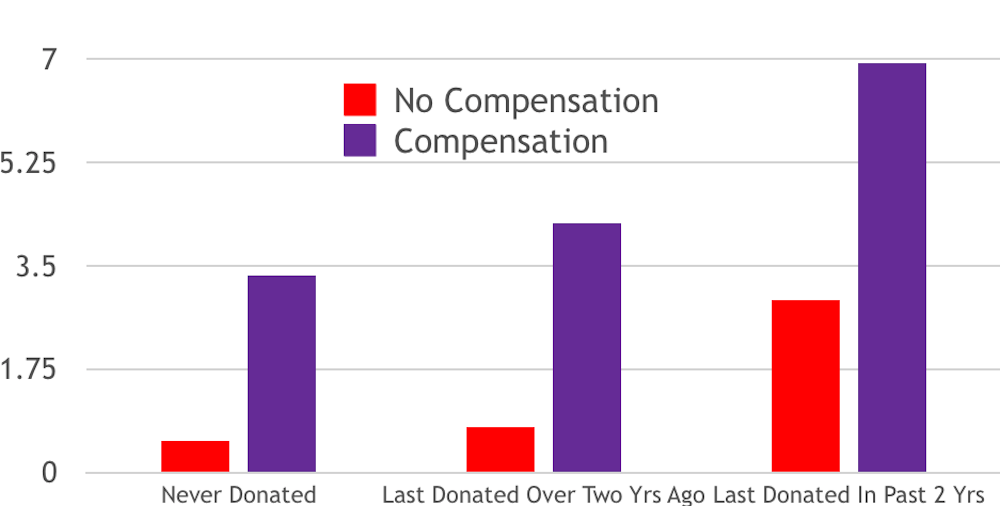
The chart below shows those offered compensation will donate more than those not offered compensation regardless of whether the study participants had never donated (will donate 3.3 times if offered compensation vs. 0.5 times if not offered compensation); had donated, but not recently (4.2 vs. 0.8) or had donated recently (6.9 vs. 2.9).

Author provided, Author provided

Creating a fairer and less costly system

Not compensating Australia’s approximately 150,000 plasma donors for their time is unfair given its enormous value to society, and especially considering we pay for plasma that comes from international donors who are paid for the equivalent donation.

The National Blood Authority’s 2016-2017 annual report indicates Australian imports of immunoglobulin, a plasma component, provide 44% of domestic demand. This costs A$120 million while the remaining 56% comes from domestic supply costing A$413 million.

This implies the domestic supply of immunoglobulin costs over three times more per unit than what is imported, despite domestic donors not being compensated.


Read more: Explainer: what are blood groups and why do they matter?


It also implies Australia could save over A$200M annually by importing all immunoglobulin.

Likely culprits for the higher domestic costs include the Red Cross Blood Service’s monopoly powers and not compensating donors. Since not offering compensation limits donations, it likely increases other costs, including recruiting donors.

And the Blood Service’s monopoly position reduces the normal competitive market motives to constantly search for the most cost effective collection methods.


Read more: Three ethical ways to increase organ donation in Australia


Given lower international prices, one way to save money is to collect more plasma abroad and less domestically. A much more desirable solution would be to introduce a (regulated) competitive domestic market for plasma.

A competitive domestic market should successfully develop following the international market model, would provide new business opportunities and allow compensation to land in Australian rather than international donors’ pockets.

Concerns should be no different for plasma coming from a domestic than international market, and the domestic market could be better as we can tailor regulations to our needs rather than rely on international market rules.

To save taxpayer money and treat Australian donors more fairly, a competitive market for plasma supply is necessary.

Alex Berger provided outstanding support on all aspects of the Survey.

– How Australia can fix the market for plasma and save millions
– http://theconversation.com/how-australia-can-fix-the-market-for-plasma-and-save-millions-101609]]>

NZ must help Solomon Islands tackle unemployment ‘time bomb’, says Clark

]]>

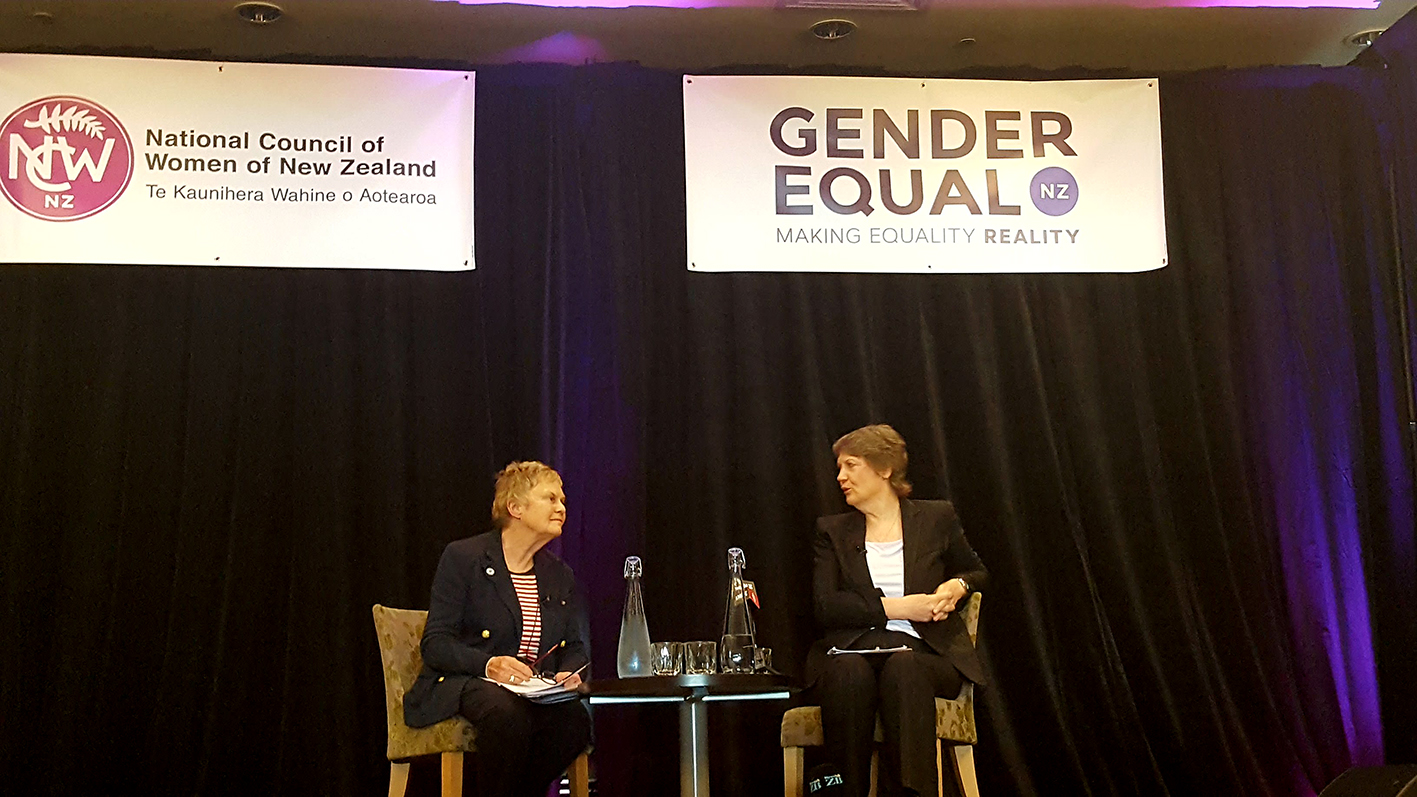
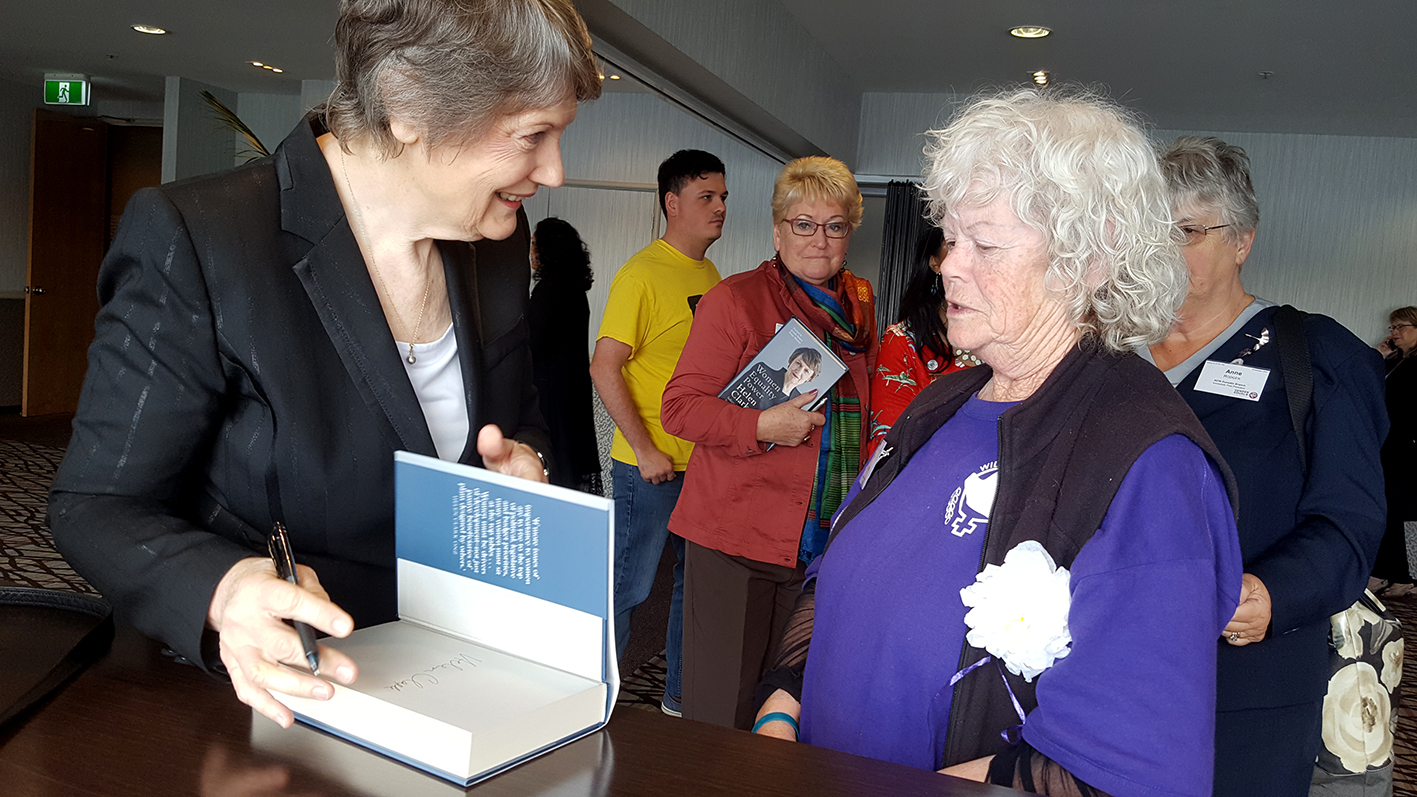
Former PM Helen Clark at the National Council of Women conference yesterday … New Zealand should rethink its aid structure. Image: Del Abcede/PMC

By Jessica Marshall in Auckland

The Solomon Islands faces a “time bomb” with a youth unemployment rate of 82 percent and New Zealand needs to do more to help the Pacific country, says former Prime Minister Helen Clark.

Youth unemployment is “one of the huge challenges of our time”, she says.

“They’ve all got ideas, they want to do things, and . . . I really urge our aid programme to focus back on some of these basics again,” she told the annual conference of the National Council of Women (NCW) in Auckland yesterday.

READ MORE: Violence against women is a national crisis: Clark

Clark, former Administrator of the United Nations Development Programme (UNDP), is the new patron of NCW and is the author of a new book launched this weekend, Women, Equality, Power.

She said the New Zealand government needed to rethink how its aid programme was structured.

-Partners-

“A country like the Solomon Islands could have a future but it needs investment in its agriculture.”

She said New Zealand used to invest its aid programme – in places like Thailand, for example – in the country’s agriculture.

“How much focus have we got on agriculture now?” she asked.

‘No brainer’
“It’s just a no brainer to try to support people back into the value chain.”

She made the call during a discussion on the UN Sustainable Development Goals which Clark was instrumental in developing during her time with UNDP.

Dr Gill Greer, chief executive of NCW, said that the inclusive manner in which Clark went about developing the goals was “not typical of the UN at many times”.

“It was a vision, it is a vision,” said Dr Greer, adding that the goals did not go far enough on the issue of gender.

“The living framework has one indicator, and that is all, and in this room [of 200 people] just think of how many we could suggest immediately?”

Clark replied: “Gender is in every goal”.

Clark also discussed the issue of migrants in Nauru, proclaiming it to be a crisis.

“There is something fundamentally wrong, this is not a sustainable situation and it’s no way to treat people.”

Earlier yesterday, the BBC reported that children had been attempting suicide and self-harm on the island.

The Pacific Islands Forum leaders summit opens in Nauru tomorrow.

Jessica Marshall is a student journalist on AUT’s Postgraduate Diploma in Communication Studies (Journalism) course.

Print Friendly, PDF & Email

Article by AsiaPacificReport.nz

]]>

Gallery: Stimulating insights, vision for gender diversity summit

]]>

Pacific Media Centre Newsdesk

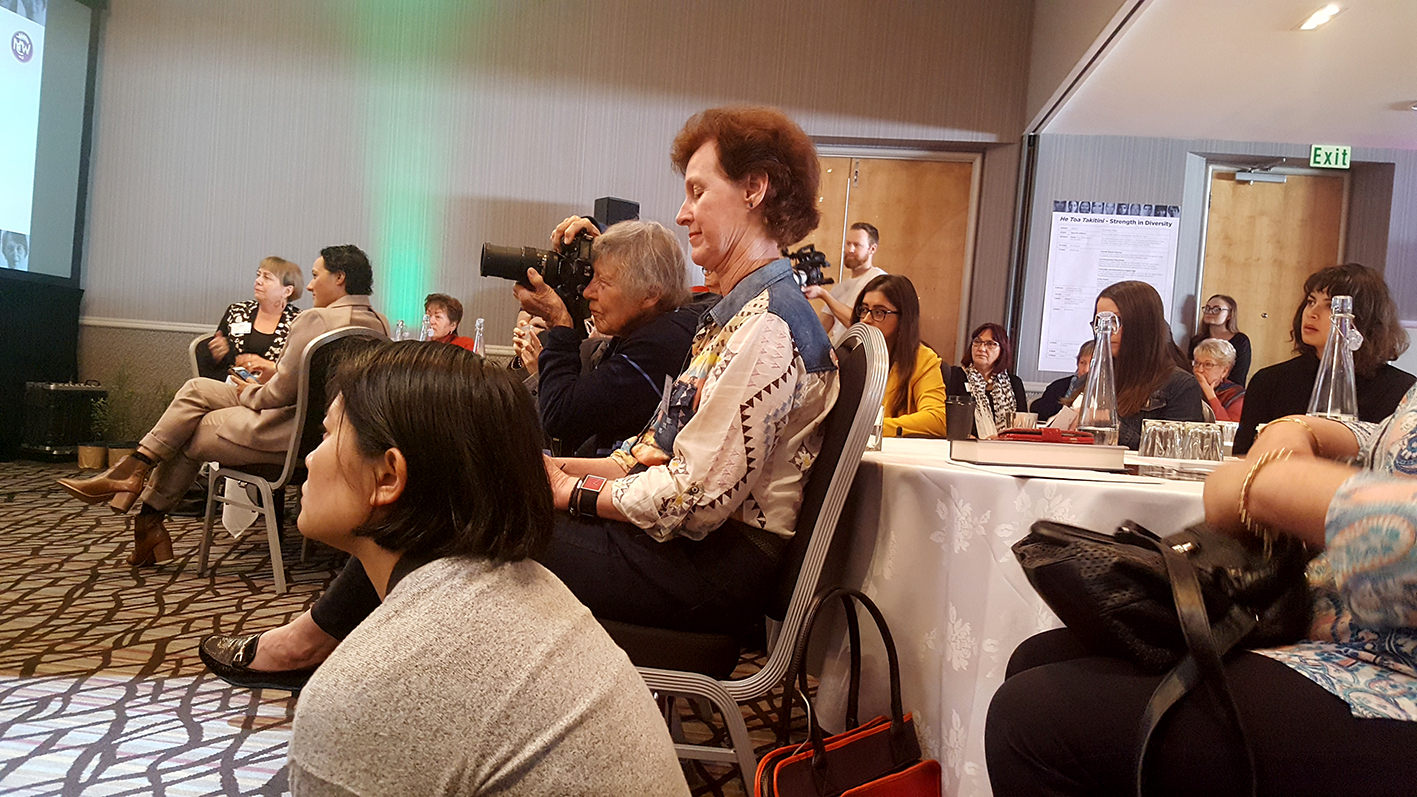
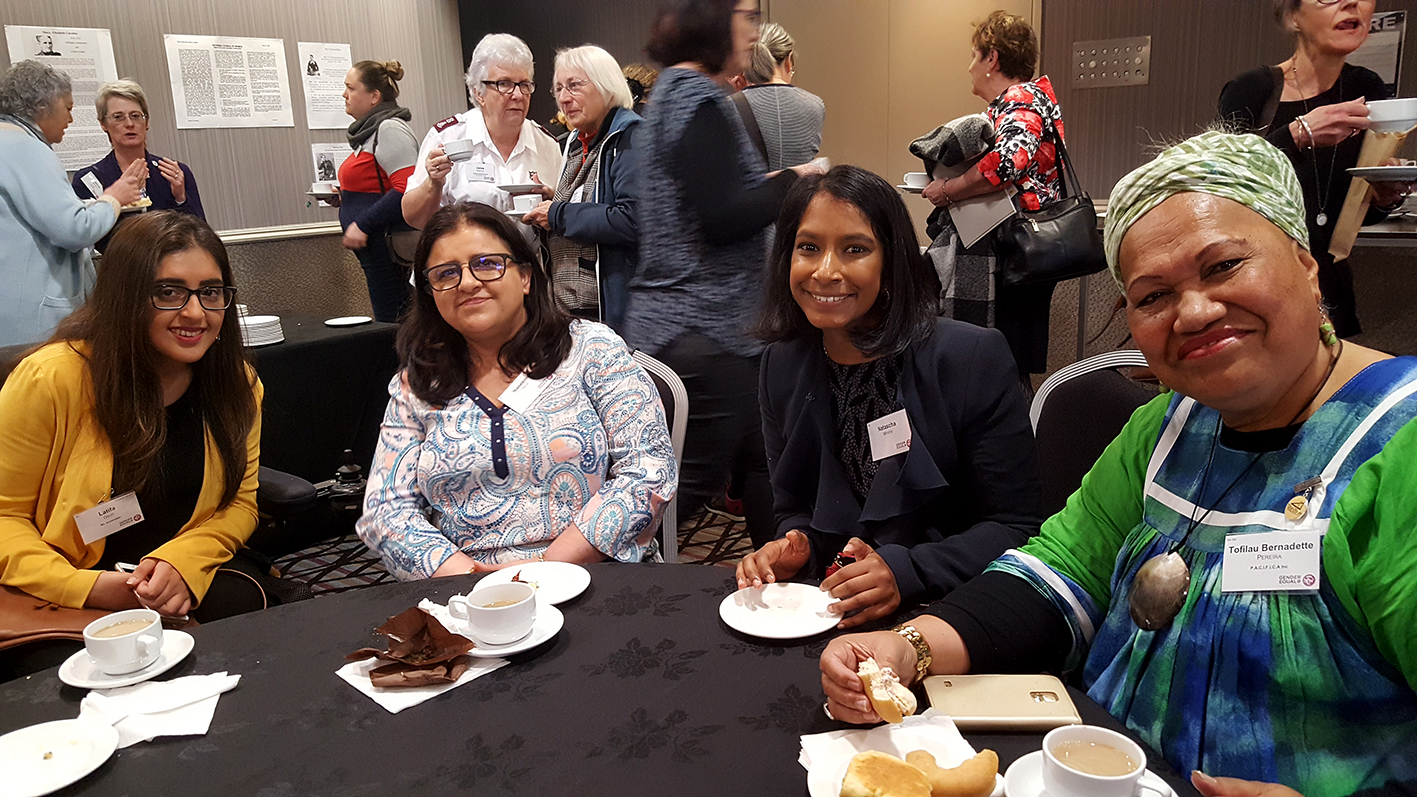
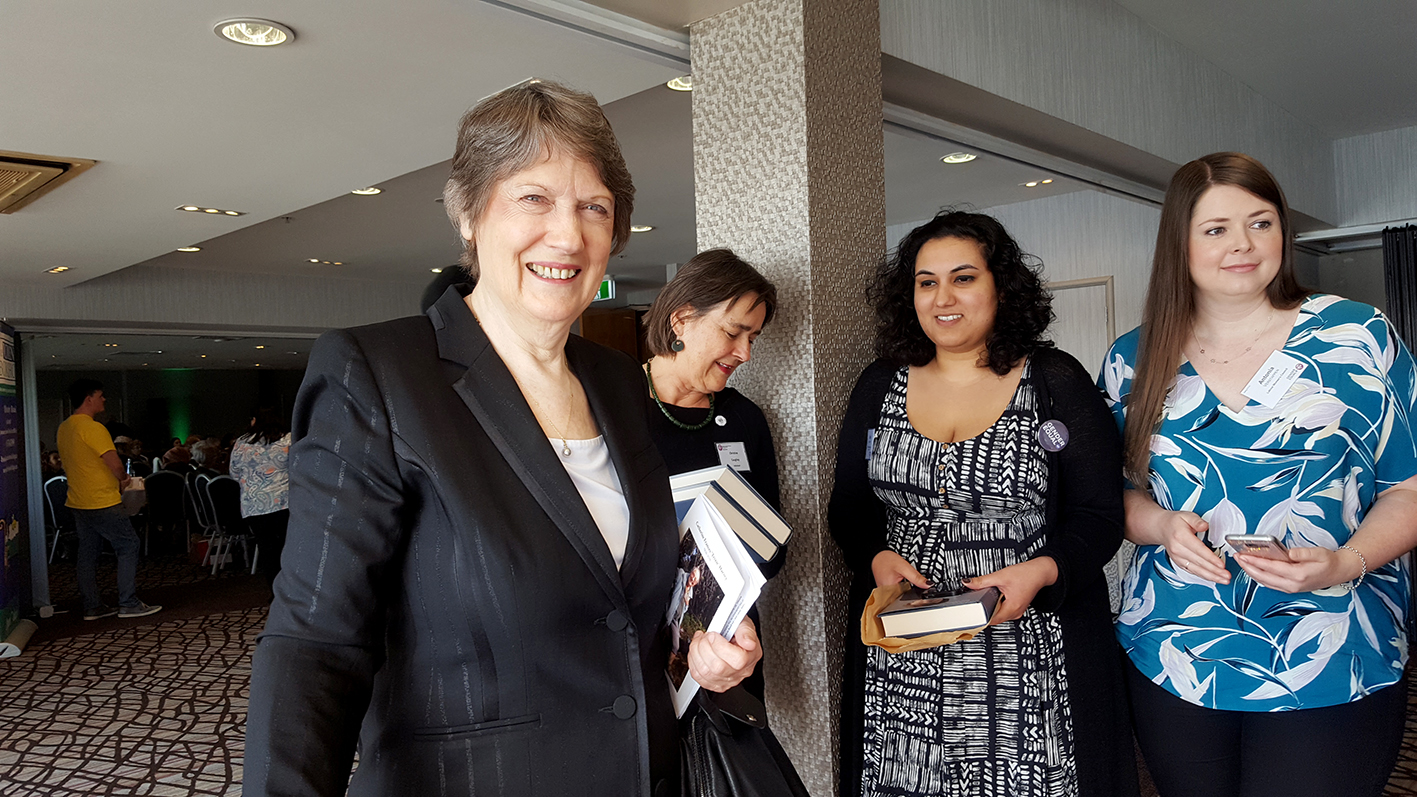
Former New Zealand prime minister Helen Clark is the new patron for the National Council of Women and she shared her stimulating thoughts and insights at the national conference in Auckland yesterday.

In an interview format with NCW chief executive Dr Gill Greer, Clark talked about violence against women, pay equity, leadership, abortion law reform, and sustainable development aid in the Asia-Pacific region.

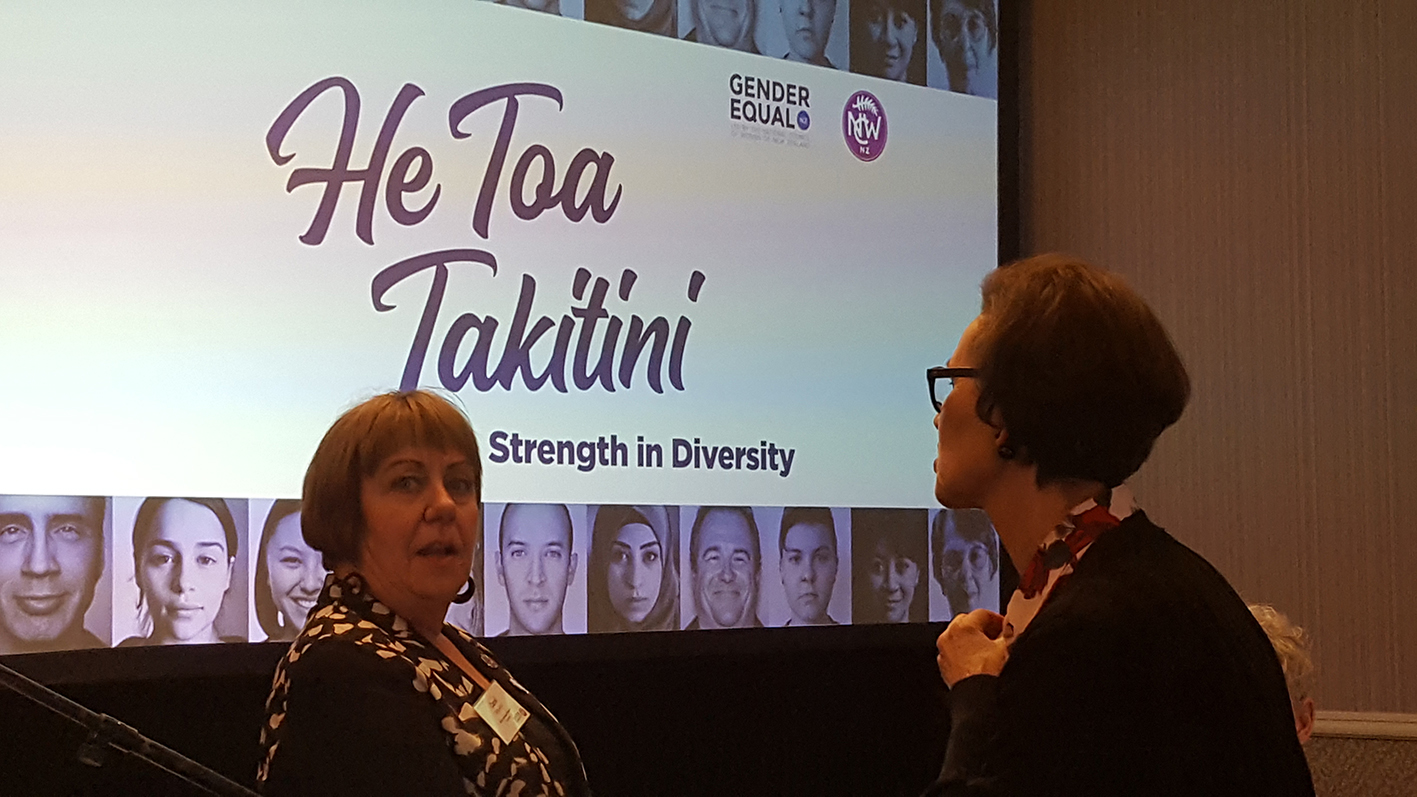
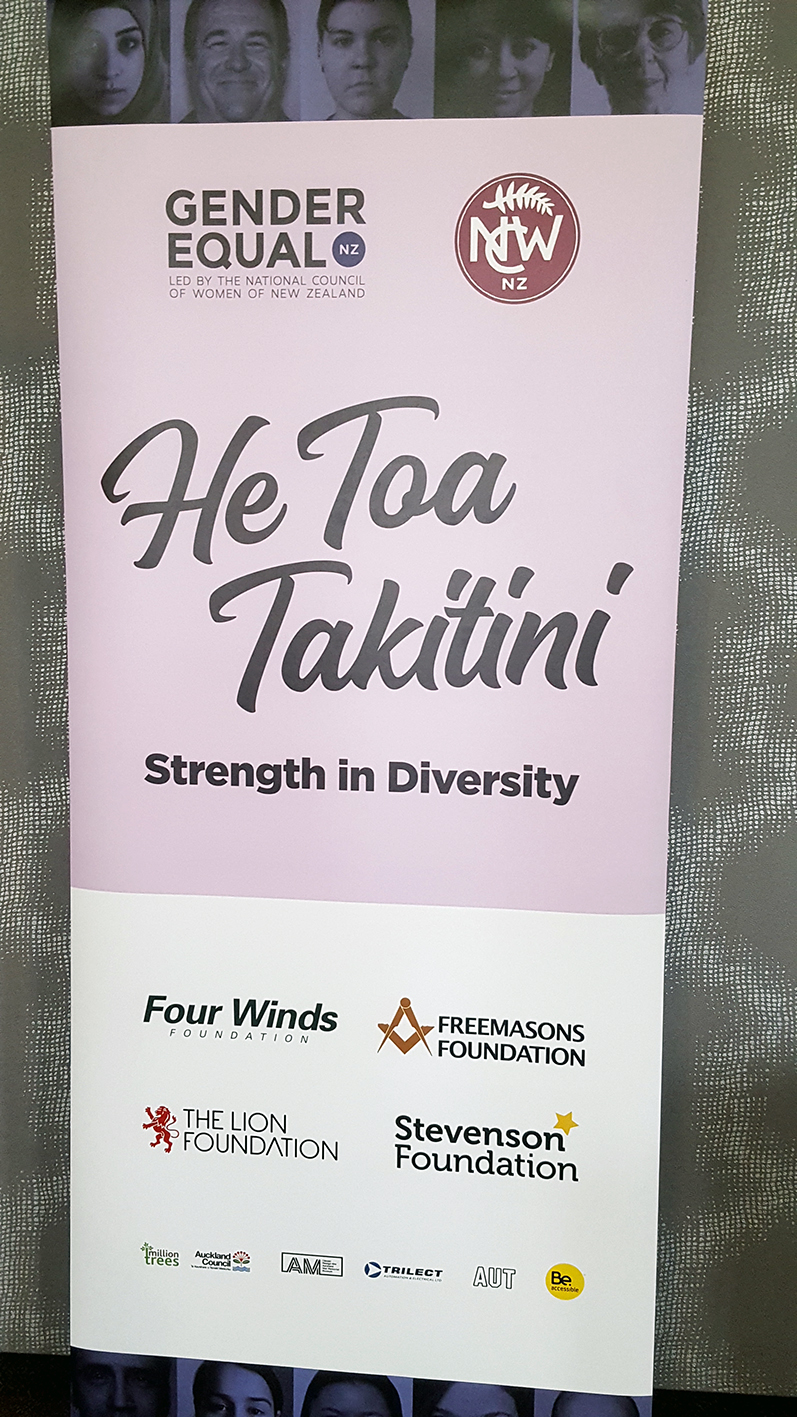
Clark is a former administrator of the United Nations Development Programme (UNDP). The conference theme was He Toa Takitini – “strength in diversity”.

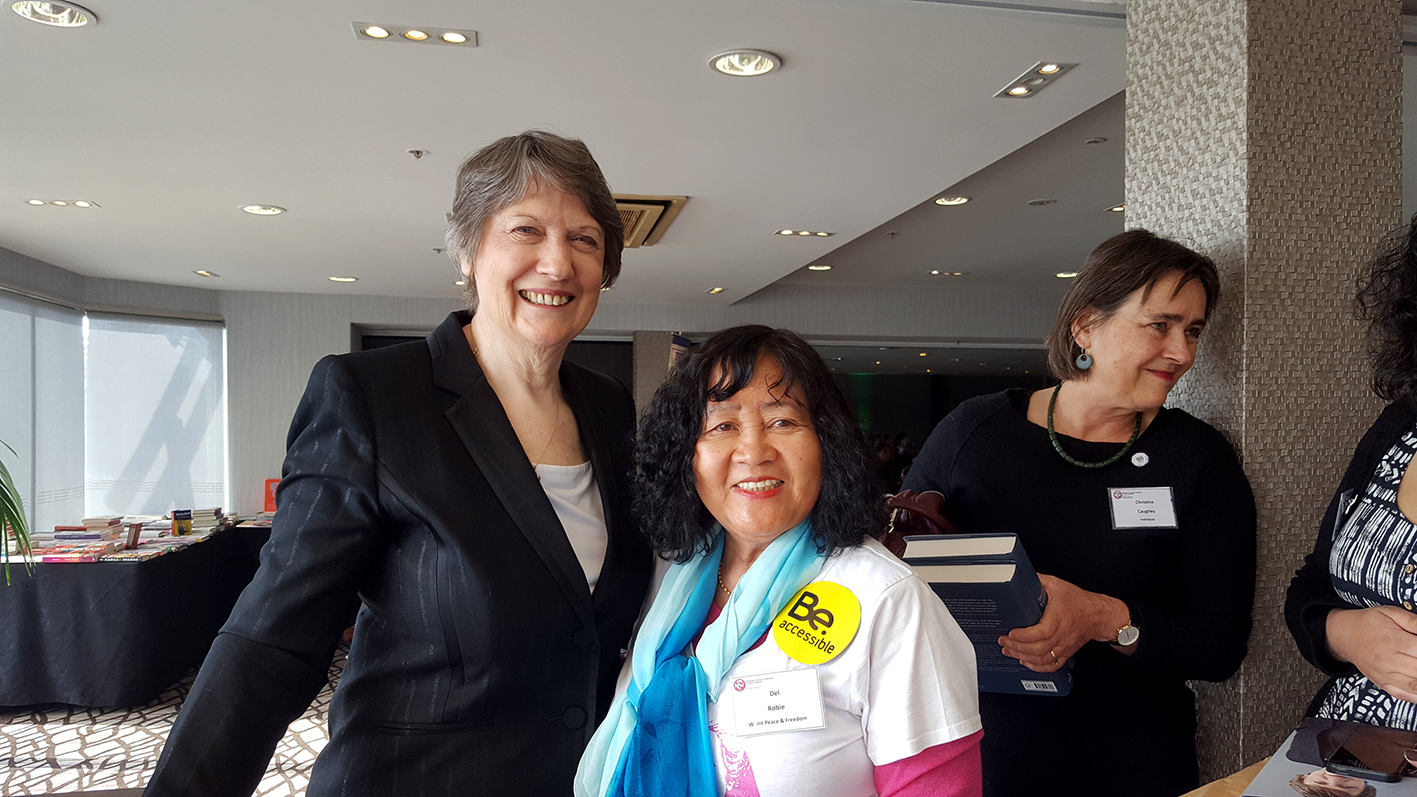
The Pacific Media Centre’s Del Abcede, of the Women’s International League for Peace and Freedom (WILPF), was on hand at Mount Wellington to get some pictures.

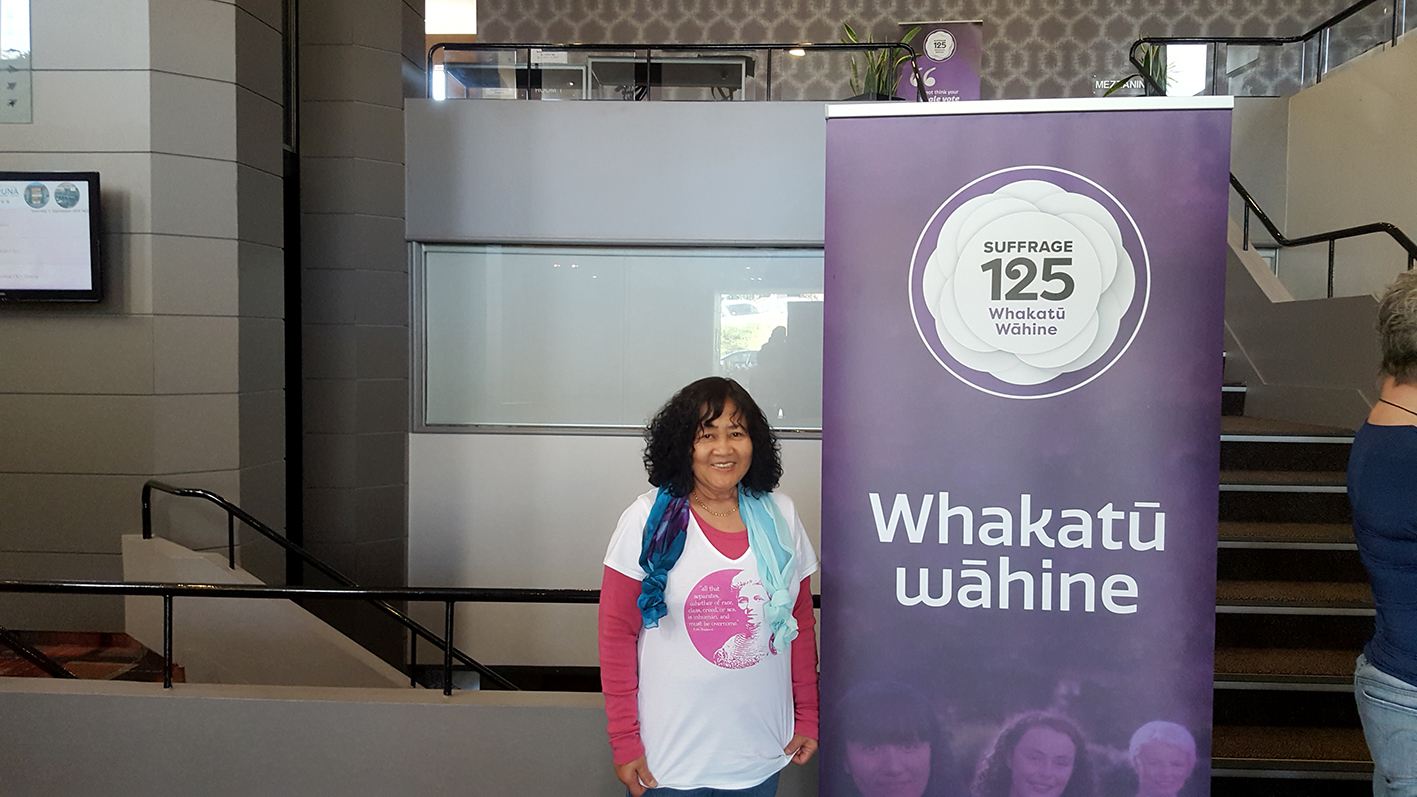
1. “All that separates whether of race, class, creed or sex, is inhuman and must be overcome.” – Kate Sheppard. Image: Del Abcede/PMC

2. Former Prime Minister Helen Clark … keynote speaker in interview. Image: Del Abcede/PMC

3. Former PM Helen Clark being interviewed by National Council of Women chief executive Dr Gill Greer. Image: Del Abcede/PMC

4. He Toa Takitini …. “Strength in diversity”. The theme of this year’s NCW national conference. Image: De; Abcede/PMC

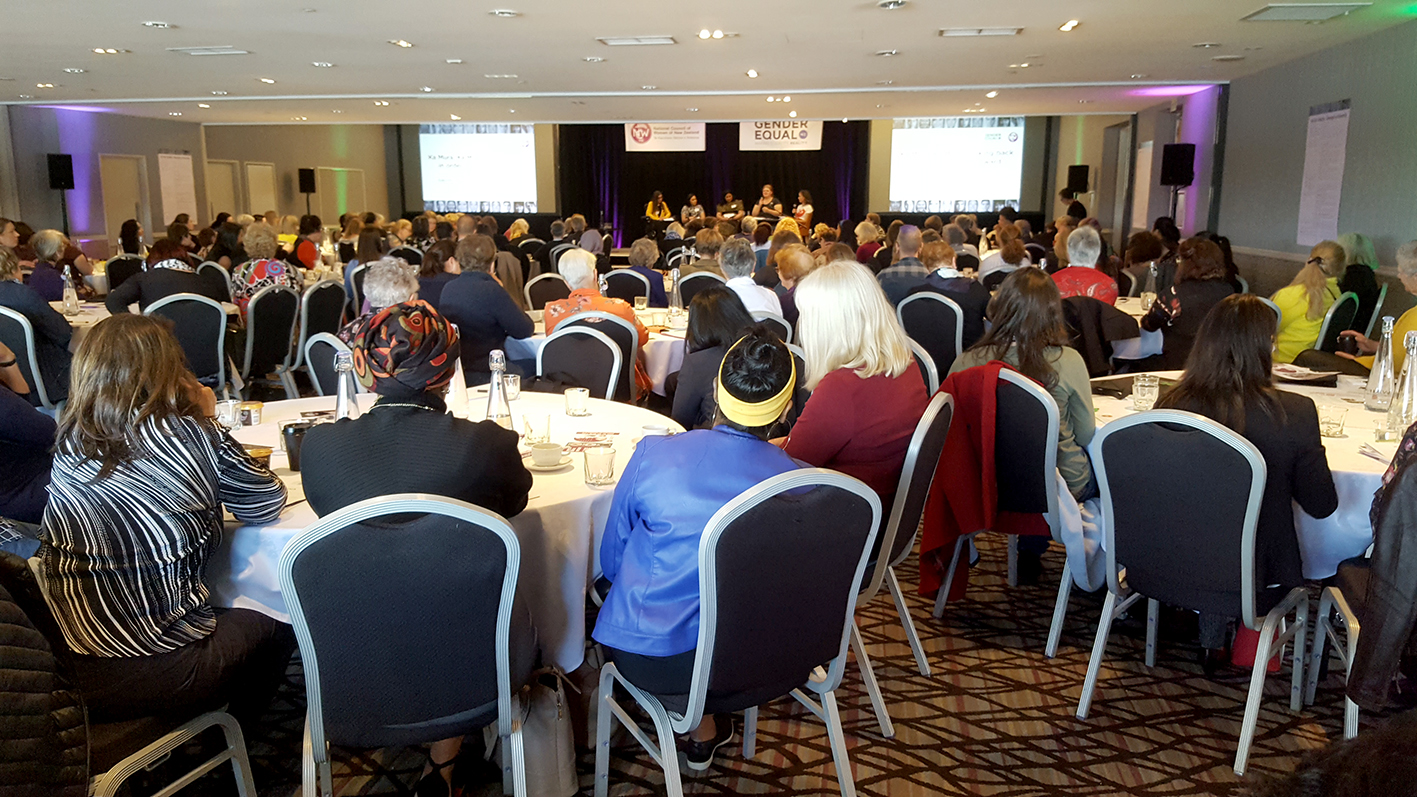
5. Scenes from the NCW national conference. Image: Del Abcede/PMC

6. Scenes from the NCW national conference. Image: Del Abcede/PMC

7. Scenes from the NCW national conference. Image: Del Abcede/PMC

8. Scenes from the NCW national conference. Image: Del Abcede/PMC

9. Scenes from the NCW national conference. Image: Del Abcede/PMC

10. Vira Grace Paky of UN Youth Auckland at the NCW conference. Image: Del Abcede/PMC

11. Pacific Media Centre and WILPF’s Del Abcede at the NCW conference.

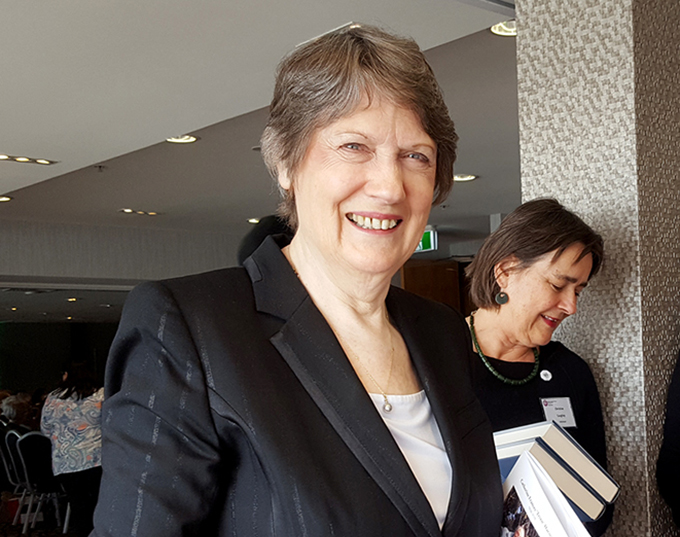
12. Former PM Helen Clark at the NCW conference. Image: Del Abcede/PMC

13. Helen Clark with Ruth Coombes of WILPF at the conference. Image: Del Abcede/PMC

14. Helen Clark with the PMC’s Del Abcede at the conference.

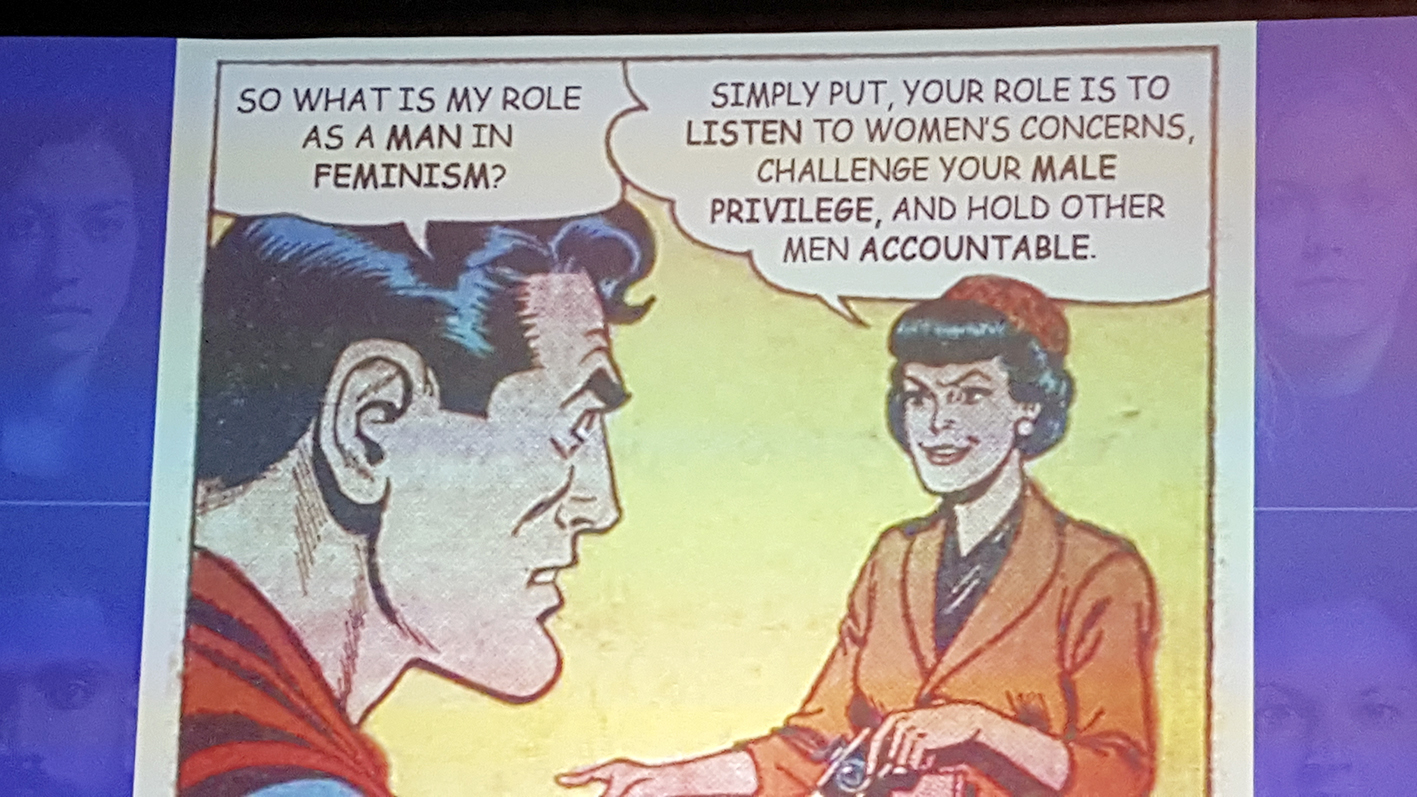
15. A cartoon message for men – “listen!” Image: Del Abcede/PMC

16. He Toa Takitini – “Strength in diversity”. Image: Del Abcede/PMC

Print Friendly, PDF & Email

Article by AsiaPacificReport.nz

]]>

Australian universities to benefit in Australia-Indonesia free trade deal

]]>

The Conversation (Au and NZ) – By Avery Poole, Assistant Director, Melbourne School of Government, University of Melbourne

On August 31, Prime Minister Scott Morrison secured an end to negotiations on a new free trade agreement with Indonesian President Joko Widodo, opening a path for Australian universities to build new campuses in Indonesia. Negotiations began in 2012, but have recently ramped up. President Widodo and Prime Minister Morrison signed a memorandum of understanding committing the countries to get a free trade deal done by November.

Cooperation with Indonesia in the higher education space is both promising and complex. The prospect of Australian campuses in Indonesia represents another set of opportunities for education providers, in facilitating “internationalisation at home”.


Read more: What Indonesia expects from Australia’s new Prime Minister Scott Morrison


The higher education component of this free trade deal is important to Australian universities and to the broader economy. But its negotiation presents significant challenges. It’s important to carefully consider how Australia approaches establishing campuses in Indonesia, keeping in mind the student experience is most important.

Education cooperation with Indonesia

Australia faces competition from other countries trying to attract Indonesian students, including the US, Malaysia, and increasingly China.

Education is crucial to the Australian economy. The category of education-related travel services is Australia’s largest services export and its third largest export overall. Australia is the most popular destination for Indonesians studying overseas.

The completion rate for Indonesian students studying in any country is very low. Made Nagi/AAP

But given Indonesia’s large population (about 260 million) and close proximity to Australia, the number of Indonesian students studying in Australia at a tertiary level is surprisingly low. It sat at around 20,000 in the year to June 2017.

Far more students come from China (about 166,000) and India (about 70,000). While these countries have bigger populations, we still might ask why a proportionately lower number of Indonesian students come to Australia for university and vocational courses.

Part of the answer is only about 46,000 Indonesians study at a tertiary level overseas. The proportion of the Indonesian population who complete tertiary education in Indonesia or another country is not high. The gross tertiary enrolment rate is about 25% – but the completion rate is lower. The Indonesian government is prioritising the improvement of the quality of its education system at all levels.


Read more: Indonesia’s knowledge sector is catching up, but a large gap persists


This is, in part, why the education component of the trade deal is complicated. Australian universities have already expressed interest in establishing campuses in Indonesia. But these cannot be wholly owned by Australian institutions. The Indonesian government has indicated Australian universities must form partnerships with local private institutions.

Under the free trade agreement, Australian universities would be allowed to own 67% of the campuses. Foreign investors are currently barred from majority ownership in an Indonesian university.

Opportunities, risks and the ‘market’

While it’s tempting for international education providers to see Indonesia as a growth market while the economy and middle class expand, we shouldn’t assume the number of Indonesian students studying at Australian universities will increase.

The Group of Eight (Go8) has argued in a submission to the Department of Foreign Affairs and Trade (DFAT) that the establishment of Australian campuses in Indonesia would provide study opportunities to students who couldn’t afford to study in Australia.

But there’s much to be negotiated and designed in regard to offshore campus structuring and managing risk. The experiences of establishing campuses in other countries have varied, and some have failed.

It’s important to see Indonesian students not just as an economic opportunity, but as young people making big decisions about their future. www.shutterstock.com

Indonesian students aren’t just cash cows

We should also caution against a tendency to consider international students primarily in terms of sources of revenue. Their individual learning experiences and well-being while in Australia, or on overseas campuses of Australian universities, must be at the forefront of decision-making in this space.

Our understanding of the Indonesian education system and the needs of Indonesian prospective students could be improved. A recent report is a rare example of the research we should undertake and understand.

The report examined the reasons Indonesia has so far failed to develop a high-quality education system capable of producing strong learning outcomes. It concluded this was mostly due to issues of power and politics, not funding or poor management.

If it’s done well, the internationalisation of higher education is an important part of broader diplomatic relations. We should see the overseas campuses proposal as a potentially valuable part of our efforts to improve an often fraught bilateral relationship.

The strategically minded may also see it as an effort to balance Chinese influence and competition in Southeast Asia. But Australian universities should remember this is one dimension of a large and complex set of collaborations with Indonesian students. They are, most importantly, young people making big decisions about their future.

– Australian universities to benefit in Australia-Indonesia free trade deal
– http://theconversation.com/australian-universities-to-benefit-in-australia-indonesia-free-trade-deal-102350]]>

NZ offer still open for taking 150 refugees, says PM Ardern

]]>

Prime Minister Jacinda Ardern talking to the media at Auckland University of Technology yesterday. Image: Rahul Bhattarai/PMC

By Rahul Bhattarai in Auckland

New Zealand Prime Minister Jacinda Ardern has reaffirmed her country’s offer to take 150 refugees from Nauru and Manus Island shortly before she attends the Pacific Islands Forum leaders’ summit next week.

New Zealand’s offer to take in “150 refugees from across Nauru and Manus still stands”, she said at the official opening of a new science and technology building at Auckland University of Technology yesterday.

Nauru is hosting the 49th Forum but has a very tight media policy for the event including a ban on Australia’s public broadcaster ABC and a threat to revoke the visas of journalists who capture images of the refugees or detention centre facilities.

READ MORE: Aid groups call on Pacific leaders to end Nauru refugee ‘stain in region’

The country has also been trying to “clean up” the facilities before politicians and the media arrive for the week-long Forum and associated meetings from September 3-9 after years of alleged human rights violations.

Amnesty International alleged this week there was an “escalating health crisis” for refugee children on Nauru, saying the Australian government’s “shameful refugee policy” must top of the agenda of the Forum meeting.

-Partners-

In an open letter co-signed by a coalition of 84 influential civil society organisations, Amnesty International called for an end to the “cruel and abusive refugee policy” which had led to more than 2000 women, men and children being “warehoused” on Nauru and Manus island in “cruel and degrading conditions” over the past five years.

Insight to refugees
Due to her short three-day visit to Nauru, Prime Minister Ardern did not have the time to meet individual refugees, but confirmed New Zealand’s stance.

“Having an insight as to the experience on Nauru, of course, that’s something I want to seek,” she said.

“But if I meet with the individual refugees, how do we decide who they would be?”

Ardern will speak to various different leaders from Pacific Island nations during her Nauru visit.

She said would use her time as productively as she could consider a range of issues from Pacific neighbours’ perspective.

Nauru has been an ongoing problem with its crackdown on the media.

The government’s ban on the ABC had drawn global condemnation from media freedom groups, including the Pacific Media Centre.

The Prime Minister was at AUT to open the new $120 million Engineering, Technology and Design building.

This is a digital era home with state of the art facilities for engineering, computer and mathematical sciences students at AUT’s city campus.

Rahul Bhattarai is a Postgraduate Diploma in Communication Studies student journalist who has been on an intensive assignment for Te Waha Nui this week. He is also on the Pacific Media Centre’s Pacific Media Watch freedom project.

Print Friendly, PDF & Email

Article by AsiaPacificReport.nz

]]>

Aid groups call on Pacific leaders to end Nauru refugee ‘stain in region’

]]>

Some of the children in the refugee camp on the island of Nauru. Image: SBS/Rural Australians for Fefugees/File

Pacific Media Watch Newsdesk

Amnesty International has joined 80 other NGOs in urging Pacific leaders to demand the closure of the Australian-funded immigration detention camp on Nauru  when they meet in the Pacific nation next week, reports SBS News.

The 18-nation Pacific Islands Forum (PIF) will hold its annual summit in Nauru from September 3-6, with delegates meeting just a few kilometres from the camp dubbed “Australia’s Guantanamo”.

Amnesty, along with the 80 other non-government organisations, released an open letter calling on PIF leaders to act and end “a stain on the region”.

READ MORE: Regional leaders must act to halt escalating child health crisis on Nauru

“Pacific island leaders cannot ignore this issue any longer and need to ensure that it is at the very top of the forum’s agenda,” Amnesty’s Pacific researcher Roshika Deo said this week.

“This is a desperate situation that requires urgent action. Regional leaders must show that they will not stand by while the Australian government’s abusive policies continue to risk more lives.”

-Partners-

The rights groups said asylum-seekers on Nauru and PNG’s Manus Island were subjected to “cruel and degrading treatment” that must stop.

“[There are] widespread reports of violence against refugees in Papua New Guinea and violence and sexual harassment of women and children on Nauru,” the letter said.

200 people detained
There are more than 200 people in the Nauru facility, according to the Refugee Council of Australia, including dozens of children.

However, the Canberra-bankrolled facility has been an economic lifeline for Nauru, which has an area of only 21 sq km and has depleted its only natural resource, phosphate, reports SBS.

The Nauru government has imposed strict conditions on media covering the PIF summit, threatening to revoke journalists’ visas if they capture images of the camps or asylum-seekers.

It has also limited the number of reporters attending and barred Australia’s public broadcaster ABC, after taking exception to its coverage.

A child in Australia’s Nauru detention centre. Image: SBS/World Vision
Print Friendly, PDF & Email

Article by AsiaPacificReport.nz

]]>

Gallery: Climate change, disasters spark Indonesian-NZ research publication

]]>

Pacific Media Centre Newsdesk

AUT Indonesia Centre director Lester Finch and Auckland Indonesia Community representative Maman Baboe spoke strongly last night in support of Indonesian and New Zealand collaborative ventures such as the “Disasters, Cyclones and Communication” edition of Pacific Journalism Review, the first such joint media publication.

The Yoyakarta-based Center for Southeast Asian Social Studies (CESASS) at the Universitas Gadjah Mada collaborated with Auckland University of Technology’s Pacific Media Centre to produce this joint edition, edited by Professor David Robie and five colleagues including the evening’s MC and assistant editor Khariah Rahman and associate editor Dr Philip Cass.

The project also included research papers from the University of the South Pacific.

Photographs by PJR designer Del Abcede.

1. Book launch speaker Maman Baboe and MC/assistant editor of PJR Kharaiah Rahman at the launch. Image: Del Abcede

2. Mamam Baboe speaks about the launch of the Pacific Journalism Review edition. Image: Del Abcede

3. Dr David Robie and Khairiah Rahman – David praised the efforts of his co-editors and designer Del. Image: Del Abcede

4. Khairiah Rahman with A/Professor Tony Clear. Image: Del Abcede

5. Khairiah Rahman, AUT Indonesia Centre’s Lester Finch, Maman Baboe and Paul Janman. Image: Del Abcede

6. Dr David Robie, James Nicholson and Paul Janman. Image: Del Abcede

7. AUT Indonesia Centre’s Lester Finch and Little Island Press’s Tony Murrow. Image: Del Abcede

8. LIP’s Tony Murrow, A/Professor Tony Clear, Professor David Robie and Jim Marbrook. Image: Del Abcede

9. Designer Del Abcede discusses the PJR cover image of a floating” cemetery in Semarang, Central Java, impacted on by rising sea levels. Image: David Robie

10. Annie Cass and associate editor Dr Philip Cass. Image: Del Abcede

Print Friendly, PDF & Email

Article by AsiaPacificReport.nz

]]>

Don’t believe what they say about inequality. Some of us are worse off

]]>

The Conversation (Au and NZ) – By Peter Whiteford, Professor, Crawford School of Public Policy, Australian National University

If you were going to reduce a 150-page Productivity Commission examination of trends in Australian inequality to a few words, it would be nice if they weren’t “ALP inequality claims sunk”, or “Progressive article of faith blown up” or “Labor inequality myths busted by commission”.

The editorial in the Australian Financial Review of August 30 says questions about whether inequality is increasing are “abstract”, taught in universities as “an article of faith”, and a “political truncheon”.

Here I should disclose that I teach courses covering inequality as well as undertaking research on the topic. Also, I was one of the external referees for this week’s Productivity Commission report.

It adds to a growing pile of high quality research on trends in income distribution in Australia, including a recent Australian Council of Social Service (ACOSS) and University of New South Wales study using data from the Australian Bureau of Statistics (ABS) that provides an in-depth analysis of income and wealth inequality in 2015-16 and an analysis of trends since 2000.

Also released at the end of July was the latest HILDA Statistical Report that analyses how things have changed over time for individuals between 2001 and 2016.

The Productivity Commission survey takes the deliberately ambitious approach of assessing a wider range of outcomes than income, including indicators of household consumption and wealth, their components, and changes over time and in response to events such as transitions to work, divorce and retirement.

Rising inequality? A stocktake of the evidence, Productivity Commission 2018, CC BY

Much of the reporting seems to have misread the messages the survey and the Chairman’s speech to the National Press Club were trying to emphasise. For example, the editorial in the Financial Review argues the Commission’s report shows “economic growth has made everyone in Australia in every income group better off”.

Well, no, it doesn’t.

The finding that every income group has benefited from income growth should not be interpreted as meaning every person in Australia is better off. The discussion of mobility in the report makes the point that the incomes of households and individuals fall as well as rise.

Put simply, not everyone – in fact very few (about 1%) – stay in exactly the same place. Table 5.1 (page 96) shows more than 40% of the Australian population were in a lower income group in 2016 than they had been in 2001, for reasons ranging from retirement to disability to unemployment to family breakdown.

Productivity Commission, CC BY

Single adults on Newstart, although not the same people, have fallen down the income distribution over the past 25 years, from around the bottom 10% to the bottom 5%. As another example, someone who worked on a manufacturing production line until it was closed and then got a job as a sales assistant would be better paid than a sales assistant used to be but most certainly not better paid than they used to be. They would have little reason to believe the Financial Review.

And as the Commission was at pains to point out, the stabilisation and slight decline in overall inequality over the past decade is to a large extent the result of specific government decisions.

One of the most important was the one-off increase in age pensions by the Rudd government in 2009. The 2016 ACOSS report on poverty found the relative poverty rate (before housing costs) for people aged 65 and over fell from around 30% in 2007-08 to 11% in 2013-14, due to the “historic increase” in pension rates.

ABS income surveys show the average incomes of households headed by people aged 65 and over climbed by 16% in real terms between 2007-08 and 2015-16, while for the population as a whole the increase was about 3%. As a result, the average incomes of older households jumped from 69% to 78% of those of households generally.

While economic prosperity was needed to fund that increase, it didn’t automatically fund it. That needed deliberate government intervention.

In his speech releasing the report, Commission chairman Peter Harris specifically noted “growth alone is no guarantee against widening disparity between rich and poor”.

Some forms of poverty for children “have actually risen”.

The slide in inequality resulting from the increase in the age pension is likely to have disguised increases in inequality elsewhere.

According to the Bureau since the global financial crisis the number of workers who are underemployed – working part time and wanting more hours – has climbed from about 680,000 to 1.1 million; from 6.3% to 8.9% of the workforce.

And the ABS finds wage disparities have increased. The ratio of the earnings of a worker at the 90th percentile (earning more than 90% of workers) to the earnings of a worker at the tenth percentile grew from 7.75 times in 2008 to 8.24 times in 2016. This was due to widening wage differentials for both full-time and part-time workers and an increase in the proportion of part-time workers

We often hear about Australia as a “miracle economy” enjoying 27 years of economic growth. In fact, the Commission report (Figure 1.2 page 13) shows real net national disposable income per person – a better measure of individual economic well-being than GDP – actually fell in six out of the last 27 years.

Productivity Commission

The income survey data show an even more mixed record. The Our World in Data database shows that by 2003 the real income of the median Australian household was only about 5% higher in real terms than in 1989, while the second and third decile households – mainly headed by those on low wages and some on social security – were actually no better-off than in 1989, largely due to the effects of the early 1990s recession.

Virtually all of the increase in real disposable household incomes enjoyed since 1989 (or 1981 for that matter) came in one five-year period, between 2003 and 2008 during the first mining boom.

What is striking about Australia compared to other countries is that since the global financial crisis we have largely maintained the income lift from the boom.

Will we be blessed by another boom to pump up the figures? Or might we be less lucky?

Despite the way it’s been spun, the Commission’s main message is that in the decades ahead we will need both policies that generate economic growth and policies that ensure it’s well spread. One without the other could leave many of us worse off.

– Don’t believe what they say about inequality. Some of us are worse off
– http://theconversation.com/dont-believe-what-they-say-about-inequality-some-of-us-are-worse-off-102332]]>

Newsletter: New Zealand Politics Daily – August 31 2018

Newsletter: New Zealand Politics Daily – August 31 2018 Editor’s Note: Here below is a list of the main issues currently under discussion in New Zealand and links to media coverage. [caption id="attachment_297" align="aligncenter" width="640"] The Beehive and Parliament Buildings.[/caption] Meka Whaitiri Craig McCulloch (RNZ): Labour MP accused of ‘manhandling’ press secretary Audrey Young (Herald): Meka Whaitiri had high turnover of staff, was difficult to work for 1News: Jacinda Ardern to be tested over Meka Whaitiri incident after ‘soft’ Clare Curran punishment, political commentator Bryce Edwards says 1News: Public has right to know results of probe into Minister’s treatment of staff, National says Craig McCulloch (RNZ): Labour MP stands down amid assault allegation Emma Hurley and Jenna Lynch (Newshub): PM Jacinda Ardern accepts Govt Minister Meka Whaitiri’s offer to stand aside 1News: Customs Minister Meka Whaitiri stands down from all ministerial portfolios over alleged assault on staff member Newstalk ZB: Allegations that Minister Meka Whaitiri assaulted staff member Sam Sachdeva (Newsroom): Whaitiri stood down as minister over ‘staffing matter’ Lucy Bennett (Herald): Meka Whaitiri stands aside amid investigation into ‘staffing matter’ in her office Stuff: PM stands Minister Meka Whaitiri aside over staffing issue Moana Makapelu Lee (Māori TV): Ikaroa Rāwhiti MP Meka Whaitiri stands down from ministerial portfolios Hawkes Bay Today: Who is Meka Whaitiri: From rugged East Coast upbringing to Labour MP The Standard: Facing Meka David Farrar: Whaitiri stood down Chelsea Manning visit and free speech Liam Hehir (Pundit): How do you solve a problem like Chelsea? ODT Editorial: Free speech and Chelsea Manning Henry Cooke (Stuff): Chelsea Manning granted special direction to apply for visa RNZ: Chelsea Manning cleared to enter NZ for speaking tour 1News: Whistle-blower Chelsea Manning will be allowed to visit New Zealand, immigration department rules Lucy Bennett (Herald): US whistleblower Chelsea Manning step closer to entering New Zealand for speeches Newshub: Judith Collins calls Chelsea Manning a ‘traitor’ who cost lives Keith Locke (Daily Blog): NZ visa requirements too tough on former “criminals” Gordon Campbell: On the continuing saga of the Chelsea Manning visit, and BTS Newshub: Chelsea Manning visa decision sits with Immigration NZ – Kris Faafoi Pete George: Ghahraman fettering free speech, links Farage to UK MP death Sophie Bateman (Newshub): Chelsea Manning barred from entering Australia Housing Henry Cooke (Stuff): Billions borrowed for new state homes against Treasury advice Thomas Coughlan (Newsroom): Treasury hammers borrowing dodge Simon Wilson (Herald): Government set to override Unitary Plan in bid to build more Auckland homes Newshub: Government to strip Auckland Council of powers over major housing developments Simon Wilson (Herald): Housing plans: The need for speed Kate Newston (RNZ): Why renters won’t complain about landlords Dan Dalgety (RNZ): Rental property managers getting away with illegal methods – report Zac Fleming (RNZ): Checkpoint: Landlord’s ‘swamp house’ may be deemed unliveable Zac Fleming (RNZ): Family paying $520 a week for ‘third world swamp house’ ODT: Property company wants rent from Dunedin man after departure Stuff: Split on legal fallout for landlords and tenants of ‘irregular’ properties Fatemah Yavari and Brenda Vale: Flatting in retirement: suitable and affordable housing Guy Williams (ODT): $24m housing infrastructure loan Tess Brunton (RNZ): Queenstown’s first-home buyers secure extra helping hand Rebecca Howard and Anne Gibson (Herald): Building boom! Auckland residential building consents jump 28 per cent Business and economy Mitch Harris: Aussie banks keep interfering in NZ politics – it needs to stop Brian Fallow (Herald): Jacinda Ardern is right – this gloom is misplaced Bryce Edwards (Herald): Political Roundup: Is Labour yielding too much to business? Matthew Hooton (Herald): Business advisory council may surprise Kirk Hope (Stuff):It may not restore confidence, but PM’s speech was a step in the right direction Chris Trotter (Daily Blog): Compassing The Economy’s Death Hamish Rutherford (Stuff): ANZ warns the threat to activity ‘is real’ as business confidence stays in the doldrums Amy Adams (Herald): New Zealand’s economy needs real leadership not policy uncertainty BusinessDesk: Where has all that business confidence gone? Liam Dann (Stuff): Business confidence falls further – dollar drops RNZ: Business confidence continues to slide Martyn Bradbury (Daily Blog): Why Labour’s new appeasement of Business confidence will fail 1News: ‘He is a celebrity, I’m stating a fact’ – Shane Jones on Air NZ’s Christopher Luxon business appointment 1News: National’s Paul Goldsmith accuses Shane Jones of giving PM ‘the middle finger’ over Christopher Luxon appointment Andrea Fox (Herald): Wealthy Waikato has a neglected side: Shane Jones Mānia Clarke (Māori TV): World’s first indigenous crowdfunding platform Environment and conservation David Williams (Newsroom): Ministerial advice doctored Henry Cooke and Gerard Hutching (Stuff): New Zealand needs to get rid of up to a fifth of livestock methane emissions to stop more global warming Jamie Morton (Herald): More methane cuts needed to avoid further warming – study Eric Frykberg (RNZ): Farmers face pressure under climate change legislation Richard Harman (Politik): Upton report suggests belching cows could get a reprieve Eloise Gibson (Newsroom): ‘We can have cows and a clean conscience’ No Right Turn: Climate change: No free ride for methane Newshub: Shane Jones wants criminals ‘made to pick up a spade’ and plant trees Dominic Harris (Stuff): National water monitoring system needs improvement, resources, health boss says Dominic Harris (Stuff): Safety warnings for bottling plant days after being caught illegally taking water Mike Watson (Stuff): Golf clubs in the rough over excessive water use allocation Zac Fleming (RNZ): Checkpoint: Port of Tauranga operating for 27 years without RMA consent Samantha Motion (Bay of Plenty Times): Bay of Plenty Regional Council alleges port discharged ‘thick brown sludge’ into Tauranga Harbour Newshub: Auckland Council planning 1080 drop in Hunua Ranges Marlene Singh (Stuff): 1080 to be dropped in Hunua Ranges in bid to bring down pest numbers Dan Satherley (Newshub): 1080 activism: Going down the conspiracy ‘wormhole’ Charles Anderson (Guardian): Paw outcome? New Zealand council proposes banning all cats Virginia Fallon (Stuff): Plastic straw ban ‘kick in the teeth’ for disabled people, advocate says Cherie Sivignon (Nelson Mail): Dams old-school thinking, says Forest & Bird’s Debs Martin Cherie Sivignon (Nelson Mail): Waimea dam project like slow train wreck, says Cr Dean McNamara Samantha Gee (Stuff): Nelson’s Hunter Laminates fined $270k for arsenic emissions Health Lucy Bennett (Herald): Treasury officials suggested dropping national bowel screening programme funding as saving option ODT: New Zealand’s Silent Killer – Bowel Cancer John Loof (Herald): Daffodil Day says we could be the healthiest place on the planet Ben Irwin (Newshub): Kiwi health experts warn of surge in unnecessary testing Tim Newman (Stuff): The shed that saved Clarrie Merrick Newshub: Woman’s desperate plea to Pharmac to fund $6000/month cancer drug Kirsty Lawrence (Stuff): Expensive life-prolonging drug not an option for many women Lindy Laird (Northern Advocate): Northland DHB backs its suicide-prevention programmes in face of increase Stacey Kirk (Stuff): National calls for a release of critical audit report into failing $90m health IT project Moana Makapelu Lee (Māori TV): Experts ramp up efforts to eliminate tuberculosis in NZ Rachael Kellly (Stuff): Health Minister dodges Lumsden Maternity directors Daniel Hutchinson and Chloe Blommerde (Stuff): Community service groups evacuated from Taupō building over asbestos fears Ruby MacAndrew (Stuff): Calls for improved sexual education with many young Kiwis delaying STI checks John Gibb (ODT): ‘Disappointed’ by progress of ACC service Herald: Donations close for Abby Hartley, family hope to bring her home next week Anna Whyte (1News): Almost $240K donated to seriously ill Kiwi woman in Bali – ‘Luckily New Zealanders are generous’ Beka Mills (Stuff): I’m a nurse and I feel cheated by this pay deal Banking Chris Bramwell (RNZ): ‘Champion of Regions’: Jones holds true to title Barry Soper (Newstalk ZB): Abiding memory of election 20 years ago Ben Strang (RNZ): Rural residents back Shane Jones’ call to keep banks open Herald: Govt will ‘look at’ concerns over banks pulling out of regions Michael Reddell: Orr off the record on major policy matters Primary industries Andrew McRae (RNZ): Photos reveal unacceptable conditions for calving, SAFE says Imran Ali (Northern Advocate): About 50 beef cattle in a Northland farm infected with Mycoplasma bovis RNZ: M bovis found in Northland for first time Kaitlin Ruddock (1News): MPI asks High Court for extra time to make decision over thousands of fruit trees considered ‘biosecurity risk’ Andrea Fox (Herald): Fruit sector and MPI head back to court over destruction order Christine McKay (Hawkes Bay Today): Farmers reel from stress, anxiety, depression Andre Chumko (Stuff): Mushroom farm odour makes living in Hawke’s Bay feel ‘like a third-world country’ Government Mike Hosking (Newstalk ZB): Labour’s a shambles and Prime Minister Jacinda Ardern haunted by weakness No Right Turn: Steve Maharey’s crony appointment Labour Party Press Editorial: Labour’s lessons from summer camp saga 1News: Helen Clark wouldn’t have meant to fire youth camp sex scandal ‘missile’ at Jacinda Ardern, says political analyst Benn Bathgate (Stuff): How Helen Clark would have handled the youth camp sex assaults Alice Guy (Rotorua Daily Post): Former Prime Minister Helen Clark addresses summer camp scandal, Donald Trump and gender diversity Herald: Labour Party camp complainant slams lack of transparency in report Civil Defence Kurt Bayer (Herald): Government announces multi-million-dollar shake-up of NZ’s civil defence emergency response system Jessica Long (Stuff): Civil Defence Minister Kris Faafoi announces $5.2 million for rapid response teams for disasters 1 News: Government to invest $5.2 million in new ‘fly-in teams’ for civil defence emergencies Alex Baird (Newshub): Government forks out $5.2 million to improve disaster response Newshub: Brue Pepperell Interview: Does New Zealand deal with natural disasters well enough? (video) Education John Gerritsen (RNZ): Budget documents reveal pressure on education spending 1News: PPTA head says increase in ‘negative’ disciplinary action shows need for more help Peter Lyons (ODT): Present incentive structure for teachers is discouraging Dominic O’Sullivan (Newsroom): Charter schools and Māori self-determination Nicholas Boyack (Stuff): School principal wants yoga to be part of the mainstream curriculum RNZ: Fibre Free Friday: An Otago high school’s digital detox Te Kuru o te Marama Dewes (Māori TV): Te Wharekura o Ngāti Rongomai secures stand-alone status Herald: Ministry of Education extends helping hand to McAuley High School after operational concerns Janika ter Ellen (Newshub): Unpopular principal at Auckland’s McAuley High School ‘on leave’ after mass protest Melanie Earley (Stuff): Ministry of Education considering statutory intervention at McAuley High School after operational concerns Renee Clayton (Stuff): Bible lessons provoke one mother’s wrath and she is not alone Katy Jones (Stuff): NMIT confident it will reverse budget deficit Adele Redmond (Stuff): Christchurch’s Avonmore Tertiary Institute goes into voluntary liquidation International relations and trade RNZ: Call for Forum leaders to take a stand on Aust treatment of refugees Point of Order: Peters and partnership in the Pacific: an issue which gelled with Aust policy-makers Lucy Bennett (Herald): 84 agencies call for Pacific leaders to pressure Australia over refugees in offshore detention RNZ: Zinke to represent US at Pacific Forum summit RNZ: Australia under pressure to back Pacific over climate change Mike Treen (Daily Blog): Open Letter to Winston Peters regarding Israeli aggression & MFAT collusion Yadira Ixchel Martínez Pantoja (The Big Q): Has the New Zealand-Mexico relationship been neglected? Five Eyes meeting RNZ: Five Eyes allies urge digital industry to stop illicit material No Right Turn: The opposite of security Justice, corrections, crime Tony Wall (Stuff): The family of a young prisoner who choked to death in his cell say he could have been saved David Fisher (Herald): Simon Bridges’ ‘tough on crime proof’ — unpublished, not reviewed and doesn’t really back him up Matt Stewart (Stuff): Rimutaka Prison’s paedophile village could be ruled illegal Anne Mare May (RNZ): Programme to help prison staff suffering from witnessing violence Anneke Smith (RNZ): Prisoner told medical staff of assault before death, inquest told Catrin Owen (Stuff): Auckland inmate Nicholas Julian Evans spear-tackled to the ground, inquest hears Laura Tupou (Newshub): Mystery surrounds Whangarei prisoner’s ruptured lung death Joanne Carroll (Stuff): Police system might make crims think they’re ‘likely to get off’, judge says Edward Gay (RNZ): Corrections officer says he fought for his life in prison clash Meghan Lawrence (Herald): Over 2300 firearm-related offences in five years: Bay of Plenty and Canterbury worst hit districts Rodney Hide (Kiwiblog): Lady Justice Drugs Astrid Austin (Hawkes Bay Today): Stuart Nash: Let’s not underestimate the scale of this problem RNZ: ‘We’re human beings who have an illness’ Jack Marshall (Vice): New Zealand’s Only Rastafarian MP On the Shifting Politics of Weed Reform Local government Todd Niall (Stuff): Nine councils to decide on online voting trial by Christmas No Right Turn: Online elections cannot be trusted Collette Devlin (Stuff): Alcohol-related harm the dark side of Wellington no one wants to talk about – councillor George Heagney (Manawatū Standard): Safety of Horowhenua District Council building up for debate – again Consumer protection Susan Edmunds (Stuff): Kiwis unwittingly buying written-off vehicles Mark Jennings (Newsroom): Egg farmer charged with duping consumers RNZ: Egg farmer sold caged eggs as free range, commission alleges Dan Satherley (Newshub): Egg farmer allegedly sold caged eggs as ‘free range’ 1News: Auckland egg farmer charged after allegedly selling millions of caged eggs as ‘free range’ Kate Hawkesby (Newstalk ZB): Check the box – the alarming truth about some health foods Kiwisaver Tamsyn Parker (Herald): ‘False sense of security’: Nearly million dollar difference in KiwiSaver calculators Tamsyn Parker (Herald): Dollar fees fail to spark KiwiSaver switches Transport Katie Doyle (RNZ): Karori residents vent frustrations over new bus services Herald Editorial: Parking and riding is the popular way to go Tracy Neal (RNZ): New $6 million air traffic tower in Nelson could be last one built Herald: Travellers rage against air ticket name-change costs Racing industry Jo Moir (RNZ): Plan to cut 20 race tracks ‘gamechanger for industry’ Grant Chapman (Newshub): Messara report confirms worst fears of NZ racing industry 1News: Report into New Zealand’s racing industry recommends doubling prize money, almost halving number of race tracks Ian Anderson (Stuff): Number of race tracks look set to reduce as Winston Peters releases the Messara report Herald: Messara report into racing industry released Johnny Turner (ODT): Seven race tracks face closure David Di Somma (Newshub): Racing: Messara report could radically change industry in NZ RNZ: Racing report recommends halving number of tracks in NZ Gangs Morgan Godfery (Māui Street): Essay: the war on gangs is over – we lost Wanganui Chronicle Editorial: Despite shooting, ‘gang town’ label is still way wide of the mark Zane Small (Newshub): Calls for patch ban in Tasman town prompts eerie threat to councillor Leah Te Whata (Māori TV): Mongrel Mob and Black Power feature on Snapchat Police find no evidence for Awanui Black allegations Kate Gudsell (RNZ): ‘Is there something there, or is there not?’ RNZ: Checkpoint: No evidence of Tauranga paedophile ring – police 1News: No evidence of paedophile ring in Tauranga say police after claims by late Māori leader’s widow RNZ: Anihera Black allegations: Police halt investigation Florence Kerr (Stuff): Legal action looming after police stop ‘paedophile ring’ investigation Newshub: Police fail to uncover Bay of Plenty ‘pedophile ring’ Other John Armstrong (1News): National Party lacks leadership options if Simon Bridges is rolled Logan Church (RNZ): Exploited, abused Filipino worker speaks out Tristram Clayton (Herald): Life on the breadline: Surviving on $55 a week for food Marta Steeman (Stuff): Insurance based on individual risk is ‘nothing new’ for commercial buildings, the Insurance Council says. Max Nippert (Herald): Cullen tax case sparked by 2004 audit of Eric Watson Michael Reddell: On our disappearing migration data Zoe George (RNZ): Rugby money should go to women and diversity, not All Blacks – MP Chris Morris (ODT): Trio ‘sincerely regret’ hurt caused by comments Hannah Brown (The Big Q): New Zealand Defence Force prepares for cyber threats Stuff: Captain Hamilton statue vandalised in Hamilton’s main square Richard Swainson (Waikato Times): Statues of colonial white guys Regan Paranihi (Māori TV): Te Pūtake o te Riri fund to honour the past and build future Tarannum Shaikh (Stuff): Boosting Asian representation on screens and behind-the-scenes]]>

Why the WA government is wrong to play identity politics with dingoes

]]>

The Conversation (Au and NZ) – By Bradley Smith, Senior Lecturer in Psychology, CQUniversity Australia

Australia’s Commonwealth Coat of Arms depicts two iconic native animals – the kangaroo and the emu. Both are unquestionably fair dinkum Aussies, unique to this continent and having lived here for a very long time. A “very long time”, according to Australian legislation (the EPBC Act 1999), is any species having been present since before the year 1400.

But in Western Australia, under the state’s Biodiversity Conservation Act 2016, no native animal is guaranteed protection. The Act includes a caveat whereby the relevant minister may determine that a native species is in fact, not.


Read more: Dingoes do bark: why most dingo facts you think you know are wrong


This week, WA’s environment minister Stephen Dawson did just that, declaring that from January 1, 2019, the dingo, Australia’s native canine, will no longer be classified as native fauna.

The dingo does meet the federal government’s criterion, having lived in Australia as a wild canid for an estimated 5,000 years. But under the planned changes in WA, the dingo will lose its current listing as “unprotected fauna”, and will from next year be considered indistinguishable from either the common domestic dog or feral dogs.

What is a species anyway?

According to the biological species concept, a species is a group that has the ability to interbreed and produce viable, fertile offspring. Dingoes, dogs and other canids do interbreed (or “hybridise”), and indeed this is one of the key reasons why the pure dingo is listed as vulnerable by the International Union for the Conservation of Nature.

But this ability to hybridise is also one of the main justifications cited by the WA government in its decision to revoke the dingo’s citizenship (the fact sheet has since been removed from the website, but can be accessed here). The rationale is that if dingoes and dogs are technically the same species, why should dingoes get special treatment?

However, the biological species concept is problematic when applied to canids. If you lump dingoes and dogs together because they readily interbreed, then logically we must do the same for wolves, coyotes, jackals or other canids that can also interbreed (and have done for millenia).

It’s hard to imagine anyone seriously suggesting that a grey wolf and a pug are the same species. This suggests that this criterion alone is insufficient to solve the conundrum. Indeed, there are at least 32 different species concepts, clearly illustrating the difficulty of defining a single rule by which all organisms should abide.

Despite this, a recent paper that argues the biological species concept should be applied to dingoes, was cited as supporting evidence by the WA government. Adopting this narrow interpretation of taxonomy is perhaps somewhat premature. It ignores other investigations that provide evidence to the contrary. Given the contention around defining species, it seems unwise to determine the species status of dingoes independently of other, more comprehensive evidence and argument.

Distinguishing dingoes

All canids share similarities, but their differences are also many and marked. The dingo can be distinguished from other dogs in various ways: their appearance, anatomy, behaviour, their role in ecosystems, and their genetics (their evolutionary history and degree of relatedness to other species). Dingoes seem to be largely devoid of many of the signs of domestication.

It is therefore reasonable for the dingo to be considered separately from wolves and domestic dogs, while also acknowledging that they all occupy the same broad species classification, Canis lupus.

Having lived in Australia as free-living, wild populations for around 5,000 years almost exclusively under the forces of natural selection, and separately from any other dog lineage until European arrival, there is no notion of the dingo as a domestic animal gone feral. To classify dingoes as nothing more than “feral domestic dogs” expunges their unique, long and quintessentially wild history. Dingoes are not ecologically interchangeable with any other type of dog, either wild or domesticated.

Australia’s dingo is a recognisable species. Angus Emmott

Labelling the dingo as a feral domestic dog changes their legal status and removes any current obligations for developing appropriate management plans. This demotion of status could lead to intensified lethal control. Indeed, control may even be legally mandated.

In the absence of thylacines, mainland Tasmanian devils, and other apex predators, the ecological role that the dingo plays in the Australian landscape is vital. Dingoes help to control kangaroo and feral goat populations, and in some cases foxes and cats as well.


Read more: Why do dingoes attack people, and how can we prevent it?


Given WA’s remoteness, it remains one of the few bastions of pure dingoes, and as such it presents an opportunity to seek ways to protect them rather than pave the way for their removal. The WA government’s decision also sets a dangerous precedent for the management of dingoes, and indeed other contentious native wildlife, elsewhere in Australia.

How we choose to classify plants and animals might sound like dry science. But it has genuine implications for policy, management and conservation. Our scientific naming systems are vital for helping to organise and understand the rich biological diversity with which we share the planet, but it is important to remember that these systems are informed not just by biology but also by our values.

In this case, economic and political interests appear to have been favoured over wildlife preservation, and given Australia’s unenviable conservation record this is deeply concerning.

– Why the WA government is wrong to play identity politics with dingoes
– http://theconversation.com/why-the-wa-government-is-wrong-to-play-identity-politics-with-dingoes-102344]]>

Media Files: What does the Nine Fairfax merger mean for diversity and quality journalism?

]]>

The Conversation (Au and NZ) – By Andrew Dodd, Director of the Centre for Advancing Journalism, University of Melbourne

You don’t need to be a journalist or a news junkie to be affected by the media. Its enormous influence in shaping our culture, politics and society means we all have a stake in how it functions, who it serves and the way it’s changing.

That’s why, today, we’re launching the first episode of Media Files, a new podcast featuring leading journalism researchers and working journalists taking a critical look at where the media is getting it right – and where there might be cause for concern.

Today’s episode is all about the Nine Fairfax merger, the largest media amalgamation in Australia in 30 years. Eric Beecher of Private Media, Stephen Mayne of the Mayne Report and ABC finance presenter Alan Kohler join presenters Andrew Dodd and Andrea Carson to discuss the implications for diversity and quality journalism.

Is this merger a welcome development, potentially boosting the capacity of journalists at outlets like The Age, The Sydney Morning Herald and the Financial Review to get on with the job of reporting news and revealing wrongdoing? Or is it a takeover that should ring alarm bells for anyone who cares about investigative journalism?

Media Files is produced by a team of journalists and academics who have spent decades working in and reporting on the media industry. They’re passionate about sharing their understanding of the media landscape, especially how media policy, commercial manoeuvres and digital disruption are affecting the kinds of media and journalism we consume. The media is evolving rapidly, as new platforms and trends come and go. As old media empires collapse, new ones are forming. But the need to protect diversity, public interest journalism and public broadcasting has, arguably, never been greater.

Media Files will be out every month, with occasional off-schedule episodes released when we’ve got fresh analysis we can’t wait to share with you. To make sure you don’t miss an episode, find us and subscribe on Apple Podcasts, in Pocket Casts or wherever you find your podcasts. And while you’re there, please rate and review us – it really helps others to find us.

Recorded at a public forum at the University of Melbourne’s Centre for Advancing Journalism. Producer: Andy Hazel. Research: Charlotte Grieve and Jo Chandler.

Additional audio

Theme music by Susie Wilkins.

– Media Files: What does the Nine Fairfax merger mean for diversity and quality journalism?
– http://theconversation.com/media-files-what-does-the-nine-fairfax-merger-mean-for-diversity-and-quality-journalism-102189]]>

Peter Dutton’s decisions on the au pairs are legal – but there are other considerations

]]>

The Conversation (Au and NZ) – By Sangeetha Pillai, Senior Research Associate, Andrew & Renata Kaldor Centre for International Refugee Law, UNSW Law School, UNSW

Minister for Home Affairs Peter Dutton has come under scrutiny for exercising his personal powers during his time as Minister for Immigration and Border Protection to grant tourist visas to four foreign au pairs who were denied entry at the Australian border and detained, awaiting deportation.

Dutton made the decision to grant these visas at short notice and, in at least some cases, contrary to the advice of senior Border Force officials. Here I explain the scope of the minister’s legal power to grant visas in such instances, and the issues at play.


Read more: Leaks target Peter Dutton over decisions on au pairs


Did Dutton have legal power to grant the visas?

In a nutshell, yes. Under section 195A of the Migration Act, the Minister for Immigration and Border Protection has the power to grant a visa to a person in detention if “the minister thinks that it is in the public interest to do so”. The minister has no obligation to grant a visa in this manner, but may do so at his or her discretion. A decision to intervene may only be made by the minister personally. This means the minister cannot delegate the power under section 195A to other Border Force personnel, although Border Force officials may provide advice and briefing information.

The minister’s power under section 195A is extremely broad. While the requirement that the power must be exercised in the “public interest” appears to impose some constraint on the minister, this is largely illusory. Courts have said that in migration matters, “public interest” is largely a matter of ministerial discretion. Section 195A drives this home by making it clear that it is up to the minister to decide whether granting a visa would be in the public interest.

Whenever the minister exercises the power under section 195, he or she must supply each House of Parliament with a statement that sets out the reasons for granting the visa. This includes the reasons for thinking that the grant is in the public interest.

The purpose of this is for transparency only: parliament has no power to overturn the minister’s decision. The transparency that can be achieved in this manner is limited by the fact that, to secure the privacy of individuals who are granted visas, identifying information must be excluded when a statement is laid before parliament. Visa decisions, including decisions under section 195A, are also excluded from administrative review.

Documents obtained via Freedom of Information request reveal that Dutton’s stated reasons for thinking that one of the visa grants was in the public interest were:

In the circumstances, I have decided that as a discretionary and humanitarian act to an individual with ongoing needs, it is in the interests of Australia as a humane and generous society to grant this person a Tourist visa.

If Dutton acted within the law, what’s the controversy?

There are two broad reasons why Dutton’s decisions to grant the au pair visas are controversial, despite falling within the scope of his ministerial power.

The first is that the breadth of ministerial discretion granted to the Minister for Immigration and Border Protection under the Migration Act is itself a subject of controversy. A 2017 Liberty Victoria report reveals that the minister for immigration has 47 personal national or public interest powers – many more than any other minister. Many of these powers – including the power in section 195A – are “non-delegable, non-compellable and non-reviewable”.

In 2008, the then immigration minister Chris Evans expressed discomfort with the scope of his own power:

In a general sense I have formed the view that I have too much power. The [Migration Act] is unlike any Act I have seen in terms of the power given to the Minister to make decisions about individual cases. I am uncomfortable with that not just because of a concern about playing God but also because of the lack of transparency and accountability for those ministerial decisions, the lack in some cases of any appeal rights against those decisions and the fact that what I thought was to be a power that was to be used in rare cases has become very much the norm.


Read more: How the hard right terminated Turnbull, only to see Scott Morrison become PM


The second reason is that Dutton’s decision to intervene swiftly to grant visas to the au pairs on public interest grounds contrasts with the manner in which other migration-related decisions have been made. For example, the department has denied medical transfers to Australia to numerous asylum seekers detained offshore, including children at risk of death.

Recent reports state that an Afghan interpreter who claims his life is in danger after helping Australian troops has been denied a protection visa, and requests to meet with Dutton have gone unanswered. Departmental statistics indicate that, historically speaking, ministerial intervention to grant a tourist visa has been very rare.

Ultimately, the legal framework provided by the Migration Act allows for these variances. However Dutton, like all Ministers, is accountable to the parliament under the principle of responsible government. The Senate Committee on Legal and Constitutional Affairs is currently holding an inquiry into the appropriateness of Dutton’s decision to grant visas to two of the au pairs. It is due to report by September 11.

– Peter Dutton’s decisions on the au pairs are legal – but there are other considerations
– http://theconversation.com/peter-duttons-decisions-on-the-au-pairs-are-legal-but-there-are-other-considerations-102414]]>

Game-changing resolution: whose name on the laws of physics for an expanding universe?

]]>

The Conversation (Au and NZ) – By Krzysztof Bolejko, Cosmologist, University of Sydney

Astronomers are engaged in a lively debate over plans to rename one of the laws of physics.

It emerged overnight in Vienna at the 30th Meeting of the International Astronomical Union (IAU), in Vienna, where members of the general assembly considered a resolution on amending the name of the Hubble Law to the Hubble-Lemaître Law.

The resolution aims to credit the work of the Belgian astronomer Georges Lemaître and his contribution – along with the American astronomer Edwin Hubble – to our understanding of the expansion of the universe.

While most (but not all) members at the meeting were in favour of the resolution, it was decided to give all members of the International Astronomical Union a chance to vote. Subsequently, voting was downgraded to a straw vote and the resolution will formally be voted on by an electronic vote at a later date.

Giving all members a say via electronic voting was introduced following criticism of the IAU’s 2006 general assembly when a resolution to define a planet – that saw Pluto relegated to a dwarf-planet – was approved.


Read more: Planet or dwarf planet: all worlds are worth investigating


But changing the name of the Hubble Law raises the questions of who should be honoured in the naming of the laws of physics, and whether the IAU should be involved in any decision.

An expanding universe

The expansion of the universe was one of the most mind-blowing discoveries of the 20th century.

A postage stamp printed in USA showing an image of Edwin Hubble, circa 2008. Shutterstock/catwalker

Expansion here means that the distance between galaxies in general increases with time, and it increases uniformly. It does not matter where you are and in which direction you look at, you still see a universe that is expanding.

When you really try to imagine all of this, you may end up with a headspin or even worse, as satirically depicted by Woody Allen in his movie Annie Hall.

The rate at which the universe is currently expanding is described by the Hubble Law, named after Edwin Hubble who in 1929 published an article reporting that astronomical data signify the expansion of the universe.

Hubble was not the first

In 1927, Georges Lemaître had already published an article on the expansion of the universe. His article was written in French and published in a Belgian journal.

A postage stamp printed in Belgium showing an image of Georges Lemaitre, circa 1994. Shutterstock/EmDee

Lemaître presented a theoretical foundation for the expansion of the universe, and used the astronomical data (the very same data that Hubble used in his 1929 article) to infer the rate at which the universe is expanding.

In 1928 the American mathematician and physicist Howard Robertson published an article in Philosophical Magazine and Journal of Science, where he derived the formula for the expansion of the universe and inferred the rate of expansion from the same data that were used by Lemaître (a year before) and Hubble (a year after).

Robertson did not know about Lemaître’s work. Given the limited popularity of the Belgian journal in which Lemaître’s paper appeared and the French language used, it is argued his remarkable discovery went largely unnoticed at the time by the astronomical community.

But the findings published by Hubble in 1929 were most likely influenced by Lemaître. In July 1928, Lemaître and Hubble met at the 3rd meeting of the International Astronomical Union, in Leiden. During the meeting they discussed the astronomical evidence suggesting the expansion of the universe.

Lost in translation

In January 1930 at the meeting of the Royal Astronomical Society in London, the English astronomer, physicist and mathematician Arthur Eddington raised the problem of the expansion of the universe and the lack of any theory that would satisfactory explain this phenomenon.

When Lemaître found about this, he wrote to Eddington to remind him about his 1927 paper, where he laid theoretical foundation for the expansion of the universe. Eddington invited Lemaître to republish the translation of the paper in Monthly Notices of the Royal Astronomical Society.

In the meantime, Hubble and the American astronomer Milton Humason published new results on the expansion of the universe in the Astrophysical Journal. This time the sample was larger and reaching regions more than ten times greater than before.

These new measurements made prior measurements of the expansion of the universe obsolete. Thus, when working on the translation, Lemaître removed from his article the paragraphs where he estimated the rate of the expansion of the universe.

As a result of this change, for people not familiar with the previous papers by Lemaître or Robertson, it looked like it was Hubble who was the first one to discover the expansion of the universe.

Lemaître was apparently not concerned with with establishing priority for his original discovery. Consequently, the formula that describes the present-day expansion rate bears the name of Hubble.

The resolution of the executive committee of the IAU wants to change the name to the Hubble-Lemaître Law, to honour Lemaître and acknowledge his part in the discovery.

Naming things in the universe

The IAU was founded in 1919 and one of its activities is to standardise the naming of celestial objects and their definitions: from small asteroids, to planets and constellations.

The IAU comprises of Individual Members (more than 12,000 people from 101 countries) and National Members (79 different academies of science or national astronomical societies). The decisions made by IAU do not have any legislative power, but it does say:

The names approved by the IAU represent the consensus of professional astronomers around the world and national science academies, who as “Individual Members” and “National Members”, respectively, adhere to the guidelines of the International Astronomical Union.

It is thus reasonable to expect that if the resolution is passed then with time the new name will become more widely used.

Game changing resolution

This resolution has serious implications. It seeks to acknowledge Lemaître for his involvement in one of the most fundamental discoveries on the behaviour of our universe. At the same time, the resolution may set a precedent for future actions.

Will this initiate further changes? Will other disciplines follow the example set by astronomers?


Read more: The universe’s rate of expansion is in dispute – and we may need new physics to solve it


Science is full of laws, effects, equations and constants that in many cases do not bear the name of their rightful discoverers. Some people worry that giving the due credit in all of such cases will cost a lot of effort and time.

Others will welcome this precedent and eagerly await when, for example, Henrietta Swan Leavitt will finally be properly acknowledged for the discovery of the period-luminosity relation.

For now, we have to wait for the result of the electronic voting.

A monument in Belgium to Georges Lemaitre showing his idea of an expanding universe. Wikimedia/EmDee, CC BY-SA

– Game-changing resolution: whose name on the laws of physics for an expanding universe?
– http://theconversation.com/game-changing-resolution-whose-name-on-the-laws-of-physics-for-an-expanding-universe-102099]]>

New Caledonia: Does the French public actually want to ‘set it free’?

]]>

Things may be coming to a head over the coming New Caledonia referendum, the independence struggle in New Zealand’s own region, but there is only lukewarm interest in France itself, writes Lee Duffield. After reporting from Noumea last month for Asia Pacific Report, he has been walking the streets in France this week asking people about New Caledonia — and getting some blank stares.

Tourists who take over Paris in Summer were milling about, thinking of moving out this week and regular inhabitants commenced their mass rentrée – the big return from holidays elsewhere.

One of those, President Emmanuel Macron, came back from his Riviera holiday retreat to convene a cabinet meeting on Wednesday last week, where far away places would be far out of mind.

Politics at ‘home’, not in Noumea
All commentaries focused on the President’s chances of making a fresh start and recovery from the damage of a local political and security scandal, the “Benalla affair”.

READ MORE: Lee Duffield’s earlier three-part series on New Caledonia

New Caledonia: What next?

A head of the Presidential security detail, Alexandre Benalla, had been caught in police uniform assisting a SWAT team, whacking citizens in a demonstration.

Out of line and acting illegally, he’d been given a short suspension but it preoccupied French media well into July, until Macron declared himself responsible for the whole business and weathered a censure motion in parliament.

-Partners-

The French President had been, a few months earlier, receiving much friendlier treatment at the other end of the Earth, visiting Australia and the Pacific region, most notably his “pre-referendum” trip to New Caledonia.

That generated interest in the vote on New Caledonia’s independence set for November 4, with a spate of consultations among interested parties and assurances of goodwill from the Head of State.

While the parties have prioritised holding this vote in a peaceful setting, the process, as assessed by one commentator in Le Monde, “n’est pas anodin” — is not without pain.

Voters in France, who will not be taking part in the New Caledonia referendum, comment on the future of the former colony.

Yet discord in the Pacific territory does not translate into anxiety within metropolitan France, where, so long as it is quiet “down there”, there is not much concern.

A scan of French media over July and August, concentrated on the main centre-left journal Le Monde and the right-wing Le Figaro, showed up a chain of other domestic and overseas interests dominating news – activities of Trump, especially his trade wars and now his legal crisis, astronomy (Mars brighter than Jupiter this month, water on Mars, other planets spotted), Africa (voting in Mali and Zimbabwe), climate change and plastic pollution, the migration story, international agreement on replenishing the Caspian sea, the pesticide RoundUp as a likely carcinogen, New Zealand (banning foreign real estate buys, banning single-use plastic bags), storms and floods in France, wild fires in California and Portugal – on and on, much to think about.

Reports on New Caledonia for each publication can be counted on, at most, two hands.

So do they give much of a damn what happens there?

Asking voters in Paris
A reporter straw poll this week in Paris and a few locations outside produced a clear impression that knowledge of New Caledonia among voters in France – who will not be participating in the territory’s referendum – was rather weak, although there was plenty of soft support for keeping it French.

Voters in France.

The questions and answers were:

Do you know New Caledonia, from having been there, reading about it or seeing it in media?

Generally, out of 30 French people consulted across a big range of ages and types, there was not much to report. At least six persons indicated sound knowledge of New Caledonia and its background, citing information from friends there or from news media, recalling the crises of the 1980s or showing familiarity with the Matignon negotiations that led to the referendum.

However, most were vague about the territory; even the location in the Pacific Ocean was unsure in several cases.

Would you agree if they voted for independence in November or be against that?

Nearly 20 of the 30 interviewees said “no” to independence, usually making a reservation that it was a “tendency”, not a strong idea. For reasons: It is good for the French to have a connection in the Pacific region, many French have invested or invested their lives in it and it seems to give prosperity to all people there. Most saying “yes” averred it was fair to have a referendum, correct for the voters to decide and they would readily accept the outcome.

Voters in France.

On a scale of seven, say whether New Caledonia is important to you as a French person, seven being very important, one being not at all.

Here, a strong group of six said seven.

One young voter said:

“What is important for France, is important for me.”

Similarly, said a Parisian doctor:

“It must have strategic importance for the country so I support it.”

And a young woman contributed:

“My husband and I travel a lot; we would like to be able to travel there, as a part of France.”

A similar number gave a low importance rating in the range one to three.

A retired woman in a family group said:

“I don’t know that place and it is not my concern.”

One young man with children said:

“It is not of such great economic importance to France and I agree with the principle of independence.”

Voters in France.

In a few cases, respondents volunteered concern for the indigenous Kanak population.

One of the “no” supporters said:

“Is independence what they want? Other countries have achieved their independence. Why not?”

Another said:

“No full independence, but the Kanak people should keep their cultural independence and identity as they wish.” 

Where one respondent, anti-independence, averred this “was not to be the old colonial way with subjugation of the local population and economic exploitation”, another was concerned about excess power acquired by nickel mining companies, “more powerful than the government whether independent or France”.

No respondents had been to New Caledonia.

Voters in France.

Calm about letting it go
Most might willingly agree to it remaining as a French territory, out of a mild patriotism and a goodwill feeling that being French probably protects the territory also. A good number, maybe a third, would be clear that it is a faraway place, not France, has a right to its independence and certainly would not warrant a foreign “war” to keep it. That bloc of opinion would overlap with strong and informed militant opinion in the political community, arguing for decolonisation and national independence. No violent, chauvinistic, neo-colonialist sentiment came up in this small survey.

The situation so described might give some comfort to the independentiste side in New Caledonia.

Should they actually win this time, they might expect a ready enough acceptance of their independence among a French public, not uniformly that well-informed but not hostile, not out to block it.

Should they lose, there will not be much sympathy among the French public either, with little room for appeal there.

Their participation in a peaceful routine of negotiation and progress in the direction of independence may have even harmed the cause by making everything seem quiet and not urgent.

Regrettable to say, the violence and near-insurrection of the 1980s commanded attention in Paris and got the changes happening.

A voter in France.

‘Squeaky wheel gets the oil’
“The squeaky wheel gets the oil”, is the saying.

The Kanak independence movement has been reproached from time to time, for not pushing hard enough in the propaganda wars.

Yet leaders of the movement insist they are not finished, the process must keep going towards independence and the prospect of repeat referendums, if “no” wins this year, gives them more time to act.

The French Prime Minister, Édouard Philippe, said in Noumea last December, the French state was being active in finding a solution and “an active state took up its responsibilities”.

In any event, there would be no going back to an old, former state set-up with irreversible outcomes.

New Caledonia would keep its high level of autonomy, innovation would not be blocked and the objective would be to construct a common destiny respecting the hopes of all.

Voters in France.

Dr Lee Duffield is a former ABC foreign correspondent, political journalist and academic. He is also a research associate of the Pacific Media Centre and on the editorial board of Pacific Journalism Review.

Print Friendly, PDF & Email

Article by AsiaPacificReport.nz

]]>

What is a mobile network, anyway? This is 5G, boiled down

]]>

The Conversation (Au and NZ) – By Philip Branch, Associate Professor in Telecommunications Engineering, Swinburne University of Technology

Who will build Australia’s 5G mobile phone network?

Not Chinese telecommunications infrastructure company Huawei, which was recently excluded from involvement via a statement from then acting Home Affairs Minister Scott Morrison – now prime minister – and Communications Minister Mitch Fifield.


Read more: Explainer: why Chinese telecoms participating in Australia’s 5G network could be a problem


Australia’s 5G is likely to be up and running sometime in the next few years, with some trials already underway.

Nevertheless, widespread rollout needs equipment to be purchased, tested and deployed. It needs sites to be obtained for base stations. It needs software upgrades to billing and management systems. So it’s likely to be a little way off yet.

The nuts and bolts of a network

5G will have the same high level architecture as previous cellular networks, but the intricate details are very different.

In very simple terms, a cellular mobile network consists of three components: mobile devices, a radio access network and a core network.

The mobile device might be a smart phone, tablet, or a computer with a USB dongle, but could also be a low-cost sensor with a simple transmitter.

The radio access network consists mainly of base stations (mobile phone towers), and is connected to the core network. The base station uses radio waves to relay communications between the mobile device and the core network. The area covered by a base station is called a cell.

The core network’s main role is to set up communication with other devices and other networks, user management and record information for billing.

Each generation of cellular networking has introduced radical changes to what the network does and how it does it.

Previous generations have seen communications moving from analogue to digital, have introduced data services, have moved to a simplified architecture, have increased the data speed available to end users and increased bandwidth efficiency.


Read more: Only with urgent change can Australia’s mobile networks meet our voracious demand for data


How is 5G different?

Many of the changes introduced by 5G will be in the base stations and core network. These are less apparent to end users, but very important for the network operators.

5G will make use of much higher frequencies for radio communications than has been used in cellular networks in the past.

Since higher frequencies attenuate (weaken) with distance more rapidly than lower frequencies, 5G will use much smaller cell sizes than previous generations. In urban areas cell sizes might only be a few hundred metres in diameter.

Small cell sizes make available previously unused radio frequencies – but introduce additional complexity in managing interference and handover of mobile stations from one base station to another.

5G will also support very large numbers of devices per cell. One of the working parties developing 5G standards specifies a minimum of one million devices per square kilometre.

Being able to support such large numbers of devices is important for the “Internet of Things” – where household devices and machinery are also connected to the internet.


Read more: The 5G network threatens to overcrowd the airwaves, putting weather radar at risk


5G will make use of sophisticated signal processing techniques such as Multi Input, Multi Output (MIMO) antennae – which will improve the efficient use of bandwidth.

Because the frequency is higher, the wavelength is smaller (around one millimetre). Optimal antenna size is related to the wavelength. Small wavelengths mean more antennae can be used per mobile node than has been possible in the past which is the basis of MIMO.

Another significant change for 5G will be to centralise much of the processing that in the past was carried out at the base stations. Dealing with the high density of devices and doing sophisticated processing requires a great deal of computing power. Rather than having each base station doing it, the raw data will be transmitted to a central location and be processed there.

China’s Huawei has taken a leading role in the development of 5G. It has made substantial contributions to the standards development process and has been among the first to carry out substantial trials.

China is expected to be the largest global market for 5G with some predictions of more than 400 million connections by 2025.

Will my phone service improve?

Once it’s up and running, the main change for 5G users will be increased speed and reduced delay.

Plans are for peak data rates of around 20 gigabits per second (Gbps) down to the receiver, and 10 Gbps up to the base station. The delay (the time taken to get a packet from the mobile device to the base station) will for most users be less than 4 milliseconds.

Fixed wireless setups are already operating in Europe that use technologies we know will be used in 5G.

However, even though we know what technologies 5G will use, the detailed standards for mobile cellular networks are still to be formalised. Without them, companies cannot produce networking equipment and handsets.

Telecommunications companies need to find sites for the base stations, install the systems and upgrade their software. Consequently, we are still a few years off widespread deployment.

And we don’t know who will build it in Australia.

– What is a mobile network, anyway? This is 5G, boiled down
– http://theconversation.com/what-is-a-mobile-network-anyway-this-is-5g-boiled-down-102199]]>

Australian politics and the psychology of revenge

]]>

The Conversation (Au and NZ) – By Lloyd Cox, Lecturer, Department of Modern History, Politics and International Relations, Macquarie University

It’s hard to read the recent felling of Prime Minister Malcolm Turnbull as anything other than an act of revenge by Tony Abbott and his closest supporters.

This is indeed the judgement of former foreign minister and opposition leader Alexander Downer and former Liberal Party treasurer Michael Yabsley, as revealed in ABC’s Four Corners.

This judgement fits with everything we know about the humiliation and embitterment Abbott and his conservative allies felt after Turnbull toppled Abbott in a leadership spill in 2015.


Read more: If the Liberals have any hope of rebuilding, they might take lessons from Robert Menzies


It also accords with what modern psychology and social science would lead us to expect in circumstances where a person or group experiences what they perceive to be unjust treatment at the hands of an adversary. The feelings of grievance and damage to the ego can often only be ameliorated by revenge against those who inflicted the harm.

Such feelings, and the aggression they cause, apply no less to politicians such as Abbott and his conservative colleagues than they do to anyone else.

How then, can revenge become a force that controls us?

The emotional basis of revenge

The predisposition to harm those who are perceived to have harmed us – the essence of revenge – is a fundamental human desire.

Cultural and legal deterrents against “taking the law into your own hands” might mitigate the destructive potential of vengeful behaviour, but it can never fully remove it.

That’s why we observe revenge in all societies and walks of life, including politics. It’s what Francis Bacon, writing nearly 400 years ago, warned of as a kind of “wild justice” that can destroy both the avenger and their victim.

While revenge often involves planning and cool calculation (the proverbial “dish best served cold”), psychologists and social scientists have long recognised it’s always premised on particular emotions.

Shame and humiliation, typically caused by the perceived erosion of respect and esteem in the eyes of others, are particularly important instigators of vengeful thoughts and actions. When others undermine our feelings of self worth, this often triggers resentment and rage and the desire to strike back against one’s tormentors.

Malcolm Turnbull (left) after winning the leadership challenge against Tony Abbott, 2015. Lukas Coch/AAP

Doing so constitutes a form of emotionally gratifying communication. The avenger “teaches” the object of revenge a lesson. They make the victim of revenge feel what they once felt, communicating a psychologically satisfying message of righteous redress to the victim, third parties and, most importantly, themselves.

The substance of this message varies, but typically includes assertions about the resolve of the avenger to uphold rights that have been violated, to preserve respect that has been threatened, and to shore up social and personal honour that has been besmirched. The avenger demonstrates to themselves and the world they are somebody not to be crossed.

Tony Abbott standing outside the Liberal Party room as the leadership spill unfolds, 2018. Mick Tsikas/AAP

Psychologically, this helps the avenger restore an ego deflated by their previous humiliations. Revenge, to put it bluntly, helps the humiliated person feel better about themselves. It helps them cope. They take satisfaction in the knowledge the source of previous harms is now being punished, and that they deserve their punishment. This is why revenge has often been described as “sweet”.

Modern neuroscience and psychology affirms that revenge is indeed sweet. Inflicting harm on those who have previously harmed us arouses feelings of pleasure in those parts of the brain regulating emotion. Even thinking about or planning revenge – the so called “revenge fantasy” – releases feel-good chemicals in our brains.

This is why we can become so preoccupied and even obsessed with vengeful thoughts. The more we think about revenge, the more we reinforce neural pathways that trigger those thoughts and release those chemicals. We can become addicted to the feeling of revenge, which can lend a certain vindictive cast to a person’s character.

Such a character trait typically manifests itself when the person feels themselves, or persons and groups with whom they identify, to be the victim of an injustice. Revenge fulfils what justice demands. Revenge erases unjust humiliations. It turns the world right side up again. Vengeful acts are thus always redemptive acts – or at least, that is the hope. More often than not, they end up being hugely destructive acts.

The destructiveness of revenge – a common literary theme from the ancient Greeks, through Shakespeare to contemporary writers – can be understood in two senses.

On the one hand, the victim and perpetrator of revenge can both be damaged. The reasons are obvious in the case of the victim. For the perpetrator, the destructiveness arises from being consumed by vengeance. This can overtake all rational judgement about what is in the avenger’s interests, and what is a proportional response to a perceived harm. Sometimes, no price seems too high to pay to realise revenge.

On the other hand, revenge can be hugely destructive because it unleashes cycles of further revenge and counter revenge. Anthropologists confirm instances of tribal warfare in the New Guinea Highlands, and blood feuds in Mediterranean peasant societies, where cycles of revenge have lasted for generations, long after the source of the original conflict has been forgotten.

Today’s political parties are not immune to such human failings. In fact, where towering personal ambitions meet huge but often fragile egos, vengeful behaviour is inevitable.

While all of this “madness”, as Turnbull called it, was not just the product of vengeance – deep ideological fractures within the Liberal Party and Australia more generally were just as important – it was nonetheless a key ingredient.


Read more: Grattan on Friday: The high costs of our destructive coup culture


Conservatives harnessed vengeful motives to their broader efforts to re-capture the Liberal Party. In so doing, they became slaves to their emotions, animosities and personal ambitions. They will now pay the electoral price.

When they do, we can expect further vengeful recriminations. Such is the logic of “wild justice.”

– Australian politics and the psychology of revenge
– http://theconversation.com/australian-politics-and-the-psychology-of-revenge-102191]]>

Revised DrinkWise posters use clumsy language to dampen alcohol warnings

]]>

The Conversation (Au and NZ) – By Julian Koplin, Resarch Fellow in Biomedical Ethics, Melbourne Law School and Murdoch Children’s Research Institute, University of Melbourne

DrinkWise Australia has withdrawn thousands of posters designed to inform women about the risks of drinking during pregnancy.

DrinkWise – which has previously drawn criticism for its alignment with the alcohol industry – distributed the posters to hospitals and GP clinics. The posters were pulled after the Australian Medical Association raised concerns that the text included misleading and inaccurate information.


Read more: DrinkWise’s cynical campaign shouldn’t fool anyone


The headline of the poster states “It’s safest not to drink while pregnant.” The following message was printed underneath:

It’s not known if alcohol is safe to drink when you are pregnant. What is known is that the risk of damage to your baby increases the more you drink and binge drinking is particularly harmful.

The safest option for women is to abstain from drinking if they are pregnant, planning a pregnancy or breastfeeding.

The problem lies in the first sentence, which claims it’s “not known” whether it is safe to drink while pregnant. This claim is misleading. There is clear evidence that drinking during pregnancy can harm the developing foetus.

There is less evidence on the risks of drinking small amounts of alcohol during pregnancy, but even here the limited available evidence arguably suggests that abstaining is the safest option.

DrinkWise responded to the complaints by replacing the posters with an updated version. The new posters remove the original text and add the following sentence:

A very important choice you can make for the health of your baby is to abstain from alcohol while pregnant, planning a pregnancy or breastfeeding.

This change removes the misleading information. But how effectively does it communicate the risks of drinking during pregnancy?

Why language matters

How we write can have a dramatic impact on how, and whether, our message is understood. The same facts, presented in different ways, can have a profoundly different impact.

We can even nudge people towards making certain choices by framing information in particular ways. This is a technique already used by governments to encourage the public to make healthier choices and by corporations to encourage consumers to spend more money.

The language we use is therefore practically and ethically important, especially when public health is at stake. We should pay attention both to what is said and to how it’s expressed.


Read more: Health Check: what are the risks of drinking before you know you’re pregnant?


The DrinkWise posters are designed to highlight the risks of drinking during pregnancy. To do so effectively, the message presumably needs to be clear and direct. How well do the replacement posters meet this goal?

Not very well. The revised text has several features that muddy the message.

The poster explains that “a very important choice you can make for the health of your baby is to abstain from alcohol while pregnant, planning a pregnancy or breastfeeding.” This is a strikingly graceless sentence.

One time-honoured rule for clear writing recommends keeping the grammatical subject short. This is because sentences are easier to follow when the subject leads quickly to the verb. The revised text begins with a grammatical subject that’s an ungainly 13 words long (“A very important choice you can make for the health of your baby…”) Exactly what this refers to (“…abstaining from alcohol…”) trails afterwards.

Structuring the sentence in this way has some interesting effects. The text does not actively recommend abstaining from alcohol, nor does it directly claim it is important to do so. Instead, the option of abstaining from alcohol is positioned as an “important choice” that women can make.


Read more: Health risks of light drinking in pregnancy confirms that abstention is the safest approach


The text also avoids claiming that drinking during pregnancy can cause harm. Instead, abstaining from alcohol is framed, obscurely, as a choice you might make “for the health of your baby”.

The poster’s headline does state it’s safest not to drink while pregnant. However, even this comparatively explicit message says nothing about the nature or magnitude of the possible risks.

Women are already required to negotiate a range of contradictory information and advice about the risks of drinking while pregnant. The awkward wording of the DrinkWise poster is more problematic than just weak copywriting. It undermines the public health message the poster is intended to convey.

– Revised DrinkWise posters use clumsy language to dampen alcohol warnings
– http://theconversation.com/revised-drinkwise-posters-use-clumsy-language-to-dampen-alcohol-warnings-102406]]>

Peter Corris’s Cliff Hardy was a genuine Australian international crime fiction hero

]]>

The Conversation (Au and NZ) – By Stephen Knight, Honorary Research Professor, University of Melbourne

Peter Corris, author of the Cliff Hardy novels, died on August 30 2018 age 76.


By the 1970s Australian crime fiction was drifting.

The genre had a long history, back to convict days, when it dealt with unfair convictions and brutal treatments, most famously in Marcus Clarke’s For The Term Of His Natural Life (1870-2).

Being mostly published in London for the curiosity of the English, Australian crime fiction had followed European models, with some major success like Fergus Hume’s best-selling The Mystery of a Hansom Cab (1886), and the fine series of mysteries by post-second world war women writers June Wright, “Margot Neville”, Pat Flower and Pat Carlon. But local crime fiction was little publicised and had little impact – the books mostly came into libraries from London.

The Drying Trade introduced Peter Corris’s private investigator Cliff Hardy. Goodreads

English business interests and Australian outlooks changed as time passed. Then, in 1980, Peter Corris’s The Dying Trade appeared, a crime story which was American in its influence, fully Australian in its spirit, and both published and strongly publicised at home. The novel was the first adventure of a tough, but at times sensitive, Sydney private eye with the wonderfully Australian name, offering both geography and morality, Cliff Hardy. Corris, who has published over

Published by McGraw Hill, an American company newly adventuring across the Pacific, the novel was very well-received, and started Peter’s own long series of fiction. But it was also the first of a very striking renaissance (or even naissance) in Australian crime writing.


Read more: Friday essay: from convicts to contemporary convictions – 200 years of Australian crime fiction


Within ten years Marele Day, Jennifer Rowe and Claire McNab were producing their sharp variants of female detection. By 2000, major producers such as Gabrielle Lord, Gary Disher and the powerful Peter Temple, who also recently passed away, were busily at work. They were asserting that the mysteries of death and detection could have a distinctly local and socially investigative thrust – as Corris had established back in 1980. No wonder he has been named the “godfather” of modern Australian crime fiction.

Goodreads

Cliff Hardy, though tough in his name, could be subtle. He lives in Sydney’s Glebe; he spent some time at the nearby university; and is capable of close analysis when needed. His cases are brought to him, but, as the masters of the form Dashiell Hammett and Raymond Chandler established, the P.I. will also assert his privacy and make decisions about where his investigation is going to go.

As with the major American writers, the primary themes of the Cliff Hardy novels are urban corruption. But Corris’s expertise in Pacific history informs his writing. The first novel involves Pacific misdoings. White Meat (1981) makes Indigenous themes important – which return strongly in The Black Prince (1998).


Read more: True Blue? Crime fiction and Australia


Like the detective of Peter Temple, who no doubt learnt both confidence and approach from Corris, Hardy shows how local malpractice can have its roots in national and international criminal evil.

Though Australian crime writers have had very little success with the spy thriller, Corris’s Ray Crawley series – eight novels from Pokerface (1985) to The Vietnam Volunteer (2000) – are a capable version of the form.

More remarkable is his eight-book “Browning” series, from Box Office Browning (1987) to Browning Without a Cause (1965). In the series, the popular investigator Browning (one wonders why Corris chose the name of the wry learned 19th century English poet) adventures in part comically around the world, meeting on his way his compatriot Errol Flynn.

In the Browning series, journeyed around the world having misadventures with celebrities. Goodreads

Corris also assented to the recent (and internationally very late) male Australian crime-writer engagement with police detectives – some of his leanest and sharpest novels are the three in the Luke Dunlop series about an undercover police agent, from Set-Up (1992) to Get Even (1994).

At first an academic historian, in the 1970s Corris became the literary editor of the much-regretted serious weekend newspaper The National Times. He had a wide range of knowledge and interests.

But what Corris will be most remembered for, and what he kept flowing in novels — and also in a number of short stories – were the adventures of Cliff Hardy. Cliff was drinking and chasing women a lot back in 1980. He calmed down in both departments, but kept at his investigations of corruption and malpractice, both business-oriented and personal.

Through his hero, with his physical and moral echt-Australian name Cliff Hardy, and through his lucid, calm plotting, Hardy has matched Raymond Chandler in the modern world’s dominant crime form.

Both citified and individualist, the private eye story at its best demands personal, deep referential knowledge of the author – and calm stylistic skills. We have seen all this in the Hardy novels.

At the very end of Corris’s last Hardy novel, Win, Lose or Draw (2017) – in Australia, sport is always there – Hardy is smiling. So should his creator have been. With Hardy, he made a richly entertaining, very widely-admired, genuinely, lastingly, Australian international crime fiction hero.

– Peter Corris’s Cliff Hardy was a genuine Australian international crime fiction hero
– http://theconversation.com/peter-corriss-cliff-hardy-was-a-genuine-australian-international-crime-fiction-hero-102473]]>

Explainer: what role does ministerial discretion play in the Chelsea Manning visa case?

]]>

The Conversation (Au and NZ) – By Amy Maguire, Senior Lecturer in International Law and Human Rights, University of Newcastle

Chelsea Manning is due to commence a speaking tour of Australia and New Zealand on Sunday. Her appearances at the Sydney Opera House and subsequent venues, though, are in doubt.

The Department of Home Affairs has written to Manning to give notice of an intention to “consider refusal” of her visa application. New Immigration Minister David Coleman may decide to refuse Manning’s application on the basis that her criminal record prevents her from meeting the character test.

The New Zealand government is facing the same decision, with the opposition National party calling on the immigration minister to refuse entry to Manning on the grounds of poor character.

Chelsea Manning’s past and the character test

In 2010, while a US army intelligence operative, Manning leaked over 700,000 items of interest to WikiLeaks. That site published vast amounts of classified material from Manning’s leaks, including videos showing US airstrikes in Iraq and Afghanistan which killed non-combatants.

Manning is variously described as a whistle-blower, a danger to others and a traitor.

Manning, a transwoman formerly known as Bradley Manning, was acquitted of aiding the enemy, a charge that could have carried a death sentence. However, a military court convicted her of multiple other crimes, including violations of the Espionage Act.


Read more: Clemency for Chelsea Manning – but will Assange or Snowden also find the US merciful?


She was sentenced to 35 years in prison and served seven, before then President Obama commuted her sentence in 2017. Despite transitioning during her imprisonment, Manning had been kept in a men’s prison and had twice attempted suicide prior to her release.

For the purposes of the current controversy, it is important to distinguish between commutation of a sentence and a reversal of a conviction. Although Manning was released early, she retains a criminal record.

Under s501(6)(a) of the Migration Act (Cth), a person does not meet the character test if they have a “substantial criminal record”. A prison sentence of over 12 months constitutes a substantial criminal record, and therefore it is clear that Manning can be said to fail the character test.

Yet the Migration Act does not automatically ban the granting of visas to people who fail the character test on these grounds. Instead, it gives the minister discretion to grant or refuse a visa. There is an expectation of natural justice, which means that Manning – if refused – could appeal the decision.

In practical terms, this is of little assistance to Manning. It has been reported that a notice of intention to consider refusal of a visa typically results in refusal. It is unlikely that her application could be refused and then successfully appealed within the time required to travel from the US.

Freedom of speech in Australia

Human rights proponents and community members have called on the Minister to grant Manning’s visa. Amnesty International argues:

Australians have a right to engage in important discussions about human rights. Silencing Chelsea Manning is a denial of her right to freedom of expression.

The Castan Centre for Human Rights notes that Manning pled guilty to the crimes she was convicted of and that her contrition and contributions to public debate demonstrate that she satisfies the character test:

In contrast, those calling for Manning to be denied entry to New Zealand have argued that moves to deny her a visa are not related to freedom of speech.

New Zealand National Party immigration spokesperson and former minister Michael Woodhouse said

This is not a question of free speech. Manning is free absolutely to say whatever she wants but she’s not free to travel wherever she wants. Other countries have already denied her entry.

There is no express right to free speech in Australia. However, the High Court has held that freedom of political communication should be implied, because the Constitution provides for a system of representative government.

The implied right to freedom of political communication does not operate as a personal right. Instead, it acts as a constraint on legislative and executive power.

In practice, this means that courts are required to determine whether the law is reasonably appropriate and adapted to serve a legitimate end in a manner that is compatible with “the system of government prescribed by the Constitution”.

This is in stark contrast to other countries where free speech is afforded stronger protection. The First Amendment of the US Constitution provides explicit and largely unconstrained freedom of speech. In the United States, free speech is afforded much stronger protection by the Constitution.

Freedom of opinion and expression are also protected across the broad spectrum of international human rights laws, as necessary preconditions for the realisation of other human rights.

Therefore, as in several other areas, there is a disjuncture between Australia’s international legal obligations and the extent to which these are incorporated in domestic law. The limited explicit protection of free speech in Australia is unlikely to afford much in the way of formal protection for Manning.

Public and political perceptions of free speech

Despite the limited legal protection of free speech in Australia, the notion that free speech is an important part of a thriving liberal democracy is uncontroversial. What is more contentious is the appropriate balance between protecting freedom of expression and ideas, and protecting individuals from the harm certain kinds of speech might engender.

Denying Manning the opportunity to enter Australia to undertake her speaking tour seems at odds with the Australian government’s purported commitment to freedom of expression.


Read more: Free speech? It depends who you are, in Peter Dutton’s view


This commitment has been on public display in recent times, perhaps most notably in supporting “robust” and hurtful public debate around the marriage equality plebiscite), and in attempts to repeal s18C ] of the Racial Discrimination Act 1975 (Cth).

Other “free speech” visa cases have received global attention in recent times. For example, “alt-right” commentators Lauren Southern and Stefan Molyneux were recently permitted to enter Australia for provocative speaking engagements. Southern had previously been denied a UK visa on the grounds that her visit would not be in the public interest, with Southern claiming she had been told that she was “banned for racism”.

Protests were held in Melbourne last year over the speaking tour of Milo Yiannopoulos. His visit also attracted public demonstrations from far-right Australian groups like the United Patriots Front.

Of course Manning’s case is distinguished by her criminal record. The minister is free to use his discretion to refuse her entry. But it is not clear what harms her free expression might cause in Australia, particularly if we contrast her case with those above.

“Good character” decisions are not made in a political vacuum. They are no doubt informed by the political exigencies of the day. Perhaps, in Manning’s case, Australia’s US alliance is a factor in the likely visa refusal.

– Explainer: what role does ministerial discretion play in the Chelsea Manning visa case?
– http://theconversation.com/explainer-what-role-does-ministerial-discretion-play-in-the-chelsea-manning-visa-case-102397]]>

Children’s well-being goes hand in hand with their dads’ mental health

]]>

The Conversation (Au and NZ) – By Catherine Wade, Research Affiliate, Faculty of Health Sciences, University of Sydney

We know from new research that children whose mothers are depressed may respond differently to stress, have altered immunity and be at greater risk of psychological disorders. This work adds to the body of research showing children can be affected in negative and long-term ways by their mothers’ mental ill-health.

But what about dads?

Men’s mental health is more on the societal radar these days – but less so in terms of fatherhood. This area has been relatively under-researched. So how important is a father’s mental health to the way thier child grows and develops? Very important, as it turns out.

Dads have a powerful impact on their kids

Fathers’ mental health and the quality of their co-parenting relationships have a powerful impact on child development. Evidence shows fathers who are sensitive and supportive have children who develop better social skills and language, regardless of socioeconomic status, race and ethnicity.


Read more: What type of relationship should I have with my co-parent now we’re divorced?


Research also shows when fathers experience mental illness, their children are at higher risk of behavioural and emotional difficulties. The magnitude of this risk is similar to when mothers experience mental illness.

Data from the Longitudinal Study of Australian Children show fathers who experience snowballing distress report being less consistent in setting and enforcing clear expectations and limits for their child’s behaviour, and show less warmth and greater hostility towards their children by the time the child is eight to nine years of age.

There is also emerging evidence to show supporting fathers’ mental health early in their parenting journey has positive effects on children.

Children can suffer when their father’s mental health is not addressed. www.shutterstock.com

We also know in order to thrive, develop well and sail relatively smoothly through to maturity, children need parents who feel confident, supported and equipped with the right skills to navigate the sometimes choppy waters of parenting.

It’s critically important we understand how both mothers and fathers are doing when it comes to mental health. For the sake of their own health and the well-being of their children.

New insights on Australian dads

Recent research conducted by the Parenting Research Centre sheds some new light on the mental health of Australian fathers. The research found one in five dads has experienced symptoms of depression and/or anxiety since having children. This includes nearly one in ten dads who report experiencing postnatal depression.

This may sound surprising, but it gives us reliable Australian data from the perspectives of a large and representative sample of fathers. It’s drawn from a new analysis of the Parenting Today in Victoria survey of 2,600 parents, 40% of whom were dads.

Fathers with poorer mental health told us they were less likely to feel effective as parents and were less confident in their own parenting. They were more critical of, less patient and less consistent in parenting behaviours with their children. They also spent less time with them, were less likely to be involved with their child’s school or early education service and less likely to feel confident about helping them with their school work.


Read more: Mums and dads of very preterm babies more likely to be depressed


The proportion of dads reporting symptoms of depression and anxiety in this survey is lower than for mums (one in three). But the dads surveyed were less likely than mums to identify someone they trusted they could turn to for advice.

The dads were generally more positive than mums about the amount of support they received from their partner. But the fact many fathers are likely to be struggling with no clear view of where to get help should sound alarm bells.

Research on the co-parenting relationship (including for separated parents) shows the level of support parents provide each other through sharing everyday parenting responsibilities impacts child outcomes.

So, what can be done?

It’s important to note the majority of dads surveyed were doing well. In general, there’s a very positive overall picture of fathering in Australia. This contradicts out-dated assumptions fathers are less involved or less effective than mothers when it comes to child health and development.


Read more: Shared parenting: what’s really important when dads move out


But we can’t ignore the relatively high numbers of dads who aren’t travelling so well. This research highlights three key areas that will reap rewards for children if we focus on them now:

  1. make it routine to address fathers’ as well as mothers’ mental health in services for new parents – this isn’t currently happening in maternal, family and child health services

  2. offer support to parents around co-parenting and what it means to support each other, particularly those who are co-parenting across different types of family living arrangements to help them get on the same parenting page

  3. work on ways to better engage dads in two areas: in parenting support services to give them strategies for parenting confidently and in early education settings and schools, where having both parents involved results in benefits for the child.

Research shows involving both parents in parenting programs rather than just one is more beneficial to children. We should consider what we know about dads’ motivations for attending or not attending parenting programs or education sessions (such as lack of time or feeling uncomfortable asking for help) and tailor strategies specifically to dads that take these into account.

It’s important both parents feel involved and supported in co-parenting relationships. www.shutterstock.com

Fathers tend to look for information and advice about raising their children online, rather than consulting professionals or attending group sessions. Some 76% of the dads surveyed said they went online for parenting information or advice. But many (around 66%) said they used books. Dads need access to credible parenting information in formats they can explore on their own terms.

Five free resources for dads

The Australian government funded website raisingchildren.net.au has lots of evidence-based, dad-specific and general parenting information in the form of articles, videos and free webinars that can be viewed any time.

The University of Newcastle’s SMS4dads is a text messaging service which aims to check in with dads through their smartphone before and after the birth of their baby.

The Movember Foundation website has a section devoted specifically to mental health that encourages men to start a conversation about their own mental health and reach out for help and advice.

Beyondblue has a four-part web series called Dadvice, which follows four dads on their journey into fatherhood.

Health Direct, funded by the federal government and most Australian states, offers information on depression in men and where to seek help.

If you are a dad who needs to speak to someone immediately about a mental health issue, call Lifeline on 13 11 14.

– Children’s well-being goes hand in hand with their dads’ mental health
– http://theconversation.com/childrens-well-being-goes-hand-in-hand-with-their-dads-mental-health-102347]]>

When AI meets your shopping experience it knows what you buy – and what you ought to buy

]]>

The Conversation (Au and NZ) – By Michael Milford, Professor, Queensland University of Technology

Whether you do your shopping online or in store, your retail experience is the latest battleground for the artificial intelligence (AI) and machine learning revolution.

Major Australian retailers have begun to realise that they have a lot to gain from getting their AI strategy right, with one currently recruiting for a Head of AI and Machine Learning supported by a team of data scientists.


Read more: Ethics by numbers: how to build machine learning that cares


The newly developed Woolworths division WooliesX aims to bring together a diverse group of teams, including technology, customer digital experience, e-commerce, financial services and digital customer experience.

All about crunching the data

To understand the opportunities and threats for all major retailers, it’s useful to understand why artificial intelligence is back on the agenda. Two crucial things have changed since the initial forays into AI decades ago: data and computing power.

Computing power is easy to see. The smartphone in your hand has millions of times more computational power than the bulky computers of decades ago. Companies have access to almost unlimited computing power with which to train their AI algorithms.

The other critical ingredient is the scale and richness of data available, especially in retail.

Artificial intelligence systems – especially learning techniques such as machine learning – thrive on large, rich data sets. When fed appropriately with this data, these systems discover trends, patterns, and correlations that no human analyst could ever hope to discover manually.

These machine learning approaches automate data analysis, enabling users to create a model that can then make useful predictions about other similar data.

Why retail is suited for AI

The rapidity of AI deployment in different fields depends on a few critical factors: retail is particularly suitable for a few reasons.

The first is the ability to test and measure. With appropriate safeguards, retail giants can deploy AI and test and measure consumer response. They can also directly measure the effect on their bottom line fairly quickly.

The second is the relatively small consequences of a mistake. An AI agent landing a passenger aircraft cannot afford to make a mistake because it might kill people. An AI agent deployed in retail that makes millions of decisions every day can afford to make some mistakes, as long as the overall effect is positive.

Some smart robot technology is already happening in retail with Nuro.AI partnering with grocery behemoth Kroger to deliver groceries to customers’ doorsteps in the United States.

But many of the most significant changes will come from deployment of AI rather than physical robots or autonomous vehicles. Let’s go through a few AI-based scenarios that will transform your retail experience.

Your shopping habits

AI can detect underlying patterns in your shopping behaviour from the products you buy and the way in which you buy them.

This could be your regular purchases of rice from the supermarket, sporadic purchases of wine from the liquor store, and Friday night binges on ice cream at the local convenience store.

Whereas inventory and sales database systems simply track purchases of individual products, with sufficient data, machine learning systems can predict your regular habits. It knows you like cooking risotto every Monday night, but also your more complex behaviour like the occasional ice cream binge.

At a larger scale, analysis of the behaviour of millions of consumers would enable supermarkets to predict how many Australian families cook risotto every week. This would inform inventory management systems, automatically optimising stocks of Arborio rice, for example, for stores with lots of risotto consumers.

This information would then be shared with friendly suppliers, enabling more efficient inventory management and lean logistics.

Efficient marketing

Traditional loyalty scheme databases like FlyBuys enabled supermarkets to identify your frequency of purchase of a particular product – such as you buying Arborio rice once a week – and then send an offer to a group of consumers who were identified as “about to buy Arborio rice”.

New marketing techniques will move beyond promoting sales to customers who are already likely to buy that product anyway. Instead, machine learning recommenders will promote garlic bread, tiramisu or other personalised product recommendations that data from thousands of other consumers has suggested often go together.

Efficient marketing means less discounting, and more profit.

Pricing dynamics

The pricing challenge for supermarkets involves applying the right price and the right promotion to the right product.

Retail pricing optimisation is a complex undertaking, requiring data analysis at a granular level for each customer, product and transaction.

To be effective, endless factors need to be examined, like how sales are impacted by changing price points over time, seasonality, weather and competitors’ promotions.

A well-crafted machine learning program can factor in all of these variations, combining them with additional details such as purchase histories, product preferences and more to develop deep insights and pricing tailored to maximise revenue and profit.

Customer feedback

Historically, customer feedback was attained via feedback cards, filled out and placed in a suggestions box. This feedback had to be read and acted upon.

As social media increased, it became a platform to express feedback publicly. Accordingly, retailers turned to social media scraping software in order to respond, resolve and engage customers in conversation.

Moving forward, machine learning will play a role in this context. Machine learning and AI systems will enable for the first time bulk analysis of multiple sources of messy, unstructured data, such as customer recorded verbal comments or video data.


Read more: Angry social media posts are never a good idea. How to keep them in check


Reduction in theft

Australian retailers lose an estimated A$4.5 billion annually in stock losses. The growth in self-service registers is contributing to those losses.

Machine learning systems have the ability to effortlessly scan millions of images, enabling smart, camera-equipped point of sale (POS) systems to detect the different varieties of fruits and vegetables shoppers place on register scales.

Over time, systems will also get better at detecting all the products sold at a store, including a task called fine-grained classification, enabling it to tell the difference between a Valencia and Navel orange. Hence there would be no more “mistakes” in entering potatoes when you are actually buying peaches.

In the longer term, POS systems may disappear completely, as in the case of the Amazon Go store.


Read more: The economics of self-service checkouts


Computers that order for you

Machine learning systems are rapidly getting better at translating your natural voice into grocery lists.

Digital assistants such as Google Duplex may soon create shopping lists and place orders for you, with French retailer Carrefour and US giant Walmart already partnering with Google.

An evolving AI retail experience

As you move through life stages you get older, occasionally get unwell, you may get married, perhaps have kids, or change careers. As life circumstances and spending habits of a customer change, models will automatically adjust, as they already do in areas like fraud detection.


Read more: Location and voice technology are the future of retail


The current reactive system involves waiting for a customer to start buying nappies, for example, to then identify that customer as having just started a family, before following up with appropriate product recommendations.

Instead, machine learning algorithms may model behaviour, such as the purchases of folate vitamins and bio oils, then predict when offers should be sent.

This shift from reactive to predictive marketing could change the way you shop, bringing you suggestions you perhaps never even considered, all possible because of AI-related opportunities for both retailers and their customers.

– When AI meets your shopping experience it knows what you buy – and what you ought to buy
– http://theconversation.com/when-ai-meets-your-shopping-experience-it-knows-what-you-buy-and-what-you-ought-to-buy-101737]]>

Explainer: why the UN has found Myanmar’s military committed genocide against the Rohingya

]]>

The Conversation (Au and NZ) – By Anthony Ware, Senior Lecturer in International & Community Development, Deakin University

The UN Human Rights Council released a new report last Monday, which calls last year’s violence against the Rohingya “genocide”.

Released almost exactly a year after the start of devastating violence that drove 671,500 Rohingya Muslims into Bangladesh within a matter of months, the report found conclusive evidence that Myanmar’s armed forces committed war crimes and crimes against humanity. Using the strongest language to date, the report calls for the Myanmar commander-in-chief, Min Aung Hlaing, and five generals to be prosecuted.

What was the UN investigating?

The UN Human Rights Council formed a Rohingya investigating commission in March 2017, five months before the start of the violence that led to the mass flight of Rohingya refugees. The initial reason for the commission was a five-month military “area clearance operations” in Rohingya communities from October 2016 to February 2017, which resulted in widespread allegations of human rights abuses and war crimes.

The commission was set up to investigate alleged human rights violations by military, “with a view to ensuring full accountability for perpetrators and justice for victims.” The August 2017 violence occurred after the commission had already begun, but obviously gave it more to investigate.

The “area clearance operations” were triggered by attacks against security forces on October 9, 2016, by a new militant group called the Arakan Rohingya Salvation Army (ARSA). What really spurred the military into action was that the same day as the attacks, the organisation uploaded a series of 11 videos calling for international funding and fighters to join their jihad to liberate northern Rakhine State for the Rohingya – links were quickly found between the leader and the Taliban.

Apparently fearing a situation similar to the ISIS-linked Marawi crisis in the Philippines, the Myanmar army launched massive operations. But this military action failed to root out ARSA, and they responded with a second, much larger attack on August 25, 2017.

The Myanmar government quickly labelled the coordinated attacks by ARSA on over 30 security posts on a single night as “terrorism”. In response, the military quickly launched even more brutal counter-terrorist operations.

Obviously, any government must respond to violence perpetrated against its security forces. But the UN commission has been investigating alleged human rights abuses by the Myanmar army against the Rohingya people as a whole, as they tried to contain the armed threat.

What is the state of the Rohingya crisis?

The onset of brutal military action in their communities led to mass panic by Rohingya communities. Over half the Rohingya in Myanmar were so terrified they abandoned everything and fled to Bangladesh. Médecins Sans Frontières (Doctors Without Borders) quickly estimated that at least 6,700 Rohingya died in the military violence in the first month alone. Total Rohingya deaths were perhaps over 13,000 people.

By March 2018, the UNHCR counted 671,500 Rohingya who had fled Myanmar since August 25, 2017. Counting those who had fled earlier violence, the UNHCR was looking after 836,210 Rohingya refugees in camps in Bangladesh.

Given some remain outside the camps, the Bangladeshi authorities claim 1,092,136 Rohingya refugees are now sheltering in their country. Only about 500,000-600,000 Rohingya Muslims now remain in Myanmar, and their situation is very vulnerable.

With allegations of Rohingya links to terrorism, some elements are trying to isolate these Rohingya villages and drive them out. On the other hand, there are many others locals rebuilding relations with local Rohingya.

What did the report find?

The Report of the Independent International Fact-Finding Mission on Myanmar released this week found conclusive evidence that the army and security forces had indeed engaged in mass killings and gang rapes of Rohingya, with “genocidal intent”. It therefore recommended that the UN Security Council should refer the Myanmar commander-in-chief and five generals to the International Criminal Court in The Hague, or an ad hoc international criminal tribunal. The report also suggested that ARSA might be guilty of war crimes too, and should be held to account.

The report said that Nobel Peace Prize-laureate Aung San Suu Kyi and her government “contributed” to the atrocities through “acts and omissions”. This is a serious critique, and the international community must continue to demand she and her government change policy direction on the Rohingya.

The report authors strongly criticised Suu Kyi in particular, for not using her moral or political authority to stem the hate speech or apparently attempt to limit the military response. However, the passive role described in this report does not leave her open to international prosecution.

How can the crisis be brought to an end?

With serious mass atrocity crimes now documented, it is now urgent that the power of the army be reined in. The Myanmar army must be brought under civilian, parliamentary oversight, and the key perpetrators be at very least removed from position. The military have clearly demonstrated that they need formal oversight, and that their current senior leadership are unfit for command.

Myanmar has long demonstrated its ability to be belligerent to the international community, and that it is prepared to isolate itself in the face of international criticism. If this occurs now, 1.1 million Rohingya refugees in Bangladesh and up to 600,000 Rohingya in Myanmar remain in peril.

The perpetrators of mass crimes must be removed. But we must be careful that dogged pursuit of individuals for prosecution does not so undermine any hope of cooperation by the military and government, and thus further jeopardise the future and wellbeing of the Rohingya themselves.


Read more: ‘They shot my two daughters in front of me’: Rohingya tell heartbreaking stories of loss and forced migration


The repatriation of Rohingya to Myanmar is urgent, before all chance of them returning to their own land is removed. But repatriation plans to date don’t sufficiently guarantee their security and human rights guarantees. The international community needs to push for this, and engage more strongly than ever with the Myanmar authorities in achieving this outcome.

Likewise, the international community must commit resources now to ensure the security and future of the 600,000 or so Rohingya remaining in Myanmar. Much work must be done on strengthening social cohesion, and facilitating the sort of social change that would prepare the local population for accepting all the refugees back too. Now is not the time for broad sanctions and isolation, but engagement for the sake of the Rohingya.

– Explainer: why the UN has found Myanmar’s military committed genocide against the Rohingya
– http://theconversation.com/explainer-why-the-un-has-found-myanmars-military-committed-genocide-against-the-rohingya-102251]]>

I’ve Always Wondered: why do our muscles stiffen as we age?

]]>

The Conversation (Au and NZ) – By Andrew Lavender, Lecturer, School of Physiotherapy and Exercise Science, Curtin University

This is an article from I’ve Always Wondered, a series where readers send in questions they’d like an expert to answer. Send your question to alwayswondered@theconversation.edu.au


Why do our muscles get stiffer as we get older? At the age of 65, I’m immensely grateful I can maintain an active lifestyle including bushwalking and cycling. But when starting after a period of rest I feel quite stiff and awkward. This wasn’t a problem a couple of decades ago. Now I watch the flexibility of my young grandsons with awe. What changes in our muscles to cause this stiffness as we age? – Peter, 65


Many older people find they’re not able to move as freely as they did when they were younger. They describe their movements as feeling stiff or restricted. In particular, feeling stiff when getting out of bed first thing in the morning or after sitting for a long period. The feeling does eventually ease with movement as the muscles “warm up”, but it can be troublesome. There are a few reasons this happens.

As we age, bones, joints and muscles tend to become weak. Movements feeling stiff is often our perception of the increased effort required to perform daily tasks.

Many older people have ageing-associated conditions that can contribute to muscle stiffness. These include osteoarthritis (breaking down of the cartilage in joints), osteomalacia (a softening of the bones due to a lack of vitamin D), osteoporosis (where bone mass is reduced causing bones to become brittle), rheumatoid arthritis, inflammation of the joints, and muscle weakness due to sarcopenia (the natural loss of muscle mass and strength).


Read more: Frailty isn’t an inevitable consequence of ageing


Blood flow may also play a part. As we age, our arteries become stiffer and less flexible, meaning blood can easily pool, particularly in the feet.

Staying active as we age is important for many reasons. From shutterstock.com

When we get up after sitting or lying down for a long period of time, the stiffness may be due to a lack of the lubricating fluid in the joints. Once we move around for a while and warm up, more of the lubricating fluid, called synovial fluid, is moved into the joint, so the joint surfaces have less resistance to movement and can move more freely.

Normal healthy ageing results in a loss of joint cartilage, particularly of the knee. This cartilage provides a smooth articulating surface between bones at the joint that wears down, becoming thinner and providing less cushioning between the articulating surfaces. This may account for stiffness felt during movement.

Another contributing factor is the change in ligaments, tendons and muscles that are relatively relaxed and flexible when we are young. These lose that flexibility with ageing and disuse. In fact, many of the age-related changes in muscles, bones and joints are the result of disuse.


Read more: What’s happening in our bodies as we age?


Move it or lose it

As we get older, we tend to become less physically active. While that’s understandable and reasonable, reducing the amount we exercise too much or stopping exercise altogether can exacerbate these age-related changes. Muscles need to be stimulated by physical activity in order to maintain strength and mass.

Bones also need stimulation through loading to keep their density. Joints too need stimulation from movement to keep that feeling of stiffness to a minimum. And aside from our muscles and joints, the heart, lungs and circulatory system also need to be stimulated by exercise to maintain their ability to function optimally.

While there are many factors that contribute to this common feeling of restricted movement or stiffness, the most important action we can take is to move more. This can be achieved through a number of measures.


Read more: Do you even lift? Why lifting weights is more important for your health than you think


Becoming involved with a formal exercise or sports club is a great way to ensure you continue to exercise regularly. Teaming up with a friend to meet for exercise which could include aerobic activities such as running, swimming or walking is another good way to make sure you get some exercise.

Resistance training is also important for muscles and bones. Moving the limbs through the entire range of motion of the joints is important for maintaining the ability to move freely and keep the muscles, tendons and ligaments healthy.

There’s a lot of truth to the old adage “move it or lose it”: if we don’t keep moving, we lose our ability to do so. Exercise can be fun and finding something enjoyable will help you to stick to it. The social interactions that come with exercising, particularly in groups or clubs, is an added advantage which also has mental health benefits.


* Email your question to alwayswondered@theconversation.edu.au
* Tell us on Twitter by tagging @ConversationEDU with the hashtag #alwayswondered, or
* Tell us on Facebook

– I’ve Always Wondered: why do our muscles stiffen as we age?
– http://theconversation.com/ive-always-wondered-why-do-our-muscles-stiffen-as-we-age-101808]]>

Female corporate leaders make firms less likely to fall foul of environmental laws

]]>

The Conversation (Au and NZ) – By Chelsea Liu, Senior Lecturer, Adelaide Business School, University of Adelaide

Companies with more gender-balanced boards are less often sued for breaching environmental laws, suggesting that these companies are more mindful of protecting the environment. That is the key finding of my research, published in the Journal of Corporate Finance.

I studied 1,893 environmental lawsuits filed against any of the firms listed on the Standard and Poor’s 1500 composite index in the United States from 2000 to 2015.

I found that for every additional woman appointed to a corporate board, the company experienced an average 1.5% reduction in litigation risk.

The average cost of an environmental lawsuit is estimated to be 2.26% of a company’s market value, which translates into a dollar value of US$204.3 million based on the current average market capitalisation of the S&P1500 firms in my sample. This means that reducing the litigation risk by 1.5% (by appointing a female director) would be the equivalent of saving US$3.1 million.

What makes female directors green?

My research only shows a correlation between the gender makeup of corporate boards and their likelihood of having been sued on environmental grounds in subsequent years. From these data it is of course difficult to draw any conclusions about the causes of this relationship. But there are nevertheless several theories that can potentially help to explain why more gender-diverse boards might tend to make better environmental decisions.

First, women and men tend to have different ethical standards, according to existing research. Male directors are stereotypically power-oriented, whereas female directors show greater universalistic concerns for other people. Female voices in the boardroom could therefore conceivably help companies to keep the welfare of local communities in mind when making environmental decisions.

Second, people who are more different from one another (such as in terms of gender or race) generally make better group decisions together. This is in part because different people can bring different perspectives to discussions and come up with a wider range of potential options from which to choose. This in turn allows them to find the optimal solution. Given that many arenas of business are still male-dominated, hiring female directors generally improves boardroom diversity.

Third, research shows that female executives and directors are more likely to seek advice to complement their own knowledge. Environmental decisions typically require specialised knowledge and skills, and women’s openness to receiving expert advice may thus help to minimise environmental risks.

However, having more women on the board is not always better. If the proportion of female directors exceeds half, then any additional women appointed will reduce gender diversity. Given that diversity is key to good decision-making, maintaining a balance of men and women on the board is important.

I found that female directors make a bigger difference in reducing environmental lawsuits in companies run by male chief executives, compared with those companies that have female chief executives. Conversely, when I divided the firms into two groups with higher versus lower levels of female board representation, I found that a female chief executive only makes any difference to environmental lawsuit risk when the board is male-dominated. This shows that female chief executives and female directors have complementary roles in a boardroom.

Gender quotas?

Globally, women are underrepresented on corporate boards. According to the Australian Institute of Company Directors, only 21.7% of board members of the top 500 companies on the Australian Stock Exchange are women – and 113 of those companies still have no women on their boards.

Australian Institute of Company Directors

Ten years ago, Norway blazed a trail by becoming the first country to require companies to appoint at least 40% women on their boards. Since then a dozen countries have followed suit and set boardroom gender quotas, including France, Belgium, Italy, and Spain. The UK and Australia continue to rely on firms adopting voluntary initiatives, such as joining the 30% Club, to improve boardroom gender diversity.

In Australia and the European Union, debates persist over whether companies should have a mandatory quota of female directors. Critics of this idea have argued that it would not necessarily boost profits, and may force companies to hire unqualified candidates or to offer multiple board positions to a relatively small group of highly qualified women.


Read more: Daniel Andrews, board quotas and the myth of ‘insufficient women’


Proponents of board gender diversity argue that having women on boards helps companies make better decisions – a theory that is supported by my research results.

My study did not directly measure whether “being green” makes companies financially better off. But given the urgency of global environmental problems, female corporate leadership makes an important contribution to benefit societies by improving companies’ environmental conduct.

– Female corporate leaders make firms less likely to fall foul of environmental laws
– http://theconversation.com/female-corporate-leaders-make-firms-less-likely-to-fall-foul-of-environmental-laws-102342]]>

More than just lip service: done right, awareness-raising days can pack a punch

]]>

The Conversation (Au and NZ) – By Kim Beasy, Lecturer in Curriculum and Pedagogy (Equity and Diversity), University of Tasmania

Through the year there are now countless awareness-raising days for a range of causes. Whether you’re sending your child to school with a gold coin for Red Nose Day or wearing a pink ribbon on your lapel to work for Breast Cancer Awareness Month, these initiatives are now common in Australian daily life. But what’s the purpose of these events and do they actually work?

In a time of social media “slacktivism” from behind computer screens, there has been much criticism of the practical ability of awareness-raising campaigns to bring about real social change beyond superficial feel-good politics.

There’s no hard data to suggest days such as Wear It Purple Day this week actually have a long-term effect. But there is some evidence similar events provide important visibility for complex social issues and can create social change.

Wear It Purple

Wear It Purple Day is celebrated on the last Friday in August each year. It’s an annual event to raise awareness about same-sex attracted and gender diverse young people’s experiences of bullying and harassment, particularly at school.


Read more: Making schools safer and more welcoming for LGBTQI students


Wear It Purple was founded in 2010 in response to high rates of young people taking their lives as a result of homophobic bullying. This event is now an international movement. Many Australian workplaces and schools will host bake sales and encourage staff and students to wear purple clothes to support their lesbian, gay, bisexual, transgender, intersex and queer (LGBTIQ) peers.

The Queensland Police Service have even issued officers and staff with purple bootlaces to wear on the day.

But while these celebrations of diversity and inclusion send an important message, it’s unlikely they’ll have any real effect if they don’t give people practical things they can do to help the cause, or if they don’t engage the broader community in a meaningful way.

R U OK? Day

R U OK? Day, held annually in September, is dedicated to reminding people to ask others “are you OK?”, in terms of their mental health.

Researchers from across Australia used a population survey to find out what impact this event was having in the community. They found people who were aware of R U OK? Day were more willing to talk with others about their troubles and to hear the troubles of others.

Melbourne-based researchers reviewed suicide prevention media campaigns more broadly and found they create positive impacts in the community, including boosting help-seeking behaviours and improvements in attitudes about suicide.

White Ribbon Day

White Ribbon Day has become a global movement to end violence against women. Its history in Australia is one example of how an awareness-raising day can be the platform for building a broader movement. Starting as an annual White Ribbon Day on November 25, the organisation now delivers education programs and bystander initiatives.

Although it continues to attract critics, White Ribbon Day demonstrates the potential for one-off awareness-raising days to have a broader social impact when expanded into an ongoing movement, organisation, or initiative.

Mardi Gras

This year marked the 40th anniversary of the first Gay and Lesbian Mardi Gras march in Sydney. It began in 1978 as a protest against police brutality of gay men. The 1978 Sydney Mardi Gras became a defining moment in the history of LGBTIQ rights in Australia and remains symbolic for the LGBTIQ community. The Sydney Mardi Gras marches put Sydney on the map as an international gay and lesbian city.

A study found Pride marches such as Mardi Gras are important for raising awareness of social injustice for event participants. They also enhance participants’ sense of identity in everyday life through collective experiences of resistance and the shared identity.


Read more: How the histories of Mardi Gras and gay tourism in Australia are intertwined


More than just lip service

Taken together, these examples show how raising awareness is only the first step in creating social change. The impact of awareness-raising days is in their power to start conversations about important issues and provide visibility to causes that might otherwise be absent in the public sphere.

While there is a real danger of equity and diversity days reducing the issue to a local or individual concern, there’s also the potential for such events to create dramatic change in policy if communities get behind the cause.

Practical strategies that help give awareness-raising days momentum include having a clear call for action, such as R U OK? Day, which aims to promote conversation between individuals and raise awareness of mental health. Or by leveraging the passionate people invested in the cause, similar to Mardi Gras. Or to work strategically with key stakeholders to build longer term awareness-raising programs into organisations, such is the work of White Ribbon.

– More than just lip service: done right, awareness-raising days can pack a punch
– http://theconversation.com/more-than-just-lip-service-done-right-awareness-raising-days-can-pack-a-punch-101661]]>

Flatting in retirement: how to provide suitable and affordable housing for ageing people

]]>

The Conversation (Au and NZ) – By Fatemeh Yavari, PhD candidate in Architecture, Victoria University of Wellington

With a global rise in the number of people aged 65-plus, it will be increasingly important to have appropriate housing that allows them to remain in their familiar communities and “age in place” for as long as possible.

However, as experience shows in New Zealand and other parts of the world, including Australia and the United Kingdom, housing for many people in this age group is far from appropriate.

In our research, we explore different design solutions to convert existing housing into shared living spaces for people approaching their later years.


Read more: Not enough homes being built for older people – new research


Housing in New Zealand

The majority of the housing stock in New Zealand is a three-or-more-bedroom house. Stats New Zealand found that 80% of people aged 65-plus either lived with their partner or alone. This implies that as the ageing demographic grows, houses designed to accommodate more people are increasingly occupied by one or two.

This is a waste of housing resources, especially when combined with the slow rate (around 1% per year) of homes being added to the housing stock. Furthermore, older people are often on restricted incomes. They may not be able to maintain or heat these houses as much as needed.

In response, we set out to find ways of altering larger houses to make them more suitable for ageing in place, while at the same time ensuring the conversions are energy efficient and affordable.

A new solution for ageing in place

The current market response of private retirement villages is not suitable for many older people who want to stay in their own neighbourhoods. At the same time retirement villages offer a much needed sense of community and alleviation of loneliness for some people. The idea was, therefore, to look at various design solutions that could provide a sense of companionship.

One is co-housing. Although most existing co-housing is multi-generational, senior co-housing is a new trend. Community Housing in Auckland, New Zealand’s largest city, is a great example of a new purpose-built house where five older women share. Abbeyfield’s supported housing is based on the same idea.

Subdividing an existing section and building a suitable unit, known as accessory dwelling unit or ADU, is another option. For our research, we focused on the possibility of converting existing houses with various degrees of sharing of the internal and external spaces.

Vetting designs

We investigated two New Zealand housing types: early 20th-century villas with a central corridor and 1940–60s single-storey state houses. For each house type, we produced three designs, ranging from subdivision (conversion to two smaller units), to having some shared spaces such as a guest bedroom, to private en-suite bedsitting rooms and sharing of all living spaces. To meet the accessibility needs of an ageing person, New Zealand level three Lifemark standards, a rating to show how well a home will suit a person’s needs over a lifetime, were incorporated in all designs.

This floor plan shows how a villa can be converted into two separate units, with some shared spaces. Fatemeh Yavari​, CC BY-ND

We examined the proposed conversions through a questionnaire-based survey, a focus group of experts on the built environment and ageing as well as two focus groups of potential clients aged 55-plus. Whereas comments from the former were focused on viability aspects of the proposed conversions, such as fire regulations and sound proofing, the latter groups were voluble about the various degrees of sharing.

Two schemes emerged as preferences: dividing a villa into private units or private units with limited shared space (entry and guest room). This indicates that, despite living in small, often single-person households, participants still wanted a sense of space in their homes. Women tended to rate both schemes higher than men, suggesting they are more ready to share.

Who people shared with was also important. Some people would be prepared to live with their children, relatives or close friends in a shared house. But they preferred the small house converted into private units over a large house with all living spaces shared. This suggests that privacy is preferred over space if both cannot be achieved.

Sharing and saving energy

Our findings show that people aged 55 to 85 have very specific housing needs when it comes to ageing in place. Therefore, engaging potential users with the design process at an early stage might be a good idea to make conversion and modification more effective.

Although converting a small state house proved unpopular, we used a life-cycle energy approach to calculate the resource implications of two such conversion schemes based on seven different occupancy scenarios. This included subdivision of a state house into either two one-bedroom units or two en-suite bedsits with shared living areas and laundry cupboard.

Four occupants in the latter option, it led to a 27% reduction in life-cycle energy per person (calculated over 50 years) compared with the original house with two occupants. But none of the other scenarios resulted in significant savings.

We discovered that although converting houses into smaller, easier-to-heat units that meet Lifemark standards seems a good idea, it does not necessarily lead to improved energy use. The potential resource saving comes from sharing rather than living in smaller units.

We also considered potential health issue and access to support services funded by District Health Boards for older people who wish to age in place to maintain their independence and quality of life. As our research shows, it is possible to convert existing houses to provide homes similar to those in purpose-built retirement villages.

– Flatting in retirement: how to provide suitable and affordable housing for ageing people
– http://theconversation.com/flatting-in-retirement-how-to-provide-suitable-and-affordable-housing-for-ageing-people-101598]]>

Vital Signs: online retailing is changing our lives, whether we use it or not

]]>

The Conversation (Au and NZ) – By Richard Holden, Professor of Economics and PLuS Alliance Fellow, UNSW

Vital Signs is a regular economic wrap from UNSW economics professor Richard Holden (@profholden). Vital Signs aims to contextualise weekly economic events and cut through the noise of the data affecting global economies.


Last week, the Federal Reserve Bank of Kansas City held its much anticipated annual central banking conference in Jackson Hole. This year’s topic “Changing Market Structures and Implications for Monetary Policy” garnered even more attention than usual.

This was in no small part because it highlighted that macroeconomists and central bankers now care a lot about what used to be the province of other fields of economics – what firms are doing. As a result, part of the mystery of why advanced economies have had a decade of low inflation and low wage growth is being unlocked.

One of the most interesting papers went right to this issue. Alberto Cavallo of Harvard Business School examined how online retailing – involving easily discoverable prices that are often determined by algorithms – can change the pricing behaviour of more traditional retailers and, it turn, impact inflation overall.


Read more: Vital Signs: jobs may be increasing but the real test is whether we get a pay rise this year


Could it be that the new economy has fundamentally changed how prices are set across the economy, thereby changing inflation dynamics and what our Reserve Bank is prepared to permit? If so it could have a significant effect on the so-called “real economy”.

The short answer is – quite possibly. But the details are both fascinating and important.

Cavallo makes use of data from the Billion Prices Project, which he co-founded with Roberto Rigobon, which scrapes price data from the internet. It contains more than 15 million daily prices, from 1000 retailers, across 60 countries, since 2008 (disclosure: Rigobon and I were colleagues at MIT). Cavallo adds country of origin data from Walmart products and product descriptions from Amazon to construct a proxy for online competition of each good. His data go down to the zip-code level so he can look at how prices vary within the US.

Cavallo shows that price changes have been happening more frequently. Multi-channel retailers – who sell both online and in “bricks-and-mortar” stores – have gone from changing prices once every 6.7 months in 2008–2010 to every 3.7 months in 2014–2017. Often these changes are cuts. This “rapid change effect” is strongest in categories like electronics and household goods, where online retailers have high market share.

The clear conclusion is that online competition is intense due to the easy availability of information about competitors’ pricing, and the ability to change prices cheaply, quickly, and often even algorithmically. Added to this is that charging different prices in different locations seems, from the data, to be harder than before because consumers can find out.

As one might expect, this also facilitates the rapid passthrough of shocks to prices that come from movements in exchange rates or fuel prices.

All of this means that there is more of a lid on prices than in the past – so lower average inflation – this is the “Amazon effect”. This would help explain why the US has 3.9% unemployment but no sign yet of runaway inflation.


Read more: Vital Signs: it’s time to discuss a new framework for central banking


The other implication is that retail prices are less insulated from macroeconomic shocks than in the past. This makes it harder to central banks to glean how the economy is travelling. In essence, prices contain more noise and less signal.

For Australia and the Reserve Bank the implications are similar, if a little more muted than in the US. Online retailing is not yet as widespread. But in many ways it doesn’t need to be widespread to discipline prices. The mere possibility that goods can be purchased online is enough to discipline traditional retailers.

As game theorists like to say, “out-of-equilibrium threats matter”. This could be a leading explanation for why inflation is low in Australia despite low interest rates and relatively low unemployment.

Because the Australian dollar is fairly volatile and we do import goods worth about 20% of GDP the “noise-to-signal” effect could be particularly strong in Australia – making things harder for the Reserve Bank.

The new economy has changed the overall economy in a host of ways from casualisation and the gig-economy to lower prices and new products. It will probably lead to a new era of monetary policy, but we don’t know what. As Reserve governor Phil Lowe is fond of saying: “time will tell”.

– Vital Signs: online retailing is changing our lives, whether we use it or not
– http://theconversation.com/vital-signs-online-retailing-is-changing-our-lives-whether-we-use-it-or-not-102338]]>

Friday essay: the art of the colonial kangaroo hunt

]]>

The Conversation (Au and NZ) – By Ken Gelder, Professor of English, University of Melbourne

Since the beginnings of settler occupation in Australia, the kangaroo has been claimed at once as a national symbol and as a type of vermin to be destroyed en masse. In Kate Clere McIntyre and Michael McIntyre’s recent award-winning film, Kangaroo: A Love Hate Story, Sydney academic Peter Chen sums up this stark contradiction: “Kangaroos are wonderful, fuzzy, they’re maternal, and they’re also a pest that should be eliminated wholesale”.

The killing of kangaroos by Europeans began at exactly the same time that the species was first identified. Shooting, naming, describing, scientifically classifying, sketching, dissecting, eating: these things all played out simultaneously as soon as Cook’s Endeavour got stranded on a reef in far north Queensland in June and July 1770.

Lieutenant John Gore was the first to shoot a kangaroo; Cook noted that Aboriginal people called this animal “Kangooroo, or Kanguru”; the ship’s artist Sydney Parkinson produced two beautiful sketches of these creatures; and Joseph Banks went ashore to hunt with his greyhound and “dress’d” a kangaroo for his dinner.

Bits and pieces of dead kangaroos were shipped back to England, where Banks presented them to George Stubbs, an artist famous for his anatomical accuracy – and who had made his name as a painter of thoroughbred horses and hunting scenes. Stubbs worked with a stuffed or inflated pelt and drew on Parkinson’s sketches to produce the first painting of this newly-identified species, Portrait of the Kongouro from New Holland (1770).

George Stubbs, Portrait of the Kongouro from New Holland (1770). Wikimedia Commons.

An engraving of this painting – with the kangaroo gazing back over its shoulder (curiously? Is someone pursuing it?) – was used to illustrate the bestselling 1773 publication of Cook’s journal. As Des Cowley and Brian Hubber have noted, further engravings were made, the image began to circulate, and soon “the kangaroo had entered the European popular imagination”.

Joseph Lycett, Aborigines using fire to hunt kangaroo (c.1817). National Library of Australia.

The kangaroo hunt quickly became a recognisable genre in colonial Australian art. Joseph Lycett was transported to New South Wales in 1813, a convicted forger. His Aborigines using fire to hunt kangaroo (c. 1817) and Aborigines hunting kangaroos (1820) give us two early examples of “ethnographic” landscape painting where Aboriginal people hunt kangaroos in a fantasy precolonial space untouched by the impact of European settlement.

Joseph Lycett, Aborigines hunting kangaroos (1820) National Library of Australia.

In other works, however, Lycett placed Aboriginal hunters alongside settlers as mutual participants in the developing social and economic life of the colony. In these early days of settlement, kangaroos were a vital food source.

Lycett’s Inner View of Newcastle (1818) depicts a settler, a convict and an Aboriginal man walking in single file with four kangaroo dogs (usually, greyhound, deerhound and wolfhound crossbreeds); the convict is carrying the carcass of a freshly killed kangaroo over his shoulder.

Joseph Lycett, Inner View of Newcastle (1818). Newcastle Art Gallery.

Lycett’s View on the Wingeecarrabee River, New South Wales (1824) takes us down to the Southern Highlands, inland from Wollongong – where a settler with a musket, an Aboriginal man with a spear and two kangaroo dogs are all chasing down a single kangaroo.

Augustus Earle was a freelance professional artist who had travelled around the world – with Charles Darwin, among others. He spent two and a half years in Australia in the mid-1820s, chronicling metropolitan and bush scenes. His painting A Bivouac of Travellers in Australia in a Cabbage Tree Forest, Day Break (1827) gives us an idyllic scene of Aboriginal and settler companionship in the wake of a kangaroo hunt.

A group of settlers and two Aboriginal men are arranged around a campfire, waking up, preparing breakfast, and tending to a horse. There are two kangaroo dogs curled up and sleeping, and in the foreground of the painting – in the shadows, lying beside a rifle – is a large, dead kangaroo.

Augustus Earle, A Bivouac of Travellers in Australia in a Cabbage Tree Forest, Day Break (1827). Wikimedia Commons

Hunting clubs

S. T. Gill is probably the best known local artist to represent the kangaroo hunt as an organized recreational event. Colonial hunting clubs were established across Australia in the 1830s and 1840s; the first “meet” in Victoria, for example, was in 1839, organized near Geelong by the Indian-born military officer and pastoralist William Mercer. Squatters bred packs of hounds and wealthy locals and visiting dignitaries would be invited to join in the hunt and all the social occasions that went with it.

Foster Fyans was the Police Magistrate of Geelong and helped to oversee the dispossession of Aboriginal people across the western district frontier. “A noble pack of hounds was kept up by gentlemen squatters who met every season”, he recalled much later on, “hunting twice and thrice a week, and meeting at each other’s houses, where good cheer and good and happy society were ever to be met”.

Kangaroo hunting helped to consolidate squatter power and influence, lending it an available rhetoric of pleasure and merriment. No longer dependent on the kangaroo as a source of food, landowning colonists soon learned how to enjoy the thrill of the chase and the kill for its own sake, as a blood sport that came to define their social world.

Gill was a prolific chronicler of colonial life; his Australian Sketchbook (1865) included one scene, Kangaroo Stalking, in which a settler with a gun and an Aboriginal man hunt kangaroos together. In 1858 he produced a series of three lithographs under the general title Kangaroo Hunting. The first, The Meet, shows a gathering of men outside a rustic colonial homestead, with their horses and dogs (and some chickens; and a magpie on the roof). One of them has the conspicuous trappings of a wealthy squatter, tall, commanding, elaborately styled in black riding boots, yellow waistcoat, and scarlet jacket.

S.T. Gill, Kangaroo Hunting, The Meet, from his Australian Sketchbook (1865). National Library of Australia.

The second, The Chase, puts the squatter into the foreground, leaping over a fallen log on his powerful white horse. The reckless excitement of the hunt is obvious as the settlers gallop across the dangerous terrain, whips raised. The dogs are chasing a kangaroo, which is retreating into the distance.

S.T. Gill Kangaroo Huntin, The Chase, from his Australian Sketchbook (1865). National Library of Australia.

But the third lithograph, The Death, seals the animal’s fate. A squatter stands beside his exhausted hounds as a hunter readies his knife to take the dead kangaroo’s tail. Another hunter lifts his hat, looking back; perhaps he is greeting a group of Aboriginal people who are approaching in the background. The leader of this group – a family? – is carrying a spear; he may also be returning from a hunt.

S.T. Gill, Kangaroo Hunting, The Death, from his Australian Sketchbook (1865). National Library of Australia.

There is no sense of impending frontier violence here, but the lithograph does seem to register the differences between settler and Aboriginal relationships to the body of the dead kangaroo: who claims possession of it, and for what purpose.

Settler triumph

A portrait of Charles Darwin in the 1830s by George Richmond: he tried his hand at kangaroo hunting. Wikimedia Commons

Many notable visitors participated in organized kangaroo hunts: Charles Darwin in 1836 (“my usual ill-fortune in sporting followed us”), Britain’s Admiral of the Fleet Henry Keppel in 1850, the novelist Anthony Trollope in 1871.

Alfred, Duke of Edinburgh, shot about 30 kangaroos trapped in a yard. State Library of Victoria

The Duke of Edinburgh came to the colonies in 1867 – the first royal visit – hunting kangaroo in South Australia and then travelling out to Victoria’s western district for more sport.

The Russian-born colonial artist Nicholas Chevalier accompanied him on tour, staying at the squatter John Moffat’s luxurious homestead Chatsworth House at Hopkins Hill, where he sketched a number of hunting scenes. The Duke himself shot at close range over 30 kangaroos trapped in a yard; he got the locals to preserve the skins and claws.

A few years earlier, Chevalier had joined an expedition to the Grampians, producing two significant landscapes. Mount Abrupt (1864) shows an Aboriginal family peacefully camping on a plateau above a gully, with cattle grazing on the pastures behind and the mountain in the background. This family is not (yet) dispossessed from what is clearly settler property.

Nicholas Chevalier, Mount Abrupt (1864). Hamilton Art Gallery, purchased by Hamilton Art Gallery Trust Fund – M.L Foster Endowment with assistance from the Friends of Hamilton Art Gallery.

Mount Abrupt and The Grampians – produced the same year and published as a lithograph in Charles Troedel’s The Melbourne Album – gives us the same perspective of this mountain. But now there is no Aboriginal family. Instead, a group of settler hunters and their hounds ride roughshod over the place this family had once occupied, chasing kangaroos. It is as if the hunt itself has erased any trace of Aboriginal occupation of land. Its depiction is an expression of settler triumph over both native species (the kangaroo will surely be killed) and Indigeneity (Aboriginal people have been dispossessed).

Nicholas Chevalier, Mount Abrupt and The Grampians (1864). National Library of Australia.

Godfrey Mundy was another officer who had served in colonial India. He came to Australia in 1846, where he held a senior role in colonial military administration. He was also the cousin of Sir Charles Fitzroy, who by this time was Governor of New South Wales. Together, they went across the Blue Mountains on a month-long journey that became the basis for Mundy’s bestselling diary and narrative of colonial development, Our Antipodes (1852).

Mundy also illustrated his book; one of the illustrations is titled Hunting the Kangaroo. Here, two hunters are in hot pursuit of a kangaroo, with their hounds leading the way. One of the hounds has the kangaroo by the throat; the other lies injured at its feet. Interestingly, Mundy depicts himself as one of the hunters, with his initials “G.M.” branded on the shoulder of one of the horses.

Godfrey Mundy, Hunting the Kangaroo (1852). Our Antipodes.

On 30 November 1846, Mundy writes, “the resident gentlemen of the vicinity…attempt to show [us] the sport, par excellence, of the country”. But they find only one kangaroo, which eludes them. The landscape makes the kangaroo hunt difficult and dangerous, with uneven ground, tree stumps, and so on. Mundy rides “at full speed into the fork of a fallen tree” and has to “retreat”. But in his sketch, he is still proudly mounted on his horse and in full pursuit; and the kangaroo is about to die. This is the kangaroo hunt sketch as wish-fulfilment, a fantasy conclusion.

Sympathy for the kangaroo

Edward Roper was a keen naturalist and artist who travelled around the world, coming to Australia in 1857. His landscape A Kangaroo Hunt under Mount Zero, the Grampians (1880) has four hunters galloping through a woodland of eucalypts and grass trees, chasing three kangaroos. A long brushwood fence separates the hunters from their quarry. The riders and their hounds are approaching the fence at break-neck speed, highlighting the thrills and dangers of the chase; this is their land now, and they ride across it as a post-frontier expression of settler freedom and exhilaration.

Edward Roper, A Kangaroo Hunt under Mount Zero, the Grampians (1880). National Library of Australia.

Roper’s After the Flying Doe gives us a similar scene, although with a closer view of everything including Mount Zero, which now looms large in the background. There is no fence in this version: two hunters on horseback are pursuing kangaroos, with a couple of hounds racing along in front.

Edward Roper, After the Flying Doe. Benalla Art Gallery. Source: Ledger Gift, 1985.

Unusually, the kangaroos themselves are in the foreground of the painting. The “doe’s” femininity is apparent in the delicate representation of her features, and possibly there is a joey peeking from her pouch. It looks like this painting wants to invite some sympathy for the female kangaroo’s plight by placing her in the foreground, emphasizing her gender and invoking her directly in the title.

What happens when male hunters kill a female kangaroo? “Colonial Hunt” is the first poem published in Australia on an Australian topic; it appeared in the Sydney Gazette in June 1805. Here, a female kangaroo (“Kanguroo”) is pursued and trapped by a hunter and his dog. “Fatigu’d, broken hearted, tears gush from her eyes”, the poet writes, as she realizes her fate.

The kangaroo that weeps when it dies offers a rare moment of sentimental identification with a native species that by 1805 is already a target for extermination. We don’t see kangaroo tears again until Ethel C. Pedley’s Dot and the Kangaroo (1902). In this famous children’s story, a female kangaroo’s sadness over the ecological toll of settlement is now shared by all native species: “Every creature in the bush weeps”, she says, “that they should have come to take the beautiful bush away from us”.

Organised hunts could kill any number of kangaroos; alongside hunting meets that pursued individual roos as game, squatters also organised large scale drives or battues, which could see thousands of kangaroos rounded up, slaughtered and left to rot.

Kangaroos are no longer hunted on horseback, of course. But small – and large -scale killing continues unabated. Recently, the New South Wales government relaxed kangaroo culling licences, consistent with the view of the kangaroo as a “pest” that competes with livestock for survival in drought conditions. If we add this to that government’s plan to expand and intensify forest logging, it’s easy to sympathise with the kangaroo’s complaint in Pedley’s turn-of-the century fantasy.

– Friday essay: the art of the colonial kangaroo hunt
– http://theconversation.com/friday-essay-the-art-of-the-colonial-kangaroo-hunt-102169]]>

Grattan on Friday: The high costs of our destructive coup culture

]]>

The Conversation (Au and NZ) – By Michelle Grattan, Professorial Fellow, University of Canberra

Australia’s “coup culture” has become so entrenched that it now holds serious dangers for our democracy. Not that the politicians seem to give a damn. For all the talk of “listening” and being “on your side” the voters have once again been treated as little more than a gullible audience for a low-grade reality show.

A decade or two ago, many commentators advocated four-year federal parliamentary terms, to encourage better policy-making. Now we can’t even count on a prime minister lasting through the three-year parliamentary term after the election they win.

In less than a decade, we’ve had four prime ministerial coups: from Rudd to Gillard (2010); from Gillard to Rudd (2013); from Abbott to Turnbull (2015); and, last week, from Turnbull to Morrison.

A couple of these seemed politically savvy. I admit to thinking them so. In 2013, Kevin Rudd was reinstated to “save the furniture”, and he did. In 2015, Tony Abbott’s government appeared headed for certain oblivion. Malcolm Turnbull was installed as a better prospect; in the event, he won in 2016 only by the skin of his teeth.

The Gillard coup, driven by a panic attack and colleagues’ frustration with Rudd’s style, was ill-conceived. The botched assault by Peter Dutton, that elevated Scott Morrison, was fuelled by a cocktail of revenge against Turnbull and a policy push to the right. We’ll see how it ends, but likely it won’t be well.

While a particular coup may have its justifications, when you look at a clutch of them, they’re bad for the country and for the political system.

Some will point to history for precedent – Paul Keating overthrew Bob Hawke in 1991. But we didn’t in those days have a “coup culture”.

We may chuckle on hearing Australia referred to abroad as the “coup capital” of the world. But it’s not a joke. Although this country will continue to be seen as a safe place to invest, a rolling prime ministership must eventually test the faith of outsiders.

The coup culture works against the sort of decision-making that requires serious policy bravery. Timeframes shorten – ironically, just when governments fancifully cast programs as stretching over 10 years.

Thinking for the future is difficult enough with continuous polling and the shrill media cycle. But if a prime minister can’t rely on their troops guaranteeing their leadership through tough patches, or standing up against guerrilla insurgencies, public policy is reduced to the lowest common denominator or falls victim to the worst of internal power struggles.

Ditching opposition leaders is different from tossing out prime ministers. It has its own problems, but doesn’t undermine the system the way assassinating a PM does. Voters feel (and are entitled to feel) they elect the prime minister; it’s not technically true but it is effectively so, as campaigns are so leader-focused.

Fundamental in this revolving door is the cost to trust. As in other democracies, Australians’ trust in their system and its players has been eroding over decades.

Research from the University of Canberra’s Institute for Governance and Policy Analysis found fewer than 41% of Australians are currently satisfied with the way our democracy works. This compared with 78% in 1996.

Generation X is least satisfied (31%); the baby boomers most satisfied (50%). Women are generally less satisfied with democracy and more distrustful of politicians and political institutions.

According to this data – which preceded the leadership crisis – politicians are trusted by only 21%, and journalists by 28%.

The yet-to-be-released research concluded that “politicians, government ministers and political parties are deeply distrusted and media of all kinds and how they report Canberra politics is viewed as a key part of the problem.” It also found strong public support for reforms to ensure greater political accountability of MPs and to stimulate more public participation.

The coup culture further alienates an already disillusioned public, unable to comprehend the appalling behaviour they often witness from their politicians.

Recently I spoke to members of a community leadership program who’d come to Canberra for a couple of days of briefings from politicians and others. They’d been to Question Time a few hours before I met them.

To journalists, it was a pretty standard QT. For these people, what they witnessed was shocking. They had trouble getting their heads around how the goings on – the shouting, the insults – could be so dreadful. They’d looked over at the school children in another part of the public gallery and wondered what those youngsters were thinking.

They asked: why do our politicians act like this and what can be done? All 72 decided to write to their MPs to say this wasn’t the type of conduct they wanted to see from them.

My hunch is that this group of ordinary, well-educated, interested citizens would probably be even more put off by subsequent events.

One thing I suspect would have particularly disturbed them is the way the players in last week’s coup expect the public to just move right on. Everyone was back to work, they said.

Gillard in 2010 tried to explain and justify her deposing of Rudd by saying “I believed that a good government was losing its way”. It didn’t wash.

We know for ourselves the reasons for the latest coup – hatred of Turnbull and a desire to force a sharp turn to the right. But have the main coup-makers and their allies (as distinct from their noisy backers in the media), and the windfall beneficiaries felt the need to properly account for their actions?

This hit-and-run attitude is contemptuous of the public.

The coup culture, especially in this instance, is also accompanied by an “anything goes” view of tactics. Again, it is a matter of degree – the extent to which the hardball, which we always see at such times, crosses a line.

For some of the Liberal women, it undoubtedly did last week.

Julia Banks, announcing on Wednesday that she’ll resign her Melbourne seat of Chisholm at the election, has cited bullying. Liberal senator Linda Reynolds went to the lengths of telling the Senate: “I just hope that … the behaviours we have seen and the bullying and intimidation, which I do not recognise as Liberal in any way, shape or form, are brought to account.”

But Victorian Liberal president Michael Kroger saw it as par for the course, saying, in response to Banks: “This is politics. People do speak strongly to each other. You just need to look at Question Time. If you think Question Time is not full of bullying and intimidation then you’ve got another think coming.”

Well, anyone who bullied or was fine with such conduct should do this: go to your local high school and explain to the kids why bullying shouldn’t be in their tool kit but was needed in yours.

Some Liberals flirt with the idea of rules to curb the coup culture, a path Labor has gone down.

It depends on the model: as with so much in politics, what looks good at first sight may hold dangers. Giving a party’s rank and file a say in electing the leader, as the ALP does, might eventually give an advantage to those harder to sell to voters, given party memberships are small and unrepresentative.

A higher than 50% threshold for a spill, which Labor also has embraced and Reynolds suggests, holds some merit. But when Anthony Albanese was stalking Bill Shorten before Super Saturday, Albanese’s supporters insisted the rule could be circumvented.

What’s really critical is the culture – in a party and in the political system generally. And once that’s been corroded, it’s a devil of a job to scrape the rust off.

There are no easy ways to rid ourselves of the coup culture, or to force tin-eared politicians to lift their game. But it wouldn’t hurt for more people to follow the example of those in the community leadership program and remind their MPs of their KPIs.

– Grattan on Friday: The high costs of our destructive coup culture
– http://theconversation.com/grattan-on-friday-the-high-costs-of-our-destructive-coup-culture-102416]]>

Sarah Kane’s controversial 1990s play Blasted feels prescient in the #MeToo era

]]>

The Conversation (Au and NZ) – By Jana Perkovic, Sessional lecturer and researcher, University of Melbourne

Review: Blasted, Malthouse Theatre.


Playwright Sarah Kane was an “honorary lad” in in-yer-face drama that dominated the 1990s in Britain. Hers was one of few female voices in the testosterone-heavy genre, as well as one of its most prominent, even though her oeuvre was slight: five plays written over five years, and one short film, Skin (1997). The plays were: Blasted (1995), Phaedra`s Love (1996), Cleansed and Crave (1998), and finally 4.48 Psychosis, which premiered in 2000, not long after Kane’s life ended in suicide.

Today considered one of the luminaries of British dramatic writing, her work was hotly debated during her life, none more so than Blasted, a play that met such a furious response on opening night that an entire mythology has sprung around it. Some of the outraged review headlines – most famously Jack Tinker’s “This Disgusting Feast of Filth” – were picked up by the media and amplified into a nation-wide frenzy. The director Stephen Daldry defended it on national television. The first run sold out, with queues around the block for returns.

What incensed the critics in 1995 was the violence, both physical and psychological, that permeates the play in ways that then seemed gratuitous, overblown, and dramaturgically incongruous. Blasted spliced together forms of abuse that until then rarely appeared side by side on stage. The play opens with a chamber piece, a man and a woman in an expensive hotel room in Leeds, “so expensive it could be anywhere in the world.”

The play opens in a hotel ‘so expensive it could be anywhere’. Pia Johnson

Ian, a middle-aged journalist who rants about the wogs and Pakis taking over Britain, has brought in a much younger and vulnerable Cate, whom he verbally puts down, cajoles, and – it is implied – coerces into sex. The interaction between them is a series of discomforting, not-enthusiastically-consented-to steps towards sexual intercourse. With today’s eyes, it reads like one of those accounts of what Harvey Weinstein allegedly did with his hotel room guests; but even in 1995, the intimidation, power struggle and joylessness were apparent.

However, roughly halfway through the play, as Cate locks herself in the bathroom to have a bath, a soldier erupts into the room. From this moment on, another play entirely seems to take place, one no longer set in Leeds, but in a country for which Ian needs a passport. The intimate violence between a man and a woman suddenly explodes into the panoramic violence of bombs, guns, mass rapes. The soldier rapes Ian, after telling him about the atrocities committed outside, to his own girlfriend. A bomb blasts through the room.

Fayssal Bazzi as the soldier. Pia Johnson

And then it all grows bigger, operatic almost. The soldier gouges Ian’s eyes out. Cate returns with a baby, which dies and is buried under the floorboards of the room. We are in Tarantino territory by this point: grotesque violence, theatrical, all plot dissolving into a series of disconnected, visually pregnant scenes as Ian descends into despair.

Interestingly, even though Kane’s later works, plotless and poetic, are considered to be the “hard” ones, they all seem to get staged more often than Blasted. The cynic in me thinks that, as hard as it may be to stage a prose poem, it may not be as hard as staging a bomb going off in a hotel room. Anne-Louise Sarks’ production of Blasted for the Malthouse is the first stage version I have ever seen – and it offers an opportunity to observe how this defining play of the 1990s has aged.

In 1995, Blasted was a play that connected the ordinary, everyday life in the UK, marked by hooliganism, lad culture and post-Thatcherism, to the atrocities of war in former Yugoslavia, a war which was schizophrenically experienced in Western Europe as both geographically close and unfathomably distant.

The collapse of contexts and genres that marks the play (and that so infuriated the critics) is a gesture that would later repeat in Michael Haneke’s films (particularly Hidden), as well as in Lars von Trier’s: by the 2000s, the slip from middle-class banality to splatter horror would become common. It would also become more legible, as an expression of anxiety: that the prosperous peace here and the civic collapse there are somehow linked, perhaps even causally.

In 2018, Sarks’ production is a Blasted of the #MeToo era, and of the Syrian refugee crisis. The notion that terrorism and domestic violence are intimately linked by underlying diseased masculinity is no longer just a poetic metaphor: it is discussed in policy papers and newspaper articles around the world.

In 2018, the link between domestic violence and terrorism is no longer just a metaphor. Pia Johnson

2018 makes Blasted look prescient, prophetic. Sarks, who is an exceptionally imaginative and courageous director, but has never been one for unnecessary statements, deliberately pares back directorial gestures to let the play speak. It is not a showy production.

Marg Horwell’s normcore set (very similar to her work on Revolt, She said. Revolt Again in 2017) is a box of grey hotelness, later explodes to reveal the walls and utilities of the Malthouse building. The actors are exceptional, but none draw attention to themselves at the expense of the ensemble. The production takes a while to find its rhythm, but once Fayssal Bazzi’s Soldier enters and the war gets going, it grips and holds us breathless until the very last words of the play. It is the work of a director who has come into her full powers and has nothing left to prove.

It is hard to know how the contemporary audience will receive a stage work where so much of the effect hinges on being genuinely terrified by simulated rape, or theatrical cannibalism. The 1990s were, in some ways, a simpler and more naïve time.

But even if some of the mechanics of Blasted have aged, its central emotional core stands solid. Kane often said that all her works are really about love. The central journey in Blasted is not a tourist trip through extreme violence. It’s the emotional journey of a bully who learns to be grateful for small acts of kindness.


Blasted is being staged at the Malthouse Theatre, Melbourne, until September 16.

– Sarah Kane’s controversial 1990s play Blasted feels prescient in the #MeToo era
– http://theconversation.com/sarah-kanes-controversial-1990s-play-blasted-feels-prescient-in-the-metoo-era-99759]]>