Page 1176

Vanuatu steps up UN bid for West Papua rights, new referendum

]]>

West Papua has been sidestepped by both the the Melanesian Spearhead Group and the Pacific Islands Forum. But, reports James Halpin of Asia Pacific Journalism, Vanuatu is undeterred as leading champion for the West Papuan cause and is pressing for United Nations support.

After the failure of the Pacific Islands Forum to move on the issue of West Papuan self-determination earlier this month, Vanuatu is now taking the issue to the United Nations next week

Vanuatu raised the plight of political prisoners charged with treason at a UN working group of arbitrary detention and involuntary disappearances, reports RNZ.

Ninety three West Papuans have been arrested this month for their involvement in peaceful protests.

READ MORE: Contrasting accounts of Indonesian genocide and betrayal in West Papua

APJS NEWSFILE

Simply peacefully raising the Morning Star flag representing an independent West Papua risks 15 years’ imprisonment.

Vanuatu has traditionally been the major supporter for West Papuan self-determination but has recently stepped up his diplomacy with the appointment of Lora Lini, daughter of the late founding prime minister Father Walter Lini, as special envoy for West Papua.

-Partners-

Port Vila wants West Papua to be added to the UN decolonisation list. Netherlands New Guinea had previously been on the UN decolonisation list but was annexed by Indonesia in 1969 in controversial circumstances.

The UN decolonisation list, or officially the United Nations List of Non-Self-Governing Territories, engages member states in charge of those territories to move towards granting self-determination.

Tokelau on list
Currently, Tokelau, which is a dependency of New Zealand, is on the decolonisation list.

Support from the Melanesian Spearhead Group bloc is divided with the Papua New Guinean government declaring this week it would not support Vanuatu, reports the PNG Post-Courier.

The Pacific Islands Forum has failed to bring change for the issue of self-determination and West Papua.

“I can’t say there’s been a huge amount of success,” says Marie Leadbeater, spokesperson of West Papua Action Auckland and author of a recent book See No Evil: New Zealand’s Betrayal of the People of West Papua.

Vanuatu brought a draft resolution for the UN to the Pacific Islands Forum in Nauru, reports the Vanuatu Daily Post.

The draft was labelled the “Realisation of the right of Papuan peoples’ self-determination in the former colony of the Netherlands New Guinea (West New Guinea)”.

However, the West Papua issue was not supported by other Pacific nations and was left off the outcomes document of the Forum, reports Asia Pacific Report.

Limited goals
The Forum has been a place to push for limited goals, such as fact-finding when it comes to West Papua.

Leadbeater says New Zealand following Vanuatu’s lead could be a “game changer”, but it is not willing to challenge Indonesian sovereignty.

Similarly, on the recent issue of returning the Chagos archipelago to Mauritius, New Zealand did not support the case to be considered by the International Criminal Court.

Leadbeater is critical of the Ardern government not shifting policy towards West Papua self-determination, “realistically, so far they haven’t.”

At a meeting in Nauru as part of the Forum, Foreign Minister Winston Peters said New Zealand recognised Indonesian sovereignty over West Papua.

Peters added that New Zealand would follow PNG’s lead as its nearest neighbour, reports the Vanuatu Daily Post.

“I think as a Polynesian, or Melanesian or Pacific concept, the first person I’d be consulting on an issue like that is the nearest neighbour to the issue that might be a problem, namely PNG.”

Support from NZ MPs
However, Leadbeater did identify a large number of NZ government MPs who would support West Papuan self-determination, including all of the Greens and high profile Labour MP Louisa Wall.

Associate Professor Stephen Hoadley of the University of Auckland says that since West Papua’s integration into Indonesia in 1969, the cards have been stacked against them.

“You have to go back to 1963. The UN urged Indonesia to hold an act of free association. Indonesia allegedly manipulated the vote.”

Indonesia claimed that Papuans were not advanced enough to deal with democracy and instituted a meeting of tribal elders.

“They handpicked tribal leaders. This vote was contested by local folk who accused Indonesia of manipulation, bribes, and intimidation.”

After the flawed vote, Indonesia instituted a policy of transmigration into West Papua where Javanese were moved from Java to colonise less populated provinces around Indonesia, including West Papua. This policy was ended by current president Joko Widodo in 2015.

However, discrimination against the indigenous Melanesians had become endemic. For example, the courts were stacked with Javanese judges and Javanese got favourable preference.

Little appetite for criticism
Because of examples such as this, an independence movement sprang up in 1963 called the Free Papua Movement.

In the realm of international relations there was no appetite to criticise Indonesia in the 1960s.

Indonesia was sidelined during the cold war and US mining multinationals hadn’t started drilling in the province yet, says Professor Hoadley.

But, things haven’t changed in the past 50 years.

Dr Hoadley says liberal Western countries such as the Australia, New Zealand, United States, and the United Kingdom are status quo powers.

“If you redraw one boundary, then all boundaries are up for change. Better to leave things as they are.”

A consensus among Western nations is that Indonesia has “things under control” and their transgressions against human rights in West Papua are not bad enough to consider attention, claims Dr Hoadley.

Success story
After the end of the Suharto regime in 1999, Indonesia was seen as a success story; a Muslim country that has adopted political parties, elections, and freedom of the press.

“The US thinking is that they’re on a good track and we shouldn’t criticise them too much,” he says.

Ominously, nothing has come of the Rohingya genocide and there is no foreseeable future for West Papuan self-determination unless outside international influence or domestic upheaval forces Indonesia to start the process of decolonising.

James Halpin is a student journalist on the Postgraduate Diploma in Communication Studies (Journalism) reporting on the Asia-Pacific Journalism course at AUT University.

West Papuan flag-raising at an undisclosed location. Image: Wenslaus OPM/FB

Print Friendly, PDF & Email

Article by AsiaPacificReport.nz

]]>

Compulsory Te Reo Māori debate fails to address key problems, say critics

]]>

Māori language week was celebrated last week and the key issue in the media was a debate on whether Te Reo Māori should be made compulsory in New Zealand schools. Mike Mohr of Asia Pacific Journalism reports.

Amid the debate over the issue of compulsory Te Reo Māori lessons in New Zealand schools that intensified last week, many arguments and opinions for and against were voiced.

Many New Zealanders support the idea of te reo being introduced more widely into schools, with overwhelming media coverage in support for compulsory Te Reo be implemented into the New Zealand core school curriculum by 2025.

But the question that has not yet been answered is whether it is possible or realistic, and the views of some who do not agree with the notion of compulsion have not yet been fully voiced.

READ MORE: Te Wiki o te Reo Māori 

APJS NEWSFILE

It is an ongoing debate that has divided many New Zealanders in support of its implementation and those opposed to Te Reo being made compulsory.

Figures in 2013 showcased a drop in the numbers of Te Reo speakers in New Zealand by 4 percent in 17 years.

-Partners-

Among those opposing compulsory Te Reo is Renata, a student teacher in her final year of study of bilingual primary teaching (Māori and mainstream). She believes that implementation will be complex.

Not enough teachers specialising in the subject area is her concern.

‘Lack of teachers’
“There is already a lack of teachers, where are we going to find the teachers,” she says.

She adds that there is a need to focus more on supporting current speakers and teachers in the subject instead on using compulsion because currently there is such a shortage in the number of teachers.

There are many challenges ahead if it is made compulsory, she believes.

“What’s stopping us implementing Te Reo without it becoming compulsory? Do we need to force Te reo upon people to make them understand the importance or is it already becoming a choice of importance at people’s own free will.”

Tapa, a student of Māori law studies, is opposed to the idea of compulsory te reo in New Zealand.

“I think te reo should not be made compulsory, I do not like the term compulsory,” says Tapa, citing the “immense resources” that will be needed.

“Kura (School) are not always producing high level reo users, most rangatahi (young people) won’t even reply in reo. I think spend the money improving existing structures to a higher level,” he says.

To roll out nationwide implementation of Te reo into the New Zealand school system would cost a lot of time, money and resources, training and maintenance where there is already a struggling system to deliver basic modalities.

More support
“I think, and my reasons are influenced by Dr Tīmoti Kāretu that existing speakers of Reo should be supported to improve what they know and brought up to a higher level.”

There is not a set dollar amount for how much the government spends each year on te reo, but the general conservative figure is more than $100 million a year.

“That funding and resources should be spent in avenues where reo is already active to get it to a higher level and used consistently instead of mass production of mediocre speakers.”

Tapa has a suggestion for those wanting to learn Te Reo: “I think if you want your kids to learn Te Reo, send them to kohanga, and enrol yourself in Reo courses, and embrace te ao Māori (Māori world)”.

Concern for the quality of teaching and for potential students not being provided the full philosophy of the Māori view point and cultural emulsification into te reo will not be achieved by just providing teachers that know the language.

“If any random teacher was given just the language to speed up the process of teaching children, then it has no wairua (spiritual connection) attached to it.”

Māori culture
Te reo Māori does not come alone, it comes with te ao māori (Māori world), whakaaro Māori, tikanga, kawa and many other aspects unique to Māori culture, language and beliefs.

All these will have an effect on each and every single one of these Te Reo meōna tikanga (Competence in speaking, writing, comprehension, structure and the application of Te Reo Māori me ona tikanga) is integrate to have reo, substance and identity.

“We don’t give that just to anyone, especially if it against their will and do not have respect for the culture let alone the language,” he says.

There is a bright light at the end of the tunnel as more and more people throughout the country are willing to make the effort to learn Te Reo.

“Statistics are showing that there has been a major influx of people all over New Zealand wanting to learn Te Reo Māori,” says Renata.

She believes that more resources and funding is needed to support current speakers and to support people who are passionate about wanting to learn Te Reo.

Importance realised
“People who want to learn and are now learning to recognise the reality of its importance,” she says.

Renata understands the amount of work that will be needed for it to be implemented is a huge up taking and everyone needs to do their part to preserve the language.

But, people need to choose for themselves and those who are passionate about learning Te reo need to be supported and encouraged with the proper resources made available to facilitate learning.

“It is up to us as an individual, as a whānau, and as an iwi to maintain that as tangata whenua, it is not the responsibility of others to bring back something that we as a collective need to learn ourselves and pursue,” Renata says.

Current arguments fall to the need for New Zealanders to learn more about Māori point of views and learning a second language will support cognitive development in young children in their development.

There seems to be a lot of agreement that having a second language should be promoted and encouraged for school children.

Fear over choice
A lot of the fear of many parents is not being able to be given a choice on the second language their young one will learn.

Not many people are denying the importance of Māori culture and language in New Zealand, and is the duty of New Zealanders under the treaty to treasure and maintain the language for future generations, say advocates.

But a realistic discussion and debate on how to implement it will be beneficial for all.

While there seems to be a lot of emotion when the topic is discussed, no real attempt is being made to justify to the wider public the need for Te Reo to be compulsory without logical arguments to appease the fear of wider New Zealand.

Mike Maatulimanu Mohr is a student journalist on the Postgraduate Diploma in Communication Studies (Journalism) reporting on the Asia-Pacific Journalism course at AUT University.

Print Friendly, PDF & Email

Article by AsiaPacificReport.nz

]]>

Aboriginal people lived in Australia’s desert interior 50,000 years ago, earlier than first thought

]]>

The Conversation (Au and NZ) – By Jo McDonald, Director, Centre for Rock Art Research + Management, University of Western Australia

New evidence shows that people have lived inland in Western Australia for more than 50,000 years. That’s 10,000 years earlier than previously known for Australian deserts.

The finding comes from archaeological work performed at the request of the traditional custodians of the land, and published today in PLOS One.

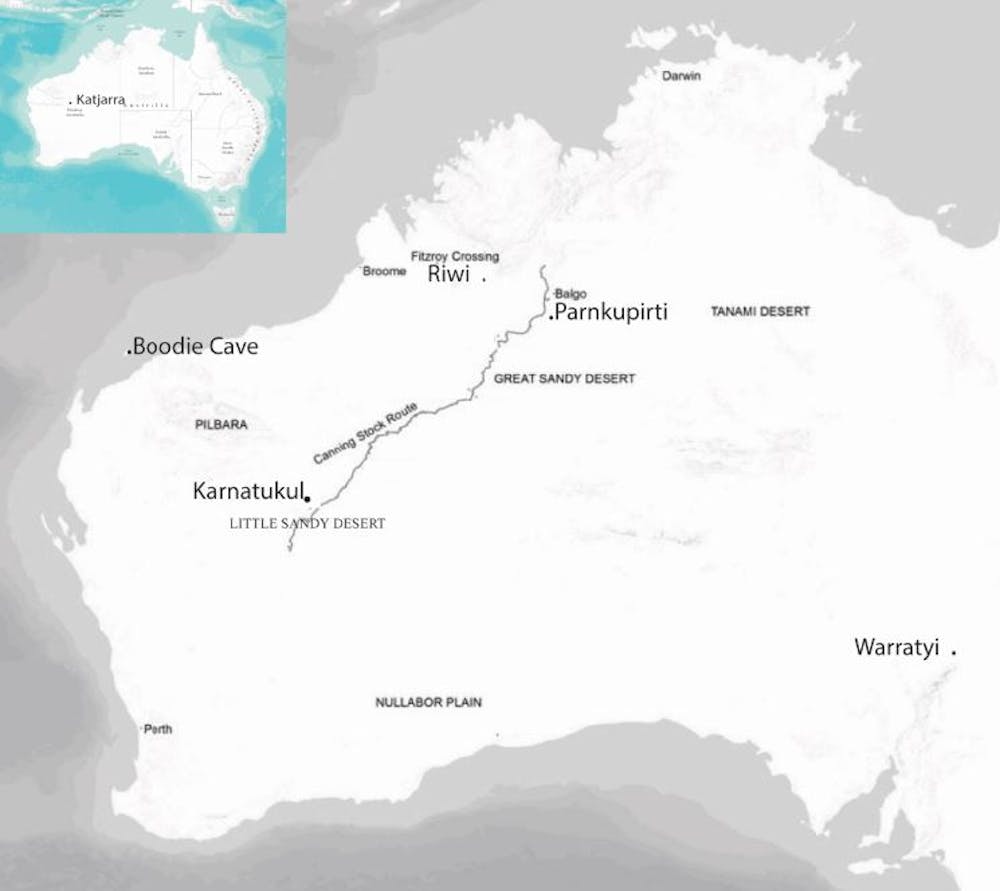
The research took place at the desert rock shelter site of Karnatukul (previously known as Serpent’s Glen), around 800 kilometres southeast of Exmouth – more than 1,000km from where the coastline would have been at this earlier time.


Read more: When did Aboriginal people first arrive in Australia?


It shows that people occupied the sandy deserts of interior Australia very soon after settling the north of the continent more than 50,000 years ago.

The paper reports some of the earliest evidence of people living in deserts, not just in Australia, but anywhere in the world.

Excavations old and new

Karnatukul was first investigated by archaeologists in the 1990s. At that time it became known as the oldest Western Desert site, occupied at least 25,000 years ago.

Our current excavation was undertaken to better understand more recent occupation evidence. We were trying to understand pigment art that was produced at the site during the past 1,000 years.

As well as finding rich evidence for a range of activities in recent times, our investigation doubled the earliest known occupation dates for this site.

Charcoal associated with artefacts was recovered in two squares dug beneath the site’s main rock art panel. Both squares returned similar archaeological sequences – both with their earliest radiocarbon determinations hovering close to the radiocarbon technical dating barrier which is 50,000 years.

Early tool shows technological innovation

More than 25,000 stone artefacts were recovered from the current excavations of Karnatukul, along with pigments, charcoal from many hearths, and a small amount of animal remains – a glimpse into the diet of the site’s occupants. Most of these remains date to the last millennium.

But one of our significant finds shows these early desert peoples were technological innovators. An early backed microlith – a pointed tool with one sharp edge blunted with small flakes, called backing – was found in deposits dated to around 43,000 years ago. Such tools are used as either a spear barb or for processing wood and other organic materials.

This tool is at least 15,000 years older than other known Australian examples. Other specimens have been recovered from the arid zone in South Australia, dated to around 24,000 years ago.

Microscopic analysis of residues and working edges on this tool reveal it was fastened by resin to a composite implement (such as to a wooden handle) and it broke in that haft, presumably while being used.

Backed artefact dated to 43,000 years ago showing evidence of use on its working edge. Jo McDonald, Author provided

These technological adaptations – backing and hafting – are much earlier than had been previously demonstrated in Australia.

These types of tools were produced in enormous quantities across most of southern and eastern Australia, in the recent past. Indeed, Karnatukul has a large collection (more than 50) of this tool type dating to the last millennium, when the site was used as a home base.

Adapting to a changed environment

It has been argued previously that these specialised tools became more common as a people responded to increased climatic volatility and less secure food resources, with an intensified El Niño–Southern Oscillation (ENSO) regime after 4,000 years ago.

These current findings support the notion that the First Australians adapted with ingenuity and flexibility as they quickly dispersed into every bioregion across the country.

For instance, evidence for the earliest ground-edged axe use in the world comes from the Kimberley.

The very early presence of people in the interior deserts of Australia, as well as their very early use of a backed microlith, changes how we understand the adaptive and technological sophistication of early Aboriginal peoples.

The arid zone has often been characterised as an extreme environment occupied only by transient dwellers. Several European explorers perished in their early attempts to explore and traverse Australia’s arid core.

Cultural connections to the land

The site is in the remote Carnarvon Ranges of the Western Desert. Known as Katjarra, these ranges are at the heart of Mungarlu Ngurrarankatja Rirraunkaja ngurra (country), in the Birriliburu Indigenous Protected Area (IPA). Located in the Little Sandy Desert, this remote IPA covers an area the size of Tasmania.

Katjarra is of very high cultural significance to its traditional custodians.

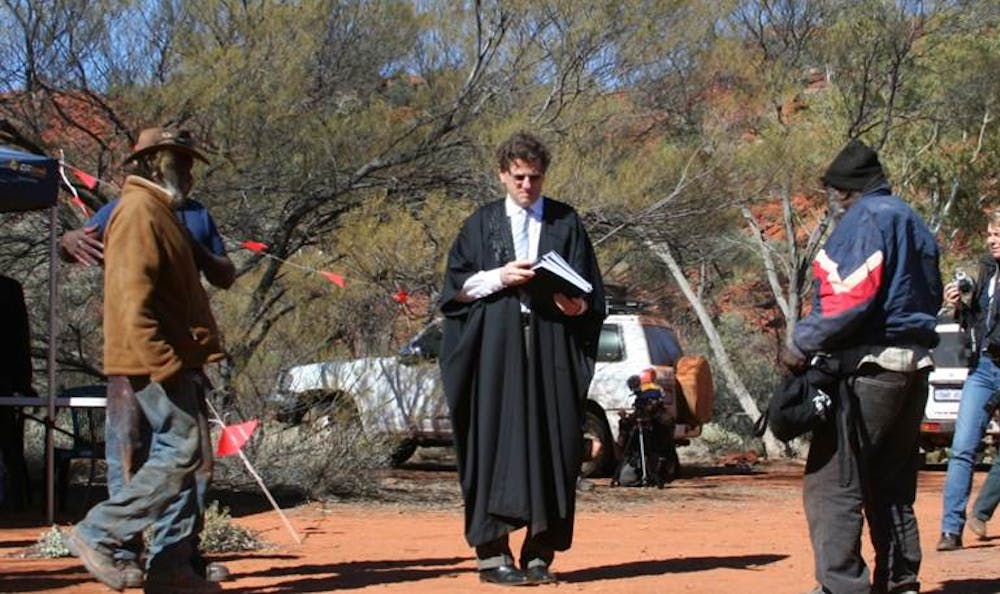
This archaeological evidence for the earliest desert peoples in Australia was found within 100m of the place where the Federal Court convened in 2008 for the Birriliburu Native Title Determination.

(Then) Justice Robert French at the Birriliburu Native Title determination in 2008 presenting senior custodians with a statement of the determination. Jo McDonald, Author provided

But the site is also only about 40km from the historic Canning Stock Route (CSR), a 1,800km track forged through the sandy deserts by Alfred Canning in 1906-07, reliant on numerous Aboriginal water sources, identified and named for for him by local Aboriginal people.

Location of Karnatukul, in the Carnarvon Ranges (Katjarra), near the Canning Stock Route. Jo McDonald

Because of the CSR, the Carnarvon Ranges have been at risk of unwitting damage from tourists – as modern desert crusaders travel this challenging and remote 4WD track. For example, many of the site’s surface grindstones – used for millennia to process seeds – have been collected and used by tourists to make camp fires, and there is graffiti where some travellers felt it necessary to add their names to rock features.

The Carnarvon Ranges are currently closed to unaccompanied tourists. The custodians have a responsibility for the safety of visitors on their country, intrinsically tied to the duty of ensuring that people do not unknowingly visit restricted and culturally powerful sites.

So the challenge now is how to protect this site of ancient occupation.


Read more: Time to honour a historical legend: 50 years since the discovery of Mungo Lady


The Birriliburu IPA has a management plan for this vast cultural and natural desert estate. Traditional Owners and younger rangers work in this IPA to care for country and to continue their long-held connections to this place.

Guided tours of this highly significant area with traditional custodians would ensure the protection of heritage places and visitors, as well as providing for sustainable tourism opportunities.

That way, people would still be able to experience a place that revolutionises our understanding of the first Australians who made one of the world’s driest continents their home.

Traditional custodians celebrate the Birriliburu determination in 2008. Jo McDonald, Author provided

– Aboriginal people lived in Australia’s desert interior 50,000 years ago, earlier than first thought
– http://theconversation.com/aboriginal-people-lived-in-australias-desert-interior-50-000-years-ago-earlier-than-first-thought-102111]]>

Desal plants might do less damage to marine environments than we thought

]]>

The Conversation (Au and NZ) – By Graeme Clark, Senior Research Associate in Ecology, UNSW

Millions of people all over the world rely on desalinated water. Closer to home, Australia has desalination plants in Melbourne, Adelaide, Perth, the Gold Coast, and many remote and regional locations.

But despite the growing size and number of desalination plants, the environmental impacts are little understood. Our six-year study, published recently in the journal Water Research, looked at the health the marine environment before, during and after the Sydney Desalination Plant was operating.


Read more: Fixing cities’ water crises could send our climate targets down the gurgler


Our research tested the effect of pumping and “diffusing” highly concentrated salt water (a byproduct of desalination) back into the ocean.

Contrary to our expectation that high salt levels would impact sea creatures, we found that ecological changes were largely confined to an area within 100m of the discharge point, and reduced shortly after the plant was turned off. We also found the changes were likely a result of strong currents created by the outfall jets, rather than high salinity.

Desalination is growing

We examined six underwater locations at about 25m depth over a six-year period during which the plant was under construction, then operating, and then idle. This let us rigorously monitor impacts to and recovery of marine life from the effects of pumping large volumes of hypersaline water back into the ocean. We tested for impacts and recovery at two distances (30m and 100m) from the outfall.

This study provides the first before-and-after test of ecological impacts of desalination brine on marine communities, and a rare insight into mechanisms behind the potential impacts of a growing form of human disturbance.

About 1% of the world’s population now depends on desalinated water for daily use, supplied by almost 20,000 desalination plants that produce more than 90 million cubic meters of water per day.

Increasingly frequent and severe water shortages are projected to accelerate the growth in desalination around the world. By 2025, more than 2.8 billion people in 48 countries are likely to experience water scarcity, with desalination expected to become an increasingly crucial water source for many coastal populations.

Effect of the diffusers

The diffusers that pump concentrated salt water into the ocean at a high velocity (to increase dilution) are so effective that salinity was almost at background levels within 100m of the outfall. However, the diffusion process increased the speed of currents close to the outfall.

This strong current affects species differently, depending on how they settle and feed. Marine species with strong swimming larvae, such as barnacles, can easily settle in high flow and then benefit from faster delivery of food particles. These animals increased in number and size near the outfall. In contrast, species with slow swimming larvae, such as tubeworms, lace corals and sponges, prefer settling and feeding in low current and became less abundant near the outfall.

Therefore, the high-pressure diffusers designed to reduce hypersalinity may have inadvertently caused impacts due to flow. However, these ecological changes may be less concerning than those caused by hypersalinity, as the currents were still within the range that marine communities experience naturally.

Our findings are important, because as drought conditions around the nation worsen and domestic water supplies are coming under strain, desalination is starting to ramp up in eastern and southern Australia.

For instance, water levels at Sydney’s primary dam at Warragamba have dropped to around 65% and the desalination plant is contracted to start supplying drinking water back into the system when dam levels fall below 60%. This plant can potentially double in capacity if needed.


Read more: Melbourne’s desalination plant is just one part of drought-proofing water supply


There is a rapid expansion of the use of desalination, with global capacity increasing by 57% between 2008 and 2013. Our results will help designers and researchers in this area ensure desalination plants minimise their effect on local coastal systems.

– Desal plants might do less damage to marine environments than we thought
– http://theconversation.com/desal-plants-might-do-less-damage-to-marine-environments-than-we-thought-103593]]>

The kīngitanga movement: 160 years of Māori monarchy

]]>

The Conversation (Au and NZ) – By Michael Belgrave, Professor History, Massey University

The current Māori king, Te Arikinui Kiingi Tūheitia, in 2012.Wikimedia Commons, CC BY-ND

New Zealand’s Māori king, Te Arikinui Kiingi Tūheitia, recently celebrated 160 years since the installation of the first Māori monarch, Pōtatau Te Wherowhero, at Ngāruawāhia on the Waikato River in 1858.

The movement to establish a Māori monarch, known as kīngitanga, emerged following colonisation to protect Māori land ownership and Māori constitutional autonomy. Since then, it has helped bring otherwise independent tribal communities together to protect their tribal identities and resources.


Read more: Strong sense of cultural identity drives boom in Māori business


Māori resistance

The fact that the movement survived to the present is remarkable in itself. George Grey, one of Queen Victoria’s most able consuls, famously declared in 1861:

I shall not fight against him with the sword, but I shall dig round him till he falls of his own accord.

When his digging failed, he dispatched an imperial army in 1863 to destroy King Pōtatau Tāwhiao, who had succeeded his father in 1860. Māori resistance was far more effective than the Europeans anticipated, but the king and his forces were pushed up the Waikato and Waipā rivers and around 900,000 acres of Māori land was confiscated.

Through war, confiscation, post-war poverty and continued land loss, the kīngitanga movement remained a focus for Māori resistance. In the 20th century, it provided the leadership to reach a number of settlements with the Crown, most significantly over confiscated Maori lands and the management of the Waikato River.

Origins of kīngitanga

The movement has its origins in the dramatic decades that followed the 1840 Treaty of Waitangi, which led to New Zealand becoming a British colony.

Determined to understand the European world, many Māori leaders rapidly adopted Christianity and literacy. From their appreciation of the Bible and European nationalism, leaders like Wiremu Tamihana promoted the election of a king as a way to protect Māori land ownership, retain constitutional authority over the Māori world and unite the country’s disparate, and often warring, tribal groups.

Europeans initially treated it as some form of childish imitation, but they underestimated the sophistication of the extended debates preceding Te Wherowhero’s election. The tribes that supported him agreed to give up authority over their land to prevent individual rangatira (chiefs) from selling plots and compromising the interests of others. This was unprecedented in Māori tradition. And it worked.

Supported largely by tribes descended from those arriving on the Tainui canoe (one of many which had initially colonised New Zealand), the movement effectively halted land sales by its supporters. It also began to be taken far more seriously in 1860, when some of its members joined Taranaki iwi (tribes) in resisting the military force used to complete a highly disputed land purchase. By July 1863, invasion was the colonial government’s preferred method to contain it.

Despite its losses, the kīngitanga was not defeated and certainly not destroyed. For 20 years following the final battle in April 1864 at Orakau, the king ruled an independent sovereign state in the centre of the North Island. There were no colonial police or military and no courts, roads, surveyors or schools. Europeans ventured into the King Country (Rohe Pōtae) at their own risk.

Main trunk line diplomacy

During the late 1870s, the colonial government needed access to the area to build the main trunk railway. This forced it into diplomatic negotiations with King Tāwhiao, as if he was an independent monarch.

He appealed to European public opinion, with a series of triumphal royal tours across the Waikato and Auckland. In 1884, he went to London to push the British government to recognise Māori grievances. He was the hit of the season there, entertained by the rich and the powerful, and a frequent visitor to the royal boxes of the London theatre.

However, in the end, despite his protests, he had to accept the opening up of the King Country, without achieving the return of the confiscated land.

Through these decades, colonial officials confidently predicted the kīngitanga’s collapse. But it proved surprisingly resilient. Tāwhiao transformed it into a peaceful resistance movement and made it a focus for supporting the material and spiritual needs of its followers.

A stamp printed around 1980 shows Princess Te Puea Herangi. from www.shutterstock.com, CC BY-ND

The movement faced hard times at the beginning of the 20th century, but was revitalised by Te Puea Herangi, who led the movement from behind the throne. She reached an accommodation with the government, and gave the movement new stability and confidence heading in the future.

During the first world war, the movement boycotted the war effort and resisted the conscription of its young men. After the war, a Royal Commission blamed Grey and his government for the land confiscations, and eventually parliament provided an annual compensation payment, but one that fell far short of even the limited recommendations of the commission.

After the second world war, the Tainui Māori Trust Board, set up to administer the settlement funds, gave the movement some degree of financial stability until the annual payments were made largely worthless by galloping inflation during the 1970s. By then, urbanisation and a Māori renaissance provided greater opportunities to promote Māori cultural revival, and once again negotiate a settlement with the government.

Success brings challenges

Waikato, the iwi (tribe) most affected by land confiscations, negotiated a Treaty of Waitangi settlement in 1995. Queen Elizabeth II also personally apologised for the way the iwi had been treated during the 1860s.

In the mid-19th century, Waikato had exported a substantial agricultural surplus to Australia and beyond through the port of Auckland. The NZ$170m settlement aimed to reinstate the tribe as an economic force south of Auckland, and it has been largely successful.

But Waikato were only one of the constituent iwi (tribes) of the kīngitanga. Separate settlements have been reached with other tribes, and will continue.

Success has brought its own challenges. After some initial hiccups, Waikato have dramatically increased their assets to over NZ$1.2 billion. But the kīngitanga has to reconcile its new corporate identity with the relative poverty and disadvantage of a substantial proportion of its members.

A corporate leadership, centred on the king, has created fears at the community level that local hapū (sub-tribal groups) interests may be sacrificed for larger business objectives.

Some of the salaries paid to leading administrators heighten such fears. Settlement resources can be used to reinvigorate the cultural life of a tribal group, but the funding cannot dramatically change the economic status of its members. There’s just not enough money. Nonetheless, having real resources creates novel problems for a movement that has been impoverished for most of its history.

Other tensions are not new. Despite uniting under a king, the constituent tribes remain fiercely independent. As these iwi develop their own strategies and build up their own capital, the role of the kīngitanga will change.

That it is here at all is a testament to its ability in the past to work through these tensions and to remake itself.

– The kīngitanga movement: 160 years of Māori monarchy
– http://theconversation.com/the-kingitanga-movement-160-years-of-maori-monarchy-102029]]>

En Masse is an arresting fusion of circus, dance and classical music

]]>

The Conversation (Au and NZ) – By Trevor Jones, Lecturer in Musical Theatre, Griffith University

Review: En Masse, Brisbane Festival


According to their artistic director, Yaron Lifschitz, Circa’s En Masse “speaks of fresh starts and old endings, of violence and tenderness, of groups and individuals, of destruction and abundant hope”. This world premiere, as part of the Brisbane Festival, presents these paradoxes to create a work that defies genre and challenges theatrical possibilities.

The first act, titled Endings, combines songs from Austrian composer Franz Schubert’s late song cycles Die Winterreise (The Winter’s Journey) and Schwanengesang (Swansong) with industrial and electronic compositions by Klara Lewis.


Read more: Decoding the music masterpieces: Schubert’s Winterreise


En Masse opens with a projected quote, “The crisis consists precisely in the fact that the old is dying and the new cannot be born” (from Italian philosopher Antonio Gramsci). The set of the first act is dominated by a large plastic scrim and, subsequently, a translucent plastic cube containing the performers. This cube deflates later in the piece creating a sense of entrapment and claustrophobia that the performers fight against.

The Schubert songs, including Ständchen, Gute Nacht and Der Doppelgänger, are performed with magnificent control and an astonishing range of dynamics by English tenor Robert Murray and pianist Tamara-Anna Cislowska. Murray’s soft singing is particularly ravishing.

He is dressed as a vagabond-type character who mostly observes the cataclysmic activity of the acrobats around him, although the occasional interaction with the other performers provides some very moving moments. There seem to be subtle references here to the Wanderer of Richard Wagner’s Ring Cycle and to the Winter’s Journey of Schubert’s protagonist and he becomes an outsider to the events around him.


Read more: Explainer: Wagner’s Ring Cycle, Der Ring des Nibelungen


At times, there is a slight disconnect between the frantic movements of the performers and the serenity of the Schubert songs, although this contrast also provides interesting theatrical conflict. Similarly, the contrast between Lewis’ industrial compositions and Schubert’s songs is effective but raises questions of cohesion.

The acrobatic movements of the first act feature extreme writhing, twitching and contortion as the performers fight the end of the world. The ensemble work ranges through duos, trios, solos and group pieces and is sometimes violent and shocking, while also quite tender in contrasting moments.

The incredible physical control of the Circa acrobats, and their ability to make bodies seem weightless, is breathtaking. A particularly notable moment was when a tower of three men slowly toppled forward into a flawless roll. This performance has all of the jaw-dropping features of outstanding circus performance. Yet the theatrical elements and integration of music and narrative transcend these thrills to create arresting physical theatre that sits somewhere between ballet, contemporary dance and circus.

Brisbane Festival

The second half, titled Beginnings, is absolutely the jewel in the crown of this programme. Russian composer Igor Stravinsky’s masterwork, The Rite of Spring, originally composed for Sergei Diaghilev’s controversial Ballet Russes in 1913, is presented here in a piano duet version, played by renowned pianists Tamara-Anna Cislowska and Michael Kieran Harvey.

The musical performance of this work alone is extraordinary, with both pianists drawing an enormous range of colours from the score, at once evoking many of the familiar orchestral sounds of the piece while also celebrating the full range of timbral possibilities from the pianos. Particularly impressive was Harvey playing this complex piece from memory, no doubt made even more complex by the separation of the pianists across the stage of the Playhouse.

This first-ever circus setting of The Rite of Spring opens with the quote, “There is no document of civilisation that is not at the same time a document of barbarism” (from German philosopher Walter Benjamin), and the movement certainly explores this theme. The entire ensemble of acrobats performs through most of the second half and a constant theme of rising and falling is evident in the staging, as well as images of circles and growth.

One particularly evocative image was a female performer ascending a “spiral staircase” of hands and bodies formed by the other performers, rising higher and higher as the music swelled. These acrobats constantly seem to defy gravity as the movements become progressively more frantic. Throughout this half, the music and movement is much more closely matched.

Comparisons could be drawn to Pina Bausch’s famous 1975 staging of Stravinsky’s masterpiece, although Lifschitz’ narrative diverges from the original while extending the possibilities of the range of movement possible in a work of this kind.

Special mention must also be made of the evocative lighting design by Yaron Lifschitz and Richard Clark and Libby McDonnell’s simple but effective costume design.

With En Masse, Circa have created a grand masterwork that challenges the boundaries of dance, theatre, music and circus to present a dystopian view of endings and beginnings.


En Masse is being staged as part of the Brisbane Festival until September 22.

– En Masse is an arresting fusion of circus, dance and classical music
– http://theconversation.com/en-masse-is-an-arresting-fusion-of-circus-dance-and-classical-music-103595]]>

We won’t fix female super until we fix female pay, but Labor’s ideas are a start

]]>

The Conversation (Au and NZ) – By Helen Hodgson, Associate Professor, Curtin Law School and Curtin Business School, Curtin University

Women retire with embarrassingly little super compared to men.

In 2015-16 the typical (median) Australian woman retired with A$36,000. The typical male had A$110,000.

When presented as averages, the difference is less stark because a small number of big superannuation accounts push up the average. In 2015-16 the average woman left with A$157,050 compared to A$270,710 for the average man.


On Wednesday the federal Labor Party announced four measures designed to help. In government it would:

  • pay superannuation on behalf of people receiving Commonwealth Parental Leave Pay, including dad and partner pay

  • phase in a requirement for employers to pay superannuation for workers earning less than A$450 a month

  • publish a gender impact statement examining any future changes to superannuation laws

  • make it easier for employers to pay extra super into the accounts of women.

The measures ought to be familiar. Each was recommended by the report of a 2016 Senate inquiry entitled A Husband Is Not a Retirement Plan.

In a response tabled last month, the government merely noted the first three and gave qualified support to the fourth: amending the Sex Discrimination Act to put beyond doubt employers’ ability to pay more into women’s super accounts than men’s.

Flawed by design

The measures attempt to address, but cannot overcome, super’s fundamental flaw. Because the system is based on the income workers get while working, and because women, on average, get less than men, they get less super than men.

They interrupt their careers to have children and are far more likely than men to work part-time to care for those children.

Super in maternity leave is a start

When the Productivity Commission recommended government-provided paid parental leave in 2009, it also recommended that super form part of that payment, although it suggested delaying that part of the measure for three years.


Read more: Paid parental leave plan ignores economics of well-functioning families


Three years on, nothing happened, although the then opposition leader, Tony Abbott, announced that super contributions would be paid with maternity leave in the 2013 iteration of his parental leave policy.

Paid parental leave is intended to compensate for the income parents lose in the months immediately after childbirth, so it is only fair that it should extend to all forms of income.

Extending super to low earners could help

At present employers are not required to pay super on wages of less than $450 a month. This is an outdated concession that goes back to the beginning of compulsory super in the early 1990s.

The labour market has changed significantly since then. Jobs have become less secure and many women hold down several part-time jobs to make ends meet.

It is true, as the Productivity Commission has pointed out, that small accounts are eroded through fees. Low earners moving from job to job often find themselves with many of them.


Read more: Superannuation is still mired in the same old issues, and no one is going to fix your nest egg but you


But technology is evolving to address the issue by allowing people to track and consolidate their accounts. The industry funds intend to automatically consolidate industry funds, unless members opt out.

Although the extra amounts a worker would receive if the A$450 per month floor was removed are small, over a lifetime of multiple jobs these payments could add up.

There is a risk that with very little underlying wage pressure, employers of low-wage workers would hand out even lower wage rises in order to find the money for the super payments. It would be up to the legislation, and the Fair Work Commission, to make sure that did not happen.

And sunlight could help

Labor’s third promise is transparency. The effect of budget proposals on women is not always obvious, as the Grattan Institute discovered in 2016 when it noted a measure introduced to help women and carers in fact benefited men with high incomes.

For three decades from 1984 to 2013 the Australian government published an annual Women’s Budget Statement to make explicit the effect of each budget on women.

The practice ended with the first Abbott budget in 2014. Since that time the National Foundation for Australian Women has been trying to fill the gap by publishing its own Gender Lens on the Budget.

As could top-ups for women

Labor’s final promise is to put beyond doubt the acceptability of employers paying higher rates of super to women than men. Some are already doing it. In an example cited by the Human Rights Commission as best practice, Rice Warner Actuaries has found a way to pay its female employees more than men without breaching anti-discrimination laws.

These sort of measures will help, so long as they don’t reduce the take-home pay of women without their consent.

But these measures are not enough

It is impossible to talk about super without talking about the excessive fees identified by the Productivity Commission and exposed in the Financial Services Royal Commission.

The federal government has announced legislation to protect low-balance accounts from excessive fees and insurance costs. When launching its policy package, Labor said it would work constructively in the same direction.

We also need to pay women more. Although the gender pay gap is narrowing, we won’t come anywhere near bridging the superannuation gap until we close the gap that lies behind it.

– We won’t fix female super until we fix female pay, but Labor’s ideas are a start
– http://theconversation.com/we-wont-fix-female-super-until-we-fix-female-pay-but-labors-ideas-are-a-start-103529]]>

We’ve had 20 aged care reviews in 20 years – will the royal commission be any different?

]]>

The Conversation (Au and NZ) – By Jane Phillips, Director of IMPACCT, Professor of Palliative Nursing, University of Technology Sydney

Prime Minister Scott Morrison’s Royal Commission into Aged Care Quality and Safety is one of more than 20 such inquiries into aged care stemming back to 1997. This latest inquiry, announced on Sunday, will no doubt highlight the systemic problems that have been previously reported.

The Australian aged care sector is one of the most highly regulated complex care environments. It would be fair to say the sector has been working on establishing an optimal care model for the past two decades that is more consumer focused.

Older Australians and their families need to know the facility they have chosen will provide safe, high quality, person-centred care that is grounded in respect, comfort and dignity. However, as revealed on Four Corners on Monday night, this is not always the case. Many stories that were shared reflect wider systems failures, which have been highlighted in the numerous inquiries that have preceded this royal commission.


Read more: Looking for a nursing home place for your parent with dementia? Here’s what to consider


What have previous reviews found?

The sector receives significant funding. In 2017, it received A$11.4 billion in government funding and generated A$21.5 billion in revenue, or A$263.92 per resident per day. It’s estimated care subsidies make up 70% of provider revenue.

The 2017, Aged Care Funding Instrument Review was prompted by the rapid growth in the aged care subsidy budget. Many residential aged care organisations continue to complain about the constraints on care funding that came about from this 2017 review, which limits their capacity to employ staff. Yet some of the 949 providers do manage to provide high quality care within the current funding envelope.

The bulk of care provided by Australia’s 366,000 aged care workers continues to be delivered by unskilled workers. These carers make up 75% of the workforce and have limited training. They are supervised by a small number of registered nurses.

This workforce structure belies the significant medical, nursing and social needs of older Australians living in residential aged care. These concerns were expressed during the senate inquiry held prior to the introduction of the 1997 Commonwealth Aged Care Act.

It was predicted that the removal of the registered nurse to resident ratio would lead to compromised care through deskilling and under-staffing, and that the accreditation process would do little to prevent this from occurring.

200,000 Australians currently live in residential aged care. alex boyd unsplash, CC BY

The sector has undergone significant reform since the 2011 Productivity Commission report Caring for Older Australians. In 2013, the “Living Longer Living Better” Act was introduced to address many of the recommendations in this report, including increased focus on consumer choice and control and additional funding to increase wages within the aged care sector.

In 2017, the Living Longer Living Better Act was also the subject of a review to assess progress of the first phase of reform and the pathway ahead.


Read more: Australia’s aged care residents are very sick, yet the government doesn’t prioritise medical care


In 2012, a new review – Australian Skills Quality Authority: The training for aged and community care in Australia – identified a number of aged care workforce training gaps. Namely, that carer training programs were too short and there was insufficient time for supervised practical experience to foster skill development.

Registered training organisations delivering high-quality training programs also faced unfair competition from those offering cheap and unrealistically short training programs. A range of compliance issues were identified that had an adverse impact on carer capabilities.

Since then, the 2017 Review of National Aged Care Quality Regulatory Processes has highlighted the need to improve the quality of care and strengthen institutional governance. Meanwhile, the 2017 Aged Care Workforce Strategy Taskforce was convened to address these gaps and to boost workforce supply in residential aged care.

Will the royal commission be any different?

There is no shortage of reviews into aged care, and they all provide rich data to draw on. Royal commissions are good at enabling people’s stories to be heard and evaluated. They are also good at eliciting a broader body of evidence and gaining political and public attention.


Read more: How our residential aged-care system doesn’t care about older people’s emotional needs


But recommendations from previous reviews into aged care have not always been acted on. This may be because they have been conducted to only look at one aspect of the sector, when in reality, aged care financing, regulation, quality of care and workforce planning are all necessary elements in providing high quality aged care.

It’s important this royal commission takes an in-depth examination of all elements underpinning quality care. It will also need to have the scope to make recommendations that go beyond changes to the regulation of safety and quality and the governance of the regulator.

The commission needs to be designed in such a way that consumer choice and control in aged care can be improved. Services need to meet individuals’ needs in a way that is affordable for consumers and sustainable for taxpayers.

And the commission’s terms of reference need to be carefully framed so the recommended reforms improve the quality of life and well-being of the 200,000 older Australians who currently live in residential aged care.

– We’ve had 20 aged care reviews in 20 years – will the royal commission be any different?
– http://theconversation.com/weve-had-20-aged-care-reviews-in-20-years-will-the-royal-commission-be-any-different-103347]]>

How the law failed three children and their families in the Bowraville murder case

]]>

The Conversation (Au and NZ) – By David Hamer, Professor of Evidence Law, University of Sydney

Last week, the NSW Court of Criminal Appeal added another chapter to a decades-long story of injustice for the Indigenous community of Bowraville.

The court ruled that a man should not be retried for the murders of two children, putting obstacles in the path of his prosecution for a third child murder.

Background of the case

Between September 1990 and January 1991, three Indigenous children – Colleen Walker, Evelyn Greenup and Clinton Speedy – disappeared from Bowraville township on the mid-north coast of NSW.

When the families reported the disappearances, local police suggested Colleen had gone “walkabout” and were slow to even file a missing person’s report on Evelyn.

After Clinton’s disappearance, an inexperienced detective was appointed to lead the investigation. In the following weeks, Clinton’s remains and then Evelyn’s remains were found nearby. Both had suffered penetrating injuries to their skulls. Colleen Walker’s body has never been found.


Read more: Truth to power: how podcasts are getting political


In time, a man was charged with the murders of Clinton and Evelyn, but potential evidence had been lost as a result of the delayed and flawed investigation. The man, known in court documents as XX, cannot be named for legal reasons.

The prosecution sought to have the two murder charges heard together, relying on similarities between them, and the improbability of XX being innocently implicated in both. However, the trial judge held that similar fact evidence was inadmissible and ordered separate trials.

XX was acquitted of Clinton’s murder in 1994. Despite a thorough police reinvestigation, he was also acquitted of Evelyn’s murder in 2006.

Double jeopardy exemption

NSW is among the states with laws preventing double jeopardy, which means further prosecutions of XX would be barred. But giving greater weight to the interests of victims and the community, exceptions to double jeopardy protection were introduced into the Crimes (Appeal and Review) Act 2001 (NSW) in 2006.

The families of the Bowraville children have also been unrelenting in their efforts to achieve justice. Their cause was boosted by a Four Corners investigation in 2004 and, later, Dan Box’s true-crime podcast, Bowraville, in 2016.

The double jeopardy reforms gave hope that the tragic Bowraville story could be given a just ending. However, for a prosecution application to succeed under the act, it would need “fresh and compelling evidence” of guilt.

In this case, the prosecution had no fresh DNA evidence and no late confession. The most compelling argument would rely on the unlikelihood that XX was innocently implicated in each murder.


Read more: We just Black matter: Australia’s indifference to Aboriginal lives and land


The trial judge rejected similar fact evidence in 1993, but admissibility was broadened in the Evidence Act 1995 (NSW). This raised the question whether evidence that was deemed inadmissible at the original trial, but later became admissible, would be viewed as “fresh evidence”. The NSW director of public prosecutions (DPP) and attorney-general thought not, and rejected police requests to apply to the court to have the acquittals overturned.

In 2014, a parliamentary committee recommended that consideration be given to “broadening” the double jeopardy exception “to enable a retrial where a change in the law renders evidence admissible at a later date”. The Greens then introduced a bill to achieve this, but parliament rejected it.

In December 2016, the attorney-general applied to the court for an order that XX face retrial for the murders of Clinton and Evelyn. But last week, the court rejected this on the grounds that the 1993 coincidence evidence was not fresh, even if it had become freshly admissible since then.

What the latest ruling means

This is quite a blow. Further retrial applications are barred under the law. Also, given XX’s acquittals for Clinton and Evelyn’s murders, double jeopardy protection prevents prosecutors from implicating XX in those murders in order to prove Colleen’s murder.

Parliament should have widened the double jeopardy exceptions in 2015. When the law makes compelling evidence freshly available to the court, this should be considered fresh evidence under double jeopardy reforms.

It is analogous to developments in forensic science making DNA evidence freshly available. There is no “floodgates” problem – this is the Australian first decision on an application for retrial under the double jeopardy reforms. And a similar double jeopardy exception in the UK has only generated a dozen or so applications in 15 years.

If, improbably, the prosecution were to make retrial applications to oppress acquitted defendants, the court could reject them as contrary to the “interests of justice”. The criminal justice system’s repeated failures in Bowraville are indefensible.

– How the law failed three children and their families in the Bowraville murder case
– http://theconversation.com/how-the-law-failed-three-children-and-their-families-in-the-bowraville-murder-case-103330]]>

Tongan scholars lodge protests over broadcaster’s Pacific ‘leeches’ jibe

]]>

Broadcaster Heather du Plessis-Allan … controversial attack on the Pacific Islands and Pacific Islanders. Image: Screenshot of Newstalk ZB

By Kalino Latu, editor of Kaniva News

Tongan community leaders and top scholars in New Zealand will complain to the Human Rights Commission against broadcaster Heather du Plessis-Allan’s outspoken comments against Pacific people.

The complaint will also be lodged with the Broadcasting Standards Authority of New Zealand and contact will be made with the Forum Secretariat of the Pacific Islands Forum as well as the United Nations Human Rights Council.

The action has been initiated by the executive director of Health Promotion Forum of New Zealand, Sione Tu’itahi, and came after Du Plessis-Allan commented after Prime Minister Jacinda Ardern’s statement she would visit Nauru during the Pacific Island Forum leaders’ meeting earlier this month.

READ MORE: Pushback against du Plessis-Allan’s Pacific ‘leeches’ comments encouraging

Du Plessis-Allan told her Newstalk ZB listeners: “The Pacific Islands don’t matter. They are nothing but leeches on us.”

She also referred to Nauru as a “hell hole”, and said it was not worth attending the Forum anyway because the Pacific Islands “don’t matter”.

-Partners-

Tu’itahi said it was unfortunate that some people did not use their roles in news media wisely and instead used them to thrash the weak and those who were voiceless.

He said they must do something to stop this kind of attitude.

If not, people like Du Plessis-Allan would think they were right and would continue to do it.

Dr Malakai Koloamatangi (from left), Dr Sūnia Foliaki, Sione Tu’itahi … critical of broadcaster Heather du Plessis-Allan’s “degrading” comments. Image: Kaniva News

‘Outrageous comments’
Tu’itahi was responding after Dr Malakai Koloamatangi of Massey University asked people to share a link to an opinion piece by Luamanuvao Dame Winnie Laban on Radio New Zealand.

Luamanuvao said: “When I first heard Heather du Plessis-Allan’s comments, I was reminded of Paul Holmes’ “cheeky darkie” rant about Kofi Annan and Robert Muldoon’s labelling Pacific Islanders as “overstayers”.

“Outrageous comments are the stock and trade of some broadcasters and politicians. So, it is good to hear that some New Zealanders know and understand Pacific history, value New Zealand’s relationship with the Pacific and Pacific peoples’ contribution to New Zealand, and are prepared to speak out when ill-informed comments are aired feeding bigotry and casual racism.”

Dr Koloamatangi has described du Plessi-Allan’s comments as discriminatory, degrading, disdainful and racist (fa’ahinga lau ngali filifilimānako, tukuhifo, siolalo mo laulanu).

Dr Sūnia Foliaki, also of Massey University, said: “Nauru a ‘Hell Hole’? Yeah, it’s  a hell hole after NZ farmers benefited from the phosphate dug up to leave those holes in Nauru.”

“A march to Newstalk ZB to ask du Plessis to give us a lecture on brain holes or other holes seeing we should ALL refer to her now as the Holes Expert?”

The Tongan petition is being supported by many Tongan academics, including Professor ‘Ōkusitino Māhina, Dr Viliami Puloka, Dr Paula Onoafe Lātū and others.

Broadcaster defiant
Despite nationwide outrage and calls for Du Plessis-Allan to make an apology or resign, she has remained defiant and stood by her comments, according to Radio New Zealand.

Du Plessis-Allan’s comments were posted on social media, prompting lots of angry reactions and some abusive and offensive putdowns of the broadcaster herself.

Du Plessis-Allan invited Privacy Commissioner John Edwards to appear on her show to debate the issue last Tuesday.

He declined and she hit out: “Go back to university and do some more training. You are not good enough.”

She said Edwards’ reaction was symptomatic of “intolerance on the political left”.

“They are like all deep-thinking and progressive but the moment someone says something that they don’t want to see the nuance in, they just take the broad brushstrokes of something.”

The Pacific Media Centre has a content sharing arrangement with Kaniva News.

Print Friendly, PDF & Email

Article by AsiaPacificReport.nz

]]>

Media power: why the full story of Murdoch, Stokes and the Liberal leadership spill needs to be told

]]>

The Conversation (Au and NZ) – By Denis Muller, Senior Research Fellow in the Centre for Advancing Journalism, University of Melbourne

The first German chancellor, Otto von Bismarck, said there were two sights the public should not see: the making of laws and the making of sausages. To this list of enduringly nauseating spectacles we should add one more: the political machinations of media moguls.

ABC political editor Andrew Probyn has skilfully violated this standard of public taste by laying out what look like very plausible entrails of the evident involvement of Rupert Murdoch and Kerry Stokes in the recent Liberal Party leadership spill.


Read more: How the right-wing media have given a megaphone to reactionary forces in the Liberal Party


It is impossible to independently verify Probyn’s account because he has been careful to mask his sources. But it is plausible partly because some elements are corroborated by separate reports in the Australian Financial Review and Sydney Morning Herald, partly because Probyn worked for both Murdoch and Stokes for lengthy periods and may be assumed to have good contacts in those places, and partly because there is circumstantial evidence to support some of what he says.

The Australian reports that Stokes has denied having communicated with Murdoch over Turnbull’s leadership. Interestingly, however, the newspaper does not quote its own proprietor on the matter, which is the obvious way to corroborate Stokes’s claim.

Murdoch, of course, is notorious for meddling in politics. In Australia, it can be traced back to his endorsement of Gough Whitlam at the 1972 election, his campaign against Whitlam in 1975, which was so virulent even his own journalists held a strike in protest, his support for John Howard in 1996, his somewhat ambivalent support for Kevin Rudd in 2007 and his full-frontal support for Tony Abbott in 2013.

Front page of the The Sun newspaper, April 11 1992. Wikicommons

These campaigns were all in support of the winning side, and much the same has been true of his equivalent campaigns in the UK and the US. After John Major led the British Conservative Party to victory in 1992, Murdoch’s London Sun newspaper proclaimed in a front-page banner headline: “It’s the Sun wot won it”.

All this has created a perception of Murdoch as political kingmaker, a perception that frightens the life out of politicians and thus confers great power on Murdoch.

But as two Australian scholars, Rodney Tiffen and David McKnight, have persuasively argued in their separate studies of Murdoch, while his media outlets routinely shred and humiliate their political targets, the evidence is that Murdoch observes which way the wind is blowing and then finds a rationale for endorsing the likely winner.

The Economist’s Bagehot column was on to this 15 years ago, as Tiffen records. Referring to the London Sun’s boasting of its political power, the column observed:

[T]hat probably says more about Mr Murdoch’s readiness to jump ship at the right time than about the Sun’s ability to influence the votes of its readers.

Even so, perceptions can swiftly harden into political reality.

According to Probyn, when Murdoch was seen to turn against Turnbull over the past couple of months, the alarm went off in the prime minister’s office.

This is where Stokes, chairman of Seven West Media, is said to have entered the picture.

He is a friend of Turnbull’s and they are said to have discussed the apparent campaign by the Murdoch media to oust the prime minister.

Stokes and Murdoch have a chequered history, to put it mildly. They have fought long, bitter and costly legal battles, but as Margaret Simons says in her biography of Stokes:

In the cosy club of media, neither love nor hate lasts forever. The only constants are power, money and self-interest.

So, according to accounts by Probyn and the Financial Review, Stokes rang Murdoch to ask what was going on and Murdoch is said to have told him: “Malcolm has got to go.”

But on the question of who should replace him, the moguls were all over the shop.

Murdoch’s Daily Telegraph was touting Peter Dutton. Three days later, when Turnbull spilled the leadership positions, Dutton nominated, lost, but lit the fuse for the ultimate detonation of the Turnbull prime ministership.

Stokes was opposed to Dutton for complex reasons, but didn’t seem to know who to go for instead. On the day before the leadership spill, his newspaper, The West Australian, was promoting Scott Morrison. The next day it was promoting Julie Bishop, a West Australian.

This shambolic confusion among the moguls is comforting in a perverse kind of way, because in the end neither of them was able to dictate the outcome.

Murdoch achieved one objective – the ousting of Turnbull – but Dutton, his preferred pick to replace him, is now clinging to political life by a single vote in the House of Representatives thanks to the hovering spectre of the Constitution’s section 44 (v), not to mention trouble with au pairs.

Stokes? Well, he is new to this kingmaking caper. He clearly did not want his friend Turnbull out, but when that became inevitable, he didn’t know where to turn. As my old editor at The Age, Creighton Burns, was fond of saying, he was caught between a shit and a shiver.

The net effect of their efforts has been to bring the Liberal-National government to the brink of disintegration within months of a general election.

This time, Murdoch may have indeed created a winner – Labor leader Bill Shorten – not by the traditional means of showering support on him, but by destroying his opponents, even though they happen to be Murdoch’s own ideological allies.

It is the latest chapter in a long and discreditable history of media proprietors using their power to advance their political ends, usually for commercial rather than ideological purposes.

Sir Frank and Kerry Packer did it; so did successive generations of Fairfaxes. In 1961 the Fairfaxes went so far as to virtually run Arthur Calwell’s campaign out of the company’s executive offices on the 14th floor of its newspaper mausoleum in Sydney’s Broadway. The Sydney Morning Herald’s journalists renamed it the Labor ward in honour of the exercise.

In Britain, the mould for the politically meddling modern newspaper proprietor was set by Alfred Harmsworth (Lord Northcliffe) in the early 20th century.

He and the other mighty British press baron of the time, Max Aitken (Lord Beaverbrook), were the inspiration, if that is the word, for Rudyard Kipling’s celebrated condemnation:

[The press exercises] power without responsibility: the prerogative of the harlot throughout the ages.

So Probyn has done Australian democracy a service by exposing the entrails of what looks like another abuse of media power, even if it makes for a nauseating public spectacle.

It also raises serious questions about media accountability.

Australia has never had a publicly trusted or effective system of media accountability. All attempts to create one have been howled down, the loudest and crudest voices belonging to Murdoch’s lieutenants.


Read more: Australian media are playing a dangerous game using racism as currency


There is already a crisis in people’s faith in democratic institutions. A new report by the Australian Museum of Democracy and the University of Canberra shows only 41% of Australians are satisfied with the way democracy is working. That is a dramatic plunge from the 86% recorded in 2007.

In this climate of disenchantment, it is not surprising there are now calls for a public inquiry into the way Murdoch and Stokes have evidently played a manipulative role in changing the prime minister.

– Media power: why the full story of Murdoch, Stokes and the Liberal leadership spill needs to be told
– http://theconversation.com/media-power-why-the-full-story-of-murdoch-stokes-and-the-liberal-leadership-spill-needs-to-be-told-103522]]>

Plea to Jokowi: Free all Maluku and West Papuan political prisoners

]]>

A study, conducted by Indonesia Law Reform Institute cofounder Anugrah Rizki Akbari, concludes that Indonesia has an “overcriminalisation” problem, with hundreds of harmless activities having been classified as crimes. Image: Shutterstock/Jakarta Post

OPINION: By Glenn Fredly in Jakarta

The remarks of renowned American philosopher John Dewey, “If you want to establish some conception of a society, go find out who is in jail”, has been quoted many times to elaborate on the state of freedom in many parts of the world, including Indonesia.

Indeed, reports about people being imprisoned, tortured or executed because of their views or faith are rife in the country.

Looking closely at prisons in Indonesia today, at least 20 people have been locked up for peacefully expressing their views about religion and politics, according to Amnesty International.

Eleven of them were charged with “blasphemy or defamation of religion” and the rest were peaceful pro-independence political activists.

Papua would probably quickly pop up in our minds when talking about the province with the highest number of imprisoned peaceful political activists. Indeed the easternmost province is home to an active armed pro-independence movement.

In western Indonesia, such “insurgence” ended after the government secured a peace agreement with the Free Aceh Movement in 2005.

-Partners-

List of punishers
However, Amnesty International has also identified the underdeveloped province of Maluku, which currently has no record of an armed pro-independence movement, on top of the list of punishers of peaceful political activists.

Eight people from Maluku are serving prison sentences for what the government calls makar (treason). They are Johan Teterissa, Ruben Saiya, Johanis Saiya, Jordan Saiya, John Markus, Romanus Batseran, Jonathan Riry and Pieter Yohanes.

The Benang Raja flag of Maluku … outlawed. Image: File

Their only offence is unfurling the Benang Raja flag, a symbol of the aspiration for Maluku’s independence, on June 29, 2007.

Johan Teterissa was leading a group of 22 activists who performed the traditional war dance cakalele in front of then-president Susilo Bambang Yudhoyono in the Maluku capital of Ambon, before they were all arrested for unfurling the flag.

If Indonesia respects rights to freedom of expression, they should not spend a single day in prison for such peaceful activity. Yet they were thrown behind bars for between 15 and 20 years. Johan was among those denied medical care while at least four of the activists have died in prison.

The Morning Star flag of West Papua … outlawed. Image: SIBC

Amnesty International considers Johan and all those arrested like him prisoners of conscience, who are jailed for peacefully exercising their rights to freedom of expression and assembly. Their arrests highlight the police’s failure to respect these rights.

Adding insult to injury, in March 2009, Johan and dozens of prisoners of conscience were transferred to prisons in Java, more than 2,500 kilometers away from their home. The isolation meant family visits were almost impossible, which is unnecessary, costly and cruel on prisoners and their families.

Maximum security prison
On November 28, 2016, I had a chance to visit Johan Teterissa at a maximum security prison in Nusakambangan, Central Java, with the help of Amnesty International and the Jakarta Legal Aid Institute as part of a campaign to release all prisoners of conscience in Indonesia.

As a Maluku native, I have been enjoying the fruits of freedom in Indonesia after the fall of Suharto in 1998 through my work as an artist. I have been able to freely express my thoughts through songs peacefully, but many in Maluku like Johan and other activists still lack this basic right to freely express political aspiration.

This is why I am calling on the government to release Johan and his friends and grant them amnesty.

Johan and his friends posed no threats to the president when unfurling the “forbidden” flag, but the government at that time considered the act treason. Their arrests clearly tarnish Indonesia’s image as a free country.

The administration of President Joko “Jokowi” Widodo must correct this mistake to restore Indonesia?s so-called freedoms.

Differences in political views must be clearly respected and expressing it peacefully in public never constitutes a crime. There was recent progress when all the prisoners from Maluku were transferred to a prison in the province, enabling easier access to visits for their families.

The transfer also means the administration is open enough to respect different political views.

Amnesty needed
However, relocating them to a Maluku prison is not enough. They must be granted amnesty. Through amnesty, the Jokowi administration could restore Indonesia’s image as a country where anyone can easily express their ideas freely through peaceful means without fearing criminal charges.

In early 2015, I had an opportunity to meet President Jokowi with other artists. I personally asked the President about the fate of political prisoners from Maluku and Papua. I was happy with his firm answer that he would free all political prisoners as soon as possible.

Shortly after, President Jokowi released and granted clemency to six Papuan political prisoners.

I am sure the transfer of the Maluku political activists is part of his plan to release and grant them amnesty. By doing so the President will rebuild trust and public confidence in the eastern part of Indonesia in the government.

I personally believe the peaceful call for independence derives from political frustration among activists in Maluku. One important fact is that Aboru, the village where Johan and other Maluku activists are from, is still very much underdeveloped and neglected by the central and local government.

The government must tackle the root causes instead of arresting them for peacefully expressing their political aspirations. The President must understand this background, so he would be convinced that granting amnesty is the right course of action to solve this case.

I am confident that President Jokowi will walk his talk to release and grant amnesty to all political prisoners in Papua and Maluku in the near future. So when he is asked “who is in jail?? he can confidently say Indonesia no longer has political prisoners there.

Glenn Fredly is a musician and campaigner for freedom of expression. This article was first published in The Jakarta Post.

Print Friendly, PDF & Email

Article by AsiaPacificReport.nz

]]>

‘Walking into a headwind’ – what it feels like for women building science careers

]]>

The Conversation (Au and NZ) – By Robyn Moore, Casual academic, School of Social Sciences, University of Tasmania

Australia’s parliament has a problem retaining experienced women. As a workplace, it’s not alone.

Women make up half of all science, technology, engineering, maths and medicine (STEMM) PhD candidates and early career researchers in Australia – but only 20% of senior leaders.

In other words, we have a problem not with women entering the STEMM pipeline, but rather what happens to them once they are there.

So why do women leave?

Our recent research suggests it’s because working in STEMM puts women in an ideological dilemma that is exhausting to confront, and feels impossible to change.


Read more: Gender inequalities in science won’t self-correct: it’s time for action


Investigating the real problem

We surveyed 61 women and conducted follow-up interviews with 25. This was part of our broader sociological research on leadership in STEMM.

The women were from an international group working in STEMM fields across both academia and industry, and were at a range of career points.

Our research shows the conflicting experiences that women confront in the STEMM sector:

  • women experience sexism and bias in their workplace
  • but women also strive to see their workplace as gender-neutral
  • when they do succeed, women use neoliberal “lean in” vocabulary to explain their own success
  • so when women fail in leadership, they blame themselves and not the culture.

We suggest this mix contributes to the loss of women from senior roles in STEMM.

Sexism and bias in the workplace

Women often have to deal with gender bias and sexism in male-dominated organisational cultures where they are made to feel as if they don’t belong. In Western cultures, scientists are primarily seen as men, and the traits of a good scientist tend to be associated with stereotypical masculine characteristics such as independence and assertiveness.

Women in our study talked about having to constantly battle to be seen as competent at work, compared to men. For instance, Dori said:

It can also be really discouraging sometimes, on the wrong day (laughs), to feel like you don’t belong or you don’t have a real cohort, or that the group interests don’t really represent what my interests are in the field … and it’s a constant battle to kind of feel like I deserve to be here and I have something to offer and this is the right place for me.

Natasha noted:

We all know that you have to do everything twice as well if you’re female.

In addition, women are often subject to inappropriate sexual behaviour, harassment and assault in the workplace.

One woman in our study described being sexually harassed by her PhD supervisor for years but was too scared to discuss her experiences with others in her workplace.

This approach implies that women in STEMM need to adapt to the existing sexist culture, or else their careers may suffer.

Striving to see the workplace as gender-neutral

When white men have been the dominant figures historically, people who don’t meet these norms (such as women and/or people of colour) must minimise their differences to fit in. This often means assimilating to the organisational culture rather than attempting to change it.

In the short term, it’s easier for women to see their workplaces as gender-neutral rather than point out gender bias.

As Marcia noted, recognising that the glass ceiling can be interpreted as “playing the gender card”:

I would have to say … until very recently … I was completely oblivious to gender. I don’t want to be seen as making excuses for my lack of progression.

Attributing success to ‘lean in’

The notion of women “leaning in” – to welcome opportunities to be assertive and behave like a leader – was proposed by Facebook chief executive Sheryl Sandberg in 2013.

But this approach comes with risk. Our study suggests that when women in STEMM do lean in to leadership, they are challenged for “acting like men”. One of our participants summed up this situation perfectly, asking:

How do you be a leader without being called bossy?

These are things that by themselves might not seem like such a big deal, but over a career can add up to the “glass ceiling” – the routine policies and practices that hinder women’s advancement.

Blaming themselves when they fail

Women also tend to look at their own individual characteristics to explain failure.
Esther and Miriam are both aged 50, and presented opposite sides of one argument:

That whole sense of agency, you being proactive, that self-reliance has been a huge boost in every aspect of my career.

Versus:

Women might not be quite so good at putting themselves forward when they should be.

Mia, aged 41, explained problems with career advancement being due to:

…women were perhaps not as geared up to deal with that at this point in time…

Responsibility for success or failure rests with individual women rather than organisational cultures. Solutions then become focused on “fixing the women” rather than organisational change.


Read more: Gender quotas and targets would speed up progress on gender equity in academia


There’s a headwind

Women leave science because the culture makes it difficult for them to be there. It’s the difference between going through your career with a headwind or tailwind.

The headwind in science is even stronger for women if they identify as part of multiple marginalised groups (such as women of colour and LBTIQ women).

However, the culture of science is premised on the idea that there are no barriers – that everybody is treated equally as long as they put in the effort. There’s a myth that if you work hard, you can achieve anything.

The factors we discussed severely limit women’s options. Leaving science is often a pragmatic choice. Indeed, recent research from Professionals Australia shows that almost one third of women employed in STEMM in Australia expect to leave their job within the next five years. This is an enormous loss of talent and expertise.


Read more: Take it from us: here’s what we need in an ambassador for women in science


This is not a problem of women or girls not being smart or capable or ambitious. In recognition of this, the Australian Academy of Sciences has launched a community consultation process linked with the Women in Science, Technology, Engineering and Mathematics (STEM) Decadal Plan.

Applying a sociological lens shows us that the solution is to focus our attention on fixing the system, not the women and girls.

– ‘Walking into a headwind’ – what it feels like for women building science careers
– http://theconversation.com/walking-into-a-headwind-what-it-feels-like-for-women-building-science-careers-102259]]>

Just a regular Joe (or Bill or ScoMo): how our leaders work hard at being ‘ordinary’

]]>

The Conversation (Au and NZ) – By Frank Bongiorno, Professor of History, ANU College of Arts and Social Sciences, Australian National University

Is it sufficiently dignified to call a prime minister, as distinct from an immigration minister or treasurer, ScoMo? Is this part of Scott Morrison’s “ordinary bloke” persona? It does sound a bit like Joe Shmoe, which Wikipedia tells me means “no one in particular” and “is one of the most commonly used fictional names in American English”. But it also sounds a bit Hollywood, evoking JLo.

So it may well be the kind of game that virtually every politician with serious leadership aspirations has to play. They need to convince us that they are not so far above us that they are out of touch. (“How much is a litre of milk, Prime Minister?”) Yet when they do present themselves as just like us, we can’t really take them seriously. We do, in the end, expect our leaders to be different.

Each leader plays the game differently. William Shorten is, of course, Bill – who tweeted about doing the shopping with his young daughter on Father’s Day.

Minus the shopping trolley, Robert Menzies and Robert Hawke were both Bob, and William Hughes and William McMahon were Billy. Curtin was Jack to his mates but John to the public. Chifley was Ben to all, and the unassuming Lyons was happy enough with Joe. It was hard to do much with Gough or Paul, and Malcolm Fraser only became Mal when he was being ridiculed. Everyone knew he was no Mal, and nor was Turnbull. “Johnny Howard” was almost never complimentary, especially when preceded by “Little”, and Kevin might have been from Queensland and here to help, but he never became Kev – not even when worrying over the shaking of sauce bottles – any more than Julia became Jules.

Politicians have long fretted over these matters. When the future prime minister, Stanley Melbourne Bruce, became prime minister, he issued a note to the press:

Mr Bruce would be very glad if the newspapers would not refer to him by his Christian name, as Mr Stanley Bruce, but always as Mr S.M. Bruce.

Today’s journalists, cartoonists and comedians – to say nothing of one’s political opponents – would be in raptures if a newly minted prime minister issued such a notice. And it was clearly unthinkable that the golf-playing, spats-wearing Bruce would be just plain Stan.

Here is a reminder that there is more than one way of performing the role of Australian prime minister. The late political psychologist Graham Little used to give a set-piece lecture on political leadership at Melbourne University, whose major details I can still recall 30 years later – so it must have been good.

Little thought there were broadly three types. Margaret Thatcher was a “strong leader” – the children’s TV program that demonstrated the style was Romper Room. Boys wore boys’ clothes and looked like boys. Girls wore girls’ clothes and looked like girls. Miss Helena dressed conservatively and had a mirror through which she could keep an eye on us at home. Moral codes were strictly defined, with the help of Mr Do Bee (“Do be an asker. Don’t be a help yourself”). Good conduct included being able to walk around with a basket balanced on your head.

“Inspiring leadership” was exemplified by Gough Whitlam – and Play School. Each, in turn, went out of their way to demonstrate good, inclusive citizenship, and creative, inclusive play, yet without pretending to become an ordinary citizen, or an ordinary child.

Like Miss Helena, Play School leaders were grownups. But unlike her – and like Whitlam – they spoke to their audience of children as intelligent equals, dressed a bit like kids (possibly in overalls, not skirts, for women) and played along with them rather than laying down the law. Big Ted was a more gentle soul than Mr Do Bee – who presumably had a sting. Gender differences are more frankly acknowledged, but explored rather than taken for granted.


Read more: What kind of prime minister will Scott Morrison be?


And then there were “group leaders”, like Bob Hawke – and Humphrey B. Bear. Humphrey, seemingly male yet somewhat ambiguously defined, runs around without trousers (any resemblance here to an Australian prime minister, living or dead, being purely coincidental). He is also a child, not an adult, and to this extent he shares a common identity with his audience. But they are not entirely deceived: Humphrey’s not really the same as the kids watching at home. In short, he’s rather like Hawke, who at his best convinced us that he was one of us even while being unmistakably “special”.

Not all have even attempted this balancing act. Neither Bruce nor Menzies ever pretended to be everyman, although Menzies occasionally pointed to his humble origins as the son of a country storekeeper. Keating barely made the effort; his adoption of Collingwood Football Club when he became prime minister was widely ridiculed for its cynicism, coming as it did from a man whose interests ran more to classical music and French clocks.

Malcolm Turnbull’s leather jacket, never entirely convincing, did not survive his elevation to prime minister. His persona in the job more resembled a Renaissance Florentine merchant-statesman – albeit without the art or culture, which may well have been Turnbull’s major concession to the common folk.

Like Keating, the very Sydney-ish Morrison is looking south for an AFL club, and he has cultivated what journalist Phillip Coorey calls a “daggy ordinariness”. But his everyman act is already running up against his evangelical Christianity. The classic Australian plain man is not an evangelical.

Russel Ward sketched the “the typical Australian” most influentially in The Australian Legend 60 years ago. He is, Ward writes, “sceptical about the value of religion and of intellectual and cultural pursuits generally”. The latter certainly fits Morrison, but not the former.


Read more: Poll wrap: Worst reaction to midterm PM change in Newspoll history; contrary polls in Dutton’s Dickson


That said, he leads Shorten as preferred prime minister in Newspoll. It is worth pausing to ask why Shorten, former Australian Workers’ Union leader, has never been able to break through as a personally popular figure. He has clearly modelled aspects of his career on Hawke, but no one would ever accuse him of possessing Hawke’s charisma. He will never approach his stratospheric approval ratings. Perhaps there are too many stories around of his cosy relations with filthy rich businessmen.

He became a national figure on the back of his media profile during the Beaconsfield mine disaster and rescue in Tasmania in 2006, and he campaigned most effectively in the 2016 election. Yet he often seems wooden in front of a camera, as distinct from when talking with ordinary voters. On the couple of occasions I’ve witnessed him deliver prepared speeches, he was engaging if not magnetic, and improved as he warmed to the message he was delivering.

Hawke moved in similar business circles to Shorten, and had his deficiencies as both a public speaker and parliamentary performer. But he was brilliant if unpredictable in a TV interview, before he cut the drinking and learned better to control his temper. His media image in the 1970s, while ACTU president, overwhelmed any popular suspicion that he was in the pockets of the top end of town, although there was a growing chorus of complaints about rich mates during his prime ministership.

Shorten, much more than Hawke, has been damaged by the perception of backroom dealing; with bosses, while a union leader, and over the internecine warfare within the Labor Party. Voters might have a sneaking respect for his doggedness – think John Howard – but they don’t love him and probably never will. Nonetheless, they may well elect him.

– Just a regular Joe (or Bill or ScoMo): how our leaders work hard at being ‘ordinary’
– http://theconversation.com/just-a-regular-joe-or-bill-or-scomo-how-our-leaders-work-hard-at-being-ordinary-103088]]>

Your Apple Watch can now record your ECG – but what does that mean and can you trust it?

]]>

The Conversation (Au and NZ) – By Shane Nanayakkara, Cardiologist, Baker Heart and Diabetes Institute

Apple’s new, fourth-generation watch has an electrical heart rate sensor. This can record your electrocardiogram or ECG, which Apple says:

… can classify if the heart is beating in a normal pattern or whether there are signs of atrial fibrillation (AFib), a heart condition that could lead to major health complications.

So, what actually is an ECG and can you really rely on a watch to read it?

How does the heart beat?

As a quick summary, your heart is divided into four chambers. The two top chambers (called atria) receive blood and push it towards the two bottom chambers (ventricles), which pump blood out to the body (left side) and the lungs (right side).

At the top of the right atrium is a little collection of cells called the sinoatrial node, or SA node. These generate an electrical signal which travels toward the middle of the heart (atrioventricular node). Finally, this electrical impulse spreads into the ventricles, which makes them squeeze blood for what we feel as a heartbeat or pulse. A normal heart rate can vary significantly between different people.


Read more: What should my heart rate be and what affects it?


So, these small electrical currents help co-ordinate each beat. In the early 1900s, Willem Einthoven developed a machine to be able to record these signals (for which he was awarded the Nobel Prize) – a device that developed into the modern-day ECG machine.

Your heart is made up of four chambers. from shutterstock.com

An ECG involves having small stickers applied to your chest, shoulders and ankles, which can then read the electricity coming from your heart. You don’t feel anything when it is taken and it takes only a few seconds to make a recording. It can be done at your local GP clinic or in hospital.

How does an ECG work?

With every beat, there is a characteristic appearance of each signal on the ECG, with separate “waves” that correspond to electrical activity from different parts of the heart.

The P wave (before the spike) represents the atria squeezing blood down towards the ventricles. The QRS looks like a spike and represents the two ventricles squeezing blood to the body and lungs. And the T wave at the end reflects the recovery of the ventricles as they relax to receive blood again.

Each beat is represented by a separate wave or spike on the ECG. from shutterstock.com

By analysing various segments, the person reading the ECG can understand about problems, signalled by an abnormal-looking ECG, in the heart. The ECG can usually detect severe or urgent heart attacks, which cause elevation of the segment between the QRS and T waves. Smaller heart attacks sometime show signs, but not always.

The ECG is good for detecting arrhythmias, which are abnormal rhythms. The most common arrhythmia is atrial fibrillation (AF) – this is where the top chambers (the atria) don’t squeeze properly. As a result blood can stagnate and form a clot, which can then go to the brain and cause a stroke.

You can see atrial fibrillation on an ECG when no P wave is visible. Instead there are often small irregular blips indicating that the atrium is beating in a weak and disorganised way. An ECG can also pick up other arrhythmias, though it is most useful if the person is in the abnormal rhythm at the time the ECG is done.

The ECG can also pick up abnormal heart structures. Sometimes it can show signs of the heart being weak (heart failure) or if the muscle is unusually thick, such as when people have high blood pressure for a long time.


Read more: Tom Petty died from a cardiac arrest – what makes this different to a heart attack and heart failure?


So, can the Apple Watch actually read your heart?

The ECG at your local doctor is called a 12-lead ECG. Only ten leads are physically attached to you, but the machine derives 12 based on the direction of electrical flow. Each of these leads provide a different view of the heart.

Imagine you are peering into a room through several windows. Each window would give you a different perspective, and putting these together can give you an overall impression of the room.

Wearable ECGs, like that with the Apple Watch, can pick up only one lead (for your further reading, it’s lead I). This can tell if your heart is irregular and sometimes if there is no P wave (so it could potentially detect atrial fibrillation).

An ECG involves several stickers placed on your chest. from shutterstock.com

A key advantage of having the Apple Watch is the ability to take a 30-second ECG (this requires you to put your right hand on the watch to form a circuit so the electrical signals can be read from both arms through your heart) at the time you feel symptoms. It can understand the context as well (for example, your activity level at the time).

There are drawbacks, though. The watch can only give a single-window view of what’s happening in the heart, and won’t be able to detect heart attacks or abnormal heart structure accurately. Wearable devices are also more prone to interference with the signal as they rely on just one lead, whereas a 12-lead ECG remains the gold standard.


Read more: New Apple Watch adds heart tracking: here’s why we should welcome ECG for everyone


And, of course, the actual ECG must be read by a professional. Apple gives you the option to download your reading as a PDF.

Ultimately, if you have concerns about your heart, an ECG is a simple, non-invasive, cheap test, which your local doctor can interpret. It should always be accompanied by a detailed history of your symptoms and a physical examination.

– Your Apple Watch can now record your ECG – but what does that mean and can you trust it?
– http://theconversation.com/your-apple-watch-can-now-record-your-ecg-but-what-does-that-mean-and-can-you-trust-it-103430]]>

We’ve cracked the cane toad genome, and that could help put the brakes on its invasion

]]>

The Conversation (Au and NZ) – By Peter White, Professor in Microbiology and Molecular Biology, UNSW

We and our international colleagues have deciphered the genetic code of the cane toad. The complete sequence, published today in the journal GigaScience, will help us understand how the toad can quickly evolve to adapt to new environments, how its infamous toxin works, and hopefully give us new options for halting this invader’s march across Australia.

Since its introduction into Queensland in 1935, the cane toad has spread widely and now occupies more than 1.2 million square kilometres of Australia. It is fatally poisonous to predators such as the northern quoll, freshwater crocodiles, and several species of native lizards and snakes.

Previous attempts to sequence the cane toad, by WA researchers more than 10 years ago, were not successful, largely because the existing technology could not assemble the genetic pieces to create a genome. But thanks to new methods, we have succeeded in piecing together the entire genetic sequence.


Read more: Yes, you heard right: more cane toads really can help us fight cane toads


Our team, which also featured researchers from Portugal and Brazil, worked at the Ramaciotti Centre for Genomics at UNSW. This centre played a key role in decoding the genomes of other iconic Australian species, including the koala.

Sequencing, assembling and annotating a genome (working out which genes go where) is a complicated process. The cane toad genome is similar in size to that of humans, at roughly 3 billion DNA “letters”. By using cutting-edge technology, our team sequenced more than 360 billion letters of cane toad DNA code, and then assembled these overlapping pieces to produce one of the best-quality amphibian genomes to date.

We deduced more than 90% of the cane toad’s genes using technology that can sequence very long pieces of DNA. This made the task of putting together the genome jigsaw much easier.

Toxic toads

The cane toad has iconic status in Australia, with many Aussies loving to hate the poisonous invasive amphibian. This is a little unfair. It’s not the cane toad’s fault – it was humans who chose to bring it to Australia.

Our obsession with sugar in the 1800s led to the toad’s introduction to many countries around the world. Wherever sugar cane was planted, the cane toad followed, taken from plantation to plantation by landowners as the warty interlopers travelled from South America to the Caribbean and then on to Hawaii and Australia.

But unlike most other places to which the cane toad was introduced, Australia lacks any native toads of its own. The cane toad’s powerful poisons are deadly to native species that have never before encountered this amphibian’s arsenal.

The cane toad has therefore been subject to detailed evolutionary and ecological research in Australia, revealing not only its impact but also its amazing capacity for rapid evolution. Within 83 years of its introduction, cane toads in Australia have evolved a wide range of modifications that affect their body shape, physiology and behaviour.

For example, cane toads at the invasion front are longer-legged and bolder than those in long-colonised areas and invest less into their immune defences (for a summary, see Cane Toad Wars by Rick Shine).

The new genome will give us insights into how evolution transformed a sedentary amphibian into a formidable invasion machine. And it could give us new weapons to help stop, or at least slow, this invasion.

Cracking the cane toad genome.

Viral control

Current measures such as physical removal have not been successful in preventing cane toads from spreading, so fresh approaches are needed. One option may be to use a virus to help control the toad population.

Viruses such as myxomatosis have been successfully used to control rabbits. But the cane toad viruses studied so far are also infectious to native frogs. The new genome could potentially help scientists hunt for viruses that attack only toads.

In a study published this month, we and other colleagues describe how we sampled genetic sequences from cane toads from different Australian locations, and found three viruses that are genetically similar to viruses that infect frogs, reptiles and fish. These viruses could potentially be used as biocontrol agents, although only after comprehensive testing to check that they pose no danger to any other native species.


Read more: Come hither… how imitating mating males could cut cane toad numbers


The full cane toad genome will help to accelerate this kind of research, as well as research on the toads’ evolution and its interactions with the wider ecosystem. The published sequence is freely available for anyone to use in their studies. It is one of very few amphibian genomes sequenced so far, so this is also great news for amphibian biologists in general.

As the cane toads continue their march across the Australian landscape, this milestone piece of research should help us put a few more roadblocks in their path.

– We’ve cracked the cane toad genome, and that could help put the brakes on its invasion
– http://theconversation.com/weve-cracked-the-cane-toad-genome-and-that-could-help-put-the-brakes-on-its-invasion-103362]]>

A community fix for the affordable housing crisis

]]>

The Conversation (Au and NZ) – By Peter Mares, Adjunct Fellow, Centre for Urban Transitions, Swinburne University of Technology

Jeannie loves her apartment. It has a separate bedroom, a small bathroom, and an open-plan kitchen, lounge and dining area. It’s compact, but sliding doors open onto a generous balcony to create a larger living space. Jeannie often takes her meals on the balcony, where she can sit surrounded by pot plants and enjoy a view across houses with leafy backyards.

Jeannie’s three-year-old apartment is one of 57 single-bedroom units in Caggara House, a five-storey affordable housing development. It’s in a quiet street in Brisbane’s Mount Gravatt, within easy reach of shops, a medical centre, cafes and public transport.


Read more: Community sector offers a solid platform for fair social housing


Jeannie has spent much of her life in public housing on Brisbane’s south side. She brought up her three children in a three-bedroom commission home in nearby Holland Park.

After they had all flown the nest she downsized to a two-bedroom townhouse in Annerley. “It was more central,” she says, “just five to ten minutes from the city, which was good when I was working on call as a casual.”

Eventually, though, getting up the stairs became a problem, and Jeannie felt a bit unsafe living at ground level. At Caggara House there is a security entrance, a lift to her third-floor apartment, and wide passageways and doorways, so it is both safe and easy to navigate for someone with limited mobility.

Caggara is split into two buildings with a landscaped garden in between to give the complex a “green lung”. There is a shared barbecue area, a communal laundry, and a common room for parties, meetings and exercise classes. The development has won prizes for an energy-efficient design that provides for both privacy and social interaction.

Yet the real innovation is in the concept — it provided well-located, high-quality housing for low-income residents aged 55 and over, while freeing up resources to add to Brisbane’s overall stock of affordable housing. This might sound like a magic pudding, too good to be true, but Caggara’s residents previously lived alone in state-owned houses that were too big for their needs. Those houses were worth about A$500,000 each. It cost a little more than half that much to build each of the units in Mount Gravatt.

In this way, an investment of A$15 million in Caggara freed up A$25 million worth of assets that could be put to better use, either by accommodating families on the waiting list for social housing or by being sold to raise capital for new buildings.

Caggara House was created for former public housing tenants over the age of 55.

Community housing pioneers around the country

Caggara House is an initiative of the not-for-profit Brisbane Housing Company. It’s a provider of what is often called community housing, to distinguish it from the public housing supplied by state authorities (even though they serve a common client base of low-income tenants). Since it was set up in 2002, BHC has built 1,300 affordable rental dwellings and earned the same AA- credit rating as the Commonwealth Bank.

Housing First (previously the Port Phillip Housing Association) is another innovative community-housing provider. It has 1,200 dwellings scattered around Melbourne. And, like BHC, it forms strategic partnerships with private developers, other community organisations, and all tiers of government to build energy-efficient homes with low running costs.

In Sydney, affordable housing provider BlueCHP has a portfolio of 1,600 properties. In November 2017 it opened Macarthur Gardens, a mix of apartments clustered in three towers close to Macarthur Railway Station, Macarthur Square Shopping Centre, and Western Sydney University. BlueCHP manages 56 of the dwellings as below-market rentals for low-income households and is selling the other 45 to help finance the project.

Macarthur Gardens is the largest residential complex in Australia built from cross-laminated timber. BlueCHP was the first developer in New South Wales to use this cost-effective, environmentally friendly technology.

In theory, state housing authorities could innovate like the Brisbane Housing Company, Housing First and BlueCHP. In practice, this rarely happens. Governments tend to be overly cautious in a sector that is crying out for flexibility. David Cant, who was chief executive of BHC for its first 15 years, says:

Not-for-profits can take risks. They can work quicker and smarter.

Community housing providers also “know their residents and know their geography”, Cant adds.

Australia has a pressing need for more social and affordable housing. More than half of all low-income tenants in the private market spend at least 30% of their disposable income on rent (and often much more than that). This can lead them to skimp on essentials like food, heating, transport, health care and schoolbooks. In the long term this sort of rental stress can damage physical and mental health, stunt educational attainment, and limit opportunity.

Australia can learn from UK housing providers

Cant thinks the best way to reduce rental stress is to build up the community housing sector, even though it currently provides less than 1% of all Australian dwellings. He is confident this can be done, based on 25 years working in Britain.

Before the Thatcher government sold off council houses in the 1980s, local government was the largest and most established provider of low-cost rental dwellings in Britain. Today, housing associations are more significant: 170 individual housing associations own 2.49 million homes – more than 10% of all housing in Britain. Local government now accounts for just 7%.


Read more: Sensible reform to finance affordable housing deserves cross-party support


Oona Goldsworthy, chief executive of the Bristol-based not-for-profit housing association United Communities, says the sector matured relatively quickly. On a visit to Australia to she told me:

Housing associations in the United Kingdom grew out of an ideological and political push that the state is not necessarily the best provider of housing.

The view was that smaller organisations that were closer to the community could do a better job. Goldsworthy says British housing associations were able to borrow proactively, capturing a relatively small amount of public subsidy and matching it with lending from other sources. That’s exactly the sort of agility that gives community housing an edge over public-sector providers in Australia.

In the 2017 federal budget, the then treasurer, Scott Morrison, announced two measures designed to enable not-for-profit associations to build more housing: the National Housing Finance and Investment Corporation and an affordable housing bond aggregator. Together, they are designed to make it easier and cheaper for housing providers to borrow money by acting as a bridge between community-housing providers and superannuation funds.

While community organisations can and do borrow from banks, each loan must be separately negotiated. Super funds won’t deal one on one with individual providers in this way, so the NHFIC aims to offer them a standardised, rated investment product.


Read more: Bond aggregator helps build a more virtuous circle of housing investment


Since it has the backing of both Labor and the Greens, the NHFIC should survive any change of government. Yet the most important tool for repairing housing in Australia is still missing — a substantial amount of government money.

Cant, who was recently appointed to the NHFIC board, says poor people are generally reliable rent-payers because they know housing underpins the rest of their lives. Offered a deal along the lines of “be a good neighbour, pay your rent and you can stay here as long as you like”, they will grab it with both hands and enjoy a sense of pride and ownership that is indistinguishable from an owner-occupied home. Yet the rent they can afford to pay is not enough to cover the cost of building and maintaining community housing.

Cant says:

If you want to house people on lower incomes then you have to find a bit of a subsidy.

The holy grail of superannuation funds investing in affordable housing will not be achieved unless government tops up the rents paid by low-income households to generate an acceptable rate of return.

Piers Williamson is the chief executive of the Housing Finance Corporation — Britain’s equivalent to NHFIC — and has been advising the Australian government on setting up the NHFIC. He told the tenth National Housing Conference in Sydney that Britain’s affordable housing model was underpinned by £45 billion (A$75 billion) in grant money. “Grants are one of the things missing over here,” he said. “Subsidised housing requires a subsidy.”


Read more: Government guarantee opens investment highway to affordable housing


Australia badly needs more rental accommodation that does not leave low-income tenants living in stress. The only proven way to increase the supply of social and affordable dwellings is to increase public investment in the sector — in other words, to spend more taxpayers’ dollars.

Why should wealthier Australians agree to subsidise the housing of poorer Australians through the tax system? For David Cant, social justice is reason enough.

As a nation, we are sleepwalking into inequality. The settings we have got are dividing the community.

As housing inequality worsens it will touch more and more people. One day it could be an old friend, a sibling, a child, or a parent facing housing troubles. One day it could be you or me.


This is an edited extract from No Place Like Home: Repairing Australia’s Housing Crisis, published by Text on September 17.

– A community fix for the affordable housing crisis
– http://theconversation.com/a-community-fix-for-the-affordable-housing-crisis-102840]]>

The shocking truth about insurance. We pick bad policies even with good information

]]>

The Conversation (Au and NZ) – By Justin Malbon, Professor of Law, Monash University

The Financial Services Royal Commission has highlighted the astonishment and anger of some customers who’ve had their insurance claims rejected.

Some assumed wrongly their policy covered them for losses from their heart attack or cancer. Others were angry and frustrated that their home contents insurance didn’t cover losses from floods.

When you take out insurance you are buying a promise. The insurer promises to pay for losses arising from the event mentioned in the policy; be it fire, robbery, flood or something else.


Read more: What is flood insurance and why the system is broken: 6 questions answered


It would be reasonable to think that a sensible person would know what that promise was before he or she paid the premium.

But that assumes a sensible person can understand the words used in the policy.

Federal legislation requires insurers to produce a product disclosure statement (PDS) and make it available to potential buyers.

They are not always easy to find on the insurer’s website and, even when they can be found, are usually long and complex.

No less a body than the Insurance Council of Australia has acknowledged that the exclusions and limits in the statements are often poorly understood.


Read more: Forcing insurers to reveal rejected claims a win for consumers


To overcome this problem, it has been mandatory since 2012 for home contents insurers to also provide a shorter two-page “key fact sheet” (KFS).

It outlines in simpler language which events the policy does, and does not, cover.

We undertook a study, funded by the NSW Financial Rights Legal Centre to find out if a KFS is more likely to nudge consumers towards making rational buying choices than simply providing a PDS.

Does a ‘key fact sheet’ help?

We found that, even in highly idealised conditions, the KFS wasn’t a standout success.

The study involved 406 randomly chosen participants across Australia. They were asked to consider buying a hypothetical home contents insurance policy.

We provided them various choices between buying a good, okay or bad policy. They were not told the policies varied in quality. The only information they had about each policy was a PDS or a KFS, or both, we designed.

They could also choose not to buy a policy.


Read more: Royal commission scandals are the result of poor financial regulation, not literacy


We told them that after they decided on their purchase, a computer simulation might signal that an event, like a robbery or fire, would happen over the following 12 months – or that nothing would happen. If the simulator signalled a bad event, and they hadn’t bought insurance that covered them for it, they would lose a “bonus payment”.

The good policy included cover for fire and explosion but excluded “damage that occurs within 72 hours of the beginning of your policy”. The bad policy also covered fire and explosion but excluded “fires igniting within or outside the premises” – in other words it effectively excluded any cover for fire.

The inclusions and exclusions were not buried in fine print but set out clearly in both documents.

Here are the findings for when we asked people to choose between the good policy and the bad policy:


The best outcome was when participants were offered only a short KFS and not the longer PDS. In this scenario 76% of participants opted for the good policy.

Yet even in this most ideal circumstance – a simple choice between an obviously good product and an obviously bad one on the basis of a clear two-page document – about 10% still chose the bad product and 14% bought no insurance at all.


Read more: People on low incomes are sacrificing basic goods to take out insurance


Disturbingly, the worst outcome was when participants were presented with both the short KFS and the longer PDS. It was even worse than with the disclosure statement only.

When participants were required to choose between three products, the proportion choosing the better product declined markedly. Using the KFS alone, only 41% chose the best product.

The take-home message is that although being presented with the KFS appears to be marginally better than being presented with the PDS, or even both, it is far from a panacea.

Time to rethink the onus on us

These findings, along with other research on the lack of consumer comprehension of insurance terms and conditions, ought to prompt a rethink about putting the onus on consumers to make the best choices on the basis of the information available to them.

The government might instead consider mandating standard terms for consumer insurance products across the entire industry.

The inclusions and exclusions for all home contents policies, for example, would be the same. And also for motor vehicle, travel and other forms of insurance.


Read more: Do we really need funeral insurance?


Consumers could be offered a choice between gold standard cover, which would provide the most cover, and silver and bronze, which would offer less.

By mandating standard terms, consumers would have less anxiety about what is buried in the detail of their policies.

It would mean insurers have to compete on price, rather than confusing consumers by making products difficult to compare.

– The shocking truth about insurance. We pick bad policies even with good information
– http://theconversation.com/the-shocking-truth-about-insurance-we-pick-bad-policies-even-with-good-information-103515]]>

The Australian war film Jirga is a lesson in Afghan forgiveness

]]>

The Conversation (Au and NZ) – By Ehsan Azari Stanizai, Lecturer in literary studies, National Institute of Dramatic Art

Review: Jirga


It is cathartic when a war movie takes us far beyond the horror of bullets, bomb and blood into the other side of the battlefield — the emotional impact on individuals.

The Australian production Jirga mines the depth of the heartache and guilt experienced by an Australian ex-soldier whose conscience has caught up with his participation in a night raid on a desolate hamlet in Kandahar. In doing so, it moves away from run-of-the-mill cinematic depictions of this war, laden with stereotypical, nationalistic hubris.

Jirga is the story of Mike Wheeler, who kills an unarmed civilian in a thundery, blazing raid on a far-flung village in southern Afghanistan. Three years later, he travels to the same village, seeking forgiveness.

Sam Smith as Mike Wheeler: a former soldier who killed an unarmed civilian in a night raid in Kandahar. Felix Media, Screen Australia

Sam Smith plays Wheeler admirably. Early in the film, he turns back and looks ruefully at his victim’s body, which is being dragged home by his wife and a child. Later, back in Kabul, he makes friends with a taxi driver, played by Sher Alam Miskeen Ustad, who sometimes sings while driving.

Wheeler begs the driver to take him to Kandahar, the Afghan historical city named by Alexander the Great now regarded as a highly dangerous place. The cabbie vehemently resists the request. Eventually, after an offer of considerable money, he agrees to drive Wheeler into the most dangerous terrain infested with Taliban militants.

Cabbies are famous for their gift of the gab. You can charm them, wrote the Italian philosopher and semiotician, Umberto Eco, by punctuating the conversation with “frequent interjections on the order of ‘it’s a crazy world!’.” This is what the hashish-smoking cabbie says in his beautiful Pashtu songs:

Like streams, tears roll past my collar down my neck,

This is a crazy brutal world, there is no one to have mercy on me.

Along their journey, Wheeler is stopped at a Taliban check point but he manages to flee when their barrage of bullets misses him. The second time, he isn’t so lucky. Captured by the Taliban he is taken to their mountain hideout. They are divided as to whether to kill him or demand a huge ransom for his release.

The Taliban’s commander decides to leave the villagers to pass a verdict on Wheeler’s fate in their Jirga — the traditional assembly, part of the non-written, age-old Afghan ethical code of honour, Pashtunwali.

Mike Wheeler (Sam Smith) at the Jirga. Felix Media,Screen Australia

The Jirga unanimously passes a resolution that the only one who is able to forgive or kill Wheeler is a 10-year-old orphan of the dead villager. Wheeler’s statement, to use once he is confronted with the villagers, is translated into Pashtun: “I killed someone, please forgiveness.”

When Wheeler knocks at the door of his victim’s family, he realizes that the person he killed was, in fact, the village musician. In a highly emotional scene, while all eyes are on him, the dead man’s son pensively gazes at the soldier. Then he sheathes his dagger.

The dead man’s son. Felix Media, Screen Australia

“Forgiveness is mightier and [more] honourable than taking revenge,” the jubilant villagers burst into shouts. They then slaughter a ram on behalf of Wheeler — a ceremonious symbol of forgiving the enemy. The orphan also refuses to accept wads of the US dollars the ex-soldier offers as blood money. So finally, forgiveness and compassion win over revenge — a virtue in Afghan tribal culture.

American director Peter Berg previously brought the code of honour, Pashtunwali, to screen in his war movie, Lone Survivor (2013), and combined it with a hyped-up American nationalism.

However, Jirga’s director Benjamin Gilmour depicts a bare-bones portrayal of the Afghan tradition. The rich and dense imagery of the rugged beauties of the Afghan mountains, eerie gorges, and the penetrating sound of the Afghan Rubab mingled with Western chillout music shine, as does the innovative cinematography.

Jirga has a clear message to everyone – the Taliban, the Westerners, and the Afghans – even in the horror of warfare you can’t escape moral accountability.

Taliban soldiers in Jirga. Felix Media, Screen Australia

And indeed, in his trials and tribulations, Wheeler isn’t alone. Gilmour gives his own account, as a story-within-the-story, of his struggles experienced while making it.

To avoid risking their lives by filming in Afghanistan, Gilmour and his crew first travelled to Pakistan to shoot the film in the tribal area along the Durand Line, the imaginary and disputed border between Afghanistan and Pakistan.

A sympathetic person in Pakistan was ready to fund the film’s production to the tune of $100,000. But after reading its screenplay, the infamous Pakistani military spy agency, the ISI rejected Gilmour’s plan to film there, which led to the financier pulling out of the deal.

The film maker and his crew then decided to shoot Jirga in the most dangerous place on earth, Kandahar, at all costs.


A screening of Jirga followed by a Q&A with director Benjamin Gilmour, lead actor Sam Smith and producer John Maynard, will be held at Hayden Orpheum Picture Palace in Sydney on September 20 at 6.30pm. Jirga opens in Australian cinemas on September 27.

– The Australian war film Jirga is a lesson in Afghan forgiveness
– http://theconversation.com/the-australian-war-film-jirga-is-a-lesson-in-afghan-forgiveness-99738]]>

Refugee children on Nauru ‘living without hope’, says advocacy group

]]>

Children outside RPC3 tents in Nauru … situation “untenable”. Image: Refugee Action Coalition/RNZ Pacific

By RNZ Pacific

A legal advocacy group has told the UN Human Rights Council that more than 100 asylum seeker and refugee children are living without hope on Nauru.

The Human Rights Law Centre addressed the latest council session in Geneva.

The centre’s Daniel Webb told the council that despite the fact the Australian government was professing its committment to human rights in Geneva, it continued to indefinitely imprison 102 children in its offshore detention centre on Nauru.

“Imprisoned for fleeing the same atrocities our government comes here and condemns. And after five years of detention, these children have now lost hope.

“Some have stopped speaking. Some have stopped eating. A 10-year-old boy recently tried to kill himself.”

Webb said if the detention was not stopped there would be deaths.

-Partners-

He said even the government’s own medical advisers were warning that the situation was untenable.

“Yet the Australian government still refuses to free these kids, and is fighting case after case in our Federal Court to deny them access to urgent medical care. Mr President, we are talking about 102 children.”

Australia presented their concerns regarding human rights around the world at the same session but did not mention their detention camps on Nauru or Papua New Guinea’s Manus Island.

This article is republished under the Pacific Media Centre’s content partnership with Radio New Zealand.

Print Friendly, PDF & Email

Article by AsiaPacificReport.nz

]]>

Mother’s Ruin is a stellar, gin-soaked cabaret

]]>

The Conversation (Au and NZ) – By Trevor Jones, Lecturer in Musical Theatre, Griffith University

Review: Mother’s Ruin, Brisbane Festival


At first glance, a cabaret show about a beverage seems an unlikely vehicle for a socio-political, feminist discussion. But, cloaked in extraordinary musical arrangements, this is precisely what Maeve Marsden, Libby Wood, Jeremy Brennan and their collaborators have achieved with Mother’s Ruin: A Cabaret About Gin.

To paraphrase Marsden: when you are three songs in and you’re already discussing government control and feminist propaganda, you know you’re in for quite a ride!

This “60 minute theatrical cabaret”, written as a collaboration between Marsden, Wood and Brennan as well as gin enthusiast Elly Brennan (The Ginstress) and director Anthea Williams, comes to Brisbane after sold out seasons around Australia and internationally. The show features music originally performed by Sia, The Pretenders, Martha Wainwright and more with cleverly reworked lyrics to tell the history of the sometimes maligned and sometimes celebrated drink.


Read more: No, enjoying a gin and tonic doesn’t mean you’re a psychopath


The most notable element of this show is the incredible detail that has gone into every element of the performance. From the cocktail shaker maraca to the set consisting mostly of a huge assortment of empty gin bottles, this is extremely finely-crafted cabaret.

The historical research is astounding, weaving tales of how gin was demonised by the beer lobby in 18th Century London, and the development of tonic as a cure for malaria in colonial South America. Gin and tonic came to be paired by British officers in India in the early 19th century to make the medicinal quinine more palatable for soldiers in the British East India Company.

The local story of Merle Thornton’s stand at Brisbane’s Regatta Hotel in the fight for “drinks for women” was particularly well received on opening night. Thornton and her friend Rosalie Bogner chained themselves to the public bar in 1965 to protest the laws against women drinking in these bars in Queensland hotels. The law was eventually revoked in 1970.

Musically, there is a stunning range of colour in the singing and arrangements. The harmony work from Marsden, Wood and Brennan is particularly beautiful. Some of the musical highlights included Wood’s hilarious “malarial burlesque” reading of Peggy Lee’s Fever, Marsden’s moving rendition of Martha Wainwright’s Bloody Mother F—ing Asshole from the perspective of an Australian housewife seeking solace in a bottle of gin, and a gorgeous a capella arrangement of The Pretender’s Hymn To Her.

The comedic timing is well-oiled after two years of regular touring and the jokes have lost none of their punch. A rap about the origin of gin, some rousing audience singalong moments and a virtuosic list of an impressive number of gins in the closing song “I’ve Drunk Every Gin, Man” keep the laughs rolling between the serious elements of the show.

A running joke in which the women regularly produce small bottles of gin from their secret storage space is perfectly brought home in the finale.

Mother’s Ruin is a stellar example of how cabaret as an art form can be informative, provocative, beautiful and hilarious all at once.


Mother’s Ruin is being staged at La Boite until September 22.

– Mother’s Ruin is a stellar, gin-soaked cabaret
– http://theconversation.com/mothers-ruin-is-a-stellar-gin-soaked-cabaret-103518]]>

How our residential aged-care system doesn’t care about older people’s emotional needs

]]>

The Conversation (Au and NZ) – By Lee-Fay Low, Associate Professor in Ageing and Health, University of Sydney

All humans have fundamental needs. These are physiological (food, drink, clothing, sleep), safety (emotional security, physical safety, health), love and belonging (friendships, community), esteem (respect, dignity) and self-actualisation (accomplishment, personal development).

For people living in Australia’s residential aged-care facilities, these needs are often not met.

Most residents do not feel they are loved or belong in the facility. Like aged-care resident Neda Borenstein, whose secret camera footage broadcast on ABC’s Four Corners showed her singing the Australian national anthem in bed while she waited more than three hours to be changed. “I’m just a number,” Neda told her carer when she finally returned to help her up.

Less than one-third of residents we interviewed said they were friends with another resident. This means most don’t have the social support associated with friendships. Most residents said they felt socially isolated, which is associated with poor well-being.

A 2016 study of residents’ lived experiences in an aged-care facility found many felt they had little dignity, autonomy or control. Outside of meal and structured activity times, people with dementia spend most of their time stationary, alone and doing very little or nothing.

One study looking at interactions between residents and their carers showed residents were alone 40% of the time they were observed. When staff were present, they mostly did not engage verbally, emotionally or physically with the resident.

Aged-care facilities can also feel psychologically unsafe to residents. Residents with dementia may be locked in secure units or physically restrained, using mechanisms such as bedrails or restraining belts.

Residents sometimes don’t get along. They might argue yell, swear, pinch, hit or push each other. We don’t have good data about how often resident-to-resident verbal and physical aggression happens, but it can result in injury and even death.


Read more: Violence between residents in nursing homes can lead to death and demands our attention


The consequences of unmet needs?

Residents can react negatively when their needs are not met. They become bored, sad, stressed, cranky, anxious, depressed, agitated, angry and violent.

In people with dementia, we used to call these reactions “behavioural and psychological symptoms of dementia” (BPSD). But people with dementia have been pointing out these are normal human responses to neglect, not symptoms of dementia. Almost all (90%) aged-care residents display one or more of these negative reactions.

In many facilities, staff “manage” such reactions with the use of sedating antipsychotic medications. But clinical guidelines recommend looking at the reasons people may be reacting that way and addressing those before medication.


Read more: Needless treatments: antipsychotic drugs are rarely effective in ‘calming’ dementia patients


Half of nursing home residents have symptoms of depression, and a third have symptoms of anxiety. More than half of residents have been found in studies to behave in ways that might suggest they no longer wish to live. This includes refusing food or medication, one-third of residents having suicidal thoughts and a small number of nursing home residents actually taking their own lives.


Read more: Too many Australians living in nursing homes take their own lives


Why does Australian aged care fail to meet fundamental human needs?

We might not be spending enough on aged care to enable providers to meet fundamental human needs. Australia spends about 1% of its GDP on long-term care – less than the OECD average of 1.5%.

Private investment in aged care is growing, as have residential aged care profits, but it’s a difficult industry in which to make money. Insufficient funding translates to insufficient staff and less skilled staff. Our funding system rewards dependency, and there are no funding incentives for providers to improve the psychological well-being of residents, or go beyond that to help them flourish.

Friendships are an important part of healthy ageing. from shutterstock.com

People looking for a nursing home don’t have any independently provided information by which to compare quality or performance.

The National Quality Indicator Program – a program for measuring care in residential aged-care facilities that began in 2016 – was meant to provide information for people trying to compare facilities on clinical indicators of care quality.

But participation in the program is voluntary for providers. Neither quality of life nor emotional well-being indicators are included in the suite of quality indicators (even though one has been trialled and found to be suitable). We also don’t know if or when the data might be published.

What is needed?

We need a fundamental shift in community, government, service provider, staff and regulatory expectations of what residential aged care does. Our model of aged care is mainly about clinical care, while neglecting emotional care.

For instance, friendships are a unique social interaction that facilitate healthy ageing, but many residents told us that the social opportunities in their nursing home did not align with their expectations of friendship.


Read more: Loneliness is a health issue, and needs targeted solutions


We need our model of care to be a model of a home. In a home everyone contributes, has a say in what happens in the home (such as the menu, interior design, routine and functions), is able to invite their friends to their home for a meal, and can leave during the day and come back at night. A home is a safe place, where people are loved and nurtured, and where they can be active and fulfilled.

– How our residential aged-care system doesn’t care about older people’s emotional needs
– http://theconversation.com/how-our-residential-aged-care-system-doesnt-care-about-older-peoples-emotional-needs-103336]]>

Strawberry sabotage: what are copycat crimes and who commits them?

]]>

The Conversation (Au and NZ) – By Claire Ferguson, Senior Lecturer, Faculty of Law, School of Justice, Queensland University of Technology

Last week, authorities urged consumers in Queensland, NSW and Victoria to throw away strawberries from two Queensland brands after needles were discovered in punnets purchased at a Woolworths.

Since then, the localised fruit tampering has mushroomed into a major health scare. Needles have been discovered in six different brands of strawberries, as well as apples and bananas, across six states.

New Zealand’s two largest food distributors also pulled Australian strawberries from supermarket shelves.

And on Wednesday, Prime Minister Scott Morrison announced harsher penalties for those tampering with fruit, increasing the maximum prison sentence from 10 to 15 years.

As the tampering has spread, a word has repeatedly popped up in media coverage: “copycat”. Police have yet to identify the culprits behind any of the incidents or a possible motive, but they haven’t discounted the possibility of copycat crimes being committed.

What is a copycat crime?

Crimes that are inspired by a previous act are commonly referred to as copycat crimes. The offenders typically incorporate some aspect of a previous crime into their own actions, such as how they choose or approach their victims, or the methods they use.

In some instances, crimes with basic similarities are also described as copycat simply by virtue of their proximity in time.

To determine whether an incident may really involve copycatting, however, involves at least three steps:

  1. Establish that a different person or people are indeed responsible for similar crimes.
  2. Differentiate between an increase in reporting and an actual increase in the criminal behaviour.
  3. Establish whether offenders had any knowledge of the original crime.

With regard to the ongoing fruit tampering in Australia, it has yet to be established if different people are responsible for the crimes, though the geographically widespread nature of the cases makes it unlikely that a single individual or group is responsible.

On the second point, the risk of injury to consumers and the rarity of food tampering in general means that cases of this type are unlikely to go unreported.

And if more than one person is involved, the third point might be assumed due to the media saturation of stories about sabotaged strawberries.


Read more: From copy cats to child witnesses – the ethics of reporting school shootings


The key characteristic of true copycat behaviour is the presence of media exposure describing the original crime. But the motivation behind the criminal behaviour is also important.

Being inspired to commit a crime by the behaviour of someone else is generally referred to as a “contagion effect” rather than a copycat crime, although the public tends to use these descriptors interchangeably.

Many theorists working in this area are careful to note that while media depictions of criminal behaviour can be copied, they are unlikely to cause criminality.

In other words, someone who wasn’t already motivated to commit a crime wouldn’t suddenly become motivated to do so just because he or she saw something in a newspaper. A contagion effect is therefore rare.

A copycat crime involves a person using real life or fictional media depictions to inform the specifics of their existing criminal behaviour or future plans. For example, at least three spree killings committed by young couples around the world have been linked to the film Natural Born Killers. The couples used methods similar to those in the movie and provided justifications similar to those of the fictional offenders.

Who perpetrates copycat crimes?

The available research on copycat crimes generally discusses the impact of media on violent behaviour more generally. The evidence suggests that those who watch violent films and television or play violent video games are more likely to learn specific techniques for violence, understand when violence is accepted by society and develop attitudes supportive of aggressive behaviour.

Although many people have the potential to be influenced by the media, those viewing violent content in childhood may be particularly susceptible to aggressive behaviours, especially if they also have models of violence in their lives.


Read more: The media need to think twice about how they portray mass shooters


There appear to be some personal characteristics that make people more prone to copycat behaviour, too. For instance, those who have an avid interest in crime reporting, as well as those who favour video games and the internet over other types of media, are generally more susceptible to copycat crimes.

A person’s criminal history is also thought to influence whether he or she will attempt a copycat crime. Other factors also include low self-control, high innovativeness, disinhibition and a propensity for sensation-seeking.

Why do people perpetrate copycat crime?

Research on copycat crimes has found a catalyst effect by the media. This means copycat criminals are already motivated to commit an offence, and use media coverage of a previous crime for instructions or ideas.

The underlying motivations are therefore likely to be as various as general criminal motivations, including revenge, thrill, hatred, concealment of other criminality, material gain or jealousy.

In the case of alleged copycat food tampering, this means that motivations would differ from perpetrator to perpetrator.


Read more: Grand Theft Auto doesn’t cause crime, but poverty and alienation will


For example, someone may be motivated by a desire to exact revenge on employers or ex-employers. Their motivation might be to make a political statement about the rights and treatment of farm workers, to conceal another crime, to profit financially by suing fruit companies or supermarkets, to gain attention or bragging rights, or perhaps, because of the excitement the behaviour involves.

Since so little is known about what causes copycat crime, preventing and predicting it is difficult. This means that if copycat fruit tampering is happening in Australia, it is likely to persist or even increase for a period of time until someone is caught or the media saturation dies down.

In the meantime, the risk to the public and impacts on struggling farmers will, unfortunately, continue.

– Strawberry sabotage: what are copycat crimes and who commits them?
– http://theconversation.com/strawberry-sabotage-what-are-copycat-crimes-and-who-commits-them-103423]]>

As we celebrate the rediscovery of the Endeavour let’s acknowledge its complicated legacy

]]>

The Conversation (Au and NZ) – By Natali Pearson, Deputy Director, Sydney Southeast Asia Centre, University of Sydney

Researchers, including Australian maritime archaeologists, believe they have found Captain Cook’s historic ship HMB Endeavour in Newport Harbour, Rhode Island. An official announcement will be made on Friday.

The discovery is the culmination of decades of work by the Rhode Island Marine Archaeology Project and the Australian National Maritime Museum to locate and positively identify the vessel, which had been missing from the historical record for over two centuries. Plans are now under way to raise funds to excavate and conduct scientific testing in 2019.

As the first European seafaring vessel to reach the east coast of Australia, the Endeavour – much like James Cook himself – has become part of Australia’s national mythology. Unlike Cook, who famously met his end on Hawaiian shores, the fate of the Endeavour had long been unknown. The discovery has therefore resolved a long-standing maritime mystery.

In a serendipitous twist, it coincides with two significant dates: the 250th anniversary of the Endeavour’s departure from England in 1768 on its now (in)famous voyage south, and the 240th anniversary of the ship’s scuttling in 1778 during the American War of Independence.

Identifying the Endeavour’s location has been a 25-year processs. Archaeologists initially identified 13 potential candidates in the harbour. Over time, the number of possible sites was narrowed to five.

This month, a joint diving team has worked to measure and inspect these sites, drawing upon knowledge of Endeavour’s size to identify a likely candidate. Excavation and timber analysis is expected to provide final confirmation. Those expecting an entire ship to be recovered will be disappointed, as very little of it remains.

But this is a controversial vessel, and celebrations of its discovery will be tempered by reflection about its complicity in the British colonisation of Indigenous Australian land. While Endeavour played an instrumental role in advancing science and exploration, its arrival in what is now known as Botany Bay in 1770 also precipitated the occupation of territory that its Aboriginal owners never ceded.


Read more: How Captain Cook became a contested national symbol


A ship by any other name …

Although Endeavour’s early days are well known, it has taken many years for researchers to piece together the rest of its story. One problem has been the many names the vessel was known by during its lifetime.

Built in 1764 in Whitby, England, as a collier (coal carrier), the vessel was originally named Earl of Pembroke. Its flat-bottomed hull and box-like shape, designed to transport bulk cargo, later proved helpful when navigating the treacherous coral reefs of the southern seas.

Endeavour, then known as Earl of Pembroke, leaving Whitby Harbour in 1768. Painting by Thomas Luny, c. 1790. (Some think Luny painted another ship after Endeavour became famous.) Wikimedia

In 1768, Earl of Pembroke was sold into the service of the Royal Navy and the Royal Society. It underwent a major refit to accommodate a larger crew and sufficient provisions for a long voyage. In keeping with the ambitious spirit of the era, the vessel was renamed His Majesty’s Bark (HMB) Endeavour (bark being a nautical term to describe a ship with three masts or more).

Endeavour departed England in 1768 under the command of then-Lieutenant Cook. Ostensibly sailing to the South Pacific to observe the 1769 Transit of Venus, Cook was also under orders to search for the fabled southern continent. So it was that a coal carrier and a rare astronomical event changed the history of the Australian continent and its people.


Read more: Transit of Venus: a tale of two expeditions


Mysterious ends

Following Endeavour’s circumnavigation of the globe (1768-1771), the vessel was used as a store ship before the Royal Navy sold it in 1775. Here, the ship’s fate become mysterious.

Many believed it had been renamed La Liberté and put to use as a French whaling ship before succumbing to rotting timbers in Newport Harbour in 1793. Others rejected this theory, suggesting instead that Endeavour had spent her final days on the river Thames.

A breakthrough came in 1997. Australian researchers suggested the Endeavour had in fact been renamed Lord Sandwich. The theory gained weight following an archival discovery by Kathy Abbass, director of the Rhode Island project, in 2016, which indicated that Lord Sandwich had been used as a troop transport and prison ship during the American War of Independence before being scuttled in Newport Harbour in 1778.

Lord Sandwich was one of a number of transport ships deliberately sunk by the British in an attempt to prevent the French fleet from approaching the shore.

Finding a shipwreck is not impossible, but finding the one you’re looking for is hard. Rhode Island volunteers have been searching for this vessel since 1993, slowly narrowing down the search area and eliminating potential contenders as they explore the often-murky waters of Newport Harbour.

They were joined in their efforts by the Australian National Maritime Museum in 1999 and, in more recent years, by the Silentworld Foundation, a not-for-profit organisation with a particular interest in Australasian maritime archaeology.

Endeavour’s voyage across the Pacific Ocean. Wikimedia

Museums around the world are already turning their attention to the significant Cook anniversaries on the horizon and the complex legacy of these expeditions. These interpretive endeavours will only be heightened by the planned excavation of the ship’s remains in the near future.

Shipwrecks are a productive starting point for thinking about how we make meaning from the past because of the firm hold they have on the public imagination. They conjure images of lost treasure, pirates and, especially in the case of Endeavour, bold adventures to distant lands.

But as we celebrate the spirit of exploration that saw a humble coal carrier circumnavigate the globe – and the same spirit of exploration that has led to its discovery centuries later – we must also make space for the unsettling stories that will resurface as a result of this discovery.

– As we celebrate the rediscovery of the Endeavour let’s acknowledge its complicated legacy
– http://theconversation.com/as-we-celebrate-the-rediscovery-of-the-endeavour-lets-acknowledge-its-complicated-legacy-103524]]>

Media Files: On the Serena Williams cartoon — and how the UK phone hacking scandal led to a media crackdown in South Africa

]]>

The Conversation (Au and NZ) – By Andrew Dodd, Director of the Centre for Advancing Journalism, University of Melbourne

Mark Knight’s cartoon in The Herald Sun has become a global topic of condemnation and debate because of its negative portrayal of American tennis player Serena Williams. It was widely described as racist.

The news of the cartoon broke last week while we were both at a conference in South Africa. We decided to show the cartoon to some local academics with expertise in the study of media, race and gender to gauge their reactions because few places have dealt with issues of racism more comprehensively than South Africa.

Listen in to this episode to hear the responses of Dr Shepherd Mpofu of the University of Limpopo and Dr Julie Reid and Dr Rofhiwa Mukhudwana of the Department of Communication Science at the University of South Africa.


Read more: Media Files: Spotlight’s Walter V. Robinson and the Newcastle Herald’s Chad Watson on covering clergy abuse – and the threats that followed


And Associate Professor Glenda Daniels of the University of the Witwatersrand in Johannesburg, South Africa speaks with Matthew Ricketson about how the African National Congress government reacted to the phone hacking scandal in the United Kingdom.

Erupting in 2011, the phone hacking scandal had many ramifications, for the victims of course but also for publisher of the newspaper at the centre of it – News Corporation, whose reputation was heavily tarnished.

The UK government set up a wide-ranging inquiry led by Justice Brian Leveson. In Australia the then federal Labor government followed suit, setting up its own inquiry. It was headed by former federal court judge, Ray Finkelstein QC and assisted by Professor Matthew Ricketson, then at the University of Canberra, now at Deakin University, and a contributor to the Media Files podcast.

The recommendations of the Finkelstein inquiry were rejected by the news media industry even though they were nowhere near as draconian as the news media reported them to the general public. In England, the central recommendations of the Leveson report were rejected by prime minister David Cameron within hours of the 2000 page report being tabled in parliament.

What is less well known is how in South Africa the African National Congress government used the phone hacking scandal to initiate its own efforts to tighten control of the press, as Glenda Daniels, a prominent journalist and academic, recounts in this interview recorded in Johannesburg last week.

Media Files is produced by a team of journalists and academics who have spent decades working in and reporting on the media industry. They’re passionate about sharing their understanding of the media landscape, especially how journalists operate, how media policy is changing, and how commercial manoeuvres and digital disruption are affecting the kinds of media and journalism we consume.

Media Files will be out every month, with occasional off-schedule episodes released when we’ve got fresh analysis we can’t wait to share with you. To make sure you don’t miss an episode, find us and subscribe on Apple Podcasts, in Pocket Casts or wherever you find your podcasts. And while you’re there, please rate and review us – it really helps others to find us.

You can find more podcast episodes from The Conversation here.


Producer: Andy Hazel.

Additional audio

Theme music by Susie Wilkins.


Read more: Media Files: What does the Nine Fairfax merger mean for diversity and quality journalism?


– Media Files: On the Serena Williams cartoon — and how the UK phone hacking scandal led to a media crackdown in South Africa
– http://theconversation.com/media-files-on-the-serena-williams-cartoon-and-how-the-uk-phone-hacking-scandal-led-to-a-media-crackdown-in-south-africa-103344]]>

Fees for no service: how ASIC is trying to make corporate misconduct hurt

]]>

The Conversation (Au and NZ) – By Elise Bant, Professor of Law, University of Melbourne

On September 6, 2018, the Australian Securities and Investments Commission launched proceedings against two arms of the National Australia Bank alleging a widespread and long standing practice of charging fees for no service.

An intriguing aspect of the action is that the claim acknowledges that the two firms have already agreed to pay back around A$87 million to the affected customers. So ASIC isn’t seeking compensation.

Instead, it wants declarations that the NAB subsidiaries breached the law and engaged in “misleading or deceptive” conduct under the ASIC Act and “false or misleading” conduct under the Corporations Act.

More than compensation

It is seeking penalties in respect of those breaches.

Declarations and penalties are important because they can inflict reputational damage.

This can send a powerful message to the rest of corporate Australia about the need to observe and respect the law, something that appears to have been missing in the financial sector to date.

Also, the greater the penalties imposed, the less financially attractive the behaviour becomes to other corporations, who, after all, are chiefly motivated by profit.

Penalties are typically low

However, to date it is arguable that the level of penalties sought by ASIC and imposed by the courts have been too low to act as an effective deterrent.

ASIC’s latest claim is a significant step forward.

It is seeking penalties that are likely to hurt, and as a result more likely to make a difference to corporate behaviour.

Its Concise Statement of Claim points to the purpose of its legislation which is to protect consumers and promote fair and efficient market economies.


Read more: How courts and costs are undermining ASIC and the ACCC’s efforts to police misbehaving banks and businesses


In essence, it is asking the Federal Court to make orders directed at changing corporate practices that undermine that purpose.

Its challenge will be to persuade the court to take seriously the need for deterrence and for punitive penalties in addition to compensation.

Interestingly, it isn’t alleging that the NAB subsidiaries made misrepresentations dishonestly, knowingly or recklessly. Its focus is on “misleading” rather than “deceptive” conduct.

Dishonesty is hard to prove

This is likely to be because personal dishonesty is notoriously difficult to prove against corporations, whose human agents (employees, managers and the like) are often engaged in independent activities and are not be able to “connect the dots” about broader corporate dishonesty.

It might be time for the law to move away from questions of personal dishonesty and instead look at the objective nature of corporate behaviour. Longstanding practices and systems that are designed to and are inherently likely to mislead fall below the standards Australians expect, whether or not any of the individuals involved act dishonestly.

The case against the subsidiaries of NAB might provide the perfect opportunity for ASIC and the courts to take an important step in the right direction.

– Fees for no service: how ASIC is trying to make corporate misconduct hurt
– http://theconversation.com/fees-for-no-service-how-asic-is-trying-to-make-corporate-misconduct-hurt-103089]]>

PMC Seminar: Fiji’s General Election – the calm before the storm?

Event date and time: 

Wednesday, November 7, 2018 – 16:30 18:00

ACADEMIC MEDIA ASSIGNMENT IN FIJI
Fiji is facing a General Election soon – the second post-coup election with the first in 2014 – but the date has yet to be set. Fiji-born digital media postgraduate student and journalist Sri Krishnamurthi was in Fiji to prepare a series of pre-election reports during the mid-semester break. This was his first time back in his homeland for three decades since he was forced to leave in the wake of the 1987 military coups. One of the highlights of his trip was interviewing SODELPA leader Sitiveni Rabuka, the man who staged the first two coups and ushered in Fiji’s coup culture. The irony is that Fiji’s two major political parties, SODELPA and FijiFirst, are now both led by coup leaders.

Sri Krishnamurthi has wide experience as a journalist, including 17 years with the now defunct NZ Press Association news agency, and as a communications manager. Share his insights into the political mood in Fiji and how the youth of the country are responding. He will also discuss theInternational Journalism Project that he undertook in partnership with AUT’s Pacific Media Centre and the University of the South Pacific Journalism Programme.

Who:  Sri Krishamurthi
Postgraduate digital media student and journalist

When: Wednesday, 7 November 2018, 4.30-6pm 

Where: TBC, Sir Paul Reeves Building, Auckland University of Technology
City Campus

Contact: Dr Sylvia Frain

Sri’s Fiji portfolio: International Journalism Project

Report by Pacific Media Centre ]]>

Tahiti’s Salmon fined for defaming president with ‘vote buying’ claim

]]>

Tahiti President Edouard Fritch wins election defamation case against rival … awarded US$2000 pay out in damages. Image: French Polynesia govt

By RNZ Pacific

A senior French Polynesian politician has been fined for defaming the president Edouard Fritch during the election campaign in April.

The criminal court in Tahiti found the Territorial Assembly leader of the opposition Tahoeraa Huiraatira party, Geffry Salmon, guilty and fined him US$5,000.

He has also been ordered to pay US$2,000 to Fritch who wanted to be paid US$20,000 in compensation.

Fritch took legal action in June, saying Salmon defamed him at a news conference with claims that his party had been giving out subsidies to buy votes.

Fritch’s lawyer said Tahoeraa never lodged any complaint about any alleged abuse of funds but instead Salmon tried to damage his rivals.

Next month, Fritch is due in court with his predecessor as president, Gaston Flosse, with both accused of abusing public funds.

-Partners-

In the last term, Fritch was twice convicted for corruption.

This article is republished under the Pacific Media Centre’s content partnership with Radio New Zealand.

Print Friendly, PDF & Email

Article by AsiaPacificReport.nz

]]>

It’s teamwork: how dolphins learn to work together for rewards

]]>

The Conversation (Au and NZ) – By Stephanie King, Branco Weiss Research Fellow, University of Western Australia

Cooperation can be found across the animal kingdom, in behaviours such as group hunting, raising of young, and driving away predators.

But are these cooperating animals actively coordinating their behaviour, or are they simply acting individually to accomplish the same task at the same time?

In a study, published today in Proceedings of the Royal Society B, we showed that bottlenose dolphins actively coordinate their behaviours. That is, they can learn to work together and synchronise their actions to solve a cooperation task and receive a reward.


Read more: Male dolphins use their individual ‘names’ to build a complex social network


Testing teamwork

For this study, conducted at the Dolphin Research Center in the Florida Keys, we created a task in which pairs of dolphins had to swim across a lagoon and each press their own underwater button at the same time (within a 1-second time window).

Each trial began with both dolphins and their respective trainers located at the opposite side of the lagoon from the buttons, about 11 metres away. The trainers would either both give a “press the button” hand signal at the same time, or one trainer would give the signal first, while the second trainer asked her dolphin to wait up to 20 seconds before giving the signal.

If the dolphins pressed their buttons at the same time, a computer played a “success” sound, and the dolphins returned to their trainers for fish and social praise.

If the dolphins pressed their buttons at different times, a “failure” sound was played and the trainers moved on to the next trial.

The strict timing requirement meant they had to work together. If their goal was simply “press my button”, then when they were sent at different times, they would press at different times. To succeed, they had to understand their goal as “press the buttons together”.

The question, then, was whether the dolphin sent first would wait for the other dolphin before pressing its button, and whether they could figure out a way to coordinate precisely enough to press simultaneously.

Two bottlenose dolphins (Tursiops truncatus) cooperate in a button-pressing task requiring precise behavioural synchronisation. Dolphin Research Center, Author provided

Swim fast, or coordinate?

We found that the dolphins were able to work together with extreme precision even when they had to wait for their partner. Interestingly, their behavioural strategies and the coordination between them changed as they learned the task.

Keep in mind that the dolphins had to figure out that this was a cooperative task. There was nothing about the situation that told them in advance that the buttons had to be pressed at the same time.

To help them learn, we started by sending them simultaneously and gradually increased the timing difference between them.

When one dolphin figured out the game first, if their partner was sent first on a particular trial, they knew that the partner (who had not figured out the game) was not going to wait.

So in the early phases, we found that many successes were achieved not by the first dolphin waiting, but by the second dolphin swimming extremely fast to catch up.

But once both animals understood the task, this behaviour disappeared and the timing of their button presses became extremely precise (with the time difference between button presses averaging just 370 milliseconds).

This shows that both partners now understood that they didn’t need to swim fast to succeed; instead, they needed to synchronise their actions.

Wait for it… a delayed start but the dolphins still work together.

Synchrony in the wild

In the wild, dolphins synchronise their behaviour in several contexts. For example, mothers and calves will surface and breathe at the same time, and males in alliances will perform the same behaviours at the same time in coordinated displays.

Triple synchronous dive by a trio of allied male bottlenose dolphins (Tursiops aduncus) in Shark Bay, Western Australia. Stephanie King / The Dolphin Alliance Project, Author provided

The synchrony in these displays can be remarkably precise, and is thought to actively promote cooperation between partners.


Read more: Tackling the kraken: unique dolphin strategy delivers dangerous octopus for dinner


The results of our study suggest that this behavioural synchronisation that dolphins show in the wild may not be a hardwired response to a specific context, but may in fact be a generalised ability that they can apply to a variety of situations.


Kelly Jaakkola, director of research at the Dolphin Research Center, contributed to this research and this article. She can be contacted at kelly@dolphins.org.

– It’s teamwork: how dolphins learn to work together for rewards
– http://theconversation.com/its-teamwork-how-dolphins-learn-to-work-together-for-rewards-103331]]>

Why New Zealand was the first country where women won the right to vote

]]>

The Conversation (Au and NZ) – By Katie Pickles, Professor of History at the University of Canterbury and current Royal Society of New Zealand Te Apārangi James Cook Research Fellow, University of Canterbury

125 years ago today Aotearoa New Zealand became the first country in the world to grant all women the right to vote.

The event was part of an ongoing international movement for women to exit from an inferior position in society and to enjoy equal rights with men.

But why did this global first happen in a small and isolated corner of the South Pacific?


Read more: Women’s votes: six amazing facts from around the world


Setting the stage

In the late 19th century, Aotearoa New Zealand was a volatile and rapidly changing contact zone where British settlers confidently introduced systematic colonisation, often at the expense of the indigenous Māori population. Settlers were keen to create a new world society that adapted the best of Britain and left behind behind the negative aspects of the industrial revolution – Britain’s dark satanic mills.

Many supported universal male suffrage and a less rigid class structure, enlightened race relations and humanitarianism that also extended to improving women’s lives. These liberal aspirations towards societal equality contributed to the 1893 women’s suffrage victory.

At the end of the 19th century, feminists in New Zealand had a long list of demands. It included equal pay, prevention of violence against women, economic independence for women, old age pensions and reform of marriage, divorce, health and education – and peace and justice for all.

The women’s suffrage cause captured widespread support and emerged as the uniting right for women’s equality in society. As suffragist Christina Henderson later summed up, 1893 captured “the mental and spiritual uplift” women experienced upon release “from their age-long inferiority complex”.

Two other factors assisted New Zealand’s global first for women: a relatively small size and population and the lack of an entrenched conservative tradition. In Britain, John Stuart Mill presented a first petition for women’s suffrage to the British Parliament in 1866, but it took until wartime 1918 for limited women’s suffrage there.

Women as moral citizens

As a “colonial frontier”, New Zealand had a surplus of men, especially in resource towns. Pragmatically, this placed a premium on women for their part as wives, mothers and moral compasses.

There was a fear of a chaotic frontier full of marauding single men. This colonial context saw conservative men who supported family values supporting suffrage. During the 1880s, depression and its accompanying poverty, sexual licence and drunken disorder further enhanced women’s value as settling maternal figures. Women voters promised a stabilising effect on society.

New Zealand gained much strength from an international feminist movement. Women were riding a first feminist wave that, most often grounded in their biological difference as life givers and carers, cast them as moral citizens.

Local feminists eagerly drew upon and circulated the best knowledge from Britain, America and Europe. When Mary Leavitt, the leader of the US-based Women’s Christian Temperance Union (WCTU) visited New Zealand in 1885, her goal was to set up local branches. This had a direct impact, leading to the country’s first national women’s organisation and providing a platform for women to secure the vote in order to affect their colonial feminist concerns.

Other places early to grant women’s suffrage shared the presence of liberal and egalitarian beliefs, a surplus of men over women, and less entrenched conservatism. The four frontier US western mountain states led the way with Wyoming (1869), Utah (1870), Colorado (1893) and Idaho (1895). South Australia (1894) and Western Australia (1899) made the 19th century and, before the first world war, were joined by other western US states, Australia, Finland and Scandinavia.

Local agency

Social reformer and suffragist Kate Sheppard, around 1905. Wikimedia Commons, CC BY-ND

New Zealand was fortunate to have many effective women leaders. Most prominent among them was Kate Sheppard. In 1887, Sheppard became head of the WCTU’s Christchurch branch and led the campaign for the vote.

The campaign leaders were well organised and hard working. Their tactics were petitions, pamphlets, letters, public talks and lobbying politicians – this was a peaceful era before the suffragette militancy during the early 20th century elsewhere.


Read more: Adela Pankhurst: the forgotten sister who doesn’t fit neatly into suffragette history


The women were persistent and overcame setbacks. It took multiple attempts in parliament before the Electoral Act 1893 was passed. Importantly, the suffragists got public opinion behind the cause. Mass support was demonstrated through petitions between 1891 and 1893, in total garnering 31,872 signatures, amounting to a quarter of Aotearoa’s adult women.

Pragmatically, the women worked in allegiance with men in parliament who could introduce the bills. In particular, veteran conservative Sir John Hall viewed women’s suffrage as a way to a more moral and civil society.

The Suffrage 125 celebratory slogan “whakatū wāhine – women stand up!” captures the intention of continuing progressive and egalitarian traditions. Recognising diverse cultural backgrounds is now important. With hindsight, the feminist movement can be implicated as an agent of colonisation, but it did support votes for Māori women. Meri Te Tai Mangakāhia presented a motion to the newly formed Māori parliament to allow women to vote and sit in it.

New Zealand remains a small country that can experience rapid social and economic change. Evoking its colonial past, however, it retains both a reputation as a tough and masculine place of beer-swilling, rugby-playing blokes and a tradition of staunch, tea drinking, domesticated women.

– Why New Zealand was the first country where women won the right to vote
– http://theconversation.com/why-new-zealand-was-the-first-country-where-women-won-the-right-to-vote-103219]]>

Do you ‘zombie check’ your phone? How new tools can help you control technology over-use

]]>

The Conversation (Au and NZ) – By Joanne Orlando, Researcher: Technology and Learning, Western Sydney University

Technology has undoubtedly become essential for productivity and communication in our professional and personal lives.

However, the most prominent reason users of all ages reach for their device is not to work, but to “zombie check”. These are the unthinking times you use your device throughout the day to avoid boredom. For example, pulling out your phone while in line for coffee, waiting for dinner to cook, or when there is a lull in a TV program.

We turn to our device when the task at hand becomes too difficult, too tedious, or simply unfulfilling. And we often use our smartphone for zombie scrolling because it’s always with us.

Our unproductive zombie screen hours can creep up – but they don’t need to rule us. With new tools now available to monitor your use of technology, here I’ve put together four steps to help you understand and maybe even change your tech habits.


Read more: We asked five experts: should mobile phones be banned in schools?


Health risk with some technology use

Research shows that while creative, focused technology use has an overall positive effect on us, excessive unproductive use can have negative mental and socio-emotional implications for young people and adults. For example, it can contribute to reduced mental well-being, and sleep disturbances. Ensuring our screen time is useful and not excessive is important for adults and for children.

Digital detoxes are often posed as the answer to managing screen time. However, their underlying assumption that “all technology use is the same” is not a sustainable management approach.

A one-size-fits-all recommended number of screen hours also does not work. Even professional screen time recommendations for children acknowledge that placing a number on recommended hours is too difficult because of our varied technology needs and lifestyles.


Read more: Curious Kids: Why do adults think video games are bad?


Solution: cutting ‘zombie’ screen use

Data from the UK suggests the average person checks their phone every 12 minutes. The key to effective screen time management is to weed out uses that do not have a positive impact on your life, such as zombie scrolling.

The recent release of new screen time management tools available on our devices and social media platforms can help with this.

Apple’s Screentime tool was introduced with iOS 12. Apple (screen shot September 18 2018)

Apple recently introduced Screen Time to its new operating system. This is a new section of the settings menu which creates detailed daily and weekly activity reports. It shows the total time a person spends in each app they use, their usage across categories of apps, how many notifications they receive and how often they pick up their iPhone or iPad.

Googles’s new Digital Well-being dashboard for Android users has a similar design.

Newly established features on YouTube tell you how long you’ve watched YouTube videos today, yesterday and over the past seven days.

Facebook and Instagram are also in the introductory phase of a similar range of settings.


Read more: How teens use fake Instagram accounts to relieve the pressure of perfection


Step by step approach

These screen management features can help us understand and modify our technology habits. With data we may be able to see and identify our own usage “red flags” (problematic areas), and move towards better self-regulation to kick zombie screen time habits.

The following stepped plan offers a way to apply new screentime features.

Step 1: Map your use
Use the screentime features to examine how you use technology during the day, and over a week.

Identify the aspect of your zombie use that you want to change. This may be for example:

  • reduce the number of minutes/hours you spend using a particular social media platform, or watching YouTube
  • reduce how many times a day you pick up your phone.

Step 2: Identify your triggers
Identify what triggers the aspect of technology use you want to change.

For example, if you want to reduce how many times a day that you pick up your phone then look for the time of day you have most pick-ups, or if there are particular days in the week where your pick up tends to be higher. Do your high use times coincide with another activity – perhaps sitting on the bus, or taking children to sports training?

Step 3: Make a plan
Use this information to develop a plan.

Planning ahead may include setting specific times when you will or won’t use your device in particular ways. It may involve making sure you have other options to avoid boredom, such as having a book with you when you’re travelling or waiting for family members.

A plan is important, as it facilitates goal attainment and also increases self-control. Try the plan for one day.

Step 4: Reflect on your plan
After one day or week of using the plan, ask yourself key questions:

  • did you accomplish your plan?
  • under what conditions did your plan work best?
  • were you distracted from your plan and how did get back onto it?
  • was your plan do-able? (for example, a plan to reduce the number of times you picked up your phone from 100 per day to 20 may be too difficult to achieve in a first instance)
  • do you need to adjust your plan so that it is achievable?

You can use the new activity monitoring tools to review and revise your plan, and to assist you in achieving your goals such as setting limits for how much time you allow yourself to use particular apps.

Parents and children

Screentime management is best approached in small steps; nudge your way towards use of technology that you are more comfortable with.

This approach can also be applied as a proactive, strengths-based approach to teach children screen time management.

Explain zombie technology use to your child, and team with your child to develop a plan and use these screentime features. While you may have different plans, doing it together is very supportive and a great way to model effective healthy and positive technology use.

– Do you ‘zombie check’ your phone? How new tools can help you control technology over-use
– http://theconversation.com/do-you-zombie-check-your-phone-how-new-tools-can-help-you-control-technology-over-use-103042]]>

The AFL’s gender diversity policy remains an apprehensive work in progress

]]>

The Conversation (Au and NZ) – By Daryl Adair, Associate Professor of Sport Management, University of Technology Sydney

The inclusion of transgender athletes in Australian sports leagues is an issue that sporting bodies are only just coming to terms with.

In recent months, the Australian Human Rights Commission, in partnership with Sport Australia, has been working on national gender diversity guidelines, with sporting bodies awaiting their recommendations.

However, the Australian Football League (AFL), has recently announced its own Gender Diversity Policy, which is limited to transgender and non-binary athletes (but doesn’t include intersex athletes). Since its release, the policy has prompted many questions about why the AFL proposed it and how it envisages implementing the new rules.

Lack of consistency across sports

Guidelines for trans and gender diverse (TGD) athletes have existed in international sporting bodies for years. The International Olympic Committee, for instance, has allowed TGD athletes to compete since 2003. In 2015, it decided that sex reassignment surgery would no longer be required and halved the transition period prior to athletic competition to 12 months.

Other elite-level sporting bodies also have transgender protocols in place, most of which allow male-to-female athletes to compete in sports, either on the basis of sex-reassignment surgery or hormone-based transition. Female-to-male athletes face fewer constraints, as it is assumed they have no potential for competitive advantage.

Australia has lagged behind when it comes to accommodating TGD athletes. The impetus for change came last year when a transgender footballer, Hannah Mouncey, applied for entry into the AFL Women’s League (AFLW) draft and was denied.


Read more: By excluding Hannah Mouncey, the AFL’s inclusion policy has failed a key test


Mouncey, a former Olympic men’s handball player, was ruled ineligible according to Section 72(1) of the 2010 Victorian Equal Opportunity Act, which provides an exemption for excluding athletes from sporting activities if their “strength, stamina or physique” is relevant.

According to the Victorian Equal Opportunity and Human Rights Commission:

The purpose of this exception is to ensure players do not have an unfair competitive advantage in single-sex competitions.

Surprisingly, Mouncey was permitted to keep playing at lower levels of competition. In fact, transgender, non-binary and intersex athletes have long been included in community-level AFL with little fuss. In Sydney, for example, the Newtown Breakaways AFL club has provided a welcoming environment for gender diverse women.

But the AFL’s decision seemed contradictory, as well. Mouncey was deemed “likely” to have an athletic advantage over other female athletes, but that only mattered in an elite competition involving remuneration.

Body surveillance and performance evidence

Because the AFL’s policy claims to meet the “strength, stamina or physique” exemption under the VEOA, it is incumbent on the league to produce corroborating evidence.

According to the policy, a baseline requirement for AFLW athletes is that they demonstrate a level of testosterone below five nanomoles (nmols) over the previous 24 months.

It is unclear how the AFL arrived at these specifications. Most likely, the league drew on the IOC’s policy, which currently limits female athletes to 10 nanomoles of testosterone over the past 12 months, and is set to lower that to five nanomoles by the 2020 Tokyo Olympics.

The IOC’s policy has been framed on the basis of medical and scientific opinion within the organisation, rather than substantive research. This is part of a wider problem: there is no recognised body of scholarship about the performance characteristics of TGD athletes. There is apprehension within sport that they may have advantages over cis-gender athletes, but this has not been properly measured or validated.

Another problem with the AFL’s new policy is that the burden of proof is also left to athletes. In addition to the testosterone testing, the league mandates two years of physical and performance data, including:

  • height
  • weight
  • bench press (one rep max and/or three rep max)
  • squat (one rep max and/or three rep max)
  • 20m sprint time
  • vertical jump
  • match raw GPS data (sample of three Australian Rules Football matches if available)
  • 2 kilometre run time

The AFL acknowledges these data may not have been collected by all transgender athletes over the past 24 months.

Yet, paradoxically, the league also claims these data provide a robust measure of evaluating transgender athletes, and that comparisons with cis-gender athletes over a two-year period are entirely feasible.

A more scientific approach would be a prospective study, funded by the AFL (with independent researchers), which could also provide new research on the subject.

Steps toward a possible solution

In mid-August, the AFL invited athletes and advocates from the transgender community to a discussion about its proposed Gender Diversity Policy. Michelle Sheppard, a workplace diversity consultant (and transgender woman), facilitated the session. She later wrote enthusiastically that:

…the policy presented was an early draft and needs much work still but the feedback we gave was well received by the AFL’s representatives.

So Sheppard was surprised that the final version of the policy was released two weeks later, seemingly unchanged.

Last week, Sheppard met with the AFL one-on-one to ask questions. She had received feedback from some transgender athletes that they simply did not have the athletic performance data the AFL was seeking for the past 24 months, and feared being left out.


Read more: Explainer: the difference between being transgender and doing drag


Sheppard said she was assured by the AFL that it would accept less data from athletes without 24 months of record-keeping – a sign the league wants to find solutions rather than stymie applicants with hurdles.

However, according to Dale Sheridan, a lawyer and transgender woman, ongoing surveillance of transgender athletes in the AFLW is likely to stoke anxieties. In an email to me she asserted:

The AFL can review a decision at any time, which provides no certainty for TGD trans players if … they are deemed ‘too good’. How can one take the field and give their best with the threat of a decision review constantly hanging over their head?

Sheppard told me she is keen to liaise with the AFL on the policy, but the league’s decision makers will need to be receptive to input from those with lived experience of transitioning, as well as endocrinologists who specialise in transgender health.

After all, she says, the AFLW impacts how the public see transgender people. The Gender Diversity Policy says that discrimination will not be tolerated and that the intention is to support gender diverse players in a safe and inclusive environment.

But the focus on ongoing surveillance and testing may result in some being made to feel they are infringing – unfairly – on cis-gender space.

– The AFL’s gender diversity policy remains an apprehensive work in progress
– http://theconversation.com/the-afls-gender-diversity-policy-remains-an-apprehensive-work-in-progress-102904]]>

I can’t sleep. What drugs can I (safely) take?

]]>

The Conversation (Au and NZ) – By Ric Day, Professor of Clinical Pharmacology, UNSW

If you’re having trouble sleeping, medicines shouldn’t be your first option. Exercise regularly, cut back on coffee (and other caffeinated drinks) after midday, eat less in the evening, ease up on “screen time” before, and in, bed, practise meditation and try to have a quiet, dark bedroom dedicated mostly to sleep.

But what if you’ve tried everything and are still struggling with sleep? Many people will want to turn to a medicine for help. Navigating the various options for effectiveness, safety and the potential to become habit-forming can be difficult.

Long-term regular use of medicines to promote sleep should be avoided, as initial effectiveness declines rapidly over a few weeks and dependence and adverse effects become problematic. But in the short short term, sleep medications do have their place. Unfortunately they are often over-used, especially in older people.


Read more: Why getting enough sleep should be on your list of New Year’s resolutions


Benzodiazepines

Benzodiazepines are drugs such as Valium, also used to treat anxiety. They are the most commonly prescribed sleeping pills.

Their effects, which include some muscle relaxing properties, are achieved by enhancing the effect of GABA, an inhibitory neurotransmitter operating throughout the brain. Rarely, some people experience the opposite and become over-excited and more anxious.

As benzodiazepines depress brain function (they depress the central nervous system), their effects add to other central nervous system depressants including alcohol, sedating antihistamines and opioid analgesics such as oxycodone (Endone). This can be very dangerous, and when combined can lead to respiratory failure, coma and even death.

Physiological and psychological dependence on the drug can develop after only a few days in some people, or weeks in most. Unfortunately, far too many people are dependent.


Read more: Weekly Dose: Valium, the ‘safer choice’ that led to dependence and addiction


Importantly, the effectiveness for inducing sleep wears off after a few weeks. It can be very hard to stop taking benzodiazepines as insomnia and often anxiety returns. The duration of “withdrawal” is related to the length of time these are taken.

Stopping suddenly after long-term use can be dangerous, with violent withdrawal reactions possible, including epileptic seizures. Ceasing these medicines needs to be managed by your doctor. Essentially, a gradual reduction in dose is needed with support and counselling to assist with the temporary increase in insomnia and perhaps anxiety.

Side effects include a “dulling” of cognitive function, memory impairment and the increased risk for accidents, especially unsteadiness and falls in older people.

Benzodiazepines should only be used for two to four weeks, or intermittently, and only in addition to good sleep hygiene (that is, practising the measures listed in the first paragraph).

Temazepam (brand names Normison, Temaze, Temtabs) and lorazepam (brand name Ativan) are reasonable choices from the many benzodiazepines available. That’s because they have a faster onset and short duration of effect so as to avoid a “hangover” the next day.


Read more: Health Check: how to soothe yourself to sleep


Z-drugs (hypnotics)

Zopiclone (brand names Imovane and Imrest) and zolpidem (brand name Stilnox) are similar in their pharmacology and effects to the benzodiazepines. These prescription-only medicines also enhance the actions of GABA to depress brain activity and have the same hazards related to excessive sedation and dependence.

Bizarre behaviours and symptoms, for example hallucinations and sleep-walking that can be dangerous, are more likely than with benzodiazepines.

Medications for sleep can’t be used long term. from www.shutterstock.com

Antihistamines

Older antihistamine medicines, now known as sedating antihistamines, induce drowsiness through their central nervous system-depressing properties. These are available over the counter from pharmacies. Common examples include diphenhydramine (brand name Unisom Sleep Gels), doxylamine (brand name Restavit) and promethazine (branded Phenergan).

Especially in those with allergies such as hay fever disturbing their sleep, these may be a reasonable short-term option. Dependence on these medications to sleep is a hazard.

These medicines have side effects including dry mouth, blurred vision, constipation, confusion, dizziness and urinary retention in men with prostrate problems. All side-effects are worse in older people.

By contrast, over-the-counter antihistamines commonly used to treat hay fever (such as brand names Telfast, Zyrtec and Claratyne) are non-sedating, and therefore not likely to make you drowsy.

Analgesics

Any opioid-containing medicine, all now requiring a prescription, will induce drowsiness (depending on the dose) because they also depress our central nervous system. Codeine (in Panadeine, Panadeine Forte or Nurofen Plus), tramadol, tapentadol, morphine or oxycodone will make us sleepy, but they’re not recommended to treat insomnia.

These powerful medicines are best reserved for judicious use in pain relief, given the severe hazards of dependence and overdose. Older people are more sensitive to the central nervous system-depressing effects and also to constipation.


Read more: Health Check: five ways to get a better night’s sleep


Melatonin

Our sleep-wake cycle is dependent on the hormone melatonin released cyclically from a gland in our brain. Melatonin administered orally helps induce sleep in some people, but is not as effective as other sedatives.

However, a recent Australian study tested melatonin in people with sleep problems caused by delayed melatonin release in their brains. These people have trouble falling asleep and waking at times appropriate for proper functioning.

Taken one hour prior to bed time, melatonin (0.5mg) accompanied by a behavioural intervention (such as learning how to meditate) helped the participants get to sleep and improved common accompanying impairments such as low mood, anxiety and difficulty concentrating.

You need a prescription for melatonin in Australia. It’s best to avoid alcohol as it interferes with sleep, thereby reducing any effect of melatonin. It is worth trying as it is generally well tolerated, although some people experience back pain. It may work in other types of sleep disturbances, not due to delayed release of melatonin. A dose of 2mg, controlled release one to two hours before bedtime is most commonly used.

Antipsychotics

Antipsychotic medicines (such as quetiapine) have been increasingly used to treat insomnia.

Typically used at a lower dose, quetiapine can induce sleep but carries a significant burden of possible harmful effects. These include a fast heart rate, agitation, low blood pressure and unsteadiness. These make quetiapine not appropriate for treating common sleep problems.

Antidepressants

Antidepressants are typically prescribed at a low dose for insomnia, but the supporting evidence of efficacy (despite the wide use) is low quality and there is the risk of adverse effects such as confusion, dry mouth and blurred vision.

Herbal and complementary medicines

Herbal remedies such as valerian, lavender, passiflora, chamomile, hops and catnip are widely promoted to promote “sleep health”. Research to support their efficacy is limited.


Read more: We asked five experts: is it possible to catch up on sleep?


Many newer and emerging medicines are being tested for insomnia, so in the future more options should be available.

For now it’s important to remember none of the options listed above is without side effects, and most will cause dependence if used long term, meaning falling asleep without them will be even harder than it was before.

Improve your sleep hygiene, and if that hasn’t worked for you, speak with your doctor about what’s keeping you up at night. She’ll be able to prescribe the best type of medication for you to use in the short term.

– I can’t sleep. What drugs can I (safely) take?
– http://theconversation.com/i-cant-sleep-what-drugs-can-i-safely-take-102343]]>

Eulogy for a seastar, Australia’s first recorded marine extinction

]]>

The Conversation (Au and NZ) – By Tim O’Hara, Senior Curator of Marine Invertebrates, Museums Victoria

We see the surface of the sea: the rock pools, the waves, the horizon. But there is so much more going on underneath, hidden from view.

The sea’s surface conceals human impact as well. Today, I am writing a eulogy to the Derwent River Seastar (or starfish), that formerly inhabited the shores near the Tasman Bridge in Hobart, Tasmania. It is Australia’s first documented marine animal extinction and one of the few recorded anywhere in the world.


Read more: Extinction is a natural process, but it’s happening at 1,000 times the normal speed


The Derwent River Seastar, preserved in the Tasmanian Museum and Art Gallery, Hobart. Credit: Christy Hipsley, Museums Victoria/University of Melbourne

Scientists only knew the Derwent River Seastar for about 25 years. It was first described in 1969 by Alan Dartnall, a former curator of the Tasmanian Museum and Art Gallery. It was found on and off until the early 1990s but scientists noted a decline in numbers. Targeted surveys in 1993 and 2010 failed to find a single individual.

It was listed as critically endangered by the Tasmanian and Australian governments. But now, like a long-lost missing person, it is time to call it: the Derwent River Seastar appears extinct.

It is actually quite hard to document the extinction of marine animals. There is always hope that it will turn up in some unusual spot, somewhere in that hidden world. Australia has an ambitious plan to create high-resolution maps of 50% of our marine environment by 2025. This is a formidable task. But it is a reflection of our lack of knowledge about the oceans that, 20 years after the launch of Google Maps and despite an enormous effort in the interim, much of Australia’s seafloor in 2025 will be still largely known from the occasional 19th-century depth sounding, or imprecise gravity measurements from satellites.

We do notice when big animals go. There used to be a gigantic dugong-like creature called Stella’s Sea Cow, which lived in the North Pacific Ocean until it was hunted to oblivion by 1768. There is no mistaking that loss.

Stellar’s Sea Cow, which grew up to 10 metres long and weighed between five and ten tonnes, was hunted to extinction in 1768. Paul K/Flickr, CC BY

But the vast majority of the estimated 1 million to 2 million marine animals are invertebrates, animals without backbones such as shells, crabs, corals and seastars. We just don’t monitor those enough to observe their decline.

We noticed the Derwent River Seastar because it was only found at a few sites near a major city. Its story is intertwined with the usual developments that happen near many large ports. The Derwent River became silty and was at times heavily polluted by industrial and residential waste. The construction of the Tasman Bridge in the early 1960s cannot have helped.

From the 1920s a series of marine pests were accidentally introduced by live oysters imported from New Zealand, or by hitching a ride on ships. Some of these pests are now abundant in southeast Tasmanian waters and eat or compete with local species.


Read more: Australia relies on volunteers to monitor its endangered species


The Derwent River Seastar has been a bit of an enigma. From the start, it was mistakenly classified as belonging to group of seastars (poranids) otherwise known from deep or polar habitats. Some people wondered whether it was an introduced species as well, one that couldn’t cope with the Derwent environment.

However, we used a CT scanner at the School of Earth Sciences, University of Melbourne, to look at the internal skeleton of one of the few museum specimens. Sure enough, it has internal struts to strengthen the body, which are characteristic of a different group of seastars (asterinids) that have adapted to coastal environments and are sometimes restricted to very small areas.

CT scan showing the internal structure of the seastar. Source: Christy Hipsley, Museums Victoria/University of Melbourne

Is this seastar like a canary in a coal mine, a warning of a wave of marine extinctions? Sea levels are rising with global warming, and that is going to be a big problem for life adapted to living along the shoreline. Mangroves, salt marsh, seagrass beds, mud flats, beaches and rock platforms only form at specific water depths. They are going to need to follow rising sea levels and reform higher up the shoreline.

Coastal life can take hundreds to thousands of years to adjust to these sorts of changes. But in many places we don’t have a natural environment anymore. Humans will increasingly protect coastal property by building seawalls and other infrastructure, especially around towns and bays. This will mean far less space for marine animals and plants.


Read more: Rising seas will displace millions of people – and Australia must be ready


We need to start planning new places for our shore life to go – areas they can migrate to with rising sea levels. Otherwise, the Derwent River Seastar won’t be the last human-induced extinction from these environments.

– Eulogy for a seastar, Australia’s first recorded marine extinction
– http://theconversation.com/eulogy-for-a-seastar-australias-first-recorded-marine-extinction-103225]]>

Business as usual? The Sustainable Development Goals apply to Australian cities too

]]>

The Conversation (Au and NZ) – By Wendy Steele, Associate Professor of Sustainability and Urban Planning, RMIT University

We are still settling Australian cities on unceded Aboriginal lands. With the global agreement on the United Nations Sustainable Development Goals (SDGs) in 2015, development has finally come home to the developed world. Yet in Australia we still often proceed as if development goals are about foreign aid, somehow separate from our own development activities and civic responsibilities.

The Senate inquiry into the SDGs, for example, has been referred to the Department of Foreign Affairs, Defence and Trade. Three of the seven terms of reference relate to Australia’s Official Development Assistance program.

Reports that trade with Europe might be in jeopardy because of Australia’s failure to act responsibly on climate change – a commitment enshrined not just in the Paris Agreement but also in SDG 13: Climate Action – illustrate the naivety of thinking this country can carry on as usual while others tackle sustainable development.


Read more: Australia’s UN report card: making progress, could do better on inequality and climate


Australia’s SDG indicator framework

The National Sustainable Development Council’s focus on transforming Australia is an important starting point. The NCDC draws on the SDG Progress Report to “highlight key trends and emerging issues for policy and decision-makers and communities across Australia”. But it doesn’t go far enough.

The focus is on targets and indicators that are deemed relevant and important for Australia. This is complemented by a wheel-of-fortune-style dashboard set of aggregated results across four key benchmarks.

The result is a colourful, largely unintelligible – albeit very well-intentioned – national SDG assessment.

Australia’s SDG Indicator Scorecard. NCDC

Looks like we get a C grade. But what does this actually say about Australian settlements?

Sanitised and complacent

The real issues facing Australia are sanitised and out of sight with a 6.5 score. With 90% of Australians living in urban areas, how does this assessment inform and transform the state of sustainable development in our cities?

A core sustainable development challenge for Australia is the spatial unevenness of its development – between cities and non-city regions, between the dominant cities (Sydney and Melbourne) and the rest, or between different suburbs within cities.

Our patchwork economy generates serious social inequities. The answer is not just to stimulate greater economic activity or spread the boom to “lagging” areas.

We need to recognise that the apparent success of the “bright patches” is often based on their exploitation of “dull patches”. Some areas are set up to be sacrifice zones that suffer, for example, the ill effects of resource extraction, heavy industry and waste disposal.


Read more: An environmentally just city works best for all in the end


And some regions struggle not simply because they are physically distant, but because uneven provision of infrastructure has made them functionally distant. Prioritisation of certain regions over others and an over-reliance on infrastructure provision as a proxy for development are two issues that the nation needs to tackle to deliver the SDG agenda.

Do you know all 17 Sustainable Development Goals?

Beyond national silos

Australian cities rely on and impact upon these spaces and others far beyond their boundaries. Thus tackling SDG 11 on cities cannot be separated from tackling the other SDGs, including sustainably managing life on land (SDG 15), clean water and sanitation (SDG 6), affordable and clean energy (SDG 7) and life below water (SDG 14).

This means thinking not just about where and how cities access resources, but where their outputs go. For example, when China halted a major waste flow to its recycling plants this exposed the reliance of Australian cities on often distant facilities.


Read more: China’s recycling ‘ban’ throws Australia into a very messy waste crisis


This demonstrates how cities are inextricably linked to spaces beyond their city limits, and the need for Australian cities to reduce and reuse as well as just recycle waste. It also illustrates the entwining of Australian settlement development with multiple spaces beyond our borders. Australia’s responsibility for sustainable development includes attention to the nation’s own urban heartlands as well as their impact on both neighbouring and distant countries.

Putting the SDGs to work in Australian cities

The SDGs can be mobilised to help achieve sustainable development, but we are not putting them to work in Australia. We stumble our way into the challenges of our climate of change, no more nationally self-aware it seems than before.

A new sustainable development approach is needed in Australia. An SDG ethic and compass must guide our direction so no one is left behind.

The SDGs are an invitation to take seriously the sustainable development challenges we face as a nation, and the implications of our actions for other nations. Rather than look for ways to reinforce our developed country privilege with a C grade report card, we could use the SDGs as a two-fold opportunity to:

1) ask the hard questions about the sustainability of our development

2) collectively explore transformative pathways, particularly within our cities.

Both suggest the importance of connecting more genuinely with Indigenous understandings of sustainability and living ethically on Country. And what do the SDG indicator frameworks and benchmarks tell us about our progress in our sovereign relationship with Indigenous people on whose unceded land we live and work?

We are not arguing for a more parochial agenda, or that international development is not important. Indeed, Australia could usefully follow the UK in positioning national science and research priorities within broader “global challenges”.

Rather, we are pointing to the risks of framing sustainable development issues as problems “over there”. This obscures both Australia’s own acute settlement problems and its role in creating problems “over there”.

What is needed is joined-up policy, planning and research that includes Australia within the frame as a sustainable development site, as well as a funding provider.

It could also include identifying Australia as a country in need: a nation that needs to better contribute to all the SDGs. In the case of SDG 13 on climate action, that need is glaring.

In Australia we need to make sure our identity does not include an implicit assumption that our home base is not in need of SDG attention – or only in certain areas. Many if not all aspects of development in Australia are maldevelopment, which calls for strong critical evaluation and action as much as in any other space. As a nation we can do much better.

– Business as usual? The Sustainable Development Goals apply to Australian cities too
– http://theconversation.com/business-as-usual-the-sustainable-development-goals-apply-to-australian-cities-too-102641]]>

Trump versus China means picking sides

]]>

The Conversation (Au and NZ) – By Giovanni Di Lieto, Lecturer of international trade law, Monash Business School, Monash University

As Donald Trump escalates his trade war with China, slapping a 10% tariff on roughly $US200 billion of imports that will climb to 25% if China retaliates, he appears to found something of a soul mate in Scott Morrison.

“We both get it,” Australia’s new prime minister said this week. What they get, he told the New York Times’ Maureen Dowd, is that some people feel left off the globalism gravy train: “The president gets that. I get it.”

His words signal a profound change of tack in Australian economic diplomacy as the new US approach threatens to break down the World Trade Organisation and universal trade agreements in general.

Under Trump, trade will depend on stronger bilateral (one on one) agreements that support US geopolitics.

It’ll mean Australia picking sides.

Double dangers in middle of the road

The status quo of relying on China for trade surpluses and on the US for security patronage might not be sustainable in the long run.

Siding with neither China or the US, attempting a “third way” of non-alignment, runs the risks losing out on both trade and security.

Broadly speaking, we can summarise the trade war between the US and China as a contest between sea and land.

The US aims to secure trade routes through the Indian and Pacific oceans. China wants to shift the bedrock of international trade to Central Asia.

Its Belt and Road Initiative is a grand strategic plan to join Eurasian economies from Lisbon to Vladivostok. The plan would end the historic era of Anglo-American hegemony founded on controlling trade routes across the Atlantic, Indian and Pacific oceans.


Read more: Is the Trump administration getting East Asia right, or just confusing it?


Australia faces an existential strategic choice.

Leaving political ideologies aside, its economic prosperity depends on trade by sea. The return of Marco Polo’s world would eventually make Australia little more than a price-taking commodity supplier to trade and investment hubs from Beijing to Venice.

This means our national interests lie with the US defence of its seaborne trading routes.

Picking a side will be costly

In the short term, especially if the trade war escalates, siding with the US will be costly. We could lose a good deal of China-related export and business opportunities. Over the longer run we could offset the losses by diversifying to trade and invest in countries with shared strategic interests, such as Indonesia and India.

We would be well advised to reconsider the diplomatic benefit of RCEP, the China-led Regional Comprehensive Economic Partnership. This mega regional trade deal between the 10 members of the Association of Southeast Asian Nations and their bilateral trade partners has been dubbed the Chinese Trans Pacific Partnership. It can be seen as an extension of Xi Jinping’s major-power agenda.

After a promising start, RCEP negotiations now appear to be stuck. The main obstacle is India’s fear of worsening its already significant trade deficit with China.

Our interests lie with the US, and India

Another sticking point is that India, the Philippines and other potential members want countries like Australia, New Zealand and Japan to open up their markets for information technology and professional services.

In pure trade terms we would lose little if the RCEP did not proceed. We already have strong bilateral ties with all the negotiating countries apart from India, with whom we are presently negotiating a free trade agreement.

We would be well advised to use our limited diplomatic resources for that and supporting the US when it comes time to pick sides.

– Trump versus China means picking sides
– http://theconversation.com/trump-versus-china-means-picking-sides-102484]]>

Explainer: what does it mean to be ‘cisgender’?

]]>

The Conversation (Au and NZ) – By Joanna McIntyre, Lecturer in Screen and Media Studies, University of the Sunshine Coast

As a term and concept, “transgender” is now firmly embedded in common parlance and popular consciousness. In Australia in the last few weeks alone there have been major news stories about transgender footballer Hannah Mouncey; Prime Minister Scott Morrison’s comments regarding “gender whisperers”; and the University of Western Australia cancelling a talk by an anti-transgender US academic.

“Transgender” has an important linguistic counterpart that is not as common but is gaining prevalence. The term “cisgender” (pronounced “sis-gender”) refers to people whose gender identity and expression matches the biological sex they were assigned when they were born. For instance, the musician Moby has said he is a “run-of-the-mill, cisgender, heterosexual male”.

“Cisgender” was introduced so our language could be more fair and inclusive, and to make us more aware of everybody’s experiences of gender. However, the term has critics as well as fans.


Read more: Explainer: the difference between being transgender and doing drag


What are the word’s origins?

The prefix “trans-” comes from Latin, meaning “across from” or “on the other side of”. In contrast, the prefix “cis-” means “on this side of”. It is commonly used in chemistry and in relation to geographic features, such as in “cisalpine”.

“Cisgender” was coined in academic journal articles in the 1990s. It started to gain broader popularity from around 2007 when transgender theorist Julia Serano discussed it in her book Whipping Girl. Over the next decade, activists, scholars and online forums helped to, literally, spread the word.

It is largely used by those who are sensitive to issues of gender and identity. Nevertheless, its general acceptance and endurance as a term and concept was acknowledged when it was added to the Oxford English Dictionary in 2015.

Cisgender relates specifically to gender rather than sexuality. A person can be cisgender (often abbreviated to just cis) and have any sort of sexuality. For example, two men may both be cisgender but one straight and one gay.

Because it is a personal identity category, it is difficult to know just from looking at someone whether they are cisgender.

Moby pictured in 2009: he recently described himself as a ‘run-of-the-mill, cisgender, heterosexual male’. Estela Silva/EPA

Why is it useful?

This term is seen has having some important uses. One is that it helps us distinguish between sexual identity and gender identity. However, its most significant function is perhaps that naming something allows us to think about it more clearly.

Having a word for a “just usual” gender identity enables us to understand it is actually a specific gender identity in itself. The idea that people are cisgender therefore shows that, no matter who you are, the relationship between your body and your sense of self is particular.

Drawing attention to gender in this way can also highlight that some people are disadvantaged because of their gender identity. That is, this term can create awareness that people who are not cisgender often have a harder time in our society than those who are. For example, trans men and women report higher levels of physical and verbal abuse than cisgender people.

Detractors

Despite the inclusive potential of the word, it also has many detractors who warn about possible negative impacts. Some believe it sets up a harmful distinction between transgender people and everybody else. In this sense, the term can be counter-intuitive and work against transgender becoming more accepted and normalised.

US actor Laverne Cox, who identifies as trans. EPA/PETER FOLEY

It can also falsely imply that only transgender people experience any form of mismatch between their body/sex and their gender identity. For example, lesbian, gay and bisexual people in particular may be deemed cisgender but experience conflict between their gender identity and how society expects them to express their gender.

Others have identified the term does not properly account for intersex people. Because intersex people have atypical sex characteristics (for example genitals, hormones, reproductive glands and/or chromosomes), it is problematic to define their gender identity in relation to the sex they were born.


Read more: Surgery to make intersex children ‘normal’ should be banned


From these perspectives, cisgender is limiting and divisive because it indicates there are only two possible gender identities linked to only two sexes.

Finally, some people think “cisgender” will not be fully integrated into common language because of how unusual it is to spell and say. For this reason, clearer terms such as “non-trans” have been suggested instead.

As our understanding of gender continues to change, the words we have to describe our experiences of it will also evolve. Ideally these words will help us rectify inequalities between gender identities.

– Explainer: what does it mean to be ‘cisgender’?
– http://theconversation.com/explainer-what-does-it-mean-to-be-cisgender-103159]]>