Page 1174

Friday essay: how the moral panic over ‘sexual sadists’ silenced their victims

]]>

The Conversation (Au and NZ) – By Joanna Bourke, Professor of History, Birkbeck, University of London

Between the 1920s and the 1950s, sexual sadism was widely discussed in Australian newspapers. Ironically, attempts to ban the Marquis de Sade’s books gave journalists an excuse to write about them, thus spreading knowledge of this “perversion”. Public awareness of sadism also incited social panic, provoked by a series of highly publicised murders of Australian women.

One of these was the mutilation and killing of Dorothy (“Dot”) May Everett in Newcastle in November 1937. Everett was a 27-year-old kitchenmaid who worked at the Broughton Church of England School for Boys. After a night at the theatre, she was last seen walking home.

Dorothy May Everett, who was killed in November 1937. Daily Telegraph, Saturday December 11. Trove

At eight the following morning, her naked body was found. Her clothes had been ripped from her body, there were teeth marks on her chest, and one nipple had been bitten off. She had been strangled with her own stockings.

This was a particularly brutal murder, made worse by the fact that it took place in one of the most fashionable areas of Newcastle. Women living in the city were reported to be extremely frightened: they were reluctant to go out at night without a male escort. A “School Killer” (later sensationalised as the “Vampire Killer”) was at large.

One word dominated discussions of Everett’s murder: sadism. All the newspapers agreed that the perpetrator was “of no ordinary type”: he was “someone known as a sadist”, a “person of abnormal tendencies, a pervert, and a sadist”. Newspapers warned that “A SADIST of a type not previously known in the State is being sought”, and if this “sex-maniac” was not caught soon “he might commit similar horrible crimes”.

Everett herself seems to have been a fairly typical young woman. She was a bit moody, in part because she shared a room that was only 12 feet wide and contained two beds. She was said to have been frightened after an unknown man had attacked her only a fortnight before her murder. Tragically, she had not reported this to the police “because of the fuss it might have caused”.

It was discovered that dozens of other women in Newcastle had also endured sexual attacks at the time, but none had officially reported the assaults for fear of publicity. In the words of a headline in Brisbane’s Telegraph, a “Wave of Sex Assaults Revealed After Murder of Newcastle Woman”.


Read more: Between innocence and experience: the sexualisation of girlhood in 19th century postcards


Eventually, 34-year-old Leonard (“Len”) William Roberts, a former gardener at the school, was charged with her murder. The main evidence was the bite marks. The man who had bitten Everett had no teeth in his lower jaw and Roberts had no teeth at all (although he habitually wore false teeth in his upper jaw).

After consulting leading British and American forensic texts, the detectives asked Roberts to bite the “fleshy” chest of Police Sergeant Stephen Pender in an attempt to match the teeth marks. In court, Pender claimed that Roberts had merely “simulated” biting him.

Leonard William Roberts, who was accused of killing Dorothy May Everett in 1937. Daily Telegraph, Saturday April 30. Trove

There was, however, a secret witness: “Miss X” whose identity was never disclosed on the grounds that her reputation would otherwise have been destroyed. “Miss X” regularly engaged in sexual intercourse with Roberts and claimed that he was perverted.

She told police that Roberts had beaten her with a rolled newspaper and threatened her in other ways as well. There were things he had done to her that were “too horrible to tell”. When she heard about the murder, the first thing she asked was: “Was Dot bitten?”

The problem with all this evidence was not only that it was circumstantial, but that Roberts didn’t fit the image of a sadistic monster. He made an impression in court, appearing (in the words of one journalist) “faultlessly dressed in a navy blue suit, white shirt and collar and striped blue tie. He was clean shaven. His hair was neatly brushed and he looked well.” Indeed, there were demonstrations in his favour outside the court.

At the end of the trial, Roberts left the courtroom an innocent man.

From de Sade to sadists

Reportage on the Everett murder was fairly typical and reveals a lot about the moral panic about sadism in the first half of the 20th century. Although there was huge interest in the concept of the “sadist” in Australia, journalists nevertheless felt obliged to explain what “sadism” actually involved. This suggests it was a fairly new word for many Australians. Newspapers informed their readers that a “sadist” was “a person who experienced pleasure when inflicting pain on another” and it was derived from the French nobleman, the Marquis de Sade.

They noted that there was a continuum in cruelty – from the sadist who murdered women to those who believed that naughty children should be caned. In Australian publications, as well as in British and American ones, there was also a constant conflation of sadists and homosexuals. Indeed, in 1952, the Psychiatric Section of the West Australian branch of the British Medical Association used the term “sadist” and “queerness” interchangeably.

Where were journalists getting information about sadists? In Australian publications, the most common authorities mentioned were European psychiatrists Richard von Krafft-Ebing, Albert Moll and Ivan Block.

Of these, Krafft-Ebing is mentioned the most frequently, especially his view that sadism arose from biological degeneracy. A sadist’s parents and other relatives were likely to have been insane, syphilitic, epileptic, or “constitutionally neuropathic”. Sadists possessed the “seed” of their perversion from birth.

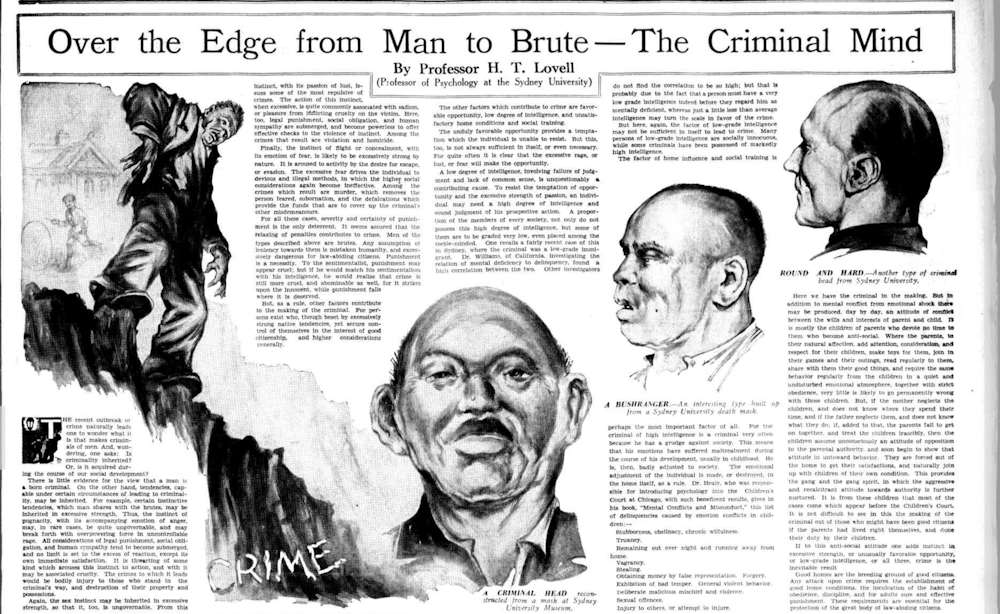
Article by Sydney psychology professor H.T. Lovell. The Sun, Sunday July 28 1928. Trove

Read more: From reproducers to ‘flutters’ to ‘sluts’: tracing attitudes to women’s pleasure in Australia


Other commentators maintained that sadism arose from a mixture of causes. In 1930, for example, an unnamed “leading Sydney psychiatrist” interviewed about the sadistic strangling of some young girls claimed that the “Melbourne murderer” must have had his “natural instincts repressed” as a young person, and these instincts “found an unnatural outlet” in a fetish for suffocating girls with their own stockings.

This psychiatrist also believed that in “most cases of sadism” there would be “a taint of insanity in his ancestry”, a history of “intermarriage of close relatives”, or even evidence of “an injury to the head during childhood”.

The anxiety-inducing conclusion, therefore, was:

Any one of us is capable of sadism … We might acquire it through an accident, or through the repression of our natural instincts.

Monsters and men

Most commentators believed that sadists were outwardly normal men. This may seem strange, given the overblown language of monstrosity that was routinely applied to them, particularly in the sensationalist or tabloid press. After all, lurid descriptions of the “Vampire Killer” (as Everett’s killer was called) and “bestial” murderers boosted sales. It gave licence for prurient descriptions of wounds, torn flesh and gaping holes.

Rebecca May Andersen, who was killed in Sydney in May 1924. Truth, May 18 1924. Trove

One example is the way Sydney’s Truth newspaper reported the “Devilish Murder and Mutilation” of Rebecca May Andersen, who was tortured, mutilated, then killed near Long Bay Prison in Malabar (Sydney) in May 1924. Readers were told the murderer had to be “lust-mad”, or a “revengeful demonical monster with an appetite for inhuman atrocity”: he suffered from “a perverted, depraved, sexual degeneracy”.

However, at the same time, these reports suggested sadists could be “any of us” – that is, a male “us”. They possessed a normal outward appearance, the sadist being “a monster in human form”. In the words of a psychiatrist explaining a brutal abduction, rape and torture of a woman in Corrimal (northern suburb of Wollongong) in 1946:

People capable of sadistic acts like the Corrimol crime would never be noticed in a crowd. They would appear quite normal individuals. But the latent tendency to sadism comes out if the opportunity arises. Some sadists suffer from the “tough guy” complex. By inflicting pain on a weaker person, most often a woman, they boost their own ego. But usually sadists are sexually frustrated people, who express their perversion in bodily cruelty.

Alcohol abuse was often blamed for transforming a “normal” man into a sadistic one. This was the explanation given by Sir John Macpherson, the first professor of psychiatry at the University of Sydney and the author of Mental Affections: An Introduction to the Study of Insanity (1899). Referring to the sadistic attack on Andersen, Macpherson observed:

Some of the most extraordinary and dastardly crimes in history have been committed by alcoholics who, under the influence of the drink, perform deeds which, in their normal state, they would shrink from contemplating.

This was the explanation for the sadistic violence of Roy Governor, an Indigenous Australian. After drinking half a bottle of wine, Governor had raped an elderly, white, disabled woman. In his statement from the dock, Governor explained:

When I drink wine my sex controls me; I have no control over it; I am what they call a sadist; I have read a lot of books on sex things … I am a funny man when I drink wine I want with a woman.

Curiously, sadism was conceived of as an excess of normal male sexuality. In other words, a sadist would not harm anyone if he could be “relieved” of his “natural” passions by regularly engaging in sexual intercourse with a “legitimate” partner. In 1920, for example, Perth’s Truth concluded that sadism was the “Cave-Man Kink”. The journalist contended that the perversion was:

more common than is generally supposed. The nips and pinches and the playful slaps, that in many cases mark the preliminary stages of love’s young dream likewise denote a tendency towards that kink. Fortunately for the happiness of mankind, or rather womankind, this tendency becomes weaker in the vast majority of cases, and mostly dies away altogether with the satisfaction of the sexual appetite. Should it persist, however, it eventually develops into plain brutality, usually of a most revolting type.

Blaming the victims

Disturbingly, victims were often said to be partly responsible for their fate. Of course, there were degrees. The press failed to find anything salacious about Everett, for example. But Andersen was “fair game”. “Big Nose May”, as she was known, was castigated as a slut and “insatiable” alcoholic. Newspapers even speculated that she might have been murdered because she stole money from one of her customers or had given them a sexually transmitted disease.

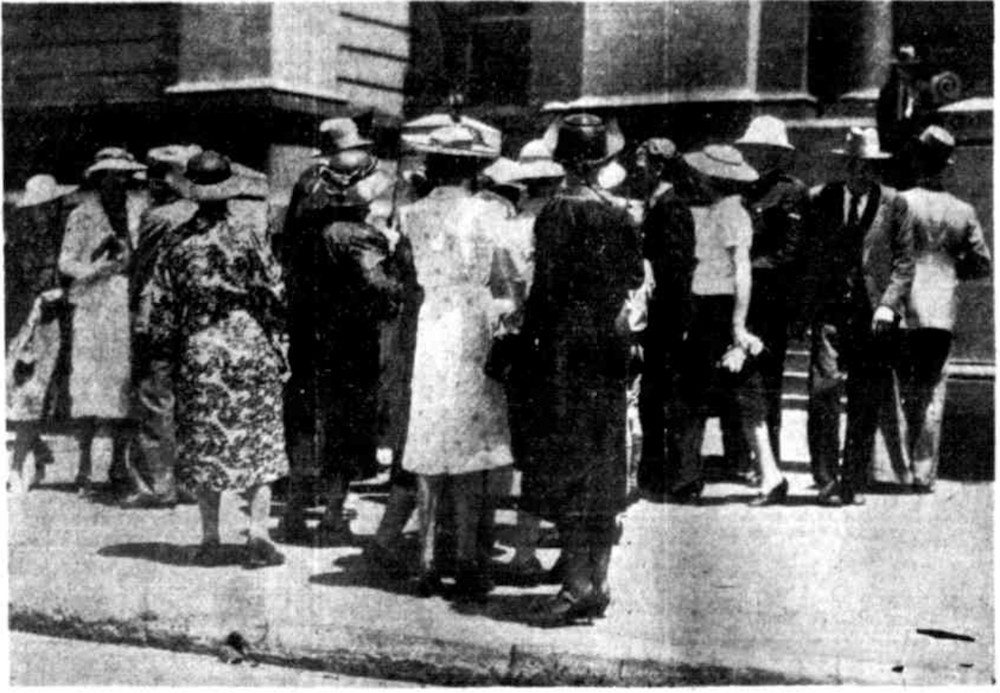
Women gather outside the court for the inquest into Dorothy May Everett’s murder. Newcastle Sun, Tuesday January 4 1938. Trove

Finally, sadists were a type of person, as opposed to a practice. In particular, he had a racial identity: he was “foreign”. In writing about Everett’s cruel murder, readers were informed that the perpetrator had probably arrived recently in the Newcastle port. There was nothing “Australian” about such perversions.

More importantly, newspaper reports increasingly focused less on the victim’s sufferings and more on the identity of the perpetrator. In the late 19th and early 20th centuries, the perpetrator had been labelled a sadist because of the mutilation and extreme violence done to the victim. Increasingly, though, the victim’s pain became secondary to the perpetrator’s identity and, in particular, his fantasies.

Indeed, to be labelled a “sadist” a man did not even have to harm anyone. Sadistic acts became secondary to a sadistic identity, which was located in the fantasy life of the perpetrator. This medicalisation of perpetrators of extreme violence had the effect of silencing the victims of sadism.

Women like “Dot” Everett were doubly silenced – both by their murderer and by newspaper reportage that was more interested in speculating about the “sadist” than his victims.

– Friday essay: how the moral panic over ‘sexual sadists’ silenced their victims
– http://theconversation.com/friday-essay-how-the-moral-panic-over-sexual-sadists-silenced-their-victims-103445]]>

With Justin Milne gone, how does the ABC go about restoring its crucial independence?

]]>

The Conversation (Au and NZ) – By Andrew Dodd, Director of the Centre for Advancing Journalism, University of Melbourne

The ABC’s former chairman, Justin Milne, has propelled himself from obscurity to infamy in just four days. Along the way, he has ended the tenure of the ABC’s first female managing director, prompted two federal inquiries, revealed the dysfunctional relationship between the national broadcaster’s board and its upper management, and laid bare the politicised climate in which the ABC operates.

But on the positive side, it’s just possible that he has opened up a discussion that’s sorely needed about the independence of the ABC and the pressures that work to undermine it.

Milne’s position became untenable following leaks that appeared to reveal serial interventions in day-to-day management. These included petitioning former managing director Michelle Guthrie to sack senior journalist Emma Alberici and to “shoot” political editor Andrew Probyn because the government didn’t like them.


Read more: Justin Milne quits as ABC chairman after furore over attack on political editor


The leaked emails suggest Milne wanted particular staff removed to protect the ABC from its many strident critics in the federal Coalition government, and that he actively lobbied on a wide range of causes, including Triple J’s decision to move the Hottest 100 from Australia Day. He opposed the move because it offended his friend, the then prime minister Malcolm Turnbull.

The ABC board met today without Milne and asked him to stand aside. But Milne instead offered to resign. Afterwards, he told ABC journalist Leigh Sales:

Clearly there is a lot of pressure on the organisation. My aims have been to look after the interests of the corporation. And it’s clearly not a good thing for everyone to be trying to do their job with this kind of firestorm going on so I wanted to provide a release valve.

Milne’s resignation has provided some resolution. But Prime Minister Scott Morrison’s hope that “normal transmission” will now resume is the wishful thinking of a government that desperately hopes the ABC won’t become an election issue, either in the impending Wentworth by-election or at next year’s general poll.

The government has announced an inquiry, to be conducted by Mike Mrdak, secretary of the Department of Communications and the Arts. Communications Minister Mitch Fifield said it would determine the facts and restore confidence in the national broadcaster.

But as several critics have pointed out, a review conducted by someone who answers to the minister is unlikely to considered independent, especially as it was the government that Milne was seeking to appease.

Labor’s Communications spokesperson, Michelle Rowland, and others have dismissed the proposed inquiry. Paul Murphy, chief executive of the Media Entertainment and Arts Alliance, labelled it a “whitewash” and called for a full public inquiry.

The Opposition and the Greens have supported a separate Senate inquiry to investigate the issue with wider scope and greater powers. Greens senator Sarah Hanson-Young said it was needed “so we can question members of the board about what has really been going on”.

She also called for a clean sweep of the entire board because of questions about what it knew about Milne’s interventions and its failure to protect staff:

We need a broom through the board and we need to give the public broadcaster a fresh start.

ABC’s independence under threat in other ways

This chaotic week has exposed the increasingly politicised climate in which the ABC now operates and the inconsistencies in the government’s narrative about the independence of the national broadcaster.

Both Fifield and Morrison have declared their support for the ABC and suggested that Milne’s reported interventions were unacceptable. But the party they represent is at the same time attacking the ABC on numerous fronts.

It has several pieces of legislation before the parliament that seek to undermine the ABC’s role or change its editorial charter, some at the behest of Pauline Hanson’s One Nation.


Read more: A public broadcaster that bows to political pressure isn’t doing its job


It has cut the ABC’s budget by a reported A$83 million, and subjected the broadcaster to reviews into its efficiency and competitive neutrality, at the request of its commercial competitors.

Fifield is himself a regular complainant about ABC journalists on the grounds that they have not reported on the Coalition fairly.

On Monday, which now seems so long ago, the former ABC staff-elected director Matt Peacock observed that for all her faults, Guthrie did at least stand up for the ABC’s independence. He told the Media Files podcast that Guthrie understood its importance and did her best to defend it. It was an astute observation, given that independence has become the dominant theme of this unedifying week.

This is hopefully the main topic that will be explored in the impending inquiries. The issue of independence transcends the appointment of a new chairman or managing director, although clearly the next permanent occupants of those roles need to understand what a public broadcaster does and the importance of fearless, civic-minded journalism.


Read more: Why the ABC, and the public that trusts it, must stand firm against threats to its editorial independence


Questions about independence go to the way appointments are made to the board – a process that has been politicised by both major parties. It is about what a public broadcaster is and whether governments are prepared, on the one hand, to support and fortify the ABC against its critics and, on the other, to leave it alone to do its job.

Others have called today for the government to ensure board members are appointed at arm’s length, as is meant to happen under existing rules, and to appoint directors who have media experience and a passion for public broadcasting.

As Marcus Strom, president of the Media Entertainment and Arts Alliance, told ABC News, the staff deserve better and are sick of being treated like “political footballs”.

For the millions of Australians who care about the ABC, this has been a wearying week in which odd alliances have emerged. It’s a strange day, for example, when an editorial in The Australian concurs with the unanimous sentiment of ABC staff.

But the disruption won’t have been in vain if more awareness emerges about the fragility and importance of the ABC’s editorial independence.

– With Justin Milne gone, how does the ABC go about restoring its crucial independence?
– http://theconversation.com/with-justin-milne-gone-how-does-the-abc-go-about-restoring-its-crucial-independence-103987]]>

Bring on the royal commission, but we have a plan to act on aged care right now

]]>

The Conversation (Au and NZ) – By Professor John Pollaers OAM, Melbourne Enterprise Professor, Faculty of Business and Economics, University of Melbourne

There has been no shortage of inquiries into the aged care system over the past few decades. That shocking systemic problems of neglect and abuse remain, as revealed by the ABC’s recent Four Corners expose, highlights the failure of government and industry to act on the recommendations arising from these investigations.

We can only be optimistic that the royal commission into the quality and safety of aged care will help change that. A royal commission will capture the public consciousness in a way other inquiries have not. It will document hundreds, if not thousands, of individual stories. Its proceedings will lead to extensive media coverage, and invite a national conversation. Its recommendations should prove harder for governments to shelve.

But there is no reason for government and industry to wait years for the royal commission to hand down a report. They can act now to make real progress, based on what we know already.


Read more: We’ve had 20 aged care reviews in 20 years – will the royal commission be any different?


Three months ago the Aged Care Workforce Strategy Taskforce, which I chaired, delivered its report on ways to improve aged care. Based on listening to thousands of people throughout the aged-care sector over nine months, our report outlines 14 areas for action to support Australia’s aged care workforce in their essential role of caring for some of the frailest, most vulnerable members of society.

There is no need to wait on making the changes our report recommends.

By acting immediately, meaningful strategic reform can be implemented within the next three years. It can make a real difference to the quality of aged care well before the royal commission has completed its work.

Fragmented industry needs a unifying code

The aged care industry is fragmented, made up predominantly of small to medium enterprises spread across community, home and residential care settings. It relies on a diverse workforce under pressure from rising expectations and other changes much outside its direct control.


Read more: Aussies are getting older, and the health workforce needs training to reflect it


Our report’s central recommendation is the need for the aged care industry to embrace a voluntary code of practice. This code can help focus the minds of care providers on standards, workforce practices and commitments to quality and safety. This in turn will focus attention on the need to attract and retain committed, high-quality staff.

We are pleased the industry has embraced this idea. Industry leaders have also supported initiatives to improve the skills and qualifications the industry demands of its workers.

There is a need for the education and training sector to get on board, ensuring graduates have the skills and knowledge that support safe, quality care.

We need a holistic approach to care

One important finding from our investigation is that those in care, and their families, want a more holistic approach to caring. What they don’t want is narrow “clinical” care, one that treats mental health with a pill or judges a meal just on its calories. Well-designed care needs to consider all aspects of health, as well as cultural needs and aspirations around “living well”.


Read more: How our residential aged-care system doesn’t care about older people’s emotional needs


There are clear funding implications. To provide holistic care requires changing how money is spent, as well as how much.

Simply stated, as a society we have been short-changing the elderly.

That is why our first recommendation is the need for a concerted social change campaign to reframe caring and promote the importance of aged care as a work vocation.

As the report notes, shifting negative attitudes towards ageing, the elderly, death and dying is a social challenge:

It begins with understanding that care for older people is broader than organised, professional care. These factors contribute to the perception that aged care is not a career of first choice. The opportunities that ageing and aged care present in terms of employment, research, contribution to the economy and as a driver for innovation also go largely unrecognised.

The spotlight the royal commission will place on aged care should help provoke some serious social soul searching. We need a national conversation about our attitudes to ageing. We need to recognise the problems besetting the industry are but a subset of a wider attitudinal problem that has undervalued the elderly.

But the royal commission must not be used as an excuse to procrastinate. There are actions now we know we can take. We should take them.

– Bring on the royal commission, but we have a plan to act on aged care right now
– http://theconversation.com/bring-on-the-royal-commission-but-we-have-a-plan-to-act-on-aged-care-right-now-103426]]>

We need to talk about the mental health of content moderators

]]>

The Conversation (Au and NZ) – By Jennifer Beckett, Lecturer in Media and Communications, University of Melbourne

Selena Scola worked as a public content contractor, or content moderator, for Facebook in its Silicon Valley offices. She left the company in March after less than a year.

In documents filed last week in California, Scola alleges unsafe work practices led her to develop post-traumatic stress disorder (PTSD) from witnessing “thousands of acts of extreme and graphic violence”.


Read more: Facebook is all for community, but what kind of community is it building?


Facebook acknowledged the work of moderation is not easy in a blog post published in July. In the same post, Facebook’s Vice President of Operations Ellen Silver outlined some of the ways the company supports their moderators:

All content reviewers — whether full-time employees, contractors, or those employed by partner companies — have access to mental health resources, including trained professionals onsite for both individual and group counselling.

But Scola claims Facebook fails to practice what it preaches. Previous reports about its workplace conditions also suggest the support they provide to moderators isn’t enough.

It’s not the first time

Scola’s legal action is not the first of its kind. Microsoft have been involved in a similar case since December 2016 involving two employees who worked in their child safety team.

In both cases the plaintiffs allege their employer failed to provide sufficient support, despite knowing the psychological dangers of the work.

Both Microsoft and Facebook dispute the claims.

How moderating can affect your mental health

Facebook moderators sift through hundreds of examples of distressing content during each eight hour shift.

They assess posts including, but not limited to, depictions of violent death – including suicide and murder – self-harm, assault, violence against animals, hate speech and sexualised violence.

Studies in areas such as child protection, journalism and law enforcement show repeated exposure to these types of content has serious consequences. That includes the development of PTSD. Workers also experience higher rates of burnout, relationship breakdown and, in some instances, suicide.

Aren’t there workplace guidelines?

Industries including journalism, law and policing have invested a significant amount of thought and money into best practice policies designed to protect workers.

In Australia, for example, those working in child safety opt-in to the work rather than cases being assigned. They are then required to undertake rigorous psychological testing to assess if they are able to emotionally compartmentalise the work effectively. Once working, they have regular mandated counselling sessions and are routinely reassigned into other areas of investigation to limit the amount of exposure.

The tech industry has similar guidelines. In fact, Facebook helped create the Technology Coalition, which aims to eradicate online child sexual exploitation. In 2015, the coalition released its Employee Resilience Guidebook, which outlines occupational health and safety measures for workers routinely viewing distressing materials. While these guidelines are couched as specific to workers viewing child pornography, they are also applicable to all types of distressing imagery.


Read more: Facebook’s moderation rules prove it’s OK with being a hostile place for women


The guidelines include “providing mandatory group and individual counselling sessions” with a trauma specialist, and “permitting moderators to opt-out” of viewing child pornography.

The guidelines also recommend limiting exposure to disturbing materials to four hours, encouraging workers to switch to other projects to get relief, and allowing workers time off to recover from trauma.

But it’s not just about guidelines

Having support available doesn’t necessarily mean staff feel like they can actually access it. Most of Facebook’s moderators, including Scola, work in precarious employment conditions as outside contractors employed through third party companies.

Working under these conditions has been shown to have a detrimental impact on employee well-being. That’s because these kinds of employees are not only less likely to be able to access support mechanisms, they often feel doing so will risk them losing their job. In addition, low pay can lead to employees being unable to take time off to recover from trauma.

Insecure work can also impact one’s sense of control. As I’ve previously discussed, moderators have little to no control over their work flow. They do not control the type of content that pops up on their screen. They have limited time to make decisions, often with little or no context. And, they have no personal say in how those decisions are made.

According to both the filing, and media reports around Facebook’s moderator employment conditions, employees are under immense pressure from the company to get through thousands of posts per day. They are also regularly audited, which adds to the stress.

Where to from here?

Adequate workplace support is essential for moderators. Some sections of the industry provide us with best case examples. In particular, the support provided to those who work in online mental health communities, such as Beyond Blue in Australia, is exemplary and provides a good blueprint.


Read more: ‘Haters gonna hate’ is no consolation for online moderators


We also need to address the ongoing issue of precarity in an industry that asks people to put their mental health at risk on a daily basis. This requires good industry governance and representation. To this end, Australian Community Managers have recently partnered with the MEAA to push for better conditions for everyone in the industry, including moderators.

As for Facebook, Scola’s suit is a class action. If it’s successful, Facebook could find itself compensating hundreds of moderators employed in California over the past three years. It could also set an industry-wide precedent, opening the door to complaints from thousands of moderators employed across a range of tech and media industries.

– We need to talk about the mental health of content moderators
– http://theconversation.com/we-need-to-talk-about-the-mental-health-of-content-moderators-103830]]>

Man With The Iron Neck is gripping, confronting physical theatre

]]>

The Conversation (Au and NZ) – By Trevor Jones, Lecturer in Musical Theatre, Griffith University

Review: Man With The Iron Neck, Brisbane Festival (preview performance).


In the foyer of the Brisbane Powerhouse, the audience is greeted by a statement from co-creators Ursula Yovich and Josh Bond: “This story. Not black but white as well. To open up a conversation and come out the other side together.”

Legs On The Wall’s Man With The Iron Neck deals with the important but taboo topic of youth suicide, particularly in the Indigenous community. With a script by Ursula Yovich alternating between naturalistic dialogue and poetic monologues, stunning visual design by Joey Ruigrok, Matt Marshall, Emma Vine and Sam James, and extraoardinary physical performances by the cast (Ursula Yovich as Mum Rose, Kyle Shilling as Bear, Tibian Wyles as best friend Ash, and Caleena Sansbury as Evelyn), this piece gives the audience 80 minutes of gripping, confronting and moving physical theatre at its best.

Before the piece began, Uncle Stephen Coghill Senior, of the Jagera people, gave a Welcome to Country speaking of reconciliation. As the performance deals with very sensitive issues, Legs on the Wall Theatre have provided a range of support materials for the audience, including a booklet for personal reflection on the themes of the piece and counselling on hand if needed. A firepit was also planned to enable audiences to burn their own offerings in a symbolic ritual of “letting go”. This work spans much more broadly than what is being presented on stage and the company’s commitment to opening a conversation about suicide is tangible.

Brett Boardman

One of the most striking features of this production is Sam James’ stunning use of cinematic video projection on the curved back wall, immediately creating a sense of place as well as reflecting the character’s inner thoughts with evocative and sometimes disturbing imagery. The familiarity of the Australian bush engulfs the action and draws the audience into the world of the play.

One of my concerns with physical theatre, at times, is that the physical elements can outweigh the dramatic elements. Man With The Iron Neck, however, seamlessly interweaves extraordinary aerial and physical work with a beautifully written narrative. In an interview about the piece, Ursula Yovich states, “This is not just a kitchen table drama. This is a work of scale.” It is the physical elements that transcend the domestic scenes.

Yovich’s moving monologue about giving birth to twins Bear and Evelyn is breathtakingly amplified by an aerial ballet performed by Kyle Shilling and Caleena Sansbury. The iconic Australian Hill’s Hoist is used throughout the work as a type of aerial trapeze; first as Bear relives the horror of his own father’s suicide and later as Ash spins into a cyclonic whirl in the wake of Bear’s suicide.

Australian Rules Football is both the saviour and destroyer of these characters. Much of the humour and energy of the piece comes from the family’s recreation of great football moments, tagging significant Indigenous footballers such as Adam Goodes, Buddy Franklin and Daniel Rioli. The tragedy in the story, however, starts with Bear’s reaction to a racial slur on the field, with direct reference to the famous incident involving Adam Goodes in 2013, in which a 13 year old supporter called the footballer an “ape” on the field.

One of the most striking features of this production is Sam James’ stunning projections. Brett Boardman

The powerful dialogue that follows explores the ideas of assimilation and having to “pretend to be something you’re not”.

The depiction of grief and guilt in this work is heart-wrenching. Yovich is literally swallowed by the couch in her Valium haze into a nightmare world of suicide, layered with images of historic Indigenous oppression.

Sansbury’s Evelyn struggles to write her brother’s eulogy: “How can I leave anything out? He was more than that.” Wyles repeats the story of “The Great Peters”, an early 20th Century circus star who defied death as his own coping mechanism, each time layering more information about his friend’s suicide until finally asking, “Why did you do it, Bear?”.

Despite a few rogue microphone crackles in this performance, the sound design by Michael Toisuta and Jed Silver finely balances naturalistic speech with an evocative soundtrack (composed by Iain Grandage and Steve Francis) while also providing an incredibly memorable moment as Evelyn tries to chop down the tree responsible for the death of her father and brother while screaming “I’m here, Mum. I’m still here”.

Hope comes at the end of the piece when Ash asks Mum Rose how she coped with her husband’s suicide. Her simple response is “Every day I had to choose whether to give up or just keep going.” Ash letting go of his grief leads to an extraordinary moment as Bear swiftly flies into the rafters of the theatre. Although the metaphor of the morning star feels a little rushed, the final image of the night sky and Ash’s audible exhale is a fitting conclusion.

The basic premise that “physicality takes over when the words are not enough” is explored to its full extent in Man With The Iron Neck and at the conclusion of this preview performance the cast and riggers received a well-earned standing ovation.


Man With The Iron Neck is being staged as part of the Brisbane Festival until September 29.

– Man With The Iron Neck is gripping, confronting physical theatre
– http://theconversation.com/man-with-the-iron-neck-is-gripping-confronting-physical-theatre-103994]]>

Just because you’re thin, doesn’t mean you’re healthy

]]>

The Conversation (Au and NZ) – By Dominic Tran, Postdoctoral Research Associate, University of Sydney

According to the Australian Institute of Health and Welfare, 63% of Australian adults are overweight or obese.

But it’s much harder to estimate how many are within a healthy weight range but have poor diets or sedentary lifestyles. These can cause significant health problems that will often be missed because the person appears to look “healthy”.


Read more: I’m not overweight, so why do I need to eat healthy foods?


How do we judge the health of weight?

Obesity statistics often take estimates of body fat using body mass index (BMI). Although BMI isn’t perfectly correlated with body fat percentage, it’s a quick and easy method for collecting data using just the person’s height and weight. If the BMI is higher than 25, a person is considered “overweight”. If it’s above 30, they’re considered “obese”. But BMI doesn’t tell us how healthy someone is on the inside.

Using additional lifestyle measures, such as diet and exercise frequency over the last year, a recent report from the Queensland Health department estimated 23% of those who are not currently overweight or obese are at risk of being so in the future.

These figures indicate that the percentage of unhealthy-weight individuals does not accurately capture the percentage of unhealthy-lifestyle individuals, with the latter number likely to be much higher.


Read more: We asked five experts: is BMI a good way to tell if my weight is healthy?


If you’re not overweight, does a healthy lifestyle matter?

Many people think if they’re able to stay lean while eating poorly and not exercising, then that’s OK. But though you might appear healthy on the outside, you could have the same health concerns as overweight and obese individuals on the inside.

When considering risk factors associated with heart disease and stroke or cancer, we often think about health indicators such as smoking, cholesterol, blood pressure, and body weight. But poor diet and physical inactivity also each increase the risk for heart disease and have a role to play in the development of some cancers.

So even if you don’t smoke and you’re not overweight, being inactive and eating badly increases your risk of developing heart disease.

Little research has been done to compare the risk diet and exercise contributes to the development of heart disease in overweight versus skinny but unhealthy individuals. However, one study measured the risk of different lifestyle factors associated with complications following acute coronary syndrome – a sudden reduction in blood flow to the heart.

It found adherence to a healthy diet and exercise regime halved the risk of having a major complication (such as stroke or death) in the six months following the initial incident compared with non-adherence.

Unhealthy diets are bad for your body, but what about your brain?

Recent research has also shown overconsumption of high-fat and high-sugar foods may have negative effects on your brain, causing learning and memory deficits. Studies have found obesity is associated with impairments in cognitive functioning, as assessed by a range of learning and memory tests, such as the ability to remember a list of words previously presented some minutes or hours earlier.

Notably, this relationship between body weight and cognitive functioning was present even after controlling for a range of factors including education level and existing medical conditions.

Of particular relevance to this discussion is the growing body of evidence that diet-induced cognitive impairments can emerge rapidly — within weeks or even days. For example, a study conducted at Oxford University found healthy adults assigned to a high-fat diet (75% of energy intake) for five days showed impaired attention, memory, and mood compared to a low-fat diet control group.

Another study conducted at Macquarie University also found eating a high-fat and high-sugar breakfast each day for as little as four days resulted in learning and memory deficits similar to those observed in overweight and obese individuals.

These findings confirm the results of rodent studies showing specific forms of memories can be impaired after only a few days on a diet containing sugar water and human “junk” foods such as cakes and biscuits.

Body weight was not hugely different between the groups eating a healthy diet and those on high fat and sugar diets. So this shows negative consequences of poor dietary intake can occur even when body weight has not noticeably changed. These studies show body weight is not always the best predictor of internal health.

We still don’t know much about the mechanism(s) through which these high-fat and high-sugar foods impair cognitive functioning over such short periods. One possible mechanism is the changes to blood glucose levels from eating high-fat and high-sugar foods. Fluctuations in blood glucose levels may impair glucose metabolism and insulin signalling in the brain.

Many people use low body weight to excuse unhealthy eating and physical inactivity. But body weight is not the best indicator of internal well-being. A much better indicator is your diet. When it comes to your health, it’s what’s on the inside that counts and you really are what you eat.

– Just because you’re thin, doesn’t mean you’re healthy
– http://theconversation.com/just-because-youre-thin-doesnt-mean-youre-healthy-101185]]>

Why an education in visual arts is the key to arming students for the future

]]>

The Conversation (Au and NZ) – By Ted Snell, Professor, Chief Cultural Officer, Cultural Precinct, University of Western Australia

Visual skills are essential for a sophisticated workforce, yet we offer so little education in the vital skills of learning to see and developing the ability to interpret and critique our image-saturated world.

In the global marketplace, the economy of the cultural industries is growing in importance, and visual expression is part of everyday communication. For Australia to compete in this marketplace, visual acuity, visual literacy and the ability to communicate visually must be recognised as an equally fundamental skill to those of language and numeracy. These can all be taught through grounding in the visual arts.

There is a growing body of international and Australian research that demonstrates a direct link between an arts-rich education from an early age and an increase in students’ confidence, their intellectual abilities across all learning areas, problem-solving skills, and general life skills.

The visual arts provide a vital cultural component and deliver on a range of important skills otherwise missing from the curriculum. They also provide a platform for addressing the important issues of our times; they build self-reflective, empowered communities; and, let’s not forget, they also bring great joy and reassurance in times of anxiety.

Future skills

As the 2016 World Economic Forum report on The Future of Jobs predicted, the top necessary skills required for the fourth industrial revolution will be complex problem-solving, critical thinking and creativity, alongside emotional intelligence and cognitive flexibility.


Read more: Fourth industrial revolution: sorting out the real from the unreal


Highly specialised, rigidly structured degree courses aimed at a specific job outcome will be redundant in this emerging environment. But degrees with a strong visual arts foundation will ensure individuals will flourish, not flounder, under the impact of disruptive technologies and when confronted by new ways of working.

Steve Jobs said he employed people at Apple with passion, particularly for problem-solving, “having a vision, and being able to articulate it so people around you can understand it, and getting a consensus on a common vision”. It’s why Jobs also said he wanted to see applicants’ drawing portfolios before he employed them.

Work in the visual arts also generates new images and develops new ideas. These have the potential for commercialisation at a time when the government is pursuing its agenda on innovation and promoting the creative industries. For instance, several of the residencies through the Australian Network for Art and Technology Synapse program have led to further research and potential commercialisation.

More and more jobs require skills in visual literacy. Shutterstock.com

Ever-expanding digital platforms will also need more and more creative content, requiring that all employees in every profession have opportunities to develop these skills.

We must then ensure that the creative arts are a core component of the curriculum so that all students will become more resourceful and better equipped to successfully manage change.

As well as teaching us vital skills, the arts also enrich, enhance and transform individual lives. This is the intrinsic benefit of the arts, which also has a value to the wider community.

It’s not just about individual pleasure, though. The arts change attitudes, and by so doing they can transform society. An education in the visual arts provides students with a better chance of achieving these shifts in our collective consciousness.


Read more: Friday essay: can art really make a difference?


Embedding arts at universities

Studying the visual arts provides the hothouse environment that brings the instrumental and intrinsic benefits of the arts into unison. It becomes a forum in which to explore new possibilities and critique existing presumptions and preconceptions about art and life.

Our challenge is to find ways of integrating the visual arts into the core curriculum and at the heart of the student experience. This includes an object-based learning approach to teaching (for instance, including study of artworks and artefacts).

Internships, courses that integrate the arts within other disciplines, and collaborative projects designed for students across discipline areas are just some examples of strategies already employed at universities.

That is our challenge, to work collaboratively across academic disciplines to re-imagine the role of the visual arts in the 21st century university.


This article is an edited extract from a keynote address to the Australian Council of University Art & Design Schools (ACUADS) annual conference being held in Perth on September 27-28.

– Why an education in visual arts is the key to arming students for the future
– http://theconversation.com/why-an-education-in-visual-arts-is-the-key-to-arming-students-for-the-future-103844]]>

Blow that whistle: seven reasons you should respect the ref in the NRL Grand Final

]]>

The Conversation (Au and NZ) – By Kath O’Brien, PhD Candidate – School of Human Movement & Nutrition Sciences, The University of Queensland

This weekend’s rugby league Grand Final sees the Sydney Roosters face the Melbourne Storm in front of a stadium crowd of thousands – and even more on television. All eyes will be on the referee to make sure the play is fair.

Like elite athletes, the reputation of these full-time professional refs is often summarised by their performance in high-pressure, high-stakes events – watched by people they can never impress.

Over the past three years, I have spent countless hours studying how NRL referees learn their craft.

So, ahead of this year’s NRL grand final, here are some aspects that might help you see the game from a ref’s point of view.


Read more: Split-second decisions with little praise: so what does it take to ref a game of NRL


Gerard Sutton (left) refereeing the 2015 Grand Final between the Brisbane Broncos and the North Queensland Cowboys. Johnathan Thurston of the Cowboys (centre) and Justin Hodges of the Broncos (right). AAP Image/Paul Miller

1. Mt Everest moment

The Grand Final is the ultimate. It is the pinnacle of a referee’s work over the course of the year. Everyone wants to make it, to earn the right to rule.

But they may never reach that pinnacle again.

So remember that they want the best: they really want to represent the game, the two teams involved, the fans and those referees who didn’t make the final, to the best of their ability.

Referee Jon Stone (left) with Daly Cherry-Evans (right) of the Manly-Warringah Sea Eagles in a match against the Gold Coast Titans. AAP Image/Dan Himbrechts

2. You only see it once

Referees make split-second decisions. They only see things once, often only a small movement, and usually at speed.

They have to calculate the right moment to strike. They don’t have the luxury of multiple video replays to get it right.

Even without the involvement of the bunker – a centralised facility that records the game from several angles and to which refs can refer decisions for review – consider how hard this is to maintain faultlessly (and fearlessly) over two 40-minute blocks.

Refs can call on the bunker for help.

3. They never fly solo

During the course of a game, lead referees have to cope with listening to their assistant referee, two line judges, the matchday referee coach, players yelling at them, and occasionally spectators who provide their own helpful advice.

They also have to call for assistance, knowing that this may overrule something on which they have already made a ruling.

Remember, few of us hold jobs where people are simultaneously speaking to us, where we have to demand a second opinion, and where we can be called out for our mistakes on national television.

Everyone’s a critic of the refs.

4. Reading their mind

Each referee’s decision-making prowess is strongly predicated on their ability to read the game. They need to “feel” situations as they dynamically unfold with respect to players’ actions, movements and tensions.

Refs need to internally interpret, process and recall important variables and situations and to then blend these into accurate, constructive decisions that affect a given action or outcome both now and into the future of the game.

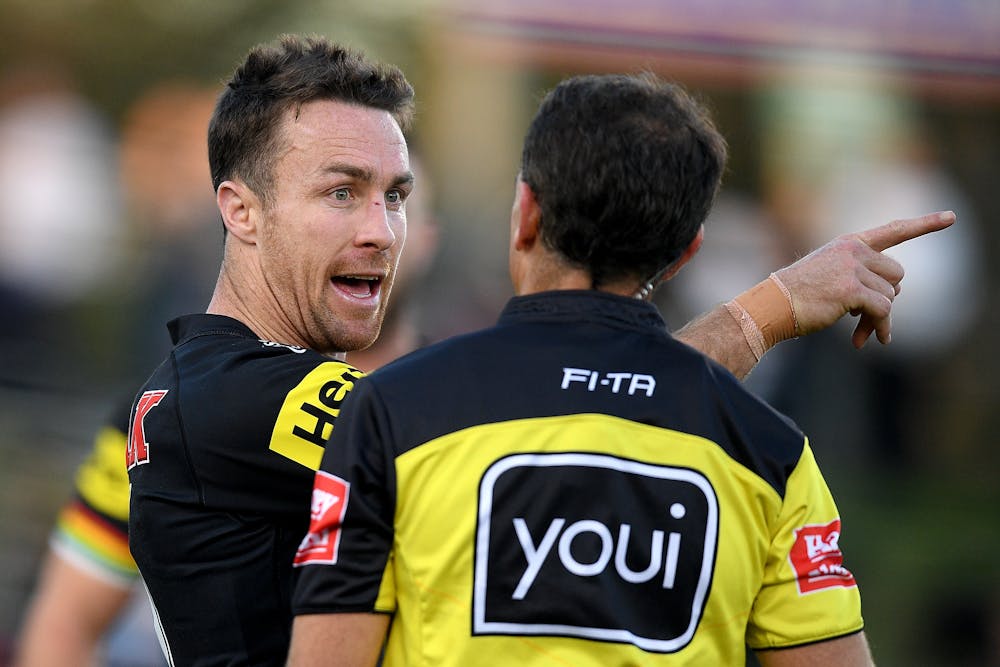
James Maloney (left) of the Panthers remonstrates with referee Gerard Sutton (right) during a match between the Penrith Panthers and the Manly-Warringah Sea Eagles. AAP Image/Dan Himbrechts

5. Collectively attuned

The lead and assistant refs in a Grand Final know their roles individually and collectively. On match day, they are tightly woven, well-attuned to each others nuances and thoughts.

Their thinking in action also imperceptibly defines and shapes a tone and rhythm for how the game unfolds.

But remember, they constantly formulate these actions in the context of the whole, never as individuals, but rather as part of the overall fabric of the game.

Daly Cherry-Evans (left) of the Sea Eagles reacts to referee Henry Perenara (centre) during a match between the Sydney Roosters and the Manly-Warringah Sea Eagles. AAP Image/Brendan Esposito

6. Refereeing is hard work

NRL referees run about 8.2km per game. They consistently manage around 282 rucks and 36 kicks in play.

They also spend a staggering 31% of their game time in high anaerobic heart rate sectors of 170 beats per minute (BPM) or above.

At the same time, referees are dynamically adjusting their field positions to continually remain alongside the play, all while making decisions at speed.

When was the last time you ran this far while also completing several intermittent sprint efforts, and making mentally taxing decisions all the while?

Jake Trbojevic (left) of the Sea Eagles disputes a decision by referee Grant Atkins (right) during a match between the West Tigers and the Manly Sea Eagles. AAP Image/Paul Miller

7. They love the game

Referees are passionate about rugby league. Many played the game as juniors, while others have family members involved.

They also love the challenge and excitement of league and the camaraderie that comes with such a high-profile sport.

But referees are expected to look serious, lack personality and ignore the distractions from both participants and spectators.

Remember, they are not permitted to publicly express their support, or otherwise, for particular teams or results, or provide insights into how they feel about their sport.

Referee Matt Cecchin blows the whistle for the start of play between the Penrith Panthers and the Canberra Raiders. AAP Image/Brendon Thorne

Be gentle

So, remember that referees are just people – albeit people who are extremely driven, focused, energetic athletes who are strongly anchored to performing the perfect game.


Read more: Whether teams win or lose, sporting events lead to spikes in violence against women and children


They work as hard as elite players, both physically and mentally, to store and retrieve rules, learn new rules, learn every player’s name, stay fit, and make correct decisions at lightning speed.

Remember too that on Grand Final Day, most fans’ satisfactions are often driven by how well their team performs – which means it is often easier (and more acceptable) to ignore the loss if it can be blamed on the referees, rather than your own team’s play.

And don’t hit the ref! Matt Moylan of the Sharks collides with assistant referee Phil Henderson during a match between the Penrith Panthers and the Cronulla-Sutherland Sharks. AAP Image/Dan Himbrechts

– Blow that whistle: seven reasons you should respect the ref in the NRL Grand Final
– http://theconversation.com/blow-that-whistle-seven-reasons-you-should-respect-the-ref-in-the-nrl-grand-final-103770]]>

How ABC chairman Justin Milne compromised the independence of the national broadcaster

]]>

The Conversation (Au and NZ) – By Peter Fray, Professor of Journalism Practice, University of Technology Sydney

Behind the extraordinary events engulfing the national broadcaster lies a rather ordinary and clear statement of principle enshrined in the ABC Act. It clearly stipulates that one of the functions of the board is to maintain the corporation’s independence and integrity.

Has Justin Milne, as chairman of the board, done that?

Reports from Fairfax Media this week revealed email correspondence between Milne and the then managing director, Michelle Guthrie. In the emails, Milne called for chief economics correspondent Emma Alberici to be sacked over a report on government funding for research and innovation.

Then Prime Minister Malcolm Turnbull had complained about the article; this followed complaints in February about two other pieces by Alberici on corporate tax, also critical of government policy. The ABC amended and reposted one of these pieces and eight days later republished the other, an analysis.

An internal ABC review found fault with both earlier articles, which had attracted considerable attention.

Another report this week in The Daily Telegraph makes further claims that Milne later demanded the resignation of ABC political editor Andrew Probyn, following anger from Turnbull. “You have to shoot him”, Milne is claimed to have said to Guthrie.


Read more: ABC Board Chair over-reaches in a bid to appease hostile government


On one view, the performance of a journalist is an operational matter for the MD or other executives, not a strategic matter, and there was no cause for intervention by Milne.

But others might ask, isn’t it the role of the board to intervene if there’s possibly severe reputational damage to the organisation and executives are not acting?

Both points seem reasonable, but this is the ABC, not a commercial operation.

It’s hardly contentious to say that its journalistic role distinguishes a news organisations from other businesses. Watchdog, fourth estate – however we describe it – news media are different. Editorial independence, along with editorial standards, is important.

But this is even more pronounced for public broadcasters. While government funds the ABC and SBS using public money, these are not state broadcasters. Being free from state control is a part of the legislation under which the ABC operates. It’s when we look at the ABC Act that we see the problem for Milne.

Although we often speak of the ABC “charter”, this is really just section 6 of the ABC Act. It sets out the functions of the ABC and it’s where we find reference to the ABC providing “innovative and comprehensive broadcasting services of a high standard”.

But important obligations are found elsewhere. The requirement to provide a news service, for example, is in a later, operational section.

And it’s section 8 where we find the twin requirements of independence and editorial standards. These are worth setting out in full:

  • 8(1)(b) to maintain the independence and integrity of the Corporation

  • 8(1)(c) to ensure that the gathering and presentation by the Corporation of news and information is accurate and impartial according to the recognised standards of objective journalism

The problem for Milne is that these obligations are not imposed on the ABC as an organisation. They are imposed on the board. The lead-in to section 8 is: “It is the duty of the Board…”


Read more: Media Files: ABC boss Michelle Guthrie sacked, but the board won’t say why


Returning then to the emails, at issue was a report by Alberici on the main 7pm television news bulletin on May 6. According to the Fairfax report, Turnbull sent an email to news director Gaven Morris the next day complaining about the report.

Morris sent it to Guthrie, who contacted Milne. Milne responded, saying “they [the government] hate her” and “get rid of her”.

This apparently is before Communications Minister Mitch Fifield complained about the same report on May 9 and before the ABC’s complaints review unit had a chance to assess the complaint. When it did, it found no problem with the article except for one inaccuracy – certainly nothing that would justify the dismissal of the journalist.

It appears Milne acted to protect the reputation of the ABC. He and the board are required to do that – protecting its “integrity” is a part of their statutory duties. And the board also has a role in upholding standards.

Had the ABC’s complaints unit found there was a serious problem for a second time and executives had failed to act, maybe the board would have been right to intervene. But that step – assessing the validity of the complaint – was skipped, and it seems the main reason for proposing Alberici’s dismissal was to appease the government.

In this case, “independence” should have trumped the reputational aspect of “integrity”, especially when the risk was political. Instead, the chairman of the ABC may have compromised both values.

– How ABC chairman Justin Milne compromised the independence of the national broadcaster
– http://theconversation.com/how-abc-chairman-justin-milne-compromised-the-independence-of-the-national-broadcaster-103985]]>

Why a separate holiday for Indigenous Australians misses the point

]]>

The Conversation (Au and NZ) – By Dominic O’Sullivan, Associate Professor of Political Science, Charles Sturt University

Prime Minister Scott Morrison has floated the idea of a new national holiday to recognise the achievements of Indigenous Australians. The proposal is a pre-emptive strike against what he called the “indulgent self-loathing” of those who want to shift Australia Day from 26 January to a date that is inclusive and respectful of Indigenous people.

There is much in Australia’s history to celebrate. There is much that is shameful. The choice of a national day is a statement about what it means to be Australian and, by extension, who is left as an outsider. This is more than just symbolism.

In recent years, the movement to “change the date” of Australia Day has gained significant momentum. Attendance at Invasion Day rallies now numbers in the thousands across the country.


Read more: Indigenous recognition in our Constitution matters – and will need greater political will to achieve


The Byron Shire Council in NSW recently announced it will stop holding Australia Day celebrations on 26 January. The federal government swiftly moved to remove the council’s rights to hold citizenship ceremonies – a common Australia Day practice that many councils across the country have discontinued in recognition of what the day may mean for Indigenous people.

In the past, public discussion about the appropriateness of the date of the national day usually only happened in the days leading up to 26 January. It is significant that only weeks into his prime ministership and four months before the day, Morrison has chosen to intervene in a debate that he could easily have left alone.

His move suggests that the balance of opinion is shifting, and some concession to Indigenous objections to Australia Day is required to preserve the acceptability of the national holiday to a growing number of Australians.

Beyond the debate over Australia Day

But an alternative holiday for Indigenous people doesn’t address the fundamental arguments against celebrating nationhood on a day that cannot avoid causing offence to some citizens.

The only moral defence in favour of celebrating Australia Day on 26 January is to somehow find a way to make it genuinely inclusive. Proponents of the day, particularly Morrison, need to show the political vision that takes the country beyond the dispossession and exclusion that Australia Day represents for some people.

In response to the idea of a separate day to celebrate Indigenous achievements, Indigenous Invasion Day rally co-organiser Tarneen Onus-Williams said :

It’s about genocide, it’s not about our achievements.

Celebration is hard when government agencies themselves admit that the systematic exclusion of Indigenous peoples from public decision-making persists and partly explains the depth of policy failure in Indigenous affairs.

The Uluru Statement from the Heart shows that this exclusion is neither necessary nor inevitable. Yet celebration is hard to align with the government’s continued rejection of a guaranteed Indigenous voice to parliament and Morrison’s false claim that this would constitute a “third chamber”.


Read more: First reconciliation, then a republic – starting with changing the date of Australia Day


Labor MP Linda Burney, the first Indigenous woman elected to the federal House of Representatives, has argued that Uluru’s substantive constitutional and political proposal is vastly more important than changing the date of Australia Day, which she says is “a very narrow way to look at the issue of Indigenous affairs”.

Indeed, raising public awareness of the lasting impacts of colonisation has been an ongoing process for many years. Reconciliation gained momentum with the Mabo and Wik decisions of the High Court, and the inquiries into Indigenous deaths in custody and the removal of Indigenous children from their families.

However, much work remains to be done. True reconciliation requires serious political transformation to allow Indigenous peoples real authority over their own affairs and capacities to participate in public decision-making.

The importance of symbolism

Celebrating Australia Day on 26 January, in its current form, is an obstacle to reconciliation.

But substance, symbol and celebration are closely related. It is still reasonable for an inclusive and respectful nation to aspire to celebrate its national day. Australia’s national day needs to be forward-looking and aspire to inclusive nationhood.


Read more: Why Australia Day survives, despite revealing a nation’s rifts and wounds


January 26 is an important day of reflection and commemoration. A day of public memory where one thinks about the good and the bad in the development of Australian nationhood. It ought not be a day where the good is celebrated and the not so good hidden away. Rather, it needs to be a day of truth-telling – a path to what the Uluru Statement calls Makarrata:

Makarrata is the culmination of our agenda: the coming together after a struggle. It captures our aspirations for a fair and truthful relationship with the people of Australia and a better future for our children based on justice and self-determination.

“Coming together” is a difficult, though worthy aspiration. Its achievement partly depends on what the country chooses to celebrate on its national day and why. This is more than just symbolically important – it has deep, practical implications for what it means to be part of a national community.

If, as Morrison has acknowledged, white settlement of Australia involved “a few scars from some mistakes and some things that you could’ve done better”, he might develop a meaningful plan for doing better.

If we need an alternative to 26 January as the day to celebrate Indigenous Australians, we are saying that a common and shared nationhood is not possible – a very clear statement of who is in and who is out.

– Why a separate holiday for Indigenous Australians misses the point
– http://theconversation.com/why-a-separate-holiday-for-indigenous-australians-misses-the-point-103835]]>

FactCheck: do ‘over a million’ people in Australia not speak English ‘well or at all’?

]]>

The Conversation (Au and NZ) – By Ingrid Piller, Professor of Applied Linguistics, Macquarie University

A growing number of people in Australia cannot speak English well or at all, over a million people.

– Senator Pauline Hanson, Senate speech, September 19, 2018

One Nation Party leader and Senator for Queensland Pauline Hanson is urging a rethink on Australia’s immigration policy, including changes to the “number and mix” of migrants coming to the country.

In a Senate speech, Hanson outlined a number of concerns she has with what she described as Australia’s “failed immigration policy”, including issues with social integration and the establishment of “culturally separate communities”.

The senator said a “growing number of people in Australia cannot speak English well or at all, over a million people”.

Is that right?

Checking the source

In response to The Conversation’s request for sources and comment, an advisor to Senator Hanson accurately cited Census data showing the number of people who self-reported they spoke English “not well” or “not at all” was 820,000 in 2016, up from 655,000 in 2011 and 560,000 in 2006.

To reach a calculation of “over a million people” in 2018, Hanson’s office:

  • added 66,000 people to the 2016 Census results, based on the assumption that the growth in the number of people in this category would be the same between the 2016 and 2021 Census as it was between 2011 and 2016, and

  • added a further 149,294 people to the 2016 results, based on the assumption that 10% of the 1,492,947 people who didn’t respond to the question in the Census about language proficiency did not speak English “well or at all”.

You can read the full response from Hanson’s office here.


Verdict

Senator Pauline Hanson said “a growing number of people in Australia cannot speak English well or at all, over a million people”.

The most up to date information available on this question comes from the 2016 Census. The data show that the number of people who self-reported speaking English “not well” or “not at all” in that year was 820,000.

Hanson was correct to say that number has been growing, from 560,000 people in 2006 to 820,000 people in 2016. This amounts to a rise from 2.8% of Australian residents in 2006 to 3.5% in 2016.

Over the same time, among people who speak a language other than English at home, the percentage of people who self-reported speaking English “not well” or “not at all” fell, from 17.5% in 2006 to 16.6% in 2016.

It’s important to keep in mind that self-reporting is not the most accurate measure. Some people will over-estimate their language capabilities, while others will under-estimate theirs.


What do the data show?

In its five-yearly Australian Census, the Australian Bureau of Statistics asks people who speak a language other than English at home to state how well they speak English.

Respondents can choose from four options: “very well”, “well”, “not well”, or “not at all”. The categories “not well” and “not at all” are reported together.

In the 2016 Census, 4.9 million people reported speaking a language other than English at home.

Of those people, the number of people who reported they spoke English “not well” or “not at all” was 820,000.

Hanson was correct to say the number of respondents who ticked the “not well” or “not at all” categories has been rising – from 560,000 people in 2006, to 655,000 people in 2011 and 820,000 in 2016.

But of course, the overall Australian population has also grown over that time. So let’s look at the numbers as a proportion of the broader Australian population. On this measure, it amounts to a rise from 2.8% of all Australian residents in 2006 to 3.5% in 2016.

Over the same time, the percentage of bilingual residents who reported speaking English “not well” or “not at all” fell slightly, from 17.5% in 2006 to 16.6% in 2016.

That means within the bilingual population, there was an improvement in perceived English language skills between 2006 and 2016.

Hanson said there were now “over a million” people in Australia who “cannot speak English well or at all”. There are two potential problems with the calculations made to come to this conclusion.

Firstly: the calculation assumes the same rate of growth in the number of people who speak English “not well” or “not at all” between 2016 and 2021 as it was between 2011 and 2016.

The number of people with little or no English language capability is largely a function of the overall migrant intake. As our overall migrant intake has increased, the absolute number of new arrivals with little or no English language capability has also increased.

However, since the 1990s, our migration program has become increasingly selective and the English language requirements for permanent residency have risen.

Second, the projected growth rate suggests that not speaking English well is an unalterable characteristic, and that new entrants with little English capability simply add to the existing number.

This assumption doesn’t account for the likelihood that many recent immigrants who responded that they did not speak English well or at all in the 2016 Census will have improved their English (or their confidence, or both) by 2021 and will respond that they speak English “well” or “very well” then.

How accurate are the data?

The Census data provide us with a rough guide to English language proficiency, but it’s not a particularly valid or reliable measure.

That’s because the judgements made in the survey are subjective. There’s no definition around what speaking English “well” or “not well” means. One person may overestimate their English proficiency, while another person may underestimate theirs.

As noted by the Australian Bureau of Statistics:

… one respondent may consider that a response of ‘Well’ is appropriate if they can communicate well enough to do the shopping, while another respondent may consider such a response appropriate only for people who can hold a social conversation.

As such, these data should be interpreted with care.

Self-assessment can be a valid tool in determining language proficiency. But for that to be the case, the questions need to be much more detailed and sophisticated.

So while we can state that 820,000 Australians reported speaking English “not well” or “not at all” in the 2016 census, it’s not possible to determine what that means in terms of their actual ability to communicate in their everyday lives.

Most bilingual residents speak English ‘well’ or ‘very well’

The vast majority of bilingual Australian residents report speaking English “well” or “very well” – more than 4 million out of 4.9 million.

Evidence of a certain level of English language proficiency is a visa requirement for most permanent migrants, and many temporary migrants. The key exceptions are humanitarian and family reunion migrants, whose reasons for admission supersede the immediate language requirements.

New citizens are also subject to an Australian citizenship test, which is an implicit English language test, requiring a certain level of English language proficiency to pass.

The number of people in Australia with little or no English language capability depends not only on the number and mix of new migrants admitted, but the English language training provisions made available to those people when they arrive. – Ingrid Piller


Blind review

I agree with the verdict of this FactCheck. The sources used and conclusions drawn are correct. – Amanda Muller


The Conversation FactCheck is accredited by the International Fact-Checking Network.

The Conversation’s FactCheck unit was the first fact-checking team in Australia and one of the first worldwide to be accredited by the International Fact-Checking Network, an alliance of fact-checkers hosted at the Poynter Institute in the US. Read more here.

Have you seen a “fact” worth checking? The Conversation’s FactCheck asks academic experts to test claims and see how true they are. We then ask a second academic to review an anonymous copy of the article. You can request a check at checkit@theconversation.edu.au. Please include the statement you would like us to check, the date it was made, and a link if possible.

– FactCheck: do ‘over a million’ people in Australia not speak English ‘well or at all’?
– http://theconversation.com/factcheck-do-over-a-million-people-in-australia-not-speak-english-well-or-at-all-101461]]>

ABC Board Chair over-reaches in a bid to appease hostile government

]]>

The Conversation (Au and NZ) – By Andrew Linden, Sessional Lecturer, PhD (Management) Candidate, School of Management, RMIT University

Reports of the contents of leaked emails written by ABC Board Chair Justin Milne provide a powerful insight into how governments of the day can exert influence over what parliament had intended to be an independent agency.

The emails have emerged in the wake of the ABC board’s termination of ABC managing director, Michelle Guthrie.


Read more: Government sets up inquiry into embattled ABC chairman’s email


Milne is correct in asserting that the ABC Act requires the board “to independently govern the Corporation, protect its best interests, ensure that it is well funded, well managed and that our content is of the highest standards”.

But it doesn’t operate in exactly the same way as other corporate boards.

The ABC board is different

For example in most corporations, commercial or otherwise, boards exercise control over management by using specific delegations and determining corporate policy.

Boards also appoint the chief executive and in some instances other members of the management group.

However that’s not the case for the ABC.

The ABC Act provides that on advice of the prime minister and communications minister respectively the governor general appoints both the chair and managing director.

Partly non-political

The Act bars former members of parliament and senior political staffers (for a time) from being appointed to either position.

Appointments to all other ABC board positions, including the chair, must follow a merit-based process with candidates interviewed in a process that the government does not control.

But that requirement does not apply to the managing director, potentially giving the government of the day the unusual ability to reach inside the organisation to appoint the most senior executive.

And partly political

This is highly problematic because of real (but usually latent) potential that a managing director might arrive with an agenda to undermine the board’s statutory role and parliamentary-determined Charter to be an independent public broadcaster.

The potential conflict is more acute because at the ABC the managing director is designated in the Act as the editor-in-chief.

Because the managing director is responsible for content, the reported instances of the Chair pressuring the managing director to remove individual journalists and approaching ABC editorial staff are inappropriate.

Setting the scene for conflict

The Act sets up a conflict between most of the ABC directors (who essentially have a trustee role) and the allegiances and agendas of a managing director who might be a non-merit based political appointee.

Governments used to avoid this conflict by sticking to the public service tradition of appointing technocrats. It has been customary for the ABC board to run the recruitment process for the managing director and then for the board to recommend the successful candidate to the government.

But over time perceptions about the appointment have become increasingly politicised.


As Marco Bass, ex head of ABC news and current affairs Victoria has written, the temptation to control the news is becoming harder to resist:

What [Guthrie and Shier] shared was an implicit brief to disrupt the ABC, dismantle internal fiefdoms and, importantly, bring the news and current affairs division under control.

Make no mistake, federal governments, regardless of political complexion, don’t care about Peppa Pig. They care about political coverage by the ABC’s journalists and broadcasters.

These idiosyrantic governance rules amplify flaws in the design of boards on which both executives and non executives sit.

Other boards have similar problems

As I and colleagues have written previously, mixing executive and non-executive directors on a single board creates governance problems.

On corporate boards managers who are also directors can (and usually do) position themselves as very powerful gate keepers and dominate both other directors and senior executives.


Read more: Solving deep problems with corporate governance requires more than rearranging deck chairs


This was a problem at the Commonwealth Bank and from some reports was becoming a problem at the ABC.

If a government can use the idiosyncrasies of the the ABC Act to cower a much-loved and very public institution like the ABC, imagine how pliable agencies like APRA, ASIC and ACCC might be in accommodating the views of a government who might not want to deal with the political fallout of, for example, tough but necessary decisions such as cancelling banking or superannuation licences.

– ABC Board Chair over-reaches in a bid to appease hostile government
– http://theconversation.com/abc-board-chair-over-reaches-in-a-bid-to-appease-hostile-government-103913]]>

Why AFL commentary works the same way as Iron Age epic poetry

]]>
Evening Report
Evening Report
Why AFL commentary works the same way as Iron Age epic poetry
Loading
/

The Conversation (Au and NZ) – By Erin Sebo, Lecturer in Medieval Literature, Flinders University

Erin Sabo reads from the epic poem Beowulf in Old English. Erin Sabo257 KB (download)

The clip above is English, more or less, as it was for the first half millennium of its existence. Although it sounds alien, the basic vocabulary is familiar. Except for the odd rune, like “þ” (which equals “th”), to read or say “Hwæt hæfst þu weorkes?” (literally, “what have you of work?”) isn’t too far from “What do you do for a job?”

Even footballers can do it; here’s ex-Saint Travis Fimmel (okay, sure, he never debuted) speaking Old English on the television series Vikings:


Read more: Guide to the classics: the Epic of Gilgamesh


More difficult than learning the language of the Anglo-Saxons is mastering the structure of their epic poetry. Take the translation of the lines you’ve just heard from Beowulf, the Old English poem celebrating the deeds of the eponymous hero, dating back more than a millennium. Not that everyday punters are out trying to learn Old English. But with vivid passages like this, maybe they should:

Spiralled into the clouds, the greatest death-fire, howled before the pyre. Heads melted, wound edges burst, then the blood gushed out; the body’s hate-bites. Flames swallowed all – the greediest guest – of those taken in the battle.

This passage is fragmented. The poet describes the action – spiralling and howling – before we have any idea what’s going on (as it happens, it’s a funeral). Then we get a smash-cut as the poet elaborates the image of fire as a greedy funeral guest at the funeral. For anyone used to reading modern texts, it’s dizzying.

But then consider a narrative more familiar to AFL fans, Fox Sports’ Adam Papalia calling Fremantle versus Collingwood in Round 23 this year:

From the wing, driving ball, up towards Taberner – ball brought to ground – Fyfe to do the roving. He slips it through to Brennan Cox – the Dockers could get the answer here! Fumbled here under pressure – Cox taken to ground and holding the ball the decision.

As soon as we try to place Papalia’s spoken English on the page/screen it becomes hard to understand and our choice of the punctuation changes how you read it. Here, there are also fast-paced topic changes, and visualising action is more important than who performs it. Like an epic poet, Papalia improvises in short phrases, not sentences, because it creates vivid images of fast action.

Action and digression

Beowulf decapitates the demon Grendel. Illustration from Hero-myths & legends of the British race, John Henry Frederick Bacon, 1910. Wikimedia

If you’re listening to the action, you need the information in a different order to written English, so the literary decisions commentators make are typical of archaic improvised or semi-improvised epic poetry. Action, characterisation and only then the person being talked about. If there’s time, maybe something about the person, too. Something like this: “Scrubs it off the deck – beautiful kick! – Dangerfield, the great man”, or Beowulf’s “Felt body-pain, the fierce aggressor”.

Like epic poets, commentators are always playing for – and with – time. Even commentators responsible for special comments – analysis more so than action – must work around the play. Papalia’s only opportunity for characterisation in that blistering passage of play in Fremantle versus Collingwood is a few word choices: “slips”, “fumbled”, “driving” and “roving”.

And yet he digresses to tell us something that isn’t happening — yet: “Dockers could get the answer here”. And that’s typical of epic poetry too.

In the heat of the fight with the monster, Grendel, the anonymous poet digresses to foreshadow the future feuds in the Scylding dynasty; ultimately human beings, not monsters, are a greater threat to the Danes.

In short, commentators and epic poets cut ruthlessly to convey action, but then digress or repeat to amplify it:

The door gave way, held fast with fire-forged bands. He touched it with his hands – evil-minded – he tore it open, now that he was enraged, the mouth of the hall.

The quick initial description “the door gave way” is restated twice (“he touched it”, “he tore it”). Similarly, in the initial commentary of a Shaun Burgoyne free kick (Hawthorn versus Melbourne semi-final, 2018), commentator Cameron Ling simply says:

Burgoyne: did he have his feet taken?

The end of the formula “… out from under him” is omitted and the interrogative phrasing is the quickest way of signalling ambivalence about the umpire’s decision.

But Ling follows up with dramatic repetition:

Brayshaw’s already on the ground. He’s going for the ball. That’s not sliding in. That’s not below the knees. That’s not a free.

Notice, too, the abrupt switch of focus at the end of the Beowulf passage, which pulls us back to the point: the monster is now in the hall.

Bruce McAvaney does the same when he calls a goal by Melbourne’s Angus Brayshaw:

Viney twists and turns, and does it magnificently, and kicks to centre half-forward. And Brayshaw takes a beauty. Oh, Viney!

Brayshaw gets the goal, but Viney is the main attraction for Bruce.


Read more: Guide to the classics: the Icelandic saga


Feeling and formula

In this kind of text, action and digression are always in tension. After Hawthorn’s Tom Mitchell injures his shoulder in the same game, Ling offers a complex response to the initial incident, to what is just, what football should be, what players owe barrackers, and to what intense competition inspires, in three phrases:

All fair. Good hard play. That’s finals footy by Neville Jetta.

Yet, often, as we’ve seen, redundancy is part of the technique. The “lic-sar”, or “body-pain”, from Beowulf is paralleled in AFL’s “body-strength”, “foot-speed” and hundreds of others.

Beowulf is tearing Grendle’s arm from his shoulder, “seonowe onsprungon·burston banlocan” (“sinews snapped apart, bonelocks burst”). Are we in doubt it’s bodily pain?

And when a commentator praises a player outdistancing another for “foot-speed”, is there any danger barrackers would think mental acuity was intended? But that’s not the point. The language emphasises the physicality, makes the image more vivid, and increases our visceral response.

Formulaic elements like these, and anything from Dennis Cometti’s “centimetre perfect” to Bruce McAvaney’s “specialllllllllllllll”, are part of what we listen for. They can be funny (people tuned in to Rex Hunt’s commentaries for the increasingly elaborate nicknames) and they’re familiar.

They are also practical. They buy the poet/commentator time to improvise something breathtaking and original for the most important moments. In fact, the faster the sport, the more commentators rely on formulae.

It’s not just phrases. Formulaic constructions also perform this function. Something like “ball brought to ground” and “Cox taken to ground” adapt easily to describe lots of different plays, just like “grew under the skies” and “raged under the skies” (“weox under wulcnum” and “wod under wulcnum”) in Beowulf.

Building legend

But back to digression. The divergences from prosaic – in all senses – sentence structure are echoed in larger, narrative “digressions”, where present deeds are understood through the past.

When Beowulf kills Grendel, the Danes improvise a poem comparing him to Sigemund, the greatest past hero; when Hrothgar advises on making difficult decisions, he tells the story of Heremod, who made the wrong decision.

Ray Winstone in the 2007 film Beowulf. IMDB

Read more: Marvel meets Mesopotamia: how modern comics preserve ancient myths


When scores were level in the 2010 AFL Grand Final, 1 minute and 13 seconds before the siren, Denis Cometti said, “Collingwood knows all about draws in a Grand Final,” invoking Collingwood’s 1977 VFL Grand Final versus North Melbourne. And when the ball then went to ground in front of the Saints’ goal, with 54 seconds to go, Leigh Matthews said, “Where’s Barry Breen?”, referring to the player who kicked the winning point in St Kilda’s only grand final triumph, in 1966.

The comparison between the unfolding here-and-now and the mythologised past explains the idea instantly, and with a complexity that would otherwise take many words to match. But it also creates a shared legendary narrative, with each new great deed on the field instantly entering a kind of narrated hall of fame.

AFL commentary developed for radio, designed to replace attendance. In most sports, commentary has modified in response to televised games. But because AFL is played over such a large space, supporters at a match have trouble seeing the action if it is taking place on the other side of the ground (how many spectators enjoy a game more if they are listening to radio commentary, even though they are at the ground?).

Television viewers, meanwhile, cannot see, say, the multiple leads a full-forward makes until ball and player are in the same screenshot. So commentary never became something that was only a vehicle for expert opinion. Even now, commentary replaces or enhances vision — which is also what epic poetry does. Both are improvised, both are devoted to conveying action and both are mesmerising for audiences, trained through long exposure, to be good at listening to them.

If the 2018 AFL Grand Final turns out to be a dud of a game, neutral observers might consider muting Bruce and Lingy and turning instead to an older epic battle.

– Why AFL commentary works the same way as Iron Age epic poetry
– http://theconversation.com/why-afl-commentary-works-the-same-way-as-iron-age-epic-poetry-103604]]>

Unexpected find from a neutron star forces a rethink on radio jets

]]>

The Conversation (Au and NZ) – By James Miller-Jones, Associate Professor, Curtin University

Just a little to the left of the leftmost part of the “W” in the constellation Cassiopeia lies a binary system of a neutron star in a 27-day orbit with a more massive, rapidly rotating star.

It’s from here we’ve detected radio jets – material travelling close to the speed of light and emitting radio waves – with details published today in Nature.

But the find was something not predicted by current theory. This particular neutron star has a very strong magnetic field, yet jets from neutron stars had only previously been observed in systems with magnetic fields about 1,000 times weaker.


Read more: Explainer: what is a neutron star?


Neutron stars are dense stellar corpses, with about one and a half times the mass of the Sun squeezed into a sphere just ten kilometres across.

With enormous densities (similar to that of an atomic nucleus), they are the densest objects that can support themselves against their own gravity. If they were any denser they would collapse to form a black hole.

A Swift discovery

This particular binary system, known as Swift J0243.6+6124, was first discovered on October 3, 2017, by NASA’s Neil Gehrels Swift Observatory. This satellite, known as Swift, continuously scans the sky looking for new, bright sources of X-ray emission.

After a bright new burst of X-rays was detected from the location of this binary system, astronomers from across the world trained their telescopes on the source to try to determine what was producing them.

It turned out that the strong gravity of the neutron star in this system was capturing material thrown off by the rapid rotation of the other star. For many years this gas had been piling up in a disk of matter swirling around the neutron star.

An artist’s impression of the binary system Swift J0243.6+6124 with a neutron star in a 27-day orbit and a more massive, rapidly-rotating donor star. ICRAR/University of Amsterdam, Author provided

When enough matter had accumulated, it all started to move inwards at once. We’re all familiar with a weight thrown from the top of a hill picking up speed as it falls. The physics behind this everyday phenomenon is the release of gravitational energy, which is converted into the energy of motion.

In exactly the same way, the gravitational energy of the mass was released as it fell in towards the neutron star. That energy was initially converted into motion, and eventually into X-ray radiation, which was what the Swift satellite detected.

Closer inspection

Our team, led by PhD student Jakob van den Eijnden from the University of Amsterdam, also detected radio waves from the source, using the Karl G Jansky Very Large Array observatory, in New Mexico.

The brightness of the radio emission tracked the brightness of the X-rays from the source as the burst rose and then faded away over a period of a few months. The behaviour of the radio emission led us to conclude that it was coming from jets.

Jets are narrowly-focused beams of matter and energy that travel outwards at close to the speed of light. They carry away some of the gravitational energy released when matter falls in towards a central object, such as a black hole or neutron star.

The jets deposit this energy into the surroundings, often at very large distances from the launch point.

In neutron stars and black holes that are only a few times more massive than the Sun, this energy can be transported many light years away. For supermassive black holes that lie at the centres of galaxies, the jets can carry away energy to hundreds of thousands of light years from the galaxy centre.

The first jet was discovered 100 years ago by the astronomer Heber Curtis, who noticed a “curious straight ray” associated with the nearby galaxy M87. Since the dawn of radio and X-ray astronomy in the middle of last century, jets have been studied extensively.

They are produced whenever matter falls onto a dense central object, from newly-forming stars to white dwarfs, neutron stars and black holes. The one exception had been neutron stars with strong magnetic fields – around a trillion times stronger than that of the Sun.

Against the theory

Despite decades of observations, jets had not been detected in these systems. This had led to the suggestion that strong magnetic fields prevented jets from being launched.

Astronomers need a new theory to explain these jets.

Our detection of jets from a neutron star with a strong magnetic field disproved the idea that had held for the past several decades. But it requires a re-examination of our theories for how jets are produced.

There are two main theories explaining how jets are launched. If a magnetic field threads the event horizon of a spinning black hole, the rotational energy of the hole can be extracted to power the jets.

But as neutron stars have no event horizon, their jets are instead thought to be launched from rotating magnetic fields in the inner part of the disk of gas surrounding it. Particles can be flung out along magnetic field lines in much the same way as a bead will move outward on a wire that you whirl around above your head.

If a neutron star’s magnetic field is sufficiently strong, it should prevent the disk of matter from getting close enough to the neutron star for this second mechanism to work. We therefore need another explanation.

Recent theoretical work has suggested that under certain circumstances it might be possible to launch jets from the extraction of the neutron star’s rotational energy.


Read more: Once upon a time … ‘sleeping beauties’ and the importance of storytelling in science


In our case, this could have been enabled by the high rate at which matter was falling inwards. It would also explain why the jets that we saw were about 100 times weaker than seen in other neutron stars with weaker magnetic fields.

Whatever the explanation, our result is a great example of how science works, with theories being developed, tested against observations and revised in light of new experimental results.

It also provides us with a new class of sources to test how magnetic fields affect the launching of jets, helping us to understand this key feedback mechanism in the universe.

– Unexpected find from a neutron star forces a rethink on radio jets
– http://theconversation.com/unexpected-find-from-a-neutron-star-forces-a-rethink-on-radio-jets-103843]]>

We must strengthen, not weaken, environmental protections during drought – or face irreversible loss

]]>

The Conversation (Au and NZ) – By John Woinarski, Professor (conservation biology), Charles Darwin University

Australian rural communities face hardships during extended drought, and it is generally appropriate that governments then provide special support for affected landholders and communities.

However, some politicians and commentators have recently claimed that such circumstances should be addressed by circumventing environmental laws or management – by, for example, reallocating environmental water to grow fodder or opening up conservation reserves for livestock grazing.

But subverting or weakening existing protective conservation management practices and policies will exacerbate the impacts of drought on natural environments and biodiversity.


Read more: Giving environmental water to drought-stricken farmers sounds straightforward, but it’s a bad idea


Feral cats and introduced foxes now exist across most of Australia. Drought can increase their hunting success and impact. AAP Image/NT Department of Land Resource Management

Drought-related decline in wildlife

Impacts of severe weather on some natural systems are obvious and well-recognised. For example, during periods of elevated sea temperature, coral bleaching may conspicuously signal extensive environmental degradation and biodiversity loss.

On land, however, the impacts of comparable extreme climatic events on natural systems may be less obvious, even if of comparable magnitude.

Nonetheless, the record is clear: drought leads to extensive and severe declines in many wildlife species.

Early observers in Australia reported the collapse of bird communities (“the bush fell silent”) and other wildlife across vast areas during the Federation Drought.

There were comparable responses during the Millennium Drought.

Unsurprisingly, wetland environments, and species dependent on them, may bear the brunt of impacts. That said, impacts are pervasive across all landscapes exposed to drought.

Drought contributed to the extinction of one of Australia’s most beautiful birds, the Paradise Parrot. For example, the pastoralist and zoologist Charles Barnard noted:

Previous to the terrible drought of 1902 it was not uncommon to see a pair of these birds when out mustering … but since that year not a single specimen has been seen … For three years… there had been no wet season, and very little grass grew, consequently there was little seed; then the worst year came on, in which no grass grew, so that the birds could not find a living, and … perished … they have not found their way back.

Drought contributed to the extinction of one of Australia’s most beautiful birds, the Paradise Parrot. Wikimedia, CC BY

After the long droughts break, native plant and animal species may take many years to recover, and some never recover or return to their former range.

Threatened plant and animal species – with an already tenuous toe-hold on existence – are often the most affected.

Days of extremely hot temperatures also exceed the thermoregulatory tolerance of some species. That means mass mortality for some animals; and large numbers of even hardy native trees may be killed by heat and lack of rain across extensive areas.

Furthermore, water sources can disappear from much of the landscape. Organisms dependent on floods are now more vulnerable, given that overallocation of water from rivers has increased drying of wetlands.

Now, livestock are often maintained in drought-affected areas, with supplementary food provided, but they also graze on what little native vegetation remains. That leaves less for the wildlife. AAP Image/Dean Lewins

Drought is not new in Australia, but the stresses are greater now

Of course, drought has long been a recurrent characteristic of Australia. Indeed, many Australian plants and animals are among the most drought-adapted and resilient in the world. But drought impacts on wildlife are now likely to be of unprecedented severity and duration, for several reasons:

  1. with global climate change, droughts will be more severe and frequent. There will be less opportunity for wildlife to recover in the reduced interval between drought periods

  2. feral cats and introduced foxes now occur across most of Australia. In drought periods, these hunt more effectively because drought reduces the ground-layer vegetation that many native prey species rely upon for shelter. Cats and foxes also congregate and hunt more efficiently as wildlife cluster around the few water sources that are left

  3. prior to European settlement, the reduction in vegetation during drought would have been accompanied by natural feedback loops, notably reduction in the density of native herbivores. Now, livestock are often maintained in drought-affected areas, with supplementary food provided, but they also graze on what little native vegetation remains. Now, wildlife must compete with feral goats, camels and rabbits for the last vestiges of vegetation

  4. clearing of native vegetation across much of the eastern rangelands means it will now be much harder for species lost from some areas during drought to recolonise their former haunts after drought. The habitat connectivity has been lost

  5. many wildlife species could previously endure drought by maintaining a residue of their population in small refuge areas, where nutrients or moisture persisted in an otherwise hostile landscape. Now, livestock, feral herbivores and predators also congregate at these areas, making them less effective as native wildlife refuges

  6. in at least woodland and forest habitats, droughts may interact with other factors. Notably, drought increases the likelihood of high intensity and extensive bushfires that can cause long-lasting damage to wildlife and environments.


Read more: Australia burns while politicians fiddle with the leadership


Our intention here is not to downplay the needs or plight of rural communities affected by drought.

Rather, we seek to bring attention to the other life struggling in that landscape. Australia should bolster, not diminish, conservation efforts during drought times. If we don’t, we will suffer irretrievable losses to our nature.

– We must strengthen, not weaken, environmental protections during drought – or face irreversible loss
– http://theconversation.com/we-must-strengthen-not-weaken-environmental-protections-during-drought-or-face-irreversible-loss-102901]]>

Life as an older renter, and what it tells us about the urgent need for tenancy reform

]]>

The Conversation (Au and NZ) – By Emma Power, Senior Research Fellow, Geography and Urban Studies, Western Sydney University

The New South Wales government has introduced a bill to reform the Residential Tenancies Act. This act sets out the rights and responsibilities of landlords and tenants in private rental accommodation in NSW.

The bill’s proposed limit on rent increases to one in every 12 months is essential, as are the proposed minimum standards for rental accommodation. However, my ongoing research with single older women renting in Sydney points to an urgent need for a cap on the value of rent increases and for an end to “no grounds” eviction. Victoria adopted these measures earlier this month.

Reform is essential. Growing numbers of Australians rent their housing and increasing proportions are expected to rent long-term. This makes it essential that private rental housing meets the need that every person has for a secure and affordable home.


Read more: An open letter on rental housing reform


It’s getting harder for older renters

It is getting harder for older renters to find adequate, appropriate and secure housing. Older women – the focus of my work – are at particular risk. This is due to longer life expectancy, lower incomes across the life course, and less access to benefits like superannuation. Women also experience a greater loss of income and housing standard than men do after relationship breakdown, and are at greater risk of domestic violence.

Their stories point to the role of flaws in the Residential Tenancies Act in compounding housing insecurity.

Rising rents add to hardship

Rising rents were a problem for nearly all women I spoke with. They depleted women’s budgets, leaving little money to buy food or pay for utilities. Many relied on local charities for food and help to pay energy bills.

One woman described how she would add protein to her meal by buying a single chicken breast, slicing it thinly and freezing each piece separately to be defrosted over the next week or so. Another relied on vegetables the local greengrocer bundled and discounted before throwing out.

In winter, when heating bills mounted, she relied on a local church with a weekly food pantry. This food, donated by local supermarkets and community members, was frequently past its “best before” date. As a low-paid community worker living in an area with a significant number of disadvantaged families, she collected food alongside her clients.

Two women coped by moving into their cars. They subsisted on tins of food that they could hide in the car. At night they kept themselves safe by parking in familiar locations.


Read more: More and more older Australians will be homeless unless we act now


Living with substandard conditions

Rent rises also made it difficult to find appropriate housing. Affordable housing was often substandard. Many had difficulties getting landlords to agree to repairs.

One woman described how her rented unit began leaking. The leak was severe and lasted for nearly two years. In this time she lived with increasing mould and lost access to nearly 40% of her home. She sought repairs from the landlord, but only cautiously, because she was afraid of eviction.

When the leak was eventually fixed her rent went up 20%. That left her with only A$30 a week after rent, essential bills and transport. She couldn’t afford food and relied on local charities until she found cheaper housing in a distant, transport-poor suburb.

Another described a similar leak:

When it rained the water would come straight down into the doorway. And that was the only way you could get into the house […] it was in the house and even in the bedroom.

Despite this the owner increased the rent. The real estate agent notified her of the increase by letter, but distanced herself from repair requests when confronted in person stating: “Well, we can’t do anything [to fix the property] until the owner says we can.”

The agent helped the landlord to make more money from their investment, while illegally blocking this woman’s entitlements to secure and usable property. The impact on her capacity to take care of herself was significant. Living with the leak risked her health. However, challenging the landlord – pushing them to repair the leak – risked eviction.


Read more: Rental insecurity: why fixed long-term leases aren’t the answer


Rethink the value of rental housing

These stories show the need to rethink how we value and regulate private rental housing. It is time that we recognise the fundamental role that housing plays in our ability to meet basic needs – for shelter, warmth, food and above all a sense of security and home.

When housing is too expensive, unsafe or inadequate, our capacity to meet our care needs deteriorates and our health suffers. For women in my research their capacity to age in place – and even to remain housed – was challenged.

This is not good for tenants or landlords. Although popular wisdom suggests tenants and landlords have different interests, they in fact have very similar concerns: both benefit from secure tenancies and rental properties that are well maintained and cared for.

The proposed amendments to the act are a good starting point.

Restrictions on the number of rent increases in a year are essential. However, the women in my research struggle not just because of the number of rent increases they face. They find themselves in precarious situations because of the size of the increases, which in some cases left them unable to afford necessities like food.

Minimum housing standards are also essential. The women in my research cannot begin to maintain their health or age well at home if their home leaks or does not meet other basic standards.


Read more: Dickensian approach to residential tenants lingers in Australian law


But perhaps more pressing is the need to end no grounds evictions. For women in my research, repair requests carried the risk of eviction. This left many afraid to ask for repairs. They lived in unhealthy and unsafe housing rather than risk eviction in a market with few affordable options.

Landlords in many areas can readily replace tenants. And an evicted older woman can easily end up living in her car.

Ending no grounds evictions will have no impact on landlords who do the right thing. They will still be able to terminate a lease on reasonable grounds such as renovating or moving into the property. It would, however, help put an end to retaliatory evictions, which in turn would support efforts to maintain minimum housing standards.


This article is based on research findings presented in a talk by the author at an event, Fair for Everybody: Reforming Renting in NSW, hosted at Parliament House on Wednesday.

– Life as an older renter, and what it tells us about the urgent need for tenancy reform
– http://theconversation.com/life-as-an-older-renter-and-what-it-tells-us-about-the-urgent-need-for-tenancy-reform-103842]]>

Growers are in a jam now, but strawberry sabotage may well end up helping the industry

]]>

The Conversation (Au and NZ) – By Gary Mortimer, Associate Professor in Marketing and International Business, Queensland University of Technology

Is it act of malicious stupidity or evil genius? The strawberry sabotage crisis is no doubt hurting individual growers in the short term, but in the long term it may prove a huge win for the industry.

Few crimes are as easy to commit, yet so seriously endanger public safety and threaten such commercial damage, as malicious food tampering. The perpetrators’ motivation is typically to create fear and hurt a company or industry. Yet history illustrates that, over time, the opposite occurs.

This crisis began in early September with the discovery of sewing needles embedded in strawberries bought at a Woolworths store in Brisbane. What started as an isolated incident thought to involve a disgruntled employee at one Queensland farm quickly turned to national crisis. Consumers were advised to dispose of, or return strawberries bought from supermarkets in Queensland, New South Wales and Victoria. Then needles showed up in strawberries in Western Australia and Tasmania. Within a week, dozens of cases of fruit contamination had been reported around the country, as well as in New Zealand.


Read more: Strawberry sabotage: what are copycat crimes and who commits them?


Product tampering’s long and pointless history

One of the earliest recorded incidents of product tampering was in 1982. Seven people in Chicago died after taking tablets of Tylenol laced with potassium cyanide. Though a man was convicted of attempting to extort US$1 million from Tylenol’s maker, Johnson & Johnson, he was never charged over the deaths.

Johnson & Johnson responded to the crisis quickly. It withdrew more than 30 million bottles of the medication, advertised widely to warn consumers of the danger, suspended production and changed its packaging to make it tamper-proof. It cost the company more than US$100 million. But its commitment to customers’ safety ended up enhancing its brand reputation. Tylenol regained its market share within a year.

There have also been attempts to hold pharmaceutical companies to ransom in Australia. In 2000, paracetamol capsules made by Herron Pharmaceuticals were laced with strychnine. Following Johnson & Johnson’s example, Herron immediately pulled the product from store shelves. A few months later SmithKline Beecham International (now GlaxoSmithKline) was threatened. It recalled its best-selling Panadol paracetamol capsules as a precaution. In both cases public trust in each company was enhanced.

Food scares make hearts grow fonder

If extortion is the motivation, threatening a pharmaceutical company has some logic. Contaminating food seems to make less sense.

In 1977 Australia’s biggest biscuit maker, Arnott’s, dumped $10 million of biscuits due to the threat of poisoned biscuits. In this case, bizarrely, the extortionists were demanding a convicted criminal be released from prison.

In 2007, Masterfoods pulled Mars and Snickers chocolate bars from the shelves due to fears some might have been poisoned.

In both cases, by acting quickly and following textbook crisis management – protect customers first, brand second and shareholder interest third – neither company suffered long-term damage. Australians continue to buy their biscuits and bars by the millions.

In every case, history illustrates the targets of product contamination bounce back, often with sales even stronger than before.

There is good reason to believe, therefore, that the enduring result of the strawberry contamination crisis is that Australians will grow fonder of the fruit.

How consumers respond to group trauma

Research suggests there is a four-stage pattern of social behaviour after traumatic social events, such as a natural disaster or terrorist act.

  • first, a few days of shock and idiosyncratic individual reactions to attack

  • second, one to two weeks of establishing standardised displays of solidarity

  • third, two to three months of high solidarity

  • fourth, a gradual decline toward normalcy in six to nine months.

The “cut them up, don’t cut them out” pro-strawberry campaign fits into the second stage. What we are observing now is a move into a phase of strong national consumer solidarity.


Read more: VIDEO: Michelle Grattan on strawberries, Sudmalis, schools, and the au pair affair


While strawberry growers suffered a few weeks of devastating losses, sales have bounced back quickly. In some cases people are making a concerted effort to buy even more strawberries than they would have.

An outpouring of strawberry solidarity

Already searches for the recipes using strawberries have risen markedly on the popular cooking website taste.com.au. Social media hashtags #SmashaStrawb and #saveourstrawberries have trended. Celebrities and politicians have appeared in the media happily eating strawberries. Media outlets are hosting special awareness and fundraising events.

Strawberry festivals are attracting strong crowds from Fremantle to Bundaberg in Queensland Farmers have opened their gates to families wanting to pick their own fruit. This is the sort of emotional connection other primary producers can only dream about. It helps that strawberry farms are generally close to towns and cities, and that you don’t need to climb or dig to harvest the fruit.

Because we are creatures of habit – the reason we return so quickly to buying products after a contamination scare – there is a good chance this enthusiasm for strawberries, if sustained for a few months, will translate into higher habitualised consumption in the longer term.

So if the intention of the original strawberry saboteur was to damage a specific strawberry grower, it is likely to prove an intensely stupid scheme. On the other hand, as a perverse act of strategic marketing it has a touch of evil genius.

– Growers are in a jam now, but strawberry sabotage may well end up helping the industry
– http://theconversation.com/growers-are-in-a-jam-now-but-strawberry-sabotage-may-well-end-up-helping-the-industry-103516]]>

Politics podcast: Brendan O’Connor on Labor’s industrial relations agenda

]]>

The Conversation (Au and NZ) – By Michelle Grattan, Professorial Fellow, University of Canberra

With Scott Morrison flagging his government will take a hard line on industrial relations, especially the CFMEU, Labor’s shadow minister for employment and workplace relations, Brendan O’Connor will have a tough job ahead of the election.

O’Connor says Labor remains totally opposed to the government’s Ensuring Integrity legislation, which the Coalition wants to resurrect. “I can’t see this bill in any way being salvageable, and that’s why of course it sat for a year without the Senate debating it,” he says.

O’Connor acknowledges there have been problems with “civil breaches” by the Construction division of the CFMEU but insists the claims of bad behaviour have been “highly exaggerated”. “It is very hard to take this government seriously when it politicises institutions it establishes and uses those institutions for political purposes … this government really has no standing and no regard for the rule of law when it actually acts unlawfully itself and then wants to attack other institutions for acting unlawfully,” O’Connor says.

With his brother Michael the CFMEU’s national secretary, O’Connor indicates that in government he would recuse himself from decisions made by the minister himself – though not from general workplace policy relevant to the union. “I would consider the situation and if I thought there was a perceived conflict or a conflict I certainly would of course absent myself,” he said.

– Politics podcast: Brendan O’Connor on Labor’s industrial relations agenda
– http://theconversation.com/politics-podcast-brendan-oconnor-on-labors-industrial-relations-agenda-103918]]>

There is nothing sacrosanct about corporate culture; we can and must regulate it

]]>

The Conversation (Au and NZ) – By David Wishart, La Trobe University

Almost every inquiry into financial institutions, no matter the country, finds evidence of systemic misconduct. Customers overcharged, deceived and defrauded. At the root of the problem is organisational culture.

It’s a safe bet Australia’s Royal Commission into Misconduct in the Banking, Superannuation and Financial Services Industry will find the same. So what to do about it?

Banks say good culture cannot be regulated into existence. As the G30 Banking Conduct and Culture Report states boldly: “Culture cannot be regulated.” Governments tend to agree. Regulators insist they won’t “prescribe risk culture”.

But this is a furphy. We can and should regulate for good corporate culture.

De Nederlandsche Bank (DNB), the Netherlands’ central bank which also acts as prudential regulator of financial services, has for seven years explicitly regulated the internal cultures of Dutch financial institutions.

Identifying high-risk behaviour

DNB has a specialist unit of trained organisational psychologists who work within institutions to identify patterns of individual and group behaviour that increase the risk of misbehaviour.

The unit operates independently of the DNB’s ordinary supervisory functions such as checking financial performance and compliance. It is especially interested in observing how those in leadership roles behave. Rules and policies might look good on paper but when bosses tolerate misconduct or reward excessive risk-taking there is a greater chance rules will be broken.


Read more: Five steps business can take to ensure aggressive performance targets don’t drive bad behaviour


Rather than just checking a bank’s board is expert (compliance checking), the DNB psychologists will observe the group dynamics of a board meeting. They assess things like its “communication climate”. Do the financial experts on the board get annoyed when non-experts ask fundamental but important questions? Can board members challenge the leader or the opinion of others?

The psychologists scrutinise body language such as facial expressions, posture and listening behaviour. This enables them to “zoom in” on underlying behavioural patterns that pose risks. For example, investigators might find one or two people dominate meetings, or that there is a culture of blaming, withholding information or competition between coalitions within organisational groups.

Having identified problems in an organisational culture, DNB investigators propose actions to reduce the risk of misconduct. They recommend changes to the financial institution’s supervisory board. If the culture is deemed high risk, the DNB will intervene directly.

Actions speak volumes

Paradoxically while the prevailing view in Australia is that corporate culture cannot be regulated, the corporate and prudential regulators are following the Dutch example.

The Australian Securities and Investment Commission is embedding agents in the five biggest financial institutions. The commission’s new head, James Shipton, has cited what the Dutch central bank does to support the idea of these agents sitting in on board meetings.


Read more: Embedding regulators in banks can help change cultures of wrongdoing, despite the risks


The Australian Prudential Regulation Authority has copied the DNB process even more explicitly. In 2017 it began a pilot program to assess risk culture. The assessment included interviewing staff and observing board interactions. Behavioural psychologists were employed to assist in these “cultural reviews”.

The program was openly based on the DNB model, though with important differences. There was no separate review unit, for example.

APRA has also ventured into cultural regulation through its inquiry into bad behaviour at the Commonwealth Bank of Australia. The inquiry’s final report excoriated the bank’s culture. In an enforceable undertaking the bank agreed to develop a remedial plan, approved and monitored by APRA, to fix its culture.

Given this, it might be considered odd APRA’s report still denies culture can be regulated. “The onus falls squarely on CBA itself,” it states, before approvingly quoting the G30 report: “Supervisors and regulators cannot determine culture.”

But in our view, no matter what ASIC and APRA say, these processes are clearly exercises in regulating for good corporate culture.

The core feature is that outside agents have the authority to assess behaviour within an organisation, and the power to make that organisation change the way it does things.

Resistance is ideological

The reluctance to admit this can and is being done, we think, is because it impinges on a “sacrosanct” idea about the sovereignty of how corporations run their internal affairs. We have argued this claim is more about ideology than logic.

APRA is now “re-scoping” its cultural-review program because it thinks it too costly. Meanwhile the royal commission continues to show the high cost of not intervening in corporate culture.

The evidence from the royal commission shows regulators must do more. Without doing something to regulate the cultures that lead to corporations behaving badly, any other new regulation will achieve little.

A step away from full DNB-style cultural reviews would be a step in the wrong direction. APRA needs the resources to follow the Dutch lead. An autonomous supervisory unit, separate from APRA’s other supervisory teams, working a similar way to the DNB specialist unit, is the way forward.

– There is nothing sacrosanct about corporate culture; we can and must regulate it
– http://theconversation.com/there-is-nothing-sacrosanct-about-corporate-culture-we-can-and-must-regulate-it-102788]]>

Clementine Ford reveals the fragility behind ‘toxic masculinity’ in Boys Will Be Boys

]]>

The Conversation (Au and NZ) – By Michelle Smith, Senior Lecturer in Literary Studies, Monash University

In Boys Will Be Boys, Australia’s most prominent contemporary feminist, Clementine Ford, works toward dismantling the idea that feminism is harming men. Instead, she proposes — as feminists have consistently maintained — that a patriarchal society can be as harmful and destructive for individual men as it can be for women.

Ford considers how “toxic masculinity” is shaped from the moment of a boy’s “gender reveal” to her closing chapter, which – simply and powerfully — lists the names of more than 50 famous men who have been publicly accused of sexual assault and their alleged criminal acts.

She traces how gendered inequalities in the way we socialise children at home and via pop culture directly shape harmful adult behaviours. These include “the embrace of online abuse, rape culture, men’s rights baloney and even the freezing out of women from government and leadership”. Ford sets out to demonstrate not only how “toxic male spaces and behaviours … codify male power and dominance” but also how they serve to protect men from any consequences.

Allen & Unwin

In a chapter on domestic labour, A Woman’s Place, Ford shows how gendered division of housework and childcare informs assumptions about adult roles. In a claim that will no doubt be quoted by many “Angry Internet Men” (as Ford refers to them), she proposes that heterosexual women are better placed living alone and inviting men “into our houses as guests occasionally”.

Her point is not that there is no pleasure to be had for a woman cohabiting with a man. Instead she highlights that managing “the gendered conditions of domestic labour … takes a fuckton of work”. This work happens regardless of whether women are consistently fighting for help with washing the dishes or changing nappies, or have begrudgingly accepted that the unending cycle of housework is their burden to shoulder.


Read more: Friday essay: talking, writing and fighting like girls


Short of raising a child in the wilderness, far from an internet connection, television signal or cinema complex, children are inducted into gender norms by the popular culture they consume. In her chapter about Girls of Film, Ford reflects on the experience of a 1980s childhood in which the blockbuster films for young people all required girl viewers to imagine themselves in the place of active male heroes.

Unlike girls, boys are not conditioned to identify with girls and women on screen. This, Ford argues, results in the marginalisation of stories about girls, which “are considered niche and peripheral, in the same way stories about people of colour or stories about disability or queerness are”.

We only have to look to the dramatic online overreaction to the news of a female-lead Ghostbusters reboot, which resulted in the stars of the film receiving sexist and racist abuse. This suggests that many men’s inability to see value in “stories about anything other than themselves” is entwined with the devaluation of women themselves.

Boys Will Be Boys author Clementine Ford. ALLEN & UNWIN

Inevitably, Ford must consider the men who lead these online crusades against the imagined oppression of men. She devotes significant attention to Milo Yiannopoulos, who has become a figurehead of the men’s rights movement. When Leslie Jones, the African-American actress who starred in Ghostbusters, shared some of the abuse she received at the hands of Yiannopoulos and his followers, he accused her of “playing the victim”.

And yet, as Ford identifies, Yiannopoulos resorted to framing himself as a victim when his Twitter account was removed in 2016. In a telling assessment, Ford argues that these men are not united in their “iron-clad fortitude but by extreme fragility, and this is what bonds them together beneath men like Yiannopoulous”.


Read more: #MeToo is not enough: it has yet to shift the power imbalances that would bring about gender equality


One of the most frustrating modern retorts to any attempt to discuss gendered violence, discrimination and outright sexism is that “#NotAllMen” are responsible for these acts and attitudes. However, as Ford cuttingly observes, women do not need a directive to “look for the goodness in men, because we try our damnedest to find it every day”.

Women already know that not all men are guilty of the brutal sexual assaults, for instance, that Ford details in her interrogation of rape culture. The difference for women is that “we know that any man could be [a threat]”. The magnitude of living with such a gendered power imbalance impacts every woman’s thoughts and movements.

While Ford writes with great humour about the abuse she has received and anti-feminist rhetoric more generally, the overwhelming gravity of a world overcome by toxic masculinity permeates this book.

Margaret Atwood’s famous comment that men are afraid that women will laugh at them, while women are afraid that men will kill them, is no more painfully examined than in discussion of the brutal rape and murder of Aboriginal woman Lynette Daley. One of the killers, in his explanation of events to police, stated: “These things happen … girls will be girls, boys will be boys.”

As Ford rallies us to understand, being a boy need not pose a danger to women nor encompass the harms that patriarchy enacts on men, such as increased risk of suicide or the impact of violence.

With an epilogue comprised of a loving letter to her young son, Ford asks us to imagine a different definition of boyhood, in which being sensitive, soft, kind, gentle, respectful, accountable, expressive, loving and nurturing are no longer framed as incompatible with being a man.

– Clementine Ford reveals the fragility behind ‘toxic masculinity’ in Boys Will Be Boys
– http://theconversation.com/clementine-ford-reveals-the-fragility-behind-toxic-masculinity-in-boys-will-be-boys-103760]]>

Indonesia arrests 67 Papuan students in Jayapura backing Vanuatu’s UN bid

]]>

Arrested West Papuan students … backing Vanuatu’s bid for United Nations support for Papuan self-determination. Image: Voice WestPapuan

By Benny Mawel in Jayapura

Students from several tertiary institutions in the Papuan provincial capital of Jayapura have been holding actions to support efforts by Vanuatu and other Pacific countries to take the West Papua issue before the 72rd Session of the UN General Assembly this week.

Protest actions organised by the United Liberation Movement for West Papua (ULMWP) on Monday ended with students being assaulted and arrested by police.

“One student, Petrus Kosamah was assaulted on the campus grounds,” Papua ULMWP action committee secretary Crido Dogopia told Tabloid Jubi in Abepura, Jayapura.

Dogopia said Kosamah was assaulted when police broke up a free speech forum held by students on campus grounds.

Papuan protesters arrested at a separate demonstration in Timika. Image: Voice Westpapua

“Police broke up the forum but students resisted. Police forcibly dragged demonstrators into a crowd control [Dalmas] truck. It was then that he was assaulted,” said Dogopia

Dogopia said that all the students involved in the free speech forum were taken to the Jayapura municipal police station. There they joined protesters who had been arrested earlier at an Expo gathering point in front of the regional post office in Abepura.

-Partners-

‘Secured’ the protesters
Papua police chief Inspector General Martuani Sormin, however, denied that police officers assaulted demonstrators, saying they just “secured” the protesters in order to bring them in for questioning.

“None of our officers behaved violently towards protesters, they only questioned them and tonight they’ll be returned [home]”, said Sormin on Monday evening.

According to Sormin, the protesters failed to inform police beforehand about the demonstration.

“We don’t require [protests] to have a permit, but there was no notification”, he said.

Senior human rights lawyer Gustav Kawer said that arresting protesters on the ground that there was no prior notification is invalid.

Law Number 9/1998 on freedom of expression does not stipulate that police have the authority to reject a notification of a demonstration.

“The police do this repeatedly. There is no [stipulation] in the law stating that police can reject [a notification]”, he explained.

Escort needed
Kawer said that police are only authorised to issue a document stating they have received the notification. They are then obliged to facilitate the protest until the demonstrations have conveyed their aspirations.

“The proper way is for police to escort them until the demonstrators have achieved their goal,” he said.

Kawer added that he was shocked at how police violated laws which guaranteed freedom of expression.

Police instead see it as an issue of law enforcement.

“Police frequently violate the law”, he said.

According to Kawer, police were not actually aware that actions which they saw as enforcing the law harmed Indonesia. Indonesia becomes the focus of world attention on freedom of expression.

“This approach attracts world attention. The international community questions how far Indonesia is open to free expression,” he said. Because of this, in future police must adhere to regulations, not interpret legislation.

The following is a chronology of the arrests which took place at three protest gathering points:

1. Expo Taxi Roundabout, Waena: At 8.30am local time, protesters arrived at the gathering point. Meanwhile, police were already on alert.

At 9.22 the protesters began giving speeches. Police then approached the demonstrators and negotiated with them. The negotiations ended with the arrest of demonstrators. The protesters were ordered into a Dalmas truck and taken to the Jayapura municipal police station.

2. Jayapura Science and Technology University (USTJ) campus: At 10.30am local time. students had gathered on campus grounds and were giving speeches.

At 11.45am, police entered the USTJ campus grounds and forcibly broke up the free speech action. But the students refused to disband and in the end police acted violently and the students were arrested and dragged into to Dalmas truck and taken to the Jayapura municipal police station.

3. Abepura, in front of the post office: At 11.10am, protesters had gathered on Jl. Biak in front of the Jayapura State Senor High-School 1. The protesters then marched on foot to the Abepura post office.

At 11.20am local time the protesters arrived at the post office and began giving speeches. At 11.30 police approached the demonstrators and closed down the free speech forum.

The following are the names of those arrested who based at the mobilisation points:

1. Expo:
Dewo Wonda (student)
Lion Kabak (student)
Yunara Wandikbo (student)
Niba Aroba (student)
Kabel Bagau (student)
Anggrek Babugau (student)
Ason Mirin (student)
Kisman Nabyal (student)
Deki Kogoya (student)
Freedom T (student)
Wiame Hagijimbau (student)
Ebed Enggalim (student)
Memo Hagijimbau (student)
Yuspianus Duwitau (student)
Wanius Kombo (student)
Ricky Yapugau (student)
Mitinus Lawiya (student)
Fery Kogoya (student)
Feri Mujijau (student)
Seteniel Bagubau (student)
Nobel Belau (student)
Gerson Wetipo (student)
Fredy Wamu (student)
Weyek Aliknoe (student)
Marius Agimoni (student)
Zeth Enn (student)
Chyrro Dendegau (student)
Binladen Mabin (student)
Kominus Ueling (student)
Lanihe Lany (Mahasiswi)
Mandena Tanambani (student)
Siwe Weya (student)
Noken Tipagau (student)
Melawan Wantik (Koordinator Umum Aksi)
Naman Manufandu (student)
Jespien Emani (student)
Arel Jikwa (student)

2. USTJ:
Malvin Yobe (student)
Alber Yatipai (student)
Yosep Asso (student)
Jeny Degei (Mahasiswi)
Allo Alua (student)
Hendrikus Okmonggop (student)
Don Borom (student)
Mater Sambom (student)
Yosep Yatipai (student)
Petrus Kosamah (student)
Leo Konorop (student)
Yustinus Yare (student)
Desma Wasina (student)
Widius Kossay (student)
Efrat B. Wakerkwa (student)
Rustinus Tuwok (student)
Petrus Alua (student)
Meky Gobai (student)
Enos Adii(student)

3. Abepura:
Obaja Itlay (student)
Septinus M. Kossay (student)
Otinus Meage (student)
Gerson Asso (student)
Bertinus Kossay (student)
Aleksander Tiko (student)
Andrianto Tekege (Pelajar)
Lewis Ningdana (student)
Daniel Kudiay (student)
Abiniel Doo (student)
Beny Hisage (student)

Translated by James Balowski for the Indoleft News Service. The original title of the article was ” Demo ULMWP; 67 mahasiswa ditangkap, satu dipukul polisi“. Benny Mawel is a journalist with Tabloid Jubi which has a content sharing arrangement with the Pacific Media Centre.

Print Friendly, PDF & Email

Article by AsiaPacificReport.nz

]]>

Breaking the silence: why priests should be made to report child abuse revealed in confession

]]>

The Conversation (Au and NZ) – By Hadeel Al-Alosi, Lecturer, School of Law, Western Sydney University

Last December, the Royal Commission into Institutional Responses to Child Sexual Abuse made public its final report, containing 409 recommendations. The inquiry revealed that there were numerous instances where senior officials in churches failed to report allegations of child sexual abuse while in their care.

Since then, there have been steps forward. For example, on July 1, the National Redress Scheme was established to support people who have experienced institutional child sexual abuse.

What has been particularly controversial is recommendation 7.4, which states:

Laws concerning mandatory reporting to child protection authorities should not exempt persons in religious ministry from being required to report knowledge or suspicions formed, in whole or in part, on the basis of information disclosed in or in connection with a religious confession.

The conflict between the rules of the Catholic Church on the confidentiality of confessions and mandatory reporting laws is not a new issue. These laws require people from selected professions (known as “mandatory reporters”) to report suspected child abuse to government authorities. However, recommendation 7.4 has recently reignited the debate.


Read more: New laws help juries understand why victims of sexual violence struggle to recall their assaults


Australian state and territory governments are responsible for mandatory reporting laws. They have shown an intention to introduce laws that would give effect to the Royal Commission’s recommendation. If introduced, these laws would result in priests facing criminal charges if they fail to report child abuse disclosed in confession.

On 1 October, South Australia will become the first Australian jurisdiction to introduce a law compelling a “minister of religion” to report any confessions of child sexual abuse.

Former Prime Minister Malcolm Turnbull has argued the “safety of children should always be put first”.

However, Catholic priests argue that such laws would not “make children any safer”. They maintain that the proposed laws are “contrary to their faith and would hamper religious liberty”. Some priests are apparently “willing to go to jail” rather than break the seal.

The seal of confession

The seal of confession, also known as the “sacrament of penance” or “sacrament of reconciliation”, is fundamental to the Catholic faith. Sinners can ask for forgiveness for their sins, allowing them to “reconcile with God and the Church”. It is usually done in the confessional box in a church. The seal applies only to communications made during sacramental confession to a priest.

Canon law forbids priests from disclosing a confession. It declares:

The sacramental seal is inviolable; therefore it is absolutely forbidden for a confessor to betray in any way a penitent in words or in any manner and for any reason.

A priest who violates the confessional faces ex-communication, which is the most severe form of punishment in the Catholic faith.

While maintaining the confessional seal is “inviolable” within the Catholic Church, there is no obligation on Australia’s secular society to recognise canon law.

Religious privilege

The most recent census shows that Australia is a secular and multi-faith society. Yet, some laws in Australia continue to provide an exception for religious organisations.

For example, section 127 of the Commonwealth Evidence Act 1995 confers a privilege for religious confessions. It entitles members of the clergy to “refuse to divulge” a religious confession, but only if the confession was not made for a criminal purpose. Evidence laws in most Australian jurisdictions also protect religious confession privilege.

The privilege conferred on religious organisations would be significantly limited if recommendation 7.4 is adopted.

The religious freedom argument

Central to the debate has been that protecting the seal of confession is part of religious freedom. Priests who oppose the proposed law have argued that denying the “confessional privilege would leave them in fear of surveillance and prosecution for their religion”.

Religious freedom is recognised under section 116 of the Constitution and by Australian courts.

Australia is also a party to a several international agreements that protect religious freedom, such as International Covenant on Civil and Political Rights.

However, rights are not absolute, especially where there are competing rights that seek to protect people from harm. Child sexual abuse is a horrific crime that violates children’s rights. No freedom of religion argument should prevail over the rights of children not to be abused.

What will ending the secrecy achieve?

Laws mandating priests to break the confessional seal by reporting child sexual abuse sound good in theory. However, we know what is good in theory does not always work in practice.

The practicality and effectiveness of laws removing the confessional seal are questionable. This is particularly so if religious leaders are refusing to abide such laws. Because the Catholic Church has accounted for the majority (61.8%) of sexual abuse allegations investigated by the Royal Commission, the proposed legislation seems futile without the support of their clergy.

It would be wishful thinking to believe child molesters would disclose their offending in confession if priests were legally obliged to break confidentiality.

Arguably, maintaining the seal might prevent molesters from committing further acts of sexual abuse. During the confession, a priest can encourage the abuser to seek psychiatric help or come forward to the police. Indeed, some priests claim they would deny absolution to those unwilling to seek treatment or counselling for their offending.

Yet, there is a significant risk that abusers will continue to offend if they are not reported to authorities.

According to Bishop Greg O’Kelly, child abuse confessions are uncommon. He reported that “no one had ever confessed it to him in his 46 years as a priest”. This is consistent with claims made by clergy to the Royal Commission.


Read more: Royal commission report makes preventing institutional sexual abuse a national responsibility


However, this conflicts with Dr Marie Keenan’s small-scale study, which was also referred to during the Royal Commission’s inquiry.

In this study, eight of nine of the priest participants admitted the confession box provided them with a “safe” place to confess sexual abusing children, resolve never to offend again, and seek forgiveness. Keenan observed that the secrecy and safety of the confessional space might have encouraged the abuse to continue.

We need to think outside the confessional box

The effectiveness of laws requiring priests to report child abuse in preventing future offending is difficult, if not impossible, to measure. But that is not an excuse for inaction.

We should pause and consider the implications of laws limiting the confessional seal. What would subjecting priests to criminal censure if they fail to report confessions of child abuse to the authorities accomplish? What is the lesser of the two evils: having no confession at all or having a confession with the prospect of priests guiding abusers to seek help?

Most importantly, it must be ensured that whatever is decided the situation is not made worse for victims, survivors and children in the care of institutions.

– Breaking the silence: why priests should be made to report child abuse revealed in confession
– http://theconversation.com/breaking-the-silence-why-priests-should-be-made-to-report-child-abuse-revealed-in-confession-103234]]>

Why malnutrition is an issue for more than half of patients in intensive care

]]>

The Conversation (Au and NZ) – By Lynsey Sutton, Teaching Fellow/Clinical nurse specialist, Victoria University of Wellington

We’ve known for a long time that certain patients in the intensive care unit recover faster and have better clinical outcomes if they receive enough nutrition.

Often, critically ill patients require tube feeding in order to get the nutrition and calories they need while receiving respiratory therapy and mechanical ventilation. However, many patients in the ICU have their feeding tubes taken out, and are encouraged to eat and drink, as soon as they no longer need this respiratory therapy.

Our research shows that more than half of patients in intensive care units don’t get enough nutrition because they eat less than a third of their meals. Of particular concern are patients who stay in intensive care for longer periods and whose nutritional intake remains poor even after they leave the ICU (and sometimes once home).


Read more: What hospital catering could learn from the prison system


Malnutrition in the ICU

Over the years, research has helped us understand some of the reasons (physiological and psychological) why ICU patients’ nutritional intake can be low.

In the initial stages of critical illness (when the patient is at their sickest), mechanical ventilation, sedation and a low level of consciousness mean that most patients need to receive nutrition continuously through a tube inserted through their nose and into the stomach. This is called Enteral Nutrition.

Research into how to improve nutrition in tube-fed patients is vast. However, despite improvements in feeding practices, malnutrition remains a problem for some patients in intensive care.

Fewer studies have focused on the nutritional intake of patients who do not have a breathing tube in place or who can “theoretically” eat and drink. We know that a reduced level of consciousness, poor appetite, taste changes, pain, poor sleep, anxiety, low mood, social isolation, routine changes and an inability to lift cutlery are common barriers.

Eating enough

The purpose of our research was to explore if oral nutritional intake was adequate in critically ill patients after removal of their feeding tubes. We also wanted to identify factors that contributed to patients poor oral intake. We conducted our research at an 18-bed general ICU for adults and children with a variety of serious conditions, post surgery or acute illness.

Of the 79 patients in the study, 54 (68%) were acute or emergency admissions and 25 (32%) were planned post-surgical admissions. The largest patient group had come to the ICU following heart surgery followed by patients with sepsis and primary respiratory conditions.

Only 38% of the patients were assessed as having adequate food intake, defined as eating two thirds or more of meals on a standard menu per day. Commonly, these patients experienced fewer complications post surgery, had short ICU stays of one or two days and were expected to have a routine, uncomplicated recovery.

The rest of the patient group (62%) did not manage to eat enough, with most of them taking only a third of the meals provided. These patients had a similar mix of medical and surgical conditions. Most were early in their ICU stay and were only there for one or two days before being discharged to a ward after an uncomplicated clinical trajectory.

We do not know at what point they started to take an adequate diet as there was limited follow-up post ICU. However, research has shown that this poor intake persists sometimes beyond seven days for a large proportion of post ICU patients. However much more research is needed into this aspect of nutrition post ICU.

More concerning was the finding for some ICU patients who were in intensive care for much longer (between six and 23 days) were classed as being complex, unwell, critically ill patients. This group had a very poor food intake that persisted all the way through their ICU stay and beyond, sometimes up until hospital discharge. This is concerning because these patient still need ongoing nutrition in order to recover from a prolonged ICU stay.

Long-term ICU patients

Such patients are typically classified as long-term. They have been very sick, often requiring multiple lifesaving therapies during their acute phase, but are stabilised, recovering and entering the rehabilitation phase. They are often in the ICU for more than five days and have been receiving enteral nutrition via their feeding tube.

However, our research shows that the tube was sometimes removed too early, coinciding with the removal of the breathing tube. Although this “milestone” signifies the patient is improving, their appetite can remain low for a long time afterwards. They also need ongoing nutrition to counter muscle wasting due to bed rest and to support rehabilitation. This is typically the end result of being acutely unwell, on a breathing machine and on bed rest for a prolonged period.

Unfortunately, this muscle weakness (which can be profound) and ongoing fatigue that long term patients experience, makes it incredibly challenging for them to move, or even pick up and hold cutlery. In our study, more than a quarter of the patients were physically unable to feed themselves and were reliant on a busy nursing staff to ensure they received meals.

Based on our research, we suggest ICU guidelines should include protocols on the transition to oral food. Each patient should be assessed whether they are physically able to feed themselves. For those with significant weakness, the removal of their feeding tube should be delayed until a minimum standard of oral intake is achieved.

Patients’ food intake should be monitored and documented, and ICU dietitians should be involved in assessing when a patient is ready to have their feeding tube removed. Patients in the ICU should also have nutritional drink supplements offered regularly in addition to an oral diet that is nutritious, delicious and appetising.

– Why malnutrition is an issue for more than half of patients in intensive care
– http://theconversation.com/why-malnutrition-is-an-issue-for-more-than-half-of-patients-in-intensive-care-100880]]>

Gone but never forgotten: how to comfort a child whose sibling has died

]]>

The Conversation (Au and NZ) – By Zoë Krupka, PhD Student, Faculty of Health Sciences, Lecturer, The Cairnmillar Institute, La Trobe University

In 1971, when I was four years old, my brother died of a congenital heart condition. Writing about this experience has prompted more responses than anything else I’ve ever written or spoken about. Untold and unheard stories appear in comments sections, strangers tell me cross-culturally consistent tales in the soft corners of conference rooms and speak about the siblings they’ve lost and how present the memories of them still are in their minds and hearts.

These stories all have one thing in common: a sense of being forgotten, left out of conversations about the dead, of rituals of mourning, and excluded from the respectful circle that is drawn around the bereaved.


Read more: Death and families – when ‘normal’ grief can last a lifetime


One of the reasons stories of sibling loss spark so much interest is that the research literature in the area is so sparse. We still know so little about what children who’ve lived through this kind of death need as they mourn.

While the quantitative literature has explored the profound negative lifelong physical and psychological health impacts of this kind of bereavement, so many social and familial factors contribute to these impairments that it’s hard to imagine how the figures would look if families and communities were better equipped to respond to grieving children.

Children don’t forget about their lost siblings. Janko Ferlič

Part of the picture of sibling loss is that it is compounded. Children not only lose their sibling, but also the parents they knew disappear at least for a time into profound grief. This can lead to the loss of the child’s position as they try to cope with the higher expectations on their shoulders.

Adding to this complexity, the small body of qualitative research into children’s experience of losing a sibling highlights a raft of social failures. Silence about the mechanics of death, family isolation and the persistent myth across many cultures that children bounce back from grief more easily than adults are some of the most salient.


Read more: Singing death: why music and grief go hand in hand


In this literature, grieving children tell us about what they wanted and didn’t get, and reading it provides some guidance on how to support bereaved siblings for anyone willing to listen. The following short list of suggestions is drawn directly from this qualitative literature.

Make genuine room for children in discussions

The evidence is very strong that grieving children of all ages need to be involved at every level in discussions about death and in the planning and performing of death rituals.

But, if we’re going to make room for them, we have to get across our own death material and be prepared to answer painful, graphic and profound existential questions about death and dying, such as:

Can you show me what a decomposing body looks like? Why are we going to burn my sister in her coffin? When will you die? And how? When will I die? Why do some people die while others keep on living? Why my brother and not someone else?

To tell the truths about death to children and to really include them in family and community meaning-making is to expose our culture’s myths of death and dying, whatever they are, to profound criticism and scrutiny. That is what we are being asked to do.

Accept that children’s grief is no different to ours

Sibling bereavement researcher Betty Davies’s participants spoke to her again and again about their need for the lifelong persistence of their grief to be understood.

You never stop grieving the loss of a sibling. Jordan Whitt

They spoke of wanting the adults in their lives to accept that their grief is no different to ours, that they are never too young to feel loss and that just because they are children doesn’t make them any more resilient than grown-ups.

They are asking us to challenge the almost universal myth that children forget, and instead to stand with them in their bereavement rather than setting them apart to take solace in their imagined innocence.

Honour continuing bonds with the dead

Our siblings play a significant role in our development, and this helps to explain some of the reasons why we are so deeply impacted when a sibling dies.

We develop our self in relationship to others, and our siblings are a kind of mirror. When they die, we lose a relationship that provided an essential reflection of who we are and who we might become. Children whose sibling has died need to have a place for their ongoing thoughts, feelings and connection to the dead throughout their lives.


Read more: Grief rituals: what Australia can learn from the Day of the Dead


For children who never knew their dead sibling, this affirmation of their connection to the lost one has a different quality but is no less important. While for these children the links are not made up of memories of a relationship, they are important symbolic representations of the self through the lens of the grief that came before.

For both groups of children, those who knew their dead sibling and those who did not, stories about the lost child help to make sense of who they are and of their place in the world.

We can all play a part in making space for children whose sibling has died to bear the unbearable – by offering solace in the form of genuine inclusion and by breaking the silence that can turn pain into suffering.


Zoë Krupka is the author of Holding hands in the dark: Unburdening a child whose sibling has died, a chapter in Brothers and Sisters Coping with Loss and Grief, published in 2018 by Interactive Publications.

– Gone but never forgotten: how to comfort a child whose sibling has died
– http://theconversation.com/gone-but-never-forgotten-how-to-comfort-a-child-whose-sibling-has-died-101847]]>

Guardian dogs, fencing, and ‘fladry’ protect livestock from carnivores

]]>

The Conversation (Au and NZ) – By Lily van Eeden, PhD Candidate in Human-Wildlife Conflict, University of Sydney

Farmers have struggled for millennia to protect their livestock from wolves, lions, bears, and other large carnivores. It’s expensive and time-consuming for farmers, governments and related agencies. Many current approaches have led to dramatic reductions or the complete loss of some apex predators from many regions of the globe.

Despite these substantial costs and their long history, we have remarkably little understanding of what methods best reduce livestock attacks.

A recent synthesis study, led by Lily van Eeden, Ann Eklund, Jennie Miller, and Adrian Treves with a total of 21 authors from 10 countries, found that there’s a worldwide dearth of rigorous experimental studies testing the effectiveness of interventions to protect livestock from carnivores.

Where studies do exist, results were mixed. Some management interventions did reduce livestock losses, some made little to no difference, and some resulted in increased livestock losses. This means that for some methods, farmers would be better off doing nothing at all than using them.

There are three main non-lethal methods that are effective in reducing predation of livestock.

Poor evidence, poor outcomes

The scant evidence is cause for concern. Aside from financial waste, preventable livestock attacks cause economic, emotional, and social costs for farmers. And both livestock and carnivores may be left maimed and suffering by human failures to separate the two sets of animals.

Too often, studies and management programs measure success based on money spent or saved, numbers of community members who contributed, or carnivores killed. None of these factors necessarily mean livestock loss is prevented or reduced.

In fact, livestock owners, policy makers, and scientists should work together to build an evidence base and discover what works best to reduce attacks on livestock under different conditions.

What works and why

Where we found rigorous studies quantifying livestock loss, three methods were consistently effective: livestock guardian dogs, some kinds of fencing, and a deterrent called “fladry” (a Polish word for strips of cloth or plastic flagging hung at regular intervals along a rope or fence line).

‘Fladry’ – a Polish word for strips of cloth or plastic flagging hung at regular intervals along a rope or fence line – was among the top three most effective ways of reducing attacks on livestock. U.S. Department of Agriculture (USDA), CC BY

Read more: Watching over livestock: our guardian animals


Livestock guardian dogs have been used successfully in Europe for centuries and are now seeing a revival elsewhere, including in North America and Africa.

Livestock guardian dog breeds, such as Maremma and Komondor, are typically much larger than herding dogs. They are raised with and trained to consider themselves part of a livestock herd and so protect their herd from threats.

A Komondor dog. Shutterstock

While dogs are most common, they’re not the only guardian animals: llamas, alpacas, and donkeys are also used to protect livestock from smaller predators like coyotes and foxes, but more research is needed to determine how effective they are.

Karst Shepherds are commonly used in Europe to protect livestock. This Karst Shepherd was donated to farmers as part of the LIFE SloWolf project in Slovenia. Miha Krofel, Author provided

Fencing can be simple post-and-wire, an electric fence, or corrals, kraals or bomas (circular enclosures used in some parts of Africa) constructed from stones or wood.

Livestock can be kept within fenced areas all the time, or only at night when they are most vulnerable to carnivores (who often hunt at night, dawn, or dusk).

Our study didn’t find sufficient evidence to show that all kinds of fencing work, but there was enough that they should be considered generally effective and adapted to local conditions.

An electric fence can be an effective deterrent to prevent predators from entering a pasture. Miha Krofel

“Fladry” is a Polish word for strips of cloth or plastic flagging hung at regular intervals along a rope or fence line. Fladry is usually red, which is considered the most effective colour for scaring away carnivores. This method has been proven effective at deterring predators like grey wolves and coyotes from entering pastures.


Read more: Killing sharks, wolves and other top predators won’t solve conflicts


Interestingly, all three of the methods we found to be generally effective do not involve killing carnivores.

This is good news for carnivore conservation, because it means that management can simultaneously protect livestock and carnivores. Large carnivores can play crucial roles in ecosystem regulation, so removing them can cause cascading consequences for landscapes and biodiversity.

Given the damage that ineffective management can cause to farming communities, animal welfare, and ecosystems, we hope our research serves as a catalyst for policy-makers and practitioners to think critically about the methods they use and why.

Too often, we continue to use a particular method due to habit and history, but that doesn’t mean it’s the best way to protect assets.

Governments that continue to fund and encourage ineffective management are not giving farming communities the best chance of success.


Dr Jennie Miller, Senior Scientist at Defenders of Wildlife, contributed to this article.

– Guardian dogs, fencing, and ‘fladry’ protect livestock from carnivores
– http://theconversation.com/guardian-dogs-fencing-and-fladry-protect-livestock-from-carnivores-103290]]>

One reason people install smart home tech is to show off to their friends

]]>

The Conversation (Au and NZ) – By Jenny Kennedy, Postdoctoral research fellow, RMIT University

Ever wondered what all the fuss is about when it comes to smart homes? You’re not alone.

While the idea of networked entertainment systems, automated security, mood lights and voice-controlled thermostats is popular, uptake of smart home technologies has been lower than anticipated.

Some researchers say this is because of affordability and installation challenges. Others claim it’s because smart home technologies aren’t that desirable or useful.


Read more: Smart speakers could be the tipping point for home automation


New research we’ve released today identifies the benefits and problems smart home adopters actually experience, and compares them to the technological solutions on offer. Our report shows that while living in a smart home is appealing for early adopters, it also throws up some unexpected challenges.

What smart home technologies look like.

The 3Ps

The smart home market is growing rapidly, but the industry is still frequently dubbed a “solution in search of a problem”. Interest in smart home technologies can be dismissed as “boys and their toys” because men are more often the instigators for bringing smart home technology into the home and managing their operation.

Current US industry sales figures show consumers of smart home devices are slightly more likely to be male (57%), while “smart home obsessives” (those who customise and fine-tune every aspect of their home automation systems beyond standard off-the-shelf offerings) are typically men. But women – especially those 18-35 – are increasingly interested in smart home technology.

We visited 31 households that were early adopters of smart home technology and interviewed 42 people for between one and 2.5 hours. We found three primary categories of use:

  • security devices to facilitate care and protection
  • automated or multitasking tools to improve productivity
  • aesthetic and ambience enhancements that provide pleasure.

We refer to these as “the 3Ps”: protection, productivity and pleasure.

Protection

In our study, technology users expressed a desire to care for and protect the home and its occupants. Smart cameras installed in the home allowed adults to monitor dependants – children and, increasingly, pets – while they were away.

These strategies of protection were also used in the homes of people living with disabilities. Smart technology provided safeguards against potential vulnerabilities by, for example, allowing people to remotely unlock doors for visitors, or monitor the room temperature and health of children with special needs.

Productivity

A commonly identified benefit of smart home technologies was their ability to generate “small conveniences” that reduced the physical or mental effort involved in daily tasks. These efficiencies allowed householders to offload the burden of mundane activities.

Automated or voice activated lights, heating, doors or blinds became significant and normal parts of everyday life. Householders doubted whether they could live well without these conveniences once they become accustomed to the benefits.


Read more: ‘Smart home’ gadgets promise to cut power bills but many lie idle – or can even boost energy use


Smart home technologies also improved productivity through coordination and multitasking. In particular, voice assistants, such as Amazon’s Alexa and Google Home, freed people’s hands to do other tasks, making households feel more productive.

One research participant was living with a disability that made small everyday tasks extremely difficult and exhausting. She described productivity as a way of conserving her energy for other tasks, making smart technologies “absolutely brilliant and invaluable” for people with disabilities.

Pleasure

Living in a smart home and experimenting with new devices also provided considerable amounts of fun and pleasure. Smart lighting and speakers were a major source of this enjoyment, generating sensory experiences to affect ambience and mood. Automated water features also generated sensory pleasure.

We found householders created a relaxing and pleasurable home environment to replicate the experience of going on holiday or living in a resort. Home cinemas, audiovisual systems, pools, and outdoor and indoor entertainment areas were all common pursuits seeking this vacation-style pleasure.

For the predominantly male smart home initiators we interviewed, pleasure also came from implementing and “tinkering” with their smart systems. Further enjoyment ensued when sharing these smart devices and experiences, and showing them off to others.

And the pitfalls

While our research showed the potential benefits of smart home technologies, it also revealed a few pitfalls that are likely to limit market growth.

Those adopting smart home technologies for the care of others are usually confident in their knowledge and skills in setting up new technology, but expressed concern for the security or privacy of other less aware or capable households.

Somewhat ironically, smart home technologies can undermine productivity by creating extra “digital housekeeping” in the home. This included researching and setting up new devices, updating and synchronising software, fixing problems or glitches, or just tidying up the various cables and technologies required to keep it all running. Most of this extra work was being done by men, but it was also viewed as a pleasurable hobby.


Read more: The hidden energy cost of smart homes


The further downside of smart home technology is that potential new and enhanced forms of entertainment and ambience increase household energy consumption. This has a cost to both the householder and planetary resources as a whole.

Finally, householders want to integrate smart technologies into their home to increase its value and desirability to others. While this is easy for homeowners, the ability of renters to make changes to the home are very restricted.


The authors would like to acknowledge Melissa Gregg, Principal Engineer and Research Director of the Client Computing Group at Intel, for her contributions to this article.

– One reason people install smart home tech is to show off to their friends
– http://theconversation.com/one-reason-people-install-smart-home-tech-is-to-show-off-to-their-friends-102837]]>

Accurate. Objective. Transparent. Australians identify what they want in trustworthy media

]]>

The Conversation (Au and NZ) – By Sacha Molitorisz, Postdoctoral Research Fellow, Centre for Media Transition, Faculty of Law, University of Technology Sydney

In an age of social media and smartphones, people are accessing more news than ever. The problem is, they don’t believe much of it.

Three-quarters of Australian news consumers say they have experienced “fake news” and are very concerned by it. In the US, two-thirds of adults get their news from social media, but more than half of people expect this news to be “largely inaccurate”.

This is in stark contrast to public trust in journalism before the rise of the internet. In the 1970s, more than two-thirds of Americans trusted news media. By 2016, that figure had fallen to less than one third.

This question motivated new research at the Centre for Media Transition at UTS, which was funded by Facebook as part of the company’s APAC News Literacy initiative, but conducted independently by my colleagues and me.

Our findings suggest that what Australians want most from their news media is accuracy and objectivity, not necessarily accessibility and friendliness – the hallmarks of social media.

What can be done to restore trust in news media?

In the first stage of our research, we compiled an extensive, annotated bibliography of the academic and non-academic literature focusing on trust and the news media. That bibliography includes more than 200 titles and many more authors.

Among these authors is Rachel Botsman, who argues that institutional trust in the media has largely been replaced by what she calls “distributed trust”. Where people used to trust banks, the church, the government and the news media implicitly, she argues, they now tend to trust their friends, family and even strangers.

This is evident in the success of social media, but more obviously in the rise of companies such as Uber and Airbnb, which exemplify the “gig economy” and “collaborative consumption.”.


Read more: FactCheck Q&A: Has confidence in the media in Australia dropped lower than in the United States?


Drawing on Botsman and other authors, we postulated that today’s news consumers want a different type of news media: one that is more peer-to-peer and less top-down. And so in the second stage of our research, we held four qualitative workshops in Tamworth and Sydney to ask participants about their relationship with the news media.

In one exercise, we asked participants to design their ideal news source by choosing from a list of 13 characteristics, including “interactive”, “accurate”, “transparent”, “easy to access”, “objective” and “vulnerable” (by admitting and correcting mistakes). We also included “like a friend” and “less ‘voice of god’”. These last two, we suspected, might well be popular, especially among the young. (Of our participants, half were under the age of 35.)

But the results surprised us. Overwhelmingly, participants both young and old did not want their ideal news source to be like a friend or less like the “voice of god”. These two attributes were the least popular. Conversely, top of the list were three highly traditional journalism values: accuracy, objectivity and being in the public interest.

A closer look, however, revealed that participants did value some elements of a peer-to-peer news media – they also wanted their ideal news source to be transparent, easy to access and interactive.

Trust goes deeper than the source

If our participants are typical, these results suggest that Australians want the news media to be aligned foremost with traditional journalistic values, but also enable consumers to be part of the news-sharing, and sometimes even news-making, process.

In other words, Australians seem to want news that blends elements of institutional and distributed trust.

The workshop participants repeatedly expressed grave concerns about trusting news on social media. However, our results also suggest that Australians believe the trust problem is not wholly the fault of social media. According to our participants, part of the problem is that journalists themselves need to be better at accuracy, objectivity and working in the public interest.


Read more: Outlawing fake news will chill the real news


This corresponds with the results of the Digital News Report: Australia 2018, published earlier this year, which found the most common form of “fake news” encountered by Australians is “poor journalism”.

In another exercise, we asked our participants to rate six trust-enhancing strategies currently being trialled by media outlets in various forms.

Tellingly, the most preferred option was “go behind the story”, which involves informing readers why a story was written and what the journalist was unable to find in his or her reporting, among other details. The second preferred option was a clear labelling of news, comment and advertising.

Clearly, consumers want a higher degree of transparency from their news sources.

People will pay for media they trust

The good news emerging from research globally is that there has been a rebound in trust in journalism. Currently, 50% of Australian news consumers trust the news, up from 42% last year. By contrast, only 24% of people trust the news they find on social media.

In his 1995 book Trust, US political scientist Francis Fukuyama argued that high-trust societies tend to be thriving societies. And this is where the media play a crucial role. As philosopher Onora O’Neill says:

If we can’t trust what the press report, how can we tell whether to trust those on whom they report?

Our workshops suggest that Australians want to trust the media, but are suspicious. This must be addressed, not least because, as the Digital News Report: Australia 2018 found, there is a strong link between trust in news, concern about fake news and people being prepared to pay for their news.

This raises an interesting prospect: if we can successfully address the issue of trust and news media, we might even begin to solve journalism’s revenue crisis.

– Accurate. Objective. Transparent. Australians identify what they want in trustworthy media
– http://theconversation.com/accurate-objective-transparent-australians-identify-what-they-want-in-trustworthy-media-103676]]>

Hiding ‘grannycams’ in aged care facilities is legally and ethically murky

]]>

The Conversation (Au and NZ) – By Bruce Baer Arnold, Assistant Professor, School of Law, University of Canberra

Our society is replete with tales about the unobserved abuse of vulnerable people – in schools, kindergartens, child care facilities, psychiatric institutions, hospitals and the aged care facilities highlighted in the two-part ABC Four Corners report.


Read more: Aged care failures show how little we value older people – and those who care for them


Institutions are under pressure to deploy CCTV to deter abuse and provide evidence for discipline or prosecution. But this is controversial because it erodes the privacy of people in care, staff and visitors.

Some people are taking surveillance into their own hands by using private recording devices to detect abuse and thereby protect a loved one. Use of “grannycams” – undisclosed recording by an individual of what takes place in a senior’s room – is a variant of the “nannycam” used by parents who don’t trust the babysitter.

The use of such devices in places like nursing homes is likely to increase as people are sensitised to this surveillance through reports in the media and revelations by the royal commission.

What the law says

There’s no meaningful restriction on the sale of hidden recording devices. They are readily available through Australian shopfront retailers and online. Questions about legality instead relate to how they are used.

Those questions demonstrate the inadequacy of Australian privacy law – which is a very uneven and increasingly moth-eaten patchwork.

No jurisdiction has an overarching privacy statute. Some states, such as New South Wales and South Australia, have a law that specifically restricts covert recording by officials and by private individuals. But some of that law is seriously outdated because it is restricted to audio recording – centred on the wiretaps that feature in old Hollywood dramas – rather than illicit observation using cameras and other technologies.


Read more: We’ve had 20 aged care reviews in 20 years – will the royal commission be any different?


Some jurisdictions, such as the ACT, have gone further by enacting law that specifically deals with observation in workplaces and criminalises unauthorised recording. A workplace includes a hospital, school and aged care home – not just an office or retail mall.

The restriction of covert private recording in most other jurisdictions is potentially a matter for action under criminal law. But it’s conceivable that users of the devices would argue they were justified: a “public interest” defence in preventing a crime against vulnerable people.

Use of a grannycam is therefore legally problematic. We don’t have a large body of case law that gives clear examples of what is permissible and how courts in different jurisdictions will respond.

Courts would likely consider whether recording was justifiable and what was done with the recording. Volodymyr Baleha/Shutterstock

Right to privacy

Aged care staff and visitors whose conversation and actions have been captured without their knowledge and thus without their consent can legitimately argue their privacy has been violated.

Despite language about “rights”, there is no overarching “right to privacy” at the national level. That’s one reason why we need a “privacy tort”. This would allow individuals to assert a right to privacy and gain compensation where that right had been seriously disregarded, similar to compensation for a physical injury attributable to malice or negligence.


Read more: Reform that wobbles like jelly: A spineless approach to privacy protection


Someone who has engaged in covert recording might argue it was ethically acceptable – “I did it to save grandpa from the abuser” – and that while it was legally wrong, in these very specific circumstances it could be forgiven by the court. Such forgiveness would thus treat privacy as a matter of balances.

Courts would likely consider whether recording was justifiable (for example, whether there was a reasonable belief that someone was at risk of harm) and, importantly, what was done with the recording. Providing the images to the facility’s managers, the Australian Health Practitioner’s Regulatory Agency (AHPRA) and the police as the basis for prosecution and protection of other elders is quite different from streaming audio of every conversation in the room or images of the elder in an adjacent bed using a bedpan.

Aside from the threat of legal action, covert surveillance also has other risks and shortcomings. Many surveillance devices are insecure and can be hacked. Recordings may be inadmissible as evidence. And they are likely to miss some abuse.

Ultimately, the best response to concerns about elder abuse will be achieved by improving the resource allocation, supervision of staff and management of aged care facilities, alongside a coherent national privacy and surveillance law reform.

Note: This piece does not represent legal advice on the part of the author or The Conversation.

– Hiding ‘grannycams’ in aged care facilities is legally and ethically murky
– http://theconversation.com/hiding-grannycams-in-aged-care-facilities-is-legally-and-ethically-murky-103827]]>

Study of 1.6 million grades shows little gender difference in maths and science at school

]]>

The Conversation (Au and NZ) – By Rose O’Dea, PhD Candidate, Biology, UNSW

There is a stubborn stereotype that maths and science are masculine.

But our study of the school grades of more than 1.6 million students shows that girls and boys perform similarly in science, technology, engineering and maths (STEM) subjects.

The research, published today in Nature Communications, also shows that girls do better than boys in non-STEM subjects.


Read more: ‘Walking into a headwind’ – what it feels like for women building science careers


Our results provide evidence that large gaps in the representation of women in STEM careers later in life are not due to differences in academic performance.

Men vs women

One explanation for gender imbalance in STEM is the “variability hypothesis”. This is the idea that gender gaps are much larger at the tails of the distribution – among the highest and lowest performers – than in the middle.

Two distributions – red and blue – show the same mean indicated by the peak of the curves. But the variability of the distribution is indicated by the width of each curve, with the red and blue horizontal lines showing the range of values for 95% of each population. The blue distribution is wider, which produces more outliers at the top and bottom of the distribution. Rose O’Dea, Author provided

Genius and eminence have long been considered the domain of men. Parents ascribe giftedness to sons more often than to daughters. Children think girls are less likely than boys to be “really, really smart”. And fields that value “giftedness”, such as maths and philosophy, employ fewer women.

Greater male variability was first proposed as an explanation for men’s superiority in the 1800s, and the idea never disappeared.

In 2005 the variability hypothesis regained prominence. American economist Lawrence Summers, who was then the president of Harvard University, listed greater male variability as a key reason for why there were more men in top science and engineering positions. He said:

…in the special case of science and engineering, there are issues of intrinsic aptitude, and particularly of the variability of aptitude, and that those considerations are reinforced by what are in fact lesser factors involving socialization and continuing discrimination.

Backlash against these comments was swift: Summers was reviled and subsequently apologised.

But was he right?

What the grades say

One of us (Shinichi Nakagawa) co-developed a powerful method to test for differences in variation between groups in a meta-analysis.

We applied this method to test for greater male variability in academic performance, using data from many studies.

We searched the scientific literature and found information about the grades of more than 1.6 million students, awarded between 1931 and 2013, from 268 different schools or classrooms. Most of these data were for English-speaking students from around the world, with the majority based in North America.

For each group of students, we calculated the difference between girls and boys in both average score and variability.

In STEM subjects, we found the distributions of grades for girls and boys were very similar. The biggest gender gaps were in non-STEM subjects such as English, where girls earned 7.8% higher average grades and 13.8% less variable grades than boys.

The results of our analyses of gender differences in average grades (green) and variability in grades (purple). The green points to the right of the dashed vertical line indicate higher average grades for girls, and purple points to the left indicate lower variability in grades for girls. The bottom axis shows the percentage difference between girls and boys. Rose O’Dea, Author provided

We then used our estimates of gender differences to simulate the distributions of girls’ and boys’ high school grades, to explore whether the 7.6% greater male variability in STEM is sufficient to explain why women are underrepresented in these fields from the beginning of university.

Enough talented girls

Our results from the simulation suggest the top 10% of a STEM classroom would contain equal numbers of girls and boys.

Given that being in the top 20% is sufficient to enter a science degree at a highly ranked university, the small gender gap in variability cannot directly account for the gender gap in undergraduate students choosing to study maths-intensive STEM subjects.

Gender distribution of student completions and academic staff in STEM fields (excluding Medical Sciences and Health). Source: Higher Education Research Data, 2014. Science in Australia Gender Equity (SAGE)

Lawrence Summers was not entirely wrong – there are “gender differences in variability of aptitude”.

It is true that among extremely high achievers we would expect to see more males, based on greater male variability producing more males at the extreme tails of the achievement distribution. But is a career in STEM restricted to these very high achievers?

We don’t think so. Successful scientists are generally ordinary, hardworking people. Unfortunately the false belief that exceptional ability is required for some STEM fields may be helping to perpetuate gender inequalities.


Read more: New study says the gender gap in science could take generations to fix


Gender differences in academic performance exist, but we shouldn’t overemphasise their importance. There are more than enough talented girls to close the gender gaps in STEM. But these girls have other options, because they are likely to be talented in non-STEM subjects too.

Women in STEM face hurdles that have nothing to do with their abilities, such as stereotypes, backlash, discrimination, and harassment. Until these hurdles are toppled, we should not use the small gender difference in variability as an excuse for under-representing women in STEM.

– Study of 1.6 million grades shows little gender difference in maths and science at school
– http://theconversation.com/study-of-1-6-million-grades-shows-little-gender-difference-in-maths-and-science-at-school-101242]]>

What causes schizophrenia? What we know, don’t know and suspect

]]>

The Conversation (Au and NZ) – By Sandy Matheson, Scientist and Digital Librarian, Neuroscience Research Australia

Schizophrenia is one of the world’s top ten causes of disability. It develops between the ages of 16 and 30 and often persists for life. It affects between 100,000 and 200,000 Australians.

Symptoms include delusions and hallucinations (“psychotic” symptoms), diminished emotional expression, poverty of speech and lack of purposeful action (known as “negative” symptoms), and incoherent speech and disorganised behaviour (“disorganised” symptoms). A diagnosis of schizophrenia requires at least two symptoms, including one psychotic or disorganised, to be present for at least six months. These must result in significant social or occupational dysfunction.

It is thought disruptions in brain development early in life may underlie the emergence of schizophrenia in later years. While the causes of these disruptions aren’t exactly clear, research points to several possible reasons.

Genes

Hundreds of genes have been linked to schizophrenia, but do not appear to follow typical patterns of inheritance across generations, where disorders can be predicted with confidence. Like diabetes and coronary heart disease, schizophrenia cannot be predicted from family history alone. This is because no one gene, or set of genes, has definitively been identified as causing the disorder.


Read more: Schizophrenia, bipolar disorder and depression share genetic roots: study


Family studies do provide robust evidence of a genetic contribution. For instance, across the population, a person’s risk of developing schizophrenia is 1%. If one of their parents has the disorder, the risk increases to 15%.

Twin studies have found a 50% increase in the risk of schizophrenia in the identical twin of a person with schizophrenia. Because identical twins share 100% of their DNA, this means environmental risk factors must also be involved. We do not currently know exactly which genes interact with which environmental factors, nor the extent of these interactions.

Hundreds of genes have been implicated in schizophrenia. from shutterstock.com

There is also an association between the age of the father at the time the child is born and an increased risk of schizophrenia in the child. If the father is over the age of 55, the child’s risk of schizophrenia increases by 50%. This may be due to rare mutations in paternal sperm that could lead to abnormal development, or to family factors associated with having an older father.

Obstetric complications

Various obstetric complications in utero and at birth have also been identified as risk factors for schizophrenia in the offspring. Complications during pregnancy include maternal bleeding, diabetes, rhesus incompatibility (when the mother has Rh-negative blood and the fetus Rh-positive, or vice versa), pre-eclampsia and abnormal fetal growth and development.


Read more: Blood groups beyond A, B and O: what are they and do they matter?


Maternal exposure to famine during pregnancy has been linked to schizophrenia in the offspring. Complications at delivery include uterine atony (failure of the uterus to contract after delivery), lack of oxygen to the fetus and emergency caesarean.

Most of these obstetric associations are small, and other potential influencing factors weren’t controlled for. For example, exposure to maternal infections, such as upper respiratory tract and genital or reproductive infections, has been linked to schizophrenia in the offspring. If exposed to these infections, these could be the real culprits rather than the obstetric complications described above.

Exposure to infections in childhood, such as Toxoplasma gondii (a parasitic organism carried by domestic cats) and viral central nervous system infections (such as meningitis), have also been linked to schizophrenia in adulthood. Again, if exposed, these could have led to the mental illness as opposed to complications in delivery.

Immune markers

Markers of infection and inflammation are often increased in adults with schizophrenia. This means immune system dysfunction may be involved in the development of the disorder.

Drug use

Studies following people from birth to adulthood have identified cannabis use in childhood or adolescence as a likely risk factor.

These studies have adjusted for other risk factors and taken into account intoxication effects and reverse causation (that schizophrenia may cause cannabis use). They found a dose-response effect, which means the risk of psychosis increased as the frequency of cannabis use increased. Such dose-response effects provide the most robust evidence of causation.

The neurological and biological mechanisms of cannabis use are similar to those in schizophrenia, with the same neurons showing activity.

There is strong evidence for the association between cannabis use in early life and schizophrenia. from shutterstock.com

Methamphetamines, particularly ice or crystal methamphetamine, have been linked to increased risk of persistent psychosis, and not just substance-induced psychosis. Controlled amphetamine administration that triggers temporary psychosis in healthy individuals can also be blocked by antipsychotics. This further strengthens the evidence of association.

Social factors

There is solid evidence supporting the link between having experienced child abuse, or any type of abuse that includes bullying, and schizophrenia. Stressful life events in adulthood have been associated with schizophrenia too.

People living in urban areas, particularly areas with high income inequality, also show increased risk, which may be associated with social fragmentation. Both first- and second-generation immigrants show increased risk, with surprisingly greater risk seen in the second generation.


Read more: Extreme stress in childhood is toxic to your DNA


Studies have also found a greater risk of schizophrenia in ethnic minority groups living in areas of low ethnic density than those living in high ethnic density areas. These finding indicate that sustained social marginalisation, particularly from early childhood, may have greater adverse effects than migration itself.

Stress

Social stressors can lead to biological disruptions. For instance, stress increases the release of dopamine. And evidence shows people with schizophrenia have increased dopamine production and release.

Stress is also associated with dysregulation of a brain network known as the hypothalamic-pituitary-adrenal (HPA) axis, which is sensitised in people with schizophrenia.

Stress associated with being raised in a harsh environment has been linked to the emergence of an inflammatory gene expression in adolescents. And people with schizophrenia show immune system dysfunction in both the early and late stages of the disorder.

Disruption to these biological systems can cause paranoid ideas, social withdrawal and other behavioural problems. These in turn cause additional stress and further biological disruption. In time, paranoid ideas can become delusional and fixed, signalling schizophrenia, particularly in the presence of other symptoms.

While much progress has been made in identifying the potential causes of schizophrenia, most of the evidence comes from population-level studies that may or may not be applicable to a particular individual. More research is required to determine the various individual pathways to schizophrenia.

– What causes schizophrenia? What we know, don’t know and suspect
– http://theconversation.com/what-causes-schizophrenia-what-we-know-dont-know-and-suspect-102651]]>

How did the fish cross the road? Our invention helps them get to the other side of a culvert

]]>

The Conversation (Au and NZ) – By Jabin Watson, Postdoctoral researcher, The University of Queensland

Fish need to move to find food, escape predators and reach suitable habitat for reproduction. Too often, however, human activities get in the way. Dams, weirs and culverts (the tunnels and drains often found under roads) can create barriers that fragment habitats, isolating fish populations.

An Australian innovation, however, promises to help dwindling fish populations in Australia and worldwide. Our solution, recently described in Ecological Engineering, tackles one of the greatest impediments to fish migration in Australia: culverts.

A culvert crisis in our waterways

Freshwater ecosystems are one of the most heavily impacted by human activities.

Many freshwater species, such as the iconic barramundi, start their life as larvae in estuaries, then as small juveniles they make mammoth upstream migrations to freshwater habitats. In fact, about half of the freshwater fish species in southeast Australia need to migrate as part of their life cycle.

When fish are unable to pass human-made barriers, the decline in populations can be huge. For example, in the Murray-Darling Basin where there are thousands of barriers and flows are highly regulated, fish numbers are estimated to be at only 10% of pre-European numbers.

In New South Wales alone, there are more than 4,000 human-made barriers to fish passage. Over half of these are culverts. Culverts are most often installed to allow roads to cross waterways. They are designed to move water under the road, which they do quite efficiently, but often with no consideration of the requirements of the animals that live there.

When a stream enters a culvert, the flow can be concentrated so much that water flows incredibly fast. So fast, in fact, that small and juvenile fish are unable to swim against the flow and are prevented from reaching where they need to go to eat, reproduce or find safety.

A map of human-made barriers to fish passage in NSW. Image: Fisheries NSW.

Many current design ‘fixes’ come with problems

The problem culverts pose for fish is now well acknowledged by fisheries managers, and as a result efforts to make culverts fish-friendly are now widespread.

Where space allows, these new fish passage solutions can resemble a natural stream, where rocks of various sizes are added to break up the flow. Alternatively, artificial baffles (barriers to break up and slow the flow) are also commonly attached to the walls of the tunnel.

These designs do have some drawbacks. They may suit some fish sizes and species, but not all. They can be expensive to install. They also tend to catch debris, which increases maintenance costs and the risk of flooding upstream during high flow events.

A box culvert running under a road. Shutterstock

Using physics to find a new solution

We took a new approach that harnesses a property of fluid mechanics that scientists call the “boundary layer”. When a fluid moves over a solid surface, friction causes the water to slow down next to the surface. This thin layer of slower-moving water is called the boundary layer.

Where two surfaces meet, such as in the corner of a square culvert, the boundary layers of the bed and wall merge. This creates a small area of slower-moving water – the “reduced velocity zone” – right in the corner. This is quite small, but little fish can still use it and are very good at finding it.

We wanted to expand this zone (to accommodate a wider range of fish sizes) and slow the water in it further.

So, we added a third surface, generating three boundary layers that then joined. This was done by adding a square beam running the length of the channel wall, close to the floor. The boundary layers of the floor, wall and bottom surface of the beam merged to create a reduced velocity channel along the side of the main flow.

In this GIF to the right hand side, the reduced velocity zone is revealed by adding a fluorescent dye, which lingers in the slower flowing water under the square beam we added to the channel.

Testing our design in a 12 metre channel (or flume) found that water velocity in the zone below the beam was slowed by up to 30%. For small fish, this is a huge reduction.

In tests, we focused on small-bodied species, or juveniles of larger growing species, because these are considered the weakest swimming size class and most vulnerable to high water velocities created within culverts. Every species tested saw significant improvements in their ability to swim and traverse up the channel.

All of the species benefited, regardless of their body shape or swimming style.

The GIF on the right hand side here shows a juvenile Murray cod swimming upstream using the reduced velocity zone we created by adding the beam.

Creating a slower-flowing zone

Our novel fish passage design is highly effective, yet very simple. It’s a square beam installed along the length of a culvert wall, so it’s easy to incorporate into new structures and cheap to retrofit into existing culverts.

It is also much less likely to trap debris than baffles or rocks embedded in the floor of a culvert.

This is a totally new approach that has the potential for widespread application, helping to restore the connectivity of freshwater fish populations here in Australia, and overseas.

A Crimson-spotted rainbowfish navigates the fast flow by swimming under the beam we added to channel. Harriet Goodrich, Author provided You can see the beam more clearly here. A Crimson-spotted rainbowfish swims under the beam we added to slow the water flow in that area. Harriet Goodrich, Author provided

More research lies ahead. We’re hoping that by optimising the dimensions of the beam we can get even more fish through the channels, with even greater ease. We’re also planning field testing to check our laboratory findings work in the real world.

Freshwater biodiversity is greatest in the tropics. Here, developing countries are having drastic impacts on their freshwater ecosystems. The simplicity of this design may make it an affordable approach to help maintain and restore habitat connectivity in developing regions.

Matthew Gordos from NSW Fisheries contributed to this article.

– How did the fish cross the road? Our invention helps them get to the other side of a culvert
– http://theconversation.com/how-did-the-fish-cross-the-road-our-invention-helps-them-get-to-the-other-side-of-a-culvert-103433]]>

Why trackless trams are ready to replace light rail

]]>

The Conversation (Au and NZ) – By Peter Newman, Professor of Sustainability, Curtin University

I began my life as an activist academic in 1979 when the Western Australian government closed the Fremantle railway, saying buses would be better. Patronage immediately fell by 30% and I ran a four-year campaign to save the railway. We won. I have been writing books and running campaigns ever since on why trains and trams are better than buses. But I have changed my mind. The technology has changed, and I think it will end the need for new light rail.

“Trackless trams” are based on technology created in Europe and China by taking innovations from high-speed rail and putting them in a bus.

I went to China to check out the CRRC trackless tram (they call it autonomous rail transit, or ART). I came back convinced it’s a transformative transit technology.


Read more: Our new PM wants to ‘bust congestion’ – here are four ways he could do that


Light rail is a connecting service. It joins up corridors or links heavy rail stations to surrounding areas and sometimes completes shorter corridors that lack rail lines. Buses were filling these functions in most cities but failing on two fronts:

  • buses were not competing with cars so cities were filling with traffic
  • buses did not enable denser development to be viable so cities were sprawling rather than redeveloping.

Light rail had many success stories of competing with cars and attracting denser development, so commentators like me did our best to make them policy-relevant (see, for example, here, here and here).

The battery-powered trackless tram, or ART, in operation in Zhuzhou, showing the trackless autonomous guidance system. CRRC Zhuzhou Institute, Author provided

So what can the new technology do?

Trackless trams are neither a tram nor a bus, though they have rubber wheels and run on streets. The high-speed rail innovations have transformed a bus into something with all the best features of light rail and none of its worst features.

It replaces the noise and emissions of buses with electric traction from batteries recharged at stations in 30 seconds or at the end of the line in 10 minutes. That could just be an electric bus, but the ART is much more than that. It has all the speed (70kph), capacity and ride quality of light rail with its autonomous optical guidance system, train-like bogies with double axles and special hydraulics and tyres.

The first trackless tram rolled out for a road test in Zhuzhou, south China’s Hunan Province, on October 23 2017.

It can slide into the station with millimetre accuracy and enable smooth disability access. It passed the ride quality test when I saw kids running up and down while it was going at 70kph – you never see this on a bus due to the sway.

A child runs along the trackless tram with the author looking on. Author provided

The autonomous features mean it is programmed, optically guided with GPS and LIDAR technologies, into moving very precisely along an invisible track. If an accident happens in the right of way a “driver” can override the steering and go around. It can also be driven to a normal bus depot for overnight storage and deep battery recharge.

The standard ART system is three carriages that can carry 300 people, but it can take five carriages and 500 people if needed. In three years of trials no impact on road surfaces has been found.

The author discusses his conclusions after visiting China to assess the operation of trackless trams.

How do trackless trams improve on light rail?

Trackless trams can avoid the worst features of light rail – disruption and cost. It can take years to lay rail tracks, causing major disruption to local economies, as is happening in Sydney.

Similar disruption has happened in the Gold Coast, Canberra and elsewhere, but ultimately light rail systems have been highly successful in attracting patronage and land development. This will happen in Sydney too when the project is complete.


Read more: Why Gold Coast light rail was worth it (it’s about more than patronage)


However, the cost has been far beyond original expectations. Sydney is costing over $120 million per kilometre. The Gold Coast was similar. Canberra and Newcastle are over $80 million per kilometre, as was the cancelled light rail in Perth.

The trackless tram costs around $6-$8 million per kilometre. And it can be put into a road system over a weekend.

The big test is whether the trackless tram can attract development around its stations as light rail can. That is the missing link in our cities. How can we unlock urban regeneration and prevent our cities sprawling ever outwards with poorer and poorer suburbs while the well-placed inner and middle suburbs become more and more expensive?

The divided city needs something that can unlock affordable medium- and high-density housing in new urban centres across the city. Following many discussions with the urban development industry, I think the trackless tram can do this. The cost can be afforded as a contribution to any new development and will bring the uplift in land value that unlocks investment.

Trackless trams could be transformative for a city.

We have developed a model that means governments do not need to find all or even any of the capital costs. This is how trams were first built as real estate projects.

But governments are needed to manage the process and create the land assembly and other urban regeneration processes as well as community engagement. This will help show where best to route such a system and how to manage it as a transit system operating for the public good. Governments can help with risk management on the financing, as in City Deals. We have produced a guide and manual for how to do this.


Read more: Sidelining citizens when deciding on transport projects is asking for trouble


Australian cities are lining up

Cities across the world are lining up to trial these trackless tram systems. So far, Australian cities moving to use them are Townsville, Hobart, Melbourne (in Fishermans Bend and other sites), Sydney (in Liverpool and perhaps Parramatta Road where the first studies were done) and Perth – where five separate corridors are competing to run the first ART trial.

The table below summarises the main characteristics of buses, light rail and trackless trams, showing the improvements the new technology provides on key criteria.

Others would rate some characteristics higher or lower, but for me the trackless tram looks a winner due to its ride quality, land development potential and cost.

Time will tell if the early demand for ART translates into a real transformative change – a disruptive innovation. It reminds me of the early days of solar and batteries, which are now completely disrupting coal power systems.

– Why trackless trams are ready to replace light rail
– http://theconversation.com/why-trackless-trams-are-ready-to-replace-light-rail-103690]]>

Mandela My Life is a welcome tribute to a hero, but avoids difficult questions

]]>

The Conversation (Au and NZ) – By Andrea Witcomb, Professor, Cultural Heritage and Museum Studies, Deakin University

Review: Mandela My Life, Melbourne Museum.


What is the role of commemorative exhibitions that focus on the life of a single change agent I asked myself, as I viewed Melbourne Museum’s latest blockbuster, Mandela My Life: The Official Exhibition.

The result of an international collaboration between Museums Victoria, the Nelson Mandela Foundation and IEG exhibitions, the exhibition is billed as a major international event that “will commemorate, illuminate and most importantly share Nelson Mandela’s living legacy with the world” on the centenary of his birth.

At first glance I doubted that these aims could be achieved. The tone of the exhibition could be accused of being hagiographic, given the ostensible reason for the exhibition – to celebrate the centenary of Mandela’s birth – as well as its narrative structures, which blended Mandela’s own words with the editorialising of the Mandela Foundation. This lent support to the claim that this exhibition was the “official” version of how to interpret the meaning of Mandela’s life.

Keith Bernstein

Read more: Revisiting Nelson Mandela’s roots: a photographic exploration


Organised chronologically, the exhibition follows Mandela’s life. It begins with his birth in the Transkei region of South Africa, where he was initiated into his tribe’s traditional cultural practices and knowledge systems and attended a mission school.

The exhibition then follows him as he decides to leave his homeland for Johannesburg, where his experiences under apartheid radicalised him, leading on towards his role as a leader in the African National Congress, and his eventual imprisonment. His resilience while in prison and his leadership of the new post-apartheid South Africa led him to become the revered figure he is today.

This simple chronological narrative is given emotive force by three elements that come into play.

The first of these is the sound of Mandela’s voice at key moments. These include his famous Rivonia Trial speech in which he stated that he was prepared to die for the anti-apartheid movement.

Others are his memories of his childhood in the Transkei, his reflections on his time in prison, and his speech when he was freed, where his conciliatory approach to ending apartheid set the tone for what was to follow. Mandela’s voice guides us through the exhibition, supported by a rich display of personal photographs, letters and personal objects carefully preserved by the Mandela Foundation.

Boxing glove signed by Muhammad Ali. Nelson Mandela Foundation. Photo: Jon Augier/Museums Victoria

These are then contrasted with the evidence of apartheid from material borrowed or reproduced from other collections and media organisations, which provides the second element. The role of these sources is to lend authority to the human rights claim that apartheid was an unjust system – they are the evidence of what goes wrong when equality between humans is not respected.

The third element is the visitor – a visitor who already knows the end of the story and believes in its righteousness. Mandela was on the right side of history.

None of this is wrong of course. But the desire to eulogise, as often appears to be the case in this exhibition, does not allow space for questions that might allow for a fuller explication of the nature of Mandela’s legacy and its relevance beyond South Africa.


Read more: Centenary of Nelson Rolihlahla Mandela’s birth: a tribute in poems


For instance, the final gallery shows a series of 16 paintings by John Myer, retelling Mandela’s life story and giving body to South African’s pride in the achievements of this extraordinary man. This could have been the moment, however, when his legacy could have been broadened out and key themes explored and thus gone beyond the outpouring of grief on his death, captured by the 95 messages of condolence, one for each year of his life – available in the penultimate gallery via a table full of telephone handsets.

Prepared to Die, from the series Mandela A Life’s Journey, by John Meyer. Melbourne Museum

Beyond the obvious answer – he was a hero who fought apartheid and won – what is it that those fighting for human rights can learn? What are the difficult questions his activism raises for those fighting on behalf of the oppressed? And, finally, are there other contexts in which his life might have meaning?

In an Australian context, some of the answers were alluded to in the speeches on opening night, which pointed to the relevance of Mandela’s activism for Australians fighting for Indigenous rights. Such speeches go some way towards explaining why the Melbourne Museum, which is aligned with human rights museums and whose First Peoples Gallery is an eloquent articulation of the need for treaty, is host to this exhibition.

But I would also argue that Mandela’s life is relevant to all of us at this particular juncture in time – a time when we need to hang on to the hope that change is both necessary and possible and that the actions of ordinary, everyday people can bring it about. This is as true for situations of unequal power relations as for other complex problems, such as what to do about climate change.

Mandela was an extraordinary man – but he was also supported by many others, both within and outside South Africa, all of whom believed in the necessity of change. Mandela is important because we need to have figures who show us that hope, resilience and leadership is still possible when those values are valued by all of us.

The exhibition does not make these points itself – but perhaps it is enough that such points can be made by those who visit it and reflect upon it. Even so, I wish there was less emphasis on the authorised, official nature of the exhibition, which, for me, closed down the potential for some really interesting discussions on the nature of change and how to achieve it.


Mandela My Life is being exhibited at the Melbourne Museum until March 3 2019.

– Mandela My Life is a welcome tribute to a hero, but avoids difficult questions
– http://theconversation.com/mandela-my-life-is-a-welcome-tribute-to-a-hero-but-avoids-difficult-questions-103826]]>

Duterte critic Trillanes second senator to be arrested – for 2003 ‘rebellion’

]]>

Senator Antonio Trillanes … a rebellion charge against Trillanes has been revived after President Rodrigo Duterte issued Proclamation No. 572, revoking a presidential amnesty. Image: NCRPO

By Rambo Talabong in Manila

Outspoken critic Senator Antonio Trillanes IV has become the second opposition senator to be arrested under the Duterte presidency.

A team led by Makati police chief Senior Superintendent Rogelio Simon confirmed that the police served the arrest warrant on Trillanes yesterday for the charge of rebellion, hours after the document was released by Makati Regional Trial Court Branch 150 Executive Judge Elmo Alameda.

Senate Sergeant-at-Arms Jose Balajadia told reporters that the police followed protocol. He said the National Capital Region Police Office director Chief Superintendent Guillermo Eleazar served the warrant on Trillanes.

READ MORE: Why the Senate backed Trillanes but not De Lima vs Duterte – by Camille Elemia

Eleazar said in an interview on ANC that Trillanes voluntarily went with the arresting team. The senator had earlier said he would not resist arrest providing police presented a the proper warrant.

Trillanes was brought to the Makati City Central Police Station for charging procedures.

He was then taken to Makati RTC Branch 150 to post the bail of P200,000 (NZ$5600). He was accompanied by fellow opposition senators Kiko Pangilinan, Paolo Benigno Aquino IV, and Risa Hontiveros; as well as his Magdalo party colleagues.

-Partners-

The judge signed Trillanes’ release order before 5 pm.

Rebellion charge revived
The rebellion charge against Trillanes was revived after President Rodrigo Duterte issued Proclamation No. 572, revoking an amnesty granted to the senator in connection to the 2003 Oakwood mutiny and the 2007 Manila Peninsula siege.

Trillanes had questioned then Police Chief Ronald Del Rosa about extrajudicial killings in Duterte’s bloody, protracted war on drugs, and had also organised the testimony of former members of an alleged death squad that operated under the president while he was mayor of the city of Davao in the country’s south, reports CNN Philippines.

Another opposition senator, Leila de Lima, also a fierce critic of Duterte, has been detained in Camp Crame since February 2017, for drug charges.

Rambo Talabong is a journalist with the independent news website Rappler. Asia Pacific Report publishes under a Creative Commons licence.

Print Friendly, PDF & Email

Article by AsiaPacificReport.nz

]]>

Battle won. Our budget woes are behind us

]]>

The Conversation (Au and NZ) – By Warren Hogan, Industry Professor, University of Technology Sydney

The government’s final budget outcome for 2017-18 is a deficit of A$10.1 billion. That’s an extraordinary A$8.1 lower than the May estimate just months ago, and more than A$19 billion lower than when the 2017-18 budget was originally put together the previous May.

The deficit, a mere 0.6% of gross domestic product, is the smallest in the run of ten that began in the global financial crisis of 2008-09.

The result tells us something important about the Australian economy ten years on from the crisis.


Read more: Budget deficit comes in at $10.1 billion, in boost for early return to surplus


First, it’s performing better than expected.

Not only is it growing faster than most forecasters expected, it has been producing more jobs and less inflation than such growth would have produced in the past.

This has allowed much low interest rates than would have once been the case and supported investment across the economy.

Back to normal

So good is the government’s financial position that the heavy lifting has been all but been done.

A return to budget balance is entirely possible this financial year.

Indeed, for most purposes the budget is already balanced.

Federal government revenues and expenses are each about 25% of GDP. Given the complexity and natural variability of the budget and the economy, an outcome within 0.5% of GDP from balance is basically in balance.

The fact that two-thirds of the originally projected 2017-18 budget deficit has vanished due to “forecast error” makes the point.

Fiscal policy is effectively back to normal, with plenty of spending power in reserve should the economy deteriorate.

Better confidence, for now

Solid government finances will support confidence, not least among households that are used to worrying about large deficits boosting future tax burdens or eating away at government services.

That isn’t to say that everything is baked in.

The economy and government finances can go the other way. But the task of budget repair, which started years ago under Treasurer Wayne Swan, is virtually complete. Any further substantive budget tightening will produce growing surpluses rather than shrinking deficits.

More profits, less welfare

Over the past 15 months the big improvement in the government’s financial position has come in two phases.

The first surprise was a revenue windfall received last summer. This was mostly because of higher commodity prices and the boost this gave to corporate profits.

Corporate income tax receipts are 8.7% higher than originally projected, resulting in an almost A$7 billion windfall for the budget. This represents about a third of the A$19 billion budget improvement.


Read more: Morrison’s return to surplus built on the back of higher tax – Parliamentary Budget Office


This was well known by the time of the May budget and was responsible for most of the improvement in the budget bottom line between May 2017 and May 2018.

The next phase was a substantial drop in government payments near the end of the financial year just concluded.

This was not factored into the May 2018 budget. Most of it is made up of lower welfare and social security payments, partly in response to the stronger economy, and partly due to much lower than anticipated spending on disability assistance.

Disability-related payments, both in terms of payments to states and National Disability Insurance Scheme spending, are about A$3 billion lower than expected in May last year.

And improvement all around

The rest of the good news is spread across the board. Income tax receipts are higher due to stronger employment growth. The government has collected more duties and excise than it expected. Pension payments have been a little lower than expected, as have infrastructure-related payments to the states.

Because the presentation of the final budget outcomes does not come with any formal update of budget forecasts, the treasurer and his finance minister had very little to say about the government’s fiscal strategy other than to reinforce that its jobs, growth and budget repair strategy is on track.

They’ll say more in the midyear economic and fiscal update (also called MYEFO) in December.

Question time

Ministers Frydenberg and Cormann were asked a number of questions at their Tuesday press conference that they chose not to answer properly.

I thought I would take the liberty of doing it for them.

REPORTER: So does this outcome increase the likelihood that you will return to surplus sooner than predicted?

MY ANSWER: It most certainly it does. The better result is mainly due to a stronger-than-expected economy. At the time of the budget in May 2017 the government had forecast economic growth of 2.75% for the 2017-18 financial year. As it turned out, growth came in at 2.9% and we are taking strong momentum into 2018-19.

It won’t take much to nudge the budget into surplus this year, that is, a year earlier than forecast. Simply factoring in the better baseline performance of the budget from last year should produce a deficit for 2018-19 of around A$5-8 billion. If the recent trends of higher commodity prices, a lower Australian dollar and stronger domestic economic activity persist, as they appear to be doing, then we will easily get a surplus this year.

Complicating the picture is the political cycle. With a government well behind in the polls and an election due in the next six months or so, it will be hard to resist the temptation to spend some of this recent budget improvement.

It will become a political judgment for the new prime minister and his cabinet. Is the political benefit of presenting a budget surplus greater than the electoral impact of new spending measures?

REPORTER: And do you continue to adhere to the budget discipline that all new spending must be accompanied by savings in equal amount?

MY ANSWER: The government should be commended for keeping real spending growth to just 1.9%, the lowest in a generation. It is projecting it to fall even further, to around 1.6% over the next few years. With a tough election contest ahead, my guess is that we may see some slippage on government spending.

REPORTER: You are out by 40% to 45% on the deficit you published in May this year. That’s a wild variation in just 6 weeks. Should Treasury be doing better than that, basically?

MY ANSWER: Revenues total just under A$450 billion and expenses total just over $450 billion. The deficit figure is the result of the calculation of the small difference between those two big numbers.

Rather than thinking about an A$8 billion miss on a A$18 billion deficit we should be thinking about A$8 billion on the $450 billion revenue and expense base.

Instead of a 40% variation, the real variation is less than 2%.

Given that the Treasury only had the March quarter national accounts at its disposal when pulling together the May Budget forecasts and considering the propensity of the Bureau of Statistics to revise the national accounts, the fact that the misses are less than 2% is actually pretty amazing.

The economy is complex and ever changing.

Economic forecasting is hard. Understanding the relationship between government revenues and an economy experiencing significant industrial structural change is far from a perfect science.

– Battle won. Our budget woes are behind us
– http://theconversation.com/battle-won-our-budget-woes-are-behind-us-103824]]>

Antarctica’s ‘moss forests’ are drying and dying

]]>

The Conversation (Au and NZ) – By Melinda Waterman, Associate lecturer, University of Wollongong

The lush moss beds that grow near East Antarctica’s coast are among the only plants that can withstand life on the frozen continent. But our new research shows that these slow-growing plants are changing at a far faster rate than anticipated.

We began monitoring plant ecosystems 18 years ago, near Australia’s Casey Station in the Windmill Islands, East Antarctica.

Casey Station is on East Antarctica’s coast. Click map to zoom. Australian Antarctic Data Centre

As we report in Nature Climate Change today, within just 13 years we observed significant changes in the composition and health of these moss beds, due to the drying effects of weather changes prompted by damage to the ozone layer.

Living on the edge

Visitors to Antarctica expect to see a stark landscape of white and blue: ice, water, and sky. But in some places summer brings a surprisingly verdant green, as lush mosses emerge from under their winter snow blanket.

Because it contains the best moss beds on continental Antarctica, Casey Station is dubbed the Daintree of the Antarctic. Individual plants have been growing here for at least 100 years; fertilised by ancient penguin poo.


Read more: Drones help scientists check the health of Antarctic mosses, revealing climate change clues


Antarctic mosses are extremophiles, the only plants that can survive the continent’s frigid winters. They live in a frozen desert where life-sustaining water is mostly locked up as ice, and they grow at a glacial pace – typically just 1 mm a year.

These mosses are home to tardigrades and other organisms, all of which survive harsh conditions by drying out and becoming dormant. When meltwater is available, mosses soak it up like a sponge and spring back to life.

The short summer growing season runs from December to March. Day temperatures finally rise above freezing, providing water from melting snow. Overnight temperatures drop below zero and mosses refreeze. Harsh, drying winds reach speeds of 200 km per hour. This is life on the edge.

Tough turf

When we first began monitoring the moss beds, they were dominated by Schistidium antarctici, a species found only in Antarctica. These areas were typically submerged through most of the summer, favouring the water-loving Schistidium. But as the area dries, two hardy, global species have encroached on Schistidium’s turf.

Like tree rings, mosses preserve a record of past climate in their shoots. From this we found nearly half of the mosses showed evidence of drying.

Healthy green moss has turned red or grey, indicating that plants are under stress and dying. This is due to the area drying because of colder summers and stronger winds. This increased desertification of East Antarctica is caused by both climate change and ozone depletion.

Moss beds, with moss in the foreground showing signs of stress. Sharon Robinson, Author provided

Since the 1970s, man-made substances have thinned Earth’s protective sunscreen, the ozone layer, creating a hole that appears directly over Antarctica during the southern spring (September–November). This has dramatically affected the southern hemisphere’s climate. Westerly winds have moved closer to Antarctica and strengthened, shielding much of continental East Antarctica from global warming.

Our study shows that these effects are contributing to drying of East Antarctica, which is in turn altering plant communities and affecting the health of some native plant species. East Antarctica’s mosses can be viewed as sentinels for a rapidly drying coastal climate.

But there is good news. The ozone layer is slowly recovering as pollutants are phased out thanks to the 1987 Montreal Protocol. What is likely to happen to Antarctic coastal climates when ozone levels recover fully by the middle of this century?


Read more: The ozone hole leaves a lasting impression on southern climate


Unlike other polar regions, East Antarctica has so far experienced little or no warming.

Antarctic ice-free areas are currently less than 1% of the continent but are predicted to expand over the coming century. Our research suggests that this may isolate moss beds from snow banks, which are their water reservoirs. Ironically, increased ice melt may be bad news for some Antarctic mosses.

East Antarctica is drying – first at the hands of ozone depletion, and then by climate change. How its native mosses fare in the future depends on how we control greenhouse gas emissions. But with decisive action and continued monitoring, we can hopefully preserve these fascinating ecosystems for the future.

– Antarctica’s ‘moss forests’ are drying and dying
– http://theconversation.com/antarcticas-moss-forests-are-drying-and-dying-103751]]>

Poll wrap: Labor drops in Newspoll but still has large lead; NSW ReachTEL poll tied 50-50

]]>

The Conversation (Au and NZ) – By Adrian Beaumont, Honorary Associate, School of Mathematics and Statistics, University of Melbourne

This week’s Newspoll, conducted September 20-23 from a sample of 1,680, gave Labor a 54-46 lead, a two-point gain for the Coalition since last fortnight. Primary votes were 39% Labor (down three), 36% Coalition (up two), 10% Greens (steady) and 6% One Nation (steady).

This is the Coalition’s 41st successive Newspoll loss. In Malcolm Turnbull’s last four Newspolls as PM, the Coalition trailed Labor by just 51-49. In Scott Morrison’s first three as PM, Labor has had two 56-44 leads followed by a 54-46 lead. This Newspoll contrasts with last week’s Ipsos, which gave Labor just 31% of the primary vote and the Greens 15%.


Read more: Poll wrap: Labor’s lead shrinks in federal Ipsos, but grows in Victorian Galaxy; Trump’s ratings slip


44% were satisfied with Morrison (up three) and 39% were dissatisfied (steady), for a net approval of +5. After rising ten points last fortnight, Bill Shorten’s net approval slumped eight points this week to -22. Morrison led Shorten as better PM by 45-32 (43-37 last fortnight). Morrison also led Shorten by 46-31 on who is the more “authentic” leader.

Morrison is currently benefiting from a personal ratings “honeymoon” effect, while Shorten’s honeymoon is long over. However, Morrison’s ratings are far worse than for Turnbull’s first two Newspolls as PM, with Turnbull’s net approval at +18 then +25, compared with Morrison’s +2 and +5. Honeymoon polling is not predictive of the PM’s long-term ratings.

On September 5, the ABS reported that the Australian economy grew by 0.9% in the June quarter for a 3.4% annual growth rate in the year to June. On September 13, the ABS reported that 44,000 jobs were created in August in seasonally-adjusted terms, with the unemployment rate remaining at 5.3%.

Greg Jericho wrote in The Guardian that these figures are very good for the government. The narrowing of Labor’s lead to 51-49 in Turnbull’s last four Newspolls as PM probably reflected good economic news as well as a period where the Coalition was relatively unified.

Given Morrison’s relatively good personal ratings and the economy, the Coalition is performing far worse than would be expected on voting intentions. In the US, Donald Trump’s ratings are far worse than they should be given the strength of the US economy. Perhaps being very right-wing is not a vote winner.


Read more: Polls update: Trump’s ratings held up by US economy; Australian polls steady


Essential poll: 53-47 to Labor

This week’s Essential poll, conducted September 20-23 from a sample of 1,030, gave Labor a 53-47 lead, a one-point gain for the Coalition since last fortnight. Primary votes were 37% Coalition (up one), 36% Labor (down one) 12% Greens (up two) and 5% One Nation (down three).

Essential is using 2016 election preferences for its two party estimates, while Newspoll assigns One Nation preferences about 60-40 to the Coalition. Essential has probably been rounded down to 53% to Labor this week, while Newspoll has been rounded up to 54%.

70% in Essential had at least some trust in the federal police, 67% in the state police, 61% in the High Court and 54% in the ABC. At the bottom, 28% had at least some trust in federal parliament and in religious organisations, 25% in trade unions and just 15% in political parties. Since October 2017, trust in local councils is up four points, but trust in political parties is down three.

By 61-21, voters would support the Liberals adopting quotas to increase the number of Liberal women in parliament. By 37-26, voters would support a new law enshrining religious freedoms, but most people would currently have no idea what this debate is about.

45% thought corruption was widespread in politics, with 36% saying the same about the banking and finance sector, 29% about unions and 25% about large corporations. The establishment of an independent federal corruption body was supported by an overwhelming 82-5.

By 78-14, voters agreed that there should be laws requiring equal pay for men and women in the same position. However, voters also agreed 47-44 that gender equality has come far enough already.

53% approve of constitutional amendment to separate government and religion

The NSW Rationalists commissioned YouGov Galaxy, which also does Newspoll, for a poll question about separation of government and religion. The survey was conducted from August 30 to September 3 from a national sample of 1,027.

The question asked was, “Australia has no formal recognition of separation of government and religion. Would you approve or disapprove of a constitutional amendment to formally separate government and religion?”

53% approved of such an amendment, just 14% disapproved and 32% were unsure. Morrison advocates new laws to protect religious freedom, but this poll question does not suggest there is any yearning within Australia for more religion. The same-sex marriage plebiscite, in which Yes to SSM won by 61.6% to 38.4%, was a huge defeat for social conservatism.

More results and analysis are on my personal website.

Phelps to preference Liberals in Wentworth

The Wentworth byelection will be held on October 20. On September 21, high-profile independent candidate Kerryn Phelps announced that she would recommend preferences to the Liberals. Just five days earlier, Phelps had said voters should put the Liberals last.

Until her preference decision, Phelps had appeared to be a left-wing independent candidate, but Wentworth is unlikely to be won from the left. This decision will cost Phelps left-wing support; the question is whether she wins over enough right-wing voters who dislike the Liberals or the Liberal candidate, Dave Sharma, to compensate for the loss of left-wing voters.

By backflipping on the “put the Liberals last” message, Phelps has made an issue of her preferences that may dog her for the rest of the campaign.

Phelps’ preferences will not be distributed if she finishes first or second, and Labor preferences will still assist her against the Liberals. If primary votes have Sharma well ahead, and Labor and Phelps in a close race for second, Phelps is now more likely to be excluded owing to Greens preferences. If the final two are the Liberals and Labor, Phelps’ preferences will help the Liberals, relative to her previous position of putting them last.

NSW ReachTEL poll: 50-50 tie

The New South Wales election will be held in March 2019. The first state poll in six months is a ReachTEL poll for The Sun-Herald, conducted September 20 from a sample of 1,630. The Coalition and Labor were tied at 50-50 by 2015 election preference flows, a two-point gain for Labor since a March ReachTEL.

Primary votes were 35.1% Coalition (down 6.8%), 31.5% Labor (down 1.0%), 10.2% Greens (up 0.8%), 6.1% Shooters, Fishers and Farmers, 4.2% One Nation (down 0.9%), 7.0% for all Others and 5.9% undecided. If undecided voters are excluded, primary votes become 37.3% Coalition, 33.5% Labor, 10.8% Greens, 6.5% Shooters and 4.5% One Nation.

Opposition Leader Luke Foley had a very narrow 50.2-49.8 lead over incumbent Gladys Berejiklian as better premier, a 2.5% gain for Foley since March. ReachTEL’s forced choice better PM/Premier questions usually give opposition leaders better results than polls that do not use a forced choice.

It is likely that the federal leadership crisis had some impact on NSW state polling, but we do not know how much, as the last NSW state poll was in March.

As I wrote last week, independent Joe McGirr defeated the Liberals in the September 8 Wagga Wagga byelection by a 59.6-40.4 margin. The Labor vs Liberal two party vote gave Labor a narrow 50.1-49.9 win, a 13.0% swing to Labor since the 2015 election.

– Poll wrap: Labor drops in Newspoll but still has large lead; NSW ReachTEL poll tied 50-50
– http://theconversation.com/poll-wrap-labor-drops-in-newspoll-but-still-has-large-lead-nsw-reachtel-poll-tied-50-50-103597]]>