Page 1126

The National Redress Scheme for child sex abuse survivors protects institutions, not survivors

]]>

Source: The Conversation (Au and NZ) – By Kathleen Daly, Professor of Criminology and Criminal Justice, Griffith University

Australians can be proud of what the Royal Commission into Institutional Responses to Child Sexual Abuse accomplished, but they cannot be proud of the National Redress Scheme (NRS).

With the Joint Select Committee’s review of the NRS set to be released in the coming weeks, it’s important to look back on how the NRS emerged and the ways it strayed from the recommendations of the royal commission.

In September 2015, the royal commission released its report on redress and civil litigation. It proposed a redress scheme with three elements: a direct personal response, counselling and psychological care, and a monetary payment.


Read more: Royal commission report makes preventing institutional sexual abuse a national responsibility


And it set forth principles to guide redress, such as being “survivor-focused” by providing justice to survivors and not protecting the interests of institutions.

On June 19 2018, the NRS bill passed with bipartisan support in both houses of parliament, but it did not adhere to these principles, nor reflect the spirit of what the royal commission had recommended.

Protecting the interests of institutions ultimately prevailed over providing justice to survivors.

So how and why did this happen?

Creating a national scheme

Creating a national scheme was a complicated exercise. To do so, Australian states had to refer their legislative power for redress to the Commonwealth. Without state referral, non-Commonwealth institutions – both government and non-government – could not participate.

The Commonwealth began negotiating with the states in January 2016. In November that year, then Attorney-General George Brandis and then Minister for Social Services Christian Porter issued a press release announcing that a Commonwealth Redress Scheme (CRS) would be established.

The release said the maximum payment would be $150,000, not the $200,000 figure the royal commission had recommended.

That day, Porter held a press conference where he was asked to explain why the maximum was reduced. He said:

we have had intensive negotiations with the states and territories, and with churches and charities. And we were trying to design a monetary redress payment that offered appropriate recognition, but maximised our opportunity to get other organisations to opt-in to the scheme.

In October 2017, the CRS bill was introduced into parliament. The government’s strategy was to move the bill along while at the same time encouraging states and non-government institutions to opt-in to the scheme. If no states did so by July 1 2018, the scheme would be for survivors of abuse in Commonwealth institutions only.

That day, Porter was asked on ABC radio why people with convictions for sexual offences or other serious crimes were not eligible for the scheme. Porter explained that the decision was made in “deep consultation” with state attorneys-general who were of the “almost unanimous” view that to “give integrity and public confidence to the scheme”, there needed to be limitations for those who “had committed serious crimes, particularly sexual offences”.

The exclusion was a condition for the states to opt-in, and a “powerful reason why [the] decision was made”, according to Porter.

In the same interview, he dropped another bombshell: counselling and psychological care would be capped at $5,000 per person. No explanation was given. The royal commission did not recommend a criminal history exclusion nor a cap on counselling.

As the CRS bill moved through parliament, media stories and submissions to the Senate Community Affairs Legislation Committee focused on the reduced maximum payment, criminal history exclusion, and cap on counselling. Concerns were also raised that the scheme was for sexual abuse only, and that important scheme details were to be contained in delegated legislation, or what is also termed “the rules”. This meant the minister would announce them at a future date, and they would not be subject to parliamentary scrutiny or debate.

Two crucial elements in the delegated legislation were the Assessment Framework and the Direct Personal Response Framework. The Assessment Framework assesses both the monetary payment and monetary support for counselling and psychological care. The Direct Personal Response Framework outlines a limited number of ways a responsible institution may engage with a survivor, including an apology or statement of regret, and steps taken to prevent abuse in the future.

It was not until August 13 2018, two months after the passage of the NRS, that these frameworks were tabled by the minister. Both departed strongly from what the royal commission had recommended.

The shift from a Commonwealth to a national scheme occurred in May 2018, when a COAG intergovernmental agreement on the NRS was signed by New South Wales and the ACT. New South Wales introduced legislation referring the power to make laws about redress to the Commonwealth.

Later that month, the NRS bill was introduced into federal parliament. A Senate review in March had called attention to gaps between what the Royal Commission had recommended and what was in the CRS bill. The NRS bill maintained and, at times, widened these gaps.

The widening gaps between the royal commission and the NRS

We identified 17 contentious matters in the NRS bill.

Five matters that received considerable attention were the maximum monetary payment, criminal history exclusion, cap on counselling, assessment framework, and the eligibility of sexual abuse only.

But 12 others were just as consequential.

They related to government and institutional responsibilities (funder of last resort and institutional opt-in timeframe); application and payment requirements (single application, indexation of payment, acceptance period, deed of release, lack of external review); other eligibility criteria (no application from gaol, citizenship and residency, age limit); scheme reporting; and the direct personal response.

All 17 matters departed from what the royal commission recommended except three: the eligibility of sexual abuse only, indexation of payment, and no external review.

The pressure points for the departures were economic and political costs to government and non-government participants, and to a lesser degree, the convenience of the scheme operator.

As the NRS legislation moved toward passage in June 2018, many politicians said it was “imperfect”, but they would support it. Such support was often couched in pro-survivor rhetoric. For example, Senator Louise Pratt said:

Survivors have in some instances waited all their lives for justice, and they should not have to wait a minute longer.

In fact, politicians’ hands were tied: they could not change the bill because this would require renegotiating the framework of redress decided by members of the state and federal executive. Such delay would jeopardise the Commonwealth’s promised start date of July 1 2018.

We want to see a fair and effective redress scheme. To make that happen, elements in the current scheme will need to change.

But is there any hope for change? Perhaps.

A bipartisan Joint Select Committee (JSC) on the Oversight of the Implementation of Redress Related Recommendations of the Royal Commission into Institutional Responses to Child Sexual Abuse has been receiving submissions and holding hearings over the past five months.


Read more: Listen to abuse survivors and advocates to clear the way to a national redress scheme


The JSC has learned that survivors are having many problems applying to the scheme and understanding how best to present their case. Witnesses to the JSC and committee members themselves have expressed disbelief about the Assessment Framework: it privileges penetrative sexual abuse above all other types, and it caps the monetary support for counselling based on the type of abuse.

We provided evidence to the JSC of the many ways the NRS departs from the royal commission’s principles of redress.

We also provided evidence of how poorly the scheme compares with other world redress schemes in the ways it assesses the severity and impact of abuse, supports counselling, and excludes certain groups. Compared to numerous examples that the royal commission offered for the direct personal response, the NRS stuck to a bare minimum and severely weakened the power of this innovative redress element.

Will the JSC report, delivered in early April, produce findings that make politicians, the media, and the public take notice?

The timing is not optimal with a federal election looming and other matters taking greater precedence. Post-election, let’s hope that the failure of the NRS to provide justice to survivors receives the attention it deserves.

ref. The National Redress Scheme for child sex abuse survivors protects institutions, not survivors – http://theconversation.com/the-national-redress-scheme-for-child-sex-abuse-survivors-protects-institutions-not-survivors-112954


Don’t ban Michael Jackson’s music – talk about the accusations

]]>

Source: The Conversation (Au and NZ) – By Catherine Strong, Senior Lecturer, Music Industry, RMIT University

Many of New Zealand’s major commercial radio stations, and its public broadcaster, are no longer playing the music of Michael Jackson. This decision comes after the airing of the new documentary Leaving Neverland, in which two men, Wade Robson and James Safechuck, allege they were molested by the singer as children.

The NZ move, and a decision by Australia’s Nova Entertainment Group and some Canadian radio stations to stop playing Jackson’s music, come hot on the heels of the arrest of singer R. Kelly. This followed the airing of a documentary series in which numerous women told of their alleged abuse – mainly as underaged girls – at his hands. Kelly who has been charged with 10 counts of aggravated sexual abuse against four victims, denies the allegations, as do Jackson’s family.

Still, it is becoming increasingly apparent that abuse is woven into the very fabric of the music industries. Throughout the history of rock, pop and hip hop, we can find many examples of men abusing women, often in plain sight, and often excused as just part of a “sex drugs and rock n roll” lifestyle, or as a quirk of an artistic genius.


Read more: How do you remember a rock god? The complicated legacy of Chuck Berry


But is banning the music of artists accused of reprehensible behaviour the best course of action? Any why single out Jackson for this treatment, give the apparent scale of the problem?

Michael Jackson and Wade Robson in Leaving Neverland (2019) Amos Pictures

On the one hand, taking action to censure an alleged paedophile may be seen as desirable in a society that regards the sexual abuse of children as one of the worst types of crime.

There is a danger, though, that by simply banning exposure to the music of Jackson – and not other artists who have been documented as having slept with underaged groupies, or artists who have abused women in a variety of other ways, we have put a tiny band-aid over a gaping wound.


Read more: One year on, we should remember David Bowie as both genius and flawed human


Sexual abuse in the music industry is a systematic, ongoing problem that won’t be resolved by just hacking away at the canon.

A further problem with this kind of blanket radio ban is the question of who else gets silenced if the music is turned off. Music-making is a communal activity. Do the many other people who contributed to an album or song deserve to have their work thrown in the bin as well?

More importantly, however, is the question of what happens to the stories of the victims. If we stop listening to Michael Jackson, does that simply allow us to avoid something uncomfortable, to not have to think about those little boys and what they allege happened to them?

Spotify went down a similar path of limiting exposure to the music of Kelly (and other artists such as XXXTentacion) in 2018, when it briefly adopted a policy of not promoting problematic artists in top playlists (although it did not ban the artists altogether). After a backlash from the record companies of the artists involved, Spotify backed away from this position fairly quickly, opting instead to introduce a “mute” button, which allowed listeners to choose for themselves which artists they did not want to hear.

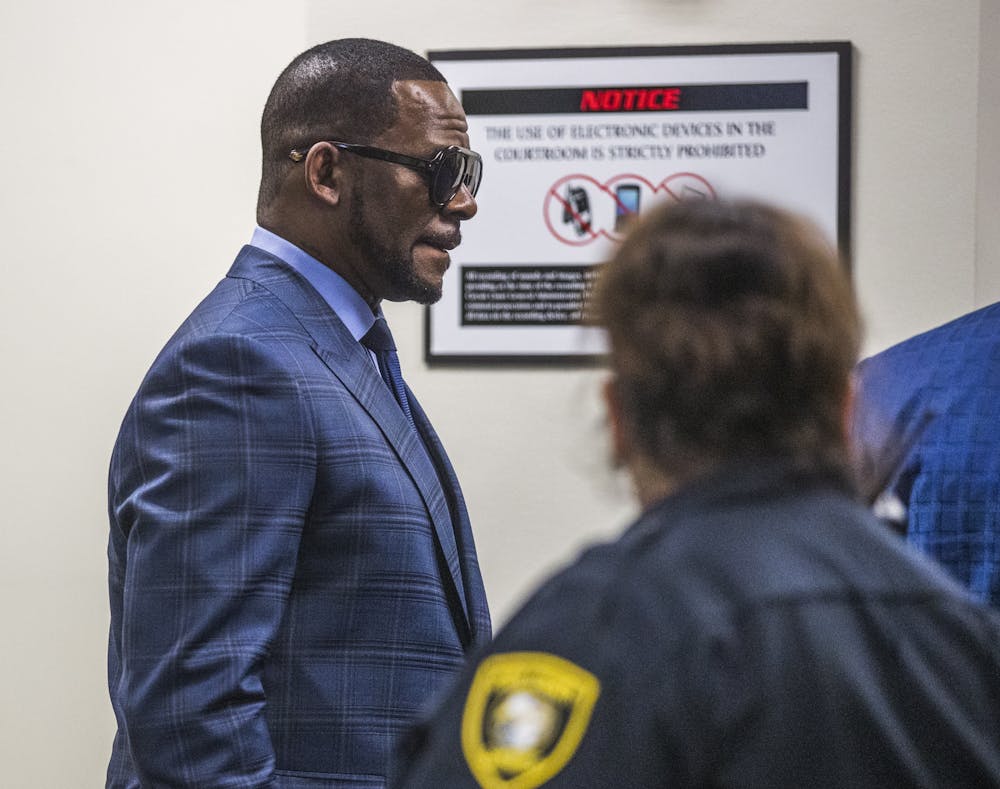
R. Kelly arrives for a child support hearing in Chicago on March 6. Tannen Maury/EPA

Jackson’s estate has described Leaving Neverland as “a rehash of dated and discredited allegations” and filed a lawsuit against it. His family have condemned the film, saying its creators were not interested in the truth.

Yet interestingly, the documentary form seems to be particularly effective at the moment in providing a platform for these artists’ accusers to be seen, heard, and believed. Accusations against Jackson are not new, but details about his alleged crimes were sparse in the early 2000s when he was taken to court. Having the gaps in this picture filled in by these men in their own words seems to have turned the tide of opinion – at least in some quarters – against the well-loved icon.

An aerial view of the Neverland Ranch in Santa Ynez near Santa Barbara, California, in 2003. Armando Aroriyo

As with Jackson, tales about Kelly have been circulating for years, but seeing the faces and hearing the voices of his accusers (and their sheer number) seems to have provided an added impetus for action to be taken.

Perhaps the best solution is to face this problem head on. Keep Michael Jackson on the radio – but never play him without reminding listeners of what he has been accused of. Do the same with other artists similarly accused, or found guilty of, a crime.

Creating an ongoing conversation that does not allow us to sidestep these issues – and showing offenders that their music will from now on be associated with their abuse – may allow us to find a way forward.

ref. Don’t ban Michael Jackson’s music – talk about the accusations – http://theconversation.com/dont-ban-michael-jacksons-music-talk-about-the-accusations-113109

Introducing gender lens investing. It’s more than pink-washing

]]>

Source: The Conversation (Au and NZ) – By Danielle Logue, Associate Professor in Innovation, Entrepreneurship and Strategy, University of Technology Sydney

Since mid-last year, Wall Street investors in sensitive industries have been insisting on so-called “Weinstein clauses”, that allow them to claw back their money if revelations of inappropriate behaviour damage the business.

It’s a mere part of something bigger, called gender lens investing, that goes way beyond the earlier concept of pink washing.

What is gender lens investing?

Gender lens investing incorporates an analysis of gender risks in investment decisions in the same way as an analysis of other risks.

The Wharton Business School identified 87 private equity, venture capital and debt funds that apply a gender lens, up from 58 in 2017.

The uptake is supported by conferences on “gender smart investing”, new gender-sensitive international development funds and an increasing numbers of investor gender training programs .

How does it work?

The non-profit Criterion Institute works with Australia’s Department of Foreign Affairs and Trade on impact investing programs in the Asia Pacific, a strategy established under former Australian Foreign Minister Julie Bishop.

In applying a gender lens it suggests asking:

  • What gender patterns are at play in the market that could impact both opportunity and risk of the investment? Are, for example, girls’ education rates or domestic violence rates an investment risk at the national or industry level, or at the organisational level in terms of absenteeism and presenteeism?

  • What is the gender (and diversity for that matter) composition of the people screening initial investment opportunities? Is there a risk that opportunities will be missed through too narrow a focus?

  • Do you have enough information? If not, do you need other partners or sources?

  • Do processes such as tight turnaround times lead to quick but poorly informed decisions, amplifying gender bias?

The gender data gap shows the dangers inherent in ignoring the specific requirements of females for sectors such as health, medical and scientific product design, development and testing. For example, there is a heightened risk of injury for women in car accidents due to seat belt design being based on the average male body shape and size.

The absence of a gender lens also means missed product opportunities.

For example, approximately US$1 billion has been invested in women’s health technology over the past three years, and “femtech” is estimated to grow into a US$50 billion industry by 2025.

Where is the new money flowing?

Increasingly, it is going to firms led and founded by women.

Research finds strong returns from lending firms led by women, with a recent report concluding that “women owned start-ups are a better bet”.

A survey of Australia’s top 10 venture capital funds found that of 448 investments made in the inception stage of firms, 35% had female co-founders in 2018, up from 26% in 2017.

Startup accelerator programs such as Springboard and SheStarts are also identifying and supporting firms with female founders.

Historically, the inequity has been stark, with estimates suggesting that companies with female founders have received only 4.4% of venture capital deals, and those companies have garnered only about 2% of all capital invested.

Bright signs have been the emergence of female owned VC firms that invest in women such as US firm Ellevest.

Where to now?

There has always been a moral case for gender lens investing, but research by us and others is increasingly finding a business case.

Gender analysis is pointing to risks and opportunities. Smart investors are paying attention.


Read more: Explainer: the rise of social impact investing


ref. Introducing gender lens investing. It’s more than pink-washing – http://theconversation.com/introducing-gender-lens-investing-its-more-than-pink-washing-112291

Daily Post: No pardons for Vanuatu politicians – no one is above the law

]]>
President Moses Obed Tallis accepts customary gifts from the Malvatumauri National Council of Chiefs. Image: Royson Willie/Vanuatu Daily Post

By Dan McGarry in Port Vila

To pardon those convicted of betraying the public trust does a disservice to Vanuatu.

It is disrespectful to the rule of law. It ignores the will of the people. It undermines the republic.

These men are convicted criminals. Yes, they are also fathers, family members, even high-ranking members of their community. But they did wrong. They undermined Parliament and government. They acted against the interests of their own people.

They broke the law.

READ MORE: Vanuatu president still ‘consulting’ over pardons

Make no mistake: If these men are pardoned, they will contest in 2020. Some may well be elected. If they are, there is every likelihood they will go back to their old ways.

-Partners-

They will win. And the country will lose.

President Baldwin Lonsdale wisely stated that no one is above the law. While he was alive, he ruled out any possibility of a pardon. If he were still in office today, there would be no discussion.

Other ways for mercy
There are other ways to show mercy. Those who are still in prison can have their sentences commuted. They can be forgiven under kastom. They can perform a sorry ceremony to the nation, with the President presiding.

The only reason to pardon these men is to let them get back into politics again. That would be a huge step back for the nation.

The President wants to show mercy, but his role, according to the Constitution, is to “symbolise the unity of the nation”. To pardon these people would create disunity. It would justify criminal behaviour.

It would undermine the authority of Chief Justice Vincent Lunabek and the rest of the judiciary.

A pardon doesn’t heal. It creates division. It divides the powerful from the weak.

A pardon says there are two kinds of justice: One for us, and one for them.

Forward, or backward?
The President would be wrong to pardon these men. And the Justice Minister is wrong to ask him to.

The only reason Don Ken isn’t seeking a pardon for himself is because he got immunity from the Public Prosecutor in exchange for his testimony against the others.

The President needs to think about how future generations will remember him. Will he be the man who shared Baldwin Lonsdale’s unwavering will to protect the nation?

Or will he be the man who bent to the will of others?

Will he take the country forward, or backward?

Dan McGarry is the media director of the Vanuatu Daily Post group. This editorial was published in the Post yesterday. The Pacific Media Centre republishes VDP articles with permission.

Print Friendly, PDF & Email

Article by AsiaPacificReport.nz

O’Neill sidelines UPNG interim council members, angry staff return to classes

]]>
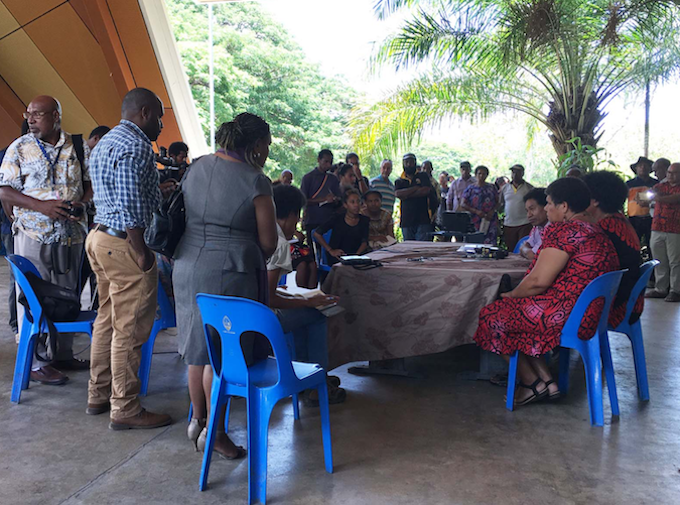
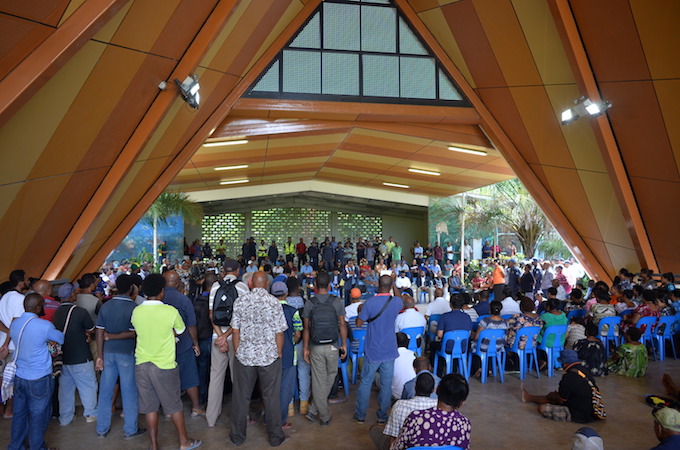
NASA representatives, including Dr Linus Digim’Rina, talking to journalists at the University of Papua New Guinea yesterday. Image: Alan Robson/PMC

By Leiao Gerega in Port Moresby

Prime Minister Peter O’Neill has sidelined the University of Papua New Guinea interim council but has retained interim chancellor Jeffery Kennedy.

The decision yesterday appeased the disgruntled National Academic Staff Association (NASA) members who have agreed to return to classes today.

According to NASA working committee head, Dr Linus Digim’Rina, the ouster move was relayed by government Chief Secretary Isaac Lupari on behalf of O’Neill yesterday.

READ MORE: UPNG shutdown crisis – the facts behind the turmoil

The new university council would be “open to dialogue” among members of the UPNG staff, Higher Education Department and the interim university administration, Dr Digim’Rina said.

Those who were sidelined included pro chancellor Jerry Wemin and acting vice-chancellor Dr Kenneth Sumbuk.

-Partners-

University of PNG academic staff “stopped work” on Monday in protest against the recent appointments.

Dr Digim’Rina said last night when all parties decided on a new appointment process nominations would be submitted to the National Executive Council for approval.

“I can assure you that NASA and all UPNG staff (those taking voluntary action) will sustain pressure to make sure the process is completed as soon as possible,” he said.

The chief secretary told UPNG staff yesterday that O’Neill had taken note of staff grievances “to acknowledge the process of the appointment of the vice-chancellor”.

“It (the process) has followed the statute of the university…it has followed the guidelines on merit-based system where it has protected and safeguarded the appointment of vice-chancellors since 1965.

“And that process must be completed and consistent with the Higher Education Act,” Lupari said, adding that Professor Frank Griffin’s appointment as vice-chancellor would be subject to Cabinet approval.

NASA acting president Mark Kia said that according to the documents received from O’Neill and the Higher Education Minister Pila Niningi, the acting chancellor Kennedy would not be retained and the opportunity was now given to the UPNG community to suggest names for the position.

He said that because the process to appoint Dr Griffin was not completed in due time, yesterday’s decision instantly allowed the process to continue and documents would be filed next week for NEC endorsement.

The announcement of Kennedy’s retained position was, however, met with murmurs of disapproval from UPNG staff yesterday who had had to wait for almost five hours to hear O’Neill’s decision.

They were not happy that Kennedy had not been sidelined. Niningi told UPNG staff members that his “hurried decision” that had led to the “stop work” was due to “lack of communication” with the university.

He maintained that he wanted to see good governance and would make no apology.

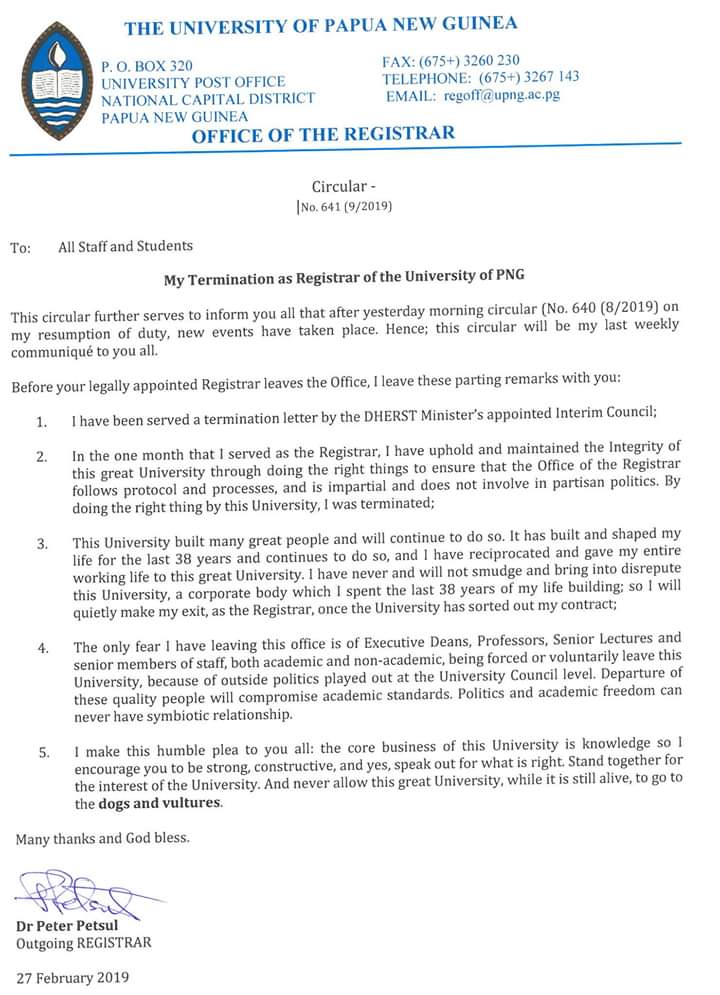
The three issues raised by the UPNG staff members was for the government to appoint Dr Griffin vice-chancellor, reinstate the duly-appointed registrar, Dr Peter Petsul, and remove the current council.

Leiao Gerega is a reporter with the Post-Courier. The photographs are by a Pacific Media Centre correspondent.

Striking UPNG staff meet with Higher Education Minister Pila Niningi and Chief Secretary Isaac Lupari on campus yesterday. Image: Alan Robson/PMC

Print Friendly, PDF & Email

Article by AsiaPacificReport.nz

New Zealand’s proposed capital gains tax could nudge taxpayers to invest in art instead of property

]]>

Source: The Conversation (Au and NZ) – By Jonathan Barrett, Lecturer, Victoria University of Wellington

New Zealand’s Tax Working Group (TWG) released its final report last month, with the most significant recommendation to introduce a capital gains tax.

The key motivation for the Labour-led government in establishing the TWG was to investigate a fairer tax system. For reasons of simplicity, the TWG proposes broad exclusions from a capital gains tax, including a taxpayer’s primary home and all personal assets such as collectables and artworks.

I argue that this exclusion could nudge taxpayers towards investing in art.


Read more: Why a proposed capital gains tax could mean tax cuts for most New Zealanders


Taxing works of art

My research explores how the tax system can promote the arts and fair reward for artists. But I am concerned by the lack of principle or clear purpose underpinning the TWG’s collectables recommendation.

Few countries specifically privilege artworks for capital gains tax purposes. But in the United States, artworks have long qualified for roll-over relief, whereby a taxpayer can sell an artwork but not pay tax on any gain if they reinvest in art. This roll-over relief has been eliminated by Donald Trump’s tax reforms, but investments in special economic development areas offer similar deferral opportunities or even elimination of capital gains tax liability.

A more common approach internationally is to include artworks in a general category of personal assets that are excluded, provided they are held for at least a year. France excludes sales of artworks or other collectables from a capital gains tax if the sale price does not exceed €5000 (about A$8,000). Similarly, the United Kingdom only taxes collectables sold for more than £6,000 (about A$11,000) but excludes other personal assets. In contrast, Australia taxes the gains on collectables bought for more than A$500 but excludes gains on personal-use assets bought for no more than A$10,000.

The problem of categories

Once policymakers draw distinctions between types of assets for capital gains purposes, anomalies inevitably arise. The United Kingdom distinguishes between personal assets deemed to have a lifespan shorter or longer than 50 years. Stamps, for example, are deemed to have a lifespan of more than 50 years and therefore potentially attract capital gains tax, whereas antique clocks or watches are deemed to last fewer than 50 years and are not taxed.

Portrait of Omai, by Joshua Reynolds, depicts Omai, a Pacific Islander who travelled to England with the second expedition of Captain James Cook. From Wikimedia Commons, CC BY-SA
But since plant or machinery used in a business is deemed to have a lifespan of fewer than 50 years, the Court of Appeal famously ruled that Omai, a 250-year-old painting by Sir Joshua Reynolds, was plant that did not attract capital gains tax on disposal.

In Australia, personal-use assets include boats, furniture, electrical goods and household items. Collectables include paintings, sculptures, drawings, engravings and photographs. Disputably, personal-use assets are presumed to be wasting assets, whereas collectables are not.

Different types of assets may not fit neatly into either category: for example, furniture has a utilitarian function and eventually deteriorates but is commonly collected. It is a troubling thought that such policy distinctions may lead to a (presumably unintended) preference for the utilitarian over the aesthetic.


Read more: The economics of ridiculously expensive art


For the sake of simplicity, New Zealand’s TWG recommends excluding all personal assets, including collectables, from its proposed capital gains tax. Artists may incidentally benefit from such an exclusion. A wealthy person might choose to invest in artworks to hang on the walls of their tax-free principal residence. In Australia, the tax nudge is in favour of non-collectable personal-use assets.

An investor might even choose to invest in artworks rather than, say, listed shares. These investment decisions could have a beneficial trickle-down effect for living domestic artists, although purchasing works by internationally recognised artists with established track records may be a more attractive investment option.

Proposed exclusion for artworks

Capital gains tax is an inherently complex tax. The complexities are exacerbated once politically necessary exemptions are introduced. Every deviation from the fundamental principle that all receipts should be taxed diminishes equity. But equity is not the only generally accepted tax principle. Efficiency, neutrality, sustainability and simplicity, among other criteria, should also be considered.

With regard to personal assets, the TWG has elevated simplicity above other pertinent considerations. Consequently, wealthy people might continue to receive tax-free capital gains by investing in their principal residence and collectables. This possibility would be unfair, inefficient, non-neutral and unsustainable.

For more valuable artworks, a tax rebate could apply if an owner lends an artwork to a public gallery. from www.shutterstock.com, CC BY-SA

Promoting the arts in the public sphere and the economic well-being of artists is most effectively pursued through direct grants and subsidies, but a proportionate capital gains tax exclusion might also assist. For example, while roll-over relief in the United States generally benefited the art market, it may have been a disproportionate way of promoting public access to the arts or helping artists most in need.

A painting by an old master stored in a bank vault has no immediate social benefit.

So how might a tax exclusion benefit the arts and artists?

First, no distinction should be drawn, as Australia does, between personal-use and collectable assets, because a nudge towards personal-use assets may discourage investment in artworks.

Second, a cap on the value of excluded collectables, say NZ$10,000, might encourage purchases of less expensive artworks created by emerging local artists.

Third, for more valuable artworks a rebate might apply for public display. For example, if an owner lends an artwork to a public gallery for half the period they own it, a 50% rebate could apply. If the New Zealand government takes up the TWG recommendation for a capital gains tax, proposed exclusions could be modified to benefit the arts and artists. Australia might also usefully reconsider how it treats artworks for tax purposes.

ref. New Zealand’s proposed capital gains tax could nudge taxpayers to invest in art instead of property – http://theconversation.com/new-zealands-proposed-capital-gains-tax-could-nudge-taxpayers-to-invest-in-art-instead-of-property-112765

What pill is that? Cheap and easy pill testing could soon be in your own hands

]]>

Source: The Conversation (Au and NZ) – By Vassilis Kostakos, Professor of Human Computer Interaction, University of Melbourne

Almost nine out of ten Australians take some form of medication, according to a recent poll. Much of that will be in tablet form, either prescribed or bought over the counter.

But in the rush of daily life it can be easy to confuse or mix up pills, especially if you or someone you care for is taking several medications. So how can you be sure the pill you’re about to take is the correct one?

We’ve designed some technology that could help with this issue. Also, the tool might one day be suitable for pill testing at music festivals and other events where other pill drugs are available.


Read more: Your period tracking app could tell Facebook when you’re pregnant – an ‘algorithmic guardian’ could stop it


In our experiments we have demonstrated how off-the-shelf mobile hardware can be used to identify pills. Soon we expect this hardware may be built into most smartphones.

How does it work?

The enabling technology, known as near-infrared spectroscopy, is not new. What is new is that it has been miniaturised.

The technology works by shining infrared light onto the pill. The pill absorbs and reflects some of the light depending on its chemical composition.

By measuring the spectrum of the reflected light, we can obtain a unique signature for this pill. By cross-referencing this signature against a database on known pills or chemicals we can identify the pill.

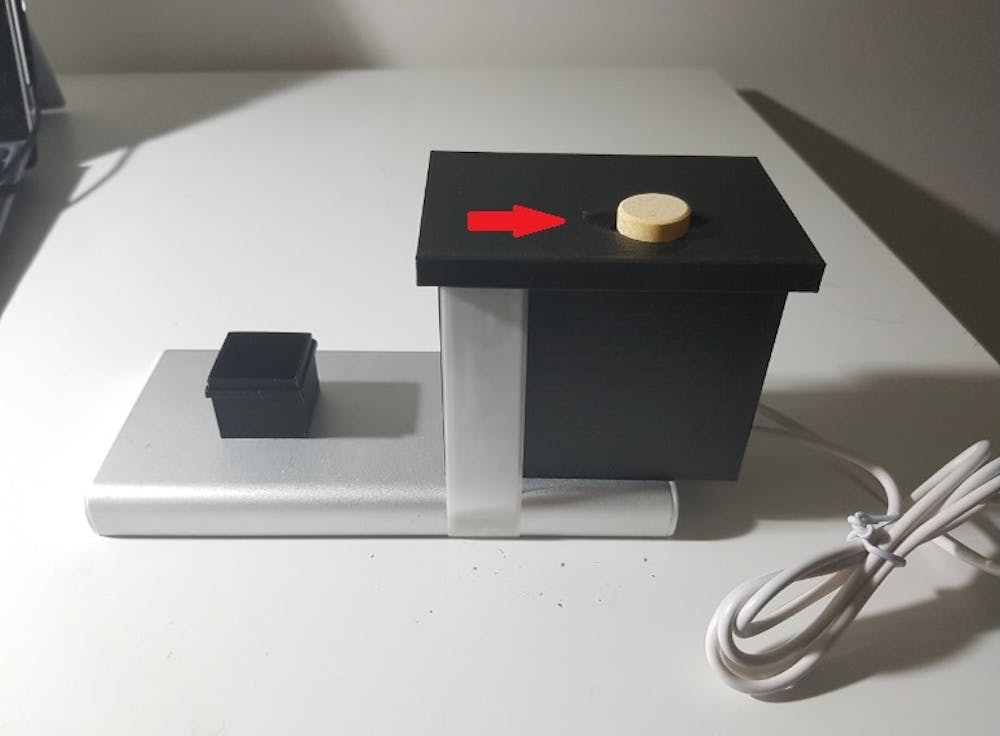
Our prototype scans pills and displays the results to a paired smartphone. Smart Hospital Living Lab, Author provided

The technology does not damage the pill, since it simply shines infrared light for a couple of seconds.

It does not rely on the visual appearance of the pill at all. In our tests we could accurately differentiate between pills that look virtually identical.

Further accuracy improvements are expected soon. But at this stage we can say this technology allows for pill-testing to be done on the spot, using a mobile device. It’s no longer necessary to ship samples to a dedicated testing facility.

At the moment the technology has been tried on only about 60 pills that can be bought over the counter, such as painkillers, vitamins and other supplements. It could easily be extended to prescription medications.

We actually developed our prototype to be used on prescription and over-the-counter pills, as a way to make sure people are taking the correct medication. This work is being carried out as part of a broader Smart Hospital project to make hospitals safer and more efficient.

For example, medication errors occur when nurses give the incorrect pill to patients in a hospital, or when patients take the wrong pill at home. Our technology has been designed to reduce such errors due to mislabelling or lack of labels.

Which brings us to the debate on pill testing.

Checking ‘other’ pills

It’s become clear that our technology also has the potential to check other types of pills and could be used in scenarios such as people attending music festivals, on-the-spot police checks, or any other situation.

But there are some potential problems here. Our work has shown that environmental factors – such as ambient light – may affect the accuracy of the system, so it’s unlikely to be as accurate as in controlled lab settings.

Also, because our prototype works by cross-referencing to a database of known pills, it can be challenging for the system to identify home-made pills that may not exactly match the chemical composition in our database.

Still, there are a couple of ways to deal with this situation.

First, the system can provide a confidence rating, effectively saying that it has not seen a particular pill before, but it can report which pill it is most similar to.

Second, if we are interested in certain active chemical components in the pill, it can report which of those components are present in the pill, but not necessarily in what amounts.

The tech’s coming, ready or not

The technology for pill testing is changing quickly. Soon these changes will have an impact on the arguments used by the different sides of the pill-testing debate that has gripped Australia.

Our technology demonstrates the potential for making pill-testing a private matter, with no need for any taxpayer-funded testing at events. It is entirely conceivable that soon it will be possible to buy a pill-testing device that you can carry in your pocket and use where and when you choose.

Pill-testing proponents argue that it has the potential in its current form at festivals to be one last safeguard and source of advice before pills are consumed (or not).


Read more: Here’s why doctors are backing pill testing at music festivals across Australia


With the pill-testing technology maturing and being miniaturised even further, we expect within a few years to see widespread prototypes being used. While the hardware is quickly improving, the main challenge remains the analysis that we have developed to differentiate between pills.

We want to raise awareness about this technology and advise all camps in the pill-testing debate that they need to consider how to respond to this technology.

Pill-testing critics might need to consider ways to stop pill-testing given the availability of cheap testing devices – should such devices be banned?

Pill-testing supporters need to consider that pill-testing may soon be possible outside well-staffed festival tents. Therefore, there is a need for new interventions, as well as a consideration of who maintains the pill database: government, industry, NGOs, or perhaps some crowdsourced approach?

ref. What pill is that? Cheap and easy pill testing could soon be in your own hands – http://theconversation.com/what-pill-is-that-cheap-and-easy-pill-testing-could-soon-be-in-your-own-hands-112697

All about juries: why do we actually need them and can they get it ‘wrong’?

]]>

Source: The Conversation (Au and NZ) – By Jacqui Horan, Associate Professor, Monash University

There has been some debate over the recent conviction of George Pell, whose first trial ended with a hung jury, and the second a unanimous guilty verdict. People are questioning our justice system, the potential bias of the jury, and whether the initial hung verdict invalidates the second, unanimous one.

So, why should Australians trust 12 inexperienced people to sit in judgment on our most serious criminal trials, and get the verdict right?


Read more: How an appeal could uphold or overturn George Pell’s conviction


The importance of juries

Australian democracy is underpinned by citizen participation. Citizens have two mandatory obligations – voting and jury service.

Lay person participation in the legal system is considered central to a healthy democracy. Lawyers play a major role in making the laws in parliament. Judges then apply the laws. If juries weren’t used, lawyers would have a monopoly over the law. Lawyers have their own specialised language in which they communicate among themselves. Including juries in the legal system forces lawyers to use common language.

It’s the collective wisdom of 12 that makes a jury. Jurors bring to the trial 12 times more life experience than a judge. Psychological research has established that personal, subconscious biases can be identified and addressed in group discussion.

How do juries work?

Jurors are randomly selected from the Australian electoral roll. While each state or territory varies in its selection processes, they share some common steps. Randomly selected citizens will receive a summons to attend court. Once the jurors arrive at the courthouse, they wait to be randomly chosen to go to a specific courtroom as part of a jury panel.

Once in the courtroom, a potential juror’s name (or allocated number) may be pulled out of a box. That potential juror can then either

  • seek to be excused (because perhaps they know someone involved in the trial)

  • take a seat in the jury box, or

  • be removed from the jury by one of the parties to the case. This is known as the “peremptory challenge” process.

While it’s unusual for a prosecutor to “challenge” (deselect) a juror, some jurisdictions still allow for a defendant to “challenge” a juror based on the way they look and sometimes their name and occupation.

But a substantial body of US research has highlighted that, based on such limited information, the peremptory challenge process is no better than a guessing game, as it’s not possible for a defendant to know whether a citizen is going to be favourable to their defence just based on what they look like and their occupation.

Some Australian jurisdictions have reduced the number of challenges a defendant can use. The UK has done away with this process altogether as it interferes with the important perception that juries are fairly chosen and therefore represent the community.

A defendant has no way of knowing how a jury will vote based only on their age or occupation. from shutterstock.com

Several Australian studies confirm our juries reflect a cross-section of our community in terms of cultural mix, age and gender balance. Juries are more likely to be better educated than the ordinary member of the public. This may, in part, be a result of counsels’ preference for educated jurors when exercising their peremptory challenges.

What about outside influence?

Jurors are forbidden from having any prior intimate knowledge of the trial, from privately communicating with anyone involved in the trial and from doing their own research. Maintaining the impartiality of jurors has become problematic in the digital age.

Last century, courts used to successfully make orders to suppress potentially prejudicial information (such as prior convictions). But the far reach of the internet means such suppression orders no longer work as they can’t prevent publication on overseas websites or social media that is accessed locally.


Read more: We knew George Pell was guilty of child sex abuse. Why couldn’t we say it until now?


Jurors are told by the judge not to look at any media reports on their case. But jurors on trials of high profile defendants may not be able to avoid the barrage of negative pre-trial publicity. US research suggests jurors who are exposed to negative publicity are significantly more likely to judge the defendant guilty compared to subjects exposed to less pre-trial publicity.

New South Wales, Queensland, the ACT, South Australia and Western Australia allow a defendant to apply for trial by judge without a jury when prejudicial publicity is perceived to be significant. But there is no research that confirms a judge sitting alone without a jury is any better at resisting prejudicial publicity.


Read more: Trial by judge alone may not be the answer to giving high-profile defendants a fair hearing


How do they reach a verdict, and what is a hung jury?

A typical jury trial will take fewer than ten days. The jurors hear the evidence, listen to the arguments of both parties and are provided with instructions on the relevant law by the judge. It is then time to deliberate and decide whether the defendant is “guilty” or “not guilty” of the offences charged. No written reasons for the verdicts are required.

The vast majority of juries are able to reach their verdict unanimously. In some types of cases, agreement of 11 out of 12 jurors is an acceptable verdict. A hung jury occurs when a jury deliberates for several hours or days, but are unable to agree on a verdict. In the usual course, the same case will be presented to a new jury.

A 2000 study indicated hung juries occurred in a small number (3-8%) of Australian trials. This study identified that longer trials, and jury trials in more culturally diverse city courts, may be more likely to attract a hung jury.

An initial hung verdict does not invalidate a second, unanimous one – it more likely means some of the jurors from the first trial were also in agreement with the final verdict.

Do juries get it ‘right’?

Jury secrecy means we have no accurate way of knowing whether juries are getting it “right”. Australian jurors are forbidden from discussing their deliberations with anyone, including why they came to a decision.

A few overseas studies have asked trial judges what verdict they would have come to in jury trials. A comparison between what the judges said and the real jury verdict reveals a high level of agreement between the two.

While scientifically we cannot confirm that specific jury verdicts are “correct”, the jury system is necessary for Australia’s justice system.

ref. All about juries: why do we actually need them and can they get it ‘wrong’? – http://theconversation.com/all-about-juries-why-do-we-actually-need-them-and-can-they-get-it-wrong-112703

Eat your vegetables – studies show plant-based diets are good for immunity

]]>

Source: The Conversation (Au and NZ) – By Yasmine Probst, Senior lecturer, School of Medicine, University of Wollongong

The number of people in Australia who follow vegetarian or plant-based diets is growing rapidly. People might choose to be vegetarian for ethical, cultural or health-related reasons.

While not all vegetarians are necessarily following a healthy diet, research shows vegetarianism can have many benefits for health. One we’re learning more about is its potential to strengthen our immune systems.

We’re still working out what aspects of a vegetarian diet may be responsible for this – whether it’s the lack of meat or the emphasis on plant-based foods.

But we think the higher volume of foods including fruits, vegetables and legumes seen in vegetarian diets is likely to have a lot to do with any associated health benefits.


Read more: We asked five experts: is vegetarianism healthier?


What do vegetarians eat?

Vegetarian diets are comprised of combinations of fruit, vegetables, whole grains, nuts and seeds, legumes and, for some, dairy and eggs.

There are many types of vegetarian eating patterns, from vegan (no animal products) through to lacto-ovo (some animal products such as eggs and dairy). But each avoids eating meat.

There are also a few semi-vegetarian approaches which include eating small amounts of some meats. People who primarily follow a vegetarian diet but include fish are referred to as pescetarian, while those who occasionally eat other forms of meat are considered flexitarian.

Importantly, not all vegetarians follow a healthy and balanced diet. Many won’t eat the recommended daily servings of fruit and vegetables, and will consume too much junk food.

But studies show that balanced vegetarian eating patterns could be good for our immune system and the related response of the body.

Defending from attack

Our bodies are faced with daily challenges such as getting rid of toxic chemicals and defending against nasty viruses. The immune system is “switched on” in response to these attacks.

Having a healthy immune system is important, as it prevents us from becoming sick. A healthy immune system can be supported by a number of lifestyle factors including adequate sleep, healthy body weight and regular physical activity. It can also be substantially affected by the foods we eat and drink.

Some research has found following a vegetarian diet could improve our immune systems. From shutterstock.com

People following vegetarian diets tend to have lowered levels of white blood cells, our natural defender cells. This is the case for vegetarian diets including vegan, lacto-vegetarian and lacto-ovo vegetarian.

Having very low levels of these cells is not ideal as it can affect the body’s ability to fight infection. However, having just the right number of white cells within a healthy range may reduce your chances of getting sick.

An added shield of protection

As well as helping the immune system, vegetarian diets may also help our body with a related process called inflammation. Vegetarian diets have been shown to prevent inflammation due to the antioxidant components within the foods.

Inflammation occurs when the body releases cells to attack unwanted pathogens or respond to injury. It may result in redness to an area of the body or the release of certain chemicals inside our bodies. Inflammation is a protective measure that the body uses to stay as healthy as it can.


Read more: Five life lessons from your immune system


People who follow vegetarian diets have lower levels of some of these chemicals (called C-reactive protein and fibrinogen) compared to people following a non-vegetarian diet.

This means people maintaining a vegetarian diet long-term are at a lower risk of getting type 2 diabetes, heart disease or even some cancers. Each of these chronic diseases is associated with increased inflammation in the body. This is shown in blood tests by increased levels of C-reactive protein, as this is a signal of systemic inflammation.

The reason why vegetarians have lowered levels of inflammation remains to be fully understood.

We suspect the high amount of fruits, vegetables, whole grains, nuts and seeds are helping. These foods are full of important nutrients including fibres, vitamins, minerals and compounds called phytochemicals.

All of these nutrients have been shown to improve levels of inflammation in the long term and may influence the body’s immune response as an added bonus.

Should I switch to a vegetarian diet?

Going vegetarian may not be for everyone.

And it’s unwise to start a new eating pattern without understanding the potential impacts it can have on your health.

Vegetarian diets that are inappropriately balanced can lead to an increased risk of iron, zinc and vitamin B12 deficiencies. This can be detrimental to overall health, particularly if followed for extended periods of time.

The risks may be greater for certain groups of people who have added nutrient needs due to life stage, gender or for another health-related reason.

So vegetarian eating should always be undertaken carefully and under professional guidance, preferably that of a dietitian, to minimise these risks.


Read more: Love meat too much to be vegetarian? Go ‘flexitarian’


But importantly, only 5.1% of the Australian population eat the recommended amount of fruit and vegetables – five serves of vegetables and two serves of fruit each day.

So whether you’re vegetarian or not, focusing on incorporating more plant-based foods into your diet is worthwhile. We’re constantly learning more ways this is good for your health.

ref. Eat your vegetables – studies show plant-based diets are good for immunity – http://theconversation.com/eat-your-vegetables-studies-show-plant-based-diets-are-good-for-immunity-107964

Five gifs that explain how pumped hydro actually works

]]>

Source: The Conversation (Au and NZ) – By Roger Dargaville, Senior lecturer, Monash University

People have used moving water to create energy for thousands of years. Today, pumped hydro is the most common form of grid-connected energy storage in the world.

This technology is in the spotlight because it pairs so well with solar and wind renewable energy. During the day, when solar panels and wind farms may be generating their highest level of energy, people don’t need really need much electricity. Unless it is stored somewhere the energy is lost.


Read more: Snowy hydro scheme will be left high and dry unless we look after the mountains


Pumped hydro can cheaply and easily store the excess energy, releasing it again at night when demand rises.

Here’s how it all works:

How it works

Put as simply as possible, it involves pumping water to a reservoir at the top of a hill when energy is in plentiful supply, then letting it flow back down through a turbine to generate electricity when demand increases.

Like all storage systems, you get less energy out than you put in – in this case, generally around 80% of the original input – because you lose energy to friction in the pipes and turbine as well as in the generator. For comparison, lithium ion batteries are around 90-95% efficient, while hydrogen energy storage is less than 50% efficient

The benefit is we can store a lot of energy at the top of the hill and keep it there in a reservoir until we need the energy back again. Then it can be released through the pipes (this is called “penstock”) to generate electricity. This means pumped hydro can create a lot of additional electricity when demand is high (for example, during a heatwave).

The disadvantage of pumped hydro is you need to have two reservoirs separated by a significant elevation difference (more than 200m is typically required, more than 300m is ideal). So it doesn’t work where you don’t have hills. However, research has identified 22,000 potential sites in Australia.


Read more: Want energy storage? Here are 22,000 sites for pumped hydro across Australia


Pumped hydro is traditionally paired with relatively inflexible coal or nuclear power stations, using under-utilised electricity when demand is low (weekends and nighttime), then providing additional generation when demand increases during day and into the evening.

With the rapid increase in deployment of wind and solar, pumped hydro is again gaining interest. This is because the output of wind and solar plant is subject to the variability in the weather. For example, solar power plants generate the most electricity in the middle of the day, while demand for electricity is often highest in the evening. The wind might die down for hours or even days, then suddenly blow a gale. Pumped hydro can play a key role in smoothing out this variability.

If the electricity being produced by wind and solar plant is greater than demand, then the energy has to be curtailed (and is lost), unless we have a way to store it. Using this excess power to pump water up hill means the solar or wind energy is not wasted and the water can be held in reservoirs until demand rises in the evening.

There are lots of different kinds of energy storage technologies, each with their own advantages and disadvantages. For large-scale grid-connected systems where many hours of storage are required, pumped hydro is the most economically viable option.


Read more: Snowy Hydro gets a boost, but ‘seawater hydro’ could help South Australia


ref. Five gifs that explain how pumped hydro actually works – http://theconversation.com/five-gifs-that-explain-how-pumped-hydro-actually-works-112610

Rising seas allow coastal wetlands to store more carbon

]]>

Source: The Conversation (Au and NZ) – By Kerrylee Rogers, Associate Professor, University of Wollongong

Coastal wetlands don’t cover much global area but they punch well above their carbon weight by sequestering the most atmospheric carbon dioxide of all natural ecosystems.

Termed “blue carbon ecosystems” by virtue of their connection to the sea, the salty, oxygen-depleted soils in which wetlands grow are ideal for burying and storing organic carbon.

In our research, published today in Nature, we found that carbon storage by coastal wetlands is linked to sea-level rise. Our findings suggest as sea levels rise, these wetlands can help mitigate climate change.

Sea-level rise benefits coastal wetlands

We looked at how changing sea levels over the past few millennia has affected coastal wetlands (mostly mangroves and saltmarshes). We found they adapt to rising sea levels by increasing the height of their soil layers, capturing mineral sediment and accumulating dense root material. Much of this is carbon-rich material, which means rising sea levels prompt the wetlands to store even more carbon.

We investigated how saltmarshes have responded to variations in “relative sea level” over the past few millennia. (Relative sea level is the position of the water’s edge in relation to the land rather than the total volume of water within the ocean, which is called the eustatic sea level.)


Read more: Mangrove forests can rebound thanks to climate change – it’s an opportunity we must take


What does past sea-level rise tell us?

Global variation in the rate of sea-level rise over the past 6,000 years is largely related to the proximity of coastlines to ice sheets that extended over high northern latitudes during the last glacial period, some 26,000 years ago.

As ice sheets melted, northern continents slowly adjusted elevation in relation to the ocean due to flexure of the Earth’s mantle.

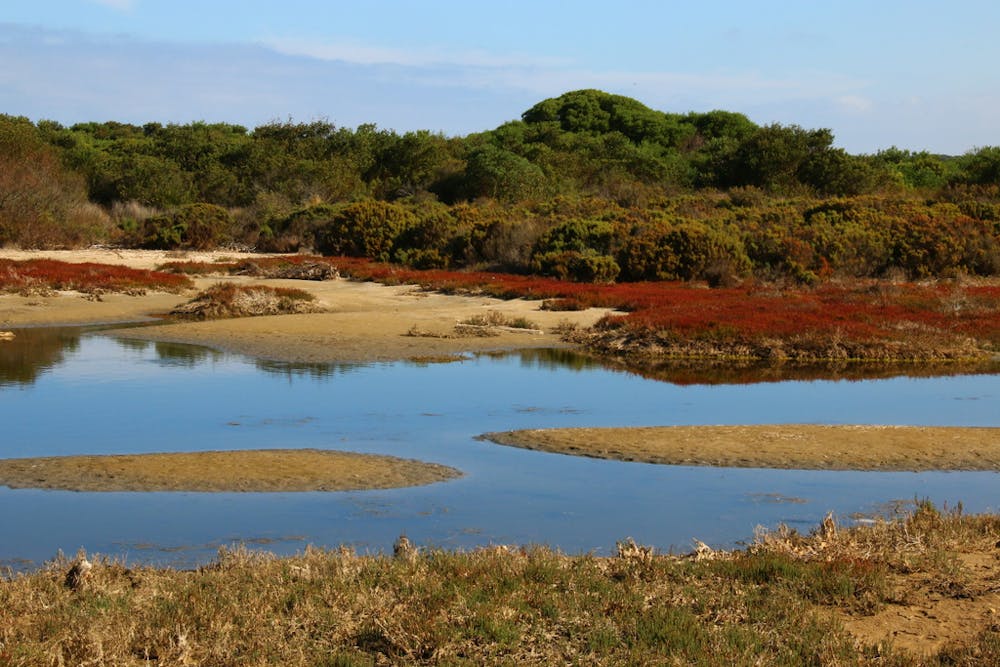
Karaaf Wetlands in Victoria, Australia. Boobook48/flickr, CC BY-NC-SA

For much of North America and Europe, this has resulted in a gradual rise in relative sea level over the past few thousand years. By contrast, the southern continents of Australia, South America and Africa were less affected by glacial ice sheets, and sea-level history on these coastlines more closely reflects ocean surface “eustatic” trends, which stabilised over this period.

Our analysis of carbon stored in more than 300 saltmarshes across six continents showed that coastlines subject to consistent relative sea-level rise over the past 6,000 years had, on average, two to four times more carbon in the upper 20cm of sediment, and five to nine times more carbon in the lower 50-100cm of sediment, compared with saltmarshes on coastlines where sea level was more stable over the same period.

In other words, on coastlines where sea level is rising, organic carbon is more efficiently buried as the wetland grows and carbon is stored safely below the surface.

Give wetlands more space

We propose that the difference in saltmarsh carbon storage in wetlands of the southern hemisphere and the North Atlantic is related to “accommodation space”: the space available for a wetland to store mineral and organic sediments.

Coastal wetlands live within the upper portion of the intertidal zone, roughly between mean sea level and the upper limit of high tide.

These tidal boundaries define where coastal wetlands can store mineral and organic material. As mineral and organic material accumulates within this zone it creates layers, raising the ground of the wetlands.

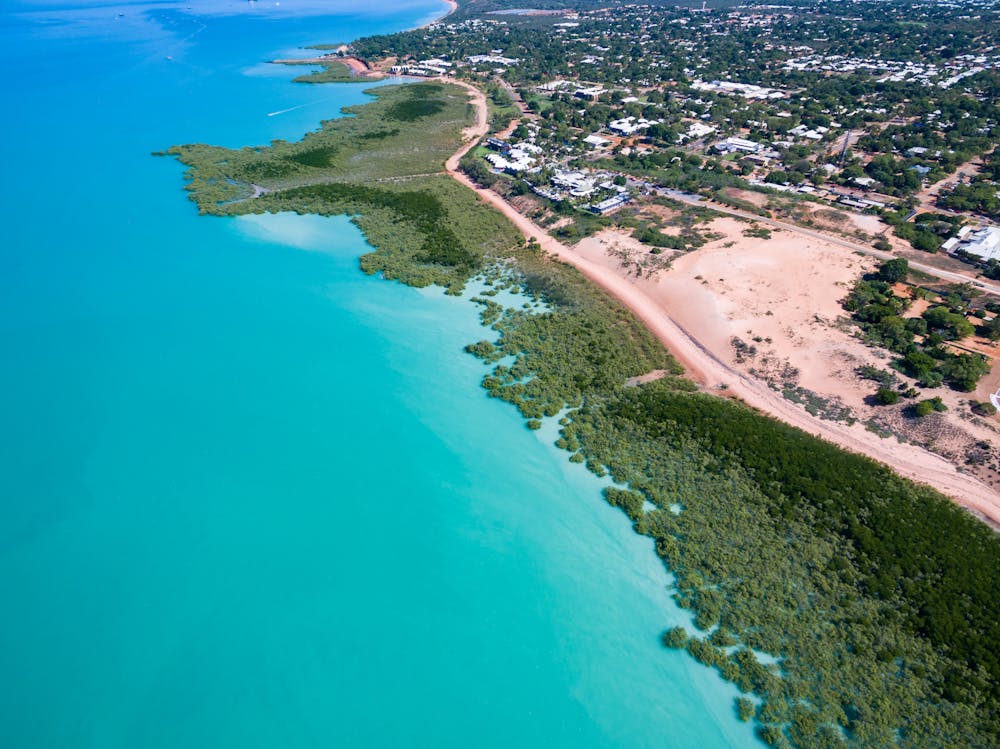
The coastal wetlands of Broome, Western Australia. Shutterstock

New accommodation space for storage of carbon is therefore created when the sea is rising, as has happened on many shorelines of the North Atlantic Ocean over the past 6,000 years.

To confirm this theory we analysed changes in carbon storage within a unique wetland that has experienced rapid relative sea-level rise over the past 30 years.


Read more: Without wetlands, what will protect the Great Barrier Reef?


When underground mine supports were removed from a coal mine under Lake Macquarie in southeastern Australia in the 1980s, the shoreline subsided a metre in a matter of months, causing a relative rise in sea level.

Following this the rate of mineral accumulation doubled, and the rate of organic accumulation increased fourfold, with much of the organic material being carbon. The result suggests that sea-level rise over the coming decades might transform our relatively low-carbon southern hemisphere marshes into carbon sequestration hot-spots.

How to help coastal wetlands

The coastlines of Africa, Australia, China and South America, where stable sea levels over the past few millennia have constrained accommodation space, contain about half of the world’s saltmarshes.

Saltmarsh on the shores of Westernport Bay in Victoria. Author provided

A doubling of carbon sequestration in these wetlands, we’ve estimated, could remove an extra 5 million tonnes of CO₂ from the atmosphere per year. However, this potential benefit is compromised by the ongoing clearance and reclamation of these wetlands.

Preserving coastal wetlands is critical. Some coastal areas around the world have been cut off from tides to lessen floods, but restoring this connection will promote coastal wetlands – which also reduce the effects of floods – and carbon capture, as well as increase biodiversity and fisheries production.


Read more: As communities rebuild after hurricanes, study shows wetlands can significantly reduce property damage


In some cases, planning for future wetland expansion will mean restricting coastal developments, however these decisions will provide returns in terms of avoided nuisance flooding as the sea rises.

Finally, the increased carbon storage will help mitigate climate change. Wetlands store flood water, buffer the coast from storms, cycle nutrients through the ecosystem and provided vital sea and land habitat. They are precious, and worth protecting.


The authors would like to acknowledge the contribution of their colleagues, Janine Adams, Lisa Schile-Beers and Colin Woodroffe.

ref. Rising seas allow coastal wetlands to store more carbon – http://theconversation.com/rising-seas-allow-coastal-wetlands-to-store-more-carbon-113020

Australia should start planning for universal tertiary education

]]>

Source: The Conversation (Au and NZ) – By Tim Pitman, Senior Research Fellow, Curtin University

Australia is often characterised as having a mass higher education system. In fact, it could be called near-universal. According to the 2016 Census, 56% of Australians aged 15 years and over – 9.6 million people – hold a post-school qualification, up from 46% in 2006.

Universal education does not mean every Australian should attain a higher education or tertiary qualification. It means every Australian should be given the opportunity to get one if they want.

The distinction between “mass” and “universal” is not just an academic one. Viewing higher and tertiary education as universal could help an incoming government better design policy. All Australians need to be prepared for, informed about and able to make a choice that is right for them about whether or not to pursue post-school education.

Needs-based funding of schools

If the government could do one thing to improve post-school education outcomes, it needs to happen in our primary and high schools. Prior academic achievement is one of the main predictors of higher education aspiration and success. In some studies it’s the main factor.

Needs-based funding puts more money into education. In particular, it puts more money into the schools and students who need it most.

The Gillard-led Labor government recognised the importance of this approach by adopting a needs-based school funding model. The Turnbull-led Coalition government reaffirmed this commitment, with the specific aim of helping under-achieving students focus on improvement.

Pay attention to the details of what Labor and the Coalition promise on needs-based funding this coming election. Alan Porritt/AAP

This coming election, look closely at what positions the Coalition and Labor take on needs-based school funding. Both have signed up in principle, but there should be a clear commitment on how much extra money will be provided. This is not the same as simply spending more money to maintain standards in an ever-expanding system.

There also needs to be a clear explanation of how that money will be spread around, to ensure those furthest behind get the resources they need to catch up.

It’s not university or TAFE

Too many Australians – and successive governments – think in terms of students having to make a choice between university or vocational studies or neither. Tertiary education policy shouldn’t be seen this way.

For many people, the false trichotomy of degree-or-trade-or-job is locked in way too early by social and family expectations, and curriculum choices. Greater flexibility in how lifelong education is understood and explained (in terms of pathways and options) needs to be developed at the policy level.

TAFE is a good option in its own right. from www.shutterstock.com

This isn’t about merging the vocational and higher education sectors. That is neither necessary nor desirable. All tertiary education providers play a part in delivering lifelong education opportunities.

What is needed is more cooperation between state and federal governments. They need to be able to coordinate on how these various organisations will be funded and how students will be financially supported.

In many cases, there are fewer financial barriers to doing a university degree than a vocational course. This can lead some students to make a choice that seems right for them, but over the long term doesn’t work out.

The good news is all the pieces are there – even if they don’t quite fit together yet. The Coalition government has made great strides in how students can access loans for vocational courses. But the VET fee cap means some vocational courses still result in the student having to cover the excess up front, which is not the case for higher education degrees.

For example, an Australian student studying a Diploma of Business in 2019 would have a loan cap of just over A$5,000. They would have to cover the rest of the cost of the course. Depending on the provider, this could be several thousand more.

If the same student chose to study a Bachelor of Business at a university, they would have access to a loan for the full amount, which would be more than A$30,000 for the entire degree.

The next government should work towards making sure everyone has the opportunity to attend university if they want. from www.shutterstock.com

Against this, students can be more sure they’re getting what they pay for from universities than from vocational education providers. The Tertiary Education Quality and Standards Agency is responsible for the registration and quality oversight of all higher education providers, public and private.

The vocational training sector could benefit from a similarly national and coordinated approach to quality assurance. Given there are more than 5,000 vocational providers, a more realistic approach might be to provide a similar oversight (or even expand TEQSA) to cover all courses offered by the public TAFES, to begin with.

Whoever forms the next government needs to finish the job of creating a more unified structure of financial support and pathway information. It should allow students to think first and foremost about what skills and knowledge are right for them and not about what the institution they’re going to or the degree they’re going to do is called.

Making Australian higher education look more like, well, Australia

The foundation of the Australian higher education system is built on two broad principles. The first is that they exist for the betterment of the nation. The second is that the doors of universities and other higher education institutions are open to everyone. This is actually written into the founding acts of our oldest universities.

The journey towards realising the second principle has been long, rocky and as yet uncompleted. Too many groups of students still remain under-represented. These include Aboriginal and Torres Strait Islander peoples, people with disability, those living in regional areas and those from lower socioeconomic backgrounds.

Progress has been made and much of the big policy picture has been painted. In particular, more institutions have been created to better meet demand, a demand-driven system of funding has been introduced so there is federal funding for each student place, and an income-contingent loan scheme has been provided to remove many of the upfront financial barriers to accessing university.

To make progress in the higher education sector, we also need to make progress in schools. Mick Tsikas/AAP

But finishing the picture requires a final push. Committing to a sustainable, needs-based funding of school education and harmonising the support structure for vocational and higher education would go a long way towards achieving this goal. It may be enough, but if not there is another thing that would work – quotas.

Quotas are contentious, as recent political debate shows. It’s likely the concern would be raised that quotas would ignore the very different institutional profiles that are in play. For example, a regionally based university is going to find it easier to recruit regional students than one in a CBD.

One solution would be to apply the quota at the sector level, rather than the institutional level. The government could then enforce the quotas in a number of ways. It could use performance-based funding to reward the universities doing the heavy lifting. Or it could allow the universities to virtually trade between themselves.

For example, a university with a below-average enrolment of regional students could “purchase” the excess from a university with an above-average enrolment. The students would not actually move institution, but the money would. This would mean the university with the extra enrolments would receive additional financial support to help with the costs associated with supporting these students.

ref. Australia should start planning for universal tertiary education – http://theconversation.com/australia-should-start-planning-for-universal-tertiary-education-110783

Vital conversations: older women have their say about the challenges of life in a city like Melbourne

]]>

Source: The Conversation (Au and NZ) – By Harriet Radermacher, Adjunct Lecturer, Department of General Practice, Monash University

Who decides what matters in the lives of voters? In the run-up to the 2018 Victorian state election, media focused on a few potential big issues of concern or interest. Newspapers featured pieces on the consequences of uncapped population growth in Victoria, particularly suburban housing sprawl and unaffordability. Public transport and the growing economic divide between communities also attracted media attention.

Against this background, and in light of concerns raised by previous research, we wanted to engage with older women and to hear more directly from them about their lives, their experiences and the challenges they face. Specifically, we asked, what matters to older women as they grow older, as the city’s population changes and urban development continues apace?


Read more: What do single, older women want? Their ‘own little space’ (and garden) to call home, for a start


The result of our research, Vital Conversations with Older Women Living in Greater Melbourne, is being launched today. It started with the assumption that there are common and interconnected factors in the lives of all women with potential impacts on their health and well-being. We understood that these factors take on different dimensions depending on age cohorts and ethnic and cultural backgrounds, as well as the health, social and economic circumstances of individual women.

Previously, Vital Signs 2017 provided a snapshot of Greater Melbourne across a whole range of domains for people of all ages. The report indicated older women living in Greater Melbourne face a range of challenges and, in some cases, extreme disadvantage.

For example, the number of older women couch surfing increased by 83% between 2012 and 2017. There was a 75% increase in older women sleeping in their cars and presenting at homelessness services. In addition, at least one in ten people aged over 60 experience isolation and loneliness.


Read more: Taking the pulse of a city: Melbourne’s Vital Signs


For all the attention given to problems associated with growing older, including the so-called financial burden of aged care to the public purse, older women have had very little opportunity to contribute their views. They need to be taken seriously about the things that matter to them, which are central to their health and well-being.

In all, 127 women participated in 18 facilitated group conversations. The groups were diverse. The women were between 50 and 91 years of age, lived across 22 local government areas and came from many different multicultural backgrounds.

What did the women have to say?

The conversations were designed to enable older women to voice their opinions and share their knowledge, experience and expertise across a range of domains. They were asked to talk about not only their own experiences but also their observations of friends and acquaintances.

Having meaningful and reciprocal connections with family and community was central to the women’s overall well-being. The emphasis on social inclusion and feelings of belonging was not surprising, given the huge shifts in the pace of society today. As the majority of the older women noted, people find themselves with less and less time for meaningful connections despite their obvious importance.

Most agreed a key challenge was to maintain their sense of social connectedness and meaningful engagement with the world around them in light of the city’s exponential neighbourhood development and urban growth. One woman observed that some found meaningful social connections in volunteering:

Volunteers actually get as much as the participants […] I have seen people like Mary who has finished work and what do you do? Your life changes and you need something to fill in that space, and I have seen them, lots of people who come here and that’s how they contribute, so they therefore support other people but they are actually being supported themselves.

Other challenges included:

  • changes to their health
  • family and generational change
  • ageism and abuse
  • access to information and technology
  • threats to their financial and housing security.

One woman noted:

I certainly think it’s hard to age well if you don’t have housing and some money. If you’ve got economic insecurity then your old age is going to be pretty crappy.


Read more: Generation Share: why more older Australians are living in share houses


There was also a sense of frustration about ongoing stereotypes about older women that lead to assumptions about their experiences and needs. In the words of one woman:

How can we change the perception that we are frail and need guidance with managing our lives!

Rather than being in need of help, the women expressed a desire for autonomy, choices and respect.

When provided with the opportunity, older women have the capacity to voice their opinions, knowledge and experience. They want to promote their ability to be active participants in family, community and wider society. Some already juggle multiple roles:

Being in my early 60s, I am now part of that ‘sandwich generation’ where I not only care for my grandchild but I also have the responsibility for my ageing parent. That creates logistic challenges sometimes!


Read more: When it comes to childcare, grandparents are the least stressful option for mum and dad


Voices of experience worth listening to

The wide-ranging conversations indicated that many older women want to be taken seriously through engagement in public life. They are ready to contribute their experiences and ideas to policy and planning.

Despite the challenging trajectory of the lives of many of the participants, this research clearly demonstrated their resilience and adaptation to changing life circumstances. Women described how they have integrated creative strategies in their everyday lives to deal with the transitions and challenges of growing older in Greater Melbourne. In having these conversations, the women revealed their vast reserves of personal resources and capacity to navigate these challenges.

Participants also reinforced the view that a proactive approach that includes engaging with older women from across all walks of life will ensure the sharing of relevant, innovative community initiatives and ideas. For the women who contributed to the Vital Conversations study, interesting ideas included creative housing models which forge relationships between land and housing developers and all levels of government, or private rental initiatives.

Inclusive research that listens to the perspectives of older women has the capacity to reveal the complexity behind the statistics. In doing so we gain a more comprehensive and nuanced picture of the lives of older women and the transitions they face in a dynamic city like Melbourne.


This article was co-authored by Susan Feldman, an independent researcher who produced the Vital Conversations report with Harriet Radermacher.

ref. Vital conversations: older women have their say about the challenges of life in a city like Melbourne – http://theconversation.com/vital-conversations-older-women-have-their-say-about-the-challenges-of-life-in-a-city-like-melbourne-112772

What if we’ve had gender the wrong way around? What if, for workplace parity, we focused on men?

]]>

Source: The Conversation (Au and NZ) – By Rachael Bolton, PhD student, Media and Communications, University of Sydney

Boosting workforce participation has been the gender catchcry for at least a decade.

Women are paid less than men? Increase female workforce participation! Want to boost the economy? Increase female workforce participation!

It can look like a simple and attractive solution.

After all, around one fifth of the wage gap is due to women taking career breaks to bear and care for young children.

And research suggests that reducing the wage gap by even half would increase Australia’s Gross Domestic Product by A$60 billion over 20 years.

But while a lot of focus is placed on getting women back into the workforce, my research indicates we might be better served by focusing policy on helping to balance the scales on the domestic end.

It takes two to be unequal

What if, instead of asking, “how can we reduce women’s time out of the workforce to reduce the pay gap?” we asked, “how can we improve male participation in domestic settings and childcare?”

Australian women undertake the lion’s share of unpaid domestic chores and 70% of unpaid childcare.

As part of my work on intersectional Australian masculinities, I have for the past two years been conducting a survey of Australian men exploring how they were taught to think of themselves and men in boyhood and how those expectations match society’s expectations today.

It also asks them to reflect on what makes a “good” man.

The preliminary results suggest that in boyhood many men were taught to hold in their emotions and exhibit mental and physical strength.

But the same men said they recognised they needed to display kindness, affection, emotional and physical availability and be a “good father” to measure up in the modern world.


Read more: The mystery of stay-at-home dads


They overwhelmingly described a “good” man as one who cares most of all for the needs of others, is honest and caring, and has positive interactions with women and children.

They said they wanted to spend more time at home and engaging with their children.

Yet despite this, the statistics show they are not taking the time they might.

Men aren’t yet doing what they say they want to do

Australia introduced its current paid parental leave scheme in 2011, providing up to 18 weeks paid leave at the rate of minimum wage for one parent.

In the years since, research has found that although the scheme is open to both men and women 99.4% of those taking the leave are mothers.

An additional two weeks leave, also paid at minimum wage, is offered to partners as dad and partner pay. Only about one third of men are using it. The proportion of men taking leave following the birth of a child remains unchanged.

Around half of Australian businesses offer employer-funded leave. However while between 92% and 96% of women avail themselves of it, only 5% to 8% of men do the same.

When calculated as a proportion of average previous earnings, Australia has one of the lowest paid parental leave entitlements for primary carers among members of the Organisation for Economic Co-operation and Development, and also one of the lowest entitlements for partner-only pay, and the lowest adoption of partner leave by eligible fathers.

Chicken and egg

So, what’s going wrong? It might in part be a “chicken and the egg” situation. If women earn less, it makes more financial sense for them to take the time off, which in turn means they earn less.

However, my research also shows that men still consider their role as “the provider” to be an important part of their role as men in modern Australia.

They agree less on what society wants from them today than they do about what they were once taught society wanted from them.

I suggest that this confusion forms an important cultural barrier to men making choices that would increase their role in the home and free them their sense of responsibility for the financial security of their families.


Read more: We can we reduce gender inequality in housework – here’s how


One reading of the data is that Australian men have similar anxieties to those reported by women for decades regarding the pressure to be all things to all people: to “have it all”.

If we helped men increase their participation in the home, we could simultaneously help them meet their desire to be closer to their children, redistribute some of the burden of domestic work, alleviate the barriers to women returning to work and give Australians of all genders more choice in the way they manage their families.


The data discussed in this article is part of an ongoing research project at The University of Sydney. If you would like to be a part of this research, you can take the survey at this link or contact Rachael Bolton at rachael.bolton@sydney.edu.au

ref. What if we’ve had gender the wrong way around? What if, for workplace parity, we focused on men? – http://theconversation.com/what-if-weve-had-gender-the-wrong-way-around-what-if-for-workplace-parity-we-focused-on-men-107142

Future budgets are going to have to spend more on welfare, which is fine. It’s spending on us

]]>

Source: The Conversation (Au and NZ) – By Peter Whiteford, Professor, Crawford School of Public Policy, Australian National University

This is part of a major series called Advancing Australia, in which leading academics examine the key issues facing Australia in the lead-up to the 2019 federal election and beyond. Read the other pieces in the series here.


Spending on social security and welfare accounts for more than a third of the Commonwealth budget.

Because of its size, it has been one of the main targets of proposed cuts in every Coalition government budget since 2014.

Despite this, social security and welfare spending has continued to grow. In fact the best way to describe the approach of the Coalition’s past five budgets is attempted rather than actual austerity, with the Senate rejecting or never considering repeated cuts. More than A$10 billion of these were served up again and again in budgets as so-called “zombie measures”.

Whoever wins government will continue to face pressure to further increase welfare and social security spending as the National Disability Insurance Scheme ramps up and a royal commission and demographic shifts build the case for more spending on aged care.

It is also widely recognised that Newstart, the main payment for unemployed Australians, is increasingly inadequate. It has slipped relative to pensions and wages each year because it is indexed to the slower-growing consumer price index. Payments for single parents are also inadequate, having been cut as a result of specific government decisions.

They say it’s us versus them…

The Coalition has responded with policy proposals that stigmatise recipients, such as drug-testing. It has introduced programs such as Online Compliance Intervention (“robodebt”) and ParentsNext that have arguably overreached in clawing back payments and imposing sanctions.

In 2014, the new Coalition government’s first budget speech classified people whose main source of income was support payments as “leaners not lifters”. In 2017, the human services minister described welfare dependency as the most pressing problem facing Australia’s social security system, likening it to “poison” for the unemployed.

And yet most of us are recipients at one time or another or have family members or friends who become recipients because of unemployment, ill health or family breakup.

… but we are them

During any fortnight, more than 5 million Australians, or roughly a quarter of the adult population, receive an income-tested social security payment. This includes an age pension, a disability support pension, Newstart, a carer’s payment, a parenting payment or one of seven other categories of income support.

Family tax benefits supplement the incomes of around another 855,000 families. And 900,000 or so families, many of them not receiving social security benefits or other family payments, are assisted with childcare costs.

As we look over longer periods, receipt of social security payments becomes ever more common.

The social services minister has used point-in-time administrative data to show that in 2018 the share of working-age Australians on welfare fell to 15.1%, “the lowest rate of welfare dependency in over 25 years”.

But the longitudinal Household, Income and Labour Dynamics in Australia (HILDA) Survey finds that over the course of an entire year (2016) about one-third of working-age households contained someone who received an income support payment for some of it.

The longer the time period, the more common becomes the receipt of payments.

Between 2001 and 2015 around 70% of working-age households included someone who received an income support payment at some point (not including the age pension or family payments).

It is one of the most important lessons of longitudinal surveys like HILDA – we, our family or friends are in this together.

While the likelihood of receiving support is greater than acknowledged, that support is less intense than is commonly believed. HILDA shows that 70% of working-age households received some social security benefits over a 15-year period. However, only around 1% of working-age households receive the bulk of their income (90%) from benefits for 10 years or more.

These were people with deep and persistent disadvantage. They were highly likely to be Indigenous Australians or people living in areas with limited job opportunities or people with long-standing disabilities or educational disadvantages.

As the 2016 HILDA report notes:

The welfare system does indeed provide temporary rather than long-term support for most recipients, and is potentially playing a very important safety net role.

The social security system is among the core institutions of contemporary Australian society. And it can be regarded as one of the main levers of not just social policy but economic policy. Australian governments have used the social security system to stimulate household spending during recessions or to avoid recessions — as happened during the global financial crisis.

An effective social security and welfare system is an essential underpinning of a modern economy, not least because security when people are in work requires security during periods when people are looking for work or outside the labour market.

Immediate priorities…

The first welfare priority for a new government has to be to increase the Newstart unemployment benefit. Opposition Leader Bill Shorten has promised that, if elected, Labor will do this via a “root-and-branch review”.

Crossbenchers Rebekha Sharkie and the departing Cathy McGowan want to go further. They have introduced a private member’s bill that would create an independent commission to examine the adequacy of all social security payments other than family payments and payments to veterans. The commission would make recommendations rather than set rates.

The review promised by Shorten and the ongoing commission proposed by crossbenchers need not be mutually exclusive. An immediate review could be used to increase payments in the short term, while an ongoing commission could examine longer-term priorities.

Another urgent priority should be to reform the employment services network. It operates more like a system of penalties than an employment service, requiring participants to apply for 20 jobs a month or go on Work for the Dole programs rather preparing them for work.

… and beyond

There is a case for going further. We are overdue for a comprehensive review of Australia’s social security system. This should be undertaken in an integrated fashion and include tax, family payments and payments for childcare and to support people who study and work.

Looking further ahead, the ageing of Australia’s population is going to force us to spend more on health and aged care.

Population ageing and increased life expectancy represent a fundamental challenge that will inevitably be met by collecting and distributing more of our economy in tax and benefits than at present.

ref. Future budgets are going to have to spend more on welfare, which is fine. It’s spending on us – http://theconversation.com/future-budgets-are-going-to-have-to-spend-more-on-welfare-which-is-fine-its-spending-on-us-111498

Reality check. Having a woman on your board needn’t make it diverse

]]>

Source: The Conversation (Au and NZ) – By Akshaya Kamalnath, Lecturer, Deakin University

More women on boards is seen as an important indicator of gender equality and board effectiveness.

The Australian government’s annual gender insights report, published last week, says greater female board membership helps drive more equitable pay across all levels of an organisation.

The Australian Institute of Company Directors (AICD) emphasises other benefits. Last month, when it published its latest gender diversity progress report, managing director Angus Armour noted diverse boards help prevent groupthink (when like-minded people make the mistake of agreeing with one another without considering alternate viewpoints), “leading to better outcomes for shareholders, consumers, employees and the community”.

All this might be true, but there’s a problem in thinking board gender statistics alone indicate significant progress on diversity if the women getting picked for boards generally belong to the same networks as the male directors.

Outsiders need not apply

Women now hold almost 30% of all board positions in Australia’s top 200 listed companies. Former AICD head Elizabeth Proust says that’s significant, because research “has shown this is the point at which you genuinely change the conversation around any table.”


Read more: ‘Network contagion’ is key to getting healthier numbers of women on company boards


But that’s not necessarily what the evidence from Australia’s banking royal commission shows.

Equal numbers of women and men on the boards of IOOF or Commonwealth Bank, for example, didn’t seem to lead to any better outcomes than at ANZ (37.5% of directors female), Westpac (33%) or NAB (30%).

Perhaps that’s because board membership is still an extremely exclusive club.

In 2018 just 220 new board appointments were made in the ASX200 (with 100 of them women). Social connections drive those appointments, according to researcher Sherene Smith. There are few “outsiders”.


Read more: Company boards are stacked with friends of friends so how can we expect change?


So whatever progress has been made in increasing board gender diversity, there remains a fundamental problem of a lack of equal opportunity in the board appointments process. The lack of outsiders means groupthink is still a problem, because people from similar backgrounds and social circles are less likely to have very different perspectives, or be prepared to challenge the group.

More than demographic balance

Mai Chen, of New Zealand’s Superdiversity Institute of Law, Policy and Business, talks about the difference between the type of diversity that promotes diverse thinking and ticking off achievement of mere “demographic balance”.

This is certainly not to say that increasing female representation on boards is pointless. As Peta Spender puts it, “the role that women play on the boards of ASX 200 companies is a measure of women’s democratic leadership”.

But for greater gender equality to really contribute to greater thought diversity, we have to think about all the other factors that might be just as important, such as ethnic, cultural and socio-economic backgrounds, work and life experiences, educational attainment, or even personality traits.

Gender is only one facet of diversity. Ideally a board should have members who are able to not only arrive at different solutions but also voice these solutions.

Different aspects of diversity may be relevant for different companies. A company with offshore businesses, for example, might require foreign directors. A tech company might need to have a director with expertise in machine learning.

Experiences, perspectives, preferences

Gender, of course, is relatively easy to measure. Diversity of thought less so.

But it’s not impossible. In New Zealand, consultancy Diversity of Thought assists organisations to assess their success in achieving a diversity of thought through questionnaires that cover experiences, perspectives and thought preferences.

Some examples of the questions used are:

  • “How would you describe your socio-economic status during your teenage years?” – to assess diversity in socio-economic experience

  • “When addressing a problem, do you prefer to find an entirely new solution?” – to assess creative thought preference).

In the longer run, investors, employees, customers and wider society can all benefit from companies taking a broader approach to board diversity that aims to get multiple viewpoints into corporate decision-making.

ref. Reality check. Having a woman on your board needn’t make it diverse – http://theconversation.com/reality-check-having-a-woman-on-your-board-neednt-make-it-diverse-103526

Hollywood may be able to afford #MeToo, but it’s a stretch for the Australian arts

]]>

Source: The Conversation (Au and NZ) – By Luke Hopper, Lecturer, Edith Cowan University

Sarah is an aspiring actor, recently graduated from a prestigious acting school. She lands her first contract with a major theatre company to work with a respected director. The play includes performance of a simulated rape scene. Over the weeks of rehearsal, Sarah finds it difficult to get out of the role and relax. She becomes increasingly angry at her boyfriend and finds she can’t keep the role separate from her life. She can’t sleep well. Yet she is encouraged by the director to “ride the wave of emotion”.

Sarah speaks to the stage manager who has been tasked with the new role of mental health first aid officer in the company. She is told to seek help from a psychologist – who she can’t afford. The director is frustrated by Sarah’s increasing disconnection with the play as she goes through the motions. She completes the season. Nine months later she has not received a single call-back from any auditions, still isn’t sleeping and is working in a café to pay the rent

Sarah’s story is a composite of actors’ responses from the 2015 Actors Wellbeing study and entirely emblematic of the state of affairs within Australia’s performing arts scene.

This industry is fraught with extreme financial pressures, a highly casualised workforce and endemic competition. The performing arts are also rife with preventable mental health issues, compromised physical health and addiction.

In short, this is no fertile garden for the #MeToo movement to gain root.


Read more: Out of character: how acting puts a mental strain on performers


The movement has undoubtedly opened up an important discourse, challenging the stigma of speaking out against exploitation and harassment in the arts and other industries. Live Performance Australia, Screen Producers Australia and the Media Entertainment & Arts Alliance, in a joint initiative, have released a new code of practice on discrimination, harassment, sexual harassment and bullying. This is a significant step.

However, the larger task remains to engineer a genuine culture shift at the grassroots of the arts; to adequately support artist wellbeing in a competitive and under-funded sector. Real culture change doesn’t come cheap. It takes money, time and resources and on that front, Australia is a long way from Hollywood.

In our competitive and underfunded sector, power relationships are ever present. It is simply too easy for an artist to not be selected for future contracts if they are perceived to have had mental or physical health issues in the past. Young artists have very strong motivation not to disclose such issues and risk succumbing to career-ending illness or injury.

Performing artists across Australia are thrust into the sector, usually with poor business acumen, only to chase intermittent and largely unsupported contracts. Serial unemployment in a chosen form of creative expression is considered the norm for the majority of those committed to an arts career, influenced in part by socioeconomic status and geographical location.

Performance in every sense of the word requires the combination of talent and commitment. This naturally places stress on the mind and the body. Regardless of artistic discipline, there is a growing body of evidence that paints a disturbing picture of the health issues associated with being an artist.

Eighty four per cent of Australian orchestral musicians have been reported to experience sustained, performance-limiting pain.

Many orchestral musicians experience sustained pain. Shutterstock

Psychological risk factors such as disordered eating, sleep and social support have been related to the high frequency of injury in dancers. Depression, substance abuse and suicide attempts were frequently reported in a 2014 survey of nearly 3000 Australians working across the spectrum of performing arts genres.

Artists are often unaware of the healthcare support available to them and rely on teachers and arts management for such advice. In turn, healthcare providers often aren’t aware of the demands of working as an artist and the severe effect incapacitation has on an artist’s identity and career.


Read more: Artists’ welfare: why it’s time to act


Major arts organisations with adequate funding are leading the way in recognising health issues in the arts. Community organisations such as the Australian Society for Performing Arts Healthcare and the Australian Alliance for Wellness in Entertainment are building awareness and a network of support for the arts community. But these organisations all work in the face of the larger underfunded and casualised arts sector.

While the industry is certainly supportive of #MeToo in the broader sense, real change will only occur through structural change at its core.

The benefits and possibilities of bespoke health support in the arts are exemplified by initiatives such as the UK-based National Institute for Dance Medicine and Science (funded by both the NHS and the community), which provides access to high quality, affordable, research-informed and dance specific health care.

Government and philanthropic funding to establish best practices in education and healthcare delivery is the next essential step in supporting the thousands of Australians whose profession and livelihoods are dedicated to arts.

ref. Hollywood may be able to afford #MeToo, but it’s a stretch for the Australian arts – http://theconversation.com/hollywood-may-be-able-to-afford-metoo-but-its-a-stretch-for-the-australian-arts-111842

We need more than a website to stop Australians paying exorbitant out-of-pocket health costs

]]>

Source: The Conversation (Au and NZ) – By Anthony Scott, Professor, University of Melbourne

In an attempt to crack down on specialists charging exorbitant fees, the Morrison government has pledged to create a website listing individual specialists’ fees.

The website is voluntary and doctors will post their own fees. Patients will be able to compare doctors whose fees are listed, and the searchable website will have a special focus on the high fees in gynaecology, obstetrics and cancer services.

The announcement, made on Saturday, follows the release of a ministerial advisory committee’s report on out-of-pocket costs, which the government has had since November.

But while the website is a good first step, transparency alone is unlikely to be enough to ensure Australians aren’t forgoing care because of high costs.


Read more: More visits to the doctor doesn’t mean better care – it’s time for a Medicare shake-up


What’s the problem?

A central problem is the lack of transparency around out-of-pocket costs. Patients are typically unaware of the full out-of-pocket costs they might incur at the time of referral and admission.

The Consumers Health Forum’s recent report found Australian consumers face higher than average out-of-pocket costs compared to most countries. This translates into people often avoiding visiting a GP or specialist and failing to fill scripts due to cost.

A report from the Grattan Institute using data from the Australian Bureau of Statistics shows many people already miss out on health care because of cost: 5% skip GP visits, 8% don’t go to a specialist, 8% don’t fill their prescription and 18% don’t go to the dentist. This will happen more if fees go up.

Those who avoid care because of cost are often those most in need, leading to concerns about equity of access. Delaying or foregoing care means when people do visit their doctor, their condition may be much worse than if they had presented earlier. This can affect long-term health outcomes and lead to higher costs over time.


Read more: Many Australians pay too much for health care – here’s what the government needs to do


“Value” is also about providing information on the various options for care, including the evidence base of the treatments offered, waiting times for various providers, and how the quality of care might vary between the options.

Consumers, with the help of GPs where necessary, should be able to assess these trade-offs to arrive at a decision that works best for them.

But patients know little about the quality of care provided when they are offered treatment or even whether they will really get better as a result.

Significant numbers of procedures and treatments performed on patients in Australia are considered “low value care” – when treatments have little effect on health outcomes, and may even cause harm. Recent estimates for New South Wales public hospitals suggest that between 11% and 20% of treatments involve low-value care.

These issues are being tackled through the Choosing Wisely campaign which is increasing awareness of tests and treatments that are of low value and may cause harm.

The Medicare Benefits Schedule Review Taskforce is also reviewing how these procedures are funded through Medicare.

This website will make specialist fees publicly available to consumers – but only if the specialists choose to list their fees. From shutterstock.com

Your right to know the costs of care

What are your rights as a patient in relation to the costs of medical treatment? At present, it seems consumers have very few.

There are no consistent enforceable guidelines on health-care providers to provide information on costs. Voluntary codes of practice are in place to encourage fee transparency but cannot be enforced.

The Commonwealth Ombudsman’s website provides guidelines on informed financial consent in health care. Unfortunately these place the onus to gather the relevant information on the costs of care on consumers:

You should ask your doctor, your health fund, and your hospital about any extra money you may have to pay out of your own pocket, commonly known as a “gap” payment.

Health professionals should be required to provide information that will assist consumers make informed decisions.

Why we need more than a website

Gathering information on specialists’ fees and making sense of it is an enormous burden to place on vulnerable patients. This is especially the case for the elderly and those with little education who are reluctant to appear to question their trusted doctor.

We don’t know how effective a website of usually charged fees will be and who will use it. It’s possible it will advantage the rich by increasing their access to information, while not increasing access for poorer consumers.

Published fees may also be used by other doctors to set fees, and could potentially increase fees, if they see their prices are lower than others.

The onus should be on clinicians, and the system, to give patients easily accessible and digestible information as part of the service they provide.


Read more: Specialists are free to set their fees, but there are ways to ensure patients don’t get ripped off


If health professionals cannot provide and interpret these costs to patients, we need to consider other trained workers – health “cost navigators” – who could advise patients as to how to decide on the best treatment for the best price.

The issues of out-of-pocket expenses are serious. They threaten the sustainability of our health system and adversely influence health. We need to ensure patients don’t face prohibitive costs that discourage them from treatment or force them into debilitating financial straits.

ref. We need more than a website to stop Australians paying exorbitant out-of-pocket health costs – http://theconversation.com/we-need-more-than-a-website-to-stop-australians-paying-exorbitant-out-of-pocket-health-costs-108740

Where did you grow up? How strontium in your teeth can help answer that question

]]>

Source: The Conversation (Au and NZ) – By Shaun Adams, Isotope Bioarchaeologist Research Fellow, Griffith University

To mark the International Year of the Periodic Table of Chemical Elements we’re taking a look at how researchers use some of the elements in their work.

Today’s it’s strontium, a chemical that can help fireworks burn red. It’s also an element that is naturally found in teeth and can be used as way to identify where somebody grew up.


Thousands of skeletal remains of Aboriginal people are kept in museums across Australia, North America and Europe.

Many Aboriginal people refer to these collections as ancestral remains. Although some have now been returned to their descendant communities, many more await return.

The challenge is knowing where to return them.

One estimate is that up to 25% of Aboriginal remains held in Australian institutions have no details of where they were taken from.


Read more: What teeth can tell about the lives and environments of ancient humans and Neanderthals


Our study, published today in the journal GeoArchaeology, aims to tackle the issue of repatriating such remains.

Our work uses the element strontium to determine specifically where somebody grew up. Strontium is an element in all rock and is transferred into body tissues.

Chemical help with the past

Strontium, named after Strontian, a small town in western Scotland, is described as a soft, silvery metal that burns in air and reacts with water.

For decades the ratio of two forms of strontium (the isotopes ⁸⁷Sr/⁸⁶Sr) have been measured in archaeological and palaeontological material. These have helped in answering questions that relate to the behaviour of past populations.

Perhaps the most famous study involved the 5,000-year-old ice man Otzi who was found in the European Alps. Strontium isotopes in Otzi’s teeth helped scientists determine where he was born in northern Italy, which added to our understanding of the mobility of ancient European populations during the Chalcolithic period – the Copper Age from about 3500BCE to 2300BCE.

Here in Australia, the strontium technique has had some use in a few cases, but in general is underutilised.

More than DNA

In a complementary project focusing on DNA, research has shown that genetic material can be used to help locate Aboriginal populations.

But the recovery of ancient DNA from many ancestral remains in Australia continues to prove challenging. Australia’s harsh environmental conditions lead to a poor state of preservation in many remains. This makes the recovery of biological material for DNA analyses difficult and in some cases not at all possible.

Using the isotope chemistry of tooth enamel and bone we can bypass these issues of preservation. The strontium-based process involves measuring a robust geochemical signature, not a biological one subject to decomposition.

Tooth enamel is the hardest substance in the human body and can hold evidence of the region where a person lived as a child. This makes it a suitable material to establish where a person was originally from. Bones are also useful as they help provide information about the burial site.

We use strontium isotopes to help with resolving the issue of provenance: the place where people belong.

The abundance of isotopes

The element strontium (chemical symbol, Sr) has an atomic number of 38 and four forms known as isotopes, ⁸⁴Sr, ⁸⁶Sr, ⁸⁷Sr and ⁸⁸Sr. Although these isotopes are stable, their natural abundance changes.

In particular, the amount of ⁸⁶Sr and ⁸⁷Sr in rock varies depending on the age of the rock and when it formed.

But strontium doesn’t just stay in rocks. When rocks break down, these isotopes end up in soil and water, where they are taken up by plants, animals and humans.

So for people it’s not simply a case of “you are what you eat”, but also “you are where you ate”. Our bodies become an isotope record of where we have been and what we have eaten.

One Elder from the advisory committee set up for this project, Gudjugudju, put it succinctly when he said that our ancestors carry the signature of their country in their bones and their teeth.

A new look at Far North Queensland

Before strontium isotopes in human teeth can be used to determine their place of origin we must first know how the element in the landscape changes.

We sampled strontium isotopes throughout Cape York to build a series of maps that can show where people may have grown up. These maps were developed and created in close consultation with an Aboriginal advisory committee representing several Cape York Aboriginal communities.

One of many new maps: Cape York strontium isotope results can be used to match human values to environmental signals in soil, plants and water. Shaun Adams et al. 2019, Author provided

Our results demonstrate that Australia’s ancient and diverse geology culminates in a wider range in strontium isotopes than found in overseas studies.

We also found that strontium isotope signatures were transferred relatively unaltered from the geology through the hydrology and finally biology, ie. from the land to water, animals and humans.

For Cape York, we now have a partially complete genomic map and a comprehensive isotopic map that Aboriginal groups can use as a tool to help determine the provenance of their ancestors.

… but there’s a catch

The Queensland Museum holds a large number of ancestral remains whose place of origin is still unknown. But current museum policy does not allow for invasive testing on ancestral remains without community consent.

This presents something of a “Catch 22”.

Aboriginal committees in other parts of the country have been thinking about how to return remains where there is no information on where they came from.

The Victorian Aboriginal Heritage Council, which is the peak Aboriginal advisory committee for Victoria, has developed a policy, Bringing the Ancestors Home, that identifies the need to develop an approach to more seamlessly see the repatriation of ancestral remains to descendant communities.


Read more: Poor health in Aboriginal children after European colonisation revealed in their skeletal remains


The Commonwealth National Advisory Committee for Indigenous Repatriation has developed a concept for a National Resting Place in Canberra for ancestral remains whose descendant communities can’t be identified.

Our research in Far North Queensland, combining isotopes and ancient DNA, provides a new way to help these communities repatriate their ancestors.

A collaboration between science and Aboriginal communities may represent the best way forward for resolving this complex social issue.


If you’re an academic researcher working with a particular element from the periodic table and have an interesting story to tell then why not get in touch.

ref. Where did you grow up? How strontium in your teeth can help answer that question – http://theconversation.com/where-did-you-grow-up-how-strontium-in-your-teeth-can-help-answer-that-question-112705

Where did you grow up? How strontium in your teeth can help answer that

]]>

Source: The Conversation (Au and NZ) – By Shaun Adams, Isotope Bioarchaeologist Research Fellow, Griffith University

To mark the International Year of the Periodic Table of Chemical Elements we’re taking a look at how researchers use some of the elements in their work.

Today’s it’s strontium, a chemical that can help fireworks burn red. It’s also an element that is naturally found in teeth and can be used as way to identify where somebody grew up.


Thousands of skeletal remains of Aboriginal people are kept in museums across Australia, North America and Europe.

Many Aboriginal people refer to these collections as ancestral remains. Although some have now been returned to their descendant communities, many more await return.

The challenge is knowing where to return them.

One estimate is that up to 25% of Aboriginal remains held in Australian institutions have no details of where they were taken from.


Read more: What teeth can tell about the lives and environments of ancient humans and Neanderthals


Our study, published today in the journal GeoArchaeology, aims to tackle the issue of repatriating such remains.

Our work uses the element strontium to determine specifically where somebody grew up. Strontium is an element in all rock and is transferred into body tissues.

Chemical help with the past

Strontium, named after Strontian, a small town in western Scotland, is described as a soft, silvery metal that burns in air and reacts with water.

For decades the ratio of two forms of strontium (the isotopes ⁸⁷Sr/⁸⁶Sr) have been measured in archaeological and palaeontological material. These have helped in answering questions that relate to the behaviour of past populations.

Perhaps the most famous study involved the 5,000-year-old ice man Otzi who was found in the European Alps. Strontium isotopes in Otzi’s teeth helped scientists determine where he was born in northern Italy, which added to our understanding of the mobility of ancient European populations during the Chalcolithic period – the Copper Age from about 3500BCE to 2300BCE.

Here in Australia, the strontium technique has had some use in a few cases, but in general is underutilised.

More than DNA

In a complementary project focusing on DNA, research has shown that genetic material can be used to help locate Aboriginal populations.

But the recovery of ancient DNA from many ancestral remains in Australia continues to prove challenging. Australia’s harsh environmental conditions lead to a poor state of preservation in many remains. This makes the recovery of biological material for DNA analyses difficult and in some cases not at all possible.

Using the isotope chemistry of tooth enamel and bone we can bypass these issues of preservation. The strontium-based process involves measuring a robust geochemical signature, not a biological one subject to decomposition.

Tooth enamel is the hardest substance in the human body and can hold evidence of the region where a person lived as a child. This makes it a suitable material to establish where a person was originally from. Bones are also useful as they help provide information about the burial site.

We use strontium isotopes to help with resolving the issue of provenance: the place where people belong.

The abundance of isotopes

The element strontium (chemical symbol, Sr) has an atomic number of 38 and four forms known as isotopes, ⁸⁴Sr, ⁸⁶Sr, ⁸⁷Sr and ⁸⁸Sr. Although these isotopes are stable, their natural abundance changes.

In particular, the amount of ⁸⁶Sr and ⁸⁷Sr in rock varies depending on the age of the rock and when it formed.

But strontium doesn’t just stay in rocks. When rocks break down, these isotopes end up in soil and water, where they are taken up by plants, animals and humans.

So for people it’s not simply a case of “you are what you eat”, but also “you are where you ate”. Our bodies become an isotope record of where we have been and what we have eaten.

One Elder from the advisory committee set up for this project, Gudjugudju, put it succinctly when he said that our ancestors carry the signature of their country in their bones and their teeth.

A new look at Far North Queensland

Before strontium isotopes in human teeth can be used to determine their place of origin we must first know how the element in the landscape changes.

We sampled strontium isotopes throughout Cape York to build a series of maps that can show where people may have grown up. These maps were developed and created in close consultation with an Aboriginal advisory committee representing several Cape York Aboriginal communities.

One of many new maps: Cape York strontium isotope results can be used to match human values to environmental signals in soil, plants and water. Shaun Adams et al. 2019, Author provided

Our results demonstrate that Australia’s ancient and diverse geology culminates in a wider range in strontium isotopes than found in overseas studies.

We also found that strontium isotope signatures were transferred relatively unaltered from the geology through the hydrology and finally biology, ie. from the land to water, animals and humans.

For Cape York, we now have a partially complete genomic map and a comprehensive isotopic map that Aboriginal groups can use as a tool to help determine the provenance of their ancestors.

… but there’s a catch

The Queensland Museum holds a large number of ancestral remains whose place of origin is still unknown. But current museum policy does not allow for invasive testing on ancestral remains without community consent.

This presents something of a “Catch 22”.

Aboriginal committees in other parts of the country have been thinking about how to return remains where there is no information on where they came from.

The Victorian Aboriginal Heritage Council, which is the peak Aboriginal advisory committee for Victoria, has developed a policy, Bringing the Ancestors Home, that identifies the need to develop an approach to more seamlessly see the repatriation of ancestral remains to descendant communities.


Read more: Poor health in Aboriginal children after European colonisation revealed in their skeletal remains


The Commonwealth National Advisory Committee for Indigenous Repatriation has developed a concept for a National Resting Place in Canberra for ancestral remains whose descendant communities can’t be identified.

Our research in Far North Queensland, combining isotopes and ancient DNA, provides a new way to help these communities repatriate their ancestors.

A collaboration between science and Aboriginal communities may represent the best way forward for resolving this complex social issue.

ref. Where did you grow up? How strontium in your teeth can help answer that – http://theconversation.com/where-did-you-grow-up-how-strontium-in-your-teeth-can-help-answer-that-112705

La Reprise: startling theatre and a call to the dead to speak

]]>

Source: The Conversation (Au and NZ) – By Julian Meyrick, Professor of Creative Arts, Flinders University

Review: La Reprise. Histoire(s) du théâtre, Adelaide Festival

By chance, I happened to overhear a conversation on theatre audiences before seeing this remarkable, sulphurous show about the senseless murder of a gay man, Ihsane Jarfi, in Liege, Belgium in 2012. The argument being put forward was that as theatre asks for spectators’ attention and favour, their needs should shape the delivery of stage production.

La Reprise places sharp limits on this argument. It is unforgiving in taking audiences where they probably don’t want to go – the heart of a killing – and forensic in presenting details that will stick in their mind like hot wires. It stakes out its terrifying truth and attends to it with every device that dramatic intelligence and skill can provide.

The performers in La Reprise start by telling their own stories. Hubert Amiel

In this, spectator needs are not so much the end-point as the vehicle for the show’s raison d’etre. We go to enjoy the play, of course. Once there, more importantly, we bear witness to it.

A cross between verbatim theatre and true-crime reconstruction, La Reprise (literally, “the recovery”, “the repetition”) is a work by director Milo Rau and an ensemble of French and Flemish actors, some professional, some not.

Rau, appointed Artistic Director of theatre company NT Ghent in Belgium last year, recently posted his controversial and resolutely political Ghent Manifesto laying down ten “rules” to govern theatre production.

La Reprise is his first show to appear after the Manifesto, and follows all these rules: it uses at least two languages; the ensemble were centrally involved in creating the play; a significant part of rehearsals were spent outside the rehearsal room; and the set design is containable in the back of a normal-size moving van.

But it’s the Manifesto’s first rule that gives La Reprise its committed form and tone:

It’s not just about portraying the world anymore. It’s about changing it. The aim is not to depict the real, but to make the representation itself real.

Adopting a classic five act structure, La Reprise is, on one level, very simple. It tells the story of how Jarfi died: how he got into a car with a group of drunken, unemployed youths, for unknown reasons; how they took him to the outskirts of Liege, stripped him naked and beat him unconscious, leaving him to an agonising death.

It shows how his parents and his ex-boyfriend reacted, and the thoughts of one of the men who killed him. There is also a semi-narrator figure, though the narrative function is distributed through the cast in different ways at different times.

It’s the “how” of the story-telling, though, that makes La Reprise so startling and – to use a word too long in cold storage – engagé. The theatrical means are low-rent: a mobile video camera and a central video screen.

The six performers take turns talking directly to the audience from the stage, or directly to the audience via the video camera, their faces magnified on the screen, minutely accessible.

Initially, they tell their own story – of the development of the play, or being cast in it. Gradually, however, the actors shade into their characters. “When does the tragedy begin?” asks Tom Adjibi, the actor playing Jarfi. It’s not entirely certain. But at some point, the drama arises, like a wreath of smoke.

There are four types of dialogue in La Reprise: actors talking about acting; actors talking about their real-life characters; actors talking as their real-life characters; and actors stooging around the stage in a neutral gear that becomes more invested as the story reaches its climax.

This verbal ambiguity has its visual equivalent. Sometimes the screen shows what is happening on stage; sometimes it shows what seems to be happening, but is actually pre-recorded footage, slightly divergent; and sometimes it shows what can’t possibly be happening – a man walking his dog or a room suddenly full of people on a dance floor.

La Reprise uses a central video screen in innovative ways. Hubert Amiel

In the long, gruelling scene in which Jarfi is picked up, beaten up and taken to the killing ground, the action is presented twice, simultaneously: once in the theatre – real car, real rain; once on screen – close-ups on the faces of the perpetrators, reflected lights of the passing traffic.

We flip between the two registers in easy moves that are uneasy in their implications. What are we doing exactly? Remembering something or reliving it?

However, before breaking out the favoured critical terms – meta(theatrical), inter(sectional), post(dramatic) – it’s worth asking what all this cleverness is for. It isn’t for performative display.

Rather La Reprise casts a spell of invocation, a call to the dead to speak, through the medium of representational drama. Because what the dead have to say is unknown, and their experiences die with them, fracturing the dialogue and stage images in a non-linear way creates cognitive gaps in which the audience can be asked to do some of the work.

La Reprise recreates a murder with forensic detail. Hubert Amiel

And magically we do it. This is realism at its most flexible and courageous, less a set of conventions than a compulsion to imagine the seemingly unimaginable. What were the last moments of Jarfi’s life actually like? What did it feel like for this blameless man to know he was shortly going to die?

La Reprise allows these questions to be genuinely asked and truthfully answered. Can there be anything starker and more demanding than to identify with another person at their most fateful hour?

If Brecht’s “alienation effect” is, as he defined it, the ability to see one’s own mother as another man’s wife, then empathy is surely the opposite: the ability to see another man’s boyfriend as one’s own son.

This is La Reprise’s ultimate invocation: the call to feel something for someone no longer there, but who should be.

La Reprise: Histoire(s) du théâtre is playing as part of the Adelaide Festival until March 7.

ref. La Reprise: startling theatre and a call to the dead to speak – http://theconversation.com/la-reprise-startling-theatre-and-a-call-to-the-dead-to-speak-113032

Newsletter: New Zealand Politics Daily – March 05 2019

Newsletter: New Zealand Politics Daily – March 05 2019

Editor’s Note: Here below is a list of the main issues currently under discussion in New Zealand and links to media coverage.


The Beehive and Parliament Buildings.
Today’s content

Parliament, electoral reform, democracy
Tim Watkin (Pundit): Lowering the threshold – let’s not lower our standards
Richard Harman (Politik): MMP threshold reduction possible
Danyl Mclauchlan (Spinoff): The best argument against lowering the MMP threshold? Winston Raymond Peters
Martyn Bradbury (Daily Blog): Why are the Greens attempting to gerrymander MMP legislation to benefit them?
David Farrar: Greens obviously worried about the 5% threshold
No Right Turn: Strengthening our democracy?
Greg Presland (The Standard): The Green’s electoral law reform petition
Māori TV: Prisoners voting: “a right not a privilege”
RNZ: Green MP Golriz Ghahraman urges scrutiny of ‘who controls purse strings of bigger parties’
1News: Simon Bridges defends $3.7m in travel perks, annuities for former officials and surviving spouses
Bryce Edwards (Herald): Political Roundup: The role of corporate lobbying in NZ’s political process
David Cormack (Herald): The tree that led a political party

Justice, crime
Collette Devlin (Stuff): Government’s chief victims advisor wants victim commissioner in criminal justice reform
Joel Ineson (Stuff): Hundreds of victims feel unsafe, ignored and in the dark as advocates call for changes to justice system
Katie Fitzgerald and Heather McCarron (Newshub): Justice system intimidating and impersonal for victims – Gil Elliot
1News: More than half of serious crime victims in NZ lack faith in justice system – report
Derek Cheng (Herald): Victims’ hui hears that even ministers don’t trust the system enough to report a rape
Laura Walters (Newsroom): Call for independent victims commission
Ben Strang (RNZ): More than half of victims of crime rate justice system poorly – survey
Tema Hemi (Māori TV): More support needed for victims of violent crime
Herald: Judge Helen Winkelmann is appointed a dame before taking up role as Chief Justice
RNZ: Women’s Refuge NZ launches stalker survey
Anna Leask (Herald): Jury must decide if case proven

Tax
Liam Hehir (Stuff): Labour’s shifting justifications for the capital gains tax
Dave Armstrong (Stuff): They’re all jealous of hard-working, successful Kiwis like me
Zane Small (Newshub): ‘Not the Kiwi way’: Finance Minister rejects talk of Māori exemption from capital gains tax
RNZ: Capital gains tax ‘won’t make the blindest bit of difference’ – Bridges
Deborah Russell and Stuart Smith (Stuff): Capital Gains Tax: Attack on middle New Zealand or treating everyone fairly?
1News: A capital gains tax would be a ‘raid on regional New Zealand’, National Party tells farmers

Mark Taylor
Gia Garrick (RNZ): Call for NZ to take ‘Kiwi jihadi’ Mark Taylor likely
Newshub: Government’s response to ‘Kiwi Jihadi’ Mark Taylor’s re-emergence praised by international relations expert
Patrick Gower (Newshub): How ‘Kiwi Jihadi’ Mark Taylor made a total joke of the War on Terror
Stacey Kirk (Stuff): ‘Kiwi jihadi’ Mark Taylor to remain citizen, but on his own in Syria – PM
Derek Cheng (Herald): Jacinda Ardern says NZ ‘severely limited’ in helping Kiwi jihadist in Syria
RNZ: ‘Kiwi Jihadi’ in Syria will have to find his own way out – Ardern
Anna Whyte (1News): Jacinda Ardern reassures Kiwis ‘plans in place’ if ISIS members like Mark Taylor return to our shores
Vita Molyneux and Alice Webb-Liddall (Newshub): ‘Kiwi Jihadi’ Mark Taylor could face legal action in New Zealand – Jacinda Ardern
Adam Harvey and Suzanne Dredge (ABC): New Zealand jihadist Mark Taylor captured in Syria and jailed in Kurdish prison
AAP: New Zealand’s ‘bumbling jihadi’ Isis recruit caught in Syria – reports
1News: Kiwi ‘Bumbling Jihadi’ Mark Taylor captured in Syria, may be sent back to New Zealand
Stuff/AP: ‘Kiwi Jihadi’ Mark Taylor captured – reports
Herald: Kiwi jihadist Mark Taylor surrenders and is being held in Syrian prison

Police
Hera Cook and Marie Russell (Stuff): Arming frontline police will not make police and the public safer
Mike Yardley (Stuff): Police officers deserve elevated protection
RNZ: Arming frontline police officers will not be routine – Police Commissioner
Stuff: New Zealand police already halfway armed, time to become fully armed
David Farrar: The case for arming the Police
No Right Turn: A convenient information gap
Anna Connell (Spinoff): Dear Police et al: Your cutesy social media account is bad and foolish

Mainzeal
Herald: Jenny Shipley quits China Construction Bank board after Mainzeal verdict
RNZ: Dame Jenny Shipley steps down as director of China Construction Bank
Scott Palmer (Newshub): Dame Jenny Shipley retires as Chinese bank chair
Jenée Tibshraeny (Interest): Jenny Shipley to retire from position as China Construction Bank NZ Chair to deal with ‘personal and legal matters related to the Mainzeal case’
Susan Edmunds (Stuff): Dame Jenny Shipley stands down from China Construction Bank role

Junior doctors’ employment dispute
Chris Trotter (Daily Blog): EXCLUSIVE: CTU Resolution Backs The Junior Doctors – Over Its President’s Strong Objections
Katarina Williams (Stuff): Months of uncertainty could end with junior doctors-DHB settlement possible this week, union says

Health and disability
Karen Brown (RNZ): Bowel cancer patients more likely to survive major surgery in Auckland
Newshub: ‘It’s just plain wrong’: Patrick Gower’s pleads Government to fund free dentistry in New Zealand
Ruby Macandrew (Stuff): Childhood obesity declining in NZ – as long as you don’t live in a low-income area
RNZ: Slight drop in childhood obesity rates prompts further research
Duncan Garner (Newshub): Health funding needed for grassroots providers
Thomas Manch (Stuff): Disabled man denied dignity and medical funds by Ministry of Social Development, authority rules
Hannah Martin (Stuff): Ads for medicine cause people to seek out prescription drugs unnecessarily, research finds
Te Aniwa Hurihanganui (RNZ): X-rays cast doubt on Middlemore child abuse investigation
Paul Mitchell( Stuff): Palmerston North Hospital investigates appointments lost in the mail
Scott Palmer (Newshub): Dunedin mother ‘unable to sleep’ after DHB shares child’s sexual abuse details
Joanne Carroll (Stuff): West Coast DHB admits patients’ names on ‘misplaced’ documents an ‘error’
Hannah Martin (Stuff): Premature baby died under Counties Manukau DHB after mum not given treatment early enough
RNZ: Cough meds disappear from shelves, but still available
1News: Vaping shouldn’t be included in potential smoking ban for Wellington beaches, expert says
1News: Measles cases climb to seven in Canterbury
Tom Kitchin (Stuff): Canterbury measles count reaches seven as two new cases confirmed
Regan Paranihi (Māori TV): Hearing week looks to focus on hearing loss issues
Lucy Warhurst (Newshub): ‘Generation Deaf’: How New Zealand’s ‘alarming’ headphone habits are ruining our hearing

Education
1News: Minister supports student strike against climate change inaction during school time
Ryan Dunlop (Herald): Ex student in school uniform price under-cutting stoush with Macleans College
Kendall Hutt (Stuff): Former Macleans College student’s emails blocked after ‘spamming’ students over second-hand uniforms
Megan Lawrence and Ryan Dunlop (Herald): Students sitting on knees, standing in door ways on overcrowded buses on Auckland’s North Shore
Elena McPhee (ODT): Chamber of Commerce backs polytechnic
ODT: Hipkins to attend Otago Polytech meeting
Logan Savory (Stuff): Southern Institute of Technology officials to seek submission clarification

Helen Clark Foundation
1News: Helen Clark to launch AUT think tank focusing on sustainability, peace and inclusiveness
Derek Cheng (Herald): Helen Clark Foundation set up to tackle big issues of the day
Pete George: Helen Clark Foundation – public policy think tank

Mayoralty contests
RNZ: Race for the mayoralty: What you need to know
Todd Niall (Stuff): What happened to Phil Goff’s 2016 Auckland mayoral promises?
Herald Editorial: Phil Goff seeks re-election but Govt is making city’s big decisions
Tim Murphy (Newsroom): Goff: Vote for me and higher rates
Dan Satherley (Newshub): ‘I’m as mean as you get’ – Phil Goff

Local government
Thomas Coughlan (Newsroom): Give councils more control, but watch them closely
Nick Truebridge (Stuff): Auckland’s stadium woes: Secret council presentation paints grim picture of stadium network
Rowan Quinn (RNZ): Panuku spends $116k in Auckland Council battle over development
Stephen Forbes (Interest): New Auckland Council and government working group to address housing and urban growth issues gets ready for action
Raniera Harrison (Māori TV): Ōkorihi Marae set to have wharekai completed after stand-off with Far North District Council
Luke Appleby (1News): Napier City Council rules out compensation for brown tap water as survey suggests most residents are still unhappy with chlorination
Janine Rankin (Manawatū Standard): Rates increase lower than expected but still too high for some
Janine Rankin (Manawatū Standard): Dog trial in central Palmerston North gets woof of approval
Georgina Campbell (Herald): Growing doubt Porirua mayor Mike Tana’s family will move from Rotorua
Natalie Akoorie (Herald): $5000 donated by 5-year-old rape victim’s family for Tūrangi playground unused
Elton Rikihana Smallman (Stuff): Sex workers in the city not likely as Hamilton grapples with rules

Employment, migrant exploitation
Jessie Chiang (RNZ): Accountability for Chinese construction workers remains up in the air
1News: Marae: ‘How many more Māori men ain’t gonna come home?’ Gisborne man’s whānau take emotional trip to scene of his forestry death
Herald: A new MBIE report shows 90 per cent of Kiwis working in businesses are not union members
1News: Kiwi women still being asked if they plan to have kids at job interviews, recruiter says
Stuff: Midwives, legal roles among New Zealand’s least popular jobs
Anuja Nadkarni (Stuff): Worker whose boss didn’t believe she was sick awarded $20,000 by ERA

Environment
1News: Government to be ‘led by the science’ on genetic modification – Climate Minister
David Williams (Newsroom): Minister urged to tuck away tens of millions to buy leases
Vita Molyneux (Newshub): Tara Iti golf course fences off 2 hectares of public conservation land in Mangawhai
No Right Turn: A naked land-grab
Eleanor Ainge Roy (Guardian): Their birthright is being lost’: New Zealanders fret over polluted rivers
Marty Sharpe (Stuff): Hawke’s Bay aquifer water to be used for making flavoured drinks
Gary Farrow (Stuff): Eels minced in Mercury dam
Robin Martin (RNZ): New technology backs up 1080 conservation efforts
Jessica Tyson (Māori TV): Ngāti Kurī addresses threats to marine environment
RNZ: Public to be consulted on proposed loan for Ruataniwha dam alternative
Amber-Leigh Woolf (Stuff): Returnable zero waste steel coffee cups will be introduced to 90 cafes in Wellington

Primary industries
Marty Sharpe (Stuff): Meeting for Hastings locals interested in picking fruit during labour shortage draws a crowd of zero
Gerard Hutching (Stuff): Australia tries to piggyback on New Zealand’s mānuka honey success
Esther Taunton (Stuff): Farmers still lack practical solutions for greenhouse gas emissions
Tim Brown (RNZ): Otago farmers may voluntarily restrict water usage due to dry conditions
Sally Rae (ODT): ‘M. bovis’ found on three farms

Housing
Ryan Boswell and Natalia Sutherland (1News): Homeless in New Zealand
Ben Leahy (Herald): Kiwibuild owners are paying $300,000 less for their houses than other first-home buyers
Isobel Ewing (Stuff): Elderly Kiwis struggling to pay off mortgage before retirement
Anuja Nadkarni (Stuff): Tenancy Tribunal orders tenant to pay landlord $3800 for meth contamination
Catherine Smith (Herald): Interest rate doomsday: How much extra will you pay?

Ticket scalping
Barry Soper (Newstalk ZB): Don’t expect any resolution on ticket scalping anytime soon
Thomas Coughlan (Newsroom): Will Government action against ticket bots work?
Jason Walls (Herald): The Government unveils plans to crack down on ticket scalping by banning ticket buying bots
Zane Small (Newshub): Government to clamp down on ticket scalping
Craig McCulloch (RNZ): Ticket scalping crackdown: Govt targets ‘unfair’ practice
1 News: Crackdown on ticket scalpers coming with Government planning on banning the practice
Collette Devlin (Stuff): New measures to protect consumers from ticket scalpers, as Government says ‘buyer beware’ isn’t working

Foreign affairs and trade
Sam Sachdeva (Newsroom): Five Eyes ties ‘rock solid’ – US official
Stephen Hoadley (University of Auckland): New Zealand and China estranged? Perspectives on a turbulent relationship
RNZ: Kiribati welcomes NZ’s help to access the ‘right to life’
Gordon Campbell: On why Justin Trudeau’s fate matters to New Zealand

Royal Commission into historical sexual abuse,  Catholic Church
Chris Morris (ODT): Abuse inquiry’s scope wider
Tom Hunt (Stuff): Child sexual abuse inquiry scope widens
Chris Morris (ODT): Private investigators to examine school in Dunedin

Transport
Phil Pennington (RNZ): Skypath stoush prompts government to step in
James Baker (Stuff): Speed changes on rural Auckland roads welcomed
RNZ: Wairarapa to Wellington road closure adds six hours travel time to journey
Imogen Wells (1News): Lime seeks scooter mechanic for Wellington before council selects company for trial

Alleged sexual harassment at TVNZ
1News: TVNZ encourages any others to come forward after alleged sexual harassment in 2010
Herald: TVNZ asking for information about historical sexual assault alleged by former employee
Georgia Forrester (Stuff): TVNZ saddened by unacceptable harassment by executive

Pacific rugby
Dominion Post Editorial: Use All Blacks brand to make World Rugby back down
Caley Callahan (Newshub): Rugby: ‘This is make or break for Pacific Island rugby’ – Pacific Rugby Players Welfare CEO Daniel Leo
Clay Wilson (RNZ): World Rugby’s ‘massive turnaround’ encouraging
RNZ: Sport: ‘We’re not bluffing’ – Pacific rugby players consider RWC boycott

Construction sector
Chris Hutching (Stuff): Arrow’s administrators get court order stopping removal of construction crane
1News: Construction sector to look into high suicide rate as company collapses add stress

Other
Bruce Munro (ODT): And then there were nine
Phil Pennington (RNZ): Contractor costs remain high at some agencies
Robert MacCulloch (Herald): Wellbeing budget should ensure benefits exceed costs
Peter Lyons (ODT): More ‘skin in game’: let’s hope RB sticks to its guns
Tamsyn Parker (Herald): Life insurance boss rebuffs regulators, says cutting commissions won’t fix adviser problems
Herald/E-Tangata: Conversations: Pania Newton on standing firm against Fletcher Building housing project at Ihumātao in Māngere
Tim Murphy (Newsroom): The radio buyout that wasn’t
Geraint Martin (Stuff): Te Papa has the right structure for the times
Zane Small (Newshub): Government yet to determine Māori claim to mobile spectrum
Paula Bennett (Whanganui Chronicle): Paula Bennett responds to Jay Kuten on weight loss: ‘I’m happy, healthy and proud’
Catherine Groenestein (Stuff): Shock in small Taranaki community as sawmill closes and 65 jobs are lost
Piers Fuller (Stuff): Loss of budget service in Wairarapa would hurt struggling people
Joshua Hitchcock (Spinoff): The $50 billion Māori economy is nowhere big enough
Anna Leask (Herald): Minister to look into case of ‘deplorable’ child sex offender deemed ‘fit and proper’ for real estate licence
Susan Strongman (RNZ): Benneydale vs Te Māniaiti: Entire town against name change
John Moore: Critical politics alternative analysis – Cops with guns, Foreign donation ban, India-Pakistan spat
Anna Loren (Stuff): Auckland tarot card reader denied Eftpos machine due to ‘high risk’ of tarot industry
David Farrar: Dyson retires
Michael Hayward (Stuff): New $300,000 artwork to be installed in Christchurch’s Victoria Square
Interest: Treasury surveys the risks to our economy of a hard Brexit and finds little likely impact, other than a rise in immigration and a stronger Kiwi dollar
Dan Satherley (Newshub): Vernon Tava’s plan to ‘always be in Government’
RNZ Checkpoint: Weaver says NZ Golf’s ‘korowai’ is just a ‘piece of faux fur’
James Araci (Spinoff): Whatever happened to the plan to make Aotearoa a green tech giant?

Fingerprint and face scanners aren’t as secure as we think they are

]]>

Source: The Conversation (Au and NZ) – By Wencheng Yang, Post Doctoral Researcher, Security Research Institute, Edith Cowan University

Despite what every spy movie in the past 30 years would have you think, fingerprint and face scanners used to unlock your smartphone or other devices aren’t nearly as secure as they’re made out to be.

While it’s not great if your password is made public in a data breach, at least you can easily change it. If the scan of your fingerprint or face – known as “biometric template data” – is revealed in the same way, you could be in real trouble. After all, you can’t get a new fingerprint or face.

Your biometric template data are permanently and uniquely linked to you. The exposure of that data to hackers could seriously compromise user privacy and the security of a biometric system.

Current techniques provide effective security from breaches, but advances in artificial intelligence (AI) are rendering these protections obsolete.


Read more: Receiving a login code via SMS and email isn’t secure. Here’s what to use instead


How biometric data could be breached

If a hacker wanted to access a system that was protected by a fingerprint or face scanner, there are a number of ways they could do it:

  1. your fingerprint or face scan (template data) stored in the database could be replaced by a hacker to gain unauthorised access to a system

  2. a physical copy or spoof of your fingerprint or face could be created from the stored template data (with play doh, for example) to gain unauthorised access to a system

  3. stolen template data could be reused to gain unauthorised access to a system

  4. stolen template data could be used by a hacker to unlawfully track an individual from one system to another.

Biometric data need urgent protection

Nowadays, biometric systems are increasingly used in our civil, commercial and national defence applications.

Consumer devices equipped with biometric systems are found in everyday electronic devices like smartphones. MasterCard and Visa both offer credit cards with embedded fingerprint scanners. And wearable fitness devices are increasingly using biometrics to unlock smart cars and smart homes.

So how can we protect raw template data? A range of encryption techniques have been proposed. These fall into two categories: cancellable biometrics and biometric cryptosystems.


Read more: When your body becomes your password, the end of the login is nigh


In cancellable biometrics, complex mathematical functions are used to transform the original template data when your fingerprint or face is being scanned. This transformation is non-reversible, meaning there’s no risk of the transformed template data being turned back into your original fingerprint or face scan.

In a case where the database holding the transformed template data is breached, the stored records can be deleted. Additionally, when you scan your fingerprint or face again, the scan will result in a new unique template even if you use the same finger or face.

In biometric cryptosystems, the original template data are combined with a cryptographic key to generate a “black box”. The cryptographic key is the “secret” and query data are the “key” to unlock the “black box” so that the secret can be retrieved. The cryptographic key is released upon successful authentication.

AI is making security harder

In recent years, new biometric systems that incorporate AI have really come to the forefront of consumer electronics. Think: smart cameras with built-in AI capability to recognise and track specific faces.

But AI is a double-edged sword. While new developments, such as deep artificial neural networks, have enhanced the performance of biometric systems, potential threats could arise from the integration of AI.

For example, researchers at New York University created a tool called DeepMasterPrints. It uses deep learning techniques to generate fake fingerprints that can unlock a large number of mobile devices. It’s similar to the way that a master key can unlock every door.

Researchers have also demonstrated how deep artificial neural networks can be trained so that the original biometric inputs (such as the image of a person’s face) can be obtained from the stored template data.


Read more: Facial recognition is increasingly common, but how does it work?


New data protection techniques are needed

Thwarting these types of threats is one of the most pressing issues facing designers of secure AI-based biometric recognition systems.

Existing encryption techniques designed for non AI-based biometric systems are incompatible with AI-based biometric systems. So new protection techniques are needed.

Academic researchers and biometric scanner manufacturers should work together to secure users’ sensitive biometric template data, thus minimising the risk to users’ privacy and identity.

In academic research, special focus should be put on two most important aspects: recognition accuracy and security. As this research falls within Australia’s science and research priority of cybersecurity, both government and private sectors should provide more resources to the development of this emerging technology.

ref. Fingerprint and face scanners aren’t as secure as we think they are – http://theconversation.com/fingerprint-and-face-scanners-arent-as-secure-as-we-think-they-are-112414

The Heights – at last, a credible Australian working-class soap

]]>

Source: The Conversation (Au and NZ) – By Sarah Attfield, Scholarly Teaching Fellow, Communications, University of Technology Sydney

When I heard about the new ABC TV soap The Heights (set in a fictional suburb of Perth), I was pretty excited. The promos suggested the show would include representation of working-class social housing residents. I tried to recall any Australian show (of any genre) that was set on a social housing estate and couldn’t think of one (happy to be proven wrong on this one).

I was a bit concerned – would this be a middle-class imagining of working-class life? But I was reassured by an article written by one of the show’s co-creators, Que Minh Luu. In her piece, she speaks of the need to diversify Australian television and bring the stories of minorities and marginalised communities to our screens. She mentions too that she has lived in social housing, which signalled to me that she understands the experiences of the characters.

The Heights is a soap opera – a television genre that is generally undervalued. Soaps don’t usually have the high production values of so-called “quality television”. They are made in bulk (The Heights already has 30 episodes), and have large ensemble casts. They have fast-moving storylines and require exposition and shortcuts to set the scene. But soaps also require actors to display enormous range, and the production process requires speed and agility, particularly when working with tight budgets.

There is some clunky dialogue in the first couple of episodes, as characters deliver expository lines to bring the viewer up to speed. There isn’t time for lengthy character development – we need to know pretty quickly who is who. Overall though, The Heights is a soap seeped in realism, and by the end of the first series (binge-watched on ABC iview), I was hooked.

Official trailer for ABC TV’s The Heights (2019).

There is a lot to love about this show, but particularly from a working-class perspective. The residents of Arcadia Heights are believable and the main thrust of the drama comes from their everyday lives, rather than ridiculous over-the top plots (no Bouncer’s Dream so far). Daily life for these characters is represented with nuance and a real understanding of the kinds of struggles and triumphs experienced by working-class people.

There are moments in the show that made me sigh with relief – at last! Yazeed Daher’s character Kam, for example, is a school student living with his older brother, his aunty, uncle and two cousins in a small apartment. Kam is keen to study, but there is no space at home. He is seen studying in the apartment block corridor.

Kam eventually finds a quiet place to study when his neighbour Iris (Carina Hoang), allows him to use the back room of her corner store. This moment demonstrates the obstacles that working-class students face.

Kam’s older brother, Ash (Phoenix Raei), is a builder’s labourer who falls in with a group of rich kids. He is initially enthralled by their excess – they can afford to party every night. They have beautiful clothes and lush homes. But Kam warns Ash that he’ll never fit in with the rich kids. And he is right. It becomes clear that Ash’s rich friends are intrigued by his cultural background (he is Iranian) and they exoticise him. They also display class fetish – he is their “bit of rough”.

Having been that “bit of rough” when I was young, I know how this works. Ash soon realises that unlike his new group, his family and his friends back in Arcadia Heights won’t treat him like a pet or a project.

The neighbours have your back

The community in Arcadia Heights is tight. Everyone helps each other. People watching from a distance might find this part rather hard to believe, but those of us who grew up in social housing know that your neighbours have your back. Everyone pitches in when needed. You can rely on the community.

Iris helps Kam. Everyone helps Hazel (Fiona Press) when she takes on the full-time care of her grandchild. Uncle Max (Kelton Pell) helps his elderly and disabled neighbour Audrey (Davilia O’Connor) and the community all comes together to keep the local pub alive (the unofficial community centre).

The working-class characters are representative of social housing communities and are diverse in terms of cultural background, religion, sexuality, gender, ability. This diversity is the reality of working-class neighbourhoods – there is a tendency elsewhere to use “working class” as shorthand for “white”, but this is just not the case.

Phoenix Raei as Ash, Yazeed Daher as Kam and Eddie Stowers as Fetu in ABC’s The Heights. Bohdan Warchomij/ABC TV

This show demonstrates the intersections between class, race, gender, sexuality, ability and religion. Ash is uncomfortable when his rich friends press him to talk about his experiences as a refugee – they might be “woke” but they don’t understand his lived experience. High school student Sabine (Bridie McKim) moves into the neighbourhood with her mother Claudia (Roz Hammond), an emergency doctor. Sabine has previously lived in an affluent area and has a private school boyfriend, Dane (Nicholas Di Nardo).

Then she makes friends with Mich (Calen Tassone) who is a “class straddler”. His mother is a lawyer and his father is an ex-cop living in the social housing block. Mich is Indigenous and understands racism and discrimination and is also trying to understand his own identity as an Indigenous person. Sabine is disabled and has also experienced discrimination – they form a strong bond.

Social issues abound in the show – the storylines include gambling addiction, teenage sex, gentrification among others, but running through the writing is a great deal of humour and heart.

The Heights isn’t perfect – there is some stilted dialogue at times and some rather unbelievable sets. The house occupied by Renee (Saskia Hampele) and her tradie husband Mark (Dan Paris), is a TARDIS with an unfeasibly large interior. There are some stereotypical characters too – particularly Watto (Noel O’Neill), the drunken Irishman who lives for the pub, and Iris does sometimes border on an Asian stereotype with her “Tiger Parent” impulses.

But overall, the characters feel pretty real to me and there are some stand out performances from the younger cast members. Calen Tassone and Bridie McKim are fantastic and their banter is delivered with great timing.

The Heights has a lot to offer. I look forward to watching the next series and spending more time with the community in Arcadia Heights.

ref. The Heights – at last, a credible Australian working-class soap – http://theconversation.com/the-heights-at-last-a-credible-australian-working-class-soap-112961

Media companies on notice over traumatised journalists after landmark Age court decision

A landmark ruling by an Australian court is expected to have international consequences for newsrooms, with media companies on notice they face large compensation claims if they fail to take care of journalists who regularly cover traumatic events.

The Victorian County Court accepted the potential for psychological damage on those whose work requires them to report on traumatic events, including violent crimes.

The court ruled on February 22 that an Age journalist be awarded A$180,000 for psychological injury suffered during the decade she worked at the Melbourne-based newspaper, from 2003 to 2013.

READ MORE: New research reveals how Australian journalists are faring four years after redundancy

The journalist, known in court as “YZ” to protect her identity, reported on 32 murders and many more cases as a court reporter. She covered Melbourne’s “gangland wars”, was threatened by one of its notorious figures, and found it increasingly difficult to report on events involving the death of children, such as the case of four-year-old Darcey Freeman who was thrown by her father from West Gate Bridge in 2009.

After complaining that she was “done” with “death and destruction”, the journalist was transferred to the sports desk. But a senior editor later persuaded her, against her wishes, to cover the Supreme Court where she was exposed to detailed, graphic accounts of horrific crimes, including the trials of Donna Fitchett, Robert Farquharson and Darcey Freeman’s father.

The repeated exposure to traumatic events had a serious impact on her mental health. YZ took a voluntary redundancy from the newspaper in 2013.

In her court challenge, the journalist alleged The Age:

  • had no system in place to enable her to deal with the trauma of her work
  • failed to provide support and training in covering traumatic events, including from qualified peers
  • did not intervene when she and others complained
  • transferred her to court reporting after she had complained of being unable to cope with trauma experienced from previous crime reporting.

The Age contested whether the journalist was actually suffering from post-traumatic stress. It argued that even if a peer-support programme had been in place it would not have made a material difference to the journalist’s experience.

Further, The Age denied it knew or should have known there was a foreseeable risk of psychological injury to its journalists and simultaneously argued that the plaintiff knew “by reason of her work she was at high risk of foreseeable injury”.

Judge Chris O’Neill found the journalist’s evidence more compelling than the media company’s, even though the psychological injury she had suffered put her at a disadvantage when being cross-examined in court.

Bruce Shapiro, executive director of the Dart Center for Journalism and Trauma in the United States, says:

This is a historic judgment – the first time in the world, to my knowledge, that a news organisation has been found liable for a reporter’s occupational PTSD.

Media companies need to take PTSD seriously
This is not the first time a journalist has sued over occupational PTSD, as Shapiro calls it, but it is the first time one has succeeded. In 2012, another Australian journalist unsuccessfully sued the same newspaper.

In that earlier case, discussed by a co-author of this article (Ricketson) in Australian Journalism Review, the judge was reluctant to accept either the psychological impact on journalists covering traumatic events or The Age’s tardiness in implementing a trauma-aware newsroom. In stark contrast, the judge in the YZ case readily accepted both these key concepts.

Historically, the idea of journalists suing their employers for occupational PTSD was unheard of. Newsroom culture dictated that journalists did whatever was asked of them, including intrusions on grieving relatives, or “death knocks” as they are known. Doing these was intrinsic to the so-called “school of hard knocks”. Cadet journalists were blooded in the newsroom by their ability to do these tasks.

The academic literature shows that newsroom culture has been a key contributor to the problem of journalists feeling unable to express concerns about covering traumatic events for fear of appearing weak and unsuited to the job.

What is alarming from the evidence provided to Judge O’Neill is the extent to which these attitudes still hold sway in contemporary newsrooms. YZ said that as a crime reporter she worked in a “blokey environment” where the implicit message was “toughen up, princess”.

Duty of care
The YZ case shows The Age had learnt little about its duty of care to journalists from the earlier case it defended. One of its own witnesses, the editorial training manager, gave evidence of his frustration at being unable to persuade management to implement a suitable training and support programme. Judge O’Neill found him a compelling witness.

The Dart Center has a range of tip sheets on its website for self-care and peer support. What is clear from this case is that it’s not just about individual journalists and what they do, but about editors and media executive taking action.

One media organisation that is leading the way is the ABC. The national broadcaster has had a peer-support programme in place for a decade.

Such programmes are vital, not just for individual journalists, but for democracy and civil society. This is because whatever changes have been sweeping through the news media, there is no change in the incidence of disasters, crimes and traumatic events that need to be covered.

News workers need help. And they are beginning to demand it.

Dr Matthew Ricketson is professor of communication at Deakin University . He is also chair of the board of directors of the Dart Centre Asia-Pacific, which is affiliated with the Dart Center for Journalism and Trauma based in the United States. It is a voluntary position. During part of the period covered by the YZ court case he worked as a journalist at The Age.

Dr Alexandra Wake is journalism programme manager at RMIT University. She is also on the Dart Centre Asia Pacific board, and in 2011 was named a Dart Academic Fellow. As part of that process, Alex traveled to Columbia University in New York for training, at Dart’s expense. This article is republished from The Conversation under a Creative Commons licence.

Report by Pacific Media Centre

Marriage equality was momentous, but there is still much to do to progress LGBTI+ rights in Australia

]]>

Source: The Conversation (Au and NZ) – By Liam Elphick, Honorary Research Fellow, Law School, University of Western Australia

This is part of a major series called Advancing Australia, in which leading academics examine the key issues facing Australia in the lead-up to the 2019 federal election and beyond. Read the other pieces in the series here.


Wednesday, November 15 2017, Northbridge Plaza, Perth, 7.00am:

“Yes responses, 7,817,247, representing 61.6% …” read the chief statistician of the Australian Bureau of Statistics, David Kalisch, on the big screen. The huge crowd erupted. Hugging, crying, comfort, joy.

That was one of the happiest moments of my life, along with December 7 2017, when marriage equality legislation passed the federal parliament.

For younger generations, this was the moment one of our defining and most hard-fought social movements had succeeded. We had won, despite the barriers put in front of us and the damaging impact of the postal survey.


Read more: New research reveals how the marriage equality debate damaged LGBT Australians’ mental health


However, just as gaining the right to vote did not end the women’s rights movement, so, too, will marriage equality not end the LGBTI+ rights movement.

As concisely put by Anna Brown, director of legal advocacy at the Human Rights Law Centre:

Our victory in the marriage equality campaign was the starting point for something even bigger.

Below, I consider what’s next for LGBTI+ rights in Australia, outlining key areas for reform. Importantly, it is just one perspective and cannot reflect every concern of the very large and diverse LGBTI+ community.

Equality and non-discrimination rights

In the aftermath of marriage equality becoming law, the federal government commissioned the Ruddock inquiry into religious freedom, with the report eventually released in December.

Much of the reaction to this inquiry has centred on existing exemptions that allow religious schools to discriminate against LGBT students, teachers, staff and contract workers (these federal exemptions do not apply on the basis of intersex status).

A bill before the Senate, sponsored by Labor’s Penny Wong, would remove exemptions for LGBT students. This would ensure they cannot be excluded from schools on the basis of their LGBT status.

However, we must go further. The Greens have proposed also removing exemptions for LGBT teachers, staff and contract workers. This reflects a just.equal survey finding last year that 79% of Australians opposed religious schools being allowed to sack LGBT staff.

Opposition Leader Bill Shorten has indicated Labor’s broad support for the principle that teachers should not be discriminated against, but has not specified if religious qualifications will remain.

Whatever its form, all LGBTI+ people should be protected from federal discrimination law in religious schools, without qualification. Some state and territory discrimination laws also provide exemptions to religious schools and these should also be removed.


Read more: Ruddock report constrains, not expands, federal religious exemptions


Most states and territories also have other exemptions to LGBTI+ protections, which should be scrutinised.

One example is sporting exemptions. These allow individuals to be excluded from competitive sporting activities on the basis of their gender identity or intersex status.

Even without exemptions, other forms of discrimination against LGBTI+ people remain permissible.

The federal Fair Work Act does not provide protection on the basis of gender identity or intersex status. Only under federal laws and ACT, South Australian and Tasmanian laws are intersex status and non-binary gender identity explicitly protected from discrimination.

In New South Wales, even bisexuality is not protected.

Equality Australia’s recent survey of LGBTI+ people found discrimination to be respondents’ number one concern. The discrimination law gaps identified above should be filled as soon as possible.

Freedom from harmful practices

The intersex community is often the forgotten “I” in “LGBTI+”, despite comprising up to an estimated 1.7% of the global population.

In an interview for this article, Morgan Carpenter, co-executive director of Intersex Human Rights Australia, points out that:

Intersex people – born with variations of sex characteristics – are still largely misunderstood, and our rights to autonomy over our own bodies remains denied. Children with intersex variations are still subjected to harmful practices, including surgeries designed to “enhance” genital appearance, with judicial sanction.

It should be a priority to end these harmful practices and ensure the sex characteristics of intersex children are not altered without their informed consent.

The harmful practice of conversion therapy – whereby LGBT people are “treated” in an attempt to diminish or suppress their sexual orientation and/or gender identity – also remains prevalent in Australia.

A recent La Trobe University report found that up to 10% of LGBTI+ people in Australia are still subjected to conversion therapy. A PFLAG/just.equal survey last year found the top political priority of LGBTI+ Australians was to ban conversion therapy.

Victorian Premier Daniel Andrews recently announced that conversion therapy will be banned in that state, though further details are not yet known.

While banning the practice is an important step that should be followed by other states and territories, conversion therapy survivors Nathan Despott and Chris Csabs have argued that preventing conversion therapy requires further nuance:

[A] broader focus opens the way for the key recommendations of survivor advocates, namely legislation to address practitioners and referrers, protections for children, support for survivors, regulation of the counselling industry, and a public education campaign.

Legal and identity-related rights

In most states and territories, transgender and gender-diverse people – those whose gender identity does not match their assigned sex – are required to undergo surgery or medical treatment prior to changing their sex or gender marker on their birth certificate.

Many transgender and gender-diverse people choose not to have surgery, or cannot afford it. This should not stop them from obtaining identity documents that match their actual identity.

Tasmania also still requires transgender people to be unmarried prior to changing the sex or gender marker on their birth certificate.

This has the effect of forcing divorce on transgender people who are married and want their birth certificate to match their gender identity. True marriage equality will only be achieved when these requirements are removed.

There is also a debate to be had, as in Tasmania, on whether we should remove sex entirely from birth certificates.

Finally, there is no federal prohibition of vilification on the basis of sexual orientation, gender identity or intersex status. Four states and territories also do not prohibit LGBTI+ vilification.

One area in which vilification remains prevalent is sport. The Out on the Fields survey found that 82% of LGBT respondents reported witnessing homophobia at sport. And 84% of all respondents believed an openly LGB person would not be very safe as a spectator at a sporting event.

Just as racial vilification is now unacceptable and unlawful, so too should vilification on the basis of LGBTI+ status be unacceptable and unlawful.

Restoring funding of Safe Schools at a federal level would go some way to preventing this kind of bullying and harassment of LGBTI+ children.


Read more: FactCheck: does the Safe Schools program contain ‘highly explicit material’?


Health rights

Another key area for reform is LGBTI+ health rights.

Medicare and private health insurance do not cover many treatments that transgender and gender-diverse people may require to transition, such as surgical changes, because these are deemed “cosmetic”.

As transgender advocate and lawyer Dale Sheridan told me:

While an approximate 10% Medicare rebate is provided for genital surgery, the treatment undertaken for most transgender and gender-diverse people is far in excess of this. For example, I have spent over $15,000 on four years of electrolysis to remove my facial hair, and there is no rebate available because this is considered cosmetic. However, having a beard does not match my female appearance and has caused much dysphoria.

The LGBTI+ community also lacks access to appropriate mental health care.

Under a Mental Health Care Plan, which can be granted by a general practitioner in Australia, individuals can access rebates for ten sessions with a psychologist per year. This is the case whether a person identifies as LGBTI+ or not.


Read more: Explainer: what treatment do young children receive for gender dysphoria and is it irreversible?


However, this upper limit places a particular burden on the LGBTI+ community. Those who are LGBTI+ are more likely to experience poor mental health. LGBTI+ people aged 16 to 27 are five times more likely to attempt suicide compared to the general population.

The out-of-pocket expenses associated with regular mental health care are too great for many LGBTI+ people, particularly when you consider they are three times more likely to experience homelessness.

Particular groups face further burdens. For example, there is often very little awareness of specific issues facing the bisexual community. Visibility is a key advocacy priority. As bisexual advocate Misty Farquhar told me:

The mental health of bisexual people is incredibly poor due to the double discrimination we face, both from straight people and gay/lesbian folk. Our levels of psychological distress are second only to the transgender community, and the intersection of bisexuality and transgender identities is significant. We need to feel genuinely included and treated as equals, both in mainstream society and the LGBTIQ+ community. This can start to be addressed by genuine representation and targeted services.

Developing a national suicide and mental health strategy for LGBTI+ people could help to address some of these issues.

Intersectional rights

What is often forgotten about the LGBTI+ community is that many of us face intersectional and compounding forms of discrimination. This may be through our age, gender, race, disability or other attributes.

A 2018 report showed that 46% of people with a disability who identified as LGBTI+ had experienced discrimination, harassment or abuse in the preceding year. They were nearly five times more likely to be unemployed than LGBTI+ people without a disability.

LGBTI+ refugees seeking asylum in Australia are regularly required by tribunals and courts to name gay clubs in Sydney, answer questions about Madonna, and provide evidence of their sexual promiscuity. Sometimes, applications are rejected on the basis that an applicant does not “look gay”.

Indigenous Australians who are LGBTI+ are often marginalised and excluded from the queer community. The prevalence of racism on LGBTI+ dating apps is notorious.

Furthermore, the experiences of older LGBTI+ people remain under-examined and stigmatised.

In any further steps to advance LGBTI+ rights, we must not forget the diversity of our community. We need to devote special attention to those facing intersectional, compounding forms of discrimination and rights abuse.

Overall, acting on the key areas outlined in this article would represent significant strides forward in promoting LGBTI+ rights in Australia. Though marriage equality was an important step, it was but one in a struggle that has a long way to go.

ref. Marriage equality was momentous, but there is still much to do to progress LGBTI+ rights in Australia – http://theconversation.com/marriage-equality-was-momentous-but-there-is-still-much-to-do-to-progress-lgbti-rights-in-australia-110786

Papuans call for expulsion of Ambon ‘jihadist army’ cleric over unrest

]]>
Protesters march to the Papua governor’s office in Jayapura on Monday carrying a banner that reads ‘Dissolve and expel Jafar Umar Thalib and his group from Papua, because it is the land of the Gospel.’ Image: Benny Mawel/ucanews.com

By Benny Mawel in Jayapura

A radical Muslim cleric faces being kicked out of Papua after more than 2000 Christians in Indonesia’s Christian-majority eastern province demanded his expulsion.

Members of the minority Muslim community have also called for Ja’far Umar Thalib, a cleric who gained notoriety in a deadly conflict between Christians and Muslims in Ambon, in the Maluku Islands, almost 20 years ago to be kicked out.

The cleric recruited a “jihadist army” in the unrest that claimed the lives of about 5000 people between 2000 and 2003.

The demand to expel him from Papua was made during a protest outside the Papua governor’s office in the provincial capital Jayapura on Monday. Protesters said that if the governor did not expel Thalib they would do it themselves.

They accused the cleric of violence against Christians since he arrived in the area in 2015, with the latest case occurring on February 27 when he and some followers attacked a Christian man in his home for playing music next to a mosque.

The mob also attacked and injured the man’s 14-year-old son.

-Partners-

Protest organiser, Rev John Barangsano of the Evangelical Christian Church of Papua, said the local government should return Thalib to Java.

“We are all here to drive him away peacefully,” Barangsano said.

‘Harmony damaged’
“His presence has damaged interreligious harmony in Papua, and if no action is taken he will turn this place into a land of conflict,” said Rev Dorman Wandikbo, president of the Evangelical Church in Indonesia.

“He should not be here,” he said, adding that Thalib’s influence was spreading in Papua. “We don’t want him to create another conflict like the one that devastated Ambon.”

Theo van der Broek, a Dutch-born Catholic leader, said Thalib and his group pose a serious threat to the people of Papua.

“Papuans want peace, not fighting. So, before any conflict escalates, the government must seriously respond to this appeal,” he said.

Victor Tibul, chairman of the Papuan Christian Students Movement, said Thalib has the potential to transform Papua from a “land of the Gospel” into a headquarters for terrorist groups.

‘No battleground’
“No one should be allowed to turn it into a battleground,” he said.

Several local Muslim leaders were in full agreement.

Taha Alhamid, a Papuan Muslim leader who was also present at the rally, said his community also believed that Talib should be returned to his home town.

“We want the police to immediately remove him from Papua,” he said.

Provincial secretary Herry Dosinaen agreed with the protesters that Thalib had outstayed his welcome.

“The government is ready to take action,” he said.

Print Friendly, PDF & Email

Article by AsiaPacificReport.nz

What the next government needs to do to tackle unfairness in school funding

]]>

Source: The Conversation (Au and NZ) – By Peter Goss, School Education Program Director, Grattan Institute

School funding debates in Australia are complex and messy. Stakeholders routinely complain about being hard done by. But the real unfairness is that state schools get less government funding than governments themselves say the schools need, and will continue to do so.


Read more: Explaining Australia’s school funding debate: what’s at stake


Meanwhile, many private schools are already funded at 100% of their target level, and the rest are on the way.

This fails the playground test: the lament of a five-year-old when an adult says one thing and does another. Australian school funding is unfair because it doesn’t live up to its own rules and standards.

School resources

Needs-based funding has broad public and political support. David Gonski’s 2011 report stated differences in educational outcomes should not be the result of differences in wealth, income, power or possessions. It’s written in legislation, which defines each school’s target level of government funding, or Schooling Resource Standard.

David Gonski at the public release of the Gonski Report in 2012. Alan Porritt/AAP

Under the SRS, every student receives a base amount of funding. When parents choose a non-government school, base funding is reduced according to their capacity to contribute. Students with higher needs attract more funding, regardless of their parents’ capacity to contribute.

No model is perfect, but the structure of the SRS is sound. Schools get more money if their students need it.

Parents can (generally) afford to exercise their right to choose, because non-government schools that serve disadvantaged communities are nearly fully funded by government. Meanwhile, taxpayers save money – at least in theory – when parents opt out of the state school system.


Read more: Gonski 2.0: Is this the school funding plan we have been looking for? Finally, yes


Of course the formula could be improved. The SRS is long overdue for a refresh.

A proposed new model for calculating parent’s capacity to contribute, based on their family income, still needs to be finalised and legislated. But it’s clearly fairer than the previous model based on where families lived.

Looking beyond the formula, the federal Coalition’s A$1.2 billion Choice and Affordability Fund should go. It subsidises low-fee private schools even when parents can afford to pay their way. And education systems (such as Catholic, Lutheran and Anglican, plus state education departments) need to better account for how they distribute the funding they receive as a lump sum.

Theory doesn’t necessarily translate to practice

But these issues pale in comparison with the gap between funding theory and funding practice.

Very few schools actually get their target level of government funding. Most schools get less, some much less. A few schools get more. And a handful of high-fee private schools – the schools least in need of extra cash – get nearly three times what the formula says they need.

Public state schools get less government funding than governments themselves say they need. Dan Himbrechts/AAP

The discrepancies are not random. Government schools educate the bulk of disadvantaged students, but in 2017 were funded at 90% of SRS on average. The non-government school average was about 95%.

Recent analysis by the ABC shows the funding gap grew over the past decade. Because parents pay fees, non-government schools should never get more public dollars per student than comparable government schools. A decade ago, one in 20 private schools did. By 2016, it was more than one in three.

What about the coming decade?

Under the Coalition’s 2017 legislation, federal funding will transition to 80% of SRS for private schools and 20% for government schools. It will be consistent across states – a big improvement. And overfunded schools finally lose funding, something Labor never managed to achieve.

The 2017 legislation also requires minimum contributions from state governments. But based on the recently signed National School Reform Agreement, it looks like most government schools will be stuck at 95% of their target level (20% federal funding, 75% state), while private schools will hit 100% (80% federal, 20% state).

Under Coalition management, overfunded schools will finally lose some excess funding. Joel Carrett/AAP

And there’s one last sting in the tail. The National School Reform Agreement allows state governments – for the first time – to claim depreciation, transport and part of their expenditure on regulatory authorities as up to 4% of their contribution to school funding. But only for government schools. This reduces effective funding for government schools by about A$2 billion per year by 2027.


Read more: Explainer: how does funding work in the Catholic school system?


Under Coalition policy, the effective funding for each state school will plateau at 91% of SRS, while non-government schools get full whack. Private schools serving disadvantaged students will continue to get more taxpayer dollars than similar government schools. As a five-year-old might say, it’s not fair.

Labor is on course to deliver fairer funding, having committed to building on the 2017 legislation. Labor should lock in the new model for calculating parents’ capacity to contribute, instigate a broader review of the SRS formula and abolish the Choice and Affordability Fund.

Bill Shorten’s Labor is on track to deliver fairer school funding. Daniel Pockett/AAP

Labor has also promised A$14 billion extra for government schools over a decade. This would lift the federal contribution to 22.2% of SRS by 2022. Yet government schools would still be underfunded relative to SRS, especially if states could continue to count depreciation, transport and regulatory expenditures as if they represented real money for schools.

If Labor wins the 2019 federal election, it should leverage its budget war chest to renegotiate the national agreements so states can no longer claim depreciation, transport and regulatory expenditures as part of their schools funding. That would put government schools on track to reach 97.2% of SRS. Not quite full funding, but within touching distance.


Read more: FactCheck: does Victoria have Australia’s lowest rate of public school funding?


For an average government school, the difference between 91% and 100% of SRS is about A$1,500 per student per year. With just half of that money, a typical state primary school could employ two dedicated instructional leaders to improve teaching practice and pay for relief time for other teachers to work with them. Fair funding just might transform the education of the children at that school and the thousands of schools like it.

ref. What the next government needs to do to tackle unfairness in school funding – http://theconversation.com/what-the-next-government-needs-to-do-to-tackle-unfairness-in-school-funding-110879

UPNG shutdown crisis – the facts behind the turmoil

]]>
The University of Papua New Guinea …. staff shutdown in protest over government interference in ‘credible VC appointment process’. Image: PNG Indy

ANALYSIS: By Stephen Howes

The University of Papua New Guinea has for a long time been in need of far-reaching reform. But not all change is good, and what has happened this year at UPNG has taken the university in the wrong direction.

In late January, the Higher Education Minister, Pila Niningi, dissolved the UPNG Council, appointed a new interim council, and put in his own choice of vice-chancellor, all on the grounds that the old council was not performing.

You can see his reasons for the decision, basically a number of serious performance and integrity issues, in this just-released ministerial statement. It seems convincing.

READ MORE: UPNG interim council claims stop work by staff ‘illegal’

But what the minister has never mentioned is that the selection process for the position of UPNG Vice Chancellor was concluded last year and the result informally made public early this year. That process, widely regarded to be transparent and credible, resulted in the appointment of Dr Frank Griffin as the new vice–chancellor.

Just when everyone was expecting the formal announcement, the minister instead made his move, dissolving the old council and appointing a new council and VC. To make matters worse, the the minister’s choice of interim VC competed unsuccessfully for the position last year, and is the subject of serious and well–known allegations.

-Partners-

The government’s inability to explain the timing of its decision, and even to talk about last year’s VC selection process, let alone why it was overturned, goes a long way to explaining the sense of illegitimacy and controversy that surrounds the university’s new leadership arrangements and the protest shutdown by staff this week.

It is one thing to say that the old council was not performing. It is another to override, without explanation, what was widely seen as a credible process. That way lies disputation and worse performance, not better.

Registrar’s critique
The controversy will not fade simply with the passage of time. The recently sacked registrar has just delivered a stinging critique. University staff have now started protesting by stopping lecturing.

At his 2018 PNG Update address, Deputy Prime Minister Charles Abel spoke of the need for more Australian lecturers in PNG and more links between Australian and PNG educational institutions. But PNG cannot ask for such support and then behave however it wants.

Without some decent governance and adherence to good process, greater integration with the Australian education system will simply be impossible. At the regional level, UPNG is far behind the Fiji-based regional University of the South Pacific (USP), and what is happening now will only increase the gap.

The issue is also one for the Australian government. The now-retiring former Foreign Minister Julie Bishop’s flagship project, the Pacific Precinct, has UPNG at its heart, and a mandate around ethical leadership. Australia has just built three new buildings for UPNG.

All is not lost. Many at the university are unhappy. And at least some commentators are speaking out.

Trade Union Congress president John Paska has described the recent UPNG appointments as “horribly wrong”.

For now, friends of UPNG such as myself watch on in dismay. Reform, not needless turmoil, is what the university needs.

Professor Stephen Howes is director of the ANU Development Policy Centre, and leads a partnership programme between ANU and UPNG. This article was first published by the Dev Policy blog.

Print Friendly, PDF & Email

Article by AsiaPacificReport.nz

Receiving a login code via SMS and email isn’t secure. Here’s what to use instead

]]>

Source: The Conversation (Au and NZ) – By Mike Johnstone, Security Researcher, Associate Professor in Resilient Systems, Edith Cowan University

When it comes to personal cybersecurity, you might think you’re doing alright. Maybe you’ve got multi-factor authentication setup on your phone so that you have to enter a code sent to you by SMS before you can login to your email or bank account from a new device.

What you might not realise is that new scams have made authentication using a code sent by SMS messages, emails or voice calls less secure than they used to be.

Multi-factor authentication is listed in the Australian Cyber Security Centre’s Essential Eight Maturity Model as a recommended security measure for businesses to reduce their risk of cyber attack.

Last month, in an updated list, authentication via SMS messages, emails or voice calls was downgraded, indicating they’re no longer considered optimal for security.

Here’s what you should do instead.

What is multi-factor authentication?

Whenever we login to an app or device, we are usually asked for some form of identity check. This is often something we know (like a password), but it can also be something we have (like a security key or an access card) or something we are (like a fingerprint).

The last of these is often preferred because, while you can forget a password or a card, your biometric signature is always with you.

Multi-factor authentication is when more than one identity check is conducted via different channels. For instance, it’s common these days to enter your password, and an extra authentication code you need to enter is sent to your phone via SMS message, email or voice mail.

Lots of services, such as banks, already offer this feature. You’re sent a “one-time” code to your phone in order to confirm authority to enact a transaction.

This is good because:

  • it uses two separate channels
  • the code is randomly generated, so it can’t be guessed
  • the code has a limited lifetime

How could this go wrong?

Suppose a cybercriminal has stolen your phone, but you have it locked via fingerprint. If the criminal wants to compromise your bank account and attempts to login, your bank sends an authentication code to your phone.

Depending on how your phone settings are configured, the code could pop-up on your phone screen, even when it’s still locked. The criminal could then input the code and access your bank account. Note that “do not disturb” settings on your phone won’t help as the message still appears, albeit quietly. In order to avoid this problem, you need to disable message previews entirely in your phone’s settings.

A more elaborate hack involves “SIM swapping”. If a criminal has some of your identity details, they might be able to convince your phone provider that they are you and request a new SIM attached to your phone number to be sent to them. That way, anytime an authentication code is sent from one of your accounts, it will go to the hacker instead of you.

This happened to a technology journalist in the US a couple of years ago, who described the experience:

At about 9pm on Tuesday, August 22 a hacker swapped his or her own SIM card with mine, presumably by calling T-Mobile. This, in turn, shut off network services to my phone and, moments later, allowed the hacker to change most of my Gmail passwords, my Facebook password, and text on my behalf. All of the two-factor notifications went, by default, to my phone number so I received none of them and in about two minutes I was locked out of my digital life.

Then there is the question of whether you want to provide your phone number to the service you are using. Facebook has come under fire in recent days for requiring users to provide their phone number to secure their accounts, but then allowing others to search for their profile via their phone number. They have also reportedly used phone numbers to target users with ads.

This is not to say that splitting identity checks is a bad thing, it’s just that sending part of an identity check via a less-secure channel promotes a false sense of security that could be worse than using no security at all.

Multi-factor authentication is important – as long as you do it via the right channels.

Which authentication combinations are best?

Let’s consider some combinations of multi-factor authentication that have varying degrees of ease of use and security.

An obvious first choice is something you know and something you have, say a password and a physical access card. A cybercriminal has to obtain both to impersonate you. Not impossible, but difficult.

Another combination is a password and a voiceprint. A voiceprint recognition system records you speaking a particular passphrase and then matches your voice when you need to authenticate your identity. This is attractive because you can’t leave your voice at home or in the car.

But could your voice be forged? With the aid of digital software, it might be possible to take an existing recording of your voice, unpack and re-sequence it to produce the required phrase. This is somewhat challenging, but not impossible.

A third combination is a card and a voiceprint. This choice removes the need to remember a password, which could be stolen, and as long as you keep the physical token (the card or key) safe, it is very hard for someone else to impersonate you.

There are no perfect solutions yet and using the most secure version of authentication depends on it being offered by the service you are using, such as your bank.

Cyber security is about managing risk, so which combination of multi-factor authentication suits your needs depends on the balance you accept between usability and security.

ref. Receiving a login code via SMS and email isn’t secure. Here’s what to use instead – http://theconversation.com/receiving-a-login-code-via-sms-and-email-isnt-secure-heres-what-to-use-instead-112767

Media companies on notice over traumatised journalists after landmark court decision

]]>

Source: The Conversation (Au and NZ) – By Matthew Ricketson, Professor of Communication, Deakin University

A landmark ruling by an Australian court is expected to have international consequences for newsrooms, with media companies on notice they face large compensation claims if they fail to take care of journalists who regularly cover traumatic events.

The Victorian County Court accepted the potential for psychological damage on those whose work requires them to report on traumatic events, including violent crimes. The court ruled on February 22 that an Age journalist be awarded $180,000 for psychological injury suffered during the decade she worked at the Melbourne-based newspaper, from 2003 to 2013.

The journalist, known in court as “YZ” to protect her identity, reported on 32 murders and many more cases as a court reporter. She covered Melbourne’s “gangland wars”, was threatened by one of its notorious figures, and found it increasingly difficult to report on events involving the death of children, such as the case of four-year-old Darcey Freeman who was thrown by her father from West Gate Bridge in 2009.


Read more: New research reveals how Australian journalists are faring four years after redundancy


After complaining that she was “done” with “death and destruction”, the journalist was transferred to the sports desk. But a senior editor later persuaded her, against her wishes, to cover the Supreme Court where she was exposed to detailed, graphic accounts of horrific crimes, including the trials of Donna Fitchett, Robert Farquharson and Darcey Freeman’s father.

The repeated exposure to traumatic events had a serious impact on her mental health. YZ took a voluntary redundancy from the newspaper in 2013.

In her court challenge, the journalist alleged The Age:

  • had no system in place to enable her to deal with the trauma of her work
  • failed to provide support and training in covering traumatic events, including from qualified peers
  • did not intervene when she and others complained
  • transferred her to court reporting after she had complained of being unable to cope with trauma experienced from previous crime reporting.

The Age contested whether the journalist was actually suffering from post-traumatic stress. It argued that even if a peer-support program had been in place it would not have made a material difference to the journalist’s experience.

Further, The Age denied it knew or should have known there was a foreseeable risk of psychological injury to its journalists and simultaneously argued that the plaintiff knew “by reason of her work she was at high risk of foreseeable injury”.

Judge Chris O’Neill found the journalist’s evidence more compelling than the media company’s, even though the psychological injury she had suffered put her at a disadvantage when being cross-examined in court.

Bruce Shapiro, executive director of the Dart Center for Journalism and Trauma in the United States, says:

This is a historic judgment – the first time in the world, to my knowledge, that a news organisation has been found liable for a reporter’s occupational PTSD.

Media companies need to take PTSD seriously

This is not the first time a journalist has sued over occupational PTSD, as Shapiro calls it, but it is the first time one has succeeded. In 2012, another Australian journalist unsuccessfully sued the same newspaper.

In that earlier case, discussed by a co-author of this article (Ricketson) in Australian Journalism Review, the judge was reluctant to accept either the psychological impact on journalists covering traumatic events or The Age’s tardiness in implementing a trauma-aware newsroom. In stark contrast, the judge in the YZ case readily accepted both these key concepts.

Historically, the idea of journalists suing their employers for occupational PTSD was unheard of. Newsroom culture dictated that journalists did whatever was asked of them, including intrusions on grieving relatives, or “death knocks” as they are known. Doing these was intrinsic to the so-called “school of hard knocks”. Cadet journalists were blooded in the newsroom by their ability to do these tasks.

The academic literature shows that newsroom culture has been a key contributor to the problem of journalists feeling unable to express concerns about covering traumatic events for fear of appearing weak and unsuited to the job.

What is alarming from the evidence provided to Judge O’Neill is the extent to which these attitudes still hold sway in contemporary newsrooms. YZ said that as a crime reporter she worked in a “blokey environment” where the implicit message was “toughen up, princess”.

Duty of care

The YZ case shows The Age had learnt little about its duty of care to journalists from the earlier case it defended. One of its own witnesses, the editorial training manager, gave evidence of his frustration at being unable to persuade management to implement a suitable training and support program. Judge O’Neill found him a compelling witness.


Read more: Media Files: Guardian Australia’s Katharine Murphy and former MP David Feeney on the digital disruption of media and politics


The Dart Center has a range of tip sheets on its website for self-care and peer support. What is clear from this case is that it’s not just about individual journalists and what they do, but about editors and media executive taking action.

One media organisation that is leading the way is the ABC. The national broadcaster has had a peer-support program in place for a decade.

Such programs are vital, not just for individual journalists, but for democracy and civil society. This is because whatever changes have been sweeping through the news media, there is no change in the incidence of disasters, crimes and traumatic events that need to be covered.

News workers need help. And they are beginning to demand it.

ref. Media companies on notice over traumatised journalists after landmark court decision – http://theconversation.com/media-companies-on-notice-over-traumatised-journalists-after-landmark-court-decision-112766

Are you at risk of being diagnosed with gestational diabetes? It depends on where you live

]]>

Source: The Conversation (Au and NZ) – By Rae Thomas, Associate professor, Bond University

Sarah lives in London. She is pregnant with her first child. Her mother had gestational diabetes and Sarah is told this puts her into a higher risk category for the condition, thus she should have a test.

At 26 weeks, she has a 75g fasting glucose test to see if she has gestational diabetes. The test requires fasting, drinking the equivalent of two cans of soft drink, and takes several hours.

The next week her doctor tells her the initial fasting blood test showed a blood glucose level of 5.5 millimoles per litre (mmol/l), and that the two-hour level was 7.5mmol/l. This means she is under the cut-off and so not diagnosed with gestational diabetes. She is delighted.


Read more: How to rein in the widening disease definitions that label more healthy people as sick


Donna lives in Brisbane and is pregnant with her first child too. In Australia all women are tested for gestational diabetes and Donna is told to have a routine test for diabetes at 26 weeks.

She takes the same test which shows she has the same blood glucose level as Sarah. But because Donna lives in Australia she is diagnosed with gestational diabetes. Donna is devastated.

Donna was allocated a dedicated care provider when she was 15 weeks pregnant. But now she is considered “high risk” and is transferred to “standard care” where she has a different health provider every visit. She also has more medical appointments than before and sees a dietitian.

Since 2014, more Australian women have been diagnosed with gestational diabetes than in previous years and compared to women in other countries. But it’s not because they’re less healthy – it’s because the threshold for diagnosis has changed.

What is gestational diabetes?

Gestational diabetes mellitus (GDM) is a diagnosis some pregnant women receive when they have elevated blood sugar (glucose) in pregnancy. A diagnosis can occur in several ways.

Some are diagnosed with diabetes while pregnant but have blood glucose levels high enough to be similar to diabetes diagnosed outside of pregnancy.

Some women diagnosed with gesational diabetes may still have lower blood sugar levels than those with diabetes who aren’t pregnant. Echo Grid

Others have glucose levels higher than normal and so are diagnosed with developing diabetes while pregnant but wouldn’t fulfil the usual criteria for diabetes if they weren’t pregnant. These two different women would be diagnosed with gestational diabetes.

Some women may have been diagnosed with diabetes before they were pregnant. These women would be diagnosed with pregestational diabetes.

These diagnostic pathways differ and the health risks to the mothers and babies diagnosed in these different pathways also differs, but all women are treated the same: their blood glucose levels are monitored and their diet restricted.

Why does gestational diabetes worry clinicians?

Several health problems can occur for mothers diagnosed with high glucose levels in pregnancy and their babies, including a higher risk of having a “big” baby. The average baby weighs just over 3kg but “big” babies are over the 90th percentile and weigh around 4kg.

Other risks include having a pre-term delivery, having a cesarean section and babies having low glucose levels at birth. Rarely, babies can have a stuck shoulder during birth.

Chance of having a big baby

Hyperglycemia and Adverse Pregnancy Outcome study cohort., Author provided

Chance of having a cesarean section

Hyperglycemia and Adverse Pregnancy Outcome study cohort, Author provided

Chance of the baby sustaining a shoulder or other birth injury

Shoulder dystocia is where one of the baby’s shoulders becomes stuck behind the mother’s pelvic bone during childbirth. Hyperglycemia and Adverse Pregnancy Outcome study cohort, Author provided

Women diagnosed with gestational diabetes also often report feelings of self-blame, anxiety, confusion and stress of managing a new dietary regime.

Why is Donna diagnosed and not Sarah?

There is currently no internationally uniform definition of gestational diabetes. Experts disagree about the degree of glucose intolerance that poses a sufficiently increased risk to mother or baby.

A multinational study published in 2009 was supposed to clarify the uncertainty but the results showed that increased glucose levels were a continuous risk for poor outcomes in pregnancy. There was no clear cut-off; the more glucose intolerant, the more risk to mother and baby.

An international group recommended a cut-off but different countries have adopted different testing regimes and cut-offs.

In Australia, the diagnostic criteria for gestational diabetes changed in 2014 with the aim to improve diagnostic accuracy and prevent harmful health outcomes for women and their babies.

This figure shows you how complicated it is. The glucose results of 1,248 Brisbane women from the HAPO study were matched to four different international criteria for gestational diabetes. Although 191 women would have met one or more criteria, only 30 (15%) met criteria for all four.

Abbreviations: ADIPS Australasian Diabetes in Pregnancy Society; IADPSG International Association of the Diabetes and Pregnancy Study Groups; NICE National Institute for Clinical Excellence; ACOG American College of Obstetricians and Gynecologists. Adapted from McIntyre HD, Gibbons KS, Lowe J, Oats JJN. Colour and pictures added., CC BY-NC-ND

Testing processes can also differ. Australia has universal screening, with a one-step process where all women have a test for diabetes, and those who test positive are diagnosed.

New Zealand has a two-step confirmatory process where women who test positive on an initial test (around 25% of women) go onto have a second confirmatory test. Only women with a positive result in the second test are diagnosed with gestational diabetes.

In some countries, such as the United Kingdom and the Netherlands, only women with at least one risk factor for gestational diabetes will be offered testing.

Rising rates in Australia

Rates of gestational diabetes diagnoses in Australia have increased from 2% in 1990 to nearly 14% in 2017.

Some of this is due to the increasing age of women becoming pregnant, more women being overweight, more testing, and better recording. But much of the rise has occurred since 2014 when the Australian definition changed.


Read more: Weight gain during pregnancy: how much is too much?


The percentage of women diagnosed with gestational diabetes in Mackay in Far North Queensland increased from 9.8% to 19.6% in the first year of the change.

In a Melbourne hospital, researchers found the percentage of women diagnosed with gestational diabetes increased from 5.9% in 2014 under the old criteria, to 10.3% in 2016 under the new criteria.

In both studies, there was little to no change in health outcomes for mothers or babies.

A diagnosis depends, at least in part, on where you live. Adi Saputra

So although there were significant increases in the number of women diagnosed with gestational diabetes, there are seemingly negligible health benefits.

However there were substantial health care costs. The Melbourne hospital above spent A$560,000 more caring for the additional women diagnosed with gestational diabetes under the criteria change.

Applying the same formula to the Australian population data, we estimate the net increase in Australian health costs due to the change in gestational diabetes criteria to be around A$28 million per year.

Guidelines and clinical practices are often revisited every two to five years, especially when there is emerging evidence of benefits or harms. It’s time to review how we define gestational diabetes and the impact on women, their babies and the Australian health system.


Read more: The risks associated with gestational diabetes don’t end after pregnancy


ref. Are you at risk of being diagnosed with gestational diabetes? It depends on where you live – http://theconversation.com/are-you-at-risk-of-being-diagnosed-with-gestational-diabetes-it-depends-on-where-you-live-112515

Why the ‘perfect’ office temperature is a myth

]]>

Source: The Conversation (Au and NZ) – By Fan Zhang, Lecturer in Architectural Science, Griffith University

It might be blisteringly hot outside, but if you work in an office building, the chances are it’s always reassuringly cool (or cold, depending on your preference) once you walk inside.

In Australia and much of the rest of the world, it’s become standard practice for offices to be cooled or heated to a uniform 22℃. In many Australian offices, this temperature is even officially enshrined in commercial tenancy agreements.

And yet temperature is routinely one of the sore points of office politics – many office workers constantly feel too hot or cold at work. Of course, that might simply be because the air conditioning doesn’t work very well where you work. But it’s also reasonable to ask whether 22℃ is really such a magic number after all.

Our review of the available research, published recently in the journal Applied Energy, suggests not.


Read more: Shivering in summer? Sweating in winter? Your building is living a lie


The air conditioning industries certainly view 22℃ as the magic number, judging by guidelines published by the European and US industry peak bodies. Both claim that office workers’ cognitive performance at different temperatures follows an “inverted U” shaped curve, which peaks at 22℃.

Inverted-U function between temperature and cognitive performance. CREDIT

This explains why 22℃ has prevailed as the chosen figure all over the world, regardless of how much it might cost to heat or cool work spaces to that temperature in different climates. In the heat of an Australian summer this typically involves lots of cooling, but the view is that the prodigious output of comfortably cool workers more than justifies the electricity bill.

But are things really as simple as the graph above would have us believe? To answer that question, we critically reviewed almost 300 studies from a wide range of disciplines including physiology, psychology, ergonomics, neuroscience, sports science, human-technology interaction, and more.

We concluded that the relationship between temperature and performance is not an “inverted U” but rather an “extended U”. The evidence in fact suggests that human performance remains relatively stable across a broad range of acceptable temperatures, but then rapidly deteriorates once it gets any hotter or colder than this. The boundaries of the acceptable ranges depend on a lot of factors, such as the type of task you are doing, how demanding the task is, how adverse the temperature is, how skilled and motivated you are in doing your task, to name just a few. Our previous research found that workers perform just the same at 25℃, for instance.

Extended-U relationship between temperature and cognitive performance. CREDIT, Author provided

This is because humans are not just simple, passive machines. We can adapt in all sorts of ways to moderate levels of thermal stress. Common ways of adaptation include behavioural adjustment, physiological acclimatisation, psychological habituation, and probably most important of all, expectation adjustment.

So it turns out that our brains can still be at their sharpest even if it’s not exactly 22℃. But that’s not the only reason why the magic temperature is a myth. The existing rationale conflates “cognitive performance” with “office productivity”, when in reality these are two very different things.


Read more: Chill out. A slightly warmer office won’t make it too hot to think


“Performance” is a person’s ability to produce “goal-directed activity”. In performance science, a job or task is often broken down into different performance components, such as memory, concentration, logical thinking, executive function and so on. “Productivity” is the extent to which an organisation is progressing towards its systemic goals, whether that be the amount of products they sell in a year, or the number of customers served within a specific period of time and how satisfied those customers are with the quality of service they received.

But there is no standard way to quantify office productivity. The common practice is to use performance measures as a proxy for overall productivity, but this is problematic for several reasons.

The first is that simulated performance tasks do not accurately represent the nature of real work carried out in actual workplaces. Standard cognitive tasks testing your memory, concentration and vigilance performance might not faithfully capture your ability to generate useful contribution towards achieving your company’s goals.

Second, productivity can also depend on many factors besides workers’ ability to perform. These might include workplace culture, organisational structure, job security and satisfaction, workload, management style, and personal factors such as injury, loss of sleep, life events, health and well-being, or financial stress. Distracted, disgruntled or worried workers aren’t going to be very productive, regardless of what the office temperature will be.


Read more: Five tips to get the most out of your workday


There are practical implications to this. Office managers might be wasting money chasing the “best” temperature for maximum productivity while ignoring other factors that have a much larger bearing on it.

An air-conditioning setpoint which is closer to the outdoor weather, aided by Personal Comfort Systems (like a desk fan, or contact cooling/heating device) may save energy bills while maintaining high levels of workplace satisfaction and mental performance.

ref. Why the ‘perfect’ office temperature is a myth – http://theconversation.com/why-the-perfect-office-temperature-is-a-myth-111823

Students don’t feel safe on public transport but many have no choice but to use it

]]>

Source: The Conversation (Au and NZ) – By Carolyn Whitzman, Professor of Urban Planning, University of Melbourne

The worst-case scenario has happened twice for young women using public transport in Melbourne in the past nine months. In June 2018, Eurydice Dixon, 23, was walking from the tram to her home, through a well-used park just north of the central city, when a young man is alleged to have stalked, raped and murdered her. In January 2019, another young man is alleged to have raped and murdered 21-year-old Palestinian exchange student Aiia Maasarwe 100 metres from the tram she took home from central Melbourne.

Even before these attacks, students reported feeling unsafe when using public transport. In April to June 2018, we undertook a survey, as part of a 17-city global study of tertiary students’ safety on public transport. We received over 500 completed surveys.

What did our survey find?

A large proportion of female students report a climate of fear on public transport. Just under half (45.1%) said they “rarely” or “never” feel safe on public transport after dark, compared to 11.3% of men.

Almost three in five women (58.9%) say they try to reduce their risk of victimisation in various ways. These include avoiding certain lines and stops, ensuring they are met at a stop and being constantly on alert. Just under half (45.4%) of female students report fear of victimisation as a reason for not using public transport.

This was not just a matter of perceptions. Almost four-fifths (79.4%) of female students and an equivalent proportion of LGBTI+ students said they had been victims of unwanted sexual gestures, comments, advances, exposed genitals, groping or being followed on public transport in the previous three years.

Over half (51.7%) of men reported having been victimised. These incidents were more likely to be gestures and comments rather than groping or being stalked.

Only 5.7% of those who had been victimised reported this to anyone in authority. This is hardly surprising. The public safety messages from police, transport authorities and tertiary educational institutions do not encourage the reporting of incidents. Instead, they emphasise the responsibility of potential victims to protect themselves.

The immediate response of police to the killing of Eurydice Dixon was this statement: “Make sure you have situational awareness. Be aware of your own personal safety. If you’ve got a mobile phone, carry it; if you’ve got any concerns, call the police.”

But both Eurydice Dixon and Aiia Maasarwe were allegedly carrying their phones and sending messages as to their whereabouts when attacked.

As Change.org executive director Sally Rugg said, these messages “suggest that the police can’t stop men from raping people, so it’s up to the women to take precautions, which is insulting to men, unhelpful and untrue”.

Outrage at any suggestion that Eurydice Dixon might have contributed to her death was rooted in women’s own widespread experience of harassment and violence. Julian Smith/AAP

Counting the cost of student safety concerns

With 18 tertiary institutions located throughout Greater Melbourne, safe public transport access touches on issues of social justice, environmental sustainability and economic productivity. The situation in most tertiary institutions is one of car dependence. For instance, at the largest Deakin University campus, 61% of students and staff drove alone to work in 2012.

The outer suburbs fare worst – 50% of these areas have “very low” or “low” public transport frequency. Yet these suburbs have very high needs for public transport in terms of the proportion of adults without cars, including many tertiary students – a concept called “transport disadvantage”. Students living in middle and outer Melbourne tend to be more dependent on public transport and more likely to travel in the evenings, two risk factors for victimisation.

Tertiary students have a huge economic impact, through the revenue they generate for their institutions, their role in the workforce, the services they use and the purchases they make. The 2016 census recorded 1.4 million university students in Australia – 26% of them, or almost 400,000, international students.

A national survey of university students found public transport is where sexual harassment is most common. Dennis Diatel/Shutterstock

In 2016, the City of Melbourne had 227,000 students living and/or studying within the municipality, with 45,000 students calling it home. A third are international fee-paying students, who often live in high-priced apartments sold on the basis of safe and convenient access to campuses.

The issues of safety are nationwide. In 2016, a study involving 30,000 students in all 39 Australian universities underscored the high rates of assault and harassment of women and sexual minorities. Public transport was the most common location for sexual harassment – 22% of incidents, as opposed to 14% on university grounds and 13% in a university teaching space. And 57% of perpetrators of sexual harassment were identified as male students from their university.

We need a better approach

There are precedents for a better approach. In 2015, Transport for London, in partnership with police, launched its “Report it to Stop it” campaign.

The campaign built on a series of videos encouraging women to come forward in reporting unwanted sexualised staring, remarks, groping and stalking on public transport. The videos also show the consequences of reporting, with a man being identified and arrested for sexual harassment. A reporting hotline can be called or texted 24 hours a day, every day.

In the first year of the campaign, reports of harassment on public transport increased by 36%, with a 40% increase in criminal charges. An evaluation after the first year found 84% of women respondents agreed the campaign “made me feel more confident to take action against unwanted sexual behaviour if it occurred”.

Our report recommends that the Victorian government work with police, public transport providers and tertiary institutions on a coordinated campaign to encourage better reporting of sexually related crimes on public transport. This would include:

  • investing in a common hotline
  • creating publicity materials (including posters, videos, ad campaigns) to encourage reporting by both victims and witnesses
  • employing consistent messaging on all these organisations’ websites that put the onus for safety where it belongs: on offenders not to offend, and on institutions to respond properly to offences. This should include public education on consequences of offences.

We also recommend that people who make reports be treated respectfully and their concerns treated seriously. All reports should be immediately followed up and all efforts made to arrest, charge and convict offenders. All public security and authorised officers, drivers and station attendants should be trained in how to respond to complaints and concerns.

Our third recommendation is that tertiary educational institutions have a role to play in cases where offenders as well as victims are students. Very clear messaging is needed on campus that offences on public transport as well as on campus are an institutional responsibility.

Our final recommendation is that state government recognise the impacts of infrequent, unreliable and inadequate transport services on the mobility and safety of people with lower incomes and less access to cars, including tertiary students. Authorities should consider partnering with ride-sharing services to make “the last kilometre” home from some public transport stops safer and more secure. Without a coordinated campaign to tackle the root causes of victimisation and fear, putting more CCTV, lighting and officers on trains is no longer enough.

ref. Students don’t feel safe on public transport but many have no choice but to use it – http://theconversation.com/students-dont-feel-safe-on-public-transport-but-many-have-no-choice-but-to-use-it-112225

It’s more than a free trade agreement. But what exactly have Australia and Indonesia signed?

]]>

Source: The Conversation (Au and NZ) – By Pat Ranald, Research fellow, University of Sydney

Australia’s trade minister Simon Birmingham and his Indonesian counterpart Enggartiasto Lukita signed the Indonesia-Australia Comprehensive Economic Partnership Agreement on Monday. Only afterwards (as is often the case) did we get to see what was in it.

We might never see an independent assessment of its costs and benefits.

Beforehand the Department of Foreign Affairs and Trade released a summary of the good news about increased Australian agricultural and education exports, together with statements of support from export industry representatives.

It said more than 99% of Australian goods exports by value would enter Indonesia duty free or under significantly improved preferential arrangements by 2020. Indonesia will guarantee automatic issue of import permits for key products including live cattle, frozen beef, sheep meat, feed grains, rolled steel coil, citrus products, carrots and potatoes. Australia will immediately eliminate remaining tariffs on Indonesian imports into Australia.

But most deals have winners and losers. The devil is in the detailed text, released only after the ceremony.

Employment rights? The environment?

First, what’s missing. There are no chapters committing both governments to implement basic labour rights and environmental standards as defined in the United Nations agreements, and to prevent them from seeking trade advantages by reducing these rights and standards.

Such chapters are increasingly included in trade deals, like the completed but not yet implemented Comprehensive Progressive Trans-Pacific Partnership (TPP-11) encompassing nations including Brunei, Malaysia, Mexico, Peru and Vietnam, and the Australia-EU Free Trade Agreement at present under negotiation.

They acknowledge that trade agreements increase competitive pressures, and are intended to prevent a race to the bottom on labour rights and environmental standards.

The fact they are missing from the Indonesia-Australia agreement shows neither government sees them as a priority.

Extra-national tribunals

The deal does include something else contentious that was included in the Trans-Trans-Pacific Partnership; so-called investor-state dispute settlement clauses, in Chapter 14, Section B.

They give special rights to foreign corporations to bypass local courts and sue governments for millions of dollars in extra-national tribunals if they believe a change in law or policy will harm their investment.

The tobacco giant Philip Morris tried it in 2011 using investor-state dispute settlement provisions in an obscure Australia Hong Kong agreement after it lost a fight against Australia’s plain packaging laws in the High Court. It eventually lost in the international tribunal, although after four years and at the cost to Australia of nearly 40 million dollars.

Temporary migrant workers

Article 12.9 of the Indonesia-Australia agreement will give Indonesia an additional 4,000 temporary working holiday visas, and a commitment over the next three years to negotiate arrangements for more “contractual service providers”.

Unlike permanent migrants, who have the same rights as other workers, temporary workers and contractual service providers are tied to one employer and can be deported if they lose their jobs, and so are vulnerable to exploitation, as shown by recent research.

After signing, the implementing legislation has to be passed by both the Australian and Indonesian parliaments before it can come into force.

And not for some time

In Australia, the next steps are for the treaty to be reviewed by the Joint Standing Committee on Treaties. But the likely calling of the federal election in April will dissolve this committee. The committee will be reconstituted after the election with the winning party having a majority.

Last year Labor faced a strong backlash from its membership and unions when it supported the implementing legislation for the TPP-11 despite the fact that it was contrary to the then Labor policy.

This led to the adoption of an even stronger policy at its national conference and a draft bill that would apply to both future and existing trade agreements.

It requires independent assessments of the economic, social and environmental impacts of future trade agreements before they are ratified, outlaws investor-state dispute settlement clauses and the removal of labour market testing for temporary workers, mandates labour rights and environmental clauses and requires the renegotiation of non-compliant agreements should Labor win office.


Read more: The Senate is set to approve it, but what exactly is the Trans Pacific Partnership?


If the Coalition wins office but not a Senate majority, and Labor implements its policy, a Coalition government could face opposition to ratification of the Indonesia-Australia agreement in the Senate.

If Labor wins government, it will face pressure from its base to implement its policy to conduct an independent assessment and renegotiate the provisions before ratification.

In Indonesia, which has elections in April, the deal could also face a rocky road.

Criticisms of the process led civil society groups to lodge a case which resulted in a ruling by the Indonesian Constitutional Court in November that the Indonesian President cannot approve trade agreements without parliamentary approval.

The opposition parties have been sceptical about the deal. Azam Azman Natawijana, deputy chairman of the parliamentary committee overseeing trade, was quoted in The Australian saying he expected the ratification process to be protracted.


Read more: Investor rights to sue governments pose real dangers


ref. It’s more than a free trade agreement. But what exactly have Australia and Indonesia signed? – http://theconversation.com/its-more-than-a-free-trade-agreement-but-what-exactly-have-australia-and-indonesia-signed-112853

A noisy, passionate show from an artist in a hurry, Quilty has just one emotional pitch

]]>

Source: The Conversation (Au and NZ) – By Sasha Grishin, Adjunct Professor of Art History, Australian National University

At 45, it is no longer a question of whether Ben Quilty is the next big thing in Australian art, but of how big will he get – a Storrier, a Whiteley or a Nolan?

Quilty is a large exhibition of monumental paintings, selected by the curator Lisa Slade, mainly from work made by the artist over the past six years. After its inaugural showing at the Art Gallery of South Australia, as part of the Adelaide Festival, it will tour to the state galleries in Brisbane and Sydney.

Ben Quilty, Australia, born 1973, Self-portrait after Afghanistan, 2012, Southern Highlands, New South Wales, oil on linen, 130.0 x 120.0 cm. Private collection, Sydney, Courtesy the artist, photo: Mim Stirling. L/BQ/9-1

To call it a survey show may be a bit of a misnomer for apart from a couple of early Torana paintings – Quilty’s emblems of masculinity personified in a car – most of the show consists of huge slabs of paint. Some commemorate the artist’s service as an official war artist in Afghanistan, others his ultimately futile campaign to save the lives of Bali Nine pair Andrew Chan and Myuran Sukumaran. There are refugees and the life vests on Lesbos, Aboriginal massacre sites, Trump and the Last Supper as well as portraits of himself, his family and friends.

Missing are Quilty’s smaller and more intimate paintings, drawings and prints. Quilty is a remarkably prolific artist and the curatorial choice was made to focus on his more recent, “public manifesto” pieces. As the artist explained to me, “I left it completely up to the curator – the selection, the hang, everything”.

Installation view: Quilty featuring Self Portrait, the executioner and Myuran by Ben Quilty, Art Gallery of South Australia, Adelaide, 2019. Photo: Grant Handcock.


Read more: Myuran Sukumaran’s artistic voice is raw, premature and unsettling


Quilty outlines the narrative of the exhibition,

My work is about working out how to live in this world, it’s about compassion and empathy but also anger and resistance. Through it I hope to push compassion to the front of national debate.

It is a very “noisy” exhibition, where the works scream at you from the walls, proclaiming the urgency, passion and raw emotion of the narrative content, as well as the energy and exuberance of the young artist wishing to demonstrate his mastery of a painter’s bag of tricks.

Thick sensuous slabs of oil paint, endless Rorschach blots and the juxtapositioning of negative and positive spaces are some of Quilty’s favourite formal strategies. There is a prevailing sameness of medium and technique that runs throughout this exhibition.

Installation view: Quilty featuring Irin Irinji and Fairy Bower Rorschach, Art Gallery of South Australia, Adelaide, 2019. photo: Grant Handcock.

John Brack, arguably the finest painter Australia has produced, related to me the experience of visiting the Louvre in Paris and being overwhelmed by the great halls of masterpieces all screaming at the viewer, “look at me, I’m a genius”. Finally Brack took refuge with the ancient Egyptians and Assyrians and the silence and eternal validity of their work. The “en masse” emotional pitch of Quilty’s exhibition, after a while, loses its ability to shock.

Ben Quilty, Australia, born 1973, Captain Kate Porter, After Afghanistan, 2012, Southern Highlands, New South Wales, oil on linen, 180.0 x 170.0 cm. Donated through the Australian Government’s Cultural Gifts Program Collection of Queensland Art Gallery / Gallery of Modern Art, Courtesy the artist, photo: Mim Storling. L/BQ/4-1

Quilty ascribes to the philosophy that the artist is the conscience of society and it is up to the artist to take a stand and lead on issues that matter. In his case, these include the plight of refugees, global warming and the environment, the unfinished business of recognising Australia’s Aboriginal heritage and the bloodshed of the colonial period, and the mounting anxiety associated with living in the “post-truth” age.

Quilty’s Last Supper series of paintings had their origins in the unexpected victory of President Donald Trump in 2016. They are basically eschatological images dealing with a gathering of drunken, evil elders around a festive table set to mark the end of the world. While a grotesque image of a large man with a blonde wig may be discernible in some of the paintings, an attempt is made at universality, rather than specificity.

Ben Quilty, Australia, born 1973, The Last Supper, 2016, Southern Highlands, New South Wales, oil on linen, 204.0 x 267.0 cm. Private collection, Courtesy the artist.

These are possibly some of the more abstracted images in the exhibition where contorted masses of flesh and bone writhe as if some sort of surrealist anatomical monstrosity.

As the series progresses chronologically, the early thematic literalness is progressively abandoned as increasingly Quilty seeks to create an image of universal anxiety. These are some of the more successful paintings by the artist to date.

Quilty is an artist who appears to be always in a hurry. Passion and urgency inherent in the subject matter, perhaps may require a more distilled and deliberate technical resolution to increase the effectiveness as paintings. It is difficult to doubt the artist’s sincerity and commitment to the causes he champions, but one can question the technical resolution of some of the pieces.

If 15 years ago, images of a backyard Torana could be painted with gusto in thick impasto as a measure for male testosterone levels, the abandoned orange life vests of 2016, washed up on the island of Lesbos and presented as emblems of human sacrifice could, perhaps, call for an alternative artistic strategy.

Ben Quilty, Australia, born 1973, Omid Ali Avaz, 2016, Southern Highlands, New South Wales, oil on linen, 130.0 x 110.0 cm; Gift of Paul Walker and Patricia Mason in memory of Omid Ali Avaz through the Art Gallery of South Australia Contemporary Collectors 2018. Donated through the Australian Government’s Cultural Gift Program, Art Gallery of South Australia, Adelaide, Courtesy the artist. Photo: Brenton McGeachie. 20183P84

Rembrandt, Vincent van Gogh and Chaim Soutine could all empower an inanimate object with the profound power of a spiritual icon. In Quilty’s huge series of life vests, the materiality of the object is perfectly conveyed in paint, but it is left to the beholder to value add to the experience through their imagination.

Quilty is an interesting phenomenon in the Australian art scene, my hope is that he will not be eaten up by the Sydney art machine, as has been so frequently the case for artists in the past. The hope is that he will be allowed, and will allow himself, to explore and find his true potential as an artist.

Quilty, Art Gallery of South Australia, Adelaide March 2 – June 2, touring to Queensland Art Gallery + Gallery of Modern Art, Brisbane 29 Jun – 13 Oct 2019 and Art Gallery of New South Wales, Sydney 9 Nov 2019 – 2 Feb 2020.

ref. A noisy, passionate show from an artist in a hurry, Quilty has just one emotional pitch – http://theconversation.com/a-noisy-passionate-show-from-an-artist-in-a-hurry-quilty-has-just-one-emotional-pitch-112943